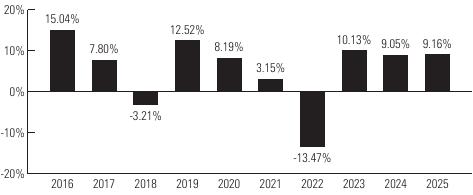
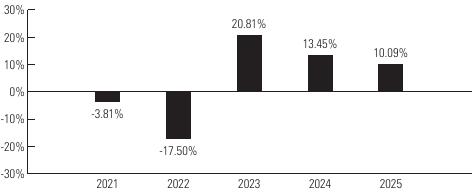
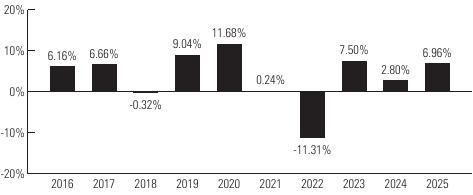
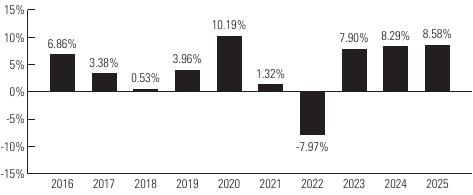
0001133228-26-007254.txt : 20260429 0001133228-26-007254.hdr.sgml : 20260429 20260429165255 ACCESSION NUMBER: 0001133228-26-007254 CONFORMED SUBMISSION TYPE: 485BPOS PUBLIC DOCUMENT COUNT: 53 FILED AS OF DATE: 20260429 DATE AS OF CHANGE: 20260429 EFFECTIVENESS DATE: 20260501 FILER: COMPANY DATA: COMPANY CONFORMED NAME: Natixis Funds Trust I CENTRAL INDEX KEY: 0000770540 ORGANIZATION NAME: EIN: 000000000 STATE OF INCORPORATION: MA FISCAL YEAR END: 1231 FILING VALUES: FORM TYPE: 485BPOS SEC ACT: 1940 Act SEC FILE NUMBER: 811-04323 FILM NUMBER: 26917433 BUSINESS ADDRESS: STREET 1: 888 BOYLSTON STREET STREET 2: 8TH FLOOR CITY: BOSTON STATE: MA ZIP: 02199 BUSINESS PHONE: 617-449-2810 MAIL ADDRESS: STREET 1: 888 BOYLSTON STREET STREET 2: 8TH FLOOR CITY: BOSTON STATE: MA ZIP: 02199 FORMER COMPANY: FORMER CONFORMED NAME: IXIS Advisor Funds Trust I DATE OF NAME CHANGE: 20050502 FORMER COMPANY: FORMER CONFORMED NAME: CDC NVEST FUNDS TRUST I DATE OF NAME CHANGE: 20010503 FORMER COMPANY: FORMER CONFORMED NAME: NVEST FUNDS TRUST I DATE OF NAME CHANGE: 20000202 FILER: COMPANY DATA: COMPANY CONFORMED NAME: Natixis Funds Trust I CENTRAL INDEX KEY: 0000770540 ORGANIZATION NAME: EIN: 000000000 STATE OF INCORPORATION: MA FISCAL YEAR END: 1231 FILING VALUES: FORM TYPE: 485BPOS SEC ACT: 1933 Act SEC FILE NUMBER: 002-98326 FILM NUMBER: 26917432 BUSINESS ADDRESS: STREET 1: 888 BOYLSTON STREET STREET 2: 8TH FLOOR CITY: BOSTON STATE: MA ZIP: 02199 BUSINESS PHONE: 617-449-2810 MAIL ADDRESS: STREET 1: 888 BOYLSTON STREET STREET 2: 8TH FLOOR CITY: BOSTON STATE: MA ZIP: 02199 FORMER COMPANY: FORMER CONFORMED NAME: IXIS Advisor Funds Trust I DATE OF NAME CHANGE: 20050502 FORMER COMPANY: FORMER CONFORMED NAME: CDC NVEST FUNDS TRUST I DATE OF NAME CHANGE: 20010503 FORMER COMPANY: FORMER CONFORMED NAME: NVEST FUNDS TRUST I DATE OF NAME CHANGE: 20000202 0000770540 S000006658 Natixis U.S. Equity Opportunities Fund C000018161 Class A NEFSX C000018163 Class C NECCX C000018164 Class Y NESYX C000190732 Class N NESNX 0000770540 S000006661 Vaughan Nelson Small Cap Fund C000018172 Class A NEFJX C000018174 Class C NEJCX C000069268 Class Y NEJYX C000190733 Class N VSCNX 0000770540 S000030606 Natixis Oakmark International Fund C000094872 Class A NOIAX C000094873 Class C NOICX C000190734 Class N NIONX C000190735 Class Y NOIYX 0000770540 S000053352 Mirova Global Megatrends Fund C000167845 Class A ESGMX C000167846 Class C ESGCX C000167847 Class Y ESGYX C000190736 Class N ESGNX 485BPOS 1 nfti-efp24061_485bpos.htm NATIXIS FUNDS TRUST I - 485BPOS 2026-02-255-1Multi-AffiliateStatutoryProspectus
7.8312.215.3716.678.3819.4311.4817.5917.6813.205.489.934.1811.127.1911.4911.8514.7015.3710.8430.756.3232.9932.4218.0622.3318.6313.0615.326.1413.1915.8530.5210.7621.6510.5816.5218.6912.3920.536.6014.6124.889.2330.619.9825.105.0512.16 15.047.803.2112.528.193.1513.4710.139.059.163.8117.5020.8113.4510.096.166.660.329.0411.680.2411.317.502.806.966.863.380.533.9610.191.327.977.908.298.588.567.502.6911.051.404.1212.608.307.2410.5618.6921.0512.7627.0613.2834.3513.1031.2816.1315.158.1929.5624.1524.354.068.7315.9118.945.1325.0012.1326.606.2431.3622.3623.4820.9537.3525.5417.62 2025-12-31 false 0000770540 485BPOS 2020-12-312020-03-312020-06-302022-06-30 0000770540 2025-12-31 2025-12-31 0000770540 natixis:Dmultiaffiliatestatutoryprospectus_4824Member natixis:S000053352Member 2025-12-31 2025-12-31 0000770540 natixis:Dmultiaffiliatestatutoryprospectus_4824Member natixis:S000006661Member 2025-12-31 2025-12-31 0000770540 natixis:Dmultiaffiliatestatutoryprospectus_4824Member natixis:S000053352Member natixis:C000167845Member 2025-12-31 2025-12-31 0000770540 natixis:Dmultiaffiliatestatutoryprospectus_4824Member natixis:S000053352Member natixis:C000167846Member 2025-12-31 2025-12-31 0000770540 natixis:Dmultiaffiliatestatutoryprospectus_4824Member natixis:S000053352Member natixis:C000190736Member 2025-12-31 2025-12-31 0000770540 natixis:Dmultiaffiliatestatutoryprospectus_4824Member natixis:S000053352Member natixis:C000167847Member 2025-12-31 2025-12-31 0000770540 natixis:Dmultiaffiliatestatutoryprospectus_4824Member natixis:S000006661Member natixis:C000018172Member 2025-12-31 2025-12-31 0000770540 natixis:Dmultiaffiliatestatutoryprospectus_4824Member natixis:S000006661Member natixis:C000018174Member 2025-12-31 2025-12-31 0000770540 natixis:Dmultiaffiliatestatutoryprospectus_4824Member natixis:S000006661Member natixis:C000190733Member 2025-12-31 2025-12-31 0000770540 natixis:Dmultiaffiliatestatutoryprospectus_4824Member natixis:S000006661Member natixis:C000069268Member 2025-12-31 2025-12-31 0000770540 natixis:Dmultiaffiliatestatutoryprospectus_4824Member natixis:S000053352Member natixis:bench202305081047Member 2025-12-31 2025-12-31 0000770540 natixis:Dmultiaffiliatestatutoryprospectus_4824Member natixis:S000053352Member natixis:bench202305081060Member 2025-12-31 2025-12-31 0000770540 natixis:Dmultiaffiliatestatutoryprospectus_4824Member natixis:S000053352Member natixis:bench202305081061Member 2025-12-31 2025-12-31 0000770540 natixis:Dmultiaffiliatestatutoryprospectus_4824Member natixis:S000053352Member natixis:bench202305081055Member 2025-12-31 2025-12-31 0000770540 natixis:Dmultiaffiliatestatutoryprospectus_4824Member natixis:S000053352Member natixis:bench202305081065Member 2025-12-31 2025-12-31 0000770540 natixis:Dmultiaffiliatestatutoryprospectus_4824Member natixis:S000053352Member natixis:bench202305081059Member 2025-12-31 2025-12-31 0000770540 natixis:Dmultiaffiliatestatutoryprospectus_4824Member natixis:S000053352Member natixis:bench202305081052Member 2025-12-31 2025-12-31 0000770540 natixis:Dmultiaffiliatestatutoryprospectus_4824Member natixis:S000053352Member natixis:bench202505201141Member 2025-12-31 2025-12-31 0000770540 natixis:Dmultiaffiliatestatutoryprospectus_4824Member natixis:S000053352Member natixis:bench202305081049Member 2025-12-31 2025-12-31 0000770540 natixis:Dmultiaffiliatestatutoryprospectus_4824Member natixis:S000053352Member natixis:bench202305081050Member 2025-12-31 2025-12-31 0000770540 natixis:Dmultiaffiliatestatutoryprospectus_4824Member natixis:S000053352Member natixis:bench202305081053Member 2025-12-31 2025-12-31 0000770540 natixis:Dmultiaffiliatestatutoryprospectus_4824Member natixis:S000006661Member natixis:bench202305081047Member 2025-12-31 2025-12-31 0000770540 natixis:Dmultiaffiliatestatutoryprospectus_4824Member natixis:S000006661Member natixis:bench202401191096Member 2025-12-31 2025-12-31 0000770540 natixis:Dmultiaffiliatestatutoryprospectus_4824Member natixis:S000006661Member natixis:bench202305081050Member 2025-12-31 2025-12-31 0000770540 natixis:Dmultiaffiliatestatutoryprospectus_4824Member natixis:S000006661Member natixis:bench202305081049Member 2025-12-31 2025-12-31 0000770540 natixis:Dmultiaffiliatestatutoryprospectus_4824Member natixis:S000006661Member natixis:bench202305081048Member 2025-12-31 2025-12-31 0000770540 natixis:Dmultiaffiliatestatutoryprospectus_4824Member natixis:S000006661Member natixis:bench202404191132Member 2025-12-31 2025-12-31 0000770540 natixis:Dmultiaffiliatestatutoryprospectus_4824Member natixis:S000006661Member natixis:bench202305081052Member 2025-12-31 2025-12-31 0000770540 natixis:Dmultiaffiliatestatutoryprospectus_4824Member natixis:S000006661Member natixis:bench202305081061Member 2025-12-31 2025-12-31 0000770540 natixis:Dmultiaffiliatestatutoryprospectus_4824Member natixis:S000006661Member natixis:bench202305081060Member 2025-12-31 2025-12-31 0000770540 natixis:Dmultiaffiliatestatutoryprospectus_4824Member natixis:S000006661Member natixis:bench202505201141Member 2025-12-31 2025-12-31 0000770540 natixis:Dmultiaffiliatestatutoryprospectus_4824Member natixis:S000006661Member natixis:bench202305081053Member 2025-12-31 2025-12-31 0000770540 natixis:Dmultiaffiliatestatutoryprospectus_4824Member natixis:S000053352Member natixis:C000167847Member 2025-01-01 2025-12-31 0000770540 natixis:Dmultiaffiliatestatutoryprospectus_4824Member natixis:S000006661Member natixis:C000069268Member 2025-01-01 2025-12-31 0000770540 natixis:Dmultiaffiliatestatutoryprospectus_4824Member natixis:S000053352Member natixis:C000167847Member oef:AfterTaxesOnDistributionsMember 2025-01-01 2025-12-31 0000770540 natixis:Dmultiaffiliatestatutoryprospectus_4824Member natixis:S000006661Member natixis:C000069268Member oef:AfterTaxesOnDistributionsMember 2025-01-01 2025-12-31 0000770540 natixis:Dmultiaffiliatestatutoryprospectus_4824Member natixis:S000053352Member natixis:C000167847Member oef:AfterTaxesOnDistributionsAndSalesMember 2025-01-01 2025-12-31 0000770540 natixis:Dmultiaffiliatestatutoryprospectus_4824Member natixis:S000006661Member natixis:C000069268Member oef:AfterTaxesOnDistributionsAndSalesMember 2025-01-01 2025-12-31 0000770540 natixis:Dmultiaffiliatestatutoryprospectus_4824Member natixis:S000053352Member natixis:C000167845Member 2025-01-01 2025-12-31 0000770540 natixis:Dmultiaffiliatestatutoryprospectus_4824Member natixis:S000006661Member natixis:C000018172Member 2025-01-01 2025-12-31 0000770540 natixis:Dmultiaffiliatestatutoryprospectus_4824Member natixis:S000053352Member natixis:C000167846Member 2025-01-01 2025-12-31 0000770540 natixis:Dmultiaffiliatestatutoryprospectus_4824Member natixis:S000006661Member natixis:C000018174Member 2025-01-01 2025-12-31 0000770540 natixis:Dmultiaffiliatestatutoryprospectus_4824Member natixis:S000053352Member natixis:C000190736Member 2025-01-01 2025-12-31 0000770540 natixis:Dmultiaffiliatestatutoryprospectus_4824Member natixis:S000006661Member natixis:C000190733Member 2025-01-01 2025-12-31 0000770540 natixis:Dmultiaffiliatestatutoryprospectus_4824Member natixis:S000053352Member natixis:bench202404241140Member 2025-01-01 2025-12-31 0000770540 natixis:Dmultiaffiliatestatutoryprospectus_4824Member natixis:S000006661Member natixis:bench202401231109Member 2025-01-01 2025-12-31 0000770540 natixis:Dmultiaffiliatestatutoryprospectus_4824Member natixis:S000006661Member natixis:benchnat18Member 2025-01-01 2025-12-31 0000770540 natixis:Dmultiaffiliatestatutoryprospectus_4824Member natixis:S000053352Member natixis:C000167847Member 2021-01-01 2025-12-31 0000770540 natixis:Dmultiaffiliatestatutoryprospectus_4824Member natixis:S000006661Member natixis:C000069268Member 2021-01-01 2025-12-31 0000770540 natixis:Dmultiaffiliatestatutoryprospectus_4824Member natixis:S000053352Member natixis:C000167847Member oef:AfterTaxesOnDistributionsMember 2021-01-01 2025-12-31 0000770540 natixis:Dmultiaffiliatestatutoryprospectus_4824Member natixis:S000006661Member natixis:C000069268Member oef:AfterTaxesOnDistributionsMember 2021-01-01 2025-12-31 0000770540 natixis:Dmultiaffiliatestatutoryprospectus_4824Member natixis:S000053352Member natixis:C000167847Member oef:AfterTaxesOnDistributionsAndSalesMember 2021-01-01 2025-12-31 0000770540 natixis:Dmultiaffiliatestatutoryprospectus_4824Member natixis:S000006661Member natixis:C000069268Member oef:AfterTaxesOnDistributionsAndSalesMember 2021-01-01 2025-12-31 0000770540 natixis:Dmultiaffiliatestatutoryprospectus_4824Member natixis:S000053352Member natixis:C000167845Member 2021-01-01 2025-12-31 0000770540 natixis:Dmultiaffiliatestatutoryprospectus_4824Member natixis:S000006661Member natixis:C000018172Member 2021-01-01 2025-12-31 0000770540 natixis:Dmultiaffiliatestatutoryprospectus_4824Member natixis:S000053352Member natixis:C000167846Member 2021-01-01 2025-12-31 0000770540 natixis:Dmultiaffiliatestatutoryprospectus_4824Member natixis:S000006661Member natixis:C000018174Member 2021-01-01 2025-12-31 0000770540 natixis:Dmultiaffiliatestatutoryprospectus_4824Member natixis:S000053352Member natixis:C000190736Member 2021-01-01 2025-12-31 0000770540 natixis:Dmultiaffiliatestatutoryprospectus_4824Member natixis:S000006661Member natixis:C000190733Member 2021-01-01 2025-12-31 0000770540 natixis:Dmultiaffiliatestatutoryprospectus_4824Member natixis:S000053352Member natixis:bench202404241140Member 2021-01-01 2025-12-31 0000770540 natixis:Dmultiaffiliatestatutoryprospectus_4824Member natixis:S000006661Member natixis:bench202401231109Member 2021-01-01 2025-12-31 0000770540 natixis:Dmultiaffiliatestatutoryprospectus_4824Member natixis:S000006661Member natixis:benchnat18Member 2021-01-01 2025-12-31 0000770540 natixis:Dmultiaffiliatestatutoryprospectus_4824Member natixis:S000053352Member natixis:C000167847Member 2016-03-31 2025-12-31 0000770540 natixis:Dmultiaffiliatestatutoryprospectus_4824Member natixis:S000006661Member natixis:C000069268Member 2016-01-01 2025-12-31 0000770540 natixis:Dmultiaffiliatestatutoryprospectus_4824Member natixis:S000053352Member natixis:C000167847Member oef:AfterTaxesOnDistributionsMember 2016-03-31 2025-12-31 0000770540 natixis:Dmultiaffiliatestatutoryprospectus_4824Member natixis:S000006661Member natixis:C000069268Member oef:AfterTaxesOnDistributionsMember 2016-01-01 2025-12-31 0000770540 natixis:Dmultiaffiliatestatutoryprospectus_4824Member natixis:S000053352Member natixis:C000167847Member oef:AfterTaxesOnDistributionsAndSalesMember 2016-03-31 2025-12-31 0000770540 natixis:Dmultiaffiliatestatutoryprospectus_4824Member natixis:S000006661Member natixis:C000069268Member oef:AfterTaxesOnDistributionsAndSalesMember 2016-01-01 2025-12-31 0000770540 natixis:Dmultiaffiliatestatutoryprospectus_4824Member natixis:S000053352Member natixis:C000167845Member 2016-03-31 2025-12-31 0000770540 natixis:Dmultiaffiliatestatutoryprospectus_4824Member natixis:S000006661Member natixis:C000018172Member 2016-01-01 2025-12-31 0000770540 natixis:Dmultiaffiliatestatutoryprospectus_4824Member natixis:S000053352Member natixis:C000167846Member 2016-03-31 2025-12-31 0000770540 natixis:Dmultiaffiliatestatutoryprospectus_4824Member natixis:S000006661Member natixis:C000018174Member 2016-01-01 2025-12-31 0000770540 natixis:Dmultiaffiliatestatutoryprospectus_4824Member natixis:S000053352Member natixis:bench202404241140Member 2016-03-31 2025-12-31 0000770540 natixis:Dmultiaffiliatestatutoryprospectus_4824Member natixis:S000006661Member natixis:bench202401231109Member 2016-01-01 2025-12-31 0000770540 natixis:Dmultiaffiliatestatutoryprospectus_4824Member natixis:S000006661Member natixis:benchnat18Member 2016-01-01 2025-12-31 0000770540 natixis:Dmultiaffiliatestatutoryprospectus_4824Member natixis:S000053352Member natixis:C000190736Member 2017-05-01 2025-12-31 0000770540 natixis:Dmultiaffiliatestatutoryprospectus_4824Member natixis:S000006661Member natixis:C000190733Member 2017-05-01 2025-12-31 0000770540 natixis:Dmultiaffiliatestatutoryprospectus_4824Member natixis:S000053352Member natixis:bench202404241140Member 2017-05-01 2025-12-31 0000770540 natixis:Dmultiaffiliatestatutoryprospectus_4824Member natixis:S000006661Member natixis:bench202401231109Member 2017-05-01 2025-12-31 0000770540 natixis:Dmultiaffiliatestatutoryprospectus_4824Member natixis:S000006661Member natixis:benchnat18Member 2017-05-01 2025-12-31 0000770540 natixis:Dmultiaffiliatestatutoryprospectus_4824Member natixis:S000053352Member natixis:C000167847Member 2017-12-31 2017-12-31 0000770540 natixis:Dmultiaffiliatestatutoryprospectus_4824Member natixis:S000006661Member natixis:C000069268Member 2016-12-31 2016-12-31 0000770540 natixis:Dmultiaffiliatestatutoryprospectus_4824Member natixis:S000053352Member natixis:C000167847Member 2018-12-31 2018-12-31 0000770540 natixis:Dmultiaffiliatestatutoryprospectus_4824Member natixis:S000006661Member natixis:C000069268Member 2017-12-31 2017-12-31 0000770540 natixis:Dmultiaffiliatestatutoryprospectus_4824Member natixis:S000053352Member natixis:C000167847Member 2019-12-31 2019-12-31 0000770540 natixis:Dmultiaffiliatestatutoryprospectus_4824Member natixis:S000006661Member natixis:C000069268Member 2018-12-31 2018-12-31 0000770540 natixis:Dmultiaffiliatestatutoryprospectus_4824Member natixis:S000053352Member natixis:C000167847Member 2020-12-31 2020-12-31 0000770540 natixis:Dmultiaffiliatestatutoryprospectus_4824Member natixis:S000006661Member natixis:C000069268Member 2019-12-31 2019-12-31 0000770540 natixis:Dmultiaffiliatestatutoryprospectus_4824Member natixis:S000053352Member natixis:C000167847Member 2021-12-31 2021-12-31 0000770540 natixis:Dmultiaffiliatestatutoryprospectus_4824Member natixis:S000006661Member natixis:C000069268Member 2020-12-31 2020-12-31 0000770540 natixis:Dmultiaffiliatestatutoryprospectus_4824Member natixis:S000053352Member natixis:C000167847Member 2022-12-31 2022-12-31 0000770540 natixis:Dmultiaffiliatestatutoryprospectus_4824Member natixis:S000006661Member natixis:C000069268Member 2021-12-31 2021-12-31 0000770540 natixis:Dmultiaffiliatestatutoryprospectus_4824Member natixis:S000053352Member natixis:C000167847Member 2023-12-31 2023-12-31 0000770540 natixis:Dmultiaffiliatestatutoryprospectus_4824Member natixis:S000006661Member natixis:C000069268Member 2022-12-31 2022-12-31 0000770540 natixis:Dmultiaffiliatestatutoryprospectus_4824Member natixis:S000053352Member natixis:C000167847Member 2024-12-31 2024-12-31 0000770540 natixis:Dmultiaffiliatestatutoryprospectus_4824Member natixis:S000006661Member natixis:C000069268Member 2023-12-31 2023-12-31 0000770540 natixis:Dmultiaffiliatestatutoryprospectus_4824Member natixis:S000053352Member natixis:C000167847Member 2025-12-30 2025-12-31 0000770540 natixis:Dmultiaffiliatestatutoryprospectus_4824Member natixis:S000006661Member natixis:C000069268Member 2024-12-31 2024-12-31 0000770540 natixis:Dmultiaffiliatestatutoryprospectus_4824Member natixis:S000006661Member natixis:C000069268Member 2025-12-30 2025-12-31 0000770540 natixis:Dmultiaffiliatestatutoryprospectus_4824Member natixis:S000053352Member oef:RiskLoseMoneyMember 2025-12-31 2025-12-31 0000770540 natixis:Dmultiaffiliatestatutoryprospectus_4824Member natixis:S000053352Member oef:RiskNotInsuredDepositoryInstitutionMember 2025-12-31 2025-12-31 0000770540 natixis:Dmultiaffiliatestatutoryprospectus_4824Member natixis:S000006661Member oef:RiskLoseMoneyMember 2025-12-31 2025-12-31 0000770540 natixis:Dmultiaffiliatestatutoryprospectus_4824Member natixis:S000006661Member oef:RiskNotInsuredMember 2025-12-31 2025-12-31 natixis:Years iso4217:USD xbrli:pure xbrli:shares iso4217:USD xbrli:shares 0000770540 natixis:Dloomisharrisstatutoryprospectus_4833Member natixis:S000030606Member 2025-12-31 2025-12-31 0000770540 natixis:Dloomisharrisstatutoryprospectus_4833Member natixis:S000006658Member 2025-12-31 2025-12-31 0000770540 natixis:Dloomisharrisstatutoryprospectus_4833Member natixis:S000030606Member natixis:C000094872Member 2025-12-31 2025-12-31 0000770540 natixis:Dloomisharrisstatutoryprospectus_4833Member natixis:S000006658Member natixis:C000018161Member 2025-12-31 2025-12-31 0000770540 natixis:Dloomisharrisstatutoryprospectus_4833Member natixis:S000030606Member natixis:C000094873Member 2025-12-31 2025-12-31 0000770540 natixis:Dloomisharrisstatutoryprospectus_4833Member natixis:S000006658Member natixis:C000018163Member 2025-12-31 2025-12-31 0000770540 natixis:Dloomisharrisstatutoryprospectus_4833Member natixis:S000030606Member natixis:C000190734Member 2025-12-31 2025-12-31 0000770540 natixis:Dloomisharrisstatutoryprospectus_4833Member natixis:S000006658Member natixis:C000190732Member 2025-12-31 2025-12-31 0000770540 natixis:Dloomisharrisstatutoryprospectus_4833Member natixis:S000030606Member natixis:C000190735Member 2025-12-31 2025-12-31 0000770540 natixis:Dloomisharrisstatutoryprospectus_4833Member natixis:S000006658Member natixis:C000018164Member 2025-12-31 2025-12-31 0000770540 natixis:Dloomisharrisstatutoryprospectus_4833Member natixis:S000030606Member natixis:bench202305081047Member 2025-12-31 2025-12-31 0000770540 natixis:Dloomisharrisstatutoryprospectus_4833Member natixis:S000030606Member natixis:bench202305081060Member 2025-12-31 2025-12-31 0000770540 natixis:Dloomisharrisstatutoryprospectus_4833Member natixis:S000030606Member natixis:bench202305081061Member 2025-12-31 2025-12-31 0000770540 natixis:Dloomisharrisstatutoryprospectus_4833Member natixis:S000030606Member natixis:bench202305081059Member 2025-12-31 2025-12-31 0000770540 natixis:Dloomisharrisstatutoryprospectus_4833Member natixis:S000030606Member natixis:bench202305081062Member 2025-12-31 2025-12-31 0000770540 natixis:Dloomisharrisstatutoryprospectus_4833Member natixis:S000030606Member natixis:bench202305081052Member 2025-12-31 2025-12-31 0000770540 natixis:Dloomisharrisstatutoryprospectus_4833Member natixis:S000030606Member natixis:bench202505201141Member 2025-12-31 2025-12-31 0000770540 natixis:Dloomisharrisstatutoryprospectus_4833Member natixis:S000030606Member natixis:bench202305081049Member 2025-12-31 2025-12-31 0000770540 natixis:Dloomisharrisstatutoryprospectus_4833Member natixis:S000030606Member natixis:bench202305081050Member 2025-12-31 2025-12-31 0000770540 natixis:Dloomisharrisstatutoryprospectus_4833Member natixis:S000030606Member natixis:bench202604201144Member 2025-12-31 2025-12-31 0000770540 natixis:Dloomisharrisstatutoryprospectus_4833Member natixis:S000006658Member natixis:bench202305081047Member 2025-12-31 2025-12-31 0000770540 natixis:Dloomisharrisstatutoryprospectus_4833Member natixis:S000006658Member natixis:bench202305081050Member 2025-12-31 2025-12-31 0000770540 natixis:Dloomisharrisstatutoryprospectus_4833Member natixis:S000006658Member natixis:bench202305081049Member 2025-12-31 2025-12-31 0000770540 natixis:Dloomisharrisstatutoryprospectus_4833Member natixis:S000006658Member natixis:bench202505201141Member 2025-12-31 2025-12-31 0000770540 natixis:Dloomisharrisstatutoryprospectus_4833Member natixis:S000006658Member natixis:bench202305081048Member 2025-12-31 2025-12-31 0000770540 natixis:Dloomisharrisstatutoryprospectus_4833Member natixis:S000006658Member natixis:bench202305081055Member 2025-12-31 2025-12-31 0000770540 natixis:Dloomisharrisstatutoryprospectus_4833Member natixis:S000006658Member natixis:bench202305081067Member 2025-12-31 2025-12-31 0000770540 natixis:Dloomisharrisstatutoryprospectus_4833Member natixis:S000006658Member natixis:bench202305081068Member 2025-12-31 2025-12-31 0000770540 natixis:Dloomisharrisstatutoryprospectus_4833Member natixis:S000006658Member natixis:bench202305081052Member 2025-12-31 2025-12-31 0000770540 natixis:Dloomisharrisstatutoryprospectus_4833Member natixis:S000006658Member natixis:bench202305081061Member 2025-12-31 2025-12-31 0000770540 natixis:Dloomisharrisstatutoryprospectus_4833Member natixis:S000006658Member natixis:bench202305081060Member 2025-12-31 2025-12-31 0000770540 natixis:Dloomisharrisstatutoryprospectus_4833Member natixis:S000006658Member natixis:bench202305081053Member 2025-12-31 2025-12-31 0000770540 natixis:Dloomisharrisstatutoryprospectus_4833Member natixis:S000030606Member natixis:C000094872Member 2025-01-01 2025-12-31 0000770540 natixis:Dloomisharrisstatutoryprospectus_4833Member natixis:S000006658Member natixis:C000018164Member 2025-01-01 2025-12-31 0000770540 natixis:Dloomisharrisstatutoryprospectus_4833Member natixis:S000030606Member natixis:C000094872Member oef:AfterTaxesOnDistributionsMember 2025-01-01 2025-12-31 0000770540 natixis:Dloomisharrisstatutoryprospectus_4833Member natixis:S000006658Member natixis:C000018164Member oef:AfterTaxesOnDistributionsMember 2025-01-01 2025-12-31 0000770540 natixis:Dloomisharrisstatutoryprospectus_4833Member natixis:S000030606Member natixis:C000094872Member oef:AfterTaxesOnDistributionsAndSalesMember 2025-01-01 2025-12-31 0000770540 natixis:Dloomisharrisstatutoryprospectus_4833Member natixis:S000006658Member natixis:C000018164Member oef:AfterTaxesOnDistributionsAndSalesMember 2025-01-01 2025-12-31 0000770540 natixis:Dloomisharrisstatutoryprospectus_4833Member natixis:S000030606Member natixis:C000094873Member 2025-01-01 2025-12-31 0000770540 natixis:Dloomisharrisstatutoryprospectus_4833Member natixis:S000006658Member natixis:C000018161Member 2025-01-01 2025-12-31 0000770540 natixis:Dloomisharrisstatutoryprospectus_4833Member natixis:S000030606Member natixis:C000190734Member 2025-01-01 2025-12-31 0000770540 natixis:Dloomisharrisstatutoryprospectus_4833Member natixis:S000006658Member natixis:C000018163Member 2025-01-01 2025-12-31 0000770540 natixis:Dloomisharrisstatutoryprospectus_4833Member natixis:S000030606Member natixis:C000190735Member 2025-01-01 2025-12-31 0000770540 natixis:Dloomisharrisstatutoryprospectus_4833Member natixis:S000006658Member natixis:C000190732Member 2025-01-01 2025-12-31 0000770540 natixis:Dloomisharrisstatutoryprospectus_4833Member natixis:S000030606Member natixis:benchnat16Member 2025-01-01 2025-12-31 0000770540 natixis:Dloomisharrisstatutoryprospectus_4833Member natixis:S000006658Member natixis:bench202401241115Member 2025-01-01 2025-12-31 0000770540 natixis:Dloomisharrisstatutoryprospectus_4833Member natixis:S000006658Member natixis:bench202404231135Member 2025-01-01 2025-12-31 0000770540 natixis:Dloomisharrisstatutoryprospectus_4833Member natixis:S000030606Member natixis:C000094872Member 2021-01-01 2025-12-31 0000770540 natixis:Dloomisharrisstatutoryprospectus_4833Member natixis:S000006658Member natixis:C000018164Member 2021-01-01 2025-12-31 0000770540 natixis:Dloomisharrisstatutoryprospectus_4833Member natixis:S000030606Member natixis:C000094872Member oef:AfterTaxesOnDistributionsMember 2021-01-01 2025-12-31 0000770540 natixis:Dloomisharrisstatutoryprospectus_4833Member natixis:S000006658Member natixis:C000018164Member oef:AfterTaxesOnDistributionsMember 2021-01-01 2025-12-31 0000770540 natixis:Dloomisharrisstatutoryprospectus_4833Member natixis:S000030606Member natixis:C000094872Member oef:AfterTaxesOnDistributionsAndSalesMember 2021-01-01 2025-12-31 0000770540 natixis:Dloomisharrisstatutoryprospectus_4833Member natixis:S000006658Member natixis:C000018164Member oef:AfterTaxesOnDistributionsAndSalesMember 2021-01-01 2025-12-31 0000770540 natixis:Dloomisharrisstatutoryprospectus_4833Member natixis:S000030606Member natixis:C000094873Member 2021-01-01 2025-12-31 0000770540 natixis:Dloomisharrisstatutoryprospectus_4833Member natixis:S000006658Member natixis:C000018161Member 2021-01-01 2025-12-31 0000770540 natixis:Dloomisharrisstatutoryprospectus_4833Member natixis:S000030606Member natixis:C000190734Member 2021-01-01 2025-12-31 0000770540 natixis:Dloomisharrisstatutoryprospectus_4833Member natixis:S000006658Member natixis:C000018163Member 2021-01-01 2025-12-31 0000770540 natixis:Dloomisharrisstatutoryprospectus_4833Member natixis:S000030606Member natixis:C000190735Member 2021-01-01 2025-12-31 0000770540 natixis:Dloomisharrisstatutoryprospectus_4833Member natixis:S000006658Member natixis:C000190732Member 2021-01-01 2025-12-31 0000770540 natixis:Dloomisharrisstatutoryprospectus_4833Member natixis:S000030606Member natixis:benchnat16Member 2021-01-01 2025-12-31 0000770540 natixis:Dloomisharrisstatutoryprospectus_4833Member natixis:S000006658Member natixis:bench202401241115Member 2021-01-01 2025-12-31 0000770540 natixis:Dloomisharrisstatutoryprospectus_4833Member natixis:S000006658Member natixis:bench202404231135Member 2021-01-01 2025-12-31 0000770540 natixis:Dloomisharrisstatutoryprospectus_4833Member natixis:S000030606Member natixis:C000094872Member 2016-01-01 2025-12-31 0000770540 natixis:Dloomisharrisstatutoryprospectus_4833Member natixis:S000006658Member natixis:C000018164Member 2016-01-01 2025-12-31 0000770540 natixis:Dloomisharrisstatutoryprospectus_4833Member natixis:S000030606Member natixis:C000094872Member oef:AfterTaxesOnDistributionsMember 2016-01-01 2025-12-31 0000770540 natixis:Dloomisharrisstatutoryprospectus_4833Member natixis:S000006658Member natixis:C000018164Member oef:AfterTaxesOnDistributionsMember 2016-01-01 2025-12-31 0000770540 natixis:Dloomisharrisstatutoryprospectus_4833Member natixis:S000030606Member natixis:C000094872Member oef:AfterTaxesOnDistributionsAndSalesMember 2016-01-01 2025-12-31 0000770540 natixis:Dloomisharrisstatutoryprospectus_4833Member natixis:S000006658Member natixis:C000018164Member oef:AfterTaxesOnDistributionsAndSalesMember 2016-01-01 2025-12-31 0000770540 natixis:Dloomisharrisstatutoryprospectus_4833Member natixis:S000030606Member natixis:C000094873Member 2016-01-01 2025-12-31 0000770540 natixis:Dloomisharrisstatutoryprospectus_4833Member natixis:S000006658Member natixis:C000018161Member 2016-01-01 2025-12-31 0000770540 natixis:Dloomisharrisstatutoryprospectus_4833Member natixis:S000006658Member natixis:C000018163Member 2016-01-01 2025-12-31 0000770540 natixis:Dloomisharrisstatutoryprospectus_4833Member natixis:S000030606Member natixis:C000190735Member 2016-01-01 2025-12-31 0000770540 natixis:Dloomisharrisstatutoryprospectus_4833Member natixis:S000030606Member natixis:benchnat16Member 2016-01-01 2025-12-31 0000770540 natixis:Dloomisharrisstatutoryprospectus_4833Member natixis:S000006658Member natixis:bench202401241115Member 2016-01-01 2025-12-31 0000770540 natixis:Dloomisharrisstatutoryprospectus_4833Member natixis:S000006658Member natixis:bench202404231135Member 2016-01-01 2025-12-31 0000770540 natixis:Dloomisharrisstatutoryprospectus_4833Member natixis:S000030606Member natixis:C000190734Member 2017-05-01 2025-12-31 0000770540 natixis:Dloomisharrisstatutoryprospectus_4833Member natixis:S000006658Member natixis:C000190732Member 2017-05-01 2025-12-31 0000770540 natixis:Dloomisharrisstatutoryprospectus_4833Member natixis:S000030606Member natixis:benchnat16Member 2017-05-01 2025-12-31 0000770540 natixis:Dloomisharrisstatutoryprospectus_4833Member natixis:S000006658Member natixis:bench202401241115Member 2017-05-01 2025-12-31 0000770540 natixis:Dloomisharrisstatutoryprospectus_4833Member natixis:S000006658Member natixis:bench202404231135Member 2017-05-01 2025-12-31 0000770540 natixis:Dloomisharrisstatutoryprospectus_4833Member natixis:S000030606Member natixis:C000094872Member 2016-12-31 2016-12-31 0000770540 natixis:Dloomisharrisstatutoryprospectus_4833Member natixis:S000006658Member natixis:C000018164Member 2016-12-31 2016-12-31 0000770540 natixis:Dloomisharrisstatutoryprospectus_4833Member natixis:S000030606Member natixis:C000094872Member 2017-12-31 2017-12-31 0000770540 natixis:Dloomisharrisstatutoryprospectus_4833Member natixis:S000006658Member natixis:C000018164Member 2017-12-31 2017-12-31 0000770540 natixis:Dloomisharrisstatutoryprospectus_4833Member natixis:S000030606Member natixis:C000094872Member 2018-12-31 2018-12-31 0000770540 natixis:Dloomisharrisstatutoryprospectus_4833Member natixis:S000006658Member natixis:C000018164Member 2018-12-31 2018-12-31 0000770540 natixis:Dloomisharrisstatutoryprospectus_4833Member natixis:S000030606Member natixis:C000094872Member 2019-12-31 2019-12-31 0000770540 natixis:Dloomisharrisstatutoryprospectus_4833Member natixis:S000006658Member natixis:C000018164Member 2019-12-31 2019-12-31 0000770540 natixis:Dloomisharrisstatutoryprospectus_4833Member natixis:S000030606Member natixis:C000094872Member 2020-12-31 2020-12-31 0000770540 natixis:Dloomisharrisstatutoryprospectus_4833Member natixis:S000006658Member natixis:C000018164Member 2020-12-31 2020-12-31 0000770540 natixis:Dloomisharrisstatutoryprospectus_4833Member natixis:S000030606Member natixis:C000094872Member 2021-12-31 2021-12-31 0000770540 natixis:Dloomisharrisstatutoryprospectus_4833Member natixis:S000006658Member natixis:C000018164Member 2021-12-31 2021-12-31 0000770540 natixis:Dloomisharrisstatutoryprospectus_4833Member natixis:S000030606Member natixis:C000094872Member 2022-12-31 2022-12-31 0000770540 natixis:Dloomisharrisstatutoryprospectus_4833Member natixis:S000006658Member natixis:C000018164Member 2022-12-31 2022-12-31 0000770540 natixis:Dloomisharrisstatutoryprospectus_4833Member natixis:S000030606Member natixis:C000094872Member 2023-12-31 2023-12-31 0000770540 natixis:Dloomisharrisstatutoryprospectus_4833Member natixis:S000006658Member natixis:C000018164Member 2023-12-31 2023-12-31 0000770540 natixis:Dloomisharrisstatutoryprospectus_4833Member natixis:S000030606Member natixis:C000094872Member 2024-12-31 2024-12-31 0000770540 natixis:Dloomisharrisstatutoryprospectus_4833Member natixis:S000006658Member natixis:C000018164Member 2024-12-31 2024-12-31 0000770540 natixis:Dloomisharrisstatutoryprospectus_4833Member natixis:S000030606Member natixis:C000094872Member 2025-12-30 2025-12-31 0000770540 natixis:Dloomisharrisstatutoryprospectus_4833Member natixis:S000006658Member natixis:C000018164Member 2025-12-30 2025-12-31 0000770540 natixis:Dloomisharrisstatutoryprospectus_4833Member natixis:S000006658Member oef:RiskLoseMoneyMember 2025-12-31 2025-12-31 0000770540 natixis:Dloomisharrisstatutoryprospectus_4833Member natixis:S000006658Member oef:RiskNotInsuredDepositoryInstitutionMember 2025-12-31 2025-12-31 0000770540 natixis:Dloomisharrisstatutoryprospectus_4833Member natixis:S000030606Member oef:RiskLoseMoneyMember 2025-12-31 2025-12-31 0000770540 natixis:Dloomisharrisstatutoryprospectus_4833Member natixis:S000030606Member oef:RiskNotInsuredDepositoryInstitutionMember 2025-12-31 2025-12-31

Registration Nos. 2-98326

811-04323


UNITED STATES

SECURITIES AND EXCHANGE COMMISSION

Washington, DC 20549


FORM N-1A


REGISTRATION STATEMENT

UNDER

  THE SECURITIES ACT OF 1933
  Pre-Effective Amendment No.
  Post-Effective Amendment No. 166


and/or


REGISTRATION STATEMENT

UNDER

  THE INVESTMENT COMPANY ACT OF 1940
  Amendment No. 167

(Check appropriate box or boxes.)


NATIXIS FUNDS TRUST I

(Exact Name of Registrant as Specified in Charter)


888 Boylston Street, Boston, Massachusetts 02199-8197

(Address of principal executive offices) (Zip Code)


Registrant’s Telephone Number, including Area Code (617) 449-2139


Susan McWhan Tobin, Esq.

Natixis Distribution, LLC

888 Boylston Street

Boston, Massachusetts 02199-8197

(Name and Address of Agent for Service)


Copy to:

Michael G. Doherty, Esq.

Jessica Reece, Esq.

Ropes & Gray LLP

1211 Avenue of the Americas

New York, NY 10036-8704


Approximate Date of Proposed Public Offering


It is proposed that this filing will become effective (check appropriate box):


  immediately upon filing pursuant to paragraph (b)
  on May 1, 2026 pursuant to paragraph (b)
  60 days after filing pursuant to paragraph (a)(1)
  on (date) pursuant to paragraph (a)(1)
  75 days after filing pursuant to paragraph (a)(2)
  on (date) pursuant to paragraph (a)(2) of Rule 485.


If appropriate, check the following box:


  This post-effective amendment designates a new effective date for a previously filed post-effective amendment.


Prospectus

May 1, 2026
image 
 
Class A
Class C
Class N
Class Y
Gateway Equity Call Premium Fund
GCPAX
GCPCX
GCPNX
GCPYX
Gateway Fund
GATEX
GTECX
GTENX
GTEYX
Mirova Global Megatrends Fund
ESGMX
ESGCX
ESGNX
ESGYX
Vaughan Nelson Mid Cap Fund 
VNVAX
VNVCX
VNVNX
VNVYX
Vaughan Nelson Small Cap Fund
NEFJX
NEJCX
VSCNX
NEJYX
The Securities and Exchange Commission (“SEC”) has not approved or disapproved any Fund’s shares or determined whether this Prospectus is truthful or complete. Any representation to the contrary is a crime.


Table of Contents
1
1
7


Fund Summary 

Gateway Equity Call Premium Fund
Investment Goal
The Fund seeks total return with less risk than U.S. equity markets.
Fund Fees & Expenses
The following table describes the fees and expenses that you may pay if you buy, hold, and sell shares of the Fund. You may pay other fees, such as brokerage commissions and other fees to financial intermediaries, which are not reflected in this table. You may qualify for sales charge discounts if you and your family invest, or agree to invest in the future, at least $50,000 in the Natixis Funds Complex. More information about these and other discounts is available from your financial professional and in the section “How Sales Charges Are Calculated” on page 47 of the Prospectus, in Appendix A to the Prospectus and on page 89 in the section “Reduced Sales Charges” of the Statement of Additional Information (“SAI”).
Shareholder Fees
(fees paid directly from your investment)
Class A
Class C
Class N
Class Y
Maximum sales charge (load) imposed on purchases (as a percentage of offering price)
5.75%
None
None
None
Maximum deferred sales charge (load) (as a percentage of original purchase price or redemption proceeds, as applicable)
None1
1.00%
None
None
Redemption fees
None
None
None
None
1 A 1.00% contingent deferred sales charge (“CDSC”) may apply to certain purchases of Class A shares of $1,000,000 or more that are redeemed within eighteen months of the date of purchase.


Annual Fund Operating Expenses
(expenses that you pay each year as a percentage of the value of your investment)
Class A
Class C
Class N
Class Y
Management fees
0.58%
0.58%
0.58%
0.58%
Distribution and/or service (12b-1) fees
0.25%
1.00%
0.00%
0.00%
Other expenses
0.22%
0.22%
0.49%
0.22%
Total annual fund operating expenses
1.05%
1.80%
1.07%
0.80%
Fee waiver and/or expense reimbursement1,2
0.12%
0.12%
0.44%
0.12%
Total annual fund operating expenses after fee waiver and/or expense reimbursement
0.93%
1.68%
0.63%
0.68%
1 Gateway Investment Advisers, LLC (“Gateway” or the “Adviser”) has given a binding contractual undertaking to the Fund to limit the amount of the Fund’s total annual fund operating expenses to 0.93%, 1.68%, 0.63%, and 0.68% of the Fund’s average daily net assets for Class A, Class C, Class N, and Class Y shares, respectively, exclusive of brokerage expenses, interest expense, taxes, acquired fund fees and expenses, organizational and extraordinary expenses, such as litigation and indemnification expenses. This undertaking is in effect through April 30, 2027 and may be terminated before then only with the consent of the Fund’s Board of Trustees. The Adviser will be permitted to recover, on a class-by-class basis, management fees waived and/or expenses reimbursed to the extent that expenses in later periods fall below both (1) the class’ applicable expense limitation at the time such amounts were waived/reimbursed and (2) the class’ current applicable expense limitation. The Fund will not be obligated to repay any such waived/reimbursed fees and expenses more than one year after the end of the fiscal year in which the fees or expenses were waived/reimbursed.
2 Natixis Advisors, LLC (“Natixis Advisors”) has given a binding contractual undertaking to the Fund to reimburse any and all transfer agency expenses for Class N shares. This undertaking is in effect through April 30, 2027 and may be terminated before then only with the consent of the Fund’s Board of Trustees.
Example
This example is intended to help you compare the cost of investing in the Fund with the cost of investing in other mutual funds. The example assumes that you invest $10,000 in the Fund for the time periods indicated and then redeem all of your shares at the end of those periods (except where indicated). The example also assumes that your investment has a 5% return each year and that the Fund’s operating expenses remain the same, except that the example is based on the Total Annual Fund Operating Expenses After Fee Waiver and/or Expense Reimbursement assuming that such waiver and/or reimbursement will only be in place through the date noted above and on the Total Annual Fund Operating Expenses for the remaining periods. The example for Class C shares for the ten-year period reflects the conversion to Class A shares after eight years. The example does not take into account brokerage commissions and other fees to financial intermediaries that you may pay on your purchases and sales of shares of the Fund. Although your actual costs may be higher or lower, based on these assumptions your costs would be:
If shares are redeemed:
1 year
3 years
5 years
10 years
Class A
$
664
$
879
$
1,110
$
1,774

1 

 
Fund Summary 

If shares are redeemed:
1 year
3 years
5 years
10 years
Class C
$
271
$
555
$
964
$
1,909
Class N
$
64
$
297
$
547
$
1,266
Class Y
$
69
$
243
$
432
$
979
If shares are not redeemed:
1 year
3 years
5 years
10 years
Class C
$
171
$
555
$
964
$
1,909
Portfolio Turnover
The Fund pays transaction costs, such as commissions, when it buys and sells securities (or “turns over” its portfolio). A higher portfolio turnover rate may indicate higher transaction costs and may result in higher taxes for you if your Fund shares are held in a taxable account. These costs, which are not reflected in annual fund operating expenses or in the example, affect the Fund’s performance. During its most recently ended fiscal year, the Fund’s portfolio turnover rate was 18% of the average value of its portfolio.
Investments, Risks and Performance
Principal Investment Strategies
Under normal circumstances, the Fund will invest at least 80% of its net assets (plus any borrowings made for investment purposes) in equity securities. Equity securities purchased by the Fund may include the following U.S. exchange-listed securities: common stocks; American Depositary Receipts (“ADRs”), which are securities issued by a U.S. bank that represent interests in foreign equity securities; and interests in real estate investment trusts (“REITs”). The Fund ordinarily invests in a broadly diversified equity portfolio, while also writing (selling) index call options with an aggregate notional value approximately equal to the market value of the equity portfolio. Writing index call options is intended to reduce the Fund’s volatility and provide steady cash flow. Cash flow from call option writing is intended to be an important source of the Fund’s return, although the Fund’s option writing activity reduces the Fund’s ability to profit from increases in the value of its equity portfolio. The combination of a diversified stock portfolio and the steady cash flow from the sale of index call options is intended to moderate the volatility of returns relative to an all-equity portfolio. The Fund may also invest in affiliated and unaffiliated mutual funds and exchange-traded funds, to the extent permitted by the Investment Company Act of 1940. The Fund may invest in companies with small, medium or large market capitalizations.
The Fund’s combination of a broadly diversified portfolio of common stocks and written index call options is similar to the components of the Cboe S&P 500 BuyWrite Index (the “BXMSM”). The BXMSM is a passive total return index based on (1) buying an S&P 500® stock index portfolio, and (2) writing (selling) the near-term S&P 500® Index “covered” call option. The Fund’s more flexible, active option management approach creates the potential for it to achieve higher long-term returns than the BXMSM while exhibiting a similar level of volatility, as defined by standard deviation of returns. The similarities between the BXMSM and the Fund’s equity investment strategy are expected to result in the Fund exhibiting a positive correlation to the broad U.S. equity markets similar to that exhibited by the BXMSM.
With its core investment in equities, the Fund is intended to be significantly less vulnerable to fluctuations in value caused by interest rate volatility, a risk factor present in both fixed-income investments and “hybrid investments” (blends of equity and fixed-income securities). Through the use of index options, the Fund intends that its risk management strategy will reduce the volatility inherent in equity investments while also allowing for more participation in equity returns than hybrid investments. Thus, the Fund seeks to provide an efficient trade-off between risk and reward, where risk is characterized by volatility or fluctuations in value over time.
Purchasing Stocks
The Fund invests in a diversified stock portfolio, generally consisting of approximately 200 to 400 stocks (including ADRs and REITs), designed to support the Fund’s index option-based risk management strategy as efficiently as possible while seeking to enhance the Fund’s after-tax total return. The Adviser uses a multifactor quantitative model to construct the stock portfolio. The model evaluates U.S.-exchange-traded equities that meet the criteria and constraints established by the Adviser. Generally, the Adviser tries to minimize the difference between the performance of the Fund’s stock portfolio and the performance of the index or indices underlying the Fund’s option strategies while also considering other factors, such as predicted dividend yield. The Adviser monitors this difference and other factors, and rebalances and adjusts the stock portfolio from time to time, by purchasing and selling stocks. To the extent consistent with the Fund’s investment goal, the Adviser may also sell stocks to realize capital losses in an effort to minimize any required capital gain distributions. The Adviser expects the portfolio to generally represent the broad U.S. equity market.
Writing Index Call Options
The Fund continuously writes index call options, typically on broad-based securities market indices, with an aggregate notional value approximately equal to the market value of its broadly diversified stock portfolio. As the seller of the index call option, the Fund receives cash (the “premium”) from the purchaser. The purchaser of an index call option has the right to any appreciation in the value of the index over a fixed price (the “exercise price”) on a certain date in the future (the “expiration date”). If the purchaser does not exercise the option, the Fund retains the premium. If the purchaser exercises the option, the Fund pays the purchaser the difference between the value of the index and the exercise price of the option. The premium, the exercise price and the value of the index

2 

 
Fund Summary 

determine the gain or loss realized by the Fund as the seller of the index call option. The Fund can also repurchase the call option prior to the expiration date, ending its obligation. In such a case, the difference between the cost of repurchasing the option and the premium received will determine the gain or loss realized by the Fund. 
Other Investments
The Fund may invest in foreign securities traded in U.S. markets (through ADRs or stocks traded in U.S. dollars). The Fund may enter into repurchase agreements and/or hold cash and cash equivalents.
Principal Investment Risks
The principal risks of investing in the Fund are summarized below. The Fund does not represent a complete investment program. You may lose money by investing in the Fund. 
Fund shares are not bank deposits and are not guaranteed, endorsed or insured by the Federal Deposit Insurance Corporation or any other government agency, and are subject to investment risks, including possible loss of the principal invested.
The significance of any specific risk to an investment in the Fund will vary over time, depending on the composition of the Fund’s portfolio, market conditions, and other factors. You should read all of the risk information presented below carefully, because any one or more of these risks may result in losses to the Fund.
Management Risk: A strategy used by the Fund’s portfolio managers may fail to produce the intended result. 
Call Options Risk:  The value of the Fund’s positions in index options will fluctuate in response to changes in the value of the underlying index. Writing index call options limits the opportunity to profit from an increase in the market value of stocks in exchange for up-front cash at the time of selling the call option. Unusual market conditions or the lack of a ready market for any particular option at a specific time may reduce the effectiveness of the Fund’s option-based risk management strategy, and for these and other reasons the Fund’s option strategy may not reduce the Fund’s volatility to the extent desired.
Equity Securities Risk: The value of the Fund’s investments in equity securities could be subject to unpredictable declines in the value of individual securities and periods of below-average performance in individual securities or in the equity market as a whole. In the event an issuer is liquidated or declares bankruptcy, the claims of owners of the issuer’s bonds generally take precedence over the claims of those who own preferred stock or common stock. Securities of real estate-related companies and REITs in which the Fund may invest may be considered equity securities, thus subjecting the Fund to the risks of investing in equity securities generally. Small- and mid-capitalization and emerging growth companies may be subject to more abrupt price movements, limited markets and less liquidity than larger, more established companies, which could adversely affect the value of the Fund’s equity portfolio. 
Correlation Risk: The Fund’s ability to manage the volatility of its equity portfolio by writing index options depends on the correlation between the returns of the equity portfolio and those of the index on which the Fund’s index options are written. Accordingly, the effectiveness of the Fund’s index option-based risk management strategy may be reduced to the extent the performance of the Fund’s equity portfolio does not correlate to that of the indices underlying its option positions. 
Market/Issuer Risk: The market value of the Fund’s investments will move up and down, sometimes rapidly and unpredictably, based upon overall market and economic conditions, as well as a number of reasons that directly relate to the issuers of the Fund’s investments, such as management performance, financial condition and demand for the issuers’ goods and services.
Cybersecurity and Technology Risk: The Fund, its service providers,  and other market participants increasingly depend on complex information technology and communications systems, which are subject to a number of different threats and risks that could adversely affect the Fund and its shareholders. Cybersecurity and other operational and technology issues may result in financial losses to the Fund and its shareholders.
Foreign Securities Risk: Investments in foreign securities may be subject to greater political, economic, environmental, credit/counterparty and information risks. Foreign securities may be subject to higher volatility than U.S. securities, varying degrees of regulation and limited liquidity. 
Investments in Other Investment Companies Risk: The Fund will indirectly bear the management, service and other fees of any other investment companies, including exchange-traded funds, in which it invests in addition to its own expenses.
Issuer Exposure Risk: Although the Fund is “diversified” within the meaning of the Investment Company Act of 1940 (the “1940 Act”), increases in value in certain securities held by the Fund could cause the Fund to be significantly exposed to a relatively small number of issuers. Similarly, although the Fund is not an index fund, in order to reduce the Fund’s performance dispersion from its benchmark the Fund may use investments in other investment companies to increase its exposure to certain issuers to a greater extent than might otherwise be permitted under the 1940 Act. This exposure to a relatively small number of issuers could increase the risk and volatility of the Fund.
Large Shareholder Transaction Risk: Ownership of shares of the Fund may be concentrated in one or a few large investors. Such investors may redeem shares in large quantities or on a frequent basis. In addition, a large number of shareholders collectively may purchase or redeem Fund shares in large amounts rapidly or unexpectedly (collectively, such transactions are referred to as “large shareholder transactions”). In the event of a large shareholder transaction, the Fund may be required to sell investments at unfavorable times or prices, which may increase realized capital gains, including short-term capital gains taxable as ordinary income for shareholders who hold Fund shares in a taxable account, may accelerate the realization of taxable income to shareholders, may increase transaction costs, and may otherwise negatively impact fund performance. The effects of taxable income and/or gains resulting from large shareholder transactions would particularly impact non-redeeming shareholders who do not hold their Fund shares in an IRA, 401(k) plan or other

3 

 
Fund Summary 

tax-advantaged plan. In addition, such transactions potentially limit the use of any capital loss carryforwards and certain other losses to offset future realized capital gains (if any). Such transactions may also increase the Fund’s expenses. A number of circumstances may cause the Fund to experience large redemptions, such as changes in the eligibility criteria for the Fund or share class of the Fund; liquidations, reorganizations, repositionings, or other announced Fund events; or changes in investment objectives, strategies, policies, risks, or investment personnel.
REITs Risk: Investments in the real estate industry, including REITs, are particularly sensitive to economic downturns and are sensitive to factors such as changes in real estate values, property taxes and tax laws, interest rates, cash flow of underlying real estate assets, occupancy rates, government regulations affecting zoning, land use and rents and the management skill and creditworthiness of the issuer. Companies in the real estate industry also may be subject to liabilities under environmental and hazardous waste laws. In addition, the value of a REIT is affected by changes in the value of the properties owned by the REIT or mortgage loans held by the REIT. REITs are also subject to default and prepayment risk. Many REITs are highly leveraged, increasing their risk. The Fund will indirectly bear its proportionate share of expenses, including management fees, paid by each REIT in which it invests in addition to the expenses of the Fund. REITs are also subject to the possibilities of failing to qualify for the favorable tax treatment available to REITs under the Internal Revenue Code of 1986, as amended, and failing to maintain their exemptions from registration under the Investment Company Act of 1940, as amended.


Risk/Return Bar Chart and Table
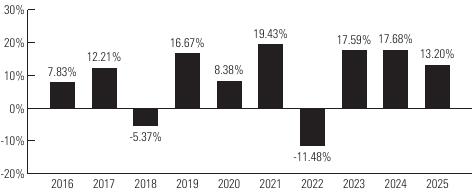
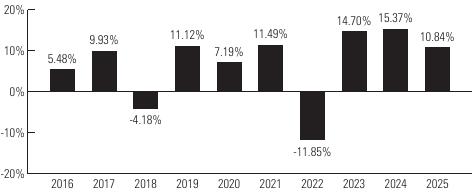
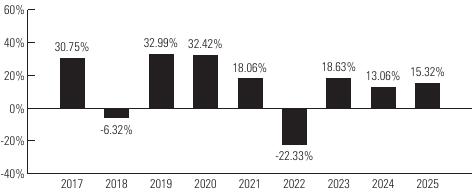
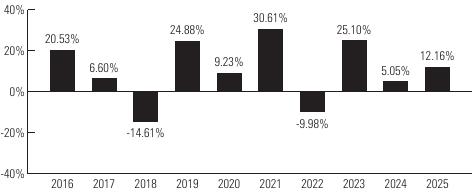
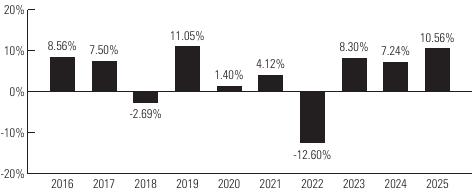
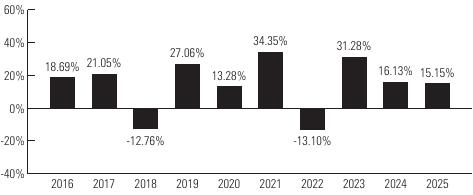
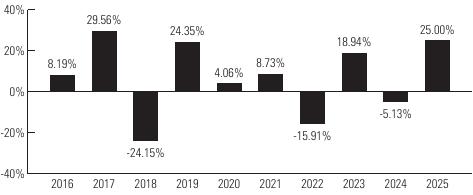
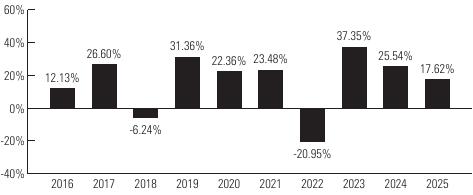
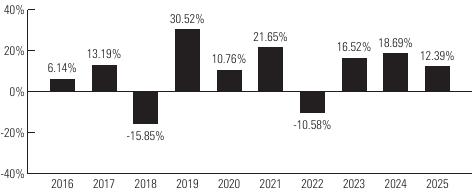
The bar chart and table shown below provide some indication of the risks of investing in the Fund by showing changes in the Fund’s performance from year-to-year and by showing how the Fund’s average annual returns for the one-year, five-year, ten-year and life-of-class periods (as applicable) compare to those of a broad-based securities market index that reflects the performance of the overall market applicable to the Fund and an additional index that represents the market sectors in which the Fund primarily invests. Performance for Class C shares includes the automatic conversion to Class A shares after eight years, where applicable. The Fund’s past performance (before and after taxes) does not necessarily indicate how the Fund will perform in the future. Updated performance information is available online at im.natixis.com and/or by calling the Fund toll-free at 800-225-5478
The chart does not reflect any sales charge that you may be required to pay when you buy or redeem the Fund’s shares. A sales charge will reduce your return. To the extent that a class of shares was subject to the waiver or reimbursement of certain expenses during a period, had such expenses not been waived or reimbursed during the period, total returns would have been lower.
Total Returns for Class Y Shares
image 
Highest Quarterly Return:
Second Quarter 2020, 11.74%

Lowest Quarterly Return:
First Quarter 2020, -15.92%
Average Annual Total Returns


(for the periods ended December 31, 2025)
Past 1 Year
Past 5 Years
Past 10 Years
Life of Class N
(5/1/17)
Class Y - Return Before Taxes
13.20%
10.61%
9.14%
-
Return After Taxes on Distributions
13.03%
10.41%
8.90%
-
Return After Taxes on Distributions and Sale of Fund Shares
7.92%
8.40%
7.44%
-
Class A - Return Before Taxes
6.42%
9.04%
8.22%
-
Class C - Return Before Taxes
11.09%
9.52%
8.22%
-
Class N - Return Before Taxes
13.27%
10.66%
-
9.15%
S&P 500® Index
17.88%
14.42%
14.82%
14.77%
CBOE S&P 500 BuyWrite Index (BXMSM)
8.91%
9.33%
7.31%
7.02%
After-tax returns are calculated using the historical highest individual federal marginal income tax rates and do not reflect the impact of state and local taxes. Actual after-tax returns depend on an investor’s tax situation and may differ from those shown. After-tax returns shown are not relevant to investors who hold their shares through tax-advantaged arrangements, such as 401(k) plans, qualified plans, education savings accounts, such as 529 plans, or individual retirement accounts. The after-tax returns are shown for only one class of the Fund. After-tax returns for the other classes of the Fund will vary. Index performance reflects no deduction for fees, expenses or taxes.

4 

 
Fund Summary 

Management
Investment Adviser
Gateway
Portfolio Managers
Daniel M. Ashcraft, CFA®, Senior Vice President and Portfolio Manager of the Adviser, has served as co-portfolio manager of the Fund since 2014.
Michael T. Buckius, CFA®, Chief Executive Officer and Chief Investment Officer of the Adviser, has served as co-portfolio manager of the Fund since 2014. 
Kenneth H. Toft, CFA®, Senior Vice President and Portfolio Manager of the Adviser, has served as co-portfolio manager of the Fund since 2014. 
Mitchell J. Trotta, CFA®, Vice President and Portfolio Manager of the Adviser, has served as co-portfolio manager of the Fund since 2021.
Purchase and Sale of Fund Shares
Class A and C Shares
The following chart shows the investment minimums for various types of accounts:
Type of Account
Minimum Initial Purchase
Any account other than those listed below
$2,500
For shareholders participating in Natixis Funds’ Automatic Investment Plan
$1,000
For Traditional IRA, Roth IRA, Rollover IRA, SEP-IRA and Keogh plans
$1,000
There is no subsequent investment minimum for these shares. There is no initial investment minimum for:
 
Fee Based Programs (such as wrap accounts) where an advisory fee is paid to the broker-dealer or other financial intermediary. Please consult your financial representative to determine if your fee based program is subject to additional or different conditions or fees.
 
Certain Retirement Plans. Please consult your retirement plan administrator to determine if your retirement plan is subject to additional or different conditions or fees imposed by the plan administrator.
 
Clients of a Registered Investment Adviser where the Registered Investment Adviser receives an advisory, management or consulting fee.
 
Effective June 1, 2026, accounts invested through certain intermediaries held within an Intermediary Omnibus Account.
 
Effective June 1, 2026, in its sole discretion, Natixis Distribution, LLC (the “Distributor”) may waive any share class eligibility requirement.
 
The minimum investment requirements for Class A shares may be waived or lowered for investments effected through certain financial intermediaries that have entered into special arrangements with the Distributor. Consult your financial intermediary for additional information regarding the minimum investment requirement applicable to your investment.
Class N Shares
Class N shares of the Fund are subject to a $1,000,000 initial investment minimum. This minimum applies to Fee Based Programs and accounts (such as wrap accounts) where an advisory fee is paid to the broker-dealer or other financial intermediary. There is no subsequent investment minimum for these shares. There is no initial investment minimum for:
 
Certain Retirement Plans. Please consult your retirement plan administrator to determine if your retirement plan is subject to additional or different conditions or fees imposed by the plan administrator.
 
Funds of funds that are distributed by the Distributor. 
 
Sub-accounts held within an omnibus account, where the omnibus account has at least $1,000,000. (Effective June 1, 2026, this waiver no longer applies.)
 
Effective June 1, 2026, accounts invested through certain intermediaries held within an Intermediary Omnibus Account.
 
Effective June 1, 2026, in its sole discretion, the Distributor may waive any share class eligibility requirement.
 
Class Y Shares
Class Y shares of the Fund are generally subject to a minimum initial investment of $100,000. There is no subsequent investment minimum for these shares. There is no minimum initial investment for:
 
Fee Based Programs (such as wrap accounts) where an advisory fee is paid to the broker-dealer or other financial intermediary. Please consult your financial representative to determine if your fee based program is subject to additional or different conditions or fees.
 
Certain Retirement Plans. Please consult your retirement plan administrator to determine if your retirement plan is subject to additional or different conditions or fees imposed by the plan administrator.
 
Certain Individual Retirement Accounts if the amounts invested represent rollover distributions from investments by any of the retirement plans invested in the Fund.
 
Clients of a Registered Investment Adviser where the Registered Investment Adviser receives an advisory, management or consulting fee.
 

5 

 
Fund Summary 

 
Fund Trustees, former Fund trustees, employees of affiliates of the Natixis Funds and other individuals who are affiliated with any Natixis Fund (this also applies to any spouse, parents, children, siblings, grandparents, grandchildren and in-laws of those mentioned) and Natixis affiliate employee benefit plans.
 
Effective June 1, 2026, accounts invested through certain intermediaries held within an Intermediary Omnibus Account.
 
Effective June 1, 2026, in its sole discretion, the Distributor may waive any share class eligibility requirement.
 
At the discretion of Natixis Advisors, clients of Natixis Advisors and its affiliates may purchase Class Y shares of the Fund below the stated minimums.
Due to operational limitations at your financial intermediary, certain fee based programs, retirement plans, individual retirement accounts and accounts of registered investment advisers may be subject to the investment minimums described above.

The Fund’s shares are available for purchase and are redeemable on any business day through your investment dealer, directly from the Fund by writing to the Fund at Natixis Funds, P.O. Box 219579, Kansas City, MO 64121-9579, by exchange, by wire, by internet at im.natixis.com (certain restrictions may apply), through the Automated Clearing House system, or, in the case of redemptions, by telephone at 800-225-5478 or by the Systematic Withdrawal Plan. 
Tax Information
Fund distributions are generally taxable to you as ordinary income or capital gains, except for distributions to retirement plans and other investors that qualify for tax-advantaged treatment under U.S. federal income tax law generally. Investments through such tax-advantaged plans will generally be taxed only upon withdrawal of monies from the tax-advantaged arrangement.
Payments to Broker-Dealers and Other Financial Intermediaries
If you purchase shares of the Fund through a broker-dealer or other financial intermediary (such as a bank), the Fund and its related companies may pay the intermediary for the sale of the Fund shares and related services. These payments may create a conflict of interest by influencing the broker-dealer or other intermediary and your salesperson to recommend the Fund over another investment. Ask your salesperson or visit your financial intermediary’s website for more information.

6 

 
Fund Summary 

Gateway Fund
Investment Goal
The Fund seeks to capture the majority of the returns associated with equity market investments, while exposing investors to less risk than other equity investments.
Fund Fees & Expenses
The following table describes the fees and expenses that you may pay if you buy, hold, and sell shares of the Fund. You may pay other fees, such as brokerage commissions and other fees to financial intermediaries, which are not reflected in this table. You may qualify for sales charge discounts if you and your family invest, or agree to invest in the future, at least $50,000 in the Natixis Funds Complex. More information about these and other discounts is available from your financial professional and in the section “How Sales Charges Are Calculated” on page 47 of the Prospectus, in Appendix A to the Prospectus and on page 89 in the section “Reduced Sales Charges” of the Statement of Additional Information (“SAI”).
Shareholder Fees
(fees paid directly from your investment)
Class A
Class C
Class N
Class Y
Maximum sales charge (load) imposed on purchases (as a percentage of offering price)
5.75%
None
None
None
Maximum deferred sales charge (load) (as a percentage of original purchase price or redemption proceeds, as applicable)
None1
1.00%
None
None
Redemption fees
None
None
None
None
1 A 1.00% contingent deferred sales charge (“CDSC”) may apply to certain purchases of Class A shares of $1,000,000 or more that are redeemed within eighteen months of the date of purchase.


Annual Fund Operating Expenses
(expenses that you pay each year as a percentage of the value of your investment)
Class A
Class C
Class N
Class Y
Management fees
0.59%
0.59%
0.59%
0.59%
Distribution and/or service (12b-1) fees
0.25%
1.00%
0.00%
0.00%
Other expenses
0.13%
0.14%
0.06%
0.14%
Total annual fund operating expenses
0.97%
1.73%
0.65%
0.73%
Fee waiver and/or expense reimbursement1
0.03%
0.03%
0.00%
0.03%
Total annual fund operating expenses after fee waiver and/or expense reimbursement
0.94%
1.70%
0.65%
0.70%
1 Gateway Investment Advisers, LLC (“Gateway” or the “Adviser”) has given a binding contractual undertaking to the Fund to limit the amount of the Fund’s total annual fund operating expenses to 0.94%, 1.70%, 0.65%, and 0.70% of the Fund’s average daily net assets for Class A, Class C, Class N, and Class Y shares, respectively, exclusive of brokerage expenses, interest expense, taxes, acquired fund fees and expenses, organizational and extraordinary expenses, such as litigation and indemnification expenses. This undertaking is in effect through April 30, 2027 and may be terminated before then only with the consent of the Fund’s Board of Trustees. The Adviser will be permitted to recover, on a class-by-class basis, management fees waived and/or expenses reimbursed to the extent that expenses in later periods fall below both (1) the class’ applicable expense limitation at the time such amounts were waived/reimbursed and (2) the class’ current applicable expense limitation. The Fund will not be obligated to repay any such waived/reimbursed fees and expenses more than one year after the end of the fiscal year in which the fees or expenses were waived/reimbursed.
Example
This example is intended to help you compare the cost of investing in the Fund with the cost of investing in other mutual funds. The example assumes that you invest $10,000 in the Fund for the time periods indicated and then redeem all of your shares at the end of those periods (except where indicated). The example also assumes that your investment has a 5% return each year and that the Fund’s operating expenses remain the same, except that the examples for the Class A, Class C and Class Y shares are based on the Total Annual Fund Operating Expenses After Fee Waiver and/or Expense Reimbursement assuming that such waiver and/or reimbursement will only be in place through the date noted above and on the Total Annual Fund Operating Expenses for the remaining periods. The example for Class C shares for the ten-year period reflects the conversion to Class A shares after eight years. The example does not take into account brokerage commissions and other fees to financial intermediaries that you may pay on your purchases and sales of shares of the Fund. Although your actual costs may be higher or lower, based on these assumptions your costs would be:
If shares are redeemed:
1 year
3 years
5 years
10 years
Class A
$
665
$
863
$
1,078
$
1,694
Class C
$
273
$
542
$
936
$
1,837

7 

 
Fund Summary 

If shares are redeemed:
1 year
3 years
5 years
10 years
Class N
$
66
$
208
$
362
$
810
Class Y
$
72
$
230
$
403
$
904
If shares are not redeemed:
1 year
3 years
5 years
10 years
Class C
$
173
$
542
$
936
$
1,837
Portfolio Turnover
The Fund pays transaction costs, such as commissions, when it buys and sells securities (or “turns over” its portfolio). A higher portfolio turnover rate may indicate higher transaction costs and may result in higher taxes for you if your Fund shares are held in a taxable account. These costs, which are not reflected in annual fund operating expenses or in the example, affect the Fund’s performance. During its most recently ended fiscal year, the Fund’s portfolio turnover rate was 17% of the average value of its portfolio.
Investments, Risks and Performance
Principal Investment Strategies
Under normal circumstances, the Fund invests in a broadly diversified portfolio of common stocks, while also selling index call options and purchasing index put options. Writing index call options is intended to reduce the Fund’s volatility, provides steady cash flow and is an important source of the Fund’s return, although it also reduces the Fund’s ability to profit from increases in the value of its equity portfolio. The Fund also buys index put options, which can protect the Fund from a significant market decline that may occur over a short period of time. The value of an index put option generally increases as the prices of the stocks constituting the index decrease, and decreases as those stocks increase in price. From time to time, the Fund may reduce its holdings of put options, resulting in an increased exposure to a market decline. The combination of the diversified stock portfolio, the steady cash flow from the sale of index call options and the downside protection from index put options is intended to provide the Fund with the majority of the returns associated with equity market investments while exposing investors to less risk than other equity investments. The Fund may also invest in affiliated and unaffiliated mutual funds and exchange-traded funds, to the extent permitted by the Investment Company Act of 1940. The Fund may invest in companies with small, medium or large market capitalizations. Equity securities purchased by the Fund may include U.S. exchange-listed common stocks, American Depositary Receipts (“ADRs”), which are securities issued by a U.S. bank that represent interests in foreign equity securities, and interests in real estate investment trusts (“REITs”).
The Fund strives not only for the majority of the returns associated with equity market investments, but also for returns in excess of those available from other investments comparable in volatility. Because, as described above, the Fund writes index call options and purchases index put options in addition to investing in equity securities, the Fund’s historical volatility has been closer to intermediate- to long-term fixed-income investments (intermediate-term are those with approximately five-year maturities and long-term are those with maturities of ten or more years) and hybrid investments (blends of equity and short-term fixed-income securities) than to equity investments. With its core investment in equities, the Fund is significantly less vulnerable to fluctuations in value caused by interest rate volatility, a risk factor present in both fixed-income investments and “hybrid investments” (blends of equity and short-term fixed-income), although the Fund expects to generally have lower long-term returns than a fund consisting solely of equity securities. Through the use of index options, the Fund intends that its risk management strategy will reduce the volatility inherent in equity investments while also allowing for more participation in equity returns than hybrid investments. Thus, the Fund seeks to provide an efficient trade-off between risk and reward where risk is characterized by volatility or fluctuations in value over time.
Purchasing Stocks
The Fund invests in a diversified stock portfolio, generally consisting of approximately 200 to 400 stocks, designed to support the Fund’s index option based risk management strategy as efficiently as possible while seeking to enhance the Fund’s after tax total return. The Adviser uses a multifactor quantitative model to construct the stock portfolio. The model evaluates U.S.-exchange-traded equities that meet criteria and constraints established by the Adviser. Generally, the Adviser tries to minimize the difference between the performance of the stock portfolio and that of the index or indices underlying the Fund’s option strategies while also considering other factors, such as predicted dividend yield. The Adviser monitors this difference and the other factors, and rebalances and adjusts the stock portfolio from time to time, by purchasing and selling stocks. To the extent consistent with the Fund’s investment goal, the Adviser may also sell stocks to realize capital losses in an effort to minimize any required capital gain distributions. The Adviser expects the portfolio to generally represent the broad U.S. equity market.
Writing Index Call Options
The Fund continuously writes index call options, typically on broad-based securities market indices, on the full value of its broadly diversified stock portfolio. As the seller of the index call option, the Fund receives cash (the “premium”) from the purchaser. The purchaser of an index call option has the right to any appreciation in the value of the index over a fixed price (the “exercise price”) on a certain date in the future (the “expiration date”). If the purchaser does not exercise the option, the Fund retains the premium. If the purchaser exercises the option, the Fund pays the purchaser the difference between the value of the index and the exercise price of the option. The premium, the exercise price and the value of the index determine the gain or loss realized by the Fund as the

8 

 
Fund Summary 

seller of the index call option. The Fund can also repurchase the call option prior to the expiration date, ending its obligation. In this case, the difference between the cost of repurchasing the option and the premium received will determine the gain or loss realized by the Fund.
Purchasing Index Put Options
The Fund may buy index put options in an attempt to protect the Fund from a significant market decline that may occur over a short period of time. The value of an index put option generally increases as stock prices (and the value of the index) decrease and decreases as those stocks (and the index) increase in price.
Other Investments
The Fund may invest in foreign securities traded in U.S. markets (through ADRs or stocks traded in U.S. dollars). The Fund may enter into repurchase agreements and/or hold cash and cash equivalents.
Principal Investment Risks
The principal risks of investing in the Fund are summarized below. The Fund does not represent a complete investment program. You may lose money by investing in the Fund. 
Fund shares are not bank deposits and are not guaranteed, endorsed or insured by the Federal Deposit Insurance Corporation or any other government agency, and are subject to investment risks, including possible loss of the principal invested.
The significance of any specific risk to an investment in the Fund will vary over time, depending on the composition of the Fund’s portfolio, market conditions, and other factors. You should read all of the risk information presented below carefully, because any one or more of these risks may result in losses to the Fund.
Management Risk: A strategy used by the Fund’s portfolio managers may fail to produce the intended result. 
Options Risk: The value of the Fund’s positions in index options will fluctuate in response to changes in the value of the underlying index. Writing index call options limits the opportunity to profit from an increase in the market value of stocks in exchange for up-front cash at the time of selling the call option. The Fund also risks losing all or part of the cash paid for purchasing index put options. Unusual market conditions or the lack of a ready market for any particular option at a specific time may reduce the effectiveness of the Fund’s option strategies, and for these and other reasons the Fund’s option strategies may not reduce the Fund’s volatility to the extent desired.
Equity Securities Risk: The value of the Fund’s investments in equity securities could be subject to unpredictable declines in the value of individual securities and periods of below-average performance in individual securities or in the equity market as a whole. In the event an issuer is liquidated or declares bankruptcy, the claims of owners of the issuer’s bonds generally take precedence over the claims of those who own preferred stock or common stock. Securities of real estate-related companies and REITs in which the Fund may invest may be considered equity securities, thus subjecting the Fund to the risks of investing in equity securities generally. Small- and mid-capitalization and emerging growth companies may be subject to more abrupt price movements, limited markets and less liquidity than larger, more established companies, which could adversely affect the value of the Fund’s equity portfolio. 
Correlation Risk: The Fund’s ability to manage the volatility of its equity portfolio by writing index options depends on the correlation between the returns of the equity portfolio and those of the index on which the Fund’s index options are written. Accordingly, the effectiveness of the Fund’s index option-based risk management strategy may be reduced to the extent the performance of the Fund’s equity portfolio does not correlate to that of the indices underlying its option positions. 
Foreign Securities Risk: Investments in foreign securities may be subject to greater political, economic, environmental, credit/counterparty and information risks.The Fund’s investments in foreign securities also are subject to foreign currency fluctuations and other foreign currency-related risks. Foreign securities may be subject to higher volatility than U.S. securities, varying degrees of regulation and limited liquidity. 
Cybersecurity and Technology Risk: The Fund, its service providers,  and other market participants increasingly depend on complex information technology and communications systems, which are subject to a number of different threats and risks that could adversely affect the Fund and its shareholders. Cybersecurity and other operational and technology issues may result in financial losses to the Fund and its shareholders.
Investments in Other Investment Companies Risk: The Fund will indirectly bear the management, service and other fees of any other investment companies, including exchange-traded funds, in which it invests in addition to its own expenses.
Issuer Exposure Risk: Although the Fund is “diversified” within the meaning of the Investment Company Act of 1940 (the “1940 Act”), increases in value in certain securities held by the Fund could cause the Fund to be significantly exposed to a relatively small number of issuers. Similarly, although the Fund is not an index fund, in order to reduce the Fund’s performance dispersion from its benchmark the Fund may use investments in other investment companies to increase its exposure to certain issuers to a greater extent than might otherwise be permitted under the 1940 Act. This exposure to a relatively small number of issuers could increase the risk and volatility of the Fund.
Large Shareholder Transaction Risk: Ownership of shares of the Fund may be concentrated in one or a few large investors. Such investors may redeem shares in large quantities or on a frequent basis. In addition, a large number of shareholders collectively may purchase or redeem Fund shares in large amounts rapidly or unexpectedly (collectively, such transactions are referred to as “large shareholder transactions”). In the event of a large shareholder transaction, the Fund may be required to sell investments at unfavorable times or prices, which may increase realized capital gains, including short-term capital gains taxable as ordinary income for shareholders who hold Fund shares in a taxable account, may accelerate the realization of taxable income to

9 

 
Fund Summary 

shareholders, may increase transaction costs, and may otherwise negatively impact fund performance. The effects of taxable income and/or gains resulting from large shareholder transactions would particularly impact non-redeeming shareholders who do not hold their Fund shares in an IRA, 401(k) plan or other tax-advantaged plan. In addition, such transactions potentially limit the use of any capital loss carryforwards and certain other losses to offset future realized capital gains (if any). Such transactions may also increase the Fund’s expenses. A number of circumstances may cause the Fund to experience large redemptions, such as changes in the eligibility criteria for the Fund or share class of the Fund; liquidations, reorganizations, repositionings, or other announced Fund events; or changes in investment objectives, strategies, policies, risks, or investment personnel.
Market/Issuer Risk: The market value of the Fund’s investments will move up and down, sometimes rapidly and unpredictably, based upon overall market and economic conditions, as well as a number of reasons that directly relate to the issuers of the Fund’s investments, such as management performance, financial condition and demand for the issuers’ goods and services. The Adviser will attempt to reduce this risk by implementing various volatility management strategies and techniques. However, there is no guarantee that such strategies and techniques will produce the intended result.
REITs Risk: Investments in the real estate industry, including REITs, are particularly sensitive to economic downturns and are sensitive to factors such as changes in real estate values, property taxes and tax laws, interest rates, cash flow of underlying real estate assets, occupancy rates, government regulations affecting zoning, land use and rents and the management skill and creditworthiness of the issuer. Companies in the real estate industry also may be subject to liabilities under environmental and hazardous waste laws. In addition, the value of a REIT is affected by changes in the value of the properties owned by the REIT or mortgage loans held by the REIT. REITs are also subject to default and prepayment risk. Many REITs are highly leveraged, increasing their risk. The Fund will indirectly bear its proportionate share of expenses, including management fees, paid by each REIT in which it invests in addition to the expenses of the Fund. REITs are also subject to the possibilities of failing to qualify for the favorable tax treatment available to REITs under the Internal Revenue Code of 1986, as amended, and failing to maintain their exemptions from registration under the Investment Company Act of 1940, as amended.


Risk/Return Bar Chart and Table
The bar chart and table shown below provide some indication of the risks of investing in the Fund by showing changes in the Fund’s performance from year-to-year and by showing how the Fund’s average annual returns for the one-year, five-year, ten-year and life-of-class periods (as applicable) compare to those of two broad measures of market performance. Performance for Class C shares includes the automatic conversion to Class A shares after eight years, where applicable. The Fund’s past performance (before and after taxes) does not necessarily indicate how the Fund will perform in the future. Updated performance information is available online at im.natixis.com and/or by calling the Fund toll-free at 800-225-5478
The chart does not reflect any sales charge that you may be required to pay when you buy or redeem the Fund’s shares. A sales charge will reduce your return. To the extent that a class of shares was subject to the waiver or reimbursement of certain expenses during a period, had such expenses not been waived or reimbursed during the period, total returns would have been lower.
Total Returns for Class Y Shares
image 
Highest Quarterly Return:
Second Quarter 2020, 8.36%

Lowest Quarterly Return:
First Quarter 2020, -10.01%
Average Annual Total Returns


(for the periods ended December 31, 2025)
Past 1 Year
Past 5 Years
Past 10 Years
Life of Class N
(5/1/17)
Class Y - Return Before Taxes
10.84%
7.59%
6.67%
-
Return After Taxes on Distributions
10.70%
7.40%
6.37%
-
Return After Taxes on Distributions and Sale of Fund Shares
6.51%
5.94%
5.29%
-
Class A - Return Before Taxes
4.22%
6.07%
5.79%
-
Class C - Return Before Taxes
8.72%
6.51%
5.77%
-
Class N - Return Before Taxes
10.89%
7.64%
-
6.67%
S&P 500® Index
17.88%
14.42%
14.82%
14.77%
Bloomberg U.S. Aggregate Bond Index
7.30%
-0.36%
2.01%
1.84%

10 

 
Fund Summary 

After-tax returns are calculated using the historical highest individual federal marginal income tax rates and do not reflect the impact of state and local taxes. Actual after-tax returns depend on an investor’s tax situation and may differ from those shown. After-tax returns shown are not relevant to investors who hold their shares through tax-advantaged arrangements, such as 401(k) plans, qualified plans, education savings accounts, such as 529 plans, or individual retirement accounts. The after-tax returns are shown for only one class of the Fund. After-tax returns for the other classes of the Fund will vary. Index performance reflects no deduction for fees, expenses or taxes.
Management
Investment Adviser
Gateway
Portfolio Managers
Daniel M. Ashcraft, CFA®, Senior Vice President and Portfolio Manager of the Adviser, has served as co-portfolio manager of the Fund since 2016. 
Michael T. Buckius, CFA®, Chief Executive Officer and Chief Investment Officer of the Adviser, has served as co-portfolio manager of the Fund since 2008. 
Kenneth H. Toft, CFA®, Senior Vice President and Portfolio Manager of the Adviser, has served as co-portfolio manager of the Fund since 2013.
Mitchell J. Trotta, CFA®, Vice President and Portfolio Manager of the Adviser, has served as co-portfolio manager of the Fund since 2021.
Purchase and Sale of Fund Shares
Class A and C Shares
The following chart shows the investment minimums for various types of accounts:
Type of Account
Minimum Initial Purchase
Any account other than those listed below
$2,500
For shareholders participating in Natixis Funds’ Automatic Investment Plan
$1,000
For Traditional IRA, Roth IRA, Rollover IRA, SEP-IRA and Keogh plans
$1,000
There is no subsequent investment minimum for these shares. There is no initial investment minimum for:
 
Fee Based Programs (such as wrap accounts) where an advisory fee is paid to the broker-dealer or other financial intermediary. Please consult your financial representative to determine if your fee based program is subject to additional or different conditions or fees.
 
Certain Retirement Plans. Please consult your retirement plan administrator to determine if your retirement plan is subject to additional or different conditions or fees imposed by the plan administrator.
 
Clients of a Registered Investment Adviser where the Registered Investment Adviser receives an advisory, management or consulting fee.
 
Effective June 1, 2026, accounts invested through certain intermediaries held within an Intermediary Omnibus Account.
 
Effective June 1, 2026, in its sole discretion, Natixis Distribution, LLC (the “Distributor”) may waive any share class eligibility requirement.
 
The minimum investment requirements for Class A shares may be waived or lowered for investments effected through certain financial intermediaries that have entered into special arrangements with the Distributor. Consult your financial intermediary for additional information regarding the minimum investment requirement applicable to your investment.
Class N Shares
Class N shares of the Fund are subject to a $1,000,000 initial investment minimum. This minimum applies to Fee Based Programs and accounts (such as wrap accounts) where an advisory fee is paid to the broker-dealer or other financial intermediary. There is no subsequent investment minimum for these shares. There is no initial investment minimum for:
 
Certain Retirement Plans. Please consult your retirement plan administrator to determine if your retirement plan is subject to additional or different conditions or fees imposed by the plan administrator.
 
Funds of funds that are distributed by the Distributor. 
 
Sub-accounts held within an omnibus account, where the omnibus account has at least $1,000,000. (Effective June 1, 2026, this waiver no longer applies.)
 
Effective June 1, 2026, accounts invested through certain intermediaries held within an Intermediary Omnibus Account.
 
Effective June 1, 2026, in its sole discretion, the Distributor may waive any share class eligibility requirement.
 
Class Y Shares
Class Y shares of the Fund are generally subject to a minimum initial investment of $100,000. There is no subsequent investment minimum for these shares. There is no minimum initial investment for:

11 

 
Fund Summary 

 
Fee Based Programs (such as wrap accounts) where an advisory fee is paid to the broker-dealer or other financial intermediary. Please consult your financial representative to determine if your fee based program is subject to additional or different conditions or fees.
 
Certain Retirement Plans. Please consult your retirement plan administrator to determine if your retirement plan is subject to additional or different conditions or fees imposed by the plan administrator.
 
Certain Individual Retirement Accounts if the amounts invested represent rollover distributions from investments by any of the retirement plans invested in the Fund.
 
Clients of a Registered Investment Adviser where the Registered Investment Adviser receives an advisory, management or consulting fee.
 
Fund Trustees, former Fund trustees, employees of affiliates of the Natixis Funds and other individuals who are affiliated with any Natixis Fund (this also applies to any spouse, parents, children, siblings, grandparents, grandchildren and in-laws of those mentioned) and Natixis affiliate employee benefit plans.
 
Effective June 1, 2026, accounts invested through certain intermediaries held within an Intermediary Omnibus Account.
 
Effective June 1, 2026, in its sole discretion, the Distributor may waive any share class eligibility requirement.
 
At the discretion of Natixis Advisors, LLC (“Natixis Advisors”), clients of Natixis Advisors and its affiliates may purchase Class Y shares of the Fund below the stated minimums.
Due to operational limitations at your financial intermediary, certain fee based programs, retirement plans, individual retirement accounts and accounts of registered investment advisers may be subject to the investment minimums described above.

The Fund’s shares are available for purchase and are redeemable on any business day through your investment dealer, directly from the Fund by writing to the Fund at Natixis Funds, P.O. Box 219579, Kansas City, MO 64121-9579, by exchange, by wire, by internet at im.natixis.com (certain restrictions may apply), through the Automated Clearing House system, or, in the case of redemptions, by telephone at 800-225-5478 or by the Systematic Withdrawal Plan. 
Tax Information
Fund distributions are generally taxable to you as ordinary income or capital gains, except for distributions to retirement plans and other investors that qualify for tax-advantaged treatment under U.S. federal income tax law generally. Investments through such tax-advantaged plans will generally be taxed only upon withdrawal of monies from the tax-advantaged arrangement.
Payments to Broker-Dealers and Other Financial Intermediaries
If you purchase shares of the Fund through a broker-dealer or other financial intermediary (such as a bank), the Fund and its related companies may pay the intermediary for the sale of the Fund shares and related services. These payments may create a conflict of interest by influencing the broker-dealer or other intermediary and your salesperson to recommend the Fund over another investment. Ask your salesperson or visit your financial intermediary’s website for more information.

12 

 
Fund Summary 

Mirova Global Megatrends Fund
Investment Goal
The Fund seeks long-term capital appreciation.
Fund Fees & Expenses
The following table describes the fees and expenses that you may pay if you buy, hold, and sell shares of the Fund. You may pay other fees, such as brokerage commissions and other fees to financial intermediaries, which are not reflected in this table. You may qualify for sales charge discounts if you and your family invest, or agree to invest in the future, at least $50,000 in the Natixis Funds Complex. More information about these and other discounts is available from your financial professional and in the section “How Sales Charges Are Calculated” on page 47 of the Prospectus, in Appendix A to the Prospectus and on page 89 in the section “Reduced Sales Charges” of the Statement of Additional Information (“SAI”).
Shareholder Fees
(fees paid directly from your investment)
Class A
Class C
Class N
Class Y
Maximum sales charge (load) imposed on purchases (as a percentage of offering price)
5.75%
None
None
None
Maximum deferred sales charge (load) (as a percentage of original purchase price or redemption proceeds, as applicable)
None1
1.00%
None
None
Redemption fees
None
None
None
None
1 A 1.00% contingent deferred sales charge (“CDSC”) may apply to certain purchases of Class A shares of $1,000,000 or more that are redeemed within eighteen months of the date of purchase.
Annual Fund Operating Expenses
(expenses that you pay each year as a percentage of the value of your investment)
Class A
Class C
Class N
Class Y
Management fees
0.80%
0.80%
0.80%
0.80%
Distribution and/or service (12b-1) fees
0.25%
1.00%
0.00%
0.00%
Other expenses
0.21%
0.21%
0.10%
0.21%
Total annual fund operating expenses
1.26%
2.01%
0.90%
1.01%
Fee waiver and/or expense reimbursement1,2
0.06%
0.06%
0.01%
0.06%
Total annual fund operating expenses after fee waiver and/or expense reimbursement
1.20%
1.95%
0.89%
0.95%
1 Mirova US LLC (“Mirova US” or the “Adviser”) has given a binding contractual undertaking to the Fund to limit the amount of the Fund’s total annual fund operating expenses to 1.20%, 1.95%, 0.90%, and 0.95% of the Fund’s average daily net assets for Class A, C, N, and Y shares, respectively, exclusive of brokerage expenses, interest expense, taxes, acquired fund fees and expenses, organizational and extraordinary expenses, such as litigation and indemnification expenses. This undertaking is in effect through April 30, 2027 and may be terminated before then only with the consent of the Fund’s Board of Trustees. The Adviser will be permitted to recover, on a class-by-class basis, management fees waived and/or expenses reimbursed to the extent that expenses in later periods fall below both (1) the class’ applicable expense limitation at the time such amounts were waived/reimbursed and (2) the class’ current applicable expense limitation. The Fund will not be obligated to repay any such waived/reimbursed fees and expenses more than one year after the end of the fiscal year in which the fees or expenses were waived/reimbursed.
2 Natixis Advisors, LLC (“Natixis Advisors”) has given a binding contractual undertaking to the Fund to reimburse any and all transfer agency expenses for Class N shares. This undertaking is in effect through April 30, 2027 and may be terminated before then only with the consent of the Fund’s Board of Trustees.
Example
This example is intended to help you compare the cost of investing in the Fund with the cost of investing in other mutual funds. The example assumes that you invest $10,000 in the Fund for the time periods indicated and then redeem all of your shares at the end of those periods (except where indicated). The example also assumes that your investment has a 5% return each year and that the Fund’s operating expenses remain the same, except that the example is based on the Total Annual Fund Operating Expenses After Fee Waiver and/or Expense Reimbursement assuming that such waiver and/or reimbursement will only be in place through the date noted above and on the Total Annual Fund Operating Expenses for the remaining periods. The example for Class C shares for the ten-year period reflects the conversion to Class A shares after eight years. The example does not take into account brokerage commissions and other fees to financial intermediaries that you may pay on your purchases and sales of shares of the Fund. Although your actual costs may be higher or lower, based on these assumptions your costs would be:
If shares are redeemed:
1 year
3 years
5 years
10 years
Class A
$
690
$
946
$
1,221
$
2,005
Class C
$
298
$
625
$
1,077
$
2,140

13 

 
Fund Summary 

If shares are redeemed:
1 year
3 years
5 years
10 years
Class N
$
91
$
286
$
497
$
1,107
Class Y
$
97
$
316
$
552
$
1,231
If shares are not redeemed:
1 year
3 years
5 years
10 years
Class C
$
198
$
625
$
1,077
$
2,140
Portfolio Turnover
The Fund pays transaction costs, such as commissions, when it buys and sells securities (or “turns over” its portfolio). A higher portfolio turnover rate may indicate higher transaction costs and may result in higher taxes for you if your Fund shares are held in a taxable account. These costs, which are not reflected in annual fund operating expenses or in the example, affect the Fund’s performance. During its most recently ended fiscal year, the Fund’s portfolio turnover rate was 21% of the average value of its portfolio.
Investments, Risks and Performance
Principal Investment Strategies
Under normal circumstances, the Fund will invest at least 80% of its net assets (plus any borrowings made for investment purposes) in equity securities. Equity securities may include common stocks, preferred stocks, depositary receipts and real estate investment trusts (“REITs”). The Fund invests in securities of companies located in no fewer than three countries, which may include the U.S. Under normal circumstances, the Fund will invest a percentage of its assets in securities of companies located outside the U.S. equal to at least the lesser of 40% or the percentage of foreign issuers in the Fund’s benchmark, the MSCI World Index, less 5%. The percentage of the Fund’s investments in foreign securities is at least partially based on the composition of the Fund’s benchmark. As a result, the Fund’s exposure to securities of companies located outside the U.S. may fluctuate in connection with variations in the foreign exposure of the Fund’s benchmark. The Fund may invest up to 25% of its assets in securities of companies located in emerging markets. Emerging markets are economies that the Adviser believes are not generally recognized to be fully developed markets, as measured by gross national income, financial market infrastructure, market capitalization and/or other factors. The Fund may invest in growth and value companies of any size and may also invest in initial public offerings.
The Adviser focuses on megatrends, which are trends that are global and long-term in nature and that will lead to significant transitions in the global economy. The Adviser organizes these global megatrends into four major transitions: (i) demographics; (ii) technology; (iii) environment; and (iv) governance. The Adviser reviews the firm’s convictions around the four major transitions annually. Given the breadth and long-term nature of the transitions, they are unlikely to change. Investable megatrends within the transitions, however, are frequently evaluated.
In making its investment decisions, the Adviser uses a bottom-up approach focused on individual companies, rather than making pre-determined or top-down allocations to specific themes, industries or economic factors. The Adviser may sell a security due to a deterioration in the company’s fundamental quality, a change in megatrend exposure or sustainability opinion, a controversy alert such as one relating to human rights, or if the Adviser believes the security has little potential for price appreciation or there is greater relative value in other securities in the Fund’s investment universe.
Principal Investment Risks
The principal risks of investing in the Fund are summarized below. The Fund does not represent a complete investment program. You may lose money by investing in the Fund. 
Fund shares are not bank deposits and are not guaranteed, endorsed or insured by the Federal Deposit Insurance Corporation or any other government agency, and are subject to investment risks, including possible loss of the principal invested.
The significance of any specific risk to an investment in the Fund will vary over time, depending on the composition of the Fund’s portfolio, market conditions, and other factors. You should read all of the risk information presented below carefully, because any one or more of these risks may result in losses to the Fund.
Equity Securities Risk: The value of the Fund’s investments in equity securities could be subject to unpredictable declines in the value of individual securities and periods of below-average performance in individual securities or in the equity market as a whole. Growth stocks are generally more sensitive to market movements than other types of stocks primarily because their stock prices are based heavily on future expectations. If the Adviser’s assessment of the prospects for a company’s growth is wrong, or if the Adviser’s judgment of how other investors will value the company’s growth is wrong, then the price of the company’s stock may fall or not approach the value that the Adviser has placed on it. Value stocks can perform differently from the market as a whole and from other types of stocks. Value stocks also present the risk that their lower valuations fairly reflect their business prospects and that investors will not agree that the stocks represent favorable investment opportunities, and they may fall out of favor with investors and underperform growth stocks during any given period. Securities issued in initial public offerings tend to involve greater market risk than other equity securities due, in part, to public perception and the lack of publicly available information and trading history.  In the event an issuer is liquidated or declares bankruptcy, the claims of owners of the issuer’s

14 

 
Fund Summary 

bonds generally take precedence over the claims of those who own preferred stock or common stock. Securities of real estate-related companies and REITs in which the Fund may invest may be considered equity securities, thus subjecting the Fund to the risks of investing in equity securities generally.  
Foreign Securities Risk: Investments in foreign securities may be subject to greater political, economic, environmental, credit/counterparty and information risks.The Fund’s investments in foreign securities also are subject to foreign currency fluctuations and other foreign currency-related risks. Foreign securities may be subject to higher volatility than U.S. securities, varying degrees of regulation and limited liquidity. 
Emerging Markets Risk: In addition to the risks of investing in foreign investments generally, emerging markets investments are subject to greater risks arising from political or economic instability, war, nationalization or confiscatory taxation, currency exchange or repatriation restrictions, sanctions by other countries (such as the United States or the European Union), new or inconsistent government treatment of or restrictions on issuers and instruments, and an issuer’s unwillingness or inability to make dividend, principal or interest payments on its securities. Emerging markets companies may be smaller and have shorter operating histories than companies in developed markets.
Small- and Mid-Capitalization Companies Risk: Compared to large-capitalization companies, small- and mid-capitalization companies are more likely to have limited product lines, markets or financial resources. Stocks of these companies often trade less frequently and in limited volume and their prices may fluctuate more than stocks of large-capitalization companies. As a result, it may be relatively more difficult for the Fund to buy and sell securities of small- and mid-capitalization companies.
ESG Investing Risk: The Fund’s ESG investment approach could cause the Fund to perform differently compared to funds that do not have such an approach or compared to the market as a whole. The Fund’s application of ESG-related considerations may affect the Fund’s exposure to certain issuers, industries, sectors, style factors or other characteristics and may impact the relative performance of the Fund—positively or negatively—depending on the relative performance of such investments. Excluding stocks that do not meet the ESG standards (as determined by the Adviser) results in a smaller universe of investments in which the Fund may invest, which may exacerbate this risk. Views on what constitutes “ESG investing,” and therefore what investments are appropriate for a fund that has an ESG investment approach, may differ by fund, adviser and investor. In evaluating an investment, a portfolio manager may be reliant upon information and data that may turn out to be incomplete, inaccurate or unavailable, which may negatively impact the portfolio manager’s assessment of an issuer’s ESG performance or the Fund’s performance generally. There is no guarantee that the Adviser’s efforts to select investments based on ESG practices will be successful.
Currency Risk: Fluctuations in the exchange rates between different currencies may negatively affect an investment. The Fund may be subject to currency risk because it may invest in currency-related instruments and may invest in securities or other instruments denominated in, or that generate income denominated in, foreign currencies. The Fund may elect not to hedge currency risk, or may hedge such risk imperfectly, which may cause the Fund to incur losses that would not have been incurred had the risk been hedged. 
Cybersecurity and Technology Risk: The Fund, its service providers,  and other market participants increasingly depend on complex information technology and communications systems, which are subject to a number of different threats and risks that could adversely affect the Fund and its shareholders. Cybersecurity and other operational and technology issues may result in financial losses to the Fund and its shareholders.
Large Shareholder Transaction Risk: Ownership of shares of the Fund may be concentrated in one or a few large investors. Such investors may redeem shares in large quantities or on a frequent basis. In addition, a large number of shareholders collectively may purchase or redeem Fund shares in large amounts rapidly or unexpectedly (collectively, such transactions are referred to as “large shareholder transactions”). In the event of a large shareholder transaction, the Fund may be required to sell investments at unfavorable times or prices, which may increase realized capital gains, including short-term capital gains taxable as ordinary income for shareholders who hold Fund shares in a taxable account, may accelerate the realization of taxable income to shareholders, may increase transaction costs, and may otherwise negatively impact fund performance. The effects of taxable income and/or gains resulting from large shareholder transactions would particularly impact non-redeeming shareholders who do not hold their Fund shares in an IRA, 401(k) plan or other tax-advantaged plan. In addition, such transactions potentially limit the use of any capital loss carryforwards and certain other losses to offset future realized capital gains (if any). Such transactions may also increase the Fund’s expenses. A number of circumstances may cause the Fund to experience large redemptions, such as changes in the eligibility criteria for the Fund or share class of the Fund; liquidations, reorganizations, repositionings, or other announced Fund events; or changes in investment objectives, strategies, policies, risks, or investment personnel.
Management Risk: A strategy used by the Fund’s portfolio managers may fail to produce the intended result. 
Market/Issuer Risk: The market value of the Fund’s investments will move up and down, sometimes rapidly and unpredictably, based upon overall market and economic conditions, as well as a number of reasons that directly relate to the issuers of the Fund’s investments, such as management performance, financial condition and demand for the issuers’ goods and services.
REITs Risk: Investments in the real estate industry, including REITs, are particularly sensitive to economic downturns and are sensitive to factors such as changes in real estate values, property taxes and tax laws, interest rates, cash flow of underlying real estate assets, occupancy rates, government regulations affecting zoning, land use and rents and the management skill and creditworthiness of the issuer. Companies in the real estate industry also may be subject to liabilities under environmental and hazardous waste laws. In addition, the value of a REIT is affected by changes in the value of the properties owned by the REIT or mortgage loans held by the REIT. REITs are also subject to default and prepayment risk. Many REITs are highly leveraged, increasing their risk. The Fund will indirectly bear its proportionate share of expenses, including management fees, paid by each REIT in which it invests in addition to the expenses of the Fund. REITs are also subject to the possibilities of failing to qualify for the favorable tax treatment available to REITs under the Internal Revenue Code of 1986, as amended, and failing to maintain their exemptions from registration under the Investment Company Act of 1940, as amended.

15 

 
Fund Summary 


Risk/Return Bar Chart and Table
The bar chart and table shown below provide some indication of the risks of investing in the Fund by showing changes in the Fund’s performance from year-to-year and by showing how the Fund’s average annual returns for the one-year, five-year, life-of-fund, and life-of-class periods (as applicable) compare to those of a broad-based securities market index that reflects the performance of the overall market applicable to the Fund. Performance for Class C shares includes the automatic conversion to Class A shares after eight years, where applicable. The Fund’s past performance (before and after taxes) does not necessarily indicate how the Fund will perform in the future. Updated performance information is available online at im.natixis.com and/or by calling the Fund toll-free at 800-225-5478
The chart does not reflect any sales charge that you may be required to pay when you buy or redeem the Fund’s shares. A sales charge will reduce your return. To the extent that a class of shares was subject to the waiver or reimbursement of certain expenses during a period, had such expenses not been waived or reimbursed during the period, total returns would have been lower.
Total Returns for Class Y Shares
image 
Highest Quarterly Return:
Second Quarter 2020, 22.67%


Lowest Quarterly Return:
Second Quarter 2022, -15.11%
Average Annual Total Returns


(for the periods ended December 31, 2025)
Past 1 Year
Past 5 Years
Life of Fund
(3/31/16)
Life of Class N
(5/1/17)
Class Y - Return Before Taxes
15.32%
7.24%
12.07%
-
Return After Taxes on Distributions
14.06%
6.04%
11.20%
-
Return After Taxes on Distributions and Sale of Fund Shares
9.86%
5.49%
9.86%
-
Class A - Return Before Taxes
8.40%
5.72%
11.11%
-
Class C - Return Before Taxes
13.17%
6.17%
11.10%
-
Class N - Return Before Taxes
15.38%
7.30%
-
12.13%
MSCI World Index (Net)
21.09%
12.15%
12.49%
12.15%
After-tax returns are calculated using the historical highest individual federal marginal income tax rates and do not reflect the impact of state and local taxes. Actual after-tax returns depend on an investor’s tax situation and may differ from those shown. After-tax returns shown are not relevant to investors who hold their shares through tax-advantaged arrangements, such as 401(k) plans, qualified plans, education savings accounts, such as 529 plans, or individual retirement accounts. The after-tax returns are shown for only one class of the Fund. After-tax returns for the other classes of the Fund will vary. Index performance reflects no deduction for fees, expenses or taxes.
Management
Investment Adviser
Mirova US LLC (“Mirova US”)
Portfolio Managers
Jens Peers, CFA®, has served as co-portfolio manager of the Fund since 2016. 
Hua Cheng, CFA®, PhD, has served as co-portfolio manager of the Fund since 2016. 
Soliane Varlet has served as co-portfolio manager of the Fund since 2022.
Ms. Varlet is an employee of Mirova, the parent company of Mirova US, and provides portfolio management through a personnel-sharing arrangement between Mirova and Mirova US.

16 

 
Fund Summary 

Purchase and Sale of Fund Shares
Class A and C Shares
The following chart shows the investment minimums for various types of accounts:
Type of Account
Minimum Initial Purchase
Any account other than those listed below
$2,500
For shareholders participating in Natixis Funds’ Automatic Investment Plan
$1,000
For Traditional IRA, Roth IRA, Rollover IRA, SEP-IRA and Keogh plans
$1,000
There is no subsequent investment minimum for these shares. There is no initial investment minimum for:
 
Fee Based Programs (such as wrap accounts) where an advisory fee is paid to the broker-dealer or other financial intermediary. Please consult your financial representative to determine if your fee based program is subject to additional or different conditions or fees.
 
Certain Retirement Plans. Please consult your retirement plan administrator to determine if your retirement plan is subject to additional or different conditions or fees imposed by the plan administrator.
 
Clients of a Registered Investment Adviser where the Registered Investment Adviser receives an advisory, management or consulting fee.
 
Effective June 1, 2026, accounts invested through certain intermediaries held within an Intermediary Omnibus Account.
 
Effective June 1, 2026, in its sole discretion, Natixis Distribution, LLC (the “Distributor”) may waive any share class eligibility requirement.
 
The minimum investment requirements for Class A shares may be waived or lowered for investments effected through certain financial intermediaries that have entered into special arrangements with the Distributor. Consult your financial intermediary for additional information regarding the minimum investment requirement applicable to your investment.
Class N Shares
Class N shares of the Fund are subject to a $1,000,000 initial investment minimum. This minimum applies to Fee Based Programs and accounts (such as wrap accounts) where an advisory fee is paid to the broker-dealer or other financial intermediary. There is no subsequent investment minimum for these shares. There is no initial investment minimum for:
 
Certain Retirement Plans. Please consult your retirement plan administrator to determine if your retirement plan is subject to additional or different conditions or fees imposed by the plan administrator.
 
Funds of funds that are distributed by the Distributor. 
 
Sub-accounts held within an omnibus account, where the omnibus account has at least $1,000,000. (Effective June 1, 2026, this waiver no longer applies.)
 
Effective June 1, 2026, accounts invested through certain intermediaries held within an Intermediary Omnibus Account.
 
Effective June 1, 2026, in its sole discretion, the Distributor may waive any share class eligibility requirement.
 
Class Y Shares
Class Y shares of the Fund are generally subject to a minimum initial investment of $100,000. There is no subsequent investment minimum for these shares. There is no minimum initial investment for:
 
Fee Based Programs (such as wrap accounts) where an advisory fee is paid to the broker-dealer or other financial intermediary. Please consult your financial representative to determine if your fee based program is subject to additional or different conditions or fees.
 
Certain Retirement Plans. Please consult your retirement plan administrator to determine if your retirement plan is subject to additional or different conditions or fees imposed by the plan administrator.
 
Certain Individual Retirement Accounts if the amounts invested represent rollover distributions from investments by any of the retirement plans invested in the Fund.
 
Clients of a Registered Investment Adviser where the Registered Investment Adviser receives an advisory, management or consulting fee.
 
Fund Trustees, former Fund trustees, employees of affiliates of the Natixis Funds and other individuals who are affiliated with any Natixis Fund (this also applies to any spouse, parents, children, siblings, grandparents, grandchildren and in-laws of those mentioned) and Natixis affiliate employee benefit plans.
 
Effective June 1, 2026, accounts invested through certain intermediaries held within an Intermediary Omnibus Account.
 
Effective June 1, 2026, in its sole discretion, the Distributor may waive any share class eligibility requirement.
 
At the discretion of Natixis Advisors, clients of Natixis Advisors and its affiliates may purchase Class Y shares of the Fund below the stated minimums.
Due to operational limitations at your financial intermediary, certain fee based programs, retirement plans, individual retirement accounts and accounts of registered investment advisers may be subject to the investment minimums described above.

The Fund’s shares are available for purchase and are redeemable on any business day through your investment dealer, directly from the Fund by writing to the

17 

 
Fund Summary 

Fund at Natixis Funds, P.O. Box 219579, Kansas City, MO 64121-9579, by exchange, by wire, by internet at im.natixis.com (certain restrictions may apply), through the Automated Clearing House system, or, in the case of redemptions, by telephone at 800-225-5478 or by the Systematic Withdrawal Plan. 
Tax Information
Fund distributions are generally taxable to you as ordinary income or capital gains, except for distributions to retirement plans and other investors that qualify for tax-advantaged treatment under U.S. federal income tax law generally. Investments through such tax-advantaged plans will generally be taxed only upon withdrawal of monies from the tax-advantaged arrangement.
Payments to Broker-Dealers and Other Financial Intermediaries
If you purchase shares of the Fund through a broker-dealer or other financial intermediary (such as a bank), the Fund and its related companies may pay the intermediary for the sale of the Fund shares and related services. These payments may create a conflict of interest by influencing the broker-dealer or other intermediary and your salesperson to recommend the Fund over another investment. Ask your salesperson or visit your financial intermediary’s website for more information.

18 

 
Fund Summary 

Vaughan Nelson Mid Cap Fund
Investment Goal
The Fund seeks long-term capital appreciation.
Fund Fees & Expenses
The following table describes the fees and expenses that you may pay if you buy, hold, and sell shares of the Fund. You may pay other fees, such as brokerage commissions and other fees to financial intermediaries, which are not reflected in this table. You may qualify for sales charge discounts if you and your family invest, or agree to invest in the future, at least $50,000 in the Natixis Funds Complex. More information about these and other discounts is available from your financial professional and in the section “How Sales Charges Are Calculated” on page 47 of the Prospectus, in Appendix A to the Prospectus and on page 89 in the section “Reduced Sales Charges” of the Statement of Additional Information (“SAI”).
Shareholder Fees
(fees paid directly from your investment)
Class A
Class C
Class N
Class Y
Maximum sales charge (load) imposed on purchases (as a percentage of offering price)
5.75%
None
None
None
Maximum deferred sales charge (load) (as a percentage of original purchase price or redemption proceeds, as applicable)
None1
1.00%
None
None
Redemption fees
None
None
None
None
1  A 1.00% contingent deferred sales charge (“CDSC”) may apply to certain purchases of Class A shares of $1,000,000 or more that are redeemed within eighteen months of the date of purchase.
Annual Fund Operating Expenses
(expenses that you pay each year as a percentage of the value of your investment)
Class A
Class C
Class N
Class Y
Management fees
0.75%
0.75%
0.75%
0.75%
Distribution and/or service (12b-1) fees
0.25%
1.00%
0.00%
0.00%
Other expenses
0.27%
0.27%
0.17%
0.27%
Total annual fund operating expenses
1.27%
2.02%
0.92%
1.02%
Fee waiver and/or expense reimbursement1,2
0.12%
0.12%
0.07%
0.12%
Total annual fund operating expenses after fee waiver and/or expense reimbursement
1.15%
1.90%
0.85%
0.90%
1 Natixis Advisors, LLC (“Natixis Advisors” or the “Adviser”) has given a binding contractual undertaking to the Fund to limit the amount of the Fund’s total annual fund operating expenses to 1.15%, 1.90%, 0.85%, and 0.90% of the Fund’s average daily net assets for Class A, Class C, Class N, and Class Y shares, respectively, exclusive of brokerage expenses, interest expense, taxes, acquired fund fees and expenses, organizational and extraordinary expenses, such as litigation and indemnification expenses. This undertaking is in effect through April 30, 2027 and may be terminated before then only with the consent of the Fund’s Board of Trustees. The Adviser will be permitted to recover, on a class-by-class basis, management fees waived and/or expenses reimbursed to the extent that expenses in later periods fall below both (1) the class’ applicable expense limitation at the time such amounts were waived/reimbursed and (2) the class’ current applicable expense limitation. The Fund will not be obligated to repay any such waived/reimbursed fees and expenses more than one year after the end of the fiscal year in which the fees or expenses were waived/reimbursed.
2 Natixis Advisors, LLC (“Natixis Advisors”) has given a binding contractual undertaking to the Fund to reimburse any and all transfer agency expenses for Class N shares. This undertaking is in effect through April 30, 2027 and may be terminated before then only with the consent of the Fund’s Board of Trustees.
Example
This example is intended to help you compare the cost of investing in the Fund with the cost of investing in other mutual funds. The example assumes that you invest $10,000 in the Fund for the time periods indicated and then redeem all of your shares at the end of those periods (except where indicated). The example also assumes that your investment has a 5% return each year and that the Fund’s operating expenses remain the same, except that the example is based on the Total Annual Fund Operating Expenses After Fee Waiver and/or Expense Reimbursement assuming that such waiver and/or reimbursement will only be in place through the date noted above and on the Total Annual Fund Operating Expenses for the remaining periods. The example for Class C shares for the ten-year period reflects the conversion to Class A shares after eight years. The example does not take into account brokerage commissions and other fees to financial intermediaries that you may pay on your purchases and sales of shares of the Fund. Although your actual costs may be higher or lower, based on these assumptions your costs would be:
If shares are redeemed:
1 year
3 years
5 years
10 years
Class A
$
685
$
943
$
1,221
$
2,011
Class C
$
293
$
622
$
1,077
$
2,145

19 

 
Fund Summary 

If shares are redeemed:
1 year
3 years
5 years
10 years
Class N
$
87
$
286
$
502
$
1,125
Class Y
$
92
$
313
$
552
$
1,237
If shares are not redeemed:
1 year
3 years
5 years
10 years
Class C
$
193
$
622
$
1,077
$
2,145
Portfolio Turnover
The Fund pays transaction costs, such as commissions, when it buys and sells securities (or “turns over” its portfolio). A higher portfolio turnover rate may indicate higher transaction costs and may result in higher taxes for you if your Fund shares are held in a taxable account. These costs, which are not reflected in annual fund operating expenses or in the example, affect the Fund’s performance. During its most recently ended fiscal year, the Fund’s portfolio turnover rate was 163% of the average value of its portfolio.
Investments, Risks and Performance
Principal Investment Strategies
Under normal circumstances, the Fund will invest at least 80% of its net assets (plus any borrowings made for investment purposes) in mid-capitalization companies. For these purposes, mid-capitalization companies are those that, at the time of purchase, have market capitalizations within the capitalization range of the Russell Midcap® Value Index, an unmanaged index that measures the performance of companies with lower price-to-book ratios and lower forecasted growth values within the broader Russell Midcap® Index. While the market capitalization range for the Russell Midcap® Value Index fluctuates, at December 31, 2025, it was $1.1 billion to $88.9 billion. However, the Fund may invest in companies with smaller or larger capitalizations. Equity securities may take the form of stock in corporations, limited partnership interests, interests in limited liability companies, real estate investment trusts (“REITs”) or other trusts and similar securities representing direct or indirect ownership interests in business organizations.
Vaughan Nelson Investment Management, L.P. (“Vaughan Nelson”) invests in medium-capitalization companies with a focus on those companies meeting Vaughan Nelson’s return expectations. Vaughan Nelson uses a bottom-up value oriented investment process in constructing the Fund’s portfolio. Vaughan Nelson seeks companies with the following characteristics, although not all of the companies selected will have these attributes:
 
Companies earning a positive return on capital with stable-to-improving returns.
 
Companies valued at a discount to their asset value.
 
Companies with an attractive and sustainable dividend level.
 
In selecting investments for the Fund, Vaughan Nelson generally employs the following strategies:
 
Vaughan Nelson employs a value-driven investment philosophy that selects stocks selling at a relatively low value based on business fundamentals, economic margin analysis and discounted cash flow models. Vaughan Nelson selects companies that it believes are out of favor or misunderstood.
 
Vaughan Nelson uses fundamental analysis to construct a portfolio that, in the opinion of Vaughan Nelson, is made up of quality companies with the potential to provide significant increases in share price over a three year period.
 
Vaughan Nelson will generally sell a security when it reaches Vaughan Nelson’s price target or when the issuer shows a change in financial condition, competitive pressures, poor management decisions or internal or external forces reducing future expected returns from those expected at the time of investment.
 
The Fund may also:
 
Invest in foreign securities, including emerging markets securities.
 
Invest in other investment companies, to the extent permitted by the Investment Company Act of 1940.
 
Invest in REITs.
 
Invest in securities offered in initial public offerings (“IPOs”), securities issued pursuant to Rule 144A under the Securities Act of 1933 (“Rule 144A securities”), and other privately placed investments such as private equity investments.
 
Principal Investment Risks
The principal risks of investing in the Fund are summarized below. The Fund does not represent a complete investment program. You may lose money by investing in the Fund. 
Fund shares are not bank deposits and are not guaranteed, endorsed or insured by the Federal Deposit Insurance Corporation or any other government agency, and are subject to investment risks, including possible loss of the principal invested.
The significance of any specific risk to an investment in the Fund will vary over time, depending on the composition of the Fund’s portfolio, market conditions, and other factors. You should read all of the risk information presented below carefully, because any one or more of these risks may result in losses to the Fund.

20 

 
Fund Summary 

Equity Securities Risk: The value of the Fund’s investments in equity securities could be subject to unpredictable declines in the value of individual securities and periods of below-average performance in individual securities or in the equity market as a whole. Value stocks can perform differently from the market as a whole and from other types of stocks. Value stocks also present the risk that their lower valuations fairly reflect their business prospects and that investors will not agree that the stocks represent favorable investment opportunities, and they may fall out of favor with investors and underperform growth stocks during any given period. Securities issued in initial public offerings tend to involve greater market risk than other equity securities due, in part, to public perception and the lack of publicly available information and trading history.  In the event an issuer is liquidated or declares bankruptcy, the claims of owners of the issuer’s bonds generally take precedence over the claims of those who own preferred stock or common stock. Securities of real estate-related companies and REITs in which the Fund may invest may be considered equity securities, thus subjecting the Fund to the risks of investing in equity securities generally.  
Small- and Mid-Capitalization Companies Risk: Compared to large-capitalization companies, small- and mid-capitalization companies are more likely to have limited product lines, markets or financial resources. Stocks of these companies often trade less frequently and in limited volume and their prices may fluctuate more than stocks of large-capitalization companies. As a result, it may be relatively more difficult for the Fund to buy and sell securities of small- and mid-capitalization companies.
Portfolio Turnover Rate Risk: The Fund may engage in active and frequent trading of portfolio securities to pursue its principal investment strategy. A high rate of portfolio turnover may involve correspondingly greater expenses, which must be borne by the Fund and its shareholders, and also may result in short term capital gains or losses to shareholders. Portfolio turnover is subject to fluctuations and is dependent on certain factors including current market conditions, portfolio re-balancing, cash flows, new issuance, and individual portfolio needs.
Market/Issuer Risk: The market value of the Fund’s investments will move up and down, sometimes rapidly and unpredictably, based upon overall market and economic conditions, as well as a number of reasons that directly relate to the issuers of the Fund’s investments, such as management performance, financial condition and demand for the issuers’ goods and services.
Management Risk: A strategy used by the Fund’s portfolio managers may fail to produce the intended result. 
REITs Risk: Investments in the real estate industry, including REITs, are particularly sensitive to economic downturns and are sensitive to factors such as changes in real estate values, property taxes and tax laws, interest rates, cash flow of underlying real estate assets, occupancy rates, government regulations affecting zoning, land use and rents and the management skill and creditworthiness of the issuer. Companies in the real estate industry also may be subject to liabilities under environmental and hazardous waste laws. In addition, the value of a REIT is affected by changes in the value of the properties owned by the REIT or mortgage loans held by the REIT. REITs are also subject to default and prepayment risk. Many REITs are highly leveraged, increasing their risk. The Fund will indirectly bear its proportionate share of expenses, including management fees, paid by each REIT in which it invests in addition to the expenses of the Fund. REITs are also subject to the possibilities of failing to qualify for the favorable tax treatment available to REITs under the Internal Revenue Code of 1986, as amended, and failing to maintain their exemptions from registration under the Investment Company Act of 1940, as amended.


Cybersecurity and Technology Risk: The Fund, its service providers,  and other market participants increasingly depend on complex information technology and communications systems, which are subject to a number of different threats and risks that could adversely affect the Fund and its shareholders. Cybersecurity and other operational and technology issues may result in financial losses to the Fund and its shareholders.
Emerging Markets Risk: In addition to the risks of investing in foreign investments generally, emerging markets investments are subject to greater risks arising from political or economic instability, war, nationalization or confiscatory taxation, currency exchange or repatriation restrictions, sanctions by other countries (such as the United States or the European Union), new or inconsistent government treatment of or restrictions on issuers and instruments, and an issuer’s unwillingness or inability to make dividend, principal or interest payments on its securities. Emerging markets companies may be smaller and have shorter operating histories than companies in developed markets.
Foreign Securities Risk: Investments in foreign securities may be subject to greater political, economic, environmental, credit/counterparty and information risks.The Fund’s investments in foreign securities also are subject to foreign currency fluctuations and other foreign currency-related risks. Foreign securities may be subject to higher volatility than U.S. securities, varying degrees of regulation and limited liquidity. 
Investments in Other Investment Companies Risk: The Fund will indirectly bear the management, service and other fees of any other investment companies, including exchange-traded funds, in which it invests in addition to its own expenses.
Large Shareholder Transaction Risk: Ownership of shares of the Fund may be concentrated in one or a few large investors. Such investors may redeem shares in large quantities or on a frequent basis. In addition, a large number of shareholders collectively may purchase or redeem Fund shares in large amounts rapidly or unexpectedly (collectively, such transactions are referred to as “large shareholder transactions”). In the event of a large shareholder transaction, the Fund may be required to sell investments at unfavorable times or prices, which may increase realized capital gains, including short-term capital gains taxable as ordinary income for shareholders who hold Fund shares in a taxable account, may accelerate the realization of taxable income to shareholders, may increase transaction costs, and may otherwise negatively impact fund performance. The effects of taxable income and/or gains resulting from large shareholder transactions would particularly impact non-redeeming shareholders who do not hold their Fund shares in an IRA, 401(k) plan or other tax-advantaged plan. In addition, such transactions potentially limit the use of any capital loss carryforwards and certain other losses to offset future realized capital gains (if any). Such transactions may also increase the Fund’s expenses. A number of circumstances may cause the Fund to experience large redemptions, such as changes in the eligibility criteria for the Fund or share class of the Fund; liquidations, reorganizations, repositionings, or other announced Fund events; or changes in investment objectives, strategies, policies, risks, or investment personnel.

21 

 
Fund Summary 

Liquidity Risk: Liquidity risk is the risk that the Fund may be unable to find a buyer for its investments when it seeks to sell them or to receive the price it expects. Decreases in the number of financial institutions willing to make markets in the Fund’s investments or in their capacity or willingness to transact may increase the Fund’s exposure to this risk. Events that may lead to increased redemptions, such as market disruptions or increases in interest rates, may also negatively impact the liquidity of the Fund’s investments when it needs to dispose of them. Markets may become illiquid quickly. If the Fund is forced to sell its investments at an unfavorable time and/or under adverse conditions in order to meet redemption requests, such sales could negatively affect the Fund. During times of market turmoil, there may be no buyers or sellers for securities in certain asset classes and dealers may be unwilling or unable to make a market for certain securities. Securities acquired in a private placement, such as Rule 144A securities, and privately negotiated equity and other investments, are generally subject to significant liquidity risk because they are subject to strict restrictions on resale and there may be no liquid secondary market or ready purchaser for such securities. In other circumstances, liquid investments may become illiquid. Liquidity issues may also make it difficult to value the Fund’s investments. The Fund may invest in liquid investments that become illiquid due to financial distress, or geopolitical events such as sanctions, trading halts or wars.
Risk/Return Bar Chart and Table
The bar chart and table shown below provide some indication of the risks of investing in the Fund by showing changes in the Fund’s performance from year-to-year and by showing how the Fund’s average annual returns for the one-year, five-year and ten-year periods (as applicable) compare to those of a broad-based securities market index that reflects the performance of the overall market applicable to the Fund and an additional index that represents the market sectors in which the Fund primarily invests. Performance for Class C shares includes the automatic conversion to Class A shares after eight years, where applicable. The Fund’s past performance (before and after taxes) does not necessarily indicate how the Fund will perform in the future. Updated performance information is available online at im.natixis.com and/or by calling the Fund toll-free at 800-225-5478
The chart does not reflect any sales charge that you may be required to pay when you buy or redeem the Fund’s shares. A sales charge will reduce your return. To the extent that a class of shares was subject to the waiver or reimbursement of certain expenses during a period, had such expenses not been waived or reimbursed during the period, total returns would have been lower.
Total Returns for Class Y Shares
image 
Highest Quarterly Return:
Fourth Quarter 2020, 22.51%


Lowest Quarterly Return:
First Quarter 2020, -28.21%
Average Annual Total Returns
 
 
(for the periods ended December 31, 2025)
Past 1 Year
Past 5 Years
Past 10 Years
Class Y - Return Before Taxes
12.39%
11.08%
9.47%
Return After Taxes on Distributions
1.84%
7.33%
6.88%
Return After Taxes on Distributions and Sale of Fund Shares
11.43%
8.08%
7.10%
Class A - Return Before Taxes
5.67%
9.49%
8.55%
Class C - Return Before Taxes
10.59%
9.98%
8.53%
Class N - Return Before Taxes
12.44%
11.13%
9.54%
Russell 3000® Index
17.15%
13.15%
14.29%
Russell Midcap® Value Index
11.05%
9.83%
9.78%
After-tax returns are calculated using the historical highest individual federal marginal income tax rates and do not reflect the impact of state and local taxes. Actual after-tax returns depend on an investor’s tax situation and may differ from those shown. After-tax returns shown are not relevant to investors who hold their shares through tax-advantaged arrangements, such as 401(k) plans, qualified plans, education savings accounts, such as 529 plans, or individual retirement accounts. The after-tax returns are shown for only one class of the Fund. After-tax returns for the other classes of the Fund will vary. Index performance reflects no deduction for fees, expenses or taxes.

22 

 
Fund Summary 

Management
Investment Adviser
Natixis Advisors
Subadviser
Vaughan Nelson
Portfolio Managers
Dennis G. Alff, CFA®, Senior Portfolio Manager of Vaughan Nelson, has served as co-manager of the Fund since 2008.
Sundeep Khanna, CFA®, Portfolio Manager of Vaughan Nelson, has served as co-manager of the Fund since October 2024.
Chris D. Wallis, CFA®, Chief Executive Officer and Senior Portfolio Manager of Vaughan Nelson, has served as co-manager of the Fund since 2008.
Purchase and Sale of Fund Shares
Class A and C Shares
The following chart shows the investment minimums for various types of accounts:
Type of Account
Minimum Initial Purchase
Any account other than those listed below
$2,500
For shareholders participating in Natixis Funds’ Automatic Investment Plan
$1,000
For Traditional IRA, Roth IRA, Rollover IRA, SEP-IRA and Keogh plans
$1,000
There is no subsequent investment minimum for these shares. There is no initial investment minimum for:
 
Fee Based Programs (such as wrap accounts) where an advisory fee is paid to the broker-dealer or other financial intermediary. Please consult your financial representative to determine if your fee based program is subject to additional or different conditions or fees.
 
Certain Retirement Plans. Please consult your retirement plan administrator to determine if your retirement plan is subject to additional or different conditions or fees imposed by the plan administrator.
 
Clients of a Registered Investment Adviser where the Registered Investment Adviser receives an advisory, management or consulting fee.
 
Effective June 1, 2026, accounts invested through certain intermediaries held within an Intermediary Omnibus Account.
 
Effective June 1, 2026, in its sole discretion, Natixis Distribution, LLC (the “Distributor”) may waive any share class eligibility requirement.
 
The minimum investment requirements for Class A shares may be waived or lowered for investments effected through certain financial intermediaries that have entered into special arrangements with the Distributor. Consult your financial intermediary for additional information regarding the minimum investment requirement applicable to your investment.
Class N Shares
Class N shares of the Fund are subject to a $1,000,000 initial investment minimum. This minimum applies to Fee Based Programs and accounts (such as wrap accounts) where an advisory fee is paid to the broker-dealer or other financial intermediary. There is no subsequent investment minimum for these shares. There is no initial investment minimum for:
 
Certain Retirement Plans. Please consult your retirement plan administrator to determine if your retirement plan is subject to additional or different conditions or fees imposed by the plan administrator.
 
Funds of funds that are distributed by the Distributor. 
 
Sub-accounts held within an omnibus account, where the omnibus account has at least $1,000,000. (Effective June 1, 2026, this waiver no longer applies.)
 
Effective June 1, 2026, accounts invested through certain intermediaries held within an Intermediary Omnibus Account.
 
Effective June 1, 2026, in its sole discretion, the Distributor may waive any share class eligibility requirement.
 
Class Y Shares
Class Y shares of the Fund are generally subject to a minimum initial investment of $100,000. There is no subsequent investment minimum for these shares. There is no minimum initial investment for:
 
Fee Based Programs (such as wrap accounts) where an advisory fee is paid to the broker-dealer or other financial intermediary. Please consult your financial representative to determine if your fee based program is subject to additional or different conditions or fees.
 
Certain Retirement Plans. Please consult your retirement plan administrator to determine if your retirement plan is subject to additional or different conditions or fees imposed by the plan administrator.
 

23 

 
Fund Summary 

 
Certain Individual Retirement Accounts if the amounts invested represent rollover distributions from investments by any of the retirement plans invested in the Fund.
 
Clients of a Registered Investment Adviser where the Registered Investment Adviser receives an advisory, management or consulting fee.
 
Fund Trustees, former Fund trustees, employees of affiliates of the Natixis Funds and other individuals who are affiliated with any Natixis Fund (this also applies to any spouse, parents, children, siblings, grandparents, grandchildren and in-laws of those mentioned) and Natixis affiliate employee benefit plans.
 
Effective June 1, 2026, accounts invested through certain intermediaries held within an Intermediary Omnibus Account.
 
Effective June 1, 2026, in its sole discretion, the Distributor may waive any share class eligibility requirement.
 
At the discretion of Natixis Advisors, clients of Natixis Advisors and its affiliates may purchase Class Y shares of the Fund below the stated minimums.
Due to operational limitations at your financial intermediary, certain fee based programs, retirement plans, individual retirement accounts and accounts of registered investment advisers may be subject to the investment minimums described above.

The Fund’s shares are available for purchase and are redeemable on any business day through your investment dealer, directly from the Fund by writing to the Fund at Natixis Funds, P.O. Box 219579, Kansas City, MO 64121-9579, by exchange, by wire, by internet at im.natixis.com (certain restrictions may apply), through the Automated Clearing House system, or, in the case of redemptions, by telephone at 800-225-5478 or by the Systematic Withdrawal Plan. 
Tax Information
Fund distributions are generally taxable to you as ordinary income or capital gains, except for distributions to retirement plans and other investors that qualify for tax-advantaged treatment under U.S. federal income tax law generally. Investments through such tax-advantaged plans will generally be taxed only upon withdrawal of monies from the tax-advantaged arrangement.
Payments to Broker-Dealers and Other Financial Intermediaries
If you purchase shares of the Fund through a broker-dealer or other financial intermediary (such as a bank), the Fund and its related companies may pay the intermediary for the sale of the Fund shares and related services. These payments may create a conflict of interest by influencing the broker-dealer or other intermediary and your salesperson to recommend the Fund over another investment. Ask your salesperson or visit your financial intermediary’s website for more information.

24 

 
Fund Summary 

Vaughan Nelson Small Cap Fund
Investment Goal
The Fund seeks capital appreciation.
Fund Fees & Expenses
The following table describes the fees and expenses that you may pay if you buy, hold, and sell shares of the Fund. You may pay other fees, such as brokerage commissions and other fees to financial intermediaries, which are not reflected in this table. You may qualify for sales charge discounts if you and your family invest, or agree to invest in the future, at least $50,000 in the Natixis Funds Complex. More information about these and other discounts is available from your financial professional and in the section “How Sales Charges Are Calculated” on page 47 of the Prospectus, in Appendix A to the Prospectus and on page 89 in the section “Reduced Sales Charges” of the Statement of Additional Information (“SAI”).
Shareholder Fees
(fees paid directly from your investment)
Class A
Class C
Class N
Class Y
Maximum sales charge (load) imposed on purchases (as a percentage of offering price)
5.75%
None
None
None
Maximum deferred sales charge (load) (as a percentage of original purchase price or redemption proceeds, as applicable)
None1
1.00%
None
None
Redemption fees
None
None
None
None
1 A 1.00% contingent deferred sales charge (“CDSC”) may apply to certain purchases of Class A shares of $1,000,000 or more that are redeemed within eighteen months of the date of purchase.
Annual Fund Operating Expenses
(expenses that you pay each year as a percentage of the value of your investment)
Class A
Class C
Class N
Class Y
Management fees
0.85%
0.85%
0.85%
0.85%
Distribution and/or service (12b-1) fees
0.25%
1.00%
0.00%
0.00%
Other expenses
0.21%
0.21%
0.09%
0.21%
Acquired fund fees and expenses1
0.01%
0.01%
0.01%
0.01%
Total annual fund operating expenses
1.32%
2.07%
0.95%
1.07%
Fee waiver and/or expense reimbursement2,3
0.06%
0.06%
0.00%
0.06%
Total annual fund operating expenses after fee waiver and/or expense reimbursement
1.26%
2.01%
0.95%
1.01%
1 The expense information shown in the table above differs from the expense information disclosed in the Fund’s financial highlights table because the financial highlights table reflects the operating expenses of the Fund and does not include acquired fund fees and expenses.
2 The Fund’s investment adviser has given a binding contractual undertaking to the Fund to limit the amount of the Fund’s total annual fund operating expenses to 1.25%, 2.00%, 0.95%, and 1.00% of the Fund’s average daily net assets for Class A, Class C, Class N, and Class Y shares, respectively, exclusive of brokerage expenses, interest expense, taxes, acquired fund fees and expenses, organizational and extraordinary expenses, such as litigation and indemnification expenses. This undertaking is in effect through April 30, 2027 and may be terminated before then only with the consent of the Fund’s Board of Trustees. The Adviser will be permitted to recover, on a class-by-class basis, management fees waived and/or expenses reimbursed to the extent that expenses in later periods fall below both (1) the class’ applicable expense limitation at the time such amounts were waived/reimbursed and (2) the class’ current applicable expense limitation. The Fund will not be obligated to repay any such waived/reimbursed fees and expenses more than one year after the end of the fiscal year in which the fees or expenses were waived/reimbursed.
3 Natixis Advisors, LLC (“Natixis Advisors”) has given a binding contractual undertaking to the Fund to reimburse any and all transfer agency expenses for Class N shares. This undertaking is in effect through April 30, 2027 and may be terminated before then only with the consent of the Fund’s Board of Trustees.
Example
This example is intended to help you compare the cost of investing in the Fund with the cost of investing in other mutual funds. The example assumes that you invest $10,000 in the Fund for the time periods indicated and then redeem all of your shares at the end of those periods (except where indicated). The example also assumes that your investment has a 5% return each year and that the Fund’s operating expenses remain the same, except that the examples for the Class A, Class C and Class Y shares are based on the Total Annual Fund Operating Expenses After Fee Waiver and/or Expense Reimbursement assuming that such waiver and/or reimbursement will only be in place through the date noted above and on the Total Annual Fund Operating Expenses for the remaining periods. The example for Class C shares for the ten-year period reflects the conversion to Class A shares after eight years. The example does not take into account brokerage commissions and other fees to financial intermediaries that you may pay on your purchases and sales of shares of the Fund. Although your actual costs may be higher or lower, based on these assumptions your costs would be:

25 

 
Fund Summary 

If shares are redeemed:
1 year
3 years
5 years
10 years
Class A
$
696
$
964
$
1,251
$
2,069
Class C
$
304
$
643
$
1,108
$
2,203
Class N
$
97
$
303
$
525
$
1,166
Class Y
$
103
$
334
$
584
$
1,300
If shares are not redeemed:
1 year
3 years
5 years
10 years
Class C
$
204
$
643
$
1,108
$
2,203
Portfolio Turnover
The Fund pays transaction costs, such as commissions, when it buys and sells securities (or “turns over” its portfolio). A higher portfolio turnover rate may indicate higher transaction costs and may result in higher taxes for you if your Fund shares are held in a taxable account. These costs, which are not reflected in annual fund operating expenses or in the example, affect the Fund’s performance. During its most recently ended fiscal year, the Fund’s portfolio turnover rate was 120% of the average value of its portfolio.
Investments, Risks and Performance
Principal Investment Strategies
Under normal circumstances, the Fund will invest at least 80% of its net assets (plus any borrowings made for investment purposes) in the equity securities, including common stocks and preferred stocks, of “small-capitalization companies.” Equity securities may take the form of stock in corporations, limited partnership interests, interests in limited liability companies, real estate investment trusts (“REITs”) or other trusts and other similar securities representing direct or indirect ownership interests in business organizations. Currently, the Fund defines a small-capitalization company to be one whose market capitalization, at the time of purchase, either falls within the capitalization range of the Russell 2000® Value Index or is $3.5 billion or less. While the market capitalization range for the Russell 2000® Value Index fluctuates, at December 31, 2025, it was $5.61 million to $17.0 billion. The Fund may, however, invest in companies with large-capitalizations. 
Vaughan Nelson Investment Management, L.P. (“Vaughan Nelson”) invests in small-capitalization companies with a focus on those companies meeting Vaughan Nelson’s return expectations. Vaughan Nelson uses a bottom-up value oriented investment process in constructing the Fund’s portfolio. Vaughan Nelson seeks companies with the following characteristics, although not all of the companies selected will have these attributes:
 
Companies earning a positive return on capital with stable-to-improving returns.
 
Companies valued at a discount to their asset value.
 
Companies with an attractive and sustainable dividend level.
 
In selecting investments for the Fund, Vaughan Nelson generally employs the following strategies:
 
Value-driven investment philosophy that selects stocks selling at a relatively low value based on discounted cash flow models. Vaughan Nelson selects companies that it believes are out of favor or misunderstood.
 
Vaughan Nelson starts with an investment universe of 5,000 securities. Vaughan Nelson then uses value-driven screens to create a research universe of companies with market capitalizations of at least $100 million.
 
Vaughan Nelson uses fundamental analysis to construct a portfolio of 60 to 80 securities that, in the opinion of Vaughan Nelson, is made up of quality companies with the potential to provide significant increases in share price over a three year period.
 
Vaughan Nelson will generally sell a security when it reaches Vaughan Nelson’s price target or when the issuer shows a change in financial condition, competitive pressures, poor management decisions or internal or external forces reducing future expected returns from those expected at the time of investment.
 
The Fund may also:
 
Invest in convertible preferred stock and convertible debt securities.
 
Invest in foreign securities, including emerging market securities.
 
Invest in REITs.
 
Invest in securities offered in initial public offerings (“IPOs”).
 
Principal Investment Risks
The principal risks of investing in the Fund are summarized below. The Fund does not represent a complete investment program. You may lose money by investing in the Fund. 
Fund shares are not bank deposits and are not guaranteed, endorsed or insured by the Federal Deposit Insurance Corporation or any other government agency, and are subject to investment risks, including possible loss of the principal invested.

26 

 
Fund Summary 

The significance of any specific risk to an investment in the Fund will vary over time, depending on the composition of the Fund’s portfolio, market conditions, and other factors. You should read all of the risk information presented below carefully, because any one or more of these risks may result in losses to the Fund.
Equity Securities Risk: The value of the Fund’s investments in equity securities could be subject to unpredictable declines in the value of individual securities and periods of below-average performance in individual securities or in the equity market as a whole. Value stocks can perform differently from the market as a whole and from other types of stocks. Value stocks also present the risk that their lower valuations fairly reflect their business prospects and that investors will not agree that the stocks represent favorable investment opportunities, and they may fall out of favor with investors and underperform growth stocks during any given period. Securities issued in initial public offerings tend to involve greater market risk than other equity securities due, in part, to public perception and the lack of publicly available information and trading history.  In the event an issuer is liquidated or declares bankruptcy, the claims of owners of the issuer’s bonds generally take precedence over the claims of those who own preferred stock or common stock. Securities of real estate-related companies and REITs in which the Fund may invest may be considered equity securities, thus subjecting the Fund to the risks of investing in equity securities generally.  
Small-Capitalization Companies Risk: Small-capitalization companies are more likely than larger companies to have limited product lines, markets or financial resources, or to depend on a small, inexperienced management group. Stocks of these companies often trade less frequently and in limited volume and their prices may fluctuate more than stocks of larger companies. Stocks of small-capitalization companies may therefore be more vulnerable to adverse developments than those of larger companies.
Market/Issuer Risk: The market value of the Fund’s investments will move up and down, sometimes rapidly and unpredictably, based upon overall market and economic conditions, as well as a number of reasons that directly relate to the issuers of the Fund’s investments, such as management performance, financial condition and demand for the issuers’ goods and services.
Management Risk: A strategy used by the Fund’s portfolio managers may fail to produce the intended result. 
Liquidity Risk: Liquidity risk is the risk that the Fund may be unable to find a buyer for its investments when it seeks to sell them or to receive the price it expects. Decreases in the number of financial institutions willing to make markets in the Fund’s investments or in their capacity or willingness to transact may increase the Fund’s exposure to this risk. Events that may lead to increased redemptions, such as market disruptions or increases in interest rates, may also negatively impact the liquidity of the Fund’s investments when it needs to dispose of them. Markets may become illiquid quickly. If the Fund is forced to sell its investments at an unfavorable time and/or under adverse conditions in order to meet redemption requests, such sales could negatively affect the Fund. During times of market turmoil, there may be no buyers or sellers for securities in certain asset classes and dealers may be unwilling or unable to make a market for certain securities. In other circumstances, liquid investments may become illiquid. Liquidity issues may also make it difficult to value the Fund’s investments. The Fund may invest in liquid investments that become illiquid due to financial distress, or geopolitical events such as sanctions, trading halts or wars.
Convertible Securities Risk: Convertible securities have investment characteristics of both equity and debt securities. Investments in convertible securities are subject to the usual risks associated with debt instruments, such as interest rate risk and credit risk. Convertible securities also react to changes in the value of the common stock into which they convert, and are thus subject to many of the same risks as investing in common stock. The Fund may convert a convertible security at an inopportune time, which may decrease the Fund’s return.
Cybersecurity and Technology Risk: The Fund, its service providers,  and other market participants increasingly depend on complex information technology and communications systems, which are subject to a number of different threats and risks that could adversely affect the Fund and its shareholders. Cybersecurity and other operational and technology issues may result in financial losses to the Fund and its shareholders.
Emerging Markets Risk: In addition to the risks of investing in foreign investments generally, emerging markets investments are subject to greater risks arising from political or economic instability, war, nationalization or confiscatory taxation, currency exchange or repatriation restrictions, sanctions by other countries (such as the United States or the European Union), new or inconsistent government treatment of or restrictions on issuers and instruments, and an issuer’s unwillingness or inability to make dividend, principal or interest payments on its securities. Emerging markets companies may be smaller and have shorter operating histories than companies in developed markets.
Foreign Securities Risk: Investments in foreign securities may be subject to greater political, economic, environmental, credit/counterparty and information risks.The Fund’s investments in foreign securities also are subject to foreign currency fluctuations and other foreign currency-related risks. Foreign securities may be subject to higher volatility than U.S. securities, varying degrees of regulation and limited liquidity. 
Large Shareholder Transaction Risk: Ownership of shares of the Fund may be concentrated in one or a few large investors. Such investors may redeem shares in large quantities or on a frequent basis. In addition, a large number of shareholders collectively may purchase or redeem Fund shares in large amounts rapidly or unexpectedly (collectively, such transactions are referred to as “large shareholder transactions”). In the event of a large shareholder transaction, the Fund may be required to sell investments at unfavorable times or prices, which may increase realized capital gains, including short-term capital gains taxable as ordinary income for shareholders who hold Fund shares in a taxable account, may accelerate the realization of taxable income to shareholders, may increase transaction costs, and may otherwise negatively impact fund performance. The effects of taxable income and/or gains resulting from large shareholder transactions would particularly impact non-redeeming shareholders who do not hold their Fund shares in an IRA, 401(k) plan or other tax-advantaged plan. In addition, such transactions potentially limit the use of any capital loss carryforwards and certain other losses to offset future realized capital gains (if any). Such transactions may also increase the Fund’s expenses. A number of circumstances may cause the Fund to experience large

27 

 
Fund Summary 

redemptions, such as changes in the eligibility criteria for the Fund or share class of the Fund; liquidations, reorganizations, repositionings, or other announced Fund events; or changes in investment objectives, strategies, policies, risks, or investment personnel.
REITs Risk: Investments in the real estate industry, including REITs, are particularly sensitive to economic downturns and are sensitive to factors such as changes in real estate values, property taxes and tax laws, interest rates, cash flow of underlying real estate assets, occupancy rates, government regulations affecting zoning, land use and rents and the management skill and creditworthiness of the issuer. Companies in the real estate industry also may be subject to liabilities under environmental and hazardous waste laws. In addition, the value of a REIT is affected by changes in the value of the properties owned by the REIT or mortgage loans held by the REIT. REITs are also subject to default and prepayment risk. Many REITs are highly leveraged, increasing their risk. The Fund will indirectly bear its proportionate share of expenses, including management fees, paid by each REIT in which it invests in addition to the expenses of the Fund. REITs are also subject to the possibilities of failing to qualify for the favorable tax treatment available to REITs under the Internal Revenue Code of 1986, as amended, and failing to maintain their exemptions from registration under the Investment Company Act of 1940, as amended.


Risk/Return Bar Chart and Table
The bar chart and table shown below provide some indication of the risks of investing in the Fund by showing changes in the Fund’s performance from year-to-year and by showing how the Fund’s average annual returns for the one-year, five-year, ten-year and life-of-class periods (as applicable) compare to those of a a broad-based securities market index that reflects the performance of the overall market applicable to the Fund and an additional index that represents the market sectors in which the Fund primarily invests. Performance for Class C shares includes the automatic conversion to Class A shares after eight years, where applicable. The Fund’s past performance (before and after taxes) does not necessarily indicate how the Fund will perform in the future. Updated performance information is available online at im.natixis.com and/or by calling the Fund toll-free at 800-225-5478
The chart does not reflect any sales charge that you may be required to pay when you buy or redeem the Fund’s shares. A sales charge will reduce your return. To the extent that a class of shares was subject to the waiver or reimbursement of certain expenses during a period, had such expenses not been waived or reimbursed during the period, total returns would have been lower.
Total Returns for Class Y Shares
image 
Highest Quarterly Return:
Fourth Quarter 2020, 28.00%


Lowest Quarterly Return:
First Quarter 2020, -29.83%
Average Annual Total Returns


(for the periods ended December 31, 2025)
Past 1 Year
Past 5 Years
Past 10 Years
Life of Class N
(5/1/17)
Class Y - Return Before Taxes
12.16%
11.62%
10.00%
-
Return After Taxes on Distributions
10.77%
9.54%
7.83%
-
Return After Taxes on Distributions and Sale of Fund Shares
8.24%
8.51%
7.33%
-
Class A - Return Before Taxes
5.45%
10.04%
9.08%
-
Class C - Return Before Taxes
10.17%
10.53%
9.06%
-
Class N - Return Before Taxes
12.22%
11.68%
-
9.39%
Russell 3000® Index
17.15%
13.15%
14.29%
14.09%
Russell 2000® Value Index
12.59%
8.88%
9.27%
7.18%
After-tax returns are calculated using the historical highest individual federal marginal income tax rates and do not reflect the impact of state and local taxes. Actual after-tax returns depend on an investor’s tax situation and may differ from those shown. After-tax returns shown are not relevant to investors who hold their shares through tax-advantaged arrangements, such as 401(k) plans, qualified plans, education savings accounts, such as 529 plans, or individual retirement accounts. The after-tax returns are shown for only one class of the Fund. After-tax returns for the other classes of the Fund will vary. Index performance reflects no deduction for fees, expenses or taxes.

28 

 
Fund Summary 

Management
Investment Adviser
Natixis Advisors
Subadviser
Vaughan Nelson
Portfolio Managers
James Eisenman, CFA®, Portfolio Manager of Vaughan Nelson, has served as co-manager of the Fund since 2022.
Chris D. Wallis, CFA®, Chief Executive Officer and Senior Portfolio Manager of Vaughan Nelson, has served as co-manager of the Fund since 2004.
Purchase and Sale of Fund Shares
Class A and C Shares
The following chart shows the investment minimums for various types of accounts:
Type of Account
Minimum Initial Purchase
Any account other than those listed below
$2,500
For shareholders participating in Natixis Funds’ Automatic Investment Plan
$1,000
For Traditional IRA, Roth IRA, Rollover IRA, SEP-IRA and Keogh plans
$1,000
There is no subsequent investment minimum for these shares. There is no initial investment minimum for:
 
Fee Based Programs (such as wrap accounts) where an advisory fee is paid to the broker-dealer or other financial intermediary. Please consult your financial representative to determine if your fee based program is subject to additional or different conditions or fees.
 
Certain Retirement Plans. Please consult your retirement plan administrator to determine if your retirement plan is subject to additional or different conditions or fees imposed by the plan administrator.
 
Clients of a Registered Investment Adviser where the Registered Investment Adviser receives an advisory, management or consulting fee.
 
Effective June 1, 2026, accounts invested through certain intermediaries held within an Intermediary Omnibus Account.
 
Effective June 1, 2026, in its sole discretion, Natixis Distribution, LLC (the “Distributor”) may waive any share class eligibility requirement.
 
The minimum investment requirements for Class A shares may be waived or lowered for investments effected through certain financial intermediaries that have entered into special arrangements with the Distributor. Consult your financial intermediary for additional information regarding the minimum investment requirement applicable to your investment.
Class N Shares
Class N shares of the Fund are subject to a $1,000,000 initial investment minimum. This minimum applies to Fee Based Programs and accounts (such as wrap accounts) where an advisory fee is paid to the broker-dealer or other financial intermediary. There is no subsequent investment minimum for these shares. There is no initial investment minimum for:
 
Certain Retirement Plans. Please consult your retirement plan administrator to determine if your retirement plan is subject to additional or different conditions or fees imposed by the plan administrator.
 
Funds of funds that are distributed by the Distributor. 
 
Sub-accounts held within an omnibus account, where the omnibus account has at least $1,000,000. (Effective June 1, 2026, this waiver no longer applies.)
 
Effective June 1, 2026, accounts invested through certain intermediaries held within an Intermediary Omnibus Account.
 
Effective June 1, 2026, in its sole discretion, the Distributor may waive any share class eligibility requirement.
 
Class Y Shares
Class Y shares of the Fund are generally subject to a minimum initial investment of $100,000. There is no subsequent investment minimum for these shares. There is no minimum initial investment for:
 
Fee Based Programs (such as wrap accounts) where an advisory fee is paid to the broker-dealer or other financial intermediary. Please consult your financial representative to determine if your fee based program is subject to additional or different conditions or fees.
 
Certain Retirement Plans. Please consult your retirement plan administrator to determine if your retirement plan is subject to additional or different conditions or fees imposed by the plan administrator.
 
Certain Individual Retirement Accounts if the amounts invested represent rollover distributions from investments by any of the retirement plans invested in the Fund.
 

29 

 
Fund Summary 

 
Clients of a Registered Investment Adviser where the Registered Investment Adviser receives an advisory, management or consulting fee.
 
Fund Trustees, former Fund trustees, employees of affiliates of the Natixis Funds and other individuals who are affiliated with any Natixis Fund (this also applies to any spouse, parents, children, siblings, grandparents, grandchildren and in-laws of those mentioned) and Natixis affiliate employee benefit plans.
 
Effective June 1, 2026, accounts invested through certain intermediaries held within an Intermediary Omnibus Account.
 
Effective June 1, 2026, in its sole discretion, the Distributor may waive any share class eligibility requirement.
 
At the discretion of Natixis Advisors, clients of Natixis Advisors and its affiliates may purchase Class Y shares of the Fund below the stated minimums.
Due to operational limitations at your financial intermediary, certain fee based programs, retirement plans, individual retirement accounts and accounts of registered investment advisers may be subject to the investment minimums described above.

The Fund’s shares are available for purchase and are redeemable on any business day through your investment dealer, directly from the Fund by writing to the Fund at Natixis Funds, P.O. Box 219579, Kansas City, MO 64121-9579, by exchange, by wire, by internet at im.natixis.com (certain restrictions may apply), through the Automated Clearing House system, or, in the case of redemptions, by telephone at 800-225-5478 or by the Systematic Withdrawal Plan. 
Tax Information
Fund distributions are generally taxable to you as ordinary income or capital gains, except for distributions to retirement plans and other investors that qualify for tax-advantaged treatment under U.S. federal income tax law generally. Investments through such tax-advantaged plans will generally be taxed only upon withdrawal of monies from the tax-advantaged arrangement.
Payments to Broker-Dealers and Other Financial Intermediaries
If you purchase shares of the Fund through a broker-dealer or other financial intermediary (such as a bank), the Fund and its related companies may pay the intermediary for the sale of the Fund shares and related services. These payments may create a conflict of interest by influencing the broker-dealer or other intermediary and your salesperson to recommend the Fund over another investment. Ask your salesperson or visit your financial intermediary’s website for more information.

30 

 
Investment Goals, Strategies and Risks 

More About Goals and Strategies
Gateway Equity Call Premium Fund
Investment Goal
The Fund seeks total return with less risk than U.S. equity markets. The Fund’s investment goal may be changed without shareholder approval.  The Fund will provide 60 days’ prior notice to shareholders before changing the investment goal.
Principal Investment Strategies
Under normal circumstances, the Fund will invest at least 80% of its net assets (plus any borrowings made for investment purposes) in equity securities. Equity securities purchased by the Fund may include the following U.S. exchange-listed securities: common stocks; American Depositary Receipts (“ADRs”), which are securities issued by a U.S. bank that represent interests in foreign equity securities; and interests in real estate investment trusts (“REITs”). The Fund ordinarily invests in a broadly diversified equity portfolio, while also writing (selling) index call options with an aggregate notional value approximately equal to the market value of the equity portfolio. Writing index call options is intended to reduce the Fund’s volatility and provide steady cash flow. Cash flow from call option writing is intended to be an important source of the Fund’s return, although the Fund’s option writing activity reduces the Fund’s ability to profit from increases in the value of its equity portfolio. The combination of a diversified stock portfolio and the steady cash flow from the sale of index call options is intended to moderate the volatility of returns relative to an all-equity portfolio. The Fund may also invest in affiliated and unaffiliated mutual funds and exchange-traded funds, to the extent permitted by the Investment Company Act of 1940. The Fund may invest in companies with small, medium or large market capitalizations.
The Fund’s combination of a broadly diversified portfolio of common stocks and written index call options is similar to the components of the Cboe S&P 500 BuyWrite Index (the “BXMSM”). The BXMSM is a passive total return index based on (1) buying an S&P 500® stock index portfolio, and (2) writing (selling) the near-term S&P 500® Index “covered” call option. The Fund’s more flexible, active option management approach creates the potential for it to achieve higher long-term returns than the BXMSM while exhibiting a similar level of volatility, as defined by standard deviation of returns. The similarities between the BXMSM and the Fund’s equity investment strategy are expected to result in the Fund exhibiting a positive correlation to the broad U.S. equity markets similar to that exhibited by the BXMSM.
With its core investment in equities, the Fund is intended to be significantly less vulnerable to fluctuations in value caused by interest rate volatility, a risk factor present in both fixed-income investments and “hybrid investments” (blends of equity and fixed-income securities). Through the use of index options, the Fund intends that its risk management strategy will reduce the volatility inherent in equity investments while also allowing for more participation in equity returns than hybrid investments. Thus, the Fund seeks to provide an efficient trade-off between risk and reward, where risk is characterized by volatility or fluctuations in value over time.
Purchasing Stocks
The Fund invests in a diversified stock portfolio, generally consisting of approximately 200 to 400 stocks (including ADRs and REITs), designed to support the Fund’s index option-based risk management strategy as efficiently as possible while seeking to enhance the Fund’s after-tax total return. The Adviser uses a multifactor quantitative model to construct the stock portfolio. The model evaluates U.S.-exchange-traded equities that meet the criteria and constraints established by the Adviser. Generally, the Adviser tries to minimize the difference between the performance of the Fund’s stock portfolio and the performance of the index or indices underlying the Fund’s option strategies while also considering other factors, such as predicted dividend yield. The Adviser monitors this difference and other factors, and rebalances and adjusts the stock portfolio from time to time, by purchasing and selling stocks. To the extent consistent with the Fund’s investment goal, the Adviser may also sell stocks to realize capital losses in an effort to minimize any required capital gain distributions. The Adviser expects the portfolio to generally represent the broad U.S. equity market.
Writing Index Call Options
The Fund continuously writes index call options, typically on broad-based securities market indices, with an aggregate notional value approximately equal to the market value of its broadly diversified stock portfolio. As the seller of the index call option, the Fund receives cash (the “premium”) from the purchaser. The purchaser of an index call option has the right to any appreciation in the value of the index over a fixed price (the “exercise price”) on a certain date in the future (the “expiration date”). If the purchaser does not exercise the option, the Fund retains the premium. If the purchaser exercises the option, the Fund pays the purchaser the difference between the value of the index and the exercise price of the option. The premium, the exercise price and the value of the index determine the gain or loss realized by the Fund as the seller of the index call option. The Fund can also repurchase the call option prior to the expiration date, ending its obligation. In such a case, the difference between the cost of repurchasing the option and the premium received will determine the gain or loss realized by the Fund. 
Other Investments
The Fund may invest in foreign securities traded in U.S. markets (through ADRs or stocks traded in U.S. dollars). The Fund may enter into repurchase agreements and/or hold cash and cash equivalents.

31 

 
Investment Goals, Strategies and Risks 

Gateway Fund
Investment Goal
The Fund seeks to capture the majority of the returns associated with equity market investments, while exposing investors to less risk than other equity investments. The Fund’s investment goal may be changed without shareholder approval.  The Fund will provide 60 days’ prior notice to shareholders before changing the investment goal.
Principal Investment Strategies
Under normal circumstances, the Fund invests in a broadly diversified portfolio of common stocks, while also selling index call options and purchasing index put options. Writing index call options is intended to reduce the Fund’s volatility, provides steady cash flow and is an important source of the Fund’s return, although it also reduces the Fund’s ability to profit from increases in the value of its equity portfolio. The Fund also buys index put options, which can protect the Fund from a significant market decline that may occur over a short period of time. The value of an index put option generally increases as the prices of the stocks constituting the index decrease, and decreases as those stocks increase in price. From time to time, the Fund may reduce its holdings of put options, resulting in an increased exposure to a market decline. The combination of the diversified stock portfolio, the steady cash flow from the sale of index call options and the downside protection from index put options is intended to provide the Fund with the majority of the returns associated with equity market investments while exposing investors to less risk than other equity investments. The Fund may also invest in affiliated and unaffiliated mutual funds and exchange-traded funds, to the extent permitted by the Investment Company Act of 1940. The Fund may invest in companies with small, medium or large market capitalizations. Equity securities purchased by the Fund may include U.S. exchange-listed common stocks, American Depositary Receipts (“ADRs”), which are securities issued by a U.S. bank that represent interests in foreign equity securities, and interests in real estate investment trusts (“REITs”).
The Fund strives not only for the majority of the returns associated with equity market investments, but also for returns in excess of those available from other investments comparable in volatility. Because, as described above, the Fund writes index call options and purchases index put options in addition to investing in equity securities, the Fund’s historical volatility has been closer to intermediate- to long-term fixed-income investments (intermediate-term are those with approximately five-year maturities and long-term are those with maturities of ten or more years) and hybrid investments (blends of equity and short-term fixed-income securities) than to equity investments. With its core investment in equities, the Fund is significantly less vulnerable to fluctuations in value caused by interest rate volatility, a risk factor present in both fixed-income investments and “hybrid investments” (blends of equity and short-term fixed-income), although the Fund expects to generally have lower long-term returns than a fund consisting solely of equity securities. Through the use of index options, the Fund intends that its risk management strategy will reduce the volatility inherent in equity investments while also allowing for more participation in equity returns than hybrid investments. Thus, the Fund seeks to provide an efficient trade-off between risk and reward where risk is characterized by volatility or fluctuations in value over time.
Purchasing Stocks
The Fund invests in a diversified stock portfolio, generally consisting of approximately 200 to 400 stocks, designed to support the Fund’s index option based risk management strategy as efficiently as possible while seeking to enhance the Fund’s after tax total return. The Adviser uses a multifactor quantitative model to construct the stock portfolio. The model evaluates U.S.-exchange-traded equities that meet criteria and constraints established by the Adviser. Generally, the Adviser tries to minimize the difference between the performance of the stock portfolio and that of the index or indices underlying the Fund’s option strategies while also considering other factors, such as predicted dividend yield. The Adviser monitors this difference and the other factors, and rebalances and adjusts the stock portfolio from time to time, by purchasing and selling stocks. To the extent consistent with the Fund’s investment goal, the Adviser may also sell stocks to realize capital losses in an effort to minimize any required capital gain distributions. The Adviser expects the portfolio to generally represent the broad U.S. equity market.
Writing Index Call Options
The Fund continuously writes index call options, typically on broad-based securities market indices, on the full value of its broadly diversified stock portfolio. As the seller of the index call option, the Fund receives cash (the “premium”) from the purchaser. The purchaser of an index call option has the right to any appreciation in the value of the index over a fixed price (the “exercise price”) on a certain date in the future (the “expiration date”). If the purchaser does not exercise the option, the Fund retains the premium. If the purchaser exercises the option, the Fund pays the purchaser the difference between the value of the index and the exercise price of the option. The premium, the exercise price and the value of the index determine the gain or loss realized by the Fund as the seller of the index call option. The Fund can also repurchase the call option prior to the expiration date, ending its obligation. In this case, the difference between the cost of repurchasing the option and the premium received will determine the gain or loss realized by the Fund.
Purchasing Index Put Options
The Fund may buy index put options in an attempt to protect the Fund from a significant market decline that may occur over a short period of time. The value of an index put option generally increases as stock prices (and the value of the index) decrease and decreases as those stocks (and the index) increase in price. 
Other Investments
The Fund may invest in foreign securities traded in U.S. markets (through ADRs or stocks traded in U.S. dollars). The Fund may enter into repurchase agreements and/or hold cash and cash equivalents.

32 

 
Investment Goals, Strategies and Risks 

Additional Information Regarding the Gateway Predecessor Fund
The Fund acquired the assets and liabilities of the Gateway Predecessor Fund in a reorganization (the “Reorganization”) on February 15, 2008 (February 19, 2008 for Class C and Class Y Shares). Shareholders of the Gateway Predecessor Fund received Class A shares of the Fund in the Reorganization. The Fund’s Class A, Class C and Class Y shares were not outstanding prior to the Reorganization. Although the Gateway Predecessor Fund’s shares and the Fund’s Class A, Class C and Class Y shares would have had substantially similar annual returns because the shares would have been invested in the same portfolio of securities, returns for Class A, Class C and Class Y shares would have been different to the extent their respective expenses differ. Performance for periods after the Reorganization reflects actual Class A, Class C and Class Y performance.
Mirova Global Megatrends Fund
Investment Goal
The Fund seeks long-term capital appreciation. The Fund’s investment goal may be changed without shareholder approval. The Fund will provide 60 days’ prior notice to shareholders before changing the investment goal.
Principal Investment Strategies
Under normal circumstances, the Fund will invest at least 80% of its net assets (plus any borrowings made for investment purposes) in equity securities. Equity securities may include common stocks, preferred stocks, depositary receipts and real estate investment trusts (“REITs”). The Fund invests in securities of companies located in no fewer than three countries, which may include the U.S. Under normal circumstances, the Fund will invest a percentage of its assets in securities of companies located outside the U.S. equal to at least the lesser of 40% or the percentage of foreign issuers in the Fund’s benchmark, the MSCI World Index, less 5%. The percentage of the Fund’s investments in foreign securities is at least partially based on the composition of the Fund’s benchmark. As a result, the Fund’s exposure to securities of companies located outside the U.S. may fluctuate in connection with variations in the foreign exposure of the Fund’s benchmark. The Fund may invest up to 25% of its assets in securities of companies located in emerging markets. Emerging markets are economies that the Adviser believes are not generally recognized to be fully developed markets, as measured by gross national income, financial market infrastructure, market capitalization and/or other factors. The Fund may invest in growth and value companies of any size and may also invest in initial public offerings.
The Adviser focuses on megatrends, which are trends that are global and long-term in nature and that will lead to significant transitions in the global economy. The Adviser organizes these global megatrends into four major transitions: (i) demographics; (ii) technology; (iii) environment; and (iv) governance. The Adviser reviews the firm’s convictions around the four major transitions annually. Given the breadth and long-term nature of the transitions, they are unlikely to change. Investable megatrends within the transitions, however, are frequently evaluated.
More specifically, the four transitions are categories across which the firm will invest and the megatrends are specific sub-sets within the transition that are invested in. Examples of megatrends within each transition are as follows: (i) demographics (e.g., aging population, urbanization, and growing middle class); (ii) technology (e.g., digitalization, artificial intelligence, and automation); (iii) environment (e.g., climate change and resource constraints); and (iv) governance (e.g., rethinking globalization and shifting power dynamics). In making its investment decisions, the Adviser uses a bottom-up approach focused on individual companies, rather than making pre-determined or top-down allocations to specific themes, industries or economic factors. The Adviser typically selects companies that proactively manage risk and/or whose activities are expected to benefit from one or more megatrends. Megatrends exposure is typically determined by a company’s revenue exposure to areas deemed thematic by the Adviser (e.g., wind clean-energy systems within environmental transition). However, the Adviser may also consider qualitative elements, when applicable, in determining megatrend exposure (e.g., strategic reorientation of a company from a conventional auto manufacturer to an electric vehicle manufacturer).
From this large universe of solution providers, the Adviser applies detailed fundamental research to identify fundamentally and financially sound companies, assessing companies’: i) strategic positioning, seeking companies with barriers to entry and defensibility of business model; ii) financial structure, looking for cash flow generation capability and balance sheet capacity; iii) management quality, searching for management teams who think like owners with leadership and strategic vision; and iv) sustainability integration, seeking companies with good performance on sustainability indicators believed to be material. The Adviser seeks to invest in securities that are trading at significant discounts to what the Adviser believes are their intrinsic values. In determining intrinsic value, the Adviser focuses on longterm modeling, modeling out a range of potential outcomes and typically uses a combination of discounted cash flow models and multiples analysis.
Furthermore, the Adviser typically prioritizes companies that contribute positively to the achievement of the United Nations’ Sustainable Development Goals (the “SDGs”), while generally avoiding companies whose activities and/or practices create a significant risk to achieving the SDGs. The determination of contribution to the SDGs is based on analysis conducted by the Sustainability Research Team, which examines how companies meet the opportunities and manage the risks associated with the SDGs in order to help determine their viability and sustainability. The main outcome of this analysis is a qualitative “sustainability opinion” and an analysis of a company’s main sustainability opportunities and risks. The analysis encompasses the entire life cycle of product development, from raw material extraction to consumer use and disposal, and focuses only on the most pertinent issues to each company. The sustainability opinion is defined in relation to the achievement of the SDGs; this opinion is based on the merits of the individual company in question and is not relative to any peer group or sector. In addition, the Adviser integrates this analysis into its fundamental research and considers all of the 17 SDGs in the analysis where deemed material and relevant. The Adviser believes that this approach will result in a portfolio with a better environmental and social profile and long-term return potential than the broad equities market. While the Adviser does not use exclusions as a central tenet of its sustainability approach, the Adviser

33 

 
Investment Goals, Strategies and Risks 

applies a Minimum Standards Policy to evaluate the level of involvement of a company in activities that may be detrimental to the achievement of the SDGs. This may result in exclusion of issuers from the investment universe of securities in which the Fund may invest that do not align with the Fund’s investment objectives nor meet its investment criteria. Such excluded issuers may include, but are not limited to, severe violators of human rights and international norms; those involved in fossil fuels value chain, including the extraction, processing/refining, trading of fossil fuels and production of dedicated equipment/services for the fossil fuel sector; electricity production; palm oil production; generation of revenue from certain chemicals, tobacco products, alcohol producers or retailers that fail to meet certain criteria, sugar-sweetened beverages, gambling, certain military equipment and weapons, and adult entertainment; and those issuers registered, incorporated or headquartered in tax havens as defined and maintained by the European Commission.
Additionally, the Adviser uses specialized environmental, social and governance (“ESG”) data and rating providers as primary sources for opinions and engagement recommendations. Such sources may be specialized in specific topics such as carbon data or biodiversity, or providers of broader ESG data (for instance ISS ESG, Bloomberg, etc.). The Adviser also works with specialized consultants around specific topics such as gender equality.
The Adviser builds a relatively concentrated portfolio and the weight that an individual stock receives in the portfolio is generally based on the Adviser’s fundamental opinion, liquidity, impact, and upside potential. The Adviser may sell a security due to a deterioration in the company’s fundamental quality, a change in megatrend exposure or sustainability opinion, a controversy alert such as one relating to human rights, or if the Adviser believes the security has little potential for price appreciation or there is greater relative value in other securities in the Fund’s investment universe. To the extent an issuer’s status changes to meet the qualification for exclusion, the Fund shall take steps to divest its holdings of the issuer within a reasonable period of time. Because the Fund’s divestment of such investments may not be immediate, the Fund could be invested temporarily in investments that do meet the qualification for exclusion. This screening criteria may be updated periodically. The Fund will notify shareholders prior to any change to the 80% policies discussed above taking effect.
Vaughan Nelson Mid Cap Fund
Investment Goal
The Fund seeks long-term capital appreciation. The Fund’s investment goal may be changed without shareholder approval. The Fund will provide 60 days’ prior written notice to shareholders before changing the investment goal.
Principal Investment Strategies
Under normal circumstances, the Fund will invest at least 80% of its net assets (plus any borrowings made for investment purposes) in mid-capitalization companies. For these purposes, mid-capitalization companies are those that, at the time of purchase, have market capitalizations within the capitalization range of the Russell Midcap® Value Index, an unmanaged index that measures the performance of companies with lower price-to-book ratios and lower forecasted growth values within the broader Russell Midcap® Index. While the market capitalization range for the Russell Midcap® Value Index fluctuates, at December 31, 2025, it was $1.1 billion to $88.9 billion. However, the Fund may invest in companies with smaller or larger capitalizations. Equity securities may take the form of stock in corporations, limited partnership interests, interests in limited liability companies, real estate investment trusts (“REITs”) or other trusts and similar securities representing direct or indirect ownership interests in business organizations.
Vaughan Nelson Investment Management, L.P. (“Vaughan Nelson”) invests in medium-capitalization companies with a focus on those companies meeting Vaughan Nelson’s return expectations. Vaughan Nelson uses a bottom-up value oriented investment process in constructing the Fund’s portfolio. Vaughan Nelson seeks companies with the following characteristics, although not all of the companies selected will have these attributes:
 
Companies earning a positive return on capital with stable-to-improving returns.
 
Companies valued at a discount to their asset value.
 
Companies with an attractive and sustainable dividend level.
 
In selecting investments for the Fund, Vaughan Nelson generally employs the following strategies:
 
Vaughan Nelson employs a value-driven investment philosophy that selects stocks selling at a relatively low value based on business fundamentals, economic margin analysis and discounted cash flow models. Vaughan Nelson selects companies that it believes are out of favor or misunderstood.
 
Vaughan Nelson uses fundamental analysis to construct a portfolio that, in the opinion of Vaughan Nelson, is made up of quality companies with the potential to provide significant increases in share price over a three year period.
 
Vaughan Nelson will generally sell a security when it reaches Vaughan Nelson’s price target or when the issuer shows a change in financial condition, competitive pressures, poor management decisions or internal or external forces reducing future expected returns from those expected at the time of investment.
 
The Fund may also:
 
Invest in foreign securities, including emerging markets securities.
 
Invest in other investment companies, to the extent permitted by the Investment Company Act of 1940.
 
Invest in REITs.
 
Invest in securities offered in initial public offerings (“IPOs”), securities issued pursuant to Rule 144A under the Securities Act of 1933 (“Rule 144A securities”), and other privately placed investments such as private equity investments.
 

34 

 
Investment Goals, Strategies and Risks 

Vaughan Nelson Small Cap Fund
Investment Goal
The Fund seeks capital appreciation. The Fund’s investment goal may be changed without shareholder approval. The Fund will provide 60 days’ prior written notice to shareholders before changing the investment goal.
Principal Investment Strategies
Under normal circumstances, the Fund will invest at least 80% of its net assets (plus any borrowings made for investment purposes) in the equity securities, including common stocks and preferred stocks, of “small-capitalization companies.” Equity securities may take the form of stock in corporations, limited partnership interests, interests in limited liability companies, real estate investment trusts (“REITs”) or other trusts and other similar securities representing direct or indirect ownership interests in business organizations. Currently, the Fund defines a small-capitalization company to be one whose market capitalization, at the time of purchase, either falls within the capitalization range of the Russell 2000® Value Index or is $3.5 billion or less. While the market capitalization range for the Russell 2000® Value Index fluctuates, at December 31, 2025, it was $5.61 million to $17.0 billion. The Fund may, however, invest in companies with large-capitalizations. 
Vaughan Nelson Investment Management, L.P. (“Vaughan Nelson”) invests in small-capitalization companies with a focus on those companies meeting Vaughan Nelson’s return expectations. Vaughan Nelson uses a bottom-up value oriented investment process in constructing the Fund’s portfolio. Vaughan Nelson seeks companies with the following characteristics, although not all of the companies selected will have these attributes:
 
Companies earning a positive return on capital with stable-to-improving returns.
 
Companies valued at a discount to their asset value.
 
Companies with an attractive and sustainable dividend level.
 
In selecting investments for the Fund, Vaughan Nelson generally employs the following strategies:
 
Value-driven investment philosophy that selects stocks selling at a relatively low value based on discounted cash flow models. Vaughan Nelson selects companies that it believes are out of favor or misunderstood.
 
Vaughan Nelson starts with an investment universe of 5,000 securities. Vaughan Nelson then uses value-driven screens to create a research universe of companies with market capitalizations of at least $100 million.
 
Vaughan Nelson uses fundamental analysis to construct a portfolio of 60 to 80 securities that, in the opinion of Vaughan Nelson, is made up of quality companies with the potential to provide significant increases in share price over a three year period.
 
Vaughan Nelson will generally sell a security when it reaches Vaughan Nelson’s price target or when the issuer shows a change in financial condition, competitive pressures, poor management decisions or internal or external forces reducing future expected returns from those expected at the time of investment.
 
The Fund may also:
 
Invest in convertible preferred stock and convertible debt securities.
 
Invest in foreign securities, including emerging market securities.
 
Invest in REITs.
 
Invest in securities offered in initial public offerings (“IPOs”).
 
All Funds
Temporary Defensive Measures
Temporary defensive measures may be used by a Fund during adverse economic, market, political or other conditions. In this event, a Fund may hold any portion of its assets in cash (U.S. dollars, foreign currencies or multinational currency units) and/or invest in cash equivalents such as money market instruments or high-quality debt securities as it deems appropriate. A Fund may miss certain investment opportunities if it uses defensive strategies and thus may not achieve its investment goal.
Securities Lending
Each Fund may lend a portion of its portfolio securities to brokers, dealers and other financial institutions provided a number of conditions are satisfied, including that the loan is fully collateralized. Please see “Investment Strategies and Risks” in the Statement of Additional Information (“SAI”) for details. If a Fund lends portfolio securities, its investment performance will continue to reflect changes in the value of the securities loaned and the Fund will also receive a fee or interest on the collateral. These fees or interest are income to each Fund, although a Fund often must share the income with the securities lending agent and/or the borrower. Securities lending involves, among other risks, the risk of loss of rights in the collateral or delay in recovery of the collateral if the borrower fails to return the security loaned or becomes insolvent. A Fund may pay lending fees to the party arranging the loan.
In addition, any investment of cash is generally at the sole risk of a Fund. Any income or gains and losses from investing and reinvesting any cash collateral delivered by a borrower pursuant to a loan are generally at a Fund’s risk, and to the extent any such losses reduce the amount of cash below the amount required to be returned to the borrower upon the termination of any loan, the Fund may be required by the securities lending agent to pay or cause to be paid

35 

 
Investment Goals, Strategies and Risks 

to such borrower an amount equal to such shortfall in cash, possibly requiring it to liquidate other portfolio securities to satisfy its obligations. Each Fund’s securities lending activities are implemented pursuant to policies and procedures approved by the Board of Trustees and are subject to Board oversight.
Percentage Investment Limitations
Except as set forth in the Funds’ SAI, the percentage limitations set forth in this Prospectus and the SAI apply at the time an investment is made and shall not be considered violated unless an excess or deficiency occurs or exists immediately after and as a result of such investment.
Portfolio Holdings
A description of each Fund’s policies and procedures with respect to the disclosure of each Fund’s portfolio securities is available in the section “Portfolio Holdings Information” in the SAI.
A “snapshot” of each Fund’s investments may be found in its filing on Form N-CSR. In addition, a list of each Fund’s full portfolio holdings, which is updated monthly after an aging period of at least 30 calendar days (10 business days for Mirova Global Megatrends Fund, 15 calendar days for Vaughan Nelson Mid Cap Fund and Vaughan Nelson Small Cap Fund) is available on the Funds’ website at im.natixis.com/us/fund-documents (in the “Holdings” column select “Full portfolio holdings” for the relevant Fund). These holdings will remain accessible on the website at least until each Fund files its respective Form N-CSR or Form N-PORT with the SEC for the period that includes the date of the information. In addition, a list of each Fund’s top 10 holdings as of month-end is generally available within 7 business days after month-end (30 days after month-end for Gateway Fund and Gateway Equity Call Premium Fund) on the Funds’ website at https://www.im.natixis.com/us/fund-documents (click Fund name and navigate to “Top Ten Holdings” section on the web page).

36 

 
More About Risks 

More About Risks
This section provides more information on certain principal risks that may affect a Fund’s portfolio, as well as information on additional risks a Fund may be subject to because of its investments or practices. In seeking to achieve its investment goals, a Fund may also invest in various types of securities and engage in various investment practices which are not a principal focus of a Fund and therefore are not described in this Prospectus. These securities and investment practices and their associated risks are discussed in the Funds’ SAI, which is available without charge upon request (see back cover). The significance of any specific risk to an investment in a Fund will vary over time, depending on the composition of the Fund’s portfolio, market conditions, and other factors. You should read all of the risk information presented below carefully, because any one or more of these risks may result in losses to a Fund. 
Fund shares are not bank deposits and are not guaranteed, endorsed or insured by the Federal Deposit Insurance Corporation or any other government agency, and are subject to investment risks, including possible loss of the principal invested.
Recent Market Events Risk
The Funds are subject to the risk that geopolitical and other events (e.g., wars, pandemics, terrorism, trade disputes, and rapid technological developments or widespread adoption of new technologies) will disrupt securities markets and adversely affect particular economies and markets as well as global economies and markets, thereby potentially decreasing the value of a Fund’s investments. The COVID-19 pandemic resulted in, among other things, significant market volatility, exchange trading suspensions and closures, declines in global financial markets, higher default rates, and economic downturns and recessions, and may continue to have similar effects in the future. Such factors, and the effects of other infectious illness outbreaks, epidemics, or pandemics, may have a significant adverse effect on a Fund’s performance, exacerbate other risks that apply to a Fund, exacerbate existing economic, political, or social tensions, have the potential to impair the ability of a Fund’s investment adviser, Subadviser, or other service providers to serve the Fund, and lead to disruptions that negatively impact a Fund.
In addition, Russia’s military invasion of Ukraine in February 2022, the resulting responses by the United States and other countries, and the potential for wider conflict could increase volatility and uncertainty in the financial markets and adversely affect regional and global economies. These and any related events could significantly impact a Fund’s performance and the value of an investment in the Fund, even if the Fund does not have direct exposure to Russian issuers or issuers in other countries affected by the invasion.
In addition, U.S. trade policy has changed rapidly in the past, and may do so in the future, and it may be an ongoing source of instability, potentially resulting in significant currency fluctuations and/or having other adverse effects on international markets, international trade agreements, and/or other existing cross-border cooperation arrangements (whether economic, tax, fiscal, legal, regulatory, or otherwise). To the extent trade disputes escalate globally, there could be additional significant impacts on the sectors or industries in which a Fund invests and financial markets generally, as well as other adverse impacts on the Fund’s overall performance. Events such as these and their impact on the Funds are impossible to predict. Other issuers or markets could be similarly affected by past or future geopolitical or other events or conditions.
Below Investment Grade Fixed-Income Securities Risk
Below investment grade fixed-income securities, also known as “junk bonds,” are rated below investment grade quality and may be considered speculative with respect to the issuer’s continuing ability to make principal and interest payments. To be considered rated below investment grade quality, a security must not have been rated by any of the three major rating agencies (Moody’s Investors Service, Inc., Fitch Ratings, Inc. or S&P Global Ratings) in one of their respective top four rating categories at the time a Fund acquires the security or, if the security is unrated, the portfolio managers have determined it to be of comparable quality. Analysis of the creditworthiness of issuers of below investment grade fixed-income securities may be more complex than for issuers of higher-quality debt securities, and a Fund’s ability to achieve its investment objectives may, to the extent the Fund invests in below investment grade fixed-income securities, be more dependent upon the portfolio managers’ credit analysis than would be the case if the Fund were investing in higher-quality securities. The issuers of these securities may be in default or have a currently identifiable vulnerability to default on their payments of principal and interest, or may otherwise present elements of danger with respect to payments of principal or interest. Below investment grade fixed-income securities may be more susceptible to real or perceived adverse economic and competitive industry conditions than higher-grade securities. Yields on below investment grade fixed-income securities will fluctuate. When a Fund makes an investment, the Fund may incur costs, such as transactional or legal expenses, associated with the investment. With respect to investments in distressed instruments, including some below investment grade fixed-income securities, a Fund may be more likely to incur additional expenses. For example, if the issuer of below investment grade fixed-income securities defaults, a Fund may incur additional expenses to seek recovery.
The secondary markets in which below investment-grade securities are traded may be less liquid than the market for higher-grade securities. A lack of liquidity in the secondary trading markets could adversely affect the price at which a Fund could sell a particular below investment-grade security when necessary to meet liquidity needs or in response to a specific economic event, such as a deterioration in the creditworthiness of the issuer, and could adversely affect and cause large fluctuations in the net asset value (“NAV”) of a Fund’s shares. Adverse publicity and investor perceptions may decrease the values and liquidity of high yield securities generally. It is reasonable to expect that any adverse economic conditions could disrupt the market for below investment-grade securities, have an adverse impact on the value of such securities and adversely affect the ability of the issuers of such securities to repay principal and pay interest thereon. New laws and proposed new laws may adversely impact the market for below investment-grade fixed-income securities.

37 

 
More About Risks 

Call Options Risk
The value of Gateway Equity Call Premium Fund’s positions in index options may fluctuate in response to changes in the value of the underlying index. Writing index call options limits the opportunity to profit from an increase in the market value of stocks in exchange for up-front cash at the time of selling the call option. Unusual market conditions or the lack of a ready market for any particular option at a specific time may reduce the effectiveness of the Fund’s option strategies, and for these and other reasons the Fund’s option strategies may not reduce the Fund’s volatility to the extent desired.
Convertible Securities Risk
Convertible securities have investment characteristics of both equity and debt securities. Investments in convertible securities are subject to the usual risks associated with debt instruments, such as interest rate risk and credit risk. Convertible securities also react to changes in the value of the common stock into which they convert, and are thus subject to many of the same risks as investing in common stock. A Fund may convert a convertible security at an inopportune time, which may decrease the Fund’s return.
Correlation Risk
A Fund’s ability to manage the volatility of its equity portfolio by writing index options depends on the correlation between the returns of the equity portfolio and those of the index on which the Fund’s index options are written. Accordingly, the effectiveness of the Fund’s index option-based risk management strategy may be reduced to the extent the performance of the Fund’s equity portfolio does not correlate to that of the index underlying its option positions.
Credit/Counterparty Risk
Credit/counterparty risk is the risk that the issuer or guarantor of a fixed-income security, or the counterparty to a derivative or other transaction, will be unable or unwilling to make timely payments of interest or principal or to otherwise honor its obligations. As a result, a Fund may sustain losses or be unable or delayed in its ability to realize gains. A Fund will be subject to credit/counterparty risk with respect to the counterparties to its derivatives transactions. Many of the protections afforded to participants on organized exchanges, such as the performance guarantee given by a central clearing house, are not available in connection with over-the-counter (“OTC”) derivatives transactions, such as foreign currency transactions. For centrally cleared derivatives, such as cleared swaps, futures and many options, the primary credit/counterparty risk is the creditworthiness of a Fund’s clearing broker and the central clearing house itself.  Regulatory requirements may also limit the ability of a Fund to protect its interests in the event of an insolvency of a derivatives counterparty. In the event of a counterparty’s (or its affiliate’s) insolvency, a Fund’s ability to exercise remedies, such as the termination of transactions, netting of obligations and realization on collateral, could be stayed or eliminated under special resolution regimes adopted in the United States, the European Union, the United Kingdom and various other jurisdictions. Such regimes provide government authorities with broad authority to intervene when a financial institution is experiencing financial difficulty. In particular, with respect to counterparties who are subject to such proceedings in the European Union and the United Kingdom, the liabilities of such counterparties to a Fund could be reduced, eliminated, or converted to equity in such counterparties (sometimes referred to as a “bail in”).
Currency Risk
Fluctuations in the exchange rates between different currencies may negatively affect an investment. A Fund may be subject to currency risk because it may invest in currency-related instruments and/or securities or other instruments denominated in, or that generate income denominated in, foreign currencies. The market for some or all currencies may from time to time have low trading volume and become illiquid, which may prevent a Fund from effecting a position or from promptly liquidating unfavorable positions in such markets, thus subjecting the Fund to substantial losses. A Fund may elect not to hedge currency risk, or may hedge such risk imperfectly, which may cause the Fund to incur losses that would not have been incurred had the risk been hedged.
Cybersecurity and Technology Risk
The Funds, their service providers and other market participants increasingly depend on complex information technology and communications systems, which are subject to a number of different threats and risks that could adversely affect the Funds and their shareholders. These risks include, among others, theft, misuse, and improper release of confidential or highly sensitive information relating to the Funds and their shareholders, as well as compromises or failures to systems, networks, devices and applications relating to the operations of the Funds and their service providers, including those relating to the performance and effectiveness of security procedures used by a Fund or its service providers to protect a Fund’s assets. Power outages, natural disasters, equipment malfunctions and processing errors that threaten these systems, as well as market events that occur at a pace that overloads these systems, may also disrupt business operations or impact critical data. Cybersecurity incidents and cyber-attacks have been occurring globally at a more frequent and severe level and will likely continue to increase in frequency in the future. There may be an increased risk of cyber-attacks during periods of geopolitical or military conflict, and geopolitical tensions may increase the scale and sophistication of deliberate cybersecurity attacks, particularly those from nation-states or from entities with nation-state backing. Any problems relating to the performance and effectiveness of security procedures used by a Fund or its service providers to protect a Fund’s assets, such as algorithms, codes, passwords, multiple signature systems, encryption and telephone call-backs, may have an adverse impact on an investment in a Fund. Cybersecurity and other operational and technology issues may result in financial losses to the Funds and their shareholders, impede business transactions, violate privacy and other laws, subject the Funds to certain regulatory penalties and reputational damage, and increase compliance costs and expenses. Furthermore, as a Fund’s assets grow, it may become a more appealing target for cybersecurity threats such as hackers and malware. Although the Funds have developed processes, risk management systems and business continuity plans designed to reduce these risks, the Funds do not directly control the cybersecurity defenses, operational and technology plans and systems of their service providers, financial intermediaries and companies in which they invest or with which they do business. The Funds and their shareholders could be negatively impacted as a result. Similar types of

38 

 
More About Risks 

cybersecurity risks also are present for issuers of securities in which the Funds invest, which could result in material adverse consequences for such issuers, and may cause the Funds’ investment in such securities to lose value.
The Adviser, the Funds and the issuers in which they invest, service providers, and other market participants may utilize artificial intelligence technologies in business operations. It is possible that the information provided through use of artificial intelligence could be insufficient, incomplete, inaccurate or biased leading to adverse effects for a Fund, including, potentially, operational errors and investment losses. Moreover, recent technological developments in, and the increasingly widespread use of, artificial intelligence technologies may pose risks to the Adviser and the Funds. For instance, the economy may be significantly impacted by the advanced development and increased regulation of artificial intelligence technologies. As artificial intelligence technologies are used more widely, the profitability and growth of a Fund’s holdings may be impacted, which could significantly impact the overall performance of the Fund. The legal and regulatory frameworks within which artificial intelligence technologies operate continue to rapidly evolve, and it is not possible to predict the full extent of current or future risks related thereto.
Derivatives Risk
As described herein and in the SAI, the use of derivatives involves special risks. Derivatives are financial contracts whose value depends upon or is derived from the value of an underlying asset, reference rate or index. There is no guarantee that a Fund’s use of derivatives will be effective or that suitable transactions will be available. Even a small investment in derivatives may give rise to leverage risk and can have a significant impact on a Fund’s exposure to securities market values, interest rates, currency exchange rates or other markets. It is possible that a Fund’s liquid assets may be insufficient to support its obligations under its derivatives positions. A Fund’s use of derivatives, such as futures, forwards and foreign currency transactions, involves other risks, such as the credit/counterparty risk relating to the other party to a derivative contract (which is generally greater for OTC derivatives than for centrally cleared derivatives), the risk of difficulties in pricing and valuation, the risk that changes in the value of a derivative may not correlate as expected with relevant assets, rates or indices, liquidity risk and the risk of losing more than any amounts paid or margin transferred to initiate derivatives positions. The Fund may be required to sell other securities at inopportune times to meet collateral requirements on its derivatives transactions. There is also the risk that a Fund may be unable to terminate or sell a derivatives position at an advantageous time or price. The use of derivatives may cause a Fund to incur losses greater than those which would have occurred had derivatives not been used. Losses resulting from the use of derivatives will reduce a Fund’s NAV, and possibly income. To the extent that a Fund uses a derivative for purposes other than as a hedge, or if a Fund hedges imperfectly, the Fund is directly exposed to the risks of that derivative and any loss generated by the derivative will not be offset by a gain. When used, derivatives may affect the timing, amount, or character of distributions payable to, and thus taxes payable by, shareholders. Similarly, for accounting and performance reporting purposes, income and gain characteristics may be different than if the Fund held the underlying securities or other assets directly.
Rule 18f-4 under the Investment Company Act of 1940, as amended (the “1940 Act”), governs the use of derivative investments and certain financing transactions by registered investment companies. Among other things, Rule 18f-4 requires funds that invest in derivative instruments beyond a specified limited amount to apply a value-at-risk based limit to their use of derivative instruments and financing transactions and to adopt and implement a derivatives risk management program. A Fund that uses derivative instruments in a limited amount is not subject to the full requirements of Rule 18f-4. Compliance with the rule by the Funds could, among other things, make derivatives more costly, limit their availability or utility, or otherwise adversely affect a Fund’s performance.
Emerging Markets Risk
In addition to the risks of investing in foreign investments generally, emerging markets investments are subject to greater risks arising from political or economic instability, war, nationalization or confiscatory taxation, currency exchange or repatriation restrictions, sanctions by other countries (such as the United States or the European Union), new or inconsistent government treatment of or restrictions on new issuers and instruments, and an issuer’s unwillingness or inability to make dividend, principal or interest payments on its securities. Emerging markets companies may be smaller and have shorter operating histories than companies in developed markets. In addition, pandemics and outbreaks of contagious diseases may exacerbate pre-existing problems in emerging market countries with less established health care systems.
Economic and Political Risks. Emerging market countries often experience instability in their political and economic structures and have less market depth, infrastructure, capitalization and regulatory oversight than more developed markets. Government actions could have a significant impact on the economic conditions in such countries, which in turn would affect the value and liquidity of the assets of a Fund invested in emerging market securities. Specific risks that could decrease a Fund’s return include seizure of a company’s assets, restrictions imposed on payments as a result of blockages on foreign currency exchanges or sanctions and unanticipated social or political occurrences.
The ability of the government of an emerging market country to make timely payments on its debt obligations will depend on many factors, including the extent of its reserves, fluctuations in interest rates and access to international credit and investments. A country that has non-diversified exports or relies on certain key imports will be subject to greater fluctuations in the pricing of those commodities. Failure to generate sufficient earnings from foreign trade will make it difficult for an emerging market country to service its foreign debt.
Companies trading in developing securities markets are generally smaller and have shorter operating histories than companies trading in developed markets. Foreign investors may be required to register the proceeds of sales. Settlement of securities transactions in emerging markets may be subject to risk of loss and may be delayed more often than transactions settled in the United States, in part because a Fund will need to use brokers and counterparties that are less well capitalized, and custody and registration of assets in some countries may be unreliable compared to more developed countries. Disruptions resulting

39 

 
More About Risks 

from social and political factors may cause the securities markets to close. If extended closings were to occur, the liquidity and value of a Fund’s assets invested in corporate debt obligations of emerging market companies would decline.
Investment Controls; Repatriation. Foreign investment in emerging market country debt securities is restricted or controlled to varying degrees. These restrictions may at times limit or preclude foreign investment in certain emerging market country debt securities. Certain emerging market countries require government approval of investments by foreign persons, limit the amount of investments by foreign persons in a particular issuer, limit investments by foreign persons only to a specific class of securities of an issuer that may have less advantageous rights than the classes available for purchase by domiciliaries of the countries and/or impose additional taxes or controls on foreign investors or currency transactions. Certain emerging market countries may also restrict investment opportunities in issuers in industries deemed important to national interests.
Emerging market countries may require governmental approval for the repatriation of investment income, capital or proceeds of sale of securities by foreign investors. In addition, if a deterioration occurs in an emerging market country’s balance of payments, the country could impose temporary restrictions on foreign capital remittances. A Fund could be adversely affected by delays in, or a refusal to grant, any required governmental approval for repatriation of capital, as well as by the application to a Fund of any restrictions on investments. Investing in local markets in emerging market countries may require a Fund to adopt special procedures, seek local governmental approvals or take other actions, each of which may involve additional costs to a Fund.
Equity Securities Risk
The value of your investment in a Fund is based on the market value (or price) of the securities the Fund holds. You may lose money on your investment due to unpredictable declines in the value of individual securities and/or periods of below-average performance in individual securities, industries or in the equity market as a whole. This may impact a Fund’s performance and may result in higher portfolio turnover, which may increase the tax liability to taxable shareholders and the expenses incurred by the Fund. The market value of a security can change daily due to political, economic and other events that affect the securities markets generally, as well as those that affect particular companies or governments. These price movements, sometimes called volatility, will vary depending on the types of securities a Fund owns and the markets in which they trade. Historically, the equity markets have moved in cycles, and the value of a Fund’s equity securities may fluctuate drastically from day to day. Individual companies may report poor results or be negatively affected by industry and/or economic trends and developments. The prices of securities issued by such companies may suffer a decline in response to such trends and developments. Securities issued in initial public offerings tend to involve greater market risk than other equity securities due, in part, to public perception and the lack of publicly available information and trading history. Rule 144A securities may be less liquid than other equity securities. Small-capitalization and emerging growth companies may be subject to more abrupt price movements, limited markets and less liquidity than larger, more established companies, which could adversely affect the value of a Fund’s portfolio. Growth stocks are generally more sensitive to market movements than other types of stocks primarily because their stock prices are based heavily on future expectations. If the Adviser’s assessment of the prospects for a company’s growth is wrong, or if the Adviser’s judgment of how other investors will value the company’s growth is wrong, then the price of the company’s stock may fall or not approach the value that the Adviser has placed on it. Value stocks can perform differently from the market as a whole and from other types of stocks. Value stocks also present the risk that their lower valuations fairly reflect their business prospects and that investors will not agree that the stocks represent favorable investment opportunities, and they may fall out of favor with investors and underperform growth stocks during any given period.    Common stocks represent an equity or ownership interest in an issuer. In the event an issuer is liquidated or declares bankruptcy, the claims of owners of the issuer’s bonds generally take precedence over the claims of those who own preferred stock or common stock.
ESG Investing Risk 
A Fund’s ESG investment approach could cause a Fund to perform differently, including underperforming, compared to funds that do not have such an approach or compared to the market as a whole. A Fund’s application of ESG-related considerations may affect the Fund’s exposure to certain issuers, industries, sectors, style factors or other characteristics and may impact the relative performance of a Fund—positively or negatively—depending on the relative performance of such investments. Excluding stocks that do not meet the ESG standards (as determined by the Adviser) results in a smaller universe of investments in which the Fund may invest, which may exacerbate this risk. Views on what constitutes “ESG investing,” and therefore what investments are appropriate for a fund that has an ESG investment approach, may differ by fund, adviser and investor. In evaluating an investment, a portfolio manager may be reliant upon information and data that may turn out to be incomplete, inaccurate or unavailable, which may negatively impact the portfolio manager’s assessment of an issuer’s ESG performance or a Fund’s performance generally. There is no guarantee that the Adviser’s efforts to select investments based on ESG practices will be successful or that any judgment exercised by the Adviser will improve the financial performance of the Fund or reflect the beliefs or values of any particular investor.
Foreign Securities Risk
Foreign securities risk is the risk associated with investments in issuers located in foreign countries. A Fund’s investments in foreign securities may experience more rapid and extreme changes in value than investments in securities of U.S. issuers. The securities markets of many foreign countries are relatively small, with a limited number of issuers and a small number of securities. In addition, foreign companies often are not subject to the same degree of regulation as U.S. companies. Reporting, accounting, disclosure, custody and auditing standards and practices of foreign countries differ, in some cases significantly, from U.S. standards and practices, and are often not as rigorous. The Public Company Accounting Oversight Board, which regulates auditors of U.S. public companies, is unable to inspect audit work papers in certain foreign countries. Many countries, including developed nations and emerging markets, are faced with concerns about high government debt levels, credit rating downgrades, the future of the euro as a common currency, possible government debt restructuring and related issues, all of which may cause the value of a Fund’s non-U.S. investments to decline. Nationalization, expropriation

40 

 
More About Risks 

or confiscatory taxation, currency blockage, the imposition of sanctions or threat thereof by other countries (such as the United States), political changes or diplomatic developments, as well as civil unrest, geopolitical tensions, armed conflicts, wars and acts of terrorism, may impair a Fund’s ability to buy, sell, hold, receive, deliver, or otherwise transact in certain securities and may also cause the value of a Fund’s non-U.S. investments to decline. When imposed, foreign withholding or other taxes reduce a Fund’s return on foreign securities. In the event of nationalization, expropriation, confiscation, or other government action, intervention, or restriction, a Fund could lose its entire investment in a particular foreign issuer or country. Investments in emerging markets may be subject to these risks to a greater extent than those in more developed markets and securities of developed market companies that conduct substantial business in emerging markets may also be subject to greater risk. These risks also apply to securities of foreign issuers traded in the United States or through depositary receipt programs such as American Depositary Receipts. To the extent a Fund invests a significant portion of its assets in a specific geographic region, the Fund may have more exposure to regional political, economic, environmental, credit/counterparty and information risks. In addition, foreign securities may be subject to increased credit/counterparty risk because of the potential difficulties of requiring foreign entities to honor their contractual commitments. Finally, the threat of or actual imposition of tariffs may adversely impact the price of non-U.S. securities.
Inflation/Deflation Risk
Inflation risk is the risk that the value of assets or income from investments will be worth less in the future as inflation decreases the present value of future payments. As inflation increases, the real value of a Fund’s portfolio could decline. Inflation rates may change frequently and drastically as a result of various factors, including unexpected shifts in the domestic or global economy (or expectations that such policies will change), and a Fund’s investments may not keep pace with inflation, which may result in losses to the Fund’s investors. Deflation risk is the risk that prices throughout the economy decline over time (the opposite of inflation). Deflation may have an adverse effect on the creditworthiness of issuers and may make issuer default more likely, which may result in a decline in the value of a Fund’s portfolio.
Interest Rate Risk
Interest rate risk is the risk that changes in interest rates will affect the value of a Fund’s investments in fixed-income securities, such as bonds, notes, asset-backed securities and other income-producing securities and derivatives. Fixed-income securities are obligations of the issuer to make payments of principal and/or interest on future dates. Increases in interest rates may cause the value of a Fund’s investments to decline. In addition, the value of certain derivatives (such as interest rate futures) is related to changes in interest rates and their value may suffer significant decline as a result of interest rate changes. A prolonged period of low interest rates may cause a Fund to have a low or negative yield, potentially reducing the value of your investment. Generally, the value of fixed-income securities, including short-term fixed-income securities, rises when prevailing interest rates fall and falls when interest rates rise. Interest rate risk generally is greater for funds that invest in fixed-income securities with relatively longer durations than for funds that invest in fixed-income securities with shorter durations. A significant change in interest rates could cause a Fund’s share price (and the value of your investment) to change. Interest rates can also change in response to the supply and demand for credit, inflation rates, and other factors. Fiscal, economic, monetary or other governmental or central bank policies, actions or measures have in the past, and may in the future, cause or exacerbate risks associated with interest rates, including fluctuations in interest rates.
Investments in Other Investment Companies Risk
A Fund will indirectly bear the management, service and other fees of any other investment companies, including exchange-traded funds (“ETFs”), in which it invests in addition to its own expenses. A Fund is also indirectly exposed to the same risks as the underlying funds in proportion to the allocation of the Fund’s assets among the underlying funds. In addition, investments in ETFs have unique characteristics, including, but not limited to, the expense structure and additional expenses associated with investing in ETFs. Investments in other investment companies could allow a Fund to obtain investment exposure to certain securities or issuers to a greater extent than might otherwise be permitted under the 1940 Act. Any investment in another investment company will be consistent with a Fund’s investment objective(s) and applicable regulatory limitations.
Issuer Exposure Risk
Although a Fund is “diversified” within the meaning of the Investment Company Act of 1940, as amended (the “1940 Act”), increases in value in certain securities held by the Fund could cause the Fund to be significantly exposed to a relatively small number of issuers. Similarly, although a Fund is not an index fund, in order to reduce the Fund’s performance dispersion from its benchmark the Fund may use investments in other investment companies to increase its exposure to certain issuers to a greater extent than might otherwise be permitted under the 1940 Act. This exposure to a relatively small number of issuers could increase the risk and volatility of the Fund. 
Large Shareholder Transaction Risk
Ownership of shares of a Fund may be concentrated in one or a few large investors, which may include, among others, institutional investors, financial intermediaries, or Funds over which the Adviser has investment discretion. Such investors may redeem shares in large quantities or on a frequent basis. In addition, a large number of shareholders collectively may purchase or redeem Fund shares in large amounts rapidly or unexpectedly (collectively, such transactions are referred to as “large shareholder transactions”). In the event of a large shareholder transaction, the Fund may be forced to sell investments at unfavorable times or prices, which may increase realized capital gains, including short-term capital gains taxable as ordinary income for shareholders who hold Fund shares in a taxable account, may accelerate the realization of taxable income to shareholders, and may increase transaction costs. The effects of taxable income and/or gains resulting from large shareholder transactions would particularly impact non-redeeming shareholders who do not hold their Fund shares in an IRA, 401(k) plan or other tax-advantaged plan. In addition, the Fund also may be required to sell its more liquid investments to meet a large redemption, in which case the Fund’s remaining assets may be less liquid, more volatile, and more difficult to price. These transactions potentially limit the

41 

 
More About Risks 

use of any capital loss carryforwards and certain other losses to offset future realized capital gains (if any). Such transactions may also increase a Fund’s expenses or could result in a Fund’s current expenses being allocated over a smaller asset base, leading to an increase in the Fund’s expense ratios. Any of these potential effects may also negatively impact Fund performance. In addition, large purchases of Fund shares may adversely affect the Fund’s performance to the extent that the Fund is delayed in investing new cash and is required to maintain a larger cash position than it ordinarily would, diluting its investment returns. A number of circumstances may cause a Fund to experience large redemptions, such as changes in the eligibility criteria for a Fund or share class of the Fund; liquidations, reorganizations, repositionings, or other announced Fund events; or changes in investment objectives, strategies, policies, risks, or investment personnel.
Leverage Risk
 Leverage is the risk associated with securities or investment practices (e.g., borrowing and the use of certain derivatives) that multiply small index, market or asset-price movements into larger changes in value. Leverage magnifies the potential for gain and the risk of loss. As a result, a relatively small decline in the value of the underlying investments could result in a relatively large loss. The use of leverage will increase the impact of gains and losses on the Fund’s returns, and may lead to significant losses if investments are not successful.
Liquidity Risk
Liquidity risk is the risk that a Fund may be unable to find a buyer for its investments when it seeks to sell them or to receive the price it expects. Decreases in the number of financial institutions willing to make markets in a Fund’s investments or in their capacity or willingness to transact may increase the Fund’s exposure to this risk. Events that may lead to increased redemptions, such as market disruptions or increases in interest rates, may also negatively impact the liquidity of a Fund’s investments when it needs to dispose of them. Markets may become illiquid quickly. If a Fund is forced to sell its investments at an unfavorable time and/or under adverse conditions in order to meet redemption requests, such sales could negatively affect the Fund. Securities acquired in a private placement, such as Rule 144A securities and privately negotiated credit, equity and other investments, as applicable, are generally subject to significant liquidity risk because they are subject to strict restrictions on resale and there may be no liquid secondary market or ready purchaser for such securities. Derivatives, and particularly OTC derivatives, are generally subject to liquidity risk as well. In other circumstances, liquid investments may become illiquid. Liquidity issues may also make it difficult to value a Fund’s investments. A Fund may invest in liquid investments that become illiquid due to financial distress, or geopolitical events such as sanctions, trading halts or wars. In some cases, especially during periods of market turmoil, there may be no buyers or sellers for securities in certain asset classes, dealers may be unwilling or unable to make a market for certain securities, and a redemption may dilute the interest of the remaining shareholders. 
Management Risk
Management risk is the risk that the portfolio managers’ investment techniques could fail to achieve a Fund’s objective and could cause your investment in a Fund to lose value. Each Fund is subject to management risk because each Fund is actively managed. The portfolio managers will apply their investment techniques and risk analyses in making investment decisions for the Funds, but there can be no guarantee that such decisions will produce the desired results. For example, securities that the portfolio managers expect to appreciate in value may, in fact, decline. Similarly, in some cases, derivative and other investment techniques may be unavailable or the portfolio managers may determine not to use them, even under market conditions where their use could have benefited the Funds.
Market/Issuer Risk
The market value of a Fund’s investments will move up and down, sometimes rapidly and unpredictably, based upon political, regulatory, market, economic, and social conditions, as well as developments that impact specific economic sectors, industries, or segments of the market, including conditions that directly relate to the issuers of a Fund’s investments, such as management performance, financial condition, and demand for the issuers’ goods and services. A Fund is subject to the risk that geopolitical events will adversely affect global economies and markets. War, terrorism, and related geopolitical events have led, and in the future may lead, to increased short-term market volatility and may have adverse long-term effects on global economies and markets or on specific sectors, industries and countries. Likewise, natural and environmental disasters and epidemics or pandemics may be highly disruptive to economies and markets or on specific sectors, industries and countries. Due to the interconnectedness of economies and financial markets throughout the world, if a Fund invests in securities of issuers located in or with significant exposure to countries experiencing economic and financial difficulties, the value and liquidity of the Fund’s investments may be negatively affected. Events such as these and their impact on the Funds may be difficult or impossible to predict.
Models and Data Risk
An Adviser utilizes various proprietary quantitative models (including models that may utilize forms of artificial intelligence, such as machine learning) to identify investment opportunities. There is a possibility that one or all of the quantitative models may fail to identify profitable opportunities at any time. Furthermore, the models may incorrectly identify opportunities and these misidentified opportunities may lead to substantial loss. Models may be predictive in nature and such models may result in an incorrect assessment of future events. Data used in the construction of models may prove to be inaccurate or stale, which may result in losses for a Fund. Investments selected using the models may perform differently than expected as a result of the market factors used in creating models, the weight given to each such market factor, changes from the market factors’ historical trends, human error and technical issues in the construction and implementation of the models (e.g., data problems, and/or software issues). Models may cause a Fund’s portfolio to underperform other investment strategies and may not perform as intended in volatile markets. The Adviser’s judgments about the weightings among various models and strategies may be incorrect, adversely affecting performance.

42 

 
More About Risks 

Mortgage-Related and Asset-Backed Securities Risk
In addition to the risks associated with investments in fixed-income securities generally (for example, credit, liquidity, inflation and valuation risk), mortgage-related and asset-backed securities are subject to the risks of the mortgages and assets underlying the securities as well as prepayment risk, the risk that the securities may be prepaid and result in the reinvestment of the prepaid amounts in securities with lower yields than the prepaid obligations. Conversely, there is a risk that a rise in interest rates will extend the life of a mortgage-related or asset-backed security beyond the expected prepayment time, typically reducing the security’s value, which is called extension risk. A Fund also may incur a loss when there is a prepayment of securities that were purchased at a premium. The value of some mortgage-related securities and other asset-backed securities in which a Fund invests may be particularly sensitive to changes in prevailing interest rates, and the ability of a Fund to successfully utilize these instruments may depend in part upon the ability of the Fund’s Adviser or Subadviser to forecast interest rates and other economic factors correctly. The risk of non-payment is greater for mortgage-related securities that are backed by loans made to borrowers with weakened credit histories or with a lower capacity to make timely payments on their loans, or which may be negatively impacted by economic and market conditions, but a level of risk exists for all loans. Market factors adversely affecting mortgage loan repayments may include a general economic downturn or recession, high unemployment, a general slowdown in the real estate market, a drop in the market prices of real estate, or an increase in interest rates resulting in higher mortgage payments by holders of adjustable rate mortgages. During periods of difficult economic conditions, delinquencies and losses on commercial mortgage-backed investments in particular generally increase, including as a result of the effects of those conditions on commercial real estate markets, the ability of commercial tenants to make loan payments, and the ability of a property to attract and retain commercial tenants. A Fund’s investments in other asset-backed securities are subject to risks similar to those associated with the servicing of those assets. These types of securities may also decline for reasons associated with the underlying collateral. A dollar roll involves potential risks of loss that are different from those related to the securities underlying the transactions. A Fund may be required to purchase securities at a higher price than may otherwise be available on the open market. Since the counterparty in the transaction is required to deliver a similar, but not identical, security to the Fund, the security that the Fund is required to buy under the dollar roll may be worth less than an identical security. There is no assurance that a Fund’s use of cash that it receives from a dollar roll will provide a return that exceeds borrowing costs.
Options Risk
The value of Gateway Fund’s positions in index options may fluctuate in response to changes in the value of the underlying index. Writing index call options limits the opportunity to profit from an increase in the market value of stocks in exchange for up-front cash at the time of selling the call option. Gateway Fund also risks losing all or part of the cash paid for purchasing index put options. Unusual market conditions or the lack of a ready market for any particular option at a specific time may reduce the effectiveness of Gateway Fund’s option strategies, and for these and other reasons the Fund’s option strategies may not reduce the Fund’s volatility to the extent desired. From time to time, Gateway Fund may reduce its holdings of put options, resulting in an increased exposure to a market decline.
Portfolio Turnover Rate Risk
A Fund may engage in active and frequent trading of portfolio securities to pursue its principal investment strategy. A high rate of portfolio turnover may involve correspondingly greater expenses, which must be borne by a Fund and its shareholders, and also may result in short term capital gains or losses to shareholders. Portfolio turnover is subject to fluctuations and is dependent on certain factors including current market conditions, portfolio re-balancing, cash flows, new issuance, and individual portfolio needs.
REITs Risk
The performance of a Fund that invests in REITs may be dependent in part on the performance of the real estate market and the real estate industry in general. The real estate industry is particularly sensitive to economic downturns. Securities of companies in the real estate industry, including REITs, are sensitive to factors such as changes in real estate values, property taxes and tax laws, interest rates, cash flow of underlying real estate assets, occupancy rates, government regulations affecting zoning, land use and rents, and the management skill and creditworthiness of the issuer. The U.S. residential and commercial real estate markets may, in the future, experience and have, in the past, experienced a decline in value, with certain regions experiencing significant losses in property values. When growth is slowing, demand for property decreases and prices may decline, which could impact the value of real estate investments as well as mortgage-backed securities that may be held by a Fund. Although interest rates have significantly increased in recent years, the prices of real estate-related assets generally have not decreased as much as may be expected based on historical correlations between interest rates and prices of real estate-related assets. This presents an increased risk of a correction or severe downturn in real estate-related asset prices, which could adversely impact the value of other investments as well (such as loans, securitized debt and other fixed income securities). This risk is particularly present with respect to commercial real estate-related asset prices, and the value of other investments with a connection to the commercial real estate sector. Exposure to such real estate may adversely affect a REIT’s performance, and therefore a Fund’s performance. Companies in the real estate industry also may be subject to liabilities under environmental and hazardous waste laws. In addition, the value of a REIT is affected by changes in the value of the properties owned by the REIT or the mortgage loans held by the REIT. REITs also are subject to default and prepayment risk. REITs are dependent upon cash flow from their investments to repay financing costs and also on the ability of the REITs’ managers. A Fund will indirectly bear its proportionate share of expenses, including management fees, paid by each REIT in which it invests in addition to the expenses of the Fund.
Small- and Mid-Capitalization Companies Risk
Compared to companies with large market capitalization, small- and mid-capitalization companies are more likely to have limited product lines, markets or financial resources, or to depend on a small, inexperienced management group. Securities of these companies often trade less frequently and in limited

43 

 
Management Team 

volume and their prices may fluctuate more than stocks of large-capitalization companies. Securities of small- and mid-capitalization companies may therefore be more vulnerable to adverse developments than those of large-capitalization companies. As a result, it may be relatively more difficult for a Fund to buy and sell securities of small- and mid-capitalization companies.
Management Team
Meet the Funds’ Investment Advisers and Subadviser
The Natixis Funds family currently includes 22 mutual funds (the “Natixis Funds”). The Natixis Funds family had combined assets of $64.4 billion as of December 31, 2025. Natixis Funds are distributed through Natixis Distribution, LLC (the “Distributor”). 
Advisers
Gateway, located at 312 Walnut Street, Cincinnati, Ohio 45202, serves as the adviser to the Gateway Equity Call Premium Fund and the Gateway Fund. Gateway is a registered investment adviser that specializes in the management of index option-based strategies for high net worth individuals, investment companies, pension and profit sharing plans, charitable organizations and corporations. Gateway and its predecessor organizations have provided investment advisory services since 1977. Gateway had approximately $11.54 billion in assets under management as of December 31, 2025. Gateway makes investment decisions for the Gateway Equity Call Premium Fund and the Gateway Fund.
The aggregate advisory fees paid by the Funds during the fiscal year ended December 31, 2025, as a percentage of each Fund’s average daily net assets, were 0.46% for the Gateway Equity Call Premium Fund (after waiver) and 0.56% for the Gateway Fund (after waiver).
Mirova US, located at 888 Boylston Street, Suite 500, Boston, Massachusetts 02199-8197, serves as the adviser to the Mirova Global Megatrends Fund. Mirova US was formed in 2018 and began operations on March 29, 2019 and specializes in globally diversified portfolio management. Mirova US had $13.6 billion in assets under management as of December 31, 2025. Mirova US has entered into a personnel-sharing arrangement with its Paris-based affiliate, Mirova, which is part of Natixis Investment Managers, LLC (“Natixis Investment Managers”). Pursuant to this arrangement, certain employees of Mirova, as a “participating affiliate,” serve as “associated persons” of Mirova US and, in this capacity, are subject to the oversight of Mirova US and its Chief Compliance Officer. These associated persons will, on behalf of Mirova US, provide discretionary investment management services (including acting as portfolio managers), research and related services to the Funds in accordance with the investment objectives, policies and limitations set forth in the Prospectus and SAI. Unlike Mirova US, Mirova is not registered as an investment adviser with the SEC. The personnel-sharing arrangement is based on no-action letters of the staff of the SEC that permit SEC-registered investment advisers to rely on and use the resources of advisory affiliates, subject to certain conditions.
The aggregate advisory fees paid by the Funds during the fiscal year ended December 31, 2025 as a percentage of each Fund’s average daily net assets were  0.80% for the Mirova Global Megatrends Fund.
Natixis Advisors, LLC (“Natixis Advisors”), located at 888 Boylston Street, Suite 800, Boston, Massachusetts 02199-8197, serves as the adviser to the Vaughan Nelson Mid Cap Fund and Vaughan Nelson Small Cap Fund. As of December 31, 2025, Natixis Advisors had approximately $108.7 billion in assets under management. Natixis Advisors oversees, evaluates, and monitors the subadvisory services provided to the Vaughan Nelson Mid Cap Fund and Vaughan Nelson Small Cap Fund. It also provides general business management and administration to the Vaughan Nelson Mid Cap Fund and Vaughan Nelson Small Cap Fund. Natixis Advisors does not determine what investments will be purchased or sold by the Funds. The subadviser listed below makes the investment decisions for the Fund.
The aggregate advisory and subadvisory fees paid by the Funds during the fiscal year ended December 31, 2025 as a percentage of each Fund’s average daily net assets were 0.64% for the Vaughan Nelson Mid Cap Fund (after waiver) and 0.85% for the Vaughan Nelson Small Cap Fund.
Subadviser
Vaughan Nelson, located at 600 Travis Street, Suite 3800, Houston, Texas 77002, serves as subadviser to the Vaughan Nelson Mid Cap Fund and Vaughan Nelson Small Cap Fund. Vaughan Nelson is a subsidiary of Natixis Investment Managers. Originally founded in 1970, Vaughan Nelson focuses primarily on managing equity and fixed-income funds for clients who consist of foundations, university endowments, corporate retirement plans and family/individual funds. As of December 31, 2025, Vaughan Nelson had $15.2 billion in assets under management.
The aggregate advisory and subadvisory fees paid by the Funds during the fiscal year ended December 31, 2025 as a percentage of each Fund’s average daily net assets were 0.64% for the Vaughan Nelson Mid Cap Fund (after waiver) and 0.85% for the Vaughan Nelson Small Cap Fund.
Subadvisory Agreements
Natixis Advisors and the Natixis Funds have received an exemptive order from the SEC (the “Order”), which permits Natixis Advisors, subject to approval by the Board of Trustees but without shareholder approval, to hire or terminate, and to modify any existing or future subadvisory agreement with, subadvisers that are not affiliated with Natixis Advisors as well as subadvisers that are indirect or direct wholly-owned subsidiaries of Natixis Advisors or of another company that, indirectly or directly, wholly owns Natixis Advisors. Before any Natixis Fund can begin to rely on the exemptions described above, a majority of the shareholders of the Fund must approve the Fund’s ability to rely on the Order. Shareholders of certain Natixis Funds have already approved the Fund’s

44 

 
Management Team 

operation under the manager-of-managers structure contemplated by the Order. If a new subadviser is hired for a Fund, shareholders will receive information about the new subadviser within 90 days of the change.
A discussion of the factors considered by the Funds’ Board of Trustees in approving the Funds’ investment advisory and subadvisory contracts is available in each Fund’s filing on Form N-CSR for the fiscal period ended June 30, 2025.
The Funds consider the series of Natixis Funds Trust I, Natixis Funds Trust II, Natixis Funds Trust IV, Gateway Trust, Loomis Sayles Funds I, Loomis Sayles Funds II, Natixis ETF Trust and Natixis ETF Trust II, all of which are advised or subadvised by Natixis Advisors, Loomis Sayles & Company, L.P. (“Loomis Sayles”), AEW Capital Management, L.P., Gateway, Mirova US, Harris Associates L.P. or Vaughan Nelson (collectively, the “Affiliated Investment Managers”), to be part of the “same group of investment companies” under Section 12(d)(1)(G) of the Investment Company Act of 1940, as amended (the “1940 Act”) for the purchase of other investment companies. The Affiliated Investment Managers are all under common control.
Portfolio Trades
In placing portfolio trades, a Fund’s adviser or subadviser may use brokerage firms that market the Funds’ shares or are affiliated with Natixis Investment Managers, Natixis Advisors or any adviser or subadviser. In placing trades, any adviser or subadviser will seek to obtain the best combination of price and execution, which involves a number of subjective factors. Such portfolio trades are subject to applicable regulatory restrictions and related procedures adopted by the Board of Trustees.
Meet the Funds’ Portfolio Managers
The following persons have had primary responsibility for the day-to-day management of the indicated Fund’s portfolio since the dates stated below.
Gateway
Daniel M. Ashcraft, CFA®- Daniel M. Ashcraft joined Gateway in 2009 and holds the positions of Senior Vice President and Portfolio Manager. He has been Co-Portfolio Manager of the Gateway Equity Call Premium Fund since 2014 and the Gateway Fund since 2016. Mr. Ashcraft received a B.A. from Miami University of Ohio. He holds the designation of Chartered Financial Analyst®.
Michael T. Buckius, CFA®- Mr. Buckius joined Gateway L.P. in 1999 and holds the positions of Chief Executive Officer and Chief Investment Officer at Gateway. He has been a Co-Portfolio Manager of the Gateway Equity Call Premium Fund since 2014 and the Gateway Fund since 2008 and serves as Co-Portfolio Manager of several funds sub-advised by Gateway. Mr. Buckius holds a B.A. and M.B.A. in Finance from Loyola College in Baltimore. He holds the designation of Chartered Financial Analyst®.
Kenneth H. Toft, CFA® - Mr. Toft joined Gateway L.P. in 1992 and holds the positions of Senior Vice President and Portfolio Manager at Gateway. He has been Co-Portfolio Manager of the Gateway Equity Call Premium Fund since 2014 and the Gateway Fund since 2013. Mr. Toft holds a B.A. and M.B.A. from the University of Cincinnati. He holds the designation of Chartered Financial Analyst®.
Mitchell J. Trotta, CFA® - Mr. Trotta joined Gateway L.P. in 2016 and holds the position of Vice President and Portfolio Manager at Gateway. He has been Co-Portfolio Manager of the Gateway Equity Call Premium Fund and the Gateway Fund since 2021. Mr. Trotta received a BBA from the University of Cincinnati. He holds the designation of Chartered Financial Analyst®.
Mirova US
Hua Cheng, CFA®, PhD - Hua Cheng has served as Co-Portfolio Manager of the Mirova Global Megatrends Fund since its inception in 2016. Dr. Cheng is a Portfolio Manager with Mirova US, which he joined in 2018. Prior to joining Mirova US, he was a Portfolio Manager with Mirova, which he joined in 2014. Prior to joining Mirova, Dr. Cheng was portfolio manager at Vega Investment Managers from 2007 to 2014. Dr. Cheng holds a Ph.D. in Financial Economics from the University Paris Dauphine (France). He holds the designation of Chartered Financial Analyst® and has over 19 years of investment experience.
Jens Peers, CFA®- Jens Peers has served as Co-Portfolio Manager of the Mirova Global Megatrends Fund since its inception in 2016. Mr. Peers is Chief Executive Officer and Chief Investment Officer of Mirova US and Global Chief Investment Officer with Mirova, which he joined in 2013. Prior to joining Mirova, he was Head of Portfolio Management – Environmental Strategies for Kleinwort Benson Investors in Dublin, Ireland from 2003 to 2013. Mr. Peers holds a master’s degree in applied economics from the University of Antwerp, Belgium. He holds the designation of Chartered Financial Analyst®, is a CEFA (Certified European Financial Analyst of the BVFA-ABAF - Belgian Association of Financial Analysts) and has over 26 years of investment experience.
Soliane Varlet - Soliane Varlet has served as a Co-Portfolio Manager of the Mirova Global Megatrends Fund since 2022. Ms. Varlet is a Portfolio Manager at Mirova, which she joined in 2008. Prior to joining Mirova, she served as a Buy-Side Equity Analyst at its predecessor firm, Ostrum Asset Management from 2005 to 2008. Ms. Varlet graduated from ESC Reims CESEM (now Neoma Business School) and holds a Master’s degree in Banking and Finance (DESS Banque-Finance) from Lyon 2. She holds the SFAF diploma (French Society for Financial Analysts).
Mr. Briand, Mr. Portier, Mr. Rocher and Ms. Varlet are employees of Mirova, the parent company of Mirova US, and provide portfolio management through a personnel-sharing arrangement between Mirova and Mirova US.
Vaughan Nelson
Dennis G. Alff, CFA® - Dennis G. Alff has co-managed the Vaughan Nelson Mid Cap Fund since 2008. Mr. Alff, a Senior Portfolio Manager of Vaughan Nelson, joined the firm in 2006. Mr. Alff received a B.S. from the United States Military Academy and an M.B.A. from Harvard Business School. Mr. Alff holds the designation of Chartered Financial Analyst® and has over 28 years of investment management and research experience.

45 

 
Fund Services 

James Eisenman, CFA® - James Eisenman has co-managed the Vaughan Nelson Small Cap Fund since 2022. Mr. Eisenman, a Portfolio Manager of Vaughan Nelson, joined the firm in 2005. Mr. Eisenman received a B.B.A. and M.B.A. in Accounting from Ohio State University. Mr. Eisenman holds the designation of Chartered Financial Analyst and is a Certified Public Accountant in the State of Texas with over 19 years of investment management and research experience.
Sundeep Khanna, CFA® – Sundeep Khanna has co-managed the Vaughan Nelson Mid Cap Fund since 2024. Mr. Khanna, a Portfolio Manager of Vaughan Nelson, joined the firm in 2020. Mr. Khanna received a B.S. from The University of Texas. Mr. Khanna holds the designation of Chartered Financial Analyst® and has over 20 years of investment management and research experience.
Chris D. Wallis, CFA® - Chris D. Wallis has co-managed Vaughan Nelson Small Cap Fund and Vaughan Nelson Mid Cap Fund since 2004 and 2008, respectively. Mr. Wallis, Chief Executive Officer and a Senior Portfolio Manager of Vaughan Nelson, joined the firm in 1999. Mr. Wallis received a B.B.A. from Baylor University and an M.B.A. from Harvard Business School. Mr. Wallis holds the designation of Chartered Financial Analyst® and has over 33 years of investment/financial analysis and accounting experience.
 Please see the SAI for information on portfolio manager compensation, other accounts under management by the portfolio managers and the portfolio managers’ ownership of securities in the Funds.
Additional Information
The Funds enter into contractual arrangements with various parties, including, among others, the Advisers, Subadviser the Distributor and the Funds’ custodian and transfer agent, who provide services to the Funds. Shareholders are not parties to, or intended to be third-party beneficiaries of, any of those contractual arrangements, and those contractual arrangements are not intended to create in any individual shareholder or group of shareholders any right to enforce such arrangements against the service providers or to seek any remedy thereunder against the service providers, either directly or on behalf of the Funds.
This Prospectus provides information concerning the Funds that you should consider in determining whether to purchase shares of the Funds. None of this Prospectus, the SAI or any contract that is an exhibit to the Funds’ registration statement, is intended to, nor does it, give rise to an agreement or contract between the Funds and any investor, or give rise to any contract or other rights in any individual shareholder, group of shareholders or other person other than any rights conferred explicitly by applicable federal or state securities laws that may not be waived.
Fund Services
Investing in the Funds
Choosing a Share Class
Each class has different costs associated with buying, selling and holding Fund shares, which allows you to choose the class that best meets your needs. Which class is best for you depends upon a number of factors, including the size of your investment and how long you intend to hold your shares. Certain share classes and certain shareholder features may not be available to you if you hold your shares through a financial intermediary. Your financial representative can help you decide which class of shares is most appropriate for you. The Funds may engage financial intermediaries to receive purchase, exchange and sell orders on their behalf. Accounts established directly with the Funds will be serviced by the Funds’ transfer agent. The Funds, the Funds’ transfer agent and the Distributor do not provide investment advice.
Pursuant to expense offset arrangements, credits realized as a result of uninvested cash balances may be used to reduct a Fund’s transfer agent expenses. For information about a Fund’s expenses, including the impact of any such arrangement on a Fund’s total annual operating expenses, see the section “Fund Fees & Expenses” in each Fund Summary.
Class A Shares
 
You pay a sales charge when you buy Class A shares. There are several ways to reduce this charge. See the section “How Sales Charges Are Calculated.”
 
You pay lower annual expenses than Class C shares, giving you the potential for higher returns per share. However, where front-end sales charges are applicable, returns are earned on a smaller amount of your investment.
 
You pay higher expenses than Class N and Class Y shares.
 
You do not pay a sales charge if your total investment reaches $1 million or more, but you may pay a charge on redemptions if you redeem these shares within 18 months of purchase.
 
The Gateway Fund acquired the assets and liabilities of the Gateway Predecessor Fund in a Reorganization on February 15, 2008. If you held shares of the Gateway Predecessor Fund in your existing account as of the date of the Reorganization, you are eligible to purchase additional Class A shares without a sales charge or a contingent deferred sales charge (“CDSC”) through your existing account, provided you have held fund shares in your existing account since that date.
Due to operational limitations at your financial intermediary, a sales charge or CDSC may be assessed unless you inform the financial intermediary at the time you make any additional purchase that you were a shareholder of the Gateway Predecessor Fund and are eligible to purchase Class A shares
 

46 

 
Fund Services 

 
without a sales charge or CDSC. Notwithstanding the foregoing, former shareholders of the Gateway Predecessor Fund may not be eligible to purchase shares at NAV through a financial intermediary if the nature of your relationship with, and/or the services you receive from, the financial intermediary changes. Please consult your financial representative for further details.
 
Class C Shares
 
You do not pay a sales charge when you buy Class C shares. All of your money goes to work for you right away.
 
You pay higher annual expenses than Class A, Class N and Class Y shares.   
 
You may pay a sales charge on redemptions if you sell your Class C shares within one year of purchase.
 
Investors will not be permitted to purchase $1 million or more of Class C shares as a single investment per account. There may be certain exceptions to this restriction for omnibus and other nominee accounts. Investors may want to consider the lower operating expense of Class A shares in such instances. You may pay a charge on redemptions if you redeem Class A shares within 18 months of purchase.
 
Except as noted below, Class C shares will automatically convert to Class A shares after eight years. Please see the section “Exchanging or Converting Shares” for details regarding a conversion of shares. Generally, to be eligible to have your Class C shares automatically converted to Class A shares, the Fund or the financial intermediary through which you purchased your shares will need to have records verifying that your Class C shares have been held for eight years. Due to operational limitations at your financial intermediary, your ability to have your Class C shares automatically converted to Class A shares may be limited. Group retirement plans of certain financial intermediaries who hold Class C shares with a Fund in an omnibus account do not track participant level aging of shares and therefore these shares will not be eligible for an automatic conversion. Certain intermediaries may convert your Class C shares to Class A shares in accordance with a conversion schedule that may differ from the one described above. Please consult your financial representative for more information.
 
Class N Shares
 
You have a minimum initial investment of $1,000,000. There are several ways to waive this minimum. See the section “Purchase and Sale of Fund Shares.”
 
You do not pay a sales charge when you buy Class N shares. All of your money goes to work for you right away.
 
You do not pay a sales charge on redemptions.
 
You may pay lower annual expenses than Class A, Class C and Class Y shares, giving you the potential for higher returns per share.
 
Class Y Shares
 
You have a minimum initial investment of $100,000. There are several ways to waive this minimum. See the section “Purchase and Sale of Fund Shares.”
 
You do not pay a sales charge when you buy Class Y shares. All of your money goes to work for you right away.
 
You do not pay a sales charge on redemptions.
 
You pay lower annual expenses than Class A and Class C shares, giving you the potential for higher returns per share.
 
You may pay higher annual expenses than Class N shares.
 
Information about purchasing shares of the Funds is available on the Funds’ website at im.natixis.com.
How Sales Charges Are Calculated
Class A Shares
The price that you pay when you buy Class A shares (the “offering price”) is their NAV plus a sales charge (sometimes called a “front-end sales charge”), which varies depending upon the size of your purchase:
Class A Sales Charges*
 
All Funds
Your Investment
As a % of offering price
As a % of your investment
Less than $50,000
5.75%
6.10%
$50,000 – $99,999
4.50%
4.71%
$100,000 – $249,999
3.50%
3.63%
$250,000 – $499,999
2.50%
2.56%
$500,000 – $999,999
2.00%
2.04%
$1,000,000 or more**
0.00%
0.00%
Due to rounding, the actual sales charge for a particular transaction may be higher or lower than the rates listed above.
*Not imposed on shares that are purchased with reinvested dividends or other distributions.
** For purchases of Class A shares of a Fund of $1 million or more, there is no front-end sales charge, but a CDSC of 1.00% may apply to redemptions of your shares within 18 months of the date of purchase. See the section “How the CDSC is Applied to Your Shares.”

47 

 
Fund Services 

Investors who were Gateway Predecessor Fund shareholders as of the date of the Reorganization may purchase additional Class A shares for their accounts existing as of the date of the Reorganization without the imposition of an initial sales charge or a CDSC.
If you invest in Class A shares through a financial intermediary, it is the responsibility of the financial intermediary to ensure that you obtain the proper “breakpoint” discount. At the time of purchase you must inform the Distributor and the financial intermediary of the existence of other accounts in which there are holdings eligible to be aggregated to meet sales load breakpoints of the Funds. You may be required to provide certain records and information, such as account statements, with respect to all of your accounts that hold shares, including accounts with other financial intermediaries and your family members’ and other related party accounts, in order to verify your eligibility for a reduced sales charge. If the Distributor is not notified that you are eligible for a reduced sales charge, the Distributor will be unable to ensure that the reduction is applied to your account. Additional information concerning sales load breakpoints is available from your financial intermediary, by visiting the Funds’ website at im.natixis.com (click on “Sales Charges” at the bottom of the home page) or in the SAI.
Reducing Front-End Sales Charges
There are several ways you can lower your sales charge for Class A shares, including:
 
Letter of Intent — By signing a Letter of Intent, you may purchase Class A shares of any Natixis Fund over a 13-month period but pay sales charges as if you had purchased all shares at once. This program can save you money if you plan to invest $50,000 or more within 13 months.
 
Cumulative Purchase Discount — You may be entitled to a reduced sales charge if your “total investment” reaches a breakpoint for a reduced sales charge. The total investment is determined by adding the amount of your current purchase in a Fund, including the applicable sales charge, to the current public offering price of all series and classes of shares of the Natixis Funds held by you in one or more accounts. If your total investment exceeds a sales charge breakpoint in the table above, the lower sales charge applies to the entire amount of your current purchase in a Fund.
 
Combining Accounts — This allows you to combine shares of multiple Natixis Funds and classes for purposes of calculating your sales charge
 
 
Individual Accounts: You may elect to combine your purchase(s) and your total investment, as defined above, with the purchases and total investment of your spouse, parents, children, siblings, grandparents, grandchildren, in-laws (of those previously mentioned), individual retirement accounts, sole proprietorships, single trust estates and any other individuals acceptable to the Distributor.
 
 
Certain Retirement Plan Accounts: The Distributor may, at its discretion, combine the purchase(s) and total investment of all qualified participants in the same retirement plan for purposes of determining the availability of a reduced sales charge. In most instances, individual accounts may not be linked with certain retirement plan accounts for the purposes of calculating sales charges. In most instances, individual accounts may not be linked with certain retirement plan accounts for the purposes of calculating sales charges. Savings Incentive Match Plan for Employees (“SIMPLE IRA”) contributions will automatically be linked with those of other participants in the same SIMPLE IRA Plan (Class A shares only) using the Natixis Funds prototype document. Effective May 8, 2026, all share classes will be linked for the purpose of calculating sales charges. SIMPLE IRA accounts may not be linked with any other Natixis Fund account for rights of accumulation. Please refer to the SAI for more detailed information on combining accounts.
 
Eliminating Front-End Sales Charges and CDSCs
Class A shares may be offered without front-end sales charges or a CDSC to the following individuals and institutions:
 
Clients of a financial intermediary that has entered into an agreement with the Distributor and has been approved by the Distributor to offer Fund shares to self-directed investment brokerage accounts that may or may not charge a transaction fee;
 
Any government entity that is prohibited from paying a sales charge or commission to purchase mutual fund shares;
 
All employees of financial intermediaries under arrangements with the Distributor (this also applies to spouses and children under the age of 21 of those mentioned);
 
Fund trustees, former trustees, employees of affiliates of the Natixis Funds and other individuals who are affiliated with any Natixis Fund (this also applies to any spouse, parents, children, siblings, grandparents, grandchildren and in-laws of those mentioned);
 
Certain Retirement Plans. The availability of this pricing may depend upon the policies and procedures of your specific financial intermediary; consult your financial adviser;
 
Non-discretionary and non-retirement accounts of bank trust departments or trust companies, but only if they principally engage in banking or trust activities;
 
Investors who were Gateway Predecessor Fund shareholders as of the date of the Reorganization (see the section “Choosing a Share Class”);
 
Fee Based Programs of certain broker-dealers, the Advisers or the Distributor. Please consult your financial representative to determine if your fee based program is subject to additional or different conditions or fees; and
 
Registered Investment Advisers investing on behalf of clients in exchange for an advisory, management or consulting fee.
 
In order to receive Class A shares without a front-end sales charge or a CDSC, you must notify the appropriate Fund of your eligibility at the time of purchase. Due to operational limitations at your financial intermediary, a sales charge or a CDSC may be assessed; please consult your financial representative.
The availability of certain sales charge waivers and discounts will depend on whether you purchase your shares directly from a Fund or through a financial intermediary. Intermediaries may have different policies and procedures regarding the availability of front-end sales load waivers or CDSC waivers, which are discussed below. In all instances, it is the purchaser’s responsibility to notify a Fund or the purchaser’s financial intermediary at the time of purchase of any relationship or other facts qualifying the purchaser for sales charge waivers or discounts. For waivers and discounts not available through a particular

48 

 
Fund Services 

intermediary, shareholders will have to purchase Fund shares directly from the Fund or through another intermediary to receive these waivers or discounts. Please see Appendix A to this Prospectus for information regarding eligibility for load waivers and discounts available through specific financial intermediaries, which may differ from those disclosed elsewhere in this Prospectus or in the SAI.
Repurchasing Fund Shares
You may apply proceeds from redeeming Class A shares of a Fund to repurchase Class A shares of any Natixis Fund without paying a front-end sales charge. To qualify, you must reinvest some or all of the proceeds within 120 days after your redemption and notify Natixis Funds in writing (directly or through your financial representative) at the time of reinvestment that you are taking advantage of this privilege. You may reinvest your proceeds by returning your original redemption check or sending a new check for some or all of the redemption amount. Please note: for U.S. federal income tax purposes, a redemption generally is treated as a sale that involves tax consequences, even if the proceeds are later reinvested. Please consult your tax adviser to discuss how a redemption would affect you.
Eliminating the CDSC
As long as the Distributor is notified at the time you sell, the CDSC for Class A shares will generally be eliminated in the following cases: (1) to make distributions from Certain Retirement Plans (as defined below) to pay plan participants or beneficiaries due to death, disability, separation from service, normal or early retirement, loans from the plan, hardship withdrawals, return of excess contributions, or required minimum distributions (an individual participant’s voluntary distribution or a total plan termination or total plan redemption may incur a CDSC); (2) to make payments through a systematic withdrawal plan; (3) due to shareholder death or disability; (4) to return excess IRA contributions; or (5) to make required minimum distributions (applies only to the amount necessary to meet the required minimum distributions).
Due to operational limitations at your financial intermediary, a CDSC may be assessed, notwithstanding the exemptions above; please consult your financial representative. Please see the SAI for more information on eliminating or reducing front-end sales charges and the CDSC.
Class C Shares
The offering price of Class C shares is their NAV without a front-end sales charge. Class C shares are subject to a CDSC of 1.00% on redemptions made within one year of the date of their acquisition. The holding period for determining the CDSC will continue to run after an exchange to Class C shares of another Natixis Fund.
Class C Contingent Deferred Sales Charges
Year Since Purchase
CDSC on Shares Being Sold
1st
1.00%
Thereafter
0.00%
Eliminating the CDSC
The availability of certain CDSC waivers will depend on whether you purchase your shares directly from the Fund or through a financial intermediary. Intermediaries may have different policies and procedures regarding the availability of CDSC waivers, which are discussed below. In all instances, it is the purchaser’s responsibility to notify the Fund or the purchaser’s financial intermediary at the time of purchase of any relationship or other facts qualifying the purchaser for sales charge waivers or discounts. For waivers not available through a particular intermediary, shareholders will have to purchase Fund shares directly from the Fund or through another intermediary to receive these waivers or discounts. Please see Appendix A to this Prospectus for information regarding eligibility for CDSC discounts available through specific financial intermediaries, which may differ from those disclosed elsewhere in this Prospectus or in the SAI.
As long as the Distributor is notified at the time you sell, the CDSC for Class C shares will generally be eliminated in the following cases: (1) to make distributions from Certain Retirement Plans (as defined below) to pay plan participants or beneficiaries due to death, disability, separation from service, normal or early retirement, loans from the plan, hardship withdrawals, return of excess contributions, or required minimum distributions (an individual participant’s voluntary distribution or a total plan termination or total plan redemption may incur a CDSC); (2) to make payments through a systematic withdrawal plan; (3) due to shareholder death or disability; (4) to return excess IRA contributions; or (5) to make required minimum distributions (applies only to the amount necessary to meet the required minimum distributions).
Due to operational limitations at your financial intermediary, a CDSC may be assessed, notwithstanding the exemptions above; please consult your financial representative. Please see the SAI for more information on eliminating or reducing front-end sales charges and the CDSC.
How the CDSC is Applied to Your Shares
The CDSC is a sales charge you pay when you redeem certain Fund shares. The CDSC:
 
Is calculated based on the number of shares you are selling;
 
Calculation is based on either your original purchase price or the current NAV of the shares being sold, whichever is lower in order to minimize your CDSC;
 
Is deducted from the proceeds of the redemption unless you request, at the time of the redemption, that it be deducted from the amount remaining in your account; and
 

49 

 
Fund Services 

 
Applies to redemptions made within the time frame shown above for each class.
 
A CDSC will not be charged on:
 
Increases in NAV above the purchase price;
 
Shares you acquired by reinvesting your dividends or capital gains distributions; or
 
Exchanges. However, the original purchase date of the shares from which the exchange is made determines if the newly acquired shares are subject to the CDSC when they are sold.
 
To minimize the amount of the CDSC you may pay when you redeem shares, the relevant Fund will first redeem shares acquired through reinvested dividends and capital gain distributions. Shares will be sold in the order in which they were purchased (earliest to latest).
Class N and Class Y Shares
The offering price of Class N and Class Y shares is their NAV without a front-end load sales charge.  No CDSC applies when you redeem your shares.  You must meet eligibility criteria in order to invest in Class N or Class Y shares.
Information about purchasing shares of the Funds and sales loads is available on the Funds’ website at im.natixis.com.
Compensation to Securities Dealers
As part of its business strategies, each Fund pays securities dealers and other financial institutions (collectively, “dealers”) that sell its shares. This compensation originates from two sources: sales charges (front-end or deferred) and 12b-1 fees (comprising the annual service and/or distribution fees paid under a plan adopted pursuant to Rule 12b-1 under the 1940 Act). The sales charges, some or all of which may be paid to dealers, are discussed in the section “How Sales Charges Are Calculated” and dealer commissions are disclosed in the SAI. Class A and Class C shares pay an annual service fee each of 0.25% of their respective average daily net assets.  Class C shares are subject to an annual distribution fee of 0.75% of their average daily net assets. Generally, the 12b-1 fees are paid to securities dealers on a quarterly basis, but may be paid on other schedules. The SAI includes additional information about the payment of some or all of such fees to dealers. Because these distribution fees and service (12b-1) fees are paid out of each Fund’s assets on an ongoing basis, over time these fees for Class C shares will increase the cost of your investment and may cost you more than paying the front-end sales charge and service fees on Class A shares. Similarly, over time the fees for Class A and Class shares will increase the cost of your investment and will cost you more than an investment in Class N or Class Y shares.
In addition, each Fund may make payments to financial intermediaries that provide shareholder services to shareholders whose shares are held of record in omnibus accounts, other group accounts (for example, 401(k) plans) or accounts traded through registered securities clearing agents to compensate those intermediaries for services they provide to such shareholders, including, but not limited to, sub-accounting, sub-transfer agency, similar shareholder or participant recordkeeping, shareholder or participant reporting, or shareholder or participant transaction processing (“recordkeeping and processing-related services”). The actual payments, and the services provided, vary from firm to firm. These fees are paid by each Fund (with the exception of Class N shares, which do not bear such expenses) in light of the fact that other costs may be avoided by each Fund where the intermediary, not each Fund’s service provider, provides services to Fund shareholders.
The Distributor, a Fund’s Adviser and each of their respective affiliates may, out of their own resources, which generally come directly or indirectly from fees paid by the Funds, make payments to certain dealers and other financial intermediaries that satisfy certain criteria established from time to time by the Distributor. Payments may vary based on sales, the amount of assets a dealer’s or intermediary’s clients have invested in the Funds, and other factors. These payments may also take the form of sponsorship of seminars or informational meetings or payments for attendance by persons associated with a dealer or intermediary at informational meetings. The Distributor and its affiliates may also make payments for recordkeeping and processing-related services to financial intermediaries that sell Fund shares; such payments will not be made with respect to Class N shares. These payments may be in addition to payments made by each Fund for similar services.
The payments described in this section, which may be significant to the dealers and the financial intermediaries, may create an incentive for a dealer or financial intermediary or their representatives to recommend or sell shares of a particular Fund or share class over other mutual funds or share classes. Additionally, these payments may result in the Funds receiving certain marketing or servicing advantages that are not generally available to mutual funds that do not make such payments, including placement on a sales list, including a preferred or select sales list, or in other sales programs. These payments, which are in addition to any amounts you may pay your dealer or other financial intermediary, may create potential conflicts of interest between an investor and a dealer or other financial intermediary who is recommending a particular mutual fund over other mutual funds. Before investing, you should consult with your financial representative and review carefully any disclosure by the dealer or other financial intermediary as to the services it provides, what monies it receives from mutual funds and their advisers and distributors, as well as how your financial representative is compensated. Please see the SAI for additional information about payments made by the Distributor and its affiliates to dealers and intermediaries.
How to Purchase Shares
Each Fund is generally available for purchase in the United States, Puerto Rico, Guam and the U.S. Virgin Islands. The Funds will only accept investments from U.S. citizens with a U.S. address (including an APO or FPO address) or resident aliens with a U.S. address (including an APO or FPO address) and a U.S.

50 

 
Fund Services 

taxpayer identification number. U.S. citizens living abroad are not allowed to purchase shares in the Funds. Class N shares are not eligible to be exchanged or purchased through the website or through the Natixis Funds Automated Voice Response System.
Each Fund sells its shares at the NAV next calculated after the Fund receives a properly completed investment order. The Fund generally must receive your properly completed order before the close of regular trading on the New York Stock Exchange (“NYSE”) for your shares to be bought or sold at the Fund’s NAV on that day.
All purchases made by check should be in U.S. dollars and made payable to Natixis Funds. Third party checks, travelers checks, starter checks and credit card convenience checks will not be accepted, except that third party checks under $10,000 may be accepted. You may return an uncashed redemption check from your account to be repurchased back into your account. Upon redemption of an investment by check or by periodic account investment, redemption proceeds may be withheld until the check has cleared or the shares have been in your account for 10 days.
A Fund may periodically close to new purchases of shares or refuse any order to buy shares if the Fund determines that doing so would be in the best interests of the Fund and its shareholders. See the section “Restrictions on Buying, Selling and Exchanging Shares.”
The Funds are not available to new SIMPLE IRA plans using the Natixis Funds’ Prototype document.
You can buy shares of each Fund in several ways:
The Funds may engage financial intermediaries to receive purchase, exchange and sell orders on their behalf. Accounts established directly with the Funds will be serviced by the Funds’ transfer agent. The Funds, the Funds’ transfer agent and the Distributor do not provide investment advice.
Through a financial adviser (certain restrictions may apply). Your financial adviser will be responsible for furnishing all necessary documents to Natixis Funds. Your financial adviser may charge you for these services. Your financial adviser must receive your request in proper form before the close of regular trading on the NYSE for you to receive that day’s NAV.
Through a broker-dealer (certain restrictions may apply). You may purchase shares of the Funds through a broker-dealer that has been approved by the Distributor. Your broker-dealer may charge you a fee for effecting such transactions. Your broker-dealer must receive your request in proper form before the close of regular trading on the NYSE for you to receive that day’s NAV.
Directly from the Fund. Natixis Funds’ transfer agent must receive your purchase request in proper form before the close of regular trading on the NYSE in order for you to receive that day’s NAV.
You can purchase shares directly from each Fund in several ways:
By mail. You can buy shares of each Fund by submitting a completed application form, which is available online at www.im.natixis.com or by calling Natixis Funds at 800-225-5478, along with a check payable to Natixis Funds for the amount of your purchase to:
Regular Mail
Natixis Funds
P.O. Box 219579
Kansas City, MO 64121-9579
Overnight Mail
Natixis Funds
801 Pennsylvania Ave
Suite 219579
Kansas City, MO 64105-1307
After your account has been established, you may send subsequent investments directly to Natixis Funds at the above addresses. Please include either the investment slip from your account statement or a letter specifying the Fund name, your account number and your name, address and telephone number.
By wire. You also may wire subsequent investments. Call Natixis Funds at 800-225-5478 to obtain wire transfer instructions. At the time of the wire transfer, you will need to include the Fund name, your class of shares, your account number and the registered account owner name(s). Your bank may charge you for such a transfer.
By telephone. You can make subsequent investments by calling Natixis Funds at 800-225-5478 if you have already established electronic transfer privileges.
By exchange. You may purchase shares of a Fund by exchange of shares of the same class of another fund by sending a signed letter of instruction to Natixis Funds, by calling Natixis Funds at 800-225-5478 or by accessing your account online at www.im.natixis.com.
Through Automated Clearing House (“ACH”). Before you can purchase shares of Natixis Funds through ACH, you must provide specific instructions to Natixis Funds in writing (see STAMP2000 Medallion Signature Guarantee below). You may purchase shares of a Fund through ACH by either calling Natixis Funds at 800-225-5478 or by accessing your account online at www.im.natixis.com.
By internet. If you have established a user name and password and you have established the electronic transfer privilege, you can make subsequent investments through your online account at www.im.natixis.com. If you have not established a user name and password, but you have established the electronic transfer privilege, go to www.im.natixis.com, click on “Account Access,” and follow the instructions.

51 

 
Fund Services 

Through systematic investing. You can make regular investments through automatic deductions from your bank checking or savings account. If you did not establish the electronic transfer privilege on your application, you may add the privilege by obtaining a Service Options Form through your financial adviser, by calling Natixis Funds at 800-225-5478 or by visiting www.im.natixis.com. A medallion signature guarantee may be required to add this option.
Minimum Investment Requirements for each Fund and each share class are described in the section “Purchase and Sale of Fund Shares.”
Minimum Balance Policy
In order to address the relatively higher costs of servicing smaller fund positions, on an annual basis each Fund may close an account and send the account holder the proceeds if the account falls below $500. The valuation of account balances for this purpose and liquidation itself generally occur during October of each calendar year, although they may occur at another date in the year.
Certain accounts, such as accounts using the Natixis Funds’ prototype document (including IRAs, Keogh Plans, 403(b)(7) plans and Coverdell Education Savings Accounts), accounts associated with fee-based programs (such as wrap programs), trust networked accounts, accounts initially funded within six months of the liquidation date, certain retirement accounts, or accounts that fall below the minimum as a result of an automatic conversion of Class C to Class A shares, are excluded from the liquidation. 
Due to operational limitations, the Funds’ ability to apply the Minimum Balance Policy to shareholder accounts held through an intermediary in an omnibus fashion may be limited. The Funds may work with these intermediaries to enforce the Minimum Balance Policy on these accounts as can best be applied per the timing and constraints of the intermediaries’ account recordkeeping systems. For information about the policy for Class N shares, see the section “Purchase and Sale of Fund Shares” in each Fund summary.
Accounts held through certain financial intermediaries that have entered into special arrangements with the Distributor may be subject to a different minimum balance policy than the one described above. Please see Appendix A to the Prospectus for more information regarding the minimum balance policies of specific financial intermediaries, which may differ from those disclosed elsewhere in the Prospectus or in the SAI. Consult your financial intermediary for additional information regarding the minimum balance policy applicable to your investment.
Certain Retirement Plans
Natixis Funds defines “Certain Retirement Plans” as it relates to load waivers, share class eligibility, and account minimums as follows:
Certain Retirement Plans include 401(k), 457, 401(a), (including profit-sharing, money purchase pension plans), 403(b), 403(b)(7), defined benefit plans, non-qualified deferred compensation plans, Taft-Hartley multi-employer plans, and retiree health benefit plans. Accounts must be plan-level omnibus accounts to qualify.
Certain Retirement Plans do not include individual retirement accounts such as an IRA, SIMPLE IRA, SEP IRA, SARSEP IRA, and Roth IRA. Any account registered in the name of a participant does not qualify.
Intermediary Omnibus Account
Natixis Funds defines an “Intermediary Omnibus Account” as a single account in the Fund held in the name of an intermediary that contains the aggregated assets for all of the intermediary’s investments in the fund. Consult your financial advisor or intermediary if you are unsure how your intermediary assets are held.
How to Redeem Shares
You can redeem shares of each Fund directly from the Fund on any day on which the NYSE is open for business. The information below details the various ways you can redeem shares of a Fund. Except as noted below and in the “Selling Restrictions” section of this Prospectus, each Fund typically expects to pay out redemption proceeds on the next business day after a redemption request is received in good order. The information below also notes certain fees that may be charged by a Fund, its agents, your bank or your financial representative in connection to your redemption request. The Funds do not currently impose any redemption charge other than the CDSC imposed by the Funds’ distributor, as described in the “How Sales Charges are Calculated” section of this Prospectus. The Funds’ Board of Trustees reserves the right to impose additional charges at any time.
Each Fund may fund a redemption request from various sources, including sales of portfolio securities, holdings of cash or cash equivalents, and borrowings from banks (including overdrafts from the Fund’s custodian bank and/or under the Fund’s line of credit, which is shared across certain other Natixis Funds and Loomis Sayles Funds). Each Fund typically will redeem shares for cash; however, as described in more detail below, each Fund reserves the right to pay the redemption price wholly or partly in-kind (i.e., in portfolio securities rather than cash), if the Fund’s Adviser determines it to be advisable and in the best interest of shareholders. If a shareholder receives a distribution in-kind, the shareholder will bear the market risk associated with the distributed securities and would incur brokerage or other charges in converting the securities to cash.
Because large redemptions are likely to require liquidation by a Fund of portfolio holdings, payment for large redemptions may be delayed for up to seven days to provide for orderly liquidation of such holdings. Under unusual circumstances, the Funds may suspend redemptions or postpone payment for more than seven days as permitted by the SEC.
Redemptions totaling more than $100,000 from a single fund/account cannot be processed on the same day unless the proceeds of the redemption are sent via pre-established banking information on the account. Please see the section “STAMP2000 Medallion Signature Guarantee” for details.

52 

 
Fund Services 

Generally, for expedited payment of redemption proceeds, a transaction fee of $5.50 for wire transfers, $50 for international wire transfers or $36.00 for overnight delivery will be charged. These fees are subject to change.
Redemptions through your financial adviser. Your financial adviser must receive your request in proper form before the close of regular trading on the NYSE for you to receive that day’s NAV. Your financial adviser will be responsible for furnishing all necessary documents to Natixis Funds on a timely basis and may charge you for his or her services.
Redemptions through your broker-dealer. You may redeem shares of the Funds through a broker-dealer that has been approved by the Distributor, which can be contacted at 888 Boylston Street, Suite 800, Boston, MA 02199-8197. Your broker-dealer may charge you a fee for effecting such transaction. Your broker-dealer must receive your request in proper form before the close of regular trading on the NYSE for you to receive that day’s NAV. Your redemptions generally will be wired to your broker-dealer on the first business day after your request is received in good order.
Redemptions directly to the Funds. Natixis Funds’ transfer agent must receive your redemption request in proper form before the close of regular trading on the NYSE in order for you to receive that day’s NAV. Your redemptions generally will be sent to you on the first business day after your request is received in good order, although it may take longer.
You may make redemptions directly from each Fund in several ways:
By mail. Send a signed letter of instruction that includes the name of the Fund, the exact name(s) in which the shares are registered, your address, telephone number, account number and the number of shares or dollar amount to be redeemed to the following address:
Regular Mail
Natixis Funds
P.O. Box 219579
Kansas City, MO 64121-9579
Overnight Mail
Natixis Funds
801 Pennsylvania Ave
Suite 219579
Kansas City, MO 64105-1307
All owners of shares must sign the written request in the exact names in which the shares are registered. The owners should indicate any special capacity in which they are signing (such as trustee or custodian or on behalf of a partnership, corporation or other entity).
By exchange. You may sell some or all of your shares of a Fund and use the proceeds to buy shares of the same class of another fund by sending a signed letter of instruction to Natixis Funds, by calling Natixis Funds at 800-225-5478 or by accessing your account online at www.im.natixis.com.
By internet. If you have established a user name and password and you have established the electronic transfer privilege, you can redeem shares through your online account at www.im.natixis.com. If you have not established a user name and password but you have established the electronic transfer privilege, go to www.im.natixis.com, click on “Account Access,” and follow the instructions.
By telephone. You may redeem shares by calling Natixis Funds at 800-225-5478. Proceeds from telephone redemption requests (less any applicable fees) can be wired to your bank account, sent electronically by ACH to your bank account or sent by check in the name of the registered owner(s) to the address of record. A wire fee will be deducted from your proceeds. Your bank may charge you a fee to receive the wire.
The telephone redemption privilege may be modified or terminated by the Funds without notice. 
You may redeem by telephone to have a check sent to the address of record for the maximum amount of $100,000 per day from a single fund/account. For your protection, telephone or internet redemption requests will not be permitted if Natixis Funds has been notified of an address change or bank account information change for your account within the preceding 30 days. If you prefer, you can decline telephone redemption and transfer privileges by calling Natixis Funds at 800-225-5478.
Systematic Withdrawal Plan. If the value of your account is $10,000 or more, you can have periodic redemptions automatically paid to you or to someone you designate. Please call 800-225-5478 for more information or to set up a systematic withdrawal plan or visit www.im.natixis.com to obtain a Service Options Form.
In-Kind. Shares normally will be redeemed for cash upon receipt of a redemption request in good order, although each Fund reserves the right to pay the redemption price wholly or partly in-kind if the Fund’s Adviser or Subadviser determines it to be advisable and in the best interest of shareholders. For example, a Fund may pay a redemption in-kind under stressed market conditions or if the redemption amount is large.
You may also request an in-kind redemption of your shares by calling Natixis Funds at 800-225-5478. In-kind redemptions typically take several weeks to effectuate following a redemption request given the operational steps necessary to coordinate with the redeeming shareholder’s custodian. Typically, the redemption date is mutually-agreed upon by the Fund and the redeeming shareholder. A Fund is not required to pay a redemption in-kind even if requested and may in its discretion pay the redemption proceeds in cash.

53 

 
Fund Services 

Redemptions in-kind will generally, but not necessarily, result in a pro rata distribution of each security held in a Fund’s portfolio. If a shareholder receives a distribution in-kind, the shareholder will bear the market risk associated with the distributed securities and would incur brokerage or other charges in converting the securities to cash.
By wire. Before Natixis Funds can wire redemption proceeds (less any applicable fees) to your bank account, you must provide specific wire instructions to Natixis Funds in writing (see “STAMP2000 Medallion Signature Guarantee” below). A wire fee will be deducted from the proceeds of each wire. Your bank may charge you a fee to receive the wire.
By ACH. Before Natixis Funds can send redemptions through ACH, you must provide specific wiring instructions to Natixis Funds in writing (see “STAMP2000 Medallion Signature Guarantee” below). For ACH redemptions, proceeds will generally arrive at your bank within three business days.
STAMP2000 Medallion Signature Guarantee. You must have your signature guaranteed by a bank, broker-dealer or other financial institution that can issue a STAMP2000 Medallion Signature Guarantee for the following types of redemptions:
 
If you are selling more than $100,000 per day from a single fund/account and you are requesting the proceeds by check (this does not apply to IRA transfer of assets to new custodian).
 
If you are requesting that the proceeds check (of any amount) be made out to someone other than the registered owner(s) or sent to an address other than the address of record.
 
If the account registration or bank account information has changed within the past 30 days.
 
If you are instructing us to send the proceeds by check, wire or ACH to a bank not already active on the fund account.
 
The Funds will only accept STAMP2000 Medallion Signature Guarantees bearing the STAMP2000 Medallion imprint. The surety amount of the STAMP2000 medallion imprint must meet or exceed the amount on the request. Please note that a notary public cannot provide a STAMP2000 Medallion Signature Guarantee. This signature guarantee requirement may be waived by Natixis Funds in certain cases.
Exchanging or Converting Shares
In general, you may exchange shares of each Fund for shares of the same class of another Natixis Fund that offers such class of shares (see the sections “How to Purchase Shares” and “How to Redeem Shares”) without paying a sales charge or a CDSC, if applicable, subject to restrictions noted below. The exchange must be for at least the minimum to open an account (or the total NAV of your account, whichever is less), or, once the fund minimum is met (see the section “Additional Investor Services”). All exchanges are subject to the eligibility requirements of the fund into which you are exchanging and any other limits on sales of or exchanges into that fund. The exchange privilege may be exercised only in those states where shares of such funds may be legally sold. For U.S. federal income tax purposes, an exchange of Fund shares for shares of another fund is generally treated as a sale on which gain or loss may be recognized. Subject to the applicable rules of the SEC, the Board of Trustees reserves the right to modify the exchange privilege at any time. Before requesting an exchange into any other fund, please read its prospectus carefully. You may be unable to hold your shares through the same financial intermediary if you engage in certain share exchanges. You should contact your financial intermediary for further details. Please refer to the SAI for more detailed information on exchanging Fund shares. Class N shares are not eligible to be exchanged through the website or through the Natixis Funds Automated Voice Response System.
In certain circumstances, you may convert shares of your Fund from your current share class into another share class in the same Fund. A conversion is subject to the eligibility requirements of the share class of your Fund that you are converting into including investment minimum requirements. The conversion from one class of shares to another will be based on the respective NAVs of the separate share classes on the trade date for the conversion. Except as noted below, Class C shares will automatically convert to Class A shares after eight years. Generally, to be eligible to have your Class C shares automatically converted to Class A shares, the Fund or the financial intermediary through which you purchased your shares will need to have records verifying that your Class C shares have been held for eight years. Due to operational limitations at your financial intermediary, your ability to have your Class C shares automatically converted to Class A shares may be limited. Group retirement plans of certain financial intermediaries who hold Class C shares with the Fund in an omnibus account do not track participant level aging of shares and therefore these shares will not be eligible for an automatic conversion. Certain intermediaries may convert your Class C shares to Class A shares in accordance with a conversion schedule that may differ from the one described above. Please consult your financial representative for more information.
Any account with an outstanding CDSC liability will be assessed the CDSC before converting to the new share class. Any conversions into a class of shares with a front end sales charge will not be subject to an initial sales charge; however, future purchases may be subject to a sales charge, if applicable.
Generally, a conversion between share classes of the same fund is a nontaxable event to the shareholder. All requests for conversions must follow the procedures set forth by the Distributor. Each Fund reserves the right to refuse any conversion request. Due to operational limitations at your financial intermediary, your ability to convert share classes of the same fund or have your Class C shares automatically converted to Class A shares may be limited. Please consult your financial representative for more information.
In general, you may sell Class Y shares of any Natixis Fund and use the proceeds to purchase Class I shares in any Loomis Sayles Fund, subject to the eligibility requirements, including fund minimums, of the fund you are purchasing into.
Cost Basis Reporting. Upon the redemption or exchange of your shares in a Fund, the Fund, or, if you purchased your shares through a broker-dealer or other financial intermediary, your financial intermediary will be required to provide you and the Internal Revenue Service (“IRS”) with cost basis and certain other related tax information about the Fund shares you redeemed or exchanged. The cost basis reporting requirement is effective for shares purchased,

54 

 
Fund Services 

including through dividend reinvestment, on or after January 1, 2012. Please contact the Fund at 800-225-5478, visit im.natixis.com or consult your financial intermediary, as appropriate, for more information regarding available methods for cost basis reporting and how to select a particular method. Please also consult your tax adviser to determine which available cost basis method is best for you.
Restrictions on Buying, Selling and Exchanging Shares
The Funds discourage excessive short-term trading that may be detrimental to the Funds and their shareholders. Frequent abusive purchases and redemptions of Fund shares by shareholders may present certain risks for other shareholders in a Fund. This includes the risk of diluting the value of Fund shares held by long term shareholders, interfering with the efficient management of each Fund’s portfolio and increasing brokerage and administrative costs. Funds investing in securities that require special valuation processes (such as foreign securities, below investment grade securities or small-capitalization securities), also may have increased exposure to these risks. The Board of Trustees has adopted the following policies to address and discourage such trading.
Each Fund reserves the right to suspend or change the terms of purchasing or exchanging shares. Each Fund and the Distributor reserve the right to reject any purchase or exchange order for any reason, including if the transaction is deemed not to be in the best interests of the Fund’s other shareholders or possibly disruptive to the management of the Fund. A shareholder whose exchange order has been rejected may still redeem its shares by submitting a redemption request as described under “How to Redeem Shares.”
Limits on Frequent Trading. Excessive trading activity in a Fund is measured by the number of round-trip transactions in a shareholder’s account. A round trip is defined as (1) a purchase (including a purchase by exchange) into a Fund followed by a redemption (including a redemption by exchange) out of the same Fund; or (2) a redemption (including a redemption by exchange) out of a Fund followed by a purchase (including a purchase by exchange) into the same Fund. A round trip transaction is defined as occurring in a single Fund within a 30-day period. Two round trips in a 90-day period will constitute a violation of the Fund’s trading limitations. After the detection of a first violation, the Fund or the Distributor will issue the shareholder and/or their financial intermediary a written warning. The written warning will expire one year from the date the warning is issued, if no further violations occur during the period. After the detection of a second violation (i.e., two more round trip transactions in the Fund within a 90-day period), the Fund or the Distributor will restrict the shareholder from making subsequent purchases (including purchases by exchange) in that Fund for 90 days. After the detection of a third violation within 12 months of the second violation, the Fund or the Distributor will restrict the shareholder and/or their financial intermediary from making purchases (including purchases by exchange) into any of the shareholder’s accounts in the violated Fund for one year from the date the third violation is issued. The above limits are applicable whether a shareholder holds shares directly with a Fund or indirectly through a financial intermediary, such as a broker, bank, investment adviser, record keeper for retirement plan participants, or other third party. The preceding is not an exclusive description of activities that a Fund and the Distributor may consider to be excessive, and, at its discretion, a Fund and the Distributor may restrict or prohibit transactions by such identified shareholders or intermediaries including a period of restriction with no end date.
Notwithstanding the above, certain financial intermediaries, such as retirement plan administrators, may monitor and restrict the frequency of purchase and redemption transactions in a manner different from that described above. The policies of these intermediaries may be more or less restrictive than the generally applicable policies described above. Each Fund may choose to rely on a financial intermediary’s restrictions on frequent trading in place of the Fund’s own restrictions if the Fund determines, at its discretion, that the financial intermediary’s restrictions provide reasonable protection for the Fund from excessive short-term trading activity. Please contact your financial representative for additional information regarding their policies for limiting the frequent trading of Fund shares.
This policy also does not apply with respect to shares purchased by certain funds-of-funds or similar asset allocation programs that rebalance their investments only infrequently. To be eligible for this exemption, the fund-of-funds or asset allocation program must identify itself to and receive prior written approval from a Fund or the Distributor. A Fund and the Distributor may request additional information to enable them to determine that the fund-of-funds or asset allocation program is not designed to and/or is not serving as a vehicle for disruptive short-term trading, which may include requests for (i) written assurances from the sponsor or investment manager of the fund-of-funds or asset allocation program that it enforces the Fund’s frequent trading policy on investors or another policy reasonably designed to deter disruptive short-term trading in Fund shares, and/or (ii) data regarding transactions by investors in the fund-of-funds or asset allocation program, for periods and on a frequency determined by the Fund and the Distributor, so that the Funds can monitor compliance by such investors with the trading limitations of the Funds or of the fund-of-funds or asset allocation program. Under certain circumstances, waivers to these conditions (including waivers to permit more frequent rebalancing) may be approved for programs that in the Fund’s opinion are not vehicles for excessive trading and are not likely to engage in abusive trading.
The Fund and the Distributor may deem shares acquired, redeemed, or exchanged through a firm discretionary program where purchases and redemptions are made at a home office or firm level on behalf of a client not deemed to be intended to engage in market timing. In addition to the circumstances previously noted, the Funds reserve the right to waive any purchase and exchange restrictions at each Fund’s sole discretion where it believes such action is in the Fund’s best interests. The exception would require additional review as noted above for asset allocation programs.
Trade Activity Monitoring. Trading activity is monitored selectively on a daily basis in an effort to detect excessive short-term trading activities. If a Fund or the Distributor believes that a shareholder or financial intermediary has engaged in excessive, short-term trading activity, it may, at its discretion, request that the shareholder or financial intermediary stop such activities or refuse to process purchases or exchanges in the accounts. At its discretion, a Fund and the Distributor, as well as an adviser to a Fund may ban trading in an account if, in their judgment, a shareholder or financial intermediary has engaged in short-term transactions that, while not necessarily in violation of the Fund’s stated policies on frequent trading, are harmful to a Fund or its shareholders. A Fund and the Distributor also reserve the right to notify financial intermediaries of the shareholder’s trading activity.

55 

 
Fund Services 

Accounts Held by Financial Intermediaries. The ability of a Fund and the Distributor to monitor trades that are placed by omnibus or other nominee accounts may be severely limited in those instances in which the financial intermediary maintains the record of a Fund’s underlying beneficial owners. In general, each Fund and the Distributor will review trading activity at the omnibus account level. If a Fund and the Distributor detect suspicious activity, they may request and receive personal identifying information and transaction histories for some or all underlying shareholders (including plan participants) to determine whether such shareholders have engaged in excessive short-term trading activity. If a Fund believes that a shareholder has engaged in excessive short-term trading activity in violation of the Fund’s policies through an omnibus account, the Fund will attempt to limit transactions by the underlying shareholder that engaged in such trading, although it may be unable to do so. A Fund may also limit or prohibit additional purchases of Fund shares by an intermediary. Investors should not assume a Fund will be able to detect or prevent all trading practices that may disadvantage a Fund.
Purchase Restrictions
Each Fund is required by federal regulations to obtain certain personal information from you and to use that information to verify your identity. The Funds may not be able to open your account if the requested information is not provided. Each Fund reserves the right to refuse to open an account, close an account and redeem your shares at the then-current price or take other such steps that the Fund deems necessary to comply with federal regulations if your identity cannot be verified.
Selling Restrictions
The table below describes restrictions placed on selling shares of a Fund.  Please see the SAI for additional information regarding redemption payment policies.
Restriction
Situation
Each Fund may suspend the right of redemption:
  • When the NYSE is closed (other than a weekend/holiday) as permitted by the SEC.
  • During an emergency as permitted by the SEC.
  • During any other period permitted by the SEC.
Each Fund reserves the right to suspend account services or refuse transaction requests:
  • With a notice of a dispute between registered owners or death of a registered owner.
  • With suspicion/evidence of a fraudulent act.
Each Fund may pay the redemption price in whole or in part by a distribution in-kind of readily marketable securities in lieu of cash or may take up to 7 days to pay a redemption request in order to raise capital:
  • When or if it is advisable for the Fund to redeem in-kind, as determined in the sole discretion of the Adviser or Subadviser, or if requested by the redeeming shareholder and agreed to by the Fund.
Each Fund may withhold redemption proceeds for 10 days from the purchase date:
  • When redemptions are made within 10 calendar days of purchase by check or ACH to allow the check or ACH transaction to clear.
The Funds reserve the right to suspend account services or refuse transaction requests if a Fund receives notice of a dispute between registered owners or of the death of a registered owner or a Fund suspects a fraudulent act. If a Fund refuses a transaction request because it receives notice of a dispute, the transaction will be processed at the NAV next determined after the Fund receives notice that the dispute has been settled or a court order has been entered adjudicating the dispute. If a Fund determines that its suspicion of fraud or belief that a dispute existed was mistaken, the transaction will be processed as of the NAV next determined after the transaction request was first received in good order.
Certificates. Certificates will not be issued or honored for any class of shares.
Unclaimed Property Laws. Many states have unclaimed property laws and regulations that provide for transfer to the state (also known as “escheatment”) of unclaimed or abandoned property under various circumstances. The particular circumstances may include inactivity (e.g., no owner-initiated contact for a certain period), returned mail (e.g., when mail sent to a shareholder is returned by the post office as undeliverable), or a combination of both inactivity and returned mail. If your account is deemed unclaimed or abandoned under applicable state property laws or regulations, the Funds may be required to “escheat” or transfer the assets in your account to the applicable state’s unclaimed property administration. The state may sell escheated shares and, if you subsequently seek to reclaim your proceeds of liquidation from the state, you may only be able to recover the amount received when the shares were sold (and not the amount those shares are worth currently).
It is your responsibility to maintain a correct address for your account, to keep your account active by contacting the Transfer Agent by mail or telephone or accessing your account through the Funds’ website, and to promptly cash all checks for dividends, capital gains and redemptions. Each state’s requirements to keep an account active can vary and are subject to change. If you invest in a Fund through a financial intermediary, you are encouraged to contact the financial intermediary regarding applicable state unclaimed property laws. The Funds, the Transfer Agent and the Distributor will not be liable to shareholders or their representatives for good faith compliance with state unclaimed property laws.
Self-Servicing Your Account
Shareholders that hold their accounts directly with the Funds may use the following self-service options. Shareholders that hold Fund shares through a financial intermediary should consult their financial intermediary regarding any self-service options that they may offer.

56 

 
Fund Services 

Natixis Funds Website.
You can access our website at www.im.natixis.com to perform transactions (purchases, redemptions or exchanges), review your account information and Fund NAVs, change your address, order duplicate statements or tax forms or obtain a prospectus, an SAI, an application or periodic reports (certain restrictions may apply).
Natixis Funds Automated Voice Response System.
(Excludes Class N shares) You have access to your account 24 hours a day by calling Natixis Funds’ Automated Voice Response System at 800-225-5478. You may review your account balance and Fund NAVs, order duplicate statements, order duplicate tax forms, obtain distribution and performance information.
Restructuring and Liquidations
Investors should note that each Fund reserves the right to merge or reorganize at any time, or to cease operations or liquidate itself. At any time prior to the liquidation of a Fund, shareholders may redeem their shares of the Fund pursuant to the procedures set forth under “How to Redeem Shares.” The proceeds from any such redemption will be the NAV of the Fund’s shares less any applicable sales charges, redemption fees or other charges. Shareholders may also exchange their shares, subject to investment minimums and other restrictions on exchanges as described under “Exchanging or Converting Shares.” For federal income tax purposes, an exchange of a Fund’s shares for shares of another Natixis Fund or Loomis Sayles Fund is generally treated as a sale on which a gain or loss may be recognized.
Retirement Accounts. Absent an instruction to the contrary prior to the liquidation date of the Fund, for shares of the Fund held using a Natixis Funds’ prototype document, in individual retirement accounts, in custodial accounts under a SEP, SIMPLE, SARSEP or 403(b) plan, or in certain other retirement accounts, the Distributor may exchange any shares remaining in the Fund on the liquidation date for shares of Loomis Sayles Limited Term Government and Agency Fund (or, if that fund is no longer in existence, then in shares of another comparable Natixis Fund or Loomis Sayles Fund) at NAV. Please refer to your plan documents or contact your plan administrator or plan sponsor to determine whether the preceding sentence applies to you.
How Fund Shares Are Priced
NAV is the price of one share of a Fund without a sales charge, and is calculated each business day using this formula:
image 
The policies and procedures used to determine the NAV of Fund shares are summarized below:
 
A share’s NAV is determined at the close of regular trading on the NYSE on the days the NYSE is open for trading. This is normally 4:00 p.m., Eastern time. A Fund’s shares will not be priced on the days on which the NYSE is closed for trading. In addition, a Fund’s shares will not be priced on the holidays listed in the SAI. See the section “Net Asset Value” in the SAI for more details.
 
The price you pay for purchasing, redeeming or exchanging a share will be based upon the NAV next calculated (plus or minus applicable sales charges as described earlier in the Fund Summary) after your order is received by the transfer agent, SS&C Global Investor & Distribution Solutions, Inc., (rather than when the order arrives at the P.O. box) “in good order” (meaning that the order is complete and contains all necessary information).1
 
Requests received by the Funds after the NYSE closes will be processed based upon the NAV determined at the close of regular trading on the next day that the NYSE is open. If the transfer agent receives the order in good order prior to the NYSE market close (normally 4:00 p.m., Eastern time), the shareholder will receive that day’s NAV. Under limited circumstances, the Distributor may enter into contractual agreements pursuant to which orders received by your investment dealer before a Fund determines its NAV and transmitted to the transfer agent prior to market open on the next business day are processed at the NAV determined on the day the order was received by your investment dealer. Please contact your investment dealer to determine whether it has entered into such a contractual agreement. If your investment dealer has not entered into such a contractual agreement, your order will be processed at the NAV next determined after your investment dealer submits the order to a Fund.
 
If a Fund invests in foreign securities, it may have NAV changes on days when you cannot buy or sell its shares.
 
1 Please see the section “How to Purchase Shares,” which provides additional information regarding who can receive a purchase order.
Generally, during times of substantial economic or market change, it may be difficult to place your order by phone. During these times, you may send your order by mail as described in the sections “How to Purchase Shares” and “How to Redeem Shares.”
Fund securities and other investments for which market quotations are readily available, as outlined in the Funds’ policies and procedures, are valued at market value. The Funds  may use third-party pricing services to obtain market quotations and other valuation information, such as evaluated bids.
Generally, Fund securities and other investments are valued as follows:
 
Equity securities (including shares of closed-end investment companies and ETFs), exchange traded notes, rights, and warrants — listed equity securities are valued at the last sale price quoted on the exchange where they are traded most extensively or, if there is no reported sale during the day, the closing bid quotation as reported by a third-party pricing service. Securities traded on the NASDAQ Global Select Market, NASDAQ Global Market and NASDAQ Capital Market are valued at the NASDAQ Official Closing Price (“NOCP”), or if lacking an NOCP, at the most recent bid quotations on the
 

57 

 
Fund Services 

 
applicable NASDAQ Market. Unlisted equity securities (except unlisted preferred equity securities discussed below) are valued at the last sale price quoted in the market where they are traded most extensively or, if there is no reported sale during the day, the closing bid quotation as reported by a third-party pricing service. If there is no sale price or closing bid quotation available, unlisted equity securities will be valued using evaluated bids furnished by a third-party pricing service, if available. In some foreign markets, an official close price and a last sale price may be available from the foreign exchange or market. In those cases, the official close price is used. Valuations based on information from foreign markets may be subject to the Funds’ fair value policies described below. If a right is not traded on any exchange, its value is based on the market value of the underlying security, less the cost to subscribe to the underlying security (e.g., to exercise the right), adjusted for the subscription ratio. If a warrant is not traded on any exchange, a price is obtained from a broker-dealer.
 
Debt securities and unlisted preferred equity securities — evaluated bids furnished to a Fund by a third-party pricing service using market information, transactions for comparable securities and various relationships between securities, if available, or bid prices obtained from broker-dealers.
 
Senior Loans — bid prices supplied by a third-party pricing service, if available, or bid prices obtained from broker-dealers. 
 
Bilateral Swaps — bilateral credit default swaps are valued based on mid prices (between the bid price and the ask price) supplied by a third-party pricing service. Bilateral interest rate swaps and bilateral standardized commodity and equity index total return swaps are valued based on prices supplied by a third-party pricing service. If prices from a third-party pricing service are not available, prices from a broker-dealer may be used.
 
Centrally Cleared Swaps — settlement prices of the clearing house on which the contracts were traded or prices obtained from broker-dealers.
 
Options — domestic exchange-traded index and single name equity options contracts (including options on ETFs) are valued at the mean of the National Best Bid and Offer quotations as determined by the Options Price Reporting Authority. Foreign exchange-traded single name equity options contracts are valued at the most recent settlement price. Options contracts on foreign indices are priced at the most recent settlement price. Options on futures contracts are valued using the current settlement price on the exchange on which, over time, they are traded most extensively. Other exchange-traded options are valued at the average of the closing bid and ask quotations on the exchange on which, over time, they are traded most extensively. OTC currency options and swaptions are valued at mid prices (between the bid price and the ask price) supplied by a third-party pricing service, if available. Other OTC options contracts (including currency options and swaptions not priced through a third-party pricing service) are valued based on prices obtained from broker-dealers. Valuations based on information from foreign markets may be subject to the Funds’ fair value policies as described below.
 
Futuresmost recent settlement price on the exchange on which the valuation designee believes that, over time, they are traded most extensively. Valuations based on information from foreign markets may be subject to the Funds’ fair value policies as described below.
 
Forward Foreign Currency Contracts — interpolated rates determined based on information provided by a third-party pricing service.
 
Mutual Funds - net asset value.
 
Foreign denominated assets and liabilities are translated into U.S. dollars based upon foreign exchange rates supplied by a third-party pricing service. Fund securities and other investments for which market quotations are not readily available are valued at fair value as determined in good faith by the Adviser in its capacity as “valuation designee.” A Fund may also value securities and other investments at fair value in other circumstances such as when extraordinary events occur after the close of a foreign market but prior to the close of the NYSE. This may include situations relating to a single issuer (such as a declaration of bankruptcy or a delisting of the issuer’s security from the primary market on which it has traded) as well as events affecting the securities markets in general (such as market disruptions or closings and significant fluctuations in U.S. and/or foreign markets). When fair valuing its securities or other investments, each Fund may, among other things, use modeling tools or other processes that may take into account factors such as securities or other market activity and/or significant events that occur after the close of the foreign market and before the time each Fund’s NAV is calculated. Fair value pricing may require subjective determinations about the value of a security, and fair values used to determine a Fund’s NAV may differ from quoted or published prices, or from prices that are used by others, for the same securities. In addition, the use of fair value pricing may not always result in adjustments to the prices of securities held by a Fund. Valuations for securities traded in the OTC market may be based on factors such as market information, transactions for comparable securities, various relationships between securities or bid prices obtained from broker-dealers. Evaluated prices from a third-party pricing service may require subjective determinations and may be different than actual market prices or prices provided by other pricing services. As of the date of this prospectus, the Funds’ Adviser serves as the Funds’ valuation designee for purposes of compliance with Rule 2a-5 under the 1940 Act.
Trading in some of the portfolio securities or other investments of some of the Funds takes place in various markets outside the United States on days and at times other than when the NYSE is open for trading. Therefore, the calculation of these Funds’ NAVs does not take place at the same time as the prices of many of its portfolio securities or other investments are determined, and the value of these Funds’ portfolios may change on days when these Funds’ are not open for business and their shares may not be purchased or redeemed.
Dividends and Distributions 
The Funds generally distribute all of their net investment income (other than capital gains) as dividends. The following table shows when each Fund expects to distribute dividends. 
Dividend Payment Schedule
Annually
Quarterly
Mirova Global Megatrends Fund
Gateway Equity Call Premium Fund
Vaughan Nelson Mid Cap Fund
Gateway Fund

58 

 
Fund Services 

Dividend Payment Schedule
Vaughan Nelson Small Cap Fund
In addition, each Fund expects to distribute all or substantially all of its net realized long- and short-term capital gains annually (or, in the case of short-term capital gains, more frequently than annually if determined by the Fund to be in the best interest of shareholders), after applying any capital loss carryovers. To the extent permitted by law, the Board of Trustees may adopt a different schedule for making distributions as long as payments are made at least annually. A Fund’s distribution rate fluctuates over time for various reasons, and there can be no assurance that a Fund’s distributions will not decrease or that a Fund will make any distributions when scheduled. For example, foreign currency losses could potentially reduce or eliminate, and have in the past reduced or eliminated, regularly scheduled distributions for certain Funds.
Distributions will automatically be reinvested in shares of the same class of the distributing Fund at NAV unless you select one of the following alternatives:
 
Participate in the Dividend Diversification Program, which allows you to have all dividends and distributions automatically invested at NAV in shares of the same class of another Natixis Fund registered in your name. Certain investment minimums and restrictions may apply. For more information about the program, see the section “Additional Investor Services;”
 
Receive distributions from dividends and interest in cash while reinvesting distributions from capital gains in additional shares of the same class of the Fund, or in the same class of another Natixis Fund; 
 
Receive distributions from capital gains in cash while reinvesting distributions from dividends and interest in additional shares of the same class of the Fund, or in the same class of another Natixis Fund; or
 
Receive all distributions in cash.
 
For accounts held directly with a Fund, any cash distributions to be paid by check, in an amount of $10 or less, will instead be automatically reinvested in additional Fund shares. If a dividend or capital gain distribution check remains uncashed for six months and your account is still open, each Fund will reinvest the dividend or distribution in additional shares of the Fund promptly after making this determination and the check will be canceled. In addition, future dividends and capital gain distributions will be automatically reinvested in additional shares of a Fund unless you subsequently contact the Fund and request to receive distributions by check.
If you do not select an option when you open your account, all distributions will be reinvested.
Generally, if you earn more than $10 annually in taxable income from a Fund held in a non-retirement plan account, you will receive a Form 1099-DIV to help you report the prior calendar year’s distributions on your U.S. federal income tax return. This information will also be reported to the IRS. Be sure to keep this Form 1099-DIV as a permanent record. A fee may be charged for any duplicate information requested.
Tax Consequences
Except as noted, the discussion below addresses only the U.S. federal income tax consequences of an investment in the Funds and does not address any non-U.S., state or local tax consequences.
Each Fund intends to meet all requirements under Subchapter M of the Internal Revenue Code of 1986, as amended (the “Code”), necessary to qualify and be eligible for treatment each year as a “regulated investment company” and thus does not expect to pay any U.S. federal income tax on income and capital gains that are timely distributed to shareholders.
Unless otherwise noted, the discussion below, to the extent it describes shareholder-level tax consequences, pertains solely to taxable shareholders. The Funds are not managed with a view toward minimizing taxes imposed on such shareholders.
Taxation of Distributions from the Funds. For U.S. federal income tax purposes, distributions of investment income are generally taxable to Fund shareholders as ordinary income. Taxes on distributions of capital gains are determined by how long a Fund owned (or is deemed to have owned) the investments that generated them, rather than how long a shareholder has owned his or her shares. Distributions attributable to the excess of net long-term capital gains from the sale of investments that a Fund owned (or is deemed to have owned) for more than one year over net short-term capital losses from the sale of investments that a Fund owned (or is deemed to have owned) for one year or less, and that are properly reported by the Fund as capital gain dividends (“Capital Gain Dividends”) generally will be taxable to a shareholder receiving such distributions as long-term capital gain includible in net capital gain and taxed to individuals at reduced rates. Distributions attributable to the excess of net short-term capital gains from the sale of investments that a Fund owned (or is deemed to have owned) for one year or less over net long-term capital losses from the sale of investments that a Fund owned (or is deemed to have owned) for more than one year, will be taxable as ordinary income.
Distributions of investment income properly reported by a Fund as derived from “qualified dividend income” will be taxed in the hands of individuals at the reduced rates applicable to net capital gain, provided that holding period and other requirements are met at both the shareholder and Fund levels. Income generated by investments in fixed-income securities, derivatives and REITs generally is not eligible for treatment as qualified dividend income. Dividends received by a Fund from foreign corporations that are not eligible for the benefits of a comprehensive income tax treaty with the U.S. (other than dividends paid on stock of such a foreign corporation that is readily tradable on an established securities market in the U.S.) will not be eligible for treatment as qualified dividend income, and hence will not increase the amount of a Fund’s distributions that may be reported as qualified dividend income. Additionally, a

59 

 
Fund Services 

portion of a Fund’s distributions may be eligible for the dividends-received deduction in the case of corporate shareholders, provided certain requirements are met.
A 3.8% Medicare contribution tax is imposed on the net investment income of certain individuals, trusts and estates to the extent their income exceeds certain threshold amounts. Net investment income generally includes for this purpose dividends, including any Capital Gain Dividends paid by a Fund and net capital gains recognized on the sale, redemption, exchange or other taxable disposition of shares of a Fund.
Fund distributions are taxable whether shareholders receive them in cash or reinvest them in additional shares. In addition, Fund distributions are taxable to shareholders even if they are paid from income or gains earned by a Fund before a shareholder’s investment (and thus were included in the price the shareholder paid for his or her shares). Such distributions are likely to occur in respect of shares purchased at a time when the Fund’s NAV reflects gains that are either unrealized or realized but not distributed.
Dividends declared by a Fund and payable to shareholders of record in October, November or December of one year and paid in January of the next year generally are taxable in the year in which the distributions are declared, rather than the year in which the distributions are received.
Dividends derived from interest on securities issued by the U.S. government or its agencies or instrumentalities, if any, may be exempt from state and local income taxes. Each Fund will advise shareholders annually of the proportion of its dividends that are derived from such interest.
Dividends paid by a Fund to retirement plans and other investors that qualify for tax-advantaged treatment under U.S. federal income tax laws generally will not be taxable, although distributions by retirement plans to their participants may be taxable. Special tax rules apply to investments through such retirement plans. If your investment is through such a plan, you should consult your tax adviser to determine the suitability of the Fund as an investment through your plan and the tax treatment of distributions to you (including distributions of amounts attributable to an investment in a Fund) from the plan.
Redemption, Sale or Exchange of Fund Shares. A redemption, sale or exchange of Fund shares (including an exchange of Fund shares for shares of another Natixis Fund or Loomis Sayles Fund) is a taxable event and generally will result in recognition of gain or loss in an amount equal to the difference between your adjusted tax basis in the shares and the amount received. Gain or loss, if any, recognized by a shareholder on a redemption, sale, exchange or other taxable disposition of Fund shares generally will be taxed as long-term capital gain or loss if the shareholder held the shares for more than one year, and as short-term capital gain or loss if the shareholder held the shares for one year or less, assuming in each case that the shareholder held the shares as capital assets. Short-term capital gains generally are taxed at the rates applicable to ordinary income. Any loss realized upon a disposition of shares held for six months or less will be treated as long-term, rather than short-term, capital loss to the extent of any Capital Gain Dividends received by the shareholder with respect to the shares. The deductibility of capital losses is subject to limitations. Additionally, any loss realized on a sale of shares of a Fund may be disallowed under “wash sale” rules to the extent the shares disposed of are replaced with other shares of the Fund within a period of 61 days beginning 30 days before and ending 30 days after the date of disposition, including pursuant to a dividend reinvestment in shares of the Fund. If disallowed, the loss will be reflected in an adjustment to the basis of the shares acquired. See “Cost Basis Reporting” above for information about certain cost basis reporting obligations.
Taxation of Certain Fund Investments. A Fund’s investments in foreign securities may be subject to foreign withholding and other taxes. In that case, the Fund’s yield on those securities would be decreased. If a Fund invests more than 50% of its assets in foreign securities, it generally may elect to permit shareholders to claim a credit or deduction on their income tax returns with respect to foreign taxes paid by the Fund. The Funds generally do not expect that its shareholders will be entitled to claim a credit or deduction with respect to foreign taxes incurred by the Fund. In addition, a Fund’s investments in foreign securities and foreign currencies may be subject to special tax rules that have the effect of increasing or accelerating the Fund’s recognition of ordinary income and may affect the timing or amount of the Fund’s distributions. 
A Fund’s investments in certain debt obligations (such as those issued with “OID” or accrued market discount, in each case, as defined in the SAI), mortgage-backed securities, asset-backed securities, REITs and derivatives may cause the Fund to recognize taxable income in excess of the cash generated by such investments. Thus, a Fund could be required to liquidate investments, including at times when it is not advantageous to do so, in order to satisfy the distribution requirements applicable to regulated investment companies under the Code. In addition, a Fund’s investments in derivatives may affect the amount, timing or character of distributions to shareholders. In particular, a Fund’s transactions in options or other derivatives or short sales may cause a larger portion of distributions to be taxable to shareholders as ordinary income than would be the case absent such transactions.
Backup Withholding. Each Fund is required in certain circumstances to apply backup withholding on taxable dividends, redemption proceeds and certain other payments that are paid to any shareholder who does not furnish the Fund with certain information and certifications or who is otherwise subject to backup withholding.
Other Information
Non-U.S. investors are generally not subject to U.S. withholding tax with respect to Capital Gain Dividends, short-term capital gain dividends and interest-related dividends, as defined in the SAI and subject to limitations set forth in the SAI. With respect to distributions other than Capital Gain Dividends, short-term capital gain dividends and interest-related dividends, non-U.S. shareholders are generally subject to U.S. withholding tax at a rate of 30% (or lower applicable treaty rate). Non-U.S. investors may also be subject to U.S. state, local, and estate tax with respect to their Fund shares.
Please see the SAI for additional information on the U.S. federal income tax consequences of an investment in a Fund.
You should consult your tax adviser for more information on your own situation, including possible U.S. federal, state, local, foreign or other applicable taxes.

60 

 
Fund Services 

Additional Investor Services
Retirement Plans
Natixis Funds offer a range of retirement plans, including IRAs and SEPs. For more information about our Retirement Plans, call us at 800-225-5478.
Investment Builder Program
This is Natixis Funds’ automatic investment plan. Once you meet the Fund minimum, you may authorize automatic monthly transfers from your bank checking or savings account to purchase shares of one or more Natixis Funds. For instructions on how to join the Investment Builder Program, please refer to the section “How to Purchase Shares.”
Dividend Diversification Program
This program allows you to have all dividends and any other distributions automatically invested in shares of the same class of another Natixis Fund subject to the eligibility requirements of that other fund and to state securities law requirements. The fund minimum must be met in the new fund prior to establishing the dividend diversification program. Shares will be purchased at the selected fund’s NAV without a front-end sales charge or CDSC on the ex dividend date. Before establishing a Dividend Diversification Program into any other Natixis Fund, please read its prospectus carefully.
Automatic Exchange Plan
Natixis Funds have an automatic exchange plan under which shares of a class of a Natixis Fund are automatically exchanged each month for shares of the same class of another Natixis Fund. The fund minimum must be met prior to establishing an automatic exchange plan. There is no fee for exchanges made under this plan. Please see the section “Exchanging or Converting Shares” above and refer to the SAI for more information on the Automatic Exchange Plan.
Systematic Withdrawal Plan
This plan allows you to redeem shares and receive payments from a Fund on a regular schedule. Redemptions of shares that are part of the Systematic Withdrawal Plan are not subject to a CDSC, however, the amount or percentage you specify in the plan may not exceed, on an annualized basis, 10% of the value of your Fund account based upon the value of your Fund account on the day you establish your plan. For information on establishing a Systematic Withdrawal Plan, please refer to the section “How to Redeem Shares.”

61 

 
Financial Performance 

Financial Performance
The financial highlights tables are intended to help you understand each Fund’s financial performance for the last five years (or, if shorter, the period of the Fund’s operations). Certain information reflects financial results for a single Fund share. The total returns in the table represent the return that an investor would have earned (or lost) on an investment in a Fund (assuming reinvestment of all dividends and distributions). This information has been audited by PricewaterhouseCoopers LLP, an independent registered public accounting firm, whose report, along with each Fund’s financial statements, is included in the Funds’ filing on Form N-CSR. The Natixis Funds Trust I Form N-CSR, the Natixis Funds Trust II Form N-CSR and the Gateway Trust Form N-CSR is incorporated by reference into the SAI, all of which are available free of charge upon request from the Distributor.

62 

 
Financial Performance 

For a share outstanding throughout each period. 
Gateway Equity Call Premium Fund
 
Class A
 
Year Ended
December 31,
2025
Year Ended
December 31,
2024
Year Ended
December 31,
2023
Year Ended
December 31,
2022
Year Ended
December 31,
2021
Net asset value, beginning of the period
$
19.86
$
17.01
$
14.60
$
16.66
$
14.03
INCOME (LOSS) FROM INVESTMENT OPERATIONS:


Net investment income(a)
 
0.07
 
0.10
 
0.12
 
0.10
 
0.07
Net realized and unrealized gain (loss)
 
2.48
 
2.85
 
2.41
 
(2.06
)
 
2.62
Total from Investment Operations
 
2.55
 
2.95
 
2.53
 
(1.96
)
 
2.69
LESS DISTRIBUTIONS FROM:


Net investment income
 
(0.08
)
 
(0.10
)
 
(0.12
)
 
(0.10
)
 
(0.06
)
Net asset value, end of the period
$
22.33
$
19.86
$
17.01
$
14.60
$
16.66
Total return(b)(c)
 
12.91
%
 
17.38
%
 
17.35
%
 
(11.77
)%
 
19.20
%
RATIOS TO AVERAGE NET ASSETS:


Net assets, end of the period (000’s)
$
3,443
$
3,090
$
2,073
$
1,617
$
2,613
Net expenses(d)
 
0.93
%
 
0.93
%
 
0.93
%
 
0.93
%
 
1.03
%
(e)(f)
Gross expenses
 
1.05
%
 
1.07
%
 
1.09
%
 
1.16
%
 
1.20
%
Net investment income
 
0.34
%
 
0.52
%
 
0.78
%
 
0.66
%
 
0.43
%
Portfolio turnover rate
 
18
%
 
19
%
 
32
%
 
11
%
 
5
%
(a)
Per share net investment income has been calculated using the average shares outstanding during the period.
(b)
A sales charge for Class A shares is not reflected in total return calculations.
(c)
Had certain expenses not been waived/reimbursed during the period, total returns would have been lower.
(d)
The investment adviser agreed to waive its fees and/or reimburse a portion of the Fund’s expenses during the period. Without this waiver/reimbursement, expenses would have been higher.
(e)
Effective July 1, 2021, the expense limit decreased from 1.20% to 0.93%.
(f)
Includes additional voluntary waiver of advisory fee of 0.02%.

63 

 
Financial Performance 

For a share outstanding throughout each period. 
Gateway Equity Call Premium Fund
 
Class C
 
Year Ended
December 31,
2025
Year Ended
December 31,
2024
Year Ended
December 31,
2023
Year Ended
December 31,
2022
Year Ended
December 31,
2021
Net asset value, beginning of the period
$
19.60
$
16.83
$
14.46
$
16.52
$
13.96
INCOME (LOSS) FROM INVESTMENT OPERATIONS:


Net investment income (loss)(a)
 
(0.08
)
 
(0.04
)
 
0.00
(b)
 
(0.01
)
 
(0.05
)
Net realized and unrealized gain (loss)
 
2.44
 
2.81
 
2.38
 
(2.04
)
 
2.61
Total from Investment Operations
 
2.36
 
2.77
 
2.38
 
(2.05
)
 
2.56
LESS DISTRIBUTIONS FROM:


Net investment income
 
 
(0.00
)
(b)
 
(0.01
)
 
(0.01
)
 
(0.00
)
(b)
Net asset value, end of the period
$
21.96
$
19.60
$
16.83
$
14.46
$
16.52
Total return(c)(d)
 
12.09
%
 
16.47
%
 
16.44
%
 
(12.36
)%
 
18.28
%
RATIOS TO AVERAGE NET ASSETS:


Net assets, end of the period (000’s)
$
821
$
1,053
$
1,130
$
944
$
814
Net expenses(e)
 
1.68
%
 
1.68
%
 
1.68
%
 
1.68
%
 
1.79
%
(f)(g)
Gross expenses
 
1.80
%
 
1.82
%
 
1.84
%
 
1.91
%
 
1.96
%
Net investment income (loss)
 
(0.40
)%
 
(0.23
)%
 
0.03
%
 
(0.06
)%
 
(0.33
)%
Portfolio turnover rate
 
18
%
 
19
%
 
32
%
 
11
%
 
5
%
(a)
Per share net investment income (loss) has been calculated using the average shares outstanding during the period.
(b)
Amount rounds to less than $0.01 per share.
(c)
A contingent deferred sales charge for Class C shares is not reflected in total return calculations.
(d)
Had certain expenses not been waived/reimbursed during the period, total returns would have been lower.
(e)
The investment adviser agreed to waive its fees and/or reimburse a portion of the Fund’s expenses during the period. Without this waiver/reimbursement, expenses would have been higher.
(f)
Effective July 1, 2021, the expense limit decreased from 1.95% to 1.68%.
(g)
Includes additional voluntary waiver of advisory fee of 0.02%.

64 

 
Financial Performance 

For a share outstanding throughout each period. 
Gateway Equity Call Premium Fund
 
Class N
 
Year Ended
December 31,
2025
Year Ended
December 31,
2024
Year Ended
December 31,
2023
Year Ended
December 31,
2022
Year Ended
December 31,
2021
Net asset value, beginning of the period
$
19.82
$
16.98
$
14.57
$
16.63
$
14.01
INCOME (LOSS) FROM INVESTMENT OPERATIONS:


Net investment income(a)
 
0.13
 
0.15
 
0.17
 
0.14
 
0.11
Net realized and unrealized gain (loss)
 
2.48
 
2.85
 
2.40
 
(2.05
)
 
2.61
Total from Investment Operations
 
2.61
 
3.00
 
2.57
 
(1.91
)
 
2.72
LESS DISTRIBUTIONS FROM:


Net investment income
 
(0.14
)
 
(0.16
)
 
(0.16
)
 
(0.15
)
 
(0.10
)
Net asset value, end of the period
$
22.29
$
19.82
$
16.98
$
14.57
$
16.63
Total return(b)
 
13.27
%
 
17.69
%
 
17.74
%
 
(11.51
)%
 
19.49
%
RATIOS TO AVERAGE NET ASSETS:


Net assets, end of the period (000’s)
$
208
$
309
$
255
$
219
$
437
Net expenses(c)
 
0.63
%
 
0.63
%
 
0.63
%
 
0.63
%
 
0.77
%
(d)
Gross expenses
 
1.07
%
 
1.05
%
 
1.28
%
 
1.23
%
 
1.08
%
Net investment income
 
0.63
%
 
0.82
%
 
1.08
%
 
0.95
%
 
0.70
%
Portfolio turnover rate
 
18
%
 
19
%
 
32
%
 
11
%
 
5
%
(a)
Per share net investment income has been calculated using the average shares outstanding during the period.
(b)
Had certain expenses not been waived/reimbursed during the period, total returns would have been lower.
(c)
The investment adviser agreed to waive its fees and/or reimburse a portion of the Fund’s expenses during the period. Without this waiver/reimbursement, expenses would have been higher.
(d)
Effective July 1, 2021, the expense limit decreased from 0.90% to 0.63%.

65 

 
Financial Performance 

For a share outstanding throughout each period. 
Gateway Equity Call Premium Fund
 
Class Y
 
Year Ended
December 31,
2025
Year Ended
December 31,
2024
Year Ended
December 31,
2023
Year Ended
December 31,
2022
Year Ended
December 31,
2021
Net asset value, beginning of the period
$
19.84
$
16.99
$
14.59
$
16.65
$
14.02
INCOME (LOSS) FROM INVESTMENT OPERATIONS:


Net investment income(a)
 
0.12
 
0.14
 
0.17
 
0.14
 
0.10
Net realized and unrealized gain (loss)
 
2.48
 
2.86
 
2.39
 
(2.06
)
 
2.63
Total from Investment Operations
 
2.60
 
3.00
 
2.56
 
(1.92
)
 
2.73
LESS DISTRIBUTIONS FROM:


Net investment income
 
(0.13
)
 
(0.15
)
 
(0.16
)
 
(0.14
)
 
(0.10
)
Net asset value, end of the period
$
22.31
$
19.84
$
16.99
$
14.59
$
16.65
Total return(b)
 
13.20
%
 
17.68
%
 
17.59
%
 
(11.48
)%
 
19.43
%
RATIOS TO AVERAGE NET ASSETS:


Net assets, end of the period (000’s)
$
296,829
$
243,477
$
267,033
$
136,629
$
102,004
Net expenses(c)
 
0.68
%
 
0.68
%
 
0.68
%
 
0.68
%
 
0.78
%
(d)(e)
Gross expenses
 
0.80
%
 
0.82
%
 
0.84
%
 
0.91
%
 
0.95
%
Net investment income
 
0.59
%
 
0.76
%
 
1.04
%
 
0.95
%
 
0.67
%
Portfolio turnover rate
 
18
%
 
19
%
 
32
%
 
11
%
 
5
%
(a)
Per share net investment income has been calculated using the average shares outstanding during the period.
(b)
Had certain expenses not been waived/reimbursed during the period, total returns would have been lower.
(c)
The investment adviser agreed to waive its fees and/or reimburse a portion of the Fund’s expenses during the period. Without this waiver/reimbursement, expenses would have been higher.
(d)
Effective July 1, 2021, the expense limit decreased from 0.95% to 0.68%.
(e)
Includes additional voluntary waiver of advisory fee of 0.02%.

66 

 
Financial Performance 

For a share outstanding throughout each period. 
Gateway Fund
 
Class A
 
Year Ended
December 31,
2025
Year Ended
December 31,
2024
Year Ended
December 31,
2023
Year Ended
December 31,
2022
Year Ended
December 31,
2021
Net asset value, beginning of the period
$
46.31
$
40.42
$
35.57
$
40.70
$
36.76
INCOME (LOSS) FROM INVESTMENT OPERATIONS:


Net investment income(a)
 
0.14
 
0.19
 
0.27
 
0.22
 
0.18
Net realized and unrealized gain (loss)
 
4.78
 
5.89
 
4.85
 
(5.13
)
 
3.93
Total from Investment Operations
 
4.92
 
6.08
 
5.12
 
(4.91
)
 
4.11
LESS DISTRIBUTIONS FROM:


Net investment income
 
(0.14
)
 
(0.19
)
 
(0.27
)
 
(0.22
)
 
(0.17
)
Net asset value, end of the period
$
51.09
$
46.31
$
40.42
$
35.57
$
40.70
Total return(b)(c)
 
10.59
%
 
15.08
%
 
14.43
%
 
(12.06
)%
 
11.24
%
RATIOS TO AVERAGE NET ASSETS:


Net assets, end of the period (000’s)
$
683,058
$
688,801
$
778,973
$
869,122
$
1,073,713
Net expenses(d)
 
0.94
%
(e)
 
0.94
%
(f)
 
0.94
%
(f)
 
0.93
%
(g)
 
0.94
%
(g)
Gross expenses
 
0.97
%
(e)
 
0.98
%
(f)
 
0.98
%
(f)
 
0.96
%
(g)
 
0.98
%
(g)
Net investment income
 
0.30
%
 
0.44
%
 
0.71
%
 
0.60
%
 
0.46
%
Portfolio turnover rate
 
17
%
 
12
%
 
18
%
 
16
%
 
11
%
(a)
Per share net investment income has been calculated using the average shares outstanding during the period.
(b)
A sales charge for Class A shares is not reflected in total return calculations.
(c)
Had certain expenses not been waived/reimbursed during the period, total returns would have been lower.
(d)
The investment adviser agreed to waive its fees and/or reimburse a portion of the Fund’s expenses during the period. Without this waiver/reimbursement, expenses would have been higher.
(e)
Includes refund of prior year service fee of less than 0.01%.
(f)
Includes refund of prior year service fee of less than 0.01%. 
(g)
Includes refund of prior year service fee of 0.01%.

67 

 
Financial Performance 

For a share outstanding throughout each period. 
Gateway Fund
 
Class C
 
Year Ended
December 31,
2025
Year Ended
December 31,
2024
Year Ended
December 31,
2023
Year Ended
December 31,
2022
Year Ended
December 31,
2021
Net asset value, beginning of the period
$
45.70
$
40.02
$
35.26
$
40.41
$
36.60
INCOME (LOSS) FROM INVESTMENT OPERATIONS:


Net investment loss(a)
 
(0.22
)
 
(0.14
)
 
(0.02
)
 
(0.06
)
 
(0.11
)
Net realized and unrealized gain (loss)
 
4.69
 
5.83
 
4.80
 
(5.09
)
 
3.92
Total from Investment Operations
 
4.47
 
5.69
 
4.78
 
(5.15
)
 
3.81
LESS DISTRIBUTIONS FROM:


Net investment income
 
(0.00
)
(b)
 
(0.01
)
 
(0.02
)
 
 
Net asset value, end of the period
$
50.17
$
45.70
$
40.02
$
35.26
$
40.41
Total return(c)(d)
 
9.72
%
 
14.22
%
 
13.56
%
 
(12.74
)%
 
10.41
%
RATIOS TO AVERAGE NET ASSETS:


Net assets, end of the period (000’s)
$
40,593
$
50,388
$
61,730
$
77,355
$
114,019
Net expenses(e)
 
1.70
%
 
1.70
%
 
1.70
%
 
1.70
%
 
1.70
%
Gross expenses
 
1.73
%
 
1.73
%
 
1.73
%
 
1.71
%
 
1.73
%
Net investment loss
 
(0.46
)%
 
(0.32
)%
 
(0.06
)%
 
(0.17
)%
 
(0.30
)%
Portfolio turnover rate
 
17
%
 
12
%
 
18
%
 
16
%
 
11
%
(a)
Per share net investment loss has been calculated using the average shares outstanding during the period.
(b)
Amount rounds to less than $0.01 per share.
(c)
A contingent deferred sales charge for Class C shares is not reflected in total return calculations.
(d)
Had certain expenses not been waived/reimbursed during the period, total returns would have been lower.
(e)
The investment adviser agreed to waive its fees and/or reimburse a portion of the Fund’s expenses during the period. Without this waiver/reimbursement, expenses would have been higher.

68 

 
Financial Performance 

For a share outstanding throughout each period. 
Gateway Fund
 
Class N
 
Year Ended
December 31,
2025
Year Ended
December 31,
2024
Year Ended
December 31,
2023
Year Ended
December 31,
2022
Year Ended
December 31,
2021
Net asset value, beginning of the period
$
46.27
$
40.39
$
35.55
$
40.68
$
36.74
INCOME (LOSS) FROM INVESTMENT OPERATIONS:


Net investment income(a)
 
0.28
 
0.32
 
0.39
 
0.33
 
0.29
Net realized and unrealized gain (loss)
 
4.77
 
5.88
 
4.83
 
(5.13
)
 
3.94
Total from Investment Operations
 
5.05
 
6.20
 
5.22
 
(4.80
)
 
4.23
LESS DISTRIBUTIONS FROM:


Net investment income
 
(0.28
)
 
(0.32
)
 
(0.38
)
 
(0.33
)
 
(0.29
)
Net asset value, end of the period
$
51.04
$
46.27
$
40.39
$
35.55
$
40.68
Total return
 
10.89
%
 
15.40
%
(b)
 
14.75
%
(b)
 
(11.80
)%
 
11.57
%
(b)
RATIOS TO AVERAGE NET ASSETS:


Net assets, end of the period (000’s)
$
484,162
$
416,799
$
540,446
$
378,377
$
504,299
Net expenses
 
0.65
%
 
0.65
%
(c)
 
0.65
%
(c)
 
0.65
%
 
0.65
%
(c)
Gross expenses
 
0.65
%
 
0.66
%
 
0.66
%
 
0.65
%
 
0.67
%
Net investment income
 
0.59
%
 
0.74
%
 
1.00
%
 
0.88
%
 
0.74
%
Portfolio turnover rate
 
17
%
 
12
%
 
18
%
 
16
%
 
11
%
(a)
Per share net investment income has been calculated using the average shares outstanding during the period.
(b)
Had certain expenses not been waived/reimbursed during the period, total returns would have been lower.
(c)
The investment adviser agreed to waive its fees and/or reimburse a portion of the Fund’s expenses during the period. Without this waiver/reimbursement, expenses would have been higher.

69 

 
Financial Performance 

For a share outstanding throughout each period. 
Gateway Fund
 
Class Y
 
Year Ended
December 31,
2025
Year Ended
December 31,
2024
Year Ended
December 31,
2023
Year Ended
December 31,
2022
Year Ended
December 31,
2021
Net asset value, beginning of the period
$
46.27
$
40.38
$
35.54
$
40.67
$
36.73
INCOME (LOSS) FROM INVESTMENT OPERATIONS:


Net investment income(a)
 
0.26
 
0.29
 
0.36
 
0.31
 
0.27
Net realized and unrealized gain (loss)
 
4.76
 
5.90
 
4.84
 
(5.13
)
 
3.94
Total from Investment Operations
 
5.02
 
6.19
 
5.20
 
(4.82
)
 
4.21
LESS DISTRIBUTIONS FROM:


Net investment income
 
(0.26
)
 
(0.30
)
 
(0.36
)
 
(0.31
)
 
(0.27
)
Net asset value, end of the period
$
51.03
$
46.27
$
40.38
$
35.54
$
40.67
Total return(b)
 
10.84
%
 
15.37
%
 
14.70
%
 
(11.85
)%
 
11.49
%
RATIOS TO AVERAGE NET ASSETS:


Net assets, end of the period (000’s)
$
5,935,682
$
5,646,527
$
5,071,145
$
5,013,186
$
6,492,511
Net expenses(c)
 
0.70
%
 
0.70
%
 
0.70
%
 
0.70
%
 
0.70
%
Gross expenses
 
0.73
%
 
0.73
%
 
0.73
%
 
0.71
%
 
0.73
%
Net investment income
 
0.54
%
 
0.67
%
 
0.94
%
 
0.83
%
 
0.70
%
Portfolio turnover rate
 
17
%
 
12
%
 
18
%
 
16
%
 
11
%
(a)
Per share net investment income has been calculated using the average shares outstanding during the period.
(b)
Had certain expenses not been waived/reimbursed during the period, total returns would have been lower.
(c)
The investment adviser agreed to waive its fees and/or reimburse a portion of the Fund’s expenses during the period. Without this waiver/reimbursement, expenses would have been higher.

70 

 
Financial Performance 

For a share outstanding throughout each period. 
Mirova Global Megatrends Fund
 
Class A
 
Year Ended
December 31,
2025
Year Ended
December 31,
2024
Year Ended
December 31,
2023
Year Ended
December 31,
2022
Year Ended
December 31,
2021
Net asset value, beginning of the period
$
19.89
$
17.94
$
15.22
$
20.53
$
19.57
INCOME (LOSS) FROM INVESTMENT OPERATIONS:


Net investment income (loss)(a)
 
0.02
 
0.01
 
0.06
 
0.08
 
(0.01
)
Net realized and unrealized gain (loss)
 
2.90
 
2.30
 
2.73
 
(4.62
)
 
3.45
Total from Investment Operations
 
2.92
 
2.31
 
2.79
 
(4.54
)
 
3.44
LESS DISTRIBUTIONS FROM:


Net investment income
 
(0.03
)
 
(0.03
)
 
(0.07
)
 
(0.07
)
 
(0.00
)
(b)
Net realized capital gains
 
(0.90
)
 
(0.33
)
 
 
(0.70
)
 
(2.48
)
Total Distributions
 
(0.93
)
 
(0.36
)
 
(0.07
)
 
(0.77
)
 
(2.48
)
Net asset value, end of the period
$
21.88
$
19.89
$
17.94
$
15.22
$
20.53
Total return(c)(d)
 
15.00
%
 
12.83
%
 
18.32
%
 
(22.56
)%
 
17.82
%
RATIOS TO AVERAGE NET ASSETS:


Net assets, end of the period (000’s)
$
36,419
$
35,416
$
30,525
$
29,013
$
43,117
Net expenses(e)
 
1.20
%
 
1.20
%
 
1.20
%
 
1.20
%
(f)
 
1.21
%
(g)
Gross expenses
 
1.26
%
 
1.24
%
 
1.24
%
 
1.26
%
(f)
 
1.24
%
(g)
Net investment income (loss)
 
0.09
%
 
0.05
%
 
0.37
%
 
0.51
%
 
(0.03
)%
Portfolio turnover rate
 
21
%
 
18
%
 
23
%
 
23
%
 
40
%
(a)
Per share net investment income (loss) has been calculated using the average shares outstanding during the period.
(b)
Amount rounds to less than $0.01 per share.
(c)
A sales charge for Class A shares is not reflected in total return calculations.
(d)
Had certain expenses not been waived/reimbursed during the period, total returns would have been lower.
(e)
The investment adviser agreed to waive its fees and/or reimburse a portion of the Fund’s expenses during the period. Without this waiver/reimbursement, expenses would have been higher.
(f)
Includes interest expense. Without this expense the ratio of net expenses would have been 1.20% and the ratio of gross expenses would have been 1.25%.
(g)
Includes interest expense. Without this expense the ratio of net expenses would have been 1.20% and the ratio of gross expenses would have been 1.24%.

71 

 
Financial Performance 

For a share outstanding throughout each period. 
Mirova Global Megatrends Fund
 
Class C
 
Year Ended
December 31,
2025
Year Ended
December 31,
2024
Year Ended
December 31,
2023
Year Ended
December 31,
2022
Year Ended
December 31,
2021
Net asset value, beginning of the period
$
18.70
$
16.99
$
14.48
$
19.62
$
18.95
INCOME (LOSS) FROM INVESTMENT OPERATIONS:


Net investment loss(a)
 
(0.12
)
 
(0.13
)
 
(0.06
)
 
(0.04
)
 
(0.16
)
Net realized and unrealized gain (loss)
 
2.70
 
2.18
 
2.58
 
(4.40
)
 
3.31
Total from Investment Operations
 
2.58
 
2.05
 
2.52
 
(4.44
)
 
3.15
LESS DISTRIBUTIONS FROM:


Net investment income
 
 
(0.01
)
 
(0.01
)
 
 
(0.00
)
(b)
Net realized capital gains
 
(0.90
)
 
(0.33
)
 
 
(0.70
)
 
(2.48
)
Total Distributions
 
(0.90
)
 
(0.34
)
 
(0.01
)
 
(0.70
)
 
(2.48
)
Net asset value, end of the period
$
20.38
$
18.70
$
16.99
$
14.48
$
19.62
Total return(c)(d)
 
14.17
%
 
11.99
%
 
17.41
%
 
(23.11
)%
 
16.85
%
RATIOS TO AVERAGE NET ASSETS:


Net assets, end of the period (000’s)
$
6,807
$
9,305
$
10,786
$
11,441
$
17,248
Net expenses(e)
 
1.95
%
 
1.95
%
 
1.95
%
 
1.95
%
(f)
 
1.96
%
(g)
Gross expenses
 
2.01
%
 
1.99
%
 
1.99
%
 
2.01
%
(f)
 
1.99
%
(g)
Net investment loss
 
(0.64
)%
 
(0.70
)%
 
(0.38
)%
 
(0.23
)%
 
(0.79
)%
Portfolio turnover rate
 
21
%
 
18
%
 
23
%
 
23
%
 
40
%
(a)
Per share net investment loss has been calculated using the average shares outstanding during the period.
(b)
Amount rounds to less than $0.01 per share.
(c)
A contingent deferred sales charge for Class C shares is not reflected in total return calculations.
(d)
Had certain expenses not been waived/reimbursed during the period, total returns would have been lower.
(e)
The investment adviser agreed to waive its fees and/or reimburse a portion of the Fund’s expenses during the period. Without this waiver/reimbursement, expenses would have been higher.
(f)
Includes interest expense. Without this expense the ratio of net expenses would have been 1.95% and the ratio of gross expenses would have been 2.00%.
(g)
Includes interest expense. Without this expense the ratio of net expenses would have been 1.95% and the ratio of gross expenses would have been 1.99%.

72 

 
Financial Performance 

For a share outstanding throughout each period. 
Mirova Global Megatrends Fund
 
Class N
 
Year Ended
December 31,
2025
Year Ended
December 31,
2024
Year Ended
December 31,
2023
Year Ended
December 31,
2022
Year Ended
December 31,
2021
Net asset value, beginning of the period
$
20.08
$
18.11
$
15.36
$
20.72
$
19.71
INCOME (LOSS) FROM INVESTMENT OPERATIONS:


Net investment income(a)
 
0.09
 
0.07
 
0.11
 
0.13
 
0.05
Net realized and unrealized gain (loss)
 
2.93
 
2.32
 
2.76
 
(4.67
)
 
3.49
Total from Investment Operations
 
3.02
 
2.39
 
2.87
 
(4.54
)
 
3.54
LESS DISTRIBUTIONS FROM:


Net investment income
 
(0.10
)
 
(0.09
)
 
(0.12
)
 
(0.12
)
 
(0.05
)
Net realized capital gains
 
(0.90
)
 
(0.33
)
 
 
(0.70
)
 
(2.48
)
Total Distributions
 
(1.00
)
 
(0.42
)
 
(0.12
)
 
(0.82
)
 
(2.53
)
Net asset value, end of the period
$
22.10
$
20.08
$
18.11
$
15.36
$
20.72
Total return
 
15.38
%
(b)
 
13.15
%
 
18.70
%
 
(22.32
)%
 
18.17
%
RATIOS TO AVERAGE NET ASSETS:


Net assets, end of the period (000’s)
$
139,265
$
285,343
$
239,009
$
189,957
$
219,679
Net expenses
 
0.89
%
(c)
 
0.89
%
 
0.89
%
 
0.90
%
(d)
 
0.91
%
(e)(f)
Gross expenses
 
0.90
%
 
0.89
%
 
0.89
%
 
0.90
%
(d)
 
0.91
%
(e)(f)
Net investment income
 
0.44
%
 
0.36
%
 
0.64
%
 
0.81
%
 
0.24
%
Portfolio turnover rate
 
21
%
 
18
%
 
23
%
 
23
%
 
40
%
(a)
Per share net investment income has been calculated using the average shares outstanding during the period.
(b)
Had certain expenses not been waived/reimbursed during the period, total returns would have been lower.
(c)
The investment adviser agreed to waive its fees and/or reimburse a portion of the Fund’s expenses during the period. Without this waiver/reimbursement, expenses would have been higher.
(d)
Includes interest expense. Without this expense the ratio of net expenses would have been 0.89% and the ratio of gross expenses would have been 0.89%.
(e)
Includes interest expense. Without this expense the ratio of net expenses would have been 0.90% and the ratio of gross expenses would have been 0.90%.
(f)
Includes fee/expense recovery of 0.01%.

73 

 
Financial Performance 

For a share outstanding throughout each period. 
Mirova Global Megatrends Fund
 
Class Y
 
Year Ended
December 31,
2025
Year Ended
December 31,
2024
Year Ended
December 31,
2023
Year Ended
December 31,
2022
Year Ended
December 31,
2021
Net asset value, beginning of the period
$
20.08
$
18.11
$
15.36
$
20.71
$
19.71
INCOME (LOSS) FROM INVESTMENT OPERATIONS:


Net investment income(a)
 
0.07
 
0.07
 
0.11
 
0.12
 
0.05
Net realized and unrealized gain (loss)
 
2.93
 
2.31
 
2.75
 
(4.66
)
 
3.46
Total from Investment Operations
 
3.00
 
2.38
 
2.86
 
(4.54
)
 
3.51
LESS DISTRIBUTIONS FROM:


Net investment income
 
(0.08
)
 
(0.08
)
 
(0.11
)
 
(0.11
)
 
(0.03
)
Net realized capital gains
 
(0.90
)
 
(0.33
)
 
 
(0.70
)
 
(2.48
)
Total Distributions
 
(0.98
)
 
(0.41
)
 
(0.11
)
 
(0.81
)
 
(2.51
)
Net asset value, end of the period
$
22.10
$
20.08
$
18.11
$
15.36
$
20.71
Total return(b)
 
15.32
%
 
13.06
%
 
18.63
%
 
(22.33
)%
 
18.06
%
RATIOS TO AVERAGE NET ASSETS:


Net assets, end of the period (000’s)
$
664,906
$
644,038
$
753,396
$
637,021
$
840,638
Net expenses(c)
 
0.95
%
 
0.95
%
 
0.95
%
 
0.95
%
(d)
 
0.96
%
(e)
Gross expenses
 
1.01
%
 
0.99
%
 
0.99
%
 
1.01
%
(d)
 
0.99
%
(e)
Net investment income
 
0.33
%
 
0.32
%
 
0.63
%
 
0.76
%
 
0.22
%
Portfolio turnover rate
 
21
%
 
18
%
 
23
%
 
23
%
 
40
%
(a)
Per share net investment income has been calculated using the average shares outstanding during the period.
(b)
Had certain expenses not been waived/reimbursed during the period, total returns would have been lower.
(c)
The investment adviser agreed to waive its fees and/or reimburse a portion of the Fund’s expenses during the period. Without this waiver/reimbursement, expenses would have been higher.
(d)
Includes interest expense. Without this expense the ratio of net expenses would have been 0.95% and the ratio of gross expenses would have been 1.00%.
(e)
Includes interest expense. Without this expense the ratio of net expenses would have been 0.95% and the ratio of gross expenses would have been 0.99%.

74 

 
Financial Performance 

For a share outstanding throughout each period. 
Vaughan Nelson Mid Cap Fund
 
Class A
 
Year Ended
December 31,
2025
Year Ended
December 31,
2024
Year Ended
December 31,
2023
Year Ended
December 31,
2022
Year Ended
December 31,
2021
Net asset value, beginning of the period
$
24.04
$
22.76
$
19.64
$
22.70
$
21.79
INCOME (LOSS) FROM INVESTMENT OPERATIONS:


Net investment income (loss)(a)
 
0.01
 
(0.01
)
 
0.05
 
0.11
 
0.05
Net realized and unrealized gain (loss)
 
2.84
 
4.22
 
3.14
 
(2.53
)
 
4.52
Total from Investment Operations
 
2.85
 
4.21
 
3.19
 
(2.42
)
 
4.57
LESS DISTRIBUTIONS FROM:


Net investment income
 
(0.02
)
 
(0.00
)
(b)
 
(0.07
)
 
(0.13
)
 
(0.04
)
Net realized capital gains
 
(8.51
)
 
(2.93
)
 
 
(0.51
)
 
(3.62
)
Total Distributions
 
(8.53
)
 
(2.93
)
 
(0.07
)
 
(0.64
)
 
(3.66
)
Net asset value, end of the period
$
18.36
$
24.04
$
22.76
$
19.64
$
22.70
Total return(c)(d)
 
12.14
%
 
18.36
%
 
16.26
%
 
(10.80
)%
 
21.32
%
RATIOS TO AVERAGE NET ASSETS:


Net assets, end of the period (000’s)
$
38,972
$
42,321
$
38,864
$
33,507
$
37,849
Net expenses(e)
 
1.15
%
 
1.15
%
 
1.15
%
 
1.15
%
 
1.17
%
(f)
Gross expenses
 
1.27
%
 
1.26
%
 
1.25
%
 
1.21
%
 
1.23
%
Net investment income (loss)
 
0.05
%
 
(0.05
)%
 
0.25
%
 
0.55
%
 
0.22
%
Portfolio turnover rate
 
163
%
 
109
%
 
94
%
 
53
%
 
71
%
(a)
Per share net investment income (loss) has been calculated using the average shares outstanding during the period.
(b)
Amount rounds to less than $0.01 per share.
(c)
A sales charge for Class A shares is not reflected in total return calculations.
(d)
Had certain expenses not been waived/reimbursed during the period, total returns would have been lower.
(e)
The investment adviser agreed to waive its fees and/or reimburse a portion of the Fund’s expenses during the period. Without this waiver/reimbursement, expenses would have been higher.
(f)
Effective July 1, 2021, the expense limit decreased from 1.20% to 1.15%.

75 

 
Financial Performance 

For a share outstanding throughout each period. 
Vaughan Nelson Mid Cap Fund
 
Class C
 
Year Ended
December 31,
2025
Year Ended
December 31,
2024
Year Ended
December 31,
2023
Year Ended
December 31,
2022
Year Ended
December 31,
2021
Net asset value, beginning of the period
$
21.16
$
20.48
$
17.75
$
20.58
$
20.15
INCOME (LOSS) FROM INVESTMENT OPERATIONS:


Net investment loss(a)
 
(0.15
)
 
(0.18
)
 
(0.10
)
 
(0.04
)
 
(0.13
)
Net realized and unrealized gain (loss)
 
2.48
 
3.79
 
2.83
 
(2.28
)
 
4.18
Total from Investment Operations
 
2.33
 
3.61
 
2.73
 
(2.32
)
 
4.05
LESS DISTRIBUTIONS FROM:


Net investment income
 
(0.02
)
 
(0.00
)
(b)


(0.00
)
(b)
Net realized capital gains
 
(8.51
)
 
(2.93
)
 
 
(0.51
)
 
(3.62
)
Total Distributions
 
(8.53
)
 
(2.93
)
 
 
(0.51
)
 
(3.62
)
Net asset value, end of the period
$
14.96
$
21.16
$
20.48
$
17.75
$
20.58
Total return(c)(d)
 
11.30
%
 
17.47
%
 
15.38
%
 
(11.46
)%
 
20.44
%
RATIOS TO AVERAGE NET ASSETS:


Net assets, end of the period (000’s)
$
2,417
$
2,426
$
3,650
$
7,405
$
11,436
Net expenses(e)
 
1.90
%
 
1.90
%
 
1.90
%
 
1.90
%
 
1.93
%
(f)
Gross expenses
 
2.02
%
 
2.01
%
 
2.00
%
 
1.96
%
 
1.98
%
Net investment loss
 
(0.70
)%
 
(0.82
)%
 
(0.55
)%
 
(0.22
)%
 
(0.56
)%
Portfolio turnover rate
 
163
%
 
109
%
 
94
%
 
53
%
 
71
%
(a)
Per share net investment loss has been calculated using the average shares outstanding during the period.
(b)
Amount rounds to less than $0.01 per share.
(c)
A contingent deferred sales charge for Class C shares is not reflected in total return calculations.
(d)
Had certain expenses not been waived/reimbursed during the period, total returns would have been lower.
(e)
The investment adviser agreed to waive its fees and/or reimburse a portion of the Fund’s expenses during the period. Without this waiver/reimbursement, expenses would have been higher.
(f)
Effective July 1, 2021, the expense limit decreased from 1.95% to 1.90%.

76 

 
Financial Performance 

For a share outstanding throughout each period. 
Vaughan Nelson Mid Cap Fund
 
Class N
 
Year Ended
December 31,
2025
Year Ended
December 31,
2024
Year Ended
December 31,
2023
Year Ended
December 31,
2022
Year Ended
December 31,
2021
Net asset value, beginning of the period
$
24.56
$
23.12
$
19.95
$
23.05
$
22.07
INCOME (LOSS) FROM INVESTMENT OPERATIONS:


Net investment income(a)
 
0.09
 
0.06
 
0.11
 
0.17
 
0.14
Net realized and unrealized gain (loss)
 
2.90
 
4.31
 
3.19
 
(2.57
)
 
4.58
Total from Investment Operations
 
2.99
 
4.37
 
3.30
 
(2.40
)
 
4.72
LESS DISTRIBUTIONS FROM:


Net investment income
 
(0.09
)
 
(0.00
)
(b)
 
(0.13
)
 
(0.19
)
 
(0.12
)
Net realized capital gains
 
(8.51
)
 
(2.93
)
 
 
(0.51
)
 
(3.62
)
Total Distributions
 
(8.60
)
 
(2.93
)
 
(0.13
)
 
(0.70
)
 
(3.74
)
Net asset value, end of the period
$
18.95
$
24.56
$
23.12
$
19.95
$
23.05
Total return(c)
 
12.44
%
 
18.77
%
 
16.56
%
 
(10.54
)%
 
21.70
%
RATIOS TO AVERAGE NET ASSETS:


Net assets, end of the period (000’s)
$
10,869
$
52,213
$
63,894
$
72,804
$
91,416
Net expenses(d)
 
0.85
%
 
0.85
%
 
0.85
%
 
0.85
%
 
0.86
%
(e)
Gross expenses
 
0.92
%
 
0.91
%
 
0.90
%
 
0.87
%
 
0.89
%
Net investment income
 
0.36
%
 
0.23
%
 
0.55
%
 
0.84
%
 
0.55
%
Portfolio turnover rate
 
163
%
 
109
%
 
94
%
 
53
%
 
71
%
(a)
Per share net investment income has been calculated using the average shares outstanding during the period.
(b)
Amount rounds to less than $0.01 per share.
(c)
Had certain expenses not been waived/reimbursed during the period, total returns would have been lower.
(d)
The investment adviser agreed to waive its fees and/or reimburse a portion of the Fund’s expenses during the period. Without this waiver/reimbursement, expenses would have been higher.
(e)
Effective July 1, 2021, the expense limit decreased from 0.90% to 0.85%.

77 

 
Financial Performance 

For a share outstanding throughout each period. 
Vaughan Nelson Mid Cap Fund
 
Class Y
 
Year Ended
December 31,
2025
Year Ended
December 31,
2024
Year Ended
December 31,
2023
Year Ended
December 31,
2022
Year Ended
December 31,
2021
Net asset value, beginning of the period
$
24.60
$
23.17
$
19.99
$
23.09
$
22.10
INCOME (LOSS) FROM INVESTMENT OPERATIONS:


Net investment income(a)
 
0.07
 
0.05
 
0.10
 
0.16
 
0.11
Net realized and unrealized gain (loss)
 
2.91
 
4.31
 
3.20
 
(2.57
)
 
4.60
Total from Investment Operations
 
2.98
 
4.36
 
3.30
 
(2.41
)
 
4.71
LESS DISTRIBUTIONS FROM:


Net investment income
 
(0.07
)
 
(0.00
)
(b)
 
(0.12
)
 
(0.18
)
 
(0.10
)
Net realized capital gains
 
(8.51
)
 
(2.93
)
 
 
(0.51
)
 
(3.62
)
Total Distributions
 
(8.58
)
 
(2.93
)
 
(0.12
)
 
(0.69
)
 
(3.72
)
Net asset value, end of the period
$
19.00
$
24.60
$
23.17
$
19.99
$
23.09
Total return(c)
 
12.39
%
 
18.69
%
 
16.52
%
 
(10.58
)%
 
21.65
%
RATIOS TO AVERAGE NET ASSETS:


Net assets, end of the period (000’s)
$
102,858
$
146,248
$
144,247
$
148,505
$
226,838
Net expenses(d)
 
0.90
%
 
0.90
%
 
0.90
%
 
0.90
%
 
0.93
%
(e)
Gross expenses
 
1.02
%
 
1.01
%
 
1.00
%
 
0.96
%
 
0.98
%
Net investment income
 
0.30
%
 
0.20
%
 
0.49
%
 
0.78
%
 
0.45
%
Portfolio turnover rate
 
163
%
 
109
%
 
94
%
 
53
%
 
71
%
(a)
Per share net investment income has been calculated using the average shares outstanding during the period.
(b)
Amount rounds to less than $0.01 per share.
(c)
Had certain expenses not been waived/reimbursed during the period, total returns would have been lower.
(d)
The investment adviser agreed to waive its fees and/or reimburse a portion of the Fund’s expenses during the period. Without this waiver/reimbursement, expenses would have been higher.
(e)
Effective July 1, 2021, the expense limit decreased from 0.95% to 0.90%.

78 

 
Financial Performance 

For a share outstanding throughout each period. 
Vaughan Nelson Small Cap Fund
 
Class A
 
Year Ended
December 31,
2025
Year Ended
December 31,
2024
Year Ended
December 31,
2023
Year Ended
December 31,
2022
Year Ended
December 31,
2021
Net asset value, beginning of the period
$
19.51
$
18.88
$
15.17
$
17.87
$
16.69
INCOME (LOSS) FROM INVESTMENT OPERATIONS:


Net investment income (loss)(a)
 
0.13
 
0.16
 
0.09
 
(0.02
)
 
0.00
(b)(c)
Net realized and unrealized gain (loss)
 
2.21
 
0.75
 
3.67
 
(1.78
)
 
4.98
Total from Investment Operations
 
2.34
 
0.91
 
3.76
 
(1.80
)
 
4.98
LESS DISTRIBUTIONS FROM:


Net investment income
 
(0.16
)
 
(0.14
)
 
(0.05
)
 
 
(0.01
)
Net realized capital gains
 
(1.04
)
 
(0.14
)
 
 
(0.90
)
 
(3.79
)
Total Distributions
 
(1.20
)
 
(0.28
)
 
(0.05
)
 
(0.90
)
 
(3.80
)
Net asset value, end of the period
$
20.65
$
19.51
$
18.88
$
15.17
$
17.87
Total return(d)(e)
 
11.88
%
 
4.80
%
 
24.82
%
 
(10.19
)%
 
30.24
%
(c)
RATIOS TO AVERAGE NET ASSETS:


Net assets, end of the period (000’s)
$
286,920
$
152,088
$
111,268
$
66,339
$
81,493
Net expenses(f)
 
1.25
%
 
1.25
%
 
1.25
%
 
1.25
%
 
1.27
%
(g)
Gross expenses
 
1.31
%
 
1.31
%
 
1.37
%
 
1.37
%
 
1.43
%
Net investment income (loss)
 
0.67
%
 
0.79
%
 
0.53
%
 
(0.12
)%
 
0.01
%
(c)
Portfolio turnover rate
 
120
%
 
80
%
 
72
%
 
63
%
 
92
%
(a)
Per share net investment income (loss) has been calculated using the average shares outstanding during the period.
(b)
Amount rounds to less than $0.01 per share.
(c)
Includes a non-recurring dividend. Without this dividend, net investment loss per share would have been $(0.05), total return would have been 29.95% and the ratio of net investment loss to average net assets would have been (0.25)%.
(d)
A sales charge for Class A shares is not reflected in total return calculations.
(e)
Had certain expenses not been waived/reimbursed during the period, total returns would have been lower.
(f)
The investment adviser agreed to waive its fees and/or reimburse a portion of the Fund’s expenses during the period. Without this waiver/reimbursement, expenses would have been higher.
(g)
Effective July 1, 2021, the expense limit decreased from 1.30% to 1.25%.

79 

 
Financial Performance 

For a share outstanding throughout each period. 
Vaughan Nelson Small Cap Fund
 
Class C
 
Year Ended
December 31,
2025
Year Ended
December 31,
2024
Year Ended
December 31,
2023
Year Ended
December 31,
2022
Year Ended
December 31,
2021
Net asset value, beginning of the period
$
6.51
$
6.51
$
5.30
$
6.94
$
8.34
INCOME (LOSS) FROM INVESTMENT OPERATIONS:


Net investment income (loss)(a)
 
(0.01
)
 
0.00
(b)
 
(0.01
)
 
(0.04
)
 
(0.06
)
(c)
Net realized and unrealized gain (loss)
 
0.76
 
0.26
 
1.28
 
(0.70
)
 
2.45
Total from Investment Operations
 
0.75
 
0.26
 
1.27
 
(0.74
)
 
2.39
LESS DISTRIBUTIONS FROM:


Net investment income
 
(0.12
)
 
(0.12
)
 
(0.06
)
 
 
Net realized capital gains
 
(1.04
)
 
(0.14
)
 
 
(0.90
)
 
(3.79
)
Total Distributions
 
(1.16
)
 
(0.26
)
 
(0.06
)
 
(0.90
)
 
(3.79
)
Net asset value, end of the period
$
6.10
$
6.51
$
6.51
$
5.30
$
6.94
Total return(d)(e)
 
11.11
%
 
4.00
%
 
23.93
%
 
(11.01
)%
 
29.45
%
(c)
RATIOS TO AVERAGE NET ASSETS:


Net assets, end of the period (000’s)
$
8,409
$
12,948
$
7,988
$
2,118
$
966
Net expenses(f)
 
2.00
%
 
2.00
%
 
2.00
%
 
2.00
%
 
2.03
%
(g)
Gross expenses
 
2.06
%
 
2.06
%
 
2.12
%
 
2.12
%
 
2.19
%
Net investment income (loss)
 
(0.10
)%
 
0.03
%
 
(0.14
)%
 
(0.74
)%
 
(0.67
)%
(c)
Portfolio turnover rate
 
120
%
 
80
%
 
72
%
 
63
%
 
92
%
(a)
Per share net investment income (loss) has been calculated using the average shares outstanding during the period.
(b)
Amount rounds to less than $0.01 per share.
(c)
Includes a non-recurring dividend. Without this dividend, net investment loss per share would have been $(0.10), total return would have been 29.09% and the ratio of net investment loss to average net assets would have been (0.99)%.
(d)
A contingent deferred sales charge for Class C shares is not reflected in total return calculations.
(e)
Had certain expenses not been waived/reimbursed during the period, total returns would have been lower.
(f)
The investment adviser agreed to waive its fees and/or reimburse a portion of the Fund’s expenses during the period. Without this waiver/reimbursement, expenses would have been higher.
(g)
Effective July 1, 2021, the expense limit decreased from 2.05% to 2.00%.

80 

 
Financial Performance 

For a share outstanding throughout each period. 
Vaughan Nelson Small Cap Fund
 
Class N
 
Year Ended
December 31,
2025
Year Ended
December 31,
2024
Year Ended
December 31,
2023
Year Ended
December 31,
2022
Year Ended
December 31,
2021
Net asset value, beginning of the period
$
20.84
$
20.14
$
16.16
$
18.96
$
17.52
INCOME (LOSS) FROM INVESTMENT OPERATIONS:


Net investment income(a)
 
0.21
 
0.23
 
0.15
 
0.04
 
0.01
(b)
Net realized and unrealized gain (loss)
 
2.36
 
0.80
 
3.93
 
(1.91
)
 
5.29
Total from Investment Operations
 
2.57
 
1.03
 
4.08
 
(1.87
)
 
5.30
LESS DISTRIBUTIONS FROM:


Net investment income
 
(0.22
)
 
(0.19
)
 
(0.10
)
 
(0.03
)
 
(0.07
)
Net realized capital gains
 
(1.04
)
 
(0.14
)
 
 
(0.90
)
 
(3.79
)
Total Distributions
 
(1.26
)
 
(0.33
)
 
(0.10
)
 
(0.93
)
 
(3.86
)
Net asset value, end of the period
$
22.15
$
20.84
$
20.14
$
16.16
$
18.96
Total return
 
12.22
%
 
5.08
%
 
25.24
%
(c)
 
(9.95
)%
(c)
 
30.64
%
(b)(c)
RATIOS TO AVERAGE NET ASSETS:


Net assets, end of the period (000’s)
$
200,762
$
111,877
$
2,506
$
1,493
$
1,383
Net expenses
 
0.94
%
 
0.95
%
 
0.95
%
(d)
 
0.95
%
(d)
 
0.97
%
(d)(e)
Gross expenses
 
0.94
%
 
0.95
%
 
1.08
%
 
1.10
%
 
1.19
%
Net investment income
 
1.00
%
 
1.08
%
 
0.84
%
 
0.22
%
 
0.03
%
(b)
Portfolio turnover rate
 
120
%
 
80
%
 
72
%
 
63
%
 
92
%
(a)
Per share net investment income has been calculated using the average shares outstanding during the period.
(b)
Includes a non-recurring dividend. Without this dividend, net investment income per share would have been $0.01, total return would have been 30.37% and the ratio of net investment income to average net assets would have been 0.03%.
(c)
Had certain expenses not been waived/reimbursed during the period, total returns would have been lower.
(d)
The investment adviser agreed to waive its fees and/or reimburse a portion of the Fund’s expenses during the period. Without this waiver/reimbursement, expenses would have been higher.
(e)
Effective July 1, 2021, the expense limit decreased from 1.00% to 0.95%.

81 

 
Financial Performance 

For a share outstanding throughout each period. 
Vaughan Nelson Small Cap Fund
 
Class Y
 
Year Ended
December 31,
2025
Year Ended
December 31,
2024
Year Ended
December 31,
2023
Year Ended
December 31,
2022
Year Ended
December 31,
2021
Net asset value, beginning of the period
$
20.81
$
20.11
$
16.15
$
18.95
$
17.51
INCOME (LOSS) FROM INVESTMENT OPERATIONS:


Net investment income(a)
 
0.19
 
0.22
 
0.16
 
0.04
 
0.06
(b)
Net realized and unrealized gain (loss)
 
2.36
 
0.80
 
3.89
 
(1.91
)
 
5.23
Total from Investment Operations
 
2.55
 
1.02
 
4.05
 
(1.87
)
 
5.29
LESS DISTRIBUTIONS FROM:


Net investment income
 
(0.20
)
 
(0.18
)
 
(0.09
)
 
(0.03
)
 
(0.06
)
Net realized capital gains
 
(1.04
)
 
(0.14
)
 
 
(0.90
)
 
(3.79
)
Total Distributions
 
(1.24
)
 
(0.32
)
 
(0.09
)
 
(0.93
)
 
(3.85
)
Net asset value, end of the period
$
22.12
$
20.81
$
20.11
$
16.15
$
18.95
Total return(c)
 
12.16
%
 
5.05
%
 
25.10
%
 
(9.98
)%
 
30.61
%
(b)
RATIOS TO AVERAGE NET ASSETS:


Net assets, end of the period (000’s)
$
796,514
$
943,370
$
530,371
$
120,585
$
66,054
Net expenses(d)
 
1.00
%
 
1.00
%
 
1.00
%
 
1.00
%
 
1.02
%
(e)
Gross expenses
 
1.06
%
 
1.06
%
 
1.12
%
 
1.12
%
 
1.18
%
Net investment income
 
0.90
%
 
1.03
%
 
0.91
%
 
0.22
%
 
0.28
%
(b)
Portfolio turnover rate
 
120
%
 
80
%
 
72
%
 
63
%
 
92
%
(a)
Per share net investment income has been calculated using the average shares outstanding during the period.
(b)
Includes a non-recurring dividend. Without this dividend, net investment income per share would have been $0.00, total return would have been 30.26% and the ratio of net investment income to average net assets would have been 0.01%.
(c)
Had certain expenses not been waived/reimbursed during the period, total returns would have been lower.
(d)
The investment adviser agreed to waive its fees and/or reimburse a portion of the Fund’s expenses during the period. Without this waiver/reimbursement, expenses would have been higher.
(e)
Effective July 1, 2021, the expense limit decreased from 1.05% to 1.00%.

82 

 
Appendix A - Intermediary Specific Information 

Appendix A - Intermediary Specific Information 
Set forth below is information regarding sales load waivers and discounts available at specific financial intermediaries which are not affiliated with the Fund, the Advisers, and/or the Distributor. In all instances, it is the purchaser’s responsibility to notify the financial intermediary at the time of purchase of any relationship or other facts qualifying the purchaser for sales load waivers or discounts.
Ameriprise Financial
Front-end sales charge reductions on Class A shares purchased through Ameriprise Financial
Shareholders purchasing Class A shares of the fund through an Ameriprise Financial platform or account are eligible only for the following sales charge reductions, which may differ from those disclosed elsewhere in this prospectus or the SAI. Such shareholders can reduce their initial sales charge on the purchase of Class A shares as follows:
• Transaction size breakpoints, as described in this prospectus or the SAI.
• Rights of accumulation (ROA), as described in this prospectus or the SAI.
• Letter of intent, as described in this prospectus or the SAI.
Front-end sales charge waivers on Class A shares purchased through Ameriprise Financial
Shareholders purchasing Class A shares of the fund through an Ameriprise Financial platform or account are eligible only for the following sales charge waivers, which may differ from those disclosed elsewhere in this prospectus or the SAI. Such shareholders may purchase Class A shares at NAV without payment of a sales charge as follows:
• Shares purchased by employer-sponsored retirement plans (e.g., 401(k) plans, 457 plans, employer- sponsored 403(b) plans, profit sharing and money purchase pension plans and defined benefit plans). For purposes of this provision, employer-sponsored retirement plans do not include SEP IRAs, Simple IRAs or SAR-SEPs.
• Shares purchased through reinvestment of capital gains and dividend reinvestment when purchasing shares of the same fund (but not any other fund within the same fund family).
• Shares exchanged from Class C shares of the same fund in the month of or following the seven-year anniversary of the purchase date. To the extent that this prospectus elsewhere provides for a waiver with respect to such shares following a shorter holding period, that waiver will apply to exchanges following such shorter period. To the extent that this prospectus elsewhere provides for a waiver with respect to exchanges of Class C shares for load waived shares, that waiver will also apply to such exchanges.
• Shares purchased by employees and registered representatives of Ameriprise Financial or its affiliates and their immediate family members.
• Shares purchased by or through qualified accounts (including IRAs, Coverdell Education Savings Accounts, 401(k)s, 403(b) TSCAs subject to ERISA and defined benefit plans) that are held by a covered family member, defined as an Ameriprise Financial advisor and/or the advisor’s spouse, advisor’s lineal ascendant (mother, father, grandmother, grandfather, great grandmother, great grandfather), advisor’s lineal descendant (son, step-son, daughter, step-daughter, grandson, granddaughter, great grandson, great granddaughter) or any spouse of a covered family member who is a lineal descendant.
• Shares purchased from the proceeds of redemptions within the same fund family, provided (1) the repurchase occurs within 90 days following the redemption, (2) the redemption and purchase occur in the same account, and (3) redeemed shares were subject to a front-end or deferred sales load (i.e. Rights of Reinstatement).
CDSC waivers on Class A and C shares purchased through Ameriprise Financial
Fund shares purchased through an Ameriprise Financial platform or account are eligible only for the following CDSC waivers, which may differ from those disclosed elsewhere in this prospectus or the SAI:
• Redemptions due to death or disability of the shareholder;
• Shares sold as part of a systematic withdrawal plan as described in this prospectus or the SAI;
• Redemptions made in connection with a return of excess contributions from an IRA account;
• Shares purchased through a Right of Reinstatement (as defined above); or
• Redemptions made as part of a required minimum distribution for IRA and retirement accounts pursuant to the Internal Revenue Code.

A-1 

 
Appendix A - Intermediary Specific Information 

Edward D. Jones & Co., L.P. (“Edward Jones”)
Policies Regarding Transactions Through Edward Jones

The following information supersedes prior information with respect to transactions and positions held in fund shares through an Edward Jones system. Clients of Edward Jones (also referred to as “shareholders”) purchasing fund shares on the Edward Jones commission and fee-based platforms are eligible only for the following sales charge discounts (also referred to as “breakpoints”) and waivers, which can differ from discounts and waivers described elsewhere in this Prospectus or in the SAI or through another broker-dealer. In all instances, it is the shareholder’s responsibility to inform Edward Jones at the time of purchase of any relationship, holdings of Natixis Funds, or other facts qualifying the purchaser for discounts or waivers. Edward Jones can ask for documentation of such circumstance. Shareholders should contact Edward Jones if they have questions regarding their eligibility for these discounts and waivers.
Breakpoints
• Breakpoint pricing, otherwise known as volume pricing, at dollar thresholds as described in the prospectus.
Rights of Accumulation (“ROA”)
• The applicable sales charge on a purchase of Class A shares is determined by taking into account all share classes (except certain money market funds and any assets held in group retirement plans) of the Natixis Funds held by the shareholder or in an account grouped by Edward Jones with other accounts for the purpose of providing certain pricing considerations (“pricing groups”). If grouping assets as a shareholder, this includes all share classes held on the Edward Jones platform and/or held on another platform. The inclusion of eligible fund family assets in the ROA calculation is dependent on the shareholder notifying Edward Jones of such assets at the time of calculation. Money market funds are included only if such shares were sold with a sales charge at the time of purchase or acquired in exchange for shares purchased with a sales charge.
• The employer maintaining a SEP IRA plan and/or SIMPLE IRA plan may elect to establish or change ROA for the IRA accounts associated with the plan to a plan-level grouping as opposed to including all share classes at a shareholder or pricing group level.
• ROA is determined by calculating the higher of cost minus redemptions or market value (current shares x NAV).
Letter of Intent (“LOI”)
• Through a LOI, shareholders can receive the sales charge and breakpoint discounts for purchases shareholders intend to make over a 13-month period from the date Edward Jones receives the LOI. The LOI is determined by calculating the higher of cost or market value of qualifying holdings at LOI initiation in combination with the value that the shareholder intends to buy over a 13-month period to calculate the front-end sales charge and any breakpoint discounts. Each purchase the shareholder makes during that 13-month period will receive the sales charge and breakpoint discount that applies to the total amount. The inclusion of eligible fund family assets in the LOI calculation is dependent on the shareholder notifying Edward Jones of such assets at the time of calculation. Purchases made before the LOI is received by Edward Jones are not adjusted under the LOI and will not reduce the sales charge previously paid. Sales charges will be adjusted if LOI is not met.
• If the employer maintaining a SEP IRA plan and/or SIMPLE IRA plan has elected to establish or change ROA for the IRA accounts associated with the plan to a plan-level grouping, LOIs will also be at the plan-level and may only be established by the employer.
Sales Charge Waivers
Sales charges are waived for the following shareholders and in the following situations:
• Associates of Edward Jones and its affiliates and their family members who are in the same pricing group (as determined by Edward Jones under its policies and procedures) as the associate. This waiver will continue for the remainder of the associate’s life if the associate retires from Edward Jones in good-standing and remains in good standing pursuant to Edward Jones’ policies and procedures.
• Shares purchased in an Edward Jones fee-based program.
• Shares purchased through reinvestment of capital gains distributions and dividend reinvestment.
• Shares purchased from the proceeds of redeemed shares of the same fund family so long as the following conditions are met: the proceeds are from the sale of shares within 60 days of the purchase, the sale and purchase are made from a share class that charges a front load and one of the following (“Right of Reinstatement”):
 
The redemption and repurchase occur in the same account.
 
The redemption proceeds are used to process an: IRA contribution, excess contributions, conversion, recharacterizing of contributions, or distribution, and the repurchase is done in an account within the same Edward Jones grouping for ROA.
 
The Right of Reinstatement excludes systematic or automatic transactions including, but not limited to, purchases made through payroll deductions, liquidations to cover account fees, and reinvestments from non-mutual fund products.
 
• Shares exchanged into Class A shares from another share class so long as the exchange is into the same fund and was initiated at the discretion of Edward Jones. Edward Jones is responsible for any remaining CDSC due to the fund company, if applicable. Any future purchases are subject to the applicable sales charge as disclosed in the prospectus.

A-2 

 
Appendix A - Intermediary Specific Information 

• Exchanges from Class C shares to Class A shares of the same fund, generally, in the 84th month following the anniversary of the purchase date or earlier at the discretion of Edward Jones.
• Purchases of Class 529-A shares through a rollover from either another education savings plan or a security used for qualified distributions.
• Purchases of Class 529-A shares made for recontribution of refunded amounts.
Contingent Deferred Sales Charge (“CDSC”) Waivers
If the shareholder purchases shares that are subject to a CDSC and those shares are redeemed before the CDSC is expired, the shareholder is responsible to pay the CDSC except in the following conditions:
• The death or disability of the shareholder.
• Systematic withdrawals with up to 10% per year of the account value.
• Return of excess contributions from an Individual Retirement Account (IRA).
• Shares redeemed as part of a required minimum distribution for IRA and retirement accounts if the redemption is taken in or after the year the shareholder reaches qualified age based on applicable IRS regulations.
• Shares redeemed to pay Edward Jones fees or costs in such cases where the transaction is initiated by Edward Jones.
• Shares exchanged in an Edward Jones fee-based program.
• Shares acquired through NAV reinstatement.
• Shares redeemed at the discretion of Edward Jones for Minimum Balances, as described below.
Other Important Information Regarding Transactions Through Edward Jones
Minimum Purchase Amounts
• Initial purchase minimum: $250 (for Natixis Funds Class A and Class C shares only)
• Subsequent purchase minimum: none
Minimum Balances
• Edward Jones has the right to redeem at its discretion fund holdings with a balance of $250 or less. The following are examples of accounts that are not included in this policy:
• A fee-based account held on an Edward Jones platform
• A 529 account held on an Edward Jones platform
• An account with an active systematic investment plan or LOI
Exchanging Share Classes
• At any time it deems necessary, Edward Jones has the authority to exchange at NAV a shareholder’s holdings in a fund to Class A shares of the same fund.
Janney Montgomery Scott LLC
Shareholders purchasing fund shares through a Janney Montgomery Scott LLC (“Janney”) account will be eligible only for the following load waivers (front-end sales charge waivers and contingent deferred, or back-end, sales charge waivers) and discounts, which may differ from those disclosed elsewhere in this fund’s Prospectus or SAI.
Front-end sales charge waivers on Class A shares available at Janney
• Shares purchased through reinvestment of capital gains distributions and dividend reinvestment when purchasing shares of the same fund (but not any other fund within the fund family).
• Shares purchased by employees and registered representatives of Janney or its affiliates and their family members as designated by Janney.
• Shares purchased from the proceeds of redemptions within the same fund family, provided (1) the repurchase occurs within ninety (90) days following the redemption, (2) the redemption and purchase occur in the same account, and (3) redeemed shares were subject to a front-end or deferred sales load (i.e., right of reinstatement).
• Class C shares that are no longer subject to a contingent deferred sales charge and are converted to Class A shares of the same fund pursuant to Janney’s policies and procedures.

Sales charge waivers on Class A and C shares available at Janney
Shares sold upon the death or disability of the shareholder.
• Shares sold as part of a systematic withdrawal plan as described in the fund’s Prospectus.
• Shares purchased in connection with a return of excess contributions from an IRA account.
• Shares sold as part of a required minimum distribution for IRA and other retirement accounts due to the shareholder reaching age 70½ as described in the fund’s Prospectus.
• Shares sold to pay Janney fees but only if the transaction is initiated by Janney.
• Shares acquired through a right of reinstatement.
Front-end load discounts available at Janney: breakpoints, and/or rights of accumulation

A-3 

 
Appendix A - Intermediary Specific Information 

• Breakpoints as described in the fund’s Prospectus.
• Rights of accumulation (“ROA”), which entitle shareholders to breakpoint discounts, will be automatically calculated based on the aggregated holding of fund family assets held by accounts within the purchaser’s household at Janney. Eligible fund family assets not held at Janney may be included in the ROA calculation only if the shareholder notifies his or her financial advisor about such assets.
J.P. MORGAN SECURITIES LLC
Effective September 29, 2023, if you purchase or hold fund shares through an applicable J.P. Morgan Securities LLC brokerage account, you will be eligible for the following sales charge waivers (front-end sales charge waivers and CDSC, or back-end sales charge, waivers), share class conversion policy and discounts, which may differ from those disclosed elsewhere in this fund’s prospectus or Statement of Additional Information.
Front-end sales charge waivers on Class A shares available at J.P. Morgan Securities LLC
• Shares exchanged from Class C (i.e. level-load) shares that are no longer subject to a CDSC and are exchanged into Class A shares of the same fund pursuant to J.P. Morgan Securities LLC’s share class exchange policy.
• Qualified employer-sponsored defined contribution and defined benefit retirement plans, nonqualified deferred compensation plans, other employee benefit plans and trusts used to fund those plans. For purposes of this provision, such plans do not include SEP IRAs, SIMPLE IRAs, SAR-SEPs or 501(c)(3) accounts.
• Shares of funds purchased through J.P. Morgan Securities LLC Self-Directed Investing accounts.
• Shares purchased through rights of reinstatement.
• Shares purchased through reinvestment of capital gains distributions and dividend reinvestment when purchasing shares of the same fund (but not any other fund within the fund family).
• Shares purchased by employees and registered representatives of J.P. Morgan Securities LLC or its affiliates and their spouse or financial dependent as defined by J.P. Morgan Securities LLC.
Class C to Class A share conversion
• A shareholder in the fund’s Class C shares will have their shares converted to Class A shares (or the appropriate share class) of the same fund if the shares are no longer subject to a CDSC and the conversion is consistent with J.P. Morgan Securities LLC’s policies and procedures.
CDSC waivers on Class A and C shares available at J.P. Morgan Securities LLC
• Shares sold upon the death or disability of the shareholder.
• Shares sold as part of a systematic withdrawal plan as described in the fund’s prospectus.
• Shares purchased in connection with a return of excess contributions from an IRA account.
• Shares sold as part of a required minimum distribution for IRA and retirement accounts pursuant to the Internal Revenue Code.
• Shares acquired through a right of reinstatement.
Front-end load discounts available at J.P. Morgan Securities LLC: breakpoints, rights of accumulation & letters of intent
• Breakpoints as described in the prospectus.
• Rights of Accumulation (“ROA”) which entitle shareholders to breakpoint discounts as described in the fund’s prospectus will be automatically calculated based on the aggregated holding of fund family assets held by accounts within the purchaser’s household at J.P. Morgan Securities LLC. Eligible fund family assets not held at J.P. Morgan Securities LLC (including 529 program holdings, where applicable) may be included in the ROA calculation only if the shareholder notifies their financial advisor about such assets.
• Letters of Intent (“LOI”) which allow for breakpoint discounts based on anticipated purchases within a fund family, through J.P. Morgan Securities LLC, over a 13-month period of time (if applicable).
Merrill Lynch
Purchases or sales of front-end (i.e. Class A) or level-load (i.e., Class C) mutual fund shares through a Merrill platform or account will be eligible only for the following sales load waivers (front-end, contingent deferred, or back-end waivers) and discounts, which differ from those disclosed elsewhere in this Fund’s prospectus. Purchasers will have to buy mutual fund shares directly from the mutual fund company or through another intermediary to be eligible for waivers or discounts not listed below.
It is the client’s responsibility to notify Merrill at the time of purchase or sale of any relationship or other facts that qualify the transaction for a waiver or discount. A Merrill representative may ask for reasonable documentation of such facts and Merrill may condition the granting of a waiver or discount on the timely receipt of such documentation.
Additional information on waivers and discounts is available in the Merrill Sales Load Waiver and Discounts Supplement (the “Merrill SLWD Supplement”) and in the Mutual Fund Investing at Merrill pamphlet at ml.com/funds. Clients are encouraged to review these documents and speak with their financial advisor to determine whether a transaction is eligible for a waiver or discount.
Front-end Load Waivers on Class A Shares available at Merrill
 
Shares of mutual funds available for purchase by employer-sponsored retirement, deferred compensation, and employee benefit plans (including health
 

A-4 

 
Appendix A - Intermediary Specific Information 

 
savings accounts) and trusts used to fund those plans provided the shares are not held in a commission-based brokerage account and shares are held for the benefit of the plan. For purposes of this provision, employer-sponsored retirement plans do not include SEP IRAs, Simple IRAs, SAR-SEPs or Keogh plans;
 
Shares purchased through a Merrill investment advisory program;
 
Brokerage class shares exchanged from advisory class shares due to the holdings moving from a Merrill investment advisory program to a Merrill brokerage account;
 
Shares purchased through the Merrill Edge Self-Directed platform;
 
Shares purchased through the systematic reinvestment of capital gains distributions and dividend reinvestment when purchasing shares of the same mutual fund in the same account;
 
Shares exchanged from level-load shares to front-end load shares of the same mutual fund in accordance with the description in the Merrill SLWD Supplement;
 
Shares purchased by eligible employees of Merrill or its affiliates and their family members who purchase shares in accounts within the employee’s Merrill Household (as defined in the Merrill SLWD Supplement);
 
Shares purchased by eligible persons associated with the fund as defined in this prospectus (e.g. the fund’s officers or trustees);
 
Shares purchased from the proceeds of a mutual fund redemption in front-end load shares provided (1) the repurchase is in a mutual fund within the same fund family; (2) the repurchase occurs within 90 calendar days from the redemption trade date, and (3) the redemption and purchase occur in the same account (known as Rights of Reinstatement). Automated transactions (i.e. systematic purchases and withdrawals) and purchases made after shares are automatically sold to pay Merrill’s account maintenance fees are not eligible for Rights of Reinstatement.
 
Contingent Deferred Sales Charge (“CDSC”) Waivers on Front-end, Back-end, and Level Load Shares Available at Merrill
 
Shares sold due to the client’s death or disability (as defined by Internal Revenue Code Section 22(e)(3));
 
Shares sold pursuant to a systematic withdrawal program subject to Merrill’s maximum systematic withdrawal limits as described in the Merrill SLWD Supplement;
 
Shares sold due to return of excess contributions from an IRA account;
 
Shares sold as part of a required minimum distribution for IRA and retirement accounts due to the investor reaching the qualified age based on applicable IRS regulation;
 
Front-end or level-load shares held in commission-based, non-taxable retirement brokerage accounts (e.g. traditional, Roth, rollover, SEP IRAs, Simple IRAs, SAR-SEPs or Keogh plans) that are transferred to fee-based accounts or platforms and exchanged for a lower cost share class of the same mutual fund.
 
Front-end load Discounts Available at Merrill: Breakpoints, Rights of Accumulation & Letters of Intent
 
Breakpoint discounts, as described in this prospectus, where the sales load is at or below the maximum sales load that Merrill permits to be assessed to a front-end load purchase, as described in the Merrill SLWD Supplement;
 
Rights of Accumulation (ROA), as described in the Merrill SLWD Supplement, which entitle clients to breakpoint discounts based on the aggregated holdings of mutual fund family assets held in accounts in their Merrill Household; On or about May 1, 2026, assets not held at Merrill will no longer be included in the ROA calculation. For more detail on the timing and calculation, please refer to the Merrill SLWD Supplement.
 
Letters of Intent (LOI), which allow for breakpoint discounts on eligible new purchases based on anticipated future eligible purchases within a fund family at Merrill, in accounts within your Merrill Household, as further described in the Merrill SLWD Supplement. On or about May 1, 2026, Merrill will no longer accept new LOIs. For more detail on the timing, please refer to the Merrill SLWD Supplement.
 
Morgan Stanley Wealth Management
Shareholders purchasing Fund shares through a Morgan Stanley Wealth Management transactional brokerage account are eligible only for the following front-end sales charge waivers with respect to Class A shares, which may differ from and may be more limited than those disclosed elsewhere in this Fund’s Prospectus or SAI.
Front-end Sales Charge Waivers on Class A Shares available at Morgan Stanley Wealth Management
• Employer-sponsored retirement plans (e.g., 401(k) plans, 457 plans, employer-sponsored 403(b) plans, profit sharing and money purchase pension plans and defined benefit plans). For purposes of this provision, employer-sponsored retirement plans do not include SEP IRAs, Simple IRAs, SAR-SEPs or Keogh plans
• Morgan Stanley employee and employee-related accounts according to Morgan Stanley’s account linking rules
• Shares purchased through reinvestment of dividends and capital gains distributions when purchasing shares of the same fund
• Shares purchased through a Morgan Stanley self-directed brokerage account
• Class C (i.e., level-load) shares that are no longer subject to a contingent deferred sales charge and are converted to Class A shares of the same fund pursuant to Morgan Stanley Wealth Management’s share class conversion program
• Shares purchased from the proceeds of redemptions within the same fund family, provided (i) the repurchase occurs within 90 days following the redemption, (ii) the redemption and purchase occur in the same account, and (iii) redeemed shares were subject to a front-end or deferred sales charge.

A-5 

 
Appendix A - Intermediary Specific Information 

Oppenheimer
Shareholders purchasing Fund shares through an Oppenheimer & Co. Inc. (“OPCO”) platform or account are eligible only for the following load waivers (front-end sales charge waivers and contingent deferred, or back-end, sales charge waivers) and discounts, which may differ from those disclosed elsewhere in this Fund’s prospectus or SAI.
Front-End Sales Load Waivers on Class A Shares available at OPCO
• Employer-sponsored retirement, deferred compensation and employee benefit plans (including health savings accounts) and trusts used to fund those plans, provided that the shares are not held in a commission-based brokerage account and shares are held for the benefit of the plan
• Shares purchased by or through a 529 Plan
• Shares purchased through a OPCO affiliated investment advisory program
• Shares purchased through reinvestment of capital gains distributions and dividend reinvestment when purchasing shares of the same fund (but not any other fund within the fund family)
• Shares purchased form the proceeds of redemptions within the same fund family, provided (1) the repurchase occurs within 90 days following the redemption, (2) the redemption and purchase occur in the same amount, and (3) redeemed shares were subject to a front-end or deferred sales load (known as Rights of Restatement).
• A shareholder in the Fund’s Class C shares will have their shares converted at net asset value to Class A shares (or the appropriate share class) of the Fund if the shares are no longer subject to a CDSC and the conversion is in line with the policies and procedures of OPCO
• Employees and registered representatives of OPCO or its affiliates and their family members
• Directors or Trustees of the Fund, and employees of the Fund’s investment adviser or any of its affiliates, as described in this prospectus
CDSC Waivers on A, B and C Shares available at OPCO
• Death or disability of the shareholder
• Shares sold as part of a systematic withdrawal plan as described in the Fund’s prospectus
• Return of excess contributions from an IRA Account
• Shares sold as part of a required minimum distribution for IRA and retirement accounts due to the shareholder reaching age 70½ as described in the prospectus
• Shares sold to pay OPCO fees but only if the transaction is initiated by OPCO
• Shares acquired through a right of reinstatement
Front-end load Discounts Available at OPCO: Breakpoints, Rights of Accumulation & Letters of Intent
• Breakpoints as described in this prospectus.
• Rights of Accumulation (ROA) which entitle shareholders to breakpoint discounts will be automatically calculated based on the aggregated holding of fund family assets held by accounts within the purchaser’s household at OPCO. Eligible fund family assets not held at OPCO may be included in the ROA calculation only if the shareholder notifies his or her financial advisor about such assets
Raymond James & Associates, Inc., Raymond James Financial Services, Inc., & Raymond James affiliates (“Raymond James”)
Shareholders purchasing Fund shares through a Raymond James platform or account are eligible only for the following load waivers (front-end sales charge waivers and contingent deferred, or back-end, sales charge waivers) and discounts, which may differ from those disclosed elsewhere in this Fund’s prospectus or SAI.
Front-End Sales Load Waivers on Class A Shares available at Raymond James
• Shares purchased in an investment advisory program
• Shares purchased through reinvestment of capital gains distributions and dividend reinvestment when purchasing shares of the same fund (but not any other fund within the fund family)
• Employees and registered representatives of Raymond James or its affiliates and their family members as designated by Raymond James
• Shares purchased from the proceeds of redemptions within the same fund family, provided (1) the repurchase occurs within 90 days following the redemption, (2) the redemption and purchase occurs in the same account, and (3) redeemed shares were subject to a front-end or deferred sales load (known as Rights of Reinstatement)
• A shareholder in the Fund’s Class C shares will have their shares converted at net asset value to Class A shares (or the appropriate share class) of the Fund if the shares are no longer subject to a CDSC and the conversion is in line with the policies and procedures of Raymond James
CDSC Waivers on Classes A and C Shares available at Raymond James
• Death or disability of the shareholder
• Shares sold as part of a systematic withdrawal plan as described in the Fund’s prospectus
• Return of excess contributions from an IRA account

A-6 

 
Appendix A - Intermediary Specific Information 

• Shares sold as part of a required minimum distribution for IRA and retirement accounts due to the shareholder reaching age 70½ as described in the Fund’s prospectus
• Shares sold to pay Raymond James fees but only if the transaction is initiated by Raymond James
• Shares acquired through a right of reinstatement
Front-End Load Discounts Available at Raymond James: Breakpoints and/or Rights of Accumulation
• Breakpoints as described in this prospectus
• Rights of accumulation which entitle shareholders to breakpoint discounts will be automatically calculated based on the aggregated holding of fund family assets held by accounts within the purchaser’s household at Raymond James. Eligible fund family assets not held at Raymond James may be included in the rights of accumulation calculation only if the shareholder notifies his or her financial advisor about such assets
Robert W. Baird & Co. (“Baird”)
Effective January 01, 2026, shareholders purchasing fund shares through a Baird platform or account will only be eligible for the following sales charge waivers (front-end sales charge waivers and CDSC waivers) and discounts, which may differ from those disclosed elsewhere in this prospectus or the SAI
Front-End Sales Charge Waivers on Investors A-shares Available at Baird
• Shares purchased through reinvestment of capital gains distributions and dividend reinvestment when purchasing shares of the same fund
• Shares purchased by employees and registered representatives of Baird or its affiliates and their family members as designated by Baird
• Shares purchased within 90 days following a redemption from a Natixis Fund, provided (1) the redemption and purchase occur within the purchaser’s Baird household and (2) the redeemed shares were subject to a front-end or deferred sales charge (known as rights of reinstatement)
• A shareholder in the Fund’s Class C shares will have their share converted at net asset value to Class A shares of the fund if the shares are no longer subject to CDSC and the conversion is in line with the policies and procedures of Baird
• Employer-sponsored retirement plans or charitable accounts in a transactional brokerage account at Baird, including 401(k) plans, 457 plans, employer-sponsored 403(b) plans, profit sharing and money purchase pension plans and defined benefit plans. For purposes of this provision, employer-sponsored retirement plans do not include SEP IRAs, Simple IRAs or SAR-SEPs
CDSC Waivers on Investor A and C shares Available at Baird
• Shares sold due to death or disability of the shareholder
• Shares sold as part of a systematic withdrawal plan as described in the Fund’s Prospectus
• Shares bought due to returns of excess contributions from an IRA Account
• Shares sold as part of a required minimum distribution for IRA and retirement accounts due to the shareholder reaching the qualified age based on applicable Internal Revenue Service regulations as described in the Fund’s prospectus
• Shares sold to pay Baird fees but only if the transaction is initiated by Baird
• Shares acquired through a right of reinstatement
Front-End Sales Charge Discounts Available at Baird: Breakpoints and/or Rights of Accumulations
• Breakpoints as described in this prospectus
• Rights of accumulations which entitles shareholders to breakpoint discounts will be automatically calculated based on the aggregated holding of Natixis assets held by accounts within the purchaser’s household at Baird. Eligible Natixis assets not held at Baird may be included in the rights of accumulations calculation only if the shareholder notifies his or her financial advisor about such assets
• Letters of Intent (LOI) allow for breakpoint discounts based on anticipated purchases of Natixis assets through Baird, over a 13-month period of time
Wells Fargo Clearing Services, LLC and Wells Fargo Advisors Financial Network, LLC (collectively, “Wells Fargo Advisors”)
Wells Fargo Clearing Services, LLC operates a First Clearing business, but these rules are not intended to include First Clearing firms.
Clients of Wells Fargo Advisors purchasing fund shares through Wells Fargo Advisors are eligible for the following sales charge discounts (also referred to as “breakpoints”) and waivers, which can differ from discounts and waivers described elsewhere in the prospectus or statement of additional information (“SAI”). In all instances, it is the investor’s responsibility to inform Wells Fargo Advisors at the time of purchase of any relationship, holdings, or other facts qualifying the investor for discounts or waivers. Wells Fargo Advisors can ask for documentation supporting the qualification.
Wells Fargo Advisors Class A share front-end sales charge waivers information.
Wells Fargo Advisors clients purchasing or converting to Class A shares of the fund in a Wells Fargo Advisors brokerage account are entitled to a waiver of the front-end load in the following circumstances:
 
Wells Fargo Advisors employee and employee-related accounts according to Wells Fargo Advisor’s employee account linking rules. Legacy accounts and positions receiving affiliate discounts prior to the effective date will continue to receive discounts. Going forward employees of affiliate businesses will not be offered NAV.
 

A-7 

 
Appendix A - Intermediary Specific Information 

 
Shares purchased through reinvestment of dividends and capital gains distributions when purchasing shares of the same fund.
 
WellsTrade, the firm’s online self-directed brokerage account, generally offers no-load share classes but there could be instances where a Class A share is offered without a front-end sales charge.
Wells Fargo Advisors Class 529-A share front-end sales charge waivers information.
Wells Fargo Advisors clients purchasing or converting to Class 529-A shares of the fund through Wells Fargo Advisors transactional brokerage accounts are entitled to a waiver of the front-end load in the following circumstances:
 
Shares purchased through a rollover from another 529 plan.
 
Recontribution(s) of distributed funds are only allowed during the NAV reinstatement period as dictated by the sponsor’s specifications outlined by the plan.
 
Wells Fargo Advisors is not able to apply the NAV Reinstatement privilege for 529 Plan account purchases placed directly at the fund company. Investors wishing to utilize this privilege outside of Wells Fargo systems will need to do so directly with the Plan or a financial intermediary that supports this feature.
Unless specifically described above, other front-end load waivers are not available on mutual fund purchases through Wells Fargo Advisors.
Wells Fargo Advisors Contingent Deferred Sales Charge information.
 
Contingent deferred sales charges (CDSC) imposed on fund redemptions will not be rebated based on future purchases.
 
Wells Fargo Advisors Class A front-end load discounts
Wells Fargo Advisors Clients purchasing Class A shares of the fund through Wells Fargo Advisors brokerage accounts will follow the following aggregation rules for breakpoint discounts:
 
SEP or SIMPLE IRAs will not be aggregated as a group plan. They will aggregate with the client’s personal accounts based on Social Security Number. Previously established SEP and SIMPLE IRAs may still be aggregated as a group plan.
 
Employer-sponsored retirement plan (e.g., 401(k) plans, 457 plans, employer-sponsored 403(b) plans, profit sharing and money purchase pension plans and defined benefit plans) accounts will aggregate with other plan accounts under the same Tax ID and will not be aggregated with other retirement plan accounts under a different Tax ID or personal accounts. For purposes of this provision, employer-sponsored retirement plans do not include SEP IRAs, SIMPLE IRAs, SAR-SEPs or Keogh plans.
 
Gift of shares will not be considered when determining breakpoint discounts.
 
Stifel
Effective immediately, shareholders purchasing or holding Natixis Funds’ shares, including existing fund shareholders, through a Stifel or affiliated platform that provides trade execution, clearance, and/or custody services, will be eligible for the following sales charge load waivers (including front-end sales charge waivers and contingent deferred, or back-end, (CDSC) sales charge waivers) and discounts, which may differ from those disclosed elsewhere in the Funds’ Prospectus or Statement of Additional Information.
CLASS A SHARES
As described elsewhere in this prospectus, Stifel may receive compensation out of the front-end sales charge if you purchase Class A shares through Stifel.
Rights of accumulation
Rights of accumulation (ROA) that entitle shareholders to breakpoint discounts on front-end sales charges will be calculated by Stifel based on the aggregated holding of eligible assets in the Natixis Funds held by accounts within the purchaser’s household at Stifel. Ineligible assets include class A Money Market Funds not assessed a sales charge. Fund Family assets not held at Stifel may be included in the calculation of ROA only if the shareholder notifies his or her financial advisor about such assets.
The employer maintaining a SEP IRA plan and/or SIMPLE IRA plan may elect to establish or change ROA for the IRA accounts associated with the plan to a plan-level grouping as opposed to including all share classes at a shareholder or pricing group level.
Front-end sales charge waivers on Class A shares available at Stifel
Sales charges may be waived for the following shareholders and in the following situations:
• Class C shares that have been held for more than seven (7) years may be converted to Class A shares or other front-end share class(es) of the same fund pursuant to Stifel’s policies and procedures. To the extent that this prospectus elsewhere provides for a waiver with respect to the exchange or conversion of such shares following a shorter holding period, those provisions shall continue to apply.
• Shares purchased by employees and registered representatives of Stifel or its affiliates and their family members as designated by Stifel.
• Shares purchased in a Stifel fee-based advisory program, often referred to as a “wrap” program.
• Shares purchased through reinvestment of capital gains distributions and dividend reinvestment when purchasing shares of the same or other fund within the Natixis Funds.

A-8 

 
Appendix A - Intermediary Specific Information 

• Shares purchased from the proceeds of redeemed shares of the Natixis Funds so long as the proceeds are from the sale of shares from an account with the same owner/beneficiary within 90 days of the purchase. For the absence of doubt, automated transactions (i.e. systematic purchases, including salary deferral transactions and withdrawals) and purchases made after shares are sold to cover Stifel Nicolaus’ account maintenance fees are not eligible for rights of reinstatement.
• Shares from rollovers into Stifel from retirement plans to IRAs.
• Shares exchanged into Class A shares from another share class so long as the exchange is into the same fund and was initiated at the direction of Stifel. Stifel is responsible for any remaining CDSC due to the fund company, if applicable. Any future purchases are subject to the applicable sales charge as disclosed in this prospectus.

• Purchases of Class 529-A shares through a rollover from another 529 plan.
• Purchases of Class 529-A shares made for reinvestment of refunded amounts.
• Employer-sponsored retirement plans (e.g., 401(k) plans, 457 plans, employer-sponsored 403(b) plans, profit sharing and money purchase pension plans and defined benefit plans). For purposes of this provision, employer sponsored retirement plans do not include SEP IRAs, Simple IRAs or SAR-SEPs.
Contingent Deferred Sales Charges Waivers on Class A and C Shares
• Death or disability of the shareholder or, in the case of 529 plans, the account beneficiary.
• Shares sold as part of a systematic withdrawal plan not to exceed 12% annually.
• Return of excess contributions from an IRA Account.
• Shares sold as part of a required minimum distribution for IRA and retirement accounts due to the shareholder reaching the qualified age based on applicable IRS regulations.
• Shares acquired through a right of reinstatement.
• Shares sold to pay Stifel fees or costs in such cases where the transaction is initiated by Stifel.
• Shares exchanged or sold in a Stifel fee-based program.
Share Class Conversions in Advisory Accounts
• Stifel continually looks to provide our clients with the lowest cost share class available based on account type. Stifel reserves the right to convert shares to the lowest cost share class available at Stifel upon transfer of shares into an advisory program.

A-9 

 
Appendix B - Financial Intermediary Specific Commissions & Investment Minimum Waivers 

Appendix B - Financial Intermediary Specific Commissions & Investment Minimum Waivers 
UBS Financial Services, Inc. (“UBS-FS”)
Pursuant to an agreement with the Funds, Class Y shares may be available on certain brokerage platforms at UBS-FS. For such platforms, UBS-FS may charge commissions on brokerage transactions in the Funds’ Class Y shares. A shareholder should contact UBS-FS for information about the commissions charged by UBS-FS for such transactions.
The minimum for the Class Y shares is waived for transactions through such brokerage platforms at UBS-FS.

B-1 

 
Appendix C - Additional Index Information 

Appendix C - Additional Index Information
Bloomberg U.S. Aggregate Bond Index
A broad-based benchmark that measures the investment grade, US dollar-denominated, fixed-rate taxable bond market. The index includes Treasuries, government-related and corporate securities, mortgage-backed securities (agency fixed-rate pass-throughs), asset-backed securities and commercial mortgage-backed securities (agency and non-agency).
Cboe S&P 500 BuyWrite Index (BXMSM)
A benchmark index designed to track the performance of a hypothetical buy-write strategy on the S&P 500® Index. The BXM is a passive total return index based on (1) buying an S&P 500 stock index portfolio, and (2) “writing” (or selling) the near-term S&P 500® Index (SPXSM) “covered” call option, generally on the third Friday of each month. The SPX call written will have about one month remaining to expiration, with an exercise price just above the prevailing index level. The SPX call is held until expiration and cash settled, at which time a new one-month, near-the-money call is written.
MSCI World Index (Net)
A free float-adjusted market capitalization weighted index that captures large and mid-cap representation across developed markets. Emerging markets are excluded.
Russell 2000® Value Index
The index measures the performance of the small-cap value segment of the U.S. equity universe. It includes those Russell 2000® companies with relatively lower price-to-book ratios, lower I/B/E/S forecast medium term growth and lower sales per share historical growth.
Russell 3000® Index
The index measures the performance of the largest 3,000 U.S. companies representing approximately 98% of the investable US equity market.
Russell Midcap® Value Index
The index measures the performance of the mid-cap value segment of the U.S. equity universe. It includes those Russell Midcap® Index companies with relatively lower price-to-book ratios, lower I/B/E/S forecast medium term growth and lower sales per share historical growth.
S&P 500® Index
The index measures the performance of 500 widely held stocks in the U.S. equity market. Standard and Poor’s chooses member companies for the index based on market size, liquidity and industry group representation.

C-1 

 
If you would like more information about the Funds, the following documents are available free upon request:
Annual and Semiannual Reports to Shareholders and Form N-CSR—Provide additional information about each Fund’s investments. Each annual shareholder report filed on Form N-CSR includes the Funds’ financial statements and accompanying notes, as well as a discussion of the market conditions and investment strategies that significantly affected the Fund’s performance during its last fiscal year.
Statement of Additional Information (SAI)—Provides more detailed information about the Funds and their investment limitations and policies. The SAI has been filed with the SEC and is incorporated into this Prospectus by reference.
For a free copy of the Funds’ shareholder reports or their SAIs, to request other information about the Funds, and to make shareholder inquiries generally, contact your financial representative, visit the Funds’ website at im.natixis.com or call the Funds at 800-225-5478.
Important Notice Regarding Delivery of Shareholder Documents:
In our continuing effort to reduce a fund’s expenses and the amount of mail that you receive from us, we will combine mailings of prospectuses, shareholder reports and proxy statements to your household. If more than one family member in your household owns the same fund or funds described in a single prospectus, report or proxy statement, you will receive one mailing unless you request otherwise. Additional copies of our prospectuses, reports or proxy statements may be obtained at any time by calling 800-225-5478. If you are currently receiving multiple mailings to your household and would like to receive only one mailing or if you wish to receive separate mailings for each member of your household in the future, please call us at the telephone number listed above and we will resume separate mailings within 30 days of your request.
Your financial representative or Natixis Funds will also be happy to answer your questions or to provide any additional information that you may require.
Text-only copies of the Funds’ reports on Form N-CSR and SAI and other information are available free from the EDGAR Database on the SEC’s Internet site at: www.sec.gov. Copies of this information may also be obtained, after paying a duplicating fee, by electronic request at the following e-mail address: publicinfo@sec.gov.
Investment Company Act File No. 811-22099
Investment Company Act File No.811-04323
Investment Company Act File No. 811-00242
XMA51-0526

 
Prospectus

May 1, 2026
image 
 
Class A
Class C
Class N
Class Y
Admin Class
Loomis Sayles High Income Fund
NEFHX
NEHCX
LSHNX
NEHYX
Loomis Sayles International Growth Fund
LIGGX
LIGCX
LIGNX
LIGYX
Loomis Sayles Investment Grade Bond Fund
LIGRX
LGBCX
LGBNX
LSIIX
LIGAX
Loomis Sayles Strategic Alpha Fund
LABAX
LABCX
LASNX
LASYX
Loomis Sayles Strategic Income Fund
NEFZX
NECZX
NEZNX
NEZYX
NEZAX
Natixis Oakmark Fund
NEFOX
NECOX
NOANX
NEOYX
Natixis Oakmark International Fund
NOIAX
NOICX
NIONX
NOIYX
Natixis U.S. Equity Opportunities Fund
NEFSX
NECCX
NESNX
NESYX
The Securities and Exchange Commission (“SEC”) and the Commodity Futures Trading Commission have not approved or disapproved any Fund’s shares or determined whether this Prospectus is truthful or complete. Any representation to the contrary is a crime.


Table of Contents
1
1
8


Fund Summary 

Loomis Sayles High Income Fund
Investment Goal
The Fund seeks high current income plus the opportunity for capital appreciation to produce a high total return.
Fund Fees & Expenses
The following table describes the fees and expenses that you may pay if you buy, hold, and sell shares of the Fund. You may pay other fees, such as brokerage commissions and other fees to financial intermediaries, which are not reflected in this table. You may qualify for sales charge discounts if you and your family invest, or agree to invest in the future, at least $100,000 in the Natixis Funds Complex. More information about these and other discounts is available from your financial professional and in the section “How Sales Charges Are Calculated” on page 73 of the Prospectus, in Appendix A to the Prospectus and on page 106 in the section “Reduced Sales Charges” of the Statement of Additional Information (“SAI”).
Shareholder Fees
(fees paid directly from your investment)
Class A
Class C
Class N
Class Y
Maximum sales charge (load) imposed on purchases (as a percentage of offering price)
4.25%
None
None
None
Maximum deferred sales charge (load) (as a percentage of original purchase price or redemption proceeds, as applicable)
None*
1.00%
None
None
Redemption fees
None
None
None
None
*  A 1.00% contingent deferred sales charge (“CDSC”) may apply to certain purchases of Class A shares of $1,000,000 or more that are redeemed within eighteen months of the date of purchase.
Annual Fund Operating Expenses
(expenses that you pay each year as a percentage of the value of your investment)
Class A
Class C
Class N
Class Y
Management fees
0.55%
0.55%
0.55%
0.55%
Distribution and/or service (12b-1) fees
0.25%
1.00%
0.00%
0.00%
Other expenses
0.53%
0.53%
0.47%
0.53%
Total annual fund operating expenses
1.33%
2.08%
1.02%
1.08%
Fee waiver and/or expense reimbursement1,2
0.38%
0.38%
0.37%
0.38%
Total annual fund operating expenses after fee waiver and/or expense reimbursement
0.95%
1.70%
0.65%
0.70%
1 Loomis, Sayles & Company, L.P. (“Loomis Sayles” or the “Adviser”) has given a binding contractual undertaking to the Fund to limit the amount of the Fund’s total annual fund operating expenses to 0.95%, 1.70%, 0.65% and 0.70% of the Fund’s average daily net assets for Class A, C, N and Y shares, respectively, exclusive of brokerage expenses, interest expense, taxes, acquired fund fees and expenses, organizational and extraordinary expenses, such as litigation and indemnification expenses. This undertaking is in effect through April 30, 2027 and may be terminated before then only with the consent of the Fund’s Board of Trustees. The Adviser will be permitted to recover, on a class by class basis, management fees waived and/or expenses reimbursed to the extent that expenses in later periods fall below both (1) the class’ applicable expense limitation at the time such amounts were waived/reimbursed and (2) the class’ current applicable expense limitation. The Fund will not be obligated to repay any such waived/reimbursed fees and expenses more than one year after the end of the fiscal year in which the fees or expenses were waived/reimbursed. 
2 Natixis Advisors, LLC (“Natixis Advisors”) has given a binding contractual undertaking to the Fund to reimburse any and all transfer agency expenses for Class N shares. This undertaking is in effect through April 30, 2027 and may be terminated before then only with the consent of the Fund’s Board of Trustees.
Example
This example is intended to help you compare the cost of investing in the Fund with the cost of investing in other mutual funds. The example assumes that you invest $10,000 in the Fund for the time periods indicated and then redeem all of your shares at the end of those periods (except where indicated). The example also assumes that your investment has a 5% return each year and that the Fund’s operating expenses remain the same, except that the example is based on the Total Annual Fund Operating Expenses After Fee Waiver and/or Expense Reimbursement assuming that such waiver and/or reimbursement will only be in place through the dates noted above and on the Total Annual Fund Operating Expenses for the remaining periods. The example for Class C shares for the ten-year period reflects the conversion to Class A shares after eight years. The example does not take into account brokerage commissions and other fees to financial intermediaries that you may pay on your purchases and sales of shares of the Fund. Although your actual costs may be higher or lower, based on these assumptions your costs would be:
If shares are redeemed:
1 year
3 years
5 years
10 years
Class A
$
518
$
793
$
1,088
$
1,927
Class C
$
273
$
615
$
1,084
$
2,188

1 

 
Fund Summary 

If shares are redeemed:
1 year
3 years
5 years
10 years
Class N
$
66
$
288
$
527
$
1,214
Class Y
$
72
$
306
$
559
$
1,283
If shares are not redeemed:
1 year
3 years
5 years
10 years
Class C
$
173
$
615
$
1,084
$
2,188
Portfolio Turnover
The Fund pays transaction costs, such as commissions, when it buys and sells securities (or “turns over” its portfolio). A higher portfolio turnover rate may indicate higher transaction costs and may result in higher taxes for you if your Fund shares are held in a taxable account. These costs, which are not reflected in annual fund operating expenses or in the example, affect the Fund’s performance. During its most recently ended fiscal year, the Fund’s portfolio turnover rate was 107% of the average value of its portfolio.
Investments, Risks and Performance
Principal Investment Strategies
Under normal circumstances, the Fund will invest at least 80% of its assets in below investment grade fixed-income securities (commonly known as “junk bonds”). Below investment grade fixed-income securities are rated below investment grade quality (i.e., none of the three major rating agencies (Moody’s Investors Service, Inc. (“Moody’s”), Fitch Ratings, Inc. (“Fitch”) or S&P Global Ratings (“S&P”)), have rated the securities in one of its top four rating categories) or, if the security is unrated, are determined by the Adviser to be of comparable quality. There is no minimum rating for the securities in which the Fund may invest. The Fund may invest up to 30% of its assets in U.S. dollar-denominated foreign fixed-income securities, including those in emerging markets. Although certain securities purchased by the Fund may be issued by domestic companies incorporated outside of the United States, the Adviser does not consider these securities to be foreign if the issuer is included in the U.S. fixed-income indices published by Bloomberg.
The Adviser performs its own extensive credit analysis to determine the creditworthiness and potential for capital appreciation of a security. The Fund’s management minimizes both market timing and interest rate forecasting. Instead, it uses a strategy based on gaining a thorough understanding of industry and company dynamics as well as individual security characteristics such as issuer debt and debt maturity schedules, earnings prospects, responsiveness to changes in interest rates, experience and perceived strength of management, borrowing requirements and liquidation value, market price in relation to cash flow, interest and dividends.
In deciding which securities to buy and sell, the Adviser will consider, among other things, the financial strength of the issuer, current interest rates, current valuations, the Adviser’s expectations regarding future changes in interest rates and comparisons of the level of risk associated with particular investments with the Adviser’s expectations concerning the potential return of those investments.
In selecting investments for the Fund, the Adviser utilizes the skills of its in-house team of more than 30 research analysts to cover a broad universe of industries, companies and markets. The Fund’s portfolio managers take advantage of these extensive resources to identify securities that meet the Fund’s investment criteria. The Adviser employs a selection strategy that focuses on a value-driven, bottom-up approach to identify securities that provide an opportunity for both generous yields and capital appreciation. The Adviser analyzes an individual company’s potential for positive financial news to determine if it has growth potential. Examples of positive financial news include an upward turn in the business cycle, improvement in cash flows, rising profits or the awarding of new contracts. The Adviser emphasizes in-depth credit analysis, appreciation potential and diversification in its bond selection. Each bond is evaluated to assess the ability of its issuer to pay interest and, ultimately, principal (which helps the Fund generate an ongoing flow of income). The Adviser also assesses a bond’s relation to market conditions within its industry and favors bonds whose prices may benefit from positive business developments. The Adviser seeks to diversify the Fund’s holdings to reduce the inherent risk in below investment grade fixed-income securities.
In connection with its principal investment strategies, the Fund may also invest in structured notes, collateralized loan obligations, bank loans, zero-coupon securities, pay-in-kind securities, convertible securities, securities issued pursuant to Rule 144A under the Securities Act of 1933 (“Rule 144A securities”), other privately placed investments such as private credit investments, and futures, forward contracts and swaps (including credit default swaps) for hedging and investment purposes. The Fund may from time to time satisfy the 80% test above by obtaining investment exposure to below investment grade fixed-income securities through investments in these derivative instruments. Except as provided above or as required by applicable law, the Fund is not limited in the percentage of its assets that it may invest in these instruments.
Principal Investment Risks
The principal risks of investing in the Fund are summarized below. The Fund does not represent a complete investment program. You may lose money by investing in the Fund. 
Fund shares are not bank deposits and are not guaranteed, endorsed or insured by the Federal Deposit Insurance Corporation or any other government agency, and are subject to investment risks, including possible loss of the principal invested.

2 

 
Fund Summary 

The significance of any specific risk to an investment in the Fund will vary over time, depending on the composition of the Fund’s portfolio, market conditions, and other factors. You should read all of the risk information presented below carefully, because any one or more of these risks may result in losses to the Fund.
Below Investment Grade Fixed-Income Securities Risk: The Fund’s investments in below investment grade fixed-income securities, also known as “junk bonds,” may be subject to greater risks than other fixed-income securities, including being subject to greater levels of interest rate risk, credit/counterparty risk (including a greater risk of default) and liquidity risk. The ability of the issuer to make principal and interest payments is predominantly speculative for below investment grade fixed-income securities.
Credit/Counterparty Risk: Credit/counterparty risk is the risk that the issuer or guarantor of a fixed-income security, or the counterparty to a derivative or other transaction, will be unable or unwilling to make timely payments of interest or principal or to otherwise honor its obligations. As a result, the Fund may sustain losses or be unable or delayed in its ability to realize gains. The Fund will be subject to credit/counterparty risk with respect to the counterparties to its derivatives transactions. This risk will be heightened to the extent the Fund enters into derivatives transactions with a single counterparty (or affiliated counterparties that are part of the same organization), causing the Fund to have significant exposure to such counterparty. Many of the protections afforded to participants on organized exchanges and clearing houses, such as the performance guarantee given by a central clearing house, are not available in connection with over-the-counter (“OTC”) derivatives transactions, such as foreign currency transactions. For centrally cleared derivatives, such as cleared swaps, futures and many options, the primary credit/counterparty risk is the creditworthiness of the Fund’s clearing broker and the central clearing house itself.
Market/Issuer Risk: The market value of the Fund’s investments will move up and down, sometimes rapidly and unpredictably, based upon overall market and economic conditions, as well as a number of reasons that directly relate to the issuers of the Fund’s investments, such as management performance, financial condition and demand for the issuers’ goods and services.
Interest Rate Risk: Interest rate risk is the risk that the value of the Fund’s investments will fall if interest rates rise. Generally, the value of fixed-income securities rises when prevailing interest rates fall and falls when interest rates rise. Interest rate risk generally is greater for funds that invest in fixed-income securities with relatively longer durations than for funds that invest in fixed-income securities with shorter durations. The value of zero-coupon and pay-in-kind bonds may be more sensitive to fluctuations in interest rates than other fixed-income securities. In addition, an economic downturn or period of rising interest rates could adversely affect the market for these securities and reduce the Fund’s ability to sell them, negatively impacting the performance of the Fund. Fiscal, economic, monetary or other governmental or central bank policies, actions or measures have in the past, and may in the future, cause or exacerbate risks associated with interest rates, including fluctuations in interest rates.
Liquidity Risk: Liquidity risk is the risk that the Fund may be unable to find a buyer for its investments when it seeks to sell them or to receive the price it expects. Decreases in the number of financial institutions willing to make markets in the Fund’s investments or in their capacity or willingness to transact may increase the Fund’s exposure to this risk. Events that may lead to increased redemptions, such as market disruptions or increases in interest rates, may also negatively impact the liquidity of the Fund’s investments when it needs to dispose of them. Markets may become illiquid quickly. If the Fund is forced to sell its investments at an unfavorable time and/or under adverse conditions in order to meet redemption requests, such sales could negatively affect the Fund. During times of market turmoil, there may be no buyers or sellers for securities in certain asset classes and dealers may be unwilling or unable to make a market for certain securities. Securities acquired in a private placement, such as Rule 144A securities and privately negotiated credit and other investments are generally subject to significant liquidity risk because they are subject to strict restrictions on resale and there may be no liquid secondary market or ready purchaser for such securities. In other circumstances, liquid investments may become illiquid. Derivatives, and particularly OTC derivatives, are generally subject to liquidity risk as well. Liquidity issues may also make it difficult to value the Fund’s investments. The Fund may invest in liquid investments that become illiquid due to financial distress, or geopolitical events such as sanctions, trading halts or wars.
Bank Loans Risk: Bank loans risk is the risk that the Fund’s investments in bank loans are subject to credit risk and may not be adequately collateralized. Indebtedness of borrowers whose creditworthiness is poor involves substantially greater risks and may be highly speculative. The interest rates on many bank loans reset frequently, and thus bank loans are subject to interest rate risk. Transactions in bank loans may settle on a delayed basis, such that the Fund may not receive the proceeds from the sale of a loan for a substantial period of time after the sale. There may also be less public information available about bank loans as compared to other debt securities.
Convertible Securities Risk: Convertible securities have investment characteristics of both equity and debt securities. Investments in convertible securities are subject to the usual risks associated with debt instruments, such as interest rate risk and credit risk. Convertible securities also react to changes in the value of the common stock into which they convert, and are thus subject to many of the same risks as investing in common stock. The Fund may convert a convertible security at an inopportune time, which may decrease the Fund’s return.
Cybersecurity and Technology Risk: The Fund, its service providers,  and other market participants increasingly depend on complex information technology and communications systems, which are subject to a number of different threats and risks that could adversely affect the Fund and its shareholders. Cybersecurity and other operational and technology issues may result in financial losses to the Fund and its shareholders.
Derivatives Risk: Derivative instruments (such as those in which the Fund may invest, including futures, forward contracts, structured notes and swaps (including credit default swaps)) are subject to changes in the value of the underlying assets or indices on which such instruments are based. There is no guarantee that the use of derivatives will be effective or that suitable transactions will be available. Even a small investment in derivatives may give rise to leverage risk and can have a significant impact on the Fund’s exposure to securities market values, interest rates or currency exchange rates. It is possible

3 

 
Fund Summary 

that the Fund’s liquid assets may be insufficient to support its obligations under its derivatives positions. The use of derivatives for other than hedging purposes may be considered a speculative activity, and involves greater risks than are involved in hedging. The use of derivatives may cause the Fund to incur losses greater than those that would have occurred had derivatives not been used. The Fund’s use of derivatives, such as futures, forward contracts, structured notes and swaps (including credit default swaps) involves other risks, such as credit/counterparty risk relating to the other party to a derivative contract (which is greater for forward currency contracts, uncleared swaps and other OTC derivatives), the risk of difficulties in pricing and valuation, the risk that changes in the value of a derivative may not correlate as expected with changes in the value of relevant assets, rates or indices, liquidity risk, allocation risk and the risk of losing more than any amounts paid or margin transferred to initiate derivatives positions. There is also the risk that the Fund may be unable to terminate or sell a derivative position at an advantageous time or price. The Fund’s derivative counterparties may experience financial difficulties or otherwise be unwilling or unable to honor their obligations, possibly resulting in losses to the Fund.
Emerging Markets Risk: In addition to the risks of investing in foreign investments generally, emerging markets investments are subject to greater risks arising from political or economic instability, war, nationalization or confiscatory taxation, currency exchange or repatriation restrictions, sanctions by other countries (such as the United States or the European Union), new or inconsistent government treatment of or restrictions on issuers and instruments, and an issuer’s unwillingness or inability to make dividend, principal or interest payments on its securities. Emerging markets companies may be smaller and have shorter operating histories than companies in developed markets.
Foreign Securities Risk: Investments in foreign securities may be subject to greater political, economic, environmental, credit/counterparty and information risks. The Fund’s investments in foreign securities also are subject to foreign currency fluctuations and other foreign currency-related risks. Foreign securities may be subject to higher volatility than U.S. securities, varying degrees of regulation and limited liquidity.
Large Shareholder Transaction Risk: Ownership of shares of the Fund may be concentrated in one or a few large investors. Such investors may redeem shares in large quantities or on a frequent basis. In addition, a large number of shareholders collectively may purchase or redeem Fund shares in large amounts rapidly or unexpectedly (collectively, such transactions are referred to as “large shareholder transactions”). In the event of a large shareholder transaction, the Fund may be required to sell investments at unfavorable times or prices, which may increase realized capital gains, including short-term capital gains taxable as ordinary income for shareholders who hold Fund shares in a taxable account, may accelerate the realization of taxable income to shareholders, may increase transaction costs, and may otherwise negatively impact fund performance. The effects of taxable income and/or gains resulting from large shareholder transactions would particularly impact non-redeeming shareholders who do not hold their Fund shares in an IRA, 401(k) plan or other tax-advantaged plan. In addition, such transactions potentially limit the use of any capital loss carryforwards and certain other losses to offset future realized capital gains (if any). Such transactions may also increase the Fund’s expenses. A number of circumstances may cause the Fund to experience large redemptions, such as changes in the eligibility criteria for the Fund or share class of the Fund; liquidations, reorganizations, repositionings, or other announced Fund events; or changes in investment objectives, strategies, policies, risks, or investment personnel.
Leverage Risk: Leverage is the risk associated with securities or investment practices (e.g., borrowing and the use of certain derivatives) that multiply small index, market or asset-price movements into larger changes in value. The use of leverage increases the impact of gains and losses on the Fund’s returns, and may lead to significant losses if investments are not successful.
Management Risk: A strategy used by the Fund’s portfolio managers may fail to produce the intended result. 
Mortgage-Related and Asset-Backed Securities Risk: In addition to the risks associated with investments in fixed-income securities generally (for example, credit, liquidity, inflation and valuation risk), mortgage-related and asset-backed securities are subject to the risks of the mortgages and assets underlying the securities as well as prepayment risk, the risk that the securities may be prepaid and result in the reinvestment of the prepaid amounts in securities with lower yields than the prepaid obligations. Conversely, there is a risk that a rise in interest rates will extend the life of a mortgage-related or asset-backed security beyond the expected prepayment time, typically reducing the security’s value, which is called extension risk. The Fund also may incur a loss when there is a prepayment of securities that were purchased at a premium. The Fund’s investments in other asset-backed securities are subject to risks similar to those associated with mortgage-related securities, as well as additional risks associated with the nature of the assets and the servicing of those assets.
Portfolio Turnover Rate Risk: The Fund may engage in active and frequent trading of portfolio securities to pursue its principal investment strategy. A high rate of portfolio turnover may involve correspondingly greater expenses, which must be borne by the Fund and its shareholders, and also may result in short term capital gains or losses to shareholders. Portfolio turnover is subject to fluctuations and is dependent on certain factors including current market conditions, portfolio re-balancing, cash flows, new issuance, and individual portfolio needs.
Risk/Return Bar Chart and Table
The bar chart and table shown below provide some indication of the risks of investing in the Fund by showing changes in the Fund’s performance from year-to-year and by showing how the Fund’s average annual returns for the one-year, five-year, ten-year, and life-of-class periods (as applicable) compare to those of a broad-based securities market index that reflects the performance of the overall market applicable to the Fund and an additional index that represents the market sectors in which the Fund primarily invests. Performance for Class C shares includes the automatic conversion to Class A shares after eight years, where applicable. The Fund’s past performance (before and after taxes) does not necessarily indicate how the Fund will perform in the future. Updated performance information is available online at im.natixis.com and/or by calling the Fund toll-free at 800-225-5478

4 

 
Fund Summary 

The chart does not reflect any sales charge that you may be required to pay when you buy or redeem the Fund’s shares. A sales charge will reduce your return. To the extent that a class of shares was subject to the waiver or reimbursement of certain expenses during a period, had such expenses not been waived or reimbursed during the period, total returns would have been lower.
Total Returns for Class Y Shares
image 
Highest Quarterly Return:

Second Quarter 2020, 11.39%
Lowest Quarterly Return:
First Quarter 2020, -14.16%
Average Annual Total Returns


(for the periods ended December 31, 2025)
Past 1 Year
Past 5 Years
Past 10 Years
Life of Class N
(11/30/16)
Class Y - Return Before Taxes
9.16%
3.19%
5.51%
-
Return After Taxes on Distributions
6.38%
0.55%
3.11%
-
Return After Taxes on Distributions and Sale of Fund Shares
5.36%
1.23%
3.19%
-
Class A - Return Before Taxes
4.25%
2.05%
4.77%
-
Class C - Return Before Taxes
6.99%
2.12%
4.61%
-
Class N - Return Before Taxes
9.19%
3.23%
-
4.69%
Bloomberg U.S. Aggregate Bond Index
7.30%
-0.36%
2.01%
1.93%
Bloomberg U.S. Corporate High-Yield Bond Index
8.62%
4.51%
6.53%
5.55%
After-tax returns are calculated using the historical highest individual federal marginal income tax rates and do not reflect the impact of state and local taxes. Actual after-tax returns depend on an investor’s tax situation and may differ from those shown. After-tax returns shown are not relevant to investors who hold their shares through tax-advantaged arrangements, such as 401(k) plans, qualified plans, education savings accounts, such as 529 plans, or individual retirement accounts. The after-tax returns are shown for only one class of the Fund. After-tax returns for the other classes of the Fund will vary. Index performance reflects no deduction for fees, expenses or taxes.
Management
Investment Adviser
Loomis Sayles
Portfolio Managers
Matthew J. Eagan, CFA®, Portfolio Manager and Director of the Adviser, has served as co-portfolio manager of the Fund since 2002.
Brian P. Kennedy, Portfolio Manager of the Adviser, has served as co-portfolio manager of the Fund since 2018.
Peter S. Sheehan, Portfolio Manager of the Adviser, has served as a portfolio manager of the Fund since 2023.
Eric Williams, Portfolio Manager of the Adviser, has served as a portfolio manager of the Fund since 2025.
Purchase and Sale of Fund Shares
Class A and C Shares
The following chart shows the investment minimums for various types of accounts:
Type of Account
Minimum Initial Purchase
Any account other than those listed below
$2,500

5 

 
Fund Summary 

Type of Account
Minimum Initial Purchase
For shareholders participating in Natixis Funds’ Automatic Investment Plan
$1,000
For Traditional IRA, Roth IRA, Rollover IRA, SEP-IRA and Keogh plans
$1,000
There is no subsequent investment minimum for these shares. There is no initial investment minimum for:
 
Fee Based Programs (such as wrap accounts) where an advisory fee is paid to the broker-dealer or other financial intermediary. Please consult your financial representative to determine if your fee based program is subject to additional or different conditions or fees.
 
Certain Retirement Plans. Please consult your retirement plan administrator to determine if your retirement plan is subject to additional or different conditions or fees imposed by the plan administrator.
 
Clients of a Registered Investment Adviser where the Registered Investment Adviser receives an advisory, management or consulting fee.
 
Effective June 1, 2026, accounts invested through certain intermediaries held within an Intermediary Omnibus Account.
 
Effective June 1, 2026, in its sole discretion, Natixis Distribution, LLC (the “Distributor”) may waive any share class eligibility requirement.
 
The minimum investment requirements for Class A shares may be waived or lowered for investments effected through certain financial intermediaries that have entered into special arrangements with the Distributor. Consult your financial intermediary for additional information regarding the minimum investment requirement applicable to your investment.
Class N Shares
Class N shares of the Fund are subject to a $1,000,000 initial investment minimum. This minimum applies to Fee Based Programs and accounts (such as wrap accounts) where an advisory fee is paid to the broker-dealer or other financial intermediary. There is no subsequent investment minimum for these shares. There is no initial investment minimum for:
 
Certain Retirement Plans. Please consult your retirement plan administrator to determine if your retirement plan is subject to additional or different conditions or fees imposed by the plan administrator.
 
Funds of funds that are distributed by the Distributor. 
 
Sub-accounts held within an omnibus account, where the omnibus account has at least $1,000,000. (Effective June 1, 2026, this waiver no longer applies.)
 
Effective June 1, 2026, accounts invested through certain intermediaries held within an Intermediary Omnibus Account.
 
Effective June 1, 2026, in its sole discretion, the Distributor may waive any share class eligibility requirement.
 
Class Y Shares
Class Y shares of the Fund are generally subject to a minimum initial investment of $100,000. There is no subsequent investment minimum for these shares. There is no minimum initial investment for:
 
Fee Based Programs (such as wrap accounts) where an advisory fee is paid to the broker-dealer or other financial intermediary. Please consult your financial representative to determine if your fee based program is subject to additional or different conditions or fees.
 
Certain Retirement Plans. Please consult your retirement plan administrator to determine if your retirement plan is subject to additional or different conditions or fees imposed by the plan administrator.
 
Certain Individual Retirement Accounts if the amounts invested represent rollover distributions from investments by any of the retirement plans invested in the Fund.
 
Clients of a Registered Investment Adviser where the Registered Investment Adviser receives an advisory, management or consulting fee.
 
Fund Trustees, former Fund trustees, employees of affiliates of the Natixis Funds and other individuals who are affiliated with any Natixis Fund (this also applies to any spouse, parents, children, siblings, grandparents, grandchildren and in-laws of those mentioned) and Natixis affiliate employee benefit plans.
 
Effective June 1, 2026, accounts invested through certain intermediaries held within an Intermediary Omnibus Account.
 
Effective June 1, 2026, in its sole discretion, the Distributor may waive any share class eligibility requirement.
 
At the discretion of Natixis Advisors, clients of Natixis Advisors and its affiliates may purchase Class Y shares of the Fund below the stated minimums.
Due to operational limitations at your financial intermediary, certain fee based programs, retirement plans, individual retirement accounts and accounts of registered investment advisers may be subject to the investment minimums described above.

The Fund’s shares are available for purchase and are redeemable on any business day through your investment dealer, directly from the Fund by writing to the Fund at Natixis Funds, P.O. Box 219579, Kansas City, MO 64121-9579, by exchange, by wire, by internet at im.natixis.com (certain restrictions may apply), through the Automated Clearing House system, or, in the case of redemptions, by telephone at 800-225-5478 or by the Systematic Withdrawal Plan. 

6 

 
Fund Summary 

Tax Information
Fund distributions are generally taxable to you as ordinary income or capital gains, except for distributions to retirement plans and other investors that qualify for tax-advantaged treatment under U.S. federal income tax law generally. Investments through such tax-advantaged plans will generally be taxed only upon withdrawal of monies from the tax-advantaged arrangement.
Payments to Broker-Dealers and Other Financial Intermediaries
If you purchase shares of the Fund through a broker-dealer or other financial intermediary (such as a bank), the Fund and its related companies may pay the intermediary for the sale of the Fund shares and related services. These payments may create a conflict of interest by influencing the broker-dealer or other intermediary and your salesperson to recommend the Fund over another investment. Ask your salesperson or visit your financial intermediary’s website for more information.

7 

 
Fund Summary 

Loomis Sayles International Growth Fund
Investment Goal
The Fund’s investment goal is long-term growth of capital.
Fund Fees & Expenses
The following table describes the fees and expenses that you may pay if you buy, hold, and sell shares of the Fund. You may pay other fees, such as brokerage commissions and other fees to financial intermediaries, which are not reflected in this table. You may qualify for sales charge discounts if you and your family invest, or agree to invest in the future, at least $50,000 in the Natixis Funds Complex. More information about these and other discounts is available from your financial professional and in the section “How Sales Charges Are Calculated” on page 73 of the Prospectus, in Appendix A to the Prospectus, and on page 106 in the section “Reduced Sales Charges” of the Statement of Additional Information (“SAI”).
Shareholder Fees
(fees paid directly from your investment)
Class A
Class C
Class N
Class Y
Maximum sales charge (load) imposed on purchases (as a percentage of offering price)
5.75%
None
None
None
Maximum deferred sales charge (load) (as a percentage of original purchase price or redemption proceeds, as applicable)
None*
1.00%
None
None
Redemption fees
None
None
None
None
* A 1.00% contingent deferred sales charge (“CDSC”) may apply to certain purchases of Class A shares of $1,000,000 or more that are redeemed within eighteen months of the date of purchase.
Annual Fund Operating Expenses
(expenses that you pay each year as a percentage of the value of your investment)
Class A
Class C
Class N
Class Y
Management fees
0.75%
0.75%
0.75%
0.75%
Distribution and/or service (12b-1) fees
0.25%
1.00%
0.00%
0.00%
Other expenses
0.91%1
0.88%1
0.81%
0.91%1
Total annual fund operating expenses
1.91%
2.63%
1.56%
1.66%
Fee waiver and/or expense reimbursement2,3
0.71%
0.68%
0.66%
0.71%
Total annual fund operating expenses after fee waiver and/or expense reimbursement
1.20%
1.95%
0.90%
0.95%
1 Pursuant to an expense offset arrangement, credits realized as a result of uninvested cash balances may be used to reduce the Fund’s transfer agent expenses. Other expenses are shown net of such reductions of transfer agent expenses of 1bps.
2 Loomis, Sayles & Company, L.P. (“Loomis Sayles” or the “Adviser”) has given a binding contractual undertaking to the Fund to limit the amount of the Fund’s total annual fund operating expenses to 1.20%, 1.95%, 0.90% and 0.95% of the Fund’s average daily net assets for Class A, C, N and Y shares, respectively, exclusive of brokerage expenses, interest expense, taxes, acquired fund fees and expenses, organizational and extraordinary expenses, such as litigation and indemnification expenses. This undertaking is in effect through April 30, 2027 and may be terminated before then only with the consent of the Fund’s Board of Trustees. The Adviser will be permitted to recover, on a class by class basis, management fees waived and/or expenses reimbursed to the extent that expenses in later periods fall below both (1) the class’ applicable expense limitation at the time such amounts were waived/reimbursed and (2) the class’ current applicable expense limitation. The Fund will not be obligated to repay any such waived/reimbursed fees and expenses more than one year after the end of the fiscal year in which the fees or expenses were waived/reimbursed.
3 Natixis Advisors, LLC (“Natixis Advisors”) has given a binding contractual undertaking to the Fund to reimburse any and all transfer agency expenses for Class N shares. This undertaking is in effect through April 30, 2027 and may be terminated before then only with the consent of the Fund’s Board of Trustees.
Example
This example is intended to help you compare the cost of investing in the Fund with the cost of investing in other mutual funds. The example assumes that you invest $10,000 in the Fund for the time periods indicated and then redeem all of your shares at the end of those periods (except where indicated). The example also assumes that your investment has a 5% return each year and that the Fund’s operating expenses remain the same, except that the example is based on the Total Annual Fund Operating Expenses After Fee Waiver and/or Expense Reimbursement assuming that such waiver and/or reimbursement will only be in place through the dates noted above and on the Total Annual Fund Operating Expenses for the remaining periods. The example for Class C shares for the ten-year period reflects the conversion to Class A shares after eight years. The example does not take into account brokerage commissions and other fees to financial intermediaries that you may pay on your purchases and sales of shares of the Fund. Although your actual costs may be higher or lower, based on these assumptions your costs would be:
If shares are redeemed:
1 year
3 years
5 years
10 years
Class A
$
690
$
1,076
$
1,485
$
2,625

8 

 
Fund Summary 

If shares are redeemed:
1 year
3 years
5 years
10 years
Class C
$
298
$
753
$
1,334
$
2,738
Class N
$
92
$
428
$
787
$
1,800
Class Y
$
97
$
454
$
835
$
1,906
If shares are not redeemed:
1 year
3 years
5 years
10 years
Class C
$
198
$
753
$
1,334
$
2,738
Portfolio Turnover
The Fund pays transaction costs, such as commissions, when it buys and sells securities (or “turns over” its portfolio). A higher portfolio turnover rate may indicate higher transaction costs and may result in higher taxes for you if your Fund shares are held in a taxable account. These costs, which are not reflected in annual fund operating expenses or in the example, affect the Fund’s performance. During its most recently ended fiscal year, the Fund’s portfolio turnover rate was 9% of the average value of its portfolio.
Investments, Risks and Performance
Principal Investment Strategies
Under normal circumstances, the Fund will invest primarily in equity securities, including common stocks and depositary receipts. The Fund will primarily invest in securities of companies that maintain their principal place of business or conduct their principal business activities outside the U.S., companies that have their securities traded on non-U.S. exchanges or companies that have been formed under the laws of non-U.S. countries. The Fund will invest in securities that provide exposure to no fewer than three countries outside the U.S. including companies located in emerging markets. Notwithstanding the foregoing, the Adviser uses a proprietary definition to determine whether a security is classified as U.S. or non-U.S. In determining the location of an issuer for these purposes, or where the issuer’s principal activities are based, the Adviser will consider a variety of factors (collectively designed to assess whether an issuer is economically tied to a particular country or region), including but not limited to: the markets in which the issuer’s securities are primarily traded; the location of the issuer’s headquarters, principal offices, or operations; the country where the issuer is organized; the percentage of the issuer’s revenues or profits derived from goods produced or sold, investments made, or services performed in the relevant country; and information provided by third-party data analytics service providers. No single factor will necessarily be determinative, nor must all factors be present for the Adviser to assess an issuer’s location. The Adviser may assign different weights to these factors based on different geographic policies, countries, or products. The Fund considers a security to be an emerging market security if its country, as determined through the proprietary process described above, is included in the MSCI Emerging & Frontier Markets Index.
The Fund’s portfolio manager employs a growth style of equity management, which means that the Fund seeks to invest in companies with sustainable competitive advantages versus others, long-term structural growth drivers that will lead to above-average future cash flow growth, attractive cash flow returns on invested capital, and management teams focused on creating long-term value for shareholders. The Fund’s portfolio manager also aims to invest in companies when they trade at a significant discount to the estimate of intrinsic value (i.e., companies with share prices trading significantly below what the portfolio manager believes the share price should be).
The Fund will consider selling a portfolio investment when the portfolio manager believes an unfavorable structural change occurs within a given business or the markets in which it operates, when a critical underlying investment assumption is flawed, when a more attractive reward-to-risk opportunity becomes available, when the current price fully reflects intrinsic value, or for other investment reasons which the portfolio manager deems appropriate.
The Fund may also engage in foreign currency transactions (including foreign currency forwards and foreign currency futures) for hedging purposes, invest in options for hedging and investment purposes and invest in interests in real estate investment trusts (“REITs”) and securities issued pursuant to Rule 144A under the Securities Act of 1933 (“Rule 144A securities”) and other privately placed investments such as private equity investments. The Fund is not limited in the percentage of its assets that it may invest in these instruments. The Fund may also gain investment exposure to Chinese companies through the use of a structure known as a variable interest entity (“VIE”). The VIE structure allows investors, such as the Fund, to gain exposure to sectors or industries where non-Chinese ownership is restricted or prohibited by the Chinese government. 
The Fund is “non-diversified.” As a non-diversified fund, the Fund may invest a greater percentage of its assets in a particular issuer and may invest in fewer issuers, as compared with other mutual funds that are diversified.
Principal Investment Risks
The principal risks of investing in the Fund are summarized below. The Fund does not represent a complete investment program. You may lose money by investing in the Fund. 
Fund shares are not bank deposits and are not guaranteed, endorsed or insured by the Federal Deposit Insurance Corporation or any other government agency, and are subject to investment risks, including possible loss of the principal invested.

9 

 
Fund Summary 

The significance of any specific risk to an investment in the Fund will vary over time, depending on the composition of the Fund’s portfolio, market conditions, and other factors. You should read all of the risk information presented below carefully, because any one or more of these risks may result in losses to the Fund.
Equity Securities Risk: The value of the Fund’s investments in equity securities could be subject to unpredictable declines in the value of individual securities and periods of below-average performance in individual securities or in the equity market as a whole. Growth stocks are generally more sensitive to market movements than other types of stocks primarily because their stock prices are based heavily on future expectations. If the Adviser’s assessment of the prospects for a company’s growth is wrong, or if the Adviser’s judgment of how other investors will value the company’s growth is wrong, then the price of the company’s stock may fall or not approach the value that the Adviser has placed on it. In the event an issuer is liquidated or declares bankruptcy, the claims of owners of the issuer’s bonds generally take precedence over the claims of those who own preferred stock or common stock. Securities of real estate-related companies and REITs in which the Fund may invest may be considered equity securities, thus subjecting the Fund to the risks of investing in equity securities generally.  
Market/Issuer Risk: The market value of the Fund’s investments will move up and down, sometimes rapidly and unpredictably, based upon overall market and economic conditions, as well as a number of reasons that directly relate to the issuers of the Fund’s investments, such as management performance, financial condition and demand for the issuers’ goods and services.
Foreign Securities Risk: Investments in foreign securities may be subject to greater political, economic, environmental, credit/counterparty and information risks. The Fund’s investments in foreign securities also are subject to foreign currency fluctuations and other foreign currency-related risks. Foreign securities may be subject to higher volatility than U.S. securities, varying degrees of regulation and limited liquidity.
Non-Diversification Risk: Compared with other mutual funds, the Fund may invest a greater percentage of its assets in a particular issuer and may invest in fewer issuers. Therefore, the Fund may have more risk because changes in the value of a single security or the impact of a single economic, political or regulatory occurrence may have a greater adverse impact on the Fund’s net asset value.
Management Risk: A strategy used by the Fund’s portfolio manager may fail to produce the intended result. 
Liquidity Risk: Liquidity risk is the risk that the Fund may be unable to find a buyer for its investments when it seeks to sell them or to receive the price it expects. Decreases in the number of financial institutions willing to make markets in the Fund’s investments or in their capacity or willingness to transact may increase the Fund’s exposure to this risk. Events that may lead to increased redemptions, such as market disruptions or increases in interest rates, may also negatively impact the liquidity of the Fund’s investments when it needs to dispose of them. Markets may become illiquid quickly. If the Fund is forced to sell its investments at an unfavorable time and/or under adverse conditions in order to meet redemption requests, such sales could negatively affect the Fund. During times of market turmoil, there may be no buyers or sellers for securities in certain asset classes and dealers may be unwilling or unable to make a market for certain securities. Securities acquired in a private placement, such as Rule 144A securities and privately negotiated equity and other investments are generally subject to significant liquidity risk because they are subject to strict restrictions on resale and there may be no liquid secondary market or ready purchaser for such securities. In other circumstances, liquid investments may become illiquid. Derivatives, and particularly over-the-counter (“OTC”) derivatives, are generally subject to liquidity risk as well. Liquidity issues may also make it difficult to value the Fund’s investments. The Fund may invest in liquid investments that become illiquid due to financial distress, or geopolitical events such as sanctions, trading halts or wars.
Credit/Counterparty Risk: Credit/counterparty risk is the risk that the issuer or guarantor of a fixed-income security, or the counterparty to a derivative or other transaction, will be unable or unwilling to make timely payments of interest or principal or to otherwise honor its obligations. As a result, the Fund may sustain losses or be unable or delayed in its ability to realize gains. The Fund will be subject to credit/counterparty risk with respect to the counterparties to its derivatives transactions. This risk will be heightened to the extent the Fund enters into derivatives transactions with a single counterparty (or affiliated counterparties that are part of the same organization), causing the Fund to have significant exposure to such counterparty. Many of the protections afforded to participants on organized exchanges and clearing houses, such as the performance guarantee given by a central clearing house, are not available in connection with OTC derivatives transactions, such as foreign currency transactions. For centrally cleared derivatives, such as cleared swaps, futures and many options, the primary credit/counterparty risk is the creditworthiness of the Fund’s clearing broker and the central clearing house itself.
Currency Risk: Fluctuations in the exchange rates between different currencies may negatively affect an investment. The Fund may be subject to currency risk because it may invest in foreign currency forwards and foreign currency futures and may invest in securities or other instruments denominated in, or that generate income denominated in, foreign currencies. The Fund may elect not to hedge currency risk, or may hedge such risk imperfectly, which may cause the Fund to incur losses that would not have been incurred had the risk been hedged. 
Cybersecurity and Technology Risk: The Fund, its service providers,  and other market participants increasingly depend on complex information technology and communications systems, which are subject to a number of different threats and risks that could adversely affect the Fund and its shareholders. Cybersecurity and other operational and technology issues may result in financial losses to the Fund and its shareholders.
Derivatives Risk: Derivative instruments (such as those in which the Fund may invest, including foreign currency forwards, foreign currency futures and options) are subject to changes in the value of the underlying assets or indices on which such instruments are based. There is no guarantee that the use of derivatives will be effective or that suitable transactions will be available. Even a small investment in derivatives may give rise to leverage risk and can have a significant impact on the Fund’s exposure to securities market values, interest rates or currency exchange rates. It is possible that the Fund’s liquid assets may be insufficient to support its obligations under its derivatives positions. The use of derivatives for other than hedging purposes may be considered a speculative activity, and involves greater risks than are involved in hedging. The use of derivatives may cause the Fund to incur losses greater than those

10 

 
Fund Summary 

that would have occurred had derivatives not been used. The Fund’s use of derivatives involves other risks, such as credit/counterparty risk relating to the other party to a derivative contract (which is greater for forward currency contracts, uncleared swaps and other OTC derivatives), the risk of difficulties in pricing and valuation, the risk that changes in the value of a derivative may not correlate as expected with changes in the value of relevant assets, rates or indices, liquidity risk, allocation risk and the risk of losing more than any amounts paid or margin transferred to initiate derivatives positions. There is also the risk that the Fund may be unable to terminate or sell a derivative position at an advantageous time or price. The Fund’s derivative counterparties may experience financial difficulties or otherwise be unwilling or unable to honor their obligations, possibly resulting in losses to the Fund.
Emerging Markets Risk: In addition to the risks of investing in foreign investments generally, emerging markets investments are subject to greater risks arising from political or economic instability, war, nationalization or confiscatory taxation, currency exchange or repatriation restrictions, sanctions by other countries (such as the United States or the European Union), new or inconsistent government treatment of or restrictions on issuers and instruments, and an issuer’s unwillingness or inability to make dividend, principal or interest payments on its securities. Emerging markets companies may be smaller and have shorter operating histories than companies in developed markets.
The Loomis Sayles International Growth Fund’s exposure to VIEs may pose additional risks because, instead of directly investing in the underlying Chinese operating company, the Fund’s investment is in a holding company domiciled outside of China. The holding company has contractual arrangements with the operating company that are expected to provide investors, such as the Fund, with economic exposure to the operating company. While VIEs are a longstanding industry practice that is well known to Chinese officials and regulators historically, they have not been formally recognized under Chinese law. Effective March 31, 2023, the China Securities Regulatory Commission (“CSRC”) released new rules that permit the use of VIE structures, provided they abide by Chinese laws and register with the CSRC. The rules, however, may cause Chinese companies to undergo greater scrutiny and may make the process to create VIEs more difficult and costly. The Chinese government may cease to tolerate VIE structures at any time or impose new restrictions. Similarly, these investments may face delisting or other adverse actions under U.S. or other non-Chinese law. Any of these events may reduce the value of the Fund’s investments in these companies or render them valueless.
Large Shareholder Transaction Risk: Ownership of shares of the Fund may be concentrated in one or a few large investors. Such investors may redeem shares in large quantities or on a frequent basis. In addition, a large number of shareholders collectively may purchase or redeem Fund shares in large amounts rapidly or unexpectedly (collectively, such transactions are referred to as “large shareholder transactions”). In the event of a large shareholder transaction, the Fund may be required to sell investments at unfavorable times or prices, which may increase realized capital gains, including short-term capital gains taxable as ordinary income for shareholders who hold Fund shares in a taxable account, may accelerate the realization of taxable income to shareholders, may increase transaction costs, and may otherwise negatively impact fund performance. The effects of taxable income and/or gains resulting from large shareholder transactions would particularly impact non-redeeming shareholders who do not hold their Fund shares in an IRA, 401(k) plan or other tax-advantaged plan. In addition, such transactions potentially limit the use of any capital loss carryforwards and certain other losses to offset future realized capital gains (if any). Such transactions may also increase the Fund’s expenses. A number of circumstances may cause the Fund to experience large redemptions, such as changes in the eligibility criteria for the Fund or share class of the Fund; liquidations, reorganizations, repositionings, or other announced Fund events; or changes in investment objectives, strategies, policies, risks, or investment personnel.
Leverage Risk: Leverage is the risk associated with securities or investment practices (e.g., borrowing and the use of certain derivatives) that multiply small index, market or asset-price movements into larger changes in value. The use of leverage increases the impact of gains and losses on the Fund’s returns, and may lead to significant losses if investments are not successful.
REITs Risk: Investments in the real estate industry, including REITs, are particularly sensitive to economic downturns and are sensitive to factors such as changes in real estate values, property taxes and tax laws, interest rates, cash flow of underlying real estate assets, occupancy rates, government regulations affecting zoning, land use and rents and the management skill and creditworthiness of the issuer. Companies in the real estate industry also may be subject to liabilities under environmental and hazardous waste laws. In addition, the value of a REIT is affected by changes in the value of the properties owned by the REIT or mortgage loans held by the REIT. REITs are also subject to default and prepayment risk. Many REITs are highly leveraged, increasing their risk. The Fund will indirectly bear its proportionate share of expenses, including management fees, paid by each REIT in which it invests in addition to the expenses of the Fund. REITs are also subject to the possibilities of failing to qualify for the favorable tax treatment available to REITs under the Internal Revenue Code of 1986, as amended, and failing to maintain their exemptions from registration under the Investment Company Act of 1940, as amended.
Small- and Mid-Capitalization Companies Risk: Compared to large-capitalization companies, small- and mid-capitalization companies are more likely to have limited product lines, markets or financial resources. Stocks of these companies often trade less frequently and in limited volume and their prices may fluctuate more than stocks of large-capitalization companies. As a result, it may be relatively more difficult for the Fund to buy and sell securities of small- and mid-capitalization companies.
Risk/Return Bar Chart and Table
The bar chart and table shown below provide some indication of the risks of investing in the Fund by showing changes in the Fund’s performance from year-to-year and by showing how the Fund’s average annual returns for the one-year, five-year and life-of-fund periods compare to those of a broad-based securities market index that reflects the performance of the overall market applicable to the Fund. Performance for Class C shares includes the automatic conversion to Class A shares after eight years, where applicable. The Fund’s past performance (before and after taxes) does not necessarily indicate how the Fund will perform in the future. Updated performance information is available online at im.natixis.com and/or by calling the Fund toll-free at 800-225-5478

11 

 
Fund Summary 

The chart does not reflect any sales charge that you may be required to pay when you buy or redeem the Fund’s shares. A sales charge will reduce your return. To the extent that a class of shares was subject to the waiver or reimbursement of certain expenses during a period, had such expenses not been waived or reimbursed during the period, total returns would have been lower.
Total Returns for Class Y Shares
image 
Highest Quarterly Return:
First Quarter 2023, 14.01%
Lowest Quarterly Return:
Second Quarter 2022, -13.00%
Average Annual Total Returns
 
 
(for the periods ended December 31, 2025)
Past 1 Year
Past 5 Years
Life of Fund
(12/15/20)
Class Y - Return Before Taxes
10.09%
3.67%
3.92%
Return After Taxes on Distributions
9.67%
3.47%
3.72%
Return After Taxes on Distributions and Sale of Fund Shares
6.33%
2.87%
3.07%
Class A - Return Before Taxes
3.54%
2.19%
2.45%
Class C - Return Before Taxes
8.01%
2.61%
2.86%
Class N - Return Before Taxes
10.15%
3.71%
3.96%
MSCI All Country World ex USA Index (Net)
32.39%
7.91%
8.31%
After-tax returns are calculated using the historical highest individual federal marginal income tax rates and do not reflect the impact of state and local taxes. Actual after-tax returns depend on an investor’s tax situation and may differ from those shown. After-tax returns shown are not relevant to investors who hold their shares through tax-advantaged arrangements, such as 401(k) plans, qualified plans, education savings accounts, such as 529 plans, or individual retirement accounts. The after-tax returns are shown for only one class of the Fund. After-tax returns for the other classes of the Fund will vary. Index performance reflects no deduction for fees, expenses or taxes.
Management
Investment Adviser
Loomis Sayles
Portfolio Manager
Aziz V. Hamzaogullari, CFA®, Chief Investment Officer and Founder of the Growth Equity Strategies Team, has served as Portfolio Manager of the Fund since 2020.
Purchase and Sale of Fund Shares
Class A and C Shares
The following chart shows the investment minimums for various types of accounts:
Type of Account
Minimum Initial Purchase
Any account other than those listed below
$2,500
For shareholders participating in Natixis Funds’ Automatic Investment Plan
$1,000
For Traditional IRA, Roth IRA, Rollover IRA, SEP-IRA and Keogh plans
$1,000
There is no subsequent investment minimum for these shares. There is no initial investment minimum for:

12 

 
Fund Summary 

 
Fee Based Programs (such as wrap accounts) where an advisory fee is paid to the broker-dealer or other financial intermediary. Please consult your financial representative to determine if your fee based program is subject to additional or different conditions or fees.
 
Certain Retirement Plans. Please consult your retirement plan administrator to determine if your retirement plan is subject to additional or different conditions or fees imposed by the plan administrator.
 
Clients of a Registered Investment Adviser where the Registered Investment Adviser receives an advisory, management or consulting fee.
 
Effective June 1, 2026, accounts invested through certain intermediaries held within an Intermediary Omnibus Account.
 
Effective June 1, 2026, in its sole discretion, Natixis Distribution, LLC (the “Distributor”) may waive any share class eligibility requirement.
 
The minimum investment requirements for Class A shares may be waived or lowered for investments effected through certain financial intermediaries that have entered into special arrangements with the Distributor. Consult your financial intermediary for additional information regarding the minimum investment requirement applicable to your investment.
Class N Shares
Class N shares of the Fund are subject to a $1,000,000 initial investment minimum. This minimum applies to Fee Based Programs and accounts (such as wrap accounts) where an advisory fee is paid to the broker-dealer or other financial intermediary. There is no subsequent investment minimum for these shares. There is no initial investment minimum for:
 
Certain Retirement Plans. Please consult your retirement plan administrator to determine if your retirement plan is subject to additional or different conditions or fees imposed by the plan administrator.
 
Funds of funds that are distributed by the Distributor. 
 
Sub-accounts held within an omnibus account, where the omnibus account has at least $1,000,000. (Effective June 1, 2026, this waiver no longer applies.)
 
Effective June 1, 2026, accounts invested through certain intermediaries held within an Intermediary Omnibus Account.
 
Effective June 1, 2026, in its sole discretion, the Distributor may waive any share class eligibility requirement.
 
Class Y Shares
Class Y shares of the Fund are generally subject to a minimum initial investment of $100,000. There is no subsequent investment minimum for these shares. There is no minimum initial investment for:
 
Fee Based Programs (such as wrap accounts) where an advisory fee is paid to the broker-dealer or other financial intermediary. Please consult your financial representative to determine if your fee based program is subject to additional or different conditions or fees.
 
Certain Retirement Plans. Please consult your retirement plan administrator to determine if your retirement plan is subject to additional or different conditions or fees imposed by the plan administrator.
 
Certain Individual Retirement Accounts if the amounts invested represent rollover distributions from investments by any of the retirement plans invested in the Fund.
 
Clients of a Registered Investment Adviser where the Registered Investment Adviser receives an advisory, management or consulting fee.
 
Fund Trustees, former Fund trustees, employees of affiliates of the Natixis Funds and other individuals who are affiliated with any Natixis Fund (this also applies to any spouse, parents, children, siblings, grandparents, grandchildren and in-laws of those mentioned) and Natixis affiliate employee benefit plans.
 
Effective June 1, 2026, accounts invested through certain intermediaries held within an Intermediary Omnibus Account.
 
Effective June 1, 2026, in its sole discretion, the Distributor may waive any share class eligibility requirement.
 
At the discretion of Natixis Advisors, clients of Natixis Advisors and its affiliates may purchase Class Y shares of the Fund below the stated minimums.
Due to operational limitations at your financial intermediary, certain fee based programs, retirement plans, individual retirement accounts and accounts of registered investment advisers may be subject to the investment minimums described above.

The Fund’s shares are available for purchase and are redeemable on any business day through your investment dealer, directly from the Fund by writing to the Fund at Natixis Funds, P.O. Box 219579, Kansas City, MO 64121-9579, by exchange, by wire, by internet at im.natixis.com (certain restrictions may apply), through the Automated Clearing House system, or, in the case of redemptions, by telephone at 800-225-5478 or by the Systematic Withdrawal Plan. 
Tax Information
Fund distributions are generally taxable to you as ordinary income or capital gains, except for distributions to retirement plans and other investors that qualify for tax-advantaged treatment under U.S. federal income tax law generally. Investments through such tax-advantaged plans will generally be taxed only upon withdrawal of monies from the tax-advantaged arrangement.
Payments to Broker-Dealers and Other Financial Intermediaries
If you purchase shares of the Fund through a broker-dealer or other financial intermediary (such as a bank), the Fund and its related companies may pay the intermediary for the sale of the Fund shares and related services. These payments may create a conflict of interest by influencing the broker-dealer or other

13 

 
Fund Summary 

intermediary and your salesperson to recommend the Fund over another investment. Ask your salesperson or visit your financial intermediary’s website for more information.

14 

 
Fund Summary 

Loomis Sayles Investment Grade Bond Fund
Investment Goal
The Fund seeks high total investment return through a combination of current income and capital appreciation.
Fund Fees & Expenses
The following table describes the fees and expenses that you may pay if you buy, hold, and sell shares of the Fund. You may pay other fees, such as brokerage commissions and other fees to financial intermediaries, which are not reflected in this table. You may qualify for sales charge discounts if you and your family invest, or agree to invest in the future, at least $100,000 in the Natixis Funds Complex. More information about these and other discounts is available from your financial professional and in the section “How Sales Charges Are Calculated” on page 73 of the Prospectus, in Appendix A to the Prospectus and on page 106 in the section “Reduced Sales Charges” of the Statement of Additional Information (“SAI”).
Shareholder Fees
(fees paid directly from your investment)
Class A
Class C
Class N
Class Y
Admin Class
Maximum sales charge (load) imposed on purchases (as a percentage of offering price)
4.25%
None
None
None
None
Maximum deferred sales charge (load) (as a percentage of original purchase price or redemption proceeds, as applicable)
None*
1.00%
None
None
None
Redemption fees
None
None
None
None
None
* A 1.00% contingent deferred sales charge (“CDSC”) may apply to certain purchases of Class A shares of $1,000,000 or more that are redeemed within eighteen months of the date of purchase.
Annual Fund Operating Expenses
(expenses that you pay each year as a percentage of the value of your investment)
Class A
Class C
Class N
Class Y
Admin Class
Management fees1
0.38%
0.38%
0.38%
0.38%
0.38%
Distribution and/or service (12b-1) fees
0.25%
1.00%
0.00%
0.00%
0.25%
Other expenses
0.15%
0.15%
0.07%
0.15%
0.40%2
Total annual fund operating expenses
0.78%
1.53%
0.45%
0.53%
1.03%
Fee waiver and/or expense reimbursement3
0.05%
0.05%
0.02%
0.05%
0.05%
Total annual fund operating expenses after fee waiver and/or expense reimbursement
0.73%
1.48%
0.43%
0.48%
0.98%
1 The Fund’s operating expenses have been restated to reflect a reduction in management fees, effective as of January 1, 2026, as if reduction had been in effect during the fiscal year ended December 31, 2025. The information has been restated to better reflect anticipated expenses of the Fund.
2 Other expenses include an administrative services fee of 0.25% for Admin Class shares.
3 Loomis, Sayles & Company, L.P. (“Loomis Sayles” or the “Adviser”) has given a binding contractual undertaking to the Fund to limit the amount of the Fund’s total annual fund operating expenses to 0.73%, 1.48%, 0.43%, 0.48% and 0.98% of the Fund’s average daily net assets for Class A, Class C, Class N, Class Y and Admin Class shares, respectively, exclusive of brokerage expenses, interest expense, taxes, acquired fund fees and expenses, organizational and extraordinary expenses, such as litigation and indemnification expenses. This undertaking is in effect through April 30, 2027 and may be terminated before then only with the consent of the Fund’s Board of Trustees. The Adviser will be permitted to recover, on a class by class basis, management fees waived and/or expenses reimbursed to the extent that expenses in later periods fall below both (1) the class’ applicable expense limitation at the time such amounts were waived/reimbursed and (2) the class’ current applicable expense limitation. The Fund will not be obligated to repay any such waived/reimbursed fees and expenses more than one year after the end of the fiscal year in which the fees or expenses were waived/reimbursed.
 Example
This example is intended to help you compare the cost of investing in the Fund with the cost of investing in other mutual funds. The example assumes that you invest $10,000 in the Fund for the time periods indicated and then redeem all of your shares at the end of those periods (except where indicated). The example also assumes that your investment has a 5% return each year and that the Fund’s operating expenses remain the same, except that the example is based on the Total Annual Fund Operating Expenses After Fee Waiver and/or Expense Reimbursement assuming that such waiver and/or reimbursement will only be in place through the dates noted above and on the Total Annual Fund Operating Expenses for the remaining periods. The example for Class C shares for the ten-year period reflects the conversion to Class A shares after eight years. The example does not take into account brokerage commissions and other fees to financial intermediaries that you may pay on your purchases and sales of shares of the Fund. Although your actual costs may be higher or lower, based on these assumptions your costs would be:
If shares are redeemed:
1 year
3 years
5 years
10 years
Class A
$
496
$
659
$
835
$
1,346
Class C
$
251
$
478
$
829
$
1,617

15 

 
Fund Summary 

If shares are redeemed:
1 year
3 years
5 years
10 years
Class N
$
44
$
142
$
250
$
565
Class Y
$
49
$
165
$
291
$
660
Admin Class
$
100
$
323
$
564
$
1,255
If shares are not redeemed:
1 year
3 years
5 years
10 years
Class C
$
151
$
478
$
829
$
1,617
Portfolio Turnover
The Fund pays transaction costs, such as commissions, when it buys and sells securities (or “turns over” its portfolio). A higher portfolio turnover rate may indicate higher transaction costs and may result in higher taxes for you if your Fund shares are held in a taxable account. These costs, which are not reflected in annual fund operating expenses or in the example, affect the Fund’s performance. During its most recently ended fiscal year, the Fund’s portfolio turnover rate was 51% of the average value of its portfolio.
Investments, Risks and Performance
Principal Investment Strategies
Under normal circumstances, the Fund will invest at least 80% of its net assets (plus any borrowings made for investment purposes) in investment grade fixed-income securities (for example, bonds and other investments that the Adviser believes have similar economic characteristics, such as notes, debentures and loans). “Investment grade” securities are those securities that are rated in one of the top four categories at the time of purchase by at least one of the three major rating agencies — Moody’s Investors Service, Inc. (“Moody’s”), Fitch Ratings, Inc. (“Fitch”) or S&P Global Ratings (“S&P”) or, if unrated, are determined by the Adviser to be of comparable quality. Although the Fund invests primarily in investment grade fixed-income securities, it may invest up to 15% of its assets in below investment grade fixed-income securities (also known as “junk bonds”). There is no minimum rating for the securities in which the Fund may invest. The Fund may invest in fixed-income securities of any maturity.
In deciding which securities to buy and sell, the Adviser will consider, among other things, the financial strength of the issuer, current interest rates, current valuations, the Adviser’s expectations regarding future changes in interest rates and comparisons of the level of risk associated with particular investments with the Adviser’s expectations concerning the potential return of those investments.
Three themes typically drive the Fund’s investment approach. First, the Adviser generally seeks fixed-income securities of issuers whose credit profiles it believes are improving. Second, the Fund may invest significantly in securities the prices of which the Adviser believes are more sensitive to events related to the underlying issuer than to changes in general interest rates or overall market default rates. The Adviser believes that the Fund may generate positive returns by having a portion of the Fund’s assets invested in non-market-related securities, rather than by relying primarily on changes in interest rates to produce returns for the Fund. Third, the Adviser analyzes different sectors of the economy and differences in the yields (“spreads”) of various fixed-income securities in an effort to find securities that it believes may produce attractive returns for the Fund in comparison to their risk. The Adviser generally prefers securities that are protected against calls (early redemption by the issuer).
In connection with its principal investment strategies, the Fund may invest up to 30% of its assets in U.S. dollar-denominated foreign securities, including emerging markets securities. The Fund may also invest in U.S. dollar-denominated obligations of supranational entities without limit (e.g., the World Bank). Although certain securities purchased by the Fund may be issued by domestic companies incorporated outside of the United States, the Adviser does not consider these securities to be foreign if the issuer is included in the U.S. fixed-income indices published by Bloomberg. The Fund may also invest in corporate securities, U.S. government securities, commercial paper, zero-coupon securities, collateralized loan obligations, bank loans, mortgage-backed securities, including mortgage dollar rolls, stripped mortgage-backed securities and collateralized mortgage obligations and other asset-backed securities, when-issued securities, convertible securities, securities issued pursuant to Rule 144A under the Securities Act of 1933 (“Rule 144A securities”), other privately placed investments such as private credit investments, and structured notes. The Fund may also invest in futures, forward contracts and swaps (including credit default swaps) for hedging and investment purposes. Except as provided above or as required by applicable law, the Fund is not limited in the percentage of its assets that it may invest in these instruments.
Principal Investment Risks
The principal risks of investing in the Fund are summarized below. The Fund does not represent a complete investment program. You may lose money by investing in the Fund. 
Fund shares are not bank deposits and are not guaranteed, endorsed or insured by the Federal Deposit Insurance Corporation or any other government agency, and are subject to investment risks, including possible loss of the principal invested.
The significance of any specific risk to an investment in the Fund will vary over time, depending on the composition of the Fund’s portfolio, market conditions, and other factors. You should read all of the risk information presented below carefully, because any one or more of these risks may result in losses to the Fund.

16 

 
Fund Summary 

Credit/Counterparty Risk: Credit/counterparty risk is the risk that the issuer or guarantor of a fixed-income security, or the counterparty to a derivative or other transaction, will be unable or unwilling to make timely payments of interest or principal or to otherwise honor its obligations. As a result, the Fund may sustain losses or be unable or delayed in its ability to realize gains. The Fund will be subject to credit/counterparty risk with respect to the counterparties to its derivatives transactions. This risk will be heightened to the extent the Fund enters into derivatives transactions with a single counterparty (or affiliated counterparties that are part of the same organization), causing the Fund to have significant exposure to such counterparty. Many of the protections afforded to participants on organized exchanges and clearing houses, such as the performance guarantee given by a central clearing house, are not available in connection with over-the-counter (“OTC”) derivatives transactions, such as foreign currency transactions. For centrally cleared derivatives, such as cleared swaps, futures and many options, the primary credit/counterparty risk is the creditworthiness of the Fund’s clearing broker and the central clearing house itself. 
Interest Rate Risk: Interest rate risk is the risk that the value of the Fund’s investments will fall if interest rates rise. Generally, the value of fixed-income securities rises when prevailing interest rates fall and falls when interest rates rise. Interest rate risk generally is greater for funds that invest in fixed-income securities with relatively longer durations than for funds that invest in fixed-income securities with shorter durations. The value of zero-coupon securities and securities with longer maturities are generally more sensitive to fluctuations in interest rates than other fixed-income securities. In addition, an economic downturn or period of rising interest rates could adversely affect the market for these securities and reduce the Fund’s ability to sell them, negatively impacting the performance of the Fund. Fiscal, economic, monetary or other governmental or central bank policies, actions or measures have in the past, and may in the future, cause or exacerbate risks associated with interest rates, including fluctuations in interest rates.
Below Investment Grade Fixed-Income Securities Risk: The Fund’s investments in below investment grade fixed-income securities, also known as “junk bonds,” may be subject to greater risks than other fixed-income securities, including being subject to greater levels of interest rate risk, credit/counterparty risk (including a greater risk of default) and liquidity risk. The ability of the issuer to make principal and interest payments is predominantly speculative for below investment grade fixed-income securities.
Market/Issuer Risk: The market value of the Fund’s investments will move up and down, sometimes rapidly and unpredictably, based upon overall market and economic conditions, as well as a number of reasons that directly relate to the issuers of the Fund’s investments, such as management performance, financial condition and demand for the issuers’ goods and services.
Liquidity Risk: Liquidity risk is the risk that the Fund may be unable to find a buyer for its investments when it seeks to sell them or to receive the price it expects. Decreases in the number of financial institutions willing to make markets in the Fund’s investments or in their capacity or willingness to transact may increase the Fund’s exposure to this risk. Events that may lead to increased redemptions, such as market disruptions or increases in interest rates, may also negatively impact the liquidity of the Fund’s investments when it needs to dispose of them. Markets may become illiquid quickly. If the Fund is forced to sell its investments at an unfavorable time and/or under adverse conditions in order to meet redemption requests, such sales could negatively affect the Fund. During times of market turmoil, there may be no buyers or sellers for securities in certain asset classes and dealers may be unwilling or unable to make a market for certain securities. Securities acquired in a private placement, such as Rule 144A securities and privately negotiated credit and other investments are generally subject to significant liquidity risk because they are subject to strict restrictions on resale and there may be no liquid secondary market or ready purchaser for such securities. In other circumstances, liquid investments may become illiquid. Derivatives, and particularly OTC derivatives, are generally subject to liquidity risk as well. Liquidity issues may also make it difficult to value the Fund’s investments. The Fund may invest in liquid investments that become illiquid due to financial distress, or geopolitical events such as sanctions, trading halts or wars.
Bank Loans Risk: Bank loans risk is the risk that the Fund’s investments in bank loans are subject to credit risk and may not be adequately collateralized. Indebtedness of borrowers whose creditworthiness is poor involves substantially greater risks and may be highly speculative. The interest rates on many bank loans reset frequently, and thus bank loans are subject to interest rate risk. Transactions in bank loans may settle on a delayed basis, such that the Fund may not receive the proceeds from the sale of a loan for a substantial period of time after the sale. There may also be less public information available about bank loans as compared to other debt securities.
Cybersecurity and Technology Risk: The Fund, its service providers,  and other market participants increasingly depend on complex information technology and communications systems, which are subject to a number of different threats and risks that could adversely affect the Fund and its shareholders. Cybersecurity and other operational and technology issues may result in financial losses to the Fund and its shareholders.
Derivatives Risk: Derivative instruments (such as those in which the Fund may invest, including forward currency contracts, structured notes and swap transactions (including credit default swaps)) are subject to changes in the value of the underlying assets or indices on which such instruments are based. There is no guarantee that the use of derivatives will be effective or that suitable transactions will be available. Even a small investment in derivatives may give rise to leverage risk and can have a significant impact on the Fund’s exposure to securities market values, interest rates or currency exchange rates. It is possible that the Fund’s liquid assets may be insufficient to support its obligations under its derivatives positions. The use of derivatives for other than hedging purposes may be considered a speculative activity, and involves greater risks than are involved in hedging. The use of derivatives may cause the Fund to incur losses greater than those that would have occurred had derivatives not been used. The Fund’s use of derivatives, such as forward currency contracts, structured notes and swap transactions (including credit default swaps), involves other risks, such as credit/counterparty risk relating to the other party to a derivative contract (which is greater for forward currency contracts, uncleared swaps, and other OTC derivatives), the risk of difficulties in pricing and valuation, the risk that changes in the value of a derivative may not correlate as expected with changes in the value of relevant assets, rates or indices, liquidity risk, allocation risk and the risk of losing more than any amounts paid or margin transferred to initiate derivatives positions. There is also the risk that

17 

 
Fund Summary 

the Fund may be unable to terminate or sell a derivative position at an advantageous time or price. The Fund’s derivative counterparties may experience financial difficulties or otherwise be unwilling or unable to honor their obligations, possibly resulting in losses to the Fund.
Emerging Markets Risk: In addition to the risks of investing in foreign investments generally, emerging markets investments are subject to greater risks arising from political or economic instability, war, nationalization or confiscatory taxation, currency exchange or repatriation restrictions, sanctions by other countries (such as the United States or the European Union), new or inconsistent government treatment of or restrictions on issuers and instruments, and an issuer’s unwillingness or inability to make dividend, principal or interest payments on its securities. Emerging markets companies may be smaller and have shorter operating histories than companies in developed markets.
Foreign Securities Risk: Investments in foreign securities may be subject to greater political, economic, environmental, credit/counterparty and information risks. The Fund’s investments in foreign securities also are subject to foreign currency fluctuations and other foreign currency-related risks. Foreign securities may be subject to higher volatility than U.S. securities, varying degrees of regulation and limited liquidity.
Large Shareholder Transaction Risk: Ownership of shares of the Fund may be concentrated in one or a few large investors. Such investors may redeem shares in large quantities or on a frequent basis. In addition, a large number of shareholders collectively may purchase or redeem Fund shares in large amounts rapidly or unexpectedly (collectively, such transactions are referred to as “large shareholder transactions”). In the event of a large shareholder transaction, the Fund may be required to sell investments at unfavorable times or prices, which may increase realized capital gains, including short-term capital gains taxable as ordinary income for shareholders who hold Fund shares in a taxable account, may accelerate the realization of taxable income to shareholders, may increase transaction costs, and may otherwise negatively impact fund performance. The effects of taxable income and/or gains resulting from large shareholder transactions would particularly impact non-redeeming shareholders who do not hold their Fund shares in an IRA, 401(k) plan or other tax-advantaged plan. In addition, such transactions potentially limit the use of any capital loss carryforwards and certain other losses to offset future realized capital gains (if any). Such transactions may also increase the Fund’s expenses. A number of circumstances may cause the Fund to experience large redemptions, such as changes in the eligibility criteria for the Fund or share class of the Fund; liquidations, reorganizations, repositionings, or other announced Fund events; or changes in investment objectives, strategies, policies, risks, or investment personnel.
Leverage Risk: Leverage is the risk associated with securities or investment practices (e.g., borrowing and the use of certain derivatives) that multiply small index, market or asset-price movements into larger changes in value. The use of leverage increases the impact of gains and losses on the Fund’s returns, and may lead to significant losses if investments are not successful.
Management Risk: A strategy used by the Fund’s portfolio managers may fail to produce the intended result. 
Mortgage-Related and Asset-Backed Securities Risk: In addition to the risks associated with investments in fixed-income securities generally (for example, credit, liquidity, inflation and valuation risk), mortgage-related and asset-backed securities are subject to the risks of the mortgages and assets underlying the securities as well as prepayment risk, the risk that the securities may be prepaid and result in the reinvestment of the prepaid amounts in securities with lower yields than the prepaid obligations. Conversely, there is a risk that a rise in interest rates will extend the life of a mortgage-related or asset-backed security beyond the expected prepayment time, typically reducing the security’s value, which is called extension risk. The Fund also may incur a loss when there is a prepayment of securities that were purchased at a premium. The Fund’s investments in other asset-backed securities are subject to risks similar to those associated with mortgage-related securities, as well as additional risks associated with the nature of the assets and the servicing of those assets.
Risk/Return Bar Chart and Table
The bar chart and table shown below provide some indication of the risks of investing in the Fund by showing changes in the Fund’s performance from year-to-year and by showing how the Fund’s average annual returns for the one-year, five-year and ten-year periods compare to those of a broad-based securities market index that reflects the performance of the overall market applicable to the Fund. Performance for Class C shares includes the automatic conversion to Class A shares after eight years, where applicable. The Fund’s past performance (before and after taxes) does not necessarily indicate how the Fund will perform in the future. Updated performance information is available online at im.natixis.com and/or by calling the Fund toll-free at 800-225-5478
The chart does not reflect any sales charge that you may be required to pay when you buy or redeem the Fund’s shares. A sales charge will reduce your return. To the extent that a class of shares was subject to the waiver or reimbursement of certain expenses during a period, had such expenses not been waived or reimbursed during the period, total returns would have been lower.

18 

 
Fund Summary 

Total Returns for Class Y Shares
image 
Highest Quarterly Return:
Second Quarter 2020, 8.60%
Lowest Quarterly Return:
Second Quarter 2022, -5.35%
Average Annual Total Returns
 
 
(for the periods ended December 31, 2025)
Past 1 Year
Past 5 Years
Past 10 Years
Class Y - Return Before Taxes
6.96%
1.00%
3.74%
Return After Taxes on Distributions
4.85%
-0.69%
1.99%
Return After Taxes on Distributions and Sale of Fund Shares
4.09%
0.05%
2.21%
Class A - Return Before Taxes
2.28%
-0.12%
3.05%
Class C - Return Before Taxes
5.01%
0.00%
2.87%
Class N - Return Before Taxes
7.12%
1.06%
3.82%
Admin Class - Return Before Taxes
6.44%
0.49%
3.24%
Bloomberg U.S. Aggregate Bond Index
7.30%
-0.36%
2.01%
After-tax returns are calculated using the historical highest individual federal marginal income tax rates and do not reflect the impact of state and local taxes. Actual after-tax returns depend on an investor’s tax situation and may differ from those shown. After-tax returns shown are not relevant to investors who hold their shares through tax-advantaged arrangements, such as 401(k) plans, qualified plans, education savings accounts, such as 529 plans, or individual retirement accounts. The after-tax returns are shown for only one class of the Fund. After-tax returns for the other classes of the Fund will vary. Index performance reflects no deduction for fees, expenses or taxes.
Management
Investment Adviser
Loomis Sayles
Portfolio Managers
Matthew J. Eagan, CFA®, Portfolio Manager and Director of the Adviser, served as associate portfolio manager of the Fund from 2006 to 2012 and has served as co-portfolio manager of the Fund since 2012.
Brian P. Kennedy, Portfolio Manager of the Adviser, has served as co-portfolio manager of the Fund since 2013.
Purchase and Sale of Fund Shares
Class A and C Shares
The following chart shows the investment minimums for various types of accounts:
Type of Account
Minimum Initial Purchase
Any account other than those listed below
$2,500
For shareholders participating in Natixis Funds’ Automatic Investment Plan
$1,000
For Traditional IRA, Roth IRA, Rollover IRA, SEP-IRA and Keogh plans
$1,000
There is no subsequent investment minimum for these shares. There is no initial investment minimum for:
 
Fee Based Programs (such as wrap accounts) where an advisory fee is paid to the broker-dealer or other financial intermediary. Please consult your financial representative to determine if your fee based program is subject to additional or different conditions or fees.
 

19 

 
Fund Summary 

 
Certain Retirement Plans. Please consult your retirement plan administrator to determine if your retirement plan is subject to additional or different conditions or fees imposed by the plan administrator.
 
Clients of a Registered Investment Adviser where the Registered Investment Adviser receives an advisory, management or consulting fee.
 
Effective June 1, 2026, accounts invested through certain intermediaries held within an Intermediary Omnibus Account.
 
Effective June 1, 2026, in its sole discretion, Natixis Distribution, LLC (the “Distributor”) may waive any share class eligibility requirement.
 
The minimum investment requirements for Class A shares may be waived or lowered for investments effected through certain financial intermediaries that have entered into special arrangements with the Distributor. Consult your financial intermediary for additional information regarding the minimum investment requirement applicable to your investment.
Class N Shares
Class N shares of the Fund are subject to a $1,000,000 initial investment minimum. This minimum applies to Fee Based Programs and accounts (such as wrap accounts) where an advisory fee is paid to the broker-dealer or other financial intermediary. There is no subsequent investment minimum for these shares. There is no initial investment minimum for:
 
Certain Retirement Plans. Please consult your retirement plan administrator to determine if your retirement plan is subject to additional or different conditions or fees imposed by the plan administrator.
 
Funds of funds that are distributed by the Distributor. 
 
Sub-accounts held within an omnibus account, where the omnibus account has at least $1,000,000. (Effective June 1, 2026, this waiver no longer applies.)
 
Effective June 1, 2026, accounts invested through certain intermediaries held within an Intermediary Omnibus Account.
 
Effective June 1, 2026, in its sole discretion, the Distributor may waive any share class eligibility requirement.
 
Admin Class Shares
Admin Class shares of the Fund are intended primarily for Certain Retirement Plans held in an omnibus fashion and are not available for purchase by individual investors. There are no initial or subsequent investment minimums for these shares.
Class Y Shares
Class Y shares of the Fund are generally subject to a minimum initial investment of $100,000. There is no subsequent investment minimum for these shares. There is no minimum initial investment for:
 
Fee Based Programs (such as wrap accounts) where an advisory fee is paid to the broker-dealer or other financial intermediary. Please consult your financial representative to determine if your fee based program is subject to additional or different conditions or fees.
 
Certain Retirement Plans. Please consult your retirement plan administrator to determine if your retirement plan is subject to additional or different conditions or fees imposed by the plan administrator.
 
Certain Individual Retirement Accounts if the amounts invested represent rollover distributions from investments by any of the retirement plans invested in the Fund.
 
Clients of a Registered Investment Adviser where the Registered Investment Adviser receives an advisory, management or consulting fee.
 
Fund Trustees, former Fund trustees, employees of affiliates of the Natixis Funds and other individuals who are affiliated with any Natixis Fund (this also applies to any spouse, parents, children, siblings, grandparents, grandchildren and in-laws of those mentioned) and Natixis affiliate employee benefit plans.
 
Effective June 1, 2026, accounts invested through certain intermediaries held within an Intermediary Omnibus Account.
 
Effective June 1, 2026, in its sole discretion, the Distributor may waive any share class eligibility requirement.
 
At the discretion of Natixis Advisors, LLC (“Natixis Advisors”), clients of Natixis Advisors and its affiliates may purchase Class Y shares of the Fund below the stated minimums.
Due to operational limitations at your financial intermediary, certain fee based programs, retirement plans, individual retirement accounts and accounts of registered investment advisers may be subject to the investment minimums described above.

The Fund’s shares are available for purchase and are redeemable on any business day through your investment dealer, directly from the Fund by writing to the Fund at Natixis Funds, P.O. Box 219579, Kansas City, MO 64121-9579, by exchange, by wire, by internet at im.natixis.com (certain restrictions may apply), through the Automated Clearing House system, or, in the case of redemptions, by telephone at 800-225-5478 or by the Systematic Withdrawal Plan. 
Tax Information
Fund distributions are generally taxable to you as ordinary income or capital gains, except for distributions to retirement plans and other investors that qualify for tax-advantaged treatment under U.S. federal income tax law generally. Investments through such tax-advantaged plans will generally be taxed only upon withdrawal of monies from the tax-advantaged arrangement.

20 

 
Fund Summary 

Payments to Broker-Dealers and Other Financial Intermediaries
If you purchase shares of the Fund through a broker-dealer or other financial intermediary (such as a bank), the Fund and its related companies may pay the intermediary for the sale of the Fund shares and related services. These payments may create a conflict of interest by influencing the broker-dealer or other intermediary and your salesperson to recommend the Fund over another investment. Ask your salesperson or visit your financial intermediary’s website for more information.

21 

 
Fund Summary 

Loomis Sayles Strategic Alpha Fund
Investment Goal
The Fund seeks to provide an attractive absolute total return, complemented by prudent investment management designed to manage risks and protect investor capital. The secondary goal of the Fund is to achieve these returns with relatively low volatility.
Fund Fees & Expenses
The following table describes the fees and expenses that you may pay if you buy, hold, and sell shares of the Fund. You may pay other fees, such as brokerage commissions and other fees to financial intermediaries, which are not reflected in this table. You may qualify for sales charge discounts if you and your family invest, or agree to invest in the future, at least $100,000 in the Natixis Funds Complex. More information about these and other discounts is available from your financial professional and in the section “How Sales Charges Are Calculated” on page 73 of the Prospectus, in Appendix A to the Prospectus and on page 106 in the section “Reduced Sales Charges” of the Statement of Additional Information (“SAI”).
Shareholder Fees
(fees paid directly from your investment)
Class A
Class C
Class N
Class Y
Maximum sales charge (load) imposed on purchases (as a percentage of offering price)
4.25%
None
None
None
Maximum deferred sales charge (load) (as a percentage of original purchase price or redemption proceeds, as applicable)
None*
1.00%
None
None
Redemption fees
None
None
None
None
* A 1.00% contingent deferred sales charge (“CDSC”) may apply to certain purchases of Class A shares of $1,000,000 or more that are redeemed within eighteen months of the date of purchase.
Annual Fund Operating Expenses
(expenses that you pay each year as a percentage of the value of your investment)
Class A
Class C
Class N
Class Y
Management fees
0.60%
0.60%
0.60%
0.60%
Distribution and/or service (12b-1) fees
0.25%
1.00%
0.00%
0.00%
Other expenses
0.18%
0.18%
0.11%
0.18%
Total annual fund operating expenses
1.03%
1.78%
0.71%
0.78%
Fee waiver and/or expense reimbursement1
0.05%
0.05%
0.03%
0.05%
Total annual fund operating expenses after fee waiver and/or expense reimbursement
0.98%
1.73%
0.68%
0.73%
1 Loomis, Sayles & Company, L.P. (“Loomis Sayles” or the “Adviser”) has given a binding contractual undertaking to the Fund to limit the amount of the Fund’s total annual fund operating expenses to 0.98%, 1.73%, 0.68% and 0.73% of the Fund’s average daily net assets for Class A, C, N and Y shares, respectively, exclusive of brokerage expenses, interest expense, taxes, acquired fund fees and expenses, organizational and extraordinary expenses, such as litigation and indemnification expenses. This undertaking is in effect through April 30, 2027 and may be terminated before then only with the consent of the Fund’s Board of Trustees. The Adviser will be permitted to recover, on a class by class basis, management fees waived and/or expenses reimbursed to the extent that expenses in later periods fall below both (1) the class’ applicable expense limitation at the time such amounts were waived/reimbursed and (2) the class’ current applicable expense limitation. The Fund will not be obligated to repay any such waived/reimbursed fees and expenses more than one year after the end of the fiscal year in which the fee/expense was waived/reimbursed.
Example
This example is intended to help you compare the cost of investing in the Fund with the cost of investing in other mutual funds. The example assumes that you invest $10,000 in the Fund for the time periods indicated and then redeem all of your shares at the end of those periods (except where indicated). The example also assumes that your investment has a 5% return each year and that the Fund’s operating expenses remain the same, except that the example is based on the Total Annual Fund Operating Expenses After Fee Waiver and/or Expense Reimbursement assuming that such waiver and/or reimbursement will only be in place through the dates noted above and on the Total Annual Fund Operating Expenses for the remaining periods. The example for Class C shares for the ten-year period reflects the conversion to Class A shares after eight years. The example does not take into account brokerage commissions and other fees to financial intermediaries that you may pay on your purchases and sales of shares of the Fund. Although your actual costs may be higher or lower, based on these assumptions your costs would be:
If shares are redeemed:
1 year
3 years
5 years
10 years
Class A
$
521
$
734
$
965
$
1,627
Class C
$
276
$
555
$
960
$
1,893
Class N
$
69
$
224
$
392
$
880

22 

 
Fund Summary 

If shares are redeemed:
1 year
3 years
5 years
10 years
Class Y
$
75
$
244
$
428
$
961
If shares are not redeemed:
1 year
3 years
5 years
10 years
Class C
$
176
$
555
$
960
$
1,893
Portfolio Turnover
The Fund pays transaction costs, such as commissions, when it buys and sells securities (or “turns over” its portfolio). A higher portfolio turnover rate may indicate higher transaction costs and may result in higher taxes for you if your Fund shares are held in a taxable account. These costs, which are not reflected in annual fund operating expenses or in the example, affect the Fund’s performance. During its most recently ended fiscal year, the Fund’s portfolio turnover rate was 57% of the average value of its portfolio.
Investments, Risks and Performance
Principal Investment Strategies
The Fund has an absolute total return investment objective, which means that it is not managed relative to an index and that it attempts to achieve positive total returns over a full market cycle. The Fund intends to pursue its objective by utilizing a flexible investment approach that allocates investments across a global range of investment opportunities related to credit, currencies and interest rates, while employing risk management strategies to mitigate downside risk. The Fund may invest up to 100% of its total assets in below investment grade fixed-income securities (also known as “junk bonds”) and derivatives that have returns related to the returns on below investment grade fixed-income securities, although it is expected that, under normal market conditions, the Fund’s net exposure (i.e., long exposures obtained through direct investments in securities and in derivatives minus short exposures obtained through derivatives) to below investment grade fixed-income assets generally will not exceed 50% of the Fund’s total assets. Below investment-grade fixed-income securities are rated below investment-grade quality (i.e., none of the three major rating agencies (Moody’s Investors Service, Inc. (“Moody’s”), Fitch Ratings, Inc. or S&P Global Ratings (“S&P”)) have rated the securities in one of their respective top four ratings categories). Under normal market conditions, the Fund also may invest up to 50% of its total assets in investments denominated in non-U.S. currencies and related derivatives, including up to 20% in investments denominated in emerging market currencies and related derivatives. The Fund expects that its exposure to these asset classes will often be obtained substantially through the use of derivative instruments. The Fund defines an “emerging market currency” as a currency of a country that carries a sovereign debt quality rating that is rated below investment grade by either S&P or Moody’s, or is unrated by both S&P and Moody’s. Currency positions that are intended to hedge the Fund’s non-U.S. currency exposure (i.e., currency positions that are not made for investment purposes) will offset positions in the same currency that are made for investment purposes when calculating the limitation on investments in non-U.S. and emerging market currency investments because the Fund believes that hedging a currency position is likely to negate some or all of the currency risk associated with the original currency position. The Fund does not have limits on the duration of its portfolio, and the Fund’s duration will change over time. The Fund also may invest in equity securities (including preferred stocks) as well as derivatives whose returns are linked to the returns of equity securities.
In selecting investments for the Fund, the Adviser develops long-term portfolio themes driven by macro-economic indicators. These include global economic trends, demographic trends and labor supply, analysis of global capital flows and assessments of geopolitical factors. The Adviser then develops shorter-term portfolio strategies based on factors including, but not limited to, economic, credit and Federal Reserve cycles, and top-down sector valuations and bottom-up security valuations. The Adviser seeks to actively manage risk, with a focus on managing the Fund’s exposure to credit, interest rate and currency risks in relation to the market. Additionally, the portfolio managers will use risk management tools, such as models that evaluate risk correlation to various market factors or asset classes, to seek to manage risk on an ongoing basis. The portfolio management team expects to actively evaluate each investment idea and to decide to buy or sell an investment based upon: (i) its return potential; (ii) its level of risk; and (iii) its fit within the team’s overall macro strategy, with the goal of continually optimizing the Fund’s portfolio. The Adviser incorporates systematic and quantitative models with respect to selection of certain investments.
The Adviser currently targets an annualized volatility range of 4% to 6% (as measured by the standard deviation of the Fund’s returns). The Fund’s actual or realized volatility during certain periods or over time may materially exceed or be lower than its target volatility range for various reasons, including changes in market levels of volatility and because the Fund’s portfolio may include instruments that are inherently volatile. This would increase the risk of investing in the Fund.
The Fund will pursue its investment goal by obtaining long investment exposures through investments in securities and derivatives and short investment exposures substantially through derivatives. A “long” investment exposure is an investment that rises in value with a rise in the value of an asset, asset class or index and declines in value with a decline in the value of that asset, asset class or index. A “short” investment exposure is an investment that rises in value with a decline in the value of an asset, asset class or index and declines in value with a rise in the value of that asset, asset class or index. The value of the Fund’s long and short investment exposures may, at times, each reach 100% of the assets invested in the Fund (excluding instruments primarily used for duration management or yield curve management and short-term investments (such as cash and money market instruments)), although these exposures may be higher or lower at any given time.

23 

 
Fund Summary 

Fixed-Income Investments. In connection with its principal investment strategies, the Fund may invest in a broad range of U.S. and non-U.S. fixed-income securities, including, but not limited to, corporate bonds, municipal securities, U.S. and non-U.S. government securities (including their agencies, instrumentalities and sponsored entities), securities of supranational entities, emerging market securities, commercial and residential mortgage-backed securities, collateralized mortgage obligations, other mortgage-related securities (such as adjustable rate mortgage securities), asset-backed securities, collateralized loan obligations, bank loans, convertible bonds, securities issued pursuant to Rule 144A under the Securities Act of 1933 (“Rule 144A securities”), other privately placed investments such as private credit investments, real estate investment trusts (“REITs”), zero-coupon securities, step coupon securities, pay-in-kind (“PIK”) securities, inflation-linked bonds, variable and floating rate securities, private placements and commercial paper.
Non-U.S. Currency Investments. Under normal market conditions, the Fund may engage in a broad range of transactions involving non-U.S. and emerging market currencies, including, but not limited to, purchasing and selling forward currency exchange contracts in non-U.S. or emerging market currencies, investing in non-U.S. currency futures contracts, investing in options on non-U.S. currencies and non-U.S. currency futures, investing in cross-currency instruments (such as swaps), investing directly in non-U.S. currencies and investing in securities denominated in non-U.S. currencies. The Fund may engage in non-U.S. currency transactions for investment or for hedging purposes.
Derivative Investments. For investment and hedging purposes, the Fund may invest substantially in a broad range of derivatives instruments and sometimes the majority of its investment returns will derive from its derivative investments. These derivative instruments include, but are not limited to, futures contracts (such as treasury futures and index futures), forward contracts, options (such as options on futures contracts, options on securities, interest rate/bond options, currency options, options on swaps and over-the-counter (“OTC”) options), warrants (such as non-U.S. currency warrants), swap transactions (such as interest rate swaps, total return swaps and index swaps) and structured notes (such as equity-linked notes). In addition, the Fund may invest in credit derivative products that may be used to manage default risk and credit exposure. Examples of such products include, but are not limited to, credit default swap index products (such as LCDX, CMBX and ABX index products), single name credit default swaps, loan credit default swaps and asset-backed credit default swaps. The Fund may, at times, invest substantially all of its assets in derivatives and securities used to support its obligations under those derivatives. The Fund’s strategy may be highly dependent on the use of derivatives, and to the extent that they become unavailable or unattractive the Fund may be unable to fully implement its investment strategy.
Equity Investments. In connection with its principal investment strategies, the Fund may invest in common stocks, preferred stocks and convertible preferred stocks.
The Fund expects to engage in active and frequent trading of securities and other instruments. Effects of frequent trading may include high transaction costs, which may lower the Fund’s return, and realization of greater short-term capital gains, distributions of which are taxable as ordinary income to taxable shareholders. Trading costs and tax effects associated with frequent trading may adversely affect the Fund’s performance.
The percentage limitations set forth herein are not investment restrictions and the Fund may exceed these limits from time to time. In addition, when calculating these exposures, the Fund may use the market value, the notional value, an adjusted notional value or some other measure of the value of a derivative in order to reflect what the Adviser believes to be the most accurate assessment of the Fund’s real economic exposure. The total notional value of the Fund’s derivative instruments may significantly exceed the total value of the Fund’s assets.
Although the Fund seeks positive total returns over time, the Fund’s investment returns may be volatile over short periods of time. The Fund may outperform the overall securities market during periods of flat or negative performance and may underperform during periods of strong market performance. There can be no assurance that the Fund’s returns over time or during any period will be positive.
Principal Investment Risks
The principal risks of investing in the Fund are summarized below. The Fund does not represent a complete investment program. You may lose money by investing in the Fund. 
Fund shares are not bank deposits and are not guaranteed, endorsed or insured by the Federal Deposit Insurance Corporation or any other government agency, and are subject to investment risks, including possible loss of the principal invested.
The significance of any specific risk to an investment in the Fund will vary over time, depending on the composition of the Fund’s portfolio, market conditions, and other factors. You should read all of the risk information presented below carefully, because any one or more of these risks may result in losses to the Fund.
Bank Loans Risk: Bank loans risk is the risk that the Fund’s investments in bank loans are subject to credit risk and may not be adequately collateralized. Indebtedness of borrowers whose creditworthiness is poor involves substantially greater risks and may be highly speculative. The interest rates on many bank loans reset frequently, and thus bank loans are subject to interest rate risk. Transactions in bank loans may settle on a delayed basis, such that the Fund may not receive the proceeds from the sale of a loan for a substantial period of time after the sale. There may also be less public information available about bank loans as compared to other debt securities.
Mortgage-Related and Asset-Backed Securities Risk: In addition to the risks associated with investments in fixed-income securities generally (for example, credit, liquidity, inflation and valuation risk), mortgage-related and asset-backed securities are subject to the risks of the mortgages and assets underlying the securities as well as prepayment risk, the risk that the securities may be prepaid and result in the reinvestment of the prepaid amounts in securities with lower yields than the prepaid obligations. Conversely, there is a risk that a rise in interest rates will extend the life of a mortgage-related or asset-backed security beyond the expected prepayment time, typically reducing the security’s value, which is called extension risk. The Fund also may incur a

24 

 
Fund Summary 

loss when there is a prepayment of securities that were purchased at a premium. The Fund’s investments in other asset-backed securities are subject to risks similar to those associated with mortgage-related securities, as well as additional risks associated with the nature of the assets and the servicing of those assets.
Below Investment Grade Fixed-Income Securities Risk: The Fund’s investments in below investment grade fixed-income securities, also known as “junk bonds,” may be subject to greater risks than other fixed-income securities, including being subject to greater levels of interest rate risk, credit/counterparty risk (including a greater risk of default) and liquidity risk. The ability of the issuer to make principal and interest payments is predominantly speculative for below investment grade fixed-income securities.
Interest Rate Risk: Interest rate risk is the risk that the value of the Fund’s investments will fall if interest rates rise. Generally, the value of fixed-income securities rises when prevailing interest rates fall and falls when interest rates rise. Interest rate risk generally is greater for funds that invest in fixed-income securities with relatively longer durations than for funds that invest in fixed-income securities with shorter durations. The value of zero-coupon and PIK bonds may be more sensitive to fluctuations in interest rates than other fixed-income securities. In addition, an economic downturn or period of rising interest rates could adversely affect the market for these securities and reduce the Fund’s ability to sell them, negatively impacting the performance of the Fund. Fiscal, economic, monetary or other governmental or central bank policies, actions or measures have in the past, and may in the future, cause or exacerbate risks associated with interest rates, including fluctuations in interest rates.
Foreign Securities Risk: Investments in foreign securities may be subject to greater political, economic, environmental, credit/counterparty and information risks. The Fund’s investments in foreign securities also are subject to foreign currency fluctuations and other foreign currency-related risks. Foreign securities may be subject to higher volatility than U.S. securities, varying degrees of regulation and limited liquidity.
Emerging Markets Risk: In addition to the risks of investing in foreign investments generally, emerging markets investments are subject to greater risks arising from political or economic instability, war, nationalization or confiscatory taxation, currency exchange or repatriation restrictions, sanctions by other countries (such as the United States or the European Union), new or inconsistent government treatment of or restrictions on issuers and instruments, and an issuer’s unwillingness or inability to make dividend, principal or interest payments on its securities. Emerging markets companies may be smaller and have shorter operating histories than companies in developed markets.
Agency Securities Risk: Certain debt securities issued or guaranteed by agencies of the U.S. government are guaranteed as to the payment of principal and interest by the relevant entity but have not been backed by the full faith and credit of the U.S. government. Instead, they have been supported only by the discretionary authority of the U.S. government to purchase the agency’s obligations. An event affecting the guaranteeing entity could adversely affect the payment of principal or interest or both on the security and, therefore, these types of securities should be considered to be riskier than U.S. government securities.
Credit/Counterparty Risk: Credit/counterparty risk is the risk that the issuer or guarantor of a fixed-income security, or the counterparty to a derivative or other transaction, will be unable or unwilling to make timely payments of interest or principal or to otherwise honor its obligations. As a result, the Fund may sustain losses or be unable or delayed in its ability to realize gains. The Fund will be subject to credit/counterparty risk with respect to the counterparties to its derivatives transactions. This risk will be heightened to the extent the Fund enters into derivatives transactions with a single counterparty (or affiliated counterparties that are part of the same organization), causing the Fund to have significant exposure to such counterparty. Many of the protections afforded to participants on organized exchanges and clearing houses, such as the performance guarantee given by a central clearing house, are not available in connection with OTC derivatives transactions, such as foreign currency transactions. For centrally cleared derivatives, such as cleared swaps, futures and many options, the primary credit/counterparty risk is the creditworthiness of the Fund’s clearing broker and the central clearing house itself.
Currency Risk: Fluctuations in the exchange rates between different currencies may negatively affect an investment. The Fund may be subject to currency risk because it may invest a significant portion of its assets in currency-related instruments and may invest in securities or other instruments denominated in, or that generate income denominated in, foreign currencies. The Fund may elect not to hedge currency risk, or may hedge such risk imperfectly, which may cause the Fund to incur losses that would not have been incurred had the risk been hedged. 
Cybersecurity and Technology Risk: The Fund, its service providers,  and other market participants increasingly depend on complex information technology and communications systems, which are subject to a number of different threats and risks that could adversely affect the Fund and its shareholders. Cybersecurity and other operational and technology issues may result in financial losses to the Fund and its shareholders.
Derivatives Risk: Derivative instruments (such as those in which the Fund may invest, including futures contracts, forward contracts, options, warrants and swap transactions) are subject to changes in the value of the underlying assets or indices on which such instruments are based. There is no guarantee that the use of derivatives will be effective or that suitable transactions will be available. Even a small investment in derivatives may give rise to leverage risk and can have a significant impact on the Fund’s exposure to securities market values, interest rates or currency exchange rates. It is possible that the Fund’s liquid assets may be insufficient to support its obligations under its derivatives positions. The use of derivatives for other than hedging purposes may be considered a speculative activity, and involves greater risks than are involved in hedging. The use of derivatives may cause the Fund to incur losses greater than those that would have occurred had derivatives not been used. The Fund’s use of derivatives, such as futures, forward contracts, options, warrants, foreign currency transactions, swaps, credit default swaps and equity-linked and other structured notes, involves other risks, such as credit/counterparty risk relating to the other party to a derivative contract (which is greater for forward currency contracts, uncleared swaps and other OTC derivatives), the risk of difficulties in pricing and valuation, the risk that changes in the value of a derivative may not correlate as expected with changes in the value of relevant assets, rates or indices, liquidity risk, allocation risk and the risk of losing more than any amounts paid or margin transferred to initiate derivatives positions. There is also the

25 

 
Fund Summary 

risk that the Fund may be unable to terminate or sell a derivative position at an advantageous time or price. The Fund’s derivative counterparties may experience financial difficulties or otherwise be unwilling or unable to honor their obligations, possibly resulting in losses to the Fund. There is a risk that the Adviser’s use of derivatives, such as futures and forward contracts, to manage the Fund’s volatility may be ineffective or may exacerbate losses, for example, if the derivative or the underlying assets decrease in value over time.
Equity Securities Risk: The value of the Fund’s investments in equity securities could be subject to unpredictable declines in the value of individual securities and periods of below-average performance in individual securities or in the equity market as a whole. In the event an issuer is liquidated or declares bankruptcy, the claims of owners of the issuer’s bonds generally take precedence over the claims of those who own preferred stock or common stock. 
Inflation/Deflation Risk: Inflation risk is the risk that the value of assets or income from investments will be worth less in the future as inflation decreases the present value of future payments. As inflation increases, the real value of the Fund’s portfolio could decline. Inflation rates may change frequently and drastically. The Fund’s investments may not keep pace with inflation, which may result in losses to the Fund’s investors. Deflation risk is the risk that prices throughout the economy decline over time - the opposite of inflation. Deflation may have an adverse effect on the creditworthiness of issuers and may make issuer default more likely, which may result in a decline in the value of the Fund’s portfolio.  Because the Fund seeks positive returns that exceed the rate of inflation over time, if the portfolio managers’ inflation forecasts are incorrect, the Fund may be more severely impacted than other funds.
Large Shareholder Transaction Risk: Ownership of shares of the Fund may be concentrated in one or a few large investors. Such investors may redeem shares in large quantities or on a frequent basis. In addition, a large number of shareholders collectively may purchase or redeem Fund shares in large amounts rapidly or unexpectedly (collectively, such transactions are referred to as “large shareholder transactions”). In the event of a large shareholder transaction, the Fund may be required to sell investments at unfavorable times or prices, which may increase realized capital gains, including short-term capital gains taxable as ordinary income for shareholders who hold Fund shares in a taxable account, may accelerate the realization of taxable income to shareholders, may increase transaction costs, and may otherwise negatively impact fund performance. The effects of taxable income and/or gains resulting from large shareholder transactions would particularly impact non-redeeming shareholders who do not hold their Fund shares in an IRA, 401(k) plan or other tax-advantaged plan. In addition, such transactions potentially limit the use of any capital loss carryforwards and certain other losses to offset future realized capital gains (if any). Such transactions may also increase the Fund’s expenses. A number of circumstances may cause the Fund to experience large redemptions, such as changes in the eligibility criteria for the Fund or share class of the Fund; liquidations, reorganizations, repositionings, or other announced Fund events; or changes in investment objectives, strategies, policies, risks, or investment personnel.
Leverage Risk: Taking short positions in securities results in a form of leverage. Leverage is the risk associated with securities or investment practices (e.g., borrowing and the use of certain derivatives) that multiply small index, market or asset-price movements into larger changes in value. The use of leverage increases the impact of gains and losses on the Fund’s returns, and may lead to significant losses if investments are not successful.
Liquidity Risk: Liquidity risk is the risk that the Fund may be unable to find a buyer for its investments when it seeks to sell them or to receive the price it expects. Decreases in the number of financial institutions willing to make markets in the Fund’s investments or in their capacity or willingness to transact may increase the Fund’s exposure to this risk. Events that may lead to increased redemptions, such as market disruptions or increases in interest rates, may also negatively impact the liquidity of the Fund’s investments when it needs to dispose of them. Markets may become illiquid quickly. If the Fund is forced to sell its investments at an unfavorable time and/or under adverse conditions in order to meet redemption requests, such sales could negatively affect the Fund. During times of market turmoil, there may be no buyers or sellers for securities in certain asset classes and dealers may be unwilling or unable to make a market for certain securities. Securities acquired in a private placement, such as Rule 144A securities and privately negotiated credit and other investments are generally subject to significant liquidity risk because they are subject to strict restrictions on resale and there may be no liquid secondary market or ready purchaser for such securities. In other circumstances, liquid investments may become illiquid. Derivatives, and particularly OTC derivatives, are generally subject to liquidity risk as well. Liquidity issues may also make it difficult to value the Fund’s investments. The Fund may invest in liquid investments that become illiquid due to financial distress, or geopolitical events such as sanctions, trading halts or wars.
Management Risk: A strategy used by the Fund’s portfolio managers may fail to produce the intended result. 
Market/Issuer Risk: The market value of the Fund’s investments will move up and down, sometimes rapidly and unpredictably, based upon overall market and economic conditions, as well as a number of reasons that directly relate to the issuers of the Fund’s investments, such as management performance, financial condition and demand for the issuers’ goods and services. The Fund’s Adviser will attempt to reduce this risk by implementing various volatility management strategies and techniques. However, there is no guarantee that such strategies and techniques will produce the intended result.
Models and Data Risk: The Adviser utilizes various proprietary quantitative models (including models that may utilize forms of artificial intelligence, such as machine learning) to identify investment opportunities. There is a possibility that one or all of the quantitative models may fail to identify profitable opportunities at any time. Furthermore, the models may incorrectly identify opportunities and these misidentified opportunities may lead to substantial losses for the Fund. Models may be predictive in nature and such models may result in an incorrect assessment of future events. Data used in the construction of models may prove to be inaccurate or stale, which may result in losses for the Fund.
Short Exposure Risk: A short exposure through a derivative may present various risks, including credit/counterparty risk and leverage risk. If the value of the asset, asset class or index on which the Fund has obtained a short investment exposure increases, the Fund will incur a loss. Unlike a direct cash investment such as a stock, bond or exchange-traded fund (“ETF”), where the potential loss is limited to the purchase price, the potential risk of loss from a short exposure is theoretically unlimited. Moreover, there can be no assurance that securities necessary to cover (repurchase in order to close) a short

26 

 
Fund Summary 

position will be available for purchase. The Fund may be unable to borrow securities in connection with a short sale or to enter into a short position at an advantageous time or price, which could limit its ability to obtain the desired short exposure. 
Risk/Return Bar Chart and Table
The bar chart and table shown below provide some indication of the risks of investing in the Fund by showing changes in the Fund’s performance from year-to-year and by showing how the Fund’s average annual returns for the one-year, five-year, ten year and life-of-class periods (as applicable) compare to those of a broad-based securities market index that reflects the performance of the overall market applicable to the Fund and an additional index that reflects the Fund’s absolute return orientation. Performance for Class C shares includes the automatic conversion to Class A shares after eight years, where applicable. The Fund’s past performance (before and after taxes) does not necessarily indicate how the Fund will perform in the future. Updated performance information is available online at im.natixis.com and/or by calling the Fund toll-free at 800-225-5478
The chart does not reflect any sales charge that you may be required to pay when you buy or redeem the Fund’s shares. A sales charge will reduce your return. To the extent that a class of shares was subject to the waiver or reimbursement of certain expenses during a period, had such expenses not been waived or reimbursed during the period, total returns would have been lower.
Total Returns for Class Y Shares
image 
Highest Quarterly Return:
Second Quarter 2020, 8.07%


Lowest Quarterly Return:
First Quarter 2020, -5.57%
Average Annual Total Returns


(for the periods ended December 31, 2025)
Past 1 Year
Past 5 Years
Past 10 Years
Life of Class N
(5/1/17)
Class Y - Return Before Taxes
8.58%
3.42%
4.17%
-
Return After Taxes on Distributions
6.52%
1.60%
2.64%
-
Return After Taxes on Distributions and Sale of Fund Shares
5.05%
1.80%
2.54%
-
Class A - Return Before Taxes
3.73%
2.28%
3.47%
-
Class C - Return Before Taxes
6.48%
2.39%
3.29%
-
Class N - Return Before Taxes
8.62%
3.47%
-
3.93%
Bloomberg U.S. Aggregate Bond Index
7.30%
-0.36%
2.01%
1.84%
ICE BofA 3-Month U.S. Treasury Bill Index
4.18%
3.17%
2.18%
2.45%
After-tax returns are calculated using the historical highest individual federal marginal income tax rates and do not reflect the impact of state and local taxes. Actual after-tax returns depend on an investor’s tax situation and may differ from those shown. After-tax returns shown are not relevant to investors who hold their shares through tax-advantaged arrangements, such as 401(k) plans, qualified plans, education savings accounts, such as 529 plans, or individual retirement accounts. The after-tax returns are shown for only one class of the Fund. After-tax returns for the other classes of the Fund will vary. Index performance reflects no deduction for fees, expenses or taxes.
Management
Investment Adviser
Loomis Sayles
Portfolio Managers
Matthew J. Eagan, CFA®, Portfolio Manager of the Adviser, has served as co-portfolio manager of the Fund since 2010.
Brian P. Kennedy, Portfolio Manager of the Adviser, has served as co-portfolio manager of the Fund since 2021.

27 

 
Fund Summary 

Purchase and Sale of Fund Shares
Class A and C Shares
The following chart shows the investment minimums for various types of accounts:
Type of Account
Minimum Initial Purchase
Any account other than those listed below
$2,500
For shareholders participating in Natixis Funds’ Automatic Investment Plan
$1,000
For Traditional IRA, Roth IRA, Rollover IRA, SEP-IRA and Keogh plans
$1,000
There is no subsequent investment minimum for these shares. There is no initial investment minimum for:
 
Fee Based Programs (such as wrap accounts) where an advisory fee is paid to the broker-dealer or other financial intermediary. Please consult your financial representative to determine if your fee based program is subject to additional or different conditions or fees.
 
Certain Retirement Plans. Please consult your retirement plan administrator to determine if your retirement plan is subject to additional or different conditions or fees imposed by the plan administrator.
 
Clients of a Registered Investment Adviser where the Registered Investment Adviser receives an advisory, management or consulting fee.
 
Effective June 1, 2026, accounts invested through certain intermediaries held within an Intermediary Omnibus Account.
 
Effective June 1, 2026, in its sole discretion, Natixis Distribution, LLC (the “Distributor”) may waive any share class eligibility requirement.
 
The minimum investment requirements for Class A shares may be waived or lowered for investments effected through certain financial intermediaries that have entered into special arrangements with the Distributor. Consult your financial intermediary for additional information regarding the minimum investment requirement applicable to your investment.
Class N Shares
Class N shares of the Fund are subject to a $1,000,000 initial investment minimum. This minimum applies to Fee Based Programs and accounts (such as wrap accounts) where an advisory fee is paid to the broker-dealer or other financial intermediary. There is no subsequent investment minimum for these shares. There is no initial investment minimum for:
 
Certain Retirement Plans. Please consult your retirement plan administrator to determine if your retirement plan is subject to additional or different conditions or fees imposed by the plan administrator.
 
Funds of funds that are distributed by the Distributor. 
 
Sub-accounts held within an omnibus account, where the omnibus account has at least $1,000,000. (Effective June 1, 2026, this waiver no longer applies.)
 
Effective June 1, 2026, accounts invested through certain intermediaries held within an Intermediary Omnibus Account.
 
Effective June 1, 2026, in its sole discretion, the Distributor may waive any share class eligibility requirement.
 
Class Y Shares
Class Y shares of the Fund are generally subject to a minimum initial investment of $100,000. There is no subsequent investment minimum for these shares. There is no minimum initial investment for:
 
Fee Based Programs (such as wrap accounts) where an advisory fee is paid to the broker-dealer or other financial intermediary. Please consult your financial representative to determine if your fee based program is subject to additional or different conditions or fees.
 
Certain Retirement Plans. Please consult your retirement plan administrator to determine if your retirement plan is subject to additional or different conditions or fees imposed by the plan administrator.
 
Certain Individual Retirement Accounts if the amounts invested represent rollover distributions from investments by any of the retirement plans invested in the Fund.
 
Clients of a Registered Investment Adviser where the Registered Investment Adviser receives an advisory, management or consulting fee.
 
Fund Trustees, former Fund trustees, employees of affiliates of the Natixis Funds and other individuals who are affiliated with any Natixis Fund (this also applies to any spouse, parents, children, siblings, grandparents, grandchildren and in-laws of those mentioned) and Natixis affiliate employee benefit plans.
 
Effective June 1, 2026, accounts invested through certain intermediaries held within an Intermediary Omnibus Account.
 
Effective June 1, 2026, in its sole discretion, the Distributor may waive any share class eligibility requirement.
 
At the discretion of Natixis Advisors, LLC (“Natixis Advisors”), clients of Natixis Advisors and its affiliates may purchase Class Y shares of the Fund below the stated minimums.
Due to operational limitations at your financial intermediary, certain fee based programs, retirement plans, individual retirement accounts and accounts of registered investment advisers may be subject to the investment minimums described above.

The Fund’s shares are available for purchase and are redeemable on any business day through your investment dealer, directly from the Fund by writing to the

28 

 
Fund Summary 

Fund at Natixis Funds, P.O. Box 219579, Kansas City, MO 64121-9579, by exchange, by wire, by internet at im.natixis.com (certain restrictions may apply), through the Automated Clearing House system, or, in the case of redemptions, by telephone at 800-225-5478 or by the Systematic Withdrawal Plan. 
Tax Information
Fund distributions are generally taxable to you as ordinary income or capital gains, except for distributions to retirement plans and other investors that qualify for tax-advantaged treatment under U.S. federal income tax law generally. Investments through such tax-advantaged plans will generally be taxed only upon withdrawal of monies from the tax-advantaged arrangement.
Payments to Broker-Dealers and Other Financial Intermediaries
If you purchase shares of the Fund through a broker-dealer or other financial intermediary (such as a bank), the Fund and its related companies may pay the intermediary for the sale of the Fund shares and related services. These payments may create a conflict of interest by influencing the broker-dealer or other intermediary and your salesperson to recommend the Fund over another investment. Ask your salesperson or visit your financial intermediary’s website for more information.

29 

 
Fund Summary 

Loomis Sayles Strategic Income Fund
Investment Goal
The Fund seeks high current income with a secondary objective of capital growth.
Fund Fees & Expenses
The following table describes the fees and expenses that you may pay if you buy, hold, and sell shares of the Fund. You may pay other fees, such as brokerage commissions and other fees to financial intermediaries, which are not reflected in this table. You may qualify for sales charge discounts if you and your family invest, or agree to invest in the future, at least $100,000 in the Natixis Funds Complex. More information about these and other discounts is available from your financial professional and in the section “How Sales Charges Are Calculated” on page 73 of the Prospectus, in Appendix A to the Prospectus and on page 106 in the section “Reduced Sales Charges” of the Statement of Additional Information (“SAI”).
Shareholder Fees
(fees paid directly from your investment)
Class A
Class C
Class N
Class Y
Admin Class
Maximum sales charge (load) imposed on purchases (as a percentage of offering price)
4.25%
None
None
None
None
Maximum deferred sales charge (load) (as a percentage of original purchase price or redemption proceeds, as applicable)
None*
1.00%
None
None
None
Redemption fees
None
None
None
None
None
* A 1.00% contingent deferred sales charge (“CDSC”) may apply to certain purchases of Class A shares of $1,000,000 or more that are redeemed within eighteen months of the date of purchase.
Annual Fund Operating Expenses
(expenses that you pay each year as a percentage of the value of your investment)
Class A
Class C
Class N
Class Y
Admin Class
Management fees
0.58%
0.58%
0.58%
0.58%
0.58%
Distribution and/or service (12b-1) fees
0.25%
1.00%
0.00%
0.00%
0.25%
Other expenses
0.17%
0.17%
0.08%
0.17%
0.42%1
Total annual fund operating expenses
1.00%
1.75%
0.66%
0.75%
1.25%
Fee waiver and/or expense reimbursement2
0.08%
0.08%
0.04%
0.08%
0.08%
Total annual fund operating expenses after fee waiver and/or expense reimbursement
0.92%
1.67%
0.62%
0.67%
1.17%
1 Other expenses include an administrative services fee of 0.25% for Admin Class shares.
2 Loomis, Sayles & Company, L.P. (“Loomis Sayles” or the “Adviser”) has given a binding contractual undertaking to the Fund to limit the amount of the Fund’s total annual fund operating expenses to 0.92%, 1.67%, 0.62%, 0.67% and 1.17% of the Fund’s average daily net assets for Class A, C, N, Y and Admin Class shares, respectively, exclusive of brokerage expenses, interest expense, taxes, acquired fund fees and expenses, organizational and extraordinary expenses, such as litigation and indemnification expenses. This undertaking is in effect through April 30, 2027 and may be terminated before then only with the consent of the Fund’s Board of Trustees. The Adviser will be permitted to recover, on a class by class basis, management fees waived and/or expenses reimbursed to the extent that expenses in later periods fall below both (1) the class’ applicable expense limitation at the time such amounts were waived/reimbursed and (2) the class’ current applicable expense limitation. The Fund will not be obligated to repay any such waived/reimbursed fees and expenses more than one year after the end of the fiscal year in which the fees or expenses were waived/reimbursed.
Example
This example is intended to help you compare the cost of investing in the Fund with the cost of investing in other mutual funds. The example assumes that you invest $10,000 in the Fund for the time periods indicated and then redeem all of your shares at the end of those periods (except where indicated). The example also assumes that your investment has a 5% return each year and that the Fund’s operating expenses remain the same, except that the example is based on the Total Annual Fund Operating Expenses After Fee Waiver and/or Expense Reimbursement assuming that such waiver and/or reimbursement will only be in place through the dates noted above and on the Total Annual Fund Operating Expenses for the remaining periods The example for Class C shares for the ten-year period reflects the conversion to Class A shares after eight years. The example does not take into account brokerage commissions and other fees to financial intermediaries that you may pay on your purchases and sales of shares of the Fund. Although your actual costs may be higher or lower, based on these assumptions your costs would be:
If shares are redeemed:
1 year
3 years
5 years
10 years
Class A
$
515
$
722
$
947
$
1,591
Class C
$
270
$
543
$
941
$
1,858
Class N
$
63
$
207
$
364
$
819

30 

 
Fund Summary 

If shares are redeemed:
1 year
3 years
5 years
10 years
Class Y
$
68
$
232
$
409
$
923
Admin Class
$
119
$
389
$
679
$
1,504
If shares are not redeemed:
1 year
3 years
5 years
10 years
Class C
$
170
$
543
$
941
$
1,858
Portfolio Turnover
The Fund pays transaction costs, such as commissions, when it buys and sells securities (or “turns over” its portfolio). A higher portfolio turnover rate may indicate higher transaction costs and may result in higher taxes for you if your Fund shares are held in a taxable account. These costs, which are not reflected in annual fund operating expenses or in the example, affect the Fund’s performance. During its most recently ended fiscal year, the Fund’s portfolio turnover rate was 100% of the average value of its portfolio.
Investments, Risks and Performance
Principal Investment Strategies
Under normal market conditions, the Fund will invest substantially all of its assets in income producing securities (including below investment grade securities, or “junk bonds”) with a focus on U.S. corporate bonds, convertible securities, foreign debt instruments, including those in emerging markets and related foreign currency transactions, and U.S. government securities. Below investment grade fixed-income securities are rated below investment grade quality (i.e., none of the three major rating agencies (Moody’s Investors Service, Inc. (“Moody’s”), Fitch Ratings, Inc. (“Fitch”) or S&P Global Ratings (“S&P”)), have rated the securities in one of its top four rating categories) or, if the security is unrated, are determined by the Adviser to be of comparable quality. The Fund may invest up to 35% of its assets in preferred stocks and dividend-paying common stocks. The portfolio managers may shift the Fund’s assets among various types of income-producing securities based upon changing market conditions. The Adviser performs its own extensive credit analyses to determine the creditworthiness and potential for capital appreciation of a security.
The Fund’s portfolio managers use a flexible approach to identify securities in the global marketplace with characteristics including discounted price compared to economic value, undervalued credit ratings with strong or improving credit profiles and yield premium relative to its benchmark (although not all of the securities selected will have these attributes).
In deciding which securities to buy and sell, the Adviser will consider, among other things, the financial strength of the issuer, current interest rates, current valuations, the Adviser’s expectations regarding future changes in interest rates and comparisons of the level of risk associated with particular investments with the Adviser’s expectations concerning the potential return of those investments.
In selecting investments for the Fund, the Adviser utilizes the skills of its in-house team of more than 30 research analysts to cover a broad universe of industries, companies and markets. The Fund’s portfolio managers take advantage of these extensive resources to identify securities that meet the Fund’s investment criteria. The Adviser seeks to buy bonds that offer a positive yield advantage over the market and, in its view, have room to increase in price. It may also invest to take advantage of what the portfolio managers believe are temporary disparities in the yield of different segments of the market for U.S. government securities. The Adviser provides the portfolio managers with maximum flexibility to find investment opportunities in a wide range of markets, both domestic and foreign. This flexible approach provides the Fund with access to a wide array of investment opportunities. The three key sectors that the portfolio managers focus upon are U.S. corporate issues (including convertible securities), foreign debt securities and U.S. government securities. The Fund’s portfolio managers maintain a core of the Fund’s investments in corporate bond issues and shift its assets among other income-producing securities as opportunities develop. The Fund generally seeks to maintain a high level of diversification as a form of risk management.
In connection with its principal investment strategies, the Fund may also invest in securities issued pursuant to Rule 144A under the Securities Act of 1933 (“Rule 144A securities”), other privately placed investments such as private credit investments, structured notes, collateralized loan obligations, bank loans, zero-coupon bonds, pay-in-kind bonds, mortgage-related securities, stripped securities and futures, swaps (including credit default swaps) and foreign currency transactions (such as forward currency contracts) for hedging and investment purposes. Except as provided above or as required by applicable law, the Fund is not limited in the percentage of its assets that it may invest in these instruments.
Principal Investment Risks
The principal risks of investing in the Fund are summarized below. The Fund does not represent a complete investment program. You may lose money by investing in the Fund. 
Fund shares are not bank deposits and are not guaranteed, endorsed or insured by the Federal Deposit Insurance Corporation or any other government agency, and are subject to investment risks, including possible loss of the principal invested.
The significance of any specific risk to an investment in the Fund will vary over time, depending on the composition of the Fund’s portfolio, market conditions, and other factors. You should read all of the risk information presented below carefully, because any one or more of these risks may result in losses to the Fund.

31 

 
Fund Summary 

Bank Loans Risk: Bank loans risk is the risk that the Fund’s investments in bank loans are subject to credit risk and may not be adequately collateralized. Indebtedness of borrowers whose creditworthiness is poor involves substantially greater risks and may be highly speculative. The interest rates on many bank loans reset frequently, and thus bank loans are subject to interest rate risk. Transactions in bank loans may settle on a delayed basis, such that the Fund may not receive the proceeds from the sale of a loan for a substantial period of time after the sale. There may also be less public information available about bank loans as compared to other debt securities.
Credit/Counterparty Risk: Credit/counterparty risk is the risk that the issuer or guarantor of a fixed-income security, or the counterparty to a derivative or other transaction, will be unable or unwilling to make timely payments of interest or principal or to otherwise honor its obligations. As a result, the Fund may sustain losses or be unable or delayed in its ability to realize gains. The Fund will be subject to credit/counterparty risk with respect to the counterparties to its derivatives transactions. This risk will be heightened to the extent the Fund enters into derivatives transactions with a single counterparty (or affiliated counterparties that are part of the same organization), causing the Fund to have significant exposure to such counterparty. Many of the protections afforded to participants on organized exchanges and clearing houses, such as the performance guarantee given by a central clearing house, are not available in connection with over-the-counter (“OTC”) derivatives transactions, such as foreign currency transactions. For centrally cleared derivatives, such as cleared swaps, futures and many options, the primary credit/counterparty risk is the creditworthiness of the Fund’s clearing broker and the central clearing house itself.
Below Investment Grade Fixed-Income Securities Risk: The Fund’s investments in below investment grade fixed-income securities, also known as “junk bonds,” may be subject to greater risks than other fixed-income securities, including being subject to greater levels of interest rate risk, credit/counterparty risk (including a greater risk of default) and liquidity risk. The ability of the issuer to make principal and interest payments is predominantly speculative for below investment grade fixed-income securities.
Currency Risk: Fluctuations in the exchange rates between different currencies may negatively affect an investment. The Fund may be subject to currency risk because it may invest in currency-related instruments and may invest in securities or other instruments denominated in, or that generate income denominated in, foreign currencies. The Fund may elect not to hedge currency risk, or may hedge such risk imperfectly, which may cause the Fund to incur losses that would not have been incurred had the risk been hedged. 
Equity Securities Risk: The value of the Fund’s investments in equity securities could be subject to unpredictable declines in the value of individual securities and periods of below-average performance in individual securities or in the equity market as a whole. In the event an issuer is liquidated or declares bankruptcy, the claims of owners of the issuer’s bonds generally take precedence over the claims of those who own preferred stock or common stock. 
Market/Issuer Risk: The market value of the Fund’s investments will move up and down, sometimes rapidly and unpredictably, based upon overall market and economic conditions, as well as a number of reasons that directly relate to the issuers of the Fund’s investments, such as management performance, financial condition and demand for the issuers’ goods and services.
Cybersecurity and Technology Risk: The Fund, its service providers,  and other market participants increasingly depend on complex information technology and communications systems, which are subject to a number of different threats and risks that could adversely affect the Fund and its shareholders. Cybersecurity and other operational and technology issues may result in financial losses to the Fund and its shareholders.
Derivatives Risk: Derivative instruments (such as those in which the Fund may invest, including futures, structured notes, swaps (including credit default swaps) and forward currency contracts) are subject to changes in the value of the underlying assets or indices on which such instruments are based. There is no guarantee that the use of derivatives will be effective or that suitable transactions will be available. Even a small investment in derivatives may give rise to leverage risk and can have a significant impact on the Fund’s exposure to securities market values, interest rates or currency exchange rates. It is possible that the Fund’s liquid assets may be insufficient to support its obligations under its derivatives positions. The use of derivatives for other than hedging purposes may be considered a speculative activity, and involves greater risks than are involved in hedging. The use of derivatives may cause the Fund to incur losses greater than those that would have occurred had derivatives not been used. The Fund’s use of derivatives, such as futures, structured notes, swaps (including credit default swaps) and forward currency contracts involves other risks, such as credit/counterparty risk relating to the other party to a derivative contract (which is greater for forward currency contracts, uncleared swaps and other OTC derivatives), the risk of difficulties in pricing and valuation, the risk that changes in the value of a derivative may not correlate as expected with changes in the value of relevant assets, rates or indices, liquidity risk, allocation risk and the risk of losing more than any amounts paid or margin transferred to initiate derivatives positions. There is also the risk that the Fund may be unable to terminate or sell a derivative position at an advantageous time or price. The Fund’s derivative counterparties may experience financial difficulties or otherwise be unwilling or unable to honor their obligations, possibly resulting in losses to the Fund.
Emerging Markets Risk: In addition to the risks of investing in foreign investments generally, emerging markets investments are subject to greater risks arising from political or economic instability, war, nationalization or confiscatory taxation, currency exchange or repatriation restrictions, sanctions by other countries (such as the United States or the European Union), new or inconsistent government treatment of or restrictions on issuers and instruments, and an issuer’s unwillingness or inability to make dividend, principal or interest payments on its securities. Emerging markets companies may be smaller and have shorter operating histories than companies in developed markets.
Foreign Securities Risk: Investments in foreign securities may be subject to greater political, economic, environmental, credit/counterparty and information risks. The Fund’s investments in foreign securities also are subject to foreign currency fluctuations and other foreign currency-related risks. Foreign securities may be subject to higher volatility than U.S. securities, varying degrees of regulation and limited liquidity.

32 

 
Fund Summary 

Interest Rate Risk: Interest rate risk is the risk that the value of the Fund’s investments will fall if interest rates rise. Generally, the value of fixed-income securities rises when prevailing interest rates fall and falls when interest rates rise. Interest rate risk generally is greater for funds that invest in fixed-income securities with relatively longer durations than for funds that invest in fixed-income securities with shorter durations. The value of zero-coupon bonds may be more sensitive to fluctuations in interest rates than other fixed-income securities. In addition, an economic downturn or period of rising interest rates could adversely affect the market for these securities and reduce the Fund’s ability to sell them, negatively impacting the performance of the Fund. Fiscal, economic, monetary or other governmental or central bank policies, actions or measures have in the past, and may in the future, cause or exacerbate risks associated with interest rates, including fluctuations in interest rates.
Large Shareholder Transaction Risk: Ownership of shares of the Fund may be concentrated in one or a few large investors. Such investors may redeem shares in large quantities or on a frequent basis. In addition, a large number of shareholders collectively may purchase or redeem Fund shares in large amounts rapidly or unexpectedly (collectively, such transactions are referred to as “large shareholder transactions”). In the event of a large shareholder transaction, the Fund may be required to sell investments at unfavorable times or prices, which may increase realized capital gains, including short-term capital gains taxable as ordinary income for shareholders who hold Fund shares in a taxable account, may accelerate the realization of taxable income to shareholders, may increase transaction costs, and may otherwise negatively impact fund performance. The effects of taxable income and/or gains resulting from large shareholder transactions would particularly impact non-redeeming shareholders who do not hold their Fund shares in an IRA, 401(k) plan or other tax-advantaged plan. In addition, such transactions potentially limit the use of any capital loss carryforwards and certain other losses to offset future realized capital gains (if any). Such transactions may also increase the Fund’s expenses. A number of circumstances may cause the Fund to experience large redemptions, such as changes in the eligibility criteria for the Fund or share class of the Fund; liquidations, reorganizations, repositionings, or other announced Fund events; or changes in investment objectives, strategies, policies, risks, or investment personnel.
Leverage Risk: Leverage is the risk associated with securities or investment practices (e.g., borrowing and the use of certain derivatives) that multiply small index, market or asset-price movements into larger changes in value. The use of leverage increases the impact of gains and losses on the Fund’s returns, and may lead to significant losses if investments are not successful.
Liquidity Risk: Liquidity risk is the risk that the Fund may be unable to find a buyer for its investments when it seeks to sell them or to receive the price it expects. Decreases in the number of financial institutions willing to make markets in the Fund’s investments or in their capacity or willingness to transact may increase the Fund’s exposure to this risk. Events that may lead to increased redemptions, such as market disruptions or increases in interest rates, may also negatively impact the liquidity of the Fund’s investments when it needs to dispose of them. Markets may become illiquid quickly. If the Fund is forced to sell its investments at an unfavorable time and/or under adverse conditions in order to meet redemption requests, such sales could negatively affect the Fund. During times of market turmoil, there may be no buyers or sellers for securities in certain asset classes and dealers may be unwilling or unable to make a market for certain securities. Securities acquired in a private placement, such as Rule 144A securities and privately negotiated credit and other investments are generally subject to significant liquidity risk because they are subject to strict restrictions on resale and there may be no liquid secondary market or ready purchaser for such securities. In other circumstances, liquid investments may become illiquid. Derivatives, and particularly OTC derivatives, are generally subject to liquidity risk as well. Liquidity issues may also make it difficult to value the Fund’s investments. The Fund may invest in liquid investments that become illiquid due to financial distress, or geopolitical events such as sanctions, trading halts or wars.
Management Risk: A strategy used by the Fund’s portfolio managers may fail to produce the intended result. 
Mortgage-Related and Asset-Backed Securities Risk: In addition to the risks associated with investments in fixed-income securities generally (for example, credit, liquidity, inflation and valuation risk), mortgage-related and asset-backed securities are subject to the risks of the mortgages and assets underlying the securities as well as prepayment risk, the risk that the securities may be prepaid and result in the reinvestment of the prepaid amounts in securities with lower yields than the prepaid obligations. Conversely, there is a risk that a rise in interest rates will extend the life of a mortgage-related or asset-backed security beyond the expected prepayment time, typically reducing the security’s value, which is called extension risk. The Fund also may incur a loss when there is a prepayment of securities that were purchased at a premium. The Fund’s investments in other asset-backed securities are subject to risks similar to those associated with mortgage-related securities, as well as additional risks associated with the nature of the assets and the servicing of those assets.
Portfolio Turnover Rate Risk: The may engage in active and frequent trading of portfolio securities to pursue its principal investment strategy. A high rate of portfolio turnover may involve correspondingly greater expenses, which must be borne by the and its shareholders, and also may result in short term capital gains or losses to shareholders. Portfolio turnover is subject to fluctuations and is dependent on certain factors including current market conditions, portfolio re-balancing, cash flows, new issuance, and individual portfolio needs.
Risk/Return Bar Chart and Table
The bar chart and table shown below provide some indication of the risks of investing in the Fund by showing changes in the Fund’s performance from year-to-year and by showing how the Fund’s average annual returns for the one-year, five-year and ten-year periods compare to those of a broad-based securities market index that reflects the performance of the overall market applicable to the Fund. Performance for Class C shares includes the automatic conversion to Class A shares after eight years, where applicable. The Fund’s past performance (before and after taxes) does not necessarily indicate how the Fund will perform in the future. Updated performance information is available online at im.natixis.com and/or by calling the Fund toll-free at 800-225-5478

33 

 
Fund Summary 

The chart does not reflect any sales charge that you may be required to pay when you buy or redeem the Fund’s shares. A sales charge will reduce your return. To the extent that a class of shares was subject to the waiver or reimbursement of certain expenses during a period, had such expenses not been waived or reimbursed during the period, total returns would have been lower.
Total Returns for Class Y Shares
image 
Highest Quarterly Return: Fourth Quarter 2023, 7.70%

Lowest Quarterly Return: First Quarter 2020, -12.29%
Average Annual Total Returns
 
 
(for the periods ended December 31, 2025)
Past 1 Year
Past 5 Years
Past 10 Years
Class Y - Return Before Taxes
10.56%
3.16%
4.10%
Return After Taxes on Distributions
8.22%
1.03%
2.19%
Return After Taxes on Distributions and Sale of Fund Shares
6.22%
1.46%
2.36%
Class A - Return Before Taxes
5.62%
2.01%
3.38%
Class C - Return Before Taxes
8.36%
2.12%
3.21%
Class N - Return Before Taxes
10.62%
3.22%
4.17%
Admin Class - Return Before Taxes
9.95%
2.65%
3.58%
Bloomberg U.S. Aggregate Bond Index
7.30%
-0.36%
2.01%
After-tax returns are calculated using the historical highest individual federal marginal income tax rates and do not reflect the impact of state and local taxes. Actual after-tax returns depend on an investor’s tax situation and may differ from those shown. After-tax returns shown are not relevant to investors who hold their shares through tax-advantaged arrangements, such as 401(k) plans, qualified plans, education savings accounts, such as 529 plans, or individual retirement accounts. The after-tax returns are shown for only one class of the Fund. After-tax returns for the other classes of the Fund will vary. Index performance reflects no deduction for fees, expenses or taxes.
Management
Investment Adviser
Loomis Sayles
Portfolio Managers
Matthew J. Eagan, CFA®, Portfolio Manager and Director of the Adviser, served as associate portfolio manager of the Fund from 2007 to 2012 and has served as portfolio manager of the Fund since 2012.
Brian P. Kennedy, Portfolio Manager of the Adviser, has served as portfolio manager of the Fund since 2016.
Purchase and Sale of Fund Shares
Class A and C Shares
The following chart shows the investment minimums for various types of accounts:
Type of Account
Minimum Initial Purchase
Any account other than those listed below
$2,500
For shareholders participating in Natixis Funds’ Automatic Investment Plan
$1,000
For Traditional IRA, Roth IRA, Rollover IRA, SEP-IRA and Keogh plans
$1,000

34 

 
Fund Summary 

There is no subsequent investment minimum for these shares. There is no initial investment minimum for:
 
Fee Based Programs (such as wrap accounts) where an advisory fee is paid to the broker-dealer or other financial intermediary. Please consult your financial representative to determine if your fee based program is subject to additional or different conditions or fees.
 
Certain Retirement Plans. Please consult your retirement plan administrator to determine if your retirement plan is subject to additional or different conditions or fees imposed by the plan administrator.
 
Clients of a Registered Investment Adviser where the Registered Investment Adviser receives an advisory, management or consulting fee.
 
Effective June 1, 2026, accounts invested through certain intermediaries held within an Intermediary Omnibus Account.
 
Effective June 1, 2026, in its sole discretion, Natixis Distribution, LLC (the “Distributor”) may waive any share class eligibility requirement.
 
The minimum investment requirements for Class A shares may be waived or lowered for investments effected through certain financial intermediaries that have entered into special arrangements with the Distributor. Consult your financial intermediary for additional information regarding the minimum investment requirement applicable to your investment.
Class N Shares
Class N shares of the Fund are subject to a $1,000,000 initial investment minimum. This minimum applies to Fee Based Programs and accounts (such as wrap accounts) where an advisory fee is paid to the broker-dealer or other financial intermediary. There is no subsequent investment minimum for these shares. There is no initial investment minimum for:
 
Certain Retirement Plans. Please consult your retirement plan administrator to determine if your retirement plan is subject to additional or different conditions or fees imposed by the plan administrator.
 
Funds of funds that are distributed by the Distributor. 
 
Sub-accounts held within an omnibus account, where the omnibus account has at least $1,000,000. (Effective June 1, 2026, this waiver no longer applies.)
 
Effective June 1, 2026, accounts invested through certain intermediaries held within an Intermediary Omnibus Account.
 
Effective June 1, 2026, in its sole discretion, the Distributor may waive any share class eligibility requirement.
 
Admin Class Shares
Admin Class shares of the Fund are intended primarily for Certain Retirement Plans held in an omnibus fashion and are not available for purchase by individual investors. There are no initial or subsequent investment minimums for these shares.
Class Y Shares
Class Y shares of the Fund are generally subject to a minimum initial investment of $100,000. There is no subsequent investment minimum for these shares. There is no minimum initial investment for:
 
Fee Based Programs (such as wrap accounts) where an advisory fee is paid to the broker-dealer or other financial intermediary. Please consult your financial representative to determine if your fee based program is subject to additional or different conditions or fees.
 
Certain Retirement Plans. Please consult your retirement plan administrator to determine if your retirement plan is subject to additional or different conditions or fees imposed by the plan administrator.
 
Certain Individual Retirement Accounts if the amounts invested represent rollover distributions from investments by any of the retirement plans invested in the Fund.
 
Clients of a Registered Investment Adviser where the Registered Investment Adviser receives an advisory, management or consulting fee.
 
Fund Trustees, former Fund trustees, employees of affiliates of the Natixis Funds and other individuals who are affiliated with any Natixis Fund (this also applies to any spouse, parents, children, siblings, grandparents, grandchildren and in-laws of those mentioned) and Natixis affiliate employee benefit plans.
 
Effective June 1, 2026, accounts invested through certain intermediaries held within an Intermediary Omnibus Account.
 
Effective June 1, 2026, in its sole discretion, the Distributor may waive any share class eligibility requirement.
 
At the discretion of Natixis Advisors, LLC (“Natixis Advisors”), clients of Natixis Advisors and its affiliates may purchase Class Y shares of the Fund below the stated minimums.
Due to operational limitations at your financial intermediary, certain fee based programs, retirement plans, individual retirement accounts and accounts of registered investment advisers may be subject to the investment minimums described above.

The Fund’s shares are available for purchase and are redeemable on any business day through your investment dealer, directly from the Fund by writing to the Fund at Natixis Funds, P.O. Box 219579, Kansas City, MO 64121-9579, by exchange, by wire, by internet at im.natixis.com (certain restrictions may apply), through the Automated Clearing House system, or, in the case of redemptions, by telephone at 800-225-5478 or by the Systematic Withdrawal Plan. 

35 

 
Fund Summary 

Tax Information
Fund distributions are generally taxable to you as ordinary income or capital gains, except for distributions to retirement plans and other investors that qualify for tax-advantaged treatment under U.S. federal income tax law generally. Investments through such tax-advantaged plans will generally be taxed only upon withdrawal of monies from the tax-advantaged arrangement.
Payments to Broker-Dealers and Other Financial Intermediaries
If you purchase shares of the Fund through a broker-dealer or other financial intermediary (such as a bank), the Fund and its related companies may pay the intermediary for the sale of the Fund shares and related services. These payments may create a conflict of interest by influencing the broker-dealer or other intermediary and your salesperson to recommend the Fund over another investment. Ask your salesperson or visit your financial intermediary’s website for more information.

36 

 
Fund Summary 

Natixis Oakmark Fund
Investment Goal
The Fund seeks long-term capital appreciation.
Fund Fees & Expenses
The following table describes the fees and expenses that you may pay if you buy, hold, and sell shares of the Fund. You may pay other fees, such as brokerage commissions and other fees to financial intermediaries, which are not reflected in this table. You may qualify for sales charge discounts if you and your family invest, or agree to invest in the future, at least $50,000 in the Natixis Funds Complex. More information about these and other discounts is available from your financial professional and in the section “How Sales Charges Are Calculated” on page 73 of the Prospectus, in Appendix A to the Prospectus and on page 106 in the section “Reduced Sales Charges” of the Statement of Additional Information (“SAI”).
Shareholder Fees
(fees paid directly from your investment)
Class A
Class C
Class N
Class Y
Maximum sales charge (load) imposed on purchases (as a percentage of offering price)
5.75%
None
None
None
Maximum deferred sales charge (load) (as a percentage of original purchase price or redemption proceeds, as applicable)
None*
1.00%
None
None
Redemption fees
None
None
None
None
* A 1.00% contingent deferred sales charge (“CDSC”) may apply to certain purchases of Class A shares of $1,000,000 or more that are redeemed within eighteen months of the date of purchase.
Annual Fund Operating Expenses
(expenses that you pay each year as a percentage of the value of your investment)
Class A
Class C
Class N
Class Y
Management fees
0.63%
0.63%
0.63%
0.63%
Distribution and/or service (12b-1) fees
0.25%
1.00%
0.00%
0.00%
Other expenses
0.18%
0.18%
0.16%1
0.18%
Total annual fund operating expenses
1.06%
1.81%
0.79%
0.81%
Fee waiver and/or expense reimbursement2,3
0.03%
0.03%
0.06%
0.03%
Total annual fund operating expenses after fee waiver and/or expense reimbursement
1.03%
1.78%
0.73%
0.78%
1 Pursuant to an expense offset arrangement, credits realized as a result of uninvested cash balances may be used to reduce the Fund’s transfer agent expenses. Other expenses are shown net of such reductions of transfer agent expenses of 2 bps.
2 Natixis Advisors, LLC (“Natixis Advisors”) has given a binding contractual undertaking to the Fund to limit the amount of the Fund’s total annual fund operating expenses to 1.03%, 1.78%, 0.73% and 0.78% of the Fund’s average daily net assets for Class A, C, N and Y shares, respectively, exclusive of brokerage expenses, interest expense, taxes, acquired fund fees and expenses, organizational and extraordinary expenses, such as litigation and indemnification expenses. This undertaking is in effect through April 30, 2027 and may be terminated before then only with the consent of the Fund’s Board of Trustees. The Adviser will be permitted to recover, on a class by class basis, management fees waived and/or expenses reimbursed to the extent that expenses in later periods fall below both (1) the class’ applicable expense limitation at the time such amounts were waived/reimbursed and (2) the class’ current applicable expense limitation. The Fund will not be obligated to repay any such waived/reimbursed fees and expenses more than one year after the end of the fiscal year in which the fees or expenses were waived/reimbursed.
3 Natixis Advisors has given a binding contractual undertaking to the Fund to reimburse any and all transfer agency expenses for Class N shares. This undertaking is in effect through April 30, 2027 and may be terminated before then only with the consent of the Fund’s Board of Trustees.
Example
This example is intended to help you compare the cost of investing in the Fund with the cost of investing in other mutual funds. The example assumes that you invest $10,000 in the Fund for the time periods indicated and then redeem all of your shares at the end of those periods (except where indicated). The example also assumes that your investment has a 5% return each year and that the Fund’s operating expenses remain the same, except that the example is based on the Total Annual Fund Operating Expenses After Fee Waiver and/or Expense Reimbursement assuming that such waiver and/or reimbursement will only be in place through the dates noted above and on the Total Annual Fund Operating Expenses for the remaining periods. The example for Class C shares for the ten-year period reflects the conversion to Class A shares after eight years. The example does not take into account brokerage commissions and other fees to financial intermediaries that you may pay on your purchases and sales of shares of the Fund. Although your actual costs may be higher or lower, based on these assumptions your costs would be:
If shares are redeemed:
1 year
3 years
5 years
10 years
Class A
$
674
$
890
$
1,123
$
1,792

37 

 
Fund Summary 

If shares are redeemed:
1 year
3 years
5 years
10 years
Class C
$
281
$
567
$
977
$
1,927
Class N
$
75
$
246
$
433
$
972
Class Y
$
80
$
256
$
447
$
999
If shares are not redeemed:
1 year
3 years
5 years
10 years
Class C
$
181
$
567
$
977
$
1,927
Portfolio Turnover
The Fund pays transaction costs, such as commissions, when it buys and sells securities (or “turns over” its portfolio). A higher portfolio turnover rate may indicate higher transaction costs and may result in higher taxes for you if your Fund shares are held in a taxable account. These costs, which are not reflected in annual fund operating expenses or in the example, affect the Fund’s performance. During its most recently ended fiscal year, the Fund’s portfolio turnover rate was 53% of the average value of its portfolio.
Investments, Risks and Performance
Principal Investment Strategies
Under normal market conditions, the Fund primarily invests in common stocks of U.S. companies. The Fund generally invests in securities of larger-capitalization companies in any industry. Harris Associates L.P. (“Harris Associates”) uses a value investment philosophy in selecting equity securities, including common stocks. This value investment philosophy is based upon the belief that, over time, a company’s stock price converges with the company’s intrinsic value. By “intrinsic value,” Harris Associates means its estimate of the price a knowledgeable buyer would pay to acquire the entire business. Harris Associates believes that investing in securities priced significantly below what Harris Associates believes is a company’s intrinsic value presents the best opportunity to achieve the Fund’s investment objectives.
Harris Associates uses this value investment philosophy to identify companies that it believes have discounted stock prices compared to what Harris Associates believes are the companies’ intrinsic values. In assessing such companies, Harris Associates looks for the following characteristics, although not all of the companies selected will have these attributes: (1) free cash flows and intelligent investment of excess cash; (2) earnings that are growing and are reasonably predictable; and (3) high level of company management alignment with shareholders.
Once Harris Associates identifies a stock that it believes is selling at a significant discount to Harris Associates’ estimate of intrinsic value and that the issuer has one or more of the additional qualities mentioned above, Harris Associates generally will consider buying that security for the Fund. Harris Associates usually sells a security when the price approaches its estimated value or the issuer’s fundamentals change. Harris Associates monitors each holding and adjusts its price targets as warranted to reflect changes in the issuer’s fundamentals. The Fund’s portfolio typically holds 30 to 60 stocks.
Principal Investment Risks
The principal risks of investing in the Fund are summarized below. The Fund does not represent a complete investment program. You may lose money by investing in the Fund. 
Fund shares are not bank deposits and are not guaranteed, endorsed or insured by the Federal Deposit Insurance Corporation or any other government agency, and are subject to investment risks, including possible loss of the principal invested.
The significance of any specific risk to an investment in the Fund will vary over time, depending on the composition of the Fund’s portfolio, market conditions, and other factors. You should read all of the risk information presented below carefully, because any one or more of these risks may result in losses to the Fund.
Equity Securities Risk: The value of the Fund’s investments in equity securities could be subject to unpredictable declines in the value of individual securities and periods of below-average performance in individual securities or in the equity market as a whole. Value stocks can perform differently from the market as a whole and from other types of stocks. Value stocks also present the risk that their lower valuations fairly reflect their business prospects and that investors will not agree that the stocks represent favorable investment opportunities, and they may fall out of favor with investors and underperform growth stocks during any given period. In the event an issuer is liquidated or declares bankruptcy, the claims of owners of the issuer’s bonds generally take precedence over the claims of those who own preferred stock or common stock. 
Focused Investment Risk: Because the Fund may invest in a small number of industries or issuers, it may have more risk because the impact of a single economic, political or regulatory occurrence may have a greater adverse impact on the Fund’s net asset value.
Cybersecurity and Technology Risk: The Fund, its service providers,  and other market participants increasingly depend on complex information technology and communications systems, which are subject to a number of different threats and risks that could adversely affect the Fund and its shareholders. Cybersecurity and other operational and technology issues may result in financial losses to the Fund and its shareholders.

38 

 
Fund Summary 

Large Shareholder Transaction Risk: Ownership of shares of the Fund may be concentrated in one or a few large investors. Such investors may redeem shares in large quantities or on a frequent basis. In addition, a large number of shareholders collectively may purchase or redeem Fund shares in large amounts rapidly or unexpectedly (collectively, such transactions are referred to as “large shareholder transactions”). In the event of a large shareholder transaction, the Fund may be required to sell investments at unfavorable times or prices, which may increase realized capital gains, including short-term capital gains taxable as ordinary income for shareholders who hold Fund shares in a taxable account, may accelerate the realization of taxable income to shareholders, may increase transaction costs, and may otherwise negatively impact fund performance. The effects of taxable income and/or gains resulting from large shareholder transactions would particularly impact non-redeeming shareholders who do not hold their Fund shares in an IRA, 401(k) plan or other tax-advantaged plan. In addition, such transactions potentially limit the use of any capital loss carryforwards and certain other losses to offset future realized capital gains (if any). Such transactions may also increase the Fund’s expenses. A number of circumstances may cause the Fund to experience large redemptions, such as changes in the eligibility criteria for the Fund or share class of the Fund; liquidations, reorganizations, repositionings, or other announced Fund events; or changes in investment objectives, strategies, policies, risks, or investment personnel.
Management Risk: A strategy used by the Fund’s portfolio managers may fail to produce the intended result. 
Market/Issuer Risk: The market value of the Fund’s investments will move up and down, sometimes rapidly and unpredictably, based upon overall market and economic conditions, as well as a number of reasons that directly relate to the issuers of the Fund’s investments, such as management performance, financial condition and demand for the issuers’ goods and services.
Options Risk: The value of the Fund’s positions in index options will fluctuate in response to changes in the value of the underlying index. Writing index call options limits the opportunity to profit from an increase in the market value of stocks in exchange for up-front cash at the time of selling the call option. The Fund also risks losing all or part of the cash paid for purchasing index put options. Unusual market conditions or the lack of a ready market for any particular option at a specific time may reduce the effectiveness of the Fund’s option strategies, and for these and other reasons the Fund’s option strategies may not reduce the Fund’s volatility to the extent desired.
Value Style Risk: Investing in “value” stocks presents the risk that the stocks may never reach what the Adviser believes are their full market values, either because the market fails to recognize what the Adviser considers to be the companies’ intrinsic values or because the Adviser misjudged those values. In addition, value stocks may fall out of favor with investors and underperform other investments during given periods.
Risk/Return Bar Chart and Table
The bar chart and table shown below provide some indication of the risks of investing in the Fund by showing changes in the Fund’s performance from year-to-year and by showing how the Fund’s average annual returns for the one-year, five-year, ten-year, and life-of-class periods (as applicable) compare to those of a broad-based securities market index that reflects the performance of the overall market applicable to the Fund. Performance for Class C shares includes the automatic conversion to Class A shares after eight years, where applicable. The Fund’s past performance (before and after taxes) does not necessarily indicate how the Fund will perform in the future. Updated performance information is available online at im.natixis.com and/or by calling the Fund toll-free at 800-225-5478
The chart does not reflect any sales charge that you may be required to pay when you buy or redeem the Fund’s shares. A sales charge will reduce your return. To the extent that a class of shares was subject to the waiver or reimbursement of certain expenses during a period, had such expenses not been waived or reimbursed during the period, total returns would have been lower.
Total Returns for Class Y Shares
image 
Highest Quarterly Return:
Fourth Quarter 2020, 23.76%


Lowest Quarterly Return:
First Quarter 2020, -29.68%
Average Annual Total Returns


(for the periods ended December 31, 2025)
Past 1 Year
Past 5 Years
Past 10 Years
Life of Class N
(5/1/17)
Class Y - Return Before Taxes
15.15%
15.43%
13.97%
-
Return After Taxes on Distributions
13.32%
13.43%
12.03%
-

39 

 
Fund Summary 

Average Annual Total Returns


(for the periods ended December 31, 2025)
Past 1 Year
Past 5 Years
Past 10 Years
Life of Class N
(5/1/17)
Return After Taxes on Distributions and Sale of Fund Shares
10.16%
12.00%
11.06%
-
Class A - Return Before Taxes
8.26%
13.78%
13.01%
-
Class C - Return Before Taxes
13.03%
14.28%
13.00%
-
Class N - Return Before Taxes
15.20%
15.51%
-
13.48%
S&P 500® Index
17.88%
14.42%
14.82%
14.77%
After-tax returns are calculated using the historical highest individual federal marginal income tax rates and do not reflect the impact of state and local taxes. Actual after-tax returns depend on an investor’s tax situation and may differ from those shown. After-tax returns shown are not relevant to investors who hold their shares through tax-advantaged arrangements, such as 401(k) plans, qualified plans, education savings accounts, such as 529 plans, or individual retirement accounts. The after-tax returns are shown for only one class of the Fund. After-tax returns for the other classes of the Fund will vary. Index performance reflects no deduction for fees, expenses or taxes.
Management
Investment Adviser
Natixis Advisors
Subadviser
Harris Associates
Portfolio Managers
William C. Nygren, CFA®, Partner, Vice President, Chief Investment Officer, U.S. and portfolio manager of Harris Associates, has served as co-manager of the Fund since 2014.
Michael A. Nicolas, CFA®, Partner, portfolio manager and analyst of Harris Associates, has served as co-manager of the Fund since 2020.
Robert F. Bierig, Partner, portfolio manager and analyst of Harris Associates, has served as co-manager of the Fund since 2022.
Purchase and Sale of Fund Shares
Class A and C Shares
The following chart shows the investment minimums for various types of accounts:
Type of Account
Minimum Initial Purchase
Any account other than those listed below
$2,500
For shareholders participating in Natixis Funds’ Automatic Investment Plan
$1,000
For Traditional IRA, Roth IRA, Rollover IRA, SEP-IRA and Keogh plans
$1,000
There is no subsequent investment minimum for these shares. There is no initial investment minimum for:
 
Fee Based Programs (such as wrap accounts) where an advisory fee is paid to the broker-dealer or other financial intermediary. Please consult your financial representative to determine if your fee based program is subject to additional or different conditions or fees.
 
Certain Retirement Plans. Please consult your retirement plan administrator to determine if your retirement plan is subject to additional or different conditions or fees imposed by the plan administrator.
 
Clients of a Registered Investment Adviser where the Registered Investment Adviser receives an advisory, management or consulting fee.
 
Effective June 1, 2026, accounts invested through certain intermediaries held within an Intermediary Omnibus Account.
 
Effective June 1, 2026, in its sole discretion, Natixis Distribution, LLC (the “Distributor”) may waive any share class eligibility requirement.
 
The minimum investment requirements for Class A shares may be waived or lowered for investments effected through certain financial intermediaries that have entered into special arrangements with the Distributor. Consult your financial intermediary for additional information regarding the minimum investment requirement applicable to your investment.
Class N Shares
Class N shares of the Fund are subject to a $1,000,000 initial investment minimum. This minimum applies to Fee Based Programs and accounts (such as wrap accounts) where an advisory fee is paid to the broker-dealer or other financial intermediary. There is no subsequent investment minimum for these shares. There is no initial investment minimum for:


40 

 
Fund Summary 

Certain Retirement Plans. Please consult your retirement plan administrator to determine if your retirement plan is subject to additional or different conditions or fees imposed by the plan administrator.
 
Funds of funds that are distributed by the Distributor. 
 
Sub-accounts held within an omnibus account, where the omnibus account has at least $1,000,000. (Effective June 1, 2026, this waiver no longer applies.)
 
Effective June 1, 2026, accounts invested through certain intermediaries held within an Intermediary Omnibus Account.
 
Effective June 1, 2026, in its sole discretion, the Distributor may waive any share class eligibility requirement.
 
Class Y Shares
Class Y shares of the Fund are generally subject to a minimum initial investment of $100,000. There is no subsequent investment minimum for these shares. There is no minimum initial investment for:
 
Fee Based Programs (such as wrap accounts) where an advisory fee is paid to the broker-dealer or other financial intermediary. Please consult your financial representative to determine if your fee based program is subject to additional or different conditions or fees.
 
Certain Retirement Plans. Please consult your retirement plan administrator to determine if your retirement plan is subject to additional or different conditions or fees imposed by the plan administrator.
 
Certain Individual Retirement Accounts if the amounts invested represent rollover distributions from investments by any of the retirement plans invested in the Fund.
 
Clients of a Registered Investment Adviser where the Registered Investment Adviser receives an advisory, management or consulting fee.
 
Fund Trustees, former Fund trustees, employees of affiliates of the Natixis Funds and other individuals who are affiliated with any Natixis Fund (this also applies to any spouse, parents, children, siblings, grandparents, grandchildren and in-laws of those mentioned) and Natixis affiliate employee benefit plans.
 
Effective June 1, 2026, accounts invested through certain intermediaries held within an Intermediary Omnibus Account.
 
Effective June 1, 2026, in its sole discretion, the Distributor may waive any share class eligibility requirement.
 
At the discretion of Natixis Advisors, clients of Natixis Advisors and its affiliates may purchase Class Y shares of the Fund below the stated minimums.
Due to operational limitations at your financial intermediary, certain fee based programs, retirement plans, individual retirement accounts and accounts of registered investment advisers may be subject to the investment minimums described above.

The Fund’s shares are available for purchase and are redeemable on any business day through your investment dealer, directly from the Fund by writing to the Fund at Natixis Funds, P.O. Box 219579, Kansas City, MO 64121-9579, by exchange, by wire, by internet at im.natixis.com (certain restrictions may apply), through the Automated Clearing House system, or, in the case of redemptions, by telephone at 800-225-5478 or by the Systematic Withdrawal Plan. 
Tax Information
Fund distributions are generally taxable to you as ordinary income or capital gains, except for distributions to retirement plans and other investors that qualify for tax-advantaged treatment under U.S. federal income tax law generally. Investments through such tax-advantaged plans will generally be taxed only upon withdrawal of monies from the tax-advantaged arrangement.
Payments to Broker-Dealers and Other Financial Intermediaries
If you purchase shares of the Fund through a broker-dealer or other financial intermediary (such as a bank), the Fund and its related companies may pay the intermediary for the sale of the Fund shares and related services. These payments may create a conflict of interest by influencing the broker-dealer or other intermediary and your salesperson to recommend the Fund over another investment. Ask your salesperson or visit your financial intermediary’s website for more information.

41 

 
Fund Summary 

Natixis Oakmark International Fund
Investment Goal
The Fund seeks long-term capital appreciation.
Fund Fees & Expenses
The following table describes the fees and expenses that you may pay if you buy, hold, and sell shares of the Fund. You may pay other fees, such as brokerage commissions and other fees to financial intermediaries, which are not reflected in this table. You may qualify for sales charge discounts if you and your family invest, or agree to invest in the future, at least $50,000 in the Natixis Funds Complex. More information about these and other discounts is available from your financial professional and in the section “How Sales Charges Are Calculated” on page 73 of the Prospectus, in Appendix A to the Prospectus and on page 106 in the section “Reduced Sales Charges” of the Statement of Additional Information (“SAI”).
Shareholder Fees
(fees paid directly from your investment)
Class A
Class C
Class N
Class Y
Maximum sales charge (load) imposed on purchases (as a percentage of offering price)
5.75%
None
None
None
Maximum deferred sales charge (load) (as a percentage of original purchase price or redemption proceeds, as applicable)
None*
1.00%
None
None
Redemption fees
None
None
None
None
* A 1.00% contingent deferred sales charge (“CDSC”) may apply to certain purchases of Class A shares of $1,000,000 or more that are redeemed within eighteen months of the date of purchase.
Annual Fund Operating Expenses
(expenses that you pay each year as a percentage of the value of your investment)
Class A
Class C
Class N
Class Y
Management fees
0.80%
0.80%
0.80%
0.80%
Distribution and/or service (12b-1) fees
0.25%
1.00%
0.00%
0.00%
Other expenses1,2
0.37%
0.37%
0.47%3
0.37%
Total annual fund operating expenses
1.42%
2.17%
1.27%
1.17%
Fee waiver and/or expense reimbursement4,5
0.27%
0.27%
0.42%
0.27%
Total annual fund operating expenses after fee waiver and/or expense reimbursement
1.15%
1.90%
0.85%
0.90%
1 The expense information shown in the table above includes acquired fund fees and expenses of less than 0.01%; the ratios may differ from the expense information disclosed in the Fund’s financial highlights table because the financial highlights table reflects the operating expenses of the Fund and does not include acquired fund fees and expenses.
2 Other expenses are shown net of tax reclaim expense of the following: Class A 0.13%, Class C 0.10%, Class N 0.11%, and Class Y 0.13%. Without these reductions, total annual fund operating expenses would have been 1.55%, 2.28%, 1.38%, and 1.30%, and total annual fund operating expenses after fee waiver and/or expense reimbursement would have been 1.28%, 2.00%, 0.96%, and 1.03%.
3 Pursuant to an expense offset arrangement, credits realized as a result of uninvested cash balances may be used to reduce the Fund’s transfer agent expenses. Other expenses are shown net of such reductions of transfer agent expenses of 1bps.
4 Natixis Advisors, LLC (“Natixis Advisors”) has given a binding contractual undertaking to the Fund to limit the amount of the Fund’s total annual fund operating expenses to 1.15%, 1.90%, 0.85% and 0.90% of the Fund’s average daily net assets for Class A, C, N and Y shares, respectively, exclusive of brokerage expenses, interest expense, taxes, acquired fund fees and expenses, organizational and extraordinary expenses, such as litigation and indemnification expenses. This undertaking is in effect through April 30, 2027 and may be terminated before then only with the consent of the Fund’s Board of Trustees. The Adviser will be permitted to recover, on a class by class basis, management fees waived and/or expenses reimbursed to the extent that expenses in later periods fall below both (1) the class’ applicable expense limitation at the time such amounts were waived/reimbursed and (2) the class’ current applicable expense limitation. The Fund will not be obligated to repay any such waived/reimbursed fees and expenses more than one year after the end of the fiscal year in which the fees or expenses were waived/reimbursed.
5 Natixis Advisors has given a binding contractual undertaking to the Fund to reimburse any and all transfer agency expenses for Class N shares. This undertaking is in effect through April 30, 2027 and may be terminated before then only with the consent of the Fund’s Board of Trustees.
Example
This example is intended to help you compare the cost of investing in the Fund with the cost of investing in other mutual funds. The example assumes that you invest $10,000 in the Fund for the time periods indicated and then redeem all of your shares at the end of those periods (except where indicated). The example also assumes that your investment has a 5% return each year and that the Fund’s operating expenses remain the same, except that the example is based on the Total Annual Fund Operating Expenses After Fee Waiver and/or Expense Reimbursement assuming that such waiver and/or reimbursement will only be in place through the dates noted above and on the Total Annual Fund Operating Expenses for the remaining periods. The example for Class C shares

42 

 
Fund Summary 

for the ten-year period reflects the conversion to Class A shares after eight years. The example does not take into account brokerage commissions and other fees to financial intermediaries that you may pay on your purchases and sales of shares of the Fund. Although your actual costs may be higher or lower, based on these assumptions your costs would be:
If shares are redeemed:
1 year
3 years
5 years
10 years
Class A
$
685
$
973
$
1,282
$
2,157
Class C
$
293
$
653
$
1,140
$
2,291
Class N
$
87
$
361
$
657
$
1,497
Class Y
$
92
$
345
$
618
$
1,396
If shares are not redeemed:
1 year
3 years
5 years
10 years
Class C
$
193
$
653
$
1,140
$
2,291
Portfolio Turnover
The Fund pays transaction costs, such as commissions, when it buys and sells securities (or “turns over” its portfolio). A higher portfolio turnover rate may indicate higher transaction costs and may result in higher taxes for you if your Fund shares are held in a taxable account. These costs, which are not reflected in annual fund operating expenses or in the example, affect the Fund’s performance. During its most recently ended fiscal year, the Fund’s portfolio turnover rate was 68% of the average value of its portfolio.
Investments, Risks and Performance
Principal Investment Strategies
The Fund invests primarily in a diversified portfolio of common stocks of non-U.S. companies. The Fund may invest in non-U.S. markets throughout the world, including emerging markets. Ordinarily, the Fund will invest in the securities of at least five countries outside the U.S. There are no geographic limits on the Fund’s non-U.S. investments. Although the Fund invests primarily in common stocks of non-U.S. companies it may also invest in the securities of U.S. companies. The Fund may invest in the securities of small-, mid- and large-capitalization companies.
The Fund’s subadviser, Harris Associates L.P. (“Harris Associates”) uses a value investment philosophy in selecting equity securities, such as common stocks, preferred stocks, warrants, and securities convertible into common stocks and preferred stocks. This value investment philosophy is based upon the belief that, over time, a company’s stock price converges with Harris Associates’ estimate of its intrinsic value. By “intrinsic value,” Harris Associates means its estimate of the price a knowledgeable buyer would pay to acquire the entire business. Harris Associates believes that investing in securities priced significantly below what Harris Associates believes is a company’s intrinsic value presents the best opportunity to achieve the Fund’s investment objective.
Harris Associates uses this value investment philosophy to identify companies that have discounted stock prices compared to what Harris Associates believes are the companies’ intrinsic values. In assessing such companies, Harris Associates looks for the following characteristics, although not all of the companies selected will have these attributes: (1) free cash flows and intelligent investment of excess cash; (2) earnings that are growing and are reasonably predictable; and (3) high level of company management alignment with shareholders.
Once Harris Associates identifies a stock that it believes is selling at a significant discount to Harris Associates’ estimated intrinsic value and that the issuer has one or more of the additional qualities mentioned above, Harris Associates generally will consider buying that security for the Fund. Harris Associates usually sells a security when the price approaches its estimated value or the issuer’s fundamentals change. Harris Associates monitors each holding and adjusts its price targets as warranted to reflect changes in the issuer’s fundamentals. The Fund’s portfolio typically holds 30 to 65 stocks.
Principal Investment Risks
The principal risks of investing in the Fund are summarized below. The Fund does not represent a complete investment program. You may lose money by investing in the Fund. 
Fund shares are not bank deposits and are not guaranteed, endorsed or insured by the Federal Deposit Insurance Corporation or any other government agency, and are subject to investment risks, including possible loss of the principal invested.
The significance of any specific risk to an investment in the Fund will vary over time, depending on the composition of the Fund’s portfolio, market conditions, and other factors. You should read all of the risk information presented below carefully, because any one or more of these risks may result in losses to the Fund.
Equity Securities Risk: The value of the Fund’s investments in equity securities could be subject to unpredictable declines in the value of individual securities and periods of below-average performance in individual securities or in the equity market as a whole. Value stocks can perform differently from the market as a whole and from other types of stocks. Value stocks also present the risk that their lower valuations fairly reflect their business prospects and that investors will not agree that the stocks represent favorable investment opportunities, and they may fall out of favor with investors and underperform growth stocks during any given period. In the event an issuer is liquidated or declares bankruptcy, the claims of owners of the issuer’s bonds generally take precedence over the claims of those who own preferred stock or common stock. 

43 

 
Fund Summary 

Foreign Securities Risk: Investments in foreign securities may be subject to greater political, economic, environmental, credit/counterparty and information risks. The Fund’s investments in foreign securities also are subject to foreign currency fluctuations and other foreign currency-related risks. Foreign securities may be subject to higher volatility than U.S. securities, varying degrees of regulation and limited liquidity.
Emerging Markets Risk: In addition to the risks of investing in foreign investments generally, emerging markets investments are subject to greater risks arising from political or economic instability, war, nationalization or confiscatory taxation, currency exchange or repatriation restrictions, sanctions by other countries (such as the United States or the European Union), new or inconsistent government treatment of or restrictions on issuers and instruments, and an issuer’s unwillingness or inability to make dividend, principal or interest payments on its securities. Emerging markets companies may be smaller and have shorter operating histories than companies in developed markets.
Currency Risk: Fluctuations in the exchange rates between different currencies may negatively affect an investment. The Fund may be subject to currency risk because it may invest in currency-related instruments and may invest in securities or other instruments denominated in, or that generate income denominated in, foreign currencies. The Fund may elect not to hedge currency risk, or may hedge such risk imperfectly, which may cause the Fund to incur losses that would not have been incurred had the risk been hedged. 
Focused Investment Risk: Because the Fund may invest in a small number of industries or issuers, it may have more risk because the impact of a single economic, political or regulatory occurrence may have a greater adverse impact on the Fund’s net asset value.
Cybersecurity and Technology Risk: The Fund, its service providers,  and other market participants increasingly depend on complex information technology and communications systems, which are subject to a number of different threats and risks that could adversely affect the Fund and its shareholders. Cybersecurity and other operational and technology issues may result in financial losses to the Fund and its shareholders.
Large Shareholder Transaction Risk: Ownership of shares of the Fund may be concentrated in one or a few large investors. Such investors may redeem shares in large quantities or on a frequent basis. In addition, a large number of shareholders collectively may purchase or redeem Fund shares in large amounts rapidly or unexpectedly (collectively, such transactions are referred to as “large shareholder transactions”). In the event of a large shareholder transaction, the Fund may be required to sell investments at unfavorable times or prices, which may increase realized capital gains, including short-term capital gains taxable as ordinary income for shareholders who hold Fund shares in a taxable account, may accelerate the realization of taxable income to shareholders, may increase transaction costs, and may otherwise negatively impact fund performance. The effects of taxable income and/or gains resulting from large shareholder transactions would particularly impact non-redeeming shareholders who do not hold their Fund shares in an IRA, 401(k) plan or other tax-advantaged plan. In addition, such transactions potentially limit the use of any capital loss carryforwards and certain other losses to offset future realized capital gains (if any). Such transactions may also increase the Fund’s expenses. A number of circumstances may cause the Fund to experience large redemptions, such as changes in the eligibility criteria for the Fund or share class of the Fund; liquidations, reorganizations, repositionings, or other announced Fund events; or changes in investment objectives, strategies, policies, risks, or investment personnel.
Management Risk: A strategy used by the Fund’s portfolio managers may fail to produce the intended result. 
Market/Issuer Risk: The market value of the Fund’s investments will move up and down, sometimes rapidly and unpredictably, based upon overall market and economic conditions, as well as a number of reasons that directly relate to the issuers of the Fund’s investments, such as management performance, financial condition and demand for the issuers’ goods and services.
Value Style Risk: Investing in “value” stocks presents the risk that the stocks may never reach what the Adviser believes are their full market values, either because the market fails to recognize what the Adviser considers to be the companies’ intrinsic values or because the Adviser misjudged those values. In addition, value stocks may fall out of favor with investors and underperform other investments during given periods.
Risk/Return Bar Chart and Table
The bar chart and table shown below provide some indication of the risks of investing in the Fund by showing changes in the Fund’s performance from year-to-year and by showing how the Fund’s average annual returns for the one-year, five-year, ten-year and life-of-class periods (as applicable) compare to those of a broad-based securities market index that reflects the performance of the overall market applicable to the Fund. Performance for Class C shares includes the automatic conversion to Class A shares after eight years, where applicable. The Fund’s past performance (before and after taxes) does not necessarily indicate how the Fund will perform in the future. Updated performance information is available online at im.natixis.com and/or by calling the Fund toll-free at 800-225-5478
The chart does not reflect any sales charge that you may be required to pay when you buy or redeem the Fund’s shares. A sales charge will reduce your return. To the extent that a class of shares was subject to the waiver or reimbursement of certain expenses during a period, had such expenses not been waived or reimbursed during the period, total returns would have been lower.

44 

 
Fund Summary 

Total Returns for Class A Shares
image 
Highest Quarterly Return:
Fourth Quarter 2020, 31.94%


Lowest Quarterly Return:
First Quarter 2020, -38.74%
Average Annual Total Returns


(for the periods ended December 31, 2025)
Past 1 Year
Past 5 Years
Past 10 Years
Life of Class N
(5/1/17)
Class A - Return Before Taxes
25.00%
5.22%
5.90%
-
Return After Taxes on Distributions
24.06%
4.79%
5.53%
-
Return After Taxes on Distributions and Sale of Fund Shares
15.40%
4.10%
4.80%
-
Class C - Return Before Taxes
30.66%
5.67%
5.89%
-
Class N - Return Before Taxes
32.91%
6.77%
-
5.21%
Class Y - Return Before Taxes
32.94%
6.73%
6.76%
-
MSCI World ex USA Index (Net)
31.85%
9.46%
8.55%
8.42%
After-tax returns are calculated using the historical highest individual federal marginal income tax rates and do not reflect the impact of state and local taxes. Actual after-tax returns depend on an investor’s tax situation and may differ from those shown. After-tax returns shown are not relevant to investors who hold their shares through tax-advantaged arrangements, such as 401(k) plans, qualified plans, education savings accounts, such as 529 plans, or individual retirement accounts. The after-tax returns are shown for only one class of the Fund. After-tax returns for the other classes of the Fund will vary. Index performance reflects no deduction for fees, expenses or taxes. The Return After Taxes on Distributions and the Return After Taxes on Distributions and Sale of Fund Shares for the 1-year and 5-year periods exceed the Return Before Taxes due to an assumed tax benefit from the pass-through of foreign tax credits and from losses on a sale of Fund shares at the end of the measurement period.
Management
Investment Adviser
Natixis Advisors
Subadviser
Harris Associates
Portfolio Managers
Anthony P. Coniaris, CFA®, Partner, Chairman, Co-Chief Investment Officer of International Equities and portfolio manager of Harris Associates, has served as co-portfolio manager of the Fund since 2025.
David G. Herro, CFA®, Partner, Deputy Chairman, Co-Chief Investment Officer of International Equities, and portfolio manager of Harris Associates, has served as co-portfolio manager of the Fund since 2010.
Eric Liu, CFA®, Partner, Vice President, portfolio manager and analyst of Harris Associates, has served as a co-portfolio manager of the Fund since 2023.
Purchase and Sale of Fund Shares
Class A and C Shares
The following chart shows the investment minimums for various types of accounts:
Type of Account
Minimum Initial Purchase
Any account other than those listed below
$2,500

45 

 
Fund Summary 

Type of Account
Minimum Initial Purchase
For shareholders participating in Natixis Funds’ Automatic Investment Plan
$1,000
For Traditional IRA, Roth IRA, Rollover IRA, SEP-IRA and Keogh plans
$1,000
There is no subsequent investment minimum for these shares. There is no initial investment minimum for:
 
Fee Based Programs (such as wrap accounts) where an advisory fee is paid to the broker-dealer or other financial intermediary. Please consult your financial representative to determine if your fee based program is subject to additional or different conditions or fees.
 
Certain Retirement Plans. Please consult your retirement plan administrator to determine if your retirement plan is subject to additional or different conditions or fees imposed by the plan administrator.
 
Clients of a Registered Investment Adviser where the Registered Investment Adviser receives an advisory, management or consulting fee.
 
Effective June 1, 2026, accounts invested through certain intermediaries held within an Intermediary Omnibus Account.
 
Effective June 1, 2026, in its sole discretion, Natixis Distribution, LLC (the “Distributor”) may waive any share class eligibility requirement.
 
The minimum investment requirements for Class A shares may be waived or lowered for investments effected through certain financial intermediaries that have entered into special arrangements with the Distributor. Consult your financial intermediary for additional information regarding the minimum investment requirement applicable to your investment.
Class N Shares
Class N shares of the Fund are subject to a $1,000,000 initial investment minimum. This minimum applies to Fee Based Programs and accounts (such as wrap accounts) where an advisory fee is paid to the broker-dealer or other financial intermediary. There is no subsequent investment minimum for these shares. There is no initial investment minimum for:
 
Certain Retirement Plans. Please consult your retirement plan administrator to determine if your retirement plan is subject to additional or different conditions or fees imposed by the plan administrator.
 
Funds of funds that are distributed by the Distributor. 
 
Sub-accounts held within an omnibus account, where the omnibus account has at least $1,000,000. (Effective June 1, 2026, this waiver no longer applies.)
 
Effective June 1, 2026, accounts invested through certain intermediaries held within an Intermediary Omnibus Account.
 
Effective June 1, 2026, in its sole discretion, the Distributor may waive any share class eligibility requirement.
 
Class Y Shares
Class Y shares of the Fund are generally subject to a minimum initial investment of $100,000. There is no subsequent investment minimum for these shares. There is no minimum initial investment for:
 
Fee Based Programs (such as wrap accounts) where an advisory fee is paid to the broker-dealer or other financial intermediary. Please consult your financial representative to determine if your fee based program is subject to additional or different conditions or fees.
 
Certain Retirement Plans. Please consult your retirement plan administrator to determine if your retirement plan is subject to additional or different conditions or fees imposed by the plan administrator.
 
Certain Individual Retirement Accounts if the amounts invested represent rollover distributions from investments by any of the retirement plans invested in the Fund.
 
Clients of a Registered Investment Adviser where the Registered Investment Adviser receives an advisory, management or consulting fee.
 
Fund Trustees, former Fund trustees, employees of affiliates of the Natixis Funds and other individuals who are affiliated with any Natixis Fund (this also applies to any spouse, parents, children, siblings, grandparents, grandchildren and in-laws of those mentioned) and Natixis affiliate employee benefit plans.
 
Effective June 1, 2026, accounts invested through certain intermediaries held within an Intermediary Omnibus Account.
 
Effective June 1, 2026, in its sole discretion, the Distributor may waive any share class eligibility requirement.
 
At the discretion of Natixis Advisors, clients of Natixis Advisors and its affiliates may purchase Class Y shares of the Fund below the stated minimums.
Due to operational limitations at your financial intermediary, certain fee based programs, retirement plans, individual retirement accounts and accounts of registered investment advisers may be subject to the investment minimums described above.

The Fund’s shares are available for purchase and are redeemable on any business day through your investment dealer, directly from the Fund by writing to the Fund at Natixis Funds, P.O. Box 219579, Kansas City, MO 64121-9579, by exchange, by wire, by internet at im.natixis.com (certain restrictions may apply), through the Automated Clearing House system, or, in the case of redemptions, by telephone at 800-225-5478 or by the Systematic Withdrawal Plan. 

46 

 
Fund Summary 

Tax Information
Fund distributions are generally taxable to you as ordinary income or capital gains, except for distributions to retirement plans and other investors that qualify for tax-advantaged treatment under U.S. federal income tax law generally. Investments through such tax-advantaged plans will generally be taxed only upon withdrawal of monies from the tax-advantaged arrangement.
Payments to Broker-Dealers and Other Financial Intermediaries
If you purchase shares of the Fund through a broker-dealer or other financial intermediary (such as a bank), the Fund and its related companies may pay the intermediary for the sale of the Fund shares and related services. These payments may create a conflict of interest by influencing the broker-dealer or other intermediary and your salesperson to recommend the Fund over another investment. Ask your salesperson or visit your financial intermediary’s website for more information.

47 

 
Fund Summary 

Natixis U.S. Equity Opportunities Fund
Investment Goal
The Fund seeks long-term growth of capital.
Fund Fees & Expenses
The following table describes the fees and expenses that you may pay if you buy, hold, and sell shares of the Fund. You may pay other fees, such as brokerage commissions and other fees to financial intermediaries, which are not reflected in this table. You may qualify for sales charge discounts if you and your family invest, or agree to invest in the future, at least $50,000 in the Natixis Funds Complex. More information about these and other discounts is available from your financial professional and in the section “How Sales Charges Are Calculated” on page 73 of the Prospectus, in Appendix A to the Prospectus and on page 106 in the section “Reduced Sales Charges” of the Statement of Additional Information (“SAI”).
Shareholder Fees
(fees paid directly from your investment)
Class A
Class C
Class N
Class Y
Maximum sales charge (load) imposed on purchases (as a percentage of offering price)
5.75%
None
None
None
Maximum deferred sales charge (load) (as a percentage of original purchase price or redemption proceeds, as applicable)
None
1.00%1
None
None
Redemption fees
None
None
None
None
1 A 1.00% contingent deferred sales charge (“CDSC”) may apply to certain purchases of Class A shares of $1,000,000 or more that are redeemed within eighteen months of the date of purchase.
Annual Fund Operating Expenses
(expenses that you pay each year as a percentage of the value of your investment)
Class A
Class C
Class N
Class Y
Management fees
0.67%
0.67%
0.67%
0.67%
Distribution and/or service (12b-1) fees
0.25%
1.00%
0.00%
0.00%
Other expenses
0.14%
0.14%
0.12%
0.14%
Total annual fund operating expenses
1.06%
1.81%
0.79%
0.81%
Fee waiver and/or expense reimbursement1,2
0.00%
0.00%
0.04%
0.00%
Total annual fund operating expenses after fee waiver and/or expense reimbursement
1.06%
1.81%
0.75%
0.81%
Natixis Advisors, LLC (“Natixis Advisors”) has given a binding contractual undertaking to the Fund to limit the amount of the Fund’s total annual fund operating expenses to 1.08%, 1.83%, 0.78% and 0.83% of the Fund’s average daily net assets for Class A, C, N and Y shares, respectively, exclusive of brokerage expenses, interest expense, taxes, acquired fund fees and expenses, organizational and extraordinary expenses, such as litigation and indemnification expenses. This undertaking is in effect through April 30, 2027 and may be terminated before then only with the consent of the Fund’s Board of Trustees. Natixis Advisors will be permitted to recover, on a class by class basis, management fees waived and/or expenses reimbursed to the extent that expenses in later periods fall below both (1) the class’ applicable expense limitation at the time such amounts were waived/reimbursed and (2) the class’ current applicable expense limitation. The Fund will not be obligated to repay any such waived/reimbursed fees and expenses more than one year after the end of the fiscal year in which the fees or expenses were waived/reimbursed.
2 Natixis Advisors has given a binding contractual undertaking to the Fund to reimburse any and all transfer agency expenses for Class N shares. This undertaking is in effect through April 30, 2027 and may be terminated before then only with the consent of the Fund’s Board of Trustees.
Example
This example is intended to help you compare the cost of investing in the Fund with the cost of investing in other mutual funds. The example assumes that you invest $10,000 in the Fund for the time periods indicated and then redeem all of your shares at the end of those periods (except where indicated). The example also assumes that your investment has a 5% return each year and that the Fund’s operating expenses remain the same, except that the example for Class N shares is based on the Total Annual Fund Operating Expenses After Fee Waiver and/or Expense Reimbursement assuming that such waiver and/or reimbursement will only be in place through the date noted above and on the Total Annual Fund Operating Expenses for the remaining periods. The example for Class C shares for the ten-year period reflects the conversion to Class A shares after eight years. The example does not take into account brokerage commissions and other fees to financial intermediaries that you may pay on your purchases and sales of shares of the Fund. Although your actual costs may be higher or lower, based on these assumptions your costs would be:
If shares are redeemed:
1 year
3 years
5 years
10 years
Class A
$
677
$
893
$
1,126
$
1,795

48 

 
Fund Summary 

If shares are redeemed:
1 year
3 years
5 years
10 years
Class C
$
284
$
569
$
980
$
1,930
Class N
$
77
$
248
$
435
$
974
Class Y
$
83
$
259
$
450
$
1,002
If shares are not redeemed:
1 year
3 years
5 years
10 years
Class C
$
184
$
569
$
980
$
1,930
Portfolio Turnover
The Fund pays transaction costs, such as commissions, when it buys and sells securities (or “turns over” its portfolio). A higher portfolio turnover rate may indicate higher transaction costs and may result in higher taxes for you if your Fund shares are held in a taxable account. These costs, which are not reflected in annual fund operating expenses or in the example, affect the Fund’s performance. During its most recently ended fiscal year, the Fund’s portfolio turnover rate was 38% of the average value of its portfolio.
Investments, Risks and Performance
Principal Investment Strategies
Under normal circumstances, the Fund will invest at least 80% of its net assets (plus any borrowings made for investment purposes) in equity securities. Equity securities may include  common stocks and preferred stocks. Under normal circumstances, the Fund will invest at least 80% of its net assets (plus any borrowings made for investment purposes) in securities of U.S. issuers. The Fund’s approach to equity investing combines the styles of two subadvisers in selecting securities for each of the Fund’s sleeves. The sleeves and their subadvisers are listed below.
 
Harris Associates - Large Cap Value sleeve - Under normal circumstances, the Large Cap Value sleeve of the Fund managed by Harris Associates L.P. (“Harris Associates”) will invest primarily in the common stocks of larger-capitalization companies that Harris Associates believes are trading at a substantial discount to the company’s “intrinsic value.” By “intrinsic value,” Harris Associates means its estimate of the price a knowledgeable buyer would pay to acquire the entire business. Harris Associates believes that investing in securities priced significantly below what Harris Associates believes is a company’s intrinsic value presents the best opportunity to achieve the Fund’s investment objectives. Harris Associates usually sells a security when the price approaches its estimated value and monitors each holding and adjusts its price targets as warranted to reflect changes in the issuer’s fundamentals.  In determining whether an issuer is a U.S. or foreign issuer for the Harris Associates – Large Cap Value sleeve, Harris Associates considers various factors, including its country of domicile, the primary stock exchange on which it trades, the location from which the majority of its revenue comes, and its reporting currency.
 
Loomis Sayles - All Cap Growth sleeve - Under normal circumstances, the All Cap Growth sleeve of the Fund, managed by Loomis, Sayles & Company, L.P. (“Loomis Sayles”), will invest primarily in equity securities, including common stocks and depositary receipts. This sleeve may invest in companies of any size. The sleeve normally invests across a wide range of sectors and industries. The sleeve’s portfolio manager employs a growth style of equity management that emphasizes companies with sustainable competitive advantages versus others, long-term structural growth drivers that will lead to above-average future cash flow growth, attractive cash flow returns on invested capital, and management teams focused on creating long-term value for shareholders. The sleeve’s portfolio manager aims to invest in companies when they trade at a significant discount to the estimate of intrinsic value (i.e. companies with share prices trading significantly below what the portfolio manager believes the share price should be). The sleeve will consider selling a portfolio investment when the portfolio manager believes an unfavorable structural change occurs within a given business or the markets in which it operates, a critical underlying investment assumption is flawed, when a more attractive reward-to-risk opportunity becomes available, when the portfolio manager believes the current price fully reflects intrinsic value, or for other investment reasons which the portfolio manager deems appropriate.  Although certain equity securities purchased by the Loomis Sayles – All Cap Growth sleeve of the Fund may be issued by domestic companies incorporated outside of the United States, Loomis Sayles uses a propriety definition to determine whether a security is classified as U.S. or non-U.S. In determining the location of an issuer for these purposes, or where the issuer’s principal activities are based, Loomis Sayles will consider a variety of factors (collectively designed to assess whether an issuer is economically tied to a particular country or region), including but not limited to: the markets in which the issuer’s securities are primarily traded; the location of the issuer’s headquarters, principal offices, or operations; the country where the issuer is organized; the percentage of the issuer’s revenues or profits derived from goods produced or sold, investments made, or services performed in the relevant country; and information provided by third-party data analytics service providers. No single factor will necessarily be determinative, nor must all factors be present for Loomis Sayles to assess an issuer’s location. Loomis Sayles may assign different weights to these factors based on different geographic policies, countries, or products.
 
Subject to the allocation policy adopted by the Fund’s Board of Trustees, Natixis Advisors generally allocates capital invested in the Fund equally (i.e., 50%) between its two sleeves. Under the allocation policy, Natixis Advisors may also allocate capital away from or towards each sleeve from time to time and may reallocate capital between the sleeves. Each subadviser manages its sleeve of the Fund’s assets in accordance with its distinct investment style and strategy.
The Fund may also:


49 

 
Fund Summary 

 
Invest in securities offered in initial public offerings (“IPOs”) and securities issued pursuant to Rule 144A under the Securities Act of 1933 (“Rule 144A securities”).
 
Invest in convertible preferred stock and convertible debt securities.
 
Invest in real estate investment trusts (“REITs”).
 
Invest in fixed-income securities, including U.S. government bonds and below-investment grade fixed-income securities (commonly known as “junk bonds”).
 
Hold securities of foreign issuers traded over-the-counter or on foreign exchanges, including securities in emerging markets and related currency hedging transactions.
 
Invest in equity securities of Canadian issuers.
 
Principal Investment Risks
The principal risks of investing in the Fund are summarized below. The Fund does not represent a complete investment program. You may lose money by investing in the Fund. 
Fund shares are not bank deposits and are not guaranteed, endorsed or insured by the Federal Deposit Insurance Corporation or any other government agency, and are subject to investment risks, including possible loss of the principal invested.
The significance of any specific risk to an investment in the Fund will vary over time, depending on the composition of the Fund’s portfolio, market conditions, and other factors. You should read all of the risk information presented below carefully, because any one or more of these risks may result in losses to the Fund.
Equity Securities Risk: The value of the Fund’s investments in equity securities could be subject to unpredictable declines in the value of individual securities and periods of below-average performance in individual securities or in the equity market as a whole. Growth stocks are generally more sensitive to market movements than other types of stocks primarily because their stock prices are based heavily on future expectations. If the subadviser’s assessment of the prospects for a company’s growth is wrong, or if the subadviser’s judgment of how other investors will value the company’s growth is wrong, then the price of the company’s stock may fall or not approach the value that the subadviser has placed on it. Value stocks can perform differently from the market as a whole and from other types of stocks. Value stocks also present the risk that their lower valuations fairly reflect their business prospects and that investors will not agree that the stocks represent favorable investment opportunities, and they may fall out of favor with investors and underperform growth stocks during any given period. Securities issued in initial public offerings tend to involve greater market risk than other equity securities due, in part, to public perception and the lack of publicly available information and trading history.  In the event an issuer is liquidated or declares bankruptcy, the claims of owners of the issuer’s bonds generally take precedence over the claims of those who own preferred stock or common stock. 
Market/Issuer Risk: The market value of the Fund’s investments will move up and down, sometimes rapidly and unpredictably, based upon overall market and economic conditions, as well as a number of reasons that directly relate to the issuers of the Fund’s investments, such as management performance, financial condition and demand for the issuers’ goods and services.
Management Risk: A strategy used by the Fund’s portfolio managers may fail to produce the intended result. 
Large Shareholder Transaction Risk: Ownership of shares of the Fund may be concentrated in one or a few large investors. Such investors may redeem shares in large quantities or on a frequent basis. In addition, a large number of shareholders collectively may purchase or redeem Fund shares in large amounts rapidly or unexpectedly (collectively, such transactions are referred to as “large shareholder transactions”). In the event of a large shareholder transaction, the Fund may be required to sell investments at unfavorable times or prices, which may increase realized capital gains, including short-term capital gains taxable as ordinary income for shareholders who hold Fund shares in a taxable account, may accelerate the realization of taxable income to shareholders, may increase transaction costs, and may otherwise negatively impact fund performance. The effects of taxable income and/or gains resulting from large shareholder transactions would particularly impact non-redeeming shareholders who do not hold their Fund shares in an IRA, 401(k) plan or other tax-advantaged plan. In addition, such transactions potentially limit the use of any capital loss carryforwards and certain other losses to offset future realized capital gains (if any). Such transactions may also increase the Fund’s expenses. A number of circumstances may cause the Fund to experience large redemptions, such as changes in the eligibility criteria for the Fund or share class of the Fund; liquidations, reorganizations, repositionings, or other announced Fund events; or changes in investment objectives, strategies, policies, risks, or investment personnel.
Liquidity Risk: Liquidity risk is the risk that the Fund may be unable to find a buyer for its investments when it seeks to sell them or to receive the price it expects. Decreases in the number of financial institutions willing to make markets in the Fund’s investments or in their capacity or willingness to transact may increase the Fund’s exposure to this risk. Events that may lead to increased redemptions, such as market disruptions or increases in interest rates, may also negatively impact the liquidity of the Fund’s investments when it needs to dispose of them. Markets may become illiquid quickly. If the Fund is forced to sell its investments at an unfavorable time and/or under adverse conditions in order to meet redemption requests, such sales could negatively affect the Fund. During times of market turmoil, there may be no buyers or sellers for securities in certain asset classes and dealers may be unwilling or unable to make a market for certain securities. Securities acquired in a private placement, such as Rule 144A securities and privately negotiated equity and other investments are generally subject to significant liquidity risk because they are subject to strict restrictions on resale and there may be no liquid secondary market or ready purchaser for such securities. In other circumstances, liquid investments may become illiquid. Derivatives, and particularly over-the-counter (“OTC”) derivatives, are generally subject to liquidity risk as well. Liquidity issues may also make it difficult to value the Fund’s investments. The Fund may invest in liquid investments that become illiquid due to financial distress, or geopolitical events such as sanctions, trading halts or wars.

50 

 
Fund Summary 

Small- and Mid-Capitalization Companies Risk: Compared to large-capitalization companies, small- and mid-capitalization companies are more likely to have limited product lines, markets or financial resources. Stocks of these companies often trade less frequently and in limited volume and their prices may fluctuate more than stocks of large-capitalization companies. As a result, it may be relatively more difficult for the Fund to buy and sell securities of small- and mid-capitalization companies.
Allocation Risk: This is the risk that the Adviser’s judgments about, and allocations between, asset classes and market exposures may adversely affect the Fund’s performance. The Fund’s investment performance depends, in part, on how its assets are allocated. The allocation, between asset classes and market exposures, may not be optimal in every market condition. You could lose money on your investment in the Fund as a result of this allocation.
Credit/Counterparty Risk: Credit/counterparty risk is the risk that the issuer or guarantor of a fixed-income security, or the counterparty to a derivative or other transaction, will be unable or unwilling to make timely payments of interest or principal or to otherwise honor its obligations. As a result, the Fund may sustain losses or be unable or delayed in its ability to realize gains. The Fund will be subject to credit/counterparty risk with respect to the counterparties to its derivatives transactions. This risk will be heightened to the extent the Fund enters into derivatives transactions with a single counterparty (or affiliated counterparties that are part of the same organization), causing the Fund to have significant exposure to such counterparty. Many of the protections afforded to participants on organized exchanges and clearing houses, such as the performance guarantee given by a central clearing house, are not available in connection with OTC derivatives transactions, such as foreign currency transactions. For centrally cleared derivatives, such as cleared swaps, futures and many options, the primary credit/counterparty risk is the creditworthiness of the Fund’s clearing broker and the central clearing house itself.
Cybersecurity and Technology Risk: The Fund, its service providers,  and other market participants increasingly depend on complex information technology and communications systems, which are subject to a number of different threats and risks that could adversely affect the Fund and its shareholders. Cybersecurity and other operational and technology issues may result in financial losses to the Fund and its shareholders.
Emerging Markets Risk: In addition to the risks of investing in foreign investments generally, emerging markets investments are subject to greater risks arising from political or economic instability, war, nationalization or confiscatory taxation, currency exchange or repatriation restrictions, sanctions by other countries (such as the United States or the European Union), new or inconsistent government treatment of or restrictions on issuers and instruments, and an issuer’s unwillingness or inability to make dividend, principal or interest payments on its securities. Emerging markets companies may be smaller and have shorter operating histories than companies in developed markets.
Foreign Securities Risk: Investments in foreign securities may be subject to greater political, economic, environmental, credit/counterparty and information risks. The Fund’s investments in foreign securities also are subject to foreign currency fluctuations and other foreign currency-related risks. Foreign securities may be subject to higher volatility than U.S. securities, varying degrees of regulation and limited liquidity.
REITs Risk: Investments in the real estate industry, including REITs, are particularly sensitive to economic downturns and are sensitive to factors such as changes in real estate values, property taxes and tax laws, interest rates, cash flow of underlying real estate assets, occupancy rates, government regulations affecting zoning, land use and rents and the management skill and creditworthiness of the issuer. Companies in the real estate industry also may be subject to liabilities under environmental and hazardous waste laws. In addition, the value of a REIT is affected by changes in the value of the properties owned by the REIT or mortgage loans held by the REIT. REITs are also subject to default and prepayment risk. Many REITs are highly leveraged, increasing their risk. The Fund will indirectly bear its proportionate share of expenses, including management fees, paid by each REIT in which it invests in addition to the expenses of the Fund. REITs are also subject to the possibilities of failing to qualify for the favorable tax treatment available to REITs under the Internal Revenue Code of 1986, as amended, and failing to maintain their exemptions from registration under the Investment Company Act of 1940, as amended.


Risk/Return Bar Chart and Table
The bar chart and table shown below provide some indication of the risks of investing in the Fund by showing changes in the Fund’s performance from year-to-year and by showing how the Fund’s average annual returns for the one-year, five-year, ten-year, and life-of-class periods (as applicable) compare to those of two broad-based securities market indices that reflect the performance of the overall market applicable to the Fund.  Performance for Class C shares includes the automatic conversion to Class A shares after eight years, where applicable. The Fund’s past performance (before and after taxes) does not necessarily indicate how the Fund will perform in the future. Updated performance information is available online at im.natixis.com and/or by calling the Fund toll-free at 800-225-5478
The chart does not reflect any sales charge that you may be required to pay when you buy or redeem the Fund’s shares. A sales charge will reduce your return. To the extent that a class of shares was subject to the waiver or reimbursement of certain expenses during a period, had such expenses not been waived or reimbursed during the period, total returns would have been lower.

51 

 
Fund Summary 

Total Returns for Class Y Shares
image 
Highest Quarterly Return:
Second Quarter 2020, 22.61%


Lowest Quarterly Return:
Second Quarter 2022, -20.63%
Average Annual Total Returns


(for the periods ended December 31, 2025)
Past 1 Year
Past 5 Years
Past 10 Years
Life of Class N
(5/1/17)
Class Y - Return Before Taxes
17.62%
14.63%
15.53%
-
Return After Taxes on Distributions
16.31%
12.61%
13.58%
-
Return After Taxes on Distributions and Sale of Fund Shares
11.24%
11.17%
12.38%
-
Class A - Return Before Taxes
10.57%
13.00%
14.56%
-
Class C - Return Before Taxes
15.47%
13.49%
14.55%
-
Class N - Return Before Taxes
17.68%
14.70%
-
15.57%
S&P 500® Index
17.88%
14.42%
14.82%
14.77%
Russell 1000® Index
17.37%
13.59%
14.59%
14.49%
The Fund uses multiple subadvisers.  The performance results shown above reflect results achieved by previous subadvisers using different investment strategies.
After-tax returns are calculated using the historical highest individual federal marginal income tax rates and do not reflect the impact of state and local taxes. Actual after-tax returns depend on an investor’s tax situation and may differ from those shown. After-tax returns shown are not relevant to investors who hold their shares through tax-advantaged arrangements, such as 401(k) plans, qualified plans, education savings accounts, such as 529 plans, or individual retirement accounts. The after-tax returns are shown for only one class of the Fund. After-tax returns for the other classes of the Fund will vary. Index performance reflects no deduction for fees, expenses or taxes.
Management
Investment Adviser
Natixis Advisors
Subadvisers
Harris Associates
Loomis Sayles
Portfolio Managers
Harris Associates
William C. Nygren, CFA®, Partner, Vice President, Chief Investment Officer, U.S. and portfolio manager of Harris Associates, has served as co-manager of the Harris Associates Large Cap Value segment of the Fund since 2014.
Michael A. Nicolas, CFA®, Partner, portfolio manager and analyst of Harris Associates, has served as co-manager of the Harris Associates Large Cap Value segment of the Fund since 2020.
Robert F. Bierig, Partner, portfolio manager and analyst of Harris Associates, has served as co-manager of the Harris Associates Large Cap Value segment of the Fund since 2022.

52 

 
Fund Summary 

Loomis Sayles
Aziz V. Hamzaogullari, CFA®, Chief Investment Officer and Founder of the Growth Equity Strategies Team, Portfolio Manager and Director at Loomis Sayles, has served as a portfolio manager of the Fund since 2011 and of the Loomis Sayles All Cap Growth segment of the Fund since 2014.
Purchase and Sale of Fund Shares
Class A and C Shares
The following chart shows the investment minimums for various types of accounts:
Type of Account
Minimum Initial Purchase
Any account other than those listed below
$2,500
For shareholders participating in Natixis Funds’ Automatic Investment Plan
$1,000
For Traditional IRA, Roth IRA, Rollover IRA, SEP-IRA and Keogh plans
$1,000
There is no subsequent investment minimum for these shares. There is no initial investment minimum for:
 
Fee Based Programs (such as wrap accounts) where an advisory fee is paid to the broker-dealer or other financial intermediary. Please consult your financial representative to determine if your fee based program is subject to additional or different conditions or fees.
 
Certain Retirement Plans. Please consult your retirement plan administrator to determine if your retirement plan is subject to additional or different conditions or fees imposed by the plan administrator.
 
Clients of a Registered Investment Adviser where the Registered Investment Adviser receives an advisory, management or consulting fee.
 
Effective June 1, 2026, accounts invested through certain intermediaries held within an Intermediary Omnibus Account.
 
Effective June 1, 2026, in its sole discretion, Natixis Distribution, LLC (the “Distributor”) may waive any share class eligibility requirement.
 
The minimum investment requirements for Class A shares may be waived or lowered for investments effected through certain financial intermediaries that have entered into special arrangements with the Distributor. Consult your financial intermediary for additional information regarding the minimum investment requirement applicable to your investment.
Class N Shares
Class N shares of the Fund are subject to a $1,000,000 initial investment minimum. This minimum applies to Fee Based Programs and accounts (such as wrap accounts) where an advisory fee is paid to the broker-dealer or other financial intermediary. There is no subsequent investment minimum for these shares. There is no initial investment minimum for:
 
Certain Retirement Plans. Please consult your retirement plan administrator to determine if your retirement plan is subject to additional or different conditions or fees imposed by the plan administrator.
 
Funds of funds that are distributed by the Distributor. 
 
Sub-accounts held within an omnibus account, where the omnibus account has at least $1,000,000. (Effective June 1, 2026, this waiver no longer applies.)
 
Effective June 1, 2026, accounts invested through certain intermediaries held within an Intermediary Omnibus Account.
 
Effective June 1, 2026, in its sole discretion, the Distributor may waive any share class eligibility requirement.
 
Class Y Shares
Class Y shares of the Fund are generally subject to a minimum initial investment of $100,000. There is no subsequent investment minimum for these shares. There is no minimum initial investment for:
 
Fee Based Programs (such as wrap accounts) where an advisory fee is paid to the broker-dealer or other financial intermediary. Please consult your financial representative to determine if your fee based program is subject to additional or different conditions or fees.
 
Certain Retirement Plans. Please consult your retirement plan administrator to determine if your retirement plan is subject to additional or different conditions or fees imposed by the plan administrator.
 
Certain Individual Retirement Accounts if the amounts invested represent rollover distributions from investments by any of the retirement plans invested in the Fund.
 
Clients of a Registered Investment Adviser where the Registered Investment Adviser receives an advisory, management or consulting fee.
 
Fund Trustees, former Fund trustees, employees of affiliates of the Natixis Funds and other individuals who are affiliated with any Natixis Fund (this also applies to any spouse, parents, children, siblings, grandparents, grandchildren and in-laws of those mentioned) and Natixis affiliate employee benefit plans.
 
Effective June 1, 2026, accounts invested through certain intermediaries held within an Intermediary Omnibus Account.
 
Effective June 1, 2026, in its sole discretion, the Distributor may waive any share class eligibility requirement.
 
At the discretion of Natixis Advisors, clients of Natixis Advisors and its affiliates may purchase Class Y shares of the Fund below the stated minimums.

53 

 
Fund Summary 

Due to operational limitations at your financial intermediary, certain fee based programs, retirement plans, individual retirement accounts and accounts of registered investment advisers may be subject to the investment minimums described above.

The Fund’s shares are available for purchase and are redeemable on any business day through your investment dealer, directly from the Fund by writing to the Fund at Natixis Funds, P.O. Box 219579, Kansas City, MO 64121-9579, by exchange, by wire, by internet at im.natixis.com (certain restrictions may apply), through the Automated Clearing House system, or, in the case of redemptions, by telephone at 800-225-5478 or by the Systematic Withdrawal Plan. 
Tax Information
Fund distributions are generally taxable to you as ordinary income or capital gains, except for distributions to retirement plans and other investors that qualify for tax-advantaged treatment under U.S. federal income tax law generally. Investments through such tax-advantaged plans will generally be taxed only upon withdrawal of monies from the tax-advantaged arrangement.
Payments to Broker-Dealers and Other Financial Intermediaries
If you purchase shares of the Fund through a broker-dealer or other financial intermediary (such as a bank), the Fund and its related companies may pay the intermediary for the sale of the Fund shares and related services. These payments may create a conflict of interest by influencing the broker-dealer or other intermediary and your salesperson to recommend the Fund over another investment. Ask your salesperson or visit your financial intermediary’s website for more information.

54 

 
Investment Goals, Strategies and Risks 

More About Goals and Strategies
Loomis Sayles High Income Fund
Investment Goal
The Fund seeks high current income plus the opportunity for capital appreciation to produce a high total return. The Fund’s investment goal may be changed without shareholder approval. The Fund will provide 60 days’ prior notice to shareholders before changing the investment goal.
Principal Investment Strategies
Under normal circumstances, the Fund will invest at least 80% of its assets in below investment grade fixed-income securities (commonly known as “junk bonds”). Below investment grade fixed-income securities are rated below investment grade quality (i.e., none of the three major rating agencies (Moody’s Investors Service, Inc. (“Moody’s”), Fitch Ratings, Inc. (“Fitch”) or S&P Global Ratings (“S&P”)), have rated the securities in one of its top four rating categories) or, if the security is unrated, are determined by the Adviser to be of comparable quality. There is no minimum rating for the securities in which the Fund may invest. The Fund may invest up to 30% of its assets in U.S. dollar-denominated foreign fixed-income securities, including those in emerging markets. Although certain securities purchased by the Fund may be issued by domestic companies incorporated outside of the United States, the Adviser does not consider these securities to be foreign if the issuer is included in the U.S. fixed-income indices published by Bloomberg.
The Adviser performs its own extensive credit analysis to determine the creditworthiness and potential for capital appreciation of a security. The Fund’s management minimizes both market timing and interest rate forecasting. Instead, it uses a strategy based on gaining a thorough understanding of industry and company dynamics as well as individual security characteristics such as issuer debt and debt maturity schedules, earnings prospects, responsiveness to changes in interest rates, experience and perceived strength of management, borrowing requirements and liquidation value, market price in relation to cash flow, interest and dividends.
In deciding which securities to buy and sell, the Adviser will consider, among other things, the financial strength of the issuer, current interest rates, current valuations, the Adviser’s expectations regarding future changes in interest rates and comparisons of the level of risk associated with particular investments with the Adviser’s expectations concerning the potential return of those investments.
In selecting investments for the Fund, the Adviser utilizes the skills of its in-house team of more than 30 research analysts to cover a broad universe of industries, companies and markets. The Fund’s portfolio managers take advantage of these extensive resources to identify securities that meet the Fund’s investment criteria. The Adviser employs a selection strategy that focuses on a value-driven, bottom-up approach to identify securities that provide an opportunity for both generous yields and capital appreciation. The Adviser analyzes an individual company’s potential for positive financial news to determine if it has growth potential. Examples of positive financial news include an upward turn in the business cycle, improvement in cash flows, rising profits or the awarding of new contracts. The Adviser emphasizes in-depth credit analysis, appreciation potential and diversification in its bond selection. Each bond is evaluated to assess the ability of its issuer to pay interest and, ultimately, principal (which helps the Fund generate an ongoing flow of income). The Adviser also assesses a bond’s relation to market conditions within its industry and favors bonds whose prices may benefit from positive business developments. The Adviser seeks to diversify the Fund’s holdings to reduce the inherent risk in below investment grade fixed-income securities.
In connection with its principal investment strategies, the Fund may also invest in structured notes, collateralized loan obligations, bank loans, zero-coupon securities, pay-in-kind securities, convertible securities, securities issued pursuant to Rule 144A under the Securities Act of 1933 (“Rule 144A securities”), other privately placed investments such as private credit investments, and futures, forward contracts and swaps (including credit default swaps) for hedging and investment purposes. The Fund may from time to time satisfy the 80% test above by obtaining investment exposure to below investment grade fixed-income securities through investments in these derivative instruments. Except as provided above or as required by applicable law, the Fund is not limited in the percentage of its assets that it may invest in these instruments.
Loomis Sayles International Growth Fund
Investment Goal
The Fund’s investment goal is long-term growth of capital. The Fund’s investment goal may be changed without shareholder approval. The Fund will provide 60 days’ prior notice to shareholders before changing the investment goal.
Principal Investment Strategies
Under normal circumstances, the Fund will invest primarily in equity securities, including common stocks and depositary receipts. The Fund will primarily invest in securities of companies that maintain their principal place of business or conduct their principal business activities outside the U.S., companies that have their securities traded on non-U.S. exchanges or companies that have been formed under the laws of non-U.S. countries. The Fund will invest in securities that provide exposure to no fewer than three countries outside the U.S. including companies located in emerging markets. Notwithstanding the foregoing, the Adviser uses a proprietary definition to determine whether a security is classified as U.S. or non-U.S. In determining the location of an issuer for these purposes, or where the issuer’s principal activities are based, the Adviser will consider a variety of factors (collectively designed to assess whether an issuer is economically tied to a particular country or region), including but not limited to: the markets in which the issuer’s securities are primarily traded;

55 

 
Investment Goals, Strategies and Risks 

the location of the issuer’s headquarters, principal offices, or operations; the country where the issuer is organized; the percentage of the issuer’s revenues or profits derived from goods produced or sold, investments made, or services performed in the relevant country; and information provided by third-party data analytics service providers. No single factor will necessarily be determinative, nor must all factors be present for the Adviser to assess an issuer’s location. The Adviser may assign different weights to these factors based on different geographic policies, countries, or products. The Fund considers a security to be an emerging market security if its country, as determined through the proprietary process described above, is included in the MSCI Emerging & Frontier Markets Index.
The Fund’s portfolio manager employs a growth style of equity management, which means that the Fund seeks to invest in companies with sustainable competitive advantages versus others, long-term structural growth drivers that will lead to above-average future cash flow growth, attractive cash flow returns on invested capital, and management teams focused on creating long-term value for shareholders. The Fund’s portfolio manager also aims to invest in companies when they trade at a significant discount to the estimate of intrinsic value (i.e., companies with share prices trading significantly below what the portfolio manager believes the share price should be).
The Fund will consider selling a portfolio investment when the portfolio manager believes an unfavorable structural change occurs within a given business or the markets in which it operates, when a critical underlying investment assumption is flawed, when a more attractive reward-to-risk opportunity becomes available, when the current price fully reflects intrinsic value, or for other investment reasons which the portfolio manager deems appropriate.
The Fund may also engage in foreign currency transactions (including foreign currency forwards and foreign currency futures) for hedging purposes, invest in options for hedging and investment purposes and invest in interests in real estate investment trusts (“REITs”) and securities issued pursuant to Rule 144A under the Securities Act of 1933 (“Rule 144A securities”) and other privately placed investments such as private equity investments. The Fund is not limited in the percentage of its assets that it may invest in these instruments. The Fund may also gain investment exposure to Chinese companies through the use of a structure known as a variable interest entity (“VIE”). The VIE structure allows investors, such as the Fund, to gain exposure to sectors or industries where non-Chinese ownership is restricted or prohibited by the Chinese government. 
The Fund is “non-diversified.” As a non-diversified fund, the Fund may invest a greater percentage of its assets in a particular issuer and may invest in fewer issuers, as compared with other mutual funds that are diversified.
Loomis Sayles Investment Grade Bond Fund
Investment Goal
The Fund seeks high total investment return through a combination of current income and capital appreciation. The Fund’s investment goal may be changed without shareholder approval. The Fund will provide 60 days’ prior notice to shareholders before changing the investment goal.
Principal Investment Strategies
Under normal circumstances, the Fund will invest at least 80% of its net assets (plus any borrowings made for investment purposes) in investment grade fixed-income securities (for example, bonds and other investments that the Adviser believes have similar economic characteristics, such as notes, debentures and loans). “Investment grade” securities are those securities that are rated in one of the top four categories at the time of purchase by at least one of the three major rating agencies — Moody’s Investors Service, Inc. (“Moody’s”), Fitch Ratings, Inc. (“Fitch”) or S&P Global Ratings (“S&P”) or, if unrated, are determined by the Adviser to be of comparable quality. Although the Fund invests primarily in investment grade fixed-income securities, it may invest up to 15% of its assets in below investment grade fixed-income securities (also known as “junk bonds”). There is no minimum rating for the securities in which the Fund may invest. The Fund may invest in fixed-income securities of any maturity.
In deciding which securities to buy and sell, the Adviser will consider, among other things, the financial strength of the issuer, current interest rates, current valuations, the Adviser’s expectations regarding future changes in interest rates and comparisons of the level of risk associated with particular investments with the Adviser’s expectations concerning the potential return of those investments.
Three themes typically drive the Fund’s investment approach. First, the Adviser generally seeks fixed-income securities of issuers whose credit profiles it believes are improving. Second, the Fund may invest significantly in securities the prices of which the Adviser believes are more sensitive to events related to the underlying issuer than to changes in general interest rates or overall market default rates. The Adviser believes that the Fund may generate positive returns by having a portion of the Fund’s assets invested in non-market-related securities, rather than by relying primarily on changes in interest rates to produce returns for the Fund. Third, the Adviser analyzes different sectors of the economy and differences in the yields (“spreads”) of various fixed-income securities in an effort to find securities that it believes may produce attractive returns for the Fund in comparison to their risk. The Adviser generally prefers securities that are protected against calls (early redemption by the issuer).
In connection with its principal investment strategies, the Fund may invest up to 30% of its assets in U.S. dollar-denominated foreign securities, including emerging markets securities. The Fund may also invest in U.S. dollar-denominated obligations of supranational entities without limit (e.g., the World Bank). Although certain securities purchased by the Fund may be issued by domestic companies incorporated outside of the United States, the Adviser does not consider these securities to be foreign if the issuer is included in the U.S. fixed-income indices published by Bloomberg. The Fund may also invest in corporate securities, U.S. government securities, commercial paper, zero-coupon securities, collateralized loan obligations, bank loans, mortgage-backed securities, including mortgage dollar rolls, stripped mortgage-backed securities and collateralized mortgage obligations and other asset-backed securities, when-issued securities, convertible securities, securities issued pursuant to Rule 144A under the Securities Act of 1933 (“Rule 144A securities”), other privately placed

56 

 
Investment Goals, Strategies and Risks 

investments such as private credit investments, and structured notes. The Fund may also invest in futures, forward contracts and swaps (including credit default swaps) for hedging and investment purposes. Except as provided above or as required by applicable law, the Fund is not limited in the percentage of its assets that it may invest in these instruments.
In accordance with applicable SEC requirements, the Fund will notify shareholders prior to any change to the 80% policy discussed above taking effect.
Loomis Sayles Strategic Alpha Fund
Investment Goal
The Fund seeks to provide an attractive absolute total return, complemented by prudent investment management designed to manage risks and protect investor capital. The secondary goal of the Fund is to achieve these returns with relatively low volatility. The Fund’s investment goals may be changed without shareholder approval. The Fund will provide 60 days’ prior notice to shareholders before changing the investment goals.
Principal Investment Strategies
The Fund has an absolute total return investment objective, which means that it is not managed relative to an index and that it attempts to achieve positive total returns over a full market cycle. The Fund intends to pursue its objective by utilizing a flexible investment approach that allocates investments across a global range of investment opportunities related to credit, currencies and interest rates, while employing risk management strategies to mitigate downside risk. The Fund may invest up to 100% of its total assets in below investment grade fixed-income securities (also known as “junk bonds”) and derivatives that have returns related to the returns on below investment grade fixed-income securities, although it is expected that, under normal market conditions, the Fund’s net exposure (i.e., long exposures obtained through direct investments in securities and in derivatives minus short exposures obtained through derivatives) to below investment grade fixed-income assets generally will not exceed 50% of the Fund’s total assets. Below investment-grade fixed-income securities are rated below investment-grade quality (i.e., none of the three major rating agencies (Moody’s Investors Service, Inc. (“Moody’s”), Fitch Ratings, Inc. or S&P Global Ratings (“S&P”)) have rated the securities in one of their respective top four ratings categories). Under normal market conditions, the Fund also may invest up to 50% of its total assets in investments denominated in non-U.S. currencies and related derivatives, including up to 20% in investments denominated in emerging market currencies and related derivatives. The Fund expects that its exposure to these asset classes will often be obtained substantially through the use of derivative instruments. The Fund defines an “emerging market currency” as a currency of a country that carries a sovereign debt quality rating that is rated below investment grade by either S&P or Moody’s, or is unrated by both S&P and Moody’s. Currency positions that are intended to hedge the Fund’s non-U.S. currency exposure (i.e., currency positions that are not made for investment purposes) will offset positions in the same currency that are made for investment purposes when calculating the limitation on investments in non-U.S. and emerging market currency investments because the Fund believes that hedging a currency position is likely to negate some or all of the currency risk associated with the original currency position. The Fund does not have limits on the duration of its portfolio, and the Fund’s duration will change over time. The Fund also may invest in equity securities (including preferred stocks) as well as derivatives whose returns are linked to the returns of equity securities.
In selecting investments for the Fund, the Adviser develops long-term portfolio themes driven by macro-economic indicators. These include global economic trends, demographic trends and labor supply, analysis of global capital flows and assessments of geopolitical factors. The Adviser then develops shorter-term portfolio strategies based on factors including, but not limited to, economic, credit and Federal Reserve cycles, and top-down sector valuations and bottom-up security valuations. The Adviser seeks to actively manage risk, with a focus on managing the Fund’s exposure to credit, interest rate and currency risks in relation to the market. Additionally, the portfolio managers will use risk management tools, such as models that evaluate risk correlation to various market factors or asset classes, to seek to manage risk on an ongoing basis. The portfolio management team expects to actively evaluate each investment idea and to decide to buy or sell an investment based upon: (i) its return potential; (ii) its level of risk; and (iii) its fit within the team’s overall macro strategy, with the goal of continually optimizing the Fund’s portfolio. The Adviser incorporates systematic and quantitative models with respect to selection of certain investments.
The Adviser currently targets an annualized volatility range of 4% to 6% (as measured by the standard deviation of the Fund’s returns). The Fund’s actual or realized volatility during certain periods or over time may materially exceed or be lower than its target volatility range for various reasons, including changes in market levels of volatility and because the Fund’s portfolio may include instruments that are inherently volatile. This would increase the risk of investing in the Fund.
The Fund will pursue its investment goal by obtaining long investment exposures through investments in securities and derivatives and short investment exposures substantially through derivatives. A “long” investment exposure is an investment that rises in value with a rise in the value of an asset, asset class or index and declines in value with a decline in the value of that asset, asset class or index. A “short” investment exposure is an investment that rises in value with a decline in the value of an asset, asset class or index and declines in value with a rise in the value of that asset, asset class or index. The value of the Fund’s long and short investment exposures may, at times, each reach 100% of the assets invested in the Fund (excluding instruments primarily used for duration management or yield curve management and short-term investments (such as cash and money market instruments)), although these exposures may be higher or lower at any given time.
Fixed-Income Investments. In connection with its principal investment strategies, the Fund may invest in a broad range of U.S. and non-U.S. fixed-income securities, including, but not limited to, corporate bonds, municipal securities, U.S. and non-U.S. government securities (including their agencies, instrumentalities and sponsored entities), securities of supranational entities, emerging market securities, commercial and residential mortgage-backed securities, collateralized mortgage obligations, other mortgage-related securities (such as adjustable rate mortgage securities), asset-backed securities,

57 

 
Investment Goals, Strategies and Risks 

collateralized loan obligations, bank loans, convertible bonds, securities issued pursuant to Rule 144A under the Securities Act of 1933 (“Rule 144A securities”), other privately placed investments such as private credit investments, real estate investment trusts (“REITs”), zero-coupon securities, step coupon securities, pay-in-kind (“PIK”) securities, inflation-linked bonds, variable and floating rate securities, private placements and commercial paper.
Non-U.S. Currency Investments. Under normal market conditions, the Fund may engage in a broad range of transactions involving non-U.S. and emerging market currencies, including, but not limited to, purchasing and selling forward currency exchange contracts in non-U.S. or emerging market currencies, investing in non-U.S. currency futures contracts, investing in options on non-U.S. currencies and non-U.S. currency futures, investing in cross-currency instruments (such as swaps), investing directly in non-U.S. currencies and investing in securities denominated in non-U.S. currencies. The Fund may engage in non-U.S. currency transactions for investment or for hedging purposes.
Derivative Investments. For investment and hedging purposes, the Fund may invest substantially in a broad range of derivatives instruments and sometimes the majority of its investment returns will derive from its derivative investments. These derivative instruments include, but are not limited to, futures contracts (such as treasury futures and index futures), forward contracts, options (such as options on futures contracts, options on securities, interest rate/bond options, currency options, options on swaps and over-the-counter (“OTC”) options), warrants (such as non-U.S. currency warrants), swap transactions (such as interest rate swaps, total return swaps and index swaps) and structured notes (such as equity-linked notes). In addition, the Fund may invest in credit derivative products that may be used to manage default risk and credit exposure. Examples of such products include, but are not limited to, credit default swap index products (such as LCDX, CMBX and ABX index products), single name credit default swaps, loan credit default swaps and asset-backed credit default swaps. The Fund may, at times, invest substantially all of its assets in derivatives and securities used to support its obligations under those derivatives. The Fund’s strategy may be highly dependent on the use of derivatives, and to the extent that they become unavailable or unattractive the Fund may be unable to fully implement its investment strategy.
Equity Investments. In connection with its principal investment strategies, the Fund may invest in common stocks, preferred stocks and convertible preferred stocks.
The Fund expects to engage in active and frequent trading of securities and other instruments. Effects of frequent trading may include high transaction costs, which may lower the Fund’s return, and realization of greater short-term capital gains, distributions of which are taxable as ordinary income to taxable shareholders. Trading costs and tax effects associated with frequent trading may adversely affect the Fund’s performance.
The percentage limitations set forth herein are not investment restrictions and the Fund may exceed these limits from time to time. In addition, when calculating these exposures, the Fund may use the market value, the notional value, an adjusted notional value or some other measure of the value of a derivative in order to reflect what the Adviser believes to be the most accurate assessment of the Fund’s real economic exposure. The total notional value of the Fund’s derivative instruments may significantly exceed the total value of the Fund’s assets.
Although the Fund seeks positive total returns over time, the Fund’s investment returns may be volatile over short periods of time. The Fund may outperform the overall securities market during periods of flat or negative performance and may underperform during periods of strong market performance. There can be no assurance that the Fund’s returns over time or during any period will be positive.
Loomis Sayles Strategic Income Fund
Investment Goal
The Fund seeks high current income with a secondary objective of capital growth. The Fund’s investment goal may be changed without shareholder approval. The Fund will provide 60 days’ prior notice to shareholders before changing the investment goal.
Principal Investment Strategies
Under normal market conditions, the Fund will invest substantially all of its assets in income producing securities (including below investment grade securities, or “junk bonds”) with a focus on U.S. corporate bonds, convertible securities, foreign debt instruments, including those in emerging markets and related foreign currency transactions, and U.S. government securities. Below investment grade fixed-income securities are rated below investment grade quality (i.e., none of the three major rating agencies (Moody’s Investors Service, Inc. (“Moody’s”), Fitch Ratings, Inc. (“Fitch”) or S&P Global Ratings (“S&P”)), have rated the securities in one of its top four rating categories) or, if the security is unrated, are determined by the Adviser to be of comparable quality. The Fund may invest up to 35% of its assets in preferred stocks and dividend-paying common stocks. The portfolio managers may shift the Fund’s assets among various types of income-producing securities based upon changing market conditions. The Adviser performs its own extensive credit analyses to determine the creditworthiness and potential for capital appreciation of a security.
The Fund’s portfolio managers use a flexible approach to identify securities in the global marketplace with characteristics including discounted price compared to economic value, undervalued credit ratings with strong or improving credit profiles and yield premium relative to its benchmark (although not all of the securities selected will have these attributes).
In deciding which securities to buy and sell, the Adviser will consider, among other things, the financial strength of the issuer, current interest rates, current valuations, the Adviser’s expectations regarding future changes in interest rates and comparisons of the level of risk associated with particular investments with the Adviser’s expectations concerning the potential return of those investments.
In selecting investments for the Fund, the Adviser utilizes the skills of its in-house team of more than 30 research analysts to cover a broad universe of industries, companies and markets. The Fund’s portfolio managers take advantage of these extensive resources to identify securities that meet the Fund’s

58 

 
Investment Goals, Strategies and Risks 

investment criteria. The Adviser seeks to buy bonds that offer a positive yield advantage over the market and, in its view, have room to increase in price. It may also invest to take advantage of what the portfolio managers believe are temporary disparities in the yield of different segments of the market for U.S. government securities. The Adviser provides the portfolio managers with maximum flexibility to find investment opportunities in a wide range of markets, both domestic and foreign. This flexible approach provides the Fund with access to a wide array of investment opportunities. The three key sectors that the portfolio managers focus upon are U.S. corporate issues (including convertible securities), foreign debt securities and U.S. government securities. The Fund’s portfolio managers maintain a core of the Fund’s investments in corporate bond issues and shift its assets among other income-producing securities as opportunities develop. The Fund generally seeks to maintain a high level of diversification as a form of risk management.
In connection with its principal investment strategies, the Fund may also invest in securities issued pursuant to Rule 144A under the Securities Act of 1933 (“Rule 144A securities”), other privately placed investments such as private credit investments, structured notes, collateralized loan obligations, bank loans, zero-coupon bonds, pay-in-kind bonds, mortgage-related securities, stripped securities and futures, swaps (including credit default swaps) and foreign currency transactions (such as forward currency contracts) for hedging and investment purposes. Except as provided above or as required by applicable law, the Fund is not limited in the percentage of its assets that it may invest in these instruments.
Natixis Oakmark Fund
Investment Goal
The Fund seeks long-term capital appreciation. The Fund’s investment goal may be changed without shareholder approval. The Fund will provide 60 days’ prior written notice to shareholders before changing the investment goal.
Principal Investment Strategies
Under normal market conditions, the Fund primarily invests in common stocks of U.S. companies. The Fund generally invests in securities of larger-capitalization companies in any industry. Harris Associates L.P. (“Harris Associates”) uses a value investment philosophy in selecting equity securities, including common stocks. This value investment philosophy is based upon the belief that, over time, a company’s stock price converges with the company’s intrinsic value. By “intrinsic value,” Harris Associates means its estimate of the price a knowledgeable buyer would pay to acquire the entire business. Harris Associates believes that investing in securities priced significantly below what Harris Associates believes is a company’s intrinsic value presents the best opportunity to achieve the Fund’s investment objectives.
Harris Associates uses this value investment philosophy to identify companies that it believes have discounted stock prices compared to what Harris Associates believes are the companies’ intrinsic values. In assessing such companies, Harris Associates looks for the following characteristics, although not all of the companies selected will have these attributes: (1) free cash flows and intelligent investment of excess cash; (2) earnings that are growing and are reasonably predictable; and (3) high level of company management alignment with shareholders.
Once Harris Associates identifies a stock that it believes is selling at a significant discount to Harris Associates’ estimate of intrinsic value and that the issuer has one or more of the additional qualities mentioned above, Harris Associates generally will consider buying that security for the Fund. Harris Associates usually sells a security when the price approaches its estimated value or the issuer’s fundamentals change. Harris Associates monitors each holding and adjusts its price targets as warranted to reflect changes in the issuer’s fundamentals. The Fund’s portfolio typically holds 30 to 60 stocks.
Natixis Oakmark International Fund
Investment Goal
The Fund seeks long-term capital appreciation. The Fund’s investment goal may be changed without shareholder approval. The Fund will provide 60 days’ prior written notice to shareholders before changing the investment goal.
Principal Investment Strategies
The Fund invests primarily in a diversified portfolio of common stocks of non-U.S. companies. The Fund may invest in non-U.S. markets throughout the world, including emerging markets. Ordinarily, the Fund will invest in the securities of at least five countries outside the U.S. There are no geographic limits on the Fund’s non-U.S. investments. Although the Fund invests primarily in common stocks of non-U.S. companies it may also invest in the securities of U.S. companies. The Fund may invest in the securities of small-, mid- and large-capitalization companies.
The Fund’s subadviser, Harris Associates L.P. (“Harris Associates”) uses a value investment philosophy in selecting equity securities, such as common stocks, preferred stocks, warrants, and securities convertible into common stocks and preferred stocks. This value investment philosophy is based upon the belief that, over time, a company’s stock price converges with Harris Associates’ estimate of its intrinsic value. By “intrinsic value,” Harris Associates means its estimate of the price a knowledgeable buyer would pay to acquire the entire business. Harris Associates believes that investing in securities priced significantly below what Harris Associates believes is a company’s intrinsic value presents the best opportunity to achieve the Fund’s investment objective.
Harris Associates uses this value investment philosophy to identify companies that have discounted stock prices compared to what Harris Associates believes are the companies’ intrinsic values. In assessing such companies, Harris Associates looks for the following characteristics, although not all of the companies selected will have these attributes: (1) free cash flows and intelligent investment of excess cash; (2) earnings that are growing and are reasonably predictable; and (3) high level of company management alignment with shareholders.

59 

 
Investment Goals, Strategies and Risks 

Once Harris Associates identifies a stock that it believes is selling at a significant discount to Harris Associates’ estimated intrinsic value and that the issuer has one or more of the additional qualities mentioned above, Harris Associates generally will consider buying that security for the Fund. Harris Associates usually sells a security when the price approaches its estimated value or the issuer’s fundamentals change. Harris Associates monitors each holding and adjusts its price targets as warranted to reflect changes in the issuer’s fundamentals. The Fund’s portfolio typically holds 30 to 65 stocks.
Natixis U.S. Equity Opportunities Fund
Investment Goal
The Fund seeks long-term growth of capital. The Fund’s investment goal may be changed without shareholder approval. The Fund will provide 60 days’ prior written notice to shareholders before changing the investment goal.
Principal Investment Strategies
Under normal circumstances, the Fund will invest at least 80% of its net assets (plus any borrowings made for investment purposes) in equity securities. Equity securities may include  common stocks and preferred stocks. Under normal circumstances, the Fund will invest at least 80% of its net assets (plus any borrowings made for investment purposes) in securities of U.S. issuers. The Fund’s approach to equity investing combines the styles of two subadvisers in selecting securities for each of the Fund’s sleeves. The sleeves and their subadvisers are listed below.
 
Harris Associates - Large Cap Value sleeve - Under normal circumstances, the Large Cap Value sleeve of the Fund managed by Harris Associates L.P. (“Harris Associates”) will invest primarily in the common stocks of larger-capitalization companies that Harris Associates believes are trading at a substantial discount to the company’s “intrinsic value.” By “intrinsic value,” Harris Associates means its estimate of the price a knowledgeable buyer would pay to acquire the entire business. Harris Associates believes that investing in securities priced significantly below what Harris Associates believes is a company’s intrinsic value presents the best opportunity to achieve the Fund’s investment objectives. Harris Associates usually sells a security when the price approaches its estimated value and monitors each holding and adjusts its price targets as warranted to reflect changes in the issuer’s fundamentals.  In determining whether an issuer is a U.S. or foreign issuer for the Harris Associates – Large Cap Value sleeve, Harris Associates considers various factors, including its country of domicile, the primary stock exchange on which it trades, the location from which the majority of its revenue comes, and its reporting currency.
 
Loomis Sayles - All Cap Growth sleeve - Under normal circumstances, the All Cap Growth sleeve of the Fund, managed by Loomis, Sayles & Company, L.P. (“Loomis Sayles”), will invest primarily in equity securities, including common stocks and depositary receipts. This sleeve may invest in companies of any size. The sleeve normally invests across a wide range of sectors and industries. The sleeve’s portfolio manager employs a growth style of equity management that emphasizes companies with sustainable competitive advantages versus others, long-term structural growth drivers that will lead to above-average future cash flow growth, attractive cash flow returns on invested capital, and management teams focused on creating long-term value for shareholders. The sleeve’s portfolio manager aims to invest in companies when they trade at a significant discount to the estimate of intrinsic value (i.e. companies with share prices trading significantly below what the portfolio manager believes the share price should be). The sleeve will consider selling a portfolio investment when the portfolio manager believes an unfavorable structural change occurs within a given business or the markets in which it operates, a critical underlying investment assumption is flawed, when a more attractive reward-to-risk opportunity becomes available, when the portfolio manager believes the current price fully reflects intrinsic value, or for other investment reasons which the portfolio manager deems appropriate.  Although certain equity securities purchased by the Loomis Sayles – All Cap Growth sleeve of the Fund may be issued by domestic companies incorporated outside of the United States, Loomis Sayles uses a propriety definition to determine whether a security is classified as U.S. or non-U.S. In determining the location of an issuer for these purposes, or where the issuer’s principal activities are based, Loomis Sayles will consider a variety of factors (collectively designed to assess whether an issuer is economically tied to a particular country or region), including but not limited to: the markets in which the issuer’s securities are primarily traded; the location of the issuer’s headquarters, principal offices, or operations; the country where the issuer is organized; the percentage of the issuer’s revenues or profits derived from goods produced or sold, investments made, or services performed in the relevant country; and information provided by third-party data analytics service providers. No single factor will necessarily be determinative, nor must all factors be present for Loomis Sayles to assess an issuer’s location. Loomis Sayles may assign different weights to these factors based on different geographic policies, countries, or products.
 
Subject to the allocation policy adopted by the Fund’s Board of Trustees, Natixis Advisors generally allocates capital invested in the Fund equally (i.e., 50%) between its two sleeves. Under the allocation policy, Natixis Advisors may also allocate capital away from or towards each sleeve from time to time and may reallocate capital between the sleeves. Each subadviser manages its sleeve of the Fund’s assets in accordance with its distinct investment style and strategy.
The Fund may also:
 
Invest in securities offered in initial public offerings (“IPOs”) and securities issued pursuant to Rule 144A under the Securities Act of 1933 (“Rule 144A securities”).
 
Invest in convertible preferred stock and convertible debt securities.
 
Invest in real estate investment trusts (“REITs”).
 
Invest in fixed-income securities, including U.S. government bonds and below-investment grade fixed-income securities (commonly known as “junk bonds”).
 

60 

 
Investment Goals, Strategies and Risks 

 
Hold securities of foreign issuers traded over-the-counter or on foreign exchanges, including securities in emerging markets and related currency hedging transactions.
 
Invest in equity securities of Canadian issuers.
 
Natixis U.S. Equity Opportunities Fund -
More on Investment Strategies
The Fund’s portfolio is divided into two different segments managed by the two subadvisers set forth below. These subadvisers pursue the Fund’s overall goal by employing the strategies and techniques described below.
Harris Associates - Large Cap Value segment
Under normal circumstances, the Large Cap Value segment of the Fund managed by Harris Associates will invest primarily in the common stocks of larger- capitalization companies that Harris Associates believes are trading at a substantial discount to the company’s “intrinsic value.” By “intrinsic value,” Harris Associates means its estimate of the price a knowledgeable buyer would pay to acquire the entire business. Harris Associates believes that investing in securities priced significantly below what Harris Associates believes is a company’s intrinsic value presents the best opportunity to achieve the Fund’s investment objectives. Harris Associates usually sells a security when the price approaches its estimated value and monitors each holding and adjusts its price targets as warranted to reflect changes in the issuer’s fundamentals.
Loomis Sayles - All Cap Growth segment
Under normal circumstances, the All Cap Growth segment of the Fund, managed by Loomis Sayles, will invest primarily in equity securities, including common stocks and depositary receipts. This segment may invest in companies of any size. The segment normally invests across a wide range of sectors and industries. The segment’s portfolio manager employs a growth style of equity management that emphasizes companies with sustainable competitive advantages versus others, long-term structural growth drivers that will lead to above-average future cash flow growth, and attractive cash flow returns on invested capital and management teams focused on creating long-term value for shareholders. The segment’s portfolio manager aims to invest in companies when they trade at a significant discount to the estimate of intrinsic value (i.e. companies with share prices trading significantly below what the portfolio manager believes the share price should be). The segment will consider selling a portfolio investment when the portfolio manager believes an unfavorable structural change occurs within a given business or the markets in which it operates, a critical underlying investment assumption is flawed, when a more attractive reward-to-risk opportunity becomes available, when the portfolio manager believes the current price fully reflects intrinsic value, or for other investment reasons which the portfolio manager deems appropriate.
All Funds
Temporary Defensive Measures
Temporary defensive measures may be used by a Fund during adverse economic, market, political or other conditions. In this event, a Fund may hold any portion of its assets in cash (U.S. dollars, foreign currencies or multinational currency units) and/or invest in cash equivalents such as money market instruments or high-quality debt securities as it deems appropriate. A Fund may miss certain investment opportunities if it uses defensive strategies and thus may not achieve its investment goal.
Securities Lending
Each Fund may lend a portion of its portfolio securities to brokers, dealers and other financial institutions provided a number of conditions are satisfied, including that the loan is fully collateralized. Please see “Investment Strategies and Risks” in the Statement of Additional Information (“SAI”) for details. If a Fund lends portfolio securities, its investment performance will continue to reflect changes in the value of the securities loaned and the Fund will also receive a fee or interest on the collateral. These fees or interest are income to each Fund, although a Fund often must share the income with the securities lending agent and/or the borrower. Securities lending involves, among other risks, the risk of loss of rights in the collateral or delay in recovery of the collateral if the borrower fails to return the security loaned or becomes insolvent. A Fund may pay lending fees to the party arranging the loan.
In addition, any investment of cash is generally at the sole risk of a Fund. Any income or gains and losses from investing and reinvesting any cash collateral delivered by a borrower pursuant to a loan are generally at a Fund’s risk, and to the extent any such losses reduce the amount of cash below the amount required to be returned to the borrower upon the termination of any loan, the Fund may be required by the securities lending agent to pay or cause to be paid to such borrower an amount equal to such shortfall in cash, possibly requiring it to liquidate other portfolio securities to satisfy its obligations. Each Fund’s securities lending activities are implemented pursuant to policies and procedures approved by the Board of Trustees and are subject to Board oversight.
Percentage Investment Limitations
Except as set forth in the Funds’ SAI, the percentage limitations set forth in this Prospectus and the SAI apply at the time an investment is made and shall not be considered violated unless an excess or deficiency occurs or exists immediately after and as a result of such investment.

61 

 
Investment Goals, Strategies and Risks 

Portfolio Holdings
A description of each Fund’s policies and procedures with respect to the disclosure of each Fund’s portfolio securities is available in the section “Portfolio Holdings Information” in the SAI. 
A “snapshot” of each Fund’s investments may be found in its filing on Form N-CSR. In addition, a list of each Fund’s full portfolio holdings, which is updated monthly after an aging period of at least 30 calendar days (10 business days after quarter-end for Natixis Oakmark Fund, Natixis Oakmark International Fund and Natixis U.S. Equity Opportunities Fund), is available on the Funds’ website at im.natixis.com/us/fund-documents (in the “Holdings” column select “Full portfolio holdings” for the relevant Fund). These holdings will remain accessible on the website at least until each Fund files its respective Form N-CSR or Form N-PORT with the SEC for the period that includes the date of the information. In addition, a list of each Fund’s top 10 holdings as of the month-end is generally available within 7 business days after the month-end (10 business days after quarter-end for Natixis Oakmark Fund, Natixis Oakmark International Fund, and Natixis U.S. Equity Opportunities Fund) on the Funds’ website at https://www.im.natixis.com/us/fund-documents (click Fund name and navigate to “Top Ten Holdings” section on the web page).

62 

 
More About Risks 

More About Risks
This section provides more information on certain principal risks that may affect a Fund’s portfolio, as well as information on additional risks a Fund may be subject to because of its investments or practices. In seeking to achieve its investment goals, a Fund may also invest in various types of securities and engage in various investment practices which are not a principal focus of a Fund and therefore are not described in this Prospectus. These securities and investment practices and their associated risks are discussed in the Funds’ SAI, which is available without charge upon request (see back cover). The significance of any specific risk to an investment in a Fund will vary over time, depending on the composition of the Fund’s portfolio, market conditions, and other factors. You should read all of the risk information presented below carefully, because any one or more of these risks may result in losses to a Fund. 
Fund shares are not bank deposits and are not guaranteed, endorsed or insured by the Federal Deposit Insurance Corporation or any other government agency, and are subject to investment risks, including possible loss of the principal invested.
Recent Market Events Risk
The Funds are subject to the risk that geopolitical and other events (e.g., wars, pandemics, terrorism, trade disputes, and rapid technological developments or widespread adoption of new technologies) will disrupt securities markets and adversely affect particular economies and markets as well as global economies and markets, thereby potentially decreasing the value of a Fund’s investments. The COVID-19 pandemic resulted in, among other things, significant market volatility, exchange trading suspensions and closures, declines in global financial markets, higher default rates, and economic downturns and recessions, and may continue to have similar effects in the future. Such factors, and the effects of other infectious illness outbreaks, epidemics, or pandemics, may have a significant adverse effect on a Fund’s performance, exacerbate other risks that apply to a Fund, exacerbate existing economic, political, or social tensions, have the potential to impair the ability of a Fund’s investment adviser, Subadviser, or other service providers to serve the Fund, and lead to disruptions that negatively impact a Fund.
In addition, Russia’s military invasion of Ukraine in February 2022, the resulting responses by the United States and other countries, and the potential for wider conflict could increase volatility and uncertainty in the financial markets and adversely affect regional and global economies. These and any related events could significantly impact a Fund’s performance and the value of an investment in the Fund, even if the Fund does not have direct exposure to Russian issuers or issuers in other countries affected by the invasion.
In addition, U.S. trade policy has changed rapidly in the past, and may do so in the future, and it may be an ongoing source of instability, potentially resulting in significant currency fluctuations and/or having other adverse effects on international markets, international trade agreements, and/or other existing cross-border cooperation arrangements (whether economic, tax, fiscal, legal, regulatory, or otherwise). To the extent trade disputes escalate globally, there could be additional significant impacts on the sectors or industries in which a Fund invests and financial markets generally, as well as other adverse impacts on the Fund’s overall performance. Events such as these and their impact on the Funds are impossible to predict. Other issuers or markets could be similarly affected by past or future geopolitical or other events or conditions.
Agency Securities Risk
Certain debt securities issued or guaranteed by agencies of the U.S. government are guaranteed as to the payment of principal and interest by the relevant entity but have not been backed by the full faith and credit of the U.S. government. Instead, they have been supported only by the discretionary authority of the U.S. government to purchase the agency’s obligations. An event affecting the guaranteeing entity could adversely affect the payment of principal or interest or both on the security and, therefore, these types of securities should be considered to be riskier than U.S. government securities. In addition, in 2008 the U.S. Treasury Department placed certain government-sponsored companies into conservatorship. The companies remain in conservatorship, and the effect that this conservatorship will have on the companies’ debt and equity securities is unclear.
Allocation Risk
A Fund’s investment performance depends, in part, on how its assets are allocated. A Fund’s allocations between asset classes and market exposures may not be optimal in every market condition and may adversely affect the Fund’s performance. You could lose money on your investment in a Fund as a result of this allocation.
Bank Loans Risk
A Fund’s investments in bank loans are subject to credit risk and may not be adequately collateralized. Indebtedness of borrowers whose creditworthiness is poor involves substantially greater risks and may be highly speculative. The interest rates on many bank loans reset frequently, and thus bank loans are subject to interest rate risk. Most bank loans, like most investment-grade bonds, are not traded on any national securities exchange. There may also be less public information available about bank loans as compared to other debt securities. Some loans may not be considered “securities” for certain purposes under the federal securities laws, and purchasers, such as the Fund, therefore may not be entitled to rely on the anti-fraud protections of the federal securities laws.
Transactions in bank loans may settle on a delayed basis, such that the Fund may not receive the proceeds from the sale of a loan for a substantial period of time after the sale. In order to finance redemptions pending settlement of bank loans, the Fund may employ a wide variety of means to meet short-term liquidity needs, including, without limitation, drawing on its cash and other short-term positions, all of which may adversely affect the Fund’s performance.

63 

 
More About Risks 

Below Investment Grade Fixed-Income Securities Risk
Below investment grade fixed-income securities, also known as “junk bonds,” are rated below investment grade quality and may be considered speculative with respect to the issuer’s continuing ability to make principal and interest payments. To be considered rated below investment grade quality, a security must not have been rated by any of the three major rating agencies (Moody’s Investors Service, Inc., Fitch Ratings, Inc. or S&P Global Ratings) in one of their respective top four rating categories at the time a Fund acquires the security or, if the security is unrated, the portfolio managers have determined it to be of comparable quality. Analysis of the creditworthiness of issuers of below investment grade fixed-income securities may be more complex than for issuers of higher-quality debt securities, and a Fund’s ability to achieve its investment objectives may, to the extent the Fund invests in below investment grade fixed-income securities, be more dependent upon the portfolio managers’ credit analysis than would be the case if the Fund were investing in higher-quality securities. The issuers of these securities may be in default or have a currently identifiable vulnerability to default on their payments of principal and interest, or may otherwise present elements of danger with respect to payments of principal or interest. Below investment grade fixed-income securities may be more susceptible to real or perceived adverse economic and competitive industry conditions than higher-grade securities. Yields on below investment grade fixed-income securities will fluctuate. When a Fund makes an investment, the Fund may incur costs, such as transactional or legal expenses, associated with the investment. With respect to investments in distressed instruments, including some below investment grade fixed-income securities, a Fund may be more likely to incur additional expenses. For example, if the issuer of below investment grade fixed-income securities defaults, a Fund may incur additional expenses to seek recovery.
The secondary markets in which below investment-grade securities are traded may be less liquid than the market for higher-grade securities. A lack of liquidity in the secondary trading markets could adversely affect the price at which a Fund could sell a particular below investment-grade security when necessary to meet liquidity needs or in response to a specific economic event, such as a deterioration in the creditworthiness of the issuer, and could adversely affect and cause large fluctuations in the net asset value (“NAV”) of a Fund’s shares. Adverse publicity and investor perceptions may decrease the values and liquidity of high yield securities generally. It is reasonable to expect that any adverse economic conditions could disrupt the market for below investment-grade securities, have an adverse impact on the value of such securities and adversely affect the ability of the issuers of such securities to repay principal and pay interest thereon. New laws and proposed new laws may adversely impact the market for below investment-grade fixed-income securities.
Convertible Securities Risk
Convertible securities have investment characteristics of both equity and debt securities. Investments in convertible securities are subject to the usual risks associated with debt instruments, such as interest rate risk and credit risk. Convertible securities also react to changes in the value of the common stock into which they convert, and are thus subject to many of the same risks as investing in common stock. A Fund may convert a convertible security at an inopportune time, which may decrease the Fund’s return.
Credit/Counterparty Risk
Credit/counterparty risk is the risk that the issuer or guarantor of a fixed-income security, or the counterparty to a derivative or other transaction, will be unable or unwilling to make timely payments of interest or principal or to otherwise honor its obligations. As a result, a Fund may sustain losses or be unable or delayed in its ability to realize gains. A Fund will be subject to credit/counterparty risk with respect to the counterparties to its derivatives transactions. Many of the protections afforded to participants on organized exchanges, such as the performance guarantee given by a central clearing house, are not available in connection with OTC derivatives transactions, such as foreign currency transactions. For centrally cleared derivatives, such as cleared swaps, futures and many options, the primary credit/counterparty risk is the creditworthiness of a Fund’s clearing broker and the central clearing house itself.  Regulatory requirements may also limit the ability of a Fund to protect its interests in the event of an insolvency of a derivatives counterparty. In the event of a counterparty’s (or its affiliate’s) insolvency, a Fund’s ability to exercise remedies, such as the termination of transactions, netting of obligations and realization on collateral, could be stayed or eliminated under special resolution regimes adopted in the United States, the European Union, the United Kingdom and various other jurisdictions. Such regimes provide government authorities with broad authority to intervene when a financial institution is experiencing financial difficulty. In particular, with respect to counterparties who are subject to such proceedings in the European Union and the United Kingdom, the liabilities of such counterparties to a Fund could be reduced, eliminated, or converted to equity in such counterparties (sometimes referred to as a “bail in”).
Currency Risk
Fluctuations in the exchange rates between different currencies may negatively affect an investment. A Fund may be subject to currency risk because it may invest in currency-related instruments and/or securities or other instruments denominated in, or that generate income denominated in, foreign currencies. The market for some or all currencies may from time to time have low trading volume and become illiquid, which may prevent a Fund from effecting a position or from promptly liquidating unfavorable positions in such markets, thus subjecting the Fund to substantial losses. A Fund may elect not to hedge currency risk, or may hedge such risk imperfectly, which may cause the Fund to incur losses that would not have been incurred had the risk been hedged.
Cybersecurity and Technology Risk
The Funds, their service providers and other market participants increasingly depend on complex information technology and communications systems, which are subject to a number of different threats and risks that could adversely affect the Funds and their shareholders. These risks include, among others, theft, misuse, and improper release of confidential or highly sensitive information relating to the Funds and their shareholders, as well as compromises or failures to systems, networks, devices and applications relating to the operations of the Funds and their service providers, including those relating to the performance and effectiveness of security procedures used by a Fund or its service providers to protect a Fund’s assets. Power outages, natural disasters, equipment

64 

 
More About Risks 

malfunctions and processing errors that threaten these systems, as well as market events that occur at a pace that overloads these systems, may also disrupt business operations or impact critical data. Cybersecurity incidents and cyber-attacks have been occurring globally at a more frequent and severe level and will likely continue to increase in frequency in the future. There may be an increased risk of cyber-attacks during periods of geopolitical or military conflict, and geopolitical tensions may increase the scale and sophistication of deliberate cybersecurity attacks, particularly those from nation-states or from entities with nation-state backing. Any problems relating to the performance and effectiveness of security procedures used by a Fund or its service providers to protect a Fund’s assets, such as algorithms, codes, passwords, multiple signature systems, encryption and telephone call-backs, may have an adverse impact on an investment in a Fund. Cybersecurity and other operational and technology issues may result in financial losses to the Funds and their shareholders, impede business transactions, violate privacy and other laws, subject the Funds to certain regulatory penalties and reputational damage, and increase compliance costs and expenses. Furthermore, as a Fund’s assets grow, it may become a more appealing target for cybersecurity threats such as hackers and malware. Although the Funds have developed processes, risk management systems and business continuity plans designed to reduce these risks, the Funds do not directly control the cybersecurity defenses, operational and technology plans and systems of their service providers, financial intermediaries and companies in which they invest or with which they do business. The Funds and their shareholders could be negatively impacted as a result. Similar types of cybersecurity risks also are present for issuers of securities in which the Funds invest, which could result in material adverse consequences for such issuers, and may cause the Funds’ investment in such securities to lose value.
The Adviser, the Funds and the issuers in which they invest, service providers, and other market participants may utilize artificial intelligence technologies in business operations. It is possible that the information provided through use of artificial intelligence could be insufficient, incomplete, inaccurate or biased leading to adverse effects for a Fund, including, potentially, operational errors and investment losses. Moreover, recent technological developments in, and the increasingly widespread use of, artificial intelligence technologies may pose risks to the Adviser and the Funds. For instance, the economy may be significantly impacted by the advanced development and increased regulation of artificial intelligence technologies. As artificial intelligence technologies are used more widely, the profitability and growth of a Fund’s holdings may be impacted, which could significantly impact the overall performance of the Fund. The legal and regulatory frameworks within which artificial intelligence technologies operate continue to rapidly evolve, and it is not possible to predict the full extent of current or future risks related thereto.
Derivatives Risk
As described herein and in the SAI, the use of derivatives involves special risks. Derivatives are financial contracts whose value depends upon or is derived from the value of an underlying asset, reference rate or index. There is no guarantee that a Fund’s use of derivatives will be effective or that suitable transactions will be available. Even a small investment in derivatives may give rise to leverage risk and can have a significant impact on a Fund’s exposure to securities market values, interest rates, currency exchange rates or other markets. It is possible that a Fund’s liquid assets may be insufficient to support its obligations under its derivatives positions. A Fund’s use of derivatives, such as futures, structured notes, swaps (including credit default swaps), options and warrants, involves other risks, such as the credit/counterparty risk relating to the other party to a derivative contract (which is generally greater for OTC derivatives than for centrally cleared derivatives), the risk of difficulties in pricing and valuation, the risk that changes in the value of a derivative may not correlate as expected with relevant assets, rates or indices, liquidity risk and the risk of losing more than any amounts paid or margin transferred to initiate derivatives positions. A Fund may be required to sell other securities at inopportune times to meet collateral requirements on its derivatives transactions. There is also the risk that a Fund may be unable to terminate or sell a derivatives position at an advantageous time or price. The use of derivatives may cause a Fund to incur losses greater than those which would have occurred had derivatives not been used. Losses resulting from the use of derivatives will reduce a Fund’s NAV, and possibly income. To the extent that a Fund uses a derivative for purposes other than as a hedge, or if a Fund hedges imperfectly, the Fund is directly exposed to the risks of that derivative and any loss generated by the derivative will not be offset by a gain. When used, derivatives may affect the timing, amount, or character of distributions payable to, and thus taxes payable by, shareholders. Similarly, for accounting and performance reporting purposes, income and gain characteristics may be different than if a Fund held the underlying securities or other assets directly.
Rule 18f-4 under the Investment Company Act of 1940, as amended (the “1940 Act”) governs the use of derivative investments and certain financing transactions by registered investment companies. Among other things, Rule 18f-4 requires funds that invest in derivative instruments beyond a specified limited amount to apply a value-at-risk based limit to their use of derivative instruments and financing transactions and to adopt and implement a derivatives risk management program. A fund that uses derivative instruments in a limited amount is not subject to the full requirements of Rule 18f-4. Compliance with the rule by the Funds could, among other things, make derivatives more costly, limit their availability or utility, or otherwise adversely affect a Fund’s performance.
Emerging Markets Risk
In addition to the risks of investing in foreign investments generally, emerging markets investments are subject to greater risks arising from political or economic instability, war, nationalization or confiscatory taxation, currency exchange or repatriation restrictions, sanctions by other countries (such as the United States or the European Union), new or inconsistent government treatment of or restrictions on new issuers and instruments, and an issuer’s unwillingness or inability to make dividend, principal or interest payments on its securities. Emerging markets companies may be smaller and have shorter operating histories than companies in developed markets. In addition, pandemics and outbreaks of contagious diseases may exacerbate pre-existing problems in emerging market countries with less established health care systems.
Economic and Political Risks. Emerging market countries often experience instability in their political and economic structures and have less market depth, infrastructure, capitalization and regulatory oversight than more developed markets. Government actions could have a significant impact on the economic conditions in such countries, which in turn would affect the value and liquidity of the assets of a Fund invested in emerging market securities. Specific risks

65 

 
More About Risks 

that could decrease a Fund’s return include seizure of a company’s assets, restrictions imposed on payments as a result of blockages on foreign currency exchanges or sanctions and unanticipated social or political occurrences.
The ability of the government of an emerging market country to make timely payments on its debt obligations will depend on many factors, including the extent of its reserves, fluctuations in interest rates and access to international credit and investments. A country that has non-diversified exports or relies on certain key imports will be subject to greater fluctuations in the pricing of those commodities. Failure to generate sufficient earnings from foreign trade will make it difficult for an emerging market country to service its foreign debt.
Companies trading in developing securities markets are generally smaller and have shorter operating histories than companies trading in developed markets. Foreign investors may be required to register the proceeds of sales. Settlement of securities transactions in emerging markets may be subject to risk of loss and may be delayed more often than transactions settled in the United States, in part because a Fund will need to use brokers and counterparties that are less well capitalized, and custody and registration of assets in some countries may be unreliable compared to more developed countries. Disruptions resulting from social and political factors may cause the securities markets to close. If extended closings were to occur, the liquidity and value of a Fund’s assets invested in corporate debt obligations of emerging market companies would decline.
Investment Controls; Repatriation. Foreign investment in emerging market country debt securities is restricted or controlled to varying degrees. These restrictions may at times limit or preclude foreign investment in certain emerging market country debt securities. Certain emerging market countries require government approval of investments by foreign persons, limit the amount of investments by foreign persons in a particular issuer, limit investments by foreign persons only to a specific class of securities of an issuer that may have less advantageous rights than the classes available for purchase by domiciliaries of the countries and/or impose additional taxes or controls on foreign investors or currency transactions. Certain emerging market countries may also restrict investment opportunities in issuers in industries deemed important to national interests.
Emerging market countries may require governmental approval for the repatriation of investment income, capital or proceeds of sale of securities by foreign investors. In addition, if a deterioration occurs in an emerging market country’s balance of payments, the country could impose temporary restrictions on foreign capital remittances. A Fund could be adversely affected by delays in, or a refusal to grant, any required governmental approval for repatriation of capital, as well as by the application to a Fund of any restrictions on investments. Investing in local markets in emerging market countries may require a Fund to adopt special procedures, seek local governmental approvals or take other actions, each of which may involve additional costs to a Fund.
A Fund’s exposure to VIEs may pose additional risks because, instead of directly investing in the underlying Chinese operating company, the Fund’s investment is in a holding company domiciled outside of China. The holding company has contractual arrangements with the operating company that are expected to provide investors, such as a Fund, with economic exposure to the operating company. While VIEs are a longstanding industry practice that is well known to Chinese officials and regulators historically, they have not been formally recognized under Chinese law. Effective March 31, 2023, the China Securities Regulatory Commission (“CSRC”) released new rules that permit the use of VIE structures, provided they abide by Chinese laws and register with the CSRC. The rules, however, may cause Chinese companies to undergo greater scrutiny and may make the process to create VIEs more difficult and costly. The Chinese government may cease to tolerate VIE structures at any time or impose new restrictions. Similarly, these investments may face delisting or other adverse actions under U.S. or other non-Chinese law. Any of these events may reduce the value of a Fund’s investments in these companies or render them valueless.
Equity Securities Risk
The value of your investment in a Fund is based on the market value (or price) of the securities the Fund holds. You may lose money on your investment due to unpredictable declines in the value of individual securities and/or periods of below-average performance in individual securities, industries or in the equity market as a whole. This may impact a Fund’s performance and may result in higher portfolio turnover, which may increase the tax liability to taxable shareholders and the expenses incurred by the Fund. The market value of a security can change daily due to political, economic and other events that affect the securities markets generally, as well as those that affect particular companies or governments. These price movements, sometimes called volatility, will vary depending on the types of securities a Fund owns and the markets in which they trade. Historically, the equity markets have moved in cycles, and the value of a Fund’s equity securities may fluctuate drastically from day to day. Individual companies may report poor results or be negatively affected by industry and/or economic trends and developments. The prices of securities issued by such companies may suffer a decline in response to such trends and developments.  Securities issued in initial public offerings tend to involve greater market risk than other equity securities due, in part, to public perception and the lack of publicly available information and trading history. Rule 144A securities may be less liquid than other equity securities. Small-capitalization and emerging growth companies may be subject to more abrupt price movements, limited markets and less liquidity than larger, more established companies, which could adversely affect the value of a Fund’s portfolio. Growth stocks are generally more sensitive to market movements than other types of stocks primarily because their stock prices are based heavily on future expectations. If the Adviser’s assessment of the prospects for a company’s growth is wrong, or if the Adviser’s judgment of how other investors will value the company’s growth is wrong, then the price of the company’s stock may fall or not approach the value that the Adviser has placed on it. Value stocks can perform differently from the market as a whole and from other types of stocks. Value stocks also present the risk that their lower valuations fairly reflect their business prospects and that investors will not agree that the stocks represent favorable investment opportunities, and they may fall out of favor with investors and underperform growth stocks during any given period.    Common stocks represent an equity or ownership interest in an issuer. In the event an issuer is liquidated or declares bankruptcy, the claims of owners of the issuer’s bonds generally take precedence over the claims of those who own preferred stock or common stock.

66 

 
More About Risks 

Focused Investment Risk
Because a Fund may invest in a small number of industries or issuers, it may have more risk because the impact of a single economic, political or regulatory occurrence may have a greater adverse impact on the Fund’s NAV.
Foreign Securities Risk
Foreign securities risk is the risk associated with investments in issuers located in foreign countries. A Fund’s investments in foreign securities may experience more rapid and extreme changes in value than investments in securities of U.S. issuers. The securities markets of many foreign countries are relatively small, with a limited number of issuers and a small number of securities. In addition, foreign companies often are not subject to the same degree of regulation as U.S. companies. Reporting, accounting, disclosure, custody and auditing standards and practices of foreign countries differ, in some cases significantly, from U.S. standards and practices, and are often not as rigorous. The Public Company Accounting Oversight Board, which regulates auditors of U.S. public companies, is unable to inspect audit work papers in certain foreign countries. Many countries, including developed nations and emerging markets, are faced with concerns about high government debt levels, credit rating downgrades, the future of the euro as a common currency, possible government debt restructuring and related issues, all of which may cause the value of a Fund’s non-U.S. investments to decline. Nationalization, expropriation or confiscatory taxation, currency blockage, the imposition of sanctions or threat thereof by other countries (such as the United States), political changes or diplomatic developments, as well as civil unrest, geopolitical tensions, armed conflicts, wars and acts of terrorism, may impair a Fund’s ability to buy, sell, hold, receive, deliver, or otherwise transact in certain securities and may also cause the value of a Fund’s non-U.S. investments to decline. When imposed, foreign withholding or other taxes reduce a Fund’s return on foreign securities. In the event of nationalization, expropriation, confiscation, or other government action, intervention, or restriction, a Fund could lose its entire investment in a particular foreign issuer or country. Investments in emerging markets may be subject to these risks to a greater extent than those in more developed markets and securities of developed market companies that conduct substantial business in emerging markets may also be subject to greater risk. These risks also apply to securities of foreign issuers traded in the United States or through depositary receipt programs such as American Depositary Receipts. To the extent a Fund invests a significant portion of its assets in a specific geographic region, the Fund may have more exposure to regional political, economic, environmental, credit/counterparty and information risks. In addition, foreign securities may be subject to increased credit/counterparty risk because of the potential difficulties of requiring foreign entities to honor their contractual commitments. Finally, the threat of or actual imposition of tariffs may adversely impact the price of non-U.S. securities.
Inflation/Deflation Risk
Inflation risk is the risk that the value of assets or income from investments will be worth less in the future as inflation decreases the present value of future payments. As inflation increases, the real value of a Fund’s portfolio could decline. Inflation rates may change frequently and drastically as a result of various factors, including unexpected shifts in the domestic or global economy (or expectations that such policies will change), and a Fund’s investments may not keep pace with inflation, which may result in losses to the Fund’s investors. Deflation risk is the risk that prices throughout the economy decline over time (the opposite of inflation). Deflation may have an adverse effect on the creditworthiness of issuers and may make issuer default more likely, which may result in a decline in the value of a Fund’s portfolio.
Because the Loomis Sayles Strategic Alpha Fund seeks positive returns that exceed the rate of inflation over time, if the portfolio managers’ inflation forecasts are incorrect, the Fund may be more severely impacted than other funds.
Interest Rate Risk
Interest rate risk is the risk that changes in interest rates will affect the value of a Fund’s investments in fixed-income securities, such as bonds, notes, asset-backed securities and other income-producing securities and derivatives. Fixed-income securities are obligations of the issuer to make payments of principal and/or interest on future dates. Increases in interest rates may cause the value of a Fund’s investments to decline. In addition, the value of certain derivatives (such as interest rate futures) is related to changes in interest rates and their value may suffer significant decline as a result of interest rate changes. A prolonged period of low interest rates may cause a Fund to have a low or negative yield, potentially reducing the value of your investment. Generally, the value of fixed-income securities, including short-term fixed-income securities, rises when prevailing interest rates fall and falls when interest rates rise. Interest rate risk generally is greater for funds that invest in fixed-income securities with relatively longer durations than for funds that invest in fixed-income securities with shorter durations. A significant change in interest rates could cause a Fund’s share price (and the value of your investment) to change. The value of zero-coupon and pay-in-kind bonds may be more sensitive to fluctuations in interest rates than other fixed-income securities. Interest rates can also change in response to the supply and demand for credit, inflation rates, and other factors. Fiscal, economic, monetary or other governmental or central bank policies, actions or measures have in the past, and may in the future, cause or exacerbate risks associated with interest rates, including fluctuations in interest rates.
Large Shareholder Transaction Risk
Ownership of shares of a Fund may be concentrated in one or a few large investors, which may include, among others, institutional investors, financial intermediaries, or Funds over which the Adviser has investment discretion. Such investors may redeem shares in large quantities or on a frequent basis. In addition, a large number of shareholders collectively may purchase or redeem Fund shares in large amounts rapidly or unexpectedly (collectively, such transactions are referred to as “large shareholder transactions”). In the event of a large shareholder transaction, the Fund may be forced to sell investments at unfavorable times or prices, which may increase realized capital gains, including short-term capital gains taxable as ordinary income for shareholders who hold Fund shares in a taxable account, may accelerate the realization of taxable income to shareholders, and may increase transaction costs. The effects of taxable income and/or gains resulting from large shareholder transactions would particularly impact non-redeeming shareholders who do not hold their Fund

67 

 
More About Risks 

shares in an IRA, 401(k) plan or other tax-advantaged plan. In addition, the Fund also may be required to sell its more liquid investments to meet a large redemption, in which case the Fund’s remaining assets may be less liquid, more volatile, and more difficult to price. These transactions potentially limit the use of any capital loss carryforwards and certain other losses to offset future realized capital gains (if any). Such transactions may also increase a Fund’s expenses or could result in a Fund’s current expenses being allocated over a smaller asset base, leading to an increase in the Fund’s expense ratios. Any of these potential effects may also negatively impact Fund performance. In addition, large purchases of Fund shares may adversely affect the Fund’s performance to the extent that the Fund is delayed in investing new cash and is required to maintain a larger cash position than it ordinarily would, diluting its investment returns. A number of circumstances may cause a Fund to experience large redemptions, such as changes in the eligibility criteria for a Fund or share class of the Fund; liquidations, reorganizations, repositionings, or other announced Fund events; or changes in investment objectives, strategies, policies, risks, or investment personnel.
Leverage Risk
Taking short positions in stocks results in a form of leverage. Leverage is the risk associated with securities or investment practices (e.g., borrowing and the use of certain derivatives) that multiply small index, market or asset-price movements into larger changes in value. Leverage magnifies the potential for gain and the risk of loss. As a result, a relatively small decline in the value of the underlying investments could result in a relatively large loss. The use of leverage will increase the impact of gains and losses on the Fund’s returns, and may lead to significant losses if investments are not successful.
Liquidity Risk
Liquidity risk is the risk that a Fund may be unable to find a buyer for its investments when it seeks to sell them or to receive the price it expects. Decreases in the number of financial institutions willing to make markets in a Fund’s investments or in their capacity or willingness to transact may increase the Fund’s exposure to this risk. Events that may lead to increased redemptions, such as market disruptions or increases in interest rates, may also negatively impact the liquidity of a Fund’s investments when it needs to dispose of them. Markets may become illiquid quickly. If a Fund is forced to sell its investments at an unfavorable time and/or under adverse conditions in order to meet redemption requests, such sales could negatively affect the Fund. Securities acquired in a private placement, such as Rule 144A securities and privately negotiated credit, equity and other investments, as applicable, are generally subject to significant liquidity risk because they are subject to strict restrictions on resale and there may be no liquid secondary market or ready purchaser for such securities. Derivatives, and particularly OTC derivatives, are generally subject to liquidity risk as well. In other circumstances, liquid investments may become illiquid. Liquidity issues may also make it difficult to value a Fund’s investments. A Fund may invest in liquid investments that become illiquid due to financial distress, or geopolitical events such as sanctions, trading halts or wars. In some cases, especially during periods of market turmoil, there may be no buyers or sellers for securities in certain asset classes, dealers may be unwilling or unable to make a market for certain securities, and a redemption may dilute the interest of the remaining shareholders. 
Management Risk
Management risk is the risk that the portfolio managers’ investment techniques could fail to achieve a Fund’s objective and could cause your investment in a Fund to lose value. Each Fund is subject to management risk because each Fund is actively managed. The portfolio managers will apply their investment techniques and risk analyses in making investment decisions for the Funds, but there can be no guarantee that such decisions will produce the desired results. For example, securities that the portfolio managers expect to appreciate in value may, in fact, decline. Similarly, in some cases, derivative and other investment techniques may be unavailable or the portfolio managers may determine not to use them, even under market conditions where their use could have benefited the Funds.
Market/Issuer Risk
The market value of a Fund’s investments will move up and down, sometimes rapidly and unpredictably, based upon political, regulatory, market, economic, and social conditions, as well as developments that impact specific economic sectors, industries, or segments of the market, including conditions that directly relate to the issuers of a Fund’s investments, such as management performance, financial condition, and demand for the issuers’ goods and services. A Fund is subject to the risk that geopolitical events will adversely affect global economies and markets. War, terrorism, and related geopolitical events have led, and in the future may lead, to increased short-term market volatility and may have adverse long-term effects on global economies and markets or on specific sectors, industries and countries. Likewise, natural and environmental disasters and epidemics or pandemics may be highly disruptive to economies and markets or on specific sectors, industries and countries. Due to the interconnectedness of economies and financial markets throughout the world, if a Fund invests in securities of issuers located in or with significant exposure to countries experiencing economic and financial difficulties, the value and liquidity of the Fund’s investments may be negatively affected. Events such as these and their impact on the Funds may be difficult or impossible to predict.
Models and Data Risk
The Advisers utilize various proprietary quantitative models (including models that may utilize forms of artificial intelligence, such as machine learning to identify investment opportunities). There is a possibility that one or all of the quantitative models may fail to identify profitable opportunities at any time. Furthermore, the models may incorrectly identify opportunities and these misidentified opportunities may lead to substantial loss. Models may be predictive in nature and such models may result in an incorrect assessment of future events. Data used in the construction of models may prove to be inaccurate or stale, which may result in losses for a Fund. Investments selected using the models may perform differently than expected as a result of the market factors used in creating models, the weight given to each such market factor, changes from the market factors’ historical trends, human error and technical issues in the construction and implementation of the models (e.g., data problems, and/or software issues). Models may cause a Fund’s portfolio to underperform other

68 

 
More About Risks 

investment strategies and may not perform as intended in volatile markets. The Advisers’ judgments about the weightings among various models and strategies may be incorrect, adversely affecting performance.
Mortgage-Related and Asset-Backed Securities Risk
In addition to the risks associated with investments in fixed-income securities generally (for example, credit, liquidity, inflation and valuation risk), mortgage-related and asset-backed securities are subject to the risks of the mortgages and assets underlying the securities as well as prepayment risk, the risk that the securities may be prepaid and result in the reinvestment of the prepaid amounts in securities with lower yields than the prepaid obligations. Conversely, there is a risk that a rise in interest rates will extend the life of a mortgage-related or asset-backed security beyond the expected prepayment time, typically reducing the security’s value, which is called extension risk. A Fund also may incur a loss when there is a prepayment of securities that were purchased at a premium. Stripped securities are more sensitive to changes in the prevailing interest rates and the rate of principal payments on the underlying assets than regular mortgage-related securities. The value of some mortgage-related securities and other asset-backed securities in which a Fund invests may be particularly sensitive to changes in prevailing interest rates, and the ability of a Fund to successfully utilize these instruments may depend in part upon the ability of the Fund’s Adviser or Subadviser to forecast interest rates and other economic factors correctly. The risk of non-payment is greater for mortgage-related securities that are backed by loans made to borrowers with weakened credit histories or with a lower capacity to make timely payments on their loans, or which may be negatively impacted by economic and market conditions, but a level of risk exists for all loans. Market factors adversely affecting mortgage loan repayments may include a general economic downturn or recession, high unemployment, a general slowdown in the real estate market, a drop in the market prices of real estate, or an increase in interest rates resulting in higher mortgage payments by holders of adjustable rate mortgages. During periods of difficult economic conditions, delinquencies and losses on commercial mortgage-backed investments in particular generally increase, including as a result of the effects of those conditions on commercial real estate markets, the ability of commercial tenants to make loan payments, and the ability of a property to attract and retain commercial tenants. A Fund’s investments in other asset-backed securities are subject to risks similar to those associated with the servicing of those assets. These types of securities may also decline for reasons associated with the underlying collateral. A dollar roll involves potential risks of loss that are different from those related to the securities underlying the transactions. A Fund may be required to purchase securities at a higher price than may otherwise be available on the open market. Since the counterparty in the transaction is required to deliver a similar, but not identical, security to the Fund, the security that the Fund is required to buy under the dollar roll may be worth less than an identical security. There is no assurance that a Fund’s use of cash that it receives from a dollar roll will provide a return that exceeds borrowing costs.
Non-Diversification Risk
Compared with diversified mutual funds, a non-diversified Fund may invest a greater percentage of its assets in a particular issuer and may invest in fewer issuers. Therefore, a non-diversified Fund may have more risk because changes in the value of a single security or the impact of a single economic, political or regulatory occurrence may have a greater adverse impact on the Fund’s net asset value.
Portfolio Turnover Rate Risk: The Funds may engage in active and frequent trading of portfolio securities to pursue its principal investment strategy. A high rate of portfolio turnover may involve correspondingly greater expenses, which must be borne by the Funds and its shareholders, and also may result in short term capital gains or losses to shareholders. Portfolio turnover is subject to fluctuations and is dependent on certain factors including current market conditions, portfolio re-balancing, cash flows, new issuance, and individual portfolio needs.
REITs Risk
The performance of a Fund that invests in REITs may be dependent in part on the performance of the real estate market and the real estate industry in general. The real estate industry is particularly sensitive to economic downturns. Securities of companies in the real estate industry, including REITs, are sensitive to factors such as changes in real estate values, property taxes and tax laws, interest rates, cash flow of underlying real estate assets, occupancy rates, government regulations affecting zoning, land use and rents, and the management skill and creditworthiness of the issuer. The U.S. residential and commercial real estate markets may, in the future, experience and have, in the past, experienced a decline in value, with certain regions experiencing significant losses in property values. When growth is slowing, demand for property decreases and prices may decline, which could impact the value of real estate investments as well as mortgage-backed securities that may be held by a Fund. Although interest rates have significantly increased in recent years, the prices of real estate-related assets generally have not decreased as much as may be expected based on historical correlations between interest rates and prices of real estate-related assets. This presents an increased risk of a correction or severe downturn in real estate-related asset prices, which could adversely impact the value of other investments as well (such as loans, securitized debt and other fixed income securities). This risk is particularly present with respect to commercial real estate-related asset prices, and the value of other investments with a connection to the commercial real estate sector. Exposure to such real estate may adversely affect a REIT’s performance, and therefore a Fund’s performance. Companies in the real estate industry also may be subject to liabilities under environmental and hazardous waste laws. In addition, the value of a REIT is affected by changes in the value of the properties owned by the REIT or the mortgage loans held by the REIT. REITs also are subject to default and prepayment risk. REITs are dependent upon cash flow from their investments to repay financing costs and also on the ability of the REITs’ managers. A Fund will indirectly bear its proportionate share of expenses, including management fees, paid by each REIT in which it invests in addition to the expenses of the Fund.
Short Exposure Risk
A short exposure through a derivative or short sale may present various risks, including credit/counterparty risk and leverage risk. If the value of the asset, asset class or index on which a Fund has obtained a short investment exposure increases, the Fund will incur a loss. Unlike a direct cash investment like a stock, bond or ETF, where the potential loss is limited to the purchase price, the potential risk of loss from a short exposure is theoretically unlimited.

69 

 
Management Team 

Moreover, there can be no assurance that securities necessary to cover (repurchase in order to close) a short position will be available for purchase. If a Fund is unable to borrow the security it wishes to sell short or otherwise enter into a short position at an advantageous time or price, the Fund’s ability to pursue its short sale strategy may be adversely affected. A Fund’s use of short sales involves additional investment risks and transaction costs. To sell a security short, a Fund must borrow that security from a lender, such as a prime broker, and deliver it to a counterparty. When closing a short sale, the Fund will have to purchase the security it originally sold short. A Fund may not be able to purchase that security at an advantageous time or price, which may lower the Fund’s return or result in a loss. While short exposure can be used to further a Fund’s investment objective, under certain market conditions, it can increase the volatility of a Fund and decrease the liquidity of a Fund. Ordinarily, a Fund will incur a fee or pay a premium to borrow securities, may also be required to pay interest charges and will have to repay the lender any dividends or interest that accrue on the security while the loan is outstanding. Other short exposures may impose similar costs. The amount of the premium, dividends, interest or expenses a Fund pays in connection with short exposure will decrease the amount of any gain from a short sale and increase the amount of any loss.
Small- and Mid-Capitalization Companies Risk
Compared to companies with large market capitalization, small- and mid-capitalization companies are more likely to have limited product lines, markets or financial resources, or to depend on a small, inexperienced management group. Securities of these companies often trade less frequently and in limited volume and their prices may fluctuate more than stocks of large-capitalization companies. Securities of small- and mid-capitalization companies may therefore be more vulnerable to adverse developments than those of large-capitalization companies. As a result, it may be relatively more difficult for a Fund to buy and sell securities of small- and mid-capitalization companies.
Value Style Risk: Investing in “value” stocks presents the risk that the stocks may never reach what the Adviser believes are their full market values, either because the market fails to recognize what the Adviser considers to be the companies’ intrinsic values or because the Adviser misjudged those values. In addition, value stocks may fall out of favor with investors and underperform other investments during given periods.
Management Team
Meet the Funds’ Investment Advisers and Subadvisers
The Natixis Funds family currently includes 22 mutual funds (the “Natixis Funds”). The Natixis Funds family had combined assets of $64.4 billion as of December 31, 2025. Natixis Funds are distributed through Natixis Distribution, LLC (the “Distributor”). 
Advisers
Natixis Advisors, located at 888 Boylston Street, Suite 800, Boston, Massachusetts 02199-8197, serves as the adviser to the Natixis Oakmark Fund, Natixis Oakmark International Fund and Natixis U.S. Equity Opportunities Fund. Natixis Advisors oversees, evaluates, and monitors the subadvisory services provided to the Natixis Oakmark Fund, Natixis Oakmark International Fund and Natixis U.S. Equity Opportunities Fund. It also provides general business management and administration to the Natixis Oakmark Fund, Natixis Oakmark International Fund and Natixis U.S. Equity Opportunities Fund. Natixis Advisors does not determine what investments will be purchased or sold by the Funds. The advisers and subadvisers listed below make the investment decisions for their respective Funds.
The combined advisory and subadvisory fees paid by the Funds during the fiscal year ended December 31, 2025 as a percentage of each Fund’s average daily net assets were 0.63% for the Natixis Oakmark Fund, 0.53% for the Natixis Oakmark International Fund (after waiver) and 0.67% for the Natixis U.S. Equity Opportunities Fund.
Loomis Sayles, located at One Financial Center, Boston, Massachusetts 02111, serves as the adviser to the Loomis Sayles High Income Fund, Loomis Sayles International Growth Fund, Loomis Sayles Investment Grade Bond Fund, Loomis Sayles Strategic Alpha Fund and Loomis Sayles Strategic Income Fund. Founded in 1926, Loomis Sayles is one of the oldest investment advisory firms in the United States with over $431.4 billion in assets under management as of December 31, 2025. Loomis Sayles is well known for its professional research staff. Loomis Sayles makes investment decisions for each of these Funds. Loomis Sayles also serves as a subadviser to the Natixis U.S. Equity Opportunities Fund (see below). 
The aggregate advisory fees paid by the Funds during the fiscal year ended December 31, 2025, as a percentage of each Fund’s average daily net assets, was 0.18% for the Loomis Sayles High Income Fund (after waiver), 0.06% for the Loomis Sayles International Growth Fund (after waiver), 0.34% for the Loomis Sayles Investment Grade Bond Fund (after waiver), 0.55% for the Loomis Sayles Strategic Alpha Fund (after waiver) and 0.50% for the Loomis Sayles Strategic Income Fund (after waiver).
Subadvisers
Each Subadviser has full investment discretion and makes all determinations with respect to the investment of the assets of a Fund or a segment of the Fund, subject to the general supervision of the Fund’s adviser and the Board of Trustees.
Harris Associates, located at 111 S. Wacker Drive, Suite 4600, Chicago, Illinois 60606, serves as subadviser to the Natixis Oakmark Fund, Natixis Oakmark International Fund and a segment of the Natixis U.S. Equity Opportunities Fund. Harris Associates, managed approximately $109.5 billion in assets as of

70 

 
Management Team 

December 31, 2025, and, together with its predecessor, has managed investments since 1976. It also manages investments for other mutual funds as well as assets of individuals, trusts, retirement plans, endowments, foundations, and several private partnerships.
Loomis Sayles, located at One Financial Center, Boston, Massachusetts 02111, serves as a subadviser to the Natixis U.S. Equity Opportunities Fund. Founded in 1926, Loomis Sayles is one of the oldest investment advisory firms in the United States with over $431.4 billion in assets under management as of December 31, 2025. Loomis Sayles is well known for its professional research staff.
Subadvisory Agreements
Natixis Advisors and the Natixis Funds have received an exemptive order from the SEC (the “Order”), which permits Natixis Advisors, subject to approval by the Board of Trustees but without shareholder approval, to hire or terminate, and to modify any existing or future subadvisory agreement with, subadvisers that are not affiliated with Natixis Advisors as well as subadvisers that are indirect or direct wholly-owned subsidiaries of Natixis Advisors or of another company that, indirectly or directly, wholly owns Natixis Advisors. Before any Natixis Fund can begin to rely on the exemptions described above, a majority of the shareholders of the Fund must approve the Fund’s ability to rely on the Order. Shareholders of certain Natixis Funds have already approved the Fund’s operation under the manager-of-managers structure contemplated by the Order. If a new subadviser is hired for a Fund, shareholders will receive information about the new subadviser within 90 days of the change.
A discussion of the factors considered by the Funds’ Board of Trustees in approving the Funds’ investment advisory and subadvisory contracts is available in the Funds’ filing on Form N-CSR for the six months ended June 30, 2025.
The Funds consider the series of Natixis Funds Trust I, Natixis Funds Trust II, Natixis Funds Trust IV, Gateway Trust, Loomis Sayles Funds I, Loomis Sayles Funds II, Natixis ETF Trust and Natixis ETF Trust II, all of which are advised or subadvised by Natixis Advisors, Loomis Sayles, AEW Capital Management, L.P., Gateway Investment Advisers, LLC, Mirova US LLC, Harris Associates or Vaughan Nelson Investment Management, L.P. (collectively, the “Affiliated Investment Managers”), to be part of the “same group of investment companies” under Section 12(d)(1)(G) of the 1940 Act for the purchase of other investment companies. The Affiliated Investment Managers are all under common control.
Portfolio Trades
In placing portfolio trades, a Fund’s adviser or subadviser may use brokerage firms that market the Funds’ shares or are affiliated with Natixis Investment Managers, Natixis Advisors or any adviser or subadviser. In placing trades, any adviser or subadviser will seek to obtain the best combination of price and execution, which involves a number of subjective factors. Such portfolio trades are subject to applicable regulatory restrictions and related procedures adopted by the Board of Trustees.
Meet the Funds’ Portfolio Managers
The following persons have had primary responsibility for the day-to-day management of the indicated Fund’s portfolio since the dates stated below.
Harris Associates
William C. Nygren, CFA® — William C. Nygren has co-managed the Natixis Oakmark Fund since 2014 and the Harris Associates segment of Natixis U.S. Equity Opportunities Fund since 2014. Mr. Nygren, Partner, Vice President, Chief Investment Officer, U.S. and portfolio manager of Harris Associates, joined the firm in 1983. Mr. Nygren received a B.S. from the University of Minnesota and an M.S. from the University of Wisconsin-Madison. Mr. Nygren holds the designation of Chartered Financial Analyst® and has over 44 years of investment experience.
David G. Herro, CFA® — David G. Herro has co-managed the Natixis Oakmark International Fund since 2010. Mr. Herro, Partner, Deputy Chairman, Co-Chief Investment Officer of International Equities and portfolio manager of Harris Associates, joined the firm in 1992 as a portfolio manager and analyst. Mr. Herro holds an M.A. in Economics from the University of Wisconsin-Milwaukee and a B.S. in Business and Economics from the University of Wisconsin-Platteville. Mr. Herro holds the designation of Chartered Financial Analyst® and has over 39 years of investment experience.
Robert F. Bierig — Robert F. Bierig has co-managed the Natixis Oakmark Fund and the Harris Associates segment of Natixis U.S. Equity Opportunities Fund since 2022. Mr. Bierig, Partner, portfolio manager and analyst of Harris Associates, joined the firm in 2012. Mr. Bierig received a B.A. in economics from Duke University and has over 26 years of investment experience.
Anthony P. Coniaris, CFA® — Anthony P. Coniaris has co-managed the Natixis Oakmark International Fund since 2025. Mr. Coniaris, Partner, Chairman, Co-Chief Investment Officer of International Equities and portfolio manager, of Harris Associates, joined the firm in 1999 as a research associate and became an analyst in 2003. Mr. Coniaris holds an M.B.A from Northwestern University and a B.A from Wheaton College. Mr. Coniaris holds the designation of Chartered Financial Analyst® and has over 26 years of investment experience.
Eric Liu, CFA® — Eric Liu has co-managed the Natixis Oakmark International Fund since 2023. Mr. Liu, Partner, Vice President, portfolio manager and analyst of Harris Associates, joined the firm in 2009. Mr. Liu received a B.A. from the University of California Los Angeles and an M.B.A. from the University of Chicago. Mr. Liu holds the designation of Chartered Financial Analyst® and has over 23 years of investment experience.
Michael A. Nicolas, CFA® – Michael A. Nicolas has co-managed the Natixis Oakmark Fund and the Harris Associates segment of Natixis U.S. Equity Opportunities Fund since 2020. Mr. Nicolas, Partner, portfolio manager and analyst of Harris Associates, joined the firm in 2013. Mr. Nicolas received a B.A. from the University of Wisconsin-Madison. Mr. Nicolas holds the designation of Chartered Financial Analyst® and has over 22 years of investment experience.

71 

 
Fund Services 

Loomis Sayles
Matthew J. Eagan, CFA® Matthew J. Eagan has served as co-portfolio manager of the Loomis Sayles High Income Fund since 2002, the Loomis Sayles Investment Grade Bond Fund since 2012, and the Loomis Sayles Strategic Alpha Fund since its inception in 2010. He served as an associate portfolio manager of the Loomis Sayles Investment Grade Bond Fund from 2006 until 2012. He also served as an associate portfolio manager of the Loomis Sayles Strategic Income Fund from 2007 until 2012, at which time his title changed to portfolio manager for the Fund. Mr. Eagan, Portfolio Manager and Director of Loomis Sayles, began his investment career in 1989 and joined Loomis Sayles in 1997. He earned a B.A. from Northeastern University and an M.B.A. from Boston University. He holds the designation of Chartered Financial Analyst® and has over 35 years of investment experience.
Aziz V. Hamzaogullari, CFA® — Aziz V. Hamzaogullari is the Chief Investment Officer and Founder of the Growth Equity Strategies Team at Loomis Sayles. He has managed a segment of the Natixis U.S. Equity Opportunities Fund since 2011 and the All Cap Growth segment of the Fund since 2014 and has managed the Loomis Sayles International Growth Fund since its inception in 2020. He is also a member of the Board of Directors of Loomis Sayles. Mr. Hamzaogullari received a B.S. in management from Bilkent University in Turkey and an M.B.A. from George Washington University. He holds the designation of Chartered Financial Analyst® and has 32 years of investment industry experience.
Brian P. Kennedy — Brian P. Kennedy has served as co-portfolio manager of the Loomis Sayles High Income Fund since 2018, the Loomis Sayles Investment Grade Bond Fund since 2013, and the Loomis Sayles Strategic Alpha Fund since 2021. He has served as portfolio manager of the Loomis Sayles Strategic Income Fund since 2016. Mr. Kennedy, Portfolio Manager of Loomis Sayles, began his investment career in 1990 and joined Loomis Sayles in 1994 as a structured finance and government bond trader, then a credit trader in 2001 and a product manager in 2009. He earned a B.S. from Providence College, an M.B.A. from Babson College and has over 35 years of investment experience.
Peter S. Sheehan — Peter S. Sheehan has served as a portfolio manager of the Loomis Sayles High Income Fund since 2023. Mr. Sheehan, Portfolio Manager of Loomis Sayles, began his investment career in 2006 and joined Loomis Sayles in 2012. He received a B.A. from Vanderbilt University and an M.B.A. from the Carroll School of Management at Boston College. Mr. Sheehan has over 18 years of investment experience.
Eric Williams – Eric Williams has served as a portfolio manager of the Loomis Sayles High Income Fund since 2025. Mr. Williams, Portfolio Manager of Loomis Sayles, began his investment career in 2008 and joined Loomis Sayles in 2025. He received a B.A. from the University of Colorado Boulder, and an M.B.A. from the Booth School of Business at the University of Chicago. Mr. Williams has over 18 years of investment experience.
Please see the SAI for information on portfolio manager compensation, other accounts under management by the portfolio managers and the portfolio managers’ ownership of securities in the Funds.
Additional Information
The Funds enter into contractual arrangements with various parties, including, among others, the Advisers, Subadvisers, the Distributor and the Funds’ custodian and transfer agent, who provide services to the Funds. Shareholders are not parties to, or intended to be third-party beneficiaries of, any of those contractual arrangements, and those contractual arrangements are not intended to create in any individual shareholder or group of shareholders any right to enforce such arrangements against the service providers or to seek any remedy thereunder against the service providers, either directly or on behalf of the Funds.
This Prospectus provides information concerning the Funds that you should consider in determining whether to purchase shares of the Funds. None of this Prospectus, the SAI or any contract that is an exhibit to the Funds’ registration statement, is intended to, nor does it, give rise to an agreement or contract between the Funds and any investor, or give rise to any contract or other rights in any individual shareholder, group of shareholders or other person other than any rights conferred explicitly by applicable federal or state securities laws that may not be waived.
Fund Services
Investing in the Funds
Choosing a Share Class
Each class has different costs associated with buying, selling and holding Fund shares, which allows you to choose the class that best meets your needs. Which class is best for you depends upon a number of factors, including the size of your investment and how long you intend to hold your shares. Certain share classes and certain shareholder features may not be available to you if you hold your shares through a financial intermediary. Your financial representative can help you decide which class of shares is most appropriate for you. The Funds may engage financial intermediaries to receive, purchase, exchange and sell orders on their behalf. Accounts established directly with the Funds will be serviced by the Funds’ transfer agent. The Funds, the Funds’ transfer agent and the Distributor do not provide investment advice. 
Pursuant to expense offset arrangements, credits realized as a result of uninvested cash balances may be used to reduce a Fund’s transfer agent expense. For information about a Fund’s expenses, including the impact of any such arrangements on a Fund’s total annual operating expenses, see the section “Fund Fees & Expenses” in each Fund Summary. 

72 

 
Fund Services 

Class A Shares
 
You pay a sales charge when you buy Class A shares. There are several ways to reduce this charge. See the section “How Sales Charges Are Calculated.”
 
You pay lower annual expenses than Class C and Admin Class shares, giving you the potential for higher returns per share. However, where front-end sales charges are applicable, returns are earned on a smaller amount of your investment.
 
You pay higher annual expenses than Class N and Class Y shares. 
 
You do not pay a sales charge if your total investment reaches $1 million or more, but you may pay a charge on redemptions if you redeem these shares within 18 months of purchase.
 
Class C Shares
 
You do not pay a sales charge when you buy Class C shares. All of your money goes to work for you right away.
 
You pay higher annual expenses than Class A, Class N, Class Y and Admin Class shares.   
 
You may pay a sales charge on redemptions if you sell your Class C shares within one year of purchase.
 
Investors will not be permitted to purchase $1 million or more of Class C shares as a single investment per account. There may be certain exceptions to this restriction for omnibus and other nominee accounts. Investors may want to consider the lower operating expense of Class A shares in such instances. You may pay a charge on redemptions if you redeem Class A shares within 18 months of purchase.
 
Except as noted below, Class C shares will automatically convert to Class A shares after eight years. Please see the section “Exchanging or Converting Shares” for details regarding a conversion of shares. Generally, to be eligible to have your Class C shares automatically converted to Class A shares, the Fund or the financial intermediary through which you purchased your shares will need to have records verifying that your Class C shares have been held for eight years. Due to operational limitations at your financial intermediary, your ability to have your Class C shares automatically converted to Class A shares may be limited. Group retirement plans of certain financial intermediaries who hold Class C shares with a Fund in an omnibus account do not track participant level aging of shares and therefore these shares will not be eligible for an automatic conversion. Certain intermediaries may convert your Class C shares to Class A shares in accordance with a conversion schedule that may differ from the one described above. Please consult your financial representative for more information.
 
Class N Shares 
 
You have a minimum initial investment of $1,000,000. There are several ways to waive this minimum. See the section “Purchase and Sale of Fund Shares.”
 
You do not pay a sales charge when you buy Class N shares. All of your money goes to work for you right away.
 
You do not pay a sales charge on redemptions.
 
You may pay lower annual expenses than Class A, Class C, Class Y and Admin Class shares, giving you the potential for higher returns per share.
 
Class Y Shares
 
You have a minimum initial investment of $100,000. There are several ways to waive this minimum. See the section “Purchase and Sale of Fund Shares.”
 
You do not pay a sales charge when you buy Class Y shares. All of your money goes to work for you right away.
 
You do not pay a sales charge on redemptions.
 
You pay lower annual expenses than Class A, Class C and Admin Class shares, giving you the potential for higher returns per share.
 
Admin Class Shares
 
The shares are available to a limited type of investor. See the section “Purchase and Sale of Fund Shares.”
 
You have no minimum initial investment.
 
You do not pay a sales charge when you buy Admin Class shares. All of your money goes to work for you right away.
 
You do not pay a sales charge on redemptions.
 
You pay lower annual expenses than Class C shares, giving you the potential for higher returns per share.
 
You pay higher annual expenses than Class A, Class N and Class Y shares.
 
How Sales Charges Are Calculated
Class A Shares
The price that you pay when you buy Class A shares (the “offering price”) is their NAV plus a sales charge (sometimes called a “front-end sales charge”), which varies depending upon the size of your purchase:
Class A Sales Charges*
 
Loomis Sayles International Growth Fund, Natixis Oakmark Fund, Natixis Oakmark International Fund and Natixis U.S. Equity Opportunities Fund
 
Loomis Sayles High Income Fund, Loomis Sayles Investment Grade Bond Fund, Loomis Sayles Strategic Income Fund and Loomis Sayles Strategic Alpha Fund
Your Investment
As a % of offering price
As a % of your investment
 
Your Investment
As a % of offering price
As a % of your investment
Less than $50,000
5.75%
6.10%
 
Less than $100,000
4.25%
4.44%

73 

 
Fund Services 

Class A Sales Charges*


Loomis Sayles International Growth Fund, Natixis Oakmark Fund, Natixis Oakmark International Fund and Natixis U.S. Equity Opportunities Fund
 
 
Loomis Sayles High Income Fund, Loomis Sayles Investment Grade Bond Fund, Loomis Sayles Strategic Income Fund and Loomis Sayles Strategic Alpha Fund
Your Investment
As a % of offering price
As a % of your investment
 
Your Investment
As a % of offering price
As a % of your investment
$50,000-$99,999
4.50%
4.71%
 
$100,000-$249,999
3.50%
3.63%
$100,000-$249,999
3.50%
3.63%
 
$250,000-$499,999
2.50%
2.56%
$250,000-$499,999
2.50%
2.56%
 
$500,000-$999,999
2.00%
2.04%
$500,000-$999,999
2.00%
2.04%
 
$1,000,000 or more**
0.00%
0.00%
$1,000,000 or more**
0.00%
0.00%
Due to rounding, the actual sales charge for a particular transaction may be higher or lower than the rates listed above.
*Not imposed on shares that are purchased with reinvested dividends or other distributions.
** For purchases of Class A shares of the Fund of $1 million or more, there is no front-end sales charge, but a CDSC of 1.00% may apply to redemptions of your shares within 18 months of the date of purchase. See the section “How the CDSC is Applied to Your Shares.”
If you invest in Class A shares through a financial intermediary, it is the responsibility of the financial intermediary to ensure that you obtain the proper “breakpoint” discount. At the time of purchase you must inform the Distributor and the financial intermediary of the existence of other accounts in which there are holdings eligible to be aggregated to meet sales load breakpoints of the Funds. You may be required to provide certain records and information, such as account statements, with respect to all of your accounts that hold shares, including accounts with other financial intermediaries and your family members’ and other related party accounts, in order to verify your eligibility for a reduced sales charge. If the Distributor is not notified that you are eligible for a reduced sales charge, the Distributor will be unable to ensure that the reduction is applied to your account. Additional information concerning sales load breakpoints is available from your financial intermediary, by visiting the Funds’ website at im.natixis.com (click on “Sales Charges” at the bottom of the home page) or in the SAI.
Reducing Front-End Sales Charges
There are several ways you can lower your sales charge for Class A shares, including:
 
Letter of Intent — By signing a Letter of Intent, you may purchase Class A shares of any Natixis Fund over a 13-month period but pay sales charges as if you had purchased all shares at once. This program can save you money if you plan to invest $50,000 or more (or $100,000 or more for Loomis Sayles High Income Fund, Loomis Sayles Investment Grade Bond Fund, Loomis Sayles Strategic Alpha Fund or Loomis Sayles Strategic Income Fund) within 13 months.
 
Cumulative Purchase Discount — You may be entitled to a reduced sales charge if your “total investment” reaches a breakpoint for a reduced sales charge. The total investment is determined by adding the amount of your current purchase in a Fund, including the applicable sales charge, to the current public offering price of all series and classes of shares of the Natixis Funds held by you in one or more accounts. If your total investment exceeds a sales charge breakpoint in the table above, the lower sales charge applies to the entire amount of your current purchase in a Fund.
 
Combining Accounts — This allows you to combine shares of multiple Natixis Funds and classes for purposes of calculating your sales charge.
 
 
Individual Accounts: You may elect to combine your purchase(s) and your total investment, as defined above, with the purchases and total investment of your spouse, parents, children, siblings, grandparents, grandchildren, in-laws (of those previously mentioned), individual retirement accounts, sole proprietorships, single trust estates and any other individuals acceptable to the Distributor.
 
 
Certain Retirement Plan Accounts: The Distributor may, at its discretion, combine the purchase(s) and total investment of all qualified participants in the same retirement plan for purposes of determining the availability of a reduced sales charge.
 
 
In most instances, individual accounts may not be linked with certain retirement plan accounts for the purposes of calculating sales charges. Savings Incentive Match Plan for Employees (“SIMPLE IRA”) contributions will automatically be linked with those of other participants in the same SIMPLE IRA Plan (Class A shares only) using the Natixis Funds prototype document. Effective May 8, 2026, all share classes will be linked for the purpose of calculating sales charges. SIMPLE IRA accounts may not be linked with any other Natixis Fund account for rights of accumulation. Please refer to the SAI for more detailed information on combining accounts.
 
Eliminating Front-End Sales Charges and CDSCs
Class A shares may be offered without front-end sales charges or a CDSC to the following individuals and institutions:
 
Clients of a financial intermediary that has entered into an agreement with the Distributor and has been approved by the Distributor to offer Fund shares to self-directed investment brokerage accounts that may or may not charge a transaction fee;
 
Any government entity that is prohibited from paying a sales charge or commission to purchase mutual fund shares;
 

74 

 
Fund Services 

 
All employees of financial intermediaries under arrangements with the Distributor (this also applies to spouses and children under the age of 21 of those mentioned);
 
Fund trustees, former trustees, employees of affiliates of the Natixis Funds and other individuals who are affiliated with any Natixis Fund (this also applies to any spouse, parents, children, siblings, grandparents, grandchildren and in-laws of those mentioned);
 
Certain Retirement Plans. The availability of this pricing may depend upon the policies and procedures of your specific financial intermediary; consult your financial adviser;
 
Non-discretionary and non-retirement accounts of bank trust departments or trust companies, but only if they principally engage in banking or trust activities;
 
Fee Based Programs of certain broker-dealers, the Advisers or the Distributor. Please consult your financial representative to determine if your fee based program is subject to additional or different conditions or fees; and
 
Registered Investment Advisers investing on behalf of clients in exchange for an advisory, management or consulting fee.
 
In order to receive Class A shares without a front-end sales charge or a CDSC, you must notify the appropriate Fund of your eligibility at the time of purchase. Due to operational limitations at your financial intermediary, a sales charge or a CDSC may be assessed; please consult your financial representative.
The availability of certain sales charge waivers and discounts will depend on whether you purchase your shares directly from a Fund or through a financial intermediary. Intermediaries may have different policies and procedures regarding the availability of front-end sales load waivers or CDSC waivers, which are discussed below. In all instances, it is the purchaser’s responsibility to notify a Fund or the purchaser’s financial intermediary at the time of purchase of any relationship or other facts qualifying the purchaser for sales charge waivers or discounts. For waivers and discounts not available through a particular intermediary, shareholders will have to purchase Fund shares directly from the Fund or through another intermediary to receive these waivers or discounts. Please see Appendix A to this Prospectus for information regarding eligibility for load waivers and discounts available through specific financial intermediaries, which may differ from those disclosed elsewhere in this Prospectus or in the SAI.
Repurchasing Fund Shares
You may apply proceeds from redeeming Class A shares of a Fund to repurchase Class A shares of any Natixis Fund without paying a front-end sales charge. To qualify, you must reinvest some or all of the proceeds within 120 days after your redemption and notify Natixis Funds in writing (directly or through your financial representative) at the time of reinvestment that you are taking advantage of this privilege. You may reinvest your proceeds by returning your original redemption check or sending a new check for some or all of the redemption amount. Please note: for U.S. federal income tax purposes, a redemption generally is treated as a sale that involves tax consequences, even if the proceeds are later reinvested. Please consult your tax adviser to discuss how a redemption would affect you.
Eliminating the CDSC
As long as the Distributor is notified at the time you sell, the CDSC for Class A shares will generally be eliminated in the following cases: (1) to make distributions from Certain Retirement Plans (as defined below) to pay plan participants or beneficiaries due to death, disability, separation from service, normal or early retirement, loans from the plan, hardship withdrawals, return of excess contributions, or required minimum distributions (an individual participant’s voluntary distribution or a total plan termination or total plan redemption may incur a CDSC); (2) to make payments through a systematic withdrawal plan; (3) due to shareholder death or disability; (4) to return excess IRA contributions; or (5) to make required minimum distributions (applies only to the amount necessary to meet the required minimum distributions).
Due to operational limitations at your financial intermediary, a CDSC may be assessed, notwithstanding the exemptions above; please consult your financial representative. Please see the SAI for more information on eliminating or reducing front-end sales charges and the CDSC.
Class C Shares
The offering price of Class C shares is their NAV without a front-end sales charge. Class C shares are subject to a CDSC of 1.00% on redemptions made within one year of the date of their acquisition. The holding period for determining the CDSC will continue to run after an exchange to Class C shares of another Natixis Fund.
Class C Contingent Deferred Sales Charges
Year Since Purchase
CDSC on Shares Being Sold
1st
1.00%
Thereafter
0.00%
Eliminating the CDSC
The availability of certain CDSC waivers will depend on whether you purchase your shares directly from the Fund or through a financial intermediary. Intermediaries may have different policies and procedures regarding the availability of CDSC waivers, which are discussed below. In all instances, it is the purchaser’s responsibility to notify the Fund or the purchaser’s financial intermediary at the time of purchase of any relationship or other facts qualifying the purchaser for sales charge waivers or discounts. For waivers not available through a particular intermediary, shareholders will have to purchase Fund shares directly from the Fund or through another intermediary to receive these waivers or discounts. Please see Appendix A to this

75 

 
Fund Services 

Prospectus for information regarding eligibility for CDSC discounts available through specific financial intermediaries, which may differ from those disclosed elsewhere in this Prospectus or in the SAI.
As long as the Distributor is notified at the time you sell, the CDSC for Class C shares will generally be eliminated in the following cases: (1) to make distributions from Certain Retirement Plans (as defined below) to pay plan participants or beneficiaries due to death, disability, separation from service, normal or early retirement, loans from the plan, hardship withdrawals, return of excess contributions, or required minimum distributions (an individual participant’s voluntary distribution or a total plan termination or total plan redemption may incur a CDSC); (2) to make payments through a systematic withdrawal plan; (3) due to shareholder death or disability; (4) to return excess IRA contributions; or (5) to make required minimum distributions (applies only to the amount necessary to meet the required minimum distributions).
Due to operational limitations at your financial intermediary, a CDSC may be assessed, notwithstanding the exemptions above; please consult your financial representative. Please see the SAI for more information on eliminating or reducing front-end sales charges and the CDSC.
How the CDSC is Applied to Your Shares
The CDSC is a sales charge you pay when you redeem certain Fund shares. The CDSC:
 
Is calculated based on the number of shares you are selling;
 
Calculation is based on either your original purchase price or the current NAV of the shares being sold, whichever is lower in order to minimize your CDSC;
 
Is deducted from the proceeds of the redemption unless you request, at the time of the redemption, that it be deducted from the amount remaining in your account; and
 
Applies to redemptions made within the time frame shown above for each class.
 
A CDSC will not be charged on:
 
Increases in NAV above the purchase price;
 
Shares you acquired by reinvesting your dividends or capital gains distributions; or
 
Exchanges. However, the original purchase date of the shares from which the exchange is made determines if the newly acquired shares are subject to the CDSC when they are sold.
 
To minimize the amount of the CDSC you may pay when you redeem shares, the relevant Fund will first redeem shares acquired through reinvested dividends and capital gain distributions. Shares will be sold in the order in which they were purchased (earliest to latest).
Class N, Class Y and Admin Class Shares
The offering price of Class N, Class Y and Admin Class shares is their NAV without a front-end load sales charge.  No CDSC applies when you redeem your shares.  You must meet eligibility criteria in order to invest in Class N, Class Y and Admin Class shares.
Information about purchasing shares of the Funds and sales loads is available on the Funds’ website at im.natixis.com.
Compensation to Securities Dealers
As part of their business strategies, each Fund pays securities dealers and other financial institutions (collectively, “dealers”) that sell their shares. This compensation originates from two sources: sales charges (front-end or deferred) and 12b-1 fees (comprising the annual service and/or distribution fees paid under a plan adopted pursuant to Rule 12b-1 under the 1940 Act, as amended (the “1940 Act”). The sales charges, some or all of which may be paid to dealers, are discussed in the section “How Sales Charges Are Calculated” and dealer commissions are disclosed in the SAI. Class A, Class C and Admin Class shares pay an annual service fee each of 0.25% of their respective average daily net assets. Admin Class shares may pay an administrative services fee at an annual rate of up to 0.25% of the average daily net assets attributable to Admin Class shares to the Distributor and/or securities dealers or financial intermediaries for providing personal service and account maintenance for their customers who hold these shares.  Class C shares are subject to an annual distribution fee of 0.75% of their average daily net assets. Generally, the 12b-1 fees are paid to securities dealers on a quarterly basis, but may be paid on other schedules. The SAI includes additional information about the payment of some or all of such fees to dealers. Because these distribution fees and service (12b-1) fees are paid out of each Fund’s assets on an ongoing basis, over time these fees for Class C and Admin Class shares will increase the cost of your investment and may cost you more than paying the front-end sales charge and service fees on Class A shares. Similarly, over time the fees for Class A and Class C shares will increase the cost of your investment and will cost you more than an investment in Class N or Class Y shares.
In addition, each Fund may make payments to financial intermediaries that provide shareholder services to shareholders whose shares are held of record in omnibus accounts, other group accounts (for example, 401(k) plans) or accounts traded through registered securities clearing agents to compensate those intermediaries for services they provide to such shareholders, including, but not limited to, sub-accounting, sub-transfer agency, similar shareholder or participant recordkeeping, shareholder or participant reporting, or shareholder or participant transaction processing (“recordkeeping and processing-related services”). The actual payments, and the services provided, vary from firm to firm. These fees are paid by each Fund (with the exception of Class N shares, which do not bear such expenses) in light of the fact that other costs may be avoided by each Fund where the intermediary, not each Fund’s service provider, provides services to Fund shareholders.
The Distributor, a Fund’s Adviser and each of their respective affiliates may, out of their own resources, which generally come directly or indirectly from fees paid by the Funds, make payments to certain dealers and other financial intermediaries that satisfy certain criteria established from time to time by the

76 

 
Fund Services 

Distributor. Payments may vary based on sales, the amount of assets a dealer’s or intermediary’s clients have invested in the Funds, and other factors. These payments may also take the form of sponsorship of seminars or informational meetings or payments for attendance by persons associated with a dealer or intermediary at informational meetings. The Distributor and its affiliates may also make payments for recordkeeping and processing-related services to financial intermediaries that sell Fund shares; such payments will not be made with respect to Class N shares. These payments may be in addition to payments made by each Fund for similar services.
The payments described in this section, which may be significant to the dealers and the financial intermediaries, may create an incentive for a dealer or financial intermediary or their representatives to recommend or sell shares of a particular Fund or share class over other mutual funds or share classes. Additionally, these payments may result in the Funds receiving certain marketing or servicing advantages that are not generally available to mutual funds that do not make such payments, including placement on a sales list, including a preferred or select sales list, or in other sales programs. These payments, which are in addition to any amounts you may pay your dealer or other financial intermediary, may create potential conflicts of interest between an investor and a dealer or other financial intermediary who is recommending a particular mutual fund over other mutual funds. Before investing, you should consult with your financial representative and review carefully any disclosure by the dealer or other financial intermediary as to the services it provides, what monies it receives from mutual funds and their advisers and distributors, as well as how your financial representative is compensated. Please see the SAI for additional information about payments made by the Distributor and its affiliates to dealers and intermediaries.
How to Purchase Shares
Each Fund is generally available for purchase in the United States, Puerto Rico, Guam and the U.S. Virgin Islands. The Funds will only accept investments from U.S. citizens with a U.S. address (including an APO or FPO address) or resident aliens with a U.S. address (including an APO or FPO address) and a U.S. taxpayer identification number. U.S. citizens living abroad are not allowed to purchase shares in the Funds. Admin Class shares are offered exclusively through intermediaries (who will be the record owner of such shares), are intended primarily for Certain Retirement Plans held in omnibus fashion, and are not available for purchase by individual investors. Class N shares are not eligible to be exchanged or purchased through the website or through the Natixis Funds Automated Voice Response System.
Each Fund sells its shares at the NAV next calculated after the Fund receives a properly completed investment order. Fund generally must receive your properly completed order before the close of regular trading on the New York Stock Exchange (“NYSE”) for your shares to be bought or sold at the Fund’s NAV on that day.
All purchases made by check should be in U.S. dollars and made payable to Natixis Funds. Third party checks, travelers checks, starter checks and credit card convenience checks will not be accepted, except that third party checks under $10,000 may be accepted. You may return an uncashed redemption check from your account to be repurchased back into your account. Upon redemption of an investment by check or by periodic account investment, redemption proceeds may be withheld until the check has cleared or the shares have been in your account for 10 days.
A Fund may periodically close to new purchases of shares or refuse any order to buy shares if the Fund determines that doing so would be in the best interests of the Fund and its shareholders. See the section “Restrictions on Buying, Selling and Exchanging Shares.”
The Funds are not available to new SIMPLE IRA plans using the Natixis Funds’ Prototype document.
You can buy shares of each Fund in several ways:
The Funds may engage financial intermediaries to receive purchase, exchange and sell orders on their behalf. Accounts established directly with the Funds will be serviced by the Funds’ transfer agent. The Funds, the Funds’ transfer agent and the Distributor do not provide investment advice.
Through a financial adviser (certain restrictions may apply). Your financial adviser will be responsible for furnishing all necessary documents to Natixis Funds. Your financial adviser may charge you for these services. Your financial adviser must receive your request in proper form before the close of regular trading on the NYSE for you to receive that day’s NAV.
Through a broker-dealer (certain restrictions may apply). You may purchase shares of the Funds through a broker-dealer that has been approved by the Distributor. Your broker-dealer may charge you a fee for effecting such transactions. Your broker-dealer must receive your request in proper form before the close of regular trading on the NYSE for you to receive that day’s NAV.
Directly from Fund. Natixis Funds’ transfer agent must receive your purchase request in proper form before the close of regular trading on the NYSE in order for you to receive that day’s NAV.
You can purchase shares directly from each Fund in several ways:
By mail. You can buy shares of each Fund by submitting a completed application form, which is available online at www.im.natixis.com or by calling Natixis Funds at 800-225-5478, along with a check payable to Natixis Funds for the amount of your purchase to:
Regular Mail
Natixis Funds
P.O. Box 219579
Kansas City, MO 64121-9579
Overnight Mail

77 

 
Fund Services 

Natixis Funds
801 Pennsylvania Ave
Suite 219579
Kansas City, MO 64105-1307
After your account has been established, you may send subsequent investments directly to Natixis Funds at the above addresses. Please include either the investment slip from your account statement or a letter specifying the Fund name, your account number and your name, address and telephone number.
By wire. You also may wire subsequent investments. Call Natixis Funds at 800-225-5478 to obtain wire transfer instructions. At the time of the wire transfer, you will need to include the Fund name, your class of shares, your account number and the registered account owner name(s). Your bank may charge you for such a transfer.
By telephone. You can make subsequent investments by calling Natixis Funds at 800-225-5478 if you have already established electronic transfer privileges.
By exchange. You may purchase shares of a Fund by exchange of shares of the same class of another fund by sending a signed letter of instruction to Natixis Funds, by calling Natixis Funds at 800-225-5478 or by accessing your account online at www.im.natixis.com.
Through Automated Clearing House (“ACH”). Before you can purchase shares of Natixis Funds through ACH, you must provide specific instructions to Natixis Funds in writing (see STAMP2000 Medallion Signature Guarantee below). You may purchase shares of a Fund through ACH by either calling Natixis Funds at 800-225-5478 or by accessing your account online at www.im.natixis.com.
By internet. If you have established a user name and password and you have established the electronic transfer privilege, you can make subsequent investments through your online account at www.im.natixis.com. If you have not established a user name and password, but you have established the electronic transfer privilege, go to www.im.natixis.com, click on “Account Access,” and follow the instructions.
Through systematic investing. You can make regular investments through automatic deductions from your bank checking or savings account. If you did not establish the electronic transfer privilege on your application, you may add the privilege by obtaining a Service Options Form through your financial adviser, by calling Natixis Funds at 800-225-5478 or by visiting www.im.natixis.com. A medallion signature guarantee may be required to add this option.
Minimum Investment Requirements for each Fund and each share class are described in the section “Purchase and Sale of Fund Shares.”
Minimum Balance Policy
In order to address the relatively higher costs of servicing smaller fund positions, on an annual basis each Fund may close an account and send the account holder the proceeds if the account falls below $500. The valuation of account balances for this purpose and liquidation itself generally occur during October of each calendar year, although they may occur at another date in the year.
Certain accounts, such as accounts using the Natixis Funds’ prototype document (including IRAs, Keogh Plans, 403(b)(7) plans and Coverdell Education Savings Accounts), accounts associated with fee-based programs (such as wrap programs), trust networked accounts, accounts initially funded within six months of the liquidation date, certain retirement accounts, or accounts that fall below the minimum as a result of an automatic conversion of Class C to Class A shares, are excluded from the liquidation. 
Due to operational limitations, the Funds’ ability to apply the Minimum Balance Policy to shareholder accounts held through an intermediary in an omnibus fashion may be limited. The Funds may work with these intermediaries to enforce the Minimum Balance Policy on these accounts as can best be applied per the timing and constraints of the intermediaries’ account recordkeeping systems. For information about the policy for Class N shares, see the section “Purchase and Sale of Fund Shares” in each Fund summary.
Accounts held through certain financial intermediaries that have entered into special arrangements with the Distributor may be subject to a different minimum balance policy than the one described above. Please see Appendix A to the Prospectus for more information regarding the minimum balance policies of specific financial intermediaries, which may differ from those disclosed elsewhere in the Prospectus or in the SAI. Consult your financial intermediary for additional information regarding the minimum balance policy applicable to your investment.
Certain Retirement Plans
Natixis Funds defines “Certain Retirement Plans” as it relates to load waivers, share class eligibility, and account minimums as follows:
Certain Retirement Plans include 401(k), 457, 401(a), (including profit-sharing, money purchase pension plans), 403(b), 403(b)(7), defined benefit plans, non-qualified deferred compensation plans, Taft-Hartley multi-employer plans, and retiree health benefit plans. Accounts must be plan-level omnibus accounts to qualify.
Certain Retirement Plans do not include individual retirement accounts such as an IRA, SIMPLE IRA, SEP IRA, SARSEP IRA, and Roth IRA. Any account registered in the name of a participant does not qualify.
Intermediary Omnibus Account
Natixis Funds defines an “Intermediary Omnibus Account” as a single account in the Fund held in the name of an intermediary that contains the aggregated assets for all of the intermediary’s investments in the fund. Consult your financial advisor or intermediary if you are unsure how your intermediary assets are held.

78 

 
Fund Services 

How to Redeem Shares
You can redeem shares of each Fund directly from the Fund on any day on which the NYSE is open for business. The information below details the various ways you can redeem shares of a Fund. Except as noted below and in the “Selling Restrictions” section of this Prospectus, each Fund typically expects to pay out redemption proceeds on the next business day after a redemption request is received in good order. The information below also notes certain fees that may be charged by a Fund, its agents, your bank or your financial representative in connection to your redemption request. The Funds do not currently impose any redemption charge other than the CDSC imposed by the Funds’ distributor, as described in the “How Sales Charges are Calculated” section of this Prospectus. The Funds’ Board of Trustees reserves the right to impose additional charges at any time.
Each Fund may fund a redemption request from various sources, including sales of portfolio securities, holdings of cash or cash equivalents, and borrowings from banks (including overdrafts from the Fund’s custodian bank and/or under the Fund’s line of credit, which is shared across certain other Natixis Funds and Loomis Sayles Funds). Each Fund typically will redeem shares for cash; however, as described in more detail below, each Fund reserves the right to pay the redemption price wholly or partly in-kind (i.e., in portfolio securities rather than cash), if the Fund’s Adviser determines it to be advisable and in the best interest of shareholders. If a shareholder receives a distribution in-kind, the shareholder will bear the market risk associated with the distributed securities and would incur brokerage or other charges in converting the securities to cash.
Because large redemptions are likely to require liquidation by a Fund of portfolio holdings, payment for large redemptions may be delayed for up to seven days to provide for orderly liquidation of such holdings. Under unusual circumstances, the Funds may suspend redemptions or postpone payment for more than seven days as permitted by the SEC.
Redemptions totaling more than $100,000 from a single fund/account cannot be processed on the same day unless the proceeds of the redemption are sent via pre-established banking information on the account. Please see the section “STAMP2000 Medallion Signature Guarantee” for details.
Generally, for expedited payment of redemption proceeds, a transaction fee of $5.50 for wire transfers, $50 for international wire transfers or $36.00 for overnight delivery will be charged. These fees are subject to change.
Redemptions through your financial adviser. Your financial adviser must receive your request in proper form before the close of regular trading on the NYSE for you to receive that day’s NAV. Your financial adviser will be responsible for furnishing all necessary documents to Natixis Funds on a timely basis and may charge you for his or her services.
Redemptions through your broker-dealer. You may redeem shares of the Funds through a broker-dealer that has been approved by the Distributor, which can be contacted at 888 Boylston Street, Suite 800, Boston, MA 02199-8197. Your broker-dealer may charge you a fee for effecting such transaction. Your broker-dealer must receive your request in proper form before the close of regular trading on the NYSE for you to receive that day’s NAV. Your redemptions generally will be wired to your broker-dealer on the first business day after your request is received in good order.
Redemptions directly to the Funds. Natixis Funds’ transfer agent must receive your redemption request in proper form before the close of regular trading on the NYSE in order for you to receive that day’s NAV. Your redemptions generally will be sent to you on the first business day after your request is received in good order, although it may take longer.
You may make redemptions directly from each Fund in several ways:
By mail. Send a signed letter of instruction that includes the name of the Fund, the exact name(s) in which the shares are registered, your address, telephone number, account number and the number of shares or dollar amount to be redeemed to the following address:
Regular Mail
Natixis Funds
P.O. Box 219579
Kansas City, MO 64121-9579
Overnight Mail
Natixis Funds
801 Pennsylvania Ave
Suite 219579
Kansas City, MO 64105-1307
All owners of shares must sign the written request in the exact names in which the shares are registered. The owners should indicate any special capacity in which they are signing (such as trustee or custodian or on behalf of a partnership, corporation or other entity).
By exchange. You may sell some or all of your shares of a Fund and use the proceeds to buy shares of the same class of another fund by sending a signed letter of instruction to Natixis Funds, by calling Natixis Funds at 800-225-5478 or by accessing your account online at www.im.natixis.com.
By internet. If you have established a user name and password and you have established the electronic transfer privilege, you can redeem shares through your online account at www.im.natixis.com. If you have not established a user name and password but you have established the electronic transfer privilege, go to www.im.natixis.com, click on “Account Access,” and follow the instructions.

79 

 
Fund Services 

By telephone. You may redeem shares by calling Natixis Funds at 800-225-5478. Proceeds from telephone redemption requests (less any applicable fees) can be wired to your bank account, sent electronically by ACH to your bank account or sent by check in the name of the registered owner(s) to the address of record. A wire fee will be deducted from your proceeds. Your bank may charge you a fee to receive the wire.
The telephone redemption privilege may be modified or terminated by the Funds without notice. 
You may redeem by telephone to have a check sent to the address of record for the maximum amount of $100,000 per day from a single fund/account. For your protection, telephone or internet redemption requests will not be permitted if Natixis Funds has been notified of an address change or bank account information change for your account within the preceding 30 days. If you prefer, you can decline telephone redemption and transfer privileges by calling Natixis Funds at 800-225-5478.
Systematic Withdrawal Plan. If the value of your account is $10,000 or more, you can have periodic redemptions automatically paid to you or to someone you designate. Please call 800-225-5478 for more information or to set up a systematic withdrawal plan or visit www.im.natixis.com to obtain a Service Options Form.
In-Kind. Shares normally will be redeemed for cash upon receipt of a redemption request in good order, although each Fund reserves the right to pay the redemption price wholly or partly in-kind if the Fund’s Adviser or Subadviser(s) determines it to be advisable and in the best interest of shareholders. For example, a Fund may pay a redemption in-kind under stressed market conditions or if the redemption amount is large.
You may also request an in-kind redemption of your shares by calling Natixis Funds at 800-225-5478. In-kind redemptions typically take several weeks to effectuate following a redemption request given the operational steps necessary to coordinate with the redeeming shareholder’s custodian. Typically, the redemption date is mutually-agreed upon by the Fund and the redeeming shareholder. A Fund is not required to pay a redemption in-kind even if requested and may in its discretion pay the redemption proceeds in cash.
Redemptions in-kind will generally, but not necessarily, result in a pro rata distribution of each security held in a Fund’s portfolio. If a shareholder receives a distribution in-kind, the shareholder will bear the market risk associated with the distributed securities and would incur brokerage or other charges in converting the securities to cash.
By wire. Before Natixis Funds can wire redemption proceeds (less any applicable fees) to your bank account, you must provide specific wire instructions to Natixis Funds in writing (see “STAMP2000 Medallion Signature Guarantee” below). A wire fee will be deducted from the proceeds of each wire. Your bank may charge you a fee to receive the wire.
By ACH. Before Natixis Funds can send redemptions through ACH, you must provide specific wiring instructions to Natixis Funds in writing (see “STAMP2000 Medallion Signature Guarantee” below). For ACH redemptions, proceeds will generally arrive at your bank within three business days.
STAMP2000 Medallion Signature Guarantee. You must have your signature guaranteed by a bank, broker-dealer or other financial institution that can issue a STAMP2000 Medallion Signature Guarantee for the following types of redemptions:
 
If you are selling more than $100,000 per day from a single fund/account and you are requesting the proceeds by check (this does not apply to IRA transfer of assets to new custodian).
 
If you are requesting that the proceeds check (of any amount) be made out to someone other than the registered owner(s) or sent to an address other than the address of record.
 
If the account registration or bank account information has changed within the past 30 days.
 
If you are instructing us to send the proceeds by check, wire or ACH to a bank not already active on the fund account.
 
The Funds will only accept STAMP2000 Medallion Signature Guarantees bearing the STAMP2000 Medallion imprint. The surety amount of the STAMP2000 medallion imprint must meet or exceed the amount on the request. Please note that a notary public cannot provide a STAMP2000 Medallion Signature Guarantee. This signature guarantee requirement may be waived by Natixis Funds in certain cases.
Exchanging or Converting Shares
In general, you may exchange shares of each Fund for shares of the same class of another Natixis Fund that offers such class of shares (see the sections “How to Purchase Shares” and “How to Redeem Shares”) without paying a sales charge or a CDSC, if applicable, subject to restrictions noted below. The exchange must be for at least the minimum to open an account (or the total NAV of your account, whichever is less), or, once the fund minimum is met (see the section “Additional Investor Services”). All exchanges are subject to the eligibility requirements of the fund into which you are exchanging and any other limits on sales of or exchanges into that fund. The exchange privilege may be exercised only in those states where shares of such funds may be legally sold. For U.S. federal income tax purposes, an exchange of Fund shares for shares of another fund is generally treated as a sale on which gain or loss may be recognized. Subject to the applicable rules of the SEC, the Board of Trustees reserves the right to modify the exchange privilege at any time. Before requesting an exchange into any other fund, please read its prospectus carefully. You may be unable to hold your shares through the same financial intermediary if you engage in certain share exchanges. You should contact your financial intermediary for further details. Please refer to the SAI for more detailed information on exchanging Fund shares. Class N shares are not eligible to be exchanged through the website or through the Natixis Funds Automated Voice Response System.
In certain circumstances, you may convert shares of your Fund from your current share class into another share class in the same Fund. A conversion is subject to the eligibility requirements of the share class of your Fund that you are converting into including investment minimum requirements. The conversion

80 

 
Fund Services 

from one class of shares to another will be based on the respective NAVs of the separate share classes on the trade date for the conversion. Except as noted below, Class C shares will automatically convert to Class A shares after eight years. Generally, to be eligible to have your Class C shares automatically converted to Class A shares, the Fund or the financial intermediary through which you purchased your shares will need to have records verifying that your Class C shares have been held for eight years. Due to operational limitations at your financial intermediary, your ability to have your Class C shares automatically converted to Class A shares may be limited. Group retirement plans of certain financial intermediaries who hold Class C shares with the Fund in an omnibus account do not track participant level aging of shares and therefore these shares will not be eligible for an automatic conversion. Certain intermediaries may convert your Class C shares to Class A shares in accordance with a conversion schedule that may differ from the one described above. Please consult your financial representative for more information.
Any account with an outstanding CDSC liability will be assessed the CDSC before converting to the new share class. Any conversions into a class of shares with a front end sales charge will not be subject to an initial sales charge; however, future purchases may be subject to a sales charge, if applicable.
Generally, a conversion between share classes of the same fund is a nontaxable event to the shareholder. All requests for conversions must follow the procedures set forth by the Distributor. Each Fund reserves the right to refuse any conversion request. Due to operational limitations at your financial intermediary, your ability to convert share classes of the same fund or have your Class C shares automatically converted to Class A shares may be limited. Please consult your financial representative for more information.
In general, you may sell Class Y shares of any Natixis Fund and use the proceeds to purchase Class I shares in any Loomis Sayles Fund, subject to the eligibility requirements, including fund minimums, of the fund you are purchasing into.
Cost Basis Reporting. Upon the redemption or exchange of your shares in a Fund, the Fund, or, if you purchased your shares through a broker-dealer or other financial intermediary, your financial intermediary will be required to provide you and the Internal Revenue Service (“IRS”) with cost basis and certain other related tax information about the Fund shares you redeemed or exchanged. The cost basis reporting requirement is effective for shares purchased, including through dividend reinvestment, on or after January 1, 2012. Please contact the Fund at 800-225-5478, visit im.natixis.com or consult your financial intermediary, as appropriate, for more information regarding available methods for cost basis reporting and how to select a particular method. Please also consult your tax adviser to determine which available cost basis method is best for you.
Restrictions on Buying, Selling and Exchanging Shares
The Funds discourage excessive short-term trading that may be detrimental to the Funds and their shareholders. Frequent abusive purchases and redemptions of Fund shares by shareholders may present certain risks for other shareholders in a Fund. This includes the risk of diluting the value of Fund shares held by long term shareholders, interfering with the efficient management of each Fund’s portfolio and increasing brokerage and administrative costs. Funds investing in securities that require special valuation processes (such as foreign securities, below investment grade securities or small-capitalization securities), also may have increased exposure to these risks. The Board of Trustees has adopted the following policies to address and discourage such trading.
Each Fund reserves the right to suspend or change the terms of purchasing or exchanging shares. Each Fund and the Distributor reserve the right to reject any purchase or exchange order for any reason, including if the transaction is deemed not to be in the best interests of the Fund’s other shareholders or possibly disruptive to the management of the Fund. A shareholder whose exchange order has been rejected may still redeem its shares by submitting a redemption request as described under “How to Redeem Shares.”
Limits on Frequent Trading. Excessive trading activity in a Fund is measured by the number of round-trip transactions in a shareholder’s account. A round trip is defined as (1) a purchase (including a purchase by exchange) into a Fund followed by a redemption (including a redemption by exchange) out of the same Fund; or (2) a redemption (including a redemption by exchange) out of a Fund followed by a purchase (including a purchase by exchange) into the same Fund. A round trip transaction is defined as occurring in a single Fund within a 30-day period. Two round trips in a 90-day period will constitute a violation of the Fund’s trading limitations. After the detection of a first violation, the Fund or the Distributor will issue the shareholder and/or their financial intermediary a written warning. The written warning will expire one year from the date the warning is issued, if no further violations occur during the period. After the detection of a second violation (i.e., two more round trip transactions in the Fund within a 90-day period), the Fund or the Distributor will restrict the shareholder from making subsequent purchases (including purchases by exchange) in that Fund for 90 days. After the detection of a third violation within 12 months of the second violation, the Fund or the Distributor will restrict the shareholder and/or their financial intermediary from making purchases (including purchases by exchange) into any of the shareholder’s accounts in the violated Fund for one year from the date the third violation is issued. The above limits are applicable whether a shareholder holds shares directly with a Fund or indirectly through a financial intermediary, such as a broker, bank, investment adviser, record keeper for retirement plan participants, or other third party. The preceding is not an exclusive description of activities that a Fund and the Distributor may consider to be excessive, and, at its discretion, a Fund and the Distributor may restrict or prohibit transactions by such identified shareholders or intermediaries including a period of restriction with no end date.
Notwithstanding the above, certain financial intermediaries, such as retirement plan administrators, may monitor and restrict the frequency of purchase and redemption transactions in a manner different from that described above. The policies of these intermediaries may be more or less restrictive than the generally applicable policies described above. Each Fund may choose to rely on a financial intermediary’s restrictions on frequent trading in place of the Fund’s own restrictions if the Fund determines, at its discretion, that the financial intermediary’s restrictions provide reasonable protection for the Fund from excessive short-term trading activity. Please contact your financial representative for additional information regarding their policies for limiting the frequent trading of Fund shares.

81 

 
Fund Services 

This policy also does not apply with respect to shares purchased by certain funds-of-funds or similar asset allocation programs that rebalance their investments only infrequently. To be eligible for this exemption, the fund-of-funds or asset allocation program must identify itself to and receive prior written approval from a Fund or the Distributor. A Fund and the Distributor may request additional information to enable them to determine that the fund-of-funds or asset allocation program is not designed to and/or is not serving as a vehicle for disruptive short-term trading, which may include requests for (i) written assurances from the sponsor or investment manager of the fund-of-funds or asset allocation program that it enforces the Fund’s frequent trading policy on investors or another policy reasonably designed to deter disruptive short-term trading in Fund shares, and/or (ii) data regarding transactions by investors in the fund-of-funds or asset allocation program, for periods and on a frequency determined by the Fund and the Distributor, so that the Funds can monitor compliance by such investors with the trading limitations of the Funds or of the fund-of-funds or asset allocation program. Under certain circumstances, waivers to these conditions (including waivers to permit more frequent rebalancing) may be approved for programs that in the Fund’s opinion are not vehicles for excessive trading and are not likely to engage in abusive trading.
The Fund and the Distributor may deem shares acquired, redeemed, or exchanged through a firm discretionary program where purchases and redemptions are made at a home office or firm level on behalf of a client not deemed to be intended to engage in market timing. In addition to the circumstances previously noted, the Funds reserve the right to waive any purchase and exchange restrictions at each Fund’s sole discretion where it believes such action is in the Fund’s best interests. The exception would require additional review as noted above for asset allocation programs.
Trade Activity Monitoring. Trading activity is monitored selectively on a daily basis in an effort to detect excessive short-term trading activities. If a Fund or the Distributor believes that a shareholder or financial intermediary has engaged in excessive, short-term trading activity, it may, at its discretion, request that the shareholder or financial intermediary stop such activities or refuse to process purchases or exchanges in the accounts. At its discretion, a Fund and the Distributor, as well as an adviser to a Fund may ban trading in an account if, in their judgment, a shareholder or financial intermediary has engaged in short-term transactions that, while not necessarily in violation of the Fund’s stated policies on frequent trading, are harmful to a Fund or its shareholders. A Fund and the Distributor also reserve the right to notify financial intermediaries of the shareholder’s trading activity.
Accounts Held by Financial Intermediaries. The ability of a Fund and the Distributor to monitor trades that are placed by omnibus or other nominee accounts may be severely limited in those instances in which the financial intermediary maintains the record of a Fund’s underlying beneficial owners. In general, each Fund and the Distributor will review trading activity at the omnibus account level. If a Fund and the Distributor detect suspicious activity, they may request and receive personal identifying information and transaction histories for some or all underlying shareholders (including plan participants) to determine whether such shareholders have engaged in excessive short-term trading activity. If a Fund believes that a shareholder has engaged in excessive short-term trading activity in violation of the Fund’s policies through an omnibus account, the Fund will attempt to limit transactions by the underlying shareholder that engaged in such trading, although it may be unable to do so. A Fund may also limit or prohibit additional purchases of Fund shares by an intermediary. Investors should not assume a Fund will be able to detect or prevent all trading practices that may disadvantage a Fund.
Purchase Restrictions
Each Fund is required by federal regulations to obtain certain personal information from you and to use that information to verify your identity. The Funds may not be able to open your account if the requested information is not provided. Each Fund reserves the right to refuse to open an account, close an account and redeem your shares at the then-current price or take other such steps that the Fund deems necessary to comply with federal regulations if your identity cannot be verified.
Selling Restrictions
The table below describes restrictions placed on selling shares of a Fund.  Please see the SAI for additional information regarding redemption payment policies.
Restriction
Situation
Each Fund may suspend the right of redemption:
  • When the NYSE is closed (other than a weekend/holiday) as permitted by the SEC.
  • During an emergency as permitted by the SEC.
  • During any other period permitted by the SEC.
Each Fund reserves the right to suspend account services or refuse transaction requests:
  • With a notice of a dispute between registered owners or death of a registered owner.
  • With suspicion/evidence of a fraudulent act.
Each Fund may pay the redemption price in whole or in part by a distribution in-kind of readily marketable securities in lieu of cash or may take up to 7 days to pay a redemption request in order to raise capital:
  • When or if it is advisable for the Fund to redeem in-kind, as determined in the sole discretion of the Adviser or Subadviser, or if requested by the redeeming shareholder and agreed to by the Fund.
Each Fund may withhold redemption proceeds for 10 days from the purchase date:
  • When redemptions are made within 10 calendar days of purchase by check or ACH to allow the check or ACH transaction to clear.
The Funds reserve the right to suspend account services or refuse transaction requests if a Fund receives notice of a dispute between registered owners or of the death of a registered owner or a Fund suspects a fraudulent act. If a Fund refuses a transaction request because it receives notice of a dispute, the

82 

 
Fund Services 

transaction will be processed at the NAV next determined after the Fund receives notice that the dispute has been settled or a court order has been entered adjudicating the dispute. If a Fund determines that its suspicion of fraud or belief that a dispute existed was mistaken, the transaction will be processed as of the NAV next determined after the transaction request was first received in good order.
Certificates. Certificates will not be issued or honored for any class of shares.
Unclaimed Property Laws. Many states have unclaimed property laws and regulations that provide for transfer to the state (also known as “escheatment”) of unclaimed or abandoned property under various circumstances. The particular circumstances may include inactivity (e.g., no owner-initiated contact for a certain period), returned mail (e.g., when mail sent to a shareholder is returned by the post office as undeliverable), or a combination of both inactivity and returned mail. If your account is deemed unclaimed or abandoned under applicable state property laws or regulations, the Funds may be required to “escheat” or transfer the assets in your account to the applicable state’s unclaimed property administration. The state may sell escheated shares and, if you subsequently seek to reclaim your proceeds of liquidation from the state, you may only be able to recover the amount received when the shares were sold (and not the amount those shares are worth currently).
It is your responsibility to maintain a correct address for your account, to keep your account active by contacting the Transfer Agent by mail or telephone or accessing your account through the Funds’ website, and to promptly cash all checks for dividends, capital gains and redemptions. Each state’s requirements to keep an account active can vary and are subject to change. If you invest in a Fund through a financial intermediary, you are encouraged to contact the financial intermediary regarding applicable state unclaimed property laws. The Funds, the Transfer Agent and the Distributor will not be liable to shareholders or their representatives for good faith compliance with state unclaimed property laws.
Self-Servicing Your Account
Shareholders that hold their accounts directly with the Funds may use the following self-service options. Shareholders that hold Fund shares through a financial intermediary should consult their financial intermediary regarding any self-service options that they may offer.
Natixis Funds Website.
You can access our website at www.im.natixis.com to perform transactions (purchases, redemptions or exchanges), review your account information and Fund NAVs, change your address, order duplicate statements or tax forms or obtain a prospectus, an SAI, an application or periodic reports (certain restrictions may apply).
Natixis Funds Automated Voice Response System.
(Excludes Class N shares) You have access to your account 24 hours a day by calling Natixis Funds’ Automated Voice Response System at 800-225-5478. You may review your account balance and Fund NAVs, order duplicate statements, order duplicate tax forms, obtain distribution and performance information.
Restructuring and Liquidations
Investors should note that each Fund reserves the right to merge or reorganize at any time, or to cease operations or liquidate itself. At any time prior to the liquidation of a Fund, shareholders may redeem their shares of the Fund pursuant to the procedures set forth under “How to Redeem Shares.” The proceeds from any such redemption will be the NAV of the Fund’s shares, less any applicable sales charges, redemption fees or other charges. Shareholders may also exchange their shares, subject to investment minimums and other restrictions on exchanges as described under “Exchanging or Converting Shares.” For federal income tax purposes, an exchange of a fund’s shares for shares of another Natixis Fund or Loomis Sayles Fund is generally treated as a sale on which a gain or loss may be recognized.
Retirement Accounts. Absent an instruction to the contrary prior to the liquidation date of a Fund, for shares of a Fund held using a Natixis Funds’ prototype document, in individual retirement accounts, in custodial accounts under a SEP, SIMPLE, SARSEP or 403(b) plan, or in certain other retirement accounts, the Distributor may exchange any shares remaining in the Fund on the liquidation date for shares of Loomis Sayles Limited Term Government and Agency Fund (or, if that fund is no longer in existence, then in shares of another comparable Natixis Fund or Loomis Sayles Fund) at NAV. Please refer to your plan documents or contact your plan administrator or plan sponsor to determine whether the preceding sentence applies to you.
How Fund Shares Are Priced
NAV is the price of one share of a Fund without a sales charge, and is calculated each business day using this formula:
image 
The policies and procedures used to determine the NAV of Fund shares are summarized below:
 
A share’s NAV is determined at the close of regular trading on the NYSE on the days the NYSE is open for trading. This is normally 4:00 p.m., Eastern time. A Fund’s shares will not be priced on the days on which the NYSE is closed for trading. In addition, a Fund’s shares will not be priced on the holidays listed in the SAI. See the section “Net Asset Value” in the SAI for more details.
 
The price you pay for purchasing, redeeming or exchanging a share will be based upon the NAV next calculated (plus or minus applicable sales charges as
 

83 

 
Fund Services 

 
described earlier in the Fund Summary) after your order is received by the transfer agent, SS&C Global Investor & Distribution Solutions, Inc., (rather than when the order arrives at the P.O. box) “in good order” (meaning that the order is complete and contains all necessary information).1
 
Requests received by the Funds after the NYSE closes will be processed based upon the NAV determined at the close of regular trading on the next day that the NYSE is open. If the transfer agent receives the order in good order prior to the NYSE market close (normally 4:00 p.m., Eastern time), the shareholder will receive that day’s NAV. Under limited circumstances, the Distributor may enter into contractual agreements pursuant to which orders received by your investment dealer before a Fund determines its NAV and transmitted to the transfer agent prior to market open on the next business day are processed at the NAV determined on the day the order was received by your investment dealer. Please contact your investment dealer to determine whether it has entered into such a contractual agreement. If your investment dealer has not entered into such a contractual agreement, your order will be processed at the NAV next determined after your investment dealer submits the order to a Fund.
 
If a Fund invests in foreign securities, it may have NAV changes on days when you cannot buy or sell its shares.
 
1 Please see the section “How to Purchase Shares,” which provides additional information regarding who can receive a purchase order.
Generally, during times of substantial economic or market change, it may be difficult to place your order by phone. During these times, you may send your order by mail as described in the sections “How to Purchase Shares” and “How to Redeem Shares.”
Fund securities and other investments for which market quotations are readily available, as outlined in the Funds’ policies and procedures, are valued at market value. The Funds  may use third-party pricing services to obtain market quotations and other valuation information, such as evaluated bids.
Generally, Fund securities and other investments are valued as follows:
 
Equity securities (including shares of closed-end investment companies and exchange-traded funds (“ETFs”)), exchange traded notes, rights, and warrants — listed equity securities are valued at the last sale price quoted on the exchange where they are traded most extensively or, if there is no reported sale during the day, the closing bid quotation as reported by a third-party pricing service. Securities traded on the NASDAQ Global Select Market, NASDAQ Global Market and NASDAQ Capital Market are valued at the NASDAQ Official Closing Price (“NOCP”), or if lacking an NOCP, at the most recent bid quotations on the applicable NASDAQ Market. Unlisted equity securities (except unlisted preferred equity securities discussed below) are valued at the last sale price quoted in the market where they are traded most extensively or, if there is no reported sale during the day, the closing bid quotation as reported by a third-party pricing service. If there is no sale price or closing bid quotation available, unlisted equity securities will be valued using evaluated bids furnished by a third-party pricing service, if available. In some foreign markets, an official close price and a last sale price may be available from the foreign exchange or market. In those cases, the official close price is used. Valuations based on information from foreign markets may be subject to the Funds’ fair value policies described below. If a right is not traded on any exchange, its value is based on the market value of the underlying security, less the cost to subscribe to the underlying security (e.g., to exercise the right), adjusted for the subscription ratio. If a warrant is not traded on any exchange, a price is obtained from a broker-dealer.
 
Debt securities and unlisted preferred equity securities — evaluated bids furnished to a Fund by a third-party pricing service using market information, transactions for comparable securities and various relationships between securities, if available, or bid prices obtained from broker-dealers.
 
Senior Loans — bid prices supplied by a third-party pricing service, if available, or bid prices obtained from broker-dealers. 
 
Bilateral Swaps — bilateral credit default swaps are valued based on mid prices (between the bid price and the ask price) supplied by a third-party pricing service. Bilateral interest rate swaps and bilateral standardized commodity and equity index total return swaps are valued based on prices supplied by a third-party pricing service. If prices from a third-party pricing service are not available, prices from a broker-dealer may be used.
 
Centrally Cleared Swaps — settlement prices of the clearing house on which the contracts were traded or prices obtained from broker-dealers.
 
Options — domestic exchange-traded index and single name equity options contracts (including options on ETFs) are valued at the mean of the National Best Bid and Offer quotations as determined by the Options Price Reporting Authority. Foreign exchange-traded single name equity options contracts are valued at the most recent settlement price. Options contracts on foreign indices are priced at the most recent settlement price. Options on futures contracts are valued using the current settlement price on the exchange on which, over time, they are traded most extensively. Other exchange-traded options are valued at the average of the closing bid and ask quotations on the exchange on which, over time, they are traded most extensively. OTC currency options and swaptions are valued at mid prices (between the bid price and the ask price) supplied by a third-party pricing service, if available. Other OTC options contracts (including currency options and swaptions not priced through a third-party pricing service) are valued based on prices obtained from broker-dealers. Valuations based on information from foreign markets may be subject to the Funds’ fair value policies as described below.
 
Futuresmost recent settlement price on the exchange on which the valuation designee believes that, over time, they are traded most extensively. Valuations based on information from foreign markets may be subject to the Funds’ fair value policies as described below.
 
Forward Foreign Currency Contracts — interpolated rates determined based on information provided by a third-party pricing service.
 
Mutual Funds - net asset value.
 
Foreign denominated assets and liabilities are translated into U.S. dollars based upon foreign exchange rates supplied by a third-party pricing service. Fund securities and other investments for which market quotations are not readily available are valued at fair value as determined in good faith by the Adviser in its capacity as “valuation designee.” A Fund may also value securities and other investments at fair value in other circumstances such as when extraordinary events occur after the close of a foreign market but prior to the close of the NYSE. This may include situations relating to a single issuer (such as a declaration of bankruptcy or a delisting of the issuer’s security from the primary market on which it has traded) as well as events affecting the securities markets in general (such as market disruptions or closings and significant fluctuations in U.S. and/or foreign markets). When fair valuing its securities or other

84 

 
Fund Services 

investments, each Fund may, among other things, use modeling tools or other processes that may take into account factors such as securities or other market activity and/or significant events that occur after the close of the foreign market and before the time each Fund’s NAV is calculated. Fair value pricing may require subjective determinations about the value of a security, and fair values used to determine a Fund’s NAV may differ from quoted or published prices, or from prices that are used by others, for the same securities. In addition, the use of fair value pricing may not always result in adjustments to the prices of securities held by a Fund. Valuations for securities traded in the OTC market may be based on factors such as market information, transactions for comparable securities, various relationships between securities or bid prices obtained from broker-dealers. Evaluated prices from a third-party pricing service may require subjective determinations and may be different than actual market prices or prices provided by other pricing services. As of the date of this prospectus, the Funds’ Adviser serves as the Funds’ valuation designee for purposes of compliance with Rule 2a-5 under the 1940 Act.
Trading in some of the portfolio securities or other investments of some of the Funds takes place in various markets outside the United States on days and at times other than when the NYSE is open for trading. Therefore, the calculation of these Funds’ NAVs does not take place at the same time as the prices of many of its portfolio securities or other investments are determined, and the value of these Funds’ portfolios may change on days when these Funds are not open for business and their shares may not be purchased or redeemed.
Dividends and Distributions 
The Funds generally distribute annually all or substantially all of their net investment income (other than capital gains) as dividends. The following table shows when each Fund expects to distribute dividends. Each Fund expects to distribute all or substantially all of its net realized long- and short-term capital gains annually (or, in the case of short-term capital gains, more frequently than annually if determined by the Fund to be in the best interest of shareholders), after applying any capital loss carryovers. To the extent permitted by law, the Board of Trustees may adopt a different schedule for making distributions as long as distributions of net investment income and net realized capital gains, if any, are made at least annually. A Fund’s distribution rate fluctuates over time for various reasons, and there can be no assurance that a Fund’s distributions will not decrease or that a Fund will make any distributions when scheduled. For example, foreign currency losses could potentially reduce or eliminate, and have in the past reduced and eliminated, regularly scheduled distributions for certain Funds.
Dividend Payment Schedule
Annually
Quarterly
Monthly
Loomis Sayles International Growth Fund
Loomis Sayles Strategic Alpha Fund
Loomis Sayles High Income Fund
Natixis Oakmark Fund
 
Loomis Sayles Investment Grade Bond Fund
Natixis Oakmark International Fund
 
Loomis Sayles Strategic Income Fund
Natixis U.S. Equity Opportunities Fund
 
Distributions will automatically be reinvested in shares of the same class of the distributing Fund at NAV unless you select one of the following alternatives:
 
Participate in the Dividend Diversification Program, which allows you to have all dividends and distributions automatically invested at NAV in shares of the same class of another Natixis Fund registered in your name. Certain investment minimums and restrictions may apply. For more information about the program, see the section “Additional Investor Services;”
 
Receive distributions from dividends and interest in cash while reinvesting distributions from capital gains in additional shares of the same class of the Fund, or in the same class of another Natixis Fund; 
 
Receive distributions from capital gains in cash while reinvesting distributions from dividends and interest in additional shares of the same class of the Fund, or in the same class of another Natixis Fund; or
 
Receive all distributions in cash.
 
For accounts held directly with a Fund, any cash distributions to be paid by check, in an amount of $10 or less, will instead be automatically reinvested in additional Fund shares. If a dividend or capital gain distribution check remains uncashed for six months and your account is still open, each Fund will reinvest the dividend or distribution in additional shares of the Fund promptly after making this determination and the check will be canceled. In addition, future dividends and capital gain distributions will be automatically reinvested in additional shares of a Fund unless you subsequently contact the Fund and request to receive distributions by check.
If you do not select an option when you open your account, all distributions will be reinvested.
Generally, if you earn more than $10 annually in taxable income from a Fund held in a non-retirement plan account, you will receive a Form 1099-DIV to help you report the prior calendar year’s distributions on your U.S. federal income tax return. This information will also be reported to the IRS. Be sure to keep this Form 1099-DIV as a permanent record. A fee may be charged for any duplicate information requested.
Tax Consequences
Except as noted, the discussion below addresses only the U.S. federal income tax consequences of an investment in the Funds and does not address any non-U.S., state or local tax consequences.

85 

 
Fund Services 

Each Fund intends to meet all requirements under Subchapter M of the Internal Revenue Code of 1986, as amended, (the “Code”) necessary to qualify and be eligible for treatment each year as a “regulated investment company” and thus does not expect to pay any U.S. federal income tax on income and capital gains that are timely distributed to shareholders.
Unless otherwise noted, the discussion below, to the extent it describes shareholder-level tax consequences, pertains solely to taxable shareholders. 
Taxation of Distributions from the Funds. For U.S. federal income tax purposes, distributions of investment income are generally taxable to Fund shareholders as ordinary income. Taxes on distributions of capital gains are determined by how long a Fund owned (or is deemed to have owned) the investments that generated them, rather than how long a shareholder has owned his or her shares. Distributions attributable to the excess of net long-term capital gains from the sale of investments that a Fund owned (or is deemed to have owned) for more than one year over net short-term capital losses from the sale of investments that a Fund owned (or is deemed to have owned) for one year or less, and that are properly reported by the Fund as capital gain dividends (“Capital Gain Dividends”) generally will be taxable to a shareholder receiving such distributions as long-term capital gain includible in net capital gain and taxed to individuals at reduced rates. Distributions attributable to the excess of net short-term capital gains from the sale of investments that a Fund owned (or is deemed to have owned) for one year or less over net long-term capital losses from the sale of investments that a Fund owned (or is deemed to have owned) for more than one year, will be taxable as ordinary income.  
Distributions of investment income properly reported by a Fund as derived from “qualified dividend income” will be taxed in the hands of individuals at the reduced rates applicable to net capital gain, provided that holding period and other requirements are met at both the shareholder and Fund levels. Income generated by investments in fixed-income securities, derivatives and REITs generally is not eligible for treatment as qualified dividend income. Dividends received by a Fund from foreign corporations that are not eligible for the benefits of a comprehensive income tax treaty with the U.S. (other than dividends paid on stock of such a foreign corporation that is readily tradable on an established securities market in the U.S.) will not be eligible for treatment as qualified dividend income, and hence will not increase the amount of a Fund’s distributions that may be reported as qualified dividend income. Additionally, a portion of the Fund’s distributions may be eligible for the dividends-received deduction in the case of corporate shareholders, provided certain requirements are met.
A 3.8% Medicare contribution tax is imposed on the net investment income of certain individuals, trusts and estates to the extent their income exceeds certain threshold amounts. Net investment income generally includes for this purpose dividends, including any Capital Gains Dividends, paid by a Fund and net capital gains recognized on the sale, redemption, exchange or other taxable disposition of shares of the Fund.
Fund distributions are taxable whether shareholders receive them in cash or reinvest them in additional shares. In addition, Fund distributions are taxable to shareholders even if they are paid from income or gains earned by a Fund before a shareholder’s investment (and thus were included in the price the shareholder paid for his or her shares). Such distributions are likely to occur in respect of shares purchased at a time when the Fund’s NAV reflects gains that are either unrealized or realized but not distributed.
Dividends declared by a Fund and payable to shareholders of record in October, November or December of one year and paid in January of the next year generally are taxable in the year in which the distributions are declared, rather than the year in which the distributions are received.
Dividends derived from interest on securities issued by the U.S. government or its agencies or instrumentalities, if any, may be exempt from state and local income taxes. Each Fund will advise shareholders annually of the proportion of its dividends that are derived from such interest.
Dividends paid by a Fund to retirement plans and other investors that qualify for tax-advantaged treatment under U.S. federal income tax laws generally will not be taxable, although distributions by retirement plans to their participants may be taxable. Special tax rules apply to investments through such retirement plans. If your investment is through such a plan, you should consult your tax adviser to determine the suitability of the Funds as an investment through your plan and the tax treatment of distributions to you (including distributions of amounts attributable to an investment in a Fund) from the plan.
Redemption, Sale or Exchange of Fund Shares. A redemption, sale or exchange of Fund shares (including an exchange of Fund shares for shares of another Natixis Fund or Loomis Sayles Fund) is a taxable event and generally will result in recognition of gain or loss in an amount equal to the difference between your adjusted tax basis in the shares and the amount received. Gain or loss, if any, recognized by a shareholder on a redemption, sale, exchange or other taxable disposition of Fund shares generally will be taxed as long-term capital gain or loss if the shareholder held the shares for more than one year, and as short-term capital gain or loss if the shareholder held the shares for one year or less, assuming in each case that the shareholder held the shares as capital assets. Short-term capital gains generally are taxed at the rates applicable to ordinary income. Any loss realized upon a disposition of shares held for six months or less will be treated as long-term, rather than short-term, capital loss to the extent of any Capital Gain Dividends received by the shareholder with respect to the shares. The deductibility of capital losses is subject to limitations. Additionally, any loss realized on a sale of shares of a Fund may be disallowed under “wash sale” rules to the extent the shares disposed of are replaced with other shares of the Fund within a period of 61 days beginning 30 days before and ending 30 days after the date of disposition, including pursuant to a dividend reinvestment in shares of the Fund. If disallowed, the loss will be reflected in an adjustment to the basis of the shares acquired. See “Cost Basis Reporting” above for information about certain cost basis reporting obligations.
Taxation of Certain Fund Investments. A Fund’s investments in foreign securities may be subject to foreign withholding and other taxes. In that case, the Fund’s yield on those securities would be decreased. If a Fund invests more than 50% of its assets in foreign securities, it generally may elect to permit shareholders to claim a credit or deduction on their income tax returns with respect to foreign taxes paid by the Fund. It is expected LS International Growth Fund and Natixis Oakmark International Fund to be eligible to make this election. In addition, a Fund’s investments in foreign securities and foreign currencies

86 

 
Financial Performance 

may be subject to special tax rules that have the effect of increasing or accelerating the Fund’s recognition of ordinary income and may affect the timing or amount of the Fund’s distributions to shareholders.
A Fund’s investments in certain debt obligations (such as those issued with “OID” or accrued market discount, in each case, as defined in the SAI), mortgage-backed securities, asset-backed securities, REITs and derivatives may cause the Fund to recognize taxable income in excess of the cash generated by such investments. Thus, a Fund could be required to liquidate investments, including at times when it is not advantageous to do so, in order to satisfy the distribution requirements applicable to regulated investment companies under the Code. In addition, a Fund’s investments in derivatives may affect the amount, timing or character of distributions to shareholders.
A Fund may at times purchase debt instruments at a discount from the price at which they were originally issued, especially during periods of rising interest rates. For federal income tax purposes, some or all of this market discount will, when recognized as income by a Fund, be included in such Fund’s ordinary income, and will be taxable to shareholders as such when it is distributed.
Backup Withholding. Each Fund is required in certain circumstances to apply backup withholding on taxable dividends, redemption proceeds and certain other payments that are paid to any shareholder who does not furnish to the Fund certain information and certifications or who is otherwise subject to backup withholding.
Other Information
Non-U.S. investors are generally not subject to U.S. withholding tax with respect to Capital Gain Dividends, short-term capital gain dividends and interest-related dividends, as defined in the SAI and subject to limitations set forth in the SAI. With respect to distributions other than Capital Gain Dividends, short-term capital gain dividends and interest-related dividends, non-U.S. shareholders are generally subject to U.S. withholding tax at a rate of 30% (or lower applicable treaty rate). Non-U.S. investors may also be subject to U.S. state, local, and estate tax with respect to their Fund shares.
Please see the SAI for additional information on the U.S. federal income tax consequences of an investment in a Fund.
You should consult your tax adviser for more information on your own situation, including possible U.S. federal, state, local, foreign or other applicable taxes.
Additional Investor Services
Retirement Plans
Natixis Funds offer a range of retirement plans, including IRAs and SEPs. For more information about our Retirement Plans, call us at 800-225-5478.
Investment Builder Program
This is Natixis Funds’ automatic investment plan. Once you meet the Fund minimum, you may authorize automatic monthly transfers from your bank checking or savings account to purchase shares of one or more Natixis Funds. For instructions on how to join the Investment Builder Program, please refer to the section “How to Purchase Shares.”
Dividend Diversification Program
This program allows you to have all dividends and any other distributions automatically invested in shares of the same class of another Natixis Fund subject to the eligibility requirements of that other fund and to state securities law requirements. The fund minimum must be met in the new fund prior to establishing the dividend diversification program. Shares will be purchased at the selected fund’s NAV without a front-end sales charge or CDSC on the ex dividend date. Before establishing a Dividend Diversification Program into any other Natixis Fund, please read its prospectus carefully.
Automatic Exchange Plan
Natixis Funds have an automatic exchange plan under which shares of a class of a Natixis Fund are automatically exchanged each month for shares of the same class of another Natixis Fund. The fund minimum must be met prior to establishing an automatic exchange plan. There is no fee for exchanges made under this plan. Please see the section “Exchanging or Converting Shares” above and refer to the SAI for more information on the Automatic Exchange Plan.
Systematic Withdrawal Plan
This plan allows you to redeem shares and receive payments from a Fund on a regular schedule. Redemptions of shares that are part of the Systematic Withdrawal Plan are not subject to a CDSC, however, the amount or percentage you specify in the plan may not exceed, on an annualized basis, 10% of the value of your Fund account based upon the value of your Fund account on the day you establish your plan. For information on establishing a Systematic Withdrawal Plan, please refer to the section “How to Redeem Shares.”
Financial Performance
The financial highlights tables are intended to help you understand each Fund’s financial performance for the last five years (or, if shorter, the period of the Fund’s operations). Certain information reflects financial results for a single Fund share. The total returns in the table represent the return that an investor would have earned (or lost) on an investment in a Fund (assuming reinvestment of all dividends and distributions). This information has been audited by PricewaterhouseCoopers, LLP, an independent registered public accounting firm, whose report, along with each Fund’s financial statements, is included in the

87 

 
Financial Performance 

Funds’ filing on Form N-CSR. The Natixis Funds Trust I Form N-CSR, Natixis Funds Trust II Form N-CSR and Loomis Sayles Funds II Form N-CSR are incorporated by reference into the SAI, all of which are available free of charge upon request from the Distributor.

88 

 
Financial Performance 

For a share outstanding throughout each period. 
Loomis Sayles High Income Fund
 
Class A
 
Year Ended
December 31,
2025
Year Ended
December 31,
2024
Year Ended
December 31,
2023
Year Ended
December 31,
2022
Year Ended
December 31,
2021
Net asset value, beginning of the period
$
3.61
$
3.55
$
3.50
$
4.29
$
4.35
INCOME (LOSS) FROM INVESTMENT OPERATIONS:


Net investment income(a)
 
0.23
 
0.23
 
0.21
 
0.19
 
0.17
Net realized and unrealized gain (loss)
 
0.08
 
0.08
 
0.11
 
(0.77
)
 
(0.05
)
Total from Investment Operations
 
0.31
 
0.31
 
0.32
 
(0.58
)
 
0.12
LESS DISTRIBUTIONS FROM:


Net investment income
 
(0.23
)
 
(0.25
)
 
(0.27
)
 
(0.21
)
 
(0.18
)
Net asset value, end of the period
$
3.69
$
3.61
$
3.55
$
3.50
$
4.29
Total return(b)(c)
 
8.88
%
 
9.08
%
 
9.53
%
 
(13.66
)%
 
2.87
%
RATIOS TO AVERAGE NET ASSETS:


Net assets, end of the period (000’s)
$
14,925
$
16,770
$
16,031
$
19,108
$
20,470
Net expenses(d)
 
0.95
%
 
0.95
%
 
0.98
%
(e)
 
1.00
%
 
1.00
%
Gross expenses
 
1.33
%
 
1.51
%
 
1.40
%
 
1.18
%
 
1.19
%
Net investment income
 
6.22
%
 
6.54
%
 
6.10
%
 
5.13
%
 
3.83
%
Portfolio turnover rate
 
107
%
 
106
%
 
40
%
 
53
%
 
67
%
(a)
Per share net investment income has been calculated using the average shares outstanding during the period.
(b)
A sales charge for Class A shares is not reflected in total return calculations.
(c)
Had certain expenses not been waived/reimbursed during the period, total returns would have been lower.
(d)
The investment adviser agreed to waive its fees and/or reimburse a portion of the Fund’s expenses during the period. Without this waiver/reimbursement, expenses would have been higher.
(e)
Effective July 1, 2023, the expense limit decreased from 1.00% to 0.95%. 

89 

 
Financial Performance 

For a share outstanding throughout each period. 
Loomis Sayles High Income Fund
 
Class C
 
Year Ended
December 31,
2025
Year Ended
December 31,
2024
Year Ended
December 31,
2023
Year Ended
December 31,
2022
Year Ended
December 31,
2021
Net asset value, beginning of the period
$
3.63
$
3.57
$
3.51
$
4.31
$
4.37
INCOME (LOSS) FROM INVESTMENT OPERATIONS:


Net investment income(a)
 
0.20
 
0.21
 
0.19
 
0.16
 
0.14
Net realized and unrealized gain (loss)
 
0.08
 
0.07
 
0.11
 
(0.78
)
 
(0.05
)
Total from Investment Operations
 
0.28
 
0.28
 
0.30
 
(0.62
)
 
0.09
LESS DISTRIBUTIONS FROM:


Net investment income
 
(0.20
)
 
(0.22
)
 
(0.24
)
 
(0.18
)
 
(0.15
)
Net asset value, end of the period
$
3.71
$
3.63
$
3.57
$
3.51
$
4.31
Total return(b)(c)
 
7.99
%
 
8.19
%
 
8.94
%
 
(14.50
)%
 
2.07
%
RATIOS TO AVERAGE NET ASSETS:


Net assets, end of the period (000’s)
$
419
$
558
$
754
$
1,182
$
1,795
Net expenses(d)
 
1.70
%
 
1.70
%
 
1.73
%
(e)
 
1.75
%
 
1.75
%
Gross expenses
 
2.08
%
 
2.26
%
 
2.15
%
 
1.93
%
 
1.94
%
Net investment income
 
5.46
%
 
5.85
%
 
5.28
%
 
4.34
%
 
3.14
%
Portfolio turnover rate
 
107
%
 
106
%
 
40
%
 
53
%
 
67
%
(a)
Per share net investment income has been calculated using the average shares outstanding during the period.
(b)
A contingent deferred sales charge for Class C shares is not reflected in total return calculations.
(c)
Had certain expenses not been waived/reimbursed during the period, total returns would have been lower.
(d)
The investment adviser agreed to waive its fees and/or reimburse a portion of the Fund’s expenses during the period. Without this waiver/reimbursement, expenses would have been higher.
(e)
Effective July 1, 2023, the expense limit decreased from 1.75% to 1.70%. 

90 

 
Financial Performance 

For a share outstanding throughout each period. 
Loomis Sayles High Income Fund
 
Class N
 
Year Ended
December 31,
2025
Year Ended
December 31,
2024
Year Ended
December 31,
2023
Year Ended
December 31,
2022
Year Ended
December 31,
2021
Net asset value, beginning of the period
$
3.61
$
3.55
$
3.50
$
4.29
$
4.36
INCOME (LOSS) FROM INVESTMENT OPERATIONS:


Net investment income(a)
 
0.24
 
0.22
 
0.23
 
0.20
 
0.18
Net realized and unrealized gain (loss)
 
0.08
 
0.10
 
0.10
 
(0.77
)
 
(0.05
)
Total from Investment Operations
 
0.32
 
0.32
 
0.33
 
(0.57
)
 
0.13
LESS DISTRIBUTIONS FROM:


Net investment income
 
(0.24
)
 
(0.26
)
 
(0.28
)
 
(0.22
)
 
(0.20
)
Net asset value, end of the period
$
3.69
$
3.61
$
3.55
$
3.50
$
4.29
Total return(b)
 
9.19
%
 
9.40
%
 
9.85
%
 
(13.40
)%
 
2.95
%
RATIOS TO AVERAGE NET ASSETS:


Net assets, end of the period (000’s)
$
33,706
$
19,912
$
173
$
132
$
105
Net expenses(c)
 
0.65
%
 
0.65
%
 
0.67
%
(d)
 
0.70
%
 
0.70
%
Gross expenses
 
1.02
%
 
1.31
%
 
1.82
%
 
1.80
%
 
0.86
%
Net investment income
 
6.56
%
 
6.35
%
 
6.47
%
 
5.46
%
 
4.10
%
Portfolio turnover rate
 
107
%
 
106
%
 
40
%
 
53
%
 
67
%
(a)
Per share net investment income has been calculated using the average shares outstanding during the period.
(b)
Had certain expenses not been waived/reimbursed during the period, total returns would have been lower.
(c)
The investment adviser agreed to waive its fees and/or reimburse a portion of the Fund’s expenses during the period. Without this waiver/reimbursement, expenses would have been higher.
(d)
Effective July 1, 2023, the expense limit decreased from 0.70% to 0.65%. 

91 

 
Financial Performance 

For a share outstanding throughout each period. 
Loomis Sayles High Income Fund
 
Class Y
 
Year Ended
December 31,
2025
Year Ended
December 31,
2024
Year Ended
December 31,
2023
Year Ended
December 31,
2022
Year Ended
December 31,
2021
Net asset value, beginning of the period
$
3.60
$
3.55
$
3.49
$
4.28
$
4.34
INCOME (LOSS) FROM INVESTMENT OPERATIONS:


Net investment income(a)
 
0.24
 
0.24
 
0.22
 
0.20
 
0.18
Net realized and unrealized gain (loss)
 
0.08
 
0.07
 
0.12
 
(0.77
)
 
(0.05
)
Total from Investment Operations
 
0.32
 
0.31
 
0.34
 
(0.57
)
 
0.13
LESS DISTRIBUTIONS FROM:


Net investment income
 
(0.24
)
 
(0.26
)
 
(0.28
)
 
(0.22
)
 
(0.19
)
Net asset value, end of the period
$
3.68
$
3.60
$
3.55
$
3.49
$
4.28
Total return(b)
 
9.16
%
 
9.05
%
 
10.13
%
 
(13.47
)%
 
3.15
%
RATIOS TO AVERAGE NET ASSETS:


Net assets, end of the period (000’s)
$
29,601
$
26,955
$
28,150
$
97,059
$
104,957
Net expenses(c)
 
0.70
%
 
0.70
%
 
0.73
%
(d)
 
0.75
%
 
0.75
%
Gross expenses
 
1.08
%
 
1.26
%
 
1.16
%
 
0.93
%
 
0.95
%
Net investment income
 
6.48
%
 
6.80
%
 
6.17
%
 
5.39
%
 
4.16
%
Portfolio turnover rate
 
107
%
 
106
%
 
40
%
 
53
%
 
67
%
(a)
Per share net investment income has been calculated using the average shares outstanding during the period.
(b)
Had certain expenses not been waived/reimbursed during the period, total returns would have been lower.
(c)
The investment adviser agreed to waive its fees and/or reimburse a portion of the Fund’s expenses during the period. Without this waiver/reimbursement, expenses would have been higher.
(d)
Effective July 1, 2023, the expense limit decreased from 0.75% to 0.70%. 

92 

 
Financial Performance 

For a share outstanding throughout each period. 
Loomis Sayles International Growth Fund
 
Class A
 
Year Ended
December 31,
2025
Year Ended
December 31,
2024
Year Ended
December 31,
2023
Year Ended
December 31,
2022
Year Ended
December 31,
2021
Net asset value, beginning of the period
$
10.60
$
9.42
$
7.84
$
9.57
$
10.13
INCOME (LOSS) FROM INVESTMENT OPERATIONS:


Net investment income (loss)(a)
 
0.03
 
0.03
(b)
 
0.01
 
0.02
 
(0.01
)
Net realized and unrealized gain (loss)
 
0.99
 
1.20
 
1.60
 
(1.71
)
 
(0.41
)
Total from Investment Operations
 
1.02
 
1.23
 
1.61
 
(1.69
)
 
(0.42
)
LESS DISTRIBUTIONS FROM:


Net investment income
 
(0.03
)
 
(0.05
)
 
(0.03
)
 
(0.04
)
 
(0.01
)
Net realized capital gains
 
(0.14
)


(0.13
)
Total Distributions
 
(0.17
)
 
(0.05
)
 
(0.03
)
 
(0.04
)
 
(0.14
)
Net asset value, end of the period
$
11.45
$
10.60
$
9.42
$
7.84
$
9.57
Total return(c)(d)
 
9.89
%
 
13.09
%
(b)
 
20.56
%
 
(17.71
)%
 
(4.07
)%
RATIOS TO AVERAGE NET ASSETS:


Net assets, end of the period (000’s)
$
587
$
316
$
151
$
125
$
113
Net expenses(e)
 
1.20
%
 
1.21
%
(f)
 
1.20
%
 
1.20
%
 
1.20
%
Gross expenses
 
1.92
%
(g)
 
1.75
%
(f)
 
1.87
%
 
2.05
%
 
2.71
%
Net investment income (loss)
 
0.29
%
 
0.28
%
(b)
 
0.12
%
 
0.26
%
 
(0.07
)%
Portfolio turnover rate
 
9
%
 
36
%
 
5
%
 
11
%
 
9
%
(a)
Per share net investment income (loss) has been calculated using the average shares outstanding during the period.
(b)
Includes a non-recurring dividend. Without this dividend, net investment income per share would have been $0.01, total return would have been 12.98% and the ratio of net investment income to average net assets would have been 0.12%.
(c)
A sales charge for Class A shares is not reflected in total return calculations.
(d)
Had certain expenses not been waived/reimbursed during the period, total returns would have been lower.
(e)
The investment adviser agreed to waive its fees and/or reimburse a portion of the Fund’s expenses during the period. Without this waiver/reimbursement, expenses would have been higher.
(f)
Includes interest expense. Without this expense the ratio of net expenses would have been 1.20% and the ratio of gross expenses would have been 1.74%.
(g)
Includes transfer agent fees and expenses before expense offsets, had offsets been included the ratio of gross expenses would have been 1.91%.

93 

 
Financial Performance 

For a share outstanding throughout each period. 
Loomis Sayles International Growth Fund
 
Class C
 
Year Ended
December 31,
2025
Year Ended
December 31,
2024
Year Ended
December 31,
2023
Year Ended
December 31,
2022
Year Ended
December 31,
2021
Net asset value, beginning of the period
$
10.42
$
9.29
$
7.77
$
9.51
$
10.13
INCOME (LOSS) FROM INVESTMENT OPERATIONS:


Net investment income (loss)(a)
 
(0.06
)
 
(0.05
)
(b)
 
(0.06
)
 
0.02
 
(0.09
)
Net realized and unrealized gain (loss)
 
0.97
 
1.18
 
1.58
 
(1.76
)
 
(0.40
)
Total from Investment Operations
 
0.91
 
1.13
 
1.52
 
(1.74
)
 
(0.49
)
LESS DISTRIBUTIONS FROM:


Net investment income
 
 
(0.00
)
(c)


(0.00
)
(c)
Net realized capital gains
 
(0.14
)


(0.13
)
Total Distributions
 
(0.14
)
 
(0.00
)


(0.13
)
Net asset value, end of the period
$
11.19
$
10.42
$
9.29
$
7.77
$
9.51
Total return(d)(e)
 
9.01
%
 
12.19
%
(b)
 
19.56
%
 
(18.30
)%
 
(4.79
)%
RATIOS TO AVERAGE NET ASSETS:


Net assets, end of the period (000’s)
$
1
$
1
$
1
$
1
$
38
Net expenses(f)
 
1.95
%
 
1.95
%
(g)
 
1.95
%
 
1.95
%
 
1.95
%
Gross expenses
 
2.64
%
(h)
 
2.57
%
(g)
 
2.53
%
 
2.79
%
 
3.46
%
Net investment income (loss)
 
(0.57
)%
 
(0.55
)%
(b)
 
(0.68
)%
 
0.21
%
 
(0.90
)%
Portfolio turnover rate
 
9
%
 
36
%
 
5
%
 
11
%
 
9
%
(a)
Per share net investment income (loss) has been calculated using the average shares outstanding during the period.
(b)
Includes a non-recurring dividend. Without this dividend, net investment loss per share would have been $(0.07), total return would have been 12.08% and the ratio of net investment loss to average net assets would have been (0.75)%.
(c)
Amount rounds to less than $0.01 per share.
(d)
A contingent deferred sales charge for Class C shares is not reflected in total return calculations.
(e)
Had certain expenses not been waived/reimbursed during the period, total returns would have been lower.
(f)
The investment adviser agreed to waive its fees and/or reimburse a portion of the Fund’s expenses during the period. Without this waiver/reimbursement, expenses would have been higher.
(g)
Includes interest expense of less than 0.01%.
(h)
Includes transfer agent fees and expenses before expense offsets, had offsets been included the ratio of gross expenses would have been 2.63%.

94 

 
Financial Performance 

For a share outstanding throughout each period. 
Loomis Sayles International Growth Fund
 
Class N
 
Year Ended
December 31,
2025
Year Ended
December 31,
2024
Year Ended
December 31,
2023
Year Ended
December 31,
2022
Year Ended
December 31,
2021
Net asset value, beginning of the period
$
10.63
$
9.44
$
7.85
$
9.58
$
10.13
INCOME (LOSS) FROM INVESTMENT OPERATIONS:


Net investment income(a)
 
0.06
 
0.05
(b)
 
0.04
 
0.05
 
0.03
Net realized and unrealized gain (loss)
 
0.99
 
1.21
 
1.61
 
(1.72
)
 
(0.42
)
Total from Investment Operations
 
1.05
 
1.26
 
1.65
 
(1.67
)
 
(0.39
)
LESS DISTRIBUTIONS FROM:


Net investment income
 
(0.06
)
 
(0.07
)
 
(0.06
)
 
(0.06
)
 
(0.03
)
Net realized capital gains
 
(0.14
)


(0.13
)
Total Distributions
 
(0.20
)
 
(0.07
)
 
(0.06
)
 
(0.06
)
 
(0.16
)
Net asset value, end of the period
$
11.48
$
10.63
$
9.44
$
7.85
$
9.58
Total return(c)
 
10.15
%
 
13.36
%
(b)
 
20.99
%
 
(17.47
)%
 
(3.77
)%
RATIOS TO AVERAGE NET ASSETS:


Net assets, end of the period (000’s)
$
10,970
$
10,089
$
25,661
$
21,331
$
22,953
Net expenses(d)
 
0.90
%
 
0.90
%
(e)
 
0.90
%
 
0.90
%
 
0.90
%
Gross expenses
 
1.56
%
 
1.39
%
(e)
 
1.47
%
 
1.67
%
 
1.58
%
Net investment income
 
0.51
%
 
0.47
%
(b)
 
0.41
%
 
0.62
%
 
0.29
%
Portfolio turnover rate
 
9
%
 
36
%
 
5
%
 
11
%
 
9
%
(a)
Per share net investment income has been calculated using the average shares outstanding during the period.
(b)
Includes a non-recurring dividend. Without this dividend, net investment income per share would have been $0.03, total return would have been 13.26% and the ratio of net investment income to average net assets would have been 0.29%.
(c)
Had certain expenses not been waived/reimbursed during the period, total returns would have been lower.
(d)
The investment adviser agreed to waive its fees and/or reimburse a portion of the Fund’s expenses during the period. Without this waiver/reimbursement, expenses would have been higher.
(e)
Includes interest expense of less than 0.01%.

95 

 
Financial Performance 

For a share outstanding throughout each period. 
Loomis Sayles International Growth Fund
 
Class Y
 
Year Ended
December 31,
2025
Year Ended
December 31,
2024
Year Ended
December 31,
2023
Year Ended
December 31,
2022
Year Ended
December 31,
2021
Net asset value, beginning of the period
$
10.63
$
9.44
$
7.85
$
9.58
$
10.13
INCOME (LOSS) FROM INVESTMENT OPERATIONS:


Net investment income(a)
 
0.05
 
0.06
(b)
 
0.03
 
0.04
 
0.02
Net realized and unrealized gain (loss)
 
0.99
 
1.20
 
1.61
 
(1.72
)
 
(0.41
)
Total from Investment Operations
 
1.04
 
1.26
 
1.64
 
(1.68
)
 
(0.39
)
LESS DISTRIBUTIONS FROM:


Net investment income
 
(0.05
)
 
(0.07
)
 
(0.05
)
 
(0.05
)
 
(0.03
)
Net realized capital gains
 
(0.14
)


(0.13
)
Total Distributions
 
(0.19
)
 
(0.07
)
 
(0.05
)
 
(0.05
)
 
(0.16
)
Net asset value, end of the period
$
11.48
$
10.63
$
9.44
$
7.85
$
9.58
Total return(c)
 
10.09
%
 
13.45
%
(b)
 
20.81
%
 
(17.50
)%
 
(3.81
)%
RATIOS TO AVERAGE NET ASSETS:


Net assets, end of the period (000’s)
$
20,357
$
18,657
$
4,911
$
3,124
$
222
Net expenses(d)
 
0.95
%
 
0.96
%
(e)
 
0.95
%
 
0.95
%
 
0.95
%
Gross expenses
 
1.67
%
(f)
 
1.50
%
(e)
 
1.62
%
 
1.80
%
 
2.46
%
Net investment income
 
0.46
%
 
0.54
%
(b)
 
0.32
%
 
0.47
%
 
0.19
%
Portfolio turnover rate
 
9
%
 
36
%
 
5
%
 
11
%
 
9
%
(a)
Per share net investment income has been calculated using the average shares outstanding during the period.
(b)
Includes a non-recurring dividend. Without this dividend, net investment income per share would have been $0.04, total return would have been 13.23% and the ratio of net investment income to average net assets would have been 0.34%.
(c)
Had certain expenses not been waived/reimbursed during the period, total returns would have been lower.
(d)
The investment adviser agreed to waive its fees and/or reimburse a portion of the Fund’s expenses during the period. Without this waiver/reimbursement, expenses would have been higher.
(e)
Includes interest expense. Without this expense the ratio of net expenses would have been 0.95% and the ratio of gross expenses would have been 1.49%.
(f)
Includes transfer agent fees and expenses before expense offsets, had offsets been included the ratio of gross expenses would have been 1.66%.

96 

 
Financial Performance 

For a share outstanding throughout each period. 
Loomis Sayles Investment Grade Bond Fund
 
Class A
 
Year Ended
December 31,
2025
Year Ended
December 31,
2024
Year Ended
December 31,
2023
Year Ended
December 31,
2022
Year Ended
December 31,
2021
Net asset value, beginning of the period
$
9.71
$
9.92
$
9.63
$
11.22
$
11.65
INCOME (LOSS) FROM INVESTMENT OPERATIONS:


Net investment income(a)
 
0.45
 
0.45
 
0.39
 
0.28
 
0.26
Net realized and unrealized gain (loss)
 
0.20
 
(0.21
)
 
0.30
 
(1.58
)
 
(0.26
)
Total from Investment Operations
 
0.65
 
0.24
 
0.69
 
(1.30
)
 
0.00
(b)
LESS DISTRIBUTIONS FROM:


Net investment income
 
(0.46
)
 
(0.45
)
 
(0.40
)
 
(0.28
)
 
(0.26
)
Net realized capital gains


(0.01
)
 
(0.17
)
Total Distributions
 
(0.46
)
 
(0.45
)
 
(0.40
)
 
(0.29
)
 
(0.43
)
Net asset value, end of the period
$
9.90
$
9.71
$
9.92
$
9.63
$
11.22
Total return(c)(d)
 
6.80
%
 
2.44
%
 
7.34
%
 
(11.62
)%
 
0.07
%
RATIOS TO AVERAGE NET ASSETS:


Net assets, end of the period (000’s)
$
759,813
$
776,083
$
717,999
$
641,311
$
793,271
Net expenses(e)
 
0.74
%
(f)
 
0.74
%
 
0.74
%
 
0.75
%
(g)
 
0.75
%
Gross expenses
 
0.80
%
 
0.81
%
 
0.81
%
 
0.80
%
 
0.79
%
Net investment income
 
4.61
%
 
4.55
%
 
4.04
%
 
2.71
%
 
2.24
%
Portfolio turnover rate
 
51
%
 
39
%
 
25
%
 
31
%
 
27
%
(a)
Per share net investment income has been calculated using the average shares outstanding during the period.
(b)
Amount rounds to less than $0.01 per share.
(c)
A sales charge for Class A shares is not reflected in total return calculations.
(d)
Had certain expenses not been waived/reimbursed during the period, total returns would have been lower.
(e)
The investment adviser agreed to waive its fees and/or reimburse a portion of the Fund’s expenses during the period. Without this waiver/reimbursement, expenses would have been higher.
(f)
Effective July 1, 2025, the expense limit decreased from 0.74% to 0.73%.
(g)
Effective July 1, 2022, the expense limit decreased from 0.75% to 0.74%.

97 

 
Financial Performance 

For a share outstanding throughout each period. 
Loomis Sayles Investment Grade Bond Fund
 
Class C
 
Year Ended
December 31,
2025
Year Ended
December 31,
2024
Year Ended
December 31,
2023
Year Ended
December 31,
2022
Year Ended
December 31,
2021
Net asset value, beginning of the period
$
9.57
$
9.78
$
9.51
$
11.07
$
11.51
INCOME (LOSS) FROM INVESTMENT OPERATIONS:


Net investment income(a)
 
0.37
 
0.37
 
0.31
 
0.20
 
0.17
Net realized and unrealized gain (loss)
 
0.20
 
(0.20
)
 
0.29
 
(1.55
)
 
(0.26
)
Total from Investment Operations
 
0.57
 
0.17
 
0.60
 
(1.35
)
 
(0.09
)
LESS DISTRIBUTIONS FROM:


Net investment income
 
(0.39
)
 
(0.38
)
 
(0.33
)
 
(0.20
)
 
(0.18
)
Net realized capital gains


(0.01
)
 
(0.17
)
Total Distributions
 
(0.39
)
 
(0.38
)
 
(0.33
)
 
(0.21
)
 
(0.35
)
Net asset value, end of the period
$
9.75
$
9.57
$
9.78
$
9.51
$
11.07
Total return(b)(c)
 
6.01
%
 
1.71
%
 
6.43
%
 
(12.26
)%
 
(0.70
)%
RATIOS TO AVERAGE NET ASSETS:


Net assets, end of the period (000’s)
$
78,600
$
78,152
$
68,821
$
56,520
$
80,099
Net expenses(d)
 
1.48
%
(e)
 
1.49
%
 
1.49
%
 
1.50
%
(f)
 
1.50
%
Gross expenses
 
1.55
%
 
1.56
%
 
1.56
%
 
1.55
%
 
1.54
%
Net investment income
 
3.86
%
 
3.80
%
 
3.29
%
 
1.94
%
 
1.50
%
Portfolio turnover rate
 
51
%
 
39
%
 
25
%
 
31
%
 
27
%
(a)
Per share net investment income has been calculated using the average shares outstanding during the period.
(b)
A contingent deferred sales charge for Class C shares is not reflected in total return calculations.
(c)
Had certain expenses not been waived/reimbursed during the period, total returns would have been lower.
(d)
The investment adviser agreed to waive its fees and/or reimburse a portion of the Fund’s expenses during the period. Without this waiver/reimbursement, expenses would have been higher.
(e)
Effective July 1, 2025, the expense limit decreased from 1.49% to 1.48%.
(f)
Effective July 1, 2022, the expense limit decreased from 1.50% to 1.49%.

98 

 
Financial Performance 

For a share outstanding throughout each period. 
Loomis Sayles Investment Grade Bond Fund
 
Class N
 
Year Ended
December 31,
2025
Year Ended
December 31,
2024
Year Ended
December 31,
2023
Year Ended
December 31,
2022
Year Ended
December 31,
2021
Net asset value, beginning of the period
$
9.71
$
9.92
$
9.64
$
11.22
$
11.65
INCOME (LOSS) FROM INVESTMENT OPERATIONS:


Net investment income(a)
 
0.48
 
0.48
 
0.42
 
0.31
 
0.29
Net realized and unrealized gain (loss)
 
0.20
 
(0.21
)
 
0.29
 
(1.57
)
 
(0.25
)
Total from Investment Operations
 
0.68
 
0.27
 
0.71
 
(1.26
)
 
0.04
LESS DISTRIBUTIONS FROM:


Net investment income
 
(0.49
)
 
(0.48
)
 
(0.43
)
 
(0.31
)
 
(0.30
)
Net realized capital gains


(0.01
)
 
(0.17
)
Total Distributions
 
(0.49
)
 
(0.48
)
 
(0.43
)
 
(0.32
)
 
(0.47
)
Net asset value, end of the period
$
9.90
$
9.71
$
9.92
$
9.64
$
11.22
Total return(b)
 
7.12
%
 
2.74
%
 
7.55
%
 
(11.26
)%
 
0.37
%
RATIOS TO AVERAGE NET ASSETS:


Net assets, end of the period (000’s)
$
3,613,568
$
2,763,066
$
1,496,893
$
1,348,621
$
1,473,020
Net expenses(c)
 
0.43
%
(d)
 
0.44
%
 
0.44
%
 
0.45
%
(e)
 
0.45
%
Gross expenses
 
0.47
%
 
0.48
%
 
0.47
%
 
0.47
%
 
0.47
%
Net investment income
 
4.92
%
 
4.86
%
 
4.32
%
 
3.02
%
 
2.53
%
Portfolio turnover rate
 
51
%
 
39
%
 
25
%
 
31
%
 
27
%
(a)
Per share net investment income has been calculated using the average shares outstanding during the period.
(b)
Had certain expenses not been waived/reimbursed during the period, total returns would have been lower.
(c)
The investment adviser agreed to waive its fees and/or reimburse a portion of the Fund’s expenses during the period. Without this waiver/reimbursement, expenses would have been higher.
(d)
Effective July 1, 2025, the expense limit decreased from 0.44% to 0.43%.
(e)
Effective July 1, 2022, the expense limit decreased from 0.45% to 0.44%.

99 

 
Financial Performance 

For a share outstanding throughout each period. 
Loomis Sayles Investment Grade Bond Fund
 
Class Y
 
Year Ended
December 31,
2025
Year Ended
December 31,
2024
Year Ended
December 31,
2023
Year Ended
December 31,
2022
Year Ended
December 31,
2021
Net asset value, beginning of the period
$
9.72
$
9.92
$
9.64
$
11.22
$
11.66
INCOME (LOSS) FROM INVESTMENT OPERATIONS:


Net investment income(a)
 
0.48
 
0.47
 
0.42
 
0.30
 
0.29
Net realized and unrealized gain (loss)
 
0.18
 
(0.20
)
 
0.28
 
(1.56
)
 
(0.27
)
Total from Investment Operations
 
0.66
 
0.27
 
0.70
 
(1.26
)
 
0.02
LESS DISTRIBUTIONS FROM:


Net investment income
 
(0.48
)
 
(0.47
)
 
(0.42
)
 
(0.31
)
 
(0.29
)
Net realized capital gains


(0.01
)
 
(0.17
)
Total Distributions
 
(0.48
)
 
(0.47
)
 
(0.42
)
 
(0.32
)
 
(0.46
)
Net asset value, end of the period
$
9.90
$
9.72
$
9.92
$
9.64
$
11.22
Total return(b)
 
6.96
%
 
2.80
%
 
7.50
%
 
(11.31
)%
 
0.24
%
RATIOS TO AVERAGE NET ASSETS:


Net assets, end of the period (000’s)
$
12,548,305
$
11,221,966
$
7,942,477
$
4,833,608
$
3,920,635
Net expenses(c)
 
0.48
%
(d)
 
0.49
%
 
0.49
%
 
0.49
%
(e)
 
0.50
%
Gross expenses
 
0.55
%
 
0.56
%
 
0.56
%
 
0.55
%
 
0.54
%
Net investment income
 
4.86
%
 
4.80
%
 
4.33
%
 
3.01
%
 
2.49
%
Portfolio turnover rate
 
51
%
 
39
%
 
25
%
 
31
%
 
27
%
(a)
Per share net investment income has been calculated using the average shares outstanding during the period.
(b)
Had certain expenses not been waived/reimbursed during the period, total returns would have been lower.
(c)
The investment adviser agreed to waive its fees and/or reimburse a portion of the Fund’s expenses during the period. Without this waiver/reimbursement, expenses would have been higher.
(d)
Effective July 1, 2025, the expense limit decreased from 0.49% to 0.48%.
(e)
Effective July 1, 2022, the expense limit decreased from 0.50% to 0.49%.

100 

 
Financial Performance 

For a share outstanding throughout each period. 
Loomis Sayles Investment Grade Bond Fund
 
Admin Class
 
Year Ended
December 31,
2025
Year Ended
December 31,
2024
Year Ended
December 31,
2023
Year Ended
December 31,
2022
Year Ended
December 31,
2021
Net asset value, beginning of the period
$
9.68
$
9.88
$
9.60
$
11.18
$
11.62
INCOME (LOSS) FROM INVESTMENT OPERATIONS:


Net investment income(a)
 
0.43
 
0.42
 
0.36
 
0.25
 
0.23
Net realized and unrealized gain (loss)
 
0.18
 
(0.20
)
 
0.29
 
(1.56
)
 
(0.26
)
Total from Investment Operations
 
0.61
 
0.22
 
0.65
 
(1.31
)
 
(0.03
)
LESS DISTRIBUTIONS FROM:


Net investment income
 
(0.43
)
 
(0.42
)
 
(0.37
)
 
(0.26
)
 
(0.24
)
Net realized capital gains


(0.01
)
 
(0.17
)
Total Distributions
 
(0.43
)
 
(0.42
)
 
(0.37
)
 
(0.27
)
 
(0.41
)
Net asset value, end of the period
$
9.86
$
9.68
$
9.88
$
9.60
$
11.18
Total return(b)
 
6.44
%
 
2.28
%
 
6.99
%
 
(11.80
)%
 
(0.26
)%
RATIOS TO AVERAGE NET ASSETS:


Net assets, end of the period (000’s)
$
81,213
$
90,999
$
142,689
$
122,710
$
139,169
Net expenses(c)
 
0.99
%
(d)
 
0.99
%
 
0.99
%
 
1.00
%
(e)
 
1.00
%
Gross expenses
 
1.05
%
 
1.06
%
 
1.06
%
 
1.05
%
 
1.04
%
Net investment income
 
4.35
%
 
4.27
%
 
3.79
%
 
2.47
%
 
1.98
%
Portfolio turnover rate
 
51
%
 
39
%
 
25
%
 
31
%
 
27
%
(a)
Per share net investment income has been calculated using the average shares outstanding during the period.
(b)
Had certain expenses not been waived/reimbursed during the period, total returns would have been lower.
(c)
The investment adviser agreed to waive its fees and/or reimburse a portion of the Fund’s expenses during the period. Without this waiver/reimbursement, expenses would have been higher.
(d)
Effective July 1, 2025, the expense limit decreased from 0.99% to 0.98%.
(e)
Effective July 1, 2022, the expense limit decreased from 1.00% to 0.99%.

101 

 
Financial Performance 

For a share outstanding throughout each period. 
Loomis Sayles Strategic Alpha Fund
 
Class A
 
Year Ended
December 31,
2025
Year Ended
December 31,
2024
Year Ended
December 31,
2023
Year Ended
December 31,
2022
Year Ended
December 31,
2021
Net asset value, beginning of the period
$
9.57
$
9.34
$
9.14
$
10.34
$
10.43
INCOME (LOSS) FROM INVESTMENT OPERATIONS:


Net investment income(a)
 
0.51
 
0.52
 
0.42
 
0.34
 
0.26
Net realized and unrealized gain (loss)
 
0.26
 
0.22
 
0.27
 
(1.20
)
 
(0.15
)
Total from Investment Operations
 
0.77
 
0.74
 
0.69
 
(0.86
)
 
0.11
LESS DISTRIBUTIONS FROM:


Net investment income
 
(0.44
)
 
(0.51
)
 
(0.49
)
 
(0.34
)
 
(0.20
)
Net asset value, end of the period
$
9.90
$
9.57
$
9.34
$
9.14
$
10.34
Total return(b)
 
8.18
%
(c)(d)
 
8.10
%
(c)
 
7.70
%
(c)
 
(8.29
)%
 
1.07
%
RATIOS TO AVERAGE NET ASSETS:


Net assets, end of the period (000’s)
$
16,222
$
15,930
$
17,891
$
29,797
$
41,765
Net expenses
 
0.98
%
(e)
 
0.99
%
(e)(f)
 
1.00
%
(e)
 
1.00
%
 
0.97
%
Gross expenses
 
1.03
%
 
1.05
%
 
1.03
%
 
1.00
%
 
0.97
%
Net investment income
 
5.17
%
 
5.47
%
 
4.51
%
 
3.59
%
 
2.45
%
Portfolio turnover rate
 
57
%
 
55
%
 
38
%
 
46
%
(g)
 
218
%
(a)
Per share net investment income has been calculated using the average shares outstanding during the period.
(b)
A sales charge for Class A shares is not reflected in total return calculations.
(c)
Had certain expenses not been waived/reimbursed during the period, total returns would have been lower.
(d)
Generally accepted accounting principles require certain adjustments to be made to the net assets of the Fund for financial statement purposes only, and as such, the total return based on the adjusted net asset value per share may differ from the live total return reported on the Fund’s website or any corresponding Shareholder Report. Without these adjustments, total return would have been 8.29%.
(e)
The investment adviser agreed to waive its fees and/or reimburse a portion of the Fund’s expenses during the period. Without this waiver/reimbursement, expenses would have been higher.
(f)
Effective July 1, 2024, the expense limit decreased from 1.00% to 0.98%. 
(g)
The variation in the Fund’s turnover rate from 2021 to 2022 was primarily due to a decrease in trading volume and shareholder flows.

102 

 
Financial Performance 

For a share outstanding throughout each period. 
Loomis Sayles Strategic Alpha Fund
 
Class C
 
Year Ended
December 31,
2025
Year Ended
December 31,
2024
Year Ended
December 31,
2023
Year Ended
December 31,
2022
Year Ended
December 31,
2021
Net asset value, beginning of the period
$
9.55
$
9.33
$
9.13
$
10.32
$
10.40
INCOME (LOSS) FROM INVESTMENT OPERATIONS:


Net investment income(a)
 
0.43
 
0.45
 
0.35
 
0.27
 
0.18
Net realized and unrealized gain (loss)
 
0.26
 
0.21
 
0.26
 
(1.19
)
 
(0.15
)
Total from Investment Operations
 
0.69
 
0.66
 
0.61
 
(0.92
)
 
0.03
LESS DISTRIBUTIONS FROM:


Net investment income
 
(0.36
)
 
(0.44
)
 
(0.41
)
 
(0.27
)
 
(0.11
)
Net asset value, end of the period
$
9.88
$
9.55
$
9.33
$
9.13
$
10.32
Total return(b)
 
7.37
%
(c)(d)
 
7.31
%
(c)
 
6.77
%
(c)
 
(8.90
)%
 
0.30
%
RATIOS TO AVERAGE NET ASSETS:


Net assets, end of the period (000’s)
$
2,320
$
2,134
$
2,531
$
3,309
$
4,266
Net expenses
 
1.73
%
(e)
 
1.74
%
(e)(f)
 
1.75
%
(e)
 
1.75
%
 
1.73
%
Gross expenses
 
1.78
%
 
1.80
%
 
1.78
%
 
1.75
%
 
1.73
%
Net investment income
 
4.43
%
 
4.72
%
 
3.81
%
 
2.84
%
 
1.68
%
Portfolio turnover rate
 
57
%
 
55
%
 
38
%
 
46
%
(g)
 
218
%
(a)
Per share net investment income has been calculated using the average shares outstanding during the period.
(b)
A contingent deferred sales charge for Class C shares is not reflected in total return calculations.
(c)
Had certain expenses not been waived/reimbursed during the period, total returns would have been lower.
(d)
Generally accepted accounting principles require certain adjustments to be made to the net assets of the Fund for financial statement purposes only, and as such, the total return based on the adjusted net asset value per share may differ from the live total return reported on the Fund’s website or any corresponding Shareholder Report. Without these adjustments, total return would have been 7.48%.
(e)
The investment adviser agreed to waive its fees and/or reimburse a portion of the Fund’s expenses during the period. Without this waiver/reimbursement, expenses would have been higher.
(f)
Effective July 1, 2024, the expense limit decreased from 1.75% to 1.73%. 
(g)
The variation in the Fund’s turnover rate from 2021 to 2022 was primarily due to a decrease in trading volume and shareholder flows.

103 

 
Financial Performance 

For a share outstanding throughout each period. 
Loomis Sayles Strategic Alpha Fund
 
Class N
 
Year Ended
December 31,
2025
Year Ended
December 31,
2024
Year Ended
December 31,
2023
Year Ended
December 31,
2022
Year Ended
December 31,
2021
Net asset value, beginning of the period
$
9.54
$
9.32
$
9.12
$
10.32
$
10.41
INCOME (LOSS) FROM INVESTMENT OPERATIONS:


Net investment income(a)
 
0.53
 
0.55
 
0.44
 
0.37
 
0.29
Net realized and unrealized gain (loss)
 
0.27
 
0.21
 
0.27
 
(1.19
)
 
(0.15
)
Total from Investment Operations
 
0.80
 
0.76
 
0.71
 
(0.82
)
 
0.14
LESS DISTRIBUTIONS FROM:


Net investment income
 
(0.47
)
 
(0.54
)
 
(0.51
)
 
(0.38
)
 
(0.23
)
Net asset value, end of the period
$
9.87
$
9.54
$
9.32
$
9.12
$
10.32
Total return
 
8.51
%
(b)(c)
 
8.45
%
(b)
 
7.94
%
(b)
 
(8.00
)%
 
1.38
%
RATIOS TO AVERAGE NET ASSETS:


Net assets, end of the period (000’s)
$
127,923
$
119,054
$
105,702
$
164,264
$
484,005
Net expenses
 
0.68
%
(d)
 
0.69
%
(d)(e)
 
0.70
%
(d)
 
0.69
%
 
0.67
%
Gross expenses
 
0.71
%
 
0.73
%
 
0.71
%
 
0.69
%
 
0.67
%
Net investment income
 
5.48
%
 
5.77
%
 
4.83
%
 
3.81
%
 
2.74
%
Portfolio turnover rate
 
57
%
 
55
%
 
38
%
 
46
%
(f)
 
218
%
(a)
Per share net investment income has been calculated using the average shares outstanding during the period.
(b)
Had certain expenses not been waived/reimbursed during the period, total returns would have been lower.
(c)
Generally accepted accounting principles require certain adjustments to be made to the net assets of the Fund for financial statement purposes only, and as such, the total return based on the adjusted net asset value per share may differ from the live total return reported on the Fund’s website or any corresponding Shareholder Report. Without these adjustments, total return would have been 8.62%.
(d)
The investment adviser agreed to waive its fees and/or reimburse a portion of the Fund’s expenses during the period. Without this waiver/reimbursement, expenses would have been higher.
(e)
Effective July 1, 2024, the expense limit decreased from 0.70% to 0.68%. 
(f)
The variation in the Fund’s turnover rate from 2021 to 2022 was primarily due to a decrease in trading volume and shareholder flows.

104 

 
Financial Performance 

For a share outstanding throughout each period. 
Loomis Sayles Strategic Alpha Fund
 
Class Y
 
Year Ended
December 31,
2025
Year Ended
December 31,
2024
Year Ended
December 31,
2023
Year Ended
December 31,
2022
Year Ended
December 31,
2021
Net asset value, beginning of the period
$
9.53
$
9.31
$
9.12
$
10.31
$
10.41
INCOME (LOSS) FROM INVESTMENT OPERATIONS:


Net investment income(a)
 
0.53
 
0.54
 
0.44
 
0.37
 
0.28
Net realized and unrealized gain (loss)
 
0.26
 
0.21
 
0.26
 
(1.19
)
 
(0.15
)
Total from Investment Operations
 
0.79
 
0.75
 
0.70
 
(0.82
)
 
0.13
LESS DISTRIBUTIONS FROM:


Net investment income
 
(0.46
)
 
(0.53
)
 
(0.51
)
 
(0.37
)
 
(0.23
)
Net asset value, end of the period
$
9.86
$
9.53
$
9.31
$
9.12
$
10.31
Total return
 
8.47
%
(b)(c)
 
8.29
%
(b)
 
7.90
%
(b)
 
(7.97
)%
 
1.32
%
RATIOS TO AVERAGE NET ASSETS:


Net assets, end of the period (000’s)
$
890,697
$
460,318
$
476,304
$
650,242
$
930,815
Net expenses
 
0.73
%
(d)
 
0.74
%
(d)(e)
 
0.75
%
(d)
 
0.75
%
 
0.72
%
Gross expenses
 
0.78
%
 
0.80
%
 
0.78
%
 
0.75
%
 
0.72
%
Net investment income
 
5.45
%
 
5.72
%
 
4.80
%
 
3.83
%
 
2.70
%
Portfolio turnover rate
 
57
%
 
55
%
 
38
%
 
46
%
(f)
 
218
%
(a)
Per share net investment income has been calculated using the average shares outstanding during the period.
(b)
Had certain expenses not been waived/reimbursed during the period, total returns would have been lower.
(c)
Generally accepted accounting principles require certain adjustments to be made to the net assets of the Fund for financial statement purposes only, and as such, the total return based on the adjusted net asset value per share may differ from the live total return reported on the Fund’s website or any corresponding Shareholder Report. Without these adjustments, total return would have been 8.58%.
(d)
The investment adviser agreed to waive its fees and/or reimburse a portion of the Fund’s expenses during the period. Without this waiver/reimbursement, expenses would have been higher.
(e)
Effective July 1, 2024, the expense limit decreased from 0.75% to 0.73%.
(f)
The variation in the Fund’s turnover rate from 2021 to 2022 was primarily due to a decrease in trading volume and shareholder flows.

105 

 
Financial Performance 

For a share outstanding throughout each period. 
Loomis Sayles Strategic Income Fund
 
Class A
 
Year Ended
December 31,
2025
Year Ended
December 31,
2024
Year Ended
December 31,
2023
Year Ended
December 31,
2022
Year Ended
December 31,
2021
Net asset value, beginning of the year
$
12.04
$
11.92
$
11.65
$
14.19
$
14.03
INCOME (LOSS) FROM INVESTMENT OPERATIONS:


Net investment income(a)
 
0.72
 
0.62
 
0.57
 
0.44
 
0.26
Net realized and unrealized gain (loss)
 
0.48
 
0.18
 
0.34
 
(2.24)
 
0.27
Total from Investment Operations
 
1.20
 
0.80
 
0.91
 
(1.80)
 
0.53
LESS DISTRIBUTIONS FROM:


Net investment income
 
(0.63)
 
(0.68)
 
(0.64)
 
(0.74)
 
(0.37)
Net asset value, end of the period
$
12.61
$
12.04
$
11.92
$
11.65
$
14.19
Total return(b)(c)
 
10.27%
 
6.95%
 
8.02%
 
(12.80)%
 
3.85%
RATIOS TO AVERAGE NET ASSETS:


Net assets, end of the period (000’s)
$
803,617
$
840,790
$
946,579
$
1,067,151
$
1,512,939
Net expenses(d)
 
0.92%
 
0.93%(e)
 
0.94%(f)
 
0.95%(g)
 
0.96%(h)
Gross expenses
 
1.00%
 
1.00%
 
1.00%
 
0.98%
 
0.97%
Net investment income
 
5.83%
 
5.18%
 
4.89%
 
3.45%
 
1.85%
Portfolio turnover rate
 
100%
 
81%
 
39%
 
23%
 
99%
(a)
Per share net investment income has been calculated using the average shares outstanding during the period.
(b)
A sales charge for Class A shares is not reflected in total return calculations.
(c)
Had certain expenses not been waived/reimbursed during the period, total returns would have been lower.
(d)
The investment adviser agreed to waive its fees and/or reimburse a portion of the Fund’s expenses during the period. Without this waiver/reimbursement, expenses would have been higher.
(e)
Effective July 1, 2024, the expense limit decreased from 0.93% to 0.92%.
(f)
Effective July 1, 2023, the expense limit decreased from 0.94% to 0.93%.
(g)
Effective July 1, 2022, the expense limit decreased from 0.95% to 0.94%. 
(h)
Effective July 1, 2021, the expense limit decreased from 1.00% to 0.95%.

106 

 
Financial Performance 

For a share outstanding throughout each period. 
Loomis Sayles Strategic Income Fund
 
Class C
 
Year Ended
December 31,
2025
Year Ended
December 31,
2024
Year Ended
December 31,
2023
Year Ended
December 31,
2022
Year Ended
December 31,
2021
Net asset value, beginning of the year
$
12.22
$
12.08
$
11.80
$
14.36
$
14.18
INCOME (LOSS) FROM INVESTMENT OPERATIONS:


Net investment income(a)
 
0.63
 
0.54
 
0.48
 
0.34
 
0.16
Net realized and unrealized gain (loss)
 
0.49
 
0.18
 
0.35
 
(2.26)
 
0.28
Total from Investment Operations
 
1.12
 
0.72
 
0.83
 
(1.92)
 
0.44
LESS DISTRIBUTIONS FROM:


Net investment income
 
(0.53)
 
(0.58)
 
(0.55)
 
(0.64)
 
(0.26)
Net asset value, end of the period
$
12.81
$
12.22
$
12.08
$
11.80
$
14.36
Total return(b)(c)
 
9.36%
 
6.13%
 
7.26%
 
(13.48)%
 
3.13%
RATIOS TO AVERAGE NET ASSETS:


Net assets, end of the period (000’s)
$
23,598
$
27,013
$
34,212
$
52,977
$
120,091
Net expenses(d)
 
1.67%
 
1.68%(e)
 
1.69%(f)
 
1.70%(g)
 
1.71%(h)
Gross expenses
 
1.75%
 
1.75%
 
1.75%
 
1.73%
 
1.72%
Net investment income
 
5.08%
 
4.43%
 
4.09%
 
2.62%
 
1.12%
Portfolio turnover rate
 
100%
 
81%
 
39%
 
23%
 
99%
(a)
Per share net investment income has been calculated using the average shares outstanding during the period.
(b)
A contingent deferred sales charge for Class C shares is not reflected in total return calculations.
(c)
Had certain expenses not been waived/reimbursed during the period, total returns would have been lower.
(d)
The investment adviser agreed to waive its fees and/or reimburse a portion of the Fund’s expenses during the period. Without this waiver/reimbursement, expenses would have been higher.
(e)
Effective July 1, 2024, the expense limit decreased from 1.68% to 1.67%.
(f)
Effective July 1, 2023, the expense limit decreased from 1.69% to 1.68%.
(g)
Effective July 1, 2022, the expense limit decreased from 1.70% to 1.69%. 
(h)
Effective July 1, 2021, the expense limit decreased from 1.75% to 1.70%.

107 

 
Financial Performance 

For a share outstanding throughout each period. 
Loomis Sayles Strategic Income Fund
 
Class N
 
Year Ended
December 31,
2025
Year Ended
December 31,
2024
Year Ended
December 31,
2023
Year Ended
December 31,
2022
Year Ended
December 31,
2021
Net asset value, beginning of the year
$
12.02
$
11.90
$
11.63
$
14.17
$
14.01
INCOME (LOSS) FROM INVESTMENT OPERATIONS:


Net investment income(a)
 
0.74
 
0.66
 
0.60
 
0.47
 
0.31
Net realized and unrealized gain (loss)
 
0.50
 
0.17
 
0.34
 
(2.23)
 
0.27
Total from Investment Operations
 
1.24
 
0.83
 
0.94
 
(1.76)
 
0.58
LESS DISTRIBUTIONS FROM:


Net investment income
 
(0.66)
 
(0.71)
 
(0.67)
 
(0.78)
 
(0.42)
Net asset value, end of the period
$
12.60
$
12.02
$
11.90
$
11.63
$
14.17
Total return
 
10.62%(b)
 
7.20%(b)
 
8.45%(b)
 
(12.55)%
 
4.19%
RATIOS TO AVERAGE NET ASSETS:


Net assets, end of the period (000’s)
$
67,618
$
204,205
$
220,360
$
220,229
$
280,661
Net expenses
 
0.62%(c)
 
0.62%(c)(d)
 
0.64%(c)(e)
 
0.64%(f)
 
0.65%(g)
Gross expenses
 
0.66%
 
0.67%
 
0.66%
 
0.64%
 
0.65%
Net investment income
 
5.97%
 
5.48%
 
5.20%
 
3.77%
 
2.17%
Portfolio turnover rate
 
100%
 
81%
 
39%
 
23%
 
99%
(a)
Per share net investment income has been calculated using the average shares outstanding during the period.
(b)
Had certain expenses not been waived/reimbursed during the period, total returns would have been lower.
(c)
The investment adviser agreed to waive its fees and/or reimburse a portion of the Fund’s expenses during the period. Without this waiver/reimbursement, expenses would have been higher.
(d)
Effective July 1, 2024, the expense limit decreased from 0.63% to 0.62%.
(e)
Effective July 1, 2023, the expense limit decreased from 0.64% to 0.63%.
(f)
Effective July 1, 2022, the expense limit decreased from 0.65% to 0.64%. 
(g)
Effective July 1, 2021, the expense limit decreased from 0.70% to 0.65%.

108 

 
Financial Performance 

For a share outstanding throughout each period. 
Loomis Sayles Strategic Income Fund
 
Class Y
 
Year Ended
December 31,
2025
Year Ended
December 31,
2024
Year Ended
December 31,
2023
Year Ended
December 31,
2022
Year Ended
December 31,
2021
Net asset value, beginning of the year
$
12.02
$
11.90
$
11.63
$
14.17
$
14.01
INCOME (LOSS) FROM INVESTMENT OPERATIONS:


Net investment income(a)
 
0.75
 
0.65
 
0.60
 
0.47
 
0.30
Net realized and unrealized gain (loss)
 
0.48
 
0.18
 
0.34
 
(2.24)
 
0.27
Total from Investment Operations
 
1.23
 
0.83
 
0.94
 
(1.77)
 
0.57
LESS DISTRIBUTIONS FROM:


Net investment income
 
(0.66)
 
(0.71)
 
(0.67)
 
(0.77)
 
(0.41)
Net asset value, end of the period
$
12.59
$
12.02
$
11.90
$
11.63
$
14.17
Total return(b)
 
10.56%
 
7.24%
 
8.30%
 
(12.60)%
 
4.12%
RATIOS TO AVERAGE NET ASSETS:


Net assets, end of the period (000’s)
$
1,742,859
$
1,629,062
$
1,586,092
$
1,816,763
$
3,058,635
Net expenses(c)
 
0.67%
 
0.67%(d)
 
0.69%(e)
 
0.70%(f)
 
0.71%(g)
Gross expenses
 
0.75%
 
0.75%
 
0.75%
 
0.73%
 
0.72%
Net investment income
 
6.10%
 
5.43%
 
5.13%
 
3.68%
 
2.10%
Portfolio turnover rate
 
100%
 
81%
 
39%
 
23%
 
99%
(a)
Per share net investment income has been calculated using the average shares outstanding during the period.
(b)
Had certain expenses not been waived/reimbursed during the period, total returns would have been lower.
(c)
The investment adviser agreed to waive its fees and/or reimburse a portion of the Fund’s expenses during the period. Without this waiver/reimbursement, expenses would have been higher.
(d)
Effective July 1, 2024, the expense limit decreased from 0.68% to 0.67%.
(e)
Effective July 1, 2023, the expense limit decreased from 0.69% to 0.68%.
(f)
Effective July 1, 2022, the expense limit decreased from 0.70% to 0.69%. 
(g)
Effective July 1, 2021, the expense limit decreased from 0.75% to 0.70%.

109 

 
Financial Performance 

For a share outstanding throughout each period. 
Loomis Sayles Strategic Income Fund
 
Admin Class
 
Year Ended
December 31,
2025
Year Ended
December 31,
2024
Year Ended
December 31,
2023
Year Ended
December 31,
2022
Year Ended
December 31,
2021
Net asset value, beginning of the year
$
11.99
$
11.87
$
11.60
$
14.14
$
13.97
INCOME (LOSS) FROM INVESTMENT OPERATIONS:


Net investment income(a)
 
0.69
 
0.59
 
0.54
 
0.40
 
0.23
Net realized and unrealized gain (loss)
 
0.47
 
0.18
 
0.34
 
(2.23)
 
0.28
Total from Investment Operations
 
1.16
 
0.77
 
0.88
 
(1.83)
 
0.51
LESS DISTRIBUTIONS FROM:


Net investment income
 
(0.60)
 
(0.65)
 
(0.61)
 
(0.71)
 
(0.34)
Net asset value, end of the period
$
12.55
$
11.99
$
11.87
$
11.60
$
14.14
Total return(b)
 
9.95%
 
6.72%
 
7.78%
 
(13.07)%
 
3.68%
RATIOS TO AVERAGE NET ASSETS:


Net assets, end of the period (000’s)
$
59,042
$
61,083
$
66,181
$
68,788
$
95,250
Net expenses(c)
 
1.17%
 
1.18%(d)
 
1.19%(e)
 
1.20%(f)
 
1.21%(g)
Gross expenses
 
1.25%
 
1.26%
 
1.25%
 
1.23%
 
1.22%
Net investment income
 
5.58%
 
4.93%
 
4.65%
 
3.20%
 
1.60%
Portfolio turnover rate
 
100%
 
81%
 
39%
 
23%
 
99%
(a)
Per share net investment income has been calculated using the average shares outstanding during the period.
(b)
Had certain expenses not been waived/reimbursed during the period, total returns would have been lower.
(c)
The investment adviser agreed to waive its fees and/or reimburse a portion of the Fund’s expenses during the period. Without this waiver/reimbursement, expenses would have been higher.
(d)
Effective July 1, 2024, the expense limit decreased from 1.18% to 1.17%.
(e)
Effective July 1, 2023, the expense limit decreased from 1.19% to 1.18%.
(f)
Effective July 1, 2022, the expense limit decreased from 1.20% to 1.19%. 
(g)
Effective July 1, 2021, the expense limit decreased from 1.25% to 1.20%.

110 

 
Financial Performance 

For a share outstanding throughout each period. 
Natixis Oakmark Fund
 
Class A
 
Year Ended
December 31,
2025
Year Ended
December 31,
2024
Year Ended
December 31,
2023
Year Ended
December 31,
2022
Year Ended
December 31,
2021
Net asset value, beginning of the period
$
29.51
$
27.24
$
21.55
$
29.04
$
23.20
INCOME (LOSS) FROM INVESTMENT OPERATIONS:


Net investment income(a)
 
0.21
 
0.25
 
0.20
 
0.17
 
0.07
Net realized and unrealized gain (loss)
 
4.06
 
4.04
 
6.48
 
(4.00
)
 
7.81
Total from Investment Operations
 
4.27
 
4.29
 
6.68
 
(3.83
)
 
7.88
LESS DISTRIBUTIONS FROM:


Net investment income
 
(0.23
)
 
(0.26
)
 
(0.16
)
 
(0.20
)
 
(0.05
)
Net realized capital gains
 
(2.02
)
 
(1.76
)
 
(0.83
)
 
(3.46
)
 
(1.99
)
Total Distributions
 
(2.25
)
 
(2.02
)
 
(0.99
)
 
(3.66
)
 
(2.04
)
Net asset value, end of the period
$
31.53
$
29.51
$
27.24
$
21.55
$
29.04
Total return(b)(c)
 
14.86
%
 
15.82
%
 
30.96
%
 
(13.30
)%
 
33.97
%
RATIOS TO AVERAGE NET ASSETS:


Net assets, end of the period (000’s)
$
313,337
$
289,368
$
257,098
$
192,750
$
222,435
Net expenses(d)
 
1.03
%
 
1.04
%
(e)
 
1.05
%
 
1.05
%
 
1.12
%
(f)
Gross expenses
 
1.06
%
 
1.09
%
 
1.15
%
 
1.10
%
 
1.14
%
Net investment income
 
0.70
%
 
0.86
%
 
0.81
%
 
0.65
%
 
0.25
%
Portfolio turnover rate
 
53
%
 
51
%
 
40
%
 
69
%
 
23
%
(a)
Per share net investment income has been calculated using the average shares outstanding during the period.
(b)
A sales charge for Class A shares is not reflected in total return calculations.
(c)
Had certain expenses not been waived/reimbursed during the period, total returns would have been lower.
(d)
The investment adviser agreed to waive its fees and/or reimburse a portion of the Fund’s expenses during the period. Without this waiver/reimbursement, expenses would have been higher.
(e)
Effective July 1, 2024, the expense limit decreased from 1.05% to 1.03%.
(f)
Effective July 1, 2021, the expense limit decreased from 1.30% to 1.05%.

111 

 
Financial Performance 

For a share outstanding throughout each period. 
Natixis Oakmark Fund
 
Class C
 
Year Ended
December 31,
2025
Year Ended
December 31,
2024
Year Ended
December 31,
2023
Year Ended
December 31,
2022
Year Ended
December 31,
2021
Net asset value, beginning of the period
$
22.18
$
20.92
$
16.74
$
23.50
$
19.17
INCOME (LOSS) FROM INVESTMENT OPERATIONS:


Net investment income (loss)(a)
 
(0.01
)
 
0.03
 
0.01
 
(0.02
)
 
(0.12
)
Net realized and unrealized gain (loss)
 
3.01
 
3.08
 
5.01
 
(3.23
)
 
6.44
Total from Investment Operations
 
3.00
 
3.11
 
5.02
 
(3.25
)
 
6.32
LESS DISTRIBUTIONS FROM:


Net investment income
 
(0.08
)
 
(0.09
)
 
(0.01
)
 
(0.05
)
 
(0.00
)
(b)
Net realized capital gains
 
(2.02
)
 
(1.76
)
 
(0.83
)
 
(3.46
)
 
(1.99
)
Total Distributions
 
(2.10
)
 
(1.85
)
 
(0.84
)
 
(3.51
)
 
(1.99
)
Net asset value, end of the period
$
23.08
$
22.18
$
20.92
$
16.74
$
23.50
Total return(c)(d)
 
14.03
%
 
14.95
%
 
29.99
%
 
(13.97
)%
 
32.99
%
RATIOS TO AVERAGE NET ASSETS:


Net assets, end of the period (000’s)
$
58,090
$
55,187
$
55,880
$
51,987
$
50,042
Net expenses(e)
 
1.78
%
 
1.79
%
(f)
 
1.80
%
 
1.80
%
 
1.87
%
(g)
Gross expenses
 
1.81
%
 
1.84
%
 
1.90
%
 
1.85
%
 
1.89
%
Net investment income (loss)
 
(0.05
)%
 
0.11
%
 
0.05
%
 
(0.10
)%
 
(0.49
)%
Portfolio turnover rate
 
53
%
 
51
%
 
40
%
 
69
%
 
23
%
(a)
Per share net investment income (loss) has been calculated using the average shares outstanding during the period.
(b)
Amount rounds to less than $0.01 per share.
(c)
A contingent deferred sales charge for Class C shares is not reflected in total return calculations.
(d)
Had certain expenses not been waived/reimbursed during the period, total returns would have been lower.
(e)
The investment adviser agreed to waive its fees and/or reimburse a portion of the Fund’s expenses during the period. Without this waiver/reimbursement, expenses would have been higher.
(f)
Effective July 1, 2024, the expense limit decreased from 1.80% to 1.78%.
(g)
Effective July 1, 2021, the expense limit decreased from 2.05% to 1.80%.

112 

 
Financial Performance 

For a share outstanding throughout each period. 
Natixis Oakmark Fund
 
Class N
 
Year Ended
December 31,
2025
Year Ended
December 31,
2024
Year Ended
December 31,
2023
Year Ended
December 31,
2022
Year Ended
December 31,
2021
Net asset value, beginning of the period
$
32.29
$
29.63
$
23.36
$
31.13
$
24.72
INCOME (LOSS) FROM INVESTMENT OPERATIONS:


Net investment income(a)
 
0.33
 
0.38
 
0.30
 
0.26
 
0.23
Net realized and unrealized gain (loss)
 
4.47
 
4.39
 
7.03
 
(4.29
)
 
8.31
Total from Investment Operations
 
4.80
 
4.77
 
7.33
 
(4.03
)
 
8.54
LESS DISTRIBUTIONS FROM:


Net investment income
 
(0.33
)
 
(0.35
)
 
(0.23
)
 
(0.28
)
 
(0.14
)
Net realized capital gains
 
(2.02
)
 
(1.76
)
 
(0.83
)
 
(3.46
)
 
(1.99
)
Total Distributions
 
(2.35
)
 
(2.11
)
 
(1.06
)
 
(3.74
)
 
(2.13
)
Net asset value, end of the period
$
34.74
$
32.29
$
29.63
$
23.36
$
31.13
Total return(b)
 
15.20
%
 
16.17
%
 
31.35
%
 
(13.06
)%
 
34.54
%
RATIOS TO AVERAGE NET ASSETS:


Net assets, end of the period (000’s)
$
4,680
$
1,718
$
647
$
517
$
682
Net expenses(c)
 
0.73
%
 
0.74
%
(d)
 
0.75
%
 
0.75
%
 
0.80
%
(e)
Gross expenses
 
0.81
%
(f)
 
0.89
%
(g)
 
1.03
%
 
0.93
%
 
1.55
%
Net investment income
 
0.99
%
 
1.16
%
 
1.11
%
 
0.93
%
 
0.79
%
Portfolio turnover rate
 
53
%
 
51
%
 
40
%
 
69
%
 
23
%
(a)
Per share net investment income has been calculated using the average shares outstanding during the period.
(b)
Had certain expenses not been waived/reimbursed during the period, total returns would have been lower.
(c)
The investment adviser agreed to waive its fees and/or reimburse a portion of the Fund’s expenses during the period. Without this waiver/reimbursement, expenses would have been higher.
(d)
Effective July 1, 2024, the expense limit decreased from 0.75% to 0.73%.
(e)
Effective July 1, 2021, the expense limit decreased from 1.00% to 0.75%.
(f)
Includes transfer agent fees and expenses before expense offset. Without these expenses the ratio of gross expenses would have been 0.79%.
(g)
Includes transfer agent fees and expenses before expense offset. Without these expenses the ratio of gross expenses would have been 0.87%.

113 

 
Financial Performance 

For a share outstanding throughout each period. 
Natixis Oakmark Fund
 
Class Y
 
Year Ended
December 31,
2025
Year Ended
December 31,
2024
Year Ended
December 31,
2023
Year Ended
December 31,
2022
Year Ended
December 31,
2021
Net asset value, beginning of the period
$
32.18
$
29.53
$
23.29
$
31.04
$
24.68
INCOME (LOSS) FROM INVESTMENT OPERATIONS:


Net investment income(a)
 
0.32
 
0.36
 
0.31
 
0.25
 
0.17
Net realized and unrealized gain (loss)
 
4.44
 
4.39
 
6.98
 
(4.28
)
 
8.31
Total from Investment Operations
 
4.76
 
4.75
 
7.29
 
(4.03
)
 
8.48
LESS DISTRIBUTIONS FROM:


Net investment income
 
(0.31
)
 
(0.34
)
 
(0.22
)
 
(0.26
)
 
(0.13
)
Net realized capital gains
 
(2.02
)
 
(1.76
)
 
(0.83
)
 
(3.46
)
 
(1.99
)
Total Distributions
 
(2.33
)
 
(2.10
)
 
(1.05
)
 
(3.72
)
 
(2.12
)
Net asset value, end of the period
$
34.61
$
32.18
$
29.53
$
23.29
$
31.04
Total return(b)
 
15.15
%
 
16.13
%
 
31.28
%
 
(13.10
)%
 
34.35
%
RATIOS TO AVERAGE NET ASSETS:


Net assets, end of the period (000’s)
$
825,265
$
525,267
$
323,867
$
103,213
$
99,008
Net expenses(c)
 
0.78
%
 
0.79
%
(d)
 
0.80
%
 
0.80
%
 
0.86
%
(e)
Gross expenses
 
0.81
%
 
0.84
%
 
0.90
%
 
0.85
%
 
0.89
%
Net investment income
 
0.96
%
 
1.12
%
 
1.13
%
 
0.89
%
 
0.56
%
Portfolio turnover rate
 
53
%
 
51
%
 
40
%
 
69
%
 
23
%
(a)
Per share net investment income has been calculated using the average shares outstanding during the period.
(b)
Had certain expenses not been waived/reimbursed during the period, total returns would have been lower.
(c)
The investment adviser agreed to waive its fees and/or reimburse a portion of the Fund’s expenses during the period. Without this waiver/reimbursement, expenses would have been higher.
(d)
Effective July 1, 2024, the expense limit decreased from 0.80% to 0.78%.
(e)
Effective July 1, 2021, the expense limit decreased from 1.05% to 0.80%.

114 

 
Financial Performance 

For a share outstanding throughout each period. 
Natixis Oakmark International Fund
 
Class A
 
Year Ended
December 31,
2025
Year Ended
December 31,
2024
Year Ended
December 31,
2023
Year Ended
December 31,
2022
Year Ended
December 31,
2021
Net asset value, beginning of the period
$
13.49
$
14.64
$
12.52
$
15.15
$
14.15
INCOME (LOSS) FROM INVESTMENT OPERATIONS:


Net investment income(a)
 
0.36
 
0.26
 
0.26
(b)
 
0.19
 
0.27
(c)
Net realized and unrealized gain (loss)
 
4.05
 
(1.01
)
 
2.11
 
(2.60
)
 
0.96
Total from Investment Operations
 
4.41
 
(0.75
)
 
2.37
 
(2.41
)
 
1.23
LESS DISTRIBUTIONS FROM:


Net investment income
 
(0.54
)
 
(0.40
)
 
(0.25
)
 
(0.22
)
 
(0.23
)
Net asset value, end of the period
$
17.36
$
13.49
$
14.64
$
12.52
$
15.15
Total return(d)(e)
 
32.60
%
 
(5.13
)%
 
18.94
%
(b)
 
(15.91
)%
 
8.73
%
(c)
RATIOS TO AVERAGE NET ASSETS:


Net assets, end of the period (000’s)
$
133,269
$
111,397
$
142,825
$
120,316
$
152,900
Net expenses(f)
 
1.28
%
(g)
 
1.15
%
 
1.15
%
 
1.15
%
 
1.17
%
(h)
Gross expenses
 
1.55
%
(g)
 
1.38
%
 
1.37
%
 
1.38
%
 
1.34
%
Net investment income
 
2.26
%
 
1.84
%
 
1.84
%
(b)
 
1.48
%
 
1.73
%
(c)
Portfolio turnover rate
 
68
%
 
35
%
 
26
%
 
33
%
 
37
%
(a)
Per share net investment income has been calculated using the average shares outstanding during the period.
(b)
Includes tax reclaims. Without these, net investment income per share would have been $0.25, total return would have been 18.78% and the ratio of net investment income to average net assets would have been 1.74%.
(c)
Includes a non-recurring dividend and tax reclaims. Without these, net investment income per share would have been $0.13, total return would have been 7.74% and the ratio of net investment income to average net assets would have been 0.84%.
(d)
A sales charge for Class A shares is not reflected in total return calculations.
(e)
Had certain expenses not been waived/reimbursed during the period, total returns would have been lower.
(f)
The investment adviser agreed to waive its fees and/or reimburse a portion of the Fund’s expenses during the period. Without this waiver/reimbursement, expenses would have been higher.
(g)
Includes tax reclaim IRS closing agreement expenses of 0.13%.
(h)
Effective July 1, 2021, the expense limit decreased from 1.20% to 1.15%.

115 

 
Financial Performance 

For a share outstanding throughout each period. 
Natixis Oakmark International Fund
 
Class C
 
Year Ended
December 31,
2025
Year Ended
December 31,
2024
Year Ended
December 31,
2023
Year Ended
December 31,
2022
Year Ended
December 31,
2021
Net asset value, beginning of the period
$
13.31
$
14.42
$
12.31
$
14.86
$
13.85
INCOME (LOSS) FROM INVESTMENT OPERATIONS:


Net investment income(a)
 
0.24
 
0.15
 
0.16
(b)
 
0.10
 
0.13
(c)
Net realized and unrealized gain (loss)
 
3.98
 
(1.00
)
 
2.06
 
(2.55
)
 
0.97
Total from Investment Operations
 
4.22
 
(0.85
)
 
2.22
 
(2.45
)
 
1.10
LESS DISTRIBUTIONS FROM:


Net investment income
 
(0.37
)
 
(0.26
)
 
(0.11
)
 
(0.10
)
 
(0.09
)
Net asset value, end of the period
$
17.16
$
13.31
$
14.42
$
12.31
$
14.86
Total return(d)(e)
 
31.66
%
 
(5.88
)%
 
18.01
%
(b)
 
(16.50
)%
 
7.92
%
(c)
RATIOS TO AVERAGE NET ASSETS:


Net assets, end of the period (000’s)
$
13,384
$
17,235
$
28,598
$
39,202
$
69,335
Net expenses(f)
 
2.00
%
(g)
 
1.90
%
 
1.90
%
 
1.90
%
 
1.93
%
(h)
Gross expenses
 
2.28
%
(g)
 
2.13
%
 
2.12
%
 
2.13
%
 
2.09
%
Net investment income
 
1.56
%
 
1.08
%
 
1.18
%
(b)
 
0.78
%
 
0.85
%
(c)
Portfolio turnover rate
 
68
%
 
35
%
 
26
%
 
33
%
 
37
%
(a)
Per share net investment income has been calculated using the average shares outstanding during the period.
(b)
Includes tax reclaims. Without these, net investment income per share would have been $0.15, total return would have been 17.85% and the ratio of net investment income to average net assets would have been 1.10%.
(c)
Includes a non-recurring dividend and tax reclaims. Without these, net investment income per share would have been $0.02, total return would have been 6.98% and the ratio of net investment income to average net assets would have been 0.13%.
(d)
A contingent deferred sales charge for Class C shares is not reflected in total return calculations.
(e)
Had certain expenses not been waived/reimbursed during the period, total returns would have been lower.
(f)
The investment adviser agreed to waive its fees and/or reimburse a portion of the Fund’s expenses during the period. Without this waiver/reimbursement, expenses would have been higher.
(g)
Includes tax reclaim IRS closing agreement expenses of 0.10%.
(h)
Effective July 1, 2021, the expense limit decreased from 1.95% to 1.90%.

116 

 
Financial Performance 

For a share outstanding throughout each period. 
Natixis Oakmark International Fund
 
Class N
 
Year Ended
December 31,
2025
Year Ended
December 31,
2024
Year Ended
December 31,
2023
Year Ended
December 31,
2022
Year Ended
December 31,
2021
Net asset value, beginning of the period
$
13.42
$
14.57
$
12.46
$
15.08
$
14.09
INCOME (LOSS) FROM INVESTMENT OPERATIONS:


Net investment income(a)
 
0.43
 
0.24
 
0.29
(b)
 
0.32
 
0.38
(c)
Net realized and unrealized gain (loss)
 
4.00
 
(0.94
)
 
2.11
 
(2.68
)
 
0.89
Total from Investment Operations
 
4.43
 
(0.70
)
 
2.40
 
(2.36
)
 
1.27
LESS DISTRIBUTIONS FROM:


Net investment income
 
(0.59
)
 
(0.45
)
 
(0.29
)
 
(0.26
)
 
(0.28
)
Net asset value, end of the period
$
17.26
$
13.42
$
14.57
$
12.46
$
15.08
Total return(d)
 
32.91
%
 
(4.82
)%
 
19.30
%
(b)
 
(15.65
)%
 
9.01
%
(c)
RATIOS TO AVERAGE NET ASSETS:


Net assets, end of the period (000’s)
$
454
$
407
$
348
$
222
$
704
Net expenses(e)
 
0.96
%
(f)
 
0.85
%
 
0.85
%
 
0.85
%
 
0.87
%
(g)
Gross expenses
 
1.38
%
(f)(h)
 
1.21
%
(i)
 
1.44
%
 
1.01
%
 
1.25
%
Net investment income
 
2.77
%
 
1.69
%
 
2.08
%
(b)
 
2.56
%
 
2.49
%
(c)
Portfolio turnover rate
 
68
%
 
35
%
 
26
%
 
33
%
 
37
%
(a)
Per share net investment income has been calculated using the average shares outstanding during the period.
(b)
Includes tax reclaims. Without these, net investment income per share would have been $0.27, total return would have been 19.14% and the ratio of net investment income to average net assets would have been 1.95%.
(c)
Includes a non-recurring dividend and tax reclaims. Without these, net investment income per share would have been $0.11, total return would have been 8.09% and the ratio of net investment income to average net assets would have been 0.70%.
(d)
Had certain expenses not been waived/reimbursed during the period, total returns would have been lower.
(e)
The investment adviser agreed to waive its fees and/or reimburse a portion of the Fund’s expenses during the period. Without this waiver/reimbursement, expenses would have been higher.
(f)
Includes tax reclaim IRS closing agreement expenses of 0.11%.
(g)
Effective July 1, 2021, the expense limit decreased from 0.90% to 0.85%.
(h)
Includes transfer agent fees and expenses before expense offset. Without these expenses the ratio of gross expenses would have been 1.37%.
(i)
Includes transfer agent fees and expenses before expense offset. Without these expenses the ratio of gross expenses would have been 1.19%. 

117 

 
Financial Performance 

For a share outstanding throughout each period. 
Natixis Oakmark International Fund
 
Class Y
 
Year Ended
December 31,
2025
Year Ended
December 31,
2024
Year Ended
December 31,
2023
Year Ended
December 31,
2022
Year Ended
December 31,
2021
Net asset value, beginning of the period
$
13.41
$
14.56
$
12.45
$
15.07
$
14.08
INCOME (LOSS) FROM INVESTMENT OPERATIONS:


Net investment income(a)
 
0.39
 
0.29
 
0.29
(b)
 
0.22
 
0.30
(c)
Net realized and unrealized gain (loss)
 
4.04
 
(1.00
)
 
2.11
 
(2.58
)
 
0.96
Total from Investment Operations
 
4.43
 
(0.71
)
 
2.40
 
(2.36
)
 
1.26
LESS DISTRIBUTIONS FROM:


Net investment income
 
(0.58
)
 
(0.44
)
 
(0.29
)
 
(0.26
)
 
(0.27
)
Net asset value, end of the period
$
17.26
$
13.41
$
14.56
$
12.45
$
15.07
Total return(d)
 
32.94
%
 
(4.89
)%
 
19.26
%
(b)
 
(15.71
)%
 
8.97
%
(c)
RATIOS TO AVERAGE NET ASSETS:


Net assets, end of the period (000’s)
$
157,741
$
139,971
$
216,862
$
200,175
$
312,930
Net expenses(e)
 
1.03
%
(f)
 
0.90
%
 
0.90
%
 
0.90
%
 
0.92
%
(g)
Gross expenses
 
1.30
%
(f)
 
1.13
%
 
1.12
%
 
1.13
%
 
1.09
%
Net investment income
 
2.46
%
 
2.04
%
 
2.08
%
(b)
 
1.66
%
 
1.96
%
(c)
Portfolio turnover rate
 
68
%
 
35
%
 
26
%
 
33
%
 
37
%
(a)
Per share net investment income has been calculated using the average shares outstanding during the period.
(b)
Includes tax reclaims. Without these, net investment income per share would have been $0.28, total return would have been 19.18% and the ratio of net investment income to average net assets would have been 1.98%.
(c)
Includes a non-recurring dividend and tax reclaims. Without these, net investment income per share would have been $0.17, total return would have been 8.04% and the ratio of net investment income to average net assets would have been 1.07%.
(d)
Had certain expenses not been waived/reimbursed during the period, total returns would have been lower.
(e)
The investment adviser agreed to waive its fees and/or reimburse a portion of the Fund’s expenses during the period. Without this waiver/reimbursement, expenses would have been higher.
(f)
Includes tax reclaim IRS closing agreement expenses of 0.13%.
(g)
Effective July 1, 2021, the expense limit decreased from 0.95% to 0.90%.

118 

 
Financial Performance 

For a share outstanding throughout each period. 
Natixis U.S. Equity Opportunities Fund
 
Class A
 
Year Ended
December 31,
2025
Year Ended
December 31,
2024
Year Ended
December 31,
2023
Year Ended
December 31,
2022
Year Ended
December 31,
2021
Net asset value, beginning of the period
$
43.26
$
36.73
$
29.01
$
43.12
$
39.04
INCOME (LOSS) FROM INVESTMENT OPERATIONS:


Net investment income (loss)(a)
 
0.00
(b)
 
0.04
 
0.04
 
0.03
 
(0.11
)
Net realized and unrealized gain (loss)
 
7.24
 
9.26
 
10.66
 
(8.89
)
 
8.99
Total from Investment Operations
 
7.24
 
9.30
 
10.70
 
(8.86
)
 
8.88
LESS DISTRIBUTIONS FROM:


Net investment income
 
 
(0.05
)
 
(0.03
)
 
(0.03
)
 
Net realized capital gains
 
(2.82
)
 
(2.72
)
 
(2.95
)
 
(5.22
)
 
(4.80
)
Total Distributions
 
(2.82
)
 
(2.77
)
 
(2.98
)
 
(5.25
)
 
(4.80
)
Net asset value, end of the period
$
47.68
$
43.26
$
36.73
$
29.01
$
43.12
Total return(c)
 
17.32
%
 
25.23
%
 
37.01
%
 
(21.15
)%
 
23.14
%
RATIOS TO AVERAGE NET ASSETS:


Net assets, end of the period (000’s)
$
769,429
$
706,644
$
612,653
$
512,392
$
733,423
Net expenses
 
1.06
%
 
1.07
%
 
1.10
%
 
1.12
%
 
1.14
%
Gross expenses
 
1.06
%
 
1.07
%
 
1.10
%
 
1.12
%
 
1.14
%
Net investment income (loss)
 
0.00
%
(d)
 
0.09
%
 
0.11
%
 
0.09
%
 
(0.25
)%
Portfolio turnover rate
 
38
%
 
33
%
 
36
%
 
46
%
 
18
%
(a)
Per share net investment income (loss) has been calculated using the average shares outstanding during the period.
(b)
Amount rounds to less than $0.01 per share.
(c)
A sales charge for Class A shares is not reflected in total return calculations.
(d)
Amount rounds to less than 0.01%.

119 

 
Financial Performance 

For a share outstanding throughout each period. 
Natixis U.S. Equity Opportunities Fund
 
Class C
 
Year Ended
December 31,
2025
Year Ended
December 31,
2024
Year Ended
December 31,
2023
Year Ended
December 31,
2022
Year Ended
December 31,
2021
Net asset value, beginning of the period
$
14.09
$
13.51
$
12.12
$
21.82
$
21.89
INCOME (LOSS) FROM INVESTMENT OPERATIONS:


Net investment loss(a)
 
(0.11
)
 
(0.10
)
 
(0.09
)
 
(0.12
)
 
(0.24
)
Net realized and unrealized gain (loss)
 
2.18
 
3.41
 
4.43
 
(4.36
)
 
4.97
Total from Investment Operations
 
2.07
 
3.31
 
4.34
 
(4.48
)
 
4.73
LESS DISTRIBUTIONS FROM:


Net investment income
 
 
(0.01
)


Net realized capital gains
 
(2.82
)
 
(2.72
)
 
(2.95
)
 
(5.22
)
 
(4.80
)
Total Distributions
 
(2.82
)
 
(2.73
)
 
(2.95
)
 
(5.22
)
 
(4.80
)
Net asset value, end of the period
$
13.34
$
14.09
$
13.51
$
12.12
$
21.82
Total return(b)
 
16.42
%
 
24.32
%
 
35.98
%
 
(21.77
)%
 
22.27
%
RATIOS TO AVERAGE NET ASSETS:


Net assets, end of the period (000’s)
$
26,946
$
28,720
$
30,479
$
29,356
$
57,492
Net expenses
 
1.81
%
 
1.82
%
 
1.85
%
 
1.87
%
 
1.89
%
Gross expenses
 
1.81
%
 
1.82
%
 
1.85
%
 
1.87
%
 
1.89
%
Net investment loss
 
(0.75
)%
 
(0.65
)%
 
(0.64
)%
 
(0.66
)%
 
(0.99
)%
Portfolio turnover rate
 
38
%
 
33
%
 
36
%
 
46
%
 
18
%
(a)
Per share net investment loss has been calculated using the average shares outstanding during the period.
(b)
A contingent deferred sales charge for Class C shares is not reflected in total return calculations.

120 

 
Financial Performance 

For a share outstanding throughout each period. 
Natixis U.S. Equity Opportunities Fund
 
Class N
 
Year Ended
December 31,
2025
Year Ended
December 31,
2024
Year Ended
December 31,
2023
Year Ended
December 31,
2022
Year Ended
December 31,
2021
Net asset value, beginning of the period
$
58.31
$
48.71
$
37.72
$
54.14
$
47.84
INCOME (LOSS) FROM INVESTMENT OPERATIONS:


Net investment income(a)
 
0.19
 
0.20
 
0.20
 
0.18
 
0.03
Net realized and unrealized gain (loss)
 
9.86
 
12.30
 
13.89
 
(11.23
)
 
11.07
Total from Investment Operations
 
10.05
 
12.50
 
14.09
 
(11.05
)
 
11.10
LESS DISTRIBUTIONS FROM:


Net investment income
 
(0.13
)
 
(0.18
)
 
(0.15
)
 
(0.15
)
 
Net realized capital gains
 
(2.82
)
 
(2.72
)
 
(2.95
)
 
(5.22
)
 
(4.80
)
Total Distributions
 
(2.95
)
 
(2.90
)
 
(3.10
)
 
(5.37
)
 
(4.80
)
Net asset value, end of the period
$
65.41
$
58.31
$
48.71
$
37.72
$
54.14
Total return(b)
 
17.68
%
 
25.60
%
 
37.44
%
 
(20.88
)%
 
23.53
%
RATIOS TO AVERAGE NET ASSETS:


Net assets, end of the period (000’s)
$
2,951
$
2,206
$
224
$
167
$
177
Net expenses(c)
 
0.75
%
 
0.76
%
 
0.78
%
 
0.81
%
 
0.83
%
Gross expenses
 
0.79
%
 
0.82
%
 
1.39
%
 
1.34
%
 
1.38
%
Net investment income
 
0.31
%
 
0.35
%
 
0.43
%
 
0.41
%
 
0.06
%
Portfolio turnover rate
 
38
%
 
33
%
 
36
%
 
46
%
 
18
%
(a)
Per share net investment income has been calculated using the average shares outstanding during the period.
(b)
Had certain expenses not been waived/reimbursed during the period, total returns would have been lower.
(c)
The investment adviser agreed to waive its fees and/or reimburse a portion of the Fund’s expenses during the period. Without this waiver/reimbursement, expenses would have been higher.

121 

 
Financial Performance 

For a share outstanding throughout each period. 
Natixis U.S. Equity Opportunities Fund
 
Class Y
 
Year Ended
December 31,
2025
Year Ended
December 31,
2024
Year Ended
December 31,
2023
Year Ended
December 31,
2022
Year Ended
December 31,
2021
Net asset value, beginning of the period
$
58.10
$
48.54
$
37.60
$
53.99
$
47.74
INCOME (LOSS) FROM INVESTMENT OPERATIONS:


Net investment income(a)
 
0.16
 
0.19
 
0.17
 
0.15
 
0.00
(b)
Net realized and unrealized gain (loss)
 
9.82
 
12.24
 
13.84
 
(11.20
)
 
11.05
Total from Investment Operations
 
9.98
 
12.43
 
14.01
 
(11.05
)
 
11.05
LESS DISTRIBUTIONS FROM:


Net investment income
 
(0.10
)
 
(0.15
)
 
(0.12
)
 
(0.12
)
 
Net realized capital gains
 
(2.82
)
 
(2.72
)
 
(2.95
)
 
(5.22
)
 
(4.80
)
Total Distributions
 
(2.92
)
 
(2.87
)
 
(3.07
)
 
(5.34
)
 
(4.80
)
Net asset value, end of the period
$
65.16
$
58.10
$
48.54
$
37.60
$
53.99
Total return
 
17.62
%
 
25.54
%
 
37.35
%
 
(20.95
)%
 
23.48
%
RATIOS TO AVERAGE NET ASSETS:


Net assets, end of the period (000’s)
$
519,836
$
391,084
$
322,106
$
191,912
$
284,738
Net expenses
 
0.81
%
 
0.82
%
 
0.85
%
 
0.87
%
 
0.89
%
Gross expenses
 
0.81
%
 
0.82
%
 
0.85
%
 
0.87
%
 
0.89
%
Net investment income
 
0.25
%
 
0.34
%
 
0.37
%
 
0.35
%
 
0.00
%
(c)
Portfolio turnover rate
 
38
%
 
33
%
 
36
%
 
46
%
 
18
%
(a)
Per share net investment income has been calculated using the average shares outstanding during the period.
(b)
Amount rounds to less than $0.01 per share.
(c)
Amount rounds to less than 0.01%.

122 

 
Appendix A - Intermediary Specific Information 

Appendix A - Intermediary Specific Information 
Set forth below is information regarding sales load waivers and discounts available at specific financial intermediaries which are not affiliated with the Fund, the Advisers, and/or the Distributor. In all instances, it is the purchaser’s responsibility to notify the financial intermediary at the time of purchase of any relationship or other facts qualifying the purchaser for sales load waivers or discounts.
Ameriprise Financial
Front-end sales charge reductions on Class A shares purchased through Ameriprise Financial
Shareholders purchasing Class A shares of the fund through an Ameriprise Financial platform or account are eligible only for the following sales charge reductions, which may differ from those disclosed elsewhere in this prospectus or the SAI. Such shareholders can reduce their initial sales charge on the purchase of Class A shares as follows:
• Transaction size breakpoints, as described in this prospectus or the SAI.
• Rights of accumulation (ROA), as described in this prospectus or the SAI.
• Letter of intent, as described in this prospectus or the SAI.
Front-end sales charge waivers on Class A shares purchased through Ameriprise Financial
Shareholders purchasing Class A shares of the fund through an Ameriprise Financial platform or account are eligible only for the following sales charge waivers, which may differ from those disclosed elsewhere in this prospectus or the SAI. Such shareholders may purchase Class A shares at NAV without payment of a sales charge as follows:
• Shares purchased by employer-sponsored retirement plans (e.g., 401(k) plans, 457 plans, employer- sponsored 403(b) plans, profit sharing and money purchase pension plans and defined benefit plans). For purposes of this provision, employer-sponsored retirement plans do not include SEP IRAs, Simple IRAs or SAR-SEPs.
• Shares purchased through reinvestment of capital gains and dividend reinvestment when purchasing shares of the same fund (but not any other fund within the same fund family).
• Shares exchanged from Class C shares of the same fund in the month of or following the seven-year anniversary of the purchase date. To the extent that this prospectus elsewhere provides for a waiver with respect to such shares following a shorter holding period, that waiver will apply to exchanges following such shorter period. To the extent that this prospectus elsewhere provides for a waiver with respect to exchanges of Class C shares for load waived shares, that waiver will also apply to such exchanges.
• Shares purchased by employees and registered representatives of Ameriprise Financial or its affiliates and their immediate family members.
• Shares purchased by or through qualified accounts (including IRAs, Coverdell Education Savings Accounts, 401(k)s, 403(b) TSCAs subject to ERISA and defined benefit plans) that are held by a covered family member, defined as an Ameriprise Financial advisor and/or the advisor’s spouse, advisor’s lineal ascendant (mother, father, grandmother, grandfather, great grandmother, great grandfather), advisor’s lineal descendant (son, step-son, daughter, step-daughter, grandson, granddaughter, great grandson, great granddaughter) or any spouse of a covered family member who is a lineal descendant.
• Shares purchased from the proceeds of redemptions within the same fund family, provided (1) the repurchase occurs within 90 days following the redemption, (2) the redemption and purchase occur in the same account, and (3) redeemed shares were subject to a front-end or deferred sales load (i.e. Rights of Reinstatement).
CDSC waivers on Class A and C shares purchased through Ameriprise Financial
Fund shares purchased through an Ameriprise Financial platform or account are eligible only for the following CDSC waivers, which may differ from those disclosed elsewhere in this prospectus or the SAI:
• Redemptions due to death or disability of the shareholder;
• Shares sold as part of a systematic withdrawal plan as described in this prospectus or the SAI;
• Redemptions made in connection with a return of excess contributions from an IRA account;
• Shares purchased through a Right of Reinstatement (as defined above); or
• Redemptions made as part of a required minimum distribution for IRA and retirement accounts pursuant to the Internal Revenue Code.

A-1 

 
Appendix A - Intermediary Specific Information 

Edward D. Jones & Co., L.P. (“Edward Jones”)
Policies Regarding Transactions Through Edward Jones

The following information supersedes prior information with respect to transactions and positions held in fund shares through an Edward Jones system. Clients of Edward Jones (also referred to as “shareholders”) purchasing fund shares on the Edward Jones commission and fee-based platforms are eligible only for the following sales charge discounts (also referred to as “breakpoints”) and waivers, which can differ from discounts and waivers described elsewhere in this Prospectus or in the SAI or through another broker-dealer. In all instances, it is the shareholder’s responsibility to inform Edward Jones at the time of purchase of any relationship, holdings of Natixis Funds, or other facts qualifying the purchaser for discounts or waivers. Edward Jones can ask for documentation of such circumstance. Shareholders should contact Edward Jones if they have questions regarding their eligibility for these discounts and waivers.
Breakpoints
• Breakpoint pricing, otherwise known as volume pricing, at dollar thresholds as described in the prospectus.
Rights of Accumulation (“ROA”)
• The applicable sales charge on a purchase of Class A shares is determined by taking into account all share classes (except certain money market funds and any assets held in group retirement plans) of the Natixis Funds held by the shareholder or in an account grouped by Edward Jones with other accounts for the purpose of providing certain pricing considerations (“pricing groups”). If grouping assets as a shareholder, this includes all share classes held on the Edward Jones platform and/or held on another platform. The inclusion of eligible fund family assets in the ROA calculation is dependent on the shareholder notifying Edward Jones of such assets at the time of calculation. Money market funds are included only if such shares were sold with a sales charge at the time of purchase or acquired in exchange for shares purchased with a sales charge.
• The employer maintaining a SEP IRA plan and/or SIMPLE IRA plan may elect to establish or change ROA for the IRA accounts associated with the plan to a plan-level grouping as opposed to including all share classes at a shareholder or pricing group level.
• ROA is determined by calculating the higher of cost minus redemptions or market value (current shares x NAV).
Letter of Intent (“LOI”)
• Through a LOI, shareholders can receive the sales charge and breakpoint discounts for purchases shareholders intend to make over a 13-month period from the date Edward Jones receives the LOI. The LOI is determined by calculating the higher of cost or market value of qualifying holdings at LOI initiation in combination with the value that the shareholder intends to buy over a 13-month period to calculate the front-end sales charge and any breakpoint discounts. Each purchase the shareholder makes during that 13-month period will receive the sales charge and breakpoint discount that applies to the total amount. The inclusion of eligible fund family assets in the LOI calculation is dependent on the shareholder notifying Edward Jones of such assets at the time of calculation. Purchases made before the LOI is received by Edward Jones are not adjusted under the LOI and will not reduce the sales charge previously paid. Sales charges will be adjusted if LOI is not met.
• If the employer maintaining a SEP IRA plan and/or SIMPLE IRA plan has elected to establish or change ROA for the IRA accounts associated with the plan to a plan-level grouping, LOIs will also be at the plan-level and may only be established by the employer.
Sales Charge Waivers
Sales charges are waived for the following shareholders and in the following situations:
• Associates of Edward Jones and its affiliates and their family members who are in the same pricing group (as determined by Edward Jones under its policies and procedures) as the associate. This waiver will continue for the remainder of the associate’s life if the associate retires from Edward Jones in good-standing and remains in good standing pursuant to Edward Jones’ policies and procedures.
• Shares purchased in an Edward Jones fee-based program.
• Shares purchased through reinvestment of capital gains distributions and dividend reinvestment.
• Shares purchased from the proceeds of redeemed shares of the same fund family so long as the following conditions are met: the proceeds are from the sale of shares within 60 days of the purchase, the sale and purchase are made from a share class that charges a front load and one of the following (“Right of Reinstatement”):
 
The redemption and repurchase occur in the same account.
 
The redemption proceeds are used to process an: IRA contribution, excess contributions, conversion, recharacterizing of contributions, or distribution, and the repurchase is done in an account within the same Edward Jones grouping for ROA.
 
The Right of Reinstatement excludes systematic or automatic transactions including, but not limited to, purchases made through payroll deductions, liquidations to cover account fees, and reinvestments from non-mutual fund products.
 
• Shares exchanged into Class A shares from another share class so long as the exchange is into the same fund and was initiated at the discretion of Edward Jones. Edward Jones is responsible for any remaining CDSC due to the fund company, if applicable. Any future purchases are subject to the applicable sales charge as disclosed in the prospectus.

A-2 

 
Appendix A - Intermediary Specific Information 

• Exchanges from Class C shares to Class A shares of the same fund, generally, in the 84th month following the anniversary of the purchase date or earlier at the discretion of Edward Jones.
• Purchases of Class 529-A shares through a rollover from either another education savings plan or a security used for qualified distributions.
• Purchases of Class 529-A shares made for recontribution of refunded amounts.
Contingent Deferred Sales Charge (“CDSC”) Waivers
If the shareholder purchases shares that are subject to a CDSC and those shares are redeemed before the CDSC is expired, the shareholder is responsible to pay the CDSC except in the following conditions:
• The death or disability of the shareholder.
• Systematic withdrawals with up to 10% per year of the account value.
• Return of excess contributions from an Individual Retirement Account (IRA).
• Shares redeemed as part of a required minimum distribution for IRA and retirement accounts if the redemption is taken in or after the year the shareholder reaches qualified age based on applicable IRS regulations.
• Shares redeemed to pay Edward Jones fees or costs in such cases where the transaction is initiated by Edward Jones.
• Shares exchanged in an Edward Jones fee-based program.
• Shares acquired through NAV reinstatement.
• Shares redeemed at the discretion of Edward Jones for Minimum Balances, as described below.
Other Important Information Regarding Transactions Through Edward Jones
Minimum Purchase Amounts
• Initial purchase minimum: $250 (for Natixis Funds Class A and Class C shares only)
• Subsequent purchase minimum: none
Minimum Balances
• Edward Jones has the right to redeem at its discretion fund holdings with a balance of $250 or less. The following are examples of accounts that are not included in this policy:
• A fee-based account held on an Edward Jones platform
• A 529 account held on an Edward Jones platform
• An account with an active systematic investment plan or LOI
Exchanging Share Classes
• At any time it deems necessary, Edward Jones has the authority to exchange at NAV a shareholder’s holdings in a fund to Class A shares of the same fund.
Janney Montgomery Scott LLC
Shareholders purchasing fund shares through a Janney Montgomery Scott LLC (“Janney”) account will be eligible only for the following load waivers (front-end sales charge waivers and contingent deferred, or back-end, sales charge waivers) and discounts, which may differ from those disclosed elsewhere in this fund’s Prospectus or SAI.
Front-end sales charge waivers on Class A shares available at Janney
• Shares purchased through reinvestment of capital gains distributions and dividend reinvestment when purchasing shares of the same fund (but not any other fund within the fund family).
• Shares purchased by employees and registered representatives of Janney or its affiliates and their family members as designated by Janney.
• Shares purchased from the proceeds of redemptions within the same fund family, provided (1) the repurchase occurs within ninety (90) days following the redemption, (2) the redemption and purchase occur in the same account, and (3) redeemed shares were subject to a front-end or deferred sales load (i.e., right of reinstatement).
• Class C shares that are no longer subject to a contingent deferred sales charge and are converted to Class A shares of the same fund pursuant to Janney’s policies and procedures.

Sales charge waivers on Class A and C shares available at Janney
Shares sold upon the death or disability of the shareholder.
• Shares sold as part of a systematic withdrawal plan as described in the fund’s Prospectus.
• Shares purchased in connection with a return of excess contributions from an IRA account.
• Shares sold as part of a required minimum distribution for IRA and other retirement accounts due to the shareholder reaching age 70½ as described in the fund’s Prospectus.
• Shares sold to pay Janney fees but only if the transaction is initiated by Janney.
• Shares acquired through a right of reinstatement.
Front-end load discounts available at Janney: breakpoints, and/or rights of accumulation

A-3 

 
Appendix A - Intermediary Specific Information 

• Breakpoints as described in the fund’s Prospectus.
• Rights of accumulation (“ROA”), which entitle shareholders to breakpoint discounts, will be automatically calculated based on the aggregated holding of fund family assets held by accounts within the purchaser’s household at Janney. Eligible fund family assets not held at Janney may be included in the ROA calculation only if the shareholder notifies his or her financial advisor about such assets.
J.P. MORGAN SECURITIES LLC
Effective September 29, 2023, if you purchase or hold fund shares through an applicable J.P. Morgan Securities LLC brokerage account, you will be eligible for the following sales charge waivers (front-end sales charge waivers and CDSC, or back-end sales charge, waivers), share class conversion policy and discounts, which may differ from those disclosed elsewhere in this fund’s prospectus or Statement of Additional Information.
Front-end sales charge waivers on Class A shares available at J.P. Morgan Securities LLC
• Shares exchanged from Class C (i.e. level-load) shares that are no longer subject to a CDSC and are exchanged into Class A shares of the same fund pursuant to J.P. Morgan Securities LLC’s share class exchange policy.
• Qualified employer-sponsored defined contribution and defined benefit retirement plans, nonqualified deferred compensation plans, other employee benefit plans and trusts used to fund those plans. For purposes of this provision, such plans do not include SEP IRAs, SIMPLE IRAs, SAR-SEPs or 501(c)(3) accounts.
• Shares of funds purchased through J.P. Morgan Securities LLC Self-Directed Investing accounts.
• Shares purchased through rights of reinstatement.
• Shares purchased through reinvestment of capital gains distributions and dividend reinvestment when purchasing shares of the same fund (but not any other fund within the fund family).
• Shares purchased by employees and registered representatives of J.P. Morgan Securities LLC or its affiliates and their spouse or financial dependent as defined by J.P. Morgan Securities LLC.
Class C to Class A share conversion
• A shareholder in the fund’s Class C shares will have their shares converted to Class A shares (or the appropriate share class) of the same fund if the shares are no longer subject to a CDSC and the conversion is consistent with J.P. Morgan Securities LLC’s policies and procedures.
CDSC waivers on Class A and C shares available at J.P. Morgan Securities LLC
• Shares sold upon the death or disability of the shareholder.
• Shares sold as part of a systematic withdrawal plan as described in the fund’s prospectus.
• Shares purchased in connection with a return of excess contributions from an IRA account.
• Shares sold as part of a required minimum distribution for IRA and retirement accounts pursuant to the Internal Revenue Code.
• Shares acquired through a right of reinstatement.
Front-end load discounts available at J.P. Morgan Securities LLC: breakpoints, rights of accumulation & letters of intent
• Breakpoints as described in the prospectus.
• Rights of Accumulation (“ROA”) which entitle shareholders to breakpoint discounts as described in the fund’s prospectus will be automatically calculated based on the aggregated holding of fund family assets held by accounts within the purchaser’s household at J.P. Morgan Securities LLC. Eligible fund family assets not held at J.P. Morgan Securities LLC (including 529 program holdings, where applicable) may be included in the ROA calculation only if the shareholder notifies their financial advisor about such assets.
• Letters of Intent (“LOI”) which allow for breakpoint discounts based on anticipated purchases within a fund family, through J.P. Morgan Securities LLC, over a 13-month period of time (if applicable).
Merrill Lynch
Purchases or sales of front-end (i.e. Class A) or level-load (i.e., Class C) mutual fund shares through a Merrill platform or account will be eligible only for the following sales load waivers (front-end, contingent deferred, or back-end waivers) and discounts, which differ from those disclosed elsewhere in this Fund’s prospectus. Purchasers will have to buy mutual fund shares directly from the mutual fund company or through another intermediary to be eligible for waivers or discounts not listed below.
It is the client’s responsibility to notify Merrill at the time of purchase or sale of any relationship or other facts that qualify the transaction for a waiver or discount. A Merrill representative may ask for reasonable documentation of such facts and Merrill may condition the granting of a waiver or discount on the timely receipt of such documentation.
Additional information on waivers and discounts is available in the Merrill Sales Load Waiver and Discounts Supplement (the “Merrill SLWD Supplement”) and in the Mutual Fund Investing at Merrill pamphlet at ml.com/funds. Clients are encouraged to review these documents and speak with their financial advisor to determine whether a transaction is eligible for a waiver or discount.
Front-end Load Waivers on Class A Shares available at Merrill
 
Shares of mutual funds available for purchase by employer-sponsored retirement, deferred compensation, and employee benefit plans (including health
 

A-4 

 
Appendix A - Intermediary Specific Information 

 
savings accounts) and trusts used to fund those plans provided the shares are not held in a commission-based brokerage account and shares are held for the benefit of the plan. For purposes of this provision, employer-sponsored retirement plans do not include SEP IRAs, Simple IRAs, SAR-SEPs or Keogh plans;
 
Shares purchased through a Merrill investment advisory program;
 
Brokerage class shares exchanged from advisory class shares due to the holdings moving from a Merrill investment advisory program to a Merrill brokerage account;
 
Shares purchased through the Merrill Edge Self-Directed platform;
 
Shares purchased through the systematic reinvestment of capital gains distributions and dividend reinvestment when purchasing shares of the same mutual fund in the same account;
 
Shares exchanged from level-load shares to front-end load shares of the same mutual fund in accordance with the description in the Merrill SLWD Supplement;
 
Shares purchased by eligible employees of Merrill or its affiliates and their family members who purchase shares in accounts within the employee’s Merrill Household (as defined in the Merrill SLWD Supplement);
 
Shares purchased by eligible persons associated with the fund as defined in this prospectus (e.g. the fund’s officers or trustees);
 
Shares purchased from the proceeds of a mutual fund redemption in front-end load shares provided (1) the repurchase is in a mutual fund within the same fund family; (2) the repurchase occurs within 90 calendar days from the redemption trade date, and (3) the redemption and purchase occur in the same account (known as Rights of Reinstatement). Automated transactions (i.e. systematic purchases and withdrawals) and purchases made after shares are automatically sold to pay Merrill’s account maintenance fees are not eligible for Rights of Reinstatement.
 
Contingent Deferred Sales Charge (“CDSC”) Waivers on Front-end, Back-end, and Level Load Shares Available at Merrill
 
Shares sold due to the client’s death or disability (as defined by Internal Revenue Code Section 22(e)(3));
 
Shares sold pursuant to a systematic withdrawal program subject to Merrill’s maximum systematic withdrawal limits as described in the Merrill SLWD Supplement;
 
Shares sold due to return of excess contributions from an IRA account;
 
Shares sold as part of a required minimum distribution for IRA and retirement accounts due to the investor reaching the qualified age based on applicable IRS regulation;
 
Front-end or level-load shares held in commission-based, non-taxable retirement brokerage accounts (e.g. traditional, Roth, rollover, SEP IRAs, Simple IRAs, SAR-SEPs or Keogh plans) that are transferred to fee-based accounts or platforms and exchanged for a lower cost share class of the same mutual fund.
 
Front-end load Discounts Available at Merrill: Breakpoints, Rights of Accumulation & Letters of Intent
 
Breakpoint discounts, as described in this prospectus, where the sales load is at or below the maximum sales load that Merrill permits to be assessed to a front-end load purchase, as described in the Merrill SLWD Supplement;
 
Rights of Accumulation (ROA), as described in the Merrill SLWD Supplement, which entitle clients to breakpoint discounts based on the aggregated holdings of mutual fund family assets held in accounts in their Merrill Household; On or about May 1, 2026, assets not held at Merrill will no longer be included in the ROA calculation. For more detail on the timing and calculation, please refer to the Merrill SLWD Supplement.
 
Letters of Intent (LOI), which allow for breakpoint discounts on eligible new purchases based on anticipated future eligible purchases within a fund family at Merrill, in accounts within your Merrill Household, as further described in the Merrill SLWD Supplement. On or about May 1, 2026, Merrill will no longer accept new LOIs. For more detail on the timing, please refer to the Merrill SLWD Supplement.
 
Morgan Stanley Wealth Management
Shareholders purchasing Fund shares through a Morgan Stanley Wealth Management transactional brokerage account are eligible only for the following front-end sales charge waivers with respect to Class A shares, which may differ from and may be more limited than those disclosed elsewhere in this Fund’s Prospectus or SAI.
Front-end Sales Charge Waivers on Class A Shares available at Morgan Stanley Wealth Management
• Employer-sponsored retirement plans (e.g., 401(k) plans, 457 plans, employer-sponsored 403(b) plans, profit sharing and money purchase pension plans and defined benefit plans). For purposes of this provision, employer-sponsored retirement plans do not include SEP IRAs, Simple IRAs, SAR-SEPs or Keogh plans
• Morgan Stanley employee and employee-related accounts according to Morgan Stanley’s account linking rules
• Shares purchased through reinvestment of dividends and capital gains distributions when purchasing shares of the same fund
• Shares purchased through a Morgan Stanley self-directed brokerage account
• Class C (i.e., level-load) shares that are no longer subject to a contingent deferred sales charge and are converted to Class A shares of the same fund pursuant to Morgan Stanley Wealth Management’s share class conversion program
• Shares purchased from the proceeds of redemptions within the same fund family, provided (i) the repurchase occurs within 90 days following the redemption, (ii) the redemption and purchase occur in the same account, and (iii) redeemed shares were subject to a front-end or deferred sales charge.

A-5 

 
Appendix A - Intermediary Specific Information 

Oppenheimer
Shareholders purchasing Fund shares through an Oppenheimer & Co. Inc. (“OPCO”) platform or account are eligible only for the following load waivers (front-end sales charge waivers and contingent deferred, or back-end, sales charge waivers) and discounts, which may differ from those disclosed elsewhere in this Fund’s prospectus or SAI.
Front-End Sales Load Waivers on Class A Shares available at OPCO
• Employer-sponsored retirement, deferred compensation and employee benefit plans (including health savings accounts) and trusts used to fund those plans, provided that the shares are not held in a commission-based brokerage account and shares are held for the benefit of the plan
• Shares purchased by or through a 529 Plan
• Shares purchased through a OPCO affiliated investment advisory program
• Shares purchased through reinvestment of capital gains distributions and dividend reinvestment when purchasing shares of the same fund (but not any other fund within the fund family)
• Shares purchased form the proceeds of redemptions within the same fund family, provided (1) the repurchase occurs within 90 days following the redemption, (2) the redemption and purchase occur in the same amount, and (3) redeemed shares were subject to a front-end or deferred sales load (known as Rights of Restatement).
• A shareholder in the Fund’s Class C shares will have their shares converted at net asset value to Class A shares (or the appropriate share class) of the Fund if the shares are no longer subject to a CDSC and the conversion is in line with the policies and procedures of OPCO
• Employees and registered representatives of OPCO or its affiliates and their family members
• Directors or Trustees of the Fund, and employees of the Fund’s investment adviser or any of its affiliates, as described in this prospectus
CDSC Waivers on A, B and C Shares available at OPCO
• Death or disability of the shareholder
• Shares sold as part of a systematic withdrawal plan as described in the Fund’s prospectus
• Return of excess contributions from an IRA Account
• Shares sold as part of a required minimum distribution for IRA and retirement accounts due to the shareholder reaching age 70½ as described in the prospectus
• Shares sold to pay OPCO fees but only if the transaction is initiated by OPCO
• Shares acquired through a right of reinstatement
Front-end load Discounts Available at OPCO: Breakpoints, Rights of Accumulation & Letters of Intent
• Breakpoints as described in this prospectus.
• Rights of Accumulation (ROA) which entitle shareholders to breakpoint discounts will be automatically calculated based on the aggregated holding of fund family assets held by accounts within the purchaser’s household at OPCO. Eligible fund family assets not held at OPCO may be included in the ROA calculation only if the shareholder notifies his or her financial advisor about such assets
Raymond James & Associates, Inc., Raymond James Financial Services, Inc., & Raymond James affiliates (“Raymond James”)
Shareholders purchasing Fund shares through a Raymond James platform or account are eligible only for the following load waivers (front-end sales charge waivers and contingent deferred, or back-end, sales charge waivers) and discounts, which may differ from those disclosed elsewhere in this Fund’s prospectus or SAI.
Front-End Sales Load Waivers on Class A Shares available at Raymond James
• Shares purchased in an investment advisory program
• Shares purchased through reinvestment of capital gains distributions and dividend reinvestment when purchasing shares of the same fund (but not any other fund within the fund family)
• Employees and registered representatives of Raymond James or its affiliates and their family members as designated by Raymond James
• Shares purchased from the proceeds of redemptions within the same fund family, provided (1) the repurchase occurs within 90 days following the redemption, (2) the redemption and purchase occurs in the same account, and (3) redeemed shares were subject to a front-end or deferred sales load (known as Rights of Reinstatement)
• A shareholder in the Fund’s Class C shares will have their shares converted at net asset value to Class A shares (or the appropriate share class) of the Fund if the shares are no longer subject to a CDSC and the conversion is in line with the policies and procedures of Raymond James
CDSC Waivers on Classes A and C Shares available at Raymond James
• Death or disability of the shareholder
• Shares sold as part of a systematic withdrawal plan as described in the Fund’s prospectus
• Return of excess contributions from an IRA account

A-6 

 
Appendix A - Intermediary Specific Information 

• Shares sold as part of a required minimum distribution for IRA and retirement accounts due to the shareholder reaching age 70½ as described in the Fund’s prospectus
• Shares sold to pay Raymond James fees but only if the transaction is initiated by Raymond James
• Shares acquired through a right of reinstatement
Front-End Load Discounts Available at Raymond James: Breakpoints and/or Rights of Accumulation
• Breakpoints as described in this prospectus
• Rights of accumulation which entitle shareholders to breakpoint discounts will be automatically calculated based on the aggregated holding of fund family assets held by accounts within the purchaser’s household at Raymond James. Eligible fund family assets not held at Raymond James may be included in the rights of accumulation calculation only if the shareholder notifies his or her financial advisor about such assets
Robert W. Baird & Co. (“Baird”)
Effective January 01, 2026, shareholders purchasing fund shares through a Baird platform or account will only be eligible for the following sales charge waivers (front-end sales charge waivers and CDSC waivers) and discounts, which may differ from those disclosed elsewhere in this prospectus or the SAI
Front-End Sales Charge Waivers on Investors A-shares Available at Baird
• Shares purchased through reinvestment of capital gains distributions and dividend reinvestment when purchasing shares of the same fund
• Shares purchased by employees and registered representatives of Baird or its affiliates and their family members as designated by Baird
• Shares purchased within 90 days following a redemption from a Natixis Fund, provided (1) the redemption and purchase occur within the purchaser’s Baird household and (2) the redeemed shares were subject to a front-end or deferred sales charge (known as rights of reinstatement)
• A shareholder in the Fund’s Class C shares will have their share converted at net asset value to Class A shares of the fund if the shares are no longer subject to CDSC and the conversion is in line with the policies and procedures of Baird
• Employer-sponsored retirement plans or charitable accounts in a transactional brokerage account at Baird, including 401(k) plans, 457 plans, employer-sponsored 403(b) plans, profit sharing and money purchase pension plans and defined benefit plans. For purposes of this provision, employer-sponsored retirement plans do not include SEP IRAs, Simple IRAs or SAR-SEPs
CDSC Waivers on Investor A and C shares Available at Baird
• Shares sold due to death or disability of the shareholder
• Shares sold as part of a systematic withdrawal plan as described in the Fund’s Prospectus
• Shares bought due to returns of excess contributions from an IRA Account
• Shares sold as part of a required minimum distribution for IRA and retirement accounts due to the shareholder reaching the qualified age based on applicable Internal Revenue Service regulations as described in the Fund’s prospectus
• Shares sold to pay Baird fees but only if the transaction is initiated by Baird
• Shares acquired through a right of reinstatement
Front-End Sales Charge Discounts Available at Baird: Breakpoints and/or Rights of Accumulations
• Breakpoints as described in this prospectus
• Rights of accumulations which entitles shareholders to breakpoint discounts will be automatically calculated based on the aggregated holding of Natixis assets held by accounts within the purchaser’s household at Baird. Eligible Natixis assets not held at Baird may be included in the rights of accumulations calculation only if the shareholder notifies his or her financial advisor about such assets
• Letters of Intent (LOI) allow for breakpoint discounts based on anticipated purchases of Natixis assets through Baird, over a 13-month period of time
Stifel
Effective immediately, shareholders purchasing or holding Natixis Funds’ shares, including existing fund shareholders, through a Stifel or affiliated platform that provides trade execution, clearance, and/or custody services, will be eligible for the following sales charge load waivers (including front-end sales charge waivers and contingent deferred, or back-end, (CDSC) sales charge waivers) and discounts, which may differ from those disclosed elsewhere in the Funds’ Prospectus or Statement of Additional Information.
CLASS A SHARES
As described elsewhere in this prospectus, Stifel may receive compensation out of the front-end sales charge if you purchase Class A shares through Stifel.
Rights of accumulation
Rights of accumulation (ROA) that entitle shareholders to breakpoint discounts on front-end sales charges will be calculated by Stifel based on the aggregated holding of eligible assets in the Natixis Funds held by accounts within the purchaser’s household at Stifel. Ineligible assets include class A Money Market Funds not assessed a sales charge. Fund Family assets not held at Stifel may be included in the calculation of ROA only if the shareholder notifies his or her financial advisor about such assets.
The employer maintaining a SEP IRA plan and/or SIMPLE IRA plan may elect to establish or change ROA for the IRA accounts associated with the plan to a plan-level grouping as opposed to including all share classes at a shareholder or pricing group level.

A-7 

 
Appendix A - Intermediary Specific Information 

Front-end sales charge waivers on Class A shares available at Stifel
Sales charges may be waived for the following shareholders and in the following situations:
• Class C shares that have been held for more than seven (7) years may be converted to Class A shares or other front-end share class(es) of the same fund pursuant to Stifel’s policies and procedures. To the extent that this prospectus elsewhere provides for a waiver with respect to the exchange or conversion of such shares following a shorter holding period, those provisions shall continue to apply.
• Shares purchased by employees and registered representatives of Stifel or its affiliates and their family members as designated by Stifel.
• Shares purchased in a Stifel fee-based advisory program, often referred to as a “wrap” program.
• Shares purchased through reinvestment of capital gains distributions and dividend reinvestment when purchasing shares of the same or other fund within the Natixis Funds.
• Shares purchased from the proceeds of redeemed shares of the Natixis Funds so long as the proceeds are from the sale of shares from an account with the same owner/beneficiary within 90 days of the purchase. For the absence of doubt, automated transactions (i.e. systematic purchases, including salary deferral transactions and withdrawals) and purchases made after shares are sold to cover Stifel Nicolaus’ account maintenance fees are not eligible for rights of reinstatement.
• Shares from rollovers into Stifel from retirement plans to IRAs.
• Shares exchanged into Class A shares from another share class so long as the exchange is into the same fund and was initiated at the direction of Stifel. Stifel is responsible for any remaining CDSC due to the fund company, if applicable. Any future purchases are subject to the applicable sales charge as disclosed in this prospectus.

• Purchases of Class 529-A shares through a rollover from another 529 plan.
• Purchases of Class 529-A shares made for reinvestment of refunded amounts.
• Employer-sponsored retirement plans (e.g., 401(k) plans, 457 plans, employer-sponsored 403(b) plans, profit sharing and money purchase pension plans and defined benefit plans). For purposes of this provision, employer sponsored retirement plans do not include SEP IRAs, Simple IRAs or SAR-SEPs.
Contingent Deferred Sales Charges Waivers on Class A and C Shares
• Death or disability of the shareholder or, in the case of 529 plans, the account beneficiary.
• Shares sold as part of a systematic withdrawal plan not to exceed 12% annually.
• Return of excess contributions from an IRA Account.
• Shares sold as part of a required minimum distribution for IRA and retirement accounts due to the shareholder reaching the qualified age based on applicable IRS regulations.
• Shares acquired through a right of reinstatement.
• Shares sold to pay Stifel fees or costs in such cases where the transaction is initiated by Stifel.
• Shares exchanged or sold in a Stifel fee-based program.
Share Class Conversions in Advisory Accounts
• Stifel continually looks to provide our clients with the lowest cost share class available based on account type. Stifel reserves the right to convert shares to the lowest cost share class available at Stifel upon transfer of shares into an advisory program.
Wells Fargo Clearing Services, LLC and Wells Fargo Advisors Financial Network, LLC (collectively, “Wells Fargo Advisors”)
Wells Fargo Clearing Services, LLC operates a First Clearing business, but these rules are not intended to include First Clearing firms.
Clients of Wells Fargo Advisors purchasing fund shares through Wells Fargo Advisors are eligible for the following sales charge discounts (also referred to as “breakpoints”) and waivers, which can differ from discounts and waivers described elsewhere in the prospectus or statement of additional information (“SAI”). In all instances, it is the investor’s responsibility to inform Wells Fargo Advisors at the time of purchase of any relationship, holdings, or other facts qualifying the investor for discounts or waivers. Wells Fargo Advisors can ask for documentation supporting the qualification.
Wells Fargo Advisors Class A share front-end sales charge waivers information.
Wells Fargo Advisors clients purchasing or converting to Class A shares of the fund in a Wells Fargo Advisors brokerage account are entitled to a waiver of the front-end load in the following circumstances:
 
Wells Fargo Advisors employee and employee-related accounts according to Wells Fargo Advisor’s employee account linking rules. Legacy accounts and positions receiving affiliate discounts prior to the effective date will continue to receive discounts. Going forward employees of affiliate businesses will not be offered NAV.
 

A-8 

 
Appendix A - Intermediary Specific Information 

 
Shares purchased through reinvestment of dividends and capital gains distributions when purchasing shares of the same fund.
 
WellsTrade, the firm’s online self-directed brokerage account, generally offers no-load share classes but there could be instances where a Class A share is offered without a front-end sales charge.
Wells Fargo Advisors Class 529-A share front-end sales charge waivers information.
Wells Fargo Advisors clients purchasing or converting to Class 529-A shares of the fund through Wells Fargo Advisors transactional brokerage accounts are entitled to a waiver of the front-end load in the following circumstances:
 
Shares purchased through a rollover from another 529 plan.
 
Recontribution(s) of distributed funds are only allowed during the NAV reinstatement period as dictated by the sponsor’s specifications outlined by the plan.
 
Wells Fargo Advisors is not able to apply the NAV Reinstatement privilege for 529 Plan account purchases placed directly at the fund company. Investors wishing to utilize this privilege outside of Wells Fargo systems will need to do so directly with the Plan or a financial intermediary that supports this feature.
Unless specifically described above, other front-end load waivers are not available on mutual fund purchases through Wells Fargo Advisors.
Wells Fargo Advisors Contingent Deferred Sales Charge information.
 
Contingent deferred sales charges (CDSC) imposed on fund redemptions will not be rebated based on future purchases.
 
Wells Fargo Advisors Class A front-end load discounts
Wells Fargo Advisors Clients purchasing Class A shares of the fund through Wells Fargo Advisors brokerage accounts will follow the following aggregation rules for breakpoint discounts:
 
SEP or SIMPLE IRAs will not be aggregated as a group plan. They will aggregate with the client’s personal accounts based on Social Security Number. Previously established SEP and SIMPLE IRAs may still be aggregated as a group plan.
 
Employer-sponsored retirement plan (e.g., 401(k) plans, 457 plans, employer-sponsored 403(b) plans, profit sharing and money purchase pension plans and defined benefit plans) accounts will aggregate with other plan accounts under the same Tax ID and will not be aggregated with other retirement plan accounts under a different Tax ID or personal accounts. For purposes of this provision, employer-sponsored retirement plans do not include SEP IRAs, SIMPLE IRAs, SAR-SEPs or Keogh plans.
 
Gift of shares will not be considered when determining breakpoint discounts.
 

A-9 

 
Appendix B - Financial Intermediary Specific Commissions & Investment Minimum Waivers 

Appendix B - Financial Intermediary Specific Commissions & Investment Minimum Waivers 
UBS Financial Services, Inc. (“UBS-FS”)
Pursuant to an agreement with the Funds, Class Y shares may be available on certain brokerage platforms at UBS-FS. For such platforms, UBS-FS may charge commissions on brokerage transactions in the Funds’ Class Y shares. A shareholder should contact UBS-FS for information about the commissions charged by UBS-FS for such transactions.
The minimum for the Class Y shares is waived for transactions through such brokerage platforms at UBS-FS.
JP Morgan
There is no initial investment minimum for shareholders purchasing Class N shares through Fee Based Programs (such as wrap accounts) where such shares are held within a JP Morgan omnibus account.
Class N shares purchased through a Fee Based Program and held within a JP Morgan omnibus account, where the omnibus account does not have a balance of at least $1,000,000 within two years of the establishment of the omnibus account, will not be subject to liquidation.
Exemption from Minimum Balance Policy
Class N accounts held within an omnibus account are exempt from the $500 minimum balance policy.
Effective June 1, 2026, the preceding provisions relating to shares held within a JP Morgan account will no longer apply.

B-1 

 
Appendix C - Additional Index Information 

Appendix C - Additional Index Information
Bloomberg U.S. Aggregate Bond Index
A broad-based benchmark that measures the investment grade, US dollar-denominated, fixed-rate taxable bond market. The index includes Treasuries, government-related and corporate securities, mortgage-backed securities (agency fixed-rate pass-throughs), asset-backed securities and commercial mortgage-backed securities (agency and non-agency).
Bloomberg U.S. Corporate High-Yield Bond Index
Measures the market of U.S. dollar-denominated, non-investment grade, fixed-rate, taxable corporate bonds. Securities are classified as high yield if the middle rating of Moody’s, Fitch, and S&P is Ba1/BB+/BB+ or below, excluding emerging market debt.
ICE BofA 3-Month U.S.Treasury Bill Index
The index measures the performance of a single issue of outstanding Treasury bill which matures closest to, but not beyond, three months from the rebalancing date. The issue is purchased at the beginning of the month and held for a full month. At the end of the month that issue is sold and rolled into a newly selected issue.
MSCI All Country World ex USA Index (Net)
A free float-adjusted market capitalization weighted index that captures large and mid-cap representation across both developed and emerging markets, excluding the United States.
MSCI World ex USA Index (Net)
A free float-adjusted market capitalization weighted index that captures large and mid-cap representation across developed markets. The United States and emerging markets are excluded.
Russell 1000® Index
The index measures the performance of the large-cap segment of the U.S. equity universe. It is a subset of the Russell 3000® Index and includes approximately 1,000 of the largest securities based on a combination of their market cap and current index membership. 
S&P 500® Index
The index measures the performance of 500 widely held stocks in the U.S. equity market. Standard and Poor’s chooses member companies for the index based on market size, liquidity and industry group representation.

C-1 

 
If you would like more information about the Funds, the following documents are available free upon request:
Annual and Semiannual Reports to Shareholders and Form N-CSR—Provide additional information about each Fund’s investments. Each annual shareholder report filed on Form N-CSR includes the Funds’ financial statements and accompanying notes, as well as a discussion of the market conditions and investment strategies that significantly affected the Fund’s performance during its last fiscal year.
Statement of Additional Information (SAI)—Provides more detailed information about the Funds and their investment limitations and policies. The SAI has been filed with the SEC and is incorporated into this Prospectus by reference.
For a free copy of the Funds’ shareholder reports or their SAIs, to request other information about the Funds, and to make shareholder inquiries generally, contact your financial representative, visit the Funds’ website at im.natixis.com or call the Funds at 800-225-5478.
Important Notice Regarding Delivery of Shareholder Documents:
In our continuing effort to reduce a fund’s expenses and the amount of mail that you receive from us, we will combine mailings of prospectuses, shareholder reports and proxy statements to your household. If more than one family member in your household owns the same fund or funds described in a single prospectus, report or proxy statement, you will receive one mailing unless you request otherwise. Additional copies of our prospectuses, reports or proxy statements may be obtained at any time by calling 800-225-5478. If you are currently receiving multiple mailings to your household and would like to receive only one mailing or if you wish to receive separate mailings for each member of your household in the future, please call us at the telephone number listed above and we will resume separate mailings within 30 days of your request.
Your financial representative or Natixis Funds will also be happy to answer your questions or to provide any additional information that you may require.
Text-only copies of the Funds’ reports on Form N-CSR and SAI and other information are available free from the EDGAR Database on the SEC’s Internet site at: www.sec.gov. Copies of this information may also be obtained, after paying a duplicating fee, by electronic request at the following e-mail address: publicinfo@sec.gov.
Investment Company Act File No. 811-04323
Investment Company Act File No. 811-00242
Investment Company Act File No. 811-06241
XLH51-0526

 
image
STATEMENT OF ADDITIONAL INFORMATION

May 1, 2026
NATIXIS FUNDS TRUST I
Mirova Global Megatrends Fund (“Global Megatrends Fund”)
Class A (ESGMX), Class C (ESGCX), Class N (ESGNX), and Class Y (ESGYX)
Vaughan Nelson Small Cap Fund (“Small Cap Fund”)
Class A (NEFJX), Class C (NEJCX), Class N (VSCNX), and Class Y (NEJYX)
NATIXIS FUNDS TRUST II
Vaughan Nelson Mid Cap Fund (“Mid Cap Fund”)
Class A (VNVAX), Class C (VNVCX), Class N (VNVNX), and Class Y (VNVYX)
GATEWAY TRUST
Gateway Equity Call Premium Fund (“Equity Call Premium Fund”)
Class A (GCPAX), Class C (GCPCX), Class N (GCPNX), and Class Y (GCPYX)
Gateway Fund (“Gateway Fund”)
Class A (GATEX), Class C (GTECX), Class N (GTENX), and Class Y (GTEYX)
This Statement of Additional Information (“Statement”) contains specific information that may be useful to investors but that is not included in the Statutory Prospectuses of the series of Natixis Funds Trust I, Natixis Funds Trust II, or Gateway Trust listed above (each, a “Trust” and together, the “Trusts,” with each series being known as a “Fund”). This Statement is not a prospectus and is authorized for distribution only when accompanied or preceded by each Fund’s Summary or Statutory Prospectus, each of which is dated May 1, 2026, as from time to time revised or supplemented (each a “Prospectus” and together the “Prospectuses”). This Statement should be read together with the Prospectuses. Investors may obtain the Prospectuses without charge from Natixis Distribution, LLC (the “Distributor”), Prospectus Fulfillment Desk, 888 Boylston Street, Suite 800, Boston, MA 02199-8197, by calling Natixis Funds at 800-225-5478 or by visiting the Funds’ website at im.natixis.com.
This Statement incorporates by reference the Funds’ audited financial statements and accompanying notes for the fiscal year ended December 31, 2025 from the Natixis Funds Trust I Form N-CSR, the Natixis Funds Trust II Form N-CSR, and the Gateway Trust Form N-CSR, each for the fiscal year ended December 31, 2025. Each Fund’s Prospectus, shareholder reports, and financial statements and other information are available upon request and without charge by calling 800-225-5478 or by visiting the Funds’ website at im.natixis.com or the Securities and Exchange Commission’s (“SEC”) website at https://www.sec.gov.
XMA33-0526 


Table of Contents
3
7
2 

 
INVESTMENT RESTRICTIONS
The following is a description of restrictions on the investments to be made by the Funds. The restrictions marked with an asterisk (*) are fundamental policies that may not be changed without the vote of a majority of the outstanding voting securities of the relevant Fund (as defined in the Investment Company Act of 1940, as amended (the “1940 Act”)). The other restrictions set forth below are not fundamental policies and may be changed by each Trust’s Board of Trustees (the “Board”). Except in the case of restrictions marked with a dagger (†) below, the percentages set forth below and the percentage limitations set forth in each Prospectus apply at the time an investment is made and shall not be considered violated unless an excess or deficiency occurs or exists immediately after and as a result of such investment. The Funds have elected to be classified as diversified series of an open-end investment company. Under the 1940 Act, a diversified fund may not, with respect to 75% of total assets, invest more than 5% of total assets in the securities of a single issuer or invest in more than 10% of the outstanding voting securities of such issuer.
Equity Call Premium Fund may not:
*(1)
Purchase any security (other than U.S. government securities) if, as a result, 25% or more of the Fund’s total assets (taken at current value) would be invested in any one industry. For purposes of this restriction, telephone, gas and electric public utilities are each regarded as separate industries and finance companies whose financing activities are related primarily to the activities of their parent companies are classified in the industry of their parents. For purposes of this restriction with regard to bank obligations, bank obligations are considered to be one industry, and asset-backed securities are not considered to be bank obligations.
*(2)
Make short sales of securities or maintain a short position or purchase securities on margin, except that the Fund may obtain short-term credits as necessary for the clearance of security transactions, and the Fund may make any short sales or maintain any short positions where the short sales or short positions would not constitute “senior securities” under the 1940 Act.
†*(3)
Borrow money, except to the extent permitted under the 1940 Act.
*(4)
Make loans, except that the Fund may purchase or hold debt instruments in accordance with its investment objectives and policies, provided however, this restriction does not apply to repurchase agreements or loans of portfolio securities.
*(5)
Act as an underwriter of securities of other issuers except that, in the disposition of portfolio securities, it may be deemed to be an underwriter under the federal securities laws.
*(6)
Purchase or sell real estate, although it may purchase securities of issuers which deal in real estate, securities which are secured by interests in real estate, and securities which represent interests in real estate, and it may acquire and dispose of real estate or interests in real estate acquired through the exercise of its rights as a holder of debt obligations secured by real estate or interests therein.
*(7)
Purchase or sell commodities, except that the Fund may purchase and sell futures contracts and options, may enter into foreign exchange contracts and may enter into swap agreements and other financial transactions not requiring the delivery of physical commodities.
*(8)
Issue senior securities, except for permitted borrowings or as otherwise permitted under the 1940 Act.
Under normal circumstances, the Fund will invest at least 80% of its net assets (plus any borrowings made for investment purposes) in equity securities. Prior to any change to such policy adopted by the Board, the Fund will provide notice to shareholders as required by Rule 35d-1 under the 1940 Act, as such Rule may be interpreted from time to time by the staff of the Securities and Exchange Commission (“SEC”).
The 80% policy is applied at the time of investment. However, if the Fund no longer meets the 80% policy (due to changes in the value of its portfolio holdings or other circumstances beyond its control), it must make future investments in a manner that would bring the Fund into compliance with the 80% requirement, but would not be required to sell portfolio holdings that have increased in value.
Gateway Fund may not:
*(1)
Purchase any security (other than U.S. government securities) if, as a result, 25% or more of the Fund’s total assets (taken at current value) would be invested in any one industry. For purposes of this restriction, telephone, gas and electric public utilities are each regarded as separate industries and finance companies whose financing activities are related primarily to the activities of their parent companies are classified in the industry of their parents. For purposes of this restriction with regard to bank obligations, bank obligations are considered to be one industry, and asset-backed securities are not considered to be bank obligations.
*(2)
Make short sales of securities or maintain a short position or purchase securities on margin, except that the Fund may obtain short-term credits as necessary for the clearance of security transactions, and the Fund may make any short sales or maintain any short positions where the short sales or short positions would not constitute “senior securities” under the 1940 Act.
†*(3)
Borrow money, except to the extent permitted under the 1940 Act.
3 

 
*(4)
Make loans, except that the Fund may purchase or hold debt instruments in accordance with its investment objectives and policies, provided however, this restriction does not apply to repurchase agreements or loans of portfolio securities.
*(5)
Act as an underwriter of securities of other issuers except that, in the disposition of portfolio securities, it may be deemed to be an underwriter under the federal securities laws.
*(6)
Purchase or sell real estate, although it may purchase securities of issuers which deal in real estate, securities which are secured by interests in real estate, and securities which represent interests in real estate, and it may acquire and dispose of real estate or interests in real estate acquired through the exercise of its rights as a holder of debt obligations secured by real estate or interests therein.
*(7)
Purchase or sell commodities, except that the Fund may purchase and sell futures contracts and options, may enter into foreign exchange contracts and may enter into swap agreements and other financial transactions not requiring the delivery of physical commodities.
*(8)
Issue senior securities, except for permitted borrowings or as otherwise permitted under the 1940 Act.
To the extent such Fund is an “acquired fund” in a fund of funds arrangement relying on Rule 12d1-4 under the 1940 Act, the Fund will limit its acquisition of securities of investment companies and companies that would be investment companies under the 1940 Act but for the exclusion from the definition of investment company in Section 3(c)(1) or Section 3(c)(7) of the 1940 Act to an aggregate amount that does not exceed 10% of the Fund’s total assets (measured immediately after acquisition); provided that such limitation shall not apply to investments by the Fund in: (a) another fund as part of a master-feeder structure in reliance on Section 12(d)(1)(E) of the 1940 Act (master feeder arrangements); (b) money market funds in reliance on Rule 12d1-1 under the 1940 Act; (c) a wholly owned and controlled subsidiary of the Fund; (d) securities received as a dividend or as a result of a plan of reorganization of a company; or (e) securities of another fund received pursuant to an interfund borrowing and lending arrangement permitted by an exemptive order issued by the SEC.
Global Megatrends Fund may not:
*(1)
Purchase any security (other than U.S. government securities) if, as a result, 25% or more of the Fund’s total assets (taken at current value) would be invested in any one industry. For purposes of this restriction, telephone, gas and electric public utilities are each regarded as separate industries and finance companies whose financing activities are related primarily to the activities of their parent companies are classified in the industry of their parents, finance companies whose financing activities are not related primarily to the activities of their parent companies are classified in the industry the Fund’s adviser believes is most applicable to such finance companies, and each foreign country’s government (together with all subdivisions thereof) will be considered to be a separate industry. For purposes of this restriction, asset-backed securities are not considered to be bank obligations.
*(2)
Make short sales of securities or maintain a short position, except that the Fund may make any short sales or maintain any short positions where the short sales or short positions would not constitute “senior securities” under the 1940 Act.
†*(3)
Borrow money, except to the extent permitted under the 1940 Act.
*(4)
Make loans, except that the Fund may purchase or hold debt instruments in accordance with its investment objectives and policies, provided, however, this restriction does not apply to repurchase agreements or loans of portfolio securities.
*(5)
Act as an underwriter of securities of other issuers except that, in the disposition of portfolio securities, it may be deemed to be an underwriter under the federal securities laws.
*(6)
Purchase or sell real estate, although it may purchase securities of issuers which deal in real estate, securities which are secured by interests in real estate, and securities which represent interests in real estate, and it may acquire and dispose of real estate or interests in real estate acquired through the exercise of its rights as a holder of debt obligations secured by real estate or interests therein.
*(7)
Issue senior securities, except for permitted borrowings or as otherwise permitted under the 1940 Act.
Global Megatrends Fund may:
*(8)
Purchase and sell commodities to the maximum extent permitted by applicable law.
Under normal circumstances, the Fund will invest at least 80% of its net assets (plus any borrowings made for investment purposes) in equity securities. Prior to any change to such policy adopted by the Board, the Fund will provide notice to shareholders as required by Rule 35d-1 under the 1940 Act, as such Rule may be interpreted from time to time by the staff of the SEC.
The 80% policy is applied at the time of investment. However, if the Fund no longer meets the 80% policy (due to changes in the value of its portfolio holdings or other circumstances beyond its control), it must make future investments in a manner that would bring the Fund into compliance with the 80% requirement, but would not be required to sell portfolio holdings that have increased in value.
4 

 
Mid Cap Fund may not:
*(1)
Purchase any security (other than U.S. government securities) if, as a result, more than 25% of the Fund’s total assets (taken at current value) would be invested in any one industry. For purposes of this restriction, telephone, gas and electric public utilities are each regarded as separate industries, finance companies whose financing activities are related primarily to the activities of their parent companies are classified in the industry of their parents and each foreign country’s government (together with all subdivisions thereof) will be considered to be a separate industry). For purposes of this restriction, securities and other obligations of issuers in the banking industry are considered to be one industry, and asset-backed securities are not considered to be bank obligations.
*(2)
Make short sales of securities or maintain a short position or purchase securities on margin, except that the Fund may obtain short-term credits as necessary for the clearance of security transactions, and the Fund may make any short sales or maintain any short positions where the short sales or short positions would not constitute “senior securities” under the 1940 Act.
†*(3)
Borrow money except to the extent permitted under the 1940 Act.
*(4)
Make loans, except that the Fund may purchase or hold debt instruments in accordance with its investment objectives and policies, provided however, this restriction does not apply to repurchase agreements or loans of portfolio securities.
*(5)
Purchase or sell commodities, except that the Fund may buy and sell futures contracts and options, may enter into foreign exchange contracts and may enter into swap agreements and other financial transactions not requiring the delivery of physical commodities.
*(6)
Act as underwriter of securities of other issuers except that, in the disposition of portfolio securities, it may be deemed to be an underwriter under the federal securities laws.
*(7)
Purchase or sell real estate, although it may purchase securities of issuers which deal in real estate, securities which are secured by interests in real estate, and securities which represent interests in real estate, and it may acquire and dispose of real estate or interests in real estate acquired through the exercise of its rights as a holder of debt obligations secured by real estate or interests therein.
*(8)
Issue senior securities, except for permitted borrowings or as otherwise permitted under the 1940 Act.
Under normal circumstances, the Fund will invest at least 80% of its net assets (plus any borrowings made for investment purposes) in mid-cap companies. Currently, the Fund defines a mid-cap company to be one whose market capitalization, at the time of purchase, falls within the capitalization range of the Russell Midcap® Value Index. Prior to any change to such policy adopted by the Board, the Fund will provide notice to shareholders as required by Rule 35d-1 under the 1940 Act, as such Rule may be interpreted from time to time by the staff of the SEC.
The 80% policy is applied at the time of investment. However, if the Fund no longer meets the 80% policy (due to changes in the value of its portfolio holdings or other circumstances beyond its control), it must make future investments in a manner that would bring the Fund into compliance with the 80% requirement, but would not be required to sell portfolio holdings that have increased in value.
Small Cap Fund may not:
(1)
With respect to 75% of its total assets, invest in the securities of any one issuer (other than the U.S. government and its agencies and instrumentalities) if, immediately after and as a result of such investment, more than 5% of the total assets of the Fund would be invested in such issuer.
*(2)
Purchase any security (other than U.S. government securities) if, as a result, more than 25% of the Fund’s total assets (taken at current value) would be invested in any one industry (in the utilities category, gas, electric, water and telephone companies will be considered as being in separate industries, and each foreign country’s government (together with all subdivisions thereof) will be considered to be a separate industry.)
(3)
Purchase securities on margin (but it may obtain such short-term credits as may be necessary for the clearance of purchases and sales of securities). (For this purpose, the deposit or payment by the Fund of initial or variation margin in connection with futures contracts or related options transactions is not considered the purchase of a security on margin.)
(4)
Acquire more than 10% of any class of securities of an issuer (other than U.S. government securities and taking all preferred stock issues of an issuer as a single class and all debt issues of an issuer as a single class) or, with respect to 75% of its total assets, acquire more than 10% of the outstanding voting securities of an issuer.
†*(5)
Borrow money in excess of 33 1/3% of its total assets, and then only as a temporary measure for extraordinary or emergency purposes.
*(6)
Make loans, except by entering into repurchase agreements or by purchase of bonds, debentures, commercial paper, corporate notes and similar evidences of indebtedness, which are a part of an issue to the public or to financial institutions, or through the lending of the Fund’s portfolio securities.
5 

 
*(7)
Buy or sell oil, gas or other mineral leases, rights or royalty contracts, real estate or commodities or commodity contracts, except that the Fund may buy and sell futures contracts and related options, swap contracts, currency forward contracts, structured notes and other similar instruments. (This restriction does not prevent the Fund from purchasing securities of companies investing in the foregoing.)
*(8)
Act as underwriter, except to the extent that, in connection with the disposition of portfolio securities, it may be deemed to be an underwriter under certain federal securities laws.
(9)
Except to the extent permitted by rule or order of the SEC, participate on a joint or joint and several basis in any trading account in securities. (The “bunching” of orders for the purchase or sale of portfolio securities with any investment adviser or subadviser of the Fund or accounts under any such investment adviser’s or subadviser’s management to reduce brokerage commissions, to average prices among them or to facilitate such transactions is not considered a trading account in securities for purposes of this restriction.)
†(10)
Purchase any illiquid security if, as a result, more than 15% of its net assets (taken at current value) would be invested in such securities.
*(11)
Issue senior securities. For the purpose of this restriction none of the following is deemed to be a senior security: any pledge or other encumbrance of assets permitted by restriction (6) above; any borrowing permitted by restriction (5) above; any collateral arrangements with respect to options or futures contracts, and with respect to initial and variation margin; the purchase or sale of options, forward contracts, futures contracts, swap contracts or other similar instruments; and the issuance of shares of beneficial interest permitted from time to time by the provisions of the Trust’s Declaration of Trust and by the 1940 Act, the rules thereunder, or any exemption therefrom. (The Fund is required, under regulatory provisions applicable to it as interpreted by the staff of the SEC, to set aside in a segregated account with its custodian bank liquid assets in amounts sufficient at all times to satisfy its obligations under options, futures contracts, forward contracts, swap contracts and other similar instruments.)
Small Cap Fund may:
(12)
Pledge its assets to the maximum extent permitted by applicable law.
Under normal circumstances, the Fund will invest at least 80% of its net assets (plus any borrowings made for investment purposes) in small cap companies. Currently, the Fund defines a small cap company to be one whose market capitalization, at the time of purchase, either falls within the capitalization range of the Russell 2000® Value Index, an unmanaged index that measures the performance of those Russell 2000® companies with lower price-to-book ratios and lower forecasted growth values, or is $3.5 billion or less. Prior to any change to such policy adopted by the Board, the Fund will provide notice to shareholders as required by Rule 35d-1 under the 1940 Act, as such Rule may be interpreted from time to time by the staff of the SEC.
The 80% policy is applied at the time of investment. However, if the Fund no longer meets the 80% policy (due to changes in the value of its portfolio holdings or other circumstances beyond its control), it must make future investments in a manner that would bring the Fund into compliance with the 80% requirement, but would not be required to sell portfolio holdings that have increased in value.
General Notes on Investment Restrictions
With respect to restrictions on borrowing, the 1940 Act limits a Fund’s ability to borrow money on a non-temporary basis if such borrowings constitute “senior securities.” In addition to temporary borrowing, and subject to any stricter restrictions on borrowing applicable to any particular Fund, a Fund may borrow from any bank, provided that immediately after any such borrowing there is an asset coverage of at least 300% for all borrowings by the Fund and provided further, that in the event that such asset coverage shall at any time fall below 300%, the Fund shall, within three days (not including Sundays and holidays) thereafter or such longer period as the SEC may prescribe by rules and regulations, reduce the amount of its borrowings to such an extent that the asset coverage of such borrowing shall be at least 300%. The Funds may also borrow money or engage in economically similar transactions if those transactions do not constitute “senior securities” under the 1940 Act.
Where applicable, the foregoing investment restrictions shall be interpreted based upon rules, no-action letters and other pronouncements of the staff of the SEC. In connection with its compliance with Rule 18f-4 under the 1940 Act, a Fund may treat all reverse repurchase transactions and similar financing transactions as derivatives transactions subject to the requirements of Rule 18f-4 or treat all reverse repurchase transactions and similar financing transactions as senior securities subject to the 300% asset coverage requirement otherwise applicable to borrowings by the Fund.
A Fund may not purchase any illiquid security if, as a result, more than 15% of the Fund’s net assets (based on current value) would then be invested in such securities. Securities generally will be considered “illiquid” if a Fund reasonably expects the security cannot be sold or disposed of in current market conditions in seven calendar days or less without the sale or disposition significantly changing the market value of the security.
With respect to limitations on industry concentration as disclosed in this Statement, a Fund applies such policies to direct investments in the securities of issuers in a particular industry, as determined by the Adviser. Even if a Fund may not invest more than 25% of its total assets in any one industry, the Fund may invest in a number of similar industries that could roll up to a broad sector.
6 

 
FUND CHARGES AND EXPENSES
Advisory Fees
Pursuant to separate advisory agreements, Natixis Advisors, LLC, (“Natixis Advisors”) has agreed, subject to the supervision of the Board of the relevant Trust, to manage the investment and reinvestment of the assets of Mid Cap Fund and Small Cap Fund, and to provide a range of administrative services to such Funds.
For the services described in the advisory agreements, each Fund has agreed to pay Natixis Advisors an advisory fee at the annual rate set forth in the following table, reduced by the amount of any subadvisory fees payable directly by the Fund to Vaughan Nelson Investment Management, L.P. (“Vaughan Nelson” or the “Subadviser”) pursuant to the subadvisory agreement:
Fund
Date of Agreement
Advisory fee payable by Fund to Natixis Advisors (as a % of average daily net assets of the Fund)
Mid Cap Fund
10/31/08, as amended 7/1/21
0.75% of the first $1.5 billion
0.70% of the amounts in excess of $1.5 billion
Small Cap Fund
10/30/00, as amended 7/1/21
0.85%
Pursuant to separate advisory agreements, Gateway Investment Advisers, LLC (“Gateway”) has agreed to manage the investment and reinvestment of the assets of Equity Call Premium Fund and Gateway Fund, subject to the supervision of the Board. For the services described in the advisory agreement, Equity Call Premium Fund and Gateway Fund have agreed to pay Gateway an advisory fee at the annual rate set forth in the following table:
Fund
Date of Agreement
Advisory fee payable by Fund to Gateway
(as a % of average daily net assets of the Fund)
Equity Call Premium Fund
9/30/14, as amended 7/1/21
0.58%
Gateway Fund
2/16/08, as amended 7/1/21
0.60% of the first $5 billion
0.55% of the next $5 billion
0.53% of amounts in excess of $10 billion
Pursuant to separate investment advisory agreements, Mirova US LLC (“Mirova US”) has agreed to manage the investment and reinvestment of the assets of the Global Megatrends Fund, subject to the supervision of the Board. For the services described in the advisory agreement, each Fund has agreed to pay Mirova US an advisory fee at the annual rate set forth in the following table:
Fund
Date of Agreement
Advisory fee payable by Fund to Mirova US
(as a % of average daily net assets of the Fund)
Global Megatrends Fund
03/29/19
0.80%
Natixis Advisors, Gateway and Mirova US (each an “Adviser”) have each given a binding contractual undertaking to all classes of the applicable Fund to waive its advisory fee and, if necessary, to reimburse certain expenses related to operating the Funds in order to limit the Funds’ expenses, exclusive of acquired fund fees and expenses, brokerage expenses, interest expense, taxes, and organizational and extraordinary expenses, such as litigation and indemnification expenses, to the annual rates indicated below. The undertakings are in effect until April 30, 2027 and may be modified before then only with the consent of the Board and are reevaluated on an annual basis. The Adviser will be permitted to recover, on a class-by-class basis, expenses it has borne through the undertaking described above (whether through waiver of its advisory fee or otherwise) to the extent that a class’s expenses in later periods fall below the annual rate set forth in the relevant undertaking. A Fund will not be obligated to repay any such waived/reimbursed fees and expenses more than one year after the end of the fiscal year in which the fee/expense was waived/reimbursed.
Fund
Expense Limit
Date of Undertaking
Equity Call Premium Fund1
Class A
0.93%
May 1, 2026
Class C
1.68%
May 1, 2026
Class N
0.63%
May 1, 2026
Class Y
0.68%
May 1, 2026
Gateway Fund
Class A
0.94%
May 1, 2026
Class C
1.70%
May 1, 2026
Class N
0.65%
May 1, 2026
Class Y
0.70%
May 1, 2026
7 

 
Fund
Expense Limit
Date of Undertaking
Global Megatrends Fund2
Class A
1.20%
May 1, 2026
Class C
1.95%
May 1, 2026
Class N
0.90%
May 1, 2026
Class Y
0.95%
May 1, 2026
Mid Cap Fund3
Class A
1.15%
May 1, 2026
Class C
1.90%
May 1, 2026
Class N
0.85%
May 1, 2026
Class Y
0.90%
May 1, 2026
Small Cap Fund3
Class A
1.25%
May 1, 2026
Class C
2.00%
May 1, 2026
Class N
0.95%
May 1, 2026
Class Y
1.00%
May 1, 2026
1 Natixis Advisors will bear a portion of the waiver/reimbursement. The Natixis Advisors portion of the waiver/reimbursement will be equal to the ratio of the Natixis Advisors Support Services Fee divided by the management fee earned by Gateway.
2 Natixis Advisors will bear a portion of the waiver/reimbursement. The Natixis Advisors portion of the waiver/reimbursement will be equal to the ratio of the Natixis Advisors Support Services Fee divided by the management fee earned by Mirova US.
3 Natixis Advisors and Vaughan Nelson have agreed to bear the waiver/reimbursement jointly on a pro rata basis relative to their advisory and sub-advisory fees, respectively.
Subadvisory Fees
Each advisory agreement between Natixis Advisors and a Fund provides that Natixis Advisors may delegate its responsibilities thereunder to other parties. Pursuant to separate subadvisory agreements, Natixis Advisors has delegated its portfolio management responsibilities to Vaughan Nelson in the case of Mid Cap Fund and Small Cap Fund. For the services described in the subadvisory agreements, Mid Cap Fund and Small Cap Fund have agreed to pay Vaughan Nelson a subadvisory fee at the annual rate set forth in the following table:
Fund
Subadviser
Date of Subadvisory Agreement
Subadvisory fee payable to Subadviser
(as a % of average daily net assets of the Fund/Segment)
Mid Cap Fund
Vaughan Nelson
10/31/08, as amended
07/01/21
0.47% of the first $1.5 billion
0.44% of the amounts in excess of $1.5 billion
Small Cap Fund
Vaughan Nelson
03/01/04, as amended
07/01/21
0.52%
Payment of Advisory and Subadvisory Fees
Advisory and subadvisory fees are allocated and paid on a pro rata basis by each class of each Fund based on the relative net assets of each class to the total net assets of that Fund.
The following table shows the total advisory fees (including subadvisory fees) paid by each Fund for the last three fiscal years (or, if shorter, the period of a Fund’s operations).
 
Fiscal Year Ended
 
12/31/23
12/31/24
12/31/25
EQUITY CALL PREMIUM FUND
Total Advisory Fee
$1,331,624
$1,764,570
$1,551,355
Fee Reduced
$372,113
$405,439
$321,187
Total Paid
$959,511
$1,359,131
$1,230,168
GATEWAY FUND
Total Advisory Fee
$37,243,672
$38,718,490
$40,078,439
Fee Reduced
$2,100,511
$1,567,550
$1,644,870
Total Paid
$35,143,161
$37,150,940
$38,433,569
GLOBAL MEGATRENDS FUND
Total Advisory Fee
$7,814,183
$8,602,808
$7,196,903
Fee Reduced
$0
$0
$0
Total Paid
$7,814,183
$8,602,808
$7,196,903
MID CAP FUND
Total Advisory Fee
$1,868,542
$1,911,523
1,613,400
8 


Fiscal Year Ended
 
12/31/23
12/31/24
12/31/25
Natixis Advisors
Fee Earned
$697,589
$713,636
$602,336
Fee Reduced
$76,219
$90,648
$114,760
Total Paid
$621,370
$622,988
$487,576
Vaughan Nelson
Fee Earned
$1,170,953
$1,197,887
$1,011,064
Fee Reduced
$127,940
$152,158
$114,760
Total Paid
$1,043,013
$1,045,729
$896,304
SMALL CAP FUND
Total Advisory Fee
$2,975,008
$8,955,710
11,034,612
Natixis Advisors
Fee Earned
$1,155,003
$3,476,923
$4,284,026
Fee Reduced
$157,099
$0
$0
Total Paid
$997,904
$3,476,923
$4,284,026
Vaughan Nelson
Fee Earned
$1,820,005
$5,478,787
$6,750,586
Fee Reduced
$247,551
$0
$0
Total Paid
$1,572,454
$5,478,787
$6,750,586
For more information about the Funds’ advisory and subadvisory agreements, see the section “Investment Advisory and Other Services” in this Statement.
The table below shows the expenses of the Funds that were reimbursed for the periods shown below.
 
Fiscal Year Ended
Fund
12/31/23
12/31/24
12/31/25
Equity Call Premium Fund
$—
$—
$—
Gateway Fund
$81,624
$70,409
$66,867
Global Megatrends Fund
$309,437
$291,817
$390,301
Mid Cap Fund
$—
$—
$—
Small Cap Fund
$—
$561,194
$611,758
The table below shows the expenses of the Small Cap Fund that were recovered for the last three fiscal years.
 
Fiscal Year Ended
Fund
12/31/23
12/31/24
12/31/25
Small Cap Fund
$—
$2,423
$—
Brokerage Commissions
Set forth below are the amounts each Fund paid in brokerage commissions and the amount of brokerage transactions allocated to brokers providing research services during the periods shown below.
For a description of how transactions in portfolio securities are effected and how the Funds’ Advisers or Subadvisers select brokers, see the section entitled “Portfolio Transactions and Brokerage” in this Statement.
 
Fiscal Year Ended
 
12/31/23
12/31/24
12/31/25
Equity Call Premium Fund
Brokerage Transactions
 
 
Allocated to Brokers Providing Research Services
$—
$—
$—
Brokerage Commissions
 
 
Total Brokerage Commissions Paid
$60,604
$65,933
$49,642
Commissions Paid to Brokers Providing Research Services
$—
$—
$—
9 


Fiscal Year Ended
 
12/31/23
12/31/24
12/31/25
Gateway Fund
Brokerage Transactions
 
 
Allocated to Brokers Providing Research Services
$3,383,269,084
$—
$—
Brokerage Commissions
 
 
Total Brokerage Commissions Paid
$1,849,209
$1,383,777
$1,980,846
Commissions Paid to Brokers Providing Research Services
$739,794
$—
$—
Global Megatrends Fund*
Brokerage Transactions
 
 
Allocated to Brokers Providing Research Services
$—
$—
$—
Brokerage Commissions
 
 
Total Brokerage Commissions Paid
$61,867
$69,073
$80,506
Commissions Paid to Brokers Providing Research Services
$—
$—
$—
Mid Cap Fund
Brokerage Transactions
 
 
Allocated to Brokers Providing Research Services
$314,797,751
$313,069,994
$430,036,859
Brokerage Commissions
 
 
Total Brokerage Commissions Paid
$162,957
$215,922
$194,407
Commissions Paid to Brokers Providing Research Services
$137,973
$171,371
$148,479
Small Cap Fund
Brokerage Transactions
 
 
Allocated to Brokers Providing Research Services
$359,404,985
$874,961,400
$1,670,123,062
Brokerage Commissions
 
 
Total Brokerage Commissions Paid
$346,561
$778,718*
$1,290,826*
Commissions Paid to Brokers Providing Research Services
$254,015
$492,359
$936,850
* The aggregate brokerage commissions paid significantly increased from 2024 to 2025 due to an increase in trading volume and total assets.
Regular Broker-Dealers
The table below contains the aggregate value of securities of each Fund’s regular broker-dealers* (or the parent of the regular broker-dealers) held by each Fund, if any, as of the close of the fiscal year ended December 31, 2025.
Fund
Regular Broker-Dealer
Aggregate Value of Securities of Each Regular Broker-Dealer (or its Parent) Held by Fund
Equity Call Premium Fund
Bank of America Corp.
$2,393,270
Gateway Fund
Bank of America Corp.
$84,227,825
 
Morgan Stanley
$73,547,661
*“Regular Broker-Dealers” are defined by the SEC as: (a) one of the ten brokers or dealers that received the greatest dollar amount of brokerage commissions by virtue of direct or indirect participation in the company’s portfolio transactions during the company’s most recent fiscal year; (b) one of the ten brokers or dealers that engaged as principal in the largest dollar amount of portfolio transactions of the investment company during the company’s most recent fiscal year; or (c) one of the ten brokers or dealers that sold the largest dollar amount of securities of the investment company during the company’s most recent fiscal year.
Sales Charges and Distribution and Service (12b-1) Fees
As explained in this Statement, the Class A, and Class C shares of each Fund pay the Distributor fees under plans adopted pursuant to Rule 12b-1 under the 1940 Act (each a “Plan” and collectively the “Plans”). The following table shows the amounts of Rule 12b-1 fees paid by the Funds under the Plans during the last three fiscal years. The anticipated benefits to the Funds of the Plans include the ability to attract and maintain assets. See the section “Distribution Agreements and Rule 12b-1 Plans” for more information.
10 


Fiscal Year Ended
Fund
12/31/23
12/31/24
12/31/25
Equity Call Premium Fund
Class A
$4,981
$6,464
$8,433
Class C
$10,492
$11,687
$9,273
Total
$15,473
$18,151
$17,706
Gateway Fund
Class A
$2,023,389
$1,742,564
$1,642,443
Class C
$702,274
$566,568
$446,561
Total
$2,725,663
$2,309,132
$2,089,004
Global Megatrends Fund
Class A
$73,677
$84,218
$87,395
Class C
$110,572
$108,894
$81,880
Total
$184,249
$193,112
$169,275
Mid Cap Fund
Class A
$85,732
$103,886
$101,071
Class C
$58,217
$27,509
$23,769
Total
$143,949
$131,395
$124,840
Small Cap Fund
Class A
$211,518
$312,237
$637,217
Class C
$43,981
$116,149
$116,881
Total
$255,499
$428,386
$754,098
During the fiscal year ended December 31, 2025, the Distributor used the Rule 12b-1 fees paid by the Funds under the Plans as follows:
Fund
Compensation to Broker-Dealers
Retained by Distributor1
Total
Equity Call Premium Fund
$17,706
$0
$17,706
Gateway Fund
$2,089,004
$0
$2,089,004
Global Megatrends Fund
$169,275
$0
$169,275
Mid Cap Fund
$124,840
$0
$124,840
Small Cap Fund
$754,098
$0
$754,098
1 Distributor retains Rule 12b-1 fees on Class C shares for the first 12 months.
OWNERSHIP OF FUND SHARES
As of April 1, 2026, to the Trusts’ knowledge, the following persons owned of record or beneficially 5% or more of the outstanding shares of the indicated classes of the Funds set forth below.*
FUND
SHAREHOLDER
PERCENTAGE
Equity Call Premium Fund1
 
Class A
Charles Schwab & Co. Inc.
Special Custody Account FBO Customers
San Francisco, CA 94105 1901
15.67%
 
Charles Schwab & Co. Inc.
Special Custody Account FBO Customers
San Francisco, CA 94105 1901
12.40%
 
Merrill Lynch Pierce Fenner & Smith Inc.
Jacksonville, FL 32246-6484
9.47%
 
National Financial Services LLC
Jersey City, NJ 07310-1995
8.51%
 
National Financial Services LLC
Jersey City, NJ 07310-1995
6.49%
 
Raymond James
St. Petersburg, FL 33716-1100
5.44%
11 

 
Class C
LPL Financial
Omnibus Customer Account
San Diego, CA 92121-3091
42.16%
 
American Enterprise Investments SVC
Windsor, CT 06095-4773
18.51%
 
National Financial Services LLC
Jersey City, NJ 07310-1995
17.31%
 
National Financial Services LLC
Jersey City, NJ 07310-1995
7.62%
Class N
Voya Retirement, Insurance & Annuity Co.
Windsor, CT 06095-4773
98.97%
Class Y
Charles Schwab & Co. Inc.
Special Custody Account FBO Customers
San Francisco, CA 94105-1905
24.17%
Gateway Fund
Class A
Morgan Stanley Smith Barney LLC
For the Exclusive Benefit of its Customers
New York, NY 10004-1932
14.59%
 
Merrill Lynch Pierce Fenner & Smith Inc.
For the Sole Benefit of its Customers
Jacksonville, FL 32246-6484
13.47%
 
[Charles Schwab & Co. Inc.
Special Custody Account FBO Customers
San Francisco, CA 94105-1905]
12.02%
 
Raymond James
St. Petersburg, FL 33716-1100
10.74%
 
UBS WM USA
Omni Account M/F
Weehawken, NJ 07086-6761
6.26%
Class C
Morgan Stanley Smith Barney LLC
For the Exclusive Benefit of its Customers
New York, NY 10004-1932
20.65%
 
Raymond James
Omnibus for Mutual Funds
St. Petersburg, FL 33716-1100
16.73%
 
Wells Fargo Clearing Services LLC
Special Custody Account FBO Customers
St. Louis, MO 63103-2523
14.33%
 
Merrill Lynch Pierce Fenner & Smith Inc.
For the Sole Benefit of its Customers
Jacksonville, FL 32246-6484
13.14%
 
LPL Financial
Omnibus Customer Account
San Diego, CA 92121-3091
8.37%
 
Charles Schwab & Co. Inc.
Special Custody Account FBO Customers
San Francisco, CA 94105-1905
6.64%
 
JP Morgan Securities LLC
For the Exclusive Benefit of its Customers
Brooklyn, NY 11245-0003
5.41%
Class N
JP Morgan Securities LLC
For the Exclusive Benefit of its Customers
Brooklyn, NY 11245-0003
25.42%
12 


Pershing LLC
Jersey City, NJ 07399-0001
16.48%
 
SEI Private Trust Co.
Oaks, PA 19456-9989
12.29%
 
Wells Fargo Clearing Services LLC Special
Custody Account FBO Customers
St. Louis, MO 63103-2523
8.42%
 
Mori & Co.
Kansas City, MO 64106-1802
7.97%
 
NA Bank & Co.
Tulsa, OK 74101-2180
6.20%
Class Y
Charles Schwab & Co. Inc.
San Francisco, CA 94104-4151
17.41%
 
Morgan Stanley Smith Barney LLC
For the Exclusive Benefit of its Customers
New York, NY 10004-1901
12.87%
 
LPL Financial
Omnibus Customer Account
San Diego, CA 92121-3091
7.06%
 
SEI Private Trust Co.
Oaks, PA 19456-9989
6.64%
 
Merrill Lynch Pierce Fenner & Smith Inc.
For the Sole Benefit of its Customers
Jacksonville, FL 32246-6484
5.88%
 
UBS WM USA
Omni Account M/F
Weehawken, NJ 07086-6761
5.55%
Global Megatrends Fund
Class A
Merrill Lynch Pierce Fenner & Smith Inc
Jacksonville, FL 32246-6484
47.79%
 
Charles Schwab & Co. Inc.
Special Custody Account FBO Customers
San Francisco, CA 94104-4151
23.64%
Class C
Merrill Lynch Pierce Fenner & Smith Inc
Jacksonville, FL 32246-6484
50.55%
 
JP Morgan Securities LLC
For the Exclusive Benefit of its Customers
Brooklyn, NY 11245-0003
16.09%
 
Pershing LLC
Jersey City, NJ 07399-0001
8.30%
 
LPL Financial Omnibus Customer Account
San Diego, CA 92121-3091
7.62%
Class N
JP Morgan Securities LLC
For the Exclusive Benefit of its Customers
Brooklyn, NY 11245-0003
41.62%
 
CFA Institute
Charlottesville, VA 22902-4818
20.26%
 
National Financial Services LLC
Jersey City, NJ 07310-1995
12.01%
 
Saxon & Co
Cleveland, OH 44101-4597
7.17%
Class Y
American Enterprise Investments SVC
Windsor, CT 06095-4773
28.84%
13 


Merrill Lynch Pierce Fenner & Smith Inc
Jacksonville, FL 32246-6484
18.47%
 
UBS WM USA
Omni Account M/F
Weehawken, NJ 07086-6761
13.66%
 
Charles Schwab & Co. Inc.
Special Custody Account FBO Customers
San Francisco, CA 94104-4151
12.73%
 
Empower Trust
For the Benefit IRA Advantage
Greenwood Village, CO 80111-5002
6.92%
Mid Cap Fund2
Class A
Charles Schwab & Co. Inc.
Special Custody Account FBO Customers
San Francisco, CA 94104-4151
33.09%
 
Morgan Stanley Smith Barney
For the Exclusive Benefits of its Customers
New York, NY 10004-1932
9.30%
 
LPL Financial Omnibus Customer Account
San Diego, CA 92121-3091
8.97%
 
Pershing LLC
Jersey City, NJ 07399-0001
5.98%
 
Wells Fargo Clearing Services LLC
For the Exclusive Benefit of its Customers
St. Louis, MO 63103-2523
5.38%
 
Raymond James
Omnibus for Mutual Funds
St. Petersburg, FL 33716-1100
5.35%
 
American Enterprise Investment Svc. FBO
Minneapolis, MN 55402-2405
5.27%
Class C
Wells Fargo Clearing Services LLC
For the Exclusive Benefit of its Customers
St. Louis, MO 63103-2523
64.26%
 
American Enterprise Investment Svc. FBO
Minneapolis, MN 55402-2405
19.16%
 
LPL Financial
Omnibus Customer Account
San Diego, CA 92121-3091
5.37%
Class N
National Financial Services LLC
Jersey City, NJ 07310-1995
66.66%
 
Capinco C/O US Bank NA
Milwaukee, WI 53201-1787
27.01%
Class Y
Charles Schwab & Co. Inc.
Special Custody Account FBO Customers
San Francisco, CA 94104-4151
19.72%
 
American Enterprise Investment Svc. FBO
Minneapolis, MN 55402-2405
14.35%
 
National Financial Services LLC
Jersey City, NJ 07310-1995
10.94%
 
LPL Financial
San Diego, CA 92121-3091
9.92%
Small Cap Fund
14 

 
Class A
National Financial Services LLC
Jersey City, NJ 07310-1995
42.91%
 
Charles Schwab & Co. Inc.
For the Exclusive Benefit of its Customers
San Francisco, CA 94105-1901
19.09%
Class C
Morgan Stanley Smith Barney
For the Exclusive Benefit of its Customers
New York, NY 10004-1932
39.35%
 
Raymond James
Omnibus for Mutual Funds
St. Petersburg, FL 33716-1100
22.08%
 
American Enterprise Investment SVC
Minneapolis, MN 55402-2405
13.14%
 
Wells Fargo Clearing Services LLC
For the Exclusive Benefit of its Customers
St. Louis, MO 63103-2523
7.13%
Class N
SEI Private Trust Company
Oaks, PA 19456-9989
59.28%
 
National Financial Services LLC
Jersey City, NJ 07310-1995
18.63%
Class Y
American Enterprise Investment SVC
Minneapolis, MN 55402-2405
17.60%
 
LPL Financial
Omnibus Customer Account
San Diego, CA 92121-3091
13.79%
 
Morgan Stanley Smith Barney
For the Exclusive Benefit of its Customers
New York, NY 10004-1932
9.26%
 
Raymond James
St. Petersburg, FL 33716-1100
8.99%
 
UBS WM USA
Omnibus Account M/F
Weehawken, NJ 07086-6761
8.41%
 
Wells Fargo Clearing Services LLC
For the Exclusive Benefit of its Customer
Saint Louis, MO 63103-2523
7.79%
 
Charles Schwab & Co. Inc.
Special Custody Account FBO Customers
San Francisco, CA 94105 1901
5.91%
1 As of April 1, 2026, National Financial Services LLC, Jersey City, NJ 07310-1995, owned 61.04% of the Equity Call Premium Fund and therefore may be presumed to “control” the Fund, as that term is defined in the 1940 Act. However, such ownership may be beneficially held by individuals or entities other than National Financial Services LLC.
2 As of April 1, 2026, National Financial Services LLC, Jersey City, NJ 07310-1995, owned 27.72% of the Mid Cap Fund and therefore may be presumed to “control” the Fund, as that term is defined in the 1940 Act. However, such ownership may be beneficially held by individuals or entities other than National Financial Services LLC.
*Such ownership may be beneficially held by individuals or entities other than the owner listed. To the extent that any listed shareholder beneficially owns more than 25% of a Fund, it may be deemed to “control” such Fund within the meaning of the 1940 Act. The effect of such control may be to reduce the ability of other shareholders of such Fund to take actions requiring the affirmative vote of holders of a plurality or majority of the Fund’s shares without the approval of the controlling shareholder.
Ownership of shares of a Fund may be concentrated in one or a few large investors. For Funds that have recently launched and/or have limited operating history, such investors may include an affiliate of the Fund’s Adviser. A Fund may experience large and/or frequent redemptions or investments due to transactions in Fund shares by funds of funds, other large shareholders or similarly managed accounts. In addition, a large number of shareholders collectively may purchase or redeem Fund shares in large amounts rapidly or unexpectedly (collectively, such transactions are referred to as “large shareholder transactions”). While it is impossible to predict the overall effect of these transactions over time, there could be an adverse impact on a Fund’s performance. In the event of a large shareholder transaction, a
15 

 
Fund could be required to sell securities or to invest cash at a time when it may not otherwise desire to do so. Large shareholder transactions may increase a Fund’s brokerage and/or other transaction costs. In addition, when funds of funds or other investors own a substantial portion of a Fund’s shares, a large shareholder transaction could cause actual expenses to increase, or could result in the Fund’s current expenses being allocated over a smaller asset base, leading to an increase in the Fund’s expense ratio. Large shareholder transactions may increase realized capital gains, including short-term capital gains taxable as ordinary income for shareholders who hold Fund shares in a taxable account, which may accelerate the realization of taxable capital gains, including short-term capital gains taxable as ordinary income if sales of securities result in capital gains, and could also accelerate the realization of taxable income to shareholders and may limit the use of any capital loss carryforwards and certain other losses to offset future realized capital gains (if any). The effects of taxable income and/or gains resulting from large shareholder transactions would particularly impact non-redeeming shareholders who do not hold their Fund shares in an IRA, 401(k) plan or other tax advantaged plan. The impact of large shareholder transactions is likely to be greater when an investor or investors purchase, redeem or owns a substantial portion of a Fund’s shares. Furthermore, large redemptions could also result in a Fund failing to comply with its investment restrictions or relevant regulatory requirements. When possible, a Fund’s Adviser or Subadviser will consider how to minimize these potential adverse effects and may take such actions as it deems appropriate to address potential adverse effects, including redemption of shares in kind rather than in cash or carrying out the transactions over a period of time, although there can be no assurance that such actions will be successful. A number of circumstances may cause a Fund to experience large redemptions, such as changes in the eligibility criteria for the Fund or share class of the Fund, liquidations, reorganizations, repositionings, or other announced Fund events, or changes in investment objectives, strategies, policies, risks, or investment personnel.
THE TRUSTS
Natixis Funds Trust I is registered with the SEC as an open-end management investment company and is organized as a Massachusetts business trust under the laws of Massachusetts by a Declaration of Trust dated June 7, 1985, as amended and restated on June 2, 2005, and is a “series” company as described in Section 18(f)(2) of the 1940 Act. Currently, each series of the Natixis Funds Trust I is diversified. The name of Natixis Funds Trust I has changed several times since its organization, as noted below:
Trust Name
Date
The New England Life Government Securities Trust
June 1985 to October 1986
The New England Funds
October 1986 to January 1994
New England Funds Trust I
January 1994 to January 2000
Nvest Funds Trust I
February 2000 to March 2001
CDC Nvest Funds Trust I
March 2001 to April 2005
IXIS Advisor Funds Trust I
May 2005 to August 2007
Natixis Funds Trust I
August 2007 to present
Natixis Funds Trust I has five (5) separate portfolios. Loomis Sayles Core Plus Bond Fund has a different fiscal year end and information regarding this portfolio can be found in the Natixis Funds’ Statement dated February 1, 2026. Information for two (2) of these portfolios can be found in the Statement for the Natixis Oakmark International Fund and Natixis U.S. Equity Opportunities Fund dated May 1, 2026. Global Megatrends Fund was organized in 2016 and commenced operations on March 31, 2016. Prior to May 1, 2025, Global Megatrends Fund was named “Mirova Global Sustainable Equity Fund.” Natixis Oakmark International Fund was organized in 2010 and commenced operations on December 15, 2010. Small Cap Fund was organized in 1996 and commenced operations on December 31, 1996. Prior to May 1, 2025, Small Cap Fund was named “Vaughan Nelson Small Cap Value Fund” and prior to March 1, 2004, Small Cap Fund was named “CDC Nvest Star Small Cap Fund.” Natixis U.S. Equity Opportunities Fund was organized in 1994 and commenced operations on July 7, 1994. Prior to March 1, 2014, Natixis U.S. Equity Opportunities Fund was known as “Natixis U.S. Multi-Cap Equity Fund” and prior to May 31, 2011, Natixis U.S. Multi-Cap Equity Fund was named “Natixis U.S. Diversified Portfolio.”
Natixis Funds Trust II is registered with the SEC as an open-end management investment company and is organized as a Massachusetts business trust under the laws of Massachusetts pursuant to a Declaration of Trust dated May 6, 1931, as amended and restated on June 2, 2005, and consisted of a single Fund (now the Natixis Oakmark Fund) until January 1989, when it was reorganized as a “series” company as described in Section 18(f)(2) of the 1940 Act. Currently, each series of Natixis Funds Trust II, except the Loomis Sayles Senior Floating Rate and Fixed Income Fund, Loomis Sayles Strategic Alpha Fund and Vaughan Nelson Select Fund, is diversified. The name of Natixis Funds Trust II has changed several times since its organization, as noted below:
Trust Name
Date
Investment Trust of Boston
May 1931 to November 1988
Investment Trust of Boston Funds
December 1988 to April 1992
TNE Funds Trust
April 1992 to March 1994
New England Funds Trust II
April 1994 to January 2000
Nvest Funds Trust II
February 2000 to March 2001
CDC Nvest Funds Trust II
March 2001 to April 2005
IXIS Advisor Funds Trust II
May 2005 to August 2007
16 

 
Trust Name
Date
Natixis Funds Trust II
August 2007 to present
Natixis Funds Trust II currently has six (6) separate portfolios. Information for two (2) of these portfolios can be found in the Statement for the Loomis Sayles Strategic Alpha Fund and Natixis Oakmark Fund dated May 1, 2026. Information for three (3) other portfolios, Loomis Sayles Global Growth Fund, Loomis Sayles Senior Floating Rate and Fixed Income Fund and Vaughan Nelson Select Fund can be found in their Statement dated April 1, 2026. Natixis Oakmark Fund was organized in 1931 and commenced operations on May 6, 1931. Prior to March 1, 2014, the Natixis Oakmark Fund was named “Harris Associates Large Cap Value Fund” and prior to March 1, 2004, Harris Associates Large Cap Value Fund was named “Harris Associates Growth and Income Fund.” Mid Cap Fund was organized in 2008 and commenced operations on October 31, 2008. Prior to July 1, 2020, Vaughan Nelson Mid Cap Fund was named “Vaughan Nelson Value Opportunity Fund.”
Gateway Trust is registered with the SEC as an open-end management investment company and is organized as a Massachusetts business trust under the laws of Massachusetts pursuant to a Declaration of Trust dated May 29, 2007, and is a “series” company as described in Section 18(f)(2) of the 1940 Act. Gateway Trust has two series: the Equity Call Premium Fund and the Gateway Fund. Each series of the Trust is diversified.
The Gateway Fund acquired the assets and liabilities of the Gateway Fund, a series of The Gateway Trust, an Ohio business trust (the “Predecessor Trust”), in a transaction that closed in February 2008 (the “Reorganization”). After the closing of the Reorganization, the Gateway Fund became the successor to the Gateway Predecessor Fund, which has had the prior names indicated below. The name of the Predecessor Trust changed several times since its organization in August 1977, as noted below:
Fund Name
Date
Gateway Option Income Fund, Inc.
August 1977 to May 1986
Gateway Option Income Fund
May 1986 to February 1988
Gateway Option Index Fund
February 1988 until March 1990
Gateway Index Plus Fund
March 1990 to April 1998
Gateway Fund
April 1998 to present
The Predecessor Trust had one portfolio. Gateway Option Income Fund, Inc., the predecessor to the Trust, was organized in 1977 as a Maryland corporation. It was reorganized to become The Gateway Trust, an Ohio business trust, effective as of May 2, 1986, with the Gateway Option Income Fund as its sole initial fund. As a result of the transaction, shareholders of the corporation on May 2, 1986, became shareholders of the Option Income Fund. The Option Income Fund was later renamed the Gateway Fund. As of the close of business February 15, 2008, shareholders of the Gateway Predecessor Fund became shareholders of the Gateway Fund.
INVESTMENT STRATEGIES AND RISKS
Investment Strategies
The descriptions below summarize and describe certain investment strategies, including particular types of securities, instruments or specific practices that may be used by an Adviser or Subadviser in managing a Fund. Because of the Funds’ use of derivative instruments, the Funds are subject to many of the risks below indirectly through their derivatives transactions as well as directly through investment in the actual securities themselves. For example, to the extent a Fund enters into a futures contract on an equity index, the Fund is subject to “equity securities” risk, and to the extent a Fund enters into an interest rate swap contract, the Fund is subject to “interest rate” risk.
Each Fund’s principal strategies are described in its Prospectus. This Statement describes some of the non-principal strategies the Funds may use, in addition to providing additional information, including related risks, about their principal strategies.
The list of securities or other instruments under each category below is not intended to be an exclusive list of securities, instruments and practices for investment. Unless a strategy, practice or security is specifically prohibited by the investment restrictions listed in a Fund’s Prospectus, in the section “Investment Restrictions” in this Statement or under applicable law, each Fund may engage in each of the strategies and invest in securities and instruments in addition to those listed below. The Advisers or Subadviser may invest in a general category listed below and, where applicable, with particular emphasis on a certain type of security, but investment is not limited to the categories listed below or the securities specifically enumerated under each category. A Fund is not required to engage in a particular transaction or invest in any security or instrument, even if to do so might benefit the Fund. A Fund’s Adviser or Subadviser may invest in some securities under a given category as a primary strategy and in other securities under the same category as a secondary strategy. The Advisers or Subadviser may invest in any security that falls under the specific category, including securities that are not listed below. The relevant Prospectus and/or this Statement will be updated if a Fund begins to engage in investment practices that are not described in a Prospectus and/or this Statement.
17 

 
Adjustable-Rate Mortgage Securities (“ARMs”)
Some Funds may invest in ARMs. An ARM, like a traditional mortgage security, is an interest in a pool of mortgage loans that provides investors with payments consisting of both principal and interest, as mortgage loans in the underlying mortgage pool are paid off by the borrowers. ARMs have interest rates that are reset at periodic intervals, usually by reference to some interest rate index or market interest rate. Although the rate adjustment feature may act as a buffer to reduce sharp changes in the value of adjustable rate securities, these securities are still subject to changes in value based on changes in market interest rates or changes in the issuer’s creditworthiness. Since the interest rates are reset only periodically, changes in the interest rate on ARMs may lag behind changes in prevailing market interest rates. In addition, some ARMs (or the underlying mortgages) are subject to caps or floors that limit the maximum change in interest rate during a specified period or over the life of the security. As a result, changes in the interest rate on an ARM may not fully reflect changes in prevailing market interest rates during certain periods. Because of the resetting of interest rates, ARMs are less likely than non-adjustable rate securities of comparable quality and maturity to increase significantly in value when market interest rates fall. In addition, a Fund will not benefit from increases in interest rates to the extent that interest rates rise to the point where they cause the current coupon of the underlying ARM to exceed a cap rate for a particular mortgage. See the section “Mortgage-Related Securities” for more information on the risks involved in ARMs.
Asset-Backed Securities
Some Funds may invest in asset-backed securities, which are securities that represent a participation in, or are secured by and payable from, a stream of payments generated by particular assets, most often a pool or pools of similar assets (e.g., trade receivables). The credit quality of these securities depends primarily upon the quality of the underlying assets and the level of credit support and/or enhancement provided. Mortgage-backed securities are a type of asset-backed security. The securitization techniques used to develop mortgage securities are also applied to a broad range of other assets. Through the use of trusts and special purpose vehicles, assets, such as automobile and credit card receivables, are securitized in pass-through structures similar to mortgage pass-through structures or in a pay-through structure similar to a collateralized mortgage obligation (“CMO”) structure (described herein). Generally, the issuers of asset-backed bonds, notes or pass-through certificates are special purpose entities and do not have any significant assets other than the receivables securing such obligations. In general, the collateral supporting asset-backed securities is of shorter maturity than mortgage loans. Instruments backed by pools of receivables are similar to mortgage-backed securities in that they are subject to unscheduled prepayments of principal prior to maturity. When the obligations are prepaid, a Fund will ordinarily reinvest the prepaid amounts in securities, the yields of which reflect interest rates prevailing at the time. Therefore, a Fund’s ability to maintain a portfolio that includes high-yielding asset-backed securities will be adversely affected to the extent that prepayments of principal must be reinvested in securities that have lower yields than the prepaid obligations. Moreover, prepayments of securities purchased at a premium could result in a realized loss. In addition, the value of some mortgage-backed or asset-backed securities in which a Fund invests may be particularly sensitive to changes in prevailing interest rates, and the ability of a Fund to successfully utilize these instruments may depend in part upon the ability of its Adviser or Subadviser to forecast interest rates and other economic factors correctly. These types of securities may also decline for reasons associated with the underlying collateral. Asset-backed securities involve risks similar to those described in the section “Mortgage-Related Securities.” Some Funds may also invest in residual interests in asset-backed securities, which are interests in the excess cash flow remaining after the issuer makes required payments on the securities and pays related administrative expenses. The total amount of residual cash flow resulting from a particular issue of asset-backed securities depends in part on the characteristics of the underlying assets, the coupon rate on the securities, prevailing interest rates, the amount of administrative expenses and the actual performance of the underlying assets. Among other things, such performance is influenced by the amount and timing of losses incurred on the assets and leasing and disposition activity of the asset manager.
Asset-backed securities also involve the risk that borrowers may default on the obligations backing them and that the values of and interest earned on such investments will decline as a result. Loans made to lower quality borrowers, including those of sub-prime quality, involve a higher risk of default. Therefore, the values of asset-backed securities backed by lower quality assets, such as lower quality loans, including those of sub-prime quality, may suffer significantly greater declines in value due to defaults, payment delays or a perceived increased risk of default, especially during periods when economic conditions worsen. Additionally, asset-backed securities may be “subordinated” to other interests in the same pool, and a holder of those “subordinated” securities would receive payments only after any obligations to other more “senior” investors have been satisfied. During periods of deteriorating economic conditions, such as recessions or periods of rising unemployment, delinquencies and losses generally increase, sometimes dramatically, with respect to securitizations involving loans, sales contracts, receivables and other obligations underlying asset-backed securities.
Certain Funds may also gain exposure to asset-backed securities through entering into credit default swaps or other derivative instruments related to this asset class. For example, a Fund may enter into credit default swaps on asset-backed securities, which are indices made up of tranches of asset-backed securities, each with different credit ratings. Utilizing asset-backed securities, one can either gain synthetic risk exposure to a portfolio of such securities by “selling protection” or take a short position by “buying protection.” The protection buyer pays a monthly premium to the protection seller, and the seller agrees to cover any principal losses and interest shortfalls of the referenced underlying asset-backed securities. Credit default swaps and other derivative instruments related to asset-backed securities are subject to the risks associated with asset-backed securities generally, as well as the risks of derivatives transactions. See the section “Derivative Instruments” below.
18 

 
Bank-Issued Investments
Certain Funds may invest a portion of their assets in certificates of deposit (certificates representing the obligation of a bank to repay funds deposited with it for a specified period of time), time deposits (non-negotiable deposits maintained in a bank for a specified period of time up to seven days at a stated interest rate), bankers’ acceptances (credit instruments evidencing the obligation of a bank to pay a draft drawn on it by a customer) and other securities and instruments issued by domestic banks, foreign branches of domestic banks, foreign subsidiaries of domestic banks and domestic and foreign branches of foreign banks. Banks may also serve as counterparties on some of a Fund’s derivative contracts.
A Fund may also purchase U.S. dollar-denominated obligations issued by foreign branches of domestic banks or foreign branches of foreign banks (“Eurodollar” obligations) and domestic branches of foreign banks (Yankee dollar” obligations) Eurodollar and other foreign obligations involve special investment risks, including the possibility that (i) liquidity could be impaired because of future political and economic developments, (ii) the obligations may be less marketable than comparable domestic obligations of domestic issuers, (iii) a foreign jurisdiction might impose withholding or other taxes on interest income payable on those obligations, (iv) deposits may be seized or nationalized, (v) foreign governmental restrictions such as exchange controls may be adopted which might adversely affect the payment of principal and interest on those obligations, (vi) the selection of foreign obligations may be more difficult because there may be less information publicly available concerning foreign issuers, (vii) there may be difficulties in enforcing a judgment against a foreign issuer, or (viii) the accounting, auditing and financial reporting standards, practices and requirements applicable to foreign issuers may differ from those applicable to domestic issuers. In addition, foreign banks are not subject to examination by U.S. government agencies or instrumentalities. See the section “Financial Service Risk” for more information.
Bank Loans, Loan Participations and Assignments
Some Funds may invest in bank loans, which include both senior secured and unsecured floating rate loans made by banks and other financial institutions to corporate customers. Typically, these loans hold the most senior position in a borrower’s capital structure, may be secured by the borrower’s assets and have interest rates that reset frequently. Senior loans can include term loans, revolving credit facility loans and second lien loans. The proceeds of senior loans primarily are used to finance leveraged buyouts, recapitalizations, mergers, acquisitions, stock repurchases, dividends, and, to a lesser extent, to finance internal growth and for other corporate purposes. These loans may not be rated investment-grade by the rating agencies. Although secured loans are secured by collateral of the borrower, there is no assurance that the liquidation of collateral from a secured loan would satisfy the borrower’s obligation, or that the collateral can be liquidated. Economic downturns generally lead to higher non-payment and default rates and a senior loan could lose a substantial part of its value prior to a default. However, as compared to junk bonds, senior floating rate loans are typically senior in the capital structure and are often secured by collateral of the borrower. Some senior loans are subject to the risk that a court, pursuant to fraudulent conveyance or other similar laws, could subordinate such senior loans to presently existing or future indebtedness of the borrower or take other action detrimental to the holders of senior loans including, in certain circumstances, invalidating such senior loans or causing interest previously paid to be refunded to the borrower.
A Fund’s investments in loans are subject to credit/counterparty risk, and, as described above, even secured bank loans may not be adequately collateralized. Indebtedness of borrowers whose creditworthiness is poor involves substantially greater risks, and may be highly speculative. The interest rates on many bank loans reset frequently, and therefore investors are subject to the risk that the return will be less than anticipated when the investment was first made. Most bank loans, like most investment-grade bonds, are not traded on any national securities exchange. Bank loans generally have less liquidity than investment-grade bonds and there may be less public information available about them. A Fund may participate in the primary syndicate for a bank loan or it may also purchase loans from other lenders (sometimes referred to as loan assignments).
Bank loans are generally less liquid than many other debt securities. Transactions in bank loans may settle on a delayed basis, such that a Fund may not receive the proceeds from the sale of a loan for a substantial period of time after the sale. As a result, the proceeds related to the sale of bank loans may not be available to make additional investments or to meet a Fund’s redemption obligations until a substantial period after the sale of the loans. In order to finance redemptions pending settlement of bank loans, a Fund may employ a wide variety of means to meet short-term liquidity needs, including, without limitation drawing on its cash and other short-term positions, all of which may adversely affect the Fund’s performance. With limited exceptions, the Adviser will take steps intended to ensure that it does not receive material non-public information about the issuers of bank loans who also issue publicly traded securities, and therefore the Adviser may have less information than other investors about certain of the loans in which it seeks to invest.
Large loans to corporations or governments may be shared or syndicated among several lenders, usually (but often not limited to) banks. A Fund may participate in the primary syndicate for a loan or it may also purchase loans from other lenders (sometimes referred to as loan assignments), in either case becoming a direct lender. A Fund may also acquire a participation interest in another lender’s portion of the loan. Participation interests involve special types of risk, including liquidity risk and the risks of being a lender. Loans and loan participations may be transferable among financial institutions; however, they may not have the liquidity of conventional debt securities and because they may be subject to restrictions on resale, they are potentially illiquid. The purchase or sale of loans may require the consent of a third party or of the borrower, and although such consent is rarely withheld in practice, the consent requirement could delay a purchase or affect a Fund’s ability to dispose of its investments in loans in a timely fashion. Although the market for loans and loan participations has become increasingly liquid over time, this market is still developing, and there can be no assurance that adverse developments with respect to this market or particular borrowers will not prevent a Fund from selling these loans at their market values at a desirable time or price. To the extent a senior loan has been deemed illiquid, it will be subject to a Fund’s restrictions on
19 

 
investment in illiquid securities. When investing in a loan participation, a Fund typically will have the right to receive payments only from the lender to the extent the lender receives payments from the borrower, and not from the borrower itself. Likewise, a Fund typically will be able to enforce its rights only through the lender, and not directly against the borrower. As a result, a Fund will assume the credit/counterparty risk of both the borrower and the lender that is selling the participation.
Investments in loans through direct assignment of a financial institution’s interests with respect to a loan may involve additional risks to a Fund. For example, if the loan is foreclosed, a Fund could become part owner of any collateral, and would bear the costs and liabilities associated with owning and disposing of the collateral. In addition, it is conceivable that under emerging legal theories of lender liability, a Fund could be held liable as a co-lender. Some loans may not be considered “securities” for certain purposes under the federal securities laws, and purchasers, such as a Fund, therefore may not be entitled to rely on the anti-fraud protections of the federal securities laws. Loans and other debt instruments that are not in the form of securities may offer less legal protection to a Fund in the event of fraud or misrepresentation.
A loan is often administered by a bank or other financial institution that acts as agent for all holders. The agent administers the terms of the loan, as specified in the loan agreement. Unless, under the terms of the loan or other indebtedness, a Fund has direct recourse against the borrower, it may have to rely on the agent to pursue appropriate credit remedies against a borrower. In addition, holders of the loans, such as the Funds, may be required to indemnify the agent bank in certain circumstances.
In addition to investing in senior secured loans, a Fund may invest in other loans, such as second lien loans and other secured loans, as well as unsecured loans. Second lien loans and other secured loans are subject to the same risks associated with investment in senior loans and below investment-grade bonds. However, such loans may rank lower in right of payment than senior secured loans, and are subject to additional risk that the cash flow of the borrower and any property securing the loan may be insufficient to meet scheduled payments after giving effect to the higher ranking secured obligations of the borrower. Second lien loans and other secured loans are expected to have greater price volatility than more senior loans and may be less liquid. There is also a possibility that originators will not be able to sell participations in lower ranking loans, which would create greater credit/counterparty risk exposure. Each of these risks may be increased in the case of unsecured loans, which are not backed by a security interest in any specific collateral.
Certain Funds may also gain exposure to loan investments through the use of derivatives. See the section “Derivative Instruments.”
Some of the loans in which a Fund may invest or to which a Fund may gain exposure through its investments in collateralized loan obligations (“CLOs”) may be covenant-lite loans, which contain fewer or less restrictive constraints on the borrower than certain other types of loans. Covenant-lite loans generally do not include terms that allow the lender to monitor the performance of the borrower and declare a default or force a borrower into bankruptcy restructuring if certain criteria are breached. Under such loans, lenders typically must rely on covenants that restrict a company from incurring additional debt or engaging in certain actions. Such covenants can only be breached by an affirmative action of the borrower, rather than by a deterioration in the borrower’s financial condition. Accordingly, a Fund may have fewer rights against a borrower when it invests in or has exposure to such loans and, accordingly, may have a greater risk of loss on such investments as compared to investments in or exposure to loans with additional or more conventional covenants.
Financial Services Risk
Events leading to limited liquidity, defaults, non-performance or other adverse developments that affect the financial services industry, or concerns or rumors about any events of these kinds, have in the past and may in the future lead to market-wide liquidity problems, may spread to other industries, and could negatively affect the value and liquidity of a Fund’s investments. Should such events occur, the U.S. government may take measures to stabilize the financial system; however, uncertainty and liquidity concerns in the broader financial services industry may remain. Additionally, should there be additional systemic pressure on the financial system and capital markets, there can be no assurances of the response of any government or regulator, and any response may not be as favorable to industry participants as the measures currently being pursued. In addition, highly publicized issues related to the U.S. and global capital markets in the past have led to significant and widespread investor concerns over the integrity of the capital markets. Such events could in the future lead to further rules and regulations for public companies, banks, financial institutions and other participants in the U.S. and global capital markets, and complying with the requirements of any such rules or regulations may be burdensome. Even if not adopted, evaluating and responding to any such proposed rules or regulations could result in increased costs and require significant attention from a Fund’s investment adviser. Other adverse developments that affect financial institutions or the financial services industry generally may have other adverse effects on the economy, a Fund or issuers in which the Funds invest.
Benchmark Reference Rates Risk
Many debt securities, derivatives, and other financial instruments, including some of a Fund’s investments, utilize benchmark or reference rates for variable interest rate calculations, including the Euro Interbank Offer Rate, Sterling Overnight Index Average Rate, and the Secured Overnight Financing Rate (“SOFR”) (each a “Reference Rate”). Instruments in which a Fund invests may pay interest at floating rates based on such Reference Rates or may be subject to interest caps or floors based on such Reference Rates. A Fund and issuers of instruments in which a Fund invests may also obtain financing at floating rates based on such Reference Rates. The elimination of a Reference Rate or any other changes to or reforms of the determination or supervision of Reference Rates could have an adverse impact on the market for—or value of—any instruments or payments linked to those Reference Rates.
20 

 
For example, such Reference Rates as well as other types of rates and indices are classed as “benchmarks” and have been the subject of ongoing national and international regulatory reform, including under the European Union regulation on indices used as benchmarks in financial instruments and financial contracts (known as the “Benchmarks Regulation”). The Benchmarks Regulation has been enacted into United Kingdom law by virtue of the European Union (Withdrawal) Act 2018 (as amended), subject to amendments made by the Benchmarks (Amendment and Transitional Provision) (EU Exit) Regulations 2019 (SI 2019/657) and other statutory instruments. Following the implementation of these reforms, the manner of administration of benchmarks has changed and may further change in the future, with the result that relevant benchmarks may perform differently than in the past, the use of benchmarks that are not compliant with the new standards by certain supervised entities may be restricted, and certain benchmarks may be eliminated entirely. Such changes could cause increased market volatility and disruptions in liquidity for instruments that rely on or are impacted by such benchmarks. Additionally, there could be other consequences which cannot be predicted.
Canadian Investments
Certain Funds may invest in securities of Canadian issuers to a significant extent. The Canadian and U.S. economies are closely integrated, and U.S. market conditions, including consumer spending, can have a significant impact on the Canadian economy such that an investment in Canadian securities may not have the same diversifying effect as investments in other countries. In addition, Canada is a major producer of commodities, such as forest products, metals, agricultural products and energy-related products like oil, gas and hydroelectricity. As a result, the Canadian economy is very dependent on the demand for, and supply and price of, natural resources and the Canadian market is relatively concentrated in issuers involved in the production and distribution of natural resources. Canada’s economic growth may be significantly affected by fluctuations in currency and global demand for such commodities. Investments in Canadian securities may be in Canadian dollars; see the section “Foreign Currency Transactions” for more information.
Collateralized Loan Obligations (“CLOs”)
Some Funds may invest in CLOs. CLOs are types of asset-backed securities. A CLO is a trust typically collateralized by a pool of loans, which may include, among others, domestic and foreign senior secured loans, senior unsecured loans and subordinate corporate loans, including loans that may be rated below investment-grade or equivalent unrated loans. CLOs may charge management fees and administrative expenses.
For CLOs, the cash flows from the trust are split into two or more portions, called tranches, varying in risk and yield. The riskiest portion is the “equity” tranche which bears the bulk of defaults from the loans in the trust and serves to protect the other, more senior tranches from default in all but the most severe circumstances. Since they are partially protected from defaults, senior tranches from a trust typically have higher ratings and lower yields than their underlying securities, and can be rated investment-grade. Despite the protection from the equity tranche, CLO tranches can experience substantial losses due to actual defaults, increased sensitivity to defaults due to collateral default and disappearance of protecting tranches, market anticipation of defaults, as well as aversion to CLO securities as a class. A Fund may invest in any tranche, including the equity tranche, of a CLO. The risks of an investment in a CLO depend largely on the type of the collateral securities and the class of the instrument in which a Fund invests.
Normally, CLOs are privately offered and sold, and thus, are not registered under the securities laws. As a result, investments in CLOs may be characterized by a Fund as illiquid securities, although an active dealer market may exist for CLOs allowing them to qualify for Rule 144A under the Securities Act of 1933, as amended (the “Securities Act”). In addition to the normal risks associated with debt instruments discussed elsewhere in the Prospectus and in this Statement (e.g., prepayment risk, credit risk, liquidity risk, market risk, structural risk, legal risk, default risk and interest rate risk (which may be exacerbated if the interest rate payable on a structured financing changes inversely to changes in interest rates or based on multiples of changes in interest rates)), CLOs may carry additional risks including, but are not limited to: (i) the possibility that distributions from collateral securities will not be adequate to make interest or other payments; (ii) the possibility that the quality of the collateral may decline in value or default; (iii) the possibility that investments in CLOs are subordinate to other classes or tranches thereof; and (iv) the complex structure of the security may not be fully understood at the time of investment and may produce disputes with the issuer or unexpected investment results.
Collateralized Mortgage Obligations (“CMOs”)
Some Funds may invest in CMOs. CMOs are securities backed by a portfolio of mortgages or mortgage-backed securities held under indentures. CMOs may be issued either by U.S. government instrumentalities or by non-governmental entities. CMOs are not direct obligations of the U.S. government. The issuer’s obligation to make interest and principal payments is secured by the underlying portfolio of mortgages or mortgage-backed securities. CMOs are issued with a number of classes or series which have different maturities and which may represent interests in some or all of the interest or principal on the underlying collateral or a combination thereof. CMOs of different classes are generally retired in sequence as the underlying mortgage loans in the mortgage pool are repaid. In the event of sufficient early prepayments on such mortgages, the class or series of the CMO first to mature generally will be retired prior to its maturity. Thus, the early retirement of a particular class or series of CMO held by a Fund would have a similar effect to the prepayment of mortgages underlying a mortgage pass-through security. CMOs and other asset-backed and mortgage-backed securities may be considered derivative instruments. CMOs involve risks similar to those described in the section “Mortgage-Related Securities.”
21 

 
Commodities
Commodities are assets that have tangible properties, such as oil, metals, livestock or agricultural products. Historically, commodity investments have had a relatively high correlation with changes in inflation and a relatively low correlation to stock and bond returns. Exposure to commodities is often achieved through derivative instruments, such as commodity futures, and such investments therefore are subject to the risks associated with derivatives generally. See the section “Derivative Instruments.” Commodity-related securities and other instruments, such as futures, provide exposure, which may include long and/or short exposure, to the investment returns of physical commodities that trade in commodities markets, without investing directly in physical commodities. A Fund may invest in commodity-related securities and other instruments, such as structured notes, swap agreements, options, futures and options on futures that derive value from the price movement of commodities, or some other readily measurable economic variable dependent upon changes in the value of commodities or the commodities markets. However, investments in commodity-linked instruments do not generally provide a claim on the underlying commodity. In addition, the ability of a Fund to invest directly in commodities, and in certain commodity-related securities and other instruments, is subject to significant limitations in order to enable a Fund to maintain its status as a regulated investment company (“RIC”) under the Internal Revenue Code of 1986, as amended (the “Code”). See the section “Taxes” below for more information.
The value of commodity-related instruments may be affected by changes in overall market movements, volatility of the underlying benchmark, changes in interest rates or factors affecting a particular industry or commodity, such as droughts, floods, weather, livestock disease, insufficient storage capacity, embargoes, wars, tariffs and international economic, political and regulatory developments. The value of commodity-related instruments will rise or fall in response to changes in the underlying commodity or related index. Investments in commodity-related instruments may be subject to greater volatility than non-commodity-based investments. A highly liquid secondary market may not exist for certain commodity-related instruments, and there can be no assurance that one will develop. Commodity-related instruments are also subject to credit and interest rate risks that in general affect the values of debt securities. A Fund may lose money on its commodity investments.
Convertible Securities
Some Funds may invest in convertible securities. Convertible securities include corporate bonds, notes or preferred stocks of U.S. or foreign issuers that can be converted into (exchanged for) common stocks or other equity securities. Convertible securities also include other securities, such as warrants, that provide an opportunity for equity participation. Since convertible securities may be converted into equity securities, their values will normally vary in some proportion with those of the underlying equity securities. Convertible securities usually provide a higher yield than the underlying equity, however, so that the price decline of a convertible security may sometimes be less substantial than that of the underlying equity security. Convertible securities are generally subject to the same risks as non-convertible fixed-income securities, but usually provide a lower yield than comparable fixed-income securities. Many convertible securities are relatively illiquid.
Contingent Convertible Securities
Contingent convertible securities (“CoCos”) have no stated maturity, have fully discretionary coupons and are typically issued in the form of subordinated debt instruments. CoCos generally either convert into equity or have their principal written down upon the occurrence of certain triggering events (“triggers”) which may be linked to the issuer’s stock price, regulatory capital thresholds or regulatory actions relating to the issuer’s continued viability, or other pre-specified events. As a result, an investment by a Fund in CoCos is subject to the risk that coupon (i.e., interest) payments or obligations to repay principal may be cancelled by the issuer or a regulatory authority in order to help the issuer absorb losses. A write down of the par value would occur automatically and if written down to zero, would effectively cancel the securities, causing investors (including a Fund) to lose the entire value of their investment, even as the issuer remains in business. If such an event occurs, an investor may not have any rights to repayment of the principal amount of the securities and may not entitle the holders to seek bankruptcy of the company. An investment by a Fund in CoCos is also subject to the risk that, in the event of the liquidation, dissolution or winding-up of an issuer prior to a trigger event, a Fund’s rights and claims will generally rank junior to the claims of holders of the issuer’s other debt obligations or may be cancelled entirely. In addition, if CoCos held by a Fund are converted into the issuer’s underlying equity securities following a trigger event, a Fund’s holding may be further subordinated due to the conversion from a debt to equity instrument. Further, the value of an investment in CoCos is unpredictable and will be influenced by many factors and risks, including interest rate risk, credit risk, market risk, liquidity risk, and regulatory risk. An investment by a Fund in CoCos may result in losses to the Fund.
Corporate Reorganizations
Certain Funds may invest in securities for which a tender or exchange offer has been made or announced and in securities of companies for which a merger, consolidation, liquidation or reorganization proposal has been announced if, in the judgment of an Subadviser, there is a reasonable prospect of capital appreciation significantly greater than the brokerage and other transaction expenses involved. The primary risk of such investments is that if the contemplated transaction is abandoned, revised, delayed or becomes subject to unanticipated uncertainties, the market price of the securities may decline below the purchase price paid by a Fund.
22 

 
In general, securities that are the subject of such an offer or proposal sell at a premium to their historic market price immediately prior to the announcement of the offer or proposal. However, the increased market price of such securities may also discount what the stated or appraised value of the security would be if the contemplated transaction were approved or consummated. Such investments may be advantageous when the discount significantly overstates the risk of the contingencies involved, significantly undervalues the securities, assets or cash to be received by shareholders of the prospective company as a result of the contemplated transaction, or fails adequately to recognize the possibility that the offer or proposal may be replaced or superseded by an offer or proposal of greater value. The evaluation of such contingencies requires unusually broad knowledge and experience on the part of an Adviser or Subadviser, which must appraise not only the value of the issuer and its component businesses, but also the financial resources and business motivation of the offer or proposal as well as the dynamics of the business climate when the offer or proposal is in process.
Cybersecurity, Operational and Technology Risk
The Funds, their service providers, and other market participants increasingly depend on complex information technology and communications systems to conduct business functions. These systems are subject to a number of different threats or risks that could adversely affect the Funds and their shareholders. These risks include theft, loss, misuse, improper release, corruption and destruction of, or unauthorized access to, confidential or highly sensitive information relating to a Fund and its shareholders; and compromises or failures to systems, networks, devices and applications relating to the operations of a Fund and its service providers, including those relating to the performance and effectiveness of security procedures used by a Fund or its service providers to protect a Fund’s assets. Power outages, natural disasters, equipment malfunctions and processing errors that threaten these systems, as well as market events that occur at a pace that overloads these systems, may also disrupt business operations or impact critical data. Cybersecurity incidents and cyber-attacks have been occurring globally at a more frequent and severe level and will likely continue to increase in frequency in the future. There may be an increased risk of cyber-attacks during periods of geopolitical or military conflict, and geopolitical tensions may increase the scale and sophistication of deliberate cybersecurity attacks, particularly those from nation-states or from entities with nation-state backing. Furthermore, as a Fund’s assets grow, it may become a more appealing target for cybersecurity threats such as hackers and malware. The rapid development and increasingly widespread use of new technologies, including machine learning technology and generative models, could exacerbate these risks. Cybersecurity and other operational and technology issues may result in, among other things, financial losses to a Fund and its shareholders; the inability of a Fund to transact business with its shareholders or to engage in portfolio transactions; delays or mistakes in the calculation of a Fund’s net asset value (“NAV”) or other materials provided to shareholders; the inability to process transactions with shareholders or other parties; violations of privacy and other laws; regulatory fines, penalties and reputational damage; and compliance and remediation costs, legal fees and other expenses. A Fund’s service providers (including, but not limited to, the adviser, any subadvisers, administrator, distributor, transfer agent, and custodian), financial intermediaries, companies in which a Fund invests and parties with which a Fund engages in portfolio or other transactions also may be adversely impacted by cybersecurity and other operational and technology risks, resulting in losses to a Fund or its shareholders. Furthermore, as a result of breaches in cybersecurity or other operational and technology disruptions or failures, an exchange or market may close or issue trading halts on specific securities or the entire market, which may result in the Funds being, among other things, unable to buy or sell certain securities or financial instruments or unable to accurately price their investments. The Funds have developed processes, risk management systems and business continuity plans designed to reduce the risks associated with cybersecurity and other operational and technology issues. However, there is no guarantee that those measures will be effective, particularly since the Funds do not directly control the cybersecurity defenses and operational and technology plans and systems of their service providers, financial intermediaries and companies in which they invest or with which they do business and there are inherent limitations in systems designed to minimize the risk of cyber-attacks through the use of technology, processes and controls. Additionally, such third party service providers may have limited indemnification obligations to the Advisers or Subadviser or the Funds. Similar types of cybersecurity risks also are present for issuers of securities in which the Funds invest, which could result in material adverse consequences for such issuers, and may cause a Fund’s investment in such securities to lose value.
Artificial Intelligence
Artificial intelligence refers to computer systems that can perform tasks that would otherwise require human intelligence and encompasses various different forms of artificial intelligence, including machine learning models. Artificial intelligence is typically designed to analyze data, learn from patterns and experiences, make decisions, and solve problems.
The Adviser, the Funds and the issuers in which they invest, service providers, and other market participants may use and/or expand use of artificial intelligence in connection with business, operating and investment activities. Actual usage of such artificial intelligence will vary. While the Adviser expects from time to time to adopt and adjust usage policies and procedures governing the use of artificial intelligence by its personnel, there is a risk of misuse of artificial intelligence technologies.
Artificial intelligence is highly reliant on the collection and analysis of large amounts of data and complex algorithms, but it is not possible nor practicable to incorporate all data that would be relevant for a task conducted by artificial intelligence. Therefore, it is possible that the information provided through use of artificial intelligence could be insufficient, incomplete, inaccurate or biased leading to adverse effects for a Fund, including, potentially, operational errors and investment losses.
23 

 
Artificial intelligence and its current and potential future applications, including in the investment and financial sectors, as well as the regulatory frameworks within which they operate, continue to rapidly evolve, and it is impossible to predict the full extent of future applications or regulations. Ongoing and future regulatory actions with respect to artificial intelligence generally or artificial intelligence’s use in any industry in particular may alter, perhaps to a materially adverse extent, the ability of the Adviser, a Fund or the issuers in which it invests, service providers, or other market participants to utilize artificial intelligence in the manner used to-date, and may have an adverse impact on the ability of the Adviser, the Fund or the issuers in which it invests, service providers, or other market participants to continue to operate as intended.
Debt Securities
Each of the Funds may invest in debt securities. Debt securities are used by issuers to borrow money. The issuer usually pays a fixed, variable or floating rate of interest and must repay the amount borrowed at the maturity of the security. Some debt securities, such as zero-coupon securities, do not pay interest but are sold at a discount from their face values. Debt securities include corporate bonds, government securities and mortgage- and other asset-backed securities. Debt securities include a broad array of short-, medium- and long-term obligations issued by the U.S. or foreign governments, government or international agencies and instrumentalities, and corporate issuers of various types. Some debt securities represent uncollateralized obligations of their issuers; in other cases, the securities may be backed by specific assets (such as mortgages or other receivables) that have been set aside as collateral for the issuer’s obligation. Debt securities generally involve an obligation of the issuer to pay interest or dividends on either a current basis or at the maturity of the securities, as well as the obligation to repay the principal amount of the security at maturity.
Debt securities are subject to market/issuer risk and credit/counterparty risk. Credit/counterparty risk relates to the ability of the issuer to make payments of principal and interest and includes the risk of default. Sometimes, an issuer may make these payments from money raised through a variety of sources, including, with respect to issuers of municipal securities, (i) the issuer’s general taxing power, (ii) a specific type of tax, such as a property tax, or (iii) a particular facility or project such as a highway. The ability of an issuer to make these payments could be affected by general economic conditions, issues specific to the issuer, litigation, legislation or other political events, the bankruptcy of the issuer, war, natural disasters, terrorism or other major events. U.S. government securities are not generally perceived to involve credit/counterparty risks to the same extent as investments in other types of fixed-income securities; as a result, the yields available from U.S. government securities are generally lower than the yields available from corporate and municipal debt securities. Market/issuer risk is the risk that the value of the security will fall because of changes in market rates of interest. Generally, the value of debt securities falls when market rates of interest are rising. Some debt securities also involve prepayment or call risk. This is the risk that the issuer will repay a Fund the principal on the security before it is due, thus depriving the Fund of a favorable stream of future interest payments.
Because interest rates vary, it is impossible to predict the income of a Fund that invests in debt securities for any particular period. Fluctuations in the value of a Fund’s investments in debt securities will cause the Fund’s NAV to increase or decrease. See section “Variable and Floating Rate Instruments.”
Derivative Instruments
Some Funds may, but are not required to, use derivative instruments for risk management purposes or to seek to enhance investment returns. Generally, derivatives are financial contracts whose value depends upon, or is derived from, the value of an underlying asset, reference rate or index, and may relate to stocks, bonds, interest rates, currencies or currency exchange rates, commodities, related indices and other assets. For additional information about the use of derivatives in connection with foreign currency transactions, see the section “Foreign Currency Transactions.” An Adviser or Subadviser may decide not to employ one or more of these strategies and there is no assurance that any derivatives strategy used by a Fund will succeed. In addition, suitable derivatives transactions may not be available in all circumstances and there can be no assurance that a Fund will engage in these transactions to reduce exposure to other risks when that would be beneficial. Examples of derivative instruments that a Fund may use include (but are not limited to) options and warrants, futures contracts, options on futures contracts, structured notes, zero-strike warrants and options, swap agreements (including total return, interest rate and credit default swaps), swaptions and debt-linked and equity-linked securities.
Derivatives involve special risks, including credit/counterparty risk, correlation risk, illiquidity, difficulties in valuation, leverage risk and, to the extent an Adviser’s or Subadviser’s view as to certain market movements is incorrect, the risk that the use of derivatives could result in significantly greater losses or lower income or gains than if they had not been used. A Fund’s derivative counterparties may experience financial difficulties or otherwise be unwilling or unable to honor their obligations, possibly resulting in losses to the Fund. Losses resulting from the use of derivatives will reduce a Fund’s NAV, and possibly income, and the losses may be significantly greater than if derivatives had not been used. The degree of a Fund’s use of derivatives may be limited by certain provisions of the Code. When used, derivatives may affect the amount, timing and/or character of distributions payable to, and thus taxes payable by, shareholders. Although a Fund’s Adviser or Subadviser will attempt to ensure that the Fund has sufficient liquid assets to cover its obligations under its derivatives contracts, it is possible that the Fund’s liquid assets may be insufficient to support such obligations under its derivatives positions. See the subsection “Certain Additional Risks of Derivative Instruments” below for additional information about the risks relating to derivative instruments.
Several types of derivative instruments in which a Fund may invest are described in more detail below. However, the Funds are not limited to investments in these instruments and may decide not to employ any or all of these strategies.
24 

 
Futures Contracts
Futures transactions involve a Fund’s buying or selling futures contracts. A futures contract is an agreement between two parties to buy and sell a particular security, commodity, currency or other asset, or group or index of securities, commodities, currencies or other assets, for a specified price on a specified future date. A futures contract creates an obligation by the seller to deliver and the buyer to take delivery of the type of instrument or cash (depending on whether the contract calls for physical delivery or cash settlement) at the time and in the amount specified in the contract. In the case of futures on an index, the seller and buyer agree to settle in cash, at a future date, based on the difference in value of the contract between the date it is opened and the settlement date. The value of each contract is equal to the value of the index from time to time multiplied by a specified dollar amount. For example, S&P 500® Index futures may trade in contracts with a value equal to $250 multiplied by the value of the S&P 500® Index.
When an investor, such as a Fund, enters into a futures contract, it is required to deposit with (or for the benefit of) its broker as “initial margin” an amount of cash or short-term, high-quality/liquid securities (such as U.S. Treasury bills or high-quality tax-exempt bonds acceptable to the broker), the value of which may vary depending on applicable exchange rules and the terms of a Fund’s contractual arrangement with its broker. Initial margin is held to secure the performance of the holder of the futures contract. As the value of the contract changes, the value of futures contract positions increases or declines. At the end of each trading day, the amount of such increase and decline is received and paid respectively by and to the holders of these positions. The amount received or paid is known as “variation margin.”
The gain or loss on a futures position is equal to the net variation margin received or paid over the time the position is held, plus or minus the amount received or paid when the position is closed, minus brokerage commissions and other transaction costs. Should the value of the assets in the margin account drop below the minimum amount required to be maintained, or “maintenance margin,” a Fund will be required to deposit additional assets to the account. Although many futures contracts call for the delivery (or acceptance) of the specified instrument, futures are usually cash-settled or closed out before the settlement date through the purchase (or sale) of an offsetting contract. If the price of the sale of the futures contract by a Fund is less than the price of the offsetting purchase (in each case taking into account any brokerage commission and other transaction costs), the Fund will realize a loss. A futures sale is closed by purchasing a futures contract for the same aggregate amount of the specific type of financial instrument or commodity and with the same delivery date. Similarly, a futures purchase is closed by the purchaser selling an offsetting futures contract.
Futures contract prices, and the prices of the related contracts in which a Fund may trade, may be highly volatile. Such prices are influenced by, among other things: changing supply and demand relationships; government trade, fiscal, monetary and exchange control programs and policies; national and international political and economic events; and changes in interest rates. In addition, governments from time to time intervene, directly and by regulation, in these markets, with the specific intention of influencing such prices. The effect of such intervention is often heightened by a group of governments acting in concert. However, if futures or options are used to hedge portfolio securities, an increase in the price of the securities, if any, may partially or completely offset losses on the futures contract.
Furthermore, the low margin deposits normally required in futures trading permit an extremely high degree of leverage. Accordingly, a relatively small price movement in a futures contract can result in immediate and substantial losses to the investor. As an added risk in these volatile and highly leveraged markets, it is not always possible to liquidate futures positions to prevent further losses or recognize unrealized gains. Positions in futures contracts and options on futures contracts may be established or closed out only on an exchange or board of trade. There is no assurance that a liquid market on an exchange or board of trade will exist for any particular contract or at any particular time. Illiquidity can arise due to daily price limits taking effect or to market disruptions. Futures positions may be illiquid because certain commodity exchanges limit fluctuations in certain futures contract prices during a single day through regulations referred to as “daily price fluctuation limits” or “daily limits.” Under such daily limits, during a single trading day no trades may be executed at prices beyond the daily limits. Once the price of a particular futures contract has increased or decreased by an amount equal to the daily limit, positions in that contract can neither be taken nor liquidated unless market participants are willing to effect trades at or within the limit. Futures prices have occasionally moved beyond the daily limits for several consecutive days with little or no trading. If there is not a liquid market at a particular time, it may not be possible to close a futures or options position at such time, and, in the event of adverse price movements, a Fund would continue to be required to make daily cash payments of variation margin. The potential inability to liquidate futures positions creates the possibility of a Fund being unable to control its losses. If a Fund were to borrow money to use for trading purposes, the effects of such leverage would be magnified. Cash posted as margin in connection with a Fund’s futures contracts will not be available to the Fund for investment or other purposes. In addition, a Fund’s futures broker may limit a Fund’s ability to invest in certain futures contracts. Such restrictions may adversely affect the Fund’s performance and its ability to achieve its investment objective.
Funds that invest in futures contracts may be subject to risks related to rolling. When investing in futures contracts, a Fund will generally seek to “roll” its futures positions rather than hold them through expiration. In some circumstances, the prices of futures contracts with near-term expirations are lower than the prices of similar futures contracts with longer-term expirations, resulting in a cost to “roll” the futures contracts. The actual realization of a potential roll cost will depend on the difference in prices of futures contracts with near- and longer-term expirations, and the rolling of futures positions may result in losses to a Fund.
25 

 
Commodity Futures Contracts
Some Funds may invest in commodity futures contracts. There are additional risks associated with transactions in commodity futures contracts including, but not limited to the following:
Storage. Unlike the financial futures markets, in the commodity futures markets there are costs of physical storage associated with purchasing the underlying commodity. The price of the commodity futures contract will reflect the storage costs of purchasing the physical commodity, including the time value of money invested in the physical commodity. To the extent that the storage costs for an underlying commodity change while a Fund is invested in futures contracts on that commodity, the value of the futures contract may also change (even if the Fund does not intend to physically settle the commodity futures contract). While the Funds typically do not intend to physically settle any commodity futures contracts, physical delivery of commodities can result in temporary illiquidity and a Fund would incur additional charges associated with the holding and safekeeping of any such commodities.
Reinvestment. In the commodity futures markets, producers of the underlying commodity may decide to hedge the price risk of selling the commodity by selling futures contracts today to lock in the price of the commodity at the relevant delivery date. In order to induce speculators to purchase the other side of the same futures contract, the commodity producer generally must sell the futures contract at a lower price than the expected future spot price. Conversely, if most hedgers in the futures market are purchasing futures contracts to hedge against a rise in prices, then speculators will only sell the other side of the futures contract at a higher futures price than the expected future spot price of the commodity. The changing positions and views of the participants in the commodity markets will influence whether futures prices are above or below the expected future spot price, which can have significant implications for a Fund. If the positions and views of the participants in futures markets have shifted when it is time for a Fund to reinvest the proceeds of a maturing contract in a new futures contract, a Fund might reinvest at higher or lower futures prices, or choose to pursue other investments.
Speculative Position Limits. The U.S. Commodity Futures Trading Commission (“CFTC”), certain foreign regulators and many futures exchanges have established (and continue to evaluate and revise) limits (“position limits”) on the maximum net long or net short positions which any person, or group of persons acting in concert, may hold or control in certain options and futures contracts. In addition, U.S. federal position limits apply to swaps that are economically equivalent to futures contracts on certain agricultural, metals, and energy commodities. All positions owned or controlled by the same person or entity, even if in different accounts, must be aggregated for purposes of determining whether applicable position limits have been exceeded, unless an exemption applies. Thus, even if a Fund does not intend to exceed applicable position limits, it is possible that different clients managed by the Adviser or Subadviser and its affiliates may be aggregated for this purpose. Therefore, the trading decisions of the Adviser may have to be modified and positions held by a Fund liquidated in order to avoid exceeding such limits. The modification of investment decisions or the elimination of open positions, if it occurs, may adversely affect the profitability of the Fund. A violation of position limits could also lead to regulatory action materially adverse to a Fund’s investment strategy. A Fund may also be affected by other regimes, including those of the European Union and United Kingdom, and trading venues that impose position limits on commodity derivative contracts.
Index Futures Contracts
In the case of futures on an index, the seller and buyer agree to settle in cash, at a future date, based on the difference in value of the contract between the date it is opened and the settlement date. The value of each contract is equal to the value of the index from time to time multiplied by a specified dollar amount. For example, S&P 500® Index futures may trade in contracts with a value equal to $250 multiplied by the value of the S&P 500® Index. The price of index futures may not correlate perfectly with movement in the relevant index due to certain market distortions. One such distortion stems from the fact that all participants in the futures market are subject to margin deposit and maintenance requirements. Rather than meeting additional margin deposit requirements, investors may close futures contracts through offsetting transactions, which could distort the normal relationship between the index and futures markets. Another market distortion results from the deposit requirements in the futures market being less onerous than margin requirements in the securities market, and as a result the futures market may attract more speculators than does the securities market. A third distortion is caused by the fact that trading hours for foreign stock index futures may not correspond perfectly to hours of trading on the foreign exchange to which a particular foreign stock index futures contract relates. This may result in a disparity between the price of index futures and the value of the relevant index due to the lack of continuous arbitrage between the index futures price and the value of the underlying index. Finally, hedging transactions using stock indices involve the risk that movements in the price of the index may not correlate with price movements of the particular portfolio securities being hedged.
Options
Options transactions may involve a Fund’s buying or writing (selling) options on securities, futures contracts, securities indices (including futures on securities indices) or currencies. A Fund may engage in these transactions either to enhance investment return or to hedge against changes in the value of other assets that it owns or intends to acquire. Options can generally be classified as either “call” or “put” options. There are two parties to a typical options transaction: the “writer” (seller) and the “buyer.” A call option gives the buyer the right to buy a security or other asset (such as an amount of currency or a futures contract) from, and a put option gives the buyer the right to sell a security or other asset to, the option writer at a specified price, on or before a specified date. The buyer of an option pays a premium when purchasing the option, which reduces the return (by the amount of such premium) on the underlying security or other asset if the option is exercised, and results in a loss (equal to the amount of such premium) if the option expires unexercised. The writer
26 

 
of an option receives a premium from writing an option, which may increase its return if the option expires or is closed out at a profit. An “American-style” option allows exercise of the option at any time during the term of the option. A “European-style” option allows an option to be exercised only at a specific time or times, such as the end of its term. Options may be traded on or off an established securities or options exchange.
If the holder (writer) of an option wishes to terminate its position, it may seek to effect a closing sale transaction by selling (buying) an option identical to the option previously purchased. The effect of the purchase is that the previous option position will be canceled. A Fund will realize a profit from closing out an option if the price received for selling the offsetting position is more than the premium paid to purchase the option; a Fund will realize a loss from closing out an option transaction if the price received for selling the offsetting option is less than the premium paid to purchase the option (in each case taking into account any brokerage commission and other transaction costs). Since premiums on options having an exercise price close to the value of the underlying securities or futures contracts usually have a time value component (i.e., a value that diminishes as the time within which the option can be exercised grows shorter), the value of an options contract may change as a result of the lapse of time even though the value of the futures contract or security underlying the option (and of the security or other asset deliverable under the futures contract) has not changed. As an alternative to purchasing call and put options on index futures, a Fund may purchase or sell call or put options on the underlying indices themselves. Such options would be used in a manner similar to the use of options on index futures.
Warrants and Rights
Some Funds may invest in warrants and rights. A warrant is an instrument that gives the holder a right to purchase a given number of shares of a particular security at a specified price until a stated expiration date. Buying a warrant generally can provide a greater potential for profit or loss than an investment of equivalent amounts in the underlying common stock. The market value of a warrant does not necessarily move with the value of the underlying securities. If a holder does not sell the warrant, it risks the loss of its entire investment if the market price of the underlying security does not, before the expiration date, exceed the exercise price of the warrant. Investment in warrants is a speculative activity. Warrants pay no dividends and confer no rights (other than the right to purchase the underlying securities) with respect to the assets of the issuer. A right is a privilege granted to existing shareholders of a corporation to subscribe for shares of a new issue of common stock before it is issued. Rights normally have a short life, usually two to four weeks, are freely transferable and entitle the holder to buy the new common stock at a lower price than the public offering price.
Some Funds may invest in low exercise price call warrants, which are equity call warrants with an exercise price that is very low relative to the market price of the underlying instrument at the time of issue. Low exercise price call warrants are typically used to gain exposure to stocks in difficult to access local markets. The warrants typically have a strike price set such that the value of the warrants will be identical to the price of the underlying stock. The value of the warrants is correlated with the value of the underlying stock price and therefore, the risk and return profile of the warrants is similar to owning the underlying securities. In addition, the owner of the warrant is subject to the risk that the issuer of the warrant (i.e., the counterparty) will default on its obligations under the warrant. The warrants have no voting rights. Dividends issued to the warrant issuer by the underlying company will generally be distributed to the warrant holders, net of any taxes or commissions imposed by the local jurisdiction in respect of the receipt of such amount. Low exercise price call warrants are typically sold in private placement transactions, may be illiquid and may be classified as derivative instruments.
Options on Indices
Some Funds may transact in options on indices (“index options”). Put and call index options are similar to puts and calls on securities or futures contracts except that all settlements are in cash and gain or loss at expiration depends on changes in the index in question rather than on price movements in individual securities or futures contracts. When a Fund writes an index call option, it receives a premium and undertakes the obligation that, prior to the expiration date (or, upon the expiration date for European-style options), the purchaser of the call, upon exercise of the call, will receive from the Fund an amount of cash if the exercise settlement value of the relevant index is greater than the exercise price of the call. The manner of determining “exercise settlement value” for a particular option series is fixed by the options market on which the series is traded. S&P 500® Index options, for example, have a settlement value that is calculated using the opening sales price in the primary market of each component security on the last business day (usually a Friday) before the expiration date. The amount of cash is equal to the difference between the exercise settlement value of the index and the exercise price of the call times a specified multiple (“multiplier”). When a Fund buys an index call option, it pays a premium and has the same rights as to such call as are indicated above. When a Fund buys an index put option, it pays a premium and has the right, prior to the expiration date (or, upon the expiration date for European-style options), to collect, upon the Fund’s exercise of the put, an amount of cash equal to the difference between the exercise price of the option and the exercise settlement value of the index, times a multiplier, similar to that described above for calls, if the exercise settlement value is less than the exercise price. When a Fund writes an index put option, it receives a premium and the purchaser of the put has the right, prior to the expiration date, to require the Fund to deliver to it an amount of cash equal to the difference between the exercise settlement value of the index and exercise price times the multiplier if the exercise settlement value is less than the exercise price.
27 

 
Options on Futures
An option on a futures contract is the right, purchased for a certain price, to either buy or sell the underlying futures contract during a certain period of time for a fixed price. Options trading requires many of the same skills as does successful futures contract trading. However, since specific market movements of the underlying futures contract must be predicted accurately, the risks involved are somewhat different. For example, if a Fund buys an option (either to sell or buy a futures contract), the Fund will pay a “premium” representing the market value of the option. Unless the price of the futures contract underlying the option changes and it becomes profitable to exercise or offset the option before it expires, the Fund may lose the entire amount of the premium. Conversely, if a Fund sells an option (either to sell or buy a futures contract), the Fund will be credited with the premium but will have to deposit margin due to the Fund’s contingent liability to take or make delivery of the underlying futures contract in the event the option is exercised. The writing of an option involves the risk of losing the entire investment or substantially more than the entire investment, thereby causing significant losses to the client in a relatively short period of time. The ability to trade in or exercise options may be restricted in the event that trading in the underlying futures contract becomes restricted.
Exchange-Traded and Over-the-Counter Options
Some Funds may purchase or write both exchange-traded and over-the-counter (“OTC”) options. OTC options differ from exchange-traded options in that they are bilateral, uncleared contracts, with price and other terms negotiated between buyer and seller, and generally do not have as much market liquidity as exchange-traded options.
An exchange-traded option may be closed out before its scheduled maturity only on an exchange that generally provides a liquid secondary market for an option of the same series. If a liquid secondary market for an exchange-traded option does not exist, it might not be possible to effect a closing transaction with respect to a particular option. Reasons for the absence of a liquid secondary market on an exchange include the following: (i) there may be insufficient trading interest in certain options; (ii) restrictions may be imposed by an exchange on opening transactions or closing transactions or both; (iii) trading halts, suspensions or other restrictions may be imposed with respect to particular classes or series of options or underlying securities; (iv) unusual or unforeseen circumstances may interrupt normal operations on an exchange; (v) the facilities of an exchange or the Options Clearing Corporation (“OCC”) or other clearing organization may not at all times be adequate to handle current trading volume; or (vi) one or more exchanges could, for economic or other reasons, decide or be compelled at some future date to discontinue the trading of options (or a particular class or series of options), in which event the secondary market on that exchange (or in that class or series of options) would cease to exist, although outstanding options on that exchange that had been issued by the OCC as a result of trades on that exchange would continue to be exercisable in accordance with their terms.
For some Funds, rather than transferring margin to and from a counterparty, a Fund’s custodian (or a securities depository acting for the custodian) acts as the Fund’s escrow agent as to securities on which the Fund has written call options. The escrow agent enters into documents known as escrow receipts with respect to the stocks included in a Fund (or escrow receipts with respect to other acceptable securities). The escrow agent releases the stocks from the escrow account when the call option expires or when a Fund enters into a closing purchase transaction. Until such release, the underlying stocks cannot be sold by a Fund, which could prevent the Fund from selling securities when it might otherwise wish to do so.
An OTC option (an option not traded on an established exchange) may be closed out before its scheduled maturity only by agreement with the other party to the original option transaction. With OTC options, a Fund is not only subject to the credit/counterparty risk of the other party to the transaction, but also the risk that its counterparty will not permit the Fund to terminate the transaction before its scheduled maturity. While a Fund will seek to enter into OTC options only with dealers who agree to or are expected to be capable of entering into closing transactions with the Fund, there can be no assurance that the Fund will be able to liquidate an OTC option at a favorable price at any time prior to its expiration. OTC options are not subject to the protections afforded purchasers of listed options by the OCC or other clearing organizations.
Index Warrants
Some Funds may purchase put warrants and call warrants whose values vary depending on the change in the value of one or more specified securities indices (“index warrants”). Index warrants are generally issued by banks or other financial institutions and give the holder the right, at any time during the term of the warrant, to receive, upon exercise of the warrant, a cash payment from the issuer based on the value of the underlying index at the time of exercise. In general, if the value of the underlying index rises above the exercise price of the index warrant, the holder of a call warrant will be entitled to receive a cash payment from the issuer upon exercise based on the difference between the value of the index and the exercise price of the warrant; if the value of the underlying index falls, the holder of a put warrant will be entitled to receive a cash payment from the issuer upon exercise based on the difference between the exercise price of the warrant and the value of the index. The holder of a warrant would not be entitled to any payments from the issuer at a time when, in the case of a call warrant, the exercise price is more than the value of the underlying index, or in the case of a put warrant, the exercise price is less than the value of the underlying index. If a Fund were not to exercise an index warrant prior to its expiration, then the Fund would lose the amount of the purchase price paid by it for the warrant. A Fund will normally use index warrants in a manner similar to its use of options on securities indices.
28 

 
The risks of a Fund’s use of index warrants generally are similar to those relating to its use of index options. Unlike most index options, however, index warrants are issued in limited amounts and are not obligations of a regulated clearing agency, but are backed only by the credit of the bank or other institution which issues the warrant. Also, index warrants generally have longer terms than index options. Although a Fund will normally invest only in exchange-listed warrants, index warrants are not likely to be as liquid as certain index options backed by a recognized clearing agency. In addition, the terms of index warrants may limit a Fund’s ability to exercise the warrants at such time, or in such quantities, as the Fund would otherwise wish to do.
Forward Contracts
As described in the section “Foreign Currency Transactions,” each Fund may invest in forward contracts. Forward contracts are transactions involving a Fund’s obligation to purchase or sell a specific currency or other asset at a future date at a specified price. For example, forward contracts may be used when the Adviser or Subadviser anticipates that particular foreign currencies will appreciate or depreciate in value or to take advantage of the expected relationships between various currencies, regardless of whether securities denominated in such currencies are held in a Fund’s investment portfolio. Forward contracts may also be used by a Fund for hedging purposes to protect against uncertainty in the level of future foreign currency exchange rates, such as when a Fund anticipates purchasing or selling a foreign security. This technique would allow a Fund to “lock in” the U.S. dollar price of the investment. Forward contracts also may be used to attempt to protect the value of a Fund’s existing holdings of foreign securities. There may be, however, imperfect correlation between a Fund’s foreign securities holdings and the forward contracts entered into with respect to such holdings. The cost to a Fund of engaging in forward contracts varies with factors such as the currency involved, the length of the contract period and the market conditions then prevailing.
Forward contracts are not traded on exchanges and are not standardized; rather, banks and dealers act as principals in these markets negotiating each transaction on an individual basis. There is no limitation on the daily price movements of forward contracts. Principals in the forward markets have no obligation to continue to make markets in the forward contracts traded. There have been periods during which certain banks or dealers have refused to quote prices for forward contracts or have quoted prices with an unusually wide spread between the price at which they are prepared to buy and that at which they are prepared to sell. Disruptions can occur in the forward markets because of unusually high trading volume, government intervention or other factors. For example, the imposition of credit controls by governmental authorities might limit forward trading, to the possible detriment of a Fund.
Forward contracts are subject to many of the same risks as options, warrants and futures contracts described above. As described in the section “Foreign Currency Transactions,” above, forward contracts may give rise to ordinary income or loss to the extent such income or loss results from fluctuations in the value of the foreign currency concerned. In addition, the effect of changes in the dollar value of a foreign currency on the dollar value of a Fund’s assets and on the net investment income available for distribution may be favorable or unfavorable. A Fund’s investments in forward contracts may be subject to foreign currency risk. See the section “Foreign Currency Transactions” for more information.
Additionally, in their forward trading, the Funds are subject to the credit/counterparty risk of, or the inability or refusal to perform with respect to their forward contracts by, the principals with which the Funds trade. Funds on deposit with such principals are generally not protected by the same segregation requirements imposed on CFTC regulated commodity brokers and futures commission merchants (“FCMs”) in respect of customer funds on deposit with them. A Fund may place forward trades through agents, and the insolvency or bankruptcy of such agents could also subject a Fund to the risk of loss. See the section “Credit/Counterparty Risk” for additional information.
Swap Transactions
Some Funds may enter into a variety of swap transactions, including, but not limited to, interest rate, index, commodity, equity-linked, credit default, credit-linked and currency exchange swaps. A Fund may enter into swap transactions for a variety of reasons, including to preserve a return or spread on a particular investment or portion of its portfolio, to gain exposure to one or more securities, currencies, commodities or interest rates, to protect against or attempt to take advantage of currency fluctuations, to protect against any increase in the price of securities that a Fund anticipates purchasing at a later date, to efficiently gain exposure to certain markets, to add economic leverage to the Fund’s portfolio or to shift the Fund’s investment exposure from one type of investment to another.
Swap transactions are two-party contracts entered into primarily by institutional investors for periods ranging from a few weeks to a number of years. Swap agreements are individually negotiated and structured to include exposure to a variety of types of investments or market factors. In a standard “swap” transaction, two parties agree to exchange the returns (or differentials in rates of return) earned or realized on particular predetermined investments or instruments, which may be adjusted for an interest factor. The gross returns to be exchanged or “swapped” between the parties generally are calculated with respect to a “notional amount,” such as the return on or increase in value of a particular dollar amount invested at a particular interest rate or in a “basket” of securities representing a particular index. In a typical interest rate swap, for example, one party agrees to make regular payments equal to a floating interest rate times a “notional principal amount,” in return for payments equal to a fixed rate times the same amount, for the term of the swap agreement. The “notional principal amount” of a swap transaction is the agreed-upon basis for calculating the payments that the parties agree to exchange (i.e., the return on or increase in value of a particular dollar amount invested at a particular interest rate), in a particular foreign currency or commodity or in a “basket” of securities. Under most swap agreements, payments by the parties will be exchanged on a “net basis,” and a party will receive or pay, as the case may be, only the net amount of the two payments.
29 

 
Swap transactions are sophisticated financial instruments that typically involve a small investment of cash relative to the magnitude of risks assumed. Swaps can be highly volatile and may have a considerable impact on a Fund’s performance, as the potential gain or loss on any swap transaction is not subject to any fixed limit. A Fund’s successful use of swap transactions will depend on the Adviser’s or Subadviser’s ability to predict correctly whether certain types of investments are likely to produce greater returns than other investments. Because swaps are two-party contracts that may be subject to contractual restrictions on transferability and termination and because they may have terms of greater than seven days, swap agreements may be considered to be illiquid. If a swap is not liquid, it may not be possible to initiate a transaction or liquidate a position at an advantageous time or price, which may result in significant losses. A Fund may also suffer losses if it is unable to terminate (or terminate at the time and price desired) outstanding swap transactions (either by assignment or other disposition) or reduce its exposure through offsetting transactions.
Moreover, a Fund bears the risk of loss of the amount expected to be received under a swap agreement in the event of the default or bankruptcy of a swap agreement counterparty. See the section “Credit/Counterparty Risk” below.
Additionally, U.S. regulators, the European Union, the United Kingdom, and certain other jurisdictions have adopted minimum margin and capital requirements for uncleared OTC derivatives transactions. These rules impose minimum margin requirements on derivatives transactions between a Fund and its swap counterparties and may increase the amount of margin the Fund is required to provide. They also impose regulatory requirements on the timing of transferring margin and the types of margin that can be provided. See the section “Risk of Government Regulation of Derivatives” below.
Some Funds may also enter into swaptions. A Fund may engage in swaptions for hedging purposes or to manage and mitigate credit and interest rate risk. A Fund may write (sell) and purchase put and call swaptions. The use of swaptions involves risks, including, among others, (i) imperfect correlation between movements of the price of the swaptions and the price of the securities, indices or other assets serving as reference instruments for the swaption, reducing the effectiveness of the instrument for hedging or investment purposes, (ii) the absence of a liquid market to sell a swaption, which could result in difficulty closing a position, (iii) the exacerbation of losses incurred due to changes in the market value of the securities to which they relate, and (iv) credit/counterparty risk.
Credit Default Swaps
Some Funds may enter into credit default swap agreements, which may have as reference obligations one or more debt securities or an index of such securities. In a credit default swap, one party (the “protection buyer”) is obligated to pay the other party (the “protection seller”) a stream of payments over the term of the contract, provided that no credit event, such as a default or a downgrade in credit rating, occurs on the reference obligation. If a credit event occurs, the protection seller must generally pay the protection buyer the “par value” (the agreed-upon notional value) of the referenced debt obligation in exchange for an equal face amount of deliverable reference obligations or a specified amount of cash, depending upon the terms of the swap.
A Fund may be either the protection buyer or protection seller in a credit default swap. If a Fund is a protection buyer, such Fund would pay the counterparty a periodic stream of payments over the term of the contract and would not recover any of those payments if no credit event were to occur. However, if a credit event occurs, a Fund that is a protection buyer has the right to deliver the referenced debt obligations or a specified amount of cash, depending on the terms of the swap, and receive the par value of such debt obligations from the counterparty protection seller. As a protection seller, a Fund would receive fixed payments throughout the term of the contract if no credit event occurs. If a credit event occurs, however, the value of the obligation received by a Fund (e.g., bonds which defaulted), plus the periodic payments previously received, may be less than the par value of the obligation, or cash received, resulting in a loss to the protection seller. Furthermore, a Fund that is a protection seller would effectively add leverage to its portfolio because such Fund will have investment exposure to the notional amount of the swap.
Credit default swap agreements are subject to greater risk than a direct investment in the reference obligation. Like all swap agreements, credit default swaps are subject to liquidity, credit and counterparty risks. The notional value of credit default swaps with respect to a particular investment is often larger than the total par value of such investment outstanding and, in event of a default, there may be difficulties in making the required deliveries of the reference investments, possibly delaying payments.
A Fund generally may exit its obligations under a credit default swap only by terminating the contract and paying applicable breakage fees, or by entering into an offsetting credit default swap position, which may cause the Fund to incur losses.
Swap Execution Facilities (“SEF”)
Certain derivatives contracts are required to be executed through SEFs. A SEF is a trading platform where multiple market participants can execute derivatives by accepting bids and offers made by multiple other participants in the platform. Such requirements may make it more difficult and costly for investment funds, such as the Funds, to enter into highly tailored or customized transactions. Certain derivatives are also available to be traded on a SEF on a voluntary basis. Trading swaps on a SEF may offer certain advantages over traditional bilateral OTC trading, such as ease of execution, price transparency, increased liquidity and/or favorable pricing. Execution through a SEF is not, however, without additional costs and risks, as parties are required to comply with SEF and CFTC rules and regulations, including disclosure and recordkeeping obligations, and SEF rights of inspection, among others. SEFs typically charge fees, and if a Fund executes derivatives on a SEF through a broker intermediary, the intermediary may impose fees as well. A Fund also may be required to indemnify a SEF, or a broker intermediary who executes swaps on a SEF on the Fund’s behalf, against any losses or costs that may be incurred as a result of the Fund’s transactions on the SEF. In addition, a Fund may be subject to execution risk if it enters into
30 

 
a derivatives transaction that is required to be cleared, and no clearing member is willing to clear the transaction on the Fund’s behalf. In that case, the transaction might have to be terminated, and a Fund could lose some or all of the benefit of any increase in the value of the transaction after the time of the trade. Similar “trade execution” regulations have been implemented in the European Union and the United Kingdom.
Investment Pools of Swap Contracts
Some Funds may invest in publicly or privately issued interests in investment pools whose underlying assets are credit default, credit-linked, interest rate, currency exchange, equity-linked or other types of swap contracts and related underlying securities or securities loan agreements. The pools’ investment results may be designed to correspond generally to the performance of a specified securities index or “basket” of securities, or sometimes a single security. These types of pools are often used to gain exposure to multiple securities with less of an investment than would be required to invest directly in the individual securities. They may also be used to gain exposure to foreign securities markets without investing in the foreign securities themselves and/or the relevant foreign market. To the extent that a Fund invests in pools of swap contracts and related underlying securities or securities loan agreements whose performance corresponds to the performance of a foreign securities index or one or more foreign securities, investing in such pools will involve risks similar to the risks of investing in foreign securities. See the section “Foreign Securities” below. In addition to the risks associated with investing in swaps generally, an investing Fund bears the risks and costs generally associated with investing in pooled investment vehicles, such as paying the fees and expenses of the pool and the risk that the pool or the operator of the pool may default on its obligations to the holder of interests in the pool, such as a Fund. Interests in privately offered investment pools of swap contracts may be considered illiquid and, except to the extent that such interests are deemed liquid under the Funds’ policies, subject to a Fund’s restriction on investments in illiquid securities.
Hybrid Instruments
Some Funds may invest in hybrid instruments. A hybrid instrument is a type of derivative that combines a traditional stock or bond with an option or forward contract. Generally, the principal amount, amount payable upon maturity or redemption or interest rate of a hybrid is tied (positively or negatively) to the price of some currency or securities index, another interest rate or some other economic factor (each a “benchmark”). The interest rate or (unlike most fixed-income securities) the principal amount payable at maturity of a hybrid security may be increased or decreased, depending on changes in the value of the benchmark. An example of a hybrid could be a bond issued by an oil company that pays a small base level of interest with additional interest that accrues in correlation to the extent to which oil prices exceed a certain predetermined level. Such a hybrid instrument would be economically similar to a combination of a bond and a call option on oil.
Hybrids can be used as an efficient means of pursuing a variety of investment goals, including currency hedging, duration management and increased total return. Hybrids may not bear interest or pay dividends. The value of a hybrid or its interest rate may be a multiple of a benchmark and, as a result, may be leveraged and move (up or down) more steeply and rapidly than the benchmark. These benchmarks may be sensitive to economic and political events, such as currency devaluations, which cannot be readily foreseen by the purchaser of a hybrid. Under certain conditions, the redemption value of a hybrid could be zero. Thus, an investment in a hybrid may entail significant market risks that are not associated with a similar investment in a traditional, U.S. dollar-denominated bond that has a fixed principal amount and pays a fixed rate or floating rate of interest. The purchase of hybrids also exposes a Fund to the credit/counterparty risk of the issuer of the hybrids. These risks may cause significant fluctuations in the NAV of a Fund.
Certain hybrid instruments may provide exposure to the commodities markets. These are derivative instruments with one or more commodity-linked components that have payment features similar to commodity futures contracts, commodity options or similar instruments. Commodity-linked hybrid instruments may be either equity or debt securities, leveraged or unleveraged, and are considered hybrid instruments because they have both security and commodity-like characteristics. A portion of the value of these instruments may be derived from the value of a commodity, futures contract, index or other economic variable and therefore are subject to many of the same risks as investments in those underlying securities, instruments or commodities. For more information, see the sections “Commodities” and “Structured Notes.”
Certain issuers of structured products such as hybrid instruments may be deemed to be investment companies as defined in the 1940 Act. As a result, a Fund’s investments in these products may be subject to limits applicable to investments in investment companies and may be subject to restrictions contained in the 1940 Act.
Hedging
Certain Funds’ investment strategies may involve hedging certain risks, such as market risk, interest rate risk, and currency risk through the use of various derivative instruments. It is generally not possible to eliminate all risk of adverse market movement. Suitable hedging transactions may not be available in all circumstances, and there can be no assurance that a Fund will engage in these transactions to reduce exposure to risks when that would be beneficial. The use of hedging instruments may enable a Fund to increase its profits from favorable market price movements and diminish its exposure to market volatility. However, any reduction or increase in the hedge from the theoretical neutral hedge also increases the exposure of the Fund to adverse market price movements, and at times could present material risk to the capital of the Fund.
31 

 
Short Exposure Risk
A short exposure through a derivative may present various risks, including credit/counterparty risk and leverage risk. If the value of the asset, asset class or index on which a Fund has obtained a short investment exposure increases, the Fund will incur a loss. Unlike a direct cash investment such as a stock, bond or exchange-traded fund, where the potential loss is limited to the purchase price, the potential risk of loss from a short exposure is theoretically unlimited. A Fund may be unable to borrow securities in connection with a short sale or to enter into a short position at an advantageous time or price, which could limit its ability to obtain the desired short exposure. Moreover, there can be no assurance that a Fund will be able to cover its short positions. For example, an uncovered call writer’s loss is potentially unlimited.
Certain Additional Risks of Derivative Instruments
General. As described in the Prospectus, the Funds intend to use derivative instruments, including several of the instruments described above, to seek to enhance investment returns as well as for risk management purposes. Although an Adviser or Subadviser may seek to use these instruments to achieve a Fund’s investment goals, no assurance can be given that the use of these instruments will achieve this result. Any or all of these investment techniques may be used at any time. The ability of a Fund to utilize these derivative instruments successfully will depend on its Adviser’s or Subadviser’s ability to predict pertinent market movements, which cannot be assured. Furthermore, a Fund’s use of certain derivatives may in some cases involve forms of financial leverage, which involves risk and may increase the volatility of a Fund’s NAV. Leveraging may cause a Fund to liquidate portfolio positions to satisfy its obligations when it may not be advantageous to do so. To the extent that a Fund is not able to close out a leveraged position because of market illiquidity, its liquidity may be impaired to the extent that it has a substantial portion of liquid assets used as collateral for its derivatives transactions. Each Fund will comply with applicable regulatory requirements when implementing these strategies, techniques and instruments. Use of derivatives for other than hedging purposes may be considered a speculative activity, involving greater risks than are involved in hedging. A short exposure through a derivative may present additional risks. If the value of the asset, asset class or index on which a Fund has obtained a short exposure increases, the Fund will incur a loss. Moreover, the potential loss from a short exposure is theoretically unlimited.
The value of some derivative instruments in which a Fund invests may be particularly sensitive to changes in prevailing interest rates or other economic factors and the ability of a Fund to successfully utilize these instruments may depend in part upon the ability of an Adviser or Subadviser to forecast interest rates and other economic factors correctly. If an Adviser or Subadviser incorrectly forecasts such factors and has taken positions in derivative instruments contrary to prevailing market trends, a Fund could be exposed to the risk of loss. If an Adviser or Subadviser incorrectly forecasts interest rates, market values or other economic factors in using a derivatives strategy for a Fund, the Fund might have been in a better position if it had not entered into the transaction at all. Also, suitable derivatives transactions may not be available in all circumstances. The use of these strategies involves certain special risks, including a possible imperfect correlation, or even no correlation, between price movements of derivative instruments and price movements of related investments. While some strategies involving derivative instruments can reduce the risk of loss, they can also reduce the opportunity for gain or even result in losses by offsetting favorable price movements in related investments or otherwise, due to the possible inability of a Fund to purchase or sell a portfolio security at a time that otherwise would be favorable and the possible inability of a Fund to close out or to liquidate its derivatives positions. In addition, a Fund’s use of such instruments may cause the Fund to realize higher amounts of short-term capital gains (generally taxed at ordinary income tax rates) or ordinary income than if it had not used such instruments. To the extent that a Fund gains exposure to an asset class using derivative instruments backed by a collateral portfolio of other securities, changes in the value of those other securities may result in greater or lesser exposure to that asset class than would have resulted from a direct investment in securities comprising that asset class.
Although the Adviser or Subadviser may seek to use derivatives transactions to achieve a Fund’s investment goals, no assurance can be given that the use of these transactions will achieve this result. One risk arises because of the imperfect correlation between movements in the price of derivatives contracts and movements in the price of the securities, indices or other assets serving as reference instruments for the derivative. A Fund’s derivative strategies will not be fully effective unless the Fund can compensate for such imperfect correlation. There is no assurance that a Fund will be able to effect such compensation. For example, the correlation between the price movement of the derivatives contract and the hedged security may be distorted due to differences in the nature of the relevant markets. If the price of the futures contract moves more than the price of the hedged security, a Fund would experience either a loss or a gain on the derivative that is not completely offset by movements in the price of the hedged securities. For example, in an attempt to compensate for imperfect price movement correlations, a Fund may purchase or sell futures contracts in a greater dollar amount than the hedged securities if the price movement volatility of the hedged securities is historically greater than the volatility of the futures contract. Conversely, a Fund may purchase or sell futures contracts in a smaller dollar amount than the hedged securities if the volatility of the price of hedged securities is historically less than that of the futures contracts. The use of derivatives for other than hedging purposes may be considered a speculative activity, and involves greater risks than are involved in hedging. With respect to certain derivatives transactions (e.g., short positions in which a Fund does not hold the instrument to which the short position relates), the potential risk of loss to a Fund is theoretically unlimited.
The price of index futures may not correlate perfectly with movement in the relevant index due to certain market distortions. See the section entitled “Index Futures Contracts” for more information.
32 

 
Price movement correlation in derivatives transactions also may be distorted by the illiquidity of the derivatives markets and the participation of speculators in such markets. If an insufficient number of contracts are traded, commercial users may not deal in derivatives because they do not want to assume the risk that they may not be able to close out their positions within a reasonable amount of time. In such instances, derivatives market prices may be driven by different forces than those driving the market in the underlying securities, and price spreads between these markets may widen. The participation of speculators in the market enhances its liquidity. Nonetheless, the presence of speculators may create temporary price distortions unrelated to the market in the underlying securities.
Once the daily limit has been reached in a contract, no trades may be entered into at a price beyond the limit, which may prevent the liquidation of open futures or options positions. Futures prices have in the past occasionally exceeded the daily limit for several consecutive trading days with little or no trading. However, if futures or options are used to hedge portfolio securities, an increase in the price of the securities, if any, may partially or completely offset losses on the futures contract.
Income earned by a Fund from its options activities generally will be treated as capital gain and, if not offset by net recognized capital losses incurred by the Fund, will be distributed to shareholders in taxable distributions. Gain from options transactions may hedge against a decline in the value of a Fund’s portfolio securities. However, that gain, to the extent not offset by losses, will be distributed to eliminate Fund-level tax, resulting in a distribution of the portion of the Fund value so preserved via such options transactions.
The value of a Fund’s derivative instruments may fluctuate based on a variety of market and economic factors. In some cases, the fluctuations may offset (or be offset by) changes in the value of securities or derivatives held in a Fund’s portfolio. All transactions in derivatives involve the possible risk of loss to a Fund of all or a significant part of the value of its investment. In some cases, the risk of loss may exceed the amount of a Fund’s investment. For example, when a Fund writes a call option or sells a futures contract without holding the underlying securities, currencies or futures contracts, its potential loss is unlimited.
The successful use of derivatives will depend in part on the Adviser’s or Subadviser’s ability to forecast securities market, currency or other financial market movements correctly. For example, a Fund’s ability to hedge against adverse changes in the value of securities held in its portfolio through options and futures also depends on the degree of correlation between changes in the value of futures or options positions and changes in the values of the portfolio securities. The successful use of certain other derivatives also depends on the availability of a liquid secondary market to enable a Fund to close its positions on a timely basis. There can be no assurance that such a market will exist at any particular time. Furthermore, a Fund’s use of certain derivatives may in some cases involve forms of financial leverage, which involves risk and may increase the volatility of the Fund’s NAV. Leveraging may cause a Fund to liquidate portfolio positions to satisfy its obligations when it may not be advantageous to do so. To the extent a Fund is not able to close out a leveraged position because of market illiquidity, its liquidity may be impaired to the extent that it has a substantial portion of liquid assets used as collateral for its derivatives transactions.
In the case of OTC options, a Fund is at increased risk that the other party to the transaction will default on its obligations, or will not permit the Fund to terminate the transaction before its scheduled maturity. See the section entitled “Credit/Counterparty Risk” below for additional information.
The derivatives markets of some foreign countries are small compared to those of the United States and consequently are characterized in some cases by less liquidity than U.S. markets. In addition, derivatives that are traded on foreign exchanges may not be regulated as effectively as similar transactions in the United States, may not involve a clearing mechanism and related guarantees, may be subject to less detailed reporting requirements and regulatory controls, and are subject to the risk of governmental actions affecting trading in, or the prices of, foreign securities. The value of such positions also could be adversely affected by (i) other complex foreign political, legal and economic factors, (ii) lesser availability than in the United States of data on which to make trading decisions, (iii) delays in a Fund’s ability to act upon economic events occurring in foreign markets during non-business hours in the United States, (iv) the imposition of different exercise and settlement terms and procedures and margin requirements than in the United States, and (v) lesser trading volume. Furthermore, investments in derivatives markets outside of the United States are subject to many of the same risks as other foreign investments. See the section “Foreign Securities.”
Additional Risk Factors in Cleared Derivatives Transactions. Transactions in some types of swaps (including interest rate swaps and credit default index swaps on North American and European indices) are required to be centrally cleared. Other types of derivatives are also available to be centrally cleared on a voluntary basis. In a cleared derivatives transaction, a Fund’s counterparty is a clearing house, rather than a bank or broker. Since the Funds are not members of a clearing house and only members of clearing houses can participate directly in the clearing house, the Funds will hold cleared derivatives through accounts at clearing members. In cleared derivatives transactions, the Funds will make payments (including margin payments) to and receive payments from a clearing house through their accounts at clearing members. Clearing members guarantee performance of their clients’ obligations to the clearing house.
Under some circumstances, centrally cleared derivative arrangements are less favorable to the Funds than bilateral arrangements. For example, the Funds may be required to provide greater amounts of margin for cleared derivatives transactions than for bilateral derivatives transactions. Also, in contrast to bilateral derivatives transactions, following a period of notice to a Fund, a clearing member generally can require termination of existing cleared derivatives transactions at any time or increases in margin requirements above the margin that the clearing member required at the beginning of a transaction. Clearing houses also have broad rights to increase margin requirements for existing transactions or to terminate transactions at any time. Any increase in margin requirements or termination by the clearing member or the clearing house could interfere with the ability of a Fund to pursue its investment strategy. Further, any increase in margin requirements by a clearing member could also expose a Fund to greater credit risk to its clearing member, because margin for
33 

 
cleared derivatives transactions in excess of clearing house margin requirements typically is held by the clearing member. Also, a Fund is subject to risk if it enters into a derivatives transaction that is required to be cleared (or that the Adviser or Subadviser expects to be cleared), and no clearing member is willing or able to clear the transaction on the Fund’s behalf. In those cases, the transaction might have to be terminated, and a Fund could lose some or all of the benefit of the transaction, including loss of an increase in the value of the transaction and/or loss of hedging protection offered by the transaction. In addition, the documentation governing the relationship between the Funds and the clearing members is developed by the clearing members and generally is less favorable to the Funds than typical bilateral derivatives documentation. For example, this documentation generally includes a one-way indemnity by the Funds in favor of the clearing member, indemnifying the clearing member against losses it incurs in connection with acting as the Funds’ clearing member, and the documentation typically does not give the Funds any rights to exercise remedies if the clearing member defaults or becomes insolvent.
Some types of cleared derivatives are required to be (or are capable of being) executed on an exchange or on a SEF. A SEF is a trading platform where multiple market participants can execute derivatives by accepting bids and offers made by multiple other participants in the platform. While trading on a SEF can increase transparency and liquidity in the cleared derivatives market, trading on a SEF can also create additional costs and risks for the Funds. For example, SEFs typically charge fees, and if a Fund executes derivatives on a SEF through a broker intermediary, the intermediary may impose fees as well. Also, a Fund may indemnify a SEF, or a broker intermediary who executes cleared derivatives on a SEF on the Fund’s behalf, against any losses or costs that may be incurred as a result of the Fund’s transactions on the SEF. See the subsection “Swap Execution Facilities” above for additional information.
Risk of Government Regulation of Derivatives. The regulation of derivatives transactions and funds that engage in such transactions is an evolving area of law and is subject to modification by government, self-regulatory organization and judicial action. For example, the U.S. government enacted the Dodd-Frank Wall Street Reform and Consumer Protection Act (the “Dodd-Frank Act”), which includes provisions for regulation of the derivatives market, including clearing, margin, reporting and registration requirements. Various U.S. regulatory agencies have implemented and are continuing to implement rules and regulations prescribed by the Dodd-Frank Act. The European Union, the United Kingdom, and some other jurisdictions have also implemented and continue to implement similar requirements that will affect a Fund when it enters into derivatives transactions with a counterparty organized in that jurisdiction or otherwise subject to that jurisdiction’s derivatives regulations. Because these requirements are evolving (and some of the rules are not yet final), their ultimate impact remains unclear. These regulatory changes could, among other things, restrict a Fund’s ability to engage in derivatives transactions (including because certain types of derivatives transactions may no longer be available to a Fund) and/or increase the costs of such derivatives transactions (including through increased margin requirements), and the Fund may be unable to execute its investment strategy as a result.
It is possible that government regulation of various types of derivative instruments, including futures and swap agreements, may limit or prevent a Fund from using such instruments as part of its investment strategy, and could ultimately prevent a Fund from being able to achieve its investment goals. It is impossible to fully predict the effects of legislation and regulation in this area, but the effects could be substantial and adverse. It is possible that legislative and regulatory activity could limit or completely restrict the ability of a Fund to use these instruments as a part of its investment strategy, increase the costs of using these instruments or make them less effective. Limits or restrictions applicable to the counterparties with which a Fund engages in derivatives transactions could also prevent a Fund from using these instruments or affect the pricing or other factors relating to these instruments, or may change the availability of certain investments.
There is a possibility of future regulatory changes altering, perhaps to a material extent, the nature of an investment of the Funds or the ability of the Funds to continue to implement their investment strategies. In particular, the Dodd-Frank Act has and will continue to change the way in which the U.S. financial system is supervised and regulated. Title VII of the Dodd-Frank Act has caused broad changes to the OTC derivatives market and granted significant authority to the SEC and the CFTC to regulate OTC derivatives and market participants. Pursuant to such authority, rules have been enacted that currently require clearing of many OTC derivatives transactions and may require clearing of additional OTC derivatives transactions in the future and that impose minimum margin and capital requirements for uncleared OTC derivatives transactions. Similar regulations have been and are being adopted in other jurisdictions around the world.
These and other rules and regulations could, among other things, further restrict a Fund’s ability to engage in, or increase the cost to a Fund of, derivatives transactions, for example, by making some types of derivatives no longer available to a Fund or otherwise limiting liquidity. The implementation of the clearing requirement for certain swaps has generally increased the costs of derivatives transactions for the Funds, since each Fund has to pay fees to its clearing members and is typically required to post more margin for cleared derivatives than it has historically posted for bilateral derivatives. The costs of derivatives transactions are expected to increase further as clearing members and their affiliates raise their fees to cover the costs of additional capital requirements and other regulatory changes applicable to the clearing members and their affiliates. These rules and regulations are evolving, so their full impact on the Funds and the financial system are not yet known. While the rules and regulations and central clearing of some derivatives transactions are designed to reduce systemic risk (i.e., the risk that the interdependence of large derivatives dealers could cause them to suffer liquidity, solvency or other challenges simultaneously), there is no assurance that they will achieve that result, and in the meantime, as noted above, central clearing and related requirements expose the Funds to other kinds of costs and risks.
The futures markets are subject to comprehensive statutes, regulations, and margin requirements. The CFTC and the exchanges are authorized to take extraordinary actions in the event of a market emergency, including, for example, the implementation of higher margin requirements, the establishment of daily price limits and the suspension of trading.
34 

 
Rule 18f-4 under the 1940 Act governs the use of derivative investments and certain financing transactions by registered investment companies. Among other things, Rule 18f-4 requires funds that invest in derivative instruments beyond a specified limited amount to apply a value-at-risk based limit to their use of certain derivative instruments and financing transactions and to adopt and implement a derivatives risk management program. A fund that uses derivative instruments in a limited amount is not subject to the full requirements of Rule 18f-4. Compliance with Rule 18f-4 by a Fund could, among other things, make derivatives more costly, limit their availability or utility, or otherwise adversely affect their performance.
Additionally, special resolution regimes adopted in the United States, the European Union, the United Kingdom, and various other jurisdictions may result in increased uncertainty about credit/counterparty risk and may also limit the ability of a Fund to protect its interests in the event of the insolvency (or similar designation) of a derivatives counterparty. More specifically, in the event of a counterparty’s (or its affiliate’s) insolvency (or similar designation), a Fund’s ability to exercise remedies, such as the termination of transactions, netting of obligations and realization on collateral, could be stayed or eliminated. Such special resolution regimes provide government authorities with broad authority to intervene when a financial institution is experiencing financial difficulty. In particular, with respect to counterparties who are subject to such proceedings in the European Union and the United Kingdom, the liabilities of such counterparties to a Fund could be reduced, eliminated, or converted to equity in such counterparties (sometimes referred to as a “bail in”).
Credit/Counterparty Risk
A Fund will be exposed to the credit/counterparty risk of the counterparties with which it trades, or the brokers, dealers and exchanges through which it trades, whether it engages in exchange-traded or off-exchange transactions. Transactions entered into by the Funds may be executed on various U.S. and non-U.S. exchanges, and may be cleared and settled through various clearing houses, custodians, depositories and prime brokers throughout the world. There can be no assurance that a failure by any such entity will not lead to a loss to a Fund. To the extent a Fund engages in cleared derivatives transactions, it will be subject to the credit/counterparty risk of the clearing house and the clearing member through which it holds its cleared position. If a Fund engages in futures transactions, it will also be exposed to the credit/counterparty risk of its FCM. If a Fund’s FCM or clearing member (as applicable) becomes bankrupt or insolvent, or otherwise defaults on its obligations to the Fund, the Fund may not receive all amounts owed to it in respect of its trading, even if the clearing house fully discharges all of its obligations. The Commodity Exchange Act (the “CEA”) requires an FCM to segregate all funds received from its customers with respect to regulated futures transactions from such FCM’s proprietary funds. If an FCM were not to do so to the full extent required by law, the assets of an account might not be fully protected in the event of the bankruptcy of an FCM. Furthermore, in the event of an FCM’s bankruptcy, a Fund would be limited to recovering only a pro rata share of all available funds segregated on behalf of an FCM’s combined customer accounts, even if certain property held by an FCM is specifically traceable to the Fund (for example, U.S. Treasury bills deposited by the Fund). It is possible that a Fund would be unable to recover from the FCM’s estate the full amount of its funds on deposit with such FCM and owing to it. Such situations could arise due to various factors, or a combination of factors, including inadequate FCM capitalization, inadequate controls on customer trading and inadequate customer capital. Similar requirements, restrictions and risks apply to clearing members as well. In addition, in the event of the bankruptcy or insolvency of a clearing house, a Fund might experience a loss of funds deposited through its FCM or clearing member (as applicable) as margin with the clearing house, a loss of unrealized profits on its open positions and the loss of funds owed to it as realized profits on closed positions. Such a bankruptcy or insolvency might also cause a substantial delay before a Fund could obtain the return of funds owed to it by an FCM who is a member of such clearing house.
Each Fund may also engage in bilateral OTC derivatives transactions, which are not centrally cleared. Because bilateral derivatives transactions are traded between counterparties based on contractual relationships, the Funds are subject to the risk that a counterparty will not perform its obligations under the contracts. Although the Funds intend to enter into transactions only with counterparties which an Adviser or Subadviser believes to be creditworthy, there can be no assurance that a counterparty will not default and that a Fund will not sustain a loss on a transaction as a result. In situations where a Fund is required to post margin or other collateral with a counterparty, the counterparty may fail to segregate the collateral or may commingle the collateral with the counterparty’s own assets. As a result, in the event of the counterparty’s bankruptcy or insolvency, a Fund’s collateral may be subject to conflicting claims of the counterparty’s creditors, and the Fund may be exposed to the risk of a court treating the Fund as a general unsecured creditor of the counterparty, rather than as the owner of the collateral.
When a counterparty’s obligations are not fully secured by collateral, then a Fund is essentially an unsecured creditor of the counterparty. If a counterparty’s credit becomes significantly impaired, multiple requests for collateral posting in a short period of time could increase the risk that a Fund may not receive adequate collateral or that the counterparty may default. If the counterparty defaults, a Fund will have contractual remedies, but there is no assurance that a counterparty will be able to meet its obligations pursuant to such contracts or that, in the event of default, the Fund will succeed in enforcing contractual remedies. Credit/counterparty risk still exists even if a counterparty’s obligations are secured by collateral because a Fund’s interest in collateral may not be perfected or additional collateral may not be promptly posted as required. Credit/counterparty risk also may be more pronounced if a counterparty’s obligations exceed the amount of collateral held by a Fund (if any), a Fund is unable to exercise its interest in collateral upon default by the counterparty, or the termination value of the instrument varies significantly from the marked-to-market value of the instrument. As described above, in the event of a counterparty’s (or its affiliate’s) insolvency, the Funds’ ability to exercise remedies could be stayed or eliminated under special resolution regimes adopted in the United States, the European Union, the United Kingdom, and various other jurisdictions. Such regimes provide government authorities with broad authority to intervene when a financial institution is experiencing financial difficulty and may prohibit a Fund from exercising termination rights based on the financial institution’s insolvency.
35 

 
Credit/counterparty risk with respect to derivatives is also being affected by rules and regulations affecting the derivatives market. Some derivatives transactions are required to be centrally cleared, and, as described above, a party to a cleared derivatives transaction is subject to the credit/counterparty risk of the clearing house and the FCM clearing member through which it holds its cleared position, rather than the credit/counterparty risk of its original counterparty to the derivatives transaction. Credit/counterparty risk of market participants with respect to derivatives that are centrally cleared is concentrated in a few clearing houses, and increasingly fewer clearing members. It is not clear how an insolvency proceeding of a clearing house would be conducted and what impact an insolvency of a clearing house would have on the financial system. A clearing member is obligated by contract and by applicable regulation to segregate all funds received from customers with respect to cleared derivatives transactions from the clearing member’s proprietary assets. However, all funds and other property received by a clearing broker from its customers generally are held by the clearing broker on a commingled basis in an omnibus account, and the clearing member may invest those funds in certain instruments permitted under the applicable regulations. The assets of a Fund might not be fully protected in the event of the bankruptcy of a Fund’s clearing member, because the Fund would be limited to recovering only a pro rata share of all available funds segregated on behalf of the clearing broker’s customers for a relevant account class. Also, the clearing member is required to transfer to the clearing organization the amount of margin required by the clearing organization for cleared derivatives, which amounts generally are held in an omnibus account at the clearing organization for all customers of the clearing member. Regulations promulgated by the CFTC require that the clearing member notify the clearing house of the amount of initial margin provided by the clearing member to the clearing organization that is attributable to each customer. However, if the clearing member does not provide accurate reporting, the Funds are subject to the risk that a clearing organization will use a Fund’s assets held in an omnibus account at the clearing organization to satisfy payment obligations of a defaulting customer of the clearing member to the clearing organization. In addition, clearing members generally provide to the clearing organization the net amount of variation margin required for cleared swaps for all of its customers in the aggregate, rather than the gross amount of each customer. The Funds are therefore subject to the risk that a clearing organization will not make variation margin payments owed to a Fund if another customer of the clearing member has suffered a loss and is in default, and the risk that a Fund will be required to provide additional variation margin to the clearing house before the clearing house will move the Fund’s cleared derivatives transactions to another clearing member. In addition, if a clearing member does not comply with the applicable regulations or its agreement with the Funds, or in the event of fraud or misappropriation of customer assets by a clearing member, a Fund could have only an unsecured creditor claim in an insolvency of the clearing member with respect to the margin held by the clearing member.
The Funds may enter into derivatives transactions, repurchase transactions and short sale transactions with a single counterparty or with counterparties that are affiliated with one another. In such an arrangement, a Fund may have significant exposure to that counterparty and the Fund’s credit/counterparty risk will be heightened. A Fund’s derivative counterparties generally will have broad discretion to establish margin requirements for the Fund’s derivative positions, and may be able to change such margin requirements at any time.
Each Fund is subject to the risk that issuers of the instruments in which the Fund invests and trades may default on their obligations under those instruments, and that certain events may occur that have an immediate and significant adverse effect on the value of those instruments and any derivatives whose value is based on such instruments. There can be no assurance that an issuer of an instrument in which a Fund invests will not default, or that an event that has an immediate and significant adverse effect on the value of an instrument will not occur, and that the Fund will not sustain a loss on a transaction as a result.
Other Derivatives; Future Developments
The above discussion relates to the Funds’ proposed use of certain types of derivatives currently available. However, the Funds are not limited to the transactions described above. In addition, the relevant markets and related regulations are constantly changing and, in the future, the Funds may use derivatives not currently available or widely in use.
CFTC Regulation
As of the date of this Statement, the Adviser to each of the Global Megatrends Fund, the Small Cap Fund and the Mid Cap Fund (the “Excluded Funds”) has claimed an exclusion from the definition of “commodity pool operator” under the CEA with respect to the Excluded Funds pursuant to Rule 4.5 under the CEA (the “exclusion”) promulgated by the CFTC with respect to its operation of each Excluded Fund. Accordingly, the Advisers, with respect to the Excluded Funds, are not subject to registration or regulation as a CPO under the CEA. To remain eligible for the exclusion, each of the Excluded Funds will be limited in its ability to use certain financial instruments, including futures and options on futures and certain swaps transactions (“commodity interests”). In the event that an Excluded Fund’s exposure to commodity interests is not within the thresholds set forth in the exclusion, the relevant Adviser may be required to register as a CPO and/or “commodity trading advisor” with the CFTC with respect to that Fund. The Advisers’ eligibility to claim the exclusion with respect to an Excluded Fund will be based upon, among other things, the level and scope of such Fund’s exposure to commodity interests, the purposes of such exposure and the manner in which the Fund holds out its use of commodity interests. Each Excluded Fund’s ability to have exposure to commodity interests is limited by the Advisers’ intention to operate the Excluded Fund in a manner that would permit the Advisers to continue to claim the exclusion under Rule 4.5, which may adversely affect such Fund’s total return. In the event the Advisers becomes unable to rely on the exclusion in Rule 4.5 and is required to register with the CFTC as a CPO with respect to an Excluded Fund, such Fund’s expenses may increase, adversely affecting that Fund’s total return.
36 

 
Emerging Markets
Investments in foreign securities may include investments in emerging or developing countries whose economies or securities markets are not yet highly developed. The same or similar risks are seen in investments in companies that are located in developed markets but derive substantial revenues from emerging markets. The risks associated with investing in foreign securities are often heightened for investments in emerging market countries. These heightened risks include (i) greater risks of expropriation, confiscatory taxation, nationalization, war, and less social, political and economic stability; (ii) the small size of the markets for securities of emerging market issuers and the oftentimes low or nonexistent volume of trading, resulting in lack of liquidity and in price volatility; (iii) certain national policies that may restrict a Fund’s investment opportunities, including restrictions on investing in issuers or industries deemed sensitive to relevant national interests or currency transfer or repatriation restrictions; (iv) an economy’s dependence on revenues from particular commodities or on international aid or development assistance; (v) the absence of developed legal structures governing private or foreign investment and private property and/or less developed custodial and deposit systems and delays and disruptions in securities settlement procedures; (vi) risks associated with the imposition of sanctions, or the threat of sanctions, by the U.S. government or the European Union; and (vii) an issuer’s unwillingness or inability to make dividend, principal or interest payments on its securities. A Fund’s purchase and sale of portfolio securities in certain emerging market countries may be constrained by limitations as to daily changes in the prices of listed securities, periodic trading or settlement volume and/or limitations on aggregate holdings of foreign investors. In certain cases, such limitations may be computed based upon the aggregate trading by or holdings of a Fund, its Adviser or Subadviser and its affiliates, and their respective clients and other service providers. A Fund may not be able to sell securities in circumstances where price, trading or settlement volume limitations have been reached. These limitations may have a negative impact on a Fund’s performance and may adversely affect the liquidity of a Fund’s investment to the extent that it invests in certain emerging market countries. Moreover, settlement and asset custody practices for transactions in emerging markets may differ from those in developed markets. Such differences may include possible delays in settlement and certain settlement practices, such as delivery of securities prior to receipt of payment, which increases the likelihood of a “failed settlement.” Failed settlements can result in losses. In addition, some emerging market countries may have fixed or managed currencies that are not free-floating against the U.S. dollar. Further, certain emerging market countries’ currencies may not be internationally traded. Certain of these currencies have experienced a steady devaluation relative to the U.S. dollar. If a Fund does not hedge the U.S. dollar value of securities it owns denominated in currencies that are devalued, the Fund’s NAV will be adversely affected. Many emerging market countries have experienced substantial, and in some periods extremely high, rates of inflation for many years. Inflation and rapid fluctuations in inflation rates have had and may continue to have adverse effects on the economies and securities markets of certain of these countries.
In determining whether to invest in securities of foreign issuers, a Fund’s Adviser or Subadviser (as applicable) may consider the likely effects of foreign taxes on the net yield available to a Fund and its shareholders. Compliance with foreign tax laws may reduce a Fund’s net income available for distribution to shareholders.
For the purposes of determining whether a particular country is considered a developed or emerging market, a Fund will use a country’s sovereign quality rating. An emerging market country is defined as a country that carries a sovereign quality rating below investment-grade by either S&P Global Ratings (“S&P”) or Moody’s Investor Services (“Moody’s”), or is unrated by both S&P and Moody’s. Thus, an emerging market security is defined as a security that is issued by sovereign or corporate entities domiciled in an emerging market country as defined above.
Equity Securities
Some Funds may invest in equity securities. Common stocks, preferred stocks, warrants, securities convertible into common or preferred stocks and similar securities, together called “equity securities,” are generally volatile and more risky than some other forms of investment. Equity securities of companies with relatively small market capitalizations may be more volatile than the securities of larger, more established companies and the broad equity market indices generally.
Equity securities are securities that represent an ownership interest (or the right to acquire such an interest) in a company and may include common and preferred stocks and securities exercisable for, or convertible into, common or preferred stocks, such as warrants, convertible debt securities and convertible preferred stock, and other equity-like interests in an entity. Equity securities may take the form of stock in a corporation, limited partnership interests, interests in limited liability companies, depositary receipts, real estate investment trusts (“REITs”) or other trusts and other direct or indirect interests in business organizations. Common stocks represent an equity or ownership interest in an issuer. Preferred stocks represent an equity or ownership interest in an issuer that pays dividends at a specified rate and that has precedence over common stock in the payment of dividends. Shareholders may suffer a loss of value if dividends are not paid. The market prices of preferred stocks are subject to changes in interest rates and are more sensitive to changes in the issuer’s creditworthiness than are the prices of debt securities. Under normal circumstances, preferred stock does not carry voting rights. In the event that an issuer is liquidated or declares bankruptcy, the claims of owners of bonds and other debt securities generally take precedence over holders of preferred stock, whose claims take precedence over the claims of those who own common stock.
37 

 
While offering greater potential for long-term growth, equity securities generally are more volatile and more risky than some other forms of investment, particularly debt securities. The value of your investment in a Fund that invests in equity securities may decrease, potentially by a significant amount. A Fund may invest in equity securities of companies with relatively small market capitalizations. Securities of such companies may be more volatile than the securities of larger, more established companies and the broad equity market indices. See the section “Market Capitalizations/Small Capitalization Companies” below. A Fund’s investments may include securities traded OTC as well as those traded on a securities exchange. Some securities, particularly OTC securities, may be more difficult to sell under some market conditions.
Stocks of companies that a Fund’s Adviser or Subadviser believes have earnings that will grow faster than the economy as a whole are known as growth stocks. Growth stocks typically trade at higher multiples of current earnings than other stocks. As a result, the values of growth stocks may be more sensitive to changes in current or expected earnings than the values of other stocks. If an Adviser’s or Subadviser’s assessment of the prospects for a company’s earnings growth is wrong, or if its judgment of how other investors will value the company’s earnings growth is wrong, then the price of that company’s stock may fall or may not approach the value that the Adviser or Subadviser has placed on it.
Stocks of companies that are not expected to experience significant earnings growth, but whose stocks a Fund’s Adviser or Subadviser believes are undervalued compared to their true worth, are known as value stocks. These companies may have experienced adverse business developments or may be subject to special risks that have caused their stocks to be out of favor. If an Adviser’s or Subadviser’s assessment of a company’s prospects is wrong, or if other investors do not eventually recognize the value of the company, then the price of the company’s stock may fall or may not approach the value that the Adviser or Subadviser has placed on it.
Many stocks may have both “growth” and “value” characteristics, and for some stocks it may be unclear into which category, if any, the stock should be characterized.
Fixed-Income Securities
The Funds may invest in fixed-income securities. Fixed-income securities pay a specified rate of interest or dividends, or a rate that is adjusted periodically by reference to some specified index or market rate. Fixed-income securities include securities issued by federal, state, local and foreign governments and related agencies, and by a wide range of private or corporate issuers. Fixed-income securities include, among others, bonds, debentures, notes, bills and commercial paper. Because interest rates vary, it is impossible to predict the income of a Fund for any particular period. In addition, the prices of fixed-income securities generally vary inversely with changes in interest rates. Prices of fixed-income securities may also be affected by items related to a particular issue or to the debt markets generally. For example, changes to monetary policy by the Federal Reserve or other regulatory actions could expose fixed-income and related markets to heightened volatility, interest rate sensitivity and reduced liquidity, which may impact a Fund’s operations and return potential. The NAV of a Fund’s shares will vary as a result of changes in the value of the securities in the Fund’s portfolio. As inflation increases, the present value of a Fund’s fixed-income investment typically will decline. Investors’ expectation of future inflation can also adversely affect the current value of portfolio investments, resulting in lower asset values and potential losses.
 
 
Investment-Grade Fixed-Income Securities. To be considered investment-grade quality, at least one of the three major rating agencies (Fitch Ratings, Inc. (“Fitch”), Moody’s or S&P) must have rated the security in one of its respective top four rating categories at the time a Fund acquires the security or, if the security is unrated, the Fund’s Adviser or Subadviser must have determined it to be of comparable quality.
 
 
Below Investment-Grade Fixed-Income Securities. Below investment-grade fixed-income securities (commonly referred to as “junk bonds”) are rated below investment-grade quality. To be considered below investment-grade quality, none of the three major rating agencies (Fitch, Moody’s and S&P) must have rated the security in one of its respective top four rating categories at the time a Fund acquires the security or, if the security is unrated, the Fund’s Adviser or Subadviser must have determined it to be of comparable quality.
 
Below investment-grade fixed-income securities are subject to greater credit/counterparty risk and market/issuer risk than higher-quality fixed-income securities. Below investment-grade fixed-income securities are considered predominantly speculative with respect to the ability of the issuer to make timely principal and interest payments. If a Fund invests in below investment-grade fixed-income securities, a Fund’s achievement of its objective may be more dependent on the Adviser’s or Subadviser’s own credit analysis than is the case with funds that invest in higher-quality fixed-income securities. The market for below investment-grade fixed-income securities may be more severely affected than some other financial markets by economic recession or substantial interest rate increases, by changing public perceptions of this market, or by legislation that limits the ability of certain categories of financial institutions to invest in these securities. In addition, the secondary market may be less liquid for below investment-grade fixed-income securities. This lack of liquidity at certain times may affect the values of these securities and may make the evaluation and sale of these securities more difficult. Below investment-grade fixed-income securities may be in poor standing or in default and typically have speculative characteristics. These risks are especially acute for distressed instruments, which are securities of issuers in extremely weak financial condition or perceived to have a deteriorating financial condition that will materially affect their ability to meet their financial obligations. Issuers of such instruments are generally experiencing financial or operating difficulties, have substantial capital needs or negative net worth, face special
38 

 
competitive or product obsolescence problems, or may be involved in various stages of bankruptcy, restructuring, or liquidation. When a Fund makes an investment, the Fund may incur costs, such as transactional or legal expenses, associated with the investment. With respect to investments in distressed instruments, a Fund may be more likely to incur additional expenses, including costs associated with seeking recovery upon a default in the payment of principal or interest on the Fund’s portfolio holdings.
For more information about the ratings services’ descriptions of the various ratings categories, see Appendix A. A Fund may continue to hold fixed-income securities that are downgraded in quality subsequent to their purchase if the Fund’s Adviser or Subadviser believes it would be advantageous to do so.
Foreign Currency Transactions
Some Funds may engage in foreign currency transactions for both hedging and investment purposes. Many foreign securities in a Fund’s portfolio will be denominated in foreign currencies or traded in securities markets in which settlements are made in foreign currencies. Any income on such investments is generally paid to a Fund in foreign currencies. The value of these foreign currencies relative to the U.S. dollar varies continually, causing changes in the dollar value of a Fund’s portfolio investments (even if the local market price of the investments is unchanged) and changes in the dollar value of a Fund’s income available for distribution to its shareholders. The effect of changes in the dollar value of a foreign currency on the dollar value of a Fund’s assets and on the net investment income available for distribution may be favorable or unfavorable.
To protect against a change in the foreign currency exchange rate between the date on which a Fund contracts to purchase or sell a security and the settlement date for the purchase or sale, to gain exposure to one or more foreign currencies or to “lock in” the equivalent of a dividend or interest payment in another currency, a Fund might purchase or sell a foreign currency on a spot (i.e., cash) basis at the prevailing spot rate or may enter into futures contracts on an exchange. If conditions warrant, a Fund may also enter into contracts with banks or broker-dealers to purchase or sell foreign currencies at a future date (“forward contracts”). See the section “Derivative Instruments.”
Forward contracts are subject to many of the same risks as derivatives described in the section “Derivative Instruments.” Forward contracts may give rise to ordinary income or loss to the extent such income or loss results from fluctuations in the value of the foreign currency concerned. A Fund may incur costs in connection with conversions between various currencies, and the Fund will be subject to increased illiquidity and credit/counterparty risk because forward contracts are not traded on an exchange and often are not standardized. A Fund may also be required to liquidate portfolio assets, or may incur increased currency conversion costs, to compensate for a decline in the dollar value of a foreign currency occurring between the time when the Fund declares and pays a dividend, or between the time when the Fund accrues and pays an operating expense in U.S. dollars.
In addition, a Fund may buy and write options on foreign currencies in a manner similar to that in which futures or forward contracts on foreign currencies will be utilized. A Fund may use options on foreign currencies to hedge against adverse changes in foreign currency conversion rates. For example, a decline in the U.S. dollar value of a foreign currency in which portfolio securities are denominated will reduce the U.S. dollar value of such securities, even if their value in the foreign currency remains constant. In order to protect against such diminutions in the value of the portfolio securities, a Fund may buy put options on the foreign currency. If the value of the currency declines, a Fund will have the right to sell such currency for a fixed amount in U.S. dollars, thereby offsetting, in whole or in part, the adverse effect on its portfolio.
Conversely, when a rise in the U.S. dollar value of a currency in which securities to be acquired are denominated is projected, thereby increasing the cost of such securities, a Fund may buy call options on the foreign currency. The purchase of such options could offset, at least partially, the effects of the adverse movements in exchange rates. As in the case of other types of options, however, the benefit to a Fund from purchases of foreign currency options will be reduced by the amount of the premium and related transaction costs. In addition, if currency exchange rates do not move in the direction or to the extent desired, a Fund could sustain losses or lesser gains on transactions in foreign currency options that would require the Fund to forego a portion or all of the benefits of advantageous changes in those rates.
Some Funds may also write options on foreign currencies. For example, to hedge against a potential decline in the U.S. dollar due to adverse fluctuations in exchange rates, a Fund could, instead of purchasing a put option, write a call option on the relevant currency. If the decline expected by a Fund occurs, the option will most likely not be exercised and the diminution in value of portfolio securities be offset at least in part by the amount of the premium received. Similarly, instead of purchasing a call option to hedge against a potential increase in the U.S. dollar cost of securities to be acquired, a Fund could write a put option on the relevant currency which, if rates move in the manner projected by the Fund, will expire unexercised and allow the Fund to hedge the increased cost up to the amount of the premium. If exchange rates do not move in the expected direction, the option may be exercised and the Fund would be required to buy or sell the underlying currency at a loss, which may not be fully offset by the amount of the premium. Through the writing of options on foreign currencies, a Fund also may lose all or a portion of the benefits that might otherwise have been obtained from favorable movements in exchange rates.
An Adviser or Subadviser may decide not to engage in currency transactions, and there is no assurance that any currency strategy used by a Fund will succeed. In addition, suitable currency transactions may not be available in all circumstances and there can be no assurance that a Fund will engage in these transactions when they would be beneficial. The foreign currency transactions in which a Fund may engage involve risks similar to those described in the section “Derivative Instruments.”
39 

 
A Fund’s use of currency transactions may be limited by tax considerations. Transactions in foreign currencies, foreign currency denominated debt and certain foreign currency options, futures contracts and forward contracts (and similar instruments) may give rise to ordinary income or loss to the extent such income or loss results from fluctuations in the value of the foreign currency concerned and may affect the timing or amount of distributions to shareholders.
Transactions in non-U.S. currencies are also subject to many of the risks of investing in non-U.S. securities described in the section “Foreign Securities.” Because a Fund may invest in foreign securities and foreign currencies, changes in foreign economies and political climates are more likely to affect a Fund than a mutual fund that invests exclusively in U.S. companies. There may also be less government supervision of foreign markets, resulting in non-uniform accounting practices and less publicly available information. If a Fund’s portfolio is over-weighted in a certain geographic region, any negative development affecting that region will have a greater impact on a Fund than a fund that is not over-weighted in that region.
Foreign Investment Companies
Some of the countries in which the Funds may invest may not permit, or may place economic restrictions on, direct investment by outside investors. Investments in such countries may only be permitted through foreign government-approved or authorized investment vehicles, which may include other investment companies. A Fund may also invest in registered or unregistered closed-end investment companies that invest in foreign securities. Investing through such vehicles may involve frequent or layered fees or expenses and may also be subject to limitation under the 1940 Act or to special tax rules under the Code. If a Fund invests in investment companies, shareholders will bear not only their proportionate share of the Fund’s expenses (including operating expenses and the fees of the Fund’s Adviser), but also, indirectly, the similar expenses of the underlying investment companies.
Foreign Securities
Some Funds may invest in foreign securities. Foreign securities may include, among other things, securities of issuers organized or headquartered outside the U.S. as well as obligations of supranational entities. The examples described in this section should not be considered a definition of “foreign securities.” In addition to the risks associated with investing in securities generally, such investments present additional risks not typically associated with investments in comparable securities of U.S. issuers. Investments in emerging markets may be subject to these risks to a greater extent than those in more developed markets, as described more fully in the section “Emerging Markets.”
Non-U.S. dollar denominated securities may include, among other investments: (a) debt obligations issued or guaranteed by non-U.S. national, provincial, state, municipal or other governments or by their agencies or instrumentalities; (b) debt obligations of supranational entities; (c) debt obligations of the U.S. government issued in non-dollar securities; (d) debt obligations and other fixed-income securities of foreign corporate issuers; (e) non-U.S. dollar denominated securities of U.S. corporate issuers; and (f) equity securities issued by foreign corporations or other business organizations. In addition to the risks associated with investing in foreign securities generally, such investments present additional risks not typically associated with investments in comparable securities of U.S. issuers.
There may be less information publicly available about a foreign corporate or government issuer than about a U.S. issuer, and foreign corporate issuers are not generally subject to accounting, auditing and financial reporting standards and practices comparable to those in the United States. The Public Company Accounting Oversight Board, which regulates auditors of U.S. public companies, is unable to inspect audit work papers in certain foreign countries. The securities of some foreign issuers are less liquid and at times more volatile than securities of comparable U.S. issuers. Foreign brokerage commissions and securities custody costs are often higher than those in the United States, and judgments against foreign entities may be more difficult to obtain and enforce. Investors in foreign countries often have limited rights and few practical remedies to pursue shareholder claims, including class actions or fraud claims, and the ability of the SEC, the U.S. Department of Justice and other authorities to bring and enforce actions against foreign issuers or foreign persons is limited. With respect to certain foreign countries, there is a possibility of governmental expropriation of assets, confiscatory taxation, political or financial instability and diplomatic developments that could affect the value of investments in those countries. Foreign issuers may become subject to sanctions imposed by the U.S. or another country or other governmental or non-governmental organizations, which could result in the immediate freeze of the foreign issuers’ assets or securities and/or make their securities worthless. The imposition of such sanctions, such as sanctions imposed against Russia, Russian entities and Russian individuals in recent years, could impair the market value of the securities of such foreign issuers and limit a Fund’s ability to buy, sell, receive or deliver the securities. Sanctions, or the threat of sanctions, may cause volatility in regional and global markets and may negatively impact the performance of various sectors and industries, as well as companies in other countries, which could have a negative effect on the performance of such Fund. If a Fund’s portfolio is over-weighted in a certain geographic region, any negative development affecting that region will have a greater impact on a Fund than a fund that is not over-weighted in that region. The receipt of interest on foreign government securities may depend on the availability of tax or other revenues to satisfy the issuer’s obligations.
Since most foreign securities are denominated in foreign currencies or traded primarily in securities markets in which settlements are made in foreign currencies, the value of these investments and the net investment income available for distribution to shareholders of a Fund may be affected favorably or unfavorably by changes in currency exchange rates or exchange control regulations. To the extent a Fund may purchase securities denominated in foreign currencies, a change in the value of any such currency against the U.S. dollar will result in a change in the U.S. dollar value of the Fund’s assets and the Fund’s income available for distribution. The 2008 global economic crisis has caused many European countries to experience serious fiscal difficulties, including bankruptcy, public budget deficits, recession, sovereign default, restructuring of government debt, credit rating downgrades and an overall weakening of the
40 

 
banking and financial sectors. In addition, some European economies may depend on others for assistance, and the inability of such economies to achieve the reforms or objectives upon which that assistance is conditioned may result in deeper and/or longer financial downturns among the Eurozone nations. Recent events in the Eurozone have called into question the long-term viability of the euro as a shared currency among the Eurozone nations. Moreover, strict fiscal and monetary controls imposed by the European Economic and Monetary Union as well as any other requirements it may impose on member countries may significantly impact such countries and limit them from implementing their own economic policies to some degree. As the result of economic, political, regulatory or other actions taken in response to this crisis, including any discontinuation of the euro as the shared currency among the Eurozone nations or the implementation of capital controls or the restructuring of financial institutions, a Fund’s euro-denominated investments may become difficult to value, a Fund may be unable to dispose of investments or repatriate investment proceeds, a Fund’s ability to operate its strategy in connection with euro-denominated securities may be significantly impaired and the value of the Fund’s euro-denominated investments may decline significantly and unpredictably.
Global economies and financial markets are interconnected, and conditions in one country, region, or market could adversely impact economic conditions, market conditions, and issuers in other countries, regions, or markets. For example, a member state’s decision to leave the European Economic and Monetary Union and/or the European Union, or any increased uncertainty as to the status of such entities, could have significant adverse effects on global currency and financial markets, and on the values of a Fund’s investments. The European Union faces challenges related to member states seeking to change their relationship with the European Union, exemplified by the United Kingdom’s withdrawal from the European Union in 2020 (an event commonly referred to as “Brexit”). Brexit has resulted in volatility in European and global markets and could have negative long-term impacts on financial markets in the United Kingdom and throughout Europe. There is still considerable uncertainty remaining in the market regarding the ramifications of the withdrawal of the United Kingdom from the European Union and the arrangements that will apply to the United Kingdom’s relationship with the European Union and other countries following its withdrawal; the range and potential implications of possible political, regulatory, economic, and market outcomes are difficult to predict. Moreover, other countries may seek to withdraw from the European Union and/or abandon the euro, the common currency of the European Union. Additionally, certain European countries, as well as China, have developed increasingly strained relationships with the U.S., and if these relations were to worsen, they could adversely affect European and Chinese issuers that rely on the U.S. for trade. Moreover, the national politics of countries in Europe have been unpredictable and subject to influence by disruptive political groups and ideologies, including for example, secessionist movements. The governments of European countries may be subject to change and such countries may experience social and political unrest. The ultimate effects of these events and other socio-political or geopolitical issues are not known but could profoundly affect global economies and markets. Whether or not a Fund invests in securities of issuers located in Europe or with significant exposure to European issuers or countries, these events could negatively affect the value and liquidity of the Fund’s investments.
Furthermore, many emerging and developing market countries have experienced outbreaks of pandemic or contagious diseases from time to time. Because emerging and developing market countries tend to have less established health care systems, the adverse impact of outbreaks may be more severe for these countries. The risks of such outbreaks and resulting social, political, economic and environmental damage cannot be quantified. Such outbreaks can affect the economies of many nations, individual companies and the market in general. The impact may be short term or may last for an extended period of time.
Although a Fund’s income may be received or realized in foreign currencies, the Fund will be required to compute and distribute its income in U.S. dollars. Therefore, if the value of a currency relative to the U.S. dollar declines after a Fund’s income has been earned in that currency, translated into U.S. dollars and declared as a dividend, but before payment of such dividend, the Fund could be required to liquidate portfolio securities to pay such dividend. Similarly, if the value of a currency relative to the U.S. dollar declines between the time a Fund incurs expenses or other obligations in U.S. dollars and the time such expenses or obligations are paid, the amount of such currency required to be converted into U.S. dollars in order to pay such expenses in U.S. dollars will be greater than the equivalent amount in such currency of such expenses at the time they were incurred. Compliance with foreign tax laws may reduce a Fund’s net income available for distribution to shareholders.
In addition, because the Funds may invest in foreign securities traded primarily on markets that close prior to the time each such Fund determines its NAV, the risks posed by frequent trading may have a greater potential to dilute the value of Fund shares held by long-term shareholders than a fund investing in U.S. securities. In instances where a significant event that affects the value of one or more foreign securities held by a Fund takes place after the close of the primary foreign market, but before the time that the Fund determines its NAV, certain investors may seek to take advantage of the fact that there will be a delay in the adjustment of the market price for a security caused by this event until the foreign market reopens (sometimes referred to as “price” or “time zone” arbitrage). Shareholders who attempt this type of arbitrage may dilute the value of a Fund’s shares by virtue of their transaction, if those prices reflect the fair value of the foreign securities. Although each such Fund has procedures designed to determine the fair value of foreign securities for purposes of calculating its NAV when such an event has occurred, fair value pricing, because it involves judgments that are inherently subjective, may not always eliminate the risk of price arbitrage. The Funds’ securities may change in price on days on which the U.S. markets are closed and the Funds do not calculate their NAVs or sell or redeem their shares. For more information on how the Funds use fair value pricing, see the section “Net Asset Value.”
Foreign withholding or other taxes imposed on a Fund’s investments in foreign securities will reduce the Fund’s return on those securities. In certain circumstances, a Fund may be able to elect to permit shareholders to claim a credit or deduction on their income tax returns with respect to foreign taxes paid by the Fund. See the section “Taxes.”
41 

 
Depositary Receipts
Some Funds may invest in foreign equity securities by purchasing “depositary receipts.” Depositary receipts are instruments issued by banks that represent an interest in foreign equity securities held by arrangement with the bank. Depositary receipts can be either “sponsored” or “unsponsored.” Sponsored depositary receipts are issued by banks in cooperation with the issuer of the underlying equity securities. Unsponsored depositary receipts are arranged without involvement by the issuer of the underlying equity securities and, therefore, less information about the issuer of the underlying equity securities may be available and the price may be more volatile than in the case of sponsored depositary receipts. American Depositary Receipts are depositary receipts that are bought and sold in the United States and are typically issued by a U.S. bank or trust company. European Depositary Receipts and Global Depositary Receipts are depositary receipts that are typically issued by foreign banks or trust companies and evidence ownership of securities issued by either foreign banks or trust companies; they may evidence ownership of securities issued by a U.S. or foreign company. All depositary receipts, including those denominated in U.S. dollars, will be subject to foreign currency risk. See the section “Foreign Currency Transactions” for more information.
Because some Funds may invest in depositary receipts, changes in foreign economies and political climates are more likely to affect those Funds than a mutual fund that invests exclusively in U.S. companies. In addition, legislation passed in the U.S. could cause securities of a foreign issuer, including American Depositary Receipts, to be delisted from U.S. stock exchanges if the issuer does not allow the U.S. government to inspect or investigate the auditing of its financial information. Although the requirements of this legislation apply to securities of all foreign issuers, the U.S. government has thus far limited its enforcement efforts to securities of Chinese companies. If securities are delisted, a Fund’s ability to transact in such securities will be impaired, and the liquidity and market price of the securities may decline. A Fund may also need to seek other markets in which to transact in such securities, which could increase the Fund’s costs. See the section “Foreign Securities” for more information.
Supranational Entities
Some Funds may invest in securities issued by supranational entities, such as the International Bank for Reconstruction and Development (commonly called the “World Bank”), the Asian Development Bank and the Inter-American Development Bank. The governmental members of these supranational entities are “stockholders” that typically make capital contributions to support or promote such entities’ economic reconstruction or development activities and may be committed to make additional capital contributions if the entity is unable to repay its borrowings. A supranational entity’s lending activities may be limited to a percentage of its total capital, reserves and net income. There can be no assurance that the constituent governments will be able or willing to honor their commitments to those entities, with the result that the entity may be unable to pay interest or repay principal on its debt securities, and a Fund may lose money on such investments. Obligations of a supranational entity that are denominated in foreign currencies will also be subject to the risks associated with investments in foreign currencies, as described above in the sections “Foreign Securities” and “Foreign Currency Transactions.”
Geopolitical Risk
Occurrence of global events similar to those in recent years, such as war (including Russia’s military invasion of Ukraine), terrorist attacks, natural or environmental disasters, country instability, infectious disease epidemics, such as that caused by the COVID-19 virus, market instability, debt crises and downgrades, embargoes, tariffs, sanctions, trade disputes and other trade barriers and other governmental trade or market control programs, the potential exit of a country from its respective union and related geopolitical events, may result in market volatility and may have long-lasting impacts on both the U.S. and global financial markets. Events occurring in one region of the world may negatively impact industries and regions that are not otherwise directly impacted by the events. Additionally, those events, as well as other changes in foreign and domestic political and economic conditions, could adversely affect individual issuers or related groups of issuers, securities markets, interest rates, secondary trading, credit ratings, inflation, investor sentiment and other factors affecting the value of the Fund’s investments. Trade disputes have in the past affected the economies of the United States and its trading partners, as well as companies directly or indirectly affected and financial markets generally. Similar circumstances may arise in the future, and the occurrence of such events and their impact on the Funds are impossible to predict.
On February 24, 2022, Russia launched a large-scale invasion of Ukraine significantly amplifying already existing geopolitical tensions. The United States and many other countries have instituted various economic sanctions against Russian individuals and entities. The extent and duration of the military action, sanctions imposed and other punitive actions taken and resulting future market disruptions in Europe and globally cannot be easily predicted, but could be significant and have a severe adverse effect on the global economy, securities markets and commodities markets globally. Other issuers or markets could be similarly affected by past or future geopolitical or other events or conditions. Furthermore, prolonged conflict in the Middle East, and the potential expansion of the conflict in the surrounding areas and the involvement of other nations in such conflict, such as the Houthi movement’s attacks on marine vessels in the Red Sea, could further destabilize the Middle East region and introduce new uncertainties in global markets, including the oil and natural gas markets.
Adverse developments that affect financial institutions or the financial services industry generally, or concerns or rumors about any events of these kinds or other similar risks, may reduce liquidity in the market generally or have other adverse effects on the economy, a Fund or issuers in which the Funds invest. In addition, issuers in which the Funds invest and the Funds may not be able to identify all potential solvency or stress concerns with respect to a financial institution or to transfer assets from one bank or financial institution to another in a timely manner in the event such bank or financial institution comes under stress or fails. See the section “Financial Services Risk” above for more information.
42 

 
Some countries, including the U.S., have adopted more protectionist trade policies. The U.S. government recently altered its approach to international trade policy, resulting in significant impacts on international trade relations, certain tax and immigration policies, and other aspects of the national and international political and financial landscape. The rise in protectionist trade policies, slowing economic growth, changes to some major international trade agreements, risks associated with trade agreements between the U.S. and the European Union, and the risks associated with trade negotiations between the U.S. and China, could affect the economies of many nations in ways that cannot necessarily be foreseen at the present time.
Global trade disruption, significant introductions of trade barriers, and bilateral trade frictions, together with any future downturns in the global economy resulting therefrom, could adversely affect the financial performance of a Fund and its investments. Trade policy may be an ongoing source of instability, potentially resulting in significant currency fluctuations and/or having other adverse effects on international markets, international trade agreements, and/or other existing cross-border cooperation arrangements (whether economic, tax, fiscal, legal, regulatory, or otherwise). To the extent trade disputes escalate globally, there could be additional significant impacts on the sectors or industries in which a Fund invests and financial markets generally, as well as other adverse impacts on a Fund’s overall performance.
Green Bonds
Some Funds may invest in green bonds. Green bonds are issued to finance specific projects to generate an environmental benefit while offering potential market return in the same manner as other “conventional” fixed-income securities. Green bonds may be issued by corporations, banks, supranational entities, development banks, agencies, regions and governments, among others. Certain green bonds may be dependent on government incentives and subsidies and lack of political support for the financing of projects with a positive environmental impact could negatively impact the performance of the Fund. As the green bond market is relatively new and continues to evolve, the criteria used to define green bonds may change in the future. Green bonds are often purchased on the primary market and a Fund’s ability to purchase green bonds on the primary market may be restricted if an affiliate of the Fund’s Adviser or Subadviser is part of the underwriting or selling syndicate.
Illiquid Securities
Some Funds may invest in illiquid securities, either by acquiring illiquid investments or owning investments that become illiquid because of financial distress or geopolitical events (such as trading halts, sanctions or wars). Illiquid securities generally are those that are not readily resalable. Securities whose disposition is restricted by federal securities laws may be considered illiquid. Securities generally will be considered “illiquid” if a Fund reasonably expects the security cannot be sold or disposed of in current market conditions in seven calendar days or less without the sale or disposition significantly changing the market value of the security. Investment in illiquid securities involves the risk that a Fund may be unable to sell such a security at the desired time or at the price at which the Fund values the security. Also, a Fund may incur expenses, losses or delays in the process of registering restricted securities prior to resale.
The Funds have implemented a liquidity risk management program pursuant to Rule 22e-4 under the 1940 Act. In accordance with Rule 22e-4, the Funds may not acquire any illiquid investment if, immediately after the acquisition, the Funds would have invested more than 15% of its net assets in illiquid investments. In the event a Fund’s illiquid investments exceed 15% of the Fund’s net assets, the Adviser will seek to bring the Fund’s illiquid investments to or below 15% of the Fund’s net assets within a reasonable time.
Indirect Exposure to Cryptocurrency Risk
Cryptocurrencies are currencies which exist in a digital form and may act as a store of wealth, a medium of exchange or an investment asset. Cryptocurrencies are not legal tender in the United States. There are thousands of cryptocurrencies, such as bitcoin. Some issuers have begun to accept cryptocurrency for payment of services, use cryptocurrencies as reserve assets or invest in cryptocurrencies, and the Funds may invest in securities of such issuers. The Funds may also invest in securities of issuers which provide cryptocurrency-related services.
Cryptocurrencies are subject to substantial fluctuations in value. Cryptocurrencies are not backed by any government, corporation, or other identified body. Rather, the value of a cryptocurrency is determined by other factors, such as the perceived future prospects or the supply and demand for such cryptocurrency in the global market for the trading of cryptocurrency. Such trading markets are unregulated and may be more exposed to operational or technical issues as well as fraud or manipulation in comparison to established, regulated exchanges for securities, derivatives and traditional currencies. The value of a cryptocurrency may decline precipitously (including to zero) for a variety of reasons, including, but not limited to, regulatory changes, a loss of confidence in its network or a change in user preference to other cryptocurrencies. An issuer that owns cryptocurrencies may experience custody issues, and may lose its cryptocurrency holdings through theft, hacking, and technical glitches in the applicable blockchain. The Funds may experience losses as a result of the decline in value of its securities of issuers that own or have exposure to cryptocurrencies or which provide cryptocurrency-related services, including banks that provide cryptocurrency-related banking services. If an issuer that owns cryptocurrencies intends to pay a dividend using such holdings or to otherwise make a distribution of such holdings to its stockholders, such dividends or distributions may face regulatory, operational and technical issues.
Factors affecting the further development of cryptocurrencies include, but are not limited to: continued worldwide growth of, or possible cessation of or reversal in, the adoption and use of cryptocurrencies and other digital assets; the developing regulatory environment relating to cryptocurrencies, including the characterization of cryptocurrencies as currencies, commodities, or securities, the tax treatment of cryptocurrencies, and government and quasi-government regulation or restrictions on, or regulation of access to and operation of,
43 

 
cryptocurrency networks and the exchanges on which cryptocurrencies trade, including anti-money laundering regulations and requirements; perceptions regarding the environmental impact of a cryptocurrency; changes in consumer demographics and public preferences; general economic conditions; maintenance and development of open-source software protocols; the availability and popularity of other forms or methods of buying and selling goods and services; the use of the networks supporting digital assets, such as those for developing smart contracts and distributed applications; and general risks tied to the use of information technologies, including cyber risks. A hack or failure of one cryptocurrency may lead to a loss in confidence in, and thus decreased usage and/or value of, other cryptocurrencies.
Inflation-Linked and Inflation-Indexed Securities
Some Funds may invest in inflation-linked and -indexed securities. Inflation-linked and -indexed securities are fixed-income securities whose principal values are adjusted periodically according to the rate of inflation. These securities generally have maturities of ten or thirty years and interest is payable semiannually. The principal amount of these securities increases with increases in the price index used as a reference value for the securities. In addition, the amounts payable as coupon interest payments increase when the price index increases because the interest amount is calculated by multiplying the principal amount (as adjusted) by a fixed coupon rate.
Although inflation-linked and -indexed securities protect their holders from long-term inflationary trends, short-term increases in inflation may result in a decline in value. The values of inflation-linked and -indexed securities generally fluctuate in response to changes to real interest rates, which are in turn tied to the relationship between nominal interest rates and the rate of inflation. If inflation were to rise at a rate faster than nominal interest rates, real interest rates might decline, leading to an increase in value of the inflation-linked and -indexed securities. In contrast, if nominal interest rates increased at a faster rate than inflation, real interest rates might rise, leading to a decrease in the value of inflation-linked and -indexed securities. If inflation is lower than expected during a period in which a Fund holds inflation-linked and -indexed securities, the Fund may earn less on such securities than on a conventional security. If interest rates rise due to reasons other than inflation (for example, due to changes in currency exchange rates), investors in inflation-linked and -indexed securities may not be protected to the extent that the increase is not reflected in the price index used as a reference for the securities. There can be no assurance that the price index used for an inflation-linked and -indexed security will accurately measure the real rate of inflation in the prices of goods and services. Inflation-linked and -indexed securities include Treasury Inflation-Protected Securities issued by the U.S. government (see the section “U.S. Government Securities” for additional information), but also may include securities issued by state, local and non-U.S. governments and corporations and supranational entities.
A Fund’s investments in inflation-linked and -indexed securities can cause the Fund to accrue income for U.S. federal income tax purposes without a corresponding receipt of cash; the Fund may be required to dispose of portfolio securities (including when not otherwise advantageous to do so) in order to obtain sufficient cash to meet its distribution requirements for eligibility to be treated as a RIC under the Code.
Initial Public Offerings (“IPO”)
Some Funds may purchase securities of companies that are offered pursuant to an IPO. An IPO is a company’s first offering of stock to the public in the primary market, typically to raise additional capital. A Fund may purchase a “hot” IPO (also known as a “hot issue”), which is an IPO that is oversubscribed and, as a result, is an investment opportunity of limited availability. As a consequence, the price at which these IPO shares open in the secondary market may be significantly higher than the original IPO price. IPO securities tend to involve greater risk due, in part, to public perception and the lack of publicly available information and trading history. There is the possibility of losses resulting from the difference between the issue price and potential diminished value of the stock once traded in the secondary market. A Fund’s investment in IPO securities may have a significant impact on the Fund’s performance and may result in significant capital gains.
Investment Companies
Certain Funds may invest in other investment companies. Investment companies, including exchange-traded funds (“ETFs”), are essentially pools of securities. Investing in other investment companies involves substantially the same risks as investing directly in the underlying securities, but may involve additional expenses at the investment company level, such as investment advisory fees and operating expenses. In some cases, investing in an investment company may involve the payment of a premium over the value of the assets held in that investment company’s portfolio. In other circumstances, the market value of an investment company’s shares may be less than the NAV per share of the investment company. As an investor in another investment company, a Fund will bear its ratable share of the investment company’s expenses, including advisory fees, and the Fund’s shareholders will bear such expenses indirectly, in addition to similar fees and expenses of the Fund. A Fund may also be exposed to the risks associated with the underlying investment company’s investments.
Despite the possibility of greater fees and expenses, investment in other investment companies may be attractive nonetheless for several reasons, especially in connection with foreign investments. Because of restrictions on direct investment by U.S. entities in certain countries, investing indirectly in such countries (by purchasing shares of another fund that is permitted to invest in such countries) may be the most practical and efficient way for a Fund to invest in such countries. In other cases, when a Fund’s Adviser or Subadviser desires to make only a relatively small investment in a particular country, investing through another fund that holds a diversified portfolio in that country may be more effective than investing directly in issuers in that country. In addition, it may be efficient for a Fund to gain exposure to particular market segments by investing in shares of one or more investment companies.
44 

 
ETFs
Some of the Funds may invest in shares of ETFs. An ETF is an investment company that is generally registered under the 1940 Act that holds a portfolio of securities designed to track the performance of a particular index and may be actively managed. Unlike shares of a mutual fund, which can be bought and redeemed from the issuing fund by all shareholders at a price based on NAV, shares of an ETF may be purchased or redeemed directly from the ETF solely by Authorized Participants (“APs”) and only in aggregations of a specified number of shares (often 10,000 or more) called “creation units.” Shares representing fractional interests in these creation units are listed for trading on national securities exchanges and can be purchased and sold in the secondary market in lots of any size at any time during the trading day. The Funds will typically buy and redeem shares of ETFs on the secondary market. ETFs sometimes also refer to entities that are not registered under the 1940 Act that invest directly in commodities or other assets (e.g., gold bullion). Investments in ETFs involve certain inherent risks generally associated with investments in a broadly-based portfolio of securities, including risks that the general level of stock prices may decline, thereby adversely affecting the value of each unit of the ETF or other instrument. In addition, an ETF may not fully replicate the performance of its benchmark index because of the temporary unavailability of certain index securities in the secondary market or discrepancies between the ETF and the index with respect to the weighting of securities or number of stocks held. ETFs are also subject to additional risks, including, among others, the risk that the market price of an ETF’s shares may trade above or below its NAV, the risk that an active trading market for an ETF’s shares may not develop or be maintained, the risk that trading of an ETF’s shares may be halted, and the risk that the ETF’s shares may be delisted from the listing exchange. ETFs may have a limited number of financial institutions that act as APs and to the extent that those APs exit the business, or are unable to or choose not to process creation and/or redemption orders for creation units and no other AP steps forward to create and redeem ETF shares, the ETF’s shares may be more likely to trade at a premium or discount to NAV and possibly face trading halts or delisting.
Limitations on Investments in Other Investment Companies.
Investments in other investment companies, including ETFs, are typically subject to limitations prescribed by the 1940 Act. The 1940 Act limitations currently provide, in part, that, unless an exception applies, a Fund may not purchase shares of an investment company if such a purchase would cause the Fund (a) to own in the aggregate more than 3% of the total outstanding voting stock of the investment company; (b) to have more than 5% of its total assets invested in the aggregate in the investment company; or (c) to have more than 10% of its total assets invested in the aggregate in all investment companies. Rule 12d1-4 under the 1940 Act permits the Funds to invest in other investment companies beyond the statutory limits, subject to certain conditions, including that the Funds must enter into investment agreements with other investment companies in certain circumstances. These restrictions could affect a Fund’s ability to redeem its investments in other investment companies, make such investments less attractive, cause the Fund to incur losses, realize taxable gains distributable to shareholders, incur greater or unexpected expenses, or experience other adverse consequences.
Market Capitalizations
Some Funds may invest in companies with small, medium or large market capitalizations. Large capitalization companies are generally large companies that have been in existence for a number of years and are well established in their market. Middle market capitalization companies are generally medium-sized companies that are not as established as large capitalization companies, may be more volatile and are subject to many of the same risks as smaller capitalization companies.
Small Capitalization Companies
Some Funds may invest in companies with relatively small market capitalizations. Such investments may involve greater risk than is usually associated with more established companies. These companies often have sales and earnings growth rates that exceed those of companies with larger market capitalizations. Such growth rates may in turn be reflected in more rapid share price appreciation. However, companies with smaller market capitalization often have limited product lines, markets or financial resources and may be dependent upon a relatively small management group. These securities may have limited marketability and may be subject to more abrupt or erratic movements in price than securities of companies with larger market capitalization or market averages in general. To the extent that a Fund invests in companies with relatively small market capitalizations, the value of its stock portfolio may fluctuate more widely than broad market averages.
Money Market Instruments
Each Fund may invest in money market instruments. Money market instruments are high-quality, short-term securities. A Fund’s money market investments at the time of purchase (other than U.S. government securities (defined below) and repurchase agreements relating thereto) generally will be rated at the time of purchase in the two highest short-term rating categories as rated by a major credit agency or, if unrated, will be of comparable quality as determined by the Adviser or Subadviser. A Fund may invest in instruments of lesser quality and do not have any minimum credit quality restriction. Money market instruments maturing in less than one year may yield less than obligations of comparable quality having longer maturities.
Although changes in interest rates can change the market value of a security, the Funds expect those changes to be minimal with respect to these securities, which may be purchased by a Fund for defensive purposes. A Fund’s money market investments may be issued by U.S. banks, foreign banks (including their U.S. branches) or foreign branches and subsidiaries of U.S. banks. Obligations of foreign banks may be subject to foreign economic, political and legal risks. Such risks include foreign economic and political developments, foreign governmental restrictions that may adversely affect payment of principal and interest on the obligations, foreign withholding or
45 

 
other taxes on interest income, difficulties in obtaining and enforcing a judgment against a foreign obligor, exchange control regulations (including currency blockage) and the expropriation or nationalization of assets or deposits. Foreign branches of U.S. banks and foreign banks are not necessarily subject to the same or similar regulatory requirements that apply to domestic banks. For instance, such branches and banks may not be subject to the types of requirements imposed on domestic banks with respect to mandatory reserves, loan limitations, examinations, accounting, auditing, recordkeeping and the public availability of information. Obligations of such branches or banks will be purchased only when the Adviser or Subadviser believes the risks are minimal.
A Fund may invest in U.S. government securities that include all securities issued or guaranteed by the U.S. government or its agencies, authorities or instrumentalities (“U.S. government securities”). Some U.S. government securities are backed by the full faith and credit of the United States. U.S. government securities that are not backed by the full faith and credit of the United States are considered riskier than those that are. See the section “U.S. Government Securities” for additional information.
Although the Funds may invest in money market instruments, they are not money market funds and therefore are not subject to the portfolio quality, maturity and NAV requirements applicable to money market funds. A Fund will not seek to maintain a stable NAV. The Funds also will not be required to comply with the rating restrictions applicable to money market funds, and will not necessarily sell an investment in cases where a security’s rating has been downgraded.
Considerations of liquidity, safety and preservation of capital may preclude a Fund from investing in money market instruments paying the highest available yield at a particular time. In addition, a Fund’s ability to trade money market securities may be constrained by the collateral requirements related to the Fund’s other investments. As a result, a Fund may need to buy or sell money market instruments at inopportune times. In addition, even though money market instruments generally are considered to be high-quality and a low-risk investment, issuers of money market and money market-type instruments have in the past experienced financial difficulties, leading in some cases to rating downgrades and decreases in the value of their securities, and similar circumstances may occur in the future. For example, during the market volatility caused by the COVID-19 outbreak beginning in March 2020, many money market instruments that were thought to be highly liquid became illiquid and lost value. The U.S. government and the Federal Reserve, as well as certain foreign governments and central banks, took extraordinary actions with respect to the financial markets generally and money market instruments in particular. While these actions stabilized the markets for these instruments, there can be no assurances that governments and central banks will take such actions in response to similar market volatility in the future, or that any actions, if taken, would be effective. If a Fund’s money market instruments become illiquid, the Fund may be unable to satisfy certain of its obligations or may only be able to do so by selling other securities at prices or times that may be disadvantageous to do so.
Changes in government regulations may adversely affect the value of a security held by a Fund. The SEC has adopted amendments to money market fund regulation that permit a money market fund to impose discretionary liquidity fees, increase the fund’s daily and weekly liquid asset minimum requirements and eliminate the ability of the fund to temporarily suspend redemptions due to declines in such fund’s weekly liquid assets, among other changes. These changes may result in reduced yields for money market funds, including funds that may invest in other money market funds. The SEC or other regulators may adopt additional money market fund reforms, which may impact the structure and operation or performance of a Fund.
Mortgage Dollar Rolls
The Funds may enter into mortgage dollar rolls. A dollar roll involves the sale of a security by a Fund and its agreement to repurchase the instrument at a specified time and price, and may be considered a form of borrowing for some purposes. A dollar roll involves potential risks of loss that are different from those related to the securities underlying the transactions. A Fund may be required to purchase securities at a higher price than may otherwise be available on the open market. Since the counterparty in the transaction is required to deliver a similar, but not identical, security to a Fund, the security that the Fund is required to buy under the dollar roll may be worth less than an identical security. There is no assurance that a Fund’s use of the cash that it receives from a dollar roll will provide a return that exceeds borrowing costs.
Mortgage-Related Securities
Each Fund may invest in mortgage-related securities, such as Government National Mortgage Association (“GNMA”) or Federal National Mortgage Association (“FNMA”) certificates, which differ from traditional debt/fixed-income securities. Among the major differences are that interest and principal payments are made more frequently, usually monthly, and that principal may be prepaid at any time because the underlying mortgage loans generally may be prepaid at any time. As a result, if a Fund purchases these assets at a premium, a faster-than-expected prepayment rate will tend to reduce yield to maturity, and a slower-than-expected prepayment rate may have the opposite effect of increasing yield to maturity. If a Fund purchases mortgage-related securities at a discount, faster-than-expected prepayments will tend to increase, and slower-than-expected prepayments will tend to reduce, yield to maturity. Prepayments, and resulting amounts available for reinvestment by a Fund, are likely to be greater during a period of declining interest rates and, as a result, are likely to be reinvested at lower interest rates. Accelerated prepayments on securities purchased at a premium may result in a loss of principal if the premium has not been fully amortized at the time of prepayment. Although these securities will decrease in value as a result of increases in interest rates generally, they are likely to appreciate less than other fixed-income securities when interest rates decline because of the risk of prepayments. In addition, an increase in interest rates would increase the inherent volatility of a Fund by increasing the average life of the Fund’s portfolio securities.
46 

 
The value of some mortgage-backed or asset-backed securities in which a Fund invests may be particularly sensitive to changes in prevailing interest rates, and the ability of a Fund to successfully utilize these instruments may depend in part upon the ability of a Fund’s Adviser or Subadviser to forecast interest rates and other economic factors correctly. These types of securities may also decline for reasons associated with the underlying collateral. The risk of non-payment is greater for mortgage-related securities that are backed by mortgage pools that contain “subprime” or “Alt-A” loans (loans made to borrowers with weakened credit histories, less documentation or with a lower capacity to make timely payments on their loans), but a level of risk exists for all loans. Market factors adversely affecting mortgage loan repayments may include a general economic downturn, high unemployment, a general slowdown in the real estate market, a drop in the market prices of real estate, or an increase in interest rates resulting in higher mortgage payments by holders of adjustable-rate mortgages. For example, ongoing developments in the residential and commercial mortgage markets may have additional consequences for the market for mortgage-backed securities. During periods of deteriorating economic conditions, such as recessions or periods of rising unemployment, delinquencies and losses generally increase, sometimes drastically, with respect to securitizations involving mortgage loans. Many subprime mortgage pools have become distressed during the periods of economic distress and may trade at significant discounts to their face value during such periods. The effects of and responses to pandemics and epidemics, may result in increased delinquencies and losses and may have other, potentially unanticipated, adverse effects on such investments and the markets for those investments.
Securities issued by the GNMA and the FNMA and similar issuers also may be exposed to risks described in the section “U.S. Government Securities.” A Fund also may gain exposure to mortgage-related securities through entering into credit default swaps or other derivative instruments related to this asset class. For example, a Fund may enter into credit default swaps on CMBX, which are indices made up of tranches of commercial mortgage-backed securities, each with different credit ratings. Utilizing CMBX, one can either gain synthetic risk exposure to a portfolio of such securities by “selling protection” or take a short position by “buying protection.” The protection buyer pays a monthly premium to the protection seller, and the seller agrees to cover any principal losses and interest shortfalls of the referenced underlying mortgage-backed securities. Credit default swaps and other derivative instruments related to mortgage-related securities are subject to the risks associated with mortgage-related securities generally, as well as the risks of derivatives transactions. See the section “Derivative Instruments” above.
Municipal Obligations
Some Funds may purchase municipal obligations. The term “municipal obligations” generally is understood to include debt obligations issued by municipalities to obtain funds for various public purposes, the income from which is, in the opinion of bond counsel to the issuer, excluded from gross income for U.S. federal income tax purposes. In addition, if the proceeds from private activity bonds are used for the construction, repair or improvement of privately operated industrial or commercial facilities, the interest paid on such bonds may be excluded from gross income for U.S. federal income tax purposes, although current U.S. federal income tax laws place substantial limitations on the size of these issues. A Fund’s distributions of any interest it earns on municipal obligations will be taxable to shareholders as ordinary income.
The two principal classifications of municipal obligations are “general obligation” and “revenue” bonds. General obligation bonds are secured by the issuer’s pledge of its faith, credit, and taxing power for the payment of principal and interest. Revenue bonds are payable from the revenues derived from a particular facility or class of facilities or, in some cases, from the proceeds of a special excise or other specific revenue source, but not from the general taxing power. Private activity bonds are revenue bonds that are issued by municipalities and other public authorities to finance development of industrial or other facilities for use by private enterprise. The private enterprise (and/or any guarantor) pays the principal and interest on the bond; the user does not pledge its faith, credit and taxing power for repayment. The credit and quality of private activity bonds are usually tied to the credit of the corporate user of the facilities. Sizable investments in these obligations could involve an increased risk to the Funds should any of the related facilities experience financial difficulties. Private activity bonds are in most cases revenue bonds and do not generally carry the pledge of the credit of the issuing municipality. There are, of course, variations in the security of municipal obligations, both within a particular classification and between classifications.
Municipal securities include debt obligations issued by governmental entities to obtain funds for various public purposes, such as the construction of a wide range of public facilities, the refunding of outstanding obligations, the payment of general operating expenses, and the extension of loans to other public institutions and facilities. Other types of municipal securities include short-term general obligation notes, tax anticipation notes, bond anticipation notes, revenue anticipation notes, project notes, tax-exempt commercial paper, construction loan notes and other forms of short-term tax-exempt loans. Such instruments are issued with a short-term maturity in anticipation of the receipt of tax funds, the proceeds of bond placements or other revenues. An issuer’s obligations under its municipal securities are subject to the provisions of bankruptcy, insolvency, and other laws affecting the rights and remedies of creditors, such as the federal bankruptcy code, and laws, if any, which may be enacted by Congress or state legislatures extending the time for payment of principal or interest, or both, or imposing other constraints upon the enforcement of such obligations or upon the ability of municipalities to levy taxes. The power or ability of an issuer to meet its obligations for the payment of interest on and principal of its municipal securities may be materially adversely affected by litigation or other conditions.
Municipal securities can be significantly affected by political changes as well as uncertainties in the municipal market related to taxation, legislative changes, or the rights of municipal security holders. Because many municipal securities are issued to finance similar projects, especially those relating to education, health care, transportation and utilities, conditions in those sectors can affect the overall municipal market. In addition, changes in the financial condition of an individual municipal issuer can affect the overall municipal
47 

 
market. Additionally, because some municipal obligations may be secured or guaranteed by banks and other institutions, the risk associated with investments in such municipal securities could increase if the banking or financial sector suffers an economic downturn and/or if the credit ratings of the institutions issuing the guarantee are downgraded or at risk of being downgraded by a national rating organization. If such events occur, the value of the security could decrease or the value could be lost entirely, and it may be difficult or impossible to sell the security at the time and the price that normally prevails in the market.
Municipal bonds, which generally have maturities of more than one year when issued, are designed to meet longer-term capital needs. Some longer-term municipal bonds allow an investor to “put” or sell the security at a specified time and price to the issuer or other “put provider.” If a put provider fails to honor its commitment to purchase the security, a Fund may have to treat the security’s final maturity as its effective maturity, potentially increasing the volatility of the Fund.

A Fund that invests in the municipal bond market is subject to certain risks. The amount of public information available about the municipal bonds is generally less than that for corporate equities or bonds, and the investment performance of a Fund may therefore be more dependent on the analytical abilities of its Adviser or Subadviser. Recent events have demonstrated that the lack of disclosure rules in this area can make it difficult for investors to obtain reliable information on the obligations underlying municipal bonds. The secondary market for municipal bonds, particularly the lower-rated bonds, also tends to be less well developed or liquid than many other securities markets, which may adversely affect a Fund’s ability to sell its bonds at attractive prices. Reduced liquidity in the secondary market for municipal bonds may have an adverse impact on the market price of such bonds and on a Fund’s ability to sell such bonds in response to changes or anticipated changes in economic conditions or to meet the Fund’s cash needs. Reduced liquidity may also make it more difficult to obtain market quotations based on actual trades for purposes of valuing a Fund’s portfolio. The ability of municipal issuers to make timely payments of interest and principal may be diminished during general economic downturns and as governmental cost burdens are reallocated among federal, state and local governments. Local and national market forces–such as declines in real estate prices and general business activity–may result in decreasing tax bases, fluctuations in interest rates, and increasing construction costs, all of which could reduce the ability of certain issuers of municipal bonds to repay their obligations. Certain issuers of municipal bonds have also been unable to obtain additional financing through, or must pay higher interest rates on, new issues, which may reduce revenues available for issuers of municipal bonds to pay existing obligations. The recent economic downturn and budgetary constraints have made municipal bonds more susceptible to downgrade, default and bankruptcy. In the event of bankruptcy of such an issuer, a Fund could experience delays in collecting principal and interest and the Fund may not, in all circumstances, be able to collect all principal and interest to which it is entitled. In addition, difficulties in the municipal bond markets could result in increased liquidity risk, volatility risk and credit/counterparty risk, and a decrease in the number of municipal bond investment opportunities. The perceived increased likelihood of default among issuers of municipal bonds has resulted in reduced liquidity, increased price volatility and credit downgrades of issuers of municipal bonds. Adverse developments in the municipal bond market may negatively affect the value of all or a substantial portion of a Fund’s holdings in municipal bonds.

The value of municipal bonds may also be affected by uncertainties involving the taxation of municipal bonds or the rights of municipal bond holders in the event of a bankruptcy. Proposals to restrict or eliminate the federal income tax exemption for interest on municipal bonds are introduced before Congress from time to time. In addition, laws enacted in the future by Congress or state legislatures or referenda could extend the time for payment of principal and/or interest, or impose other constraints on enforcement of such obligations, or on the ability of municipal issuers to levy taxes. These legal uncertainties could affect the municipal bond market as a whole, certain specific sectors of the market, or the credit rating of particular securities.
National Security / Committee on Foreign Investment in the United States (“CFIUS”) Regulation Risk
Certain investments by a Fund that involve a business connected with or related to national security (including, without limitation, critical technology, critical infrastructure, or sensitive data) may be subject to review and approval by CFIUS and/or non-U.S. national security/investment clearance regulators. In the event that CFIUS or another regulator reviews one or more of a Fund’s proposed or existing investments, it is possible that CFIUS or another regulator will seek to impose limitations on or prohibit one or more of the Fund’s investments or unwind a transaction. Such limitations or restrictions may prevent a Fund from pursuing certain investments, cause delays with respect to consummating such investments, or require the Fund to consummate an investment on terms that are less advantageous than would be the case absent such restrictions. Where a Fund is required to unwind a transaction, in addition to incurring additional legal, administrative, and other costs, the Fund may have to dispose of the investment at a price that is less than it would have received had the Fund exited at a different time or under different circumstances. Any of these outcomes could adversely affect a Fund’s performance.
Original Issue Discount (“OID”) Securities
Some Funds may invest in OID securities. OID securities are securities that have OID as defined in section 1273 of the Code and that generate OID inclusions in the holder’s taxable income under section 1272 of the Code. Generally, OID is the excess of a security’s stated redemption price at maturity over the issue price. OID securities generally include any securities issued with a term exceeding one year at a discount to redemption price, including but not limited to pay-in-kind securities and zero-coupon securities. In general, for tax purposes, the amount of the OID is treated as interest income and is included in a Fund’s income over the term of the debt security, even though payment of that amount is not received until a later time, upon partial or full repayment or disposition of the debt security. In order to satisfy a requirement for qualification for treatment as a RIC under the Code, a Fund must distribute each year at least 90% of its net investment income, including the OID accrued on OID securities. Because a Fund will not, on a current basis, receive cash payments
48 

 
from the issuer of an OID security in respect of accrued OID, in some years a Fund may have to distribute cash obtained from other sources in order to satisfy its distribution requirements for eligibility to be treated as a RIC under the Code and to eliminate tax at the fund level. Such cash might be obtained from selling other portfolio holdings of a Fund. In some circumstances, such sales might be necessary in order to satisfy cash distribution requirements even though investment considerations might otherwise make it undesirable for a Fund to sell such securities at such time.
Pay-in-Kind Securities
Some Funds may invest in pay-in-kind securities, which are securities that pay dividends or interest in the form of additional securities of the issuer, rather than in cash. These securities are usually issued and traded at a discount from their face amounts. The amount of the discount varies depending on various factors, such as the time remaining until maturity of the securities, prevailing interest rates, the liquidity of the security and the perceived credit quality of the issuer. The market prices of pay-in-kind securities generally are more volatile than the market prices of securities that pay interest periodically and are likely to respond to changes in interest rates to a greater degree than are other types of securities having similar maturities and credit quality. A Fund would be required to distribute the income on these instruments as it accrues, even though the Fund would not receive the income on a current basis or in cash. Thus, such Fund may have to sell other investments, including when it may not be advisable to do so, to make income distributions to its shareholders.
Preferred Stock
Some Funds may invest in preferred stock. Preferred stock pays dividends at a specified rate and generally has preference over common stock in the payment of dividends and the liquidation of the issuer’s assets, but is junior to the debt securities of the issuer in those same respects. Unlike interest payments on debt securities, dividends on preferred stock are generally payable at the discretion of the issuer’s board of directors. Shareholders may suffer a loss of value if dividends are not paid. The market prices of preferred stocks are subject to changes in interest rates and are more sensitive to changes in the issuer’s creditworthiness than are the prices of debt securities. Under normal circumstances, preferred stock does not carry voting rights.
Private Placements
Some Funds may invest in securities that are purchased in private placements. While private placements may offer opportunities for investment that are not otherwise available on the open market, these securities may be subject to restrictions on resale as a matter of contract or under federal securities laws. Because there may be relatively few potential purchasers for these securities, especially under adverse market or economic conditions or in the event of adverse changes in the financial condition of the issuer, a Fund could find it more difficult or impossible to sell the securities when its Adviser or Subadviser believes that it is advisable to do so, or may be able to sell the securities only at prices lower than if the securities were more widely held. At times, it also may be more difficult to determine the fair value of the securities for purposes of computing a Fund’s NAV.
The absence of a trading market can make it difficult to ascertain a market value for illiquid investments such as private placements. Disposing of illiquid investments may involve time-consuming negotiation and legal expenses, and it may be difficult or impossible for a Fund to sell the illiquid securities promptly at an acceptable price. A Fund may have to bear the extra expense of registering the securities for resale and the risk of substantial delay in effecting the registration. In addition, market quotations are typically less readily available (if available at all) for these securities. The judgment of a Fund’s Adviser or Subadviser may at times play a greater role in valuing these securities than in the case of unrestricted securities.
A Fund may be deemed to be an underwriter for purposes of the Securities Act when reselling privately issued securities to the public. As such, a Fund may be liable to purchasers of the securities if the registration statement prepared by the issuer, or the prospectus forming a part of the registration statement, is materially inaccurate or misleading.
Privatizations
Some Funds may participate in privatizations. In a number of countries around the world, governments have undertaken to sell to investors interests in enterprises that the governments have historically owned or controlled. These transactions are known as “privatizations” and may in some cases represent opportunities for significant capital appreciation. In some cases, the ability of U.S. investors, such as the Funds, to participate in privatizations may be limited by local law, and the terms of participation for U.S. investors may be less advantageous than those for local investors. Also, there is no assurance that privatized enterprises will be successful, or that an investment in such an enterprise will retain its value or appreciate in value.
Regulation S Securities
Subject to certain conditions, a Fund may purchase securities issued pursuant to Regulation S of the Securities Act (“Regulation S Securities”). Regulation S Securities are subject to restrictions on sales to U.S. persons. Therefore, when a Fund sells Regulation S Securities that it has purchased, the market for such securities will generally be limited to non-U.S. investors.
49 

 
REITs
Some Funds may invest in REITs. REITs are pooled investment vehicles that invest primarily in either real estate or real estate-related loans. REITs involve certain unique risks in addition to those risks associated with investing in the real estate industry in general (such as possible declines in the value of real estate, lack of availability of mortgage funds, or extended vacancies of property). The U.S. residential and commercial real estate markets may, in the future, experience and have, in the past, experienced a decline in value, with certain regions experiencing significant losses in property values. Exposure to such real estate, including through REITs, may adversely affect Fund performance. Equity REITs may be affected by changes in the value of the underlying property owned by the REITs, while mortgage REITs may be affected by the quality of any credit extended and changes in interest rates. REITs, whose underlying assets are concentrated in properties used by a particular industry, such as health care, are also subject to risks associated with such industry. REITs are dependent upon management skills, are not diversified, and are subject to heavy cash flow dependency, risks of default by borrowers, and self-liquidation. REITs are also subject to the possibilities of failing to qualify for favorable tax treatment available to REITs under the Code, and failing to maintain their exemptions from registration under the 1940 Act.
REITs (especially mortgage REITs) are also subject to interest rate risks, including prepayment risk. When interest rates decline, the value of a REIT’s investment in fixed rate obligations can be expected to rise. Conversely, when interest rates rise, the value of a REIT’s investment in fixed rate obligations can be expected to decline. If the REIT invests in adjustable rate mortgage loans the interest rates on which are reset periodically, yields on a REIT’s investments in such loans will gradually align themselves to reflect changes in market interest rates. This causes the value of such investments to fluctuate less dramatically in response to interest rate fluctuations than would investments in fixed rate obligations. REITs may have limited financial resources, may trade less frequently and in a limited volume, and may be subject to more abrupt or erratic price movements than more widely held securities.
A Fund’s investment in a REIT may result in the Fund making distributions that constitute a return of capital to Fund shareholders for U.S. federal income tax purposes. In addition, distributions by a Fund from REITs will not qualify for the corporate dividends-received deduction, or, generally, for treatment as qualified dividend income.
Real Estate Securities
The Funds may invest in securities of companies in the real estate industry, including REITs and issuers similar to REITs formed under the laws of non-U.S. countries. Therefore, the Funds are subject to the special risks associated with the real estate market and the real estate industry in general. Companies in the real estate industry are considered to be those that (i) have principal activity involving the development, ownership, construction, management or sale of real estate; (ii) have significant real estate holdings, such as hospitality companies, supermarkets and mining, lumber and paper companies; and/or (iii) provide products or services related to the real estate industry, such as financial institutions that make and/or service mortgage loans and manufacturers or distributors of building supplies. Securities of companies in the real estate industry are sensitive to factors such as changes in real estate values, property taxes, interest rates, cash flow of underlying real estate assets, occupancy rates, government regulations affecting zoning, land use, and rents, and the management skill and creditworthiness of the issuer (as well as the creditworthiness of and defaults by underlying borrowers and tenants). Companies in the real estate industry may also be subject to liabilities under applicable laws (e.g., Americans with Disabilities Act, environmental, tax and hazardous waste laws).
Repurchase Agreements
The Funds may enter into repurchase agreements, by which a Fund purchases a security and obtains a simultaneous commitment from the seller (a bank or, to the extent permitted by the 1940 Act, a recognized securities dealer) to repurchase the security at an agreed-upon price and date (usually seven days or less from the date of original purchase). The resale price is in excess of the purchase price and reflects an agreed-upon market interest rate unrelated to the coupon rate on the purchased security. Repurchase agreements are economically similar to collateralized loans by a Fund. Such transactions afford a Fund the opportunity to earn a return on temporarily available cash at relatively low market/issuer risk. The Funds do not have percentage limitations on how much of their total assets may be invested in repurchase agreements. The Funds typically may also use repurchase agreements for cash management and temporary defensive purposes, and certain Funds may use repurchase agreements for investment purposes. A Fund may invest in a repurchase agreement that does not produce a positive return to the Fund if the Adviser or Subadviser believes it is appropriate to do so under the circumstances (for example, to help protect the Fund’s uninvested cash against the risk of loss during periods of market turmoil). While the underlying security may be a bill, certificate of indebtedness, note or bond issued by an agency, authority or instrumentality of the U.S. government, the obligation of the seller is not guaranteed by the U.S. government and there is a risk that the seller may fail to repurchase the underlying security. In such event, a Fund would attempt to exercise rights with respect to the underlying security, including possible disposition in the market. However, a Fund may be subject to various delays and risks of loss, including (i) possible declines in the value of the underlying security during the period while a Fund seeks to enforce its rights thereto, (ii) possible reduced levels of income and lack of access to income during this period, and (iii) inability to enforce rights and the expenses involved in the attempted enforcement, for example, against a counterparty undergoing financial distress. See also the “Credit/Counterparty Risk” and “Risk of Government Regulation of Derivatives” sections. The SEC recently finalized rules that will require certain transactions involving U.S. Treasuries, including repurchase agreements, to be centrally cleared. Historically, such transactions have not been required
50 

 
to be cleared and voluntary clearing of such transactions has generally been limited. Compliance with these rules is expected to be required by mid-2027. Although the impact of these rules on each Fund is difficult to predict, they may reduce the availability or increase the costs of such transactions, or otherwise make it more difficult for a Fund to execute certain investment strategies, and may adversely affect a Fund’s performance.
Reverse Repurchase Agreements
The Funds may enter into reverse repurchase agreements. In a reverse repurchase agreement a Fund transfers possession of a portfolio instrument to another person, such as a financial institution, broker or dealer, in return for cash, and agrees that on a stipulated date in the future the Fund will repurchase the portfolio instrument by remitting the original consideration plus interest at an agreed-upon rate. The ability to use reverse repurchase agreements may enable, but does not ensure the ability of, a Fund to avoid selling portfolio instruments at a time when a sale may be deemed to be disadvantageous. Pursuant to Rule 18f-4 under the 1940 Act, a Fund has the option to treat all reverse repurchase agreements and similar financing transactions as “derivatives transactions,” or to include all such transactions in the Fund’s asset coverage ratio for borrowings. The SEC recently finalized rules that will require certain transactions involving U.S. Treasuries, including reverse repurchase agreements, to be centrally cleared. Historically, such transactions have not been required to be cleared and voluntary clearing of such transactions has generally been limited. Compliance with these rules is expected to be required by mid-2027. Although the impact of these rules on the Funds is difficult to predict, they may reduce the availability or increase the costs of such transactions, or otherwise make it more difficult for a Fund to execute certain investment strategies, and may adversely affect a Fund’s performance.
Rule 144A Securities and Section 4(a)(2) Commercial Paper
The Funds may invest in Rule 144A securities and/or Section 4(a)(2) commercial paper. Rule 144A securities are privately offered securities that can be resold only to certain qualified institutional buyers pursuant to Rule 144A under the Securities Act. A Fund may also purchase commercial paper issued under Section 4(a)(2) of the Securities Act or similar debt obligations.
Commercial paper is generally considered to be short-term unsecured debt of corporations. Like all fixed-income securities, commercial paper prices are susceptible to fluctuations in interest rates. If interest rates rise, commercial paper prices will decline and vice versa. However, the short-term nature of a commercial paper investment makes it less susceptible to volatility than many other fixed-income securities because interest rate risk typically increases as maturity lengths increase. Commercial paper tends to yield smaller returns than longer-term corporate debt because securities with shorter maturities typically have lower effective yields than those with longer maturities. Section 4(a)(2) commercial paper is commercial paper issued in reliance on the so-called “private placement” exemption from registration afforded by Section 4(a)(2) of the Securities Act. Section 4(a)(2) commercial paper is restricted as to disposition under the federal securities laws, and generally is sold to investors who agree that they are purchasing the paper for investment and not with a view to public distribution. Any resale by the purchaser must be in an exempt transaction. Section 4(a)(2) commercial paper is normally resold to other investors through or with the assistance of the issuer or dealers who make a market in Section 4(a)(2) commercial paper, thus providing liquidity.
Investing in Rule 144A securities and Section 4(a)(2) commercial paper could have the effect of increasing the level of a Fund’s illiquidity to the extent that qualified institutional buyers become, for a time, uninterested in purchasing these securities. The Adviser, in accordance with a Fund’s liquidity risk management program, will determine whether securities purchased under Rule 144A and/or Section 4(a)(2) commercial paper are illiquid. A Fund’s Adviser or Subadviser will also monitor the liquidity of Rule 144A securities and/or Section 4(a)(2) commercial paper and, if as a result of changes in market, trading, and investment-specific considerations, the Adviser or Subadviser determines that such securities are no longer liquid, the Adviser or Subadviser will review the Fund’s holdings of illiquid securities to determine what, if any, action is required to assure that such Fund complies with its restriction on investment in illiquid securities. The Funds may also invest in securities that are purchased in other private placements. See the section “Private Placements” for more information.
Securities Lending
The Funds may lend a portion of their portfolio securities to brokers, dealers, financial institutions or other borrowers under contracts calling for the deposit by the borrower with the Funds’ custodian of collateral equal to at least the market value of the securities loaned, marked to market on a daily basis. If a Fund lends portfolio securities, its investment performance will continue to reflect changes in the value of the securities loaned and the Fund will also receive a fee or interest on the collateral, which may include shares of a money market fund subject to any investment restrictions listed in this Statement. These fees or interest are income to each Fund, although a Fund often must share a portion of the income with the securities lending agent and/or the borrower. A Fund will continue to benefit from interest or dividends on the securities loaned (although the payment characteristics may change) and may also earn a return from the collateral, which may include shares of a money market fund subject to any investment restrictions listed in this Statement. Under some securities lending arrangements, a Fund may receive a set fee for keeping its securities available for lending. Any voting rights, or rights to consent, relating to securities loaned, pass to the borrower. However, if a material event (as determined by the Adviser or Subadviser) affecting the investment occurs, a Fund may seek to recall the securities so that the securities may be voted by the Fund, although the Adviser or Subadviser may not know of such event in time to recall the securities or may be unable to recall the securities in time to vote them. The Funds pay various fees in connection with such loans, including fees to the party arranging the loans, shipping fees and custodian and placement fees approved by the Board or persons acting pursuant to the direction of the Board.
51 

 
Securities loans must be fully collateralized at all times, but involve some credit/counterparty risk to the Funds if the borrower or the party (if any) guaranteeing the loan should default on its obligation and the Funds are delayed in or prevented from recovering or applying the collateral. In addition, any investment of cash collateral is generally at the sole risk of the Funds. Regulations require certain bank-regulated counterparties and certain of their affiliates to include in certain financial contracts, including many securities lending agreements, terms that delay or restrict the rights of counterparties, such as the Funds, to terminate such agreements, foreclose upon collateral, exercise other default rights or restrict transfers of credit support in the event that the counterparty and/or its affiliates are subject to certain types of resolution or insolvency proceedings. It is possible that these requirements, as well as potential additional government regulation and other developments in the market, could adversely affect a Fund’s ability to terminate existing securities lending agreements or to realize amounts to be received under such agreements in the event the counterparty or its affiliate becomes subject to a resolution or insolvency proceeding. Any income or gains and losses from investing and reinvesting any cash collateral delivered by a borrower pursuant to a loan generally are at a Fund’s risk, and to the extent any such losses reduce the amount of cash below the amount required to be returned to the borrower upon the termination of any loan, a Fund may be required by the securities lending agent to pay or cause to be paid to such borrower an amount equal to such shortfall in cash, possibly requiring it to liquidate other portfolio securities to satisfy its obligations. The Funds did not have any securities lending activity during their most recently completed fiscal year.
Short Sales
Some Funds may enter into short sales of securities. To sell a security short, a Fund must borrow that security from a lender, such as a prime broker, and deliver it to the short sale counterparty. If a Fund is unable to borrow the security it wishes to sell short at an advantageous time or price, the Fund’s ability to pursue its short sale strategy may be adversely affected. When closing out a short position, a Fund will have to purchase the security it originally sold short. A Fund will realize a profit from closing out a short position if the price of the security sold short has declined since the short position was opened; a Fund will realize a loss from closing out a short position if the value of the shorted security has risen since the short position was opened. Because there is no upper limit on the price to which a security can rise, short selling exposes a Fund to potentially unlimited losses if it does not hold the security sold short.
While short sales can be used to further a Fund’s investment objective, under certain market conditions, they can increase the volatility of the Fund and decrease the liquidity of the Fund. Under adverse market conditions, a Fund may have difficulty purchasing the securities required to meet its short sale delivery obligations, and may have to sell portfolio securities at a disadvantageous time or price to raise the funds necessary to meet its short sale obligations. If a request to return the borrowed securities occurs at a time when other short sellers of those same securities are receiving similar requests, a “short squeeze” can occur, and a Fund may be forced to replace the borrowed securities with purchases on the open market at a disadvantageous time, potentially at a cost that significantly exceeds the original short sale proceeds originally received in selling the securities short. It is possible that the value of a Fund’s long positions will decrease at the same time that the value of its short positions increases, which could increase losses to the Fund.
Ordinarily, a Fund will incur a fee or pay a premium to borrow securities, may also be required to pay interest and other charges, and will have to repay the lender any dividends or interest that accrue on the security while the loan is outstanding. The amount of the premium, dividends, interest and other expenses a Fund pays in connection with the short sale will decrease the amount of any gain from a short sale and increase the amount of any loss.
Short sales may protect a Fund against the risk of losses in the value of its portfolio securities because any unrealized losses with respect to such portfolio securities should be wholly or partially offset by a corresponding gain in the short position. However, any potential gains in such portfolio securities should be wholly or partially offset by a corresponding loss in the short position. The extent to which such gains or losses are offset will depend on the amount of securities sold short relative to the amount a Fund owns, either directly or indirectly, and, in the case where the Fund owns convertible securities, changes in the conversion premium.
Short sale transactions involve certain risks. If the price of the security sold short increases between the time of the short sale and the time a Fund replaces the borrowed security, the Fund will incur a loss, and if the price declines during this period, the Fund will realize a short-term capital gain. Any realized short-term capital gain will be decreased, and any incurred loss increased, by the amount of transaction costs and any premium, dividend or interest which a Fund may have to pay in connection with such short sale. The prime broker(s) through which the Fund enters into short sale transactions has broad discretion to establish margin requirements for a Fund’s short positions, and may change such margin requirements at any time. Certain provisions of the Code may limit the degree to which a Fund is able to enter into short sales. There is no limitation on the amount of each Fund’s assets that, in the aggregate, may be deposited as collateral for the obligation to replace securities borrowed to effect short sales and allocated to segregated accounts in connection with short sales. A Fund is subject to credit/counterparty risk in connection with short sale transactions entered into through a prime broker. To the extent that a Fund uses a single prime broker, this risk will be magnified. If a Fund’s prime broker becomes insolvent or otherwise fails to perform its obligations, a Fund may not be able to recover amounts owed to it in connection with its short positions, or may experience a significant delay and/or incur significant costs in recovering such amounts.
Additionally, the SEC has adopted new rules requiring the filing of monthly confidential reports with the SEC regarding equity short sales and related activity. Under the new rules, the SEC will publicly disclose aggregated short position information on a monthly basis. In addition, other non-U.S. jurisdictions where the Fund may trade have adopted reporting requirements.
52 

 
In addition, the SEC and EU and UK regulators have imposed certain restrictions on short sales of certain securities, including short positions on such securities acquired through derivatives. If the SEC or regulatory authorities in other jurisdictions were to adopt additional restrictions regarding short sales and/or short positions, they could restrict a Fund’s ability to engage in such investments in certain circumstances, and the Fund may be unable to execute its investment strategy as a result.
Short-Term Trading
The Funds may, consistent with their investment objectives, engage in portfolio trading in anticipation of, or in response to, changing economic or market conditions and trends. These policies may result in higher turnover rates in a Fund’s portfolio, which may produce higher transaction costs and the realization of taxable capital gains (including short-term capital gains, which generally are taxed to individuals as ordinary income). Portfolio turnover considerations will not limit an Adviser’s or Subadviser’s investment discretion in managing a Fund’s assets. Each Fund anticipates that its portfolio turnover rate will vary significantly from time to time depending on the volatility of economic and market conditions.
Special Purpose Acquisition Companies
A Fund may invest in stock, rights, warrants, and other securities of special purpose acquisition companies (“SPACs”) or similar special purpose entities. A SPAC is a publicly traded company that raises investment capital in the form of a blind pool via an IPO for the purpose of acquiring an existing company. The shares of a SPAC are typically issued in “units” that include one share of common stock and one right or warrant (or partial right or warrant) conveying the right to purchase additional shares or partial shares. At a specified time following the SPAC’s IPO (generally 1–2 months), the rights and warrants may be separated from the common stock at the election of the holder, after which the common stock, rights and warrants become freely tradeable. After going public and until an acquisition is completed, a SPAC generally invests the proceeds of its IPO (less a portion retained to cover expenses), which are held in trust, in U.S. government securities, money market securities and cash. To the extent the SPAC is invested in cash or similar securities, this may impact a Fund’s ability to meet its investment objective. If a SPAC does not complete an acquisition within a specified period of time after going public, the SPAC is dissolved, at which point the invested funds are returned to the SPAC’s shareholders (less certain permitted expenses) and any rights or warrants issued by the SPAC expire worthless or may be repurchased or retired by the SPAC at an unfavorable price.
Because SPACs and similar entities are in essence blank check companies without an operating history or ongoing business other than seeking acquisitions, the value of their securities is particularly dependent on the ability of the entity’s management to identify and complete a profitable acquisition. Some SPACs may pursue acquisitions only within certain industries or regions, which may increase the volatility of their prices. In addition, the securities issued by a SPAC, which are typically traded in the over-the-counter market, may be considered illiquid and/or be subject to restrictions on resale.
SPACs often have pre-determined time frames to make an acquisition (typically two years). In addition, as the number of SPACs grows, there is greater competition among SPACs and traditional purchasers of companies. These factors further increase the likelihood that SPAC sponsors may be incentivized to consummate acquisitions or mergers at less attractive valuations, as well as the risk that SPACs cannot successfully complete business combinations.
An investment in a SPAC is subject to a variety of risks in addition to those described above, including that: a significant portion of the funds raised by the SPAC for the purpose of identifying and effecting an acquisition or merger may be expended during the search for a target transaction; any proposed merger or acquisition may be unable to obtain the requisite approval, if any, of SPAC shareholders and/or antitrust and securities regulators; an acquisition or merger once effected may prove unsuccessful and an investment in the SPAC may lose value; the Fund may be delayed in receiving any redemption or liquidation proceeds from a SPAC to which it is entitled; an investment in a SPAC may be diluted by subsequent public or private offerings of securities in the SPAC or by other investors exercising existing rights to purchase securities of the SPAC; SPAC sponsors generally purchase interests in the SPAC at more favorable terms than investors in the IPO or subsequent investors on the open market; no or only a thinly traded market for shares of or interests in a SPAC may develop, leaving the Fund unable to sell its interest in a SPAC or to sell its interest only at a price below what the Fund believes is the SPAC security’s value; and the values of investments in SPACs may be highly volatile and may depreciate significantly over time. SPACs are subject to increasing scrutiny, and potential legal challenges or regulatory developments may limit their effectiveness or prevalence (for example, the SEC recently adopted rules and guidance addressing a number of SPAC-related topics, including enhanced disclosure requirements).
Step-Coupon Securities
The Funds may invest in step-coupon securities. Step-coupon securities trade at a discount from their face value and pay coupon interest. The coupon rate is low for an initial period and then increases to a higher coupon rate thereafter. Market values of these types of securities generally fluctuate in response to changes in interest rates to a greater degree than conventional interest-paying securities of comparable term and quality. Under many market conditions, investments in such securities may be illiquid, making it difficult for a Fund to dispose of them or determine their current value.
53 

 
“Stripped” Securities
The Funds may invest in stripped securities, which are usually structured with two or more classes that receive different proportions of the interest and principal distribution on a pool of U.S. government or foreign government securities or mortgage assets. In some cases, one class will receive all of the interest (the interest-only or “IO” class), while the other class will receive all of the principal (the principal-only or “PO” class). Stripped securities commonly have greater market volatility than other types of fixed-income securities. In the case of stripped mortgage securities, if the underlying mortgage assets experience greater than anticipated prepayments of principal, a Fund may fail to recoup fully its investments in IOs. Stripped securities may be illiquid. Stripped securities may be considered derivative instruments. See the section “Derivative Instruments.”
Structured Notes
Each Fund may invest in a broad category of instruments known as “structured notes.” These instruments are debt obligations issued by industrial corporations, financial institutions or governmental or international agencies. Traditional debt obligations typically obligate the issuer to repay the principal plus a specified rate of interest. Structured notes, by contrast, obligate the issuer to pay amounts of principal or interest that are determined by reference to changes in some external factor or factors, or the principal and interest rate may vary from the stated rate because of changes in these factors. For example, the issuer’s obligations could be determined by reference to changes in the value of a commodity (such as gold or oil) or commodity index, a foreign currency, a security or an index of securities (such as the S&P 500® Index) or an interest rate (such as the U.S. Treasury bill rate). In some cases, the issuer’s obligations are determined by reference to changes over time in the difference (or “spread”) between two or more external factors (such as the U.S. prime lending rate and the total return of the stock market in a particular country, as measured by a stock index). In some cases, the issuer’s obligations may fluctuate inversely with changes in an external factor or factors (for example, if the U.S. prime lending rate goes up, the issuer’s interest payment obligations are reduced). In some cases, the issuer’s obligations may be determined by some multiple of the change in an external factor or factors (for example, three times the change in the U.S. Treasury bill rate). In some cases, the issuer’s obligations remain fixed (as with a traditional debt instrument) so long as an external factor or factors do not change by more than the specified amount (for example, if the value of a stock index does not exceed some specified maximum), but if the external factor or factors change by more than the specified amount, the issuer’s obligations may be sharply reduced.
Structured notes include, but are not limited to, equity-linked notes. An equity-linked note is a note whose performance is tied to a single stock, a basket of stocks, or a stock index. Equity-linked notes combine the principal protection normally associated with fixed-income securities with the potential for capital appreciation normally associated with equity securities. For example, an equity-linked note that refers to the stock of an issuer may be the economic equivalent of holding a position in that stock and simultaneously selling a call option on that stock with a strike price greater than the current stock price. The holder of the note would be exposed to decreases in the price of the equity to the same extent as if it held the equity directly. However, if the stock appreciated in value, the noteholder would only benefit from stock price increases up to the strike price (i.e., the point at which the holder of the call option would be expected to exercise its right to buy the underlying stock). In exchange for limiting its ability to benefit from price appreciation, the noteholder may receive periodic payments on the note. In such a case, the note may be analyzed as converting potential stock appreciation into current yield.

Upon the maturity of the note, the holder generally receives a return of principal based on the capital appreciation of the linked securities. Depending on the terms of the note, equity-linked notes may also have a “cap” or “floor” on the principal amount to be repaid to holders, irrespective of the performance of the linked securities. For example, in consideration for greater current income (or yield), a noteholder may forego its participation in the capital appreciation of the underlying equity assets above a predetermined price limit. Alternatively, if the linked securities have depreciated in value, or if their price fluctuates outside of a preset range, the noteholder may receive only the principal amount of the note, or may lose the principal invested in the equity-linked note entirely.
Structured notes can serve many different purposes in the management of a Fund. For example, they can be used to increase a Fund’s exposure to changes in the value of assets that the Fund would not ordinarily purchase directly (such as commodities or stocks traded in a market that is not open to U.S. investors). They can also be used to hedge the risks associated with other investments a Fund holds. For example, if a structured note has an interest rate that fluctuates inversely with general changes in a country’s stock market index, the value of the structured note would generally move in the opposite direction to the value of holdings of stocks in that market, thus moderating the effect of stock market movements on the value of a Fund’s portfolio as a whole. They will often be used to generate income while producing a level of exposure to equity markets or specific equity securities.
Structured notes involve special risks. As with any debt obligation, structured notes involve the risk that the issuer will become insolvent or otherwise default on its payment obligations. This risk is in addition to the risk that the issuer’s obligations (and thus the value of a Fund’s investment) will be reduced because of adverse changes in the external factor or factors to which the obligations are linked. The value of structured notes will in many cases be more volatile (that is, will change more rapidly or severely) than the value of traditional debt instruments. Volatility will be especially high if the issuer’s obligations are determined by reference to some multiple of the change in the external factor or factors. Many structured notes have limited or no liquidity, so that a Fund would be unable to dispose of the investment prior to maturity. As with all investments, successful use of structured notes depends in significant part on the accuracy of an Adviser’s or Subadviser’s analysis of the issuer’s creditworthiness and financial prospects, and of an Adviser’s or Subadviser’s forecast as to changes in relevant economic and financial market conditions and factors. In instances where the issuer of a structured note is a foreign entity, the usual risks associated with investments in foreign securities (described below) apply. Structured notes may be considered derivative instruments.
54 

 
A Fund’s use of commodity-linked structured notes will potentially be limited by the Fund’s intention to qualify as a RIC, and will potentially bear on the Fund’s ability to so qualify. The tax treatment of certain commodity-linked instruments including structured notes in which a Fund might invest is not certain, in particular with respect to whether income or gains from such instruments constitute qualifying income to a RIC. If a Fund were to treat income or gain from a particular instrument as qualifying income and the income or gain were later determined not to constitute qualifying income and, together with any other nonqualifying income, caused the Fund’s nonqualifying income to exceed 10% of its gross income in any taxable year, the Fund would fail to qualify as a RIC unless it is eligible to and does pay a tax at the Fund level.
Tax-Exempt Securities
Some Funds may invest in tax-exempt securities (“Tax-Exempt Securities”), which are debt securities the interest from which is, in the opinion of bond counsel to the issuer (or on the basis of other authority believed by a Fund’s portfolio manager to be reliable), exempt from U.S. federal income tax. Tax-Exempt Securities include debt obligations issued by or on behalf of states, territories and possessions of the United States and their political subdivisions (for example, counties, cities, towns, villages and school districts) and authorities to obtain funds for various public purposes, including the construction of a wide range of public facilities such as airports, bridges, highways, housing, hospitals, mass transportation, schools, streets and water and sewer works. Other public purposes for which certain Tax-Exempt Securities may be issued include the refunding of outstanding obligations, obtaining funds for federal operating expenses or obtaining funds to lend to public or private institutions for the construction of facilities such as educational, hospital and housing facilities. In addition, certain types of private activity bonds have been or may be issued by public authorities or on behalf of state or local governmental units to finance privately operated housing facilities, sports facilities, convention or trade facilities, air or water pollution control facilities and certain local facilities for water supply, gas, electricity or sewage or solid waste disposal. Such obligations are included within the term “Tax-Exempt Securities” if the interest paid thereon is, in the opinion of bond counsel to the issuer (or on the basis of other authority believed by a Fund’s portfolio manager to be reliable), exempt from U.S. federal income taxation. The Funds do not expect to qualify to pass through to shareholders the tax-exempt character of interest paid on Tax-Exempt Securities.
Funds that invest in certain tax-exempt bonds or certain private activity bonds may not be a desirable investment for “substantial users” of facilities financed by such obligations or bonds or for “related persons” of substantial users. You should contact your financial adviser or attorney for more information if you think you may be a “substantial user” or a “related person” of a substantial user.
There are variations in the quality of Tax-Exempt Securities, both within a particular classification and between classifications, depending on numerous factors (see Appendix A).
The two principal classifications of tax-exempt bonds are general obligation bonds and limited obligation (or revenue) bonds. General obligation bonds are obligations involving the credit of an issuer possessing taxing power and are payable from the issuer’s general unrestricted revenues and not from any particular fund or source. The characteristics and method of enforcement of general obligation bonds vary according to the law applicable to the particular issuer, and payment may be dependent upon an appropriation by the issuer’s legislative body. Limited obligation bonds are payable only from the revenues derived from a particular facility or class of facilities, or in some cases from the proceeds of a special excise or other specific revenue source such as the user of the facility. Tax-exempt private activity bonds are in most cases revenue bonds and generally are not payable from the unrestricted revenues of the issuer. The credit and quality of such bonds are usually directly related to the credit standing of the corporate user of the facilities. Principal and interest on such bonds are the responsibilities of the corporate user (and any guarantor).
The yields on Tax-Exempt Securities are dependent on a variety of factors, including general money market conditions, the financial condition of the issuer, general conditions of the Tax-Exempt Securities market, the size of a particular offering, the maturity of the obligation and the rating of the issue. Further, information about the financial condition of an issuer of tax-exempt bonds may not be as extensive as that made available by corporations whose securities are publicly traded. The ratings of Moody’s, S&P and Fitch represent their opinions as to the quality of the Tax-Exempt Securities which they undertake to rate. It should be emphasized, however, that ratings are general and are not absolute standards of quality. Consequently, Tax-Exempt Securities with the same maturity, interest rate and rating may have different yields while Tax-Exempt Securities of the same maturity and interest rate with different ratings may have the same yield. Subsequent to its purchase by a Fund, an issue of Tax-Exempt Securities or other investments may cease to be rated or the rating may be reduced below the minimum rating required for purchase by the Fund. Neither event will require the elimination of an investment from a Fund’s portfolio, but the Adviser will consider such an event as part of its normal, ongoing review of all the Fund’s portfolio securities.
Tax-Exempt Securities are subject to the provisions of bankruptcy, insolvency and other laws affecting the rights and remedies of creditors, such as the federal Bankruptcy Code, and laws, if any, which may be enacted by Congress or the state legislatures extending the time for payment of principal or interest, or both, or imposing other constraints upon enforcement of such obligations. There is also the possibility that as a result of litigation or other conditions, the power or ability of issuers to meet their obligations for the payment of interest and principal on their Tax-Exempt Securities may be materially affected or that their obligations may be found to be invalid and unenforceable. Such litigation or conditions may from time to time have the effect of introducing uncertainties in the market for tax-exempt bonds or certain segments thereof, or materially affecting the credit risk with respect to particular bonds. Adverse economic, legal or political developments might affect all or a substantial portion of a Fund’s Tax-Exempt Securities in the same manner.
55 

 
From time to time, proposals have been introduced before Congress for the purpose of restricting or eliminating the U.S. federal income tax exemption for interest on debt obligations issued by states and their political subdivisions. In this regard, for bonds issued after December 31, 2017, the tax-advantaged treatment previously available to “tax credit bonds” and “advance refunding bonds” is no longer available. Further similar proposals may well be introduced in the future. If such a proposal were enacted, the availability of Tax-Exempt Securities for investment by a Fund and the value of such Fund’s portfolios could be materially affected, in which event such Fund would reevaluate its investment objectives and policies and consider changes in their structure or dissolution.
All debt securities, including tax-exempt bonds, are subject to credit and market risk. Generally, for any given change in the level of interest rates, prices for longer maturity issues tend to fluctuate more than prices for shorter maturity issues.
U.S. Government Securities
The Funds may invest in some or all of the following U.S. government securities:
 
 
U.S. Treasury Bills – Direct obligations of the U.S. Treasury that are issued in maturities of one year or less. No interest is paid on Treasury bills; instead, they are issued at a discount and repaid at full face value when they mature. They are backed by the full faith and credit of the U.S. government.
 
 
U.S. Treasury Notes and Bonds – Direct obligations of the U.S. Treasury issued in maturities that vary between one and thirty years, with interest normally payable every six (6) months. These obligations are backed by the full faith and credit of the U.S. government.
 
 
U.S. Treasury Floating Rate Notes – Treasury Floating Rate Notes are relatively new instruments authorized by amendments to the U.S. Treasury’s marketable securities auction rules. As with other floating rate securities, at certain intervals the interest payment on a Treasury Floating Rate Note will increase when the applicable index increases, and will decrease when the applicable index decreases. Treasury Floating Rate Notes are a relatively new type of financial instrument. As such, there is no significant trading history of these securities, and there can be no assurance that a liquid market in these securities will develop. Lack of a liquid market may impose the risk of higher transaction costs and the possibility that a Fund may be forced to liquidate positions when it would not be advantageous to do so.
 
 
Treasury Inflation-Protected Securities (“TIPS”) – Fixed-income securities whose principal value is periodically adjusted according to the rate of inflation. The interest rate on TIPS is fixed at issuance, but over the life of the bond this interest may be paid on an increasing or decreasing principal value that has been adjusted for inflation. Although repayment of the original bond principal upon maturity is guaranteed, the market value of TIPS is not guaranteed, and will fluctuate.
 
 
“Ginnie Maes” – Debt securities issued by a mortgage banker or other mortgagee that represent an interest in a pool of mortgages insured by the Federal Housing Administration or the Rural Housing Service or guaranteed by the Veterans Administration. The GNMA guarantees the timely payment of principal and interest when such payments are due, whether or not these amounts are collected by the issuer of these certificates on the underlying mortgages. It is generally understood that a guarantee by GNMA is backed by the full faith and credit of the United States. Mortgages included in single-family or multi-family residential mortgage pools backing an issue of Ginnie Maes have a maximum maturity of 30 years. Scheduled payments of principal and interest are made to the registered holders of Ginnie Maes (such as the Funds) each month. Unscheduled prepayments may be made by homeowners, or as a result of a default. Prepayments are passed through to the registered holder (such as the Funds, which reinvest any prepayments) of Ginnie Maes along with regular monthly payments of principal and interest.
 
 
“Fannie Maes” – The FNMA is a government-sponsored corporation owned entirely by private stockholders that purchases residential mortgages from a list of approved seller/servicers, including state and federally chartered savings and loan associations, mutual savings banks, commercial banks, credit unions and mortgage banks. Fannie Maes are pass-through securities issued by FNMA that are guaranteed as to timely payment of principal and interest by FNMA, but these obligations are not backed by the full faith and credit of the U.S. government.
 
 
“Freddie Macs” – The Federal Home Loan Mortgage Corporation (“FHLMC”) is a corporate instrumentality of the U.S. government. Freddie Macs are participation certificates issued by FHLMC that represent an interest in residential mortgages from FHLMC’s National Portfolio. FHLMC guarantees the timely payment of interest and ultimate collection of principal, but these obligations are not backed by the full faith and credit of the U.S. government.
 
U.S. government securities generally do not involve the credit/counterparty risks associated with investments in other types of fixed-income securities, although, as a result, the yields available from U.S. government securities generally are lower than the yields available from corporate fixed-income securities. Like other debt securities, however, the values of U.S. government securities change as interest rates fluctuate. Fluctuations in the value of portfolio securities will not affect interest income on existing portfolio securities but will be reflected in a Fund’s NAV. Because the magnitude of these fluctuations generally will be greater at times when a Fund’s average maturity is longer, under certain market conditions a Fund may, for temporary defensive purposes, accept lower current income from short-term investments rather than investing in higher yielding long-term securities. Securities such as those issued by Fannie Mae and Freddie Mac are guaranteed as to the payment of principal and interest by the relevant entity (e.g., FNMA or FHLMC) but have not been backed by the full faith and credit of the U.S. government. Instead, they have been supported only by the discretionary authority of the U.S. government to purchase the agency’s obligations. An event affecting the guaranteeing entity could adversely affect the payment of
56 

 
principal or interest or both on the security, and therefore, these types of securities should be considered to be riskier than U.S. government securities. From time to time, uncertainty regarding the status of negotiations in the U.S. government to increase the statutory debt ceiling could: increase the risk that the U.S. government may default on payments on certain U.S. government securities; cause the credit rating of the U.S. government to be downgraded or increase volatility in both stock and bond markets; result in higher interest rates; reduce prices of U.S. Treasury securities; and/or increase the costs of certain kinds of debt. If a U.S. government-sponsored entity is negatively impacted by legislative or regulatory action, is unable to meet its obligations, or its creditworthiness declines, the performance of a Fund that holds securities of the entity may be adversely impacted.
The downgrade in the long-term U.S. credit rating by all three major rating agencies has introduced greater uncertainty about the ability of the U.S. to repay its obligations. Further credit rating downgrades or a U.S. credit default may result in increased volatility or liquidity risk, higher interest rates and lower prices for U.S. government securities and increased costs for all kinds of debt. The value of the Funds’ shares may be adversely affected by rating agency downgrades of the U.S. government’s credit rating given that the Funds may invest in U.S. government securities.
In September 2008, the U.S. Treasury Department placed FNMA and FHLMC into conservatorship. The companies remain in conservatorship, and the effect that this conservatorship will have on the companies’ debt and equity securities is unclear. Although the U.S. government has provided financial support to FNMA and FHLMC in the past, there can be no assurance that it will support these or other government-sponsored enterprises in the future. In addition, any such government support may benefit the holders of only certain classes of an issuer’s securities.
Under the Federal Housing Finance Agency’s “Single Security Initiative,” FNMA and FHLMC have entered into a joint initiative to develop a common securitization platform for the issuance of Uniform Mortgage-Backed Securities (“UMBS”), which would generally align the characteristics of FNMA and FHLMC mortgage-backed securities. In June 2019 FNMA and FHLMC started to issue UMBS in place of their current offerings of TBA-eligible mortgage-backed securities. The long-term effects of the issuance of UMBS on the market for mortgage-backed securities are still uncertain.
The values of TIPS generally fluctuate in response to changes in real interest rates, which are in turn tied to the relationship between nominal interest rates and the rate of inflation. If inflation were to rise at a faster rate than nominal interest rates, real interest rates might decline, leading to an increase in the value of TIPS. In contrast, if nominal interest rates increased at a faster rate than inflation, real interest rates might rise, leading to a decrease in the value of TIPS. If inflation is lower than expected during the period a Fund holds TIPS, the Fund may earn less on the TIPS than on a conventional bond. If interest rates rise due to reasons other than inflation (for example, due to changes in currency exchange rates), investors in TIPS may not be protected to the extent that the increase is not reflected in the bonds’ inflation measure. There can be no assurance that the inflation index for TIPS will accurately measure the real rate of inflation in the prices of goods and services.
See the section “Mortgage-Related Securities” for additional information on these securities.
Variable and Floating Rate Instruments
The Funds may purchase variable and floating rate instruments (which may include bank loans, which are discussed in the section “Bank Loans, Loan Participations and Assignments” above). These instruments may include variable amount master demand notes, which are unsecured demand notes that permit the indebtedness thereunder to vary in addition to providing for periodic adjustments in the interest rate. These instruments may also include leveraged inverse floating rate debt instruments, or “inverse floaters.” The interest rate of an inverse floater resets in the opposite direction from the market rate of interest on a security or interest to which it is related. An inverse floater may be considered to be leveraged to the extent that its interest rate varies by a magnitude that exceeds the magnitude of the change in the index rate of interest, and is subject to many of the same risks as derivatives. The higher degree of leverage inherent in inverse floaters is associated with greater volatility in their market values. Certain of these investments may be illiquid. The absence of an active secondary market with respect to these investments could make it difficult for a Fund to dispose of a variable or floating rate note if the issuer defaulted on its payment obligation or during periods that the Fund is not entitled to exercise its demand rights, and the Fund could, for these or other reasons, suffer a loss with respect to such instruments.
Many variable and floating rate instruments use or may use a floating rate based on SOFR. See “Benchmark Reference Rates Risk” section for more information.
When-Issued, Delayed Delivery and Forward Commitment Securities
To reduce the risk of changes in interest rates and securities prices, the Funds may purchase securities on a forward commitment or when-issued or delayed delivery basis, which means delivery and payment take place a number of days after the date of the commitment to purchase. The payment obligation and the interest rate receivable with respect to such purchases are fixed when a Fund enters into the commitment, but a Fund does not make payment until it receives delivery from the counterparty. An Adviser or Subadviser will commit to purchase such securities only with the intention of actually acquiring the securities, but the Adviser or Subadviser may sell these securities before the settlement date if it is deemed advisable.
57 

 
Securities purchased on a forward commitment or when-issued or delayed delivery basis are subject to changes in value, generally changing in the same way, i.e., appreciating when interest rates decline and depreciating when interest rates rise, based upon the public’s perception of the creditworthiness of the issuer and changes, real or anticipated, in the level of interest rates. Securities so purchased may expose a Fund to risks because they may experience such fluctuations prior to their actual delivery. Purchasing securities on a when-issued or delayed delivery basis can involve the additional risk that the yield available in the market when the delivery takes place actually may be higher than that obtained in the transaction itself. Purchasing securities on a forward commitment or when-issued or delayed delivery basis when an Adviser or Subadviser is fully or almost fully invested may result in greater potential fluctuation in the value of a Fund’s net assets. In addition, there is a risk that securities purchased on a when-issued or delayed delivery basis may not be delivered and that the purchaser of securities sold by a Fund on a forward commitment basis will not honor its purchase obligation. In such cases, a Fund may incur a loss.
Zero-Coupon Securities
Some Funds may invest in zero-coupon securities. Zero-coupon securities are debt obligations that do not entitle the holder to any periodic payments of interest either for the entire life of the obligation or for an initial period after the issuance of the obligations; the holder generally is entitled to receive the par value of the security at maturity. These securities are issued and traded at a discount from their face amounts. The amount of the discount varies depending on such factors as the time remaining until maturity of the securities, prevailing interest rates, the liquidity of the security and the perceived credit quality of the issuer. The market prices of zero-coupon securities generally are more volatile than the market prices of securities that pay interest periodically and are likely to respond to changes in interest rates to a greater degree than are other types of securities having similar maturities and credit quality. A Fund’s investment in zero-coupon securities will require the Fund to accrue income without a corresponding receipt of cash; the Fund may be required to dispose of portfolio securities (including when not otherwise advantageous to do so) in order to obtain sufficient cash to meet its distribution requirements for treatment as a RIC under the Code.
TEMPORARY DEFENSIVE POSITIONS
Each Fund has the flexibility to respond promptly to changes in market and economic conditions. In the interest of preserving shareholders’ capital, each Adviser or Subadviser may employ a temporary defensive strategy if it determines such a strategy to be warranted. Pursuant to such a defensive strategy, a Fund may temporarily hold cash (U.S. dollars, foreign currencies, or multinational currency units) and/or invest up to 100% of its assets in cash, high-quality debt securities or money market instruments of U.S. or foreign issuers. It is impossible to predict whether, when or for how long a Fund will employ temporary defensive strategies. The use of temporary defensive strategies may prevent a Fund from achieving its goals.
In addition, pending investment of proceeds from new sales of Fund shares or to meet ordinary daily cash needs, a Fund may temporarily hold cash (U.S. dollars, foreign currencies or multinational currency units) and may invest any portion of its assets in money market or other short-term high-quality debt instruments.
In the event of failure of any of the financial institutions where a Fund maintains its cash and cash equivalents, there can be no assurance that the Fund would be able to access uninsured funds in a timely manner or at all, and the Fund may incur losses. Any such event could adversely affect the business, liquidity, financial position and performance of the Fund.
PORTFOLIO TURNOVER
Each of the Funds’ portfolio turnover rate for a fiscal year is calculated by dividing the lesser of purchases or sales of portfolio securities for the fiscal year by the monthly average of the value of the portfolio securities owned by the Fund during the fiscal year, in each case excluding securities having maturity dates at acquisition of one year or less. High portfolio turnover involves correspondingly greater brokerage commissions and other transaction costs, which will be borne directly by a Fund, thereby decreasing the Fund’s total return. High portfolio turnover also may give rise to additional taxable income for a Fund’s shareholders, including through the realization of short-term capital gains which are typically taxed to shareholders at ordinary income tax rates, and, therefore, can result in higher taxes for shareholders that hold their shares in taxable accounts. It is impossible to predict with certainty whether future portfolio turnover rates will be higher or lower than those experienced during past periods. Each Fund anticipates that its portfolio turnover rate will vary from time to time depending on the volatility of economic, market and other conditions.
Generally, the Funds intend to invest for long-term purposes. However, the rate of portfolio turnover will depend upon market and other conditions, and it will not be a limiting factor when the Fund’s Adviser or Subadviser believes that portfolio changes are appropriate.
PORTFOLIO HOLDINGS INFORMATION
Each Trust’s Board has adopted policies to limit the disclosure of confidential portfolio holdings information and to ensure equal access to such information, except in certain circumstances as approved by the Board. These policies are summarized below. Generally, portfolio holdings information will not be disclosed until it is first posted on the Funds’ website at im.natixis.com. Generally, full portfolio holdings information will not be posted until it is aged for at least 30 calendar days. However, an officer of the Funds, after consultation with a Fund’s Adviser and Subadviser, as appropriate, can approve a shorter or longer period if such officer determines that the different period is in the best interests of the Fund’s shareholders. For the Global Megatrends Fund, portfolio holdings information will not be posted until it is aged for at least 10 business days, and for Mid Cap Fund and Small Cap Fund, 15 calendar days. Notwithstanding the
58 

 
above, the top ten holdings of a Fund as of any month-end may be posted to a Fund’s website prior to the approved aging period if the Adviser or Subadviser of the Fund has consented to the posting in advance. A list of the top 10 holdings of the Global Megatrends Fund, Mid Cap Fund, and Small Cap Fund will generally be posted on a monthly basis within 7 business days after month-end. Any holdings information that is released must clearly indicate the date of the information, and must state that due to active management, the Funds may or may not still invest in the securities listed. Portfolio characteristics, such as industry/sector breakdown, current yield, quality breakdown, duration, average price-earnings ratio and other similar information may be provided on a current basis. However, portfolio characteristics do not include references to specific portfolio holdings.
Other Permitted Disclosure. There are circumstances where disclosure of portfolio holdings to third parties is necessary in connection with services provided to the Funds or is otherwise in the best interests of the Funds. An officer of the Funds may permit such disclosure, but only if: (i) the recipient of the information has entered into a written confidentiality agreement with the Funds, their principal underwriter or an affiliate of the Funds’ principal underwriter relating to such information, including a duty not to trade on the non-public information (or the recipient is otherwise subject to duties of confidentiality and not to trade); (ii) there is a legitimate business purpose for releasing the holdings disclosure; and (iii) the release of the holdings disclosure is necessary in connection with services provided to the Funds or is otherwise in the best interest of the Fund’s shareholders. In addition, portfolio holdings information may be disclosed to an affiliate of a Fund’s investment adviser if such affiliate requires the information for regulatory, oversight or other legitimate business purposes. Such release will be made in accordance with (i) through (iii) above.
As of the date of this Statement, the only entities that receive information pursuant to this exception are:
Entity
Fund(s)
Type
Frequency
Purpose
Abel Noser
Certain Funds
Transactions
Daily
Trade cost analysis
ACA Group (formally Global Trading Analytics)
Certain Funds
Transactions
Quarterly
Trade cost analysis
Advent
Certain Funds
Full portfolio holdings
Daily
Electronic reconciliation of portfolio holdings of the Funds
Bloomberg
Certain Funds
Full portfolio
holdings
Daily
Attribution analysis and portfolio analytics
Broadridge Financial Solutions, Inc.
All Funds
Full portfolio holdings
As needed
Proxy voting recordkeeping services
CAPIS
Certain Funds
Transactions
Daily
Trade cost analysis
Confluence Technologies, Inc.
All Funds
Full portfolio
holdings
Quarterly, or more frequently as needed
Performing certain functions related to quarterly Form N-PORT filings and production of shareholder reports
Dinkum Management Consultants Co., Ltd.
Certain Funds
Holdings in
Taiwan-based issuers
Annually
Performing certain duties for compliance with Taiwan’s tax laws
Donnelley Financial Solutions
All Funds
Full portfolio
holdings
Quarterly, or more frequently as needed
Certain functions related to the production of the Funds’ financial statements, quarterly Form N-PORT filings and other related items
Ernst & Young LLP
All Funds
Foreign equity
holdings
Annually, or more frequently as needed
Performing certain functions related to the production of the Funds’ Federal income and excise tax returns
eVestment
Certain Funds
Full portfolio holdings
Quarterly
Provides research management services
FactSet
All Funds
Full portfolio
holdings
Daily
Performing attribution analysis and portfolio analytics
Gateway
Certain Funds
Full portfolio holdings
Daily
Fund Advisor
Gresham Technologies plc
Certain Funds
Full portfolio
holdings
Daily
Certain electronic reconciliations of portfolio holdings of the Funds
ICE Data Services
All Funds
Full portfolio
holdings
Daily
Performing functions related to the liquidity classification of investments, and facilitating reporting to Natixis as disclosed previously in this section
59 

 
Entity
Fund(s)
Type
Frequency
Purpose
Institutional Shareholder Services, Inc. (ISS)
All Funds
Full portfolio holdings
As needed
Proxy voting administration and research
KPMG LLP
All Funds
Full portfolio
holdings
Annually, or more frequently as needed
Performing certain duties related to tax compliance services
KPMG Global Services Private Limited
All Funds
Full portfolio
holdings
Annually, or more frequently as needed
Performing certain duties related to tax compliance services
Lipper
Certain Funds
Full portfolio holdings
Monthly
Industry wide services
Mirova
Certain Funds
Full portfolio holdings
Daily
Fund Advisor
Natixis Advisors, LLC
All Funds
Full portfolio holdings
Daily
Fund Advisor and/or Administrator
NIM-os, LLC
Certain Funds
Full portfolio
holdings
Daily
Hosting of Portfolio Accounting and Trade Order Management and Compliance Systems, Corporate Actions, Trade Settlements, Pricing, and Reconciliation
NIM-os EU
All Funds
Full portfolio holdings
Daily
Risk Analysis
OnCorps, Inc.
All Funds
Full portfolio holdings
Quarterly, or more frequently as needed
Performing certain functions related to the production of the Funds’ financial statements and quarterly Form N-PORT filings
Pricewaterhouse
Coopers, LLP
All Funds
Full portfolio holdings
Annually, or more frequently as needed
Funds’ independent public accountant
Qontigo
Certain Funds
Full portfolio holdings
Daily
Compliance testing related to the Funds’ use of derivatives.
Ropes & Gray LLP
All Funds
Full portfolio holdings
As needed
Funds’ outside counsel
Stradley Ronan Stevens & Young, LLP
All Funds
Full portfolio holdings
As needed
Counsel to the independent Trustees
State Street Bank & Trust Co.
All Funds
Full portfolio holdings
Daily
Funds’ custodian, fund accounting agent, and sub-administrator
Vaughan Nelson
Certain Funds
Full portfolio holdings
Daily
Fund Sub-Advisor
These entities may in turn disclose portfolio holdings information to their affiliates and third parties. Although each Trust may enter into written confidentiality agreements, in other circumstances, the obligation to keep information confidential may be based on common law, professional or statutory duties of confidentiality. Common law, professional or statutory duties of confidentiality, including the duty not to trade on the information, may not be as clearly delineated and may be more difficult to enforce than contractual duties. The Board exercises oversight of the disclosure of portfolio holdings by, among other things, receiving and reviewing reports from the Funds’ chief compliance officer regarding any material issues concerning the Funds’ disclosure of portfolio holdings as well as periodic reports on the persons receiving portfolio holdings information as described above. Notwithstanding the above, there is no assurance that the Funds’ policies on the sharing of portfolio holdings information will protect the Funds from the potential misuse of holdings by individuals or firms in possession of that information.
Other registered investment companies that are advised or sub-advised by the Advisers or Subadvisers may be subject to different portfolio holdings disclosure policies, and neither the Advisers/Subadviser nor the Board exercises control over such policies or disclosure. In addition, separate account clients of the Adviser or Subadviser have access to their portfolio holdings and are not subject to each Fund’s portfolio holdings disclosure policies. Some of the funds that are advised or sub-advised by the Advisers or Subadvisers and some of the separate accounts managed by the Adviser or Subadviser may have investment objectives and strategies that are substantially similar or identical to the Funds’, and therefore potentially substantially similar, and in certain cases nearly identical, portfolio holdings as certain Funds. As a result, it is possible that other market participants may be able to use such information for their own benefit, which could negatively impact the Funds’ execution of purchase and sale transactions and, as a result, Fund performance.
In addition, any disclosures of portfolio holdings information by a Fund or an Adviser or Subadviser must be consistent with the anti-fraud provisions of the federal securities laws, a Fund’s and the Adviser’s or Subadviser’s fiduciary duty to shareholders, and a Fund’s code of ethics. Each Fund’s policies expressly prohibit the sharing of portfolio holdings information if the Fund, an Adviser, Subadviser, or any other affiliated party receives compensation or other consideration in connection with such arrangement. The term compensation or other consideration” includes any agreement to maintain assets in a Fund or in other funds or accounts managed by an Adviser and/or by any affiliated person of the Adviser and/or Subadviser, but shall not include the provision of “seed capital” by an Adviser or its affiliates.
60 

 
MANAGEMENT OF THE TRUSTS
Each Trust is governed by the Board, which is responsible for generally overseeing the conduct of Fund business and for protecting the interests of shareholders. The Trustees of the Board (the “Trustees”) meet periodically throughout the year to oversee the Funds’ activities, review contractual arrangements with companies that provide services to the Funds and review the Funds’ performance.
Trustees and Officers
The table below provides certain information regarding the Trustees and officers of the Trusts. For the purposes of this table and for purposes of this Statement, the term “Independent Trustee” means those Trustees who are not “interested persons,” as defined in the 1940 Act, of the relevant Trust. In certain circumstances, Trustees are also required to have no direct or indirect financial interest in the approval of a matter being voted on in order to be considered “independent” for the purposes of the requisite approval. For the purposes of this Statement, the term “Interested Trustee” means those Trustees who are “interested persons,” as defined in the 1940 Act, of the relevant Trust.
The following table provides information about the members of the Board, including information about their principal occupations during the past five years, information about other directorships held at public companies, and a summary of the experience, qualifications, attributes or skills that led to the conclusion that the Trustee should serve as such. Unless otherwise indicated, the address of all persons below is 888 Boylston Street, Suite 800, Boston, MA 02199-8197.
Name and Year of Birth
Position(s) Held with
the Trust(s), Length of
Time Served and Term
of Office1
Principal
Occupation(s)
During Past 5
Years
Number of
Portfolios in Fund
Complex Overseen2
and Other
Directorships Held
During Past 5
Years
Experience,
Qualifications,
Attributes, Skills
for Board
Membership
INDEPENDENT TRUSTEES
Edmond J. English
(1953)
Trustee since 2013
Contract Review Committee
Member
Executive Chairman of Bob’s Discount Furniture (retail)
36
Director, Burlington Stores, Inc. (retail); Director, Rue La La, Inc. (e-commerce retail)
Significant experience on the Board and on the boards of other business organizations (including retail companies and a bank); executive experience (including at a retail company)
Richard A. Goglia
(1951)
Trustee since 2015
Chairperson of the
Audit Committee
Retired
36
Director, Ardian Access LLC (investment management/private markets industry)
Significant experience on the Board and executive experience (including his role as Vice President and treasurer of a defense company and experience at a financial services company)
Martin T. Meehan
(1956)
Trustee since 2012
Chairperson of the Governance Committee and Contract Review Committee Member
President, University of Massachusetts
36
None
Significant experience on the Board and on the boards of other business organizations; experience as President of the University of Massachusetts; government experience (including as a member of the U.S. House of Representatives);academic experience
61 

 
Name and Year of Birth
Position(s) Held with
the Trust(s), Length of
Time Served and Term
of Office1
Principal
Occupation(s)
During Past 5
Years
Number of
Portfolios in Fund
Complex Overseen2
and Other
Directorships Held
During Past 5
Years
Experience,
Qualifications,
Attributes, Skills
for Board
Membership
Maureen B. Mitchell
(1951)
Trustee since 2017
Chairperson of the Contract Review Committee
Retired
36
Director, Sterling Bancorp (bank)
Significant experience on the Board; financial services industry and executive experience (including role as President of global sales and marketing at a financial services company)
James P. Palermo
(1955)
Trustee since 2016
Audit Committee Member and Governance Committee Member
Founding Partner, Breton Capital Management, LLC (private equity); formerly, Partner, STEP Partners, LLC (private equity)
36
Director, Candidly (chemicals and biofuels)
Significant experience on the Board; financial services industry and executive experience (including roles as Chief Executive Officer of client management and asset servicing for a banking and financial services company)
Erik R. Sirri
(1958)
Chairperson of the Board since 2021
Trustee since 2009
Ex Officio Member of the Audit Committee, Contract Review Committee and Governance Committee
Retired; formerly, Professor of Finance at Babson College
36
None
Significant experience on the Board; experience as Director of the Division of Trading and Markets at the SEC; academic experience; training as an economist
Kirk A. Sykes
(1958)
Trustee since 2019
Contract Review Committee Member and Governance Committee Member
Managing Director of Accordia Partners, LLC (real estate development); President of Primary Corporation (real estate development); Managing Principal of Merrick Capital Partners (infrastructure finance)
36
Advisor/Risk Management Committee, Eastern Bank (bank); Director, Apartment Investment and Management Company (real estate investment trust)
Significant experience on the Board and significant experience on the boards of other business organizations (including real estate companies and banks)
62 

 
Name and Year of Birth
Position(s) Held with
the Trust(s), Length of
Time Served and Term
of Office1
Principal
Occupation(s)
During Past 5
Years
Number of
Portfolios in Fund
Complex Overseen2
and Other
Directorships Held
During Past 5
Years
Experience,
Qualifications,
Attributes, Skills
for Board
Membership
Cynthia L. Walker
(1956)
Trustee since 2005
Audit Committee Member and Governance Committee Member
Executive Consultant for Finance & Administration, Dartmouth’s Geisel School of Medicine; formerly, Deputy Dean for Finance and Administration, Yale University School of Medicine
36
None
Significant experience on the Board; executive experience in a variety of academic organizations (including roles as dean for finance and administration)
INTERESTED TRUSTEES
Kevin P. Charleston3
(1965)
One Financial Center
Boston, MA
02111
Trustee since 2015
President and Chief Executive Officer of Loomis Sayles Funds I since 2015
President, Chief Executive Officer and Chairman of the Board of Directors, Loomis, Sayles & Company, L. P.
36
None
Significant experience on the Board; continuing service as President, Chief Executive Officer and Chairman of the Board of Directors of Loomis Sayles
David L. Giunta4
(1965)
Trustee since 2011
President and Chief Executive Officer of Natixis Funds Trust I, Executive Vice President of Loomis Sayles Funds I and President of Loomis Sayles Funds II since 2008; Chief Executive Officer of Loomis Sayles Funds II since 2015
President and Chief Executive Officer, Natixis Advisors, and Natixis Distribution, LLC
36
None
Significant experience on the Board; experience as President and Chief Executive Officer of Natixis Advisors, and Natixis Distribution, LLC
Marina Gross5
(1976)
Trustee since 2024
Executive Vice President - Head of Solutions, US, Natixis Investment Managers
36
None
Experience as Executive Vice President - Head of Solutions, US, Natixis Investment Managers
1 Each Trustee serves until retirement, resignation, or removal from the Board. The current retirement age is 75. The position of Chairperson of the Board is appointed for a three-year term.
2 The Trustees of the Trusts serve as Trustees of a fund complex that includes all series of the Natixis Funds Trust I, Natixis Funds Trust II, Natixis Funds Trust IV and Gateway Trust, (collectively, the “Natixis Funds Trusts”), Loomis Sayles Funds I and Loomis Sayles Funds II (collectively, the “Loomis Sayles Funds Trusts”), and Natixis ETF Trust and Natixis ETF Trust II (collectively, the “Natixis ETF Trusts”) (collectively, the “Fund Complex”).
3 Mr. Charleston is deemed an “interested person” of the Trusts because he holds the following positions with an affiliated person of the Trusts: President, Chief Executive Officer and Chairman of the Board of Directors of Loomis, Sayles & Company, L.P.
4 Mr. Giunta is deemed an “interested person” of the Trusts because he holds the following positions with an affiliated person of the Trusts: President and Chief Executive Officer, Natixis Advisors, LLC and Natixis Distribution, LLC.
5 Ms. Gross is deemed an “interested person” of the Trusts because she holds the following position with an affiliated person of the Trusts: Executive Vice President and Head of Solutions, US, Natixis Investment Managers.
63 

 
Name and Year of Birth
Position(s) Held with the Trust(s)
Term of Office1 and Length of Time Served
Principal Occupation(s)
During Past 5 Years2
OFFICERS OF THE TRUST
Matthew J. Block
(1981)
Treasurer, Principal Financial and Accounting Officer
Since 2022
Senior Vice President, Natixis Advisors and Natixis Distribution, LLC; formerly, Vice President, Natixis Advisors, LLC and Natixis Distribution, LLC; Assistant Treasurer of the Fund Complex
Susan McWhan Tobin
(1963)
Secretary and Chief Legal Officer
Chief Compliance Officer and Anti-Money Laundering Officer
Since 2022
Since 2025
Executive Vice President, General Counsel and Secretary, Natixis Advisors, LLC and Natixis Distribution, LLC; formerly, Executive Vice President and Chief Compliance Officer of Natixis Investment Managers (March 2019 - May 2022)
1 Each officer of the Trusts serves for an indefinite term in accordance with the Trusts’ current by-laws until the date his or her successor is elected and qualified, or until he or she sooner dies, retires, is removed or becomes disqualified.
2 Each person listed above, except as noted, holds the same position(s) with the Fund Complex. Previous positions during the past five years with Natixis Distribution, LLC, Natixis Advisors or Loomis, Sayles & Company, L.P. are omitted, if not materially different from an officer’s current position with such entity.
Qualifications of Trustees
The preceding tables provide an overview of the considerations that led the Board to conclude that each individual serving as a Trustee of the Trusts should so serve. The current members of the Board have joined the Board at different points in time. Generally, no one factor was determinative in the original selection of an individual to join the Board. Among the factors the Board considered when concluding that an individual should serve on the Board were the following: (i) the individual’s knowledge in matters relating to the mutual fund industry; (ii) any experience possessed by the individual as a director or senior officer of other public companies; (iii) the individual’s educational background; (iv) the individual’s reputation for high ethical standards and personal and professional integrity; (v) any specific financial, technical or other expertise possessed by the individual, and the extent to which such expertise would complement the Board’s existing mix of skills and qualifications; (vi) the individual’s perceived ability to contribute to the ongoing functions of the Board, including the individual’s ability and commitment to attend meetings regularly and work collaboratively with other members of the Board; (vii) the individual’s ability to qualify as an Independent Trustee for purposes of applicable regulations; and (viii) such other factors as the Board determined to be relevant in light of the existing composition of the Board and any anticipated vacancies or other transitions. Each Trustee’s professional experience and additional considerations that contributed to the Board’s conclusion that an individual should serve on the Board are summarized in the tables above.
Leadership and Structure of the Board
The Board is led by the Chairperson of the Board, who is an Independent Trustee. The Board currently consists of twelve Trustees, nine of whom are Independent Trustees. The Trustees have delegated significant oversight authority to the three standing committees of the Trusts, the Audit Committee, the Contract Review Committee and the Governance Committee, each of which consists solely of Independent Trustees. These committees meet separately and at times jointly, with the joint meetings intended to educate and involve all Independent Trustees in significant committee-level topics. As well as handling matters directly, the committees raise matters to the Board for consideration. In addition to the oversight performed by the committees and the Board, the Chairperson of the Board and the chairpersons of each committee interact frequently with management regarding topics to be considered at Board and committee meetings as well as items arising between meetings. At least once a year the Governance Committee reviews the Board’s governance practices and procedures and recommends appropriate changes to the full Board. The Board believes its leadership structure is appropriate and effective in that it allows for oversight at the committee or board level, as the case may be, while facilitating communications among the Trustees and between the Board and Fund management.
The Contract Review Committee of the Trusts consists solely of Trustees who are not employees, officers or directors of Natixis Advisors, the Distributor or their affiliates and considers matters relating to advisory, subadvisory and distribution arrangements and potential conflicts of interest between a Fund’s Adviser and the Trusts. During the fiscal year ended December 31, 2025, this committee held five meetings.
The Governance Committee of the Trusts consists solely of Trustees who are not employees, officers or directors of Natixis Advisors, the Distributor or their affiliates and considers matters relating to candidates for membership on the Board and Trustee compensation. The Governance Committee makes nominations for Independent Trustee membership on the Board when necessary and considers recommendations from shareholders of the Funds that are submitted in accordance with the procedures by which shareholders may communicate with the Board. Pursuant to those procedures, shareholders must submit a recommendation for nomination in a signed writing addressed to the attention of the Board, c/o Secretary of the Funds, Natixis Advisors, LLC, 888 Boylston Street, Suite 800, Boston, MA 02199-8197. This written communication must (i) be signed by the shareholder, (ii) include the name and address of the shareholder, (iii) identify the Fund(s) to which the communication relates, and (iv) identify the account number, class and number of
64 

 
shares held by the shareholder as of a recent date or the intermediary through which the shares are held. The recommendation must be received in a timely manner (and in any event no later than the date specified for receipt of shareholder proposals in any applicable proxy statement with respect to a Fund). A recommendation for Trustee nomination shall be kept on file and considered by the Board for six (6) months from the date of receipt, after which the recommendation shall be considered stale and discarded. The recommendation must contain sufficient background information concerning the Trustee candidate to enable a proper judgment to be made as to the candidate’s qualifications. During the fiscal year ended December 31, 2025, this committee held four meetings.
The Governance Committee has not established specific, minimum qualifications that must be met by an individual to be recommended for nomination as an Independent Trustee. The Governance Committee, however, believes that the Board as a whole should reflect a diversity of viewpoints, and will generally consider each nominee’s professional experience, education, financial expertise, gender, ethnicity, age and other individual qualities and attributes. Such considerations will vary based on the Board’s existing composition. The Governance Committee has adopted a diversity policy pursuant to which the committee, through its nomination and evaluation process, will seek to maintain a well-rounded and diverse Board that is composed of individuals who can fairly represent the interests and concerns of Fund shareholders. The Governance Committee conducts an annual self-assessment and will consider the effectiveness of its diversity policy as part of this process. In evaluating candidates for a position on the Board, the Governance Committee may consider a variety of factors, including (i) the nominee’s reputation for integrity, honesty and adherence to high ethical standards; (ii) the nominee’s educational and professional accomplishments; (iii) the nominee’s demonstrated business acumen, including, but not limited to, knowledge of the mutual fund industry and/or any experience possessed by the nominee as a director or senior officer of a financial services company or a public company; (iv) the nominee’s ability to exercise sound judgment in matters related to the objectives of the Funds; (v) the nominee’s willingness to contribute positively to the decision-making process of the Board and to bring an independent point of view; (vi) the nominee’s commitment and ability to devote the necessary time and energy to be an effective Independent Trustee; (vii) the nominee’s ability to understand the sometimes conflicting interests of various constituencies of the Funds and to act in the interests of all shareholders; (viii) the absence of conflicts of interests that would impair his or her ability to represent all shareholders and to fulfill director fiduciary responsibilities; (ix) the nominee’s ability to be collegial and compatible with current members of the Board and management of the Funds; (x) any specific financial, technical or other expertise possessed by the nominee, and the extent to which such expertise would complement the Board’s existing mix of skills and qualifications; (xi) the nominee’s ability to qualify as an Independent Trustee for purposes of applicable regulations; and (xii) such other factors as the Governance Committee may request in light of the existing composition of the Board and any anticipated vacancies or other transitions.
The Audit Committee of the Trusts consists solely of Independent Trustees and considers matters relating to the scope and results of the Trusts’ audits and serves as a forum in which the independent registered public accounting firm can raise any issues or problems identified in an audit with the Board. The Audit Committee also reviews and monitors compliance with stated investment objectives and policies, SEC regulations as well as operational issues relating to the transfer agent, administrator, sub-administrator and custodian. In addition, the Audit Committee implements procedures for receipt, retention and treatment of complaints received by a Fund regarding its accounting, internal accounting controls and the confidential, anonymous submission by officers of a Fund or employees of certain service providers of concerns related to such matters. During the fiscal year ended December 31, 2025, this committee held four meetings.
The current membership of each committee is as follows:
Audit Committee
Contract Review Committee
Governance Committee
Richard A. Goglia – Chairperson
Maureen B. Mitchell – Chairperson
Martin T. Meehan – Chairperson
James P. Palermo
Edmond J. English
James P. Palermo
Cynthia L. Walker
Martin T. Meehan
Kirk A. Sykes
Kirk A. Sykes
Cynthia L. Walker
As Chairperson of the Board, Mr. Sirri is an ex officio member of each committee.
Board’s Role in Risk Oversight of the Funds
The Board’s role is one of oversight of the practices and processes of the Funds and their service providers, rather than active management of the Trusts, including in matters relating to risk management. The Board seeks to understand the key risks facing the Funds, including those involving conflicts of interest; how Fund management identifies and monitors these risks on an ongoing basis; how Fund management develops and implements controls to mitigate these risks; and how Fund management tests the effectiveness of those controls. The Board cannot foresee, know, or guard against all risks, nor are the Trustees guarantors against risk.
Periodically, Fund officers provide the full Board with an overview of the enterprise risk assessment program in place at Natixis Advisors and the Distributor, which serve as the administrator of and principal underwriter to the Funds, respectively. Fund officers on a quarterly and annual basis also provide the Board (or one of its standing committees) with written and oral reports on regulatory and compliance matters, operational and service provider matters, organizational developments, product proposals, Fund and internal audit results, and insurance and fidelity bond coverage, along with a discussion of the risks and controls associated with these matters, and periodically make presentations to management on risk issues and industry best practices. Fund service providers, including advisory,
65 

 
subadvisory transfer agents and the custodian, periodically provide Fund management and/or the Board with information about their risk assessment programs and/or the risks arising out of their activities. The scope and frequency of these reports vary. Fund officers also communicate with the Trustees between meetings regarding material exceptions and other items germane to the Board’s risk oversight function.
Pursuant to Rule 38a-1 under the 1940 Act, the Board has appointed a Chief Compliance Officer (“CCO”) who is responsible for administering the Funds’ compliance program, including monitoring and enforcing compliance by the Funds and their service providers with the federal securities laws. The CCO has an active role in daily Fund operations and maintains a working relationship with all relevant advisory, compliance, operations and administration personnel for the Funds’ service providers. On at least a quarterly basis, the CCO reports to the Independent Trustees on significant compliance program developments, including material compliance matters, and on an annual basis, the CCO provides the full Board with a written report that summarizes his review and assessment of the adequacy of the compliance programs of the Funds and their service providers. The CCO also periodically communicates with the Audit Committee members between its scheduled meetings.
Fund Securities Owned by the Trustees
As of December 31, 2025, the Trustees had the following ownership in the Funds and in all funds in the Fund Complex:
Dollar Range of Fund Shares1
Edmond
J.
English2
Richard
A.
Goglia2
Martin
T.
Meehan2
Maureen
B.
Mitchell
James
P.
Palermo2
Erik
R.
Sirri2
Peter
J.
Smail
Kirk
A.
Sykes2
Cynthia
L.
Walker2
Independent Trustees
Equity Call Premium Fund
A
A
A
A
A
A
A
A
A
Gateway Fund
A
A
A
A
A
A
A
A
E
Global Megatrends Fund
A
A
A
A
A
A
A
A
A
Mid Cap Fund
A
A
A
A
A
C
A
A
A
Small Cap Fund
A
A
A
C
A
A
A
A
A
Aggregate Dollar Range of Fund Shares in Fund Complex Overseen by Trustee
E
E
E
E
E
E
E
D
E
1 A. None
B. $1 – $10,000
C. $10,001 – $50,000
D. $50,001 – $100,000
E. over $100,000
2 Amounts include economic value of notional investments held through the deferred compensation plan.
Dollar Range of Fund Shares1
Kevin P. Charleston
David L. Giunta
Marina Gross
Interested Trustees
Equity Call Premium Fund
A
B
B
Gateway Fund
A
E
E
Global Megatrends Fund
A
A
D
Mid Cap Fund
A
A
C
Small Cap Fund
A
B
B
Aggregate Dollar Range of Fund Shares in Fund Complex Overseen by Trustee
E
E
E
1 A. None
B. $1 – $10,000
C. $10,001 – $50,000
D. $50,001 – $100,000
E. over $100,000
As of December 31, 2025, none of the Independent Trustees or their immediate family members owned beneficially or of record any securities of the Adviser, the Distributor, or of a person (other than a registered investment company) directly or indirectly controlling, controlled by or under common control with the Adviser or the Distributor.
Trustee Fees
The Trusts pay no compensation to their officers or to Trustees who are employees, officers or directors of Natixis Advisors, the Distributor, or their affiliates.
66 

 
The Chairperson of the Board receives a retainer fee at the annual rate of $410,000. The Chairperson does not receive any meeting attendance fees for Board meetings or committee meetings that he attends. Each Trustee who is not an employee, officer or director of Natixis Advisors, the Distributor or their affiliates (other than the Chairperson) receives, in the aggregate, a retainer fee at the annual rate of $235,000. Each Trustee who is not an employee, officer or director of Natixis Advisors, the Distributor or their affiliates also receives a meeting attendance fee of $10,000 for each meeting of the Board that he or she attends in person and $5,000 for each meeting of the Board that he or she attends telephonically. In addition, the Chairperson of the Audit Committee and the Chairperson of the Contract Review Committee, each receives an additional retainer fee at an annual rate of $30,000. The Chairperson of the Governance Committee receives an additional retainer fee at an annual rate of $20,000. Each Contract Review Committee and Audit Committee member is compensated $6,000 for each committee meeting that he or she attends in person and $3,000 for each committee meeting that he or she attends telephonically. Each Governance Committee member is compensated $2,500 for each committee meeting that he or she attends. These fees are allocated among the funds in the Fund Complex based on a formula that takes into account, among other factors, the relative net assets of each mutual fund portfolio. Trustees are reimbursed for travel expenses in connection with attendance at meetings.
During the fiscal year ended December 31, 2025, the Trustees received the amounts set forth in the following table for serving as Trustees of the Trusts and of the Fund Complex. The table also sets forth, as applicable, pension or retirement benefits accrued as part of fund expenses, as well as estimated annual retirement benefits:
Compensation Table
For the Fiscal Year Ended December 31, 2025
 
Aggregate
Compensation
from Natixis
Funds Trust
I1
Aggregate
Compensation
from Natixis
Funds Trust
II1
Aggregate
Compensation
from Gateway
Trust1
Pension or
Retirement
Benefits
Accrued as
Part of Fund
Expenses
Estimated
Annual
Benefits Upon
Retirement
Total
Compensation
from the
Fund
Complex2
INDEPENDENT TRUSTEES
Edmond J. English
$47,711
$22,059
$26,520
$0
$0
$310,000
Richard A. Goglia
$52,340
$24,137
$29,136
$0
$0
$340,000
Martin T. Meehan
$52,340
$24,137
$29,136
$0
$0
$340,000
Maureen B. Mitchell
$52,340
$24,137
$29,136
$0
$0
$340,000
James P. Palermo
$49,254
$22,751
$27,392
$0
$0
$320,000
Erik R. Sirri
$64,820
$19,707
$40,255
$0
$0
$410,000
Peter J. Smail
$47,711
$22,059
$26,520
$0
$0
$310,000
Kirk A. Sykes
$49,254
$22,751
$27,392
$0
$0
$320,000
Cynthia L. Walker
$49,254
$22,751
$27,392
$0
$0
$320,000
INTERESTED TRUSTEES
Kevin P. Charleston
$0
$0
$0
$0
$0
$0
David L. Giunta
$0
$0
$0
$0
$0
$0
Marina Gross
$0
$0
$0
$0
$0
$0
1 Amounts include payments deferred by Trustees for the fiscal year ended December 31, 2025, with respect to the Trusts. The total amount of deferred compensation accrued for Natixis Funds Trust I as of December 31, 2025 for the Trustees is as follows: English $134,962, Goglia $186,892, Meehan $246,446, Palermo $449,565, Sirri $225,830, Sykes $18,672 and Walker $981,886. The total amount of deferred compensation accrued for Natixis Funds Trust II as of December 31, 2025 for the Trustees is as follows: English $239,054, Goglia $230,023, Meehan $298,998, Palermo $343,310, Sirri $319,510, Sykes $10,016 and Walker $1,030,325. The total amount of deferred compensation accrued for Gateway Trust as of December 31, 2025 for the Trustees is as follows: English $107,114, Goglia $130,118, Meehan $176,622, Palermo $276,883, Sirri $152,739, Sykes $10,856 and Walker $605,655.
2 Total Compensation represents amounts paid during the fiscal year ended December 31, 2025 to a Trustee for serving on the board of eight (8) trusts with a total of thirty-six (36) funds as of December 31, 2025.
The Fund Complex does not provide pension or retirement benefits to the Trustees, but has adopted a deferred payment arrangement under which each Trustee may elect not to receive fees from the Funds on a current basis but to receive in a subsequent period an amount equal to the value that such fees would have been if they had been invested in a Fund or another fund in the Fund Complex selected by the Trustee on the normal payment date for such fees.
Management Ownership
As of record on April 1, 2026, the officers and Trustees of the Trusts collectively owned less than 1% of the then outstanding shares of each of the Funds.
67 

 
Code of Ethics
The Trusts, the Advisers, the Subadviser and the Distributor each have adopted a code of ethics under Rule 17j-1 of the 1940 Act. These codes of ethics permit the personnel of these entities to invest in securities, including securities that the Funds may purchase or hold. The codes of ethics are on public file with, and are available from the SEC.
Proxy Voting Policies
The Board has adopted the Proxy Voting Policy and Guidelines (the “Procedures”) for the voting of proxies for securities held by the Funds. Under the Procedures, decisions regarding the voting of proxies are to be made solely in the interest of a Fund and its shareholders. The adviser or subadviser shall exercise its fiduciary responsibilities to vote proxies with respect to a Fund’s investments that are managed by that adviser or subadviser in a prudent manner in accordance with the Procedures and the proxy voting policies of the adviser or subadviser. The adviser or subadviser is responsible for maintaining certain records and reporting to the Audit Committee of the Trusts in connection with the voting of proxies. The adviser or subadviser shall make available to a Fund, or Natixis Advisors, the Fund’s administrator, the records and information maintained by the adviser or subadviser under the Procedures.
Natixis Advisors. Generally, proxy voting responsibility and authority are delegated to a Fund’s subadviser. In situations where Natixis Advisors retains proxy voting authority it follows the following guidelines. Natixis Advisors endeavors to do so in accordance with the best economic interest of its clients. Natixis Advisors endeavors to resolve any conflicts of interest exclusively in the best economic interest of the clients. In order to minimize conflicts of interest, Natixis Advisors has contracted with Broadridge/Glass, Lewis & Company (“Glass Lewis”), an independent third-party service provider, to vote Natixis Advisors’ client proxies. Natixis Advisors has a fiduciary responsibility to exercise proxy voting authority, when such authority is granted to it. Glass Lewis may maintain records, provide reports, develop models and research, and vote proxies in accordance with instructions and guidelines provided or approved by Natixis Advisors. These instructions and guidelines shall be consistent with the proxy voting policy of Natixis Advisors, which generally votes “for” proposals that, in the judgment of Natixis Advisors, would serve to enhance shareholder value, and votes “against” proposals that, in the judgment of Natixis Advisors, would impair shareholder value. These instructions and guidelines from Glass Lewis direct Broadridge to vote “for” or “against” specific types of routine proposals, while generally reserving other non-routine proposals for Natixis Advisors to decide on a case-by-case basis. With respect to proposals to be decided by Natixis Advisors on a case-by-case basis, a designated member of the portfolio management team of Natixis Advisors has the responsibility to determine how the proxies should be voted and for directing the proxy voting agent, through other operational personnel of Natixis Advisors, to vote accordingly.
Natixis Advisors reviews its proxy voting policy on a periodic basis, usually annually. Additionally, on a periodic basis, Natixis Advisors reviews reports produced by Broadridge that summarize voting activity. Furthermore, an internal team of Natixis Advisors, which team is composed of legal, compliance, portfolio management, and operational personnel, also conducts periodic reviews of proxy voting activity and issues, if any, that may arise. Finally, compliance conducts a random sampling review of proxy ballots to ascertain whether votes are cast in compliance with Natixis Advisors’ proxy voting policy. Upon request, clients may obtain a full and complete copy of the Natixis Advisors proxy voting policy and a record of how their securities were voted.
Gateway. Under the Procedures, the responsibility for voting proxies generally is delegated to Gateway for securities held by the Funds advised by Gateway. Under the Procedures, decisions regarding the voting of proxies are to be made solely in the interest of the Fund and its shareholders. Gateway shall exercise its fiduciary responsibilities to vote proxies with respect to the Fund’s investments that are managed by Gateway in a prudent manner in accordance with the Procedures and the proxy voting policies of Gateway. Gateway is responsible for maintaining certain records and reporting to the Audit Committee of the Trusts in connection with the voting of proxies. Gateway shall make available to the Fund and the Fund’s administrator the records and information maintained by Gateway under the Procedures.
Gateway has formally adopted ISS Governance Services (“ISS Governance”) proxy voting guidelines to determine how each issue on proxy ballots is to be voted and has appointed ISS Governance as its proxy agent to recommend how to vote each proxy as well as administer the voting of proxies on behalf of Gateway. ISS Governance has developed its US Proxy Voting Summary Procedures, which provide guidelines for proxy voting that are designed to serve the best interests of investors. These guidelines outline the rationale for determining how particular issues should be voted. Gateway has instructed ISS Governance to vote in accordance with the guidelines unless at least one of the following conditions apply:
 
A. Gateway’s portfolio management team has decided to override the ISS Governance vote recommendation for a Client(s) based on its own determination that the Client(s) would best be served with a vote contrary to the ISS Governance recommendation based on Gateway’s higher degree of analysis of ISS Governance’s vote recommendation. Such decision(s) will be documented by Gateway (and communicated to ISS Governance if a decision(s) led to a vote override). Gateway’s CIO will determine, on an annual basis, as to which classification level an ISS Governance vote recommendation should be analyzed further by Gateway (which may include highly contested matters regarding mergers and acquisitions, dissolutions, conversions, consolidations, or contested elections of directors); or
 
68 


B. Gateway’s portfolio management team has decided to override ISS Governance’s vote recommendation for a Client(s) based on its own determination that the Client(s) would best be served with a vote contrary to ISS Governance’s recommendation based on Gateway’s consideration of certain additional information. Specifically, in the event Gateway becomes aware that an issuer has filed additional soliciting material with the SEC regarding ISS Governance’s vote recommendation and if such additional information would reasonably be expected to affect Gateway’s voting determination, Gateway will consider this supplemental information if such additional material was submitted to Gateway via ISS no later than five (5) calendar days prior to the vote submission deadline. Only additional information from issuers that apply to the classification levels determined by the CIO would be considered information reasonably expected to affect Gateway’s voting determination. Information received within the five (5) calendar days before the cutoff time frame, but before the vote submission deadline, may be considered, but only on a best-efforts basis. Decision(s) as to whether this additional information affects whether or not Gateway follows ISS Governance’s vote recommendation will be documented by Gateway (and communicated to ISS Governance if the analysis led to a vote override); or
 
C. ISS Governance does not give a vote recommendation, in which case Gateway will independently determine how a particular issue should be voted. In these instances, Gateway, through its portfolio management team, will document the reason(s) used in determining a vote and communicate Gateway’s voting instruction to ISS Governance. Gateway will generally seek to vote in accordance with ISS Governance’s guidelines; or if voting on any particular security compromises Gateway’s ability to later transact in such security (e.g. shareblocking practices) or if, in Gateway’s judgment, the expected cost associated with the vote exceeds the expected benefits of the vote (e.g. non-U.S. security restrictions), then Gateway will abstain from voting on a particular security; or
 
D. If voting would impose costs on the Client, such as opportunity costs for the Client resulting from restricting the use of securities for lending in order to preserve the right to vote, then Gateway will not make efforts to vote these securities on behalf of the Client.
 
Mirova US and Mirova understand that proxy voting is an important right of shareholders and that reasonable care and diligence must be undertaken to ensure that such rights are properly and timely exercised. Mirova US, in reliance on Mirova, will vote in a manner that is consistent with what it believes to be in the best interests of such clients and in accordance with the proxy voting policy and Procedures that it has adopted.
Mirova US has adopted written policies and procedures setting forth the principles and procedures by which it votes or gives consent with respect to securities owned by the Fund and other clients. With respect to its Mirova division, in particular, Mirova US has chosen to adopt a voting policy that develops an integrated voting and engagement strategy, focused on long-term value creation for all stakeholders. This approach is based on three principles: Pragmatism: Mirova analyses resolutions from an investor’s point of view, considering the macro-economic context as well as countries’ and companies’ specific characteristics; Responsibility: Mirova takes into consideration Environmental, Social and Governance (“ESG”) issues when analyzing resolutions and making voting decisions;
Engagement: Mirova conducts ongoing and constructive dialogue with companies in order to promote good corporate governance practices and the integration of sustainable development issues to their long-term strategies.
This proxy voting policy emphasizes the essential issues facing companies in the new context in which they operate. Mirova favors, notably: (i) the institution of a board that incorporates stakeholders in a balanced fashion and that resolutely takes account of issues of corporate social responsibility (“CSR”), (ii) an equitable distribution of value among the different stakeholders, notably integrating environmental and social criteria in the remuneration of executives, and (iii) the transparency and quality of financial and extra-financial information, with the implementation of reporting that integrates the issues of sustainable development. These principles furthermore constitute the primary themes of engagement that Mirova emphasizes in the context of its dialogue with issuers. Below is additional detail on how the Mirova division of Mirova US generally will/will not vote on certain matters:
Governance Structure and Balance of Power
Mirova’s voting decisions generally will favor the appointment of directors allowing for: (1) a balance in the composition of the board among the company’s different strategic stakeholders; (2) effective supervision of decisions taken in the long-term interests of the company and the respect for the rights of all stakeholders; and (3) better integration of CSR issues in strategic considerations.
69 

 
Distribution of Value
Mirova generally will support votes concerning aspects of the compensation of executives that are: (1) tied to the long-term strategy of the company; (2) correlated with long-term economic, but also environmental and social objectives (with pertinent and stable measurement indicators); (3) consistent with the creation of real value and its distribution among the different stakeholders; and (4) consistent with the company’s social policy.
Mirova generally will not support votes on dividend policies that: (1) are not correlated with the creation of value; (2) are detrimental to the company’s capacity to invest or to its solvency; and/or (3) are not consistent with the company’s social policy.
Mirova generally will support all resolutions aiming to maintain the loyalty of long-term shareholders and to develop employee shareholding.
Transparency of Information
Mirova generally will not support a resolution approving the annual report if the annual report does not integrate audited and certified information on the environmental and social performance of the company
The proxy voting policy is reviewed annually by the Research team in order to take into account potential changes in national or regional legal framework and to also reflect evolutions in the Sustainable and Responsible Investment (“SRI”) philosophy. The Voting & Governance analyst and the Head of SRI Research are more specifically dedicated to this process. The new proxy voting policy is submitted to the Compliance Officer and the CEO for their respective approval.
The analysis of resolutions is carried out by the ESG Research team, and more specifically the Voting and Governance Analyst. This proxy voting procedure involves the analysis of resolutions presented at general meetings. Mirova may also engage in dialogue with issuers. Voting decisions are the responsibility of the voting committee, composed of Mirova’s Chief Executive Officer, the Head of Responsible Investment Research, and the Voting and Governance Analyst. Managers and extra-financial analysts may be invited to participate in the committee’s deliberations depending on the subject under discussion.
As part of the framework established for delegating voting rights, Mirova uses an independent voting services provider, Institutional Shareholder Services, to: (i) inform Mirova of upcoming general meetings related to securities belonging to its voting universe; (ii) analyze resolutions according to the principles defined in the present voting policy; (iii) provide access to a voting platform for the exercise of voting rights; and (iv) transmit voting instructions to issuers.
Although Mirova has implemented a customized voting policy with ISS, its in-house analysis has always priority on the voting recommendations proposed by ISS.
Mirova has implemented procedures to prevent, identify, and manage potential conflicts of interest. If a conflict of interest between Mirova and one of its clients is identified, the Head of Compliance and Internal Control, in coordination with the members of the voting committee, decide on the appropriate response. If exercising its voting rights for a given company exposes Mirova to a significant conflict of interest, the Voting and Governance Analyst will refer the matter to the Head of Compliance and Internal Control, who will decide on the appropriate measures to take, including whether or not to participate in the company’s general meeting. Generally, Mirova does not participate in the general meeting where a potential conflict of interest has been identified. Mirova US’s Chief Compliance Officer or her/his deputy is responsible for confirming that the Voting and Governance analyst is not aware of any conflicts of interest that may arise between Mirova US and its affiliates, on the one hand, and the interests of its clients, on the other, regardless of whether these conflicts are actual or perceived. If a conflict of interest is identified, the Chief Compliance Officer of Mirova US or her/his deputy (who may be located at Mirova) will decide on an appropriate response. Where the Chief Compliance Officer deems appropriate in her/his sole discretion, unaffiliated third parties may be used to help resolve conflicts. In this regard, the Chief Compliance Officer shall have the power to retain independent fiduciaries, consultants, or professionals to assist with voting decisions and/or to delegate voting or consent powers to such fiduciaries, consultants or professionals.
Vaughan Nelson. Vaughan Nelson undertakes to vote all client proxies in a manner reasonably expected to ensure that, where it has voting authority, the client’s best interest is upheld and in a manner that does not subrogate the client’s best interest to that of the firm’s in instances where a material conflict exists. Vaughan Nelson’s proxy voting policy and the Procedures, as implemented by the Vaughan Nelson Proxy Voting Committee (“PVC”), are intended to support good corporate governance, including those corporate practices that address environmental, social and governmental issues (“ESG Matters”), in all cases with the objective of protecting shareholder interests and maximizing shareholder value.
Vaughan Nelson has created a Proxy Voting Guideline (“Guideline”) believed to be in the best interest of clients relating to common and recurring issues found within proxy voting material. The Guideline, reviewed annually, is the work product of Vaughan Nelson’s Investment Team and it considers the nature of its business, the types of securities being managed and other sources of information including, but not limited to, research provided by an independent research firm Institutional Shareholder Services (“ISS”), internal
70 

 
research, published information on corporate governance and experience. The Guideline helps to ensure voting consistency on issues common amongst issuers and to serve as evidence that a vote was not the product of a conflict of interest but rather a vote in accordance with a predetermined policy. However, in many recurring and common proxy issues a “blanket voting approach” cannot be applied. In these instances, the Guideline indicates that such issues will be addressed on a case-by-case basis in consultation with a portfolio manager to determine how to vote the issue in the client’s best interest.
Vaughan Nelson uses ISS in a limited capacity to collect proxy ballots for clients, provide a platform in which to indicate Vaughan Nelson’s vote, provide company research as a point of information and assist Vaughan Nelson in generating proxy voting reports.
Vaughan Nelson, in executing its duty to vote proxies, may encounter a material conflict of interest. Vaughan Nelson does not envision a large number of situations where a conflict of interest would exist, if any, given the nature of Vaughan Nelson’s business, client base, relationships, and the types of securities managed. Notwithstanding, if a conflict of interest arises, Vaughan Nelson will undertake to vote the proxy or proxy issue in the client’s continued best interest. This will be accomplished by either casting the vote in accordance with the Guideline, if the application of such policy to the issue at hand involves little discretion on Vaughan Nelson’s part, or casting the vote as indicated by the independent third-party research firm, ISS. If a conflict involves ISS, Vaughan Nelson will take that into consideration when evaluating a proxy item that is not addressed in the firm’s recurring Guideline. All issues presented for shareholder vote are subject to the oversight of the PVC, either directly or by application of this Policy and Guideline.
Vaughan Nelson, as an indirect subsidiary of a Bank Holding Company, is restricted from voting the shares it has invested in banking entities on the fund’s behalf in instances where the aggregate ownership of all the Bank Holding Company’s investment management subsidiaries exceed 5% of the outstanding share class of a bank. Where the aggregate ownership described exceeds the 5% threshold, the firm will instruct ISS, an independent third party, to vote the proxies in line with ISS’s recommendation.
Finally, there may be circumstances or situations that may preclude or limit the manner in which a proxy is voted. These may include: 1) Mutual funds – whereby voting may be controlled by restrictions within the fund or the actions of authorized persons, 2) International Securities – whereby the perceived benefit of voting an international proxy does not outweigh the anticipated costs of doing so, 3) New Accounts – instances where security holdings assumed will be sold in the near term thereby limiting any benefit to be obtained by a vote of proxy material, 4) Small Combined Holdings / Unsupervised Securities – where the firm does not have a significant holding or basis on which to offer advice, 5) a security is out on loan (voting rights have been passed to the borrower), or 6) securities held on record date but divested prior to meeting date. In summary, Vaughan Nelson’s goal is to vote proxy material in a manner that is believed to assist in maximizing the value of the portfolio.
Information regarding how the Funds voted proxies related to their respective portfolio securities during the 12-month period ended June 30 is available without charge (i) through the Funds’ website, im.natixis.com and (ii) on the SEC’s website at www.sec.gov.
INVESTMENT ADVISORY AND OTHER SERVICES
Information About the Organization and Ownership of the Advisers and Subadviser
Gateway Investment Advisers, LLC is a limited liability company owned by Natixis IM-NA.
Mirova US is a wholly-owned subsidiary of Mirova, which is in turn a subsidiary of Natixis Investment Managers. Mirova US has entered into a personnel-sharing arrangement with its Paris-based affiliate, Mirova, which, like Mirova US, is part of Natixis Investment Managers. Pursuant to this arrangement, certain employees of Mirova, as a “participating affiliate,” serve as “associated persons” of Mirova US and, in this capacity, are subject to the oversight of Mirova US and its Chief Compliance Officer. These associated persons may, on behalf of Mirova US, provide discretionary investment management services (including acting as portfolio managers), research and related services to the Fund in accordance with the investment objectives, policies and limitations set forth in the Fund’s Prospectus and Statement. Unlike Mirova US, Mirova is not registered as an investment adviser with the SEC. The personnel-sharing arrangement is based on no-action letters of the staff of the SEC that permit SEC-registered investment advisers to rely on and use the resources of advisory affiliates, subject to certain conditions.
Vaughan Nelson is a limited partnership owned by Natixis IM-NA.
Natixis Advisors, formed in 1995, is a limited liability company owned by Natixis IM-NA.
Natixis IM-NA is part of Natixis Investment Managers, an international asset management group based in Paris, France, that is in turn owned by Natixis, a French investment banking and financial services firm. Natixis is wholly owned by BPCE, France’s second largest retail banking group. BPCE is owned by banks comprising two autonomous and complementary retail banking networks consisting of the Caisse d’Epargne regional savings banks and the Banque Populaire regional cooperative banks. The registered address of Natixis is 7 promenade Germaine Sablon, 75013 Paris, France. The registered address of BPCE is 7 promenade Germaine Sablon, 75013 Paris, France.
The 7 principal subsidiary or affiliated asset management firms of Natixis IM-NA collectively had over $716.1 billion in assets under management or administration as of December 31, 2025.
71 

 
Advisory and Subadvisory Agreements
Each Fund’s advisory agreement with its Adviser provides that the Adviser will furnish or pay the expenses of the applicable Fund for office space, facilities and equipment, services of executive and other personnel of the Trusts and certain administrative services. The Adviser may delegate certain administrative services to its affiliates. The Adviser is responsible for obtaining and evaluating such economic, statistical and financial data and information and performing such additional research as is necessary to manage the applicable Fund’s assets in accordance with its investment objectives and policies.
Each Fund pays all expenses not borne by the Adviser or Subadviser including, but not limited to, the charges and expenses of the Funds’ custodian and transfer agent, independent registered public accounting firm, legal counsel for the Funds, legal counsel for the Trusts’ Independent Trustees, 12b-1 fees, all brokerage commissions and transfer taxes in connection with portfolio transactions, all taxes and filing fees, the fees and expenses for registration or qualification of its shares under federal and state securities laws, all expenses of shareholders’ and Trustees’ meetings and of preparing, printing and mailing reports to shareholders and the compensation of Trustees who are not directors, officers or employees of the Advisers, Subadvisers or their affiliates, other than affiliated registered investment companies. Certain expenses may be allocated differently among the Fund’s Class A and Class C shares, on the one hand, and Class N or Class Y shares on the other hand. See the section “Description of the Trusts” and “Ownership of Fund Shares”.
Each advisory and subadvisory agreement provides that it will continue in effect for two years from its date of execution and thereafter from year to year if its continuance is approved at least annually (i) by the Board of the relevant Trust or by vote of a majority of the outstanding voting securities of the relevant Fund and (ii) by vote of a majority of the Independent Trustees, cast in person at a meeting called for the purpose of voting on such approval.
Each advisory and subadvisory agreement may be terminated without penalty by vote of the Board of the relevant Trust or by vote of a majority of the outstanding voting securities of the relevant Fund, upon 60 days’ written notice, or by the Adviser upon 90 days’ written notice. Each advisory and subadvisory agreement will terminate automatically in the event of its assignment (as defined in the 1940 Act). The subadvisory agreement also may be terminated by the Subadviser upon 90 days’ notice, and automatically terminates upon termination of the related advisory agreement.
Each advisory and subadvisory agreement provides that the Adviser or Subadviser shall not be subject to any liability in connection with the performance of its services thereunder in the absence of willful misfeasance, bad faith, gross negligence or reckless disregard of their obligations and duties.
In addition, Natixis Advisors also provides subadvised Funds with administrative services which include, among other things, day-to-day administration of matters related to the Fund’s existence, maintenance of its records, preparation of reports and assistance in the preparation of the Fund’s registration statement under federal and state laws. In addition, Natixis Advisors does not determine what investments will be purchased or sold for any Fund. Each Adviser will provide, or cause the Fund’s custodian to provide, information to the Subadviser regarding the composition of assets of the Fund and the assets to be invested and reinvested by the Subadviser. Each Adviser may terminate any subadvisory agreement to which it is a party without shareholder approval. In such case, such Adviser will either manage the Fund’s assets itself or, subject to the receipt of any necessary shareholder approvals, retain one or more subadvisers to manage some or all of the Fund’s assets.
Distribution Agreements and Rule 12b-1 Plans
Under a separate agreement with each Fund, the Distributor serves as the principal distributor of each class of shares of the Funds. The Distributor’s principal business address is 888 Boylston Street, Suite 800, Boston, MA 02199-8197. Under these agreements (the “Distribution Agreements”), the Distributor conducts a continuous offering and is not obligated to sell a specific number of shares. The Distributor bears the cost of making information about the Funds available through advertising and other means, printing and mailing Prospectuses to persons other than shareholders, and providing compensation to underwriters, broker-dealers and sales personnel. Each Fund pays the cost of registering and qualifying its shares under state and federal securities laws and distributing Prospectuses to existing shareholders.
The Distributor is compensated under each agreement through receipt of the sales charges on Class A shares described below under “Net Asset Value” and is paid by each Fund the service and distribution fees described in the Prospectuses. The Distributor may, at its discretion, reallow the entire sales charge imposed on the sale of Class A and Class C shares of a Fund to investment dealers from time to time. The SEC is of the view that dealers receiving all or substantially all of the sales charge may be deemed underwriters of each Fund’s shares.
Each of the Funds has adopted Rule 12b-1 plans (the “Plans”) for its Class A and Class C shares. Class N and Class Y shares have no such plans. The Plans, among other things, permit the applicable class of shares to pay the Distributor monthly fees out of its net assets. These fees consist of a service fee and a distribution fee. Certain Distributor fees that are paid by a distributor to securities dealers are known as “trail commissions.” Pursuant to Rule 12b-1 under the 1940 Act, each Plan was approved by the shareholders of each Fund, and (together with the related Distribution Agreement) by the Board, including a majority of the Independent Trustees of the Trusts. (Note that not all Funds offer Class N shares.)
72 

 
Under the Plans, each Fund pays the Distributor a monthly service fee at an annual rate not to exceed 0.25% of each Fund’s average daily net assets attributable to the Class A and Class C shares. In the case of Class C shares, the Distributor retains the first year’s service fee of 0.25% assessed against such shares. For Class A, and, after the first year, for Class C shares, the Distributor may pay up to the entire amount of this fee to securities dealers who are dealers of record with respect to each Fund’s shares, on a monthly (or quarterly) basis, unless other arrangements are made between the Distributor and the securities dealer, for providing personal services to investors in shares of the Funds and/or the maintenance of shareholder accounts. This service fee will accrue to securities dealers of record immediately with respect to reinvested income dividends and capital gain distributions of each Fund’s Class A shares.
The service fees on Class A shares may be paid only to reimburse the Distributor for expenses of providing personal services to investors, including, but not limited to, (i) expenses (including overhead expenses) of the Distributor for providing personal services to investors in connection with the maintenance of shareholder accounts and (ii) payments made by the Distributor to any securities dealer or other organization (including, but not limited to, any affiliate of the Distributor) with which the Distributor has entered into a written agreement for this purpose, for providing personal services to investors and/or the maintenance of shareholder accounts, which payments to any such organization may be in amounts in excess of the cost incurred by such organization in connection therewith.
Each Fund’s Class C shares also pay the Distributor a monthly distribution fee at an annual rate of 0.75% of the average net assets of the respective Fund’s Class C shares. The Distributor retains the 0.75% distribution fee assessed against Class C shares during the first year of investment. After the first year for Class C shares, the Distributor may pay up to the entire amount of this fee to securities dealers who are dealers of record with respect to each Fund’s shares, as distribution fees in connection with the sale of the Fund’s shares on a quarterly basis, unless other arrangements are made between the Distributor and the securities dealer. As stated in the Prospectuses, investors will not be permitted to purchase $1,000,000 or more of Class C shares as a single investment per account.
Each Plan may be terminated by vote of a majority of the Independent Trustees, or by vote of a majority of the outstanding voting securities of the relevant class of shares of the relevant Fund. Each Plan may be amended by vote of the relevant Trustees, including a majority of the relevant Independent Trustees, cast in person at a meeting called for that purpose. Any change in any Plan that would materially increase the fees payable thereunder by the relevant class of shares of the relevant Fund requires approval by a vote of the holders of a majority of such shares outstanding. The Trustees review quarterly a written report of such costs and the purposes for which such costs have been incurred. For so long as a Plan is in effect, selection and nomination of those Trustees who are Independent Trustees of the Trusts shall be committed to the discretion of such Trustees.
Fees paid by Class A or Class C shares of any Fund may indirectly support sales and servicing efforts relating to shares of the other series of the Natixis Funds Trusts or the Loomis Sayles Funds Trusts. In reporting its expenses to the Trustees, the Distributor itemizes expenses that relate to the distribution and/or servicing of a single fund’s shares, and allocates other expenses among the relevant funds based on their relative net assets or relative sales. Expenses allocated to each fund are further allocated among its classes of shares annually based on the relative sales of each class, except for any expenses that relate only to the sale or servicing of a single class.
The Distributor has entered into selling agreements with investment dealers, including affiliates of the Distributor, for the sale of the Funds’ shares. As described in more detail below, the Distributor, the Adviser and their affiliates may, at their expense, pay additional amounts to dealers who have selling agreements with the Distributor. Class Y shares of the Funds may be offered by registered representatives of certain affiliates who are also employees of Natixis IM-NA and may receive compensation from the Adviser with respect to sales of Class Y shares.
The Distribution Agreements may be terminated at any time on 60 days’ notice to the Distributor without payment of any penalty, by either vote of a majority of the outstanding voting securities or by vote of a majority of the Independent Trustees. The Distribution Agreements may be terminated at any time on 90 days’, written notice to the Trusts, without payment of any penalty.
The Distribution Agreements and the Plans will continue in effect for successive one-year periods, provided that each such continuance is specifically approved (i) by the vote of a majority of the Independent Trustees cast in person at a meeting called for that purpose, and (ii) by the vote of the Board or by a vote of a majority of the outstanding securities of a Fund (or the relevant class, in the case of the Plans).
With the exception of the Distributor, its affiliated companies and those Trustees that are not Independent Trustees, no interested person of the Trusts or any Trustee of the Trusts had any direct or indirect financial interest in the operation of the Plans or any related agreement. Benefits to the Funds and their shareholders resulting from the Plans are believed to include (1) enhanced shareholder service, (2) asset retention, and (3) enhanced portfolio management opportunities and bargaining position with third-party service providers and economies of scale arising from having asset levels higher than they would be if the Plans were not in place.
The Distributor controls the word “Natixis” in the names of the Natixis Funds Trusts and if it should cease to be the principal distributor of such Funds’ shares, the Trusts may be required to change their names and delete these words or letters. The Distributor also acts as principal distributor for Natixis Funds Trust I, Natixis Funds Trust IV, Loomis Sayles Funds I, Loomis Sayles Funds II, and Gateway Trust. The address of the Distributor is 888 Boylston Street, Suite 800, Boston, MA 02199-8197.
The portion of the various fees and expenses for Class A and Class C shares that are paid (reallowed) to securities dealers are shown below.
73 

 
Class A
Cumulative Investment
Maximum
Sales Charge Paid
by Investors
(% of offering
price)
Maximum
Reallowance or
Commission
(% of offering
price)
Maximum
First Year
Service Fee
(% of net
investment)
Maximum
First Year
Compensation
(% of offering
price)
All Funds
Less than $50,000
5.75%
5.00%
0.25%
5.25%
$50,000 – $99,999
4.50%
4.00%
0.25%
4.25%
$100,000 – $249,999
3.50%
3.00%
0.25%
3.25%
$250,000 – $499,999
2.50%
2.15%
0.25%
2.40%
$500,000 – $999,999
2.00%
1.70%
0.25%
1.95%
Investments of $1,000,000 or more1,2
Up to $2,999,999
None
1.00%
0.25%
1.25%
$3,000,000 to $4,999,999
None
0.75%
0.25%
1.00%
Excess over $5,000,000
None
0.50%
0.25%
0.75%
Investments with No Sales Charge3
None
0.00%
0.25%
0.25%
1 Commissions are based on cumulative investments over the life of the account with no adjustment for redemptions, transfers or market declines. For example, if a shareholder has accumulated investments in excess of $5,000,000 and subsequently redeems all or a portion of the account(s), purchases following the redemption will generate a dealer commission of 0.50%.
2 A securities dealer may elect, at the time of the investment, to waive their commission on investments of $1,000,000 or more. In such cases, investments will be processed as “Investment with no Sales Charge” as described above. No CDSC will be applied to these investments.
3 Refers to any investments made by investors not subject to a sales charge as described in each Fund’s Prospectus for Class A shares in the section “How Sales Charges Are Calculated.” Also refers to any Class C share accounts established prior to December 1, 2000.
Class C
Class C service fees are payable regardless of the amount of the Distributor’s related expenses.
Cumulative Investment
Maximum
Sales Charge Paid
by Investors
(% of offering
price)
Maximum
Reallowance or
Commission
(% of offering
price)
Maximum
First Year
Service Fee
(% of net
investment)
Maximum
First Year
Compensation
(% of offering
price)
All amounts for Class C
None
1.00%
0.00%
1.00%
As described in the Prospectuses, each purchase or sale of shares is effected at the NAV next determined after an order is received, less any applicable sales charge. The sales charge is allocated between the investment dealer and the Distributor, as indicated in the tables above. The Distributor receives the contingent deferred sales charge (the “CDSC”). Proceeds from the CDSC on Class A and Class C shares are paid to the Distributor and are used by the Distributor to defray the expenses for services the Distributor provides to the Trusts. The Distributor may, at its discretion, pay (reallow) the entire sales charge imposed on the sale of Class A shares to investment dealers from time to time.
For new amounts invested at NAV by an eligible governmental authority, the Distributor may, at its expense, pay investment dealers a commission of 0.025% of the average daily net assets of an account at the end of each calendar quarter for up to one year. These commissions are not payable if the purchase represents the reinvestment of redemption proceeds from any other Natixis Fund or if the account is registered in street name.
The Funds may pay fees to intermediaries such as banks, broker-dealers, financial advisors or other financial institutions for sub-administration, sub-transfer agency and other services, including, but not limited to, recordkeeping, shareholder or participant reporting or shareholder or participant recordkeeping (“recordkeeping and processing-related services”) associated with shareholders whose shares are held of record in omnibus, other group accounts (for example, 401(k) plans) or accounts traded through registered securities clearing agents. These fees are paid directly or indirectly by the Funds (with the exception of Class N shares, which do not bear such expenses) in light of the fact that other costs may be avoided by the Funds where the intermediary, not the Funds’ service providers, provides shareholder services to Fund shareholders. The intermediary may impose other account or service charges directly on account holders or participants. In addition, depending on the arrangements, the Funds’ Advisers and/or Distributor or their affiliates may, out of their own resources, compensate such financial intermediaries or their agents directly or indirectly for such recordkeeping and processing-related services; such payments will not be made with respect to Class N shares. The services provided and related payments vary from firm to firm. Under these programs, the Distributor may enter into administrative services agreements with intermediaries pursuant to which intermediaries will provide sub-transfer agency services, sub-administrative services and other services with respect to the Funds. These services may include, but are not limited to, shareholder record set-up and maintenance, account statement preparation and mailing, transaction processing and settlement and account level tax reporting. The Distributor is reimbursed by the Funds for all or a
74 

 
portion of any fees paid to intermediaries by the Distributor on behalf of the Funds. In certain cases, a recipient of 12b-1 distribution payments, shareholder servicing payments or revenue sharing payments may rebate some or all of such amounts to its clients or plan participants, or use such amounts to defray client or plan expenses. For more information, investors should contact their financial representatives or plan administrator.
Additional Payments
The Distributor, each Adviser and their affiliates may out of their own resources make additional payments to financial intermediaries who sell shares of the Funds (with the exception of Class N shares, for which such additional payments are not made). Such payments and compensation are in addition to any fees paid or reimbursed by the Funds. These payments may include: (i) full reallowance of the sales charge of Class A shares, (ii) additional compensation with respect to the sale and/or servicing of Class A, Class C, Class N, and Class Y shares, (iii) payments based upon various factors, as described below, and (iv) financial assistance programs to firms who sell or arrange for the sale of Fund shares including, but not limited to, remuneration for: the firm’s internal sales contests and incentive programs, marketing and sales fees, expenses related to advertising or promotional activity and events, and shareholder recordkeeping, sub-transfer agency or miscellaneous administrative services. From its own profits and resources, the Distributor may, from time to time, make payments to qualified wholesalers, registered financial institutions and third-party marketers for marketing support services and/or retention of assets (with the exception of Class N shares, for which such additional payments are not made). Among others, an affiliate of the Advisor has agreed pay an annual fee for marketing support services to Equitable Advisors, LLC (formerly known as AXA Advisors, LLC). In addition to marketing and/or financial support payments described above, payment for travel, lodging and related expenses may be provided for attendance at Fund seminars and conferences, e.g., due diligence meetings held for training and educational purposes. The Distributor intends that the payment of these concessions and any other compensation offered will conform with state and federal laws and the rules of any self-regulatory organization, such as the Financial Industry Regulatory Authority. The participation of such firms in financial assistance programs is at the discretion of the firm and the Distributor. The payments described in (iii) above may be based on sales and/or the amount of assets a financial intermediary’s clients have invested in the Funds. The actual payment rates to a financial intermediary will depend upon how the particular arrangement is structured (e.g., solely asset-based fees, solely sales-based fees or a combination of both) and other factors such as the length of time assets have remained invested in the Fund, redemption rates and the willingness of the financial intermediary to provide access to its representatives for educational and marketing purposes. The payments to financial intermediaries described in this section and elsewhere in this Statement, which may be significant to the financial intermediaries, may create an incentive for a financial intermediary or its representatives to recommend or sell shares of the Funds or particular share class over other mutual funds or share classes. Additionally, these payments may result in the Funds’ inclusion on a sales list, including a preferred or select sales list, or in other sales programs. Investors should contact their financial representative for details about the payment the financial intermediaries may receive.
In addition, Gateway pays to Natixis Distribution 0.10% of the new assets of the Gateway Fund raised following the Reorganization.
From time to time, the Funds’ service providers, or any of their affiliates, may also pay non-cash compensation to the sales representatives of financial intermediaries in the form of (i) occasional gifts; (ii) occasional meals, tickets or other entertainment; and/or (iii) sponsorship support of regional events of intermediaries.
Dealers may charge their customers a processing fee or service fee in connection with the purchase or redemption of fund shares. The amount and applicability of such a fee is determined and disclosed to its customers by its individual dealer. Processing or service fees typically are fixed, nominal dollar amounts and are in addition to the sales and other charges described in the Funds’ Prospectuses and this Statement. Customers will be provided with specific information about any processing or service fees charged by their dealer.
The commissions and sales charges for the periods shown below were allocated as follows:
 
12/31/23
12/31/24
12/31/25
NATIXIS FUNDS TRUST I
Total commissions on sales of Class A shares
$77,788
$96,706
$60,724
Amount reallowed to other securities dealers
$67,694
$83,929
$52,496
Amount retained by Distributor
$10,094
$12,777
$8,228
Total CDSCs on redemptions of Classes A and C shares
$2,802
$2,046
$4,277
Amount retained by Distributor1
$2,802
$2,046
$4,277
NATIXIS FUNDS TRUST II
Total commissions on sales of Class A shares
$3,553
$9,001
$398
Amount reallowed to other securities dealers
$3,139
$7,766
$345
Amount retained by Distributor
$414
$1,234
$53
Total CDSCs on redemptions of Classes A and C shares
$515
$177
$243
Amount retained by Distributor1
$515
$177
$243
75 


12/31/23
12/31/24
12/31/25
GATEWAY TRUST
Total commissions on sales of Class A shares
$47,031
$61,529
$100,200
Amount reallowed to other securities dealers
$40,794
$53,193
$86,774
Amount retained by Distributor
$6,237
$8,336
$13,426
Total CDSCs on redemptions of Classes A and C shares
$32,826
$2,905
$6,956
Amount retained by Distributor1
$32,826
$2,905
$6,956
Information is only provided for the Funds in this Statement as listed on the cover page.
1 See the section “Other Arrangements” for information about amounts received by the Distributor from the Trusts’ Advisers and Subadvisers or the Funds directly for providing certain administrative services relating to the Trusts.
OTHER ARRANGEMENTS
Administrative Services. Natixis Advisors, 888 Boylston Street, Suite 800, Boston, MA 02199-8197, performs certain accounting and administrative services for the Funds, pursuant to an Administrative Services Agreement dated January 1, 2005, as amended from time to time (the “Administrative Agreement”). Under the Administrative Agreement, Natixis Advisors provides the following services to the Funds: (i) personnel that perform bookkeeping, accounting, internal auditing and financial reporting functions and clerical functions relating to the Funds, (ii) services required in connection with the preparation of registration statements and prospectuses, registration of shares in various states, shareholder reports and notices, proxy solicitation material furnished to shareholders of the Funds or regulatory authorities and reports and questionnaires for SEC compliance, (iii) the various registrations and filings required by various regulatory authorities, and (iv) consultation and legal advice on Fund-related matters.
For these services, Natixis Advisors received the following fees from the Funds for the last three fiscal years.
 
Fiscal Year Ended
Fund
12/31/23
12/31/24
12/31/25
 
Fee
Fee
Fee
Equity Call Premium Fund
Administrative Fees
$106,333
$134,840
$114,541
Gateway Fund
Administrative Fees
$2,925,931
$2,917,074
$2,927,204
Global Megatrends Fund
Administrative Fees
$452,405
$476,643
$385,588
Mid Cap Fund
Administrative Fees
$115,399
$112,873
$92,233
Small Cap Fund
Administrative Fees
$162,073
$465,271
$556,203
Support Services. Pursuant to intercompany agreements between Gateway and Natixis Advisors, Natixis Advisors provides various marketing, relationship management, and support services to the Funds and Gateway. Pursuant to separate support service agreements between Natixis Advisors and Mirova US (for the Global Megatrends Fund), Natixis Advisors provides various marketing, relationship management and other support services to the Funds, and Mirova US. With respect to these contractual arrangements, Gateway and Mirova US, and not the Funds, pay Natixis Advisors for such services.
Custodial Arrangements. State Street Bank and Trust Company (“State Street Bank”), One Congress Street, Suite 1, Boston, MA 02114, serves as the custodian for the Trusts. As such, State Street Bank holds in safekeeping certificated securities and cash belonging to the Funds and, in such capacity, is the registered owner of securities in book-entry form belonging to the Funds. Upon instruction, State Street Bank receives and delivers cash and securities of the Funds in connection with Fund transactions and collects all dividends and other distributions made with respect to Fund portfolio securities. State Street Bank also maintains certain accounts and records of the Trusts and calculates the total NAV, total net income and NAV per share of the Funds on a daily basis.
Transfer Agency Services. Pursuant to a contract between the Trusts, on behalf of the Funds, and SS&C Global Investor & Distribution Solutions, Inc. (“SS&C GIDS” or the “Transfer Agent”), whose principal business address is 30 Braintree Hill Office Park, Suite 400 Braintree, MA 02184, SS&C GIDS acts as shareholder servicing and transfer agent and dividend paying agent for the Funds and is responsible for services in connection with the establishment, maintenance and recording of shareholder accounts, including all related tax and other reporting requirements and the implementation of investment and redemption arrangements offered in connection with the sale of the Funds’ shares.
76 

 
From time to time, the Funds, directly or indirectly through arrangements with the Adviser or Transfer Agent, may pay amounts to third parties that provide recordkeeping and other administrative services relating to a Fund to persons who beneficially own interests in the Fund, such as shareholders whose shares are held of record in omnibus, other group accounts (for example, 401(k) plans) or accounts traded through registered securities clearing agents. See the section “Distribution Agreements and Rule 12b-1 Plans.”
Transfer Agency Expenses. Natixis Advisors has given a binding contractual undertaking to the Gateway Equity Call Premium Fund, Mirova Global Megatrends Fund, Vaughan Nelson Mid Cap Fund and Vaughan Nelson Small Cap Fund to reimburse any and all transfer agency expenses for Class N shares. This undertaking is in effect through April 30, 2027 and may be terminated before then only with the consent of the Board. For the fiscal year ended December 31, 2025, Natixis Advisors reimbursed the Gateway Equity Call Premium Fund $991, Mirova Global Megatrends Fund $4,774, Vaughan Nelson Mid Cap Fund $1,740, and Vaughan Nelson Small Cap Fund $3,886 for transfer agency expenses related to Class N shares.
Independent Registered Public Accounting Firm. The Trusts’ independent registered public accounting firm is PricewaterhouseCoopers LLP, located at 101 Seaport Blvd., Boston, MA 02210. The independent registered public accounting firm conducts an annual audit of each Fund’s financial statements, assists in the review of federal and state income tax returns and consults with the Trusts as to matters of accounting and federal and state income taxation. The financial highlights in the Funds’ Prospectus and the Funds’ audited financial statements and accompanying notes for the fiscal year ended December 31, 2025 contained in the Natixis Funds Trust I Form N-CSR, the Natixis Funds Trust II Form N-CSR, and the Gateway Trust Form N-CSR, each for the fiscal year ended December 31, 2025 and incorporated by reference into this Statement, have been so included in reliance on the reports of the Trusts’ independent registered public accounting firm, given on the authority of said firm as experts in auditing and accounting.
Counsel to the Funds. Ropes & Gray LLP, located at Prudential Tower, 800 Boylston Street, Boston, MA 02199, serves as counsel to the Funds.
PORTFOLIO MANAGEMENT INFORMATION
Portfolio Managers’ Management of Other Accounts
As of December 31, 2025, the portfolio managers of the Funds managed other accounts in addition to managing one or more of the Funds. The following table provides information on the other accounts managed by each portfolio manager.
Registered
Investment Companies
Other Pooled
Investment Vehicles
Other Accounts
Other Accounts Managed
Advisory fee
is based on performance
Other Accounts Managed
Advisory fee
is based on performance
Other Accounts Managed
Advisory fee
is based on performance
Name of Portfolio
Manager (Firm)
# of Accts
Total Assets
# of Accts
Total Assets
# of Accts
Total Assets
# of Accts
Total Assets
# of Accts
Total Assets
# of Accts
Total Assets
Dennis G. Alff
(Vaughan Nelson)
2
$1.5
billion
0
$0
1
$30.9 million
0
$0
29
$628.5
million
1
$27.6
million
Daniel M. Ashcraft (Gateway)
4
$2,087.2
million
0
$0
0
$0
0
$0
70
$607.8
million
0
$0
Michael T. Buckius
(Gateway)
4
$2,087.2
million
0
$0
0
$0
0
$0
87
$826.0
million
0
$0
Hua Cheng
(Mirova US)
1
$847.3
million
0
$0
26
$12.8
billion
0
$0
0
$0
0
$0
James Eisenman
(Vaughan Nelson)
3
$970.1
million
0
$0
3
$266.4
million
0
$0
88
$2.5
billion
0
$0
Sundeep Khanna
(Vaughan Nelson)
2
$1.5
billion
0
$0
1
$30.9
million
0
$0
29
$628.5
million
1
$27.6
million
Jens Peers
(Mirova US)
1
$847.3
million
0
$0
26
$12.8
billion
0
$0
0
$0
0
$0
Kenneth H. Toft
(Gateway)
4
$2,087.2
million
0
$0
0
$0
0
$0
16
$320.3
million
0
$0
Mitchell J. Trotta
(Gateway)
3
$1,994.0
million
0
$0
0
$0
0
$0
43
$554.7
million
0
$0
Chris D. Wallis
(Vaughan Nelson)
9
$3.3
billion
0
$0
9
$61.1
million
0
$0
254
$7.7
billion
21
$333.6 million
77 

 
Material Conflicts of Interest
Conflicts of interest may arise in the allocation of investment opportunities and the allocation of aggregated orders among the Funds and other accounts managed by the portfolio managers. A portfolio manager potentially could give favorable treatment to some accounts for a variety of reasons, including favoring larger accounts, accounts that pay higher fees, accounts that pay performance-based fees, accounts of affiliated companies and accounts in which the portfolio manager has an interest. In addition, due to differences in the investment strategies or restrictions among a Fund and a portfolio manager’s other accounts, the portfolio manager may take action with respect to another account that differs from the action taken with respect to a Fund. Although such favorable treatment could lead to more favorable investment opportunities or allocations for some accounts and may appear to create additional conflicts of interest for the portfolio manager in the allocation of management time and resources, each Adviser and Subadviser strives to ensure that portfolio managers endeavor to exercise their discretion in a manner that is equitable to all interested persons. Furthermore, each Adviser and Subadviser makes investment decisions for all accounts (including institutional accounts, mutual funds, hedge funds and affiliated accounts) based on each account’s investment objectives, investment guidelines and restrictions, the availability of other comparable investment opportunities, and each Adviser and Subadviser’s desire to treat all accounts fairly and equitably over time. Each Adviser and Subadviser has adopted policies and procedures to mitigate the effects of these potential conflicts as well as other types of conflicts of interests. However, there is no guarantee that such procedures will detect each and every situation where a conflict arises or that each Adviser or Subadviser will treat all accounts identically. For more information on how each Adviser and Subadviser allocates investment opportunities between the Funds and their other clients, see the section “Allocation of Investment Opportunity Among the Funds and Other Accounts Managed by the Advisers and/or Subadvisers” in this Statement. Conflicts of interest also arise to the extent a portfolio manager short sells a stock or otherwise takes a short position in one client account but holds that stock long in other accounts, including the Funds, or sells a stock for some accounts while buying the stock for others, and through the use of “soft dollar arrangements,” which are discussed in the section “Portfolio Transactions and Brokerage.”
Portfolio Managers’ Compensation
The following describes the structure of, and the method used to determine, the compensation of each of the above-listed portfolio managers as of December 31, 2025:
Gateway. The compensation of the portfolio managers is comprised of three components: base salary; incentive compensation related to the profitability of Gateway (with management fees for the Gateway Fund, Equity Call Premium Fund and all other Gateway-managed accounts being asset-based, not performance-based, either absolutely or in relation to any benchmark); and a retirement plan. The incentive compensation component, comprised of both a long-term incentive pool and a short-term incentive pool, is anticipated to be larger than the base salary component. Messrs. Buckius and Toft are parties to employment agreements that provide for automatic renewals for successive one-calendar-year periods and, among other things, a specified base salary and certain undertakings not to compete with the Adviser or solicit its clients. The non-competition and non-solicitation undertakings will expire one year from the termination of employment.
Mirova US and Mirova. The portfolio managers are compensated according to the Mirova global salary policy. Mirova’s global salary policy is intended to encourage staff loyalty and performance, by rewarding individual and collective performance in an unbiased manner. Investment professionals are compensated through both fixed and variable compensation.
Portfolio Manager compensation is made up primarily of three main components: fixed compensation (salary), variable compensation (bonus) and, for key people, a long-term incentive program.
Fixed compensation is re-evaluated annually and applies the firm’s salary grid as well as industry compensation data. Base salary is a fixed amount based on a combination of factors, including industry experience, firm experience, job performance and market considerations.
Variable compensation is distributed in two forms:
 
Cash bonuses awarded to portfolio managers and analysts, with the allocation based upon quantitative (collective and individual) as well as qualitative criteria. Quantitative criteria include the excess performance of the portfolio versus the benchmark, for both one-year and three-year periods. Qualitative criteria are defined annually to assess the contribution of each team to the overall performance of all portfolios, not just their own.
 
A long-term incentive plan (“LTIP”) is awarded to key people, i.e., people whose yearly performance and contribution to Mirova’s results are high. The LTIP is indexed to Mirova’s operating income before tax.
 
The allocation of variable compensation is validated by the Mirova Remuneration Committee to ensure internal equity and consistency with market practices. The Compliance Officer gives an annual opinion on Mirova’s variable compensation policy.
Vaughan Nelson. The compensation program at Vaughan Nelson is designed to align the interests of portfolio management professionals with the interests of clients and Vaughan Nelson by retaining top-performing employees and creating incentives to enhance Vaughan Nelson’s long-term success.
Compensation of portfolio management professionals includes a fixed base salary, a variable bonus and deferral plan and a contribution to the firm’s retirement plan.
78 

 
All portfolio management professionals (at the discretion of the Compensation Committee of the Vaughan Nelson Board) participate in the variable bonus and deferral plan component which, as a whole, is based upon a percentage of Vaughan Nelson’s net profit. Each portfolio management professional’s participation in the variable bonus and deferral plan is based upon many factors, including but not limited to
 
Performance of the strategy managed (both absolute and relative to peers)
 
Amount of revenue derived from the strategy managed
 
Contribution to the development and execution of the firm’s investment philosophy and process
 
Participation and effectiveness in performing client service activities and marketing initiatives
 
The degree to which any one factor influences participation in the bonus pool will vary between individuals and over time. A portion of the variable bonus is subject to deferral and each participant has the option to invest the deferral into Vaughan Nelson managed product(s) while it vests. Each year’s deferral is paid out over a period of three years. Payments are conditioned upon compliance with non-compete and non-solicitation arrangements.
The contribution to the firm’s retirement plan is based on a percentage (at the discretion of the Vaughan Nelson Board) of total cash compensation (subject to the U.S. Internal Revenue Service (“IRS”) limits) and such percentage is the same for all firm personnel. Compensation at Vaughan Nelson is determined by the Compensation Committee at the recommendation of the Chief Executive Officer. There is no distinction for purposes of compensation between the Funds and any other accounts managed.
Portfolio Managers’ Ownership of Fund Shares
As of December 31, 2025, the portfolio managers of the Funds had the following ownership in the Funds:
Name of Portfolio Manager
Fund(s) Managed
Dollar Range of Equity Securities Invested*
Dennis G. Alff
(Vaughan Nelson)
Mid Cap Fund
F
Daniel M. Ashcraft
(Gateway)
Equity Call Premium Fund
Gateway Fund
C
C
Michael T. Buckius
(Gateway)
Equity Call Premium Fund
Gateway Fund
G
G
Hua Cheng
(Mirova US)
Global Megatrends Fund
E
James Eisenman
(Vaughan Nelson)
Small Cap Fund
E
Sundeep Khanna**
(Vaughan Nelson)
Mid Cap Fund
E
Soliane Varlet
(Mirova US)
Global Megatrends Fund
A
Jens Peers
(Mirova US)
Global Megatrends Fund
E
Kenneth H. Toft
(Gateway)
Equity Call Premium Fund
Gateway Fund
F
F
Mitchell J. Trotta
(Gateway)
Equity Call Premium Fund
Gateway Fund
B
B
Chris D. Wallis
(Vaughan Nelson)
Small Cap Fund
Mid Cap Fund
A
A
*A. None
B. $1 – $10,000
C. $10,001 – $50,000
D. $50,001 – $100,000
E. $100,001 – $500,000
F. $500,001 – $1,000,000
G. over $1,000,000
79 

 
There are various reasons why a portfolio manager may not own shares of the Fund(s) he or she manages. One reason is that a Fund’s investment objectives and strategies may not match those of the portfolio manager’s personal investment objective. In addition, the portfolio managers may invest in other funds or pooled investment vehicles or separate accounts managed by the portfolio manager in a similar style to the Fund managed by such portfolio manager. Administrative reasons (such as facilitating compliance with an Adviser’s or Subadviser’s code of ethics) also may explain why a portfolio manager has chosen not to invest in the Funds.
Allocation of Investment Opportunity Among the Funds and Other Accounts Managed by the Advisers and/or Subadvisers
Gateway. Gateway manages other accounts using investment strategies similar to that of the Equity Call Premium Fund and Gateway Fund. A conflict of interest may exist if Gateway identifies a limited investment opportunity that may be appropriate for more than one account, but a Fund is not able to take full advantage of that opportunity due to the need to allocate that opportunity among multiple accounts. In addition, Gateway may execute transactions for another account that may adversely impact the value of securities held by either Fund. However, Gateway believes that these risks are mitigated by the fact that accounts with like investment strategies managed by Gateway are generally managed in a similar fashion, subject to exceptions, such as those resulting from different cash availability and/or liquidity requirements, investment restrictions or policies, the time competing accounts have had funds available for investment or have had investments available for sale, an account’s participation in other opportunities, tax considerations and the relative size of portfolio holdings of the same or comparable securities. In addition, Gateway has adopted trade allocation procedures that require equitable allocation of trade orders for a particular security among participating accounts.
Mirova US. Certain of a Fund’s portfolio managers may encounter situations in which they must determine how to allocate investment opportunities among various clients and other persons. The Adviser has written policies and procedures relating to the allocation of investment opportunities. These policies and procedures address the potential conflicts of interest that may arise as the portfolio managers allocate investment opportunities among the Fund and other clients. In allocating investment opportunities to client accounts, the Adviser first determines which of its clients will participate in such opportunity. The Adviser assesses whether an investment opportunity is appropriate for a particular client based on the client’s investment objectives, strategies and risk tolerance. Prior to allocating any investment opportunity to a client account, the Adviser determines what additional factors may restrict or limit the offering of an investment opportunity to the client. The Adviser then will, in its discretion, decide how to allocate such investment opportunity among the identified clients. To the extent a particular investment is suitable for multiple client accounts of the Adviser, such investment will be allocated among such client accounts in a manner that is fair and equitable over time under the circumstances to all clients. The Adviser’s exercise of its discretion in allocating investment opportunities with respect to a particular investment among such clients in this manner may not, and often will not, result in proportional allocations among such clients, and such allocations may be more or less advantageous to some clients relative to other clients. In exercising its discretion to allocate investment opportunities and fees and expenses, the Adviser may be faced with a variety of potential conflicts of interest. It is the adviser’s policy not to favor or disfavor, consistently or consciously, any client account or class of client accounts in relation to any other client accounts. Further, the Adviser will not allocate investment opportunities based, in whole or in part, on the relative fee structure or amount of fees paid by any client or the profitability of any client. In addition, principal executive officers and other personnel of the Adviser may invest indirectly in and may be permitted to invest directly in clients and may therefore participate indirectly in investments made by the clients in which such personnel may invest. Such interests will vary among clients. The existence of these varying circumstances may present conflicts of interest in determining how much, if any, of certain investment opportunities to offer to a client.
Vaughan Nelson. In addition to managing its Funds, Vaughan Nelson serves as investment adviser to foundations, university endowments, corporate retirement plans and family/individual funds. Portfolio transactions for each client account are either completed independently, or, when decisions are made to purchase or sell the same securities for a number of client accounts simultaneously, through a “blocked order.” Investments decisions are typically implemented across all accounts managed within a particular strategy through a blocked order. Blocked orders are averaged as to price and are generally allocated on a pro rata basis based upon the actual purchase or sell orders placed for each security. Block orders are undertaken when possible to facilitate best execution, as well as for the purpose of negotiating more favorable brokerage commissions.
PORTFOLIO TRANSACTIONS AND BROKERAGE
In placing orders for the purchase and sale of equity securities, each Adviser or Subadviser selects only brokers that it believes are financially responsible, will provide efficient and effective services in executing, clearing and settling an order and will charge commission rates that, when combined with the quality of the foregoing services, will produce the best price and execution for the transaction. This does not necessarily mean that the lowest available brokerage commission, if any, will be paid. However, the commissions charged are believed to be competitive with generally prevailing rates. Each Adviser or Subadviser will use its best efforts to obtain information as to the general level of commission rates being charged by the brokerage community from time to time and will evaluate the overall reasonableness of brokerage commissions, if any, paid on transactions by reference to such data. In making such evaluation, factors affecting liquidity and execution of the order, as well as the amount of the capital commitment by the broker in connection with the order, are taken into account. An Adviser or Subadviser may place orders for the Funds which, combined with orders for the Adviser’s/Subadviser’s other clients, may impact the price of the relevant security. This could cause the Funds to obtain a worse price on the transaction than would otherwise be the case if the orders were placed in smaller amounts or spread out over a longer period of time.
80 

 
Subject to the overriding objective of obtaining the best possible execution of orders, an Adviser or Subadviser may allocate brokerage transactions to affiliated brokers. Any such transactions will comply with Rule 17e-1 under the 1940 Act. In order for the affiliated broker to effect portfolio transactions for the Funds, the commissions, fees or other remuneration received by the affiliated broker must be reasonable and fair compared to the commissions, fees and other remuneration paid to other brokers in connection with comparable transactions involving similar securities being purchased or sold on a securities exchange during a comparable period. Furthermore, the Board, including a majority of the Independent Trustees, has adopted procedures that are reasonably designed to provide that any commissions, fees or other remuneration paid to an affiliated broker are consistent with the foregoing standard.
Transactions on stock, option, and futures exchanges involve the payment of negotiated brokerage commissions. In the case of securities traded in the OTC market, OTC transactions incorporate any commission within the bid/ask spread.
Gateway
As discussed in more detail below, Gateway’s receipt of brokerage and research services may sometimes be a factor in Gateway’s selection of a broker or dealer to execute transactions for the Funds where Gateway believes that the broker or dealer will provide the best execution of the transactions. Such brokerage and research services may be paid for with Gateway’s own assets or may, in connection with transactions in securities effected for client accounts for which Gateway exercises investment discretion, be paid for with client commissions (the latter sometimes referred to as “soft dollars”).
In effecting portfolio transactions for the Funds, Gateway is obligated to seek best execution, which is to execute the Fund’s transactions where the most favorable combination of price and execution services are available (“best execution”), except to the extent that it may be permitted to pay higher brokerage commissions for brokerage and research services as described below. In seeking best execution, Gateway, in the Funds’ best interest, considers all relevant factors, including:
 
price;
 
the size of the transaction;
 
the nature of the market for the security;
 
the amount of commission;
 
the timing of the transaction taking into account market prices and trends;
 
the reputation, experience and financial stability of the broker-dealer involved;
 
the quality of service rendered by the broker-dealer in other transactions.
 
Gateway may not consider sales of shares of the Funds as a factor in the selection of broker-dealers to execute securities transactions, nor may the Funds or Gateway enter into any agreement or understanding under which a Fund directs brokerage transactions or revenues generated by those transactions to broker-dealers to pay for distribution of Fund shares. Nevertheless, the Funds or Gateway may place portfolio transactions with brokers or dealers who promote or sell Fund shares so long as such placements are made pursuant to policies approved by the Funds’ Board that are designed to ensure that the selection is based on the quality of the broker-dealer’s execution and not on its sales efforts.
The Trust has no obligation to deal with any broker or dealer in the execution of its transactions.
While Gateway does not intend to limit the placement of orders to any particular broker or dealer, Gateway generally gives preference to those brokers or dealers who are believed to give best execution at the most favorable prices and who also provide brokerage research, statistical or other services to Gateway and/or the Trust. These services include not only a wide variety of reports on such matters as economic and political developments, industries, companies, securities, portfolio strategy, account performance, daily prices of securities, stock and bond market conditions and projections, asset allocation and portfolio structure, but also meetings with management representatives of issuers and with other analysts and specialists. Commissions charged by broker-dealers who provide these services may be higher than commissions charged by those who do not provide them. Higher commissions are paid only if Gateway determines that they are reasonable in relation to the value of the services provided. The availability of such services was taken into account in establishing the advisory fee. Specific brokerage and research services furnished by broker-dealers through whom the Trust effects securities transactions may be used by Gateway in servicing all of its accounts and may not be used with respect to the Funds. Similarly, specific brokerage and research services furnished by brokers who execute transactions for other Gateway clients may be used by Gateway for the benefit of the Trust.
Mirova US. Mirova US has a Best Execution Committee that meets on a quarterly basis to evaluate systematically the execution performance of brokers used. For products where price is the same between different brokers, the analysis will be mainly qualitative. For products where price is a major determinant (e.g., bonds, FX), a regular audit of whether the best price was actually chosen will be performed as determined necessary. In placing orders for the purchase and sale of securities for its Funds, Mirova US selects only brokers or dealers that it believes are financially responsible and will provide efficient and effective services in executing, clearing and settling an order. Transactions in unlisted securities are carried out through broker-dealers who make the primary market for such securities unless, in the judgment of Mirova US, a more favorable price can be obtained by carrying out such transactions through other brokers or dealers.
81 

 
Vaughan Nelson. In placing orders for the purchase and sale of securities for its Funds, Vaughan Nelson selects only brokers or dealers that it believes are financially responsible and will provide efficient and effective services in executing, clearing and settling an order. Vaughan Nelson will use its best efforts to obtain information as to the general level of commission rates being charged by the brokerage community from time to time and will evaluate the overall reasonableness of brokerage commissions, if any, paid on transactions by reference to such data. Transactions in unlisted securities are carried out through broker-dealers who make the primary market for such securities unless, in the judgment of Vaughan Nelson, a more favorable price can be obtained by carrying out such transactions through other brokers or dealers.
Receipt of research services from brokers is one factor used in selecting a broker that Vaughan Nelson believes will provide best execution for a transaction. These research services include not only a wide variety of reports on such matters as economic and political developments, industries, companies, securities, portfolio strategy, account performance, daily prices of securities, stock and bond market conditions and projections, asset allocation and portfolio structure, but also meetings with management representatives of issuers and with other analysts and specialists. Although it is not possible to assign an exact dollar value to these services, they will, to the extent used, reduce Vaughan Nelson’s expenses. Such services may be used by Vaughan Nelson in servicing other client accounts and in some cases may not be used with respect to the Funds. Receipt of services or products other than research from brokers is not a factor in the selection of brokers.
In placing orders for the purchase and sale of securities for a Fund, Vaughan Nelson may cause the Fund to pay a broker-dealer that provides the brokerage and research services to Vaughan Nelson an amount of commission for effecting a securities transaction for the Fund in excess of the amount another broker-dealer would have charged for effecting that transaction. Vaughan Nelson must determine in good faith that such greater commission is reasonable in relation to the value of the brokerage and research services provided by the executing broker-dealer viewed in terms of that particular transaction or Vaughan Nelson’s overall responsibilities to Natixis Fund Trust I and Natixis Fund Trust II and its other clients. Vaughan Nelson’s authority to cause the Funds to pay such greater commissions is also subject to such policies as the Trustees of the Trusts may adopt from time to time.
General
Subject to procedures adopted by the Board of each Trust, the Funds’ brokerage transactions may be executed by brokers that are affiliated with Natixis IM-NA or the Advisers or Subadvisers. Any such transactions will comply with Rule 17e-1 under the 1940 Act, or other applicable restrictions as permitted by the SEC pursuant to exemptive relief or otherwise.
Under the 1940 Act, persons affiliated with the Trusts are prohibited from dealing with the Trusts’ funds as a principal in the purchase and sale of securities. Since transactions in the OTC market usually involve transactions with dealers acting as principals for their own accounts, affiliated persons of the Trusts may not serve as the Funds’ dealer in connection with such transactions.
To the extent permitted by applicable law, and in all instances subject to the foregoing policy of best execution, each Adviser or Subadviser may allocate brokerage transactions to broker-dealers (including affiliates of the Distributor) that have entered into arrangements in which the broker-dealer allocates a portion of the commissions paid by the Funds toward the reduction of the Funds’ expenses.
It is expected that the portfolio transactions in fixed-income securities will generally be with issuers or dealers on a net basis without a stated commission. Securities firms may receive brokerage commissions on transactions involving options, futures and options on futures and the purchase and sale of underlying securities upon exercise of options. The brokerage commissions associated with buying and selling options may be proportionately higher than those associated with general securities transactions.
DESCRIPTION OF THE TRUSTS
The Declarations of Trust of Natixis Funds Trust I, Natixis Fund Trust II and Gateway Trust permit the Trustees to issue an unlimited number of full and fractional shares of each series. Each share of the Funds represents an equal proportionate interest in the Funds with each other share of the Funds and is entitled to a proportionate interest in the dividends and distributions from the Funds. The Declarations of Trust further permit the Board to divide the shares of each series into any number of separate classes, each having such rights and preferences relative to other classes of the same series as the Board may determine. When you invest in a Fund, you acquire freely transferable shares of beneficial interest that entitle you to receive dividends as determined by the Board and to cast a vote for each share you own at shareholder meetings. The shares of the Funds do not have any preemptive rights. Upon termination of the Funds, whether pursuant to liquidation of a Trust or otherwise, shareholders of each class of the Funds are entitled to share pro rata in the net assets attributable to that class of shares of the Funds available for distribution to shareholders. The Declarations of Trust also permit the applicable Board to charge shareholders directly for custodial, transfer agency and servicing expenses.
The shares of all the Funds (except as noted in this Statement and in each of the Fund’s Prospectuses) are divided into four classes: Class A, Class C, Class N, and Class Y. Each Fund offers such classes of shares as set forth in such Fund’s Prospectus. As disclosed in the Prospectuses, not every Fund offers each class of shares. The share classes each have different eligibility and minimum investment requirements, which are disclosed in the relevant Prospectuses. All expenses of each Fund (including advisory and subadvisory fees but excluding class specific expenses such as transfer agency fees (“Other Expenses”)) are borne by its Class A, Class C, Class N, and Class Y, as applicable, on a pro rata basis, except for 12b-1 fees, which are borne only by Class A and Class C shares and may be charged at a
82 

 
separate rate to each such class. Other Expenses (with the exception of transfer agent expenses) are borne by such classes on a pro rata basis. Transfer agent expenses for Class A, Class C, and Class Y shares are borne on a pro rata basis. Class N transfer agent expenses are borne directly by that class. The multiple class structure could be terminated should certain IRS rulings or SEC regulatory positions be rescinded or modified.
The assets received by each class of the Funds for the issue or sale of its shares and all income, earnings, profits, losses and proceeds therefrom, subject only to the rights of creditors, are allocated to, and constitute the underlying assets of, that class of a Fund. The underlying assets of each class of a Fund are segregated and are charged with the expenses with respect to that class of a Fund and with a share of the general expenses of a Fund and Trust. Any general expenses of the Trusts that are not readily identifiable as belonging to a particular class of the Funds are allocated by or under the direction of the Trustees in such manner as the Trustees determine to be fair and equitable. While the expenses of the Trusts are allocated to the separate books of account of each series of the Trusts, certain expenses may be legally chargeable against the assets of all of the series in a Trust.
Each Declaration of Trust also permits the Board, without shareholder approval, to subdivide the Funds or series or class of shares into various sub-series or sub-classes with such dividend preferences and other rights as the Trustees may designate. The Board may also, without shareholder approval, except to the extent such shareholder approval is required by law, establish one or more additional series or classes or, with shareholder approval, merge two or more existing series or classes. Shareholders’ investments in such an additional or merged series would be evidenced by a separate series of shares (i.e., a new “fund”).
Each Declaration of Trust provides for the perpetual existence of the Trusts. Each Trust, however, may be terminated at any time by vote of at least two-thirds of the outstanding shares of each series of the Trust. In addition, a Fund may be terminated at any time by vote of at least two-thirds of the outstanding shares of such Fund. Similarly, any class of a Fund may be terminated by vote of at least two-thirds of the outstanding shares of such class. Each Declaration of Trust further provides that the Board may also, without shareholder approval, terminate the relevant Trust of Fund upon written notice to its shareholders.
VOTING RIGHTS
Shareholders of all Funds are entitled to one vote for each full share held (with fractional votes for each fractional share held) and may vote (to the extent provided therein) on the election of Trustees and the termination of a Trust and on other matters submitted to the vote of shareholders.
Shareholders of Natixis Funds Trust I, Natixis Funds Trust II and Gateway Trust have identical voting rights to each other. All classes of shares of each Fund have identical voting rights, except that each class of shares has exclusive voting rights on any matter submitted to shareholders that relates solely to that class, and has separate voting rights on any matter submitted to shareholders in which the interests of one class differ from the interests of any other class. On any matters submitted to a vote of shareholders, all shares of a Trust then entitled to vote shall, except as otherwise provided in the respective Trust’s by-laws, be voted in the aggregate as a single class without regard to series or class of shares, except (i) when required by the 1940 Act, or when the Trustees shall have determined that the matter affects one or more series or class of shares materially differently, shares shall be voted by individual series or class and (ii) when the matter affects only the interest of one or more series or classes, only shareholders of such series or class shall be entitled to vote thereon. Consistent with the current position of the SEC, shareholders of all series and classes vote together, irrespective of series or class, on the election of Trustees and the selection of the Trusts’ independent registered public accounting firm, but shareholders of each series vote separately on most other matters requiring shareholder approval, such as certain changes in investment policies of that series or the approval of the investment advisory and subadvisory agreement relating to that series, and shareholders of each class within a series vote separately as to the Rule 12b-1 plan (if any) relating to that class.
There will normally be no meetings of shareholders for the purpose of electing Trustees except that, in accordance with the 1940 Act, (i) a Trust will hold a shareholders’ meeting for the election of Trustees at such time as less than a majority of the Trustees holding office have been elected by shareholders, and (ii) if there is a vacancy on the Board, such vacancy may be filled only by a vote of the shareholders unless, after filling such vacancy by other means, at least two-thirds of the Trustees holding office shall have been elected by the shareholders. In addition, Trustees may be removed from office by a written consent signed by the holders of two-thirds of the outstanding shares and filed with a Trust’s custodian or by a vote of the holders of two-thirds of the outstanding shares at a meeting duly called for that purpose.
Upon written request by a minimum of ten holders of shares having held their shares for a minimum of six months and having a NAV of at least $25,000 or constituting at least 1% of the outstanding shares, whichever is less, stating that such shareholders wish to communicate with the other shareholders for the purpose of obtaining the signatures necessary to demand a meeting to consider removal of a Trustee, the Trusts have undertaken to provide a list of shareholders or to disseminate appropriate materials (at the expense of the requesting shareholders).
Except as set forth above, the Trustees shall continue to hold office and may appoint successor trustees. Shareholder voting rights are not cumulative.
83 

 
The affirmative vote of a majority of shares of the Trusts voted (assuming a quorum is present in person or by proxy) is required to amend a Declaration of Trust if such amendment (1) affects the power of shareholders to vote, (2) amends the section of the Declaration of Trust governing amendments, (3) is one for which a vote is required by law or by the Trusts’ registration statement, or (4) is submitted to the shareholders by the Trustees. If one or more new series of a Trust is established and designated by the Trustees, the shareholders having beneficial interests in the other funds shall not be entitled to vote on matters exclusively affecting such new series, such matters including, without limitation, the adoption of or any change in the investment objectives, policies or restrictions of the new series and the approval of the investment advisory contracts of the new series. Similarly, the shareholders of the new series shall not be entitled to vote on any such matters as they affect the other funds.
SHAREHOLDER AND TRUSTEE LIABILITY
Under Massachusetts law, shareholders could, under certain circumstances, be held personally liable for the obligations of a Trust. However, the Declarations of Trust disclaim shareholder liability for acts or obligations of a Trust and require that notice of such disclaimer be given in each agreement, obligation or instrument entered into or executed by a Trust or the Trustees. The Declarations of Trust provide for indemnification out of each Fund’s property for all loss and expense of any shareholder held personally liable for the obligations of the Fund by reason of owning shares of such Fund. Thus, the risk of a shareholder incurring financial loss on account of shareholder liability is considered remote since it is limited to circumstances in which the disclaimer is inoperative and a Fund itself would be unable to meet its obligations.
The Declarations of Trust further provide that the relevant Board will not be liable for errors of judgment or mistakes of fact or law. However, nothing in the Declarations of Trust protects a Trustee against any liability to which the Trustee would otherwise be subject by reason of willful misfeasance, bad faith, gross negligence or reckless disregard of the duties involved in the conduct of his or her office. The by-laws of each Trust provide for indemnification by the Trust of Trustees and officers of the relevant Trust, except with respect to any matter as to which any such person did not act in good faith in the reasonable belief that his or her action was in the best interests of the Trust. Such persons may not be indemnified against any liability to the Trust or the Trust’s shareholders to whom he or she would otherwise be subject by reason of willful misfeasance, bad faith, gross negligence or reckless disregard of the duties involved in the conduct of his or her office. Each Trust offers only its own Funds’ shares for sale, but it is possible that a Trust might become liable for any misstatements in a prospectus that relate to another Trust. The Trustees of each Trust have considered this possible liability and approved the use of the combined prospectus for Funds of the Trusts.
HOW TO BUY SHARES
The procedures for purchasing shares of the Funds are summarized in the Prospectuses. All purchases made by check should be in U.S. dollars and made payable to Natixis Funds or the Funds’ custodian bank.
At the discretion of the Distributor, bank trust departments or trust companies may also be eligible for investment in Class Y shares at a reduced minimum, subject to certain conditions including a requirement to meet the minimum investment balance within a specified time period. Please contact the Distributor at 800-225-5478 for more information.
REDEMPTIONS
The procedures for redemption of shares of a Fund are summarized in its Prospectuses.
A shareholder automatically receives access to the ability to redeem shares by telephone following the completion of a Fund application, which is available at im.natixis.com or from your investment dealer. When selecting the service, a shareholder may have the withdrawal proceeds sent to his or her bank, in which case the shareholder must designate a bank account on his or her application to which the redemption proceeds should be sent as well as provide a check marked “VOID” and/or a deposit slip that includes the routing number of his or her bank. Any change in the bank account so designated or addition of a new bank account may be made by furnishing to SS&C GIDS or your investment dealer a completed Service Options Form, which may require a medallion signature guarantee or a Signature Validation Program Stamp. Telephone redemptions by ACH or wire may only be made if the designated bank is a member of the Federal Reserve System (the “System”) or has a correspondent bank that is a member of the System. If the account is with a savings bank, it must have only one correspondent bank that is a member of the System. The Funds, the Distributor, the Transfer Agent and State Street Bank (the Funds’ custodian) are not responsible for the authenticity of withdrawal instructions received by telephone, although they will apply established verification procedures. SS&C GIDS, as agreed to with the Funds, will employ reasonable procedures to confirm that your telephone instructions are genuine, and if it does not, it may be liable for any losses due to unauthorized or fraudulent instructions. Such verification procedures include, but are not limited to, requiring a form of personal identification prior to acting on an investor’s telephone instructions and recording an investor’s instructions.
The redemption price will be the NAV per share (less any applicable CDSC) next determined after the redemption request and any necessary special documentation is received by the Transfer Agent or your investment dealer in proper form. Payment normally will be made by the Funds within seven days thereafter. Shares purchased by check or through ACH may not be available immediately for redemption to the extent the check or ACH transaction has not cleared. The Funds may withhold redemption proceeds for ten days when redemptions are made within ten calendar days of purchase by check or through ACH.
84 

 
The CDSC may be waived on redemptions made from IRA accounts due to attainment of age 59½ for IRA shareholders who established accounts prior to January 3, 1995. The CDSC may also be waived on redemptions made from IRA accounts due to death, disability, return of excess contribution, required minimum distributions (waivers apply only to amounts necessary to meet the required minimum amount based on assets held within a Fund), certain withdrawals pursuant to a systematic withdrawal plan, not to exceed 10% annually of the value of the account, and redemptions made from the account to pay custodial fees. The CDSC may also be waived on redemptions within one year following the death of (i) the sole shareholder of an individual account, (ii) a joint tenant where the surviving joint tenant is the deceased’s spouse or (iii) the beneficiary of a Uniform Gifts to Minors Act, Uniform Transfer to Minors Act or other custodial account. If the account is transferred to an account registered in the name of the deceased’s estate, the CDSC will be waived on any redemption occurring within one year of death. If the account is transferred to a new registration and then a redemption is requested, the applicable CDSC will be charged. However, if an account is transferred to a new registration solely as an operational processing step to facilitate the distribution request from the deceased shareholder’s (or the estate’s) account, the CDSC will be waived. If shares are not redeemed within one year of the death, they will remain subject to the applicable CDSC when redeemed from the transferee’s account.
The CDSC may be waived on redemptions made from 403(b)(7) custodial accounts due to attainment of age 59½ for shareholders who established custodial accounts prior to January 3, 1995. The CDSC may also be waived on redemptions made from 403(b)(7) custodial accounts due to death or disability.
The CDSC also may be waived on redemptions necessary to pay plan participants or beneficiaries from certain retirement plans under Section 401 of the Code, including profit sharing plans, money purchase plans, 401(k) and custodial accounts under Section 403(b)(7) of the Code. Distributions necessary to pay plan participants and beneficiaries include payment made due to death, disability, separation from service, normal or early retirement as defined in the plan document, loans from the plan and hardship withdrawals, return of excess contributions, required minimum distributions (waivers only apply to amounts necessary to meet the required minimum amount), certain withdrawals pursuant to a systematic withdrawal plan, not to exceed 10% annually of the value of your account, and redemptions made from qualified retirement accounts or Section 403(b)(7) custodial accounts necessary to pay custodial fees.
A CDSC will apply in the event of plan level transfers, including transfers due to changes in investment where assets are transferred outside of Natixis Funds, including IRA and 403(b)(7) participant-directed transfers of assets to other custodians (except for the reasons given above) or qualified transfers of assets due to trustee-directed movement of plan assets due to merger, acquisition or addition of additional funds to the plan.
Each Fund will normally redeem shares for cash; however, each Fund reserves the right to pay the redemption price wholly or partly in-kind, if Natixis Advisors determines it to be advisable and in the interest of the remaining shareholders of a Fund. The redemptions in-kind will generally, but not necessarily, result in a pro rata distribution of each security held in a Fund’s portfolio. If portfolio securities are distributed in lieu of cash, the shareholder will normally incur brokerage commissions upon subsequent disposition of any such securities. However, the Funds have elected to be governed by Rule 18f-1 under the 1940 Act, pursuant to which each Fund is obligated to redeem shares solely in cash for any shareholder during any 90-day period up to the lesser of $250,000 or 1% of the total NAV of each Fund at the beginning of such period.
The Funds do not currently impose any redemption charge other than the CDSC imposed by the Funds’ Distributor, as described in the Prospectuses. The Board reserves the right to impose additional charges at any time. A redemption constitutes a sale of shares for U.S. federal income tax purposes on which the investor may realize a long- or short-term capital gain or loss. See the section “Taxes” in this Statement.
The Funds reserve the right to suspend account services or refuse transaction requests if a Fund receives notice of a dispute between registered owners or of the death of a registered owner or a Fund suspects a fraudulent act. If a Fund refuses a transaction request because it receives notice of a dispute, the transaction will be processed at the NAV next determined after the Fund receives notice that the dispute has been settled or a court order has been entered adjudicating the dispute. If a Fund determines that its suspicion of fraud or belief that a dispute existed was mistaken, the transaction will be processed as of the NAV next determined after the transaction request was first received in good order.
SHAREHOLDER SERVICES
Open Accounts
A shareholder’s investment is automatically credited to an open account maintained for the shareholder by SS&C GIDS. Following each additional investment or redemption from the account initiated by an investor (with the exception of systematic investment plans), a shareholder will receive a confirmation statement disclosing the current balance of shares owned and the details of recent transactions in the account. After the close of each calendar year, the Funds will send each shareholder a statement providing account information that may include U.S. federal income tax information on dividends and distributions paid to the shareholder during the year. This Statement should be retained as a permanent record.
The open account system provides for full and fractional shares expressed to three decimal places and, by making the issuance and delivery of stock certificates unnecessary, eliminates problems of handling and safekeeping, and the cost and inconvenience of replacing lost, stolen, mutilated or destroyed certificates. Certificates will not be issued or honored for any class of shares.
85 

 
The costs of maintaining the open account system are paid by the Funds and no direct charges are made to shareholders. Although the Funds have no present intention of making such direct charges to shareholders, they each reserve the right to do so. Shareholders will receive prior notice before any such charges are made.
Minimum Balance Policy
The Funds’ minimum balance policy is described in the Prospectuses.
Automatic Investment Plans
Subject to each Fund’s investor eligibility requirements, investors may automatically invest in additional shares of a Fund on a monthly basis under the Investment Builder Program by authorizing the Fund to draw from an investor’s bank account. A Service Options Form must be completed to open an automatic investment plan and may be obtained by calling the Funds at 800-225-5478 or your investment dealer or by visiting the Funds’ website at im.natixis.com.
This program is voluntary and may be terminated at any time by SS&C GIDS upon notice to existing plan participants. The Investment Builder Program plan may be discontinued at any time by the investor by written notice to SS&C GIDS, which must be received at least five business days prior to any payment date. The plan may be discontinued by State Street Bank at any time without prior notice if any check is not paid upon presentation or by written notice to the shareholder at least thirty days prior to any payment date. The Funds are under no obligation to notify shareholders as to the nonpayment of any check.
Retirement Plans and Other Plans Offering Tax Benefits (Class A and Class C Shares)
U.S. federal income tax laws provide for a variety of retirement plans offering tax benefits. These plans may be funded with shares of the Funds or with certain other investments. The plans include H.R. 10 (“Keogh”) plans for self-employed individuals and partnerships, individual retirement accounts (“IRAs”), corporate pension trust and profit sharing plans, including 401(k) plans, and retirement plans for public school systems and certain tax-exempt organizations.
The minimum initial investment available to retirement plans and other plans offering tax benefits is referred to in the Prospectuses. For these plans, initial investments in a Fund for Class A and Class C shares must be at least $1,000 for IRAs and Keogh plans. There is no initial or subsequent investment minimum for SIMPLE IRAs using the Natixis Funds’ prototype documents. Income dividends and capital gain distributions must be reinvested (unless the investor is over age 59 1/2 or disabled). These types of accounts may be subject to fees. Plan documents and further information can be obtained from the Distributor.
Certain retirement plans may also be eligible to purchase Class N and Class Y shares. See the Prospectuses for details.
Systematic Withdrawal Plans
An investor owning a Fund’s shares having a value of $10,000 or more at the current public offering price may establish a Systematic Withdrawal Plan (a “SWP”) providing for periodic payments of a fixed or variable amount. An investor may terminate the SWP at any time. A form for use in establishing an SWP is available from SS&C GIDS, your financial representative or by visiting the Funds’ website at im.natixis.com. Withdrawals may be paid to a person other than the shareholder if a medallion signature guarantee is provided. Please consult your investment dealer or the Funds.
A shareholder under an SWP may elect to receive payments monthly, quarterly, semiannually or annually for a fixed amount of not less than $50 or a variable amount based on (1) the market value of a stated number of shares, or (2) a specified percentage of the account’s market value.
In the case of shares subject to a CDSC, the amount or percentage you specify may not, on an annualized basis, exceed 10% of the value, as of the time you make the election, of your account with a Fund with respect to which you are electing the SWP. Withdrawals of shares of a Fund under the SWP will be treated as redemptions of shares purchased through the reinvestment of Fund distributions, or, to the extent such shares purchased through the reinvestment of distribution in your account are insufficient to cover SWP payments, as redemptions from the earliest purchased shares of such Fund in your account. No CDSC applies to redemptions pursuant to the SWP.
Since withdrawal payments represent proceeds from the liquidation of shares, withdrawals may reduce and possibly exhaust the value of the account, particularly in the event of a decline in NAV. Accordingly, a shareholder should consider whether an SWP and the specified amounts to be withdrawn are appropriate under the circumstances. The Funds and the Distributor make no recommendations or representations in this regard. It may be appropriate for a shareholder to consult a tax adviser before establishing an SWP. See the sections “Redemptions” and “Taxes” in this Statement for certain information as to U.S. federal income taxes.
It may be disadvantageous for a shareholder to purchase on a regular basis additional Fund shares with a sales charge while redeeming shares under an SWP. Accordingly, the Funds and the Distributor do not recommend additional investments in Class A shares by a shareholder who has an SWP in effect and who would be subject to a sales load on such additional investments. Natixis Funds may modify or terminate this program at any time.
Because of statutory restrictions an SWP may not be available to pension or profit-sharing plans and IRA plans that have UMB Bank N.A. as trustee. Different documentation may be required.
86 

 
Dividend Diversification Program
You may also establish a Dividend Diversification Program, which allows you to have all dividends and any other distributions for Class A, Class C, Class N and Class Y shares automatically invested in shares of the same class of another Natixis Fund, subject to the investor eligibility requirements of that other Fund and to state securities law requirements. Shares will be purchased based upon the selected Fund’s NAV (without a sales charge or CDSC) determined as of the close of regular trading on the NYSE on the ex-dividend date for each dividend and distribution. A dividend diversification account must be registered to the same shareholder as the distributing Fund account and, if a new account in the purchased Fund is being established, the purchased Fund’s minimum investment requirements must be met. Before establishing a Dividend Diversification Program into any other Natixis Fund, you must obtain and carefully read a copy of that Fund’s Prospectus.
Exchanging or Converting Shares
A Fund’s policies for exchanging or converting shares are described in its Prospectus. Before requesting an exchange into any other Natixis Fund, please read its Prospectus carefully. Subject to the applicable rules of the SEC, the Board reserves the right to modify the exchange privilege at any time. Except as otherwise permitted by SEC rule, shareholders will receive at least 60 days’ advance notice of any material change to the exchange privilege.
For purposes of determining the date on which Class C shares convert into Class A shares, a Class C share purchased through the reinvestment of dividends or capital gains distributions (a “Distributed Share”) will be considered to have been purchased on the purchase date (or deemed purchase date) of the Class C share through which such Distributed Share was issued. In addition, any Class C shares for which the Transfer Agent cannot determine a holding period (commonly known as “Free Shares”) may, depending upon system settings, convert to Class A shares even if such Class C Free Shares have been held for less than ten years. Free Shares typically arise with respect to reinvested dividends not associated with purchased shares and with respect to shares from a Fund that liquidated prior to implementation of the Class C to Class A conversion policy. Automatic conversions of Class C shares to Class A shares will generally be processed monthly on or about the 10th day of the month.
Merrill Lynch Client Accounts Only
A shareholder currently holding Class A or Class C shares of a Fund in a fee-based advisory program (“Advisory Program”) account or currently holding Class A or Class C shares in a brokerage account but wishing to transfer into an Advisory Program account may convert such shares to Class Y shares of the Fund within the Advisory Program at any time. Such conversions will be on the basis of the relative net asset values per share, without requiring any investment minimum to be met and without the imposition of any redemption fee or other charge. If a CDSC is applicable to such Class A or Class C shares, then the conversion may not occur until after the shareholder has held the shares for an 18-month period (Class A shares) or 12-month period (Class C shares), except that a CDSC applicable to Class A or Class C shares converted to Class Y shares through a fee-based individual retirement account on the Merrill Lynch platform will be waived and Merrill Lynch will remit the portion of the payment to be made to the Distributor equal to the number of months remaining on the CDSC period divided by the total number of months of the CDSC period.
Automatic Exchange Plan
As described in the Prospectuses, a shareholder may establish an Automatic Exchange Plan under which Class A, Class C, Class N or Class Y shares of a Fund are automatically exchanged each month for shares of the same class of one or more of the other Funds. Registration on all accounts must be identical. The fund minimum of the new fund must be met in connection with each investment. Exchanges may be processed on any day of the month (or the first business day thereafter if the exchange date is not a business day) until the account is exhausted or until SS&C GIDS is notified in writing to terminate the plan. Exchanges may be made in amounts of $50 or more. The Service Options Form may be used to establish an Automatic Exchange Plan and is available from SS&C GIDS, your financial representative or by visiting the Funds’ website at im.natixis.com.
Restrictions on Buying, Selling and Exchanging Shares
As stated in the Funds’ Prospectuses, each Fund and the Distributor reserve the right to reject any purchase or exchange order for any reason. When a purchase or exchange order is rejected, a Fund or the Distributor will send notice to the prospective investor or the investor’s financial intermediary promptly after receipt of the rejected order.
Broker Trading Privileges
The Distributor may, from time to time, enter into agreements with one or more brokers or other intermediaries to accept purchase and redemption orders for Fund shares until the close of regular trading on the NYSE (normally, 4:00 p.m., Eastern Time on each day that the NYSE is open for trading); such purchase and redemption orders will be deemed to have been received by Fund when the authorized broker or intermediary accepts such orders; and such orders will be priced using that Fund’s NAV next computed after the orders are placed with and accepted by such brokers or intermediaries. Any purchase and redemption orders received by a broker or intermediary under these agreements will be transmitted daily to Fund no later than the time specified in such agreement; but, in any event, no later than market open, Eastern Time, following the day that such purchase or redemption orders are received by the broker or intermediary.
Transcript Requests
Transcripts of account transactions will be provided, free of charge, at the shareholder’s request.
87 

 
Self-Servicing Your Account with Natixis Funds Personal Access Line® (All Classes Except Class N) and Website
Natixis Funds’ shareholders may access account information, including share balances and recent account activity, online by visiting our website at im.natixis.com. Transactions may also be processed online for certain accounts (restrictions may apply). Such transactions include purchases, redemptions and exchanges, and shareholders are automatically eligible for these features. Natixis Funds has taken measures to ensure the security of shareholder accounts, including the encryption of data and the use of personal identification numbers (PINs). In addition, you may restrict these privileges from your account by calling Natixis Funds at 800-225-5478, or writing to us at P.O. Box 219579, Kansas City, MO 64121-9579. More information regarding these features may be found on our website at im.natixis.com.
NET ASSET VALUE
The method for determining the public offering price and NAV per share is summarized in the Prospectuses. The total NAV of each class of shares of a Fund (the excess of the assets of such Fund attributable to such class over the liabilities attributable to such class) is determined at the close of regular trading (normally 4:00 p.m., Eastern Time) on each day that the NYSE is open for trading. Each Fund will not price its shares on the following holidays: New Year’s Day, Martin Luther King Day, Presidents’ Day, Good Friday, Memorial Day, Juneteenth National Independence Day, Independence Day, Labor Day, Thanksgiving Day and Christmas Day. Fund securities and other investments for which market quotations are readily available, as outlined in the Funds’ policies and procedures, are valued at market value. A Fund may use a third-party pricing service to obtain market quotations and other valuation information, such as evaluated bids. Generally, Fund securities and other investments are valued as follows:
 
Equity securities (including shares of closed-end investment companies and ETFs), exchange-traded notes, rights, and warrants — listed equity securities are valued at the last sale price quoted on the exchange where they are traded most extensively or, if there is no reported sale during the day, the closing bid quotation as reported by a third-party pricing service. Securities traded on the NASDAQ Global Select Market, NASDAQ Global Market and NASDAQ Capital Market are valued at the NASDAQ Official Closing Price (“NOCP”), or if lacking an NOCP, at the most recent bid quotations on the applicable NASDAQ Market. Unlisted equity securities (except unlisted preferred equity securities discussed below) are valued at the last sale price quoted in the market where they are traded most extensively or, if there is no reported sale during the day, the closing bid quotation as reported by a third-party pricing service. If there is no sale price or closing bid quotation available, unlisted equity securities will be valued using evaluated bids furnished by a third-party pricing service, if available. In some foreign markets, an official close price and a last sale price may be available from the foreign exchange or market. In those cases, the official close price is used. Valuations based on information from foreign markets may be subject to the Fund’s fair value policies described below. If a right is not traded on any exchange, its value is based on the market value of the underlying security, less the cost to subscribe to the underlying security (e.g., to exercise the right), adjusted for the subscription ratio. If a warrant is not traded on any exchange, a price is obtained from a broker-dealer.
 
Debt securities and unlisted preferred equity securities — evaluated bids furnished to a Fund by a third-party pricing service using market information, transactions for comparable securities and various relationships between securities, if available, or bid prices obtained from broker-dealers.
 
Senior Loans — bid prices supplied by a third-party pricing service, if available, or bid prices obtained from broker-dealers.
 
Bilateral Swaps — bilateral credit default swaps are valued based on mid prices (between the bid and ask prices) supplied by a third-party pricing service. Bilateral interest rate swaps and bilateral standardized commodity and equity index total return swaps are valued based on prices supplied by a third-party pricing service. If prices from a third-party pricing service are not available, prices from a broker-dealer may be used.
 
Centrally Cleared Swaps — settlement prices of the clearing house on which the contracts were traded or prices obtained from broker-dealers.
 
Options — domestic exchange-traded index and single name equity options contracts (including options on ETFs) are valued at the mean of the National Best Bid and Offer quotations as determined by the Options Price Reporting Authority. Foreign exchange-traded single name equity options contracts are valued at the most recent settlement price. Options contracts on foreign indices are priced at the most recent settlement price. Options on futures contracts are valued using the current settlement price on the exchange on which, over time, they are traded most extensively. Other exchange-traded options are valued at the average of the closing bid and ask quotations on the exchange on which, over time, they are traded most extensively. OTC currency options and swaptions are valued at mid-prices (between the bid and ask prices) supplied by a third-party pricing service, if available. Other OTC options contracts (including currency options and swaptions not priced through a third-party pricing service) are valued based on prices obtained from broker-dealers. Valuations based on information from foreign markets may be subject to the Funds’ fair value policies described below.
 
Futures — most recent settlement price on the exchange on which the valuation designee believes that, over time, they are traded most extensively. Valuations based on information from foreign markets may be subject to the Funds’ fair value policies described below.
 
Forward Foreign Currency Contracts — interpolated rates determined based on information provided by a third-party pricing service.
 
Mutual Funds — net asset value.
 
88 

 
Foreign denominated assets and liabilities are translated into U.S. dollars based upon foreign exchange rates supplied by a third-party pricing service. As noted below, Fund securities and other investments for which market quotations are not readily available are valued at fair value as determined in good faith by the Adviser or Subadviser in its capacity as “valuation designee.” A Fund may also value securities and other investments at fair value in other circumstances such as when extraordinary events occur after the close of a foreign market but prior to the close of the NYSE. This may include situations relating to a single issuer (such as a declaration of bankruptcy or a delisting of the issuer’s security from the primary market on which it has traded) as well as events affecting the securities markets in general (such as market disruptions or closings and significant fluctuations in U.S. and/or foreign markets). When fair valuing its securities or other investments, each Fund may, among other things, use modeling tools or other processes that may take into account factors such as securities or other market activity and/or significant events that occur after the close of the foreign market and before the time a Fund’s NAV is calculated. Fair value pricing may require subjective determinations about the value of a security, and fair values used to determine a Fund’s NAV may differ from quoted or published prices, or from prices that are used by others, for the same securities. In addition, the use of fair value pricing may not always result in adjustments to the prices of securities held by a Fund. Valuations for securities traded in the OTC market may be based on factors such as market information, transactions for comparable securities, and various relationships between securities or bid prices obtained from broker-dealers. Evaluated prices from a third-party pricing service may require subjective determinations and may be different than actual market prices or prices provided by other pricing services.
Rule 2a-5 under the 1940 Act addresses valuation practices and the role of the board of directors with respect to the fair value of the investments of a registered investment company. Among other things, Rule 2a-5 permits a fund’s board to designate the fund’s primary investment adviser to perform the fund’s fair value determinations, which are subject to board oversight and certain reporting and other requirements. As of the date of this Statement, each Fund’s adviser serves as the Fund’s valuation designee for purposes of compliance with Rule 2a-5 under the 1940 Act.
Trading in some of the portfolio securities or other investments of the Funds takes place in various markets outside the United States on days and at times other than when the NYSE is open for trading. Therefore, the calculation of these Funds’ NAV does not take place at the same time as the prices of many of their portfolio securities or other investments are determined, and the value of these Funds’ portfolios may change on days when these Funds are not open for business and their shares may not be purchased or redeemed.
The per share NAV of a class of each Fund’s shares is computed by dividing the number of shares outstanding into the total NAV attributable to such class. The public offering price of a Class A share of a Fund is the NAV per share plus a sales charge as set forth in each Fund’s Prospectus.
REDUCED SALES CHARGES
The following special purchase plans are summarized in the Prospectuses and are described in greater detail below. Investors should note that in many cases, the financial intermediary, and not the Funds, is responsible for ensuring that the investor receives current discounts.
If you invest in Class A shares through a financial intermediary, it is the responsibility of the financial intermediary to ensure you obtain the proper “breakpoint” discount. In order to reduce your sales charge, it will be necessary at the time of purchase to inform the Distributor and your financial intermediary, in writing, of the existence of other accounts in which there are holdings eligible to be aggregated to meet sales load breakpoints. If the Distributor is not notified that you are eligible for a reduced sales charge, the Distributor will be unable to ensure that the reduction is applied to the investor’s account. You may be required to provide certain records and information, such as account statements, with respect to all of your accounts which hold Fund shares, including accounts with other financial intermediaries, and your family members’ and other related parties’ accounts, in order to verify your eligibility for the reduced sales charge.
Please see Appendix A to the Prospectus for information regarding eligibility for sales load waivers and discounts available through specific financial intermediaries, which may differ from those disclosed elsewhere in the Prospectus or this Statement.
Cumulative Purchase Discount
The Cumulative Purchase Discount privilege is described in the Prospectus.
Letter of Intent
A Letter of Intent (a “Letter”), which can be effected at any time, is a privilege available to investors that reduces the sales charge on investments in Class A shares. Ordinarily, reduced sales charges are available for single purchases of Class A shares only when they reach certain breakpoints (e.g., $50,000, $100,000, etc.). By signing a Letter, a shareholder indicates an intention to invest enough money in Class A shares within 13 months to reach a breakpoint. If the shareholder’s intended aggregate purchases of all series and classes of the Trusts and other Natixis Funds over a defined 13-month period will be large enough to qualify for a reduced sales charge, the shareholder may invest the smaller individual amounts at the public offering price calculated using the sales load applicable to the 13-month aggregate investment.
A Letter is a non-binding commitment, the amount of which may be increased, decreased or canceled at any time. The effective date of a Letter is the date it is received in good order by the Transfer Agent.
Purchases made within 90 days of the establishment of the Letter may be used towards meeting the Letter of Intent.
89 

 
The cumulative purchase discount, described in the Prospectus, permits the aggregate value at the current public offering price of Class A shares of any accounts with the Trusts held by a shareholder to be added to the dollar amount of the intended investment under a Letter, provided the shareholder lists them on the account application.
The Transfer Agent will hold in escrow shares with a value at the current public offering price of 5% of the aggregate amount of the intended investment. The amount in escrow will be released when the commitment stated in the Letter is completed. If the shareholder does not purchase shares in the amount indicated in the Letter, the shareholder agrees to remit to the Transfer Agent the difference between the sales charge actually paid and that which would have been paid had the Letter not been in effect, and authorizes the Transfer Agent to redeem escrowed shares in the amount necessary to make up the difference in sales charges. Reinvested dividends and distributions are not included in determining whether the Letter has been completed.
Combining Accounts
For purposes of determining the sales charge applicable to a given purchase, a shareholder may elect to combine the purchase and the shareholder’s total investment (calculated at the current public offering price) in all series and classes of the Natixis Funds with the purchases and total investment of the shareholder’s spouse, parents, children, siblings, grandparents, grandchildren and in-laws of those previously mentioned, single trust estates, individual retirement accounts and sole proprietorships or any other group of individuals acceptable to the Distributor. If the combined value of the purchases and total investments exceeds a sales charge breakpoint as disclosed in the Prospectuses, the lower sales charge applies to the entire amount of the purchase, even though some portion of that investment is below the breakpoint to which a reduced sales charge applies.
For certain retirement plans, the Distributor may, in its discretion, combine the purchases and total investment of all qualified participants in the same retirement plan for purposes of determining the availability of a reduced sales charge. Savings Incentive Match Plan for Employees (“SIMPLE IRA”) contributions will automatically be linked with those of participants in the same SIMPLE IRA Plan (Class A shares only) using the Natixis Funds prototype documents. Effective May 8, 2026, all share classes will be linked for the purpose of calculating sales charges. SIMPLE IRA accounts may not be linked with any other Natixis Fund account for rights of accumulation.
Purchases and total investments of individuals may not be combined with purchases and total investments of the retirement plan accounts described in the preceding paragraph for the purpose of determining the availability of a reduced sales charge. Only the purchases and total investments in tax-qualified retirement plans or other employee benefit plans in which the shareholder is the sole participant may be combined with individual accounts for purposes of determining the availability of a reduced sales charge.
Eligible Governmental Authorities
There is no sales charge or CDSC related to investments in Class A shares by any state, county or city or any instrumentality, department, authority or agency thereof that has determined that Fund is a legally permissible investment and that is prohibited by applicable investment laws from paying a sales charge or commission in connection with the purchase of shares of any registered investment company.
Investment Advisory Accounts
Class A shares of any Fund may be purchased at NAV by registered investment advisers, financial planners or other intermediaries who place trades for their own accounts or by clients of registered investment advisers, financial planners or other intermediaries where the registered investment adviser, financial planner or other intermediary receives an advisory, management, or consulting fee for the investment in the Fund. Investors may be charged a fee if they effect transactions through a broker or agent.
Certain Broker-Dealers and Financial Services Organizations
Class A shares of any Fund may also be purchased at NAV through certain broker-dealers or financial services organizations without any transaction fee. Such organizations may also receive compensation paid by Natixis Advisors, or its affiliates out of their own assets (as described in the section “Distribution Agreements and Rule 12b-1 Plans”), or be paid indirectly by the Funds in the form of servicing, distribution or transfer agent fees.
Certain Clients of Financial Intermediaries
Class A shares may be offered without front-end sales charges or a CDSC to clients of a financial intermediary that has entered into an agreement with the Distributor and has been approved by the Distributor to offer Fund shares to self-directed investment brokerage accounts that may or may not charge a transaction fee.
Certain Retirement Plans
Class A shares of the Funds may be purchased at NAV for investments by certain retirement plans. The availability of this pricing may depend upon the policies and procedures of your specific intermediary; consult your financial adviser.
“Certain Retirement Plans” as it relates to load waivers, share class eligibility, and account minimums is defined as follows:
Certain Retirement Plans include 401(k), 457, 401(a) (including profit-sharing, money purchase pension plans), 403(b), 403(b)(7), defined benefit plans, non-qualified deferred compensation plans, Taft-Hartley multi-employer plans, and retiree health benefit plans. Accounts must be plan level omnibus accounts to qualify.
90 

 
Certain Retirement Plans do not include individual retirement accounts such as an IRA, SIMPLE IRA, SEP IRA, SARSEP, IRA, and Roth IRA. Any account registered in the name of a participant does not qualify.
The reduction or elimination of the sales charges in connection with special purchase plans described above reflects the absence or reduction of expenses associated with such sales.
DISTRIBUTIONS
As described in the Prospectuses, it is the policy of each Fund to pay shareholders at least annually according to the schedule specified in each Fund’s Prospectus, as dividends, all or substantially all of its net investment income and to distribute annually (or, in the case of short-term gains, more frequently than annually if determined by the Fund to be in the best interest of shareholders) all or substantially all of its net realized capital gains, if any, after offsetting any capital loss carryforwards. To the extent permitted by law, the Board may adopt a different schedule for making distributions as long as distributions of net investment income and net realized capital gains, if any, are made at least annually. A Fund’s distribution rate fluctuates over time for various reasons, and there can be no assurance that a Fund’s distributions will not decrease or that a Fund will make any distributions when scheduled. For example, foreign currency losses could potentially reduce or eliminate regularly scheduled distributions for certain funds.
Ordinary income dividends and capital gain distributions are reinvested based upon the NAV determined as of the close of the NYSE on the ex-dividend date for each dividend or distribution. Shareholders, however, may elect to receive their ordinary income dividends or capital gain distributions, or both, in cash. The election may be made at any time by submitting a written request directly to Natixis Funds, contacting Natixis Funds at 1-800-225-5478 or visiting im.natixis.com to change your distribution option. In order for a change to be in effect for any dividend or distribution, it must be received by the Funds on or before the record date for such dividend or distribution.
If you elect to receive your dividends in cash and the dividend checks sent to you are returned as “undeliverable” to the Funds or remain uncashed for six months, your cash election will automatically be changed and your future dividends will be reinvested. No interest will accrue on amounts represented by uncashed dividend or redemption checks.
As required by federal law, U.S. federal tax information regarding Fund distributions will be furnished to each shareholder for each calendar year early in the succeeding year. Funds with significant investments in REITs typically request a 30-day extension to provide such federal tax information to their shareholders.
TAXES
The following discussion of certain U.S. federal income tax consequences of an investment in a Fund is based on the Code, U.S. Treasury regulations, and other applicable authorities, all as of the date of this Statement. These authorities are subject to change by legislative or administrative action, possibly with retroactive effect. The following discussion is only a summary of some of the important U.S. federal tax considerations generally applicable to an investment in a Fund. There may be other tax considerations applicable to particular shareholders. Shareholders should consult their own tax advisers regarding their particular situations and the possible application of foreign, state and local tax laws.
Taxation of the Funds
Each Fund has elected to be treated and intends to qualify and be eligible to be treated each year as a RIC under Subchapter M of the Code. In order to qualify for the special tax treatment accorded RICs under the Code, each Fund must, among other things: (i) derive at least 90% of its gross income in each taxable year from (a) dividends, interest, payments with respect to certain securities loans, gains from the sale or other disposition of stock, securities or foreign currencies, or other income (including, but not limited to, gains from options, futures or forward contracts) derived with respect to its business of investing in such stock, securities or currencies and (b) net income derived from interests in qualified publicly traded partnerships (“QPTPs”); (ii) diversify its holdings so that at the end of each quarter of a Fund’s taxable year (a) at least 50% of the value of the Fund’s total assets consists of cash and cash items (including receivables), U.S. government securities, securities of other RICs, and other securities limited, with respect to any one issuer, to no more than 5% of the value of the Fund’s total assets and 10% of the outstanding voting securities of such issuer, and (b) not more than 25% of the value of the Fund’s total assets is invested, including through corporations in which the Fund owns a 20% or more voting stock interest (1) in the securities (other than those of the U.S. government or other RICs) of any one issuer or of two or more issuers that the Fund controls and that are engaged in the same, similar or related trades or businesses, or (2) in the securities of one or more QPTPs; and (iii) distribute with respect to each taxable year at least 90% of the sum of its investment company taxable income (as that term is defined in the Code without regard to the deduction for dividends paid—generally taxable ordinary income and the excess, if any, of net short-term capital gains over net long-term capital losses) and net tax-exempt income, if any, for such year.
In general, for purposes of the 90% gross income requirement described in (i) above, income derived by a Fund from a partnership will be treated as qualifying income only to the extent such income is attributable to items of income of the partnership that would be qualifying income if realized directly by the Fund. However, 100% of the net income derived by a Fund from an interest in a QPTP (a partnership (x) the interests in which are traded on an established securities market or are readily tradable on a secondary market or the
91 

 
substantial equivalent thereof, and (y) that derives less than 90% of its income from the qualifying income described in (i)(a) above) will be treated as qualifying income. In general, such entities will be treated as partnerships for U.S. federal income tax purposes because they meet the passive income requirement under Code section 7704(c)(2). In addition, although in general the passive loss rules of the Code do not apply to RICs, such rules do apply to a RIC with respect to items attributable to an interest in a QPTP.
For purposes of the diversification requirements described in (ii) above, outstanding voting securities of an issuer include the equity securities of a QPTP. Also for purposes of the diversification requirements described in (ii) above, identification of the issuer (or, in some cases, issuers) of a particular Fund investment can depend on the terms and conditions of that investment. In some cases, identification of the issuer (or issuers) is uncertain under current law, and an adverse determination or future guidance by the IRS with respect to identification of the issuer for a particular type of investment may adversely affect a Fund’s ability to satisfy the diversification requirements in (ii) above.
Assuming that it qualifies for treatment as a RIC, a Fund will not be subject to U.S. federal income tax on income or gains distributed to its shareholders in a timely manner in the form of dividends (including Capital Gain Dividends, as defined below). If a Fund were to fail to meet the income, diversification or distribution requirements described above, the Fund could in some cases cure such failure, including by paying a fund-level tax or interest, disposing of certain assets or making additional distributions. If a Fund were ineligible to or did not cure such a failure for any year, or if the Fund otherwise were to fail to qualify as a RIC accorded special tax treatment for such year, the Fund would be subject to tax on its taxable income at corporate rates, and all distributions from earnings and profits, including any distributions of net long-term capital gain, would be taxable to shareholders as ordinary income. Some portions of such distributions may be eligible for the dividends received deduction in the case of corporate shareholders and may be eligible to be treated as “qualified dividend income” in the case of shareholders taxed as individuals, provided in both cases that the shareholder meets certain holding period and other requirements in respect of a Fund’s shares (as described below). In addition, a Fund could be required to recognize unrealized gains, pay substantial taxes and interest and make substantial distributions before requalifying as a RIC that is accorded special tax treatment.
Each Fund intends to distribute at least annually to its shareholders all or substantially all of its investment company taxable income (computed without regard to the dividends-paid deduction). If a Fund retains any investment company taxable income, the Fund will be subject to tax at regular corporate rates on the amount retained. Each Fund also intends to distribute annually all or substantially all of its net capital gain (that is, the excess of net long-term capital gain over net short-term capital loss, in each case, determined with reference to any loss carryforwards). If a Fund retains any net capital gain, it will be subject to tax at regular corporate rates on the amounts retained, but may designate the retained amount as undistributed capital gains in a notice to its shareholders, who in turn (i) will be required to include in income for U.S. federal income tax purposes, as long-term capital gains, their shares of such undistributed amount, and (ii) will be entitled to credit their proportionate shares of the tax paid by the Fund on such undistributed amount against their U.S. federal income tax liabilities, if any, and to claim refunds on properly filed U.S. federal income tax returns to the extent the credit exceeds such liabilities. If a Fund makes this designation, for U.S. federal income tax purposes, the tax basis of shares owned by a shareholder of a Fund will be increased by an amount equal to the difference between the amount of undistributed capital gains included in the shareholder’s gross income under clause (i) of the preceding sentence and the tax deemed paid by the shareholder under clause (ii) of the preceding sentence. The Funds are not required to, and there can be no assurance that a Fund will, make this designation if a Fund retains all or a portion of its net capital gain in a taxable year.
In determining its net capital gain, including in connection with determining the amount available to support a Capital Gain Dividend, its taxable income and its earnings and profits, a RIC may elect to treat any post-October capital loss (defined as any net capital loss attributable to the portion of the taxable year, if any, after October 31 or, if there is no such loss, the net long-term capital loss or net short-term capital loss attributable to such portion of the taxable year) and certain late-year ordinary losses (generally, the sum of its (i) net ordinary loss, if any, from the sale, exchange or other taxable disposition of property attributable to the portion of the taxable year after October 31, and its (ii) other net ordinary loss, if any, attributable to the portion of the taxable year, if any, after December 31) as if incurred in the succeeding taxable year.
Capital losses in excess of capital gains (“net capital losses”) are not permitted to be deducted against a Fund’s net investment income. Instead, potentially subject to certain limitations, a Fund may carry net capital losses from any taxable year forward to subsequent taxable years to offset capital gains, if any, realized during such subsequent taxable years. Distributions from capital gains are generally made after applying any available capital loss carryforwards. Capital loss carryforwards are reduced to the extent they offset current-year net realized capital gains, whether a Fund retains or distributes such gains. If a Fund incurs or has incurred net capital losses, those losses will be carried forward to one or more subsequent taxable years without expiration to offset capital gains realized during such subsequent taxable years; any such carryforward losses will retain their character as short-term or long-term.
If a Fund fails to distribute in a calendar year at least an amount equal to the sum of 98% of its ordinary income for such year and 98.2% of its capital gain net income for the one-year period ending on October 31 of such year (or December 31 of that year if the Fund is eligible to and so elects) plus any such amounts retained from the prior year, the Fund will be subject to a nondeductible 4% excise tax on the undistributed amounts. For purposes of the required excise tax distribution, a Fund’s ordinary gains and losses from the sale, exchange or other taxable disposition of property that would be taken into account after October 31 (or December 31, if the Fund is
92 

 
eligible to and makes the election referred to above) are generally treated as arising on January 1 of the following calendar year. Also for purposes of the excise tax, each Fund will be treated as having distributed any amount on which it has been subject to corporate income tax in the taxable year ending within the calendar year. Each Fund generally intends to make distributions sufficient to avoid imposition of the 4% excise tax, although there can be no assurance that it will be able to do so.
Taxation of Fund Distributions
For U.S. federal income tax purposes, distributions of investment income generally are taxable to shareholders as ordinary income to the extent of a Fund’s earnings and profits. Taxes on distributions of capital gains are determined by how long a Fund owned (or is deemed to have owned) the investments that generated them, rather than how long a shareholder has owned his or her shares. In general, a Fund will recognize long-term capital gain or loss on the disposition of assets it has owned (or is deemed to have owned) for more than one year, and short-term capital gain or loss on the disposition of investments it has owned (or is deemed to have owned) for one year or less. Distributions of net capital gain that are properly reported by the Fund as capital gain dividends (“Capital Gain Dividends”) generally will be taxable to a shareholder receiving such distributions as long-term capital gain includible in net capital gain and taxed to individuals at reduced rates. The IRS and the Department of the Treasury have issued final regulations that impose special rules in respect of Capital Gain Dividends received through partnership interests constituting “applicable partnership interests” under Section 1061 of the Code. Distributions of the excess of net short-term capital gain over net long-term capital loss generally will be taxable to a shareholder receiving such distributions as ordinary income. Distributions from capital gains generally are made after applying any available capital loss carryforwards.
Distributions of investment income properly reported by a Fund as derived from “qualified dividend income” will be taxed in the hands of individuals at the rates applicable to long-term capital gain. In order for some portion of the dividends received by a Fund shareholder to be qualified dividend income, the Fund must meet holding period and other requirements with respect to some portion of the dividend-paying stocks in its portfolio and the shareholder must meet holding period and other requirements with respect to the Fund’s shares. In general, a dividend will not be treated as qualified dividend income (at either the Fund or the shareholder level) (1) if the dividend is received with respect to any share of stock held for fewer than 61 days during the 121-day period beginning on the date which is 60 days before the date on which such share becomes ex-dividend with respect to such dividend (or, in the case of certain preferred stock, 91 days during the 181-day period beginning 90 days before such date), (2) to the extent that the recipient is under an obligation (whether pursuant to a short sale or otherwise) to make related payments with respect to positions in substantially similar or related property, (3) if the recipient elects to have the dividend income treated as investment income for purposes of the limitation on deductibility of investment interest, or (4) if the dividend is received from a foreign corporation that is (a) not eligible for the benefits of a comprehensive income tax treaty with the United States (with the exception of dividends paid on stock of such a foreign corporation that is readily tradable on an established securities market in the United States) or (b) treated as a passive foreign investment company (as defined below). Income derived from investments in fixed-income securities, REITs and derivatives generally is not eligible for treatment as qualified dividend income.
In general, distributions of investment income properly reported by a Fund as derived from qualified dividend income will be treated as qualified dividend income in the hands of a shareholder taxed as an individual provided the shareholder meets the holding period and other requirements described above with respect to such Fund’s shares. If the aggregate qualified dividends received by a Fund during any taxable year are 95% or more of its gross income, excluding net long-term capital gain over net short-term capital loss, then 100% of the Fund’s dividends (other than dividends properly reported as Capital Gain Dividends) will be eligible to be treated as qualified dividend income.
In general, properly reported dividends of net investment income received by corporate shareholders of a Fund will qualify for the dividends received deduction generally available to corporations to the extent of the amount of eligible dividends received by the Fund from domestic corporations for the taxable year. In general, a dividend received by a Fund will not be treated as an eligible dividend (1) if it has been received with respect to any share of stock that the Fund has held for less than 46 days (91 days in the case of certain preferred stock) during the 91-day period beginning on the date which is 45 days before the date on which such share becomes ex-dividend with respect to such dividend (during the 181-day period beginning 90 days before such date in the case of certain preferred stock) or (2) to the extent that the Fund is under an obligation (pursuant to a short sale or otherwise) to make related payments with respect to positions in substantially similar or related property. Moreover, the dividends received deduction may be disallowed or reduced (1) if the corporate shareholder fails to satisfy the foregoing requirements with respect to its shares of the Fund or (2) otherwise by application of various provisions of the Code (for instance, the dividends received deduction is reduced in the case of a dividend received on debt-financed portfolio stock -- generally, stock acquired with borrowed funds).
Any distribution of income that is attributable to (i) income received by a Fund in lieu of dividends with respect to securities on loan pursuant to a securities lending transaction, or (ii) dividend income received by a Fund on securities it temporarily purchased from a counterparty pursuant to a repurchase agreement that is treated for U.S. federal income tax purposes as a loan by the Fund, may not constitute qualified dividend income to individual shareholders and may not be eligible for the dividends-received deduction for corporate shareholders.
93 

 
Distributions by a RIC to its shareholders that the RIC properly reports as “section 199A dividends,” as defined and subject to certain conditions described below, are treated as qualified REIT dividends in the hands of non-corporate shareholders. Non-corporate shareholders are permitted a federal income tax deduction equal to 20% of qualified REIT dividends received by them, subject to certain limitations. Very generally, a “section 199A dividend” is any dividend or portion thereof that is attributable to certain dividends received by the RIC from REITs, to the extent such dividends are properly reported as such by the RIC in a written notice to its shareholders. A section 199A dividend is treated as a qualified REIT dividend only if the shareholder receiving such dividend holds the dividend-paying RIC shares for at least 46 days of the 91-day period beginning 45 days before the shares become ex-dividend, and is not under an obligation to make related payments with respect to a position in substantially similar or related property. A RIC is permitted to report such part of its dividends as section 199A dividends as are eligible, but is not required to do so.
A RIC that receives business interest income may pass through its net business interest income to shareholders for purposes of the tax rules applicable to the interest expense limitations under Section 163(j) of Code. A RIC’s total “Section 163(j) Interest Dividends” for a tax year are limited to the excess of the RIC’s business interest income over the sum of its business interest expense and its other deductions properly allocable to its business interest income. A RIC may, in its discretion, designate all or a portion of ordinary dividends as Section 163(j) Interest Dividends, which would allow the recipient shareholder to treat the designated portion of such dividends as interest income for purposes of determining such shareholder’s interest expense deduction limitation under Section 163(j). This can potentially increase the amount of a shareholder’s interest expense deductible under Section 163(j). In general, among other requirements, in order to be eligible to treat a Section 163(j) Interest Dividend as interest income, a shareholder must have held the shares in the Fund on which such dividend is paid for more than 180 days during the 361-day period beginning on the date that is 180 days before the date on which the share becomes ex-dividend with respect to such dividend.
The Code generally imposes a 3.8% tax on the net investment income of certain individuals, trusts and estates to the extent their income exceeds certain threshold amounts. For these purposes, “net investment income” generally includes, among other things, (i) distributions paid by a Fund of net investment income and capital gains as described above, and (ii) any net gain from the sale, redemption, exchange or other taxable disposition of Fund shares. Shareholders are advised to consult their tax advisers regarding the possible implications of this additional tax on their investment in a Fund.
Distributions are taxable to shareholders even if they are paid from income or gains earned by a Fund before a shareholder’s investment (and thus were included in the price the shareholder paid for his or her shares). Distributions are taxable whether shareholders receive them in cash or in additional shares.
Dividends declared and payable by a Fund during October, November or December to shareholders of record on a date in any such month and paid by the Fund during the following January generally will be treated for U.S. federal income tax purposes as paid by the Fund and received by shareholders on December 31 of the year in which the dividends are declared rather than the calendar year in which they are received.
If a Fund makes a distribution in excess of its current and accumulated “earnings and profits” in any taxable year, the excess distribution will be treated as a return of capital to the extent of a shareholder’s tax basis in his or her shares, and thereafter as capital gain. A return of capital generally is not taxable, but it reduces a shareholder’s basis in his or her shares, thus reducing any loss or increasing any gain on a subsequent taxable disposition by the shareholder of such shares.
Sale, Exchange or Redemption of Shares
A sale, exchange or redemption of Fund shares generally will give rise to a gain or loss. In general, any gain or loss realized upon a taxable disposition of shares will be treated as long-term capital gain or loss if the shares have been held for more than 12 months. Otherwise, gain or loss on the taxable disposition of Fund shares generally will be treated as short-term capital gain or loss. However, any loss realized upon a taxable disposition of Fund shares held by a shareholder for six months or less will be treated as long-term, rather than short-term, to the extent of any Capital Gain Dividends received (or deemed received) by the shareholder with respect to the shares. All or a portion of any loss realized upon a taxable disposition of Fund shares will be disallowed under the Code’s “wash sale” rules if other substantially identical shares are purchased within 30 days before or after the disposition. In such a case, the basis of the newly purchased shares will be adjusted to reflect the disallowed loss.
Upon the redemption or exchange of a Fund’s shares, the Fund or, in the case of shares purchased through a financial intermediary, the financial intermediary may be required to provide you and the IRS with cost basis and certain other related tax information about the Fund shares you redeemed or exchanged. See the Funds’ Prospectus for more information.
Certain Fixed-Income and Other Instruments
Some debt obligations with a fixed maturity date of more than one year from the date of issuance (and zero-coupon debt obligations with a fixed maturity date of more than one year from the date of issuance) that are acquired by a Fund will be treated as debt obligations that are issued originally at a discount. Generally, the amount of the OID is treated as interest income and is included in a Fund’s income (and required to be distributed by the Fund) over the term of the debt security, even though payment of that amount is not received until a later time, upon partial or full repayment or disposition of the debt security. In addition, payment-in-kind securities will give rise to income that is required to be distributed and is taxable even though a Fund holding the security receives no interest payment in cash on the security during the year.
94 

 
Some debt obligations with a fixed maturity date of more than one year from the date of issuance that are acquired by a Fund in the secondary market may be treated as having “market discount.” Very generally, market discount is the excess of the stated redemption price of a debt obligation (or in the case of an obligation issued with OID, its “revised issue price”) over the purchase price of such obligation. Generally, any gain recognized on the disposition of, and any partial payment of principal on, a debt security having market discount is treated as ordinary income to the extent the gain, or principal payment, does not exceed the “accrued market discount” on such debt security. Alternatively, a Fund may elect to accrue market discount currently, in which case the Fund will be required to include the accrued market discount in the Fund’s income (as ordinary income) and thus distribute it over the term of the debt security, even though payment of that amount is not received until a later time, upon partial or full repayment or disposition of the debt security. The rate at which the market discount accrues, and thus is included in a Fund’s income, will depend upon which of the permitted accrual methods the Fund elects.
Some debt obligations with a fixed maturity date of one year or less from the date of issuance that are acquired by a Fund may be treated as having OID or, in certain cases, “acquisition discount” (very generally, the excess of the stated redemption price over the purchase price). A Fund will be required to include the OID or acquisition discount in income (as ordinary income) and thus distribute it over the term of the debt security, even though payment of that amount is not received until a later time, upon partial or full repayment or disposition of the debt security. The rate at which OID or acquisition discount accrues, and thus is included in a Fund’s income, will depend upon which of the permitted accrual methods the Fund elects.
If a Fund holds the foregoing kinds of debt obligations, or other debt obligations subject to special rules under the Code, it may be required to pay out as an income distribution each year an amount that is greater than the total amount of cash interest the Fund actually received. Such distributions may be made from the cash assets of the Fund or, if necessary, by disposition of portfolio securities including at a time when it may not be advantageous to do so. These dispositions may cause a Fund to realize higher amounts of short-term capital gains (generally taxed to shareholders at ordinary income tax rates) and, in the event the Fund realizes net capital gains from such transactions, its shareholders may receive a larger Capital Gain Dividend than if the Fund had not held such obligations.
Investments in Collateralized Loan Obligations
The timing and character of income or gains arising from CLOs can be uncertain depending on the tranche (debt or equity). Equity tranches of CLOs elect to be treated as partnerships or corporations. To the extent a Fund invests in equity tranches that are treated as partnerships for U.S. federal income tax purposes, all or a portion of any income and gains from such entities could constitute non-qualifying income to the Fund for purposes of the 90% gross income requirement described above. In such cases, a Fund’s investments in such entities could be limited by its intention to qualify as a RIC, and could bear on its ability to so qualify. Income from such entities may be allocated to a Fund on a gross, rather than net, basis, for purposes of the 90% gross income requirement. To the extent a Fund invests in equity tranches that are treated as corporations, the CLO could be subject to the PFIC rules depending on where the CLO is organized. See “Passive Foreign Investment Companies” discussion below.
Securities Purchased at a Premium
Very generally, where a Fund purchases a bond at a price that exceeds the redemption price at maturity (i.e., a premium), the premium is amortizable over the remaining term of the bond. In the case of a taxable bond, if a Fund makes an election applicable to all such bonds it purchases, which election is irrevocable without consent of the IRS, the Fund reduces the current taxable income from the bond by the amortized premium and reduces its tax basis in the bond by the amount of such offset; upon the disposition or maturity of such bonds acquired on or after January 4, 2013, the Fund is permitted to deduct, any remaining premium allocable to a prior period. In the case of a tax-exempt bond, tax rules require a Fund to reduce its tax basis by the amount of amortized premium.
Certain Higher-Risk and High Yield Securities
A Fund may invest in lower-quality debt obligations or debt obligations that are unrated, including debt obligations of issuers not currently paying interest or who are in default. Investments in debt obligations that are at risk of default, or are in default, present special tax issues for a Fund. Tax rules are not entirely clear about issues such as whether a Fund should recognize market discount on a debt obligation and, if so, the amount of market discount the Fund should recognize, when a Fund may cease to accrue interest, OID or market discount, when and to what extent a Fund may take deductions for bad debts or worthless securities and how a Fund should allocate payments received on obligations in default between principal and interest. These and other related issues will be addressed by each Fund when as and if it invests in such securities, in order to seek to ensure that it distributes sufficient income to preserve its status as a RIC and does not become subject to U.S. federal income or excise tax.
A portion of the interest paid or accrued on certain high yield discount obligations in which a Fund may invest may be treated as a dividend for purposes of the corporate dividends received deduction. In such cases, if the issuer of the high yield discount obligations is a domestic corporation, dividend payments by the Fund to corporate shareholders may be eligible for the dividends received deduction to the extent of the deemed dividend portion of such accrued interest.
95 

 
Commodity-Linked Derivatives
A Fund’s use of commodities and commodity-linked derivatives can bear on or be limited by the Fund’s intention to qualify as a RIC. Income and gains from certain commodity-linked derivatives do not constitute qualifying income to a RIC for purposes of the 90% gross income test described above. The tax treatment of certain other commodity-linked derivative instruments in which a Fund might invest, including ETNs and certain structured notes, is not certain, in particular with respect to whether income or gains from such instruments constitute qualifying income to a RIC. If a Fund were to treat income or gain from a particular instrument as qualifying income and the income or gain were later determined not to constitute qualifying income and, together with any other non-qualifying income, caused the Fund’s non-qualifying income to exceed 10% of its gross income in any taxable year, the Fund would fail to qualify as a RIC unless it were eligible to and did pay a tax at the Fund level on the excess, to “cure” such failure.
Passive Foreign Investment Companies
Funds that invest in foreign securities may own shares (or be treated as owning shares) in certain foreign entities that are treated as “passive foreign investment companies” (each a “PFIC”), which could potentially subject such a Fund to U.S. federal income tax (including interest charges) on distributions received from the PFIC or on proceeds received from a disposition of shares in the PFIC. This tax cannot be eliminated by making distributions to Fund shareholders. However, the Fund may make certain elections to avoid the imposition of that tax. For example, a Fund may make an election to mark the gains (and to a limited extent losses) in a PFIC “to the market” as though the Fund had sold and repurchased its holdings in the PFIC on the last day of each taxable year of the Fund. Such gains and losses are treated as ordinary income and loss. Each Fund may also in certain cases elect to treat a PFIC as a “qualified electing fund” (i.e., make a “QEF election”), in which case the Fund would be required to include in its income annually its share of the PFIC’s income and net capital gains, regardless of whether it receives any distributions from the PFIC.
The mark-to-market and QEF elections may accelerate the recognition of income (without the receipt of cash) and increase the amount required to be distributed by a Fund to avoid taxation. Making either of these elections therefore may require a Fund to liquidate other investments (including when it is not advantageous to do so) to meet its distribution requirements, which also may accelerate the recognition of gain and affect the Fund’s total return. Dividends paid by PFICs will not be eligible to be treated as qualified dividend income.
Because it is not always possible to identify a foreign corporation as a PFIC, a Fund may incur the tax and interest charges described above in some instances.
Foreign Taxes
Income, gains and proceeds received by Fund from investments in securities of foreign issuers may be subject to foreign withholding and other taxes. This will decrease the Fund’s yield on securities subject to such taxes. Tax treaties between certain countries and the U.S. may reduce or eliminate such taxes. The Funds generally do not expect that shareholders will be entitled to claim a credit or deduction with respect to such foreign taxes incurred by the Funds.
Tax Implications of Certain Fund Investments
Options, Futures, Forward Contracts, Swap Agreements and Hedging Transactions.
The tax treatment of certain positions entered into by the Funds, including regulated futures contracts, certain foreign currency positions and certain listed non-equity options, will be governed by Section 1256 of the Code (“Section 1256 Contracts”). Gains or losses on Section 1256 Contracts generally are considered 60% long-term and 40% short-term capital gains or losses (“60/40” gains or losses) although certain foreign currency gains and losses from such contracts may be treated as ordinary in character, as described below. Also, any Section 1256 Contracts held by the Funds at the end of each taxable year (and, for purposes of the 4% excise tax, on certain other dates as prescribed under the Code) are “marked to market” with the result that unrealized gains or losses are treated as though they were realized and the resulting gain or loss is treated as 60/40 or ordinary gain or loss, as applicable.
A Fund’s investments in futures contracts, forward contracts, options, straddles, contingent payment debt instruments, trust preferred securities, convertible bonds, swap agreements, and options on swaps and foreign currencies, derivatives, as well as any of its other hedging, short sale, or similar transactions, may be subject to one or more special tax rules (including the mark-to-market, constructive sale, notional principal contract, straddle, wash sale and short sale rules). These rules may affect whether gains and losses recognized by a Fund are treated as ordinary or capital, accelerate the recognition of income (without receipt of cash) and increase the amount required to be distributed by a Fund to avoid taxation, defer losses to the Fund, or cause adjustments in the holding periods of the Fund’s securities, thereby affecting whether capital gains and losses are treated as short-term or long-term. These rules, therefore, could affect the amount, timing and/or character of distributions to shareholders. In certain cases, these tax implications may require a Fund to liquidate other investments (including when it is not advantageous to do so) to meet its distribution requirements (to avoid the payment of Fund-level taxes), which also may accelerate the recognition of gain and affect the Fund’s total return.
Moreover, because the tax rules applicable to these types of transactions are in some cases uncertain under current law, an adverse determination or future guidance by the IRS with respect to these rules (which determination or guidance could be retroactive) may affect whether a Fund has made sufficient distributions, and otherwise satisfied the relevant requirements, to maintain its qualification as a RIC and avoid a Fund-level tax.
96 

 
In general, option premiums received by a Fund are not immediately included in the income of the Fund. Instead, the premiums are recognized when the option contract expires, the option is exercised by the holder, or the Fund transfers or otherwise terminates the option (e.g., through a closing transaction). If a call option written by a Fund is exercised and the Fund sells or delivers the underlying stock, the Fund generally will recognize capital gain or loss equal to (a) the sum of the strike price and the option premium received by the Fund minus (b) the Fund’s basis in the stock. Such gain or loss generally will be short-term or long-term depending upon the holding period of the underlying stock. If securities are purchased by a Fund pursuant to the exercise of a put option written by it, that Fund generally will subtract the premium received for purposes of computing its cost basis in the securities purchased. Gain or loss arising in respect of a termination of a Fund’s obligation under an option other than through the exercise of the option and related sale or delivery of the underlying stock will be short-term gain or loss depending on whether the premium income received by that Fund is greater or less than the amount paid by the Fund (if any) in terminating the transaction. Thus, for example, if an option written by a Fund expires unexercised, that Fund generally will recognize short-term gain equal to the premium received.
Certain covered call writing activities of a Fund may trigger the U.S. federal income tax straddle rules contained primarily in Section 1092 of the Code. Very generally, where applicable, Section 1092 requires (i) that losses be deferred on positions deemed to be offsetting positions with respect to “substantially similar or related property,” to the extent of unrealized gain in the latter, and (ii) that the holding period of such a straddle position that has not already been held for the long-term holding period be terminated and begin anew once the position is no longer part of a straddle. Options on single stocks that are not “deep in the money” may constitute qualified covered calls, which generally are not subject to the straddle rules; the holding period on stock underlying qualified covered calls that are “in the money” although not “deep in the money” will be suspended during the period that such calls are outstanding. Thus, the straddle rules and the rules governing qualified covered calls could cause gains that would otherwise constitute long-term capital gains to be treated as short-term capital gains, and distributions that would otherwise constitute “qualified dividend income” or qualify for the dividends-received deduction to fail to satisfy the holding period requirements and therefore to be taxed as ordinary income or to fail to qualify for the dividends-received deduction, as the case may be.
A Fund’s use of certain commodity-linked instruments and commodity-linked structured notes will potentially be limited by the Fund’s intention to qualify as a RIC, and will potentially bear on the Fund’s ability to so qualify. The tax treatment of certain commodity-linked instruments including structured notes in which a Fund might invest is not certain, in particular with respect to whether income or gains from such instruments constitute qualifying income to a RIC. If a Fund were to treat income or gain from a particular instrument as qualifying income and the income or gain were later determined not to constitute qualifying income and, together with any other nonqualifying income, caused the Fund’s nonqualifying income to exceed 10% of its gross income in any taxable year, the Fund would fail to qualify as a RIC unless it is eligible to and does pay a tax at the Fund level.
Certain of a Fund’s investments, including but not limited to, derivative instruments, foreign currency denominated instruments, and any of the Fund’s transactions in foreign currencies and hedging activities, may produce a difference between its book income and its taxable income. If a Fund’s book income is less than the sum of its taxable income and net tax-exempt income (if any), the Fund could be required to make distributions exceeding book income to qualify as a RIC that is accorded special tax treatment and avoid a fund-level tax. If a Fund’s book income exceeds the sum of its taxable income, including net realized capital gains, and net tax-exempt income (if any), the distribution (if any) of such excess will be treated as (i) a dividend to the extent of the Fund’s remaining earnings and profits (including earnings and profits arising from tax-exempt income, if any), (ii) thereafter, as a return of capital to the extent of the recipient’s basis in the shares, and (iii) thereafter, as gain from the sale or exchange of a capital asset.
Foreign Currency Transactions
Gain or loss on foreign currency denominated debt securities and on certain other financial instruments, such as forward currency options, futures contracts, forward contracts and currency swaps (and similar instruments, that is attributable to fluctuations in exchange rates occurring between the date of acquisition and the date of settlement or disposition of such securities or instruments may be treated under Section 988 of the Code as ordinary income or loss. Any such net gains could require a larger dividend toward the end of the calendar year. Any such net losses generally will reduce and potentially require the recharacterization of prior ordinary income distributions. Such ordinary income treatment may accelerate Fund distributions to shareholders and increase the distributions taxed to shareholders as ordinary income. Any net ordinary losses so created cannot be carried forward by Fund to offset income or gains earned in subsequent taxable years.
Fund may elect out of the application of Section 988 of the Code with respect to the tax treatment of each of its foreign currency forward contracts to the extent that (i) such contract is a capital asset in the hands of the Fund and is not part of a straddle transaction and (ii) the Fund makes an election by the close of the day the contract is entered into to treat the gain or loss attributable to such contract as capital gain or loss.
The Fund’s forward contracts may qualify as Section 1256 contracts under the Code if the underlying currencies are currencies for which there are futures contracts that are traded on and subject to the rules of a qualified board or exchange. However, a forward currency contract that is a Section 1256 contract would, absent an election out of Section 988 of the Code as described in the preceding paragraph, be subject to Section 988. Accordingly, although such a forward currency contract would be marked-to-market annually like other Section 1256 contracts, the resulting gain or loss would be ordinary. If Fund were to elect out of Section 988 with respect to forward currency contracts that qualify as Section 1256 contracts, the tax treatment generally applicable to Section 1256 contracts, as described above, would apply to those forward currency contracts: that is, the contracts would be marked-to-market annually and gains and losses
97 

 
with respect to the contracts would be treated as 60/40 gain or loss. If Fund were to elect out of Section 988 with respect to any of its forward currency contracts that do not qualify as Section 1256 contracts, such contracts would not be marked to market annually and the Fund would recognize short-term or long-term capital gain or loss depending on the Fund’s holding period therein. Fund may elect out of Section 988 with respect to all, some or none of its forward currency contracts.
Investments in Other RICs
A Fund’s investments in shares of another mutual fund, ETF or another company that qualifies as a RIC (each an “underlying RIC”) can cause the Fund to be required to distribute greater amounts of net investment income or net capital gain than the Fund would have distributed had it invested directly in the securities held by the underlying RIC, rather than in shares of the underlying RIC. Further, the amount or timing of distributions from the Fund qualifying for treatment as a particular character (e.g., long-term capital gain, exempt interest, eligibility for dividends-received deduction, etc.) will not necessarily be the same as it would have been had the Fund invested directly in the securities held by the underlying RIC.
If a Fund receives dividends from an underlying RIC, and the an underlying RIC reports such dividends as qualified dividend income, then the Fund is permitted in turn to report a portion of its distributions as qualified dividend income, provided the Fund meets holding period and other requirements with respect to shares of the an underlying RIC.
If a Fund receives dividends from an underlying RIC and the an underlying RIC reports such dividends as eligible for the dividends-received deduction, then the Fund is permitted in turn to report its distributions derived from those dividends as eligible for the dividends-received deduction as well, provided the Fund meets holding period and other requirements with respect to shares of the an underlying RIC.
If a Fund were to own 20% or more of the voting interests of an underlying RIC, subject to a safe harbor in respect of certain fund of funds arrangements, the Fund would be required to “look through” the underlying RIC to its holdings and combine the appropriate percentage (as determined pursuant to the applicable Treasury Regulations) of the underlying RIC’s assets with the Fund’s assets for purposes of satisfying the 25% diversification test described above.
Partnerships and Other Pass-Through Structures
To the extent a Fund invests in entities that are treated as partnerships (other than QPTPs, as defined above), trusts, or other pass-through structures for U.S. federal income tax purposes, all or a portion of any income and gains from such entities could constitute non-qualifying income to the Fund for purposes of the 90% gross income requirement described above. For example, income that a Fund derives from indirect investments, through such entities, in certain commodity-linked instruments generally will not or may not be considered qualifying income for the purposes of the 90% gross income requirement. In such cases, a Fund’s investments in such entities could be limited by its intention to qualify as a RIC, and could bear on its ability to so qualify. Income from such entities may be allocated to the Fund on a gross, rather than net, basis, for purposes of the 90% gross income requirement.
Investments in Exchange-Traded Notes
The timing and character of income or gains arising from exchange-traded notes can be uncertain. An adverse determination or future guidance by the IRS with respect to such rules (which determination or guidance could be retroactive) may affect the Fund’s ability to qualify for treatment as a RIC and to avoid a fund-level tax.
REITs, REMICs and TMPs
A Fund’s investments in REIT equity securities may result in the Fund’s receipt of cash in excess of the REIT’s earnings; if the Fund distributes these amounts, such distributions could constitute a return of capital to Fund shareholders for U.S. federal income tax purposes. Dividends received by a Fund from a REIT will not qualify for the corporate dividends-received deduction and generally will not constitute qualified dividend income.
A Fund may invest directly or indirectly (including through REITs) in residual interests in real estate mortgage investment conduits (“REMICs”) (including by investing in residual interests in CMOs with respect to which an election to be treated as a REMIC is in effect) or equity interests in taxable mortgage pools (“TMPs”). Under a notice issued by the IRS in October 2006 and Treasury regulations that have yet to be issued but may apply retroactively, a portion of a Fund’s income (including income allocated to the Fund from a REIT or other pass-through entity) that is attributable to a residual interest in a REMIC or an equity interest in a TMP (referred to in the Code as an “excess inclusion”) will be subject to U.S. federal income tax in all events. This notice also provides, and the regulations are expected to provide, that excess inclusion income of a RIC generally will be allocated to shareholders of the RIC in proportion to the dividends received by such shareholders, with the same consequences as if the shareholders held the related interest directly. As a result, a Fund investing in such interests may not be a suitable investment for charitable remainder trusts (“CRTs”), as noted below. The Funds do not intend to invest in REITs in which a substantial portion of the assets will consist of residual interests in REMICs.
In general, excess inclusion income allocated to shareholders (i) cannot be offset by net operating losses (subject to a limited exception for certain thrift institutions) and (ii) will constitute unrelated business taxable income (“UBTI”) to entities (including a qualified pension plan, an individual retirement account, a 401(k) plan, a Keogh plan or other tax-exempt entity) subject to tax on UBTI, thereby potentially requiring such an entity that is allocated excess inclusion income, and otherwise might not be required to file a tax return, to
98 

 
file a tax return and pay tax on such income. A shareholder will be subject to U.S. federal income tax on such inclusions notwithstanding any exemption from such income tax otherwise available under the Code. See also the section “Tax-Exempt Shareholders” below for a discussion of the special tax consequences that may result where a tax-exempt entity invests in a RIC that recognizes excess inclusion income.
Tax-Exempt Shareholders
Income of a RIC that would be UBTI if earned directly by a tax-exempt entity generally will not constitute UBTI when distributed to a tax-exempt shareholder of the RIC. Notwithstanding this “blocking effect”, a tax-exempt shareholder could realize UBTI by virtue of its investments in a Fund if shares in the Fund constitute debt-financed property in the hands of the tax-exempt shareholder within the meaning of Section 514(b) of the Code.
A tax-exempt shareholder may also recognize UBTI if a Fund recognizes excess inclusion income derived from direct or indirect investments in residual interests in REMICs or equity interests in TMPs, as described above, if the amount of such income recognized by the Fund exceeds the Fund’s investment company taxable income (after taking into account deductions for dividends paid by the Fund). Furthermore, any investment in residual interests of a CMO that has elected to be treated as a REMIC can create complex tax consequences, especially if a Fund has state or local governments or other tax-exempt organizations as shareholders.
In addition, special tax consequences apply when CRTs invest in RICs that invest directly or indirectly in residual interests in REMICs or equity interests in TMPs. Under legislation enacted in December 2006, if a CRT (as defined in Section 664 of the Code) realizes any UBTI for a taxable year, a 100% excise tax is imposed on such UBTI. Under IRS guidance issued in October 2006, a CRT will not recognize UBTI as a result of investing in a Fund that recognizes excess inclusion income. Rather, if at any time during any taxable year, a CRT (or one of certain other tax-exempt shareholders, such as the United States, a state or political subdivision, or an agency or instrumentality thereof, and certain energy cooperatives) is a record holder of a share in a Fund that recognizes excess inclusion income, then the Fund will be subject to a tax on that portion of its excess inclusion income for the taxable year that is allocable to such shareholders at the highest U.S. federal corporate income tax rate. The extent to which this IRS guidance remains applicable in light of the December 2006 legislation is unclear. To the extent permitted under the 1940 Act, each Fund may elect to specially allocate any such tax to the applicable CRT (or other shareholder), and thus reduce such shareholder’s distributions for the year by the amount of the tax that relates to such shareholder’s interest in the Fund. CRTs and other tax-exempt investors are urged to consult their tax advisors concerning the consequences of investing in a Fund.
Backup Withholding
Each Fund generally is required to withhold and remit to the U.S. Treasury a percentage of the taxable distributions and redemption proceeds paid to any individual shareholder who fails to properly furnish a Fund with a correct taxpayer identification number, who has under-reported dividend or interest income, or who fails to certify to a Fund that he or she is not subject to such withholding.
Backup withholding is not an additional tax. Any amounts withheld may be credited against the shareholder’s U.S. federal income tax liability, provided the appropriate information is furnished to the IRS.
Non-U.S. Shareholders
Distributions by a Fund to shareholders that are not “U.S. persons” within the meaning of the Code (“Foreign Persons”) properly reported by the Fund as (1) Capital Gain Dividends, (2) interest-related dividends and (3) short-term capital gain dividends, each as defined below and subject to certain conditions described below, generally are not subject to withholding of U.S. federal income tax.
In general, the Code defines (1) “short-term capital gain dividends” as distributions of net short-term capital gains in excess of net long-term capital losses and (2) “interest-related dividends” as distributions attributable to U.S.-source interest income of types similar to those that would not have been subject to U.S. federal income tax if earned directly by an individual shareholder that is a Foreign Person, in each case to the extent such distributions are properly reported as such by the Fund in a written notice to shareholders. The exceptions to withholding for Capital Gain Dividends and short-term capital gain dividends do not apply to (A) distributions to an individual Foreign Person who is present in the United States for a period or periods aggregating 183 days or more during the year of the distribution and (B) distributions attributable to gain that is treated as effectively connected with the conduct by the Foreign Person of a trade or business within the United States under special rules regarding the disposition of U.S. real property interests as described below. If a Fund invests in a RIC that pays such distributions to the Fund, such distributions retain their character as not subject to withholding if properly reported when paid by the Fund to Foreign Persons. The exception to withholding for interest-related dividends does not apply to distributions to a Foreign Person (A) that has not provided a satisfactory statement that the beneficial owner is not a U.S. person, (B) to the extent that the dividend is attributable to certain interest on an obligation if the Foreign Person is the issuer or is a 10% shareholder of the issuer, (C) that is within certain foreign countries that have inadequate information exchange with the United States, and (D) to the extent the dividend is attributable to interest paid by a person that is a related person of the Foreign Person and the Foreign Person is a controlled foreign corporation. The Funds, however, do not intend to report any eligible distributions as interest-related or short-term capital gain dividends, and/or treat such dividends, in whole or in part, as ineligible for these exemptions from withholding.
In the case of shares held through an intermediary, the intermediary may withhold even if the Fund reports a payment as an interest-related or short-term capital gain dividend. Foreign Persons should contact their intermediaries regarding the application of these rules to their accounts.
99 

 
Distributions by the Fund to Foreign Persons other than Capital Gain Dividends, interest-related dividends and short-term capital gain dividends (e.g., dividends attributable to dividend and foreign-source interest income or to short-term capital gains or U.S. source interest income to which the exception from withholding described above does not apply) are generally subject to withholding of U.S. federal income tax at a rate of 30% (or lower applicable treaty rate).
If a beneficial holder of Fund shares who or which is a Foreign Person has a trade or business in the United States, and Fund dividends received by such holder are effectively connected with the conduct of such trade or business, the dividends generally will be subject to U.S. federal net income taxation at regular income tax rates and, in the case of a foreign corporation, may also be subject to a branch profits tax. If a beneficial holder of Fund shares who or which is a Foreign Person is eligible for the benefits of a tax treaty, any effectively connected income or gain will generally be subject to U.S. federal income tax on a net basis only if it is also attributable to a permanent establishment maintained by the holder in the United States. More generally, a beneficial holder of Fund shares who or which is a Foreign Person and who or which is a resident in a country with an income tax treaty with the United States may obtain different tax results than those described herein, and is urged to consult its tax advisors.
A beneficial holder of Fund shares who is a Foreign Person is not, in general, subject to U.S. federal income tax on gains (and is not allowed a deduction for losses) realized on a sale or redemption of shares of a Fund unless (i) such gain is effectively connected with the conduct of a trade or business carried on by such holder within the United States, (ii) in the case of an individual holder, the holder is present in the United States for a period or periods aggregating 183 days or more during the year of the sale, or redemption and certain other conditions are met or (iii) the special rules relating to gain attributable to the sale or exchange of “U.S. real property interests” (“USRPIs”) apply to the Foreign Person’s sale of shares of the Fund (as described below).
Subject to certain exceptions (for example, for a fund that is a “United States real property holding corporation” as described below), a Fund is generally not required to withhold on the amount of a non-dividend distribution (i.e., a distribution that is not paid out of the Fund’s current or accumulated earnings and profits for the applicable taxable year) when paid to a beneficial holder of Fund shares who or which is a Foreign Person.
Special rules would apply if a Fund were a qualified investment entity (“QIE”) because it is either a “U.S. real property holding corporation” (“USRPHC”) or would be a USRPHC but for the operation of certain exceptions to the definition of USRPIs described below. Very generally, a USRPHC is a domestic corporation that holds USRPIs the fair market value of which equals or exceeds 50% of the sum of the fair market values of the corporation’s USRPIs, interests in real property located outside the United States, and other trade or business assets. USRPIs generally are defined as any interest in U.S. real property and any interest (other than solely as a creditor) in a USRPHC or, very generally, an entity that has been a USRPHC in the last five years. A Fund that holds, directly or indirectly, significant interests in REITs may be a USRPHC. Interests in domestically controlled QIEs, including REITs and RICs that are QIEs, not-greater- than-10% interests in publicly traded classes of stock in REITs and not-greater-than-5% interests in publicly traded classes of stock in RICs generally are not USRPIs, but these exceptions do not apply for purposes of determining whether a Fund is a QIE.
If a Fund were a QIE, under a special “look-through” rule, any distributions by the Fund to a shareholder that is a Foreign Person (including, in certain cases, distributions made by the Fund in redemption of its shares) attributable directly or indirectly to (i) distributions received by the Fund from a lower-tier RIC or REIT that the Fund is required to treat as USRPI gain in its hands and (ii) gains realized on the disposition of USRPIs by the Fund would retain their character as gains realized from USRPIs in the hands of the Fund’s shareholders that are Foreign Persons and would be subject to U.S. tax withholding. In addition, such distributions could result in the Foreign Person being required to file a U.S. tax return and pay tax on the distributions at regular U.S. federal income tax rates. The consequences to a Foreign Person, including the rate of such withholding and character of such distributions (e.g., as ordinary income or USRPI gain), would vary depending upon the extent of the Foreign Person’s current and past ownership of the Fund.
In addition, if an interest in a Fund were a USRPI, the Fund would be required to withhold U.S. tax on the proceeds of a share redemption by a greater-than-5% shareholder that is a Foreign Person, in which case such Foreign Person generally would also be required to file U.S. tax returns and pay any additional taxes due in connection with the redemption.
Shareholders of a Fund that are Foreign Persons also may be subject to “wash sale” rules to prevent the avoidance of the tax-filing and -payment obligations discussed above through the sale and repurchase of Fund shares.
The Funds generally do not expect that they will be QIEs.
In order to qualify for any exemptions from withholding described above or for lower withholding tax rates under income tax treaties, or to establish an exemption from backup withholding, Foreign Persons must comply with special certification and filing requirements relating to their non-U.S. status (including, in general, furnishing an IRS Form W-8BEN, W-8BEN-E or substitute form). Foreign Persons should consult their tax advisors concerning the tax consequences of owning shares of the Funds, including the certification and filing requirements imposed on Foreign Persons in order to qualify for exemption from the backup withholding tax rates described above or a reduced rate of withholding provided by treaty.
100 

 
Shareholder Reporting Obligations With Respect to Foreign Bank and Financial Accounts
Shareholders that are U.S. persons and own, directly or indirectly, more than 50% of a Fund by vote or value could be required to report annually their financial interest in the Fund’s foreign financial accounts, if any, on FinCEN Form 114, Report of Foreign Bank and Financial Accounts. Shareholders should consult a tax advisor, or if holding shares through an intermediary, their intermediary, regarding the applicability to them of this reporting requirement.
Tax Shelter Reporting Regulations
Under Treasury regulations, if a shareholder recognizes a loss of at least $2 million in any single taxable year or $4 million in any combination of taxable years for an individual shareholder or at least $10 million in any taxable year or $20 million in any combination of taxable years for a corporate shareholder, the shareholder must file with the IRS a disclosure statement on Form 8886. Direct holders of portfolio securities are in many cases excepted from this reporting requirement, but under current guidance, shareholders of a RIC are not excepted. Future guidance may extend the current exception from this reporting requirement to shareholders of most or all RICs. The fact that a loss is reportable under these regulations does not affect the legal determination of whether the taxpayer’s treatment of the loss is proper. Shareholders should consult their tax advisers to determine the applicability of these regulations in light of their individual circumstances.
Certain Additional Reporting and Withholding Requirements
Sections 1471-1474 of the Code and the U.S. Treasury and IRS guidance issued thereunder (collectively, “FATCA”) generally require a Fund to obtain information sufficient to identify the status of each of its shareholders under FATCA or under an applicable intergovernmental agreement (an “IGA”) between the United States and a foreign government. If a shareholder fails to provide the requested information or otherwise fails to comply with FATCA or an IGA, a Fund may be required to withhold under FATCA at a rate of 30% with respect to that shareholder on ordinary dividends it pays. The IRS and the Department of Treasury have issued proposed regulations providing that these withholding rules will not apply to the gross proceeds of share redemptions or Capital Gain Dividends a Fund pays. If a payment by a Fund is subject to FATCA withholding, the Fund is required to withhold even if such payment would otherwise be exempt from withholding under the rules applicable to foreign shareholders described above (e.g., interest-related dividends and short-term capital gain dividends).
Each prospective investor is urged to consult its tax adviser regarding the applicability of FATCA and any other reporting requirements with respect to the prospective investor’s own situation, including investments through an intermediary.
Other Tax Matters
Special tax rules apply to investments through defined contribution plans and other tax-qualified plans and tax-advantaged arrangements. Shareholders should consult their tax advisors to determine the suitability of shares of a Fund as an investment through such plans and arrangements and the precise effect of such an investment in their particular tax situations.
Dividends and distributions, and gains from the sale of Fund shares may be subject to state, local and foreign taxes. Shareholders are urged to consult their tax advisers regarding specific questions as to federal, state, local, and where applicable, foreign taxes.
PERFORMANCE INFORMATION
Yield and Total Return
Each Fund may advertise the yield and total return of each class of its shares. Each Fund’s yield and total returns will vary from time to time depending upon market conditions, the composition of its portfolio and operating expenses of the relevant Trust allocated to each Fund. These factors, possible differences in the methods used in calculating yield and total returns and the tax-exempt status of distributions should be considered when comparing a Fund’s yield and total returns to yields and total returns published for other investment companies and other investment vehicles. Yield and total returns should also be considered relative to changes in the value of the Fund’s shares and to the relative risks associated with the investment objectives and policies of the Fund. Yield and total returns may be stated with or without giving effect to any expense limitations in effect for a Fund. For those funds that present yield and total returns reflecting an expense limitation, its yield and total return would have been lower if no limitation were in effect. Yield and total returns will generally be higher for Class A and Class Y shares than for Class C shares of the same Fund, because of the higher levels of expenses borne by the Class C shares. Because of its lower operating expenses, Class N shares of each Fund can be expected to achieve a higher yield and total return than the same Fund’s Class A, Class C and Class Y shares.
Each Fund may also present one or more distribution rates for each class in its sales literature. These rates will be determined by annualizing the class’s distributions from net investment income and net short-term capital gain over a recent 12-month, 3-month or 30-day period and dividing that amount by the maximum offering price or the NAV. If the NAV, rather than the maximum offering price, is used to calculate the distribution rate, the rate will be higher.
At any time in the future, yield and total returns may be higher or lower than past yield or total return and there can be no assurance that any historical results will continue.
101 

 
Investors in the Funds are specifically advised that share prices, expressed as the NAVs per share, will vary just as yield will vary. An investor’s focus on the yield of a Fund to the exclusion of the consideration of the share price of that Fund may result in the investor’s misunderstanding the total return he or she may derive from the Fund.
Benchmark Comparisons
Performance information for each Fund is included in the Prospectuses (in the section “Risk/Return Bar Chart and Table” in each Fund’s Fund Summary), along with the performance of an appropriate benchmark index. Because index comparisons are generally calculated as of the end of each month, index performance information under the “Life of Fund” or “Life of Class” headings in the Prospectuses for Funds with less than ten years of performance history may not be coincident with the inception date of the Fund (or class, as applicable). In such instances, index performance is generally presented from the month-end nearest to the inception date of the Fund (or class, as applicable).
THIRD-PARTY INFORMATION
The Prospectuses and this Statement may contain references to third-party copyrights, indexes, and trademarks, each of which is the property of its respective owner. Such owner is not affiliated with Natixis Investment Managers, LLC or any of its related or affiliated companies (collectively “Natixis Affiliates”) and does not sponsor, endorse or participate in the provision of any Natixis Affiliates services, funds or other financial products.
The index information contained in the Prospectuses and this Statement is derived from third parties and is provided on an “as is” basis. The user of this information assumes the entire risk of use of this information. Each of the third-party entities involved in compiling, computing or creating index information, disclaims all warranties (including, without limitation, any warranties of originality, accuracy, completeness, timeliness, non-infringement, merchantability and fitness for a particular purpose) with respect to such information.
FINANCIAL STATEMENTS
The financial statements, financial highlights and the reports of the independent registered public accounting firm for the Funds included in the Natixis Funds Trust I Form N-CSR, the Natixis Funds Trust II Form N-CSR, and the Gateway Trust Form N-CSR dated December 31, 2025, are incorporated herein by reference to such reports. The Funds’ shareholder reports are available upon request and without charge. Each Fund will send a single copy of its shareholder report to an address at which more than one shareholder of record with the same last name has indicated that mail is to be delivered. Shareholders may request additional copies of any shareholder report by telephone at 800-225-5478 or by writing to the Funds at: 888 Boylston Street, Suite 800, Boston, MA 02199-8197 or by visiting the Funds’ website at im.natixis.com. The shareholder reports are also available online at the SEC’s website at www.sec.gov.
102 

 
APPENDIX A
DESCRIPTION OF SECURITIES RATINGS
The Funds make use of average portfolio credit quality standards to assist institutional investors whose own investment guidelines limit their investments accordingly. In determining a Fund’s overall dollar-weighted average quality, unrated securities are treated as if rated, based on the Adviser’s view of their comparability to rated securities. A Fund’s use of average quality criteria is intended to be a guide for those investors whose investment guidelines require that assets be invested according to comparable criteria. Reference to an overall average quality rating for a Fund does not mean that all securities held by the Fund will be rated in that category or higher. A Fund’s investments may range in quality from securities rated in the lowest category in which the Fund is permitted to invest to securities rated in the highest category (as rated by S&P Global Ratings, Moody’s Investors Service, Inc. (“Moody’s”) or Fitch Ratings, Inc. (“Fitch”) or, if unrated, determined by the Adviser to be of comparable quality). The percentage of a Fund’s assets invested in securities in a particular rating category will vary. Following is a description of S&P Global Ratings, Moody’s, and Fitch ratings applicable to fixed-income securities.
S&P Global Ratings—A brief description of the applicable rating symbols of S&P Global Ratings and their meanings (as published by S&P Global Ratings) follows:
An S&P Global Ratings issue credit rating is a forward-looking opinion about the creditworthiness of an obligor with respect to a specific financial obligation, a specific class of financial obligations, or a specific financial program (including ratings on medium-term note programs and commercial paper programs). It takes into consideration the credit worthiness of guarantors, insurers, or other forms of credit enhancement on the obligation and takes into account the currency in which the obligation is denominated. The opinion reflects S&P Global Ratings’ view of the obligor’s capacity and willingness to meet its financial commitments as they come due, and this opinion may assess terms, such as collateral security and subordination, which could affect ultimate payment in the event of default.
Issue credit ratings can be either long-term or short-term. Short-term issue credit ratings are generally assigned to those obligations considered short-term in the relevant market, typically with an original maturity of no more than 365 days. Short-term issue credit ratings are also used to indicate the creditworthiness of an obligor with respect to put features on long-term obligations. We would typically assign a long-term issue credit rating to an obligation with an original maturity of greater than 365 days. However, the ratings we assign to certain instruments may diverge from these guidelines based on market practices.
Issue Credit Ratings
Long-Term Issue Credit Ratings
Issue credit ratings are based, in varying degrees, on S&P Global Ratings’ analysis of the following considerations:
 
The likelihood of payment—the capacity and willingness of the obligor to meet its financial commitments on an obligation in accordance with the terms of the obligation;
 
The nature and provisions of the financial obligation, and the promise we impute; and
 
The protection afforded by, and relative position of, the financial obligation in the event of a bankruptcy, reorganization, or other arrangement under the laws of bankruptcy and other laws affecting creditors’ rights.
 
An issue rating is an assessment of default risk but may incorporate an assessment of relative seniority or ultimate recovery in the event of default. Junior obligations are typically rated lower than senior obligations, to reflect lower priority in bankruptcy, as noted above. (Such differentiation may apply when an entity has both senior and subordinated obligations, secured and unsecured obligations, or operating company and holding company obligations.)
AAA
An obligation rated ‘AAA’ has the highest rating assigned by S&P Global Ratings. The obligor’s capacity to meet its financial commitments on the obligation is extremely strong.
AA
An obligation rated ‘AA’ differs from the highest-rated obligations only to a small degree. The obligor’s capacity to meet its financial commitments on the obligation is very strong.
A
An obligation rated ‘A’ is somewhat more susceptible to the adverse effects of changes in circumstances and economic conditions than obligations in higher-rated categories. However, the obligor’s capacity to meet its financial commitments on the obligation is still strong.
BBB
An obligation rated ‘BBB’ exhibits adequate protection parameters. However, adverse economic conditions or changing circumstances are more likely to weaken the obligor’s capacity to meet its financial commitments on the obligation.
A-1 

 
BB, B, CCC, CC, and C
Obligations rated ‘BB’, ‘B’, ‘CCC’, ‘CC’, and ‘C’ are regarded as having significant speculative characteristics. ‘BB’ indicates the least degree of speculation and ‘C’ the highest. While such obligations will likely have some quality and protective characteristics, these may be outweighed by large uncertainties or major exposure to adverse conditions.
BB
An obligation rated ‘BB’ is less vulnerable to nonpayment than other speculative issues. However, it faces major ongoing uncertainties or exposure to adverse business, financial, or economic conditions that could lead to the obligor’s inadequate capacity to meet its financial commitments on the obligation.
B
An obligation rated ‘B’ is more vulnerable to nonpayment than obligations rated ‘BB’, but the obligor currently has the capacity to meet its financial commitments on the obligation. Adverse business, financial, or economic conditions will likely impair the obligor’s capacity or willingness to meet its financial commitments on the obligation.
CCC
An obligation rated ‘CCC’ is currently vulnerable to nonpayment and is dependent upon favorable business, financial, and economic conditions for the obligor to meet its financial commitments on the obligation. In the event of adverse business, financial, or economic conditions, the obligor is not likely to have the capacity to meet its financial commitments on the obligation.
CC
An obligation rated ‘CC’ is currently highly vulnerable to nonpayment. The ‘CC’ rating is used when a default has not yet occurred but S&P Global Ratings expects default to be a virtual certainty, regardless of the anticipated time to default.
C
An obligation rated ‘C’ is currently highly vulnerable to nonpayment, and the obligation is expected to have lower relative seniority or lower ultimate recovery compared with obligations that are rated higher.
D
An obligation rated ‘D’ is in default or in breach of an imputed promise. For non-hybrid capital instruments, the ‘D’ rating category is used when payments on an obligation are not made on the date due, unless S&P Global Ratings believes that such payments will be made within the next five business days in the absence of a stated grace period or within the earlier of the stated grace period or the next 30 calendar days. The ‘D’ rating also will be used upon the filing of a bankruptcy petition or the taking of similar action and where default on an obligation is a virtual certainty, for example due to automatic stay provisions. A rating on an obligation is lowered to ‘D’ if it is subject to a distressed debt restructuring.
*Ratings from ‘AA’ to ‘CCC’ may be modified by the addition of a plus (+) or minus (–) sign to show relative standing within the rating categories.
Short-Term Issue Credit Ratings
A-1
A short-term obligation rated ‘A-1’ is rated in the highest category by S&P Global Ratings. The obligor’s capacity to meet its financial commitments on the obligation is strong. Within this category, certain obligations are designated with a plus sign (+). This indicates that the obligor’s capacity to meet its financial commitments on these obligations is extremely strong.
A-2
A short-term obligation rated ‘A-2’ is somewhat more susceptible to the adverse effects of changes in circumstances and economic conditions than obligations in higher rating categories. However, the obligor’s capacity to meet its financial commitments on the obligation is satisfactory.
A-3
A short-term obligation rated ‘A-3’ exhibits adequate protection parameters. However, adverse economic conditions or changing circumstances are more likely to weaken an obligor’s capacity to meet its financial commitments on the obligation.
B
A short-term obligation rated ‘B’ is regarded as vulnerable and has significant speculative characteristics. The obligor currently has the capacity to meet its financial commitments; however, it faces major ongoing uncertainties that could lead to the obligor’s inadequate capacity to meet its financial commitments.
A-2 

 
C
A short-term obligation rated ‘C’ is currently vulnerable to nonpayment and is dependent upon favorable business, financial, and economic conditions for the obligor to meet its financial commitments on the obligation.
D
A short-term obligation rated ‘D’ is in default or in breach of an imputed promise. For non-hybrid capital instruments, the ‘D’ rating category is used when payments on an obligation are not made on the date due, unless S&P Global Ratings believes that such payments will be made within any stated grace period. However, any stated grace period longer than five business days will be treated as five business days. The ‘D’ rating also will be used upon the filing of a bankruptcy petition or the taking of a similar action and where default on an obligation is a virtual certainty, for example due to automatic stay provisions. A rating on an obligation is lowered to ‘D’ if it is subject to a distressed debt restructuring.
SPUR (S&P Underlying Rating)
A SPUR is an opinion about the stand-alone capacity of an obligor to pay debt service on a credit-enhanced debt issue, without giving effect to the enhancement that applies to it. These ratings are published only at the request of the debt issuer or obligor with the designation SPUR to distinguish them from the credit-enhanced rating that applies to the debt issue. S&P Global Ratings maintains surveillance of an issue with a published SPUR.
Municipal Short-Term Note Ratings
An S&P Global Ratings U.S. municipal note rating reflects S&P Global Ratings’ opinion about the liquidity factors and market access risks unique to the notes. Notes due in three years or less will likely receive a note rating. Notes with an original maturity of more than three years will most likely receive a long-term debt rating. In determining which type of rating, if any, to assign, S&P Global Ratings’ analysis will review the following considerations:
 
Amortization schedule—the larger the final maturity relative to other maturities, the more likely it will be treated as a note; and
 
Source of payment—the more dependent the issue is on the market for its refinancing, the more likely it will be treated as a note.
 
SP-1
Strong capacity to pay principal and interest. An issue determined to possess a very strong capacity to pay debt service is given a plus (+) designation.

SP-2
Satisfactory capacity to pay principal and interest, with some vulnerability to adverse financial and economic changes over the term of the notes.

SP-3
Speculative capacity to pay principal and interest.

D
‘D’ is assigned upon failure to pay the note when due, completion of a distressed debt restructuring, or the filing of a bankruptcy petition or the taking of similar action and where default on an obligation is a virtual certainty, for example due to automatic stay provisions.
Dual Ratings
Dual ratings may be assigned to debt issues that have a put option or demand feature. The first component of the rating addresses the likelihood of repayment of principal and interest as due, and the second component of the rating addresses only the demand feature. The first component of the rating can relate to either a short-term or long-term transaction and accordingly use either short-term or long-term rating symbols. The second component of the rating relates to the put option and is assigned a short-term rating symbol (for example, ‘AAA/A-1+’ or ‘A-1+/A-1’). With U.S. municipal short-term demand debt, the U.S. municipal short-term note rating symbols are used for the first component of the rating (for example, ‘SP-1+/A-1+’).
S&P Global Ratings Disclaimers
The analyses, including ratings, of S&P Global Ratings and its affiliates (together, S&P Global Ratings) are statements of opinion as of the date they are expressed and not statements of fact or recommendations to purchase, hold, or sell any securities or make any investment decisions. S&P Global Ratings assumes no obligation to update any information following publication. Users of ratings or other analyses should not rely on them in making any investment decision. S&P Global Ratings’ opinions and analyses do not address the suitability of any security. S&P Global Ratings does not act as a fiduciary or an investment advisor except where registered as such. While S&P Global Ratings has obtained information from sources it believes to be reliable, it does not perform an audit and undertakes no duty of due diligence or independent verification of any information it receives. Ratings and other opinions may be changed, suspended, or withdrawn at any time.
A-3 

 
Active Qualifiers
S&P Global Ratings uses the following qualifiers that limit the scope of a rating. The structure of the transaction can require the use of a qualifier such as a ‘p’ qualifier, which indicates the rating addresses the principal portion of the obligation only. A qualifier appears as a suffix and is part of the rating.
Federal deposit insurance limit: ‘L’ qualifier
Ratings qualified with ‘L’ apply only to amounts invested up to federal deposit insurance limits.
Principal: ‘p’ qualifier
This suffix is used for issues in which the credit factors, the terms, or both, that determine the likelihood of receipt of payment of principal are different from the credit factors, terms or both that determine the likelihood of receipt of interest on the obligation. The ‘p’ suffix indicates that the rating addresses the principal portion of the obligation only and that the interest is not rated.
Preliminary ratings: ‘prelim’ qualifier
Preliminary ratings, with the ‘prelim’ suffix, may be assigned to obligors or obligations, including financial programs, in the circumstances described below. Assignment of a final rating is conditional on the receipt by S&P Global Ratings of appropriate documentation. S&P Global Ratings reserves the right not to issue a final rating. Moreover, if a final rating is issued, it may differ from the preliminary rating.
 
Preliminary ratings may be assigned to obligations, most commonly structured and project finance issues, pending receipt of final documentation and legal opinions.
 
Preliminary ratings may be assigned to obligations that will likely be issued upon the obligor’s emergence from bankruptcy or similar reorganization, based on late-stage reorganization plans, documentation, and discussions with the obligor. Preliminary ratings may also be assigned to the obligors. These ratings consider the anticipated general credit quality of the reorganized or post-bankruptcy issuer as well as attributes of the anticipated obligation(s).
 
Preliminary ratings may be assigned to entities that are being formed or that are in the process of being independently established when, in S&P Global Ratings’ opinion, documentation is close to final. Preliminary ratings may also be assigned to the obligations of these entities.
 
Preliminary ratings may be assigned when a previously unrated entity is undergoing a well-formulated restructuring, recapitalization, significant financing, or other transformative event, generally at the point that investor or lender commitments are invited. The preliminary rating may be assigned to the entity and to its proposed obligation(s). These preliminary ratings consider the anticipated general credit quality of the obligor, as well as attributes of the anticipated obligation(s), assuming successful completion of the transformative event. Should the transformative event not occur, S&P Global Ratings would likely withdraw these preliminary ratings.
 
A preliminary recovery rating may be assigned to an obligation that has a preliminary issue credit rating.
 
Termination structures: ‘t’ qualifier
This symbol indicates termination structures that are designed to honor their contracts to full maturity or, should certain events occur, to terminate and cash settle all their contracts before their final maturity date.
Counterparty instrument rating: ‘cir’ qualifier
This symbol indicates a counterparty instrument rating (“CIR”), which is a forward-looking opinion about the creditworthiness of an issuer in a securitization structure with respect to a specific financial obligation to a counterparty (including interest rate swaps, currency swaps, and liquidity facilities). The CIR is determined on an ultimate payment basis; these opinions do not take into account timeliness of payment.
Inactive Qualifiers
Inactive qualifiers are no longer applied or outstanding.
Contingent upon final documentation: ‘*’ inactive qualifier
This symbol indicated that the rating was contingent upon S&P Global Ratings’ receipt of an executed copy of the escrow agreement or closing documentation confirming investments and cash flows. Discontinued use in August 1998.
Termination of obligation to tender: ‘c’ inactive qualifier
This qualifier was used to provide additional information to investors that the bank may terminate its obligation to purchase tendered bonds if the long-term credit rating of the issuer was lowered to below an investment-grade level and/or the issuer’s bonds were deemed taxable. Discontinued use in January 2001.
A-4 

 
U.S. direct government securities: ‘G’ inactive qualifier
The letter ‘G’ followed the rating symbol when a fund’s portfolio consisted primarily of direct U.S. government securities.
Interest Payment: ‘i’ inactive qualifier
This suffix was used for issues in which the credit factors, terms, or both that determine the likelihood of receipt of payment of interest are different from the credit factors, terms, or both that determine the likelihood of receipt of principal on the obligation. The ‘i’ suffix indicated that the rating addressed the interest portion of the obligation only. The ‘i’ suffix was always used in conjunction with the ‘p’ suffix, which addresses likelihood of receipt of principal. For example, a rated obligation could have been assigned a rating of ‘AAApNRi’ indicating that the principal portion was rated ‘AAA’ and the interest portion of the obligation was not rated.
Public information ratings: ‘pi’ qualifier
This qualifier was used to indicate ratings that were based on an analysis of an issuer’s published financial information, as well as additional information in the public domain. Such ratings did not, however, reflect in-depth meetings with an issuer’s management and therefore could have been based on less comprehensive information than ratings without a ‘pi’ suffix. Discontinued use as of December 2014 and as of August 2015 for Lloyd’s Syndicate Assessments.
Provisional ratings: ‘pr’ inactive qualifier
The letters ‘pr’ indicate that the rating was provisional. A provisional rating assumed the successful completion of a project financed by the debt being rated and indicates that payment of debt service requirements was largely or entirely dependent upon the successful, timely completion of the project. This rating, however, while addressing credit quality subsequent to completion of the project, made no comment on the likelihood of or the risk of default upon failure of such completion.
Quantitative analysis of public information: ‘q’ inactive qualifier
A ‘q’ subscript indicates that the rating is based solely on quantitative analysis of publicly available information. Discontinued use in April 2001.
Extraordinary risks: ‘r’ inactive qualifier
The ‘r’ modifier was assigned to securities containing extraordinary risks, particularly market risks, that are not covered in the credit rating. The absence of an ‘r’ modifier should not be taken as an indication that an obligation would not exhibit extraordinary non-credit-related risks. S&P Global Ratings discontinued the use of the ‘r’ modifier for most obligations in June 2000 and for the balance of obligations (mainly structured finance transactions) in November 2002.
Local Currency And Foreign Currency Ratings
S&P Global Ratings’ issuer credit ratings make a distinction between foreign currency ratings and local currency ratings. A foreign currency rating on an issuer can differ from the local currency rating on it when the obligor has a different capacity to meet its obligations denominated in its local currency versus obligations denominated in a foreign currency.
Moody’s Investors Service, Inc.—A brief description of the applicable Moody’s rating symbols and their meanings (as published by Moody’s) follows:
Moody’s Global Rating Scales
Credit Ratings are assigned on Moody’s global long-term and short-term rating scales and are forward-looking opinions of the relative credit risks of financial obligations issued by non-financial corporates, financial institutions, structured finance vehicles, project finance vehicles, and public sector entities. Moody’s defines credit risk as the risk that an entity may not meet its contractual financial obligations as they come due and any estimated financial loss in the event of default or impairment. The contractual financial obligations addressed by Moody’s ratings are those that call for, without regard to enforceability, the payment of an ascertainable amount, which may vary based upon standard sources of variation (e.g., floating interest rates), by an ascertainable date. Moody’s rating addresses the issuer’s ability to obtain cash sufficient to service the obligation, and its willingness to pay. Moody’s ratings do not address non-standard sources of variation in the amount of the principal obligation (e.g., equity indexed), absent an express statement to the contrary in a press release accompanying an initial rating. Long-term ratings are assigned to issuers or obligations with an original maturity of eleven months or more and reflect both on the likelihood of a default or impairment on contractual financial obligations and the expected financial loss suffered in the event of default or impairment. Short-term ratings are assigned to obligations with an original maturity of thirteen months or less and reflect both on the likelihood of a default or impairment on contractual financial obligations and the expected financial loss suffered in the event of default or impairment. Moody’s issues ratings at the issuer level and instrument level on both the long-term scale and the short-term scale. Typically, ratings are made publicly available although private and unpublished ratings may also be assigned.
A-5 

 
Moody’s differentiates structured finance ratings from fundamental ratings (i.e., ratings on nonfinancial corporate, financial institution, and public sector entities) on the global long-term scale by adding (sf) to all structured finance ratings. The addition of (sf) to structured finance ratings should eliminate any presumption that such ratings and fundamental ratings at the same letter grade level will behave the same. The (sf) indicator for structured finance security ratings indicates that otherwise similarly rated structured finance and fundamental securities may have different risk characteristics. Through its current methodologies, however, Moody’s aspires to achieve broad expected equivalence in structured finance and fundamental rating performance when measured over a long period of time.
Global Long-Term Rating Scale
Aaa
Obligations rated Aaa are judged to be of the highest quality, subject to the lowest level of credit risk.
Aa
Obligations rated Aa are judged to be of high quality and are subject to very low credit risk.
A
Obligations rated A are judged to be upper-medium grade and are subject to low credit risk.
Baa
Obligations rated Baa are judged to be medium-grade and subject to moderate credit risk and as such may possess certain speculative characteristics.
Ba
Obligations rated Ba are judged to be speculative and are subject to substantial credit risk.
B
Obligations rated B are considered speculative and are subject to high credit risk.
Caa
Obligations rated Caa are judged to be speculative of poor standing and are subject to very high credit risk.
Ca
Obligations rated Ca are highly speculative and are likely in, or very near, default, with some prospect of recovery of principal and interest.
C
Obligations rated C are the lowest rated and are typically in default, with little prospect for recovery of principal or interest.
Note: Moody’s appends numerical modifiers 1, 2, and 3 to each generic rating classification from Aa through Caa. The modifier 1 indicates that the obligation ranks in the higher end of its generic rating category; the modifier 2 indicates a mid-range ranking; and the modifier 3 indicates a ranking in the lower end of that generic rating category. Additionally, a “(hyb)” indicator is appended to all ratings of hybrid securities issued by banks, insurers, finance companies, and securities firms.*
* By their terms, hybrid securities allow for the omission of scheduled dividends, interest, or principal payments, which can potentially result in impairment if such an omission occurs. Hybrid securities may also be subject to contractually allowable write-downs of principal that could result in impairment. Together with the hybrid indicator, the long-term obligation rating assigned to a hybrid security is an expression of the relative credit risk associated with that security.
Issuer Ratings
Issuer Ratings are opinions of the ability of entities to honor senior unsecured debt and debt like obligations. As such, Issuer Ratings incorporate any external support that is expected to apply to all current and future issuance of senior unsecured financial obligations and contracts, such as explicit support stemming from a guarantee of all senior unsecured financial obligations and contracts, and/or implicit support for issuers subject to joint default analysis (e.g. banks and government-related issuers). Issuer Ratings do not incorporate support arrangements, such as guarantees, that apply only to specific (but not to all) senior unsecured financial obligations and contracts.
While Issuer Ratings reflect the risk that debt and debt-like claims are not serviced on a timely basis, they do not reflect the risk that a contract or other non-debt obligation will be subjected to commercial disputes. Additionally, while an issuer may have senior unsecured obligations held by both supranational institutions and central banks (e.g., IMF, European Central Bank), as well as other investors, Issuer Ratings reflect only the risks faced by other investors.
A-6 

 
Long-Term and Short-Term Obligation Ratings
Moody’s assigns ratings to long-term and short-term financial obligations. Long-term ratings are assigned to issuers or obligations with an original maturity of eleven months or more and reflect both on the likelihood of a default or impairment on contractual financial obligations and the expected financial loss suffered in the event of default or impairment. Short-term ratings are assigned to obligations with an original maturity of thirteen months or less and reflect both on the likelihood of a default or impairment on contractual financial obligations and the expected financial loss suffered in the event of default or impairment.
Medium-Term Note Program Ratings
Moody’s assigns provisional ratings to medium-term note (“MTN”) or similar programs and definitive ratings to the individual debt securities issued from them (referred to as drawdowns or notes).
MTN program ratings are intended to reflect the ratings likely to be assigned to drawdowns issued from the program with the specified priority of claim (e.g. senior or subordinated). To capture the contingent nature of a program rating, Moody’s assigns provisional ratings to MTN programs. A provisional rating is denoted by a (P) in front of the rating and is defined elsewhere in this document.
The rating assigned to a drawdown from a rated MTN or bank/deposit note program is definitive in nature, and may differ from the program rating if the drawdown is exposed to additional credit risks besides the issuer’s default, such as links to the defaults of other issuers, or has other structural features that warrant a different rating. In some circumstances, no rating may be assigned to a drawdown.
Moody’s encourages market participants to contact Moody’s Ratings Desks or visit moodys.com directly if they have questions regarding ratings for specific notes issued under a medium-term note program. Unrated notes issued under an MTN program may be assigned an NR (not rated) symbol.
Global Short-Term Rating Scale
P-1
Ratings of Prime-1 reflect a superior ability to repay short-term obligations.
P-2
Ratings of Prime-2 reflect a strong ability to repay short-term obligations.
P-3
Ratings of Prime-3 reflect an acceptable ability to repay short-term obligations.
NP
Issuers (or supporting institutions) rated Not Prime do not fall within any of the Prime rating categories.
Short-Term Issuer Ratings
N-1
N-1 issuers or issuances represent the strongest likelihood of repayment of short-term debt obligations relative to other domestic issuers or issuances.
N-2
N-2 issuers or issuances represent an above average likelihood of repayment of short-term debt obligations relative to other domestic issuers or issuances.
N-3
N-3 issuers or issuances represent an average likelihood of repayment of short-term debt obligations relative to other domestic issuers or issuances.
N-4
N-4 issuers or issuances represent a below average likelihood of repayment of short-term debt obligations relative to other domestic issuers or issuances.
Fitch Ratings, Inc.—A brief description of the applicable rating symbols of Fitch and their meanings (as published by Fitch) follows:
About Ratings and Rating Scales
Fitch publishes credit ratings that are forward-looking opinions on the relative ability of an entity or obligation to meet financial commitments. Issuer Default Ratings (“IDRs”) are assigned to corporations, sovereign entities, and financial institutions such as banks, leasing companies and insurers, and public finance entities (local and regional governments). Issue-level ratings are also assigned and often include an expectation of recovery, which may be notched above or below the issuer-level rating.
A-7 

 
Issue ratings are assigned to secured and unsecured debt securities, loans, preferred stock and other instruments, Structured finance ratings are issue ratings to securities backed by receivables or other financial assets that consider the obligations’ relative vulnerability to default.
Credit ratings are indications of the likelihood of repayment in accordance with the terms of the issuance. In limited cases, Fitch may include additional considerations (i.e., rate to a higher or lower standard than that implied in the obligation’s documentation). Please see the section Specific Limitations Relating to Credit Rating Scales for details.
Fitch also publishes other ratings, scores and opinions. For example, Fitch provides specialized ratings of servicers of residential and commercial mortgages, asset managers and funds. In each case, users should refer to the definitions of each individual scale for guidance on the dimensions of risk covered in each assessment.
Fitch’s credit rating scale for issuers and issues is expressed using the categories ‘AAA’ to ‘BBB’ (investment grade) and ‘BB’ to ‘D’ (speculative grade) with an additional +/- for AA through CCC levels indicating relative differences of probability of default or recovery for issues. The terms “investment grade” and “speculative grade” are market conventions and do not imply any recommendation or endorsement of a specific security for investment purposes. Investment-grade categories indicate relatively low to moderate credit risk, while ratings in the speculative categories signal either a higher level of credit risk or that a default already occurred.
Fitch may also disclose issues relating to a rated issuer that are not and have not been rated. Such issues are also denoted as ‘NR’ on its webpage.
Credit ratings express risk in relative rank order, which is to say they are ordinal measures of credit risk and are not predictive of a specific frequency of default or loss. For information about the historical performance of ratings, please refer to Fitch’s Ratings Transition and Default Studies, which detail the historical default rates. The European Securities and Markets Authority also maintains a central repository of historical default rates.
Fitch’s credit ratings do not directly address any risk other than credit risk. Credit ratings do not deal with the risk of market value loss due to changes in interest rates, liquidity and/or other market considerations. However, market risk may be considered to the extent that it influences the ability of an issuer to pay or refinance a financial commitment. Nonetheless, ratings do not reflect market risk to the extent that they influence the size or other conditionality of the obligation to pay upon a commitment (for example, payments linked to performance of an equity index).
Fitch will use credit rating scales to provide ratings to privately issued obligations or certain note issuance programs, or for private ratings using the same public scale and criteria. Private ratings are not published, and are only provided to the issuer or its agents in the form of a rating letter.
The primary credit rating scales may also be used to provide ratings for a narrower scope, including interest strips and return of principal, or in other forms of opinions such as Credit Opinions or Rating Assessment Services.
Credit Opinions are either a notch- or category-specific view using the primary rating scale and omit one or more characteristics of a full rating or meet them to a different standard. Credit Opinions will be indicated using a lowercase letter symbol combined with either an ‘*’ (e.g. ‘bbb+*’) or (cat) suffix to denote the opinion status. Credit Opinions will be typically point-in-time but may be monitored if the analytical group believes information will be sufficiently available.
Rating Assessment Services are a notch-specific view using the primary rating scale of how an existing or potential rating may be changed by a given set of hypothetical circumstances. While Credit Opinions and Rating Assessment Services are point-in-time and are not monitored, they may have a directional Watch or Outlook assigned, which can signify the trajectory of the credit profile.
Ratings assigned by Fitch are opinions based on established, approved and published criteria. A variation to criteria may be applied but will be explicitly cited in our rating action commentaries (RACs), which are used to publish credit ratings when established and upon annual or periodic reviews.
Ratings are the collective work product of Fitch, and no individual, or group of individuals, is solely responsible for a rating. Ratings are not facts and, therefore, cannot be described as being “accurate” or “inaccurate.” Users should refer to the definition of each individual rating for guidance on the dimensions of risk covered by the rating.
Issuer Default Ratings
Rated entities in several sectors, including financial and non-financial corporations, sovereigns, insurance companies and some sectors within public finance, are generally assigned IDRs. IDRs are also assigned to certain entities or enterprises in global infrastructure, project finance and public finance. IDRs opine on an entity’s relative vulnerability to default - including by way of a distressed debt exchange (“DDE”) - on financial obligations. The threshold default risk addressed by the IDR is generally that of the financial obligations whose non-payment would best reflect the uncured failure of that entity. As such, IDRs also address relative vulnerability to bankruptcy, administrative receivership or similar concepts.
In aggregate, IDRs provide an ordinal ranking of issuers based on the agency’s view of their relative vulnerability to default, rather than a prediction of a specific percentage likelihood of default.
A-8 

 
AAA: Highest Credit Quality.
‘AAA’ ratings denote the lowest expectation of default risk. They are assigned only in cases of exceptionally strong capacity for payment of financial commitments. This capacity is highly unlikely to be adversely affected by foreseeable events.
AA: Very High Credit Quality.
‘AA’ ratings denote expectations of very low default risk. They indicate very strong capacity for payment of financial commitments. This capacity is not significantly vulnerable to foreseeable events.
A: High Credit Quality.
‘A’ ratings denote expectations of low default risk. The capacity for payment of financial commitments is considered strong. This capacity may, nevertheless, be more vulnerable to adverse business or economic conditions than is the case for higher ratings.
BBB: Good Credit Quality.
‘BBB’ ratings indicate that expectations of default risk are currently low. The capacity for payment of financial commitments is considered adequate but adverse business or economic conditions are more likely to impair this capacity.
BB: Speculative.
‘BB’ ratings indicate an elevated vulnerability to default risk, particularly in the event of adverse changes in business or economic conditions over time; however, business or financial flexibility exists that supports the servicing of financial commitments.
B: Highly Speculative.
‘B’ ratings indicate that material default risk is present, but a limited margin of safety remains. Financial commitments are currently being met; however, capacity for continued payment is vulnerable to deterioration in the business and economic environment.
CCC: Substantial Credit Risk.
Default is a real possibility.
CC: Very High Levels of Credit Risk.
Default of some kind appears probable.
C: Near Default.
A default or default-like process has begun, or for a closed funding vehicle, payment capacity is irrevocably impaired. Conditions that are indicative of a ‘C’ category rating for an issuer include:
 
The issuer has entered into a grace or cure period following non-payment of a material financial obligation;
 
The formal announcement by the issuer or their agent of a DDE; and
 
A closed financing vehicle where payment capacity is irrevocably impaired such that it is not expected to pay interest and/or principal in full during the life of the transaction, but where no payment default is imminent.
 
RD: Restricted Default.
‘RD’ ratings indicate an issuer that in Fitch’s opinion has experienced:
 
An uncured payment default or DDE on a bond, loan or other material financial obligation, but
 
Has not entered into bankruptcy filings, administration, receivership, liquidation, or other formal winding-up procedure, and
 
Has not otherwise ceased operating. This would include:
 
The selective payment default on a specific class or currency of debt;
 
The uncured expiry of any applicable original grace period, cure period or default forbearance period following a payment default on a bank loan, capital markets security or other material financial obligation.
 
D: Default
‘D’ ratings indicate an issuer that in Fitch’s opinion has entered into bankruptcy filings, administration, receivership, liquidation or other formal winding-up procedure or that has otherwise ceased business and debt is still outstanding.
Default ratings are not assigned prospectively to entities or their obligations; within this context, non-payment on an instrument that contains a deferral feature or grace period will generally not be considered a default until after the expiration of the deferral or grace period, unless a default is otherwise driven by bankruptcy or other similar circumstance, or by a DDE.
In all cases, the assignment of a default rating reflects the agency’s opinion as to the most appropriate rating category consistent with the rest of its universe of ratings and may differ from the definition of default under the terms of an issuer’s financial obligations or local commercial practice.
A-9 

 
Specific Limitations Relevant to Ratings Assigned Using the Primary Credit Rating Scale and Financial Institution Ratings
The following specific limitations relate to issuer default scales, ratings assigned to corporate finance obligations, ratings assigned to public finance obligations, ratings assigned to structured finance transactions, ratings assigned to global infrastructure and project finance transactions, ratings assigned for banks and non-bank financial institutions (Viability Ratings, Government Support Ratings, Shareholder Supporting Ratings, Derivative Counterparty Ratings, Ex-government Support Ratings, as well as historical Support Ratings and Support Rating Floors) and Insurer Financial Strength (IFS) ratings:
 
The ratings do not predict a specific percentage of default likelihood or failure likelihood over any given time period.
 
The ratings do not opine on the market value of an issuer’s securities or stock, or the likelihood that this value may change.
 
The ratings do not opine on the liquidity of an issuer’s securities or stock.
 
Obligation ratings assigned on the Probability of Default only scale do not opine on the possible loss severity on such obligation should an issuer (or an obligation with respect to structured finance transactions) default, except in limited circumstances for U.S. public finance obligations where Chapter 9 of the Bankruptcy Code provides reliably superior prospects for ultimate recovery to local government obligations that benefit from a statutory lien on revenues or during the pendency of a bankruptcy proceeding under the Code if there is sufficient visibility on potential recovery prospects.
 
The ratings do not opine on the suitability of an issuer as a counterparty to trade credit.
 
 
The ratings do not opine on any quality related to an issuer’s business, operational or financial profile other than the agency’s opinion on its relative vulnerability to default or in the case of Viability Ratings (VRs) on its relative vulnerability to failure. For the avoidance of doubt, not all defaults will be considered a default for rating purposes. Typically, a default relates to a liability payable to an unaffiliated, outside investor.
 
 
The ratings do not opine on any quality related to a transaction’s profile other than the agency’s opinion on the relative vulnerability to default of an issuer and/or of each rated tranche or security.
 
 
The ratings do not predict a specific percentage of extraordinary support likelihood over any given period.
 
 
In the case of Government and Shareholder Support Ratings, the ratings do not opine on any quality related to an issuer’s business, operational or financial profile other than the agency’s opinion on its relative likelihood of receiving external extraordinary support.
 
The ratings do not opine on the suitability of any security for investment or any other purposes.
Short-Term Ratings Assigned to Issuers and Obligations
A short-term issuer or obligation rating is based in all cases on the short-term vulnerability to default of the rated entity and relates to the capacity to meet financial obligations in accordance with the documentation governing the relevant obligation. Short-term deposit ratings may be adjusted for loss severity. Short-Term Ratings are assigned to obligations whose initial maturity is viewed as “short term” based on market convention (a long-term rating can also be used to rate an issue with short maturity). Typically, this means a timeframe of up to 13 months for corporate, sovereign, and structured obligations and up to 36 months for obligations in U.S. public finance markets.
F1: Highest Short-Term Credit Quality
Indicates the strongest intrinsic capacity for timely payment of financial commitments; may have an added “+” to denote any exceptionally strong credit feature.
F2: Good Short-Term Credit Quality
Good intrinsic capacity for timely payment of financial commitments.
F3: Fair Short-Term Credit Quality
The intrinsic capacity for timely payment of financial commitments is adequate.
B: Speculative Short-Term Credit Quality
Minimal capacity for timely payment of financial commitments, plus heightened vulnerability to near term adverse changes in financial and economic conditions.
C: High Short-Term Default Risk
Default is a real possibility.
RD: Restricted Default
Indicates an entity that has defaulted on one or more of its financial commitments, although it continues to meet other financial obligations. Typically applicable to entity ratings only.
D: Default
Indicates a broad-based default event for an entity, or the default of a short-term obligation.
A-10 

 
Rating Actions and Reviews
Assignment (New Rating)*:
A rating has been assigned to a previously unrated issuer or issue.
Publication (Publish)*:
Initial public announcement of a rating on the agency’s website, although not necessarily the first rating assigned. This action denotes when a previously private rating is published. In cases where the publication coincides with a rating change, Fitch will only publish the changed rating. The rating history during the time when the rating was private will not be published.
Affirmations*:
The rating has been reviewed with no change in rating through this action. Ratings affirmations may also include an affirmation of, or change to, an Outlook when an Outlook is used.
Upgrade*:
The rating has been raised in the scale.
Downgrade*:
The rating has been lowered in the scale.
Reviewed- No Action*:
The rating has been reviewed by a credit rating committee with no change in rating or Outlook. As of the review date, the credit rating committee determined that nothing had sufficiently changed to warrant a new rating action. Such review will be published on the agency’s website, but a RAC will not be issued.
Matured*/Paid-In-Full:
 
‘Matured’ – Denoted as ‘NR’. This action is used when an issue has reached its redemption date and rating coverage is discontinued. This indicates that a previously rated issue has been repaid, but other issues of the same program (rated or unrated) may remain outstanding. For the convenience of investors, Fitch may also include issues relating to a rated issuer or transaction that are not and have not been rated on its section of the web page relating to the respective issuer or transaction. Such issues will also be denoted ‘NR’.
 
‘Paid-In-Full’ – Denoted as ‘PIF’. This action indicates that an issue has been paid in full. In covered bonds, PIF is only used when all issues of a program have been repaid.
 
Pre-refunded*:
Assigned to certain long-term U.S. public finance issues after Fitch assesses refunding escrow.
Withdrawn*:
The rating has been withdrawn and the issue or issuer is no longer rated by Fitch.
When a public rating is withdrawn, Fitch will issue a RAC that details the current rating and Outlook or Watch status (if applicable), a statement that the rating is withdrawn and the reason for the withdrawal. A RAC is not required when an issue has been redeemed, matured, repaid or paid in full.
Withdrawals cannot be used to forestall a rating action. Every effort is therefore made to ensure that the rating opinion upon withdrawal reflects an updated view. However, this is not always possible, for example if a rating is withdrawn due to a lack of information. Rating Watches are also resolved prior to or concurrent with withdrawal unless the timing of the event driving the Rating Watch does not support an immediate resolution. Ratings that have been withdrawn will be indicated by the symbol ‘WD’.
Under Criteria Observation
The rating has been placed Under Criteria Observation (“UCO”) upon the publication of new or revised criteria that is applicable to the rating, where the new or revised criteria has yet to be applied to the rating and where the criteria could result in a rating change when applied but the impact is not yet known. UCO is not a credit review and does not affect the rating level or Outlook/Watch, and does not satisfy the minimum annual review requirement. Placing a rating on UCO signals the beginning of a period during which the new or revised criteria will be applied. Where there is heightened probability of the application of the new or revised criteria resulting in a rating change in a particular direction, a Rating Watch may be assigned in lieu of the UCO to reflect the potential impact of the new or revised criteria. The status of UCO will be resolved after the application of the new or revised criteria, which must be completed within six months from the publication date of the new or revised criteria. UCO is only applicable to private and public international credit ratings. It is not applicable to National Ratings, Non-Credit Scale Ratings, Credit Opinions or Rating Assessment Services. It is not applicable to ratings status Paid in Full, Matured, Withdrawn or Not Rated.
Criteria Observation Removed
UCO can be addressed and removed by a subsequent rating action such as affirmation, upgrade or downgrade; with these actions, the annual review requirement is also met. Where a rating action has not been taken, a Criteria Observation Removed action may be taken if it has been determined that the rating would not change due to the application of the new criteria. The Criteria Observation Removed action does not satisfy Fitch’s minimum annual credit review requirement.
A-11 

 
Recovery Rating Revision
Change to an issue’s Recovery Rating.
Rating Modifier Actions
Modifiers include Rating Outlooks and Rating Watches.
Outlook Revision:
Outlook revisions (e.g. to Stable from Positive) are used to indicate changes in the likelihood of rating transition. In structured finance transactions, the Outlook may be revised independently of a full review of the underlying rating (Revision Outlook).
Rating Watch On*:
The issue or issuer has been placed on active Rating Watch status.
Rating Watch Maintained*:
The issue or issuer has been reviewed and remains on active Rating Watch status.
Rating Watch Revision*:
Rating Watch status has changed.
Under Review:
Applicable to ratings that may undergo a change in scale not related to changes in fundamental credit quality. Final action will be “Revision Rating.”
* A Rating Action or Review must be recorded for each rating in a required cycle to be considered compliant with Fitch policy concerning aging of ratings. Not all Rating Actions, Data Actions, or changes in rating modifiers, meet this requirement. Actions or Reviews that can meet this requirement are noted with an *.
A-12 

 
image
STATEMENT OF ADDITIONAL INFORMATION

May 1, 2026
NATIXIS FUNDS TRUST I
Natixis Oakmark International Fund
Class A (NOIAX), Class C (NOICX), Class N (NIONX) and Class Y (NOIYX)
Natixis U.S. Equity Opportunities Fund
Class A (NEFSX), Class C (NECCX), Class N (NESNX) and Class Y (NESYX)
NATIXIS FUNDS TRUST II
Loomis Sayles Strategic Alpha Fund
Class A (LABAX), Class C (LABCX), Class N (LASNX) and Class Y (LASYX)
Natixis Oakmark Fund
Class A (NEFOX), Class C (NECOX), Class N (NOANX) and Class Y (NEOYX)
LOOMIS SAYLES FUNDS II
Loomis Sayles High Income Fund
Class A (NEFHX), Class C (NEHCX), Class N (LSHNX) and Class Y (NEHYX)
Loomis Sayles International Growth Fund
Class A (LIGGX), Class C (LIGCX), Class N (LIGNX) and Class Y (LIGYX)
Loomis Sayles Investment Grade Bond Fund
Class A (LIGRX), Class C (LGBCX), Class N (LGBNX), Class Y (LSIIX) and Admin Class (LIGAX)
Loomis Sayles Strategic Income Fund
Class A (NEFZX), Class C (NECZX), Class N (NEZNX), Class Y (NEZYX) and Admin Class (NEZAX)
This Statement of Additional Information (“Statement”) contains specific information that may be useful to investors but that is not included in the Statutory Prospectus of the series of Natixis Funds Trust I, Natixis Funds Trust II, or Loomis Sayles Funds II listed above (each, a “Trust” and together, the “Trusts,” with each series being known as a “Fund” and together, the “Funds”). This Statement is not a prospectus and is authorized for distribution only when accompanied or preceded by the Funds’ Summary or Statutory Prospectus, each dated May 1, 2026, as from time to time revised or supplemented (collectively, the “Prospectus”). This Statement should be read together with the Prospectus. Investors may obtain the Prospectus without charge from Natixis Distribution, LLC (the “Distributor”), Prospectus Fulfillment Desk, 888 Boylston Street, Suite 800, Boston, MA 02199-8197, by calling Natixis Funds at 800-225-5478 or by visiting the Funds’ website at im.natixis.com.
This Statement incorporates by reference the Funds’ audited financial statements and accompanying notes for the fiscal year ended December 31, 2025 from the Natixis Funds Trust I Form N-CSR, the Natixis Funds Trust II Form N-CSR, and the Loomis Sayles Funds II Form N-CSR, each for the fiscal year ended December 31, 2025. Each Fund’s Prospectus, shareholder reports and financial statements and other information are available upon request and without charge by calling 800-225-5478 or by visiting the Funds’ website at im.natixis.com or the Securities and Exchange Commission’s (“SEC”) website at https://www.sec.gov.
XLH33-0526 


Table of Contents
3
9
2 

 
INVESTMENT RESTRICTIONS
The following is a description of restrictions on the investments to be made by the Funds. The restrictions marked with an asterisk (*) are fundamental policies that may not be changed without the vote of a majority of the outstanding voting securities of the relevant Fund (as defined in the Investment Company Act of 1940, as amended (the “1940 Act”)). The other restrictions set forth below are not fundamental policies and may be changed by each Trust’s Board of Trustees (the “Board”). Except in the case of restrictions marked with a dagger (†) below, the percentages set forth below and the percentage limitations set forth in each Fund’s Prospectus apply at the time an investment is made and shall not be considered violated unless an excess or deficiency occurs or exists immediately after and as a result of such investment.
The Loomis Sayles High Income Fund (the “High Income Fund”) may not:
*(1)
Buy more than 10% of the voting securities or more than 10% of all of the securities of any issuer, or invest to control or manage any company.
*(2)
Purchase securities on “margin,” except for short-term credits as needed to clear securities purchases.
*(3)
Invest in securities issued by other investment companies, except in connection with a merger, consolidation, acquisition, or reorganization, or by purchase in the open market of securities of closed-end investment companies where no underwriter or dealer commission or profit, other than a customary brokerage commission, is involved and only if immediately thereafter not more than 10% of the value of its total assets would be invested in such securities.
*(4)
Purchase securities, other than shares of the Fund, from or sell portfolio securities to its directors or officers, or firms they are affiliated with as principals, except as permitted by the regulations of the SEC.
*(5)
Purchase or sell commodities or commodity contracts, or write, purchase or sell options, except that the Fund may (a) buy or sell futures contracts on securities or on securities indices and (b) write, purchase or sell put or call options on securities, on securities indices or on futures contracts of the type referred to in clause (a) of this restriction.
*(6)
Make loans, except loans of portfolio securities and except to the extent that the purchase of notes, repurchase agreements, bonds, or other evidences of indebtedness or deposits with banks or other financial institutions may be considered loans.
*(7)
Make short sales of securities or maintain a short position.
*(8)
Purchase or sell real estate, provided that the Fund may invest in securities secured by real estate or interests therein or in securities issued by companies that invest in real estate or interests therein.
*(9)
Purchase or sell interests in oil and gas or other mineral exploration or development programs, provided that the Fund may invest in securities issued by companies which do invest in or sponsor such programs.
*(10)
Underwrite the securities of other issuers.
*(11)
Invest more than 10% of the value of its total assets, in the aggregate, in repurchase agreements maturing in more than seven days and restricted securities.
*(12)
Purchase any security (other than U.S. government securities) if, as a result, more than 25% of the Fund’s total assets (taken at current value) would be invested in any one industry (in the utilities category, gas, electric, water, and telephone companies will be considered as being in separate industries).
*†(13)
Borrow money, except as a temporary measure for extraordinary or emergency purposes, up to an amount not in excess of
33 1/3% of its total assets.
*(14)
Issue senior securities. For the purpose of this restriction, none of the following is deemed to be a senior security: any borrowing permitted by restriction (13) above; any collateral arrangements with respect to options, forward contracts, futures contracts, swap contracts and other similar contracts and options on futures contracts and with respect to initial and variation margin; the purchase or sale of options, forward contracts, futures contracts, swap contracts or similar contracts or options on futures contracts; and the issuance of shares of beneficial interest permitted from time to time by the provisions of Loomis Sayles Funds II’s First Amended and Restated Agreement and Declaration of Trust and by the 1940 Act, the rules thereunder, or any exemption therefrom.
†(15)
Invest more than 15% of the Fund’s total net assets in illiquid securities.
Under normal circumstances, the Fund will invest at least 80% of its net assets (plus any borrowings made for investment purposes) in below investment grade fixed-income securities. Prior to any change to such policy adopted by the Board of the Fund, the Fund will provide notice to shareholders as required by Rule 35d-1 under the 1940 Act, as such Rule may be interpreted from time to time by the staff of the SEC.
The 80% policy is applied at the time of investment. However, if the Fund no longer meets the 80% policy due to changes in the value of its portfolio holdings or other circumstances beyond its control, it must make future investments in a manner that would bring the Fund into compliance with the 80% requirement, but would not be required to sell portfolio holdings that have increased in value.
3 

 
The Loomis Sayles International Growth Fund (the “International Growth Fund”) may not:
*(1)
Purchase any security (other than U.S. government securities) if, as a result, 25% or more of the Fund’s total assets (taken at current value) would be invested in any one industry. For purposes of this restriction, telephone, gas and electric public utilities are each regarded as separate industries and finance companies whose financing activities are related primarily to the activities of their parent companies are classified in the industry of their parents, finance companies whose financing activities are not related primarily to the activities of their parent companies are classified in the industry the Fund’s adviser believes is most applicable to such finance companies, and each foreign country’s government (together with all subdivisions thereof) will be considered to be a separate industry. For purposes of this restriction, asset-backed securities are not considered to be bank obligations.
*(2)
Make short sales of securities or maintain a short position, except that the Fund may make any short sales or maintain any short positions where the short sales or short positions would not constitute “senior securities” under the 1940 Act.
*†(3)
Borrow money, except to the extent permitted under the 1940 Act.
*(4)
Make loans, except that the Fund may purchase or hold debt instruments in accordance with its investment objectives and policies, provided, however, this restriction does not apply to repurchase agreements or loans of portfolio securities.
*(5)
Act as an underwriter of securities of other issuers except that, in the disposition of portfolio securities, it may be deemed to be an underwriter under the federal securities laws.
*(6)
Purchase or sell real estate, although it may purchase securities of issuers which deal in real estate, securities which are secured by interests in real estate, and securities which represent interests in real estate, and it may acquire and dispose of real estate or interests in real estate acquired through the exercise of its rights as a holder of debt obligations secured by real estate or interests therein.
*(7)
Issue senior securities, except for permitted borrowings or as otherwise permitted under the 1940 Act.
International Growth Fund may:
*(8)
Purchase and sell commodities to the maximum extent permitted by applicable law.
The Loomis Sayles Investment Grade Bond Fund (the “Investment Grade Bond Fund”) may not:
*(1)
Act as underwriter, except to the extent that, in connection with the disposition of portfolio securities, it may be deemed to be an underwriter under certain federal securities laws.
*(2)
Invest in oil, gas or other mineral leases, rights or royalty contracts or in real estate, commodities or commodity contracts. (This restriction does not prevent the Fund from engaging in transactions in futures contracts relating to securities indices, interest rates or financial instruments or options, or from investing in issuers that invest or deal in the foregoing types of assets or from purchasing securities that are secured by real estate.)
*(3)
Make loans, except that the Fund may lend its portfolio securities to the extent permitted under the 1940 Act. (For purposes of this investment restriction, neither (i) entering into repurchase agreements nor (ii) purchasing debt obligations in which the Fund may invest consistent with its investment policies is considered the making of a loan.)
(4)
With respect to 75% of its assets, purchase any security (other than U.S. government securities) if, as a result, more than 5% of the Fund’s assets (taken at current value) would then be invested in securities of a single issuer.
(5)
With respect to 75% of its assets, acquire more than 10% of the outstanding voting securities of an issuer.
*(6)
Purchase any security (other than U.S. government securities) if, as a result, more than 25% of the Fund’s assets (taken at current value) would be invested in any one industry (in the utilities category, gas, electric, water and telephone companies will be considered as being in separate industries.)
*(7)
Borrow in excess of 10% of its assets (taken at cost) or 5% of its assets (taken at current value), whichever is lower, nor borrow any money except as a temporary measure for extraordinary or emergency purposes.
(8)
Purchase securities on margin (except such short-term credits as are necessary for clearance of transactions) or make short sales (except where, by virtue of ownership of other securities, it has the right to obtain, without payment of additional consideration, securities equivalent in kind and amount to those sold.)
(9)
Participate on a joint or joint and several basis in any trading account in securities. (The “bunching” of orders for the purchase or sale of portfolio securities with Loomis Sayles or accounts under its management to reduce brokerage commissions, to average prices among them or to facilitate such transactions is not considered a trading account in securities for purposes of this restriction.)
†(10)
Purchase any illiquid security, including any security that is not readily marketable, if, as a result, more than 15% of the Fund’s net assets (based on current value) would then be invested in such securities.
4 

 
(11)
Write or purchase puts, calls, or combinations of both, except that the Fund may (1) acquire warrants or rights to subscribe to securities of companies issuing such warrants or rights, or of parents or subsidiaries of such companies, (2) purchase and sell put and call options on securities, and (3) write, purchase and sell put and call options on currencies and enter into currency forward contracts.
*(12)
Issue senior securities. (For purposes of this restriction, none of the following is deemed to be a senior security: any pledge or other encumbrance of assets permitted by restriction (14) below; any borrowing permitted by restriction (7) above; any collateral arrangements with respect to options, futures contracts, and options on futures contracts and with respect to initial and variation margin; and the purchase or sale of options, forward contracts, futures contracts, or options on futures contracts.)
Investment Grade Bond Fund may:
(13)
Pledge its assets to the maximum extent permitted by applicable law.
Under normal circumstances, the Fund will invest at least 80% of its net assets (plus any borrowings made for investment purposes) in investment grade fixed-income securities (for example, bonds and other investments that Loomis Sayles believes have similar economic characteristics, such as notes, debentures and loans). Prior to any change to such policy adopted by the Board of the Fund, the Fund will provide notice to shareholders as required by Rule 35d-1 under the 1940 Act, as such Rule may be interpreted from time to time by the staff of the SEC.
The 80% policy is applied at the time of investment. However, if the Fund no longer meets the 80% policy due to changes in the value of its portfolio holdings or other circumstances beyond its control, it must make future investments in a manner that would bring the Fund into compliance with the 80% requirement, but would not be required to sell portfolio holdings that have increased in value.
To the extent such Fund is an “acquired fund” in a fund of funds arrangement relying on Rule 12d1-4 under the 1940 Act, the Fund will limit its acquisition of securities of investment companies and companies that would be investment companies under the 1940 Act but for the exclusion from the definition of investment company in Section 3(c)(1) or Section 3(c)(7) of the 1940 Act to an aggregate amount that does not exceed 10% of the Fund’s total assets (measured immediately after acquisition); provided that such limitation shall not apply to investments by the Fund in: (a) another fund as part of a master-feeder structure in reliance on Section 12(d)(1)(E) of the 1940 Act (master feeder arrangements); (b) money market funds in reliance on Rule 12d1-1 under the 1940 Act; (c) a wholly owned and controlled subsidiary of the Fund; (d) securities received as a dividend or as a result of a plan of reorganization of a company; or (e) securities of another fund received pursuant to an interfund borrowing and lending arrangement permitted by an exemptive order issued by the SEC.
The Loomis Sayles Strategic Alpha Fund (the “Strategic Alpha Fund”) may not:
*(1)
Purchase any security (other than U.S. government securities) if, as a result, 25% or more of the Fund’s total assets (taken at current value) would be invested in any one industry. For purposes of this restriction, telephone, gas and electric public utilities are each regarded as separate industries, finance companies whose financing activities are related primarily to the activities of their parent companies are classified in the industry of their parents, finance companies whose financing activities are not related primarily to the activities of their parent companies are classified in the industry the adviser believes is most applicable to such finance companies and each foreign country’s government (together with all subdivisions thereof) will be considered to be a separate industry. For purposes of this restriction, asset-backed securities are not considered to be bank obligations.
*(2)
Make short sales of securities or maintain a short position, except that the Fund may make any short sales or maintain any short positions where the short sales or short positions would not constitute “senior securities” under the 1940 Act.
*†(3)
Borrow money, except to the extent permitted under the 1940 Act.
*(4)
Make loans, except that the Fund may purchase or hold debt instruments in accordance with its investment objective and policies, provided however, this restriction does not apply to repurchase agreements or loans of portfolio securities.
*(5)
Act as an underwriter of securities of other issuers except that, in the disposition of portfolio securities, it may be deemed to be an underwriter under the federal securities laws.
*(6)
Purchase or sell real estate, although it may purchase securities of issuers that deal in real estate, securities that are secured by interests in real estate, and securities that represent interests in real estate, and it may acquire and dispose of real estate or interests in real estate acquired through the exercise of its rights as a holder of debt obligations secured by real estate or interests therein.
*(7)
Issue senior securities, except for permitted borrowings or as otherwise permitted under the 1940 Act.
5 

 
Strategic Alpha Fund may:
*(8)
Purchase and sell commodities to the maximum extent permitted by applicable law.
The Loomis Sayles Strategic Income Fund (the “Strategic Income Fund”) may not:
*(1)
Purchase any security (other than U.S. government securities) if, as a result, more than 25% of the Fund’s total assets (taken at current value) would be invested in any one industry (in the utilities category, gas, electric, water and telephone companies will be considered as being in separate industries, and each foreign country’s government (together with subdivisions thereof) will be considered to be a separate industry).
(2)
Purchase securities on margin (but it may obtain such short-term credits as may be necessary for the clearance of purchases and sales of securities), or make short sales except where, by virtue of ownership of other securities, it has the right to obtain, without payment of further consideration, securities equivalent in kind and amount to those sold, and the Fund will not deposit or pledge more than 10% of its total assets (taken at current value) as collateral for such sales. (For this purpose, the deposit or payment by the Fund of initial or variation margin in connection with futures contracts or related options transactions is not considered the purchase of a security on margin.)
(3)
With respect to 75% of its total assets, purchase any security if, as a result, more than 5% of its total assets (based on current value) would be invested in the securities of a single issuer or acquire more than 10% of the outstanding voting securities of any issuer (in each case excluding U.S. government securities, cash and cash equivalents and the securities of other investment companies).
*(4)
Borrow money in excess of 25% of its total assets, and then only as a temporary measure for extraordinary or emergency purposes.
*(5)
Make loans, except by entering into repurchase agreements or by purchase of bonds, debentures, commercial paper, corporate notes and similar evidences of indebtedness, which are a part of an issue to the public or to financial institutions, or through the lending of the Fund’s portfolio securities.
*(6)
Buy or sell oil, gas or other mineral leases, rights or royalty contracts, real estate or commodities or commodity contracts, except that the Fund may buy and sell futures contracts and related options. (This restriction does not prevent the Fund from purchasing securities of companies investing in the foregoing.)
*(7)
Act as underwriter, except to the extent that, in connection with the disposition of portfolio securities, it may be deemed to be an underwriter under certain federal securities laws.
(8)
Except to the extent permitted by rule or order of the SEC, participate on a joint or joint and several basis in any trading account in securities. (The “bunching” of orders for the purchase or sale of portfolio securities with any investment adviser of the Fund or accounts under any such investment adviser’s management to reduce brokerage commissions, to average prices among them or to facilitate such transactions is not considered a trading account in securities for purposes of this restriction.)
(9)
Write, purchase or sell options, except that the Fund may (a) write, purchase and sell put and call options on securities, securities indices, currencies, futures contracts, swap contracts and other similar instruments and (b) enter into currency forward contracts.
†(10)
Invest more than 15% of its net assets (taken at current value) in illiquid securities (excluding Rule 144A securities and certain Section 4(2) commercial paper deemed to be liquid under guidelines established by the Trust’s Trustees).
*(11)
Issue senior securities. (For the purpose of this restriction none of the following is deemed to be a senior security: any pledge or other encumbrance of assets permitted by restriction (2); any borrowing permitted by restriction (4) above; any collateral arrangements with respect to forward contracts, options, futures contracts, swap contracts or other similar contracts and options on futures contracts, swap contracts or other similar contracts and with respect to initial and variation margin; the purchase or sale of options, forward contracts, futures contracts, swap contracts or other similar contracts or options on futures contracts, swap contracts or other similar contracts; and the issuance of shares of beneficial interest permitted from time to time by the provisions of the Loomis Sayles Funds II’s First Amended and Restated Agreement and Declaration of Trust and by the 1940 Act, the rules thereunder, or any exemption therefrom.)
Strategic Income Fund may:
(12)
Pledge its assets to the maximum extent permitted by applicable law.
The Natixis Oakmark Fund (the “Natixis Oakmark Fund”) may not:
*(1)
With respect to 75% of its total assets, purchase any security if, as a result, more than 5% of its total assets (based on current value) would then be invested in the securities of a single issuer or acquire more than 10% of the outstanding voting securities of any issuer; provided however, this limitation does not apply to government securities as defined in the 1940 Act.
6 

 
*(2)
Purchase any security (other than U.S. government securities) if, as a result, more than 25% of the Fund’s total assets (taken at current value) would be invested in any one industry. For purposes of this restriction, telephone, gas and electric public utilities are each regarded as separate industries and finance companies whose financing activities are related primarily to the activities of their parent companies are classified in the industry of their parents. For the purpose of this restriction with regard to bank obligations, bank obligations are considered to be one industry, and asset-backed securities are not considered to be bank obligations.
*(3)
Make short sales of securities, maintain a short position or purchase securities on margin, except that the Fund may obtain short-term credits as necessary for the clearance of security transactions, and the Fund may make any short sales or maintain any short positions where the short sales or short positions would not constitute “senior securities” under the 1940 Act.
*(4)
Purchase or sell real estate, although it may purchase securities of issuers that deal in real estate, securities that are secured by interests in real estate, and securities that represent interests in real estate, and it may acquire and dispose of real estate or interests in real estate acquired through the exercise of its rights as a holder of debt obligations secured by real estate interests therein.
*(5)
Purchase or sell commodities, except that the Fund may purchase and sell futures contracts and options, may enter into foreign exchange contracts and may enter into swap agreements and other financial transactions not requiring the delivery of physical commodities.
*(6)
Act as underwriter, except to the extent that, in connection with the disposition of portfolio securities, it may be deemed to be an underwriter under certain federal securities laws.
*(7)
Make loans, except that the Fund may purchase or hold debt instruments in accordance with its investment objective and policies; provided however, this restriction does not apply to repurchase agreements or loans of portfolio securities.
†*(8)
Borrow money except for temporary or emergency purposes; provided however, that the Fund may loan securities, engage in reverse repurchase agreements and dollar rolls, in an amount not exceeding 33 1/3% of its total assets taken at cost.
*(9)
Issue senior securities, except for permitted borrowings or as otherwise permitted under the 1940 Act.
†(10)
Invest more than 15% of the Fund’s total net assets in illiquid securities.
The Natixis Oakmark International Fund (the “Natixis Oakmark International Fund”) may not:
*(1)
Purchase any security (other than U.S. government securities) if, as a result, 25% or more of the Fund’s total assets (taken at current value) would be invested in any one industry. For purposes of this restriction, telephone, gas and electric public utilities are each regarded as separate industries, finance companies whose financing activities are related primarily to the activities of their parent companies are classified in the industry of their parents, finance companies whose financing activities are not related primarily to the activities of their parent companies are classified in the industry the Fund’s adviser or subadviser believes is most applicable to such finance companies, and each foreign country’s government (together with all subdivisions thereof) will be considered to be a separate industry. For purposes of this restriction, securities and other obligations of issuers in the banking industry are considered to be one industry, and asset-backed securities are not considered to be bank obligations.
*(2)
Make short sales of securities or maintain a short position, except that the Fund may make any short sales or maintain any short positions where the short sales or short positions would not constitute “senior securities” under the 1940 Act.
†*(3)
Borrow money, except to the extent permitted under the 1940 Act.
*(4)
Make loans, except that the Fund may purchase or hold debt instruments in accordance with its investment objective and policies, provided, however, this restriction does not apply to repurchase agreements or loans of portfolio securities.
*(5)
Act as an underwriter of securities of other issuers except that, in the disposition of portfolio securities, it may be deemed to be an underwriter under the federal securities laws.
*(6)
Purchase or sell real estate, although it may purchase securities of issuers which deal in real estate, securities which are secured by interests in real estate, and securities which represent interests in real estate, and it may acquire and dispose of real estate or interests in real estate acquired through the exercise of its rights as a holder of debt obligations secured by real estate or interests therein.
*(7)
Issue senior securities, except for permitted borrowings or as otherwise permitted under the 1940 Act.
7 

 
Natixis Oakmark International Fund may:
*(8)
Purchase and sell commodities to the maximum extent permitted by applicable law.
The Natixis U.S. Equity Opportunities Fund (the “U.S. Equity Opportunities Fund”) may not:
*(1)
With respect to 75% of its total assets, invest in the securities of any one issuer (other than the U.S. government and its agencies and instrumentalities) if, immediately after and as a result of such investment, more than 5% of the total assets of the Fund would be invested in such issuer.
*(2)
Purchase any security (other than U.S. government securities) if, as a result, more than 25% of the Fund’s total assets (taken at current value) would be invested in any one industry (in the utilities category, gas, electric, water and telephone companies will be considered as being in separate industries, and each foreign country’s government (together with subdivisions thereof) will be considered to be a separate industry.)
(3)
Purchase securities on margin (but it may obtain such short-term credits as may be necessary for the clearance of purchases and sales of securities), or make short sales except when, by virtue of ownership of other securities, it has the right to obtain, without payment of further consideration, securities equivalent in kind and amount to those sold, and the Fund will not deposit or pledge more than 10% of its total assets (taken at current value) as collateral for such sales. (For this purpose, the deposit or payment by the Fund of initial or variation margin in connection with futures contracts or related options transactions is not considered the purchase of a security on margin.)
(4)
Acquire more than 10% of any class of securities of an issuer (other than U.S. government securities and taking all preferred stock issues of an issuer as a single class and all debt issues of an issuer as a single class) or with respect to 75% of its total assets, acquire more than 10% of the outstanding voting securities of an issuer.
*(5)
Borrow money in excess of 25% of its total assets, and then only as a temporary measure for extraordinary or emergency purposes.
*(6)
Make loans, except by entering into repurchase agreements or by purchase of bonds, debentures, commercial paper, corporate notes and similar evidences of indebtedness, which are a part of an issue to the public or to financial institutions, or through the lending of the Fund’s portfolio securities.
*(7)
Buy or sell oil, gas or other mineral leases, rights or royalty contracts, real estate or commodities or commodity contracts, except that the Fund may buy and sell futures contracts and related options. (This restriction does not prevent the Fund from purchasing securities of companies investing in the foregoing.)
*(8)
Act as underwriter, except to the extent that, in connection with the disposition of portfolio securities, it may be deemed to be an underwriter under certain federal securities laws.
(9)
Except to the extent permitted by rule or order of the SEC, participate on a joint or joint and several basis in any trading account in securities. (The “bunching” of orders for the purchase or sale of portfolio securities with any investment adviser or subadviser of the Fund or accounts under any such investment adviser’s or subadviser’s management to reduce brokerage commissions, to average prices among them or to facilitate such transactions is not considered a trading account in securities for purposes of this restriction.)
(10)
Write, purchase or sell options, except that the Fund may (a) write, purchase and sell put and call options on securities, securities indices, currencies, futures contracts, swap contracts and other similar instruments and (b) enter into currency forward contracts.
†(11)
Purchase any illiquid security if, as a result, more than 15% of its net assets (taken at current value) would be invested in such securities.
*(12)
Issue senior securities. For the purpose of this restriction none of the following is deemed to be a senior security: any pledge or other encumbrance of assets permitted by restrictions (3) or (6) above; any borrowing permitted by restriction (5) above; any collateral arrangements with respect to forward contracts, options, futures contracts and options on futures contracts and with respect to initial and variation margin; the purchase or sale of options, forward contracts, futures contracts or options on futures contracts; and the issuance of shares of beneficial interest permitted from time to time by the provisions of the Trust’s Declaration of Trust and by the 1940 Act, the rules thereunder, or any exemption therefrom.
U.S. Equity Opportunities Fund may:
(13)
Pledge its assets to the maximum extent permitted by applicable law.
Under normal circumstances, the Fund will invest at least 80% of its net assets (plus any borrowings made for investment purposes) in equity securities. Equity Securities may include common stocks and preferred stocks. Prior to any change to such policy adopted by the Board of the Fund, the Fund will provide notice to shareholders as required by Rule 35d-1 under the 1940 Act, as such Rule may be interpreted from time to time by the staff of the SEC.
8 

 
Under normal circumstances, the Fund will invest at least 80% of its net assets (plus any borrowings made for investment purposes) in securities of U.S. issuers. Prior to any change to such policy adopted by the Board of the Fund, the Fund will provide notice to shareholders as required by Rule 35d-1 under the 1940 Act, as such Rule may be interpreted from time to time by the staff of the SEC.
The 80% policies are applied at the time of investment. However, if the Fund no longer meets the 80% policies (due to changes in the value of its portfolio holdings or other circumstances beyond its control), it must make future investments in a manner that would bring the Fund into compliance with the 80% requirement, but would not be required to sell portfolio holdings that have increased in value.
General Notes on Investment Restrictions
With respect to restrictions on borrowing, the 1940 Act limits a Fund’s ability to borrow money on a non-temporary basis if such borrowings constitute “senior securities.” In addition to temporary borrowing, and subject to any stricter restrictions on borrowing applicable to any particular Fund, each Fund may borrow from any bank, provided that immediately after any such borrowing there is an asset coverage of at least 300% for all borrowings by the Fund and provided further, that in the event that such asset coverage shall at any time fall below 300%, the Fund shall, within three days (not including Sundays and holidays) thereafter or such longer period as the SEC may prescribe by rules and regulations, reduce the amount of its borrowings to such an extent that the asset coverage of such borrowing shall be at least 300%. Each Fund may also borrow money or engage in economically similar transactions if those transactions do not constitute “senior securities” under the 1940 Act.
Where applicable, the foregoing investment restrictions shall be interpreted based upon rules, no-action letters and other pronouncements of the staff of the SEC. In connection with its compliance with Rule 18f-4 under the 1940 Act, a Fund may treat all reverse repurchase transactions and similar financing transactions as derivatives transactions subject to the requirements of Rule 18f-4 or treat all reverse repurchase transactions and similar financing transactions as senior securities subject to the 300% asset coverage requirement otherwise applicable to borrowings by the Fund.
A Fund may not purchase any illiquid security if, as a result, more than 15% of the Fund’s net assets (based on current value) would then be invested in such securities. Securities generally will be considered “illiquid” if a Fund reasonably expects the security cannot be sold or disposed of in current market conditions in seven calendar days or less without the sale or disposition significantly changing the market value of the security.
With respect to limitations on industry concentration as disclosed in this Statement, a Fund applies such policies to direct investments in the securities of issuers in a particular industry, as determined by the adviser. Even if a Fund may not invest more than 25% of its total assets in any one industry, the Fund may invest in a number of similar industries that could roll up to a broad sector.
FUND CHARGES AND EXPENSES
Advisory Fees
Pursuant to separate investment advisory agreements, Loomis, Sayles & Company, L.P. (“Loomis Sayles”) has agreed, subject to the supervision of the Board, to manage the investment and reinvestment of the assets of the High Income Fund, International Growth Fund, Investment Grade Bond Fund, Strategic Alpha Fund and Strategic Income Fund and to provide a range of administrative services to each Fund. For the services described in the advisory agreements, each Fund has agreed to pay Loomis Sayles an advisory fee at the annual rate set forth in the following table:
Fund
Date of Agreement
Advisory fee payable by Fund to Loomis Sayles (as a % of average daily net assets of the Fund)
High Income Fund
9/12/03, as amended, 7/1/23
0.55%
International Growth Fund
12/15/20
0.75%
Investment Grade Bond Fund
10/30/00, as amended, 1/1/26
0.38% of the first $15 billion
0.35% of amounts in excess of $15 billion
Strategic Alpha Fund
12/14/10, as amended, 7/1/17
0.60% of the first $1.25 billion
0.55% of amounts in excess of $1.25 billion
Strategic Income Fund
9/12/03, as amended, 7/1/23
0.64% of the first $200 million
0.59% of the next $1.8 billion
0.54% of the next $23 billion
0.53% thereafter
Pursuant to separate advisory agreements, Natixis Advisors, LLC (“Natixis Advisors”) has agreed, subject to the supervision of the Board of the relevant Trust, to manage the investment and reinvestment of the assets of Natixis Oakmark Fund, Natixis Oakmark International Fund and U.S. Equity Opportunities Fund and to provide a range of administrative services to such Funds.
For the services described in the advisory agreements, each such Fund has agreed to pay Natixis Advisors an advisory fee at the annual rate set forth in the following table, reduced by the amount of any subadvisory fees payable directly by a Fund to its subadviser(s) pursuant to any subadvisory agreement:
9 

 
Fund
Date of Agreement
Advisory fee payable by Fund to Natixis Advisors (as a % of average daily net assets of the Fund)
Natixis Oakmark Fund
10/30/00
0.70% of the first $200 million
0.65% of the next $300 million
0.60% of the amounts in excess of $500 million
Natixis Oakmark International Fund
12/13/2010, as amended 7/1/19
0.85% of the first $150 million
0.75% of the next $850 million
0.70% of the amounts in excess of $1 billion
U.S. Equity Opportunities Fund
10/30/00, as amended 7/1/23
0.67%
Natixis Advisors, in the case of Natixis Oakmark Fund, Natixis Oakmark International Fund and U.S. Equity Opportunities Fund, and Loomis Sayles, in the case of High Income Fund, International Growth Fund, Investment Grade Bond Fund, Strategic Alpha Fund and Strategic Income Fund, have each given a binding contractual undertaking for all classes of the Funds in the table below to waive the advisory fees and, if necessary, to reimburse certain expenses related to operating the Funds in order to limit the Funds’ expenses, exclusive of acquired fund fees and expenses, brokerage expenses, interest expense, taxes and organizational and extraordinary expenses, such as litigation and indemnification expenses, to the annual rates indicated below. The undertakings are in effect through April 30, 2027, and will be reevaluated on an annual basis and may be terminated before then only with the consent of the Funds’ Board. Natixis Advisors and Loomis Sayles will be permitted to recover, on a class-by-class basis, expenses it has borne through the undertaking described above (whether through waiver of its advisory fee or otherwise) to the extent that a class’s expenses in later periods fall below the annual rate set forth in the relevant undertaking. The Funds will not be obligated to repay any such waived/reimbursed fees and expenses more than one year after the end of the fiscal year in which the fee/expense was waived/reimbursed.
Fund
Expense Limit
Date of Undertaking
High Income Fund*
Class A
0.95%
May 1, 2026
Class C
1.70%
May 1, 2026
Class N
0.65%
May 1, 2026
Class Y
0.70%
May 1, 2026
International Growth Fund*
Class A
1.20%
May 1, 2026
Class C
1.95%
May 1, 2026
Class N
0.90%
May 1, 2026
Class Y
0.95%
May 1, 2026
Investment Grade Bond Fund*
Class A
0.73%
July 1, 2025
Class C
1.48%
July 1, 2025
Class N
0.43%
July 1, 2025
Class Y
0.48%
July 1, 2025
Admin Class
0.98%
July 1, 2025
Strategic Alpha Fund*
Class A
0.98%
May 1, 2026
Class C
1.73%
May 1, 2026
Class N
0.68%
May 1, 2026
Class Y
0.73%
May 1, 2026
Strategic Income Fund*
Class A
0.92%
May 1, 2026
Class C
1.67%
May 1, 2026
Class N
0.62%
May 1, 2026
Class Y
0.67%
May 1, 2026
Admin Class
1.17%
May 1, 2026
Natixis Oakmark Fund**
Class A
1.03%
May 1, 2026
Class C
1.78%
May 1, 2026
Class N
0.73%
May 1, 2026
Class Y
0.78%
May 1, 2026
10 

 
Fund
Expense Limit
Date of Undertaking
Natixis Oakmark International Fund**
Class A
1.15%
May 1, 2026
Class C
1.90%
May 1, 2026
Class N
0.85%
May 1, 2026
Class Y
0.90%
May 1, 2026
U.S. Equity Opportunities Fund***
Class A
1.08%
May 1, 2026
Class C
1.83%
May 1, 2026
Class N
0.78%
May 1, 2026
Class Y
0.83%
May 1, 2026
* Natixis Advisors will bear a portion of the waiver and/or expense reimbursement. The Natixis Advisors portion of the waiver and/or expense reimbursement will be equal to the ratio of the Natixis Advisors Support Services Fee divided by the management fee earned by Loomis Sayles.
** Natixis Advisors and Harris Associates L.P. (“Harris Associates”) have agreed to bear the fee waiver and/or expense reimbursement jointly on a pro rata basis relative to their advisory and sub-advisory fees, respectively.
*** Natixis Advisors and each subadviser have agreed to bear the fee waiver and/or expense reimbursement jointly on a pro rata basis relative to their advisory and sub-advisory fees, respectively.
Subadvisory Fees
Each advisory agreement between Natixis Advisors and a Fund provides that Natixis Advisors may delegate its responsibilities thereunder to other parties. Pursuant to separate subadvisory agreements, Natixis Advisors has delegated its portfolio management responsibilities to one or more subadvisers, as follows: Harris Associates, in the case of Natixis Oakmark Fund and Natixis Oakmark International Fund; and Harris Associates and Loomis Sayles, in the case of U.S. Equity Opportunities Fund. For the services described in the subadvisory agreements, each Fund has agreed to pay its respective subadviser(s) a subadvisory fee at the annual rate set forth in the following table:
Fund
Subadviser
Date of
Subadvisory Agreement
Subadvisory fee payable to Subadviser (as a % of average daily net assets of the Fund/Sleeve)
Natixis Oakmark Fund
Harris Associates
10/29/02, as amended 2/28/14
0.52% of the first $200 million
0.50% of the amounts in excess of $200 million
Natixis Oakmark International Fund
Harris Associates
12/13/10, as amended 7/1/19
0.60% of the first $150 million
0.50% of the next $850 million
0.45% of the amounts in excess of $1 billion
U.S. Equity Opportunities Fund
Harris Associates – Large Cap Value Sleeve
10/30/00, as amended 7/1/23
0.51% on all assets of the Large Cap Value sleeve
 
Loomis Sayles – All Cap Growth Sleeve
5/18/01, as amended 2/28/14
0.35% on all assets of the All Cap Growth sleeve
Payment of Advisory and Subadvisory Fees
Advisory fees and subadvisory fees are allocated and paid on a pro rata basis by each class of each Fund based on the relative net assets of each class to the total net assets of that Fund. For the last three fiscal years, the following table shows the total advisory fees (including subadvisory fees) paid by the Funds, and of these amounts, the total paid to Natixis Advisors and the total paid to a subadviser of a Fund:
 
Fiscal Year Ended
 
12/31/23
12/31/24
12/31/25
HIGH INCOME FUND
Total Advisory Fee
$332,827
$245,163
$407,455
Fee Waived
$244,170
$245,163
$275,449
Total Paid
$88,657
$—
$132,006
INVESTMENT GRADE BOND FUND
Total Advisory Fee
$34,166,102
$51,116,844
$63,560,765
Fee Waived
$5,251,753
$7,580,274
$8,792,655
Total Paid
$28,914,349
$43,536,570
$54,768,110
11 


Fiscal Year Ended
 
12/31/23
12/31/24
12/31/25
STRATEGIC INCOME FUND
Total Advisory Fee
$17,579,531
$16,281,287
$15,459,372
Fee Waived
$1,897,037
$2,129,409
$2,105,341
Total Paid
$15,682,494
$14,151,878
$13,354,031
International GROWTH FUND
Total Advisory Fee
$214,448
$286,279
$231,223
Fee Waived
$166,923
$190,445
$212,601
Total Paid
$47,525
$95,834
$18,622
STRATEGIC ALPHA FUND
Total Advisory Fee
$4,429,769
$3,430,960
$4,947,160
Fee Waived
$213,189
$306,652
$400,677
Total Paid
$4,216,580
$3,124,308
$4,546,483
NATIXIS OAKMARK FUND
Total Advisory Fee
$3,011,450
$5,278,165
$6,762,075
Natixis Advisors
Fees Earned
$727,221
$1,131,361
$1,378,679
Fee Waived
$105,581
$86,608
$0
Total Paid
$621,640
$1,044,753
$1,378,679
Harris Associates
Fees Earned
$2,284,229
$4,146,804
$5,383,396
Fee Waived
$332,874
$315,163
$0
Total Paid
$1,951,355
$3,831,641
$5,383,396
NATIXIS OAKMARK INTERNATIONAL FUND
Total Advisory Fee
$3,024,746
$2,850,799
$2,321,545
Natixis Advisors
Fee Earned
$958,249
$900,266
$723,848
Fee Waived
$272,994
$256,929
$243,914
Total Paid
$685,255
$643,337
$479,934
Harris Associates
Fee Earned
$2,066,497
$1,950,533
$1,597,697
Fee Waived
$588,721
$556,795
$538,132
Total Paid
$1,477,776
$1,393,738
$1,059,565
U.S. EQUITY OPPORTUNITIES FUND
Total Advisory Fee
$5,769,710
$7,057,328
$8,108,060
Natixis Advisors
Total Paid
$2,061,401
$2,482,248
$2,868,616
Harris Associates
Total Paid
$2,362,131
$2,831,826
$3,199,900
Loomis Sayles
Total Paid
$1,346,178
$1,743,254
$2,039,544
For more information about the Funds’ advisory and subadvisory agreements, see the section “Investment Advisory and Other Services” in this Statement.
The table below shows the expenses of the Natixis Oakmark Fund that were reimbursed for the periods shown below.
 
Fiscal Year Ended
Fund
12/31/23
12/31/24
12/31/25
Natixis Oakmark Fund
$—
$—
$317,375
The table below shows the expenses of the Natixis Oakmark Fund that were recovered for the last three fiscal years.
 
Fiscal Year Ended
Fund
12/31/23
12/31/24
12/31/25
Natixis Oakmark Fund
$—
$—
$163
12 

 
Brokerage Commissions
Set forth below are the amounts each Fund paid in brokerage commissions and the amount of brokerage transactions allocated to brokers providing research services during the periods shown below.
Loomis Sayles has a comprehensive internal voting process whereby the equity portfolio managers, research analysts and strategists vote on various aspects of a broker-dealer’s qualitative services, which include without limitation: research and other services, idea generation, models, expert consultants, political and economic analysts, technical analysts, discussions with research analysts and corporate executives, seminars and conferences (the “Equity Research Vote”). The Equity Research Vote is performed on a quarterly basis.
For a description of how transactions in portfolio securities are effected and how the Funds’ advisers or subadvisers select brokers, see the section entitled “Portfolio Transactions and Brokerage” in this Statement.
 
Fiscal Year Ended
 
 
12/31/23
12/31/24
12/31/25
Loomis Sayles High Income Fund
Brokerage Transactions
 
 
Allocated to Brokers Providing Research Services
$—
$—
$—
Brokerage Commissions
 
 
Total Brokerage Commissions Paid
$1421
$2181
$1,4391
Commissions Paid to Brokers Providing Research Services
$—
$—
$—
Loomis Sayles Investment Grade Bond Fund
Brokerage Transactions
 
 
Allocated to Brokers Providing Research Services
$—
$—
$—
Brokerage Commissions
 
 
Total Brokerage Commissions Paid
$811,7941
$1,661,1821
$1,353,1401
Commissions Paid to Brokers Providing Research Services
$—
$—
$—
Loomis Sayles Strategic Income Fund
Brokerage Transactions
 
 
Allocated to Brokers Providing Research Services
$—
$—
$—
Brokerage Commissions
 
 
Total Brokerage Commissions Paid
$235,428
$488,5762
$762,3502
Commissions Paid to Brokers Providing Research Services
$—
$—
$—
Loomis Sayles International Growth Fund
Brokerage Transactions
 
 
Allocated to Brokers Providing Research Services
$3,257,326
$32,518,424
$5,260,398
Brokerage Commissions
 
 
Total Brokerage Commissions Paid
$3,0123
$26,7683
$4,6943
Commissions Paid to Brokers Providing Research Services
$3,012
$26,764
$4,693
Loomis Sayles Strategic Alpha Fund
Brokerage Transactions
 
 
Allocated to Brokers Providing Research Services
$—
$—
$—
Brokerage Commissions
 
 
Total Brokerage Commissions Paid
$107,845
$115,1092
$273,1092
Commissions Paid to Brokers Providing Research Services
$—
$—
$—
Natixis Oakmark Fund
Brokerage Transactions
 
 
Allocated to Brokers Providing Research Services
$468,061,261
$785,182,693
$1,211,173,796
Brokerage Commissions
 
 
Total Brokerage Commissions Paid
$123,204
$280,610
$344,032
Commissions Paid to Brokers Providing Research Services
$114,805
$265,261
$338,326
13 


Fiscal Year Ended


12/31/23
12/31/24
12/31/25
Natixis Oakmark International Fund
Brokerage Transactions
 
 
Allocated to Brokers Providing Research Services
$226,477,163
$331,474,634
$394,144,826
Brokerage Commissions
 
 
Total Brokerage Commissions Paid
$96,529
$152,484
$183,952
Commissions Paid to Brokers Providing Research Services
$96,112
$148,974
$177,701
Natixis U.S. Equity Opportunities Fund
Brokerage Transactions
 
 
Allocated to Brokers Providing Research Services
$610,584,468
$755,560,947
$762,233,860
Brokerage Commissions
 
 
Total Brokerage Commissions Paid
$238,194
$217,467
$215,702
Commissions Paid to Brokers Providing Research Services
$233,506
$205,886
$199,440
1 The aggregate brokerage commissions paid changed significantly from 2023 and 2024 to 2025 as a result of increased futures trading in the Fund’s portfolio.
2 The aggregate brokerage commissions paid changed significantly from 2024 to 2025 as a result of increased futures trading in the Fund’s portfolio.
3 The aggregate brokerage commissions paid changed significantly from 2023 and 2025 as a result of increased trading in the Fund’s portfolio.
Regular Broker-Dealers
The table below contains the aggregate value of securities of each Fund’s “regular broker-dealers”* (or the parent of the regular broker-dealers) held by each Fund, if any, as of the close of the fiscal year ended December 31, 2025.
Fund
Regular Broker-Dealer
Aggregate Value of Securities of each Regular Broker-Dealer (or its Parent) Held by Fund
Investment Grade Bond Fund
Morgan Stanley
$324,705,117
 
JPMorgan Chase & Co.
$132,156,208
 
UBS Group AG
$108,632,250
 
Wells Fargo & Co.
$93,251,585
 
Bank of America Corp.
$40,617,581
 
Goldman Sachs Group, Inc.
$14,892,583
 
Citadel LP
$22,151,539
 
Citigroup, Inc.
$1,632,281
Strategic Alpha Fund
Barclays PLC
$10,837,430
 
BNP Paribas SA
$9,801,608
 
Morgan Stanley
$9,547,562
 
JPMorgan Chase & Co.
$7,384,305
 
Citigroup, Inc.
$5,407,589
 
UBS Group AG
$5,038,944
 
Wells Fargo & Co.
$9,227,382
 
Goldman Sachs Group, Inc.
$3,463,964
 
Bank of America Corp.
$3,291,101
 
Citadel LP
$583,781
Strategic Income Fund
Barclays PLC
$46,742,170
 
JPMorgan Chase & Co.
$35,243,682
 
Citigroup, Inc.
$28,507,647
 
Goldman Sachs Group, Inc.
$15,148,078
 
Morgan Stanley
$14,085,838
 
UBS Group AG
$11,233,454
 
Wells Fargo & Co.
$15,648,462
 
Citadel LP
$3,917,204
 
Nomura America Finance LLC
$3,801,839
Natixis Oakmark Fund
Citigroup, Inc.
$31,866,639
 
Bank of America Corp.
$19,006,295
 
Wells Fargo & Co.
$17,805,394
U.S. Equity Opportunities Fund
Citigroup, Inc.
$27,900,579
 
Bank of America Corp.
$22,055,000
High Income Fund
Wells Fargo & Co.
$135,456
14 

 
*“Regular Broker-Dealers” are defined by the SEC as: (a) one of the ten brokers or dealers that received the greatest dollar amount of brokerage commissions by virtue of direct or indirect participation in the company’s portfolio transactions during the company’s most recent fiscal year; (b) one of the ten brokers or dealers that engaged as principal in the largest dollar amount of portfolio transactions of the investment company during the company’s most recent fiscal year; or (c) one of the ten brokers or dealers that sold the largest dollar amount of securities of the investment company during the company’s most recent fiscal year.
Sales Charges and Distribution and Service (12b-1) Fees
As explained in this Statement, the Class A and Class C shares of each Fund and the Admin Class shares of Investment Grade Bond Fund and Strategic Income Fund pay the Distributor fees under plans adopted pursuant to Rule 12b-1 under the 1940 Act (the “Plans”). The following tables show the amounts of Rule 12b-1 fees paid by the Funds under the Plans during the last three fiscal years. The anticipated benefits to the Funds of the Plans include the ability to attract and maintain assets. See the section “Distribution Agreements and Rule 12b-1 Plans” for more information.
 
Fiscal Year Ended
Fund
12/31/23
12/31/24
12/31/25
High Income Fund
Class A
$42,422
$40,989
$40,201
Class C
$10,073
$6,451
$4,815
Total
$52,495
$47,440
$45,016
International Growth Fund
Class A
$348
$451
$1,159
Class C
$8
$11
$11
Total
$356
$462
$1,170
Investment Grade Bond Fund
Class A
$1,688,026
$1,884,392
$1,887,246
Class C
$622,908
$735,359
$780,753
Admin Class1
$640,954
$505,526
$454,850
Total
$2,951,888
$3,125,277
$3,122,849
Strategic Alpha Fund
Class A
$60,591
$42,237
$41,503
Class C
$27,095
$24,548
$23,375
Total
$87,686
$66,785
$64,878
Strategic Income Fund
Class A
$2,520,093
$2,232,485
$2,061,790
Class C
$420,884
$295,507
$242,397
Admin Class1
$332,550
$319,164
$301,246
Total
$3,273,527
$2,847,156
$2,605,433
Natixis Oakmark Fund
Class A
$548,432
$697,967
$735,442
Class C
$520,712
$575,608
$548,955
Total
$1,069,144
$1,273,575
$1,284,397
Natixis Oakmark International Fund
Class A
$343,505
$328,016
$308,767
Class C
$352,056
$226,685
$155,619
Total
$695,561
$554,701
$464,386
U.S. Equity Opportunities Fund
Class A
$1,409,846
$1,646,873
$1,823,148
Class C
$298,791
$310,420
$267,063
Total
$1,708,637
$1,957,293
$2,090,211
1 Up to 50% of the fees paid to the Distributor are administrative service fees and are not paid pursuant to a 12b-1 plan.
During the fiscal year ended December 31, 2025, the Distributor used the Rule 12b-1 fees paid by the Funds under the Plans as follows:
15 

 
Fund
Compensation to Broker-Dealers
Retained by Distributor
Total
High Income Fund
$45,016
$0
$45,016
International Growth Fund
$1,170
$0
$1,170
Investment Grade Bond Fund
$3,122,849
$0
$3,122,849
Natixis Oakmark Fund
$1,284,397
$0
$1,284,397
Natixis Oakmark International Fund
$464,386
$0
$464,386
Strategic Alpha Fund
$64,878
$0
$64,878
Strategic Income Fund
$2,605,433
$0
$2,605,433
U.S. Equity Opportunities Fund
$2,090,211
$0
$2,090,211
16 

 
OWNERSHIP OF FUND SHARES
As of April 1, 2026, to the Trusts’ knowledge, the following persons owned of record or beneficially 5% or more of the outstanding shares of the indicated classes of the Funds set forth below.*
FUND
SHAREHOLDER
PERCENTAGE
High Income Fund1
Class A
Deferred Compensation Plan for General
Agents of New England Fin Met Life
Securities Accounting
Boston, MA 02111-2621
26.69%
 
LPL Financial
Omnibus Customer Account
San Diego, CA 92121-3091
7.61%
 
Raymond James
Omnibus Account for Mutual Funds
St. Petersburg, FL 33716-1100
5.26%
 
Pershing LLC
Jersey City, NJ 07399-0001
5.14%
Class C
Pershing LLC
Jersey City, NJ 07399-0001
42.68%
 
Charles Schwab & Co. Inc.
Special Custody Account
For the Exclusive Benefit of Its Customers
San Francisco, CA 94105-1901
19.06%
 
National Financial Services LLC
Jersey City, NJ 07310-1995
7.75%
 
Wells Fargo Clearing Services LLC
Special Custody Account
For the Exclusive Benefit of Its Customers
Saint Louis, MO 63103-2523
7.51%
Class N
SEI Private Trust Company
C/O Regions Bank
Oaks, PA 19456-9989
99.35%
Class Y
Pershing LLC
Jersey City, NJ 07399-0001
53.93%
 
The Vanguard Fiduciary Trust Co.
Wayne, PA 19087-1816
7.12%
Investment Grade Bond Fund
Class A
Merrill Lynch Pierce Fenner & Smith Inc.
Jacksonville, FL 32246-6484
22.93%
 
Morgan Stanley Smith Barney LLC
For The Exclusive Benefit of Its Customers
New York, NY 10004-1932
13.28%
 
Charles Schwab & Co. Inc.
San Francisco, CA 94104-4151
12.20%
Class C
Morgan Stanley Smith Barney LLC
For The Exclusive Benefit of Its Customers
New York, NY 10004-1932
31.68%
 
Wells Fargo Clearing Services LLC
Special Custody Account
For the Exclusive Benefit of Its Customers
Saint Louis, MO 63103-2523
16.87%
17 


LPL Financial
Omnibus Customer Account
San Diego, CA 92121-3091
8.66%
 
Merrill Lynch Pierce Fenner & Smith Inc.
Jacksonville, FL 32246-6484
7.59%
 
Raymond James
Omnibus Account for Mutual Funds
St. Petersburg, FL 33716-1100
7.54%
 
Pershing LLC
Jersey City, NJ 07399-0001
6.04%
 
American Enterprise Investment Svc.
For The Exclusive Benefit of Its Customers
Minneapolis, MN 55402-2405
5.24%
Class N
Edward D. Jones and Co.
For The Exclusive Benefit of Its Customers
Saint Louis, MO 63131-3710
71.73%
Class Y
Morgan Stanley Smith Barney
For The Exclusive Benefit of Its Customers
New York, NY 10004-1932
14.64%
 
LPL Financial
Omnibus Customer Account
San Diego, CA 92121-3091
12.46%
 
American Enterprise Investment Svc.
For The Exclusive Benefit of Its Customers
Minneapolis, MN 55402-2405
8.92%
 
UBS WM USA
Omnibus Account M/F
Weehawken, NJ 07086-6761
7.19%
 
Charles Schwab & Co. Inc.
Special Custody Account
For The Exclusive Benefits of Its Customers
San Francisco, CA 94104-4151
6.43%
 
Merrill Lynch Pierce Fenner & Smith Inc.
Jacksonville, FL 32246-6484
6.32%
 
Pershing LLC
Jersey City, NJ 07399-0001
5.44%
 
Wells Fargo Clearing Services LLC
Special Custody Account
For The Exclusive Benefit of Its Customers
Saint Louis, MO 63103-2523
5.22%
Admin Class
Minnesota Life Insurance Company
Saint Paul, MN 55101-2099
84.87%
 
State Street Bank and Trust Co. TTE
and/or Cust FBO ADP Access Product
8.37%
Strategic Income Fund2
Class A
Merrill Lynch Pierce Fenner & Smith Inc.
For the Sole Benefit of Its Customers
Jacksonville, FL 32246-6484
25.29%
 
Morgan Stanley Smith Barney LLC
For the Exclusive Benefit of Its Customers
New York, NY 10004-1932
15.92%
18 


Wells Fargo Clearing Services LLC
Special Custody Account
For The Exclusive Benefit of Its Customers
Saint Louis, MO 63103-2523
7.92%
 
UBS WM USA
Omnibus Account M/F
Weehawken, NJ 07086-6761
7.50%
Class C
Wells Fargo Clearing Services LLC
For The Exclusive Benefit of Its Customers
Saint Louis, MO 63103-2523
28.24%
 
Merrill Lynch Pierce Fenner & Smith
For the Sole Benefit of Its Customers
Jacksonville, FL 32246-6484
15.41%
 
Morgan Stanley Smith Barney
For The Exclusive Benefit of Its Customers
New York, NY 10004-1932
13.15%
 
Raymond James
Omnibus Account for Mutual Funds
St. Petersburg, FL 33716-1100
10.79%
 
LPL Financial
Omnibus Customer Account
San Diego, CA 92121-3091
10.08%
 
Charles Schwab & Co. Inc.
Special Custody Account
For The Exclusive Benefits of Its Customers
San Francisco, CA 94104-4151
7.43%
Class N
Merrill Lynch Pierce Fenner & Smith LLC
Jacksonville, FL 32246-6484
33.73%
 
National Financial Services, LLC
Jersey City, NJ 07310-1995
12.80%
 
Edward D. Jones & Co
For the Benefit of Customers
Saint Louis, MO 63131-3710
12.75%
 
DCGT as TTEE and/or Cust FBO
PLIC Various Retirement Plans Omnibus
Des Moines, IA 50392-0001
10.97%
 
State Street Bank and Trust Co. TTEE
And/or Customer FBO ADP Access Product
Boston, MA 02111-2901
7.37%
Class Y
Merrill Lynch Pierce Fenner & Smith Inc.
For The Sole Benefit of Its Customers
Jacksonville, FL 32246-6484
27.40%
 
Morgan Stanley Smith Barney
For The Exclusive Benefit of Its Customers
New York, NY 10004-1932
14.97%
 
UBS WM USA
Omnibus Account for Mutual Funds
Weehawken, NJ 07086-6761
13.47%
 
Wells Fargo Clearing Services LLC
For The Exclusive Benefit of Its Customers
St. Louis, MO 63103-2523
6.38%
Admin Class
Voya Institutional Trust Company
Windsor, CT 06095-4773
86.42%
Strategic Alpha Fund
19 

 
Class A
Merrill Lynch Pierce Fenner & Smith Inc.
For The Sole Benefit of Its Customers
Jacksonville, FL 32246-6484
28.98%
 
Wells Fargo Clearing Services LLC
For The Exclusive Benefit of Its Customers
St. Louis, MO 63103-2523
13.76%
 
Morgan Stanley Smith Barney
For The Exclusive Benefit of Its Customers
New York, NY 10004-1932
9.50%
 
UBS WM USA
Omnibus Account for Mutual Funds
Weehawken, NJ 07086-6761
8.88%
 
LPL Financial
Omnibus Customer Account
San Diego, CA 92121-3091
7.18%
 
Raymond James
Omnibus for Mutual Funds
St. Petersburg, FL 33716-1100
6.65%
 
Charles Schwab & Co. Inc.
Special Custody Account
For The Exclusive Benefits of Its Customers
San Francisco, CA 94104-4151
5.95%
Class C
Raymond James
Omnibus for Mutual Funds
St. Petersburg, FL 33716-1100
49.02%
 
Wells Fargo Clearing Services LLC
For The Exclusive Benefit of Its Customers
St. Louis, MO 63103-2523
18.54%
 
Merrill Lynch Pierce Fenner & Smith Inc.
Jacksonville, FL 32246-6484
14.93%
 
Morgan Stanley Smith Barney
For The Exclusive Benefit of Its Customers
New York, NY 10004-1932
5.32%
 
American Enterprise Investment Services
For The Exclusive Benefit of Its Customers
Minneapolis, MN 55402-2405
5.10%
Class N
Charles Schwab & Co. Inc.
San Francisco, CA 94105-1905
32.46%
 
Band & Co C/O US Bank NA
Milwaukee, WI 53201-1787
18.45%
 
Capinco & Co C/O US Bank NA
Milwaukee, WI 53201-1787
15.69%
 
National Financial Services, LLC
Jersey City, NJ 07310-1995
13.04%
 
California Lutheran University
Thousand Oaks, CA 91360-2787
12.82%
Class Y
Charles Schwab & Co. Inc.
Special Custody Account
For The Exclusive Benefit of Its Customers
San Francisco, CA 94105-1905
20.78%
 
Wells Fargo Clearing Services LLC
Special Custody Account
For The Exclusive Benefit of Its Customers
St. Louis, MO 63103-2523
16.83%
20 


Merrill Lynch Pierce Fenner & Smith Inc.
Jacksonville, FL 32246-6484
10.55%
 
Raymond James
Omnibus for Mutual Funds
St. Petersburg, FL 33716-1100
9.88%
 
LPL Financial
Omnibus Customer Account
San Diego, CA 92121-3091
9.31%
Natixis Oakmark Fund
Class A
Morgan Stanley Smith Barney
For The Exclusive Benefit of Its Customers
New York, NY 10004-1932
10.15%
 
Merrill Lynch Pierce Fenner & Smith
For The Sole Benefit of Its Customers
Jacksonville, FL 32246-6484
7.42%
 
Raymond James
Omnibus for Mutual Funds
St. Petersburg, FL 33716-1100
6.19%
 
Pershing LLC
Jersey City, NJ 07399-0001
6.15%
 
Wells Fargo Clearing Services LLC
Special Custody Account
For The Exclusive Benefit of Its Customers
St. Louis, MO 63103-2523
5.65%
 
LPL Financial
Omnibus Customer Account
San Diego, CA 92121-3091
5.22%
Class C
Morgan Stanley Smith Barney
For The Exclusive Benefit of Its Customers
New York, NY 10004-1932
23.10%
 
Raymond James
Omnibus for Mutual Funds
St. Petersburg, FL 33716-1100
13.55%
 
Wells Fargo Clearing Services LLC
Special Custody Account
For The Exclusive Benefit of Its Customers
St. Louis, MO 63103-2523
12.85%
 
LPL Financial
Omnibus Customer Account
San Diego, CA 92121-3091
11.25%
 
Merrill Lynch Pierce Fenner & Smith
For The Sole Benefit of Its Customers
Jacksonville, FL 32246-6484
7.67%
 
Pershing LLC
Jersey City, NJ 07399-0001
7.23%
 
American Enterprise Investment Services
For The Exclusive Benefit of Its Customers
Minneapolis, MN 55402-2405
5.87%
 
RBC Capital Markets LLC
Mutual Fund Omnibus Processing
Minneapolis, MN 55401-7582
5.06%
Class N
Empower Trust
FBO Employee Benefits Clients 401K
Greenwood Village, CO 80111-5002
29.38%
21 


JP Morgan Securities LLC
Omnibus Account
For The Exclusive Benefit of Its Customers
Brooklyn, NY 11245-0003
13.09%
 
Voya Institutional Trust Company
Windsor, CT 06095-4773
13.02%
Class Y
LPL Financial
Omnibus Customer Account
San Diego, CA 92121-3091
34.28%
 
American Enterprise Investment Services
For The Exclusive Benefit of Its Customers
Minneapolis, MN 55402-2405
24.71%
 
Raymond James
Omnibus for Mutual Funds
St. Petersburg, FL 33716-1100
10.24%
 
Pershing LLC
Jersey City, NJ 07399-0001
7.59%
Natixis Oakmark International Fund
Class A
Merrill Lynch Pierce Fenner & Smith
Jacksonville, FL 32246-6484
34.67%
 
Morgan Stanley Smith Barney
For The Exclusive Benefit of Its Customers
New York, NY 10004-1932
17.47%
 
Wells Fargo Clearing Services LLC
Special Custody Account
For The Exclusive Benefit of Its Customers
St. Louis, MO 63103-2523
6.32%
 
Charles Schwab & Co. Inc.
Special Custody Account
For The Exclusive Benefit of Its Customers
San Francisco, CA 94105-1905
6.12%
 
Pershing LLC
Jersey City, NJ 07399-0001
6.04%
 
UBS WM USA
Omnibus Account M/F
Weehawken, NJ 07086-6761
5.26%
Class C
Morgan Stanley Smith Barney
For The Exclusive Benefit of Its Customers
New York, NY 10004-1932
28.08%
 
Wells Fargo Clearing Services LLC
For The Exclusive Benefit of Its Customers
St. Louis, MO 63103-2523
26.74%
 
UBS WM USA
Omnibus Account for Mutual Funds
Weehawken, NJ 07086-6761
9.51%
 
Raymond James
Omnibus Account for Mutual Funds
St. Petersburg, FL 33716-1100
7.22%
 
Merrill Lynch Pierce Fenner & Smith Inc.
Jacksonville, FL 32246-6484
6.06%
 
Charles Schwab & Co. Inc.
Special Custody Account
For The Exclusive Benefit of Its Customers
San Francisco, CA 94105-1905
6.03%
22 


LPL Financial
Omnibus Customer Account for Mutual Funds
San Diego, CA 92121-3091
5.88%
Class N
Voya Retirement
Windsor, CT 06095-4773
49.07%
 
Merrill Lynch Pierce Fenner & Smith
Jacksonville, FL 32246-6484
27.26%
 
JP Morgan Securities LLC
Omnibus Account
For The Exclusive Benefit of Its Customers
Brooklyn, NY 11245-0003
23.31%
Class Y
Morgan Stanley Smith Barney
For The Exclusive Benefit of Its Customers
New York, NY 10004-1932
11.00%
 
UBS WM USA
Omnibus Account for Mutual Funds
Weehawken, NJ 07086-6761
8.64%
 
Raymond James
Omnibus Account for Mutual Funds
St. Petersburg, FL 33716-1100
8.55%
 
American Enterprise Investment Svc.
For The Exclusive Benefit of Its Customers
Minneapolis, MN 55402-2405
8.38%
 
Wells Fargo Clearing Services LLC
Special Custody Account
For The Exclusive Benefit of Its Customers
Saint Louis, MO 63103-2523
7.55%
International Growth Fund3
Class A
Pershing LLC
Jersey City, NJ 07399-0001
52.62%
 
Charles Schwab & Co. Inc.
Special Custody Account
For The Exclusive Benefit of Its Customers
San Francisco, CA 94105-1905
46.24%
Class C
Natixis Advisors, LLC
Boston, MA 02199-8197
99.90%
Class N
Natixis Investment Managers, LLC
Boston, MA 02199-8197
61.51%
 
Aziz Veysi Hamzaogullari & Nurgul Hamzaogullari
Wellesley, MA 02481-4819
38.48%
Class Y
Charles Schwab & Co. Inc.
Special Custody Account
For The Exclusive Benefit of Its Customers
San Francisco, CA 94105-1905
79.93%
 
Pershing LLC
Jersey City, NJ 07399-0001
6.67%
U.S. Equity Opportunities Fund
Class A
LPL Financial
Omnibus Customer Account
San Diego, CA 92121-3091
5.74%
Class C
Wells Fargo Clearing Services LLC
Special Custody Account
For The Exclusive Benefit of Its Customers
St. Louis, MO 63103-2523
26.10%
23 


Pershing LLC
Jersey City, NJ 07399-0001
17.79%
 
Merrill Lynch Pierce Fenner & Smith
For The Exclusive Benefit of Its Customers
Jacksonville, FL 32246-6484
12.23%
 
Morgan Stanley Smith Barney
For The Exclusive Benefit of Its Customers
New York, NY 10004-1932
11.22%
 
LPL Financial
Omnibus Customer Account for Mutual Funds
San Diego, CA 92121-3091
8.58%
 
Raymond James
Omnibus Account for Mutual Funds
St. Petersburg, FL 33716-1100
7.53%
 
American Enterprise Investment Svc.
For The Exclusive Benefit of Its Customers
Minneapolis, MN 55402-2405
6.27%
Class N
CBNA
As Custodian FBO
Utica, NY 13502-6317
43.82%
 
Merrill Lynch Pierce Fenner & Smith
For The Exclusive Benefit of Its Customers
Jacksonville, FL 32246-6484
25.15%
 
Charles Schwab & Co. Inc.
Special Custody Account
For The Exclusive Benefit of Its Customers
San Francisco, CA 94105-1905
24.10%
Class Y
LPL Financial
Omnibus Customer Account
San Diego, CA 92121-3091
9.34%
 
UBS WM USA
Omnibus Account M/F
Weehawken, NJ 07086-6761
8.58%
 
Raymond James
Omnibus Account for Mutual Funds
St. Petersburg, FL 33716-1100
8.27%
 
American Enterprise Investment Svc.
For The Exclusive Benefit of Its Customers
Minneapolis, MN 55402-2405
8.20%
 
Morgan Stanley Smith Barney
For The Exclusive Benefit of Its Customers
New York, NY 10004-1932
7.64%
 
Merrill Lynch Pierce Fenner & Smith
For the Sole Benefit of Its Customers
Jacksonville, FL 32246-6484
6.82%
 
Pershing LLC
Jersey City, NJ 07399-0001
6.40%
 
Wells Fargo Clearing Services LLC
Special Custody Account
For The Exclusive Benefit of Its Customers
Saint Louis, MO 63103-2523
6.20%
1 As of April 1, 2026, SEI Private Trust Company, Oaks, PA 19456-9989 owned 46.82% of the High Income Fund and therefore may be presumed to “control” the Fund, as that term is defined in the 1940 Act. However, such ownership may be beneficially held by individuals or entities other than SEI Private Trust Company.
2 As of April 1, 2026, Merrill Lynch Pierce Fenner & Smith, Jacksonville, FL 32246-6484 owned 26.31% of the Strategic Income Fund and therefore may be presumed
24 

 
  to “control” the Fund, as that term is defined in the 1940 Act. However, such ownership may be beneficially held by individuals or entities other than Merrill Lynch Pierce Fenner & Smith.
3 As of April 1, 2026, Charles Schwab & Co., Inc., San Francisco, CA 94105-1901, owned 48.46% of the International Growth Fund and therefore may be presumed to “control” the Fund, as that term is defined in the 1940 Act. However, such ownership may be beneficially held by individuals or entities other than Charles Schwab & Co., Inc.
*Such ownership may be beneficially held by individuals or entities other than the owner listed. To the extent that any listed shareholder beneficially owns more than 25% of a Fund, it may be deemed to “control” such Fund within the meaning of the 1940 Act. The effect of such control may be to reduce the ability of other shareholders of such Fund to take actions requiring the affirmative vote of holders of a plurality or majority of the Fund’s shares without the approval of the controlling shareholder.
Ownership of shares of a Fund may be concentrated in one or a few large investors. For Funds that have recently launched and/or have limited operating history, such investors may include an affiliate of the Fund’s Adviser. A Fund may experience large and/or frequent redemptions or investments due to transactions in Fund shares by funds of funds, other large shareholders or similarly managed accounts. In addition, a large number of shareholders collectively may purchase or redeem Fund shares in large amounts rapidly or unexpectedly (collectively, such transactions are referred to as “large shareholder transactions”). While it is impossible to predict the overall effect of these transactions over time, there could be an adverse impact on a Fund’s performance. In the event of a large shareholder transaction a Fund could be required to sell securities or to invest cash at a time when it may not otherwise desire to do so. Large transactions may increase a Fund’s brokerage and/or other transaction costs. In addition, when funds of funds or other investors own a substantial portion of a Fund’s shares, a large shareholder transaction could cause actual expenses to increase, or could result in the Fund’s current expenses being allocated over a smaller asset base, leading to an increase in the Fund’s expense ratio. Large shareholder transactions may increase realized capital gains, including short-term capital gains taxable as ordinary income for shareholders who hold Fund shares in a taxable account, which may accelerate the realization of taxable income to shareholders and may limit the use of any capital loss carryforwards and certain other losses to offset future realized capital gains (if any). The effects of taxable income and/or gains resulting from large shareholder transactions would particularly impact non-redeeming shareholders who do not hold their Fund shares in an IRA, 401(k) plan or other tax advantaged plan. The impact of these large shareholder transactions is likely to be greater when a fund of funds or other significant investor or a large number of investors purchases, redeems, or owns a substantial portion of a Fund’s shares. Furthermore, large redemptions could also result in a Fund failing to comply with its investment restrictions or relevant regulatory requirements. When possible, a Fund’s Adviser will consider how to minimize these potential adverse effects and may take such actions as it deems appropriate to address potential adverse effects, including redemption of shares in-kind rather than in cash or carrying out the transactions over a period of time, although there can be no assurance that such actions will be successful. A number of circumstances may cause a Fund to experience large redemptions, such as changes in the eligibility criteria for the Fund or share class of the Fund, liquidations, reorganizations, repositionings, or other announced Fund events, or changes in investment objectives, strategies, policies, risks, or investment personnel.
THE TRUSTS
Natixis Funds Trust I is registered with the SEC as an open-end management investment company and is organized as a Massachusetts business trust under the laws of Massachusetts by a Declaration of Trust dated June 7, 1985, as amended and restated on June 2, 2005, and is a “series” company as described in Section 18(f)(2) of the 1940 Act. Currently, each series of the Natixis Funds Trust I is diversified. The name of Natixis Funds Trust I has changed several times since its organization, as noted below:
Trust Name
Date
The New England Life Government Securities Trust
June 1985 to October 1986
The New England Funds
October 1986 to January 1994
New England Funds Trust I
January 1994 to January 2000
Nvest Funds Trust I
February 2000 to March 2001
CDC Nvest Funds Trust I
March 2001 to April 2005
IXIS Advisor Funds Trust I
May 2005 to August 2007
Natixis Funds Trust I
August 2007 to present
Natixis Funds Trust I has five (5) separate portfolios. Loomis Sayles Core Plus Bond Fund has a different fiscal year end and information regarding this portfolio can be found in the Natixis Funds’ Statement dated February 1, 2026. Information for two (2) of these portfolios can be found in the Statements for the Mirova Global Megatrends Fund and Vaughan Nelson Small Cap Fund dated May 1, 2026.
Natixis Funds Trust II is registered with the SEC as an open-end management investment company and is organized as a Massachusetts business trust under the laws of Massachusetts pursuant to a Declaration of Trust dated May 6, 1931, as amended and restated on June 2, 2005, and consisted of a single Fund (now the Natixis Oakmark Fund) until January 1989, when it was reorganized as a “series” company as described in Section 18(f)(2) of the 1940 Act. Currently, each series of Natixis Funds Trust II, except Vaughan Nelson Select Fund, is diversified. The name of Natixis Funds Trust II has changed several times since its organization, as noted below:
25 

 
Trust Name
Date
Investment Trust of Boston
May 1931 to November 1988
Investment Trust of Boston Funds
December 1988 to April 1992
TNE Funds Trust
April 1992 to March 1994
New England Funds Trust II
April 1994 to January 2000
Nvest Funds Trust II
February 2000 to March 2001
CDC Nvest Funds Trust II
March 2001 to April 2005
IXIS Advisor Funds Trust II
May 2005 to August 2007
Natixis Funds Trust II
August 2007 to present
Natixis Funds Trust II has six (6) separate portfolios. Information for three (3) portfolios, Loomis Sayles Global Growth Fund, Loomis Sayles Senior Floating Rate and Fixed Income Fund and Vaughan Nelson Select Fund can be found in their Statement of Additional Information dated April 1, 2026. Information for one (1) portfolio can be found in the Statement of Additional Information for the Vaughan Nelson Mid Cap Fund dated May 1, 2026. Strategic Alpha Fund commenced operations on December 15, 2010. Natixis Oakmark Fund was organized in 1931 and commenced operations on May 6, 1931. Prior to March 1, 2014, the Natixis Oakmark Fund was named “Harris Associates Large Cap Value Fund” and prior to March 1, 2004, Harris Associates Large Cap Value Fund was named “Harris Associates Growth and Income Fund.”
Loomis Sayles Funds II is registered with the SEC as an open-end management investment company. Loomis Sayles Funds II is organized as a Massachusetts business trust under the laws of Massachusetts by a Declaration of Trust dated February 20, 1991, as amended and restated on July 21, 2005, and is a “series” company as described in Section 18(f)(2) of the 1940 Act. Currently, each series of Loomis Sayles Funds II, except International Growth Fund, is diversified. Prior to July 1, 2003, Loomis Sayles Funds II was named “Loomis Sayles Funds.”
Loomis Sayles Funds II has nine (9) separate portfolios. Information for five (5) portfolios, Loomis Sayles Global Allocation Fund, Loomis Sayles Growth Fund, Loomis Sayles Limited Term Government and Agency Fund, Loomis Sayles Small Cap Growth Fund and Loomis Sayles Small/Mid Cap Growth Fund can be found in their Statements of Additional Information dated February 1, 2026. High Income Fund commenced operations on February 22, 1984 and was reorganized from Natixis Funds Trust I into Loomis Sayles Funds II on September 12, 2003. Prior to September 12, 2003, the name of the Fund was “CDC Nvest High Income Fund.” Investment Grade Bond Fund was organized in Massachusetts and commenced operations on December 31, 1996. International Growth Fund was organized in 2020 and commenced operations on December 15, 2020. Strategic Income Fund was organized in 1995 and commenced operations on May 1, 1995, and was reorganized from Natixis Funds Trust I into Loomis Sayles Funds II on September 12, 2003. Prior to September 12, 2003, the name of the Fund was “CDC Nvest Strategic Income Fund.”
INVESTMENT STRATEGIES AND RISKS
Investment Strategies
The descriptions below summarize and describe certain investment strategies, including particular types of securities, instruments, or specific practices that may be used by the adviser or subadviser of a Fund in managing the Fund. Each Fund’s principal strategies are described in its Prospectus. Due to the multi-manager approach of the U.S. Equity Opportunities Fund, investing in a certain security or engaging in a certain practice may be a principal strategy for one sleeve of the Fund and a secondary strategy for another sleeve of the Fund. Additionally, due to Strategic Alpha Fund’s use of derivative instruments, the Funds are subject to many of the risks below indirectly through their derivative transactions as well as directly through investment in the actual securities themselves. For example, to the extent Strategic Alpha Fund enters into a futures contract on an equity index, the Fund is subject to “equity securities” risk, and to the extent a Fund enters into an interest rate swap contract, the Fund is subject to “interest rate” risk. This Statement describes some of the non-principal strategies the Funds may use, in addition to providing additional information, including related risks, about their principal strategies.
The list of securities or other instruments under each category below is not intended to be an exclusive list of securities, instruments and practices for investment. Unless a strategy, practice or security is specifically prohibited by the investment restrictions listed in a Fund’s Prospectus, in the section “Investment Restrictions” in this Statement or under applicable law, each Fund may engage in each of the strategies and invest in securities and instruments in addition to those listed below. The adviser or subadviser may invest in a general category listed below and, where applicable, with particular emphasis on a certain type of security, but investment is not limited to the categories listed below or the securities specifically enumerated under each category. A Fund is not required to engage in a particular transaction or invest in any security or instrument, even if to do so might benefit the Fund. The adviser or subadviser may invest in some securities under a given category as a primary strategy and in other securities under the same category as a secondary strategy. The adviser or subadviser may invest in any security that falls under the specific category, including securities that are not listed below. The Prospectus and/or this Statement will be updated if a Fund begins to engage in investment practices that are not described in the Prospectus and/or this Statement.
26 

 
Adjustable-Rate Mortgage Securities (“ARMs”)
Some Funds may invest in ARMs. An ARM, like a traditional mortgage security, is an interest in a pool of mortgage loans that provides investors with payments consisting of both principal and interest, as mortgage loans in the underlying mortgage pool are paid off by the borrowers. ARMs have interest rates that are reset at periodic intervals, usually by reference to some interest rate index or market interest rate. Although the rate adjustment feature may act as a buffer to reduce sharp changes in the value of adjustable rate securities, these securities are still subject to changes in value based on changes in market interest rates or changes in the issuer’s creditworthiness. Since the interest rates are reset only periodically, changes in the interest rate on ARMs may lag behind changes in prevailing market interest rates. In addition, some ARMs (or the underlying mortgages) are subject to caps or floors that limit the maximum change in interest rate during a specified period or over the life of the security. As a result, changes in the interest rate on an ARM may not fully reflect changes in prevailing market interest rates during certain periods. Because of the resetting of interest rates, ARMs are less likely than non-adjustable rate securities of comparable quality and maturity to increase significantly in value when market interest rates fall. In addition, a Fund will not benefit from increases in interest rates to the extent that interest rates rise to the point where they cause the current coupon of the underlying ARM to exceed a cap rate for a particular mortgage. See the section “Mortgage-Related Securities” for more information on the risks involved in ARMs.
Asset-Backed Securities
Some of the Funds may invest in asset-backed securities, which are securities that represent a participation in, or are secured by and payable from, a stream of payments generated by particular assets, most often a pool or pools of similar assets (e.g., trade receivables). The credit quality of these securities depends primarily upon the quality of the underlying assets and the level of credit support and/or enhancement provided. Mortgage-backed securities are a type of asset-backed security. The securitization techniques used to develop mortgage securities are also applied to a broad range of other assets. Through the use of trusts and special purpose vehicles, assets, such as automobile and credit card receivables, are securitized in pass-through structures similar to mortgage pass-through structures or in a pay-through structure similar to a collateralized mortgage obligation (“CMO”) structure (described herein). Generally, the issuers of asset-backed bonds, notes or pass-through certificates are special purpose entities and do not have any significant assets other than the receivables securing such obligations. In general, the collateral supporting asset-backed securities is of shorter maturity than mortgage loans. Instruments backed by pools of receivables are similar to mortgage-backed securities in that they are subject to unscheduled prepayments of principal prior to maturity. When the obligations are prepaid, a Fund will ordinarily reinvest the prepaid amounts in securities, the yields of which reflect interest rates prevailing at the time. Therefore, a Fund’s ability to maintain a portfolio that includes high-yielding asset-backed securities will be adversely affected to the extent that prepayments of principal must be reinvested in securities that have lower yields than the prepaid obligations. Moreover, prepayments of securities purchased at a premium could result in a realized loss. In addition, the value of some mortgage-backed or asset-backed securities in which a Fund invests may be particularly sensitive to changes in prevailing interest rates, and the ability of a Fund to successfully utilize these instruments may depend in part upon the ability of a Fund’s Adviser or Subadviser to forecast interest rates and other economic factors correctly. These types of securities may also decline for reasons associated with the underlying collateral. Asset-backed securities involve risks similar to those described in the section “Mortgage-Related Securities.” Some Funds may also invest in residual interests in asset-backed securities, which are interests in the excess cash flow remaining after the issuer makes required payments on the securities and pays related administrative expenses. The total amount of residual cash flow resulting from a particular issue of asset-backed securities depends in part on the characteristics of the underlying assets, the coupon rate on the securities, prevailing interest rates, the amount of administrative expenses and the actual performance of the underlying assets. Among other things, such performance is influenced by the amount and timing of losses incurred on the assets and leasing and disposition activity of the asset manager.
Asset-backed securities also involve the risk that borrowers may default on the obligations backing them and that the values of and interest earned on such investments will decline as a result. Loans made to lower quality borrowers, including those of sub-prime quality, involve a higher risk of default. Therefore, the values of asset-backed securities backed by lower quality assets, such as lower quality loans, including those of sub-prime quality, may suffer significantly greater declines in value due to defaults, payment delays or a perceived increased risk of default, especially during periods when economic conditions worsen. Additionally, asset-backed securities may be “subordinated” to other interests in the same pool, and a holder of those “subordinated” securities would receive payments only after any obligations to other more “senior” investors have been satisfied. During periods of deteriorating economic conditions, such as recessions or periods of rising unemployment, delinquencies and losses generally increase, sometimes dramatically, with respect to securitizations involving loans, sales contracts, receivables and other obligations underlying asset-backed securities.
Certain Funds may also gain exposure to asset-backed securities through entering into credit default swaps or other derivative instruments related to this asset class. For example, a Fund may enter into credit default swaps on asset-backed securities, which are indices made up of tranches of asset-backed securities, each with different credit ratings. Utilizing asset-backed securities, one can either gain synthetic risk exposure to a portfolio of such securities by “selling protection” or take a short position by “buying protection.” The protection buyer pays a monthly premium to the protection seller, and the seller agrees to cover any principal losses and interest shortfalls of the referenced underlying asset-backed securities. Credit default swaps and other derivative instruments related to asset-backed securities are subject to the risks associated with asset-backed securities generally, as well as the risks of derivatives transactions. See the section “Derivative Instruments” below.
27 

 
Bank-Issued Investments
International Growth Fund. The Fund may invest a portion of its assets in certificates of deposit (certificates representing the obligation of a bank to repay funds deposited with it for a specified period of time), time deposits (non-negotiable deposits maintained in a bank for a specified period of time up to seven days at a stated interest rate), bankers’ acceptances (credit instruments evidencing the obligation of a bank to pay a draft drawn on it by a customer) and other securities and instruments issued by domestic banks, foreign branches of domestic banks, foreign subsidiaries of domestic banks and domestic and foreign branches of foreign banks. Banks also may serve as counterparties on some of a Fund’s derivative contracts.
The Fund may also purchase U.S. dollar-denominated obligations issued by foreign branches of domestic banks or foreign branches of foreign banks (“Eurodollar” obligations) and domestic branches of foreign banks (“Yankee dollar obligations”). Eurodollar and other foreign obligations involve special investment risks, including the possibility that (i) liquidity could be impaired because of future political and economic developments, (ii) the obligations may be less marketable than comparable domestic obligations of domestic issuers, (iii) a foreign jurisdiction might impose withholding or other taxes on interest income payable on those obligations, (iv) deposits may be seized or nationalized, (v) foreign governmental restrictions such as exchange controls may be adopted which might adversely affect the payment of principal and interest on those obligations, (vi) the selection of foreign obligations may be more difficult because there may be less information publicly available concerning foreign issuers, (vii) there may be difficulties in enforcing a judgment against a foreign issuer, or (viii) the accounting, auditing and financial reporting standards, practices and requirements applicable to foreign issuers may differ from those applicable to domestic issuers. In addition, foreign banks are not subject to examination by U.S. government agencies or instrumentalities. See the section “Financial Services Risk” for more information.
Bank Loans, Loan Participations and Assignments
Some Funds may invest in bank loans, which include both senior secured and unsecured floating rate loans made by banks and other financial institutions to corporate customers. Typically, these loans hold the most senior position in a borrower’s capital structure, may be secured by the borrower’s assets and have interest rates that reset frequently. Senior loans can include term loans, revolving credit facility loans and second lien loans. The proceeds of senior loans primarily are used to finance leveraged buyouts, recapitalizations, mergers, acquisitions, stock repurchases, dividends, and, to a lesser extent, to finance internal growth and for other corporate purposes. These loans may not be rated investment-grade by the rating agencies. Although secured loans are secured by collateral of the borrower, there is no assurance that the liquidation of collateral from a secured loan would satisfy the borrower’s obligation, or that the collateral can be liquidated. Economic downturns generally lead to higher non-payment and default rates and a senior loan could lose a substantial part of its value prior to a default. However, as compared to junk bonds, senior floating rate loans are typically senior in the capital structure and are often secured by collateral of the borrower. Some senior loans are subject to the risk that a court, pursuant to fraudulent conveyance or other similar laws, could subordinate such senior loans to presently existing or future indebtedness of the borrower or take other action detrimental to the holders of senior loans including, in certain circumstances, invalidating such senior loans or causing interest previously paid to be refunded to the borrower.
A Fund’s investments in loans are subject to credit/counterparty risk, and, as described above, even secured bank loans may not be adequately collateralized. Indebtedness of borrowers whose creditworthiness is poor involves substantially greater risks, and may be highly speculative. The interest rates on many bank loans reset frequently, and therefore investors are subject to the risk that the return will be less than anticipated when the investment was first made. Most bank loans, like most investment-grade bonds, are not traded on any national securities exchange. Bank loans generally have less liquidity than investment-grade bonds and there may be less public information available about them. A Fund may participate in the primary syndicate for a bank loan or it may also purchase loans from other lenders (sometimes referred to as loan assignments).
Bank loans are generally less liquid than many other debt securities. Transactions in bank loans may settle on a delayed basis, such that a Fund may not receive the proceeds from the sale of a loan for a substantial period of time after the sale. As a result, the proceeds related to the sale of bank loans may not be available to make additional investments or to meet a Fund’s redemption obligations until a substantial period after the sale of the loans. In order to finance redemptions pending settlement of bank loans, a Fund may employ a wide variety of means to meet short-term liquidity needs, including, without limitation drawing on its cash and other short-term positions, all of which may adversely affect the Fund’s performance. With limited exceptions, the Adviser will take steps intended to ensure that it does not receive material non-public information about the issuers of bank loans who also issue publicly traded securities, and therefore the Adviser may have less information than other investors about certain of the loans in which it seeks to invest.
Large loans to corporations or governments may be shared or syndicated among several lenders, usually (but often not limited to) banks. A Fund may participate in the primary syndicate for a loan or it may also purchase loans from other lenders (sometimes referred to as loan assignments), in either case becoming a direct lender. A Fund may also acquire a participation interest in another lender’s portion of the loan. Participation interests involve special types of risk, including liquidity risk and the risks of being a lender. Loans and loan participations may be transferable among financial institutions; however, they may not have the liquidity of conventional debt securities and because they may be subject to restrictions on resale, they are potentially illiquid. The purchase or sale of loans may require the consent of a third party or of the borrower, and although such consent is rarely withheld in practice, the consent requirement could delay a purchase or affect a Fund’s ability to dispose of its investments in loans in a timely fashion. Although the market for loans and loan participations has become increasingly liquid over time, this market is still developing, and there can be no assurance that adverse developments with respect to this market or particular borrowers will not prevent a Fund from selling these loans at their market values at a desirable time or price. To the extent a senior loan has been deemed illiquid, it will be subject to a Fund’s restrictions on
28 

 
investment in illiquid securities. When investing in a loan participation, a Fund typically will have the right to receive payments only from the lender to the extent the lender receives payments from the borrower, and not from the borrower itself. Likewise, a Fund typically will be able to enforce its rights only through the lender, and not directly against the borrower. As a result, a Fund will assume the credit/counterparty risk of both the borrower and the lender that is selling the participation.
Investments in loans through direct assignment of a financial institution’s interests with respect to a loan may involve additional risks to a Fund. For example, if the loan is foreclosed, a Fund could become part owner of any collateral, and would bear the costs and liabilities associated with owning and disposing of the collateral. In addition, it is conceivable that under emerging legal theories of lender liability, a Fund could be held liable as a co-lender. Some loans may not be considered “securities” for certain purposes under the federal securities laws, and purchasers, such as a Fund, therefore may not be entitled to rely on the anti-fraud protections of the federal securities laws. Loans and other debt instruments that are not in the form of securities may offer less legal protection to a Fund in the event of fraud or misrepresentation.
A loan is often administered by a bank or other financial institution that acts as agent for all holders. The agent administers the terms of the loan, as specified in the loan agreement. Unless, under the terms of the loan or other indebtedness, a Fund has direct recourse against the borrower, it may have to rely on the agent to pursue appropriate credit remedies against a borrower. In addition, holders of the loans, such as the Funds, may be required to indemnify the agent bank in certain circumstances.
In addition to investing in senior secured loans, a Fund may invest in other loans, such as second lien loans and other secured loans, as well as unsecured loans. Second lien loans and other secured loans are subject to the same risks associated with investment in senior loans and below investment-grade bonds. However, such loans may rank lower in right of payment than senior secured loans, and are subject to additional risk that the cash flow of the borrower and any property securing the loan may be insufficient to meet scheduled payments after giving effect to the higher ranking secured obligations of the borrower. Second lien loans and other secured loans are expected to have greater price volatility than more senior loans and may be less liquid. There is also a possibility that originators will not be able to sell participations in lower ranking loans, which would create greater credit/counterparty risk exposure. Each of these risks may be increased in the case of unsecured loans, which are not backed by a security interest in any specific collateral.
A Fund may also gain exposure to loan investments through the use of derivatives. See the section “Derivative Instruments.”
Some of the loans in which a Fund may invest or to which a Fund may gain exposure through its investments in collateralized loan obligations (“CLOs”) may be covenant-lite loans, which contain fewer or less restrictive constraints on the borrower than certain other types of loans. Covenant-lite loans generally do not include terms that allow the lender to monitor the performance of the borrower and declare a default or force a borrower into bankruptcy restructuring if certain criteria are breached. Under such loans, lenders typically must rely on covenants that restrict a company from incurring additional debt or engaging in certain actions. Such covenants can only be breached by an affirmative action of the borrower, rather than by a deterioration in the borrower’s financial condition. Accordingly, a Fund may have fewer rights against a borrower when it invests in or has exposure to such loans and, accordingly, may have a greater risk of loss on such investments as compared to investments in or exposure to loans with additional or more conventional covenants.
Financial Services Risk
Events leading to limited liquidity, defaults, non-performance or other adverse developments that affect the financial services industry, or concerns or rumors about any events of these kinds, have in the past and may in the future lead to market-wide liquidity problems, may spread to other industries, and could negatively affect the value and liquidity of a Fund’s investments. Should such events occur, the U.S. government may take measures to stabilize the financial system; however, uncertainty and liquidity concerns in the broader financial services industry may remain. Additionally, should there be additional systemic pressure on the financial system and capital markets, there can be no assurances of the response of any government or regulator, and any response may not be as favorable to industry participants as the measures currently being pursued. In addition, highly publicized issues related to the U.S. and global capital markets in the past have led to significant and widespread investor concerns over the integrity of the capital markets. Such events could in the future lead to further rules and regulations for public companies, banks, financial institutions and other participants in the U.S. and global capital markets, and complying with the requirements of any such rules or regulations may be burdensome. Even if not adopted, evaluating and responding to any such proposed rules or regulations could result in increased costs and require significant attention from a Fund’s investment adviser. Other adverse developments that affect financial institutions or the financial services industry generally may have other adverse effects on the economy, the Fund or issuers in which the Funds invest.
Benchmark Reference Rates Risk
Many debt securities, derivatives, and other financial instruments, including some of a Fund’s investments, utilize benchmark or reference rates for variable interest rate calculations, including the Euro Interbank Offer Rate, Sterling Overnight Index Average Rate, and the Secured Overnight Financing Rate (“SOFR”) (each a “Reference Rate”). Instruments in which the Fund invests may pay interest at floating rates based on such Reference Rates or may be subject to interest caps or floors based on such Reference Rates. The Funds and issuers of instruments in which the Fund invests may also obtain financing at floating rates based on such Reference Rates. The elimination of a Reference Rate or any other changes to or reforms of the determination or supervision of Reference Rates could have an adverse impact on the market for—or value of—any instruments or payments linked to those Reference Rates.
29 

 
For example, such Reference Rates as well as other types of rates and indices are classed as “benchmarks” and have been the subject of ongoing national and international regulatory reform, including under the European Union regulation on indices used as benchmarks in financial instruments and financial contracts (known as the “Benchmarks Regulation”). The Benchmarks Regulation has been enacted into United Kingdom law by virtue of the European Union (Withdrawal) Act 2018 (as amended), subject to amendments made by the Benchmarks (Amendment and Transitional Provision) (EU Exit) Regulations 2019 (SI 2019/657) and other statutory instruments. Following the implementation of these reforms, the manner of administration of benchmarks has changed and may further change in the future, with the result that relevant benchmarks may perform differently than in the past, the use of benchmarks that are not compliant with the new standards by certain supervised entities may be restricted, and certain benchmarks may be eliminated entirely. Such changes could cause increased market volatility and disruptions in liquidity for instruments that rely on or are impacted by such benchmarks. Additionally, there could be other consequences which cannot be predicted.
Borrowing
A Fund can borrow up to one-third of the Fund’s assets (including the amount borrowed) and use other techniques to purchase investments, to manage its cash flow or to redeem shares, which is a technique called “leverage.” In addition to borrowing money from banks, a Fund may engage in certain other investment transactions that may be viewed as forms of financial leverage – for example, using mortgage dollar rolls, entering into when-issued, delayed-delivery or forward commitment transactions or using derivatives such as futures contracts, warrants, structured notes, foreign currency transactions, credit default swaps, options contracts, swap transactions and forward currency contracts. Because a Fund either (i) sets aside cash (or other liquid assets) on its books in respect of such transactions during the period in which the transactions are open or (ii) otherwise “covers” its obligations under the transactions, such as by holding offsetting investments, the Fund does not consider these transactions to be borrowings for purposes of its investment restrictions or “senior securities” for purposes of the 1940 Act. Borrowing will increase a Fund’s exposure to fluctuations in the prices of its assets and, therefore, the volatility of its share price, exaggerating any increase or decrease in the net asset value (“NAV”) of the Fund. In addition, the interest that a Fund pays on borrowed money, together with any other costs of borrowing, are additional costs borne by the Fund and could reduce or eliminate any net investment profits. Unless profits on assets acquired with borrowed funds exceed the costs of borrowing, the use of borrowing will diminish the investment performance of a Fund compared with what it would have been without borrowing. When a Fund borrows money it must comply with certain asset coverage requirements, which at times may require the Fund to dispose of some of its holdings at unfavorable times or prices.
A Fund has entered into a committed, secured line of credit with a bank under which it expects to borrow for investment purposes. In connection with its borrowings under this agreement, a Fund will be required to maintain specified asset coverage with respect to such borrowings by both the 1940 Act and the terms of its credit facility with the bank. The terms of the credit facility will require a Fund to maintain asset coverage levels that may be more restrictive than the provisions of the 1940 Act in connection with borrowings and to pay a commitment or other fee to maintain the line of credit.
In the event of a default under the credit facility, the bank may have the right to cause a liquidation of the collateral (i.e., to sell Fund assets). In addition, in the event of a default, a Fund may delay the payment of redemption requests to the extent permitted under the 1940 Act. In certain limited, extreme circumstances, a default might also prevent a Fund from making distributions to shareholders sufficient to eliminate income or excise tax at the Fund level, or to be eligible to be treated as a “regulated investment company” (“RIC”) under Subchapter M of the Internal Revenue Code of 1986, as amended (the “Code”). If a Fund were ineligible to be treated as a RIC and if the Fund were unable to cure such ineligibility, the Fund would be subject to tax on its taxable income at corporate rates, and all distributions from earnings and profits, including any distributions of net long-term capital gain, would generally be treated as ordinary income in the hands of shareholders.
Collateralized Loan Obligations
Certain Fundsmay invest in CLOs. CLOs are types of asset-backed securities. A CLO is a trust typically collateralized by a pool of loans, which may include, among others, domestic and foreign senior secured loans, senior unsecured loans and subordinate corporate loans, including loans that may be rated below investment-grade or equivalent unrated loans. CLOs may charge management fees and administrative expenses.
For CLOs, the cash flows from the trust are split into two or more portions, called tranches, varying in risk and yield. The riskiest portion is the “equity” tranche which bears the bulk of defaults from the loans in the trust and serves to protect the other, more senior tranches from default in all but the most severe circumstances. Since they are partially protected from defaults, senior tranches from a trust typically have higher ratings and lower yields than their underlying securities, and can be rated investment-grade. Despite the protection from the equity tranche, CLO tranches can experience substantial losses due to actual defaults, increased sensitivity to defaults due to collateral default and disappearance of protecting tranches, market anticipation of defaults, as well as aversion to CLO securities as a class. The Fund may invest in any tranche, including the equity tranche, of a CLO. The risks of an investment in a CLO depend largely on the type of the collateral securities and the class of the instrument in which the Fund invests.
Normally, CLOs are privately offered and sold, and thus, are not registered under the securities laws. As a result, investments in CLOs may be characterized by the Fund as illiquid securities, although an active dealer market may exist for CLOs allowing them to qualify for Rule 144A under the Securities Act of 1933, as amended (the “Securities Act”). In addition to the normal risks associated with debt instruments discussed elsewhere in the Prospectus and in this Statement (e.g., prepayment risk, credit risk, liquidity risk, market risk, structural risk, legal risk, default risk and interest rate risk (which may be exacerbated if the interest rate payable on a structured financing
30 

 
changes inversely to changes in interest rates or based on multiples of changes in interest rates)), CLOs may carry additional risks including, but are not limited to: (i) the possibility that distributions from collateral securities will not be adequate to make interest or other payments; (ii) the possibility that the quality of the collateral may decline in value or default; (iii) the possibility that investments in CLOs are subordinate to other classes or tranches thereof; and (iv) the complex structure of the security may not be fully understood at the time of investment and may produce disputes with the issuer or unexpected investment results.
Collateralized Mortgage Obligations (“CMOs”)
Some Funds may invest in CMOs. CMOs are securities backed by a portfolio of mortgages or mortgage-backed securities held under indentures. CMOs may be issued either by U.S. government instrumentalities or by nongovernmental entities. CMOs are not direct obligations of the U.S. government. The issuer’s obligation to make interest and principal payments is secured by the underlying portfolio of mortgages or mortgage-backed securities. CMOs are issued with a number of classes or series, which have different maturities and which may represent interests in some or all of the interest or principal on the underlying collateral or a combination thereof. CMOs of different classes are generally retired in sequence as the underlying mortgage loans in the mortgage pool are repaid. In the event of sufficient early prepayments on such mortgages, the class or series of the CMO first to mature generally will be retired prior to its maturity. Thus, the early retirement of a particular class or series of CMO held by a Fund would have a similar effect to the prepayment of mortgages underlying a mortgage pass-through security. CMOs and other asset-backed and mortgage-backed securities may be considered derivative instruments. CMOs involve risks similar to those described in the section “Mortgage-Related Securities.”
Commodities
Commodities are assets that have tangible properties, such as oil, metals, livestock or agricultural products. Historically, commodity investments have had a relatively high correlation with changes in inflation and a relatively low correlation to stock and bond returns. Exposure to commodities is often achieved through derivative instruments, such as commodity futures, and such investments therefore are subject to the risks associated with derivatives generally. See the section “Derivative Instruments.” Commodity-related securities and other instruments, such as futures, provide exposure, which may include long and/or short exposure, to the investment returns of physical commodities that trade in commodities markets, without investing directly in physical commodities. A Fund may invest in commodity-related securities and other instruments, such as structured notes, swap agreements, options, futures and options on futures that derive value from the price movement of commodities, or some other readily measurable economic variable dependent upon changes in the value of commodities or the commodities markets. However, investments in commodity-linked instruments do not generally provide a claim on the underlying commodity. In addition, the ability of a Fund to invest directly in commodities, and in certain commodity-related securities and other instruments, is subject to significant limitations in order to enable a Fund to maintain its status as a regulated investment company (“RIC”) under the Internal Revenue Code of 1986, as amended (the “Code”). See the section “Taxes” below for more information.
The value of commodity-related instruments may be affected by changes in overall market movements, volatility of the underlying benchmark, changes in interest rates or factors affecting a particular industry or commodity, such as droughts, floods, weather, livestock disease, insufficient storage capacity, embargoes, wars, tariffs and international economic, political and regulatory developments. The value of commodity-related instruments will rise or fall in response to changes in the underlying commodity or related index. Investments in commodity-related instruments may be subject to greater volatility than non-commodity-based investments. A highly liquid secondary market may not exist for certain commodity-related instruments, and there can be no assurance that one will develop. Commodity-related instruments are also subject to credit and interest rate risks that in general affect the values of debt securities. A Fund may lose money on its commodity investments.
Convertible Securities
Some Funds may invest in convertible securities. Convertible securities include corporate bonds, notes or preferred stocks of U.S. or foreign issuers that can be converted into (exchanged for) common stocks or other equity securities. Convertible securities also include other securities, such as warrants, that provide an opportunity for equity participation. Since convertible securities may be converted into equity securities, their values will normally vary in some proportion with those of the underlying equity securities. Convertible securities usually provide a higher yield than the underlying equity, however, so that the price decline of a convertible security may sometimes be less substantial than that of the underlying equity security. Convertible securities are generally subject to the same risks as non-convertible fixed-income securities, but usually provide a lower yield than comparable fixed-income securities. Many convertible securities are relatively illiquid.
Contingent Convertible Securities
Contingent convertible securities (“CoCos”) have no stated maturity, have fully discretionary coupons and are typically issued in the form of subordinated debt instruments. CoCos generally either convert into equity or have their principal written down upon the occurrence of certain triggering events (“triggers”) which may be linked to the issuer’s stock price, regulatory capital thresholds or regulatory actions relating to the issuer’s continued viability, or other pre-specified events. As a result, an investment by a Fund in CoCos is subject to the risk that coupon (i.e., interest) payments or obligations to repay principal may be cancelled by the issuer or a regulatory authority in order to help the issuer absorb losses. A write down of the par value would occur automatically and if written down to zero, would effectively cancel the securities, causing investors (including a Fund) to lose the entire value of their investment, even as the issuer remains in business. If such an event occurs, an investor may not have any rights to repayment of the principal amount of the securities and may not entitle the holders to seek bankruptcy of the company. An investment by a Fund in CoCos is also subject to the risk that, in
31 

 
the event of the liquidation, dissolution or winding-up of an issuer prior to a trigger event, a Fund’s rights and claims will generally rank junior to the claims of holders of the issuer’s other debt obligations or may be cancelled entirely. In addition, if CoCos held by a Fund are converted into the issuer’s underlying equity securities following a trigger event, a Fund’s holding may be further subordinated due to the conversion from a debt to equity instrument. Further, the value of an investment in CoCos is unpredictable and will be influenced by many factors and risks, including interest rate risk, credit risk, market risk, liquidity risk and regulatory risk. An investment by a Fund in CoCos may result in losses to the Fund.
Corporate Reorganizations
All Funds except International Growth Fund. Certain Funds may invest in securities for which a tender or exchange offer has been made or announced and in securities of companies for which a merger, consolidation, liquidation or reorganization proposal has been announced if, in the judgment of the adviser, there is a reasonable prospect of capital appreciation significantly greater than the brokerage and other transaction expenses involved. The primary risk of such investments is that if the contemplated transaction is abandoned, revised, delayed or becomes subject to unanticipated uncertainties, the market price of the securities may decline below the purchase price paid by a Fund.
In general, securities that are the subject of such an offer or proposal sell at a premium to their historic market price immediately prior to the announcement of the offer or proposal. However, the increased market price of such securities may also discount what the stated or appraised value of the security would be if the contemplated transaction were approved or consummated. Such investments may be advantageous when the discount significantly overstates the risk of the contingencies involved, significantly undervalues the securities, assets or cash to be received by shareholders of the prospective company as a result of the contemplated transaction or fails adequately to recognize the possibility that the offer or proposal may be replaced or superseded by an offer or proposal of greater value. The evaluation of such contingencies requires unusually broad knowledge and experience on the part of the Fund’s adviser or subadviser which must appraise not only the value of the issuer and its component businesses, but also the financial resources and business motivation of the offer or proposal as well as the dynamics of the business climate when the offer or proposal is in process.
Cybersecurity, Operational and Technology Risk
The Funds, their service providers, and other market participants increasingly depend on complex information technology and communications systems to conduct business functions. These systems are subject to a number of different threats or risks that could adversely affect the Funds and their shareholders. These risks include theft, loss, misuse, improper release, corruption and destruction of, or unauthorized access to, confidential or highly sensitive information relating to a Fund and its shareholders; and compromises or failures to systems, networks, devices and applications relating to the operations of a Fund and its service providers, including those relating to the performance and effectiveness of security procedures used by a Fund or its service providers to protect a Fund’s assets. Power outages, natural disasters, equipment malfunctions and processing errors that threaten these systems, as well as market events that occur at a pace that overloads these systems, may also disrupt business operations or impact critical data. Cybersecurity incidents and cyber-attacks have been occurring globally at a more frequent and severe level and will likely continue to increase in frequency in the future. There may be an increased risk of cyber-attacks during periods of geopolitical or military conflict, and geopolitical tensions may increase the scale and sophistication of deliberate cybersecurity attacks, particularly those from nation-states or from entities with nation-state backing. Furthermore, as a Fund’s assets grow, it may become a more appealing target for cybersecurity threats such as hackers and malware. The rapid development and increasingly widespread use of new technologies, including machine learning technology and generative models could exacerbate these risks. Cybersecurity and other operational and technology issues may result in, among other things, financial losses to a Fund and its shareholders; the inability of a Fund to transact business with its shareholders or to engage in portfolio transactions; delays or mistakes in the calculation of a Fund’s NAV or other materials provided to shareholders; the inability to process transactions with shareholders or other parties; violations of privacy and other laws; regulatory fines, penalties and reputational damage; and compliance and remediation costs, legal fees and other expenses. A Fund’s service providers (including, but not limited to, the adviser, any subadvisers, administrator, distributor, transfer agent, and custodian), financial intermediaries, companies in which a Fund invests and parties with which a Fund engages in portfolio or other transactions also may be adversely impacted by cybersecurity and other operational and technology risks, resulting in losses to a Fund or its shareholders. Furthermore, as a result of breaches in cybersecurity or other operational and technology disruptions or failures, an exchange or market may close or issue trading halts on specific securities or the entire market, which may result in the Funds being, among other things, unable to buy or sell certain securities or financial instruments or unable to accurately price their investments. The Funds have developed processes, risk management systems and business continuity plans designed to reduce the risks associated with cybersecurity and other operational and technology issues. However, there is no guarantee that those measures will be effective, particularly since the Funds do not directly control the cybersecurity defenses and operational and technology plans and systems of their service providers, financial intermediaries and companies in which they invest or with which they do business and there are inherent limitations in systems designed to minimize the risk of cyber-attacks through the use of technology, processes and controls. Additionally, such third party service providers may have limited indemnification obligations to the advisers or the Funds. Similar types of cybersecurity risks also are present for issuers of securities in which the Funds invest, which could result in material adverse consequences for such issuers, and may cause a Fund’s investment in such securities to lose value.
32 

 
Artificial Intelligence
Artificial intelligence refers to computer systems that can perform tasks that would otherwise require human intelligence and encompasses various different forms of artificial intelligence, including machine learning models. Artificial intelligence is typically designed to analyze data, learn from patterns and experiences, make decisions, and solve problems.
The Adviser, the Funds and the issuers in which they invest, service providers, and other market participants may use and/or expand use of artificial intelligence in connection with business, operating and investment activities. Actual usage of such artificial intelligence will vary. While the Adviser expects from time to time to adopt and adjust usage policies and procedures governing the use of artificial intelligence by its personnel, there is a risk of misuse of artificial intelligence technologies.
Artificial intelligence is highly reliant on the collection and analysis of large amounts of data and complex algorithms, but it is not possible nor practicable to incorporate all data that would be relevant for a task conducted by artificial intelligence. Therefore, it is possible that the information provided through use of artificial intelligence could be insufficient, incomplete, inaccurate or biased leading to adverse effects for the Fund, including, potentially, operational errors and investment losses.
Artificial intelligence and its current and potential future applications, including in the investment and financial sectors, as well as the regulatory frameworks within which they operate, continue to rapidly evolve, and it is impossible to predict the full extent of future applications or regulations. Ongoing and future regulatory actions with respect to artificial intelligence generally or artificial intelligence’s use in any industry in particular may alter, perhaps to a materially adverse extent, the ability of the Adviser, the Fund or the issuers in which it invests, service providers, or other market participants to utilize artificial intelligence in the manner used to-date, and may have an adverse impact on the ability of the Adviser, the Fund or the issuers in which it invests, service providers, or other market participants to continue to operate as intended.
Debt Securities
Each of the Funds may invest in debt securities. Debt securities are used by issuers to borrow money. The issuer usually pays a fixed, variable or floating rate of interest and must repay the amount borrowed at the maturity of the security. Some debt securities, such as zero-coupon securities, do not pay interest but are sold at a discount from their face values. Debt securities include corporate bonds, government securities and mortgage- and other asset-backed securities. Debt securities include a broad array of short-, medium- and long-term obligations issued by the U.S. or foreign governments, government or international agencies and instrumentalities, and corporate issuers of various types. Some debt securities represent uncollateralized obligations of their issuers; in other cases, the securities may be backed by specific assets (such as mortgages or other receivables) that have been set aside as collateral for the issuer’s obligation. Debt securities generally involve an obligation of the issuer to pay interest or dividends on either a current basis or at the maturity of the securities, as well as the obligation to repay the principal amount of the security at maturity.
Debt securities are subject to market/issuer risk and credit/counterparty risk. Credit/counterparty risk relates to the ability of the issuer to make payments of principal and interest and includes the risk of default. Sometimes, an issuer may make these payments from money raised through a variety of sources, including, with respect to issuers of municipal securities, (i) the issuer’s general taxing power, (ii) a specific type of tax, such as a property tax, or (iii) a particular facility or project such as a highway. The ability of an issuer to make these payments could be affected by general economic conditions, issues specific to the issuer, litigation, legislation or other political events, the bankruptcy of the issuer, war, natural disasters, terrorism or other major events. U.S. government securities are not generally perceived to involve credit/counterparty risks to the same extent as investments in other types of fixed-income securities; as a result, the yields available from U.S. government securities are generally lower than the yields available from corporate and municipal debt securities. Market/issuer risk is the risk that the value of the security will fall because of changes in market rates of interest. Generally, the value of debt securities falls when market rates of interest are rising. Some debt securities also involve prepayment or call risk. This is the risk that the issuer will repay a Fund the principal on the security before it is due, thus depriving the Fund of a favorable stream of future interest payments.
Because interest rates vary, it is impossible to predict the income of a Fund that invests in debt securities for any particular period. Fluctuations in the value of a Fund’s investments in debt securities will cause the Fund’s NAV to increase or decrease. See section “Variable and Floating Rate Instruments.”
Derivative Instruments
Some Funds may, but are not required to, use derivative instruments for risk management purposes or to seek to enhance investment returns. Generally, derivatives are financial contracts whose value depends upon, or is derived from, the value of an underlying asset, reference rate or index, and may relate to stocks, bonds, interest rates, currencies or currency exchange rates, commodities, related indices and other assets. For additional information about the use of derivatives in connection with foreign currency transactions, see the section “Foreign Currency Transactions.” A Fund’s adviser or subadviser may decide not to employ one or more of these strategies and there is no assurance that any derivatives strategy used by a Fund will succeed. In addition, suitable derivatives transactions may not be available in all circumstances and there can be no assurance that a Fund will engage in these transactions to reduce exposure to other risks when that would be beneficial. Examples of derivative instruments that a Fund may use include (but are not limited to) options and warrants, futures contracts, options on futures contracts, structured notes, zero strike warrants and options, swap agreements (including total return, interest rate and credit default swaps), swaptions and debt-linked and equity-linked securities.
33 

 
Derivatives involve special risks, including credit/counterparty risk, correlation risk, illiquidity, difficulties in valuation, leverage risk and, to the extent the adviser’s or subadviser’s view as to certain market movements is incorrect, the risk that the use of derivatives could result in significantly greater losses or lower income or gains than if they had not been used. A Fund’s derivative counterparties may experience financial difficulties or otherwise be unwilling or unable to honor their obligations, possibly resulting in losses to the Fund. Losses resulting from the use of derivatives will reduce a Fund’s NAV, and possibly income, and the losses may be significantly greater than if derivatives had not been used. The degree of a Fund’s use of derivatives may be limited by certain provisions of the Code. When used, derivatives may affect the amount, timing and/or character of distributions payable to, and thus taxes payable by, shareholders. Although a Fund’s adviser or subadviser will attempt to ensure that the Fund has sufficient liquid assets to cover its obligations under its derivatives contracts, it is possible that the Fund’s liquid assets may be insufficient to support such obligations under its derivatives positions. See the subsection “Certain Additional Risks of Derivative Instruments” below for additional information about the risks relating to derivative instruments.
Several types of derivative instruments in which a Fund may invest are described in more detail below. However, the Funds are not limited to investments in these instruments and may decide not to employ any or all of these strategies.
Futures Contracts
Futures transactions involve a Fund’s buying or selling futures contracts. A futures contract is an agreement between two parties to buy and sell a particular security, commodity, currency or other asset, or group or index of securities, commodities, currencies or other assets, for a specified price on a specified future date. A futures contract creates an obligation by the seller to deliver and the buyer to take delivery of the type of instrument or cash (depending on whether the contract calls for physical delivery or cash settlement) at the time and in the amount specified in the contract. In the case of futures on an index, the seller and buyer agree to settle in cash, at a future date, based on the difference in value of the contract between the date it is opened and the settlement date. The value of each contract is equal to the value of the index from time to time multiplied by a specified dollar amount. For example, S&P 500® Index futures may trade in contracts with a value equal to $250 multiplied by the value of the S&P 500® Index.
When an investor, such as the Fund, enters into a futures contract, it is required to deposit with (or for the benefit of) its broker as “initial margin” an amount of cash or short-term, high-quality/liquid securities (such as U.S. Treasury bills or high-quality tax-exempt bonds acceptable to the broker), the value of which may vary depending on applicable exchange rules and the terms of a Fund’s contractual arrangement with its broker. Initial margin is held to secure the performance of the holder of the futures contract. As the value of the contract changes, the value of futures contract positions increases or declines. At the end of each trading day, the amount of such increase and decline is received and paid respectively by and to the holders of these positions. The amount received or paid is known as “variation margin.”
The gain or loss on a futures position is equal to the net variation margin received or paid over the time the position is held, plus or minus the amount received or paid when the position is closed, minus brokerage commissions and other transaction costs. Should the value of the assets in the margin account drop below the minimum amount required to be maintained, or “maintenance margin,” the Fund will be required to deposit additional assets to the account. Although many futures contracts call for the delivery (or acceptance) of the specified instrument, futures are usually cash-settled or closed out before the settlement date through the purchase (or sale) of an offsetting contract. If the price of the sale of the futures contract by the Fund is less than the price of the offsetting purchase (in each case taking into account any brokerage commission and other transaction costs), the Fund will realize a loss. A futures sale is closed by purchasing a futures contract for the same aggregate amount of the specific type of financial instrument or commodity and with the same delivery date. Similarly, a futures purchase is closed by the purchaser selling an offsetting futures contract.
Futures contract prices, and the prices of the related contracts in which the Fund may trade, may be highly volatile. Such prices are influenced by, among other things: changing supply and demand relationships; government trade, fiscal, monetary and exchange control programs and policies; national and international political and economic events; and changes in interest rates. In addition, governments from time to time intervene, directly and by regulation, in these markets, with the specific intention of influencing such prices. The effect of such intervention is often heightened by a group of governments acting in concert. However, if futures or options are used to hedge portfolio securities, an increase in the price of the securities, if any, may partially or completely offset losses on the futures contract.
Furthermore, the low margin deposits normally required in futures trading permit an extremely high degree of leverage. Accordingly, a relatively small price movement in a futures contract can result in immediate and substantial losses to the investor. As an added risk in these volatile and highly leveraged markets, it is not always possible to liquidate futures positions to prevent further losses or recognize unrealized gains. Positions in futures contracts and options on futures contracts may be established or closed out only on an exchange or board of trade. There is no assurance that a liquid market on an exchange or board of trade will exist for any particular contract or at any particular time. Illiquidity can arise due to daily price limits taking effect or to market disruptions. Futures positions may be illiquid because certain commodity exchanges limit fluctuations in certain futures contract prices during a single day through regulations referred to as “daily price fluctuation limits” or “daily limits.” Under such daily limits, during a single trading day no trades may be executed at prices beyond the daily limits. Once the price of a particular futures contract has increased or decreased by an amount equal to the daily limit, positions in that contract can neither be taken nor liquidated unless market participants are willing to effect trades at or within the limit. Futures prices have occasionally moved beyond the daily limits for several consecutive days with little or no trading. If there is not a liquid market at a particular time, it may not be possible to close a futures or options position at such time, and, in the event of adverse price movements, the Fund would continue to be required to make daily cash payments of variation margin. The potential inability to
34 

 
liquidate futures positions creates the possibility of the Fund being unable to control its losses. If the Fund were to borrow money to use for trading purposes, the effects of such leverage would be magnified. Cash posted as margin in connection with a Fund’s futures contracts will not be available to the Fund for investment or other purposes. In addition, a Fund’s futures broker may limit a Fund’s ability to invest in certain futures contracts. Such restrictions may adversely affect the Fund’s performance and its ability to achieve its investment objective.
Funds that invest in futures contracts may be subject to risks related to rolling. When investing in futures contracts, a Fund will generally seek to “roll” its futures positions rather than hold them through expiration. In some circumstances, the prices of futures contracts with near-term expirations are lower than the prices of similar futures contracts with longer-term expirations, resulting in a cost to “roll” the futures contracts. The actual realization of a potential roll cost will depend on the difference in prices of futures contracts with near- and longer-term expirations, and the rolling of futures positions may result in losses to a Fund.
Commodity Futures Contracts
Some Funds may invest in commodity futures contracts. There are additional risks associated with transactions in commodity futures contracts including, but not limited to the following:
Storage. Unlike the financial futures markets, in the commodity futures markets there are costs of physical storage associated with purchasing the underlying commodity. The price of the commodity futures contract will reflect the storage costs of purchasing the physical commodity, including the time value of money invested in the physical commodity. To the extent that the storage costs for an underlying commodity change while a Fund is invested in futures contracts on that commodity, the value of the futures contract may also change (even if the Fund does not intend to physically settle the commodity futures contract). While the Funds typically do not intend to physically settle any commodity futures contracts, physical delivery of commodities can result in temporary illiquidity and a Fund would incur additional charges associated with the holding and safekeeping of any such commodities.
Reinvestment. In the commodity futures markets, producers of the underlying commodity may decide to hedge the price risk of selling the commodity by selling futures contracts today to lock in the price of the commodity at the relevant delivery date. In order to induce speculators to purchase the other side of the same futures contract, the commodity producer generally must sell the futures contract at a lower price than the expected future spot price. Conversely, if most hedgers in the futures market are purchasing futures contracts to hedge against a rise in prices, then speculators will only sell the other side of the futures contract at a higher futures price than the expected future spot price of the commodity. The changing positions and views of the participants in the commodity markets will influence whether futures prices are above or below the expected future spot price, which can have significant implications for a Fund. If the positions and views of the participants in futures markets have shifted when it is time for a Fund to reinvest the proceeds of a maturing contract in a new futures contract, a Fund might reinvest at higher or lower futures prices, or choose to pursue other investments.
Speculative Position Limits
The U.S. Commodity Futures Trading Commission (“CFTC”), certain foreign regulators and many futures exchanges have established (and continue to evaluate and revise) limits (“position limits”) on the maximum net long or net short positions which any person, or group of persons acting in concert, may hold or control in certain options and futures contracts. In addition, U.S. federal position limits apply to swaps that are economically equivalent to futures contracts on certain agricultural, metals and energy commodities. All positions owned or controlled by the same person or entity, even if in different accounts, must be aggregated for purposes of determining whether applicable position limits have been exceeded, unless an exemption applies. Thus, even if a Fund does not intend to exceed applicable position limits, it is possible that different clients managed by the adviser or subadviser and its affiliates may be aggregated for this purpose. Therefore, the trading decisions of the adviser or subadviser may have to be modified and positions held by a Fund liquidated in order to avoid exceeding such limits. The modification of investment decisions or the elimination of open positions, if it occurs, may adversely affect the profitability of the Fund. A violation of position limits could also lead to regulatory action materially adverse to a Fund’s investment strategy. A Fund may also be affected by other regimes, including those of the European Union and United Kingdom, and trading venues that impose position limits on commodity derivative contracts.
Index Futures Contracts
In the case of futures on an index, the seller and buyer agree to settle in cash, at a future date, based on the difference in value of the contract between the date it is opened and the settlement date. The value of each contract is equal to the value of the index from time to time multiplied by a specified dollar amount. For example, S&P 500® Index futures may trade in contracts with a value equal to $250 multiplied by the value of the S&P 500® Index. The price of index futures may not correlate perfectly with movement in the relevant index due to certain market distortions. One such distortion stems from the fact that all participants in the futures market are subject to margin deposit and maintenance requirements. Rather than meeting additional margin deposit requirements, investors may close futures contracts through offsetting transactions, which could distort the normal relationship between the index and futures markets. Another market distortion results from the deposit requirements in the futures market being less onerous than margin requirements in the securities market, and as a result the futures market may attract more speculators than does the securities market. A third distortion is caused by the fact that trading hours for foreign stock index futures may not correspond perfectly to hours of trading on the foreign
35 

 
exchange to which a particular foreign stock index futures contract relates. This may result in a disparity between the price of index futures and the value of the relevant index due to the lack of continuous arbitrage between the index futures price and the value of the underlying index. Finally, hedging transactions using stock indices involve the risk that movements in the price of the index may not correlate with price movements of the particular portfolio securities being hedged.
Options
Options transactions may involve a Fund’s buying or writing (selling) options on securities, futures contracts, securities indices (including futures on securities indices) or currencies, and equity-linked notes in which the Fund invests may provide exposure to options. A Fund may engage in these transactions either to enhance investment return or to hedge against changes in the value of other assets that it owns or intends to acquire. Options can generally be classified as either “call” or “put” options. There are two parties to a typical options transaction: the “writer” (seller) and the “buyer.” A call option gives the buyer the right to buy a security or other asset (such as an amount of currency or a futures contract) from, and a put option gives the buyer the right to sell a security or other asset to, the option writer at a specified price, on or before a specified date. The buyer of an option pays a premium when purchasing the option, which reduces the return (by the amount of such premium) on the underlying security or other asset if the option is exercised, and results in a loss (equal to the amount of such premium) if the option expires unexercised. The writer of an option receives a premium from writing an option, which may increase its return if the option expires or is closed out at a profit. An “American-style” option allows exercise of the option at any time during the term of the option. A “European-style” option allows an option to be exercised only at a specific time or times, such as the end of its term. Options may be traded on or off an established securities or options exchange.
If the holder (writer) of an option wishes to terminate its position, it may seek to effect a closing sale transaction by selling (buying) an option identical to the option previously purchased. The effect of the purchase is that the previous option position will be canceled. A Fund will realize a profit from closing out an option if the price received for selling the offsetting position is more than the premium paid to purchase the option; a Fund will realize a loss from closing out an option transaction if the price received for selling the offsetting option is less than the premium paid to purchase the option (in each case taking into account any brokerage commission and other transaction costs). Since premiums on options having an exercise price close to the value of the underlying securities or futures contracts usually have a time value component (i.e., a value that diminishes as the time within which the option can be exercised grows shorter), the value of an options contract may change as a result of the lapse of time even though the value of the futures contract or security underlying the option (and of the security or other asset deliverable under the futures contract) has not changed. As an alternative to purchasing call and put options on index futures, a Fund may purchase or sell call or put options on the underlying indices themselves. Such options would be used in a manner similar to the use of options on index futures.
Warrants and Rights
Some Funds may invest in warrants and rights. A warrant is an instrument that gives the holder a right to purchase a given number of shares of a particular security at a specified price until a stated expiration date. Buying a warrant generally can provide a greater potential for profit or loss than an investment of equivalent amounts in the underlying common stock. The market value of a warrant does not necessarily move with the value of the underlying securities. If a holder does not sell the warrant, it risks the loss of its entire investment if the market price of the underlying security does not, before the expiration date, exceed the exercise price of the warrant. Investment in warrants is a speculative activity. Warrants pay no dividends and confer no rights (other than the right to purchase the underlying securities) with respect to the assets of the issuer. A right is a privilege granted to existing shareholders of a corporation to subscribe for shares of a new issue of common stock before it is issued. Rights normally have a short life, usually two to four weeks, are freely transferable and entitle the holder to buy the new common stock at a lower price than the public offering price.
Some Funds may invest in low exercise price call warrants, which are equity call warrants with an exercise price that is very low relative to the market price of the underlying instrument at the time of issue. Low exercise price call warrants are typically used to gain exposure to stocks in difficult to access local markets. The warrants typically have a strike price set such that the value of the warrants will be identical to the price of the underlying stock. The value of the warrants is correlated with the value of the underlying stock price and therefore, the risk and return profile of the warrants is similar to owning the underlying securities. In addition, the owner of the warrant is subject to the risk that the issuer of the warrant (i.e., the counterparty) will default on its obligations under the warrant. The warrants have no voting rights. Dividends issued to the warrant issuer by the underlying company will generally be distributed to the warrant holders, net of any taxes or commissions imposed by the local jurisdiction in respect of the receipt of such amount. Low exercise price call warrants are typically sold in private placement transactions, may be illiquid and may be classified as derivative instruments.
Options on Indices
Some Funds may transact in options on indices (“index options”). Put and call index options are similar to puts and calls on securities or futures contracts except that all settlements are in cash and gain or loss at expiration depends on changes in the index in question rather than on price movements in individual securities or futures contracts. When a Fund writes an index call option, it receives a premium and undertakes the obligation that, prior to the expiration date (or, upon the expiration date for European-style options), the purchaser of the call, upon exercise of the call, will receive from the Fund an amount of cash if the exercise settlement value of the relevant index is greater than the exercise price of the call. The manner of determining “exercise settlement value” for a particular option series is fixed by the options market on which the series is traded. S&P 500® Index options, for example, have a settlement value that is calculated using the opening sales price in the primary market of each component security on the last business day (usually a Friday) before the expiration
36 

 
date. The amount of cash is equal to the difference between the exercise settlement value of the index and the exercise price of the call times a specified multiple (“multiplier”). When a Fund buys an index call option, it pays a premium and has the same rights as to such call as are indicated above. When a Fund buys an index put option, it pays a premium and has the right, prior to the expiration date (or, upon the expiration date for European-style options), to collect, upon the Fund’s exercise of the put, an amount of cash equal to the difference between the exercise price of the option and the exercise settlement value of the index, times a multiplier, similar to that described above for calls, if the exercise settlement value is less than the exercise price. When a Fund writes an index put option, it receives a premium and the purchaser of the put has the right, prior to the expiration date, to require the Fund to deliver to it an amount of cash equal to the difference between the exercise settlement value of the index and exercise price times the multiplier if the exercise settlement value is less than the exercise price.
Options on Futures
An option on a futures contract is the right, purchased for a certain price, to either buy or sell the underlying futures contract during a certain period of time for a fixed price. Options trading requires many of the same skills as does successful futures contract trading. However, since specific market movements of the underlying futures contract must be predicted accurately, the risks involved are somewhat different. For example, if a Fund buys an option (either to sell or buy a futures contract), the Fund will pay a “premium” representing the market value of the option. Unless the price of the futures contract underlying the option changes and it becomes profitable to exercise or offset the option before it expires, the Fund may lose the entire amount of the premium. Conversely, if a Fund sells an option (either to sell or buy a futures contract), the Fund will be credited with the premium but will have to deposit margin due to the Fund’s contingent liability to take or make delivery of the underlying futures contract in the event the option is exercised. The writing of an option involves the risk of losing the entire investment or substantially more than the entire investment, thereby causing significant losses to the client in a relatively short period of time. The ability to trade in or exercise options may be restricted in the event that trading in the underlying futures contract becomes restricted.
Exchange-Traded and Over-the-Counter Options
Some Funds may purchase or write both exchange-traded and over-the-counter (“OTC”) options. OTC options differ from exchange-traded options in that they are bilateral, uncleared contracts, with price and other terms negotiated between buyer and seller, and generally do not have as much market liquidity as exchange-traded options.
An exchange-traded option may be closed out before its scheduled maturity only on an exchange that generally provides a liquid secondary market for an option of the same series. If a liquid secondary market for an exchange-traded option does not exist, it might not be possible to effect a closing transaction with respect to a particular option. Reasons for the absence of a liquid secondary market on an exchange include the following: (i) there may be insufficient trading interest in certain options; (ii) restrictions may be imposed by an exchange on opening transactions or closing transactions or both; (iii) trading halts, suspensions or other restrictions may be imposed with respect to particular classes or series of options or underlying securities; (iv) unusual or unforeseen circumstances may interrupt normal operations on an exchange; (v) the facilities of an exchange or the Options Clearing Corporation (“OCC”) or other clearing organization may not at all times be adequate to handle current trading volume; or (vi) one or more exchanges could, for economic or other reasons, decide or be compelled at some future date to discontinue the trading of options (or a particular class or series of options), in which event the secondary market on that exchange (or in that class or series of options) would cease to exist, although outstanding options on that exchange that had been issued by the OCC as a result of trades on that exchange would continue to be exercisable in accordance with their terms.
For some Funds, rather than transferring margin to and from a counterparty, a Fund’s custodian (or a securities depository acting for the custodian) acts as the Fund’s escrow agent as to securities on which the Fund has written call options. The escrow agent enters into documents known as escrow receipts with respect to the stocks included in a Fund (or escrow receipts with respect to other acceptable securities). The escrow agent releases the stocks from the escrow account when the call option expires or when a Fund enters into a closing purchase transaction. Until such release, the underlying stocks cannot be sold by a Fund, which could prevent the Fund from selling securities when it might otherwise wish to do so.
An OTC option (an option not traded on an established exchange) may be closed out before its scheduled maturity only by agreement with the other party to the original option transaction. With OTC options, a Fund is not only subject to the credit/counterparty risk of the other party to the transaction, but also the risk that its counterparty will not permit the Fund to terminate the transaction before its scheduled maturity. While a Fund will seek to enter into OTC options only with dealers who agree to or are expected to be capable of entering into closing transactions with the Fund, there can be no assurance that the Fund will be able to liquidate an OTC option at a favorable price at any time prior to its expiration. OTC options are not subject to the protections afforded purchasers of listed options by the OCC or other clearing organizations.
Index Warrants
Some Funds may purchase put warrants and call warrants whose values vary depending on the change in the value of one or more specified securities indices (“index warrants”). Index warrants are generally issued by banks or other financial institutions and give the holder the right, at any time during the term of the warrant, to receive, upon exercise of the warrant, a cash payment from the issuer based on the value of the underlying index at the time of exercise. In general, if the value of the underlying index rises above the exercise price
37 

 
of the index warrant, the holder of a call warrant will be entitled to receive a cash payment from the issuer upon exercise based on the difference between the value of the index and the exercise price of the warrant; if the value of the underlying index falls, the holder of a put warrant will be entitled to receive a cash payment from the issuer upon exercise based on the difference between the exercise price of the warrant and the value of the index. The holder of a warrant would not be entitled to any payments from the issuer at a time when, in the case of a call warrant, the exercise price is more than the value of the underlying index, or in the case of a put warrant, the exercise price is less than the value of the underlying index. If a Fund were not to exercise an index warrant prior to its expiration, then the Fund would lose the amount of the purchase price paid by it for the warrant. A Fund will normally use index warrants in a manner similar to its use of options on securities indices.
The risks of a Fund’s use of index warrants generally are similar to those relating to its use of index options. Unlike most index options, however, index warrants are issued in limited amounts and are not obligations of a regulated clearing agency, but are backed only by the credit of the bank or other institution which issues the warrant. Also, index warrants generally have longer terms than index options. Although a Fund will normally invest only in exchange-listed warrants, index warrants are not likely to be as liquid as certain index options backed by a recognized clearing agency. In addition, the terms of index warrants may limit a Fund’s ability to exercise the warrants at such time, or in such quantities, as the Fund would otherwise wish to do.
Forward Contracts
As described in the section “Foreign Currency Transactions,” some Funds may invest in forward contracts. Forward contracts are transactions involving a Fund’s obligation to purchase or sell a specific currency or other asset at a future date at a specified price. For example, forward contracts may be used when the adviser or subadviser anticipates that particular foreign currencies will appreciate or depreciate in value or to take advantage of the expected relationships between various currencies, regardless of whether securities denominated in such currencies are held in a Fund’s investment portfolio. Forward contracts may also be used by a Fund for hedging purposes to protect against uncertainty in the level of future foreign currency exchange rates, such as when a Fund anticipates purchasing or selling a foreign security. This technique would allow a Fund to “lock in” the U.S. dollar price of the investment. Forward contracts also may be used to attempt to protect the value of a Fund’s existing holdings of foreign securities. There may be, however, imperfect correlation between a Fund’s foreign securities holdings and the forward contracts entered into with respect to such holdings. The cost to a Fund of engaging in forward contracts varies with factors such as the currency involved, the length of the contract period and the market conditions then prevailing.
Forward contracts are not traded on exchanges and are not standardized; rather, banks and dealers act as principals in these markets negotiating each transaction on an individual basis. There is no limitation on the daily price movements of forward contracts. Principals in the forward markets have no obligation to continue to make markets in the forward contracts traded. There have been periods during which certain banks or dealers have refused to quote prices for forward contracts or have quoted prices with an unusually wide spread between the price at which they are prepared to buy and that at which they are prepared to sell. Disruptions can occur in the forward markets because of unusually high trading volume, government intervention or other factors. For example, the imposition of credit controls by governmental authorities might limit forward trading, to the possible detriment of a Fund.
Forward contracts are subject to many of the same risks as options, warrants and futures contracts described above. As described in the section “Foreign Currency Transactions,” forward contracts may give rise to ordinary income or loss to the extent such income or loss results from fluctuations in the value of the foreign currency concerned. In addition, the effect of changes in the dollar value of a foreign currency on the dollar value of a Fund’s assets and on the net investment income available for distribution may be favorable or unfavorable. A Fund’s investments in forward contracts may be subject to foreign currency risk. See the section “Foreign Currency Transactions” for more information.
A Fund may incur costs in connection with conversions between various currencies, and the Fund will be subject to increased illiquidity and credit/counterparty risk because forward contracts are not traded on an exchange and often are not standardized. A Fund may also be required to liquidate portfolio assets, or may incur increased currency conversion costs, to compensate for a decline in the dollar value of a foreign currency occurring between the time when the Fund declares and pays a dividend, or between the time when the Fund accrues and pays an operating expense in U.S. dollars.
Additionally, in their forward trading, the Funds are subject to the credit/counterparty risk of, or the inability or refusal to perform with respect to their forward contracts by, the principals with which the Funds trade. Funds on deposit with such principals are generally not protected by the same segregation requirements imposed on CFTC regulated commodity brokers and futures commission merchants (“FCMs”) in respect of customer funds on deposit with them. A Fund may place forward trades through agents, and the insolvency or bankruptcy of such agents could also subject the Fund to the risk of loss.
Forward contracts are subject to many of the same risks as options, warrants and futures contracts described above. As described in the section “Foreign Currency Transactions,” above, forward contracts may give rise to ordinary income or loss to the extent such income or loss results from fluctuations in the value of the foreign currency concerned. In addition, the effect of changes in the dollar value of a foreign currency on the dollar value of a Fund’s assets and on the net investment income available for distribution may be favorable or unfavorable. A Fund’s investments in forward contracts may be subject to foreign currency risk. See the section “Foreign Currency Transactions” for more information.
38 

 
Additionally, in their forward trading, the Funds are subject to the credit/counterparty risk of, or the inability or refusal to perform with respect to their forward contracts by, the principals with which the Funds trade. Funds on deposit with such principals are generally not protected by the same segregation requirements imposed on CFTC regulated commodity brokers and futures commission merchants (“FCMs”) in respect of customer funds on deposit with them. The Funds may place forward trades through agents, and the insolvency or bankruptcy of such agents could also subject the Fund to the risk of loss. See the section “Credit/Counterparty Risk” for additional information.
Swap Transactions
Some Funds may enter into a variety of swap transactions, including, but not limited to, interest rate, index, commodity, equity-linked, credit default, credit-linked and currency exchange swaps. The Funds may enter into swap transactions for a variety of reasons, including to preserve a return or spread on a particular investment or portion of its portfolio, to gain exposure to one or more securities, currencies, commodities or interest rates, to protect against or attempt to take advantage of currency fluctuations, to protect against any increase in the price of securities that the Fund anticipates purchasing at a later date, to efficiently gain exposure to certain markets, to add economic leverage to the Fund’s portfolio or to shift the Fund’s investment exposure from one type of investment to another.
Swap transactions are two-party contracts entered into primarily by institutional investors for periods ranging from a few weeks to a number of years. Swap agreements are individually negotiated and structured to include exposure to a variety of types of investments or market factors. In a standard “swap” transaction, two parties agree to exchange the returns (or differentials in rates of return) earned or realized on particular predetermined investments or instruments, which may be adjusted for an interest factor. The gross returns to be exchanged or “swapped” between the parties generally are calculated with respect to a “notional amount,” such as the return on or increase in value of a particular dollar amount invested at a particular interest rate or in a “basket” of securities representing a particular index. In a typical interest rate swap, for example, one party agrees to make regular payments equal to a floating interest rate times a “notional principal amount,” in return for payments equal to a fixed rate times the same amount, for the term of the swap agreement. The “notional principal amount” of a swap transaction is the agreed-upon basis for calculating the payments that the parties agree to exchange (i.e., the return on or increase in value of a particular dollar amount invested at a particular interest rate), in a particular foreign currency or commodity or in a “basket” of securities. Under most swap agreements, payments by the parties will be exchanged on a “net basis,” and a party will receive or pay, as the case may be, only the net amount of the two payments.
Swap transactions are sophisticated financial instruments that typically involve a small investment of cash relative to the magnitude of risks assumed. Swaps can be highly volatile and may have a considerable impact on a Fund’s performance, as the potential gain or loss on any swap transaction is not subject to any fixed limit. A Fund’s successful use of swap transactions will depend on the Adviser’s or Subadviser’s ability to predict correctly whether certain types of investments are likely to produce greater returns than other investments. Because swaps are two-party contracts that may be subject to contractual restrictions on transferability and termination and because they may have terms of greater than seven days, swap agreements may be considered to be illiquid. If a swap is not liquid, it may not be possible to initiate a transaction or liquidate a position at an advantageous time or price, which may result in significant losses. The Funds may also suffer losses if it is unable to terminate (or terminate at the time and price desired) outstanding swap transactions (either by assignment or other disposition) or reduce its exposure through offsetting transactions.
Moreover, the Fund bears the risk of loss of the amount expected to be received under a swap agreement in the event of the default or bankruptcy of a swap agreement counterparty. See the section “Credit/Counterparty Risk” below.
Additionally, U.S. regulators, the European Union, the United Kingdom, and certain other jurisdictions have adopted minimum margin and capital requirements for uncleared OTC derivatives transactions. These rules impose minimum margin requirements on derivatives transactions between the Fund and its swap counterparties and may increase the amount of margin the Fund is required to provide. They also impose regulatory requirements on the timing of transferring margin and the types of margin that can be provided. See the section “Risk of Government Regulation of Derivatives” below.
Some Funds may also enter into swaptions. The Funds may engage in swaptions for hedging purposes or to manage and mitigate credit and interest rate risk. The Funds may write (sell) and purchase put and call swaptions. The use of swaptions involves risks, including, among others, (i) imperfect correlation between movements of the price of the swaptions and the price of the securities, indices or other assets serving as reference instruments for the swaption, reducing the effectiveness of the instrument for hedging or investment purposes, (ii) the absence of a liquid market to sell a swaption, which could result in difficulty closing a position, (iii) the exacerbation of losses incurred due to changes in the market value of the securities to which they relate, and (iv) credit/counterparty risk.
Credit Default Swaps
Some Funds may enter into credit default swap agreements, which may have as reference obligations one or more debt securities or an index of such securities. In a credit default swap, one party (the “protection buyer”) is obligated to pay the other party (the “protection seller”) a stream of payments over the term of the contract, provided that no credit event, such as a default or a downgrade in credit rating, occurs on the reference obligation. If a credit event occurs, the protection seller must generally pay the protection buyer the “par value” (the agreed-upon notional value) of the referenced debt obligation in exchange for an equal face amount of deliverable reference obligations or a specified amount of cash, depending upon the terms of the swap.
39 

 
The Funds may be either the protection buyer or protection seller in a credit default swap. If the Fund is a protection buyer, such Fund would pay the counterparty a periodic stream of payments over the term of the contract and would not recover any of those payments if no credit event were to occur. However, if a credit event occurs, the Fund that is a protection buyer has the right to deliver the referenced debt obligations or a specified amount of cash, depending on the terms of the swap, and receive the par value of such debt obligations from the counterparty protection seller. As a protection seller, the Fund would receive fixed payments throughout the term of the contract if no credit event occurs. If a credit event occurs, however, the value of the obligation received by the Fund (e.g., bonds which defaulted), plus the periodic payments previously received, may be less than the par value of the obligation, or cash received, resulting in a loss to the protection seller. Furthermore, the Fund that is a protection seller would effectively add leverage to its portfolio because such Fund will have investment exposure to the notional amount of the swap.
Credit default swap agreements are subject to greater risk than a direct investment in the reference obligation. Like all swap agreements, credit default swaps are subject to liquidity, credit and counterparty risks. The notional value of credit default swaps with respect to a particular investment is often larger than the total par value of such investment outstanding and, in event of a default, there may be difficulties in making the required deliveries of the reference investments, possibly delaying payments.
The Funds generally may exit its obligations under a credit default swap only by terminating the contract and paying applicable breakage fees, or by entering into an offsetting credit default swap position, which may cause the Fund to incur losses.
Swap Execution Facilities (“SEF”)
Certain derivatives contracts are required to be executed through SEFs. A SEF is a trading platform where multiple market participants can execute derivatives by accepting bids and offers made by multiple other participants in the platform. Such requirements may make it more difficult and costly for investment funds, such as the Funds, to enter into highly tailored or customized transactions. Certain derivatives are also available to be traded on a SEF on a voluntary basis. Trading swaps on a SEF may offer certain advantages over traditional bilateral OTC trading, such as ease of execution, price transparency, increased liquidity and/or favorable pricing. Execution through a SEF is not, however, without additional costs and risks, as parties are required to comply with SEF and CFTC rules and regulations, including disclosure and recordkeeping obligations, and SEF rights of inspection, among others. SEFs typically charge fees, and if a Fund executes derivatives on a SEF through a broker intermediary, the intermediary may impose fees as well. The Funds also may be required to indemnify a SEF, or a broker intermediary who executes swaps on a SEF on the Fund’s behalf, against any losses or costs that may be incurred as a result of the Fund’s transactions on the SEF. In addition, a Fund may be subject to execution risk if it enters into a derivatives transaction that is required to be cleared, and no clearing member is willing to clear the transaction on the Fund’s behalf. In that case, the transaction might have to be terminated, and the Fund could lose some or all of the benefit of any increase in the value of the transaction after the time of the trade. Similar “trade execution” regulations have been implemented in the European Union and the United Kingdom.
Structured Notes
Some Funds may invest in a broad category of instruments known as “structured notes.” These instruments are debt obligations issued by industrial corporations, financial institutions or governmental or international agencies. Traditional debt obligations typically obligate the issuer to repay the principal plus a specified rate of interest. Structured notes, by contrast, obligate the issuer to pay amounts of principal or interest that are determined by reference to changes in some external factor or factors, or the principal and interest rate may vary from the stated rate because of changes in these factors. For example, the issuer’s obligations could be determined by reference to changes in the value of a commodity (such as gold or oil) or commodity index, a foreign currency, a security or an index of securities (such as the S&P 500® Index) or an interest rate (such as the U.S. Treasury bill rate). In some cases, the issuer’s obligations are determined by reference to changes over time in the difference (or “spread”) between two or more external factors (such as the U.S. prime lending rate and the total return of the stock market in a particular country, as measured by a stock index). In some cases, the issuer’s obligations may fluctuate inversely with changes in an external factor or factors (for example, if the U.S. prime lending rate goes up, the issuer’s interest payment obligations are reduced). In some cases, the issuer’s obligations may be determined by some multiple of the change in an external factor or factors (for example, three times the change in the U.S. Treasury bill rate). In some cases, the issuer’s obligations remain fixed (as with a traditional debt instrument) so long as an external factor or factors do not change by more than the specified amount (for example, if the value of a stock index does not exceed some specified maximum), but if the external factor or factors change by more than the specified amount, the issuer’s obligations may be sharply reduced.
Structured notes include, but are not limited to, equity-linked notes. An equity-linked note is a note whose performance is tied to a single stock, a basket of stocks, or a stock index. Equity-linked notes combine the principal protection normally associated with fixed-income securities with the potential for capital appreciation normally associated with equity securities. For example, an equity-linked note that refers to the stock of an issuer may be the economic equivalent of holding a position in that stock and simultaneously selling a call option on that stock with a strike price greater than the current stock price. The holder of the note would be exposed to decreases in the price of the equity to the same extent as if it held the equity directly. However, if the stock appreciated in value, the noteholder would only benefit from stock price increases up to the strike price (i.e., the point at which the holder of the call option would be expected to exercise its right to buy the underlying stock). In exchange for limiting its ability to benefit from price appreciation, the noteholder may receive periodic payments on the note. In such a case, the note may be analyzed as converting potential stock appreciation into current yield.

Upon the maturity of the note, the holder generally receives a return of principal based on the capital appreciation of the linked securities.
40 

 
Depending on the terms of the note, equity-linked notes may also have a “cap” or “floor” on the principal amount to be repaid to holders, irrespective of the performance of the linked securities. For example, in consideration for greater current income (or yield), a noteholder may forego its participation in the capital appreciation of the underlying equity assets above a predetermined price limit. Alternatively, if the linked securities have depreciated in value, or if their price fluctuates outside of a preset range, the noteholder may receive only the principal amount of the note, or may lose the principal invested in the equity-linked note entirely.
Structured notes can serve many different purposes in the management of a Fund. For example, they can be used to increase a Fund’s exposure to changes in the value of assets that the Fund would not ordinarily purchase directly (such as commodities or stocks traded in a market that is not open to U.S. investors). They can also be used to hedge the risks associated with other investments a Fund holds. For example, if a structured note has an interest rate that fluctuates inversely with general changes in a country’s stock market index, the value of the structured note would generally move in the opposite direction to the value of holdings of stocks in that market, thus moderating the effect of stock market movements on the value of a Fund’s portfolio as a whole. They will often be used to generate income while producing a level of exposure to equity markets or specific equity securities.
Structured notes involve special risks. As with any debt obligation, structured notes involve the risk that the issuer will become insolvent or otherwise default on its payment obligations. This risk is in addition to the risk that the issuer’s obligations (and thus the value of a Fund’s investment) will be reduced because of adverse changes in the external factor or factors to which the obligations are linked. The value of structured notes will in many cases be more volatile (that is, will change more rapidly or severely) than the value of traditional debt instruments. Volatility will be especially high if the issuer’s obligations are determined by reference to some multiple of the change in the external factor or factors. Many structured notes have limited or no liquidity, so that a Fund would be unable to dispose of the investment prior to maturity. As with all investments, successful use of structured notes depends in significant part on the accuracy of an Adviser’s or Subadviser’s analysis of the issuer’s creditworthiness and financial prospects, and of an Adviser’s or Subadviser’s forecast as to changes in relevant economic and financial market conditions and factors. In instances where the issuer of a structured note is a foreign entity, the usual risks associated with investments in foreign securities (described below) apply. Structured notes may be considered derivative instruments.
A Fund’s use of commodity-linked structured notes will potentially be limited by the Fund’s intention to qualify as a RIC, and will potentially bear on the Fund’s ability to so qualify. The tax treatment of certain commodity-linked instruments including structured notes in which a Fund might invest is not certain, in particular with respect to whether income or gains from such instruments constitute qualifying income to a RIC. If a Fund were to treat income or gain from a particular instrument as qualifying income and the income or gain were later determined not to constitute qualifying income and, together with any other nonqualifying income, caused the Fund’s nonqualifying income to exceed 10% of its gross income in any taxable year, the Fund would fail to qualify as a RIC unless it is eligible to and does pay a tax at the Fund level.
Contracts for Differences
Some Funds may enter into contracts for differences. “Contracts for differences” are swap arrangements in which a Fund may agree with a counterparty that its return (or loss) will be based on the relative performance of two different groups or “baskets” of securities. For example, as to one of the baskets, a Fund’s return is based on theoretical long futures positions in the securities comprising that basket, and as to the other basket, the Fund’s return is based on theoretical short futures positions in the securities comprising that other basket. The notional sizes of the baskets will not necessarily be the same, which can give rise to investment leverage. A Fund may also use actual long and short futures positions to achieve the market exposure(s) as contracts for differences. A Fund may enter into swaps and contracts for differences for investment return, hedging, risk management and for investment leverage.
Loan Based Derivatives
Some Funds may invest in derivative instruments that provide exposure to one or more credit default swaps. For example, a Fund may invest in a derivative instrument known as the Loan-Only Credit Default Swap Index (“LCDX”), a tradable index with 100 equally-weighted underlying single-name loan-only credit default swaps (“LCDS”). Each underlying LCDS references an issuer whose loans trade in the secondary leveraged loan market. A Fund can either buy the index (take on credit exposure) or sell the index (pass credit exposure to a counterparty). While investing in these types of derivatives will increase the universe of debt securities to which a Fund is exposed, such investments entail additional risks, such as those discussed below, that are not typically associated with investments in other debt securities. Credit default swaps and other derivative instruments related to loans are subject to the risks associated with loans generally, as well as the risks of derivatives transactions.
Interest Rate Caps, Floors and Collars
Some Funds may use interest rate caps, floors and collars for the same purposes or similar purposes for which they use interest rate futures contracts and related options. Interest rate caps, floors and collars are similar to interest rate swap contracts because the payment obligations are measured by changes in interest rates as applied to a notional amount and because they are generally individually negotiated with a specific counterparty. The purchase of an interest rate cap entitles the purchaser, to the extent that a specific index exceeds a specified interest rate, to receive payments of interest on a notional principal amount from the party selling the interest rate cap.
41 

 
The purchase of an interest rate floor entitles the purchaser, to the extent that a specified index falls below specified interest rates, to receive payments of interest on a notional principal amount from the party selling the interest rate floor. The purchase of an interest rate collar entitles the purchaser, to the extent that a specified index exceeds or falls below a specified interest rate, to receive payments of interest on a notional principal amount from the party selling the interest rate collar.
Hybrid Instruments
Some Funds may invest in hybrid instruments. A hybrid instrument is a type of derivative that combines a traditional stock or bond with an option or forward contract. Generally, the principal amount, amount payable upon maturity or redemption or interest rate of a hybrid is tied (positively or negatively) to the price of some currency or securities index, another interest rate or some other economic factor (each a “benchmark”). The interest rate or (unlike most fixed-income securities) the principal amount payable at maturity of a hybrid security may be increased or decreased, depending on changes in the value of the benchmark. An example of a hybrid could be a bond issued by an oil company that pays a small base level of interest with additional interest that accrues in correlation to the extent to which oil prices exceed a certain predetermined level. Such a hybrid instrument would be economically similar to a combination of a bond and a call option on oil.
Hybrids can be used as an efficient means of pursuing a variety of investment goals, including currency hedging, duration management and increased total return. Hybrids may not bear interest or pay dividends. The value of a hybrid or its interest rate may be a multiple of a benchmark and, as a result, may be leveraged and move (up or down) more steeply and rapidly than the benchmark. These benchmarks may be sensitive to economic and political events, such as currency devaluations, which cannot be readily foreseen by the purchaser of a hybrid. Under certain conditions, the redemption value of a hybrid could be zero. Thus, an investment in a hybrid may entail significant market risks that are not associated with a similar investment in a traditional, U.S. dollar-denominated bond that has a fixed principal amount and pays a fixed rate or floating rate of interest. The purchase of hybrids also exposes a Fund to the credit/counterparty risk of the issuer of the hybrids. These risks may cause significant fluctuations in the NAV of a Fund.
Certain hybrid instruments may provide exposure to the commodities markets. These are derivative instruments with one or more commodity-linked components that have payment features similar to commodity futures contracts, commodity options or similar instruments. Commodity-linked hybrid instruments may be either equity or debt securities, leveraged or unleveraged, and are considered hybrid instruments because they have both security and commodity-like characteristics. A portion of the value of these instruments may be derived from the value of a commodity, futures contract, index or other economic variable and therefore are subject to many of the same risks as investments in those underlying securities, instruments or commodities. For more information, see the sections “Commodities” and “Structured Notes.”
Certain issuers of structured products such as hybrid instruments may be deemed to be investment companies as defined in the 1940 Act. As a result, a Fund’s investments in these products may be subject to limits applicable to investments in investment companies and may be subject to restrictions contained in the 1940 Act.
Hedging
Certain Funds’ investment strategies may involve hedging certain risks, such as market risk, interest rate risk, and currency risk through the use of various derivative instruments. It is generally not possible to eliminate all risk of adverse market movement. Suitable hedging transactions may not be available in all circumstances, and there can be no assurance that the Fund will engage in these transactions to reduce exposure to risks when that would be beneficial. The use of hedging instruments may enable the Fund to increase its profits from favorable market price movements and diminish its exposure to market volatility. However, any reduction or increase in the hedge from the theoretical neutral hedge also increases the exposure of the Fund to adverse market price movements, and at times could present material risk to the capital of the Fund.
Investment Pools of Swap Contracts
Some Funds may invest in publicly or privately issued interests in investment pools whose underlying assets are credit default, credit-linked, interest rate, currency exchange, equity-linked or other types of swap contracts and related underlying securities or securities loan agreements. The pools’ investment results may be designed to correspond generally to the performance of a specified securities index or “basket” of securities, or sometimes a single security. These types of pools are often used to gain exposure to multiple securities with less of an investment than would be required to invest directly in the individual securities. They may also be used to gain exposure to foreign securities markets without investing in the foreign securities themselves and/or the relevant foreign market. To the extent that a Fund invests in pools of swap contracts and related underlying securities or securities loan agreements whose performance corresponds to the performance of a foreign securities index or one or more foreign securities, investing in such pools will involve risks similar to the risks of investing in foreign securities. See the section “Foreign Securities” below. In addition to the risks associated with investing in swaps generally, an investing Fund bears the risks and costs generally associated with investing in pooled investment vehicles, such as paying the fees and expenses of the pool and the risk that the pool or the operator of the pool may default on its obligations to the holder of interests in the pool, such as a Fund. Interests in privately offered investment pools of swap contracts may be considered illiquid and, except to the extent that such interests are deemed liquid under the Funds’ policies, subject to a Fund’s restriction on investments in illiquid securities.
42 

 
Short Exposure Risk
A short exposure through a derivative may present various risks, including credit/counterparty risk and leverage risk. If the value of the asset, asset class or index on which the Fund has obtained a short investment exposure increases, the Fund will incur a loss. Unlike a direct cash investment such as a stock, bond or exchange-traded fund, where the potential loss is limited to the purchase price, the potential risk of loss from a short exposure is theoretically unlimited. A Fund may be unable to borrow securities in connection with a short sale or to enter into a short position at an advantageous time or price, which could limit its ability to obtain the desired short exposure. Moreover, there can be no assurance that the Fund will be able to cover its short positions. For example, an uncovered call writer’s loss is potentially unlimited.
Certain Additional Risks of Derivative Instruments
General. As described in the Prospectus, certain Funds intend to use derivative instruments, including several of the instruments described above, to seek to enhance investment returns as well as for risk management purposes. Although an adviser or subadviser may seek to use these instruments to achieve a Fund’s investment goals, no assurance can be given that the use of these instruments will achieve this result. Any or all of these investment techniques may be used at any time. The ability of a Fund to utilize these derivative instruments successfully will depend on its adviser’s or subadviser’s ability to predict pertinent market movements, which cannot be assured. Furthermore, a Fund’s use of certain derivatives may in some cases involve forms of financial leverage, which involves risk and may increase the volatility of a Fund’s NAV. Leveraging may cause a Fund to liquidate portfolio positions to satisfy its obligations when it may not be advantageous to do so. To the extent that a Fund is not able to close out a leveraged position because of market illiquidity, its liquidity may be impaired to the extent that it has a substantial portion of liquid assets used as collateral for its derivatives transactions. Each Fund will comply with applicable regulatory requirements when implementing these strategies, techniques and instruments. Use of derivatives for other than hedging purposes may be considered a speculative activity, involving greater risks than are involved in hedging. A short exposure through a derivative may present additional risks. If the value of the asset, asset class or index on which a Fund has obtained a short exposure increases, the Fund will incur a loss. Moreover, the potential loss from a short exposure is theoretically unlimited.
The value of some derivative instruments in which a Fund invests may be particularly sensitive to changes in prevailing interest rates or other economic factors and the ability of a Fund to successfully utilize these instruments may depend in part upon the ability of an adviser or subadviser to forecast interest rates and other economic factors correctly. If an adviser or subadviser incorrectly forecasts such factors and has taken positions in derivative instruments contrary to prevailing market trends, a Fund could be exposed to the risk of loss. If an adviser or subadviser incorrectly forecasts interest rates, market values or other economic factors in using a derivatives strategy for a Fund, the Fund might have been in a better position if it had not entered into the transaction at all. Also, suitable derivatives transactions may not be available in all circumstances. The use of these strategies involves certain special risks, including a possible imperfect correlation, or even no correlation, between price movements of derivative instruments and price movements of related investments. While some strategies involving derivative instruments can reduce the risk of loss, they can also reduce the opportunity for gain or even result in losses by offsetting favorable price movements in related investments or otherwise, due to the possible inability of a Fund to purchase or sell a portfolio security at a time that otherwise would be favorable and the possible inability of the Fund to close out or to liquidate its derivatives positions. In addition, a Fund’s use of such instruments may cause the Fund to realize higher amounts of short-term capital gains (generally taxed at ordinary income tax rates) or ordinary income than if it had not used such instruments. To the extent that a Fund gains exposure to an asset class using derivative instruments backed by a collateral portfolio of other securities, changes in the value of those other securities may result in greater or lesser exposure to that asset class than would have resulted from a direct investment in securities comprising that asset class.
Although the adviser or subadviser may seek to use derivatives transactions to achieve a Fund’s investment goals, no assurance can be given that the use of these transactions will achieve this result. One risk arises because of the imperfect correlation between movements in the price of derivatives contracts and movements in the price of the securities, indices or other assets serving as reference instruments for the derivative. A Fund’s derivative strategies will not be fully effective unless the Fund can compensate for such imperfect correlation. There is no assurance that a Fund will be able to effect such compensation. For example, the correlation between the price movement of the derivatives contract and the hedged security may be distorted due to differences in the nature of the relevant markets. If the price of the futures contract moves more than the price of the hedged security, a Fund would experience either a loss or a gain on the derivative that is not completely offset by movements in the price of the hedged securities. For example, in an attempt to compensate for imperfect price movement correlations, a Fund may purchase or sell futures contracts in a greater dollar amount than the hedged securities if the price movement volatility of the hedged securities is historically greater than the volatility of the futures contract. Conversely, a Fund may purchase or sell futures contracts in a smaller dollar amount than the hedged securities if the volatility of the price of hedged securities is historically less than that of the futures contracts. The use of derivatives for other than hedging purposes may be considered a speculative activity, and involves greater risks than are involved in hedging. With respect to certain derivatives transactions (e.g. short positions in which a Fund does not hold the instrument to which the short position relates), the potential risk of loss to a Fund is theoretically unlimited.
The price of index futures may not correlate perfectly with movement in the relevant index due to certain market distortions. See the section entitled “Index Futures Contracts” for more information.
43 

 
Price movement correlation in derivatives transactions also may be distorted by the illiquidity of the derivatives markets and the participation of speculators in such markets. If an insufficient number of contracts are traded, commercial users may not deal in derivatives because they do not want to assume the risk that they may not be able to close out their positions within a reasonable amount of time. In such instances, derivatives market prices may be driven by different forces than those driving the market in the underlying securities, and price spreads between these markets may widen. The participation of speculators in the market enhances its liquidity. Nonetheless, the presence of speculators may create temporary price distortions unrelated to the market in the underlying securities.
Once the daily limit has been reached in a contract, no trades may be entered into at a price beyond the limit, which may prevent the liquidation of open futures or options positions. Futures prices have in the past occasionally exceeded the daily limit for several consecutive trading days with little or no trading. However, if futures or options are used to hedge portfolio securities, an increase in the price of the securities, if any, may partially or completely offset losses on the futures contract.
Income earned by a Fund from its options activities generally will be treated as capital gain and, if not offset by net recognized capital losses incurred by the Fund, will be distributed to shareholders in taxable distributions. Gain from options transactions may hedge against a decline in the value of a Fund’s portfolio securities. However, that gain, to the extent not offset by losses, will be distributed to eliminate Fund level tax, resulting in a distribution of the portion of the Fund value so preserved via such options transactions.
The value of a Fund’s derivative instruments may fluctuate based on a variety of market and economic factors. In some cases, the fluctuations may offset (or be offset by) changes in the value of securities or derivatives held in a Fund’s portfolio. All transactions in derivatives involve the possible risk of loss to a Fund of all or a significant part of the value of its investment. In some cases, the risk of loss may exceed the amount of a Fund’s investment. For example, when a Fund writes a call option or sells a futures contract without holding the underlying securities, currencies or futures contracts, its potential loss is unlimited.
The successful use of derivatives will depend in part on the adviser’s or subadviser’s ability to forecast securities market, currency or other financial market movements correctly. For example, a Fund’s ability to hedge against adverse changes in the value of securities held in its portfolio through options and futures also depends on the degree of correlation between changes in the value of futures or options positions and changes in the values of the portfolio securities. The successful use of certain other derivatives also depends on the availability of a liquid secondary market to enable a Fund to close its positions on a timely basis. There can be no assurance that such a market will exist at any particular time. Furthermore, a Fund’s use of certain derivatives may in some cases involve forms of financial leverage, which involves risk and may increase the volatility of the Fund’s NAV. Leveraging may cause a Fund to liquidate portfolio positions to satisfy its obligations when it may not be advantageous to do so. To the extent a Fund is not able to close out a leveraged position because of market illiquidity, its liquidity may be impaired to the extent that it has a substantial portion of liquid assets used as collateral for its derivatives transactions.
In the case of OTC options, a Fund is at risk that the other party to the transaction will default on its obligations, or will not permit the Fund to terminate the transaction before its scheduled maturity. See the section entitled “Credit/Counterparty Risk” below for additional information.
The derivatives markets of some foreign countries are small compared to those of the United States and consequently are characterized in some cases by less liquidity than U.S. markets. In addition, derivatives that are traded on foreign exchanges may not be regulated as effectively as similar transactions in the United States, may not involve a clearing mechanism and related guarantees, may be subject to less detailed reporting requirements and regulatory controls, and are subject to the risk of governmental actions affecting trading in, or the prices of, foreign securities. The value of such positions also could be adversely affected by (i) other complex foreign political, legal and economic factors, (ii) lesser availability than in the United States of data on which to make trading decisions, (iii) delays in a Fund’s ability to act upon economic events occurring in foreign markets during non-business hours in the United States, (iv) the imposition of different exercise and settlement terms and procedures and margin requirements than in the United States, and (v) lesser trading volume. Furthermore, investments in derivatives markets outside of the United States are subject to many of the same risks as other foreign investments. See the section “Foreign Securities.”
Additional Risk Factors in Cleared Derivatives Transactions
Transactions in some types of swaps (including interest rate swaps and credit default index swaps on North American and European indices) are required to be centrally cleared. Other types of derivatives are also available to be centrally cleared on a voluntary basis. In a cleared derivatives transaction, a Fund’s counterparty is a clearing house, rather than a bank or broker. Since the Funds are not members of a clearing house and only members of clearing houses can participate directly in the clearing house, the Funds will hold cleared derivatives through accounts at clearing members. In cleared derivatives transactions, the Funds will make payments (including margin payments) to and receive payments from a clearing house through their accounts at clearing members. Clearing members guarantee performance of their clients’ obligations to the clearing house.
Under some circumstances, centrally cleared derivative arrangements are less favorable to the Funds than bilateral arrangements. For example, the Funds may be required to provide greater amounts of margin for cleared derivatives transactions than for bilateral derivatives transactions. Also, in contrast to bilateral derivatives transactions, following a period of notice to the Fund, a clearing member generally can require termination of existing cleared derivatives transactions at any time or increases in margin requirements above the margin that the clearing member required at the beginning of a transaction. Clearing houses also have broad rights to increase margin requirements for existing transactions or to terminate transactions at any time. Any increase in margin requirements or termination by the
44 

 
clearing member or the clearing house could interfere with the ability of the Fund to pursue its investment strategy. Further, any increase in margin requirements by a clearing member could also expose a Fund to greater credit risk to its clearing member, because margin for cleared derivatives transactions in excess of clearing house margin requirements typically is held by the clearing member. Also, the Fund is subject to risk if it enters into a derivatives transaction that is required to be cleared (or that the Adviser or Subadviser expects to be cleared), and no clearing member is willing or able to clear the transaction on the Fund’s behalf. In those cases, the transaction might have to be terminated, and a Fund could lose some or all of the benefit of the transaction, including loss of an increase in the value of the transaction and/or loss of hedging protection offered by the transaction. In addition, the documentation governing the relationship between the Funds and the clearing members is developed by the clearing members and generally is less favorable to the Funds than typical bilateral derivatives documentation. For example, this documentation generally includes a one-way indemnity by the Funds in favor of the clearing member, indemnifying the clearing member against losses it incurs in connection with acting as the Funds’ clearing member, and the documentation typically does not give the Funds any rights to exercise remedies if the clearing member defaults or becomes insolvent.
Some types of cleared derivatives are required to be (or are capable of being) executed on an exchange or on a SEF. A SEF is a trading platform where multiple market participants can execute derivatives by accepting bids and offers made by multiple other participants in the platform. While trading on a SEF can increase transparency and liquidity in the cleared derivatives market, trading on a SEF can also create additional costs and risks for the Funds. For example, SEFs typically charge fees, and if the Fund executes derivatives on a SEF through a broker intermediary, the intermediary may impose fees as well. Also, a Fund may indemnify a SEF, or a broker intermediary who executes cleared derivatives on a SEF on the Fund’s behalf, against any losses or costs that may be incurred as a result of the Fund’s transactions on the SEF. See the subsection “Swap Execution Facilities” above for additional information.
Risk of Government Regulation of Derivatives
The regulation of derivatives transactions and funds that engage in such transactions is an evolving area of law and is subject to modification by government, self-regulatory organization and judicial action. For example, the U.S. government enacted the Dodd-Frank Wall Street Reform and Consumer Protection Act (the “Dodd-Frank Act”), which includes provisions for regulation of the derivatives market, including clearing, margin, reporting and registration requirements. Various U.S. regulatory agencies have implemented and are continuing to implement rules and regulations prescribed by the Dodd-Frank Act. The European Union, the United Kingdom and some other jurisdictions have also implemented and continue to implement similar requirements that will affect a Fund when it enters into derivatives transactions with a counterparty organized in that jurisdiction or otherwise subject to that jurisdiction’s derivatives regulations. Because these requirements are evolving (and some of the rules are not yet final), their ultimate impact remains unclear. These regulatory changes could, among other things, restrict a Fund’s ability to engage in derivatives transactions (including because certain types of derivatives transactions may no longer be available to a Fund) and/or increase the costs of such derivatives transactions (including through increased margin requirements), and the Fund may be unable to execute its investment strategy as a result.
It is possible that government regulation of various types of derivative instruments, including futures and swap agreements, may limit or prevent a Fund from using such instruments as part of its investment strategy, and could ultimately prevent a Fund from being able to achieve its investment goals. It is impossible to fully predict the effects of legislation and regulation in this area, but the effects could be substantial and adverse. It is possible that legislative and regulatory activity could limit or completely restrict the ability of a Fund to use these instruments as a part of its investment strategy, increase the costs of using these instruments or make them less effective. Limits or restrictions applicable to the counterparties with which a Fund engages in derivatives transactions could also prevent a Fund from using these instruments or affect the pricing or other factors relating to these instruments, or may change the availability of certain investments.
There is a possibility of future regulatory changes altering, perhaps to a material extent, the nature of an investment of the Funds or the ability of the Funds to continue to implement their investment strategies. In particular, the Dodd-Frank Act has and will continue to change the way in which the U.S. financial system is supervised and regulated. Title VII of the Dodd-Frank Act has caused broad changes to the OTC derivatives market and granted significant authority to the SEC and the CFTC to regulate OTC derivatives and market participants. Pursuant to such authority, rules have been enacted that currently require clearing of many OTC derivatives transactions and may require clearing of additional OTC derivatives transactions in the future and that impose minimum margin and capital requirements for uncleared OTC derivatives transactions. Similar regulations have been and are being adopted in other jurisdictions around the world.
These and other rules and regulations could, among other things, further restrict a Fund’s ability to engage in, or increase the cost to a Fund of, derivatives transactions, for example, by making some types of derivatives no longer available to the Fund or otherwise limiting liquidity. The implementation of the clearing requirement for certain swaps has generally increased the costs of derivatives transactions for the Funds, since each Fund has to pay fees to its clearing members and is typically required to post more margin for cleared derivatives than it has historically posted for bilateral derivatives. The costs of derivatives transactions are expected to increase further as clearing members and their affiliates raise their fees to cover the costs of additional capital requirements and other regulatory changes applicable to the clearing members and their affiliates. These rules and regulations are evolving, so their full impact on the Funds and the financial system are not yet known. While the rules and regulations and central clearing of some derivatives transactions are designed to reduce systemic risk (i.e., the risk that the interdependence of large derivatives dealers could cause them to suffer liquidity, solvency or other challenges simultaneously), there is no assurance that they will achieve that result, and in the meantime, as noted above, central clearing and related requirements expose the Funds to other kinds of costs and risks.
45 

 
The futures markets are subject to comprehensive statutes, regulations, and margin requirements. The CFTC and the exchanges are authorized to take extraordinary actions in the event of a market emergency, including, for example, the implementation of higher margin requirements, the establishment of daily price limits and the suspension of trading.
Rule 18f-4 under the 1940 Act governs the use of derivative investments and certain financing transactions by registered investment companies. Among other things, Rule 18f-4 requires funds that invest in derivative instruments beyond a specified limited amount to apply a value-at-risk based limit to their use of certain derivative instruments and financing transactions and to adopt and implement a derivatives risk management program. A fund that uses derivative instruments in a limited amount is not subject to the full requirements of Rule 18f-4. Compliance with Rule 18f-4 by a Fund could, among other things, make derivatives more costly, limit their availability or utility, or otherwise adversely affect their performance.
Additionally, special resolution regimes adopted in the United States, the European Union, the United Kingdom, and various other jurisdictions may result in increased uncertainty about credit/counterparty risk and may also limit the ability of a Fund to protect its interests in the event of the insolvency (or similar designation) of a derivatives counterparty. More specifically, in the event of a counterparty’s (or its affiliate’s) insolvency (or similar designation), a Fund’s ability to exercise remedies, such as the termination of transactions, netting of obligations and realization on collateral, could be stayed or eliminated. Such special resolution regimes provide government authorities with broad authority to intervene when a financial institution is experiencing financial difficulty. In particular, with respect to counterparties who are subject to such proceedings in the European Union and the United Kingdom, the liabilities of such counterparties to a Fund could be reduced, eliminated, or converted to equity in such counterparties (sometimes referred to as a “bail in”).
Credit/Counterparty Risk
A Fund will be exposed to the credit/counterparty risk of the counterparties with which it trades, or the brokers, dealers and exchanges through which it trades, whether it engages in exchange-traded or off-exchange transactions. Transactions entered into by the Funds may be executed on various U.S. and non-U.S. exchanges, and may be cleared and settled through various clearing houses, custodians, depositories and prime brokers throughout the world. There can be no assurance that a failure by any such entity will not lead to a loss to a Fund. To the extent a Fund engages in cleared derivatives transactions, it will be subject to the credit/counterparty risk of the clearing house and the clearing member through which it holds its cleared position. If a Fund engages in futures transactions, it will also be exposed to the credit/counterparty risk of its FCM. If a Fund’s FCM or clearing member (as applicable) becomes bankrupt or insolvent, or otherwise defaults on its obligations to the Fund, the Fund may not receive all amounts owed to it in respect of its trading, even if the clearing house fully discharges all of its obligations. The Commodity Exchange Act (the “CEA”) requires an FCM to segregate all funds received from its customers with respect to regulated futures transactions from such FCM’s proprietary funds. If an FCM were not to do so to the full extent required by law, the assets of an account might not be fully protected in the event of the bankruptcy of an FCM. Furthermore, in the event of an FCM’s bankruptcy, a Fund would be limited to recovering only a pro rata share of all available funds segregated on behalf of an FCM’s combined customer accounts, even if certain property held by an FCM is specifically traceable to the Fund (for example, U.S. Treasury bills deposited by the Fund). It is possible that a Fund would be unable to recover from the FCM’s estate the full amount of its funds on deposit with such FCM and owing to it. Such situations could arise due to various factors, or a combination of factors, including inadequate FCM capitalization, inadequate controls on customer trading and inadequate customer capital. Similar requirements, restrictions and risks apply to clearing members as well. In addition, in the event of the bankruptcy or insolvency of a clearing house, a Fund might experience a loss of funds deposited through its FCM or clearing member (as applicable) as margin with the clearing house, a loss of unrealized profits on its open positions and the loss of funds owed to it as realized profits on closed positions. Such a bankruptcy or insolvency might also cause a substantial delay before a Fund could obtain the return of funds owed to it by an FCM who is a member of such clearing house.
The Funds may also engage in bilateral OTC derivatives transactions, which are not centrally cleared. Because bilateral derivatives transactions are traded between counterparties based on contractual relationships, the Funds are subject to the risk that a counterparty will not perform its obligations under the contracts. Although the Funds intend to enter into transactions only with counterparties which the adviser or subadviser believes to be creditworthy, there can be no assurance that a counterparty will not default and that a Fund will not sustain a loss on a transaction as a result. In situations where a Fund is required to post margin or other collateral with a counterparty, the counterparty may fail to segregate the collateral or may commingle the collateral with the counterparty’s own assets. As a result, in the event of the counterparty’s bankruptcy or insolvency, a Fund’s collateral may be subject to conflicting claims of the counterparty’s creditors, and the Fund may be exposed to the risk of a court treating the Fund as a general unsecured creditor of the counterparty, rather than as the owner of the collateral.
When a counterparty’s obligations are not fully secured by collateral, then a Fund is essentially an unsecured creditor of the counterparty. If a counterparty’s credit becomes significantly impaired, multiple requests for collateral posting in a short period of time could increase the risk that a Fund may not receive adequate collateral or that the counterparty may default. If the counterparty defaults, a Fund will have contractual remedies, but there is no assurance that a counterparty will be able to meet its obligations pursuant to such contracts or that, in the event of default, the Fund will succeed in enforcing contractual remedies. Credit/counterparty risk still exists even if a counterparty’s obligations are secured by collateral because a Fund’s interest in collateral may not be perfected or additional collateral may not be promptly posted as required. Credit/counterparty risk also may be more pronounced if a counterparty’s obligations exceed the amount of collateral held by a Fund (if any), the Fund is unable to exercise its interest in collateral upon default by the counterparty, or the termination value of the instrument varies significantly from the marked-to-market value of the instrument. As described above, in the
46 

 
event of a counterparty’s (or its affiliate’s) insolvency, the Funds’ ability to exercise remedies could be stayed or eliminated under special resolution regimes adopted in the United States, the European Union, the United Kingdom and various other jurisdictions. Such regimes provide government authorities with broad authority to intervene when a financial institution is experiencing financial difficulty and may prohibit the Fund from exercising termination rights based on the financial institution’s insolvency.
Credit/counterparty risk with respect to derivatives is also being affected by rules and regulations affecting the derivatives market. Some derivatives transactions are required to be centrally cleared, and, as described above, a party to a cleared derivatives transaction is subject to the credit/counterparty risk of the clearing house and the FCM clearing member through which it holds its cleared position, rather than the credit/counterparty risk of its original counterparty to the derivatives transaction. Credit/counterparty risk of market participants with respect to derivatives that are centrally cleared is concentrated in a few clearing houses, and increasingly fewer clearing members. It is not clear how an insolvency proceeding of a clearing house would be conducted and what impact an insolvency of a clearing house would have on the financial system. A clearing member is obligated by contract and by applicable regulation to segregate all funds received from customers with respect to cleared derivatives transactions from the clearing member’s proprietary assets. However, all funds and other property received by a clearing broker from its customers generally are held by the clearing broker on a commingled basis in an omnibus account, and the clearing member may invest those funds in certain instruments permitted under the applicable regulations. The assets of a Fund might not be fully protected in the event of the bankruptcy of a Fund’s clearing member, because the Fund would be limited to recovering only a pro rata share of all available funds segregated on behalf of the clearing broker’s customers for a relevant account class. Also, the clearing member is required to transfer to the clearing organization the amount of margin required by the clearing organization for cleared derivatives, which amounts generally are held in an omnibus account at the clearing organization for all customers of the clearing member. Regulations promulgated by the CFTC require that the clearing member notify the clearing house of the amount of initial margin provided by the clearing member to the clearing organization that is attributable to each customer. However, if the clearing member does not provide accurate reporting, the Funds are subject to the risk that a clearing organization will use a Fund’s assets held in an omnibus account at the clearing organization to satisfy payment obligations of a defaulting customer of the clearing member to the clearing organization. In addition, clearing members generally provide to the clearing organization the net amount of variation margin required for cleared swaps for all of its customers in the aggregate, rather than the gross amount of each customer. The Funds are therefore subject to the risk that a clearing organization will not make variation margin payments owed to a Fund if another customer of the clearing member has suffered a loss and is in default, and the risk that a Fund will be required to provide additional variation margin to the clearing house before the clearing house will move the Fund’s cleared derivatives transactions to another clearing member. In addition, if a clearing member does not comply with the applicable regulations or its agreement with the Funds, or in the event of fraud or misappropriation of customer assets by a clearing member, a Fund could have only an unsecured creditor claim in an insolvency of the clearing member with respect to the margin held by the clearing member.
The Funds may enter into derivatives transactions, repurchase transactions and short sale transactions with a single counterparty or with counterparties that are affiliated with one another. In such an arrangement, a Fund may have significant exposure to that counterparty and the Fund’s credit/counterparty risk will be heightened. The Fund’s derivative counterparties generally will have broad discretion to establish margin requirements for the Fund’s derivative positions, and may be able to change such margin requirements at any time.
Each Fund is subject to the risk that issuers of the instruments in which the Fund invests and trades may default on their obligations under those instruments, and that certain events may occur that have an immediate and significant adverse effect on the value of those instruments and any derivatives whose value is based on such instruments. There can be no assurance that an issuer of an instrument in which a Fund invests will not default, or that an event that has an immediate and significant adverse effect on the value of an instrument will not occur, and that the Fund will not sustain a loss on a transaction as a result.
Other Derivatives; Future Developments
The above discussion relates to the Funds’ proposed use of certain types of derivatives currently available. However, the Funds are not limited to the transactions described above. In addition, the relevant markets and related regulations are constantly changing and, in the future, the Funds may use derivatives not currently available or widely in use.
CFTC Regulation
The Strategic Alpha Fund is registered as a commodity pool (a “Pool”) under the CEA and Loomis Sayles is registered as a commodity pool operator (the “CPO”) under the CEA with respect to the Pool. The CPO and the Pool are subject to dual regulation by the SEC and CFTC. As a result, additional CFTC-mandated disclosure, reporting and recordkeeping obligations apply with respect to the Pool. Compliance with the CFTC’s regulatory requirements could increase the Pool’s expenses, adversely affecting the Pool’s total return.
The advisers have claimed an exclusion from the definition of CPO pursuant to CFTC Rule 4.5 (the “exclusion”) with respect to their operation of each Fund other than Strategic Alpha Fund (the “Excluded Funds”). Accordingly, the advisers, with respect to the Excluded Funds, are not subject to registration or regulation as a CPO under the CEA. To remain eligible for the exclusion, each of the Excluded Funds will be limited in its ability to use certain financial instruments, including futures and options on futures and certain swaps transactions (“commodity interests”). In the event that an Excluded Fund’s exposure to in commodity interests is not within the thresholds set forth in the exclusion, the adviser may be required to register as a CPO and/or “commodity trading advisor” with the CFTC with respect to that Fund. An adviser’s eligibility to claim the exclusion with respect to an Excluded Fund will be based upon, among
47 

 
other things, the level and scope of such Fund’s exposure to commodity interests, the purposes of such investments and the manner in which the Fund holds out its use of commodity interests. Each Excluded Fund’s ability to have exposure to commodity interests is limited by its adviser’s intention to operate the Excluded Fund in a manner that would permit the adviser to continue to claim the exclusion under Rule 4.5, which may adversely affect such Fund’s total return. In the event an adviser becomes unable to rely on the exclusion in Rule 4.5 and is required to register with the CFTC as a CPO with respect to an Excluded Fund, such Fund’s expenses may increase, adversely affecting that Fund’s total return.
Equity Securities
The Funds may invest in equity securities. Common stocks, preferred stocks, warrants, securities convertible into common or preferred stocks and similar securities, together called “equity securities,” are generally volatile and more risky than some other forms of investment. Equity securities of companies with relatively small market capitalizations may be more volatile than the securities of larger, more established companies and the broad equity market indices generally.
Equity securities are securities that represent an ownership interest (or the right to acquire such an interest) in a company and may include common and preferred stocks and securities exercisable for, or convertible into, common or preferred stocks, such as warrants, convertible debt securities and convertible preferred stock, and other equity-like interests in an entity. Equity securities may take the form of stock in a corporation, limited partnership interests, interests in limited liability companies, depositary receipts, real estate investment trusts (“REITs”) or other trusts and other direct or indirect interests in business organizations. Common stocks represent an equity or ownership interest in an issuer. Preferred stocks represent an equity or ownership interest in an issuer that pays dividends at a specified rate and that has precedence over common stock in the payment of dividends. In the event that an issuer is liquidated or declares bankruptcy, the claims of owners of bonds and other debt securities generally take precedence over holders of preferred stock, whose claims take precedence over the claims of those who own common stock.
While offering greater potential for long-term growth, equity securities generally are more volatile and more risky than some other forms of investment, particularly debt securities. The value of your investment in a Fund that invests in equity securities may decrease, potentially by a significant amount. A Fund may invest in equity securities of companies with relatively small market capitalizations. Securities of such companies may be more volatile than the securities of larger, more established companies and the broad equity market indices. See the section “Market Capitalizations --Small-Capitalization Companies” below. A Fund’s investments may include securities traded OTC as well as those traded on a securities exchange. Some securities, particularly OTC securities, may be more difficult to sell under some market conditions.
Stocks of companies that a Fund’s adviser or subadviser believes have earnings that will grow faster than the economy as a whole are known as growth stocks. Growth stocks typically trade at higher multiples of current earnings than other stocks. As a result, the values of growth stocks may be more sensitive to changes in current or expected earnings than the values of other stocks. If an adviser’s or subadviser’s assessment of the prospects for a company’s earnings growth is wrong, or if its judgment of how other investors will value the company’s earnings growth is wrong, then the price of that company’s stock may fall or may not approach the value that the adviser or subadviser has placed on it.
Stocks of companies that are not expected to experience significant earnings growth, but whose stocks the adviser or subadviser believes are undervalued compared to their true worth, are known as value stocks. These companies may have experienced adverse business developments or may be subject to special risks that have caused their stocks to be out of favor. If the adviser’s or subadviser’s assessment of a company’s prospects is wrong, or if other investors do not eventually recognize the value of the company, then the price of the company’s stock may fall or may not approach the value that the adviser or subadviser has placed on it. The Loomis Sayles International Growth Fund generally invests a significant portion of its assets in value stocks.
Many stocks may have both “growth” and “value” characteristics, and for some stocks it may be unclear into which category, if any, the stock should be characterized.
Exchange-Traded Notes
The Funds may invest in exchange-traded notes (“ETNs”). ETNs are generally unsecured debt securities whose returns are linked to the performance of a particular market benchmark or strategy minus applicable fees. ETNs are traded on an exchange (e.g., the New York Stock Exchange (the “NYSE”)) during normal trading hours. However, investors can also hold the ETN until maturity. At maturity, the issuer pays to the investor a cash amount equal to the principal amount, adjusted to reflect the performance of the relevant benchmark or strategy factor(s). ETNs generally do not make periodic coupon payments or provide principal protection. ETNs are subject to credit/counterparty risk, and the value of the ETN may drop due to a downgrade in the issuer’s credit rating, notwithstanding the performance of the underlying market benchmark or strategy. The value of an ETN may also be influenced by time to maturity, level of supply and demand for the ETN, volatility and lack of liquidity in underlying assets, changes in the applicable interest rates, changes in the issuer’s credit rating, and economic, legal, political, or geographic events that affect the referenced underlying benchmark or strategy. When a Fund invests in ETNs it will bear its proportionate share of any fees and expenses borne by the ETN. These fees and expenses generally reduce the return realized at maturity or upon redemption from an investment in an ETN; therefore, the value of the index underlying the ETN must increase in order for an investor in an ETN to receive at least the principal amount of the investment at maturity or upon redemption. A Fund’s decision to sell its ETN holdings may be limited by the availability of a secondary market.
48 

 
The market price and return of the ETN may not correspond with that of the underlying benchmark or strategy. As a result, there may be times when an ETN share trades at a premium or discount to its market benchmark or strategy. This difference in price may be due to the fact that the supply and demand in the market for ETN shares at any point in time is not always identical to the supply and demand in the market for the securities or other components underlying the market benchmark or strategy that the ETN seeks to track. An ETN that is tied to a specific market benchmark or strategy may not be able to replicate and maintain exactly the composition and relative weighting of securities, commodities or other components in the applicable market benchmark or strategy.
The returns of some ETNs may be leveraged. Leveraged ETNs are subject to the same risk as other instruments that use leverage in any form. ETNs can, at times, be relatively illiquid, and thus they may be difficult to purchase or sell at an advantageous price. ETNs are also subject to tax risk. No assurance can be given that the U.S. Internal Revenue Service (the “IRS”) will accept, or a court will uphold, how a Fund characterizes and treats ETNs for tax purposes. The tax treatment of income and gains from ETNs is not settled. An adverse determination or future guidance by the IRS (which determination or guidance could be retroactive) may affect a Fund’s ability to qualify for treatment as a RIC under the Code and to avoid a fund-level tax.
Fixed-Income Securities
Some Funds may invest in fixed-income securities. Fixed-income securities pay a specified rate of interest or dividends, or a rate that is adjusted periodically by reference to some specified index or market rate. Fixed-income securities include securities issued by federal, state, local and foreign governments and related agencies, and by a wide range of private or corporate issuers. Fixed-income securities include, among others, bonds, debentures, notes, bills and commercial paper. Because interest rates vary, it is impossible to predict the income of a Fund for any particular period. In addition, the prices of fixed-income securities generally vary inversely with changes in interest rates. Prices of fixed-income securities may also be affected by items related to a particular issue or to the debt markets generally. For example, changes to monetary policy by the Federal Reserve or other regulatory actions could expose fixed-income and related markets to heightened volatility, interest rate sensitivity and reduced liquidity, which may impact a Fund’s operations and return potential. The NAV of a Fund’s shares will vary as a result of changes in the value of the securities in the Fund’s portfolio. As inflation increases, the present value of a Fund’s fixed-income investment typically will decline. Investors’ expectation of future inflation can also adversely affect the current value of portfolio investments, resulting in lower asset values and potential losses.
Investment-Grade Fixed-Income Securities. To be considered investment-grade quality, at least one of the three major rating agencies (Fitch Ratings, Inc. (“Fitch”), Moody’s Investors Service, Inc. (“Moody’s”) or S&P Global Ratings (“S&P”)) must have rated the security in one of its respective top four rating categories at the time a Fund acquires the security or, if the security is unrated, the Fund’s adviser or subadviser must have determined it to be of comparable quality.
Below Investment-Grade Fixed-Income Securities. Below investment-grade fixed-income securities (commonly referred to as “junk bonds”) are rated below investment-grade quality. To be considered below investment-grade quality, none of the three major rating agencies (Fitch, Moody’s and S&P) must have rated the security in one of its respective top four rating categories at the time a Fund acquires the security or, if the security is unrated, the Fund’s adviser or subadviser must have determined it to be of comparable quality.
Below investment-grade fixed-income securities are subject to greater credit/counterparty risk and market/issuer risk than higher-quality fixed-income securities. Below investment-grade fixed-income securities are considered predominantly speculative with respect to the ability of the issuer to make timely principal and interest payments. If a Fund invests in below investment-grade fixed-income securities, a Fund’s achievement of its objective may be more dependent on the adviser’s or the subadviser’s own credit analysis than is the case with funds that invest in higher-quality fixed-income securities. The market for below investment-grade fixed-income securities may be more severely affected than some other financial markets by economic recession or substantial interest rate increases, by changing public perceptions of this market, or by legislation that limits the ability of certain categories of financial institutions to invest in these securities. In addition, the secondary market may be less liquid for below investment-grade fixed-income securities. This lack of liquidity at certain times may affect the values of these securities and may make the evaluation and sale of these securities more difficult. Below investment-grade fixed-income securities may be in poor standing or in default and typically have speculative characteristics. These risks are especially acute for distressed instruments, which are securities of issuers in extremely weak financial condition or perceived to have a deteriorating financial condition that will materially affect their ability to meet their financial obligations. Issuers of such instruments are generally experiencing financial or operating difficulties, have substantial capital needs or negative net worth, face special competitive or product obsolescence problems, or may be involved in various stages of bankruptcy, restructuring, or liquidation. When a Fund makes an investment, the Fund may incur costs, such as transactional or legal expenses, associated with the investment. With respect to investments in distressed instruments, a Fund may be more likely to incur additional expenses, including costs associated with seeking recovery upon a default in the payment of principal or interest on the Fund’s portfolio holdings.
For more information about the ratings services’ descriptions of the various ratings categories, see Appendix A. A Fund may continue to hold fixed-income securities that are downgraded in quality subsequent to their purchase if the Fund’s adviser or subadviser believes it would be advantageous to do so.
49 

 
Foreign Investment Companies
Some of the countries in which a Fund may invest may not permit, or may place economic restrictions on, direct investment by outside investors. Investments in such countries may only be permitted through foreign government-approved or authorized investment vehicles, which may include other investment companies. A Fund may also invest in registered or unregistered closed-end investment companies that invest in foreign securities. Investing through such vehicles may involve frequent or layered fees or expenses and may also be subject to limitation under the 1940 Act or to special tax rules under the Code. If a Fund invests in investment companies, shareholders will bear not only their proportionate share of the Fund’s expenses (including operating expenses and the fees of the Fund’s Adviser), but also, indirectly, the similar expenses of the underlying investment companies.
Foreign Securities
The Funds may invest in foreign securities. Foreign securities may include, among other things, securities of issuers organized or headquartered outside the U.S. as well as obligations of supranational entities. The examples described in this section should not be considered a definition of “foreign securities.” In addition to the risks associated with investing in securities generally, such investments present additional risks not typically associated with investments in comparable securities of U.S. issuers. Investments in emerging markets may be subject to these risks to a greater extent than those in more developed markets, as described more fully in the section “Emerging Markets.”
Non-U.S. dollar denominated securities may include, among other investments: (a) debt obligations issued or guaranteed by non-U.S. national, provincial, state, municipal or other governments or by their agencies or instrumentalities; (b) debt obligations of supranational entities; (c) debt obligations of the U.S. government issued in non-dollar securities; (d) debt obligations and other fixed-income securities of foreign corporate issuers; (e) non-U.S. dollar-denominated securities of U.S. corporate issuers; and (f) equity securities issued by foreign corporations or other business organizations. In addition to the risks associated with investing in foreign securities generally, such investments present additional risks not typically associated with investments in comparable securities of U.S. issuers.
There may be less information publicly available about a foreign corporate or government issuer than about a U.S. issuer, and foreign corporate issuers are not generally subject to accounting, auditing and financial reporting standards and practices comparable to those in the United States. The Public Company Accounting Oversight Board, which regulates auditors of U.S. public companies, is unable to inspect audit work papers in certain foreign countries. The securities of some foreign issuers are less liquid and at times more volatile than securities of comparable U.S. issuers. Foreign brokerage commissions and securities custody costs are often higher than those in the United States, and judgments against foreign entities may be more difficult to obtain and enforce. Investors in foreign countries often have limited rights and few practical remedies to pursue shareholder claims, including class actions or fraud claims, and the ability of the SEC, the U.S. Department of Justice and other authorities to bring and enforce actions against foreign issuers or foreign persons is limited. With respect to certain foreign countries, there is a possibility of governmental expropriation of assets, confiscatory taxation, political or financial instability and diplomatic developments that could affect the value of investments in those countries. Foreign issuers may become subject to sanctions imposed by the U.S. or another country or other governmental or non-governmental organizations, which could result in the immediate freeze of the foreign issuers’ assets or securities and/or make their securities worthless. The imposition of such sanctions, such as sanctions imposed against Russia, Russian entities and Russian individuals in recent years, could impair the market value of the securities of such foreign issuers and limit a Fund’s ability to buy, sell, receive or deliver the securities. Sanctions, or the threat of sanctions, may cause volatility in regional and global markets and may negatively impact the performance of various sectors and industries, as well as companies in other countries, which could have a negative effect on the performance of such Fund. If a Fund’s portfolio is over-weighted in a certain geographic region, any negative development affecting that region will have a greater impact on a Fund than a fund that is not over-weighted in that region. The receipt of interest on foreign government securities may depend on the availability of tax or other revenues to satisfy the issuer’s obligations.
Since most foreign securities are denominated in foreign currencies or traded primarily in securities markets in which settlements are made in foreign currencies, the value of these investments and the net investment income available for distribution to shareholders of a Fund may be affected favorably or unfavorably by changes in currency exchange rates or exchange control regulations. To the extent a Fund may purchase securities denominated in foreign currencies, a change in the value of any such currency against the U.S. dollar will result in a change in the U.S. dollar value of the Fund’s assets and the Fund’s income available for distribution. The 2008 global economic crisis has caused many European countries to experience serious fiscal difficulties, including bankruptcy, public budget deficits, recession, sovereign default, restructuring of government debt, credit rating downgrades and an overall weakening of the banking and financial sectors. In addition, some European economies may depend on others for assistance, and the inability of such economies to achieve the reforms or objectives upon which that assistance is conditioned may result in deeper and/or longer financial downturns among the Eurozone nations. Recent events in the Eurozone have called into question the long-term viability of the euro as a shared currency among the Eurozone nations. Moreover, strict fiscal and monetary controls imposed by the European Economic and Monetary Union as well as any other requirements it may impose on member countries may significantly impact such countries and limit them from implementing their own economic policies to some degree. As the result of economic, political, regulatory or other actions taken in response to this crisis, including any discontinuation of the euro as the shared currency among the Eurozone nations or the implementation of capital controls or the restructuring of financial institutions, a Fund’s euro-denominated investments may become difficult to value, a Fund may be unable to dispose of investments or repatriate investment proceeds, a Fund’s ability to operate its strategy in connection with euro-denominated securities may be significantly impaired and the value of the Fund’s euro-denominated investments may decline significantly and unpredictably.
50 

 
Global economies and financial markets are interconnected, and conditions in one country, region, or market could adversely impact economic conditions, market conditions, and issuers in other countries, regions, or markets. For example, a member state’s decision to leave the European Economic and Monetary Union and/or the European Union, or any increased uncertainty as to the status of such entities, could have significant adverse effects on global currency and financial markets, and on the values of a Fund’s investments. The European Union faces challenges related to member states seeking to change their relationship with the European Union, exemplified by the United Kingdom’s withdrawal from the European Union in 2020 (an event commonly referred to as “Brexit”). Brexit has resulted in volatility in European and global markets and could have negative long-term impacts on financial markets in the United Kingdom and throughout Europe. There is still considerable uncertainty remaining in the market regarding the ramifications of the withdrawal of the United Kingdom from the European Union and the arrangements that will apply to the United Kingdom’s relationship with the European Union and other countries following its withdrawal; the range and potential implications of possible political, regulatory, economic, and market outcomes are difficult to predict. Moreover, other countries may seek to withdraw from the European Union and/or abandon the euro, the common currency of the European Union. Additionally, certain European countries, as well as China, have developed increasingly strained relationships with the U.S., and if these relations were to worsen, they could adversely affect European and Chinese issuers that rely on the U.S. for trade. Moreover, the national politics of countries in Europe have been unpredictable and subject to influence by disruptive political groups and ideologies, including for example, secessionist movements. The governments of European countries may be subject to change and such countries may experience social and political unrest. The ultimate effects of these events and other socio-political or geopolitical issues are not known but could profoundly affect global economies and markets. Whether or not a Fund invests in securities of issuers located in Europe or with significant exposure to European issuers or countries, these events could negatively affect the value and liquidity of the Fund’s investments.
Furthermore, many emerging and developing market countries have experienced outbreaks of pandemic or contagious diseases from time to time. Because emerging and developing market countries tend to have less established health care systems, the adverse impact of outbreaks may be more severe for these countries. The risks of such outbreaks and resulting social, political, economic and environmental damage cannot be quantified. Such outbreaks can affect the economies of many nations, individual companies and the market in general. The impact may be short term or may last for an extended period of time.
Although a Fund’s income may be received or realized in foreign currencies, the Fund will be required to compute and distribute its income in U.S. dollars. Therefore, if the value of a currency relative to the U.S. dollar declines after a Fund’s income has been earned in that currency, translated into U.S. dollars and declared as a dividend, but before payment of such dividend, the Fund could be required to liquidate portfolio securities to pay such dividend. Similarly, if the value of a currency relative to the U.S. dollar declines between the time a Fund incurs expenses or other obligations in U.S. dollars and the time such expenses or obligations are paid, the amount of such currency required to be converted into U.S. dollars in order to pay such expenses in U.S. dollars will be greater than the equivalent amount in such currency of such expenses at the time they were incurred. Compliance with foreign tax laws may reduce a Fund’s net income available for distribution to shareholders.
In addition, because the Funds may invest in foreign securities traded primarily on markets that close prior to the time each such Fund determines its NAV, the risks posed by frequent trading may have a greater potential to dilute the value of Fund shares held by long-term shareholders than a fund investing in U.S. securities. In instances where a significant event that affects the value of one or more foreign securities held by a Fund takes place after the close of the primary foreign market, but before the time that the Fund determines its NAV, certain investors may seek to take advantage of the fact that there will be a delay in the adjustment of the market price for a security caused by this event until the foreign market reopens (sometimes referred to as “price” or “time zone” arbitrage). Shareholders who attempt this type of arbitrage may dilute the value of a Fund’s shares by virtue of their transaction, if those prices reflect the fair value of the foreign securities. Although each such Fund has procedures designed to determine the fair value of foreign securities for purposes of calculating its NAV when such an event has occurred, fair value pricing, because it involves judgments that are inherently subjective, may not always eliminate the risk of price arbitrage. The Funds’ securities may change in price on days on which the U.S. markets are closed and the Funds do not calculate their NAVs or sell or redeem their shares. For more information on how the Funds use fair value pricing, see the section “Net Asset Value.”
Foreign withholding or other taxes imposed on a Fund’s investments in foreign securities will reduce the Fund’s return on those securities. In certain circumstances, a Fund may be able to elect to permit shareholders to claim a credit or deduction on their income tax returns with respect to foreign taxes paid by the Fund. See the section “Taxes.”
Central Securities Depositories Regulation (“CSDR”)
The European Union uses a relatively new settlement discipline regime pursuant to CSDR for the authorization and supervision of European Union Central Security Depositories. CSDR aims to reduce the number of settlement fails that occur in European Economic Area (“EEA”) central securities depositories (“CSDs”) and address settlement fails where they occur. Under the regime, among other things, EEA CSDs are required to impose cash penalties on participants that cause settlement fails and distribute these to receiving participants. The CSDR requirements apply to transactions in transferable securities (e.g., stocks and bonds), money market instruments, shares of funds and emission allowances that will be settled through an EEA CSD and are admitted to trading or traded on an EEA trading venue or cleared by an EEA central counterparty. Each Adviser has a CSDR policy in place under which, in most cases, any charges (debit and credit) are netted and applied to the relevant accounts. However, for debit charges over $500 USD, each Adviser will typically seek to cause a broker to take responsibility for the charge, although it may not succeed in doing so.
51 

 
Canadian Investments
Certain Funds may invest in securities of Canadian issuers to a significant extent. The Canadian and U.S. economies are closely integrated, and U.S. market conditions, including consumer spending, can have a significant impact on the Canadian economy such that an investment in Canadian securities may not have the same diversifying effect as investments in other countries. In addition, Canada is a major producer of commodities, such as forest products, metals, agricultural products and energy-related products like oil, gas and hydroelectricity. As a result, the Canadian economy is very dependent on the demand for, and supply and price of, natural resources and the Canadian market is relatively concentrated in issuers involved in the production and distribution of natural resources. Canada’s economic growth may be significantly affected by fluctuations in currency and global demand for such commodities. Investments in Canadian securities may be in Canadian dollars; see the section “Foreign Currency Transactions” for more information.
Depositary Receipts
Some Funds may invest in foreign equity securities by purchasing “depositary receipts.” Depositary receipts are instruments issued by banks that represent an interest in foreign equity securities held by arrangement with the bank. Depositary receipts can be either “sponsored” or “unsponsored.” Sponsored depositary receipts are issued by banks in cooperation with the issuer of the underlying equity securities. Unsponsored depositary receipts are arranged without involvement by the issuer of the underlying equity securities and, therefore, less information about the issuer of the underlying equity securities may be available and the price may be more volatile than in the case of sponsored depositary receipts. American Depositary Receipts are depositary receipts that are bought and sold in the United States and are typically issued by a U.S. bank or trust company. European Depositary Receipts and Global Depositary Receipts are depositary receipts that are typically issued by foreign banks or trust companies and evidence ownership of securities issued by either foreign banks or trust companies; they may evidence ownership of securities issued by a U.S. or foreign company. All depositary receipts, including those denominated in U.S. dollars, will be subject to foreign currency risk. See the section “Foreign Currency Transactions” for more information.
Because some Funds may invest in depositary receipts, changes in foreign economies and political climates are more likely to affect those Funds than a mutual fund that invests exclusively in U.S. companies. In addition, legislation passed in the U.S. could cause securities of a foreign issuer, including American Depositary Receipts, to be delisted from U.S. stock exchanges if the issuer does not allow the U.S. government to inspect or investigate the auditing of its financial information. Although the requirements of this legislation apply to securities of all foreign issuers, the U.S. government has thus far limited its enforcement efforts to securities of Chinese companies. If securities are delisted, a Fund’s ability to transact in such securities will be impaired, and the liquidity and market price of the securities may decline. A Fund may also need to seek other markets in which to transact in such securities, which could increase the Fund’s costs. See the section “Foreign Securities” for more information.
Emerging Markets
Investments in foreign securities may include investments in emerging or developing countries whose economies or securities markets are not yet highly developed. The same or similar risks are seen in investments in companies that are located in developed markets but derive substantial revenues from emerging markets. The risks associated with investing in foreign securities are often heightened for investments in emerging market countries. These heightened risks include (i) greater risks of expropriation, confiscatory taxation, nationalization, war, and less social, political and economic stability; (ii) the small size of the markets for securities of emerging market issuers and the oftentimes low or nonexistent volume of trading, resulting in lack of liquidity and in price volatility; (iii) certain national policies that may restrict a Fund’s investment opportunities, including restrictions on investing in issuers or industries deemed sensitive to relevant national interests or currency transfer or repatriation restrictions; (iv) an economy’s dependence on revenues from particular commodities or on international aid or development assistance; (v) the absence of developed legal structures governing private or foreign investment and private property and/or less developed custodial and deposit systems and delays and disruptions in securities settlement procedures; (vi) risks associated with the imposition of sanctions, or the threat of sanctions, by the U.S. government or the European Union; and (vii) an issuer’s unwillingness or inability to make dividend, principal or interest payments on its securities. A Fund’s purchase and sale of portfolio securities in certain emerging market countries may be constrained by limitations as to daily changes in the prices of listed securities, periodic trading or settlement volume and/or limitations on aggregate holdings of foreign investors. In certain cases, such limitations may be computed based upon the aggregate trading by or holdings of a Fund, its adviser or subadviser and their affiliates, and their respective clients and other service providers. A Fund may not be able to sell securities in circumstances where price, trading or settlement volume limitations have been reached. These limitations may have a negative impact on a Fund’s performance and may adversely affect the liquidity of a Fund’s investment to the extent that it invests in certain emerging market countries. Moreover, settlement and asset custody practices for transactions in emerging markets may differ from those in developed markets. Such differences may include possible delays in settlement and certain settlement practices, such as delivery of securities prior to receipt of payment, which increases the likelihood of a “failed settlement.” Failed settlements can result in losses. In addition, some emerging market countries may have fixed or managed currencies that are not free-floating against the U.S. dollar. Further, certain emerging market countries’ currencies may not be internationally traded. Certain of these currencies have experienced a steady devaluation relative to the U.S. dollar. If a Fund does not hedge the U.S. dollar value of securities it owns denominated in currencies that are devalued, the Fund’s NAV will be adversely affected. Many emerging market countries have experienced substantial, and in some periods extremely high, rates of inflation for many years. Inflation and rapid fluctuations in inflation rates have had and may continue to have adverse effects on the economies and securities markets of certain of these countries.
52 

 
Many Chinese companies to which a Fund seeks investment exposure use a structure known as a variable interest entity (“VIE”) to address Chinese restrictions on direct foreign investment in Chinese companies operating in different sectors. A Fund’s investment exposure to VIEs may pose additional risks because the Fund’s investment is not made directly in the actual Chinese operating company, but rather in a holding company domiciled outside of China (a Holding Company) whose interests in the business of the underlying Chinese operating company (the VIE) are established through contracts rather than through equity ownership. The VIE (which the Fund is restricted from owning under Chinese law) is generally owned by Chinese nationals, and the Holding Company (in which the Fund invests) holds only contractual rights (rather than equity ownership) relating to the VIE, typically including a contractual claim on the VIE’s profits. Shares of the Holding Company, in turn, are traded on exchanges outside of China and are available to non-Chinese investors such as the Fund. The VIE structure is a longstanding practice in China. Historically, such arrangements have not been formally recognized under Chinese law and the Chinese government has never approved these structures; however Chinese regulations regarding the structure are evolving. On February 17, 2023, the China Securities Regulatory Commission (“CRSC”) released new rules that permit the use of VIE structures, provided they abide by Chinese laws and register with the CSRC (the “Trial Measures”). The Trial Measures came into effect on March 31, 2023. The Trial Measures require Chinese companies that pursue listings outside of mainland China, including those that do so using the VIE structure, to make a filing with the CSRC. While the Trial Measures do not prohibit the use of VIE structures, this does not serve as a formal endorsement. It remains unclear whether any additional laws, rules or regulations relating to VIE structures will be adopted or, if adopted, what impact they would have on the interests of foreign shareholders. There is a risk that the Chinese government may cease to tolerate VIE structures at any time or impose new restrictions on the structure, in each case either generally or with respect to specific issuers. In such a scenario, the Chinese operating company could be subject to penalties, including revocation of its business and operating license, or the Holding Company could forfeit its interest in the business of the Chinese operating company. Further, in case of dispute (for example, with the Chinese owners of the VIE), the Holding Company’s contractual claims with respect to the VIE may be unenforceable in China, thus limiting the remedies and rights of Holding Company investors such as the Fund. Control over a VIE may also be jeopardized if a natural person who holds the equity interest in the VIE breaches the terms of the contractual arrangements, is subject to legal proceedings, or if any physical instruments or property of the VIE, such as seals, business registration certificates, financial data and licensing arrangements (sometimes referred to as “chops”), are used without authorization. In the event of such an occurrence, a Fund, as a foreign investor, may have little or no legal recourse. Such legal uncertainty may be exploited against the interests of the Holding Company investors, such as the Fund. Further, the Fund will typically have little or no ability to influence the VIE through proxy voting or other means because it is not a VIE owner/shareholder. Foreign companies listed on stock exchanges in the United States, including companies using the VIE structure, could also face delisting or other ramifications for failure to meet the expectations and/or requirements of the SEC, the Public Company Accounting Oversight Board, or other U.S. regulators. Any of these risks could reduce the liquidity and value of the Fund’s investments in Holding Companies or render them valueless. The Public Company Accounting Oversight Board, which regulates auditors of U.S. public companies, is unable to inspect audit work papers in certain foreign countries. Investors in foreign countries often have limited rights and few practical remedies to pursue shareholder claims, including class actions or fraud claims, and the ability of the SEC, the U.S. Department of Justice and other authorities to bring and enforce actions against foreign issuers or foreign persons is limited.
In determining whether to invest in securities of foreign issuers, an adviser or subadviser may consider the likely effects of foreign taxes on the net yield available to a Fund and its shareholders. Compliance with foreign tax laws may reduce a Fund’s net income available for distribution to shareholders.
Investing Through Stock Connect
International Growth Fund. In addition to the risks described under “Emerging Markets”, there are risks associated with the Fund’s direct or indirect (through, for example, participation notes or other types of equity-linked notes) investment in shares of mainland China-based companies that trade on Chinese stock exchanges such as the Shanghai Stock Exchange and the Shenzhen Stock Exchange (“China A-Shares”) through the Shanghai and Shenzhen-Hong Kong Stock Connect (“Stock Connect”), or that may be available in the future through additional stock connect programs. Stock Connect is a mutual market access program designed to, among other things, enable foreign investment in the People’s Republic of China (“PRC”) via brokers in Hong Kong. The underdeveloped state of the PRC’s investment and banking system subjects the settlement, clearing, and registration of China A-Shares transactions to heightened risks. Stock Connect can only operate when both China and Hong Kong markets are open for trading and when banking services are available in both markets on the corresponding settlement days. As such, if either or both markets are closed on a U.S. trading day, the Fund may not be able to transact in its China A-Shares, which could adversely affect the Fund’s performance. Because Stock Connect is relatively new, its effects on the market for trading China A-Shares are uncertain. In addition, the trading, settlement, and information technology systems required to operate Stock Connect are relatively new and continuing to evolve. In the event that the relevant systems do not function properly, trading through Stock Connect could be disrupted.
PRC regulations require that, in order to sell its China A-Shares, the Fund must pre-deliver the China A-Shares to a broker. If the China A-Shares are not in the broker’s possession before the market opens on the day of sale, the sell order will be rejected. This requirement could limit the Fund’s ability to dispose of its China A-Shares purchased through Stock Connect in a timely manner. Additionally, Stock Connect is subject to daily quota limitations on purchases of China A-Shares. Once the daily quota is reached, orders to purchase additional China A-Shares through Stock Connect will be rejected. The Fund’s investment in China A-Shares may only be traded through Stock Connect and is not otherwise transferable.
53 

 
Stock Connect utilizes an omnibus clearing structure, and the Fund’s Stock Connect securities will be registered in its sub-custodian’s name on the China Securities Depository and Clearing Corporation Limited (“CSDCC”). This may limit the ability of the adviser to effectively manage the Fund, and may expose the Fund to the credit risk of its sub-custodian or to greater risk of expropriation. While the ultimate investors hold a beneficial interest in Stock Connect securities, the mechanisms that beneficial owners may use to enforce their rights are untested. In addition, courts in China have limited experience in applying the concept of beneficial ownership. Investments in China A-Shares through Stock Connect may be available only through a single broker that is an affiliate of the Fund’s sub-custodian which may affect the quality of the execution provided by such broker. Stock Connect restrictions could also limit the ability of the Fund to sell its China A-Shares in a timely manner, or to sell them at all. Stock Connect is subject to regulation by both China and Hong Kong, and regulators in both jurisdictions may suspend Stock Connect trading, which could limit the ability of the Fund to transact in China A-Shares. Further, different fees, costs and taxes are imposed on non-Chinese investors acquiring China A-Shares through Stock Connect, and these fees, costs and taxes may be higher than comparable fees, costs and taxes imposed on owners of other securities providing similar investment exposure.
Supranational Entities
Some Funds may invest in securities issued by supranational entities, such as the International Bank for Reconstruction and Development (commonly called the “World Bank”), the Asian Development Bank and the Inter-American Development Bank. The governmental members of these supranational entities are “stockholders” that typically make capital contributions to support or promote such entities’ economic reconstruction or development activities and may be committed to make additional capital contributions if the entity is unable to repay its borrowings. A supranational entity’s lending activities may be limited to a percentage of its total capital, reserves and net income. There can be no assurance that the constituent governments will be able or willing to honor their commitments to those entities, with the result that the entity may be unable to pay interest or repay principal on its debt securities, and the Fund may lose money on such investments. Obligations of a supranational entity that are denominated in foreign currencies will also be subject to the risks associated with investments in foreign currencies, as described in the sections “Foreign Securities” and “Foreign Currency Transactions.”
Foreign Currency Transactions
Some Funds may engage in foreign currency transactions for both hedging and investment purposes. Many foreign securities in a Fund’s portfolio will be denominated in foreign currencies or traded in securities markets in which settlements are made in foreign currencies. Any income on such investments is generally paid to a Fund in foreign currencies. The value of these foreign currencies relative to the U.S. dollar varies continually, causing changes in the dollar value of a Fund’s portfolio investments (even if the local market price of the investments is unchanged) and changes in the dollar value of a Fund’s income available for distribution to its shareholders. The effect of changes in the dollar value of a foreign currency on the dollar value of a Fund’s assets and on the net investment income available for distribution may be favorable or unfavorable.
To protect against a change in the foreign currency exchange rate between the date on which a Fund contracts to purchase or sell a security and the settlement date for the purchase or sale, to gain exposure to one or more foreign currencies or to “lock in” the equivalent of a dividend or interest payment in another currency, a Fund might purchase or sell a foreign currency on a spot (i.e., cash) basis at the prevailing spot rate or may enter into futures contracts on an exchange.
If conditions warrant, a Fund may also enter into contracts with banks or broker-dealers to purchase or sell foreign currencies at a future date (“forward contracts”). See the section “Derivative Instruments.” Forward contracts are subject to many of the same risks as derivatives described in the section “Derivative Instruments.” Forward contracts may give rise to ordinary income or loss to the extent such income or loss results from fluctuations in the value of the foreign currency concerned.
In addition, some Funds may buy and write options on foreign currencies in a manner similar to that in which futures or forward contracts on foreign currencies will be utilized. A Fund may use options on foreign currencies to hedge against adverse changes in foreign currency conversion rates. For example, a decline in the U.S. dollar value of a foreign currency in which portfolio securities are denominated will reduce the U.S. dollar value of such securities, even if their value in the foreign currency remains constant. In order to protect against such diminutions in the value of the portfolio securities, a Fund may buy put options on the foreign currency. If the value of the currency declines, a Fund will have the right to sell such currency for a fixed amount in U.S. dollars, thereby offsetting, in whole or in part, the adverse effect on its portfolio.
Conversely, when a rise in the U.S. dollar value of a currency in which securities to be acquired are denominated is projected, thereby increasing the cost of such securities, a Fund may buy call options on the foreign currency. The purchase of such options could offset, at least partially, the effects of the adverse movements in exchange rates. As in the case of other types of options, however, the benefit to a Fund from purchases of foreign currency options will be reduced by the amount of the premium and related transaction costs. In addition, if currency exchange rates do not move in the direction or to the extent desired, a Fund could sustain losses or lesser gains on transactions in foreign currency options that would require the Fund to forego a portion or all of the benefits of advantageous changes in those rates.
A Fund may also write options on foreign currencies. For example, to hedge against a potential decline in the U.S. dollar due to adverse fluctuations in exchange rates, a Fund could, instead of purchasing a put option, write a call option on the relevant currency. If the decline expected by a Fund occurs, the option will most likely not be exercised and the diminution in value of portfolio securities be offset at least in part by the amount of the premium received. Similarly, instead of purchasing a call option to hedge against a potential increase in the U.S. dollar cost of securities to be acquired, a Fund could write a put option on the relevant currency which, if rates move in the
54 

 
manner projected by the Fund, will expire unexercised and allow the Fund to hedge the increased cost up to the amount of the premium. If exchange rates do not move in the expected direction, the option may be exercised and the Fund would be required to buy or sell the underlying currency at a loss, which may not be fully offset by the amount of the premium. Through the writing of options on foreign currencies, a Fund also may lose all or a portion of the benefits that might otherwise have been obtained from favorable movements in exchange rates.
The adviser or subadviser may decide not to engage in currency transactions, and there is no assurance that any currency strategy used by a Fund will succeed. In addition, suitable currency transactions may not be available in all circumstances and there can be no assurance that a Fund will engage in these transactions when they would be beneficial. The foreign currency transactions in which a Fund may engage involve risks similar to those described in the section “Derivative Instruments.”
A Fund’s use of currency transactions may be limited by tax considerations. Transactions in foreign currencies, foreign currency denominated debt and certain foreign currency options, futures contracts and forward contracts (and similar instruments) may give rise to ordinary income or loss to the extent such income or loss results from fluctuations in the value of the foreign currency concerned and may affect the timing or amount of distributions to shareholders.
Transactions in non-U.S. currencies are also subject to many of the risks of investing in non-U.S. securities described in the section “Foreign Securities.” Because a Fund may invest in foreign securities and foreign currencies, changes in foreign economies and political climates are more likely to affect a Fund than a mutual fund that invests exclusively in U.S. companies. There may also be less government supervision of foreign markets, resulting in non-uniform accounting practices and less publicly available information. If a Fund’s portfolio is over-weighted in a certain geographic region, any negative development affecting that region will have a greater impact on a Fund than a fund that is not over-weighted in that region.
Funding Agreements
Some Funds may invest in Guaranteed Investment Contracts (“GICs”) and similar funding agreements. In connection with these investments, a Fund makes cash contributions to a deposit fund of an insurance company’s general account. The insurance company then credits to a Fund on a monthly basis guaranteed interest, which is based on an index. The funding agreements provide that this guaranteed interest will not be less than a certain minimum rate. The purchase price paid for a funding agreement becomes part of the general assets of the insurance company. GICs are considered illiquid securities and will be subject to any limitations on such investments described elsewhere in this Statement, unless there is an active and substantial secondary market for the particular instrument and market quotations are readily available. Generally, funding agreements are not assignable or transferable without the permission of the issuing company, and an active secondary market in some funding agreements does not currently exist. Investments in GICs are subject to the risks associated with fixed-income instruments generally, and are specifically subject to the credit/counterparty risk associated with an investment in the issuing insurance company.
Geopolitical Risk
Occurrence of global events similar to those in recent years, such as war (including Russia’s military invasion of Ukraine), terrorist attacks, natural or environmental disasters, country instability, infectious disease epidemics, such as that caused by the COVID-19 virus, market instability, debt crises and downgrades, embargoes, tariffs, sanctions, trade disputes and other trade barriers and other governmental trade or market control programs, the potential exit of a country from its respective union and related geopolitical events, may result in market volatility and may have long-lasting impacts on both the U.S. and global financial markets. Events occurring in one region of the world may negatively impact industries and regions that are not otherwise directly impacted by the events. Additionally, those events, as well as other changes in foreign and domestic political and economic conditions, could adversely affect individual issuers or related groups of issuers, securities markets, interest rates, secondary trading, credit ratings, inflation, investor sentiment and other factors affecting the value of the Fund’s investments. Trade disputes have in the past affected the economies of the United States and its trading partners, as well as companies directly or indirectly affected and financial markets generally. Similar circumstances may arise in the future, and the occurrence of such events and their impact on the Funds are impossible to predict.
On February 24, 2022, Russia launched a large-scale invasion of Ukraine significantly amplifying already existing geopolitical tensions. The United States and many other countries have instituted various economic sanctions against Russian individuals and entities. The extent and duration of the military action, sanctions imposed and other punitive actions taken and resulting future market disruptions in Europe and globally cannot be easily predicted, but could be significant and have a severe adverse effect on the global economy, securities markets and commodities markets globally. Other issuers or markets could be similarly affected by past or future geopolitical or other events or conditions. Furthermore, prolonged conflict in the Middle East, and the potential expansion of the conflict in the surrounding areas and the involvement of other nations in such conflict, such as the Houthi movement’s attacks on marine vessels in the Red Sea, could further destabilize the Middle East region and introduce new uncertainties in global markets, including the oil and natural gas markets.
55 

 
Adverse developments that affect financial institutions or the financial services industry generally, or concerns or rumors about any events of these kinds or other similar risks, may reduce liquidity in the market generally or have other adverse effects on the economy, a Fund or issuers in which the Funds invest. In addition, issuers in which the Funds invest and the Funds may not be able to identify all potential solvency or stress concerns with respect to a financial institution or to transfer assets from one bank or financial institution to another in a timely manner in the event such bank or financial institution comes under stress or fails. See the section “Financial Services Risk” above for more information.
Some countries, including the U.S., have adopted more protectionist trade policies. The U.S. government recently altered its approach to international trade policy, resulting in significant impacts on international trade relations, certain tax and immigration policies, and other aspects of the national and international political and financial landscape. The rise in protectionist trade policies, slowing economic growth, changes to some major international trade agreements, risks associated with trade agreements between the U.S. and the European Union, and the risks associated with trade negotiations between the U.S. and China, could affect the economies of many nations in ways that cannot necessarily be foreseen at the present time.
Global trade disruption, significant introductions of trade barriers, and bilateral trade frictions, together with any future downturns in the global economy resulting therefrom, could adversely affect the financial performance of a Fund and its investments. Trade policy may be an ongoing source of instability, potentially resulting in significant currency fluctuations and/or having other adverse effects on international markets, international trade agreements, and/or other existing cross-border cooperation arrangements (whether economic, tax, fiscal, legal, regulatory, or otherwise). To the extent trade disputes escalate globally, there could be additional significant impacts on the sectors or industries in which a Fund invests and financial markets generally, as well as other adverse impacts on a Fund’s overall performance.
Illiquid Securities
Some Funds may invest in illiquid securities, either by acquiring illiquid investments or owning investments that become illiquid because of financial distress or geopolitical events (such as trading halts, sanctions or wars). Illiquid securities generally are those that are not readily resalable. Securities whose disposition is restricted by federal securities laws may be considered illiquid. Securities generally will be considered “illiquid” if a Fund reasonably expects the security cannot be sold or disposed of in current market conditions in seven calendar days or less without the sale or disposition significantly changing the market value of the security. Investment in illiquid securities involves the risk that a Fund may be unable to sell such a security at the desired time or at the price at which the Fund values the security. Also, a Fund may incur expenses, losses or delays in the process of registering restricted securities prior to resale.
The Funds have implemented a liquidity risk management program pursuant to Rule 22e-4 under the 1940 Act. In accordance with Rule 22e-4, the Funds may not acquire any illiquid investment if, immediately after the acquisition, the Funds would have invested more than 15% of its net assets in illiquid investments. In the event a Fund’s illiquid investments exceed 15% of the Fund’s net assets, the adviser will seek to bring the Fund’s illiquid investments to or below 15% of the Fund’s net assets within a reasonable time.
Indirect Exposure to Cryptocurrency Risk
Cryptocurrencies are currencies which exist in a digital form and may act as a store of wealth, a medium of exchange or an investment asset. Cryptocurrencies are not legal tender in the United States. There are thousands of cryptocurrencies, such as bitcoin. Some issuers have begun to accept cryptocurrency for payment of services, use cryptocurrencies as reserve assets or invest in cryptocurrencies, and the Funds may invest in securities of such issuers. The Funds may also invest in securities of issuers which provide cryptocurrency-related services.
Cryptocurrencies are subject to substantial fluctuations in value. Cryptocurrencies are not backed by any government, corporation, or other identified body. Rather, the value of a cryptocurrency is determined by other factors, such as the perceived future prospects or the supply and demand for such cryptocurrency in the global market for the trading of cryptocurrency. Such trading markets are unregulated and may be more exposed to operational or technical issues as well as fraud or manipulation in comparison to established, regulated exchanges for securities, derivatives and traditional currencies. The value of a cryptocurrency may decline precipitously (including to zero) for a variety of reasons, including, but not limited to, regulatory changes, a loss of confidence in its network or a change in user preference to other cryptocurrencies. An issuer that owns cryptocurrencies may experience custody issues, and may lose its cryptocurrency holdings through theft, hacking, and technical glitches in the applicable blockchain. The Funds may experience losses as a result of the decline in value of its securities of issuers that own or have exposure to cryptocurrencies or which provide cryptocurrency-related services, including banks that provide cryptocurrency-related banking services. If an issuer that owns cryptocurrencies intends to pay a dividend using such holdings or to otherwise make a distribution of such holdings to its stockholders, such dividends or distributions may face regulatory, operational and technical issues.
Factors affecting the further development of cryptocurrencies include, but are not limited to: continued worldwide growth of, or possible cessation of or reversal in, the adoption and use of cryptocurrencies and other digital assets; the developing regulatory environment relating to cryptocurrencies, including the characterization of cryptocurrencies as currencies, commodities, or securities, the tax treatment of cryptocurrencies, and government and quasi-government regulation or restrictions on, or regulation of access to and operation of, cryptocurrency networks and the exchanges on which cryptocurrencies trade, including anti-money laundering regulations and requirements; perceptions regarding the environmental impact of a cryptocurrency; changes in consumer demographics and public preferences; general economic conditions; maintenance and development of open-source software protocols; the availability and
56 

 
popularity of other forms or methods of buying and selling goods and services; the use of the networks supporting digital assets, such as those for developing smart contracts and distributed applications; and general risks tied to the use of information technologies, including cyber risks. A hack or failure of one cryptocurrency may lead to a loss in confidence in, and thus decreased usage and/or value of, other cryptocurrencies.
Inflation-Linked and Inflation-Indexed Securities
Some Funds may invest in inflation-linked and -indexed securities. Inflation-linked and -indexed securities are fixed-income securities whose principal values are adjusted periodically according to the rate of inflation. These securities generally have maturities of ten or thirty years and interest is payable semiannually. The principal amount of these securities increases with increases in the price index used as a reference value for the securities. In addition, the amounts payable as coupon interest payments increase when the price index increases because the interest amount is calculated by multiplying the principal amount (as adjusted) by a fixed coupon rate.
Although inflation-linked and -indexed securities protect their holders from long-term inflationary trends, short-term increases in inflation may result in a decline in value. The values of inflation-linked and -indexed securities generally fluctuate in response to changes to real interest rates, which are in turn tied to the relationship between nominal interest rates and the rate of inflation. If inflation were to rise at a rate faster than nominal interest rates, real interest rates might decline, leading to an increase in value of the inflation-linked and -indexed securities. In contrast, if nominal interest rates increased at a faster rate than inflation, real interest rates might rise, leading to a decrease in the value of inflation-linked and -indexed securities. If inflation is lower than expected during a period in which a Fund holds inflation-linked and -indexed securities, the Fund may earn less on such securities than on a conventional security. If interest rates rise due to reasons other than inflation (for example, due to changes in currency exchange rates), investors in inflation-linked and -indexed securities may not be protected to the extent that the increase is not reflected in the price index used as a reference for the securities. There can be no assurance that the price index used for an inflation-linked and -indexed security will accurately measure the real rate of inflation in the prices of goods and services. Inflation-linked and -indexed securities include Treasury Inflation-Protected Securities issued by the U.S. government (see the section “U.S. Government Securities” for additional information), but also may include securities issued by state, local and non-U.S. governments and corporations and supranational entities.
A Fund’s investments in inflation-linked and -indexed securities can cause the Fund to accrue income for U.S. federal income tax purposes without a corresponding receipt of cash; the Fund may be required to dispose of portfolio securities (including when not otherwise advantageous to do so) in order to obtain sufficient cash to meet its distribution requirements for eligibility to be treated as a RIC under the Code.
Initial Public Offerings (“IPO”)
Some Funds may purchase securities of companies that are offered pursuant to an IPO. An IPO is a company’s first offering of stock to the public in the primary market, typically to raise additional capital. The Funds may purchase a “hot” IPO (also known as a “hot issue”), which is an IPO that is oversubscribed and, as a result, is an investment opportunity of limited availability. As a consequence, the price at which these IPO shares open in the secondary market may be significantly higher than the original IPO price. IPO securities tend to involve greater risk due, in part, to public perception and the lack of publicly available information and trading history. There is the possibility of losses resulting from the difference between the issue price and potential diminished value of the stock once traded in the secondary market. A Fund’s investment in IPO securities may have a significant impact on the Fund’s performance and may result in significant capital gains.
Investment Companies
Certain Funds may invest in other investment companies. Investment companies, including exchange-traded funds (“ETFs”), are essentially pools of securities. Investing in other investment companies involves substantially the same risks as investing directly in the underlying securities, but may involve additional expenses at the investment company level, such as investment advisory fees and operating expenses. In some cases, investing in an investment company may involve the payment of a premium over the value of the assets held in that investment company’s portfolio. In other circumstances, the market value of an investment company’s shares may be less than the NAV per share of the investment company. As an investor in another investment company, the Fund will bear its ratable share of the investment company’s expenses, including advisory fees, and the Fund’s shareholders will bear such expenses indirectly, in addition to similar fees and expenses of the Fund. The Funds may also be exposed to the risks associated with the underlying investment company’s investments.
Despite the possibility of greater fees and expenses, investment in other investment companies may be attractive nonetheless for several reasons, especially in connection with foreign investments. Because of restrictions on direct investment by U.S. entities in certain countries, investing indirectly in such countries (by purchasing shares of another fund that is permitted to invest in such countries) may be the most practical and efficient way for the Fund to invest in such countries. In other cases, when a Fund’s Adviser or Subadviser desires to make only a relatively small investment in a particular country, investing through another fund that holds a diversified portfolio in that country may be more effective than investing directly in issuers in that country. In addition, it may be efficient for the Fund to gain exposure to particular market segments by investing in shares of one or more investment companies.
57 

 
Exchange-Traded Funds.
Some of the Funds may invest in shares of ETFs. An ETF is an investment company that is generally registered under the 1940 Act that holds a portfolio of securities designed to track the performance of a particular index and may be actively managed. Unlike shares of a mutual fund, which can be bought and redeemed from the issuing fund by all shareholders at a price based on NAV, shares of an ETF may be purchased or redeemed directly from the ETF solely by Authorized Participants (“APs”) and only in aggregations of a specified number of shares (often 10,000 or more) called “creation units.” Shares representing fractional interests in these creation units are listed for trading on national securities exchanges and can be purchased and sold in the secondary market in lots of any size at any time during the trading day. The Funds will typically buy and redeem shares of ETFs on the secondary market. ETFs sometimes also refer to entities that are not registered under the 1940 Act that invest directly in commodities or other assets (e.g., gold bullion). Investments in ETFs involve certain inherent risks generally associated with investments in a broadly-based portfolio of securities, including risks that the general level of stock prices may decline, thereby adversely affecting the value of each unit of the ETF or other instrument. In addition, an ETF may not fully replicate the performance of its benchmark index because of the temporary unavailability of certain index securities in the secondary market or discrepancies between the ETF and the index with respect to the weighting of securities or number of stocks held. ETFs are also subject to additional risks, including, among others, the risk that the market price of an ETF’s shares may trade above or below its NAV, the risk that an active trading market for an ETF’s shares may not develop or be maintained, the risk that trading of an ETF’s shares may be halted, and the risk that the ETF’s shares may be delisted from the listing exchange. ETFs may have a limited number of financial institutions that act as APs and to the extent that those APs exit the business, or are unable to or choose not to process creation and/or redemption orders for creation units and no other AP steps forward to create and redeem ETF shares, the ETF’s shares may be more likely to trade at a premium or discount to NAV and possibly face trading halts or delisting.
Limitations on Investments in Other Investment Companies.
Investments in other investment companies, including ETFs, are typically subject to limitations prescribed by the 1940 Act. The 1940 Act limitations currently provide, in part, that, unless an exception applies, a Fund may not purchase shares of an investment company if such a purchase would cause the Fund (a) to own in the aggregate more than 3% of the total outstanding voting stock of the investment company; (b) to have more than 5% of its total assets invested in the aggregate in the investment company; or (c) to have more than 10% of its total assets invested in the aggregate in all investment companies. Rule 12d1-4 under the 1940 Act permits the Funds to invest in other investment companies beyond the statutory limits, subject to certain conditions, including that the Funds must enter into investment agreements with other investment companies in certain circumstances. These restrictions could affect a Fund’s ability to redeem its investments in other investment companies, make such investments less attractive, cause the Fund to incur losses, realize taxable gains distributable to shareholders, incur greater or unexpected expenses, or experience other adverse consequences.
Market Capitalizations
Some Funds may invest in companies with small, medium or large market capitalizations. Large capitalization companies are generally large companies that have been in existence for a number of years and are well established in their market. Middle market capitalization companies are generally medium-sized companies that are not as established as large capitalization companies, may be more volatile and are subject to many of the same risks as smaller capitalization companies.
Small Capitalization Companies
Some Funds may invest in companies with relatively small market capitalizations. Such investments may involve greater risk than is usually associated with more established companies. These companies often have sales and earnings growth rates that exceed those of companies with larger market capitalizations. Such growth rates may in turn be reflected in more rapid share price appreciation. However, companies with smaller market capitalization often have limited product lines, markets or financial resources and may be dependent upon a relatively small management group. These securities may have limited marketability and may be subject to more abrupt or erratic movements in price than securities of companies with larger market capitalization or market averages in general. To the extent that the Fund invests in companies with relatively small market capitalizations, the value of its stock portfolio may fluctuate more widely than broad market averages.
Master Limited Partnerships
Certain Funds may invest in MLPs, which are limited partnerships the ownership units of which are publicly traded. MLPs may be treated as qualified publicly traded partnerships for U.S. federal income tax purposes, as described in the section “Taxes” herein. MLPs often own or own interests in properties or businesses that are related to oil and gas industries, including pipelines, although MLPs may invest in other types of investments, including credit-related investments. The energy industries can be significantly affected by fluctuations in energy prices and supply and demand of energy fuels, energy conservation, exploration and production spending, the success of exploration projects, tax and other government regulations, weather or meteorological events, world events and economic conditions. The energy industries also may be affected by fluctuations in energy prices, energy conservation, exploration and production spending, government regulations, weather, world events and economic conditions. Generally, an MLP is operated under the supervision of one or more managing general partners. Limited partners (like a Fund when it invests in an MLP) are not involved in the day-to-day management of the partnership. Certain Funds also may invest in companies that serve (or the affiliates of which serve) as the general partner of an MLP.
58 

 
Investments in MLPs are generally subject to many of the risks that apply to partnerships. For example, holders of the units of MLPs will generally have limited control and limited voting rights on matters affecting the partnership. There may be fewer corporate protections afforded to investors in an MLP than investors in a corporation. Conflicts of interest may exist among unit holders, subordinated unit holders and the general partner of an MLP, including those arising from incentive distribution payments. The general partner of an MLP may have limited call rights that may require the Fund to sell its units of such MLP at a time or price that is not advantageous, which may lower the Fund’s return or result in a loss. A Fund may also be required to repay to an MLP distributions that are incorrectly distributed to the Fund, and in certain circumstances holders of MLP units may be responsible for the obligations of the MLP. In addition, should an MLP fail to meet the current legal requirements for treatment as a partnership, or if there are changes to the tax law, an MLP could be treated as a corporation for U.S. federal income tax purposes. In that case, the MLP would be obligated to pay tax at the entity level, and distributions to the Fund would be taxed as ordinary dividend income. This could result in a significant reduction in the income to the Fund from an investment in an MLP. MLPs that concentrate in a particular industry or region are subject to risks associated with such industry or region. MLPs holding credit-related investments are subject to interest rate risk and the risk of default on payment obligations by debt issuers. Investments held by MLPs may be illiquid and are subject to equity risk. MLP units may trade infrequently and in limited volume, and they may be subject to more abrupt or erratic price movements than securities of larger or more broadly based companies.
Certain Funds’ investments in MLPs can bear on or be limited by a Fund’s intention to qualify as a RIC.
Certain Funds may also hold investments in limited liability companies that have many of the same characteristics and are subject to many of the same risks as MLPs.
Money Market Instruments
Some Funds may invest in money market instruments. Money market instruments are high-quality, short-term securities. A Fund’s money market investments at the time of purchase (other than U.S. government securities (defined below) and repurchase agreements relating thereto) generally will be rated at the time of purchase in the two highest short-term rating categories as rated by a major credit agency or, if unrated, will be of comparable quality as determined by the Adviser or Subadviser. a Fund may invest in instruments of lesser quality and do not have any minimum credit quality restriction. Money market instruments maturing in less than one year may yield less than obligations of comparable quality having longer maturities.
Although changes in interest rates can change the market value of a security, the Funds expect those changes to be minimal with respect to these securities, which may be purchased by the Fund for defensive purposes. A Fund’s money market investments may be issued by U.S. banks, foreign banks (including their U.S. branches) or foreign branches and subsidiaries of U.S. banks. Obligations of foreign banks may be subject to foreign economic, political and legal risks. Such risks include foreign economic and political developments, foreign governmental restrictions that may adversely affect payment of principal and interest on the obligations, foreign withholding or other taxes on interest income, difficulties in obtaining and enforcing a judgment against a foreign obligor, exchange control regulations (including currency blockage) and the expropriation or nationalization of assets or deposits. Foreign branches of U.S. banks and foreign banks are not necessarily subject to the same or similar regulatory requirements that apply to domestic banks. For instance, such branches and banks may not be subject to the types of requirements imposed on domestic banks with respect to mandatory reserves, loan limitations, examinations, accounting, auditing, recordkeeping and the public availability of information. Obligations of such branches or banks will be purchased only when the Adviser or Subadviser believes the risks are minimal.
A Fund may invest in U.S. government securities that include all securities issued or guaranteed by the U.S. government or its agencies, authorities or instrumentalities (“U.S. government securities”). Some U.S. government securities are backed by the full faith and credit of the United States. U.S. government securities that are not backed by the full faith and credit of the United States are considered riskier than those that are. See the section “U.S. Government Securities” for additional information.
Although the Funds may invest in money market instruments, they are not money market funds and therefore are not subject to the portfolio quality, maturity and NAV requirements applicable to money market funds. A Fund will not seek to maintain a stable NAV. The Funds also will not be required to comply with the rating restrictions applicable to money market funds, and will not necessarily sell an investment in cases where a security’s rating has been downgraded.
Considerations of liquidity, safety and preservation of capital may preclude a Fund from investing in money market instruments paying the highest available yield at a particular time. In addition, a Fund’s ability to trade money market securities may be constrained by the collateral requirements related to the Fund’s other investments. As a result, the Fund may need to buy or sell money market instruments at inopportune times. In addition, even though money market instruments generally are considered to be high-quality and a low-risk investment, issuers of money market and money market-type instruments have in the past experienced financial difficulties, leading in some cases to rating downgrades and decreases in the value of their securities, and similar circumstances may occur in the future. For example, during the market volatility caused by the COVID-19 outbreak beginning in March 2020, many money market instruments that were thought to be highly liquid became illiquid and lost value. The U.S. government and the Federal Reserve, as well as certain foreign governments and central banks, took extraordinary actions with respect to the financial markets generally and money market instruments in particular. While these actions stabilized the markets for these instruments, there can be no assurances that governments and central banks will take such actions in response to similar market volatility in the future, or that any actions, if taken, would be effective. If a Fund’s money market instruments become illiquid, the Fund may be unable to satisfy certain of its obligations or may only be able to do so by selling other securities at prices or times that may be disadvantageous to do so.
59 

 
Changes in government regulations may adversely affect the value of a security held by the Fund. The SEC has adopted amendments to money market fund regulation that permit a money market fund to impose discretionary liquidity fees, increase the fund’s daily and weekly liquid asset minimum requirements and eliminate the ability of the fund to temporarily suspend redemptions due to declines in such fund’s weekly liquid assets, among other changes. These changes may result in reduced yields for money market funds, including funds that may invest in other money market funds. The SEC or other regulators may adopt additional money market fund reforms, which may impact the structure and operation or performance of the Fund.
Mortgage-Related Securities
Each Fund may invest in mortgage-related securities, such as Government National Mortgage Association (“GNMA”) or Federal National Mortgage Association (“FNMA”) certificates, which differ from traditional debt/fixed-income securities. Among the major differences are that interest and principal payments are made more frequently, usually monthly, and that principal may be prepaid at any time because the underlying mortgage loans generally may be prepaid at any time. As a result, if a Fund purchases these assets at a premium, a faster-than-expected prepayment rate will tend to reduce yield to maturity, and a slower-than-expected prepayment rate may have the opposite effect of increasing yield to maturity. If a Fund purchases mortgage-related securities at a discount, faster-than-expected prepayments will tend to increase, and slower-than-expected prepayments will tend to reduce, yield to maturity. Prepayments, and resulting amounts available for reinvestment by a Fund, are likely to be greater during a period of declining interest rates and, as a result, are likely to be reinvested at lower interest rates. Accelerated prepayments on securities purchased at a premium may result in a loss of principal if the premium has not been fully amortized at the time of prepayment. Although these securities will decrease in value as a result of increases in interest rates generally, they are likely to appreciate less than other fixed-income securities when interest rates decline because of the risk of prepayments. In addition, an increase in interest rates would increase the inherent volatility of a Fund by increasing the average life of the Fund’s portfolio securities.
The value of some mortgage-backed or asset-backed securities in which a Fund invests may be particularly sensitive to changes in prevailing interest rates, and the ability of a Fund to successfully utilize these instruments may depend in part upon the ability of a Fund’s adviser or subadviser to forecast interest rates and other economic factors correctly. These types of securities may also decline for reasons associated with the underlying collateral. The risk of non-payment is greater for mortgage-related securities that are backed by mortgage pools that contain “subprime” or “Alt-A” loans (loans made to borrowers with weakened credit histories, less documentation or with a lower capacity to make timely payments on their loans), but a level of risk exists for all loans. Market factors adversely affecting mortgage loan repayments may include a general economic downturn, high unemployment, a general slowdown in the real estate market, a drop in the market prices of real estate, or an increase in interest rates resulting in higher mortgage payments by holders of adjustable-rate mortgages. For example, ongoing developments in the residential and commercial mortgage markets may have additional consequences for the market for mortgage-backed securities. During periods of deteriorating economic conditions, such as recessions or periods of rising unemployment, delinquencies and losses generally increase, sometimes drastically, with respect to securitizations involving mortgage loans. Many subprime mortgage pools have become distressed during the periods of economic distress and may trade at significant discounts to their face value during such periods. The effects of and responses to pandemics and epidemics may result in increased delinquencies and losses and may have other, potentially unanticipated, adverse effects on such investments and the markets for those investments.
Securities issued by the GNMA and the FNMA and similar issuers also may be exposed to risks described in the section “U.S. Government Securities.” A Fund also may gain exposure to mortgage-related securities through entering into credit default swaps or other derivative instruments related to this asset class. For example, a Fund may enter into credit default swaps on CMBX, which are indices made up of tranches of commercial mortgage-backed securities, each with different credit ratings. Utilizing CMBX, one can either gain synthetic risk exposure to a portfolio of such securities by “selling protection” or take a short position by “buying protection.” The protection buyer pays a monthly premium to the protection seller, and the seller agrees to cover any principal losses and interest shortfalls of the referenced underlying mortgage-backed securities. Credit default swaps and other derivative instruments related to mortgage-related securities are subject to the risks associated with mortgage-related securities generally, as well as the risks of derivatives transactions. See the section “Derivative Instruments.”
Mortgage Dollar Rolls
The Funds may enter into mortgage dollar rolls. A dollar roll involves the sale of a security by a Fund and its agreement to repurchase the instrument at a specified time and price, and may be considered a form of borrowing for some purposes. A dollar roll involves potential risks of loss that are different from those related to the securities underlying the transactions. A Fund may be required to purchase securities at a higher price than may otherwise be available on the open market. Since the counterparty in the transaction is required to deliver a similar, but not identical, security to a Fund, the security that the Fund is required to buy under the dollar roll may be worth less than an identical security. There is no assurance that a Fund’s use of the cash that it receives from a dollar roll will provide a return that exceeds borrowing costs.
60 

 
Municipal Obligations
Some Funds may purchase municipal obligations. The term “municipal obligations” generally is understood to include debt obligations issued by municipalities to obtain funds for various public purposes, the income from which is, in the opinion of bond counsel to the issuer, excluded from gross income for U.S. federal income tax purposes. In addition, if the proceeds from private activity bonds are used for the construction, repair or improvement of privately operated industrial or commercial facilities, the interest paid on such bonds may be excluded from gross income for U.S. federal income tax purposes, although current U.S. federal income tax laws place substantial limitations on the size of these issues. A Fund’s distributions of any interest it earns on municipal obligations will be taxable to shareholders as ordinary income.
The two principal classifications of municipal obligations are “general obligation” and “revenue” bonds. General obligation bonds are secured by the issuer’s pledge of its faith, credit, and taxing power for the payment of principal and interest. Revenue bonds are payable from the revenues derived from a particular facility or class of facilities or, in some cases, from the proceeds of a special excise or other specific revenue source, but not from the general taxing power. Private activity bonds are revenue bonds that are issued by municipalities and other public authorities to finance development of industrial or other facilities for use by private enterprise. The private enterprise (and/or any guarantor) pays the principal and interest on the bond; the user does not pledge its faith, credit and taxing power for repayment. The credit and quality of private activity bonds are usually tied to the credit of the corporate user of the facilities. Sizable investments in these obligations could involve an increased risk to the Funds should any of the related facilities experience financial difficulties. Private activity bonds are in most cases revenue bonds and do not generally carry the pledge of the credit of the issuing municipality. There are, of course, variations in the security of municipal obligations, both within a particular classification and between classifications.
Municipal securities include debt obligations issued by governmental entities to obtain funds for various public purposes, such as the construction of a wide range of public facilities, the refunding of outstanding obligations, the payment of general operating expenses, and the extension of loans to other public institutions and facilities. Other types of municipal securities include short-term general obligation notes, tax anticipation notes, bond anticipation notes, revenue anticipation notes, project notes, tax-exempt commercial paper, construction loan notes and other forms of short-term tax-exempt loans. Such instruments are issued with a short-term maturity in anticipation of the receipt of tax funds, the proceeds of bond placements or other revenues. An issuer’s obligations under its municipal securities are subject to the provisions of bankruptcy, insolvency, and other laws affecting the rights and remedies of creditors, such as the federal bankruptcy code, and laws, if any, which may be enacted by Congress or state legislatures extending the time for payment of principal or interest, or both, or imposing other constraints upon the enforcement of such obligations or upon the ability of municipalities to levy taxes. The power or ability of an issuer to meet its obligations for the payment of interest on and principal of its municipal securities may be materially adversely affected by litigation or other conditions.
Municipal securities can be significantly affected by political changes as well as uncertainties in the municipal market related to taxation, legislative changes, or the rights of municipal security holders. Because many municipal securities are issued to finance similar projects, especially those relating to education, health care, transportation and utilities, conditions in those sectors can affect the overall municipal market. In addition, changes in the financial condition of an individual municipal issuer can affect the overall municipal market. Additionally, because some municipal obligations may be secured or guaranteed by banks and other institutions, the risk associated with investments in such municipal securities could increase if the banking or financial sector suffers an economic downturn and/or if the credit ratings of the institutions issuing the guarantee are downgraded or at risk of being downgraded by a national rating organization. If such events occur, the value of the security could decrease or the value could be lost entirely, and it may be difficult or impossible to sell the security at the time and the price that normally prevails in the market.
Municipal bonds, which generally have maturities of more than one year when issued, are designed to meet longer-term capital needs. Some longer-term municipal bonds allow an investor to “put” or sell the security at a specified time and price to the issuer or other “put provider.” If a put provider fails to honor its commitment to purchase the security, a Fund may have to treat the security’s final maturity as its effective maturity, potentially increasing the volatility of the Fund.

A Fund that invests in the municipal bond market is subject to certain risks. The amount of public information available about the municipal bonds is generally less than that for corporate equities or bonds, and the investment performance of a Fund may therefore be more dependent on the analytical abilities of its Adviser or Subadviser. Recent events have demonstrated that the lack of disclosure rules in this area can make it difficult for investors to obtain reliable information on the obligations underlying municipal bonds. The secondary market for municipal bonds, particularly the lower-rated bonds, also tends to be less well developed or liquid than many other securities markets, which may adversely affect a Fund’s ability to sell its bonds at attractive prices. Reduced liquidity in the secondary market for municipal bonds may have an adverse impact on the market price of such bonds and on a Fund’s ability to sell such bonds in response to changes or anticipated changes in economic conditions or to meet the Fund’s cash needs. Reduced liquidity may also make it more difficult to obtain market quotations based on actual trades for purposes of valuing a Fund’s portfolio. The ability of municipal issuers to make timely payments of interest and principal may be diminished during general economic downturns and as governmental cost burdens are reallocated among federal, state and local governments. Local and national market forces–such as declines in real estate prices and general business activity–may result in decreasing tax bases, fluctuations in interest rates, and increasing construction costs, all of which could reduce the ability of certain issuers of municipal bonds to repay their obligations. Certain issuers of municipal bonds have also been unable to obtain additional financing through, or must pay higher interest rates on, new issues, which may reduce revenues available for issuers of municipal bonds to pay existing obligations. The recent economic downturn and budgetary constraints have made
61 

 
municipal bonds more susceptible to downgrade, default and bankruptcy. In the event of bankruptcy of such an issuer, a Fund could experience delays in collecting principal and interest and the Fund may not, in all circumstances, be able to collect all principal and interest to which it is entitled. In addition, difficulties in the municipal bond markets could result in increased liquidity risk, volatility risk and credit/counterparty risk, and a decrease in the number of municipal bond investment opportunities. The perceived increased likelihood of default among issuers of municipal bonds has resulted in reduced liquidity, increased price volatility and credit downgrades of issuers of municipal bonds. Adverse developments in the municipal bond market may negatively affect the value of all or a substantial portion of a Fund’s holdings in municipal bonds.

The value of municipal bonds may also be affected by uncertainties involving the taxation of municipal bonds or the rights of municipal bond holders in the event of a bankruptcy. Proposals to restrict or eliminate the federal income tax exemption for interest on municipal bonds are introduced before Congress from time to time. In addition, laws enacted in the future by Congress or state legislatures or referenda could extend the time for payment of principal and/or interest, or impose other constraints on enforcement of such obligations, or on the ability of municipal issuers to levy taxes. These legal uncertainties could affect the municipal bond market as a whole, certain specific sectors of the market, or the credit rating of particular securities.
National Security / Committee on Foreign Investment in the United States (“CFIUS”) Regulation Risk
Certain investments by a Fund that involve a business connected with or related to national security (including, without limitation, critical technology, critical infrastructure, or sensitive data) may be subject to review and approval by CFIUS and/or non-U.S. national security/investment clearance regulators. In the event that CFIUS or another regulator reviews one or more of a Fund’s proposed or existing investments, it is possible that CFIUS or another regulator will seek to impose limitations on or prohibit one or more of the Fund’s investments or unwind a transaction. Such limitations or restrictions may prevent a Fund from pursuing certain investments, cause delays with respect to consummating such investments, or require the Fund to consummate an investment on terms that are less advantageous than would be the case absent such restrictions. Where a Fund is required to unwind a transaction, in addition to incurring additional legal, administrative, and other costs, the Fund may have to dispose of the investment at a price that is less than it would have received had the Fund exited at a different time or under different circumstances. Any of these outcomes could adversely affect a Fund’s performance.
Original Issue Discount (“OID”) Securities
Some Funds may invest in OID securities. OID securities are securities that have OID as defined in section 1273 of the Code and that generate OID inclusions in the holder’s taxable income under section 1272 of the Code. Generally, OID is the excess of a security’s stated redemption price at maturity over the issue price. OID securities generally include any securities issued with a term exceeding one year at a discount to redemption price, including but not limited to pay-in-kind securities and zero-coupon securities. In general, for tax purposes, the amount of the OID is treated as interest income and is included in a Fund’s income over the term of the debt security, even though payment of that amount is not received until a later time, upon partial or full repayment or disposition of the debt security. In order to satisfy a requirement for qualification for treatment as a RIC under the Code, a Fund must distribute each year at least 90% of its net investment income, including the OID accrued on OID securities. Because a Fund will not, on a current basis, receive cash payments from the issuer of an OID security in respect of accrued OID, in some years a Fund may have to distribute cash obtained from other sources in order to satisfy its distribution requirements for eligibility to be treated as a RIC under the Code and to eliminate tax at the fund level. Such cash might be obtained from selling other portfolio holdings of a Fund. In some circumstances, such sales might be necessary in order to satisfy cash distribution requirements even though investment considerations might otherwise make it undesirable for a Fund to sell such securities at such time.
Pay-in-Kind Securities
Some Funds may invest in pay-in-kind securities, which are securities that pay dividends or interest in the form of additional securities of the issuer, rather than in cash. These securities are usually issued and traded at a discount from their face amounts. The amount of the discount varies depending on various factors, such as the time remaining until maturity of the securities, prevailing interest rates, the liquidity of the security and the perceived credit quality of the issuer. The market prices of pay-in-kind securities generally are more volatile than the market prices of securities that pay interest periodically and are likely to respond to changes in interest rates to a greater degree than are other types of securities having similar maturities and credit quality. The Funds would be required to distribute the income on these instruments as it accrues, even though the Fund would not receive the income on a current basis or in cash. Thus, such Fund may have to sell other investments, including when it may not be advisable to do so, to make income distributions to its shareholders.
Preferred Stock
Some Funds may invest in preferred stock. Preferred stock pays dividends at a specified rate and generally has preference over common stock in the payment of dividends and the liquidation of the issuer’s assets, but is junior to the debt securities of the issuer in those same respects. Unlike interest payments on debt securities, dividends on preferred stock are generally payable at the discretion of the issuer’s board of directors. Shareholders may suffer a loss of value if dividends are not paid. The market prices of preferred stocks are subject to changes in interest rates and are more sensitive to changes in the issuer’s creditworthiness than are the prices of debt securities. Under normal circumstances, preferred stock does not carry voting rights.
62 

 
Private Placements
Some Funds may invest in securities that are purchased in private placements. While private placements may offer opportunities for investment that are not otherwise available on the open market, these securities may be subject to restrictions on resale as a matter of contract or under federal securities laws. Because there may be relatively few potential purchasers for these securities, especially under adverse market or economic conditions or in the event of adverse changes in the financial condition of the issuer, the Fund could find it more difficult or impossible to sell the securities when its Adviser or Subadviser believes that it is advisable to do so, or may be able to sell the securities only at prices lower than if the securities were more widely held. At times, it also may be more difficult to determine the fair value of the securities for purposes of computing a Fund’s NAV.
The absence of a trading market can make it difficult to ascertain a market value for illiquid investments such as private placements. Disposing of illiquid investments may involve time-consuming negotiation and legal expenses, and it may be difficult or impossible for the Fund to sell the illiquid securities promptly at an acceptable price. The Funds may have to bear the extra expense of registering the securities for resale and the risk of substantial delay in effecting the registration. In addition, market quotations are typically less readily available (if available at all) for these securities. The judgment of a Fund’s Adviser or Subadviser may at times play a greater role in valuing these securities than in the case of unrestricted securities.
The Funds may be deemed to be an underwriter for purposes of the Securities Act when reselling privately issued securities to the public. As such, the Fund may be liable to purchasers of the securities if the registration statement prepared by the issuer, or the prospectus forming a part of the registration statement, is materially inaccurate or misleading.
Privatizations
Some Funds may participate in privatizations. In a number of countries around the world, governments have undertaken to sell to investors interests in enterprises that the governments have historically owned or controlled. These transactions are known as “privatizations” and may in some cases represent opportunities for significant capital appreciation. In some cases, the ability of U.S. investors, such as the Funds, to participate in privatizations may be limited by local law, and the terms of participation for U.S. investors may be less advantageous than those for local investors. Also, there is no assurance that privatized enterprises will be successful, or that an investment in such an enterprise will retain its value or appreciate in value.
Real Estate Investment Trusts
The Fund may invest in REITs. REITs are pooled investment vehicles that invest primarily in either real estate or real estate-related loans. REITs involve certain unique risks in addition to those risks associated with investing in the real estate industry in general (such as possible declines in the value of real estate, lack of availability of mortgage funds or extended vacancies of property). The U.S. residential and commercial real estate markets may, in the future, experience and have, in the past, experienced a decline in value, with certain regions experiencing significant losses in property values. Exposure to such real estate, including through REITs, may adversely affect Fund performance. Equity REITs may be affected by changes in the value of the underlying property owned by the REITs, while mortgage REITs may be affected by the quality of any credit extended and changes in interest rates. REITs, whose underlying assets are concentrated in properties used by a particular industry, such as health care, are also subject to risks associated with such industry. REITs are dependent upon management skills, are not diversified, and are subject to heavy cash flow dependency, risks of default by borrowers, and self-liquidation. REITs are also subject to the possibilities of failing to qualify for favorable tax treatment available to REITs under the Code, and failing to maintain their exemptions from registration under the 1940 Act.
REITs (especially mortgage REITs) are also subject to interest rate risks, including prepayment risk. When interest rates decline, the value of a REIT’s investment in fixed rate obligations can be expected to rise. Conversely, when interest rates rise, the value of a REIT’s investment in fixed rate obligations can be expected to decline. If the REIT invests in adjustable rate mortgage loans the interest rates on which are reset periodically, yields on a REIT’s investments in such loans will gradually align themselves to reflect changes in market interest rates. This causes the value of such investments to fluctuate less dramatically in response to interest rate fluctuations than would investments in fixed rate obligations. REITs may have limited financial resources, may trade less frequently and in a limited volume and may be subject to more abrupt or erratic price movements than more widely held securities.
The Fund’s investment in a REIT may result in the Fund’s making distributions that constitute a return of capital to Fund shareholders for U.S. federal income tax purposes. In addition, distributions by the Fund from REITs will not qualify for the corporate dividends-received deduction or, generally, for treatment as qualified dividend income.
Real Estate Securities
Certain Funds may invest in securities of companies in the real estate industry, including REITs and issuers similar to REITs formed under the laws of non-U.S. countries. Therefore, certain Funds are subject to the special risks associated with the real estate market and the real estate industry in general. Companies in the real estate industry are considered to be those that (i) have principal activity involving the development, ownership, construction, management or sale of real estate; (ii) have significant real estate holdings, such as hospitality companies, supermarkets and mining, lumber and paper companies; and/or (iii) provide products or services related to the real estate industry, such as financial institutions that make and/or service mortgage loans and manufacturers or distributors of building supplies. Securities of companies in the real estate industry are sensitive to factors such as changes in real estate values, property taxes,
63 

 
interest rates, cash flow of underlying real estate assets, occupancy rates, government regulations affecting zoning, land use, and rents, and the management skill and creditworthiness of the issuer (as well as the creditworthiness of and defaults by underlying borrowers and tenants). Companies in the real estate industry may also be subject to liabilities under applicable laws (e.g., Americans with Disabilities Act, environmental, tax and hazardous waste laws).
Certain other Funds may also have significant exposure to the real estate industry from time to time.
Regulation S Securities
Subject to certain conditions, a Fund may purchase securities issued pursuant to Regulation S of the Securities Act (“Regulation S Securities”). Regulation S Securities are subject to restrictions on sales to U.S. persons. Therefore, when a Fund sells Regulation S Securities that it has purchased, the market for such securities will generally be limited to non-U.S. investors.
Repurchase Agreements
A Fund may enter into repurchase agreements, by which the Fund purchases a security and obtains a simultaneous commitment from the seller (a bank or, to the extent permitted by the 1940 Act, a recognized securities dealer) to repurchase the security at an agreed-upon price and date (usually seven days or less from the date of original purchase). The resale price is in excess of the purchase price and reflects an agreed-upon market interest rate unrelated to the coupon rate on the purchased security. Repurchase agreements are economically similar to collateralized loans by a Fund. Such transactions afford a Fund the opportunity to earn a return on temporarily available cash at relatively low market/issuer risk. The Funds do not have percentage limitations on how much of their total assets may be invested in repurchase agreements. The Funds typically use repurchase agreements for cash management purposes, and may also invest in them for investment and temporary defensive purposes. A Fund may invest in a repurchase agreement that does not produce a positive return to the Fund if the Adviser or Subadviser believes it is appropriate to do so under the circumstances (for example, to help protect the Fund’s uninvested cash against the risk of loss during periods of market turmoil). While the underlying security may be a bill, certificate of indebtedness, note or bond issued by an agency, authority or instrumentality of the U.S. government, the obligation of the seller is not guaranteed by the U.S. government and there is a risk that the seller may fail to repurchase the underlying security. In such event, a Fund would attempt to exercise rights with respect to the underlying security, including possible disposition in the market. However, a Fund may be subject to various delays and risks of loss, including (i) possible declines in the value of the underlying security during the period while the Fund seeks to enforce its rights thereto, (ii) possible reduced levels of income and lack of access to income during this period, and (iii) inability to enforce rights and the expenses involved in the attempted enforcement, for example, against a counterparty undergoing financial distress. See also the “Credit/Counterparty Risk” and “Risk of Government Regulation of Derivatives” sections. The SEC recently finalized rules that will require certain transactions involving U.S. Treasuries, including repurchase agreements, to be centrally cleared. Historically, such transactions have not been required to be cleared and voluntary clearing of such transactions has generally been limited. Compliance with these rules is expected to be required by mid-2027. Although the impact of these rules on each Fund is difficult to predict, they may reduce the availability or increase the costs of such transactions, or otherwise make it more difficult for a Fund to execute certain investment strategies, and may adversely affect a Fund’s performance.
Reverse Repurchase Agreements and Other Borrowings
Certain Funds may enter into reverse repurchase agreements. In a reverse repurchase agreement a Fund transfers possession of a portfolio instrument to another person, such as a financial institution, broker or dealer, in return for cash, and agrees that on a stipulated date in the future the Fund will repurchase the portfolio instrument by remitting the original consideration plus interest at an agreed-upon rate. The ability to use reverse repurchase agreements may enable, but does not ensure the ability of, a Fund to avoid selling portfolio instruments at a time when a sale may be deemed to be disadvantageous. Pursuant to Rule 18f-4 under the 1940 Act, a Fund has the option to treat all reverse repurchase agreements and similar financing transactions as “derivatives transactions,” or to include all such transactions in the Fund’s asset coverage ratio for borrowings. The SEC recently finalized rules that will require certain transactions involving U.S. Treasuries, including reverse repurchase agreements, to be centrally cleared. Historically, such transactions have not been required to be cleared and voluntary clearing of such transactions has generally been limited. Compliance with these rules is expected to be required by mid-2027. Although the impact of these rules on Funds is difficult to predict, they may reduce the availability or increase the costs of such transactions, or otherwise make it more difficult for a Fund to execute certain investment strategies, and may adversely affect a Fund’s performance.
Dollar Rolls
Dollar rolls are a special type of reverse repurchase agreement in which the portfolio instrument transferred by a Fund is a mortgage-related security. A Fund gives up the cash flows during the transaction period but has use of the cash proceeds.
Rule 144A Securities and Section 4(a)(2) Commercial Paper
Some Funds may invest in Rule 144A securities and/or Section 4(a)(2) commercial paper. Rule 144A securities are privately offered securities that can be resold only to certain qualified institutional buyers pursuant to Rule 144A under the Securities Act. A Fund may also purchase commercial paper issued under Section 4(a)(2) of the Securities Act or similar debt obligations.
64 

 
Commercial paper is generally considered to be short-term unsecured debt of corporations. Like all fixed-income securities, commercial paper prices are susceptible to fluctuations in interest rates. If interest rates rise, commercial paper prices will decline and vice versa. However, the short-term nature of a commercial paper investment makes it less susceptible to volatility than many other fixed-income securities because interest rate risk typically increases as maturity lengths increase. Commercial paper tends to yield smaller returns than longer-term corporate debt because securities with shorter maturities typically have lower effective yields than those with longer maturities. Section 4(a)(2) commercial paper is commercial paper issued in reliance on the so-called “private placement” exemption from registration afforded by Section 4(a)(2) of the Securities Act. Section 4(a)(2) commercial paper is restricted as to disposition under the federal securities laws, and generally is sold to investors who agree that they are purchasing the paper for investment and not with a view to public distribution. Any resale by the purchaser must be in an exempt transaction. Section 4(a)(2) commercial paper is normally resold to other investors through or with the assistance of the issuer or dealers who make a market in Section 4(a)(2) commercial paper, thus providing liquidity.
Investing in Rule 144A securities and Section 4(a)(2) commercial paper could have the effect of increasing the level of a Fund’s illiquidity to the extent that qualified institutional buyers become, for a time, uninterested in purchasing these securities. A Fund’s adviser or subadviser, in accordance with the Fund’s liquidity risk management program, will determine whether securities purchased under Rule 144A and/or Section 4(a)(2) commercial paper are illiquid. A Fund’s adviser or subadviser will also monitor the liquidity of Rule 144A securities and/or Section 4(a)(2) commercial paper and, if as a result of changes in market, trading, and investment-specific considerations, the adviser or subadviser determines that such securities are no longer liquid, the adviser will review a Fund’s holdings of illiquid securities to determine what, if any, action is required to assure that such Fund complies with its restrictions on investment in illiquid securities. Some Funds may also invest in securities that are purchased in other private placements. See the section “Private Placements” for more information.
Securities Lending
The Funds may lend a portion of their portfolio securities to brokers, dealers, financial institutions or other borrowers under contracts calling for the deposit by the borrower with the Funds’ custodian of collateral equal to at least the market value of the securities loaned, marked to market on a daily basis. If a Fund lends portfolio securities, its investment performance will continue to reflect changes in the value of the securities loaned and the Fund will also receive a fee or interest on the collateral, which may include shares of a money market fund subject to any investment restrictions listed in this Statement. These fees or interest are income to each Fund, although a Fund often must share a portion of the income with the securities lending agent and/or the borrower. A Fund will continue to benefit from interest or dividends on the securities loaned (although the payment characteristics may change) and may also earn a return from the collateral, which may include shares of a money market fund subject to any investment restrictions listed in this Statement. Under some securities lending arrangements, a Fund may receive a set fee for keeping its securities available for lending. Any voting rights, or rights to consent, relating to securities loaned, pass to the borrower. However, if a material event (as determined by the adviser or subadviser) affecting the investment occurs, a Fund may seek to recall the securities so that the securities may be voted by the Fund, although the adviser or subadviser may not know of such event in time to recall the securities or may be unable to recall the securities in time to vote them. The Funds pay various fees in connection with such loans, including fees to the party arranging the loans, shipping fees and custodian and placement fees approved by the Board or persons acting pursuant to the direction of the Board.
Securities loans must be fully collateralized at all times, but involve some credit/counterparty risk to the Funds if the borrower or the party (if any) guaranteeing the loan should default on its obligation and the Funds are delayed in or prevented from recovering or applying the collateral. In addition, any investment of cash collateral is generally at the sole risk of the Funds. Regulations require certain bank-regulated counterparties and certain of their affiliates to include in certain financial contracts, including many securities lending agreements, terms that delay or restrict the rights of counterparties, such as the Funds, to terminate such agreements, foreclose upon collateral, exercise other default rights or restrict transfers of credit support in the event that the counterparty and/or its affiliates are subject to certain types of resolution or insolvency proceedings. It is possible that these new requirements, as well as potential additional government regulation and other developments in the market, could adversely affect a Fund’s ability to terminate existing securities lending agreements or to realize amounts to be received under such agreements in the event the counterparty or its affiliate becomes subject to a resolution or insolvency proceeding. Any income or gains and losses from investing and reinvesting any cash collateral delivered by a borrower pursuant to a loan generally are at the Fund’s risk, and to the extent any such losses reduce the amount of cash below the amount required to be returned to the borrower upon the termination of any loan, the Fund may be required by the securities lending agent to pay or cause to be paid to such borrower an amount equal to such shortfall in cash, possibly requiring it to liquidate other portfolio securities to satisfy its obligations. The Funds did not have any securities lending activity during their most recently completed fiscal year.
Short Sales
Some Funds may enter into short sales of securities. To sell a security short, a Fund must borrow that security from a lender, such as a prime broker, and deliver it to the short sale counterparty. If a Fund is unable to borrow the security it wishes to sell short at an advantageous time or price, the Fund’s ability to pursue its short sale strategy may be adversely affected. When closing out a short position, a Fund will have to purchase the security it originally sold short. A Fund will realize a profit from closing out a short position if the price of the security sold short has declined since the short position was opened; a Fund will realize a loss from closing out a short position if the value of the shorted security has risen since the short position was opened. Because there is no upper limit on the price to which a security can rise, short selling exposes a Fund to potentially unlimited losses if it does not hold the security sold short.
65 

 
While short sales can be used to further a Fund’s investment objective, under certain market conditions, they can increase the volatility of the Fund and decrease the liquidity of the Fund. Under adverse market conditions, a Fund may have difficulty purchasing the securities required to meet its short sale delivery obligations, and may have to sell portfolio securities at a disadvantageous time or price to raise the funds necessary to meet its short sale obligations. If a request to return the borrowed securities occurs at a time when other short sellers of those same securities are receiving similar requests, a “short squeeze” can occur, and a Fund may be forced to replace the borrowed securities with purchases on the open market at a disadvantageous time, potentially at a cost that significantly exceeds the original short sale proceeds originally received in selling the securities short. It is possible that the value of a Fund’s long positions will decrease at the same time that the value of its short positions increases, which could increase losses to the Fund.
Ordinarily, a Fund will incur a fee or pay a premium to borrow securities, may also be required to pay interest and other charges, and will have to repay the lender any dividends or interest that accrue on the security while the loan is outstanding. The amount of the premium, dividends, interest and other expenses a Fund pays in connection with the short sale will decrease the amount of any gain from a short sale and increase the amount of any loss.
Short sales may protect a Fund against the risk of losses in the value of its portfolio securities because any unrealized losses with respect to such portfolio securities should be wholly or partially offset by a corresponding gain in the short position. However, any potential gains in such portfolio securities should be wholly or partially offset by a corresponding loss in the short position. The extent to which such gains or losses are offset will depend on the amount of securities sold short relative to the amount a Fund owns, either directly or indirectly, and, in the case where the Fund owns convertible securities, changes in the conversion premium.
Short sale transactions involve certain risks. If the price of the security sold short increases between the time of the short sale and the time a Fund replaces the borrowed security, the Fund will incur a loss, and if the price declines during this period, the Fund will realize a short-term capital gain. Any realized short-term capital gain will be decreased, and any incurred loss increased, by the amount of transaction costs and any premium, dividend or interest which a Fund may have to pay in connection with such short sale. The prime broker(s) through which the Fund enters into short sale transactions has broad discretion to establish margin requirements for a Fund’s short positions, and may change such margin requirements at any time. Certain provisions of the Code may limit the degree to which a Fund is able to enter into short sales. There is no limitation on the amount of each Fund’s assets that, in the aggregate, may be deposited as collateral for the obligation to replace securities borrowed to effect short sales and allocated to segregated accounts in connection with short sales. A Fund is subject to credit/counterparty risk in connection with short sale transactions entered into through a prime broker. To the extent that a Fund uses a single prime broker, this risk will be magnified. If a Fund’s prime broker becomes insolvent or otherwise fails to perform its obligations, a Fund may not be able to recover amounts owed to it in connection with its short positions, or may experience a significant delay and/or incur significant costs in recovering such amounts.
Additionally, the SEC has adopted new rules requiring the filing of monthly confidential reports with the SEC regarding equity short sales and related activity. Under the new rules, the SEC will publicly disclose aggregated short position information on a monthly basis. In addition, other non-U.S. jurisdictions where the Fund may trade have adopted reporting requirements.
In addition, the SEC and EU and UK regulators have imposed certain restrictions on short sales of certain securities, including short positions on such securities acquired through derivatives. If the SEC or regulatory authorities in other jurisdictions were to adopt additional restrictions regarding short sales and/or short positions, they could restrict a Fund’s ability to engage in such investments in certain circumstances, and the Fund may be unable to execute its investment strategy as a result.
Short-Term Trading
The Funds may, consistent with their investment objectives, engage in portfolio trading in anticipation of, or in response to, changing economic or market conditions and trends. These policies may result in higher turnover rates in a Fund’s portfolio, which may produce higher transaction costs and the realization of taxable capital gains (including short-term capital gains, which generally are taxed to individuals as ordinary income). Portfolio turnover considerations will not limit an Adviser’s or Subadviser’s investment discretion in managing a Fund’s assets. Each Fund anticipates that its portfolio turnover rate will vary significantly from time to time depending on the volatility of economic and market conditions.
Step-Coupon Securities
The Funds may invest in step-coupon securities. Step-coupon securities trade at a discount from their face value and pay coupon interest. The coupon rate is low for an initial period and then increases to a higher coupon rate thereafter. Market values of these types of securities generally fluctuate in response to changes in interest rates to a greater degree than conventional interest-paying securities of comparable term and quality. Under many market conditions, investments in such securities may be illiquid, making it difficult for a Fund to dispose of them or determine their current value.
66 

 
“Stripped” Securities
The Funds may invest in stripped securities, which are usually structured with two or more classes that receive different proportions of the interest and principal distribution on a pool of U.S. government or foreign government securities or mortgage assets. In some cases, one class will receive all of the interest (the interest-only or “IO” class), while the other class will receive all of the principal (the principal-only or “PO” class). Stripped securities commonly have greater market volatility than other types of fixed-income securities. In the case of stripped mortgage securities, if the underlying mortgage assets experience greater than anticipated prepayments of principal, a Fund may fail to recoup fully its investments in IOs. Stripped securities may be illiquid. Stripped securities may be considered derivative instruments. See the section “Derivative Instruments.”
Synthetic Securities
Strategic Alpha Fund. The Fund may invest in synthetic securities. Incidental to other transactions in fixed-income securities and/or for investment purposes, the Fund also may combine options on securities with cash, cash equivalent investments or other fixed-income securities in order to create “synthetic” securities which approximate desired risk and return profiles. This may be done where a “non-synthetic” security having the desired risk/return profile either is unavailable (e.g., short-term securities of certain non-U.S. governments) or possesses undesirable characteristics (e.g., interest payments on the security would be subject to non-U.S. withholding taxes). The Fund also may purchase forward non-U.S. exchange contracts in conjunction with U.S. dollar-denominated securities in order to create a synthetic non-U.S. currency denominated security which approximates desired risk and return characteristics where the non-synthetic securities either are not available in non-U.S. markets or possess undesirable characteristics. The use of synthetic bonds and other synthetic securities may involve risks different from, or potentially greater than, risks associated with direct investments in securities and other assets. Synthetic securities may increase other Fund risks, including market risk, liquidity risk, and credit/counterparty risk, and their value may or may not correlate with the value of the relevant underlying asset.
Tax-Exempt Securities
Some Funds may invest in tax-exempt securities (“Tax-Exempt Securities”), which are debt securities the interest from which is, in the opinion of bond counsel to the issuer (or on the basis of other authority believed by a Fund’s portfolio manager to be reliable), exempt from U.S. federal income tax. Tax-Exempt Securities include debt obligations issued by or on behalf of states, territories and possessions of the United States and their political subdivisions (for example, counties, cities, towns, villages and school districts) and authorities to obtain funds for various public purposes, including the construction of a wide range of public facilities such as airports, bridges, highways, housing, hospitals, mass transportation, schools, streets and water and sewer works. Other public purposes for which certain Tax-Exempt Securities may be issued include the refunding of outstanding obligations, obtaining funds for federal operating expenses or obtaining funds to lend to public or private institutions for the construction of facilities such as educational, hospital and housing facilities. In addition, certain types of private activity bonds have been or may be issued by public authorities or on behalf of state or local governmental units to finance privately operated housing facilities, sports facilities, convention or trade facilities, air or water pollution control facilities and certain local facilities for water supply, gas, electricity or sewage or solid waste disposal. Such obligations are included within the term “Tax-Exempt Securities” if the interest paid thereon is, in the opinion of bond counsel to the issuer (or on the basis of other authority believed by a Fund’s portfolio manager to be reliable), exempt from U.S. federal income taxation. The Funds do not expect to qualify to pass through to shareholders the tax-exempt character of interest paid on Tax-Exempt Securities.
Funds that invest in certain tax-exempt bonds or certain private activity bonds may not be a desirable investment for “substantial users” of facilities financed by such obligations or bonds or for “related persons” of substantial users. You should contact your financial adviser or attorney for more information if you think you may be a “substantial user” or a “related person” of a substantial user.
There are variations in the quality of Tax-Exempt Securities, both within a particular classification and between classifications, depending on numerous factors (see Appendix A).
The two principal classifications of tax-exempt bonds are general obligation bonds and limited obligation (or revenue) bonds. General obligation bonds are obligations involving the credit of an issuer possessing taxing power and are payable from the issuer’s general unrestricted revenues and not from any particular fund or source. The characteristics and method of enforcement of general obligation bonds vary according to the law applicable to the particular issuer, and payment may be dependent upon an appropriation by the issuer’s legislative body. Limited obligation bonds are payable only from the revenues derived from a particular facility or class of facilities, or in some cases from the proceeds of a special excise or other specific revenue source such as the user of the facility. Tax-exempt private activity bonds are in most cases revenue bonds and generally are not payable from the unrestricted revenues of the issuer. The credit and quality of such bonds are usually directly related to the credit standing of the corporate user of the facilities. Principal and interest on such bonds are the responsibilities of the corporate user (and any guarantor).
The yields on Tax-Exempt Securities are dependent on a variety of factors, including general money market conditions, the financial condition of the issuer, general conditions of the Tax-Exempt Securities market, the size of a particular offering, the maturity of the obligation and the rating of the issue. Further, information about the financial condition of an issuer of tax-exempt bonds may not be as extensive as that made available by corporations whose securities are publicly traded. The ratings of Moody’s, S&P and Fitch represent their opinions as to the quality of the Tax-Exempt Securities which they undertake to rate. It should be emphasized, however, that ratings are general and are not absolute standards of quality. Consequently, Tax-Exempt Securities with the same maturity, interest rate and rating may have different yields while Tax-Exempt Securities of the same maturity and interest rate with different ratings may have the same
67 

 
yield. Subsequent to its purchase by a Fund, an issue of Tax-Exempt Securities or other investments may cease to be rated or the rating may be reduced below the minimum rating required for purchase by the Fund. Neither event will require the elimination of an investment from a Fund’s portfolio, but the Adviser will consider such an event as part of its normal, ongoing review of all the Fund’s portfolio securities.
Tax-Exempt Securities are subject to the provisions of bankruptcy, insolvency and other laws affecting the rights and remedies of creditors, such as the federal Bankruptcy Code, and laws, if any, which may be enacted by Congress or the state legislatures extending the time for payment of principal or interest, or both, or imposing other constraints upon enforcement of such obligations. There is also the possibility that as a result of litigation or other conditions, the power or ability of issuers to meet their obligations for the payment of interest and principal on their Tax-Exempt Securities may be materially affected or that their obligations may be found to be invalid and unenforceable. Such litigation or conditions may from time to time have the effect of introducing uncertainties in the market for tax-exempt bonds or certain segments thereof, or materially affecting the credit risk with respect to particular bonds. Adverse economic, legal or political developments might affect all or a substantial portion of a Fund’s Tax-Exempt Securities in the same manner.
From time to time, proposals have been introduced before Congress for the purpose of restricting or eliminating the U.S. federal income tax exemption for interest on debt obligations issued by states and their political subdivisions. In this regard, for bonds issued after December 31, 2017, the tax-advantaged treatment previously available to “tax credit bonds” and “advance refunding bonds” is no longer available. Further similar proposals may well be introduced in the future. If such a proposal were enacted, the availability of Tax-Exempt Securities for investment by a Fund and the value of such Fund’s portfolios could be materially affected, in which event such Fund would reevaluate its investment objectives and policies and consider changes in their structure or dissolution.
All debt securities, including tax-exempt bonds, are subject to credit and market risk. Generally, for any given change in the level of interest rates, prices for longer maturity issues tend to fluctuate more than prices for shorter maturity issues.
Trust Preferred Securities
Strategic Alpha Fund. The Fund may also purchase trust preferred securities, which have characteristics of both subordinated debt and preferred stock. Trust preferred securities are issued by a special purpose trust subsidiary backed by subordinated debt of a corporate parent. These securities generally have a final stated maturity date and a fixed schedule for periodic payments. In addition, these securities have provisions that afford preference over common and preferred stock upon liquidation, although the securities are subordinated to other, more senior debt securities of the same issuer. The issuers of these securities often have the right to defer interest payments for a period of time.
Holders of trust preferred securities have limited voting rights to control the activities of the trust, and no voting rights with respect to the parent company. The market value of trust preferred securities may be more volatile than those of conventional debt securities. Trust preferred securities may be issued in reliance on Rule 144A under the Securities Act or otherwise subject to restrictions on resale. There can be no assurance as to the liquidity of trust preferred securities and the ability of holders, such as a Fund, to sell their holdings. If the parent company defaults on interest payments to the trust, the trust will not be able to make dividend payments to holders of its securities.
U.S. Government Securities
The Funds may invest in some or all of the following U.S. government securities:
 
 
U.S. Treasury Bills — Direct obligations of the U.S. Treasury that are issued in maturities of one year or less. No interest is paid on Treasury bills; instead, they are issued at a discount and repaid at full face value when they mature. They are backed by the full faith and credit of the U.S. government.
 
 
U.S. Treasury Notes and Bonds — Direct obligations of the U.S. Treasury issued in maturities that vary between one and thirty years, with interest normally payable every six (6) months. These obligations are backed by the full faith and credit of the U.S. government.
 
 
U.S. Treasury Floating Rate Notes — Treasury Floating Rate Notes are relatively new instruments authorized by amendments to the U.S. Treasury’s marketable securities auction rules. As with other floating rate securities, at certain intervals the interest payment on a Treasury Floating Rate Note will increase when the applicable index increases, and will decrease when the applicable index decreases. Treasury Floating Rate Notes are a relatively new type of financial instrument. As such, there is no significant trading history of these securities, and there can be no assurance that a liquid market in these securities will develop. Lack of a liquid market may impose the risk of higher transaction costs and the possibility that a Fund may be forced to liquidate positions when it would not be advantageous to do so.
 
 
Treasury Inflation-Protected Securities (“TIPS”) — Fixed-income securities whose principal value is periodically adjusted according to the rate of inflation. The interest rate on TIPS is fixed at issuance, but over the life of the bond this interest may be paid on an increasing or decreasing principal value that has been adjusted for inflation. Although repayment of the original bond principal upon maturity is guaranteed, the market value of TIPS is not guaranteed, and will fluctuate.
 
 
“Ginnie Maes” — Debt securities issued by a mortgage banker or other mortgagee that represent an interest in a pool of mortgages insured by the Federal Housing Administration or the Rural Housing Service or guaranteed by the Veterans Administration. The GNMA guarantees the timely payment of principal and interest when such payments are due, whether or not these amounts are
 
68 


collected by the issuer of these certificates on the underlying mortgages. It is generally understood that a guarantee by GNMA is backed by the full faith and credit of the United States. Mortgages included in single family or multi-family residential mortgage pools backing an issue of Ginnie Maes have a maximum maturity of 30 years. Scheduled payments of principal and interest are made to the registered holders of Ginnie Maes (such as the Funds) each month. Unscheduled prepayments may be made by homeowners, or as a result of a default. Prepayments are passed through to the registered holder (such as the Funds, which reinvest any prepayments) of Ginnie Maes along with regular monthly payments of principal and interest.
 
 
“Fannie Maes” — The FNMA is a government-sponsored corporation owned entirely by private stockholders that purchases residential mortgages from a list of approved seller/servicers, including state and federally chartered savings and loan associations, mutual savings banks, commercial banks, credit unions and mortgage banks. Fannie Maes are pass-through securities issued by FNMA that are guaranteed as to timely payment of principal and interest by FNMA, but these obligations are not backed by the full faith and credit of the U.S. government.
 
 
“Freddie Macs” — The Federal Home Loan Mortgage Corporation (“FHLMC”) is a corporate instrumentality of the U.S. government. Freddie Macs are participation certificates issued by FHLMC that represent an interest in residential mortgages from FHLMC’s National Portfolio. FHLMC guarantees the timely payment of interest and ultimate collection of principal, but these obligations are not backed by the full faith and credit of the U.S. government.
 
U.S. government securities generally do not involve the credit/counterparty risks associated with investments in other types of fixed-income securities, although, as a result, the yields available from U.S. government securities generally are lower than the yields available from corporate fixed-income securities. Like other debt securities, however, the values of U.S. government securities change as interest rates fluctuate. Fluctuations in the value of portfolio securities will not affect interest income on existing portfolio securities but will be reflected in a Fund’s NAV. Because the magnitude of these fluctuations generally will be greater at times when a Fund’s average maturity is longer, under certain market conditions a Fund may, for temporary defensive purposes, accept lower current income from short-term investments rather than investing in higher yielding long-term securities. Securities such as those issued by Fannie Mae and Freddie Mac are guaranteed as to the payment of principal and interest by the relevant entity (e.g., FNMA or FHLMC) but have not been backed by the full faith and credit of the U.S. government. Instead, they have been supported only by the discretionary authority of the U.S. government to purchase the agency’s obligations. An event affecting the guaranteeing entity could adversely affect the payment of principal or interest or both on the security, and therefore, these types of securities should be considered to be riskier than U.S. government securities. From time to time, uncertainty regarding the status of negotiations in the U.S. government to increase the statutory debt ceiling could: increase the risk that the U.S. government may default on payments on certain U.S. government securities; cause the credit rating of the U.S. government to be downgraded or increase volatility in both stock and bond markets; result in higher interest rates; reduce prices of U.S. Treasury securities; and/or increase the costs of certain kinds of debt. If a U.S. government-sponsored entity is negatively impacted by legislative or regulatory action, is unable to meet its obligations, or its creditworthiness declines, the performance of a Fund that holds securities of the entity may be adversely impacted.
The downgrade in the long-term U.S. credit rating by all three major rating agencies has introduced greater uncertainty about the ability of the U.S. to repay its obligations. Further credit rating downgrades or a U.S. credit default may result in increased volatility or liquidity risk, higher interest rates and lower prices for U.S. government securities and increased costs for all kinds of debt. The value of the Funds’ shares may be adversely affected by rating agency downgrades of the U.S. government’s credit rating given that the Funds may invest in U.S. government securities.
In September 2008, the U.S. Treasury Department placed FNMA and FHLMC into conservatorship. The companies remain in conservatorship, and the effect that this conservatorship will have on the companies’ debt and equity securities is unclear. Although the U.S. government has provided financial support to FNMA and FHLMC in the past, there can be no assurance that it will support these or other government-sponsored enterprises in the future. In addition, any such government support may benefit the holders of only certain classes of an issuer’s securities.
Under the Federal Housing Finance Agency’s “Single Security Initiative,” FNMA and FHLMC have entered into a joint initiative to develop a common securitization platform for the issuance of Uniform Mortgage-Backed Securities (“UMBS”), which would generally align the characteristics of FNMA and FHLMC mortgage-backed securities. In June 2019 FNMA and FHLMC started to issue UMBS in place of their current offerings of TBA-eligible mortgage-backed securities. The long-term effects of the issuance of UMBS on the market for mortgage-backed securities are still uncertain.
The values of TIPS generally fluctuate in response to changes in real interest rates, which are in turn tied to the relationship between nominal interest rates and the rate of inflation. If inflation were to rise at a faster rate than nominal interest rates, real interest rates might decline, leading to an increase in the value of TIPS. In contrast, if nominal interest rates increased at a faster rate than inflation, real interest rates might rise, leading to a decrease in the value of TIPS. If inflation is lower than expected during the period a Fund holds TIPS, the Fund may earn less on the TIPS than on a conventional bond. If interest rates rise due to reasons other than inflation (for example, due to changes in currency exchange rates), investors in TIPS may not be protected to the extent that the increase is not reflected in the bonds’ inflation measure. There can be no assurance that the inflation index for TIPS will accurately measure the real rate of inflation in the prices of goods and services.
See the section “Mortgage-Related Securities” for additional information on these securities.
69 

 
Variable and Floating Rate Instruments
Certain Funds may purchase variable and floating rate instruments (which may include bank loans, which are discussed in the section “Bank Loans, Loan Participations and Assignments” above). These instruments may include variable amount master demand notes, which are unsecured demand notes that permit the indebtedness thereunder to vary in addition to providing for periodic adjustments in the interest rate. These instruments may also include leveraged inverse floating rate debt instruments, or “inverse floaters.” The interest rate of an inverse floater resets in the opposite direction from the market rate of interest on a security or interest to which it is related. An inverse floater may be considered to be leveraged to the extent that its interest rate varies by a magnitude that exceeds the magnitude of the change in the index rate of interest, and is subject to many of the same risks as derivatives. The higher degree of leverage inherent in inverse floaters is associated with greater volatility in their market values. Certain of these investments may be illiquid. The absence of an active secondary market with respect to these investments could make it difficult for a Fund to dispose of a variable or floating rate note if the issuer defaulted on its payment obligation or during periods that the Fund is not entitled to exercise its demand rights, and the Fund could, for these or other reasons, suffer a loss with respect to such instruments.
Many variable and floating rate instruments use or may use a floating rate based on SOFR. See “Benchmark Reference Rates Risk” section for more information.
When-Issued, Delayed Delivery and Forward Commitment Securities
To reduce the risk of changes in interest rates and securities prices, the Funds may purchase securities on a forward commitment or when-issued or delayed delivery basis, which means delivery and payment take place a number of days after the date of the commitment to purchase. The payment obligation and the interest rate receivable with respect to such purchases are fixed when a Fund enters into the commitment, but a Fund does not make payment until it receives delivery from the counterparty. An Adviser or Subadviser will commit to purchase such securities only with the intention of actually acquiring the securities, but the Adviser or Subadviser may sell these securities before the settlement date if it is deemed advisable.
Securities purchased on a forward commitment or when-issued or delayed delivery basis are subject to changes in value, generally changing in the same way, (i.e., appreciating when interest rates decline and depreciating when interest rates rise), based upon the public’s perception of the creditworthiness of the issuer and changes, real or anticipated, in the level of interest rates. Securities so purchased may expose a Fund to risks because they may experience such fluctuations prior to their actual delivery. Purchasing securities on a when-issued or delayed delivery basis can involve the additional risk that the yield available in the market when the delivery takes place actually may be higher than that obtained in the transaction itself. Purchasing securities on a forward commitment or when-issued or delayed delivery basis when an Adviser or Subadviser is fully or almost fully invested may result in greater potential fluctuation in the value of a Fund’s net assets. In addition, there is a risk that securities purchased on a when-issued or delayed delivery basis may not be delivered and that the purchaser of securities sold by a Fund on a forward commitment basis will not honor its purchase obligation. In such cases, a Fund may incur a loss.
Zero-Coupon Securities
Some Funds may invest in zero-coupon securities. Zero-coupon securities are debt obligations that do not entitle the holder to any periodic payments of interest either for the entire life of the obligation or for an initial period after the issuance of the obligations; the holder generally is entitled to receive the par value of the security at maturity. These securities are issued and traded at a discount from their face amounts. The amount of the discount varies depending on such factors as the time remaining until maturity of the securities, prevailing interest rates, the liquidity of the security and the perceived credit quality of the issuer. The market prices of zero-coupon securities generally are more volatile than the market prices of securities that pay interest periodically and are likely to respond to changes in interest rates to a greater degree than are other types of securities having similar maturities and credit quality. A Fund’s investment in zero-coupon securities will require the Fund to accrue income without a corresponding receipt of cash; the Fund may be required to dispose of portfolio securities (including when not otherwise advantageous to do so) in order to obtain sufficient cash to meet its distribution requirements for treatment as a RIC under the Code.
70 

 
TEMPORARY DEFENSIVE POSITIONS
Each Fund has the flexibility to respond promptly to changes in market and economic conditions. In the interest of preserving shareholders’ capital, the adviser and subadviser(s) of each Fund may employ a temporary defensive strategy if they determine such a strategy to be warranted. Pursuant to such a defensive strategy, a Fund temporarily may hold cash (U.S. dollars, foreign currencies or multinational currency units) and/or invest up to 100% of its assets in cash, high-quality debt securities or money market instruments of U.S. or foreign issuers. It is impossible to predict whether, when or for how long a Fund will employ temporary defensive strategies. The use of temporary defensive strategies may prevent a Fund from achieving its goal.
In addition, pending investment of proceeds from new sales of Fund shares or to meet ordinary daily cash needs, a Fund may temporarily hold cash (U.S. dollars, foreign currencies or multinational currency units) and may invest any portion of its assets in money market or other short-term high-quality debt instruments.
In the event of failure of any of the financial institutions where a Fund maintains its cash and cash equivalents, there can be no assurance that the Fund would be able to access uninsured funds in a timely manner or at all, and the Fund may incur losses. Any such event could adversely affect the business, liquidity, financial position and performance of the Fund.
PORTFOLIO TURNOVER
A Fund’s portfolio turnover rate for a fiscal year is calculated by dividing the lesser of purchases or sales of portfolio securities for the fiscal year by the monthly average of the value of the portfolio securities owned by the Fund during the fiscal year, in each case excluding securities having maturity dates at acquisition of one year or less. High portfolio turnover involves correspondingly greater brokerage commissions and other transaction costs, which will be borne directly by each Fund, thereby decreasing each Fund’s total return. High portfolio turnover also may give rise to additional taxable income for each Fund’s shareholders, including through the realization of short-term capital gains, which are typically taxed to shareholders at ordinary income tax rates, and therefore can result in higher taxes for shareholders that hold their shares in taxable accounts. It is impossible to predict with certainty whether future portfolio turnover rates will be higher or lower than those experienced during past periods. Each Fund anticipates that its portfolio turnover rate will vary from time to time depending on the volatility of economic and market and other conditions.
The rate of portfolio turnover will not be a limiting factor when each Fund’s adviser or subadviser believes that portfolio changes are appropriate.
PORTFOLIO HOLDINGS INFORMATION
The Board has adopted policies to limit the disclosure of confidential portfolio holdings information and to ensure equal access to such information, except in certain circumstances as approved by the Board. These policies are summarized below. Generally, portfolio holdings information will not be disclosed until it is first posted on the Funds’ website at im.natixis.com. Generally, full portfolio holdings information will not be posted until it is aged for at least 30 calendar days. However, an officer of the Funds, after consultation with a Fund’s adviser and subadviser, as appropriate, can approve a shorter or longer period if such officer determines that the different period is in the best interests of the Fund’s shareholders. Notwithstanding the above, the top ten holdings of a Fund as of any month-end may be posted to a Fund’s website prior to the approved aging period if the adviser or subadviser of the Fund has consented to the posting in advance. A list of the top 10 holdings of the Loomis Sayles Funds will generally be posted on a monthly basis within 7 business days after month-end (10 business days after quarter-end for Harris Funds). Any holdings information that is released must clearly indicate the date of the information, and must state that due to active management, the Funds may or may not still invest in the securities listed. Portfolio characteristics, such as industry/sector breakdown, current yield, quality breakdown, duration, average price-earnings ratio and other similar information may be provided on a current basis. However, portfolio characteristics do not include references to specific portfolio holdings.
Other Permitted Disclosure. There are circumstances where disclosure of portfolio holdings to third parties is necessary in connection with services provided to the Funds or is otherwise in the best interests of the Funds. An officer of the Funds may permit such disclosure, but only if: (i) the recipient of the information has entered into a written confidentiality agreement with the Funds, their principal underwriter or an affiliate of the Funds’ principal underwriter relating to such information, including a duty not to trade on the non-public information (or the recipient is otherwise subject to duties of confidentiality and not to trade); (ii) there is a legitimate business purpose for releasing the holdings disclosure; and (iii) the release of the holdings disclosure is necessary in connection with services provided to the Funds or is otherwise in the best interest of the Fund’s shareholders. In addition, portfolio holdings information may be disclosed to an affiliate of a Fund’s investment adviser if such affiliate requires the information for regulatory, oversight or other legitimate business purposes. Such release will be made in accordance with (i) through (iii) above.
As of the date of this Statement, the only entities that receive information pursuant to this exception are:
71 

 
Entity
Fund(s)
Type
Frequency
Purpose
ACA Group (formerly Global Trading Analytics)
Certain Funds
Transactions
Quarterly
Trade cost analysis
Bloomberg
All Funds
Full
portfolio
holdings
Daily
Attribution analysis and portfolio analytics; pricing vendor services and risk management
Broadridge Financial Solutions, Inc.
All Funds
Full
portfolio
holdings
As needed
Proxy voting recordkeeping services
CAPIS
Certain Funds
Transactions
Daily
Trade cost analysis
Charles River Systems, Inc.
Certain Funds
Full
portfolio
holdings
Daily
Trade order management services
Confluence Technologies, Inc.
All Funds
Full
portfolio
holdings
Quarterly, or more
frequently as needed
Performing certain functions related to quarterly Form N-PORT filings and production of shareholder reports
Deloitte Haskins & Sells LLP
Certain Funds
Holdings in
India-based
issuers
Quarterly
Performing certain duties for compliance with the India Income-Tax Act
Dinkum Management Consultants Co., Ltd
Certain Funds
Holdings in
Taiwan-
based
issuers
Annually
Performing certain duties for compliance with Taiwan’s tax laws
Donnelley Financial Solutions
All Funds
Full
portfolio
holdings
Quarterly, or more
frequently as needed
Performing certain functions related to the production of the Funds’ financial statements, quarterly Form N-PORT filings and other related items
Ernst & Young LLP
All Funds
Foreign
equity
holdings
Annually, or more
frequently as needed
Performing certain functions related to the production of the Funds’ federal income and excise tax returns
FactSet
All Funds
Full
portfolio
holdings
Daily
Performing attribution analysis and portfolio analytics
Fidelity National Information Services, Inc. (“FIS”) XSPrisa
Certain Funds
Full
portfolio
holdings
Daily
Corporate action services
FundApps
Certain Funds
Full
portfolio
holdings
Daily
Regulatory reporting services
Gresham Technologies plc
All Funds
Full
portfolio
holdings
Daily
Certain electronic reconciliations of portfolio holdings of the Funds
Harris
Certain Funds
Full
portfolio
holdings
Daily
Fund Sub-Advisor
ICE Data Services
All Funds
Full
portfolio
holdings
Daily
Performing functions related to the liquidity classification of investments, and facilitating reporting to Natixis as disclosed previously in this section
Institutional Shareholder Services, Inc. (ISS)
All Funds
Full
portfolio
holdings
As needed
Proxy voting administration and research
72 

 
Entity
Fund(s)
Type
Frequency
Purpose
Intersystems
Certain Funds
Full
portfolio
holdings
Daily
Database management
JP Morgan Chase & Co.
Certain Funds
Full
portfolio
holdings
Daily
Providing Private Credit Pricing Services
KPMG LLP
All Funds
Full
portfolio
holdings
Annually, or more
frequently as needed
Performing certain duties related to tax compliance services
KPMG Global Services Private Limited
All Funds
Full
portfolio
holdings
Annually, or more
frequently as needed
Performing certain duties related to tax compliance services
Lipper
Certain Funds
Full
portfolio
holdings
Monthly
Industry wide services
Loomis Sayles
Certain Funds
Full
portfolio
holdings
Daily
Fund Advisor/Sub-Advisor
Natixis Advisors, LLC
All Funds
Full
portfolio
holdings
Daily
Fund Advisor and/or Administrator
NIM-os, LLC
All Funds
Full
portfolio
holdings
Daily
Hosting of Portfolio Accounting and Trade Order Management and Compliance Systems, Corporate Actions, Trade Settlements, Pricing, Reconciliations
NIM-os EU
All Funds
Full
portfolio
holdings
Daily
Risk Analysis
OnCorps, Inc.
All Funds
Full
portfolio
holdings
Quarterly, or more
frequently as needed
Performing certain functions related to quarterly N-PORT filings and production of shareholder reports
PricewaterhouseCoopers, LLP
All Funds
Full
portfolio
holdings
Annually, or more
frequently as needed
Funds’ independent public accountant
Qontigo
All Funds
Full
portfolio
holdings
Daily
Compliance testing related to the Funds’ use of derivatives
Ropes & Gray LLP
All Funds
Full
portfolio
holdings
As needed
Funds’ outside counsel
Stradley Ronan Stevens & Young, LLP
All Funds
Full
portfolio
holdings
As needed
Counsel to the independent Trustees
State Street Bank & Trust Co.
All Funds
Full
portfolio
holdings
Daily
Funds’ custodian, fund accounting agent, and sub-administrator
These entities may in turn disclose portfolio holdings information to their affiliates and third parties. Although each Trust may enter into written confidentiality agreements, in other circumstances, the obligation to keep information confidential may be based on common law, professional or statutory duties of confidentiality. Common law, professional or statutory duties of confidentiality, including the duty not to trade on the information, may not be as clearly delineated and may be more difficult to enforce than contractual duties. Each Fund’s Board exercises oversight of the disclosure of the Fund’s portfolio holdings by, among other things, receiving and reviewing reports from each Fund’s chief compliance officer regarding any material issues concerning the Fund’s disclosure of portfolio holdings as well as periodic reports on the persons receiving portfolio holdings information as described above. Notwithstanding the above, there is no assurance that the Funds’ policies on the sharing of portfolio holdings information will protect the Funds from the potential misuse of holdings by individuals or firms in possession of that information.
73 

 
Other registered investment companies that are advised or sub-advised by a Fund’s adviser or subadviser may be subject to different portfolio holdings disclosure policies, and neither the adviser or subadviser nor the Board of each Trust exercises control over such policies or disclosure. In addition, separate account clients of the adviser or subadviser have access to their portfolio holdings and are not subject to each Fund’s portfolio holdings disclosure policies. Some of the funds that are advised or sub-advised by the adviser or subadviser and some of the separate accounts managed by the adviser or subadviser may have investment objectives and strategies that are substantially similar or identical to the Funds’, and therefore potentially substantially similar, and in certain cases nearly identical, portfolio holdings as certain Funds. As a result, it is possible that other market participants may be able to use such information for their own benefit, which could negatively impact the Funds’ execution of purchase and sale transactions and, as a result, Fund performance.
In addition, any disclosures of portfolio holdings information by a Fund or its adviser or subadviser must be consistent with the anti-fraud provisions of the federal securities laws, the Fund’s and the adviser or subadviser’s fiduciary duty to shareholders, and the Fund’s code of ethics. Each Fund’s policies expressly prohibit the sharing of portfolio holdings information if the Fund, itsadviser, subadviser, or any other affiliated party receives compensation or other consideration in connection with such arrangement. The term “compensation or other consideration” includes any agreement to maintain assets in a Fund or in other funds or accounts managed by Fund’s adviser or subadviser and/or by any affiliated person of the adviser and/or subadviser, but shall not include the provision of “seed capital” by the adviser or subadviser or its affiliates.
MANAGEMENT OF THE TRUSTS
Each Trust is governed by the Board, which is responsible for generally overseeing the conduct of Fund business and for protecting the interests of shareholders. The Trustees of the Board (the “Trustees”) meet periodically throughout the year to oversee the Funds’ activities, review contractual arrangements with companies that provide services to the Funds and review the Funds’ performance.
Trustees and Officers
The table below provides certain information regarding the Trustees and officers of the Trusts. For the purposes of this table and for purposes of this Statement, the term “Independent Trustee” means those Trustees who are not “interested persons,” as defined in the 1940 Act, of the relevant Trust. In certain circumstances, Trustees are also required to have no direct or indirect financial interest in the approval of a matter being voted on in order to be considered “independent” for the purposes of the requisite approval. For purposes of this Statement, the term “Interested Trustee” means those Trustees who are “interested persons,” as defined in the 1940 Act, of the relevant Trust.
The following table provides information about the members of the Board, including information about their principal occupations during the past five years, information about other directorships held at public companies, and a summary of the experience, qualifications, attributes or skills that led to the conclusion that the Trustee should serve as such. Unless otherwise indicated, the address of all persons below is 888 Boylston Street, Suite 800, Boston, MA 02199-8197.
74 

 
Name and Year of Birth
Position(s) Held with
the Trust(s), Length of
Time Served and Term
of Office1
Principal
Occupation(s)
During Past 5
Years
Number of
Portfolios in Fund
Complex Overseen2
and Other
Directorships Held
During Past 5
Years
Experience,
Qualifications,
Attributes, Skills
for Board
Membership
INDEPENDENT TRUSTEES
Edmond J. English
(1953)
Trustee since 2013
Contract Review Committee
Member
Executive Chairman of Bob’s Discount Furniture (retail)
36
Director, Burlington Stores, Inc. (retail); Director, Rue La La, Inc. (e-commerce retail)
Significant experience on the Board and on the boards of other business organizations (including retail companies and a bank); executive experience (including at a retail company)
Richard A. Goglia
(1951)
Trustee since 2015
Chairperson of the
Audit Committee
Retired
36
Director, Ardian Access LLC (investment management/private markets industry)
Significant experience on the Board and executive experience (including his role as Vice President and treasurer of a defense company and experience at a financial services company)
Martin T. Meehan
(1956)
Trustee since 2012
Chairperson of the Governance Committee and Contract Review Committee Member
President, University of Massachusetts
36
None
Significant experience on the Board and on the boards of other business organizations; experience as President of the University of Massachusetts; government experience (including as a member of the U.S. House of Representatives);academic experience
Maureen B. Mitchell
(1951)
Trustee since 2017
Chairperson of the Contract Review Committee
Retired
36
Director, Sterling Bancorp (bank)
Significant experience on the Board; financial services industry and executive experience (including role as President of global sales and marketing at a financial services company)
James P. Palermo
(1955)
Trustee since 2016
Audit Committee Member and Governance Committee Member
Founding Partner, Breton Capital Management, LLC (private equity); formerly, Partner, STEP Partners, LLC (private equity)
36
Director, Candidly (chemicals and biofuels)
Significant experience on the Board; financial services industry and executive experience (including roles as Chief Executive Officer of client management and asset servicing for a banking and financial services company)
75 

 
Name and Year of Birth
Position(s) Held with
the Trust(s), Length of
Time Served and Term
of Office1
Principal
Occupation(s)
During Past 5
Years
Number of
Portfolios in Fund
Complex Overseen2
and Other
Directorships Held
During Past 5
Years
Experience,
Qualifications,
Attributes, Skills
for Board
Membership
Erik R. Sirri
(1958)
Chairperson of the Board since 2021
Trustee since 2009
Ex Officio Member of the Audit Committee, Contract Review Committee and Governance Committee
Retired; formerly, Professor of Finance at Babson College
36
None
Significant experience on the Board; experience as Director of the Division of Trading and Markets at the SEC; academic experience; training as an economist
Kirk A. Sykes
(1958)
Trustee since 2019
Contract Review Committee Member and Governance Committee Member
Managing Director of Accordia Partners, LLC (real estate development); President of Primary Corporation (real estate development); Managing Principal of Merrick Capital Partners (infrastructure finance)
36
Advisor/Risk Management Committee, Eastern Bank (bank); Director, Apartment Investment and Management Company (real estate investment trust)
Significant experience on the Board and significant experience on the boards of other business organizations (including real estate companies and banks)
Cynthia L. Walker
(1956)
Trustee since 2005
Audit Committee Member and Governance Committee Member
Executive Consultant for Finance & Administration, Dartmouth’s Geisel School of Medicine; formerly, Deputy Dean for Finance and Administration, Yale University School of Medicine
36
None
Significant experience on the Board; executive experience in a variety of academic organizations (including roles as dean for finance and administration)
INTERESTED TRUSTEES
Kevin P. Charleston3
(1965)
One Financial Center
Boston, MA
02111
Trustee since 2015
President and Chief Executive Officer of Loomis Sayles Funds I since 2015
President, Chief Executive Officer and Chairman of the Board of Directors, Loomis, Sayles & Company, L. P.
36
None
Significant experience on the Board; continuing service as President, Chief Executive Officer and Chairman of the Board of Directors of Loomis Sayles
76 

 
Name and Year of Birth
Position(s) Held with
the Trust(s), Length of
Time Served and Term
of Office1
Principal
Occupation(s)
During Past 5
Years
Number of
Portfolios in Fund
Complex Overseen2
and Other
Directorships Held
During Past 5
Years
Experience,
Qualifications,
Attributes, Skills
for Board
Membership
David L. Giunta4
(1965)
Trustee since 2011
President and Chief Executive Officer of Natixis Funds Trust I, Executive Vice President of Loomis Sayles Funds I and President of Loomis Sayles Funds II since 2008; Chief Executive Officer of Loomis Sayles Funds II since 2015
President and Chief Executive Officer, Natixis Advisors, and Natixis Distribution, LLC
36
None
Significant experience on the Board; experience as President and Chief Executive Officer of Natixis Advisors, and Natixis Distribution, LLC
Marina Gross5
(1976)
Trustee since 2024
Executive Vice President - Head of Solutions, US, Natixis Investment Managers
36
None
Experience as Executive Vice President - Head of Solutions, US, Natixis Investment Managers
1 Each Trustee serves until retirement, resignation, or removal from the Board. The current retirement age is 75. The position of Chairperson of the Board is appointed for a three-year term.
2 The Trustees of the Trusts serve as Trustees of a fund complex that includes all series of the Natixis Funds Trust I, Natixis Funds Trust II, Natixis Funds Trust IV and Gateway Trust, (collectively, the “Natixis Funds Trusts”), Loomis Sayles Funds I and Loomis Sayles Funds II (collectively, the “Loomis Sayles Funds Trusts”), and Natixis ETF Trust and Natixis ETF Trust II (collectively, the “Natixis ETF Trusts”) (collectively, the “Fund Complex”).
3 Mr. Charleston is deemed an “interested person” of the Trusts because he holds the following positions with an affiliated person of the Trusts: President, Chief Executive Officer and Chairman of the Board of Directors of Loomis, Sayles & Company, L.P.
4 Mr. Giunta is deemed an “interested person” of the Trusts because he holds the following positions with an affiliated person of the Trusts: President and Chief Executive Officer, Natixis Advisors, LLC and Natixis Distribution, LLC.
5 Ms. Gross is deemed an “interested person” of the Trusts because she holds the following position with an affiliated person of the Trusts: Executive Vice President and Head of Solutions, US, Natixis Investment Managers.
Name and Year of Birth
Position(s) Held with the Trust(s)
Term of Office1 and Length of Time Served
Principal Occupation(s)
During Past 5 Years2
OFFICERS OF THE TRUST
Matthew J. Block
(1981)
Treasurer, Principal Financial and Accounting Officer
Since 2022
Senior Vice President, Natixis Advisors and Natixis Distribution, LLC; formerly, Vice President, Natixis Advisors, LLC and Natixis Distribution, LLC; Assistant Treasurer of the Fund Complex
Susan McWhan Tobin
(1963)
Secretary and Chief Legal Officer
Chief Compliance Officer and Anti-Money Laundering Officer
Since 2022
Since 2025
Executive Vice President, General Counsel and Secretary, Natixis Advisors, LLC and Natixis Distribution, LLC; formerly, Executive Vice President and Chief Compliance Officer of Natixis Investment Managers (March 2019 - May 2022)
1 Each officer of the Trusts serves for an indefinite term in accordance with the Trusts’ current by-laws until the date his or her successor is elected and qualified, or until he or she sooner dies, retires, is removed or becomes disqualified.
2 Each person listed above, except as noted, holds the same position(s) with the Fund Complex. Previous positions during the past five years with Natixis Distribution, LLC, Natixis Advisors or Loomis, Sayles & Company, L.P. are omitted, if not materially different from an officer’s current position with such entity.
Qualifications of Trustees
The preceding tables provide an overview of the considerations that led the Board to conclude that each individual serving as a Trustee of the Trusts should so serve. The current members of the Board have joined the Board at different points in time. Generally, no one factor was determinative in the original selection of an individual to join the Board. Among the factors the Board considered when concluding that an individual should serve on the Board were the following: (i) the individual’s knowledge in matters relating to the mutual fund industry; (ii) any experience possessed by the individual as a director or senior officer of other public companies; (iii) the individual’s educational background; (iv) the individual’s reputation for high ethical standards and personal and professional integrity; (v) any
77 

 
specific financial, technical or other expertise possessed by the individual, and the extent to which such expertise would complement the Board’s existing mix of skills and qualifications; (vi) the individual’s perceived ability to contribute to the ongoing functions of the Board, including the individual’s ability and commitment to attend meetings regularly and work collaboratively with other members of the Board; (vii) the individual’s ability to qualify as an Independent Trustee for purposes of applicable regulations; and (viii) such other factors as the Board determined to be relevant in light of the existing composition of the Board and any anticipated vacancies or other transitions. Each Trustee’s professional experience and additional considerations that contributed to the Board’s conclusion that an individual should serve on the Board are summarized in the tables above.
Leadership and Structure of the Board
The Board is led by the Chairperson of the Board, who is an Independent Trustee. The Board currently consists of twelve Trustees, nine of whom are Independent Trustees. The Trustees have delegated significant oversight authority to the three standing committees of the Trusts, the Audit Committee, the Contract Review Committee and the Governance Committee, each of which consists solely of Independent Trustees. These committees meet separately and at times jointly, with the joint meetings intended to educate and involve all Independent Trustees in significant committee-level topics. As well as handling matters directly, the committees raise matters to the Board for consideration. In addition to the oversight performed by the committees and the Board, the Chairperson of the Board and the chairpersons of each committee interact frequently with management regarding topics to be considered at Board and committee meetings as well as items arising between meetings. At least once a year the Governance Committee reviews the Board’s governance practices and procedures and recommends appropriate changes to the full Board. The Board believes its leadership structure is appropriate and effective in that it allows for oversight at the committee or board level, as the case may be, while facilitating communications among the Trustees and between the Board and Fund management.
The Contract Review Committee of the Trusts consists solely of Trustees who are not employees, officers or directors of Natixis Advisors, the Distributor or their affiliates and considers matters relating to advisory, subadvisory and distribution arrangements and potential conflicts of interest between a Fund’s Adviser and the Trusts. During the fiscal year ended December 31, 2025, this committee held five meetings.
The Governance Committee of the Trusts consists solely of Trustees who are not employees, officers or directors of Natixis Advisors, the Distributor or their affiliates and considers matters relating to candidates for membership on the Board and Trustee compensation. The Governance Committee makes nominations for Independent Trustee membership on the Board when necessary and considers recommendations from shareholders of the Funds that are submitted in accordance with the procedures by which shareholders may communicate with the Board. Pursuant to those procedures, shareholders must submit a recommendation for nomination in a signed writing addressed to the attention of the Board, c/o Secretary of the Funds, Natixis Advisors, LLC, 888 Boylston Street, Suite 800, Boston, MA 02199-8197. This written communication must (i) be signed by the shareholder, (ii) include the name and address of the shareholder, (iii) identify the Fund(s) to which the communication relates, and (iv) identify the account number, class and number of shares held by the shareholder as of a recent date or the intermediary through which the shares are held. The recommendation must be received in a timely manner (and in any event no later than the date specified for receipt of shareholder proposals in any applicable proxy statement with respect to a Fund). A recommendation for Trustee nomination shall be kept on file and considered by the Board for six (6) months from the date of receipt, after which the recommendation shall be considered stale and discarded. The recommendation must contain sufficient background information concerning the Trustee candidate to enable a proper judgment to be made as to the candidate’s qualifications. During the fiscal year ended December 31, 2025, this committee held four meetings.
The Governance Committee has not established specific, minimum qualifications that must be met by an individual to be recommended for nomination as an Independent Trustee. The Governance Committee, however, believes that the Board as a whole should reflect a diversity of viewpoints, and will generally consider each nominee’s professional experience, education, financial expertise, gender, ethnicity, age and other individual qualities and attributes. Such considerations will vary based on the Board’s existing composition. The Governance Committee has adopted a diversity policy pursuant to which the committee, through its nomination and evaluation process, will seek to maintain a well-rounded and diverse Board that is composed of individuals who can fairly represent the interests and concerns of Fund shareholders. The Governance Committee conducts an annual self-assessment and will consider the effectiveness of its diversity policy as part of this process. In evaluating candidates for a position on the Board, the Governance Committee may consider a variety of factors, including (i) the nominee’s reputation for integrity, honesty and adherence to high ethical standards; (ii) the nominee’s educational and professional accomplishments; (iii) the nominee’s demonstrated business acumen, including, but not limited to, knowledge of the mutual fund industry and/or any experience possessed by the nominee as a director or senior officer of a financial services company or a public company; (iv) the nominee’s ability to exercise sound judgment in matters related to the objectives of the Funds; (v) the nominee’s willingness to contribute positively to the decision-making process of the Board and to bring an independent point of view; (vi) the nominee’s commitment and ability to devote the necessary time and energy to be an effective Independent Trustee; (vii) the nominee’s ability to understand the sometimes conflicting interests of various constituencies of the Funds and to act in the interests of all shareholders; (viii) the absence of conflicts of interests that would impair his or her ability to represent all shareholders and to fulfill director fiduciary responsibilities; (ix) the nominee’s ability to be collegial and compatible with current members of the Board and management of the Funds; (x) any specific financial, technical or other expertise possessed by the nominee, and the extent to which such expertise would complement the Board’s existing mix of skills and qualifications; (xi) the nominee’s ability to qualify as an Independent Trustee for purposes of applicable regulations; and (xii) such other factors as the Governance Committee may request in light of the existing composition of the Board and any anticipated vacancies or other transitions.
78 

 
The Audit Committee of the Trusts consists solely of Independent Trustees and considers matters relating to the scope and results of the Trusts’ audits and serves as a forum in which the independent registered public accounting firm can raise any issues or problems identified in an audit with the Board. The Audit Committee also reviews and monitors compliance with stated investment objectives and policies, SEC regulations as well as operational issues relating to the transfer agent, administrator, sub-administrator and custodian. In addition, the Audit Committee implements procedures for receipt, retention and treatment of complaints received by a Fund regarding its accounting, internal accounting controls and the confidential, anonymous submission by officers of a Fund or employees of certain service providers of concerns related to such matters. During the fiscal year ended December 31, 2025, this committee held four meetings.
The current membership of each committee is as follows:
Audit Committee
Contract Review Committee
Governance Committee
Richard A. Goglia – Chairperson
Maureen B. Mitchell – Chairperson
Martin T. Meehan – Chairperson
James P. Palermo
Edmond J. English
James P. Palermo
Cynthia L. Walker
Martin T. Meehan
Kirk A. Sykes
Kirk A. Sykes
Cynthia L. Walker
As Chairperson of the Board, Mr. Sirri is an ex officio member of each committee.
Board’s Role in Risk Oversight of the Funds
The Board’s role is one of oversight of the practices and processes of the Funds and their service providers, rather than active management of the Trusts, including in matters relating to risk management. The Board seeks to understand the key risks facing the Funds, including those involving conflicts of interest; how Fund management identifies and monitors these risks on an ongoing basis; how Fund management develops and implements controls to mitigate these risks; and how Fund management tests the effectiveness of those controls. The Board cannot foresee, know, or guard against all risks, nor are the Trustees guarantors against risk.
Periodically, Fund officers provide the full Board with an overview of the enterprise risk assessment program in place at Natixis Advisors and the Distributor, which serve as the administrator of and principal underwriter to the Funds, respectively. Fund officers on a quarterly and annual basis also provide the Board (or one of its standing committees) with written and oral reports on regulatory and compliance matters, operational and service provider matters, organizational developments, product proposals, Fund and internal audit results, and insurance and fidelity bond coverage, along with a discussion of the risks and controls associated with these matters, and periodically make presentations to management on risk issues and industry best practices. Fund service providers, including subadviser transfer agents and the custodian, periodically provide Fund management and/or the Board with information about their risk assessment programs and/or the risks arising out of their activities. The scope and frequency of these reports vary. Fund officers also communicate with the Trustees between meetings regarding material exceptions and other items germane to the Board’s risk oversight function.
Pursuant to Rule 38a-1 under the 1940 Act, the Board has appointed a Chief Compliance Officer (“CCO”) who is responsible for administering the Funds’ compliance program, including monitoring and enforcing compliance by the Funds and their service providers with the federal securities laws. The CCO has an active role in daily Fund operations and maintains a working relationship with all relevant advisory, compliance, operations and administration personnel for the Funds’ service providers. On at least a quarterly basis, the CCO reports to the Independent Trustees on significant compliance program developments, including material compliance matters, and on an annual basis, the CCO provides the full Board with a written report that summarizes his review and assessment of the adequacy of the compliance programs of the Funds and their service providers. The CCO also periodically communicates with the Audit Committee members between its scheduled meetings.
Fund Securities Owned by the Trustees
As of December 31, 2025, the Trustees had the following ownership in the Funds and in all funds in the Fund Complex:
Dollar Range of Fund Shares1
Edmond
J.
English2
Richard
A.
Goglia2
Martin
T.
Meehan2
Maureen
B.
Mitchell
James
P.
Palermo2
Erik
R.
Sirri2
Peter
J.
Smail
Kirk
A.
Sykes2
Cynthia
L.
Walker2
Independent Trustees
High Income Fund
A
A
A
A
A
A
A
A
A
International Growth Fund
A
A
A
A
A
A
A
C
A
Investment Grade Bond Fund
E
E
A
A
A
A
A
A
A
Natixis Oakmark Fund
A
E
A
E
A
A
E
A
A
Natixis Oakmark International Fund
E
A
A
C
A
A
A
A
A
Strategic Alpha Fund
A
A
A
A
A
A
A
A
A
Strategic Income Fund
E
A
A
A
A
A
A
A
E
U.S. Equity Opportunities Fund
A
A
E
A
E
A
A
A
E
Aggregate Dollar Range of Fund Shares in Fund Complex Overseen by Trustee
E
E
E
E
E
E
E
D
E
79 

 
1 A. None
B. $1 – $10,000
C. $10,001 – $50,000
D. $50,001 – $100,000
E. over $100,000
2 Amounts include economic value of notional investments held through the deferred compensation plan.
Dollar Range of Fund Shares*
Kevin P. Charleston
David L. Giunta
Marina Gross
Interested Trustees
High Income Fund
A
A
A
International Growth Fund
A
A
A
Investment Grade Bond Fund
A
B
B
Natixis Oakmark Fund
A
A
A
Natixis Oakmark International Fund
A
A
A
Strategic Alpha Fund
E
A
A
Strategic Income Fund
A
A
A
U.S. Equity Opportunities Fund
A
A
A
Aggregate Dollar Range of Fund Shares in Fund Complex Overseen by Trustee
E
E
E
* A. None
B. $1 - $10,000
C. $10,001 - $50,000
D. $50,001 - $100,000
E. over $100,000
As of December 31, 2025, none of the Independent Trustees or their immediate family members owned beneficially or of record any securities of a Fund’s adviser, the Distributor, or of a person (other than a registered investment company) directly or indirectly controlling, controlled by or under common control with an adviser or the Distributor.
Trustee Fees
The Trusts pays no compensation to its officers or to Trustees who are employees, officers or directors of Natixis Advisors, the Distributor, or their affiliates.
The Chairperson of the Board receives a retainer fee at the annual rate of $410,000. The Chairperson does not receive any meeting attendance fees for Board meetings or committee meetings that he attends. Each Trustee who is not an employee, officer or director of Natixis Advisors, the Distributor or their affiliates (other than the Chairperson) receives, in the aggregate, a retainer fee at the annual rate of $235,000. Each Trustee who is not an employee, officer or director of Natixis Advisors, the Distributor or their affiliates also receives a meeting attendance fee of $10,000 for each meeting of the Board that he or she attends in person and $5,000 for each meeting of the Board that he or she attends telephonically. In addition, the Chairperson of the Audit Committee and the Chairperson of the Contract Review Committee, each receives an additional retainer fee at an annual rate of $30,000. The Chairperson of the Governance Committee receives an additional retainer fee at an annual rate of $20,000. Each Contract Review Committee and Audit Committee member is compensated $6,000 for each committee meeting that he or she attends in person and $3,000 for each committee meeting that he or she attends telephonically. Each Governance Committee member is compensated $2,500 for each committee meeting that he or she attends. These fees are allocated among the funds in the Fund Complex based on a formula that takes into account, among other factors, the relative net assets of each mutual fund portfolio. Trustees are reimbursed for travel expenses in connection with attendance at meetings.
80 

 
During the fiscal year ended December 31, 2025, the Trustees received the amounts set forth in the following table for serving as Trustees of the Trusts and of the Fund Complex. The table also sets forth, as applicable, pension or retirement benefits accrued as part of fund expenses, as well as estimated annual retirement benefits:
Compensation Table
For the Fiscal Year Ended December 31, 2025
 
Aggregate
Compensation
from Natixis
Funds Trust
I1
Aggregate
Compensation
from Natixis
Funds Trust
II1
Aggregate
Compensation
from Loomis
Sayles Funds
II1
Pension or
Retirement
Benefits
Accrued as
Part of Fund
Expenses
Estimated
Annual
Benefits Upon
Retirement
Total
Compensation
from the
Fund
Complex2
INDEPENDENT TRUSTEES
Edmond J. English
$47,711
$22,059
$149,524
$0
$0
$310,000
Richard A. Goglia
$52,340
$24,137
$164,324
$0
$0
$340,000
Martin T. Meehan
$52,340
$24,137
$164,324
$0
$0
$340,000
Maureen B. Mitchell
$52,340
$24,137
$164,324
$0
$0
$340,000
James P. Palermo
$49,254
$22,751
$154,457
$0
$0
$320,000
Erik R. Sirri
$64,820
$19,707
$234,188
$0
$0
$410,000
Peter J. Smail
$47,711
$22,059
$149,524
$0
$0
$310,000
Kirk A. Sykes
$49,254
$22,751
$154,457
$0
$0
$320,000
Cynthia L. Walker
$49,254
$22,751
$154,457
$0
$0
$320,000
INTERESTED TRUSTEES
Kevin P. Charleston
$0
$0
$0
$0
$0
$0
David L. Giunta
$0
$0
$0
$0
$0
$0
Marina Gross
$0
$0
$0
$0
$0
$0
1 Amounts include payments deferred by Trustees for the fiscal year ended December 31, 2025, with respect to the Trusts. The total amount of deferred compensation accrued for Natixis Funds Trust I as of December 31, 2025 for the Trustees is as follows: English $134,962, Goglia $186,892, Meehan $246,446, Palermo $449,565, Sirri $225,830, Sykes $18,672, and Walker $981,886. The total amount of deferred compensation accrued for Natixis Funds Trust II as of December 31, 2025 for the Trustees is as follows: English $239,054, Goglia $230,023, Meehan $298,998, Palermo $343,310, Sirri $319,510, Sykes $10,016 and Walker $1,030,325. The total amount of deferred compensation accrued for Loomis Sayles Funds II as of December 31, 2025 for the Trustees is as follows: English $418,173, Goglia $475,850, Meehan $735,163, Palermo $1,186,135, Sirri $695,706, Sykes $52,809 and Walker $2,807,187.
2 Total Compensation represents amounts paid during the fiscal year ended December 31, 2025 to a Trustee for serving on the board of eight (8) trusts with a total of thirty-six (36) funds as of December 31, 2025.
The Fund Complex does not provide pension or retirement benefits to the Trustees, but has adopted a deferred payment arrangement under which each Trustee may elect not to receive fees from the Funds on a current basis but to receive in a subsequent period an amount equal to the value that such fees would have been if they had been invested in a Fund or another fund in the Fund Complex selected by the Trustee on the normal payment date for such fees.
Management Ownership
As of record of April 1, 2026, the officers and Trustees of the Trusts collectively owned less than 1% of the then outstanding shares of each of the Funds.
As of April 1, 2026, the Loomis Sayles’ Employees’ Profit Sharing Plan (the “Profit Sharing Plan”) owned the following percentage of the outstanding Class A shares of the indicated Funds: 1.31% of the Class A shares of the Loomis Sayles Investment Grade Bond Fund.
The Trustee of the Pension Plan and Profit Sharing Plan is Charles Schwab Trust Company. The Pension Plan’s Advisory Committee, which is composed of the same individuals listed below as Trustees of the Profit Sharing Plan, has the sole voting and investment power with respect to the Pension Plan’s shares. The Trustees of the Profit Sharing Plan are Greg O’Hara, Tom Fahey, Justin Teman, Susan Sieker, Michael Giles, Rich Bruder, Elaine Stokes, Debbie Lewis, Carol Embree and Nicole Pytlak. Except for Carol Embree and Elaine Stokes, each member of the Advisory Committee is an officer and employee of Loomis Sayles. Plan participants are entitled to exercise investment and voting power over shares owned of record by the Profit Sharing Plan. Shares not voted by participants are voted in the same proportion as the shares voted by the voting participants. The address for the Profit Sharing Plan and the Pension Plan is One Financial Center, Boston, MA 02111.
Code of Ethics
The Trusts, the advisers and subadvisers, and the Distributor each have adopted a code of ethics under Rule 17j-1 of the 1940 Act. These codes of ethics permit the personnel of these entities to invest in securities, including securities that the Funds may purchase or hold. The codes of ethics are on public file with and are available from the SEC.
81 

 
Proxy Voting Policies
The Board has adopted the Proxy Voting Policy and Guidelines (the “Procedures”) for the voting of proxies for securities held by the Funds. Under the Procedures, decisions regarding the voting of proxies are to be made solely in the interest of the Funds and their shareholders. The adviser or subadviser shall exercise its fiduciary responsibilities to vote proxies with respect to each Fund’s investments that are managed by that adviser or subadviser in a prudent manner in accordance with the Procedures and the proxy voting policies of the adviser or subadviser. Because each adviser and subadviser manages its portfolio independently from the other, the different Funds and/or different sleeves of the same Fund may vote differently on the same matter. The adviser or subadviser is responsible for maintaining certain records and reporting to the Audit Committee of the Trusts in connection with the voting of proxies. The adviser or subadviser shall make available to each Fund, or Natixis Advisors, the Funds’ administrator, the records and information maintained by the adviser or subadviser under the Procedures.
Natixis Advisors. Generally, proxy voting responsibility and authority are delegated to a Fund’s subadviser. In situations where Natixis Advisors retains proxy voting authority it follows the following guidelines. Natixis Advisors endeavors to do so in accordance with the best economic interest of its clients. Natixis Advisors endeavors to resolve any conflicts of interest exclusively in the best economic interest of the clients. In order to minimize conflicts of interest, Natixis Advisors has contracted with Broadridge/Glass Lewis, an independent third party service provider, to vote Natixis Advisors’ client proxies. Natixis Advisors has a fiduciary responsibility to exercise proxy voting authority, when such authority is granted to it. Glass Lewis may maintain records, provide reports, develop models and research, and vote proxies in accordance with instructions and guidelines provided or approved by Natixis Advisors. These instructions and guidelines shall be consistent with the Proxy Voting Policy of Natixis Advisors, which generally votes “for” proposals that, in the judgment of Natixis Advisors, would serve to enhance shareholder value, and votes “against” proposals that, in the judgment of Natixis Advisors, would impair shareholder value. These instructions and guidelines from Glass Lewis direct Broadridge to vote “for” or “against” specific types of routine proposals, while generally reserving other non-routine proposals for Natixis Advisors to decide on a case-by-case basis. With respect to proposals to be decided by Natixis Advisors on a case-by-case basis, a designated member of the portfolio management team of Natixis Advisors has the responsibility to determine how the proxies should be voted and for directing the proxy voting agent, through other operational personnel of Natixis Advisors, to vote accordingly.
Natixis Advisors reviews its proxy voting policy on a periodic basis, usually annually. Additionally, on a periodic basis, Natixis Advisors reviews reports produced by Broadridge that summarize voting activity. Furthermore, an internal team of Natixis Advisors, which team is composed of legal, compliance, portfolio management, and operational personnel, also conducts periodic reviews of proxy voting activity and issues, if any, that may arise. Finally, compliance conducts a random sampling review of proxy ballots to ascertain whether votes are cast in compliance with Natixis Advisors’ proxy voting policy. Upon request, clients may obtain a full and complete copy of the Natixis Advisors proxy voting policy and a record of how their securities were voted.
Harris Associates. Harris Associates (“Harris”) believes that proxy voting rights are valuable portfolio assets and an important part of the investment process, and Harris exercises voting responsibilities as a fiduciary solely with the goal of serving the best interests of Harris’ clients in their capacity as shareholders of a company. In determining the vote on any proposal, the Proxy Voting Committee will consider the proposal’s expected impact on shareholder value and will not consider any benefit to Harris, its employees, its affiliates or any other person, other than benefits to the owners of the securities to be voted, as shareholders.
Harris considers the reputation, experience and competence of a company’s management when it evaluates the merits of investing in a particular company, and invests in companies in which Harris believes management goals and shareholder goals are aligned. When this happens, by definition, voting with management is generally the same as voting to maximize the expected value of Harris’ investment. Accordingly, on most issues, Harris casts votes in accordance with management’s recommendations. This does not mean that Harris Associates does not care about corporate governance. Rather, it is confirmation that Harris’ process of investing with shareholder aligned management is working. Proxy voting is not always black and white, however, and reasonable people can disagree over some matters of business judgment. When Harris believes that management’s position on a particular issue is not in the best interests of its clients, Harris will vote contrary to management’s recommendation.
The proxy voting guidelines below summarize Harris’ position on various issues of concern to investors and give a general indication of how proxies on portfolio securities will be voted on proposals dealing with particular issues. Harris will generally vote proxies in accordance with these guidelines, except as otherwise determined by the Proxy Voting Committee or agreed between Harris and its client. Harris’ voting guidelines generally address issues related to boards of directors, auditors, equity based compensation plans, and shareholder rights.
 
With respect to a company’s board of directors, Harris believes that boards should have a majority of independent directors and that audit, compensation and nominating committees should generally consist solely of independent directors, and it will usually vote in favor of proposals that ensure such independence.
 
With respect to auditors, Harris believes that the relationship between an issuer and its auditors should be limited primarily to the audit engagement, although it may include certain closely related activities such as financial statement preparation and tax-related services that do not raise any appearance of impaired independence.
 
82 


With respect to equity based compensation plans, Harris believes that appropriately designed equity-based compensation plans approved by shareholders can be an effective way to align the interests of long-term shareholders and the interests of management, employees and directors. However, Harris is opposed to plans if they have historically been used to provide participants with excessive awards or have inherently objectionable structural features.
 
With respect to corporate structure and shareholder rights, Harris generally believes that all shareholders of an issuer should have an equal voice and that barriers which limit the ability of shareholders to effect change and to realize full value are not desirable.
 
With respect to “social responsibility” issues, Harris believes that matters related to a company’s day-to-day business operations are primarily the responsibility of management. Harris is focused on maximizing long-term shareholder value and will usually vote against shareholder proposals requesting that a company disclose or amend certain business practices unless Harris believes the proposal would have a substantial positive economic impact on the company.
 
Harris may determine not to vote a Fund’s proxy if it has concluded that the costs of or disadvantages resulting from voting outweigh the economic benefits of voting. For example, in some non-U.S. jurisdictions, sales of securities voted may be prohibited for some period of time, usually between the record and meeting dates (“share blocking”), and Harris may determine that the loss of investment flexibility resulting from share blocking outweighs the benefit to be gained by voting.
The Proxy Voting Committee, in consultation with Harris’ Legal and Compliance Departments, is responsible for monitoring and resolving possible material conflicts of interest with respect to proxy voting. A conflict of interest may exist, for example, when: (i) proxy votes regarding non-routine matters are solicited by an issuer who has an institutional separate account relationship with Harris, or Harris is actively soliciting business from the issuer; (ii) when Harris is aware that a proponent of a proxy proposal has a business relationship with Harris or Harris is actively soliciting such business (e.g., an employee group for which Harris manages money); (iii) when Harris is aware that it has business relationships with participants in proxy contests, corporate directors or director candidates; or (iv) when Harris is aware that a Harris employee has a personal interest in the outcome of a particular matter before shareholders (e.g., a Harris executive has an immediate family member who serves as a director of a company).
Harris is committed to resolving any such conflicts in its clients’ collective best interest, and accordingly, will vote pursuant to the Guidelines set forth in the Proxy Voting Policy when conflicts of interest arise. However, if Harris believes that voting in accordance with a Guideline is not in the best interest of clients under the particular facts and circumstances presented, or if the proposal is not addressed by the Guidelines, then Harris will vote in accordance with the guidance of an independent third party voting service, Institutional Shareholder Services (“ISS”). If ISS has not provided guidance with respect to the proposal or if Harris believes the recommendation of ISS is not in the best interests of clients, then the Proxy Voting Committee will refer the matter to (1) the Executive Committee of the Board of Trustees of Harris Investment Trust for a determination of how shares held in the Oakmark Funds will be voted, and (2) the Proxy Voting Conflicts Committee consisting of Harris’ General Counsel, Chief Compliance Officer (“CCO”) and Chief Financial Officer for a determination of how shares held in all other client accounts will be voted. Each of those committees will keep a written record of the basis for its decision.
Loomis Sayles. Under the Procedures, the responsibility for voting proxies generally is delegated to Loomis Sayles, the investment adviser. Decisions regarding the voting of proxies shall be made solely in the interest of each Fund and its shareholders. The Adviser shall exercise its fiduciary responsibilities to vote proxies with respect to each Fund’s investments that are managed by the Adviser in a prudent manner in accordance with the Procedures and the proxy voting policies of the Adviser. Proposals that, in the opinion of the Adviser, are in the best interests of shareholders are generally voted “for” and proposals that, in the judgment of the Adviser, are not in the best interests of shareholders are generally voted “against.” The Procedures, as implemented by the Loomis Sayles Proxy Committee (the “Proxy Committee”), are intended to support good corporate governance, including those corporate practices that address environmental and social issues (ESG Matters), in all cases with the objective of protecting the Fund’s interests and maximizing its shareholders’ value. The Adviser is responsible for maintaining certain records and reporting to the Audit Committee of the Trusts in connection with the voting of proxies. Upon request for reasonable periodic review as well as annual reporting to the SEC, the Adviser shall make available to each Fund, or Natixis Advisors, each Fund’s administrator, the records and information maintained by the Adviser under the Procedures.
Loomis Sayles uses the services of third parties (each a “Proxy Voting Service” and collectively the “Proxy Voting Services”), to provide research, analysis and voting recommendations and to administer the process of voting proxies for those clients for which Loomis Sayles has voting authority. Each of Loomis Sayles’ Proxy Voting Services provides vote recommendations and/or analysis to Loomis Sayles based on the Proxy Voting Services‘ own research. Loomis Sayles will generally follow its express policy with input from the Proxy Voting Service unless Loomis Sayles’ Proxy Committee determines that the client’s best interests are served by voting otherwise. All issues presented for shareholder vote are subject to the oversight of the Proxy Committee. All non-routine issues will generally be considered directly by the Proxy Committee and, when necessary, the equity analyst following the company and/or the portfolio manager of the fund holding the security, and will be voted in the best investment interests of the fund. All routine issues will be voted according to Loomis Sayles‘ policy approved by the Proxy Committee unless special factors require that they be considered by the Proxy Committee and, when necessary, the equity analyst following the company and/or the portfolio manager of the fund holding the security. Loomis Sayles’ Proxy Committee has established these routine policies in what it believes are the best investment interests of Loomis Sayles’ clients.
83 

 
The specific responsibilities of the Proxy Committee include the following: (1) the development, authorization, implementation and updating of the Loomis Sayles‘ Proxy Voting Policies and Procedures (“Procedures”), including an annual review of the Procedures, existing voting guidelines, and the proxy voting process in general; (2) oversight of the proxy voting process, including oversight of the vote on proposals according to the predetermined policies in the voting guidelines, directing the vote on proposals where there is reason not to vote according to the predetermined policies in the voting guidelines or where proposals require special consideration, consultation with the portfolio managers and analysts for the fund holding the security when necessary or appropriate, and periodically sampling or engaging an outside party to sample proxy votes to ensure they comply with the Procedures and are cast in accordance with the clients’ best interests; and (3) engagement and oversight of third-party vendors, including determining and periodically reassessing whether a Proxy Voting Service has the capacity and competency to adequately analyze proxy issues, providing ongoing oversight of the Proxy Voting Services to ensure that proxies continue to be voted in the best interests of clients, receiving and reviewing updates from the Proxy Voting Services regarding relevant business changes or changes to the Proxy Voting Services’ conflict policies and procedures, and in the event that the Proxy Committee becomes aware that a Proxy Voting Service’s recommendation was based on a material factual error: investigating the error, considering the nature of the error and the related recommendation, and determining whether the Proxy Voting Service has taken reasonable steps to reduce the likelihood of similar errors in the future.
Loomis Sayles has established policies and procedures to ensure that proxies are voted in its clients’ best interest and are not affected by any possible conflicts of interest. First, except in certain limited instances, Loomis Sayles votes in accordance with its pre-determined policies set forth in the Procedures. Second, where these Procedures allow for discretion, Loomis Sayles will generally consider the recommendations of the Proxy Voting Services in making its voting decisions. However, if the Proxy Committee determines that the Proxy Voting Services’ recommendation is not in the best interest of its clients, then the Proxy Committee may use its discretion to vote against the Proxy Voting Services’ recommendation, but only after taking the following steps: (1) conducting a review for any material conflict of interest Loomis Sayles may have, and (2) if any material conflict is found to exist, excluding anyone at Loomis Sayles who is subject to that conflict of interest from participating in the voting decision in any way. However, if deemed necessary or appropriate by the Proxy Committee after full prior disclosure of any conflict, that person may provide information, opinions or recommendations on any proposal to the Proxy Committee. In such event, prior to directing any vote, the Proxy Committee will make reasonable efforts to obtain and consider information, opinions, or recommendations from or about the opposing position on any proposal.
Information regarding how the Funds voted proxies related to their respective portfolio securities during the 12-month period ended June 30 is available without charge through the Funds’ website, im.natixis.com, and on the SEC’s website at www.sec.gov.
INVESTMENT ADVISORY AND OTHER SERVICES
Natixis Advisors, formed in 1995, is a limited liability company owned by Natixis Investment Managers, LLC, the holding company for the North American asset management business of Natixis Investment Managers (“Natixis IMNA”).
Harris Associates is a limited partnership whose sole general partner is Harris Associates, Inc., a wholly-owned subsidiary of Natixis IM-NA.
Loomis Sayles is a limited partnership whose sole general partner, Loomis, Sayles & Company, Inc., is indirectly owned by Natixis IM-NA.
Natixis IM-NA is part of Natixis Investment Managers, an international asset management group based in Paris, France, that is in turn owned by Natixis, a French investment banking and financial services firm. Natixis is wholly owned by BPCE, France’s second largest retail banking group. BPCE is owned by banks comprising two autonomous and complementary retail banking networks consisting of the Caisse d’Epargne regional savings banks and the Banque Populaire regional cooperative banks. The registered address of Natixis is 7 promenade Germaine Sablon, 75013 Paris, France. The registered address of BPCE is 7 promenade Germaine Sablon, 75013 Paris, France.
The 7 principal subsidiary or affiliated asset management firms of Natixis IM-NA collectively had over $716.1 billion in assets under management or administration as of December 31, 2025.
Advisory and Subadvisory Agreements
Each Fund’s advisory agreement with Natixis Advisors (or with Loomis Sayles in the case of High Income Fund, International Growth Fund, Investment Grade Bond Fund, Strategic Alpha Fund and Strategic Income Fund) provides that the adviser will furnish or pay the expenses of the applicable Fund for office space, facilities and equipment, services of executive and other personnel of the Trusts and certain administrative services. The adviser may delegate certain administrative services to its affiliates. The adviser is responsible for obtaining and evaluating such economic, statistical and financial data and information and performing such additional research as is necessary to manage each Fund’s assets in accordance with its investment objectives and policies.
Each Fund pays all expenses not borne by its adviser or subadviser(s) including, but not limited to, the charges and expenses of the Funds’ custodian and transfer agent, independent registered public accounting firm, legal counsel for the Funds, legal counsel for the Trusts’ Independent Trustees, 12b-1 fees, all brokerage commissions and transfer taxes in connection with portfolio transactions, all taxes and filing fees, the fees and expenses for registration or qualification of its shares under federal and state securities laws, all expenses of
84 

 
shareholders’ and Trustees’ meetings and of preparing, printing and mailing reports to shareholders and the compensation of Trustees who are not directors, officers or employees of the Funds’ adviser, subadviser(s) or their affiliates, other than affiliated registered investment companies. Certain expenses may be allocated differently among a Fund’s Class A, Class C shares, and Admin class shares, on the one hand, and Class N and Class Y shares on the other hand. See “Description of the Trusts” and “Ownership of Fund Shares.”
Except as noted below, each advisory agreement and, where applicable, each subadvisory agreement, provides that it will continue in effect for two years from its date of execution and thereafter from year to year if its continuance is approved at least annually (i) by the Board of the relevant Trust or by vote of a majority of the outstanding voting securities of the relevant Fund and (ii) by vote of a majority of the Independent Trustees, cast in person at a meeting called for the purpose of voting on such approval. Natixis Advisors and the Trusts have received an exemptive order from the SEC (the “Order”), which permits Natixis Advisors, subject to approval by the Board but without shareholder approval, to hire or terminate, and to modify any existing or future subadvisory agreement with, subadvisers that are not affiliated with Natixis Advisors as well as subadvisers that are indirect or direct wholly-owned subsidiaries of Natixis Advisors or of another company that, indirectly or directly, wholly owns Natixis Advisors. Before any Fund can begin to rely on the exemptions described above, a majority of the shareholders of the Fund must approve the Fund’s ability to rely on the Order. If a new subadviser is hired for a Fund, shareholders will receive information about the new subadviser within 90 days of the change.
Each advisory and subadvisory agreement may be terminated without penalty by vote of the Board of the relevant Trust or by vote of a majority of the outstanding voting securities of the relevant Fund, upon 60 days’ written notice, or by a Fund’s adviser upon 90 days’ written notice. Each advisory agreement will terminate automatically in the event of its assignment (as defined in the 1940 Act). Each subadvisory agreement also may be terminated by the subadviser upon 90 days’ notice and automatically terminates upon termination of the related advisory agreement.
Each advisory and subadvisory agreement provides that the adviser or subadviser shall not be subject to any liability in connection with the performance of its services thereunder in the absence of willful misfeasance, bad faith, gross negligence or reckless disregard of its obligations and duties. Natixis Advisors, with respect to all Funds except High Income Fund, International Growth Fund, Investment Grade Bond Fund, Strategic Alpha Fund and Strategic Income Fund, oversees the portfolio management services provided to the Funds by each of the subadvisers and provides certain administrative services. Subject to the review of the Board, Natixis Advisors monitors each subadviser to assure that the subadviser is managing a Fund’s assets consistently with the Fund’s investment objective and restrictions and applicable laws and guidelines, including, but not limited to, compliance with the diversification requirements set forth in the 1940 Act and Subchapter M of the Code.
In addition, Natixis Advisors also provides subadvised Funds with administrative services which include, among other things, day-to-day administration of matters related to a Fund’s existence, maintenance of its records, preparation of reports and assistance in the preparation of a Fund’s registration statement under federal and state laws. In addition, Natixis Advisors does not determine what investments will be purchased or sold for any Fund. Because each subadviser manages its portfolio independently from the others, the same security may be held in two or more different Funds (or sleeves of U.S. Equity Opportunities Fund) or may be acquired for one Fund (or sleeves of U.S. Equity Opportunities Fund) at a time when the subadviser of another Fund (or sleeve) deems it appropriate to dispose of the security from that other Fund (or sleeve) or otherwise take a short position in or related to that security. Similarly, under some market conditions, one or more of the subadvisers may believe that temporary, defensive investments in short-term instruments or cash are appropriate when another subadviser or subadvisers believe continued exposure to the broader securities is appropriate. Because each subadviser directs the trading for its sleeve(s) of U.S. Equity Opportunities Fund, and does not aggregate its transactions with those of the other subadvisers, the Fund or Portfolio may incur higher brokerage costs than would be the case if a single adviser or subadviser were managing the entire Fund. Natixis Advisors will provide, or cause the Funds’ custodian to provide, information to each subadviser regarding the composition of assets of each applicable Fund and the assets to be invested and reinvested by the subadviser.
Natixis Advisors may terminate any subadvisory agreement without shareholder approval. In such case, Natixis Advisors will either enter into an agreement with another subadviser to manage the Fund (or sleeves of U.S. Equity Opportunities Fund) or allocate the sleeve’s assets among the other sleeves of the Fund.
Distribution Agreements and Rule 12b-1 Plans
Under a separate agreement with each Fund, the Distributor serves as the principal distributor of each class of shares of the Funds. The Distributor’s principal business address is 888 Boylston Street, Suite 800, Boston, MA 02199-8197. Under these agreements (the “Distribution Agreements”), the Distributor conducts a continuous offering and is not obligated to sell a specific number of shares. The Distributor bears the cost of making information about the Funds available through advertising and other means, printing and mailing Prospectuses to persons other than shareholders and providing compensation to underwriters, broker-dealers and sales personnel. Each Fund pays the cost of registering and qualifying its shares under state and federal securities laws and distributing Prospectuses to existing shareholders.
The Distributor is compensated under each agreement through receipt of the sales charges on Class A shares described below under “Net Asset Value” and is paid by the Funds the service and distribution fees described in the Prospectus. The Distributor may, at its discretion, reallow the entire sales charge imposed on the sale of Class A and Class C shares of a Fund to investment dealers from time to time. The SEC is of the view that dealers receiving all or substantially all of the sales charge may be deemed underwriters of a Fund’s shares.
85 

 
Each Fund has adopted Rule 12b-1 plans (the “Plans”) for its Class A, Class C and Admin Class shares. Class N and Class Y shares have no such plans. The Plans, among other things, permit the applicable class of shares to pay the Distributor monthly fees out of its net assets. These fees consist of a service fee and a distribution fee. Certain Distributor fees that are paid by a distributor to securities dealers are known as “trail commissions.” Pursuant to Rule 12b-1 under the 1940 Act, each Plan was approved by the shareholders of each Fund, and (together with the related Distribution Agreement) by the Board, including a majority of the Independent Trustees of the relevant Trust. (Note that not all Funds offer Class N or Admin Class shares.)
Under the Plans, each Fund pays the Distributor a monthly service fee at an annual rate not to exceed 0.25% of each Fund’s average daily net assets attributable to the Class A and Class C shares, as applicable. In the case of Class C shares, the Distributor retains the first year’s service fee of 0.25% assessed against such shares. For Class A and, after the first year, for Class C shares, the Distributor may pay up to the entire amount of this fee to securities dealers who are dealers of record with respect to each Fund’s shares, on a monthly (or quarterly) basis, unless other arrangements are made between the Distributor and the securities dealer, for providing personal services to investors in shares of each Fund and/or the maintenance of shareholder accounts. This service fee will accrue to securities dealers of record immediately with respect to reinvested income dividends and capital gain distributions of each Fund’s Class A shares.
The service fees on Class A shares may be paid only to reimburse the Distributor for expenses of providing personal services to investors, including, but not limited to, (i) expenses (including overhead expenses) of the Distributor for providing personal services to investors in connection with the maintenance of shareholder accounts and (ii) payments made by the Distributor to any securities dealer or other organization (including, but not limited to, any affiliate of the Distributor) with which the Distributor has entered into a written agreement for this purpose, for providing personal services to investors and/or the maintenance of shareholder accounts, which payments to any such organization may be in amounts in excess of the cost incurred by such organization in connection therewith. Under these Plans, intermediaries providing shareholder servicing and/or account maintenance services for the benefit of retirement plan recordkeeping investors and/or “no transaction fee” or wrap program investors may be eligible to receive Admin Class share payments.
Each Fund’s Class C shares also pay the Distributor a monthly distribution fee at an annual rate of 0.75% of the average net assets of the respective Fund’s Class C shares. The Distributor retains the 0.75% distribution fee assessed against Class C shares during the first year of investment. After the first year for Class C shares, the Distributor may pay up to the entire amount of this fee to securities dealers who are dealers of record with respect to each Fund’s shares, as distribution fees in connection with the sale of the Fund’s shares on a quarterly basis, unless other arrangements are made between the Distributor and the securities dealer. As stated in the Prospectus, investors will not be permitted to purchase $1,000,000 or more of Class C shares as a single investment per account.
Each Plan may be terminated by vote of a majority of the Independent Trustees, or by vote of a majority of the outstanding voting securities of the relevant class of shares of the relevant Fund. Each Plan may be amended by vote of the relevant Trustees, including a majority of the relevant Independent Trustees, cast in person at a meeting called for that purpose. Any change in any Plan that would materially increase the fees payable thereunder by the relevant class of shares of the relevant Fund requires approval by a vote of the holders of a majority of such shares outstanding. The Trusts’ Trustees review quarterly a written report of such costs and the purposes for which such costs have been incurred. For so long as a Plan is in effect, selection and nomination of those Trustees who are Independent Trustees of the relevant Trust shall be committed to the discretion of such Trustees.
Under the Plans, each Fund with Admin Class shares pays the Distributor a monthly distribution fee at an annual rate not to exceed 0.25% of the average daily net assets attributable to the Fund’s Admin Class shares, as compensation for services provided by the Distributor in connection with the marketing or sale of Admin Class shares or for payments made by the Distributor to securities dealers or other financial intermediaries as commissions, asset-based sales charges or other compensation with respect to the sale of Admin Class shares, or for providing personal services to investors and/or the maintenance of shareholder accounts.
Fees paid by Class A, Class C and Admin Class shares of any Fund may indirectly support sales and servicing efforts relating to shares of the other series of the Natixis Funds Trusts or the Loomis Sayles Funds Trusts. In reporting its expenses to the Trustees, the Distributor itemizes expenses that relate to the distribution and/or servicing of a single fund’s shares, and allocates other expenses among the relevant funds based on their relative net assets or relative sales. Expenses allocated to each Fund are further allocated among its classes of shares annually based on the relative sales of each class, except for any expenses that relate only to the sale or servicing of a single class.
The Distributor has entered into selling agreements with investment dealers, including affiliates of the Distributor, for the sale of the Funds’ shares. As described in more detail below, the Distributor, Natixis Advisors, and their affiliates may, at their expense, pay additional amounts to dealers who have selling agreements with the Distributor. Class Y shares of the Funds may be offered by registered representatives of certain affiliates who are also employees of Natixis IM-NA and may receive compensation from the Funds’ adviser or subadviser with respect to sales of Class Y shares. (Note that certain Funds do not currently offer Admin Class shares.)
The Distribution Agreement for any Fund may be terminated at any time on 60 days’ written notice without payment of any penalty by the Distributor or by vote of a majority of the outstanding voting securities of the relevant Fund or by vote of a majority of the Independent Trustees.
The Distribution Agreements and the Plans will continue in effect for successive one-year periods, provided that each such continuance is specifically approved (i) by the vote of a majority of the Independent Trustees and (ii) by the vote of a majority of the entire Board cast in person at a meeting called for that purpose, or by a vote of a majority of the outstanding securities of a Fund (or the relevant class, in the case of the Plans).
86 

 
With the exception of the Distributor, its affiliated companies and those Trustees that are not Independent Trustees, no interested person of the Trusts or any Trustee of the Trusts had any direct or indirect financial interest in the operation of the Plans or any related agreement. Benefits to the Funds and their shareholders resulting from the Plans are believed to include (1) enhanced shareholder service, (2) asset retention and (3) enhanced portfolio management opportunities and bargaining position with third party service providers and economies of scale arising from having asset levels higher than they would be if the Plans were not in place.
The Distributor controls the word “Natixis” in the names of the Natixis Funds Trusts and if it should cease to be the principal distributor of such Funds’ shares, the Trusts may be required to change their names and delete these words or letters. The Distributor also acts as principal distributor for Loomis Sayles Funds I and Gateway Trust. The address of the Distributor is 888 Boylston Street, Suite 800, Boston, MA 02199-8197.
The portion of the various fees and expenses for Funds offering Class A, Class C, shares that are paid (reallowed) to securities dealers are shown below:
Class A
For Class A shares of the following Funds, the service fee is payable only to reimburse the Distributor for amounts it pays in connection with providing personal services to investors and/or maintaining shareholder accounts.
Cumulative Investment
Maximum
Sales Charge Paid
by Investors
(% of offering
price)
Maximum
Reallowance or
Commission
(% of offering
price)
Maximum
First Year
Service Fee
(% of net
investment)
Maximum
First Year
Compensation
(% of offering
price)
International Growth Fund, Natixis
Oakmark Fund, Natixis Oakmark International Fund and U.S. Equity Opportunities Fund
Less than $50,000
5.75%
5.00%
0.25%
5.25%
$50,000 - $99,999
4.50%
4.00%
0.25%
4.25%
$100,000 - $249,999
3.50%
3.00%
0.25%
3.25%
$250,000 - $499,999
2.50%
2.15%
0.25%
2.40%
$500,000 - $999,999
2.00%
1.70%
0.25%
1.95%
Investments of $1 million or more1,2
Up to $2,999,999
None
1.00%
0.25%
1.25%
$3,000,000 to $4,999,999
None
0.75%
0.25%
1.00%
Excess over $5,000,000
None
0.50%
0.25%
0.75%
Investments with no Sales Charge3
None
0.00%
0.25%
0.25%
1 Commissions are based on cumulative investments over the life of the account with no adjustment for redemptions, transfers or market declines. For example, if a shareholder has accumulated investments in excess of $5 million and subsequently redeems all or a portion of the account(s), purchases following the redemption will generate a dealer commission of 0.50%.
2 A securities dealer may elect, at the time of the investment, to waive their commission on investments of $1,000,000 or more. In such cases, investments will be processed as “Investment with no Sales Charge” as described above. No CDSC will be applied to these investments.
3 Refers to any investments made by investors not subject to a sales charge as described in the Prospectus for Class A shares of the Funds in the section “How Sales Charges Are Calculated.”
Cumulative Investment
Maximum
Sales Charge Paid
by Investors
(% of offering
price)
Maximum
Reallowance or
Commission
(% of offering
price)
Maximum
First Year
Service Fee
(% of net
investment)
Maximum
First Year
Compensation
(% of offering
price)
High Income Fund, Investment Grade
Bond Fund, Strategic Alpha Fund and Strategic Income Fund
Less than $100,000
4.25%
3.75%
0.25%
4.00%
$100,000 - $249,999
3.50%
3.00%
0.25%
3.25%
$250,000 - $499,999
2.50%
2.15%
0.25%
2.40%
$500,000 - $999,999
2.00%
1.70%
0.25%
1.95%
Investments of $1 million or more1,2
Up to $2,999,999 million
None
1.00%
0.25%
1.25%
$3,000,000 to $4,999,999
None
0.75%
0.25%
1.00%
Excess over $5,000,000
None
0.50%
0.25%
0.75%
87 

 
Cumulative Investment
Maximum
Sales Charge Paid
by Investors
(% of offering
price)
Maximum
Reallowance or
Commission
(% of offering
price)
Maximum
First Year
Service Fee
(% of net
investment)
Maximum
First Year
Compensation
(% of offering
price)
Investments with no Sales Charge3
None
0.00%
0.25%
0.25%
1 Commissions are based on cumulative investments over the life of the account with no adjustment for redemptions, transfers or market declines. For example, if a shareholder has accumulated investments in excess of $5 million and subsequently redeems all or a portion of the account(s), purchases following the redemption will generate a dealer commission of 0.50%.
2 A securities dealer may elect, at the time of the investment, to waive their commission on investments of $1,000,000 or more. In such cases, investments will be processed as “Investment with no Sales Charge” as described above. No CDSC will be applied to these investments.
3 Refers to any investments made by investors not subject to a sales charge as described in the Prospectus for Class A shares of the Funds in the section “How Sales Charges Are Calculated.”
Class C
Class C service fees are payable regardless of the amount of the Distributor’s related expenses.
Investment
Maximum
Front–End Sales
Charge Paid by
Investors
(% of offering
price)
Maximum
Reallowance or
Commission
(% of offering
price)
Maximum
First Year
Service Fee
(% of net
investment)
Maximum
First Year
Compensation
(% of offering
price)
All amounts for Class C
None
1.00%
0.00%
1.00%
All Funds
As described in the Prospectus, each purchase or sale of shares is effected at the NAV next determined after an order is received, less any applicable sales charge. The sales charge is allocated between the investment dealer and the Distributor, as indicated in the tables above. The Distributor receives the contingent deferred sales charge (the “CDSC”). Proceeds from the CDSC on Class A and Class C shares are paid to the Distributor and are used by the Distributor to defray the expenses for services the Distributor provides to the Trusts. The Distributor may, at its discretion, pay (reallow) the entire sales charge imposed on the sale of Class A shares to investment dealers from time to time.
For new amounts invested at NAV by an eligible governmental authority, the Distributor may, at its expense, pay investment dealers a commission of 0.025% of the average daily net assets of an account at the end of each calendar quarter for up to one year. These commissions are not payable if the purchase represents the reinvestment of redemption proceeds from any other Natixis Fund or if the account is registered in street name.
The Funds may pay fees to intermediaries such as banks, broker-dealers, financial advisors or other financial institutions for sub-administration, sub-transfer agency and other services, including, but not limited to, recordkeeping, shareholder or participant reporting or shareholder or participant recordkeeping (“recordkeeping and processing-related services”) associated with shareholders whose shares are held of record in omnibus, other group accounts (for example, 401(k) plans) or accounts traded through registered securities clearing agents. These fees are paid directly or indirectly by the Funds (with the exception of Class N shares, which do not bear such expenses) in light of the fact that other costs may be avoided by the Funds where the intermediary, not the Funds’ service providers, provides shareholder services to Fund shareholders. The intermediary may impose other account or service charges directly on account holders or participants. In addition, depending on the arrangements, the Funds’ advisers and/or Distributor or their affiliates may, out of their own resources, compensate such financial intermediaries or their agents directly or indirectly for such recordkeeping and processing-related services; such payments will not be made with respect to Class N shares. The services provided and related payments vary from firm to firm. Under these programs, the Distributor may enter into administrative services agreements with intermediaries pursuant to which intermediaries will provide sub-transfer agency services, sub-administrative services and other services with respect to the Funds. These services may include, but are not limited to, shareholder record set-up and maintenance, account statement preparation and mailing, transaction processing and settlement and account level tax reporting. The Distributor is reimbursed by the Funds for all or a portion of any fees paid to intermediaries by the Distributor on behalf of the Funds. In certain cases, a recipient of 12b-1 distribution payments, shareholder servicing payments or revenue sharing payments may rebate some or all of such amounts to its clients or plan participants, or use such amounts to defray client or plan expenses. For more information, investors should contact their financial representatives or plan administrator.
Additional Payments
The Distributor, Natixis Advisors and their affiliates may, out of their own resources, make additional payments to financial intermediaries who sell shares of the Funds (with the exception of Class N shares for which such additional payments are not made). Such payments and compensation are in addition to any fees paid or reimbursed by the Funds. These payments may include: (i) full reallowance of the sales charge of Class A shares, (ii) additional compensation with respect to the sale and/or servicing of Class A, Class
88 

 
C, Class N, Class Y and Admin Class shares, (iii) payments based upon various factors, as described below, and (iv) financial assistance programs to firms who sell or arrange for the sale of Fund shares including, but not limited to, remuneration for: the firm’s internal sales contests and incentive programs, marketing and sales fees, expenses related to advertising or promotional activity and events, and shareholder recordkeeping, sub-transfer agency or miscellaneous administrative services. From its own profits and resources, the Distributor may, from time to time, make payments to qualified wholesalers, registered financial institutions and third-party marketers for marketing support services and/or retention of assets (with the exception of Class N shares for which such additional payments are not made). Among others, an affiliate of the Advisor has agreed to pay an annual fee for marketing support services to Equitable Advisors, LLC (formerly known as AXA Advisors, LLC). In addition to marketing and/or financial support payments described above, payment for travel, lodging and related expenses may be provided for attendance at Fund seminars and conferences, e.g., due diligence meetings held for training and educational purposes. The Distributor intends that the payment of these concessions and any other compensation offered will conform with state and federal laws and the rules of any self-regulatory organization, such as the Financial Industry Regulatory Authority. The participation of such firms in financial assistance programs is at the discretion of the firm and the Distributor. The payments described in (iii) above may be based on sales and/or the amount of assets a financial intermediary’s clients have invested in the Funds. The actual payment rates to a financial intermediary will depend upon how the particular arrangement is structured (e.g., solely asset-based fees, solely sales-based fees or a combination of both) and other factors such as the length of time assets have remained invested in the Funds, redemption rates and the willingness of the financial intermediary to provide access to its representatives for educational and marketing purposes. The payments to financial intermediaries described in this section and elsewhere in this Statement, which may be significant to the financial intermediaries, may create an incentive for a financial intermediary or its representatives to recommend or sell shares of a particular Fund or shares class over other mutual funds or share classes. Additionally, these payments may result in the Funds’ inclusion on a sales list, including a preferred or select sales list, or in other sales programs. Investors should contact their financial representative for details about the payment the financial intermediaries may receive.
From time to time, the Funds’ service providers, or any of their affiliates, may also pay non-cash compensation to the sales representatives of financial intermediaries in the form of (i) occasional gifts; (ii) occasional meals, tickets or other entertainment; and/or (iii) sponsorship support of regional events of intermediaries.
Dealers may charge their customers a processing fee or service fee in connection with the purchase or redemption of fund shares. The amount and applicability of such a fee is determined and disclosed to its customers by its individual dealer. Processing or service fees typically are fixed, nominal dollar amounts and are in addition to the sales and other charges described in the Funds’ Prospectus and this Statement. Customers will be provided with specific information about any processing or service fees charged by their dealer.
The commissions and sales charges for the periods shown below were allocated as follows:
 
12/31/23
12/31/24
12/31/25
NATIXIS FUNDS TRUST I
Total commissions on sales of Class A shares
$213,152
$192,583
$220,739
Amount reallowed to other securities dealers
$185,518
$167,244
$191,432
Amount retained by Distributor
$27,634
$25,339
$29,307
Total CDSCs on redemptions of Classes A and C shares
$7,431
$14,188
$7,631
Amount retained by Distributor*
$7,431
$14,188
$7,631
NATIXIS FUNDS TRUST II
Total commissions on sales of Class A shares
$303,491
$386,625
$230,516
Amount reallowed to other securities dealers
$263,881
$335,381
$201,004
Amount retained by Distributor
$39,610
$51,244
$29,512
Total CDSCs on redemptions of Classes A and C shares
$15,903
$4,995
$29,047
Amount retained by Distributor**
$15,903
$4,995
$29,047
LOOMIS SAYLES FUNDS II
Total commissions on sales of Class A shares
$392,608
$491,813
$388,961
Amount reallowed to other securities dealers
$340,154
$427,940
$338,584
Amount retained by Distributor
$52,454
$63,873
$50,377
Total CDSCs on redemptions of Classes A and C shares
$34,832
$20,233
$31,134
Amount retained by Distributor***
$34,832
$20,233
$31,134
* See the section “Other Arrangements” for information about amounts received by the Distributor from Natixis Funds Trust I’s investment advisers and subadvisers or the Funds directly for providing certain administrative services relating to Natixis Funds Trust I.
** See the section “Other Arrangements” for information about amounts received by the Distributor from Natixis Funds Trust II’s investment advisers and subadvisers or the Funds directly for providing certain administrative services relating to Natixis Funds Trust II.
*** See the section “Other Arrangements” for information about amounts received by the Distributor from Loomis Sayles Funds II’s investment advisers and subadvisers or the Funds directly for providing certain administrative services relating to Loomis Sayles Funds II.
Information is provided for the Funds in this Statement as listed on the cover page.
Information is only provided for the Funds in this Statement as listed on the cover page.
89 

 
OTHER ARRANGEMENTS
Administrative Services
Natixis Advisors, 888 Boylston Street, Suite 800, Boston, MA 02199-8197, performs certain accounting and administrative services for the Funds, pursuant to an Administrative Services Agreement dated January 3, 2005, as amended from time to time (the “Administrative Agreement”). Under the Administrative Agreement, Natixis Advisors provides the following services to the Funds: (i) personnel that perform bookkeeping, accounting, internal auditing and financial reporting functions and clerical functions relating to the Funds, (ii) services required in connection with the preparation of registration statements and Prospectus, registration of shares in various states, shareholder reports and notices, proxy solicitation material furnished to shareholders of the Funds or regulatory authorities and reports and questionnaires for SEC compliance, (iii) the various registrations and filings required by various regulatory authorities and (iv) consultation and legal advice on Fund-related matters.
For these services, Natixis Advisors received the following fees from the Funds for the last three fiscal years:
 
Fiscal Year Ended
 
12/31/23
12/31/24
12/31/205
 
Fee
Fee
Fee
High Income Fund
Administrative Fees
$26,568
$19,746
$31,722
International Growth Fund
Administrative Fees
$13,245
$16,890
$13,206
Investment Grade Bond Fund
Administrative Fees
$3,956,030
$5,649,771
$6,854,033
Natixis Oakmark Fund
Administrative Fees
$207,874
$363,520
$457,502
Natixis Oakmark International Fund
Administrative Fees
$177,532
$159,695
$124,039
Strategic Alpha Fund
Administrative Fees
$341,981
$253,433
$352,840
Strategic Income Fund
Administrative Fees
$1,400,053
$1,245,536
$1,139,538
U.S. Equity Opportunities Fund
Administrative Fees
$390,705
$466,367
$518,173
Support Services. Pursuant to an intercompany agreement between Natixis Advisors and Loomis Sayles (for High Income Fund, International Growth Fund, Investment Grade Bond Fund, Strategic Alpha Fund and Strategic Income Fund), Natixis Advisors provides various marketing, relationship management and other support services to the Funds and Loomis Sayles. With respect to these contractual arrangements, Loomis Sayles, and not the Funds, pays Natixis Advisors for such services.
Custodial Arrangements. State Street Bank and Trust Company (“State Street Bank”), One Congress Street, Suite 1, Boston, MA 02114, serves as the custodian for the Trusts. As such, State Street Bank holds in safekeeping certificated securities and cash belonging to each Fund and, in such capacity, is the registered owner of securities in book-entry form belonging to each Fund. Upon instruction, State Street Bank receives and delivers cash and securities of each Fund in connection with Fund transactions and collects all dividends and other distributions made with respect to Fund portfolio securities. State Street Bank also maintains certain accounts and records of the Trusts and calculates the total NAV, total net income and NAV per share of each Fund on a daily basis.
Transfer Agency Services. Pursuant to a contract between the Trusts, on behalf of each Fund, and SS&C Global Investor & Distribution Solutions, Inc. (“SS&C GIDS” or the “Transfer Agent”), whose principal business address is 30 Braintree Hill Office Park, Suite 400, Braintree, MA 02184, SS&C GIDS acts as shareholder servicing and transfer agent and dividend paying agent for the Funds and is responsible for services in connection with the establishment, maintenance and recording of shareholder accounts, including all related tax and other reporting requirements and the implementation of investment and redemption arrangements offered in connection with the sale of the Funds’ shares.
From time to time, the Funds, directly or indirectly through arrangements with an adviser and its affiliates or the Transfer Agent, may pay amounts to third parties that provide recordkeeping and other administrative services relating to a Fund to persons who beneficially own interests in the Fund, such as shareholders whose shares are held of record in omnibus, other group accounts (for example, 401(k) plans) or accounts traded through registered securities clearing agents. See the section “Distribution Agreements and Rule 12b-1 Plans.”
90 

 
Transfer Agency Expenses. Natixis Advisors has given a binding contractual undertaking to the High Income Fund, International Growth Fund, Natixis Oakmark Fund, Natixis Oakmark International Fund and U.S. Equity Opportunities Fund to reimburse any and all transfer agency expenses for Class N shares. This undertaking is in effect through April 30, 2027 and may be terminated before then only with the consent of the Board. For the fiscal year ended December 31, 2025, Natixis Advisors reimbursed the High Income Fund $1,421, International Growth Fund $1,141, Natixis Oakmark Fund $1,927, Natixis Oakmark International Fund $1,098 and U.S. Equity Opportunities Fund $1,057 for transfer agency expenses related to Class N shares.
Independent Registered Public Accounting Firm. The Trusts’ independent registered public accounting firm is PricewaterhouseCoopers LLP, located at 101 Seaport Blvd., Boston, MA 02210. The independent registered public accounting firm conducts an annual audit of each Fund’s financial statements, assists in the review of federal and state income tax returns and consults with the Trusts as to matters of accounting and federal and state income taxation. The financial highlights in the Funds’ Prospectus audited financial statements and accompanying notes contained in the Natixis Funds Trust I Form N-CSR, the Natixis Funds Trust II Form N-CSR, and the Loomis Sayles Funds II Form N-CSR, each for the fiscal year ended December 31, 2025 and incorporated by reference into this Statement and have been included in reliance on the Trusts’ independent registered public accounting firm, given on the authority of said firm as experts in auditing and accounting.
Counsel to the Funds. Ropes & Gray LLP, located at Prudential Tower, 800 Boylston Street, Boston, MA 02199, serves as counsel to the Funds.
PORTFOLIO MANAGEMENT INFORMATION
Portfolio Managers’ Management of Other Accounts
As of December 31, 2025, the portfolio manager(s) of the Funds managed other accounts in addition to managing one or more of the Funds. The following table provides information on the other accounts managed by each portfolio manager:
Registered
Investment Companies
Other Pooled
Investment Vehicles
Other Accounts
Other Accounts Managed
Advisory fee
is based on performance
Other Accounts Managed
Advisory fee
is based on performance
Other Accounts Managed
Advisory fee
is based on performance
Name of Portfolio
Manager (Firm)
# of Accts
Total Assets
# of Accts
Total Assets
# of Accts
Total Assets
# of Accts
Total Assets
# of Accts
Total Assets
# of Accts
Total Assets
Matthew J. Eagan
(Loomis Sayles)
17
$19.7
billion
0
$0
35
$13.6
billion
0
$0
100
$31.8
billion
3
$346.5
million
Robert F. Bierig
(Harris Associates)
4
$49.4
billion
0
$0
9
$4.8
billion
0
$0
462
$4.2
billion
0
$0
Aziz V.
Hamzaogullari
(Loomis Sayles)
17
$32.4
billion
0
$0
21
$21.2
billion
3
$555.6
million
157
$42.9
billion
1
$375.1
million
David Herro
(Harris Associates)
10
$20.6
billion
0
$0
29
$10.5
billion
2
$109.6
million
14
$1.3
billion
1
$301.4
million
Brian P. Kennedy
(Loomis Sayles)
13
$18.6
billion
0
$0
17
$12.7
billion
0
$0
104
$31.7
billion
3
$346.5
million
Anthony P. Coniaris
(Harris Associates)
8
$19.3
billion
0
$0
31
$10.3
billion
0
$0
367
$3.5
billion
0
$0
Eric Liu
(Harris Associates)
8
$19.3
billion
0
$0
27
$10.1
billion
2
$109.6
million
11
$1.1
billion
1
$301.4
million
Michael Nicolas
(Harris Associates)
4
$47.4
billion
0
$0
6
$4.7
billion
0
$0
83
$1.2
billion
0
$0
William C. Nygren
(Harris Associates)
4
$49.4
billion
0
$0
5
$4.6
billion
0
$0
83
$1.2
billion
0
$0
Peter S. Sheehan
(Loomis Sayles)
5
$1.2
billion
0
$0
21
$1.5
billion
0
$0
32
$5.5
billion
3
$346.5
million
Eric Williams
(Loomis Sayles)
4
$1.1
billion
0
$0
21
$1.5
billion
0
$0
28
$5.4
billion
3
$346.5
million
91 

 
Material Conflicts of Interest
Conflicts of interest may arise in the allocation of investment opportunities and the allocation of aggregated orders among the Funds and other accounts managed by the portfolio managers. A portfolio manager potentially could give favorable treatment to some accounts for a variety of reasons, including favoring larger accounts, accounts that pay higher fees, accounts that pay performance-based fees, accounts of affiliated companies and accounts in which the portfolio manager has an interest. In addition, due to differences in the investment strategies or restrictions among a Fund and a portfolio manager’s other accounts, the portfolio manager may take action with respect to another account that differs from the action taken with respect to a Fund. Although such favorable treatment could lead to more favorable investment opportunities or allocations for some accounts and may appear to create additional conflicts of interest for the portfolio manager in the allocation of management time and resources, each adviser and subadviser strives to ensure that portfolio managers endeavor to exercise their discretion in a manner that is equitable to all interested persons. Furthermore, each adviser and subadviser makes investment decisions for all accounts (including institutional accounts, mutual funds, hedge funds and affiliated accounts) based on each account’s investment objectives, investment guidelines and restrictions, the availability of other comparable investment opportunities and each adviser and subadviser’s desire to treat all accounts fairly and equitably over time. Each of the advisers and subadvisers has adopted policies and procedures to mitigate the potential effects of these conflicts as well as other types of conflicts of interests. However, there is no guarantee that such procedures will detect each and every situation where a conflict arises or that the advisers or subadviser will treat all accounts identically. For more information on how each of the advisers and subadvisers allocate investment opportunities between the Funds and their other clients, see the section “Allocation of Investment Opportunity Among Funds and Other Accounts Managed by Advisers and Subadvisers; Cross Relationships of Officers and Trustees” in this Statement. Conflicts of interest also arise to the extent a portfolio manager short sells a stock or otherwise takes a short position in one client account but holds that stock long in other accounts, including the Funds, or sells a stock for some accounts while buying the stock for others, and through the use of “soft dollar arrangements,” which are discussed in the section “Portfolio Transactions and Brokerage” below.
Portfolio Managers’ Compensation
The following describes the structure of, and the method used to determine, the compensation of each of the above-listed portfolio managers as of December 31, 2025:
Harris Associates. Each of the portfolio managers of the Harris Associates-subadvised Funds/sleeves are compensated solely by Harris Associates, a subadviser. Compensation for each of the portfolio managers is based on Harris Associates’ assessment of the individual’s long-term contribution to the investment success of Harris Associates. Each portfolio manager receives a base salary and participates in a discretionary bonus pool. In addition, most of the portfolio managers also participate in a long-term compensation plan that provides current compensation to certain key employees of the adviser and deferred compensation to both current and former key employees. The compensation plan consists of bonus units awarded to participants that vest and are paid out over a period of time.
The determination of the amount of each portfolio manager’s base salary and discretionary bonus participation and, where applicable, participation in the long-term compensation plan is based on a variety of qualitative and quantitative factors. The factor given the most significant weight is the subjective assessment of the individual’s contribution to the overall investment results of Harris Associates’ U.S. or international investment group, whether as a portfolio manager, a research analyst, or both.
The quantitative factors considered in evaluating the contribution of a portfolio manager include the performance of the portfolios managed by that individual relative to benchmarks, peers and other portfolio managers, as well as the assets under management in the accounts managed by the portfolio manager. The portfolio managers’ compensation is not based solely on an evaluation of the performance of the funds or the amount of fund assets. Performance is measured in a number of ways, including by accounts and by strategy, and is compared to one or more of the following benchmarks, but not limited to: S&P 500® Index, Russell 1000® Value Index, Bloomberg U.S. Aggregated Bond, 60/40 S&P/Bloomberg (60% S&P 500® Index and 40% Bloomberg U.S. Aggregate Bond Index), MSCI World Index, MSCI World ex USA Index (Net), MSCI World ex USA Small Cap Index (Net) and Harris Associates’ approved lists of stocks, depending on whether the portfolio manager manages accounts in the particular strategy to which these benchmarks would be applicable. Performance is measured over short and long term periods, including one year, three years, five years, ten years, and since a fund’s inception or since a portfolio manager has been managing a fund, as applicable. Performance is measured on a pre-tax and after-tax basis to the extent such information is available.
If a portfolio manager also serves as a research analyst, then his or her compensation is also based on the contribution made to Harris Associates in that role. The specific quantitative and qualitative factors considered in evaluating a research analyst’s contributions include, among other things, new investment ideas, the performance of investment ideas covered by the analyst during the current year as well as over longer-term periods, the portfolio impact of the analyst’s investment ideas, other contributions to the research process and an assessment of the quality of analytical work. If a portfolio manager also serves as a research analyst, then such manager may participate in a long-term compensation plan that may provide future compensation upon vesting after a multi-year period. The plan consists of an award, based on a quantitative evaluation of the performance of the investment ideas covered by the analyst over the same multi-year period. In addition, an individual’s other contributions to Harris Associates, such as a role in investment thought leadership and management of the firm, are taken into account in the overall compensation process.
92 

 
Loomis Sayles
The following describes the structure of, and the method used to determine, the compensation of each of the above-listed portfolio managers as of December 31, 2025:
International Growth Fund’s and U.S. Equity Opportunities Fund’s Portfolio Manager Compensation. Loomis Sayles believes portfolio manager compensation should be driven primarily by the delivery of consistent and superior long-term performance for its clients. Mr. Hamzaogullari’s compensation has four components: a competitive base salary, an annual incentive bonus driven by investment performance, participation in a long-term incentive plan (with an annual and a post-retirement payout), and a revenue sharing bonus if certain revenue thresholds and performance hurdles are met. Maximum variable compensation potential is a multiple of base salary and reflects performance achievements relative to peers with similar disciplines. The performance review considers the asset class, manager experience, and maturity of the product. The incentive compensation is based on trailing strategy performance and is weighted at one third for the three-year period, one third for the five-year period and one third for the ten-year period. He also receives performance-based compensation as portfolio manager for a private investment fund. The firm’s senior management reviews the components annually.
In addition, Mr. Hamzaogullari participates in the Loomis Sayles profit sharing plan, in which Loomis Sayles makes a contribution to the retirement plan of each employee based on a percentage of base salary (up to a maximum amount). He may also participate in the Loomis Sayles deferred compensation plan which requires all employees to defer 50% of their annual bonus if in excess of a certain dollar amount, except for those employees who will be age 61 or older on the date the bonus is awarded. These amounts are deferred over a two-year period with 50% being paid out one year from the bonus anniversary date and the second 50% being paid out two years from the bonus anniversary date. These deferrals are deposited into an investment account on the employee’s behalf, but the employee must be with Loomis Sayles on the vesting dates in order to receive the deferred bonus.
Fixed Income Portfolio Manager Compensation. Loomis Sayles believes that portfolio manager compensation should be driven primarily by the delivery of consistent and superior long-term performance for its clients. Although portfolio manager compensation is not directly tied to assets under management, a portfolio manager’s base salary and/or bonus potential may reflect the amount of assets for which the manager is responsible relative to other portfolio managers. The annual bonus is incentive-based and generally represents a significant multiple of base salary. The bonus is based on three factors: investment performance, profit growth of the firm, and personal conduct. Investment performance is the primary component of the annual bonus and generally represents at least 60% of the total for fixed-income managers. The other factors are used to determine the remainder of the annual incentive bonus, subject to the discretion of the firm’s Chief Investment Officer (“CIO”) and senior management. The firm’s CIO and senior management evaluate these other factors annually.
The investment performance component of the annual incentive bonus depends primarily on investment performance against benchmark and/or against peers within similar disciplines. The score is based upon the product’s institutional composite performance; however, adjustments may be made if there is significant dispersion among the returns of the composite and accounts not included in the composite. For most products, the product investment score compares the product’s rolling three year performance over the past nine quarters (a five year view) against both a benchmark and a peer group established by the CIO. The scoring rewards both the aggregate excess performance of the product against a benchmark and the product’s relative rank within a peer group. In addition, for fixed-income products, the performance score rewards for the consistency of that outperformance and is enhanced if over the past five years it has kept its rolling three-year performance ahead of its benchmark. Portfolio managers working on several product teams receive a final score based on the relative revenue weight of each product.
Portfolio managers may also participate in the three segments of the long-term incentive program. The amount of the awards for each segment are dependent upon role, industry experience, team and firm profitability, and/or investment performance.
General
The core elements of the Loomis Sayles compensation plan include a base salary, an annual incentive bonus, and, for senior investor and leadership roles, a long-term incentive bonus. The base salary is a fixed amount based on a combination of factors, including industry experience, firm experience, job performance and market considerations. The annual incentive bonus and long term incentive bonus is driven by a variety of factors depending upon the specific role. Factors include investment performance, individual performance, team and firm profitability, role, and industry experience. Both the annual and long term bonus have a deferral component. Loomis Sayles has developed and implemented three long-term incentive plan (“LTIP”) segments to attract and retain investment talent.
For the senior-most investment roles, a LTIP provides annual grants relative to the role, and includes a post retirement payment feature to incentivize effective succession management. Participation is contingent upon signing an award agreement, which includes a non-compete covenant. The second and third LTIP are constructed to create mid- term alignment for key positions, including a two year deferral feature. The second plan is role based, and the third is team based which is more specifically dependent upon team profitability and/or investment performance.
In addition, Loomis Sayles also offers a profit sharing plan for all employees and a defined benefit plan for employees who joined the firm prior to May 3, 2003. The profit sharing contribution to the retirement plan of each employee is based on a percentage of base salary (up to a maximum amount). The defined benefit plan is based on years of service and base compensation (up to a maximum amount).
93 

 
Portfolio Managers’ Ownership of Fund Shares
The following table sets forth the dollar range*of equity securities of the Funds beneficially owned by each portfolio manager as of December 31, 2025:
Name of Portfolio Manager
Fund(s) Managed
Dollar Range of Equity Securities Invested
Matthew J. Eagan
(Loomis Sayles)
High Income Fund
Investment Grade Bond Fund
Strategic Alpha Fund
Strategic Income Fund
E
C
E
A
Aziz V. Hamzaogullari
(Loomis Sayles)
International Growth Fund
U.S. Equity Opportunities Fund
G
G
David G. Herro
(Harris Associates)
Natixis Oakmark International Fund
A
Robert F. Bierig
(Harris Associates)
Natixis Oakmark Fund
U.S. Equity Opportunities Fund
A
A
Brian P. Kennedy
(Loomis Sayles)
High Income Fund
Investment Grade Bond Fund
Strategic Alpha Fund
Strategic Income Fund
D
E
D
A
Eric Liu
(Harris Associates)
Natixis Oakmark International Fund
A
Michael Nicolas
(Harris Associates)
Natixis Oakmark Fund
U.S. Equity Opportunities Fund
A
A
William C. Nygren
(Harris Associates)
Natixis Oakmark Fund
U.S. Equity Opportunities Fund
A
A
Peter S. Sheehan
(Loomis Sayles)
High Income Fund
A
Anthony P. Coniaris
(Harris Associates)
Natixis Oakmark International Fund
A
Eric Williams
Loomis Sayles High Income Fund
C
*A. None
B. $1 - $10,000
C. $10,001 - $50,000
D. $50,001 - $100,000
E. $100,001 - $500,000
F. $500,001 - $1,000,000
G. over $1,000,000
There are various reasons why a portfolio manager may not own shares of the Fund(s) he or she manages. One reason is that a Fund’s investment objectives and strategies may not match those of the portfolio manager’s personal investment objective. Another explanation is that, with respect to the U.S. Equity Opportunities Fund, the Fund is multi-sleeved and a portfolio manager may manage only one sleeve; the other sleeves are managed by different investment advisers using different investment styles. In addition, portfolio managers may invest in other funds or pooled investment vehicles or separate accounts managed by the portfolio manager in a similar style to the Fund managed by such portfolio manager. Administrative reasons (such as facilitating compliance with an adviser’s or subadviser’s code of ethics) also may explain why a portfolio manager has chosen not to invest in the Funds.
Allocation of Investment Opportunity Among Funds and Other Accounts Managed by Advisers and Subadvisers; Cross Relationships of Officers and Trustees
Harris Associates. Certain officers and employees of Harris Associates have responsibility for portfolio management of other advisory accounts and clients (including other registered investment companies and accounts of affiliates of Harris Associates) that may invest in securities in which its subadvised Funds may invest. Where Harris Associates determines that an investment purchase or sale opportunity is appropriate and desirable for more than one advisory account, purchase and sale orders may be executed separately or may be combined and, to the extent practicable, allocated by Harris Associates to the participating accounts. In situations in which advisory accounts have competing interests in a limited investment opportunity, Harris Associates will allocate investment opportunities based on numerous considerations, including cash availability and/or liquidity requirements, the time competing accounts have had funds available for investment or have had investments available for sale, investment objectives and restrictions, an account’s participation in other opportunities, tax considerations and relative size of portfolio holdings of the same or comparable securities. It is Harris Associates’
94 

 
policy to allocate, to the extent practicable, investment opportunities to each client over a period of time on a fair and equitable basis relative to its other clients. Harris believes that the ability of the subadvised Funds to participate in larger aggregated transactions will in some cases produce better executions for these Funds. However, in some cases, this procedure could have a detrimental effect on the price and amount of a security available to these Funds or the price at which a security may be sold.
Loomis Sayles. Loomis Sayles has organized its business into two investment groups: the Fixed-Income Group and the Equity Group. The Fixed-Income Group and The Equity Group make investment decisions for the Funds managed by Loomis Sayles. The groups make investment decisions independently of one another. These groups also have responsibility for the management of other client portfolios. The other investment companies and clients served by Loomis Sayles’ investment platforms sometimes invest in securities in which the Funds (or sleeves thereof) advised or subadvised by Loomis Sayles also invest. If one of these Funds and such other clients advised or subadvised by the same investment group of Loomis Sayles desire to buy or sell the same portfolio securities at or about the same time, the respective group allocates purchases and sales, to the extent practicable, on a pro rata basis in proportion to the amount desired to be purchased or sold for each Fund or client advised or subadvised by that investment group. It is recognized that in some cases the practices described in this paragraph could have a detrimental effect on the price or amount of the securities which each of the Funds purchases or sells. In other cases, however, it is believed that these practices may benefit the relevant Fund. The goal of Loomis Sayles’ policies and procedures is to act in good faith and to treat all client accounts in a fair and equitable manner over time, regardless of their strategy or fee arrangements. These policies include those addressing the fair allocation of investment opportunities across client accounts.
Description of the Multi-Adviser Approach of U.S. Equity Opportunities Fund
Natixis Advisors believes that the multi-adviser approach to equity investing offers diversification and a different investment opportunity than funds managed by a single adviser using a single style. Natixis Advisors believes that assigning portfolio management responsibility for a fund to two subadvisers, whose management styles have resulted in records of success, may increase the likelihood that the fund may produce superior results for its shareholders, with less variability of return and less risk of persistent under-performance than a fund managed by a single adviser. Of course, there is no assurance that a fund will in fact achieve superior or less variable results over any period of time.
On a daily basis, capital activity will be allocated equally by Natixis Advisors among the sleeves of the Fund. However, Natixis Advisors may, subject to review of Board of the Trusts, allocate net investment capital differently between the subadvisers. This action may be necessary if, for example, a subadviser determines that it desires no additional investment capital. Similarly, because each sleeve of the Fund will perform differently from the other sleeve depending upon the investments it holds and changing market conditions, one sleeve may be larger or smaller at various times than the other sleeve. Each subadviser manages its sleeve of the Fund’s assets in accordance with its distinct investment style and strategy.
The Board has adopted asset allocation guidelines for the Fund to ensure that no sleeve of the Fund becomes too large or too small relative to the other sleeves of the Fund due to performance, market conditions or other factors. Natixis Advisors will generally monitor the asset allocation of the Fund’s sleeves on a monthly basis and when any one sleeve rises above or falls below the measures stated in the guidelines, action will generally be taken to reallocate cash flow away or towards a specific sleeve. Natixis Advisors may, subject to the review of the Board of the Trusts, allocate net investment capital differently among any of the subadvisers.
PORTFOLIO TRANSACTIONS AND BROKERAGE
All Funds
In placing orders for the purchase and sale of equity securities, each Fund’s adviser or subadviser selects only brokers that it believes are financially responsible, will provide efficient and effective services in executing, clearing and settling an order and will charge commission rates that, when combined with the quality of the foregoing services, will produce the best price and execution for the transaction. This does not necessarily mean that the lowest available brokerage commission, if any, will be paid. However, the commissions charged are believed to be competitive with generally prevailing rates. Each Fund’s adviser or subadviser will use its best efforts to obtain information as to the general level of commission rates being charged by the brokerage community from time to time and will evaluate the overall reasonableness of brokerage commissions, if any, paid on transactions by reference to such data. See the section entitled “Commission and Other Factors in Broker or Dealer Selection” below. Each Fund’s adviser or subadviser may place orders for the Funds which, combined with orders for the advisers’/subadvisers’ other clients, may impact the price of the relevant security. This could cause the Funds to obtain a worse price on the transaction than would otherwise be the case if the orders were placed in smaller amounts or spread out over a longer period of time.
Subject to the overriding objective of obtaining the best possible execution of orders, each Fund’s adviser or subadviser may allocate brokerage transactions to affiliated brokers. Any such transactions will comply with Rule 17e-1 under the 1940 Act. In order for the affiliated broker to effect portfolio transactions for the Funds, the commissions, fees or other remuneration received by the affiliated broker must be reasonable and fair compared to the commissions, fees and other remuneration paid to other brokers in connection with comparable transactions involving similar securities being purchased or sold on a securities exchange during a comparable period. Furthermore, the Board, including a majority of the Independent Trustees, has adopted procedures that are reasonably designed to provide that any commissions, fees or other remuneration paid to an affiliated broker are consistent with the foregoing standard.
95 

 
Transactions on stock, option, and futures exchanges involve the payment of negotiated brokerage commissions. In the case of securities traded in the OTC market, there is generally no stated commission but the price usually includes an undisclosed commission or mark-up.
Harris Associates. Harris is responsible for selecting brokers and dealers for the execution of security transactions for each Fund it subadvises. Harris seeks to place purchase and sale orders in a manner that is fair and reasonable to a Fund. The primary consideration in placing all portfolio transactions is Harris’ ability to obtain “best execution” of such orders. Best execution means the combination of the most favorable execution and net price available under the circumstances. In determining best execution Harris takes into account a number of relevant factors including, among other things, the overall direct net economic result to a Fund (involving both price paid or received and any commissions and other costs paid), the efficiency with which the transaction is effected, the ability to effect the transaction in the desired price range with a minimum market impact, the reliability, integrity and financial condition of the broker, the ability of the broker to commit resources to the execution of the trade, and the value of the brokerage or research products or services provided. Such factors are weighed by Harris in determining the overall reasonableness of the brokerage commission. In selecting brokers for portfolio transactions, Harris takes into account its past experiences in determining those brokers who are likely to help achieve best execution.
There are many instances when, in Harris’ judgment, more than one broker can offer comparable execution services. In selecting among such brokers, consideration may be given to those brokers that supply research and brokerage products and services that are deemed to qualify as eligible research and brokerage products and services under the safe harbor of Section 28(e) of the Securities Exchange Act of 1934 (the “Exchange Act”). Eligible research products and services may include, among other things, research reports, discussions with research analysts and corporate executives, seminars or conferences, financial and economic publications that are not targeted to a wide audience, software that provides analysis of securities portfolios, market research, including pre-and post-trade analytics, and market data. Eligible brokerage products and services may include services and products that (i) are used to effect securities transactions; (ii) perform services incidental to securities transactions; or (iii) are required by an applicable SRO or SEC rule(s). The research and brokerage products or services provided to Harris by a particular broker may include both (a) products and services created by such broker and (b) products and services created by a third party. The provision of research and brokerage products and services is often referred to as “soft dollar arrangements.” Such arrangements may cause a Fund to pay a commission for effecting a securities transaction in excess of the amount another broker would have charged for effecting that transaction, if Harris determines that an arrangement qualifies for the safe harbor provided by Section 28(e).
Harris is the principal source of information and advice to each Fund it subadvises, and the research and other services provided by brokers to Harris are considered to be in addition to the information and advice provided by Harris to the Funds. Harris believes that it is important for Harris, in performing its responsibilities to a Fund, to continue to receive and evaluate the broad spectrum of economic and financial information that many brokers have customarily furnished in connection with brokerage transactions, and that in compensating brokers for their services, it is in the interest of a Fund to take into account the value of the information received for use in advising the fund. Other clients of Harris, including those clients who are restricted from participating in soft dollar arrangements, may benefit from the research and other services obtained from brokers through whom a Fund effects securities transactions, and that not all such research and services may be used by Harris for a Fund. Likewise, a Fund may benefit from research and other services obtained from brokers through whom other clients of Harris effected securities transactions.
If Harris receives an eligible research or brokerage product or service that it also utilizes for non-eligible research or brokerage purposes, Harris will make a good faith determination as to the cost of such “mixed-use item” between the eligible and non-eligible purposes and use soft dollars to pay for that portion of the cost relating to its eligible purpose.
Harris may also participate in client commission arrangements, commission sharing arrangements and step-out transactions to receive eligible research and brokerage products and services. In “client commission arrangements” or “commission sharing arrangements,” Harris may effect transactions, subject to best execution, through a broker and request that the broker allocate a portion of the commission or commission credits to a segregated “research pool(s)” maintained by the broker. Harris may then direct such broker to pay for various products and services that are eligible under the safe harbor of Section 28(e). Participating in client commission arrangements or commission sharing arrangements may enable Harris to (1) strengthen its key brokerage relationships; (2) consolidate payments for research and brokerage products and services; and (3) continue to receive a variety of high quality research and brokerage products and services while facilitating best execution in the trading process.
In a step-out transaction, Harris directs a trade to a broker with instructions that the broker execute the transaction, but “step-out” all or portion of the transaction or commission in favor of another broker that provides eligible research and brokerage products or services. The second broker may clear and/or settle the transaction and receive commissions for the stepped-in portion. Harris only enters into step-out transactions if it will not hinder best execution.
In addition to trading with client commission arrangement brokers as discussed above, Harris effects trades with full service and introducing brokers, electronic communication networks, alternative trading systems, and other execution services. The reasonableness of brokerage commissions paid by a Fund in relation to transaction and research services received is evaluated by the staff of Harris on an ongoing basis.
96 

 
When Harris believes it desirable, appropriate and feasible to purchase or sell the same security for a number of client accounts at the same time, Harris may aggregate its clients’ orders (“Aggregated Orders”), including orders on behalf of a Fund, in a way that seeks to obtain more favorable executions, in terms of the price at which the security is purchased or sold, the costs of the execution of the orders, and the efficiency of the processing of the transactions. Each account that participates in an Aggregated Order will participate at the average share price.
The trade allocation process takes place on as timely a basis as possible, i.e., as a client order is completed in full, or, in the case of a partially executed Aggregated Order, at the market’s close when the average price can be calculated. The trader will aggregate trade orders of different portfolio managers if the trader believes the Aggregated Order would provide each client with an opportunity to achieve a more favorable execution.
In the case of an Aggregated Order that has not been completely filled, Harris uses an automated application that determines an average execution price and then allocates securities among the accounts participating in the order. Institutional accounts, including the Funds, are generally allocated in proportion to the size of the order placed for each account (i.e., pro rata).
Although Harris believes that the ability to aggregate orders for client accounts will in general benefit its clients as a whole over time, in any particular instance, such aggregation may result in a less favorable price or execution for a particular client than might have been obtained if the transaction had been effected on an unaggregated basis.
Loomis Sayles
Fixed Income Securities
In placing orders for the purchase and sale of securities, Loomis Sayles selects only brokers dealers that it believes are financially responsible, will provide efficient and effective services in executing, clearing and settling an order and will charge spreads, when combined with the quality of the foregoing services, will produce the best price and execution for the transaction. Fixed-income securities are generally purchased from the issuer or a primary market maker acting as principal on a net basis with no brokerage commission paid by a Fund.
Equity Securities
In placing orders for the purchase and sale of equity securities for a Fund, Loomis Sayles selects only brokers that it believes are financially responsible, will provide efficient and effective services in executing, clearing and settling an order and will charge commission rates that, when combined with the quality of the foregoing services, will produce the best price and execution for the transaction. This does not necessarily mean that the lowest available brokerage commission, if any, will be paid. However, the commissions charged are believed to be competitive with generally prevailing rates. See the section titled “Commission and Other Factors in Broker or Dealer Selection” below. Loomis Sayles may place orders for a Fund which, combined with orders for its other clients, may impact the price of the relevant security. This could cause a Fund to obtain a worse price on the transaction than would otherwise be the case if the orders were placed in smaller amounts or spread out over a longer period of time.
Subject to the overriding objective of obtaining the best possible execution of orders, Loomis Sayles may allocate brokerage transactions to affiliated brokers. Any such transactions will comply with Rule 17e-1 under the 1940 Act. In order for the affiliated broker to effect portfolio transactions for a Fund, the commissions, fees or other remuneration received by the affiliated broker must be reasonable and fair compared to the commissions, fees and other remuneration paid to other brokers in connection with comparable transactions involving similar securities being purchased or sold on a securities exchange during a comparable period. Furthermore, the Board, including a majority of the Independent Trustees, has adopted procedures that are reasonably designed to provide that any commissions, fees or other remuneration paid to an affiliated broker are consistent with the foregoing standard.
As discussed in more detail below, Loomis Sayles’ receipt of brokerage and research products may sometimes be a factor in Loomis Sayles’ selection of a broker or dealer to execute transactions for a Fund, subject to Loomis Sayles’ duty to seek best execution of the transactions. Such brokerage and research services may be paid for with Loomis Sayles’ own assets or may, in connection with transactions in securities effected for client accounts for which Loomis Sayles exercises investment discretion, be paid for with client commissions (the latter, sometimes referred to as “soft dollars”).
Generally, Loomis Sayles seeks to obtain quality executions at favorable security prices and at competitive commission rates, where applicable, through brokers and dealers who, in Loomis Sayles’ opinion, can provide the best overall net results for its clients. Transactions in equity securities are frequently executed through a primary market maker, but may also be executed on an Electronic Communication Network (“ECN”), Alternative Trading System (“ATS”), or other execution systems that in Loomis Sayles’ opinion can provide the best overall net results for its clients. Equity securities may also be purchased from underwriters at prices which include underwriting fees.
Transactions on stock, option, and futures exchanges involve the payment of negotiated brokerage commissions. In the case of securities traded in the OTC market, OTC transactions incorporate any commission within the bid/ask spread.
97 

 
Commissions and Other Factors in Broker or Dealer Selection
Loomis Sayles uses its best efforts to obtain information as to the general level of commission rates being charged by the brokerage community from time to time and to evaluate the overall reasonableness of brokerage commissions paid on client portfolio transactions by reference to such data. In making this evaluation, factors affecting liquidity and execution of the order, as well as the amount of the capital commitment by the broker or dealer, are taken into account. Other relevant factors may include, without limitation: (a) the execution capabilities of the brokers and/or dealers, (b) research and other products or services (as described in the section “Soft Dollars” below) provided by such brokers and/or dealers which are expected to enhance Loomis Sayles’ general portfolio management capabilities, (c) the size of the transaction, (d) the difficulty of execution, (e) the operations facilities of the brokers and/or dealers involved, (f) the risk in positioning a block of securities, (g) fair dealing and (h) the quality of the overall brokerage and research services provided by the broker-dealer.
Soft Dollars
First and foremost, Loomis Sayles recognizes that it has a fiduciary duty to seek best execution of its clients’ transactions. Brokerage trading activity is an essential factor in accessing Wall Street and third-party firm research, and Loomis Sayles acquires research and research services with the commission charged on its equity clients’ transactions (i.e., soft dollars). In connection with Loomis Sayles’ use of soft dollars, a client’s account may pay a broker-dealer an amount of commission for effecting a transaction for the client’s account in excess of the amount of commission it or another broker-dealer would have charged for effecting that transaction if Loomis Sayles determines in good faith that the amount of commission is reasonable in relation to the value of the brokerage and research products or services provided by the broker-dealer, viewed in terms of either the particular transaction or Loomis Sayles’ overall responsibilities with respect to the accounts as to which Loomis Sayles exercises investment discretion.
For purposes of this soft dollars discussion, the term “commission” includes commissions paid to brokers in connection with transactions effected on an agency basis. Loomis Sayles does not generate “soft dollars” on fixed-income transactions. Furthermore, Loomis Sayles has unbundled its equity commissions to separate the execution and research components of a commission. Loomis Sayles’ traders are diligent in ensuring that the firm’s average cost per share is appropriate, in consideration of the number and types of securities being purchased and sold and the various services rendered by broker-dealers, and well within recognized industry ranges of $.005-$.04 per share.
Loomis Sayles will only acquire research and brokerage products and services with soft dollars if they qualify as eligible products and services under the safe harbor of Section 28(e) of the Securities Exchange Act of 1934, as amended (the “1934 Act”). Eligible research services and products that may be acquired by Loomis Sayles are those products and services that may provide advice, analysis or reports that will aid Loomis Sayles in carrying out its investment decision-making responsibilities. Eligible research must reflect the expression of reasoning or knowledge (having inherently intangible and non-physical attributes) and may include the following research items: traditional research reports; discussions with research analysts and corporate executives; seminars or conferences; financial and economic publications that are not targeted to a wide public audience; software that provides analysis of securities portfolios; market research including pre-trade and post-trade analytics; and market data. Eligible brokerage services and products that may be acquired by Loomis Sayles are those services or products that (i) are required to effect securities transactions; (ii) perform functions incidental to securities transactions; or (iii) are services that are required by an applicable self-regulatory organization or SEC rule(s). The brokerage and research products or services provided to Loomis Sayles by a particular broker-dealer may include (a) products and services created by such broker-dealer, (b) products and services created by other broker-dealers, and (c) products and services created by a third party. All soft dollar services are reviewed and approved by Loomis Sayles’ Chief Compliance Officer.
If Loomis Sayles receives a particular product or service that both aids it in carrying out its investment decision-making responsibilities (i.e., a “research use”) and provides non-research related uses, Loomis Sayles will make a good faith determination as to the allocation of the cost of such “mixed-use item” between the research and non-research uses and will only use soft dollars to pay for the portion of the cost relating to its research use. As of the date of this Statement, there are no mixed-use services being provided to Loomis Sayles.
The research services purchased with a Fund’s commissions are not necessarily for the exclusive benefit of the particular Fund, but rather for the benefit of the funds/clients in the same product (e.g., Large Cap Growth). The soft dollar commissions of an account in one product are not used for the benefit of a product managed by a different investment team. Soft dollars that are generated in a given quarter/year that are not used to acquire research in that quarter/year may be carried over to the following quarter/year to be used at a later time.
With very limited exception, all of Loomis Sayles’ clients generate soft dollars. However, some clients do not generate soft dollar commissions, such as Managed Account Program clients, clients with directed brokerage or zero commission arrangements (which may limit or prevent Loomis Sayles from using such clients’ commissions to pay for research and research services), and clients that prohibit soft dollars, and those clients may still benefit from the research provided to Loomis Sayles in connection with the soft dollar transactions placed for other clients. As a result, certain clients may have more of their commissions directed for research and research services than others.
98 

 
Loomis Sayles’ use of soft dollars to acquire brokerage and research products and services benefits Loomis Sayles by allowing it to obtain such products and services without having to purchase them with its own assets. Loomis Sayles does not, however, pay for market data with soft dollars, but rather it pays for such data in hard dollars from its own P&L. In addition, as a result of guidance from UK Financial Conduct Authority, Loomis Sayles pays broker-dealers a “Corporate Access” arrangement fee in hard dollars in connection with the Corporate Access meetings attended by investment team members who manage equity accounts of clients organized in the United Kingdom.
However, conflicts may arise between a Fund’s interest in paying the lowest commission rates available and Loomis Sayles’ interest in receiving brokerage and research products and services from particular brokers and dealers without having to purchase such products and services with Loomis Sayles’ own assets.
Client Commission Arrangements
Loomis Sayles has entered into several client commission arrangements (“CCAs”) (also known as commission sharing arrangements) with some of its key broker-dealer relationships. In a CCA, subject to best execution, Loomis Sayles will allocate a higher portion of its clients’ equity trading with broker-dealers who have agreed to unbundle their commission rates in order to enable Loomis Sayles to separately negotiate rates for execution and research and research services. The execution rates Loomis Sayles has negotiated with such firms vary depending on the type of orders Loomis Sayles executes with the CCAs.
Pursuant to the CCAs Loomis Sayles has with these broker-dealers, each firm will pool the research commissions accumulated during a calendar quarter and then, at the direction of Loomis Sayles, pay various broker-dealers and third-party services from this pool for the research and research services such firms have provided to Loomis Sayles.
These CCAs are deemed to be soft dollar arrangements, and Loomis Sayles and each CCA intends to comply with the applicable requirements of Section 28(e) of the 1934 Act, as well as the Commission Guidance Regarding Client Commission Practices under Section 28(e).
Throughout the quarter, the Loomis Sayles’ equity portfolio managers, research analysts and strategists assess a value on the research they have received, which can include without limitation: research and other services, idea generation, models, expert consultants, political and economic analysts, technical analysts, discussions with research analysts and corporate executives, seminars and conferences. Loomis Sayles uses a software system from a third party vendor, CommciseBuy (“Commcise”), that provides integrated commission management and research valuation functionality. Commcise is used to: track the Research that is provided to and consumed by Loomis Sayles’ investment professionals, assess the quality and value of said Research, reconcile the soft dollars generated, track consumption relative to budgets, instruct our CCAs on the payments to our Research providers, and provide an audit trail of Loomis Sayles’ research consumption.
The CCAs enable Loomis Sayles to strengthen its relationships with its key broker-dealers, and limit the broker-dealers with whom it trades to those with whom it has FIX Connectivity, while still maintaining the research relationships with broker-dealers that provide Loomis Sayles with research and research services. In addition, the ability to unbundle the execution and research components of commissions enables Loomis Sayles to provide greater transparency to its clients in their commission reports.
In addition to trading with the CCA broker-dealers discussed above, Loomis Sayles continues to trade with full service broker-dealers, and ECNs, and ATSs and other electronic systems.
General
Subject to procedures adopted by the Board of each Trust, the Funds’ brokerage transactions may be executed by brokers that are affiliated with Natixis IM-NA or the Funds’ advisers or subadvisers. Any such transactions will comply with Rule 17e-1 under the 1940 Act, or other applicable restrictions as permitted by the SEC pursuant to exemptive relief or otherwise.
Under the 1940 Act, persons affiliated with each Trust are prohibited from dealing with each Trust’s Funds as a principal in the purchase and sale of securities. Since transactions in the OTC market usually involve transactions with dealers acting as principals for their own accounts, affiliated persons of the Trusts may not serve as the Funds’ dealer in connection with such transactions. However, the Trusts have obtained exemptive relief from the SEC permitting sleeves of the certain funds to enter into principal transactions with affiliates of the subadvisers to other sleeves of the same fund (but not affiliates of the subadviser to such sleeve or of Natixis Advisors and its affiliates).
To the extent permitted by applicable law, and in all instances subject to the foregoing policy of best execution, an adviser or subadviser may allocate brokerage transactions to broker-dealers (including affiliates of the Distributor) that have entered into arrangements in which the broker-dealer allocates a portion of the commissions paid by a Fund toward the reduction of that Fund’s expenses.
It is expected that the portfolio transactions in fixed-income securities will generally be with issuers or dealers on a net basis without a stated commission. Securities firms may receive brokerage commissions on transactions involving options, futures and options on futures and the purchase and sale of underlying securities upon exercise of options. The brokerage commissions associated with buying and selling options may be proportionately higher than those associated with general securities transactions.
99 

 
DESCRIPTION OF THE TRUSTS
The Declarations of Trust of Natixis Funds Trust I, Natixis Funds Trust II and Loomis Sayles Funds II permit each Trust’s Trustees to issue an unlimited number of full and fractional shares of each series. Each share of each Fund represents an equal proportionate interest in such Fund with each other share of that Fund and is entitled to a proportionate interest in the dividends and distributions from that Fund. The Declarations of Trust further permit each Trust’s Board to divide the shares of each series into any number of separate classes, each having such rights and preferences relative to other classes of the same series as each Trust’s Board may determine. When you invest in a Fund, you acquire freely transferable shares of beneficial interest that entitle you to receive dividends as determined by each Trust’s Board and to cast a vote for each share you own at shareholder meetings. The shares of each Fund do not have any preemptive rights. Upon termination of any Fund, whether pursuant to liquidation of the relevant Trust or otherwise, shareholders of each class of that Fund are entitled to share pro rata in the net assets attributable to that class of shares of that Fund available for distribution to shareholders. Each Declaration of Trust also permits the Board to charge shareholders directly for custodial, transfer agency, servicing and other expenses.
The shares of all the Funds (except as noted in this Statement and in each of the Fund’s Prospectus) are divided into four classes: Class A, Class C, Class N and Class Y. The Investment Grade Bond Fund and Strategic Income Fund also offer Admin Class shares. Each Fund offers such classes of shares as set forth in such Fund’s Prospectus. As disclosed in the Prospectus, not every Fund offers each class of shares. The share classes each have different eligibility and minimum investment requirements, which are disclosed in the relevant Prospectus. All expenses of each Fund (including advisory fees but excluding specific expenses such as transfer agency fees (“Other Expenses”)) are borne by its Class A, Class C, Class N, Class Y and Admin Class shares, as applicable, on a pro rata basis, except for 12b-1 fees, which are borne only by Class A, Class C and Admin Class shares and may be charged at a separate rate to each such class. Other Expenses (with the exception of Transfer Agent expenses) are borne by such classes on a pro rata basis. Transfer Agent expenses of Class A, Class C and Class Y shares are borne on a pro rata basis. Class N transfer agent expenses are borne directly by that class. The multiple class structure could be terminated should certain IRS rulings or SEC regulatory positions be rescinded or modified.
The assets received by each class of a Fund for the issue or sale of its shares and all income, earnings, profits, losses and proceeds therefrom, subject only to the rights of creditors, are allocated to, and constitute the underlying assets of, that class of the Fund. The underlying assets of each class of a Fund are segregated and are charged with the expenses with respect to that class of the Fund and with a share of the general expenses of the relevant Fund and Trust. Any general expenses of a Trust that are not readily identifiable as belonging to a particular class of a Fund are allocated by or under the direction of the Trustees in such manner as the Trustees determine to be fair and equitable. While the expenses of each Trust are allocated to the separate books of account of each Fund, certain expenses may be legally chargeable against the assets of all of the Funds in a Trust.
Each Declaration of Trust also permits the Trusts’ Board, without shareholder approval, to subdivide any Fund or series or class of shares into various sub-series or sub-classes with such dividend preferences and other rights as the Trustees may designate. Each Trust’s Board may also, without shareholder approval (except to the extent such approval is required by law), establish one or more additional series or classes or merge two or more existing series or classes. Shareholders’ investments in such an additional or merged series would be evidenced by a separate series of shares (i.e., a new “fund”).
Each Declaration of Trust provides for the perpetual existence of the Trusts. Each Trust, however, may be terminated at any time by vote of at least two-thirds of the outstanding shares of each series of the Trust. In addition, a Fund may be terminated at any time by vote of at least two-thirds of the outstanding shares of such Fund. Similarly, any class of shares within a Fund may be terminated by vote of at least two-thirds of the outstanding shares of such class. Each Declaration of Trust further provides that the Board may also without shareholder approval terminate the relevant Trust or Fund upon written notice to its shareholders.
VOTING RIGHTS
Shareholders of all Funds are entitled to one vote for each full share held (with fractional votes for each fractional share held) and may vote (to the extent provided therein) on the election of Trustees and the termination of a Trust and on other matters submitted to the vote of shareholders.
All classes of shares of each Fund have identical voting rights, except that each class of shares has exclusive voting rights on any matter submitted to shareholders that relates solely to that class, and has separate voting rights on any matter submitted to shareholders in which the interests of one class differ from the interests of any other class. On any matters submitted to a vote of shareholders, all shares of a Trust then entitled to vote shall, except as otherwise provided in each Trust’s by-laws, be voted in the aggregate as a single class without regard to series or class of shares, except (i) when required by the 1940 Act, or when the Trustees shall have determined that the matter affects one or more series or class of shares materially differently, shares shall be voted by individual series or class and (ii) when the matter affects only the interest of one or more series or classes, only shareholders of such series or class shall be entitled to vote thereon. Consistent with the current position of the SEC, shareholders of all series and classes vote together, irrespective of series or class, on the election of Trustees and the selection of the Trusts’ independent registered public accounting firm, but shareholders of each series vote separately on most other matters requiring shareholder approval, such as certain changes in investment policies of that series or the approval of the investment advisory and subadvisory agreement relating to that series, and shareholders of each class within a series vote separately as to the Rule 12b-1 plan (if any) relating to that class.
100 

 
There will normally be no meetings of shareholders for the purpose of electing Trustees except that, in accordance with the 1940 Act, (i) a Trust will hold a shareholders’ meeting for the election of Trustees at such time as less than a majority of the Trustees holding office have been elected by shareholders, and (ii) if there is a vacancy on the Board, such vacancy may be filled only by a vote of the shareholders unless, after filling such vacancy by other means, at least two-thirds of the Trustees holding office shall have been elected by the shareholders. In addition, Trustees may be removed from office by a written consent signed by the holders of two-thirds of the outstanding shares and filed with a Trust’s custodian or by a vote of the holders of two-thirds of the outstanding shares at a meeting duly called for that purpose.
Upon written request by a minimum of ten holders of shares having held their shares for a minimum of six months and having a NAV of at least $25,000 or constituting at least 1% of the outstanding shares, whichever is less, stating that such shareholders wish to communicate with the other shareholders for the purpose of obtaining the signatures necessary to demand a meeting to consider removal of a Trustee, the Trusts have undertaken to provide a list of shareholders or to disseminate appropriate materials (at the expense of the requesting shareholders).
Except as set forth above, the Trustees shall continue to hold office and may appoint successor Trustees. Shareholder voting rights are not cumulative.
The affirmative vote of a majority of shares of the Trusts voted (assuming a quorum is present in person or by proxy) is required to amend a Declaration of Trust if such amendment (1) affects the power of shareholders to vote, (2) amends the section of the Declaration of Trust governing amendments, (3) is one for which a vote is required by law or by the Trusts’ registration statement or (4) is submitted to the shareholders by the Trustees. If one or more new series of a Trust is established and designated by the Trustees, the shareholders having beneficial interests in the other funds shall not be entitled to vote on matters exclusively affecting such new series, such matters including, without limitation, the adoption of or any change in the investment objectives, policies or restrictions of the new series and the approval of the investment advisory contracts of the new series. Similarly, the shareholders of the new series shall not be entitled to vote on any such matters as they affect the other funds.
SHAREHOLDER AND TRUSTEE LIABILITY
Under Massachusetts law, shareholders could, under certain circumstances, be held personally liable for the obligations of a Trust. However, the Declarations of Trust disclaim shareholder liability for acts or obligations of a Trust and require that notice of such disclaimer be given in each agreement, obligation or instrument entered into or executed by a Trust or the Trustees. The Declarations of Trust provide for indemnification out of each Fund’s property for all loss and expense of any shareholder held personally liable for the obligations of the Fund by reason of owning shares of such Fund. Thus, the risk of a shareholder incurring financial loss on account of shareholder liability is considered remote since it is limited to circumstances in which the disclaimer is inoperative and a Fund itself would be unable to meet its obligations.
The Declarations of Trust further provide that the relevant Board will not be liable for errors of judgment or mistakes of fact or law. However, nothing in the Declarations of Trust protects a Trustee against any liability to which the Trustee would otherwise be subject by reason of willful misfeasance, bad faith, gross negligence or reckless disregard of the duties involved in the conduct of his or her office. The by-laws of each Trust provide for indemnification by the Trust of Trustees and officers of the Trust, except with respect to any matter as to which any such person did not act in good faith in the reasonable belief that his or her action was in the best interests of the Trust. Such persons may not be indemnified against any liability to the Trust or the Trust’s shareholders to whom he or she would otherwise be subject by reason of willful misfeasance, bad faith, gross negligence or reckless disregard of the duties involved in the conduct of his or her office.
Each Trust offers only its own Funds’ shares for sale, but it is possible that a Trust might become liable for any misstatements in a prospectus that relate to another Trust. The Trustees of each Trust have considered this possible liability and approved the use of the combined prospectus for Funds of the Trusts.
HOW TO BUY SHARES
The procedures for purchasing shares of the Funds are summarized in the Prospectus. All purchases made by check should be in U.S. dollars and made payable to Natixis Funds or the Funds’ custodian bank.
At the discretion of the Distributor, bank trust departments or trust companies may also be eligible for investment in Class Y shares at a reduced minimum, subject to certain conditions including a requirement to meet the minimum investment balance within a specified time period. Please contact the Distributor at 800-225-5478 for more information.
REDEMPTIONS
The procedures for redemption of shares of a Fund are summarized in its Prospectus.
A shareholder automatically receives access to the ability to redeem shares by telephone following the completion of a Fund application, which is available at im.natixis.com or from your investment dealer. When selecting the service, a shareholder may have the withdrawal proceeds sent to his or her bank, in which case the shareholder must designate a bank account on his or her application to which the redemption proceeds should be sent as well as provide a check marked “VOID” and/or a deposit slip that includes the routing number of
101 

 
his or her bank. Any change in the bank account so designated or addition of a new bank account may be made by furnishing to SS&C GIDS or your investment dealer a completed Service Options Form, which may require a medallion signature guarantee or a Signature Validation Program Stamp. Telephone redemptions by ACH or wire may only be made if the designated bank is a member of the Federal Reserve System or has a correspondent bank that is a member of the Federal Reserve System. If the account is with a savings bank, it must have only one correspondent bank that is a member of the Federal Reserve System. The Funds, the Distributor, the Transfer Agent and State Street Bank (the Funds’ custodian) are not responsible for the authenticity of withdrawal instructions received by telephone, although they will apply established verification procedures. SS&C GIDS, as agreed to with the Funds, will employ reasonable procedures to confirm that your telephone instructions are genuine, and if it does not, it may be liable for any losses due to unauthorized or fraudulent instructions. Such verification procedures include, but are not limited to, requiring a form of personal identification prior to acting on an investor’s telephone instructions and recording an investor’s instructions.
The redemption price will be the NAV per share (less any applicable CDSC) next determined after the redemption request and any necessary special documentation is received by the Transfer Agent or your investment dealer in proper form. Payment normally will be made by the Funds within seven days thereafter. Shares purchased by check or through ACH may not be available immediately for redemption to the extent the check or ACH transaction has not cleared. The Funds may withhold redemption proceeds for ten days when redemptions are made within ten calendar days of purchase by check or through ACH.
The CDSC may be waived on redemptions made from IRA accounts due to attainment of age 59 1/2 for IRA shareholders who established accounts prior to January 3, 1995. The CDSC may also be waived on redemptions made from IRA accounts due to death, disability, return of excess contribution, required minimum distributions (waivers apply only to amounts necessary to meet the required minimum amount based on assets held within the Funds), certain withdrawals pursuant to a systematic withdrawal plan, not to exceed 10% annually of the value of the account, and redemptions made from the account to pay custodial fees. The CDSC may also be waived on redemptions within one year following the death of (i) the sole shareholder of an individual account, (ii) a joint tenant where the surviving joint tenant is the deceased’s spouse or (iii) the beneficiary of a Uniform Gifts to Minors Act, Uniform Transfer to Minors Act or other custodial account. If the account is transferred to an account registered in the name of the deceased’s estate, the CDSC will be waived on any redemption occurring within one year of death. If the account is transferred to a new registration and then a redemption is requested, the applicable CDSC will be charged. However, if an account is transferred to a new registration solely as an operational processing step to facilitate the distribution request from the deceased shareholder’s (or the estate’s) account, the CDSC will be waived. If shares are not redeemed within one year of the death, they will remain subject to the applicable CDSC when redeemed from the transferee’s account.
The CDSC may be waived on redemptions made from 403(b)(7) custodial accounts due to attainment of age 59 1/2 for shareholders who established custodial accounts prior to January 3, 1995. The CDSC may also be waived on redemptions made from 403(b)(7) custodial accounts due to death or disability.
The CDSC also may be waived on redemptions necessary to pay plan participants or beneficiaries from certain retirement plans under Section 401 of the Code, including profit sharing plans, money purchase plans, 401(k) and custodial accounts under Section 403(b)(7) of the Code. Distributions necessary to pay plan participants and beneficiaries include payment made due to death, disability, separation from service, normal or early retirement as defined in the plan document, loans from the plan and hardship withdrawals, return of excess contributions, required minimum distributions (waivers only apply to amounts necessary to meet the required minimum amount), certain withdrawals pursuant to a systematic withdrawal plan, not to exceed 10% annually of the value of your account, and redemptions made from qualified retirement accounts or Section 403(b)(7) custodial accounts necessary to pay custodial fees.
A CDSC will apply in the event of plan level transfers, including transfers due to changes in investment where assets are transferred outside of Natixis Funds, including IRA and 403(b)(7) participant-directed transfers of assets to other custodians (except for the reasons given above) or qualified transfers of assets due to trustee-directed movement of plan assets due to merger, acquisition or addition of additional funds to the plan.
Each Fund will normally redeem shares for cash; however, each Fund reserves the right to pay the redemption price wholly or partly in kind, if Natixis Advisors determines it to be advisable and in the interest of the remaining shareholders of a Fund. The redemptions in kind will generally, but not necessarily, result in a pro rata distribution of each security held in a Fund’s portfolio. If portfolio securities are distributed in lieu of cash, the shareholder will normally incur brokerage commissions upon subsequent disposition of any such securities. However, the Funds have elected to be governed by Rule 18f-1 under the 1940 Act, pursuant to which each Fund is obligated to redeem shares solely in cash for any shareholder during any 90-day period up to the lesser of $250,000 or 1% of the total NAV of each Fund at the beginning of such period.
The Funds do not currently impose any redemption charge other than the CDSC imposed by the Funds’ distributor, as described in the Prospectus. The Board reserves the right to impose additional charges at any time. A redemption constitutes a sale of shares for U.S. federal income tax purposes on which the investor may realize a long- or short-term capital gain or loss. See the section “Taxes” in this Statement.
102 

 
The Funds reserve the right to suspend account services or refuse transaction requests if a Fund receives notice of a dispute between registered owners or of the death of a registered owner or a Fund suspects a fraudulent act. If a Fund refuses a transaction request because it receives notice of a dispute, the transaction will be processed at the NAV next determined after the Fund receives notice that the dispute has been settled or a court order has been entered adjudicating the dispute. If a Fund determines that its suspicion of fraud or belief that a dispute existed was mistaken, the transaction will be processed as of the NAV next determined after the transaction request was first received in good order.
SHAREHOLDER SERVICES
Open Accounts
A shareholder’s investment is automatically credited to an open account maintained for the shareholder by SS&C GIDS. Following each additional investment or redemption from the account initiated by an investor (with the exception of systematic investment plans), a shareholder will receive a confirmation statement disclosing the current balance of shares owned and the details of recent transactions in the account. After the close of each calendar year, the Funds will send each shareholder a statement providing account information that may include U.S. federal income tax information on dividends and distributions paid to the shareholder during the year. This Statement should be retained as a permanent record.
The open account system provides for full and fractional shares expressed to three decimal places and, by making the issuance and delivery of stock certificates unnecessary, eliminates problems of handling and safekeeping, and the cost and inconvenience of replacing lost, stolen, mutilated or destroyed certificates. Certificates will not be issued or honored for any class of shares.
The costs of maintaining the open account system are paid by the Funds and no direct charges are made to shareholders. Although the Funds have no present intention of making such direct charges to shareholders, they each reserve the right to do so. Shareholders will receive prior notice before any such charges are made.
Minimum Balance Policy
The Funds’ minimum balance policy is described in the Prospectus.
Automatic Investment Plans
Subject to each Fund’s investor eligibility requirements, investors may automatically invest in additional shares of a Fund on a monthly basis under the Investment Builder Program by authorizing the Fund to draw from an investor’s bank account. A Service Options Form must be completed to open an automatic investment plan and may be obtained by calling the Funds at 800-225-5478 or your investment dealer or by visiting the Funds’ website at im.natixis.com.
This program is voluntary and may be terminated at any time by SS&C GIDS upon notice to existing plan participants. The Investment Builder Program plan may be discontinued at any time by the investor by written notice to SS&C GIDS, which must be received at least five business days prior to any payment date. The plan may be discontinued by State Street Bank at any time without prior notice if any check is not paid upon presentation; or by written notice to the shareholder at least thirty days prior to any payment date. The Funds are under no obligation to notify shareholders as to the nonpayment of any check.
Retirement Plans and Other Plans Offering Tax Benefits (Class A and Class C Shares)
U.S. federal income tax laws provide for a variety of retirement plans offering tax benefits. These plans may be funded with shares of the Funds or with certain other investments. The plans include H.R. 10 (Keogh) plans for self-employed individuals and partnerships, individual retirement accounts (IRAs), corporate pension trust and profit sharing plans, including 401(k) plans, and retirement plans for public school systems and certain tax-exempt organizations.
The minimum initial investment available to retirement plans and other plans offering tax benefits is referred to in the Prospectus. For these plans, initial investments in a Fund for Class A and Class C shares must be at least $1,000 for IRAs and Keogh plans. There is no initial or subsequent investment minimum for SIMPLE IRAs using the Natixis Funds’ prototype documents. Income dividends and capital gain distributions must be reinvested (unless the investor is over age 59 1/2 or disabled). These types of accounts may be subject to fees. Plan documents and further information can be obtained from the Distributor.
Certain retirement plans may also be eligible to purchase Class N, Class Y and Admin Class shares. See the Prospectus for details.
Systematic Withdrawal Plans
An investor owning a Fund’s shares having a value of $10,000 or more at the current public offering price may establish a Systematic Withdrawal Plan (a “SWP”) providing for periodic payments of a fixed or variable amount. An investor may terminate the SWP at any time. A form for use in establishing an SWP is available from SS&C GIDS, your financial representative or by visiting the Funds’ website at im.natixis.com. Withdrawals may be paid to a person other than the shareholder if a Medallion signature guarantee is provided. Please consult your investment dealer or the Funds.
103 

 
A shareholder under an SWP may elect to receive payments monthly, quarterly, semi-annually or annually for a fixed amount of not less than $50 or a variable amount based on (1) the market value of a stated number of shares, (2) a specified percentage of the account’s market value.
In the case of shares subject to a CDSC, the amount or percentage you specify may not, on an annualized basis, exceed 10% of the value, as of the time you make the election, of your account with a Fund with respect to which you are electing the SWP. Withdrawals of shares of a Fund under the SWP will be treated as redemptions of shares purchased through the reinvestment of Fund distributions, or, to the extent, such shares purchased through the reinvestment of distribution in your account are insufficient to cover SWP payments, as redemptions from the earliest purchased shares of such Fund in your account. No CDSC applies to redemptions pursuant to the SWP.
Since withdrawal payments represent proceeds from the liquidation of shares, withdrawals may reduce and possibly exhaust the value of the account, particularly in the event of a decline in NAV. Accordingly, a shareholder should consider whether an SWP and the specified amounts to be withdrawn are appropriate under the circumstances. The Funds and the Distributor make no recommendations or representations in this regard. It may be appropriate for a shareholder to consult a tax adviser before establishing an SWP. See the sections “Redemptions” and “Taxes” in this Statement for certain information as to U.S. federal income taxes.
It may be disadvantageous for a shareholder to purchase on a regular basis additional Fund shares with a sales charge while redeeming shares under an SWP. Accordingly, the Funds and the Distributor do not recommend additional investments in Class A shares by a shareholder who has an SWP in effect and who would be subject to a sales load on such additional investments. Natixis Funds may modify or terminate this program at any time.
Because of statutory restrictions, an SWP may not be available to pension or profit-sharing plans and IRA plans that have UMB Bank N.A. as trustee. Different documentation may be required.
Dividend Diversification Program
You may also establish a Dividend Diversification Program, which allows you to have all dividends and any other distributions for Class A, Class C, Class N, Class Y and Admin Class shares automatically invested in shares of the same class of another Natixis Fund, subject to the investor eligibility requirements of that other Fund and to state securities law requirements. Shares will be purchased based upon the selected Fund’s NAV (without a sales charge or CDSC) determined as of the close of regular trading on the NYSE on the ex-dividend date for each dividend and distribution. A dividend diversification account must be registered to the same shareholder as the distributing Fund account and, if a new account in the purchased Fund is being established, the purchased Fund’s minimum investment requirements must be met. Before establishing a Dividend Diversification Program into any other Natixis Fund, you must obtain and carefully read a copy of that Fund’s Prospectus.
Exchanging or Converting Shares
A Fund’s policies for exchanging or converting shares are described in its Prospectus. Before requesting an exchange into any other Natixis Fund, please read its Prospectus carefully. Subject to the applicable rules of the SEC, the Board reserves the right to modify the exchange privilege at any time. Except as otherwise permitted by SEC rule, shareholders will receive at least 60 days’ advance notice of any material change to the exchange privilege.
For purposes of determining the date on which Class C shares convert into Class A shares, a Class C share purchased through the reinvestment of dividends or capital gains distributions (a “Distributed Share”) will be considered to have been purchased on the purchase date (or deemed purchase date) of the Class C share through which such Distributed Share was issued. In addition, any Class C shares for which the Transfer Agent cannot determine a holding period (commonly known as “Free Shares”) may, depending upon system settings, convert to Class A shares even if such Class C Free Shares have been held for less than ten years. Free Shares typically arise with respect to reinvested dividends not associated with purchased shares and with respect to shares from a Fund that liquidated prior to implementation of the Class C to Class A conversion policy. Automatic conversions of Class C shares to Class A shares will generally be processed monthly on or about the 10th day of the month.
Merrill Lynch Client Accounts Only
A shareholder currently holding Class A or C shares of a Fund in a fee-based advisory program (“Advisory Program”) account or currently holding Class A or C shares in a brokerage account but wishing to transfer into an Advisory Program account may convert such shares to Class Y shares of the Fund within the Advisory Program at any time. Such conversions will be on the basis of the relative net asset values per share, without requiring any investment minimum to be met and without the imposition of any redemption fee or other charge. If a CDSC is applicable to such Class A or C shares, then the conversion may not occur until after the shareholder has held the shares for an 18 month period (Class A shares) or 12 month period (Class C shares), except that a CDSC applicable to Class A or C shares converted to Class Y shares through a fee-based individual retirement account on the Merrill Lynch platform will be waived and Merrill Lynch will remit the portion of the payment to be made to the Distributor equal to the number of months remaining on the CDSC period divided by the total number of months of the CDSC period.
104 

 
Automatic Exchange Plan
As described in the Prospectus, a shareholder may establish an Automatic Exchange Plan under which shares of a Fund are automatically exchanged each month for shares of the same class of one or more of the other Funds. Registration on all accounts must be identical. The fund minimum of the new fund must be met in connection with each investment. Exchanges may be processed on any day of the month (or the first business day thereafter if the exchange date is not a business day) until the account is exhausted or until SS&C GIDS is notified in writing to terminate the plan. Exchanges may be made in amounts of $50 or more. The Service Options Form may be used to establish an Automatic Exchange Plan and is available from SS&C GIDS, your financial representative or by visiting the Funds’ website at im.natixis.com.
Restrictions on Buying, Selling and Exchanging Shares
As stated in the Prospectus, each Fund and the Distributor reserve the right to reject any purchase or exchange order for any reason. When a purchase or exchange order is rejected, a Fund or the Distributor will send notice to the prospective investor or the investor’s financial intermediary promptly after receipt of the rejected order.
Broker Trading Privileges
The Distributor may, from time to time, enter into agreements with one or more brokers or other intermediaries to accept purchase and redemption orders for Fund shares until the close of regular trading on the NYSE (normally, 4:00 p.m., Eastern Time on each day that the NYSE is open for trading); such purchase and redemption orders will be deemed to have been received by a Fund when the authorized broker or intermediary accepts such orders; and such orders will be priced using that Fund’s NAV next computed after the orders are placed with and accepted by such brokers or intermediaries. Any purchase and redemption orders received by a broker or intermediary under these agreements will be transmitted daily to a Fund no later than the time specified in such agreement; but, in any event, no later than market open, Eastern Time, following the day that such purchase or redemption orders are received by the broker or intermediary.
Transcript Requests
Transcripts of account transactions will be provided, free of charge, at the shareholder’s request.
Self-Servicing Your Account with Natixis Funds Personal Access Line® (All Classes Except Class N) and Website
Natixis Funds’ shareholders may access account information, including share balances and recent account activity, online by visiting our website at im.natixis.com. Transactions may also be processed online for certain accounts (restrictions may apply). Such transactions include purchases, redemptions and exchanges, and shareholders are automatically eligible for these features. Natixis Funds has taken measures to ensure the security of shareholder accounts, including the encryption of data and the use of personal identification numbers (PINs). In addition, you may restrict these privileges from your account by calling Natixis Funds at 800-225-5478, or writing to us at P.O. Box 219579, Kansas City, MO 64121-9579. More information regarding these features may be found on our website at im.natixis.com.
NET ASSET VALUE
The method for determining the public offering price and NAV per share is summarized in the Prospectus.
The total NAV of each class of shares of a Fund (the excess of the assets of such Fund attributable to such class over the liabilities attributable to such class) is determined at the close of regular trading (normally 4:00 p.m., Eastern Time) on each day that the NYSE is open for trading. Each Fund will not price its shares on the following holidays: New Year’s Day, Martin Luther King Day, Presidents’ Day, Good Friday, Memorial Day, Juneteenth National Independence Day, Independence Day, Labor Day, Thanksgiving Day and Christmas Day. Fund securities and other investments for which market quotations are readily available, as outlined in the Funds’ policies and procedures, are valued at market value. A Fund may use a third-party pricing service to obtain market quotations and other valuation information, such as evaluated bids. Generally, Fund securities and other investments are valued as follows:
 
Equity securities (including shares of closed-end investment companies and ETFs), exchange-traded notes, rights, and warrants — listed equity securities are valued at the last sale price quoted on the exchange where they are traded most extensively or, if there is no reported sale during the day, the closing bid quotation as reported by a third-party pricing service. Securities traded on the NASDAQ Global Select Market, NASDAQ Global Market and NASDAQ Capital Market are valued at the NASDAQ Official Closing Price (“NOCP”), or if lacking an NOCP, at the most recent bid quotations on the applicable NASDAQ Market. Unlisted equity securities (except unlisted preferred equity securities discussed below) are valued at the last sale price quoted in the market where they are traded most extensively or, if there is no reported sale during the day, the closing bid quotation as reported by a third-party pricing service. If there is no sale price or closing bid quotation available, unlisted equity securities will be valued using evaluated bids furnished by a third-party pricing service, if available. In some foreign markets, an official close price and a last sale price may be available from the foreign exchange or market. In those cases, the official close price is used. Valuations based on information from foreign markets may be subject to the Fund’s fair value policies described below. If a right is not traded on any exchange, its value is based on the market value of the underlying security, less the cost to subscribe to the underlying security (e.g., to exercise the right), adjusted for the subscription ratio. If a warrant is not traded on any exchange, a price is obtained from a broker-dealer.
 
105 


Debt Securities and unlisted preferred equity securities — evaluated bids furnished to a Fund by a third-party pricing service using market information, transactions for comparable securities and various relationships between securities, if available, or bid prices obtained from broker-dealers.
 
Equity-Linked Notes — valued using broker-dealer bid prices.
 
Senior Loans — bid prices supplied by a third-party pricing service, if available, or bid prices obtained from broker-dealers.
 
Bilateral Swaps — bilateral credit default swaps are valued based on mid prices (between the bid and ask prices) supplied by a third-party pricing service. Bilateral interest rate swaps and bilateral standardized commodity and equity index total return swaps are valued based on prices supplied by a third-party pricing service. If prices from a third-party pricing service are not available, prices from a broker-dealer may be used.
 
Centrally Cleared Swaps – settlement prices of the clearing house on which the contracts were traded or prices obtained from broker-dealers.
 
Options — domestic exchange-traded index and single name equity options contracts (including options on ETFs) are valued at the mean of the National Best Bid and Offer quotations as determined by the Options Price Reporting Authority. Foreign exchange-traded single name equity options contracts are valued at the most recent settlement price. Options contracts on foreign indices are priced at the most recent settlement price. Options on futures contracts are valued using the current settlement price on the exchange on which, over time, they are traded most extensively. Other exchange-traded options are valued at the average of the closing bid and ask quotations on the exchange on which, over time, they are traded most extensively. OTC currency options and swaptions are valued at mid prices (between the bid and ask prices) supplied by a third-party pricing service, if available. Other OTC option contracts (including currency options and swaptions not priced through a third-party pricing service) are valued based on prices obtained from broker-dealers. Valuations based on information from foreign markets may be subject to the Funds’ fair value policies described below.
 
Futures — most recent settlement price on the exchange on which the valuation designee believes that, over time, they are traded most extensively. Valuations based on information from foreign markets may be subject to the Funds’ fair value policies described below.
 
Forward Foreign Currency Contracts — interpolated rates determined based on information provided by a third-party pricing service.
 
Mutual Funds - net asset value.
 
Foreign denominated assets and liabilities are translated into U.S. dollars based upon foreign exchange rates supplied by a third-party pricing service. As noted below, Fund securities and other investments for which market quotations are not readily available are valued at fair value as determined in good faith by a Fund’s adviser in its capacity as “valuation designee.” A Fund may also value securities and other investments at fair value in other circumstances such as when extraordinary events occur after the close of a foreign market but prior to the close of the NYSE. This may include situations relating to a single issuer (such as a declaration of bankruptcy or a delisting of the issuer’s security from the primary market on which it has traded) as well as events affecting the securities markets in general (such as market disruptions or closings and significant fluctuations in U.S. and/or foreign markets). When fair valuing its securities or other investments, each Fund may, among other things, use modeling tools or other processes that may take into account factors such as securities or other market activity and/or significant events that occur after the close of the foreign market and before the time a Fund’s NAV is calculated. Fair value pricing may require subjective determinations about the value of a security, and fair values used to determine a Fund’s NAV may differ from quoted or published prices, or from prices that are used by others, for the same securities. In addition, the use of fair value pricing may not always result in adjustments to the prices of securities held by a Fund. Valuations for securities traded in the OTC market may be based on factors such as market information, transactions for comparable securities, and various relationships between securities or bid prices obtained from broker-dealers. Evaluated prices from a third-party pricing service may require subjective determinations and may be different than actual market prices or prices provided by other pricing services.
Rule 2a-5 under the 1940 Act addresses valuation practices and the role of the board of directors with respect to the fair value of the investments of a registered investment company. Among other things, Rule 2a-5 permits a fund’s board to designate the fund’s primary investment adviser to perform the fund’s fair value determinations, which are subject to board oversight and certain reporting and other requirements. As of the date of this Statement, the adviser serves as the Fund’s valuation designee for purposes of compliance with Rule 2a-5 under the 1940 Act.
Trading in some of the portfolio securities or other investments of the Funds takes place in various markets outside the United States on days and at times other than when the NYSE is open for trading. Therefore, the calculation of these Funds’ NAV does not take place at the same time as the prices of many of their portfolio securities or other investments are determined, and the value of these Funds’ portfolios may change on days when these Funds are not open for business and their shares may not be purchased or redeemed.
The per share NAV of a class of each Fund’s shares is computed by dividing the number of shares outstanding into the total NAV attributable to such class. The public offering price of a Class A share of a Fund is the NAV per share plus a sales charge as set forth in each Fund’s Prospectus.
106 

 
REDUCED SALES CHARGES
The following special purchase plans are summarized in the Prospectus and are described in greater detail below. Investors should note that in many cases, the financial intermediary, and not the Funds, is responsible for ensuring that the investor receives current discounts.
If you invest in Class A shares through a financial intermediary, it is the responsibility of the financial intermediary to ensure you obtain the proper “breakpoint” discount. In order to reduce your sales charge, it will be necessary at the time of purchase to inform the Distributor and your financial intermediary, in writing, of the existence of other accounts in which there are holdings eligible to be aggregated to meet sales load breakpoints. If the Distributor is not notified that you are eligible for a reduced sales charge, the Distributor will be unable to ensure that the reduction is applied to the investor’s account. You may be required to provide certain records and information, such as account statements, with respect to all of your accounts which hold Fund shares, including accounts with other financial intermediaries, and your family members’ and other related parties’ accounts, in order to verify your eligibility for the reduced sales charge.
Please see Appendix A to the Prospectus for information regarding eligibility for sales load waivers and discounts available through specific financial intermediaries, which may differ from those disclosed elsewhere in the Prospectus or this Statement.
Cumulative Purchase Discount
The Cumulative Purchase Discount privilege is described in the prospectus.
Letter of Intent
A Letter of Intent (a “Letter”), which can be effected at any time, is a privilege available to investors that reduces the sales charge on investments in Class A shares. Ordinarily, reduced sales charges are available for single purchases of Class A shares only when they reach certain breakpoints (e.g., $50,000, $100,000, etc.). By signing a Letter, a shareholder indicates an intention to invest enough money in Class A shares within 13 months to reach a breakpoint. If the shareholder’s intended aggregate purchases of all series and classes of the Trusts and other Natixis Funds over a defined 13-month period will be large enough to qualify for a reduced sales charge, the shareholder may invest the smaller individual amounts at the public offering price calculated using the sales load applicable to the 13-month aggregate investment.
A Letter is a non-binding commitment, the amount of which may be increased, decreased or canceled at any time. The effective date of a Letter is the date it is received in good order by the Transfer Agent.
Purchases made within 90 days of the establishment of the Letter may be used towards meeting the Letter of Intent.
The cumulative purchase discount above, described in the Prospectus, permits the aggregate value at the current public offering price of Class A shares of any accounts with the Trusts held by a shareholder to be added to the dollar amount of the intended investment under a Letter, provided the shareholder lists them on the account application.
The Transfer Agent will hold in escrow shares with a value at the current public offering price of 5% of the aggregate amount of the intended investment. The amount in escrow will be released when the commitment stated in the Letter is completed. If the shareholder does not purchase shares in the amount indicated in the Letter, the shareholder agrees to remit to the Transfer Agent the difference between the sales charge actually paid and that which would have been paid had the Letter not been in effect, and authorizes the Transfer Agent to redeem escrowed shares in the amount necessary to make up the difference in sales charges. Reinvested dividends and distributions are not included in determining whether the Letter has been completed.
Combining Accounts
For purposes of determining the sales charge applicable to a given purchase, a shareholder may elect to combine the purchase and the shareholder’s total investment (calculated at the current public offering price) in all series and classes of the Natixis Funds with the purchases and total investment of the shareholder’s spouse, parents, children, siblings, grandparents, grandchildren and in-laws of those previously mentioned, single trust estates, individual retirement accounts and sole proprietorships or any other group of individuals acceptable to the Distributor. If the combined value of the purchases and total investments exceeds a sales charge breakpoint as disclosed in the Prospectus, the lower sales charge applies to the entire amount of the purchase, even though some portion of that investment is below the breakpoint to which a reduced sales charge applies.
For certain retirement plans, the Distributor may, in its discretion, combine the purchases and total investment of all qualified participants in the same retirement plan for purposes of determining the availability of a reduced sales charge. Savings Incentive Match Plan for Employees (“SIMPLE IRA”) contributions will automatically be linked with those of participants in the same SIMPLE IRA Plan (Class A shares only) using the Natixis Funds prototype documents. Effective May 8, 2026, all share classes will be linked for the purpose of calculating sales charges. SIMPLE IRA accounts may not be linked with any other Natixis Fund account for rights of accumulation.
Purchases and total investments of individuals may not be combined with purchases and total investments of the retirement plan accounts described in the preceding paragraph for the purpose of determining the availability of a reduced sales charge. Only the purchases and total investments in tax-qualified retirement plans or other employee benefit plans in which the shareholder is the sole participant may be combined with individual accounts for purposes of determining the availability of a reduced sales charge.
107 

 
Eligible Governmental Authorities
There is no sales charge or CDSC related to investments in Class A shares by any state, county or city or any instrumentality, department, authority or agency thereof that has determined that a Fund is a legally permissible investment and that is prohibited by applicable investment laws from paying a sales charge or commission in connection with the purchase of shares of any registered investment company.
Investment Advisory Accounts
Class A shares of any Fund may be purchased at NAV by registered investment advisers, financial planners or other intermediaries who place trades for their own accounts or by clients of registered investment advisers, financial planners or other intermediaries where the registered investment adviser, financial planner or other intermediary receives an advisory, management, or consulting fee for the investment in the Fund. Investors may be charged a fee if they effect transactions through a broker or agent.
Certain Broker-Dealers and Financial Services Organizations
Class A shares of any Fund may also be purchased at NAV through certain broker-dealers or financial services organizations without any transaction fee. Such organizations may also receive compensation paid by Natixis Advisors, or its affiliates out of their own assets (as described in the section “Distribution Agreements and Rule 12b-1 Plans”), or be paid indirectly by the Funds in the form of servicing, distribution or Transfer Agent fees.
Certain Clients of Financial Intermediaries
Class A shares may be offered without front-end sales charges or a CDSC to clients of a financial intermediary that has entered into an agreement with the Distributor and has been approved by the Distributor to offer Fund shares to self-directed investment brokerage accounts that may or may not charge a transaction fee.
Certain Retirement Plans
Class A shares of the Funds may be purchased at NAV for investments by certain retirement plans. The availability of this pricing may depend upon the policies and procedures of your specific intermediary; consult your financial adviser.
“Certain Retirement Plans” as it relates to load waivers, share class eligibility, and account minimums is defined as follows:
Certain Retirement Plans include 401(k), 457, 401(a) (including profit-sharing, money purchase pension plans), 403(b), 403(b)(7), defined benefit plans, non-qualified deferred compensation plans, Taft Hartley multi-employer plans and retiree health benefit plans. Accounts must be plan level omnibus accounts to qualify.
Certain Retirement Plans do not include individual retirement accounts such as an IRA, SIMPLE IRA, SEP IRA, SARSEP IRA, and Roth IRA. Any accounts registered in the name of a participant does not qualify.
The reduction or elimination of the sales charges in connection with special purchase plans described above reflects the absence or reduction of expenses associated with such sales.
DISTRIBUTIONS
As described in the Prospectus, it is the policy of each Fund to pay shareholders at least annually according to the schedule specified in each Fund’s Prospectus, as dividends, all or substantially all of its net investment income and to distribute annually (or, in the case of short-term gains, more frequently than annually if determined by the Fund to be in the best interest of shareholders) all or substantially all of its net realized capital gains, if any, after offsetting any capital loss carryforwards. To the extent permitted by law, the Board may adopt a different schedule for making distributions as long as distributions of net investment income and net realized capital gains, if any, are made at least annually. A Fund’s distribution rate fluctuates over time for various reasons, and there can be no assurance that a Fund’s distributions will not decrease or that a Fund will make any distributions when scheduled. For example, foreign currency losses could potentially reduce or eliminate, and have in the past reduced or eliminated, regularly scheduled distributions for certain Funds.
Ordinary income dividends and capital gain distributions are reinvested based upon the NAV determined as of the close of the NYSE on the ex-dividend date for each dividend or distribution. Shareholders, however, may elect to receive their ordinary income dividends or capital gain distributions, or both, in cash. The election may be made at any time by submitting a written request directly to Natixis Funds, contacting Natixis Funds at 800-225-5478 or visiting im.natixis.com to change your distribution option. In order for a change to be in effect for any dividend or distribution, it must be received by Natixis Funds on or before the record date for such dividend or distribution.
If you elect to receive your dividends in cash and the dividend checks sent to you are returned as “undeliverable” to the Funds or remain uncashed for six months, your cash election will automatically be changed and your future dividends will be reinvested. No interest will accrue on amounts represented by uncashed dividend or redemption checks.
As required by federal law, U.S. federal tax information regarding Fund distributions will be furnished to each shareholder for each calendar year early in the succeeding year. Funds with significant investments in REITs typically request a 30-day extension to provide such federal tax information to their shareholders.
108 

 
TAXES
The following discussion of certain U.S. federal income tax consequences of an investment in a Fund is based on the Code, U.S. Treasury regulations, and other applicable authorities, all as of the date of this Statement. These authorities are subject to change by legislative or administrative action, possibly with retroactive effect. The following discussion is only a summary of some of the important U.S. federal tax considerations generally applicable to an investment in a Fund. There may be other tax considerations applicable to particular shareholders. Shareholders should consult their own tax advisers regarding their particular situations and the possible application of foreign, state and local tax laws.
Taxation of the Funds
Each Fund has elected to be treated and intends to qualify and be eligible to be treated each year as a RIC under Subchapter M of the Code. In order to qualify for the special tax treatment accorded RICs under the Code, each Fund must, among other things: (i) derive at least 90% of its gross income in each taxable year from (a) dividends, interest, payments with respect to certain securities loans, gains from the sale or other disposition of stock, securities or foreign currencies, or other income (including, but not limited to, gains from options, futures or forward contracts) derived with respect to its business of investing in such stock, securities or currencies and (b) net income derived from interests in qualified publicly traded partnerships (“QPTPs”); (ii) diversify its holdings so that at the end of each quarter of a Fund’s taxable year (a) at least 50% of the value of the Fund’s total assets consists of cash and cash items (including receivables), U.S. government securities, securities of other RICs, and other securities limited, with respect to any one issuer, to no more than 5% of the value of the Fund’s total assets and 10% of the outstanding voting securities of such issuer, and (b) not more than 25% of the value of the Fund’s total assets is invested, including through corporations in which the Fund owns a 20% or more voting stock interest (1) in the securities (other than those of the U.S. government or other RICs) of any one issuer or of two or more issuers that the Fund controls and that are engaged in the same, similar or related trades or businesses, or (2) in the securities of one or more QPTPs; and (iii) distribute with respect to each taxable year at least 90% of the sum of its investment company taxable income (as that term is defined in the Code without regard to the deduction for dividends paid—generally taxable ordinary income and the excess, if any, of net short-term capital gains over net long-term capital losses) and net tax-exempt income, if any, for such year.
In general, for purposes of the 90% gross income requirement described in (i) above, income derived by a Fund from a partnership will be treated as qualifying income only to the extent such income is attributable to items of income of the partnership that would be qualifying income if realized directly by the Fund. However, 100% of the net income derived by a Fund from an interest in a QPTP (a partnership (x) the interests in which are traded on an established securities market or are readily tradable on a secondary market or the substantial equivalent thereof, and (y) that derives less than 90% of its income from the qualifying income described in (i)(a) above) will be treated as qualifying income. In general, such entities will be treated as partnerships for U.S. federal income tax purposes because they meet the passive income requirement under Code section 7704(c)(2). In addition, although in general the passive loss rules of the Code do not apply to RICs, such rules do apply to a RIC with respect to items attributable to an interest in a QPTP.
For purposes of the diversification requirements described in (ii) above, outstanding voting securities of an issuer include the equity securities of a QPTP. Also for purposes of the diversification requirements described in (ii) above, identification of the issuer (or, in some cases, issuers) of a particular Fund investment can depend on the terms and conditions of that investment. In some cases, identification of the issuer (or issuers) is uncertain under current law, and an adverse determination or future guidance by the IRS with respect to identification of the issuer for a particular type of investment may adversely affect a Fund’s ability to satisfy the diversification requirements in (ii) above.
Assuming that it qualifies for treatment as a RIC, a Fund will not be subject to U.S. federal income tax on income or gains distributed to its shareholders in a timely manner in the form of dividends (including Capital Gain Dividends, as defined below). If a Fund were to fail to meet the income, diversification or distribution requirements described above, the Fund could in some cases cure such failure, including by paying a fund-level tax or interest, disposing of certain assets or making additional distributions. If a Fund were ineligible to or did not cure such a failure for any year, or if the Fund otherwise were to fail to qualify as a RIC accorded special tax treatment for such year, the Fund would be subject to tax on its taxable income at corporate rates, and all distributions from earnings and profits, including any distributions of net long-term capital gain, would be taxable to shareholders as ordinary income. Some portions of such distributions may be eligible for the dividends received deduction in the case of corporate shareholders and may be eligible to be treated as “qualified dividend income” in the case of shareholders taxed as individuals, provided in both cases that the shareholder meets certain holding period and other requirements in respect of a Fund’s shares (as described below). In addition, a Fund could be required to recognize unrealized gains, pay substantial taxes and interest and make substantial distributions before requalifying as a RIC that is accorded special tax treatment.
Each Fund intends to distribute at least annually to its shareholders all or substantially all of its investment company taxable income (computed without regard to the dividends-paid deduction). If a Fund retains any investment company taxable income, the Fund will be subject to tax at regular corporate rates on the amount retained. Each Fund also intends to distribute annually all or substantially all of its net capital gain (that is, the excess of net long-term capital gain over net short-term capital loss, in each case, determined with reference to any loss carryforwards). If a Fund retains any net capital gain, it will be subject to tax at regular corporate rates on the amounts retained, but may designate the retained amount as undistributed capital gains in a notice to its shareholders, who in turn (i) will be required to include in income for U.S. federal income tax purposes, as long-term capital gains, their shares of such undistributed amount, and (ii) will be entitled to credit their proportionate shares of the tax paid by the Fund on such undistributed amount against their U.S.
109 

 
federal income tax liabilities, if any, and to claim refunds on properly filed U.S. federal income tax returns to the extent the credit exceeds such liabilities. If a Fund makes this designation, for U.S. federal income tax purposes, the tax basis of shares owned by a shareholder of a Fund will be increased by an amount equal to the difference between the amount of undistributed capital gains included in the shareholder’s gross income under clause (i) of the preceding sentence and the tax deemed paid by the shareholder under clause (ii) of the preceding sentence. The Funds are not required to, and there can be no assurance that a Fund will, make this designation if a Fund retains all or a portion of its net capital gain in a taxable year.
In determining its net capital gain, including in connection with determining the amount available to support a Capital Gain Dividend, its taxable income and its earnings and profits, a RIC may elect to treat any post-October capital loss (defined as any net capital loss attributable to the portion of the taxable year, if any, after October 31 or, if there is no such loss, the net long-term capital loss or net short-term capital loss attributable to such portion of the taxable year) and certain late-year ordinary losses (generally, the sum of its (i) net ordinary loss, if any, from the sale, exchange or other taxable disposition of property attributable to the portion of the taxable year after October 31, and its (ii) other net ordinary loss, if any, attributable to the portion of the taxable year, if any, after December 31) as if incurred in the succeeding taxable year.
Capital losses in excess of capital gains (“net capital losses”) are not permitted to be deducted against a Fund’s net investment income. Instead, potentially subject to certain limitations, a Fund may carry net capital losses from any taxable year forward to subsequent taxable years to offset capital gains, if any, realized during such subsequent taxable years. Distributions from capital gains are generally made after applying any available capital loss carryforwards. Capital loss carryforwards are reduced to the extent they offset current-year net realized capital gains, whether a Fund retains or distributes such gains. If a Fund incurs or has incurred net capital losses, those losses will be carried forward to one or more subsequent taxable years without expiration to offset capital gains realized during such subsequent taxable years; any such carryforward losses will retain their character as short-term or long-term.
If a Fund fails to distribute in a calendar year at least an amount equal to the sum of 98% of its ordinary income for such year and 98.2% of its capital gain net income for the one-year period ending on October 31 of such year (or December 31 of that year if the Fund is eligible to and so elects) plus any such amounts retained from the prior year, the Fund will be subject to a nondeductible 4% excise tax on the undistributed amounts. For purposes of the required excise tax distribution, a Fund’s ordinary gains and losses from the sale, exchange or other taxable disposition of property that would be taken into account after October 31 (or December 31, if the Fund is eligible to and makes the election referred to above) are generally treated as arising on January 1 of the following calendar year. Also for purposes of the excise tax, each Fund will be treated as having distributed any amount on which it has been subject to corporate income tax in the taxable year ending within the calendar year. Each Fund generally intends to make distributions sufficient to avoid imposition of the 4% excise tax, although there can be no assurance that it will be able to do so.
Taxation of Fund Distributions
For U.S. federal income tax purposes, distributions of investment income generally are taxable to shareholders as ordinary income to the extent of a Fund’s earnings and profits. Taxes on distributions of capital gains are determined by how long a Fund owned (or is deemed to have owned) the investments that generated them, rather than how long a shareholder has owned his or her shares. In general, a Fund will recognize long-term capital gain or loss on the disposition of assets it has owned (or is deemed to have owned) for more than one year, and short-term capital gain or loss on the disposition of investments it has owned (or is deemed to have owned) for one year or less. Distributions of net capital gain that are properly reported by the Fund as capital gain dividends (“Capital Gain Dividends”) generally will be taxable to a shareholder receiving such distributions as long-term capital gain includible in net capital gain and taxed to individuals at reduced rates. The IRS and the Department of the Treasury have issued final regulations that impose special rules in respect of Capital Gain Dividends received through partnership interests constituting “applicable partnership interests” under Section 1061 of the Code. Distributions of the excess of net short-term capital gain over net long-term capital loss generally will be taxable to a shareholder receiving such distributions as ordinary income. Distributions from capital gains generally are made after applying any available capital loss carryforwards.
Distributions of investment income properly reported by a Fund as derived from “qualified dividend income” will be taxed in the hands of individuals at the rates applicable to long-term capital gain. In order for some portion of the dividends received by a Fund shareholder to be qualified dividend income, the Fund must meet holding period and other requirements with respect to some portion of the dividend-paying stocks in its portfolio and the shareholder must meet holding period and other requirements with respect to the Fund’s shares. In general, a dividend will not be treated as qualified dividend income (at either the Fund or the shareholder level) (1) if the dividend is received with respect to any share of stock held for fewer than 61 days during the 121-day period beginning on the date which is 60 days before the date on which such share becomes ex-dividend with respect to such dividend (or, in the case of certain preferred stock, 91 days during the 181-day period beginning 90 days before such date), (2) to the extent that the recipient is under an obligation (whether pursuant to a short sale or otherwise) to make related payments with respect to positions in substantially similar or related property, (3) if the recipient elects to have the dividend income treated as investment income for purposes of the limitation on deductibility of investment interest, or (4) if the dividend is received from a foreign corporation that is (a) not eligible for the benefits of a comprehensive income tax treaty with the United States (with the exception of dividends paid on stock of such a foreign corporation that is readily tradable on an established securities market in the United States) or (b) treated as a passive foreign investment company (as defined below). Income derived from investments in fixed-income securities, REITs and derivatives generally is not eligible for treatment as qualified dividend income. The Loomis Sayles Investment Grade Bond Fund, Loomis Sayles Strategic Income Fund, and Loomis Sayles High Income Fund do not expect a significant portion of their distributions to qualify for treatment as qualified dividend income.
110 

 
In general, distributions of investment income properly reported by a Fund as derived from qualified dividend income will be treated as qualified dividend income in the hands of a shareholder taxed as an individual provided the shareholder meets the holding period and other requirements described above with respect to such Fund’s shares. If the aggregate qualified dividends received by a Fund during any taxable year are 95% or more of its gross income, excluding net long-term capital gain over net short-term capital loss, then 100% of the Fund’s dividends (other than dividends properly reported as Capital Gain Dividends) will be eligible to be treated as qualified dividend income. The Loomis Sayles Investment Grade Bond Fund, Loomis Sayles Strategic Income Fund, and Loomis Sayles High Income Fund do not expect a significant portion of their distributions to be eligible for the dividends received deduction.
In general, properly reported dividends of net investment income received by corporate shareholders of a Fund will qualify for the dividends received deduction generally available to corporations to the extent of the amount of eligible dividends received by the Fund from domestic corporations for the taxable year. In general, a dividend received by a Fund will not be treated as an eligible dividend (1) if it has been received with respect to any share of stock that the Fund has held for less than 46 days (91 days in the case of certain preferred stock) during the 91-day period beginning on the date which is 45 days before the date on which such share becomes ex-dividend with respect to such dividend (during the 181-day period beginning 90 days before such date in the case of certain preferred stock) or (2) to the extent that the Fund is under an obligation (pursuant to a short sale or otherwise) to make related payments with respect to positions in substantially similar or related property. Moreover, the dividends received deduction may be disallowed or reduced (1) if the corporate shareholder fails to satisfy the foregoing requirements with respect to its shares of the Fund or (2) otherwise by application of various provisions of the Code (for instance, the dividends received deduction is reduced in the case of a dividend received on debt-financed portfolio stock -- generally, stock acquired with borrowed funds).
Any distribution of income that is attributable to (i) income received by a Fund in lieu of dividends with respect to securities on loan pursuant to a securities lending transaction, or (ii) dividend income received by a Fund on securities it temporarily purchased from a counterparty pursuant to a repurchase agreement that is treated for U.S. federal income tax purposes as a loan by the Fund, may not constitute qualified dividend income to individual shareholders and may not be eligible for the dividends-received deduction for corporate shareholders.
Distributions by a RIC to its shareholders that the RIC properly reports as “section 199A dividends,” as defined and subject to certain conditions described below, are treated as qualified REIT dividends in the hands of non-corporate shareholders. Non-corporate shareholders are permitted a federal income tax deduction equal to 20% of qualified REIT dividends received by them, subject to certain limitations. Very generally, a “section 199A dividend” is any dividend or portion thereof that is attributable to certain dividends received by the RIC from REITs, to the extent such dividends are properly reported as such by the RIC in a written notice to its shareholders. A section 199A dividend is treated as a qualified REIT dividend only if the shareholder receiving such dividend holds the dividend-paying RIC shares for at least 46 days of the 91-day period beginning 45 days before the shares become ex-dividend, and is not under an obligation to make related payments with respect to a position in substantially similar or related property. A RIC is permitted to report such part of its dividends as section 199A dividends as are eligible, but is not required to do so.
A RIC that receives business interest income may pass through its net business interest income to shareholders for purposes of the tax rules applicable to the interest expense limitations under Section 163(j) of Code. A RIC’s total “Section 163(j) Interest Dividends” for a tax year are limited to the excess of the RIC’s business interest income over the sum of its business interest expense and its other deductions properly allocable to its business interest income. A RIC may, in its discretion, designate all or a portion of ordinary dividends as Section 163(j) Interest Dividends, which would allow the recipient shareholder to treat the designated portion of such dividends as interest income for purposes of determining such shareholder’s interest expense deduction limitation under Section 163(j). This can potentially increase the amount of a shareholder’s interest expense deductible under Section 163(j). In general, among other requirements, in order to be eligible to treat a Section 163(j) Interest Dividend as interest income, a shareholder must have held the shares in the Fund on which such dividend is paid for more than 180 days during the 361-day period beginning on the date that is 180 days before the date on which the share becomes ex-dividend with respect to such dividend.
The Code generally imposes a 3.8% tax on the net investment income of certain individuals, trusts and estates to the extent their income exceeds certain threshold amounts. For these purposes, “net investment income” generally includes, among other things, (i) distributions paid by a Fund of net investment income and capital gains as described above, and (ii) any net gain from the sale, redemption, exchange or other taxable disposition of Fund shares. Shareholders are advised to consult their tax advisers regarding the possible implications of this additional tax on their investment in a Fund.
Distributions are taxable to shareholders even if they are paid from income or gains earned by a Fund before a shareholder’s investment (and thus were included in the price the shareholder paid for his or her shares). Distributions are taxable whether shareholders receive them in cash or in additional shares.
Dividends declared and payable by a Fund during October, November or December to shareholders of record on a date in any such month and paid by the Fund during the following January generally will be treated for U.S. federal income tax purposes as paid by the Fund and received by shareholders on December 31 of the year in which the dividends are declared rather than the calendar year in which they are received.
111 

 
If a Fund makes a distribution in excess of its current and accumulated “earnings and profits” in any taxable year, the excess distribution will be treated as a return of capital to the extent of a shareholder’s tax basis in his or her shares, and thereafter as capital gain. A return of capital generally is not taxable, but it reduces a shareholder’s basis in his or her shares, thus reducing any loss or increasing any gain on a subsequent taxable disposition by the shareholder of such shares.
Sale, Exchange or Redemption of Shares
A sale, exchange or redemption of Fund shares generally will give rise to a gain or loss. In general, any gain or loss realized upon a taxable disposition of shares will be treated as long-term capital gain or loss if the shares have been held for more than 12 months. Otherwise, gain or loss on the taxable disposition of Fund shares generally will be treated as short-term capital gain or loss. However, any loss realized upon a taxable disposition of Fund shares held by a shareholder for six months or less will be treated as long-term, rather than short-term, to the extent of any Capital Gain Dividends received (or deemed received) by the shareholder with respect to the shares. All or a portion of any loss realized upon a taxable disposition of Fund shares will be disallowed under the Code’s “wash sale” rules if other substantially identical shares are purchased within 30 days before or after the disposition. In such a case, the basis of the newly purchased shares will be adjusted to reflect the disallowed loss.
Upon the redemption or exchange of a Fund’s shares, the Fund or, in the case of shares purchased through a financial intermediary, the financial intermediary may be required to provide you and the IRS with cost basis and certain other related tax information about the Fund shares you redeemed or exchanged. See the Funds’ Prospectus for more information.
Certain Fixed-Income and Other Instruments
Some debt obligations with a fixed maturity date of more than one year from the date of issuance (and zero-coupon debt obligations with a fixed maturity date of more than one year from the date of issuance) that are acquired by a Fund will be treated as debt obligations that are issued originally at a discount. Generally, the amount of the OID is treated as interest income and is included in a Fund’s income (and required to be distributed by the Fund) over the term of the debt security, even though payment of that amount is not received until a later time, upon partial or full repayment or disposition of the debt security. In addition, payment-in-kind securities will give rise to income that is required to be distributed and is taxable even though a Fund holding the security receives no interest payment in cash on the security during the year.
Some debt obligations with a fixed maturity date of more than one year from the date of issuance that are acquired by a Fund in the secondary market may be treated as having “market discount.” Very generally, market discount is the excess of the stated redemption price of a debt obligation (or in the case of an obligation issued with OID, its “revised issue price”) over the purchase price of such obligation. Generally, any gain recognized on the disposition of, and any partial payment of principal on, a debt security having market discount is treated as ordinary income to the extent the gain, or principal payment, does not exceed the “accrued market discount” on such debt security. Alternatively, a Fund may elect to accrue market discount currently, in which case the Fund will be required to include the accrued market discount in the Fund’s income (as ordinary income) and thus distribute it over the term of the debt security, even though payment of that amount is not received until a later time, upon partial or full repayment or disposition of the debt security. The rate at which the market discount accrues, and thus is included in a Fund’s income, will depend upon which of the permitted accrual methods the Fund elects.
Some debt obligations with a fixed maturity date of one year or less from the date of issuance that are acquired by a Fund may be treated as having OID or, in certain cases, “acquisition discount” (very generally, the excess of the stated redemption price over the purchase price). A Fund will be required to include the OID or acquisition discount in income (as ordinary income) and thus distribute it over the term of the debt security, even though payment of that amount is not received until a later time, upon partial or full repayment or disposition of the debt security. The rate at which OID or acquisition discount accrues, and thus is included in a Fund’s income, will depend upon which of the permitted accrual methods the Fund elects.
If a Fund holds the foregoing kinds of debt obligations, or other debt obligations subject to special rules under the Code, it may be required to pay out as an income distribution each year an amount that is greater than the total amount of cash interest the Fund actually received. Such distributions may be made from the cash assets of the Fund or, if necessary, by disposition of portfolio securities including at a time when it may not be advantageous to do so. These dispositions may cause a Fund to realize higher amounts of short-term capital gains (generally taxed to shareholders at ordinary income tax rates) and, in the event the Fund realizes net capital gains from such transactions, its shareholders may receive a larger Capital Gain Dividend than if the Fund had not held such obligations.
Investments in Collateralized Loan Obligations
The timing and character of income or gains arising from CLOs can be uncertain depending on the tranche (debt or equity). Equity tranches of CLOs elect to be treated as partnerships or corporations. To the extent a Fund invests in equity tranches that are treated as partnerships for U.S. federal income tax purposes, all or a portion of any income and gains from such entities could constitute non-qualifying income to the Fund for purposes of the 90% gross income requirement described above. In such cases, a Fund’s investments in such entities could be limited by its intention to qualify as a RIC, and could bear on its ability to so qualify. Income from such entities may be allocated to a Fund on a gross, rather than net, basis, for purposes of the 90% gross income requirement. To the extent, a Fund invests in equity tranches that are treated as corporations, the CLO could be subject to the PFIC rules depending on where the CLO is organized. See “Passive Foreign Investment Companies” discussion below.
112 

 
Securities Purchased at a Premium
Very generally, where a Fund purchases a bond at a price that exceeds the redemption price at maturity (i.e., a premium), the premium is amortizable over the remaining term of the bond. In the case of a taxable bond, if a Fund makes an election applicable to all such bonds it purchases, which election is irrevocable without consent of the IRS, the Fund reduces the current taxable income from the bond by the amortized premium and reduces its tax basis in the bond by the amount of such offset; upon the disposition or maturity of such bonds acquired on or after January 4, 2013, the Fund is permitted to deduct, any remaining premium allocable to a prior period. In the case of a tax-exempt bond, tax rules require a Fund to reduce its tax basis by the amount of amortized premium.
Certain Higher-Risk and High Yield Securities
A Fund may invest in lower-quality debt obligations or debt obligations that are unrated, including debt obligations of issuers not currently paying interest or who are in default. Investments in debt obligations that are at risk of default, or are in default, present special tax issues for a Fund. Tax rules are not entirely clear about issues such as whether a Fund should recognize market discount on a debt obligation and, if so, the amount of market discount the Fund should recognize, when a Fund may cease to accrue interest, OID or market discount, when and to what extent a Fund may take deductions for bad debts or worthless securities and how a Fund should allocate payments received on obligations in default between principal and interest. These and other related issues will be addressed by each Fund when as and if it invests in such securities, in order to seek to ensure that it distributes sufficient income to preserve its status as a RIC and does not become subject to U.S. federal income or excise tax.
A portion of the interest paid or accrued on certain high yield discount obligations in which a Fund may invest may be treated as a dividend for purposes of the corporate dividends received deduction. In such cases, if the issuer of the high yield discount obligations is a domestic corporation, dividend payments by the Fund to corporate shareholders may be eligible for the dividends received deduction to the extent of the deemed dividend portion of such accrued interest.
Commodity-Linked Derivatives
A Fund’s use of commodities and commodity-linked derivatives can bear on or be limited by the Fund’s intention to qualify as a RIC. Income and gains from certain commodity-linked derivatives do not constitute qualifying income to a RIC for purposes of the 90% gross income test described above. The tax treatment of certain other commodity-linked derivative instruments in which a Fund might invest, including ETNs and certain structured notes, is not certain, in particular with respect to whether income or gains from such instruments constitute qualifying income to a RIC. If a Fund were to treat income or gain from a particular instrument as qualifying income and the income or gain were later determined not to constitute qualifying income and, together with any other non-qualifying income, caused the Fund’s non-qualifying income to exceed 10% of its gross income in any taxable year, the Fund would fail to qualify as a RIC unless it were eligible to and did pay a tax at the Fund level on the excess, to “cure” such failure.
Passive Foreign Investment Companies
Funds that invest in foreign securities may own shares (or be treated as owning shares) in certain foreign entities that are treated as “passive foreign investment companies” (each a “PFIC”), which could potentially subject such a Fund to U.S. federal income tax (including interest charges) on distributions received from the PFIC or on proceeds received from a disposition of shares in the PFIC. This tax cannot be eliminated by making distributions to Fund shareholders. However, the Fund may make certain elections to avoid the imposition of that tax. For example, a Fund may make an election to mark the gains (and to a limited extent losses) in a PFIC “to the market” as though the Fund had sold and repurchased its holdings in the PFIC on the last day of each taxable year of the Fund. Such gains and losses are treated as ordinary income and loss. Each Fund may also in certain cases elect to treat a PFIC as a “qualified electing fund” (i.e., make a “QEF election”), in which case the Fund would be required to include in its income annually its share of the PFIC’s income and net capital gains, regardless of whether it receives any distributions from the PFIC.
The mark-to-market and QEF elections may accelerate the recognition of income (without the receipt of cash) and increase the amount required to be distributed by a Fund to avoid taxation. Making either of these elections therefore may require a Fund to liquidate other investments (including when it is not advantageous to do so) to meet its distribution requirements, which also may accelerate the recognition of gain and affect the Fund’s total return. Dividends paid by PFICs will not be eligible to be treated as qualified dividend income.
Because it is not always possible to identify a foreign corporation as a PFIC, a Fund may incur the tax and interest charges described above in some instances.
Master Limited Partnerships
A Fund’s pursuit of investments in MLPs will potentially be limited by the Fund’s intention to qualify for the special tax treatment accorded a RIC and its shareholders and could adversely affect the Fund’s ability to qualify as such. If a Fund does not appropriately limit such investments or if such investments are recharacterized for U.S. federal income tax purposes, the Fund’s status as a RIC may be jeopardized.
113 

 
A Fund’s investments in MLPs may result in the Fund recognizing ordinary income and capital gains and/or receiving tax-free return of capital distributions. For U.S. federal income tax purposes, MLPs are generally treated as partnerships. As a partner in the MLPs, a Fund must report its allocable share of the MLPs’ taxable income in computing its taxable income, regardless of the extent (if any) to which the MLPs make cash distributions. The Funds expect that the cash received by a Fund with respect to its MLP investments will generally exceed the taxable income allocated to the Fund with respect to such investments (and this excess generally will not be currently taxable to the Fund but, rather, will result in a reduction of the Fund’s adjusted tax basis in each MLP interest as described in the following paragraph). This is the result of a variety of factors, including significant non-cash deductions, such as depreciation and depletion deductions, available to the MLPs in calculating their taxable income.
A distribution from an MLP is treated as a tax-free return of capital to the extent of the Fund’s tax basis in its MLP interest and as gain from the sale or exchange of the MLP interest to the extent the distribution exceeds the Fund’s tax basis in its MLP interest, which gain is treated as either capital gain or ordinary income depending on a variety of factors. If the Fund distributes a portion or all of such excess cash that is not supported by other income of the Fund, the distribution will be treated as a return of capital to shareholders for U.S. federal income tax purposes. Although return of capital distributions are not taxable, such distributions would reduce a shareholder’s basis in his or her shares and therefore may increase a shareholder’s tax liability upon a sale of such shares. The Funds do not intend to make return of capital distributions. Further, a Fund may realize (i) taxable income in excess of economic gain in respect of interests in an MLP, on the disposition of an interests therein, or (ii) taxable income in excess of cash flow with respect to the MLP in a later period (including, for example, in respect of an MLP debt restructuring), and the Fund must take such income into account in determining whether the Fund has satisfied its distribution requirements. The Fund may have to borrow or liquidate securities to satisfy its distribution requirements and to meet its redemption requests, including at times when it may not be advantageous to do so. In addition, any gain recognized, either upon the sale of a Fund’s MLP interest or sale by the MLP of property held by it, including in excess of economic gain thereon, treated as so-called “recapture income,” will be treated as ordinary income.
Foreign Taxes
Funds that invest in foreign securities may be liable to foreign governments for taxes relating to income, proceeds and gains received by the Fund from sources within foreign countries, and may be subject to foreign withholding and other taxes imposed by such countries. Tax treaties between certain countries and the U.S. may reduce or eliminate such taxes. If more than 50% of a Fund’s assets at taxable year end consists of the securities of foreign corporations, the Fund may elect to permit shareholders to claim a credit or deduction on their income tax returns for their pro rata portions of qualified taxes paid by the Fund to foreign countries in respect of foreign securities that the Fund has held for at least the minimum period specified in the Code. In such a case, shareholders will include in gross income from foreign sources their pro rata shares of such taxes paid by the Fund. A shareholder’s ability to claim an offsetting foreign tax credit or deduction in respect of foreign taxes paid by the Fund is subject to certain limitations imposed by the Code, which may result in the shareholder’s not receiving a full credit or deduction (if any) for the amount of such taxes. Shareholders who do not itemize on their U.S. federal income tax returns, tax-exempt shareholders and those who invest in the Fund through tax-advantaged arrangements (including those who invest in the Fund through IRAs or other tax-advantaged retirement plans), generally will receive no benefit from any tax credit or deduction passed through by the Fund. Even if a Fund were eligible to make such an election for a given year, it may determine not to do so.
Tax Implications of Certain Fund Investments
Options, Futures, Forward Contracts, Swap Agreements and Hedging Transactions
The tax treatment of certain positions entered into by the Funds, including regulated futures contracts, certain foreign currency positions and certain listed non-equity options, will be governed by Section 1256 of the Code (“Section 1256 Contracts”). Gains or losses on Section 1256 Contracts generally are considered 60% long-term and 40% short-term capital gains or losses (“60/40” gains or losses) although certain foreign currency gains and losses from such contracts may be treated as ordinary in character, as described below. Also, any Section 1256 Contracts held by the Funds at the end of each taxable year (and, for purposes of the 4% excise tax, on certain other dates as prescribed under the Code) are “marked to market” with the result that unrealized gains or losses are treated as though they were realized and the resulting gain or loss is treated as 60/40 or ordinary gain or loss, as applicable.
A Fund’s investments in futures contracts, forward contracts, options, straddles, contingent payment debt instruments, trust preferred securities, convertible bonds, swap agreements, and options on swaps and foreign currencies, derivatives, as well as any of its other hedging, short sale, or similar transactions, may be subject to one or more special tax rules (including the mark-to-market, constructive sale, notional principal contract, straddle, wash sale and short sale rules). These rules may affect whether gains and losses recognized by a Fund are treated as ordinary or capital, accelerate the recognition of income (without receipt of cash) and increase the amount required to be distributed by a Fund to avoid taxation, defer losses to the Fund, or cause adjustments in the holding periods of the Fund’s securities, thereby affecting whether capital gains and losses are treated as short-term or long-term. These rules, therefore, could affect the amount, timing and/or character of distributions to shareholders. In certain cases, these tax implications may require a Fund to liquidate other investments (including when it is not advantageous to do so) to meet its distribution requirements (to avoid the payment of Fund-level taxes), which also may accelerate the recognition of gain and affect the Fund’s total return.
114 

 
Moreover, because the tax rules applicable to these types of transactions are in some cases uncertain under current law, an adverse determination or future guidance by the IRS with respect to these rules (which determination or guidance could be retroactive) may affect whether a Fund has made sufficient distributions, and otherwise satisfied the relevant requirements, to maintain its qualification as a RIC and avoid a Fund-level tax.
In general, option premiums received by a Fund are not immediately included in the income of the Fund. Instead, the premiums are recognized when the option contract expires, the option is exercised by the holder, or the Fund transfers or otherwise terminates the option (e.g., through a closing transaction). If a call option written by a Fund is exercised and the Fund sells or delivers the underlying stock, the Fund generally will recognize capital gain or loss equal to (a) the sum of the strike price and the option premium received by the Fund minus (b) the Fund’s basis in the stock. Such gain or loss generally will be short-term or long-term depending upon the holding period of the underlying stock. If securities are purchased by a Fund pursuant to the exercise of a put option written by it, that Fund generally will subtract the premium received for purposes of computing its cost basis in the securities purchased. Gain or loss arising in respect of a termination of a Fund’s obligation under an option other than through the exercise of the option and related sale or delivery of the underlying stock will be short-term gain or loss depending on whether the premium income received by that Fund is greater or less than the amount paid by the Fund (if any) in terminating the transaction. Thus, for example, if an option written by a Fund expires unexercised, that Fund generally will recognize short-term gain equal to the premium received.
Certain covered call writing activities of a Fund may trigger the U.S. federal income tax straddle rules contained primarily in Section 1092 of the Code. Very generally, where applicable, Section 1092 requires (i) that losses be deferred on positions deemed to be offsetting positions with respect to “substantially similar or related property,” to the extent of unrealized gain in the latter, and (ii) that the holding period of such a straddle position that has not already been held for the long-term holding period be terminated and begin anew once the position is no longer part of a straddle. Options on single stocks that are not “deep in the money” may constitute qualified covered calls, which generally are not subject to the straddle rules; the holding period on stock underlying qualified covered calls that are “in the money” although not “deep in the money” will be suspended during the period that such calls are outstanding. Thus, the straddle rules and the rules governing qualified covered calls could cause gains that would otherwise constitute long-term capital gains to be treated as short-term capital gains, and distributions that would otherwise constitute “qualified dividend income” or qualify for the dividends-received deduction to fail to satisfy the holding period requirements and therefore to be taxed as ordinary income or to fail to qualify for the dividends-received deduction, as the case may be.
A Fund’s use of certain commodity-linked instruments and commodity-linked structured notes will potentially be limited by the Fund’s intention to qualify as a RIC, and will potentially bear on the Fund’s ability to so qualify. The tax treatment of certain commodity-linked instruments including structured notes in which a Fund might invest is not certain, in particular with respect to whether income or gains from such instruments constitute qualifying income to a RIC. If a Fund were to treat income or gain from a particular instrument as qualifying income and the income or gain were later determined not to constitute qualifying income and, together with any other nonqualifying income, caused the Fund’s nonqualifying income to exceed 10% of its gross income in any taxable year, the Fund would fail to qualify as a RIC unless it is eligible to and does pay a tax at the Fund level.
Certain of a Fund’s investments, including but not limited to, derivative instruments, foreign currency denominated instruments, and any of the Fund’s transactions in foreign currencies and hedging activities, may produce a difference between its book income and its taxable income. If a Fund’s book income is less than the sum of its taxable income and net tax-exempt income (if any), the Fund could be required to make distributions exceeding book income to qualify as a RIC that is accorded special tax treatment and avoid a fund-level tax. If a Fund’s book income exceeds the sum of its taxable income, including net realized capital gains, and net tax-exempt income (if any), the distribution (if any) of such excess will be treated as (i) a dividend to the extent of the Fund’s remaining earnings and profits (including earnings and profits arising from tax-exempt income, if any), (ii) thereafter, as a return of capital to the extent of the recipient’s basis in the shares, and (iii) thereafter, as gain from the sale or exchange of a capital asset.
Foreign Currency Transactions
Gain or loss on foreign currency denominated debt securities and on certain other financial instruments, such as forward currency options, futures contracts, forward contracts and currency swaps (and similar instruments, that is attributable to fluctuations in exchange rates occurring between the date of acquisition and the date of settlement or disposition of such securities or instruments may be treated under Section 988 of the Code as ordinary income or loss. Any such net gains could require a larger dividend toward the end of the calendar year. Any such net losses generally will reduce and potentially require the recharacterization of prior ordinary income distributions. Such ordinary income treatment may accelerate Fund distributions to shareholders and increase the distributions taxed to shareholders as ordinary income. Any net ordinary losses so created cannot be carried forward by a Fund to offset income or gains earned in subsequent taxable years.
A Fund may elect out of the application of Section 988 of the Code with respect to the tax treatment of each of its foreign currency forward contracts to the extent that (i) such contract is a capital asset in the hands of the Fund and is not part of a straddle transaction and (ii) the Fund makes an election by the close of the day the contract is entered into to treat the gain or loss attributable to such contract as capital gain or loss.
115 

 
The Fund’s forward contracts may qualify as Section 1256 contracts under the Code if the underlying currencies are currencies for which there are futures contracts that are traded on and subject to the rules of a qualified board or exchange. However, a forward currency contract that is a Section 1256 contract would, absent an election out of Section 988 of the Code as described in the preceding paragraph, be subject to Section 988. Accordingly, although such a forward currency contract would be marked-to-market annually like other Section 1256 contracts, the resulting gain or loss would be ordinary. If a Fund were to elect out of Section 988 with respect to forward currency contracts that qualify as Section 1256 contracts, the tax treatment generally applicable to Section 1256 contracts, as described above, would apply to those forward currency contracts: that is, the contracts would be marked-to-market annually and gains and losses with respect to the contracts would be treated as 60/40 gain or loss. If a Fund were to elect out of Section 988 with respect to any of its forward currency contracts that do not qualify as Section 1256 contracts, such contracts would not be marked to market annually and the Fund would recognize short-term or long-term capital gain or loss depending on the Fund’s holding period therein. A Fund may elect out of Section 988 with respect to all, some or none of its forward currency contracts.
Investments in Other RICs
A Fund’s investments in shares of another mutual fund, ETF or another company that qualifies as a RIC (each, an “underlying RIC”) can cause the Fund to be required to distribute greater amounts of net investment income or net capital gain than the Fund would have distributed had it invested directly in the securities held by the underlying RIC, rather than in shares of the underlying RIC. Further, the amount or timing of distributions from such a Fund qualified for treatment as a particular character (for example, long-term capital gain, exempt interest, eligibility for dividends-received deduction, etc.) will not necessarily be the same as it would have been had the Fund invested directly in the securities held by the underlying RIC.
If a Fund receives dividends from an underlying RIC, and the underlying RIC reports such dividends as qualified dividend income, then the Fund is permitted in turn to report a portion of its distributions as qualified dividend income, provided the Fund meets holding period and other requirements with respect to shares of the underlying RIC.
If a Fund receives dividends from an underlying RIC and the underlying RIC reports such dividends as eligible for the dividends-received deduction, then the Fund is permitted in turn to report its distributions derived from those dividends as eligible for the dividends-received deduction as well, provided the Fund meets holding period and other requirements with respect to shares of the underlying RIC.
If a Fund were to own 20% or more of the voting interests of an underlying RIC, subject to a safe harbor in respect of certain fund of funds arrangements, the Fund would be required to “look through” the underlying RIC to its holdings and combine the appropriate percentage (as determined pursuant to the applicable Treasury Regulations) of the underlying RIC’s assets with the Fund’s assets for purposes of satisfying the 25% diversification test described above.
Partnerships and Other Pass-Through Structures
To the extent a Fund invests in entities that are treated as partnerships (other than QPTPs, as defined above), trusts, or other pass-through structures for U.S. federal income tax purposes, all or a portion of any income and gains from such entities could constitute non-qualifying income to the Fund for purposes of the 90% gross income requirement described above. For example, income that a Fund derives from indirect investments, through such entities, in certain commodity-linked instruments generally will not or may not be considered qualifying income for the purposes of the 90% gross income requirement. In such cases, a Fund’s investments in such entities could be limited by its intention to qualify as a RIC, and could bear on its ability to so qualify. Income from such entities may be allocated to the Fund on a gross, rather than net, basis, for purposes of the 90% gross income requirement.
Investments in Exchange-Traded Notes
The timing and character of income or gains arising from exchange-traded notes can be uncertain. An adverse determination or future guidance by the IRS with respect to such rules (which determination or guidance could be retroactive) may affect the Fund’s ability to qualify for treatment as a RIC and to avoid a fund-level tax.
REITs, REMICs and TMPs
A Fund’s investments in REIT equity securities may result in the Fund’s receipt of cash in excess of the REIT’s earnings; if the Fund distributes these amounts, such distributions could constitute a return of capital to Fund shareholders for U.S. federal income tax purposes. Dividends received by a Fund from a REIT will not qualify for the corporate dividends-received deduction and generally will not constitute qualified dividend income.
A Fund may invest directly or indirectly (including through REITs) in residual interests in real estate mortgage investment conduits (“REMICs”) (including by investing in residual interests in CMOs with respect to which an election to be treated as a REMIC is in effect) or equity interests in taxable mortgage pools (“TMPs”). Under a notice issued by the IRS in October 2006 and Treasury regulations that have yet to be issued but may apply retroactively, a portion of a Fund’s income (including income allocated to the Fund from a REIT or other pass-through entity) that is attributable to a residual interest in a REMIC or an equity interest in a TMP (referred to in the Code as an “excess inclusion”) will be subject to U.S. federal income tax in all events. This notice also provides, and the regulations are expected to provide, that excess inclusion income of a RIC generally will be allocated to shareholders of the RIC in
116 

 
proportion to the dividends received by such shareholders, with the same consequences as if the shareholders held the related interest directly. As a result, a Fund investing in such interests may not be a suitable investment for charitable remainder trusts (“CRTs”), as noted below. The Funds do not intend to invest in REITs in which a substantial portion of the assets will consist of residual interests in REMICs.
In general, excess inclusion income allocated to shareholders (i) cannot be offset by net operating losses (subject to a limited exception for certain thrift institutions) and (ii) will constitute unrelated business taxable income (“UBTI”) to entities (including a qualified pension plan, an individual retirement account, a 401(k) plan, a Keogh plan or other tax-exempt entity) subject to tax on UBTI, thereby potentially requiring such an entity that is allocated excess inclusion income, and otherwise might not be required to file a tax return, to file a tax return and pay tax on such income. A shareholder will be subject to U.S. federal income tax on such inclusions notwithstanding any exemption from such income tax otherwise available under the Code. See also the section “Tax-Exempt Shareholders” below for a discussion of the special tax consequences that may result where a tax-exempt entity invests in a RIC that recognizes excess inclusion income.
Tax-Exempt Shareholders
Income of a RIC that would be UBTI if earned directly by a tax-exempt entity generally will not constitute UBTI when distributed to a tax-exempt shareholder of the RIC. Notwithstanding this “blocking effect”, a tax-exempt shareholder could realize UBTI by virtue of its investments in a Fund if shares in the Fund constitute debt-financed property in the hands of the tax-exempt shareholder within the meaning of Section 514(b) of the Code.
A tax-exempt shareholder may also recognize UBTI if a Fund recognizes excess inclusion income derived from direct or indirect investments in residual interests in REMICs or equity interests in TMPs, as described above, if the amount of such income recognized by the Fund exceeds the Fund’s investment company taxable income (after taking into account deductions for dividends paid by the Fund). Furthermore, any investment in residual interests of a CMO that has elected to be treated as a REMIC can create complex tax consequences, especially if a Fund has state or local governments or other tax-exempt organizations as shareholders.
In addition, special tax consequences apply when CRTs invest in RICs that invest directly or indirectly in residual interests in REMICs or equity interests in TMPs. Under legislation enacted in December 2006, if a CRT (as defined in Section 664 of the Code) realizes any UBTI for a taxable year, a 100% excise tax is imposed on such UBTI. Under IRS guidance issued in October 2006, a CRT will not recognize UBTI as a result of investing in a Fund that recognizes excess inclusion income. Rather, if at any time during any taxable year, a CRT (or one of certain other tax-exempt shareholders, such as the United States, a state or political subdivision, or an agency or instrumentality thereof, and certain energy cooperatives) is a record holder of a share in a Fund that recognizes excess inclusion income, then the Fund will be subject to a tax on that portion of its excess inclusion income for the taxable year that is allocable to such shareholders at the highest U.S. federal corporate income tax rate. The extent to which this IRS guidance remains applicable in light of the December 2006 legislation is unclear. To the extent permitted under the 1940 Act, each Fund may elect to specially allocate any such tax to the applicable CRT (or other shareholder), and thus reduce such shareholder’s distributions for the year by the amount of the tax that relates to such shareholder’s interest in the Fund. CRTs and other tax-exempt investors are urged to consult their tax advisors concerning the consequences of investing in a Fund.
Backup Withholding
Each generally is required to withhold and remit to the U.S. Treasury a percentage of the taxable distributions and redemption proceeds paid to any individual shareholder who fails to properly furnish a Fund with a correct taxpayer identification number, who has under-reported dividend or interest income, or who fails to certify to a Fund that he or she is not subject to such withholding.
Backup withholding is not an additional tax. Any amounts withheld may be credited against the shareholder’s U.S. federal income tax liability, provided the appropriate information is furnished to the IRS.
Non-U.S. Shareholders
Distributions by a Fund to shareholders that are not “U.S. persons” within the meaning of the Code (“Foreign Persons”) properly reported by the Fund as (1) Capital Gain Dividends, (2) interest-related dividends and (3) short-term capital gain dividends, each as defined below and subject to certain conditions described below, generally are not subject to withholding of U.S. federal income tax.
In general, the Code defines (1) “short-term capital gain dividends” as distributions of net short-term capital gains in excess of net long-term capital losses and (2) “interest-related dividends” as distributions attributable to U.S.-source interest income of types similar to those that would not have been subject to U.S. federal income tax if earned directly by an individual shareholder that is a Foreign Person, in each case to the extent such distributions are properly reported as such by the Fund in a written notice to shareholders. The exceptions to withholding for Capital Gain Dividends and short-term capital gain dividends do not apply to (A) distributions to an individual Foreign Person who is present in the United States for a period or periods aggregating 183 days or more during the year of the distribution and (B) distributions attributable to gain that is treated as effectively connected with the conduct by the Foreign Person of a trade or business within the United States under special rules regarding the disposition of U.S. real property interests as described below. If a Fund invests in a RIC that pays such distributions to the Fund, such distributions retain their character as not subject to withholding if properly reported when paid by the Fund to Foreign Persons. The exception to withholding for interest-related dividends does not apply to distributions to a Foreign Person (A) that has not provided a satisfactory statement that the beneficial owner is not a U.S. person, (B) to
117 

 
the extent that the dividend is attributable to certain interest on an obligation if the Foreign Person is the issuer or is a 10% shareholder of the issuer, (C) that is within certain foreign countries that have inadequate information exchange with the United States, and (D) to the extent the dividend is attributable to interest paid by a person that is a related person of the Foreign Person and the Foreign Person is a controlled foreign corporation. The Funds, however, do not intend to report any eligible distributions as interest-related or short-term capital gain dividends, and/or treat such dividends, in whole or in part, as ineligible for these exemptions from withholding.
In the case of shares held through an intermediary, the intermediary may withhold even if the Fund reports a payment as an interest-related or short-term capital gain dividend. Foreign Persons should contact their intermediaries regarding the application of these rules to their accounts.
Distributions by the Fund to Foreign Persons other than Capital Gain Dividends, interest-related dividends and short-term capital gain dividends (e.g., dividends attributable to dividend and foreign-source interest income or to short-term capital gains or U.S. source interest income to which the exception from withholding described above does not apply) are generally subject to withholding of U.S. federal income tax at a rate of 30% (or lower applicable treaty rate).
If a beneficial holder of Fund shares who or which is a Foreign Person has a trade or business in the United States, and Fund dividends received by such holder are effectively connected with the conduct of such trade or business, the dividends generally will be subject to U.S. federal net income taxation at regular income tax rates and, in the case of a foreign corporation, may also be subject to a branch profits tax. If a beneficial holder of Fund shares who or which is a Foreign Person is eligible for the benefits of a tax treaty, any effectively connected income or gain will generally be subject to U.S. federal income tax on a net basis only if it is also attributable to a permanent establishment maintained by the holder in the United States. More generally, a beneficial holder of Fund shares who or which is a Foreign Person and who or which is a resident in a country with an income tax treaty with the United States may obtain different tax results than those described herein, and is urged to consult its tax advisors.
A beneficial holder of Fund shares who is a Foreign Person is not, in general, subject to U.S. federal income tax on gains (and is not allowed a deduction for losses) realized on a sale or redemption of shares of a Fund unless (i) such gain is effectively connected with the conduct of a trade or business carried on by such holder within the United States, (ii) in the case of an individual holder, the holder is present in the United States for a period or periods aggregating 183 days or more during the year of the sale, or redemption and certain other conditions are met or (iii) the special rules relating to gain attributable to the sale or exchange of “U.S. real property interests” (“USRPIs”) apply to the Foreign Person’s sale of shares of the Fund (as described below).
Subject to certain exceptions (for example, for a fund that is a “United States real property holding corporation” as described below), a Fund is generally not required to withhold on the amount of a non-dividend distribution (i.e., a distribution that is not paid out of the Fund’s current or accumulated earnings and profits for the applicable taxable year) when paid to a beneficial holder of Fund shares who or which is a Foreign Person.
Special rules would apply if a Fund were a qualified investment entity (“QIE”) because it is either a “U.S. real property holding corporation” (“USRPHC”) or would be a USRPHC but for the operation of certain exceptions to the definition of USRPIs described below. Very generally, a USRPHC is a domestic corporation that holds USRPIs the fair market value of which equals or exceeds 50% of the sum of the fair market values of the corporation’s USRPIs, interests in real property located outside the United States, and other trade or business assets. USRPIs generally are defined as any interest in U.S. real property and any interest (other than solely as a creditor) in a USRPHC or, very generally, an entity that has been a USRPHC in the last five years. A Fund that holds, directly or indirectly, significant interests in REITs may be a USRPHC. Interests in domestically controlled QIEs, including REITs and RICs that are QIEs, not-greater- than-10% interests in publicly traded classes of stock in REITs and not-greater-than-5% interests in publicly traded classes of stock in RICs generally are not USRPIs, but these exceptions do not apply for purposes of determining whether a Fund is a QIE.
If a Fund were a QIE, under a special “look-through” rule, any distributions by the Fund to a shareholder that is a Foreign Person (including, in certain cases, distributions made by the Fund in redemption of its shares) attributable directly or indirectly to (i) distributions received by the Fund from a lower-tier RIC or REIT that the Fund is required to treat as USRPI gain in its hands and (ii) gains realized on the disposition of USRPIs by the Fund would retain their character as gains realized from USRPIs in the hands of the Fund’s shareholders that are Foreign Persons and would be subject to U.S. tax withholding. In addition, such distributions could result in the Foreign Person being required to file a U.S. tax return and pay tax on the distributions at regular U.S. federal income tax rates. The consequences to a Foreign Person, including the rate of such withholding and character of such distributions (e.g., as ordinary income or USRPI gain), would vary depending upon the extent of the Foreign Person’s current and past ownership of the Fund.
In addition, if an interest in a Fund were a USRPI, the Fund would be required to withhold U.S. tax on the proceeds of a share redemption by a greater-than-5% shareholder that is a Foreign Person, in which case such Foreign Person generally would also be required to file U.S. tax returns and pay any additional taxes due in connection with the redemption.
Shareholders of a Fund that are Foreign Persons also may be subject to “wash sale” rules to prevent the avoidance of the tax-filing and -payment obligations discussed above through the sale and repurchase of Fund shares.
The Funds generally do not expect that they will be QIEs.
118 

 
In order to qualify for any exemptions from withholding described above or for lower withholding tax rates under income tax treaties, or to establish an exemption from backup withholding, Foreign Persons must comply with special certification and filing requirements relating to their non-U.S. status (including, in general, furnishing an IRS Form W-8BEN, W-8BEN-E or substitute form). Foreign Persons should consult their tax advisors concerning the tax consequences of owning shares of the Funds, including the certification and filing requirements imposed on Foreign Persons in order to qualify for exemption from the backup withholding tax rates described above or a reduced rate of withholding provided by treaty.
Shareholder Reporting Obligations With Respect to Foreign Bank and Financial Accounts
Shareholders that are U.S. persons and own, directly or indirectly, more than 50% of a Fund by vote or value could be required to report annually their financial interest in the Fund’s foreign financial accounts, if any, on FinCEN Form 114, Report of Foreign Bank and Financial Accounts. Shareholders should consult a tax advisor, or if holding shares through an intermediary, their intermediary, regarding the applicability to them of this reporting requirement.
Tax Shelter Reporting Regulations
Under Treasury regulations, if a shareholder recognizes a loss of at least $2 million in any single taxable year or $4 million in any combination of taxable years for an individual shareholder or at least $10 million in any taxable year or $20 million in any combination of taxable years for a corporate shareholder, the shareholder must file with the IRS a disclosure statement on Form 8886. Direct holders of portfolio securities are in many cases excepted from this reporting requirement, but under current guidance, shareholders of a RIC are not excepted. Future guidance may extend the current exception from this reporting requirement to shareholders of most or all RICs. The fact that a loss is reportable under these regulations does not affect the legal determination of whether the taxpayer’s treatment of the loss is proper. Shareholders should consult their tax advisers to determine the applicability of these regulations in light of their individual circumstances.
Certain Additional Reporting and Withholding Requirements
Sections 1471-1474 of the Code and the U.S. Treasury and IRS guidance issued thereunder (collectively, “FATCA”) generally require a Fund to obtain information sufficient to identify the status of each of its shareholders under FATCA or under an applicable intergovernmental agreement (an “IGA”) between the United States and a foreign government. If a shareholder fails to provide the requested information or otherwise fails to comply with FATCA or an IGA, a Fund may be required to withhold under FATCA at a rate of 30% with respect to that shareholder on ordinary dividends it pays. The IRS and the Department of Treasury have issued proposed regulations providing that these withholding rules will not apply to the gross proceeds of share redemptions or Capital Gain Dividends a Fund pays. If a payment by a Fund is subject to FATCA withholding, the Fund is required to withhold even if such payment would otherwise be exempt from withholding under the rules applicable to foreign shareholders described above (e.g., interest-related dividends and short-term capital gain dividends).
Each prospective investor is urged to consult its tax adviser regarding the applicability of FATCA and any other reporting requirements with respect to the prospective investor’s own situation, including investments through an intermediary.
Other Tax Matters
Special tax rules apply to investments through defined contribution plans and other tax-qualified plans and tax-advantaged arrangements. Shareholders should consult their tax advisors to determine the suitability of shares of a Fund as an investment through such plans and arrangements and the precise effect of such an investment in their particular tax situations.
Dividends and distributions, and gains from the sale of Fund shares may be subject to state, local and foreign taxes. Shareholders are urged to consult their tax advisers regarding specific questions as to federal, state, local, and where applicable, foreign taxes.
PERFORMANCE INFORMATION
Yield and Total Return
Each Fund may advertise the yield and total return of each class of its shares. Each Fund’s yield and total returns will vary from time to time depending upon market conditions, the composition of its portfolio and operating expenses of the relevant Trust allocated to each Fund. These factors, possible differences in the methods used in calculating yield and total returns and the tax-exempt status of distributions should be considered when comparing a Fund’s yield and total returns to yields and total returns published for other investment companies and other investment vehicles. Yield and total returns should also be considered relative to changes in the value of the Fund’s shares and to the relative risks associated with the investment objectives and policies of the Fund. Yield and total returns may be stated with or without giving effect to any expense limitations in effect for a Fund. For those funds that present yield and total returns reflecting an expense limitation, its yield and total return would have been lower if no limitation were in effect. Yield and total returns will generally be higher for Class A, Class Y and Admin Class shares than for Class C shares of the same Fund, because of the higher levels of expenses borne by the Class C shares. Because of its lower operating expenses, Class N shares of each Fund can be expected to achieve a higher yield and total return than the same Fund’s Class A, Class C, Class Y and Admin Class shares.
119 

 
Each Fund may also present one or more distribution rates for each class in its sales literature. These rates will be determined by annualizing the class’s distributions from net investment income and net short-term capital gain over a recent 12-month, 3-month or 30-day period and dividing that amount by the maximum offering price or the NAV. If the NAV, rather than the maximum offering price, is used to calculate the distribution rate, the rate will be higher.
At any time in the future, yield and total returns may be higher or lower than past yield or total return, and there can be no assurance that any historical results will continue.
Investors in the Funds are specifically advised that share prices, expressed as the NAVs per share, will vary just as yield will vary. An investor’s focus on the yield of a Fund to the exclusion of the consideration of the share price of that Fund may result in the investor’s misunderstanding the total return he or she may derive from the Fund.
Benchmark Comparisons
Performance information for a Fund will be included in the Fund’s Prospectus (in the subsection “Risk/Return Bar Chart and Table” within the Fund Summary), along with the performance of an appropriate benchmark index. Because index comparisons are generally calculated as of the end of each month, index performance information under the “Since Inception,” “Life of Fund” or “Life of Class” headings in the Prospectus for Funds with less than ten years of performance history may not be coincident with the inception date of the Fund (or class, as applicable). In such instances, index performance is generally presented from the month-end nearest to the inception date of the Fund (or class, as applicable).
THIRD-PARTY INFORMATION
The Prospectus and this Statement may contain references to third-party copyrights, indexes, and trademarks, each of which is the property of its respective owner. Such owner is not affiliated with Natixis Investment Managers, LLC or any of its related or affiliated companies (collectively “Natixis Affiliates”) and does not sponsor, endorse or participate in the provision of any Natixis Affiliates’ services, funds or other financial products.
The index information contained in the Prospectus and this Statement is derived from third parties and is provided on an “as is” basis. The user of this information assumes the entire risk of use of this information. Each of the third-party entities involved in compiling, computing or creating index information, disclaims all warranties (including, without limitation, any warranties of originality, accuracy, completeness, timeliness, non-infringement, merchantability and fitness for a particular purpose) with respect to such information.
FINANCIAL STATEMENTS
The financial statements, financial highlights and the reports of the independent registered public accounting firm for the Funds, included in the Natixis Funds Trust I Form N-CSR, the Natixis Funds Trust II Form N-CSR, and the Loomis Sayles Funds II Form N-CSR, each dated December 31, 2025, are incorporated herein by reference to such reports. The Funds’ shareholder reports are available upon request and without charge. Each Fund will send a single copy of its shareholder report to an address at which more than one shareholder of record with the same last name has indicated that mail is to be delivered. Shareholders may request additional copies of any shareholder report by telephone at 800-225-5478 or by writing to the Funds at: 888 Boylston Street, Suite 800, Boston, MA 02199-8197 or by visiting the Funds’ website at im.natixis.com. The shareholder reports are also available online at the SEC’s website at www.sec.gov.
120 

 
APPENDIX A
DESCRIPTION OF SECURITIES RATINGS
The Funds make use of average portfolio credit quality standards to assist institutional investors whose own investment guidelines limit their investments accordingly. In determining a Fund’s overall dollar-weighted average quality, unrated securities are treated as if rated, based on the adviser’s view of their comparability to rated securities. A Fund’s use of average quality criteria is intended to be a guide for those investors whose investment guidelines require that assets be invested according to comparable criteria. Reference to an overall average quality rating for a Fund does not mean that all securities held by the Fund will be rated in that category or higher. A Fund’s investments may range in quality from securities rated in the lowest category in which the Fund is permitted to invest to securities rated in the highest category (as rated by S&P Global Ratings, Moody’s Investors Service, Inc. (“Moody’s”) or Fitch Ratings, Inc. (“Fitch”) or, if unrated, determined by the adviser to be of comparable quality). The percentage of a Fund’s assets invested in securities in a particular rating category will vary. Following is a description of S&P Global Ratings, Moody’s, and Fitch ratings applicable to fixed-income securities.
S&P Global Ratings—A brief description of the applicable rating symbols of S&P Global Ratings and their meanings (as published by S&P Global Ratings) follows:
Issue Credit Ratings
An S&P Global Ratings issue credit rating is a forward-looking opinion about the creditworthiness of an obligor with respect to a specific financial obligation, a specific class of financial obligations, or a specific financial program (including ratings on medium-term note programs and commercial paper programs). It takes into consideration the credit worthiness of guarantors, insurers, or other forms of credit enhancement on the obligation and takes into account the currency in which the obligation is denominated. The opinion reflects S&P Global Ratings’ view of the obligor’s capacity and willingness to meet its financial commitments as they come due, and this opinion may assess terms, such as collateral security and subordination, which could affect ultimate payment in the event of default.
Issue credit ratings can be either long-term or short-term. Short-term issue credit ratings are generally assigned to those obligations considered short-term in the relevant market, typically with an original maturity of no more than 365 days. Short-term issue credit ratings are also used to indicate the creditworthiness of an obligor with respect to put features on long-term obligations. We would typically assign a long-term issue credit rating to an obligation with an original maturity of greater than 365 days. However, the ratings we assign to certain instruments may diverge from these guidelines based on market practices.
Long-Term Issue Credit Ratings
Issue credit ratings are based, in varying degrees, on S&P Global Ratings’ analysis of the following considerations:
 
The likelihood of payment—the capacity and willingness of the obligor to meet its financial commitments on an obligation in accordance with the terms of the obligation;
 
The nature and provisions of the financial obligation, and the promise we impute; and
 
The protection afforded by, and relative position of, the financial obligation in the event of a bankruptcy, reorganization, or other arrangement under the laws of bankruptcy and other laws affecting creditors’ rights.
 
An issue rating is an assessment of default risk but may incorporate an assessment of relative seniority or ultimate recovery in the event of default. Junior obligations are typically rated lower than senior obligations, to reflect lower priority in bankruptcy, as noted above. (Such differentiation may apply when an entity has both senior and subordinated obligations, secured and unsecured obligations, or operating company and holding company obligations.)
AAA
An obligation rated ‘AAA’ has the highest rating assigned by S&P Global Ratings. The obligor’s capacity to meet its financial commitments on the obligation is extremely strong.
AA
An obligation rated ‘AA’ differs from the highest-rated obligations only to a small degree. The obligor’s capacity to meet its financial commitments on the obligation is very strong.
A
An obligation rated ‘A’ is somewhat more susceptible to the adverse effects of changes in circumstances and economic conditions than obligations in higher-rated categories. However, the obligor’s capacity to meet its financial commitments on the obligation is still strong.
BBB
An obligation rated ‘BBB’ exhibits adequate protection parameters. However, adverse economic conditions or changing circumstances are more likely to weaken the obligor’s capacity to meet its financial commitments on the obligation.
A-1 

 
BB, B, CCC, CC, and C
Obligations rated ‘BB’, ‘B’, ‘CCC’, ‘CC’, and ‘C’ are regarded as having significant speculative characteristics. ‘BB’ indicates the least degree of speculation and ‘C’ the highest. While such obligations will likely have some quality and protective characteristics, these may be outweighed by large uncertainties or major exposure to adverse conditions.
BB
An obligation rated ‘BB’ is less vulnerable to nonpayment than other speculative issues. However, it faces major ongoing uncertainties or exposure to adverse business, financial, or economic conditions that could lead to the obligor’s inadequate capacity to meet its financial commitments on the obligation.
B
An obligation rated ‘B’ is more vulnerable to nonpayment than obligations rated ‘BB’, but the obligor currently has the capacity to meet its financial commitments on the obligation. Adverse business, financial, or economic conditions will likely impair the obligor’s capacity or willingness to meet its financial commitments on the obligation.
CCC
An obligation rated ‘CCC’ is currently vulnerable to nonpayment and is dependent upon favorable business, financial, and economic conditions for the obligor to meet its financial commitments on the obligation. In the event of adverse business, financial, or economic conditions, the obligor is not likely to have the capacity to meet its financial commitments on the obligation.
CC
An obligation rated ‘CC’ is currently highly vulnerable to nonpayment. The ‘CC’ rating is used when a default has not yet occurred but S&P Global Ratings expects default to be a virtual certainty, regardless of the anticipated time to default.
C
An obligation rated ‘C’ is currently highly vulnerable to nonpayment, and the obligation is expected to have lower relative seniority or lower ultimate recovery compared with obligations that are rated higher.
D
An obligation rated ‘D’ is in default or in breach of an imputed promise. For non-hybrid capital instruments, the ‘D’ rating category is used when payments on an obligation are not made on the date due, unless S&P Global Ratings believes that such payments will be made within the next five business days in the absence of a stated grace period or within the earlier of the stated grace period or the next 30 calendar days. The ‘D’ rating also will be used upon the filing of a bankruptcy petition or the taking of similar action and where default on an obligation is a virtual certainty, for example due to automatic stay provisions. A rating on an obligation is lowered to ‘D’ if it is subject to a distressed debt restructuring.
*Ratings from ‘AA’ to ‘CCC’ may be modified by the addition of a plus (+) or minus (–) sign to show relative standing within the rating categories.
Short-Term Issue Credit Ratings
A-1
A short-term obligation rated ‘A-1’ is rated in the highest category by S&P Global Ratings. The obligor’s capacity to meet its financial commitments on the obligation is strong. Within this category, certain obligations are designated with a plus sign (+). This indicates that the obligor’s capacity to meet its financial commitments on these obligations is extremely strong.
A-2
A short-term obligation rated ‘A-2’ is somewhat more susceptible to the adverse effects of changes in circumstances and economic conditions than obligations in higher rating categories. However, the obligor’s capacity to meet its financial commitments on the obligation is satisfactory.
A-3
A short-term obligation rated ‘A-3’ exhibits adequate protection parameters. However, adverse economic conditions or changing circumstances are more likely to weaken an obligor’s capacity to meet its financial commitments on the obligation.
B
A short-term obligation rated ‘B’ is regarded as vulnerable and has significant speculative characteristics. The obligor currently has the capacity to meet its financial commitments; however, it faces major ongoing uncertainties that could lead to the obligor’s inadequate capacity to meet its financial commitments.
A-2 

 
C
A short-term obligation rated ‘C’ is currently vulnerable to nonpayment and is dependent upon favorable business, financial, and economic conditions for the obligor to meet its financial commitments on the obligation.
D
A short-term obligation rated ‘D’ is in default or in breach of an imputed promise. For non-hybrid capital instruments, the ‘D’ rating category is used when payments on an obligation are not made on the date due, unless S&P Global Ratings believes that such payments will be made within any stated grace period. However, any stated grace period longer than five business days will be treated as five business days. The ‘D’ rating also will be used upon the filing of a bankruptcy petition or the taking of a similar action and where default on an obligation is a virtual certainty, for example due to automatic stay provisions. A rating on an obligation is lowered to ‘D’ if it is subject to a distressed debt restructuring.
SPUR (S&P Underlying Rating)
A SPUR is an opinion about the stand-alone capacity of an obligor to pay debt service on a credit-enhanced debt issue, without giving effect to the enhancement that applies to it. These ratings are published only at the request of the debt issuer or obligor with the designation SPUR to distinguish them from the credit-enhanced rating that applies to the debt issue. S&P Global Ratings maintains surveillance of an issue with a published SPUR.
Municipal Short-Term Note Ratings
An S&P Global Ratings U.S. municipal note rating reflects S&P Global Ratings’ opinion about the liquidity factors and market access risks unique to the notes. Notes due in three years or less will likely receive a note rating. Notes with an original maturity of more than three years will most likely receive a long-term debt rating. In determining which type of rating, if any, to assign, S&P Global Ratings’ analysis will review the following considerations:
 
Amortization schedule—the larger the final maturity relative to other maturities, the more likely it will be treated as a note; and
 
Source of payment—the more dependent the issue is on the market for its refinancing, the more likely it will be treated as a note.
 
SP-1
Strong capacity to pay principal and interest. An issue determined to possess a very strong capacity to pay debt service is given a plus (+) designation.

SP-2
Satisfactory capacity to pay principal and interest, with some vulnerability to adverse financial and economic changes over the term of the notes.

SP-3
Speculative capacity to pay principal and interest.

D
‘D’ is assigned upon failure to pay the note when due, completion of a distressed debt restructuring, or the filing of a bankruptcy petition or the taking of similar action and where default on an obligation is a virtual certainty, for example due to automatic stay provisions.
Dual Ratings
Dual ratings may be assigned to debt issues that have a put option or demand feature. The first component of the rating addresses the likelihood of repayment of principal and interest as due, and the second component of the rating addresses only the demand feature. The first component of the rating can relate to either a short-term or long-term transaction and accordingly use either short-term or long-term rating symbols. The second component of the rating relates to the put option and is assigned a short-term rating symbol (for example, ‘AAA/A-1+’ or ‘A-1+/A-1’). With U.S. municipal short-term demand debt, the U.S. municipal short-term note rating symbols are used for the first component of the rating (for example, ‘SP-1+/A-1+’).
S&P Global Ratings Disclaimers
The analyses, including ratings, of S&P Global Ratings and its affiliates (together, S&P Global Ratings) are statements of opinion as of the date they are expressed and not statements of fact or recommendations to purchase, hold, or sell any securities or make any investment decisions. S&P Global Ratings assumes no obligation to update any information following publication. Users of ratings or other analyses should not rely on them in making any investment decision. S&P Global Ratings’ opinions and analyses do not address the suitability of any security. S&P Global Ratings does not act as a fiduciary or an investment advisor except where registered as such. While S&P Global Ratings has obtained information from sources it believes to be reliable, it does not perform an audit and undertakes no duty of due diligence or independent verification of any information it receives. Ratings and other opinions may be changed, suspended, or withdrawn at any time.
A-3 

 
Active Qualifiers
S&P Global Ratings uses the following qualifiers that limit the scope of a rating. The structure of the transaction can require the use of a qualifier such as a ‘p’ qualifier, which indicates the rating addresses the principal portion of the obligation only. A qualifier appears as a suffix and is part of the rating.
Federal deposit insurance limit: ‘L’ qualifier
Ratings qualified with ‘L’ apply only to amounts invested up to federal deposit insurance limits.
Principal: ‘p’ qualifier
This suffix is used for issues in which the credit factors, the terms, or both, that determine the likelihood of receipt of payment of principal are different from the credit factors, terms, or both that determine the likelihood of receipt of interest on the obligation. The ‘p’ suffix indicates that the rating addresses the principal portion of the obligation only and that the interest is not rated.
Preliminary ratings: ‘prelim’ qualifier
Preliminary ratings, with the ‘prelim’ suffix, may be assigned to obligors or obligations, including financial programs, in the circumstances described below. Assignment of a final rating is conditional on the receipt by S&P Global Ratings of appropriate documentation. S&P Global Ratings reserves the right not to issue a final rating. Moreover, if a final rating is issued, it may differ from the preliminary rating.
 
Preliminary ratings may be assigned to obligations, most commonly structured and project finance issues, pending receipt of final documentation and legal opinions.
 
Preliminary ratings may be assigned to obligations that will likely be issued upon the obligor’s emergence from bankruptcy or similar reorganization, based on late-stage reorganization plans, documentation, and discussions with the obligor. Preliminary ratings may also be assigned to the obligors. These ratings consider the anticipated general credit quality of the reorganized or post-bankruptcy issuer as well as attributes of the anticipated obligation(s).
 
Preliminary ratings may be assigned to entities that are being formed or that are in the process of being independently established when, in S&P Global Ratings’ opinion, documentation is close to final. Preliminary ratings may also be assigned to the obligations of these entities.
 
Preliminary ratings may be assigned when a previously unrated entity is undergoing a well-formulated restructuring, recapitalization, significant financing, or other transformative event, generally at the point that investor or lender commitments are invited. The preliminary rating may be assigned to the entity and to its proposed obligation(s). These preliminary ratings consider the anticipated general credit quality of the obligor, as well as attributes of the anticipated obligation(s), assuming successful completion of the transformative event. Should the transformative event not occur, S&P Global Ratings would likely withdraw these preliminary ratings.
 
A preliminary recovery rating may be assigned to an obligation that has a preliminary issue credit rating.
 
Termination structures: ‘t’ qualifier
This symbol indicates termination structures that are designed to honor their contracts to full maturity or, should certain events occur, to terminate and cash settle all their contracts before their final maturity date.
Counterparty instrument rating: ‘cir’ qualifier
This symbol indicates a counterparty instrument rating (“CIR”), which is a forward-looking opinion about the creditworthiness of an issuer in a securitization structure with respect to a specific financial obligation to a counterparty (including interest rate swaps, currency swaps, and liquidity facilities). The CIR is determined on an ultimate payment basis; these opinions do not take into account timeliness of payment.
Inactive Qualifiers
Inactive qualifiers are no longer applied or outstanding.
Contingent upon final documentation: ‘*’ inactive qualifier
This symbol indicated that the rating was contingent upon S&P Global Ratings’ receipt of an executed copy of the escrow agreement or closing documentation confirming investments and cash flows. Discontinued use in August 1998.
Termination of obligation to tender: ‘c’ inactive qualifier
This qualifier was used to provide additional information to investors that the bank may terminate its obligation to purchase tendered bonds if the long-term credit rating of the issuer was lowered to below an investment-grade level and/or the issuer’s bonds were deemed taxable. Discontinued use in January 2001.
A-4 

 
U.S. direct government securities: ‘G’ inactive qualifier
The letter ‘G’ followed the rating symbol when a fund’s portfolio consisted primarily of direct U.S. government securities.
Interest Payment: ‘i’ inactive qualifier
This suffix was used for issues in which the credit factors, terms, or both that determine the likelihood of receipt of payment of interest are different from the credit factors, terms, or both that determine the likelihood of receipt of principal on the obligation. The ‘i’ suffix indicated that the rating addressed the interest portion of the obligation only. The ‘i’ suffix was always used in conjunction with the ‘p’ suffix, which addresses likelihood of receipt of principal. For example, a rated obligation could have been assigned a rating of ‘AAApNRi’ indicating that the principal portion was rated ‘AAA’ and the interest portion of the obligation was not rated.
Public information ratings: ‘pi’ qualifier
This qualifier was used to indicate ratings that were based on an analysis of an issuer’s published financial information, as well as additional information in the public domain. Such ratings did not, however, reflect in-depth meetings with an issuer’s management and therefore could have been based on less comprehensive information than ratings without a ‘pi’ suffix. Discontinued use as of December 2014 and as of August 2015 for Lloyd’s Syndicate Assessments.
Provisional ratings: ‘pr’ inactive qualifier
The letters ‘pr’ indicate that the rating was provisional. A provisional rating assumed the successful completion of a project financed by the debt being rated and indicates that payment of debt service requirements was largely or entirely dependent upon the successful, timely completion of the project. This rating, however, while addressing credit quality subsequent to completion of the project, made no comment on the likelihood of or the risk of default upon failure of such completion.
Quantitative analysis of public information: ‘q’ inactive qualifier
A ‘q’ subscript indicates that the rating is based solely on quantitative analysis of publicly available information. Discontinued use in April 2001.
Extraordinary risks: ‘r’ inactive qualifier
The ‘r’ modifier was assigned to securities containing extraordinary risks, particularly market risks, that are not covered in the credit rating. The absence of an ‘r’ modifier should not be taken as an indication that an obligation would not exhibit extraordinary non-credit-related risks. S&P Global Ratings discontinued the use of the ‘r’ modifier for most obligations in June 2000 and for the balance of obligations (mainly structured finance transactions) in November 2002.
Local Currency And Foreign Currency Ratings
S&P Global Ratings’ issuer credit ratings make a distinction between foreign currency ratings and local currency ratings. A foreign currency rating on an issuer can differ from the local currency rating on it when the obligor has a different capacity to meet its obligations denominated in its local currency versus obligations denominated in a foreign currency.
Moody’s Investors Service, Inc.—A brief description of the applicable Moody’s rating symbols and their meanings (as published by Moody’s) follows:
Moody’s Global Rating Scales
Credit Ratings are assigned on Moody’s global long-term and short-term rating scales and are forward-looking opinions of the relative credit risks of financial obligations issued by non-financial corporates, financial institutions, structured finance vehicles, project finance vehicles, and public sector entities. Moody’s defines credit risk as the risk that an entity may not meet its contractual financial obligations as they come due and any estimated financial loss in the event of default or impairment. The contractual financial obligations addressed by Moody’s ratings are those that call for, without regard to enforceability, the payment of an ascertainable amount, which may vary based upon standard sources of variation (e.g., floating interest rates), by an ascertainable date. Moody’s rating addresses the issuer’s ability to obtain cash sufficient to service the obligation, and its willingness to pay. Moody’s ratings do not address non-standard sources of variation in the amount of the principal obligation (e.g., equity indexed), absent an express statement to the contrary in a press release accompanying an initial rating. Long-term ratings are assigned to issuers or obligations with an original maturity of eleven months or more and reflect both on the likelihood of a default or impairment on contractual financial obligations and the expected financial loss suffered in the event of default or impairment. Short-term ratings are assigned to obligations with an original maturity of thirteen months or less and reflect both on the likelihood of a default or impairment on contractual financial obligations and the expected financial loss suffered in the event of default or impairment. Moody’s issues ratings at the issuer level and instrument level on both the long-term scale and the short-term scale. Typically, ratings are made publicly available although private and unpublished ratings may also be assigned.
A-5 

 
Moody’s differentiates structured finance ratings from fundamental ratings (i.e., ratings on nonfinancial corporate, financial institution, and public sector entities) on the global long-term scale by adding (sf) to all structured finance ratings. The addition of (sf) to structured finance ratings should eliminate any presumption that such ratings and fundamental ratings at the same letter grade level will behave the same. The (sf) indicator for structured finance security ratings indicates that otherwise similarly rated structured finance and fundamental securities may have different risk characteristics. Through its current methodologies, however, Moody’s aspires to achieve broad expected equivalence in structured finance and fundamental rating performance when measured over a long period of time.
Global Long-Term Rating Scale
Aaa
Obligations rated Aaa are judged to be of the highest quality, subject to the lowest level of credit risk.
Aa
Obligations rated Aa are judged to be of high quality and are subject to very low credit risk.
A
Obligations rated A are judged to be upper-medium grade and are subject to low credit risk.
Baa
Obligations rated Baa are judged to be medium-grade and subject to moderate credit risk and as such may possess certain speculative characteristics.
Ba
Obligations rated Ba are judged to be speculative and are subject to substantial credit risk.
B
Obligations rated B are considered speculative and are subject to high credit risk.
Caa
Obligations rated Caa are judged to be speculative of poor standing and are subject to very high credit risk.
Ca
Obligations rated Ca are highly speculative and are likely in, or very near, default, with some prospect of recovery of principal and interest.
C
Obligations rated C are the lowest rated and are typically in default, with little prospect for recovery of principal or interest.
Note: Moody’s appends numerical modifiers 1, 2, and 3 to each generic rating classification from Aa through Caa. The modifier 1 indicates that the obligation ranks in the higher end of its generic rating category; the modifier 2 indicates a mid-range ranking; and the modifier 3 indicates a ranking in the lower end of that generic rating category. Additionally, a “(hyb)” indicator is appended to all ratings of hybrid securities issued by banks, insurers, finance companies, and securities firms.*
* By their terms, hybrid securities allow for the omission of scheduled dividends, interest, or principal payments, which can potentially result in impairment if such an omission occurs. Hybrid securities may also be subject to contractually allowable write-downs of principal that could result in impairment. Together with the hybrid indicator, the long-term obligation rating assigned to a hybrid security is an expression of the relative credit risk associated with that security.
Issuer Ratings
Issuer Ratings are opinions of the ability of entities to honor senior unsecured debt and debt like obligations. As such, Issuer Ratings incorporate any external support that is expected to apply to all current and future issuance of senior unsecured financial obligations and contracts, such as explicit support stemming from a guarantee of all senior unsecured financial obligations and contracts, and/or implicit support for issuers subject to joint default analysis (e.g. banks and government-related issuers). Issuer Ratings do not incorporate support arrangements, such as guarantees, that apply only to specific (but not to all) senior unsecured financial obligations and contracts.
While Issuer Ratings reflect the risk that debt and debt-like claims are not serviced on a timely basis, they do not reflect the risk that a contract or other non-debt obligation will be subjected to commercial disputes. Additionally, while an issuer may have senior unsecured obligations held by both supranational institutions and central banks (e.g., IMF, European Central Bank), as well as other investors, Issuer Ratings reflect only the risks faced by other investors.
A-6 

 
Long-Term and Short-Term Obligation Ratings
Moody’s assigns ratings to long-term and short-term financial obligations. Long-term ratings are assigned to issuers or obligations with an original maturity of eleven months or more and reflect both on the likelihood of a default or impairment on contractual financial obligations and the expected financial loss suffered in the event of default or impairment. Short-term ratings are assigned to obligations with an original maturity of thirteen months or less and reflect both on the likelihood of a default or impairment on contractual financial obligations on contractually promised payments and the expected financial loss suffered in the event of default or impairment.
Medium-Term Note Program Ratings
Moody’s assigns provisional ratings to medium-term note (“MTN”) or similar programs and definitive ratings to the individual debt securities issued from them (referred to as drawdowns or notes).
MTN program ratings are intended to reflect the ratings likely to be assigned to drawdowns issued from the program with the specified priority of claim (e.g. senior or subordinated). To capture the contingent nature of a program rating, Moody’s assigns provisional ratings to MTN programs. A provisional rating is denoted by a (P) in front of the rating and is defined elsewhere in this document.
The rating assigned to a drawdown from a rated MTN or bank/deposit note program is definitive in nature, and may differ from the program rating if the drawdown is exposed to additional credit risks besides the issuer’s default, such as links to the defaults of other issuers, or has other structural features that warrant a different rating. In some circumstances, no rating may be assigned to a drawdown.
Moody’s encourages market participants to contact Moody’s Ratings Desks or visit moodys.com directly if they have questions regarding ratings for specific notes issued under a medium-term note program. Unrated notes issued under an MTN program may be assigned an NR (not rated) symbol.
Global Short-Term Rating Scale
P-1
Ratings of Prime-1 reflect a superior ability to repay short-term obligations.
P-2
Ratings of Prime-2 reflect a strong ability to repay short-term obligations.
P-3
Ratings of Prime-3 reflect an acceptable ability to repay short-term obligations.
NP
Issuers (or supporting institutions) rated Not Prime do not fall within any of the Prime rating categories.
Short-Term Issuer Ratings
N-1
N-1 issuers or issuances represent the strongest likelihood of repayment of short-term debt obligations relative to other domestic issuers or issuances.
N-2
N-2 issuers or issuances represent an above average likelihood of repayment of short-term debt obligations relative to other domestic issuers or issuances.
N-3
N-3 issuers or issuances represent an average likelihood of repayment of short-term debt obligations relative to other domestic issuers or issuances.
N-4
N-4 issuers or issuances represent a below average likelihood of repayment of short-term debt obligations relative to other domestic issuers or issuances.
Fitch Ratings, Inc.—A brief description of the applicable rating symbols of Fitch and their meanings (as published by Fitch) follows:
About Ratings and Rating Scales
Fitch publishes credit ratings that are forward-looking opinions on the relative ability of an entity or obligation to meet financial commitments. Issuer Default Ratings (“IDRs”) are assigned to corporations, sovereign entities, and financial institutions, such as banks, leasing companies and insurers, and public finance entities (local and regional governments). Issue-level ratings are also assigned and often include an expectation of recovery, which may be notched above or below the issuer-level rating.
A-7 

 
Issue ratings are assigned to secured and unsecured debt securities, loans, preferred stock and other instruments, Structured finance ratings are issue ratings to securities backed by receivables or other financial assets that consider the obligations’ relative vulnerability to default.
Credit ratings are indications of the likelihood of repayment in accordance with the terms of the issuance. In limited cases, Fitch may include additional considerations (i.e., rate to a higher or lower standard than that implied in the obligation’s documentation). Please see the section Specific Limitations Relating to Credit Rating Scales for details.
Fitch also publishes other ratings, scores and opinions. For example, Fitch provides specialized ratings of servicers of residential and commercial mortgages, asset managers and funds. In each case, users should refer to the definitions of each individual scale for guidance on the dimensions of risk covered in each assessment.
Fitch’s credit rating scale for issuers and issues is expressed using the categories ‘AAA’ to ‘BBB’ (investment-grade) and ‘BB’ to ‘D’ (speculative grade) with an additional +/- for AA through CCC levels indicating relative differences of probability of default or recovery for issues. The terms “investment-grade” and “speculative grade” are market conventions and do not imply any recommendation or endorsement of a specific security for investment purposes. Investment-grade categories indicate relatively low to moderate credit risk, while ratings in the speculative categories signal either a higher level of credit risk or that a default already occurred.
Fitch may also disclose issues relating to a rated issuer that are not and have not been rated. Such issues are also denoted as ‘NR’ on its webpage.
Credit ratings express risk in relative rank order, which is to say they are ordinal measures of credit risk and are not predictive of a specific frequency of default or loss. For information about the historical performance of ratings, please refer to Fitch’s Ratings Transition and Default Studies, which detail the historical default rates. The European Securities and Markets Authority also maintains a central repository of historical default rates.
Fitch’s credit ratings do not directly address any risk other than credit risk. Credit ratings do not deal with the risk of market value loss due to changes in interest rates, liquidity and/or other market considerations. However, market risk may be considered to the extent that it influences the ability of an issuer to pay or refinance a financial commitment. Nonetheless, ratings do not reflect market risk to the extent that they influence the size or other conditionality of the obligation to pay upon a commitment (for example, payments linked to performance of an equity index).
Fitch will use credit rating scales to provide ratings to privately issued obligations or certain note issuance programs, or for private ratings using the same public scale and criteria. Private ratings are not published, and are only provided to the issuer or its agents in the form of a rating letter.
The primary credit rating scales may also be used to provide ratings for a narrower scope, including interest strips and return of principal, or in other forms of opinions, such as Credit Opinions or Rating Assessment Services.
Credit Opinions are either a notch- or category-specific view using the primary rating scale and omit one or more characteristics of a full rating or meet them to a different standard. Credit Opinions will be indicated using a lowercase letter symbol combined with either an ‘*’ (e.g. ‘bbb+*’) or (cat) suffix to denote the opinion status. Credit Opinions will be typically point-in-time but may be monitored if the analytical group believes information will be sufficiently available.
Rating Assessment Services are a notch-specific view using the primary rating scale of how an existing or potential rating may be changed by a given set of hypothetical circumstances. While Credit Opinions and Rating Assessment Services are point-in-time and are not monitored, they may have a directional Watch or Outlook assigned, indicates the relative likelihood of rating transition.
Ratings assigned by Fitch are opinions based on established, approved and published criteria. A variation to criteria may be applied but will be explicitly cited in our rating action commentaries (RACs), which are used to publish credit ratings when established and upon annual or periodic reviews.
Ratings are the collective work product of Fitch, and no individual, or group of individuals, is solely responsible for a rating. Ratings are not facts and, therefore, cannot be described as being “accurate” or “inaccurate.” Users should refer to the definition of each individual rating for guidance on the dimensions of risk covered by the rating.
Issuer Default Ratings
Rated entities in several sectors, including financial and non-financial corporations, sovereigns, insurance companies and some sectors within public finance, are generally assigned IDRs. IDRs are also assigned to certain entities or enterprises in global infrastructure, project finance and public finance. IDRs opine on an entity’s relative vulnerability to default - including by way of a distressed debt exchange (“DDE”) - on financial obligations. The threshold default risk addressed by the IDR is generally that of the financial obligations whose non-payment would best reflect the uncured failure of that entity. As such, IDRs also address relative vulnerability to bankruptcy, administrative receivership or similar concepts.
In aggregate, IDRs provide an ordinal ranking of issuers based on the agency’s view of their relative vulnerability to default, rather than a prediction of a specific percentage likelihood of default.
A-8 

 
AAA: Highest Credit Quality.
‘AAA’ ratings denote the lowest expectation of default risk. They are assigned only in cases of exceptionally strong capacity for payment of financial commitments. This capacity is highly unlikely to be adversely affected by foreseeable events.
AA: Very High Credit Quality.
‘AA’ ratings denote expectations of very low default risk. They indicate very strong capacity for payment of financial commitments. This capacity is not significantly vulnerable to foreseeable events.
A: High Credit Quality.
‘A’ ratings denote expectations of low default risk. The capacity for payment of financial commitments is considered strong. This capacity may, nevertheless, be more vulnerable to adverse business or economic conditions than is the case for higher ratings.
BBB: Good Credit Quality.
‘BBB’ ratings indicate that expectations of default risk are currently low. The capacity for payment of financial commitments is considered adequate but adverse business or economic conditions are more likely to impair this capacity.
BB: Speculative.
‘BB’ ratings indicate an elevated vulnerability to default risk, particularly in the event of adverse changes in business or economic conditions over time; however, business or financial flexibility exists that supports the servicing of financial commitments.
B: Highly Speculative.
‘B’ ratings indicate that material default risk is present, but a limited margin of safety remains. Financial commitments are currently being met; however, capacity for continued payment is vulnerable to deterioration in the business and economic environment.
CCC: Substantial Credit Risk.
Default is a real possibility.
CC: Very High Levels of Credit Risk.
Default of some kind appears probable.
C: Near Default.
A default or default-like process has begun, or for a closed funding vehicle, payment capacity is irrevocably impaired. Conditions that are indicative of a ‘C’ category rating for an issuer include:
 
The issuer has entered into a grace or cure period following non-payment of a material financial obligation;
 
The formal announcement by the issuer or their agent of a DDE; and
 
A closed financing vehicle where payment capacity is irrevocably impaired such that it is not expected to pay interest and/or principal in full during the life of the transaction, but where no payment default is imminent.
 
RD: Restricted Default.
‘RD’ ratings indicate an issuer that in Fitch’s opinion has experienced:
 
An uncured payment default or DDE on a bond, loan or other material financial obligation, but
 
Has not entered into bankruptcy filings, administration, receivership, liquidation, or other formal winding-up procedure, and
 
Has not otherwise ceased operating. This would include:
 
The selective payment default on a specific class or currency of debt;
 
The uncured expiry of any applicable original grace period, cure period or default forbearance period following a payment default on a bank loan, capital markets security or other material financial obligation.
 
D: Default
‘D’ ratings indicate an issuer that in Fitch’s opinion has entered into bankruptcy filings, administration, receivership, liquidation or other formal winding-up procedure or that has otherwise ceased business and debt is still outstanding.
Default ratings are not assigned prospectively to entities or their obligations; within this context, non-payment on an instrument that contains a deferral feature or grace period will generally not be considered a default until after the expiration of the deferral or grace period, unless a default is otherwise driven by bankruptcy or other similar circumstance, or by a DDE.
In all cases, the assignment of a default rating reflects the agency’s opinion as to the most appropriate rating category consistent with the rest of its universe of ratings and may differ from the definition of default under the terms of an issuer’s financial obligations or local commercial practice.
A-9 

 
Specific Limitations Relevant to Ratings Assigned Using the Primary Credit Rating Scale and Financial Institution Ratings
The following specific limitations relate to issuer default scales, ratings assigned to corporate finance obligations, ratings assigned to public finance obligations, ratings assigned to structured finance transactions, ratings assigned to global infrastructure and project finance transactions, ratings assigned for banks and non-bank financial institutions (Viability Ratings, Government Support Ratings, Shareholder Supporting Ratings, Derivative Counterparty Ratings, Ex-government Support Ratings, as well as historical Support Ratings and Support Rating Floors) and Insurer Financial Strength (IFS) ratings:
 
The ratings do not predict a specific percentage of default likelihood or failure likelihood over any given time period.
 
The ratings do not opine on the market value of an issuer’s securities or stock, or the likelihood that this value may change.
 
The ratings do not opine on the liquidity of an issuer’s securities or stock.
 
Obligation ratings assigned on the Probability of Default Only scale do not opine on the possible loss severity on such obligation should an issuer (or an obligation with respect to structured finance transactions) default, except in limited circumstances for US public finance obligations where Chapter 9 of the Bankruptcy Code provides reliably superior prospects for ultimate recovery to local government obligations that benefit from a statutory lien on revenues or during the pendency of a bankruptcy proceeding under the Code if there is sufficient visibility on potential recovery prospects.
 
The ratings do not opine on the suitability of an issuer as a counterparty to trade credit.
 
The ratings do not opine on any quality related to an issuer’s business, operational or financial profile other than the agency’s opinion on its relative vulnerability to default or in the case of Viability Ratings (“VRs”) on its relative vulnerability to failure. For the avoidance of doubt, not all defaults will be considered a default for rating purposes. Typically, a default relates to a liability payable to an unaffiliated, outside investor.
 
The ratings do not opine on any quality related to a transaction’s profile other than the agency’s opinion on the relative vulnerability to default of an issuer and/or of each rated tranche or security.
 
The ratings do not predict a specific percentage of extraordinary support likelihood over any given period.
 
In the case of Government and Shareholder Support Ratings, the ratings do not opine on any quality related to an issuer’s business, operational or financial profile other than the agency’s opinion on its relative likelihood of receiving external extraordinary support.
 
The ratings do not opine on the suitability of any security for investment or any other purposes.
 
Short-Term Ratings Assigned to Issuers and Obligations
A short-term issuer or obligation rating is based in all cases on the short-term vulnerability to default of the rated entity and relates to the capacity to meet financial obligations in accordance with the documentation governing the relevant obligation. Short-term deposit ratings may be adjusted for loss severity. Short-Term Ratings are assigned to obligations whose initial maturity is viewed as “short term” based on market convention (a long-term rating can also be used to rate an issue with short maturity). Typically, this means a timeframe of up to 13 months for corporate, sovereign, and structured obligations and up to 36 months for obligations in U.S. public finance markets.
F1: Highest Short-Term Credit Quality
Indicates the strongest intrinsic capacity for timely payment of financial commitments; may have an added “+” to denote any exceptionally strong credit feature.
F2: Good Short-Term Credit Quality
Good intrinsic capacity for timely payment of financial commitments.
F3: Fair Short-Term Credit Quality
The intrinsic capacity for timely payment of financial commitments is adequate.
B: Speculative Short-Term Credit Quality
Minimal capacity for timely payment of financial commitments, plus heightened vulnerability to near term adverse changes in financial and economic conditions.
C: High Short-Term Default Risk
Default is a real possibility.
RD: Restricted Default
Indicates an entity that has defaulted on one or more of its financial commitments, although it continues to meet other financial obligations. Typically applicable to entity ratings only.
A-10 

 
D: Default
Indicates a broad-based default event for an entity, or the default of a short-term obligation.
Rating Actions and Reviews
Assignment (New Rating)*:
A rating has been assigned to a previously unrated issuer or issue.
Publication (Publish)*:
Initial public announcement of a rating on the agency’s website, although not necessarily the first rating assigned. This action denotes when a previously private rating is published. In cases where the publication coincides with a rating change, Fitch will only publish the changed rating. The rating history during the time when the rating was private will not be published.
Affirmations*:
The rating has been reviewed with no change in rating through this action. Ratings affirmations may also include an affirmation of, or change to, an Outlook when an Outlook is used.
Upgrade*:
The rating has been raised in the scale.
Downgrade*:
The rating has been lowered in the scale.
Review- No Action*:
The rating has been reviewed by a credit rating committee with no change in rating or Outlook. As of the review date, the credit rating committee determined that nothing had sufficiently changed to warrant a new rating action. Such review will be published on the agency’s website, but a RAC will not be issued.
Matured*/Paid-In-Full:
 
‘Matured’ – Denoted as ‘NR’. This action is used when an issue has reached its redemption date and rating coverage is discontinued. This indicates that a previously rated issue has been repaid, but other issues of the same program (rated or unrated) may remain outstanding. For the convenience of investors, Fitch may also include issues relating to a rated issuer or transaction that are not and have not been rated on its section of the web page relating to the respective issuer or transaction. Such issues will also be denoted ‘NR’.
 
‘Paid-In-Full’ – Denoted as ‘PIF’. This action indicates that an issue has been paid in full. In covered bonds, PIF is only used when all issues of a program have been repaid.
 
Pre-refunded*:
Assigned to certain long-term U.S. public finance issues after Fitch assesses refunding escrow.
Withdrawn*:
The rating has been withdrawn and the issue or issuer is no longer rated by Fitch.
When a public rating is withdrawn, Fitch will issue a RAC that details the current rating and Outlook or Watch status (if applicable), a statement that the rating is withdrawn and the reason for the withdrawal. A RAC is not required when an issue has been redeemed, matured, repaid or paid in full.
Withdrawals cannot be used to forestall a rating action. Every effort is therefore made to ensure that the rating opinion upon withdrawal reflects an updated view. However, this is not always possible, for example if a rating is withdrawn due to a lack of information. Rating Watches are also resolved prior to or concurrent with withdrawal unless the timing of the event driving the Rating Watch does not support an immediate resolution.
Ratings that have been withdrawn will be indicated by the symbol ‘WD’.
Under Criteria Observation
The rating has been placed Under Criteria Observation (“UCO”) upon the publication of new or revised criteria that is applicable to the rating, where the new or revised criteria has yet to be applied to the rating and where the criteria could result in a rating change when applied but the impact is not yet known. UCO is not a credit review and does not affect the rating level or Outlook/Watch, and does not satisfy the minimum annual review requirement. Placing a rating on UCO signals the beginning of a period during which the new or revised criteria will be applied. Where there is heightened probability of the application of the new or revised criteria resulting in a rating change in a particular direction, a Rating Watch may be assigned in lieu of the UCO to reflect the potential impact of the new or revised criteria. The status of UCO will be resolved after the application of the new or revised criteria, which must be completed within six months from the publication date of the new or revised criteria. UCO is only applicable to private and public international credit ratings. It is not applicable to National Ratings, Non-Credit Scale Ratings, Credit Opinions or Rating Assessment Services. It is not applicable to ratings status Paid in Full, Matured, Withdrawn or Not Rated.
A-11 

 
Criteria Observation Removed
UCO can be addressed and removed by a subsequent rating action such as affirmation, upgrade or downgrade; with these actions, the annual review requirement is also met. Where a rating action has not been taken, a Criteria Observation Removed action may be taken if it has been determined that the rating would not change due to the application of the new criteria. The Criteria Observation Removed action does not satisfy Fitch’s minimum annual credit review requirement.
Recovery Rating Revision
Change to an Issue’s Recovery Rating.
Rating Modifier Actions
Modifiers include Rating Outlooks and Rating Watches.
Outlook Revision:
Outlook revisions (e.g. to Stable from Positive) are used to indicate changes in the likelihood of rating transition. In structured finance transactions, the Outlook may be revised independently of a full review of the underlying rating (Revision Outlook).
Rating Watch On*:
The issue or issuer has been placed on active Rating Watch status.
Rating Watch Maintained*:
The issue or issuer has been reviewed and remains on active Rating Watch status.
Rating Watch Revision*:
Rating Watch status has changed.
Under Review:
Applicable to ratings that may undergo a change in scale not related to changes in fundamental credit quality. Final action will be “Revision Rating.”
* A Rating Action or Review must be recorded for each rating in a required cycle to be considered compliant with Fitch policy concerning aging of ratings. Not all Rating Actions, Data Actions, or changes in rating modifiers, meet this requirement. Actions or Reviews that can meet this requirement are noted with an *.
A-12 


Registration Nos. 002-98326

811-04323

NATIXIS FUNDS TRUST I

PART C

OTHER INFORMATION


Item 28. Exhibits.


(a)     Articles of Incorporation.
       
  (1) (i) Natixis Funds Trust I’s (the “Registrant”) Third Amended and Restated Agreement and Declaration of Trust dated June 2, 2005 (the “Agreement and Declaration”) is incorporated by reference to exhibit (a)(1) to post-effective amendment (“PEA”) No. 62 to the initial registration statement (“Registration Statement”) filed on August 18, 2005.
       
    (ii) Amendment No. 1 dated June 1, 2007 to the Agreement and Declaration is incorporated by reference to exhibit (a)(1)(ii) to PEA No. 72 to the Registration Statement filed on January 28, 2008.
       
    (iii) Amendment No. 2 dated September 15, 2017 to the Agreement and Declaration is incorporated by reference to exhibit (a)(1)(iii) to PEA No. 136 to the Registration Statement filed on January 26, 2018.
       
(b)     By-Laws.
       
  (1)   The Registrant’s Amended and Restated By-Laws dated September 23, 2008 (the “By-laws”) are incorporated by reference to exhibit (b)(1) to PEA No. 76 to the Registration Statement filed on December 3, 2008.
       
(c)     Instruments Defining Rights of Security Holders.
       
  (1)   Rights of shareholders are described in Article III, Section 6 of the Agreement and Declaration is incorporated by reference to exhibit (a)(1) to PEA No. 62 to the Registration Statement filed on August 18, 2005.
       
(d)     Investment Advisory Contracts.
       
  (1) (i) Advisory Agreement dated October 30, 2000 between Registrant on behalf of Natixis U.S. Equity Opportunities Fund (formerly known as Nvest Star Advisers Fund) and Natixis Advisors, LLC (“Natixis Advisors”) is incorporated by reference to exhibit (d)(2)(iv) to PEA No. 43 to the Registration Statement filed on February 27, 2001.


    (ii) Addendum dated July 1, 2017 to Advisory Agreement dated October 30, 2000 between Registrant on behalf of Natixis U.S. Equity Opportunities Fund (formerly known as Nvest Star Advisers Fund) and Natixis Advisors is incorporated by reference to exhibit (d)(1)(ii) to PEA No. 136 to the Registration Statement filed on January 26, 2018.
       
    (iii) Addendum dated July 1, 2022 to Advisory Agreement dated October 30, 2000 between Registrant on behalf of Natixis U.S. Equity Opportunities Fund and Natixis Advisors is incorporated by reference to exhibit (d)(1)(iii) to PEA No. 158 to the Registration Statement filed on January 27, 2023.
       
    (iv) Addendum dated July 1, 2023 to Advisory Agreement dated October 30, 2000 between Registrant on behalf of Natixis U.S. Equity Opportunities Fund and Natixis Advisors is incorporated by reference to exhibit (d)(1)(iv) to PEA No. 160 to the Registration Statement filed on January 26, 2024.
       
    (v) Advisory Agreement dated September 1, 2003 between Registrant on behalf of Loomis Sayles Core Plus Bond Fund (formerly known as CDC Nvest Bond Income Fund) and Loomis, Sayles & Company, L.P. (“Loomis Sayles”) is incorporated by reference to exhibit (d)(2)(viii) to PEA No. 54 to the Registration Statement filed on November 28, 2003.
       
    (vi) Addendum dated July 1, 2013 to the Advisory Agreement dated September 1, 2003 between Registrant, on behalf of Loomis Sayles Core Plus Bond Fund, and Loomis Sayles is incorporated by reference to exhibit (d)(1)(v) to PEA No. 110 to the Registration Statement filed on January 28, 2015.
       
    (vii) Advisory Agreement dated October 30, 2000 between Registrant on behalf of Vaughan Nelson Small Cap Value Fund (formerly known as Nvest Star Small Cap Fund) and Natixis Advisors is incorporated by reference to exhibit (d)(2)(xi) to PEA No. 43 to the Registration Statement filed on February 27, 2001.
       
    (viii) Addendum dated February 4, 2004 to Advisory Agreement dated October 30, 2000 between Registrant on behalf of Vaughan Nelson Small Cap Value Fund (formerly known as Nvest Star Small Cap Fund) and Natixis Advisors is incorporated by reference to exhibit (d)(1)(xi) to PEA No. 57 to the Registration Statement filed on April 29, 2004.
       
    (ix) Addendum dated July 1, 2021 to Advisory Agreement dated October 30, 2000 between Registrant on behalf of Vaughan Nelson Small Cap Value Fund and Natixis Advisors is incorporated by reference to exhibit (d)(1)(vii) to PEA No. 156 to the Registration Statement filed on January 28, 2022.
       
    (x) Advisory Agreement dated December 13, 2010 between the Registrant on behalf of Natixis Oakmark International Fund and Natixis Advisors is incorporated by reference to exhibit (d)(1)(xiv) to PEA No. 87 to the Registration Statement filed on December 14, 2010.


    (xi) Addendum dated July 1, 2019 to Advisory Agreement dated December 13, 2010 between the Registrant on behalf of Natixis Oakmark International Fund and Natixis Advisors is incorporated by reference to exhibit (d)(1)(viii) to PEA No. 150 to the Registration Statement filed on April 28, 2020.
       
    (xii) Advisory Agreement dated March 29, 2019 between the Registrant on behalf of Mirova Global Sustainable Equity Fund and Mirova US LLC (“Mirova US”) is incorporated by reference to exhibit (d)(1)(ix) to PEA No. 146 to the Registration Statement filed on April 29, 2019.
       
    (xiii) Advisory Agreement dated March 29, 2019 between the Registrant on behalf of Mirova Global Green Bond Fund and Mirova US is incorporated by reference to exhibit (d)(1)(x) to PEA No. 146 to the Registration Statement filed on April 29, 2019.
       
    (xiv) Addendum dated July 1, 2021 to Advisory Agreement dated March 29, 2019 between the Registrant on behalf of Mirova Global Green Bond Fund and Mirova is incorporated by reference to exhibit (d)(1)(xii) to PEA No. 156 to the Registration Statement filed on January 28, 2022.
       
    (xv) Advisory Agreement dated March 29, 2019 between the Registrant on behalf of Mirova International Sustainable Equity Fund and Mirova US is incorporated by reference to exhibit (d)(1)(xi) to PEA No. 146 to the Registration Statement filed on April 29, 2019.
       
  (2) (i) Sub-advisory Agreement dated May 18, 2001 among Registrant on behalf of Natixis U.S. Equity Opportunities Fund (formerly known as CDC Nvest Star Advisers Fund) (All Cap Growth Segment), Natixis Advisors and Loomis Sayles is incorporated by reference to exhibit (d)(3)(vii) to PEA No. 45 to the Registration Statement filed on August 1, 2001.
       
    (ii) Amendment dated February 28, 2014 to Sub-Advisory Agreement dated May 18, 2001 among Registrant on behalf of Natixis U.S. Equity Opportunities Fund (All Cap Growth Segment), Natixis Advisors and Loomis Sayles is incorporated by reference to exhibit (d)(2)(viii) to PEA No. 107 to the Registration Statement filed on February 28, 2014.
       
    (iii) Sub-advisory Agreement dated October 30, 2000 among Registrant on behalf of Natixis U.S. Equity Opportunities Fund (formerly known as CDC Nvest Star Advisers Fund), Natixis Advisors and Harris Associates L.P. (“Harris Associates”) is incorporated by reference to exhibit (d)(3)(vii) to PEA No. 43 to the Registration Statement filed on February 27, 2001.


    (iv) Amendment dated February 28, 2014 to Sub-advisory Agreement dated October 30, 2000 among Registrant on behalf of Natixis U.S. Equity Opportunities Fund (formerly known as CDC Nvest Star Advisers Fund), Natixis Advisors and Harris Associates is incorporated by reference to exhibit (d)(2)(xii) to PEA No. 107 to the Registration Statement filed on February 28, 2014.
       
    (v) Amendment dated July 1, 2023 to Sub-advisory Agreement dated October 30, 2000 among Registrant on behalf of Natixis U.S. Equity Opportunities Fund, Natixis Advisors and Harris Associates is incorporated by reference to exhibit (d)(2)(v) to PEA No. 160 to the Registration Statement filed on January 26, 2024.
       
    (vi) Sub-advisory Agreement dated March 1, 2004 among Registrant on behalf of Vaughan Nelson Small Cap Value Fund, Natixis Advisors and Vaughan Nelson Investment Management, L.P. (“Vaughan Nelson”) is incorporated by reference to exhibit (d)(3)(xv) to PEA No. 57 to the Registration Statement filed on April 29, 2004.
       
    (vii) Amendment dated July 1, 2021 to the Sub-advisory Agreement dated March 1, 2004 among Registrant, on behalf of Vaughan Nelson Small Cap Value Fund, Natixis Advisors and Vaughan Nelson is incorporated by reference to exhibit (d)(2)(vi) to PEA No. 156 to the Registration Statement filed on January 28, 2022.
       
    (viii) Sub-advisory Agreement dated December 13, 2010 among Registrant, on behalf of Natixis Oakmark International Fund, Natixis Advisors and Harris Asscoreociates is incorporated by reference to exhibit (d)(2)(xviii) to PEA No. 87 to the Registration Statement filed on December 14, 2010.
       
    (ix) Amendment dated July 1, 2019 to the Sub-advisory Agreement dated December 13, 2010 among Registrant, on behalf of Natixis Oakmark International Fund, Natixis Advisors and Harris Associates is incorporated by reference to exhibit (d)(2)(ix) to PEA No. 148 to the Registration Statement filed on January 28, 2020.
       
(e)     Underwriting Contracts.
       
  (1)   Distribution Agreement dated March 3, 2003 between the Registrant on behalf of Natixis U.S. Equity Opportunities Fund (formerly known as CDC Nvest Star Advisers Fund) and Natixis Distribution, LLC (“Natixis Distribution”) is incorporated by reference to exhibit (e)(5) to PEA No. 53 to the Registration Statement filed on April 29, 2003.


  (2)   Distribution Agreement dated March 3, 2003 between the Registrant on behalf of Loomis Sayles Core Plus Bond Fund (formerly known as CDC Nvest Bond Income Fund) and Natixis Distribution is incorporated by reference to exhibit (e)(10) to PEA No. 53 to the Registration Statement filed on April 29, 2003.
       
  (3)   Distribution Agreement dated March 3, 2003 between the Registrant on behalf of Vaughan Nelson Small Cap Value Fund (formerly known as CDC Nvest Star Small Cap Fund) and Natixis Distribution is incorporated by reference to exhibit (e)(12) to PEA No. 53 to the Registration Statement filed on April 29, 2003.
       
  (4)   Distribution Agreement dated December 13, 2010 between the Registrant on behalf of Natixis Oakmark International Fund and Natixis Distribution is incorporated by reference to exhibit (e)(9) to PEA No. 87 to the Registration Statement filed on December 14, 2010.
       
  (5)   Distribution Agreement dated March 31, 2016 between the Registrant on behalf of Mirova Global Sustainable Equity Fund and Natixis Distribution is incorporated by reference to exhibit (e)(6) to PEA No. 120 to the Registration Statement filed on March 31, 2016.
       
  (6)   Distribution Agreement dated February 28, 2017 between the Registrant on behalf of Mirova Global Green Bond Fund and Natixis Distribution is incorporated by reference to exhibit (e)(7) to PEA No. 130 to the Registration Statement filed on February 27, 2017.
       
  (7)   Distribution Agreement dated December 28, 2018 between the Registrant on behalf of Mirova International Sustainable Equity Fund and Natixis Distribution is incorporated by reference to exhibit (e)(8) to PEA No. 142 to the Registration Statement filed on December 27, 2018.
       
  (8)   Form of Dealer Agreement used by Natixis Distribution is filed herewith.
       
(f)     Bonus or Profit Sharing Contracts.
       
      None.
       
(g)     Custodian Agreements.
       
  (1)   Master Custodian Agreement dated September 1, 2005 among the Registrant, on behalf of its respective series, Natixis Funds Trust I, Natixis Funds Trust II, Natixis Funds Trust IV, Loomis Sayles Funds I, Loomis Sayles Funds II and State Street Bank and Trust Company (“State Street”) is incorporated by reference to exhibit (g)(1) to PEA No. 63 to the Registration Statement filed on October 31, 2005.


  (2)   Amendment No. 1 dated September 15, 2006 to Master Custodian Agreement dated September 1, 2005 between Registrant, on behalf of its respective series, Natixis Funds Trust I, Natixis Funds Trust II, Natixis Funds Trust IV, Loomis Sayles Funds I, Loomis Sayles Funds II, and State Street is incorporated by reference to exhibit (g)(2) to PEA No. 66 to the Registration Statement filed on January 26, 2007.
       
  (3)   Amendment to Master Custody Agreement dated October 14, 2016 by and among the Registrant, on behalf of its series, Natixis Funds Trust I, Natixis Funds Trust II, Natixis Funds Trust IV, Loomis Sayles Funds I, Loomis Sayles Funds II, Natixis ETF Trust and State Street is incorporated by reference to exhibit (g)(3) to PEA No. 127 to the Registration Statement filed on January 30, 2017.
       
  (4)   Amended Appendix A and B dated December 13, 2023 to Master Custody Agreement dated August 25, 2020 by and among the Registrant, on behalf of its respective series, Gateway Trust, Loomis Sayles Funds I, Natixis Funds Trust I, Natixis Funds Trust II, Natixis Funds Trust IV, Natixis ETF Trust, Natixis ETF Trust II and State Street and is incorporated by reference to exhibit (g)(4) to PEA No. 162 to the Registration Statement filed on April 26, 2024.
       
(h)     Other Material Contracts.
       
  (1) (i) Transfer Agency and Services Agreement dated October 1, 2005 among the Registrant on behalf of its respective series, Natixis Funds Trust I, Natixis Funds Trust II, Natixis Funds Trust IV, Gateway Trust, Loomis Sayles Funds I, Loomis Sayles Funds II, and SS&C GIDS, Inc. (formerly, DST Systems, Inc.) (“SS&C”) is incorporated by reference to exhibit (h)(1) to PEA No. 63 to the Registration Statement filed on October 31, 2005.
       
    (ii) Amendment dated October 1, 2008 to Transfer Agency and Services Agreement dated October 1, 2005 among the Registrant on behalf of its respective series, Natixis Funds Trust I, Natixis Funds Trust II, Natixis Funds Trust IV, Gateway Trust, Loomis Sayles Funds I, Loomis Sayles Funds II, and SS&C is incorporated by reference to exhibit (h)(1)(iii) to PEA No. 76 to the Registration Statement filed on December 3, 2008.
       
    (iii) Amendment dated October 1, 2011 to Transfer Agency and Services Agreement dated October 1, 2005 among the Registrant on behalf of its respective series, Natixis Funds Trust I, Natixis Funds Trust II, Natixis Funds Trust IV, Gateway Trust, Loomis Sayles Funds I, Loomis Sayles Funds II, and SS&C is incorporated by reference to exhibit (h)(1)(ii) to PEA No. 93 to the Registration Statement filed on January 30, 2012.
       
    (iv) Amendment dated February 21, 2012 to Transfer Agency and Services Agreement dated October 1, 2005 is incorporated by reference to exhibit (h)(1)(iii) to PEA No. 96 to the Registration Statement filed on April 27, 2012.


    (v) Addendum dated September 12, 2014 to Transfer Agency and Services Agreement dated October 1, 2005 among the Registrant on behalf of its respective series, Natixis Funds Trust I, Natixis Funds Trust II, Natixis Funds Trust IV, Gateway Trust, Loomis Sayles Funds I, Loomis Sayles Funds II and SS&C is incorporated by reference to exhibit (h)(1)(v) to PEA No. 110 to the Registration Statement filed on January 28, 2015.
       
    (vi) Amendment dated October 1, 2017 to Transfer Agency and Services Agreement dated October 1, 2005 among the Registrant on behalf of its respective series, Natixis Funds Trust I, Natixis Funds Trust II, Natixis Funds Trust IV, Loomis Sayles Funds II, Gateway Trust and SS&C is incorporated by reference to exhibit (h)(1)(ix) to PEA No. 136 to the Registration Statement filed on January 26, 2018.
       
    (vii) Amendment dated December 15, 2021 to the Transfer Agency and Services Agreement dated October 1, 2005 among the Registrant on behalf of its respective series, Natixis Funds Trust I, Natixis Funds Trust II, Natixis Funds Trust IV, Loomis Sayles Fund I, Loomis Sayles Funds II, Gateway Trust and SS&C is incorporated by reference to exhibit (h)(1)(x) to PEA No. 156 to the Registration Statement filed on January 28, 2022.


(viii)

Amendment dated October 1, 2023 to the Transfer Agency and Services Agreement dated October 1, 2005 among the Registrant on behalf of its respective series, Natixis Funds Trust I, Natixis Funds Trust II, Natixis Funds Trust IV, Loomis Sayles Fund I, Loomis Sayles Funds II, Gateway Trust and SS&C is incorporated by reference to exhibit (h)(1)(viii) to PEA No. 160 to the Registration Statement filed on January 26, 2024.

       
    (vix) Amendment dated September 23, 2025 to the Transfer Agency and Services Agreement dated October 1, 2025 among the Registrant on behalf of its respective series, Natixis Funds Trust I, Natixis Funds Trust II, Natixis Funds Trust IV, Loomis Sayles Fund I, Loomis Sayles Funds II, Gateway Trust and SS&C is incorporated by reference to exhibit (h)(1)(vix) to PEA No. 165 to the Registration Statement filed on January 27, 2026.
       
  (2) (i) Securities Lending Authorization Agreement dated September 1, 2005 between the Registrant, on behalf of its series, Natixis Funds Trust II, Natixis Funds Trust IV, Loomis Sayles Funds I, Loomis Sayles Funds II and State Street is incorporated by reference to exhibit (h)(3) to PEA No. 63 to the Registration Statement filed on October 31, 2005.


    (ii) First Amendment dated December 20, 2005 to the Securities Lending Authorization Agreement between the Registrant on behalf of its Series, Natixis Funds Trust II, Natixis Funds Trust IV, Loomis Sayles Funds I, Loomis Sayles Funds II and State Street is incorporated by reference to exhibit (h)(2)(i) to PEA No. 73 to the Registration Statement filed on April 29, 2008.
       
    (iii) Second Amendment dated February 29, 2008 to the Securities Lending Authorization Agreement between the Registrant on behalf of its Series, Natixis Funds Trust II, Natixis Funds Trust IV, Loomis Sayles Funds I, Loomis Sayles Funds II and State Street is incorporated by reference to exhibit (h)(2)(ii) to PEA No. 73 to the Registration Statement filed on April 29, 2008.
       
    (iv) Third Amendment dated January 1, 2011 to Securities Lending Authorization Agreement dated September 1, 2005 between the Registrant on behalf of its Series, Natixis Funds Trust II, Natixis Funds Trust IV, Loomis Sayles Funds I, Loomis Sayles Funds II and State Street is incorporated by reference to exhibit (h)(2)(iv) to PEA No. 88 to the Registration Statement filed on January 28, 2011.
       
  (3) (i) Fee Waiver/Expense Reimbursement Undertaking dated January 31, 2026 between Loomis Sayles and the Registrant, on behalf of Loomis Sayles Core Plus Bond Fund is incorporated by reference to exhibit (h)(3)(i) to PEA No. 165 to the Registration Statement filed on January 27, 2026.  
       
    (ii) Fee Waiver/Expense Reimbursement Undertaking dated April 30, 2026 between Mirova US and the Registrant on behalf of Mirova Global Megatrends Fund (formerly, Mirova Global Sustainable Equity Fund) is filed herewith.


(iii)

Fee Waiver/Expense Reimbursement Undertaking dated April 30, 2026 between Natixis Advisors and the Registrant on behalf of Natixis Oakmark International Fund, Natixis U.S. Equity Opportunities Fund and Vaughan Nelson Small Cap Fund (formerly, Vaughan Nelson Small Cap Value Fund) is filed herewith.


(iv)

Expense Reimbursement Undertakings of Transfer Agency Expenses for Class N shares for certain accounts dated June 18, 2025, between Natixis Advisors and the Registrant, on behalf of all of its series, is incorporated by reference to exhibit (h)(3)(iv) to PEA No. 165 to the Registration Statement filed on January 27, 2026.

       
  (4)

(i)

Administrative Services Agreement dated January 3, 2005 between Registrant on behalf of its respective series, Natixis Funds Trust II, Natixis Funds Trust IV, Loomis Sayles Funds I, Loomis Sayles Funds II and Natixis Advisors is incorporated by reference to exhibit (h)(9) to PEA No. 58 to the Registration Statement filed on January 28, 2005.


    (ii) First Amendment dated November 1, 2005 to the Administrative Services Agreement is incorporated by reference to exhibit (h)(8) to PEA No. 64 to the Registration Statement filed on January 30, 2006.
       
    (iii) Second Amendment dated January 1, 2006 to the Administrative Services Agreement is incorporated by reference to exhibit (h)(9) to PEA No. 64 to the Registration Statement filed on January 30, 2006.
       
    (iv) Third Amendment dated July 1, 2007 to the Administrative Services Agreement is incorporated by reference to exhibit (h)(9) to PEA No. 70 to the Registration Statement filed on July 31, 2007.
       
    (v) Fourth Amendment dated September 17, 2007 to the Administrative Services Agreement is incorporated by reference to exhibit (h)(10) to PEA No. 71 to the Registration Statement filed on December 3, 2007.
       
    (vi) Fifth Amendment dated February 1, 2008 to the Administrative Services Agreement is incorporated by reference to exhibit (h)(11) to PEA No. 72 to the Registration Statement filed on January 28, 2008.
       
    (vii) Sixth Amendment dated February 19, 2008 to the Administrative Services Agreement is incorporated by reference to exhibit (h)(11)(ii) to PEA No. 74 to the Registration Statement filed on July 17, 2008.
       
    (viii) Seventh Amendment dated July 1, 2008 to the Administrative Services Agreement is incorporated by reference to exhibit (h)(11)(iii) to PEA No. 75 to the Registration Statement filed on September 15, 2008.
       
    (ix) Eighth Amendment dated September 29, 2008 to the Administrative Services Agreement is incorporated by reference to exhibit (h)(5)(viii) to PEA No. 76 to the Registration Statement filed on December 3, 2008.
       
    (x) Ninth Amendment dated October 31, 2008 to the Administrative Services Agreement is incorporated by reference to exhibit (h)(5)(ix) to PEA No. 76 to the Registration Statement filed on December 3, 2008.
       
    (xi) Tenth Amendment dated January 9, 2009 to the Administrative Services Agreement is incorporated by reference to exhibit (h)(5)(xi) to PEA No. 77 to the Registration Statement filed on January 28, 2009.
       
    (xii) Eleventh Amendment dated July 27, 2009 to the Administrative Services Agreement is incorporated by reference to exhibit (h)(5)(xii) to PEA No. 79 to the Registration Statement filed on November 23, 2009.


    (xiii) Twelfth Amendment dated February 25, 2010 to the Administrative Services Agreement incorporated by reference to exhibit (h)(5)(xiii) to PEA No. 82 to the Registration Statement filed on February 25, 2010.
       
    (xiv) Thirteenth Amendment dated July 1, 2010 to the Administrative Services Agreement is incorporated by reference to exhibit (h)(5)(xiv) to PEA No. 85 to the Registration Statement filed on September 30, 2010.
       
    (xv) Fourteenth Amendment dated September 21, 2010 to the Administrative Services Agreement is incorporated by reference to exhibit (h)(5)(xv) to PEA No. 86 to the Registration Statement filed on November 22, 2010.
       
    (xvi) Fifteenth Amendment dated December 14, 2010 to the Administrative Services Agreement is incorporated by reference to exhibit (h)(6)(xvi) to PEA No. 87 to the Registration Statement filed on December 14, 2010.
       
    (xvii) Sixteenth Amendment dated July 1, 2011 to the Administrative Services Agreement is incorporated by reference to exhibit (h)(6)(xvii) to PEA No. 93 to the Registration Statement filed on January 30, 2012.
       
    (xviii) Seventeenth Amendment dated September 16, 2011 to the Administrative Services Agreement is incorporated by reference to exhibit (h)(6)(xviii) to PEA No. 93 to the Registration Statement filed on January 30, 2012.
       
    (xix) Eighteenth Amendment dated March 28, 2012 to the Administrative Services Agreement is incorporated by reference to exhibit (h)(6)(xix) to PEA No. 96 to the Registration Statement filed on April 27, 2012.
       
    (xx) Nineteenth Amendment dated June 29, 2012 to the Administrative Services Agreement is incorporated by reference to exhibit (h)(6)(xx) to PEA No. 98 to the Registration Statement filed on November 29, 2012.  
       
    (xxi) Twentieth Amendment dated November 16, 2012 to the Administrative Services Agreement is incorporated by reference to exhibit (h)(6)(xxi) to PEA No. 98 to the Registration Statement filed on November 29, 2012.
       
    (xxii) Twenty-First Amendment dated September 26, 2013 to the Administrative Services Agreement is incorporated by reference to exhibit (h)(6)(xxii) to PEA No. 105 to the Registration Statement filed on January 27, 2014.
       
    (xxiii) Twenty-Second Amendment dated February 10, 2014 to the Administrative Services Agreement is incorporated by reference to exhibit (h)(6)(xxiii) to PEA No. 107 to the Registration Statement filed on February 28, 2014.


    (xxiv) Twenty-Third Amendment dated July 1, 2014 to the Administrative Services Agreement is incorporated by reference to exhibit (h)(5)(xxiv) to PEA No. 110 to the Registration Statement filed on January 28, 2015.
       
    (xxv) Twenty-Fourth Amendment dated July 10, 2014 to the Administrative Services Agreement is incorporated by reference to exhibit (h)(5)(xxv) to PEA No. 110 to the Registration Statement filed on January 28, 2015.
       
    (xxvi) Twenty-Fifth Amendment dated September 30, 2014 to the Administrative Services Agreement is incorporated by reference to exhibit (h)(5)(xxvi) to PEA No. 110 to the Registration Statement filed on January 28, 2015.
       
    (xxvii) Twenty-Sixth Amendment dated December 1, 2014 to the Administrative Services Agreement is incorporated by reference to exhibit (h)(5)(xxvii) to PEA No. 110 to the Registration Statement filed on January 28, 2015.
       
    (xxviii) Twenty-Seventh Amendment dated June 30, 2015 to the Administrative Services Agreement is incorporated by reference to exhibit (h)(5)(xxviii) to PEA No. 120 to the Registration Statement filed on March 31, 2016.
       
    (xxix) Twenty-Eighth Amendment dated November 30, 2015 to the Administrative Services Agreement is incorporated by reference to exhibit (h)(5)(xxix) to PEA No. 120 to the Registration Statement filed on March 31, 2016.
       
    (xxx) Twenty-Ninth Amendment dated March 31, 2016 to the Administrative Services Agreement is incorporated by reference to exhibit (h)(5)(xxx) to PEA No. 120 to the Registration Statement filed on March 31, 2016.
       
    (xxxi) Thirtieth Amendment dated October 14, 2016 to the Administrative Services Agreement is incorporated by reference to exhibit (h)(5)(xxxi) to PEA No. 126 to the Registration Statement filed on December 9, 2016.
       
    (xxxii) Thirty-First Amendment dated November 30, 2016 to the Administrative Services Agreement is incorporated by reference to exhibit (h)(5)(xxxii) to PEA No. 126 to the Registration Statement filed on December 9, 2016.
       
    (xxxiii) Thirty-Second Amendment dated February 28, 2017 to the Administrative Services Agreement is incorporated by reference to exhibit (h)(4)(xxxiii) to PEA No. 130 to the Registration Statement filed on February 27, 2017.
       
    (xxxiv) Thirty-Third Amendment dated December 26, 2017 to the Administrative Services Agreement is incorporated by reference to exhibit (h)(4)(xxxiv) to PEA No. 136 to the Registration Statement filed on January 26, 2018.


    (xxxv) Thirty-Fourth Amendment dated July 1, 2018 to the Administrative Services Agreement is incorporated by reference to exhibit (h)(4)(xxxv) to PEA No. 142 to the Registration Statement filed on December 27, 2018.
       
    (xxxvi) Thirty-Fifth Amendment dated December 28, 2018 to the Administrative Services Agreement is incorporated by reference to exhibit (h)(4)(xxxvi) to PEA No. 142 to the Registration Statement filed on December 27, 2018.
       
    (xxxvii) Thirty-Sixth Amendment dated July 1, 2019 to the Administrative Services Agreement is incorporated by reference to exhibit (h)(4)(xxxvii) to PEA No. 148 to the Registration Statement filed on January 28, 2020.
       
    (xxxviii) Thirty-Seventh Amendment dated September 11, 2020 to the Administrative Services Agreement is incorporated by reference to exhibit (h)(4)(xxxviii) to PEA No. 153 to the Registration Statement filed on December 14, 2020.
       
    (xxxix) Thirty-Eighth Amendment dated September 29, 2020 to the Administrative Services Agreement is incorporated by reference to exhibit (h)(4)(xxxix) to PEA No. 153 to the Registration Statement filed on December 14, 2020.
       
    (xl) Thirty-Ninth Amendment dated December 15, 2020 to the Administrative Services Agreement is incorporated by reference to exhibit (h)(4)(xl) to PEA No. 153 to the Registration Statement filed on December 14, 2020.
       
    (xli) Fortieth Amendment dated December 15, 2021 to the Administrative Services Agreement is incorporated by reference to exhibit (h)(4)(xli) to PEA No. 156 to the Registration Statement filed on January 28, 2022.
       
    (xlii) Forty-First Amendment dated June 28, 2023 to the Administrative Services Agreement between the Registrant, on behalf of its respective series, Natixis Funds Trust II, Natixis Funds Trust IV, Loomis Sayles Funds I, Loomis Sayles Fund II Gateway Trust, Natixis ETF Trust, Natixis ETF Trust II and Natixis Advisors is incorporated by reference to exhibit (h)(4)(xlii) to PEA No. 160 to the Registration Statement filed on January 26, 2024.
       
    (xliii)

Forty-Second Amendment dated December 13, 2023 to the Administrative Services Agreement between the Registrant, on behalf of its respective series, Natixis Funds Trust II, Natixis Funds Trust IV, Loomis Sayles Funds I, Loomis Sayles Funds II, Gateway Trust, Natixis ETF Trust, Natixis ETF Trust II and Natixis Advisors is incorporated by reference to exhibit (h)(4)(xliii) to PEA No. 160 to the Registration Statement filed on January 26, 2024.


  (5)   Reliance Agreement for Exchange Privileges dated September 30, 2017 by and among Natixis Funds Trust I, Natixis Funds Trust II, Natixis Funds Trust IV, Gateway Trust, Loomis Sayles Funds II and Registrant is incorporated by reference to exhibit (h)(5) to PEA No. 155 filed on April 29, 2021.
       
  (6)   Master Administration Agreement dated May 10, 2018 between the Registrant on behalf of its respective series, Natixis Funds Trust II, Natixis Funds Trust IV, Loomis Sayles Funds I, Loomis Sayles Funds II, Gateway Trust, Natixis ETF Trust and State Street is incorporated by reference to exhibit (h)(6) to PEA No. 141 filed on October 5, 2018.
       
  (7) (i) Advisory Administration Agreement dated September 1, 2003 between the Registrant, with respect to Loomis Sayles Core Plus Bond Fund (formerly known as CDC Nvest Bond Income Fund), and Natixis Advisors is incorporated by reference to exhibit (h)(9) to PEA No. 54 to the Registration Statement filed on November 28, 2003.
       
    (ii) Amendment dated July 1, 2013 to the Advisory Administration Agreement between the Registrant, with respect to Loomis Sayles Core Plus Bond Fund (formerly known as CDC Nvest Bond Income Fund), and Natixis Advisors is incorporated by reference to exhibit (h)(7)(ii) to PEA No. 108 to the Registration Statement filed on April 29, 2014.
       
(i)     Legal Opinion.
       
  (1)   Opinion and consent of counsel relating to the Registrant’s Vaughan Nelson Small Cap Value Fund is incorporated by reference to exhibit 10(i) to PEA No. 34 to the Registration Statement filed on February 14, 1997.
       
  (2)   Opinion and consent of counsel relating to the Registrant’s issuance of multiple classes of shares is incorporated by reference to PEA No. 38 to the Registration Statement filed on April 30, 1998.
       
  (3)   Opinion and consent of counsel relating to the Registrant’s Natixis U.S. Equity Opportunities Fund is incorporated by reference to PEA No. 38 to the Registration Statement filed on April 30, 1998.
       
  (4)   Opinion and consent of counsel relating to the Registrant’s Mirova Global Sustainable Equity Fund is incorporated by reference to exhibit (i)(5) to PEA No. 120 to the Registration Statement filed on March 31, 2016.
       
  (5)   Opinion and consent of counsel relating to the Registrant’s Mirova Global Green Bond Fund is incorporated by reference to exhibit (i)(6) to PEA No. 130 to the Registration Statement filed on February 27, 2017.


  (6)   Opinion and consent of counsel relating to the Registrant’s Mirova International Sustainable Equity Fund is incorporated by reference to exhibit (i)(7) to PEA No. 142 to the Registration Statement filed on December 27, 2018.
       

(j)


Other Opinions.

       
  (1)   Consent of Independent Registered Public Accounting Firm for Mirova Global Megatrends Fund and Vaughan Nelson Small Cap Fund is filed herewith.
       
  (2)   Consent of Independent Registered Public Accounting Firm for Natixis Oakmark International Fund and Natixis U.S. Equity Opportunities Fund is filed herewith. 
       
(k)     Omitted Financial Statements.
       
      Not applicable.
       
(l)     Initial Capital Agreements.
       
      Not applicable.
       
(m)     Rule 12b-1 Plan.
       
  (1) (a) Rule 12b-1 Plan for Class A shares of Natixis U.S. Equity Opportunities Fund (formerly known as CDC Nvest Star Advisers Fund) is incorporated by reference to exhibit (m)(5)(a) to PEA No. 44 to the Registration Statement filed on April 30, 2001.
       
    (b) Rule 12b-1 Plan for Class C shares of Natixis U.S. Equity Opportunities Fund (formerly known as CDC Nvest Star Advisers Fund) is incorporated by reference to exhibit (m)(5)(c) to PEA No. 44 to the Registration Statement filed on April 30, 2001.
       
  (2) (a) Rule 12b-1 Plan for Class A shares of Loomis Sayles Core Plus Bond Fund (formerly known as CDC Nvest Bond Income Fund) is incorporated by reference to exhibit (m)(10)(a) to PEA No. 44 to the Registration Statement filed on April 30, 2001.
       
    (b) Rule 12b-1 Plan for Class C shares of Loomis Sayles Core Plus Bond Fund (formerly known as CDC Nvest Bond Income Fund) is incorporated by reference to exhibit (m)(10)(c) to PEA No. 44 to the Registration Statement filed on April 30, 2001.


  (3) (a) Rule 12b-1 Plan for Class A shares of Vaughan Nelson Small Cap Value Fund (formerly known as CDC Nvest Star Small Cap Fund) is incorporated by reference to exhibit (m)(12)(a) to PEA No. 44 to the Registration Statement filed on April 30, 2001.
       
    (b) Rule 12b-1 Plan for Class C shares of Vaughan Nelson Small Cap Value Fund (formerly known as CDC Nvest Star Small Cap Fund) is incorporated by reference to exhibit (m)(12)(c) to PEA No. 44 to the Registration Statement filed on April 30, 2001.
       
  (4) (a) Rule 12b-1 Plan for Class A shares of Natixis Oakmark International Fund is incorporated by reference to exhibit (m)(9)(a) to PEA No. 87 to the Registration Statement filed on December 14, 2010.
       
    (b)

Rule 12b-1 Plan for Class C shares of Natixis Oakmark International Fund is incorporated by reference to exhibit (m)(9)(b) to PEA No. 87 to the Registration Statement filed on December 14, 2010.


  (5) (a) Rule 12b-1 Plan for Class A shares of Mirova Global Sustainable Equity Fund is incorporated by reference to exhibit (m)(6)(a) to PEA No. 120 to the Registration Statement filed on March 31, 2016.
       
    (b) Rule 12b-1 Plan for Class C shares of Mirova Global Sustainable Equity Fund is incorporated by reference to exhibit (m)(6)(b) to PEA No. 138 to the Registration Statement filed on February 28, 2018.


(6)


(a) Rule 12b-1 Plan for Class A shares of Mirova Global Green Bond Fund is incorporated by reference to exhibit (m)(7)(a) to PEA No. 130 to the Registration Statement filed on February 27, 2017.
       
  (7) (a) Rule 12b-1 Plan for Class A shares of Mirova International Sustainable Equity Fund is incorporated by reference to exhibit (m)(8)(a) to PEA No. 142 to the Registration Statement filed on December 27, 2018.
       
(n)     Rule 18f-3 Plan.
       
  (1)   Amended and Restated Plan pursuant to Rule 18f-3(d) under the Investment Company Act of 1940, as amended (“1940 Act”), effective as of September 11, 2025 is incorporated by reference to exhibit (n)(1) to PEA No. 165 to the Registration Statement filed on January 27, 2026.
       
(o)     Code of Ethics.
       
  (1)   Code of Ethics of Registrant dated September 14, 2007, as amended December 9, 2025 is filed herewith.


  (2)   Code of Ethics dated October 1, 2007, as amended January 2026 for Natixis Advisors and Natixis Distribution is filed herewith.
       
  (3)   Code of Ethics dated January 14, 2000, as amended December 2025 for Loomis Sayles is filed herewith.
       
  (4)   Code of Ethics dated September 30, 2005 as amended October 1, 2025 for Harris Associates is filed herewith.


(5)


  Code of Ethics dated May 20, 2008 as amended August 15, 2025 for Vaughan Nelson is incorporated by reference to exhibit (o)(5) to PEA No. 165 to the Registration Statement filed on January 27, 2026.
       
  (6)   Code of Ethics dated December 15, 2022 as amended March 15, 2024 for Mirova US is incorporated by reference to exhibit (o)(6) to PEA No. 164 to the Registration Statement filed on April 29, 2025.
       
(p)     Powers of Attorney.
       
  (1)


Power of Attorney for Kevin P. Charleston, Edmond J. English, David L. Giunta, Richard A. Goglia, Marina Gross, Martin T. Meehan, Maureen B. Mitchell, James P. Palermo, Erik R. Sirri, Peter J. Smail, Kirk A. Sykes, and Cynthia L. Walker dated January 02, 2026, and effective January 02, 2026, designating Michael G. Doherty, Matthew J. Block, and Susan McWhan Tobin as attorneys to sign for each Trustee is incorporated by reference to exhibit (p)(1) to PEA No. 165 to the Registration Statement filed on January 27, 2026.


EX-101.INS XBRL Instance Document - the instance document does not appear in the Interactive Data File because its XBRL tags are embedded within the inline XBRL
   
EX-101.SCH XBRL Taxonomy Extension Schema Document
   
EX-101.CAL XBRL Taxonomy Extension Calculation Linkbase
   
EX-101.DEF XBRL Taxonomy Extension Definition Linkbase
   
EX-101.LAB XBRL Taxonomy Extension Labels Linkbase
   
EX-101.PRE XBRL Taxonomy Extension Presentation Linkbase


Item 29. Persons Controlled by or Under Common Control with the Registrant.


The Registrant is not aware of any person controlled by or under common control with any of its series. As of April 1, 2026, no person owned 25% or more of the outstanding voting securities of one or more series of the Registrant and thus may be deemed to “control” the series within the meaning of section 2(a)(9) of the 1940 Act.


Item 30. Indemnification.


Under Article 5 of the Registrant’s By-laws, any past or present Trustee or officer of the Registrant (hereinafter referred to as a “Covered Person”) shall be indemnified to the fullest extent permitted by law against all liability and all expenses reasonably incurred by him or her in connection with any claim, action, suit or proceeding to which he or she may be a party or otherwise involved by reason of his or her being or having been a Covered Person. That provision does not authorize indemnification when it is determined that such Covered Person would otherwise be liable to the Registrant or its shareholders by reason of willful misfeasance, bad faith, gross negligence or reckless disregard of his or her duties. This description is modified in its entirety by the provision of Article 5 of the Registrant’s By-laws incorporated by reference to exhibit (b)(1) to PEA No. 76 to the Registration Statement filed on December 3, 2008.


The Distribution Agreement, the Custodian Agreement, the Transfer Agency and Service Agreement and the Administrative Services Agreement (the “Agreements”) contained herein and in various PEAs and incorporated herein by reference, provide for indemnification. The general effect of these provisions is to indemnify entities contracting with the Registrant against liability and expenses in certain circumstances. This description is modified in its entirety by the provisions of the Agreements as contained in this Registration Statement and incorporated herein by reference.


Insofar as indemnification for liabilities arising under the Securities Act of 1933, as amended (the “Securities Act”), may be permitted to Trustees, officers and controlling persons of the Registrant pursuant to the foregoing provisions or otherwise, the Registrant has been advised that in the opinion of the Securities and Exchange Commission such indemnification is against public policy as expressed in the Securities Act and is, therefore, unenforceable. In the event that a claim for indemnification against such liabilities (other than the payment by the Registrant of expenses incurred or paid by a Trustee, officer or controlling person of the Registrant in connection with the successful defense of any claim, action, suit or proceeding) is asserted against the Registrant by such Trustee, officer or controlling person in connection with the shares being registered, the Registrant will, unless in the opinion of its counsel the matter has been settled by controlling precedent, submit to a court of appropriate jurisdiction the question whether such indemnification by it is against public policy as expressed in the Securities Act and will be governed by the final adjudication of such issue.


The Registrant and its Trustees, officers and employees are insured, under a policy of insurance maintained by the Registrant in conjunction with Natixis Investment Managers, LLC and its affiliates, within the limits and subject to the limitations of the policy, against certain expenses in connection with the defense of actions, suits or proceedings, and certain liabilities that might be imposed as a result of such actions, suits or proceedings, to which they are parties by reason of being or having been such Trustees or officers. The policy expressly excludes coverage for any


Trustee or officer for any claim arising out of any fraudulent act or omission, any dishonest act or omission or any criminal act or omission of the Trustee or officer.


Item 31. Business and Other Connections of Investment Adviser.


(a) Natixis Advisors, a wholly owned subsidiary Natixis Investment Managers, LLC, serves as investment adviser to the Registrant’s Natixis Oakmark International Fund, Natixis U.S. Equity Opportunities Fund and Vaughan Nelson Small Cap Value Fund. Natixis Advisors was organized in 1995.
   
  The list required by this Item 31 regarding any other business, profession, vocation or employment of a substantial nature engaged in by officers and partners of Natixis Advisors during the past two years is incorporated herein by reference to schedules A, C and D of Form ADV filed by Natixis Advisors pursuant to the Investment Advisers Act of 1940, as amended (the “Advisers Act”) (SEC File No. 801-48408; IARD/CRD No. 106800).
   
(b) Loomis Sayles, adviser of the Registrant’s Loomis Sayles Core Plus Bond Fund and subadviser of the Registrant’s Natixis U.S. Equity Opportunities Fund, provides investment advice to a number of other registered investment companies and to other organizations and individuals.
   
  The list required by this Item 31 regarding any other business, profession, vocation or employment of a substantial nature engaged in by officers and partners of Loomis Sayles during the past two years is incorporated herein by reference to schedules A, C and D of Form ADV filed by Loomis Sayles pursuant to the Advisers Act (SEC File No. 801-170; IARD/CRD No. 105377).
   
(c) Harris Associates serves as a subadviser to the Registrant’s Natixis U.S. Equity Opportunities Fund and Natixis Oakmark International Fund. Harris Associates serves as investment adviser to mutual funds, individuals, trusts, retirement plans, endowments and foundations, and manages several private partnerships, and is a registered commodity trading adviser and commodity pool operator.
   
  The list required by this Item 31 regarding any other business, profession, vocation or employment of a substantial nature engaged in by officers and partners of Harris Associates during the past two years is incorporated herein by reference to schedules A, C and D of Form ADV filed by Harris Associates pursuant to the Advisers Act (SEC File No. 801-50333; IARD/CRD No. 106960).
   
(d) Vaughan Nelson serves as a subadviser to the Registrant’s Vaughan Nelson Small Cap Value Fund, provides investment advice to a number of other registered investment companies and to other organizations and individuals.


The list required by this Item 31 regarding any other business, profession, vocation or employment of a substantial nature engaged in by officers and partners of


Vaughan Nelson during the past two years is incorporated herein by reference to schedules A, C and D of Form ADV filed by Vaughan Nelson pursuant to the Advisers Act (File No. 801-51795; IARD/CRD No. 106975).
   
(e)

Mirova US, serves as investment adviser to the Registrant’s Mirova Global Sustainable Equity Fund, Mirova International Sustainable Equity Fund, and Mirova Global Green Bond Fund and provides investment advice to a number of other organizations and individuals.


The list required by this Item 31 regarding any other business, profession, vocation or employment of a substantial nature engaged in by officers and partners of Mirova US during the past two years is incorporated herein by reference to schedules A, C, and D of Form ADV filed by Mirova US pursuant to the Advisers Act (SEC file No. 801-114631; IARD/ CRD no. 300152).


Item 32. Principal Underwriter.


  (a) Natixis Distribution, LLC, the principal underwriter of the Registrant, also serves as principal underwriter for:


Natixis Funds Trust II

Natixis Funds Trust IV

Loomis Sayles Funds I

Loomis Sayles Funds II

Gateway Trust

Investment Managers Series Trust

Loomis Sayles Credit Income Opportunities Fund


  (b) The officers of the Registrant’s principal underwriter, Natixis Distribution, LLC, and their addresses are as follows:


Name Positions and Offices with Principal
Underwriter
Positions and Offices with
the Registrant
David L. Giunta President and Chief Executive Officer, Natixis Investment Managers, U.S. President and Chief Executive Officer
Susan McWhan Tobin Executive Vice President, General Counsel Secretary and Chief Legal Officer, Chief Compliance Officer and Anti-Money Laundering Officer


Name Positions and Offices with Principal
Underwriter
Positions and Offices with
the Registrant
Matthew J. Block Senior Vice President Treasurer, Principal Financial and Accounting Officer
Warren Besser Executive Vice President, Treasurer and Chief Financial Officer None
Molly Gorman Senior Vice President, Deputy General Counsel, Secretary and Clerk None
Anthony Loureiro Senior Vice President, Chief Compliance Officer – Broker-Dealer, and Anti-Money Laundering Compliance Officer None
Marilyn Rosh Senior Vice President and Controller

None


Sara Kaufman Vice President and Assistant Controller None
Marina Gross Executive Vice President and Head of Natixis Investment Managers Solutions None
Cate McManus Senior Vice President and Director of Operations None
David Vallon Senior Vice President and Chief Compliance Officer – Advisor None
Matthew Coldren Executive Vice President None
James Cove Executive Vice President None
Abhijeet Dalvi Executive Vice President None
Kenneth Herold Executive Vice President None
Robert Hussey Executive Vice President None
Liana Magner Executive Vice President None
Susan St. Germain Executive Vice President None


Name Positions and Offices with Principal
Underwriter
Positions and Offices with
the Registrant
Bonnie Bate Senior Vice President None
Graham Brewster Senior Vice President None
Mark Cintolo Senior Vice President None
Jeff Clough Senior Vice President None
James Dolan Senior Vice President None
Matthew Doucette Senior Vice President None
Tracy F. Duffy Senior Vice President None
Dineen Dusablon Senior Vice President None
Nick Elward Senior Vice President None
Gregory Fecteau Senior Vice President None
Matt Garzone Senior Vice President None
Alaina Giampapa Senior Vice President None
John Janasiewicz Senior Vice President None
Jeff Keselman Senior Vice President None
Mike Kroupa Senior Vice President None
Joseph Labresh Senior Vice President None
Karyn Lee Senior Vice President None
Robert Lyons Senior Vice President None
Neil Martin Senior Vice President None
Dianne Masel Senior Vice President None
Mark Mason Senior Vice President None
Brian O’Mara Senior Vice President None
Paige Skilling Senior Vice President None


Name Positions and Offices with Principal
Underwriter
Positions and Offices with
the Registrant
Meghan Peachey Senior Vice President None
Rebecca Poulin Senior Vice President None
Jennifer Round Senior Vice President None
Steven Schedin Senior Vice President None
Manav Sehgal Senior Vice President None
Christopher Sharpe Senior Vice President None
Jebb Tether Senior Vice President None
Jay Wightman Senior Vice President None
Michael Yip Senior Vice President None
Kevin Finney Managing Director None
Pat Fitzsimons Managing Director None
Robert Hinckle Managing Director None
Christopher Hunter Managing Director None
Daniel Lynch Managing Director None
Ian MacDuff Managing Director None
Kent Mappin Managing Director None
Shawn McClain Managing Director None
Ryan McNeill Managing Director None
Mike Muti Managing Director None
Chuck Nanick Managing Director None
Bill Slimbaugh Managing Director None


The principal business address of all the above persons or entities is 888 Boylston Street, Boston, Massachusetts 02199-8197.


(c) Not Applicable.


Item 33. Location of Accounts and Records.


The following companies, in the aggregate, maintain possession of the documents required to be maintained by Section 31(a) of the 1940 Act and the rules thereunder:


  (a) For all series of Registrant:


(i)          Natixis Funds Trust I

888 Boylston Street

Boston, MA 02199-8197


(ii)         Natixis Distribution, LLC

888 Boylston Street

Boston, Massachusetts 02199-8197


(iii)        Natixis Advisors, LLC

888 Boylston Street

Boston, Massachusetts 02199-8197

(excluding Loomis Sayles Core Plus Bond Fund)


(iv)        State Street Bank and Trust Company

One Congress Street, Suite 1

Boston, Massachusetts 02114-2016


(v)         SS&C Global Investor & Distribution Solutions, Inc.

30 Braintree Hill Office Park, Suite 400

Braintree, MA 02184

     
  (b)

For the series of the Registrant managed by Harris Associates:

Harris Associates L. P.

111 S. Wacker Drive, Suite 4600

Chicago, Illinois 60606

     
  (c)

For the series of the Registrant managed by Loomis Sayles:

Loomis, Sayles & Company, L.P.

One Financial Center

Boston, Massachusetts 02111

     
  (d)

For the series of the Registrant managed by Vaughan Nelson:

Vaughan Nelson Investment Management, L.P.

600 Travis Street, Suite 3800

Houston, Texas 77002


  (e)

For the series of the Registrant managed by Mirova US:

Mirova US, LLC

888 Boylston Street

Boston, Massachusetts 02199-8197


Item 34. Management Services.


None.


Item 35. Undertakings.


The Registrant undertakes to provide a copy of the annual report of any of its series to any person who receives a prospectus for such series and who requests the annual report.


NATIXIS FUNDS TRUST I

SIGNATURES


Pursuant to the requirements of the Securities Act of 1933, as amended, and the Investment Company Act of 1940, as amended, the Registrant certifies that it meets all of the requirements for effectiveness of this Post-Effective Amendment to its Registration Statement under Rule 485(b) under the Securities Act of 1933, as amended, and has duly caused this Post-Effective Amendment to its Registration Statement to be signed on its behalf by the undersigned, duly authorized, in the City of Boston, and the Commonwealth of Massachusetts on the 29th day of April, 2026.


  NATIXIS FUNDS TRUST I
     
  By: /s/ David L. Giunta
    David L. Giunta
    President and Chief Executive Officer


Pursuant to the requirements of the Securities Act of 1933, as amended, this amendment to the Registration Statement has been signed below by the following persons in the capacities and on the date indicated.


Signature

  Title Date
/s/ David L. Giunta      
David L. Giunta   President, Chief Executive Officer and Trustee April 29, 2026
/s/ Matthew J. Block      
Matthew J. Block   Treasurer, Principal Financial and Accounting Officer April 29, 2026
       
Kevin P. Charleston*      
Kevin P. Charleston   Trustee April 29, 2026
       
Edmond J. English*      
Edmond J. English   Trustee April 29, 2026
       
Marina Gross*      
Marina Gross   Trustee April 29, 2026
       
Richard A. Goglia*      
Richard A. Goglia   Trustee April 29, 2026
       
Martin T. Meehan*      
Martin T. Meehan   Trustee April 29, 2026
       
Maureen B. Mitchell*      

Maureen B. Mitchell


  Trustee April 29, 2026
James P. Palermo*      
James P. Palermo   Trustee April 29, 2026
   

Erik R. Sirri*      
Erik R. Sirri   Trustee, Chairperson of the Board April 29, 2026
       
Peter J. Smail*      
Peter J. Smail   Trustee April 29, 2026
       
Kirk A. Sykes*      
Kirk A. Sykes   Trustee April 29, 2026
       
Cynthia L. Walker*      
Cynthia L. Walker   Trustee April 29, 2026


  *By: /s/ Susan McWhan Tobin
    Susan McWhan Tobin
    Attorney-In-Fact 1
    April 29, 2026


1 Power of Attorney for Kevin P. Charleston, Edmond J. English, David L. Giunta, Richard A. Goglia, Marina Gross, Martin T. Meehan, Maureen B. Mitchell, James P. Palermo, Erik R. Sirri, Peter J. Smail, Kirk A. Sykes, and Cynthia L. Walker dated January 02, 2026 and effective January 02, 2026, designating Michael G. Doherty, Matthew J. Block and Susan McWhan Tobin as attorneys to sign for each Trustee is incorporated by reference to exhibit (p)(1) to PEA No. 165 to the Registration Statement filed on January 27, 2026.
   

EX-99.(E)(8) 2 nfti-efp24061_ex99e8.htm FORM OF DEALER AGREEMENT USED BY NATIXIS DISTRIBUTION

Exhibit (e)(8)


Natixis Distribution LLC

888 Boylston Street

Boston, MA 02199


Dealer Agreement


This dealer agreement (“Dealer Agreement”) is entered into between Natixis Distribution LLC (formerly, Natixis Distribution, L.P.) (“our”, “us”, or “we”) and the undersigned company (“you”). We offer to sell to you shares of each of the mutual funds distributed by us (the “Funds” and each a “Fund”), for each of which we serve as principal underwriter as defined in the Investment Company Act of 1940, as amended (the “Act”), and from which we have the right to purchase shares.1 Shares are offered pursuant to the then current prospectus, including any supplements or amendments thereto, of each of the Funds (the “Prospectus,” which term as hereinafter used shall include the Statement of Additional Information of the Fund).


With respect to each of the Funds (except for Section 5, which applies only with respect to each Fund having in effect from time to time a service plan, service and distribution plan or other plan adopted pursuant to Rule 12b-1 under the Act, each a “Plan” and together the “Plans”):


1. For all sales of shares of the Funds you shall act as dealer for your own account, and in no transaction shall you have any authority to act as agent, except as limited agent for purposes of receiving and transmitting orders and instructions regarding the purchase, exchange and redemption of shares of your customers and employees, with no authority to otherwise act as agent for any Fund or for us.


2. You or your designated agent agree to obtain and provide to your customers the Prospectus(es) of the applicable Fund(s) together with any supplemental sales literature you provide. You agree not to purchase any Fund shares for any customer, unless you deliver or cause to be delivered to such customer, at or prior to the time of such purchase, a copy of the Prospectus of the applicable Fund, or the Prospectus of the applicable Fund. You hereby represent that you understand your obligation to deliver a Prospectus to customers who purchase Fund shares pursuant to federal securities laws and you have taken all necessary steps to comply with such Prospectus delivery requirements.


3. Orders received from you will be accepted by us only at the public offering price applicable to each order, except for transactions to which a reduced offering price applies as provided in the Prospectus of the Fund(s). The minimum dollar purchase of shares of each Fund by any investor shall be the applicable minimum amount described in the Prospectus of the Fund and no order for less than such amount will be accepted hereunder. The public offering price shall be the net asset value per share plus the sales charge, if any, applicable to the transaction, expressed as a percentage of the public offering price, as determined and effective as of the time specified in the Prospectus of the Fund(s). The procedures relating to the handling of orders shall be subject to any instructions that we shall forward from time to time to you. All orders are subject to acceptance or rejection by us, or our designated agent, in our sole discretion. You hereby agree to comply with attached Appendix A, Policies and Procedures with Respect to Mutual Fund Trading, as well as with the terms of the Prospectus and the policies and procedures of the Funds. You understand that in recommending the purchase, sale or exchange of any Fund shares to your customers, you must have reasonable grounds for believing that such recommendation is suitable for such customer.


4. The sales charge applicable to any sale of Fund shares by you and the dealer concession or commission applicable to any order from you for the purchase of Fund shares accepted by us shall be set forth in the Prospectus of the Fund. You shall notify us if you are not eligible to receive a dealer concession or commission. You may be deemed to be an underwriter in connection with sales by you of shares of the Fund where you receive all or substantially all of the sales charge as set forth in the Fund’s Prospectus, and therefore you may be subject to applicable provisions of the Securities Act of 1933.


1 The definition of “Funds” shall not include the following mutual funds, which are distributed by Natixis Distribution LLC, but which are not available to you through the terms of this Dealer Agreement: Loomis Sayles Fixed Income Fund; Loomis Sayles Institutional High Income Fund; Loomis Sayles Investment Grade Fixed Income Fund; Loomis Sayles High Income Opportunities Fund; and Loomis Sayles Securitized Asset Fund.


(a) We are entitled to a contingent deferred sales charge (“CDSC”) on redemptions of applicable classes of shares of the Funds, as described in the Prospectus. You agree that you will sell shares subject to a CDSC and that are to be held in omnibus accounts only if you are a NETWORKING participant with the National Securities Clearing Corporation and if such accounts are established pursuant to a NETWORKING Agreement.


(b) Reduced sales charges or no sales charge may apply to certain transactions, including under letter of intent, combined purchases or investments, reinvestment of dividends and distributions, repurchase privilege, unit investment trust distribution reinvestment or other programs, as described in the Prospectus of the Fund(s). To obtain any such reductions, you must notify us when the sale that would qualify for such reduction takes place.


(c) You agree to disclose your compensation under this Dealer Agreement, together with any other compensation you receive in connection with your customers’ investment in the Funds, to your customers as required by applicable law.


5. Rule 12b-1 Plans. The substantive provisions of this Section 5 have been adopted pursuant to the Plans.


(a) You agree to provide (i) for the Funds with a service plan, personal services to investors in shares of the Funds and/or services related to the maintenance of shareholder accounts, and (ii) for those Funds with a service and distribution plan, both personal services to investors in shares of the Funds and/or services related to the maintenance of shareholder accounts and also distribution and marketing services in the promotion of Fund shares. As compensation for these services, we shall pay you, as agent, upon receipt by us from the Fund(s), a quarterly service fee or service fee and distribution fee based on the average daily net asset value of Fund shares at the rate set forth with respect to the relevant Class(es) of shares of the Fund(s) in the Prospectus. This fee will be based on the average daily net asset value of Fund shares that are owned of record by your firm as nominee for your customers or that are owned by those shareholders whose records, as maintained by the Fund or its agent, designate your firm as the shareholder’s dealer of record. Normally, payment of such fee to you shall be made within forty-five (45) days after the close of each quarter for which such fee is payable provided, however, that any other provision of this Dealer Agreement or the Prospectuses to the contrary notwithstanding, we shall not have any obligation whatsoever to pay any amount of distribution and/or service fee with respect to shares of any Fund except to the extent, and only to the extent, that we have actually received payment of at least such amount of distribution and/or service fee from the Funds with respect to such shares pursuant to a Plan in consideration of you furnishing distribution and client services hereunder with respect to your customers that own such class of shares of such Fund, it being understood that our liability to you in respect of such fees is limited solely to the proceeds of such fees received by us from the Funds.


(b) You shall furnish us and the Fund with such information as shall reasonably be requested by the Trustees of the Fund with respect to the fees paid to you pursuant to this Section 5 and you shall notify us if you are not eligible to receive 12b-1 fees, including without limitation by reason of your failure to provide the services as required in this Section 5.


(c) The provisions of this Section 5 may be terminated by the vote of a majority of the Trustees of the Funds who are not interested persons of the Funds and who have no direct or indirect financial interest in the operation of the Plan or in any agreements related to the Plan, or by a vote of a majority of the Fund’s outstanding shares, on sixty (60) days’ written notice, without payment of any penalty. Such provisions will be terminated also by any act that terminates either the Fund’s Distribution Contract or Underwriting Agreement with us, or this Dealer Agreement under Section 16 hereof or otherwise and shall terminate automatically in the event of the assignment (as that term is defined in the Act) of this Dealer Agreement.


(d) The provisions of the Distribution Contract or Underwriting Agreement between the Fund and us, insofar as they relate to the Plan, are incorporated herein by reference. The provisions of this Section 5 shall continue in full force and effect only so long as the continuance of the Plan, the Distribution Contract or Underwriting Agreement and these provisions are approved at least annually by a vote of the Trustees, including a majority of the Trustees who are not interested persons of the Fund and who have no direct or indirect financial interest in the operation of the Plan or in any agreements related to the Plan, cast in person at a meeting called for the purpose of voting thereon.


6. You agree to purchase Fund shares only from us or from your customers. If you purchase Fund shares from us, you agree that all such purchases shall be made only: (a) to cover orders already received by you from your customers; (b) for shares being acquired by your customers pursuant to either the exchange privilege or the reinvestment privilege, as described in the Prospectus of the Fund; or (c) for your own bona fide investment. If you purchase shares from your customers, you agree to pay such customers not less than the applicable redemption price next quoted by the Fund pursuant to the procedures set forth in the Prospectus of the Fund.


7. You shall sell shares only: (a) to customers at the applicable public offering price, except for shares being acquired by your customers at net asset value as described in the Prospectus of the Fund, and (b) to us as agent for the Fund at the redemption price. In such a sale to us, you may act either as principal for your own account or as agent for your customer. If

Contract #: «Contract_Number» 209-17


you act as principal for your own account in purchasing shares for resale to us, you agree to pay your customer not less than the price that you receive from us. If you act as agent for your customer in selling shares to us, you agree not to charge your customer more than a fair commission or fee for handling the transaction, except that you agree to receive no compensation of any kind based on the reinvestment of redemption or repurchase proceeds pursuant to the repurchase privilege, as described in the Prospectus of the Fund.


8. You hereby certify that all of your customers’ taxpayer identification numbers (“TIN”) or social security numbers (“SSN”) furnished to us by you are correct and that you will not open an account without providing us with the customer’s TIN or SSN. You agree to comply with the provisions of Appendix B, Policies and Procedures with Respect to Rule 22c-2.


9. You hereby acknowledge that, in the performance of the services contemplated by this Dealer Agreement, you use or have access to records, systems, or operations that include, in tangible or electronic form, information relating to your customers such as their name, address (including email address), phone number, account number, SSN, drivers license number, date of birth, account activity, investments, and other nonpublic personal information (including consumer reports) (collectively, “Personal Information” or “Customer Data”), which is subject to the requirements of the Gramm-Leach Bliley Act and Regulation S-P thereunder promulgated by the Securities and Exchange Commission, as from time to time amended, and other federal and state laws and regulations applicable to the management, use, disposal, and safekeeping of Personal Information and/or Customer Data as well as laws and regulations relating to “know your customer,” anti-money laundering, and similar federal and state regulatory requirements (collectively “Privacy Laws”). You agree to comply with all applicable Privacy Laws relating to Personal Information and Customer Data and to cooperate with us in enabling us to satisfy our regulatory requirements relating to Personal Information. You acknowledge that nonpublic customer information (as defined in Regulation S-P, including any amendments thereto) of customers of the Funds received from the Funds or us is subject to the limitations on redisclosure and reuse set forth in Section 248.11 of such Regulation, and you agree such information (i) shall not be disclosed to any third party for any purpose without the written consent of the Funds unless permitted by exceptions 248.14 or 248.15 of such Regulation and (ii) shall be safeguarded pursuant to procedures adopted under Section 248.30 of such Regulation if so required.


10. You shall not withhold placing with us orders received from your customers so as to profit yourself as a result of such withholding; e.g., by a change in the net asset value from that used in determining the public offering price to your customers.


11. We will not accept from you any conditional orders for shares.


12. If any Fund shares sold to you or your customers under the terms of this Dealer Agreement are redeemed by the Fund or repurchased by us as agent for the Fund within seven (7) business days after the date of our confirmation of the original purchase by you or your customers, it is agreed that you shall forfeit your right to any dealer concession or commission received by you on such Fund shares. We will notify you of any such repurchase or redemption within ten (10) business days after the date thereof and you shall forthwith refund to us the entire concession or commission allowed or paid to you on such sale. We agree, in the event of any such repurchase or redemption, to refund to the Fund the portion of the sales charge, if any, retained by us and, upon receipt from you of the concession allowed to you on any Fund shares, to pay such refund forthwith to the Fund.


13. Payment for Fund shares sold to you shall be made on or before the settlement date specified in our confirmation, at the office of our clearing agent, and by check payable to the order of the Fund, which reserves the right to delay issuance, redemption or transfer of shares until such check has cleared. If such payment and all necessary applications and documents are not received by us, we reserve the right, without notice, forthwith either to cancel the sale, or at our option, sell the shares ordered back to the Fund, in which case you shall bear any loss resulting from your failure to make payment as aforesaid.


14. You will also act as principal in all purchases by a shareholder for whom you are the dealer of record of Fund shares with respect to payments sent directly by such shareholder to the Shareholder Services and Transfer Agent (the “TA”) specified in the Prospectus of the Fund, and you authorize and appoint the TA to execute and confirm such purchases to such shareholders on your behalf. Upon receipt of payment from the Funds, we, as agent, will remit to you, no less frequently than monthly, the amount of any concessions due with respect to such purchases, except that no concessions will be paid to you on any transaction for which your net sales concession is less than $5.00 in any payment cycle. You also represent that with respect to all such direct purchases by such shareholder, you may lawfully sell shares of such Fund in the state designated as such shareholder’s record address.


15. No person is authorized to make any representations concerning shares of the Funds except those contained in the Prospectuses of the Funds and in sales literature issued by us supplemental to such Prospectuses or approved in writing by us. In purchasing shares from us, you shall rely solely on the representations contained in such Prospectuses and such sales literature. We will furnish you with additional copies of such Prospectuses and such sales literature and other releases and information issued by us in reasonable quantities upon request.

Contract #: «Contract_Number» 309-17


(a) If, with prior written approval from us, you use any advertisement or sales literature which has not been supplied by us, you are responsible for ensuring that the material complies with all applicable regulations and has been filed with the appropriate authorities.


(b) You shall indemnify and hold us (and our directors, officers, employees, controlling persons and agents) and the Fund and its Trustees and officers harmless from and against any and all losses, claims, liabilities and expenses (including reasonable attorneys’ fees) (“Losses”) incurred by us or any of them arising out of (i) your dissemination of information regarding any Fund that is alleged to contain an untrue statement of material fact or any omission of a material fact necessary in order to make the statements made, in light of the circumstances under which they were made, not misleading and that was not published or provided to you by or on behalf of us, or accurately derived from information published or provided by or on behalf of us or any of our Affiliates, (ii) any breach by you of any representation, warranty or agreement contained in this Dealer Agreement, (iii) any act or omission, including without limitation any material misstatement by you in connection with any orders or solicitation of orders for, or transactions in, shares of the Funds, or (iv) any willful misconduct or negligence on your part in the performance of, or failure to perform, your obligations under this Dealer Agreement, except to the extent such losses are caused by our breach of this Dealer Agreement or our willful misconduct or negligence in the performance, or failure to perform, our obligations under this Dealer Agreement.


(c) We shall indemnify and hold you (and your directors, officers, employees, controlling persons and agents) harmless from and against any and all Losses incurred by you arising out of (i) our dissemination of information regarding any Fund that contains an untrue statement of material fact or any omission of a material fact necessary in order to make the statements made, in light of the circumstances under which they were made, not misleading, (ii) any breach by us of any representation, warranty or agreement contained in this Dealer Agreement, (iii) any act or omission, including without limitation any material misstatement by us in connection with any orders or solicitation of orders for, or transactions in, shares of the Funds, or (iv) any willful misconduct or negligence on our part in the performance of, or failure to perform, our obligations under this Dealer Agreement, except to the extent such losses are caused by your breach of this Dealer Agreement or your willful misconduct or negligence in the performance, or failure to perform, your obligations under this Dealer Agreement.


(d) This Section 15 shall survive termination of this Dealer Agreement.


16. The Fund reserves the right in its discretion and we reserve the right in our discretion, without notice, to refuse any order for the purchase of Fund shares for any reason whatsoever, and to suspend sales or withdraw the offering of Fund shares (or shares of any class(es)) entirely. We reserve the right, by written notice to you, to change or amend any provision of this Dealer Agreement or restate this Dealer Agreement in its entirety, modify, cancel or assign this Dealer Agreement, including Section 5 hereof, and any appendices that are now or in the future attached to this Dealer Agreement. Notice for all purposes shall be deemed to be given when mailed or electronically transmitted to you. Any such change, amendment or restatement shall become binding on you and us on the date of your first order for shares of any Fund sold to you by us subsequent to our furnishing a copy of such notice to you. Upon written notice to you, we may change or discontinue any schedule or schedules of dealer discounts, of sales commissions and of distribution plan payments from time to time and we may issue a new or replacement schedule or schedules of dealer discounts, of sales (I) or of distribution plan payments. You hereby agree that you shall have no right or interest in any type or level of discount, sales commission, distribution assistance payment, or service fee, or right to expect or to rely upon the continuance in effect of any thereof, and that you shall have no claim against us or any Fund by virtue of any change or diminution in the rate or amount of, or discontinuance of, any discount, sales commission, distribution assistance payment or service fee in connection with shares of any Fund.


17. This Dealer Agreement shall replace any prior agreement between you and us or any of our predecessor entities (including but not limited to Natixis Distribution, L.P., Natixis Distributors, L.P., IXIS Asset Management Distributors, L.P., CDC IXIS Asset Management Distributors, L.P., Nvest Funds Distributor, L.P., New England Funds, L.P., TNE Investment Services Corporation, and Investment Trust of Boston Distributors, Inc.) and is conditioned upon your representation and warranty that you are (i) registered as a broker/dealer under the Securities Exchange Act of 1934, as amended (the “1934 Act”), and are a member in good standing of the Financial Industry Regulatory Authority, Inc. (“FINRA”) or (ii) exempt from registration as a broker/dealer under the 1934 Act. Regardless of whether you are a FINRA member, you and we agree to abide by the Rules and Regulations of FINRA, including without limitation Conduct Rules 2310, 2420, 3110, 3510 and 2830, and all applicable state and federal laws, rules and regulations. You agree to notify us immediately if you cease to be registered as a broker/dealer under the 1934 Act (or exempt from registration as a broker/dealer under the 1934 Act) and a member of FINRA. You agree to notify us of any material compliance matter related to the services provided by you pursuant to this Dealer Agreement. Should you cease to be registered as a broker/dealer under the 1934 Act (or exempt from such registration) and/or a cease to be a member in good standing of FINRA, you will be removed as broker-dealer of record and this Dealer Agreement will be terminated.

Contract #: «Contract_Number» 409-17


(a) You will not offer Fund shares for sale in any state (a) where they are not qualified for sale under the blue sky laws and regulations of such state or (b) where you are not qualified to act as a broker/dealer. You agree to offer Fund shares only to U.S. citizens with U.S. addresses and U.S. tax payer identification numbers or in accordance with the shareholder eligibility terms of a Fund’s prospectus if those terms differ from the Agreement.


(b) If you are a bank, with respect to any and all transactions in shares of the Funds pursuant to this Dealer Agreement, it is understood and agreed in each case that unless otherwise agreed to by us in writing: (i) you shall be acting solely as agent for the account of your customer; (ii) each transaction shall be initiated solely upon the order of your customer; (iii) we shall execute transactions only upon receiving instructions from you acting as agent for your customer; (iv) as between you and your customer, your customer will have full beneficial ownership of all shares; and (v) each transaction shall be for the account of your customer and not for your account.


18. Each of the parties represents and warrants that it has enacted appropriate safeguards to protect non-public customer information. If non-public personal information regarding either party’s customers or consumers is disclosed to the other party in connection with this Dealer Agreement, the party receiving such information will not disclose or use that information other than as necessary to carry out the purposes of this Dealer Agreement and in accordance with Regulation S-P.


19. (I) You hereby represent and certify to us that you are aware of, and in compliance with, all applicable anti-money laundering laws, regulations, rules and government guidance, including the reporting, recordkeeping and compliance requirements of the Bank Secrecy Act (“BSA”), as amended by the USA PATRIOT Act of 2001 (the “Patriot Act”), its implementing regulations, and related Securities and Exchange Commission and self-regulatory organization rules and regulations. You hereby certify to us that, as required by the Patriot Act, you have a comprehensive anti-money laundering compliance program that includes: internal policies, procedures and controls for complying with the Patriot Act; a designated compliance officer or officers; an ongoing training program for appropriate employees; and an independent audit function. You also hereby certify to us that, to the extent applicable, you are in compliance with the economic sanctions programs administered by the U.S. Treasury Department’s Office of Foreign Assets Control (“OFAC”), and have an OFAC compliance program that satisfies all applicable laws and regulations and sanctions programs administered by the U.S. Treasury Department’s Office of Foreign Laws and Regulations. You represent that you have adopted a Customer Identification Program in compliance with applicable laws, rules and regulations and will verify the identity of customers who open accounts with you and who invest in shares of the Funds. Except to the extent restricted by applicable law, you hereby agree to notify the Funds promptly whenever questionable activity or potential indications of suspicious activity or OFAC matches are detected with respect to the Funds. You hereby undertake to notify us promptly if any of the foregoing certifications cease to be true and correct for any reason. You further agree to monitor your employees’ use of web based systems used by you to access customer account information. You agree to notify us should any system ID require reassignment. You agree to remove such access as necessary. You agree that any order to purchase shares shall constitute your continued certification of the matters you have certified in this Section 19.


(II) By performing your obligations as described in item 4(j)(1) above, you hereby agree to undertake the customer identification responsibilities of the Funds contemplated by the Patriot Act. You further agree that no less than annually you shall certify to us that you will continue to satisfy the Funds customer identification responsibilities in the manner contemplated herein.


20. You hereby agree that all purchases, redemptions and exchanges of shares contemplated by this Dealer Agreement shall be effected by you for your customers in accordance with each Fund’s Prospectus, including, without limitation, the collection of any redemption fees, if applicable, and in accordance with applicable laws and regulations. You agree that, in the event that it should come to your attention that any of your customers are engaging in a pattern of purchases, redemptions and/or exchanges of Funds that potentially violates the Funds’ frequent trading policy as described in the relevant Fund’s Prospectus, you shall immediately notify us of such pattern and shall cooperate fully with us in any investigation and, if deemed necessary or appropriate by us, terminating any such pattern of trading, including, without limitation, by refusing such customer’s orders to purchase or exchange shares of the Funds.


21. You hereby represent that you have established and will maintain a business continuity program, in compliance with FINRA Rules 3510 and 3520, designed to ensure that you will at all times fulfill your obligations as set forth in this Dealer Agreement.


22. You hereby agree to provide any additional material as we may reasonably request to allow us to conduct periodic due diligence reviews and to ensure compliance with this Dealer Agreement.

Contract #: «Contract_Number» 509-17


23. You hereby acknowledge that each Fund and class of shares thereof may be offered and sold only in accordance with the terms and conditions set forth in the respective Fund’s prospectus and statement of additional information, as may be amended from time to time.


24. All communications to us should be mailed to the above address and e-mailed to thirdpartynotices@natixis.com. Any notice to you shall be duly given if mailed or faxed to you at the address specified by you.


25. This Dealer Agreement together with attached appendices shall be effective when accepted by you below and shall be governed by and construed under the laws of the Commonwealth of Massachusetts.


26. This Dealer Agreement together with attached appendices shall be effective as against you and your successor in interest. All obligations, representations, warranties and covenants made and belonging to you shall be enforceable against your successor in interest to the same extent that such would be enforceable against you. Each party agrees that the electronic signatures, whether digital or encrypted, of the parties included in this Dealer Agreement, if any, are intended to authenticate this writing and to have the same force and effect as manual signatures.


27. (a). You warrant that (i) you have received the proper authority through appropriate written instructions (the “Instructions”) signed by your customers requesting the transfer of his/her/its own shareholder account; (ii) the signature by your customer on the Instructions has been guaranteed by you pursuant to the Medallion Signature Program of the New York Stock Exchange (“NYSE”); and (iii) you have the proper authority from your customer to request this transfer on behalf of your customer.


(a). You agree to maintain the original documents of Instruction and any applicable or required supporting documentation relating to the Instructions (e.g. original, signed stock power, etc.) in accordance with all applicable state and federal laws.


(b). At the request of us, you agree to provide a list of individuals authorized to affect the transfers contemplated by this agreement.


(c). You further agree to provide to us, to the transfer agent of the Funds, or to any regulatory authority, in a timely manner, if so reasonably requested, copies of the Instructions and supporting documentation to such Instructions.


(d). In reliance upon you receiving and maintaining the properly authorized customer Instructions, we, through the Funds’ transfer agent, agrees to process the transfer of shareholder accounts based only upon written Instructions it receives by mail or facsimile from you, which Instructions shall be certified and signed by a properly authorized representative of you. You acknowledge that we, the Funds, and the Funds’ transfer agent may assume that the person(s) certifying and signing these Instructions are properly authorized by the you to certify, sign and submit such Instructions.

Contract #: «Contract_Number» 609-17


Your submission and our acceptance of an order for the Funds, or receipt by us of an executed copy of this Dealer Agreement from you represents your acknowledgement and acceptance of the terms and conditions of this Dealer Agreement and its attached appendices.


«Company_Name»

«Natixis Distribution LLC


By:     By:  
  Authorized Signature of Dealer     Authorized Signature
         
Name:     Name:  
  (Please print name)      
         
Title:     Title:  
Address:

«Company_Address1»

«Company_Address2»

«Company_City», «Company_State» «Company_Postal_Code»

  Address:

«LE_Address1»

«LE_City», «LE_State»

«LE_Postal_Code»

         
Date:     Date:  
Contract #: «Contract_Number» 709-17


Appendix A

Natixis Distribution LLC

Policies and Procedures with Respect to Mutual Fund Trading


You shall establish and maintain effective internal policies and controls, including operational and system controls, with respect to the processing of orders of the funds received prior to and after the close of the New York Stock Exchange – normally 4:00 p.m. Eastern Time (“Pricing Time”), for the purchase, redemption and exchange of shares of mutual funds, including the Funds.


For all transactions in the Funds, you shall follow all applicable rules and regulations and shall establish internal policies regarding the timely handling of orders for the purchase, redemption and exchange of shares of the Funds (“Fund Orders”) and maintain effective internal controls over the ability to distinguish and appropriately process Fund Orders received prior to and after the Fund’s Pricing Time, including operational and systems controls. Specifically, you represent as of the date of Dealer Agreement and each time that you accept a Fund Order on behalf of a Fund that:


Your policies and procedures provide reasonable assurance that Fund Orders received by you prior to the Fund’s Pricing Time are segregated from Fund Orders received by you after the Fund’s Pricing Time and are properly transmitted to the Funds (or their agents) for execution at the current day’s net asset value (“NAV”).


Your policies and procedures provide reasonable assurances that Fund Orders received by you after the Fund’s Pricing Time are properly transmitted to the Funds (or their agents) for execution at the next day’s NAV.


Your policies and procedures provide reasonable assurance that transactional information is delivered to the Funds (or their agents) in a timely manner.


You have designed procedures to provide reasonable assurance that policies with regard to the receipt and processing of Fund Orders are complied with. Such procedures either prevent or detect, on a timely basis, instances of noncompliance with the policies governing the receipt and processing of Fund Orders.


Policies and procedures governing the timely handling of Fund Orders have been designed and implemented effectively by all third parties to whom you have designated the responsibility to distinguish and appropriately process Fund Orders received prior to and after the Fund’s Pricing Time.


To the extent we have entered into related agreements with you regarding your handling of Fund Orders, you acknowledge and agree that this appendix shall apply to your handling of all Fund Orders, whether authorized under the Dealer Agreement or any other agreement with us or our affiliates.

Contract #: «Contract_Number» 809-17


Appendix B

Natixis Distribution LLC

Policies and Procedures with Respect to Rule 22c-2


I. Shareholder Information.

1. Agreement to Provide Information. You agree to provide to the Fund, upon written request, the taxpayer identification number (“TIN”), the Individual/International Taxpayer Identification Number (“ITIN”), or other government-issued identifier (“GII”), if known, of any or all Shareholder(s) of each account held of record by you and the amount, date, name or other identifier of any investment professional(s) associated with the Shareholder(s) or account (if known), and transaction type (purchase, redemption, transfer, or exchange) of every purchase, redemption, transfer, or exchange of Shares held through an account maintained by you during the period covered by the request.


2. Period Covered by Request. Requests must set forth a specific period, not to exceed ninety (90) days from the date of the request, for which transaction information is sought. The Fund may request transaction information older than ninety (90) days from the date of the request as the Fund deems necessary to investigate compliance with policies established by the Fund for the purpose of eliminating or reducing any dilution of the value of the outstanding shares issued by the Fund.


The Fund reserves the right to request the information set forth in Section I. (1) for each trading day and you agree, if so directed by the Fund, to provide the information.


3. Form and Timing of Response. You agree to provide, promptly upon request of the Fund or its designee, the requested information specified in Section I. (1). If requested by the Fund or its designee, you agree to use best efforts to determine promptly whether any specific person about whom you have received identification and transaction information specified in Section I. (1) is itself a financial intermediary (“indirect intermediary”) and, upon further request of the Fund or its designee, promptly either (i) provide (or arrange to have provided) the information set forth in Section I. (1) for those shareholders who hold an account with an indirect intermediary or (ii) restrict or prohibit the indirect intermediary from purchasing, in nominee name on behalf of other persons, securities issued by the Fund. You additionally agree to inform the Fund whether you plan to perform (i) or (ii). Responses required by this paragraph must be communicated in writing and in a format mutually agreed upon by the parties. To the extent practicable, the format for any transaction information provided to the Fund should be consistent with the NSCC Standardized Data Reporting Format.


4. Limitations on Use of Information. Fund agrees not to use the information received for marketing or any other similar purpose without your prior written consent.


5. Agreement to Restrict Trading. You agree to execute written instructions from the Fund to restrict or prohibit further purchases or exchanges of Shares by a Shareholder that has been identified by the Fund as having engaged in transactions of the Fund’s Shares (directly or indirectly through your account) that violate policies established by the Fund for the purpose of eliminating or reducing any dilution of the value of the outstanding Shares issued by the Fund.


6. Form of Instructions. Instructions to restrict or prohibit trading must include the TIN, ITIN, GII, if known, and the specific restriction(s) to be executed. If the TIN, ITIN, or GII is not known, the instructions must include an equivalent identifying number of the Shareholder(s) or account(s) or other agreed upon information to which the instruction relates.


7. Timing of Response. You agree to execute instructions as soon as reasonably practicable, but not later than five (5) business days after receipt of the instructions by you.


8. Confirmation. You must provide written confirmation to the Fund that instructions have been executed. You agree to provide confirmation as soon as reasonably practicable, but not later than ten (10) business days after the instructions have been executed.


9. Definitions. For purposes of this schedule only:


(a) The term “Fund” includes the fund’s principal underwriter and transfer agent. The term does not include any “excepted funds” as defined in SEC Rule 22c-2(b) under the Investment Company Act of 1940.*


* As defined in SEC Rule 22c-2(b), the term “excepted fund” means any: (1) money market fund; (2) fund that issues securities that are listed on a national securities exchange; and (3) fund that affirmatively permits short-term trading of its securities, if its prospectus clearly and prominently discloses that the fund permits short-term trading of its securities and that such trading may result in additional costs for the fund

  907-15


(b) The term “Shares” means the interests of Shareholders corresponding to the redeemable securities of record issued by the Fund under the Investment Company Act of 1940 that are held by you.


(c) The term “Shareholder” means the beneficial owner of Shares, whether the Shares are held directly or by you in nominee name.


(d) Note that the term “Shareholder” may have alternative meanings as follows: (1) for Retirement Plan Recordkeepers the term “Shareholder” means the Plan participant notwithstanding that the Plan may be deemed to be the beneficial owner of Shares and (2) for Insurance Companies the term “Shareholder” means the holder of interests in a variable annuity or variable life insurance contract issued by an Intermediary.


(e) The term “written” includes electronic writings and facsimile transmissions.

  1007-15
EX-99.(H)(3)(II) 3 nfti-efp24061_ex99h3ii.htm FEE WAIVER/EXPENSE REIMBURSEMENT UNDERTAKING DATED APRIL 30, 2026 BETWEEN MIROVA US AND THE REGISTRANT ON BEHALF OF MIROVA GLOBAL MEGATRENDS FUND (FORMERLY, MIROVA GLOBAL SUSTAINABLE EQUITY FUND)

Exhibit (h)(3)(ii)


April 30, 2026


Natixis Funds Trust I

888 Boylston Street, Suite 800

Boston, MA 02199-8197


Re: Fee Waiver/Expense Reimbursement


Ladies and Gentlemen:


Mirova US LLC (“Mirova US”) notifies you that it will waive its management fee and, to the extent necessary, reimburse certain expenses of the Funds listed below through April 30, 2026 in order to limit the Fund’s total annual fund operating expenses, exclusive of acquired fund fees and expenses, brokerage expenses, interest expense, taxes, and organizational and extraordinary expenses, such as litigation and indemnification expenses, to the following annual rates:


Name of Fund Expense Cap
   
May 1, 2026 through April 30, 2027:  
   
Mirova Global Megatrends Fund1 1.20% for Class A shares
  1.95% for Class C shares
  0.90% for Class N shares
  1.20% for Class T shares
  0.95% for Class Y shares


1 Natixis Advisors, LLC (“Natixis Advisors”) will bear a portion of the waiver/reimbursement. The Natixis Advisors portion of the waiver/reimbursement will be equal to the ratio of the Natixis Advisors Support Services Fee divided by the management fee earned by Mirova US.


With respect to each Fund, subject to applicable legal requirements, Mirova US shall be permitted to recover, on a class-by-class basis, management fees waived and/or expenses reimbursed subsequent to the effective date of this undertaking in later periods to the extent that a class’ total annual fund operating expenses fall below both 1) the class’ applicable expense limitation at the time such amounts were waived/reimbursed and 2) the class’ current applicable expense limitation, provided, however, that a Fund is not obligated to repay any such waived/reimbursed fees and expenses more than one year after the end of the fiscal year in which the fee/expense was waived/reimbursed.


During the period covered by this undertaking, the expense cap arrangement set forth above for each of the Funds may only be modified by a majority vote of the “non-interested” Trustees of the Trust affected.

 1

For purposes of determining any such waiver or expense reimbursement, expenses shall not reflect the application of balance credits made available by the Funds’ custodian or arrangements under which broker-dealers that execute portfolio transactions for the Funds agree to bear some portion of the Funds’ expenses.


We understand and intend that you will rely on this undertaking in preparing and filing the Registration Statements on Form N-1A for the above referenced Funds with the Securities and Exchange Commission, in accruing each Fund’s expenses for purposes of calculating its net asset value per share and for other purposes permitted under Form N-1A and/or the Investment Company Act of 1940, as amended, and expressly permit you to do so.


  Mirova US LLC
     
  By: /s/ Zineb Bennani
  Name: Zineb Bennani
  Title: Chief Investment Officer
 2
EX-99.(H)(3)(III) 4 nfti-efp24061_ex99h3iii.htm FEE WAIVER/EXPENSE REIMBURSEMENT UNDERTAKING DATED APRIL 30, 2026 BETWEEN NATIXIS ADVISORS AND THE REGISTRANT ON BEHALF OF NATIXIS OAKMARK INTERNATIONAL FUND, NATIXIS U.S. EQUITY OPPORTUNITIES FUND AND VAUGHAN NELSON SMALL CAP FUND


Exhibit (h)(3)(iii) 


April 30, 2026


Natixis Funds Trust I

Natixis Funds Trust II

(the “Trusts”)

888 Boylston Street, Suite 800

Boston, MA 02199-8197


Re:    Fee Waiver/Expense Reimbursement


Ladies and Gentlemen:


Natixis Advisors, LLC (“Natixis Advisors”) notifies you that it will waive its management fee and, to the extent necessary, reimburse certain expenses of the Funds listed below through April 30, 2027 in order to limit the Funds’ total annual fund operating expenses, exclusive of acquired fund fees and expenses, brokerage expenses, interest expense, taxes, and organizational and extraordinary expenses, such as litigation and indemnification expenses, to the following annual rates:


May 1, 2026 through April 30, 2027:  
   
Natixis Oakmark Fund1 1.03% for Class A shares
  1.78% for Class C shares
  0.73% for Class N shares
  1.03% for Class T shares
  0.78% for Class Y shares
   
Natixis Oakmark International Fund1 1.15% for Class A shares
  1.90% for Class C shares
  0.85% for Class N shares
  1.15% for Class T shares
  0.90% for Class Y shares
   
Natixis U.S. Equity Opportunities Fund3 1.08% for Class A shares
  1.83% for Class C shares
  0.78% for Class N shares
  1.08% for Class T shares
  0.83% for Class Y shares
1 


Vaughan Nelson Mid Cap Fund2 1.15% for Class A shares
  1.90% for Class C shares
  0.85% for Class N shares
  1.15% for Class T shares
  0.90% for Class Y shares
   
Vaughan Nelson Small Cap Fund2 1.25% for Class A shares
  2.00% for Class C shares
  0.95% for Class N shares
  1.25% for Class T shares
  1.00% for Class Y shares


1 Natixis Advisors and Harris Associates L.P. have agreed to bear the waiver/reimbursement jointly on a pro rata basis relative to their advisory and sub-advisory fees, respectively.
2 Natixis Advisors and Vaughan Nelson Investment Management, L.P. have agreed to bear the waiver/reimbursement jointly on a pro rata basis relative to their advisory and sub-advisory fees, respectively.
3 Natixis Advisors and each subadviser to the Fund have agreed to bear the waiver/reimbursement jointly on a pro rata basis relative to their advisory and sub-advisory fees, respectively.


With respect to each Fund, subject to applicable legal requirements, Natixis Advisors shall be permitted to recover, on a class-by-class basis, management fees waived and/or expenses reimbursed subsequent to the effective date of this undertaking in later periods to the extent that a class’ total annual fund operating expenses fall below both 1) the class’ applicable expense limitation at the time such amounts were waived/reimbursed and 2) the class’ current applicable expense limitation, provided, however, that a Fund is not obligated to repay any such waived/reimbursed fees and expenses more than one year after the end of the fiscal year in which the fee/expense was waived/reimbursed.


During the period covered by this undertaking, the expense cap arrangement set forth above for each of the Funds may only be modified by a majority vote of the “non-interested” Trustees of the Trusts affected.


For purposes of determining any such waiver or expense reimbursement, expenses shall not reflect the application of balance credits made available by the Funds’ custodian or arrangements under which broker-dealers that execute portfolio transactions for the Funds agree to bear some portion of the Funds’ expenses.


We understand and intend that you will rely on this undertaking in preparing and filing the Registration Statements on Form N-1A for the above referenced Funds with the Securities and Exchange Commission, in accruing each Fund’s expenses for purposes of calculating its net asset value per share and for other purposes permitted under Form N-1A and/or the Investment Company Act of 1940, as amended, and expressly permit you to do so.

2 


  Natixis Advisors, LLC
     
  By: /s/ Susan McWhan Tobin
  Name: Susan McWhan Tobin
  Title: Executive Vice President, General
    Counsel and Secretary
3 

EX-99.(J)(1) 5 nfti-efp24061_ex99j1.htm CONSENT OF INDEPENDENT REGISTERED PUBLIC ACCOUNTING FIRM FOR MIROVA GLOBAL MEGATRENDS FUND AND VAUGHAN NELSON SMALL CAP FUND

Exhibit (j)(1)


CONSENT OF INDEPENDENT REGISTERED PUBLIC ACCOUNTING FIRM


We hereby consent to the incorporation by reference in this Registration Statement on Form N-1A of the registrants listed in Appendix A (hereafter collectively referred to as the “Registrants”) of our reports dated February 23, 2026, relating to the financial statements and financial highlights of the funds listed in Appendix A, which appear in the Registrants’ Certified Shareholder Reports on Form N-CSR for the year ended December 31, 2025. We also consent to the references to us under the headings “Independent Registered Public Accounting Firm”, “Other Permitted Disclosure”, and "Financial Performance" in such Registration Statement.


/s/ PricewaterhouseCoopers LLP

Boston, Massachusetts

April 27, 2026


Appendix A


Fund Name Registrant
Gateway Equity Call Premium Fund Gateway Trust
Gateway Fund Gateway Trust
Mirova Global Megatrends Fund Natixis Funds Trust I
Vaughan Nelson Mid Cap Fund Natixis Funds Trust II
Vaughan Nelson Small Cap Fund Natixis Funds Trust I
2 
EX-99.(J)(2) 6 nfti-efp24061_ex99j2.htm CONSENT OF INDEPENDENT REGISTERED PUBLIC ACCOUNTING FIRM FOR NATIXIS OAKMARK INTERNATIONAL FUND AND NATIXIS U.S. EQUITY OPPORTUNITIES FUND

Exhibit (j)(2)


CONSENT OF INDEPENDENT REGISTERED PUBLIC ACCOUNTING FIRM


We hereby consent to the incorporation by reference in this Registration Statement on Form N-1A of the registrants listed in Appendix A (hereafter collectively referred to as the “Registrants”) of our reports dated February 23, 2026, relating to the financial statements and financial highlights of the funds listed in Appendix A, which appear in the Registrants’ Certified Shareholder Reports on Form N-CSR for the year ended December 31, 2025. We also consent to the references to us under the headings “Independent Registered Public Accounting Firm”, “Other Permitted Disclosure”, and "Financial Performance" in such Registration Statement.


/s/ PricewaterhouseCoopers LLP

Boston, Massachusetts

April 27, 2026


Appendix A


Fund Name Registrant
Loomis Sayles High Income Fund

Loomis Sayles Funds II

Loomis Sayles International Growth Fund Loomis Sayles Funds II
Loomis Sayles Investment Grade Bond Fund Loomis Sayles Funds II
Loomis Sayles Strategic Alpha Fund Natixis Funds Trust II
Loomis Sayles Strategic Income Fund Loomis Sayles Funds II
Natixis Oakmark Fund Natixis Funds Trust II
Natixis Oakmark International Fund Natixis Funds Trust I
Natixis U.S. Equity Opportunities Fund

Natixis Funds Trust I

2 
EX-99.(O)(1) 7 nfti-efp24061_ex99o1.htm CODE OF ETHICS

Exhibit (o)(1)


Natixis Funds Trust I

Natixis Funds Trust II

Natixis Funds Trust IV

Loomis Sayles Funds I

Loomis Sayles Funds II

Gateway Trust

Natixis ETF Trust

Natixis ETF Trust II

Loomis Sayles Credit Income Opportunities Fund


As amended December 9, 2025


CODE OF ETHICS


In order to ensure that all acts, practices and courses of business engaged in by personnel of the above-named trusts (the “Trusts”), their advisers, subadvisers and underwriters reflect high standards of conduct and comply with the requirements of Section 17(j) of the Investment Company Act of 1940, as amended (the “1940 Act”) and Rule 17j-1 thereunder, the Boards of Trustees of each Trust has determined that the Trust shall adopt this Code of Ethics.


It is the fundamental ethical principle of each Trust that actions taken on behalf of a Trust must be in the best interests of such Trust’s shareholders. In that regard, it is the policy of each Trust that all Trust personnel, including each Trust’s Trustees and Officers; its advisers; sub-advisers and principal underwriter should (1) at all times place the interests of fund shareholders first; (2) conduct all personal securities transactions in a manner that is consistent with this Code of Ethics and in such a manner as to avoid any actual or potential conflict of interest or any abuse of the individual’s position of trust and responsibility; and (3) adhere to the fundamental standard that Trust personnel, advisers, sub-advisers and underwriters should not take inappropriate advantage of their position or engage in any act, practice or course of conduct that would violate this Code of Ethics, the fiduciary duty owed to fund shareholders, or the provisions of Section 17(j) of the 1940 Act and Rule 17j-1 thereunder.


Each of the Advisers and the Underwriters, as defined below, imposes reporting and review requirements and restrictions on the personal securities transactions of its personnel. The Trustees have determined that, in addition to the requirements of this Code of Ethics, the standards and reporting and review requirements established by these organizations will be appropriately applied by each Trust to those of its officers and those of its Trustees who are affiliated with these organizations.


The provisions of the codes and policies of the Advisers and the Underwriters, as defined below, are incorporated in this Code of Ethics as the provisions applicable to officers, Trustees or advisory persons of the Fund who are officers, partners, directors or employees of these organizations. A violation of any such incorporated code or policy by any officer, Trustees or advisory persons of the Fund who are officers, partners, directors or employees of these organizations covered by that code or policy with respect to personal securities transactions or holdings reports covered herein shall constitute a violation of this Code.


1. Definitions


(a)        “Access person” means any trustee, officer, general partner or advisory person of a Fund.


(b)        “Adviser” means each entity that serves as an investment adviser, investment manager or sub-adviser to any Fund.


(c)        “Advisory person” means (i) any director, officer, general partner, or employee of a Fund or of any company in a control relationship to the Fund, who, in connection with his or her regular functions or duties, makes, participates in, or obtains information regarding the purchase or sale of Covered Securities by a Fund, or whose functions relate to the making of any recommendations with respect to such purchases or sales; and (ii) any natural person in a control relationship to the Fund who obtains information concerning recommendations made to the Fund with regard to the purchase or sale of Covered Securities by the Fund.


(d)       “Control” has the same meaning as in Section 2(a)(9) of the 1940 Act.


(e)       “Covered Fund” means any series of Natixis Funds Trust I, Natixis Funds Trust II, Natixis Funds Trust IV, Loomis Sayles Funds I, Loomis Sayles Funds II, Gateway Trust, Natixis ETF Trust, Natixis ETF Trust II and any other open-end investment company, mutual fund or ETF under the supervision of the Disinterested Trustees covered by this Code of Ethics.


(f)       “Covered Security” means a security as defined in section 2(a)(36) of the 1940 Act, except that it does not include: (i) direct obligations of the Government of the United States; (ii) bankers’ acceptances, bank certificates of deposit, commercial paper and high quality short-term debt instruments, including repurchase agreements; and (iii) shares issued by open-end investment companies registered under the 1940 Act. Covered Security includes shares of closed-end funds and municipal obligations and securities issued by agencies and instrumentalities of the U.S. government (e.g., GNMA obligations)


(g)        “Disinterested Trustee” means a Trustee of a Fund who is not an “interested person” of the Fund within the meaning of Section 2(a)(19) of the 1940 Act.


(h)        “Fund” or “Funds” means one or more series of Natixis Funds Trust I, Natixis Funds Trust II, Natixis Funds Trust IV, Loomis Sayles Funds I, Loomis Sayles Funds II, Gateway Trust, Natixis ETF Trust and Natixis ETF Trust II.


(i)       “Purchase or sale of a security” includes, among other things, the writing of an option to purchase or sell a Covered Security.


(j)        “Security held or to be acquired” by a Fund means (i) any Covered Security which, within the most recent 15 days, (A) is or has been held by the Fund, or (B) is being or has been considered by the Fund or its Adviser for purchase by the Fund; and (ii) any option to purchase or sell, and any security convertible into or exchangeable for, a Covered Security described in section (i) of this item (j).


(k)        “Underwriter” means the principal underwriter with respect to Natixis Funds Trust I, Natixis Funds Trust II, Natixis Funds Trust IV, Loomis Sayles Funds I, Loomis Sayles Funds II and Gateway Trust and the principal underwriter with respect to the Natixis ETF Trust and Natixis ETF Trust II.


2. Exempted Transactions


The prohibitions of Section 3 of this Code shall not apply to:


(a)Purchases or sales of shares of a money market fund that is a Covered Fund.
   
(b)Purchases or sales effected in any account over which the access person has no direct or indirect influence or control.


(c)Purchases or sales which are non-volitional on the part of either the access person or the Fund.


(d)Purchases which are part of an automatic dividend reinvestment plan.


(e)Purchases effected upon the exercise of rights issued by an issuer pro rata to all holders of a class of its securities, to the extent such rights were acquired from such issuer, and sales of such rights so acquired.


3. Prohibitions


(a)       No access person shall purchase or sell, directly or indirectly, any Covered Security in which he or she has, or by reason of such transaction acquires, any direct or indirect beneficial ownership and which he or she knows or should have known at the time of such purchase or sale:


(i)       is being considered for purchase or sale by the Fund; or


(ii)       is being purchased or sold by the Fund.


(b)       No Access Person shall purchase and sell, or conversely sell and purchase, shares of the same Covered Fund, except shares of a money market fund, within 60 calendar days. For purposes of the preceding restriction, non-volitional trades (e.g., company retirement plan matching contributions) or automatic transactions (e.g., payroll deduction, deferred compensation, retirement plan contributions, systematic withdrawal plans) shall not be considered purchases or sales, as the case may be. However, this restriction does apply to exchanges and re-allocation of assets within an Access Person’s retirement or deferred compensation plan account.


4. Reporting


(a)        Unless excepted by Section 4(c), every Access Person shall report to the Fund the information described in Section 4(d) and (e) of this Code with respect to portfolio holdings and transactions in any Covered Security in which such access person has, or by reason of such transaction acquires, any direct or indirect beneficial ownership in the Covered Security; provided, however, that an access person shall not be required to make a report with respect to portfolio holdings or transactions effected for any account over which such person does not have any direct or indirect influence or control.


(b)       Notwithstanding Section 4(a) of this Code, an access person need not make reports where the reports would provide only information that previously has been reported pursuant to Rules 204-2(a)(12) or 204-2(a)(13) under the Investment Advisers Act of 1940 or pursuant to codes of ethics or policies and procedures with respect to the flow and use of material nonpublic (inside) information adopted by an Adviser or an Underwriter (collectively, “Adviser’s or Underwriter’s Codes”). Reports which have been filed with the Funds’ Chief Compliance Officer shall be subject to inspection by appropriate representatives of the Fund, including the President and Secretary of the Fund, and the Funds’ Chief Compliance Officer shall notify the Board of Trustees at least annually in writing of any issues arising under this Code or of an Adviser’s or Underwriter’s Code.


(c)       A Disinterested Trustee of the Fund is not required to provide an initial or an annual holdings report, and need only provide a quarterly transaction report if such Trustee, at the time of that transaction, knew or, in the ordinary course of fulfilling his or her official duties as a Trustee of the Fund, should have known that, during the 15-day period immediately preceding the date of the transaction by the Trustee, such Covered Security was purchased or sold by the Fund or was being considered by the Fund or its investment adviser for purchase or sale by the Fund. For purposes of the reporting requirements, non-volitional trades or automatic transactions (e.g., deferred compensation plan contributions, systematic investment or withdrawal plans) shall not be considered purchases or sales, as the case may be. However, this reporting requirement does apply to exchanges and re-allocation of assets within an Access Person’s retirement or deferred compensation plan account. A Disinterested Trustee shall make a report containing the following information when reporting a transaction that is within the reporting requirements specified in this section:


(i)       The date of any transactions, the title, interest rate and maturity date (if applicable), and the number of shares, and the principal amount of each Covered Security or Covered Fund involved;


(ii)       The nature of the transaction(s) (i.e., purchase, sale or any other type of acquisition or disposition);


(iii)       The price at which the transaction(s) was effected;


(iv)       The name of the broker, dealer or bank with or through whom the transaction was effected; and


(v)       Identification of factors potentially relevant to a conflict of interest analysis, of which the access person is aware, including the existence of any substantial economic relationship between his or her transactions and transactions of or securities held or to be acquired by the Fund.


(d)       Quarterly transaction reports shall be made not later than 10 days after the end of the calendar quarter in which the transaction to which the report relates was effected, and shall contain the following information:


(i)       Any securities accounts opened through a bank or broker-dealer during the reporting period.


(ii)       The date of any transactions, the title, interest rate and maturity date (if applicable) and the number of shares, and the principal amount of each Covered Security or Covered Fund involved;


(iii)       The nature of the transaction(s) (i.e., purchase, sale or any other type of acquisition or disposition);


(iv)       The price at which the transaction(s) was effected;


(v)       The name of the broker, dealer or bank with or through whom the transaction was effected; and


(vi)       Identification of factors potentially relevant to a conflict of interest analysis, of which the access person is aware, including the existence of any substantial economic relationship between his or her transactions and transactions of or securities held or to be acquired by the Fund.


(e)        Initial holdings reports shall be made no later than 10 days after the person becomes an Access Person, and shall include the following information:


(i)       The title, number or shares and principal amount of each Covered Security in which the Access Person maintained an account in which any securities were held for the direct or indirect beneficial ownership when the person became an Access Person;


(ii)      The name of any broker, dealer or bank with whom the Access Person maintained an account in which any securities were held for the direct or indirect benefit of the Access Person as of the date the person became an Access Person; and


(iii)     The date that the report was submitted by the Access Person.


(f)         Annual holdings reports shall include the following information:


(i)       The title, number of shares and principal amount of each Covered Security in which the Access Person had any direct or indirect beneficial ownership;


(ii)      The name of any broker, dealer or bank with whom the Access Person maintains an account in which any securities are held for the direct or indirect benefit of the Access Person; and


(iii)     The date that the report is submitted by the Access Person.


(g)        Any such reports may contain a statement that the reports shall not be construed as an admission by the person making such reports that he or she has any direct or indirect beneficial ownership in the security to which the report relates.


5. Sanctions


Upon discovering a violation of this Code, the Board of Trustees of the Fund and/or the Adviser or the Underwriter may impose such sanctions as it or they deem appropriate, including, inter alia, a letter of censure or suspension or termination of the relationship to the Fund or of the employment by the Adviser or the Underwriter of the violator. Any material sanctions imposed by an Adviser or an Underwriter with respect to this Code or to an Adviser’s or Underwriter’s Code shall be annually reported to the Board of Trustees of the Fund.


6. Review by Boards of Trustees


(a)       The Boards of Trustees including a majority of Disinterested Trustees, must approve this code of ethics, the code of ethics of each investment adviser and principal underwriter of the Fund, and any material changes to these codes based upon a determination that the code contains provisions reasonably necessary to prevent access persons from engaging in any prohibited conduct as described in Rule 17j-1(b) under the 1940 Act and before approving a code of a Fund, investment adviser or principal underwriter or any amendment to the Code, the Board of Trustees must receive certification from the Fund, the investment adviser or principal underwriter that it has adopted procedures reasonably necessary to prevent access persons from violating the investment adviser’s or principal underwriters code of ethics.


(b)       No less frequently than annually, every Fund must furnish to the Fund’s Board of Trustees and the Board of Trustees must consider, a written report that:


(i)Describes any issues arising under the code of ethics or procedures since the last report to the Board of Trustees, including but not limited to, information about material violations of the code or procedures and sanctions imposed in response to the material violations; and
   
(ii)Certifies that the Fund has adopted procedures reasonably necessary to prevent access persons from violating the code.
 
EX-99.(O)(2) 8 nfti-efp24061_ex99o2.htm CODE OF ETHICS DATED OCTOBER 1, 2007, AS AMENDED JANUARY 2026 FOR NATIXIS ADVISORS AND NATIXIS DISTRIBUTION

Exhibit (o)(2)


Code of Ethics


Natixis Advisors, LLC

Natixis Distribution, LLC


As Amended

January 2026

1 


Introduction


This is the Code of Ethics (“Code”) of Natixis Advisors, LLC (“Natixis Advisors”) and Natixis Distribution, LLC (“Natixis Distribution”) (the “Firms”).


Statement of General Principles


It is the policy of the Firms that no Supervised Person shall engage in any act, practice, or course of conduct that would violate the Code, the fiduciary duty owed by the Firms and their personnel to Clients, or any applicable federal securities laws, including but not limited to certain sections of and rules promulgated under the Investment Advisers Act of 1940 (as amended; the “Advisers Act”) including Rule 204A-1 thereunder, the Employee Retirement Income Security Act of 1974 (as amended; “ERISA”), or the Investment Company Act of 1940 (as amended; the “1940 Act”) including Rule 17j-1 thereunder. The fundamental position of the Firms is, and has been, that at all times the interests of their Clients are placed first. Accordingly, a Supervised Person’s personal financial transactions (and those of members of their Family/Household) and related activities must be conducted consistently with this Code and in such a manner as to avoid any actual or potential conflict of interest or abuse of the Firms’ position of trust and responsibility.


It is not intended that the policies in this Code will specifically address every situation involving personal trading. These policies will be interpreted and applied, and exceptions and amendments will be made by the Compliance Officer in a manner considered fair and equitable, in all cases with the view of placing the Firms’ Clients’ interests paramount. It also bears emphasis that technical compliance with the procedures, prohibitions, and limitations of this Code will not automatically insulate a Supervised Person from scrutiny of, and sanctions for, securities transactions that indicate an abuse of the Firms’ fiduciary duty to any of its Clients.


Things You Need to Know to Use This Code


1. Terms - Terms in boldface type have special meanings as used in this Code. To understand the Code, you need to read the definitions of these terms. The definitions are at the end of the Code.


2. Purpose of the Code - The policies in this Code reflect the Firms’ desire to detect and prevent not only situations involving actual or potential conflicts of interest or unethical conduct, but also those situations involving even the appearance of these. This Code (i) sets forth standards of conduct expected of Supervised Persons (including compliance with the federal securities laws), (ii) is intended to safeguard material nonpublic information about Client transactions, and (iii) requires Access Persons to report personal securities transactions, including transactions in shares of certain investment companies managed by the Firms or any affiliate of any of the Firms (“Covered Funds”). A complete list of Covered Funds is maintained by the Compliance Officer and is posted on the Firms’ Intranet; a printed list is available upon request from the Compliance Officer.


3. Access Persons – For purposes of this Code, all officers, directors, and employees of the Firms are considered Access Persons, except for any director who is not an officer or employee of the Firms and who meets all the following conditions:


The employee, in connection with regular functions or duties, does not make, participate in or obtain information regarding the purchase or sale of Covered Securities by a registered investment company, and whose functions do not relate to the making of recommendations with respect to such purchases or sales;
2 


The employee does not have access to nonpublic information regarding any Clients’ purchase or sale of securities, or nonpublic information regarding the portfolio holdings of any Covered Fund; and
The employee is not involved in making securities recommendations to Clients and does not have access to such recommendations that are nonpublic.


While many officers and employees of the Firms do not have regular access to information regarding the purchase and sale of securities by either Mutual Fund Clients or Separate Account Clients, they may have occasional access to mutual fund or separate account portfolio information that has not been aged 30 days. Therefore, all officers and employees of the Firms have been designated Access Persons.


4. Investment Persons – All Access Persons (and employees of any company in a control relationship with the Firms) that have been specifically identified by the Compliance Department as having a greater chance of access to or knowledge of material nonpublic information regarding the purchase and sale of securities by Mutual Fund Clients or Separate Account Clients are also considered Investment Persons. A complete list of Investment Persons is maintained by the Compliance Department.


5. Compliance Department and Compliance Officer – This Code is administered by the Compliance Officer and their designee(s). Any significant issues, concerns, or findings identified by the Compliance Officer are reported to the Firms’ Ethics and Supervisory Committee.


The Compliance Officer has the authority to grant written waivers of certain provisions of this Code in appropriate instances. However, some provisions of the Code are mandated by Securities and Exchange Commission (SEC) rules and cannot be waived.


6. Ethics and Supervisory Committee (“Committee”) - The Committee is comprised of certain members of senior management of the Firms. The Committee is charged with ensuring the Code remains reasonably designed to prevent Supervised Persons from engaging in any act, practice, or course of conduct that would violate the fiduciary duty owed by the Firms and their personnel to Clients, any applicable federal securities laws, including but not limited to certain sections of and rules promulgated under the Advisers Act including Rule 204A-1 thereunder, ERISA, or the 1940 Act including Rule 17j-1 thereunder. The Committee will review the terms and provisions of this Code at least annually and make amendments, as necessary.


The Committee meets quarterly to review any Code violations, the severity the violation represents, and, if necessary, mete out disciplinary actions as described in Section E of this Code.


The Compliance Officer will distribute the Code to all Supervised Persons annually and upon any amendment. You are required to acknowledge your receipt and understanding of the Code annually through ACA ComplianceAlpha.


7. Mutual Fund Clients – Includes all investment companies for which Natixis Advisors serves as adviser, or for which Natixis Distribution is the Distributor. All investment company Clients are currently considered Mutual Fund Clients.


8. Separate Account Clients - Natixis Advisors markets the investment expertise of Natixis Solutions, its advisory affiliates, and other advisory firms to separate account platforms. While Natixis Advisors primarily relies on model portfolios provided by affiliates or third party subadvisers to manage Client assets, it normally has investment discretion over Separate Account Client portfolios.

3 


For purposes of this Code of Ethics, Mutual Fund Clients and Separate Account Clients are collectively referred to as Clients.


Specific Requirements of the Code


A. General Rules


It is improper for Supervised Persons to:


use for their own benefit (or the benefit of anyone other than the Clients) information about the trading activity or holdings of Clients or recommendations of the advisers or subadvisers; or
take advantage of investment opportunities that would otherwise be available for the Clients; or
engage in insider trading or employ a manipulative and deceptive device; or
make any untrue statement of a material fact to any Client or omit to state a material fact necessary in order to make the statements made to any Client, in light of the circumstances under which they are made, not misleading.


Also, as a matter of business policy, the Firms require that Supervised Persons adhere to a standard of conduct that: (i) reflects the fiduciary obligations of the Firms, including preventing access to material nonpublic information about Clients by Supervised Persons not needing such information to perform their duties; (ii) complies with all securities laws; and (iii) avoids even the appearance that Supervised Persons receive any improper benefit from information about trading activity or holdings of Clients, the advisers or subadvisers, or from our relationships with the brokerage and advisory communities.


The Firms expect all Supervised Persons to comply with the spirit of the Code, as well as the specific rules contained in the Code.


B. Feed Broker Request


Except as described in paragraphs (i)-(v) below, Access Persons who have personal accounts that hold or can hold securities, including Covered Securities or shares of Covered Funds in which they have Beneficial Ownership are encouraged to maintain such accounts at one of the following firms: Ameriprise, Charles Schwab, Chase, E*Trade, Edward Jones, Fidelity Investments, First Republic, Interactive Brokers, JP Morgan, LPL Financial, Merrill Lynch, Morgan Stanley Smith Barney, National Financial Services, Northern Trust, Pershing, Raymond James, Robinhood, Royal Bank of Canada, UBS, Wells Fargo Advisors, or Vanguard (collectively, the “Feed Brokers”).


Access Persons can continue to maintain accounts with brokers other than the Feed Brokers but must report the account through the Compliance system and either establish an aggregation connection or provide electronic copies of statements as described in the Aggregation Notice and Statement Requirement section (see Section F.5 of this Code) below.

4 


NOTE: Access Persons are required to report all accounts in which any securities are held (not just Covered Securities and Covered Funds). For example, a 401(k) account from a prior employer must be reported even if there are no Covered Funds available in the plan.


NOTE: In instances in a deviation from the Feed Broker Request to any accounts that hold or can hold Covered Securities and/or Covered Funds, the Aggregation Notice and Statement Requirement (see Section F.5 of this Code) shall apply instead.


C. Gifts to or from Brokers, Clients, or Others


No Access Person may accept, receive or give on their own behalf, or on behalf of the Firms, any gift or other accommodations from or to a vendor, broker, securities salesman, Client, or prospective Client (a “business contact”) that might create a conflict of interest or interfere with the impartial discharge of such Access Person’s responsibilities to the Firms or the Clients, be construed as an improper attempt to influence the recipient, or place the recipient or the Firms in a difficult or embarrassing position. This prohibition applies equally to gifts to or from members of the Family/Household of Access Persons.


In no event should gifts to or from any one securities industry contact have a value that exceeds the annual limitation on the dollar value of gifts established by the Compliance Officer from time to time (currently $100). Extra care should be given when accepting any gifts or entertainment from Broker-Dealer or Research Provider Firms to ensure they are neither too frequent nor excessive in totality.


These policies are not intended to prohibit normal business entertainment such as meals or tickets to sporting events or the theatre. Please note that business entertainment is different than giving or receiving gifts. If you are unsure whether something is a gift or business entertainment, refer to the Firms’ Non-Cash Compensation Policy, the Policy Regarding Employee Political Contributions to Certain Government Officials, or ask the Compliance Officer.


D. Service on the Board or as an Officer of Another Company


To avoid conflicts of interest, “inside information” concerns, and other compliance and business issues, the Firms prohibit all Access Persons from serving as officers or members of the board of any other entity, except with the advance written approval of the General Counsel or Compliance Officer. Approval must be obtained through the Compliance Officer and could require consideration by the Ethics and Supervisory Committee. The Firms can deny approval for any reason or without providing a reason. This prohibition does not apply to service as an officer or board member of any parent, subsidiary, or affiliate of the Firms, nor does it apply to non-employee members of the Firms’ board (i.e., those board members who are not employees of the Firms).


E. Violations and Penalties


The Firms expect all Supervised Persons to comply with the spirit of the Code, as well as the specific rules contained in the Code. Any violations must be reported promptly to the Compliance Officer.

5 


The Firms treat violations of this Code (including violations of the spirit of the Code) very seriously. If you violate either the letter or the spirit of this Code, the Firms (through the Ethics and Supervisory Committee) might take a variety of remedial measures. These may include imposing penalties or fines, cutting your compensation, demoting you, requiring disgorgement of trading gains, imposing a ban on your personal trading, suspending, or terminating your employment, or reporting the matter to civil or criminal authorities. Sanction guidelines can be found in the Firms’ Violation and Sanctions Policy.


Improper trading activity may constitute a violation of this Code. You may also be considered in violation of this Code by failing to promptly report violations to the Compliance Officer, by failing to file required reports in a timely manner, or by making inaccurate, incomplete, or misleading reports or statements concerning trading activity or securities accounts. You may be considered in violation of this Code even if no harm results from your conduct.


If you have any doubt or uncertainty about what this Code requires or permits, you should ask the Compliance Officer. Do not just guess at the answer since ignorance of the requirements of the Code or the legal regulations underlying the Code will not serve as an excuse for a violation.


F. Reporting Requirements -- Applies to All Access Persons


One of the more important aspects of complying with this Code is understanding which holdings, transactions, and accounts you must report and what accounts are subject to trading restrictions. For example, accounts of members of your Family/Household are covered, as are certain categories of trust accounts, certain investment pools in which you might participate, and certain accounts that others may be managing for you. To be sure you understand which holdings, transactions, and accounts are covered, it is essential that you carefully review the definitions of Covered Security, Covered Fund, Family/Household, and Beneficial Ownership in the “Definitions” section of this Code.


NOTE: All reports specified in this Code must be submitted to the Compliance Department. You must file the reports described below, even if you have no holdings, transactions, or accounts to list in the reports, and whether or not your accounts are held at a Designated Broker or duplicate confirmation statements have been forwarded to the Compliance Department. With limited exceptions, reports are filed using ACA Compliance Alpha.


1. Initial Holdings Report. No later than 10 days after you become an Access Person, you must file with the Compliance Officer an Initial Holdings Report.


The Initial Holdings Report requires you to list all Covered Securities and Covered Funds in which you (or members of your Family/Household) have Beneficial Ownership (including the title and type of security; as applicable, the exchange ticker symbol or CUSIP number; the number of shares; and principal amount). The information reported must be current as of a date no more than 45 days prior to becoming an Access Person.


The Initial Holdings Report also requires you to list all brokers, dealers, and banks where you maintained an account in which any securities, including Covered Funds or Covered Securities were held or could have been held for the direct or indirect benefit of you or a member of your Family/Household on the date you became an Access Person.

6 


The Initial Holdings Report also requires you to confirm that you have read and understand this Code; that you understand that it applies to you and members of your Family/Household; and that you are considered an Access Person under the Code.


NOTE: It is important for new Access Persons to be familiar with the Feed Broker Request of this Code; any questions concerning this requirement should be directed to the Compliance Officer.


2. Quarterly Transaction Reports. No later than 15 days after the end of March, June, September, and December each year, you must file with the Compliance Officer a Quarterly Transaction Report. While compliance with this requirement will be monitored, a late report will not be considered a regulatory violation of the Code unless it is filed with the Compliance Officer more than 30 days after the end of the quarter.


The Quarterly Transaction Report requires you to report all volitional transactions during the most recent calendar quarter in Covered Securities and Covered Funds (including the date of the transaction; the title and type of security; the exchange ticker symbol, CUSIP number, or interest rate and maturity date (as applicable); the number of shares; price; and principal amount), in which you (or a member of your Family/Household) had Beneficial Ownership. It also requires you to report the nature of the transaction (i.e., purchase, sale or any other type of acquisition or disposition) and the name of the broker, dealer, or bank with or through which the transaction was affected.


You do not need to report non-volitional transactions effected pursuant to an automatic investment plan. An “automatic investment plan” means a program in which regular periodic purchases (or withdrawals) are made automatically in (or from) investment accounts in accordance with a predetermined schedule and allocation. An automatic investment plan includes a dividend reinvestment plan and the Natixis 401(k). Applicable transactions within the Natixis 401(k) are provided directly from the plan sponsor and do not need to be included in the ACA ComplianceAlpha certification by employees.


Non-volitional transactions in Covered Securities (including Covered Funds) such as automatic monthly payroll deductions, changes to future contributions within the Natixis 401(k), dividend reinvestment programs, and dollar cost averaging programs are still subject to the Code’s annual holdings reporting requirement.


If no volitional transactions in any Covered Securities were affected during a quarterly period by an Access Person, such Access Person shall nevertheless submit a report within the period specified stating that no reportable securities transactions were affected.


All Access Persons maintaining accounts at non-Feed Brokers are responsible for establishing an Aggregation Connection to automate the reporting; or attaching electronic or scanned copies of statements for those non-Feed Broker accounts when completing quarterly certifications in addition to entering the transactions into the certifications they make through the ACA ComplianceAlpha system. All transactions must be captured when the certification is submitted in order for the submission to be considered complete. Missing transactions will be considered a violation of this Policy. Three (3) violations of either failing to attach statements or failing to enter the transactions in the system may result in the employee being required to establish an aggregation connection, if available, or move the account to a Feed Broker.


The Quarterly Transaction Report also requires you to either confirm or amend your complete list of brokers, dealers, and banks with whom you or a member of your Family/Household established an account in which any securities, including Covered Funds or Covered Securities, were held or could have been held during the quarter for the direct or indirect benefit of you or a member of your Family/Household.

7 


3. Annual Holdings Reports. By January 30 of each year, you must file with the Compliance Officer an Annual Holdings Report.


The Annual Holdings Report requires you to list all Covered Securities and Covered Funds (including the title and type of security; as applicable, the exchange ticker symbol or CUSIP number; the number of shares; and principal amount) in which you (or a member of your Family/Household) had Beneficial Ownership. It also requires you to list all brokers, dealers, and banks with whom you or a member of your Family/Household maintained an account in which any securities, including Covered Securities or Covered Funds were held, or could have been held, for the direct or indirect benefit of you or a member of your Family/Household.


All Access Persons maintaining accounts at non-Feed Brokers are responsible for establishing an Aggregation Connection to automate the reporting; or attaching electronic or scanned copies of the year-end statement for those accounts when completing annual certifications.


The Annual Holdings Report also requires you to confirm that during the prior year, except as otherwise indicated therein, you have complied with all applicable requirements of the Code and have reported all accounts, holdings, and transactions required to be reported under the Code, that you understand that it applies to all members of your Family/Household, that you understand that you have been designated an Access Person, and whether you have been designated an Investment Person under the Code.


4. Annual Acknowledgement. You must acknowledge your receipt and understanding of the Code (and any amendments), along with the Firms’ Statement of Policies and Procedures with Respect to the Flow and Use of Material, Non-Public (Inside) Information, by submitting an electronic affirmation annually.


5. Aggregation Notices and Statements. Any Access Person or member of their Family/Household that has a securities account (in which Covered Securities or shares of Covered Funds are held, or could be held) with any broker, dealer, or bank that is not from the Feed Broker Request under Sections B. (iii), (iv), or (v) of this Code, must either establish an Aggregation connection to that account through the ACA ComplianceAlpha system or providing a scanned or digital copy of the statement through the ACA ComplianceAlpha system.


NOTE: In certain circumstances Covered Securities may be held in accounts that are not subject to the Feed Broker Request, but do not have the ability to generate duplicate confirmation notices and statements (i.e., ESOP, DRIP, and 401(k) Plans). In these limited circumstances, duplicate statements are not required, but approval must be granted by the Compliance Officer.


G. Transaction Restrictions


1. Initial Public Offerings, Initial Coin Offerings, Securitized Coin Offerings, and Private Placements. Access Persons may not acquire securities in an Initial Public Offering (“IPO”), Initial Coin Offering (“ICO”), Securitized Coin Offering (“SCO”) or Private Placement unless prior written approval is obtained from the Compliance Officer, and, in the determination of the Compliance Officer, participation does not present a conflict of interest with any Clients or impede the equitable distribution of the offering to the public. Any request for allocation of an IPO or a Private Placement to an Access Person that is in any way connected with their position in the Firms will be denied. Further, the Compliance Officer may deny requests for any reason or without providing a reason.

8 


Access Persons must request approval for participation in an IPO, ICO, SCO or Private Placement by submitting a written request to the Compliance Officer. These requests must include:


A brief description of the Private Placement, ICO, SCO or IPO opportunity
In the case of a Private Placement, the nature of the employee’s participation
A statement as to how and why the opportunity was offered to the Access Person and other factors relevant, from the perspective of the Firms, to the approval decision (e.g. whether participation in the Private Placement or IPO is connected with the Access Person’s position with the Firms or will result in any conflicts of interest with Client portfolios.)


No Access Person will be allowed to participate in any ICO or SCO that is being offered by any Affiliated Entity.


2. Futures and Related Options. No Access Person shall use derivatives, including futures, options on futures, or options on a Covered Security, to evade the restrictions of the Code. In other words, no Access Person may use derivative transactions with respect to a Covered Security if the Code would prohibit the Access Person from taking the same position directly in the Covered Security.


3. Blackout Period. No Access Person (including any member of the Family/Household of such Access Person) may purchase or sell any Covered Security within the three calendar days immediately before or after a calendar day on which any Mutual Fund Client or a Separate Account Client purchases or sells that Covered Security (or any closely related security, such as an option or a related convertible or exchangeable security), unless the Access Person had no actual knowledge that the Covered Security (or any closely related security) was being considered for purchase or sale for any Mutual Fund Client or Separate Account Client. Note that the total blackout period is 7 days (the day of the Client trade, plus three days before and three days after).


The blackout period does not apply to Access Person transactions concurrent with Separate Account Client transactions intended merely to rebalance, liquidate, or open accounts for Separate Account Clients where Natixis Advisors acts as the adviser, for the following reasons: Natixis Advisors primarily relies on model portfolios supplied by investment advisory affiliates and third party investment advisory firms; due to the nature of Natixis Advisors’ separate account program, a number of these Separate Account Clients may add or withdraw funds, and open or close accounts, on a daily basis; the trades generated by these activities are unpredictable; they are not caused by a change in the investment opinion of Natixis Advisors or any of its subadvisers; they tend to be small in size with little or no market impact; they are of an administrative nature; and if triggering a blackout period, they would likely have the effect of “blacking out” every security traded by Separate Account Clients of Natixis Advisors on every trading day. The blackout period does apply, however, to transactions concurrent with Separate Account Client transactions related to implementation of changes to model portfolios or related to changes in the investment opinion of Natixis Advisors or any of its subadvisers. However, the blackout period does not apply to model changes for overlay relationships where un-affiliated model portfolios are implemented, except for specifically designated Investment Persons (list maintained by the Compliance Officer).


NOTE: All transactions for Access Persons subject to the Blackout Period will be compared to transactions executed by Natixis Advisors or a subadviser on behalf of Mutual Fund Clients and Separate

9 


Account Clients. The fact that the Compliance Officer has precleared a trade does not mean that it is not monitored. When evaluating a preclearance request, trades executed on behalf of Separate Account Clients over the previous 3 days are considered. Changes to model portfolios on the day preclearance is requested and over the subsequent 3 days may create a concurrent trade but will not be deemed a violation of the Code unless the employee had prior knowledge of the Client transaction. Due to the nature of Natixis Advisors’ advisory activity with respect to Mutual Fund Clients it is impossible to consider trading by Mutual Fund Clients when granting preclearance. Transactions by Access Persons will be compared to transactions executed by both Separate Account Clients and Mutual Fund Clients at the end of the reporting period to determine any patterns.


For example if an Access Person executes a trade in a Covered Security for which the employee has received proper preclearance on January 1st, and a subadviser changes a model portfolio which results in trades in the same Covered Security by Separate Account Clients any time before January 4th (the remainder of the 7 day blackout period), it may result in a violation of the Code, if the Access Person had knowledge that the Covered Security was being considered for purchase or sale for any Client account.


Trading within the 7-day blackout period is not automatically considered a violation of the Code but is instead subject to the knowledge condition set forth above. The Compliance Officer will monitor personal securities trading activity and if a pattern appears to exist with respect to the trading activity of an Access Person and any Mutual Fund Client and/or Separate Account Client within the 7-day blackout periods, it will be investigated. If it is determined that a pattern of violations has occurred, the Firms will generally require any profits from the transactions to be disgorged and donated to charity and may impose other sanctions as deemed necessary (see Section E of this Code). A single trade lining up with a single client does not represent a pattern of abuse.


4. Preclearance Requirement. Access Persons are required to request and receive preclearance by the Compliance Officer before executing the purchase or sale of Covered Securities. Given the nature of Natixis Advisors’ current advisory operations, which include oversight of other investment advisers, approving, and in some cases effecting, transactions for Client accounts, Natixis Advisors’ role as an administrator, and Natixis Distribution’s role as a distributor and underwriter, the Firms have incorporated several exemptions to the Preclearance Requirement that you should be familiar with.


a.Preclearance. Unless specifically exempted by this Code, no Access Person shall purchase or sell any Covered Security for their own account (or the account of any member of their Family/Household) without proper preclearance. Unless specifically noted by the Compliance Officer, trades must be completed on the same day that preclearance is granted. This requirement applies to all trades in Covered Securities. Instruments representing an indirect interest in a Covered Security, such as options and warrants, must also be precleared.


b.Process. Access Persons are required to submit a preclearance request to the Compliance Officer and receive approval for the transaction before executing a trade for a Covered Security transaction requiring preclearance. Trades in Covered Securities cannot be executed until the Compliance Officer provides specific approval. Preclearance will not be granted for any trades that would violate the blackout period restriction as it applies to personal transactions effected within 3 days after a Separate Account Client trade.


Due to the fact that the Firms do not and have no future plans to utilize products that invest in cryptocurrencies, there are no conflicts or fiduciary obligation issues with respect to client accounts.

10 


Therefore, all access persons can transact in cryptocurrencies without pre-approval, however, they should report, prior to quarter end, new investments in cryptocurrencies to the Compliance Officer for guidance to be given if such currencies are determined to be securities and need to be included in future transactional and/or holding reports. The Firms reserve the right to revisit this specific policy at any time, which may include requiring preclearance for any cryptocurrencies.


The Firms reserve the right to require any Access Person to preclear exempted transactions (discussed below) at any time and, if requested by the Firms, an Access Person must obtain the approval of the Compliance Officer before buying or selling any security, for such period (which may be indefinite) as the Compliance Officer shall determine.


5. Good Until Canceled and Limit Orders. No Access Person shall place a “good until canceled”, “limit”, or equivalent order with their broker for any Covered Security subject to the preclearance requirement except that an Access Person may utilize a “day order with a limit” so long as the transaction is consistent with provisions of this Code, including the preclearance procedures. All orders must expire at the end of the trading day on which they are precleared unless otherwise extended by the Compliance Officer.


6. Exempt Transactions. The blackout period and preclearance requirements do not apply to Covered Funds and the following categories of transactions in Covered Securities by all Access Persons:


Transactions in accounts for which the Access Person has Beneficial Ownership but no investment influence or control.
Transactions in any Covered Security guaranteed by the United States Government, or any state government or governmental agency of a municipality.
Transactions that occur by operation of law or under any other circumstance in which no investment discretion is exercised, and no recommendations are made, by the Access Person or any member of their Family/Household.
Purchases pursuant to the exercise of rights issued pro rata to all holders of the class of a Covered Security held by the Access Person (or Family/Household member) and received by the Access Person (or Family/Household member) from the issuer.
Purchases of a Covered Security pursuant to an automatic investment, withdrawal or dividend reinvestment plan.
Transactions in Exchange Traded Funds (“ETFs”) other than those that are Covered Funds, are ETFs for single stocks, or are Exchange Traded Notes (“ETNs”), as well as any related options.
Transactions in futures and options contracts on interest rate instruments, commodities, or indexes; and options on such contracts, so long as the transactions do not violate the knowledge provision in Section G.3. of this Code.
The purchase of additional shares, (including mandatory capital calls), or the subsequent sale (partial or full) of a previously approved Private Placement.


Additionally, the preclearance and blackout requirements do not apply to the following transactions by all Access Persons:


Transactions of 100 shares or less of common or preferred stocks of a class that is publicly traded on a national stock exchange, or
Transactions with an aggregate dollar value (excluding commissions) of $10,000 or less, or
Transactions in Covered Securities issued by a company with a market capitalization of at least $5 billion U.S. (or the equivalent in foreign currency).
11 


NOTE: These transactions are not exempted from the reporting requirements of this Code.


H. Compliance Officer Approval


The Compliance Officer is charged with responsibility for ensuring that all Access Persons adhere to the reporting requirements of this Code of Ethics and that the review requirements of this Code are performed in a prompt manner.


Definitions


The following terms have special meanings in this Code of Ethics:


Access Person
Beneficial Ownership
Client
Compliance Officer
Covered Fund
Covered Security
Feed Broker
Family/Household
Initial Public Offering
Investment Person
Mutual Fund Client
Non-volitional transactions
Private Placement
Separate Account Client
Supervised Person
Volitional transactions


The special meanings of these terms as used in this Code of Ethics are explained below. Some of these terms (such as “Beneficial Ownership”) are sometimes used in other contexts, not related to Code of Ethics, where they may have different meanings. For example, “Beneficial Ownership” has a different meaning in this Code of Ethics than it does in the SEC’s rules for proxy statement disclosure of corporate directors’ and officers’ stockholdings, or in determining whether an investor has to file 13D or 13G reports with the SEC.


IMPORTANT: If you have any doubt or question about whether an investment, account, or person is covered by any of these definitions, ask the Compliance Officer. Do not just guess at the answer.


Access Person means Access Person as defined in Rule 17j-1 under the 1940 Act and/or Rule 204A-1 under the Advisers Act, as those rules are amended from time to time. The elements of these definitions are outlined beginning on page 2 of this Code.

12 


Due to the nature of the Firms’ activities and for the purposes of administering this Code, the Firms have designated all their officers, directors, and employees as Access Persons (except for directors that satisfy the conditions listed above), whether or not such officers, directors and employees fall within the definition of “Access Person” as defined in Rule 17j-1 under the 1940 Act and/or Rule 204A-1 under the Advisers Act. An officer, director or employee becomes an Access Person on their hire date.


The term “Access Person” under this Code and relating to the Firms normally does not include an employee of a company in a control relationship to the Firms, who is not an employee, officer, or director of any of the Firms, where such company is required to have a Code of Ethics containing provisions reasonably necessary to prevent the Access Person from engaging in any act, practice, or course of business prohibited by Rule 17j-1(b) and such employee is required to report their transactions to such company. However, in certain instances a person may be an employee of both the Firms and an affiliated adviser and may be subject to (and required to make required reports for) more than one Code of Ethics.


Beneficial Ownership means beneficial ownership as defined in Rule 17j-1 under the 1940 Act, as amended from time to time. Currently this means any opportunity, directly or indirectly, to profit or share in the profit from any transaction in securities. Beneficial Ownership is a very broad concept. Some examples of forms of Beneficial Ownership include:


securities held in a person’s own name, or that are held for the person’s benefit in nominee, custodial, or “street name” accounts.


securities owned by a member of your Family/Household.


securities owned by or for a partnership, in which the person is a general partner (whether the ownership is under the name of that partner, another partner, the partnership, or through a nominee, custodial, or “street name” account).


securities that are being managed for a person’s benefit on a discretionary basis by an investment adviser, broker, bank, trust company, or other manager.


securities in a person’s individual retirement account.


securities in a person’s account in a 401(k) or similar retirement plan, even if the person has chosen to give someone else investment discretion over the account.


securities owned by a trust of which the person is either a trustee or a beneficiary.


securities owned by a corporation, partnership, or other entity that the person controls (whether the ownership is under the name of that person, under the name of the entity, or through a nominee, custodial, or “street name” account).


securities that are traded on behalf of an investment club of which an Access Person is a club member or in which a member of their Family/Household is a member.


The above is not a complete list of the forms of ownership that could constitute Beneficial Ownership for purposes of this Code. You should ask the Compliance Officer if you have any questions or doubts at all about whether you or a member of your Family/Household would be considered to have Beneficial Ownership in any particular situation.

13 


Client means any individual, entity, or registered investment company for which Natixis Advisors serves as adviser or subadviser, or Natixis Distribution serves as distributor. Client information includes information obtained from entities contracted by Natixis Advisors as adviser to serve as subadviser for certain Mutual Fund Clients and Separate Account Clients.


Compliance Officer currently means the Chief Compliance Officer of Natixis Advisors or another person that they have designated to perform the functions of Compliance Officer. For purposes of reviewing the Compliance Officer’s own transactions and reports under this Code, evidence must be maintained that the review is completed by a different designee of the Compliance Officer.


Covered Fund means (i) any registered investment company advised or subadvised by Natixis Advisors, (ii) any registered investment company advised or subadvised by any investment adviser that controls Natixis Advisors, is controlled by Natixis Advisors or is under common control with Natixis Advisors (e.g. Loomis Sayles, Harris Associates, etc.), (iii) any registered investment company administered by Natixis Advisors, or (iv) any registered investment company distributed by Natixis Distribution (or any principal underwriter that controls Natixis Advisors, is controlled by Natixis Advisors or is under common control with Natixis Advisors). For clarification purposes, Covered Funds include, but are not limited to, the Natixis ETFs, the Natixis Funds, the Loomis Sayles Funds, and the Oakmark Funds.


NOTE: Covered Funds do not include money market funds whether or not Natixis Advisors (or any affiliate) serves as the investment adviser or subadviser.


NOTE: A 529 plan invested in underlying mutual funds will not be treated as a Covered Security or as an investment in Covered Funds, so long as the plan is not distributed, advised or subadvised by Natixis Advisors, Natixis Distribution, or any affiliated firm, and your 529 plan investments are not in any portfolios distributed, advised or subadvised by Natixis Advisors, Natixis Distribution, or any affiliated firm.


A complete list of Covered Funds may be obtained from the Compliance Officer or the Firms’ Intranet. The Compliance Officer may either add or remove funds from this list if he determines that there is either a heightened risk of access to portfolio information (in the case of funds that would not be considered Covered Funds under this definition), or no access to portfolio information about a fund (for those funds that would otherwise meet the above criteria of a Covered Fund).


Covered Security means a reportable security as defined in Rule 204A-1 under the Advisers Act, as amended from time to time. Currently this means anything that is considered a “security” under the Advisers Act, except:


Direct obligations of the U.S. Government.
Bankers’ acceptances, bank certificates of deposit, commercial paper and high-quality short-term debt obligations, including repurchase agreements.
Shares of money market funds that are registered under the 1940 Act.
Shares of open-end or closed-end investment companies that are (i) registered under the 1940 Act (mutual funds) and (ii) not Covered Funds.
Shares of unit investment trusts that are invested exclusively in one or more mutual funds (none of which are Covered Funds).
14 


Security is a very broad term. It includes most kinds of investment instruments, including things that you might not ordinarily think of as “securities”, such as:


Options on securities and currencies, and commodities.
Commodity interests.
Certain Cryptocurrencies including ICOs and SCOs (currently only Bitcoin and Ethereum are exempt)
Investments in all kinds of limited partnerships.
Investments in closed end funds and exchange traded funds.
Investments in foreign unit trusts, and foreign mutual funds.
Investments in private investment funds, hedge funds, and investment clubs.


If you have any question or doubt about whether an investment is a considered a Covered Security or a Covered Fund under this Code, ask the Compliance Officer.


Feed Broker means Charles Schwab, Fidelity Investments, Merrill Lynch, Morgan Stanley Smith Barney, Northern Trust, T.D. Ameritrade, UBS, E*Trade, Ameriprise, Interactive Brokers, or Vanguard (collectively, the “Feed Brokers”).


Family/Household means:


Your spouse or live-in partner who shares your household and combines their financial resources in a manner similar to that of married persons (unless they do not live in the same household as you and you do not contribute in any way to their support).


Your children under the age of 18.


Your children who are 18 or older (if they live in the same household as you and you contribute in any way to their support).


Any of these people who live in your household: your stepchildren, grandchildren, parents, stepparents, grandparents, brothers, sisters, parents-in-law, sons-in-law, daughters-in-law, brothers-in-law, and sisters-in-law, including adoptive relationships.


Any individual for whom you are exercising investment control.


NOTE: There are a number of reasons why this Code covers transactions in which members of your Family/Household have Beneficial Ownership. First, the SEC regards any benefit to a person that you help support financially as indirectly benefiting you, because it could reduce the amount that you might otherwise need to contribute to that person’s support. Second, members of your Family/Household could, in some circumstances, learn of information regarding the Firm’s trading or recommendations for Client accounts, and must not be allowed to benefit from that information.


Initial Public Offering (“IPO”) means an offering of securities registered under the Securities Act of 1933, the issuer of which, immediately before the registration, was not subject to the reporting requirements of sections 13 or 15(d) of the Securities Exchange Act of 1934.

15 


Investment Persons – Include all Access Persons (and employees of any company in a control relationship with the Firms) that have been specifically identified by the Compliance Department as having regular or periodic knowledge of material nonpublic information regarding the purchase and sale of securities by Mutual Fund Clients or Separate Account Clients.


In addition to exposure to Client trading information, an individual may be designated an Investment Person for any reason. A complete list of Investment Persons is maintained by the Compliance Department.


NOTE: All Investment Persons are also Access Persons and must satisfy all applicable Code requirements.


Mutual Fund Client includes all investment companies for which Natixis Advisors serves as adviser, or for which Natixis Distribution is the Distributor. All investment company Clients are currently considered Mutual Fund Clients.


Non-Employee Access Persons are contractors or temporary employees hired through an affiliated or non-affiliated entity that, through their daily work responsibilities for Natixis Advisors may allow them access to information regarding the purchase or sale of Covered Securities and are therefore deemed to be treated the same way as an Access Person under the Code.


Non-volitional transactions are any transaction in which the employee has not determined the timing as to when the purchase or sale will occur and the amount of shares to be purchased or sold, i.e., changes to future contributions within the Natixis 401(k), dividend reinvestment programs, dollar cost averaging program, and automatic monthly payroll deductions. Non-volitional transactions are not subject to the pre-clearance or quarterly reporting requirements under the Code.


Private Placement means an offering of a stock or bond that is exempt from registration under the Securities Act of 1933 pursuant to Section 4(2) or Section 4(6) or Pursuant to Rule 504, 505, or 506 thereunder.


Separate Account Client includes all separately managed accounts for which Natixis Advisors provides investment advisory services.


Although Natixis Advisors has the ultimate investment decision-making authority with respect to securities to be purchased or sold, in most cases Natixis Advisors generally follows the recommendations implicit in the model portfolios supplied by its subadvisers. While Natixis Advisors relies primarily on these model portfolios to manage Client assets, it will retain discretionary authority over Client portfolios. This discretion will be primarily used to execute trades and manage accounts according to specific Client requirements.


Supervised Person means any partner, officer, director (or other person occupying a similar station or performing similar functions) or employee of a Firm, or other person who either provides investment advice on behalf of Natixis Advisors or has access to information regarding the purchase or sale of Covered Securities and is subject to the supervision and control of Natixis Advisors. All Access Persons and Non-Employee Access Persons are also Supervised Persons.

16 


Volitional transactions are any transactions in which the employee has determined the timing as to when the purchase or sale transaction will occur and number of shares to be purchased or sold. Volitional transactions are subject to the pre-clearance and reporting requirements under the Code.


Version Revision Details Date Effective
V1.03.15.2020 Updated to improve Investment Person Pre-clearance requirements 03/12/2020
V2.07.01.2021 Added new feeds, clarified non-designated broker responsibilities, and clarified cryptocurrency and covered funds 07/01/2021
V3. 10.01.2022 Revised language to cover new compliance system (ACA ComplianceAlpha), rename Feed Brokers from Designated since new system allows aggregation connections to 5,00 brokers, and to clean up process of setting up accounts in new system to limit the need for statements. 10/01/2022
V4.04.01.2023 Updated to include the designation of Non-Employee Access Persons and the requirement for them to be treated like an employee based on their access to transaction information in addition to non-material administrative changes. 04/01/2023
V5.01.01.2024 Updated for adjustments to market cap di minimis amount and for blackout period change to 3 days on either side of client trade. 01/01/2024
V6.01.01.2025 Updated to clarify the case is which disgorgement will be imposed. 01/01/2025
V7.01.01.2026 Updated to reflect Investment Actions not being internally received and cleaning up feed broker list. 01/01/2026
17 
EX-99.(O)(3) 9 nfti-efp24061_ex99o3.htm CODE OF ETHICS DATED JANUARY 14, 2000, AS AMENDED DECEMBER 2025 FOR LOOMIS SAYLES

Exhibit (o)(3)

LOOMIS, SAYLES & CO., L.P.

LOOMIS SAYLES INVESTMENTS LIMITED

LOOMIS SAYLES INVESTMENTS ASIA PTE. LTD.

LOOMIS SAYLES (NETHERLANDS) B.V.

LOOMIS SAYLES TRUST COMPANY LLC

LOOMIS SAYLES DISTRIBUTORS, L.P.

Code of Ethics


Policy on Personal Trading and

Related Activities

by Loomis Sayles Personnel


EFFECTIVE:

January 14, 2000

AS AMENDED:

December 2025

 1


Table of Contents


Code of Ethics      3  

1.


INTRODUCTION

     3  

2.


STATEMENT OF GENERAL PRINCIPLES

     3  

3.


A FEW KEY TERMS

     4  

3.1.


Covered Security

     4  

3.2.


Beneficial Ownership

     6  

3.3.


Investment Control

     7  

3.4.


Maintaining Personal Accounts

     7  

4.


SUBSTANTIVE RESTRICTIONS ON PERSONAL TRADING

     8  

4.1.


Pre-clearance

     9  

4.2.


Good Until Canceled and Limit Orders

     10  

4.3.


Short Term Trading Profits

     10  

4.4.


Restrictions on Round Trip Transactions in Loomis Advised Funds

     11  

4.5.


Derivatives

     11  

4.6.


Short Sales

     12  

4.7.


Competing with Client Trades

     12  

4.8.


Large Cap/De Minimis Exemption

     13  

4.9.


Investment Person Seven-Day Blackout Rule

     13  

4.10.


Research Recommendations

     14  

4.11.


Initial Public Offerings

     16  

4.12.


Private Placement Transactions

     16  

4.13.


Insider Trading

     16  

4.14.


Restricted and Concentration List

     18  

4.15.


Loomis Sayles Hedge Funds

     18  

4.16.


Exemptions Granted by the Chief Compliance Officer

     19  

5.


PROHIBITED OR RESTRICTED ACTIVITIES

     19  

5.1.


Public Company Board Service and Other Affiliations

     19  

5.2.


Participation in Investment Clubs and Private Pooled Vehicles

     20  

6.


REPORTING REQUIREMENTS

     20  

6.1.


Initial Holdings Reporting, Account Disclosure and Acknowledgement of Code

     20  

6.2.


Brokerage Confirmations and Brokerage Account Statements

     21  

6.3.


Quarterly Transaction Reporting, Account Disclosure and Related Person of a Public Company Certification

     22  

6.4.


Annual Reporting

     23  

6.5.


Review of Reports by Chief Compliance Officer

     23  

6.6.


Internal Reporting of Violations to the Chief Compliance Officer

     23  

6.7.


Register of Interests in Securities

     24  

6.8.


Mandatory Notification to the MAS for Loomis Asia’s Directors and Appointed Representatives

     24  

7.


SANCTIONS

     25  

8.


RECORDKEEPING REQUIREMENTS

     26  

9.


MISCELLANEOUS

     27  

9.1.


Confidentiality

     27  

9.2.


Disclosure of Client Trading Knowledge

     27  

9.3.


Notice to Access Persons, Investment Persons and Research Analysts as to Code Status

     27  

9.4.


Notice to Personal Trading Compliance of Engagement of Independent Contractors

     27  

9.5.


Exemptions to the Application of the Code

     28  

9.6.


Questions and Educational Materials

     28  
 2


Code of Ethics


Policy on Personal Trading and

Related Activities


1.

INTRODUCTION

This Code of Ethics (“Code”) has been adopted by Loomis, Sayles & Co., L.P. (“Loomis US”), Loomis Sayles Investments Limited (“Loomis UK”), Loomis Sayles Investments Asia Pte. Ltd. (“Loomis Asia”), Loomis Sayles (Netherlands) B.V., including the employees in the Paris branch (“Loomis Netherlands”), Loomis Sayles Trust Company LLC, and Loomis Sayles Distributors, L.P. (collectively (“Loomis Sayles”) to govern certain conduct of Loomis Sayles’ Supervised Persons and personal trading in securities and related activities of those individuals who have been deemed Access Persons thereunder, and under certain circumstances, those Access Persons’ family members and others in a similar relationship to them.

The policies in this Code reflect Loomis Sayles’ desire to detect and prevent not only situations involving actual or potential conflicts of interest with client investments or unethical conduct, but also those situations involving even the appearance of these.


2.

STATEMENT OF GENERAL PRINCIPLES

It is the policy of Loomis Sayles that no Access Person or Supervised Person as such terms are defined under the Code, (please note that Loomis Sayles treats all employees as Access Persons) shall engage in any act, practice or course of conduct that would violate the Code, the fiduciary duty owed by Loomis Sayles and its personnel to Loomis Sayles’ clients, Rule 204A-1 under the Investment Advisers Act of 1940, as amended (the “Advisers Act”), the Employee Retirement Income Security Act of 1974, as amended (“ERISA”), or the provisions of Section 17(j) of the Investment Company Act of 1940, as amended (the “Investment Company Act”), and Rule 17j-1 there under. It is required that all Access Persons must comply with all applicable laws, rules and regulations including, but not limited to the Federal Securities Laws. The Investment Management Association of Singapore’s (“IMAS’”) Code of Ethics & Standards of Professional Conduct provides that Loomis Asia (as a member of IMAS) should have in place appropriate policies and internal controls governing personal dealing and appropriate structures in place to carry out monitoring and to ensure compliance. Therefore, all employees of Loomis Asia must also comply with the Securities and Futures Act, Chapter 289 of Singapore (the “Securities and Futures Act”), the Financial Advisers Act, Chapter 110 of Singapore (the “Financial Advisers Act”), and all other applicable Singapore laws, rules and regulations.

Under the requirements of the Financial Conduct Authority (FCA), there are Conduct Rules within the Senior Managers and Certification Regime (SM&CR) with which all employees of Loomis UK must comply. These rules are designed to improve the levels of responsibility and accountability, honesty and integrity, and to act at all times with due care, skill and diligence.

The Code is designed to comply with all of the above regulations.

 3


The fundamental position of Loomis Sayles is, and has been, that it must at all times place the interests of its clients first. Accordingly, your personal financial transactions (and in some cases, those of your family members and others in a similar relationship to you) and related activities must be conducted consistently with this Code and in such a manner as to avoid any actual or potential conflict of interest or abuse of your position of trust and responsibility.

Without limiting in any manner the fiduciary duty owed by Loomis Sayles to its clients, it should be noted that Loomis Sayles considers it proper that purchases and sales be made by Access Persons in the marketplace of securities owned by Loomis Sayles’ clients, provided that such securities transactions comply with the spirit of, and the specific restrictions and limitations set forth in the Code. In making personal investment decisions, however, you must exercise extreme care to ensure that the provisions of the Code are not violated and under no circumstances, may an Access Person use the knowledge of Covered Securities purchased or sold by any client of Loomis Sayles or Covered Securities being considered for purchase or sale by any client of Loomis Sayles to profit personally, directly or indirectly, by the market effect of such transactions.

Improper trading activity can constitute a violation of the Code. The Code can also be violated by an Access Person’s failure to file required reports, by making inaccurate or misleading reports or statements concerning trading activity, or by opening an account with a non-Select Broker without proper approval as set forth in the Code.

It is not intended that these policies will specifically address every situation involving personal trading. These policies will be interpreted and applied, and exceptions and amendments will be made, by Loomis Sayles in a manner considered fair and equitable, but in all cases with the view of placing Loomis Sayles’ clients’ interests paramount. It also bears emphasis that technical compliance with the procedures, prohibitions and limitations of this Code will not automatically insulate you from scrutiny of, and sanctions for, securities transactions which indicate an abuse of Loomis Sayles’ fiduciary duty to any of its clients.

You are encouraged to bring any questions you may have about the Code to Personal Trading Compliance.

Personal Trading Compliance, the Chief Compliance Officer and the Loomis Sayles Ethics Committee will review the terms and provisions of the Code at least annually, and make amendments as necessary. Any amendments to the Code will be provided to you.


3.

A FEW KEY TERMS

Boldfaced terms have special meaning in this Code. The application of a particular Code requirement to you may hinge on the elements of the definition of these terms. See the Glossary at the end of this Code for definitions of these terms. In order to have a basic understanding of the Code, however, you must have an understanding of the terms “Covered Security”, “Beneficial Ownership” and “Investment Control” as used in the Code.


  3.1.

Covered Security

This Code generally relates to transactions in and ownership of an investment that is a Covered Security (defined under Sec. 2(a)(36) of the Investment Company Act 1940). Currently, this means any type of equity or debt security (such as common and preferred stocks, and corporate and government bonds or notes), any equivalent (such as ADRs, GDR’s, etc.), any derivative, instrument representing, or any rights relating to, a Covered Security, and any closely related security (such as certificates of participation, depository receipts, collateral–trust certificates,

 4


put and call options, warrants, and related convertible or exchangeable securities and securities indices). Shares of closed-end funds, municipal obligations and securities issued by agencies and instrumentalities of the U.S. government (e.g. GNMA obligations) are also considered Covered Securities under the Code.

Additionally, the shares of any investment company registered under the Investment Company Act and the shares of any collective investment vehicle (“CIV”), (e.g. SICAVs, OEICs, UCITs, etc.) that is advised, sub-advised, or distributed by Loomis Sayles, Natixis, or a Natixis affiliate (“Reportable Funds”) are deemed to be Covered Securities for purposes of certain provisions of the Code. Reportable Funds include open-end and closed-end funds and CIVs that are advised, sub-advised, or distributed by Loomis Sayles, Natixis, or a Natixis affiliate, but exclude money market funds. A current list of Reportable Funds is attached as Exhibit One and will be maintained on the firm’s intranet site under the Legal and Compliance page.


Explanatory Note:    While the definition of Reportable Funds encompasses funds or CIVs that are advised, sub-advised and/or distributed by Natixis and its affiliates, only those funds or CIVs advised or sub-advised by Loomis Sayles (“Loomis Advised Fund”) are subject to certain trading restrictions of the Code (specifically, the Short-Term Trading Profit and Round Trip Transaction restrictions). Please refer to Section 4.3 and 4.4 of the Code for further explanation of these trading restrictions. Additionally, Exhibit One distinguishes between those funds and CIVs that are only subject to reporting requirements under the Code (all Reportable Funds), and those that are subject to both the reporting requirements and the aforementioned trading restrictions (Loomis Advised Funds).

Shares of exchange traded funds (“ETFs”) and closed-end funds are deemed to be Covered Securities for the purposes of certain provisions of the Code. Broad based open-ended ETFs with either a market capitalization exceeding U.S. $1 billion OR an average daily trading volume exceeding 1 million shares (over a 90 day period); options on such ETFs, options on the indices of such ETFs; and ETFs that invest 80% of their assets in securities that are not subject to the pre-clearance requirements of the Code, are exempt from certain provisions of the Code (“Exempt ETFs”). A current list of Exempt ETFs is attached as Exhibit Two and will be maintained on the firm’s intranet site under the Legal and Compliance page.


  Explanatory Note:    Broad based open-ended ETFs are determined by Personal Trading Compliance using Bloomberg data.

All Access Persons are expected to comply with the spirit of the Code, as well as the specific rules contained in the Code. Therefore, while the lists of Reportable Funds and Exempt ETFs are subject to change, it is ultimately the responsibility of all Access Persons to review these lists which can be found in Exhibit(s) One and Two, prior to making an investment in a Reportable Fund or ETF.

It should be noted that private placements, hedge funds and investment pools are deemed to be Covered Securities for purposes of the Code whether or not advised, sub-advised, or distributed by Loomis Sayles or a Natixis investment adviser. Investments in such securities are discussed under sections 4.12 and 5.2.

Please see Exhibit Three for the application of the Code to a specific Covered Security or instrument, including exemptions from pre-clearance.

 5


  3.2.

Beneficial Ownership

The Code governs any Covered Security in which an Access Person has any direct or indirect “Beneficial Ownership.” Beneficial Ownership for purposes of the Code means a direct or indirect “pecuniary interest” that is held or shared by you directly or indirectly (through any contract, arrangement, understanding, relationship or otherwise) in a Covered Security. The term “pecuniary interest” in turn generally means your opportunity directly or indirectly to receive or share in any profit derived from a transaction in a Covered Security, whether or not the Covered Security or the relevant account is in your name and regardless of the type of account (i.e. brokerage account, direct account, or retirement plan account). Although this concept is subject to a variety of U.S. Securities and Exchange Commission (“SEC”) rules and interpretations, you should know that you are presumed under the Code to have an indirect pecuniary interest as a result of:


ownership of a Covered Security by your spouse or minor children;


ownership of a Covered Security by a live-in partner who shares your household and combines his/her financial resources in a manner similar to that of married persons;


ownership of a Covered Security by your other family members sharing your household (including an adult child (even if that child is currently living away at a college/university), a stepchild, a grandchild, a parent, stepparent, grandparent, sibling, mother- or father-in-law, sister- or brother-in-law, and son- or daughter-in-law);


your share ownership, partnership interest or similar interest in Covered Securities held by a corporation, general or limited partnership or similar entity you control;


your right to receive dividends or interest from a Covered Security even if that right is separate or separable from the underlying securities;


your interest in a Covered Security held for the benefit of you alone or for you and others in a trust or similar arrangement (including any present or future right to income or principal); and


your right to acquire a Covered Security through the exercise or conversion of a “derivative Covered Security.”

In addition, life events such as marriage, death of a family member (i.e., inheritance), etc. may result in your acquiring Beneficial Ownership and/or Investment Control over accounts previously belonging to others. Therefore, any Covered Security, including Reportable Funds, along with any account that holds or can hold a Covered Security, including Reportable Funds, in which you have a Beneficial Ownership and/or Investment Control, as described in Section 3.2 and Section 3.3 of the Code, resulting from marriage or other life event must be reported to Personal Trading Compliance promptly, and no later than the next applicable quarterly reporting period.

 6


Explanatory Note:    All accounts that hold or can hold a Covered Security in which an Access Person has Beneficial Ownership are subject to the Code (such accounts include, but are not limited to, personal brokerage accounts, mutual fund accounts, accounts of your spouse, accounts of minor children living in your household, Family of Fund accounts, transfer agent accounts holding mutual funds or book entry shares, IRAs, 401Ks, trusts, DRIPs, ESOPs, etc.).

Please see Exhibit Four for specific examples of the types of interests and accounts subject to the Code.


  3.3.

Investment Control

The Code governs any Covered Security in which an Access Person has direct or indirect “Investment Control.” The term Investment Control encompasses any influence (i.e., power to manage, trade, or give instructions concerning the investment disposition of assets in the account or to approve or disapprove transactions in the account), whether sole or shared, direct or indirect, you exercise over the account or Covered Security.

You should know that you are presumed under the Code to have Investment Control as a result of having:


Investment Control (sole or shared) over your personal brokerage account(s);


Investment Control (sole or shared) over an account(s) in the name of your spouse or minor children, unless, you have renounced an interest in your spouse’s assets (subject to the approval of the Chief Compliance Officer);


Investment Control (sole or shared) over an account(s) in the name of any family member, friend or acquaintance;


Involvement in an Investment Club;


Trustee power over an account(s); and


The existence and/or exercise of a power of attorney over an account.

Please see Exhibit Four for specific examples of the types of interests and accounts subject to the Code.


  3.4.

Maintaining Personal Accounts

All Access Persons that reside within the U.S.(“Loomis US Access Persons”), who have personal accounts that hold or can hold Covered Securities in which they have direct or indirect Investment Control and Beneficial Ownership are required to maintain such accounts at one of the following firms: Ameriprise, Baird, Bank of America/Merrill Lynch, Charles Schwab, Citi Personal Wealth Management, Fidelity Investments, Interactive Brokers, JP Morgan Chase & Co., LPL Financial, MML Investor Services, Morgan Stanley Smith Barney, Robinhood, UBS, Vanguard, or Wells Fargo (collectively, the “Select Brokers”). Additionally, an Access Person may only purchase and hold shares of Reportable Funds through either: a Select Broker; directly from the Reportable Fund’s through its transfer agent, or through one or more of Loomis Sayles’ retirement plans, unless an exception to the Select Broker requirement, as described below, is granted.

 7


Accounts in which the Loomis US Access Person only has either Investment Control or Beneficial Ownership; certain retirement accounts with the Loomis US Access Person’s prior employer; accounts managed by an outside adviser in which the Loomis US Access Person exercises no investment discretion; accounts in which the Loomis US Access Persons spouse is employed by another investment firm and must abide by that firm’s Code of Ethics; and/or the retirement accounts of a Loomis US Access Person’s spouse may be maintained with a firm other than the Select Brokers upon the prior written approval of Personal Trading Compliance or the Chief Compliance Officer. In these cases, Loomis US Access Persons are responsible for ensuring that Personal Trading Compliance receives duplicate confirms as and when transactions are executed in such accounts, and statements on a monthly basis, if available, or at least quarterly for non-Select Brokers. In addition, Personal Trading Compliance or the Chief Compliance Officer may grant exemptions to the Select Broker requirement for accounts not used for general trading purposes such as ESOPs, DRIPs, securities held physically or in book entry form, family of fund accounts or situations in which the Loomis US Access Person has a reasonable hardship for not maintaining their accounts with a Select Broker.

Access Persons with a residence outside the U.S., are exempt from maintaining their personal accounts at a Select Broker. However, such Access Persons are responsible for ensuring that Personal Trading Compliance receives duplicate confirms as and when transactions are executed in such accounts, and statements on a monthly basis, if available, or at least quarterly.

All Access Persons must receive pre-clearance approval from Personal Trading Compliance prior to the opening of any new personal accounts that can hold Covered Securities in which the Access Person has direct or indirect Investment Control or Beneficial Ownership. This includes Select Broker accounts. In addition, the opening of all reportable accounts must also be reported to Personal Trading Compliance as set forth in Section 6.2 and Section 6.3 of the Code.

Finally, Access Persons must inform the Select Broker or other financial institution of his/her association with Loomis Sayles during the account opening process.


Explanatory Note:    While certain accounts may be granted an exemption from certain provisions of the Code, inclusive of the Select Broker requirement, they are still subject to the reporting requirements of the Code and may be subject to the pre-clearance requirements of the Code (e.g. joint accounts) as set forth in Section 4.1 of the Code. The terms of a specific exemption will be outlined in an exemption memorandum which is issued to the Access Person by Personal Trading Compliance. An Access Persons failure to abide by the terms and conditions of an account exemption issued by Personal Trading Compliance could result in a violation of the Code.


4.

SUBSTANTIVE RESTRICTIONS ON PERSONAL TRADING

The following are substantive prohibitions and restrictions on Access Persons’ personal trading and related activities. In general, the prohibitions set forth below relating to trading activities apply to accounts holding Covered Securities in which an Access Person has Beneficial Ownership and Investment Control.

 8


  4.1.

Pre-clearance

Each Access Person must pre-clear through the FIS Employee Compliance Management system (“ECM”) all Volitional transactions in Covered Securities (i.e. transactions in which the Access Person has determined the timing as to when the purchase or sale transaction will occur and amount of shares to be purchased or sold) in which he or she has Investment Control and in which he or she has or would acquire Beneficial Ownership. Exceptions to the pre-clearance requirement include, but are not limited to: Open-ended mutual funds and CIVs meeting the criteria described below, Exempt ETFs listed in Exhibit Two, and US Government Agency bonds (i.e. GNMA, FNMA, FHLMC), as set forth in Exhibit(s) Three and Five.


Explanatory Note:    A CIV is exempt from pre-clearance under the following conditions: issues shares that shareholders have the right to redeem on demand; calculates an NAV on a daily basis in a manner consistent with the principles of Section 2(a)(41) of the 1940 Act and Rule 2a-4 thereunder; issues and redeems shares at the NAV next determined after receipt of the relevant purchase or redemption order consistent with the “forward pricing” principles of Rule 22c-1 under the 1940 Act; and there is no secondary market for the shares of the CIV.


Explanatory Note:    Futures, options and swap transactions in Covered Securities must be manually pre-cleared by Personal Trading Compliance since ECM cannot handle such transactions. Initial public offerings, private placement transactions, including hedge funds whether or not they are advised, sub-advised, or distributed by Loomis Sayles or a Natixis investment adviser, participation in investment clubs and private pooled vehicles require special pre-clearance as detailed under Sections 4.11, 4.12 and 5.2 of the Code.


Explanatory Note:    Broad based open-ended ETFs with either a market capitalization exceeding $1billion OR an average daily trading volume exceeding 1 million shares (over a 90 day period); options on such ETFs, options on the indices of such ETFs; and ETFs that invest 80% of their assets in securities that are not subject to the pre-clearance requirements of the Code, are exempt from the pre-clearance and trading restrictions set forth in Sections 4.1, 4.3, 4.5, 4.6, 4.7, 4.9, and 4.10 of the Code. A list of the Exempt ETFs is provided in Exhibit Two of the Code. All closed end-funds, closed-end ETFs, sector based/narrowly defined ETFs and broad based open-ended ETFs with a market capitalization below U.S. $1 billion AND an average daily trading volume below 1 million shares (over a 90 day period) are subject to the pre-clearance and trading restrictions detailed under Section 4 of the Code.


   All closed-end funds and ETFs, including those Exempt ETFs and their associated options as described above, are subject to the reporting requirements detailed in Section 6 of the Code.

Any transaction approved pursuant to the pre-clearance request procedures must be executed by the end of the trading day on which it is approved unless Personal Trading Compliance extends the pre-clearance for an additional trading day. If the Access Person’s trade has not been executed by the end of the same trading day (or the next trading day in the case of an extension), the pre-clearance will lapse and the Access Person may not trade without again seeking and obtaining pre-clearance of the intended trade.

 9


For Access Persons with a U.S. residence, pre-clearance requests can only be submitted through ECM and/or to Personal Trading Compliance Monday – Friday from 9:30am-4:00pm Eastern Standard Time. Access Persons with a residence outside the U.S. will be given separate pre-clearance guidelines instructing them on the availability of ECM and Personal Trading Compliance support hours.

If after pre-clearance is given and before it has lapsed, an Access Person becomes aware that a Covered Security as to which he or she obtained pre-clearance has become the subject of a buy or sell order, or is being considered for purchase or sale for a client account, the Access Person who obtained the pre-clearance must consider the pre-clearance revoked and must notify Personal Trading Compliance immediately. If the transaction has already been executed before the Access Person becomes aware of such facts, no violation will be considered to have occurred as a result of the Access Person’s transaction.

If an Access Person has actual knowledge that a requested transaction is nevertheless in violation of this Code or any provision thereof, approval of the request will not protect the Access Person’s transaction from being considered in violation of the Code. The Chief Compliance Officer or Personal Trading Compliance may deny or revoke pre-clearance for any reason that is deemed to be consistent with the spirit of the Code.


  4.2.

Good Until Canceled and Limit Orders

No Access Person shall place a “good until canceled,” “limit” or equivalent order with his/her broker except that an Access Person may utilize a “day order with a limit” so long as the transaction is consistent with provisions of this Code, including the pre-clearance procedures. All orders must expire at the end of the trading day on which they are pre-cleared unless otherwise extended by Personal Trading Compliance.


  4.3.

Short Term Trading Profits

No Access Person may profit from the Volitional purchase and sale, or conversely the Volitional sale and purchase, of the same or equivalent Covered Security (including Loomis Advised Funds) within 60 calendar days (unless the sale involved shares of a Covered Security that were acquired more than 60 days prior). Hardship exceptions may be requested (in advance) from Personal Trading Compliance.

An Access Person may sell a Covered Security (including Loomis Advised Funds) or cover an existing short position at a loss within 60 calendar days. Such requests must be submitted through the ECM System and to Personal Trading Compliance for approval because the ECM System does not have the capability to determine whether the Covered Security will be sold at a gain or a loss.


Explanatory Note:    For purposes of calculating the 60 day holding period, the trade date of a given purchase or sale is deemed to be day zero. 60 full days must pass before an Access Person can trade that same Covered Security for a profit and therefore, allowing the Access Person to do so on the 61st day.


Explanatory Note:    The Short Term Trading Profits provision is applicable to transactions that are executed across all of an Access Person’s accounts. For example, if an
 10


    Access Person sold shares of ABC in his/her Fidelity brokerage account today, that Access Person would not be allowed to buy shares of ABC in his/her Charles Schwab IRA account at a lower price within 60 days following the sale.
     
Explanatory Note:    Please refer to Exhibit One for a current list of Loomis Advised Funds. Please also note that all closed-end funds are subject to the trading restrictions of Section 4.3 of the Code.


  4.4.

Restrictions on Round Trip Transactions in Loomis Advised Funds

In addition to the 60 day holding period requirement for purchases and sales of Loomis Advised Funds, an Access Person is prohibited from purchasing, selling and then re-purchasing shares of the same Loomis Advised Fund within a 90 day period (“Round Trip Restriction”). The Round Trip Restriction does not limit the number of times an Access Person can purchase a Loomis Advised Fund or sell a Loomis Advised Fund during a 90 day period. In fact, subject to the holding period requirement described above, an Access Person can purchase a Loomis Advised Fund (through one or multiple transactions) and can liquidate their position in that fund (through one or several transactions) during a 90 day period. However, an Access Person cannot then reacquire a position in the same Loomis Advised Fund previously sold within the same 90 day period.

The Round Trip Restriction will only apply to Volitional transactions in Loomis Advised Funds. Therefore, shares of Loomis Advised Funds acquired through a dividend reinvestment or dollar cost averaging program, and automatic monthly contributions to the firm’s 401K plan will not be considered when applying the Round Trip Restriction.

Finally, all Volitional purchase and sale transactions of Loomis Advised Funds, in any share class and in any employee account (i.e., direct account with the Loomis Advised Fund, Select Broker account, 401K account, etc.) will be matched for purposes of applying the Round Trip Restriction.


Explanatory Note:    Only Loomis Advised Funds are subject to Section 4.4 of the Code. Please refer to Exhibit One for a current list of Loomis Advised Funds.


  4.5.

Derivatives

No Access Person shall use derivatives, including but not limited, to options, futures, swaps or warrants on a Covered Security to evade the restrictions of the Code. In other words, no Access Person may use derivative transactions with respect to a Covered Security if the Code would prohibit the Access Person from taking the same position directly in the underlying Covered Security.


Explanatory Note:    When transacting in derivatives, Access Persons must pre-clear the derivative and the underlying security in ECM as well as receive manual approval from Personal Trading Compliance before executing their transaction. Please note that options on Exempt ETFs and the underlying index of the ETF, as well as futures on currencies, commodities, cash instruments (such as loans or deposits), stock indexes and interest rates do not require pre-clearance, but do require reporting. For more detailed information, please see Section 4.1 of the Code.
 11


Explanatory Note:    Futures and Options on virtual currency (e.g., Bitcoin, Ethereum) are exempt from pre-clearance and the Code’s trading restrictions, similar to futures and options on other currencies, but they are subject to the Code’s reporting requirements. Futures and Options on an Initial Coin Offering require pre-clearance, reporting and are subject to the Code’s trading restrictions.


Explanatory Note:    Entering into Financial Spread Betting or Contract for Difference transactions, the act of taking a bet on the price movement of a security or underlying index is strictly prohibited under the Code.


  4.6.

Short Sales

No Access Person may purchase a put option, sell a call option, sell a Covered Security short or otherwise take a short position in a Covered Security then being held long in a Loomis Sayles client account, unless, in the cases of the purchase of a put or sale of a call option, the option is on a broad based index.


Explanatory Note:
   If an Access Person seeks pre-clearance to purchase a put option or sell a call option to hedge an existing long position in the same underlying securities, Personal Trading Compliance will compare the value of the underlying long position to the option to determine whether the Access Person’s net position would be long or short. If short, the option transaction will be denied.


  4.7.

Competing with Client Trades

Loomis Asia is required to give priority to Loomis Sayles’ client orders. Loomis Asia cannot purchase or sell securities that are permitted to be traded on the Singapore Exchange Securities Trading Limited (the “SGX-ST”) or on the securities market of any recognized market operator in Singapore if it were to act as a principal or on behalf of a person associated with or connected to Loomis Asia, where a client of Loomis Sayles who is not associated with or connected to Loomis Asia has instructed Loomis Asia to purchase or sell securities of the same class and Loomis Asia has not complied with the instruction. In addition, Loomis Asia must also accord priority to transactions for the purchase or sale of securities or to investments made on behalf of clients, over those made for the following persons: (i) Loomis Asia; (ii) Loomis Asia’s associated persons; (iii) Loomis Asia’s officers; (iv) Loomis Asia’s employees; (v) Loomis Asia’s representatives; (vi) any person whom Loomis Asia knows to be an associated person of the persons in (iii), (iv) or (v). However, neither Loomis Asia nor its employees will act in a principal capacity.

Except as set forth in Section 4.8, an Access Person may not, directly or indirectly, purchase or sell a Covered Security (Reportable Funds are not subject to this rule.) when the Access Person knows, or reasonably should have known, that such Covered Securities transaction competes in the market with any actual or considered Covered Securities transaction for any client of Loomis Sayles, or otherwise acts to harm any Loomis Sayles client’s Covered Securities transactions.

 12


Generally pre-clearance will be denied if:


a Covered Security or a closely related Covered Security is the subject of a pending “buy” or “sell” order for a Loomis Sayles client until that buy or sell order is executed or withdrawn.


the Covered Security is being considered for purchase or sale for a Loomis Sayles client, until that security is no longer under consideration for purchase or sale.

The ECM System has the information necessary to deny pre-clearance if any of these situations apply. Therefore, if you receive an approval in ECM, you may assume the Covered Security is not being considered for purchase or sale for a client account unless you have actual knowledge to the contrary, in which case the pre-clearance you received is null and void. For Covered Securities requiring manual pre-clearance (i.e. futures, options and other derivative transactions in Covered Securities), the applicability of such restrictions will be determined by Personal Trading Compliance upon the receipt of the pre-clearance request.


  4.8.

Large Cap/De Minimis Exemption

An Access Person who wishes to make a trade in a Covered Security that would otherwise be denied pre-clearance solely because the Covered Security is under consideration or pending execution for a client, as provided in Section 4.7, will nevertheless receive approval when submitted for pre-clearance provided that:


the issuer of the Covered Security in which the Access Person wishes to transact has a market capitalization exceeding U.S. $5 billion (a “Large Cap Security”); AND


the aggregate amount of the Access Person’s transactions in that Large Cap Security on that day across all personal accounts does not exceed $10,000 USD.

Such transactions will be subject to all other provisions of the Code.


  4.9.

Investment Person Seven-Day Blackout Rule

No Investment Person shall, directly or indirectly, purchase or sell any Covered Security (Reportable Funds are not subject to this rule) within a period of seven (7) calendar days (trade date being day zero) before and after the date that a Loomis Sayles client, with respect to which he or she has the ability to influence investment decisions or has prior investment knowledge regarding associated client activity, has purchased or sold such Covered Security or a closely related Covered Security. It is ultimately the Investment Person’s responsibility to understand the rules and restrictions of the Code and to know what Covered Securities are being traded in his/her client(s) account(s) or any account(s) with which he/she is associated.


Explanatory Note:   

The “seven days before” element of this restriction is based on the premise that an Investment Person who has the ability to influence investment decisions or has prior investment knowledge regarding associated client activity can normally be expected to know, upon execution of his or her personal trade, whether any client as to which he or she is associated, has traded, or will be trading in the same or closely related Covered Security within seven days of his or her personal trade. Furthermore, an Investment Person who has the ability to influence investment decisions has a fiduciary obligation to recommend and/or affect suitable and attractive trades for

 13


clients regardless of whether such trades may cause a prior personal trade to be considered an apparent violation of this restriction. It would constitute a breach of fiduciary duty and a violation of this Code to delay or fail to make any such recommendation or transaction in a client account in order to avoid a conflict with this restriction.

It is understood that there may be particular circumstances (i.e. news on an issuer, a client initiated liquidation, subscription or rebalancing) that may occur after an Investment Person’s personal trade which gives rise to an opportunity or necessity for an associated client to trade in that Covered Security which did not exist or was not anticipated by that person at the time of that person’s personal trade. Personal Trading Compliance will review all extenuating circumstances which may warrant the waiving of any remedial actions in a particular situation involving an inadvertent violation of this restriction. In such cases, an exception to the Investment Person Seven-Day Blackout Rule will be granted upon approval by the Chief Compliance Officer.

The Chief Compliance Officer, or designee thereof, may grant a waiver of the Investment Person Seven-Day Blackout Rule if the Investment Person’s proposed transaction is conflicting with client “cash flow” trading in the same security (i.e., purchases of a broad number of portfolio securities in order to invest a capital addition to the account or sales of a broad number of securities in order to generate proceeds to satisfy a capital withdrawal from the account). Such “cash flow” transactions are deemed to be non-volitional at the security level since they do not change the weighting of the security being purchased or sold in the client’s portfolio.


Explanatory Note:    The trade date of an Investment Person’s purchase or sale is deemed to be day zero. Any associated client trade activity executed, in either that Covered Security or a closely related Covered Security, 7 full calendar days before or after an Access Person’s trade will be considered a violation of the Investment Person Seven-Day Blackout Rule. For example, if a client account purchased shares of company ABC on May 4th, any Access Person who is associated with that client account cannot trade ABC in a personal account until May 12th without causing a potential conflict with the Investment Person Seven-Day Blackout Rule.


Explanatory Note:    While the Investment Person Seven-Day Blackout Rule is designed to address conflicts between Investment Persons and their clients, it is the fiduciary obligation of all Access Persons to not effect trades in their personal account if they have prior knowledge of client trading or pending trading activity in the same or equivalent securities. The personal trade activity of all Access Persons is monitored by Personal Trading Compliance for potential conflicts with client trading activity.


  4.10.

Research Recommendations

The Loomis Sayles Fixed Income Research Analysts issue “Buy,” “Sell,” and “Hold” recommendations on the fixed income securities that they cover. The Equity products have their own Research Analysts that provide recommendations to their respective investment teams. Collectively the fixed income and equity recommendations and equity price targets are hereinafter referred to as “Recommendations”.

 14


Recommendations are intended to be used for the benefit of the firm’s clients. It is also understood Access Persons may use Recommendations as a factor in the investment decisions they make in their personal and other brokerage accounts that are covered by the Code. The fact that Recommendations may be used by the firm’s investment teams for client purposes and Access Persons may use them for personal reasons creates a potential for conflicts of interests. Therefore, the following rules apply to Recommendations:


During the three (3) business day period before a Research Analyst issues a recommendation on a Covered Security, that the Research Analyst has reason to believe that his/her Recommendation is likely to result in client trading in the Covered Security, the Research Analyst may not purchase or sell said Covered Security for any of his/her personal brokerage accounts or other accounts covered by the Code.


Explanatory Note:    It is understood that there may be particular circumstances such as a news release, change of circumstance or similar event that may occur after a Research Analyst’s personal trade which gives rise to a need, or makes it appropriate, for the Research Analyst to issue a Recommendation on said Covered Security. A Research Analyst has an affirmative duty to make unbiased Recommendations and issue reports, both with respect to their timing and substance, without regard to his or her personal interest in the Covered Security. It would constitute a breach of a Research Analyst’s fiduciary duty and a violation of this Code to delay or fail to issue a Recommendation in order to avoid a conflict with this restriction.

Personal Trading Compliance will review any extenuating circumstances which may warrant the waiving of any remedial sanctions in a particular situation involving an inadvertent violation of this restriction.


Access Persons are prohibited from using a Recommendation for purposes of transacting in the Covered Security covered by the Recommendation in their personal accounts and other accounts covered by the Code until such time Loomis Sayles’ clients have completed their transactions in said securities in order to give priority to Loomis Sayles’ clients’ best interests.


   Explanatory Note:    Personal Trading Compliance utilizes various automated reports to monitor Access Persons’ trading in Covered Securities relative to Recommendations and associated client transactions. It also has various tools to determine whether a Recommendation has been reviewed by an Access Person. An Access Person’s trading in a Covered Security following a Recommendation and subsequent client trading in the same security and in the same direction will be deemed a violation of the Code unless Personal Trading Compliance determines otherwise.
 15


  4.11.

Initial Public Offerings

Investing in Initial Public Offerings of Covered Securities is prohibited unless such opportunities are connected with your prior employment compensation (i.e. options, grants, etc.) or your spouse’s employment compensation. No Access Person may, directly or indirectly, purchase any securities sold in an Initial Public Offering without obtaining prior written approval from the Chief Compliance Officer.


  4.12.

Private Placement Transactions

No Access Person may, directly or indirectly, purchase any Covered Security offered and sold pursuant to a Private Placement Transaction, including hedge funds and Initial Coin Offerings (“ICO”), including Coins and Tokens offered through an ICO structure, without obtaining the advance written approval of Personal Trading Compliance, the Chief Compliance Officer and the applicable Access Person’s supervisor or other appropriate member of senior management. In addition to addressing potential conflicts of interest between the Access Person’s Private Placement Transaction and the firm’s clients’ best interests, the pre-clearance of Private Placements is designed to determine whether the Access Person may come into possession of material non-public information (“MNPI”) on a publicly traded company as a result of the Private Placement.

A Private Placement Transaction approval must be obtained by completing an automated Private Placement Pre-clearance Form which can be found on the Legal and Compliance Intranet Homepage under ‘Personal Trading Compliance Forms’.


Explanatory Note:    If you have been authorized to acquire a Covered Security in a Private Placement Transaction, you must disclose to Personal Trading Compliance if you are involved in a client’s subsequent consideration of an investment in the issuer of the Private Placement, even if that investment involves a different type or class of Covered Security. In such circumstances, the decision to purchase securities of the issuer for a client must be independently reviewed by an Investment Person with no personal interest in the issuer.

The purchase of additional shares, (including mandatory capital calls), or the subsequent sale (partial or full) of a previously approved Private Placement, must receive pre-clearance approval from the Chief Compliance Officer. In addition, all transactions in Private Placements must be reported quarterly and annually as detailed in Section 6 of the Code.


Explanatory Note:    To submit a pre-clearance request for subsequent trade activity in a Private Placement, Access Persons must complete the automated Private Placement Pre-clearance Form which will be reviewed by Personal Trading Compliance to ensure there are no conflicts with any underlying Code provisions including the Short-Term Trading Rule.


  4.13.

Insider Trading

At the start of an Access Person’s engagement with Loomis Sayles, and annually thereafter, each Access Person must acknowledge his/her understanding of and compliance with the Loomis Sayles Insider Trading Policies and Procedures. The firm’s policy is to refrain from trading or recommending trading when in the possession of MNPI.

 16


Some examples of MNPI may include:


Earnings estimates or dividend changes


Positive or negative forthcoming news about an issuer


Supplier discontinuances


Mergers or acquisitions


Regulatory Actions

If an Access Person receives or believes that he/she may have received MNPI with respect to a company, the Access Person must contact the Chief Compliance Officer or General Counsel immediately, and must not:


purchase or sell that security in question, including any derivatives of that security;


recommend the purchase or sale of that security, including any derivatives of that security; or


relate the information to anyone other than the Chief Compliance Officer or General Counsel of Loomis Sayles.

If it has been determined that an Access Person has obtained MNPI on a particular company, its securities will generally be placed on the firm’s Restricted List thereby restricting trading by the firm’s client accounts and Access Persons, unless a firewall can be put in place in accordance with Loomis Sayles’ Insider Trading Policies and Procedures.

In addition, under the Securities and Futures Act, Chapter 289 of Singapore (the “SFA”), Loomis Asia is required under the Notice on Reporting of Misconduct of Representatives by Holders of Capital Markets Services License and Exempt Financial Institutions to report to the Monetary Authority of Singapore (“MAS”) upon discovery of, inter alia, any involvement of its representatives in market misconduct or insider trading.

The Market Abuse Regulation (“MAR”) requires that firms and individuals report suspicious transactions and orders (STORs), as defined in Article 16 of MAR, as well as attempted market abuse, to the FCA, without delay. The STOR report should be submitted via the FCA’s Connect system.

Separately, Access Persons must inform Personal Trading Compliance if a spouse, partner and/or immediate family member (“Related Person”) is an officer and/or director of a publicly traded company in order to enable Personal Trading Compliance to implement special pre-clearance procedures for said Access Persons in order to prevent insider trading in the Related Person’s company’s securities.


Explanatory Note:    An Access Person may not trade in the securities of a company with which a Related Person is associated without receiving prior approval from Personal Trading Compliance in order to ensure that the Access Person is not trading while in possession of material non-public information relating to the company.
 17


Access Persons should refer to the Loomis Sayles Insider Trading Policies and Procedures which are available on the Legal and Compliance homepage of the firm’s Intranet, for complete guidance on dealing with MNPI.


  4.14.

Restricted and Concentration List

The Loomis Sayles Restricted and Concentration List (“Restricted List”) is designed to restrict Loomis Sayles and/or Access Persons from trading in or recommending, the securities of companies on the Restricted List for client and/or Access Persons personal accounts. Companies may be added to the Restricted List if Loomis Sayles comes into possession of MNPI about a company. A company’s securities can also be added to the Restricted List due to the size of the aggregate position Loomis Sayles’ clients may have in the company. Finally, there may be regulatory and/or client contractual restrictions that may prevent Loomis Sayles from purchasing securities of its affiliates, and as a result, the securities of all publicly traded affiliates of Loomis Sayles will be added to the Restricted List. No conclusion should be drawn from the addition of an issuer to the Restricted List. The Restricted List is confidential, proprietary information which must not be distributed outside of the firm.

At times, an Access Person may have possession of MNPI on a specific company as a result of his/her being behind a firewall. In such cases, Personal Trading Compliance will create a specialized Restricted List in ECM for the Access Person behind the wall in order to prevent trading in the company’s securities until such time as the Chief Compliance Officer has deemed the information in the Access Person’s possession to be in the public domain or no longer material.

If a security is added to either the Loomis Sayles firm-wide Restricted List or an individual or group Access Person Restricted List, Access Persons will be restricted from purchasing or selling all securities related to that issuer until such time as the security is removed from the applicable Restricted List. The ECM System has the information necessary to deny pre-clearance if these situations apply.


  4.15.

Loomis Sayles Hedge Funds

From time to time Loomis Sayles may manage hedge funds, and Access Persons of Loomis Sayles, including the hedge fund’s investment team and supervisors thereof may make personal investments in such hedge funds. At times, especially during the early stages of a new hedge fund, there may be a limited number of outside investors (i.e., clients and non-employee individual investors) in such funds. In order to mitigate the appearance that investing personally in a hedge fund can potentially be used as a way to benefit from certain trading practices that would otherwise be prohibited by the Code if Access Persons engaged in such trading practices in their personal accounts, investment team members of a hedge fund they manage are individually required to limit their personal investments in such funds to no more than 20% of the hedge funds’ total assets. In addition, the supervisor of a hedge fund investment team must limit his/her personal investment in such hedge fund to no more than 25% of the hedge fund’s total assets.

By limiting the personal interests in the hedge fund by their investment teams and their supervisors in this manner, all of the portfolio trading activity of the Loomis Sayles hedge funds is deemed to be exempt from the pre-clearance and trading restrictions of the Code.

 18


  4.16.

Exemptions Granted by the Chief Compliance Officer

Subject to applicable law, Personal Trading Compliance or the Chief Compliance Officer may from time to time grant exemptions, other than or in addition to those described in Exhibit Five, from the trading restrictions, pre-clearance requirements or other provisions of the Code with respect to particular individuals such as non-employee directors, consultants, temporary employees, interns or independent contractors, and types of transactions or Covered Securities, where, in the opinion of the Chief Compliance Officer, such an exemption is appropriate in light of all the surrounding circumstances.

In situations where the CCO or Personal Trading Compliance may have a familial relationship with an Access Person covered by the Code, the CCO or Personal Trading Compliance member will abstain in the review and potential approval of any investment related activity for that Access Person, and such review and approval will be conducted by a Personal Trading Compliance professional that does not have a familial relationship with the Access Person.


5.

PROHIBITED OR RESTRICTED ACTIVITIES


  5.1.

Public Company Board Service and Other Affiliations

To avoid conflicts of interest, MNPI and other compliance and business issues, Loomis Sayles prohibits Access Persons from serving as officers or members of the board of any publicly traded entity. This prohibition does not apply to service as an officer or board member of any parent or subsidiary of Loomis Sayles.

In addition, in order to identify potential conflicts of interests, compliance and business issues, before accepting any service, employment, engagement, connection, association, or affiliation in or within any enterprise, business or otherwise, (herein after, collectively Outside Activity(ies)), an Access Person must obtain the advance written approval of Personal Trading Compliance, the Chief Compliance Officer and the applicable Access Person’s supervisor or other appropriate member of senior management.

To pre-approve an Outside Activity the Access Person must complete the Outside Activity Form, that can be found within the ‘Important Links’ section of the ECM Homepage. In determining whether to approve such Outside Activity, Personal Trading Compliance and the Chief Compliance Officer will consider whether such service will involve an actual or perceived conflict of interest with client trading, place impediments on Loomis Sayles’ ability to trade on behalf of clients or otherwise materially interfere with the effective discharge of Loomis Sayles’ or the Access Person’s duties to clients. Loomis Asia Compliance will also be involved in this review process to be alerted on activities that require prompt notifications to MAS.


Explanatory Note:    Examples of Outside Activities include, but are not limited to, family businesses, acting as an officer, partner or trustee of an organization or trust, political positions, second jobs, professional associations, etc. Outside Activities that are not covered by the Code are activities that involve a charity or foundation, as long as you do not provide investment or financial advice to the organization. Examples would include: volunteer work, homeowners’ organizations (such as condos or coop boards), or other civic activities.
 19


  5.2.

Participation in Investment Clubs and Private Pooled Vehicles

No Access Person shall participate in an investment club or invest in a hedge fund, or similar private organized investment pool (but not an SEC registered open-end mutual fund) without the express permission of Personal Trading Compliance, the Chief Compliance Officer and the applicable Access Person’s supervisor or other appropriate member of senior management, whether or not the investment vehicle is advised, sub-advised or distributed by Loomis Sayles or a Natixis investment adviser.


6.

REPORTING REQUIREMENTS


  6.1.

Initial Holdings Reporting, Account Disclosure and Acknowledgement of Code

Within 10 days after becoming an Access Person, each Access Person must file with Personal Trading Compliance, a report of all Covered Securities holdings (including holdings of Reportable Funds) in which such Access Person has Beneficial Ownership or Investment Control. The information contained therein must be current as of a date not more than 45 days prior to the individual becoming an Access Person.

Additionally, within 10 days of becoming an Access Person, such Access Person must report all brokerage or other accounts that hold or can hold Covered Securities in which the Access Person has Beneficial Ownership or Investment Control. The information must be as of the date the person became an Access Person. An Access Person can satisfy these reporting requirements by providing Personal Trading Compliance with a current copy of his or her brokerage account or other account statements, which hold or can hold Covered Securities. An automated Initial Code of Ethics Certification and Disclosure Form can be found on the Legal and Compliance Intranet Homepage under ‘Personal Trading Compliance Forms’. This form must be completed and submitted to Personal Trading Compliance by the Access Person within 10 days of becoming an Access Person. The content of the Initial Holdings information must include, at a minimum, the title and type of security, the ticker symbol or CUSIP or ISIN, number of shares, and principal amount of each Covered Security (including Reportable Funds) and the name of any broker, dealer or bank with which the securities are held. With the exception of the Access Persons of Loomis Asia and Loomis UK, newly hired Access Persons must close existing non-Select brokerage accounts and transfer the assets to a Select Broker within 30 days of their start date at Loomis Sayles, unless the Access Person receives written approval from Personal Trading Compliance or the Chief Compliance Officer to maintain his/her account(s) at a non-Select Broker.


Explanatory Note:    Loomis Sayles treats all of its employees and certain consultants as Access Persons. Therefore, you are deemed to be an Access Person as of the first day you begin working for the firm.


Explanatory Note:   

Types of accounts in which Access Persons are required to report include, but are not limited to: personal brokerage accounts, mutual fund accounts, accounts of your spouse, accounts of your partner, accounts of minor children living in your household, accounts of your adult children (18 years or older) living at college / university, Family of Fund accounts, transfer agent accounts holding mutual funds or book entry shares, pension accounts, cash management accounts (e.g. checking, savings, ATM or other banking accounts that allow transactions and holdings in Covered Securities), microsavings and mobile based application accounts, IRAs, 401Ks, trusts, DRIPs, ESOPs etc. that either hold or can hold Covered Securities (including Reportable Funds). In addition, physically held shares of Covered Securities must also be reported. An Access Person should contact Personal Trading Compliance if they are unsure as to whether an account or personal investment is subject to reporting under the Code so the account or investment can be properly reviewed.

 20


At the time of the initial disclosure period, each Access Person must also submit information pertaining to:


His/her participation in any Outside Activity as described in Section 5.1 of the Code;


His/her participation in an Investment Club as described in Section 5.2 of the Code;


Holdings in Private Placements including hedge funds; and


A Related Person that is an officer and/or director of a publicly traded company; if any.

Upon becoming an Access Person, each Access Person will receive a copy of the Code, along with the Loomis Sayles Insider Trading Policies and Procedures and Loomis Sayles Gifts, Business Entertainment and Political Contributions Policies and Procedures. Within the 10 day initial disclosure period and annually thereafter, each Access Person must acknowledge that he or she has received, read and understands the aforementioned policies and recognize that he or she is subject hereto, and certify that he or she will comply with the requirements of each.


  6.2.

Brokerage Confirmations and Brokerage Account Statements

Each Access Person must notify Personal Trading Compliance immediately upon the opening of an account that holds or may hold Covered Securities (including Reportable Funds), in which such Access Person has Beneficial Ownership or Investment Control. In addition, if an account has been granted an exemption to the Select Broker requirement and/or the account is unable to be added to the applicable Select Broker’s daily electronic broker feed, which supplies ECM with daily executed confirms and positions, Personal Trading Compliance will instruct the broker dealer of the account to provide it with duplicate copies of the account’s confirmations and statements. If the broker dealer cannot provide Personal Trading Compliance with confirms and statements, the Access Person is responsible for providing Personal Trading Compliance with copies of such confirms as and when transactions are executed in the account, and statements on a monthly basis, if available, but no less than quarterly. Upon the opening of an account, an automated Personal Account Reporting Form must be completed and submitted to Personal Trading Compliance. This form can be found on the Legal and Compliance Intranet Homepage under ‘Personal Trading Compliance Forms’.


Explanatory Note:    If the opening of an account is not reported immediately to Personal Trading Compliance, but is reported during the corresponding quarterly certification period, and there has not been any trade activity in the account, then the Access Person will be deemed to have not violated its reporting obligations under this Section of the Code.


Explanatory Note:    For those accounts that are maintained at a Select Broker and are eligible for the broker’s daily electronic confirm and position feed, Access Persons do not need to provide duplicate confirms and statements to Personal Trading Compliance. However, it is the Access Person’s responsibility to accurately review and certify their quarterly transactions and annual holdings information in ECM, and to promptly notify Personal Trading Compliance if there are any discrepancies.
 21


  6.3.

Quarterly Transaction Reporting, Account Disclosure and Related Person of a Public Company Certification

Utilizing ECM, each Access Person must file a report of all Volitional transactions in Covered Securities (including Volitional transactions in Reportable Funds) made during each calendar quarterly period in which such Access Person has, or by reason of such transaction acquires or disposes of, any Beneficial Ownership of a Covered Security (even if such Access Person has no direct or indirect Investment Control over such Covered Security), or as to which the Access Person has any direct or indirect Investment Control (even if such Access Person has no Beneficial Ownership in such Covered Security). Non-volitional transactions in Covered Securities (including Reportable Funds) such as automatic monthly payroll deductions, changes to future contributions within the Loomis Sayles Retirement Plans, dividend reinvestment programs, dollar cost averaging programs, and transactions made within the Guided Choice Program are still subject to the Code’s quarterly reporting requirements. If no transactions in any Covered Securities were effected during a quarterly period by an Access Person, such Access Person shall nevertheless submit a report through ECM within the time frame specified below stating that no reportable securities transactions were affected. The following information will be available in electronic format for Access Persons to verify on their Quarterly Transaction report:

The date of the transaction, the title of the security, ticker symbol, CUSIP or ISIN, number of shares, and principal amount of each reportable security, nature of the transaction (i.e., purchase, sale or any other type of acquisition or disposition), the price of the transaction, and the name of the broker, dealer or bank with which the transaction was effected. However, the Access Person is responsible for confirming the accuracy of this information and informing Personal Trading Compliance if his or her reporting information is inaccurate or incomplete.

With the exception of those accounts described in Exhibit Four, Access Persons are also required to report each account that may hold or holds Covered Securities (including accounts that hold or may hold Reportable Funds) in which such Access Person has Beneficial Ownership or Investment Control that have been opened or closed during the reporting period. In addition, life events such as marriage, death of a family member (i.e., inheritance), etc. may result in your acquiring Beneficial Ownership and/or Investment Control over accounts previously belonging to others. Therefore, any Covered Security, including Reportable Funds, along with any account that holds or can hold a Covered Security, including Reportable Funds, in which you have a Beneficial Ownership and/or Investment Control, as described in Section 3.2 and Section 3.3 of the Code, resulting from marriage or other life event must be reported to Personal Trading Compliance promptly, and no later than the next applicable quarterly reporting period.

Finally Access Persons must report any Related Person that is an officer and/or director of a publicly traded company and that they do not serve as an officer or member of the board of any publicly traded company.

Every quarterly report must be submitted no later than thirty (30) calendar days after the close of each calendar quarter.

 22


  6.4.

Annual Reporting

On an annual basis, as of a date specified by Personal Trading Compliance, each Access Person must file with Personal Trading Compliance a dated annual certification which identifies all holdings in Covered Securities (including Reportable Funds) in which such Access Person has Beneficial Ownership and/or Investment Control. This reporting requirement also applies to shares of Covered Securities, including shares of Reportable Funds that were acquired during the year in Non-volitional transactions. Additionally, each Access Person must identify all personal accounts which hold or may hold Covered Securities (including Reportable Funds), in which such Access Person has Beneficial Ownership and/or Investment Control. The information in the Annual Package shall reflect holdings in the Access Person’s account(s) that are current as of a date specified by Personal Trading Compliance. The following information will be available in electronic format for Access Persons to verify on the Annual Holdings report:

The title of the security, the ticker symbol, CUSIP or ISIN, number of shares, and principal amount of each Covered Security (including Reportable Funds) and the name of any broker, dealer or bank with which the securities are held. However, the Access Person is responsible for confirming the accuracy of this information and informing Personal Trading Compliance if his or her reporting information is inaccurate or incomplete.

Furthermore, on an annual basis, each Access Person must acknowledge and certify that during the past year he/she has received, read, understood and complied with the Code, Insider Trading Policies and Procedures, and the Policies and Procedures on Gifts, Business Entertainment, and Political Contributions, except as otherwise disclosed in writing to Personal Trading Compliance or the Chief Compliance Officer. Finally, as part of the annual certification, each Access Person must acknowledge and confirm any Outside Activities in which he or she currently participates and any Related Person that is an officer and/or director of a publicly traded company.

All material changes to the Code will be promptly distributed to Access Persons, and also be distributed to Supervised Persons on a quarterly basis. On an annual basis, Supervised Persons will be asked to acknowledge his/her receipt, understanding of and compliance with the Code.

Every annual report must be submitted no later than (45) calendar days after the date specified by Personal Trading Compliance.


  6.5.

Review of Reports by Chief Compliance Officer

The Chief Compliance Officer shall establish procedures as the Chief Compliance Officer may from time to time determine appropriate for the review of the information required to be compiled under this Code regarding transactions by Access Persons and to report any violations thereof to all necessary parties.


  6.6.

Internal Reporting of Violations to the Chief Compliance Officer

Prompt internal reporting of any violation of the Code to the Chief Compliance Officer or Personal Trading Compliance is required under Rule 204A-1 and FCA (MAR and COBS). While the daily monitoring process undertaken by Personal Trading Compliance is designed to identify any violations of the Code, and handle any such violations promptly, Access Persons and Supervised Persons are required to promptly report any violations they learn of resulting from either their own conduct or those of other Access Persons or Supervised Persons to the Chief Compliance Officer or Personal Trading Compliance. It is incumbent upon Loomis Sayles to create an environment that encourages and protects Access Persons or Supervised Persons who

 23


report violations. In doing so, individuals have the right to remain anonymous in reporting violations. Furthermore, any form of retaliation against an individual who reports a violation could constitute a further violation of the Code, as deemed appropriate by the Chief Compliance Officer. All Access Persons and Supervised Persons should therefore feel safe to speak freely in reporting any violations.


  6.7.

Register of Interests in Securities

Pursuant to regulations 4 and 4A of the Securities and Futures (Licensing and Conduct of Business) Regulations, all employees of Loomis Asia who have been appointed as representatives under the Securities and Futures Act are required to maintain a register of their interests in securities which are listed for quotation, or quoted on the Singapore Exchange Securities Trading Limited or any recognized market operator recognized by the Monetary Authority of Singapore under the Securities and Futures Act. For purposes of the register of interests in securities, “securities” includes any type of equity or debt security, any equivalent, any derivative, instrument representing, or any rights relating to a security, and any closely related security, as well as units in any open-ended funds, closed-end funds and business trusts. In addition, all employees are deemed to have an “interest” in securities if he/she has Beneficial Ownership or Investment Control (whether formal or informal, expressed or implied) over those securities. Section 4 of the SFA also sets out instances under which a person is deemed to have an “interest” in securities (for instance, where a person has an interest in securities through a corporation in which such person has a controlling interest. If you are unsure whether your personal trading activity needs to be entered into your register of interests in securities, please consult Personal Trading Compliance.

Representatives of Loomis Asia must enter into their register of interests in securities, within 7 days after the date that they acquire any interest in securities, particulars of the securities in which they have an interest and particulars of their interests in those securities. Where there is a change in any interest in securities, representatives must enter in their register, within 7 days after the date of the change, particulars of the change (including the date of the change and the circumstances by reason of which the change occurred). Representatives of Loomis Asia maintain records of their holdings and transactions in securities on an Automated System (ECM). Such records must be produced for the MAS’ inspection upon request.

Loomis Asia separately maintains a nil register of interest in securities for the entity which does not hold any such interest.

The register of interests in securities is kept in Loomis Asia’s office (as notified to MAS) and Loomis US. Each entry in the register must be retained in an easily accessible form for a period of not less than 5 years after the date on which the entry was first made.


  6.8.

Mandatory Notification to the MAS for Loomis Asia’s Directors and Appointed Representatives

Pursuant to the license conditions set out upon being granted the Capital Markets Services License to conduct the regulated activity of Fund Management and Dealing in Capital Markets Products in Singapore, Loomis Asia’s Directors and Chief Executive Officer (“CEO”) are required to inform MAS via email or other means directed, of any change in business interests and substantial shareholdings promptly (i.e., 5% or more ownership of the outstanding voting securities in any entity).

 24


Notification of Substantial Shareholdings

For Loomis Asia’s Appointed Representatives, Directors and CEO, substantial shareholdings need to be recorded in ECM in a timely fashion upon the acquisition date of a 5% position, and thereafter for any 1% change in a 5% position. For Loomis Asia’s Directors and CEO who are not an Appointed Representatives, notification of substantial shareholdings to MAS is required and usually made via email unless otherwise directed to be made in other means.

Appointed Representatives, the CEO and Directors of Loomis Asia are responsible for notifying Personal Trading Compliance within 14 calendar days upon acquiring a 5% position and any 1% changes thereto for review and mitigation of potential conflict of interests arising of such substantial shareholdings. Loomis Asia Compliance will also rely on ad hoc reviews, monthly certifications and quarterly checklists to identify reportable holdings.

Notification of Business interests

Business interests refer to any role with any business entity arising from pre-approved Outside Activities or internal roles within Loomis’s corporate and affiliated entities usually held by senior officers and directors. Loomis Asia’s Appointed Representatives, Directors and CEO must notify Personal Trading Compliance within 14 calendar days from the effective date of any changes to their business interests. Changes in business interests of Loomis Asia’s Directors or CEO would be separately notified to MAS via email or other means directed.

For internal roles within Loomis’s corporate and affiliated entities held by certain Loomis Asia’s directors, Loomis Asia’s Compliance will work with the Legal and Compliance of Loomis US to periodically obtain updates on potential changes to the internal roles for prompt notification to MAS.


7.

SANCTIONS

Any violation of the substantive or procedural requirements of this Code will result in the imposition of a sanction as set forth in the firm’s then current Sanctions Policy that is maintained on the ECM Homepage, or as the Ethics Committee may deem appropriate under the circumstances of the particular violation. These sanctions may include, but are not limited to:


a letter of caution or warning (i.e. Procedures Notice);


payment of a fine,


requiring the employee to reverse a trade and realize losses or disgorge any profits;


restitution to an affected client;


suspension of personal trading privileges;


actions affecting employment status, such as suspension of employment without pay, demotion or termination of employment; and


referral to the SEC, FCA or MAS and other civil authorities or criminal authorities.


Serious violations, including those involving deception, dishonesty or knowing breaches of law or fiduciary duty, will result in one or more of the most severe sanctions regardless of the violator’s history of prior compliance.

 25


Explanatory Note:    Any violation of the Code, following a “first offense” whether or not for the same type of violation, will be treated as a subsequent offense.

Fines, penalties and disgorged profits will be donated to a charity selected by the Loomis Sayles Charitable Giving Committee.


8.

RECORDKEEPING REQUIREMENTS

Loomis Sayles shall maintain and preserve records, in an easily accessible place, relating to the Code of the type and in the manner and form and for the time period prescribed from time to time by applicable law. Currently, Loomis Sayles is required by law to maintain and preserve:


in an easily accessible place, a copy of this Code (and any prior Code of Ethics that was in effect at any time during the past five years) for a period of five years;


in an easily accessible place a record of any violation of the Code and of any action taken as a result of such violation for a period of five years following the end of the fiscal year in which the violation occurs;


a copy of each report (or information provided in lieu of a report including any manual pre-clearance forms and information relied upon or used for reporting) submitted under the Code for a period of five years, provided that for the first two years such copy must be preserved in an easily accessible place;


copies of Access Persons’ and Supervised Persons’ written acknowledgment of initial receipt of the Code and his/her annual acknowledgement;


in an easily accessible place, a record of the names of all Access Persons within the past five years, even if some of them are no longer Access Persons, the holdings and transactions reports made by these Access Persons, and records of all Access Persons’ personal securities reports (and duplicate brokerage confirmations or account statements in lieu of these reports);


a copy of each report provided to any Investment Company as required by paragraph (c)(2)(ii) of Rule 17j-1 under the 1940 Act or any successor provision for a period of five years following the end of the fiscal year in which such report is made, provided that for the first two years such record shall be preserved in an easily accessible place; and


a written record of any decision and the reasons supporting any decision, to approve the purchase by an Access Person of any Covered Security in an Initial Public Offering or Private Placement Transaction or other limited offering for a period of five years following the end of the fiscal year in which the approval is granted.


Explanatory Note:    Under Rule 204-2, the standard retention period required for all documents and records listed above is five years, from the end of the calendar year in which the record was created, in an easily accessible place, the first two years in an appropriate office of Personal Trading Compliance. Under the IMAS Code of Ethics & Standards of Professional Conduct, Loomis Asia is required to keep records related to its policies and internal controls governing personal dealing, including any violations and the resultant investigations and actions taken where appropriate, for a period of six years. Under MAR, the FCA requires all records be retained for 5 years.
 26


9.

MISCELLANEOUS


  9.1.

Confidentiality

Loomis Sayles will keep information obtained from any Access Person hereunder in strict confidence. Notwithstanding the forgoing, reports of Covered Securities transactions and violations hereunder will be made available to the SEC, FCA, MAS or any other regulatory or self-regulatory organizations to the extent required by law, rule or regulation, and in certain circumstances, may in Loomis Sayles’ discretion be made available to other civil and criminal authorities. In addition, information regarding violations of the Code may be provided to clients or former clients of Loomis Sayles that have been directly or indirectly affected by such violations.


  9.2.

Disclosure of Client Trading Knowledge

No Access Person may, directly or indirectly, communicate to any person who is not an Access Person or other approved agent of Loomis Sayles (e.g., legal counsel) any non-public information relating to any client of Loomis Sayles or any assets held in the account of a client, including, without limitation, the purchase or sale or considered purchase or sale of a Covered Security on behalf of any client of Loomis Sayles, except to the extent necessary to comply with applicable law or to effectuate traditional asset management/operations activities on behalf of the client of Loomis Sayles.


  9.3.

Notice to Access Persons, Investment Persons and Research Analysts as to Code Status

Personal Trading Compliance will initially determine an employee’s status as an Access Person, Research Analyst or Investment Person and the client accounts to which Investment Persons should be associated, and will inform such persons of their respective reporting and duties under the Code.

All Access Persons and/or the applicable supervisors thereof, have an obligation to inform Personal Trading Compliance if an Access Person’s responsibilities change during the Access Person’s tenure at Loomis Sayles.


  9.4.

Notice to Personal Trading Compliance of Engagement of Independent Contractors

Any Access Person that is engaged by Loomis Sayles as a non-employee service provider (“NESP”), such as a consultant, temporary employee, intern or independent contractor, shall be communicated to Personal Trading Compliance prior to his/her engagement by that person’s supervisor. The NESP’s supervisor shall provide to Personal Trading Compliance the information necessary to make a determination as to how the Code shall apply to such NESP.

While NESPs are considered Access Persons under the Code, they generally have no investment or research related duties, do not have access to intended client investment decisions, and do not participate in client investment meetings. As a result, NESPs are not subject to the Code’s pre-clearance and trading restrictions. However, to ensure that Personal Trading Compliance can effectively review NESP trading activities for potential front running conflicts

 27


with client accounts, certain Code provisions under Section 6. Reporting Requirements do apply. These reporting requirements, along with the NESP’s fiduciary duties, are described in further detail in the Code of Ethics Compliance Statement that each NESP must formally acknowledge upon their engagement with Loomis Sayles, as well as on an annual basis.


At times, NESPs are contracted to various departments at Loomis Sayles where they may be involved or be privy to the investment process for client accounts or the Loomis Sayles recommendation process. Prior to their engagement, the NESP’s supervisor will notify Personal Trading Compliance of these roles and depending on the facts and circumstances, Personal Trading Compliance will inform the NESP as to which further provisions of the Code will apply to them during their engagement.


Explanatory Note:    It is important to note that while the Code’s reporting requirements outlined in Section 6. Reporting Requirements, apply to all Access Persons, given the nature of the access and roles of NESPs, as described above, the Code provides for waiver of certain Code requirements, depending on the tasks to be performed by the NESP. The Code of Compliance Statement nevertheless mandates that NESPs comply with the spirit of the Code’s reporting requirements, and that failures to report accurately or timely will be reviewed for risk as it pertains to client investments. Dependent on the facts and circumstances of any potential reporting failures, it will be the judgement of Personal Trading Compliance or the Chief Compliance Officer to determine the severity of the failure and apply the appropriate sanctions as described in Section 7. Sanctions, above.


  9.5.

Exemptions to the Application of the Code

Under limited circumstances, the Chief Compliance Officer may deem it admissible to allow non-Loomis Sayles employees access to certain client information, which will designate those individuals as Access Persons under the Code. Since there are significant variations in terms of: (i) the nature of the types of services, (ii) types of access being provided; and the length of time during which such persons provide services to Loomis Sayles or require access to client data, the Chief Compliance Officer may deem it appropriate to apply a limited set of Code requirements to those individuals. In such instances, the Chief Compliance Officer or Personal Trading Compliance will train those individuals of the relevant key concepts of the Code, and require them to periodically certify having received, read, understood and complied with those requirements.


  9.6.

Questions and Educational Materials

Access Persons are encouraged to bring to Personal Trading Compliance any questions you may have about interpreting or complying with the Code about Covered Securities, accounts that hold or may hold Covered Securities or personal trading activities of you, your family, or household members, your legal and ethical responsibilities, or similar matters that may involve the Code.

 28


Personal Trading Compliance will from time to time circulate educational materials or bulletins or conduct training sessions designed to assist you in understanding and carrying out your duties under the Code. On an annual basis, each Access Person is required to successfully complete the Code of Ethics and Fiduciary Duty Tutorial designed to educate Access Persons on their responsibilities under the Code and other Loomis Sayles policies and procedures that generally apply to all employees.

 29


GLOSSARY OF TERMS

The boldface terms used throughout this policy have the following meanings:


  1.

Access Person” means an “access person” as defined from time to time in Rule 17j-1 under the 1940 Act or any applicable successor provision. Currently, this means any director, or officer of Loomis Sayles, or any Advisory Person (as defined below) of Loomis Sayles, but does not include any director who is not an officer or employee of Loomis Sayles or its corporate general partner and who meets all of the following conditions:


  a.

He or she, in connection with his or her regular functions or duties, does not make, participate in or obtain information regarding the purchase or sale of Covered Securities by a registered investment company, and whose functions do not relate to the making of recommendations with respect to such purchases or sales;


  b.

He or she does not have access to nonpublic information regarding any clients’ purchase or sale of securities, or nonpublic information regarding the portfolio holdings of any Reportable Fund; and


  c.

He or she is not involved in making securities recommendations to clients, and does not have access to such recommendations that are nonpublic.

Loomis Sayles treats all employees as Access Persons.


  2.

Advisory Person” means an “advisory person” and “advisory representative” as defined from time to time in Rule 17j-1 under the 1940 Act and Rule 204-2(a)(12) under the Advisers Act, respectively, or any applicable successor provision. Currently, this means (i) every employee of Loomis Sayles (or of any company in a Control relationship to Loomis Sayles), who, in connection with his or her regular functions or duties, makes, participates in, or obtains information regarding the purchase or sale of a Covered Security by Loomis Sayles on behalf of clients, or whose functions relate to the making of any recommendations with respect to such purchases or sales; and (ii) every natural person in a Control relationship to Loomis Sayles who obtains information concerning recommendations made to a client with regard to the purchase or sale of a Covered Security. Advisory Person also includes: (a) any other employee designated by Personal Trading Compliance or the Chief Compliance Officer as an Advisory Person under this Code; (b) any consultant, temporary employee, intern or independent contractor (or similar person) engaged by Loomis Sayles designated as such by Personal Trading Compliance or the Chief Compliance Officer as a result of such person’s access to information about the purchase or sale of Covered Securities by Loomis Sayles on behalf of clients (by being present in Loomis Sayles offices, having access to computer data or otherwise).


  3.

Beneficial Ownership” is defined in Section 3.2 of the Code.

1 


  4.

Chief Compliance Officer” refers to the officer or employee of Loomis Sayles designated from time to time by Loomis Sayles to receive and review reports of purchases and sales by Access Persons, and to address issues of personal trading. “Personal Trading Compliance” means the employee or employees of Loomis Sayles designated from time to time by the General Counsel of Loomis Sayles to receive and review reports of purchases and sales, and to address issues of personal trading, by the Chief Compliance Officer, and to act for the Chief Compliance Officer in the absence of the Chief Compliance Officer.


  5.

Covered Security” is defined in Section 3.1 of the Code.


  6.

“Exempt ETF” is defined in Section 3.1 of the Code and a list of such funds is found in Exhibit Two.


  7.

Federal Securities Laws” refers to the Securities Act of 1933, the Securities Exchange Act of 1934, the Sarbanes-Oxley Act of 2002, the Investment Company Act of 1940, the Investment Advisers Act of 1940, Title V of the Gramm-Leach-Bliley Act, any rules adopted by the SEC under any of these statutes, the Bank Secrecy Act as it applies to funds and investment advisers, and any rules adopted there under by the SEC or the U.S. Department of the Treasury, and any amendments to the above mentioned statutes.


  8.

Investment Control” is defined in Section 3.3 of the Code. This means “control” as defined from time to time in Rule 17j-1 under the 1940 Act and Rule 204-2(a)(12) under the Advisers Act or any applicable successor provision. Currently, this means the power to directly or indirectly influence, manage, trade, or give instructions concerning the investment disposition of assets in an account or to approve or disapprove transactions in an account.


  9.

Initial Public Offering” means an “initial public offering” as defined from time to time in Rule 17j-l under the 1940 Act or any applicable successor provision. Currently, this means any offering of securities registered under the Securities Act of 1933 the issuer of which immediately before the offering, was not subject to the reporting requirements of Section 13 or 15(d) of the Securities Exchange Act of 1934.


  10.

Investment Company” means any Investment Company registered as such under the 1940 Act and for which Loomis Sayles serves as investment adviser or subadviser or which an affiliate of Loomis Sayles serves as an investment adviser.


  11.

Investment Person” means all Portfolio Managers of Loomis Sayles and other Advisory Persons who assist the Portfolio Managers in making and implementing investment decisions for an Investment Company or other client of Loomis Sayles, including, but not limited to, designated Research Analysts and traders of Loomis Sayles. A person is considered an Investment Person only as to those client accounts or types of client accounts as to which he or she is designated by Personal Trading Compliance or the Chief Compliance Officer as such. As to other accounts, he or she is simply an Access Person.


  12.

“Loomis Advised Fund” is any Reportable Fund advised or sub-advised by Loomis Sayles. A list of these funds can be found in Exhibit One.

2 


  13.

Non-volitional” transactions are any transaction in which the employee has not determined the timing as to when the purchase or sale will occur and the amount of shares to be purchased or sold, i.e. changes to future contributions within the Loomis Sayles Retirement Plans, dividend reinvestment programs, dollar cost averaging program, automatic monthly payroll deductions, and any transactions made within the Guided Choice Program. Non-volitional transactions are not subject to the pre-clearance or quarterly reporting requirements under the Code.


  14.

Portfolio Manager” means any individual employed by Loomis Sayles who has been designated as a Portfolio Manager by Loomis Sayles. A person is considered a Portfolio Manager only as to those client accounts as to which he or she is designated by the Chief Compliance Officer as such. As to other client accounts, he or she is simply an Access Person.


  15.

Private Placement Transaction” means a “limited offering” as defined from time to time in Rule 17j-l under the 1940 Act or any applicable successor provision. Currently, this means an offering exempt from registration under the Securities Act of 1933 pursuant to Section 4(2) or 4(6) or Rule 504, 505 or 506 under that Act, including hedge funds.


  16.

Recommendation” means any change to a security’s price target or other type of recommendation in the case of an equity Covered Security, or any initial rating or rating change in the case of a fixed income Covered Security in either case issued by a Research Analyst.


  17.

Related Person” means a spouse/partner and/or immediately family member of an Access Person.


  18.

Reportable Fund” is defined in Section 3.1 of the Code, and a list of such funds is found in Exhibit One.


  19.

Research Analyst” means any individual employed by Loomis Sayles who has been designated as a Research Analyst or Research Associate by Loomis Sayles. A person is considered a Research Analyst only as to those Covered Securities which he or she is assigned to cover and about which he or she issues research reports to other Investment Persons or otherwise makes recommendations to Investment Persons beyond publishing their research. As to other securities, he or she is simply an Access Person.


  20.

Select Broker” is defined in Section 3.4 of the Code.


  21.

Supervised Person” is defined in Section 202(a)(25) of the Advisers Act and currently includes any partner, officer, director (or other person occupying a similar status or performing similar functions), or employee of Loomis Sayles, or other person who provides investment advice on behalf of Loomis Sayles and is subject to the supervision and control of Loomis Sayles.


  22.

Volitional” transactions are any transactions in which the employee has determined the timing as to when the purchase or sale transaction will occur and amount of shares to be purchased or sold. Volitional transactions are subject to the pre-clearance and reporting requirements under the Code.

3 
EX-99.(O)(4) 10 nfti-efp24061_ex99o4.htm CODE OF ETHICS DATED SEPTEMBER 30, 2005 AS AMENDED OCTOBER 1, 2025 FOR HARRIS ASSOCIATES Code of Ethics dated September 30, 2005 as amended December 11, 2024 for Harris

Exhibit (o)(4)


Code of ethics and Statement on Insider Trading


I.         DEFINITIONS

Capitalized terms have the meanings set forth herein this policy.


A.

Harris” includes Harris Associates L.P. (“HALP”) and Harris Associates Securities L.P. (“HASLP”).


B.

Trust” means Harris Associates Investment Trust and Harris Oakmark ETF Trust, including any series of shares of beneficial interest of the Trust (each, a “Fund”).


C.

Employee” includes any person employed by Harris, whether on a full or part-time basis and all partners, officers, shareholders and directors (other than Non-Access Directors) of Harris.


D.

Access Person” has the meanings set forth in Rule 17j- 1(a)(1) of the Investment Company Act of 1940 and rules thereunder (the “Investment Company Act”) and Rule 204A-1(e)(1) of the Investment Advisers Act of 1940 and rules thereunder (the “Advisers Act”).

Accordingly, Access Person includes any director, officer, partner (or managing member) or Advisory Person of the Trust or HALP, and any director, officer or partner of the Trust, HALP or HASLP who has access to nonpublic information regarding any Client’s purchase or sale of securities, or nonpublic information regarding the portfolio holdings of any Reportable Fund or who is involved in making securities recommendations to a Client, or who has access to such recommendations that are nonpublic, but does not include (1) any trustee of the Trust who is not an “interested person” of the Trust1; (2) any trustee of the Trust who is designated an “interested person”, as defined in Section 2(a)(19) of the Investment Company Act, but who is not a director, officer, general partner or Advisory Person of HALP, HASLP or Harris Associates, Inc.; and (3) any Non-Access Director.


E.

Advisory Person” has the meaning set forth in Rule 17j-1(a)(2) under the Investment Company Act. Accordingly, Advisory Person includes any Employee, who, in connection with his or her regular functions or duties, makes, participates in, or obtains information regarding the purchase or sale of Covered Securities by a Client, or whose functions relate to the making of any recommendations with respect to purchases and sales, and any natural person in a control relationship to a Fund or HALP who obtains information concerning recommendations made to a Fund with regard to the purchase or sale of Covered Securities by a Fund. For purpose of this Code, each Employee with an office at Harris’ principal place of business is deemed to be an Advisory Person. In addition, the term “Advisory Person” includes any contractor, consultant, temporary employee or intern (or similar person) engaged by Harris or employed by the Trust who is designated as an Advisory Person by the Chief Compliance Officer2 of either HALP or the Trust as a result of such person’s access to information regarding the purchase or sale of Covered Securities.


F.

Persons Subject to this Code

Each Employee, Access Person and such other individuals as are specifically identified in writing by the Trust’s or HALP’s Chief Compliance Officer as being subject to this Code will be subject to this Code. Non-Access Directors are subject to the following provisions of this Code: II.A, II.B, II.C.1., IV.A, and III (except for III.B.3 and the last sentence of III.B.4).


G.

Covered Security” has the same meaning as “security” that is set forth in Section 2(a)(36) of the Act,3 including any right to acquire such security, except that it will not include securities which are direct


1

Independent trustees of the Trust are subject to a separate code of ethics.

2

The Chief Compliance Officer may delegate any responsibilities assigned to him or her hereunder to one or more delegates.

3

Sec. 2(a)(36) “Security” means any note, stock, treasury stock, bond, debenture, evidence of indebtedness, certificate of interest or participation in any profit-sharing agreement, collateral-trust certificate, pre- organization certificate or subscription, transferable share, investment contract, voting-trust certificate, certificate of deposit for a security, fractional undivided interest in oil, gas, or other mineral rights, any put, call, straddle, option, or privilege on any security (including a certificate of deposit) or on any group or index of securities (including any interest therein or based on the value thereof), or any put, call, straddle, option, or privilege entered into on a national securities exchange relating to foreign currency, or, in general, any interest or instrument commonly known as a “security,” or any certificate of interest or participation in, temporary or interim certificate for, receipt for, guarantee of, or warrant or right to subscribe to or purchase, any of the foregoing.


Code of Ethics and Statement on Insider Trading   

Page 1 of 15

Eff October 1, 2025

obligations of the Government of the United States, bankers’ acceptances, bank certificates of deposit, commercial paper, high quality short-term debt instruments (including repurchase agreements), and shares issued by open-end investment companies other than Reportable Funds and ETFs (defined below).


Securities which are direct obligations of the national government of any country other than the United States will be treated as Covered Securities for reporting purposes only (“Reportable Government Bonds”).

All exchange-traded funds (“ETFs”) and Reportable Funds, whether registered as open-end management companies or unit investment trusts, will be treated as Covered Securities for reporting purposes only. Single Stock ETFs are an exception since these transactions may present a conflict of interest. Single stock ETF transactions require pre-approval to trade. Derivative instruments where the reference asset(s) is a broad-based securities index or an ETF will be treated as Covered Securities for reporting purposes only.

Digital currency will be treated as Covered Securities when they are to be purchased in an initial offering or when comprised as the sole holding in a grantor trust (or equivalent) vehicle that is traded on any exchange. For the avoidance of doubt, neither the direct holding of digital currency nor secondary trading in digital currency implicates this Code.4 Derivative instruments where the reference asset(s) is a digital currency will be treated as Covered Securities for reporting purposes only.

If you have a holding that is affected by a corporate action or distribution where you have a choice regarding the issuance of stock, warrants, etc., that you could receive, please reach out to Compliance to determine if a pre-clearance request and approval is required.


H.

Reportable Fund” has the meaning set forth in Section 204A-1(e)(9) of the Advisers Act. Reportable Fund means any investment company registered under the Act that is advised or subadvised or distributed by Harris or any entity that controls HALP, that is controlled by HALP or that is under common control with HALP (e.g., Natixis Advisors, LLC; Loomis Sayles & Co.) other than money market funds. A current list of Reportable Funds is maintained on the Compliance page of Harris’ intranet site.


I.

Beneficial interest or ownership” will be interpreted in the same manner as it would be under Rule 16a-1(a)(2) under the Securities Exchange Act of 1934 in determining whether a person is subject to the provisions of Section 16 of the Securities Exchange Act of 1934 and rules thereunder, which includes any interest in which a person, directly or indirectly, through any contract, arrangement, understanding, relationship or otherwise, has or shares a direct or indirect pecuniary interest.

A “pecuniary interest” is the opportunity, directly or indirectly, to profit or share in any profit derived from any transaction.

You will be presumed, unless such presumption is determined to have been rebutted by Harris’ General Counsel and Chief Compliance Officer (or their designee(s)), to have a pecuniary interest, and therefore, beneficial interest or ownership, in all securities held by you or by a member of your “immediate family” (which includes any of your children, stepchildren, grandchildren, parents, stepparents, grandparents, siblings, sons-in-law, daughters-in-law, brothers-in-law, or sisters-in-law and your spouse, mother-in-law, father- in-law, and includes adoptive relationships) with whom you share the same household and in all accounts through which any such person or you obtain the substantial equivalent of ownership, such as trusts in which he or she is a trustee or beneficiary, partnerships in which he or she is the general partner, corporations in which he or she is a controlling shareholder or any other similar arrangement. For these purposes, the term “spouse” includes any live-in/domestic partner who shares your household and who combines his or her financial resources with you in a manner similar to that of married persons.

Any questions an Employee may have about whether an interest in a security or an account constitutes beneficial interest or ownership should be directed to the General Counsel or Compliance. Non-exhaustive examples of beneficial interest or ownership are attached as Appendix A.

Note: if an Access Person is authorized to trade in a brokerage account where there is no beneficial interest to the Access Person (e.g., trading in a person’s account (related or not) who does not reside with the Access Person), please contact the General Counsel or Compliance for further guidance and disclosure. Depending on what is traded in these accounts, certain transactions can appear to bypass the restrictions of the Code of Ethics and present potential conflicts of interest.

 
4

Given the evolving regulatory environment around digital currency generally, Persons Subject to this Code should contact Compliance before trading in digital currency if they are unsure about how such trading is treated under this Code.


Code of Ethics and Statement on Insider Trading   

Page 2 of 15

Eff October 1, 2025

J.

Client” means any client of HALP, including any Fund.


K.

Non-Access Director” means any person who is a Director of Harris Associates, Inc., the corporate general partner of HALP and HASLP, but who is not an officer or employee of any of HALP, HASLP or Harris Associates, Inc. and who meets all of the following conditions:


  1.

He or she, in connection with his or her regular functions or duties, does not make, participate in or obtain information regarding the purchase or sale of Covered Securities by a registered investment company, and whose functions do not relate to the making of recommendations with respect to such purchases or sales;


  2.

He or she does not have access to nonpublic information regarding any Client’s purchases or sales of securities (other than information contained in standard account statements or reports that Harris may furnish to such person in his or her capacity as a Client), or nonpublic information regarding the portfolio holdings of any Reportable Fund; and


  3.

He or she is not involved in making securities recommendations to Clients and does not have access to such recommendations that are nonpublic (other than information contained in standard account statements or reports that Harris may furnish to such person in his or her capacity as a Client).


L.

Discretionary and Non-Discretionary Accounts

Discretionary Account” means any account in which you have a beneficial interest or ownership, but over which you have no direct or indirect influence or control. You may be deemed to have direct or indirect influence or control over an account if your adviser consults you, or seeks your input, regarding potential or current investments in the account or if you suggest investments to the individual or institution with influence or control.

Persons Subject to this Code should obtain the written approval of the Chief Compliance Officer regarding a Discretionary Account before relying on the reporting and other exceptions provided herein for the Discretionary Account.

Non-Discretionary Account” means any account in which a Person Subject to this Code has delegated investment discretion to any other Person(s) Subject to this Code.

Assessment of Discretionary Accounts: The Chief Compliance Officer may make inquiries to a Person Subject to this Code and/or such person’s investment professional at any time (including before or after any approval of the Discretionary Account has been provided) in its assessment of whether an account should be treated as, or remains, a Discretionary Account. In doing so, the Chief Compliance Officer may request such person and/or such person’s adviser to certify that such person has no direct or indirect influence or control over the account. Such person will respond to, or, as requested, arrange for such person’s adviser to respond to, any such inquiries and will make, or, as requested, arrange for such person’s adviser to make, any such certifications.

II.       CODE OF ETHICS

A.

General Statement

Harris seeks to foster a reputation for integrity and professionalism. That reputation is a vital business asset. The confidence and trust placed in us by Clients is something that is highly valued and must be protected. Harris owes a fiduciary duty to its Clients, and the fundamental principle of Harris is that Harris should not inappropriately put its interests ahead of its Clients.

The Investment Company Act and rules make it illegal for any person covered by the Code, directly or indirectly, in connection with the purchase or sale of a security held or to be acquired by a registered investment company that is advised or subadvised by Harris (a “RIC”) to:


  1.

employ any device, scheme, or artifice to defraud a RIC;


Code of Ethics and Statement on Insider Trading   

Page 3 of 15

Eff October 1, 2025

  2.

make any untrue statement of a material fact or omit to state a material fact necessary in order to make the statements made, in light of circumstances under which they are made, not misleading or in any way mislead a RIC regarding a material fact;


  3.

engage in any act, practice, or course of business which operates or would operate as a fraud or deceit upon a RIC; or


  4.

engage in any manipulative practice with respect to a RIC.

The restrictions on personal securities transactions contained in this Code are intended to help Harris monitor for compliance with these prohibitions. To attempt to ensure that each Person Subject to this Code satisfies this Code and Harris satisfies the relevant record keeping obligations, Harris has developed the following rules relating to personal securities trading, outside employment, personal investments with external investment managers and confidentiality.

Harris expects all Persons Subject to this Code to comply with the spirit of the Code as well as the specific rules contained in the Code. Any violations of the Code must be reported promptly to the Chief Compliance Officer.


B.

Compliance With Federal Securities Laws

More generally, Persons Subject to this Code are required to comply with applicable federal securities laws at all times. Examples of applicable federal securities laws include:


  1.

the Securities Act of 1933, Securities Act of 1934, Sarbanes-Oxley Act of 2002 and Securities and Exchange Commission (“SEC”) rules thereunder;


  2.

the Investment Advisers Act of 1940 and SEC rules thereunder;


  3.

the Investment Company Act of 1940 and SEC rules thereunder;


  4.

Title V of the Gramm-Leach-Bliley Act of 1999 (privacy and security of client nonpublic information); and


  5.

the Bank Secrecy Act, as it applies to mutual funds and investment advisers, and SEC and Department of the Treasury rules thereunder.


C.

Trading Prohibitions

It is desirable for Persons Subject to this Code to avoid a transaction in any Covered Security which is also the subject of a Client portfolio purchase or sale if that transaction would be to the disadvantage of that Client. To seek to effect that result, the following specific prohibitions apply to all trading activity in Covered Securities in accounts in which a Person Subject to this Code has a beneficial interest or ownership other than Discretionary Accounts:


  1.

Any transaction in a Covered Security in anticipation of Client orders (“front-running”) is prohibited;


  2.

Any transaction in a Covered Security which is the subject of approval by one of Harris’ stock selection groups for addition to an approved list is prohibited until the fourteenth calendar day following the dissemination of that recommendation, or any longer period specified in this Code;


  3.

Any transaction in a Covered Security which the Person Subject to this Code knows or has reason to believe has been added to the Project List is prohibited until the fourteenth calendar day following the date on which such Covered Security is removed from the Project List, unless such Covered Security is placed on the Approved List, in which case it will be subject to the restrictions applicable to Covered Securities on the Approved List;


  4.

Any transaction in a security within four (4) calendar days after any Client has a pending or actual transaction is prohibited. Additionally, if an Access Person places an order for a security prior to a Portfolio Manager or Fund Manager placing a Client order for the same security that day, the Access Person’s order may be cancelled if practicable after notice and if, in the judgment of the General Counsel or Chief Compliance Officer, such cancellation will prevent Client harm;


Code of Ethics and Statement on Insider Trading   

Page 4 of 15

Eff October 1, 2025

  5.

Any transaction in derivative instruments that are Covered Securities is prohibited except if the reference asset(s) (i) includes only one or more equity securities with a de minimis market capitalization5, (ii) is a broad-based securities index or an ETF or (iii) is a digital currency (together “Permissible Derivative Investments”);


  6.

The purchase of any Covered Security in an initial public offering is prohibited; and


  7.

Such other transactions in Covered Securities as the Chief Compliance Officer or General Counsel will determine in each of their discretion from time to time to effect the purposes of this Code of Ethics.

Additionally, no Person Subject to this Code will knowingly sell to or purchase from the Funds any security or other property except, in the case of the Funds, securities issued by the Funds. Neither Harris nor any Person Subject to this Code will share in the profits or losses in any account of a Client carried by Harris or any other FINRA member, except to the extent provided for by Rule 205-3 of the Investment Advisers Act of 1940 and/or FINRA Rule 2150, as applicable.


D.

Private Investment Pools and Other Private Placements

A Non-Discretionary Account in which an Access Person has a beneficial interest or ownership is prohibited from acquiring any security issued by a private investment pool (such as a hedge fund, commodity pool, or private equity fund), including by committing capital to an external investment manager’s investment vehicle, or invest in any other limited offering (i.e., a securities offering exempt from registration pursuant to Section 4(a)(2) or 4(a)(5) of the Securities Act of 1933 or Rules 504 or 506 thereunder) without the prior approval of the Chief Compliance Officer.

For the avoidance of doubt, this prohibition will not apply to non-securities offerings, such as (i) direct investments or holdings in real estate (buildings, apartments, residences, or other similar investments that are not securities), (ii) a note secured by a mortgage on a home, (iii) a short-term note secured by a lien on a small business or some of its assets or (iv) an ownership interest in an enterprise whose profits, if any, will come primarily from the Access Person’s own efforts.

In deciding whether to grant approval to a request to purchase a private investment pool or other private placement, consideration will be given to whether the investment (i) is consistent with Harris’ investment philosophy and guidelines, (ii) is a Firm opportunity that is appropriate for and should be offered to Clients and (iii) creates an actual conflict or the appearance of a conflict of interest for Harris with respect to its Client(s). An Access Person who holds a security acquired in a private investment pool or in another private placement must disclose that investment to the Chief Compliance Officer if such Access Person later participates in the consideration of that issuer for inclusion on any list of securities approved for purchase or sale by Clients.


E.

Additional Restriction on Strategy Team Members and Fund Managers of Investment Company Accounts

Any Access Person who is a Strategy Team Member or Fund Manager of any RIC is, to the extent the trade is otherwise permitted under this Code, prohibited from buying or selling a covered security for an account in which he or she has a beneficial interest or ownership or as to which he or she has investment discretion within fifteen (15) calendar days before and after the investment company that he/she manages trades in that security. Any profits realized on trades effected within the proscribed periods in violation of this Code will be required to be disgorged. Any losses realized on a sale within the proscribed periods where the sale is required by Harris because the purchase was in violation of this Code will be borne by the Strategy Team Member or Fund Manager, as applicable, if it was the Strategy Team Member’s or Fund Manager’s actions which caused the violation.6

 
5

An issuer of an equity security has a de minimis market capitalization if the issuer has a market capitalization below the level at which Harris ordinarily invests for client accounts. On the occasion where the market capitalization of an issuer crosses above the de minimis threshold, Compliance will consider permitting a closing derivative trade.

6

Any profits required to be disgorged hereunder will be donated to a charity designated by Harris or as otherwise directed by the Chief Compliance Officer.


Code of Ethics and Statement on Insider Trading   

Page 5 of 15

Eff October 1, 2025

F.

Client Accounts Exempt from Requirements of Code

Any Client accounts (including open-end investment companies and limited partnerships) for which Harris acts as investment adviser or general partner will be managed in accordance with Harris’ trading procedures for a Client account. Any account owned in whole or in part by Persons Subject to this Code will nonetheless be a Client account and exempt from the provisions of Sections C, D, E and G of Part II of this Code if: (1) the account has been seeded by Harris or affiliated persons of Harris and is being managed in anticipation of investments by persons not affiliated with Harris; or (2) unaffiliated persons of Harris are also invested in the account; or (3) the account is operated as a model portfolio in contemplation of management of Client accounts in the same or a similar strategy.


G.

Requirements and Procedures to Implement Trading Prohibitions, Restrictions and Reporting Obligations.


  1.

Trading in Non-Discretionary Accounts in which an Advisory Person has a Beneficial Interest or Ownership


  a.

Limitation on Non-Discretionary Accounts

All Advisory Persons who have Non-Discretionary Accounts that hold or can hold Covered Securities and in which the Advisory Person has a beneficial interest or ownership may maintain such accounts at Pershing LLC (“Pershing”, Harris’ prime broker) or at any other approved broker-dealer or bank (“Approved Firms”).7

Transactions in Covered Securities, other than mutual funds, ETFs, and Reportable Government Bonds (see below), in any Non-Discretionary Account with an Approved Firm in which an Advisory Person has a beneficial interest or ownership are permitted, provided that (i) such account must be disclosed by such Advisory Person within ten business days from opening the account or prior to any placement of a trade in any security type in the account, whichever occurs first, and (ii) such Advisory Person provides such Approved Firm with a written notice of the Advisory Person’s affiliation with Harris and secures the obligation of such Approved Firm to send copies of confirmations and all periodic statements to Compliance if information is not received through a direct broker feed. Provided that these conditions are met, Compliance approval of such Non-Discretionary Accounts will be automatic and no written confirmation of such approval will be sent to the Advisory Person.


  b.

Pre-Approval of Transactions in Covered Securities

Except for those transactions listed below, you must receive pre-approval for every transaction in a Covered Security in any account8 in which you have a beneficial interest. This requirement applies to purchases, sales, short sales and exposures obtained through entering into derivative instruments where a Covered Security is a reference asset.

Notwithstanding the above, transactions in the following do not require pre-approval:


Mutual funds


Broad-based exchange-traded funds (“ETFs”)


Single Stock ETFs are not included in this category and do require pre-clearance.


Derivatives on ETFs

 
7

Refer to the Personal Trading procedures for the list of Approved Firms. As a general matter, trading through non-Approved Firms is not permitted except in unusual cases, such as when a new employee is hired and cannot practically move an account to an Approved Firm.

8

Advisory Persons should seek to pre-clear requests with the correct account in which the transaction is made. Pre-cleared trades executed in the wrong account will not be considered a Code violation if the trade would have otherwise been approved in the intended account for pre-clearance. Repeated instances of selecting the wrong account for pre-clearance may be deemed a conduct matter to be addressed with the People Team.


Code of Ethics and Statement on Insider Trading   

Page 6 of 15

Eff October 1, 2025


Derivatives on mutual funds or ETFs that seek to track the returns of a specific market index (“Index Funds”)


Cryptocurrency


Digital currencies purchased in an initial offering or when comprised as the sole holding in a grantor trust or similar vehicle that is traded on any exchange, are not included in this category and do require pre-clearance.


CDs


Treasury bonds and notes


Commercial paper


Commodities


Derivatives on commodities


Dividend reinvestments


Securities, or options on securities, of an issuer at which an immediate family member is (or was) employed and that such immediate family member receives as compensation as part of his or her employment, when such transaction is conducted pursuant to a plan specified under Rule 10b5-1(c) under the Securities Exchange Act of 1934 (or similar plan) (“Employee Compensation Plans”)9


Exercise of assigned options


  c.

Required Provision of Confirmation

If an Advisory Person has obtained approval to open or hold a Non-Discretionary Account at a broker-dealer or bank other than with Pershing or another Approved Firm, the Advisory Person must also, after each transaction in that account in Covered Securities other than Reportable Funds, ETFs or Reportable Government Bonds, promptly present Compliance with a confirmation reflecting the details of the transaction completed. Compliance will reconcile the trade confirmations it receives with the pre-clearance requests processed within the automated personal trading system.


  d.

Discretionary Application of Pre-Approval Requirement to Non-Advisory Persons

In addition to requiring pre-approval for transactions in Covered Securities by Advisory Persons (as described above), Compliance may require any trade by a Person Subject to this Code to be pre-cleared if such a trade could reasonably be viewed to give rise to, or appear to give rise to, any breach of fiduciary duty owed to any Client or create any actual or potential conflict of interest, or the appearance thereof, between any Client, on the one hand, and Harris or any Person Subject to this Code, on the other hand.


  2.

Monitoring of Trades

Transactions for an account of an Advisory Person that are executed through Harris’ trading desk are to be monitored by Compliance and reviewed against pre-approval requests processed by the Chief Compliance Officer (or such party to whom he or she delegates). These transactions are non-discretionary transactions for the trading desk, but may not be executed if the trading desk believes they are in conflict with Harris’ discretionary orders for Clients.

 
9

Such transactions are also not subject to the Restrictions on Trading in Section II.C. Persons subject to this Code are encouraged to provide the Chief Compliance Officer with advance notice of any participation of an Immediate Family Member in an Employee Compensation Plan.


Code of Ethics and Statement on Insider Trading   

Page 7 of 15

Eff October 1, 2025

Compliance obtains and monitors a daily data feed of trade information from Pershing and Approved Firms (including the title and exchange ticker symbol or CUSIP number of each Covered Security, the date of the transaction, the interest rate and maturity rate (if applicable), the number of shares and principal amount of each Covered Security involved, the nature of the transaction (i.e. buy/sell), the price at which the transaction was effected, and the name of any broker-dealer or bank through which the transaction was effected).

Transactions in Non-Discretionary Accounts at brokers or banks other than Pershing and Approved Firms are to be monitored by Compliance. To accomplish this, all Advisory Persons will submit to Compliance within thirty days after the month end in which any transaction occurred a statement which includes the title and exchange ticker or CUSIP number of the Covered Security, Reportable Fund, ETF, the date of the transaction, the interest rate and maturity rate (if applicable), the number of shares and principal amount of each Covered Security, Reportable Fund, ETF, or Reportable Government Bond involved, the nature of the transaction (i.e. buy/sell), the price at which the transaction was effected, the name of any broker-dealer or bank through which the transaction was effected and the date on which the report is submitted. This requirement may be satisfied by opening or maintaining the account(s) at Pershing or an Approved Firm or by having the broker-dealer or bank send Harris duplicate copies of trade confirmations and all periodic statements, provided that such confirmations and periodic statements contain all of the information required to be provided in the report. Compliance will maintain copies of all such transaction reports.


  3.

Cancellation of Trades

Any transaction for an account of an Advisory Person is subject to cancellation or reversal if it is determined by the Chief Compliance Officer (or such party to whom he or she delegates) – in his or her absolute discretion – that the transaction is or was in conflict with the Code or any applicable trade restriction. A trader may also prevent the execution of orders for an Advisory Person’s account if it appears to the trader that the trade may have to be cancelled or reversed for failure to comply with this Code.


  4.

Participation in Dividend Reinvestment Plans and Systematic Purchase Plans

Advisory Persons may purchase Covered Securities through dividend reinvestment plans or systematic purchase plans without processing such transactions through Harris’ automated personal trading system or obtaining pre-approval. Purchases through such plans are permitted only if the Advisory Person properly obtained any necessary approvals under the Code prior to opening the relevant account and placing the initial purchase of the Covered Security.


  5.

Reporting of Securities Transactions Not Otherwise Reported

Any transaction in a Covered Security through a Non-Discretionary Account in which an Access Person has any beneficial interest or ownership, other than a transaction effected pursuant to a dividend reinvestment plan or systematic purchase plan, must be reported to Compliance. Where such a transaction is effected through neither (i) Pershing or an Approved Firm for which Harris receives a daily data feed of trade information nor (ii) a broker-dealer or bank that sends Harris duplicate copies of trade confirmations and all periodic statements (e.g., the transaction is in Covered Securities held at stock transfer companies such as Computershare), the Access Person will submit to Compliance a report within thirty days after the end of each calendar quarter and include: the title and exchange ticker symbol or CUSIP number of each Covered Security involved, the date of the transaction, the interest rate and maturity rate (if applicable), the number of shares and principal amount of each Covered Security involved, the nature of the transaction (i.e. buy/sell), the price at which the transaction was effected, the name of any broker-dealer or bank through which the transaction was effected, and the date on which the report is submitted. This report may be in any form, including a copy of a confirmation or monthly or other periodic statement.


Code of Ethics and Statement on Insider Trading   

Page 8 of 15

Eff October 1, 2025

  6.

Initial, Quarterly and Annual Reporting Requirements; Questionnaires

Each Access Person will initially disclose in writing to Compliance within ten days of becoming an Access Person, and annually thereafter, within forty-five days after each calendar year-end, the title and exchange ticker or CUSIP number, type of security, number of shares and principal amount10 of all Covered Securities beneficially owned by such Access Person in a Non-Discretionary Account, and the date the Access Person submits the report, with information as of a date that is no more than forty-five days from the date of becoming a Access Person, or as of the preceding December 31 for annual reporting, and the name of each broker- dealer or bank with whom the Access Person maintains an account in which he or she has beneficial ownership of any security.

Additionally, each Access Person will submit responses to quarterly questionnaires requested by Compliance no later than 30 days after the end of each calendar quarter. The questionnaires are intended to satisfy the reporting requirements of Rule 17j-1(d)(ii) under the Act and Rule 204A-1(b)(2) under the Advisers Act by requiring each Access Person to confirm and, as necessary, supplement the information that Harris receives from Pershing and Approved Firms through a daily data feed of trade information and from other broker-dealers and banks through the duplicate copies of trade confirmations and periodic statements. Quarterly transaction reports and responses to quarterly questionnaires need not include transactions effected pursuant to a dividend reinvestment plan or systematic purchase plan.

III.      POLICY STATEMENT ON INSIDER TRADING


A.

Background

Trading securities while in possession of material, nonpublic information or improperly communicating that information to others may expose you to stringent penalties. Criminal sanctions may include substantial monetary fines and/or imprisonment. The SEC can recover the profits gained or losses avoided through the violative trading, obtain a penalty of up to three times the illicit windfall and issue an order permanently barring you from the securities industry. Finally, you may be sued by investors seeking to recover damages for insider trading violations.

Regardless of whether a government inquiry occurs, Harris views seriously any violation of this Policy Statement. Such violations constitute potential grounds for disciplinary sanctions, including dismissal.

Cautionary note: The law of insider trading is unsettled; an individual legitimately may be uncertain about the application of the Policy Statement in a particular circumstance. Often, a single question can prevent a violation of law or forestall disciplinary action or complex legal problems. You should direct any questions relating to the Policy Statement to the General Counsel and the Chief Compliance Officer or, in their absence, their respective deputies. You also must notify the General Counsel and the Chief Compliance Officer or, in their absence, their respective deputies immediately if you have any reason to believe that a violation of the Policy Statement has occurred or is about to occur.


B.

Policy Statement on Insider Trading

Generally, no person to whom this Policy Statement applies may trade, either personally or on behalf of others (such as Clients), while in possession of material, nonpublic information and in breach of a duty of trust or confidence that is owed to the issuer of the security, the shareholders of the issuer, or to any other person who is the source of the material nonpublic information; nor may such persons communicate material, nonpublic information to others in breach of a duty of confidentiality or in violation of the law. This Policy Statement applies to securities trading and information handling by all Employees (including their spouse or domestic/live-in partner, minor children and adult members of their households).

The section below reviews principles important to this Policy Statement.


  1.

What is Material Information?

Information is “material” when there is a substantial likelihood that a reasonable investor would consider it important in making his or her investment decisions. Generally, this is information whose disclosure will have a substantial effect on the price of a company’s securities. No simple “bright line” test exists to determine when information is material; assessments of materiality involve a highly fact-specific inquiry. For this reason, you should direct any questions about whether information is material to the General Counsel or Chief Compliance Officer.

 
10

It will not be deemed a violation of this Code for any report required hereunder not to include the principal amount of a Covered Security; provided, however, that Compliance may request or require such information where it determines that it is necessary to effect the purposes of this Code.


Code of Ethics and Statement on Insider Trading   

Page 9 of 15

Eff October 1, 2025


Material information often relates to a company’s results and operations including, for example, dividend changes, earnings results, changes in previously released earnings estimates, significant merger or acquisition proposals or agreements, major litigation, liquidation problems, and extraordinary management developments.

Material information also may relate to the market for a company’s securities. Information about a significant order to purchase or sell securities may, in some contexts, be deemed material.

Similarly, prepublication information regarding reports in the financial press also may be deemed material.


  2.

What is Nonpublic Information?

Information is “nonpublic” until it has been disseminated broadly to investors in the marketplace. Tangible evidence of such dissemination is the best indication that the information is public. For example, information is public after it has become available to the general public through a public filing with the SEC or some other governmental agency, the Dow Jones “tape” or the Wall Street Journal or some other publication of general circulation, and after sufficient time has passed so that the information has been disseminated widely.


  3.

Identifying Inside Information

Before executing any trade for yourself or others, including Clients, you must determine whether you have access to material, nonpublic information. If you think that you might have access to material, nonpublic information, you should take the following steps:


  a.

Immediately alert the Trading Department to restrict trading in the security. No reason or explanation should be given to the Trading Department for the restriction.


  b.

Report the information and proposed trade immediately to the General Counsel or the Chief Compliance Officer.


  c.

Do not purchase or sell the securities on behalf of yourself or others, including Clients.


  d.

Do not communicate the information inside or outside Harris other than to the above individuals.


  e.

After the above individuals have reviewed the issue, Harris will determine whether the information is material and nonpublic and, if so, what action(s) Harris should take.


  4.

Contacts with Public Companies

For Harris, contacts with public companies represent an important part of our research efforts. Harris may make investment decisions on the basis of Harris’ conclusions formed through such contacts and analysis of publicly-available information. Difficult legal issues arise, however, when, in the course of these contacts, an Employee becomes aware of material, nonpublic information. This could happen, for example, if a company’s Chief Financial Officer prematurely discloses quarterly results to an analyst or an investor relations representative makes a selective disclosure of adverse news to a handful of investors. In such situations, Harris must make a judgment as to its further conduct. To protect yourself, Clients and Harris, you should contact the General Counsel or the Chief Compliance Officer immediately if you believe that you may have received material, nonpublic information.


  5.

Tender Offers

Tender offers represent a particular concern in the law of insider trading for two reasons. First, tender offer activity often produces extraordinary gyrations in the price of the target company’s securities. Trading during this time period is more likely to attract regulatory attention (and produces a disproportionate percentage of insider trading cases). Second, the SEC has adopted a rule which expressly forbids trading and “tipping” while in possession of material, nonpublic information regarding a tender offer received from the tender offeror, the target company or anyone acting on behalf of either. Employees should exercise particular caution any time they become aware of nonpublic information relating to a tender offer.


Code of Ethics and Statement on Insider Trading   

Page 10 of 15

Eff October 1, 2025

C.

Procedures To Implement the Policy Statement on Insider Trading


  1.

Personal Securities Trading

The restrictions on Employee trading and procedures to implement those restrictions and Harris’ reporting obligations, which are set forth in Section II above and in the Personal Trading procedures, constitute the procedures to implement this Policy Statement. Review those procedures carefully and direct any questions about their scope or applicability to the General Counsel or Compliance.


  2.

Restrictions on Disclosures

Employees will not disclose any nonpublic information (whether or not it is material) relating to Harris or its securities transactions to any person outside Harris (unless such disclosure has been authorized by Harris). Material, nonpublic information may not be communicated to anyone, including persons within Harris, except as provided in Section III(B)(3) above. Such information must be secured. For example, access to files containing material, nonpublic information and computer files containing such information should be restricted, and conversations containing such information, if appropriate at all, should be conducted in private.

IV.      CERTIFICATIONS,REPORTING AND RECORDKEEPING

A.

Certification of Compliance by Access Persons

In addition to new-hire training on the Code, each Access Person will receive annual training over certain aspects of the Code. Harris will distribute the Code to each Employee and Non-Access Director upon inception of employment and whenever the Code is amended, but no less frequently than annually. Each Access Person and Non-Access Director is required to certify in writing annually that (i) he or she has received, read and understands the Code, (ii) recognizes that he or she is subject to the Code, and, in the case of Access Persons, (iii) he or she has disclosed or reported all transactions in which the Access Person has a beneficial interest or ownership that are required to be disclosed or reported under the Code or, alternatively, that the Access Person has not engaged in any personal securities transactions during the preceding year for which a report was required to be filed pursuant to the Code.


B.

Annual Report to the Trust’s Board of Trustees.

Harris will prepare an annual report to the board of trustees of the Trust that:


  1.

summarizes existing procedures concerning personal investing and any changes in those procedures during the past year;


  2.

describes issues that arose during the previous year under the Code or procedures concerning personal investing, including but not limited to information about material violations of the Code and sanctions imposed;


  3.

certifies to the board that the Trust, the Trust’s adviser (HALP), and the Trust’s principal distributor (HASLP) have adopted procedures reasonably necessary to prevent their Access Persons from violating the Code; and


  4.

identifies any recommended changes in existing restrictions or procedures based upon experience under the Code, evolving industry practices, or developments in applicable laws or regulations.


C.

Recordkeeping

Compliance or the Secretary of the Trust will maintain the records listed below for a period of five years. Such records will be maintained at Harris’ principal place of business in an easily accessible place:


  1.

a list of all Persons Subject to this Code during that period;


Code of Ethics and Statement on Insider Trading   

Page 11 of 15

Eff October 1, 2025

  2.

receipts signed by all Persons Subject to this Code acknowledging receipt of copies of the Code and acknowledging that they are subject to it;


  3.

a copy of each Code of Ethics that has been in effect at any time during the period;


  4.

a copy of each report filed pursuant to the Code and a record of any known violations and actions taken as a result thereof during the period as well as a record of all persons responsible for reviewing these reports;


  5.

a copy of any decision and the reasons supporting the decision, to approve the acquisition of Limited Offerings; and


  6.

a copy of each report required by IV.B of this Code.

V.         VIOLATIONS OF THE CODE AND SANCTIONS FOR VIOLATIONS

  A.

Disciplinary Actions

Compliance with both the spirit and the provisions of the Code is a basic condition of employment. Any violation of the Code may result in disciplinary action, which may include, but is not limited to unwinding of trades, disgorgement of profits, warning, monetary fine or censure, suspension of personal trading privileges, and suspension or termination of employment.

In addition, a violation of the Code may constitute a violation of law and can result in either civil or criminal penalties for an individual and Harris.

Violations of the Code are reported to Natixis and to the Oakmark boards of trustees. It is Harris’ practice to report summary information regarding Code violations to various clients under certain circumstances.

Questions regarding interpretation of the Code or questions related to specific situations should be directed to Compliance or Legal.


  B.

Exceptions

The CCO, in consultation with the General Counsel, may grant a request for an exception to the Code in certain circumstances on a case-by-case basis. In making such determinations, the CCO and the General Counsel may consider, among other factors, whether the proposed conduct (i) involves opportunity for abuse, (ii) involves potential conflicts of interest, and/or (iii) conflicts with applicable law or regulation.


Code of Ethics and Statement on Insider Trading   

Page 12 of 15

Eff October 1, 2025


Appendix A

Examples of Beneficial Interest

For purposes of the Code, you will be deemed to have a beneficial interest in a security if you have the opportunity, directly or indirectly, to profit or share in any profit derived from a transaction in the security. Examples of beneficial ownership under this definition include:


securities you own, no matter how they are registered, and including securities held for you by others (for example, by a custodian or broker, or by a relative, executor or administrator) or that you have pledged to another (as security for a loan, for example);


securities held by a trust of which you are a beneficiary (except that, if your interest is a remainder interest and you do not have or participate in investment control of trust assets, you will not be deemed to have a beneficial interest in securities held by the trust);


securities held by you as trustee or co-trustee, where either you or any member of your immediate family has a beneficial interest (using these rules) in the trust.


securities held by a trust of which you are the settlor, if you have the power to revoke the trust without obtaining the consent of all the beneficiaries and have or participate in investment control;


securities held by any partnership in which you are a general partner, to the extent of your interest in the greater of partnership capital or profits;


securities held by a personal holding company controlled by you alone or jointly with others;


securities held, directly or through a trust, by a member of your immediate family who is sharing your home, even if the securities were not received from you and the income from the securities is not actually used for the maintenance of your household; or


securities you have the right to acquire (for example, through the exercise of a derivative security), even if the right is not presently exercisable, or securities as to which, through any other type of arrangement, you obtain benefits substantially equivalent to those of ownership.

You will not be deemed to have beneficial ownership of securities in the following situations:


portfolio securities held by a limited partnership in which you do not have a controlling interest and do not have or share investment control over the partnership’s portfolio; and


securities held by a foundation of which you are a trustee and donor, provided that the beneficiaries are exclusively charitable and you have no right to revoke the gift.

These examples are not exclusive. There are other circumstances in which you may be deemed to have a beneficial interest in a security. Any questions about whether you have a beneficial interest should be directed to the General Counsel or Compliance.


Code of Ethics and Statement on Insider Trading   

Page 13 of 15

Eff October 1, 2025


Acknowledgment of Receipt of Code of Ethics and Statement on

Insider Trading

Code of Ethics

Harris Associates L.P. (“HALP”), Harris Associates Securities L.P. (“HASLP”) and Harris Associates Investment Trust (the “Trust”) have adopted a written Code of Ethics and Statement on Insider Trading (the “Code”) and Personal Trading procedures to address potential conflicts of interest by HALP and HASLP personnel and to govern the use and handling of material nonpublic information. Capitalized terms used and not defined herein will have the meanings ascribed to them in the Code. Copies of the Code and Personal Trading procedures are attached to this acknowledgement. As a condition of your continued employment with HALP and HASLP, and/or the retention of your position, if any, as an officer of the Trust or a member of the board of HALP’s general partner, you are required to read, understand and abide by the Code and Personal Trading procedures.

Compliance Program

The Code requires that all Access Persons furnish to Compliance information regarding any investment account in which you have a “beneficial interest or ownership” other than Discretionary Accounts. You are also required to furnish to Compliance copies of your monthly or quarterly account statements, or other documents, showing all purchases or sales, other than those effected pursuant to a dividend reinvestment plan or systematic purchase plan, of securities in any such account. Additionally, you are required to furnish a report of your personal securities holdings in Covered Securities within ten calendar days of commencement of your employment with HALP or HASLP and annually thereafter. These requirements apply to any investment account, such as an account at a brokerage house, trust account at a bank, custodial account or similar types of accounts, other than Discretionary Accounts.

This compliance program also requires that Employees report any contact with any securities issuer, government or its personnel, or others, that, in the usual course of business, might involve receipt of what the Employee believes might be material nonpublic financial information. The Code requires that Employees bring to the attention of the General Counsel or the Chief Compliance Officer any information they receive from any source, which they believe might be material nonpublic information.

Any questions concerning the Code or Personal Trading procedures should be directed to the General Counsel or Compliance.

I affirm that I have received new-hire training covering certain key aspects of the Code and Personal Trading procedures from Compliance and have read and understand the Code and Personal Trading procedures. I agree to the terms and conditions set forth in the Code and Personal Trading procedures.

If I am acting in the capacity as a contractor, consultant, temporary employee or intern (or similar person) to Harris, I acknowledge that all references to “Employee” in the Code and Personal Trading procedures refer to me and will be construed to mean “agent” and that I may be designated as an Advisory Person and therefore an Access Person as a result of my access to information regarding the purchase or sale of Covered Securities. My agreement and affirmation are made in the capacity as an agent, and not as an employee of Harris, and are not intended to impact my status as an independent contractor.


Signature     Date


Code of Ethics and Statement on Insider Trading   

Page 14 of 15

Eff October 1, 2025


Annual Affirmation of Compliance for Access Persons and Non-

Access Directors

I affirm that:


1.

I have received annual training pertaining to certain aspects of the Code of Ethics and Statement of Insider Trading (the “Code”) and Personal Trading procedures, and have again read and, to the best of my knowledge, have complied with provisions of the Code and Personal Trading procedures that pertain to me during the past year. Capitalized terms used and not defined herein will have the meanings ascribed to them in the Code.


2.

I have provided to Compliance the names and addresses of each investment account in which I have a beneficial interest or ownership, as defined in the Code, including, but not limited to, those with broker-dealers, banks and others. (List of known accounts attached.) (Access Persons only)


3.

I have provided to Compliance copies of account statements or other reports showing each and every transaction in any Covered Security in any non- Discretionary Account in which I have a beneficial interest or ownership, as defined in the Code, during the most recently ended calendar year

or

during the most recent calendar year there were no transactions in any security in which I had a beneficial interest or ownership required to be reported pursuant to the Code. (Access Persons only)


4.

I have provided to Compliance a report of my personal securities holdings in Covered Securities in all Non-Discretionary Accounts in which I have a beneficial interest or ownership, as defined in the Code, as of the end of the most recent calendar year, including all required information for each Covered Security in which I have any direct or indirect beneficial ownership. (Access Persons only)


5.

With respect to the activities conducted at Harris, I am unaware of any violations of applicable laws or regulations that have not otherwise been reported to the Chief Compliance Officer or an appropriate regulatory authority.


6.

If I am acting in the capacity as a contractor, consultant, temporary employee or intern (or similar person) to Harris, I acknowledge that all references to “Employee” in the Code and Personal Trading procedures refer to me and will be construed to mean “agent” and that I may be designated as an Advisory Person and therefore an Access Person as a result of my access to information regarding the purchase or sale of Covered Securities. My agreement and affirmation made herein are made in the capacity as an agent, and not as an employee of Harris, and are not intended to impact my independent contractor status.


Signature     Date


Code of Ethics and Statement on Insider Trading   

Page 15 of 15

Eff October 1, 2025

GRAPHIC 12 image_001.jpg GRAPHIC begin 644 image_001.jpg M_]C_X 02D9)1@ ! 0$ W #< #_VP!# (! 0(! 0(" @(" @(" P4# P,# M P8$! ,%!P8'!P<&!P<("0L)" @*" <'"@T*"@L,# P,!PD.#PT,#@L,# S_ MVP!# 0(" @,# P8# P8," <(# P,# P,# P,# P,# P,# P,# P,# P,# P, M# P,# P,# P,# P,# P,# P,# P,# S_P 1" #+ D$# 2( A$! Q$!_\0 M'P 04! 0$! 0$ $" P0%!@<("0H+_\0 M1 @$# P($ P4% M! 0 %] 0(# 01!1(A,4$&$U%A!R)Q%#*!D:$((T*QP152T? D,V)R@@D* M%A<8&1HE)B7J#A(6&AXB)BI*3E)66EYB9FJ*CI*6FIZBIJK*SM+6VM[BYNL+#Q,7& MQ\C)RM+3U-76U]C9VN'BX^3EYN?HZ>KQ\O/T]?;W^/GZ_\0 'P$ P$! 0$! M 0$! 0 $" P0%!@<("0H+_\0 M1$ @$"! 0#! <%! 0 0)W $" M Q$$!2$Q!A)!40=A<1,B,H$(%$*1H;'!"2,S4O 58G+1"A8D-.$E\1<8&1HF M)R@I*C4V-S@Y.D-$149'2$E*4U155E=865IC9&5F9VAI:G-T=79W>'EZ@H.$ MA8:'B(F*DI.4E9:7F)F:HJ.DI::GJ*FJLK.TM;:WN+FZPL/$Q<;'R,G*TM/4 MU=;7V-G:XN/DY>;GZ.GJ\O/T]?;W^/GZ_]H # ,! (1 Q$ /P#]_**** "B MBB@ HHHH **** "BBB@ HHHH **** "BBB@ HHHH **** "BBB@ HHHH *** M* "BBB@ HHHH **** "BBB@ HHHH **** "BBB@ HHHH **** "BBB@ HHHH M **** "BBB@ HHHH **** "BBB@ HHHH **** "BBB@ HHHH **** "BBB@ MHHHH **** "BBB@ HHHH **** "BBB@ HHHH **** "BBB@ HHHH **** "B MBB@ HHHH **** "BBB@ HHHH **** "BBB@ HHHH **** "BBB@ HHHH *** M* "BBB@ HHHH **** "BBB@ HHHH **** "BBB@ HHHH **** "BBB@ HHHH M **** "BBB@ HHHH **** "BBB@ HHHH **** "BBB@ HHHH **** "BBB@ MHHHH **** "BBB@ HHHH **** "BBB@ HHHH **** "BBB@ HHHH **** "B MBB@ HHHH **** "BBB@ HHHH **** "BBB@ HHHH **** "BBB@ HHHH *** M* "BBB@ HHHH **** "BBB@ HHHH **** "BBB@ HHHH **** "BBB@ HHHH M **** "BBB@ HHHH **** "BBB@ HHHH *:TBH5W,J[C@9/4UXU^T=^WA\.? MV:;758==\1Z;%K&GV'VQ+$R@R2EC,D2@9S\TL+H2.%(^8J.:_.3]HK_@L3'\ M7?%&H00:MX@\,^&[=S?V7]ANEQJE_(80L,>^13#;QY"LZKED8-(C>8JJ.W#X M"M6UBM#JHX.K5^%:'Z8_&?\ ;#\!_ FXFM==UN"/5ECB:WTF &74K]I9/+B$ M-OPSAW#+OX4$'<0 371_"#QWK?Q)\/MJNK^%+SPG;7!633[74+A6U!HBN*M2L+^*ZU#4;UY)M#NR M'2UN'DNXW03*RM,J*SLVU.[/YC-(1YK*'<"-5="B1%26)#+Z-3)9\MJ>KZO\ X']7.^64SY;4 M]6?K;G)HK@_@=XFU3Q3X1L+B;17TB%DS.MW5X1*-G8****DD**** "BBB@ HHHH **** "BBB@ HHHH **** " MBBB@ HHHH **** "BBB@ HHHH **** "BBB@ HHHH **** "BBB@ HHHH ** M** "BBB@ HHHH **** "BBB@ HHHH **** "BBB@ HHHH **"VT9/%><_&C] MHK0_@_X%U?Q%JVJZ;H'AO1(?.O\ 7=4E\FRMUX!\O^*9OF 489B%!+?+51B MY.R*C%MV1Z))(L2;F954=23@"O._B5^UU\,O@YH-GJWBKQQX=\.Z-J&S[)J> MHWBVVGW.[.W9_6/CEK3>#?@;KGB33?#[M$T_BK4@( M=5NYU+C-I"@5+5,/RS*9"0I"Q% 6^-I_A*FM7%[JMXS:M?7Q-S<7U].\TUR[ M8'F.[EB3SR22>#G!Z^UA^+/A?6O$NI/Y5K!9-)<6]PY'")Z MC1#C:0,,PQT5B/H6_/\ :+_@G)^V+J7PO\>6?A;Q)JEY>^%MF[VW7^1^ MG%%5],OQJ%ONV[61BCKG."/0^A&"#W!'3I5BO"/&"BBO*OVM_P!LOP)^Q7\. M6\1>.-6CL8Y$D-G:*(?)/ M_!0S_@J[\0O^"AOBZ3[3=W'AOPC9NSZ?H]G,QAB!#!2YX\R3:QRY /)P ,*/ M"_A[\-VU/5XYKF-%L_++S28ZJ".^1C) '/%?28'*5&TJFK_!?YGO8/+4K.>K M_!&SJ?C#Q5\:_'4FJZKJ$U_KNK7CWMPQ8 W,LTC2/MC3CSNS'(VA11R6T\E]=^:FR!$B=02,L!*4.' M;8VY^P?^R3I?C37+S5M-L8UUO28CJ$>JZFR?8?#MFLUJ/M\2;P\UPN754P<" M0-&#)LV_2'Q@^)%Y\*+>;]G_ .$.A2RZGK4\.G>(]3B6.>\U6=E8B">XC+*J MH/.$B [(A'(N]U$COZLJCC+V<+77W)=W_EU\D>A*;C+V<=U]R7=_UKY(^:/B MMI6A?#3QC<:9X7U$>(K9<3SZA;VQM;>YN9 SNT4&U3'&N5C (!.WC:"J#Z/_ M & O^"4=Y^TQJD?BOQS<3:-X5T^]>.33;=_],OY(\[HF%0\D28*,JB[!5'# ['\M3MP-K[P2 MH_1[P_X?L?"FB6NFZ99VVGZ?8Q+!;6UO&(XH(U "HJC@* !P *\S,,XY8^ MQP[UZO\ R_KT.''9KRKV5!^K_K^NPWPUX;L?!^@VNEZ9:QV=A8QB*&&,?*BC M]2>Y)Y)R3S5ZJ/BCQ':^#O#.HZO?,T=CI=K+>7#*I9ECC0NQ '). >*_/S_B M*4_8]_Z''Q1_X3%Y_P#$5\QJ]3YW5GZ(T5\S_L(_\%=/@7_P4?\ %&OZ'\+? M%%UJ6L>&[6.^N[*^L);&=H',_3%( HHK/\5^)K M3P7X6U+6+]FCL=)M9;RY95+,L<:%V( Y)V@\"@#0HK\]=._X.A?V0M5U"WM8 M?&'B=IKF18HP?#-X,LQP.=GJ:_0JC4 HHHH **\5_;E_X*!_"_\ X)T_#+3? M%WQ3UJZT?2-8U)=)L_LMG)>333M%)+@1Q@MM"Q,2V, E1G+#/RW#_P '2'[' MLLRJ?&GB:,,P!9O#%[M7W.$S^5.S _0ZBH[2[BO[6.>"2.:&9!)')&P99%(R M""."".?_$4^5@?HC17YW?\ M12G['O\ T.7BC_PF+S_XBC_B*4_8]_Z'+Q1_X3%Y_P#$4^5@?HC17YW?\12G M['O_ $.7BC_PF+S_ .(H_P"(I3]CW_H)_L+_\ !0;X9?\ !1CX;:MXL^%NJ:AJNBZ+J;:3=27>GRV;K<"* M.4J%D )&R5#D<MCPOH[QK?W&F:;+?O9(Y MVB62.,%A&&V@MC"[AG R0 >DT5^>=E_P=&?L>W=Y#"WC;Q) )7"&23PQ>A(\ MG&YL(3@=3@&OT \/^(+'Q9H-CJNEWMIJ6EZE;QW=G=VLRS074,BADDC=259& M4@A@2"""*+- 7**** "BO)_VS/VVOAQ^P)\&)/'GQ/UY=#T!;N*PA*1-/<7E MQ(3MBAB7+2-M5W(4<)&['A37RGX:_P"#G#]D[QGXBT_1](\1^--4U;5KF.SL MK.U\)7TT]W/(P2.*-%0EG9B%"@$DD 468'Z"44VWE::!':-XF902CXW(?0X) M&1[$BOGG]O?_ (*E?!__ ()J?\(G_P +8UC5-)_X33[9_97V/2YKWS?LOD>= MN\L';C[1%C/7)QT- 'T117SO^P1_P5*^#_\ P4K_ .$L_P"%3ZQJFK?\(7]C M_M7[9I:IJE]9Z;IN MGPO(_B MAJ5LYCD_X173UDLTNM^'/_ >,_!76KJ&/Q3\+_B5X?60A M6EL'L]22+/<[I86P/8$X['I5_V[[F.Q^'/Q*T74 M->D&1H5]NT[53@$MLMYPCRA0,EH@ZCUKZ.J1!1110 4444 %%%% !1110 44 M44 %%%% !1110 4444 %-DD\J-F.["C)P,G\J=7 _M._M(^$?V2O@EK?CSQO MJ!T_P_HL8,I1?,FN9&8+'!$G5Y9&(55'4GL,D.,6W9#C%MV1R'[77QO\*_!7 MX577BCXF:K;Z1X)L28KC34C-U/K,SY$5L57_ %VY=Q:W12"%+/((E?/\[_\ MP58_X*7_ ! _X*/_ !H:VG6ZT/P#HLQ_L7PW'*&6,J"HN;AE 66X8%N0-D09 MD3^-W[O]N7]K_P 8_MX?&=O&/BC_ $/0].FGMO"?A]8U6'P_82,AP0I.ZXD$ M<9F8D@LN!M1%%?/>MZ7!I$<\L=K&RS?* @"M'TSGK\N1Z#./KCZO!Y9[.*G4 MW_+_ ()]+A,![.*E/?\ +_@A\&OA;#IUFT\UPRW49#L,9*\CC'7AB,__ %B1 MZ%X[U;S]'\G]S&_D@.6& HP!R._ &, <#VYY'P_XD6'06FNIO)DA*^9Y1\MV M*DGDC ()W#CD#/U'4>$M+\5?M%ZE=>&/A_X1\0>,M7*B-X=&TZ2Y6 @Y&]D7 M"+P>7(49]SCV.:%.GJ['I*480UT/#?AMXJO-$_:&\.S1W#&*WU2#:JS%05WX MQN/(4AB/<,1WS7Z@Z$VZ2'[2K&&X(+YF3]V.Z?-P#R<$@CH.<@5\B:=_P2S^ M-7[*WQ;\%ZE\4/!Z^&8_$$ES-8![JVO)"ULT)8R"!Y O,\>W M,M U;2-36ZDEM?LK07#9='5;5(@A;)^94@0$D_.0S#'S ?45? W_ 3I\31Z M?X\TM9)52348S:,498U/)=^&D>J:H8;_ M %[5"T.CZ5YZQM=2;2=[DG*PKCYGP<9';)'RF/PK^M>SIK?9'S&,H/ZQR06Y MT7[3O[2,/P!\,VJV=@=:\4:Y(UKHVG&5;>&>81/*3-/(5BA18XI9/G92PB<+ MD@X_!?\ ;I_:P\5?$;QW+XG\1:EX%\;ZG>ZKJNG2V@*:I8Z8D5HJ0K&23"T4 M;W\SQ!6D5I(5D;=M&[%_:9_X*%:S\:[Z^MFF'B3Q!JU_)>ZMJUSI\:PR2M;" MT1+>(#E88E&R1MIW,Q"J%4'RKX;_ BFU"_6XOKB1YED:5IR QC'/WR"#N)W M<9STZ]O:R_+O9+S>_P#7;^O3UL#@?9KSZ_U_7^65X1^&DWB);BXOUACEA56D M1CL$0 3 'HJD8'9<\@Q1ZGJT^K1VT&E3VWG?:>5; M,O1!&"R+M8$[=Y8J$&[%O]"CM[R.&,Q[(W\P.X11N)&,DX('3DG Z\8K[G_8 M/_9&T_P#X+LOBAXSL;6UNKA;U?"ND2K,VI>,+F6.W:W2.(X_T<2KN#1A79G4 MLX5!GU,14C0IWZ_F>E6FJ,+]1_[1'PXU#X'?![P_\.?!VK75K'-J=M";V-_L MESXT\0K),)VA+;"VGV3"%5<;8HB,MO9Q(/IC_@F?^Q$O@+X->&=>O-.M[/5= M>@M]H*C*AS])5\KC,Q;A[&'S? M=_K_ %;2Q\WBLWDO+B.&)6DDE8(BJ,EB> !7] MN'[1'_)O_CK_ +%Z_P#_ $FDK^*#P3_R.>D?]?L/_H:UI3*B>D?L6?M;>,/^ M"?G[5?ACXE>%C);ZYX3O2+JQG&Q-0MSE+FSF!!PLD9="<;D)#+AU4C^PK]EK M]I7PK^V'^SWX3^)G@JZ>[\->,+!+ZT,NSSK-ADX MS7X*_P#!T[_P2F/P$^,J_M">"=-9/!WQ!O/*\4V]O$!'I.L-D_:"%QB.[PS$ MD$"=9"6S,BUB_P#!KG_P56_X9?\ C\WP+\9Z@8_ ?Q/OE.BS2@;-'UQ@L: M MP1'=*J1'[V)5@("AI6)+570;G](5<7^TE_R;MX^_[%S4?_2:2NTKB_VDO^3= MO'W_ &+FH?\ I-)69)_%+X$_Y'C1O^OZ#_T8M?W'5_#CX#_Y'C1?^OZ#_P!& M+7]QU:5"I!117BG_ 46_:^LOV#OV*/B'\5;Q(IIO"NEL^G6\@+)=W\K+!:1 M, 0=C7$D08CD(6;M69)_/Q_P=-?MRQ_M0_\ !0?_ (0'1[I+CPO\%;9]$5HY M5DCFU68I)J#@@ J49(;9D).'LW(/S8K\WM:\):IX;T[2+S4-/O+.UU^T:_TV M::(HE_;K/+;M+$3]]!-!/'N'&^)QU4UU/PS\ ^+OVP?VCM%\-V$TVM^-OB3K M\=FES>S,S7=[=S@--/)@G!=R[N>5(<8&;RZ<@DDC;;0O8^H/^#: M;]N9?VPO^";>AZ#JE\MUXP^$+KX4U)',:RR6<:9T^?8O(0VVV'>PW/):3$DG M)/Z$5_+/_P &S_[/Q^^&7A+4/$'B3X'_%[P_H. MDPFXOM1U+P=J%K:6<8ZO)+)"$11ZL0*\M\*>%-4\=^*--T/0]-O]8UK6+J.R ML+"QMWN+J]GD8)'%%&@+/([$*JJ"22 2:_KN_X+;?\ *)KX^?\ 8I7/_LM? MR]?\$L?^4FO[._\ V4OP[_Z<[>KC*ZN-#/\ AUO^TU_T;O\ '+_PA-4_^,4? M\.M_VFO^C=_CE_X0FJ?_ !BO[+J*GV@N8^&_^#=#X2>*_@=_P2A\"^&_&GAG MQ!X0\0V>H:L\^EZUITUA>0J]_.Z%HI55U#*0P)'(((XK\G?^#PS_ )28>!_^ MR8V'_IUU:OZ1J_FY_P"#PS_E)AX'_P"R8V'_ *==6I1W".Y]J?\ !G/_ ,F" M_$G_ +*!+_Z;K&OUF\1^'=/\8>'K[2=6L;34M+U2WDM+RSNHEF@NX9%*21R( MP*LC*2I4@@@D&OR9_P"#.?\ Y,%^)/\ V4"7_P!-UC7ZY4I;BEN?RI_\%X_^ M".FI?\$Q/C]_;7A>QOKGX+^-;EW\/7K,TXT>E_LS_%#5H_[%U*7R? .K7)OAIX[T]M0\-^*+4V\XC8)/;."&BGA8@ MA98Y%5U)!&Y1D$9!_D>_X*3_ /!/CQA_P3-_:GUCX=^*"UY;PG[;H.M1Q&*' M7+!F(BN47)V-\I5TW'9(K+E@ S4O>5F/?0_LEKGOBS\5_#OP+^&FN>,?%VKV MF@^&?#=G)?ZE?W)(CMH4&68@ ECV"J"S$@ $D _G'_P;J?\ !:A?V]?A6OPL M^(^J;OC'X-M-T5W<-\WBS3TP!< XYN8LJLJGEQME!;,@C_.C_@Y _P""TS?M MK?$Z;X.?#36O,^$?@^\_XF5[:/\ NO%NHQG'F;Q]^U@;(C .R1\R_.!"RSRN M]A6/FC_@LC_P52U[_@JA^U#-XB*:AI/P_P##H>Q\(Z'<2 M9VQ(WW$JJ2GVF M'=(_:4^*%CN\3ZW:^=X(T:>+_D$6F_P#-M?\ W-'_ +AZF.XH[A_P99?\W*?]RO\ ^YBOW2K\ M+?\ @RR_YN4_[E?_ -S%?N5JTD\.E736JB2Z6)C"IZ,^#M'YXHEN$MS^8K_@ MXC_X*^>)/VUOVGO$GPQ\+ZS?6/P?\ :A)I4=E!*%B\17UO(4FO9MA(DC\U2( M06*A$60!7=@/E[]D/_@E'^T-^W=HEQJWPM^%^N>(M%MLAM5FEM]-T^5@VUDB MN;J2**5U/WDC9F7N!7SS7]DW_!-G]I'X-_M!_LE^!V^"^I:,OA?2="L[6'0+ M>\26^\-HD2H+2ZCW%TECQM)?.\C<&8,&.C]U:#V/PC\-?\&B/[46NZ4EQ=:] M\'=%F;K:WFNWK2IP#R8;.1.^.&/0]L$^5_'7_@VD_:]^"%OJ%W#\.[/QMI>F MVYN9;OPQK%O>-(!U6*V=H[N5_14A8GL":_JNHJ.=AS'\//C'P3XF^"WCNXT? MQ!I.N>$_$VBS@3V6H6LMC?6$HPPW1N%>-AP1D ]#7]-'_!LY\>_VA/VCOV)[ M[Q%\9]47Q!X96^%EX+U?4!(VN:G#%N2Y>XE/RS0+(%2.5B96=+@.2%CKZZ_; M(_X)_?"']OOP.N@_%7P3I?B:*W5A97K P:CII/),%S&5ECR0"5#;6V@,K#BO M4O!W@_2OA[X1TO0-"T^STG1=$M(K#3[&TB$4%G;Q($CBC0<*BJH4 < 42E= M V:5%%%02%%%% !1110 4444 %%%% !1110 4444 %%%% !7XK_\%^OVN_\ MA>'[5FF?"'1;I+C0_A?:+JFJHA+)<:K<%T",N<,;>!."N<-=2HPRN!^U%?GO M_P %-?\ @A;IO[7?QBA^*_P[URU\)_$>01P:M!J6^32->B4, \@16DCG4,H# MKN7$:C8#EJ]#+:U*E74ZNQVY?4ITZRE4/QY\336^DV/[V-Y%$994B?;Y9&%5 ML'C&<<$?E7G'C+5XGU!7O(VCCWBLSHQ7N.[/SY_P"">W_!M_XE^-EIIOC+X_7U]X0\-WD$ M=W9^$-/D\G69PTC-LOF9-MJIC"'RHRTN)B&-O)&5/[+_ F^#/A'X#^$(O#_ M (+\,Z%X4T6%MXLM*LH[6$OM5=Y5 -SD*H+'+' R3735C_$/QUI_PO\ &N> M)M6E,&D^'=/N-3O9 I8QP0QM)(V!R<*I.!S7S%?%5:\KS?R/GZV(J5I>]]Q^ M;'_!4KXLV_CK]J"ZT^&Z7[+X2LX]+"K.) ]PRM-(P3'!!D$; YSY73@5\J?$ M_P",5GX2T618]LE_AF12N6!V]2F!T^4Y!';GKM\M\2?'C6O'WQCO?$&NW;76 MM:G<27=PX^7;+)F1V"C"C+,W & !MZ 9>J7,FLWK73(\TDX=>"%X )/MSP? M\0>?N\+AU2I1AV7X_P##GV&'H*G34.QH>"?VJO&7@SXH^&O%2ZQJ[0>'=5M- M2>".8PQD6\ZR-!Y:D;U=58$'[PZD$8'F7[5'[9WQ!_;$^-7B+Q;XNNO*FU*, M6]M$@?R=+M%EW)!;IDKMW;6S@ME>:LFUX6C)/S-N((& M.?<'CMGKG%<1H_PR.JQ1R27D$7R@'Y,\\X]3P=WS'/!.!Q14P\93YK:A4H)R MYDM3GOAQX$:/7+:Z CFD>0D':6VYY Y QN8JN!@\^A)KVZRT>^LK"U@6'RY% MC+R@RA0/,=U4E ">+_8$_9:\D\R[ER$C.Q#M9S)[]7Q&99A*O5?*]-OE_P>OW>OR..QLJU1M;;?+_@ M]0HHHKRSSPHHHH X[]HC_DW_ ,=?]B]?_P#I-)7\4'@G_D<](_Z_8?\ T-:_ MM?\ VB/^3?\ QU_V+U__ .DTE?Q0>"?^1STC_K]A_P#0UK2F5$_M<_:*_9_\ M+?M4_ [Q1\._&NFQ:MX8\6V#V%] Z@L%;E9(R0=LL;A9(W RCHC#E17\>_[? M7[%/BK_@G?\ M8>*/AAXH$TEUH%SYFFZGY'D1ZU8N2UM>Q#6ZO M&6W(V/[/*_.;_@XV_P""4B_\% ?V5&\9^$=+6X^+'PPMY;S35M[??,'[&_:2_Y-V\??]BYJ'_I-)7\A M'_!-;]O/Q'_P3?\ VO/#/Q.\/K-=V]BYL];TQ9C&NM:;*5^T6S'IDA5="P(6 M6.)\';BOZS_$_P 9?#?[0_[#>N>.?!^J0ZSX9\5>#;S4M.O(L@2Q26DA&5/* MN.59& 9&5E8 @@$HV8^I_&;X#_Y'C1?^OZ#_ -&+7]QU?PX^ _\ D>-%_P"O MZ#_T8M?W'550)!7X%_\ !X%^W)'XH^(7@7]GW1;N&:W\,JOBOQ((I5D*7LR/ M%9P.!\T;QV[S2E3]Y;R$]@3^Z7Q=^*>B_ WX4^)O&GB2Z-GX?\(Z7WB:61@HY8A4. .2>!7\8/[6G[2>N?MA?M+^-_B=XD8C5_&NKS:G)#YK2 MK9QLV(K9&;DQPQ!(DST2-12@M0B?J%_P:)_L-M\3?VEO%/QVUBS9M'^&]JVC MZ%(ZL%EU6[C*RNC [28;1G5E8'_C^B8H:I.=\[[_ +8K2*GRPH[@,8H(@0,;1]%_\1>O M[+__ $+?QF_\$=A_\FT23;!WN?SX?M1?L_>(_P!C']I_QC\.]<-U:^(/ >M3 M6'VD0R6K7 C?,-W$&PPCEC\N:-NZ2(P)!!K^M+_@D[^VW#_P4%_8'^'_ ,27 MFCDUZ\L1I_B.,"-6AU6V_)X=*_@/K5](ND?$2W;6] B=V*1:K:QYG1% P&FM%+,S$? M\>$:CEJO^"6/_*37]G?_ +*7X=_].=O6 MD=BHG]E=%%%9DA7\W/\ P>&?\I,/ _\ V3&P_P#3KJU?TC5_-S_P>&?\I,/ M_P#V3&P_].NK54-RHGVI_P &<_\ R8+\2?\ LH$O_INL:_7*OR-_X,Y_^3!? MB3_V4"7_ --UC7ZY42W%+<*^6_\ @K5_P3!\*_\ !4C]E^]\):I'9Z?XQT=9 M+SPCK\BGS-'O2!\K,H+&WFVJDJ88$!7 WQQE?J2OSQ_X+_\ _!9:#_@FE\$( M_"?@RZM9OC-XZM'_ +)4[9/^$=M#N1M2D0@AF#!EA1QM:168AEB=&2O?01_, MWX_\%>-/V4OC7XA\+ZL-2\*^,_"5Y=Z)J4=M=;)K>0![>XC$L389'1G7*L4= M'."RMS]%?\$9O^"5VL?\%4OVI8_#K7%UI'@'PPL>H>+M7@53+;6S%A';P[N/ M/G9&1"00@620J_E[&\5_9O\ V7_BA^WW\;KGPSX"T35O''C34+>[UF[S,&DD M6-3)+/-/(P52S$+ND8;Y)47)9P#N?L+_ +:/CS_@FG^UAI/Q!\+BXL]8T&=[ M'6-(N2T":I:%P+FPN%(R VP=5)CD1' W(N-C0_L9^&/PST'X,?#O1/"?A;2[ M71?#GARRBT_3;&W!$=K!&H5$&BZY%B:WDPMUI5TN!-:7"?PRQL<'J&!5U+(ZL?5JP,PK\+?^#TW_ M )MK_P"YH_\ F_&_Q)J$3?>76[6TUAC_ ,#NH9''X,*_;KQ;_P &IW[( M_B.5FL]'\=: IS\MAXDD<#K_ ,]UE/?U[#WSY_X[_P"#/G]G?6M+F&@>./BY MH6H$'RI)[^QO;=#_ +4?V5&;'M(O]:.:(71\F_LH_P#!X1\3O!^K6%C\8OA] MX9\::*H2&XU'0"^E:JHWC?.R.TEO,P3=B)5@#';\Z\FOVX_8D_;H^&__ 4' M^!UEX^^&>N?VII,Y$-Y:SIY-]H]SM#/:W463YF6/BK^W+/Q]\-=4NQ81ZY;6IL[C3[AE+)%=6Y9]@<*P61' M=24(;8S(K;O_ ;%?M4:M^S]_P %3O"OAJ/4FMO#/Q3@N/#^L6SNWDS2+!+/ M9N$!V^:MQ&D:N02JW$H& YH<4U=!8_J6HHHK,D**** "BBB@ HHHH **** " MBBB@ HHHH **** "BBB@ HHHH *^,_\ @N'\?Y/A/^R%_P (U87$<.I?$"]7 M3Y/](:&5+"(>;=,F 0V[$,#*2 5N2<\&OLROR6_X.'/CA8#XO^$?!Z[KC5-' MTQ-0B9%Q]B2ZEE68$]':06MNP!QL\K/S>80OH97253%13V6OW'=EM-3Q$4]M M_N/SVLKI;+7M0O(8_P!X87,>&!\Q=P .<#MZ_P!T\5Z!X3L?[4MX=MT/,CE\ MMF8DJ"03S@9(Z9'3&/3CSO1%BG2:2/R9I(X^$YW8&WUZY.WDCVXZ'K?!3QI< MW+31KEF5P%DX4\CG! Y[?UZURNH>+H]/TV1H-Q29V9VFA6,J1QC&,CW/OQP># M498\27-KI5G-N$=H&6X%\8]Q4-)+Y9CWC"?^1STC_K]A_\ 0UK^U_\ :(_Y M-_\ '7_8O7__ *325_%!X)_Y'/2/^OV'_P!#6M*943^Y"BBBLR3^9W_@YM_X M)4+^QA^TK'\6O!NG+;_#7XK7LLD\$"-Y6AZR09)H.FU(YQOFB4'@K<*%5(US MU'_!O#_P5:_X5A\,_B%^S7XZU3R_#WBK1-4O/!-U=W1$>GZBUM(TNG+N!"I< M\R1C/WL_;)_9.\*_MP_LT^+/A?XRA>30_%5F;?83*0\-S M$3P)(I%1USD$K@@J2#_'I^U3^S5XP_8;_::\4?#GQ4C6'BCP3J/D-/;.RI,! MMD@NH6X;9)&T-%_Z_H/_1BU_<9)(L2,S,JJHR23@ 45 D?D;_P=O_MS+\(/V3?#OP3T M>\M_[<^*EV+[6(TE1IK;2+.1'4,@.]//NA$$?&UEM;A>>T8);WD3QR6UW:S M!/&<-CIK^VJOYAO^#H_P#8;_X99_X* M'S>.=)L/LOA3XT6[Z]$R8$::I&5348P-Q;= DT88Q2A&95EC)*.H8A71ADX MKMJ_&;_@T&_;D/COX'^,O@%K-X7U'P+,WB/PZCODMIMS(!=1(H7"K#=NLA)) M+-?\#"U^S-9M6=B3Y9_X+;?\HFOCY_V*5S_[+7\O7_!+'_E)K^SO_P!E+\._ M^G.WK^H7_@MM_P HFOCY_P!BE<_^RU_+U_P2Q_Y2:_L[_P#92_#O_ISMZN.Q M43^RNBBBLR0K^;G_ (/#/^4F'@?_ +)C8?\ IUU:OZ1J_FY_X/#/^4F'@?\ M[)C8?^G75JJ&Y43[4_X,Y_\ DP7XD_\ 90)?_3=8U^N5?D;_ ,&<_P#R8+\2 M?^R@2_\ INL:_3K]I']HOPC^R9\$/$7Q$\=:M#HOA?PO:FZO+A^6;D*D4:]7 MED)O^)CK5\7L?#.@ MQ-B?7+\H65,_\LX$^]+*>$3@!I&CC?\ DZ^(?C_XE?\ !0K]JJZUG5'U+QM\ M2OB1JZ1I%$FZ6[N)2L<4$2=$C1=D:(,*B(H& M>@?\%0O^"D_C/_ (*??M.: MAXX\222V.AVI>T\,Z LFZWT*QW96,=FF? :64\N_3:BHB?MM_P &VG_!%.,^7\I>9#7PH>Q M].?\$8/^"4&A_P#!*[]F2/1Y)+/5OB/XI$5[XNUF%/DEG"G9:0,0&^S0;F52 MV"[-)(53>$3\_O\ @YV_X(I0ZEINK?M-?"G19!?6^;CX@:/8Q;EGC'76(XUY M#+_R\;1@K^^(4K.[_N)3+FVCO;>2&:-)H9E*.CKN5U(P00>"".U3S.]R3^33 M_@B3_P %===_X):_M&QO?-<:I\*O%\\5MXKTD,2T"YVKJ%N!G_2(02=N,2IN MC."4DC_JX\!>.]'^*/@G2?$GAW4K/6=!UZSBU#3K^UD$D%Y;RH'CD1AU5E(( M/O7\T/\ P-KPA+>)2?\ A%;]LL;-O^G= M\,T+=@&C/**TG??\&UO_ 6M'[*?C>Q^ OQ/U98?AGXFO&'A[4[J3]WX7U"9 M\F)V)PEI/(22?NQROO.U7E<5)7U13UU/Z-J_"W_@]-_YMK_[FC_W#U^Z5?A; M_P 'IO\ S;7_ -S1_P"X>ICN*.X?\&67_-RG_G2:;>7&D7SV5Y$CXY21?<#< MC!HY%W(ZNC,A);@]S\G_ ("_\'<_@W4OVQ/'&A_$+P]<:;\&[W5/)\(>)--M MY)KW3K="L7FWUO@.\4P5KC]TIEA+&/9-D,GZY?!;X\^"OVCO MOXG\ ^*_#_ M (Q\/W7$=_I%]'=P[AU1F0G:XZ%&PRG@@&OY9_\ @IM_P04^-G_!.36M0U4Z M3=>/OAG"S26_BO1K5I([>(9/^FP*6>U8 #+-F+) 61CD#Y&^%7QK\9? CQ&V ML>!_%GB;P;K#1F(WVAZI/IUR4)!*^9"RMMR <9QQ5P^4_M]HK^27PE_P< M&?MC>"M+AL[/XY:_-# NU6O]-T_4)2/]J2>W=V/NQ)K)^*?_ 79_:Y^,6@2 M:;K'QT\86]K,99QQ/CU&[!''2E[-ARG[(?\'6O[=O@;X??L M-ZA\#X]3TS5/B%\0+ZPD?2XI1)<:-8VUQ'=F[E !\O>\,<2*Q5G$LA7(1\?C MS_P03^%,WQA_X*\? _38GDA73==;79)$3<$6PMY;S#>@8P!,^KCOBOEK2])\ M0?%WQW':V-KK'B?Q-X@NSLA@CDO;[4KF1B3A0&DED=B3W8D]S7](O_!N1_P1 M7UG_ ()\>$M6^*/Q.MH[7XI>-+ :?;:6LGF'PYII=96BD*DH9YG2)G SY:Q( MH;+2"J^%!LC]1J***R)"BBB@ HHHH **** "BBB@ HHHH **** "BBB@ HHH MH **** "OYW?^"POCKQ#XY_;X\87'B%[^&WL[ZXM-,M1?/):RV<+^5#+ "65 M0ZHI=58XD,O"Y*+_ $03,5B8JI9@"0!WK^9?_@I_=:C\,_VK-1T:^MY;\2:- MI$UOJ$Q?[3/;R:9:[))-^6WXP&) RZGN"*]S(U'VDI/L>OD]O:2;['DMAX_7 M0=9N9'=OW\8BD9L\+GKCJ?7!"DUU'@3XI2C5+RZNY%M[=LP_=RK,=N-W##S%FD/). M!*>%P!W.,=/4^XKZ:-1]#WXU&>M:E\;H;2Y\LS&X:-2F8BX0L<@$K@?*?J>_ M45]C?\$V_P#@G7XA_;:U[^V-7AET3P+I]P/M=]M#2RRJ4/V>(."K,4));#!3 MM+ Y ;PO_@F)_P $M_%7[;?QJCDU2.XT7PMHR07-[/*=DD<,F6C=%/)WA#L! M'S'DG:IS_0Q\*_AEH_P8^'6C>%?#]JMGH^@VJ6EK$.NU1C.;#Q-\5/AOI?BW7M,LAIMO?2W=U; M2I;AWD6(F"5-RAI'(W9QO;&,FO?Z* /C*R_X-[?V.=.O(;B'X)Z1'-;NLD;# M6=3^5@<@_P#'SZU]<^.?!>F_$CP3K'AW6;=KK1]>L9M.OH%F>%IH)HVCD4/& M5="58C#=/\ M8Z7HUY]OL8KB::![:8HT999(71\%6(*[MIPI()52/5J* /FO]FO_ () _LY_ ML??%>T\$-$U6^.I7=K!=7%PLUP8TC,F9I'8'9&@P"!\O3.:9^UE^Q'\,/VYO!^F M^'_BKX9_X2W0])N_M]M82:E=VMNMQL*"5D@E0.ZJSA2^2H=\8W-GU:B@#Y(^ M&_\ P0D_9+^$GC_1_%&@_!?0;37/#]Y'?V$\M_?7*P3QL&1_+EG:-BK $;E( MR >U?6]%% !1110!R_QJ^"?A/]HWX6:UX)\<:#I_B;PKXBM_LVH:;>Q[HKA, MA@>,%75E5U=2&1U5E(901\J_\0\/[&O_ $0_1_\ P1*F[=Y$7WLXV<8R M<^TT4 >+?L@_\$\/@S^P3_PD7_"H_ ]GX-_X2O[-_:WD7MU>:2S>)IB>O[PMSSUYKZBHH _+OQQ_P:.?LL^+-6:XL M-6^+?AF$DD6NFZ]:R0C..,W-I,_'^]WYS6E\+O\ @TX_9/\ A_?--JT?Q)\< M1L=J4\><[)+R4O<2+GL\A%>S445(!1110 4444 %%%% !1110 M4444 %%%% !1110 4444 %%%% !1110 5^5__![M"G%I=13>66>-@%A>-BJQLP89Q7ZH45M0KRI2YHFU&M M*G+FB?R_?\.>/VI-$\76?AN/X;:K=:A<)+)$JSQ?88B'DBWS7$KB&$/Y#A=[ MJ6^3'WU)^Y?^"8G_ 02\4ZKJ=UXB^-6BW?@V33-BZ;:B>"YFNI0Q!E!21@B M*%V%9(\N'#(5(#U^SE%=T\WK.-HV1V2S2JU961S_ ,-/A;H/P@\,)H_AZP6Q MLED:9\RO--<2LKNS,>.>*Z"BBO,;;=V>/)'!J>DPZE=VLS(Q1PLB1%258$'! MX((IVN!^TM%?F_\ L%?\%3_VKOVC_P!K'PIX+^)7[)OB'X9^"=9^V?VCXEN; M'48XM-\JSGFBRTL2H/,FCCB&XCF08YQ7L7_!%3_@I5K7_!4_]E'6OB)KGAC2 M_"=YI?BBY\/K9V%R]Q'(D5K:3B0LX!W$W)&.F%%%@/KZBOE/_@LA_P %#]8_ MX)B_L?+\3-$\-Z;XIO3KMII/V*^N'@BVS+*2^Y 3D>6./>L+_@K[_P %,/%/ M_!.3]F?P'XT\)>";/QUKGC;Q/9^'(=)FFE4L]Q:W$R^6(P6>0O"J!0.=_KBE M8#[)HKYP_P""5_\ P48\._\ !3G]DK2?B'I$,>EZU#(VF^(]&$F]M(U", O& M">6C=662-NZ. <,&4<9\&?\ @IEK7Q0_X+,_%K]E^;POI=KHGPY\*0>(K?7( M[F1KJ\>2+27,;QD;%4?VBXR#G]VOJ: /L*BOR-^,?_!?O]HFW_;!^+GPQ^$_ M[,S?%*V^%FO3:1D_;KJ9(Q)(D4DRPQL(R_E/@=#M;'2J4/_!R1\:/V=M8 MTV^_:*_9#\=_#WP-J%TEK+KT$-Y!]E9NFU+F!8YGP"=GG(2 2,XP:Y6%C]?Z M*^;/VQ?^"I?PS_9%_80C^/TEXWBKPKK-O:OX;ATYMLGB">Z7=;Q(7 \O*AG< MN,HD\;Z1'XK\/?L;^'[7PC=1"[M[34)ICJAA(R!L M:ZBEW$=!]G!_V><4K ?K=17RG_P2I_X*.^(/^"AWP\\5W'BSX/\ C#X0^*/ MNIIH^KV6KQM]FEN6B$I2%I$CE$BHT;R1O$-@GBPS[LCZLI %%%% !1110 44 M44 %%%% !1110 4444 %%%% !1110 4444 %%%% !1110 4444 %%%% !111 M0 4444 %%%% !1110 4444 %%%% !1110 4444 %%%% !1110 4444 %%%% M!1110 4444 %%%% !1110 4444 <=^T1_P F_P#CK_L7K_\ ])I*_!'_ ()$ M?\/&/^&&/#?_ SS_P (3_PJS[9??V;_ &E_9GVCS?M4GGY\_P#>8\W?C/&. MG%?O_P#%?PO<>./A;XET6S:%+O6-*NK*!I25C5Y8612Q ) RPS@'CM7SO_P1 MD_8H\6?\$^/V ?"_PM\;7F@WWB+1;W4+B>;1[B2>T99[J29-KR1QL2%<9RHY MSUZU2>@'9_\ !.;_ (7K_P ,P:?_ ,-&?V3_ ,+0^VW7VO\ LW[/]G^S^9^X MQY'[O.S&<<^M?#W_ 9_.K?\$Q_%X!!*_$G4 0#T_P");I=?JM7Y%^+_ /@C MS^U9_P $]OCUXO\ $O[%7Q,\,V'P[\<:@VJW?@;7TC6'3IFR?*A62*2)HUSM M616AE"".-C($WD789W7_ =J74=O_P $J(%DDC1IO&VF)&&;!D;RKIL#U.U6 M.!V!/:KW_!P-_P D-_9+_P"RW>%__2>ZKRF+_@D!^U]_P4K^*OA6X_;,^)OA ME?A;X4U%=3_X0WPXRJ=1D7(*,+>.-%W*63SFDDE1))%0+O+#[-_X*S_L+>+_ M -N7PG\&;#P;>>'[&3X>_$W2?&.H_P!J7$L"R65JDZR)%Y<;[I3YB[5;:IP< ML*-@/BS]JG3;K_@@+_P58L?CIH=K+#^S7^T1>KIGCRP@$SP^'M49FD-TL:AN MA,ES&H#DJU]"B(/+-='^QGJMKKO_ =E_M,WUC<6]Y97GPLL)[>X@D$D4\;6 MOA=E=&&0RD$$$<$&OT=_:\_98\*_MK?LX>+/ACXTMFN-!\661MI'CQYUG*"' MAN(B>!)%*J2+D$;D (()!_.G_@B%_P $2/C=_P $Z_VXO$_Q&^)WB[P;XJT: M_P# [^$+";3M3N[F^VQW&G"T5DF@0)%':V(C"AVV!8U *C(+Z :7_!$?_E+M M_P %"O\ L<+'_P!*M5K[?_X*4>&O"OBW_@GQ\:['QL(QX7;P5JTU_(T"SM;+ M':22+/&C @RQNBR1X&1(B$<@5^\12:I-'>2FXNIX%EF>W659M.G6-E\^3(C;!W\_X*G?\ !M-X!^&^K:[#X7O+'Q!J.M>$-3\DW$4;PZE>IBXC# E7 M::\B^4@H&CJ2G M*+6("&VUN[CMY+J-!P&)DLE9FQR3(CG/O?\$@?^"L/Q4_::_:3^)'[/ M7[0O@'3? _QH^&]BNJRG2E9+6]LP;>-_,0R2J),W-O(LD4K1S1W *J@0&3]# MJ^#/^"0__!)/Q=^QG\4/'WQG^-7CR+XE_';XFQ+:ZGJD#2/;:=:[T=H(G<(9 M [10?\LXTC6WBCC557YOO.DQ!1112 **** "BBB@ HHHH **** "BBB@ HHH MH **** "BBB@ HHHH **** "BBB@ HHHH **** "BBB@ HHHH **** "BBB@ M HHHH **** "BBB@ HHHH **** "BBB@ HHHH **** "BBB@ HHHH **** " MBBB@ HHHH **** "BBB@ HHHH **** "BBB@ HHHH **** "BBB@ HHHH ** M** "BBB@ HHHH **** "BBB@ HHHH **** "BBB@ HHHH **** "BBB@ HHH MH **** "BBB@ HHHH **** "BBB@ HHHH **** "BBB@ HHHH **** "BBB@ M HHHH **** "BBB@ HHHH **** "BBB@ HHHH **** "BBB@ HHHH **** " MBBB@ HHHH **** "BBB@ HHHH **** "BBB@ HHHH **** "BBB@ HHHH ** A** "BBB@ HHHH **** "BBB@ HHHH **** "BBB@#__9 end GRAPHIC 13 image001.jpg GRAPHIC begin 644 image001.jpg M_]C_X 02D9)1@ ! 0$ 8 !@ #_VP!# $! 0$! 0$! 0$! 0$! 0$! 0$! M 0$! 0$! 0$! 0$! 0$! 0$! 0$! 0$! 0$! 0$! 0$! 0$! 0$! 0$! 0'_ MVP!# 0$! 0$! 0$! 0$! 0$! 0$! 0$! 0$! 0$! 0$! 0$! 0$! 0$! 0$! M 0$! 0$! 0$! 0$! 0$! 0$! 0$! 0'_P 1" !' Q$# 2( A$! Q$!_\0 M'P 04! 0$! 0$ $" P0%!@<("0H+_\0 M1 @$# P($ P4% M! 0 %] 0(# 01!1(A,4$&$U%A!R)Q%#*!D:$((T*QP152T? D,V)R@@D* M%A<8&1HE)B7J#A(6&AXB)BI*3E)66EYB9FJ*CI*6FIZBIJK*SM+6VM[BYNL+#Q,7& MQ\C)RM+3U-76U]C9VN'BX^3EYN?HZ>KQ\O/T]?;W^/GZ_\0 'P$ P$! 0$! M 0$! 0 $" P0%!@<("0H+_\0 M1$ @$"! 0#! <%! 0 0)W $" M Q$$!2$Q!A)!40=A<1,B,H$(%$*1H;'!"2,S4O 58G+1"A8D-.$E\1<8&1HF M)R@I*C4V-S@Y.D-$149'2$E*4U155E=865IC9&5F9VAI:G-T=79W>'EZ@H.$ MA8:'B(F*DI.4E9:7F)F:HJ.DI::GJ*FJLK.TM;:WN+FZPL/$Q<;'R,G*TM/4 MU=;7V-G:XN/DY>;GZ.GJ\O/T]?;W^/GZ_]H # ,! (1 Q$ /P#^8G7];UD: M[K6-6U+_ )"NH?\ +[<_\_4OI)V''TK)_MS6?^@MJ7_@=<__ !VOV(/^A1FW_A'BO_D3\<_[*_^1/QS_MS6?\ H+:E_P"!US_\=H_MS6?^@MJ7_@=<_P#QVOV,_P"( M?G_@JS_T;3(/^A1FW_A'BO_D3\<_[*_ M^1/QS_MS6?\ H+:E_P"!US_\=H_MS6?^@MJ7_@=<_P#QVOV,_P"(?G_@JS_T M;3(/^A1FW_A'BO_D3\<_[*_^1/QS_MS M6?\ H+:E_P"!US_\=H_MS6?^@MJ7_@=<_P#QVOV,_P"(?G_@JS_T;3(/^ MA1FW_A'BO_D3\<_[*_^1/QS_MS6?\ H+:E M_P"!US_\=H_MS6?^@MJ7_@=<_P#QVOV,_P"(?G_@JS_T;3(/^A1FW_A'B MO_D3\<_[*_^1/QS_MS6?\ H+:E_P"!US_\ M=H_MS6?^@MJ7_@=<_P#QVOV,_P"(?G_@JS_T;3(/^A1FW_A'BO_D3\<_[ M*_^1/QS_MS6?\ H+:E_P"!US_\=H_MS6?^ M@MJ7_@=<_P#QVOV,_P"(?G_@JS_T;3(/^A1FW_A'BO_D3\<_[*_^1/QS_MS6?\ H+:E_P"!US_\=H_MS6?^@MJ7_@=< M_P#QVOV,_P"(?G_@JS_T;3(/^A1FW_A'BO_D3\<_[*_^1/QS_MS6?\ H+:E_P"!US_\=H_MS6?^@MJ7_@=<_P#QVOV, M_P"(?G_@JS_T;3(/^A1FW_A'BO_D3\<_[*_^1/QS_MS6?\ H+:E_P"!US_\=H_MS6?^@MJ7_@=<_P#QVOV,_P"(?G_@ MJS_T;3(/^A1FW_A'BO_D3\<_[*_^1/Q MS_MS6?\ H+:E_P"!US_\=H_MS6?^@MJ7_@=<_P#QVOV,_P"(?G_@JS_T;3(/^A1FW_A'BO_D3\<_[*_^1/QS_MS6?\ MH+:E_P"!US_\=H_MS6?^@MJ7_@=<_P#QVOV,_P"(?G_@JS_T;3(/^A1FW M_A'BO_D3\<_[*_^1/QS_MS6?\ H+:E_P"! MUS_\=H_MS6?^@MJ7_@=<_P#QVOV,_P"(?G_@JS_T;3(/^A1FW_A'BO_D3 M\<_[*_^1/QS_MS6?\ H+:E_P"!US_\=H_M MS6?^@MJ7_@=<_P#QVOV,_P"(?G_@JS_T;3(/^A1FW_A'BO_D3\<_[*_^1/QS_MS6?\ H+:E_P"!US_\=H_MS6?^@MJ7 M_@=<_P#QVOV,_P"(?G_@JS_T;3(/^A1FW_A'BO_D3\<_[*_^1/QS_MS6?\ H+:E_P"!US_\=H_MS6?^@MJ7_@=<_P#Q MVOV,_P"(?G_@JS_T;3(/^A1FW_A'BO_D3\<_["&!!_P!9U! (]"*_8;_B M'Y_X*L_]&TW'_A;^!_\ Y?T^+_@W[_X*LI)&_P#PS3)__ )GJ_O!\N/\ MYYI_WPO^%'EQ_P#/-/\ OE?\*_*7@I_]!57_ ,F_^6'\Z2^B;Q3*4I?\3$>) M<>:4I)__ )GJ M/^&O_P#@JK_T5']J;_P4>)__ )GJ_O!\N/\ YYI_WRO^%'EQ_P#/-/\ OE?\ M*7U*?_055_\ )O\ Y83_ ,2F<5?])$^)G_@[,?\ Z,C^#[_AK_\ X*J_]%1_ M:F_\%'B?_P"9ZC_AK_\ X*J_]%1_:F_\%'B?_P"9ZO[P?+C_ .>:?]\K_A1Y MK^\'RX_^>:?]\K_ (4>7'_SS3_OE?\ "CZE/_H*J_\ DW_RP/\ MB4SBK_I(GQ,_\'9C_P#1D?P??\-?_P#!57_HJ/[4W_@H\3__ #/4?\-?_P#! M57_HJ/[4W_@H\3__ #/5_>#Y)_P#YGJ_O!\N/_GFG_?*_X4>7'_SS M3_OE?\*/J4_^@JK_ .3?_+ _XE,XJ_Z2)\3/_!V8_P#T9'\'W_#7_P#P55_Z M*C^U-_X*/$__ ,SU'_#7_P#P55_Z*C^U-_X*/$__ ,SU?W@^7'_SS3_OE?\ M"CRX_P#GFG_?*_X4?4I_]!57_P F_P#E@?\ $IG%7_21/B9_X.S'_P"C(_@^ M_P"&O_\ @JK_ -%1_:F_\%'B?_YGJ/\ AK__ (*J_P#14?VIO_!1XG_^9ZO[ MP?+C_P">:?\ ?*_X4>7'_P \T_[Y7_"CZE/_ *"JO_DW_P L#_B4SBK_ *2) M\3/_ =F/_T9'\'W_#7_ /P55_Z*C^U-_P""CQ/_ /,]1_PU_P#\%5?^BH_M M3?\ @H\3_P#S/5_>#Y:?]\K_A1YK^\'RX_^>:? M]\K_ (4>7'_SS3_OE?\ "CZE/_H*J_\ DW_RP/\ B4SBK_I(GQ,_\'9C_P#1 MD?P??\-?_P#!57_HJ/[4W_@H\3__ #/4?\-?_P#!57_HJ/[4W_@H\3__ #/5 M_>#Y)_P#YGJ_O!\N/_GFG_?*_X4>7'_SS3_OE?\*/J4_^@JK_ .3? M_+ _XE,XJ_Z2)\3/_!V8_P#T9'\'W_#7_P#P55_Z*C^U-_X*/$__ ,SU'_#7 M_P#P55_Z*C^U-_X*/$__ ,SU?W@^7'_SS3_OE?\ "CRX_P#GFG_?*_X4?4I_ M]!57_P F_P#E@?\ $IG%7_21/B9_X.S'_P"C(_@^_P"&O_\ @JK_ -%1_:F_ M\%'B?_YGJ/\ AK__ (*J_P#14?VIO_!1XG_^9ZO[P?+C_P">:?\ ?*_X4>7' M_P \T_[Y7_"CZE/_ *"JO_DW_P L#_B4SBK_ *2)\3/_ =F/_T9'\'W_#7_ M /P55_Z*C^U-_P""CQ/_ /,]1_PU_P#\%5?^BH_M3?\ @H\3_P#S/5_>#Y:?]\K_A1YK^\'RX_^>:?]\K_ (4>7'_SS3_OE?\ M"CZE/_H*J_\ DW_RP/\ B4SBK_I(GQ,_\'9C_P#1D?P??\-?_P#!57_HJ/[4 MW_@H\3__ #/4?\-?_P#!57_HJ/[4W_@H\3__ #/5_>#Y)_P#YGJ_O M!\N/_GFG_?*_X4>7'_SS3_OE?\*/J4_^@JK_ .3?_+ _XE,XJ_Z2)\3/_!V8 M_P#T9'\'W_#7_P#P55_Z*C^U-_X*/$__ ,SU'_#7_P#P55_Z*C^U-_X*/$__ M ,SU?W@^7'_SS3_OE?\ "CRX_P#GFG_?*_X4?4I_]!57_P F_P#E@?\ $IG% M7_21/B9_X.S'_P"C(_@^_P"&O_\ @JK_ -%1_:F_\%'B?_YGJ/\ AK__ (*J M_P#14?VIO_!1XG_^9ZO[P?+C_P">:?\ ?*_X4>7'_P \T_[Y7_"CZE/_ *"J MO_DW_P L#_B4SBK_ *2)\3/_ =F/_T9'\'W_#7_ /P55_Z*C^U-_P""CQ/_ M /,]1_PU_P#\%5?^BH_M3?\ @H\3_P#S/5_>#Y:?]\K_A1Y MK^\'RX_^>:?]\K_ (4>7'_SS3_OE?\ "CZE/_H*J_\ DW_RP/\ MB4SBK_I(GQ,_\'9C_P#1D?P??\-?_P#!57_HJ/[4W_@H\3__ #/4?\-?_P#! M57_HJ/[4W_@H\3__ #/5_>#Y)_P#YGJ_O!\N/_GFG_?*_X4>7'_SS M3_OE?\*/J4_^@JK_ .3?_+ _XE,XJ_Z2)\3/_!V8_P#T9'\'W_#7_P#P55_Z M*C^U-_X*/$__ ,SU'_#7_P#P55_Z*C^U-_X*/$__ ,SU?W@^7'_SS3_OE?\ M"CRX_P#GFG_?*_X4?4I_]!57_P F_P#E@?\ $IG%7_21/B9_X.S'_P"C(_@^ M_P"&O_\ @JK_ -%1_:F_\%'B?_YGJ/\ AK__ (*J_P#14?VIO_!1XG_^9ZO[ MP?+C_P">:?\ ?*_X4>7'_P \T_[Y7_"CZE/_ *"JO_DW_P L#_B4SBK_ *2) M\3/_ =F/_T9'\'W_#7_ /P55_Z*C^U-_P""CQ/_ /,]1_PU_P#\%5?^BH_M M3?\ @H\3_P#S/5_>#Y:?]\K_A1YK^\'RX_^>:? M]\K_ (4>7'_SS3_OE?\ "CZE/_H*J_\ DW_RP/\ B4SBK_I(GQ,_\'9C_P#1 MD?P??\-?_P#!57_HJ/[4W_@H\3__ #/4?\-?_P#!57_HJ/[4W_@H\3__ #/5 M_>#Y)_P#YGJ_O!\N/_GFG_?*_X4>7'_SS3_OE?\*/J4_^@JK_ .3? M_+ _XE,XJ_Z2)\3/_!V8_P#T9'\'W_#7_P#P55_Z*C^U-_X*/$__ ,SU'_#7 M_P#P55_Z*C^U-_X*/$__ ,SU?W@^7'_SS3_OE?\ "CRX_P#GFG_?*_X4?4I_ M]!57_P F_P#E@?\ $IG%7_21/B9_X.S'_P"C(_@^_P"&O_\ @JK_ -%1_:F_ M\%'B?_YGJ/\ AK__ (*J_P#14?VIO_!1XG_^9ZO[P?+C_P">:?\ ?*_X4>7' M_P \T_[Y7_"CZE/_ *"JO_DW_P L#_B4SBK_ *2)\3/_ =F/_T9'\'W_#7_ M /P55_Z*C^U-_P""CQ/_ /,]1_PU_P#\%5?^BH_M3?\ @H\3_P#S/5_>#Y:?]\K_A1YK^\'RX_^>:?]\K_ (4>7'_SS3_OE?\ M"CZE/_H*J_\ DW_RP/\ B4SBK_I(GQ,_\'9C_P#1D?P??\-?_P#!57_HJ/[4 MW_@H\3__ #/4?\-?_P#!57_HJ/[4W_@H\3__ #/5_>#Y)_P#YGJ_O M!\N/_GFG_?*_X4>7'_SS3_OE?\*/J4_^@JK_ .3?_+ _XE,XJ_Z2)\3/_!V8 M_P#T9'\'W_#7_P#P55_Z*C^U-_X*/$__ ,SU'_#7_P#P55_Z*C^U-_X*/$__ M ,SU?W@^7'_SS3_OE?\ "CRX_P#GFG_?*_X4?4I_]!57_P F_P#E@?\ $IG% M7_21/B9_X.S'_P"C(_@^_P"&O_\ @JK_ -%1_:F_\%'B?_YGJ?'^U]_P53,B M;OBC^U*1N'!TCQ/@\\ _\2!,@G (+ 'H3@U_=]Y: M?]\K_A1]2G_T%5?_ ";_ .6!_P 2F<5?])$^)G_@[,>Z_P"JR/QP_P"%H?M' M_P#0P?$;_P ]1_^0J*_9' ]!^0HKJ]D_P#GY/[W_F?O_P#Q#C,?^BVSW_P* MO_\ /06BBBMC]4"BBB@ HHHH **** "BBB@ HHHH **** "BBB@ HHHH *** M* "BBB@ HHHH **** "BBB@ HHHH **** "BBB@ HHHH **** "BBB@ HHHH M **** "BBB@ HHHH **** "BBB@ HHHH **** "BBB@ HHHH **** "BBB@ MHHHH **** "BBB@ HHHH **** "BBB@ HHHH **** "BBB@ HHHH **** "B MBB@ HHHH **** "BBB@ HHHH **** "BBB@ HHHH **** "BBB@#\$?^"VO[ M:G[1G[(7Q!_X)>Z/\ _'$/@[3?V@_P!MOP[\)_BW:S:!H>N)XJ\ WVGVS76@ ML^LV%[+IB227+S?;-)DLM065(MMT(U>.3]AOVD/%^O?#[]G?X]>/?"UTECXG M\$?!?XI>+_#E[)!%=1V>O>&O ^NZSI%U):SJ\%REOJ%E;S/!,C13*ACD5D8@ M_P R'_!U%HGCWQ+<_P#!)'P_\+?&%G\/OB1K7[>NG:9X%\*KS MP]:P:)XAO-*7G4;;2K]X+R:S'-Q'$T0^]6]^T5^PS_P< Z/\ /COJ_C7_@KY M\$_$G@O3/@Y\4M1\5^';/]ERWTV[U_PS9^"-=N=,/BCX@\2_&2 MQ\3^+SI.B^&+6?2O!_Q*\3Z)I4MU8Z/:Z=I%HNGZ)IUM#/,OB-:3R6LW@CPS\4?!FM>)_M,3!9+:+ M1]/UB>]N+A&/S0V\4L@ 9MNU6(_D8_X)E#]E^?\ X-4O#5E^V'\?/B%^SG\ M=0\=_%VU\9^-/A7X@N-!\>^( /V@/$T]G\.= 6QM+W4==E\>W<"Z%<>&["#S M=7LYYX)Y8;!;N5/AS_@J';?LO>'_ /@GMI'Q5_8E_P"",_[2W[(%O\"/%WPH M\7?!+]NWQ5X+\*?!K6_#T4'C'1HO[;\3V\WBJ?XKZ_'XV206TQUBPN9WU6_L MM3EFM%1?, /]"S6?'_@3P[KFF>&/$'C3PGH7B36K'4=4T;P_K'B+2-,UK5M- MT>%KC5M0TW2[V\@O;ZQTN!'GU"ZMH)8+*%'EN9(T5F' >&OVE/V>?&7AZ7Q= MX5^.7PE\0>%(?&9^'+^)=*^(/A:[T'_A/@B2#P9'J\6J-82^)WCD22+18KA] M0FC=9(H'0AJ_DB_X*L_ [P]^VS_P5B_X(-?"3XPZ[XKMO#?QE_9T^(U[\3+[ MP7K=WX4\1^)-*/@Q?%_B3PVNN:2]O>Z=I/C2>R?1?$<=E)$USH.HZE8H5%QQ MTO\ P<5_L2_LV?LH?\$S/VS M\7^(/"'C3PK/XVM[G4+R^NSXCM],T_34AO6N=^ZPMV/S[V8 _HL_:Z^..H^+ M_P!GW]K'X=_L;_M$?!+0/VO/AW\+=7O=!N-<\>>"'LOA/XIGVQ:-K?Q%AU67 M4M-\,Z7%.LL,USXEL?L4$^$NHLJ4KO?V8/&OCKP5^QK\$O&7[8/Q:^&.J?$O M3?A5X8O?C1\7-)\2>&+'X8ZQXL:P1M:U_2/$=H^G>%VT:\N26M+JQ,%C."#; M*590?Q9_X*#_ /!,;]B[]@'_ (([_P#!2+4?V:_@_I_A7Q[XI_9$\6>'/B+\ M5]5U76O$?Q,^*"6EY:ZQ/JOC[Q/K.H7^/OVI/V,] \0R:! M>_&CPD?!>C1>'+A]/BN+:/Q19^$[BUU:Z_L1UNA'(M.TB*#P7\7+*PL[6\U'2].O[;3;R MXN[9YK4W\L5K&/ZJ?B=_R3;XA?\ 8C^+/_3#J%5'XH_XH_\ I429?#+_ R_ M])D7/ ,LL_@7P7//))---X2\.2S32NTDLLLFCV;R222.2SR2.2SNQ+,Q+$DD MFOYS?VNOV]_VZ_VO/^"BGC'_ ()6_P#!++Q=\/\ X*WOP"\&Z7XT_:__ &OO M'GANW\<+\.)=:73YM-\!_#[PM>0W>E7_ (FVZKIEM/)?V5XUQJ4VIV@.EVN@ MZC?G^B[X>?\ (@>!O^Q/\,_^F6RK^5K_ ((&.FE?\%9O^#ASP[XM(A^)5Q^U MEHNNPP:@1_:USX%G\=_&Z72;JS$@$QT=;35- >,Q@0"WOM) RIAPGN_5_FQQ M^&/^&/\ Z3$9^T?\>/\ @K]_P1 NOAW^TA^U-^U1X4_X*/\ ["6O>/O#'@'X MZ2:E\)?#OPI^,OP97Q5=BRL?&7AU_!\,.G:KI"7+/%'!=S:H)KM(-/N;/3Q> MV]]'_4HWQ:^&L'PVTOXP:GXW\,Z#\,]7\-Z3XML_&OB+6=/T'P]_PC^N:?!J MFEZC<:IJMQ:V5M%=65S#+'YTR$EP@!?BOQR_X.3M3\+Z9_P1?_;2_P"$HFM( M?[0\)>$],\/?:WC3S?%%WX^\,?V1#;>9]Z[& M-2\8Z;:R^(9FUNSLH=8U5;^6:20QZI>720':+=8E7!_ SQAJ>@?#/_@L)_P1 MX^)G[/?_ 3,^-7_ 2WB^*7QH\0_!KQUJ7B6S\ ^"/#G[0GP\UG2=&@;PSJ M'@'P'KVJA-0T"PN9Y[FYUVVM9WCU:QV= M#;>&_ GAP/KKV3-'_;U[%;:.)[8733 _NHC^(7@*7Q=?_#^+QMX2E\=Z5I* MZ]JG@N/Q%I$GBO3=#?R=FL:AX?2\.K66ER?:(/+O[FTBM7$T164B1<^6^,/V ML/V8/A_X1T;Q_P"-_P!H?X*^%O!'B.^GTSP]XLUKXF>#K'P_KNHVET]E=V6C MZK-JZV>IW-G>(]K>164L[VLZM%<"-QBOPD_X-]/ /P!^('["OCC]N^P\8:Q\ M;_VSOVH[?QO<_MB_&?XC102?$K1OBAHT-W#K/P:M;9P9O"'@'P5*+8>&O#]F MEI:ZGITFGZU+"8Y;&"R_.O\ X-P/^"57["_[3G_!,E_CA^TI\$-'^/?C7Q/\ M0?CQX(TF'XH7VJ>(_#7PV\)Z/XIU&V;2?A=X9EO(]'\$2:Q=W$^LZ[J^DVD6 ML:CJSQW#7T:011@ _L&\<_M)?L^?#+P-HWQ.^(?QO^%'@OX=^(T@D\.^-_$O MC[PQI'A?Q ER%:!M"UN\U.*PU@2JZNITZ>YRA#\+DUZ1X6\7^$_''AS3/&'@ MSQ-H/BSPGK5FNH:/XF\.:O8:UH.IV+9Q=V.K:=/<6-U;Y5@TL,[JK(ZL0RL! M_&9_P;Q?\$Q?V./VH/V6?C#XT_:B^&D_[2G_ JS]ISX_P#[//P>\(?&WQ#K M?CGP#\'_ (6^%=:M1%H_PW\'ZC>_V-X;O]:DU6YGUW6K6V_M*ZD6$6\]HB.L MF5_P2%/P;\-_\$H/^"PWP3^/O[0?Q _9S_9.^"_[:WQY^%^F?$#PAXPO=$\5 M_"CX8/;^#+@>&?!&L&'4;^&77]1O9='CTK3;:2^UB?7[RTM@+O43-0!_6KIG M[9G[(^M?$0_"/2/VFO@1J?Q/$YM/^$#L/BKX*NO%+78('V--'AUE[R2\W$(+ M5(VN#(?+$>_Y:]OU[QKX.\+7_A_2O$WBOPWX=U/Q;?S:7X6T[7- M(_$\7Q7\4Z=K#V_VZ_GBTZ2+5[?45O-*L[*,VKV_VS_P5Q\+:G^UA\&_^#:? MPI\0O''C#2M4^.7Q%\$Z5XY\?>%-7N-'\=2Q^+O@M\-5\6:AI?B"%Q>:=K>N M6TU]%+J\,@N8+B]DO8_WR** /U^_X+:_\%%]8^ 7_!-;]I'XY_L/_'WX?W7Q MF^"WQ%^#?@[6M:\(7_@WXC-X*O?%GQ+\.:'K&BZ_I,W]M:;97M_HUW?6PBO[ M87$6Z1X-DT6Y/V9TGXA:%HOPG\-?$7XC^*/#WA72I/!OAK7/$?B;Q'JFF^'- M LI]4TJPGGN+O4=2N+73["&:\N=D0EGC3?(D298J#_++_P %Y?V"/V0OV"?^ M"''[4_AC]E#X)>%O@YI7BKQU^S1<^-[C0&U2\U7Q?<^&?BSX4M['5O$FI:OJ M&H7FJZI%!)=2274DJ///<3R,-TG'Q-8_MJ>%O^"PG_!0;]A?]F7]K?PA\5?@ MO_P2Z\4>$KGQ#^R?X)\8:7-X7\+_ +?'QJ^$D6EZ7::I\3+R5X9[SP#)J<5[ M_P (7X.B5K/4YDTF.YEEN?$/GVX!_=GIVHZ?K&GV.K:3?6FIZ7J=G;:AINI6 M%Q#>6.H6%Y"EQ:7ME=V[R075I=6\D<]O<0R/%-"Z21NR,I-VL_2=)TO0=+TW M0]$TZQTC1M&L+/2M(TG3+6"QTW2],T^WCM+#3]/LK9(K:SLK*UABMK6UMXXX M;>"..*)%1%4:% !1110 4444 %%%% !1110 4444 %%%% !1110 4444 %%% M% !1110 4444 %%%% !1110 4444 %%%% !1110 4444 %%%% !1110 4444 M %%%% !1110 4444 %%%% !1110 4444 %%%% !1110 4444 %%%% !1110 M4444 %%%% !1110 4444 %%%% !1110!^+G_ 5S_P""=WQK_;R\;_\ !._Q M%\(?$/P[T*P_92_:YT/XZ_$A?'FK:]IEUJ7@W3;*VAN+3PC%HOAS7X]2\0-+ M;[8K+5)M%L623S&U-2GE/^I7Q[\":M\4?@7\:/AEH-Q8VFN?$7X3?$;P)HMU MJDDT6FVVK>+O!^L^'].N-1EMH;FXCL8;S4(9+N2"WN)DMUD:*&5PL;%% '\P M.D_\&_W[2%W_ ,$./@9_P3VUCXO?"?P]^U1^SC^T1J?[3'P^\4Z5+XD\2_!7 M6O%UG\0?&_B3P]X8\4R:EXC_@J9^R9XE_9\_:/^)/[ _[/&DV-QX1UFU\#?!:?XL>(X/C MGXI\-ZQ:7D4OQ)\<^)-$OY_A_P"$]-> ^(+#1O!VA:M<:OJ\-I::I]CLH4,9 M10!]\_&+_@FA\<_'_P#P42_X)._M9Z+XH^&L'PY_88^#?C?X>?%G2=1U3Q#% MXMU[6/$/@&;POI]SX&LH/#EQI>H:>NH2B6ZDUG5M$GBM1OC@FD/E#T/_ (+4 M?\$_/C%_P46^ 'P'^%OP5\0^ /#GB'X7_M=?!GX]:[<_$34MC7-J[>%_ M%$&E&[M[>5Q%9:5D_\$_/^"E7[;W[:_[(7[4__!20_L<_!/P/ M^P]XWN_BC\,?AQ^R?)XY\9^.?B-\06CLO[/?QU\1/'VGV%QH_@W3KW3;"]70 M-*FOH[^*.:VN+.VN+AKY/Z&?']E61%WR.J)G<[*H)!136C3[-/[FG^@GJFNZ:^]-?J3>";2XL/!G MA&PNX_*NK+PQH%I#[3P#\>?A;\9M*U*_^!?[1/AG3 MH;"UL)/$\VA6.IZGHFO0V6D:-;2WL&E7;RS:)H^IV%[HVI6]W=7Q10]WZO\ M-@M$EV27W)+]#Y_\?_\ !,[_ (*U_P#!4GQG\,O#?_!6WXM?LL?"O]CSX8^- M]#^(>L?LS_L=)XZUFX^-OB3PW(TFEV_C_P 5^/8$N=-T)7:0?9H-1UF)(;F[ M>UTNPU&2WOK7Z:_X*6_\$W/VLO''[6G[%O\ P4$_X)X^(/@9:?'+]CKP5XD^ M$]G\$OV@8]>T[X2^+OAIXDAU&U:#3-8\+Z?J.J>'=:TVRUG4M/B>VBLFDMAI MCP:I:'3WANBBD,^=O&O_ 31_P""M7[6G[;_ /P3R_;;_:^^,?[)V@:?^R7\ M;SXQU#]FCX*+\1(_!G@OP5+!:3:KK?AWQGXET6_UKXB_$KQ->:?IUI?6^NIX M:T#0M.L5CTG4+@7%PC_$_A19Z3<:M>?$?PS<>$+'3[;Q8FOP7_AVSTS1['5)--MC$=%\0:FVHI#; MF]@MC JDHH \Y_9;_P""7_QW_8I_X*+_ +7GQ+_9_P#%GPRLO^">W[:?AC4_ M&WC?X*ZAJ?B&P\;?"_\ :2N;:2.3Q/X \/V?AN?PI-X3UV:[U<:M&=>TF]AL M+[2K!+.Z3P[:O/[1_P $4?V!/B[_ ,$Y?V =#_97^-?B+P'XE\?:;\1?B[XK MGU?X=7^MZGX7;3/'?B6YU71HXKK7M#\/:D;R&RDC_M")M-6&&X+Q03W**)F* M* )/^",G[!'Q>_X)Y_LY_%[X3?&CQ!X#\0^)O'W[57QO^-FD7/P\U'6]4T>V M\(_$+5M/NO#UK?W6NZ#X=NX]=2VLW?5;.&QGLK.5UAMM1OU!G/Y::+_P;^?' M;Q+_ ,$\_P#@IG^QY\1/B[\-?#GC/]K7]MKQ!^UA\$_%GA&?Q)K_ (=T6VL] M1\):UX0T/XDV>I:#H5VKW]WX=N;+7;72(M8MM-2ZMM1M+C4IK7[*Y10!K?M# M_L1?\%__ -NW]BKQ[^QK\>/B3^P%^SYX6;X7Q^$VUGX)3?%/7/$'[0&K>';6 MQB\/>&O&5_K7A_\ L;X4?#W7;G3[:[\577A'PSJ>L.B-IMAHEMITK0+]5_M" M_P#!*_\ :!^*NA_\$1-*\.^*OA9;2_\ !.+QUX(\1_'.75M8\2V\?B#3O#GP MW\)^%;]?AJMMX6O&UF[DU;P_F745DD.E3I-=M%%.\$+O/'YM_P5)_X)4-^W'^Q!\, M_@]\)M8\+?";]IK]F&?P!XY_95^)L"W6A:'X!^(W@&QTRS731>:+I=]J.D^$ M/$%K8?8KL6.CWTEF]OI6HQZ;/-I\<1** /J\>%/V^=3^"7P!AO?&/P@\/_'_ M $7P78V?QXN='U/6M1^'6L^-K/3[*.YU7PJU[X,M]6U'3=7U"RFDN8-3L-(2 MTM=5N19VB7-M;S5]7_";3OB3I?@'0++XNZWHOB+XAQQ7+^)=6\.6SV>A7%W- M>3RQ)I=M+!;2PV=O;/#;Q)-%YN(LR/(Q+DHH ]&HHHH **** "BBB@ HHHH M**** "BBB@ HHHH **** "BBB@ HHHH **** "BBB@ HHHH **** "BBB@ H MHHH **** "BBB@ HHHH **** "BBB@ HHHH **** "BBB@ HHHH **** "BB @B@ HHHH **** "BBB@ HHHH **** "BBB@ HHHH _]D! end EX-101.SCH 14 natixis-20260501.xsd XBRL SCHEMA FILE 010001 - Document - Document And Entity Information {Elements} link:presentationLink link:calculationLink link:definitionLink EX-101.DEF 15 natixis-20260501_def.xml XBRL DEFINITION FILE EX-101.LAB 16 natixis-20260501_lab.xml XBRL LABEL FILE Mirova Global Megatrends Fund Mirova Global Megatrends Fund Vaughan Nelson Small Cap Fund Vaughan Nelson Small Cap Fund Natixis Oakmark International Fund Natixis Oakmark International Fund Natixis U.S. Equity Opportunities Fund Natixis U.S. Equity Opportunities Fund Dmultiaffiliatestatutoryprospectus_4824 Natixis Funds Trust I Dloomisharrisstatutoryprospectus_4833 Natixis Funds Trust I Dmultiaffiliatefundssai_4823 5-1 Multi-Affiliate Funds_SAI Dloomisharrisfundssai_4822 5-1 Loomis Harris Funds_SAI Class A - C000167845 Class A Class C - C000167846 Class C Class N - C000190736 Class N Class T - C000188563 Class T Class Y - C000167847 Class Y Class A - C000018172 Class A Class B - C000018173 B Class C - C000018174 Class C Class N - C000190733 Class N Class T - C000188561 Class T Class Y - C000069268 Class Y Class A - C000094872 Class A Class C - C000094873 Class C Class N - C000190734 Class N Class T - C000188562 Class T Class Y - C000190735 Class Y Class A - C000018161 Class A Class B - C000018162 B Class C - C000018163 Class C Class N - C000190732 Class N Class T - C000188559 Class T Class Y - C000018164 Class Y S&P 500® Index S&P 500® Index ESG Investing Risk ESG Investing Risk [Member] Currency Risk Currency Risk [Member] MSCI World Index (Net) MSCI World Index (Net) Small- and Mid-Capitalization Companies Risk Small- and Mid-Capitalization Companies Risk [Member] Equity Securities Risk Equity Securities Risk [Member] Small-Capitalization Companies Risk Small-Capitalization Companies Risk [Member] Market/Issuer Risk Market/Issuer Risk [Member] Management Risk Management Risk [Member] Liquidity Risk Liquidity Risk [Member] Convertible Securities Risk Convertible Securities Risk [Member] Cybersecurity and Technology Risk Cybersecurity and Technology Risk [Member] Emerging Markets Risk Emerging Markets Risk [Member] Foreign Securities Risk Foreign Securities Risk [Member] Large Shareholder Transaction Risk Large Shareholder Transaction Risk [Member] REITs Risk REITs Risk [Member] Russell 3000® Index Russell 3000® Index Russell 2000 Value Index Russell 2000 Value Index Focused Investment Risk Focused Investment Risk [Member] Value Style Risk Value Style Risk [Member] MSCI World ex USA Index (Net) MSCI World ex USA Index (Net) Allocation Risk Allocation Risk [Member] Credit/Counterparty Risk Credit/Counterparty Risk [Member] Russell 1000® Index Russell 1000® Index EX-101.PRE 17 natixis-20260501_pre.xml XBRL PRESENTATION FILE GRAPHIC 18 pr4824img001.jpg GRAPHIC begin 644 pr4824img001.jpg M_]C_X 02D9)1@ ! @ 0 ! #_VP!# @&!@<&!0@'!P<)"0@*#!0-# L+ M#!D2$P\4'1H?'AT:'!P@)"XG("(L(QP<*#7J#A(6&AXB)BI*3E)66EYB9FJ*CI*6FIZBIJK*SM+6VM[BYNL+#Q,7& MQ\C)RM+3U-76U]C9VN'BX^3EYN?HZ>KQ\O/T]?;W^/GZ_\0 'P$ P$! 0$! M 0$! 0 $" P0%!@<("0H+_\0 M1$ @$"! 0#! <%! 0 0)W $" M Q$$!2$Q!A)!40=A<1,B,H$(%$*1H;'!"2,S4O 58G+1"A8D-.$E\1<8&1HF M)R@I*C4V-S@Y.D-$149'2$E*4U155E=865IC9&5F9VAI:G-T=79W>'EZ@H.$ MA8:'B(F*DI.4E9:7F)F:HJ.DI::GJ*FJLK.TM;:WN+FZPL/$Q<;'R,G*TM/4 MU=;7V-G:XN/DY>;GZ.GJ\O/T]?;W^/GZ_]H # ,! (1 Q$ /P#W^BBB@ HH MHH **** "BBB@ HHHH **** "BBB@ HHHH **** "BBB@ HHHH **** "BBB M@ HHHH **** "BBO._'?Q:TKPA(;&UC&HZKT\A&PD7^^W;Z=?IUH ]$HKYE; MXR^,I=!,@^[GU'MQ M0!OTR66.",R2R)&@ZLYP!^-<'X_^)UIX1MO(L4AO=30 M:>OB3XA7SWWB"^N[JPMWWFV@. 6.=J1H, D]/IWH ]Z/COP[]I\E=2B900&F M!_=KG_:_SV]:Z&&6.>%)HG#QNH96'0@]#7GNB_"W3O/AO-5MXS&B 1V"_,@' M;S&/+GVX4<@#%4O'OQ5N_!'BB'0['P^M^GV(71*3%"J ONPH4\!4)_\ U4 > MI45E^'?$&G^*-"M=7TR7S+:X7(!^\A[JP[$'@U@:3XYDU+XGZUX0-@D<>G6Z MSBY$A)?(CXVXX_UGKVH [.BLSQ%KMIX:\/WNL7S8@M8RY&>6/15'N20!]:X; MX?\ Q8?Q;KC:1JFD?V3=2VRW5F#(6%PAY)&0.V"/4 ^E 'IE%<5XQ\4^*M#U M2&WT+PA)K-L\(=YUFV;'W$;<8/8 _C7%?\+C\8?V]_8?_" -_:GE^;]E^UG? ML]?NT >U45Q7@[Q3XJUS5)K?7?"$FC6R0ETG:;?O? MZ)J-[_9\5G+:W#6Z)YI=6(4$$G QUH [>BN"\._$9KOQ7<^%?$>FC1M91LVZ M^;OBND]48@9Z$CU^H(J;QO\ $2'PM=6FD:=9-JWB"\8""PB;! /\3'!P.N/I MZ#- ';T5SFN:_?\ A[P)=Z[?64!OK6W\V2UBF)3=G[H?&3UZXJK:>.[1?AK# MXSU2(VUNUN)GBC.\@EMH5>F23@=NM '6T5Y-;?$#XC:];1W^@?#^/^SY5WPR M7=XJM(IZ, 2O!'/?\:V?#/CKQ)?:]%HOB#P1?Z;-(I8743>9 !DEFZ =N"> M2* /0**** "BBB@ HHHH R/%%KJU]X;O;70[F.VU&6/;%+(2 OK@C.#C.#@X M->-Z'\!+^ZN_.\1:A';P*<^59MODD]\Q4-,(T_P!MLMR??L:\^C\6>)=,MKF/3+HV\=V-AV)R@X.0>H/& M,^]6?C%K$S_$N^CD'RVZ1Q1K_L[<_P V-0^"O#^L>-;Y+:RA:"TBP9KQU^1! M[?WC[#]* (_"/A*^\4ZXEF'DD9L-=7#?-Y:9P>3^@KZ9T70-.T&RBM;"W6.. M,8'KGC)^IQR:;X?\/6'AO3$LK"+:.#)(>7E;'WF//:VH;]I_P^K % M3I+@@]#\L]>PUS5UX)T^[\?V7C%[BY%]:6YMTB!7RBI#C)&,Y^<]^PH \WO[ M>Y^"OC$ZI91R2>"M6E"W4"\_8Y#W ]/3U'R]0IJQX,NH+[]HKQ7=6LJ36\VF M1R1R(M:7<:;J$"3VEPA22-AP1_0]P>Q%<=X)^%&C>!-7 MN-2TV^U":6>W-N5N71@%+*V1A1S\HH \[^-?BZUU/Q5I_A-S/="U2?0]9\,Z9JMCK&BR*(6FM0D9@'\!PQX'IZ%A MWKV[PCX$TWP?/J5U;7%W>7NHR^;<75VRM(QY.. !C))_'Z5T\D:2QM'(H='! M5E89!!Z@T 9?AG7[7Q1X;L=9LS^ZNH@^W.2C=&4^X((_"O-?^;H?^X5_[+7= M>#?!-CX(M;RTTV[O);2XF,RP7#JRPD]0F #C&.N>GUI?^$)T_P#X3_\ X3'[ M1<_;OL_V?RLKY6W&,XQG/XT =+7C?[.O_(JZW_V$V_\ 0%KV2N4\(> ['P3H M]]I^E7UX1=RM,9IBC/&Q4+E?E XQGD&@#B?C7>:3J@L/#=E9O?\ BV256LOL MK;9+7G.YF[ @=/;=Q@&LWX6O:^%_&VI:3XQ@>+Q?=ONBU&ZEWKL'F(/8$ 8&>??OT&)_&/@C1_'&F) M9ZHDBO$V^"Y@(66$]]I(/![@\?B!0!3^*G_)+O$/_7H?YBL/PWIFCZS\ ]-L M->N%M]-ELD$LS2"/R\/E6W'@88#K76W?A:/4?!DOAJ_U*]N8I8?(>[D*^>RY MX).W!/OCGOS447@?1?\ A"K?PG>0M>Z;#&(P)S\YP<@Y7&#[C% '!6?PJ\6Z M;:1PZ#\2[Q;!5_<1O$655[ '>1CZ "J-YXF\>_#?Q1HEAX@UBRU[3]3F$0"Q M!)D&Y5)& #GYAC.X'!'%;0^!]I8L1HGBSQ#I<).?*BN?E'TQC]:AK.IQ$-'/J$V\(1T(&.H]R<=J /0J*** "BBB@ HHHH **** ,+ M6/!GASQ!>+=ZMH]K=W"KL$DJY('I6M:6=M86L=K9P1P6\:[4CC4*JCV J>B@ M HHHH *X[5=1\33>,I-*T@1I916T$DDS6ZR;#(\@).Z1#@!!PH)Z^U=C10!Q M2^,R+06;7=F=>_MC[&;+.)3!]LV;_+SN_P!1\^[IWZ56M_&&L1+:K?P0C[=J M@M[2:.-MIC%P8WC;GB0*-P/0@GCY37>[5W;L#=C&<,M1N)M.8:Q MI-]/=7?D3:5!#B>%-Q!?(D)&T#<=RXQGIQ4_A/Q?J.IZW#8ZA=64\DT;EX[' MRY%B9>>2)"Z+U'SIR<#Y3P>_HH **** "BBB@ HHHH **** "BBB@ HHHH * M*** "BBB@ HHHH **** "BBB@ HHHH **** "BBB@ HHHH **** "BBB@ HH 1HH **** "BBB@ HHHH __]D! end GRAPHIC 19 pr4824img002.jpg GRAPHIC begin 644 pr4824img002.jpg M_]C_X 02D9)1@ ! 0 0 ! #_VP!# @&!@<&!0@'!P<)"0@*#!0-# L+ M#!D2$P\4'1H?'AT:'!P@)"XG("(L(QP<*#7J#A(6&AXB)BI*3E)66EYB9FJ*CI*6FIZBIJK*SM+6VM[BYNL+#Q,7& MQ\C)RM+3U-76U]C9VN'BX^3EYN?HZ>KQ\O/T]?;W^/GZ_\0 'P$ P$! 0$! M 0$! 0 $" P0%!@<("0H+_\0 M1$ @$"! 0#! <%! 0 0)W $" M Q$$!2$Q!A)!40=A<1,B,H$(%$*1H;'!"2,S4O 58G+1"A8D-.$E\1<8&1HF M)R@I*C4V-S@Y.D-$149'2$E*4U155E=865IC9&5F9VAI:G-T=79W>'EZ@H.$ MA8:'B(F*DI.4E9:7F)F:HJ.DI::GJ*FJLK.TM;:WN+FZPL/$Q<;'R,G*TM/4 MU=;7V-G:XN/DY>;GZ.GJ\O/T]?;W^/GZ_]H # ,! (1 Q$ /P#W._U#["(@ MMK<7,DA(6.!03P"226( ''K]*IV_B2RNIH5@69X92B"XV@('=!(JG)SDJ5/3 M'(&K;VMC;2Q);7DMOAY))PY)C92V1&G7.,<8R<@'1T55T_3X=-@:&![EU9 MMY-Q=23MG 'WI&8@<=,X_.K5 !1110 4444 %%%% !1110 4444 %%%% !11 M10 4444 %%%% !1110 4444 %%%% !1110 4444 %%%% !1110 4444 %%%% M !1110 4444 %%%% !1110 4444 %%%% !1110 4444 %%%% !1110 5AVO_ M "/6K?\ 8,LO_1MU6Y6':_\ (]:M_P!@RR_]&W5 &Y1110 4444 %%%% !11 M10 4444 %%%% !1110 4444 %%%% !1110 4444 %%%% !1110 445#=W*6= MK)<2+(RQC)6-"S'V ')- $U%8UQXEL[>VAN/)N)(I+7[8Y11^ZAP"7;)'KT& M3P>*MZKJUMHUF+FZWE6=8U6-"YBBC$A$ M[(-CF,9<#G/ !Z@ X.":L6>JQ7DPA6&:.;#[T<+F,J0,-@DZC;:>L;7#N#(VU%CC:1F.,G"J"3P">E0QZWITUQ%!%=*[2A2C*I*'6(PI'EE<'!Z<WR)BV^3RU^1AN. MTL,9'(*@D'H?6J-K_P CUJW_ &#++_T;=5D7=K0F^$RG/E% ME0!1]WY8E#=MS9.3FK,]AOF1OTQVQU.< M\4 =51573[2:S@:.?4;F^8MN$MPL88# X_=HHQQGIGGK5J@ HHHH **** "B MBB@ HHHH **** "BBB@ HHHH *K/?VD>H16#3H+J5#(D6?F*CJ?859K,O87; M7-,E6-BJ>;O<+P/EXR: );'5['4I)([2=(T2!H74[@P4@@C*X9@,G') J]#/'<1^9$VY-S+G&.02# M^H-<]/HA@T.R5I'-_$ NZ/&V2:1U=F88/R^8 YQV![9JUX=EN_+EM9XF2&W5 M4CW0LFT@L"@)^^ %0[AUW4 ;=%%% !1110 4V0%HG4=2I IU% '%ZKH=Y<^' M;6Q2QN3=/I363R07"*%8HHVR D97/.5)/!'?G1\1Z7J.K0-)9LD;Q(\:0SQ! M]Y)'SJ1( .!@9YP3TS7'>,/C+_PBGBF]T3^P?M7V;9^^^V;-VY%?[NPX^]CK MVK$_X:'_ .I6_P#*A_\ :Z /36M+N^UZ&2ZT]U2))89I&E#0RQ,.-J;B58G& M>!P",D8S773=0M-2BEL8IXX9)]KCS <(LB\N6.6!4S,,9/SCT&/.O^&A_P#J M5O\ RH?_ &NO1? /C/\ X3C0I]3^P?8O*N6M_+\[S,X56SG:/[W3':@#JJ** M* "BBB@ HHHH RUO+Z76;ZP"V\21V\U:?V)AJ<]ZLH#26Z0A2N0I4N<]>?O= M/:H;;3)K/1X-/MKO88X2CSF/+LQ4_..< [CN.00: ,HZ]<'[/!%J6G222S,C M3M;O&D06,O@J9,DD<@Y QD\U'%XLGECT^X6"+R[NSBG6$9+L9(V88;.,;@B= M.KCIP#;;0M0>26YDO[.2YE=-X>RW1,J*0HVE\Y!);(;VJ>30%?0[/2!.PMK> M 0EL?,VV/8I_ _-]5% &K;OYEO&QDCD)49>/[I/?'7C-9]]<7D.M:6D.2/9EF/ENP.[/ &T<8[U-I5@VG6KQN\3.\AD/DQ^6@SV5N34T]G' M<7%K,Y8-;2&1 #P259>?P8T 9UDUV/$-U;F_GN;:&!2ZRI'@2.20 54'A5YS MG[ZU@MXAOA#=W'VV16/G^7"]L-H5)PF8FQEF"GHV=S$8X!%=7#IR6XNC%/*D MES-YTDGRELX48&1C&U0O3H/7FLU_"EK([E[N[*9=H4RF(&>19"5^7).Y01NS MCITH SEU?5&@,L_.]HVH)?VK$SJ\ MZL6DC'6++'"'W&-I/JI]Z2/1HTL[F!KB65KJ82W$DF,R?=!4@ JH7@=/>G MV&E1:?<7,R32R&<]'VX0;G? P!QF1NN>U %^BBB@ HHHH **** "BBB@ HHH MH *P[7_D>M6_[!EE_P"C;JMRL.U_Y'K5O^P99?\ HVZH W**** "BBB@ HHH MH "< FL:#6;R[TY+BWTPB9KB2%HIY@HB"%@6=E#8^[V!Y([.F[!Z&@"]'JEQ=:187ME8F1[Q$<1RR; M%C#+NR[ ' [< \D?6H;/7S>2Z8JV4BQWT!F$I<;5(&=H[GUSP,8]:-5M]6O= M.%K!!9QB0HLP^TNN8\'>JD1\9X7..A)X(%3FRGDNM-G9(81;*X>.-B0,K@!3 M@9'X"@"M:^(#=7AMA:@.T@$?[S.4W2 LW'RD>4W'/51GGC;KG=5T*:ZNI)[6 M&!,?\L_,,7G;@=Y9E!/7RSW_ -7[UO6Z/%;11RR>9(J!6<_Q$#DT 24444 % M%%% !574]0BTG2;S49U=H;2!YY%C +%44L0,D#.!ZU:K#\:?\B+XA_[!ES_Z M*:@#A_\ A?GA7_H'ZS_WYB_^.4?\+\\*_P#0/UG_ +\Q?_'*^=**!V/HO_A? MGA7_ *!^L_\ ?F+_ ..5ZI7Q!7V_0#"BBB@04444 %%%% 'RQ\7_ /DJ6L_] ML/\ T1'7#UW'Q?\ ^2I:S_VP_P#1$=J4444""BBB@ HHHH Y7XCZQ?Z!X!U/4],G\B\A M\KRY-BMMS*BGA@1T)[5X%_PM_P =_P#0=_\ )2#_ .(KV_XO_P#)+=9_[8?^ MCXZ^6*!H[C_A;_CO_H._^2D'_P 16KX8^*?C34?%FC65UK/F6]Q?00RI]EA& MY&< C(3(X)Z5YE6YX+_Y'KP]_P!A.V_]&K0!]AUE>)[R?3O">LWMK)Y=Q;V, M\T3X!VNJ$@X/!Y ZUJUA^-/^1%\0_P#8,N?_ $4U CYT_P"%O^._^@[_ .2D M'_Q%'_"W_'?_ $'?_)2#_P"(KAZ*"CN/^%O^._\ H._^2D'_ ,17U/7Q!7V_ M0)F3XD,ZZ-)+!E BAJ<4K:W9K;WEQ]ID='$:R$1Q0H7<74TE]IUO>3KYY!+;T,FPDC9E688! X'3K72)H=C'>K>+ M]J$X1$+?;)OF5,[0PW8;J>N2FY%.[GIN)$ASW4*?2NDJA!HUC;W$,\<3!X M45$_>-M "E0=N<%L$C.,X-7Z "BBB@!DLL<,9>618T! W.<#DX'ZTPWELMVM MH;B$7++N$)<;R/7;UQ69XH@BGT*4RQHYB9'3<,[6W 9'OR:R+B2(:] M/K$$L49/SF,6\8+ ==O$@STX- '4Q7MI-_JKF&3]X8ODD!^<#)7COCM65:_\ MCUJW_8,LO_1MU6'<,WANX$BO'<1VJB)?-/EKN$+%5[YDV(!GOYO3C%7IXM5E M\=:C_9EY9VV-,L_,^TVC3[OWMSC&V1,=_7.1TQR =51573X]0C@8:C&!HR&8MA>7;/"Y M/3J/6LRW\1:A>:C/96PLGG7[0#"20UMY0S"2#4TC,)G:W86^6!EE$C!R6^ M8<8XP2#G.>: *Z>)KMK>"13:2HTTB"XC4^7TV\- M]9K.2F7)8*O55)RN?0[2I/N:J1:/,NFW=O+<(\MY,9)V2,HNUL!E49)'RC&< M]3FG:3HYTR[O)C*CB<_*%CVD#?(_S')W']X1GCH* -6N'^(?Q#_X0+^S?^)7 M]N^V^;_R\>5LV;/]ELYW^W2NXKQ#]H?_ )ES_MY_]I4 '_#0_P#U*W_E0_\ MM='_ T/_P!2M_Y4/_M=>'T4#L?3/@'XJ?\ "<:[/IG]C?8O*MFN/,^U>9G# M*N,;!_>ZY[5Z-7SI\ _^1ZOO^P9)_P"C8J^BZ!,**** "BBB@ K#\:?\B+XA M_P"P9<_^BFK*<6\D=K*ZS$9$9"$AL8/3KTK,T)[F4:K;R-=VA4IY<5U*)I(=T8^;=E M@03G R>AZ=*WKBWBN[:6WGC62&5#'(C=&4C!!_"J2:'8)%+&8Y768GS?-G=S M(-A3#$D[AM)X/'?KS0(Y>6:[M]1^P*VIRQB\5?LANOW\R>3(=ZR%^%+*&P7' MW3TSM,B76JQZ=I>I_:7D0V<(:0R80R%7#;TXSEFB.<?7@GKZT -TJ M[@NK%?(:9A$!&WG@A\[006SW((/XU>JM8V%OIT!AME<*3N)>1G8G ')8DG@ M?0"K- 'RQ\7_ /DJ6L_]L/\ T1'7#UW'Q?\ ^2I:S_VP_P#1$=J4444""BBB@ HHHH X M?XO_ /)+=9_[8?\ H^.OEBOJ?XO_ /)+=9_[8?\ H^.OEB@:"MSP7_R/7A[_ M +"=M_Z-6L.MSP7_ ,CUX>_["=M_Z-6@9]AUA^-/^1%\0_\ 8,N?_135N5A^ M-/\ D1?$/_8,N?\ T4U!)\>4444%!7V_7Q!7V_0)A7RIXM\6^)+;QGKL$'B' M5HH8M0N$CCCO9%5%$C ' ':OJNOCSQI_R/7B'_L)W/_HUJ 0?\)IXJ_Z& M76?_ /E_P#BJ/\ A-/%7_0RZS_X'R__ !58=% SZN^%E[=:C\-])NKVYFN; MA_.WS3R%W;$S@9)Y/ _"NQKA_A!_P DMT;_ +;_ /H^2NXH)"BBB@ HQSGO M110 @5020HY.3QU-8EK_ ,CUJW_8,LO_ $;=5N5AVO\ R/6K?]@RR_\ 1MU0 M!N4444 >!?$?XC^+- \?:GIFF:MY%G#Y7EQ_9XFVYB1CRRD]2>])-6\4>$[J]UF[^TW"7SPJ_EHF$"1D#"@#JQ_.OE^OHOX!_P#(BWW_ &$Y M/_145 ,]4KQ#]H?_ )ES_MY_]I5[?7B'[0__ #+G_;S_ .TJ!(\/HHHH*/5/ M@'_R/5]_V#)/_1L5?1=?.GP#_P"1ZOO^P9)_Z-BKZ+H$PHHHH$%%%% !6'XT M_P"1%\0_]@RY_P#135N5A^-/^1%\0_\ 8,N?_134 ?'E%%%!05]OU\05]OT" M85\J>+?%OB2V\9Z[!!XAU:*&+4+A(XX[V1511(P !P !VKZKKX\\:?\CUXA M_P"PG<_^C6H!!_PFGBK_ *&76?\ P/E_^*H_X33Q5_T,NL_^!\O_ ,56'10, M^KOA9>W6H_#?2;J]N9KFX?SM\T\A=VQ,X&2>3P /PKL:X?X0?\DMT;_MO_Z/ MDKN*"3Y8^+__ "5+6?\ MA_Z(CKAZ[CXO_\ )4M9_P"V'_HB.N'H*"OHOX!_ M\B+??]A.3_T5%7SI7T7\ _\ D1;[_L)R?^BHJ!,]4HHHH$%%%% !1110!P_Q M?_Y);K/_ &P_]'QU\L5]3_%__DENL_\ ;#_T?'7RQ0-!6YX+_P"1Z\/?]A.V M_P#1JUAUN>"_^1Z\/?\ 83MO_1JT#/L.L/QI_P B+XA_[!ES_P"BFK(?^PG<_\ HUJ^ MPZ^//&G_ "/7B'_L)W/_ *-:@$8=%%% SZG^$'_)+=&_[;_^CY*[BN'^$'_) M+=&_[;_^CY*[B@D**** "BBN1G53KES=8_TF+6(((Y/XA$8(RR#_ &?F #JJ*P_M7B MK_H#:-_X-I?_ )&H^U>*O^@-HW_@VE_^1J /G3XO_P#)4M9_[8?^B(ZX>O*_%-[K?FZ-:_:=G[G[5*^W:BI][RAG[N>G>L/_A0?BK_H(:-_W^E_ M^-T#/*Z^B_@'_P B+??]A.3_ -%15Q'_ H/Q5_T$-&_[_2__&Z]%\ ^%_%7 M@?0I],^RZ->^;9_:$L>,JJXQY!_N]<]Z 9Z-7B'[0_\ S+G_ &\_^TJ] M3^U>*O\ H#:-_P"#:7_Y&KA_B'X&\5>/?[-_=:-8_8O-_P"7Z67?OV?],5QC M9[]:!'SI17JG_"@_%7_00T;_ +_2_P#QNC_A0?BK_H(:-_W^E_\ C= P^ ?_ M "/5]_V#)/\ T;%7T77CO@'X:^*O ^NSZG_Q)KWS;9K?R_MDL>,LK9SY)_N] M,=Z]&^U>*O\ H#:-_P"#:7_Y&H!FY17">+_'.M>"])BU'4= L)899Q %M]4= MFW%6;/S0 8PI[UQ?_#0__4K?^5#_ .UT"/;Z*\0_X:'_ .I6_P#*A_\ :ZU/ M#?QHNO%&OVVC67AJ&.XN-^QI]1(0;5+')$1/13VH"QZW6'XT_P"1%\0_]@RY M_P#134?:O%7_ $!M&_\ !M+_ /(U4=:@\5:OH6H:9_9>C1?;+:2W\S^U)6V; MU*YQ]G&<9Z9H ^2J*]4_X4'XJ_Z"&C?]_I?_ (W1_P *#\5?]!#1O^_TO_QN M@9Y77V_7SI_PH/Q5_P!!#1O^_P!+_P#&Z]O^U>*O^@-HW_@VE_\ D:@&;E?' MGC3_ )'KQ#_V$[G_ -&M7U/]J\5?] ;1O_!M+_\ (U>/:U\$_%6KZ[J&I_:M M&B^V7,EQY?VB5MF]BV,^4,XSUQ0"/':*]4_X4'XJ_P"@AHW_ '^E_P#C='_" M@_%7_00T;_O]+_\ &Z /4_A!_P DMT;_ +;_ /H^2NXKA_!^D>*O"GA:RT3[ M!HUU]FW_ +[^TI4W;G9_N^0QU[5N?:O%7_0&T;_P;2_\ R-0(^=/B_P#\ ME2UG_MA_Z(CKAZ]P\8?"3Q5XK\4WNM^;HUK]IV?N?M4K[=J*GWO*&?NYZ=ZP M_P#A0?BK_H(:-_W^E_\ C= SRNOHOX!_\B+??]A.3_T5%7$?\*#\5?\ 00T; M_O\ 2_\ QNO1? /A?Q5X'T*?3/LNC7OFW+7'F?VA+'C*JN,>0?[O7/>@&>C4 M5A_:O%7_ $!M&_\ !M+_ /(U'ZT"/1J*\0_X:'_ZE;_RH?\ VNC_ (:'_P"I6_\ *A_]KH"Q[?17E_A# MXL:AXTU:73M.\.6T4T4!G+7&I,J[0RKCY82*O%?A:]T3[!HUK]IV?OO[2E?;M=7^ M[Y S]W'7O7EG_"@_%7_00T;_ +_2_P#QN@:/*ZW/!?\ R/7A[_L)VW_HU:[C M_A0?BK_H(:-_W^E_^-U>T7X)^*M(UW3]3^U:-+]CN8[CR_M$J[]C!L9\HXSC MKB@#WVL/QI_R(OB'_L&7/_HIJ/M7BK_H#:-_X-I?_D:J.M0>*M7T+4-,_LO1 MHOMEM);^9_:DK;-ZE*O\ H#:- M_P"#:7_Y&H!FY7QYXT_Y'KQ#_P!A.Y_]&M7U/]J\5?\ 0&T;_P &TO\ \C5X M]K7P3\5:OKNH:G]JT:+[9%K+1/L&C77V;?^^_M*5-VYV?[OD''WL=>U;GVKQ5_T!M&_P#!M+_\ MC4"-RBL/[5XJ_P"@-HW_ (-I?_D:MR@ JNUA9M>K>M:0&Z486!R/O=>A M/YFK%% %6;3K*Y#"XM(9@T@E(D0,"X7;GGO@8^E9MK_R/6K?]@RR_P#1MU6Y M6':_\CUJW_8,LO\ T;=4 ;E%%% !1110 4444 %%%% !1110 4444 >5_'S_ M )$6Q_["5&0F0 2888/RL: .NK#M?\ D>M6_P"P99?^C;JL2/?X>NE%Q&)T MMQYKB _><1-F0DX^;=@);W#3*5P.=S(A!SGC'X^EJ@ HH MHH **** "BBB@ HHHH **** ,_5]2;3+>&18XG:641#SI?*1<@G);!P./2GR M7=TNFI/%:QSW#[0(XILI\Q SOV_= .2<=!P#4&HZ60\K,T0^7A0K8#8[?=H 8VOW MO]G)>II\#1^>;9U-T0WF"8Q87"$,"1D$D<'D"I8_$!DO6MA:C(?M#_ M /,N?]O/_M*O;Z\0_:'_ .9<_P"WG_VE0"/#Z***"CU3X!_\CU??]@R3_P!& MQ5]%U\Z? /\ Y'J^_P"P9)_Z-BKZ+H$PHHHH$%%%% !1110 4444 %%%% !1 M110 4444 %%%% !1110 R2*.:,QRHKH>JL,@_A436%FUZMZUI ;I1A9S&-X' M(^]UZ$_F:L44 59M.LKD,+BTAF#2"4B1 P+A=N>>^!CZ5FVO_(]:M_V#++_T M;=5N5AVO_(]:M_V#++_T;=4 ;E%%% !1110 4444 %%%% !1110 4444 %%% M% !1110 4444 %%%% !1110 4444 %%%% !1110 4444 %%%% !6'XB\'Z%X MK^S?VW8_:OLV[ROWSIMW8W?=89^Z.OI6MRA+9D.5^:0?+S\O3MWYH PO\ A4'@3_H!?^3<_P#\71_P MJ#P)_P! +_R;G_\ BZW-#<6/AF1TCEE6WDN=L:Y=V"ROA1GDGC%!D, #I- \!^&O"]^][HVF_9KAX MC"S^?(^4)!(PS$=5'Y5T=< (98-#TO51.2/L43$)(&N)#\JJK\$C)Z@ MX[DXK+MY-0@N UU?2RW-M?VUD^UR(W5H(R^4Z9+.S9QGIVH ["L.U_Y'K5O^ MP99?^C;JLJWO[K2;F./59;D)&/.E^PZ+>7]O<6-M$KVTD VO&\Y8$22*>DB],]Z .CHK#_MW4?^A3UG_O[9__ M !^C^W=1_P"A3UG_ +^V?_Q^@#S@E5W$C!XP=S ;0Q]\ #/H,5F M?V[J/_0IZS_W]L__ (_1_;NH_P#0IZS_ -_;/_X_0!K?9+?;$OD1A(E*1J%^ M55(Q@#ITXHMK6WLH%@M8(X(ESA(U"J,]>!63_;NH_P#0IZS_ -_;/_X_1_;N MH_\ 0IZS_P!_;/\ ^/T ;E%8?]NZC_T*>L_]_;/_ ./T?V[J/_0IZS_W]L__ M (_0!N45A_V[J/\ T*>L_P#?VS_^/T?V[J/_ $*>L_\ ?VS_ /C] &Y16'_; MNH_]"GK/_?VS_P#C]']NZC_T*>L_]_;/_P"/T ;E%8?]NZC_ -"GK/\ W]L_ M_C]']NZC_P!"GK/_ ']L_P#X_0!N45A_V[J/_0IZS_W]L_\ X_1_;NH_]"GK M/_?VS_\ C] &Y16'_;NH_P#0IZS_ -_;/_X_1_;NH_\ 0IZS_P!_;/\ ^/T M;E%8?]NZC_T*>L_]_;/_ ./T?V[J/_0IZS_W]L__ (_0!N45A_V[J/\ T*>L M_P#?VS_^/T?V[J/_ $*>L_\ ?VS_ /C] &Y16'_;NH_]"GK/_?VS_P#C];E M%._TNUU)H&N1+N@YLUMO+BB9V$JEC(_ 2-0",%B2,\X..#FJ\&M7DE_%F*$VT M]U-:1( 0X>-7.2V<$$QMQ@8R.35O5--O+V\LYK>\@BCMBS^5-;F0,_16X=?N MC=@<\G/4"H;?0Y8=1CF:[1K6&XENHHA$0PDD#!LMNY'SO@8'4<\<@%"3Q'>I M86?FFRM;J>XN8G=E>2-!$[KP 0S$[1Z=SCC%=%9S-<6-O._E[I(U<^4^],D9 M^5NX]#66VAW$2V[VEY$EQ!,N&3/S+@,IY'!.>A- &%'XFOY+9K@16WEV\*3RG:W[^-Y9$5 MDY^7*Q[QG=]X#WK6@N]1NKO4[4"VMY+=T$#E6E!0C.6&5Y..@/&>]5KG0+JZ M=F>]@43PQ07*I;$!DC=F79\YVG#L#G=V/'2KTVF2L=3>"[,,MY&$1PF?*(4J M&Z\]<]J #0[RXO\ 2TN;DQ,SN^QXD*JZ!B%8 DXR #U[UHU%;6\5I:PVT"A( MH46-%'90, ?E4M $=PTR6TK6\:R3A"8T9MH9L< GL,]ZY]-8U-KK[!NLVG-V M;<7*Q,(\"(R-\F_)((V_>[^Q%;]TDTEI,EO,(9V1A'*R;PC8X8KD9P><9&:Q MH="O(+.QC2]MA-92F2)_LS;6RC*V\&0EB2Q;.1S0 :?K=Y>W&F[K6%(+NR>= MB')82*4RHXQM^;KW]LGO[4S1=$ETMU:6Z2;R[2*TC$W- &S1110!S5[K>J6%Y)#+%:OO0F-$#9AW3)%$7;/S;MQ. !C8 MPYZU(^LZC%"ZF&VDEM]1AL[B0;D4JYCPRKRR)?+/J%NYN9 MA,L@M2'1E8-&"?,(*KM P ,\G()-6%T21K29)[I6N)[V*\ED2+:N8VC(4*2< M?+&HSD^OM0!53Q!.=?CM&:V$,MZ]FL.#YH*PF7>3G&#MQC'1@<]JZ*L=M%FE MUV*_EN(6CAE,L:BW"RC,;)M+@\J-['IGD<\<[% !6/J-]J%I?VXC6V-M+-%" ML9!,DI8G>0E;%94NFWKZ\NHK>0>2D8C2&2W+%!G+E6#@9; Y( M.-H]\@&=8ZUJM_';>7'9J][:QWD+%6Q"C$;@PW?.0".A7)STJ&/Q-?R6S7 B MMO+MX4GE.UOW\;RR(K)S\N5CWC.[[P'O3_\ A%+L6"VBZI$%CMH[.,FV/,"G M+*WSC)8 *2,<9P.>+5SH%U=.S/>P*)X8H+E4MB R1NS+L^<[3AV!SN['CI0! MOT444 96NWE]86;W-I]F6.*)Y)&F5G)(QM15!!RV3SSC X.:HMKFH?;"%MH/ M*%S]D$))#^9Y/F9WYQC=\N,>^>U7]6TZ[OY[-[>[@BCMW,C136YD61^-A.'7 M[O)QSS@]A5670;IKUYX[^)$:?[4JFW)(F\KRQSNY7/S8ZYXS0!!-K6K6NGZK M(8[.XFL=I:1 TF[%L?L0B,Y90#+G:H)&6(&"<#)QD9Z9'6K%4=7L MKC4=,EM+>Z%L\N%:0QE_ES\PP&4C(R,@Y&2*5XHAN!C"L%1G;."&SG M/49.":;=>'KF[C=#>V\:SVPM+E8[4JIB!) 0;_E.&8/ M5;=);TMLF^R$O".B 'S,$*/89))[F@"WH]Y<7D5T+@Q.8+AH5FA0JDH4#) ) M.,,64\GE36E5/2[26PL([61X&$0"Q^3$8U"@<#!9B3[YJY0 URRQL476-[;S+J$$D<,7EA)+4Y&6W2,I#X!8 MXZ@X '7G-K3=+N[:\:ZOKY+J7R$MU98?++!23N;D@L<]L MH:WJ6F3W)FAMI$6WGG2%-P9 A 0N^ M,FF2^']0FG\]M2MC(]R+B5#:,8W*HJH,>8#A2N[J$!Z9 '/^\M;M8Q\.VYU:VU(2S+/'(TLH6:0)(Y3;G;OP.W8] M,5LT %8^J7VH65W 85MS;/+#"$8$R2L[X;;@@+M7YNAS@],9K8K*N--O9=YR 4+/6M4O%MQ%%:EKZV-S; AAY2!T M!W\_,0L@;C;D@CWJJ/$UT)88Y[NQMD(F8W#V[NDBI($W !QL7ODDCIS@U9_X M1B\6T\B+54C,5L;2V<6YS'$SJ6W?.,L515!&W'7VJQ>:+J%UI?\ 9XU"UAMY M+=[66..S(78P !0;\J0,CDD<].* -VBD Z"EH **** "BBB@ HHHH *** M* "BBB@ HHHH **** "BBB@ HHHH **** "BBB@ HHHH **** "BBB@ HHHH M **** "BBB@ HHHH **** "BBB@ HHHH **** "BBB@ HHHH **** "BBB@ 6HHHH **** "BBB@ HHHH **** /_V0$! end GRAPHIC 20 pr4824img003.jpg GRAPHIC begin 644 pr4824img003.jpg M_]C_X 02D9)1@ ! 0 0 ! #_VP!# @&!@<&!0@'!P<)"0@*#!0-# L+ M#!D2$P\4'1H?'AT:'!P@)"XG("(L(QP<*#7J#A(6&AXB)BI*3E)66EYB9FJ*CI*6FIZBIJK*SM+6VM[BYNL+#Q,7& MQ\C)RM+3U-76U]C9VN'BX^3EYN?HZ>KQ\O/T]?;W^/GZ_\0 'P$ P$! 0$! M 0$! 0 $" P0%!@<("0H+_\0 M1$ @$"! 0#! <%! 0 0)W $" M Q$$!2$Q!A)!40=A<1,B,H$(%$*1H;'!"2,S4O 58G+1"A8D-.$E\1<8&1HF M)R@I*C4V-S@Y.D-$149'2$E*4U155E=865IC9&5F9VAI:G-T=79W>'EZ@H.$ MA8:'B(F*DI.4E9:7F)F:HJ.DI::GJ*FJLK.TM;:WN+FZPL/$Q<;'R,G*TM/4 MU=;7V-G:XN/DY>;GZ.GJ\O/T]?;W^/GZ_]H # ,! (1 Q$ /P#W2^O_ +$( M@MK<7,DA(6. +G@9))8@ ?4U2MO$MC=RP"!)VAF,:BXV@('=!(JG)SDJRGIC MD#.:7Q!]MEM([6TM)YXYWV7+0.BLD6.<;F7EONY!XR3U K.&G7G]H-$FGO%; MS7\%X'W)MB1(8U*$!L[LQXX!'(YH U++7K:^:)8HIE:5AL# M6_[!EE_P"C;J@#L?_ (2GP9Y@D_MW0=X8N&^UPYW$8)SGJ1Q0!E6%A97%U:-] MD@73[^ZGF2W6,",JB;(SM'!RJE_^!9[5!Y=RFA:1K,D^6?3X0TN29O\ 4OOQ MZ\,9.3UC'7C&Q-XA\#W%I':3:SX>DMHL".%[J$HF!@8&<#CCZ58B\2>%+NX@ M@BUS1II2?*AB2\B8DMQM50>2>F/PH T=+N5N+0HMN;8P-Y+0Y!"8 P 1P1@B MFW]M+-J&ERQIE()W>0Y'R@Q.H/OR15FVM;>R@6"U@C@B7.$C4*HSUX%1ZGJ$ M6DZ3>:C.KM#:0//(L8!8JBEB!D@9P/6@#"TZQN++6//@TB>UA2.=9E6X5Q<. MTJ%&7+=@'/.,!L#/2I%34CKDNHC2YEDBM)XBK7"LDS;E,8CRWRY"DGA>HSG M(X[_ (7YX5_Z!^L_]^8O_CE'_"_/"O\ T#]9_P"_,7_QR@#M7T01>'K:V*>= M?1* )E)'[UV!>0CN-WSD'@XJ30;>_M9;J&Y65;6/"6X=E(P&<#;@Y"[/*'// M![YKAO\ A?GA7_H'ZS_WYB_^.5ZI0 4444 %%%% !1110 4444 %%5KV_M-. M@6:\G2&-G$:ECU8] /4TQM5LDOQ8M-^_)"XV-M#$;@I;& V.<9SB@"Y6':_\ MCUJW_8,LO_1MU5ZWU>QN]OD3%M\GEK\C#<=I88R.05!(/0^M4;7_ )'K5O\ ML&67_HVZH W**** "BBB@ HHHH *YV?Q!-#KC6Q:V6!+V.S\I@?- &V$,=S!;&%\^;*9<893G W=,'.UN14<>O:@B7R3M8&6V%OYDD08 MQP/(Y5T?YN=@ 8G*Y!&0M6[O0[J^NX);F\MRB&)VV6F) R$-\C;CM4L <'=T MQGGB?3=,O+6ZGN[R\CNKB2".#@H 31=5DU.(/*L<9\ MJ,[!PQ?:"Y&?X06 ]00[:XC8H \G[KYWDVL&.[/"DN6VXZ M]ZW: "BBB@ HHHH *S+V%VUS3)5C8JGF[W"\#Y>,FM.H+V\@TZPN+VZD\NWM MXFFE?!.U%&2<#D\ ]* *%@#:7>L2212+')>IY>V-CN!AA7( '3(()Z#!ST-5 M;F6339M:O%L9KC_4F&-(F;S'Z# )P&()(!QR>U8_P#PM_P)_P!!W_R4G_\ MB*/^%O\ @3_H._\ DI/_ /$4 7WTR*318)HI+IKP2$;WA:(R2R2*Q9D<9VAU M5L?W5QG&:O>'9;ORY;6>)DAMU5(]T+)M(+ H"?O@!4.X==U87_"W_ G_ $'? M_)2?_P"(KN* "BF2RQP1/++(L<: LSNSNX+E%.&:&0. M ?0XH L456EU"R@MS<37EO' K%#(\H"A@<$9)QG((Q3_ +9;>='#]HA\V5=\ M:;QN=?4#N* )J;("T3J.I4@41R)+&LD;JZ. RLIR"#T(-.H PX]/NET/0[)'C2&>(/O)(^=2) !P,#/.">F M:P_$GQ=T#POK]SHU[9ZG)<6^S>T,490[E##!+@]&':LK_A?GA7_H'ZS_ -^8 MO_CE '4C19I]>B,ME,EM'/-+*6E5K>3?&R$JF=P+%\D$8&#SSRJZ;J%IJ44M MC%/'#)/M<>8#A%D7ERQRP*F9AC)^<>@QRO\ POSPK_T#]9_[\Q?_ !RNU\(> M+]/\::3+J.G0W,4,4Y@*W"JK;@JMGY6(QAAWH WZ*** "BBB@ HHHH X?XO_ M /)+=9_[8?\ H^.OEBOJ?XO_ /)+=9_[8?\ H^.OEB@:"MSP7_R/7A[_ +"= MM_Z-6L.MSP7_ ,CUX>_["=M_Z-6@9]AUA^-/^1%\0_\ 8,N?_135N5A^-/\ MD1?$/_8,N?\ T4U!)\>4444%!7V_7Q!7V_0)F-XHA6;0I2S./+=)!L!%EAE&K>'!) H2)A)!J.G"RG01^5#^.M1^SZM>:?LTRSW?9DA;?F6YZ^9&_3';'4YSQ755AVO_(]:M_V#++_ -&W M5 &EI]I-9P-'/J-S?,6W"6X6,,!@TQ.&5@0#N&,KCW#?:WF^U.L$LT>Q[D/Y8'F+M&%WJHX M"_*@/0G.IX=DO%:YLYT<06V$B9X60\.ZXR?O_*J-N'4L?H #=KSGXJ>/M5\# M_P!D_P!F6]G+]L\[S/M*,V-FS&-K#^\?TKT:O$/VA_\ F7/^WG_VE0!A_P#" M_/%7_0/T;_OS+_\ '*/^%^>*O^@?HW_?F7_XY7E=% SZ(^&/Q.UKQIXDN-.U M&UL(H8K-IPUO&ZMN#HN/FOE(I(_P!XUM5Q MU[\4_!>G7]Q976L^7<6\K0RI]EF.UU.",A,'D'I0(:D=MI^GV4DJ\&G2KX0 MH]\!D8.N9'_ %Z3_P#Q%(?B[X#)!.M@D=#]CGX_\@H*^B_@'_R M(M]_V$Y/_145?.E?1?P#_P"1%OO^PG)_Z*BH$SU2BBB@04444 %%%% '#_%_ M_DENL_\ ;#_T?'7RQ7U/\7_^26ZS_P!L/_1\=?+% T%;G@O_ )'KP]_V$[;_ M -&K6'6YX+_Y'KP]_P!A.V_]&K0,^PZP_&G_ "(OB'_L&7/_ **:MRL/QI_R M(OB'_L&7/_HIJ"3X\HHHH*"OM^OB"OM^@3"OCSQI_P CUXA_["=S_P"C6K[# MKX\\:?\ (]>(?^PG<_\ HUJ 1AT444#/J?X0?\DMT;_MO_Z/DKN*X?X0?\DM MT;_MO_Z/DKN*"0HHHH **** "L.U_P"1ZU;_ +!EE_Z-NJW*P[7_ )'K5O\ ML&67_HVZH W**** . \2?%W0/"^OW.C7MGJ%?\ H'ZS_P!^8O\ XY7EGQ?_ .2I:S_VP_\ 1$=OC^OHOX M!_\ (BWW_83D_P#145 'JE>(?M#_ /,N?]O/_M*O;Z\0_:'_ .9<_P"WG_VE M0)'A]%%%!1ZI\ _^1ZOO^P9)_P"C8J^BZ^=/@'_R/5]_V#)/_1L5?1= F%%% M% @HHHH *P_&G_(B^(?^P9<_^BFK(?^PG<_P#HUJ^PZ^//&G_(]>(?^PG<_P#HUJ 1 MAT444#/J?X0?\DMT;_MO_P"CY*[BN'^$'_)+=&_[;_\ H^2NXH)/ECXO_P#) M4M9_[8?^B(ZX>NX^+_\ R5+6?^V'_HB.N'H*"OHOX!_\B+??]A.3_P!%15\Z M5]%_ /\ Y$6^_P"PG)_Z*BH$SU2BBB@04444 %%%% '#_%__ ));K/\ VP_] M'QU\L5]3_%__ ));K/\ VP_]'QU\L4#05N>"_P#D>O#W_83MO_1JUAUN>"_^ M1Z\/?]A.V_\ 1JT#/L.L/QI_R(OB'_L&7/\ Z*:MRL/QI_R(OB'_ +!ES_Z* M:@D^/****"@K[?KX@K[?H$PKX\\:?\CUXA_["=S_ .C6K[#KX\\:?\CUXA_[ M"=S_ .C6H!&'1110,^I_A!_R2W1O^V__ */DKN*X?X0?\DMT;_MO_P"CY*[B M@D**** "H3>6RW:VAN(1N;8N@O'UB"6*,GYS& M+>,%@.NWB09Z<&@#J8KVTF_U5S#)^\,7R2 _.!DKQWQVK*M?^1ZU;_L&67_H MVZK#N&;PW<"17CN([51$OFGRUW"%BJ]\R;$ SW\WIQBKT\6JR^.M1_LR\L[; M&F6?F?:;1I]W[VYQC;(F._KG(Z8Y .JHK#^R^*O^@SHW_@IE_P#DFC[+XJ_Z M#.C?^"F7_P"2: /G3XO_ /)4M9_[8?\ HB.N'KZ$\2?!>Z\4:_^)88[B MXV;UATXA!M4*, RD]%'>LO\ X9X_ZFG_ ,I__P!LH&>'U]%_ /\ Y$6^_P"P MG)_Z*BK$_P"&>/\ J:?_ "G_ /VRNT\(>!M:\%Z3+IVG:_82PRSFNT^R^*O^@SHW_@IE_^2:!&Y17G/C[Q M1XJ\#Z%!J?VK1KWS;E;?R_[/ECQE6;.?//\ =Z8[UYU_POSQ5_T#]&_[\R__ M !R@#Z+HKYT_X7YXJ_Z!^C?]^9?_ (Y6YX/^+?BKQ7XILM$\K1K7[3O_ 'WV M65]NU&?[OFC/W<=>] ['M]8?C3_D1?$/_8,N?_134?9?%7_09T;_ ,%,O_R3 M574]%\2:MI-YIT^MZ2L-W \$C1Z5(&"NI4D9N",X/I0(^1J*]P_X9X_ZFG_R MG_\ VRC_ (9X_P"II_\ *?\ _;*!W/#Z^WZ\0_X9X_ZFG_RG_P#VRO4_LOBK M_H,Z-_X*9?\ Y)H!FY7QYXT_Y'KQ#_V$[G_T:U?4_P!E\5?]!G1O_!3+_P#) M->;:G\")=6U:\U&?Q.BS7<[SR+'IQ"AG8L0,RDXR?6@$>"T5[A_PSQ_U-/\ MY3__ +91_P ,\?\ 4T_^4_\ ^V4!<[?X0?\ )+=&_P"V_P#Z/DKN*X[PWX6U M_P +Z!;:-9:[IDEO;[]C3Z7(7.YBQR1< =6/:M7[+XJ_Z#.C?^"F7_Y)H$?. MGQ?_ .2I:S_VP_\ 1$=.-=GTS_B367E6S7'F?8Y9,X95QCSA_>ZY[5Z-]E\5?\ 09T;_P % M,O\ \DT",/XO_P#)+=9_[8?^CXZ^6*^KO$GA;7_%&@7.C7NNZ9';W&S>T.ER M!QM8,,$W!'51VK@?^&>/^II_\I__ -LH&CP^MSP7_P CUX>_["=M_P"C5KU3 M_AGC_J:?_*?_ /;*M:9\")=)U:SU&#Q.C36DZ3QK)IQ*ED8, <2@XR/6@+GL MM8?C3_D1?$/_ &#+G_T4U'V7Q5_T&=&_\%,O_P DU5U/1?$FK:3>:=/K>DK# M=P/!(T>E2!@KJ5)&;@C.#Z4"/D:BO/^II_\I_\ ]LH_X9X_ZFG_ ,I_ M_P!LH'<\/K[?KQ#_ (9X_P"II_\ *?\ _;*]3^R^*O\ H,Z-_P""F7_Y)H!F MY7QYXT_Y'KQ#_P!A.Y_]&M7U/]E\5?\ 09T;_P %,O\ \DUYMJ?P(EU;5KS4 M9_$Z+-=SO/(L>G$*&=BQ S*3C)]: 1X+17N'_#/'_4T_^4__ .V4?\,\?]33 M_P"4_P#^V4!<[?X0?\DMT;_MO_Z/DKN*X[PWX6U_POH%MHUEKNF26]OOV-/I M.IK$M?^1ZU;_L&67_ *-NJW*P[7_D>M6_[!EE M_P"C;J@# _ MA%K_ (7\::?K-[>:9);V_F;UAED+G=&RC * =6'>@#VFBBB@04444 %%%% ! M1110 4444 %%%% !1110 4444 %>(?M#_P#,N?\ ;S_[2KV^O$/VA_\ F7/^ MWG_VE0"/#Z***"CU3X!_\CU??]@R3_T;%7T77SI\ _\ D>K[_L&2?^C8J^BZ M!,****!!1110 4444 %%%% !1110 4444 %%%% !1110 4444 %%%% !6':_ M\CUJW_8,LO\ T;=5N5AVO_(]:M_V#++_ -&W5 &Y1110 4444 %%%% !1110 M 4444 %%%% %34[PV-A),B"2;A(8R<;Y&.U1^)(Y[#FJUG?W=YX8M=0CBA-W M/:1S;"Q5 S*">>3@9J2ZT/3KR?SY;8+<;PYGA=HI"0I49="&/!(ZTW2=+?2M M)M=-6X\V&WMEA#.&+LP&"V2QX]%[>N.* ,6[\4W,%O82XM8WN+*.X2*3.;F1 MB 8H^1@C(]?O#CK5E/$%P=1EM7$"_OMBY!'E*KMDN2>Z(7'3J.NWIS>U32'U*7?YL:^6J>2'CWJ") [;AD9 M!V(.O�!J@Y&115?3[46&FVMF'WB"%(MV,;MH SC\*L4 %%%% !1110 444 M4 %%%% !1110 4444 %%%% !7B'[0_\ S+G_ &\_^TJ]OKQ#]H?_ )ES_MY_ M]I4 CP^BBB@H]4^ ?_(]7W_8,D_]&Q5]%U\Z? /_ )'J^_[!DG_HV*OHN@3" MBBB@04444 %%%% !1110 4444 %%%% !1110 4444 %%%% &!XAS>:+=>;;W M-O\ 9Y49"9 !)AA@_*QRO?#8[<50G53KES=8_P!)BUB"".3^(1&",L@_V?F< MXZ9YKJY(HYHS'*BNAZJPR#^%1-86;7JWK6D!NE&%G,8W@NE%Q&)TMQYKB _><1-F0DX^>^!CZ5FVO_(]: MM_V#++_T;=4 :6GR:A) QU&VMK>;=@);W#3*5P.=S(A!SGC'X^EJBB@ HHHH M **** "BBB@ HHHH **** "BBB@ HHHH **** "BBB@ HHHH **** "BBB@ MHHHH **** "BBB@ KQ#]H?\ YES_ +>?_:5>WUP_Q#^'G_">_P!F_P#$T^P_ M8O-_Y=_-W[]G^TN,;/?K0!\L45[A_P ,\?\ 4T_^4_\ ^V4?\,\?]33_ .4_ M_P"V4#N8?P#_ .1ZOO\ L&2?^C8J^BZ\Y\ _"O\ X0?79]3_ +9^V^;;-;^7 M]E\O&65LYWG^[TQWKT:@3"BBB@ HHHH **** "BBB@ HHHH **** "BBB@ H MHHH **** "BBB@ K#M?^1ZU;_L&67_HVZK5QW]?8 M7;FTM[V P74$4\1P2DJ!E./8U%'8B/5);T.,/ D(C"]-K,+;F5(!%=Z?(DL\<7VN*!Y$!:& M20H$#Y+#8O?HW3BMX:0XTF;3OM(\J/[I/?'7C-9#>']VAVNDFX/DQ1E M9'"X+MM(!QVPQW>Q J[I5@VG6KQN\3.\AD/DQ^6@SV5N30!>HHHH * M*** "BBB@ HHHH **** "BBB@ HHHH **** "BBB@ HK#UBY@GM'?S;Y!;R% M/)B$D#7$A^555^"1D]0<=R<5EV\FH07 :ZOI9;FVO[:R?:Y$;JT$9?*=,EG9 MLXST[4 =A6':_P#(]:M_V#++_P!&W595O?W6DW,<>JRW(2,>=+\YE+-Y9!/! M.(SMD?';8.!D"KUR^H:?XLO+V'1;R_M[BQMHE>VD@&UXWG+ B213TD7IGO0! MT=%8?]NZC_T*>L_]_;/_ ./T?V[J/_0IZS_W]L__ (_0!N45A_V[J/\ T*>L M_P#?VS_^/T?V[J/_ $*>L_\ ?VS_ /C] &Y16'_;NH_]"GK/_?VS_P#C]']N MZC_T*>L_]_;/_P"/T ;E%8?]NZC_ -"GK/\ W]L__C]']NZC_P!"GK/_ ']L M_P#X_0!N45A_V[J/_0IZS_W]L_\ X_1_;NH_]"GK/_?VS_\ C] &Y16'_;NH M_P#0IZS_ -_;/_X_1_;NH_\ 0IZS_P!_;/\ ^/T ;E%8?]NZC_T*>L_]_;/_ M ./T?V[J/_0IZS_W]L__ (_0!N45A_V[J/\ T*>L_P#?VS_^/T?V[J/_ $*> ML_\ ?VS_ /C] &Y16'_;NH_]"GK/_?VS_P#C]']NZC_T*>L_]_;/_P"/T ;E M%8?]NZC_ -"GK/\ W]L__C]']NZC_P!"GK/_ ']L_P#X_0!N45A_V[J/_0IZ MS_W]L_\ X_1_;NH_]"GK/_?VS_\ C] &Y16'_;NH_P#0IZS_ -_;/_X_1_;N MH_\ 0IZS_P!_;/\ ^/T ;E%8?]NZC_T*>L_]_;/_ ./T?V[J/_0IZS_W]L__ M (_0!N45A_V[J/\ T*>L_P#?VS_^/T?V[J/_ $*>L_\ ?VS_ /C] &Y16'_; MNH_]"GK/_?VS_P#C]']NZC_T*>L_]_;/_P"/T ;E%8?]NZC_ -"GK/\ W]L_ M_C]']NZC_P!"GK/_ ']L_P#X_0!N45A_V[J/_0IZS_W]L_\ X_1_;NH_]"GK M/_?VS_\ C] &Y16'_;NH_P#0IZS_ -_;/_X_1_;NH_\ 0IZS_P!_;/\ ^/T M;E%8?]NZC_T*>L_]_;/_ ./T?V[J/_0IZS_W]L__ (_0!N45A_V[J/\ T*>L M_P#?VS_^/T?V[J/_ $*>L_\ ?VS_ /C] &Y16'_;NH_]"GK/_?VS_P#C]']N MZC_T*>L_]_;/_P"/T ;E%8?]NZC_ -"GK/\ W]L__C]']NZC_P!"GK/_ ']L M_P#X_0!N45A_V[J/_0IZS_W]L_\ X_1_;NH_]"GK/_?VS_\ C] &Y16'_;NH M_P#0IZS_ -_;/_X_1_;NH_\ 0IZS_P!_;/\ ^/T ;E%8?]NZC_T*>L_]_;/_ M ./T?V[J/_0IZS_W]L__ (_0!N45A_V[J/\ T*>L_P#?VS_^/T?V[J/_ $*> ML_\ ?VS_ /C] &Y16'_;NH_]"GK/_?VS_P#C]']NZC_T*>L_]_;/_P"/T ;E M%8?]NZC_ -"GK/\ W]L__C];E %._P!+M=2:!KD2[H'+Q-%.\15B"I.4([$C M\34:Z)8+>)=>7(94*L-TSD%@NT,P)PS;>-QR>!SP*T** ,^[T6QOA(+B-W\R M3S&Q(RG.S9C((XVY&.G)K0HHH **** ,C7[[4-/LWN;-;;RXHF=A*I8R/P$C M4 C!8DC/.#C@YJO!K5Y)?Q9BA-M/=36D2 $.'C5SDMG!!,;<8&,CDU;U33;R M]O+.:WO((H[8L_E36YD#/T5N'7[HW8'/)SU J&WT.6'48YFNT:UAN);J*(1$ M,)) P;+;N1\[X&!U'/'(!0D\1WJ6%GYILK6ZGN+F)W97DC01.Z\ $,Q.T>G< MXXQ716Z2-7/E/O3)&?E;N/0UEMH=Q$MN]I>1)<07-Q,K2P%U(E M=F*[0P/&XI"J!G]* +55KXW8M\60A\XL! MNFR51<\M@$$\=LCZU9JAK-A/J>FO:07*6_F$"1GC+ADS\RX#*>1P3GH30!A1 M^)K^2V:X$5MY=O"D\IVM^_C>61%9.?ERL>\9W?> ]ZUH+O4;J[U.U MK>2W= M! Y5I04(SEAE>3CH#QGO5:YT"ZNG9GO8%$\,4%RJ6Q 9(W9EV?.=IP[ YW=C MQTJ]-IDK'4W@NS#+>1A$<)GRB%*ANO/7/:@ T.\N+_2TN;DQ,SN^QXD*JZ!B M%8 DXR #U[UHU%;6\5I:PVT"A(H46-%'90, ?E4M $=PTR6TK6\:R3A"8T9M MH9L< GL,]ZY]-8U-KK[!NLVG-V;<7*Q,(\"(R-\F_)((V_>[^Q%;]TDTEI,E MO,(9V1A'*R;PC8X8KD9P><9&:QH="O(+.QC2]MA-92F2)_LS;6RC*V\&0EB2 MQ;.1S0 :?K=Y>W&F[K6%(+NR>=B')82*4RHXQM^;KW]LGO[4 MS1=$ETMU:6Z2;R[2*TC$W- &S1110!S5[K>J6%Y)#+%: MOO0F-$#9AW3)%$7;/S;MQ. !C8PYZU(^LZC%"ZF&VDEM]1AL[B0;D4JYCPRK MRR)?+/J%NYN9A,L@M2'1E8-&"?,(*KM P ,\G()-6%T21K M29)[I6N)[V*\ED2+:N8VC(4*23G&#MQC'1@<]JZ*L=M%FEUV*_EN(6CAE,L:BW"RC,;)M+@\J-['IGD< M\<[% !6/J-]J%I?VXC6V-M+-%"L9!,DI8G>0E;%94NFWKZ\NH MK>0>2D8C2&2W+%!G+E6#@9; Y(.-H]\@&=8ZUJM_';>7'9J][:QWD+%6Q"C$ M;@PW?.0".A7)STJ&/Q-?R6S7 BMO+MX4GE.UOW\;RR(K)S\N5CWC.[[P'O3_ M /A%+L6"VBZI$%CMH[.,FV/,"G+*WSC)8 *2,<9P.>+5SH%U=.S/>P*)X8H+ ME4MB R1NS+L^<[3AV!SN['CI0!OT444 96NWE]86;W-I]F6.*)Y)&F5G)(QM M15!!RV3SSC X.:HMKFH?;"%MH/*%S]D$))#^9Y/F9WYQC=\N,>^>U7]6TZ[O MY[-[>[@BCMW,C136YD61^-A.'7[O)QSS@]A5670;IKUYX[^)$:?[4JFW)(F\ MKRQSNY7/S8ZYXS0!!-K6K6NGZK(8[.XFL=I:1 TF[%L?L0B,Y90# M+G:H)&6(&"<#)QD9Z9'6K%4=7LKC4=,EM+>Z%L\N%:0QE_ES\PP&4C(R,@Y& M2*5XHAN!C"L%1G;."&SG /49.":;=>'KF[C=#>V\:SVPM+E8[4JIB!) M 0;_ )3AF'.1R#CC%/\ ['U57U-X]5MTEO2VR;[(2\(Z( ?,P0H]ADDGN: + M>CWEQ>170N#$Y@N&A6:%"J2A0,D DXPQ93R>5-:54]+M);"PCM9'@81 +'Y, M1C4*!P,%F)/OFKE #7++&Q1=S $A[*ZN7'F');S">",'VXH CBUO4Y8K"Y\JU6*>:.W,(#,\C[B)"IS MA0H4MR#D*>E6](U.]NM2NK.[-HSPQ1R2"VR?(=BV8F))R0 #GCKT&14-CH%Y M8WMO,NH021PQ>6$DM3D9;=(RD/@%CCJ#@ =>I:9/>=(4W!D"$!"[YQ\ M^>F!CGK@T3ZMJL,5^K/8H; EIKEHGV%?+5P F[.26(^\?N].<"5] NYQJR7% M_"Z:@'7E $J:YQ()+JH\370EACGN[&V0B M9C^22.G.#5G_ (1B\6T\B+54C,5L;2V<6YS'$SJ6W?., ML515!&W'7VJQ>:+J%UI?]GC4+6&WDMWM98X[,A=C %!ORI R.21STXH W:* M0 #H*6@ HHHH **** "BBB@ HHHH **** "BBB@ HHHH **** "BBB@ HH MHH **** "BBB@ HHHH **** "BBB@ HHHH **** "BBB@ HHHH **** "BBB L@ HHHH **** "BBB@ HHHH **** "BBB@ HHHH **** "BBB@ HHHH __]D! end GRAPHIC 21 pr4824img004.jpg GRAPHIC begin 644 pr4824img004.jpg M_]C_X 02D9)1@ ! 0 0 ! #_VP!# @&!@<&!0@'!P<)"0@*#!0-# L+ M#!D2$P\4'1H?'AT:'!P@)"XG("(L(QP<*#7J#A(6&AXB)BI*3E)66EYB9FJ*CI*6FIZBIJK*SM+6VM[BYNL+#Q,7& MQ\C)RM+3U-76U]C9VN'BX^3EYN?HZ>KQ\O/T]?;W^/GZ_\0 'P$ P$! 0$! M 0$! 0 $" P0%!@<("0H+_\0 M1$ @$"! 0#! <%! 0 0)W $" M Q$$!2$Q!A)!40=A<1,B,H$(%$*1H;'!"2,S4O 58G+1"A8D-.$E\1<8&1HF M)R@I*C4V-S@Y.D-$149'2$E*4U155E=865IC9&5F9VAI:G-T=79W>'EZ@H.$ MA8:'B(F*DI.4E9:7F)F:HJ.DI::GJ*FJLK.TM;:WN+FZPL/$Q<;'R,G*TM/4 MU=;7V-G:XN/DY>;GZ.GJ\O/T]?;W^/GZ_]H # ,! (1 Q$ /P#W+4-233_) M3[//(+%[FYT^X^Q37D4+2"2&&148AEX/+*",@=^X/:LO3M)U>%;>UO M('ED:YMKJ:[\Q2N8X(T<'G<6+QGMCY@<]: -VRUZVOFB6**96E8; P'*%"X? M@GY2!]VTTLNC6\T10^5&(W7/,9.[+G&S?Y0VCILX&,U:N;4 M:OXLO+*ZN+U;>UL;:6)+:\EM\/)).'),;*6R(TZYQCC&3D Z.BJNGZ?#IL#0 MP/74;>ZRL;-&$6"(,=^T#JC#!P>G'(H Z2WU>QN]OD3%M\GEK\C# M<=I88R.05!(/0^M4;7_D>M6_[!EE_P"C;JLB[M;G1[AY=+2>40#R$WPF4Y\H MLJ */N_+$H;MN;)R>>&8YXXZD$,H92"",@CO0 M%%% !1110 4444 9:^(]*996%T<1X_ MY9/\^6VC9Q\^6X&W/.*G&K61TTZAYV+8$J6*,&#;MNW;C=NW?+MQG/&,US;W M\L5]7> %7:OS+G+,1NP%!!P0*N20VR^&5MD_M!V5 MUN3*MFXD,@F#F0HP'\?S%>I&< T :#^(]*CC21KE@K;RJ,C:C]JU&*[BC86 M+8F#8"J1C,1)Z%AC:22>,UOZO8-;ZBMQ9^6MC%YMW)6D7:5P<<\'D?0] M*HZ_<6EO!&9[FUM+E@XMKB[CW1HVWG/(&2N>_KUZ4 :#7]FMU':M=P"XD7D7JVDEQ9K-&MK/#)&8R'1B[?? M!YPO;HIP><4 =(NJ:>Z3NM_:LMN<3,)E(C/HW/'XU/'/%*<1RHYVA_E8'Y3G M!^AP<'VKE-*33M=6>?3;RU2.-88[..)@_EQ0R;U9E!SAF'3(^4#H2:7P]?&T MO(+ "-UF5-C,^)#&(SL?;V3"#Z,Y% '74444 %%%% !1110 4444 %%%% !1 M110 4444 %%%% !1110 4444 %%%% !1110 4444 %%%% !1110 4444 %%% M% !6':_\CUJW_8,LO_1MU6Y6':_\CUJW_8,LO_1MU0!N4444 1SPK<6\L#,Z MK(A0LC%6 (QP1R#[UD#PXOF"X;4KU[U75UNCY>\!49 N-FW&';J.ISZ8VZ\K M^,OC#7?"G]B?V)??9?M/G^;^Y1]VWR]OWE./O'IZT >@#0X!ID>G>?.;6,1! M4)7I&0<$XR=V/FSUYQBG7^C+J%R))+RZ2(^6)+=&7RY-C;AD$$CD\X(R, ]! M7S5_PM_QW_T'?_)2#_XBC_A;_CO_ *#O_DI!_P#$4#L?2E[HR7T[3MW,8 88&X$94\B-,.'C .54'HQ_.O::!!1110 4444 %%%% &5K_B32?"]@E[K- MW]FMWE$*OY;OER"0,*">BG\JYS_A;_@3_H._^2D__P 16'\?/^1%L?\ L)Q_ M^BI:^=*!V/J?_A;_ ($_Z#O_ )*3_P#Q%7M'^(_A/7]5ATS3-6\^\FW>7']G ME7=A2QY90.@/>ODJNX^$'_)4M&_[;_\ HB2@+'U/00#U&:**!&/-XM\-VT\D M$_B'28IHF*21R7L:LC X(()R"#VJ/_A-/"O_ $,NC?\ @?%_\57RQXT_Y'KQ M#_V$[G_T:U8= ['V&?&?A4@@^)=&(/4?;HO_ (JM2RN[._M([JQN(+FV<$)+ M X=&P<'!''!!'X5\45]3_"#_ ));HW_;?_T?)0!W%%%1-.O(J ZOIBVGVLZC:"VW;/., MZ[-WINSC- %RBH#>6HF\DW,(E\OS=GF#=L_O8]/>IE974,I!4C((Z$4 +111 M0 4444 %%%% !155M2LTOS8M>1&" 6/H,D4VQU6SU+=]EE+%55R M&1D.UL[6 8#*G!P>AP?2@"Y163'XETF6)I([EF V8 A.Y@2>%MT;C MM24 %%%% !1110 4444 %%%% !1110 4444 %%%% $%U>6MC#YUW,!L&U2RM+I=.M9D=UU*U:U7>&=X%MHAO'JN%?D<=: .RBO; M2;_57,,G[PQ?)(#\X&2O'?':LJU_Y'K5O^P99?\ HVZK#N&;PW<"17CN([51 M$OFGRUW"%BJ]\R;$ SW\WIQBKT\6JR^.M1_LR\L[;&F6?F?:;1I]W[VYQC;( MF._KG(Z8Y .JHJKI\>H1P,-1N;:XFW9#V]NT*A<#C:SN2WUXA^T/_S+G_;S_P"TJ 1X?11104>J? /_ )'J^_[!DG_H MV*OHNOG3X!_\CU??]@R3_P!&Q5]%T"84444""BBB@ HHHH \K^/G_(BV/_83 MC_\ 14M?.E?1?Q\_Y$6Q_P"PG'_Z*EKYTH&@KN/A!_R5+1O^V_\ Z(DKAZ[C MX0?\E2T;_MO_ .B)*!GU/11102?'GC3_ )'KQ#_V$[G_ -&M6'6YXT_Y'KQ# M_P!A.Y_]&M6'04%?4_P@_P"26Z-_VW_]'R5\L5]3_"#_ ));HW_;?_T?)0)G M<5Q^N6\$,OB4I"JF73K=Y&48RV^<;V]<8&<]ABNPJCK&L6&@:5-J>IS^19P[ M?,DV,VW+!1PH)ZD=J!',&;S?#?BM/M,-Q=7!G$75K+XG%[;ZC:0:?O"_:VVM$)/)/ ).W.W ^G%3CXO\ @0# US _Z])_ M_B*/^%O> \8_MP8_Z\Y__B* &W%NW]@V%]Y:QF:T2>2Q1-H3;!AU!ZA-GR8Q MP6!S76:1?'4; 3MY1(D=-T+;D?:Q7*GT.*YNR^*7@K4=1MK2UU@275Q(L,*_ M99@2S$ #)3 R<5V0&!@=* "BBB@ HHHH **** ,;48)7UF&2*V\T?V?=( MYLK*.*:/53;I9V\32-:$O;3[7#%04Y PHX# 9!Z$FK$6D&70+ ,+F&YD(AQC M:7&\LLC@C(8#,F./FX/I5;_A;_@3_H._^2D__P 14]E\4_!>HW]O96NL^9<7 M$JPQ)]EF&YV. ,E,#DCK0!L>&[F\N+!A=PF(QE513 T6WY%)4 ]0K$@'OCVS M6STHIDT,5Q \,T:R12*5=&&0P/4$>E $$NI6,$$4\U[;1PS8\N1Y5"OGI@D\ M_A4ES=VUE&)+JXA@C)VAI7"@GTR:XVYFLH/ UC')/;6UU)I3I"\Z94IM7>BG M( 8_+@<],X(!%:-_>V$.H:;+=2Q16L5M/%*)G&(Y"D;!&ST;9NX/./K0!T'V MZT^V"S^U0?:BNX0^8-^WUV]<40WMK<(CP7,,JNQ5620,&8#) QU/!_*N \.M M)#/965U)"UU)<1"2UD3]\@^Q*#*#G((QMSTP2.M7TE?0-3/SQ3A?W09_W89P ML2LB#G+E1'CGJK].P!V]9UY>W5OJ^GVZQ1&VN69'D+'>&",PP.F/EZY[UHU5 MNK/[3=V4_F;?LLK2;<9W91DQ[?>S^% &7X>UJ35@6FN[5G*;Q;Q0,C(,X^\6 M(8#H2 .:9_:NK'5IM/1;"28Q22+&I.;<"150R'/.Y6+8POW2!GJ+$&E7ZWZW MD^HQ32PQ/# 3;8PKNK-OPWS'"*!C:.IQSBH+G0]4N999?[81)1#-!;RBV^=% MD=6.XAAD@( ,8]3F@"N?$-_''%O6V8>?)%YPC8+/L=%VH-WRL=S]2?\ 5D]. MFYIMX;ZS6JJ3E<^AVE2?.IK$M?^1ZU;_L&67_HVZKJ? /_D> MK[_L&2?^C8J^BZ^=/@'_ ,CU??\ 8,D_]&Q5]%T"84444""BBB@ HHHH \K^ M/G_(BV/_ &$X_P#T5+7SI7T7\?/^1%L?^PG'_P"BI:^=*!H*[CX0?\E2T;_M MO_Z(DKAZ[CX0?\E2T;_MO_Z(DH&?4]%%%!)\>>-/^1Z\0_\ 83N?_1K5AUN> M-/\ D>O$/_83N?\ T:U8=!05]3_"#_DENC?]M_\ T?)7RQ7U/\(/^26Z-_VW M_P#1\E F=Q7#_%__ ));K/\ VP_]'QUW%_P"PG;?^C5K[#KX\\%_\CUX>_P"PG;?^C5K[#H$PHHHH$%%% M% !1110!P_Q?_P"26ZS_ -L/_1\=?+%?4_Q?_P"26ZS_ -L/_1\=?+% T%;G M@O\ Y'KP]_V$[;_T:M8=;G@O_D>O#W_83MO_ $:M S[#HHHH),W4-?T32IU@ MU+5]/LYF4.L=SX?L\?\S'_P!NW_M6@+'M]9WB#4)=)\-ZIJ,"HTUI M9RSQK("5+(A8 X(.,CUK1K#\:?\ (B^(?^P9<_\ HIJ!'B'_ OSQ5_T#]&_ M[\R__'*/^%^>*O\ H'Z-_P!^9?\ XY7E=% SU3_A?GBK_H'Z-_WYE_\ CE?1 M=?$%?;] ,****!!1110 445R,ZJ=K)R> MM79Y=5B\=:C_ &996=SG3+/S/M-VT&W][(?M#_ /,N?]O/_M*O4_M7 MBK_H#:-_X-I?_D:N'^(?@;Q5X]_LW]UHUC]B\W_E^EEW[]G_ $Q7&-GOUH ^ M=**]4_X4'XJ_Z"&C?]_I?_C='_"@_%7_ $$-&_[_ $O_ ,;H&'P#_P"1ZOO^ MP9)_Z-BKZ+KQWP#\-?%7@?79]3_XDU[YMLUOY?VR6/&65LY\D_W>F.]>C?:O M%7_0&T;_ ,&TO_R-0#-RBL/[5XJ_Z VC?^#:7_Y&KRS_ (:'_P"I6_\ *A_] MKH$>WT5XA_PT/_U*W_E0_P#M='_#0_\ U*W_ )4/_M= 6/;Z*YG3-:\2:MI- MGJ,&B:2L-W D\:R:K(&"NH8 XMR,X/K5K[5XJ_Z VC?^#:7_ .1J .'^/G_( MBV/_ &$X_P#T5+7SI7TSX^\+^*O'&A0:9]ET:R\JY6X\S^T)9,X5EQCR!_>Z MY[5YU_PH/Q5_T$-&_P"_TO\ \;H&CRNNX^$'_)4M&_[;_P#HB2MS_A0?BK_H M(:-_W^E_^-UN>#_A)XJ\*>*;+6_-T:Z^S;_W/VJ5-VY&3[WE''WL].U 'M]% M8?VKQ5_T!M&_\&TO_P C4?:O%7_0&T;_ ,&TO_R-0(^6/&G_ "/7B'_L)W/_ M *-:L.O8M:^"?BK5]=U#4_M6C1?;+F2X\O[1*VS>Q;&?*&<9ZXJC_P *#\5? M]!#1O^_TO_QN@9Y77U/\(/\ DENC?]M__1\E>6?\*#\5?]!#1O\ O]+_ /&Z M]3\'Z1XJ\*>%K+1/L&C77V;?^^_M*5-VYV?[OD''WL=>U ,[BN'^+_\ R2W6 M?^V'_H^.MS[5XJ_Z VC?^#:7_P"1JP_&&D>*O%?A:]T3[!HUK]IV?OO[2E?; MM=7^[Y S]W'7O0(^6**]4_X4'XJ_Z"&C?]_I?_C='_"@_%7_ $$-&_[_ $O_ M ,;H&7]HE7 M?L8-C/E'&<=<5[#]J\5?] ;1O_!M+_\ (U ,W**P_M7BK_H#:-_X-I?_ )&K M@/$GQHNO"^OW.C7OAJ&2XM]F]H=1)0[E##!,0/1AVH$>MT5XA_PT/_U*W_E0 M_P#M='_#0_\ U*W_ )4/_M= 6/;Z*X3PAXYUKQII,NHZ=H%A%#%.8"MQJCJV MX*K9^6 C&&'>M_[5XJ_Z VC?^#:7_P"1J ,/XO\ _)+=9_[8?^CXZ^6*^I_& M&D>*O%?A:]T3[!HUK]IV?OO[2E?;M=7^[Y S]W'7O7EG_"@_%7_00T;_ +_2 M_P#QN@:/*ZW/!?\ R/7A[_L)VW_HU:[C_A0?BK_H(:-_W^E_^-U>T7X)^*M( MUW3]3^U:-+]CN8[CR_M$J[]C!L9\HXSCKB@#WVBL/[5XJ_Z VC?^#:7_ .1J M/M7BK_H#:-_X-I?_ )&H$>(?'S_D>K'_ +!D?_HV6O*Z]]\??#7Q5XXUV#4_ M^)-9>5;+;^7]LEDSAF;.?)'][ICM7+?\*#\5?]!#1O\ O]+_ /&Z!GE=>X?L M\?\ ,Q_]NW_M6L/_ (4'XJ_Z"&C?]_I?_C==O\// WBKP%_:7[K1K[[;Y7_+ M]+%LV;_^F+9SO]NE 'JE8?C3_D1?$/\ V#+G_P!%-1]J\5?] ;1O_!M+_P#( MU4=:@\5:OH6H:9_9>C1?;+:2W\S^U)6V;U*YQ]G&<9Z9H$?)5%>J?\*#\5?] M!#1O^_TO_P ;H_X4'XJ_Z"&C?]_I?_C= SRNOM^OG3_A0?BK_H(:-_W^E_\ MC=>W_:O%7_0&T;_P;2__ "-0#-RBL/[5XJ_Z VC?^#:7_P"1J/M7BK_H#:-_ MX-I?_D:@1N45A_:O%7_0&T;_ ,&TO_R-6Y0 57:PLVO5O6M(#=*,+.8QO Y' MWNO0G\S5BB@"K-IUE._^@%_Y M-P?_ !=?4]9VG:Q%J._^@%_Y-P?_%U]'?\ "1P"1T-G>AL%H08QFC65U'Y=Q;V,$,J9!VNJ $9'!Y!Z5JU#:W*7?-*TUW::E:VB7#G,C1_9XMPSZ'<[$>I)H [:L.U_Y'K5O^P99 M?^C;JL2/?X>NE%Q&)TMQYKB _><1-F0DX^;=@);W#3*5P M.=S(A!SGC'X^EJ@ HHHH **** "BBB@"&XADF\OR[J6#:P9O+"G>/[IW \?3 M!]ZYGP[IU]I4L"FQN8XX+46\V9D83R;U D4;^ JACS@X( !(Q7644 EEM*1]!BB6RN([J,D1F9U M+AW8%I'V,0PW?.1T..G2NAHH Q-!M[^UENH;E95M8\);AV4C 9P-N#D+L\H< M\\'OFMNBB@ HHHH **** "BBB@ HHHH **** "BBB@ HHHH **** "OECXO_ M /)4M9_[8?\ HB.OJ>OECXO_ /)4M9_[8?\ HB.@:.'HHHH&?1?P#_Y$6^_[ M")0D<@B4,B@8 !QP,$C\:MT4 59M.LKD,+BTAF#2"4B1 P+ MA=N>>^!CZ5FVO_(]:M_V#++_ -&W5;E8=K_R/6K?]@RR_P#1MU0!N4444 %% M%% !1110 4444 %%%% !1110 4444 %%%% !1110 4444 %%%% !1110 444 M4 %%%% !1110 =*YV[L?!FH^;JM[:Z#=98)+=S1POE@ &<]\8&"?2M74)"D M3":* Z>8W^U22RE2B8YXVG(QG/(KE$UC2ULSJZW.G_;+N9([)&E7;;?(RIOY MX(0NS=^2HSQD U9_#'@NVMOM,^AZ!%!P?-DM(57GIR1BFMX<\$++!$VB^'A) M.-T*&UAS(/51CG\*D:;2-.T?3K6._M!]F5([2XFQ(D;>4P1VP0 "H;!R O1P:1<6\%V]E.^]//E5H=H12S%" MP&XG 4%<\L".E007\UQ=?;H[V214U"WMD"2DQM$\$;'Y0<$[I"=W7@N7U#3_%EY>PZ+>7]O<6-M$KVTD VO&\Y8$22*>DB],]Z .CHK#_MW4?^ MA3UG_O[9_P#Q^C^W=1_Z%/6?^_MG_P#'Z -RBL/^W=1_Z%/6?^_MG_\ 'Z/[ M=U'_ *%/6?\ O[9__'Z -RBL/^W=1_Z%/6?^_MG_ /'Z/[=U'_H4]9_[^V?_ M ,?H W**P_[=U'_H4]9_[^V?_P ?H_MW4?\ H4]9_P"_MG_\?H W**P_[=U' M_H4]9_[^V?\ \?H_MW4?^A3UG_O[9_\ Q^@#6P"">.V1]:LU0UFPGU/37M(+E+?S"!(SQEP MR9^94[6_?QO+(BLG/RY6/>,[OO >] M:\%YJ%U=ZG:XMK>2!T$#D-*"I&,]ZJW.@75T[,][ HGAB@N52V( M#)&[,NSYSM.'8'.[L>.E:#:?*LNHS07(CFND"HQCSY3!2 <9^;DYQQ0 S1+N MYOK!I[EH6/G2(CQ(4#JK%0V"3UP3UZ8K2J"RM(K"QM[. $101K$@/HHP/Y5/ M0 5A:GJM_IM\C,ENUHSLJQ $RLBQEVDW9PH!&,8].>0*W:QI='NI]7NKJ2\@ M>WGB\@1-;G?''CY@K[\9+RCL* ,^77]5@TO4)3!9RW-M81WRX+(@5Q(2 MIZDD>6>>,Y'2I]1\03V>O+8*;89>W5('SYLZR.5=D.>B $G@_=.<<4Z/P[.V MGZA;W-\DDMW8K8B1(-H1%#@,1N.3F0D\@=.E2WFA276HR3K=JD$LMO+(ABW/ MF%PZA6SP"0,\'OZ\ &W1110!#=M<+:2FT1'N-O[M9#A<^_M7.?V[JCR2VL0L MWEB%RXN/+81S+#Y8("[LJ=\A7.3C8>#G Z"_AN+G3YX+2Y%K/(A5)]F_RR>^ M,C)_&L=O#]X+:W2&]M89(+>6U0I:ML$3[,_*9"=P* YSZ\=Z $G\174,=Y<_ M9(S;1:8;Z%0Y+R$+D@\8'IW]?:K>C:G+>7-[:3S6T\EJ8_WML"%8.N0,%FP1 M]>F*D&D&)PUOY)Z]Z -2BBB@#'U2^U"RNX#"MN;9Y880C F25G?#;<$!=J_-T.<'IC-4[? M6M4NY8DABM2;R*66W#!AY2I*B$OS\WRR;L#;R,=\U?N--O9=YSGOX8O/):.#54AV0RV]NPMSN2.21'<,0XR<(%!& MW'7F@"N_B745LKB94M6^QV\]S(^Q@MPD;E1L&[Y=VUN26[=0:ZVN=N_#ES=6 MQA^V6T0DM'LI1%:D+Y)Z!!O.T@9&6I\II M&7;NRQ&%&=P^][8I8M;U*:#3+P0VJ0W;0Q^1\S2.S?ZPJV0 $ +<@Y"GI4EO MH%];VED@O[8SVYLUMO+BB9V$JEC M(_ 2-0",%B2,\X..#FM>LO5--O+V\LYK>\@BCMBS^5-;F0,_16X=?NC=@<\G M/4"@"@=;U)IP88+9TGN)[2WB8E6$D:N06;)&TF-N ...M-;5M66SOI/,L EE M+(LEV8GV.%13A4WYSN+*3N/*'C)P))?#UX9'-OJ4<*I+-<6Q^S[FBFD5@6)W M88 NY P.HYXY#H.H?8K&U2_LUBM) ^S[&Y63 ^7=F7)(;+9SR<'MR ;EM))+ M:PR31>5*Z*SQDYV$CD9]JEIJ!@BAR&?'S%1@$^PYQ3J "N9FUK5;6Y:VECM& ME?R=H16Q;F24(H<[OGXW'C;]WMD&NFKGH_#]^+2:.;4;>29[E;H3"T929%<, M-W[PY7"A<#' '/% $4FM:LMFUPL=G^XG:W==K$W$@EV!4&[Y,C!R=V"WMFKE MIJ=Z_B!]/N#:,/*DE*0Y+P .HCWG.#O4D]!C:1SUJ"+P_?PW=O<+J-LWE/+, MR26C%3+(Q)88D&,*=HSG )ZYJW;:7=IJR7MW?)<"&.6.$"'8VV1U;YCG!P$ M& /4T :U%%% &?JUQ=VUMYMO);0QQAGGGN%++&@4G[H()_/CWK)B\0:@^R>2 MUBACCDMH+BW;)D$DRH>&S@!3(HP1S@]*U-8TZYU)+9(+J*%(I1+(DL!D67'* M@X9> V&]R!VZU9M"N9KMI#>Q"*6:&YG00'+2QA<%3NX4E$.#D\'GG@ A36M1 MMQ?1W<=M+<0QP^6L 8*)Y"0(223DCY#NXX<' K5T>\DU#1+"]E55DN+:.5PG M0%E!./;FLZR\.NMDMOJ5TMT4E\\36ZR6TAE((9RRR$G.XC P ..@&-'1].72 M-&L].65Y1;0K%YCDDM@=>22/IGCIVH NT444 3_VF)]0@<7K$AA:D/& ?W:YWD$+Z8&22>,FF2>'[^1_-_M&VWR7 M?VN=&M&,;LJ(B#'F @+L#<9 MQ6O0 4444 %%%% !1110 4444 %%%% !1110 4444 %%%% !1110 4444 %% M%% !1110 4444 %%%% !1110 4444 %%%% !1110 4444 %%%% !1110 444 L4 %%%% !1110 4444 %%%% !1110 4444 %%%% !1110 4444 %%%% '_]D! end GRAPHIC 22 pr4824img005.jpg GRAPHIC begin 644 pr4824img005.jpg M_]C_X 02D9)1@ ! 0 0 ! #_VP!# @&!@<&!0@'!P<)"0@*#!0-# L+ M#!D2$P\4'1H?'AT:'!P@)"XG("(L(QP<*#7J#A(6&AXB)BI*3E)66EYB9FJ*CI*6FIZBIJK*SM+6VM[BYNL+#Q,7& MQ\C)RM+3U-76U]C9VN'BX^3EYN?HZ>KQ\O/T]?;W^/GZ_\0 'P$ P$! 0$! M 0$! 0 $" P0%!@<("0H+_\0 M1$ @$"! 0#! <%! 0 0)W $" M Q$$!2$Q!A)!40=A<1,B,H$(%$*1H;'!"2,S4O 58G+1"A8D-.$E\1<8&1HF M)R@I*C4V-S@Y.D-$149'2$E*4U155E=865IC9&5F9VAI:G-T=79W>'EZ@H.$ MA8:'B(F*DI.4E9:7F)F:HJ.DI::GJ*FJLK.TM;:WN+FZPL/$Q<;'R,G*TM/4 MU=;7V-G:XN/DY>;GZ.GJ\O/T]?;W^/GZ_]H # ,! (1 Q$ /P#W/5-2M]'T MR>_NM_E0C)"#+,2< >I) JN->MC>K;".U9T&F:FET()K;>)+V"[>Y M0JL:A(8U(VEBV=T?3D?,.>M &O9:];7S1+%%,K2L-@8#E"A:(H?*C$;KGF,G=ESC9O\H;1TV<#&:M7-J-7\67EE=7%Z MMO:V-M+$EM>2V^'DDG#DF-E+9$:=D9B!QTSC\ZM4 %%%% !1110 4444 %%%% !1110 4444 %%%% !11 M5&;5[&WOELI9RL[%1C8Q4%B0H+ 84D@X!(SVH O453LM5LM0=TM9M[( W*,N MY22 RY W*<'D9%0KK^GM'++YDPBB.&D:VD"D[MN%)7#$MP N23TH TJ*SEUW M3G6 B=AY[F- 8G!#!@I# C*_,RCYLM789X[B/S(FW)N9EPV%?^@?K/_?F+_XY0!U;Z9%)HL$T4ETUX)"- M[PM$9)9)%8LR.,[0ZJV/[JXSC-7O#LMWYZ%DVD%@4!/WP J' M<.NZN&_X7YX5_P"@?K/_ 'YB_P#CE>J4 %%%% !1110 4444 %%%% !1110 M4444 %%%% !1110 4444 %%%% !1110 4444 %%%% !1110 4444 %%%% !1 M110 455O=1MM/6-KAW!D;:BQQM(S'&3A5!)X!/2H8];TZ:XB@BNE=I0I1E4E M#N7QN]OD3%M\GEK\C#<=I M88R.05!(/0^M4;7_ )'K5O\ L&67_HVZH W**** "BBB@ HHHH **** "BBB M@ HHHH **** "BBB@ K#\:?\B+XA_P"P9<_^BFKK]0W5G:WT!@N[:&XA)!,IDOE\RWAN((--N;@QS2%>5,?*D=' X#?PY M]ZTI]9\*:/(-.N-2T:R>W8/]FDGBC,;'D':2,'G/XU4GUWP'= "XU7PY*%XMX[N(9N(&,;N-S8[!<%>QQSZ2:?< M?V7JHAEMEV!S%&EN?W<&^2,-MSC(W/&.G!#_ $-M/$?@B.]>]36O#ZW;C#3B MZA#GIU;.>P_(5HV+:%K$275@]A?QP2L4FA9)1'(2&;##.#D@_E0!J4444 %% M%% !1110 45S>JZKJ&G2Z[)YT31V^GK<6R>5]QOW@);G+M6+6TER K?9XQ*H0>3YC(P)+]L2>6,9^ MZ2>>2 #JJK2W]I#?064DZ+;=( Q *, P5M MK%21A@"0"1G&1ZU"?$.EK+/&UU@PARQ,; ':P5MIQAB&(4A'=<9/W_E5&W#J6/T !NT444 %%%% !11 M10 4444 8_B&ZDM[:**"*X\VX?!;O*;=,?,_R@D' P/&RM MK.X2)]1MKB#]PX18$@B7EB,*1Y97!P>G'-=C10!QEW:W.CW#RZ6D\H@'D)OA M,ISY194 4?=^6)0W;VES-+%;W4,LD)VRI'(&*'T8#IT/6I%EC>1XUD4R) MC>H/*YZ9':@!]%5_[0LMD3_:[?;*YCC/F##N#C:.>3D$8]JF21) 2CJP!*DJ MAP<&N9M8+F?0W66ZU"[>WO+C*Q3".6X"NZA=P*@ <'@@?*!TX MKIJSYM%L9XE1HY$V3/.K13.C*[9W$,I!&=QXZGH* .?^U7NFZH8[Y[HQ22&7:CF0OM:0_* 254@H=O'$3C'KUL< MB31)+&P9'4,K#N#T-4[K2+2]:1IUD+.5^99&1EV@@ %2"/O-_P!]&KD:+%&L M:*%10%4#L!0 ZBBB@ HHHH *P_&G_(B^(?\ L&7/_HIJW*P_&G_(B^(?^P9< M_P#HIJ /CRBBB@H*^WZ^(*^WZ!,K7E_::>D3W;30L<;2.+B!@%7)P)4)/Y M FL=XYEUMH3;7&?[5^U>8(6*>4+?&[=C'4;<9SGM0(W9=7LX+U+24S)([;%9 MK>01DXW8#[=O0'OV-10^(=,GMY)XIW9(]F1Y+[B'.$*KC+!NQ (.#CI5/4H) MM5OML<4@A@L7DC+H5#32@HN,XP54/D=O,%4-&@DNK::*>74([6&VMG26>$QR M1SKO+A0R\@ )Q@KR0.] '3VU[;W?-O*)!L5]RCC##(Y^G/XCU%3URWA\7UE> M1V1MWCMV7<4:%OE38NTF3H67B/;UPN:ZF@#Y8^+_ /R5+6?^V'_HB.N'KN/B M_P#\E2UG_MA_Z(CKAZ"@KZ+^ ?\ R(M]_P!A.3_T5%7SI7T7\ _^1%OO^PG) M_P"BHJ!,]4HHHH$%%%% !1110!0O-(M[XWAF:3_2K86S[6QA06.1QP?G/Z5% M!H@BCN5;4+R1[IB9Y245GR@0F3^1>0^5Y MPQH7FEQW]O%!=2R21HC*V< N2A3)P .C-T'4^U?,W M_"W_ !W_ -!W_P E(/\ XBM7PQ\4_&FH^+-&LKK6?,M[B^@AE3[+"-R,X!&0 MF1P3TH'8^B+"R%C"Z>=).\CF1Y9-NYB>/X0!T ' [4:GJ$6DZ3>:C.KM#:0/ M/(L8!8JBEB!D@9P/6K58?C3_ )$7Q#_V#+G_ -%-0(X?_A?GA7_H'ZS_ -^8 MO_CE'_"_/"O_ $#]9_[\Q?\ QROG2B@=CZ+_ .%^>%?^@?K/_?F+_P".5ZI7 MQ!7V_0#,[6[VZT_33U*S_ +0L);7S/+WX^;&<8(/3\*J+IMZNORZB M;R!X658TB:W):- ,D*V_'+RCL*!$6IZG>V.J6L:FT\F>6.*.%LF:;)^= MEYX" ACP<@'D<5E6OBNZFM4D=K(//:P72[5.+97D",)/FYVALD_+]T]*UKG2 MM0O)H1/J,36ZR0S/&MM@[XV#?(=WRJQ R#N.,C//!IFC3V5]+>7%Q!/,T7EJ M8[<1;N@ _1=5DU.(/*L<9\J,[!PQ?:"Y&?X06 ]00[:XC8H \G[KYWDVL&.[/"DN6VXZ]ZW: "BBB@ HHHH *P[7_D>M M6_[!EE_Z-NJW*P[7_D>M6_[!EE_Z-NJ -RBBB@#B?"=['"]G#-#R64XZXK0N(9K?4M=&EV_^E2VUN?W6U6W,TH+_,0"0.>3 MS@"M&\\3>'].NY+6]US3+6Y3&^*:[C1UR 1D$Y'!!J#_ (33PK_T,NC?^!\7 M_P 50!A:?8*?# DB@DLUM+F[MX[>0*QD5KG(0%6.#N55SSWX/!K;\-W[3?:; M%A&3:'#.C9+,7D5MX[,2A8_[_P")5O&7A1AAO$FBD9!YOHNO_?5:6GZGI^JP M-/IM]:WD(?8TEM*LBAL X)4GG!'YB@"W7COQVUK5=(_L#^S-3O++S?M'F?9I MVCWX\K&=I&<9/YFO8J\0_:'_ .9<_P"WG_VE0"/*_P#A-/%7_0RZS_X'R_\ MQ5'_ FGBK_H9=9_\#Y?_BJPZ*"CV7X)>(-:U;QG>0:CJ]_>0KI[N([BY>10 MWF1C.&)&<$\^]>]5\Z? /_D>K[_L&2?^C8J^BZ!,****!!1110 5A^-/^1%\ M0_\ 8,N?_135N5A^-/\ D1?$/_8,N?\ T4U 'QY11104%?;]?$%?;] F%<=> M_%/P7IU_<65UK/EW%O*T,J?99CM=3@C(3!Y!Z5V-?'GC3_D>O$/_ &$[G_T: MU CZ+_X6_P"!/^@[_P"2D_\ \11_PM_P)_T'?_)2?_XBOEBB@=C[1T?6+#7] M*AU/3)_/LYMWER;&7=ABIX8 ]0>U7JX?X0?\DMT;_MO_ .CY*[B@1\L?%_\ MY*EK/_;#_P!$1UP]=Q\7_P#DJ6L_]L/_ $1'7#T%!7T7\ _^1%OO^PG)_P"B MHJ^=*^B_@'_R(M]_V$Y/_145 F>J4444""BBB@ HHHH X?XO_P#)+=9_[8?^ MCXZ^6*^I_B__ ,DMUG_MA_Z/CKY8H&@K<\%_\CUX>_["=M_Z-6L.MSP7_P C MUX>_["=M_P"C5H&?8=8?C3_D1?$/_8,N?_135N5A^-/^1%\0_P#8,N?_ $4U M!)\>4444%!7V_7Q!7V_0)A7S;XG^*?C33O%FLV5KK/EV]O?3PQ)]EA.U%<@# M)3)X ZU])5\>>-/^1Z\0_P#83N?_ $:U (W/^%O^._\ H._^2D'_ ,11_P + M?\=_]!W_ ,E(/_B*X>B@9]:_#C6+_7_ .F:GJ<_GWDWF^9)L5=V)74<* .@' M:NJKA_A!_P DMT;_ +;_ /H^2NXH)"BBB@ J$WELMVMH;B$7++N$)<;R/7;U MQ4UG!H ZF*]M)O\ 57,,G[PQ M?)(#\X&2O'?':LJU_P"1ZU;_ +!EE_Z-NJP[AF\-W D5X[B.U41+YI\M=PA8 MJO?,FQ ,]_-Z<8J]/%JLOCK4?[,O+.VQIEGYGVFT:?=^]N<8VR)COZYR.F.0 M#JJ*P_LOBK_H,Z-_X*9?_DFC[+XJ_P"@SHW_ (*9?_DF@#YT^+__ "5+6?\ MMA_Z(CKAZ^A/$GP7NO%&OW.LWOB6&.XN-F]8=.(0;5"C ,I/11WK+_X9X_ZF MG_RG_P#VR@9X?7T7\ _^1%OO^PG)_P"BHJQ/^&>/^II_\I__ -LKM/"'@;6O M!>DRZ=IVOV$L,LYG+7&ENS;BJKCY9P,84=J .[KQ#]H?_F7/^WG_ -I5ZG]E M\5?]!G1O_!3+_P#)-"]6EU'3O$=M+-+ 8"MQIK,NTLK9^68'.5'>NT^R M^*O^@SHW_@IE_P#DF@1N45YSX^\4>*O ^A0:G]JT:]\VY6W\O^SY8\95FSGS MS_=Z8[UYU_POSQ5_T#]&_P"_,O\ \*O^@?HW_?F7_XY6YX M/^+?BKQ7XILM$\K1K7[3O_??997V[49_N^:,_=QU[T#L>WUA^-/^1%\0_P#8 M,N?_ $4U'V7Q5_T&=&_\%,O_ ,DU5U/1?$FK:3>:=/K>DK#=P/!(T>E2!@KJ M5)&;@C.#Z4"/D:BO/^II_P#*?_\ ;*]3^R^*O^@SHW_@IE_^2: 9N5\>>-/^1Z\0_P#8 M3N?_ $:U?4_V7Q5_T&=&_P#!3+_\DUYMJ?P(EU;5KS49_$Z+-=SO/(L>G$*& M=BQ S*3C)]: 1X+17N'_ SQ_P!33_Y3_P#[91_PSQ_U-/\ Y3__ +90%SM_ MA!_R2W1O^V__ */DKN*X[PWX6U_POH%MHUEKNF26]OOV-/IL.G$(-JA1@&4GHH[UE_\,\?]33_Y3_\ [90,\/KZ+^ ?_(BW MW_83D_\ 1458G_#/'_4T_P#E/_\ ME=IX0\#:UX+TF73M.U^PEAEG,Y:XTMV M;<55.-=GTS_B367E6S7'F?8Y9,X95Q MCSA_>ZY[5Z-]E\5?]!G1O_!3+_\ )- C#^+_ /R2W6?^V'_H^.OEBOJ[Q)X6 MU_Q1H%SHU[KNF1V]QLWM#I<@<;6##!-P1U4=JX'_ (9X_P"II_\ *?\ _;*! MH\/K<\%_\CUX>_["=M_Z-6O5/^&>/^II_P#*?_\ ;*M:9\")=)U:SU&#Q.C3 M6DZ3QK)IQ*ED8, <2@XR/6@+GLM8?C3_ )$7Q#_V#+G_ -%-1]E\5?\ 09T; M_P %,O\ \DU5U/1?$FK:3>:=/K>DK#=P/!(T>E2!@KJ5)&;@C.#Z4"/D:BO< M/^&>/^II_P#*?_\ ;*/^&>/^II_\I_\ ]LH'<\/K[?KQ#_AGC_J:?_*?_P#; M*]3^R^*O^@SHW_@IE_\ DF@&;E?'GC3_ )'KQ#_V$[G_ -&M7U/]E\5?]!G1 MO_!3+_\ )->;:G\")=6U:\U&?Q.BS7<[SR+'IQ"AG8L0,RDXR?6@$>"T5[A_ MPSQ_U-/_ )3_ /[91_PSQ_U-/_E/_P#ME 7.W^$'_)+=&_[;_P#H^2NXKCO# M?A;7_"^@6VC66NZ9);V^_8T^ER%SN8L5_'S_D1;'_L)Q_\ HJ6OG2OK7Q]X,_X3C0H-,^W_ &+R MKE;CS/)\S.%9<8W#^]USVKSK_AGC_J:?_*?_ /;*!H\/KN/A!_R5+1O^V_\ MZ(DKN/\ AGC_ *FG_P I_P#]LK;\'_!K_A%/%-EK?]O?:OLV_P#<_8]F[ST[4!<]4HHHH$%%%% !1110 4444 %%%% !1110 4444 %%%% !5'4 M=%TK5_+_ +3TRSO?*SY?VF!9-F<9QN!QG _(58N9G@@,D=M+<,,?NXBH8_\ M?1 _6N7UM3;3>(YXY)D>32D=B9#\G,H^7GY< =N_- &E_P (7X5_Z%K1O_ " M+_XFC_A"_"O_ $+6C?\ @!%_\35>WMXXHO$EE;&*WMU.$'W8XBT"D]/NCD$X M]2>]8C1>7=V.CQZ;I3RB6*?RXODM[A6AGX<[3DKL+ [3GY>!U !UVG^']%TF M=I].TBPLYF789+>V2-BN0<94 XR!Q[5HUP AE@T/2]5$Y(^Q1Q^:<^< (I X M7M@ E_O=8QUR".RTNY6XM"BVYMC WDM#D$)@# !'!&"* +M%%% !1110 444 M4 %%%% !1110 4444 %%%% !1110 4444 8&MM#=6P2ZTUY)5F,5I;W!4QW$ MA! ; )^4#+<@$ $XR*R(+3['>?-*TUW::E:VB7#G,C1_9XMPSZ'<[$>I)KK; MS3K'4 @O;.WN1&24\Z)7VD]<9'%-73-/2YCN$L;99XE"1R")0R*!@ '' P2/ MQH Y./?X>NE%Q&)TMQYKB _><1-F0DX^>^!CZ5 MFVO_ "/6K?\ 8,LO_1MU0!I:?)J$D#'4;:VMYMV EO<-,I7 YW,B$'.>,?CZ M6J** "BBB@ HHHH **** "BBB@ HHIDL4<\3Q2HLD;J5=&&0P/4$=Q0!1N+V MZAURRM!%%]EG1RTA8[]P&< =,8[^_M5+P]K4FK M-=VK.4WBWB@9&09Q]XL0 MP'0D F\0S0I8,MS:7"2NRRR"%HQD2(I0*6)5@&9CG/W#P!DA\'AR\MG1X=31&MXY M8[9A;Y(#RI(=^6^;[@7C;U)ZXQ;BT>5=/N;>6X222[N/-N&5"JE20&4#)P"H MV]>Y- %S3KIKRR2=]H=LDHO5 >0K>C $9]ZMUE:1HYTN6X?E/J.3Q[FI** *L&F6%LB)!96T2HQ90D2C:2,$C ZD<5$ MNAZ2EL;9-,LU@+!S&(%"[@, XQUQQ]*OT4 0_9+?;$OD1A(E*1J%^55(Q@#I MTXHMK6WLH%@M8(X(ESA(U"J,]>!4U% !1110 4444 %%%% !1110 4444 %% M%% !1110 4444 %%%% !1110 5AVO_(]:M_V#++_ -&W5;E8=K_R/6K?]@RR M_P#1MU0!N4444 %%%% !1110 4444 %%%% !1110 4444 %%%% !1110 444 M4 %%%% !1110 4444 %%%% !1110 4444 %%%% !1110 4444 %%%% !1110 M 4444 %%%% !1110 4444 %%%% !1110 4444 %%60 M3P3B,[9'QVV#@9 J]XL;:)7MI(!M>-YRP(DD4])%Z9[ MT ='16'_ &[J/_0IZS_W]L__ (_1_;NH_P#0IZS_ -_;/_X_0!N45A_V[J/_ M $*>L_\ ?VS_ /C]']NZC_T*>L_]_;/_ ./T ;E%8?\ ;NH_]"GK/_?VS_\ MC]']NZC_ -"GK/\ W]L__C] &Y16'_;NH_\ 0IZS_P!_;/\ ^/T?V[J/_0IZ MS_W]L_\ X_0!N45A_P!NZC_T*>L_]_;/_P"/T?V[J/\ T*>L_P#?VS_^/T ; ME%8?]NZC_P!"GK/_ ']L_P#X_1_;NH_]"GK/_?VS_P#C] &Y16'_ &[J/_0I MZS_W]L__ (_1_;NH_P#0IZS_ -_;/_X_0!N45A_V[J/_ $*>L_\ ?VS_ /C] M']NZC_T*>L_]_;/_ ./T ;E%8?\ ;NH_]"GK/_?VS_\ C]']NZC_ -"GK/\ MW]L__C] &Y16'_;NH_\ 0IZS_P!_;/\ ^/T?V[J/_0IZS_W]L_\ X_0!N45A M_P!NZC_T*>L_]_;/_P"/T?V[J/\ T*>L_P#?VS_^/T ;E%8?]NZC_P!"GK/_ M ']L_P#X_1_;NH_]"GK/_?VS_P#C] &Y16'_ &[J/_0IZS_W]L__ (_1_;NH M_P#0IZS_ -_;/_X_0!N45A_V[J/_ $*>L_\ ?VS_ /C]']NZC_T*>L_]_;/_ M ./T ;E%8?\ ;NH_]"GK/_?VS_\ C]']NZC_ -"GK/\ W]L__C] &Y16'_;N MH_\ 0IZS_P!_;/\ ^/T?V[J/_0IZS_W]L_\ X_0!N45A_P!NZC_T*>L_]_;/ M_P"/T?V[J/\ T*>L_P#?VS_^/T ;E%8?]NZC_P!"GK/_ ']L_P#X_1_;NH_] M"GK/_?VS_P#C] &Y16'_ &[J/_0IZS_W]L__ (_1_;NH_P#0IZS_ -_;/_X_ M0!N45A_V[J/_ $*>L_\ ?VS_ /C]']NZC_T*>L_]_;/_ ./T ;E%8?\ ;NH_ M]"GK/_?VS_\ C]']NZC_ -"GK/\ W]L__C] &Y16'_;NH_\ 0IZS_P!_;/\ M^/T?V[J/_0IZS_W]L_\ X_0!N45A_P!NZC_T*>L_]_;/_P"/T?V[J/\ T*>L M_P#?VS_^/T ;E%8?]NZC_P!"GK/_ ']L_P#X_1_;NH_]"GK/_?VS_P#C] &Y M16'_ &[J/_0IZS_W]L__ (_1_;NH_P#0IZS_ -_;/_X_0!N45A_V[J/_ $*> ML_\ ?VS_ /C]']NZC_T*>L_]_;/_ ./T ;E%8?\ ;NH_]"GK/_?VS_\ C]'] MNZC_ -"GK/\ W]L__C] &Y16'_;NH_\ 0IZS_P!_;/\ ^/UN4 1SPQW-O)!* MNZ.12CKG&01@BJ?]BV O4NQ$PE5@P'FML+!=H8KG:6"\9(SP/05H44 9]WHM MC?"07$;OYDGF-B1E.=FS&01QMR,=.36A110 4444 9&OWVH:?9O<''!S5>#6KR2_BS%";:>ZFM(D (6011VQ9_*FMS(&?HK<.OW1NP.>3GJ!4-OH.0"A)XCO4L+/S396MU/<7,3NRO)&@B=U MX (9B=H].YQQBNBLYFN+&WG?R]TD:N?*?>F2,_*W<>AK+;0[B);=[2\B2X@N M;B96E@+J1*[,5VA@>-PYSVZT@N4M_,($C/&7#)GYEP&4\ MC@G/0F@#"C\37\ELUP(K;R[>%)Y3M;]_&\LB*R<_+E8]XSN^\![UK07>HW5W MJ=J!;6\ENZ"!RK2@H1G+#*\G'0'C/>JUSH%U=.S/>P*)X8H+E4MB R1NS+L^ M<[3AV!SN['CI5Z;3)6.IO!=F&6\C"(X3/E$*5#=>>N>U !H=Y<7^EI80SLC".5DWA&QPQ7(S@\XR,UC0Z%>06=C&E[;":RE,D3_ &9M MK91E;>#(2Q)8MG(YH -/UN\O;C3=UK"D%W9/.Q#DL)%*94<8V_-U[^V.6>&M M?FUII!(ULX6WAF8P CR9'W;H6R3\R[1GH>>0*MVFAK:IIR"X9A9VKVY.W!>U*= O9$OEGU"W3D$FK"Z)(UI,D]TK7$][%>2R)%M7,;1D*%)./EC49R?7VH JIX@G.OQVC-; M"&6]>S6'!\T%83+O)SC!VXQCHP.>U=%6.VBS2Z[%?RW$+1PRF6-1;A91F-DV MEP>5&]CTSR.>.=B@ K'U&^U"TO[<1K;&VEFBA6,@F24L3O(.<*%4%NAR%/2M MBLJ73;U]>745O(/)2,1I#);EB@SERK!P,M@^0#.L=:U6_CMO+CLU>] MM8[R%BK8A1B-P8;OG(!'0KDYZ5#'XFOY+9K@16WEV\*3RG:W[^-Y9$5DY^7* MQ[QG=]X#WI__ BEV+!;1=4B"QVT=G&3;'F!3EE;YQDL %)&.,X'/%JYT"ZN MG9GO8%$\,4%RJ6Q 9(W9EV?.=IP[ YW=CQTH WZ*** ,K7;R^L+-[FT^S+'% M$\DC3*SDD8VHJ@@Y;)YYQ@<'-46US4/MA"VT'E"Y^R"$DA_,\GS,[\XQN^7& M/?/:K^K:==W\]F]O=P11V[F1HIKPJK+H-TUZ\\=_$B M-/\ :E4VY)$WE>6.=W*Y^;'7/&: ()M:U:UT_59#'9W$UCM+2(&CC^YN9<98 MD@8[C.X=,&NEK#@T.X7P[<:3/>0OYL3()H[HR<$TVZ\/7-W&Z&]MXU MGMA:7*QVI53$"2 @W_*<,PYR.0<<8I_]CZJKZF\>JVZ2WI;9-]D)>$=$ /F8 M(4>PR23W- %O1[RXO(KH7!BEVDMA81 MVLCP,(@%C\F(QJ% X&"S$GWS5R@!KEEC8HNY@"0N<9/IFN;76=6%\NG2?8C< M231P^>D;>7$YBDE9"N[+%5C7G(SY@X&.>DD#F-A&P5R#M8C(![''>L"VT"_@ ML[1&U&V>XM9_M$1]Q$A4YPH4*6Y!R%/2K>D:G>W6I75G=FT9X8HY)!;9/D.Q;,3$DY( !S MQUZ#(J&QT"\L;VWF74()(X8O+"26IR,MND92'P"QQU!P .O.;6FZ7=VUXUU? M7R74OD);JRP^66"DG/W>G. M!*^@7.1I90LT@21RFW.W?@=NQZ8K9H *Q]4OM0LKN PK;F MV>6&$(P)DE9WPVW! 7:OS=#G!Z8S6Q65<:;>RZY%?I>0"&*/8D$EN6*Y/SL& M#CDC R0<8]SD H6>M:I>+;B**U+7UL;FV!##RD#H#OY^8A9 W&W)!'O54>)K MH2PQSW=C;(1,QN'MW=)%20)N #C8O?))'3G!JS_PC%XMIY$6JI&8K8VELXMS MF.)G4MN^<98JBJ"-N.OM5B\T74+K2_[/&H6L-O);O:RQQV9"[& *#?E2!D< MDCGIQ0!NT4@ '04M !1110 4444 %%%% !1110 4444 %%%% !1110 444 M4 %%%% !1110 4444 %%%% !1110 4444 %%%% !1110 4444 %%%% !1110 M 4444 %%%% !1110 4444 %%%% !1110 4444 %%%% !1110 4444 %%%% ! &1110!__9 end GRAPHIC 23 pr4824img006.jpg GRAPHIC begin 644 pr4824img006.jpg M_]C_X 02D9)1@ ! 0 0 ! #_VP!# @&!@<&!0@'!P<)"0@*#!0-# L+ M#!D2$P\4'1H?'AT:'!P@)"XG("(L(QP<*#7J#A(6&AXB)BI*3E)66EYB9FJ*CI*6FIZBIJK*SM+6VM[BYNL+#Q,7& MQ\C)RM+3U-76U]C9VN'BX^3EYN?HZ>KQ\O/T]?;W^/GZ_\0 'P$ P$! 0$! M 0$! 0 $" P0%!@<("0H+_\0 M1$ @$"! 0#! <%! 0 0)W $" M Q$$!2$Q!A)!40=A<1,B,H$(%$*1H;'!"2,S4O 58G+1"A8D-.$E\1<8&1HF M)R@I*C4V-S@Y.D-$149'2$E*4U155E=865IC9&5F9VAI:G-T=79W>'EZ@H.$ MA8:'B(F*DI.4E9:7F)F:HJ.DI::GJ*FJLK.TM;:WN+FZPL/$Q<;'R,G*TM/4 MU=;7V-G:XN/DY>;GZ.GJ\O/T]?;W^/GZ_]H # ,! (1 Q$ /P#W/5-2M]'T MR>_NM_E0C)"#+,2< >I) JN->MC>K;".U9T&F:FET()K;>)+V"[>Y M0JL:A(8U(VEBV=T?3D?,.>M &O9:];7S1+%%,K2L-@8#E"A:(H?*C$;KGF,G=ESC9O\H;1TV<#&:M7-J-7\67EE=7%Z MMO:V-M+$EM>2V^'DDG#DF-E+9$:=D9B!QTSC\ZM4 %%%% !1110 4444 %%%% !1110 4444 %%%% !11 M10 4444 %%%% !1110 4444 %%%5[V[6RMC,8I93N5%CB7+,S$ 9P.IZD@# MJ: +%%8C^*+-+83&"ZPJRO.H5 : -&BLY];M([F_A<3+]A@$\SF,A=I#'Y3_%C M:>GTZYIUGJL5Y,(5AFCFP^]'"YC*D##8)'. M)-/O+ZY\^#3[J1A:7% MO$8YTC*2DH4D^^..#SU'I65XD^+N@>%]?N=&O;/4Y+BWV;VABC*'6RB@8G&'(:3<,?1A^=9 M*Z;J%IJ44MC%/'#)/M<>8#A%D7ERQRP*F9AC)^<>@QRO_"_/"O\ T#]9_P"_ M,7_QRNU\(>+]/\::3+J.G0W,4,4Y@*W"JK;@JMGY6(QAAWH WZ*** "BBB@ MHHHH **Y/58+][K48],O+N6Z6TG>3$Y559D(AC4$A5;/.[@C&2?FK5T:0%+V MS$5Q!/!( XFN6N/O*""&8DXQV]0?J0#7HKD[,W%Q'IUA/?7;JUW>K)*)2DD@ MCD=5!9<8[<# X';BJGV[51I6F:O)<2!9K&%GEW_(&:)MQ,8ZD,ROG'W4/3H0 M#MZ*J:==0W5H##YH$9\MEF!#J1_>SSGH??-6Z "BBB@ HHHH **** "BBB@ MHHHH **** "BJM[J-MIZQM<.X,C;46.-I&8XR<*H)/ )Z5#'K>G37$4$5TKM M*%*,JDH=R[@-V-N2O(&M6_[!EE_Z-NJO6^KV-WM\B8MOD\M M?D8;CM+#&1R"H)!Z'UJC:_\ (]:M_P!@RR_]&W5 &Y534A-]C8Q7:V@4AI)R M =B#EB,\ X[D$"K=4M5TU=5LC:O<30(75F,.W+8.=IW @@XY&.>E '-+K&KB MVEFDN&3[);1701HE!G22:4+Y@Q\I\N->%QAF/IBM'7K^XLK^-VFOX-/CMGFF MEM8$<+M(Y8LIP ,G Y^N*LS^'H[F0/-?W;LR)'/GRQYZHY=0V$XP68?+C(/- M/U#1/[2C:.74;U8Y$DBE1&0"2-SRI&WC X!&&QGDGF@#.N[S5K?5)[>&Z:>: M2TN9HH3 %C4@CR@C8&YN?F&3_P !XS+I6L.]Z+:]NBI4O&@F0(\I+Y4L,#:0 MFSL,^8.,\5>M]%2#4!=M>74P0R&**5E*Q%SEL'&X^@!)P#@=L,.@0M<).UQ- MN$GF2 ;<2D2>8N[()^4@8P1P,'- &M1110 4444 %%%% !1110 4444 %4'T M>S?4SJ.)UN6"!F2YD56"Y*@J&VD.2-B MK(PC8@@CD$'O0!H/8P/<23E76618U9TD920C%E'!Z98Y]0<'(XJB?#6E'?FW M<[L[09G_ '>7$AV<_)\ZJWRXY4>@KY2_X33Q5_T,NL_^!\O_ ,51_P )IXJ_ MZ&76?_ ^7_XJ@=CZVBTJTAM1;HC^7YPG;0/RQTIUGIMK8/*U MNC*93\VZ1FP,D@#). "QX' R:^1_^$T\5?\ 0RZS_P"!\O\ \57V'0(**** M"BBB@ HHHH ^6/B__P E2UG_ +8?^B(ZX>NX^+__ "5+6?\ MA_Z(CKAZ"@K MZ+^ ?_(BWW_83D_]%15\Z5]%_ /_ )$6^_["X= MRYVA?F))W< 8!Z8KE/B__P DMUG_ +8?^CXZ^6*!GVA-HMC-"D1CD0)*\RM' M,Z,KN6+$,I!Y+-QG'/TI[Z79O;P6YA'V>",QQQ#[H4KLQC_=)'T)KXLK<\%_ M\CUX>_["=M_Z-6@+'UW9V4-C!Y4 ?:6+$O(SLQ/VBB@BN/-N',7GP6[RFW3'S/\H)!P,#W M([ UC0VODWALK:SN$B?4;:X@_<.$6!((EY8C"D>65P<'IQS78T4 <9=VMSH] MP\NEI/*(!Y";X3*<^465 %'W?EB4-VW-DY.:LSV%S>^.M1^SZM>:?LTRSW?9 MDA;?F6YZ^9&_3';'4YSQ755AVO\ R/6K?]@RR_\ 1MU0!I:?:36<#1SZC!?$?XC^+- \?:GIFF:MY%G#Y7EQ_9XF MVYB1CRRD]2>]1ZA>N.#0 M(GHJ![VTCNTM'NH5N9!N2%I '8>H7J>A_*F+J5@T4TJWML8X3B5Q*N(SZ,<\ M?C0!:HJ..>*4XCE1SM#_ "L#\IS@_0X.#[5)0 4444 %%%% !6'XT_Y$7Q#_ M -@RY_\ 135N5A^-/^1%\0_]@RY_]%-0!\>4444%!7V_7Q!7V_0)A15/51=G M1[X:><7IMY/LYX_UFT[>O'7%9&ARS3SZM9Q/>PQ((_):[8O(A9#D_,2<9&<' MW[&@1T=%GZ5J8NFE0V4 ,QDQ&TC(X8LG&'O^PG;?^C5K#K<\%_\ (]>'O^PG;?\ HU:!GV'11102%%%% !1110!G M:W>W6GZ:;FUBBD974/YK$ *3@D8ZGVXZU!=7VH6^LVT.VW-M/-Y21@$R,HC+ M-)NS@ 'C&/3GD"KVI6?]H6$MKYGE[\?-C.,$'I^%5%TV]77Y=1-Y \+*L:1- M;DM&@&2%;?CEN2=O91V% $EQ>W4.N65H(HOLLZ.6D+'?N S@#IC'?W]JP[#Q M1=7NE->B;3R)([>50H;-NLC@'>"?F"@YW J,JPXQ70-8RRW-C,R7458XSY49V#AB^T%R,_P@L!Z@@YK6K"L_#S6VHV]VUQ&Q0!Y/W7SO)M8 M,=V>%)234XBEK(@,A3[,@,JG.0 0W(&.&'?CLZP_$7B_0?"AMCK=]]E- MSN\G]R[[MN-WW5./O#K0(PKJ\4Z[=M!-?)TNQWLHW!)(W9U5AD<@@Y&01GMFD_X6_X$SG^W.?^ MO2?_ .(I#\7O 9!!UP8/4?8Y^?\ QR@"WX>OC:7D%@!&ZS*FQF?$AC$9V/M[ M)A!]&"*ZMY;>= \4J%'0]&4C!'Y52BT.QAADB7[3B0DR,UU*6?*;.6W M9(VG@9X.".1FM&OE3Q;XM\26WC/78(/$.K10Q:A<)'''>R*J*)& . .U MCZ57PWIJ6T4""Z5(2#$1>3;H\*5PK;LJ,$C XJV-,M!;VMNL0$%J-L48^Z!M M*8]_E)%?(_\ PFGBK_H9=9_\#Y?_ (JC_A-/%7_0RZS_ .!\O_Q5 ['UU8V% MOIT!AME<*3N)>1G8G ')8DG@ ?0"K-<=\++VZU'X;Z3=7MS- !^%=C0(^6/B__P E2UG_ +8?^B(ZX>NX^+__ "5+6?\ MA_Z(CKA MZ"@KZ+^ ?_(BWW_83D_]%15\Z5]%_ /_ )$6^_[""_\ MD>O#W_83MO\ T:M8=;G@O_D>O#W_ &$[;_T:M S[#K,UZ:[@TEGLO/\ .,T* MYMXP[A#*H<@$$?=+]M3>6IA%Q-;MN5EEA8!E*L".H((XY!!!&0 M:"3(DU.0>'5EMKF=YC=1VC2W$:B1&:=8VRH 7*[CCC!P.O?+EU>_@N9ENKN_ M6SLO.\ZYMK>-LA2I!N&*CC.*Z6&:.XA2:%U>*10R.IR&!Y!%4K[2 MH[Z3>\TB%541% ,QD.'R,@@Y*)U'\/O5FSM4LK*&UC9F2) @9L9..YQWH GK MP7Q!\;?$FD^)-4TZ"QTEH;2\E@C:2*0L51RH)Q(!G ]*]ZKX\\:?\CUXA_[" M=S_Z-:@:.X_X7YXJ_P"@?HW_ 'YE_P#CE'_"_/%7_0/T;_OS+_\ '*\KHH ^ MO/ >OW7BCP7I^LWL<,=Q<>9O6%2$&V1E& 23T4=ZZ.N'^$'_ "2W1O\ MO\ M^CY*[B@04444 %0F\MENUM#<0BY9=PA+C>1Z[>N*FKC[B2(:]/K$$L M49/SF,6\8+ ==O$@STX- '4Q7MI-_JKF&3]X8ODD!^<#)7COCM65:_\ (]:M M_P!@RR_]&W58=PS>&[@2*\=Q':J(E\T^6NX0L57OF38@&>_F].,5>GBU67QU MJ/\ 9EY9VV-,L_,^TVC3[OWMSC&V1,=_7.1TQR =516']E\5?]!G1O\ P4R_ M_)-'V7Q5_P!!G1O_ 4R_P#R30!\Z?%__DJ6L_\ ;#_T1'7#U]">)/@O=>*- M?N=9O?$L,=Q<;-ZPZ<0@VJ%& 92>BCO67_PSQ_U-/_E/_P#ME SP^OHOX!_\ MB+??]A.3_P!%15B?\,\?]33_ .4__P"V5VGA#P-K7@O29=.T[7["6&6K[_L&2?\ HV*OHNO+_"'PGU#P M7JTNHZ=XCMI9I8# 5N--9EVEE;/RS YRH[UVGV7Q5_T&=&_\%,O_ ,DT"-RB MO.?'WBCQ5X'T*#4_M6C7OFW*V_E_V?+'C*LV<^>?[O3'>O.O^%^>*O\ H'Z- M_P!^9?\ XY0!]%T5\Z?\+\\5?] _1O\ OS+_ /'*W/!_Q;\5>*_%-EHGE:-: M_:=_[[[+*^W:C/\ =\T9^[CKWH'8]OK#\:?\B+XA_P"P9<_^BFH^R^*O^@SH MW_@IE_\ DFJNIZ+XDU;2;S3I];TE8;N!X)&CTJ0,%=2I(S<$9P?2@1\C45[A M_P ,\?\ 4T_^4_\ ^V4?\,\?]33_ .4__P"V4#N>'U]OUXA_PSQ_U-/_ )3_ M /[97J?V7Q5_T&=&_P#!3+_\DT S>18].(4,[%B!F4G&3ZT CP6B MO/^II_\I_\ ]LH_X9X_ZFG_ ,I__P!LH"YV_P (/^26Z-_VW_\ 1\E= MQ7'>&_"VO^%] MM&LM=TR2WM]^QI]+D+GZ\4:_^)88[BXV;UATXA! MM4*, RD]%'>LO_AGC_J:?_*?_P#;*!GA]?1?P#_Y$6^_["!M:\%Z3+IVG:_82PRSF*O'&NSZ9_Q)K+RK9KCS/LXV;VATN0.-K M!A@FX(ZJ.U<#_P ,\?\ 4T_^4_\ ^V4#1X?6YX+_ .1Z\/?]A.V_]&K7JG_# M/'_4T_\ E/\ _ME6M,^!$NDZM9ZC!XG1IK2=)XUDTXE2R,& .)0<9'K0%SV6 ML?Q;-+;>#-=G@E>*:+3[AXY(V*LC"-B"".00>]1_9?%7_09T;_P4R_\ R357 M4]%\2:MI-YIT^MZ2L-W \$C1Z5(&"NI4D9N",X/I0(^8O^$T\5?]#+K/_@?+ M_P#%4?\ ":>*O^AEUG_P/E_^*KU3_AGC_J:?_*?_ /;*/^&>/^II_P#*?_\ M;*!GE?\ PFGBK_H9=9_\#Y?_ (JOL.O$/^&>/^II_P#*?_\ ;*]3^R^*O^@S MHW_@IE_^2: 9N5\>>-/^1Z\0_P#83N?_ $:U?4_V7Q5_T&=&_P#!3+_\DUYM MJ?P(EU;5KS49_$Z+-=SO/(L>G$*&=BQ S*3C)]: 1X+17N'_ SQ_P!33_Y3 M_P#[91_PSQ_U-/\ Y3__ +90%SM_A!_R2W1O^V__ */DKN*X[PWX6U_POH%M MHUEKNF26]OOV-/I.IK$M?^1ZU;_L&67_HVZK< MK#M?^1ZU;_L&67_HVZH W**** "BBB@ HHHH **** "BBB@ HHHH \K^/G_( MBV/_ &$X_P#T5+7SI7T7\?/^1%L?^PG'_P"BI:^=*!H*[CX0?\E2T;_MO_Z( MDKAZ[CX0?\E2T;_MO_Z(DH&?4]%%%!(4444 %%%% !1110 4444 %%%% !11 M10 4444 %>(?M#_\RY_V\_\ M*O;Z\0_:'_YES_MY_\ :5 (\/HHHH*/5/@' M_P CU??]@R3_ -&Q5]%U\Z? /_D>K[_L&2?^C8J^BZ!,****!!1110 4444 M%%%% !1110 4444 %%%% !1110 4444 %%%% !6':_\ (]:M_P!@RR_]&W5; ME8=K_P CUJW_ &#++_T;=4 ;E%%% !1110 4444 %%%% !1110 4444 >5_' MS_D1;'_L)Q_^BI:^=*^RM?\ #>D^*+!++6;3[3;I*)E3S'3#@$ Y4@]&/YUS MG_"H/ G_ $ O_)N?_P"+H'<^6*[CX0?\E2T;_MO_ .B)*]O_ .%0>!/^@%_Y M-S__ !=7M'^''A/0-5AU/3-)\B\AW>7)]HE;;E2IX9B.A/:@+G54444""BBB M@ HHHH **** "BBB@ HHHH **** "BBB@ J"ZO;2R17N[J&W5VVJ99 @)]!G MO4]Y$9)3SHE M?:3UQD<4U=,T]+F.X2QMEGB4)'((E#(H& <<#!(_&@#DX]_AZZ47$8G2W'F MN(#]YQ$V9"3CYRB2$CU9.3UJ[/+JL7CK4?[,LK.YSIEGYGVF[:#;^]N<8VQO MGOZ8P.N>.@FTZRN0PN+2&8-()2)$# N%VYY[X&/I6;:_\CUJW_8,LO\ T;=4 M :6GR:A) QU&VMK>;=@);W#3*5P.=S(A!SGC'X^EJBB@ HHHH **** "BBB@ M HHHH *9*YCB=UC:1E4D(F,M[#) S]2*?10!A3KYGB'1[MXYX97CE0Q2/G:- MN>@)7/N/05G^&KIKGQ/JTLJ7:3W-M!,8YK>2,1@/,JK\P SMVYQU.XC.#75- M%&\B2,BETSM8CE<]<'M3)+6WE9FDMXG9MF2R D[#N7\B21Z'F@#C_#T"RW,: M7-NJRZA;7,CSP3,LCA9D#!R,9/SC!ZJ,@4\6DLGA;P]?H4;[+90MMO%FMC;&-UDB42,[8_>[V;+\=,LKG';(K9J"WL[ M6T:5K>WBA,K%Y#&@7>WJ<=34] !1110 4444 %%%% !1110 4444 %%%% !1 M110 4$ ]1FBB@ (!ZC-&!G..:** $"J,X4#)R>.]+110 4444 %%%% !1110 M 4444 %%%% !1110 4444 %%%% !1110 4444 %8=K_R/6K?]@RR_P#1MU6Y M6':_\CUJW_8,LO\ T;=4 ;E%%% !1110 4444 %%%% !1110 4444 %%%% ! M1110 4444 %%%% !1110 4444 %%%% !1110 4444 %%%% !1110 4444 %% M%% !1110 4444 %%%% !1110 4444 %%%% !1110 4444 %%%% !17+>*]>C M@TBXMX+M[*=]Z>?*K0[0BEF*%@-Q. H*YY8$=*@@OYKBZ^W1WLDBIJ%O;($E M)C:)X(V/R@X)W2$[NO YQ0!V%8=K_P CUJW_ &#++_T;=5E6]_=:3F>] '1T5A_P!NZC_T*>L_]_;/_P"/T?V[J/\ T*>L_P#?VS_^ M/T ;E%8?]NZC_P!"GK/_ ']L_P#X_1_;NH_]"GK/_?VS_P#C] &Y16'_ &[J M/_0IZS_W]L__ (_1_;NH_P#0IZS_ -_;/_X_0!N45A_V[J/_ $*>L_\ ?VS_ M /C]']NZC_T*>L_]_;/_ ./T ;E%8?\ ;NH_]"GK/_?VS_\ C]']NZC_ -"G MK/\ W]L__C] &Y16'_;NH_\ 0IZS_P!_;/\ ^/T?V[J/_0IZS_W]L_\ X_0! MN45A_P!NZC_T*>L_]_;/_P"/T?V[J/\ T*>L_P#?VS_^/T ;E%8?]NZC_P!" MGK/_ ']L_P#X_1_;NH_]"GK/_?VS_P#C] &Y16'_ &[J/_0IZS_W]L__ (_1 M_;NH_P#0IZS_ -_;/_X_0!N45A_V[J/_ $*>L_\ ?VS_ /C]']NZC_T*>L_] M_;/_ ./T ;E%8?\ ;NH_]"GK/_?VS_\ C]']NZC_ -"GK/\ W]L__C] &Y16 M'_;NH_\ 0IZS_P!_;/\ ^/T?V[J/_0IZS_W]L_\ X_0!N45A_P!NZC_T*>L_ M]_;/_P"/T?V[J/\ T*>L_P#?VS_^/T ;E%8?]NZC_P!"GK/_ ']L_P#X_1_; MNH_]"GK/_?VS_P#C] &Y16'_ &[J/_0IZS_W]L__ (_1_;NH_P#0IZS_ -_; M/_X_0!N45A_V[J/_ $*>L_\ ?VS_ /C]']NZC_T*>L_]_;/_ ./T ;E%8?\ M;NH_]"GK/_?VS_\ C]']NZC_ -"GK/\ W]L__C] &Y16'_;NH_\ 0IZS_P!_ M;/\ ^/T?V[J/_0IZS_W]L_\ X_0!N45A_P!NZC_T*>L_]_;/_P"/T?V[J/\ MT*>L_P#?VS_^/T ;E%8?]NZC_P!"GK/_ ']L_P#X_1_;NH_]"GK/_?VS_P#C M] &Y16'_ &[J/_0IZS_W]L__ (_1_;NH_P#0IZS_ -_;/_X_0!N45A_V[J/_ M $*>L_\ ?VS_ /C]']NZC_T*>L_]_;/_ ./T ;E%8?\ ;NH_]"GK/_?VS_\ MC]']NZC_ -"GK/\ W]L__C] &Y16'_;NH_\ 0IZS_P!_;/\ ^/T?V[J/_0IZ MS_W]L_\ X_0!N45A_P!NZC_T*>L_]_;/_P"/T?V[J/\ T*>L_P#?VS_^/T ; ME%8?]NZC_P!"GK/_ ']L_P#X_1_;NH_]"GK/_?VS_P#C] &Y16'_ &[J/_0I MZS_W]L__ (_1_;NH_P#0IZS_ -_;/_X_0!N45A_V[J/_ $*>L_\ ?VS_ /C] M;E $<\,=S;R02KNCD4HZYQD$8(JG_8M@+U+L1,)58,!YK;"P7:&*YVE@O&2, M\#T%:%% &?=Z+8WPD%Q&[^9)YC8D93G9LQD$<;WEG-;WD$4=L6?RIK([U+"S\TV5K=3 MW%S$[LKR1H(G=> "&8G:/3N<<8KHK.9KBQMYW\O=)&KGRGWIDC/RMW'H:RVT M.XB6W>TO(DN(+FXF5I8"ZD2NS%=H8'C<.<]NG-:.F6*:9I5G81N72U@2%6/4 MA5 S^E %JJU\;L6^+(0^<6 W39*HN>6P"">.V1]:LU0UFPGU/37M(+E+?S"! M(SQEPR9^94[6_?QO+(BLG/RY6/>,[ MOO >]:T%WJ-U=ZG:@6UO);N@@&* M"Y5+8@,D;LR[/G.TX=@<[NQXZ5>FTR5CJ;P79AEO(PB.$SY1"E0W7GKGM0 : M'>7%_I:7-R8F9W?8\2%5= Q"L 2<9 !Z]ZT:BMK>*TM8;:!0D4*+&BCLH& / MRJ6@".X:9+:5K>-9)PA,:,VT,V. 3V&>]<^FL:FUU]@W6;3F[-N+E8F$>!$9 M&^3?DD$;?O=_8BM^Z2:2TF2WF$,[(PCE9-X1L<,5R,X/.,C-8T.A7D%G8QI> MVPFLI3)$_P!F;:V496W@R$L26+9R.: #3];O+VXTW=:PI!=V3SL0Y+"12F5' M&-OS=>_MCEGAK7YM::02-;.%MX9F, (\F1]VZ%LD_,NT9Z'GD"K=IH:VJ:<@ MN&86=J]N3MP7+;,MUX^[T]_:F:+HDNENK2W23>7:16D8CA\OY(]V">3D_-[# MVYH V:*** .:O=;U2PO)(98K5]Z$QH@;,.Z9(HB[9^;=N)P ,;&'/6I'UG48 MH74PVTDMOJ,-G<2#&5>3G$HX)['GM2G0+V1+Y9]0MW-S,)ED%J0Z,K M!HP3YA!5=H& !GDY!)JPNB2-:3)/=*UQ/>Q7DLB1;5S&T9"A23CY8U&()SK\=HS6PAEO7LUAP?-!6$R[RE0Q^)K^2V:X$5MY=O"D\IV MM^_C>61%9.?ERL>\9W?> ]Z?_P (I=BP6T75(@L=M'9QDVQY@4Y96^<9+ !2 M1CC.!SQ:N= NKIV9[V!1/#%!YM/LRQQ1/)(TRLY)&-J*H(.6R>><8'!S5%M<'L* MJRZ#=->O/'?Q(C3_ &I5-N21-Y7ECG=RN?FQUSQF@"";6M6M=/U60QV=Q-8[ M2TB!HX_N;F7&6)(&.XSN'3!KI:PX-#N%\.W&DSWD+^;$R":.W*G+9W.P+G<2 M22>G)-;E !5>]-V+8_8A$9RR@&7.U02,L0,$X&3C(STR.M6*HZO97&HZ9+:6 M]T+9Y<*TAC+_ "Y^88#*1D9&0IM:)%9R/)%*\40W QA6"HSMG!#9S@ 'J,G!-- MNO#US=QNAO;>-9[86ERL=J54Q D@(-_RG#,.\N+R*Z%P8G,%PT*S0H524*!D@$G&&+*>3 MRIK2JGI=I+86$=K(\#"(!8_)B,:A0.!@LQ)]\UQQWK MM OX+.T1M1MGN+6?[1'-]E8;W975RX\PY+>83P1@^W% $<6MZG+ M%87/E6JQ3S1VYA 9GD?<1(5.<*%"EN0&*.206V3 MY#L6S$Q).2 <\=>@R*AL= O+&]MYEU""2.&+RPDEJ-=7U\EU+Y"6ZLL/EE@I)W-R06.>V .<#F@#6HHHH YO4-;U+3) M[DS0VTB+;SSI"FX,@0@(7?./GSTP,<]<&B?5M5ABOU9[%#8$M-VI6QD>Y%Q*AM&,;E454&/,!PI7=U.3CTH E37+F36[&Q^RI&DD6;DL< MF.4IO" ],@#G_>6MVL8^';F*V: "L M?5+[4+*[@,*VYMGEAA","9)6=\-MP0%VK\W0YP>F,UL5E7&FWLNN17Z7D AB MCV)!);EBN3\[!@XY(P,D'&/+:>1 M%JJ1F*V-I;.+ GRAPHIC 24 pr4824img007.jpg GRAPHIC begin 644 pr4824img007.jpg M_]C_X 02D9)1@ ! @ 0 ! #_VP!# @&!@<&!0@'!P<)"0@*#!0-# L+ M#!D2$P\4'1H?'AT:'!P@)"XG("(L(QP<*#7J#A(6&AXB)BI*3E)66EYB9FJ*CI*6FIZBIJK*SM+6VM[BYNL+#Q,7& MQ\C)RM+3U-76U]C9VN'BX^3EYN?HZ>KQ\O/T]?;W^/GZ_\0 'P$ P$! 0$! M 0$! 0 $" P0%!@<("0H+_\0 M1$ @$"! 0#! <%! 0 0)W $" M Q$$!2$Q!A)!40=A<1,B,H$(%$*1H;'!"2,S4O 58G+1"A8D-.$E\1<8&1HF M)R@I*C4V-S@Y.D-$149'2$E*4U155E=865IC9&5F9VAI:G-T=79W>'EZ@H.$ MA8:'B(F*DI.4E9:7F)F:HJ.DI::GJ*FJLK.TM;:WN+FZPL/$Q<;'R,G*TM/4 MU=;7V-G:XN/DY>;GZ.GJ\O/T]?;W^/GZ_]H # ,! (1 Q$ /P#W^BBB@ HH MHH **** "BBB@ HHHH **** "BBB@ HHI&941G=@JJ,DDX % "T5CV_BSPY= MW$=O;>(-*FGD8*D<=Y&S,3T .2:V* "BBHXKB":26.*:.1X6V2JK E&P#AA MV."#@]B* )**** "BD9@JEF("@9)/:FPS17,$<\$J2PRJ'CDC8,KJ1D$$<$$ M=Z 'T444 %%%1_:(?M/V;SH_/V>9Y6X;MN<;L=<9XS0!)1110 4457MK^SO9 M)TM;N"=[=_+F6*0,8W_NMCH?8T 6**** "BBB@ HJ*&Y@N&E6&:.1H7\N4(X M.Q\ [3CH<$'!]11! * )** 00"#D&B@ HHJ.2X@AEABDFC229BL2,P!<@%B%'-^S.-VWKC/&: ):*BBN8)WE2&:.1X7V2 MJC@E&P#AL=#@@X/J*62X@BEBBDFC228D1(S %R!DA1WP 3QV% $E%5Y[^SM9 M!'<7<$+E&D"R2!247&YL'L,C)[9I8+VUN97B@N899(U5G6.0,5##*D@= 1R/ M6@">BHHKF"=Y4AFCD>%]DJHX)1L X;'0X(.#ZBI: "BBB@ HHHH **** "BB MB@ HHHH **** "BBB@ HHHH **** "BBB@ HHHH **** "BBB@ HHHH **** M "BBB@ HKS.S\=ZQ_9.OF\6W6\MW>>P=8\+);BX:$@C/+*R'/^^M=A/XLTRW MU5M/;[0TBS"V:58&,8F*;Q'NZ;BI'Y@9R<4 ;E%8WAG7U\2:3]O6SGM1YLD> MR88SMW8--YN?+V#ONP?ICG%$_C32K>VMYF2]8S12S& M)+5S)''$VV1G7' 4\>_;- '145@Z9XGAU7Q#?:5#:7 2VABE6Y*_NY ^2,'T MP./7GTK&C\4:H=(:V;R?[877/[*SMPI7S-^_;_U[_-]: .WHKDM6\:VZZ%K< MNGK,E[::9H#;<].H]:U?^$DT]/-221P\%W!92X0\32K& MR#Z8E3GMF@#8HK#L_%FEWVJKI\+3[WDEBBE:%A%,\1(D5&Z$J0?R.,XJ]<:U MI5I<&WN=3LH9EQF.6=589Z<$YH O4444 %! (P1D5DOXI\/1NR/KVEJZG#*U MY&"#Z'FF_P#"6>&_^A@TK_P-C_QH XW4+Z/P[K7C_5[>T@>:QTZTFA5D& X2 M7'3MG&<57\77VOV>EZWI$^MM+(FG0WR7,4"QN-TC(\?'\)P"#UZ@DUU$E]X) MFGU.675M(D;4X5@NPU\A$J*& &-V!PS=/6J,-M\/XK*]M7UFQN([V%8)VN=6 M\US&N=J!F)=8T.XGCM;^:[?3X[9IECM$\LEW(8S,<8W M#&T1\CJ>HK>\+?\ (P^,/^PJG_I)!65>:?\ #Z_&+K7;:0,D:2AM;;]]L)*& M3]Y\Y4G@MD]/08V[36O"-CE '*:5 MJWBC59M !U\0+JT5V7"6<9\HQ,-I7/--9E\):;>P74@U!M&>_ MEBM+17RRX >0O\JQY!X!W'G'2NEM+GP/8G3S;ZQI:'3Q*MM_Q,%.P2'+]6YS M[UGW&G?#NXLK>S;6+%+>&V-H$BU?9OA)SY;X<;ESV.>_J: )%U76=7UZ>W2] MBMM/BT:VO985A#-(\OF@J&/1<(/?@>]NZC>Z$NA3-1VE\[Q M@%Q(I17X^[^\*=..362(/ )T^]LY=;LIUO6C:XEFU??*YC(,?[PON&T@$8/! MJ_?ZCX-U/0WT:]UW3I[-XUC8/J2EV"XP2^[<6R )H_+CU!_",=UPN5 M#M("< ]LFNIO&\"WT=G')K.G1K9PFWB\C4Q%^Y(4&,[7&5.U<@^@J,1?#X6( MLCJ>E-;C3QIH1M14_P"CCHN=^?QZ^] $/B?Q;J.C7'B58"C+96VGFV!CW;7N M)I(V8@%-0U.[N-4M[_P"TR0V\B?9KBZMO(DD5ER0R@ <-GD < M$5F1V_@!+?4(9-:LK@:C%'%=/18R^T,@J2./P&NGWUG)K5A<)?;3 MPVTD_B*?3O-: /LA2%W&!W;Y>OY\5;$7@,:8 M]C_;ED5>Y%VTYU;,QF&,2>9OW;@ !UZ#'2GV(\!Z>+?R-9T\FWNWO4:35!(W MG,A1G)9R22K'KW.>M &#J5UK%[JT-O%JS6OV?Q.MENA@0>8/L:R;F&/F.XMP M>.1Z"K#>*M2+6ME&\D+76KZE"\UG9B618H)'50J8(R?ERQ!Z'N\%^SQ:KY;B<($#JRN"IVJ!P<=?6DF7P)+;)"-;L83'=2WDE &7=^)/$T>@Z7>W0GLX3!<&]N;:T$LD4B/MC=XCE MA$5#,VT$C(Z"NU?54M=&MKZ59;P2HAW6$#RAR5SN55R=I_J*YB6S^'LEK:6Z M:O86Z6L+V\9M]6\IC$Y!=&97!8,1DY)YYZUO0>)O"]M;QP0:[I$<42A$1;R/ M"J!@ <^E #/!VNOX@\-6%Y-%PWK/!Y!);)'3I7200^ ;?5HM2CUFP\^&>6X MA5M5S'$\H82%4+[1NWL3@=34$.G?#J&VGM5U:P:WEMI;40OJVY(H9,%TC!?Y M <#[N.@]* -+0KS58?%=SI%_?)=P_P!G07D9$(C\IF=T91CJORC&J-J2: MYI0NFMUMB_V]/]6K%@,;L=6//6LVXB\ W6JG49=9L#-]ICO-@U;$?GIM"R>6 M'V[L*HSCD#W- %.'7]>^V0WDFH1M:MXBETO[(+=0#$'=02W7<,#IQQR.]4K2 M]U36/$?@_5[R^1[:YU2^6*S6$+Y(2&X1<-U)PO.>YXQ71"Y\#B-4&L:7M6^. MH ?V@O\ KRQ8M][U)XZ>U5;>'P#:ZQ%JD6M6(N(9Y+B%3JV8XI) PD98R^T; MM[9P.IS0!:U[4=5E\1/I6FWZ6"V^F-?-(85D,C;]JJ=W11M.<<\CD5Q6I7VI MZU8^(-3EU&1+:Z\%1WIL@B[%,L=Q\H[C!&<]3P#P!79:S+X(UV6.6]UVQ$J1 MM#OM]5\EFC;&Y&*.-RG X-17D?@"^?=+JVFJ#8MI[+#JGEJ]N59?+95>?>G7?B/Q) M9Z3K/E2S,\,^GK9W=_9>429IQ'(K( ,@#H< _-UR,UMW5QX%O6N3,%V$+BXN-35[J%,?:WM^K,V!B->IY [G%+M;F' MDZ5>&XFAT6&_CFL;$RQW221+F M/6"L^Z3_ %A,@?<=V!G)[#T%%U:?#V[M[>!M6T^*&"U%D(X-5\H/;C_EDX5Q MO7V.>I]30!GQW/B,:_XHO+2],ERFG6DL-C,J!%=Q(0H)Q@C!QR-QQDUT7A/6 MI=1L]1,UW<74EK-M,%Q:B"ZA^0'9(H 4G.2"HP01R>M4=0C^'^ISW$MUJNF, M;BW6VF1-3"))&I)3**X7*DG:V,CL:N:3J/@_15G^RZ_8-)<.))II]36621@H M499F). .U &C#K[33QQ?V+JT>]@N^2 !5R>I.[I6/_ ,UD_P"Y?_\ ;BMC M_A+/#?\ T,&E?^!L?^-86KKX&UK4TU&Z\06T=VD/D"6UUHVYV9W;3Y<@R,G/ M- %>Y\17L7]LQI<""1=>6QA^SVRO-(IMXY-J _*7Y8[FX !ST%9$>HZOXAE\ M)M)=FTOTU?4+4W#0IO"QI,F2G*[RJX/49R16^\?@-K5X/[;LEW72WGFKJV)1 M,L8C#A]^X'8H!YYY]34/V/X?"RMK2/6;*)+6>6Y@>+5RLD8B&#@J5/.00: ,J_\4:I MILM[9+,6E;7H--%Q#:AI AM$E=P@&&B9$5%D#[ M]P8*B\YYYSG)IC0> C:6\":W91/;S23QW$6K;9_,DSO8R!]Q+9.';"\:]AO6FA5C$=*T^"PLM;TF&V@0)& M@O4.!]2V2?<\FK/_ EGAO\ ZO_ V/_&@#8HK'_X2SPW_ -#!I7_@;'_C M6I;W$%W;I/;31S0N,I)&P96'J".#0!)1110 4444 %%%% !1110 4444 %%% M% !1110 4444 %%%% !1110 4444 %%%% !1110 4444 PQ7]O=W$GG%25>&:9G:,]^A0_[R"K1\%3#Q7-J 6R>VEU!+_P R1G,J%44; M GW/O*"'SD XP>M=K10!RMGH.L6?@_4]%BN;1+B0W"V=RN[Y1*S,&<8X8;^@ MSTJC'\/5TN]TFZT74;E'LH9+5A>SR3IY+1[<*K$@898VP, [<5W%% 'GUKX& MU*#2[VU9=*^SW#0$Z8=[6I*%O,9&'S/L'RX;[P[BO1:* .>TG0KO2M?GN5DMGL9[*W@( *NC MQ!@,#D;2&]>,=Z@_X127_A8']O\ VE/L7E>9]FP=WVK9Y7F9Z8\H[:ZBB@#S M>+X>ZH8M32>YLC+=:/=Z<;G<[R3R3%2)9"1QT^Z,X['TU;KPIJDFJW#0SV?V M*XU.SU%VWM[BYGBFW. MTS>:S$+M/RIM#D;AG<.PK=O_ _)?7SW*ZQ>VX;'[J."V91@8ZO"S?F:VJ* M"BBB@ HHHH **** "BBB@ HHHH **** "BBB@ HHHH **** .7U3QA_97C;3 M]"FLLVMU$K->>9_JG=F5%*XZ,R[EUSQ5J,,B2Q6UQHJ0I=*O$JV- MO$KM&SRW"(H9?O*23U'<=JKIXGT6ZCN1I^JZ?>W$$!N##;W2.VW&0< D@'(Y M]Q7&Z-I=[/K^F7DVF7,< UK4KD^?"5*(\9",0>F<\5!I7A^^MM.\,H-,EB:W ML]324"+!C+G*@^F[MZT =MX<\3Z;XCTJWNK:\M&N&MHYKBVBN%D:W+*&VMCD M8SCD#I5JWU_1KNWGN+;5[":"W($TD=RC+&3TW$' _&O,;/1]3U/0K>SL='O- M/N;3PE/ILIN(#"'N'$>U%)QNY1SN' W>IHET6_U/P]K3"TU::9](M[,)<60M M\E9"?+5 6V@GYN1\W!H ]7@O[.ZM3=6]W!-;#<#-'(&0;20W(XX((/IBL+6 M?'&C:;X8N];M-0L+^* B-1%=IM>0G 0L,X/<]3@$XJ3QCIDUYX%U;3M,MU,K MVK)%!'A0XQ]P=N1D?C7(ZO:7FN)XDOM.TB^M[:>QL;:.&:V:)Y9(YG9B$(!P MJLHSC''&0* /0(-4MUT2+4KV[L8X#$))+B.X!@ /<2' *^AXI]OJVFW=O;W% MMJ%I-!A]*P_'%I<7&G:;-#:RW45GJ=O)6YPO\6"0V!S\M+]!T[4;*QN=4M5GNY7A0>.5V_P"]@4^Z\5:#9Q7KRZQ8 MYL4+W$:W"%XP.,%U M'>P^+?#\NF6>HMK%A#;7BYA::Y1=QXRO7J,X([&K-[KVCZ;,(;_5K"UE.W"3 MW*(3NSMX)[X./7!KS/65U2\\/VD,&GZM;AO#[VG[C3-T\L^ I@$8+6#,1+-*%GS&/]K)3CUQ0!UOBCQ;I_AJRD:2 MYM'OP%:*R>X5))06 )"]2!DG@=JN?VU;6[7C:A>:?;0PW!A1S=CM&'(?(&UL M;CMY^4 ]^///$6GWP7Q#9OHM]=W&IBPDM98K4+#8)/H' &?6@#M7\0:+'I2:H^KV"Z)]:T_!\2S_">2+^SY)4D%\OV)&". MP,TH\L'. >W7B@#9U+Q?IMMI7V_3[JSU%%O+>UD\BY5A'YLJQY)&<8#9QWQ6 MA%K^C3Z=)J,.K6$EC$VV2Y2Y0Q(?0L#@'D?G7FD.F:K?:5O)K5U;3]1MM1\03V^GRB&?5[*831VGG.B M+"@::),'H'5;$64I(CN/M">6Y )(#9P057.2#[5YYI>A7TT&F"ZL;V:-?%6_CO;;:= M>_9'U*>>X@O;7=%"2C?Z5!/CC<<#9DGYSTQ7HU !1110 4444 %%%% !1110 M 4444 %%%% !1110 4444 %%%% !1110 4444 %%%% !1110 4444 %%%% ! M1110 4444 %%%% !1110 4444 %%%% !1110 4444 %%%% !1110 4444 %% M%% !1110 4444 %%%% !1110 4444 %%%% !1110 4444 %%%% !1110 444 M4 %%%% !1110 4444 %%%% !1110 4444 %%%% %/4M*L=7ACBOK<2K&_F1G M)5D;!&58$$'!(X/0FI;*RMM.LX[2SA2&WB&$C08 [_SYJ>B@ HHHH **** " MBBB@ HHHH **** "BBB@ HHHH **** "BBB@ HHHH **** "BBB@ HHHH ** M** "BBB@ HHHH **** "BBB@ HHHH **** "BBB@ HHHH **** "BBB@ HHH $H __V0$! end GRAPHIC 25 pr4833img001.jpg GRAPHIC begin 644 pr4833img001.jpg M_]C_X 02D9)1@ ! @ 0 ! #_VP!# @&!@<&!0@'!P<)"0@*#!0-# L+ M#!D2$P\4'1H?'AT:'!P@)"XG("(L(QP<*#7J#A(6&AXB)BI*3E)66EYB9FJ*CI*6FIZBIJK*SM+6VM[BYNL+#Q,7& MQ\C)RM+3U-76U]C9VN'BX^3EYN?HZ>KQ\O/T]?;W^/GZ_\0 'P$ P$! 0$! M 0$! 0 $" P0%!@<("0H+_\0 M1$ @$"! 0#! <%! 0 0)W $" M Q$$!2$Q!A)!40=A<1,B,H$(%$*1H;'!"2,S4O 58G+1"A8D-.$E\1<8&1HF M)R@I*C4V-S@Y.D-$149'2$E*4U155E=865IC9&5F9VAI:G-T=79W>'EZ@H.$ MA8:'B(F*DI.4E9:7F)F:HJ.DI::GJ*FJLK.TM;:WN+FZPL/$Q<;'R,G*TM/4 MU=;7V-G:XN/DY>;GZ.GJ\O/T]?;W^/GZ_]H # ,! (1 Q$ /P#W^BBB@ HH MHH **** "BBB@ HHHH **** "BBB@ HHHH **** "BBB@ HHHH **** "BBB M@ HHHH **** "BBO._'?Q:TKPA(;&UC&HZKT\A&PD7^^W;Z=?IUH ]$HKYE; MXR^,I=!,@^[GU'MQ M0!OTR66.",R2R)&@ZLYP!^-<'X_^)UIX1MO(L4AO=30 M:>OB3XA7SWWB"^N[JPMWWFV@. 6.=J1H, D]/IWH ]Z/COP[]I\E=2B900&F M!_=KG_:_SV]:Z&&6.>%)HG#QNH96'0@]#7GNB_"W3O/AO-5MXS&B 1V"_,@' M;S&/+GVX4<@#%4O'OQ5N_!'BB'0['P^M^GV(71*3%"J ONPH4\!4)_\ U4 > MI45E^'?$&G^*-"M=7TR7S+:X7(!^\A[JP[$'@U@:3XYDU+XGZUX0-@D<>G6Z MSBY$A)?(CXVXX_UGKVH [.BLSQ%KMIX:\/WNL7S8@M8RY&>6/15'N20!]:X; MX?\ Q8?Q;KC:1JFD?V3=2VRW5F#(6%PAY)&0.V"/4 ^E 'IE%<5XQ\4^*M#U M2&WT+PA)K-L\(=YUFV;'W$;<8/8 _C7%?\+C\8?V]_8?_" -_:GE^;]E^UG? ML]?NT >U45Q7@[Q3XJUS5)K?7?"$FC6R0ETG:;?O? MZ)J-[_9\5G+:W#6Z)YI=6(4$$G QUH [>BN"\._$9KOQ7<^%?$>FC1M91LVZ M^;OBND]48@9Z$CU^H(J;QO\ $2'PM=6FD:=9-JWB"\8""PB;! /\3'!P.N/I MZ#- ';T5SFN:_?\ A[P)=Z[?64!OK6W\V2UBF)3=G[H?&3UZXJK:>.[1?AK# MXSU2(VUNUN)GBC.\@EMH5>F23@=NM '6T5Y-;?$#XC:];1W^@?#^/^SY5WPR M7=XJM(IZ, 2O!'/?\:V?#/CKQ)?:]%HOB#P1?Z;-(I8743>9 !DEFZ =N"> M2* /0**** "BBB@ HHHH R/%%KJU]X;O;70[F.VU&6/;%+(2 OK@C.#C.#@X M->-Z'\!+^ZN_.\1:A';P*<^59MODD]\Q4-,(T_P!MLMR??L:\^C\6>)=,MKF/3+HV\=V-AV)R@X.0>H/& M,^]6?C%K$S_$N^CD'RVZ1Q1K_L[<_P V-0^"O#^L>-;Y+:RA:"TBP9KQU^1! M[?WC[#]* (_"/A*^\4ZXEF'DD9L-=7#?-Y:9P>3^@KZ9T70-.T&RBM;"W6.. M,8'KGC)^IQR:;X?\/6'AO3$LK"+:.#)(>7E;'WF//:VH;]I_P^K % M3I+@@]#\L]>PUS5UX)T^[\?V7C%[BY%]:6YMTB!7RBI#C)&,Y^<]^PH \WO[ M>Y^"OC$ZI91R2>"M6E"W4"\_8Y#W ]/3U'R]0IJQX,NH+[]HKQ7=6LJ36\VF M1R1R(M:7<:;J$"3VEPA22-AP1_0]P>Q%<=X)^%&C>!-7 MN-2TV^U":6>W-N5N71@%+*V1A1S\HH \[^-?BZUU/Q5I_A-S/="U2?0]9\,Z9JMCK&BR*(6FM0D9@'\!PQX'IZ%A MWKV[PCX$TWP?/J5U;7%W>7NHR^;<75VRM(QY.. !C))_'Z5T\D:2QM'(H='! M5E89!!Z@T 9?AG7[7Q1X;L=9LS^ZNH@^W.2C=&4^X((_"O-?^;H?^X5_[+7= M>#?!-CX(M;RTTV[O);2XF,RP7#JRPD]0F #C&.N>GUI?^$)T_P#X3_\ X3'[ M1<_;OL_V?RLKY6W&,XQG/XT =+7C?[.O_(JZW_V$V_\ 0%KV2N4\(> ['P3H M]]I^E7UX1=RM,9IBC/&Q4+E?E XQGD&@#B?C7>:3J@L/#=E9O?\ BV256LOL MK;9+7G.YF[ @=/;=Q@&LWX6O:^%_&VI:3XQ@>+Q?=ONBU&ZEWKL'F(/8$ 8&>??OT&)_&/@C1_'&F) M9ZHDBO$V^"Y@(66$]]I(/![@\?B!0!3^*G_)+O$/_7H?YBL/PWIFCZS\ ]-L M->N%M]-ELD$LS2"/R\/E6W'@88#K76W?A:/4?!DOAJ_U*]N8I8?(>[D*^>RY MX).W!/OCGOS447@?1?\ A"K?PG>0M>Z;#&(P)S\YP<@Y7&#[C% '!6?PJ\6Z M;:1PZ#\2[Q;!5_<1O$655[ '>1CZ "J-YXF\>_#?Q1HEAX@UBRU[3]3F$0"Q M!)D&Y5)& #GYAC.X'!'%;0^!]I8L1HGBSQ#I<).?*BN?E'TQC]:AK.IQ$-'/J$V\(1T(&.H]R<=J /0J*** "BBB@ HHHH **** ,+ M6/!GASQ!>+=ZMH]K=W"KL$DJY('I6M:6=M86L=K9P1P6\:[4CC4*JCV J>B@ M HHHH *X[5=1\33>,I-*T@1I916T$DDS6ZR;#(\@).Z1#@!!PH)Z^U=C10!Q M2^,R+06;7=F=>_MC[&;+.)3!]LV;_+SN_P!1\^[IWZ56M_&&L1+:K?P0C[=J M@M[2:.-MIC%P8WC;GB0*-P/0@GCY37>[5W;L#=C&<,M1N)M.8:Q MI-]/=7?D3:5!#B>%-Q!?(D)&T#<=RXQGIQ4_A/Q?J.IZW#8ZA=64\DT;EX[' MRY%B9>>2)"Z+U'SIR<#Y3P>_HH **** "BBB@ HHHH **** "BBB@ HHHH * M*** "BBB@ HHHH **** "BBB@ HHHH **** "BBB@ HHHH **** "BBB@ HH 1HH **** "BBB@ HHHH __]D! end GRAPHIC 26 pr4833img002.jpg GRAPHIC begin 644 pr4833img002.jpg M_]C_X 02D9)1@ ! 0 0 ! #_VP!# @&!@<&!0@'!P<)"0@*#!0-# L+ M#!D2$P\4'1H?'AT:'!P@)"XG("(L(QP<*#7J#A(6&AXB)BI*3E)66EYB9FJ*CI*6FIZBIJK*SM+6VM[BYNL+#Q,7& MQ\C)RM+3U-76U]C9VN'BX^3EYN?HZ>KQ\O/T]?;W^/GZ_\0 'P$ P$! 0$! M 0$! 0 $" P0%!@<("0H+_\0 M1$ @$"! 0#! <%! 0 0)W $" M Q$$!2$Q!A)!40=A<1,B,H$(%$*1H;'!"2,S4O 58G+1"A8D-.$E\1<8&1HF M)R@I*C4V-S@Y.D-$149'2$E*4U155E=865IC9&5F9VAI:G-T=79W>'EZ@H.$ MA8:'B(F*DI.4E9:7F)F:HJ.DI::GJ*FJLK.TM;:WN+FZPL/$Q<;'R,G*TM/4 MU=;7V-G:XN/DY>;GZ.GJ\O/T]?;W^/GZ_]H # ,! (1 Q$ /P#W2^O_ +$( M@MK<7,DA(6. +G@9))8@ ?4U2MO$MC=RP"!)VAF,:BXV@('=!(JG)SDJRGIC MD#.:7Q!]MEM([6TM)YXYWV7+0.BLD6.<;F7EONY!XR3U K.&G7G]H-$FGO%; MS7\%X'W)MB1(8U*$!L[LQXX!'(YH U++7K:^:)8HIE:5AL# ZK9:[DM9;E$FBMSM6_ M[!EE_P"C;J@#F3V<6VW<_O&/ M! SG%/UCXC^$] U6;3-3U;R+R';YD?V>5MN5##E5(Z$=ZH_\+?\ G_0=_\ M)2?_ .(H N+I-_+XDE%]:PM;7=O=I+/%,Q.QFB5%QL 4[% QGG#'ZMM1>V&J M!K=9I(KB;;N>$L9%$N'+,H"I]Z1QTR" .F*J_P#"W_ G_0=_\E)__B*Z/0/$ MFD^*+![W1KO[3;I*86?RW3#@ D88 ]&'YT :M%%% !1110 4444 %%%% !11 M10 445DWAG3Q)II6YE$,B2HT P$) SN/&2>G?^= &M16#H<4JZC>;+RXN;6- M5A>2:0MYDX)\QE!X4#(&%P,Y&!MK/MO-@:6VU.2]LY9DFG-T;YG7RHY5+#&X MB/*LH!7D GH10!UU%<>RZI!IMG>[[L6\;R3%'F.](_,1D#Y.7/EAQM.3E@.V M1MZ'?)=6OE-)(]Q&-\I<'!+%N5)ZID,![+0!JT444 %%%% !1110 4444 %% M%% !1110 4444 %%%% !1110 4444 %%%% !1110 4444 %%%% !1110 444 M4 %%%% !15:]O[33H%FO)TAC9Q&I8]6/0#U-,;5;)+\6+3?OR0N-C;0Q&X*6 MQ@-CG&QN]OD3%M\GEK\C#<=I88R.0 M5!(/0^M4;7_D>M6_[!EE_P"C;J@#@H*^B_@'_R(M]_V$Y/_ $5%7SI7T7\ _P#D1;[_ +"< MG_HJ*@3/5***S+G4;RVU6TMC:0-!M C3HK%N MO$'V74GMS; P1310R2&3#!I!D%4QRHR,G([\'%00>)9);;>UB$DDBMYH$,V0 MRS/L7<=ORD'J #UX)H Z&BL_2M4&JP^5 MK=&4RGYMTC-@9) &2< %CP.!DU\5U]OT""BJ>KW$UIHM]V>M9_A[4)[XWRM-/-'$Z"-KJ#R9>4!.Y-JX&3P<#OUZT ;E%136OF6B(9K:. M0VQ!\S>Z.< YQ@.JITZN.G .A_9=[;VHBLK^*-O/GE<36^]'$CL^" P/RENN M><'CGALN@B31;/21<,+>" 1%S]Y\)L4_@?F^JB@#5MW\RWC8R1R$J,O']TGO MCKQFEFFBMH7FGE2*)!EG=@JJ/4$IN652 V.@) &>V<]J -!;NV:T^UK<1&VV[O.# MC9CUW=,57DUG2XDA>34K-$F!,3-.H#]OEYY_"N6AN$/A9VFN+=MVJBY/EM\O MDB]4NX_V!R2W3'/>JLU\EE)J&J6>J0PR?Z4]I$T89+H@H<*V<'+@C"\DG(]P M#NOMMIYDL?VF'?#CS5\P93/3<.V?>IZY#5K@"UTJ"UO;6^C,EI&;Q)=5O)6N[&2.2"V@ MB:U;Y'=5D8J,]6VX;'88],T =))?6D,$LTMU D43;9)&D 5#Z$]CR*1;ZT=X M$6Z@+3KNA D&9!C.5]1CTKD+J**R:0120V5M%KBEY&4;(P;<8)[9W$8)_B(Z MTZ.U>[TJSO8)4BDG;R46WBP)-KR[94YX&UFDQSD8''< [..1)8UDC=71AE64 MY!'J#3JQ_#6I#4]+WK%#&D16-!"^Y0/+1@ ?;=M/NOX5L4 %%%% &9K\+SZ+ M<)'&TDGR[5540#R$WPF4Y\HLJ */N_+$H;MN;)RF>>M6J** /ECXO_ /)4M9_[8?\ HB.N M'KN/B_\ \E2UG_MA_P"B(ZX>@H*^B_@'_P B+??]A.3_ -%15\Z5]%_ /_D1 M;[_L)R?^BHJ!,]4J@;*5]>^W2,ABBMO*@4$Y#,V7)X]%C _X%5^N'^(?Q#_X M0+^S?^)7]N^V^;_R\>5LV;/]ELYW^W2@1H77A^\O=5^V2Q6:R/)#)]H$A:6W M50 \2':,JWS:\Q M_P"&A_\ J5O_ "H?_:Z/^&A_^I6_\J'_ -KH&>FZ=HE[::E;W#/&(P-\NV5N MI5MT83&-NY@P.<_*!C@5T5><^ ?BI_PG&NSZ9_8WV+RK9KCS/M7F9PRKC&P? MWNN>U>C4""BBB@ HHHH *P_&G_(B^(?^P9<_^BFK^.*T*^;?$_Q3\::=XLUFRM=9\NWM[Z M>&)/LL)VHKD 9*9/ '6@1] -I $ CM[VZMF%P]QOB93Z&@":BJ<>K:=+"DT>H6KQ/)Y M2NLRE6?^Z#GD^U6DD23=L=6VG:<'.#Z4 .HHHH **** "BBB@#E?B/K%_H'@ M'4]3TR?R+R'RO+DV*VW,J*>&!'0GM7@7_"W_ !W_ -!W_P E(/\ XBO;_B__ M ,DMUG_MA_Z/CKY8H&CN/^%O^._^@[_Y*0?_ !%:OACXI^--1\6:-976L^9; MW%]!#*GV6$;D9P",A,C@GI7F5;G@O_D>O#W_ &$[;_T:M 'V'4<\T-O;R3W$ MB10QH7DDD8*JJ!DDD\ 5)6'XT_Y$7Q#_P!@RY_]%-0(/^$S\*_]#+HW_@=% M_P#%4G_"9>%./^*ET;CI_IT7_P 57Q[10.Q]A?\ "8^$\D_\))HN2,$_;HN1 M_P!]>YK=KX@K[?H *XZ\^*7@O3;ZXL;G6/+N+>5HI4^RS':ZDAAD)@\@]*[& MOCSQI_R/7B'_ +"=S_Z-:@1]%GXO^!",'7,C_KTG_P#B*0_%WP&2"=;!*G(_ MT.?C_P PU[2H=3TR?S[.;=Y& /4'M5ZN'^$'_ M "2W1O\ MO\ ^CY*[B@04444 %%%% !6':_\CUJW_8,LO_1MU6Y6':_\CUJW M_8,LO_1MU0!N4444 ?+'Q?\ ^2I:S_VP_P#1$=?_ &E0)'A]%%%!1ZI\ _\ D>K[_L&2?^C8 MJ^BZ^=/@'_R/5]_V#)/_ $;%7T70)A1110(**** "L/QI_R(OB'_ +!ES_Z* M:MRL/QI_R(OB'_L&7/\ Z*:@#X\HHHH*"OM^OB"OM^@3"OCSQI_R/7B'_L)W M/_HUJ^PZ^//&G_(]>(?^PG<_^C6H!&'1110,^I_A!_R2W1O^V_\ Z/DKN*X? MX0?\DMT;_MO_ .CY*[B@DY2UO-.'BE)(+FU%M!;7095&QK=S-'YGF9/\3#(^ M[T/WLY"ZG:6RWOB+YTM5ETZWDFG$6_!WSY<@.>) ?M$;QQDJN#C?N)4,.A&,9S6AX;OY)7N;"00E[8L9&C?)+F1PQ8= MMQ4L/9O;EY\8^$RH4^)-%(!! ^W1=NG\5:6GZGI^JP-<:;?6MY"&V-);2K(H M; ."5)YP1^8H MT444 %%%% !1110!P_Q?\ ^26ZS_VP_P#1\=?+%?4_Q?\ M^26ZS_VP_P#1\=?+% T%;G@O_D>O#W_83MO_ $:M8=;G@O\ Y'KP]_V$[;_T M:M S[#K#\:?\B+XA_P"P9<_^BFK(?\ L)W/_HUJ^PZ^//&G_(]>(?\ L)W/_HUJ 1AT M444#/J?X0?\ )+=&_P"V_P#Z/DKN*X?X0?\ )+=&_P"V_P#Z/DKN*"0HHHH M*A-Y;+=K:&XA%RR[A"7&\CUV]<5-7'W$D0UZYMBZ"\?6()8HR?G,8MXP6 Z[ M>)!GIP: .IBO;2;_ %5S#)^\,7R2 _.!DKQWQVK*M?\ D>M6_P"P99?^C;JL M.X9O#=P)%>.XCM5$2^:?+7<(6*KWS)L0#/?S>G&*O3Q:K+XZU'^S+RSML:99 M^9]IM&GW?O;G&-LB8[^NOH3Q)\%[KQ1K]SK-[XEACN+C9O M6'3B$&U0HP#*3T4=ZR_^&>/^II_\I_\ ]LH&>'U]%_ /_D1;[_L)R?\ HJ*L M3_AGC_J:?_*?_P#;*[3PAX&UKP7I,NG:=K]A+#+.9RUQI;LVXJJX^6<#&%': M@#NZ\0_:'_YES_MY_P#:5>I_9?%7_09T;_P4R_\ R37*^,_AOJOCC[%_:?B& MSB^Q^9Y?V;3&7._;G.Z<_P!T?K0(^9J*]P_X9X_ZFG_RG_\ VRC_ (9X_P"I MI_\ *?\ _;*!W,/X!_\ (]7W_8,D_P#1L5?1=>7^$/A/J'@O5I=1T[Q';2S2 MP& K<::S+M+*V?EF!SE1WKM/LOBK_H,Z-_X*9?\ Y)H$;E%><^/O%'BKP/H4 M&I_:M&O?-N5M_+_L^6/&59LY\\_W>F.]>=?\+\\5?] _1O\ OS+_ /'* /HN MBOG3_A?GBK_H'Z-_WYE_^.5N>#_BWXJ\5^*;+1/*T:U^T[_WWV65]NU&?[OF MC/W<=>] ['M]8?C3_D1?$/\ V#+G_P!%-1]E\5?]!G1O_!3+_P#)-5=3T7Q) MJVDWFG3ZWI*PW<#P2-'I4@8*ZE21FX(S@^E CY&HKW#_ (9X_P"II_\ *?\ M_;*/^&>/^II_\I__ -LH'<\/K[?KQ#_AGC_J:?\ RG__ &RO4_LOBK_H,Z-_ MX*9?_DF@&;E?'GC3_D>O$/\ V$[G_P!&M7U/]E\5?]!G1O\ P4R__)->;:G\ M")=6U:\U&?Q.BS7<[SR+'IQ"AG8L0,RDXR?6@$>"T5[A_P ,\?\ 4T_^4_\ M^V4?\,\?]33_ .4__P"V4!<[?X0?\DMT;_MO_P"CY*[BN.\-^%M?\+Z!;:-9 M:[IDEO;[]C3Z7(7.YBQR1< =6/:M7[+XJ_Z#.C?^"F7_ .2:!'SI\7_^2I:S M_P!L/_1$=$/ M VM>"])ET[3M?L)899S.6N-+=FW%57'RS@8PH[4 =W16']E\5?\ 09T;_P % M,O\ \DUP_P 0_'/BKP%_9O[W1K[[;YO_ "XRQ;-FS_ILV<[_ &Z4"/5**^=/ M^%^>*O\ H'Z-_P!^9?\ XY1_POSQ5_T#]&_[\R__ !R@=CZ+HKQWP#\2O%7C MC79],_XDUEY5LUQYGV.63.&5<8\X?WNN>U>C?9?%7_09T;_P4R__ "30(P_B M_P#\DMUG_MA_Z/CKY8KZN\2>%M?\4:!Z[ID=O<;-[0Z7('&U@PP3<$=5 M':N!_P"&>/\ J:?_ "G_ /VR@:/#ZW/!?_(]>'O^PG;?^C5KU3_AGC_J:?\ MRG__ &RK6F? B72=6L]1@\3HTUI.D\:R:<2I9&# '$H.,CUH"Y[+6'XT_P"1 M%\0_]@RY_P#134?9?%7_ $&=&_\ !3+_ /)-5=3T7Q)JVDWFG3ZWI*PW<#P2 M-'I4@8*ZE21FX(S@^E CY&HKW#_AGC_J:?\ RG__ &RC_AGC_J:?_*?_ /;* M!W/#Z^WZ\0_X9X_ZFG_RG_\ VRO4_LOBK_H,Z-_X*9?_ ))H!FY7QYXT_P"1 MZ\0_]A.Y_P#1K5]3_9?%7_09T;_P4R__ "37FVI_ B75M6O-1G\3HLUW.\\B MQZ<0H9V+$#,I.,GUH!'@M%>X?\,\?]33_P"4_P#^V4?\,\?]33_Y3_\ [90% MSM_A!_R2W1O^V_\ Z/DKN*X[PWX6U_POH%MHUEKNF26]OOV-/I.IK$M?^1ZU;_L&67_HVZKQFM(V#_ .FHC1JW0'YN >2,^]9C>%O!J6GVIM!T%;;;O\XV<(3; MZYQC% [GR%7QTS1K:[MF"F2""))(BWR@9 RI.<>^: N;E%%% @HHH MH **** "BBB@ HHHH **** "BBB@ HHHH *\0_:'_P"9<_[>?_:5>WUXA^T/ M_P RY_V\_P#M*@$>'T444%'JGP#_ .1ZOO\ L&2?^C8J^BZ^=/@'_P CU??] M@R3_ -&Q5]%T"84444""BBB@ HHHH **** "BBB@ HHHH **** "BBB@ HHH MH **** "L.U_Y'K5O^P99?\ HVZK6]:%_* E6-G4>8_F_(ZYZ*SX*D\ $<\5UI (P1D44 6!WS784FU?_:5 (\/HHHH*/5/@'_R/5]_V#)/_ $;%7T77 MSI\ _P#D>K[_ +!DG_HV*OHN@3"BBB@04444 %%%% !1110 4444 %%%% !1 M110 4444 %%%% &!XAS>:+=>;;W-O]GE1D)D $F&&#\K'*]\-CMQ5"=5.N7- MUC_28M8@@CD_B$1@C+(/]GYG..F>:ZN2*.:,QRHKH>JL,@_A436%FUZMZUI M;I1A9S&-X'(^]UZ$_F: .0CW^'KI1<1B=+<>:X@/WG$39D)./G*)(2/5DY/6 MKL\NJQ>.M1_LRRL[G.F6?F?:;MH-O[VYQC;&^>_IC ZYXZ";3K*Y#"XM(9@T M@E(D0,"X7;GGO@8^E9MK_P CUJW_ &#++_T;=4 :6GR:A) QU&VMK>;=@);W M#3*5P.=S(A!SGC'X^EJBB@ HHHH **** "BBB@ HHHH **** "BBB@ HHHH M**** "BBB@ HHHH **** "BBB@ HHHH **** "BBB@ KQ#]H?_F7/^WG_P!I M5[?7B'[0_P#S+G_;S_[2H!'A]%%%!1ZI\ _^1ZOO^P9)_P"C8J^BZ^=/@'_R M/5]_V#)/_1L5?1= F%%%% @HHHH **** "BBB@ HHHH **** "BBB@ HHHH M**** "BBB@ K#M?^1ZU;_L&67_HVZKYC@L[AB([F0RR11B)&.6R<@_,PY/#8XQ@8VGZFEYHVN7-U?O=S6]SYJ1 M6M\R["\,96(&-AQO)4=B0>^: )?"'PQT7P7JTNHZ==7\LTL!@*W$B,NTLK9^ M5 4E2=CJS,F1WZ33KJ&Z MM 8?- C/ELLP(=2/[V><]#[YH MT444 %%%% !1110 4444 %%%% !1110 4 M444 %%%% !1110 45AZQH..Y.*R[> M34(+@-=7TLMS;7]M9/MM6_P"P99?^ MC;JLJWO[K2;F./59;D)&/.E^?: M//A#_:(1!+EB-R#) Z\?>/(YK._MW4?^A3UG_O[9_P#Q^C^W=1_Z%/6?^_MG M_P#'Z +]II5K9$F'SMQD,C,\[N78J%RQ).[@ #.<8&*<^F68JAAL)X.Y2I_0D?B:+.RAL8/*@#[2Q8EY&=F)[EF))K+_ +=U M'_H4]9_[^V?_ ,?H_MW4?^A3UG_O[9__ !^@#(JQ!4G*$=B1^)J-=$L%O$NO+D, MJ%6&Z9R"P7:&8$X9MO&XY/ YX%:%% &?=Z+8WPD%Q&[^9)YC8D93G9LQD$<; MWEG-;WD$4=L6?R MIK([U+"S\TV5K=3W%S$[LKR1H(G=> "&8G:/3N<<8KHK.9KBQMYW\ MO=)&KGRGWIDC/RMW'H:RVT.XB6W>TO(DN(+FXF5I8"ZD2NS%=H8'C<.<]NG- M:.F6*:9I5G81N72U@2%6/4A5 S^E %JJU\;L6^+(0^<6 W39*HN>6P"">.V1 M]:LU0UFPGU/37M(+E+?S"!(SQEPR9^94[6_?QO+(BLG/RY6/>,[OO >]:T%WJ-U=ZG:@6UO);N@@&*"Y5+8@,D;LR[/G.TX=@<[NQXZ5>FTR5CJ;P79A MEO(PB.$SY1"E0W7GKGM0 :'>7%_I:7-R8F9W?8\2%5= Q"L 2<9 !Z]ZT:BM MK>*TM8;:!0D4*+&BCLH& /RJ6@".X:9+:5K>-9)PA,:,VT,V. 3V&>]<^FL: MFUU]@W6;3F[-N+E8F$>!$9&^3?DD$;?O=_8BM^Z2:2TF2WF$,[(PCE9-X1L< M,5R,X/.,C-8T.A7D%G8QI>VPFLI3)$_V9MK91E;>#(2Q)8MG(YH -/UN\O;C M3=UK"D%W9/.Q#DL)%*94<8V_-U[^V.6>&M?FUII!(ULX6WAF8P CR9'W;H6R M3\R[1GH>>0*MVFAK:IIR"X9A9VKVY.W!>U*= O M9$OEGU"W3D$FK"Z)(UI,D]TK7$][%>2R) M%M7,;1D*%)./EC49R?7VH JIX@G.OQVC-;"&6]>S6'!\T%83+O)SC!VXQCHP M.>U=%6.VBS2Z[%?RW$+1PRF6-1;A91F-DVEP>5&]CTSR.>.=B@ K'U&^U"TO M[<1K;&VEFBA6,@F24L3O(.<*%4%NAR%/2MBLJ73;U]>745O(/)2,1I#);EB@ MSERK!P,M@^0#.L=:U6_CMO+CLU>]M8[R%BK8A1B-P8;OG(!'0KDYZ5 M#'XFOY+9K@16WEV\*3RG:W[^-Y9$5DY^7*Q[QG=]X#WI_P#PBEV+!;1=4B"Q MVT=G&3;'F!3EE;YQDL %)&.,X'/%JYT"ZNG9GO8%$\,4%RJ6Q 9(W9EV?.=I MP[ YW=CQTH WZ*** ,K7;R^L+-[FT^S+'%$\DC3*SDD8VHJ@@Y;)YYQ@<'-4 M6US4/MA"VT'E"Y^R"$DA_,\GS,[\XQN^7&/?/:K^K:==W\]F]O=P11V[F1HI MKPJK+H-TUZ\\=_$B-/]J53;DD3>5Y8YWIM:)%9R/)%*\40W QA6 M"HSMG!#9S@ 'J,G!--NO#US=QNAO;>-9[86ERL=J54Q D@(-_P IPS#G(Y!Q MQBG_ -CZJKZF\>JVZ2WI;9-]D)>$=$ /F8(4>PR23W- %O1[RXO(KH7!BEVDMA81VLCP,(@%C\F(QJ% X&"S$GWS5R M@!KEEC8HNY@"0N<9/IFN;76=6%\NG2?8C<231P^>D;>7$YBDE9"N[+%5C7G( MSY@X&.>DD#F-A&P5R#M8C(![''>L"VT"_@L[1&U&V>XM9_M$1]Q$A4YPH4*6Y!R%/2K>D: MG>W6I75G=FT9X8HY)!;9/D.Q;,3$DY( !SQUZ#(J&QT"\L;VWF74()(X8O+" M26IR,MND92'P"QQU!P .O.;6FZ7=VUXUU?7R74OD);JRP^66"DG/W>G.!*^@7.1I90LT M@21RFW.W?@=NQZ8K9H *Q]4OM0LKN PK;FV>6&$(P)DE9WPVW! 7:OS=#G!Z M8S6Q65<:;>RZY%?I>0"&*/8D$EN6*Y/SL&#CDC R0<8]SD H6>M:I>+;B**U M+7UL;FV!##RD#H#OY^8A9 W&W)!'O54>)KH2PQSW=C;(1,QN'MW=)%20)N # MC8O?))'3G!JS_P (Q>+:>1%JJ1F*V-I;.+ GRAPHIC 27 pr4833img003.jpg GRAPHIC begin 644 pr4833img003.jpg M_]C_X 02D9)1@ ! 0 0 ! #_VP!# @&!@<&!0@'!P<)"0@*#!0-# L+ M#!D2$P\4'1H?'AT:'!P@)"XG("(L(QP<*#7J#A(6&AXB)BI*3E)66EYB9FJ*CI*6FIZBIJK*SM+6VM[BYNL+#Q,7& MQ\C)RM+3U-76U]C9VN'BX^3EYN?HZ>KQ\O/T]?;W^/GZ_\0 'P$ P$! 0$! M 0$! 0 $" P0%!@<("0H+_\0 M1$ @$"! 0#! <%! 0 0)W $" M Q$$!2$Q!A)!40=A<1,B,H$(%$*1H;'!"2,S4O 58G+1"A8D-.$E\1<8&1HF M)R@I*C4V-S@Y.D-$149'2$E*4U155E=865IC9&5F9VAI:G-T=79W>'EZ@H.$ MA8:'B(F*DI.4E9:7F)F:HJ.DI::GJ*FJLK.TM;:WN+FZPL/$Q<;'R,G*TM/4 MU=;7V-G:XN/DY>;GZ.GJ\O/T]?;W^/GZ_]H # ,! (1 Q$ /P#W._U#["(@ MMK<7,DA(6.!03P"226( ''K]*IV_B2RNIH5@69X92B"XV@('=!(JG)SDJ5/3 M'(&K;VMC;2Q);7DMOAY))PY)C92V1&G7.,<8R<@'1T55T_3X=-@:&![EU9 MMY-Q=23MG 'WI&8@<=,X_.K5 !1110 4444 %%%% !1110 4444 %%%% !11 M10 4444 %%%% !1110 4444 %%%% !1110 4444 %%%% !1110 4444 %%%% M !1110 4444 %%%% !1110 4444 %%%% !1110 4444 %%%% !1110 5AVO_ M "/6K?\ 8,LO_1MU6Y6':_\ (]:M_P!@RR_]&W5 &Y1110 4444 %%%% !11 M10 4444 %%%% !1110 4444 %%%% !1110 4444 %%%% !7-3:WJMI-+#/': M-*1#M$:MBW:681H'.?GZD\;?NGU!KI:YZ/P_??8KB"XU&WDDEN$NO.6U96,J MR*ZEOWARHV*N!C@#F@!\FM74&A7]S(D)N+*9HG8 B/ (_>$9) "MN(SV//>H M8=?O9;2*>);.XA^WK:MXL@L'!*1A@C-5K3K/[!I\-J7#E !DX'/ SP* M+5%%% !1110 4444 %%%% !1110 4444 %%%% !1110 4444 %%%% !1110 M4444 %%%% &3KX1;%99)KE51L+!;2F-YW/RHFY2".3ZX]>!6+;R:A!(JQ!4G*$= MB1^)J-=$L%O$NO+D,J%6&Z9R"P7:&8$X9MO&XY/ YX% '/6]_=:3V>ASCBMJ[T6QOA(+B-W\R3S&Q(RG.S9C((XVY&.G)JG:_\CUJW_8,L MO_1MU0!I:?=S7D#23Z=5_'S_D1;'_L)Q_\ HJ6@#B/^ M%^>*O^@?HW_?F7_XY1_POSQ5_P! _1O^_,O_ ,V>F1V]QYF]H8I XVQLPP2Y'51VKVFOECX0?\E2T;_MO_Z(DKZGH!A1110( M***",@@]#0!6EU"R@MS<37EO' &*&1Y5"A@<$9)QG((Q4QEC$)F,BB(+N+D\ M8ZYSZ5RUJVGZ;HX0R6EB4O[I+.6>+,4+[I!T!4#Y=PZBB M/X.TBQM;22>/[ M/;BZMXY$\Q(=F<$,5&&*A3TX)XH Z ZKIRSQ0-J%J)I@&CC,R[G!Z$#.3GMB MI5O;5RX2YA8QN(W D!VN3@*?0Y[5PVD7S65GI4L-ZL=U/:Z?&=/EC&Z1"=A8 M$$Y^4LWR]-OS>@N7J'0]5\Y9H71#N+3GRXXB3,R!FYR?FD';EH_Q .THJ.WE M,]M%,49#(@;8W5 M9\PD9 XPN.5PRC.>IZ<9H UZP[7_ )'K5O\ L&67_HVZI=-\0'4988Q:A'EQ M( )-V(BFX,>!SDJ"O8L.326O_(]:M_V#++_T;=4 ;E%%% !1110 4444 %%% M% !1110 4444 %%%% !1110 4444 %%%% !1110 4444 %>5_'S_ )$6Q_[" M6?M#_\RY_V\_\ M*O# MZ!V/L/\ X3/PKG/_ DNC9_Z_HO_ (JK.GZ]H>JW#P:;JVG7DVWS'CMKA)&P M,#<0I)QR!GZ5\9UZI\ _^1ZOO^P9)_Z-BH"Q]%T444""BBB@".X@2YMW@D+A M'&UMCE3CV(Y'X5P,X$GA>!Y/F:V\->?;DGE)0@^=?1AA>>H_&O0JJ2Z7I\R0 M)+8VSK;@"%6B4B,#& O''0=/04 8/BF..:YD6?!2+2KN:/)^XZF/YQZ,,\'J M,^]9QMKIM:M6Q&)KN]D1[Z.0%PIM)"(B!R-K '!XX!ZFNOFTK3KD 3V%K* Y MD >%3ACU/3J>YIRZ=9+?-?+9P"[88,XC&\\ ?>Z] !^ H Y:QE.CZJ(9;=2D M9VK';']W"6\I7(S@G[T9X'\ASS5 MJ@ HHHH **** "BBB@ HHHH I:M:27^F36T14.^,%CQP0?Z5FRZ/>OJTK*8/ MLLY<[U*1JFP+C!R44YSW/''._10!S.J^'[FYDGDL5@@8N0@5S$,&-LR M94?>WL#COY:GJ!4<^BZ5J_CK4?[3TRSO?*TRS\O[3 LFS,MSG&X'&<#\A755 MAVO_ "/6K?\ 8,LO_1MU0!I:?IFGZ3 T&G6-M9PLV\QV\2QJ6P!G"@#. .?: MK5%% !1110 4444 %%%% !1110 4444 %%%% !1110 4444 %%%% !1110 4 M444 %>5_'S_D1;'_ +"5UZ MI\ _^1ZOO^P9)_Z-BH ^BZ***!!1110 5\L?%_\ Y*EK/_;#_P!$1U]3U\L? M%_\ Y*EK/_;#_P!$1T#1P]%%% SZ+^ ?_(BWW_83D_\ 145>J5Y7\ _^1%OO M^PG)_P"BHJ]4H)"BBB@ HHHH **** "BBB@ J$WELMVMH;B$7++N$)<;R/7; MUQ4UG!H ZF*]M)O]5M6_[!EE_Z-NJP[AF\-W D5X[B.U41+YI\M=PA8JO? M,FQ ,]_-Z<8J]/%JLOCK4?[,O+.VQIEGYGVFT:?=^]N<8VR)COZYR.F.0#JJ M*P_LOBK_ *#.C?\ @IE_^2:/LOBK_H,Z-_X*9?\ Y)H W**P_LOBK_H,Z-_X M*9?_ ))H^R^*O^@SHW_@IE_^2: -RBL/[+XJ_P"@SHW_ (*9?_DFC[+XJ_Z# M.C?^"F7_ .2: -RBL/[+XJ_Z#.C?^"F7_P"2:HZU/XJTC0M0U/\ M31I?L=M M)<>7_9G:O+/\ A?GBK_H'Z-_WYE_^.4 ?1=%?.G_"_/%7 M_0/T;_OS+_\ '*O:+\;/%6KZ[I^F?9=&B^V7,=OYGV>5MF]@N<>:,XSTS0.Q M[[16']E\5?\ 09T;_P %,O\ \DT?9?%7_09T;_P4R_\ R30(W**P_LOBK_H, MZ-_X*9?_ ))H^R^*O^@SHW_@IE_^2: -RO*_CY_R(MC_ -A./_T5+7--)BT[4=?L(H8IQ.&M]+=6W!67'S3D8PQ[4 M?+=%>X?\,\?]33_Y3_\ [91_PSQ_U-/_ )3_ /[90.YP_P (/^2I:-_VW_\ M1$E?4]>2>&_@O=>%]?MM9LO$L,EQ;[]BSZ<2AW*5.0)0>C'O7?\ V7Q5_P!! MG1O_ 4R_P#R30#-RBL/[+XJ_P"@SHW_ (*9?_DFC[+XJ_Z#.C?^"F7_ .2: M!&Y16']E\5?]!G1O_!3+_P#)-'V7Q5_T&=&_\%,O_P DT >6?M#_ /,N?]O/ M_M*O#Z^F?&?PWU7QQ]B_M/Q#9Q?8_,\O[-IC+G?MSG=.?[H_6N6_X9X_ZFG_ M ,I__P!LH&>'UZI\ _\ D>K[_L&2?^C8JW/^&>/^II_\I_\ ]LK?\(?"?4/! M>K2ZCIWB.VEFE@,!6XTUF7:65L_+,#G*CO0!ZA16']E\5?\ 09T;_P %,O\ M\DT?9?%7_09T;_P4R_\ R30(W**P_LOBK_H,Z-_X*9?_ ))H^R^*O^@SHW_@ MIE_^2: -ROECXO\ _)4M9_[8?^B(Z^B_LOBK_H,Z-_X*9?\ Y)K@/$GP7NO% M&OW.LWOB6&.XN-F]8=.(0;5"C ,I/11WH&CY[HKW#_AGC_J:?_*?_P#;*/\ MAGC_ *FG_P I_P#]LH"YM_ /_D1;[_L)R?\ HJ*O5*X3PAX&UKP7I,NG:=K] MA+#+.9RUQI;LVXJJX^6<#&%':M_[+XJ_Z#.C?^"F7_Y)H$;E%8?V7Q5_T&=& M_P#!3+_\DT?9?%7_ $&=&_\ !3+_ /)- &Y16']E\5?]!G1O_!3+_P#)-'V7 MQ5_T&=&_\%,O_P DT ;E%8?V7Q5_T&=&_P#!3+_\DT?9?%7_ $&=&_\ !3+_ M /)- &Y16']E\5?]!G1O_!3+_P#)-;E !1CG/>BB@! J@DA1R MM6_[!EE_Z-NJW*P[7_D>M6_[!EE_Z-NJ -RBBB@ HHHH **** "LKQ/9SZCX M3UFRM8_,N+BQGAB3(&YV0@#)X')'6M6F32I!!),^=D:EFP"3@#/0=: /EO\ MX5!X[_Z 7_DW!_\ %T?\*@\=_P#0"_\ )N#_ .+KZ6L]8ANDN3)!/:O;J'DC MG4;@I&0WRDC& >^>#5-O%5G'87-W-;7D8@@2X,9B#.T;[MK *3Q\C=<8QSB@ M=SYU_P"%0>._^@%_Y-P?_%U]3UGW6LVMGJ"VDP=X MJY!+YT$_["=M_P"C5K#K<\%_\CUX>_[" M=M_Z-6@9]AT444$A1110 4444 %%%% !1110 4444 %%%% !1110 4444 %% M%% !1110 4444 %%%% !1110 4444 %%%% !1110 4444 8NLZFXTR>72[ZV M,MM*JSXQ(5^;!7&?E;Z^_%5IM2O5U>9EGQ;PZA%9>1L7:RO$C%B<9W;I/7&! MTYS6W>V<=]:26TI94?&2G!X.?Z53?0X7U(WAGG"M,MP\ *[&D5 @8\;N@7C. M/E''7(!D66MW<$\4>JW!@7(DE:>,)@[.8QP/EW;B&[B-N2!FEGUK2M(\=:C_ M &GJ=G9>;IEGY?VF=8]^);G.-Q&<9'YBM34- AU(S-+<3(TC?>CVY">64*<@ M\?,Y]GZM T^G7UM>0JVPR6\JR*&P#C*D MC."./>K5%% !1110 4444 %5;R*Y/[^VF??&C%;?*A)FQP&8J2.>XQ^-6J* M.=T^"^234Y4L)X/MK HMS*DC))L.68[C\F0JA03CG K-LM#O8M#UBVCLIX3 M<:6EO''<3K(S3!) P#;CA/F0 9 '. ,\]I10!C:YI2WSQ/# #IM"6^6R<7XF#[_D$[(7"[5SDJ2/O;L>V*TZ* "BBB@ HHHH MX?XO_P#)+=9_[8?^CXZ^6*^I_B__ ,DMUG_MA_Z/CKY8H&@K<\%_\CUX>_[" M=M_Z-6L.MSP7_P CUX>_["=M_P"C5H&?8=%%%!(4444 %%%% !1110 4444 M%%%% !1110 4444 %%%% !1110 4444 %%%% !1110 4444 %%%% !1110 4 M444 %%%% !156]U&VT]8VN'<&1MJ+'&TC,<9.%4$G@$]*ACUO3IKB*"*Z5VE M"E&524.Y=P&[&W)7D#.<M]7L;O;Y$Q;?) MY:_(PW':6&,CD%02#T/K5&U_Y'K5O^P99?\ HVZH W**** "BBB@ HHHH ** M** "BBB@ HHHH **** "BBB@#A_B_P#\DMUG_MA_Z/CKY8K[*\2:!:^*- N= M&O9)H[>XV;VA8!QM8,,$@CJH[5P'_"@_"O\ T$-9_P"_T7_QN@:/G2MSP7_R M/7A[_L)VW_HU:]O_ .%!^%?^@AK/_?Z+_P"-U;TSX)>&])U:SU&"^U9IK2=) MXUDEC*ED8, <1@XR/6@+GI-%%% @HHHH **** "BBB@ HHHH **** "BBB@ MHHHH **** "BBB@ HHHH **** "BBB@ HHHH **** "BBB@ HHHH **** ,' M6KB^MH/*8O(]S*8XY[2SD9K6,@EF.W=EL< X W$<8S69#:^3>&RMK.X2)]1M MKB#]PX18$@B7EB,*1Y97!P>G'-=C10!QEW:W.CW#RZ6D\H@'D)OA,ISY194 M4?=^6)0W;Y:*4QX?S/D.V\R5)4CPK MNWR!2J@\!'SDGJM:-Q9QW,EL[E@;>7S4V]SM9>?;#&HX].2%KUXIY4ENY/,> M3Y25(55 7(Q@!1U![^M '-SZW>V4.HRW$]ZER/M7V6*>!%@;8S;,$*&/RA6Y M.#SCVEN[W68?MEK;SS7$EM/A)1"I=LP[E5P%P%+\%@!@$;[5 M>7DT+B4)"[KB(R ABIQNZ$XR2!GCMB>/1E2TO87NIY9+ULS32;=Q&T+@;0 / ME&.![T &CZI%J*2LMRDDA8N(QC*1G[GY@9/H21[5IUGV>DPV5Y+<)+*V_=LC M;;MCW-N;;@ \MSR3[8K0H **** "BBB@ HHHH **** "BBB@ HHHH **** " MBBB@ HHHH **** "BBB@ HHHH **** "BBB@ HHHH **** "BBB@ HK&U1_M M]K+Y U%FM6;=;V^ZW>9L$ *[;<@9SD'!QWZ'#TV^NYTM[Y]0EGD6[M;?WB9CLX'+2,V2,CCTQ0!VM8=K_ ,CUJW_8,LO_ $;=5E6]_=:3 MF>] '1T5A_V[J/_0IZS_W]L_\ X_1_;NH_]"GK/_?VS_\ C] & MY16'_;NH_P#0IZS_ -_;/_X_1_;NH_\ 0IZS_P!_;/\ ^/T ;E%8?]NZC_T* M>L_]_;/_ ./T?V[J/_0IZS_W]L__ (_0!N45A_V[J/\ T*>L_P#?VS_^/T?V M[J/_ $*>L_\ ?VS_ /C] &Y16'_;NH_]"GK/_?VS_P#C]']NZC_T*>L_]_;/ M_P"/T ;E%8?]NZC_ -"GK/\ W]L__C]']NZC_P!"GK/_ ']L_P#X_0!N45A_ MV[J/_0IZS_W]L_\ X_1_;NH_]"GK/_?VS_\ C] &Y16'_;NH_P#0IZS_ -_; M/_X_1_;NH_\ 0IZS_P!_;/\ ^/T ;E%8?]NZC_T*>L_]_;/_ ./T?V[J/_0I MZS_W]L__ (_0!N45A_V[J/\ T*>L_P#?VS_^/T?V[J/_ $*>L_\ ?VS_ /C] M &Y16'_;NH_]"GK/_?VS_P#C]']NZC_T*>L_]_;/_P"/T ;E%8?]NZC_ -"G MK/\ W]L__C]']NZC_P!"GK/_ ']L_P#X_0!N45A_V[J/_0IZS_W]L_\ X_1_ M;NH_]"GK/_?VS_\ C] &Y16'_;NH_P#0IZS_ -_;/_X_1_;NH_\ 0IZS_P!_ M;/\ ^/T ;E%8?]NZC_T*>L_]_;/_ ./T?V[J/_0IZS_W]L__ (_0!N45A_V[ MJ/\ T*>L_P#?VS_^/T?V[J/_ $*>L_\ ?VS_ /C] &Y16'_;NH_]"GK/_?VS M_P#C]']NZC_T*>L_]_;/_P"/T ;E%8?]NZC_ -"GK/\ W]L__C]']NZC_P!" MGK/_ ']L_P#X_0!N45A_V[J/_0IZS_W]L_\ X_1_;NH_]"GK/_?VS_\ C] & MY16'_;NH_P#0IZS_ -_;/_X_1_;NH_\ 0IZS_P!_;/\ ^/T ;E%8?]NZC_T* M>L_]_;/_ ./T?V[J/_0IZS_W]L__ (_0!N45A_V[J/\ T*>L_P#?VS_^/T?V M[J/_ $*>L_\ ?VS_ /C] &Y16'_;NH_]"GK/_?VS_P#C]']NZC_T*>L_]_;/ M_P"/T ;E%8?]NZC_ -"GK/\ W]L__C]']NZC_P!"GK/_ ']L_P#X_0!N45A_ MV[J/_0IZS_W]L_\ X_1_;NH_]"GK/_?VS_\ C] &Y16'_;NH_P#0IZS_ -_; M/_X_1_;NH_\ 0IZS_P!_;/\ ^/T ;E%8?]NZC_T*>L_]_;/_ ./T?V[J/_0I MZS_W]L__ (_0!N45A_V[J/\ T*>L_P#?VS_^/UN4 4[_ $RUU'RC<"0-$24> M*5HV7(P?F4@X([?X5#%H.FPW,4\5N4,6W8BR,(P578IV9VDA<#.,X ]!6E10 M!GW>BV-\)!<1N_F2>8V)&4YV;,9!'&W(QTY-:%%% !1110 4444 %%%% !11 M10!S>HZWJ>FW,JR16LBM%*\<2!MT8#JD;.V<$-NZ CGK@TESK&K0VVHL#9 MZ<[K+,8V(E/EQNBJ@;(+>9C.3RO0YXFDT"\G_M,3ZA XO6)#"U(>, _NUSO( M(7TP,DD\9-,?P_J#W N/[2MM[71NIHVM&,;N$1$P/,! 4)GDG+$'C H OV]_ M>2:V]G/;Q10_9EF0ARS[LX8'L "<=^F>]:=5%LF_M,7K2@M]G\DJ%P"=V<]? MTJW0 4444 %%%% "'(!P,GTKF1K6K)>C3YEL_M,CPH)$1C'"[K([(PW?.55 M<@KG>.!WZ9L[3M(!QP2,US]OX?OX;.%)-1MI+F"X^TI.+1EWR$,'+CS#G(8@ M8QCC' Q0!&NMZH\-M<"*T$;7*VC1X8O-()FCD*<_*%"E^0V0#TQFKMG?:@VM M-97:VQ4PM,1"#F ;]J!B20Q8;CP!C8>M5[3P_>V=[;SKJ-O(D2N2DEJ3\\CE MY64B08+9P,@X [Y.;>E:;>V$]U)1"J3[- M_ED]\9&3^- &'%K.J3SFRA^QM.))PMR8F$^S[Q^X3[4L6N:G< M-IT\5O;&&_3?#;Y/F;?)W[V?. -^$QM_B!SSBIAH=Y%!9_9[RTAGM(WAC*VK M;!&P7C:9,[@5!SN_#O3;/P]>6,KB'4HQ#]F2UA)MB988U3: K;]N=WS$E>>G M0# !9T34;F]EO8;B2UF-M(L9FM00F[&63!)Y4]>>XX%:]9NFZ?<6MS=75Y7;PI/*=K?OXWED163GYMW6;" M?4]->T@N4M_,($C/&7#)GYEP&4\C@G/0FL^YT"ZNG9GO8%$\,4%RJ6Q 9(W9 MEV?.=IP[ YW=CQTH /[9O;.]N$U!(&BCMGN"D"G?$-^V-"2<,SC=C '*D MT*]N=0TI)[R...Y$DLV>VBCB1Y)I9U9P HX 4$$D^N>,=#FM.LS5].NM0:T\B M[AAC@E\UXY8#(LC#[N<.O0_-]0/2@#-37M2>96^R0*AN!:FW8G>)#!YF=^<8 MW';C'OGM4,^OZE:R?9YY;(/]K6W:Y6W=D4F%Y"H0/EF&U1D'^/ID8J[)H-VU MX\R7\2*9_M07[.3B;R?+!^_]W/S;>O;-/L])U.QTV*VBU*V\V)]_F?9#B7.= M_F N22Q.[((Y]1Q0!IV,XN;&&=9XIPZ!O-B7"O[@9./IDU8JGI=C_9NFQ6OF M>8R9+/MV[F8EB0.PR3Q5R@ HHHH **** "BBB@ HHHH **** "BBB@ HHHH M**** "BBB@ HHHH **** "BBB@ HHHH **** "BBB@ HHHH **** "BBB@ H MHHH **** "BBB@ HHHH **** "BBB@ HHHH **** "BBB@ HHHH **** "BB 4B@ HHHH **** "BBB@ HHHH _]D! end GRAPHIC 28 pr4833img004.jpg GRAPHIC begin 644 pr4833img004.jpg M_]C_X 02D9)1@ ! 0 0 ! #_VP!# @&!@<&!0@'!P<)"0@*#!0-# L+ M#!D2$P\4'1H?'AT:'!P@)"XG("(L(QP<*#7J#A(6&AXB)BI*3E)66EYB9FJ*CI*6FIZBIJK*SM+6VM[BYNL+#Q,7& MQ\C)RM+3U-76U]C9VN'BX^3EYN?HZ>KQ\O/T]?;W^/GZ_\0 'P$ P$! 0$! M 0$! 0 $" P0%!@<("0H+_\0 M1$ @$"! 0#! <%! 0 0)W $" M Q$$!2$Q!A)!40=A<1,B,H$(%$*1H;'!"2,S4O 58G+1"A8D-.$E\1<8&1HF M)R@I*C4V-S@Y.D-$149'2$E*4U155E=865IC9&5F9VAI:G-T=79W>'EZ@H.$ MA8:'B(F*DI.4E9:7F)F:HJ.DI::GJ*FJLK.TM;:WN+FZPL/$Q<;'R,G*TM/4 MU=;7V-G:XN/DY>;GZ.GJ\O/T]?;W^/GZ_]H # ,! (1 Q$ /P#W2^O_ +$( M@MK<7,DA(6. +G@9))8@ ?4U2MO$MC=RP"!)VAF,:BXV@('=!(JG)SDJRGIC MD#.:7Q!]MEM([6TM)YXYWV7+0.BLD6.<;F7EONY!XR3U K.&G7G]H-$FGO%; MS7\%X'W)MB1(8U*$!L[LQXX!'(YH U++7K:^:)8HIE:5AL# M6_[!EE_P"C;JMRL.U_Y'K5O^P99?\ HVZH W**** "BBB@ HHHH **** " MBBB@ HHHH **** "BBB@ HHHH **** "BBB@ HJCJNHMIEO%*MJ\X>>.)MK M! S!=QSV&>@R?Y@&HM_;G]FFU=5,#3+.6&&P5! '7^(M]7L;O;Y$Q;?)Y:_(PW':6 M&,CD%02#T/K5&U_Y'K5O^P99?^C;J@#6I@CG%S"8 M92%CDWC:Y)P #W)/2N1MYXU\)6GG3PG9J"7,A4@*(6NR4?&>$.,@],#VJA=F M>6&"XBL9KG3XM6$]O)"\>UI&O ,_,P/3< 1D'S,Y&,T =Z+VT,DL8N82\3*L MBB090MP 1V)[5/7'ZE;G2]1$JSQO&L@E82_(D?F3$KO.>1O=F'3'E@=\UT^G MW1OM-M;LIY9GA24IG.W< <9_&@"/5;22^L?(B*AO.B?+'C"R*Q_0&DEM)6UF M&]0H4CMI8MI)!+,R$=NGRFKU>.ZU\=O[(UW4-,_X1SS?L=S);^9]NV[]C%G:9HE[8ZFDSRH8MI9V61LDLHW($Q@+OW/G.><8KH:P M_!_B+_A*_"UEK?V7[+]IW_N?,W[=KLGWL#/W<].];E @HHHH **** "BBB@ MHHHH **** "BJ&JZF=*M7N6LKB>&-&DE>$QCRU49).YE[9Z9Z47FJ?97MHDL M[FXFN S+%%L! &<[F4=QWH OT5F+KEN=0%F89U)E$!D(78)?+\S82#G.WOC M&>,YXI+#7;;4?*$,4RM(W"N!D+L#AS@GY2&7WRP! H U**** "BBB@ HHHH M**** "BBB@ HHHH **** ,S7X7GT6X2.-I)/EVJJY/WAT_"LB>&;^VKFW%O. M6FU6&Z1Q$Q3RUAC!)?&TN[!M5$L M-NBVP@\ABY(_>N4#/TP 1G [=Z?IN@W6GS0O]MA=;6#[-;C[.1B(NI;=\_S- MA0 1@ \X.<58O]$-Z][(MP(WG2 )F/<$:)V=21D;ADC(XZ=>: ,YO$-Y'!;M MYEE-NE=3)&C 2;60! I.4W3;TV\-]9K.2F7)8*O55)RN?0[2I/N M:IQ:/,NGWL,US&\U]-YD[I&47:0JLJC)(^1<9SUYI^DZ.=,N[R8RHXG/RA8] MI WR/\QR=Q_>$9XZ"@#5KE#>3?\ "4W#S->B&*_CM8VCFQ$ T"-M:/.#EG/S M8R"5QP#CJZSWT6Q?4?M[1OY^\2'$KA"X7:&*9VE@O&<9X'H* ,&]OIXM?NYY M&O!!:W4,$;138C&]%(5H\X;+/@G&1E<=\5]'DOKK2S%NU$WS[UQ(P8H,*S MAF']YLGISP*= MI^BV.EA_L:2(618\M*S[47.U5W$X W' ''- &7H&ILTJVU[-*]R52 'DIN13 MNYZ;B1(<]U"GTKI*H0:-8V]Q#/'$P>%%1/WC;0 I4';G!;!(SC.#5^@ HHHH M **** "HYYH;>WEFN)(XX(T+R/(P"JH&223P !4E8?C3_D1?$/\ V#+G_P!% M-0 ?\)GX5_Z&71O_ /B_P#BJ/\ A,_"O_0RZ-_X'Q?_ !5?'E% ['V%_P ) MCX3R3_PDFBY(P3]NBY'_ 'U[UNU\05]OT %?'GC3_D>O$/\ V$[G_P!&M7V' M7QYXT_Y'KQ#_ -A.Y_\ 1K4 C#HHHH&?4_P@_P"26Z-_VW_]'R5W%QS26]OLWK"H+G%?^@?K/\ WYB_^.4 M=+I>E:M;R6=M>0O*R74=S->>8I5L6P1N^[<7![8QSGM3KK2+VTN)9-(MYHE! M\J)8W7KL&&.\_H8(2"*R_#D*6LM]91VT%LZQ0RYMW+(=RL <'^+Y3D]^#71$ @@@ M$'J#7.)J_@G2I6MDU'P_9R03$M$)X8S'( 5/&>& ROKCB@#EH;:X6\T[3Q;6 MGDSQ6@G'F^9%=-MG/FMC[P8J#SRV!GM6LMM,UC9:A:+% 8C]FB4NSF%UDD0[ M,CE&R,],*@Z]KBZQX 6"6!=3\-"&4AI$%Q!M8@Y!(SSCMZ593Q1X-BC@CCU[ M0DCM_P#4HE[$ G!7@!N."1^- %[0+R*[TQ%A@D@2 )&$D8$X,:LIR/\ 99<^ M^:U*I:2=+?3TET19P^5Y)MN8D8\LI/4GO7*_\+?\ '?\ T'?_ "4@_P#B*/B__P E M2UG_ +8?^B(ZX>@9W'_"W_'?_0=_\E(/_B*]H^$7B35O%'A.ZO=9N_M-PE\\ M*OY:)A D9 PH ZL?SKY?KZ+^ ?\ R(M]_P!A.3_T5%0#/5*\0_:'_P"9<_[> M?_:5>WUXA^T/_P RY_V\_P#M*@2/#Z***"CU3X!_\CU??]@R3_T;%7T77SI\ M _\ D>K[_L&2?^C8J^BZ!,****!!1110 5A^-/\ D1?$/_8,N?\ T4U;E8?C M3_D1?$/_ &#+G_T4U 'QY11104%?;]?$%?;] F%?'GC3_D>O$/\ V$[G_P!& MM7V'7QYXT_Y'KQ#_ -A.Y_\ 1K4 C#HHHH&?4_P@_P"26Z-_VW_]'R5W%0A/R$^Y7!_& M@"Y1110 4444 %%%% '#_%__ ));K/\ VP_]'QU\L5]3_%__ ));K/\ VP_] M'QU\L4#05N>"_P#D>O#W_83MO_1JUAUN>"_^1Z\/?]A.V_\ 1JT#/L.J>JK& M=-E::[>UA0"266-MI"*>.:N56O]/MM3M3;72NT197PDC(X38C2'SO+><;8MQ.0Y1@FXG@G)/>L9[Z]-EJ MI-U>0OI]K=7$,33$O&ZL=@D()WX '!+##=Z[%]'LY;;[/+]HDC & ]S(Q!#! M@6L5S"28Y5#J2,'!]1V-0W M6FVUZS-.KL655!#E2NUMP*D<@Y .1_='I4UO;Q6EM%;PKMBB4(H))P![GDT M2U\>>-/^1Z\0_P#83N?_ $:U?8=?'GC3_D>O$/\ V$[G_P!&M0-&'1110,^I M_A!_R2W1O^V__H^2NXKA_A!_R2W1O^V__H^2NXH)"BBB@ J$WELMVMH;B$7+ M+N$)<;R/7;UQ4UG!H ZF*]M) MO]5M6_[!EE_P"C;JL.X9O#=P)%>.XCM5$2 M^:?+7<(6*KWS)L0#/?S>G&*O3Q:K+XZU'^S+RSML:99^9]IM&GW?O;G&-LB8 M[^NZ\4:_^)88[BXV;UATXA!M4*, RD]%'>LO_ M (9X_P"II_\ *?\ _;*!GA]?1?P#_P"1%OO^PG)_Z*BK$_X9X_ZFG_RG_P#V MRNT\(>!M:\%Z3+IVG:_82PRSF/^II_P#*?_\ ;*!W,/X! M_P#(]7W_ &#)/_1L5?1=>7^$/A/J'@O5I=1T[Q';2S2P& K<::S+M+*V?EF! MSE1WKM/LOBK_ *#.C?\ @IE_^2:!&Y17,ZA#XYC@4Z=J'AVXFW8*7%C/"H7! MYW+*Y)SCC'X^N;_Q=/\ ZDW_ ,FJ .XHKA_^+I_]2;_Y-5/9I\27ND6]F\*0 MVYSODABN)7''&%+*#SCN/Z4 =C6'XT_Y$7Q#_P!@RY_]%-1]E\5?]!G1O_!3 M+_\ )-5=3T7Q)JVDWFG3ZWI*PW<#P2-'I4@8*ZE21FX(S@^E 'R-17N'_#/' M_4T_^4__ .V4?\,\?]33_P"4_P#^V4#N>'U]OUXA_P ,\?\ 4T_^4_\ ^V5Z MG]E\5?\ 09T;_P %,O\ \DT S21W95=N0"S$YQGGUYIVE:+_9E[=SB2,I, M3L1(MA4%W?YCD[L;\#@8 ]ZA^R^*O^@SHW_@IE_^2:/LOBK_ *#.C?\ @IE_ M^2: -RBL/[+XJ_Z#.C?^"F7_ .2:X?XA^.?%7@+^S?WNC7WVWS?^7&6+9LV? M]-FSG?[=* /5**^=/^%^>*O^@?HW_?F7_P".4?\ "_/%7_0/T;_OS+_\5;-<>9]CEDSAE7&/.'][KGM7HWV7Q5_T&=& M_P#!3+_\DT",/XO_ /)+=9_[8?\ H^.OEBOJ[Q)X6U_Q1H%SHU[KNF1V]QLW MM#I<@<;6##!-P1U4=JX'_AGC_J:?_*?_ /;*!H\/K<\%_P#(]>'O^PG;?^C5 MKU3_ (9X_P"II_\ *?\ _;*M:9\")=)U:SU&#Q.C36DZ3QK)IQ*ED8, <2@X MR/6@+GLM8?C3_D1?$/\ V#+G_P!%-1]E\5?]!G1O_!3+_P#)-5=3T7Q)JVDW MFG3ZWI*PW<#P2-'I4@8*ZE21FX(S@^E CY&HKW#_ (9X_P"II_\ *?\ _;*/ M^&>/^II_\I__ -LH'<\/K[?KQ#_AGC_J:?\ RG__ &RO4_LOBK_H,Z-_X*9? M_DF@&;E?'GC3_D>O$/\ V$[G_P!&M7U/]E\5?]!G1O\ P4R__)->;:G\")=6 MU:\U&?Q.BS7<[SR+'IQ"AG8L0,RDXR?6@$>"T5[A_P ,\?\ 4T_^4_\ ^V4? M\,\?]33_ .4__P"V4!<[?X0?\DMT;_MO_P"CY*[BN.\-^%M?\+Z!;:-9:[ID MEO;[]C3Z7(7.YBQR1< =6/:M7[+XJ_Z#.C?^"F7_ .2:!&Y16']E\5?]!G1O M_!3+_P#)-;E !1CG/>BB@! J@DA1RM6_[!EE_Z-NJW*P[7_D> MM6_[!EE_Z-NJ -RBBB@ HHHH **** "BBB@ HHHH **** *6HWS620+%")I[ MB80Q(S[5+8+')P< !2>AZ5#%JDUSI"W=M9-).9#"8"^ KB38V6Q]T$$YQT'3 MM4>IZ5)+YAG67RIKAQ&P"LA '(4X8G(7DCGKFHK>QU.STC[-'%92R MN[S2K)(VQC)*SNGW>F&(#?FM $3>)+D6/VL:9F*-W2M;"U&YIO*AQ)DOB1D:WA@4@1L1N\OSVWC<&8 G[ MB[0?]MATH W:*K:?#-;:;:P7$GF31PHDCY)W, 3D\GFK- !1110 4444 %% M%% !1110 4444 %%%% !1110 5XA^T/_ ,RY_P!O/_M*O;Z\0_:'_P"9<_[> M?_:5 (\/HHHH*/5/@'_R/5]_V#)/_1L5?1=?.GP#_P"1ZOO^P9)_Z-BKZ+H$ MPHHHH$%%%% !1110 4444 %%%% !1110 4444 %%%% !1110 4444 %8=K_R M/6K?]@RR_P#1MU6Y6':_\CUJW_8,LO\ T;=4 ;E%%% !1110 4444 %%%% ! M1110 4444 %%%% !1110 4444 %%%% !1110 4444 %%%% !1110 4444 %% M%% !7B'[0_\ S+G_ &\_^TJ]OKQ#]H?_ )ES_MY_]I4 CP^BBB@H]4^ ?_(] M7W_8,D_]&Q5]%U\Z? /_ )'J^_[!DG_HV*OHN@3"BBB@04444 %%%% !1110 M 4444 %%%% !1110 4444 %%%% &!XAS>:+=>;;W-O\ 9Y49"9 !)AA@_*QR MO?#8[<50G53KES=8_P!)BUB"".3^(1&",L@_V?FNE%Q&)TMQYKB _><1- MF0DX^>^!CZ5FVO_(]:M_V#++_T;=4 :6GR:A) MQU&VMK>;=@);W#3*5P.=S(A!SGC'X^EJBB@ HHHH **** "BBB@ HHHH *** M* "BBB@ HHHH **** "BBB@ HHHH **** "BBB@ HHHH **** "BBB@ KQ#] MH?\ YES_ +>?_:5>WUA^(O!^A>*_LW]MV/VK[-N\K]\Z;=V-WW6&?NCKZ4 ? M'E%?4_\ PJ#P)_T O_)N?_XNC_A4'@3_ * 7_DW/_P#%T#N>6? /_D>K[_L& M2?\ HV*OHNN?+X?9'NY6E$EQ$+B3#.-LCJ&/ M;( 'MQ6)<&\M],\00Q7M_;FS59(Q+-YDA 0_,&);"L1TSD;3]W.*Z]MK>9G?N&>0=QX/3/%10Z'80VES;".1X[E=DQEF=V9<8 W,2< > M_KZT 96ORZA8W_VR.9X[<(%#^9\BY5PSSGH??-/NK*"]VBX3S%4,-A/!W*5/Z$C\319V4-C!Y4 ?:6+$O M(SLQ/T=_-OD%O(4\F(20-<2'Y557X)&3U!QW)Q67;R:A!F>] '1T5A_V[J/_0IZS_W]L_\ X_1_;NH_]"GK/_?VS_\ MC] &Y16'_;NH_P#0IZS_ -_;/_X_1_;NH_\ 0IZS_P!_;/\ ^/T ;E%8?]NZ MC_T*>L_]_;/_ ./T?V[J/_0IZS_W]L__ (_0!N45A_V[J/\ T*>L_P#?VS_^ M/T?V[J/_ $*>L_\ ?VS_ /C] &Y16'_;NH_]"GK/_?VS_P#C]']NZC_T*>L_ M]_;/_P"/T ;E%8?]NZC_ -"GK/\ W]L__C]']NZC_P!"GK/_ ']L_P#X_0!N M45A_V[J/_0IZS_W]L_\ X_1_;NH_]"GK/_?VS_\ C] &Y16'_;NH_P#0IZS_ M -_;/_X_1_;NH_\ 0IZS_P!_;/\ ^/T ;E%8?]NZC_T*>L_]_;/_ ./T?V[J M/_0IZS_W]L__ (_0!N45A_V[J/\ T*>L_P#?VS_^/T?V[J/_ $*>L_\ ?VS_ M /C] &Y16'_;NH_]"GK/_?VS_P#C]']NZC_T*>L_]_;/_P"/T ;E%8?]NZC_ M -"GK/\ W]L__C]']NZC_P!"GK/_ ']L_P#X_0!N45A_V[J/_0IZS_W]L_\ MX_1_;NH_]"GK/_?VS_\ C] &Y16'_;NH_P#0IZS_ -_;/_X_1_;NH_\ 0IZS M_P!_;/\ ^/T ;E%8?]NZC_T*>L_]_;/_ ./T?V[J/_0IZS_W]L__ (_0!N45 MA_V[J/\ T*>L_P#?VS_^/T?V[J/_ $*>L_\ ?VS_ /C] &Y16'_;NH_]"GK/ M_?VS_P#C]']NZC_T*>L_]_;/_P"/T ;E%8?]NZC_ -"GK/\ W]L__C]']NZC M_P!"GK/_ ']L_P#X_0!N45A_V[J/_0IZS_W]L_\ X_1_;NH_]"GK/_?VS_\ MC] &Y16'_;NH_P#0IZS_ -_;/_X_1_;NH_\ 0IZS_P!_;/\ ^/T ;E%8?]NZ MC_T*>L_]_;/_ ./T?V[J/_0IZS_W]L__ (_0!N45A_V[J/\ T*>L_P#?VS_^ M/T?V[J/_ $*>L_\ ?VS_ /C] &Y16'_;NH_]"GK/_?VS_P#C]']NZC_T*>L_ M]_;/_P"/T ;E%8?]NZC_ -"GK/\ W]L__C]']NZC_P!"GK/_ ']L_P#X_0!N M45A_V[J/_0IZS_W]L_\ X_1_;NH_]"GK/_?VS_\ C] &Y16'_;NH_P#0IZS_ M -_;/_X_1_;NH_\ 0IZS_P!_;/\ ^/T ;E%8?]NZC_T*>L_]_;/_ ./T?V[J M/_0IZS_W]L__ (_0!N45A_V[J/\ T*>L_P#?VS_^/UN4 4[_ $NUU)H&N1+N M@ MYLUMO+BB9V$JEC(_ 2-0",%B2,\X..#FJ\&M7DE_%F*$VT]U-:1( 0X>-7.2 MV<$$QMQ@8R.35O5--O+V\LYK>\@BCMBS^5-;F0,_16X=?NC=@<\G/4"H;?0Y M8=1CF:[1K6&XENHHA$0PDD#!LMNY'SO@8'4<\<@%"3Q'>I86?FFRM;J>XN8G M=E>2-!$[KP 0S$[1Z=SCC%=%9S-<6-O._E[I(U<^4^],D9^5NX]#66VAW$2V M[VEY$EQ!,N M&3/S+@,IY'!.>A- &%'XFOY+9K@16WEV\*3RG:W[^-Y9$5DY^7*Q[QG=]X#W MK6@N]1NKO4[4"VMY+=T$#E6E!0C.6&5Y..@/&>]5KG0+JZ=F>]@43PQ07*I; M$!DC=F79\YVG#L#G=V/'2KTVF2L=3>"[,,MY&$1PF?*(4J&Z\]<]J #0[RXO M]+2YN3$S.[['B0JKH&(5@"3C( /7O6C45M;Q6EK#;0*$BA18T4=E P!^52T M1W#3);2M;QK).$)C1FVAFQP">PSWKGTUC4VNOL&ZS:3(^[="V2?F7:,]#SR!5NTT-;5-.07#,+.U M>W)VX+EMF6Z\?=Z>_M3-%T272W5I;I)O+M(K2,1P^7\D>[!/)R?F]A[F>1SQSL4 %8^HWVH6E_;B-;8VTLT4*QD$R2EB=Y!SA0J@ MMT.0IZ5L5E2Z;>OKRZBMY!Y*1B-(9+0L5;$*,1N##=\Y (Z%4[6_?QO+ M(BLG/RY6/>,[OO >]/\ ^$4NQ8+:+JD06.VCLXR;8\P*.E &_1110!E:[>7UA9O MRN-1TR6TM[H6SRX5 MI#&7^7/S# 92,C(R#D9R* , >)M0:RGN%CM2MG;O=3-L;%Q&)'53'\WR[EC+ M G=U'7K5^74-8CU-K1(K.1Y(I7BB&X&,*P5&=LX(;.< ]1DX)IMUX>N;N-T M-[;QK/;"TN5CM2JF($D!!O\ E.&8YH MZ/>7%Y%="X,3F"X:%9H4*I*% R0"3C#%E/)Y4UI53 MTNTEL+".UD>!A$ L?DQ&-0H' P68D^^:N4 -8.O09%0V.@7EC>V\RZA!)'#%Y822U.1EMTC*0^ 6..H. !UYS:TW2 M[NVO&NKZ^2ZE\A+=66'RRP4D[FY(+'/; '.!S0!K4444 N#1/JVJPQ7ZL]BAL"6FN6B?85\M7 ";LY)8 MC[Q^[TYP)7T"[G&K)<7\+IJ ==RVQ$D:X(10Q<@A0>F!DDGC)IDOA_4)I_/; M4K8R/F0!S_O+6[6,?#MN=6MM2$LRSQR-+*%FD"2.4VYV[\#MV/3%;- !6/JE]J% ME=P&%;4@= =_/S$+(&XVY( M(]ZJCQ-="6&.>[L;9")F-P]N[I(J2!-P <;%[Y)(Z-0M8;>2W>UECCLR%V, M 4&_*D#(Y)'/3B@#=HI .@I: "BBB@ HHHH **** "BBB@ HHHH **** M"BBB@ HHHH **** "BBB@ HHHH **** "BBB@ HHHH **** "BBB@ HHHH * M*** "BBB@ HHHH **** "BBB@ HHHH **** "BBB@ HHHH **** "BBB@ HH -HH **** "BBB@#__V0$! end GRAPHIC 29 pr4833img005.jpg GRAPHIC begin 644 pr4833img005.jpg M_]C_X 02D9)1@ ! 0 0 ! #_VP!# @&!@<&!0@'!P<)"0@*#!0-# L+ M#!D2$P\4'1H?'AT:'!P@)"XG("(L(QP<*#7J#A(6&AXB)BI*3E)66EYB9FJ*CI*6FIZBIJK*SM+6VM[BYNL+#Q,7& MQ\C)RM+3U-76U]C9VN'BX^3EYN?HZ>KQ\O/T]?;W^/GZ_\0 'P$ P$! 0$! M 0$! 0 $" P0%!@<("0H+_\0 M1$ @$"! 0#! <%! 0 0)W $" M Q$$!2$Q!A)!40=A<1,B,H$(%$*1H;'!"2,S4O 58G+1"A8D-.$E\1<8&1HF M)R@I*C4V-S@Y.D-$149'2$E*4U155E=865IC9&5F9VAI:G-T=79W>'EZ@H.$ MA8:'B(F*DI.4E9:7F)F:HJ.DI::GJ*FJLK.TM;:WN+FZPL/$Q<;'R,G*TM/4 MU=;7V-G:XN/DY>;GZ.GJ\O/T]?;W^/GZ_]H # ,! (1 Q$ /P#W/4M2@TJU M%Q.LK(75 (D+')/?T'N:9'J?G:E-9Q65RZP2".6<% BL45\C6K: M6[TB>"!-\C;<+D#/S ]ZRKO3IF\0":VTV2*1KJ.5KY9P4:,(%8%2V02%VX ( M/RG/H :%EKUM?-$L44RM*PV!@.4*%P_!/RD#ZY(! K4KDM0TB]MII9=&MYHB MA\J,1NN>8R=V7.-F_P H;1TV<#&:M7-J-7\67EE=7%ZMO:V-M+$EM>2V^'DD MG#DF-E+9$:=D9B!QTSC\Z MM4 %%%% !1110 4444 %%%% !1110 4444 %%%% !1110 4444 %%%% !111 M0 4444 %%%% !1110 4444 %%%% !1110 4444 %%%% !1110 4444 %%%% M!1110 4444 %%%% !1110 4444 %%%% !6':_P#(]:M_V#++_P!&W5;E8=K_ M ,CUJW_8,LO_ $;=4 ;E%%% !1110 4444 %%%% !1110 4444 %%%% !111 M0 4444 %%%% !1110!1U746TRWBE6U>=YG/F>7YGWN-7^S:J;.2UD$0M)+G MS\C!V% 5 ZY^<<\?CVHP^))Y(V5["-+DI;R1Q_:,J5F9E7-Y*^7:30NF2PWNT1&.!D?(?3M^&7H_A]K,WLMUI]DHGMH8?LL+ MF1&\LN?XP,#+X"\@!10!JZ5JBZM;_:(XBD12,@D\DL@8C\ P&?7/I6A7/:9H ME[8ZFDSRH8MI9V61LDLHW($Q@+OW/G.><8KH: "BBB@ HHHH **** "BBB@ MHHHH **** "BBB@ HHIDTT5O"TT\J11*,L[L% ^I- #Z*A%Y:FT^UBYA-MMW M>=O&S'KNZ8J(ZKIPB@E-_:^7<'$+>IZ "BH[B>.UMI;B9ML42%W;&<*!DFJFGZI'J#RQB">"6-4=H MY@N=K [3\I(YP>^>* +]%8L'B))K"WO/[.O42Z,8ME;R]TV\%AC#G' R=V*= M%XDLI7A 295D'SNP $)W.H#\]=T;CC(X^E &Q145M.+FUBG5'02('"N,, 1G MD>M2T %%%% &3XD,ZZ-)+!OF2)USVST.<<5M7>BV M-\)!<1N_F2>8V)&4YV;,9!'&W(QTY-4[7_D>M6_[!EE_Z-NJ -+3[N:\@:2? M3KFQ8-M$5PT98C Y_=NPQSCKGCI5JBB@"""]M+F:6*WNH99(3ME2.0,4/HP' M3H>M-&HV)DFC%Y;[X 6E7S5S&!U+#/'XUR7A.]CA>SAFN;.1DL@LS!0KVTGF M*HC8YZLQ/!Y+*<=<5C7;$EE%Q!LBENF,6SYK5#>QL[3<_,I )Z+Q_>^\ #T5 M-3L)(894OK9HIVV1.)5(D;IA3GD^PJPDB2 E'5@"5)4YP0<$?G7'"(7UA=WL M<\$@@N)(4EAC&V\#&(\$' AX]-7PW?M-]IL6$9-H<,Z-DLQ>16WCL MQ*%C_O\ XD WJ*** "BBB@ HHHH **** "BBB@ HHHH **** "BBB@ KQW6O MCM_9&NZAIG_".>;]CN9+?S/MVW?L8KG'EG&<=,U[%7QYXT_Y'KQ#_P!A.Y_] M&M0-'JG_ T/_P!2M_Y4/_M='_#0_P#U*W_E0_\ M=>'T4!8^P_!_B+_ (2O MPM9:W]E^R_:=_P"Y\S?MVNR?>P,_=ST[UN5P_P (/^26Z-_VW_\ 1\E=Q0(* M*** "BBB@ HHHH **** "BBB@#$\3Q!M+)CEN([IR(+8PW$D>))"%!(5AN ) MSSG@&F:_'<@V:H+Y[14D$OV20K)OVC8200SVSC/%;$UK#<2V\DJ;FMY/, MB.3\K;2N<=^&/7UJM>:-9WYS.)]VXL&2XD0C*A2 0PPI ' XSSUYH Y?1-1O M;Q-/U&>ZF,TMW% \>\B,HUJKD;.F=Y+9QGMG'%36-_=:5<)#JTMR!$/.D^L96[MF$KC*1D3(0S# MNHQSR/J.HVZ@O;RWT^PN+V[?R[:WB:65\$[44$DX')X!Z4 I^4_6__ ,+?\"#_ )CG_DI/_P#$4'XO> SC.N=/^G2?_P"( MH LZO;G3M22=9D=!)YS+(-JQAY4Y=L\C?M8=.(V%=+IMV;_3+:[*!#-$KE0< M@9&>#W'O7(?\+=\!9)_ML9(P3]CGY'_?'N:[F@"MJ,4TVF7<5ML\]X76/>,K MN(.,CTS6)X=L;C3IIL6%U#;RK"@6XG65U94;3LX10 3SD@ '-=)7FVI_ M&WPWI.K7FG3V.K--:3O!(T<494LC%21F0'&1Z4 7H]"O%6W6'1[FSL8EMQ-: M)=@NS)ORT;[\\93YB59@,>U:4.@%M'L8)[3;<;VC.7SY<.YV ?!PS;#MSR=S MD@\DURG_ OSPK_T#]9_[\Q?_'*/^%^>%?\ H'ZS_P!^8O\ XY0!WWA]=26P M<:GYPEWC:)F0MC8N[E>,;]^/;%:U97AO7[7Q1H%MK-E'-';W&_8LZ@.-K%3D M D=5/>M6@ HHHH ***RHM6EGUNXL$BM0D$@C9GN2)6_=JY*Q[>1\X'WAWH U M:P[7_D>M6_[!EE_Z-NJ73?$!U&6&,6H1Y<2 "3=B(IN#'@6(Q&227Q]_<. M#R/X>":!&[16#JEU?V>KV>R[(CN)UC2#R1Y6W:2Q>3'#9^Z,C. ,'FLG2M;U M2_L966XN)'^S6DSM]F ="[D2F)=OSH%&5.&!QP6H [2BL+0]7>[<0WDZ+=>6 MB^00 2RCYV]CNW+C_IF<5NT %%%% !1110 57O+ZWL(1+<.55F"*%0NS,>@" MJ"2?H*L51U6X6VM59H[DAFV>;;Q>8\.0G3H>O(QF@!QU6R&FKJ'G@VK M[=KJI)8DX "@9))(&,9SQ5=O$>E(D3-QS0/%.&2V9GXFRKLI').-SJ/F )X'%8D-MJ5H]Y=*=1^T72.;4K: MMB23SY"!(-OR*0ZG#8^4DGD9 !W U>Q:66,3'=$ZHWR-C<6V XP?FX.,X/6 MKUO$/\ V$[G_P!&M7V'7QYXT_Y'KQ#_ -A. MY_\ 1K4#1AT444#/J?X0?\DMT;_MO_Z/DKN*X?X0?\DMT;_MO_Z/DKN*"0HH MHH **** "BBB@ HHHH **** ..^*=[=:=\-]6NK*YFMKA/)V30R%'7,R X(Y M'!(_&OFW_A-/%7_0RZS_ .!\O_Q5?1?Q?_Y);K/_ &P_]'QU\L4#1N?\)IXJ M_P"AEUG_ ,#Y?_BJV/"7BWQ)<^,]"@G\0ZM+#+J%NDD(?\ L)W/_HUJ^PZ^//&G M_(]>(?\ L)W/_HUJ 1AT444#/J?X0?\ )+=&_P"V_P#Z/DKN*X?X0?\ )+=& M_P"V_P#Z/DKN*"0HHHH *P;S2;JYU=)%M[!(!=1W!N5RLWR+C:1M^8G&,[A\ MIQCCG>HH YG5?#]SF6=[Y6F6?E_:8%DV9ENNX^+__ "5+6?\ MA_Z(CKAZ"@KZ+^ ?_(BWW_83D_]%15\Z5]%_ /_ M )$6^_["71C$HG%L64QAPFT$9&X#'. <9YQR._';6M5TC^P/[,U.\LO-^T>9]FG:/?CRL9VD9QD_F:!'IEG2> M3Q7RA_PFGBK_ *&76?\ P/E_^*H_X33Q5_T,NL_^!\O_ ,50.Q]6VV@P6MU! M.L\Q\D [#MVLX4IYAXSN(8YYQSG&:UJ\%^"7B#6M6\9WD&HZO?WD*Z>[B.XN M7D4-YD8SAB1G!//O7O5 @HKF_$DLYN'CCN9H!%IMS\:W._\ =E>58$\!P!TR><=: .CHKE)7N'U* MPGL;N["Z@KM'+-)F'!A8I$$R<,"H?=CH&&3G%)I^H2V.I+;7[W21IPD;R&8J M6\L'>P)Z$@]3Q,.F. #K*@O;R#3K"XO;J3R[>WB::5\$[449)P.3P#TJ>L/Q MI_R(OB'_ +!ES_Z*:@##_P"%O^!/^@[_ .2D_P#\11_PM_P)_P!!W_R4G_\ MB*^6**!V/J?_ (6_X$_Z#O\ Y*3_ /Q%=Q7Q!7V_0#"OCSQI_P CUXA_["=S M_P"C6K[#KX\\:?\ (]>(?^PG<_\ HUJ 1AT444#/J?X0?\DMT;_MO_Z/DKN* MX?X0?\DMT;_MO_Z/DKN*"2G:ZE!=WUW:1K*)+7;O+H5!W9QM)ZC*D9]JIR>( MK>*>6-[6\ 42F-_*!$QC(5@H!SG)P,@ ]1D"!Y(WMX5C",N79 M3)D#)']X=<=:RKD:M_:[ZA!I$K7$$$\2JURACF!8>7LRWRDX!8X7H0=V%H N MMXEMHXW,MM=1R1.R3Q$(6B"JKLS88@@*ZG@D\],YK4MKE+J-GC#;5D:/)[E2 M02/;(-82:89- *26,_VX.6#3E=TDK]7;8Q&S)Y4G&%QC %3Z#:W]G/'O^PG;?\ HU:PZW/!?_(] M>'O^PG;?^C5H&?8=8?C3_D1?$/\ V#+G_P!%-6Y6'XT_Y$7Q#_V#+G_T4U!) M\>4444%!7V_7Q!7V_0)A7QYXT_Y'KQ#_ -A.Y_\ 1K5]AU\>>-/^1Z\0_P#8 M3N?_ $:U (PZ***!GU/\(/\ DENC?]M__1\E=Q7#_"#_ ));HW_;?_T?)7<4 M$A1110 5";RV6[6T-Q"+EEW"$N-Y'KMZXJ:N/N)(AKUS;%T%X^L02Q1D_.8Q M;Q@L!UV\2#/3@T =3%>VDW^JN89/WAB^20'YP,E>.^.U95K_ ,CUJW_8,LO_ M $;=5AW#-X;N!(KQW$=JHB7S3Y:[A"Q5>^9-B 9[^;TXQ5Z>+59?'6H_V9>6 M=MC3+/S/M-HT^[][)/@O=>*-?N=9O?$L, M=Q<;-ZPZ<0@VJ%& 92>BCO67_P ,\?\ 4T_^4_\ ^V4#/#Z^B_@'_P B+??] MA.3_ -%15B?\,\?]33_Y3_\ [97:>$/ VM>"])ET[3M?L)899S.6N-+=FW%5 M7'RS@8PH[4 =W7B'[0__ #+G_;S_ .TJ]3^R^*O^@SHW_@IE_P#DFN5\9_#? M5?''V+^T_$-G%]C\SR_LVF,N=^W.=TY_NC]:!'S-17N'_#/'_4T_^4__ .V4 M?\,\?]33_P"4_P#^V4#N8?P#_P"1ZOO^P9)_Z-BKZ+KR_P (?"?4/!>K2ZCI MWB.VEFE@,!6XTUF7:65L_+,#G*CO7:?9?%7_ $&=&_\ !3+_ /)- B]J&D66 MJ;?M<;MM1H_DE9,HV-RG:1E3@9!XXIEYHEC?8,ZS$C=ADN)$(# !E!##"G:/ MEZ<9QFN?U_PSXJU^P2U_X2V'3MDHD\[3K&6&1L C:3]H/R\YQZ@5SG_"K/%7 M_13M9_*7_P"/4 >AP:%IUM>BZA@9'5BZJ)&\M&*[2P3.T''&0.Y]32R:+8S2 MI+)&[2)(TH;S&&265L'!Y&53@\?**\[_ .%6>*O^BG:S^4O_ ,>J]H_P^\5: M1JL-]_PL&\O?*W?Z/>PRR1/E2/F7SQG&B^)-6TF\TZ?6])6&[@>"1H]*D#!74J2,W!& M<'TH ^1J*]P_X9X_ZFG_ ,I__P!LH_X9X_ZFG_RG_P#VR@=SP^OM^O$/^&>/ M^II_\I__ -LKU/[+XJ_Z#.C?^"F7_P"2: 9N5\>>-/\ D>O$/_83N?\ T:U? M4_V7Q5_T&=&_\%,O_P DUYMJ?P(EU;5KS49_$Z+-=SO/(L>G$*&=BQ S*3C) M]: 1X+17N'_#/'_4T_\ E/\ _ME'_#/'_4T_^4__ .V4!<[?X0?\DMT;_MO_ M .CY*[BN.\-^%M?\+Z!;:-9:[IDEO;[]C3Z7(7.YBQR1< =6/:M7[+XJ_P"@ MSHW_ (*9?_DF@1P_C#XR_P#"*>*;W1/[!^U?9MG[[[9LW;D5_N[#C[V.O:L3 M_AH?_J5O_*A_]KK4\2?!>Z\4:_^)88[BXV;UATXA!M4*, RD]%'>LO\ MX9X_ZFG_ ,I__P!LH'H'_#0__4K?^5#_ .UUZ+X!\9_\)QH4^I_8/L7E7+6_ ME^=YF<*K9SM'][ICM7G7_#/'_4T_^4__ .V5VGA#P-K7@O29=.T[7["6&6*O^@?HW_?F7_XY1_POSQ5 M_P! _1O^_,O_ ,ZY[5Z-]E\5?]!G1O_!3+_P#)- C#^+__ "2W6?\ MA_Z/CKY8KZN\2>% MM?\ %&@7.C7NNZ9';W&S>T.ER!QM8,,$W!'51VK@?^&>/^II_P#*?_\ ;*!H M\/K<\%_\CUX>_P"PG;?^C5KU3_AGC_J:?_*?_P#;*M:9\")=)U:SU&#Q.C36 MDZ3QK)IQ*ED8, <2@XR/6@+GLM8?C3_D1?$/_8,N?_134?9?%7_09T;_ ,%, MO_R3574]%\2:MI-YIT^MZ2L-W \$C1Z5(&"NI4D9N",X/I0(^1J*]P_X9X_Z MFG_RG_\ VRC_ (9X_P"II_\ *?\ _;*!W/#Z^WZ\0_X9X_ZFG_RG_P#VRO4_ MLOBK_H,Z-_X*9?\ Y)H!FY7QYXT_Y'KQ#_V$[G_T:U?4_P!E\5?]!G1O_!3+ M_P#)->;:G\")=6U:\U&?Q.BS7<[SR+'IQ"AG8L0,RDXR?6@$>"T5[A_PSQ_U M-/\ Y3__ +91_P ,\?\ 4T_^4_\ ^V4!<[?X0?\ )+=&_P"V_P#Z/DKN*X[P MWX6U_P +Z!;:-9:[IDEO;[]C3Z7(7.YBQR1< =6/:M7[+XJ_Z#.C?^"F7_Y) MH$;E%8?V7Q5_T&=&_P#!3+_\DUN4 %&.<]Z** $"J"2%')R>.IK$M?\ D>M6 M_P"P99?^C;JMRL.U_P"1ZU;_ +!EE_Z-NJ -RBBB@ HHHH **** "BBB@ HH MHH **** "BBB@ HHHH **** "BBB@ HHHH **** "BBB@ HHHH **** "BBB M@ KQ#]H?_F7/^WG_ -I5[?7B'[0__,N?]O/_ +2H!'A]%%%!1ZI\ _\ D>K[ M_L&2?^C8J^BZ^=/@'_R/5]_V#)/_ $;%7T70)A1110(**** "BBB@ HHHH * M*** "BBB@ HHHH **** "BBB@!DLT5O"\TTB1Q(-S.[ !1ZDGI7/1:K(^NR- M+=W@L7N$CM6CB0V\H:)2/GVECEBXR#C@#Z])69-HR3Z@MR]Y=&(2K-]F+*8] MZC /(W#H#@$#(SCKD Q[+6[N">*/5;@P+D22M/&$P=G,8X'R[MQ#=Q&W) S2 MSZUI6D>.M1_M/4[.R\W3+/R_M,ZQ[\2W.<;B,XR/S%:FH:!#J1F:6XF1I&^] M'MR$\LH4Y!X^9SZY:H;7_D>M6_[!EE_Z-NJ -+3]3T_5H>Z^MKR%6V&2WE M610V <94D9P1Q[U:HHH **** "BBB@ HHHH **** "BBB@ HHHH **** "BB MB@ HHHH **** "BBB@ HHHH **** "BBB@ HHHH *\0_:'_YES_MY_\ :5>W MUXA^T/\ \RY_V\_^TJ 1X?11104>J? /_D>K[_L&2?\ HV*OHNOG3X!_\CU? M?]@R3_T;%7T70)A1110(**** "BBB@ HHHH **** "BBB@ HHHH **** "BB MB@ HJM>W]IIT"S7DZ0QLXC4L>K'H!ZFF-JMDE^+%IOWY(7&QMH8C<%+8P&QS MC.<4 7*P[7_D>M6_[!EE_P"C;JKUOJ]C=[?(F+;Y/+7Y&&X[2PQD<@J"0>A] M:HVO_(]:M_V#++_T;=4 ;E%%% !1110 4444 %%%% !1110 4444 %%%% !1 M110 4444 %%%% !1110 4444 %%%% !1110 4444 %%%% !7COQVT75=7_L# M^S-,O+WROM'F?9H&DV9\K&=H.,X/Y&O8JIZAJEMID?F77GB/:6+QV\D@4#J6 M*J6Y*[AB3;M/& M3U[4#N>*_!+P_K6D^,[R?4=(O[.%M/=!)<6SQJ6\R,XRP S@'CVKWJJ-KJ]C M>JAMYBXD?RU^1AD[=_<=-N"#T.1ZBKU @HHHH **** "BBB@ HHHH **** " MBBB@ HHHH **** "BBB@#&UBWO)='O4D, M0F^$RG/E%E0!1]WY8E#=MS9.3FK,]AOF M1OTQVQU.<\5U58=K_P CUJW_ &#++_T;=4 :6GVDUG T<^HW-\Q;<);A8PP& M!Q^[11CC/3//6K5%% !1110 4444 %%%% !1110 4444 %%%% !1110 4444 M %%%% !1110 4444 %%%% !1110 4444 %%%% !6)JL%]<6,>GS%)Q>7*QR/ M#"RJD'WG#99NJJRYXY<<5MT4 <]K[KY\%Q&;^.:#S8?,@LVE&&521C&3G"X8 M @$8/I3-)L;E9=&M;F%UCTS3D+%A\K3LNS@]"557!_ZZ"NDHH XR6VN=&NG? M3$GD2(>1&7A,I9A&N$^4<*0L:;CTV-DY.:[.BB@ HHHH **** "BBB@ HHHH M **** "BBB@ HHHH **** "BBB@ HK"UV[>;2+EK2XNK9[:5=[")H]^&Q@%E MY4^J]?7FH)'N+/Q#+<7D-TUM+=QQ6\JWC!%#1H #$&P1OW9)&>0>1T .DK#M M?^1ZU;_L&67_ *-NJRK>_NM)N8X]5EN0D8\Z7YS*6;RR">"<1G;(^.VP<#(% M7KE]0T_Q9>7L.BWE_;W%C;1*]M) -KQO.6!$DBGI(O3/>@#HZ*P_[=U'_H4] M9_[^V?\ \?H_MW4?^A3UG_O[9_\ Q^@#YLUMO+BB9V$JEC(_ 2-0", M%B2,\X..#FJ\&M7DE_%F*$VT]U-:1( 0X>-7.2V<$$QMQ@8R.35O5--O+V\L MYK>\@BCMBS^5-;F0,_16X=?NC=@<\G/4"H;?0Y8=1CF:[1K6&XENHHA$0PDD M#!LMNY'SO@8'4<\<@%"3Q'>I86?FFRM;J>XN8G=E>2-!$[KP 0S$[1Z=SCC% M=%9S-<6-O._E[I(U<^4^],D9^5NX]#66VAW$2V[VEY$EQ!,N&3/S+@,IY'!.>A- &%'XFO MY+9K@16WEV\*3RG:W[^-Y9$5DY^7*Q[QG=]X#WK6@N]1NKO4[4"VMY+=T$#E M6E!0C.6&5Y..@/&>]5KG0+JZ=F>]@43PQ07*I;$!DC=F79\YVG#L#G=V/'2K MTVF2L=3>"[,,MY&$1PF?*(4J&Z\]<]J #0[RXO\ 2TN;DQ,SN^QXD*JZ!B%8 M DXR #U[UHU%;6\5I:PVT"A(H46-%'90, ?E4M $=PTR6TK6\:R3A"8T9MH9 ML< GL,]ZY]-8U-KK[!NLVG-V;<7*Q,(\"(R-\F_)((V_>[^Q%;]TDTEI,EO, M(9V1A'*R;PC8X8KD9P><9&:QH="O(+.QC2]MA-92F2)_LS;6RC*V\&0EB2Q; M.1S0 :?K=Y>W&F[K6%(+NR>=B')82*4RHXQM^;KW]LGO[4S1 M=$ETMU:6Z2;R[2*TC$W- &S1110!S5[K>J6%Y)#+%:OO M0F-$#9AW3)%$7;/S;MQ. !C8PYZU(^LZC%"ZF&VDEM]1AL[B0;D4JYCPRKR< MXE'!/8\]J4Z!>R)?+/J%NYN9A,L@M2'1E8-&"?,(*KM P ,\G()-6%T21K29 M)[I6N)[V*\ED2+:N8VC(4*23G&#MQC'1@<]JZ*L=M%FEUV*_EN(6CAE,L:BW"RC,;)M+@\J-['IGD<\< M[% !6/J-]J%I?VXC6V-M+-%"L9!,DI8G>0E;%94NFWKZ\NHK> M0>2D8C2&2W+%!G+E6#@9; Y(.-H]\@&=8ZUJM_';>7'9J][:QWD+%6Q"C$;@ MPW?.0".A7)STJ&/Q-?R6S7 BMO+MX4GE.UOW\;RR(K)S\N5CWC.[[P'O3_\ MA%+L6"VBZI$%CMH[.,FV/,"G+*WSC)8 *2,<9P.>+5SH%U=.S/>P*)X8H+E4 MMB R1NS+L^<[3AV!SN['CI0!OT444 96NWE]86;W-I]F6.*)Y)&F5G)(QM15 M!!RV3SSC X.:HMKFH?;"%MH/*%S]D$))#^9Y/F9WYQC=\N,>^>U7]6TZ[OY[ M-[>[@BCMW,C136YD61^-A.'7[O)QSS@]A5670;IKUYX[^)$:?[4JFW)(F\KR MQSNY7/S8ZYXS0!!-K6K6NGZK(8[.XFL=I:1 TF[%L?L0B,Y90#+G M:H)&6(&"<#)QD9Z9'6K%4=7LKC4=,EM+>Z%L\N%:0QE_ES\PP&4C(R,@Y&2*5XHAN!C"L%1G;."&SG /49.":;=>'KF[C=#>V\:SVPM+E8[4JIB!) 0 M;_E.&8/5;=);TMLF^R$O".B 'S,$*/89))[F@"WH]Y< M7D5T+@Q.8+AH5FA0JDH4#) ).,,64\GE36E5/2[26PL([61X&$0"Q^3$8U"@ M<#!9B3[YJY0 URRQL476-[;S M+J$$D<,7EA)+4Y&6W2,I#X!8XZ@X '7G-K3=+N[:\:ZOKY+J7R$MU98?++!2 M3N;D@L<]L H:WJ6F3W)FAMI$6WGG2%-P9 A 0N^,FF2^']0FG\]M2MC(]R+B5#:,8W*HJH,>8#A M2N[J$!Z9 '/^\M;M8Q\.VYU:VU(2 MS+/'(TLH6:0)(Y3;G;OP.W8],5LT %8^J7VH65W 85MS;/+#"$8$R2L[X;;@ M@+M7YNAS@],9K8K*N--O9=YR 4+/ M6M4O%MQ%%:EKZV-S; AAY2!T!W\_,0L@;C;D@CWJJ/$UT)88Y[NQMD(F8W#V M[NDBI($W !QL7ODDCIS@U9_X1B\6T\B+54C,5L;2V<6YS'$SJ6W?.,L515!& MW'7VJQ>:+J%UI?\ 9XU"UAMY+=[66..S(78P !0;\J0,CDD<].* -VBD MZ"EH **** "BBB@ HHHH **** "BBB@ HHHH **** "BBB@ HHHH **** "B MBB@ HHHH **** "BBB@ HHHH **** "BBB@ HHHH **** "BBB@ HHHH *** H* "BBB@ HHHH **** "BBB@ HHHH **** "BBB@ HHHH **** /_V0$! end GRAPHIC 30 pr4833img006.jpg GRAPHIC begin 644 pr4833img006.jpg M_]C_X 02D9)1@ ! 0 0 ! #_VP!# @&!@<&!0@'!P<)"0@*#!0-# L+ M#!D2$P\4'1H?'AT:'!P@)"XG("(L(QP<*#7J#A(6&AXB)BI*3E)66EYB9FJ*CI*6FIZBIJK*SM+6VM[BYNL+#Q,7& MQ\C)RM+3U-76U]C9VN'BX^3EYN?HZ>KQ\O/T]?;W^/GZ_\0 'P$ P$! 0$! M 0$! 0 $" P0%!@<("0H+_\0 M1$ @$"! 0#! <%! 0 0)W $" M Q$$!2$Q!A)!40=A<1,B,H$(%$*1H;'!"2,S4O 58G+1"A8D-.$E\1<8&1HF M)R@I*C4V-S@Y.D-$149'2$E*4U155E=865IC9&5F9VAI:G-T=79W>'EZ@H.$ MA8:'B(F*DI.4E9:7F)F:HJ.DI::GJ*FJLK.TM;:WN+FZPL/$Q<;'R,G*TM/4 MU=;7V-G:XN/DY>;GZ.GJ\O/T]?;W^/GZ_]H # ,! (1 Q$ /P#W2^O_ +$( M@MK<7,DA(6. +G@9))8@ ?4U2MO$MC=RP"!)VAF,:BXV@('=!(JG)SDJRGIC MD#.:7Q!]MEM([6TM)YXYWV7+0.BLD6.<;F7EONY!XR3U K.&G7G]H-$FGO%; MS7\%X'W)MB1(8U*$!L[LQXX!'(YH U++7K:^:)8HIE:5AL# M6_[!EE_P"C;JMRL.U_Y'K5O^P99?\ HVZH W**** "BBB@ HHHH **** " MBBB@ HHHH **** "BBB@ HHIC2QK*D32*)'!*H3RV.N!WZT /HIB2QREQ'(K MF-MKA3G:< X/H<$?G5=M4T]//W7ULOV?'G9F4>7GCYN>/QH MT55CU/3Y4A> M.^MG29MD3+*I$C>B\\GZ5821)%+(ZL 2N5.>0<$?@010 ZBBB@ HHHH **** M "BBB@ HHHH **** "BBB@ HHHH **** "BBB@ HHHH **** "BBB@ HHHH M**** "BBB@ HHHH **K7M_::= LUY.D,;.(U+'JQZ >IIC:K9)?BQ:;]^2%Q ML;:&(W!2V,!LWR)BV^3RU^1AN M.TL,9'(*@D'H?6J-K_R/6K?]@RR_]&W5 &Y1110 45R7AB\NIM0B\^2Y*S6C MR[YI=Z7)$@'F1C)V* 1QA?OKQQFJ5[=WVF1W*3Q7R75Y<2I!*MZ7!C-RJ@*A M;:A\MUVD=,'.#0!W5%<I'832"=9+G<86'EN"6SF1 A;@Y)W 8X MXV]"U!;N!XG:0W,9+S!P< L[#"D]5#*RC_=^E &M116?/JIMM1@M)+&Y"SR> M5'.#&49MI;INW=%;^'M0!H450_M3=J4MG'9W$@A*B6<&,(F1GG+!CQZ U5A\ M2VL]NTJV]R"4ADB1E4-*DK;8V7YLWB::5\$[449)P.3P#TH RM(6UT^ZUP#RK>'^T$'91N:&'] M2Q_$GWKE]UM+'8(UZEL]I%,UU+L\SR)!>0,/, /&2KWE5!MN MAYD3)R#@'>BJ6''#<#MI^&K_ .T0R6@6,BU51O1]QR2P(?T?*Y/^\*PS\7? M1 !UL$#D?Z'/Q_XY7*-5N=.>$0SS1(UM<2Y@@$KET"[01@X3ELM@ ';R,\V-8N+V/15O M8[M[<1PF24VL'G,[;1M"C#?+G.3CIW R: -NBN6M-6U&6\@FEN$\MKQ+1H(U M4H0;<.6#=<[SUSC;VSS2:;K=W'+#%JUP8#D/(9XPA),8&S&!\N_S2&](^I') M .JHHJ&YN8[2$RR+*R@XQ%$TC?\ ?*@G]* )J*HIK%B^FG4!*PM@Q0EHV5MP M;9MVD;MV[Y<8SGBFG7-.6R2[>YV0O,(!O1E;S"VW:5(R#GL1Q0!H451.KV(G MFA,Q\R(@,-C@H R=0>XM-?-Y.\9%1G?9S&&PPRRYR.GKTK*T:>^O=+BRVH?;+NSMKMU:YR)5+@R%#G M]V2"1M! P5Z'..G;0=/>XBG>.5I(Q&/FN)"'\LY0N"WSD'D%LG-.L-%L=,9V MM(Y$+((QNE9]B#)"J&)"@9/ P.GH* ,O0-39I5MKV:5[DJD /)3.)@\**B?O&V@!2H.W."V"1G&<&K] !1110!F:_"\ M^BW"1QM))\NU57)^\.GX5D3PS?VU6L,8)+XVCE&&,YZ M>HKJJ* .,N[6YT>X>72TGE$ \A-\)E.?*+*@"C[ORQ*&[;FRM6_[!EE_Z-NJ -+3 M[2:S@:.?4;F^8MN$MPL88# X_=HHQQGIGGK5JBB@#-M]!T^T??!'*A "KB>3 MY%W!MJ_-\JY R!@$#!XXJ-O#>E.\S-;N?-WY!F?"EV#L4&<(2P!RN#GFO _B MGXGU_3OB1JUK9:YJ=M;IY.R&&[D1%S"A. #@M?(__":>*O\ H9=9_P# ^7_XJO>O@EJ>H:MX,O)]1OKF M\F74'027$K2,%\N,XRQ)QDGCWH"QZ36:]M/-XACN9(\6UK;$1'(^>1S\W';: MJ 9_VS6E7*^,_'VE>!_L7]IV]Y+]L\SR_LR*V-FW.=S#^\/UH$&HZ=<7NHK- M!I,]M10R>6BE&^3&=Q93Y:@]-J_6NGKB_"'Q.T7QIJT MNG:=:W\4T4!G+7$:*NT,JX^5R([FQ6)/LD41VR\[GD5@']L MCZJU*;_4GU+4[..WM]T$$4 MEKES\V\R#+\<4/':MS3;W[=:^?N3#,2@4\A"?D)]RN#^- %RBBB@ HHHH **** ,[4M(3 M498Y?M,]O*D4D.^';DH^W<<5E?$?6+_0/ .IZGID_D7D/E>7)L5MN944\,".A/:O O^%O^ M._\ H._^2D'_ ,10!]'V_ARTM;N*6&:=88I%E2VROEAQ'Y0;IN^Z.F<9YZTZ M]T"&^>9Y+B9&E8ARFWF,H$,?(/RD#/'.2<$5\W?\+?\ '?\ T'?_ "4@_P#B M*U?#'Q3\::CXLT:RNM9\RWN+Z"&5/LL(W(S@$9"9'!/2@=CZ2JMJ-Q+::;X&3CBL._TR_ETRUELH!=K&XD? MSQ)!(UPTJEY-AC)QC('3"L>N*/\ A;_@3_H._P#DI/\ _$4?\+?\"?\ 0=_\ ME)__ (B@"]JU@]OJ"W%J)BT;":0!#(L6^10VU0,M_%)WP8UX&<5T&FRSSZ9: MRW2;)WB5I%VE<''/!Y'T/2N1_P"%O^!/^@[_ .2D_P#\17<4 %?'GC3_ )'K MQ#_V$[G_ -&M7V'7QYXT_P"1Z\0_]A.Y_P#1K4#1AT444#/J?X0?\DMT;_MO M_P"CY*[BN'^$'_)+=&_[;_\ H^2NXH)"BBB@ HHHH *P[7_D>M6_[!EE_P"C M;JMRL.U_Y'K5O^P99?\ HVZH W**** /ECXO_P#)4M9_[8?^B(ZX>NX^+_\ MR5+6?^V'_HB.N'H*"OHOX!_\B+??]A.3_P!%15\Z5]%_ /\ Y$6^_P"PG)_Z M*BH$SU2O$/VA_P#F7/\ MY_]I5[?7B'[0_\ S+G_ &\_^TJ!(\/HHHH*/5/@ M'_R/5]_V#)/_ $;%7T77SI\ _P#D>K[_ +!DG_HV*OHN@3"BBB@04444 %8? MC3_D1?$/_8,N?_135N5A^-/^1%\0_P#8,N?_ $4U 'QY11104%?;]?$%?;] MF(2%4DD #DD]J@L;ZUU*T6ZLYEF@H-8NGBYMM' MGBCC*7>1YD;;0QEE9"Q X4C!R>N1CJ,@BR==TW;*RW/F>5<&U98XV=O- M"[B@ !)(')QGH?0T]=8T]YK>)+E6:XC$L14$JRD$@[L8&0K$9/.#Z5RFG6=[ MI5\)+JQ9+:WU$,7@,D[,#9A"_" D%@ 6 /S,V>F3.-%8IA>/ D30'A< M!7)#<9!VNZ]>KCT& #KX9DN((YHR3'(H=201D$9'!I]9FA75W=V+O=JV0^$9 MH&A+#:I/R-R,,67_ (#6G0!BQ>'(;/4S?6,TD3^4Z!)9))4#,VXMM+XZYX&. MN:GO-,N)9K^>TO1;3W5K';I)Y6[RBID.[J,G]YT[8[UY3X\^+NO^%_&FH:-9 M6>F26]OY>QIXI"YW1JQR0X'5CVKG?^%^>*O^@?HW_?F7_P".4#/=X=,N(M#. MFF: #:(E:")HPL? . 68[L9YSUQ3=*T7^S+V[G$D928G8B1;"H+N_P QR=V- M^!P, >]>%?\ "_/%7_0/T;_OS+_\&[C4=1AMHIHKQH MNK* MNT(C9^9BO#W_83MO_ M $:M S[#K#\:?\B+XA_[!ES_ .BFK(?^PG<_P#HUJ^PZ^//&G_(]>(?^PG<_P#HUJ 1 MAT444#/J?X0?\DMT;_MO_P"CY*[BN'^$'_)+=&_[;_\ H^2NXH)"BBB@ J$W MELMVMH;B$7++N$)<;R/7;UQ4UG!H ZF*]M)O]5M6_[!EE_Z-NJP[AF\-W MD5X[B.U41+YI\M=PA8JO?,FQ ,]_-Z<8J]/%JLOCK4?[,O+.VQIEGYGVFT:? M=^]N<8VR)COZYR.F.0#JJ*P_LOBK_H,Z-_X*9?\ Y)H^R^*O^@SHW_@IE_\ MDF@#YT^+_P#R5+6?^V'_ *(CKAZ^A/$GP7NO%&OW.LWOB6&.XN-F]8=.(0;5 M"C ,I/11WK+_ .&>/^II_P#*?_\ ;*!GA]?1?P#_ .1%OO\ L)R?^BHJQ/\ MAGC_ *FG_P I_P#]LKM/"'@;6O!>DRZ=IVOV$L,LYG+7&ENS;BJKCY9P,84= MJ .[KQ#]H?\ YES_ +>?_:5>I_9?%7_09T;_ ,%,O_R37*^,_AOJOCC[%_:? MB&SB^Q^9Y?V;3&7._;G.Z<_W1^M CYFHKW#_ (9X_P"II_\ *?\ _;*/^&>/ M^II_\I__ -LH'7^$/A/J'@O5I=1T[Q';2S2P& M K<::S+M+*V?EF!SE1WKM/LOBK_H,Z-_X*9?_DF@1N45YSX^\4>*O ^A0:G] MJT:]\VY6W\O^SY8\95FSGSS_ '>F.]>=?\+\\5?] _1O^_,O_P *O^@?HW_?F7_P".5N>#_BWXJ\5^*;+1/*T:U^T[_P!]]EE?;M1G^[YH MS]W'7O0.Q[?6'XT_Y$7Q#_V#+G_T4U'V7Q5_T&=&_P#!3+_\DU5U/1?$FK:3 M>:=/K>DK#=P/!(T>E2!@KJ5)&;@C.#Z4"/D:BO/^II_\I__ -LH_P"& M>/\ J:?_ "G_ /VR@=SP^OM^O$/^&>/^II_\I_\ ]LKU/[+XJ_Z#.C?^"F7_ M .2: 9N5QU[\4_!>G7]Q976L^7<6\K0RI]EF.UU.",A,'D'I6K]E\5?]!G1O M_!3+_P#)->;:G\")=6U:\U&?Q.BS7<[SR+'IQ"AG8L0,RDXR?6@1UO\ PM_P M)_T'?_)2?_XBC_A;_@3_ *#O_DI/_P#$5Q'_ SQ_P!33_Y3_P#[91_PSQ_U M-/\ Y3__ +90/0]AT?6+#7]*AU/3)_/LYMWER;&7=ABIX8 ]0>U7JX[PWX6U M_P +Z!;:-9:[IDEO;[]C3Z7(7.YBQR1< =6/:M7[+XJ_Z#.C?^"F7_Y)H$?. MGQ?_ .2I:S_VP_\ 1$=.-=GTS_B367E6S7'F?8Y9,X95QCSA_>ZY[5Z-]E\5?\ 09T;_P % M,O\ \DT",/XO_P#)+=9_[8?^CXZ^6*^KO$GA;7_%&@7.C7NNZ9';W&S>T.ER M!QM8,,$W!'51VK@?^&>/^II_\I__ -LH&CP^MSP7_P CUX>_["=M_P"C5KU3 M_AGC_J:?_*?_ /;*M:9\")=)U:SU&#Q.C36DZ3QK)IQ*ED8, <2@XR/6@+GL MM8?C3_D1?$/_ &#+G_T4U'V7Q5_T&=&_\%,O_P DU5U/1?$FK:3>:=/K>DK# M=P/!(T>E2!@KJ5)&;@C.#Z4"/D:BO/^II_\I_\ ]LH_X9X_ZFG_ ,I_ M_P!LH'<\/K[?KQ#_ (9X_P"II_\ *?\ _;*]3^R^*O\ H,Z-_P""F7_Y)H!F MY7QYXT_Y'KQ#_P!A.Y_]&M7U/]E\5?\ 09T;_P %,O\ \DUYMJ?P(EU;5KS4 M9_$Z+-=SO/(L>G$*&=BQ S*3C)]: 1X+17N'_#/'_4T_^4__ .V4?\,\?]33 M_P"4_P#^V4!<[?X0?\DMT;_MO_Z/DKN*X[PWX6U_POH%MHUEKNF26]OOV-/I M.IK$M?^1ZU;_L&67_ *-NJW*P[7_D>M6_[!EE M_P"C;J@##+.#3K&YO M)EU!',=O$TC!?+D&<*"<9(Y]Z\%_X0OQ5_T+6L_^ $O_ ,37UU>W@LHE?R)I MW=PB10@%F)^I ' )R2!Q58ZW;?V0FHB.9D=UC6(*-YD+[ G7&=W&[R>)K:)-TEG>+L0R7 9%!MT#%2S_ #MGN)(1% M-N601H<#$AW^6VWG.%8'.<<#/(H"YJ4444""BBB@ HHHH **** "BBB@ HHH MH **** "BBB@ KQ#]H?_ )ES_MY_]I5[?7B'[0__ #+G_;S_ .TJ 1X?1110 M4>J? /\ Y'J^_P"P9)_Z-BKZ+KYT^ ?_ "/5]_V#)/\ T;%7T70)A1110(** M** "BBB@ HHHH **** "BBB@ HHHH **** "BBB@ HHHH *P[7_D>M6_[!EE M_P"C;JMRL.U_Y'K5O^P99?\ HVZH W**** "BBB@ HHHH **** "BBB@ HHH MH Q]834XH)GT][JXDG98Q$GE 6Z_Q.N[;DXS@%CR1QBJNHV+SZ!;65MI=RD= MN\$@@\U Q5)!E,A_O;03UP?7-=%10!PMUH5_<:9+;_8+U)+E)H49;I/W4;2L M424%N54-D;2>Z^QUM4TF07S7%A;RJR%)',3@,Y9\-LW'"D)YF>F?,SUYKI** M *VGBY&FVHO#FZ$*><>/OX&[IQUSTJS110 4444 %%%% !1110 4444 %%%% M !1110 4444 %>(?M#_\RY_V\_\ M*O;Z\0_:'_YES_MY_\ :5 (\/HHHH*/ M5/@'_P CU??]@R3_ -&Q5]%U\Z? /_D>K[_L&2?^C8J^BZ!,****!!1110 4 M444 %%%% !1110 4444 %%%% !1110 4444 8'B'-YHMUYMO5&0F0 2 M888/RLNE%Q&)TMQYKB M _><1-F0DX^>^!CZ5FVO\ R/6K?]@RR_\ 1MU0 M!I:?)J$D#'4;:VMYMV EO<-,I7 YW,B$'.>,?CZ6J** "BBB@ HHHH **** M"BBB@ HHHH **** "BBB@ HHHH **** "BBB@ HHHH **** "BBB@ HHHH * M*** "O$/VA_^9<_[>?\ VE7M]>._';1=5U?^P/[,TR\O?*^T>9]F@:39GRL9 MV@XS@_D: 1X%16Y_PA?BK_H6M9_\ )?_ (FC_A"_%7_0M:S_ . $O_Q-!1W' MP#_Y'J^_[!DG_HV*OHNO!?@EX?UK2?&=Y/J.D7]G"VGN@DN+9XU+>9&<98 9 MP#Q[5[U0)A1110(**** "BBB@ HHHH **** "BBB@ HHHH **** "BBB@ HH MHH *P[7_ )'K5O\ L&67_HVZKM6_P"P99?^C;J@#RC$MR,_P"J4@D%O3@$_P#ZZGN5N6@( MM98HYN,-+&74?@&7^=95P6L]5U&\DM)IXET^,E882QE8-(2JCN>1Q[B@#0M= M3M+R"::*0A(6*R^:C1M&0 WS*P!'!!Y'0@U5C\1:7+#YB3R'YP@3R)/,8E2P MPFW<05!.0,8!/8UF)&]SX9U.,1W#:CJ,5- TXI!,;XVX M+6QX7Y4?AAC.2&,?7^/V%=-HUQ1W'X9[T :%%% M% !1110 4444 %%%% !1110 4444 %%%% !1110 4444 %%8>L7,$]H[^;?( M+>0IY,0D@:XD/RJJOP2,GJ#CN3BLNWDU""X#75]++G:@#L*P[7_D>M6_[!EE_Z-NJRK>_NM)N8X]5EN0D8\Z7YS*6;RR"> M"<1G;(^.VP<#(%7KE]0T_P 67E[#HMY?V]Q8VT2O;20#:\;SE@1)(IZ2+TSW MH Z.BL/^W=1_Z%/6?^_MG_\ 'Z/[=U'_ *%/6?\ O[9__'Z -RBL/^W=1_Z% M/6?^_MG_ /'Z/[=U'_H4]9_[^V?_ ,?H W**P_[=U'_H4]9_[^V?_P ?H_MW M4?\ H4]9_P"_MG_\?H W**P_[=U'_H4]9_[^V?\ \?H_MW4?^A3UG_O[9_\ MQ^@#(JQ!4G*$=B1^)J-=$L%O$NO+D,J%6&Z9R"P7:&8$X9MO& MXY/ YX%:%% &?=Z+8WPD%Q&[^9)YC8D93G9LQD$<;WEG-;WD$4=L6?RIK([U+"S\TV5 MK=3W%S$[LKR1H(G=> "&8G:/3N<<8KHK.9KBQMYW\O=)&KGRGWIDC/RMW'H: MRVT.XB6W>TO(DN(+FXF5I8"ZD2NS%=H8'C<.<]NG-:.F6*:9I5G81N72U@2% M6/4A5 S^E %JJU\;L6^+(0^<6 W39*HN>6P"">.V1]:LU0UFPGU/37M(+E+? MS"!(SQEPR9^94[6_?QO+(BLG/RY6/ M>,[OO >]:T%WJ-U=ZG:@6UO);N@@&*"Y5+8@,D;LR[/G.TX=@<[NQXZ5>FTR5CJ;P79AEO(PB.$SY1"E0W7GKGM M0 :'>7%_I:7-R8F9W?8\2%5= Q"L 2<9 !Z]ZT:BMK>*TM8;:!0D4*+&BCLH M& /RJ6@".X:9+:5K>-9)PA,:,VT,V. 3V&>]<^FL:FUU]@W6;3F[-N+E8F$> M!$9&^3?DD$;?O=_8BM^Z2:2TF2WF$,[(PCE9-X1L<,5R,X/.,C-8T.A7D%G8 MQI>VPFLI3)$_V9MK91E;>#(2Q)8MG(YH -/UN\O;C3=UK"D%W9/.Q#DL)%*9 M4<8V_-U[^V.6>&M?FUII!(ULX6WAF8P CR9'W;H6R3\R[1GH>>0*MVFAK:II MR"X9A9VKVY.W!>U*= O9$OEGU"W3D$FK"Z)(UI,D]TK7$][%>2R)%M7,;1D*%)./EC49R?7 MVH JIX@G.OQVC-;"&6]>S6'!\T%83+O)SC!VXQCHP.>U=%6.VBS2Z[%?RW$+ M1PRF6-1;A91F-DVEP>5&]CTSR.>.=B@ K'U&^U"TO[<1K;&VEFBA6,@F24L3 MO(.<*%4%NAR%/2MBLJ73;U]>745O(/)2,1I#);EB@SERK!P,M@^0#. ML=:U6_CMO+CLU>]M8[R%BK8A1B-P8;OG(!'0KDYZ5#'XFOY+9K@16WEV\*3R MG:W[^-Y9$5DY^7*Q[QG=]X#WI_\ PBEV+!;1=4B"QVT=G&3;'F!3EE;YQDL M%)&.,X'/%JYT"ZNG9GO8%$\,4%RJ6Q 9(W9EV?.=IP[ YW=CQTH WZ*** ,K M7;R^L+-[FT^S+'%$\DC3*SDD8VHJ@@Y;)YYQ@<'-46US4/MA"VT'E"Y^R"$D MA_,\GS,[\XQN^7&/?/:K^K:==W\]F]O=P11V[F1HIK MPJK+H-TUZ\\=_$B-/]J53;DD3>5Y8YWIM:)%9R/)%*\40W QA6"HSMG!#9S@ 'J,G!--N MO#US=QNAO;>-9[86ERL=J54Q D@(-_RG#,.E MMDWV0EX1T0 ^9@A1[#))/IR MQ6%SY5JL4\T=N80&9Y'W$2%3G"A0I;D'(4]*MZ1J=[=:E=6=V;1GABCDD%MD M^0[%LQ,23D@ '/'7H,BH;'0+RQO;>9=0@DCAB\L)):G(RVZ1E(? +''4' Z M\YM:;I=W;7C75]?)=2^0ENK+#Y98*2=SY,T-M(BV\\Z0IN#($("%WSCY\],#'/7!HGU;588K]6>Q0V!+37+1/L*^6K@ M!-V.1I90LT@21RFW.W?@=NQZ8K9H M*Q]4OM0LKN PK;FV>6&$(P)DE9WPVW! 7:OS=#G!Z8S6Q65<:;>RZY%?I>0" M&*/8D$EN6*Y/SL&#CDC R0<8]SD H6>M:I>+;B**U+7UL;FV!##RD#H#OY^8 MA9 W&W)!'O54>)KH2PQSW=C;(1,QN'MW=)%20)N #C8O?))'3G!JS_PC%XMI MY$6JI&8K8VELXMSF.)G4MN^<98JBJ"-N.OM5B\T74+K2_P"SQJ%K#;R6[VLL M<=F0NQ@ "@WY4@9')(YZ<4 ;M%( !T%+0 4444 %%%% !1110 4444 %%% M% !1110 4444 %%%% !1110 4444 %%%% !1110 4444 %%%% !1110 4444 M %%%% !1110 4444 %%%% !1110 4444 %%%% !1110 4444 %%%% !1110 24444 %%%% !1110 4444 ?_9 end GRAPHIC 31 pr4833img007.jpg GRAPHIC begin 644 pr4833img007.jpg M_]C_X 02D9)1@ ! 0 0 ! #_VP!# @&!@<&!0@'!P<)"0@*#!0-# L+ M#!D2$P\4'1H?'AT:'!P@)"XG("(L(QP<*#7J#A(6&AXB)BI*3E)66EYB9FJ*CI*6FIZBIJK*SM+6VM[BYNL+#Q,7& MQ\C)RM+3U-76U]C9VN'BX^3EYN?HZ>KQ\O/T]?;W^/GZ_\0 'P$ P$! 0$! M 0$! 0 $" P0%!@<("0H+_\0 M1$ @$"! 0#! <%! 0 0)W $" M Q$$!2$Q!A)!40=A<1,B,H$(%$*1H;'!"2,S4O 58G+1"A8D-.$E\1<8&1HF M)R@I*C4V-S@Y.D-$149'2$E*4U155E=865IC9&5F9VAI:G-T=79W>'EZ@H.$ MA8:'B(F*DI.4E9:7F)F:HJ.DI::GJ*FJLK.TM;:WN+FZPL/$Q<;'R,G*TM/4 MU=;7V-G:XN/DY>;GZ.GJ\O/T]?;W^/GZ_]H # ,! (1 Q$ /P#W+4-233_) M3[//(+%[FYT^X^Q37D4+2"2&&148AEX/+*",@=^X/:LO3M)U>%;>UO M('ED:YMKJ:[\Q2N8X(T<'G<6+QGMCY@<]: -VRUZVOFB6**96E8; P'*%"X? M@GY2!]VTTLNC6\T10^5&(W7/,9.[+G&S?Y0VCILX&,U:N;4 M:OXLO+*ZN+U;>UL;:6)+:\EM\/)).'),;*6R(TZYQCC&3D Z.BJNGZ?#IL#0 MP/74;>ZRL;-&$6"(,=^T#JC#!P>G'(H Z2WU>QN]OD3%M\GEK\C# M<=I88R.05!(/0^M4;7_D>M6_[!EE_P"C;JLB[M;G1[AY=+2>40#R$WPF4Y\H MLJ */N_+$H;MN;)R>WM MB]M;&XF+*JQ[MHY(&2<' &Q^E &3+XG$.F6URUH3/-=M:F%),A2LAC=]V.5&,@X&3&??<1+M6_P"P99?^C;J@#PM M)+J[F2&"(;G=S@ 4 3T5GS:WI]O)&DEQ@R*C@A&(57.%+$#"@G@$XZ'TIU_K M%CIC(MW.8RZEN$9MJC +-@':HR,L< 9ZT 7J*SO[=TWSIHCZM!I&L30:@)ELS\ES-"N695S(JA<# ;"Y.<'<.<4 =7169 MJ\\Z2Z=;6\S0&[NC"TJJ"RJ(I).-P(SE .0>":P;#6KZ6ZAEO[B]BMQY46^& MW3R9)#(T?S,5)^9@H^4\9YQUH [&BN536;RUOVBU&=H(3(7+RQA0JJS[E0X^ M88\GGGAF.>..I!#*&4@@C(([T +1110 4444 %<]J=C;WGB&V2)-UZK1SRSG MDP1(Q(5?3>05([C?GI70U4DTK3I;T7DEA:O= @B=H5+@CI\V,\=J ,O0K*SC MU;5;JRM8+> .MHBPQA%;9DNW'?A?9+;R?)^SQ>5O\S9L&W?NW[L>N[YL^O-0G2--)N,Z?:G[2")_ MW*_O81T&#N M^'KQ9K8VQC=9(E$C.V/WN]FR_'3+*YQVR*T8K"TAMH[:&VBC@C8.L:*%4,#N MS@>_/UI;>SM;1I6M[>*$RL7D,:!=[>IQU- $]%%% !1110 4444 >5^,/C+_ M ,(IXIO=$_L'[5]FV?OOMFS=N17^[L./O8Z]JQ/^&A_^I6_\J'_VNN'^+_\ MR5+6?^V'_HB.N'H'8]P_X:'_ .I6_P#*A_\ :Z]%\ ^,_P#A.-"GU/[!]B\J MY:W\OSO,SA5;.=H_O=,=J^2J^B_@'_R(M]_V$Y/_ $5%0#/5****!!1110 4 M444 4(=%L;>_-['$XE+.X!E8HK-]YE0G:">Y [GU.72:39R6;VA218'\S3LFAD*.N9D!P1R."1^-?- MO_":>*O^AEUG_P #Y?\ XJ@9]7CP_IXABB N@(CF-OM3.8K M62X8!8V*G&+Y) ?G R5X[X[5E6O_(]:M_V#++_ -&W58=PS>&[@2*\ M=Q':J(E\T^6NX0L57OF38@&>_F].,5>GBU67QUJ/]F7EG;8TRS\S[3:-/N_> MW.,;9$QW](S=&^EN[(7XE-C+#;>5;,0TZOPK_+]TGN<*1DYQS5#Q)\7= \+Z_< MZ->V>IR7%OLWM#%&4.Y0PP2X/1AVK*_X7YX5_P"@?K/_ 'YB_P#CE '1)IGV MO6Q9?Z;]B5[QI8Y;%?^@?K/\ WYB_^.5VOA#Q?I_C329=1TZ& MYBABG,!6X55;<%5L_*Q&,,.] &Y-&9H)(A(\1=2HD3&Y/3UH ]%OM,^VO'(;N>)X9!+"T83]TVUE)&5.?9XO*9H"ZE9&C?>&/RY!+@ P*\:^$7CSQ+XH\675EK.I?:;=+%YE3R(TPX>, Y50>C'\Z M]IH$%%%% !1110 5A^-/^1%\0_\ 8,N?_135N5A^-/\ D1?$/_8,N?\ T4U M'QY11104%?;]?$%?;] F,DECA4-+(J*2%!8X&2< ?4D@5']MM/MGV/[5#]JV M[O)\P;\>NWKBLWQ+!%-ID3R1H[17=N\989VMYJ#(]#@D?C6?>7-B?%-A'#-; MAXKUWN8=NV42?9F E))Y380O3N/FXP01T37UHMXMFUU +IEW+"9!O(]=O7%1 MKJFGO;R7"W]JT$1Q)()E*H?'X#?+-_I]M))#96#)J4444""BBB@ HHHH X?XO M_P#)+=9_[8?^CXZ^6*^I_B__ ,DMUG_MA_Z/CKY8H&@K<\%_\CUX>_["=M_Z M-6L.MSP7_P CUX>_["=M_P"C5H&?8=9=]<7D.M:6D.2/9EF/ENP.[ M/ &T<8[UJ57GLX[BXM9G+!K:0R( >"2K+S^#&@DP?#VK7%_>@W%W*?/CED2W MDMPJ@+(%S&P ) # '=G)((P*MB74YM2U6S6[B0K'"]NPA_U08N#Z[CA<\\9[ M8I]KX?CM+CSH[Z[RBO' IV$0H[J[*OR\@E5'S9P!QZU9N=*CN)+J47%Q#+<) M&A>)P"GEL64CCU8YSD'ICK0!SZ:MJC6:S1SSO!'/*IE>W"NP5DVB9=H\L;?, M).%X"GC.#O:-J"7]JQ,ZO.K%I(QUBRQPA]QC:3ZJ?>DCT:..QGMFN)93<2^; M/))MW2U "ZOJ+: M78_:5M7N/G52J,!M!/+$GL/;/:H(M6EGUNXL$BM0D$@C9GN2)6_=JY*Q[>1\ MX'WAWJQJUI)?Z9-;1%0[XP6/'!!_I6=>:3=7.KI(MO8) +J.X-RN5F^1<;2- MOS$XQGDK?BV MM,2^0(HX[LNP,K*%$GR#9]X9QGO6A):W%Q>Z==2")&@#F5%3:CY)OFW9*E0%'H,G&X\^H!I:5J@U6'SDB*1^7 M&Q);/S,NXK^ *\]\^U:%<[IVB7MIJ5O<,\8C WR[96ZE6W1A,8V[F# YS\H& M.!714 %%%% !1CG/>BB@! J@DA1RM6_[!EE_Z-NJW*P[7_D>M M6_[!EE_Z-NJ -RBBB@#Y8^+_ /R5+6?^V'_HB.N'KN/B_P#\E2UG_MA_Z(CK MAZ"@KZ+^ ?\ R(M]_P!A.3_T5%7SI7T7\ _^1%OO^PG)_P"BHJ!,]4KQ#]H? M_F7/^WG_ -I5[?7B'[0__,N?]O/_ +2H$CP^BBB@H]4^ ?\ R/5]_P!@R3_T M;%7T77SI\ _^1ZOO^P9)_P"C8J^BZ!,****!!1110 5A^-/^1%\0_P#8,N?_ M $4U;E8?C3_D1?$/_8,N?_134 ?'E%%%!05]OU\05]OT"85QU[\4O!>G:A<6 M=UK'EW-O(T,J_99CM9201D)@\@]*[&OCSQI_R/7B'_L)W/\ Z-:@1]%_\+?\ M"?\ 0=_\E)__ (BD/Q=\!,I4ZV"IZ@V<^#_XY7RS10.Q]HZ/J]AKVEPZGID_ MGVH/:KU@H*^B_@'_R(M]_V$Y/_ $5%7SI7T7\ M_P#D1;[_ +":)\ [75"0<'@\@=:U:P_&G_( MB^(?^P9<_P#HIJ"3YT_X6_X[_P"@[_Y*0?\ Q%'_ M_QW_T'?\ R4@_^(KA MZ*"CN/\ A;_CO_H._P#DI!_\17U/7Q!7V_0)A7@OB#XV^)-)\2:IIT%CI+0V MEY+!&TD4A8JCE03B0#.!Z5[U7QYXT_Y'KQ#_ -A.Y_\ 1K4 CN/^%^>*O^@? MHW_?F7_XY1_POSQ5_P! _1O^_,O_ ,*/!>GZS>QPQW%QY MF]85(0;9&48!)/11WKHZX?X0?\DMT;_MO_Z/DKN*!!1110 445R,ZJ=_P]=*+ MB,3I;CS7$!^\XB;,A)Q\Y1)"1ZLG)ZU=GEU6+QUJ/]F65GW.,;8WSW],8'7/ !U5%8?VKQ5_T!M&_\&TO_P C4?:O%7_0&T;_ ,&TO_R- M0!\Z?%__ )*EK/\ VP_]$1UP]>X>,/A)XJ\5^*;W6_-T:U^T[/W/VJ5]NU%3 M[WE#/W<].]8?_"@_%7_00T;_ +_2_P#QN@9Y77T7\ _^1%OO^PG)_P"BHJXC M_A0?BK_H(:-_W^E_^-UZ+X!\+^*O ^A3Z9]ET:]\VY:X\S^T)8\955QCR#_= MZY[T ST:O$/VA_\ F7/^WG_VE7J?VKQ5_P! ;1O_ ;2_P#R-7#_ !#\#>*O M'O\ 9O[K1K'[%YO_ "_2R[]^S_IBN,;/?K0(^=**]4_X4'XJ_P"@AHW_ '^E M_P#C='_"@_%7_00T;_O]+_\ &Z!A\ _^1ZOO^P9)_P"C8J^BZ\=\ _#7Q5X' MUV?4_P#B37OFVS6_E_;)8\996SGR3_=Z8[UZ-]J\5?\ 0&T;_P &TO\ \C4 MSDQ:CJ.@6$L,LX@"V^J.S;BK-GYH ,84]ZXO_AH?_J5O_*A M_P#:Z!'M]%>(?\-#_P#4K?\ E0_^UUJ>&_C1=>*-?MM&LO#4,=Q<;]C3ZB0@ MVJ6.2(B>BGM0%CUNL/QI_P B+XA_[!ES_P"BFH^U>*O^@-HW_@VE_P#D:J.M M0>*M7T+4-,_LO1HOMEM);^9_:DK;-ZEJ?\*#\5?]!#1O M^_TO_P ;H_X4'XJ_Z"&C?]_I?_C= SRNOM^OG3_A0?BK_H(:-_W^E_\ C=>W M_:O%7_0&T;_P;2__ "-0#-ROCSQI_P CUXA_["=S_P"C6KZG^U>*O^@-HW_@ MVE_^1J\>UKX)^*M7UW4-3^U:-%]LN9+CR_M$K;-[%L9\H9QGKB@$>.T5ZI_P MH/Q5_P!!#1O^_P!+_P#&Z/\ A0?BK_H(:-_W^E_^-T >I_"#_DENC?\ ;?\ M]'R5W%*O M^@-HW_@VE_\ D:@1\Z?%_P#Y*EK/_;#_ -$1UP]>X>,/A)XJ\5^*;W6_-T:U M^T[/W/VJ5]NU%3[WE#/W<].]8?\ PH/Q5_T$-&_[_2__ !N@9Y77T7\ _P#D M1;[_ +"*_" MU[HGV#1K7[3L_??VE*^W:ZO]WR!G[N.O>O+/^%!^*O\ H(:-_P!_I?\ XW0- M'E=;G@O_ )'KP]_V$[;_ -&K7W_:O%7_ $!M&_\ !M+_ /(U ,W*^//&G_(]>(?^PG<_ M^C6KZG^U>*O^@-HW_@VE_P#D:O'M:^"?BK5]=U#4_M6C1?;+F2X\O[1*VS>Q M;&?*&<9ZXH!'CM%>J?\ "@_%7_00T;_O]+_\;H_X4'XJ_P"@AHW_ '^E_P#C M= 'J?P@_Y);HW_;?_P!'R5W%M6_[!EE_P"C;J@#NX^$'_ "5+1O\ MO\ ^B)* M!GU/11102%%%% !1110 4444 %%%% !1110 4444 %%%% !7B'[0_P#S+G_; MS_[2KV^O$/VA_P#F7/\ MY_]I4 CP^BBB@H]4^ ?_(]7W_8,D_\ 1L5?1=?. MGP#_ .1ZOO\ L&2?^C8J^BZ!,****!!1110 4444 %%%% !1110 4444 %%% M% !1110 4444 %%8&MM#=6P2ZTUY)5F,5I;W!4QW$A! ; )^4#+<@$ $XR*R M(+3['>?-*TUW::E:VB7#G,C1_9XMPSZ'<[$>I)H [:L.U_Y'K5O^P99?^C;J ML2/?X>NE%Q&)TMQYKB _><1-F0DX^;=@);W#3*5P.=S(A M!SGC'X^EJ@ HHHH **** "BBB@ HHHH ***9*YCB=UC:1E4D(F,M[#) S]2* M (-0TS3]6@6#4;&VO(5;>([B)9%#8(SA@1G!//O6;_PA?A7_ *%K1O\ P B_ M^)I)U\SQ#H]V\<\,KQRH8I'SM&W/0$KGW'H*CT.QMUU2ZN[)-EJJ_9_,S\US M(&)>1C_%@_*"><[NV* )?^$+\*_]"UHW_@!%_P#$U/9^&- TZZ2ZLM#TRVN$ MSLFAM(T=-I0Y Y4JR#O M_$.]/-FQL4F@MX(AIMU*AA1SMW^;&P,7'!.TH%X \PCH,$ [:BL;P]>+-;&V M,;K)$HD9VQ^]WLV7XZ997..V16S0 4444 %%%% !1110 4444 %%%% !1110 M 4444 %8?B+P?H7BO[-_;=C]J^S;O*_?.FW=C=]UAG[HZ^E:US,\$!DCMI;A MAC]W$5#'_OH@?K6%-;VHUS6#=320P7&GP^&X1;OK%N(8K;R[W @@.8X@8HR M-O Z@[CP.6/7J2T.00F , $<$8(H NT444 %%%% ! M1110 4444 %%%% !1110 4444 %%%% !1110!6O-.L=0""]L[>Y$9)3SHE?: M3UQD<4U=,T]+F.X2QMEGB4)'((E#(H& <<#!(_&K=% %6;3K*Y#"XM(9@T@ ME(D0,"X7;GGO@8^E9MK_ ,CUJW_8,LO_ $;=5N5AVO\ R/6K?]@RR_\ 1MU0 M!N4444 %%%% !1110 4444 %%%% !1110 QHHWD21D4NF=K$XJ]10! ]E:26\MN]M"T,Q)DC:,%7)ZDCH< MTD5A:0VT=M#;11P1L'6-%"J&!W9P/?GZU8HH @M[.UM&E:WMXH3*Q>0QH%WM MZG'4U/110 4444 %%%% !1110 4444 %%%% !1110 4444 %126UO+YGF01O MYJ>7)N0'>G/RGU')X]S4M% %6WTVQM%1;:SMX1&Q9!'&%VDC!(QT)'%+-IUE MSMY(2YD,;Q@J6)R6QZY)Y]ZLT4 0_9+"[>RG?>GGRJT.T(I9BA8#<3@*"N>6!' M2H(+^:XNOMT=[)(J:A;VR!)28VB>"-C\H."=TA.[KP.<4 =A6':_\CUJW_8, MLO\ T;=5E6]_=:3F>] '1T5A_V[J/_ $*>L_\ ?VS_ M /C]']NZC_T*>L_]_;/_ ./T ;E%8?\ ;NH_]"GK/_?VS_\ C]']NZC_ -"G MK/\ W]L__C] &Y16'_;NH_\ 0IZS_P!_;/\ ^/T?V[J/_0IZS_W]L_\ X_0! MN45A_P!NZC_T*>L_]_;/_P"/T?V[J/\ T*>L_P#?VS_^/T ;E%8?]NZC_P!" MGK/_ ']L_P#X_1_;NH_]"GK/_?VS_P#C] &Y16'_ &[J/_0IZS_W]L__ (_1 M_;NH_P#0IZS_ -_;/_X_0!N45A_V[J/_ $*>L_\ ?VS_ /C]']NZC_T*>L_] M_;/_ ./T ;E%8?\ ;NH_]"GK/_?VS_\ C]']NZC_ -"GK/\ W]L__C] &Y16 M'_;NH_\ 0IZS_P!_;/\ ^/T?V[J/_0IZS_W]L_\ X_0!N45A_P!NZC_T*>L_ M]_;/_P"/T?V[J/\ T*>L_P#?VS_^/T ;E%8?]NZC_P!"GK/_ ']L_P#X_1_; MNH_]"GK/_?VS_P#C] &Y16'_ &[J/_0IZS_W]L__ (_1_;NH_P#0IZS_ -_; M/_X_0!N45A_V[J/_ $*>L_\ ?VS_ /C]']NZC_T*>L_]_;/_ ./T ;E%8?\ M;NH_]"GK/_?VS_\ C]']NZC_ -"GK/\ W]L__C] &Y16'_;NH_\ 0IZS_P!_ M;/\ ^/T?V[J/_0IZS_W]L_\ X_0!N45A_P!NZC_T*>L_]_;/_P"/T?V[J/\ MT*>L_P#?VS_^/T ;E%8?]NZC_P!"GK/_ ']L_P#X_1_;NH_]"GK/_?VS_P#C M] &Y16'_ &[J/_0IZS_W]L__ (_1_;NH_P#0IZS_ -_;/_X_0!N45A_V[J/_ M $*>L_\ ?VS_ /C]']NZC_T*>L_]_;/_ ./T ;E%8?\ ;NH_]"GK/_?VS_\ MC]']NZC_ -"GK/\ W]L__C] &Y16'_;NH_\ 0IZS_P!_;/\ ^/T?V[J/_0IZ MS_W]L_\ X_0!N45A_P!NZC_T*>L_]_;/_P"/T?V[J/\ T*>L_P#?VS_^/T ; ME%8?]NZC_P!"GK/_ ']L_P#X_1_;NH_]"GK/_?VS_P#C] &Y16'_ &[J/_0I MZS_W]L__ (_1_;NH_P#0IZS_ -_;/_X_0!N45A_V[J/_ $*>L_\ ?VS_ /C] M']NZC_T*>L_]_;/_ ./T ;E%8?\ ;NH_]"GK/_?VS_\ C]']NZC_ -"GK/\ MW]L__C] &Y16'_;NH_\ 0IZS_P!_;/\ ^/T?V[J/_0IZS_W]L_\ X_0!N45A M_P!NZC_T*>L_]_;/_P"/UN4 1SPQW-O)!*NZ.12CKG&01@BJ?]BV O4NQ$PE M5@P'FML+!=H8KG:6"\9(SP/05H44 9]WHMC?"07$;OYDGF-B1E.=FS&01QMR M,=.36A110 4444 9&OWVH:?9O<''!S5># M6KR2_BS%";:>ZFM(D (6011VQ9_*F MMS(&?HK<.OW1NP.>3GJ!4-OH.0"A)XCO4L+/S396MU/<7,3NRO)&@B=UX (9B=H].YQQBNBLYFN+&WG?R] MTD:N?*?>F2,_*W<>AK+;0[B);=[2\B2X@N;B96E@+J1*[,5VA@>-PYSVZT@N4M_,($C/&7#)GYEP&4\C@G/0F@#"C\37\ELUP(K;R[>%) MY3M;]_&\LB*R<_+E8]XSN^\![UK07>HW5WJ=J!;6\ENZ"!RK2@H1G+#*\G'0 M'C/>JUSH%U=.S/>P*)X8H+E4MB R1NS+L^<[3AV!SN['CI5Z;3)6.IO!=F&6 M\C"(X3/E$*5#=>>N>U !H=Y<7^EI80SLC".5DWA&QPQ M7(S@\XR,UC0Z%>06=C&E[;":RE,D3_9FVME&5MX,A+$EBV&9C "/)D?=NA;)/ MS+M&>AYY JW::&MJFG(+AF%G:O;D[<%RVS+=>/N]/?VIFBZ)+I;JTMTDWEVD M5I&(X?+^2/=@GDY/S>P]N: -FBBB@#FKW6]4L+R2&6*U?>A,:(&S#NF2*(NV M?FW;B< #&QASUJ1]9U&*%U,-M)+;ZC#9W$@W(I5S'AE7DYQ*.">QY[4IT"]D M2^6?4+=S8%.65OG&2P 4D8XS@<\6KG0+JZ=F>]@43PQ07*I;$!DC=F79\YVG# ML#G=V/'2@#?HHHH RM=O+ZPLWN;3[,L<43R2-,K.21C:BJ"#ELGGG&!P4+G[((22'\SR?,SOSC&[Y<8]\]JOZMIUW?SV;V]W!%';N9&BFM MS(LC\;"<.OW>3CGG!["JLN@W37KSQW\2(T_VI5-N21-Y7ECG=RN?FQUSQF@" M";6M6M=/U60QV=Q-8[2TB!HX_N;F7&6)(&.XSN'3!KI:PX-#N%\.W&DSWD+^ M;$R":.W*G+9W.P+G<222>G)-;E !5>]-V+8_8A$9RR@&7.U02,L0,$X&3C(S MTR.M6*HZO97&HZ9+:6]T+9Y<*TAC+_+GYA@,I&1D9!R,Y% & /$VH-93W"QV MI6SMWNIFV-BXC$CJIC^;Y=RQE@3NZCKUJ_+J&L1ZFUHD5G(\D4KQ1#<#&%8* MC.V<$-G. >HR<$TVZ\/7-W&Z&]MXUGMA:7*QVI53$"2 @W_ "G#,.EMDWV0EX1T0 ^9@A1[#))/IRQ6%SY5JL4\T=N80&9Y'W$2%3G"A0I;D'(4]*MZ1J= M[=:E=6=V;1GABCDD%MD^0[%LQ,23D@ '/'7H,BH;'0+RQO;>9=0@DCAB\L)) M:G(RVZ1E(? +''4' Z\YM:;I=W;7C75]?)=2^0ENK+#Y98*2=SY,T-M(BV\\Z0IN#($("%WSCY\],#'/7!HGU;588K M]6>Q0V!+37+1/L*^6K@!-V]51XFNA+#'/=V-LA$S&X>W=TD5) FX .- MB]\DD=.<&K/_ C%XMIY$6JI&8K8VELXMSF.)G4MN^<98JBJ"-N.OM5B\T74 M+K2_[/&H6L-O);O:RQQV9"[& *#?E2!D GRAPHIC 32 pr4833img008.jpg GRAPHIC begin 644 pr4833img008.jpg M_]C_X 02D9)1@ ! 0 0 ! #_VP!# @&!@<&!0@'!P<)"0@*#!0-# L+ M#!D2$P\4'1H?'AT:'!P@)"XG("(L(QP<*#7J#A(6&AXB)BI*3E)66EYB9FJ*CI*6FIZBIJK*SM+6VM[BYNL+#Q,7& MQ\C)RM+3U-76U]C9VN'BX^3EYN?HZ>KQ\O/T]?;W^/GZ_\0 'P$ P$! 0$! M 0$! 0 $" P0%!@<("0H+_\0 M1$ @$"! 0#! <%! 0 0)W $" M Q$$!2$Q!A)!40=A<1,B,H$(%$*1H;'!"2,S4O 58G+1"A8D-.$E\1<8&1HF M)R@I*C4V-S@Y.D-$149'2$E*4U155E=865IC9&5F9VAI:G-T=79W>'EZ@H.$ MA8:'B(F*DI.4E9:7F)F:HJ.DI::GJ*FJLK.TM;:WN+FZPL/$Q<;'R,G*TM/4 MU=;7V-G:XN/DY>;GZ.GJ\O/T]?;W^/GZ_]H # ,! (1 Q$ /P#W/5-2M]'T MR>_NM_E0C)"#+,2< >I) JN->MC>K;".U9T&F:FET()K;>)+V"[>Y M0JL:A(8U(VEBV=T?3D?,.>M &O9:];7S1+%%,K2L-@8#E"A:(H?*C$;KGF,G=ESC9O\H;1TV<#&:M7-J-7\67EE=7%Z MMO:V-M+$EM>2V^'DDG#DF-E+9$:=D9B!QTSC\ZM4 %%%% !1110 44=*I#6-,-JUT-1LS;JVQI1.NP-Z$ MYQGVH NT57N+^SM+=;BYNX(8&P%DDD"J<],$\4T:G8-)!&M];&2X7="HE7,@ M]5&>1]* +5%0+>VKEPES"QC<1N!(#M@ HHHH **** "BBB@ HH MHH **** "BBB@ HHHH **** "BBB@ HHHH **** "BBB@ HHHH **** "BBB M@ HHHH **** "BBB@ HHHH **** "BBB@ HHHH **** "L.U_P"1ZU;_ +!E ME_Z-NJW*P[7_ )'K5O\ L&67_HVZH W**** "BBB@ HHHH AO#;BRG-V5%L( MV\TN< )CG/MC-<7'=6-Q]FUV+4=/AD:[4QQ22#RXXQ#(J(Y7[C;2S<]SM]*[ MJJ.I:SI.DB,:IJ5E9"7/E_:IUCWXQG&XC.,C\Q0!S5H\">%_#GGZK%936OE. M7* A=T,BJ""<("&."W&0!SFL^TU.:>_%Q=36CW%Q-9".W:,9N$\W;YJ9.< 9 MD&.F#GBNG/C/PJ1@^)=&(_Z_HO\ XJC_ (3/PKG/_"2Z-G_K^B_^*H Q[U#H M>J^VBF*,AD0-L;JN1G!JAI^O M:'JMP\&FZMIUY-M\QX[:X21L# W$*2<<@9^E:= !1110 4444 %%%8FIRW\. MJ6@@O/\ 72QHEJL:D,@.97:R_8S%#- M:*% (1FD7=GON\L,/0,*S;^_UBUOIK2.[N)Y"J22"*U&8U,\:_N!-RLKIE9-JX4",R'(QT')Z':T> M^6^L\M.DEPI/G(I'[LDD[>/3[N>^T^] &A1110 4444 %%%% !1110 4444 M%%%% !1110 4444 %%%% !1110 4444 %%%% !1110 45DZ^$6Q662:Y54;" MP6TIC>=S\J)N4@CD^N/7@5DV@U#3=1C?5Q=7&Z:&!+E+MA&6,**3Y0.,&3?U M&?F';H =917+ZEY*I M #R4W(IW<]-Q(D.>ZA3Z5TE !1110 455O=1MM/6-KAW!D;:BQQM(S'&3A5! M)X!/2H8];TZ:XB@BNE=I0I1E4E#N76OR,-QVEAC(Y!4$@]#ZU1M?^1ZU;_L&67_HVZH MW**** "BBB@ HHHH *\0_:'_ .9<_P"WG_VE7M]>(?M#_P#,N?\ ;S_[2H!' MA]%%%!1ZI\ _^1ZOO^P9)_Z-BKZ+KYT^ ?\ R/5]_P!@R3_T;%7T70)A1110 M(**** "LV32-^L'4A?72L46,P@1F/8#DCE"1DGG!&>/05I5E>)[R?3O">LWM MK)Y=Q;V,\T3X!VNJ$@X/!Y ZT %MX>TZPO9KNP@CLI94CC;[/$BC:C%L ;?X MMV#[ 8P1FHO^$=4NSMJ>H,ZHR0.9%W0 NKD [GTZYPJ:U;_8[^YGCFMA89-RDH!9 $#Y M^4D'Y2#P:I:QIUY=-K!MXE;[1IHMXMQ7#/F3*X/LPZC'-066G316&KVS:7W=U;W-N;/;YL#JID.[ M&W&UB#G.!SUZXJ6;7K2WN5BD64*8_,,N!M7Y&?!YSG:C'ICCKR*YN3PYJEY# MJ%Q&TT+NO[N&_"S/*PB* DHX"XW$#GW([UJ:EHT]Q9VNR)&U%8@&F&50%%)7 MY22.6.WG/RLW- '11N9(D>-/^1Z\0_\ 83N?_1K4 M ?63:'8-<13M'*SQB,#=/(0VPY0N"WSD'D%LG/TIUEH]EIS.UK&Z%D$8S*S[ M$&<*H8D*!D\# _(5\7T4#L?:$&C6-O<0SQQ,'A143]XVT *5!VYP6P2,XS@U M?KA_A!_R2W1O^V__ */DKN*!!1110!C^(;J2WMHHH(KCS;AS%Y\%N\IMTQ\S M_*"0<# ]R.P-8T-KY-X;*VL[A(GU&VN(/W#A%@2")>6(PI'EE<'!Z<0F^$RG/E%E0!1]WY8E#=MS9.3FK,]AOF1OTQVQU.<\5U58=K_R/6K?]@RR_P#1MU0!I:?:36<# M1SZC>P^Z>*=>ZY>6;ZJ)(+=1;+ 8&W$C$CLFY^F ,;B!V[T =!17* M?\)-=J[0YM)&AN7@DE13LF(\HA$&X[6(D/4G[A_#?TV\-]9K.2F7)8*O55)R MN?0[2I/N: +E>(?M#_\ ,N?]O/\ [2KV^O$/VA_^9<_[>?\ VE0"/#Z***"C MU3X!_P#(]7W_ &#)/_1L5?1=?.GP#_Y'J^_[!DG_ *-BKZ+H$PHHHH$%%%% M!6'XT_Y$7Q#_ -@RY_\ 135N5A^-/^1%\0_]@RY_]%-0!\>4444%!7V_7Q!7 MV_0)A1110(**** "BBB@ HKE]'UB\N]?:VEG=U_TO>C0A8U\N943RWQ\_P I M.[EL'KM/%69AJ1UR:TL]4E.+5I7$T<96%G;$>-J@G[LG4G[HS0!OT5R U35G MM)FMY[B5(;F2-)'MPLC812JRKM&Q2Q;+87Y0IXSD[FC:G'J,#L+A9)=Q=HQU MC5B=H(]<#!]PP[4 :=%%% !1110 4444 97B37[7POH%SK-['-);V^S>L*@N M=S!1@$@=6'>N _X7YX5_Z!^L_P#?F+_XY6Y\7_\ DENL_P#;#_T?'7RQ0-'T M7_POSPK_ - _6?\ OS%_\>-/^1Z\0 M_P#83N?_ $:U?8=?'GC3_D>O$/\ V$[G_P!&M0-&'1110,^I_A!_R2W1O^V_ M_H^2NXKA_A!_R2W1O^V__H^2NXH)"BBB@ HHHH *P[7_ )'K5O\ L&67_HVZ MKM6_P"P99?^C;J@#Q.+:#[/#FW(/EEU9M M_P WS-A0 >,$DX.<5#2[NU,L6^\EWS&*+RT"$*I55RT@;Y'^8Y.X_O",\=!7A/_"_/%7_0/T;_ +\R_P#QRO5_ACXOU#QIX;N- M1U&&VBFBO&@"VZLJ[0B-GYF)SECWH$=I7B'[0_\ S+G_ &\_^TJ]OKQ#]H?_ M )ES_MY_]I4 CP^BBB@H]4^ ?_(]7W_8,D_]&Q5]%U\Z? /_ )'J^_[!DG_H MV*OHN@3"BBB@04444 %8?C3_ )$7Q#_V#+G_ -%-6Y6'XT_Y$7Q#_P!@RY_] M%-0!\>4444%!7V_7Q!7V_0)A6-8>(H;S3-0U!H7BM[-VYSDR1A%D#CZJP(%: M5[:K?6-Q:/))<1EXR R@C&03WK$BT"[BM-7LWNS/%J+LN^3:K1(8%CR B M $[E QP,8.)IX9%M9;&&.]"-Y8_+D9070-G:<I*S-"LKFPLGBNBH8ON5$E:0(-J@_,P!.2&;I_ M%6G0!CP>'XK>X\Z*]NEV^;Y*_(1#YCAF*Y7GD<;LX%6)-)B<7Y$]Q')>LK-* MC@-'M4*H0XX QG!SR3ZXKQ+XC_$?Q9H'C[4],TS5O(LX?*\N/[/$VW,2,>64 MGJ3WKE?^%O\ CO\ Z#O_ )*0?_$4#L?2D>C(EE=V[W,TK7DF^XEDV[GX52,* M -BA>![]>:DL=*BL;NXN$FENWKBIJX^XDB&O7-L707CZQ!+%&3\YC%O&"P'7;Q(,].#0!U M,5[:3?ZJYAD_>&+Y) ?G R5X[X[5E6O_ "/6K?\ 8,LO_1MU6'<,WANX$BO' M<1VJB)?-/EKN$+%5[YDV(!GOYO3C%7IXM5E\=:C_ &9>6=MC3+/S/M-HT^[] M[L.G$(-JA M1@&4GHH[UE_\,\?]33_Y3_\ [90,\/KZ+^ ?_(BWW_83D_\ 1458G_#/'_4T M_P#E/_\ ME=IX0\#:UX+TF73M.U^PEAEG,Y:XTMV;<55(? MM#_\RY_V\_\ M*O4_LOBK_H,Z-_X*9?_ ))KE?&?PWU7QQ]B_M/Q#9Q?8_,\ MO[-IC+G?MSG=.?[H_6@1\S45[A_PSQ_U-/\ Y3__ +91_P ,\?\ 4T_^4_\ M^V4#N8?P#_Y'J^_[!DG_ *-BKZ+KR_PA\)]0\%ZM+J.G>([:6:6 P%;C369= MI96S\LP.!]"@U/[5HU[YM MRMOY?]GRQXRK-G/GG^[TQWKSK_A?GBK_ *!^C?\ ?F7_ ..4 ?1=%?.G_"_/ M%7_0/T;_ +\R_P#QRMSP?\6_%7BOQ39:)Y6C6OVG?^^^RROMVHS_ '?-&?NX MZ]Z!V/;ZP_&G_(B^(?\ L&7/_HIJ/LOBK_H,Z-_X*9?_ ))JKJ>B^)-6TF\T MZ?6])6&[@>"1H]*D#!74J2,W!&<'TH$?(U%>X?\ #/'_ %-/_E/_ /ME'_#/ M'_4T_P#E/_\ ME [GA]?;]>(?\,\?]33_P"4_P#^V5ZG]E\5?]!G1O\ P4R_ M_)- ,W*\%\0?&WQ)I/B35-.@L=):&TO)8(VDBD+%4:C/XG19KN=YY%CTXA0SL6(&92<9/K0(YG_A?G MBK_H'Z-_WYE_^.4?\+\\5?\ 0/T;_OS+_P#'*W/^&>/^II_\I_\ ]LH_X9X_ MZFG_ ,I__P!LH'H>F> ]?NO%'@O3]9O8X8[BX\S>L*D(-LC*, DGHH[UT=<= MX;\+:_X7T"VT:RUW3)+>WW[>N0N=S%CDBX ZL>U:OV7Q5_T&=&_P#!3+_\ MDT"/G3XO_P#)4M9_[8?^B(ZX>OH3Q)\%[KQ1K]SK-[XEACN+C9O6'3B$&U0H MP#*3T4=ZR_\ AGC_ *FG_P I_P#]LH&>'U]%_ /_ )$6^_["J45\Z?\ "_/%7_0/T;_OS+_\*O'&NSZ9_Q)K+RK9KCS/L)/"VO\ BC0+G1KW7=,CM[C9O:'2 MY XVL&&";@CJH[5P/_#/'_4T_P#E/_\ ME T>'UN>"_^1Z\/?]A.V_\ 1JUZ MI_PSQ_U-/_E/_P#ME6M,^!$NDZM9ZC!XG1IK2=)XUDTXE2R,& .)0<9'K0%S MV6BL/[+XJ_Z#.C?^"F7_ .2:HZU/XJTC0M0U/^U-&E^QVTEQY?\ 9*O^@?HW_?F7_XY1_POSQ5_T#]&_P"_,O\ \*O\ H'Z-_P!^9?\ XY7M_P!E\5?]!G1O_!3+_P#)- C(?^PG<_\ HUJ^I_LOBK_H,Z-_X*9?_DFO-M3^!$NK:M>:C/XG19KN M=YY%CTXA0SL6(&92<9/K0-'@M%>X?\,\?]33_P"4_P#^V4?\,\?]33_Y3_\ M[90%SM_A!_R2W1O^V_\ Z/DKN*X[PWX6U_POH%MHUEKNF26]OOV-/I.IK$M?^1ZU;_L&67_HVZKNX^$'_)4M&_[ M;_\ HB2@9]3T444$A1110 4444 %%%% !1110 4444 %%%% !1110 5XA^T/ M_P RY_V\_P#M*O;Z\0_:'_YES_MY_P#:5 (\/HHHH*/5/@'_ ,CU??\ 8,D_ M]&Q5]%U\Z? /_D>K[_L&2?\ HV*OHN@3"BBB@04444 %97B>SGU'PGK-E:Q^ M9<7%C/#$F0-SLA &3P.2.M:M17,Z6MK-<29V1(7;'7 &30!\N_\ "H/'?_0" M_P#)N#_XNC_A4'CO_H!?^3<'_P 77T[8WCWL/FO97%L#@J)BA+ ]QL9OUJHF MOV\MO)+!;7._\ H!?^3<'_ ,77 MU/6/%XDLI6M\),JRJ&9V4 0Y+ !^>N48<9''TK3MIQBBB@D**** "BBB@ HHHH **** "BBB@ HHHH M**** "O$/VA_^9<_[>?_ &E7M]?[O3'>O1J!,* M*** "BBB@ JGJ-I)=PE5FD";'5H 5"S9&-K,5) ]U(ZU#E!G.25SCO4K0WEJ-2864L\=S>9*PSB.3RC$BE ME.1R&7U!ZD=L[E% '+Q:"SZ+I]O/:;;@?NFRV?+BRQP^#ACMRN>>7)!YS6EX M?74EL'&I^<)=XVB9D+8V+NY7C&_?CVQ6M10 4444 %%%% !1110 4444 8&M MM#=6P2ZTUY)5F,5I;W!4QW$A! ; )^4#+<@$ $XR*R(+3['>?-*TUW::E:VB M7#G,C1_9XMPSZ'<[$>I)KK;S3K'4 @O;.WN1&24\Z)7VD]<9'%-73-/2YCN$ ML;99XE"1R")0R*!@ '' P2/QH Y./?X>NE%Q&)TMQYKB _><1-F0DX^>^!CZ5FVO\ R/6K?]@RR_\ 1MU0!I:?)J$D#'4;:VMY MMV EO<-,I7 YW,B$'.>,?CZ6J** "BBB@ HHHH **** "BBB@ HHHH \K^/G M_(BV/_83C_\ 14M?.E?5?Q.\(:AXT\-V^G:=-;1317BSEKAF5=H1UQ\JDYRP M[5Y1_P *#\5?]!#1O^_TO_QN@:/*Z[CX0?\ )4M&_P"V_P#Z(DK<_P"%!^*O M^@AHW_?Z7_XW71> _A%K_A?QII^LWMYIDEO;^9O6&60N=T;*, H!U8=Z /:: M***!!1110 4444 %%%% !1110 4444 %%%% !1110 5@:EK5Y8-KA,-NL=CI M_P!K@8L27.'SOZ8&4Z#MWYXV;FTM[V P74$4\1P2DJ!E./8U5FTV1KF[N(+H MP236BV\;+&#Y14N0PSP?O],=J *]OJS?V-?7AN(;Z2U5V*P0M">%W!2K,QR> MN?0CCUS#XDOTL-1:/[!=SV<$5R7B++&$<,<8RQ)&SU&=PZ5JVFF7L$EW/)>P MF>Z;,CQ6Y4* @5=H+'!!&>=>P" O;VWEHJ@-@[=QR MNSV&KBV$4;Q[!B/!WN2KD$'.,;E1.G5QSTSMV[^9;QL9(Y"5& M7C^Z3WQUXS5/5M-.JVXMFE,<)#;\=22I"_D3N^JBG:58-IUJ\;O$SO(9#Y,? MEH,]E7)P./7KDT 7J*** "BBB@ HHHH **** "BBB@ HHHH **** "BBB@ H MHHH **** "L.U_Y'K5O^P99?^C;JMRL.U_Y'K5O^P99?^C;J@#N*=8:RE_K&HV$<+!;,1XF+<2%BX.!_LE"/ MJ#Z57.GWZ:W;2+'!-86R!8?.NG,BL&%8[AD4Y61V=B5CR3A\CU);/8@ ?<>('@6_S8E6M9X8$\Z4*)/,<(&) M .UWMA-V0)*3&T3P1L?E!P3ND)W=>!SB@#L*P[7_D>M6_[!EE_P"C;JLJ MWO[K2;F./59;D)&/.E^&.YMY()5W1R*4=I=B)A*K!@/ M-;86"[0Q7.TL%XR1G@>@K0HH S[O1;&^$@N(W?S)/,;$C*<[-F,@CC;D8ZYLUMO+BB9V$JEC(_ 2-0",%B2,\X..#FJ\&M7DE M_%F*$VT]U-:1( 0X>-7.2V<$$QMQ@8R.35O5--O+V\LYK>\@BCMBS^5-;F0, M_16X=?NC=@<\G/4"H;?0Y8=1CF:[1K6&XENHHA$0PDD#!LMNY'SO@8'4<\<@ M%"3Q'>I86?FFRM;J>XN8G=E>2-!$[KP 0S$[1Z=SCC%=%9S-<6-O._E[I(U< M^4^],D9^5NX]#66VAW$2V[VEY$EQ!,N&3/S+@,IY'!.>A- &%'XFOY+9K@16WEV\*3RG:W M[^-Y9$5DY^7*Q[QG=]X#WK6@N]1NKO4[4"VMY+=T$#E6E!0C.6&5Y..@/&>] M5KG0+JZ=F>]@43PQ07*I;$!DC=F79\YVG#L#G=V/'2KTVF2L=3>"[,,MY&$1 MPF?*(4J&Z\]<]J #0[RXO]+2YN3$S.[['B0JKH&(5@"3C( /7O6C45M;Q6EK M#;0*$BA18T4=E P!^52T 1W#3);2M;QK).$)C1FVAFQP">PSWKGTUC4VNOL& MZS:3(^[="V2?F7:, M]#SR!5NTT-;5-.07#,+.U>W)VX+EMF6Z\?=Z>_M3-%T272W5I;I)O+M(K2,1 MP^7\D>[!/)R?F]A[F>1SQSL4 %8^HWVH6E_;B-;8 MVTLT4*QD$R2EB=Y!SA0J@MT.0IZ5L5E2Z;>OKRZBMY!Y*1B-(9+0L5;$*,1N##=\Y (Z%4[6_?QO+(BLG/RY6/>,[OO >]/_ .$4NQ8+:+JD06.VCLXR M;8\P*.E &_1110!E:[>7UA9ORN-1TR6TM[H6SRX5I#&7^7/S# 92,C(R#D9R* , >)M0:RGN%CM2MG; MO=3-L;%Q&)'53'\WR[EC+ G=U'7K5^74-8CU-K1(K.1Y(I7BB&X&,*P5&=LX M(;.< ]1DX)IMUX>N;N-T-[;QK/;"TN5CM2JF($D!!O^4X9ASD<@XXQ3_P"Q M]55]3>/5;=);TMLF^R$O".B 'S,$*/89))[F@"WH]Y<7D5T+@Q.8+AH5FA0J MDH4#) ).,,64\GE36E5/2[26PL([61X&$0"Q^3$8U"@<#!9B3[YJY0 URRQL M476-[;S+J$$D<,7EA)+4Y&6W M2,I#X!8XZ@X '7G-K3=+N[:\:ZOKY+J7R$MU98?++!23N;D@L<]L H:WJ6F3W)FAMI$6WGG2%-P9 A 0N^,FF2^']0FG\]M2MC(]R+B5#:,8W*HJH,>8#A2N[J$!Z9 '/\ O+6[6,?#MN=6MM2$LRSQR-+*%FD"2.4V MYV[\#MV/3%;- !6/JE]J%E=P&%;4@= =_/S$+(&XVY((]ZJCQ-="6&.>[L;9")F-P]N[I(J2!-P <;%[Y) M(Z GRAPHIC 33 pr4833img009.jpg GRAPHIC begin 644 pr4833img009.jpg M_]C_X 02D9)1@ ! 0 0 ! #_VP!# @&!@<&!0@'!P<)"0@*#!0-# L+ M#!D2$P\4'1H?'AT:'!P@)"XG("(L(QP<*#7J#A(6&AXB)BI*3E)66EYB9FJ*CI*6FIZBIJK*SM+6VM[BYNL+#Q,7& MQ\C)RM+3U-76U]C9VN'BX^3EYN?HZ>KQ\O/T]?;W^/GZ_\0 'P$ P$! 0$! M 0$! 0 $" P0%!@<("0H+_\0 M1$ @$"! 0#! <%! 0 0)W $" M Q$$!2$Q!A)!40=A<1,B,H$(%$*1H;'!"2,S4O 58G+1"A8D-.$E\1<8&1HF M)R@I*C4V-S@Y.D-$149'2$E*4U155E=865IC9&5F9VAI:G-T=79W>'EZ@H.$ MA8:'B(F*DI.4E9:7F)F:HJ.DI::GJ*FJLK.TM;:WN+FZPL/$Q<;'R,G*TM/4 MU=;7V-G:XN/DY>;GZ.GJ\O/T]?;W^/GZ_]H # ,! (1 Q$ /P#W+4-233_) M3[//(+%[FYT^X^Q37D4+2"2&&148AEX/+*",@=^X/:LO3M)U>%;>UO M('ED:YMKJ:[\Q2N8X(T<'G<6+QGMCY@<]: -VRUZVOFB6**96E8; P'*%"X? M@GY2!]VTTLNC6\T10^5&(W7/,9.[+G&S?Y0VCILX&,U:N;4 M:OXLO+*ZN+U;>UL;:6)+:\EM\/)).'),;*6R(TZYQCC&3D Z.BJNGZ?#IL#0 MP/!R M.3ZTZUO[.]A::TNX+B)3AGBD#J#C."0?0T 6**HG6]*6V6Y.IV0MV;8)3<+M M+>F74;>ZRL;-&$6"(,=^T#JC#!P>G'(H Z M2WU>QN]OD3%M\GEK\C#<=I88R.05!(/0^M4;7_D>M6_[!EE_Z-NJR+NUN='N M'ETM)Y1 /(3?"93GRBRH H^[\L2ANVYLG)S5F>PN;WQUJ/V?5KS3]FF6>[[, MD+;\RW/7S(WZ8[8ZG.>* .JHJKI]I-9P-'/J-S?,6W"6X6,,!@![WRK&>47"27&YD*R(V">1N:'?)=6OE-)(]Q M&-\I<'!+%N5)ZID,![+0!JT444 %%%% !1110 4444 %%%% !1110 4444 % M%%% '+?:;%O%5HMM-;[(7N3- J[98I,?-(Y)^X> .!]Y3DC%3V,UF/#MQ>:G MC9J8ENI(F!+/$5X7:.21$J@@<\&MN\O+33K:2[O;F"VMTQOFF<(JY.!ECP.2 M!^-97_":>%?^AET;_P #XO\ XJ@# 6>U?4Y[UMV. );Y+B[TBPU:;/VFZMDDEM40@EA"^_!)RHV.X P?F*^^=G_A,O"F M,?\ "2:+CT^W1?\ Q520^*_#-UW?=&X'=3Z=OJ#6A0!@8%% !1110 4444 %%%% !1110 4 M444 %%%% !1110 5AVO_ "/6K?\ 8,LO_1MU6Y6':_\ (]:M_P!@RR_]&W5 M&Y1110 4444 %%%% #)D>2"1(Y#&[*0K@ E3CK@^E<6[79EMX;2:^N-/N;PQ MQ@W;!Y0D+EF\PG:QMT663G#RJDF\#Y68AB,G/0 M$5TSZ%I[6L-L(Y4B@">2(YY%,6T%1M(;*G!(..H/.::GAW2XW@9+=E\D(%42 MOM.PY0L,X8@G.6R<\T 8GVJ]TW5#'?/=&*20R[4MCD2:))8V#(ZAE8=P>AJG=:1:7K2-.LA9ROS+(R,NT$ J01]YO^^C5R-% MBC6-%"HH"J!V H =1110 4444 %4)M%L;B_%[)$YFW(Q E8(S(@J_6/XMFEMO!FNSP2O%-%I]P\@#0%C #.RJZ-/*LT MA21E+,H4 Y!Z8101T('.&=*"R+Y$A5P0 9Y/W8WA_D^;Y/F"GY<!P, MFOD?_A-/%7_0RZS_ .!\O_Q5?8= @HK#\2V]M(K86Y:2>R >[O'.7;,7EK%GT(^H+N[@L;=I[A]D8(7(4L220 !R220 ! MRE1Q12M&S86L.HR3312.)/L;#[5(6)>.0%E.> 0B^G(!UU%%% !1110 4444 O#W_ &$[;_T: MM8=;G@O_ )'KP]_V$[;_ -&K0,^PZQ]4OM0LKN PK;FV>6&$(P)DE9WPVW! M7:OS=#G!Z8S6Q65<:;>RZY%?I>0"&*/8D$EN6*Y/SL&#CDC R0<8]SD)*V@Z MU)J<\JRW=J6!DVV\<#*X"OMSN+$-C@' X)%0V'B,227\EW>VHCMFN0+>.!A( M%BE*9W%B'X R .K#\;<>E7XU);R;48I6A26.#-M@A9'5CNPWS$! HQCU.:CG M\/R:A>J^IW@N+>(R&%(T,3KN=6&75N=NT 8 ]\T 4HO$>H_V=937%O;PSRS3 MQRIRP+1S>6(U.?O$9.>?NGC'3>TV\-]9K.2F7)8*O55)RN?0[2I/N:I6V@BS MT6XTV*XD=)YY)':5V<[))"S*"Q)SM)&?7GJ34FDZ.=,N[R8RHXG/RA8]I WR M/\QR=Q_>$9XZ"@#5HHHH **** "BBB@ HHHH @NKRUL8?.N[F&WBSC?,X09] M,FC[;:?:4MOM,/VAUWK%Y@W,OJ!U(K+\27]KI\-LTDEM%>3.8K62X8!8V*G< MYSQ@+D^_ [U@VJ65I=+IUK,CNNI6K6J[PSO MM$-X]5PK\CCK0!V45[:3?ZJ MYAD_>&+Y) ?G R5X[X[5E6O_ "/6K?\ 8,LO_1MU6'<,WANX$BO'<1VJB)?- M/EKN$+%5[YDV(!GOYO3C%7IXM5E\=:C_ &9>6=MC3+/S/M-HT^[][W:%0N!QM9W).<\Y_#U9K"ROH]X(; MB2WD$3$2QXW+@9XR#],T 7:*YF[6>>/2FBO;G[;.D/E1I*550I#2R.!]X;2! M\V1G:!@MFM#6C.D^F217,L2"[5'C3 $@/][C.!SQ[^U &M17+7D5_%K$MO:W M5WYMU:W3))+-^[:3(\M47)"% >N!D?WCG"Z7J36VH?9KU[E?+9HD1V,FW?)E M?,;)!.&B4')YW#)Y- '45XA^T/\ \RY_V\_^TJ]OKQ#]H?\ YES_ +>?_:5 M(\/HHHH*/5/@'_R/5]_V#)/_ $;%7T77SI\ _P#D>K[_ +!DG_HV*OHN@3"B MBB@04444 %8?C3_D1?$/_8,N?_135N5A^-/^1%\0_P#8,N?_ $4U 'QY1110 M4%?;]?$%?;] F5;S3;#4#&;VRMKDQYV>=$K[<]<9'&<#\JPY-3\#6=_*9+[P M[!>QL4DW2P+(K ;2#SD$ 8Q[8KIJ^//&G_(]>(?^PG<_^C6H$?3BZ_X%2Z2Z M35_#JW"*$247, 90!@ '/ QQ]*+;Q!X&LH98;36?#]O'+]]8;N% W&.<'TKY M'HH'8^T+!=)O1'J>GBSG#IY:75OM<%0<;0X[ C&,]JOUP_P@_P"26Z-_VW_] M'R5W% CE=8^(_A/0-5FTS4]6\B\AV^9']GE;;E0PY52.A'>J/_"W_ G_ $'? M_)2?_P"(KQ#XO_\ )4M9_P"V'_HB.N'H'8^I_P#A;_@3_H._^2D__P 171Z! MXDTGQ18/>Z-=_:;=)3"S^6Z8< $C# 'HP_.OC6OHOX!_\B+??]A.3_T5%0%C MU2BBB@04444 %%%% '#_ !?_ .26ZS_VP_\ 1\=?+%?4_P 7_P#DENL_]L/_ M $?'7RQ0-!6YX+_Y'KP]_P!A.V_]&K6'6YX+_P"1Z\/?]A.V_P#1JT#/L.LK MQ/>3Z=X3UF]M9/+N+>QGFB? .UU0D'!X/('6M6L/QI_R(OB'_L&7/_HIJ"3Y MT_X6_P"._P#H._\ DI!_\11_PM_QW_T'?_)2#_XBN'HH*.X_X6_X[_Z#O_DI M!_\ $5]3U\05]OT"9C>*(5FT*4LSCRW20;'*Y(88SCJ.>A]!4-W8V=QXML3' M:0"XA5KN>=8P'/'EHI;K@Y8_]LZW)(HYHS'*BNAZJPR#^%8\OB?PM:7LXFUW M1X;M3Y4P>[B5P5)^5LG/!+<'IDT",G4>/$\]W-;13);W%E%&Y&0>E/M-%BNHKU].CC6T)AB02$XNS%)N=Y#@[MW*;B#G!/((J8:[X#$ MT$PU7PX);=0D+BY@S&HZ!3G@#)QCUHL]=\":>&%CJWARU#+M/D7,$>1Z<$4 M-\.WGD31VTJ/(T@2W2X!&TA(V*@#K@A7<'_; KJJS]/32+Q(-1TX64Z"/RH; MF#:XV*2-JN.P.1C/K6A0 4444 %&.<]Z** $"J"2%')R>.IK$M?^1ZU;_L&6 M7_HVZKM=PQ.)27(!E8JI=MSE5)PI)Y M.!Z^II/[%L3+%*T;EXG9P?,8!B7W_, <-\W(R..U?&%?1?P#_P"1%OO^PG)_ MZ*BH"QZI7B'[0_\ S+G_ &\_^TJ]OKQ#]H?_ )ES_MY_]I4"1X?11104>J? M/_D>K[_L&2?^C8J^BZ^=/@'_ ,CU??\ 8,D_]&Q5]%T"84444""BBB@ K#\: M?\B+XA_[!ES_ .BFK(?^PG<_\ HUJ^PZ^//&G_ "/7B'_L)W/_ *-:@$8=%%% SZG^ M$'_)+=&_[;_^CY*[BN'^$'_)+=&_[;_^CY*[B@D^6/B__P E2UG_ +8?^B(Z MX>NX^+__ "5+6?\ MA_Z(CKAZ"@KZ+^ ?_(BWW_83D_]%15\Z5]%_ /_ )$6 M^_[""_\ D>O#W_83MO\ T:M8=;G@O_D>O#W_ &$[;_T: MM S[#K#\:?\ (B^(?^P9<_\ HIJW*P_&G_(B^(?^P9<_^BFH)/CRBBB@H*^W MZ^(*^WZ!,*^//&G_ "/7B'_L)W/_ *-:OL.OCSQI_P CUXA_["=S_P"C6H!& M'1110,^I_A!_R2W1O^V__H^2NXKA_A!_R2W1O^V__H^2NXH)"BBB@ HHKD9U M4ZY: .NK#M?\ D>M6_P"P99?^C;JL M2/?X>NE%Q&)TMQYKB _><1-F0DX^ZWYNC6OVG9^Y^U2 MOMVHJ?>\H9^[GIWK#_X4'XJ_Z"&C?]_I?_C= SRNOHOX!_\ (BWW_83D_P#1 M45<1_P *#\5?]!#1O^_TO_QNO1? /A?Q5X'T*?3/LNC7OFW+7'F?VA+'C*JN M,>0?[O7/>@&>C5XA^T/_ ,RY_P!O/_M*O4_M7BK_ * VC?\ @VE_^1JX?XA^ M!O%7CW^S?W6C6/V+S?\ E^EEW[]G_3%<8V>_6@1\Z45ZI_PH/Q5_T$-&_P"_ MTO\ \;H_X4'XJ_Z"&C?]_I?_ (W0,/@'_P CU??]@R3_ -&Q5]%UX[X!^&OB MKP/KL^I_\2:]\VV:W\O[9+'C+*V<^2?[O3'>O1OM7BK_ * VC?\ @VE_^1J M9N45PGB_QSK7@O28M1U'0+"6&6<0!;?5'9MQ5FS\T &,*>]<7_PT/_U*W_E0 M_P#M= CV^BO$/^&A_P#J5O\ RH?_ &NM3PW\:+KQ1K]MHUEX:ACN+C?L:?42 M$&U2QR1$3T4]J L>MUA^-/\ D1?$/_8,N?\ T4U'VKQ5_P! ;1O_ ;2_P#R M-5'6H/%6KZ%J&F?V7HT7VRVDM_,_M25MF]2NF: /DJBO5/^%!^*O^ M@AHW_?Z7_P"-T?\ "@_%7_00T;_O]+_\;H&>5U]OU\Z?\*#\5?\ 00T;_O\ M2_\ QNO;_M7BK_H#:-_X-I?_ )&H!FY7QYXT_P"1Z\0_]A.Y_P#1K5]3_:O% M7_0&T;_P;2__ "-7CVM?!/Q5J^NZAJ?VK1HOMES)<>7]HE;9O8MC/E#.,]<4 M CQVBO5/^%!^*O\ H(:-_P!_I?\ XW1_PH/Q5_T$-&_[_2__ !N@#U/X0?\ M)+=&_P"V_P#Z/DKN*X?P?I'BKPIX6LM$^P:-=?9M_P"^_M*5-VYV?[OD''WL M=>U;GVKQ5_T!M&_\&TO_ ,C4"/G3XO\ _)4M9_[8?^B(ZX>O*_% M-[K?FZ-:_:=G[G[5*^W:BI][RAG[N>G>L/\ X4'XJ_Z"&C?]_I?_ (W0,\KK MZ+^ ?_(BWW_83D_]%15Q'_"@_%7_ $$-&_[_ $O_ ,;KT7P#X7\5>!]"GTS[ M+HU[YMRUQYG]H2QXRJKC'D'^[USWH!GHU%8?VKQ5_P! ;1O_ ;2_P#R-7*^ M,_B1JO@?[%_:?AZSE^V>9Y?V;4V;&S;G.Z ?WA^M CT:BO$/^&A_^I6_\J'_ M -KH_P"&A_\ J5O_ "H?_:Z L>WT5Y?X0^+&H>--6ET[3O#EM%-% 9RUQJ3* MNT,JX^6$G.6':NT^U>*O^@-HW_@VE_\ D:@##^+_ /R2W6?^V'_H^.OEBOJ? MQAI'BKQ7X6O=$^P:-:_:=G[[^TI7V[75_N^0,_=QU[UY9_PH/Q5_T$-&_P"_ MTO\ \;H&CRNMSP7_ ,CUX>_["=M_Z-6NX_X4'XJ_Z"&C?]_I?_C=7M%^"?BK M2-=T_4_M6C2_8[F.X\O[1*N_8P;&?*.,XZXH ]]K#\:?\B+XA_[!ES_Z*:C[ M5XJ_Z VC?^#:7_Y&JCK4'BK5]"U#3/[+T:+[9;26_F?VI*VS>I7./LXSC/3- M CY*HKU3_A0?BK_H(:-_W^E_^-T?\*#\5?\ 00T;_O\ 2_\ QN@9Y77V_7SI M_P *#\5?]!#1O^_TO_QNO;_M7BK_ * VC?\ @VE_^1J 9N5\>>-/^1Z\0_\ M83N?_1K5]3_:O%7_ $!M&_\ !M+_ /(U>/:U\$_%6KZ[J&I_:M&B^V7,EQY? MVB5MF]BV,^4,XSUQ0"/':*]4_P"%!^*O^@AHW_?Z7_XW1_PH/Q5_T$-&_P"_ MTO\ \;H ]3^$'_)+=&_[;_\ H^2NXKA_!^D>*O"GA:RT3[!HUU]FW_OO[2E3 M=N=G^[Y!Q]['7M6Y]J\5?] ;1O\ P;2__(U C*O\ H#:-_P"#:7_Y M&K601111 ;G8]AD M@= 3R1P*8=40:8E[]FNCO*J(/+Q)N+;=N"<#GOG'?..: N?,W_"H/'?_ $ O M_)N#_P"+KJOAQ\./%F@>/M,U/4])\BSA\WS)/M$3;I':O96\264= MI:3R).AN;L6:Q%0667>4(.#C 8')!(],Y%2+KUL]Q)"(IMRR"-#@8D._RVV\ MYPK YSC@9Y% [FI1110(**** "BBB@ HHHH **** "BBB@ HHHH **** "O$ M/VA_^9<_[>?_ &E7M]>(?M#_ /,N?]O/_M*@$>'T444%'JGP#_Y'J^_[!DG_ M *-BKZ+KYT^ ?_(]7W_8,D_]&Q5]%T"84444""BBB@ HHHH **** "BBB@ H MHHH **** "BBB@ HHHH **P-;:&ZM@EUIKR2K,8K2WN"ICN)"" V 3\H&6Y M( )QD5D06GV.\^:5IKNTU*UM$N'.9&C^SQ;AGT.YV(]230!VU8=K_P CUJW_ M &#++_T;=5B1[_#UTHN(Q.EN/-<0'[SB)LR$G'SE$D)'JR758O'6H_ MV996=SG3+/S/M-VT&W][X M:92N!SN9$(.<\8_'TM4 %%%% !1110 4444 %%%% !1110!@:]I=QU,A.LV/AH006,\M]@^7NDC;RU:0[02S MC<40C/.#C -=%10!R-YH%_-:V3Z>!;^0T*BWO(A)(N+A9))"RR $MM#'J3M[ M$U:U329!?-<6%O*K(4D+D:;:B\.; MH0IYQX^_@;NG'7/2K-%% !1110 4444 %%%% !1110 4444 %%%% !1110 5 MXA^T/_S+G_;S_P"TJ]OKROXR^#]=\5_V)_8EC]J^S>?YO[Y$V[O+V_>89^Z> MGI0"/G2BNX_X5!X[_P"@%_Y-P?\ Q='_ J#QW_T O\ R;@_^+H*-SX!_P#( M]7W_ &#)/_1L5?1=>+?"+P'XE\+^++J]UG3?LUN]B\*OY\;YTT$L**** "BBB@ HHHH **** "BBB@ HHHH **** "BBB@ HHHH K7FG6.H M!!>V=OES'<)8VRSQ*$CD$2AD4# ..!@D?C5NB@ M"K-IUE2WL9&DB\O&,ECAL@NP ^[P .G- &W!J\$EM>331RVWV,G[0DP&Y M,*'S\I((VD'@G\Q50>)8BT<0TZ^^U2.J+;$1AR&1W#9+[<8C?OG(QBF6T%S, MVJR7&F2!+YMJPRR(/E$07YRK' 8@CC/K6/#HLIG-W=Z->W46Z%1!<72&5-D< MH+##;6'[P+@D=VY.,@'13:];6UPL-Q%-"?+WNS!2(SL9]IP3SM1CQD<=>16E M&YDB1RC(64$JV,K[''>N5DT.[?1=/0Q%M42 !Y9)"P4HK%0W.&.XA23G(+\\ MUN:,MVMDPNQ,#YC>6)V5I G;<5)&*]>C@TBXMX+M[*=]Z>?*K0[0BEF*%@-Q M. H*YY8$=*@@OYKBZ^W1WLDBIJ%O;($E)C:)X(V/R@X)W2$[NO YQ0!V%8=K M_P CUJW_ &#++_T;=5E6]_=:3F>] '1T5A_P!NZC_T M*>L_]_;/_P"/T?V[J/\ T*>L_P#?VS_^/T ;E%8?]NZC_P!"GK/_ ']L_P#X M_1_;NH_]"GK/_?VS_P#C] &Y16'_ &[J/_0IZS_W]L__ (_1_;NH_P#0IZS_ M -_;/_X_0!N45A_V[J/_ $*>L_\ ?VS_ /C]']NZC_T*>L_]_;/_ ./T ;E% M8?\ ;NH_]"GK/_?VS_\ C]']NZC_ -"GK/\ W]L__C] &Y16'_;NH_\ 0IZS M_P!_;/\ ^/T?V[J/_0IZS_W]L_\ X_0!N45A_P!NZC_T*>L_]_;/_P"/T?V[ MJ/\ T*>L_P#?VS_^/T ;E%8?]NZC_P!"GK/_ ']L_P#X_1_;NH_]"GK/_?VS M_P#C] &Y16'_ &[J/_0IZS_W]L__ (_1_;NH_P#0IZS_ -_;/_X_0!N45A_V M[J/_ $*>L_\ ?VS_ /C]']NZC_T*>L_]_;/_ ./T ;E%8?\ ;NH_]"GK/_?V MS_\ C]']NZC_ -"GK/\ W]L__C] &Y16'_;NH_\ 0IZS_P!_;/\ ^/T?V[J/ M_0IZS_W]L_\ X_0!N45A_P!NZC_T*>L_]_;/_P"/T?V[J/\ T*>L_P#?VS_^ M/T ;E%8?]NZC_P!"GK/_ ']L_P#X_1_;NH_]"GK/_?VS_P#C] &Y16'_ &[J M/_0IZS_W]L__ (_1_;NH_P#0IZS_ -_;/_X_0!N45A_V[J/_ $*>L_\ ?VS_ M /C]']NZC_T*>L_]_;/_ ./T ;E%8?\ ;NH_]"GK/_?VS_\ C]']NZC_ -"G MK/\ W]L__C] &Y16'_;NH_\ 0IZS_P!_;/\ ^/T?V[J/_0IZS_W]L_\ X_0! MN45A_P!NZC_T*>L_]_;/_P"/T?V[J/\ T*>L_P#?VS_^/T ;E%8?]NZC_P!" MGK/_ ']L_P#X_1_;NH_]"GK/_?VS_P#C] &Y16'_ &[J/_0IZS_W]L__ (_1 M_;NH_P#0IZS_ -_;/_X_0!N45A_V[J/_ $*>L_\ ?VS_ /C]']NZC_T*>L_] M_;/_ ./T ;E%8?\ ;NH_]"GK/_?VS_\ C]']NZC_ -"GK/\ W]L__C] &Y16 M'_;NH_\ 0IZS_P!_;/\ ^/T?V[J/_0IZS_W]L_\ X_0!N45A_P!NZC_T*>L_ M]_;/_P"/T?V[J/\ T*>L_P#?VS_^/T ;E%8?]NZC_P!"GK/_ ']L_P#X_1_; MNH_]"GK/_?VS_P#C] &Y16'_ &[J/_0IZS_W]L__ (_1_;NH_P#0IZS_ -_; M/_X_0!N45A_V[J/_ $*>L_\ ?VS_ /C];E $<\,=S;R02KNCD4HZYQD$8(JG M_8M@+U+L1,)58,!YK;"P7:&*YVE@O&2,\#T%:%% &?=Z+8WPD%Q&[^9)YC8D M93G9LQD$<;WEG- M;WD$4=L6?RIK([U+"S\TV5K=3W%S$[LKR1H(G=> "&8G:/3N<<8KH MK.9KBQMYW\O=)&KGRGWIDC/RMW'H:RVT.XB6W>TO(DN(+FXF5I8"ZD2NS%=H M8'C<.<]NG-:.F6*:9I5G81N72U@2%6/4A5 S^E %JJU\;L6^+(0^<6 W39*H MN>6P"">.V1]:LU0UFPGU/37M(+E+?S"!(SQEPR9^94[6_?QO+(BLG/RY6/>,[OO >]:T%WJ-U=ZG:@6UO);N@@&*"Y5+8@,D;LR[/G.TX=@<[NQXZ5>F MTR5CJ;P79AEO(PB.$SY1"E0W7GKGM0 :'>7%_I:7-R8F9W?8\2%5= Q"L 2< M9 !Z]ZT:BMK>*TM8;:!0D4*+&BCLH& /RJ6@".X:9+:5K>-9)PA,:,VT,V. M3V&>]<^FL:FUU]@W6;3F[-N+E8F$>!$9&^3?DD$;?O=_8BM^Z2:2TF2WF$,[ M(PCE9-X1L<,5R,X/.,C-8T.A7D%G8QI>VPFLI3)$_P!F;:V496W@R$L26+9R M.: #3];O+VXTW=:PI!=V3SL0Y+"12F5'&-OS=>_MCEGAK7YM::02-;.%MX9F M, (\F1]VZ%LD_,NT9Z'GD"K=IH:VJ:<@N&86=J]N3MP7+;,MUX^[T]_:F:+H MDNENK2W23>7:16D8CA\OY(]V">3D_-[#VYH V:*** .:O=;U2PO)(98K5]Z$ MQH@;,.Z9(HB[9^;=N)P ,;&'/6I'UG48H74PVTDMOJ,-G<2#&5>3G$ MHX)['GM2G0+V1+Y9]0MW-S,)ED%J0Z,K!HP3YA!5=H& !GDY!)JPNB2-:3)/ M=*UQ/>Q7DLB1;5S&T9"A23CY8U&()SK\=HS6PAEO7LUAP?-!6$R M[RE0Q^)K^2V:X$5MY=O"D\IVM^_C>61%9.?ERL>\9W?> ]Z?_P ( MI=BP6T75(@L=M'9QDVQY@4Y96^<9+ !21CC.!SQ:N= NKIV9[V!1/#%!YM/LRQQ1/)(TRLY)&-J*H( M.6R>><8'!S5%M<'L*JRZ#=->O/'?Q(C3_ &I5-N21-Y7E MCG=RN?FQUSQF@"";6M6M=/U60QV=Q-8[2TB!HX_N;F7&6)(&.XSN'3!KI:PX M-#N%\.W&DSWD+^;$R":.W*G+9W.P+G<222>G)-;E !5>]-V+8_8A$9RR@&7. MU02,L0,$X&3C(STR.M6*HZO97&HZ9+:6]T+9Y<*TAC+_ "Y^88#*1D9&0IM:)% M9R/)%*\40W QA6"HSMG!#9S@ 'J,G!--NO#US=QNAO;>-9[86ERL=J54Q D@ M(-_RG#,.\ MN+R*Z%P8G,%PT*S0H524*!D@$G&&+*>3RIK2JGI=I+86$=K(\#"(!8_)B,:A M0.!@LQ)]\UQQWK MM OX+.T1M1MGN+6?[1' M-]E8;W975RX\PY+>83P1@^W% $<6MZG+%87/E6JQ3S1VYA 9GD?<1(5.<*%" MEN0&*.206V3Y#L6S$Q).2 <\=>@R*AL= O+&]M MYEU""2.&+RPDEJ-=7U\EU+Y"6ZLL/EE@ MI)W-R06.>V .<#F@#6HHHH YO4-;U+3)[DS0VTB+;SSI"FX,@0@(7?./GSTP M,<]<&B?5M5ABOU9[%#8$M-VI6QD>Y%Q*AM&,;E454&/,! MPI7=U.3CTH E37+F36[&Q^RI&DD6;DL6MVL8^';F*V: "L?5+[4+*[@,*VYMGEAA","9)6=\-M MP0%VK\W0YP>F,UL5E7&FWLNN17Z7D ABCV)!);EBN3\[!@XY(P,D'&/+:>1%JJ1F*V-I;.+ GRAPHIC 34 pr4833img010.jpg GRAPHIC begin 644 pr4833img010.jpg M_]C_X 02D9)1@ ! @ 0 ! #_VP!# @&!@<&!0@'!P<)"0@*#!0-# L+ M#!D2$P\4'1H?'AT:'!P@)"XG("(L(QP<*#7J#A(6&AXB)BI*3E)66EYB9FJ*CI*6FIZBIJK*SM+6VM[BYNL+#Q,7& MQ\C)RM+3U-76U]C9VN'BX^3EYN?HZ>KQ\O/T]?;W^/GZ_\0 'P$ P$! 0$! M 0$! 0 $" P0%!@<("0H+_\0 M1$ @$"! 0#! <%! 0 0)W $" M Q$$!2$Q!A)!40=A<1,B,H$(%$*1H;'!"2,S4O 58G+1"A8D-.$E\1<8&1HF M)R@I*C4V-S@Y.D-$149'2$E*4U155E=865IC9&5F9VAI:G-T=79W>'EZ@H.$ MA8:'B(F*DI.4E9:7F)F:HJ.DI::GJ*FJLK.TM;:WN+FZPL/$Q<;'R,G*TM/4 MU=;7V-G:XN/DY>;GZ.GJ\O/T]?;W^/GZ_]H # ,! (1 Q$ /P#W^BBB@ HH MHH **** "BBB@ HHHH **** "BBB@ HHI&941G=@JJ,DDX % "T5CV_BSPY= MW$=O;>(-*FGD8*D<=Y&S,3T .2:V* "BBHXKB":26.*:.1X6V2JK E&P#AA MV."#@]B* )**** "BD9@JEF("@9)/:FPS17,$<\$J2PRJ'CDC8,KJ1D$$<$$ M=Z 'T444 %%%1_:(?M/V;SH_/V>9Y6X;MN<;L=<9XS0!)1110 4457MK^SO9 M)TM;N"=[=_+F6*0,8W_NMCH?8T 6**** "BBB@ HJ*&Y@N&E6&:.1H7\N4(X M.Q\ [3CH<$'!]11! * )** 00"#D&B@ HHJ.2X@AEABDFC229BL2,P!<@%B%'-^S.-VWKC/&: ):*BBN8)WE2&:.1X7V2 MJC@E&P#AL=#@@X/J*62X@BEBBDFC228D1(S %R!DA1WP 3QV% $E%5Y[^SM9 M!'<7<$+E&D"R2!247&YL'L,C)[9I8+VUN97B@N899(U5G6.0,5##*D@= 1R/ M6@">BHHKF"=Y4AFCD>%]DJHX)1L X;'0X(.#ZBI: "BBB@ HHHH **** "BB MB@ HHHH **** "BBB@ HHHH **** "BBB@ HHHH **** "BBB@ HHHH **** M "BBB@ HKS.S\=ZQ_9.OF\6W6\MW>>P=8\+);BX:$@C/+*R'/^^M=A/XLTRW MU5M/;[0TBS"V:58&,8F*;Q'NZ;BI'Y@9R<4 ;E%8WAG7U\2:3]O6SGM1YLD> MR88SMW8--YN?+V#ONP?ICG%$_C32K>VMYF2]8S12S& M)+5S)''$VV1G7' 4\>_;- '145@Z9XGAU7Q#?:5#:7 2VABE6Y*_NY ^2,'T MP./7GTK&C\4:H=(:V;R?[877/[*SMPI7S-^_;_U[_-]: .WHKDM6\:VZZ%K< MNGK,E[::9H#;<].H]:U?^$DT]/-221P\%W!92X0\32K& MR#Z8E3GMF@#8HK#L_%FEWVJKI\+3[WDEBBE:%A%,\1(D5&Z$J0?R.,XJ]<:U MI5I<&WN=3LH9EQF.6=589Z<$YH O4444 %! (P1D5DOXI\/1NR/KVEJZG#*U MY&"#Z'FF_P#"6>&_^A@TK_P-C_QH XW4+Z/P[K7C_5[>T@>:QTZTFA5D& X2 M7'3MG&<57\77VOV>EZWI$^MM+(FG0WR7,4"QN-TC(\?'\)P"#UZ@DUU$E]X) MFGU.675M(D;4X5@NPU\A$J*& &-V!PS=/6J,-M\/XK*]M7UFQN([V%8)VN=6 M\US&N=J!F)=8T.XGCM;^:[?3X[9IECM$\LEW(8S,<8W M#&T1\CJ>HK>\+?\ (P^,/^PJG_I)!65>:?\ #Z_&+K7;:0,D:2AM;;]]L)*& M3]Y\Y4G@MD]/08V[36O"-CE '*:5 MJWBC59M !U\0+JT5V7"6<9\HQ,-I7/--9E\):;>P74@U!M&>_ MEBM+17RRX >0O\JQY!X!W'G'2NEM+GP/8G3S;ZQI:'3Q*MM_Q,%.P2'+]6YS M[UGW&G?#NXLK>S;6+%+>&V-H$BU?9OA)SY;X<;ESV.>_J: )%U76=7UZ>W2] MBMM/BT:VO985A#-(\OF@J&/1<(/?@>]NZC>Z$NA3-1VE\[Q M@%Q(I17X^[^\*=..362(/ )T^]LY=;LIUO6C:XEFU??*YC(,?[PON&T@$8/! MJ_?ZCX-U/0WT:]UW3I[-XUC8/J2EV"XP2^[<6R )H_+CU!_",=UPN5 M#M("< ]LFNIO&\"WT=G')K.G1K9PFWB\C4Q%^Y(4&,[7&5.U<@^@J,1?#X6( MLCJ>E-;C3QIH1M14_P"CCHN=^?QZ^] $/B?Q;J.C7'B58"C+96VGFV!CW;7N M)I(V8@%-0U.[N-4M[_P"TR0V\B?9KBZMO(DD5ER0R@ <-GD < M$5F1V_@!+?4(9-:LK@:C%'%=/18R^T,@J2./P&NGWUG)K5A<)?;3 MPVTD_B*?3O-: /LA2%W&!W;Y>OY\5;$7@,:8 M]C_;ED5>Y%VTYU;,QF&,2>9OW;@ !UZ#'2GV(\!Z>+?R-9T\FWNWO4:35!(W MG,A1G)9R22K'KW.>M &#J5UK%[JT-O%JS6OV?Q.MENA@0>8/L:R;F&/F.XMP M>.1Z"K#>*M2+6ME&\D+76KZE"\UG9B618H)'50J8(R?ERQ!Z'N\%^SQ:KY;B<($#JRN"IVJ!P<=?6DF7P)+;)"-;L83'=2WDE &7=^)/$T>@Z7>W0GLX3!<&]N;:T$LD4B/MC=XCE MA$5#,VT$C(Z"NU?54M=&MKZ59;P2HAW6$#RAR5SN55R=I_J*YB6S^'LEK:6Z M:O86Z6L+V\9M]6\IC$Y!=&97!8,1DY)YYZUO0>)O"]M;QP0:[I$<42A$1;R/ M"J!@ <^E #/!VNOX@\-6%Y-%PWK/!Y!);)'3I7200^ ;?5HM2CUFP\^&>6X MA5M5S'$\H82%4+[1NWL3@=34$.G?#J&VGM5U:P:WEMI;40OJVY(H9,%TC!?Y M <#[N.@]* -+0KS58?%=SI%_?)=P_P!G07D9$(C\IF=T91CJORC&J-J2: MYI0NFMUMB_V]/]6K%@,;L=6//6LVXB\ W6JG49=9L#-]ICO-@U;$?GIM"R>6 M'V[L*HSCD#W- %.'7]>^V0WDFH1M:MXBETO[(+=0#$'=02W7<,#IQQR.]4K2 M]U36/$?@_5[R^1[:YU2^6*S6$+Y(2&X1<-U)PO.>YXQ71"Y\#B-4&L:7M6^. MH ?V@O\ KRQ8M][U)XZ>U5;>'P#:ZQ%JD6M6(N(9Y+B%3JV8XI) PD98R^T; MM[9P.IS0!:U[4=5E\1/I6FWZ6"V^F-?-(85D,C;]JJ=W11M.<<\CD5Q6I7VI MZU8^(-3EU&1+:Z\%1WIL@B[%,L=Q\H[C!&<]3P#P!79:S+X(UV6.6]UVQ$J1 MM#OM]5\EFC;&Y&*.-RG X-17D?@"^?=+JVFJ#8MI[+#JGEJ]N59?+95>?>G7?B/Q) M9Z3K/E2S,\,^GK9W=_9>429IQ'(K( ,@#H< _-UR,UMW5QX%O6N3,%V$+BXN-35[J%,?:WM^K,V!B->IY [G%+M;F' MDZ5>&XFAT6&_CFL;$RQW221+F M/6"L^Z3_ %A,@?<=V!G)[#T%%U:?#V[M[>!M6T^*&"U%D(X-5\H/;C_EDX5Q MO7V.>I]30!GQW/B,:_XHO+2],ERFG6DL-C,J!%=Q(0H)Q@C!QR-QQDUT7A/6 MI=1L]1,UW<74EK-M,%Q:B"ZA^0'9(H 4G.2"HP01R>M4=0C^'^ISW$MUJNF, M;BW6VF1-3"))&I)3**X7*DG:V,CL:N:3J/@_15G^RZ_8-)<.))II]36621@H M499F). .U &C#K[33QQ?V+JT>]@N^2 !5R>I.[I6/_ ,UD_P"Y?_\ ;BMC M_A+/#?\ T,&E?^!L?^-86KKX&UK4TU&Z\06T=VD/D"6UUHVYV9W;3Y<@R,G/ M- %>Y\17L7]LQI<""1=>6QA^SVRO-(IMXY-J _*7Y8[FX !ST%9$>HZOXAE\ M)M)=FTOTU?4+4W#0IO"QI,F2G*[RJX/49R16^\?@-K5X/[;LEW72WGFKJV)1 M,L8C#A]^X'8H!YYY]34/V/X?"RMK2/6;*)+6>6Y@>+5RLD8B&#@J5/.00: ,J_\4:I MILM[9+,6E;7H--%Q#:AI AM$E=P@&&B9$5%D#[ M]P8*B\YYYSG)IC0> C:6\":W91/;S23QW$6K;9_,DSO8R!]Q+9.';"\:]AO6FA5C$=*T^"PLM;TF&V@0)& M@O4.!]2V2?<\FK/_ EGAO\ ZO_ V/_&@#8HK'_X2SPW_ -#!I7_@;'_C M6I;W$%W;I/;31S0N,I)&P96'J".#0!)1110 4444 %%%% !1110 4444 %%% M% !1110 4444 %%%% !1110 4444 %%%% !1110 4444 PQ7]O=W$GG%25>&:9G:,]^A0_[R"K1\%3#Q7-J 6R>VEU!+_P R1G,J%44; M GW/O*"'SD XP>M=K10!RMGH.L6?@_4]%BN;1+B0W"V=RN[Y1*S,&<8X8;^@ MSTJC'\/5TN]TFZT74;E'LH9+5A>SR3IY+1[<*K$@898VP, [<5W%% 'GUKX& MU*#2[VU9=*^SW#0$Z8=[6I*%O,9&'S/L'RX;[P[BO1:* .>TG0KO2M?GN5DMGL9[*W@( *NC MQ!@,#D;2&]>,=Z@_X127_A8']O\ VE/L7E>9]FP=WVK9Y7F9Z8\H[:ZBB@#S M>+X>ZH8M32>YLC+=:/=Z<;G<[R3R3%2)9"1QT^Z,X['TU;KPIJDFJW#0SV?V M*XU.SU%VWM[BYGBFW. MTS>:S$+M/RIM#D;AG<.PK=O_ _)?7SW*ZQ>VX;'[J."V91@8ZO"S?F:VJ* M"BBB@ HHHH **** "BBB@ HHHH **** "BBB@ HHHH **** .7U3QA_97C;3 M]"FLLVMU$K->>9_JG=F5%*XZ,R[EUSQ5J,,B2Q6UQHJ0I=*O$JV- MO$KM&SRW"(H9?O*23U'<=JKIXGT6ZCN1I^JZ?>W$$!N##;W2.VW&0< D@'(Y M]Q7&Z-I=[/K^F7DVF7,< UK4KD^?"5*(\9",0>F<\5!I7A^^MM.\,H-,EB:W ML]324"+!C+G*@^F[MZT =MX<\3Z;XCTJWNK:\M&N&MHYKBVBN%D:W+*&VMCD M8SCD#I5JWU_1KNWGN+;5[":"W($TD=RC+&3TW$' _&O,;/1]3U/0K>SL='O- M/N;3PE/ILIN(#"'N'$>U%)QNY1SN' W>IHET6_U/P]K3"TU::9](M[,)<60M M\E9"?+5 6V@GYN1\W!H ]7@O[.ZM3=6]W!-;#<#-'(&0;20W(XX((/IBL+6 M?'&C:;X8N];M-0L+^* B-1%=IM>0G 0L,X/<]3@$XJ3QCIDUYX%U;3M,MU,K MVK)%!'A0XQ]P=N1D?C7(ZO:7FN)XDOM.TB^M[:>QL;:.&:V:)Y9(YG9B$(!P MJLHSC''&0* /0(-4MUT2+4KV[L8X#$))+B.X!@ /<2' *^AXI]OJVFW=O;W% MMJ%I-!A]*P_'%I<7&G:;-#:RW45GJ=O)6YPO\6"0V!S\M+]!T[4;*QN=4M5GNY7A0>.5V_P"]@4^Z\5:#9Q7KRZQ8 MYL4+W$:W"%XP.,%U M'>P^+?#\NF6>HMK%A#;7BYA::Y1=QXRO7J,X([&K-[KVCZ;,(;_5K"UE.W"3 MW*(3NSMX)[X./7!KS/65U2\\/VD,&GZM;AO#[VG[C3-T\L^ I@$8+6#,1+-*%GS&/]K)3CUQ0!UOBCQ;I_AJRD:2 MYM'OP%:*R>X5))06 )"]2!DG@=JN?VU;6[7C:A>:?;0PW!A1S=CM&'(?(&UL M;CMY^4 ]^///$6GWP7Q#9OHM]=W&IBPDM98K4+#8)/H' &?6@#M7\0:+'I2:H^KV"Z)]:T_!\2S_">2+^SY)4D%\OV)&". MP,TH\L'. >W7B@#9U+Q?IMMI7V_3[JSU%%O+>UD\BY5A'YLJQY)&<8#9QWQ6 MA%K^C3Z=)J,.K6$EC$VV2Y2Y0Q(?0L#@'D?G7FD.F:K?:5O)K5U;3]1MM1\03V^GRB&?5[*831VGG.B M+"@::),'H'5;$64I(CN/M">6Y )(#9P057.2#[5YYI>A7TT&F"ZL;V:-?%6_CO;;:= M>_9'U*>>X@O;7=%"2C?Z5!/CC<<#9DGYSTQ7HU !1110 4444 %%%% !1110 M 4444 %%%% !1110 4444 %%%% !1110 4444 %%%% !1110 4444 %%%% ! M1110 4444 %%%% !1110 4444 %%%% !1110 4444 %%%% !1110 4444 %% M%% !1110 4444 %%%% !1110 4444 %%%% !1110 4444 %%%% !1110 444 M4 %%%% !1110 4444 %%%% !1110 4444 %%%% %/4M*L=7ACBOK<2K&_F1G M)5D;!&58$$'!(X/0FI;*RMM.LX[2SA2&WB&$C08 [_SYJ>B@ HHHH **** " MBBB@ HHHH **** "BBB@ HHHH **** "BBB@ HHHH **** "BBB@ HHHH ** M** "BBB@ HHHH **** "BBB@ HHHH **** "BBB@ HHHH **** "BBB@ HHH $H __V0$! end GRAPHIC 35 sa4823img001.jpg GRAPHIC begin 644 sa4823img001.jpg M_]C_X 02D9)1@ ! @ 0 ! #_VP!# @&!@<&!0@'!P<)"0@*#!0-# L+ M#!D2$P\4'1H?'AT:'!P@)"XG("(L(QP<*#7J#A(6&AXB)BI*3E)66EYB9FJ*CI*6FIZBIJK*SM+6VM[BYNL+#Q,7& MQ\C)RM+3U-76U]C9VN'BX^3EYN?HZ>KQ\O/T]?;W^/GZ_\0 'P$ P$! 0$! M 0$! 0 $" P0%!@<("0H+_\0 M1$ @$"! 0#! <%! 0 0)W $" M Q$$!2$Q!A)!40=A<1,B,H$(%$*1H;'!"2,S4O 58G+1"A8D-.$E\1<8&1HF M)R@I*C4V-S@Y.D-$149'2$E*4U155E=865IC9&5F9VAI:G-T=79W>'EZ@H.$ MA8:'B(F*DI.4E9:7F)F:HJ.DI::GJ*FJLK.TM;:WN+FZPL/$Q<;'R,G*TM/4 MU=;7V-G:XN/DY>;GZ.GJ\O/T]?;W^/GZ_]H # ,! (1 Q$ /P#W^BFNZHI9 MCP*\T\9_%2+2;I]+T95N+\<.YY2+Z^I]J /3X^&M=&L6*F3 N4&) .A]Q0!N4UY$C1G=@JJ,DDX %5=2U.UTJR MDNKN4)&@_$^PKP7QAXUU3Q=>M96Q:VTU&XC1N9/=B.OTH ]-UGXF:5:2FVT] MQ=S@X)7E1^/>LS2?'ES)?1"YA>62G>&?"46C;KNX?[1?R\O(1PN>H'^- '2H69 6&#Z4ZO// M&OQ:TWP1KJZ5=Z==W$K0K-OA*[<$D8Y/M78Z%K=GXBT:VU2PDWV]PFY?4>H/ MN* -*BN7\<>-;3P-I,.H7EK-<1RS"$+#C()!.>3[5OZ=>IJ.F6E]&K(ES"DR MJW4!E!P?SH LT5SWC+Q=8^"]#.J7R/(N\(D4>-SD^F:I>!?B!IOCRTNIK*&: MWDMI LD,V-V",AN#T."/PH ZZBN'\=_$NP\!W5I!>6-S,''.37) M?\-%:'_T!M1_-/\ &@#V6BO&O^&BM#_Z VH_FG^-=EK/Q$LM%\$6'BB6SN)+ M:\2-EA3;O7>,C/.* .SHK#G\0LOA-=>MK"XN5: 3BVCQYA4C)QGC(%9_@CQ_ MI?CBUFDLED@G@;$MO-C>H['CM0!UE%4-9UBRT'2;C4M0F$5M NYF/4^P]2:P M/ _CE/'%M/=VNEW=K:1':)I]N)&[A<'G% '745QZ_$"S;XD-X+^R7'VM5W>? M\OE_ZOS/7/0XK0\6^,M(\&::MYJLQ7><11(,O(?0#^M '045X@_[0RN[-:^% M[F2W'\;3X./P4C]:Z7PI\:?#WB6]BL9HYM/NY2%19L%7)[!A_6@#TJBBB@#S M;XE>+YK#_B2Z=)LG=-UQ,#S&IZ*/<^O8?7CQW3M.O-0U7[/IUK)=7$F8!P,@^W&:UM%\.Z9X>MC#IUJD0; M[S]6;ZGO0!XU?_#:[TE;/5-2OX!.) !:Q*6'U+'OT[?C6[X?\4Z;H%]*;R8A M=A)*C-,^)>LO+XABLHI"$MD^8#^\?\BN,GL3+!D*N^$O"[:K=@I&WV:' 8C@LW8#^>>P%9=AIDKW$5K:Q[YY7"JHYK MW;PYH4>@Z3%:J0T@&9'QU)ZT 2:9HL&GDS$![AQAG]!Z#VK4HHH \$^(>FVV MK_'O1=/O$WV]Q;11R+[$R4O@/5;OX9^/KKP7K,A_LR[DW6DS'/^N4/_H3UU_Q9\#CQ9X=-U9IC5K &2W8<%UZE/QZCWH P_VA M.?!-A_U_K_Z ]>C^%O\ D4=%_P"O"#_T6M?.OBKQM_PE7PGL+2\?&JV%\D4Z MM]YEV. W]#[BO5HVKJ O90K'_V5Q^1]ZX;PEK_B M[1]4N_$.FZ--?W%^6+7+6KR DMEL$<=:L^-?$/C/Q=:VSZMX>G@^Q,9$GCLY M$* CG)(Z< _A0!]/WND:;JC(]]8V]R4&%,L8; ]LUXS\>]&TS3= TJ2QL+>V M9KA@QBC"DC;[5Z-\-O$H\4^";&]9LW$:^3/[.O'Z\'\:X?\ :)_Y%S2/^OIO M_0: /0M)\+: ^C6+OHUBS-;QDDP+DG:/:N-^.T,5M\.(888UCB2YC5$48"@ MX %>DZ/_ ,@2P_Z]H_\ T$5YS\?/^2?)_P!?:?UH [?P@ ?!FC@_\^'-0^'OB6/QUX87;;%_]-MU^Z,GG(_NM^AKUGP?QX,T?_KTC_P#017E? MQ)\57WC+7X_ /A8^9YC[;V=3\O')!/\ =7J?7I0!DWNJZE\;_%%KIMBDUEX? MM0LER6ZY[Y[$]0/SKWG2],L]&TVWT^P@6"U@0)&B]A_C[UX)]CU/X&^*K>X$ MDE[X>O@J3L%P=PZ\=B.H]1Q7OUA?6NIV$%[93)-;3H'CD0Y# ]* /&(_^3JI M?^N/_MH*I?'=)K3QAX?U2ZM&NM*BC >,DA'82$LI/;(Q5V/_ ).JE_ZX_P#M MH*]+U_Q'X7M]2M_#^NW-J)KM"Z17(!0\X&2> 3SC/H: .'T[XU> /LR1-87- MFH &QK-2!_WR36OHEU\-/$_B&WU+2_L#:K"28QL,3D^NT@9_*M.7X7^"+S]X M-#M.>.?%KPIH7@G4-,N_#D[6U\\A8VZR;BN.C#N.>* /I8=**K64 MDTEA;O*F)&B4N,]#CFB@"S2$X&:6D(R,4 ?-?B363<^*+^>4<-,P7'/ .!3+ M;4?M+06L*,\TA"JBC))]*Z'Q#\)_$,WB"ZGTY(9+260NF^7!7/)KO/!/PYM? M#A2^O-L^HE>O58R>N/\ &@"]X+\*#0[475V-VH2J=Q)SL![#^M=;110 4444 M <'K/P^EU7XF:;XM%^D:6:(IMS&26VECUS_M5WAY%1O/%&VUY44^A8"G+(C_ M '75OH/>+?@5%KWB*XU/3M3CL8K@[WA,)8;^Y&".M=)XO\ 7_B7P?I?A MZ#5H[6&T2-9F,1;S2BA1WX'>N]$B$@!U)/3GK2--$@):1!@X.30!3T32;?0M M$L]*M%Q!:Q+$OO@: .&^'WP_NO M[J834UN-/NVWQP>608V!X.<^G'X"IOB3 MX$E\>:;9VD5\EH;>4R%FC+;LC&.M=O10!!96YM+"WMBVXQ1+'GUP *YKXA># MY/&WAU=+CNUM6$RR>8R;NG;&:ZRB@#F[G0=33P3%H>F:BEK=I;K!]J,9. !@ MD#/6L[X>_#RT\#VGELFS[+Y9S_J1'][/MFI?&_PQT7QL1<7/F6U^J[5N8NI'8,.]=O10!X* M?@EXNL?W6F>+G2W[*))(\#Z XK<\+_ Z#3M7CU77]4?4[B-@ZI@A2PZ%B22: M]>HH ,# HHHH **** "BBB@ HHHH **** /,]>\,3^(/B->LMEI5Q!#9VP; M^T(G8@%I<[-I !P.<^U6K/4-)\(>(O$%G>,MA;RK;M9H4.UT6$(0GT((Q7=I M_P ?GRW5J7R 7\W[CCT925 M(]\]JSY+VPU>1[[6;1X].FUP&XAN$.$Q;X((]G&*]B7_ %Z?]C3_ -LQ^'9IK+07LT^T/%$[0^=O&,+U/RY#8[5H^ Y;>#Q6]O9V MFC2I+:$R7>DP20K'AEPKJQ*DG)P1SP:[VR_Y!S_C46B=)O\ >% &O1110 44 944 %%%% !1110 4444 %%%% !1110!__V0$! end GRAPHIC 36 sa4822img001.jpg GRAPHIC begin 644 sa4822img001.jpg M_]C_X 02D9)1@ ! @ 0 ! #_VP!# @&!@<&!0@'!P<)"0@*#!0-# L+ M#!D2$P\4'1H?'AT:'!P@)"XG("(L(QP<*#7J#A(6&AXB)BI*3E)66EYB9FJ*CI*6FIZBIJK*SM+6VM[BYNL+#Q,7& MQ\C)RM+3U-76U]C9VN'BX^3EYN?HZ>KQ\O/T]?;W^/GZ_\0 'P$ P$! 0$! M 0$! 0 $" P0%!@<("0H+_\0 M1$ @$"! 0#! <%! 0 0)W $" M Q$$!2$Q!A)!40=A<1,B,H$(%$*1H;'!"2,S4O 58G+1"A8D-.$E\1<8&1HF M)R@I*C4V-S@Y.D-$149'2$E*4U155E=865IC9&5F9VAI:G-T=79W>'EZ@H.$ MA8:'B(F*DI.4E9:7F)F:HJ.DI::GJ*FJLK.TM;:WN+FZPL/$Q<;'R,G*TM/4 MU=;7V-G:XN/DY>;GZ.GJ\O/T]?;W^/GZ_]H # ,! (1 Q$ /P#W^BFNZHI9 MCP*\T\9_%2+2;I]+T95N+\<.YY2+Z^I]J /3X^&M=&L6*F3 N4&) .A]Q0!N4UY$C1G=@JJ,DDX %5=2U.UTJR MDNKN4)&@_$^PKP7QAXUU3Q=>M96Q:VTU&XC1N9/=B.OTH ]-UGXF:5:2FVT] MQ=S@X)7E1^/>LS2?'ES)?1"YA>62G>&?"46C;KNX?[1?R\O(1PN>H'^- '2H69 6&#Z4ZO// M&OQ:TWP1KJZ5=Z==W$K0K-OA*[<$D8Y/M78Z%K=GXBT:VU2PDWV]PFY?4>H/ MN* -*BN7\<>-;3P-I,.H7EK-<1RS"$+#C()!.>3[5OZ=>IJ.F6E]&K(ES"DR MJW4!E!P?SH LT5SWC+Q=8^"]#.J7R/(N\(D4>-SD^F:I>!?B!IOCRTNIK*&: MWDMI LD,V-V",AN#T."/PH ZZBN'\=_$NP\!W5I!>6-S,''.37) M?\-%:'_T!M1_-/\ &@#V6BO&O^&BM#_Z VH_FG^-=EK/Q$LM%\$6'BB6SN)+ M:\2-EA3;O7>,C/.* .SHK#G\0LOA-=>MK"XN5: 3BVCQYA4C)QGC(%9_@CQ_ MI?CBUFDLED@G@;$MO-C>H['CM0!UE%4-9UBRT'2;C4M0F$5M NYF/4^P]2:P M/ _CE/'%M/=VNEW=K:1':)I]N)&[A<'G% '745QZ_$"S;XD-X+^R7'VM5W>? M\OE_ZOS/7/0XK0\6^,M(\&::MYJLQ7><11(,O(?0#^M '045X@_[0RN[-:^% M[F2W'\;3X./P4C]:Z7PI\:?#WB6]BL9HYM/NY2%19L%7)[!A_6@#TJBBB@#S M;XE>+YK#_B2Z=)LG=-UQ,#S&IZ*/<^O8?7CQW3M.O-0U7[/IUK)=7$F8!P,@^W&:UM%\.Z9X>MC#IUJD0; M[S]6;ZGO0!XU?_#:[TE;/5-2OX!.) !:Q*6'U+'OT[?C6[X?\4Z;H%]*;R8A M=A)*C-,^)>LO+XABLHI"$MD^8#^\?\BN,GL3+!D*N^$O"[:K=@I&WV:' 8C@LW8#^>>P%9=AIDKW$5K:Q[YY7"JHYK MW;PYH4>@Z3%:J0T@&9'QU)ZT 2:9HL&GDS$![AQAG]!Z#VK4HHH \$^(>FVV MK_'O1=/O$WV]Q;11R+[$R4O@/5;OX9^/KKP7K,A_LR[DW6DS'/^N4/_H3UU_Q9\#CQ9X=-U9IC5K &2W8<%UZE/QZCWH P_VA M.?!-A_U_K_Z ]>C^%O\ D4=%_P"O"#_T6M?.OBKQM_PE7PGL+2\?&JV%\D4Z MM]YEV. W]#[BO5HVKJ O90K'_V5Q^1]ZX;PEK_B M[1]4N_$.FZ--?W%^6+7+6KR DMEL$<=:L^-?$/C/Q=:VSZMX>G@^Q,9$GCLY M$* CG)(Z< _A0!]/WND:;JC(]]8V]R4&%,L8; ]LUXS\>]&TS3= TJ2QL+>V M9KA@QBC"DC;[5Z-\-O$H\4^";&]9LW$:^3/[.O'Z\'\:X?\ :)_Y%S2/^OIO M_0: /0M)\+: ^C6+OHUBS-;QDDP+DG:/:N-^.T,5M\.(888UCB2YC5$48"@ MX %>DZ/_ ,@2P_Z]H_\ T$5YS\?/^2?)_P!?:?UH [?P@ ?!FC@_\^'-0^'OB6/QUX87;;%_]-MU^Z,GG(_NM^AKUGP?QX,T?_KTC_P#017E? MQ)\57WC+7X_ /A8^9YC[;V=3\O')!/\ =7J?7I0!DWNJZE\;_%%KIMBDUEX? MM0LER6ZY[Y[$]0/SKWG2],L]&TVWT^P@6"U@0)&B]A_C[UX)]CU/X&^*K>X$ MDE[X>O@J3L%P=PZ\=B.H]1Q7OUA?6NIV$%[93)-;3H'CD0Y# ]* /&(_^3JI M?^N/_MH*I?'=)K3QAX?U2ZM&NM*BC >,DA'82$LI/;(Q5V/_ ).JE_ZX_P#M MH*]+U_Q'X7M]2M_#^NW-J)KM"Z17(!0\X&2> 3SC/H: .'T[XU> /LR1-87- MFH &QK-2!_WR36OHEU\-/$_B&WU+2_L#:K"28QL,3D^NT@9_*M.7X7^"+S]X M-#M.>.?%KPIH7@G4-,N_#D[6U\\A8VZR;BN.C#N.>* /I8=**K64 MDTEA;O*F)&B4N,]#CFB@"S2$X&:6D(R,4 ?-?B363<^*+^>4<-,P7'/ .!3+ M;4?M+06L*,\TA"JBC))]*Z'Q#\)_$,WB"ZGTY(9+260NF^7!7/)KO/!/PYM? M#A2^O-L^HE>O58R>N/\ &@"]X+\*#0[475V-VH2J=Q)SL![#^M=;110 4444 M <'K/P^EU7XF:;XM%^D:6:(IMS&26VECUS_M5WAY%1O/%&VUY44^A8"G+(C_ M '75OH/>+?@5%KWB*XU/3M3CL8K@[WA,)8;^Y&".M=)XO\ 7_B7P?I?A MZ#5H[6&T2-9F,1;S2BA1WX'>N]$B$@!U)/3GK2--$@):1!@X.30!3T32;?0M M$L]*M%Q!:Q+$OO@: .&^'WP_NO M[J834UN-/NVWQP>608V!X.<^G'X"IOB3 MX$E\>:;9VD5\EH;>4R%FC+;LC&.M=O10!!96YM+"WMBVXQ1+'GUP *YKXA># MY/&WAU=+CNUM6$RR>8R;NG;&:ZRB@#F[G0=33P3%H>F:BEK=I;K!]J,9. !@ MD#/6L[X>_#RT\#VGELFS[+Y9S_J1'][/MFI?&_PQT7QL1<7/F6U^J[5N8NI'8,.]=O10!X* M?@EXNL?W6F>+G2W[*))(\#Z XK<\+_ Z#3M7CU77]4?4[B-@ZI@A2PZ%B22: M]>HH ,# HHHH **** "BBB@ HHHH **** /,]>\,3^(/B->LMEI5Q!#9VP; M^T(G8@%I<[-I !P.<^U6K/4-)\(>(O$%G>,MA;RK;M9H4.UT6$(0GT((Q7=I M_P ?GRW5J7R 7\W[CCT925 M(]\]JSY+VPU>1[[6;1X].FUP&XAN$.$Q;X((]G&*]B7_ %Z?]C3_ -LQ^'9IK+07LT^T/%$[0^=O&,+U/RY#8[5H^ Y;>#Q6]O9V MFC2I+:$R7>DP20K'AEPKJQ*DG)P1SP:[VR_Y!S_C46B=)O\ >% &O1110 44 944 %%%% !1110 4444 %%%% !1110!__V0$! end XML 50 report.css IDEA: XBRL DOCUMENT /* Updated 2009-11-04 */ /* v2.2.0.24 */ /* DefRef Styles */ .report table.authRefData{ background-color: #def; border: 2px solid #2F4497; font-size: 1em; position: absolute; } .report table.authRefData a { display: block; font-weight: bold; } .report table.authRefData p { margin-top: 0px; } .report table.authRefData .hide { background-color: #2F4497; padding: 1px 3px 0px 0px; text-align: right; } .report table.authRefData .hide a:hover { background-color: #2F4497; } .report table.authRefData .body { height: 150px; overflow: auto; width: 400px; } .report table.authRefData table{ font-size: 1em; } /* Report Styles */ .pl a, .pl a:visited { color: black; text-decoration: none; } /* table */ .report { background-color: white; border: 2px solid #acf; clear: both; color: black; font: normal 8pt Helvetica, Arial, san-serif; margin-bottom: 2em; } .report hr { border: 1px solid #acf; } /* Top labels */ .report th { background-color: #acf; color: black; font-weight: bold; text-align: center; } .report th.void { background-color: transparent; color: #000000; font: bold 10pt Helvetica, Arial, san-serif; text-align: left; } .report .pl { text-align: left; vertical-align: top; white-space: normal; width: 200px; white-space: normal; /* word-wrap: break-word; */ } .report td.pl a.a { cursor: pointer; display: block; width: 200px; overflow: hidden; } .report td.pl div.a { width: 200px; } .report td.pl a:hover { background-color: #ffc; } /* Header rows... */ .report tr.rh { background-color: #acf; color: black; font-weight: bold; } /* Calendars... */ .report .rc { background-color: #f0f0f0; } /* Even rows... */ .report .re, .report .reu { background-color: #def; } .report .reu td { border-bottom: 1px solid black; } /* Odd rows... */ .report .ro, .report .rou { background-color: white; } .report .rou td { border-bottom: 1px solid black; } .report .rou table td, .report .reu table td { border-bottom: 0px solid black; } /* styles for footnote marker */ .report .fn { white-space: nowrap; } /* styles for numeric types */ .report .num, .report .nump { text-align: right; white-space: nowrap; } .report .nump { padding-left: 2em; } .report .nump { padding: 0px 0.4em 0px 2em; } /* styles for text types */ .report .text { text-align: left; white-space: normal; } .report .text .big { margin-bottom: 1em; width: 17em; } .report .text .more { display: none; } .report .text .note { font-style: italic; font-weight: bold; } .report .text .small { width: 10em; } .report sup { font-style: italic; } .report .outerFootnotes { font-size: 1em; } XML 51 Show.js IDEA: XBRL DOCUMENT // Edgar(tm) Renderer was created by staff of the U.S. Securities and Exchange Commission. Data and content created by government employees within the scope of their employment are not subject to domestic copyright protection. 17 U.S.C. 105. var Show={};Show.LastAR=null,Show.showAR=function(a,r,w){if(Show.LastAR)Show.hideAR();var e=a;while(e&&e.nodeName!='TABLE')e=e.nextSibling;if(!e||e.nodeName!='TABLE'){var ref=((window)?w.document:document).getElementById(r);if(ref){e=ref.cloneNode(!0); e.removeAttribute('id');a.parentNode.appendChild(e)}} if(e)e.style.display='block';Show.LastAR=e};Show.hideAR=function(){Show.LastAR.style.display='none'};Show.toggleNext=function(a){var e=a;while(e.nodeName!='DIV')e=e.nextSibling;if(!e.style){}else if(!e.style.display){}else{var d,p_;if(e.style.display=='none'){d='block';p='-'}else{d='none';p='+'} e.style.display=d;if(a.textContent){a.textContent=p+a.textContent.substring(1)}else{a.innerText=p+a.innerText.substring(1)}}} ZIP 56 0001133228-26-007254-xbrl.zip IDEA: XBRL DOCUMENT begin 644 0001133228-26-007254-xbrl.zip M4$L#!!0 ( )F&G5RMN4/H6 4 +TP 4 ;F%T:7AIE=EF1+BFW$+M:U*0*D&]"D6-\"6:(=;A+ED53C MH-C_OJ-^Q)9%*G:P37R*S/N._(YW_'@22/70IC&>4+H M9F%]O;^VI]:[Y<753[:-/F&*621P@E;/Z+KX@PA>H!LJP%E$&XR^_1[1!+UW MQX&/;%OE])[E4<)( N!K0B,:DRA%=WE:"%B=PUQQY;CC'.V!V';N!ZP#K%&:;B.F?9![R.BE0LK+^**"5K M@A,+09B4SW?\98:GIZ?1TV24LPU,XGK.M\^W=^6:#;9>HF?)"E=P6SQO\1ZX M6[%T5'"G,#(-20IO[V$ MQ)">-0B%K-$8'^(3T0ZB!@=.97R!=NC7&^G-9C.GM%K+"X1D'B-*FR[)72=5P,P)!WF30D#RX>N7F\ZQ+VE\R.-"JDSS%P3O(Q5$ M/-] /;.L+"8+D61AG81L*#0D]KE;NIX+JH1LU$QP^/@SZ&PU&SJ8#OWX6&D@ M__O*.9[O:*6"X^0WNBR?CT]"[5Q#>ASC*(V+]'R_=HDJW>K!)BNU=CAM\:A^ MMP1&R@N48,X$HIU+HT\$J_OF-H_+J7I3)?35IP:J;01=DFN<9X8\18X2K>4XFRA#/ M<1PRP'8JU@5-.(^(W']U7"?@383 (E]:YU:*IN M&(:>EFK+.C35B1NZH99JRSHT5=BW8-JWJWOK@%1_D;US>#GU Q75KM4$JLH" MZ%J'ICIS+R=ZJBWKT%2GTR!47AI=Z]!498HO>PO@TA"JL''>I?(*Z%I-H*HM M@+;5!*K*WK1K';I6Y1G7'ZN6=6BJ\HPK>X"N=>@""&?C4'FQ=JU#4YWYTQX% M:%E-H*I7@)9UZ%J5!T>K &WKT%3EP=$60-LZ-%6Y;_HFL&4=NE9!Y/5BU;:: M0+6W!S"F $HRO3V .4V@K$;]L6I9AZ8*9SR8]2G WFI" ?1V5J$)NKK"-'Z4 MWU==;^Q[GJ?4+"W( .(3-W"GGAOV$N^ S"&N+FE&\O\0[('.+JEQ8MR"#BIZA*:)*J!% MH-)^[XYW0 80;\I7^2:F!1E 7+;:$P]NQ=?Z\19H:.) T-,+>,LZ--6#DW:* M !KQ8:'A%$)S+4^:\O52"QJ:N$R_OA%L68>F>I#W4WKNT*2>N^%T2B-EQ+?] MPU=&4#/U9U,MZ'\B7O[+9_6O8\N+?P!02P,$% @ F8:=7(GVH]N/!P M%5X !@ !N871I>&ES+3(P,C8P-3 Q7V1E9BYX;6S57-]SFS@0?N]?P?F> M"6 #MC--.VUSN>E,,^W4U[F^9620'5WYX9&@NKT;=_;LS9Z.V;5Z__,$WC M;YA ##(8&LM'XR;_#V4D-SXF&6V<@34TOO\+DM!X;X\]US!-4:/W. 4A1B%5 MOD$)2 ($(F.11GE&1R>TKV#7,$+)CTOVUQ(0:% +$W*Y)>AJ=)]EFTO+>GAX MN'B87*1X;8UMV[&^WWY:!/F<[8G#@76Q*.]B8F=)@M(H=Q]M]I!V/?]FRGU&/=]#"F M5&?2,#LTJ"I[UDYX4&UTO:?)F<_G5B$=O7EE&#N&<1K!KW!EL'^_??W(CT!@ M<+%.?UH86TQN?<$IV< @R\GG)'JD Q9=9(\;>#4B*-Y$L'QVC^%JUQ>I=Y;" M%6/#8Q],]H'1]V>M:^M("UFGA8D+B!$J+Q"O4ARSB7P+ ?VS8S6862C(K1+&U MUV&?8<*RJ1G"%U-XT!BA18^ZNZ]^W]IY:A8-\ M"WC< M'!BXA(0 Q )#XH+N!MHQWP.CF/")XN"OFC+NCGB1NG9D=^(34^V65+^V!*O= MP*N@J-Y1O03^E60H>Q0N@ WQP#&WL.D?;S+QQ#'6$)\FIF0DL:AJ(GBQ#%D, M;?N^[\C)JXHU)8]#\&+9KAAZ8ONV+R>O*M:4/ Y!1_X:/O*\66OD'<2:DL3P",7F^PIPG/@-HB/4DCT<@)F^J,.>U MD%<5:TH>AT!,WDQASFM?;7W-%PP.@9B\N:*<-[>GDY:<5Q7K21Z/0'(J;2M, M>N)W 0VQGNSQ""3L*3C4/WA.SAXGUI,]'H&$/85%AM^^X/J:KQD< @E[BJH, M9S;S6MCCQ'JRQR.0L*>HS"CBOH6]JEA3]C@$$O94U1G,<_(-"R?6E#T.@80] M185&X;D6]JIB3=GC$$C84U1I%!7BM+W&G>K-'H= PIZB4J.(>_GQ"B?6E#T. M@80]E;5&RYER5:PI>QP"R9FRHEJ#>0:PI>QP""7N*:@W;GX]]\8NQ MAEA/]G@$$O94UAKM=:ZO=Z7&(Y"P-WG)]XH=5Z]5OV-L#BM\URA5&SC*EC ) M[JG$M9VQZSB.>)F0:9TFYKHH9+$GQ26;P HJMB<;7&:#:W=PRVN= [RIJ_Z=.(XM7J!E6N? ;0V7C%L5VY[""/K%$2_<#;'F=')(I#PJV =1A),:&2F6/[[25&74M'HJ6(3G "MK=! M\AI%IG4&K':^5ADKN,M0MZ%7K'IG%*M>9ZPJN.-0LT'RLEZF=0:L=KV\5WU. MZ\P=>]YR$B;0TIG5!B(9JPKN1-3G2_N;A;J6SJPV$,E857!7HCY?>JU6[AFM M5F[G:J7BPG;=B):7"@*M M2]:)?^EP7!+H7K(4%EF^[1931GP/4Z:E,ZT-1%):U5=9?J]S%O^,SEG\SG,6 M97>V*D;TJK).?/7Z.%J/N,(EN1VS?\S^8O_M^)M7_P-02P,$% @ F8:= M7$_.#O8Q"@ #IL !@ !N871I>&ES+3(P,C8P-3 Q7VQA8BYX;6S=75MS MV[82?L^O0-693OM B]2%EM+8'4=UZ>-.C^=OWKSC::1]\QEG ;,(K-G\B[\GQWX(;ER@^C+ 5TP\L?OU+7( M6[TW'!!-$WWI9V\>O@UMQV*<#$[ZVUZ.[3Z^CO^:49^12!W7?[WQ[;/.,@C6 MK[O=SY\_GWSNGWA\T>WINM']X^9Z.E^R%=5L-Q+LSEF'1/U?^\F'U]ZAI?>-DXUN=G8IN)&9C^R]R=K]' _1, M?:@;^W[Q,!64V7??%/KO;#?&XW$W:>V%ZSLXYOK]8.VW^VY.Q!/*##>6:\&*%QC)!A MQ@A]6Q33K:ORKXS;GG7I6LVKG1-56_7F-2XHZL0?7$<_9:2R3-96W9K0=NOA:VRVP\_3?7HS[#?'_9NV&K&7KZ: M*'W6*31W,^+C3AD%./.]D,]9;ICDGT]E,BM!L)N_E1.-'7M%YFKWT\[YC.]Z,.N0FG@H>X>M'KM&UWG2_*%/0_X)G,:1\OE+2-MA!VC7!( Y#6-TT34-.V'0S&(8"F74(^QL-%TOJ MDEOF^)Y+IBOJ.&1"UT@(*[!60EA,8"L)^W6(PQ"VKYNZ*2=LNAD,0X',.H2] MW8Y-?J&/*\H?M[FFFZ1WT?K'P5J!R1+68D)P MZ<.#[=A1=AZ5J$$8C?"\YIZ_9O,@]#\-1KV!D-^'?1=B&KY*VSHKHZ+ 5I?& M5X%27#?_HMFLM.+B=>63.Q[Z ;E23B BRYX8GWE2V[K OL'QO)7M+RGGMB^V MH=\7>X8#O@G"I,,UK>45JHAKUR<<#HC (_P[9K%];]",787QKP_QDSI%S,0\T@-[$T[6(O;KNP/TTO M&@[Q-)[+(?Q)A MS:U=0)..NG(GNJX;YNEH,!2NU$(SQ/S+9-99B1.'^CZY(!KY,GJK:U!F9''- MH<-8N:9V0#>W?_2BN7CWOM ,BA;@[OT6J$F:D28.1I;NUZ/#N (C)PTS#H26069^1MWM&)J.WSTB!D1)&8L*X B-O&V;D:#0TQ95RH1D,+8', M^HR\VS,R&;U]1@J,E# 2$\85&'EWA*A]JH[:ITU$E%-H1GY,1^W3]ADI,%(1 MM;%@7(&1'YME9+28C%/Q'D2A&0HMD4RXRF8[>NN,%!DI9B0JC-NO;!+-Y5$[ MTPR*%GC4?IMF9/M16V2D@I%8,%8R\NT1N"@^B%%H!L4)\#A%MLK>CHZ#BZ7' M(]!AC*3*5M0TZ6;0"A#<.V:J[/:]H\A(196-!6,D5;;XX'NA&;0"!#SX+JBR MC?89*3!2465CP;C]*ELWQSU3?#RXT P6400RX:KL[>BM,U)DI"1J8\(8094] M'HQ457:Z&0PM@4S *CL9O7U&"HR4,!(3Q@BJ[%AS196=;@9%"SR/G*09V7X> M*3)2P4@L&".I;.2U=J89-.L&K[4SE4W[M;;(2$5E@P5C))6-/&IGFD&S;O"H MG:ELVH_:(B,5E0T6C-NO;)*UI#B'EFX&7;_@Y] ^IGTD@G-H B,5/A(+Q@@J M&V-D*'9_,LV0N[?PNS_IYX<(=G]$1LIWR-%@C*"RB357/]$&CR@BF;#/#Q%$ M;9&1"D9BP;CMYX>*$VB99E"DP$AYE8T&X_:K[,2[ MJT_]F$V<2,G+!'Q^F(S>.B-%1BJB-A:,VZVR9\R=+Z.6@6[T!H9AB+=_9+T@ ML"O1H Y-I]_1U?K'7\E0U[_[UC@=_$BN7(MM6F5JB;E%PB+'7DG?0R< C,[] MJ&5DZ*::SOE>D)!*-*A#Y\OI^PB_)^8'MKL@'VS_$063)9;*F8P4=B63B]B3 M/[@%7XB(-ZOMU_.Y<8KIR1P3C/%1PY\B\^%"=E.=[ M-1$V(9-RRA]9T+WR_9!Q//266%J>K2"#79V0%[!O(2>IM$TR:+!HSVM0C\TN M7; 5)\<">.0QEF2@Q6;GKAQ%_ M]1:V?!):R)W5_,[W:B*)@^3W\RQ&/L'T.=ETNF/SI>LYW@*?XR[__R61SX*: MY653<7RN2ZYBR'HU\5P7\&+&Y8KQ1?PT=UNT(/+B$F/+GZ@C0UZ]V2>"OP5. M5]K[,!LLPO,:U.'T.X\S>^&BS$TDYI:S&AGV2E9+)N"(O!Y&H4@WC(':5^=[ M06(KT:!6]4CY(DKVEI2SI>=8C),[3EV?SI/]4S04EU@NISC2:5!7E*5ST4(6 M+KX&)>O51/X'>"GJP^75'3['G;>P/-U&!K>2U5\P/^[SQE[?,'3UCG6^%_3) M7X$&M=@;^CYS'-+7D1Z[%MBK/G:-$'PUEP^= 1A"1[\8BCWK=#,8B@*9$-R- M>NKD-^J$# MW!89*2(L)YTHTK0PV>.U7:>\.]*YYB0;U:K]YZ#-K=TP=Y1/# M\@O^R+$OJ?V$$W#$?,+4!TG*+[Y>*.L%B:U$@SJ\WGJ&:?#L,#R$EM@I)S12 MT)6$SB-_+";'P49Q!"_=#!K@ _=I4ZFLPVYGU[@NB @L%:136 !N^I=@ ,0 M!T\I*AV(-AL\E9O7H Z++YP$$%1[;!(SRU,)9)@KR9P#OH7'(I4.'X&^A+M$ M@UJ/M3FS[* [\4(W@GU-.<)C2.6O/D<.OOIIMF0&CGP#L6\8DC=O[_YGY?$F]Z'()$? M3MQ;T?O[OVZP[+VQ1M-);S P?>@B7&S>;#Q_*:+>Y&3\4,OW@N\OU3_7;BQZ MTIP@?KF-O;/^79*L7PZ'/W_^//DY/@FCV^'(LNSAWY\^7BWNQ,H=>(&\<; 0 M_9ZL_S).__@Q7+A)VI;"Q[?7D9]=8#S,[T764+\-LFH#]:>!/1J,[9-MO.P_ MFAC(VVR].+_/X^_R B/'FEIV5D]=9@=CLNK;2OW'MMOS^7R8EO9?O^CU'F2+ M0E]^O]?EQ_RSZ7WB,7BY#;\,8RBH2H??K;=MZ%TM;Q5^N'D?BW.^K&W M6OLB^]M=)&X>KA*7+Q.*&]6XJ?IAH'Y0:OP[O^AP3ZLNO?C[I4@V47!0NPJ7 MW=>R/T5T$T8KU<,^N8'LX2L1) W]$/P0<:(N<96H(7=[?U!C#9?? MU]+W0L3GP?+==BV"6,0'-;-\[7^NINI*A[6Q?.U];92#[VJSEI8U6J?DLI?UG(-;:[[#OO8^7N3=UBT: M=1!#2Y<^C(6?PTNQ%*NU6IR/:*UVFWTM?^-&;V772@[>!;0+'V!=^NI>^^+@ M5AIO4+!V'8E83@OI/NNC_(-V;[%-1+ 4R^SNRN0=]R7J#MD]_'"A7=97^[HP MVJ%-2^$]M$G^\*M-\I=O:ONIYK,/0=H\97[VIW.Y=/MG< MQRWB(-LBIH8]_O';Q6KC)YY[<^/YGEQ=Y)I:6A>F8=_U^+XSD@B"#&6NLPAG9PAL116+Y\4$LL@6I M^2J:$6G-@SO8#\.5%\OA'WFQN47CL=F]3_AD%YS[%"$HUTY8N5;OKC>;8!G' MKJ?Z*.'1Y@]TP9$[-)ORWY25_XH]LMB,4?-X-%7O@N\:FTQYSOGGGGLU-.XC MCK;#*!P&8(^!/0;V&-AC8(_1$4=BCX$]QM$]]\1%_J.X=?UW0>(E]X9%O5QZ MX(YT9FE2\6:P*E M/*O),S5[;#F60RM?+.:JO-8$2OGGGOQVZO/366V?SXNY*J\U@5+^M'NAK?DK M9$2YB'(1Y2+*193;$4+/;Q]:(TX!39EOVS#XU M+^^58G::Z\93FK,*FU.SYY-9G>;%8GZ::\93FK/:3&5=A=A,58KY::X93VG. M:AN53XGF;52EF)WFNO&4YJPV4/F4:#ZEJ12STUPWGM+\N;=.N\WG-9H7B_EI MKAE/:3YCI[F:$NOW+0[?-50SGM)\SDUS>VZ=CFOF\V(Q.\UUXPG-;8N;YNF4 M:/Z:K%+,3G/=>$ISFYOF:5>A-=>*V6FN&T]ISC(.=>KW+0[?-50SGM*<71QJ MSV;3&LVU8G::Z\93FK.+0]/A6:-YL9B?YIKQE.;\XE#55>B]HE;,3W/->$IS M=G%HVE5J-"\6\]-<,Y[2G%TY M9CRE.<\XM.9[HF(Q/\TUXPG-1^SB4-55IO/:?IX7\]-<,Y[2G%T<:CGSD6/^ M,KQ2S$YSW7A*-IS0_0!S:(F#_ZV$XQV8@_LP1WO2>I=Y0 M+CTZ"7A$W/\9^RXA:LIP-C4P8S;WF#3\9^"DD>. ' ?D."#'@;4CD>. '(?? M*,>!Q\ZETH <\V6R4T$B1]M0.Q(YD,B!1 XD2I($\%>2HL-$>>2DOS.?)4D*>"/!7DJ2!/!7DJR%-!G@KR5)"G@CP5 M'IHC3Z6=?HX\%>2I($\%>2K(4T&>"O)4D*>"/!7DJ;29IW+4])#"2Q^$&V\B M8< LB$H,F0NJ.8_NF#PC@/%$1YS?2+=_=;'$2>=<;I65L'!U-M5MS M36UW4AYJ;*=Y($W2+US;\\)YL+QR??%$;Y0^U4&OE-M->F>3()&];>622MZ4\,LE;[/._Y8OO MWPNAON=XMUV+(!8QXEO$MXAO$=\BONV*(Q'?(KY%?(OXEL$01GR+^!;Q+>); MYD]*:^];Y$LO_HX0&R$V0FR$V BQ.^-(A-@(L1%B(\1F,(018B/$1HB-$+NM M$%M%L(;U)O_SD>CYL2R9R36YGIXOUVJK(Y1%*O+RE980^X\IKX>/ELPGGL] MU6+LB*:'-4A'L'H23-G\G4;$M ,C8MHX(G@],K-D/O$T)*H68TT&8^B:G%T1*4EI"-8QA%9/]KI MT,_IP*&?TWCH-V*]?=TILF[]$<:[.*(QLAX=8/OZW CLU9W4Y"[T91-4PNF% MF[C 8('!!L!@@<$"@^V((X'! H,%!@L,EL$0!@8+#!88K+'/ X/EDVEZ..?G M[ZVK>1E9L;@MY]>_=*_I9606*YXI?Z]T_WNM?BMWX\G=687-J]GPR MJ].\6,Q/<\UX2G-6FZG\?5[TRR6U8GZ::\93FK/:1N53HGD;52EFI[EN/*4Y MJPU4/B76O_S]M.TSF?KYO.FEV+SR1O(IL4;S8C$_S37C*T,R*$\JGQ/J7J)ZV_4U8_7S>]!)5 M7LDV>5>A-=>*V6FN&T]ISC(.=>KW+0[?-50SGM*<71R:OK.>UEPK9J>Y;CRE M.;LX-!V>-9H7B_EIKAE/:,IS1G%X>F7:5&\V(Q/\TU MXRG-V<6AZ9&%F=BL%//37#.>TIQ=')H.3_I<42OFI[EF/*4YSSBTYGNB8C$_ MS37C"$ISGG%H_7F+ MPS;VUXVG-#] '/K<>/V7M8CDM8+;[#5. .P!V!P#V .P!V .P!V / MP!Z /0![ /8\- =@WU(_!V /P!Z /0![ /8 [ '8 [ '8 _ 'H ]#\T!V+?2 MSP'8 [ '8-]1P/Z1JW^W=5=K7X"L!UD?@*P'60^ROB..!%D/LAYD/I#UQCX/LAYD/<-3#9#U[9PD@:P'60^R'F0]R'J0]2#K0=:#K =9#[*> MA^8@ZUOJYR#K0=:#K =9#[(>9#W(>I#U(.M!UH.LYZ$YR/I6^CG(>I#U(.M_ M"[+^<("R;^=4"90]*'M0]J#L0=F#L@=E#\H>E#TH>U#V/#0'9=]2/P=E M#\H>E#TH>U#VH.Q!V8.R!V4/RAZ4/0_-0=FWTL]!V8.R!V7?4V.?!U8.K9WBF M :Z^G7,D#JP=7ST!Q#J MP=6#JP=7#ZX>7#VX>G#U/#0'5]]*/P=7#ZX>7/VQN?K' O7/M1N+UR_^#U!+ M P04 " "9AIU<7/?3>_7#$ #*Y !&0 &YF=&DM969P,C0P-C%?-#@U M8G!O+$9SE.TI,]G_-_[L<-N MA1_8GOOV[WI#^SL3;M\;V.[-V[]?7%U^^O3W_WO^ES>C$&Z#6]W@]7U@OST9 MA>'D]>GIW=U=XZ[9\/R;4T/3]--_?_[MJC\28UZWW2#D;E^<1$_9]V$]$/W< MD_"]<>/=GMJN8[OBW^^^_W8:^MP-AIX_YB%4"%ZJ6W6M4V_JT7N6E:QWN]W3 M>ZQA7%C?&T^"?EK-GN_Q@6\/;D0#+L5W#41ZQWW/=Y+ZP 4HV;"2N@>>:>CM M7-GR@:C=S=/HCK2QJ^[5FYG69F2S_/YU@C&TNF;4=2-^"=SY>J$=OUB.+0=FX?B*N3A-/3\V3??"R:B'TZ#-Z?JL3=C M$7*&1=3%GU/[]NW)I>>&P@WKUR#'$]97W]Z>A.(^/$5[/F/]$?<#$;[]_?IC MO7-R>O[F5%;D+V]ZWF!V_A?&V)N!?75UK=I1L-0W_X-JO1;&_PLE:CM<%MG4:SL\'+N@USDP;H#7.3M[4; M5G>CVUJ;O*W9,+1-I+9)U;J-[@;M-!OZ)A73&[KQ\&WMAKZ),$"TF]W6L3:X MS6RT-Y"9OJ&I:8V.^?!M;^Q[_/31YWV$>@4+]^%W!.S^#[-CF#\^V[YWRW]U MO!YW/HL;'OK"'00?I^[@QZ7#@^"/'S#2M'_HQH^FGOGX68Q[PC]A ]&WQ]P! MO/OTY>,)4Z/*VQ,8AEZ[TW%]X(7UZ)83%O0Y5K$.XXS+Q_ )QH?7%Z[K? _] M;_WPA$U=6]7M^\7UIZ\GS![@FV[K>A.&A?;)>5-KM$'4^4:=[TX,G50,G1V* M(;!O7+A_3AZ=D_-6HVGL41S=5!S=?5E%%ZS":'2[^Q.#H25BB#_N6@RZIDDQ MF'NT!D-/Q:#O2PS KO1.0VOM40Q&*@9CSQBA:\;)N6$TFLT]RJ.9RJ.Y+[-H M2K-H[5,,9BH&2-^:6U$ M'('T6!MP6F"$[=;#MQEZH[4)6X5"-^';KC/B M[A?A!)Y[!3;C7/+)''MII>REM2]3;(%"0-(% =,F4M@_L]>U-G:LEK8_(92( MU^M:1\X56_K^Q+%_7J]KP.L-L]'I[$T*9:#UNH;N$6-_\% &4J_K<@S<8XDRVV/'* &CUX'1&U9#W]^8409"KYOH8]4*\HAM(H02T'G=DL117SFK M^'V[T=G @]O<:$4!JKP)<^YL-). ^<8FG+[9,#=S+>L;..2[ MTO >ODO?8%+2;'0V$5F[86T@?R#4&[T-I+'91$C;0 .MC=H)+'>#NS0Y-]U M_IM,1?6-%G2TAK'9RYH;2'9#-6W4F5J-[D9R[6QD99NLNZGIV,/OVJ1>V)4V MF?=NI/!VH[M![X6[-A!KIV%L4*_.1CX N&L#46QJ%!OY"?2-L$=OF!L4:6ZT M8@APW=I(KLT-[FIOUMNTC02[H6_%V%!FQF9>I+9T(VZ L<8&%M0T&\W-QB]] MD_%7WZA0O;71, ?48).Q]2$^U6S^^*("0;[RGV/N__P$UWU7!N!P)V55%R7Q M3.FMF'MLG5H^2A0E<$_I;;#WKNR+^Y5%F;Q4>D?Z9_0BYAZ/$DH)?%6Z\E4U M]RV+,GBL# U'U$*6F!XEBA+XK0P=(;1=A//N4:(HD_/*,.2(VBW"E_FNN6]9[,F3M=Q I$M+WWNG*8%CR["DCU,KPL>9RN+WJP]_3NUP]G4R M\?P0ZV.+^3BO$O!1HZ6\?,4:QB;"* $C-9"1%K1B^CAAE(F2&C(@TB@63C<1 M2@DHJ=&5\^!FL3QL V&4@9,V-14%MW]AE("5-H&5&DT9F+]G892)ES8-N6[0 M+78*MXE42D!,FT!,F^VBY[.;"*,$:ZQ-4[(P:^_#2ADH:=-26X16AD[&:ZW) MFFO^9_P%'L1M9\)_Y/[&\^@%\3OLP4"XF1^CWZ%27Z9CX=O]G+@'8LBG3A@W M>B#LU^^]/MSHAM_@9F_PP1V\YZ&8:R]ZN4#<==VH-Y,Y:_3^YY1] 04/L/"/ M#K^9*Q.&[B$H4VRQN ]N",9U">7YW/GD#L3]/\4L7ZP)@Z0&?]IMS3*UM67_ M9<7GC2HEP G4"W9Q&7J4/L7E)O5@[7_S[G9>^>YBY;7F4RK_--$_A(T/55_7EM0?/^]& M^,^NOF)(F>H;*ZI_N@P6L5&^& I?N'T1S($([EM^'U0#0R\J;_8/KDA_'6D MFT=O$D>-Q+B5?W'Z;B&1=>%J>H,]P%N&-HQW4M!B:=:"RT__S,/O_,.+Y9^N MK4!4^D2.;6NJ!VWU0S3AW#@W?VWU\T(-FTN>CJ^LJOBRJL77(HVM'G;8MO7\ MX!Z6J)N6S@XRJA0W.'XNNR.^:0 5O9\X=M\.57L>DV-A8,/K96J/W'C]R4TR M2<0_74!7/CF/^O3K]V/,:L#CI 9!G-1@DB0UD+)7%7ISNK2>NVK4;Z!S1[&E M?".N4"E6LVD9CZYGTIU6Z.?(>_+V.N_*@%7JN]1WM5:KI5/?G:_XH_ON+L;: M_+R$NNT1=]NG#;G;KB=. I5-YFIX"1746^V.:1&PS%>\Q,!R2_H;5IW6:AX>7&%/"R$*Q7!E<=+DG!E;[A"#A;" ME?+CBG2P- E7YBM>7EPA_PKA2OEQ16MUC5:'<&6^XEN,)*4OY?ZR$Y>[KL5> M3!H0CGE *(_#_;L=_,Q7L"?<_@CWB&J6UDD-EH:%4M#-M>#2T@A<"%PJ!"ZQ MP1*X5 !<= (7 I%G!Q;((7 A<*@0N%FW,6*AX6<&E1>!"X%(E M<&D1N"Q4O*S@8G4)7 A<*@0NL<$2N%0 7 P"%P*7*H$+!5,O5+RDX**;Y- E M<*D$N%B *UIJL 0NI0<7S:1I$8%+)< ECG.A:=%"Q!"X%(E<*$-80L5/ZB-&[O8K$8[$PCWRK55C78F5(M4K<.6;HNP MA;"E"MABXJ'KJ<$2MI0>6\@91-A2#6PA9U#5L(56L0A;*H4MM(JU6/&R8DN' ML(6PI4K80@F"%BI>3FS1FQ0W3-A2"6PQ-5/OI@9+V%)V;*$]"80M%<$6VI-0 M-6RA'#.$+97"%LHQLUCQLF(+K1,1ME0*6VB=:*'BY<06VDI)V%(1;*&ME!7# M%MJ/0-A2$6RA_0C;PY;57W:R#4J=7?,#&_I#T_'_\J-N_&@2U2$X*M'VJ$,X M,5C3X?]5 *)=,!Z"'H*>:C"A0SA,JS+04RX.!/,RC?S)A$8'2X2*J.$WX4N[ M@#[X6?!@Z@M57;QV,0R%?\WO1?#5?6\'H6_WIF@_ >'H?,6K3>$(.0DY#YK' M%5%#0L[,\\1 8QRE^3#A*#'0HG'TPAU<<4<0GBY4O/I,E!"4$)28*"%H-1%T M3XST@A9G"$JK3$:K@I[(L3N_H[:KL1:P,].R) UT2$!$0 M59D#527!966 :&<BI*@>2T%.5/9*5@9[=&M!$,E8D"KENR7I.(TS-1\"9JJ MQ(I6@9%&)Q@0&)6($VT.1KK13,V7P*@0GE06F-)TBV"*8*IB, 5?=-KGO5#Q MJLWCTAAQG1Q*A$HEGLE5/]>-7AT@VNWV%((>@IXR$Z+JY[JI$/24BP-1Q@9" MHX,F0D74\' S-E0(1_=-X0@Y"3D/FL<544-"SLSSQ$ I4P/A*#'07>%HI3(U M5 A/R\!$"4$)08F)$H)6$T'WQ$@O:'&&H+3*9+0:N6XJ!$0[HW($/00]E65Q MUJQC[O"@'1SC@000]!3Z4YT.,E2=!31@[TA8"( M@*BJ'*@ZN6XJ!$0[XT $/00]5>5 %.*J.%!(R1"!R7Q,,E8ST'*;[NMS0M"-7T%+\(8\UX4^9:-!A>JS+ MC3][=U(O0R9R4A,R50^9JN.D)DC:*"=".\*C]".A$J%2>>9KU<],VLY#R>. M:/[IZH<699,))-#3(N@AZ"D;(3J$S*3/@9[6L7"@3@I$'0(B B+B0-L&HLZS M@*ASN!R(IE\$/<2!YJ\?Z?1KGQRHFP)1EX"(@(@XT+:!J/LL(.H>+@>BZ1=! M#W&@^>M'.OW:(PH@#S5\_ MTNG7/CF0GG(@G8"(@(@XT+8YD/XL#J0?+ >BZ1=!#W&@A>M'.OW:)P;@:O'^GT:Y\<2.4KTRBM- $1<:!"@$BE&M.>"$0'=_083;\(>H@#T?2K M5 >-$1\B4")0(CZT,2CM?LJF:_$Q*@1%QPQ%Y9F:?;>#GZJ"\;??O$!\]EPQ MJQ 0E36#](Y A<[O(5 I-ZA\\4 3F*Y^\%Y,O,!&"<,/T)(IJH:@9K[BI71& MKYY[$;$A#"K7'(N(336(S5I,H7/!"%-*C2DIKR%0F:_X4T%EZMI/0Y0_!/># ME5@Q5N>:>CMUW#OGFKY_>+ZT]<' MZQDI&S[NJ9I7(^Z+A_4>F;R\>5]J__+I>F4]!_8M##AK>B(6^P60WN> X^L@ M[_$VM-CPM05E*O1>N-[8=C>OTL9J6*S3NK+B^Y9),:?0-[YPY+ 9C.R)TN(J M_>FH/\=VQ;_???_MA U];_Q=#.'VH>>%==+-I=KK=NJ[I^@D+/77]7U3PCO[',_7%UX4R$2%=_?9\O6%%]MRH*_[:_D#A1?<\E73I9VT M?'WA426G-W-YH\ORO?TE?\<<__G)WB?[\H&<@==WN3M?K*WV_&\L8U> M!=\.EONZXP7*4ONZFUI+:Y$K>;[BF[B2M]Y+?[_Z\.<4Y/5U,O'\$)U'M@BH MFU(WE4M25I4"=0^YFZX:3-5^@ OJK,?>69\VIFZ[GNOB_KMFI_WXR#V"DYV. M^H0GA"?/&/RW7<]U>*)W]"=$S!">[)Z>7!*<'#N<5(.>/%Z2!"=[H">$)T>/ M)]6@)X0G"Q4O(3WY0G!R['!2>GJB=[5V\_'[& A.]D!/"$^.'D]*3T\DGI W M=J'B):0G?Q"<'#N<5(.>6 0G\Q4O(STA/#EZ/"D]/9'>$YKN+%2\7/1$U^+$ MQ@0FQPLFY2$G:>:"N((]X?9'F"1?L[1.:JX$*>6%E!:E>2-(J0ZDQ.9*D%)B M2*',V 0I%8(4BFI;J'C9(,6BI&T$*=6!E-A<"5+*"RDM@R"%(*4RD-*BU>.% MBI<-4BR"%(*4ZD#*$Q+[$Z3L%E)TDWPI!"D5@!0+T$1+S94@I;20HIGD2R%( MJ0"DQ(O(Y$M9J'C9(,6B162"E.I BD6+R L5+QFDZ*9)D$*04GY(:6FFG/A0 M].Q"Q4L6C4_ALX0I98K%I_#90\ 4FOH0IE0(4VCJLUCQTF$*>6@)4RJ$*>2A M7:QXV3"%%I()4RJ!*;207!E,T8I=+K&0L5+ARF619A"F%(9 M3+$H"]-"Q4N'*2U:]R%,J0ZFM&C=9Z'BY<,4FOL0IE0(4VCNLU#QTF$*[1\D M3*D0IM#^P<6*EPY3*!D384J%,(62,2U6O'R80C%OA"D5PA2*>5NH>.DPQ6H2 MIA"F5 93+#IK<*'BY=I"J(XZ^('-^*'I^'_Y43=^-&E*=/104YZMA>L.2*Z* M@T73X?\'##(/'?%#*$,H4VY"4E+8,03%:74U8EHN/00>8!1D8A'80R%29C58EO/W2464]EOA#( M$,A4DLKH7:W=I(B.A8J7D+FHS*I5>)VV#1\]Q)2'R*Q:X\YM(H8O^N.K M2WBS6U:S G!TG?)3'SW@E(?3; 0X8+^FIAMF:KR$.Y7#G2;A#N%.!7''-)JI M\1+NE'5^E8;6Z.3$(> I[0RK^ME2](,'F4VV5!#*$,J4E]Y4/UO*X:/,DZ@, M)0(@I#E@/E-$#0\W$<#A8^33F!B!)('D =.Q(FI(()EYOF(@^60B25/6H\=( M(I*4 ."8L/+IA)+ \NC!D@@E@>4Q@>4&V5)H&81@LIJ(E MI#(4G$H@4V$J4XU]-H9==E2EJ["4[84@ICR M$)D#RY9R^'BS-FO!,L"A;"D$."7B-(>9+85PA[*E$.X/.PSM# M]!8Y<0AX2CO#JGRV%+UU\""SP98*0AE"F1+3F\IG2SD"E'D2E:%$ (0T!\QG MBJCAP28". *,?!H3(Y DD#Q@.E9$#0DD,\]7#"2?3"1IRGKT&$E$DA( '!-6 M/IU0$E@>/5@2H22P/":P?#A;"BV#$$Q6E%-68O/?$8#,!ME2"&4(92I*QBJ1 M+850AK@,H4R%48:XS$+%2SAAHK@Q IEJ3IBJD\C@F$%FE>N:MA@3Q)0'8@YK MB_$1X,VZK7Y+ 8>V&!/@E&CB=)!;C EW:(LQXX\G%A;;__0 M+'+B$/"4KNN68<-,AMDHR24(90I,;VI?#;*(T"9=:[B170A5S%! M3*F(S(&YB@\?;]:Z;)8!#KF*"7!*Q&D.TU5,N+.(.^0J)MRI(NY4R55\^+BS MT8P>>\LRP#B$;90XF'@N$,ENF,IT49#H$ M,@0R1&6V"S*=9X%,IP(@LPF5(90AE"$JD[].*+-E*M--0:9+($,@0U1FNR#3 M?1;(="L ,IM0&4(90AFB,OGKA#+;I3*&EH!,_)% YMA!AJC,]HZ'UIX#,O-/ MEQ)D-J RA#*$,D1EYJX3RFR9RN@IR.@$,@0R1&6V"S+ZLT!&KP#(;$)E"&4( M98C*Y*\3RFR9RA@IR!@$,@0R1&6V"S+<#&J #(;$)E"&4(98C*Y*\3RFR9 MRC13D&D2R!#($)79+L@TGP4RS0J S"94AE"&4(:H3/XZHR+(5"$/YR94AE"&4(:H3/XZH*S MYXI9A;#DD#.'K\,24R,L(2PI+Y9\\4 />$C!X+V8>(&-$H8?H"535 PAS'S% MR^5X(;)" %,F!PN1E0I#"7$5@I(R0PEQE2( QA>.M.M@9$^4NE8ABX[(XMBN M^/>[[[^=L*'OC;^+(=P^]+RP+D%&-YM=H]6MZYJNG[#04]?_=?7Q1_;R#[UE MZ-;):1&%MW4HO+FR\+;^HVUVM7V5W34LS6SNJ_1.R^RVC'V5KC,M;>VSYVK+WV_+"1Y;V'N6^MNS"Y=[9YYBZOO#BP%T6WMUGR]<7 M7FS+@4[LK^4/%%YPRU=/&W;0\O6%%\P@5U*973#(E71B%PQR?>$%BMU81R=V MT?+UA1?<\I4#^BY:OK[P@EN^3/>G,ZL&_EI^2_-Q,6A#-'8-EN^)KIVB1D%[[-G1K[AW!N16CW>8U=<3>H M7PG?'IZQ,?=O;/H3JW+%OX*MOWXS"D_/OXL8.0E]*@GWQ@@8SZMU. MTVB].9V<_V7[Y75TO0Z$RFA&[_\_]3K[: MG\)I]GSJB_HW?"%:OG[^!IL=% MJS?60V_RFC4G85Q$O>>%H3=6E3IC=_8@'.$7[<5)[O&>YX-$U>/O'-[_R0QH M1. Y]N",8;/J@?T? 4_B6Z*;XU>K^_7X_I/SO_VBM[0SI9GH[TP33G-MV*;X M^@(]^M"PWOGO7SY=?WC/KJXOKC],)$T.<3+)L[@3AA M+L?E%O3P*^?^)_?VTAM/N#N[GDVBI2#[_K:N0]\RS)/S+W7]0@)*6L[Y&L%M MHVFQ[ HUB.\??OUT=?W]XAIL3_6!SQ^^7!=:J U=[OV'[R#-N(R0]QP!-SA. M,.%]L,^W)]J)_#[A@T'\?;$>EP#XN'KV1=S5XB\U]MES/7R/R(%8@D5]SW'X M) "$BC_)%;PWH1^7<"M\;)43UQR@+EKD>Q,.XINB5ULO4B,/!ZONZF+Y2X4! M%76S+:L/^=AV9J_7RE@*\?H?'U@63RZOV=>/3.\VFTJR^.;SI95:&$<206%K MGEJEO_W2;9OF6;9@^,M_C&S727*;TOOFB_J'X5#T0_M6L(NQ< >XI 4#=N-1 M:?YVBU,D;.]UB1IA/7_[GP]4UJC59%P>R^NWBRQ_IB(-!*>M' MG ;&IE'WO93)%Y]1'YY.1(PB>23B>]-X$6A@,;= M,\_'?T30>/5\[-G!O&63*Q8(X"0/SO3U?L(T#D%;O^ M_OO5-?OTB$G+\U7SX9[WP3RA=LP;LK2^C ?L:B+Z&*\V8+;++D?*U]6S MV]3I=-@[;^8$,&=F5Z$O1%B#'P(YA?[,@X#W1]- A&' -$/O=NL=O=LN3, 7 M@X$O@@"E"[;O]NT)=YBX%_VI)&?><&CW1?"*O?S_[ D,:@-1 0FG9O*W7SJ& MWCX+V+5PQ&3DN8*!V?9P7(:V.E,?L5,LULW]&8W :PJLJZK:0!M_MS_UPC^N?9Z-ECAA^#/1E'E17&P M[#VJR.[)T,$:^^VWRQWVMZ**VELOE@ )W)]ENO/%#8[L0QC&X"6WT(NWT'/W M8:"7WF0&%.IU4>__;/='7#CLUP9[[XV YA+7-1SQ$/Z"GX:V@^/FG>TXK <#)&"/2-PY+_OS;/HO0*-?;:'[ M;K-M"U/][-1^?NK_V')63NWG%L$>],WES=X1PW#1;1Q5?,5B6V<29J:O2Z9U M&SV^UL:&_!9P/@0\/@!+?-7 M+_6#:3@H^N4 #/S54;2V;3U*S4;1#7]TNQ_;[(UU;+R2;HDI#")FQVH4X++: MZH ^S [+-:9&:F1J0QB@O#M4*XS5VQ^J#V"8W7A ?6CH/+]&"C7!-;"4-/'$ M$SL0 =0"U /=C;E <-.;T!CE?(X#*1.WMC<-8("%[@CD;.Y]_Y6\<*5-/C:P M1Q&#NYB,#>Y) G0T#>Y) H$<']F2NX:]G, G^K!<-M=G,!QRL7?1-RF^:*Y]:]5XTP=C^TLBY MO Y\P7_6>P*,'!H]D7K+VJ"2^21OGA%<(]1D7YLUCM0NHCB];*%]1W#_-:AU M=*:JWM4:'=UHF]V6U;1,0]-?G&4J(?M!]!UE^MIL6"U+ZS:;S6[',CM=Z\79 MT/%X^!JOGIUD*K6VU$ZG86BF;IB=3KNK:RUK?:F=AMGN:$T-;F]J>M?L/K%4 MK='&<+].J]-J0_GM9Y;*Y1J"+X8_^B,^ 8OYH=<# "7]!_ROTS;U'V8'HY_> MG/(DJC)K -#I;WQOZ@[0^#W_]2\?Y9^S>(26M0!42'Z0UWRO7*Z2;\LN4BUVS0"[9B"[9HI:6=E@)N[YI]%?VRM0-QM:4Q6XR>*2VJ&/"TCA:QRJZF.X:X1+3G5@ MC_495*4NW'@1"C>5I\U Q\C<\E/KY#PSEUI<=(I<[HF5;V;O+:W1-$S3Q-0' MAF&9SS/WV(+5*)##/[G('QD:6,)Z0YDK-KE=&2C8T?R(DME3GAD#1D+>KT_N MSW)(G_D]K9R,<@Z3C?D),WB$+*U&L]UI61V]TVDU6WJG")Q411E6PVR:6EFNZ=H$&%#GJCJ#2OFR.P7F>U,FU/"_9/@ M(Y^T8@V6M/2&#K,AW6RV.E:KV^D@LFS\=+&D[;9S#^=!5:6B1'*OAK,&8>PMR?ZR0H.GP9G9A\]C,ZQ'+#F<2@KT/D\ M*OL4H5$&$>I%$T[=2/B?3*G,+A98%RFH5 JZ) 656T%?2$'E5M ?&ROHB6/\ MP^RM&/V:%=5OKA'X>%'Z_Y6'XH[/F,HES2ZYX[!OOAC;TS'#!(V)8+?6T!D4N#^%'A)"JRV K^0 JNMP#\V5R!QIL/D3,2/ MRJ3^[:GWXOH#H7.5%7C]@?A1Q15(_*CB"B1^5#;M[HP??;9][Y:S7QVOQQWV M6=SPT!?N("#"5"I[V)J^/US]^IG@NMH*),)4<0428:JX HDPE4V[.R-,_\.G M-YB'XHMP MQ,"1JYY!-)E^+8(")-Y;")[>G\R__0*ES%%4BDJ>(*)-)4<046 M3YJ($I6!$EV-,3 I)D7%T2'JJ85H\\N'C_^]#:@E]12DGO_>"I4A]12#A5>7 M6R$JI)ZB>L\3:<@3=I]N>_/A5HK=QI;']3956HO*[6L\C$UJA6_IU[6&9JB^ M)L(A3^V7;CK;B3"D?!5 MAK]T9SZF S]:3@:3AT6]^U") #5Z7OCB0-5:K +J+,O)E!-X8;J\*O0DZF* M,/> S_T95HRSOF^/16,!NKHQN3<"EH1*E0Q$^HE=F=RNO$G(A;50I3JZ_7D:I3&)Q\_,# M@;UE>W/G"TX_;C?'2:-5>X=&D4F3< M!-\V3*L#K*AIZ89F/&H#OJXWC+9EZE:GVS)!YR/9E%/&X;;S619(WY M[!))=FI 6S,0PI7*X8KQPS"T[M+A9N>X0AA276/9FC&T"4.JAB'-'V /W>9^ M0>01^T$(52IC/MNC)DW"E:KABJD,H[577%D3-DVH4E'CV1ZJ= E5JH8JEC*, M3IE095WD(>%*9#*P>^0M,LU%/_R;T502A/+_K5XTY0PU-V>2AN MXD"6[W;P,Z@T4AS=,(221ZI&!" MG*.:]K,U^R!$* LL: R)@.6)@:?XPM&Y7+P6P$(A4 MUUBV!R(&@4C50$1YX$U:%B98V;;Y; ]7:%FX+:'*B:A M2M50I:4,@Y:%"5>V;3[;PY4#6A8^%EQI_]"[FK9?5\H%H @B"*WR5-12"$&. M+[#$+#2,(+,<3"$D1Z;[Y@'ML3EP$"AB:2X# MSE-T)&EUT+/B8,.![5F^2B MJ,Q4PLJ% >W70_%9B%#F"I/SB;^S3(#JQ>#6AB>CR+)ICZOO-.>HIDEMS60( M:JH'-8:TB_VF&YF'FF^>'PX]Q_:8XBT^N3,J:D+;@Y8#R]H0G%;6;[0%*ZW YXNZX_=7@H*!BLH@:T/6 YH$7<8P&6IK2+I?DA=@8LE]YX M(MP@.?P& 0U[5JIK0UDS$T@A:J@8MY@^CT[+T_6(+DA: E&]3'ZH7 M"'8E#\,B/*FHW1"@'#&@6,HP]IM<) *4[V(@Q)C@I-I6LSTXH60 E8.3%J[> MZ:W]KOI&IWZBD];S\7@[J5/X1LA2:0/:'K)0J%KED*4-,V)CSQOLOHL@].T^ MUCA@GLO>36=0;HU="<=!?,D<.4QP4W6KVA[:4/1:Y="F(_UO^Z4Q@"K#NHI- M033YPYOZ[*+?!Q6%A"G5M)WM80JM-U<.4[HJLG&_&WLDA9GVPZD?$Y;?[#^G M]D V@KA*5>UG>\!"Z\V5 Q9=DRQV_Y$L*II6SGH8_,6^P62)8E@J:SL$*L<, M*KHTC/VN-+^W;^V!S..*3.6]C>Z7WI2H2I6-9WNHTB%4J1RJ&-(PEB:^V1FJ M7/-[7!4*Q)]3X?;)0UM9B]D>E- !G]6#DJ8TC/U&KN0V&./.(,]?W$Y(L%(M MZ]F:=;0.Z$R< ]]FW"YVF['M,.K&% MJF!$$>FNEF#$.\"(E#HL1XO89@JIR:4W'MM!(./=_L;'D[-L(LC/MFN/IV/V M+V[?9O<3$E8=O(6^(ZRJ#%;IVF[ ZA+ *N<.&8A[XC)':A676P0(^,Q[CI!? MTR>S.KVS!^'HM=EL=)M=S6@VNRU=:S9;K1DO5OBN9+%FPVI96K<) MU>Q89J=KO<"21G[R>F65FOP3E:!KVHLS*6.M866Q*%/=>5A:-/3HE2,A35*? MW)^=G&[:1EF#3*M:"Y8(O^3:(:O;/(O*[LH_*UZFX]M6UF7";T2]YPO^L]X3 M "?B-7?N^"Q87QW=P/K$)I1YG;H-U7)R_K=?])9VEBEV9PI?4K&M>VC[ AEC MUC"B7W;IH]TBO+0:'5-Z5K/2U9AT[ZO0H^D8+LTBY%'*34!D]SHN?:?N=!J& M9NJ&V>FTN[K6LM8#YO)&;D.<&Q;%F3UX>Y(=QI*X)1AEEEU.4H!U6DV]F[EY M:_VOT[#*P!>;1?<^$Q38,2>Y,]L__#FUPQFFJW+8-U^,;9@-9HXP7.AZ6Q&X M<13B-H"=F)U))N>@G'/_ZG&G4.G*ANY=O.9R\6)+MSF@:&E(2)3)D05"_ Q8 MZ(4PA?%%./5==F>'(^:((&"^'?QD(9[<^7OCJL&$,G^HZ$\1!HV$\&85LEWM M' O89*U?JN6C$+$'ZL,])K9*EM>I&VRY&PP]Q_'N<'>(G':Q@0CZOMT#^6.Z MTR$J H,Q1:0&[ \AFWE3Z %.'@3!O<\[V?PH<)!NMG7)U8W[0JF)IDF'AA M[=0+:V,U[T8VUM,7S/5"@(RA XQ##%1Z6#M00FP4VXI8A'].P2*',U A$$^9 M5;(OLTJR@1W(?8-!K!QL8:%5FN%N1?4TB +'KQHF8^ WOA H4/5;G$1W. 6D M%6 H(0 MA]__:FDUH+7Q]2\\M.]!F#+9+L/<=HZX;S!YNJ&=NI@8ER<=PA.! MR"@QT_J"S8G?V.FA)"8SL3WAD*:&'S!ZD6M0XZ*M?_;+QW#T,X> MR@DJ;]//< ,Z3HV+;5&:?[*0UZLY6H0'WWPOF( LIM"M0#29I5(P&+RAT*JD MI2O3V85T.]T=2'>YE7T7@VD?<"IG:8EI*85<;< M?#RY74D/&LGZ,*!#^;@W_>V)EG6ZOPD3OT?6+7&.'OS%W]/*2KO;:37;7;,R3W<;FMXTFEUHL=XRNI:1?_J):X(/ M*W=NA4C=N>-@V;T'6F\/D6 .&@TO+R4[GG"0]<#V87@!KI?R'COQ6KS* U5& MXT]?]JN&V@_, Y^J_DWO_-+A 5#3-Z>]\V7C/>FSDOJ\)'T>E#Z_D#X/2I]_ M/$J?V^%4I53U 3&J;GH6+K^7(94YY]U+Q^.#5\P>3[Q *,=$E'D]8"]YP#B; M"!_M'-T5,%'WAD,AL_M,,/W&J^UW_E+:0PFVHV4MXNEF<')N-=K6"U);1=36 MB=7VQ7,%:8VT1EHKF=:(!563!0T$$!D?*,\R.K24^4"+;5R@B F2HD"X\ BO M$>.)7+&8^%Y?B$%0P]5E/IDX4*>>0T2IHBBP/0ML1W.M8#HYQ_!U^&<^AP.9 M1KE-(^'0>D/3B$-716W$QHY':]O9^T=L:UMLZWO*C(8BD[5H:UORJ'>5 A-) M*Z05T@III>Q:61H"MCJV+2M-# E<&1-V\A#I6+FA_"D2QI"]>::0^:AJ:;S8 M]GIA/*BGNZ^76?RM7=^*X!5[AU(/?\T^U[/1MB0*RJ6@W)(] M34&Y!S&=SP3E+F[,PYUU@O='; 9%L"7K)CAPW7)G*K]0\.[1!)-1\.YAZ9." M=P]+GQ2\>UCZI.#=PV->V; 5%_B4W"Z[I864*JBR^F[*)&9 :U@=BAD@M9': M2&VDMJVHC3A,M3A,]HA-3(-RBIF$U'E6[*5N].KZ*R(W%>VW!FTJJI[:*(ZU MDFK32&V'KS8B-]4B-U]E-D"17ZBGWEFAWFD8!*JD-E+;;M1F=DEM%53;8WH; M49AJ49AKF9B>JPC$(48@>DD$(A&;JO99F.23;Z:*:NO0)+^*:M/:I+;*J4U[ M5&\C8E,M8O-1"'8G#Q*.EYTB.L-\88][4S^0D37;WUZS)NE',874=E&(D2ND MP-CM4O:0@T(]G9PGI#92VZY\7B:IK8)J>TQOHP0TY:)^F_BT&!^&ZCBVQ[!$ MR@!1GA[:;6X#6$DM6W:%M+82@TMJV7)O:5%O*:5:GACZ3'ELCCB/37Q:>N88 M[XO!K0T/!#7VVV^72?Z:Z,;D$$9?;LR/+D:/)/EM1CQ@-\"$7,99SW:Q*3)3 MCL_[(1(IZ,&8].8G_AX=GRDSEL!GQQ[;\I14QL=X+FKV/%Y\O]X^BX_ SK*R M(E/;+&%\4%')&FI,CE(U)E%1'28L>^+2:O-;=9SO@$,]F"M"QH- A($\$S?: M]5Y3']3IF)?1-_:EIG[ ]T?;-:/40#5@E_)H4!"W,ZM!%?O.-( O6(,BI9*> M3AQ+I:;.'\:CU7>[/,K?&9R\[=FC?\'@S )0]$&/7'D+=Y6_Q T4<;YQ*X1J/46-NK)Y@>) U:!Y/ MJ^Z)H>=P?X)5K?QJ$ @T!3Q"/H K>X3A8 MS@3+";$8Z--%MM 7?0_Z?PW/R.&LCYVXWIO5Y0?6XX$-ICW.[])5T\G!W'0R M2.>3@Q@]H:_@0S*K2G(;V"&>R>QC&VUO ###99L=[XYA>]A+_942HT(<*;A, MTOE"Q1'/C27>1[U8X7YHCT74R9MJ.UO#26-*$_]7T41Z8I MB\4IXFB M7L01%7;'1''^EFV0PL0T95_$/H%(!D^ZP1#=;3?"[:<4(4.GOD0L"3L[U*G( M#OP@"4@':AQ,6;%CW1ZR+W8;1IG3+VY/Y]E\BQ_N^7CBB/Q:]I:/D]=+G=82 MF[I-X6IY;BV4@%67 I(S4"/S2#@3F3^N[XTG7/48^!S(_J$2Q,F.Z*8XDNE) M2V[SY/Z;\32,IY017XS+!S29CN/$==O'D4RSL56J:NRONDKXFFW&,)IZ2YH4 M,SN$T[X$$(05B1XJ)ZP$RCAQ7I1,-N)9"6'P@O1%+V'^*"8A< 9D!LEK7REA M%-KN1-).X.7%/9?U3XXDG%DOH(WAU'>S^0-EZZ,&YB!RR23>%V,>23;@8U%H MXVJ%OKUHQ4B32.2:Z9*%E@N3(G6D*!:J%N+6I[=E%Y(-8[C6OW(+<=$-['MV M(4[9F&0;V#+)\//K=[EU.S5+*+3!7<:0A#\56KY$3.'6)4JH=H,@A@X0 MM""F5Z#Y .>A,+S,I=]6LRR9GE;B3,JO*MB=LZH8>- ZG/D"<46[@Z;S?E_Z M75/_'@RQ8SM T:CYJ!HJY5RR6)UY,)-UN=N'!Y5K<2P&-O?M;/Y8I- X20>] MR6$BS:*.556IV&&42_.HQR-#P2J\<&!@Q;XK:Q5-<9!Y!#'K'X$Y@1S!\AWO M#AU#"=X5W1."B,[(@W4"54-5M3MOZN DY/6RE23*%QX4ER]FH @HU>D"A:;G,K9^2@2U["LCK3";7YT?7&]57_R$G M[]4E(7U6+F;2<*DUW%13#E+QX:K8(A4?NHIU[0DZ+HRGE5+]!\32T@T$R6$F MSPZ8K:A62Q9CNRV]_O5X-5HZF'Y.W'2K91ZO)JEO'II&#ZIO=MK=X]4D]J2>N>A:?3 >F>[O3FO7;\;,/,I(_^,Q45+3EJCHQMML]NR MFI9I:/J+%>V5BC$;5LO2NLUFL]NQS$[7DF'7HV2A,])I9!^995C93JUA97T& M0\?CX7+WP:*91*_,KJ2>GN^NC=N+"JV0*6\'GG)K[DS9>63C*H)I(4YA0[5* MP\JTJ+70(O@E9YZR7LVS2%U=^6?%RW1\VTH3F_ ;4>_Y@O^LJ]#OU]RYX[-@ M?75T ^NSQ)34;:B2>$O50\*(#-MZD1.O\6*^Q#FE6^G7R)A6&'<2#K(,W5)[ MVM@LX#6:G3,53 @0QZOIF.X--L*(AS#8-;I- S-U VS _-L76M9 M>=C:K)';$.>&15&0UL$&*QUKV12D=9C+?X\,TJ+%_NKS$PK*.BH-4U#6P:N8 M@K(.7L44E'5,K&P^*.OR>!<[:/GJT#1:.IA^SO*5T=:/5Y/4-P]-HP?5-RW+ M.EY-4M\\-(T>5-_L4C S]A!]4V]UM4V#V=63H:GG0S(WCD8]Y#H](S- MR9=AC=BE =U.BV MCUJ9U$,/4*D'U4,MDWHH]= #4^I!]5"]9K1:!7D=EGB5RN U.F"7PA_%^ ++ MH#6"TJII[*!PLE50IHDR*(JZ5M4T=E!=RS";AZLIZEM5T]A!]2VS:1RNIJAO M54UC!]6WNH_(/O;(\]3IN S:B5W.'\.[L,ZCT@)K:CW==ET!HYKJJFL=+!Z+-B/HK:/5T& M35'?JIK&#JIO%;;[N0R:HKY5-8T=5-\J;/=R&31%?:MJ&CNHOO64W&P' 5R!'^]& MPF5VR'I3>(C#TP$N.,/?_:EOA[8(V$O/9W_[I6,8VED(^@L8:E#^H)_!DP&; MQ/I]U6 7; 1"%'[Z(PLCI3.?AX*-^8S%_;$0,=CN .Z#DJ**+ A"MA*KX8M@ MZH3,=I-;^3VT=PCMG7E39@_Q'U_)-+-^-A+. !_B>+^, N#]/AAIV&"@@D#$ MXKX;V2CO9,5MZ(A^* 9%MQZ:YTZYPX98;6\B0.I@VTS<3X0;0!.@=7!3",8B M[OEXXH@:X\,A5$W^AHU%W>KM,U"L\$$88^[V14.=*_ >C )>AEH?0RNA53@V M.#,FW $T;6@','A)[V5MR>L63:)064A[NP.#7U;*,UX-HTKG1:$UQR,[4'P< M9,1O!+OESE2>XY'K;HUEX]J6P;13:C#=GO -O=$R.TKZG]Q;$81C/"^EQK[; MP4\%&=_2WE#H^&4N&C!RPC/NC:@[=H!#>OJ^UY)= M>5ASK_\S.&,78ZA-'YKR7D"S[9#[,_8=1DU[@D*+>-7%^^]!Q*A>U8J50,I* M,D( -CA5$N"J@3WN_H2&$-4L4,RNYWM\ #]" M_Q-^8 ]MD$[4U&3XE0P/V9\3>.P.6P_F\1+I,WQ ZQZ(>P9TR $6ANPS@.X4 M@NCA_30/R_(2NG- , MR0[GFMM@_XK:N*1E=B!5+DD@O-,7@VE?+#+ 6\\!-NK@>]%*H+&W]@"C: 4? MS."-P8@-H9\UV&7\L5@A#'UOG&U(HL:Y]O0$JLT>HS"XB_$0@!J)I')-] 62 M6^#43CCRIC>CQ3OFBL*IR2U*1 DM6'R ]Y3(H"*%2@/4,829H!0*@!]T6YPO M1).%' 5=M WLKH!\/>A-LG5P(\_U'HF'F2D ZA_?.Z][5;R\PM79=1ES*[3Y M*VQY[ V$G$E(*:0&##53ND:=XZ^W F_'[NTX]04)J?G3=7: D< 1C:Z(.L,A MO)GC>(+"F;J9'\;3,)[3+9_.;$T*6'0RO $%D],Z++86@P70(3F."W]LAV$Z M<&:XVZ4WGB 5N(!9)_+!W HDA@9 "F!:H_%P)Z.<<;J #4J M>#R(,+#/)S!(._9_I!T'NYACE=DC6+R[*H&Y!?A8-@BG *WY*B6[#0(JB$Z MM)8.48$-=>5^;,AH=)Z+T[P8R2][GE!V>O4W/IZN_">^HP"1D?IL 56D1 T4=?JAC$/OD,[*DNEX/9,[LG?;]] MR5PB4CKF+K\1<@R7COTV4A&2\?1'MKA-_.V%MMOQ M<,Q$K<;<"R:IBJ >#*ZH6:6X']F]:(:0#%P.R-G!P2KEH35TJ)H9. MG 'W!_#;K9T,II&TE#E$;U-3_YX([X1PB^^0!Z.?>.:2ZU41W\^X-P+EOYQ) M7PNNOLC%'SDYCI>=$G=33MG2381]LN_Y:F8!.HPHBZ1$D0]*E:AH:\IM"FV[ MK 4/X_JFW/]0E$MTORBZ_R^CS:>3@1 (2/ MX ?R[TS]4^U*U08*3- HI/PSY",!3[D"D7$G M9APPM@MT(VM!LYP ,\Y9'COOD;1(_C/A&&=E3Q2XIB\H=CTZ2UD6E8KJF6;[ M0" $3&O!LF,_*3PFAM %;.4^YP-1]X;#9 B70D0#\,4=, 9VX$G+^//T)_Z M(^Z#$4+]_J,Z1-:95?# L;QORA" T!X+@MVB8/=-[_R;6N%"^[^2GI)5^\I( MX-N,PLJM)ZWQA-?8C MC0N(LNO+5;17-6#_.%ZJP1-8$Y96/,7/,>+LP%)7OI"5* ]3F 38'/D52'" M$]0(QA$*L9W0&N&.<)EZR3+)$+"M'O+[G#-&37DN!K>*73]2E8KL'F,>!C:NYTTQ MTL*1[K]5:X%!$NN2I2T2#>!9"0&E:QS:Q O+) 7QN$&C&BBE(-:HZ,;;;/; MLIJ6:6CZBQ6[ >6083:LEJ5UF\UFMV.9G:[U L%YE"2ZC$:;*#%1)@VGE*S6 ML++CR=#Q>+A\:%D5<97*_3IPL6L7V M++"9#=4J#2O3HM9"B^"7G'G*>C7/(G5UY9\5+]/Q;2M-;,)AUM^#F<'/>D]@ M[/5K[MP!'*VOCFY@?9:8DKH-57(2R>0A842&;;W(B==X,5_BG-*M]&MD3"N, M.TD'O&SO;VI/&YL%O(:SD2^&;T]^N?YZ^:+1)A H,0@H+<:'7,5#,A1_&HZADNSK2#",0QFG4[#T$S= M,#N==E?76E8>MC9KY#;$N5E1-#M]GO].8'25[2H>+;U(&'[M!4'LE\IOE.(; M3#Q/C3;;K9%_P6O3B\IMQ-2 /$%% M^>"^2O]X9L,QN=YVX7K+;SZ)]S)F_&G1 AM>XW _>)6!/2Q1\BJ,?6Y\(9* HE.H\96F"IP ]\5WMQ3M5$S+Y,VR#CVU#>:MMJAK;@_FFG@5TV4J+K<+.2*_AWGB>S<^'Q?L+_[#FTH 1J D0&N*#A0 MK3=3(_]2V34*+7H-Y3CH0:^X+>YS)W_(G?T#E8L@6H&/KMQ,N<]AB!*#&J;S M\7RY?0D'K&#J9YBAP/VP3IS/ -+LOHBDO/GW@158?G<+E"K?_?X'*$*SM, MP:,=L/%9+6E5,.W]KTQLY&7[K(2&&DN#IY)8(TFSHSE,"B7J49$8_O$QLL+P M.HWI5BL5:#+!1/3Q-Q4MIG94Y\/%\^E);C&C1A))BI%ODV@2Y\43LK':4J&V MPJQ.2U6+5R?['KQ@%P'1"R$R#898'XR\J8.+5GS Y+1X&"T$8B"O*Z.9HGFR M')OB 0S8G"^&4QEFU1,R\%UU0IA-QH'/ZE6!B ;(?!JT*-(DFG@7'BJXG&P> M=$\J=#+Y.8VL1&J9/=NIH*U0%VD(YW0NA6VJ"C0C_<3")5?*)C %1DE MJ )D%[.6R!TO:2"F?&6:T:;HA)3SN0@<>VR'<90!=I"I&R5XR>9@D0.?2L,2 MMV<^?";R/^ &EB@V6.YQF4[J\ 8,?Y03?15D)P,I\9DH8#+QNNX@JTJ#_>Y. M PPR6AAB<6C"JCBX""?S/O@R(TQTXS!BDFK'SA2W.,:.5)R4)6Q!MDX-9PF> M")G7TKX5KDB)W9+XVWJQLZFUL>^*K0Z5$()LU"PJWG.7Y /*!PW/9*NC0_T> MRKJ43^&"FP1\L6(<)H3="L)&&>>N4M_BCL;F]0";W2FW+ \?=%"DH+W<)&KJ M1O'FZ%-S-169A.#.SVU&5+2X7J(5?ESO-Q@YUCPY,#F:^IZ/UT*'LY MK,I5N586,'>MDQ7E[V!5LR-$9-P;+5&=^3=4T MNZDJ:5:<6EQ!-!]@U#1&<6?2>*\&_H7$=/MRYQ*_V,X,+I,D!)E%X<3B]6)* MH4R"2L5PE^1*7)8V$OT%=[FDHO$$23GQ@M2%ES8R&VL1[ZB']Q<.C@N55X$< M7C ?>C\_!BS=$:L<\E&ZN@:[Z/=E*MJ;>(ODPU.75?MK"TZ2N+AY-P)9-?L8 MS$TQ-MFYN2#99/DMUKO: (B;7%-1S^^MM(O>X!H')\6N"7)/[<"CB6/EZ2=% ML75$P[5;:Y%?^2"Y&"\V2$,H W7Y,@2J3U. MQ>,'M6)+W\'$*O4T1HB3)$523B'I>9:4)*)CS'.C()C[W#)DL=0K5;Q*9S$> M3UUX4I&H8!:$8IP[;"DSVR4)3&4GN: *WXL#M8Q1N MNGN7\*>\TW=)W.NBP^1&9G_%\]Q@)H?[T&L)<< PH5O;]V1D#U[H([,)3^5A M:,)'.)E%IX'L""QD=VZPCYLT+$I7FUT<0?>+#.#->N0PO@3G%P.!L;213_!F MZJ3^I]BSDSAR:&90>">:,^7Y./KH!((=+[=DSTQ*2')/<#]:NXWI;BVA$YD MH,BVTJBY3-!3H55/_8IQU&<<&+?\'(CXKFC,M<-7Q,5WR*7B9+ M W+0GQUW-@P\BNPA]H)(5<;D*7&&0HW&,IV+;,(=YMWHBS_39Z.=)5.X-AUYM#C M78;U?95!!R-[(@/-U,Z#C!44O3@1+[!C"@-?+M4C6JCP9PX4ZRXZ2$I!AXRW MOD)G9/(]CB 38KR#B;X$,U6C*%%H%(DB$S$-,:D?PD:/!W8@]R#'[ I3EJOG MTK$A.W\'&3B.6C]RU )-LMW0\^/V97>')/4H=M 8X\PP]8=CI*(;'XT WU]F MJQWYB3/'=ZLULR3P!)$PX1JJ]AD9Y![,))#*1N_(:,/%)XOU9Z75JN4'.KF& M%J5Q#*.LD+F,\"%(:\AOO2CCO5Q:D"GEHYQODHY')YZ9\]E MEQ-/M5H<+&EAM.M7B5UY! L/>):,;GV'9'>20:1!O6D+7<^M*X12]CEG"@-/ MDEMI$2 GVU^P"Y=]^GY18Z:FO_SYBDT<+G>C*<[X( NAY"^4Q&CO28S69#)K M4B8SRF1&FW,*V&$6<@>>#<''IQ?ID<;XDG MC.&JGMHW&"2;T[,Y^7&[M3^#(0P/6U+A!+$34)'-=+'=&PX#W,NF,ATGL[(= MSKA>VK(!KR*'1Z[5F;/(,PZ]?(AFO(3#+C(NA[[M]Z=C/'&R'RVQ*E]WT;&X MQ2YIQ%YZ;+-OB\+/#9$SI1U&X1>S\@XSMG&>ZPB$W M>H%N=+6':S^Q.+&O*MIJAHMK4S"06=97)^M7DT[0G.,D &A6)\8B:L51O1B$ MK'9').EPLO=%"4>2OEKL6)1VAFPCY4HM6K^/$6T8@(R7P^^DKS)S M;"=\EUO:AYCN!. A$_^??3& AT"/FM?O3Z$]_5G\<"8341K$4W#C52 A5O$_ M$IQJT# ,!(\V>_O)<9_Y(!$6_,1($DDK9%S5G>?CXGEF/XA:CFMD@EW66)(: MXN?BH(H^+=BQU=X@.]ZKD0\9DZT;\?\ @?*F ;OC02BDVN>86FY+&Y<= 5>Y ME615WI%UB1\B^Y*+*W?1.=F%[Q>2E51I=\(;W!,%TQPW'R2 MS14MY8=5)T& ME8:H#<208PBGW-T, QR?)0FL&NPS\M'T60QGD^?BJDW/@R0H(MI%:OO1<]>[ M2.VS/ H*U\Q1%R 1#%X-(_^P/+XV(IA9O,OT!8R. IS@MI2=P&/IE1$\'(44 MY1"6;]_)1C&YW+U&J](B9.SA+&%&F24?/-L00PJD M3/@M/!,??JR*2\,'/B%J8GSP=^0D4TS.-A"%-U_O=EIR#PD?RT0^47*+M&UC M/(B0JSYJRP-7(M*HPD DVU)BU!WV<:LBPW*%DCY2WO^:?:O+:HYD\X4.=+I M=[GYDKV#CGT)W5C!E'0\%IHHK]RI38M-7MSC:KHSCDKUV!BTL-H5.Z-6Q$-GJ3"WAG\7J MQ5D_8&HV34Z!#1(T]5PAWU5C0V#"T<=0N&D! +YXKG9=S4'CK"(O$60F$YBF MH=1?J9 S/]K\YA7M])"TY\&SW\2]VLKBBZ&3'L"XN/MV;J=AVJR%C2$\'4ME M)LQ,$5'RP1VBP,CX%"(+.+G=SWD:AE:!-^2#FZ8NRP YE.*(,042#+SK!I3J! M/C6PRBMF(??!!.8LN3[V4BUKJNXCQ2UGM:_27>VNZ,,D+C98"=(BAV6*/4X46A!M@BJ>#RHNF,E6 M+\=]E4:9.T)ZX'V9C@7,:A9ED9^+,YS 3P#3KKS>F\XR$:(+W$J-(K@(E'N] MA*LH[!_>4K#/73&Z@H'P>BZ+B4PVF:Q*1*/I'0_F)_9W'#>]*!G:X][4#Y0# M U?+HL7!Q!DQF,JCW7G$,6MLQ ?*'YO<(C.V8[:;8D=I+@\@RE9Z$-!\OOPMKT);T#GG3ZH:U MNHUNR\18#ZMMM'4=6[GQPTVPB:;5U5HMTV@;G:YFYA_/BDM5=O'=T-'03-Z> MZ$D4V2TZQX&31)T&Y#+7H.TX;K0R]-L5<5MRG+;'-[B=[NT)3"=O!(C'[[\] MF?@8<0>7-,UH_._DYF2[7K5-0I;S;A7WFRDJ]Z3VZI3@+2 M<=V#!9YC#U@:G5;11 MI=E"AN$RC,*%A\AW&E8Z0[J(UGTNU+I/;L*T.#O*:')KE&HO MZI0:R^I3_;!#AI0A;8?? M[='&CH+<=1./;[PD7&=Q;+8*1;O& +3MPT*FM,:)C&=*FJNT^C2Y*+JXR$QG2-F.G*3X157J3Y53LAH M-P!UZJJA<7M]9"4IKJR*ZS1,&D:KJ+AVPR1/3]5'2>(_A\I_XM05M)I5HF[[ M'+QM-4QB.%54''R@@;**BNLT#.IQ51\'B>$<-L.Y)(93IF[[K+40O:%U"7 K MJ+ENPZ*1LHJ*(XI#%. M?DEI@]@G3/1/0%,]H-';C4Z'QO@J:LZDU='*:JY#FJNHYMJ/F,M2TK]R\:[+ M=U\_L SY8N^FLW_AN<**O["7[_[]N5A"=O6Y>#+V:@O(4@83/"CDZ#2Z6]GS M1(K9^DR[N95MA*28K0=;-ZG'E%,QVB/8Z])$UZN.=UDK7V/_7&7%,0';/:VF M>Z3GEB\?6XQEST_AH:C:R@]#SL5?+8ZPQ/3^>BW=K M#S"3\U ,\+A*IFHOCZ'LX_FF\M5XK+O/1QQ.NC@F.3H7'PST] M+$6>R-<+8AB(B8":>"Z>KJD.K/3\Y(@MO#.PX5%Y)!Y6&<_L M&MC#H?#5<:OJN%%Y[&N#+4I9G0>+LE;R<,0M=^7Y5'%9 ;L;><4V?N0Y@^B, MY^BLK' $/>=FA.VK\P%6"4\IAWKZ>-(LGI$5U-3A5SQ@IJ:__/F*31PHIA8= MB&W#W=$/>-*8DD_ ;\&(P +Z?>B7V5=81C>^W?.SYE3TV62VKT[\BJM4L)GA M,7"+-H;J5X: ^5X]UYGAP;?I 6;).>7%GJ)6; =;:'5RQB_\Y:O&BEQSU4EU MM]R?5;GA:G:[LR,ZD].$70^P"[J>['DHZZ$0V!OCP^J\Z*C38H^57'_ 7.93 M9N3.E*[.=^AJC8YNM,UNRVI:IJ'I+U8P+CFDFPVK9>&17L%#IVC MY#R-B U$;KK,Z1ZR\EK#RH[V0\?CX?*!?Y%@1*_,'MAQ>KZ[-FZ-!%6)3&_' M<9,[RH5)IFU&IJL2U#_5=*5A95K46F@1_)(S3UFOYEFDKJ[\L^)E.KYMI8E- M8,BN]WS!?];5(<>ON7/'9\'ZZN@&UF>)*:G;4"6+2?N75R R;.M%3KS&B_D2 MYY1NI5\C8UIAW)')O=:6S:]2>]K8+. UG(T 0-^>_'+]]?('GB1WL@0UH/N< MG+^#GH4T[5J=?SQDEU ,\J(WIWPQ9RN!0(E!0&\U.N8J&%!Y.J9CN#3;"B(< MPV#6Z30,S=0-L]-I=W6M9>5A:[-&;D.>%KHVQ5)NQ*NC>[:[%G-A13W/W9?L&^^".R!="<":5SH M&K%O*P+U&AOQ@,&'6_2L!JSOU2?)(^/\(Y*%!C8Z>(#BF,O=*L_N9.:Q=;'/ M=G_$H8]=-]B[:?^G/0T.K(NQRY$MANS#O>A/0_M6L*_#(5BJ+PU47N*<,3^T6#7WL&-!DQA-=LQDI*%;A5/P_Y(. [[;S!1 M'TKCAV:DNR81A9976+\R]((8RC$Z6+Y-?6 I@7A,^F!RNSQ^*AMG,)34J%#9 M'N%D%@,? #<<[P[#B,">_5"&/ 0J]B?EH&/;M:E*F(FD]HUH_?&YDWD-^_Z2&+81_KFJE M)1OYY-L/X-CJ,G3VW9Z;>0T=%OOKA>JO^SH0%1I."MV*0C\K6&:?7#N$IUE, M2DIX0BDI?2L[F2[<63S<1B%ZX0A*4?&LCAU@4'!/P("^^[V4I.&M:/BO1BV3 M!(%Z[R'I]J,7Q7)C;+?P S;A*&9[PD,DX+;+OL"G>SN0,\D@"FAG%U.H%5SH M9]W"WQSN4B>OJ"'\5:]IQ7=RTEU1G?C:YP,;8[B!='WZ?E%CW^&U\2>83X/D MU;>K#]_J\$&Z+_XIO)N1VE"Q_4U\I-Q]=\QY)\&![WHKRB'E"V;+?1+!M!>( M/Z&FZ61KO-B4KXC MX\6"$6=$F,AXWI@7 >XLBL)W;%?4(Q=55XID'?!E0XH?TR-0T!W#:)UMC-(K MD7E=^_.RZG9>+(+">J',RVUC:3PV#+^0'O^F=_Y1"/:.!S!S_>9[-SX?!UG_ M13&;RU[&>QSO?#Y)'-BOV)T$$2B1XV*;Y\]P@Q:"RH0#*0X]Z1CO^=Y/X,P# MP1U<:O.CF?C0=KG;5[ 3"G\L!C;ND@.F+G"AJ.^YP=0)VZBJ@@WL2?%/E/BQN0"^_ROW 'L,K3&B.M!4M8L6 M 17:HR[(76NXCVWI\N)SQLW'XK"V&H=+"[XZ@2^![_[ ]Q+:Q&T74XO'NZ[1 MLX!]N6@,7H:+F%H0^#Y'P+<.O^4ZL[^J-<6 1[NX"]#\"@^G(V M^=]38&%Z#2-+6[5D#AWYW,0@25?4CRAF9E9L T2,A(/)9,*1C3F:=K ;"&#T M4V9BSKZ.7;LW#9:%P^PN[0I!'4$=05VUH ZQ#( N\,">!W;0QQFHY]:4[<:[VP&4C8)97R^N,N7@!#ZJ2(+Y18]4L'C/ R&M"V:;X,GN M5MV.;GL0!H''BV.9];*,G:FP[S@2/TI&B-;:$\I@!\CK'>].3@N&,E=@_!XP M7MF+EO"!I?YR6^8YY 4[:$8<>IG,C@/U@M(]%DR$K$HVF:)D)SO8#XVXD &$ M8DD(ID1*_6W+URRD#C.>,]N5F>QDTCI?W' ?+5Y.!Y<83L')(1.K9'PR<> A M1"]0H&Q.6HV"MCH=8S:)^/Q)VGRS9?^1$FN$I]D=>S+U:,:'S518"OZW)K0! M0R" >,1=4G8/1%./+:ZPRH"D9,J67PTMM ,7N]3ZG/B1HE/,4G *!:>LF_*0 MB[]T$T!:'Z7U4?*>50$\R7M61O"4NUB0V0[Q0_&(*1T'2)X'\6PZ193,!'M- M>AD"% (48F.E!92K::\>SR"+AY/\"B7SHO7"J *U3%3$W"69H0>@" EI%0]OA0EFA;Z5#V8.,[ M&D_.BD%H=!QH1)RO,FBT(@1C?J9',16EB*DXWE73/VC5M(!5TQW$9!1:Q!^K M%GUOA(OGM#JS_/)O&F6QL'((;_BK'LTNJ['\N:8QM/Q)RY]$ODI#OFAO/NW- MIYDO@2^!+\6>4.P)@2>!)X%GY<#S$W3W6WLP!9#)X.C%SA:1;37%Y^.YU9.$ M_C$_SA@YR&P9"]C0]\:YC30 3^C$C'P&<] :%(N:2;5M-_%8$"H2*A(J5@@5 M*6-)>3*6',X*T5:.A-?F8''YX?,C?SD69N2G&MVPLATY(YCY#KRX[A*],GNJ MSNEVCKW?J(W;6QM:O3+4ESM?L[*(?BED=2CSM=CLS;EAE+$$-Z#XGY^^@9Z$CXEJ",0R+EU",D-,"OA@J M1"!08A#06XV.N0H&U+F,TS%/-1'14Z7!H.S8/T]B;W(E+,BV"6C&V$[]A )-)3X;G)$^KP&;ICLL^CRF> MX",\XNUD=X5<1,&XQHDW#40-CY-"]E)C_9'M#. SO,GN0:^Z@=]N?&A<!QH(Z@CJ:*]*:58BYNR#\G]N9+87H;3$U#)Q!A"3_0NU M)(93BG3QF"6['N1AU?)K$,J)5;0]8#G3)_4^ M6KWOIS*VV)L(GT?!=HX]MD.NHDSXVD2@M319ZWPD,IC$? A*+3-ISEY,N%XN MZ2!80<&I0I-UW\P6$Z[6?9/\M9EP1#3"Q:TR 1L(Z!EV#][#>]YMNO[;\T^C MOXK:,R.[2'0*=!#W'NF(N.6V(W$;-_(D_8Q'VXB@S4*,U:*&*T<3(*[ -* 3 M#O@L8=IS*5.9"IJO 13X(!)GID*0TJX*PY-ORV7P2%J%ZD]MB@KS#IH:^];X MVF#OO'MFZ%VKW:VQ?\)[>, N87"LL<]?6GI8, /+'M>8Y]?BB*P^&@#T*=3]>"(K+5L:"D=,1AX0$AZJT;2C M:77#L.J6V>Y@>$,4]GHEWRF/&?\73+,&/K^#;HP!QVOR)3T?D#M'LH?1T!LM MLQ-U;7[//J4YE0O:'+IL2K=SN9H['.HD8N2#*/.;*D-^GTD7C5N,/$QEC;-[ MVX6^+V2T#Y_ Z.BP&\ =!_?]\5$;DV<>S6\9"$&,^L^1EA%VXV2DW).OQ*3P+GR;3F (*K39=RE: ?Z-/1?=123*@N\55VB8\)Q?R4<^T1_&VG'WR2 MFVY2-KADMA7W9?ZX?9+IEDQXD+L_7]4RV]:CN9\O',E4 %*@<78\!>2S](R# M@B/4Y\XOD'-*KN)ZDMK&'-H=)!6&=][:_>@$>1#;)+9EK'\?\1.H$\: #AT@ M@_@V613@HR*20VB7B![<*)0)42:$"&'N88B!E M58OP3L$]%*16UDC5%D6J4J0J1:H> 0A0I.J11ZI"M[<';T^@Y_\ HCX!2_YA M@)7T0_V'\<,PM*ZAL. <^_;V.IAY)/-2$U34,14G_!7(.PQ"DNE&W6FA(VU% MNL91B#8[Y<_LI?O5XTZATBWU7!Y;6NP*$$Q1Q4_I6^D#7$RC?8UC_O^S]Z7- M;=Q(P]^?7X'2KK?L*HKF\&:80Q?WU M;W<#F,'PT$E0)(74;D*1%Y@C[(-(U'1I(JY@O 5;#R M[\+L!9=B _, M EQ,XM3M%\-GV7,0HP6)0$8@=D$FY^3?:B>M8-2@^= M<]<]E7>)J#YB2O0_^'3VCOUR,Q-16GCB'!-OF8G'V.%A3BXBTM]U1#DEQJ4> M-.BQ$0H-,F2 OCSE0E/]=-@P7]38) []&EV?BC!3R=A>*FSGY;\J)ASD.>J5ZA)1(-Z"V3DY'J M@"&=);_C+(G'@D@,9_=&17\25*=Q]6K<]K_B.;L@[)T3]E)V!F">\W"4DQ-8 MS>#&; GT8]B%J-W;0?]:)0^^)C%.-LYR2LYA9S.0,'YPP\YVDL)1OEV2SBYV MMS_8P>ZNI[)OPL]'(*>J!B?%+=K0)L290O'X!UZQI)OH%%U.S;N2H[5;S9=).^-7&WC M^W)QY$19S9;]\3YP51* EY8NDWT+GRI2#B8X!S[3GIRJ6^3F4=!M2DM? ;7; MJ@\&G7ZOU>VU!QVOVT' [WUW'V[N-7H-KS?H=UN]0?M@[A[4&UZKV1H Q%ZW M.>@TJW>;J&<;JA] 0"#)_W3B%<[GNY&[E+LOK[P]6W_K;N'=223K+F&P0=7Q M\IJT8VIH7,W"7,K5O/]8K4-'\Y%Y_TM48X]"RHL_>]!@(H?/?'S ML\/G4>'SCT+E;4I7YMSV,C#CL7H%] MVV23M[4>(95R>O[AXESGG)8]SZCT2'5%*P-G6(4L$UB,(H2_>YAD3HGFV-(T MIF(EGAEMZ431QIFRV82(L&=/-BEJ&+:?OUMNB(_=/. ]&HKZ>B1;[3"ZWQ5' M95?#;;T12'=(7V9DRNKI7&9)+PG5)N'MVMTO"/0ISWDC"72W$ MPTHZP4<3MH!7L#5Q$SRXKGF8TQ\N6?=HD\=:P=)@/ MQE0(;'/R%CL%R9[B[+77')YZ;YQR'-I>W>I!H:SBT'3_:G')S M6,J-G-PCJH%YQYT'Q)U>RPG50T1;VZ'M -'6Z#JT'2#:'L)M3H4Y+!7F,LZH M-S!E'(YIY%F1<>@4F\/EV4'/B=J#0YM7[SE]]/#0UJAWG2?T$-'V$&YSBLUA M*38?A6!S'LCYK11V4NH,2T0P'>9)2IDUVR^GV=SD8P6I3E8X2C89:W,9@.8-1H?+)2TAAJC4ZK&2"K* M$;O$B6N7S:_ED%N?PSI8)#(N?4 M0+&D69FPT^&B!JL;A7D*?^#+;6Y(.:Y7;TA-#N3%6;+JJQK+^ W^P$=_Y0$V M#R(\K0PNQGFT5SP*_LNS&XDB7(-"BM5M*#NG%^8EB4S%#5)T9L%4*&:9RI'+8^=PG; M'@68;<%^N>$XAORV_E]/MR#VNOL:@FIG<#6=<$)NL#S=0$3ZDJ\G(IQ1FZ-1 M/)UQ>6[!YY1.*=G'B,[$J-3NC/-LS65R2/PTS[1.ETKQHM\/PBF?ZOY*5N=U M(U1R:>SOGNQ+:((Q5KHO"5E]+J"2.R*9A^*&SG#9NI#A@:'[.ZF>ATI*%^(F M3LL'O08M3LPRD#@H5XK'OI&;817N8J?#-*YN]U)S*M+O.>N\ ABS/(G,-E<$ MO0*PHJBLT:(3,>5Z+#J?"JO U:P^W39BB"2*?56(DG:#U3?CVY8-$[9JB5"K M3E# Y)P\O$GZS6_OV5-H!;W2HE*V!\6FROS"UUP27_E9[M^VFN!W,]/!Z@TZKU?1:W7:[^Z#>LLWZP.MTO4&K MCYUU&[U6\X&M:2LWNW?OY-W=CM=K=#K=3JDI97YOD7'_B?GMQTH5O/W[R\7HWHGI MIZ0Y=KN=EXM)QYO'AM&CXLU^M_5R,>EX\]@P>E2\Z=4:O?[+Q:7CSF/#Z)%Q M9W?0=FZ&E^9F.'^Y[.L$\K%A]*@$#T:/BS4Z[^7(QZ7CSV#!Z M5+PY:'5?+B8=;QX;1H^*-[U:O]7;4H<0XY.Q_P;%J;S61KWO-7OM0;?3@F.[ MX;W: "\AIEWO=#N-0:O5&O0[[?Z@0YT[)D4VM<*IH@\CUYO@;-0[IL=@',8\ M6^\\6"43]4@S7?OM^]W!N+U"U0,BY>V(ITIB/R,ZUS0N*YE6BB'NB58B+ .B M[@I$\$V%/&E=K7<*70/Z9\/#/'S:1A*;\2MQ.DP$_WXJ>T+\P,,Y7Z2W+\=K MXGK6D)*\#%%R\EY7=]V^&8JP.Z\JV]M\M?S&):1WRC\5,6T@[J+F9)UT*^GI MWF0!C^%LDHCQ3R=_N_QR_F>[WVR?K)$:P#XG[W\&SL):I4LJ'(G'[#S&LN8L M_?$M7TWU;+2]9KO?[PV\ M1K=3%5OW W(;VWG/5[E*L*.MB'JI[W:58,<9_'M@)9BK*#A\_<15?KTH#+O* MKZ-'L:O\.GH4[[+RJXIM]G.(OHG"%?Z.+6T_PU6R)0)@3C';;E;6YZW/6#DD MQ+H@UA$B=>_D]=-*P%XT+AV#'B%2CXI!FXUM5)H<+C(=AQXA4H^*0UO=;:10 M'BXR'8<>(5*/BD/[7N.!SHKB?<"4XZU#P]A1\=:@ M\;A&*O>8@NRF9KA(-+$=M:S>K9:3^X IQUN' MAK&CXBUK+2/W 5..MPX-8T?%6]9:/NX#IAQO'1K&CHJWMMFR<3L;W]X'J[=E MFU.\=KW=ZDI>^1HGV3@.@YA=YDD4 XU7(P[;WF%T6>WM%B.HV]SG1B&2+B>" M419RS8(S_2>2>&O&SB0A]O(GC]90%P$ 6)' 9DQY-!)UV?GO Q %/ RQ/@4H 2H\&\(%$Y$/H(V#% XO M\E[6UCQNE22L[@71VQP(?MU;GO!H]#2\LKIR;*J)V\=AC_B58-<\S*G39H7= MZNO.M2T+T_Y>"]/M;7[3JW?;?;G[GZ)KD693[&A:8]^"]+L4&5]+;K!Z?C5? MQ(97% 00*J-@!I*CW'IVD2'_7L$)Y+0%"R+F=Q#8"9Q,0- A&P7)*)^F&=)V M6DIN."@0':D\[89)S'T0]; FD:3!. "!7XIT$$ZH5\2XTGCT79Y_>#:&:4PZ M!9T;\-(;!D=$""<3GLB2LV9Y,IKPM+S"JG"=Y9E^>YW]&Y6<]2L+$.Y,'FQ9 MC"DS^4BLGFK7<0@G;!ADBQJ;)?%UX,,AFV:"^PMX7CIAXS">$Y@!0LN"*6X: MCS"J"G ++>LK#TT$'I$UNQO!PVP2YU<35/\(31+$='4Y?$@ XC8 B&.X?IS$ M4]B>42(X*A5*HZB<4^*O'.\ICRM6:*CT-M(XY;X;*-%ZTP@ AG=EJ)A8W86" MV DDSE)@="#N$6((./*[R)@O1D"^B'N>D>88CT [)CT8;Y@ A*@K!;%/R RF M0L):; >B?0E0=B4B.-Q#8*AR&[G<^UD2(!H485B%7C(KL&Z49D&6$R_@2^5R M 7!:68WH5_^EUAFG0O%Z 0'2 2V^SC[B;N)6(-'@?PVQ(I5O8BI2"V-+\A5(J_EYAS628J>5=B=AYD$_IK MRO\3)\C^:GND0$/*2>-1P-$.HFN5D%";;-DT*M0Z=381HB4%X$]QDB)0H4A! M (/:A_P.^,W0-%3K-)ZA+*)+DZA)KLEKB*K&8Y";!"SN=1X97TSS3%MI$A-6 M81*&"_K>T,;.XRFL:\'.0!P# M2KU!N[%N TK81W0#^@\(SRFH&;#DJ?"#?(HV: C*CF79IHAJQ&=!!OK;?[DZ M\W^1N#1<'$H!*2$W !J%.5#X[_6+.BMV,0Q2W*8EA>=L"FO!<^N#0+K*>+)@ MW\! #F9 <:^5"^7LP[=4.4_>6)9PI0/" #5(TUS"R2500QY]ER=;(F8@%!'; MR..)UOQP?@:-AKI1'?*:^'R@!> 7E*#T8-05^ MS8.0O&5TM$BINC-Y3](HH=?#VDJ5ODX:3PAF?CI)@B.)Z",J=H;', M89=$>H?](M:HLW0, #'1H9KIPP'/'-MNP#7LNJ+73P(\]3#@9.P) U#84 B0 MX2%@+I'+!B9'X0TT<4J'9(RL!=^Q<7 C_%.0D_'4Y'G@]LI-="W*(DD.1%9V MK9L9:"CA0/#'"*?DD@XDS+0L1=",TXS$>@X!0\($TAJZ 3']/)IH\D&7$P M#70N%;LQ'P'=L_*XPWY+D\VDC!A49]2HA*,18B-_!;J1I@+J)%-HH^,C5"0I1-,&PQQJG]SB3.0%P5<9#)5RE _#, MOPY0-<[)&\JFZ$F42H5\^U\Y:$8!F,& %LM.CM@7(<)!+MPD5W'\)1J0JY;7 M"I2-',T9M/]/EUU#6N%3WFZ!'A2T?F!E$C:NU &X/L!C$,W]81BDD])]HK:G M;A?T?VJRKIDOA6.+5A^S:1 %4[A'^6?'8SS,1T)"H8\T\K>7D5UM"2_MG_*5 M\DS_KN@=GMG<91(%VE8#T:VUJXDY=>8=VWF8@A#RER M2>_B_G_(V51@48)0HG*\&ID LC5BD#H+BI1=$H+ /A5/J1*C^%%[O-=@W#"D MKF($RGHTI\"1]D4C&#I(0S%,](,*[1(%G3]5T3NI^)%H5T= P3WH]DU0*B3H M\E1W7@'O _+1LS3,E5_5I)+"VD#V*O-^8KOP%P>=!*%T:.(R*'ZM'+FF/\OI MAA9U0QU?_T3R\AP]9U^DL>:4Q%THB2"I8/_S.$]!#]KHQ031M)BA&Q#M^DAR MRJG4XHS00>'^I1.OAE% E\K\N4V1%(;$K")7\!_$'PJAR9AMP&Y8P M)C*2CYSBLZ_Q>^7P 1$R#?*I#E>485OM]4VDY"O^K 3\C;>17Y6\[$A:%%R. M+-O(J. +=.3CZY=S- PU1B8RD']*QN\K.R!N1#("J2Y_*C8B1KMC))*,C@(9 M\5$$D6'TO/J(69#(9>"51>R'?1I7]Y+YL0I46(Z'*I!(85DE!H1)YV(0^M>L M5#\C7?\0F85=N:.JAS)3!:U@Q79^-*!<*VM5W.H%2& 47N"77[W^*+]RX\6W"N+U4R@.J*=I.'5BE MO1^CU' ]N$=JH"MT?$^T$F$9$'57(()O*N1)ZVJ]4^@:T#\;'N;ATS:2V(Q? MB=,A\.CWTZ' V/\//)R#++M].5X3U[.&E.1EB)(3M2=W;88B[,ZKRO8V7RV_ M<0GIG?)/14P;B+OH/+FNS*RDIWN3!3R<DBQC^=_.WRR_F?[7ZS?;)&:@#[ MG+S_&8>!P-%_28$RD)CG,48J,E"'^:HZ[(3 '@L!KUOOMS>) 3K3+O(I_+38 MBD1X"8=9OU]O-MI>L]WO]P9>H]NIBJW[ ;F-[;S?JYR-^K34X]N-,R-=''/J M5(*Z5J;I'M.X H4T3LJ$QHJY4C%'E..\I)Y;U<)- MW1_K!7$;"NAT$K8"36O92A/7MJHO0]_"_+Q'26J9R'S"Q[M58 8C?R\Z#J$N6%D_4EKS>;[V^*8H\[*C^* M9ZC;S$H0NU5<5&;B&,J>,/M"<3RC&-9)L%U)L+*,0B??&VYX%:>''RF6)454 MBNY6F7J'%0:H NBP7_5R/PY#3%\UU"M\(QEBF#574;+L.J>O$B&*_,JWL&(L M!),.>,HQP \8J0/Q1-EK.Z"][EY7 ^^P^IK*WM=N^)%77%MC[EFQS0FU%*#, M6%T,H"(GTA..!3OD.9"ZNPCCN<&M18"DC&YSJF\(1;7H!O2;JX1/+4?:_HAS M$B!8*H"Y(<)R2&NH8OMK]ZYN]=7:?6F#*?;YT+.RF1 M5YFG=(5*?$0,8_FT$]%H42N@2O/A?\CZB$V>)=%04U6'2-Q%WB(9]$I%+T6) MO%44A/_R-#)K\KHT T>JAG_!TID8X7>J/#B6II=9+F-40E-61+(HD] QE7:F M/%&Q=OU,B5*-0O+U+9-JVA0=Q9&L)K-='X^$6DGEJS.4]6#LYB&&R#FV<0B+ MRD&J 8@HC5+YX^ALT@<8:'.)P$P18(&A++F33 A6M2Z9D(]*A3H@JRVZ5*J: MH* LJVAY(DJS?H@PXDMF._T$Y[G9#+V6B<\4;MD0N4E23,]&L>$BEN-=% M2$*6PJQ+MI!](&$R#3&G\ 1,GR837WI>*1$;[U$)UTMQ'6GX6!?W*KQ$ MYTXH>X+0&A*JX].HHG7/>. 3."M=JRJ-I7Z/\A0;?*P8"8!Z!9VE M17']6&FGLGXP#[GE*GD=8T(KLE!O""E&EQZ*J5&3R.!:1*+41"OLL5*$(+5= MU6Q N9*E2H'D$T=K.DVM%C+@,JSG ][=W&NI5PH6127"1=-L'@"J3\M%Z?K< MD>IP^RE@E@"OZ[, O(X:\K!BX^61*K&AO!\53UK3-RVB^AL4'';;?I6KI086 M%+LBKB9M_50W'C4KH^29IY=G/,'H*%OI$\*Q-&X^B4/=/?:3NNJ:G%:1[$63 M8.EP&,"=/C41Z@*ZH 8K;) _S#& MNO(ROI;Q[Q2:'PF?T@:DN5=YGNHJ,8GQR7CM6"1)D1,/ *M&0O8[O5EV!AJL M2OD,13.@TT2$7+5,4FVA.+(44@5U T(*DOV*"@O:"(105%<4A6RZ2G&YNTF> M:I;3F@0]R';5D;9_5WVZJ[*AH)LE \(..K#IUJGL=QW F5-IA$5?@T6&,OV* MP;$TSR8&>M26&R*,;'0^1)91Z=^6"UNOA>HQ1(HI]DQ3H2[JVX):B!0;=#IC MQP/J*9;4Y$K-LM0"K**[)(EH[F-]"M8^&QVP-PO^E8:6S^5M=OK%5O2+\S@A ML83,@)J%=<7BAR**LZZSJG1!+/<@V=!,%=T9\XJ=J*TXZ6-,2P]C":29=*9; MA<#SK0O'E<7+I)$X7:Y#6CX#UK87D/$"!!XT\3H[&P&(2)"Z#OQN0\5\FBIS M(_^EY6Z$J\T*E)"5UH?E,NFJ_0(?[>K0:VKJ;Q6F95Q34ZRLSZ[6W"^7VB-K M[,(\+CP_SN]G72Q_5"DON[?[/E4MNS6Y-ZM:T15HN1G-.P%QC26T-29 3XVG MP0A#E==!$E-T$7\8H0F8O:5A(2)!#\]"M= LXR;6NZ:D=M66E1,NN'-390>M M:DQ47P8783;VHMK@R8A-+5U7&!H[ )5]7(7%\A&R3'UJ<(WIID)%F#*]3-L( M Y$H+WV!25?*.KO*P](2T#IVH5([26=? 5T,T?X@-$E)<"E&DPAV#G2#'?JZ MD%]K=);"E==HV:E^<$E:L_OV'1C!I:Q0;JFB,Y^42!3*(/51J3^8[2DPK6"5#22^U/"J..*AM!C*/2*?W'**P#B(0-T, MRKXV2N6MP%5YM1-N]H3;DC*UG$VN.LKOV*M?IN:@,9$ Y8=XI'+=#EN;:+5" M$AJJACHXR]PQ(_7';F?;PGVEMCZOO[Z*B4N MVR>[4;-=;#S:-B.)QC M")L,(:,=O^CI(KO*@UGI!!RDNBV+T:!'=S'&?F8ZK"^ Z&2G2/SS]FD0E78O M] 7\6 XZJ(P*DBY6VQ5"NC6-H9U/<'2CV75$GH8R'V!B MP#ZDSH[P/2ORL0PLV([&E,DIZ#8U1OEH M>E HDJC4YGOA%H,53:D_$X$PQUXW0V&,1B'G$\&OB1Q35()T:6K0)A*Q70NH M@9.$7>Q%D:*)QUG5N^P*@W<@^W^E:3<7I>[)+HVQM+O,U),*.D*YE_ M;U#!3AP8HSC"SA\).6I06L@D8 XJUEP-!BHF,H$DQ1ZEY80FE98DA.5)"FIO M A569*JEKTIXH.9G8VR+B6)C"!9D2NT$M':%HP;D?>798)H>. \^E&&*4,8! MBJ([FJ-"\)DU$L4Z[!X:4_1-IBSALP [^&'67B1[>0K\^[6Y;-4^UABP+$,S M17X#2L)"UY"K-_:@E=CI:1@+EHTF(U5*Q4@NYH<4EE .=H: 8!U8"&# M&HR!^7P54L;$%BK=7*+7E0'9-=F8=C02H:#1'#(06:8DH"!2MZB7&=K"QG/) M==%QW:">O1O4+2WA!JXEG&L)YUK"O0 AX%K"N99PSE+>3ERH5E64#:V<&J:I MXA)JQE1X:B)QI;TNP70&5\OA989?2]83R12Q=(V^J3J12"6X'!%M=V8?^M=N M-X_8G/PY95%0"6$4P^E&]J*T%I84S&FLWO-?? MW[!9R*E"7GKP[!I:_.:4^]=@5H-^X=.;EVSH5?MR%N/1&%#F/:4LR!JZM"C1 M-D=;8-%QL@#4X[ R&0G53D )7ADGC,?C%*NO9.ORPBK;H<7U.B WBB'1P5J M8[:TX="KYM/I$ X[,UP.HR 9Y=,TD^-1\#'2UVT[Y=-RWHWRTB/,24!5%SOP MC2"33?6\!#TX9ZFR4X!$#E1*KYZ:5$S;I65KXQG+0ZKIJ>^**ACYBD3$R16/ M]-QJ_$*G(0*GX_R%G7 ICR(XO# ]58Z11+],^HZJ5DK8#4]_+ LPKM'A898" M8H+:M"D7N,/"^7")\:U4=!>BQ_H/E M,]E_,)[C:0 'M/2I:?11'+N6.[2F%DI)@;*H_E/B%EUDT!MNH9.36J M?S4P"@!V%>=U6?B:D".9#)PHP\T/IJ%-*I&!XI*)H!3;9$'4P+/931 MLJ2H:'%E7J>:"!6RRJYF76HF)I!T^J JDF!J(29+\QO-$_P&=,@Y15Z,X>'P M-S5]&&,+(Y##1NF)^6#0Y 0*8FP+#/",%OIFH[M8F6]M&7B9T8E+_"]IBC4 M#,])U8 A*2::5U/>6/J=Q"(:252G,(\33 4RBJBD#*\;J7NW4)(T6)92UFU7 M.(6!+*@+=)E0M02#H)OP_X(YB.)\SM-,$-J7[,Y*'2@G1D#Q*G=6]A*ZK:6+ MHB\*%<^C'P*"PG#&.ZJI#SA)77)UL2@GJ[#>TKLM[L?( ;7 A.P7X18J7*KT.$G7?;OJWK,WIQ P@Q 7L M"&819\J_0J/KE;ELRCN#%S#7LR9;O<#>"0XR2Q+!W3F5LLA./GTGU964O',+ M5HDBJ8V@Y@Q8%;:X"N0 Y+]R.%S'BT)3,P+8./L8$Z1H3_@UW"._C]7KRF2H M3R@U,5'[&QJ(.39<](5U\+U!OTLJ-I^2UJ(:SI2P37%$,9<\&M#(-F7!RZ0V MD,D!*4>(.Q.8VS(=S1>ZGL3#Y*WYKRVBV6A1C#K2VV]4L&I9DSC%EQ#4QBKA/ZO+TZUR>!3EQ93XM)"F<23H M634V!DU8?00;JWP!"%]Q&H]/I4-0M^)YC4)F-@MAO;#K;V0";:)\ [%M%RXB MH:ZB,B,H.NV!8><57D[X :^>(!_G>\S).@DJ"&O7)OCWF6QX M90)D.3.^+&9$:Z;0Y^*(IMMPR_99,*V#$A[-E84@6. MPO!TG C[ /<;C=-FLW/::??Z5E_D:K7MZT)2#S*F+XPQ$5JV!>>AH%!@H4\13"<6WD\B2OEL(:G6 [^26W&LB"\ M7.I,0[U(B_"H.DWG/%TV:N<&N)\GU-15Z5_]CYJ_YOEP<9>1E20D0 7$G M2,9"8&%+A+),2RN 85KD(V IKZ"+-@/6'=0'W3;FZ'5ZS9[G(93WOKD%--'J M#!K=;KO9:_8'C7;U=G.[Y&)7GPV,AF3RTXE79/]>HV,8=!+%-+ O2P!MQVG1 MV >^W9!O2^=T,,46V]E/)\$4K&?8GF3TT\DLP4QI^*G1:-7_,[LZV:Y'Z3[- M%0W\KGP+*/?W",G=?<"QMVM=[%_8\@CLP/^7@SZ&P3@EJ7_0V-RV'[+2WC8& M T*]F34;S89576%]YL83G@DF2;W5?579*7O;]2LH*<^#J(]!4K[X(/%TBA^] M5T^44(\YT@]02_GQ/MI7556I+GU(K1&*,B+T^+,T#@.?Z>*%:B7 C5V]I=-X MD*;B->OM7J_3Z;?@]!RTVZW.8=W>Z?9:S?:@T_&\;G?0M:%F2F4#T+.@EC)C[E%SM$Z'*QI-M'MX]N M'P]_'Q^FR+'[GX)WZS6[0\ ^>R1L')2O=0: CNC+O.H/8B2H"*#EU= RZ;RQ M<%P>"-Z/K/J[HB1]Q5BUQ_Z !YK)W0ZI!X_4#B$U=5@]*JQZ#8?6XT+KK\%8 MME.AX-UG$[%;]CQ67ONZ\]9[Z_7>/(B0MJ/?/2.-O0CE;E!X?'5 ^)3IK&29 MB':)Z6?;%Q][B=B]DQV/Q^C)>Z]1[[=O<;<[S.TKYGKUSL A[@ 1UZUW>PYQ M!WX0GCH5YTA5'*78G%%:/>DUV/3X ];+!<.U 5%I]=P8O< ,=>K MMQWB#A%QW7K+*3J'?APZ1><%*SI48'C!97MFV<=750(XICX\:=RY+:_2(6Y? M$=>I#YR'[C 1UW0>ND,_)9W^\2V3Y&W[7JSZ>3M 2*N6V\X M1\$A(JY3[SD-Y]#/0:?A'+>&<^XTG'UBVZ?(VWZ]YS2<0T2<<[X=*.) PW&J MZ:&?@T[#.6X-Y[/3=6&J0Y>G]S\I'0+WAO,>EE#N M5)S#8LF+?_#I[-U7UFE8:.;5D^_X,@/!Y^V\J 6*?(E_<.$%S M>(+&Z]7[?7?&'R+FVO6V\QP>*.;Z#G,'BKF'^ Y=P[_]TKM^#N,8&Q9=L=_K M%W5V=G65B"N-.I]K]EK#[J=5J?=!,+8 "\A MIEWO=#LX9Z(UZ'?:_4'G%8(_*=I *YPJ#=-H2DUP-NH=4X$8AS'/UNL2JV2B M'FGVF7[[?G*7P-Z)\-#_/P:1MI;,:OQ.DP$?S[J1S-]P,/YWR1WKX579W^:KY33OUU^.?\3YY^($+0SX*(G1\"19S.['E2F6 M^-A@.N-RRGV:H7^'9E/'^!8:JENW.Q?Q;)3AZOG*-OAB)F E<00+4H/$XZ28 MDHE7I@'<2E-M<@A1PRX.2BMOL*<1[N]5@(Y$8] M;S96T\KM3H;>Q8S8O3ZRM[>M3:_>;??EOO[&(R[E\-H-?O*>-E_$CF(XOM75 M;(K'+9T%9_YU )?:V5GOA5"K(03^">KRG0:M?XR0;QV$0,RD' MDK4Y]HY6'T&K'W@4B)#]!KIZ.ADEH*O5V/G',PLI?[2WNTGZNW-6Z!9'U$8! M*!96W_&_ :@Y7\%*"7S2W$%17&$(K48J45YC$S RX,,U&C$I&\6GL^*6:?46 MTCS!V(67-!M>M[YY5O/3&:S]TMCKMV TXN=RM/6>HO0T>;#)6DVFH@P9/\'B#.!M_%C(\]=*Q%6WV>-HYJ>)8YZB6Z5 MKWD"^DDJ'M)PUSE;'F[ ZIY_I!19W=L7:,)BC 'D1AC/,6('])QD%%U(99BM MU#ZG011,\ZGTQ%_S)(ASN&8QDUYX'1'Y82UB**^MFO5",?@B0<6$OKT*_5*, MNKA<[CIL#AO!X08O'L'3?CIIF/F+/V9%+H 9JG^/^9"KWY>+HV#^:G+>72 9 M"RG7J59]]YS%:F3^YE& K61];H*R0T ^^O(C&/.\#\R^VSF3E\"PR*]GDE^? M:X H .X0NA6$_B;%,OL4!1G8\+MQUBE36$:E4A2-N.XS<&,9ZB M!Q'[#)]N@I0LR53ECK&S'%8%/XQ,A_#7D$>.R0^4$/[NU1KVF=SASA837R;< M#S!="I2N3]_.:NP;/%9_ GL:=E[^=?'+UU/X0.Z+_ROBJXG,7=Q^[9Y#[G,S MYK*3X,@3S&TYI!+! DI)3/-A*O[*\:Q;]43IE%!*F$:?8)V9]P;*(%I_XWH_ MU:;ZAL826AJK2"F+LF!O#,!FE:J2I]>9(BK*^K*-OC9RV8"L0$?6L@]I&<0E MIYN$^-6[D[N.F[45-LO;)'U'S5J>J_,(C$J7)1#6A+ M;A-\!CZZ#^$(W.A^L]E]=V\IO5$RWP9_=:\&_5>K0N'V35G>MWOOQD/+_ZQP M_(_#]Q^%8#_S%"S7KTE\E?!I:OHO[.1QO];E!/.$SPH']ALV)R$";^08;(N3 M!>9"HU"9<5"*LY@N/2@(%8,)9+00"'M/TSN?T( M+@C?_U"Y3LY MX>N$[_,)WW. B0<1=N/6!4[H64!>MBV#U\E%H\X*#240/JBWI5G",U3XULFO MY5ON)[VL@K8J&K%F,489.US0$;(*G!.>3G@ZX7E PO,\#+"XE1(@[(H3$-/? MQ!4&=Q+ALW7E1[9%M52+47#=NA"0Q2,!BF9J:M UE91&%X(X5/(>'=X@&9W8 M= 49*Q32L MX@!$Q$2$6+>=30)LAU#E$5MB])-AF+,OTR@8YNFZ=)C=53@[4>=$G1-UAR7J M4):!H$MCH&<_2$=H@<913=*^CN!_0,,.Y O]Q'[]]9R]1OV)\-9X5_PJ.\0T MO7=OJ!_,G./K>+2080W5V$/ #@;#( RR!:A8?^7*WMV.0+E7,NL/JU&FBCB! MCS*38#GH46XL7G-'2NL*V1;R9'=1MQ=7'H1)X#HX9L3+##J3:=\Z$U_U_4%J M'0I)L#[J]6$\)[-@3&UY]'. >(F+UN@#:_WE ;44XI8=-!,.7$9=^6!=\/:8 MI3-!2S'[%I%V8G4=DKQ1+A@"P:X2@JT82W_;^I@%X=#PG 41-8VA_C#84SU! MBB=S< WA6.[#5% EX[-9"#>A] ($$CCE,BR5.KW$'A)Z9*,KOMFR_TANJY*G M9L4>=?DR?-A,IJ7@_V]);< 4"% \-$L2>Z TC=EJA)42D@J3K1H-MY^+?.P/0Q4==?-1YSPY!>#KOV3X*3ZIB0*HM2/OBI!JA9+&*%ZH% MU(RLB*6?J$,/B")4X#+#>+?[3Y'?5'=\5PTNAE2".G\QV,--J0@K%LZ;F4BK7$O$ON".<: MC$PG]#OVM BTTH=I8-123&@647PDPY8=PQ MX(X!5W9Q*,? T99=N+::3M0Y4>=$G:OI.*Z:CA?7)_,L(THL*1,M *WLGTGG M3*HZO:HNK\N_ZE:O8'B4SJ[EBZ21D:6F#88D/U/#O9FN+%E30T"CG^E/JT=N MFI%MIS+YUQL;CL(>O*T? MPX?Q=>D,'29OU;]LE;<0_ZF!S:EF3?*%7/,@I*,#:VX*)N:JX@=@%F(JT\,C M.M! =P9E!SC]4_@9+%C>P M-]&5H#_F !E]("*/1(8O"*;U2+ZC/@)X7VN2A\T&]6 D^03)!1T_"Y"S5L'6 MR,']53.Z@?+.\?&X\_]"9Q-+%T#9TQJ+DYH.3XZ0 ("G$/?3&2V:(,U$*&:3 M&'0BGLD#O=]HG#:;G=-.N]='7[_* ;F@9])$\'^#I>KI M[K^0;E/=2-JF!:G!:4H+SU>0CT/PM#8Y2$]$ONW1_!7/H,CR"K8\U):@?R; MQA%ZK(JC:VG%1BMV2QKF2Q1H7_E"$4O,?I;IZ!](F9 L\858XF.A8GZJ>!>= M^-L.'WRB#-12&UQCRFE>Y@\K&BCK$^!&'GU_4S,JS)5AF8B0-!40*0!PGX);C<;"8)F+(5PJY!8@2JQNP#3& M;@"E5K4JWEV9I"OWW=NB_Z8K^G=%_Z[H_P5( 5?T_\*+_H'M _^G$^#\/T%3 MGP$E_]D$*AEEWI^M/T$(#%I-*0S>(W-OC\/:>VV9!C<_1''T.9_"[2-V,PU_ M"#G&*45T^OO%"2K@N+IO*"Y'M#U__A8D\37_9Q@/>?B;N.)9 IIMBASTFY@. M17+"1#KB,Q31/$S%"8OX%/Z(Q?B';T'Z_9O(\B3ZE^ (X@FA)+BY/FWU&IVM M\GL;2*;?EDJJ7#*3:V;EHDD7+\1X92O>KW#^5JBAZ4A!DL(7"@ %UV(=)?2M MN4R,Q/Q_QCS<*>[WVC=B$_E9DJ_'_=.:#Z;)3A'RXI>;F8C2=9+"V^Z984H* M(HZ/F$/_#SZ=O6-J$:D3&<\A,M3N?\9 DJ.]2*C;UUDC+&$=DYN1S()=99" M2JX]*O)'+Z!0Q"+#4.@?5FY9U;" #?-%C4WBT*_1]:D(PS6>XSK[P[A5^8JI MPD-YANT6ETBO*K_"]@S3:9"F,KA71-L(7+".-TW_Q;$: :XS$2R*<0[Q.)3S M@REZ'J1R$RTW+'T..OT9'3*S&+;C0Y#*S)N24+U6L]7LG;S7N-512O35DM>7 M@7V27,G\-)4Q+JFF<##+S5".8TQ(8/PJ$11BE=_I_(1Q#MJVJ!D33-1V?$PX MY5@\#GP?3L8IB.F?3CY]_GC"I/<7H[T+U8*G\W@Z"\5- M?5F$L]^6?-F8>91GJKEN2?8&6BP7PQL)1QA87?+^SY)X+(@I45V)BI)YM&EQ M]2IS\5_QG%T069T36:7L#, \Y^$HIU",RF3$G"5T)MJ%J-W;0<-G)4&_)C&. M L]R2I%C9S.@.3^X86<[2:0JWRY)9Q>[VQ_L8'?74]DWX>;^YUJW]3U'E45D: Z?,XIS4V^ M)8AR$-$@^5$?NQ"AI(E3>J77\DSEK-6TUI_?6"%I[ ]1T3>5 A1AASL4X27/ M8Z,:U&C+U!O]OJ#=H'<_>@WD#]:P 0>]WFH-.L MWFV2*-M0AP82&5GUIQ.O",'=C=RE*BIYY>UU4UL/CNWN"-@0& ->5P)8GIO( M4A(F>[1*MI>H?G:%;/OYBB?O M?^,W-%^KXA5^'<;)/D^*)HU). :>;XXQC^$_!"8XA#H(AMND*N(=Y]3!7P/TXXE8-H'WRWJNOR=]S#H!#H=!] M-JNV0* =9TPY^K1E3&V!/KO/9$+M W$>I8GTK31GQF)]LZ8'RIE]0)63(U9, MDY)8/@H2'>47=\B-GKUSS=';OM';U@(KCZ>WOJ.WET-O6]/C'T]O T=O+X?> MMJ:7/YK>VD\.#Z^MZUA;]X0;AB[&*,ZP+%E^^!93IGZ6S7YX^W8^G]=OADE8 MCY.KM\U&H_4V@9_?ZFOETO]]\?%/TTGY9Z<_: .5F]4C9;^I2K6&2:18+;6Q M>N.^XVC6C$=Y!$EA4="R.6!\+*;:;#DU3VON7H'K6X;,+//S$LN?5NK^5Z2" MJBTR^6:GU$EU_673?U',Z:(B&2$B M[(B<38IJ_NW7998;XF.O5'B/AJ*^H?[M7J+&D"JNEXF-OD=R(DATI7GI ?64 MS0I_;;=)DEE/>19%.$N$.J 4ZWU4 Q177?DX02LQ@%>NT,O=E9:#A@<'2,M5 M6NY1K:2KM#Q8]^Z]*RVW6^!N5%JN=A/"=D""CR9L :]@:S)E4.>XYF%.?[B* MS!=<(>0J,H\+GZXB\[CPZ2HRCPN?KB)S7Q0W.ZG+$9=SK+85ES\$5!Y^G&%? MBRDU-6$/)8PTG*6IP%Z1MT89P+)OU/LN7=*1X[83>A]%CDU'CHX<'Q+UMTN. M+4>.CAP?DA1@EQS;3R9'9R,\6"2V5GD7T@* _KR'B2?.BB?FJ[YBB//[1H36R+/KBL-=.1IP;C8$GGV M4'HZ\G3DN65C8TODV7\R>3KCX[",CR\THD8LY^HY*?1RI-#V3 PB)IUX>&^A M,R"+PG-GHJ/&K5H4CZ+&3L-1HZ-&"P;$XZB10K>>LQ<<-6[77G@<-3:?+!N= M>7!8YL%E3+.M98'/& M\XJ+ QQD-+U@4;<]H>+ 4:J&+M]EU9Z(CQ*W:"P\F MQ/;)^V:]X4P%1XC;-14>3(@4DQTX*\$1XG:MA <3HHR^.@/AY1@('X5@I)0"M_U^%K>TJ;;SDMHN7M*LO,1B?>U>]XCDT?;,C\\B M>Z@G"%?$86FLBK0WLE#0Y6MLW6MN>,? 86I/5Y@-' M:R^"UK:GTS^&UJB4_$ER[7G;RX-%\F>WT>\/7'OY@VDO;P,&R67L]POVZZ_G M19OVXEO5JQU[K6,;4_7SF7\=P".+1NX3GK(KL&0BQMDPB'#EQ-'(%&@( <]B M=_?O^'T6TY.HH35\#H-ID-$W? JB,M,-4_%W?+[7>Y?"=?>PJFRV=8>%HL;\ MJL90F8'_8$H _ <,-_S8>;5VV1RH''O ^AQ>RB*1,4ZB!464;FU?8^RD0'M2K@H$$H^"_U)/6\(A_@B$$2= )3Q9 M&)>F^6B"_7/#( NNN.[8 '#Y8AH%8U@5?:=OJ+/+29!6: O^Q+;_XS%L&Z # MSMZK2;$+.VTM?[>;Z //Q)?QI4BFL ^RZWS14'[0Z]@:V#!+@M J8;0:=@FO MV6CV-@U5L/&^DC-Q7,50L$RA#(A^*,9R 5(OC@"'L?!$R0'@)I2L4&:_1SS MQ,=?+I,\S82D9,&44(5GA"&^9X;OR? U('T2,8J!=("?4,:.4':<#A>G]($- M>1JD=G=]6NVU*!U7_I+C*BT]5[Z6\\!2>!-URRXN R8-.?K ,8@]D$@>V_D-B)\:N.,\?&%IXQ.#R4JY"F2!5,A)8G-[9!G%6P#2%RU%V\- MV)%:7C?7@##*DP2WXU90)#G0 4FT !HOF2;6C.!5>0 M&$!61R$*=T;I&&,*5R(:E>J5H7-^5AJF4J!L"H@[E3.ICZ#.@.)?@B.8I@X\V.[0,G.HDGKI0Z8G/=VO]V+G M;FV87*>0\)DG:,E?+\]14D304Y.3MDD)C3)BUN1F*6@?*'*E[QV#=R,ZS"7>QTF,;5[5X:RT/G,F>=5P!CEB>1 M.>"'H%< 5@Z<-3ZI1$RYVMD4Z-\J<#6K3[>-&"*)8E\-EK3Z7K"<@:!CB2&9 MNW'[P#UV1F8-9N;_NY*[H2Y@%6^/I#'2W1"RTE0K;JND>DASSRK I#X-D>W8 M+.0C42ABN $TO!(U'N#Q87PMB-8?LCE:<$BRQY\4T]>E.FP5-%.4ELKNN19) M^)75]Y/$A/.2I(2$&S9BC(/)4JVL N93=%; \;(TVE2:RS1LCN1,J:T>(#N; MJ/!C@ Y=&& &(-T!Z'PT(E=_Z<6&(W8:I+@UTFDACTIR"MC%6I54I M@Q$UCU3;4!,@)]A'H/PPGJ/WL)!WMCDA5>H,S5--Y0KETN9Q'J))]T,E4.HF MF.Y,X?XW**GE$/7E$:9W3[YME?IYN^$-]F.R*?VMZ&#;DTX[V+;1ZPTZK5;3 M:W7;[>Z#!H8VZP.OT_4&K3Z.2VWT6LT'SANMW.S>O9-W=SM>K]'I=#N=YJ#; M;&UEQNN2[8_"\C &Q3U[IO8S.J9^7OP!IV(Q&+R4?*UMAVB-Z76?"FW"'&O_ M0V6:W=KSTB#1AZ:Z-0^?3H]YH*%'5L&3YE,Z#.\UAEO2[G,H/EX4=QR*CQW% M7N,1.+:F4.XE^I]=G;11^%<,>']RI<&!8G7/BA.VA=>_OUR,[IV8/N"BS<9F M"Q/MRX99&?[[Q8>E8A,P-;MK6M"]7-)TPN;8,.J$S>Z$3>M68=,]>3]HK_:D M>+FDZ83-L6'4"9O="9O.K<*F=_+>JS77C#UXN<3IQ,VQ8=2)FYV)&Z]QJ[CI MG[QOUAJ-U;)]YZI[::ZZ\Y/+ M42=L=B=L;G75]1HG[[O-)RBS1T>:3M@<&T:=L-F=L+G55=?#KK&U1J_GQ(T3 M-T>+42=N=B9N;G?5]9KHJO/:3\AZN'^#S?]A9L:\26 &2ZG2D$:][S5[[4&W MT^JTFPWOU0:$$N6UZYUNIS%HM5J#?J?='W2HD)X-]/93>?'W@X MYXOT]N5X35S/&EJ2ER%.=(.^NS9#47;G565_FZ^6W[B$]4[YIZ*F#=1=U*"N MD]\E0=V;+N QG$T2E(U_N_QR3M+Z9(W8 /XY>?\SL!;6E%,Q)U8@GZ.DC[+T MQ[=\55XZ*;#'4L#KUOOM37* ^BY<]7@6JBBK!E8TO4BC848KO2ZR,N07ZI[W:EU\<9@']PA;.K MC#MT9<95,+\H#+L*YJ-'L:M@/GH4[[*"N8IM]G.(CHPB,O".+6T_PU6R)0)@ M3C';;F;DYZV/2#XDQ+J8WA$B=>_D]3.']9XRI_%)^9&]ULG[@95JG\,E3B=Q MCA"I3N+L3N+SNJYIY2GI,5AX8Q)RMV)RMN=X7U3]ZWO%VU]ML' MTG/"XM PYH3%[H3%[4ZLP&PAYGPGL\>9QD,6\LV;3E1O==?M!E]V\U'>[L.;_GH6%L[\3H,_L]+74I-"W"NS,Q^M@@=6>MW_>!#)W@.#2, M.<'Q/(+CUK2,?G.7;=SW@0R=X#@TC#G!\3R"X]84C7YKMRW9]X$0G>@X-(PY MT?$LHN..A(WVCMNK;X?*VOO@>VKM0>CR:YQDXS@,XLL\B6)@\W\)CI":LJ;??WMTLD)-6Z #=&^_2$)8SN19H8.UN3N#ALK=V28Y M-(K#ZW(B&+6FGO%%RK($+B_$8YJE\(!\-&$\A3^GTR!-X1?XY4F0!2)EK^.$_>-O_6:S\2X#\%*& -(7WCNX,V4S#?V;.CMC M$\"M2,HO6:;VA"4\$VS*%TQ3J95M""(?KH,WJ86L; 1!B4P!]A)SRTYN@KJWC 40A(#!R6R*\$N^9A3O,1*L*C7E%Y=G."]5_L";:BREQDR"Y7BT*# M4:F^PC_+-G2^;QN'6ZNQ/'+C:>33].K==E_2SZ?H6J39%"=IU-BW(/TN1?C7 M4CKM5.UI[C?)W&]J0=N>4@HGQ"B8P3%0XHTIZ@)UPD35VFQRIZ/:T5$U@W_F M":H$UV9^^=V\WJGP>M>J(OL[Z!()*$W VR$;!A3F*C 4;QDD2SP&[H+YP7Y"J%Y14.LN3 M60PZTAO4D,1?>9 M#$6X;E=;^67Y?:2C B^%N2](9X_QI8 OV(89J),B281? M?.,+6'J0\61!2EDP4XIN(F 3 4#4A0Q0@3I0%7ZM%/MOOWRZ3)5._X;T6+G+ M\HX4]\-8F-5] /P!L/!D?!.0)T>=&=X?Q6PLYJBE3SCJKXG 70&U.PE$H6V; M6X:D\GO]HLX>3D^H^:)BB]J*HB>K,"M"K>[RVHV(\RP-3." 3 &J+"Z9 '\* M!3PQP4>TD242^K(*%([_ J''P!+,19)JHZ"BL0]%-)J W/I>LPL_OOBWB_-/ M[-]Q L;5)T#838V 8)U7DARKBU]9:4G:!(D&SMC.("VW:,:3#-8(=LN0I[BK M$G;<;F0B/#G7O<3J'A1[#48T+%59IVO,*+#DXC0'LQ*0_F!R0089A_DHRZ5 M0-$?25$/+)!-0#F'E>.?!47HO;0*?0'4NGTWMJ:03)+3B5WS&6Y%LU/(_ONS M$\IY.'ROT*C%%\!M=?;+TC>6>1^ %H"%>(H+ ^$F.?C,OPZ0A8RK&"?!B@K28P-O5.T%Y@5,L#/XK%5@XPMZ" M^(+7P5Z,P5R-DW0]%0 J :XYD# >>]+&+!$.V$<% !=1^'_ !(J-NP.PFQ'X M63X,01NS?,C!\8UZR'-8O7ONOK^? =.YC]9J5T^]--AT'(]R\JY%P&E:+3=] M@/(;R=_X]Q6I\$2+88R($!ZOD88[\!$G?CRWK)0"8Z*>2(R*TG<&P(+T14BGN%0 *SH))!1 M%:7$C:IJBMX15#@PM :[HI12T-1R4N(Y(^"".%$X+JT1T%D*P8(!'8Z;#ON% M1A\\ 3C)[@Y(/L<5%>Q=VA\ %5)N@8$Y1T1)) M5H0?XPA'#88R+ 7@3_(IK)R8"?84/3+C]1HP?EGLW61#7&=KH - &8BU68PC MG%$O1&?1#+0R0<0,I""Q)8UKV XP,*] 21B=Z^]ICOT6U.T85TNSK%[IJWI3[-BFQ.*Y*#)3OM-ATO)%*0C MI#1DFRQE:KA-I_N?7J/5 MNLOSCD2T+B&D18>VE9W^(\[IQ ECT,:G('$M)UT,%S(_8"TJZQO"2/,>EQ4GBQ:X">B6B M$6IYA3P<_H.6M8B-?OCPKR]II M5SIL1J+P06HS O%&^G]D8M,\ \GY M.GD$'.D'(^GQ\\4H#*+2EBWS^DK'CE40C=6BH)FA#\6G X_$Q:E..#3R6&6@ MIUB>&1\L\V+E7BA9R=&1-9_$H6WO\C]E]$HF=,@801'J(]$&HA"E_+5ER05X M5J!/X=21%$+>."G(L\5,QM/40D&O0!L-8^E*),-E02)_E@X3"8T,M4\$O\:+ M0;J/<_)H8V8R4!0=1W7VJ>+\*<@50[II2@! U&<\LLXZK]_*F[*)"A-(7Y3M M7)QU:Y*HI50".KT34K<+%V\I"Y:CV=(V0]?=+.0CY07.ZG;EH-6G_R_!J5@! MU#PM:Y@?8(A7QC?&23RE;5@1*?:U+WKW6LZML\KB*1JN72F%-J8Q" P-$A4> M(D,UY!(?\R"A- 2J;%!7#?,4SX348*$BEKE$]$@TELTG3!(KB% !6CJ,QOP: MS#L\R@S].YZAOHQ)]!2.D(L7"X/<<^)ENEGFS)1PX=4YIIMI,KBJ"'5?ED^@ MSFH5\"N*)PS?(5GY2J=TV.8YT%B<=L&,#&^C)[+B$=E]Q-Z&9* M\EF&[A@Z$T,>3$F:QO,(\R?562D?M)(R>._TGO^I?&$:B\8.J*[)C7K?:_;: M@VZGU6DW&]ZK#2789$6VZYUNIS%HM5J#?J?='W1>H7TR*7IU*P-4M2DT.HG3 M!C;J'=/$'(?BTC30V Y/P%'-LOI\. M!2:W_L##.5^DMR_':^)ZUM"2O QQ4L8>;M\,1=F=5Y7];;Y:?N,2UCOEGXJ: M-E!W,7=A7<>%DJ#N31?P&,XF"?IL_G;YY9S<-B=KQ ;PS\G[GU'XP]E#(PQ0 M*)ZCRP=LR!_?\M6N!DX*[+$4\+KU?GN3'"#_] 7%9Q=;D0@OX33K]^O-1MMK MMOO]WL!K=#M5L74_(+>QG?=[U?\!ACTF3I[,OX=_3NB)'P M!<6-*/93T3FS"0;VYY,8M<_E:C#46\UZ,Y3).CH6) ?P?0KV.TI@BQOUZ5V>4>H;LVFDN]V M*4%$7P87)9A%4I3]J;J#(C"_=%TAM7< *ONX"HO5%ZY2GVK]"11H6)CQ!K9!S&6J ZF^*;IFS'3&#+&HP]4$=@DI16M5MP!Y MZ&+YKNK+0RF*MH,S5=]Z'F$8$0B!XHT$E"Y$H1P&L*(HT0.D1FC'Z&)D"FXB$8)]PVWD9Z21.D,'*GFXR:J+*QB-C M?<#9*U7@KM+8ZCG4Z3SZ'/*LGT,72*BG1*>_!?[I>;7&_KR@FQT=3_3"1+8M M" $SXG2IZM\H!TS+I4]AZ9LNI-.(LJ3*(E6K0!"_:Y5OEL0^*->,TN%JA< M25/V5 !Y$^?)""7+A0S M%6EY,J&W2-$L&&I=QMK(D-!8=ZP:5_@Q)6V1[).J9U0^WVXF8E)9T]IDNOKJ M7L#BPF#$=6D$;(WAE):N7^40H88P&_K@FAV71B+!BF>M")M%X)9K*4#688Y9 M33Y8%U2PHCL.V"K8SQ4> /0W*ML M5 :-PHF/0$/"_8N1<(M,/)-D2@8W9<4*V+MI@U=-]"\R\RJG6T42)*ORVOR] MC+WAZ2#;-$1Q61NZ)D==2_TQ/"23G3\H(ERA?5G-8/?,D]0]HR[=J-I3UC2Y MKT?P9SK.0Z=MVC7J!X_6-MM-V]KFN793[DC1_&C&CXH1 LI#FI#3<2BRN0 # MME EM2]5.\T,4:.4K8JX7>KL5XW4%&Y9ZP&^HI))V:=EC\"5()GA RT5KN+R M:GF9KOPI[_ %>JLC]:2:%&9<]WC,E"RW?,@N+V(I(&B_\W$%YU+2HL:&P3GA M VT5B$?YR3LH^F$0'F-H')JAN3)#?K\UEUZ2N M;(S#DPZ\(G<<3XO"'RA7;^Q!Y<9R4DBECA(=-FSU3KN'8[FL6M4W2DZTO_) MP4;QPHKW$KMLEB7@V%R)B$7&49@2*@ MHF]1+[,==#I;;'26.8!W#1JJ>3_,GFG$-2>@4I/ND:"-4\ KGM M4KU M-L-N&.:V^T,J:Q,J;[F<&T)(9S:IU)"2?I<(@4=TD.*D'D$RW01L4_? MSFJLW?!>?W^#C3NBTIEAE[7YS2DHHYRFOOCTYB6IO2K1BG:]L &4*4%4FZ=% M]S7-.-0:;\239 &HGU,LB)1K%=Z3X)6Z8CP>IR+3+6L*.;!#'G\=$ !OU!%; M@=J89J'984T,D^9_XHC6\I"K3$,R_"6V>P18]E0J3P_"G 140[6#TS@I!G^; MLW;)/5KZ2T%Y#U2.X@A,&G@:KV:X:'&-Q5YI1=E[5[0FD*](A!J[4'ZAVP!B MQXK:CKB41Q&<%MC,A]9/FD#ZCM)K2]C-_BJRG.J:DKN*L8 URN,=R0[PLI_E MTFPV$%@XJLB%/"QWW'M\R*/?LFV8_4:1R*(S]PY<8&>:1A>,QA;HGK'KYQJK M2&FJF@4%-)A-)@=*D8R)QS0I6:H.SLV["S?OHTOUVGWKF;FR,.3M)]E^9H=^ M7>7PO%^#2 H\8S= G+5&"0CQ'-4OT(BEV:0M4-G_JFP2B8U:*5!.:0Q89H = MM'8Q7@Q74E2#F/UNX5">TQR.M.(<1;6)YGQ0SA 8C1A(DIE-0CL+=?'#'=M5 MGO[34EX9-H;E/+'2U5F +7$FIM003FD;"A@% +N*8Z4"*S^_\X!:%DN/GAO0 M'O1LBR59GO\\1O M7*#"*+F\VBK[*0E;;R5WD5\$E_I>,E!H MAB=&*M2LXJAH%RE,X9E^QP.([',J )^#QC61;28K;=?J1BW++90D;>6E#!/; M/77#0!:GX=H(5]7:=E5$]E^>^'$.1Q1/,T%H7W)Y5!HM_H6.GO!=+NM'](V3[9[]F1'*5CTO>=[F+)O!ZLG2A M4PSAX11N1%S CF 0,U.N/423]M28\L[@A;$@.<$#VCN!F?>2"'2"<* 3%:7[ M;JD.6#]])VV4J0G^+5B5>:8XK$)S!C56#4(U&HS&G(T7A.M!*):UJF6# M2;A)ODZR&-[T":4FQHF_H6\BQ[$>OOW<;6_0[Y*RB2/;?"1"4KY*V*8$2GJ%NQL1)$7;]!NF"]\H/KFNG2Y;G-[ MVW.RXWI.NIZ3KN?D"Y "KN?D2^\YN2V>V>\9IMMT)BW[D<:@9E<<23_SY!RL MB^PL\K^6;DB2EO\2U(#=\"YU6BC#A\E;\U];9'!CY"KZE]Y^$U2_!FMDM$B9 MZXQKV^EXNOT>QVJ37);=C@:)?.9)0@DS#YJPU:M04S&8?*00#!?T,/QZR1>TL4R2;,X%0'AJV0]VBB\AJ(U5XERDE>7IZ5T\ MBG+JGR)=N-H7$$>"GE5C8R!0]3$,QN(T'I^J_D>D4>D08EGVKW@"P M]6]T;P'K"6RR;R]Y[H9)S/U3&1VK],>DV!C@7-S(8)2:KR.;?*TIW%^*JI5@ MF3GNSSF#U\HKOIK$"R1QCOB5[SW7V6N6B_/1.:?&TO,<1#6P*(4:L7Q">=QH M59A$H&;6CK&!%VEQQ&R498I%R272[#;FP#.Y)CK^ M_RV&%T$FSGP?6+2B W26O1G;$Q[3.O:CO G2.AP]NT692F'&0!$/PTI?<\MG M?QB>CG$BVYX1P-<)Z!(5O+=MX;W?:)PVFYW33KO7WRG67:;9DR9 ])[%B-%V MNSHKOTE%\(*'(OT5E,>*K.I:DU5X7$I;I3C]],A'&F>.RZ$+KE0SE46BK]C%[^R=&I%]Y?Z$N:J5QY/QQ[<@^F4\!3+F1E+KC2(^<\70ZCSCDVI9)[&DR'>9(*W41'US04H5\]AE*90S5J0T#9 M+\4EB&7J1V!W/@K4]8.K2^+,\,"E+4N93<%&DRZ)MRY@XD7_?T6 M;KL756O\B5UKBOR/P_>71!G?#-^ -+G^D.6[J9F]=I_C3KEBS* 9N?"+^):Y M\>W5C5]R<3>JT3/ "W!C&,)Z1@'BHE$XO.GE12C!]/2__S'SUWQ?+HYB 5E2 M D1 W F2L1!8V!(5+Q/Z"F 8D'D$+.45=-%FP+J#^J#;QNA I]?L>1Y">>^; M6T CKVVF[UF?]!H5V\WMTLN=O79( 60;'XZ\8JXXS5F3H'2K#@:]F4) MH.UXHAO[(%0V1/IVZ8C6,H6" >L283N](C\_F,)Y%F;PPY1?P5/29/33R2S! M%LG;+/O ,KI;>*]PU@%2,?D /UU_R0GB=N:,#:T;7!2:O^WI# M6;/1;.S4#EE?H_*$9Q9,^S$IJO0?CU]?C$#0A^E/)Y\^?ZQ@[(7G[Z4./=:S58?%-IFL][M:51HD-Z_TINV M%#Y_#DK_%:RBNV7"P)I,D.\_()&P=L,>*!&ZC1U*A.:A2X33O10):^E@52*D MH/C (Y9$0P^S5>N>MUDT;$D[?(S%=X!&['-EOFRT.;H-[0M^F'U=W=!AG/@B M*;)N,?>(I7$8^$SG^E43YV[L&MN=QH/,:Z]9;_=ZG4Z_!1L^:+=;G<.ZO=/M MM9KM0:?C>=WNH&O#-R QZ\RRW43SJJF,=V>H]4V&IO%;VSLR^_5.Z9X\4SE, M9S*'J>*MO-LU:=#DUIP%ST*81'LF9T. 7L>$+A?"L5V\ZG+4_:U3@C6N;VRP=(',2(%@K6\&AK+G3?F6;LN M-&Q0S..Y\D#(YLBJQBHZ%V:7,H_] 0^LJ%@.J8>.U XA-758/1:L_AJ,J8P! M[3T3JUNN.:N\\W7K;\(.#GB?%'$Z>T'<0Y.WO?J MS;:C34>;!6UZW3\;+2#(9Z9-3-WRFO7&+4D\CC@/4V4[=+&M4\C\]0-BS'"\>'"_M>J/KCA='H;?IY<]' MHNQLT-R?QS'4/GD_J/>=XNX(]$[%_7D(M'/ROE-O#QR!.@*]2W%_ M'@+M.@FZ7P3J]':GM]\GS>7,I;GL$]L^\[ERMC]I+MBFH%]O.U>0HTV#-O?!:6Q.%S]N7?S+[Q+;/?*:< M[XTNWL865UZK[KG,24>;GB8U>)HT]&F09O[H8RW&TVIC#LOQMX0 MIU/&G3)^'V7\LU/&]XEMG_E,^;Q'RGA+UG_VW9GBB+,DSCU1QMM8_]ER^L[> MT.;N]1V'P&,3+E[OST9G#X1+APIXO=83I(OK];M?8N6WB_-/[-]Q$OKL$PW M?OU99&^V(&OV 6-.EA2R9$/&M]=^CD*C=@/G>7CUAIV,6D=Z^T9ZZW*YGXOT M>O(0ZSC2>PFDMS9+^[E(KT^D9ZF.P)'>OI'>JM;^?*0W>+K46SLLYM:QY@:I MW4I1S>=7N;WUM+3=V<4#;%7Z_+ ^P_3BN^;^W#+IL==K/LLH^.4E_IZ*5,VN M^RA\D?#P&TTJ,Q;:MC6)C(I[3S-^4TSDYHE@(!-&>0B+\%F.NT<]V2=!FL4) M'@3P4LJLHFN!-.U&5(L?/^GD2VZ^E[%;^ M2@V!H8@U"# X)'$__=O=,P &("GKX- \)K6;4"2.F>GNWW3W]"'F,"5,TX:W M^N&-0)+]XX=AVQF\38@6B9^JZOZXT#.^8)X_@;&S21S-@"!1(E@RC6[#)EOF M#?J!.$1242X MJW/WY6PVVEDMM'\- H\Y!P_AO%@LCG\ 8!Y/<7YG7(/A\2O M@75Y' -#B!DH"@D\-G.GC">LVW)>?GW%YL L\.W?L([^Q(>KU1?"RURY/@F_ M =8'OG5=@&/]$;WV*+\\BG4A,#IO(((?TVR*(>VH<'P*!7D8/TV(A4 \+I%Q M=-D8&NNM> 68LBP8R+.2>['%1!0&"_@7 !V=" /V(!+A7)M&26B609;E-6^G M <\&":?)BLITV:T?!.R&QXLM3?R[\BGY(3]&[U#&4<3?1_%[(9)?[P T86$H M#*#"I#U33"H]HD:7?%X*9;[?)@#;L$6HV1-W3&#^ 'IJ!1#.TDHPQ#:ZD38K MAL(ZE7^S"O-PIQ7FS2USVVGVNT/ED>?BS%J M/;0EGWLW/EQJ9F6=(^%6#10DS+,_+MEOOUVPEZC#MEMOBV_I;^?MRO.DYZ]W M_UC66^/ESU&<3J+ CYC$B7AE1)SEY2?P\O_"YLH^"UC2!KMX?[[Y;7] :TKC MS^;8CW#0?0MO@<]&58P&FX(U!!?'QI_?9Z^LTRV(TQV"2O.0R'7]%\\#D3Z5-*TVTU+ ME,VH24F3*5KXZ&)E8C8/HH6@@HQ26VK(CIH\1C75C68PC$7Y*^A2#7(%SN$O MWP,;L$Y"4F]S%QO'UIQ)%(8B.$7O&SJ'-3^;69-V+-);(<)\Y#CJ8A++#*5] MTOA*&XSL(3]J-8=.>] =]7N=7A=@X\6:DT!BN&ZSU^^U1IU.9S3L=8>CW@LD M[30N'B]Y584]JB[UK=:+MS275K.G<^,DB'BZFC&7V5\]QX%]/QY1%\X8'MWR1W#\U%9W_:+^AMK5.^5?RIN6L/=BN?>U!W5-89Z,%_ 8SB;QNC)_.'J MTP4Y,T]6P ;(S\G9+R!:>*Q"[G1JAXB.T# %FXPO]R>T*+##* !JZ+"[#@=D MR>1L!C\M-H((Q[";#8?-=JOKM+O#X6#DM/J]*FP];)*;6,Z'O(QA<:M)_OQWK^\9B0N\X71M3U"_Q\>28-%%42W:"X!/\T+3T ]*>TV#)T1#_#@-+E[\O!$>8OQ_Y]:TK:0,IQ MJE%_NX5W%<#OGC2QI;#9=;/LT22??/EF*@Q\US[FNR#LVVUA?@4"B_)Z+N7U M>_6FAXE;@FZ$H+]+6&8?0C^%NUFNE.Q@LWA+](TD+YZ'BWR[5<%3Z13>(L,C M S_!R-BQ@ U]^[G3EL(;H?"/[4:OU;+2>XBT?1^IT& ,%19Q@HGGQKNUEY$%-?)ND[:K]88F)M"8LUKC/S,L"]58?$@1^*4^6B M&M&2W =\^HG7X\Y%*9:W__;!*+T6F>^;?W6M1L,7RZ!P_Z+4U^W!J_'84V(C M$O_3^.R]$.P7GH#E^CF.KF,^2W3_A9FTGY=YRMQMS.>% _L5NR40@3=R#)N/ MX@4FHB"HS#DHQ6E$CO%Q''T%G=D3/, XLEA9XA,_Y*$K82<5\4QX/N8O@:8N M\*#(C<(D"U*VB++8;#A2.9!8S $; ?[ >K@1.'Y/X-! @)@_D4/!"8YI^>=R M^7&Z +[_H438B"$W*E4'IBJ3,F7$5BA_H.PH\*W" MK_HM#T,OHU-;AD:L)A AQHX7,NIU:7(6/"UX6O#<(_"\"'P,?*0 "+-P C#] M15SCX4XL/+8JM],T5$NU&('KWH$ %KL"%,U$UZ ;>K@^P*'">W1X S):V+.P MMU[0'^7"LK"W#=C[%30HEZS)_\U "W,:F#;5;Q0VM/*Y":](S7&5BJE9Q3Y MQ%0$6.8CG?I8\JASD+=7D(=8AD M71(!/WM^XJ(%&H4-R?OY"?X[-.P 7^@G62L"]2=5+Z+X559!PXH15//LEN/K M,!&2CC54'2@!*^B/_W7J8M!X/GAF'9>IO&9#/O.(_%5;3ODUK&0#.NA7A]$ MMV063*CT7/X<8%Z2HA7ZP$I_N4]E\[AA!\V4@Y11\A:,"]X>L60N:"AZ;3[2 M3HR.0[(WXH(&"&:5$,S8*_UMJ\\LB(::Y\P/9:E>+,X5BVL>(\>3.;B"<0S7 M&BRXDO'Y/(";$+V @#2=M3XG?L3HM&UP MB@U.^8;)8UW\.V< VO-1>SYJO6?[ )[6>[:+X$E9+*C93O"#><0DQP$JSUYN M39>(HAG8]Y3?LX!B <5J8SL+*)?9^#2W(,W#2?6$DD7JO% -H*%%1=1^HO*3 M $6HP*6:\6ZXE\'+=0<6*?H%R%,;HP$:1"$6P#1KYTOO0_/AC54MRAX?REJU M;>=0]F#C.YI/KHIAT>@XT,CJ?'N#1FM",.J6GHVIV(F8BN,]-?W3GIH:.#7= M0DR&T5?\N>[0]UJ$V*PT6%2/?\LHBZ630WC"CXZR+O?C^/.>R=CC3WO\:96O MG5&^;&Z^S]E #(:CIYO[1#9 MER8^G]5.3PKUC\5YQ4A/2QE+V"2.9I5$&H GU2$/'UB#UL0L:A;#]L/"8V%1 MT:*B1<4]0D5;L<16++&P9V'OR&!/!2*SJS@#'!!)PSSZ8+HL@ N]-LU?6[1 ME@@\F?B!S]/R%*A2^Y\2]*3OTB\TV 1@+:*#HN)N&6)#BJ%^/Q8;P+[+01)M M)5A1DT=7B>H\)4XL.1,M@%S9/Y?.&30I2C=6_4=I/J2) M;ETA,\_S;MUY5.:*^#MJFTA_)BD95GG38T.EA(Z.O.\RBG*)YB+FZM@W\&=^ MRN5Y![^W)%6C+!M6CXD!EJ@?AC0THUG_L=#U*N5O@ L,%ZTJ/)!:L".7'LBB MDIIV,+ZN^[8G0#+\,3R'CZ.;TA,YCE^K?YF*WB014?T(DUQZR!%QP_V 8LQ(Q^CT+:34!Q!4T#A-#CBT+3KA7O8C)\JP%0$,.2! MY&%:* M*FQ/L4\.6;5:2R*J?=(D55L2I1JTFD.G/>B.^KU.K]MN.2_6-!XC$>XV>_U> M:]3I=$;#7GJ??Z?GVVO3EN M+F)]/>BY5(]/7POUC1'@:YD&OKRG7,4&8*18.P/%KE*G*/2'1_(N<98VI?[2 ME.";"G\J55_1:T3_K'D8.;+7\MB<7XO3<2SXU].Q ,$7H)7=\D5R_W#05%C) M2Z7N5AIB]R^&XNS>B\KZME_4WUBC>AD,GG/3&NXN-,M5]N73-'W.IK&8_'SR MP]6GB[^ZPW;W9 5L@/RPFPV'S7:KZ[2[P^%@Y+3ZO2IL/6R2FUC.A[UJ&S*S M/7.A:UQ>2JU3)D6EU6.Q!OO<_-1DOT1WK.V,>H-1@_T?/(F#58%#?RB"P7 MU6[8*U#CGLUIT#335 1B/HU"T,E3B2[#5NNTW>Z=]KJ#(88WJ+#72WHFM1G_ MMY].O9C?@O&$ TT^]VA,JCX'?M0UE0VE!RZRI%^^(A1 M#:*L)E6F_$XK%XTI1A&6LL8S%3\$V1<4[%XZ]#Y4#50M_FY&##Y1T4_K@5OBX?GW5T-+6 ME<<]%@%I*@ I,#D_=[SS1=GCP'"$>JU_ 7GRN32@B]'FGLO0*P8,S[SQ7=5! M'I9MGO,RCM]%_ 35"6- )P$H@_@T>A7@HU0D)T$F0M=7#1'JZRIG+Q=W>_/' M^9%/%1<@F8,< @C3A@7D@=EYY8I0Y@$/]5V+P)&=)U^7GP'K>N,G_KVN^L)- M?"O&<*F02X D,;H LPA+#)1:U3*\6RO:>H-VUB<\M#YAZQ.V/N$C0 'K$SYR MGS"(O>_]? *2_Q=HZG/@Y+_:P"5NZOS5_0M 8-3I2S X0^'>G(1UC\0R[0*- MAEVI%?Z+@[T##_XH M1??_<]=L'GI/HJ\5H2K(TL=OLH5EKW 6C)=?\3\<#H MZNZT<8\S-1N( S:K^)I0'>]3M+L*GR6?SV/L8[C:_MD\'8[1UT4$>(]97/_@ ML_E;]NO=7(1)X<:R#+]AAI]@>81;\J^0[IL'P27DPZ "+NCN$(H,TM^.CC#E M?U+%:-@X6S38- J\!EV?B"!8X2)KLC^U6Y53C++W842>&=!^!)85^M)F? M)/(4HSA6H.F"&;"N=RHV)?!QG+%@881=7">![+Y*QX1^(A?1<+G'? GS4P_T M_9 7B8&^$U_+$%^5=".)@S,T.B3IKZ*[E9<+3T\9OXX%G0?)[_+#U$F69GA2 M7/9PZ.7=%U>D:EY$LWD@[IKL]YH+"L,TLU05VBR)J,W>,#MIT9EX'E)SVLWC M:"*(Q7#K"(OB'JB*XNA5K^I_1K?LDJAW0=1+V#E,\X(';D8>5-7 &@,\T0=@ M=D;=@=''*W>MQ(//<81M@=.,XHG9^1P0QO/OV'D]ZM3(4,JW2];9QNH.1UM8 MW=5<]D5XF0LX5>&T@K4D02XQ,#\O>WM>5@_3SM+92_6\R_,/>6?U;6A"QUCB MFDI;XXZ*AWOB?@UH76Y/X53[AIY1LZM;59==ZUOY//F;=??"F99>IGU?#HX< M$,L)/C\]9%Z5G*7:T&5^4N&/1,[!G"PP37,O2-6EDV:W+I%N::K_3'(UZ MPT&G/^B.>DZ_AQ-_\-U#N'G0&K2]1L.9UV9P0S=OKM4:]= MO5LG/5N3L D @2S_\XE3.&Z_3=Q:NJ&\\OX$PST.&33N3@4;5&TO+TD[IFK MU<216GK)JRI0:11_8$[JWI+]P#SI)>FQX!^E]IT_JLN/I>>NT_/"TO.@Z/G1 MTO.@Z/GGD[NJL2?K5#M)Z@/2J$:%P?X[OZ->+17GW^*Q[>$'2_^8%(KC.$_.)[<<33V>#DK-<< M]%Y8LNT)V88YV3Y&H;!4LU2S5-LQJEDM:#^U($^ (H-57%:I0RLU'YBQCP<4 M14X&J4!X\%BF:>(QG"L$YK;B([">JHM.9:LH[2<*;(X#!\K62K+YF0/< /\I M>,*RQEZP1J%#.\U6R^K0^T(VJXT=#]6>J(WM LD.4MOZ4FI&$[$Z._B1TK<+ MI#I6Z;)4L52Q5+%4V5^JK P!6Q_;IJ\FA@2NC0E[:#7X%=7)GS!W#-FK:PK: MQZ*H_(;/"_--W2F6^YX:[W7&J_'F:24)8HE]523@?*DGP*;F(*-7SQF97R&>;TRC$5+3?C1P=!S"C_' MVNP1]37CJ59?5Q3]*"C&38@0R^"DTR*S8?-1O>6R>%@@ ]Z3SZ*YFM1&2Z4? M2QZ2'GU['H98W9K2D3[)FMKA]8.RD6PLKHW%W;&[;2SN05CQ6BSN)M0) M[D[9 E[!5AR7X$YUPX.,_K QNT<30V9C=@^+GC9F][#H:6-V#XN>-F;W\#0O M/5JEZ%V^H?.3?2#E_GLGBU"!E@VWM62S9+-DLV3;%-FL#K-?.LP[K=,"5C]Y MC06$9)UN]M)ICT^=5U:YV5.Y;5NXW3^RV?#5O21;RY+M\,EFE9O]4FYD-QQ1 M/:BWTKE'TMD>6%"U9+-DVP[9'$NV?23;8Z3-JC#[I<)<151M7D8@3JB-6!&! M:!6;?959Q^Z0^TBV-GRP9-L[LK6:(TNV_2.;\RAILXK-?BDV[X5@M]R7/5'I MV$FI,RP6_FR6A]F7M+8QDO:E9<8C-W>20DY(-0#*]QN5I9L MEFS;.O^QAM@^DNTQTF;KSNR6ZO<0GQ;CDU1V87N,EF@+/^R*A#I-9R/11Y8L M&R;+:"-A*I8L&][/AE9:=I$LCY$66[[&EJ^A.:B>I:J*C7?C)U&<-.2?O_UV M4=2K67E=T8@QIBQ]=2G]*N*BNLV4)^P:U**0<3;V0YP7U7#82WL2 -V7X8.^>JKQHLY7?X W?_ MSGPLBD1T6FK3C-UWKWGH_Y>G9?]9$/"8@\WJASQ>:)?FK9<#/_6O>9X4 ._V MQ"ST)S!B^BZ_HT6VT#O7;KY;20CE@4:RP8]K$&RF.SZK&8R#)7 "51"$*#Y:U(L !.$K$& M'GZ)>.SA+U=QEJ1",H)@"J7@&4& [YGC>U)\#8BSR1G&PHU ]!O8(H^F\DLN(8U +I]632Q@++U/!P(<=C M $P@F\#3#_A(G9-6K^P3 MBK99M?';$'HX:B,K-$8&RJ+$[IK&R&K*XK/TP8(U2191)A#)X,XPF:#;[5J$ M;JDB:)K41Z4E[8(24&[4N)DRLWO==RB[.&JVCZ_NXJ]W?#8/1/5,>\/=Y)V= MKF>)4]WDXK9*'SR*K) ++$4*E!Q/[LQ3$9<2@Q\3D@^9*$X$L2P MQ!%-DE9<%E$>SBQ+P&[S.*)-&V-J91,^ M$T8GUS#Z=-.$(98HUE432:/O!:-(=A3%E\H#N?O+W+)STH8Q;.O?E0,Y=0'[ MHA_(21XC;0-G1AI^]1RO*@YI'D6O\4V G6$3@_B&[1 M,53@G6E)2)0Z0WUU$CE".;3;* O0"'FSZD3)U@U/S-4-I[_5VFVZCG@/2P@X M@U&OTVD[G7ZWVW]4.>YV<^3T^LZH,\1BY*U!I_W(:MZ5F^V[M_+N?L\9M'J] M?J_7'O7;G8U44*^9H @H^U'%]8!"U"H57#\4&YO>_N.-5M'U^5'V[?TG_R$7 M\75((7U6369+X9VF<$>:');$ATOBGB7QH9/8:3V!QL;TM)TD_P%I:64B0='4 MY-F!LWM*U1V+M=T477\\7HKN'$P_)WZZ/^P=+R6M;!X:10]*-D?=SO%2TLKF MH5'TH&33:;3;SO'2TDKGH5'TH*2SW6@Y#Y=.ZV;8>\$M>FT>J_A:0#XTBAX6 M((^L*6-E\V H>E"RV6^WCY>25C8/C:(')9M.HS48'"\MK70>&D4/2CK;#:?[ M\..S^XL/:9^T]=YPU*/L[FD13ZUHJOA#B_:F>;::/=UG, DBGJYV'RRSB7JD'K#]^FQ[<]Q< M\ND>L?)FX*D2VL_D+C123"XSI9;R(1Y(5^(L;4K]I2G!-Q7^I(%UWBIZC>B? M-0]S\&EK>6S.K\7I.!;\ZZE,,7_#@UN^2.X?CM/&\:S@)7D9TB0OW?*MQ5"< MW7M16=_VB_H;:U3OE7\J;EK#W47:R2IX*QGJP7P!C^%L&HO)SR<_7'VZ^*L[ M;'=/5L &R,_)V2\@6I@V=D6Y(]&$7428JYPF/[WFR]%>%@5V& 6%K8=-V0RF$TJV'_]Q"9_'16%;?+7P9/8)G\=/(F_<_+7+I#W@+2N M>M351S.G&;M -7O^M&\4VSD8?<[YTM#0T>\N$,J*UKY1[*!$JSWL'RZEK&SM M&\4.2K9Z+4,!A;M *2M;^T:Q@Y(MI^&T'QMR9$WGW9,WU<7J<*7.XN2^4>R@ M<')D51 K6CM#L8,2K8YC*)=O%RAE96O?*'90LM7KV7W+RM;.4.R@9,MIM#L/ M/U!Y9*MPVP'"!OWN9O#KL;[;!OWND@_-OWL31N''; :WN^QN%KP).,JY"$__ MN#RA1J@PNB^8;^12LM%?_^+9]92''T601.'EC ?!!9]C!LKO8C86\0D3BJY9?J3?DQ^B(\(9O]_++X$_9\> [^(=_JAYGPSM.? M3Z[@_9<".V+!;ZW;Q3;.1A]ED_.5%W( M7:"4E:U]H]A!R9:QNHZ[0"DK6_M&L8.2+8-U&7>!5E:Z]HUB!R5=FZRKN)F% M[^Z"W=LQ+2E.M]GM]*6L?([B=!(%?L2NLCB,@,>K+;4WO<+HM-K9)<:I;G*= M6P4D74T%H[)J<[Y(6!K#Y9Q.H ![DC2!!V3NE/$$_IS-_"2!7^#+VZD(F9^R M<08W<;@[P;-T^+>;Q7[JBX2]C&+VCQ^&[7;K;0KT2QA2D+YPWL*="9OG]'W5 M9.=L"HLHXO)+EBJBLYBG@LWX@N7R:&09_-"#Z^!-:B!+"T&SQ&'$(LF"E/EA M<2F_@_E.8+Z+*&/^!/\3RS753M2F(O#P)H[74X #=UU@TK3)@ 2)R)?[=NKC M>A=GZ=G#],*,!VR"PX[F E8=>)L)>9()U(MQ\"DPBY"GF@W&)Q,8 M&GV'DT7:.H.W0%@1PV+,>.B*IJS.]PZ8 AZ&5)_!+&%6N#<$"R9"#Z8V\1/8 MO,A_V5CQN&66,+H6Q&^WP/"KWO*,1X/.UN^\,#ITK'R)Z\=AD?BU8#<\R*@< M9D7>FJLVM@VCZ7"GT71SB]]VFOWN4*[^A_!&).D,RXXVV!<_^2HQXW,I#D8W ML/91+'A%0P!4Y].PR10&^ABW(J@L&(.8/0.P8MB9@Z("Y?NQFLR1% MWDY*Z&:W?A# =H$T83QE\&[X,&R]R*$H%/!]D@CX^'(>9"@G"S:.XCBZA16" M38)[@C94OZ3K/(OG$>Q$KW ?FOE +#[W4UC?_W+:I(T"*^@^\%C@J29[#\-* M:C4\+ZXB[('$P!D.T6QD2:0(6-QG'$490/ ME:I$SR;[]]0/!$UXI60QR>$3*=0'NQ@:B[-)D+EI!GMD0EAD],7O0-''6$G6 M<1IFW]1NE5GI1E[00',7S *SA/K1Z..=IL/&L#<#XYN=1AH9GLEPV!R9G8): MIZ;1M^2M&PR^XI^PW8 YJ&EGZ,10RID?UC>O!..<06 !$ /0*^%3315ILE__ MSOQTH?MZC$X AYORKQ+$<=O%+3=)(_>K'#XH8;$<6H,%_LS'76_.XS04<3+U MYW!1*F#C1J.L^(AWYM<&/@=:XXR*I6BP6(!Z"U>B+T!30M,XP[M?*L?6EU\_ M7"7*I_4*E\SH0L 3R#&5Y=ZH!&8 1-(I$8LY3%"$Y+SQ_!@=-*1'YY]OEY8% MUV*<)7XH$G3S7,,*Y*3>@J-@E_W:YJPHE5K 9&Z!;K[^3JHG?FRPWYJ?FP6O M56\IF$XR)Q%Q)CP_FZTW1$B^.8B0"Q97%"JCI/Q])@2QC5$F7IX&.?EB@Z:0XTM57*T _)F:30:3;/W5NQCP=-7L58C",7V9D (DQ 9ER:VGKG8ODV MH]-74TF$^)K422/Q+0C("&9@%,;#4>VYO*"#I<%*(,#PP1!3@@5 );^XW( M(1(A72*\4MB(S='1X,\ ]F[P+GGIZOU[)=8+]6%1HK4>%W88"QT*!A8+O M#@6DY7CHJN&@T2=T9HP&-FSM?BS=Z/(:*^Y6W*VX[[NX2RLM))T=XT]@YR=; M'ZQ^[H?$V# /WQ-XE"!N1+!)L7]0Y8TWR^9X1>CG>3Y@7?$O9X[7?*.ZR!)? M%5+_S3E9Y\2S>/%#J"Q)BMDI@QJ*4Q*TH!MUZ_Q:A"(&LW3!Q&P>1(ND9L\F MQ;F\M4&M#6IWHEW=B6IBG0LSESKFJ1?#CA16?&U3/XB2:#Y=R)-RB1V)=-&3 M4RH@2Q;UUU@$'+7 &_,$]-M(\T)C$"+'A_,@,7QN*-PHC&:^RZ2\ MP5[+@T7B2P=[KF[#\%R>3-D$!SV+/%B:)>]D/NW2'4>K@3&R(O!AHY:1(%&6 MHN-NPF\B.F29^4F&(36P6I%G-7BKP5O$=Y, MX6$J/">:^R$>WP!65)\,5Z@ N6R.O_Z=\>KA97F88!0XYU&*QXPP,Y@0.1YA M2 D0SY_ _2&>+;NQX+@,,"4*A)"K?HI]%/XM^!X)^ M= !96H044\?S.(5%D3T$^.!. 2#6' I+N$@Q#(6B&.@V!#8_23+ D&0:W:)F MZDXIB ]@9N*'/'01E !B/1_/D0WKCPB[<"GY:3#T@H)$&X#JJ-L59_G,$ZY/ MJ5,R&B,5,6P'^!FH+C^#<>U2 (>7H9##WI'"H]2)."B@ZDR'3>)HIH[NB]]J M(<6&4X5RS=\ZGJSCR4PJ(H9\@>D764^1]139/7]7]_P/10PIYAO )+1 1+1C MW"#S*(=T)I!!KU4$OIXE;%5^J_);\=]W\9>!R9I+6 NDEH$*I.:BKUC$,S]% ME76\H.^UR%=Y!+I@YRYY2)U1MV7AP<*#A8=]AP?*DK"B;$79BO*^B[*6:11- M)B*FK OXGT\' ?-L'/BN_,7'//X\=^7#YT]%FE1#?P@Y\CS,@4\R+L,:OV0@ M'4ZW>\[H7)2TA,ORCD([Z'3*-*SB%J.>KW+ M#]8WH?66H7-ESBV>?B;9#,8&3_$P)"2ZI<)?\F:T189ZN: M@#J/H^N8SYIFD>[/*",?;("G#+,H%(:+KXT7$A56KMTV,["/)[?5R&+6:]XA M1X]Y^)5Y@M*89%15_LMUQF/8](7P&E@(+HHI# P="7B(5K@(W@L/CQ'9._D, M #3XF4JO7)2YWW@?.@_D7GR-(08A"8Q1YN'7(G07C6)623;^#Y7$BW29)6C0 M':(PC\3'+1KD*\G3.$LHD;>*@O&_=>YAF?/!>%W&I\C*/<@RR5RX^!W1"4G' M*^&-.HK3L?8-CQ8:IQBB$H:#0QBC.:TV4D*2=(^:0*EO519?*WF MT&D/NJ-^K]/KMEO.BS6UB$G2NLU>O]<" Z4S&O:ZPU$/3?6?IO%J>US3SZ52 MW>SI8J@IWG6)7)9[]4B]1>GKL^W-<7/:Y'ILVKDRTYLI#5YQ[3#RE[1;BEVE MBK*T"SR0KL19VI3Z2U.";RK\J3PXBEXC^F?-P\A;LY;'YK _GHX!5;Z>C@6> M$8+->MX>[" M;E[E.WR: X>S:8P]2'^X^G1!;4A/5L &R,_)V2\@6@B=5V3M \Y>P&O0E?#3 M:[[< LRBP ZC@--O#KOK<( TCTNR'1<;081CV,V&PV:[U77:W>%P,'):_5X5 MMAXVR4TLY\->=11:O;G L9_&9ZHHF>8I1F]7I76QF3IQ:%84=;:7='W="0P* MKU@JG>:2YCVNV(Y9"(JVY[O2C^L)%P]3DMP2*8MZAY0(C%7;M^3W)D-7!NN3 MW4I6P&E>;5ROBDJG L7P]&.#LHZ\7 ME G$,Y+V=1H$P[-N2I3!5?3B0;5I5=!MH9MDJ6IT_K2NU6MM\6<3EK4<)NL,GB,D,Q-LM)>HZPS61M" M5II%?E%5A"?0 M3[1TBE+:'$F%9J%'<[2HLU %GLG!BP79FA,R9_6<.\J.*5^-5]-!4\X&JF"N M68F2\_)D6P0TF:\IJ[*6!V,&L(P^_7+I;,\W7%%MW>'C%DIKIEB#0?KZ(K@) M6$=P4$)S2,O%,0^06@9_+Q.4\(7E*BE42DW";.*6B%TQ)W^.$A46H"E!ML#V@,/&:X&_T3LN*Z#"A+$O#^8?X]^&]\Y+_?A?KY%Z M2HG=IKO4:#7U4<5"KJ#8(A0AV39G58U;_#@6E'/I>Q2RL"2(R"!9DJM@OE8H M,O=-KC[>6Y9HH_,O^&9[4FKOOG=Z4:W;6E8$VI(A0R]$ M\0"6I]+/:RO)-F25:#GT;_:^H&. P/^*H3'P:*.3H)JG11'H./(PQYJLIT:1 M?0"06:8)PD8199AXUV274BDK#BS*6423%!,/8TRZ#J@^10R2+RT%7 *MF#0H M ME,Y!NKK]I ).;[EQ55_>5ZD]J1%#.ZGYY-=IY0<0X\EZ$Z]PHSM7(=]%0T MD7P7#V_T4D!(U7&V*-K 5:/$+4]6R6N2- M"[?0D*XRVJ(1GE)SR/IP(] +DWE$9]$@L;DUDK?PRUL+SK($:])@OZ50%$$6 MQ0(2H&'((H9Q3*, :].H" ?T-U0/<),IC,GL[&$*LZ+B[37W90IU>7*LC[/) M/B^OD9_HOK4<)\D?0G--U D^N1( ,T2,A?;R W(M; ,X!-U#N7EG6-4M(P)* MNL?B=,P#W+K"ZT99D@BN"<4MV1KH?&NH3:EPOY4/"(7P+!B:!,/?B3E>?Y#6 MZ19]T(HK'^:*)H?;#,0#B\A0I2LP+N%%T4Q@4$O"8A X3ZDWNCL:(SVH7%[> MM/:_:9:1OJLM< E32G6)*!$(Q,94"^U>-'NQ MBJN0A_]>(Z_WI[SG?JSNN]I&9&_><;C0\\985E#:[Q%N@D!69$Y9AA#(5!K% M)=YILC 1A!/JQ)&4<9!+ M!IV%^U25%WZG I*31:%'EF?L"(HI>A%H35&9H?\I)F7_" +L/< M#,]\+3)G-.R3 8!%-CUD0E*(R[G-P)(G:UYRI+@3L[D*A< H"\!DGY0HI)T^ MF?N*4N@OM"HUZ$?C^+7^+U/JTL4"++NBA" 2^DJXTQ 6$C3@+1K:LOH]N!=!70[Q +'2:\:4FST0=Y58 <,^P8+P MI*]$LUD6PIU2M),%;.NSPM]92\S2?01%R!<5H^5*+Y)GO>0WD-%YW+M!SD-W M"&D 6EJG#B7Q4#2"U4.6@"EYFAK1'I;/?>F]"I4LW J\ZJ\VF*= MP?#5O$;:[^J4J'V$&/&@ #8O"XP4(E1ODI(L78A!,_ 8")8K(:N;03 MY(D F'OB3M6@A6M1<4YAI+*]/"Q"[+O*50G#E1]1JY1B:_@4(0OA]2#<+W.[ M&RG\1TAGU9=HK]%I"G[Y:X96"PSB#ZP[_DH>*5"T+D7.)%2_2[-G2\40(ZKB MRDQQ4\A]J_(L LN=*U\JN0=,!P56PZZR$.T#8 35XYAA(R79\YF4Q*]E3Z6& M=N*7E^I%;X RAN34JC4,V:]UYM=ZZBK[5W75EO;GC6&+B$[ERBVAB-9332GT M V0; ^;2,&E7CY\"_0&@?Z]PM'M)RK4/(#+-3OKSAH-J@OH;!3 V:BZ5AK* M:_1:-DR)46_,HV.VI!72?F(V>/KJOD.UU8M*YGAM!\PO*_:/I5-IE:1=NZX( ML]S"5-G[Y;D8SH:H;QA'NAK>?"*.7G*M;#E3:[VSL.H-;Q3&O2:-BK?*.B-: M2-!V I\;>9VE M2 \J!&8LQW3?H9%A&71$ YB M=BOC57,JYPS,%*JATD M<75?Z7+2/2JP!@'UV901MC"G>1:#/"?*CJ3YZ365BG&8-9IGJ,*5,4 PEBS, M>XW WR_U8:O8F+3D9&GO%WDJZ')+F*K4*$>OK4'EQKRL(BUBF>Q#9W#+=YKU M,);#:E2S2B@L&K0(-3<*>*XX.U)8+>T,A<*IHCP0O C"I,!-V2"+CD^I+%PE MS%$_FB*+[I1"(53 M7#(-&K*[A^N*0%!D:WZ 7+A;)L4MZF6FLP:JH:X5TFA\ -*:Y/X+O(94@%L? M+@K%=1XF[\-&#^1I65"Z[]-$BV-%;R(\GF)(^396YTO0O;ARWF#=5O.RZ^OL&8J M.=JVX!2#I3_EW@T .9Y;TYMKJ+V,:$6S.SSR1EN"N!9#*I0^F L.571S>1PO M@/2W/%8A>'E0L9Q>Z7"/)I-$I'FOIP('MBCC+WV:P"NUQ59FG;?AT<2A;O\6 MBB,[US8YUX_=;):DR/KR,;(XF.FS<,,&LTKR7RJ MFW(BQ->D\$G! V<4VX%IHZZ@-(QIWH+=-WQ@(;V%8!6^$UH3>'Q_:226 6@8 M'N*GF7(YR$B-(C"C#"BZ/Z6Q*"SGQVB-GV#)H[+1M+;Z]<26 MPKHWN@K+OC$J.%5(PS>9[,<7(_CH\);=>]V[KR4\?,J5E;+T*7#G9A< MBR#2 @NC%1Q,KG21%"FV"0^*FI@:Y]3";@VO^#M9ED]Y[B>Y;*59/(O\@(X# ML*R-Q.DPDLA,\H8DP8_D'=B5 M[S"$LWPKM2YQ9?*U*%?(Z)N;>JP5=]71#1U-Y.VXJ&.7.O97@%KV%-,C361F M5-[H"S@T2GTZP%25P,I@@4KZN.$85Z%5E-/"9\IF%ZD&N*1RY-T:J$YF+3A) MAG$NQ7/"WSPH*AM5!$#A88*A81X>$BEBTR$F]PSOL_F9J52.)(QHP9D?MX]L*D&]JBIL61J]R&[^2)E5618+5DXF 2UO:%@JIRC9R992+5@*/ M"E0M39<4C?JFYF6YTJF4,P\SI$!Y(L_IM8C**&KIDRTDI@AN;I1%(GD@-3.C MT[_EVTE..,8^UE-[%RQ-O,L&U5ZAJVXF*B31?VP>FK&IMU>NX@K*% M/1.#?"LS'/2\A0S+S[I0 :M>H"T@WWM1QD=@X(^0!. 98 Y(-U4]0N-*Q6[2 MC5@%1O7;FU"Q-T0^DE,*-4(]S:SR63#8WA-F*;9_SI-*F2?V4AY.2?&AY:8" M(J_*]IVA -TRR1F64%E4P$O&'N>UYA7HRO /P^'\?\QEB6Q]0H:UTC+O XMG M%.4#HA KLC+C[05F3M MUFF[W3OM=0=#LQ:U39XPK@!*Y4_K"RQ;=E##2NDDFU+L$6W9"]6OMQ:;.H>O MR'^*OV.%WC*J>$F9DKL(AG%5'D]P!?=@E3!XBF%+3JIPAH'P*J_1DLK$?TZ] MEO.P*+6;WO*D7D/EEOM83I36T)^-LS@1>?IK[M$JZK[DG3V4CMD 2]B3AG)Q M"?7&%<)P3AP-VJL,VLM'IU1(&E\:I9H*+<,^*5&5ADB-9+9A8@]W6-Y-'45> MT=)_T:P7J=G]*5-%$NULJ(77/Y^TBD-H>GEQO*^?OI_]E'HKOB\'1^?S:5Q.B";QS2EI X&!U1BE MSDM+$\,@B2?,I;R"+EH_L?ZH.>IW\<2^-V@/' =G^>";.\ 3G=ZHU>]WVX/V M<-3J5F_7ETL.=OG9(&C()C^?.$4LT W6(0.=1 D-K$MM0IOQU+1V06[71-_0 M/NW/ (V#].<3,">O!2Q/[/Y\,H\Q;@I^:K5ZS?_,KT],52]:KR]I]%WZ%DCN M[1*1=YW&1DCW3\Q!!COP_V4<:RJ 72>1^DU.37,UK]Z#OI5.\S>S=JOH"&SF M?:O/J9[QS).S=KO9^Q/*JQ&B)X9UB%:3>[@T&O-^S MSCCJ=KN/TF&C M][?WU^T18)>-9!, _S(_B<\/VF5_B7?"%10#WG$:J"'W7AF ^3VA^X&E)U4V M]\]X?.JP/^&!>GJ%)>K>$[5'1$TL50^*JD[K"63=S+;\'2E^%'ORJ' 8Y4=+ MIRP/ZI0A+5<8R+)Y8=Y)PNZ<)#^=HB=G3KO9&=WCK;.4VUG*.>OFD]L0(4NXG2'O9 M#?*P-\@+NT$>BK@ZK6;/ NT^4F[4'%D365,V(?L%2C19K]0QIGT'0>X:^RE-L=RG4LY?:4W[]]]S^7S ]G _T4M C:UC>\"[QT69#C-UD; WE)FXZ;:<",VMB7, MQ@DS>&*D;U%(:5T=T7O7M_W]-T-G]UA9:"(\[(O Y.BIWP&UO:%'8SL\ MV2TKJM1:QL>JGG58&#C%6NYX61#A6ZCTN^%.9.=NBJ/G2\O@B;G 5E,AMG&0 MG1&BN*CEC%YZ@6$;8JP21(V\I!]+:BA2),MK[+L-()K+=LHS_QL?Z]_ )+6LOU2?@-,!&V!G-!+O5']-JC_')J MIEBPD^DBV'XL2TOG0S+,9EAO?)G'J"T8,0+6<8G"8($M58;-2G3U>61+_A\6*?)T[6A^&^;%JCB:)M31@!=H'HD>3A6D\$ M-F,KJJ)'JJ>&V?X%]UQX%]/93N=-SRXY8OD_N$X;1S/"EZ2 MER%-EJOQK1Z XNRRT;ODMA?U-]:HWBO_5-RTAKL5S[UIK3*P2H9Z,%_ 8SB; M H+^?/+#U:>+O[!F^U78>M@D-[&< M#WO5QF1FN-/N@\U)3-MI]KO#N6K<'G)I$ZY4]IZ]INVC6%&]%>R'HG4P._=N M?+C4S,KN=MM7(P;)1]FG3JYK%*^,W;3]BQ_\PG:SU9$+>YF-N4E>W>7^=$8X M]5\\NY["; M?/49Q.HL"/F-RX3&' $8+K.Q&&@*W_TV3GP632 M8!?OSPT$$M"Z;B>4H-+_Y5*$?A2S)?Y!VZ\JK-B$,&'P,&P(")_)S>-QK)W4M=RX&:H M=#&- 0'?-=F_L3MQ#'UQ83]>B?<+/5O@(4F$]\%%J+R4WN'C\=HK7_. M8A=67SRF8IBUX1^O9N9%9W"9+XRN[1$JFGB,#A@31+<8E"(;>.,!>B(C24KW MR

MZ:T1WWS>JU'M:JK7WX MS8UV0=BWVS3C"@06Y?58H*N ^&O3I70TLR4>'1[#R#4<$/+M-.-#\'?.5I MAA7R/6"$'YU&R[R06]J9$N*KF'L^1@2#TO7ARWF#?8''YI_ GH:5EW]=_OKY M%#Z0^^+_1'0]E>'YFT\)L\3]WH)9=Q(<> Z5*8=4+)A/4?=)-D[$WQGN= MJ#SK@7*"T"?89/J]OC*(5M^XVD^U+H6O52/+BHZ;9:0MK(TVL7DE5/#YZ8M( MBC)H>*VOC5PV@!7HR*K[D.I3K#G=Y(Q?O#WYUG:S,FRRODS2=]1^L<3$VA(6 M:UQGYF6 >ZM"N@,_%*?*136B);D/^/3XU,=(!"[TL-WN/[Q9^EIDOF_^U;4: M#5\L@\+]BU)?MP>OQF-CNHU(_$_CL_="L%]X I;KYSBZCOFLTM#53*K2RSQC M[C;F\\*!_8K=$HC &[D,;%M@N@^"RIR#4IQ&Y!@?Q]%7T)D]P0,\:HN5)3[Q M0QZZ$G92$<^$YV/.%6CJ @^*W"A,LB!EBRB+S>8QE0.)Q1RP$>"/TS%CBKE, M.#00(.9/Y%!P@F-:_KE%CSW M"#PO A_3%"D PBR< $Q_$==XN!,#@JS*:C$-U5(M1N"Z=R" Q:X 13/1->@& MFQ6930B'"N_1X0W(:&'/PMYZ07^4"\O"WC9@[U?0H%RR)O\W RW,:6#<<[]1 MV-#*YR:\HOB-JU1,S2KV 2*F(L#2).G4QXH_51DQ!:,?-,.ST_P];[2#?;;;Q?L)>I/ M1+?6V^)7602M[;Q]127/;CF^CH<+>:RA:E<)6$%_[ =^N@ 5Z^],V;N; 90' M!;.^63YEJL )?)21!/5#CW)A\9IOA+0NL6V!)]L[=3NZ5!L, L\/Q[3S,HW/ M9-AW'HFO2MLAMXZ%9%@/]?H@NB6S8$*5Y_+G /.2%*W0!U;ZRWVJFL<-.VBF M'*2,2JW N.#M$4OF@H:BE^8C[<3H."1[(RYH@&!6"<'Z.J6_;?69!=%0\YSY M(=5%HQ)HL;CF,7(\F8,K&,=PJ<&"*QF?SP.X"=$+"$C3*8=A*-7I&#.]\Z9= M-OEFP_XCN:P*3_6,/2IDJ?FPF0Q+P?_?$]J (1"@>.0B2>*!:!JQY1-6"D@J M3+;J::A1 39[U/J<^!'3!4MM<(H-3KG/Y+$N_ITS .WYJ#T?M=ZS?0!/ZSW; M1?"D+!;4;"?XP3QBDN, E6H-&:$(RZI6=C M*G8BIN)X3TW_M*>F!DY-MQ"38?05?ZX[]+T6(7;]#!;5X]\RRF+IY!">\*.C MK,O]./Z\9S+V^-,>?UKE:V>4+YN;;W/SK>5KP=>"KXT]L;$GUBE0S,9VZ+2= M9G>B8-^J?M,=VV_:]INV_::/ 5LOVG;;WH-MAR+>U 7]@)TJVM@;59KLV[? M9OT 5M:-[V5@VVGFZ_G68O=\>;+"9[6@E<+KQN*\4+>G9>HG;!)'LTK^,EB% M>':LCFIJ%FUBUE@MANV'Q4&1]>193YY%Q3U"15LHSA:*L[!G8>_(8$_E?[&K M. ,<$$G#//I@E1( %WIMFK^6B=D\B!9"]2J=3/S YVD9?%-IN41U$>21L5]H ML G 6D3Q.<7=,K*9%$/]?JSQ!!_AEF@KZ15TBH*!C?,H2T0#^TGA5M-@[M0/ M//@,3_+'(%77\-UU#),KKJ"_\LMHV@@2_%:M"_:30R &G5AXK^CW?*+%(A0K MR\8B%!/?\,G-7)U]V6W ;@,VGV1?MH&#S2>Q]4(MU%FHLU!GDU5V)BZEQA^V M .B#V/8\)4XL.1,M@%S9/Y?.&30I2C=6_4=I/J2);ETA,\]5/W*6)\.L2'N@ M;M7T9Y*28:7R U9K^I:\CR;ONXR"BZ.YB+F*M@O\F9]R>=[![ZT$VBBKM=9# MD8$EZHSHM*J@Z;!/C<_-=DOT1UK.Z/>8-1@_P?/X0F[@,VQP7[_Q/I=I^VE\6K MAMEIY\3!]56=OX'S+O#QN/+_1$\/2Q; V;,&B^)&?C;H(@. 3"'M9W,:-,TT M%8&83R-02'@J=]-AJW7:;O=.>]W!$!WM*N[UDIY)?<;_#6:6%_-;$&.,.+ZG M8-+S 7EX)$F,;:?9[PZ5:/,[]J$LJFPH.W252;?U=>UN<:LCQ*@>YU>S*E-^ MI]6+QARC"&M9HW7OAR#[@LZ=^!QVQX!= P:@^_C.%7/*3:P]&AZR% V@NX\1 M5E$YHJID?\.6Z$\6AI.+, Z?WYW"'L?#E%^C4R467(([K T,ZX_F91/V<@\7 M))\SW,("?ENN4U,[LDN*W8+2LFJ/E[.^]8- 6^4Q/1*KPH?P5S:'+\=*1-2)#Z12+PO5,P/ M%=>>A;_-R,$'RKHIM<$5UE8NR_QQB9)E3B;&8Z5J#0S(IN0RR+L8;:Y#AUXQ8'CFC>^J%O*P;/.*CO6@2.[#SYNOP,6%>PG_Q[C<;"8+D58[A4R"5 DAA= M@%F$-09*K6H9WFVDM\U8V-F\I:[-6[)Y2S9OZ0A0P.8M'7G>$HB][_U\ I+_ M%VCJ<^#DO]K )6[J_-7["T!@U!E*,#A#X=Z$(CS]X_($%7 $2Y>6YZ]_<;!E>/A1!*":7LYX$%SP.0K0[V(V M%O$)$XG+YXC0/$C$"0OY#/Z(Q.3-%S_Y^D6D61S^4W"WW1_V- MBGL7.&;8E3JJ&C&30V8T9@:#)E6\0/'*2IPM"?Y&F*%M.8$XX1,=__@W8A4C MC(PY3+28^/^)>+!5TN^T9\0@[=,X6TWZS[&/V^T5//B7('*_:CPP:+5A4+C\ M9@_Y6"+$UZ3P/?/Y/,:&E,MV['989+=]F-O$AU_OYB),5J##H+79;4)'!^*( M]QBR_@\^F[]E:A")A8GO !-J\3_BR0&BQ6J8&!F'B0DFK-Z2GY%LP#PL(2%? M'E4R0K>?4+PBSYW0(:S\L*HJ$QMGBP:;1H'7H.L3 2K(LJNXR?[4;E7.87D9 MV"/QM0P&4^'9DFD*A[)<"^4HQ@ $QJ]C04>J\KL\'F&2@7HM&EH?%+4:[V-. M,15/FKT'NR)\G?Q\\N'C^Q,FG;TXN?1-F,U.O2@]59><,%@HI&;KWE7Z74;Y ME/K8%QE?Z9U3ZO@)RT)?#O&/RW>UE71.SGI4>C<'Y'QJ9_DB5).++J+9/!!W MS3I^L]]KKFL,-,I25:&W9'J-*H83S[7X(CQ'K3G[YW$T$222J*J$17HZFK X M>M7D_I_1+;LDKKH@KDK8.4SS@@=N1B<\_XZ=;R5NJGR[9)UMK.YPM(757=EV4$M!H>]5,^[//^@[G[U/33OW:Z5OTW-FRKGHYXB8E2%X3:D MDZYTM3O&RO=K+R=%W&K>.0M(6=BB8E/C SH J>G@DPCV?7J+T^VV>JWVJ=/" MW?FGY82B;^0Y5%WR*J>A.#E"V<0\#M]CN;^ZZOR]^U:&0_Y^W6ZWA:-#OO3AY_?#;A\W1L#-$IW5K,'!&H_;>W#UJM@:=?FO8 M=P:]4;?=J\U;3PAA:[*\0/Y0A'\^<8HSMF]3MY:C)*^\/RMIXZ=?VY-XXR=? MPV9/[>@OR8"CRNW5:/-:3/K#^P?N.YD/[)"S)#56!:/\G_-'=6"S]-QU>EY8 M>AX4/3]:>AX4/?]\JZ&B MOA\5#9ZPEQ2^/1N ^2$S^%GW,^_ 0<\$FQW6?D.LW%_N7\ZL.G MFI.]?7+6:PYZ2R[V%Y99]X99AYMCUHMO,RN&TB'#W@)U$Q%ND5<[)V ";!^BVK;)R5Y@S, MV,>#W2('ENP:C%(IRV)@^((K!-82X2;"*,IY4)56%X^=K&5UE+#Z ,OJ4;#Z M3@F$!J\$IA@=M/XDM.TL >P:0-V<$ R4+RK)YF<.,#_\IQ !*PE[(@D;]#$\ MP&Q[G(_A?E&X5Y\8G)PYS15!>]:CL#^LN<-FVC,X6](,PHO[@?.-HM$U3YA=8H3KA=Z M%,,HQ?QC^>%+1"'Z:3I_\_KU[>UM\VXW<*6M_3NZ4NT#69/ZUD&2W!@A3KEBXVVTQC3G)C527TK4JZ'SJ; MS?\JU_>75[D68-EJ7A,]\R+R9=Q>%B[3<;# M:VGW/SJ81XS_Q\,J*F5)^?ME-7]1=+^BY!@A0BQUG$Z+K/W-GV25"^)A$51X M3SZ+YII\N -%P'B4@0R-UB=@/6&%;08&LL6/0]#;'E"95N*\3ZI:LNZ),6B]N0W,C3+ M;U0&8Z6R9>M)Z8GW)>918S:LT[="T+>X:T@"X)5+[/*M?-%.#_@$-L/.@>:+ MCGK#0:<_Z(YZSN/314>#UJ#E#$;#?FVZ:+; M,]9 [!4RR\(**'!KT-E0;NER"22L822X.V4+> 5;$3F$"M0-#S+Z8VT.:FUJ MRX2U65/[=2!BLU0/GIXV2_6PZ&FS5 ^+GC9+=5<4-S.AW"&7W;8V%6>P#Z0D M:NFTE%_LT9')CJ:7YLR$A:#PT.0\2006N+SWP*1[XVO_3MZJ&Y=%-FE[/X=&1Y5'+ MHULPRY[!HTYK-8_:3!C+HQLUV9[#H\[F<=0V_-HM<^TA9SF,3U(PYR:/L^SV MO,&)A2,CIL='D3[:B31$)U+;C/9F66W'6&US%L136&U$YS=F8FXLJ^T8JVW. M$'@"J_5:!H]H+*OM&*MM3I]_"JLY= JSJ1"M;?<&(VODKTZOUQO8WF![TQO, MQ!RNIJ*P.?Q0R@[*8S*-;D/XAMHU2%[@X^A&,,^?3$2C'57=[?N(& M42*\_ DHMMBURQF\A5O]D()H'ONNS<^W,FF/&'7_HT(&6=C/\2!T;:-6Q^Z.N!V[,#W%;]/ MHU)(X'/@S_R4ON$ST(=278B*5Z8/\9O P\!P[;UHL#;V#6P8A0)4)N$5*+VR M2^&J87-@8FQMXW%X!PL%+!@I$*B(Y.T'&_+#/WYP^JVW%^HO]K$AO\#GJPK] MJD]A@\&_YMC#YT8$BP9,'Z E@3]P!.,X^BI?F:]* \B5"K@ES;\RNRXIO\.7 M?@/H&@Q@B(?^?VE/(-+BC\ O40S,P^.%=FF2N5/L%A3XJ7_-\QJ5,"]/S$)_ M J.B[PH095=3/ZFPG(],RP3L3BZR&NC=U]-B%;;91N_;[N%W/!6?)ED M^!K NUBXH'C%($Z(O"X"Q>EX<4H?V)@G?F)VU6?5QA+28>W5'-9)Z;'VHI!"[BVI/Q,22$PNA]S!8!D <-5:O-;FCMSRLKUB"FX6Q[2=WC<5R0ZT M;1(OH%X)_!"- T3%G!^PQQH/%W*NRT,HD-CD,A0$S3OHHA@(U?6-#C>(!4(O MEX.)C\:WO "8X';JNU)>:+@Z)ZU>V=W3FX=#IVOUYJ?O%@>@-W\$J;T#S8, M/(H!B7_[[4)N&WG#ZOHE1?/J9^C3A500#*"H(XC"G6$RP;/$:Q&ZI7:E::(? ME8*I]">3 /%-W4SJ(Z@SX+[.S&ZS3P6/_,=GNW5'8+7LPD'X#O295L[67^_X M;!Z(?PJ.LRQ5X$'+<8SUCU8O?4RCZ.=[](^UPWB]=W25\!]YC-;]3;UEM.*! MKFH2O4E&:&D.#\ D(0* M0I/.%73.PKN1A&YUVL-+!L=;EK'8AI5^:L]P+FF&9QJ/:G 5]A<"5/DT%CES EV7"!.@HX-V(P4BQ;<2'PE4"\@5"HUVST4 M?GVUBF,TLR+ OR)3P[IRUZ63B-*;#KO]S$]PW:7W1.[:Y)V Z\O32/*USX3G M\]C7=A$R7M S W2C366>Q2[L)LH7D_! 'AXJ0FIFRSZ3\#R /1Z!@::L+%=4 M@I+ MKDU7>C5&K>;0:0^ZHWZOT^NV6\Z+-;$OI-!WF[U^KS7J=#JC8:\['/7()S*- MB\=+6T!%_FO>'5JM5K.GZ_J3(.+I:K5_V;Q0CYR2P+]QYG=O3UZ?;6^.FS.! MUAM !]9W.X\#U]>VQ<@#A?VLB)?E1O14WB7.TJ;47YH2?%/A3QI8YZVBUXC^ M6?,P!Y^VEL?F@).GXUCPKZ?2,?.&![=\D=P_'*>-XUG!2_(RI$E^UO*MQ5"< MW7M16=_VB_H;:U3OE7\J;EK#W8KGWK16A;J5#/5@OH#'<#:-T7C^X>K3!=G/ M)RM@ ^3GY.P7$"W<:J[(=PP;Q 7:WF&:_/2:+_=MMRBPPRC@])O#[CH<(+7X M,IO!3XN-(,(Q[&;#8;/=ZCKM[G X&#FM?J\*6P^;Y":6\V&OVIS,M-8+S?9\ MA]W5 B-ULN_F0?RWGTZ_"$](]9%@528"YF?:\GT]:\F]%'_R[>MJ7CT<7C[7G8MI%I]-V.OUN MM_\"A.O!M[>;(Z?7=T8=X-_AH#7HM!]U^ZA9N=F^>ROO[O<<9.Y^K]<>]=N= MZMU/3 NM00WBQ[2([Y[+NGW.T+[9?$G;&%P;S66;("593=[N-M39O]/ MX[,/$]U#*D\$A ?F^OCL_M,UC4,?FX[3WG\V/3!%M\(2#KDD*QQ@*7Q0%.Y( MI[,E\>&2N&=)?.@D=EI/H+$Q?7(GR?_=M4D3E4G46>(&LJ'WE*H[ED"]*;K^ M>+P4W3F8_KY)\<^I*M-:;V"B>5FIKO;'Y;M:0GS[Y*P_6BXH<[R<:;'FT"AJ ML69K6-.Y%VLZ)V>C?M=BC<6:@Z6HQ9JM84WO7JSIGIPYC79ON=+/\?*F19M# MHZA%FVVAC=.Z%VUZ)V?M1JL_>CK:6#?=W@.12AHX7CBR&\RA4=1N,!NKR/L\ M-UT?J_18T]EBS>%2U&+-UK#F?C?=X.2LW^U8K+%8<[ 4M5BS-:RYWTV'#2T: M3FMHT<:BS<%2U*+-MM#F&VXZ[&G2:+>>H=M8-]W> Y&JJ'>\<&0WF$.CJ-U@ M-M;-Z%ENNG[KY&PTL+JLA9J#I:B%FJU!S;U>NKZ#)P+62V>QYG I:K%F:UAS MKY>NWSXYZ[67^S,>+V=:K#DTBEJLV1;6W.^CZW?H1*#_C)2DS?GH=H$Q#]@' M]Z<9N-D%JMD-8M\H9C> C;5I?IX/#3,WMF;8[@+G6:S8-XI9K-@:5MSO!.N= MG'4ZVPJ+W07.LUBQ;Q2S6+$UK+C?B=4_.>L-+598K-A=BEFLV!96?,,)-4 G M5*?5VHP3JFQ1>5\OE'7%K17MWU0*5:\H[%U^HRI?5SHGM);+6E=]9"OJ%0,- M[ZECC(.C.O K)OK]FA-&#R@LWF[9PN+?NGVO"VP?Z[MM8?%=DD"OSH*HO#"(3\GX+C1/6PB?YF#RJ=;K/;Z4NP*E[/\O??WXRXPDP;8 /T M;!\C']2C:9;88&7\S*"MXFZF@J&@V5SODA8&L/E!38F:0(/R-PI MXPG\.9OY20*_P)>W4Q$R/V7C#&[B<'>"P3;P;S>+_=07"7L9Q>P?/PS;[=;; M%*:7,)P@?>&\A3L3-L]G_ZK)SMD42"OB\DN6JC5A,4\%F_$%RYG4R#+XH0?7 MP9O40)86@F:)PXA%D@4I\\/B4GX'\P7\9XLH8_X$_Q/+-=7" :8B\/ FCM=3 M!!1W71"=M,F !(G(E_MVZN-Z%P$$$XQ?$)[IV N$%3%MAJ$KFO_XP>FWWKX#IH"' M(=5G,$N8%:H0P8*)T(.I37S<'^GHI;'B<%7O>49CWZ>\O$, MK>.T?2_H?('Y:KK&E_.K#Y]JV@8@D-->CL]\890.+)H0,W 8([\6[(8'F< O M*^#1K"@\V]G AL>Z@2TI,I>P M"Y1T8XJ[0)OX5NB00:TJM"/_H[\].%I@HW3.MN;I A\Y&& M'N$+@#X2[>:@/XHX%I[ZLH$S55IY@GQP"G3W4V#D_W*EDLQ@C##H9JZJ_UJ? M#BG!*?\J:+8(IOA0>CXN@1O!>L3T-'A=X,]\X]KKG,=I*.)DZL]A!*D E1M! MO_B(P\H'$OA\[ )'XH$ M5?MK6 ?) $F3763 ,*B=:X+CB0E>"\;+/5P#7!&Q,:AH(>C/4Y )X)3X*XB4 MT0E7A]) N<9AI_Z,E$403W?*$S!7A$_4 1T&#-5;^$/):VTN8/==BUSW_)(E M:-BR=@O3DS8]BP%M,^3>S.9G8"H-NF_A+?#9K&+]+]*D/P!BWDG[#+DE83]V MFCT&PA'@,L!7 3!'D_U[Z@=2U+=/344,1-RCH :;!)F;@FJ#H 2,_ [L9-R@ M6<$?!;6GP:;1K;@1<2/7(DU[Y0HEA78L!FK%M:CMODFSN@I; M=(3L^'G.PXQ:YR&FC%D?O++/F#30=!/X=Q[R:X$?&^RWYN=FH8Q6;RFT4LF6 MI-_=K]]+?N*PM[I@YR#DD,96_CX3PKRVNCP+7;C$Y?3241XFM2)XTT MKH* 3$\&.BQZ7>%1"3P:M8, " 9#I%,"('2NL99/280Z.2"K=\IO2(L#&O,T MC?UQ!DK&FV7,>)1WI0(.K1HXM);!H5>(*LBHMB((!$'$4XD2SS_N[Y"[?14L M/A@5V@]!A<[*S'9*$/[YA%+VEY+0:RM7*R\@%_+%VUIR^MJT9(75*CVHOOHJ MT?G%$D9KE"E(5\?J6N@)//.M7-NW 9B"IRHA>D0K?5\\BD;F_F, '^D'H-9_ M^^"0&O7"%0._9_[5M1H-7RSO>/MAAD$NBC@ AX8(M)P0,'$ M1U]?#L.X;6E2/8UY1OC)2AAZ!O*TUB//3L!- MYR%PT]T(W#@6;BSX(6W-0R<'9YZ?4"0$FKV@HOBQ=,++:RRD/!%2N@^! ME-6U>2RD6$C9/TB1%FU(]@U&J( &0Y%I&2@L?DB,#?/P/0%?!N)&!&:AY4%E MKMXL>T M" '$$;Y9L<\ 94?)"Q7^.$OER=3-L%K9I$'6+7DY\W?8O;8N5 B:&88V"X" M'W0$&;L=92GZ5R?\!J,^8C;SDPSCC6#FD6<-E"?"Z> A<#JT!HJ%TSV'TRJ> MI3Q.2V-%P]2 ;(TV_AST,=8TGW:^1AW-'<#RD0 M#;'7__..,43;Q-1<8#S*,6 8I@P3(3.X6!("=#4G\ C0\Q0 MQ"T 5P>C03 3$2[S74&9F)B'.(6]@K+N,&7/MYKLDX%W] #@Q6(?%G@M\!X. M\%)<4>E8I-!LGN/IHD@1!PQRIP!":V*])"2E&-A(:0MT&^*;GR099E-,HUL, M]'*G% L.4#;Q0QZZ"'R&(3?T?,HID-B $ RWTKD"9G,D68QAVO,('0)%F!XE MZ"92OXUEP@5L1_@92"\_3Z+8I9P0+T-)A[TKA4>I:#?AY;$4;!)',Q665_RF MLAN,3CQ/G2A-$WM08@]*'G50,F@]9$=TME/8 O/5.&"./=E82ZZ'Q$ 7=4CL MR<:#MFRKP.R< B,#ZU4<.,T..;B6)$M! _KOGABGNBO.6DE/ YF'A%0/-A-2 M;:TD"S+?'V1 T0>2AI52 &6V/I@+R*#7N7O<(LRS$>8A4=0#&T5M$>90$(9* M4EBX>")<6"2P2' H2* =8T43,&1OSA\Z>B MI(WU\FW1R]??Z1)C6RSR1J7Y5G'>H9=Q,^;TG!?+'%/9P\*5+R/&RZI.>"*< M9#,8&SS%PY#'Z):JT:JB3Q& B2Q"JZI7X3%,A,5?JW6RYG%T'?-9LSB6V&"% MNK^<5J?SK3)UR$.K:B=W-UU$NUSH/Z.,',L!U;F*0F$X &"\D!BUDI(EK M?FRCZ,I15139)%>/GLS5I+@:(6V]:#5*_YB'7YDG*"M,QATL)K M8"7G**;P;CSUQ+-1 )2%Y%#AX1$Q>R>? > //V-I1G91U@K$^["$G"RA=XTA M*B&!BU&IXM-8E9)-OX/U;2.='PC&-5=-S"/A%S#(/U)7GFCA%UYJU@K MEDL'3=HG38*T62KUMM4<.NU!=]3O=7K==LMYL:9S!HE6M]GK]UJC3JSII6G417!9T]4AE8SCSN[P_E7>)L[0I]9>F!-]4^%.9JXI>(_IGS-XUG!2Z4M4FZ%]R^&XNS>B\KZ MME_4WUBC>GE^G'/3&NXN+*557I6G6:N<36/]G)"M@ ^3DY^P5$ M"_'RBNP[P,(+W ?#%'1ZOMR-QJ+ #J. TV\.N^MP@%2#2[(6%AM!A&/8S8;# M9KO5==K=X7 PC^DPR-'U]";M&D7:3QS&: M+D1>5L"><#<%:Z#)T$I.IE$68%0C]_1"=;0@?B@;F.!LE(\A=T0P%Q3R219@ M'>JQ<'F&E>O00 @%I6!&<5ZE.1'*T5'MSH.ZN4A431FS,Z_:X-8@?I)!W!T\ MU2#NM:*EE 96BD%=->N# ]/_QVDIQ:L,.S\]]N#95O!:B M!!5"R*\75:&G86?#;-Y2$@]7@1EVDN64EJ&V5X+L#JR5-J9.ZTOOELX%ZQ6E MBV2XTZ0W>(3,&J7L-#;5QS-)%VP./ 3E10HZYRJOB[7I62:?LFT&5G6%MZ'$ MD.@Y@=F3\6S -<0W*_&D7F+%DYF"F:@+;U.!/YT*[XZN5GBG8G\L O#PX/6: M;ILY76@^.P"59[E7XZ>)*L"( =P U_")L">*YY5QUS6\-"^I.'A0Y15&805] MNJ=_J3R$DIR!I6@\@[H'YO$6B:HX$EG!ET!TL*"[-BK-',=23O.F\L\Z3>6, MV!]E0E6"/(FPS5ATG6IJ8VN.2E)@B(!Z<>#K04.H*Y47@$+# MA/VF0H'OSM<^AL%ORG- =#*AVPBY&EN%)A9*!>&K\ AQ5\[6+RF1#@#XXTQ3 MH7&>$>YBI %4N^@:8X+E'O.X\4[&$[6;)SKH_*W<[._4Q9X% 1VJ\\>?[% = MGX9VJ&BL!\_ZW0DO*O7-_=(P)0@!1J*_"U26=%M2STX:N]3<(:)7=^T M& -#-T/& 7*K3!B&7).@DW%EL7 ]55U-K>^0$["2*!*&D*2!%YH%6%.*S1+@ M:MUBA6R,# K:( H\"%!4[-GB%>\W6P&X!60X? M=6)/@RJ).0ID^RCQ]M&^-79&PQWT9_N>KAG4^PZL+^"^C!0I0;/6 M&(%LS#?O6RX87(<=XAM?:WO!L$A58F(Q-(+BN,Z1$= MLZZO4$]'K10TF/[)Z++3D^#!=-?4:E\JZ2(1@N,UTD4Y9-IHYDS.52VFA,H- MPQ)8==P)$VD]RHRH.C#;="<;L/VG S]ROO9EVOSJ,Q;KLT\7Z[#]IT&L?Z) M$7KL>Y)J]T).IC:;87H7K@!;M2N-B0I*/,/F:=T:L[68-&D'5[*0]W!K,O@& ML?O Y?B4F!0*>>68D+ADP>^LNYSR$F2][3@Q@08& MA5WP;+_5UB7STN^CAHG-)H%W >*F4EQK"O+3\RBM@9=W#4-7*<>"0O?ZIJEO M#AM6IT+4+1L3( HH!M/DQROC(/#H"LS"4TR9'R1Q+K"H]'(E)HPS+\B.RO(& MXYR.TLA;?=-0.JFY9ZVA6@F["J6^-.32.?@XG&J2."WMT/OL31'N4NN,-A"F MN!+G"44\<)CS9Y$^/I7@IL'9*7CT"?Q/^K98!Q[!"[= J#6(D"JSISRL! \4 MC:)H>U>ZU!O13X&E^ T(&Z7.K$/M[&R4/:H#HR.M,1MB)3BA<$1C#>5&%381 M[DF.FL\E2+BO6S'3><$OPQWG5 MZRB/'":ZQL8FTBPI+13A7=@65X6Q7TCO&P5(2VHN 5*%:B\Y:!R\&:Y/:OS" M)*_2O$Z[9=.B P,;)Z?!%Y21TS+U;D#R-QJG@&AR>4MI]SQ%2!#,F-W1#=VP MAS0TS<&KK?(2"!0OVY@N:>RA=L@Z*JT4J.@KT7>IJ!?8K5;AR(JNQ MNAQ&F8IZMRDV5>PA*GFMZNCJA;2)CQX=?[)-_#AX .J9QZ.T=_ 4VS;^$#P% M2B%[#^8QZ+!+^",8@DG"L5KM$T%Y9:RFN?#8F\(&HOI52ZC;NJ:SM9]P)U2@ M*;@-,,R&II 3)_(@F-0SY=B)("(L#+:U8DUN64I2N$CS24-@HDYK7 >=?2^^ MZ&>J<3J5R]JNS=ZX4B\_)@K=43*UF)& MY:4!*VG!#_,*X.@RO+38RHK!P+1OGVH-,)PEVLO70M M5]N_Z\&D F/.[,8S#>)RV97P3?:ZFG73ZF5CU,K@[O'S'1;M2BSS2D"?K%+) MM&5_3#R[37>,,\FAVSY1I?.B*E#"X';;. :\7]5*=UN,(# M9Y[W2Q!Z\^J].JK>@*KW\=$GJ]ZSX*KW1T,":()">U*WX'CCAI)"N1 C@, M?=_4 L4F0Q+#06RGKQ\,?I5?%-@JSE&7,MC=.<7(PFZ2MF@$JUF.K3M GZEZ M @+!A]R@/@C\6,YSD!K$HB:M>D=_F"2@(FHD#DCT.Z&EA\_6>J5:&*G$H,#$ MSHW+;;UO3#RQ4@EL(G8EO!Y4SP-CWN,._U82*N1@?%SGK:;*5Y9)HO-4"#/T2##.S1:NX^' MM8$OBM33I&3+;?PKDX[ $X^_P1#WHS>T4FO)!91BF3CW[\>A\/=Q0EAU@ZH( M(Y@P=W(X U]G8/N["\O"J*6WC8]C@I,M"")"?]'PXS44]!KZ=)S0>?!KZ+EH M^?W7MPU"*)N4N?8H;5XD5K%/K%I'(IJKO*Y*[@4UD?C%-]QNM$:;VZ 4]V11 MTVT7MN;FS4W)KO%%I9#-X'XV'[.WFT%1DFKWJGL'G[/H_#U,-7F^.9? "8RA M]"U ]6#=6X4=;ODN0=WZV_3UM(?YQU)NU,&9QJHS*6FX[ I7[&)@LC9S>2>! M)%^6'CXZ^5AWX/V,TJ>>LGY\&%Q9_X3XWN2UGRM96+!,NWZ#H$=&:&A@.\OW7(#%CQ_ &A0DDI38QCFM MNAHO0NY1\-IVLX-\/_&%+(J)UDLS^HRU(PP!3 MDPAM+8_>6X/>%RVA;=*KZD-*CF3SFV'C:6Y8DPT\%NYX7GO(BP$P8HB*(&'A M*@<_LF]!05@Q1TR>4KZ07*J\[!'7D8=P (908'GO#8 <9YR#P@G .)#C!-W+ MI694@R_*6(F(/P_E5;FGI&3,"=@H34$;4\J*8AC:<]_G]BORLC8P+LF?R*2_ M-9X4BS)Y\>IBDIP< M'CUX^S!9%8H"-WL(LL#2'ZCL"A2YNL2J+WCS0&MO:C3;LQ46@*P_2=A:OB!S M<(A8,E5UO8:MOU:U@.<-AH:GY\++U7R.&"#I)&CUP![/^(.<)O!0KMC>K"TH MYT;XHBX;#*I<>)=<#Q7$.5;B 0J[KPL=V(61PE]7@#>XC3_,[H\T:Y$N\,Z2 MACZ)I*&1-#22AMX#+1!)0R-I:/ SL[\8Y,GX>?G@GE)AB3-&ZW0&@$L-*Y1+ MEC.MI\3IEZK2\)&#-QA]2=)(&X\G0A$ MP?QLJ]Y)(1/\!+[Q-<4P^Y6&J6H6R1QY@D%]49E80=DV_\%4&(6G/$T[F$^Z M-E_VX"PN)1<:DD1!.QSB?TEY3F!B2&?1,"UGS4%?8O2TB@X"EB_RRG)5_^ N[-4'B'Q1TN6ZY,^'CB3Q()FONKU$&ENP M(D'4%KJP+ 3XD2D?:SJ@M$->PCG33TQA; MU$R:FTT\9+$$4/E[;_;!B3J^*?C&7FI8) *3H4GN/2A"_QZ_B(X9=>H-9$W/(KM)DZ[+B4 MZ>#3/SH_>TQ,.'"=(TT&YSJ\N2T5J'-E2^OU.V/4,F 3=').9AONG3\9:ZFQ MJELG%RFE]8[.3P[]%]X&DNUN-W3E-E+E[JB M4,\_--6>^@;=8PQ S>IO_/_9H51Z[2?1I/OF%14[)3#&A ;)Y2XXM@]MUK4; M7_>^2LO0T/.>,#TVWL$^!=Z;PPL'*WQ1%!T[G\T_52T6 MT/K7.4M@TQOV68 OH5E[HX3_; [/-!E094G%L[Q']O*M M2DW/FB1SD$_YL059LB^ NUH?5/,##JF8)@8/\$Y:K0H8+ZSZ0P9@&Y*6*G0F MDZQDE57GV/NV,%0,S6WV40WRBI?^J0-9?H;2*67Q M#D2!EK;F75<=7 )P_%.I9F[$?*8O(HV:] :=(_Z:@MMTD$.W%KHF>A0G<&%! MQOV-N:6;Y"5XP3]4NOFE:E^P3M;/"=[A7QQ/GH2\./H*7#4]FLGD >=%^;R3 M/%#-.6$\AY[Z9?_0M,:0:X-!+/L]BLEOJRP\P7R_@XVK/\ 8 MAO7BJA)YHQ.O.\HM"> %#XFLEG_IV>N\U1=9AFPSO@2>'862P'PYQ8J\=WDS MA6MSO^(@.#H,*"FACG.,_45Q,,<^,G=KBUXNP$CI[4RP+M%GAX<'Q\>G!ZA M/^2RDPB/#R,D4)-%_+T'[S( _1SV\82P+7 8BZ)!.ESGT_/ M'Y\@7NKTR?&3HR.]+_N+Q-2J$$PQB>Y_2>>:4_L\]J6<7[R]F8Z!25? M-'_[ZL4OSWL;]FW9+0^RJCV0CX#"!"T)0S\X_G Q^"K!;L4TL%<7;U[\ZK;\ MZ-'Q"?))'I]-#P_-3I@9??>U6;-!.OX6Y/PG<(?>KQ".@RD$?O_GHP]&U^MC MU<&C<.H@K]UJ?A':X. NJH-1*=C4!@T8//"(@5HX ;5P/CU[M%TM[,@J_!1' M[S/T76\)1;/=U7ADH/,?YU7WUW-&;3=L]2'"F)*F*O(L,35/_0*B=V%=[-/# MCW*JCXZG)T^>G)Z>/8+U/C\Y>73Z>7W]]/$3.*KGIZ='1X\?GS\.$1'@G8W> MV%X2>'U0Y/O!;D_\\WQROM/K^FQZZF*2%X*'NF \5"]$^?YXI">2.PL1W(I< MDNCY@LF_V*-D#HO%XSK&=8SK^/FOX\>9R09/9L+ M$9_)4?)O>&#/Q(J;^KEOZBEM:A-W]8O:U:/#N*U?UK;^E,^9C8KP-[_X&[OC MNL3>:Q^._KQ3)B MD/]^!/MU*[?+&=TN3Y[$VR4*Z U6^>T)Z/E7WYU/3T^B?$;YO,$ROS7Y/#O\ MZKLG[\>T1OG\[&RX:)W?8^N<.(>00@*3-=QC0BJEXZ&^GY?.%JO]5F)"2(ET M-CV.1E&4S_<9[;[K5R<7?0+4B%>3H].8TW2A1-*YIW ]QR=LH @N@M1MFTLGE' MP"UGCS&[3^' MIW= N1RC*_7H_$_HEFB)?UY*YU77-+HHDD>'AY9W?G?O><(O^6O3K9 =\\D) M=M&!GW?_)C>CY 6VU(ZZ])[ITBTX]Z/#\UO1I(_ 3'LR/8JPFBB96Q#NMR69 M)R"9CZ)D1LG,MF';;TLR$>YU,CW^,^9GE,PO1C(W7:+;D\S'))F'M^ 8W06Q M_*(=G^,OQ_'YIRHZO3/WYRY(7E2([W%O#H].;T4A/J$,R6F8JSI*WAV3O-$" MW5N2O#,LT#T+D_Z(@G>W!&^\\O:6!(]@1L=AT)E1\.Z8X(TY'[*>'Q--T M]&S-\Y'H7H[$U'30:O>)37W MATQ4K1-0"&E7P""RI,/%HTY7B[QIJQHO ?B11IOD)2Q>GF&3R3F//.'-AQ_R M,JV6.J%'PY.8]BFKDK)JX5US[--%C\V7*U 7R 75M/ Y^ACL$SRA1:S=U'9_ M'C:;OLTM^Z6"!Q?Z2I7MF^J->O>#GNNZUEEOTTZ#;5K:XI*KC;W+]$K#\L%U M F_-RRN-._8__^?L^.C)TX:VHLE;:9F&Z[Q4ZR3+YS#V9%Y72]B/JM%)LZBN MRVFR*1KT!Q(0WD1>@*2M[+N:Y'I1C?;KWMGD%U61H>#D-8P'>G45<@^2"V:0JZV'_$Z?&Y^7A5^V<@Z+QA$_*:9F.'=#?/QJ^E)MC( MKW.2(#@=KU%N>D=CM\UOO55Z QIE\UR@R++P8MN^JBS6\#^@Y@CD"YH']1#. M=1IT!\/*Q^9Q-2T*X=EPP&FRNC?=Y#HOBN1*U>L]3?PVQ92BCK]4/^ )QP/^ MO*J?:]W\^ Y4)JP+ ;M]&7UT$DI&:21AA6'ESJ2Y;!M0VG!!R.Q)..8P?U!Y ML@*HS-H>O'VP6T%&.NWY"-NL?6LK>S]Y)K,W&NZV?GXX/3LZ?G)R_OCTT>D) MN$M?;W'MR)8^F9X^/CT\?_3HT?G9ZG7:+,N;'=[,<,E#R?]W \/OWY* MDSF M'LRHWN5;55RK=7/S<(Z.<3PCLL0?PSW9;#T]/@"1[-.O>^M[_/7PC8-=/W7_ M%&G:(MTB<]\>CD5RG$!]L%S 8U2RJ/&"^C]O?GU&=]17(VH#SL]7WWT/1PN- M9;*2J%,AWF]@Q_WU&[79.C!J@3NL!8X>3\].MND!YC3NEO"G]4XTPGVXS<[. MIL>')T=8R?WD_.CP\6E?;7W8)'>QG!_VJIV=F;,[';?;W8DY/IH^/CECF^]G M52IVS,<"Q']^38_OQ8H>G4Q/'CTV+@7&7R@X<)%=Y?#1,"M[=$^DU7-0?E%M M_BYO>%VK>K3X]\\O[./[LK#'T\-'O+"ONYD**:LG]V-!G:1*;"3AX$B4TUTI MUY=5W?;\(@#4D=9U/V!';VZ3 M9$-PT.GKG]))LE!- D^YPHQ%DZ35P=)]U@9JFQPC><>'Q\?3J"QWLCO/%C5< MZC],DW^IHLB;+TWTGBUR/4]^?*?3KLVO=/+K?)ZG(%34>T>7>54'D,[#DT#2 M>1^=I)==G<+JZX]IEQ1=IX^_W0WY/2[SLZ!K>P_O=TS'@HXIJFM$D8 \URTE M8AN&?CBO=9F7^;);C&T-PL7X$F>)9-MCKS_YD M<_:#>(_].*\Z+$Z2Z@(1D6F.RP,'%L_K!9_7OWXSV\QK^#O\2861[]]3F'C^_XCGN M\$YV^"_'DU-741I/[Y>TM\\K0<4B2E;73;)2N,SY2K5H@.?@V$LZ SW)1J#! MR44'HX(_I(F72'I9J-$@]"W6(W]0JRQ&H"4;7BU<7 MD^05/-;\!/XTK#S_Z_6/+P_@!PI?_*^N+A<,3=]]R5_,Q8J M(%7K)"I'@9C@M/$_VXN#M'X%\?C5-M*%@\'VW*X MN2D.X AKXTULU4-H_?GR5-P*A]7<&FNCD WH"@QD#6-(PRD.@FX\XZ^??O6^ MZV84K39<)HX='7^](<3>$MHU'@KSIH)[*DC:(B_U@82HSFE);E)\/BSP8TX$ M+O39\?'CIQ^LI;=JYIOFWU^K\[.O-Y7"S8LR7+]6 Y_JRKBYKM6S\^$68DI<'IEKLNE8K&\!^F%R3$H$W*L83K;$* Y7*2H%1 MW%84&)_5U5NPF3.M"DRUU>*)S_-2E2FKG5;72YWE6+L#EKK&1%%:E4U7M,FZ MZNJPY25N(+5>@6X$]:7[ M#.:D\A+[J)CZ58PLX%D.K8/']*)71HN.$B@?M-N:ME8M&GQC^FOXE0_37D&G MMJD:L8Z^0AT[6],5LCFYJ#RC\HS*\S-2GL^*'*O#" 15IV FGZE+S&Y4X,& M&2LF"*VJV2Q&Q77C0$ 7IQH,S<:WH"?)TA:4H#H4?8\!;]",4>U%M;?]H']4 M""NJO7VHO1_!@DK)F_R_'5AA1Q/$/3^>6!]:8FXZL\0OJ9B8GE><@XI8Z (I M+MI%CFPW_3,22HV^\!SSY-=EF<^Z9@P.LP0^D=4-LK3[97];MWI7:( C<),>\?)DG9PS[-DA\H75#:9UI%M@,[?JB MNB:W8$ZL:^8Y(+QTBD;L@=%X>4Z,<2IP@&:AX)01PP6,"]Y>)5M&G?L4>$2)Z,>R$ M82GX_V^ -B $ @P/* VK9+-#"L!DJS+UL^&!CW 85.M?P8_$G3:$9P2 MP2GO<7EBB/_..8 Q/QKSHS%Z]CDHSQ@]NXO*DZI8T+*=XP_A-28%#M!XSHPW M[32*YV!/MY^SJ%"B0HG6V)U5**^[V8'Q(,.KDWZ&,JDD7R@#F'BHB,&?B)<' M5!$:<*WGO ?F\7^P+6'18ER (K4U.J!%52)'4%@_GZ,/TX=1RT8M&\VVST?+ M?K'XCNDGLV)$;70_M%&T^3X;;;0%@C'T]"*FXDY@*NYOUO3?,6L:(&NZ!TQ& MT%?\>UO2]U*7V*:S6/?3OPYEL9$YA"?\Y4B\R\\C_7G#9&+Z,Z8_H_%U9XRO M6)L?:_.CYQN5;U2^$7L2L2=1>4;E&97G9Z<\7\!QO\JS#I2,IT9UM>P5TH!ZPB"FQ P&JK4)JS7ML//21BQBJ+0_ MF]@N-K8]OA,TIF/-S\]C\_/8_#PV/[\'6B V/X_-S[?HEON2-/$/NU6Z_36( MSFAT1B-1W,Z]W4@4=^<488S!1;5WB_5?R9NZ SV@FTEX[8,L):!6VB MEZNB6FOI53J?YT6N6@>^Z;5<(EX$3AGG-G#8@%JK")]CO\W(9HK'^=]'CB?X M$;Y2[:6\@K(H"&Q<55VC)]A/"J^:29(N\B*#G^%)^0Q.U27\[K*&R=E/T+_, MQVC:J"34M:P+]I-#19Q7ITM_-1.TBV)5-9KK4\SQPYF8EN:]X#<1K(-:3 M?"[7P!=;3Q+Y0J.JBZHNJKI8K')G,K #^8@$H!\DMACM_>' MCL#%U4K72M!V1;[,6\4P$W4C$^C$L;4.H<@@$D,,RL1SFOT_6ENOQSH(4A"8 M*]1&(+T:$\412$M@Z^$140@W:V6:)--P,O(9/$?-JBL7B9S5W\C_A"J:H2,B M;: ;:OK'-;@^DKG;Y"\9_AX7/E_ M8*0G:=8@V+UX65FMKN$8(^+X!L*D/Z^0S^Y)$>/QT?3QR9D< M;?4N>>%(E0-5AXZY='M?UY,]7G6D,?HHRGY59:O>>7S16&-4(9O=Y"6=? M4]Y)K>!V+))+T $8/GZ7ZA75)@X>#0_9 &'ZX6-4JV@<$2O9'W EYO-UX.(B MQ.&K=P=PQZFR59<85*FU8N4.:P/#^FWZ>@IW>88+8N8,7TD*=>W6:>JE[!I[ M6U!9UN#Q/.OKO"B\59[1(Y$5OH1_=2NX@H).^]II*]!_RZK$<)&]N@8C]@C> M UF8]U&AO51K$98J^9Y+\'X@8X*/Q*]T))Y;$_-%+[07U=]NSL$+JKIQUN"( MMV7.LOJX0DE7DPE?5.7;AQ.O;EU\OUH79*F 2H')Y<8%5&O7Y" P1'W0P(!\ M2L5P1CM:8T.7F1TP//,J3Z6%/"S;RL@RCC]%_0FF$Z(1Y@48@_@T>A7H1S8D MYT6GRS27C@C#=>79\^+N;_XX/[+N<0$:J!*_]8B MY9A<-&\WGP'K"OY3?J/3:!V6:SV#CVI> MR2H NPK)!CP%E5F^H]8AHC-O>N M(O0?'4:$?D3H1X3^/= "-R+T/;#DWRM5@ /Z&HN0]64N9LNKO'G;[$17W(=[ M[C/#[H-"R+._?04ZX7>PX5<@X[\_8KWP'9WSD3^#>*7MT>_P?\^.SHZ]#^_N M9)[<$X_V!';P[(2MR9_1FKR859V<0SI[[BCV-.X-VW+\^]GC1\>G(;;E^%[L MB1]E^#LL/E@4R8]_=)@)?Z:*(GE9ZV7>+ MTFC]%F-E+>=)N[ID/'&!&;H:+G@,&I<@E\"YAMTQB MD[->#)E#+4:1CT558!18K59U=:4*2>S89W(D-RR*%UZ<9SIY?(BIR$9FD:SJ MO$)R>G@(A>>]T38)NQ,\(Q-G&E_6>=EFJ\H3&O7>,O-%[7!IY^$ MWR@A4V*XJDC2O$Z[9=.J,L6:A;9W(%G674>)L\.O*0S9-@FEL)M&8Q?'58$M M*##97]5U=8VH?U &F1ZTY,4 ,1(>-0\Q=2SJ!:R5#G/[P:E ?QR^S\:K+0$3 M31RU&,AAT65<3S9'EA2H?%'G#05SSO&\Q KVL<.15^K9YFEPL830I M3.4'#=/.6XR/OL+ZLQ4NFC3DOOCA56,Z<0=.\%\O(".C 5-^0F7PRPR[EC3Y/(?5D:FNJKH%<<@K;,&2%YKK;0PT MY4&C"ZQX0>G.]+LD12NQ8D"$J=I)U.4E-C*&Y< KAT!1_TD#YTWZ#]9]QE?^]=ZMQDSSQQ M"SK]+;*\K!"NT+(T>P),8"?<:TD^"HTJ'N^B.-A8(;9UW_@7#"D.N5U1Z[CR M/ERQ:/*[4R2YP;1^\VEYO8';A*LP9^R;* BPANL>1;;'U>MQY]MHS MRL*NDPO.6!Z=GQR.+8";NTO;DHYLP"B!86-&#YQKL!\*L(H"WP>B P5_D_^7 M$:H1!QP(3KJA+,:N7*[$3ECY&IX-\/CAZF,RZ-5WM9>)) M5NAU %%^%GK"QJ8T)ZC&>D.>AP#-DR!%;H:L*;WH$V) / MS[3)Z2+7\(@%W$2A0478*I)WU5A:%)ALOR2]PCZD?K?(9^(/V(NK@'4F4*FS M.B>(@LOT/"_9[L*03:;J#'YWE=O+5%:+Q4&>QH[^3+?76I?A#^07LS_*0ZO9 M4R76O1?,:#A"N:;(BGZWTFEK7&'B,/>8:_N;34$A/)-I5;,?P5@Y0?.I;"P. M;T4D;"U(Q2$@&:^S]+^4S8W&_6[6$0MV*"Z0,@C2G@H3X7-X$H#:P$6 M?ZI*K/NB/-155R"B7^HEYD67@@)&3RI1C!2X<,[M+6RN%)P3-QO7W3 VK*BF[X(4*O>!*7BZX M&X/+$?@+Z 5>E0G,HXE"ULY*865_OF)5ZAX0N-S3,U V-Q6WI_//@,G!VA@H M?$W/X0CD'!I7F3ZHYG-[8=,B,F[\&NY[T_Z;?@WG*5VH&H00QO=?/A!^H"IT M4Z'1LTG [C9?CE/G127[*80P+SE7A=+^FJ(@VYH*Q^7]='1$+P]T0P1[XM6< M(5EDWI!%A[&L7A;G^/ 0S_D)_$="5P\XLXB?QL0?XRHQ^_5P@M7>L*9\,8+] M@V_;3ZVS!^APE\8!1S6V:G!P1JS2*NB?8,XBYYL6%8UJ3BJV=;G ]/)(>F,. M>NL RP#]L H[+X:QL\-,1&#^TB72?I #\8QM.-3<1WY%)K?F"*D4$8-@D$OTOE>-V%300V2&&2 M-PMGW\NJ3Y._&PF?^+^'ZTG8_XBD )XG%![<0BG5/3=SI6LJBBFW),RV)8;\ M[X7-^\P%TD-RS]2+F(>CDM5B;2 _8SF\QH&C/9.$M %\E]0!U[615,'];PK9 MP%2$EZ!+18P56!*USG61]:4>BTFEB#YKDJ8CML-CQFJB" "!,]9/^A M]/W(29 47KXDTQW_2U0 *W=[*;* *#@H2A$FWLLNB4;%'RDCM!?;=1NHK2_] M-G6',S ZG3Q]3!MI6\%=@"KD_"G;=J3*O3.#"3*A4\IZ9=_]2N\]0"',S#AN M86)_9C=AS.ZF;;F: J22C+=3+Y6/2/!>@$5WU#] \Z[6/9 MV V#YT+4/^A!K#;V[U%ON3ROUQ*O$]S#SWZN&$AODH<.!6+P>77X)N'N763% MC^25$_@K]S]#23?\Q[AO.LUMO*$'E_%,"RIUY@@.(H[AJO570+_3=9IC!3C^ MR2X$,BA9&JR,(73A/8)Y!S;X<'RKG#F\:!@NS?MBWM^H)*LT]EK'P+%,"?\^ M(@PX)[EM>/M''F:>T8P_9*76@2VC_G!N,'1'MMS8LOV]-9_QDW:R ).QCYNG MC+P@K$UH.ZKB"\DR02A.A54";.OT0;/J@]2!2U(F*8&E&C2=+&T$DTFY$\?0 M? L]ZLE@X) F6.6$!43$"'A(EUS7#S>QF/%$>C6Y2232JFDY(><9OV[KG:\C M942B'P5X?V=O@%W'I#0>TU$TYW9OSO5!A@:S[MEH$I#) MI=K)I%) M["0?P4XB/!>/?C\^/#\_"L%S<1_Y- W3162UB*P6=W-A;V"UP%0:!2\YM/V? MJI9J/8K;"DQ+-4V5>JWT>MDK'[@UL0!M!.I2\:ME5JZ&C!F<-=T'W&P +0O- MR?$G:#."+D/DY(B<')_]0G\D)\=[>0JV%TWV& L,_F*D>))J\UW >@^IAA6H M(WG[;GD&)D9W-9N5YHJQZ!];V1\VD&=H _+6I$;>SPKP9POW.7N#;YMU:Y/P M]K:$Y 9KPQ3F8ZH6.];L!TQ.4U)^?8"YHS.=%IP:00@=7'!5FG:U2;(V"T3; MK. -54:;B4!DFJM=#IO?=1/U<"YN&97)4!(H3 0CZ.PEV$P(P+SM6G?!X7!A MXC0R1F69?\DXL7&N?-W, .6 !C]-GF_BLGJ,-W*<4%#P%B<*'YAP3Q("9YY, MSW5&39DY9&Q_D557P?;V96"4?8*S@=^\F^83)"&;5-8$(S7G#6,X7W9L9]L:/NV\ Y9-O"O8=/+D67#LFPDGT#,Q5,=Y>,: M6#WWC8-KLAL.KIB-WG&$HJT)_(;0*&I.9/J$["!*,>O$7L1GFN]C[=N[%%4G M/1B- Z]U']XF>^D,XE0\*2 NZL1",6NE3Y/O-15S2GU[K^.AST>X#9'INRQZ MQ((ES0]R9*JK>5!XS02>^]CAW##E%SE>= @H]>OV$&LX0R116E0$/:N\/B>M M/J![T3(D;"TV?=#[$GU6470,Q2$\MKX/:IW# 3A8PZ-!B%NC^7#OW$0&@_,^ MAT*L"0-%=9[XF.8A?7NSX')+^2SY!?R>L/C)+66Z0F!1C=DNR<>747]BW738 MF-R'%V7OL6[:VWA^?.!SCV-_.,("Z&HL_*J*A;K2< 2N=9ULX3Q19![ZA8;8 MT+M8>]/T252W%H/OPXGI!:ON5#'XGI3]GHO!WU<+'G36_4+S6 L>:\$__^4- M7 O.CJLK"-]>];VU,%OHYL(&X[97??,,=E3ZG7Q0Z;=7G WU6@'G?HG%H#S+-Y3!3Y>^*W:Y,,*LOD=/7':@W$3H.3;A>S& MZ[X'I=E4/K)9GATX+G]S[3=/(6@!^/B.CQ9J[Z56^L]5@?-4/JT4_+W5VD'G M;R\ZGD*L!X_UX%_>.N^E'KSBFW'>%<4GU%Z'57+[+>S^$[77P6.7^R_LWDWM M=>#4Y7X*NS^M]CIPE&RQ\+N[;779!./5EX'G?Q>RKI'*Z_C MG1X@9L;FT\NNC=93V/+K6;?>DHZ%_]>V>KEJ)?)-L,+@R+_05'(? 2L4FXZ! MA0^V7P8/+U!E=4-PV8DLP4$EP*XL,Y6T,"Z]:AHM.-@BYP+0W!4E;ML8 MAB_5NJHO52DE-[WTPJO>G_P,Q7,]JSLLESDZG2!ZZ2QY8'[%RO/H/'"M#+T4 MX9S/"IA]\HPFSS__.WF-A /H7+WVF0?>MQPV',N/N6#> OL]!AC@Y"0ATU^> M$;Z%H L@@YR,+H",_!KQGU16TK74$A#/:B_ /IS#A0],'EFI$:R%O&NT(1Z/ M)VQ.\N85J#IP9@E'O5!9TG0S7 ?L75FL;;<\59:=19EA<05AU3G5.7R,@3!1 M>V&T*=BIY]K0I>Y7V0=.N[C2$3-T=R ^>%EH*B9;T@[*#.'''.N&&H24Y&;V MB# I,=#(7YLF+ST4%PZ!PZRA.Y(S2'!#B&&X\X(0,"JENLT;%\0#H/4C&S?0 M2IW\#B[%^P(;N)D"IWG>2_A4^1DBIQ,G_U"?R0G$QU(R2*I-H%WPP]G MAU\;1%^I6^.[/5@574/0M5E5UU2MAM# C TJ[[RLNGI5-5@S.E9%'!@ N$G' MX!$O#.D50.V!=5@;E"+5LUB>A=KP+'"]VL>S$+C$F5>-XPTL=$+?D6845:K$ M#2BK9*ZOR2S%>MY%K7%5NI(*(PQ=DK]D*"J4$/QX>4+3%0.VZM(B1,/:VRRH M_54>70CT-G-_L2V;B=H4A'B3,GE7(L&H+7=5[P*=Z3)= M8/IU#YV,?W[][$7RKZH&YXF00A,NKC[]6D!]O<&/5&JYZM3QI#+2CIDEHA)5 M\E,9,EP9D-F2>\,[/J/]!1WL6E.3)R5=[$>H"WQ>IH\6%SP@IF)4,T%-60K9 M$15]7*DZ=\6D!(Z5M0P,;Y5)C:V[MS1C(()NA4MQ?&IU_X5VW#*V0;O5VPPDFAF&I_S*B:X2F*B]S M5 I@!Q$(CKI'8,"?CO M2XZ.]$E1T.105!9@JR3)1H 1<]&P!Y,$'Z#D>\-J37EF6*5):F/=KU&3>!V# M_!L[$+<2C(&:5UW-+$C^Z+]-'N2(?5Q6E[5:P8(U3^$W\*M6IXL2Y.]R3;^ MW^CR*J^K$J_#.$1V2B4YQLB&"(7>5]PRZKMZB*2O7$NJFNX)^H)C76.E9!<56[JJ",(?D=; M]3-&:##(3\K"UG63#/:D#P,Y&$JHJ-);I71)L](R@MWW4D2:O>@8/G MK\7MRLD0:[% ^Q)+:WC>?9\AZB?Y^M2WA;BCGF%W"#J[>F*LD+7V0@XXTC M/AH05_"9/@"_@,*Y*%=L$Y"GA]6@5WG6A;Z=K?$Y03:NA8EC5Z@ Y:(E2*14?# T-D^FS*6B( ,PW:2"L<3G@Y81LS9!K65 M)3C:\@ =/] CS1H4ZM*I3:?#P ;8/XP!X0_:NE6&G2/!\)2AC $) MM!T^P+Z"PPF.%AHL*-.V2(_TM-E3MVZR'H8,)"5T#5+A6/YIN_B!B0:Y3 IM M2W@[N]"HIU'".SR$,-J:BZ43.G,U#/9*PY6%EIGWF4CWNJ,=89)U+%)E.N6N MI#)^,M";JNBD^)62=_7@RB A1+P%5E 7P@FMY#0ASX:JT2RI$N2/@9MZ[7^@ M8*9#&SA!-5LQB8'5_<$#QPU55]HWBN;Y-@%;P1T6$]>$CTXL3]2 G'JF:CA0 MS/X-TZO74OLVUW"6I?4!K.BL@Q=B:):(EYXF:)2XT)$7T2FJZJUA!@S,?VG( MY#DX1ON=JI7IUX#3$#8=,#8T1YE4"G_"T

5H'3%" /]8Y*O F\\$Q[+#5V00L8F'%EX#-@*8?68- MT+:\K,7FW"( EU65]6FCRLW'9# V8DJ2R*0)/J(%BE-@^V,OA$"6Q-$%\?PJ M,N/@8'T8,2"UO:!-EC>4/Z(G7-\8=V6L5HZY)C@**4<7&[)/_5O+?2 L_R.^ MO:_%O) 71BDH2$''D\Z[^0G3 9A9("\!NTQ4B$3#4PM_P!BP0 VMY23V]*#/ M@UDXG7EM',+3P?'@B)2.G$@XD<6ZR6,(=5>W:%>CEX+V]8!ZSLH#@5'@=&%T M<6#J(VT/L69IN6NN)#Q%(&I0I'"82'U*T.RW,D6VT#9A*/W > MPQ66!/94/73VZQ_^[C4F8-(YEW=15U6>#=3GAB?#'LX*:6&IV!S+PF%M^N7U MW%ZCDO4Q"!Y\.VM1HUSLT0OLO)66^,SL'(X%O2F;)S6G#C<\ZU*O3<;K_DWQ MRMA.;^"^--%W_4ZAKX3-;JZ]Y2,^1F;S0)!O5SJ6\L"M,<@G98JCYNTF_;]; M F0,R=BN7^ABU:<4@MC?ZM*3R51#O"BI9/0>Z4&*6G>\Y2T(F+G \N M]VH%]YBM1N E+?COHME_5N:U<9SAKM(J\O+8!^G2WI68_B(\"J"N[;(YSI) MURG7#(+5CE(6VH>WFF;"L89:75N#!@';=(SY5*!GVRTYV,0&>B*E *;/_2-AZGA@FY&1<=WO1'APTA) B8,X<6O_U*!R=5 MQ#&L-&PC6@8K8A/0&#\CH\[TK>C?@\:$ULWP[&)"#:<[ZCL:9EER/A.B8^)5 M.7IB=4OK'PSF%@\L\11[LB+.(>-"7\&MU \@6CM8D DX;Q-4%0)YQ*EPP9.K MT"#MJ9 P#"L)^C$J4I 5>8O41J_0@_1:8&)5K.?P;%_!DQDJ3"FZB/7E[/0_:7'DQJ" NF1<@J,M=)?EQ@9UNM8%BG M>_8?KO=&#Z+FR-< W&(:DTR3UQW%S*B>);-+XQ6Y2!=*@887^3)GY 2F>*[0 MB[S*L5E4Q10-BVZI2B;S;ER_4HL##SIO++^AH$%%Y)@DP!F7:C1-CAV ,<(O ML.T%^$H3F:.)BKHH##683SGO^4V-D0O*,^D/I4<1C()#$U)+&D+ M0W&?;P+S"=17% 4V[4>] 4K#O>I\E*%+[U$)[$B,\B$ M#HTA.$\7>HEQ>VIP#%HYKU"W!NE8$#!8O'Z- M[YTDWQ=5M9SI&M2.;M/IPWZ4E#!OUU7]UO1Y]Y:!$@8%4N/8(H1MRP):'2>J M!802S_#N:T5F75YD7%_)F0;N'\A16]3%P^YH&NX1;G]">)(>?ICIQ&TG%@GD MNR?DC9U;WF+<-\H3\6B[52@1/;C(O/RS%<*69^1M.@$P9Y MMC4J[P9QK7"[VZ.*:&06(6ZXZ-O6I,+R^3B>B.BLS-IA@YV@4X<)M86WGDD!HVU.G% )(*(QJ!5P,6QWJC?+7B!:;M6O47>?[VB1^"%U;#OAG0L1"IA MTITT-P/01E6CFHI!+<,N"=][A&A!)]_;(AZ[\?Q)I/T">CSEZ$_"?9XOI8V] MMQHI,9S-C&N.#J=>HBE;Y]1OH?1>B]QK=W1A[P;WVD#IWA[M&K:?!(,ETJ_=A9,>Z=?N$_W:,H=]ZG/![*=R M=9H\9V>HT79$D['A./@REXA4#3=(FR122D+=N!'#*LV&)LP*/$ITTZO2W^>\ M;3$(L?VB?0H;"X8*C&'W[WU"IXDDMULA&N#)"38O@Y^#SC'Y)SFP0BL&+^A* M1GYGTCB.,Z7,D-08KC17!34?%DH55*A.;C0<3SB2U5N*W59"%$]_#AO2@8LG M5>1\">L1UR3Y8F3BIE_JKM)^^OC,<0HIEG"3>?M2%\,3<4?PUI N"OKB'W2J M,2Z>/#H*WI;@^#3H"R9P=@IR#I-@[ZEWZ$S/!/#""W>X/)JP*ZCIM(UE\O70U-DFFQRT08NPUIS<%7H M)I<4E:3<"@V?\^1,]V(P+DCA64J5-<%8D*=VXG[$;YK/%K8VR^=D^7ABW"1T ML)+CZS($*I.0-AK>3M1ZA:4E)24>LKS&%KYD1YN?KS>6!=?"5NW[_1QB[>R. M-FX0Z/,XS)&WKOE=K=#:FRHXHSSBNB"]*LJ M44B"BNSF-(3VAJILF,S'J)7!*FVP-4D?9F)UT5G/-63 EQ#6,L>$B;CTPDXV M]^K>%G3Z,A4.D@VVAK49LI=1NF&A$+\&CVK@T03!DGY #$VT96'N*4S99)K8 MD_/(?JEJI=:Z^?9]![AW3@\'Y_1P\YRZZ@(X+MZ45ST0]%A%P<>MX2-"C]_0 MOYJ9# FJ_+>O$)C]59*"X=X@<4=Y^;>O#K\:3G$ X>49>RAE>FKM_8M^D8T# MPH?+Q)CIXZ\W])JWA':-A_KM"FL_4U7([^"93Z6,!=NJ'PA2_)R6I#>\P6;Z MF/R/J]P@_?+X:6^)#0R_S;:NRO"5N7I3ANGWP:GQL'4L0 M7?#,'EQX(*48E>5", J1B6DH@,[&&(DY!A'R)<6YX5O2<6KT;A[=,_BG%6OX M&9^X"U5PN%T5W-GS?Q3/?SS_MW[^R9#),/:B+%N.8 +RFN/B_)EXQN,9CV?\ MLSSC['V59(LSR6F?^04$FW"B"#:DRJW=G'4^,KT*8JI:],[-MX??;OK6O9,. M/\Z(SF9HU[LYXV4!3F;9_5$_%G6"RJKBK*ABSSID/L"ZQ6-=[^XJ-OZVB91V49 ME>5M*$M*+OC%1E:;"(8FLTJ>=&CG7<*EV 5MB2N64=T2(RA( %]#6OJJU95-?$=_ Q.Q^+IGPTY>.9_RS//&. ?3I AUEN>RP:*VQ T7H= M.#S8Z3-AA+Q(*<9Y='YR&'5"U E1)WR6.H&J$.+YC>=7JL4L]*I0::_JP_$B MRH>X-\O:_T@,A_5G$ZGT8[.(.]LRYB2VC(DM8V++F'N@!6++F-@R9MNKMM-/ M/F;ZR;,P])-/[@>3UPW\DZ^1^2$R4.Y"OT4&RGTS4-X9WLD^-63@ICF1=_+6 MSW?DG;Q/O).47QO2'P6&L[F4/G98P0(&KM?@SE5ZKFN,&/(O)SA3T[X=[_.M M_#!3T\=]D\WI4PB7PH*9;XG-:8-P23H4&^A3=4Z[,X?QW\27.DII>@S^ MU1?)]L@.,DI+D_SET?34T-H1OQL(QPA!YAYW[&T/NS4B/>:?H,4^G MCX_"CG\IIR\X/^;1DVF (_0E\F/Z8.=)LC!LF6)%!K;L-JBCL;#B8,BX>0/N M(8+;[P09X\VV=N1BC%R,D3HCUE!$[-4=P5Y%+L;;/_\1>QG/_^V?_\C%&,]X M/.-?]AF/7(RQBCYR,4:',EXV\;()%EL+3;GX*0R'^VF)&>D3HS$=]=N7KM_Z M"J95=>L,:T_A=25HL+HA@,7I!*3-IQT9ZJD6R<,HM]"CK&W26NN2J1AKC9@= M5(X-3"5=]%ZP)_U&T]S2EQ=&88%F?X&C;#*\4<-%#1KX3Z!(!94P>-# M_/.9K_3^)&_L/E4<=;:.O+%1$T9-A'>*-#:P##2DM'^*[1!X;=.(&0!W) M8V/8.Q2>,I+'QCAUO-OOT-WN2*?@WJ/9H00/JL@H.^K_/=.S-M+'1HL^GOK/ M_=1_%&5T//+QR,D4]I?#7V7=O]!+95^IU\@/X[&6#8>J? MM:(H]5^_F6T28>YFJ>_"2N\UB&F7.;/+O)1E-J1A7<.]-910J'0U0?DRAJ>8 M=L43<:8PA5#D=$DY:AF;?&BFR0O,A^1-HJ^H %FY("H2>Q%34>".H74KJ6FD M2A*:)(P4(=SPP6_3U],DJXI"U> S&C\R)2Z9E"ZG.EEV19N7A(Q!DB;^VQHA M.VWS$*-*WUAJ)?M@9%.Z4D6/T'M9E7J]%SJ2G!+Y#,N&L2U 7@],ZGT0]<*! MY9CXT%6\+I63Y,+MU7+O&G@ZJJQL,"'154K7%Y<"")HQR5FB($3KZ;/ M?K8X8Q\;%&5S.KJK4:5G&G0HK7/4^8RZ*CF\K9CR**@>O = M94?L0_ *=Q,1>KL!)=[,98W\^3BXP7E)@AD46/[L6PG#S& M^7M]\<*RE&"U4:;A0L)"@1=SV/7P8HPB/"ZRD^$UL](U+4Z9:H::@"2"$=$1 MKREX:5C)(*B0QFRBL(\P"8=W'%!T4*[I^O0I(3$-#0]+-5ZT0:>ODKG6%A." MADXE+'16D(E(%F08/MCT/HD'#PY$M:2YZR]$IWGT*6+35G.DQEUVC1#M"D,M M3=P"$?UMY?LR\,9=HC2*C8H#8%I074_]1CEF*"# %3P:N6' 6+T4A5NCPF%6 M1?P1);2H&@*)T]5J!=@)0T*GLU#8M@8E%%&4:\C;'NF\$JN,L(^:;ZL"&&J:GB*JFN/GAB?&((2"ZG%_J#LK-..EWRT/5)8B7/8)TL?T1'-S,H3$>/P%1"45(%S*R-9J=S1 M \<.';$'S=WH07-3)RK#E!H[4?'C8B>JV(GJR]0"L1-5[$1UBZ?IRTQ38D,: MM)"MS8GF-IO &I,KB?E L\ (D:*>'60S8Y*L:?(96.1L=9*O399ED<._,RP& ME\ZP6^*A'+E<4YBIFL&J&DI;C!'W3?P]];5U5C)R3TDN"4,]RU5!T<)!KU[, M$Z9&Q1"=;D9I1VY$Y.SP[RM58S E>8,-*K1\@:*WW>P_&#:#A\F',">)XA03 M.CM+Z+S4-5Y]8&GY'-(_81L2%KF8W]E=?N==JE?8NB=!/D8P:-O%7@+ZA%XQ MG;W"I@XN7K#GO7)B53A9&LX[;Y*7==5@N6#7V( W/ 2UA(OI4(U?GZ##E)D3 M ]X"=2_F@,/&%355S.<916:N\@IC05G2E=B !(>GWZ7:]>529SEW U?SENZ5#&6"V$&Z@B(O=*^\IZ0QZKM/TG?VPOU'5>!L MHH+;W?I>@.0W:9VO3#A.;U@KV\P"RIC #RNY\?'<(UE842%::=NS1HPGT SJ M2N4%>;6YC?K3B"2OZ&0@J,(P N8G3@=Y7%!U,6&P*]DS#>-*M0*3O#5+/2HZ M/I&E!(CGN,0$2D9RRYP8[4!FGF/GN%\.GKU^1> V+RD!-UO3CC\>L_Z>>"Y$ M$B;)]2)/*7'1K3(5O./<$GZY\.Z91%&NBAE->J1/CP[!NT&F,DF.3@=#Q $-6!Y^S@.O MJ.DK3.KKQL[##SF4TE-'DK/HV6/7>M;D2 X&1LURBID,L!.F:;7\IFN^0>J> M@ZQ*!=OW0-2&2+I1,$;203UT2\.;&'8=9 3/Q^7<#,A0Q-8PHBOT"VEA#'+ M?)K!#;5>(MI0I6A$Y=YJ>0M$LLKK"FYX7KB3AP<6E7_;F$L$,1+N[(9=#9BF MO.KEKZ_>N.S_ZQ^?V3600\9,1BIE8@ WIBCN;*+R<4Q4QD1E M3%3> RUP8Z+R9S@XR<4,*;=C2O(+3DF.U*Z>>-6J8W^6TM:CWQ\?G1X^.@Q1 MVWIT,KT?M:TGL(5G)VR];CERL<3USQ9>8FK#6.=2J8(%@77/Q:/F?%)EMZK! M*X)>GO7Q&;9#)]MO$?[4-5#1(9-'+OD[4PS MD%)*@/S0&SAY*VIFE&JN'<6^I@2GKFXJZ&MZA:54%N'J,:\4.-H=K.!Z160# MO>)'^(HN+S$M%;HELAE&KZFL3%7"@)CDIM)%;_>EN:[!+IND6$UFI?T&A]EG M3*(PR*.9\,I@VMXXPA;@VDG*T+D!797F%.\40:PYNM\UC9G#P&FG3**-EO;C M"JBNL+OMI68<,((L@HR?W4 M96GVEN)>5UB>3:S3F.;$ KB5 "ULRW57 3OXX.]J6J M03S^776!%P!VJ$ ,O M_*A&BQSA\9>L*2RK8-D)'4_ _]AQ?-8GY/(O^>:XSJJ?X@9\!5P#\F4[JLZI&[@(6^YH%@>3X M$@]+&5Z1835 NIZ,P9&\TRS%4JX"5*!?VM9,4?#7ZG?^JA[GDX\I_4])Z;_2 M*?>])^7WXQ59%FC.QLS^SNF0F^%1L(J=#-9+73E^$'?U:-Z3!WIZ.85;G;@W M8)297E)C>G#QZ@H>L@R<06QKA R!W;'"3O9\LFNURL%,T>FBA.V_I(%GV#VS M6ED3-6P" 5V#%=^56661$Z6^]D:EFZ!C>,BF"*Q,W:UZ;"%L48AJ9TZ8POHD M6 .9IUVA:L,3(U:?_99S32XY9>P^%U9WNT%,V'R&^\8V!2F0%87Z?YC*35N* MK;;"!-B8?/;K/U_\<'!T;L57S ^R8OMEM)C_PI2_WW9D'V0P5PA,RY'[98*0 M-.Y$@**/DVTZL$Y+IOPG?F3&UQ#Q0HK,>U3<*YOEF!?L6B*UC": FT*C"^L( MY" 9IJ DJZY+[@G A924S[6V:' N&+_P?J&0D2:'IZ&(DM#:XF5N9#!-7B/4 M3FSCB<4@F@^#2/!N@MU*[CQZ=$5!"4UP0RCF#U_3H$1$F:%+ZU0;$1_A* +S M%?A"9KF;^)16Y4;PP)$5H(BH5- $BME^X,N "WR1NN??+E2.>??U8S.Q(V'')(%$(.M(2@43<,Q1WS(:[(C8N M0#']JP[TL;+2O\1C@3$(. :J$>OCM[>U@LL =>5S/:L[_/OQX?&QL$+0E8=G M'[$V(")P:X@_]UN9XUU(%#(^B0\U?:US[:E8=U#G^["QB*9N7N3(PT+A"=," M+'$7)HVM*R4FVZ[M73&\",?MH5I?$Q8CKY9KKE/;F@ H!C>/&'O MCA@>M+&KP6Z4,XZ&<2RG.S1U#';1*; "8/\Q$$"*.4,"A28KX2JI XW*0D[F$M" #KQ>:!V6MZU:]F\!- MU)!]78#%!/^!&P?<;W!=UL[8NP;#$E,?/;Z7?N@CT?@4M.+YEL*(.WG),$F91]47\Q@[W0!>?1].0JL_ MI]47BCB?YI.P)6_+ZKI$K2-P_/]TY=MD!H>CF1@D/NJ:6KE4]L8;#!VW,=KZ MU<0(&<"+/#BQYUB9)2LIJ]LE@$I4#Q(S@P\NU5L_C/#2-9IG=*9!I]5!KCF!#,[L-S\>ZG^ SH0C3.AAJ.RU0<_5U6V MMHO%YQBME-<<8IO K]+IY+.G/,U;N&B#ON(5K6Q8PXUWXW/?#!##U_^CEJNG M+TWEI:S=0XIFE 86DP<.HWF5=5AR-@=/TIR/% FE*HZF^*0- F)+B7NQZ5.P M5O7$A(SL[[ RMJ0S21X)+ZXK,.36U74CM5846M), :DSH=B9T7($[K8-YF9- M>#318<@QJHIUDUO(1XJV9GN-9!=<_X8>MS$'Y]M4XI:+R%P9A('"MQ?Z'<;E MJ16B_]BP.19*_FWK+"%(F7X\T;M!MN Y*X(2@$S1)"<#GE(;3Q0W#P7^QJ4+ MS?,^-!#,IC!L#T=CJ4G'Q);!C2P;L%XB,K23U\8Q(.G!P+0?3[W6A!TVG+2P M#(/=V!,-%*?!/8EKAV!3$548H"C\C&L%CC\=HJNN0$_:R8K] M9BEZS9@8^,9Q*R1P9)$\N+6+L!CP8J(+;4>680"GWN"R&!^\QYD^33[.+NVI M@\ P[@8YBXP#76L>.-'[Y,CB-6P4)%V7ERMX =T4$KI9^[T92-Y%?GFBOH#] M.]=%1D&-.W32&2%C0I-:H*7_6NC20='?4LK+&^^ A1@>VJ%7W6#HT48R:AB* M2B4!]/> Y;JP7$;7L0^7#( M!I?QXRZ[R:!.(;R4%_E;S4 'WB(O/FGV88H5_HA_P+L7[186 .<_?<*E+EJN M/^&-$81-$,KT& ^@WUKR_IC[VAUPLD'EF&$.W00!;1![*#$;ZI B"Q2]M^>! M^,:82)(U*0JA(,OFTOYK5+%>) 461X0V$WEHN4N?N_D;&%H_&+J12!?(=$JD M'[UHOV2R*1KNXP]O7L2Q["0"895V5H1 M>W]*XSQS/2AV<'(#A3>M-T:\"Z>+)G(+!\_E;.P 2)4>UH#R"7YLT M&>DK87<>YH'',5FC3>,?:YL[FB8OB,X01PGZ7@PMU,MT$!3W:M@PLSQKBO?9 M@'<'RH /QI[LA0V=,Q'#OQRDK$RBQD)+F$BW7[$VJA8\&%_;=T2&CR!S%3LY M!"YW\YV1%5W@$A:EC"H2^?RBK^$X7%O.NU6%!E-I?DLUC':NLD"CV[BQTELL MB\C_$ID?[ACSPTW\+T\B_TOD?XG\+_= "T3^E\C_$N$C?P8^0IR'OXJ#$\$A M.X_5&(^$MJ$IJ?*E7HPW_T!29S<(V8F1X1TT\'9[K!'HX1 MCKB[^Z0JKW3-";X(.PRUT/XJ>R$J"HYYZ2(D-5(IAGL;>"[C1.#EV&_*!#H' MH(NIAR0EE9J.OVF$M8&U&E?[A@T2#Q*8-(5>NM $NVWH##4%TTI00)GA$OCO M:;)E*:4WNN+YW72CIM5R2>H(;B%\8^ N$)R^@!>OS=XX2IEVT37^MBP]$&*# M?-#"EF4 ,X+\\&?0:U8M+T"@Q>8J<7M@O)[-]1WX%F4^*Y[_1BB^WZ68VOQ& MK;Y#K5Y3?2G>NU&5[W1U+[8"W!CEQ0K'&3#">B@JW&'"9NODNF=L&SN;D62- MHW]S6SG3[36"EKD(FTDV1%UL/#\XOTJ[J!JO<0%-P:2U-TYX?XJH^W#R8-.! M_DIABB@34H7V 7:O_[2#F6J$5U!V(#PUF)BR:]=;'.W888]UZ?I@ZZG'9K*Q M;;9NVNR[YJ>JMK_4OE_86AO;>J!1E^Y.EY+U\2XER=2QK4^_IA," 8Y1?<>6-+8'S,'D3 M!OZ%ILOM././89 27R@ZA2*VA3 2Z'J(4ON,@JHNJ1,S)L(7L MA>LUV$.>-5U#5,1"HTE9YT0&%AI;FX&J6VO;?LN[51%R"I]/+F%HC;5VS:9X MQG.Z37[&:IZ\3PE6 %_K9*&'RVP"!]U^]LS^55VUS!M-O!18)IXQAA@#2+#- M)=?[5O6E*N$YF0VB^9C2P%E77('. ,'B& M-2#\%GW@K)3"E4U[%5;8P"\Z@ 4Z$!&P\*-?WSPS\*.PQ>3;I,SM'Z:00;$[ M2H2^,"(2578/] (-3&?^8]V3PH9)YC'R!MH1)@\%L_O+0F\CDAL(D_4[7*=Z7N*!9/E2D7%ZF+/]V[\26 MNB47#GD"W1T;WOGB6]%U$:@*=!5J?)(C&&CI2D78.DI&*>V*D7>$\@X8_=.P M0!T]!1\+.N__A87.*,64679] MMM?^ T9>@\P.K!^)TM',1RCO?-IHU8'O:LLZX,(!/8+TJ_)K*01HD1ZOU P= M5A[]!X8N\Y97+71K/<2!UMA)&H7,#2'+0=A3,.#X#+KLTF1H[;!B&I@[UXMJ M&!$FB:=^O)J;",K^]S?;JMH][C<+&)QL.K&Y=F#/32.NAQ)WCOG$.P$38;; M\"B;5N*#(QW1R%,?8 5+2Z)4Z[FN:_Y2Z+M5&;*!&1A*,#9CFD3'?G>.O;&N MHB._6^Z $T[5V[%\V.^P806UE0>(7IEWT2L1\-]#L*AF5 MIH^$4*'M 0=/#HV,X<"0/'K9+L,YYN6N;-S!_UBF$>A?*D,M30$,HEC'P@$" MD5"(8_BY@>]@2W8#$R];M ,5_"'J 1STP:820(20#NB%XW\I 8K(=E,8=(4M MC!E: %N'C\)@"%93^)FD5JY$C9&K(W']4@(S(M";X=9AU^#"<<4J1R3Z8D]=WE&3QV9KG4& MAZLG^_LIB.87TZ38BUMBX %&AM%\MV-\"OW9<9VC:=F"DLT%\'UZ%OH47KD+ ME;DH(/V)WARA(#N\#]F 4&\(P- #8FE;B($!QL,W>$)#?G. M$=7=BR\*@H]RO:Z\+!._O M/#0[Q3)O.':+I9!++#%#(G^X(12G:)'ZFADW.$V -8DPS0:Y^86EP6TIIYLY M ?&^%>B14Z)\P%V82_9@#IX+!03#AH@J)V6EQL#A6^IF<65[T&$7 RN1P\E9 M_M5>IKDWW>')].D-. D^?*@?>P\>"MI(EUL53NY\1EO0-<)RQO>OA,Q&VP*8 M,.$P8(85NR#Q+ZMK/%1=JRCE (9G5U-$HE&P"[@ZZ$^OPB?AEZJ8=Z5)E7!E M)?4:P9X4V%"H,=E"//*,FD"F&B,LGN"*#A3F2TZVIT3#0,T9%6%4\9>@'XI* M93\W>N% V!MB.7:LV.:; B!!5=E;$S@]N P8A*LR.EU#TE3;/\&T%PBL MZJFW@#\&TV#%L(<%KJM50E MX+4'=L-J@;2"6 =Q,&-Q<)V,-HKYP_J9Y;;^J4/=YFQ:JQ>E+-\S4@DW,FP< MZ@+KKH7H^RV?L,$D\*,S$&^CZOMIIZN\(FC8"A-SJ3]U9!28.#O83@(C8])J MVI'&P[F );*$"[5>P;4NZY:I)=SP8E(:K1*<5;'(Z8P21Q:?5,>_U-4X0[R# M)LR,,G(<$O ]KR>N\P&%D.3B CL0LV:H%9";A,-5?>5GW -SIA8@^WC$]]"Y MK+A6V([LHL#^QI<+;^N$YI)Z$FIKYN#Y'H(>Y41S^,Q(CN'S1>56* *8H@[@ M-(:KP#%NS,1[<] I9Q6WLJ;6,'*AUU7!F?S>KF1Z+EQH-QQLGAM==K(*EA1U MQ(+WLWF8X-59KFIS#L)SAY:]3@94'"#1XTKH [V_P$*9S>10[DUJR>6^-IIJ M(5N?@WY-D]?2&,\V2H^L(9$OX&[Q!=S$&G(664,B:TAD#;D'6B"RAD36D"\L MUW2RQUQ3WYB6DE(,5F+&Q-!8#WCD/71"/BSJ,M6H)JO#%J?SII>(1$33VH0) ML!\(!^5TPQ@!=*_D;7L(EVTFH"T3>S^N,$(A6&#_3N>$=3<9&PI0UZK, M5CEY:3F9,JY231&"CG-[VV9E'<&\;#J$B^9$+$NPH56A6V2Q+A5&^JGW=YW, M<@J$A^4&UHSSP03MH(LC4:5(.UF;8.LUINS[_Y+C<>RO=(H-4 ;- DS73*@# M/69^[293;H3#*88V80^]Z7D[O;PZ-B5N5L@6(SLY^3 !)0!49;/.$JJ4$V6/ M$1TJ+A6A/I_4ZYV0>,0@:TM7]]65WH]"2)M=$ <5N9O1B_0L/F1Y MN+SM0]91A6:5I_P!11YQJTUU,Y,EF?(#RN;4U76[&*ESP9 .8;%-2PU9P/[% M.]K6F5+;FTT:_1QWX*(V5//V)UWJ1SZZ!AQ)3<%M%+-O. ML&P_>"5+MP9=^T_7@$BO_04VO_KLU_B"\@AIG<\0G GBFY>BN^ETO;YX,1&6 M(AFGB[QDJ9Q>CI]0 =;J]7EA[W!)E4,,E^Q? R.*9PF>;P;; M\*;#:R5TK;:?A[2#L=6\W*<7B>V6>//TO2M_&GBC82TR[CVI9D20U$B?XEB? ML$<0MXW:;!*-<,3!8NEWH.I1MX;.Q_?Z,#EJ0]-NW/!781K>X+$'Y0\6\"\X M\'$'8# _Z?@A>4[;9R/%+2[,%07+L@'N,X X51=-C_ M/:<8B6L4 78BXMAJ@%NUH6'3>*Z,3R<.("^8&ZI1%&<:NSG M0MJ1JC<+K@_ROL(XW"V\;;U%,NR1CB%'-=(PPU#,(?3U2H5&(!H$CCW4H. 1 M=3KQ&H!8=>:O#3BIU 6G(@XX!-1@BX\ER@^<&Y5GTC#\$M8E'"J< M\_A1LR@W5R<2-IJA32TZEZP@H)(%W.?F:WND'C M^7():/:%2>UO#3K;N,54B].]+'V*QK9*R/C(!T8H+18S,\]MS:V/.-4_8@&X M:*8:+Z8Q>H(D*W!, ZTQ5E56@*8HFL\37[B\7+DF J< MC66US? 1N,K@9OSEXI_L][H#MRXE=!A* MH*U0M($>[X.TBRP&,,@Y-H$BA"6R^TP3:J>(LC'9D'BO(J/%4N[+B2A,KN*1D.YF[T MHS6U1IU) &21G8DI^Z3 D0H=K!X2THK5Z=?3(#C3ZU.[P#Y7;9^X?*S45QAG MR0/\O/ /X!_Q@X: 8"),&LVXHNYU""4W3E"GXLV'9N7I^:>S-=& 8%V*[F4) M+ @/?!-7K)5@-/(2SIBW?F*3H&-",-H%&3.FT+LW;U>[/=/KBGIA"[][\*P* M$O\@O(\T(GD5JQ46;; %?:#: ZZ;I:"ZT 15@AXM;JW=;W556Q[$&&, MJ3SC9L@#FR=L4_H!!G955Y>U6MI2:=HQNI"WS)#PY(,5E-CQ@#&;HKI](W7N MR*].WE)+1 M,U$GUTA854I"W]*9U5RNW*2<+P1S6F)%F^'4JJ8>GV"1F])EM,XMG:(JG2' MNI!,[9IYG3R.MZ!S[U&H&2+:/J_6PPFU Z40$J*ET&3!]N&.LZS%75Q*/I&F M[6:*L1+\NH'.K*$<\"\(]>A2V-HCN M"&]+J;QS72]^'!X 5U9A*($P R& "(I*- OPI71@.1> "K*IYMB/.#>QV5[9 MAROF<0D IQFP;@_,\"4Z7 1NZEI"B3=2R=^J2^*^ U<441(\8_U.@:4]XZ(P M?:#?Y:Q+0E)&!%VN]B6 M'D9Z@*P]),CT7_/O?C3Z& 7LI;T&"$$-VY!_%U1NAL?7$Y9JCJ7ZEO90^Q>& MI 7 0'47%]4(FLF@RDL="2VS2Z'@R6LRO6H7H0LWRWFM[$#@TE*KO'6WVP , M@PJ^03EC+4$6^8AV^+M'7IGZ7;]O3) ZN!>L3>"B-ML4K4>C6!.;JN2R8$!= M74J@V(OG<99GHV\Z0<0X2N1H;-G.87K2H<;Q[X?7IK':'OH;>0PRML7-P!7B M9AV&(09&FO\7,]5":DO!F(VZ[MX-#YM*45[$@9IKT2OFHTY1196^15(._-!& MPC0P2ZE)W&'20_FD'%V)#&9XN>.N42,HNN4]TS.508[U+8\7P*=B[SP*:#Q) MGBG)@)7Q^]I99QM=!TP^;M;VJ(XIHN\XHHCX>PX*J!H2Y02VLAW:#H>)50TU M 0OF S;*/D:#3>,TI1)[8?TU#HGI.]9'&!.0!RBLJ'SH #O&QUX3[ R]I\I6]/!97%Y[W8#=8HV#91 M#BEA\A(&$XZ\VUQYI0HR8'3;2C"]7X[5"\%O6D'._W5GWH.=[(&:WN0(I:,+ MF;1LU=,6]<;?T"RWD@Q%W"TD!D>!@FKR8,XX5T5\IP]/1HF5WGR)T MI@V/B= :'+\>*5P5PW8/W3;8=TBK>E75C(H?A*=@<)LA .,D7IN@;9&7D=]A M?]FG'A216/^:I\DK+Y&_AQ34\PV$Q?8LYIKERB=%:6Q\GENL"7MAP2[:E:H) M^9KIRUIKRQ,?%@CGYPL(,MU*J05#NZBP0',"8A->0L=(0H@?N C3Y-F-7\@) MVT\AC[ S]UN[K9 F [,*5KAN"AWCM$AGU]][O,%;0$2,+HL(\ M:LN70^/@&H: %%).UIC45UJH9DCF(PT>N7DR!48A=&R>6&1T Z49.^2IPILV *),@F/+X[H[T$ MF0O2X0?&^ZV^7\PM_[LYA/NX^S@X*&55EJO)X\_)RZQK>("9QMZ6DAA0C!&V M>0[;##1>@;O9G^WP!N:=9IWHU!9:<$9QS04@UL.U]323E(!8: %K]GX$>7#L M]Z6-[&D: )IR+N'$0I+*Q#_1J&2-NO7&L0;E3!6&OL0D)-D>-5<3I]_E[+<: MQ5Q1G]P^2BXL+X#)N<8V[+"G3$#S-U5(4-&],OS?,[L^[!E48 M)NX4%CMA>M7F$;9+T%!ZPJ8>><*]EAJ&X\?U7O'Z<](MM+D[O23K"Q\.6U3H MUSBPZWM4L3EA\KK0_6>X L*P6;@. DA7IM_*X$?WBN&@F+N4JB@#7=4J)48@ MUT%-:MS]BXU9TNVR1AS\[G#PW!+VM=.@$0B_[?" ;A;7+ F: MS>?;H,;?5"K]T(!<_#2I+4BL"B1"^W?5T3$B/L=E5>HU/G/XYJP+3Q_2E4)# M11:T!!\V*0^02^ JSSHXYWXI/1NY7C^:F2ZJZP,E["E^]2A;@)L/F?B&(0&N M&2G(,K^//J&$7+N&G:$J]UQ:US!N<1!*&G9NZ3?NP#YF2*8!1NV\*O**$(9, M^^=K3J\G#C@#MIS/*Y( MCR-5$!FX8VLCNS8,.''83T>1Z;>X$@AF:ZVB]J! MR+K+U,962!/ R;[28AZZOMW8Q@96]PI[IIC*D^"() P!"2Z.,%5\R&RO!?], MBU%T73K9\$P=CP65T%33Y!\,>DEY ;VS:[Y%_CPN!4='US"I9F*?'7C:XR%A M&6%/%M86A08RC*!IGA(CR#)%QQ/^@[:@56/].@\ND >9YXH8T HD'OWN%[Z! M'=C[(;6Z-EK:GK^VUH;BUB<>Y3-.@KM!NHQ>/(U8P-3^K!%UA\:BN3P2:NK3 MK)!FF4F@4&#<.P.S0'@3XO3<_V/O79N;2+*MX;]2T6_/$_8)66T;&^QAIB., M@6[.&6@",SW1GSI*JI1=0ZE*4Q<;S:]_]RUOI9(QH!08\CG/.8UM72IO._=E M[;4N5L9!5U%.ZI.+;@(1 9(_J)JJ#%AU8.PE.[@:H2BV3_.YE-J"K6PD,'P& M*S0B$\A? 5?'5%E9J^!VKL#2-$:H]/6X\4R>S.7QI6,HZ#2&K\$.YR[BHZ.S M_@F92&).V+]NFXAQHTOQHPK,Y\R49 ;%I-/I1()(88!N>Z'[7A.P]\"5OZ@K984*+ MG^?#3_[O+KO4SWU5W<@2V2PS.1Z\/3A_]8%AM%?*@K,-?V__;3S[=*,B[R(\ M'M(74)8A#4V"9_>[H2W79-2(C%^ 6>0 +F_'R>_T0MFHZ,**?V\I9?3][X1[ M-EQ@.@K\\^#6[WT^9>0#GP963_")Q_A$%"24:ZCN&M1#1BG-6LT*L1/P*D,' M;S=XJEDK>KN&EA3KB7:B9:#@!FD9A_2ZJL/',^L*$,;)7#J;L:/#0$_&O:!V M7-PA!%&1W@:7GE44]57,%2)9:"EQ[SCHV-B'X?^;:,1=P.\[QR:+LB*N,&DTQI.P]K.:WJ_"Q M\;7"P\CFEBJ*=NUB^G5SZ=>+7YS\/Z9>]3F,"=A-\7?[CBG.N&/4C>? /FZ? M;G+@TG9[_5R+3DQ];O>"PZ,E"J#T]TZ"OL4);[-:RP#C ME.UI G_B[,B,&'N/L' M3;4&W&Q'"LEF?;$P)1V:]"4&,6CH^?K$?SKUZLA+ M,+GQM>KK2S@AS^%CICNE- PZI28I(W]>R8\%1D@-/S'+4;G%QV?O]5Z6:]G= MKT1;2QPN<&A06B4CGNJ=M.$2-^QYF\L55WC7I*=R0X\.TPQN$XO@A"[1NM"D M%4$O75]T-+UZE"(M)NG1P94,S^^YNJ&2[0WWOI>P2]H.^VF%-=#:$S0 PAVH MG<.:VB+XO7WBHO#G?U$3?S*'D3-#$8>Q"GSE&D/(^N=L[PA-03)%J2.ZHYW: MP,V%X(HIB2G(,W8>=H38-%,)84J\>DL4T,AZU[(20S_7!=YA:J%FQ(. (0&8 M/^*O7Z=&U94F?>9NRA558PZ.^\/>#LF1GZ9895C"S>39FOJV\I;Q>\/&-[?I M3PQE--1L1LWD3.^-=YJ'-'D8 M]5[5T[Q9LP_NH_G_N?X8JQG MA"N* P5W>!TSL_2G*;S3I;UN3>@PXB6UG+ME-Y\P<[M+8*@UA.Q?W4J7ARZU M@S(0 >(;P*$-T/@VZ5Q)9T9PO]L1, 3_DI;*X9Y^H_G=1PX+_ B)_; 'B^G# M'/Z M,,14U"B@PYJ_#(7(Z995Q:8G=:1I1D@SL#MZ3Z..&%/8U_SX,)0:8@B M*---_0<5V%/9U:^YJFNYRPUM_F^&1.U)!1^NW469>]SC.'%5';XC@08IY6>G M&)DWCD)(7E*>GQ\J02%$N-(7 MDW;.FKYNPECMIA5;/Y%LL%4::6> MZ,(5K"F-H"TVQ(138HE/J8<7@5HN!Q6U$J'F5X$R6 M4C<4/TQU=<5)&LF]ZIZ-D57/VE:S$0V"0,Q$]J<5''12B*P9SDQ1^%!>VY.Y MKDZ,=%)LUQW+CV@8:55,7OFDN2-,*TEHFSLX]]@@'9O]OXYF_ULH/X[V(^5' MI/R(E!_?@16(E!^1\N,;2YULD_+C#M((F@68?6=JB,QUQ=(R\U*F%'&V7([! M-I(/*"1XU'R[(X=MQ*'^#:R\MB@JK"M,/1"UUT$PS:_S@GCSL)1UJ2K[F"W" M*:FW+JWG7+*=09B&'W"3ZIS#E%,E8&#KJLZ;^8B-CZY\YBOY>Z>19-*ATIO" M!$?0>< V$F2'GJHXS5>34\.)I\^@&=C>F]-N(;,_Z!L(1$NX3CNK P]>1 M,4:9.!54/-9E:V[U'U:)% [N:BCUUX,XP0R4MP98(WL.Z2?S %OCN9A*8S4Z M _C,^C&J1%6=P]85L,4"8_1@F)@O MHZX) Q-=Q_A*)WF8ZIGJ]M(E)2) ^&*6B*.JGCMT?^V92'>%H37HN%VA'/ ) M+J^PC0JO,>[H![NW,#)OC1$./X-9P8QC\M2^^ V_&!.(GE:K)R;0]/03*"4K MG MMXY"TIH&76_.VP+4%0UM&O3!- :ECRU?A";A^NDBN8NUI0VJ'%,TCT7=K;YKF@D+: E[:) M4#Q"UI>2Y_$=2#A4,(5B<$S?BXO#T$T*QF-P[MA8I-Y4D?H%N*YT2']ZJN1? ML4J]:9R5GMB5XK1!REAW661J:J'FX8J7ZRQKR,H-7"XBAB4WJI0W4OR%_DHM M(]/(H>*& /-U\I:PG2U"LS-.SMPGT^97:C/P[^+#S6Y6'(>C!6=NZ::GF@BW MLL_0)G,7$&''G*[@GMS--=@B)"D+&VRL"IET)7>P81O 53YKS4)FL/#XL-2? M7E03F!F^?Y?$5.'VO?$6(L\%;^MIKD%-/ N[5 ]E"YVN!S$0'*X*[(2^4VH! MH8%6M#4[P<7D63X&5!C@VW,%]^Q00UFC-7RVI(M0O#\""QHEJZ5I>N9^C7P> M^""0%C8V.<$U*,0<\O2[[DB,8Y:6^FI$Y)PR2ER\G.RTD!5@?[Z'>L"/82T3 M#KTR-4MQ;LG=*_)W"B_KE9D/#!WV.\WOUM\:+_O-7?;2D_4&D;'QFM_P->^H M0:TQ1PXFJR<>13;[#FW??>A9_EYE>^(JN+P\.I:E/K@1&G?"#Z!WL1<6PPV[ M167]#*'N7<;GW(. .^NF/=T>9K0PBN+CY/GPT!C;X],RV_X_HSEFQ<9FCB9L M:,6:GUS16=NHCEV-%/]J7VQU_>\&YEB7-/4P;-X'Z(RM*]8>]I+3.\\;H,Q$ ML\MTQXQJP;:EM0="&CSR6L;BL)6X*19]F_1<.O_+Y5L0QQE:Q+:HX)LRZ2YF MI:2;]6MM^^!$?1-?[70W))!ZHZ5L.C[?./?JQK-('>'4Q __D%?W7H*?$[R)9L7J MVZ;CO+$B>;"JU*_(SIO3E'^+&6='V4&]TNZJL9G=>O^E_>SDMH\-FW'L/;.6 M5S-/BF?//;<2I*V>^]4V44M-@=1GDAC:T114ZT[ KC4O:!_E.\(B='D Z+93 M,Q,$(._<@)D6L6+[,7J 21>#DVO;0L$A%2IMH4 MD#R:T- E5<22U%A=2,MW)A(=&8EA^/HY7'VDITRF3NM$IDT[LBVA;AYC))N M E[3/BA5AQ50O[N'7',3-J:_51 T!BX;#%P\K_](.NJ<6@9K.]_9+< M-V*)2 -:0Y!"K$UI+?WNV"C)?:.-**$Z-DO9AC.7PH@6SD6V;^?,:H'I/:E& M\L6YHYN-WSYOI,5X-^AC"!S$-%#G6^'YY^*C1 I4 \,(Z:8T!**&73R7TJZS MWE0BM"P'U/NBS3']AL@:"E(KX5E%)KVZTE50>1]X1I6E/@CNFPZI":5P65X. M/G*?;-ZW.[@[^/KJROP_G>IS&SB;>)1,NI9RJKHWJ:U&+E=KHK'^H1O5$8QD MB;X-4^QP7YR0I.- @SO.WM2NMPR:'*_ V,@&3-6$^2[L.]P2]E;TL5VT0VU1 M#NNP(W/J*[+ J@FQ1R"QOQ+J*MH?!Z='^\G9%$*XLW*9]* UY9IY6IJR4.CZ M(NY9N*H0=TN&0""$JAFS,7>)< MV#-](,(Z1=_=#)\5[16!B<(:[L"B97++B^.3$7L,1.,(E(H/8K21T MY&P+2)+@%),K@0.V@%+:$&UO6+>/$I5S4D<,N[Y4;)3%U5>*]FQ'MOANV\,= M>.^V4D57JO"8ZKWDC_DET[MXC<"N+YHF_;;PU3;P<7(!%TV1UD03_RT=7^IO M)G4&]3YPLH-XBM!5JS,NM @X>J4^[W*>9'F##5#F]0L2I#T;L M&M5WN&_Q"AT 'WUH:+:%=4QK&_3W2+_"_:J[;.W0#A^)8;FR%\RJ4;HB""ZS MS3:PAC&QMBE/\1_(?YY<6$V1Y*W5*XS)M,W.]V^&'!<[J*Z(WM;4>#5 F=@. M,)!*IVD5= M;:/2\[CFG;W.A@G1,D[YR[&5SG,MPBY]"PMAV=-9.$@+C/7/+-^K"'Z%3\F, MX.,E>!CKRN;>:XSH5(K? 2_%$J"&#L.7>GL-Z:>#-Q3V=VMJ'Y%Y=I@ $WY0 MA:J9$E3/@$T+RUMD)+B&SD#F'<9-;T _VGU>@0+Q"C$JA M%#-ZP+?O?Q&2MQUTMBL"&R'8(/"&Z"VLID#&)6#@3'C%2F>5R^3%F[-1*5&<-*.C8]3!11ZFI; M$9B0*U/SA2X4R+&>ILU 1%2K.6P%8O7A"L2J'H]HT(A3K62+4Y>A[C4BOFPT M(KH%S]LX+D;(ZI%'^IY(W/%U$7?<1M]S$.E[(GU/I._Y#JQ I.^)]#W?6"II MF_0]TI1./)X2#F+#'/Q0UTNX=VX,,ZI.5[,G;KOJJMD,/%'=H3 <@"8[.7W' MKB1?/'_34$68&*R'!@C.?TPX%F84*3*G=;#W'$QHU%KHRT21)UYHSF=*15DE M#7+1B8U^! XZJVMB!J-T"@[EH!H+X7H(\-PP>B-XV,EZQ8:60(>[9FU6-0XH MP'(J-+U C.,FG8.BP-F-Y_UV_77"-&&;+)SJ4NMQ<9AN:ETH&H[0K9JEHO 3HS0Z+1) UOQ*0US %-JMSK2@'"7%ZTBT7'2,G@J=7G*R MH\Q#A'N-KT:;8ISF];2;(^?+=$W#B4,@SFMNPUFG?GS7-'Y-1<3N35F%-I'>$V:O+\!JQ%DY/<,L1LP.89\+Z:E66JHB \\W5 MQ6 GU!#+Q1+8O4/XF*6[306B!]UT#I-AP-]1X\OQ*)E4=5W=:$)NP@PWZSHK M=T6<"-.]"U.R)VS&2--_A3:1W.+;$\3&SI3*7&D]88AQ8J9LGA+(1K.%&+]B M)LEL,PS!N]TT\:K#Z/;8T6W( WMKE[O0 M!%[S20VSHYV%;C,"%\?'F>T';].G!E;VT'?F[+^3MN@3&L^ M\];3JG-H%:=X%6[N*B37"CV^>!=N]J(R$SM(%N&2]NAZD97^F.4D;#/IEM)< MG+<^/0#W0\.94.I=8XIG\ USHD.L-.VK0[:6MT(M1,0Z#D T."+7!BX6EN(@ M5Y@>0^)PHG?0?)5Y^4%N([K?I2(Z3<%2BU2U?"11YV F=)1(" M##OZ/F)$0P@8)ZIIH) L-C?MQ@:(2S5ONP#K4!3GH"G$'4]VF*F?D30?S?7!T=-:GHI'W%"036K4<.N@. M?=&[=XEMS&9AA+]I=F(U(TL)X?"/;DLW*RG\BT:3FL*3+^GIG&=BQF>7^IE\ M6/@Y+905W=7W45EI%$:#3 09@H]LG -V)K-X-KZFPL/07"KNIS8V8[_2P]7\ M]O;# I-?&!QU1\E\T9#N!?'TH7-/8H9A9#1S AK4]FK@SGG M6A^VPE'9>JMN^HZM?C0A'0<@/G@+]JUZUFFG:!N85KAP6C@1G(CSE $X?VBL MBU%)&!'W-3HP5VG!/@DJ!5#NW2KI@6$AYF;:?1FK@#&1D*@NTL&"*&E>Y<5H MY222+QA>/ %O2/P>.LW6:#KM0UQ H2PM#BI3*;W!^+#:F6-I9G%H:=ND>I#$ MA[+29BOB?NY5QUK:12./8H;#8 ?6GH)6($NMG) M=69V/37QBB!Z(P;<39NV:GI%E C:SYRE>4%5T^E5KJY73+^IHW"-VFG[Z]$X M;<$]U!4Q4K60C.@S>&X3'3B.P+PW8]J74N[K4POGQU=GG$=D&G6,4/#-!=\$R'Q%=]$/2EX MN@[M!]"HF0.2C7:F&HH$ J<7,=N+U%E,*#5?H'/N7&"W;'A)B]!^7BQJ194$ MVSD+=Q A@)&=:V1)&9V6T]R_YJW3Z<00VRH:.VMOLTK(L<>@NGK='-!-J[ # M 5/YF&Z%Z9 X8CXBUT>B52-T8H+5&]H@O,<[BF/QP(=M14":E@DX\S-F7]$[ M-F:&-W@QXSK_Q&P3[/7$"WJCD_SV2JJF')'IX2XD MW2N&?^O*!:8SIBV<>S!1$THD=@OPJ1W9%TO5H@N8+N=@<.(B*MH6CB7Q)-I< M[3:AON1Q$9=&IK@UDRVVWCE6#'Z"D.'%5[IWN"; M=*OWK:OO)GZ-D^* I=R63S.H49^$TODZ[>9=5E6FE:V(W,U&ZV'OK*8GS^4X MID-1-WM3?7":IY]@!>LH0SQ._I76(T>CSQ/='OH.NE4*5*9+@P_?$_70>?^1 MG_AWV@*UG;!=^;J0RMS"DD)&"EE^@^F-*V^=)&FA-6Y=*E$V[#K4(% MKWO>*LB"L52_6H/!Y#,_R<@88$N7KM$H%J)L/LZF9*N:];B:7-)OX@M$[WAS MWG&5J8)/WM.T3:-_'(*)K33$$1U>>O\%"[ 5-2<6<&7"[:!?)%06G"R8\Y;: ML=ZI_,9 V06T)6;L[]8MV@P&5#1@N.<7RIR!JVS.$7]('0N:LQE[PI!?>#Z M)-S(,*Z91W")TDAUVY52O'M+20/,IR5LJ40?&<>J65' XQ//?6BB<$9T(M)\ M(2S=+&\YV>%^(5?YEU1]#\Q]^KRK,>6#W=U\_SC/BPP"M808YIE[#\JV'JS^ M/&_D-3GVL7BO\B!TCOYK6! '+%30+Q@G+^U<392^MW#10WOCY&[R34N'QUDT M!TI:VA6D0EC3S(7 1#QYCB3&="E@,LP(XB*Y*G$""P>&\_FP9]DOG:"KETZG M'1%G!"_U@2^M;I5GFP6',S,VQ1.+AO".5?-0R?BR?X DY"5G1]4L $A].T9L MKZ<58^-^K:\0&.HC:XXQ7&N-.%N"&VK[3"YS3*=B((*%!=YN[B..#(J;.$56 MAZ"#]ZL!^/,V.W5B84*>PC>7 M&ES?>(S%S_#(P%D VSWG8C!"I)IJUMZDM>0MFEW/1 P*B=CL-J:P,6>M-\UV M4_&V@\C$ZIA7UP\C(DJEB&9K:A";O7AKB;/,V/[=99+22BBK1N+_&Z>2,E-W1$SZB!]0G+R#H- S%UNM'I?^$+0>GR MZCIAH \I#CNX^9V9B[#2/1.FL.(*'!*->%IT5L)]EW@0>5=LH<+.6XY[I@>4 MB_WF"#M')CKE)VWLIS1NSS')9#D?9Z$+BUJ)0C%]XF@ =[DM$0:;2%ND>285 M<)WF89BSFZ.=2<.@O%I(B/TB'NV;HKJ!4)H$;$6GU'VCH^ \1A](0D"-:@\- M+$B=R:9_#TF1$J" N&48/U;D,T'@F"VJ=U%5#VXBG-EE)6\W^2=G\3'9#&-> M+C#_$AY4XB@'ZRID7XY44D4!#TOC;_3Q-,@/0]$*EJ"K2;FXD=Z\ MULG;VY$B[W4/;'F#K]/M01GEWT-7;=0\[^:"T'_KJL<2/'-E60=5S-=9"\,! MJ_L*I<"M#YC;>M3@G&JP@4/($'KXPUK*(\/KD$Z,H(.E"K)M]86M,'$!(JZM*WBA4\D7W225K\)>(7#0IRFU&:WHCO,Z&_2 MS@J;P@QGWC0'!O(RZUW>4WR^;4.Q[8$3(#LIZ-@GJ!V=$FM;QH4$HC5A$#H8 MZQL(]^$"URV..FW,]"@B]<8&W;10ZYX=-&&P+V0&&@$>Y#5_(:'L; '!QS2$ MM?*$@U D,.0!05;@R0QB3XGB@^J)M++J?8ZG=R9E1AJ-[BTV6V(H=ZD7G=Z2 M& MHRGLHTQ"Z:"+>F!TX(D&17X/[,O$X$_H/P4\H&P"^6K7DUEC[Y@96'-]G M'0'\Q*;%TI,&2J9)5E<+_0J96F:ZIYFT;QF%I[[Q&?KZ8O"&AAW^AN-6]GS: MW0N;19.JHPW,_MTU7"NF@IMQ^.0*>;K2I&L!QVZ/\+5C2K5 M-><:/1HM&YU3MBS=V( !!5LQE,VQ99H\1UIIY%Y],#-_+0H\MV M/%L/*#,,H'>,=3C.:;B%A8,?7,]^<,B>)**"61[0ODP7J+!!9+E0H=??\RY- M+[(FGIIQ-WI#RB0#0W!B-E1-P?L[+0*#0,[ )AA)KG6 MQETP=6U=^L4)WTJHK(6?[43W8EV7'];KZ.[I.!B)&W?_X0TL9IGI:%A$+5WZ M$FI.J](6V,3@D)=B0K"AJY2.-<*;JAI-Y5+??:X"28]6% VS<,SR@;+JT S? MH5X+$S/*/#\GP3TW5EME. V\[G8(DV[I:-:Y.U?6]P9NE2L6M*"%P\M8C\T, MP %UE:@)U'0U\[AR'.Y9+TVSAP2LW-S1:LXB03VD^CG"S@(.4O2[V?$A.-)0ID_9F(I-U4FO@W82^*&>"--Y?I_ ?[#[^ F;^!X]P#RS26 MGKZCT8)!H*&3U]$M]N 34+F4**?) M>@O"%EF>R&\1:C.\5^RXQ_Z2A.^ )X>)?0YP.(0AG3MF:N/@,QTV)G!Q<'*/ MVW5;=*U>MG'RS[)K.M-MXH8"W&?& RRP($XN-=,%.00@B,9UHI' %ST7)/ : M,CTXM$2B,ZB;U3G$07@>-]G<:*?-KG&:O_E#Q$.5[=%/DZU\&CU9 MT$E!!V6=R*_39^:SL$LW_SAY3NYISO)ME.A>G2MW=O$<8NQ-.#78$;"9^ V5 M9K;S0GCG3 9.GOF2O)I63]K\XS6_J6O^M4%EO@7GBD09WN"]$J_]#<>=?([Q M9.'I4R5EP/!$6486(Y>J>:OP/)KU<;/8%,TU'1]?"-S*:;Y(7;5-;;&6&!%2 MOI&QZ^X'MGK!@YLTB;,YEX_."HZN6#H"WBP28E#O78-T8^C=EPJS@ZDS?81; M1D#ZBC:E*8_94BJUZB8#"IZ5*\L27CY!TU0EKU>GWV^YUJX="[IJ20TL\%!! MSQ)^Z6RXTS4OFBL#N7:[ZC6F((N4>C5'[%J$5; OJAMX !0 0:@X-\73N.#I M(+)#9\4^'?&+1O.^,?/^YMF+MS&&"Q##N8(X3MV64B:VQYJG7S<"FU.L*[62 M3.M]UG#5QZH .'^2-O5E\"JV%"6D!COX!,TMQ?:5BAA8P@NO_WQ:S>&Y+?]T>/D7X@U@BOBIB6X$A:K:>4=,AOSGLRPV0NWLU;%DL%K;X]YR1S& MH=D/&V5J ^/PCEO 8+]HVP>2:#(356362P6/NVBOD.*C7PPG2AAGHIT2 M;\8F!*'YR1+&%KIJ;?0'^H ! YH18*6M1M/38W)"KROU=,Y-1SM-A8';,;-5 M5;J]D.3^:^LQ4>V-4BN @>"'^RZC1L.3$UZTX2WA9CTT BG5T"3JG$16JVNL MLAC,AW\G^-\@<^^?@+ P#8.9&3IH*X3JYA3LZ*M.@$7Z"*!L9:8FK0/=(I!R ML@)2WI79U&2GGI<@4QQV[&1::Z)Y;IFX9LB^KUDA?7_=,E<"U1(F( ?;O>8B M89:AP)7N9T[^C-;0O\H&%"4U6PHX5K8.X5*9&29ZA/&MM/=W<>EL MT!X6BJ=\9GF&E9AJ>H_)BJ_P_Z9UAOVZ-\AJ14Y;3[;3VQ8I>:2$P!72(+P2 M;JO'R$69!X=IW)3\,/BE])!".>=AYAISC>F7C25\H17J(54R-4LQQ<(WNP>K M-V^KW9"'0*G6Q:4"3^@;+O>/*KCDLE_]GYY/PW"/I$-PZ[_"VA:]A0DLL M@E-C"I)RHV!,R6I0AIDP;%[6,/.!9U1U]53(6^?A_[:(L^]G55='.7+]FI!E@L*WG) MA&,77">V8: +OM:Y[CN>=_7)@^>;;)IL(N.Z[@K,I OSLR:&[ZLIE-):1 M>_KO>6M;/HRH.GVO[8TC=.<6.,:E<8&U"XJB1S1^QR7R\PIPY^;9WW^ *?US M>I4NX!KY\YBOWI_I*AWX\QYF60_^A/\Y.3@Y<5Z\N5,,1N)K.,C!@^4CL)TG M1XN^>IESU6TX!W'X74SKX<'XX=&)3"N*"1OJ>)ULM/RKNE^?DY6VJ3Y0#FC_ M:UB ;5Y0"#1X!2;H?=X(>S]_E,;4%::)/'"R_O PZ,KO$J.CL$6C(@] M@+G1J-YI"7KP1]TJ].P_'59!S[$C[363. D-E4 BW)ZBP&@&_57,(J8NW M(QEKPJ%1LA!",*ZX4Y5DC4YG<26@!$+-B("M67"UC$BC"8.<-HDL1-INP;L,W=#A& MS/BT4#663Q"LA1@B+7QNT'=@I6O\8Y9B;(:WEFX5"(NL#$X;NC\^>ACT"_YR M]]._D\ZP6_$F15Z973(&^^/CAZN?,/#J:"4V1V"=@SN2)O^\V*Y[?7)RDCRI MED73POVL'>P+V"HJ.=[?'\'?\"^CY"6L. M.@P_9 [R%;(HO["F[4LTXJ1\%)Y#(ZQOPE-GMAR"@4GGCSLV#OG(WS9*==#_+"$%8!)!Q?+02PH9YMAK=,W3NP3H-<; M=,R!G>@'X[ &_3OUH=T-TB0$M: ]2O09L"\;[$XH]G3,F-8U(M-I-IAQ'N;I M-?RMD6@X;'PWF^5%3ORD_-P.!;9FOM%I0J<(\E+ UY0M3'9ZF>N!%]H\]FOD M2\#F-C*WF$:P$S R?7=,R:I4^.2O'C9Y=S(0[HS)%RQ09^=(1L'W![Y#7N^0 M*O("Z_'BT]O]D"*C'25!B&"%@3CPJ Q MUO\-Z];2!.J38,I@"7H_0DL[45=I,?,>>F2(XS((#VI%./S:4SYU.U)UFL%1 M>4VYMS4-+6K;,_=ULTN<.XIN#VZDU336\I .52'C]*?3JLYHT@RYIJL>0&N, M#'[( U'DEJ@6,;=R7S5,_T2)KO ,CZ_KBKJQ.JEGGKU YBH$2+LK*/\DWL+6 MS?JETI*WDOLSP[]X=LZUJ]LM'WRT:50LJ[#:%\)268!;*$3'Q#+9PCG7/\!3 M<_H2GAJ6!G_>NS79*4TMX$%(9A";K[G52C#=3*@LL;0Q*=C(9X^^MGZ!4YF: MC22&0C%A$M#]^ZQ\2?ATR18"O2V$>_OCDWV3]_!BI-4(,'R0%@W*IG(KVI<^ M8VO2N'7YGKNM7Z)][*\F&W/R^=F8L&;@][2[1*CG*U4TF"< 4WV>+FR%H?=W MZ@LTKR#@Y[<5O(Y\7(C>6-NO[^V?C!]M.S<15O6\E_@8KYEI"ORH.5BQ,IQF M/IA794Z,1^2K"NS0*\R:VK"-G8V%6%G?K%*-<+<@%R(R#]U8JC+-8@$/.'&U MP4CFO?#]2(ZJ&@- %3YA#%$P"XJ]_5S%[06A6Z[DQL)L\#B#\MF.18AQQT?' M'6%YI&U0LXTR[<.PR!A;9+W-\ Y6:$^.U[[9OR"V$J2L] -&X.HG E>#=T%\ M+W/J18#^"=EN4/=P?S]Y6Z>PIKV0[@'%=+]6'0=U;]5[L+:/'NW[6-;&TYK\ MRIW1_K,1LA5&T.19CH4*+7)P2W5KG/P&.RTOJ80\P^W-56D(;V&V>I\_JZ9= M0_XZ!%-USBGCH.,F-QKO?L6 &B*(=(6LN0D%3?.TR-D'O4(.EK(!=Q+O3QI3 M*A3678BD9=$ASQ1[]5\063[58TWL8BM,C+";0S]#?]L*D\"'F/4 M1+.2_O3 #E10N,9T;W@*D.1)E=89FO&W-80N>+NA!"FB5*JN=15LS&.-B!\P M1Z[0.N%<+<'D: *K9%YE^6Q)(FTDE4XJ0;70T'MW::IW-7W=R F. M<XJ';D[L$GI%(%CQ_4D*A)PK;4C#!,!(?OO? M&&N!CWRZGV1PW1H=<1(CB3GMS4S^&746=0VQLL@,:WU JF%EU+3A9K(UK]]J M6@!+$!2UZ$2W]_I^X\=0[ARW= U?WU E\3K-"W(+0K=UK.:G,>#'K$29/(=3 M<-_[FE_MG5^\,;E?*3^@$D*520'B?[M2)0_V[WOQ(9J%S96Z.">AC0!C9U4_ M0\4O(@N0O!@-_WK=[W\?&:X)^LTH^4=5S1$VD<)H](M?]'\=O!>_\1[YV=OG M\L!HK%9_BZ_%X@E,"B=P,>''5QB#3_6%1E9TH#6!!L=&0$;X_]+YXK%HY2SA M%>/78],G+',1=!+X,6QB^NS9OQ(1\DFL'\\/9M;0=#IBT^.O:5WC*'6[:\.# M@.GP"T_2E %'L>#N3LPM.AGR,YMY?;$E&&Z_ZYIRV8@HEHYNY^F:=*Y8.X;) MV,P#&L8SWG1/K=O MS_D>V G^,#)W^,WX%'J:P]:D]=6G8>%#$H@N+3G:O^&]I[<''W,X][RT*))( MS-_@OU1%K'%NK,;YVG26OT7EI5C=W)Q10( 9"0C:[GU2MVJDE:FGC:G#,O=. MD\X)9.W'INU)7;UC7,Y?C41!$01TY5UM6A/;XTJQ9. F4EJOVPAL,>BS01ORG+D4Q=]!E.RY?AKT)>E?!]>\%; M:=AQ6IW5Y-\5J708$G4D+MQG1D(L8'"S[J)J]G?T^UZ# MR]<@&.X0.)+2_HDTR4"IR#/Z_V5L86-BD@M],'&7/Y=CK+# 'SF):DR?CLS'C6%_F\+EA=\(_;8\4+!$J/O >-X<<@@NX M0DQX= Z!)'.+/3=RT&=E6BR;-K0%UN8WN.F-7M &F9TX>=)-W^5= M$R_LS[*C8//T3/8O:K["^;X M3,DEC7/_OU!BS M?NF8]<'8[H%U%XEI8-QBV&=%_V+P%Z^/#09_[?0*6S7_%_9\#5^8?LLW"&>+ MMG6-T'3R5ZZY33!'MN8V"9ZO';BBMALY#-U_W_,5=>N]='CP3>12W3/AIE.? MG/'OS,WJ7WYA=T2\6>/-&N)F)?1O\+L&ONJ?%[&$OX0CF#G>*VKB M^ ;]V"VD\>P,1K\O^GV?ZO=A,I@W4;X5N=V/A VMJ ++!*Y]PQW\I0<#;N06 MUMXXJ+^JE)J6^N>(QD$-%P>/DV?E-;RKQ-_!<"]0"DI=8C\_-G'\7Z'R\@;> MGCP!(P![A2<">4!@B$^[29&7H^0%=F'5KDJQG97NCZL4(!EQJ M;O,9+M.SKJX6*BU7IU47$I[\_OQL[^S)V?-DCY<*7JR)!61Q5M[;[&[1@3P, M:U"C [DM!_*B0M5V)$>O"]5N 7XCK!_\M?R#?+?O?GVCH--OV@&[[X,SE=A# MN-N;L3X47R"5%W8KAFTN;UU9:>T]-CWW<7]]%G)$+W8MP9-NN7>19TH7UO5M MB4*8+2HCJ4Q-%=R/-9$PC)+?D#%PCE>F:EVWD-RBL!?C_OXQ.X@X0F<37=9I MUE&++SW$LXOSY(W*YQ M/+MX]C+9*:N;Y)6JYCA:D3.]F%Y55;'KH$=2E$4> M]@&?I.4[G$-\L89 [SQ]=G$1=KSPM?_IU)Y\XZZ@KI?@HQPB!;CK75X\!W\F MRQ<%#G+G.9@-V!<7X-,H::H><&GB3;\ALXW8>7@7\E]2U (&)UP7+=GD5 MVK1R5W^IBCTD7Z$34M=(ITD/,5$0$*E2/SB-7H\A[KV->9D^ UI$,FRT&5^5 M)7@HOXR3LV(VB]#.C;7C>_-*T' 7 M2/]K6E\CQU#/M7&^C-V$H"/_3C-(QFBX[B,?QQ43PFBL=\FU;@5O$8\B(O5'V=3PT#;)2.B=(Q M,? UV*=T#N''L[Q1)3B!WVS@*U%OX@_W#O&H+W"<>,6->LP?:V@^\+B8]YC#1C-R+2P<(0,ZF4S@^I+!*P2>R:7&PZJ A>I_YU?& T)@8FF!P M Z\1D3+5XTLAXA$"91X<$OBJ]ZC+BN"=;Q-$VHOV@C[ G4+):+T_%7B (@)J MD?P?&(#RV^U(-T@T?[R?FDX\/&+#I6=MC=7^\IG$PWWW08=SB6]7\&EDO[PW M?M?@M,"%^NWE!?>_^$T1C7E(8WY^13T]X^1?X'+FWS2YY':+4+V)[5\;MWO\ MN._O5*-BPB0L5@46PT,F?2UZY40A9M?<0HEYM]+9+7<2\G'RU2)SN1I'A(<' M/4F78$C<6^]CJV5Z(WS7]^+VKJX'#[9T=07]&GLO_C0SNR*E79&S!$UJ@^9X M0P:[-H+?&J_A@QH$3[*TR,79"T+6N<+&\/]7>XP1PZ7*)F4II(IDXF1+-"+W MYCA4HANT\C&-(3BR?PHZ7/V]6BJGNBGAIZM\P:RRTZ[.VYQ5>HVLSIW%C1[\ M>?CPP?[!PZAN].EKY:H;G<$ <'^!Z7EA]V,8$_-]:AFQDBN5Q&#+MY71EN[0 MW%O8HZ0(P)JCG-FD:ZO:G']/P"JH"9AV35MEV"!%WPUC;&9HO"Y)KO7FJC(HU$:*:5@] MM=8@N7#EX!'O6E:MGA)XZ2@A^]FR5BCKHK97>9WMX6N6\&.IP$O-4Y$)'B6" MA6VOJB9P.GG=\HYD'? !UFX!/51W;--:82896PK+)6E8P>,:E1%8&3@R%0/JYJ,?N])G?G!8T_K2EN_N=U>CM982_,AW*$@/[3!T_;& M2I/0/=R5F"N F*^ 2PQM&CCWCFSI3&4DS8!*KE1E=+SJ(KTQ>K=+NDLFV)J/ M.94/.MFN5SWT9_'!#U!@]/0@A M^9$V41-]8TPR*;C04YQ2RJAF M^0RN!&[K:]"?%M8)K5$^Z984'S:J*'2[*=YH^&\N*I![H]M^4Q37;@1^4GRAI\#LV7XM)E:4%M[MZA* M3PM_#.-P"E#\OS<) 6&T_C![!GA;."T\>MYS@+S#R*."!77 MZD%< 3T]CH?&N#(1GU_9WVI0S#KZ& MF NBY>4X^0/?8O\8N/*TP!)P"3X,NG53Q'RI8B%K/<7\P(VS';2S1AMC7B$> M:P'AP:+&HZ WR3BQ21><)E5>II=J>+B<3- U)Q,-!*ZWJ??P+1 ;BSQ9@7X< M.Y]T4>6UQ*YC#2IK$MBXL,1YT MX&,Z"-A27X6]MR/D24(;X.>]0DPZJ;J51]//TK]?\OF"(L\919K]O%="EY0_ MQJJE&E^)X6@%,69JBGO\^;I&A($6/@Z^\W#_,5WB8>R=/0 M=Q\\1O]9H3_"84HWG^,]$<_>QF Z=+>=L1_=W*4-WYO"_=X4#M18; \5C,1Y MC(77 S+4-_5QXWI /3(^)9 WAI;\%.K4^/L/V)?R [@Y10&OG,+C_OV'_1_Z M0^P5;'C$3I,&?6KM_$2_R(;[8?K3Q"TCAW]9V7+.%)HY[F^]:T2 3]-"?@>? M^5B:]< %5WO2*'-*4^(]7F\QG?5X^#'[%R<:SN?#Q]X4ZRZD-EL[)P,/?LOX M_;DZ/?G+Z@&^?5+Z\W;GV?C8;KT@YQ.\X60!MU<*KRS 0H+G5E^B5ZI*\E(A M\DKT =8!PUNL7% E1TNH8J.EN?@4YY/YD\;)Q;#%_Q7"DPOZRG-Z(7P!1MEI M,>T*#/S&8IV'SMG@)H ?S3F!?^-)W(1MV5]O6[Y:@W(0#4HT*%_8H!35#6$H MR1/4_A\7&MB>G)NDS65^G4N>@E$\V%F,D2Q&O%>P*[#FH=JN+ALL6_#[Q@E8 M$#0_F/1!>S2K\7$PR^%:,JXXARUMF+K%R#PF,5BE-:)!R4EN$".+\S''>'<@ M93/H;T8[%^U_G#1NC6DE>-V/!PE\<4$XZ#J95S5X"I..L3R8.N3/E$^KL-<\4_,% M2[]+M0-_I8@(S8)Y@GHUF'S'_I43>-ZRO:+BA*X?1/L5[5>T7_?(?KWMJS^G MT_]T>2V]:EB3;;DH6^3I!)D5C,J97'L)2R?O7DV(L20$(8P2;Z1,"?3.>]6. MY.3.GUZ<2]IMUS E#\[42%YR92 'KB2 MYL*:U#\%^OJG'>T#J7G1^A?Y/&]3OL89N5NO026,^BX%K!LNABXL$FH"BXM= M66!K)D,ZL*@GS:9#'QIRNMV+;(5T:I^OX?SGM)5#GH?L/[O;L[3Y7(G#]4Y1 M.=,YJ?KT!G[2'WZV&.X;RJ'[+0X?,+B$%UYG=WK&9B,>&CLZ'K\AD:TYWLY? M]_^Z6J[T_#/XYX3P'_UZG)T@6J2^#_4!W\@X:'<:322KBZR+7RWWJE:UBMRK M_'&1>S5RKWZ;5B!RKT;NU77&Y7M!.[FGW5A=?PX^.C,F=]>WEAJ+.;& .3%) MQX@ U6#XC1VR+;ZN:2'VTJ!8=' N*^I'P0A< Q),A^4'HCBGM6$PD N;'.+H M4*OEO3K[/?E0QP16('! );5F&.@"ZA-3:@-Y3W".J/W_IZIVN]@;J5UP^P'2 M3(V^4,+BAY^Y)T%WX0AE#;90([B[EYOI]6T@#F76U=R%K]HT+S94POUV NQD M$X[@R7I'\!M'1Y]'='1$1\>ZV=?F(]Q>]Q\ 29\;D/09MKW)73FO2K5,+BON MQKNIZG>FXY.9:U+P%&)1/1;5HW&X9\;!00#> G4^&VE$X'W7*L<2U!HL8\ A MN?\W6LEH):.5O%]6TF(<_2S+(-*1" /(;?)=JD00BYI..T9=,QE=6<]CIRC!ACQ,[6_CP M-T)E8>@?,:/*[78KC MVILX<5!X1.2#C*+%7!":@^..C0>X#N,F(1(^&/QK^ M;\#P/R-SB^8:;#YR."FP7*-55P\NA;2#N4MI^ 71H.)DH.'KV8=TALSCM#U8 MV&*<] 0)>M0#SYB?"LTD%OKX@X/CDR^$I8PY9]#T2RD)&6W3FLJ+J0RS$5D5 MG4S\197(LU L1\(%[E8."7P]Y# /3B!?KOX4CK9#(9U(<7!-]4\7(ID1#>\# M;>4]GC?Q&!0/A 9?JVE59TURC=^_Y#JM!ES32*4)4W\"O6F"9+R,6:\"T_]Y M>_,S@>+T1V[26&YF]4.+99"[14-4&6QEHB6NX=TUDT@M"O@$W.S:(UO+9(>T M^L3Z-Q 8WOO$FNVI*:U/*&TI4H) &NAW85>+% BF^0)=S$)=*[#";"<-,Z$0 MV=6$\_3[$5U7WABH&=%\V]WH6+AQHMDA>PN->T;;>V=KAR6JU*-8/1^X*%.T M,.@N,RNA9ZB;Z97*ND)95FKF,V5=+;1XF+/(5#.M\PFRRDVJ:V4NJ340A&WR M4LYT7.40Q46 0P0X;!#@\"H"'&(X%L.QKRT<^T,W;Z8)BH?,.Q2MS-OD^YLX$A\!ST1/ZW:%&B1;F7 M%N6C(%.O(F0J&H=H'*)QZ!6%XN&.ASL>[GMVN.?I,BQ_QIVH90W>\CR\(+R/ MAOQ4,MN8;+NSY5[1)OOR&37'ZKH9M2@=L9G]W?,'<;, M88P?HCV)]F2SF<,_8N8P&H=H'*)QB)G#>+CCX;[?A_MNB;U[#_,L^^C5+YHQ MC#8NVKAHX[;>!_UAQHA7?7:%6!B(F?3/Z+;MZW]+9PW>.[X@!^;1FB1ODO0Z MS0MF'"[M7T3H.[E1DR9OE2$2S.?C$C[_?=Z,I]7DA\Q__C'S&FX-:CX^_BV4^/!@_/#KA=?Z0IFX8 M3?/#[V*>#X[&1P\>\CSW%>?>[\_0]=_?J;79KOGQUWTOF]?3@B O],SZ;WU.S%&$T M/&=)4Q5YEFCWWF?U?O]) UOG-*^.\N%X_^!@_]'AT='I\>'^H^,'..B[O_UX M?'IZ=+K_X/CAR:/3XP^WO M/QS^L"8PX)F^W5W?N'+ ]JZ>_2T:1X.)./,O^O]9AXTPZS@0QIF5.X@KMPZW M,SA_'W4L[.3V#,^*V8F3OZKWTM]5""]%M>ZS_0VWQA4#X;N'GB:GZYU3S#:.@O&$7XT5-'\7\.'X8/_N M"QAM[?U:7;&PE"0^.'B<_'AZ.CH]/8T']OXNZ='X^",.;%S KW !'QU$B_NM MKJ[N([(F]_ HVMQ[OJ@/HLV][POX\$&TN=_JZOYXV'=SCZ*?>]\7]3#:W'N_ M@ ^CS?U65_?'X[Z?>QIM[GU?U,/Q?K2Y]WP!CX+;W+AZP7('FK]8BXC]S_]$ MO-S7NU[[&S*7<8&^B@4*VL]U^IVT^C@X8!$1HJF"@;" 4SIML9_0:VL@^96$ M95VZ(JU11*9L4B94$FT>:4>$5W(#-@$(\ /KM(5/*O*F-:HE89I=OKN.O/]Y M5;5)/E]4*&Z%$C*B/8,=+TB/996O2&ZF5@S>@9]AKO-,89,>BD>28&26HZ3D MI%M/?A%7Z.-7Z'^2YY7MJ&D&E#3A-RGCE5G=;#8@53IBL23L/RJK9+B3:)3 MVL$I/7]Z<8Z?VC\?'#X_W3!P\>G)X<'YV<'B,-P-^N3!^/W^OO=!5QD_/XV-WX3B-T M_PRLGC3Y2+=1Z*>?MS?&S34GKK<&4X5:7NYG!_L-CWV[=;9";F,Z[?55TI#^=?$2+UZ-^ZPTZP[^ ]PCW3/(:W5HX M- TXRW2*R.M$B5<%+T]7O$W\]QM5U9=IF?\W-2'LPA "PU2)I&[/59^Q]'!> M:TW5P&JBZCW$9-A'-K"SX)PH*:1047Y2&4]DG/*PE7HCAWH9V*055 MTB.#BJ^]#:3%J=.UPLQY*R03$*PU"PC498W=%;&R1GO3:3'<*,^>MIY1Q.&#$/THJ9H<.B4%L7.] HI6%.*:]FN"V^(_75[S!\"Z8AK':%YK!?.4-* - M6U-@;I&F@XE-KF\4[. >!Z?.'4HELWJT)8E26Y-9IB7TZ++ MR/+I%]$G\;*NE?;&<;, ,HTEL"2YFD_@@M%<5OC=_'BU(IHD2I6&.>'Y;W")]R3K3"\G93Y:=WQLF+V1A-LOC;A@P)/:&=K8Y:F##22AQ MVSBG*NCHW2/KT9V1:'=/C-NW])-EPLS6N*3HB4[TR*'B-#FQCP& M#VUT93KYPM/&Y*J:!]X,F K81;="+IZ+LQ?1M=@89\L;/!RX79Y3 OB9"%>8 MQ;^+LDV<[;O2APU)C*!IG<+7<86+CO=*G70CC^Z'K>D_5-MBO7J6O*"$*N,D#Q^[5C3(=R=/EDD#\T;N;=)_C!&'0VY" M8J!@6"Z35^P4<,JCNL9P)SEXL$<5-F3XSJN,*H)(>^@:*4J)Y+.PCL"25)TR MIP*-GK\, )P3]-10R F>'X*8RSJ=DUUM4 B*QD_R*SF'TXL"D025#JMURZS4 M1N\[F;LNCCZ0XFCD9(^<[/$NN5]WR7DW1VYD%)\SNG)/)>^UO7O%R1*A]D-; M<.P\')V+<:UU&-E6K2>YIR-)"'"G5VBTG?348)HBZ-AT#@1I??M/BH%WIC"T MAD.585S-NX_1;'-: YUSFG9UC6\Q=RM8WI2N4#?I1&_$Y,.4B6']I$9%?]>? M%#:>[B;P$#T^+7( \#95)NDU10^!78/&8Y.^KY>B9"Q<'Z=)KE1!R\LI=O A ME/8!3):-LF2TTBN[1+V?*I59QN8M[%?WR$A&A*\W0D%R?HQ#2>]D(\$P7/+;F-E 4!A=*=<,)+C [4WH+#T1U70(I&(P\U?O[[EL5 M/F,%%FI1=0T\U"*MN7X]O?PL<4RP8'DX+9FN_A"LXBU0@>/1FFKQ4T5NG*+J!"((!!4=94O M\"MA?%B6K1&+H:B,SXN!Z4:N;=NGIGJ_6K2ZDMNK]6HG=.7L18,?#7XT^/84 MG@MVYXTU J\QWVTL.^4\7!0%&.$1 0/ 241P%9H/!/EH>^P:4VV.A\PIYA#^ M R>9H2/O'S]CV?)BS=G1N!L"A]MFD 9KQ56R1@L&J*W4"QMV5]<]I\,FG/(0I$1 ML>/@T>[T"Z9EL=Q-ND8;$0EAP[K+'!^#CP6F=[E0259-.]Q"@;?!L]D,6R=I M^9?)R2@YW#]\.++55Q.M:RR>3'AO*W_1G6R7\T/'WSJF09_(*[5KF"O.&+EH M7)&?3J4&5)5CV(8*4[*UFC'<4[!P]![*5\.]!A>9\F"Z"4$8=1[(9+0WK]WK MN$]KQ>Y,SYOC-B^^&>W>D^\-S_:WR<_/BAP<*3[.:P"$Y"IB/TB$$F[0P?V14>;D5F%F5I<1"\6)\1_T^8M7]T1:QBQAK&\\Y5$ M^$6NI*5G7=^7M,"D34+]S>07('(#8HW+6G'H81*E_=8H?-M$J1+KQG5US1"( M_@OAT\CD.!V25& .&^*K8K:70>PT;6E()OLPJ:MWJDXO5:\)"(TC9SC(V]/U M<(]N:*;4H&48W+:QPATKW-$$?G$3> 9QVB5BE$N&XB Z38P>(X"O\DF.-H+: MIA;IDK'1_69EB([F>=.@%<#N1XU\F7?$6#:SEBT:B&@@HH&X3P:B*!)E$I3@ M*1D_B;=YK]$73CKV.]3@%EQRJ_&P>[33,K:EJ5Q0'5=Y!;PBE5OY2*HQ7%+Z MZ_ @,37P@W0WF[L'5AV2XJ>H;/ARI:3[+IVLR:X^QI-UT1;L%MEO[!&EVG<,+H^V*MBO:KGMDNUY5Y9Z%U&%B M'JU.";\=P.BB"9JDY3L!S(+A2NN6@]%*G$#,6,%SYN@+8B\^(E&P\1(,VQ*M M7HEP%D2^J/(2PTXPF_B): O-1X3%WR!6)&_SF#*+MBK:JGMEJ\(RHNXTPTS\ MYU=5U7!VGDCWF9Q$XP>C$8E&)!J1>V1$GL,I?T+\/*^9AH*'3O M$Y$.0?#9=)-_:W;2S/!*5BB(0QBM$KVXDO] HX9';(CO,QJ[:.RBL;L_QNZ- MND2*:(17O;!8)&/0&)]$L1>8/G65%C,RA@+? GNHWD^OL.+(_##L-XK@O@5&_&^(FO/9TMVL^E?W'DS\ MPN&0KL'%QWNT!S#6B.)T#:;80HI'EGF=&*27FOB(&H,Q-M"*9"L\U>DPE7O@ MSA#1*T0R^U3N:02UMRG?S>F*Q^$S+J\"B@1:+9AL:HP!U^-QLO@(/R82'&^, ME.J =46_=;E*8]9H+ EI<0/J9I'B 8AA7BDJIQ!_I" W4^I@P++58,N0L ME:U>#THT!-W4[AX=$PFH W3!G7F%I)C6&5U7$$%A@1JWP&"C;-\6$#6ZGDED M+<9S(#^/1"P!P_N@0\?5Z_#$P>DKJAL#HA4N1P^F8CDML3X]GPY\KBN21NN82\8E M@[#A7%\?S O=?%=[&^-<=>5OA^ 1^(4#2L+W42"K%Q2QOOCX1851H"H:=<-" M]^7*!/55I4(1%'QGW!!]ALE!QLDW2HXG[D>^\X1F/ ^T"M]=^DO3:R)V?\EY M'60KIW."< XUQ[D?D(+A]2"3]S&*,<'-H:2A33-G/P.U#5LE='!;X%"N=);& M2:K72A1K&A3>PW0SJU^*)"LOL)9_.=Q/,I082V>MEA;#99\OZ#9@&"(EM_RF M$50VK5E$<,?TIC-&DVO% HS@N^-USSM^5+= MR*\I5;>Z#=PEGK.XI7@,L-KJK_2V?XXOQLD,7EC3Q3K%3VG3]X9U+K"\*U[Y M6SFLSEQT"6+#.?;DJKIAMDP]QS=55V385H;@ M%WBL0'6LZ$ZMNE,N%1?N42R^1%=J<\WD6-Y"^]NL$4QFQEOW>L*;J%%%,3+K M,:#ER0&KM4T3TEBFE21ZFQX_UQ3)S/^:[!SLDMAW^BY\-$:4"B>'4H]J$>9C F"' DZ)DU@EX+VVO1FA@I,X(CX@]$!R_TO#68/\! M;V:4"H)U]\A01_CY1GP=*8GGW3SQYWP'!N>0UP:66C9+9.J:<"&""X$9$/>Y M&.C #- LI4B8RU3_S?F+LT2 M[E5B= T[?+MR].3P7 ]V]<9TDDR\224G(]L47GNTRP$3+;BL-O*->BO^&-^V M"21I"((WPEL(M MCC@(@^E0[^5P-BR>\2&<4F# @@>"IO!#S>O"]S*N/8UL5;-23+9XD8YKR.GEU M]OL'$9OC_KM)E]YI6V ; M]R,-[?_TM2N1AUX\V>['\()Z^_V:V1_^PT;SB_MP]'5?3/; /H/35#_@V@!DTRRDOE6:*K^'Y) M_/TG#6Q=B\K**(\/QJ>G#X^PRG[\Z/#1P0&.^<[O/CH!&_?@^'3_X<.CPT>' M)Z?^N]VY2];T$\&YP\WR]Q\.#'[GPU.TV@US>_/+/48(!(?4G(R/[3'_ V^, M"P@UK7;VN@-MEGB@(2HNZM>TJ.R0E.);)D\4WN@7<.%_U-)NYC#'5=\"1O:' MGP^:=O-G-J[==M8.XX;0QS(N78BE>XMX*8J&-G#ZXA*%6*+]3SY=VVR;_1;C MR%B-_=(K<'M?I]MU^)D=G(/@X#5I]^"2EF%Z.-?U:'Y4&V78HN3=>S3]]=I< ME^9'-%)N9RKNV*49',3E-FC>H27SHW'[VX"(A>@-^!3<_C;&^DF] 60B;#_ M9K#ZVQCMU]L/\-U=V)N&3YU'^%2$3WW'\*DD(J,Q$Y]4TBI[Z[;0O. MZJ_5C75TP"@11%,234DT)??(E+S M#"R$OT8UWFOV7Z57Z,H",A&:@Q?3"ZE=)!JE6\Y3[ M%?)R"Q*#HCVV.?F);X=6/O+K1:+(KP+P-407>QKI8B-=;*2+_0ZL0*2+C72Q MZXS+]Y).=D^[L;K^',1(,4:*6XH4SP1<0+B%7EN\=*Z;*'!6IW-,*%4W)5>* MJ12KTNE5,D4P4]3RBDT)&]B1#K$!0G$G2JJ9F R-MX_0IP[V6:EXV/"D7(:[0!T09$&W!_;, SH0YKQLFOU0VB!;A_916!X#"9 M:;0!%0*Y58H1QD)#EDMD::3M&\U$7JJ;8FFMS3"76_"^1(X\$"P)7[7DKZ^* M8=ZRCS9>,;#]O@/;MPZTQBF2R\FAK;<4'89;7)*WAO,&>*=U-8QG^G0L\,!=@YKD'OG\2L)CR=.4L;($!\>J7TR<+=-&E@RR)Z+I^/2R:_'4^KN;\C M_P8[.OO[#[6:_0E?OX ]_N=#>/!I>_#G@S\/3@Y.'S FXF?$.&QLO4^^%ZMZ M,MX_DMNKFB]4V?"2@^VX4-,.)<%@19\J6-@ZT 7VW1VMLX8Z^_'XY&V33+H& MP[L&OJ<&E^R2R#.H5$C>Z@+5W!J[%AFO!9TW(:5Q.EN;-F]U-S2L00'G)+]6 MQ7*44"9@_[&\G7XZ>+S+X%3L@Z%GL0UN>6!'=^KN-HF46QT/MS<5N+9@;Y"Y MP6]%W;&7-A%],Y'S+DW'P>%D[R"9*46#GX-G0-:*(HBR1"X 84+ 5__$+>FV M/Y_>MTCSP)J&L*;(.,Z=_FE6+3"Z -O:=&E)?OF;#@PF#X5?B\]_<'JTGYQ- MP5VGYD-O3D9]13C+O#)1/"+FB2B(\,FG>I+@ 0TJ3D+0H)PMVB9I;!";,:]##Q5%#^$'8I+$]'VF5 MW/!JK9R!&5+_F/.0'L&0K*K VJ_Z11/-C,(GU1P#AH/11W? ^J-7ACQD-?A# MR($#?AD<;1BB=^S1M-(5T4RO5 9VA7N7>?:0(" OIT67X=?!G2KD"?F*YT=U M2F8:";X)>J:LZ6 'TH18$S9.GJAIVC6:>6O5BI,O*OMXAR9UMS>K."RDF-'7 MK"%OX66G^46JA,L*;Q"9WNI:A59$1? 0CXJ>%U;"V^K\@\N#E$MIF9O:JH:& M15&IHY**\X'[@OY.F3,DA8"KO]2ZNL29-,C^X$TF/538+5!NQ8S[!:@@7Z%] MJ8LRMP76!K,_N1^U_D7U8.0!K8Z7$>X[/2,#&XNF/> MPMQE;A2%UJ_'F%6MY2[DH&A15YCR]\BLQ XV/9(KS LBY:#CB%RI(F.UZFE5 MDYL:UFS.2[@!L83!E(TCN?AQQRS,;R%Z0ACJ^W2^*-0H.=H_V'FW2Y%(LTN7 MKGX=1**95P>YA#M64;G1^B+T\'AYI)=Z1DU4IX2$,?#1\E:-"%+- F'Y0R\A MKA8Z$NZ2C<3Y@0&PXX0(2B*.(@:>$;J2>S(A]!K\&>:E;)#+$H<\1:H]-N[> M)@DMF^YPSLGV>J?4@I_1?PS_E8NJYI%4*\_KOI#&F'(X2(VP#471.Q*]>=]H MB8?I17O$FJL"1]!ZC74.@T-B>&+T]?7Y'AG2*K,E9#=DH^0:J=HHTS#+ZSF; M@GI.GZ,]+^,I3I:.&0DZKAVL3&@4@.)V8Z>NH:N:85G]*'6058(GQIV-!T>] MQV.MFMVP/@I8R0(O'IU91KIE-L9LS?#Z;@Q5VW6%J^DO$-.\XGM]EC<RXE*37ALB6FG&,H:>FGB&?;)IL-'4]J"F>++:-4+ MT@QGMR>65_TCS-TVLZ5YORE @KN;3HJ\N3(\!Q3Q5/Q?>9J@PW:6?9R\UF-% MNT&6W_#%4)P[ZD%,) .0RH28_5+Y#.#F]],BIX\G)G.#%\E+=]*=.0635M6- MOFL"K[XS\K1H8 5P\9D?&>X]S*\@JSX\#['2%K&:S) \$.P'HSF(.& MO07Y7/2XTK9598;Z +BT"]A!E*1MFFJ:DR] MYJ>S>#.49_C?W@4[#*XE-2X M0E@!\0\\SYI_9&;$F'D')\BU\D''_(%SBL4=A[XPZ*,\9G_!3);;FV0ZY;2! MM5JKK[;Q;/K,><=B0J3P.F0,OE3.=V?*=UTH?-'AA&R=Z MLSA&-Q5 M$VVD\T97OT9^Y:R!\:/&@=3E2(K8N2/)C*Y5/Z!T:ZTP$B8Z$%9^@$,WNK(\4^SD.S#C,V4= JHC"6PG1RXK^R)8 M[5KK)/->0)/MOI:E,Z3"1+^'6_"R3N=-W]3JDQ46.UNOV')4\F'/KO$0P]R3 M8P[A+>[NTCO*BPKI5/ ETZJ<%3FJ 2&, U^/0+N):F^4*OG(HR-'O M-!),4B(LRQQQ665[IIV]NNXL8_%MQI3BTN T8MF.JZHK,D.$3M=\>!XS.U#? ME-&DU^HZ5S?)%/;%K*-S62XU#!^ M>'3":TN$^)71[PZ+FQ_J?-SZ]!YMT0E^!J&&TP8#YWK(9<&S;!K6Q$/Z9TE5 MD8L6S\X(U@<\I"IYDT^K4?)+E\Z-/_S/\<4X^3W'\20OFB*E"^.M1?[BEU-( M2 HMZ133W$ZA5@Q:4/M!CS@%4_5?L&@Z.4&_A/6M$8>YX_A 97+V^C>\&Y[# M?^0%NZR9T6 _$+A_F/[YU ]BWX#>] 7IV;YZYJY(0?>5$5$>[T@E/LRD97D7+)%+>R(,TX\7W1@M./Z:3&;E2= M5DQ1R)1%P8Q;KMM:G?SEV,4)O]H"=M;!NA&X@EI1.>4YL3P667@TE.ENUV@U MG!/=7.C(...O7W&7H:1\SSI8?BK5_5XA#.0-BXQ#W$D:FK'X$B3NQ*)"XW2; M:?D$[,TN8>RNC%,Z:Z4!BMYJ\EZ8FT;!1T99+ K%)7>#M*4&:(H\[SN*G,9M MXW3J_=;"X^'SJP.SS+WE[#,SZ!H;L1CJ>DE99 2/4M6$S=,K=9/\4=7ODHNV M J]0L^480.&K/RZ>F79$S#XX/?5B329X@%NJ0B#AA6P8%\USWY<9-W_HO@HJ M/F7I,MJU#949"TOM9)//TRL%NUS*(8PNH&L^JXHBE70SO18\ UTC]*XEZKZM M,ZK+R,(FT9RBWI1*>!3N(^+A?32O:S,ID&)=X)0Y566 M3\U7V9>.W,\Q(D5AR49X33"]22T-B(8OV.[3,\/8N1& 73V'V8SP'BTGVI:CXO$U/L\5'5R(05+ MW>HN[@L@G=1N<1&^%YDPTR+!K/H'R>CCW'_<0>&I1DNORDLD+EB/ :Y, MO*A-_\C2C*82D+/1;R1FRZ7K?**NTF(V3LYT7Z +[3>]#*9M*7@@[%:0)P:( MXWJU3BA[=Z0VFKNVB201AIWL+W3;C#!\GVIG-+/C?)K#=.767 M.MM;8$W)CH9IUNX%3IC]Q:)8(J_EY.>@.Q+#DWK@R?3VK#F=F&M4Q0QB&#@Z MY%1@K*2P80"A9?J&"M\IT LTUPR (],_H#0OAG[]8U%OJU_YTIZ2D12\4+@ M9!*WG@SECP)#YH:34W]D] F%_' MH>8(JE=L<R4Z)#8DX 68S M#(LPCD/0N-,#W@Q_T"<<]+ 9J0]EH>-!_Q('_:G7\-IB/2;P 88OU?GZ\-^$ MUF +-FDPPNVYJJLGTEBPC[B#;SL]P3E,*.\4S^@7B>;[UYW?J1ZC^RW9RR=( M4Y076_)S/IC& 9^EZ2;SO&VY5\B6@8D07> L:$UTAU>/]AEU;K!>>W-S,_99 MGJ7:@1EJ_&QMXL+G$/!Q3O;W]PX/C_>.CQZ=C" :J^ )!,'-98UUQ3D=##E\ M ;ZM;:MX&C9V&M[(;?02-I1[(B;U3]L(D,-_W>OQ;^/D2?4^.3PX/7YT&OX+ M_P_]^B8YS]OE*'GY6_+PZ.#P8,_][KAK/W?7_@8W8TDT1OU]&^?V/AW.D_V# MY+4JRV997*=EGB9GURK\MUYTB%O\@O9@_WCOX,'^H[AG-U.8)P2C!W\PJ2&G MFC(R[>D-$?!VDP:#MM+OCC-.^8I;(I XUI65]C+,TTJSKO \)RJG%N?@V1BG M*-(4^8*#"&\2&NPE%*PF>%W@5.(\(2U,/C.,Q.2#ENEWZ) M;KNCHHTJU.*J N=3L-9Q.V\P1+F!?;BE$$4(F/@[UYR+,8H'%*LGPO7R\9[ EJ9M2=3G6>\3DBIC+)^'HO#\P0B$: @72*(?_ZX Z=!N%P3#3P4&$G9L*^(2?BD)L,SH"X M341!9*ZQ[:((1G<_T9SQ0W@W4TI[]]5MN<)XF#=>>;>];^>:QOW7"A' NBWG M[/Q70[ =_M0+J=1R334"-KB_M73M'9Y20B@%;*VV1B^J7+H4[K%4(FBZJF]WQ7>V@ M,Q%D$SG ^_)9]7C8OX+##CY=R-C*?JNYI;2&M8"T;[6^UFV]_"^]B:(>J;O,$FL3;%VEH(. M]P-+<%FA25T=Z @IL;&=R?18"'X8<<1@#4:NP-^LPOYV8>QW(O%(AQ2)4+XN M(I3;Z) .(AU2I$.*=$C?@16(=$B1#BE&))^=?FB(80=\QJDEDMYV@EIC78>\ M^I33(_!XFX8-QF*_YN40PG/5C-..8MN2WQ8\(\\11^Q%0BL]090?# O]_XCD M(SP2YV2&XK.S9&Y2,XU)S5R:U(QP(2"<.J^Y/L6!S!&YYUJ\'3@ZJFH>7Y2*DEO*ZMU"U(Y=X7*EFA+C \V3CVBY1=2_9! M(DM!D.M+[\LG:4&*5Z\K,*++"/';I'ROH1_1>!Z&+Q2D1E LDRL8F]&"),TR MK 4KA$G506I8HDT!:[GWC08@'ZH'!%^HL'O7&"WY" M_S*H 1!!5KZ"A=U'F%<,=TZ*['E4)$A^/-[?YY[VZ[3H4L,N)"^=\";5F'48 M]:*K%Y78BR('>YKQF_*V4<7,H9FKIE,42.FH+O3;M*TF7&4,;V#A,D1:%*S9CT*T61(4?$,'''> MKT&WX86X\IKT8G=D!]R7-9PIM<=JDEKY*-G1LW13IPOSZUUD<,,29:G:FZI^ M9V%8C?/Q<+N@N!!V72$S&G\)-EOE[P.S?,$OKPQ\PC4->+I&B6W+;L4'%P;-5#&R4F"C]N+I\X,@ Z=+O6> M$'>9Z5AUIV/L4T%&"_-9T_^THP8K[$C5 ITDP)[*O3U,T9).\B)O"0--I #T MLF''C(3?':5SLTV)RL[$^J6O])23NU#-RWS2!2Z=S]+F"O>\1)8B/[\BF4+X M5Z10U50[C1J@^5&HC#15M\T'M_,VRK5HW 7(ZF6<%D!S%AHO)2C;7!C64#>L MK<'$6"HW?X#Z3M'.C:_ RNFD9HP)B615(8H<*IX!](7ZBNI-CQDN,)GLG6(W M72.%S=CS59MN#@8?*KKA&:J$5P MA2#+I9'2(J/=Y-\BA9LF63Z;P6>%#C/TA2P!@CX:,"3VHK%MPN8>J*?$DWT[ M6RP0B/@>;DZ1Q'M=5Z3HVW&P,6>!0'L,:W69UIEV%OO?'Y;"&@>7"]VEQH6M MUVVU"K"\&-H-P+!)M ,)>]RH&P@^3.#A3 "K8HHTWAA+?>3Q]+*CVQ/![HGS MW7U99%M(IEBZH6D8-F,>K=#& MKVG=%IA*@SLIWU/S15&A0(V\A&5S<0(5^$.8?/,'XU"!$N :'!C\/6S!:U68 MD,EF P+'[SSPZ J'/D)9X'6$VZ^LVO#E?VT*K_.L(['CE8R6S7.6F*0< M.=S3\.]GK^4?9V_,O_'8O('GPY_@B)3+[90+G)Y.\3@)/HRY-5'USN%KD: = M+BQ$(<3SLNEM^\+UM'\3^RJE!BOJG\(1@)KDPF5Y>8A2%%8&@9QW<2B7 !\RNK^;(+#N>BV>2\6 Y M86TH2D =^%P*7-T\*$.8T*WMX(WP'R,6[[U.'@U?%[8Z"@MT9VGV8Y9F/X[2 M[!N59G^C,J7F49@]" =CS9/KL_&)YDJ?1Y5_3 M+YE@J58UHL;NYH"X3I&,47D'YJ)3< M%XJL\&'3TAAJL?]:K,45<]%V7V?UR63"G-A4WQ.#$DZ22TJR2'J)>.5ID%$5/W38;=M=&$J30[EU65.3J( VM.U"HXKXU- M=RN=VMZ&J!1SC% O/R_XB&1[B,]6TYD0TE:+ MH[JU8+V"KP.D(%X7CA5BZ5 MZ7\72NK^)#F5-:WC,.UJS+C#PN=S L>$O<;+I2]=1BPKE; R2?[]_.G%.1=\ M^)$&!2XP&ZV+"2,\(2MH03D;:+FQP-0DY_1M?%.?&Y'-=>(N0"=R2N-;UM1(L&''K(3D.+YB3W)[J$;9D%Y'&)P8[FU-Q30Q8 MCB!V@V:(+BA]A31P#*=85K%IMH:V(BSNHJK;657D%>Z\#EOE\858J2?X#;P" MI?[P[--_$?Y[C>"P5O)4DZJNJQMZ;=@:/0X(S5#C9@L)E52#.6[\*]EXX5/8 MNA4XR"6;,'CBGV H+'BX\F+J'L81DX"CPZ5+5R+FC^&\6#/-]J*'=P^-?_Y' M5DNW- #-R@Q6/EW^DR6\3'&$$@=O6JRJ&C(?@A?4.[U/&P M\'X.W@7MW<_8_' #>Q0QDC4E6?#B*/?>Y?"0._E8C4=$LSZPMY,ZM68>YV)W MY,KJF;UP)EHJCLQ>KO4F*52C4ISC VU/9L\P[1A1O1?HJ[D0&T>BV5Q0!#'E M.1I9A4AY@ZCEI'PJP)J]4^ 3YS?%/D[Q429 MTJ[CH1J-Q^E?1/KR&:%EH9PPVJW5+Q#_-5-%ND2D(!KV!8'-P+0%Q@^A:BK9 M/N&ZF5'F)B.5;G>(>%0QCZW'-$[^27=/5W8-)KZG>3WMYDU+$'$':\LU0(?-V/!_LLUTQ^CTFIHD?XD\ZK0E O4M 4TC88PTA,2]QL&,IV M9:&[.VS<.Y-N#W/EXEEN@B.BKO,4'D+MN?0JZ+;AR-W 6<9@NCP=4-1 ?]8= M*9]T (:'2?(PD?XD$A]\9<0'M]&?'$;ZDTA_$NE/O@,K$.E/(OU)]*L_SOC!X.!,R(EET:B62I %$- /QH*C^EM=<5 M88BG8VRW&HV&95CNWX^1EPTC'.Z7 S!TIOI7L13* M@^ YT@'9"&+&@?^@M(O6#H\G.?A)]K2:M\C9OX+CL%G%3Q/+?NK6N+DH%IA* MJJ1K"1%^4Y*Y;).3DY/D2;4LFA;3-VVM5#M*6*7K9']_!'_#OXR2EV?)_N'! MZ>G>R<'IHTVI;\OG!!WTYRM[;U1\FT?L9IZ#CMZ2GFCS>Z/)O5;/DA[0+*^; M062./V%K$3G1!H:P@:X\FK$\7ZT\]Q"$Z^-/6%C/W5?__CB![M5SO'K4*+// M)\T[6IPU^)CS%;C^[1Q>AY0H;\FFM\@FB1K"\61O$A*+4RM$G0-GW.B2)U&2 M_!N1)+]0!"J[7=L(38WT<35>KX:V^%S+5N_!@=+B=B3&8L#1XIYBGL%V4&GU M/.:<&SD"DD''S"I]HW6J??*C(W!50]!7X 4@ N2,"V+'F[T6,J+46TP!(P\H MGH]XM[R1/.Q-9VQ61UZ # M7:L@&T5>[_51^=9U'_U2DZXN!1UH8*7'VX4>/S M84LD6Q5ZC*?^TT^]R5I] ML:+O7>^),?;A\QW)_9,FW[9:%VF2'6H50(_18:-$M-#N5NK!O8H@]7/R3A]Q M"<.>3BIOP"2@'O/0&T@L"M^"$X4"4GW*&>Y_,,1.Y#QC"E,R>UH4([08 _,K MHR82 <>P4JV+-JR(I1G2:83:W]%E;QSP8+7;*QKQQ$8+L)D5PU#K_V?O6YO; M-I)V_PK*6>^1JVB:=Y&YN$I1E*SV)):/I61K/Z5 JF]M*:\U2!<(2<6K@-!H+GOZO006=("[9/YJDFNX!BO]"(!4H* M0'FH[M):X8B4^P>ZM8@UO7K7"<:!4(.4G5XQA:HB*85^1!W=3&:Z_KQ%X7@Q M)42P86ESTX@))3.Z..+MQ$;CBM/&6>>8^OZ%IC+1#Z F?-"E42(C7OWZ'6QT M-'ZD_)<%9(FT\SL7,_1"2\T=O-364(C@.#($SE^5B@^/E(]RE++40):N &HS!=UE"@*^ M7'@E3J(LN53A1)0I35XR\S8K7;,]S)/MO #:B75UE MJ@(T^XKHY->KU$]50G$34?J^8569A0&Q9-*ABO=]^J2$<:2\8#[;K M\B/GGC8T-U.6I8%"@N'I 97SM<^*+5(F+%(T)7)"?*Z>GIW*VE-(]ED%2660 M<^T!N0?.GK&&@IHXX_4E9H/ M1D!H'PL%RBYX#U1OE-=40!0>RY$UR:D9W(K?8=NLW3RBN*))C(N"AGJU"B\I'-7 5QZY-^>3T'U_3DN,B]Z^NKY3/]8AU M$F-JWCX?-J%=3%M_H7U"0!\*N2Q1M#)[S/LQ,/(;#,)-+$0SV7T8J&FWLW/= MXQ83X4]3[JY*(L$R,,M-47SS(-?Z0=3 &]@@K2*]B';1[ 'E<>(E:=;\# 9: M;=E*'*=0@/1$N9HBI"S&G]RO1)RGLWN\ SFWKSN%?5TR$RR+ \GM92UDE;O' MEL5^GB>9/M[S'RB 2]"?P=OF#Z_@;OW*F0G?CZ&E*;C^X57G57&)A0%CM&+K MHHF?&EF_X1_FY7?ZHICHVMM[O88#E@B-C(MX@/[ZS/75W^1G?J<"CE!P]%9= M]B%V-##!Y]EQ.QCJ0D\XTR*7GP!]:?E]5D_'H=51\62E%N M3Y;&3;9,5:3TTKXW1^O'#2='-3VASDF?=LSQZ0I=#["L5)F&"W< M!3"G=_[I)"M8JY;/9J&'5U7>\@:KX%UY=8$2=ZNVL#"(KZP/0_=O MR'=9Y<76&RL>A5)2!L[8Q=C%V+5?V&6-D5$PDS$(Y#H4[ )C:'*@1H)YKG' ME5=.W3/ 6,!8P%BP5UB@_1@3-Y6.3!I3+X$J"5R[3;4H=: "E.",$&S@S=;]>CC3F,D#].L=*\&+G) MI 6O6;/C1^S3@,1+,(]CKT_N.-7=HL",$OA$_+%*GAH[C#'=K4,&96_REBOY M[VIP=RS?G-Q;78[Y=U6;""L^$D5ZET)@3[?X O9)Q[IZ/'V'4)/'52\1#%RG M:XH+/T-=\RJ=^MY,#\W3697' K"5KC:+FDO!PQSB]3"VKD#&T26JL_C.]11[ M^UK.1\\NGDDA%+R4[UW'F__P*A*+/Z5WLY(7KC]';V&67O?/T9^]4;\[&E&Q MW7LHGMN:O8[;PX.PV%ZW/1J,2:]GQ* $%B!SHQJ-*E;D9>99%!91U5U4XP#Z,G,5#9-DL0%2YP6!"RHYF7JX\Z*DR] MK)BG7V5R_P$<,J'S,8VD-"6@'0&T J[@K$@@;D.'ZED(PZF!9[Y8O>QFA,"C4[8Q2;B M^$W+@?DA83 3F2>LOP,:<^017GTI0LF V),Y]>+)E9Q+)(X3Z$M4M<1ZK[8= M8&O4,EL;CT7<4-ZU-_5\*(*T#F5C[0LB2 <.)Z0_U/<-D1T&+K8?W:LX9K6, M<]X2FH.D%,CHY$.2_Z06B ^*Z //38Z?V3)K7";BBXAF'LT7QN9/^588E1 G M;B(_[$XNQT9<1+*%F7,M/T!^&)9OQ*$OOZS2E4,YR>_MR[:SD* 486Y_!LR" MB?M%^H#12CXW3'L+LN7*)T8P5@O( WF..-"SQRLD\OZ'TVMB!6T@;=+]M8N# M'!P_C(T(*B<2N@[D'Z5T+_/[UJH&C%(_.YTNSTZI./;'T(V0R..*:#GC#9W' M2&ASKPA*UW8*N-IR:\,PK+:N>:IXR28?82L3-W9F9 ODJE_1K0 N[-@S)[U_ M**=*4JC$DAYQ*O79-EQ;4EEI@ )+:%I]KE545VF9$SZK(JF8YP3ZI\7<@\N, M1_$,$5R[N&;C^.-#9G9.BU*DL&K@4G$.7>Z#U20TE)T>DZTO5XU3).MED:17 U)[LC[UU!$ %0_A\RU/@9C]T3]34QACPJWEK/ M=&CL)\^M'MT&[=Y8[0>X;IH:0K^"LT6!"^4&VE]#/H>U_&IO9Z Q2#X7+UB6 MJG1U^-0E3T=%EO"D@!"O](,SX8B5&T'+N24E$>LWP=PH02WINFXO6VC;.?N" MX3M77VFJ'3P']Z660L53O6Q<:YX,2&]X*1%Z\8F!4)P*A9D0YUX^EM2=-697 MX:D%KUEA9N%;\U^XB[88:MW/KZ>5D0'HHLKRPU ? 9E#OU(WXKQ+0.QI@KX+ M%T\E [%S"P]X;VHF[BL?,U@0.#X,,K9AWQ:.0;35^%,JU/W/\$'@S<%5;%$/ M.@MZFH_"D(<47RTA0MDV+E.\N8W $L%5_D7J=^4 >X**L )O%-JX/AQ*5^[A MG4?YAFN&I3K'],"LBKD@G' 9>%/IR.J[^SQ$=T="T.PSLO5X,T]^-=S\;X6T M>0I+&OQ3=!B1F8(7B_RV)E) 8]X81@@R2\X!VZF2VJX<84_I5$-7V=9;WP4> M!3JB.9SXI##7/HCBV8V8I[Y*(,#GRXL/N+ZF6P@.DKF(9Y$WA0O@-+P5%=]J M-4>:M$KHV"Q89216<&<+P&YO12EO&CN.6_+/@_L;)5#O2@ZQ$6@ 0 M,<-MRX[EVDAA>9E(O>0EL$/MEW\G@?,.0H=7$=)<^5@U"VQ^2>V\A6,R[ M>DN9R,R=RT'A5"1WX#T4O%PKOZ'C8I!GE?CS!>,FP(AD[AEY>B7?SUAGD3'/ MVM@8JK8H["O=T5CL,4_!Z\F]4-P^:?YN(_QQGC\_,0D*8L:8OC?VAW_#L7>L]7.&P<_J./ M#_49Y[:C)S_CUS!I("V_(K?6VGH;RW/E1BC9V/@E@,I$+VD$CZ^\K$V/*>"FC7%[*CC(8TI4L M?D$I5Y4,*(]-Z!B&N]X$6VT7V%J'[=K!LR'JDA'K6MR+JEP+;4%5:YXCH;U\ M]R=P-^0IJWF.KM-:J=?RE!ZS1BYRK+Q4*.) MU;>8U?VG&Z3@=7=;CM17+YO&HHJ%,M[T/!-^2\U6*68QEAV$MJ,A; MR2O#*@(VQU;Y')E(7+L12LN]=3T?CXZE2&["N0Y,EGC9<&VXH9KG&,<1JC'5 MWBSUW4B]W\@0YQ!4G>7.9 V7"SUM0SZ@&;BA\M?9,JVET1/#C0'';JC)64_N M'#G^LSN6VX8;1[;3./+)+G>7>_3'%&H'6O+,(_X8V'Y6"BFJ""(4KO*@XQP8S M!$#O Y1UMW82S"T0 U9-UV/''J;WN>>DZ3<4'#MDR&KL48S>?'#N&U&$XRM ',(^!(GP2VA,NP+UT M8U6MXGJA/%!%N/-PE:C$?D;.MY+JGRD29DTE SJWH 5EJ*"$@_G;4>ECN=HX ME=N:,I@JR([EFA(!,.-DI5BRL*NG1P3%=BY81Z&M5+'^SF)Z&!--D(BJ-I^M MDV"Y% +T_*N:+4@^N3',A;5J=!>Z7C6(7>J: O8XBCQC&1D6=Y9-9C-YX1ST ME1P(,#0NE&?HM.J23VE;4;I"+%4GE/T,PE M"J'OZHDHE72<\++Y+G M@7G<]5X'VV'!=1(3=7%,BO1OWM$[O(V9^HKGN0"!?2)/X#LW"@!)T0DO_)&6 M(-UVY&D*!#8V9(7:V(*#C7WJY7 AA?7.L6PB"$VSHY&8VE/./#64.7KG9$*O MNN'1UJB\%852?=D.//+:HBT5>Q=25+/<4$R[6=X86=L/ M-;AT/Z/SG4YC=:AF,1(+L[(_%B"++K0*^2*Y="+OVVP\4D:1+6DEM6ZOXHNH M_..-U5J6U_=S=?1<*[9%72K?G5Q;UI2GV[@7Q445G1"ST4EB\EPP&G\ $(JJ M-L! ,(,]'8YB4:BVA2?*]>C?W0C$H_P(+?@?<]F82ZR;)3B"'(OR]=;P O,O M6=77I@HL'<'1=6$M-2K!BMM4NVQ*5+14JYSS68B5NJH6^K'L)B8HC8P,#S!H M$/[QGG2V@G$Y(^A5?I?F2F/RL7V82]W/RUOM*UV_:KVI=B;TY9 MFZD55Y#] :,F"-F6YJ\%28@6M._E&CP:SW: M YF!2-%BK%B#,4N=Q*?H:_OOG+%^7,%,0EB0?A=K]U#0!&;U$U>Q@F].: M.GJT5@OR>->,FW%ME==:D"=JMAR\!YTL#3UFAU0<4**5YG..?*1L*Y'NQ:3B M>\KB%:;1X%&N>#4P*5.H3D?Z97WV0#;T;;AX2W1BD#F4VP5J;7#&#%7_240+ M9R9'>1VY2Y/+G+J^JQCIO(H['C+/.=8T:7HW [O45;C61X^C>L07=0RU:#&Z M[R>W:%RLL[Y.:IE43MP] )7P%]1Z.S?3(U?2GXI,X*1:KQ[*KFY=GY:B9AIM MN+I"C.\1+U8E-\I!)0%G$'#4R&V9+WO*8+HHSFIEL$E7ZE8BCUEIZ]37HN[G M]"^T#D@A(@K#W>Q6W'@SM5NL]-8Z:"M"1I2;JKC(]]D>>6]V$JU3%BFOTA$2 M*F57;^2Q"B.ZJ6;40)BBB^R.MZ?M?- N?9D''>ERC3.5[6]*"NP6NRCJV6WD5'GM3Q'$9X6^=MX=*W M P0,(QV142CP5)52H29=_ZA:@GQ,\Q=VXC'U!25Q/:5)=!J?M8R>ZYYM)W?,0N\DQZW H,:\I-' ML:FAH:5 4-.C%5JQ1>NU*]!M0EO?:,O473(" KQY0]\+\@.T;R[ MOY(7TJJS\9IJ4*$V :]8S\["GE4O];W/@@;T95R.NB"0:X,JJ>_HBS!M091<2XFPL[W:JY,W'\&D8W;X #-X02 M1@Q X$,3(Q32?-RXTF_$',C,QQI'\E2P#DC7 ,G3?4Z_9GM5*N^S!*!$XA=D MZ,X#XZWI&IP<.$",]M8+T[CJ6B DUFM9P%]:FX7H@VF&7-S)E +E+O!2C.NE MGG$HO;-,^4KC'C#A2#E"_1G%R$SNVMM!F"?WA/FB+Z6BLBBG7P%K($V/8B MS4:' .>N_![538*$&U H'1*/)*57'RZBSQ(Q$CX6UG6Q\BH+&_^-N:IDD)U\ M"S>F3J%(D+ 0J?ZLQ,T#8;46P(,\;TI#B_K.BX]1/5/^DU8I?=95!F.WIH9; M$1\1/0.LW#KI"F3SE%90^5IY\7\TH[6K_!LVB]T!_PSN(%HUU2K=K4ELULA;#4,'_CDD@8"=.E&'C'] MYRJ?UOQJG PM_(?ZT'^%KHY4AS+1>I;@H4X@*Z@-5TQ)SN8U%+F_V& LRZP:P;?%M_ M\6W]1!>B_D,U+?]LG,7SG+.XB]L[UF\1V636^%'F\N)()TI6X+P*??>%B"74 MY.!*-+N\J;H,0DC 5'Q!,Y6]F@X:V*(AXJ#(8K,)9##-F2*+GAZ^]Q#5,1"&C[EI\4W@5X13FO.(M@Z%'%@\VFJO ; MHW1K?5\JYU6<#8 !7SO,4O;!*F@#K;)RX2&^74F[X?"7)N"654W?6Q\\,>C#UF7O<[&K,W#L+HG M:.9-DD#Z!=2)8+*6(8>76SMD9QTOJ!$[%F31 P ; LQ2E2OTDO49=?-0[F\3 M.X%_QG &K<\N ;?B^U:H;HT I.H/ZL(U#G3NYP&>,3N_%8:,G)O4!=X-=F*T8'0%G4'[4%_1/HT M\B3!J8TE@[5?F1'9S68:D' MV-&I&2I6=2R@R!78T?PJ*ORE@U1*S+MI7+4)@2 MJ2KN5.EUU3,&Y$W@B;,BUD?KK+!R(#:9!#5;8FF*?_7.W<52;>OP%OFM M#.5@:H?A3O?$/'=%XZ/AKQX-FKF.3X:**IH2A$;BW-(-/,7.$[K-(\$6:<.: ML4&^$,7S=+\'3&D'4]8S?A_MZK!ZJ5;N??7-H]KO+_?A2"2Y$#S& TVT_!&& MP4*\K)./Q4MURK/5]^470U7B#Z\Z)GJ&7V[BDG;8\/WWR;SD[]G#86 QB7-'QS'SBU(OUBF(S:]70<0O+UIW]@I\T68A M##OMR63663*N-> >+GHO[-EZX_MZW1M["O\IE*^66Q M_&YXCK?)_4I\^W^0Z6_TW?\I?VIX<-][8-F;WE40F/54L >$;B&.W="?);[]-T-;!WW_@T4!%)+ M2I+U&UV>G9;ZG$79O/.]TEWR+O77=U[I!_%^;.Q^_(F8Q:!2>BFB:VQMX\W& MFZW:S7:O8G:*7N=K[39V[)K@V#W,KJVCR[$J&K.;!:P,_?9#1-FCZMYW=B\9 M8:MV+XF%#_H$B,C(A73S"GAC]?CT2%Q+R0G(VU$5D8-U-JY\([[>^O'BI:N?R(%8YBY\8VCN 4P:9ZNP$LZ1A9B;)MTJ^'0MMT@(TE=5.D%:L(%E".X'M"[ MT10>=I7XY-A%) YL> %UC#"&'=IMW8P/396/8*4,S5@AFV[1A!-#_Z,ZBI%] MH4K[L9@=5/WIB6H0EH][F4X-BS$M*JM"FF9()I;5U)%.2LM(D5SF.A**MR.C M2=J?HYB/VNJ/6BC#@AV3/VO#F=PW5##?);+\C+[-,*0 ^_(VS@H^"_@L*)(A M(5^1GKK0D9Z)O$C,W8BVHDT/#12A-V+V&8#WY/0?E<(K4!; W!RB,[*_U8YF M08DC?.%7QMEBY=!?QLG)8=;5/< :] R$L1<*L'M968L:&K'@%@;='A'] 4ZM_1+$H+W5RFURR^>.@3W\F5 M+>6/\BJLAMH\(O9X)]O]8;66[5M8",W94OK&"\EU"%,K0(=,A+:U$$A-PQ;P( MRO6$@;U*&BA[ZT;8#9XC]%3C3[!3.@5:_CS=ITU'[@6FL?=(M*_;+1CG@U[% M6R_P$@^)Q/2H"32LBEF+LP8Y&H47B22- ISTZ_GZ&>_@FH)_B)'3+"QT36-/ MGGJ?BK:LPCC15*LNL0GXP'(,?OF;EC[QEU,I$!U9@N78 MK!]!MKK7C8Y[OJ MS!#H#7N#MH0U18;V=-XPT!\V=F&SL:H69M/-6'5S?=ZXE&'1<9*S3R#/ 'I3 MC./G)*),M[ABBS-B#1RL*4AR_60I)":LBP720?5 PG1?X\ O:E.KN/7<#%7T MX5G$9PJZXB)HY28<)/>G[TE%S:W>40-C+7Q46!#.O+!Z-8%>XU8+=8E"-.[2 MG2[)5,N^ ];<&.)1E2[Z".P*QYIGST0\(EK\\C'NPD@:HVI[]._?\&&^'>&? M(ZS@UH+A+S#S3O'4 !.-8F9!:(Q@BB%TG45 *@I'@6V*+7@]C O,&ZA+@[2F M]_H,T3>:*VW=)]> X--[@G.P>^&+U0T,B:Q\)L@,R33D$^5!1=%6&&!4<"+M M81I["0T 5 2KRQ58*N84@>P XU"Q&@R"&?BY1%B5RG.ND>2F0#>N!GKE<4M! M,(VMJ?:NI;1FL:@UL1R9'H^KK9<7'&EV(*OR*#4Q*6>_GF@^PP4VV: -:97:YD>-( M7;Y\3Q\LNZ)DB1TS.C<_ZHS,#N_["Q>*8:QA']C?_K @+%RBO]%D: *:\MV0%IHS\*E&DX) MQ%=YMM@C0Z+:RE6RV<./,*^$),WY!$N!N;CR>7!0Y@ !0AIL1\]" =:6*CR9 MIQC(250<1PVR!KZ_+Q#O6%+]T51%:5=1B/4_*;W80$ ;TQ'((!9\2''/(UALX-_+W&$<#WF,^ MQD76P7V/A.>VO$[4/++SX4 9=SIO>[WAV^'@>-R&L.,N"/373QR:HTP#3JN? ML0:G3:5?\-"IM?YOY@QKZ1,LUSD(,E$G/,K(.IV?'*V?_-D;]3O=,8?KMQ.N M1^J_5#H8BK]D[OR:%2%4Q2%[Q@'+;#0"1*M2"D+^2_7>,>ZG 1*OR'T")=UL\643$=2:L>I.AF/=$!"L9TD6.*O8;B4OUZZ][ A]!0# M->+(EP8?4?D;3-_%7>.$>HY3M04Y6"*#6!3&5CWB++P&(*MJ.LC!75>0PS=1 M!48ZW;Z+ZNV3:4Q5)3@B#!P)U:2'37SR+1%D7G-'C7T:X.%D@5ZKL-\-]-_ MR+<42[MA0F(325.O-PEM+P:0_6C$5A*4X',>+7&7A\R2R5Y_X< MIW+LX\MY_+\MX^_GLG_/?DD?P=+&73Z1],W.!NKI9@X=#1'(Z+Y MJIV,AVNM%0Q).Z:;H,$O/-Q(;?+1Y+-Z-,/;*# ,RI6?TS=]:![,?E6SZ*Y@ M=M4O4.H:+'4A4Z7+/R'*2'SZ(QAA[JF6JX6"UR"4J"87']$<+^B^DK<:E%9 M8\:+L T%3"X6J#\!P=^ FR>= M6/HX8&R#L1=3C@K;/:30_3V?1^1V]"5_-1 MX;*/@]Q-\76(;8OX5[R\AH%^/[SRENZU>.7$T>R'5ZL(@$+^4Z=SW/[/ZAJ2PSL(E;)_^Y>$ MB5=U/842PXC9U3^-J=0\.VFLV[1=J4@E[TOYS'#UH&$^CYI%3@^=@AY*L"LK M Y+BL-:RRI4QE)7^/$\X?2SS>&"3$64:%AO\\ IGWQ3GRA276 !"6G&>\J64 M6ZBTI*,H)JIZZ+U>V[>6"(V,B_NWA M&U9O9!#,3%,E#W#9V\6W!6C<--AFHB(.J@M/D"J*6,9O@A M1^ U=L/JD:2A-8! _4PD@-94 IP(J-J%X4W0,"'_C/Y\M,1HR>#;3L=9M9?M MEG/F B]'@!'3BN<:GI3&?^S>#'07YKF5A?8X[L+@A=PBSP,S7ZRU(=2T^:O4 ML(;8\8EBHN*QM7HJ6MNY5"/2P->'*Z.*[WT0B7,"#:3.'ZZ?"AW.R]Z):U^& M$;"LR)NS7TX54&K 3V3Y>>ZYT-E\+M3V,.CR8<"'P5I]5WZ!_!_U-941T_&1Q4<6'UG5'5F? M- -A$8:I>C,C.T,_'9WTN(2/K>2\>OX5B)C6JAX;;[#5OEPAB<#ZZ9.1]EE@ M;"-W/DN(GTC<[VJQ1X_=S][L@,'0YB1"U:E5T3$SA[Q8=GMM.[]CJL]7*:P< M:5-I5HW8"*%M-539TUD"V46DFJ8TC%T$0U<_E%[%GHF]I6FV>U:T,1?220)6 M0NC6*V$S!")#V,5(/0![0DW$4IHN;!.S"Y3R\;YN[^I;EAKG$Z78%39AD.^-$4__\)Y MO^PXLN/(CN-7<1PS#F"R=:3%@\-4KL<:>M,"P 0G ?M" #5T)206T]S'Q/=V M3WUW&,A-[R&J@1QX2">\F3;UV?B@1O+8/?/8P&O9VK>=;]>3D#ETD#_2+)MB M@BR3$[QFS8(?L4P##R];C;TMAV9;KJ_NR0A1LF-?L&-&)0!A_6B 9JO;=&QV M:==LFP?L_A$C?[L^!,+.;5-^NK-^3FQK#?D E,"T=4B)O M6S'.QB:=@N6]69MIQC)S=Q-B ZR^(KC97(4"?_7NQ@P<'UKEP"^Z!KKES*G' M!:Z*1"*=3N$NED!QII ^8KCT9C1(C&Z="*X&=*= V@YLL\@S%$*AVTS8_IWT M\Y'EL.VH84NV^LDMZ;=9=T0V66 6@,(D]2._6\:)FXVY45/T'-OY1X &,'Q7F&: M^/9PKUP1]88:FQ9^WBWD6O'64G%G)2X&O\UB,Z0CW6(O\Z+Y6V#$QO+R&=62 MJ@DAX:J2AP>^6NC3*:RG].]S@O3ESS6\?CY^VR^V=%RO" MNO)YTURVQ;=7OKWN_/;Z_?3]V7]3()BV;/F(QA$@*ILV"*I+>BO,11>#6M@4 M$2@ V$5XCJSO[.KG^,TNOJZ5=?E!DD90\R^T:\+VCZF@^\Z-(A=IV*KNV,*C MOO?=3DJYQ-J^R/L1V!'DQ@FU)%*Y!QS565S=B.[N!KCKD9H3/D-)<@DS(*3U MB""6-RP?HAVJ3P=>33TZQ(D#W/_P)7/CFU=MTRF#KY1.A&9&^)@@D ] M%XY8MOR9:O5?<):@QLYH1TG59!XO?SKY?[I6Y%+XT*_[&SI4K<(_TE\KSL8@ MNQ)^ZZGB7U=?N[ZIU.LNX+X&U[M3I03L9'&.=!GAQ>E'/?U%SY:5M[K/Q(3@ MP#^W]"?B3H.;/'!\V*J,M;@XJI9;#=,*,C]F;5ERCYDEEUERF27W %" 67*9 M)7<3N!Q*=,BV=H.Z>1D\.UZDSJZF!8PX4E1AI,CJJU 7-+K 09VD"D>L1PR. MQ)>96"5.JE^R0@J,J/3%I51%"]V];YX0;ZCTSJJ"&2K5HI(1%80R7A9M MJ)8]I"PUHVN#S8HL10"_2/G39_FK=/,^T>5U2MO$@)#/X3B+- J\^$9+H>+: MZ*\3T,%-8T2&C9\Q<(_I>B+:A$0_%NKX"%58DQYP.MR:F:@4N/G@;#ZE_N", MRZSBW/92@<9YH*9*SH@;',LARU;D$4E &[M%5="&JNSSN3]:4T%0>N4685TQ M;;KOE+L+UZ-L:,5H:+++63$"PC2B@JLH+SVJX\U"D4 MI?=6"\O8Z%$]2XD6 MNM(_*NXPI-KR[\D\$"HD3B*3(O&3Q4GUD^[2*2U6[YR29])3D.4KQ!<1S3PU MG@LE\D::ZOP_*<+>@D;E.>I#B>L1&3^5#%4>X3$INIEE5%N&@EEX>'!DP'2F M4?A91&]5_3LWO''=,F=^]]>?_W[Z_B7Y]SH B;AOI_;[KXO M .-O7S7]J>X)RQWD+W-%9KD!-XLP1PU9,*=;-_+"%&YP/OFN-]Y*NCXBN1.B MT!ZPL.]*\D/A'H4'?>SD3^+<.IA:@Q"D2 MMGYE_-X"Z.W@\&1<95QE7-T+7/W1 THHF-EP>>>N=@JM^HMG\L;D0;/WPH5> MHQB>PTYDF*C7,D.Z(^T/0G3(("!1+LB_N/%G^LN;S;A=-8-^(1&0"1J'M LH MK\/Y4K1L%W74 MG0J@10%"I5/X5 F$.S[R8I$D/@TRT0[[0F6QY5R M['D8<:"#48I1JGDH=;%2DRAWA4KS<"F=46]FTJ5O%<:0CPE.)\2,I24%[E)H M!S140\DS>+):X/0_AL&^1^RQ:ZZDJ@K85C5Z?W 5+4:E3_(CW!A^E#<=4,C% M @CD["[O'&^\XF%46TEU 7W"BBA0STF:W(20AV_#1,!<,8O6_9,T#F*I=,T% MF5LM2<6C=)?1K4J^XF)-NF'&B01SUV:JFU QU3]%)F8#P$>E"4X/J701^:V1 MJTQ#5R:-HK('76M^U Y0RX'Y9VKNZV,%A'*YV$Q?W,K5%GRL,OZ)_&YUY9.[ MUR)S\;)2/ZPXBS^7]-2]0 (5#S/-Q+OW%G9U2M]"VW"6(1H>< M= 2BVA*L\LI(,@\IAHUD:="O.O!F]%> MUD8Z5N5B1EVS,Y)^*E[D.R7?*?E.N5=WRI_)^=O9G;+:G>HKVZF^T.TN?(S5#!)OL.0<*AKRDEL]R 7 MH:#5XF>ESG/MD_1?G"4P/K4G@N@ M8 _PX,1-1J%6WW.GGI_11V+K#!VO..3G]_9EVYF'ON]&L3T\;:TOG0[C>M2M MMXG]N.*P]U\D$(?0]AJ)>"$?8%VR\CE7/=M-OB"YT1G8D_FM%]/@MVI[K>3J M9BY8.92)&H[[]9B$)JYW3O;]MHO["6(2KA^'2B./DVOG%"BU0B_)#:HSA.@X M74:"3^2&,. "QJ16FVR[Q6<,9W(1UO1$,_K0+81DG&EJC8_+O51/%%3#WD%, ME."1,O(2'?NA#CM(SL(X+97R]^(XE=]\I*50,6W(7,PDD-$FE0\^=8//4;I* M9CC(QY7[%GIKL::$5D6/EXURUXP"AIY#"@2F!IMQ>CI&IX:O4<#M#>H7Q@0A M\3WMC<4"1D2H7+6UE79 [H$3D*Z)*CX3O5K"W(M!))0G-J0Q*B\GMX.WD-\4 MR)WMIS.C6_EY>%#(%[V3;RH$\]ZTG7_![C;& ,O&B4G9LN6[R#HJ[A(UUMER MA"L7K@V[Y;C+$!2OIC##FELX"V$9PK; ?1OZUH/J27,4<,5=G[B?!1V;[FPF M/1.P_UD21IF5EZUX%^VQT Q[JZKZ04.V)M6.Q%5LA .;BT8],'81T%A*G#3I M+2LNT &%[0CK[4&C.-7:C#.7OH45^51^Q[+J89D1E$5%)AX. X^T-Z!=BFF8 M)B8WH" \HV4!966'$5'V !)G>W+#_G&95Y\S06&QLY]DM<0*H1]M\U01* MFP!%>;QJ-)? 8CII=-(&:-BKVB):P*9'P ZXZJ,R/T*H[9R8;H0YM*7ASQZ^ M-5[)QTGC'4R;WETAC;Z8P?HI3;;;0IZ2;/$"\3M:X9ATF!XB3=GWX$KBW,&5 M\E,JC;KGOAT2HQ8^<'@#FV+O6DQLA $?BEL#H^PI:Y 4UP.N8&>SF!3,X.X^L0VBF M!C==RYM.C$''N58DC?JD^8X8RZ*LX$UXIR//)A@FOH '7G$@$B(/V3JSQWRT MA& ]D6GRE8\HL5A+D)^4TGDL>:F_V1[J\-Y*KEM_SQX.QS[\Q=QLX:DI#VLF MP Z2>_1ES==7>R0G^'PY44+VU1"L+;*(2[RQ2^WI;,A22RO)O#PP0^O>J9( MY'$AK-'OY">0Q:O*3*7IV/[CV"T>7L1LSEC=&ND7A6U<*CNN]N MTCUK?D>3OE#S)T&0PBGU+$6S+FNIR_^7NE$"9.ELM3MU,'>HY=^\*+QUS1Q1 M<>TF$?KUX.D=@OTV4JN_N(FXDW=G-1CZ%*X)'R.Q]-+E\Q3[0EMFK5:AU3_< M]!IN<1^$'X>!\YLTHU-WM2U+99U5:8DOMCJ>Z5O5&K<7E3HX[[!LIN^89_KR M3%^>Z7L *, S?7FFK_(D.3S-X>G] *WZA*>_NF8;>=$J7(XOEQ#SX.OQ%K6V MK;[TETEF-OIY^SV?(L1(@PLFDB1LD'E8*J/( *&2"X@!YM_$] MF.'@AU(NU+!S$T;)6ZA:RA<'R'^D/(YSA(.P U621O7PUKNJ)?"T'ZGE+*&3 M9 %5SQ*S_7M5:ZP?U%N4<,ZBQ*2DID*O80K$M6;F!2[&C<1-Z,L#.89AK]C: M K/2<48LU(+IQ_##&!H]HN@>N).@9*+BX;5$[Y0@Y1,L+%$3Q'WWCFH$?PR! M=T,NXBJ"";6J9,J=A]*?<*VJ[%B=;UATM70_P\KF=M4.U(+ KH#_7=&A2"5M M2W>.!7ER27%BA-UV3JHOO39-)O:3TI02W5L&Q7B:Q@K7EA7_N_(8B$T97@2; M-X!M$(30W9Q&6,E,+2+.QF]3<\VA!FTN9O"A.%_;>ENU8L!O7T)E).S#PI-! M58Y6[!RYD^5F<9R;L70$4FZD_=U8A["G"B$B^G\:_"]^C_F^2 MVHU[:XQFY2+)&;QR7GD/CWF.>4M^YW7JNY%\3K/2@ABPS40>SA(BJ%**B\^W MHX:?UNW 3>57NN@'^=CW(3<9%IQ1!Y&JVE35VEB^._.EL9E.#O.)$FC0>*09 M00=9&N!0\/LP=6+A YU;&%A-A;HFS?4E-$/WB?S*;Q_3\G/I;[(PVAK]C14& MJ"T3CE7/UFPF'*8 JQT3SD<7%N2MX&16!X:Y8%1# M 2<8C...""+E0B,<8]!V3M6A997LRF//6Z9+6C7XIY&GFBG1K0.?E,YY](1M M#K.LN;?B,7)*>[$0FI< OU\Q?)RH^XITEL]Q6?)9=3#X.\7UP3QGS'/&Z+X_ MZ/Y)S 1V_^;=;NA_SL.TN51[T&D0WP#$^YF/N'[GQ,_(AQV\+.8!@RCFN;L7&/ 4Z^FM&-T8W1;?_0C:[5 M-DPI.&,6V0K2E0<7+8:HA.*T4_13'ZIIC2DT@ R:]9M>5R!FY+!2 +5/L\Q 2TRHS!H%]D M7Z4$,+P Z51L9&B5G/9Z'V8[C]6T'37]HIDY<,(E*$1^<$ Q>BQ1@7,K*U.1 MERWW"WI+BJ&#J 0S\__R0_[4?@007IA\YG(59T MH%1[E\X)'GFJH6+'#4!M4C_2JX6:F840FC)Q)H'^6AWR6-R1KGQ(DN7S.@K0 MGT-UU$.JHP%3'6V'ZNA*;L53N5_QX,UZ&IC9Z"]:S-F7F8 J-61_@U(?52$R M2^,8=CY.AP//*"(.[3#PJ:1O$U[,+"51 "O/AF13:@+48F99L\^I[T%+K!0H M -%A!?*5"1*;ROM,*.%R;0E\.F]IGQE.<#Q;(1"++)*ALQ3 48[G)_+H4M$C ML9E>IE,%K,YO^L9R'F#YD>]\ D+T5$A8F&.54G"=$0YI.K/4 M,U/5'5U.C 4AEW-PKR=VT(TLC3,;HL)D6-@*JA6D)6TR5;P:XF_VY:G2]5,$ MWU""0\%HCDH-'0B[%)CM;SN"_YWNKYA,N/-B\1#O<2,"XUMY4C1 MWHIUR&R!SY6@HN/0!_W"QREG.Z=;)+NKGCO:L&E*1] %9T^%PFX]<2>?#8[A?Y#J])7 N(^5)] M>E_\60AV>-A MA5,-R;V2ILB\8A0+06N*/*Y< ;= @YOR_=A'[12E7#OP7E:Z'!!_MZ M=MR6DYE+[%)G_YI85"3S"2I;Z-I&%!D4@:-O@CT>L,"2=B75V&">HN)ZS_(E MJAO%L]:9K4ZG-,BE4A[**@I7P+V613CLEB8W+L:<=3BZTO4?::=6??$\PLC5PK'8G/'=[9T:\KM*B#3]CD>7/42U[ M^4-8U5K;\B6'(7MQ%70HE7I$I2AJ[R*A5/%^A@.U4 O5WNR-TS6]SR&&5,K"D]IYJ_:" M/20*=4Z=9/C4G\[.KVR.=4^%-,JC)G+3;-P@[>P\K%KGF/59V]&XC4W_9RBO M#Y$:V&1\B_6E86-T(!9>HG+/$.V1>A5![-T*^T*"4E!%'28<:Y/,[\@5P5H1 MN",GX>PS]G'C8+*RE=/"O=A,TX61*\1#A14FX>E"=->;#3#@SZWR3M0-+ MT]^\.2I=^,:=I]IV!8UH4L\I_XG:EF$-62E-V2R_0D6.GEEI)]D>WOA9]P_D M0K-)K*+*2,PG#"!(1,8,H'A : $Q@R@6'U1M/,L@UP!%76Y'$? M4KF/:U<-U5/V1T@)UT8F-!O"P<\+E>*^>Z+'EVI MQV[JR*H$&[EN3^-1L72>[7-[I0S%Q$R4Q;?O;D1BDI8Z ZQ+DB$/:OIF<7*G M:DK1_[#6^E#HY7CDRY.*&?ARBX*R+RCQEL]^3SDZ,"",MVD$BM3&A@IP81L7 MWTPKJTB(A,UU,4+]I.Y-M[%+ FG(FHY'\);L90_@0Y_DOA$/R^R3"5]I(?O^J<;I)"Q4[6? M@10PO6@'N0RD;K5 3MD^?KT7*.:L/*%>:"IG2%KYVI.GOEM[X[R+M[^+K1QC MQCX;V/D&+X[3K,P#\RK7D#0/\&" /#>8H!3NM+5[GAM<;^\ ME1O E3L7RF*SY!E5WV\JAO3=N[A87%1QMT9BE7) 6V5R$Z;719=G>K\N![IA M>N _*79$B$LHNU0?*/TGZ1-YJOLC2GV5O+^GRB*[^"7"K\7M;7U5M1E66 ?V ML6.?GGTG+3R1BVNFCD1YFP6*8:C+3OV$W@JK(WN/D+9A%%L:S7?GZRPPB76F$7.F0DO+&C?7=(UM/JR[Y-BN1.F+[[^7]2 M)', L)BZ,78L9^51L0$3]<3&T::0G%I:YKY9<3$\;>W[.-2LK.VU$.BZKWO,7"H\N9S9X&UZ"PJ_.W[VR[M/*C1/))"&Q9 MWABKMZO]BGNAXA$4R8T)WJDGUI%:Z*)3B;O,@2L4=0-)43K]CWHWC'9(J!QQ MK5YL3?&H=ET+OD:,HUSIBEE^8F0HAUV(-Q-5'GP'X6QX,ET.3+[[6E9)/S7M M78&C6BC0(CV[F6X(#+/X>9X>"?X5W4)5EBO_;=1UYNZ]O'((Z30%@!7]3L4R MH*^C\#6DT(*Y^EK\%V)NPI,7^]D7MJ':B:A5&L6I&R34 V**!W5&0/O ZV+ M*TBF"6H=Q9U2_040BQ\Q\*R8F@)UUM.-A/1-!WZXR.'Q#+/1\N$OA=4+'B?. MC_CJ3UA2*>5B^JFGX2UER-=YW76V< ;OIV^+]/LK/NRG\@:@[)7O(57TGIY: MLVL4:3[>^=M.Y3>0DY("CF(!O:JFSI5%(^Y:H*Y?!'"E&PFR,)"* 9ZK,FQP M:5J[(;"="&S?'& $2B2UO<]AYK>.1Y Z5 M2ZH%_>N9.P1R(PHO8$C <5X[S%W*[YSYKK>$TGX)2QX&E+.B&\J^9T40&0%3 M[!0] +U2:E?7(<$,K2M=U)7NRZ[V;IZI3;&O:7*+RM..L*MRFM..)DSL2GQJ M[?S$P!30HCS(HO&Q.N=40A$!07F@%^<_ M:8>3=GT$KU"=3D#'0M2"=ORA13V2"Z1C4%&MRY/S-Y5N*1SVF5Q#1T.U_KW< ME&).(K=/;CS7W]*_YHYT:A1T@WE^TU=S\[*:% $"9FZJ&KFR[)N*$Q8Y);W MZBQ7Y;0W3JY5$O?*KO@Q(%:0QJT=PE U 4"2_$Q[C:KF>$ZA#?GSG @HIM,32(4!I=">DP>8R':('*AX[$F=T&\N*_>;%J@/RN4]+D5L^D\@)Q%B[(.U6KWS9)P-3NY@?[3G254@;26 M42SE?*K0:*1^*$T-PU9;I97]220_R9V9T0%$0AQG5;FV;#$+!92P$".SPVHR!A8"7*3'%^EKR# M"B?J-D B1/7Y.TC?F1G?&=\0W..Q*.$^EURXNPDSBL=%&@5>?)./4%M-%U;@ M4JW'3/Y$4( /\VPR0.OJ5KF?E]=-1:8Z/@Q3[4G)#HRM7N">.L_4;QOJEHF2 M#T.^V<[]H B#K7*Z/,T?S@;(S A?:V,0A$**,:%*;:T\@UGQ=7%33KY\#%NU ME\I(D&ML07[I%1H?J3PY*N^<"42\DAOK]6T\#6T]%DK-LIQS4Q5<+:G;4W=/ MB8(UKW?!H\Q9ZF-6BFTPDZ&X'JPP;U%Y>SC1V'_E^U(3N?8^X $SBB(RL3]!V M,\.,G.E%,P%V$(O@?;T=8?[["<7EIBJPL$?PA>&=?"@O2=VURI0PCH&?8-]M MQ;:"5@&-=?;,A&MLT,<,/;-U,4]/O7AZ'F#K&G68K8O9NIBMZP!0@-FZ#IVM MZZ%I=WV<=C?D:7?;F7:7E>2K6E3I+Q;,BR??_?7DUJ>LA?WS? M29'Q?=SIO.WUAF^'@^,Q!P"V9C=9?;SS8^IA?O)C%%Y'[I(M:(LEUAZV;>4L M2=6!9&/,[4 :MJD[%]!S"[WP.%C1I(AQP%FZ)'8 #!^GR4T80=%:]F'87$?, M[$&\@- Y]L!CW&;J!I]IL'CU[2[2<7-A&DVLQRQCL;XBJK)ZDZ!W4\$#N9LY M81%V$#W+S$P[A@E0\M/^$ZJ,SN;-W)(2Q2"N='FH *QZQB]!U>.J3O0?]*P? M]P9I-'DKC?5$@QKU<#:BL3J8"]AC)"D9P;!X9W/]T$I MC*IMRU-E:=A2?)RW.*%[O7DQ=I<"6C5BE7LHX4O0*;1J\YJJ+15I>*E/-U?: MB8\KG19ZOH5F5X/R.$S?68T8OGN7>R_U "\LG'>6:8RD.0UP25TX<22#P-? M0U6/-.$=CHG3GRY/=:I*?*FZ@E>O5:JN[?Q(C;LYD;C.8[ #J>[0VO_VGK4. M)W>.37!2BIC636$HG3RR4FD6[/1N[8PX,5Z2X:J!"PDT""SOU'"K M(#$4%;<3CZ+-2I A?1[CH0@D?V3HSYM3EPTZOP7JGAV,LGSL<'H$VPV6Y[%E MH]SPX^ V#:6DSD)0L[M^"526S"M>LNY* #\ 'RA?*N$4?&!E;:I@_S24YSQU MW--AD6_<=Y'*P/+6=>%"63H:_GV#53-N;@TW+^^E6T8BAKJY>>3>N3Y#9Q5> M-?+EY5QJJ'$72YO^2E."F])SO.'G)GH2LQ5T%DDHE#?^>0H MT'S#AT*LA%K/H46@I8;5$44GQJWKIQA#Q:@,'6TJ2#)% M7QF)FN Q'GBE>L5BG!\L\%$I0P*/JO7TG/Y7&9\M#))S* 1P(G MG)3D['IM:VRZ7&/#-39<8W, */!PC8T7N &RJGP4$9[*P4QPKXBDJ<[N! 2G$&4H-CU5?YD-EQ# MJ/MV&4._2?;&!7Y5 8'3N0_I MS/X(D\3N7+GQ;L(T%JWKYB7:O?@[M%=\DR2K^]MV[N[N[MCSVVM?A[;N3:'8#K"?OQ/S: MC=[-W<1]=WS<&0XZ[Z37T.U.^MW>L#?JR-/_N/-N+O\P/![,@UD>TQ0@/7L" M$^@J#]3"4T$>#I0SQ'S@K>OY> @N(D&3:ZE: &.H4&$!\\',')B?]!D21CI! MQ'' 5 M&-]/W_], 1@(NCAAFF!XBFI?<6(BE*?B/9R"2VU]X#2:HZWZ:*+%@:>O.6?_ M3:&Z^A3\_8^16'KI$B^0U-6AW]6[X'?]"/@4!MYM]+5>@2^:E[R('KDO;:X_G'1& MHT'ON#>>= :O)78_^>V==K_?Z0^ZW6Z_VQE.>H/1L][>[;='@\&P-^CU1Y-Q M?SSH\[=\:A[/)P,>L-A-__V[]\E47Z7KW^VQ!3 GQ]>=5\5W'UM M; &6-XZ#^6..,L@^FVYY!#EV;W31Z5\U7_21F8CD5D=/OMBK_L@J2"MF']SJ]X9-1BJV! MK:'IUC!@:V!K8&M0UM!G:V!K8&M0UM!C:V!K8&M0UM#]^M&-6AK*UXYM5!+7 M^B 2&E-*[;8M9RKDUP98R+JP:LE?C)![KW;4K*UW^L.^*_YOAZO1AIUXF4Z[ MD_9X=+AZ94MMFD:;:ZG2XWJZG]4XO;*E-DVCS;740=N,B3E O;*E-DVCS;74 M47O$WB];:F,TVEQ+';0[3\] [6%M8J<>3"/=W:D4QFI\.+WX[_7;VXH"+CV>?3J[.+SY,[COPPCM\<;A560T%T'T3?6)#MM0=CMBBV*+:H[5G4^.5\5WNO M5K8HMJ@*SBCN4&2+>E3T&1/W^NL*+[5F'-"[AIW7ZS(N/(.44%5;_*C7[HPJ M+4K?:#\/"F?I?GE+ NH-7Z_=.')54M2.N<%8O3AT\STK%+LQH8+-;=E'.59M]PK!<3Q-M M,# /.2+"-L4VM56;FK!-L4VQ36WWG'HY&_E^*)9MZL#CC-WVA..,'&>LJ64Q MJ.V9Z _541A-F#2J#I'$+7(V_7IV>>G\='YY]>G\Q]^1NPF9HYC :1\!DD7+ MHF71LFA9M"Q:%BV+ED7+HF71-D6TC;QT'V*[WT8")[::Y@+2/J=/.NW.F-,G MG#YA4&)0JA$H9=0A#$H,2@Q*#$IU *4>@Q*#$H,2@U*=0(D])08E!B4&I3J! M$K?^,RAMLIS*&I6AQJ^69:.-S7:X<2S_>^OZJ6@Y(I@[X<));H2SDN\*YSOI M/*FMTG=YE.U0[;N9&5Q;K3:W KS7[N^F5ZRVNF6+;:)6&VNQW4E[/#ILW;+% M-E&KS;78XW9G-[R/M=4M6VP3M=IMU>>]+EM-Y72>N]KG]: MCT&)0>DK@-)QN\_]*PQ*#$H,2K4"I2&#$H,2@Q*#4EU Z:C;;1\?,RI]G;), MAB6&)8:E\BJ6'G>PL*^TP7+V,$$S/K $S??3]Y].KLXO+IVK"^?DC[-/)[^< M.1_.KIR3R\NSJTNFFSV00XA%RZ)ET;)H6;0L6A8MBY9%RZ)ET=92M(V\=Q]: M8:1IP(Y+>J^=HTZG\_=OQKWN\7?Q Z0 ;$NUU&U%U>EUT%AC*\_[K<&@H@[J M.NB-+6W?--9@2^M,*NK*JH/>V-+V36.-M;1>JW/,9]J^:8TM;?]TUFV-NL?- MU1M;VKYIK+&6UI.6]O0SC0-AM5CM4[I?!:_E?.">U;3NB7*(SCM:S05\=\/D[Y."T]3IDN MK/G'*;OXC$G[A$E,%L:8Q)C$F%0G3)HP)C$F,28Q)M4'D[H\ZYXQB3&),:E& MF,24JHQ)FPR'LQ>USUY 1XL7W(HX68H ?IR%2\%)##YT:GSH=-K] 1\Z?.@P M)C$FU0>3ACW&),8DQB3&I/I@TC$/K&1,8DQB3*H1)HTXB<&8Q)C$F%0C3!IP MCPECT@;#V5X28QI&+0]^;.-QW\O]T!6J<]/+ TQ\T%/EJ7$8T1K9YFQ8C&B/9\PV+*% :T#59E M9X?DS^[4%^97_&U]^VMPD-9K&?=@W;BSOQ JZ=\(5*3M.S/A@S7/Y*?]\*IC MV]7W2:2_^4;@Z[NK+[!."0'K?[=L\]W[ERS)>A#Y8"6 DDL_%1NW.>-0]'DX&O>%@TC_NCF&=3W[[Y+@]Z?;'O4%G>#P8=D;]_+M?F"!< MWX;;.+J*LJY%/].&T>#;@XRQ@8PC=QLCJ%DW5>CFHXC(68EOW$C0CX%(Z(>L M"4W_#IUH]/.-&],/4R$"^DDJ9Y;Z;B+F]'L:2\G0C\F->ILKU>A>"^L[U<>$ M:1(G;C W;YFGT?K;:;QYN^KY7;S7*L&!*>- 775S(E_@B]B929.\%LXBC)Q3 MWXUC1_X#6JGCQ4X0)DXD%KZ821MWO,!)PL3UY9^@@,/1YN^%0[X&C& M%EI7W?S#E<*6DG6EW6EF6[1(.("=.]>[%?-WD?"6TS2*I7G2^>G(H].A4[.5 M,]?8N0M3?^[O\:4'==9A1$]WC[S*6 MZW6#;SO_\I(;Z5C+O\G3&[\FRB "GJ:5O9W@8/NAHTP0&=3<2%4RUNSI?B8& M?\::.NKF;+&0SCG R3]3_][IMIQ>IR?_"Z"@+-WQO:67.',QBX0+CL(B"I<. MD$:]!C""@4.OV3+W4OLT]((MLXZZ.0]F?CJ'XUVN PYSZ8G?AGX:)&YTK\YF M.-_1/0CEGZ0O +]WY">\T!X;GOO(A&'O1DM?*E/0:8^[O>/!9#3L#P>]3O?U MAAV BQJTAZ-A9]+O]R?CX6 \&;Z&A[PQ#Z]VN$JY6D)$=7?:0WL/6^FOXG9> M-QKUD;9TWKW?W1JU@*LT[)GT.$5DRT+]93^-6R=% MH\VGZ15WEK6DT=J2Y%]R^Q,?K/^=TM<$_V_#AW7ATS;NL95[+=Y.I8OP^>U4 M+,)(?.OZ=^Y]_/#C='OP/"5[B5X&.EFOCBA_ +6SAZ]S\NV]+GYC0>O#[%>U MFS;L;H-ZA3U1V%!/WA?R8USG)A*+'UY]2L9='N#\?AXTNV,AGG\>MHBMR'.IWW5UHQG4H]>X'[EIM/) M2I:F[W\.(\>E;)-C98/EW54*\!KC6,*=W>C@ECY%IJ756@VYH)1XX5M604^J M8$ Z^,5-A#SBG;/_IEYR[YRZOH2M2"R]=(DAQVKDW*^#G#=L]=Q*7U1G-2RL M=E@ DM(Z*_Q=O6O;=5=]:7/]X:0S&@UZQ[WQI#-X5MU5I]WO=_J#;K?;[W:& MD]Y@]*RW=_OMT6 P[ UZ_=%DW!\/^OSM!_+MQ_U15O$W[&ZE7J^F#$1?.X#U MXO+S3BU+_P_W;C&Q_2.JQSG=Y/&4:K@RHASP4&O8^K&OEM?;?]$WS/2.C>G] M6WZ,'7<%[@!Q6_2T:3':K^;X>LT]V>>SO4:G?2'G4. M6;-LKO_PVW@#-LK4V3Z?-M=9!>S Z9,VRM39/I\VUUI$U@?@0 M->^CP:)=9M"Q:%BV+ MED7+HF71LFA9M"Q:%FU31-O(BWXM&J1V7$)D,6P23;USY(=Q_*:"8C5UM8_3 ME1IM(']07[.F2[;9YL+A'D]/.NJT.SR(_.M,4'J HW'KLMG%2#@&)0:EK8'2 M@$&)08E!B4&I+J D,>F!8N:]PHV]>OS<+6OZ\"W+*86/\K\RJ#"H?'50 4^' M)W*SI\.@Q*!4*U#BJ=H,2ALLIX'-UH>8)XF$7-#_Q!S&C#EI8'Z]AKF"^91) M0ZN;#^\O)S[:^_5RA;%%K5]BQH_G2.F<6IEBV*+VKY%]<=L M46Q138YN]#BYS-&-VEH6@UIS1-]@-V'$Y(Q[$3',+6.\2JK:$5=AXOHT0?P\ M*\"^6(G(A1G'L=DMNZB.KLT^85BNIXDV&)C[36>%8IMBF]JQ31T?LTVQ3;%- M<9R1;8KCC,^(,W(5%<<9:VI9#&I[)OI#=12&3,58BTCB%ID0?SV[O'1^.K^\ M^G3^X^_(B(A\C$R+N(\ R:)ET;)H6;0L6A8MBY9%RZ)ET;)HFR+:1EZZ#['= M;XT6D2_:#$A]P_;-VRQ391J\VUV$%[ MP%XQ6VSCM-IGEU=,L7K@1Q"+%H6+8N61VM'W36(,MK=NOB&&@#GIC2]LW MC376TB99O6CSM,9VMF\::ZR=C;M/MS,.@=5>G1 "$U]6(HA%7''3KN"FW8/- M .QS>65[Q-657%W)F,28Q)C$F,28Q)C$F,28Q)C$F,28Q)C$F,28Q)C$F/0, M3#IF#KCF8U)%0?3%;@@VK_=@=E4=$+F1.:%?HC".U[)"7QWS^3CEX[3L.!WS MC,;F'Z?LXC,F[1,F]1B3&),8DQB3:H1)3*C*F,28Q)A4(TR:=!F3&),8DQB3 M:H1)3/',F+3!<#A[4?OL!72T>,&MB).E".#'6;@4SI$?QLSBPF=/K<^>HTY[ MP,D,GB_ J,2H5"M4ZO49E1B5&)48E6J#2IUVAT&)[^F,28Q)M<$DZ2EU.'C( MGA*C$J-2K5"ISZX2H](FT]E>3F,:1G,1Z;](7''BT/?FSC<=_+_=05JG/3RP MK,?',$H64MBADZ11$$I).Y&;B&H2'K71\^$=716(?H^/MBYW=W,(H*9FQ8C& MB/8"1./><$:TFIH5(QHCVO,-J\^M<(QH-34K1C1&M!?X:-RTPHA64[-B1&-$ M>[YA#1G0&-#*KVJ^^32'_SC<#7=U=?8)T2 M;_;MGFN_##LC/KY=[\P0;B^#;=Q=!5E78OVI@TSPK<'&>,LF^]NHXN)=5.%;CZ*B)R5 M^,:-!/T8B(1^R'K2]._0F$8_4W<:_7SCQO3#5(B ?I**FJ6^FX@Y_9[&4DKT M8W*C/L*5*G6OA?7]ZF/"-(D3-YB;M\S3:/WM-/.\7?5H+]YWE6#"E#&AKKHY M64H))0[**7:2T/%%+/_W1G[3WSKM3M>1EN>@O;+Q[:6"CV9L?'75S8D4=9#( M%4 G^%PL1!0)Z0:[T@:=F;2Y:^$LPL@Y]5UIDZ=DAK'CQ4X02I,5"U_,Y*'K M>($TW,3UY9^@NLK1Y[$7!C%;[5[NC*,Y6VU==?,/5PI;2M:5=J=9J-$BP2-V M[ESO5LS?1<);3M,HEN9)#JT\4X5#;FPK9ZZQF_MRYD2XR?80?WHF(#7-D67#K:-NKJ0%6M0K[OS6DR]VW.M(2#.5OB_:KN,EL;,0TJ;EK?2=/'Z- M*3NNLPHC.%:=<('V_+.4^-^_&?>ZQ]]EC/3K!M]V_N4E-_*F*_\F3V_\FBB# M"'B:5O9V@H/MQW4S0610+A73. 4[^F?KW3K?E M]#H]^5\ !67ICN\M/?#[9Y%PP5%81.'2Z;8GP]< 1C <[#5;YEYJGP;4L&76 M43?GP[5V0SG.[H'H?R3] 7@]X[\A!?:8\,3 MDYDP[-UHZ4NE\3KM<;=W/)B,AOWAH-?IOMZP W!1@_9P-.Q,^OW^9#PF(=7.US50UA"1'5WVD-[#UNYZ>)V7C<:]9&V=-Z]W]T:M8"K-.R9]#A% M9,M"_64_C5M7+.2,PH&L]ON19I6G/)+9O4:;3],K[BQK2:.U)_<^_CAQ^GVX'E*]A*] M#'2R7KI4_@!J9P]?Y^3;>UW\QH+6A]FO:C=MV-T&]0I[HK"AGKPOY,>XSDTD M%C^\^N;JXO3/P;@W>%4"&])^7KW_49H6>%M7",D2YD_EUTA;B+]_YZZ7!C$* MU!@%NJ/V>+ )!W[V C>8R<]Q/HI(6M%2_B:V @V'<*R-Q^U>9]#M#<;CXTFW M,QKF\>MIB]R&.)_V55LSGDD]&O7[E9M.)ZLGG+[_.8P(>^N4H#7 M&,<2[NQ&![?T*3(M+:5LR 6EQ O?L@IZ4@4#TL$O;B+D$>^<_3?UDGOGU/4E M;$5BZ:5+##E6(^=^'>2\8:OG5OJB(LAA8;7# I"4%D'B[^I=VRZ*[ -%X'#2 M&8T&O>/>>-(9/*LH$EAS.OU!M]OM=SO#26\P>M;;N_WV:# 8]@:]_F@R[H\' M??[V _GVX_XH*\<==K=23%M3@K"O'G]6WZ,<-^A0T[X W+&W:?-FR?-RQOV'W:L#W>L+QA]VG# M=K_^99@IG7<7"(%!EFXNGXJ6LY4R*\-(%&DJJ,I/]1PCN<'%;]+=IH= MJOYOAZS3W1Y-.]1J=](>O]SI:(!FV5J;I]/F6NNH/1D?LF;96INGT^9:ZZ ] M/#YDS;*U-D^GS;7647OT\GAQ S3+UMH\G3;76@?MSM>(/=9#K8V,+7X_?7_^ MX?3BMS/GZ->+R\LWSL^?+GYSSC_\<79Y]=O9ARO'KKVJZ $N/IY].KDZO_AP M^>VS*KWJN8<.CT*;1P0(SJ1D OZGYC#_ PG#\$88NJ MH^@;;%'CBH(]^Z!6MBBVJ K.J Y;%%O48Z*W!LZLO:[P4HO]GMXU[+Q>E_'Z M$*6JMOA1K]T95EJ4OM%^'A3.TOWRE@34&[Y>NW'N3CY5BN:!&^7695/Z%?6W M+ :UYHB^P6["Z*#CA?O3ZI5;QGB55+4CKG!4-H[&/,]*Q2Y6(J(!]V:W[**< MJS;[A&&YGB;*P+R_BF6;8IO:J4WUVQV.B;!-L4UM]9QJ/,\2V]2!QQF[[4F7 MXXP<9ZRG93&H[9GH#]51.'XZV?$>]I+N3R1QBYQ-OYY=7CH_G5]>?3K_\7?D M;D+F*"9PVD> 9-&R:%FT+%H6+8N61.Y7]O73\5+4<$%\)YTGM57Z+H^RQDT-KJU6FUL!WFOW)H>M6[;8)FJUL1;;G;3'3V_: M:*1NV6*;J-7F6NRH/=D--W%M=4E [[ L:^TP7+V,',R/K#,R??3]Y].KLXO+IVK"^?DC[-/)[^<.1_. MKIR3R\NSJTOF@3V00XA%RZ)ET;)H6;0L6A8MBY9%RZ)ET=92M(V\=Q]:Q:+I MC(Y+FJ*=HTZG\_=OQKWN\7?Q ]WZ;$NUU&U%9>-UT%AC2\)[G8J:KNJ@-;:S M?=-88^VLWZF(0* .6F,[VS>--=;.>L-A<[7&=K9O&FNNG77Y/-LWG;&=[9_. M!OVGM]AS^*OVZH3PE_BR$D$LXHH;=F?6<,8DQB3&I3IC4:4^XV(,QB3&),:E&F'3<84QB3"HWG.TE,:9A-!>1 M_HM$%2<.?6_N?-/!_]L=H'7:PP-+;UB1#U8"*+GT4W%A\O>7K&4-VS8MK-?NC$?=X^%DT!L. M)OWC[AC6^>2W3X[;DVY_W!MTAL>#86?4S[_[A0G"]6VXC:.K*.M:]#-MF-2] M/<@8&\@XY4HWNM;"^4WU,F"9QX@9S\Y9Y&JV_G::- MMZL>K,5[K1(+Z3B2@FB-V[L+4GSLWTM[I(_SP3D1LN'NY.6@B'1MN M'75S)2W0:A9WY[>>?+'C7D="FFD2DNTZ7A(["R%M6AZQ[\+(,:;LN,XJE(H) M R=[Q=QF'[KK!MYU_>II6]G>!@ M^Q?33! 9U-Q(53+6[.E^)N)NQIHZZN9LL1"S!.#DGZE_[W1;3J_3D_\%4%"6 M[OC>TDN Q@!3<#KEUEFPR,YF3#L?6EI3L4].NUQ MMW<\F(R&_>&@U^F^WK 7<%&#]G T[$SZ_?YD/!R,)\/7\) WYN'57EVCO9BN85]S8Z^:C/M*6SKOWNUNC%G"5)K[;R=65F[D.\>:,PH$PX/N1 M#K;3)=SL7J/-I^D5=Y:UI-':DN1?RW> M3B4D?7X[%8LP$M^Z_IU['S_\.-T>/$_)7J*7@4[6WG MU?L?I6D!NE\A)$LW\E1^C;2%^/MW[GHNA5&@QBC0';7'@TTX\+,7N,%,?H[S M4432BI;R-[$5:#B$8VT\;O&\6[NQ&7Z;U*3(MS3TWY*I2 MXH5O604]J8(!Z> 7-Q'RB'?._IMZR;USZOH2MB*Q]-(EACBJD7._#G+>L-5S M*WU1UGA86.VP "2E66/\7;UKVUGDOK2Y_G#2&8T&O>/>>-(9/"N+W&GW^YW^ MH-OM]KN=X:0W&#WK[=U^>S08#'N#7G\T&??'@SY_^X%\^W%_E-4O#+M;J3ZH M*9_"UPYEO;B8KE/+0L;#O5M,;/_HU'?CV/GW)H^G5,.5M?V#AUK#0M9]M;S> M_HN^8:9W;$SOW_)CG+-@+HP#/(W>5?-5/XF96$Y%Y/2[K[0 B,^G'C M6/[WUO53T7*F0GYM (DB58U)^:&&D^(]J/A=MO/N4/5_.V2=[O9HVJ%6NY/V M^.77N@9HEJVU>3IMKK6.VI/)(6N6K;5Y.FVNM0[:0[96MM9&Z;2YUCIJCUZ> MD6N 9ME:FZ?3YEKK0/[X%6*/]5!K(V.+WT_?GW\XO?CMS#GZ]>+R\HWS\Z>+ MWYSS#W^<75[]=O;ARK%KKRIZ@(N/9Y].KLXO/EQ^^ZQ*KWKNHZSW4:_=&55:E,ZCO3=]]@,WRJW+YH6CO;^V93&H-4?T#7831D\GZFM@O'!_ M6KURRQBODJIVQ!6.YL51?.=9J=C%2D0N3/Z,S6[913E7;?8)PW(]3;3)P/ST M1,Y^*I9MBFUJIS;5;W?8IMBFV*:V>DX-.7+/-M7H.&.W/>EQG)'CC/6T+ :U M/1/]H3H*QU\CTE@/K=8JDKA%SJ9?SRXOG9_.+Z\^G?_X.W(W(7,4$SCM(T"R M:%FT+%H6+8N61US M^H33)PQ*#$IU J4A@Q*#$H,2@U*=0(D;VAB4&)08E&H%2@,&)08E!B4&I3J! M4H=!B4&IW'(J:U2&&K]:EHTV-MOAQK'\[ZWKIZ+EB&#NA LGN1'.2KXKG.^D M\Z2V2M_E4=:XJ<&UU6IS*\![[7[WL'7+%MM$K3;68KN3]K@B@O5]T2U;;!.U MVER+';4GN^%]K*UNV6*;J-7F6NR@/62+98MMG%:;:[&C]FCX9-UR577M%4J4 MAY%(TBBH>!KNE*?AUW_?!N#$H/25P"EX_9HS*#$ MH,2@Q*!4(U#*PCD,2@Q*#$H,2E\;E(ZZ76MD):/2;NLE&988EAB6RLM+!LP, MP+[2!LO9P\S)^, R)]]/WW\ZN3J_N'2N+IR3/\X^G?QRYGPXNW).+B_/KBZ9 M!_9 #B$6+8N61_*@M;IY3%VM,;/%'$==ST%K=?.8NEJSG18U#U^W ML7:>@];JYC%EM::;=LM&&[)V?H/6ZNH M=, D,$DF)CDVF 0F@4E@DBQ,TC6*( :8!":!2=(P"1V&8!*8!";)Q23; 9/ MI-W"*2^(T0NC 8\61P152!Q.Q@/RGF;_3@@OB9MOB7AW)J;38RZ$BM$_Z?)*JN2^N]ML[6M3591(M[CSBV>_U MZ<_T/04"MH\7M'EQ=6,E'OD1SS<#GN0;JT%HB_UT)%J^/?+C?*/'>9!O M">?T9Q,_X8-\?Q8+R^2;R6A^FB_+W2N M5;U^%\I:)1SH@0.R^N:?OC"VL*P_#I;S9I(@3$@J;_+#'S_SP47$QT^]613S M L\O,0E_\ C"K67AR!>^@W!E M]$U7*+ P6-P?/(_%CXG_&'$ATR3,M4O&24R&7&A:5+$784264B8^F8;",6% MPF&FYR_"XK^^=PW=^;2:0W=;\!KY]S@9B6I;'!O'^6VB%2+2IVFM3L]Q4/Z' MZ3U*<_+_9Y&^BMXA!#?$WA<)+\[9HYIXO+_NWYV)Z>K6]96SJ M/_(//=%$^.^''A^&$?_H3W[X?\[<# M&T(_[ZY^%])*6UO=#,D"\S?B-D(+\>6%OQW;! 4DIH!N:R[;QX$OX\ /^N(Z MY#N/A(J>Q!XO!0U-J-9<5S,HTPWFNHZG4]M:Y]=A+UF&.0^[56GB\>08:6A6 M+AVZ2HCH77T)(^*3+.)$"K$F\>TJ#/B8]6-QOS]:=&XM:I'>SEP013Y0=K3" M2W:!(5S UMI TLY\ MD&Q_?E;9^2&F4*]I>=2VF>$8KD?9J_)#J&::U&2ZKILZM3R#V:\Z73Z[I,A-W;\C='=->9299>BEY19+.E/+676%'I\E2*5.4F_N5XA5;6C<3 M/X[)];ZVTTX/5S:A1]K6E3!%O:[*,^IO>L6DYRRE]Y>X#&D' [YL />BBVIN M]9GW^5./1\346Y7?K(*L@=7%#6I81T>UH :H034U,*@!:H :YFHPH0:H 6J8 MJ\& &J &J&&N!OWM>SGI>K;25=G\.!9_G_W)C+=(CXO;!FD,<9XXGX<. M%9^_]$7'GW+FA1.Z_IQ;O.Q=W=[=W']KD_,_[CN=?Y O#_??R.W=G^U.]UO[KDN*R705/<#]]_;# M=??V_J[S\56I>W*6H>9-#PO3PK0P+4P+T\*T,"U,"]/"M#"M*J95\D-?B@%2 M)TXA*LS5F4^G74&6VOR;/IY-YW.OBXWY;;:<"+&"@Y+FP)Y0F533CQ_X(KW; MH @HX@A%>% $% %%K!1A5)32(H/;H @HX@A%5)22*8/;H @HXHA6D]OD86%- M[-&)N'BA__%!NK0*F07+W<=T+:7S21C'96<@RS3D;=MX>WVMJHKXN:7I9J5)Z7OU\Z)QGOR?'^9KS%MG6U^8L%X.KTK5DUCBG$U_ MM#L=\OFVTWVX_?U?V=Q-VI/4M M%*NB5Y55++,U\_!!&TKZ%HI5T:OJ*I9J[#3CL:7U+12KHE>55:QI:59%R_K4 MQ;=0K(I>55:QHHYUJ,I#F9N659U/>1CQ9!8%%:^&VUM?#;>JV_2QZ"[">O4+ MZ^FB0D%6YMN$]<[D#^L!2H#2&T#)*DP;"2@!2H 2H/3F4&(:P]HG@!*@!"A) M Z5SW="H#2J]35HFL 0L 4N[VDJZ9F " K25]BBGA@$:MV$!FLO>U<-U]_:^ M0[KWY/K/]L/UUS:Y:W?)=:?3[G8PW6Q#*B&8%J:%:6%:F!:FA6EA6I@6IH5I MI32MDM_=34N,7 [ CG>,O2;GE-)?W[N&[GR*7Y@4 %J2TK<59:?+X#%E,\]M MUVQ1JZ(U;&7P'+16-X\IK#6WY=**1C_+X#EHK6X>4U9KCN.V/,=4UW/06MT\ MIJS67-MKZ49%4U9K>HLZ9LO1#Z_9T"DFO5/33C'^<\J#F,<5 M#^,=8!AO8V,"-4ZXI)J'?$OU\RTK@AY_&7ID)_=V'P4-04/04$;%@X8'TG ( M&H*&FZ8%#4%#T! T! WK3T/,X@ :'DG#1] 0--PT;;UIB+8A:"@=#1&4DSXH M]S4*XW@K+/?F,$8]AWIN9SV'Q2M1SR$^!AJ"ABD-,;TN:(@>8= 0- 0-04/0 M$#0$#1DCX^E@];&P3./DR<>I)O] M\(DC3(;J3NKJSJ2H[I2O[M $!Y-JQ"2&%#4P"4P"DR1BDJ.#26 2F 0FR<,D M&]]N8!*8!"9)Q"2&8#*8M$F$TX-'BB* *B$#>T^S?Z8!&-:MA M88[O890,A;%#DLRB(!26)I&?5!3HD,;/S:NX*C!]C2LV':.)4*U)*BL0#40[ M@F@&B :BR2DK$ U$.X)HR-P$T225%8@&HAU!-'2F@FB2R@I$ ]&.(!K2:$"T M/;(JAH?$MM^;\.5NMK==_A=T$/(MJ)MMJWMU),?28B^GBA _Z?-)*N>^N-IO M[VA16)=)M+CSB&>_UZ<_T_<4#-@^7A#GQ=4QKU1X$/%@.XBR%G_:?#&Q?\R[ M;,%MWXL9&G5MW;$\9EC,,QW=3=_SX-,]1_-TTS48M1QF4=MD[Z0Y",GPS B-Q,_ MCHGX'YE*R3@F09B0B \GO"\T3L8!2<+$GXA#:08'6AT)E M]7*FR+0")C_\\3,?7$1\_-2;1;&09UY_$E%UDKS6;*W) M-28_PMED0$:B1LXO,0E_\ C"K67AR)>?A7!E]$U7*+ PGX,_>!Z+'Q/_,>)" MIDF8:Y>,DY@,N="T: 1?B.IW*67BDVD8I=4J"8>9GK\(B__ZWC5TY]-J(O5M MP6ODW^-D)!K6XIBHO;/;1"M$I$_36IV>XZ#\KJ.5(5:H&0E7@C4U+<_YK-9@ MC8R^N0WZD]E J%DTTX6I4F!,!0HB\K>X/A'G/8_[/,5,^G]$>S\6:/#GG^]4 MH_H9-%E+O^>SB4*3,OKF.$V27(Z+4")$63_'Y].X090R^N95HOP_U(R*QQ]7 MQB@6P8*3YM$ZJKFZX3#/MDR+&<*:>]R>O133+-NBGFF:GFLQU[/.TH<<+1]^ M7JSG>0\%(V8^III5++B%$/1F&=Y6ROR21>M<7)WN'1<&KE+-??'5QZ.B+>9' MZJGH16+"FBA(&KR^LA=#K?(Z=%EZE]X\S*]9R2J\DKWU2N+(6OG,'LS\-/>7 ME_W;,C;U'_F'7L3]_W[H\6$8\8_^Y(?_=_SRX^A&^CP[RE+^L]0G MVRE*NQ]@7K*MLS7[&F>;=]SPNK7:G9>F/:5[2;V-,K%1H XN%^(R/AD)I/_V M[GWW_N8_S#78NQW8$/IY=_6[D%;:_=+-D"PP?R-N([007U[XVQE H(#$%-!M MS67[./!E'/A!7UR'?.>14-&3V..EH*$)U9KK:@9ENL%SG$5]2R,@07Z3"@(]97S+W^Z-%!_.B M%NGMS)A4Y*MD1RN\9!<8P@4L]\%7/^&BBB^_&[YXDRR 4(W'3!D\MDDW+H[;-#,=P/E45)-=.D)M-UW=2I MY1G,?M7INJG9C%D&,TS;*E?AR+O\_^9,9;I,?% M;8,TAC@?O)*'#A6?YOM%QY]R@J(3NOZ7)OOTM/7>";W*+,VA3?8LU*J>3]55 M:YK-TV3/0JWJ^519M9J69MA-]BS4JIY/E56KJ%O9X;T9"GH6:E7/I\JJU;0+ MR]J>L.]1#K[K^1V[L_VYWNM_9=EQ23 MZ2IZ@/OO[8?K[NW]7>?CJU+WY"Q#S9M%'::%:6%:F!:FA6EA6I@6IH5I85I5 M3*ODA[X4 Z1.G$)4F"]W$L9Q!3EJ\R_Z>#:=KT\B-N:WV7(AI*HN!6N\!MHY MU0PLOOTVRZ"],+-CZ;8YQ<*.@!*@5!:4= 8H 4J $J D$90H6DJ $J $*$D% M)1M0 I0 )4!)(BCI.J $*.U6CH)CM)L87HFX>*'_\4&ZUB"9!C?D5!:@IH[IE6TFF)IW^ Q#"O87UF?<]=IKN-.D MJA+1#1-_0H91^$1N5WG;]U,>^QG1;P]-05/EUE.."TU!4VKW,^H6^AG1SRBGL@"UFIF^F0T%4W/?8O48 M.;PJ54]BB1,H_M'N=,CGVT[WX?;W?V43*6;3.&(VQ3H"$J:%:6%:F!:FA6EA M6I@6IH5I85I53*OD1W<3A_L59E,-#6WT@U3E\0C5*$3Y1/GQ2WO.O M3>?:>WDZ5[(S1+/[*' ('$J!0\S)H3X. 25 J590PI2*@!*@I!J4,!3N4!W^ M^MXU=.,3>E,@"HCB6%%4-D0TS:Z2,F%/V7YF/X[%WV=_,N,MPH,!"8%@Y/D_$OK]%.B5+G%TZ7UJK(4MZBFGV8TJ;2^A6)5]*JRBF66YIQF_BYI M?0O%JNA5=15;[$)MIF^A6!6]JJQB34LS[&;[%HI5T:O**E;4L4SI0:1-RV?- M)YN+>#*+@HJ7!>^OYY%5=9L!5A]O;%BIQ@D@GN8@_^-M\C_.D/\!)H%)V\+0 MF68 2H 2H 0HR0,E4[.PSB^@!"@!2M) Z5PW-(>!2F^3OP\L 4O TJZV4K&[ M'E1"6ZGV\1FW8?&9R][5PW7W]KY#NO?D^L_VP_77-KEK=\EUI]/N=C#/9T,J M(9@6IH5I85J8%J:%:6%:F!:FA6FE-*V2W]U-RXM4TFQ@OO,I M?F'V&&A)2M]6E)PN@\<43CQO69ZIKN,@M;IY3%FI6;1ENA4M*2J#XR"UNGE, M6:G9>LLQ*YIE0 ;'06IU\YBR4G.-W.<;O-C8:4.=4R\)T8)&02Q@AAH,J1N24%8@&HAU!-$2>031)906B M@6C'+'@!HH%HNV55# ^);;\WX35,Y]<;7?WM&BL"Z3:''G$<]^KT]_IN\I&+!]O"#.BZMC7JGP(.+!=A!E M+?ZT^6)B_YAWV8+;OA; M 4_RC=5HM'P_'9*6;XW\^4:/\R#?$J[ISR9^P@?Y_BP6=LDWD]'\RKYPHO_( M"W><7R:<)7'B!X/E*8-9M'UZOA2X5O4J5RAIE5"@!PK(ZIOK)V&AA&1VBDD2 MD@F/Q7]'XDZ_4(WJ1"B/9'J%^&KIX/,^Q">K;ZZ%J8-$O$$ZZGO ASR*N&CX M^D*#I"\T]\C),(S(S<07FKS)91B3<4R"4$B6#R>\+RI=,@Z$B&JWZ64B4^F8916JR0< M9GK^(BS^ZWO7T)U/J]GGMP6OD7^/DY'XTA7'1.V=W29:(2)]FM;J]!P'Y??D MK@RQ0LU(N/)8UBC>P;HR1E%I!1?,NR.IYNJ&PSS;,BUF4/UL3^G.7HIIEFU1 MSS1-S[68ZUEGZ4..E@\_5^\\L%,P8N9!JEE%?1;ZV#>EN@V$^26+UKFX.MT[ M+@Q<);1.N\9[Y>!:1%[61$'2WODK>Y&GE/>.+4OOTIN'^34K6857LK=>21Q9 M*Y_9@YF?YO[RLG][+J:G5]M;QJ;^(__0B[C_WP\]+CYR^$=_\L/_.W[Y<70C M?9X=92G_6>J3[1CL[@>8EVSK;,V^QMGF'3>\;JUVYZ5I3^E>4F^C3&P4J(/+ MA;B,3T;BH^^W=^^[]S?_8:[!WNW AM#/NZO?A;32"JV;(5E45C?B-D(+\>6% MOQWB! 4DIH!N:R[;QX$OX\ /^N(ZY#N/A(J>Q!XO!0U-J-9<5S,HTPWFNHZG M4]M:Y]=A+UF&.0^[56GB\>08<6A6+AVZRHOH77T137D_[T,CA:"3:)(+ SYF MK7/N]T>+)ONB%NGM3 E1Y.-K1RN\9!<8P@4L]\%7/^&BBB__PZ9XD^R3K!J/ MF3)X;(]HUM[TJ+00:^-MK0TD[4P+R?;G9Y6=)F(*]9J61VV;&8[A>I2]*DV$ M:J9)3:;KNJE3RS.8_:K3=5.S&;,,9IBVYYHN,W'WAMS=,>U5@I*EEY)>).F< M*6_=S7=TNBR5,E6YN5\I7K&EE<ES<-DA#3O/LL3S2I/BTER\Z_I0#]D_H^E^:[-/35DTG]"JS-<-ILF>A5O5\ MJJY:J69Z3?8LU*J>3Y55JVEIUO%]_ IX%FI5SZ?*JE74KW=S_ZU-SO^X[W3^0;X\W'\CMW=_MCO=;^V[ M+BGF7E7T /??VP_7W=O[N\['5V5ZR5F&FC>K*$P+T\*T,"U,"]/"M# M3 O3 MPK2JF%;)#WTIQM.<.(6H,&'5..B'3[S\SWIG_DT?SZ;S&;O%QOPV6TZ$6,%! M2=-43ZA,JAD5!4!D"PL";VZ$192]#.BGU%.90%J-3-],QL*3'O%DB U'$M:GY[$ M$N=L^J/=Z9#/MYWNP^WO_\KF;LIFCL($3G4$)$P+T\*T,"U,"]/"M# M3 O3 MPK2JF%;)C^XF#O?;.X$35*,ND.H(OP8$#"(4E&G$S%6>'@)"-/I'7Z*:LRY58-EM:KRF: 6[I&#Y]L M0DG?0K$J>E59Q3);,TXSTZFTOH5B5?2JNHJM;I&0NO@6BE71J\HJUK0TZS0S M_4CK6RA61:\JJUA1Q]J'SU:.K&KI'9I/>1CQ9!8%2*9&X$OBP)=.-1>!K[<) M?)W)'_@"E "E-X"2I3%,D*4^E,I[?F=NF'@VO3KOI1D%8F//E-)D)_AV'P4. M@<.WQR'3' LX! Z!0^ 0.#S7=^REFY7M/ZG#)Z#UNKF,76UIMLMQZMH;*<,GH/6ZN8Q M9;5F,=IBS%;7<]!:W3RFK-9,QVV93D6SC,C@.6BM;AY35FL692WC%6U(=(E) M[]*T2XS_G/(@YK&ZBGS[_F-9NN9KG'%)-1O#8M1/N$06.)@$)H%),C&IHB3P M/H;J@8:;I@4-04/0$#0$#4%#T%!^&H))8!*8!";)Q*3:M= 0*9(^4O0U"N,8 ML2+4<[M^BGKN(-N@GBO7-FA[@TEU8I(-)H%)8!*8!":!26 2F 0FX=L-3 *3 MP"3IF83)7L&D/<)!]$+ZZ$4ZSF4>)!NMD/GSB"&*ATI*YT+*S5ATH' M3 *3)&*2P\ D, E, I-D89*N4:P/!2:!26"2-$RBFNN"26 2F 0FR<,D?+N! M2?N$4UX0HQ=& QXMC@BJD#BL0#00[0BB MH3L41)-45B :B'8$T3!R#D235%8@&HAV!-%T$ U$VRVK8GA(;/N]"5_N9GO; MY7]!!R'?@KK9MKI71W(L+?9RJ@CQDSZ?I'+NBZO]]HX6A7691(L[CWCV>WWZ M,WU/P8#MXP5Q7EP=\TJ%!Q$/MH,H:_&GS1<3^\>\RQ;<]KV8H5'7UAW+8X;% M/-/1W?0]#S[=6HE'?L3SS8 G^<9J%-IB/QV*EF^/_#C?Z'$>Y%O" M.?W9Q$_X(-^?Q<(R^68RFI_F"S?ZC[QPS_EEPED2)WXP6)XRF$7;I^?KGVM5 M+^N%LE8)!WK@@*R^^:\TM,PA\\@G!K63CRV70A7!E] MTQ4*+(P6]P?/8_%CXC]&7,@T"7/MDG$2DR$7FA95[$48D:64B4^FH7!,&)!P MF.GYB[#XK^]=0W<^K2;1W1:\1OX]3D:BVA;'QG%^FVB%B/1I6JO3RL&UZ$A:$P5).QNN[,4, GE3?UEZE]X\S*]9R2J\DKWU2N+( M6OG,'LS\-/>7E_W;,C857S8?>A'W__NAQX=AQ#_ZDQ_^W_'+CZ,; MZ?/L*$OYSU*?;'%O[]YW[V_^PUR#O=N!#:&?=U>_"VFE%5HW0[*HK&[$;806XLL+ M?[O'%A20F *ZK;EL'P>^C ,_Z(OKD.\\$BIZ$GN\%#0TH5IS78ZSJ> M3FUKG5^'O609YCSL5J6)QY-C (59N73H*LS3N_HBFO(^R?K12*$'333)A0$? ML]8Y]_NC19-]48OT=D:X%/GXVM$*+]D%AG !RWWPU4^XJ.++_[ IWB3[)*O& M8Z8,'MLCFK4W/2K*96V\K;6!I)U1KFQ_?E;942]3J->T/&K;S' ,UZ/L55$O MJIDF-9FNZZ9.+<]@]JM.UTW-9LPRF&':GFNZS,3=&W)WQ[17\59++R5:*ND M\+?NYCLZ^X=*F7G5W*\4K]C2NIGX<4S^VM=VVNGARL8IIVU="3/OZJH\H_ZF M5TQZSE)Z?XG+D'8PX,L&<"^ZJ.96GWF?/_5X1$R]5?G-#&I81P?54&!18-^@ MP#(46!38.A58$P46!;9.!=9 @46!K5.!U=_^8QB3=IVN(R1=F\2/8_'WV9_, M>(OTN+AMD(::1)\5F\7G3\*<MFD[H569KAM-DST*M MZOE47;52S72;[%FH53V?*JM6T]*LX[M,%? LU*J>3Y55*RLNG-M$ST*MZOE4 M6;6:MN8<'MVI88);\_H6+WM7MW/9=#X!J=B8WV;+B1 K."AI MFNH)E4DUPT:/%Q0!1104X4$14 04L5*$B3H"BH BBHHX?!!,[=P&14 11[2: M#D^D4G!86!-[="(N7NA_?)#.+TYFP7+W,5U0X'P2QG$94\C7U.N*0K0.IE<6 MLDQS*FJ(U\&M4!045;:B+,VC4!04!4655T>YJH]_@J*:O0[QN:7I9J5)Z5B* M>-^U7_BB+-TV6%P=4$,SH:*Q7)IW>#-!P?["^@SU6GL-=YI452*ZV5*BPRA\ M(K>K5+'[*8_\=*7">%E:3I'.)4TY 9;EE*BR8+;$%K[?H"EHJCQ-V9I>44J9 M-(Z%IJ"I$]=3!GKNH2FE^QF9YAKH9T0_HYS* M1J9OIF-A28]B83ULOA5:EZ M$DN?LBI3;M5@:;VJ; :XI6OT\'6# ME?0M%*NB5Y55++-?,YVTDKZ%8E7TJKJ*I9KI-MNW4*R*7E56L::E6:>9J55: MWT*Q*GI56<6*.M9^BT569(B>*-G/F$]Y&/%D%@45KX;;PVJXB+?5+]ZFT\)T M\HBWG33>=B9_O U0 I3> $J69B() % "E E>:#$- <#2P E0 E0D@9*Y[JN MN1:H]#;YDL 2L 0L[6HKZ1KS0"6TE78KIX:1$[=AD9/+WM7#=??VOD.Z]^3Z MS_;#]=G;BM+&9?"8LBGA5LLSK9;M M5K1DLPR^@]KJYC&%U68SNV55-319!M]!;77SF,)JHX[>TIFEKN^@MKIY3&6U MZ69+=VUU?0>UU?L8SMO8V$"- M$R\IQJ@@[Q), I/ )# )3 *3P"0P"4P"D\ D, E, I/ )# )3 *3FCJ.MVDA MDZ]1&,=;09,W1R)J&]0V.VL;$[4-:ALP"4P"D\ D, E, I/ )# )3 *3I&>2 M#B:!26 2F"01D]!. I/V" ?1"^FC%^F CW'PS./DB0?I9C]\X@ABH-*1NM*Q ML* :*ATP"4R2B$DVUE,#D\ D,$DB)GEH)X%)8!*8)!&37'08@DE@$I@D$9,P M! -,VB><\H(8O3 :\&AQ1%"%Q.%D/"#O:?;O=$"CFM6P,,?W,$J&PM@A2691 M$ I+D\A/*@IT2./GYE5<%9B^QA6;CBY)5&N2R@I$ ]&.()H!HH%HV15# ^);;\WX35,Y]<;7?WM&BL"Z3:''G$<]^ MKT]_IN\I&+!]O"#.BZMC7JGP(.+!=A!E+?ZT^6)B_YAWV8+;OA>(R8]P-AF0D=![?HE)^(-'$&XM"T>^,!R$ M*Z-OND*!A='B_N!Y+'Y,_,>("YDF8:Y=,DYB,N1"TZ**O0@CLI0R\2QK%/]>7!FCJ+2""^9?5U1S=<-AGFV9%C.H?K:G=&]>,C1\N'GZIWW4Q6,F'F0:E91GX4N@TVI;@-A?LFB=2ZN M3O>."P-7":W3+E9;.;@6'4EKHB!I9\/5,N,[;^HO2^_2FX?Y-2M9A5>RMUY) M'%DKG]F#F9_F_O*R?WLNIJ=7VUO&IN++YD,OXOY_/_3X,(SX1W_RP_\[?OEQ M="-]GAUE*?]9ZI/M+N7=#S OV=;9FGV-L\T[;GC=6NW.2].>TKVDWD:9V"A0 M!Y<+<1F?C"(^_.W=^^[]S7^8:[!W.[ A]//NZG>%O]]B" A)30+7I77T13WB=9/QHI]*"))KDP MX&/6.N=^?[1HLB]JD=[.")]*B@FK7QMM8& 7<&U;+]^5EE M!]E, 0O3\JAM,\,Q7(^R5P79J&::U&2ZKILZM3R#V:\Z73Z[I M,A-W;\C='=->A7(OTN+AMD(8LY]F'>:12\5G@7G3\ M*<>OGM#UOS39IZ>M]T[H5=W37*_)GH5:U?.INFIU"NM/--&S4*MZ/E57K9;V M?^@M4,"S4*MZ/E56K89X[>-[NA7P+-2JGD^55:OX;K6<-^A[E,.M2O8M7O:N M;N]N[K^UR?D?]YW./\B7A_MOY/;NSW:G^ZU]UR7%9+J*'N#^>_OANGM[?]?Y M^*K4/3G+4/,FV8-I85J8%J:%:6%:F!:FA6EA6IA6%=,J^:$OQ0"I$Z<0%28\ MR^>3,([_44&RVOS3/IY-Y_/8BHWY;;9\"CX@B*@ MB((B#L]SKIW;H @HX@A%V% $% %%%!3A0A'J*Z+&:VZ=%]LQE030L>S6OFN_ M, %_Z;8I8=DMHL8 O2;VK45F5;?H;F42@*BH*BRE.4"45!45!4B8IR5!_; D4U>T7Q!B%3^1VE;1W/^61GZXY M&B]+RRDRZJ0I)\"RG!)5%LR&YJD^DP@T!4V=NI>QHJP^:1P+34%3I^YG5'TV M26BJ\?V,%D,_(_H9Y506H%8STS>SH6!J[/");&LXJK<^/8DESI[U1[O3(9]O M.]V'V]__E%(#O!M_LH8BAUC*$LYTCL^]-Q.MXY MG2LQ1B %E9[&O[UU#-S[A M\T%]4=2[IG;P^8":&E "E.2!DJ$Q%U "E'8K!S..-F;&T<_C.(G&O1DF&6U0 M98>)IC8[^-&7ALI04F4!:H#:<0$"&U #U.14%J &J"$I&E #U U0,T!U U M294%J %J"# !:O4(,*51'H283CFFPX]C\??9G\QXB_!@0,(A24:<3,59X> D M:Y1(Z_135G4G=/LOS?:JL@F5AJZY;K-]"\6JZ%5E%:M[FGN:=<"D]2T4JZ)7 MU56LHWF'+\BCI&^A6!6]JJYB+S*"B_YWQMCJ+^^AQ%5=UF\/)42&\_N EA/XP;V]D6P@1P;Q36.Y,_ MK :#D:J8!* %*@!*@) N4S@U#LS J\(W2,H$E M8 E8VAT3=]%60EMICW)J&*!Q&Q:@N>Q=/5QW;^\[I'M/KO]L/UQ_;9.[=I=< M=SKM;N?CY47O!1&B$E*E$H)I85J8%J:%:6%:F!:FA6EA6IA62M,J^=W=M,3( MY0#L>,?8:W).*G;BK+39?"8LIGGIMUB>D4#,F5P'*16 M-X^I*S5+2,U6UW&06MT\IJ[4:,LR+'4=!ZG5S6/*2LWP6E0_?.QB[1P'J=7- M8\I*C9DM77<.=AQZPZ3W:-H;QG].>1#SN/R"M0].8P1CV'>FYG/8<)>]2OY]#V!I/J MQ"0&)H%)8!*8!":!26 2F 0FX=NMH4Q"Q(: AB>)!N]L,G3LXG88QY;5#K25WK48UZJ/64K_70$@>3ZL0D"TP"D\ D M,$D>)ID.F 0F@4E@DCQ,LI!C#B:!26"2-$PZ%Q]O6.P<*WCNDTYYT8Q>& UX MM#@BN$+B<#(>D/557!::O<=6& 9UH;,LJ*Q -1#LBY$MM^;\*7N]G>=OE?T$'(MZ!NMJWNU9$< M2XN]G"I"_*3/)ZF<^^)JO[VC16%=)M'BSB.>_5Z?_DS?4S!@^WA!G!=7Q[Q2 MX4'$@^T@REK\:?/%Q/XQ[[(%MWTO9FC4M77'\IAA,<]T=#=]SX-/]QS-TTW7 M8-1RF$5M<_WL(R.$V\6PC+IKT]92C&S:LV!Z>Q ML%*^F8SFE_"%2_U'7KC__#+A+(D3/Q@L3QG,HNW3\P7@M:H7-T.YJX0)/3!! M5M]- B#3Q)^)0FDI%%G7O M. QB*+26I>!\ (7*ZIM_^L+8PK*^T-UB@NU,D6GKE_SPQ\]\B^EU*F?AD&D9IM4K"8:;G M+\+BO[YW#=WYM)IL?UOP&OGW.!F)KUIQ3-3>V6VB%2+2IVFM3L]Q4'X?[LH0 M*]2,A"O!FIJ6YWSV/+!&1M_XJ6 MH+#&^U;K(%TB[2QET_HYCVL+?NPZRSJ#SFM9EO)YX:!S&7TCH<[9D3I7/%2Z M,D:QE!?*P3RP2#57-QSFV99I,8/J9WM*5O923+-LBWJF:7JNQ5S/.DL?G>\>%@:L$1I^GFBK:8GZD MGM!8Y%"LB8*D21Q9*Y_9@YF?YO[R MLG][+J:G5]M;QJ;^(__0B[C_WP\]/@PC_M&?_/#_CE]^'-U(GV='6MU:[\]*TIW0OJ;=1)C8*U,'E0ES&)Z.(#W][ M][Y[?_,?YAKLW0YL"/V\N_I=2"O]0.UF2!:UP(VXC=!"?'GA;R '?7$=\IU'0D5/8H^7@H8F5&NN*YI,3#>8ZSJ>3FUKG5^'O609 MYCSL5J6)QY-C[@"S++KA% M+=+;F=RIR(?/CE9XR2XPA M8[H-OXRA\]BOHJ"S>Y.LD[/F3:N]!OO%'/XEX MFNV0]NA64T!,&0K('HVNO>E1^:36QMM:&P3^L>O:/'V5 IQS@U]Z/(*S;L\G2GFWU-M9T>KFQ&L+1I+>$8 MM[HJSZB_Z163GK.4WE_B,J0=#/BR =R++JJYU6?>YT\]'A%3;U5^LPJ^4%87 M-ZAA'1V<@QJ@!M74P* &J %JF*O!A!J@!JAAK@8#:H :H(:Y&O2W[]W ?.>G MZ]E*UW?UXUC\??8G,]XB/2YN&Z0AR_EH@CQ2J?@$Z"\Z_I13-YW0];\TV:>G MK?=.Z%7=U1S:9,]"K>KY5%VUVIKG-=FS4*MZ/E57K4QC;I,]"[6JYU-UU>II M]O%]>PIX%FI5SZ?JJM75O,-S%FJ8L=B\OL7+WM7MW^ZI)A,5]$#W']O/UQW;^_O.A]?E;HG9QEJWOSR,"U,"]/" MM# M3 O3PK0P+4P+TZIB6B4_]*48('7B%*+"!*;I"AP5Y*C-O^CCV72^ $J!4&I2P#B^@ M!"@!2C)!B=J $J $* %*,D&) 4J $J $*$D$)1TM)4!ICW(4'*/=Q/!*Q,4+ M_8\/LH579L%R]S%=[3%?\USQI.CFU6-U,+VRV>B&^H.HH2@93:^PHG35ATY" M43*:7F%%65 4%*5T[P;3&$7O!GHWY%06H*:.Z95M)IB:B3D=:]%CN/8:[C2I MJD1TP\2?D&$4/I';5=[V_91GRSD'R^SMDV172U-.@&4Y):HLF/']!DU!4V5K MBAZ_\$T]' M-05.GKJ=4GT8-FD(_(U([T<\HJ;( M9J9OID-!5/3,8.C%#V) M)4Z@^$>[TR&?;SO=A]O?_Y5-I)A-XXC9%.L(2)@6IH5I85J8%J:%:6%:F!:F MA6E5,:V2']U-'.Y7F$UQ'/3#)XX/;0 )&8T+B?SZWC5TXQ-$H;XHZAQ3I!K5 M$5-$3!%0 I0 )4 )4 *4:F1:?#[4U7,0A2(U-88^JU]3E_?\:TND]%Y>(H7L M; WL/HH^Y+K5<&M3QO7]Z3@=[YG.%1>CTD.E)W>EYZ'24[_2P^LZD[H]E^:[55E$RH-JIFG6?U+6M]"L2IZ55G%ZFZA[Z"9 MOH5B5?2JNHJU-<]KMF^A6!6]JJYB6:$KJYF^A6)5]*JZBO4T^_#503%WC/0. MS5/5(Y[,HJ#\GO.U.8KZZW,4576;P@,HZ84N%4 )4 *4 *4WAY*C,:2J TJ $J D#93.#5/30:4W2LL$ MEH E8&EW3-RU0"6TE78KIX8!&K=A 9K+WM7#=??VOD.Z]^3ZS_;#]=]%X0(2HA52HAF!:FA6EA6I@6IH5I85J8%J:%::4TK9+?W4U+ MC%P.P(YWC+TFYY32;)$,YU/\PJ0 T)*4OJTH.UT&CRF;>6ZW7.JHZS M4U9I7LNDEKI^@]+JYC%EE:;3EN/:ZCH.4JN;Q]25FMYBJZQ1]1P'J=7-8^I* MS6D9KQC6C[XPZ3V:]H7QGU,>Q#PN/V-J;?0NQ^C=QH8"ZIQGJ7E(LT2:)9@$ M)H%)8!*8!":!26 2F 0F@4E@$ICT]DRJJ,-J^'*'%=G)O=U'04/04 8:VJ A M:'@<#1\KHR'"1-*'B;Y&81QO!8K>',:HYU#/;1=6 ^M=-Z&>0]L;3*H-DS#; M*I@$)H%)8!*8!":!26 2OMT:S"1$; AH>"+3UIB&:*&!AHC8D(I1J63$)AW8 M,PZ>>9P\\2 ADS!&V :5GV15# ^);;\WX35,Y]<;7?WM&BL"Z3:''G$<]^KT]_IN\I&+!]O"#.BZMC7JGP(.+!=A!E M+?ZT^6)B_YAWV8+;OA; M 4_RC=5HM'P_'9*6;XW\^4:/\R#?$J[ISR9^P@?Y_BP6=LDWD]'\RKYPHO_( M"W><7R:<)7'B!X/E*8-9M'UZOMZ[5O5J9BAIE5"@!PK(ZIOK)V&AA&1VBDD2 MD@F/Q7]'XDZ_4(WJ1"B/9'J%^&KIX/,^Q">K;ZZ%J8-$O$$ZZGO ASR*N&CX M^D*#I"\T]\C),(S(S<07FKS)91B3<4R"4$B6#R>\+RI=,@Z$B&JWZ64B4^F8916JR0< M9GK^(BS^ZWO7T)U/JQGWMP6OD7^/DY'XTA7'1.V=W29:(2)]FM;J]!P'Y??D MK@RQ0LU(N!*LJ6EYSJ?0 VMD],UMT)_,!FEK/4BX:+4O5V[?8,'\: :+*&VR MIV@)"@N];[4.TG72SE(VK9_SN+;JQ]99AD;I&71>R[*43PX'G:3.%0^8KHQ1+.6%;9E6LR@^MF>DI6]%-,LVZ*>:9J>:S%7 M>"Q]R-'RX>?*F2=J%(R8%2.J645M%&+FFS+9%N/\DD7K7%R=[AT7!JX2&'V> M:JIHB_F1>D)CD4FQ)@J21MNO'&.NV#S:M2R]2V\>YM>L9!5>R=YZ)7%DK7QF M#V9^FOO+R_[MN9B>7FUO&9OZC_Q#+^+^?S_T^#",^$=_\L/_.W[Y<70C?9X= M92G_6>J3[9RJW0\P+]G6V9I]C;/-.VYXW5KMSDO3GM*]I-Y&F=@H4 >7"W$9 MGXPB/OSMW?ON_6%OYVR M! I(3 '=UERVCP-?QH$?],5UR'<>"14]B3U>"AJ:4*VYKF90IAO,=1U/I[:U MSJ_#7K(,I2]*E.3:J9)3:;KNJE3RS.8_:K3=5.S&;,,9IBVYYHN,W'WAMS=,>U5CK"E MEY+A*^FT96_=*W;TB!4JY6BAYGY8>,7&49XR=+>ON;/3PY7-K94V3R4<+597 MY1GU-[UBTG.6TOM+7(:T@P%?-H![T44UM_K,^_RIQR-BZJW*;V90PSHZ!H4" MBP+[!@66H<"BP-:IP)HHL"BP=2JP!@HL"FR="JS^]A_#F&CZ=!TAZ;J:?AR+ MO\_^9,9;I,?%;8,T2C1/X,Z#0XK///VBXT\Y9\X)7?]+DWUZVJKIA%XUJ$;= M)GL6:E7/I\JJ57A5K5\ZFZ:K4TTVZR9Z%6]7RJK%I%2]@YOOM- M <]"K>KY5%FUZI[FO$7?HQQN5;)O\;)W=7MW<_^M3<[_N.]T_D&^/-Q_([=W M?[8[W6_MNRXIYEY5] #WW]L/U]W;^[O.QU=E>LE9AIHWL3=,"]/"M# M3 O3 MPK0P+4P+T\*TJIA6R0]]*<;3G#B%J#!GY#CHAT^\_,]Z9_Y-'\^F\T4SQ,;\ M-EM.A%C!04G35$^H3*I1#SU>4 0445"$ T5 $5#$2A%5):#)X#8H HHX0A'' M#S.4WFU0!!1Q1*OI\*D-%!P6UL0>G8B+%_H?'V33:\^"Y>YCNJ;/>;K891DS MKM?4ZXI"M ZF5Q:RAN95U.RH@UNA*"BJ?$69JN=_0U$RFEYA13FJCW^"HDHP M?6&UF:W?;?RT,/5]?I9%S[9MO+TR4U5%_)QIME-I4OI>_;QHG"?_YX?<0(9U MMO7%>3K[5&F:%[XH2[?-SEO(KRQ 31W3*]M,,#5V>-Z!@OV%]1GJM?8:[C2I MJD1TL]6\AU'X1&Y7J6+W4YXMVA?$R])RBG0N:2UJ*!D:1!B.N68#C^.Q=]G?S+C M+<*# 0F')!EQ,A5GA8.3K!0BK=-/6=6=T.V_--NKRB94&D9AXJYF^A:*5=&K MZBJ6:M1MMF^A6!6]JJQB=5?3]6;[%HI5T:OJ*M;23+O9OH5B5?2JLHH5K6+G M\+74,7>,] [-4]4CGLRB ,,]:Q88:U;@*VTM8&35VP2^SFII&V=NF'@VO3KO MI<$[L;%G" [9&5S;?10X! [?'H>FIF/>1O5Q""@!2O6!DHLI.0 E0 E0D@A* MYX:AF<@#?Z.426 )6 *6]L2K'5 );:7=RJEA\,1M6/#DLG?U<-V]O>^0[CVY M_K/][:77+=Z;2[G8^7%[T71(A*2)5*"*:%:6%:F!:FA6EA6I@6IH5I M85HI3:OD=W?3DA:7@Z/C'>.BR3FE-%O POD4OS!@'UJ2TK<598[+X#%EL\)U MTVL9MJ6NYZ"UNGE,6:T9KM4RF:FNYZ"UNGE,7:V)>HU23UW/06MU\YBR6M-= MK^59CKJ>@];JYC%EM6;H7LMV#J_7T"4FO4O3+C'^<\J#F,?J*O+M^X]EZ9JO M<=XCU5P/:8_*ISU6-(RWCV&\H.&F:4%#T%!N&H))8!*8!":!26 2F'04DSQ, M+* ^DRKZ:AS@JQ$TW#1MO6FH@X:@X7$TY.LTK.HVP\J@BX"4] &IKU$8QPA) MH3K=]5,)JU-\7*A?G:*)#R;5B$GHA 63P"0P"4P"D\ D, E,PK=;8YF$P! ! M#4]DVGK3$($AT!"!H3DE$!B2+3"4CE0:!\\\3IYXD&[VPR>.^!!J5:EK5<90 MJRI?JZ*E#R;5B$FKM=/!)# )3 *3WIY)-MI)8!*8!"9)Q"07/:)@$I@$)DG$ M) /M)#!ICW#*"V+TPFC H\410142AY/Q@+RGV;_3 8UJ5L/"'-_#*!D*8X[V=YV M^5_00[5D1Q+B[V<*D+\I,\GJ9S[XFJ_O:-%85TFT>+.(Y[]7I_^ M3-]3,&#[>$&<%U?'O%+A0<2#[2#*6OQI\\7$_C'OL@6W?2]F:-2U=PC(X3;Q;",NFO3UE(,:-JS^GMYR'"7 MR#CWRUAE'+ZIPC??>92W5N*1'_%\,^!)OK$:A;;83X>BY=LC/\XW>IP'^99P M3G\V\1,^R/=GL;!,OIF,YJ?YPHW^(R_</(-Q:%HY\33$(5T;? M=(4""Z/%_<'S6/R8^(\1%S)-PER[9)S$9,B%ID45>Q%&9"EEXI-I*!P3!B0< M9GK^(BS^ZWO7T)U/J_F)MP6OD7^/DY&HML6Q<9S?)EHA(GV:UNKT' ?E?YBN M#+%"S4BX$JRI:7G.)QP":V3TS6W0G\P&0LWC=)5G@9R%OC=8,#^:P2+R!5M2 MM 2%!7BW6@?IO(EG*9O6SWE2W+4CZ5#G0NHV^JU+E'C]&Y. LZ MKV59RN>R@LYE],U2Y^++X&(AYHCWT\$8?Z>ZI!K5CQ2>XH&7E3&*Q:[@F'F8 M(AU<:SC,LRW38H:PYAY79R_%-,NVJ&>:IN=:S/6LL_0A1\N'GQ?E><"W8,3, MKU2SBH6U$'O;++?;ZIA?LFB=BZO3O>/"P%4JN,_3RJQHB_F1>JIX$9%=$P5) MHW97SB+;)^\S7Y;>I3'_';_\.+J1/L^.LI3_+/7)=F[&[@>8EVSK M;,V^QMGF'3>\;JUVYZ5I3^E>4F^C3&P4J(/+A;B,3T81'_[V[GWW_N8_S#78 MNQW8$/IY=_6[D%;:,]3-D"PP?R-N([007U[XVZD/H(#$%-!MS67[./!E'/A! M7UR'?.>14-&3V..EH*$)U9KK:@9ENL%+ON]%+=+;F2JFR)?( MCE9XR2XPA M8[H-OXRA\]LG72=@3P/K&'_TDXL$@SL(1U1C9E,'(>\KYVIL> ME>%E;;RMM4&1G1E>V?[\K+(SODPA.-/RJ&TSPS%0:S7W6Z;FHV8Y;!#-/V7--E)N[>D+L[IKW*-;3T4C(%)9W\Z*V[J8[.?*=2 MCCIH[H>%5VP=U%5Y1OU-KYCTG*7T_A*7 M(>U@P)<-X%YT4P?='QIYQ[XX2N_Z7)/CUMU71"KQI4HVZ3/0NUJN=39=6JNYI^ M>(M+0<]"K>KY5%VU6H75-YOH6:A5/9\JJU;1$G90MT*M2OE46;7JWFO46L,$ MM^;U+5[VKF[O;NZ_M=SC_(EX?[;^3V[L]VI_NM?=W_7^?BJ3"\YRU#S)@B&:6%:F!:FA6EA6I@6IH5I85J85A73*OFA+\5X MFA.G$!4F:\WG4R__L]Z9?]/'L^E\\GVQ,;_-EA,A5G!0TC35$RJ3:M1!CQ<4 M 45 $5 $%+%;$54EH,G@-B@"BCA"$<>/VI+>;5 $%'%$J^GPJ0T4'!;6Q!Z= MB(L7^A\?9//:SX+E[F.ZF-;Y)(SC,J9 KZG7%85H'4RO+&0-S3M^=H/:NQ6* M@J+*5Y2I>OXW%"6CZ156E'/\'&>U=RL4=:CI"ZO-;/UNXZ>%J>_SLRQZMFWC M[:62JBKBYTRS[4J3TO?JYT7C//D_/^0&,JRSK2_.T]FG2M.\\$59NFUVWD)^ M90%JZIA>V6:"J;'#ATDKV%]8GZ%>:Z_A3I.J2D0W3/P)&4;A$[E=I8K=3WFV M6F80+TO+*=*YI"DGP+*<$E48S)3B^PV:@J9*[654?;XU: J:.K&F7-7G68*F M&M_/:#'T,Z*?44YE 6HU,WTS&PJF9F'2*"EZ$DN-15#VH>@ E M0$DB*)EH#P-*@))J4,)45H?J\-?WKJ$;G_#YH+XHZEU3._A\0$T-* %*\D#) MT!BRH0"E/VGLN-DZ3 R]#B5$T'M>L>%O:2#$0;WN3>-N9_/$V0 E0>@,HF1JU 25 M"5 "E*2!DJO9F#D+4 *4 "5IH'1N&)C/[\WR)8$E8 E8VMU6P@<_JX;I[>]\AW7MR_6?[X?IKF]RUN^2ZTVEW.Q\O+WHOB!"5D"J5 M$$P+T\*T,"U,"]/"M# M3 O3PK12FE;)[^ZF92PN1T;'.P9%DW-*:;9ZA?,I M?F&T/K0DI6\K2AN7P6/*IH3;-FMYM*)A'#)X#EJKF\?4U1IC+6I6-"Q9!L]! M:W7SF+):99R+9$MB68!":!26 2 MF 0F@4E@$I@$)H%)8!*8].9,JJC#:O!RAQ79R;W=1T%#T% &&F+<,&AX) UY M931$F$CZ,-'7*(SCK4#1F\,8]1SJN>W"JFL4JQRJ7\^A[0TFU89)HNWM@4E@ M$I@$)H%)8!*8!":!2?AV:RB3$+$AH.&)3%MC&J*%!AHB8D,J1J62$9MT8,\X M>.9Q\L2#=+,?/G$$;E#=25W=8;F%!E1W:(*#275B$I;P!)/ )#!)(B9AL3PP M"4P"DV1BDH/D,RSFF8[NIN]Y\.F>HWFZZ1J,6@ZSJ&VNGWUDA'"[ M&)91=VW:6HH!37L62R\/&>X2&>=^&8MRPS=5^.8[C_+62CSR(YYO!CS)-U:C MT!;[Z5"T?'ODQ_E&C_,@WQ+.Z<\F?L('^?XL%I;)-Y/1_#1?N-%_Y(5[SB\3 MSI(X\8/!\I3!+-H^/5_P7:MZ'3.4M4HXT ,'9/7-/WUA;&%9?QPL)PLE09B0 M5-[DAS]^YH.+B(^?>K,HY@.2JY,(89) M7V(2_N 1A%O+PI$O CARNB;KE!@8;2X/W@>BQ\3_S'B0J9)F&N7C).8#+G0 MM*AB+\*(+*5,?#(-A6/"@(3#3,]?A,5_?>\:NO-I-7'PMN U\N]Q,A+5MC@V MCO/;1"M$I$_36IV>XZ#\#].5(5:H&0E7@C4U+<_Y3$!@C8R^N0WZD]E J'F< M+HHLD+/0]P8+YD?I9%I'ZESQ_M^5,8JEO% .YKVE5'-UPV&>;9D6,ZA^ MMJ=D92_%-,NVJ&>:IN=:S!4>2Q]RM'SXN7+F<:>"$;-B1#6KJ(U""&!3)MMB MG%^R:)V+J].]X\+ 50*CSU--%6TQ/U)/:"P"0VNB(&GPX,IA<\7F77?+TKOT MYF%^S4I6X97LK5<21];*9_9@YJ>YO[SLWYZ+Z>G5]I:QJ?_(/_0B[O_W0X\/ MPXA_]"<__+_CEQ]'-]+GV5&6\I^E/MD.$>]^@'G)ML[6[&N<;=YQP^O6:G=> MFO:4[B7U-LK$1H$ZN%R(R_AD%/'A;^_>=^]O_L-<@[W;@0VAGW=7OPMII1^H MW0S)HA:X$;<16H@O+_SM""PH(#$%=%MSV3X.?!D'?M 7UR'?>214]"3V>"EH M:$*UYKJ:09EN,-=U/)W:UCJ_#GO),LQYV*U*$X\GQX!(LW+IT%7:1N_J2Q@1 MGV1Q,5*(B(G6LC#@8];RYGY_M.B"6]0BO9T9*XI\^.QHA9?L D.X@.4^^-,7 M9A87ON.3. S(M_& W/C3K$]TIXD5^YYXZ97*SR?)]N=GE9U?8@I=F99';9L9 MCN%ZE+TJOR2=T)*:3-=U4Z>69S#[5:?KIF8S9AG,,&W/-5UFXNX-N;MCVJO, M)DLO)2])TJE6WKKSZ^@\6RIECG-SOQ^\8AOH9N+',;G>UZK9Z>'*9@1)6Z$2 MYKC757E&_4VOF/2OH.!;4 #6HI@8&-4 -4,-<#2;4 #5 #7,U&% #U US-6@OWWO!N8[ M/5W/5KJLFQ_'XN^S/YGQ%NEQ<=L@C>[-$^_SH)[B$Z"^Z/A33MUP0M?_TF2? MGK;>.Z%7#:;1X[]V%? LU*J>3]55JU%8YJ2)GH5:U?.ILFK5/X.^1SG;C_1F[O_FQWNM_:=UU23*:KZ 'NO[=CZ]*W9.S##5O?EF8%J:% M:6%:F!:FA6EA6I@6IH5I53&MDA_Z4@R0.G$*46&NSWPZ;G(^">/X'Q4DJ\T_ M[>/9=#Z%N]B8WV;+E] L<"AI*NP)!4HU>GA69^W\%>POK,^@N[77<*=)526B&R;^A RC\(GE MY109==*4$V!93HDJ"V9#__RN;12N;PPM3:=41D# M3 O3PK0P+4P+T\*T,"U,"].J8EHE/[J;.-QO M:RHM?&BK#Z0ZAT^HV$3X!.$30 E0D@E*%%!2'DH5S2O:>WE>4;(3?+N/ H? MH10X=(!#Y7$(* %*=8*2CO&]@!*@!"C)!"7* "5 :;=R$$.I10QE.4=BWY^. MT_'.Z5R),0(IJ'IDKGIE0PW@)0$U>90%J@-I1 M4+.1V@RH2:HL0 U0.R[ 9 -J@-IN95468$JC/ @QG7),AQ_'XN^S/YGQ%N'! M@(1#DHPXF8JSPL%)UBB1UNFGK.I.Z/9?FNU591,J=58 M.T9ZA^:IZA%/9E%0?L_YVA2S_?4I9JNZS>#EF6S??G 3PGX8-[:C+61H.G(5 MWB:L=R9_6 ]0 I3> $K%L 6@!"@!2H#2FT/)U@Q "5 "E E::!TKE/-Q?I+ M;Y26"2P!2\#2KOYZ73,Q&Q':2GN44\, C=NP ,UE[^KANGM[WR'=>W+]9_OA M^FN;W+6[Y+K3:7<['R\O>B^($)60*I403 O3PK0P+4P+T\*T,"U,"]/"M%*: M5LGO[J8E1BX'8,<[QEZ34U9JHE9SJQH"*8/C(+6Z>4Q=J9DM:S7% ML7J.@]3JYC%UI>:T7.9AF+!:O6'\YY0',8_+SYE:&[_+,7ZWL<& &F=:ZIIN M(=$2B99@$I@$)H%)8!*8!":!26 2F 0F@4E@$I@$)H%)KV 2UN-4GTD5=:(/ M7^Y$)SNYM_LH@C5U"]9\C<(XW@K7O#F,4<^AGMM5SQFHY]2OY]#V!I/JQ"1, M, @F@4E@DDQ,0A\EF 0F@4DR,4D'D\ D, E,DHA))I@$)NT6#J(7TDJ>L>JE%\HZ/N 9/ )&F8= XH85T24 E4 MDHI*%-$,M)3 )#!)*B998!*8!":!21(QR<#R;6#2'N&4%\WHA=& 1XLC@BHD M#B?C 7E/LW^G YJHA!L6[_@>1LE0&#LDR2P*0F%I$OD)KR;4(8V?FU=Q56#Z M&E=LNHTH/>HU274%I %I1R"->D :D":GKH T(.WUPO(8B :BR2DK$ U$>[VP M+'QV@FB2R@I$ ]%>+RP'0_! M#VR*@:(Q+;?F_#E;K:W7?X7=!#R+:B;;:M[ M=23'TF(OIXH0/^GS22KGOKC:;^]H45B72;2X\XAGO]>G/]/W% S8/EX0Y\75 M,:]4>!#Q8#N(LA:!VGPQL7_,NVS!;=^+&1IU;=VQ/&98S#,=W4W?\^#3/4?S M=-,U&+4<9E';7#_[R!CA=C$LH^[:M+448YOV+.)='C+<53*V7\80)OBF"M]\ MYT+'(S_B)'AA!!H9^3'I<1X0X8#^;.(G?$!FL7CQ;'EP7_C&?^3YA6(2SI(X M\8/4+F0PBQ:_RA<1UZI>( OEI!(-]Z!A67US_20LE)#,3C%)0C+AL?CO2-SI M%ZI1/55>KDV(KY8./N]#?++ZYEK\0.B-](6^1!4X#"-R,_&%_JX7U>$X)D$H MY,F'$]Y/*\YQ($2:^!-Q*$U^6M:IXS"(H=!:EH+S 10JJV_^Z0MC"\OZ0G>+ MZ:$S168-VA_^^)D/+B(^?NK-HEC(2&J MWZ64B4^F8916JR0<9GK^(BS^ZWO7T)U/JZGB=WRCDG^/DY'XC!7'1.V=W29: M(2)]FM;J]!P'Y?>YK@RQ0LU(N!*LJ6EYSM>G &MD]$U[.!2-\Q0G_V\V^9OH M+6)00_Q-H3!7.IF,G\8)&?!^Q/VTH3",PB>B:P8]2V&4+J=U=IPR%0]2K(Q1 M+)<%S\V[]*GFZH;#/-LR+690_6Q/6
BFF6;5'/-$W/M9CK66?I0XZ6#S\O MZ_/@:,&(F>.I9A5+ M,E]$+]=$0=((UY6S&/RMU>Z\-.TIW4OJ;92)C0)U<+D0E_')*.+#W]Z] M[][?_(>Y!GNW QM"/^^N?A?22NG>S9 LFI$WXC9""_'EA;^=)@ *2$P!W=9< MMH\#7\:!'_3%=#JUK75^'?:299CS ML%N5)AY/CG&[9N72H:OFY5';9H9CN!YEKTJ"HIII4I/INF[JU/(,9K_J=-W4 M;,8L@QFF[;FFRTSQ([QWAG:S]-"6B,G@&)1Q+. M9'_]Z6Z]($!XL!?A5G--U68!@Z2^[[ZNOOM^Z_BLF5M]HD,Z&]"86$:G\9LU M$#]<7MS4EWUG@0:@X>C18 ,-0 /0D*/! AJ !J A1X,)- -0$..!N/EO1MH MRWLXSQ8_AM!/$O;O@S]=T X94';;D$?W\A3:+*BG>)_>1Q5_R/XB!U3]3\>L MT\.N>P?4JFEH1O>8-0NTJJ=3==&J:[9[S)H%6M73J;)H-7I:[_EQ%04T"[2J MIU-ET7MQ=W5SWWSTI=4_..71\39 A6H@6 MHH5H(5J(%J*%:"%:B!:B546T2F[TI2B0.G *4:5K'^\?WT".6KZC3Q;S_'@! M]B*_S88* 55U6;#%1QB=5EV.M4'TZF:CJU^6"43)*'IE$65I M/0^( J* J/VM4>[S&_FU7JU U#%X-TS-1' :W@U)D0524T?TRIH)=B6_YQC] MA>VINUX9ACM/FYH1=U'J3[/#C*^6>=LWP+J=B@6F@*D#KU,]K%/ E.)^1LN$GQ%^1CF1!5)K MF>B/TU"P-1T='*7P).ZQ@>*7RWZ??+KJW]U>_?HOT4A1M'%$-\4V$B1$"]%" MM! M1 O10K00+40+T4*TJHA6R4WW,9;[5;HI!N$PFE%LM-4GI#:'3W3V$N$3 MA$] 2B EF4@)/<34)Z7]/?]*C^G!XSVF22WQU7\*.E2%#E%ULBL#_/S:-0WS M/38N 5 5 <'2A@.,-PAN&\7\,9WFOI5[B59G5#?Q[P2E/>I2[!HH=%3^9% MS]4< XN>\HL>?#8@I?:0DJEY:.X,4@(IJ49*\)G!9P90$'56:AW;!ZS4("60 MDDRD9&E=I.6!E+8@![T>CZ;7XZ<@2>-@L$![QR-:[-#B9]W!#U\:%D-)D052 M ZDA0 !2 ZF!U"3=/R'$T&K= E9';BL@1 %;05YD@=1 :@AQ@-3:$>+@=K*4 M1KI408Y]5A7X2<+^??"G"]HA-!R1:$S2"25S]JMH=!#;75JE'W*I.Z#:?SIN MK2J[WS9LS>L>MVZ!6!6UJBQB34,S@%@@5CFMJHM87;-W/_972=T"L2IJ55G$ M&CVMM_OQ.4KJ%HA54:O*(I:ML<[N:RRZETBOT"Q9.J;I(@[W[SE?Z9(S7.V2 MT]1M1H\WXWGY\AJ$_5"Y5&,+&9J%%F0O$]8[D3^L!U("*;T *?4TNP=2 BF! ME$!*TI"2HUDN2 FD!%("*W%[]=DNO+.W+1[U_>]=]].!L\ D(L M0JHL0A M1 O10K00+40+T4*T$"U$"]%**5HE]]W'EAA9%F G-;77Y%37==%# MJ?<^>:0I + DI6X;RDZ706/J9IYW;*.GKMZ M+9I3&6DF0U5/LN@-R"M;1I3 M%FE6I^OHZNH-2&N;QI1%6J]CZPU5&LN@-R"M;1I3%FF&T;&MW,*DURCW MA-&_YC1,:++_?*F5VEV*VMVC#02T.,O2T#R4[B+)$IP$3@(G@9/ 2> D D>DAISHX\>=Z*26]^H_1;"F;<&:W^(H M23;"-2].QECGL,[59!JR5UCGE%_G8'N#D]K$23@R&IP$3@(GR<1)\%&"D\!) MX"1I.,FH'&@+3@(G@9/ 21)P$AK#@Y.V ?1"^FC%[S4) @?:)+.:)B2:90@ MA($E1^8EYU37>MB;H^T_6 FL)!4KN8BL@I7 2F EJ5C)<!]2&-BSM/J/B^,?^+CY-QP.;G%7">G3]G2)4'80]6PR@K M$:CU@;'WSQG+!KEM&YBIZ6[7Z#F>;3JV9_4,EX]SYY][/T=:=G.WK7 M6OWU,V.$F]-P'VO7NJRE*&W:QG2-'NQK$?+WO.BM.S5Q,]?#"@-LU=,- 7X6JG@TR' )ZMN+IBHPY2-@-=]C^B8QC%E MAJ_/,$B&#'/WE(RCF'R<^@R3'S,8)B1(2!@QR-+QE [9HDN"D $W]:?L(YY2 M18KU.(C"!*AMY7DR$YS!7!EU,T= M0V"ET8H_>@C8EXE_'U,&4V;["NR2($W(F#),LUWI&5M^2R@3G\RCF"^K)!H+ M/']F$O_YM6L:O??+_O.;@-?(OX-TPG:Z[#.V>HO;Q$N*X$_36?X\HX/]>W*7 M@EA2S82I$ES3TOF<'7H!KI%1-Y?C,3/..9W\UYSJ;*Y$ MO]8G]B9\\DM6I7-V?K@Q%@)N$N)#ML+1N"J+_)-VPKR(B:Z @O"XV7FOJ%_, M_-;E["VUN9M>QT M[BS?YK-IR^PN66]M3JQ-J)WG!;N,3R8Q'?_RZO7=S<<_;->T7]70!L//J_-? M&;0XN]\)2F9FY$=V&X:%Y,.9OYE\ !:0F 6,KN;:VWC@Z&&8UC67%8;>=5;Y:[=![D.Y[_:=VJ5Q7!E M.9[>[=IFSW0]W7Y2:I6N699NV89A6(;N>*;=?=+/#4OKVK9CVJ;5]5S+M2W< M_4CNWK.ZRZ0^Q]A+2IZDG89>VEWU[!1S7TM'0'\5DSM_I$AW0VH#&QC$[C M-S-UTWEV< @3%A/V!2:LC0F+"=NF"6MAPF+"MFG"FIBPF+!MFK#&RV^&T1OV M<(X0?A2>GR3LWP=_NJ =,J#LMB$/!N49EUD,2/%FL8\J_I!-+@ZH^I^.6:>' M79H.J%73KG1T/T;- JWJZ51=M%J:\?PM@@*:!5K5TZFR:#4\S7N^CU\!S0*M MZNE46;2RM54'6H%6I72J+EI-3>^]@.]1#K4JZ5O\,#B_NOYX\_62G'ZYZ??? MD,^W-U_)U?7OE_V[KY?7=Z2:>]70 ]Q\N[R]N+NZN>Z_>U*FEYQSZ/@Z\4*T M$"U$"]%"M! M1 O10K00+42KBFB5W.A+44]SX!2B2I.W(!Q&,[K_;7TOW],G MBWG>Y9Z]R&^SH42 %3PH:9KJ 9&I:\L#8]53&Q !1#P#$0TEQ\F@-B "B'@Z M(HS=4_Y;IS8@ HAX!B)V#T2W3FU !!#Q#$3L7BFN8%G8,7IT8LH&]%\ZXCWY MR2(LW][S0SA.^>ET^VB%WE*M*TJB;1"]LB1K:IX.1 %10-2^$&5K5D-;VS:H M%8@"HO:-*$LS&@HHM$&M0-2NHJ\T@=[XWMI7*QWNLU\Y^LFFC#>/3&IJBI^: MFM-K-"E]*WX>%<[,_^MM)B#3.=G8<1Y./DV*YI$=Y=YE4WL+^9$%4E-'],J: M";;FN,?L+VQ/J=?*,-QYVM2,N!/'[XKC]JZ6J6(W[NU36UA+VAY/XAY[-GVY[/?)IZO^W>W5K_\2O9M$YR@T M<&HC04*T$"U$"]%"M! M1 O10K00+42KBFB5W'0?8[G?U@9.0(VZA-3F\$FU MMQ'")PB?@)1 2C*0$F*ZZI-20TTM!X\WM22UQ%?_*>@0="@#'1H6Z%!Y.@0I M@91:14K8.(*40$H@):E(R00I@93JD8,82BMB*&6/Q*$_#WB],^^5F""0@J5' MYJ7'U1P#2P^6'I 22$D:4C(U#YY#D!)(23520A.M77'X\VO7-,SWV#ZH#XHV MK]0ZM@]8J4%*("692,G2NG"G@Y2V( <=1X^FX^BG($GC8+! D]$C6NS0:&K- MP=]%4C(60TF1!5(#J2% %(#J8'4CIW44"\!4I,762 UD-JS2*V'[2=(35)D M@=1 :L\*,/5LD!I(K1Y9C068>)0'(:9#UG3X2<+^??"G"]HA-!R1:$S2"25S M]JMH=) S2J15^B&7N@.J_:?CUJJR"96&JWG.<>L6B%51J\HBUK0UIWO-O+Q-M.Y(^W@91 2B] 2J[6 MZX&40$H@)9"2-*34K81,0$H@)9 22.FE2>G4T#4'^[<7RI<$+8&60$MUCG0# MI2FPE;8BIX61$_?((BW%W=7-WUR=T,N?K^\O?CMDEQ?WI&+?O_RKO_N MP]G@$1!B$5)E$8)H(5J(%J*%:"%:B!:BA6@A6HA62M$JN>\^MHS%LC(ZJ2F* M)J>ZKHO3*WKODT>J]8$E*77;4-JX#!I3-B7K:ZB@/4VJ8Q9:'6,SNN#JBU36V 6OMTYAD=V]B] MJPV\8=)KE'O#Z%]S&B8TV7_.U$K][@CUNT<;#&AQIJ6NN0X2+9%H"4X")X&3 MP$G@)' 2. F96.>47^=@>X.3VL1)!C@)G 1. B=) MQ$EHY 5. B>!DR3B)!?=X<%)X"1PDDR!D^3A) >)UN D!D[8!9W]!C$$4CVAQ/=RT\R6BK>9:S" MP$^&=,KA/&17^^657@76AS0N[CRAXOO&_"\^3L8!FY]7P'EV_IPA51Z$/5@- MHZQ$H-8'QMX_9RP;Y+9M8*:FNUVCYWBVZ=B>U3-CF&XTS:R69 M^#'-7H8TS5XLZ]"*][P8+7L]\9/LQ8#2,'O%E#-<3/V4CK+WBX1))GN93O*? M^4R-_CVMW#._3+1(D]0/1^5/1HMX\^?9^>-:TV=K8:XUP@,#\("LNKF8,0FE M1,@I(6E$IC1A_S]A=_I)UW2#,.01@5> KY4*/AT"?++JYA\^$S:3K!^$9=]: M$D8IX6LK^>X'#W1T%M-@-EC$"1V1;&EDZ*0D6Q [#+&I/R4QY=E4"?D>+:8C M,F&+;7:):?2=Q@!N*R='=B(D@"NC;NX8 BO-&OS10\"^3/S[F#*8LE548)<$ M:4+&E&&:V;=G44Q**!.?S".FF"@DT5C@^3.3^,^O7=/HO5_VL-X$O$;^':03 M9C.SSX(DNTV\I C^-)WESS,ZV+]7:"F()=5,F"K!-2V=SUGC?'"-C+JY'(_I M,.5T\L_%] 8))R-^SL_) M\Y"IN!MU*8SJO*QH+GFMS8FU"[3POV&5\,HGI^)=7 MK^]N/OYANZ;]JH8V&'Y>G?_*H,79_4Y0,C,C/[+;,"PD'\[\S4 F6$!B%C"Z MFFMOXX'/0>B'0W8=\HW&#$4S]H[NA1J.85ES76OW0:Y M#W'N=JN]@<>3H[+0:APZ^C+[87#^F6VR_BWTS]8>38C-= MK"*#VL0/1;8J-5;XGE5@,A78F0Y^]YF8V86OZ32)0O(U&)&/_EQX-VI%K-A^ MXK$A[3\M0[S/?[7O- V+XZ7JZ_:0T#5VS+-VR#<.P#-WQ3+O[ MI)\;EM:U;<>T3:OKN99K6[C[D=R]9W67"4*.L9?T'DE[EKRTN^K9Z:JZE*G" MQ[M_\*HVT,>IGR3D/]NLFEH--]9:@UNA$J:*MQ5Y9OM%KQCT>B7T_L,N0R[# M$2TMW4%\ULRM/M$AG0UH3"RCT_C-3-UTGAT<9E M%@-2O/'DHXH_9,'\ 57_TS'K]+!+TP&U:MI:5S]FS0*MZNE47;1:FM$[9LT" MK>KI5%FT&I[F><>L6:!5/9TJBU:VMNI *]"JE$[51:NI&;OO6UN8X'9\OL4/ M@_.KZX\W7R_)Z9>;?O\-^7Q[\Y5<7?]^V;_[>GE]1ZJY5PT]P,VWR]N+NZN; MZ_Z[)V5ZR3F'CJ^K)T0+T4*T$"U$"]%"M! M1 O10K2JB%;)C;X4]30'3B&J M-'G+FB#O?UO?R_?TR6*>=\QF+_+;;"@18 4/2IJF>D!DZIK>4'*!#&H#(H"( M9R#B^45ZTJL-B BGHZ()X3=6J 8BND $$ %$5!!QU&5AQ^C1B2D; MT'_IB/?D)XNP?'O/#^$XG49)LH]6Z"W5NJ(DV@;1*TNRIN;M3K+*J16( J+V MC2A;LX H( J(VANB+,U4O;88B-J#Z"M-H#>^M_;52H?[[%>.?K(IX\.=#7]J M:DZOT:3TPYT/W^3C-W'M1W:4>Y=-[2WD1Q9(31W1*VLF/*D%B8+^PO:4>JT, MPYVG38):%E.B"I+S*;FN=B_ M 5/ U%Z]C VE"TBC6& *F#JPG]&"GQ&84MS/:!OP,\+/*">R0&HM$_UQ&@JV MUGN)S$0YM"J5)W&//9N^7/;[Y--5_^[VZM=_B=Y-HG,4&CBUD2 A6H@6HH5H M(5J(%J*%:"%:B!:B546T2FZZC['<;VL#)Z!&74)J<_BDVML(X1.$3T!*("49 M2$D'*2E/2@TUM1P\WM22U!)?_:>@0]"A#'1HF*!#Y>D0I 12:A4IN2 ED!)( M":0D$REAXPA2VH(R0._7G ZYUYK\0$@10L/3(O/:[FH X%2P]( M":0D#RF9FF>!E$!*("7%2 E-M';%X<^O7=,PWV/[H#XHVKQ2Z]@^8*4&*8&4 M9"(E2^LB\0"DM 4YZ#AZ-!U'/P5)&@>#!9J,'M%BAT93ZPY^)+Q@,90462 U MD!H"!" UD!I([=A)#?42(#5YD052 ZD]B]2Z'D@-I"8GLD!J(+5G!9AZL-1 M:EN0U5B B4=Y$&(Z9$V'GR3LWP=_NJ =0L,1B<8DG5 R9[^*1@)7N/,>I6R!61:TJBUCS20<)*ZE;(%9%K:J+6$LS>L>M M6R!61:TJBUAF%7O><>L6B%51J\HBEJVQ^NZ(1>\8Z16:I:K'-%W$X?X]YRLM M9H>/MYA]^:HCQ.-0T%5CI)B:A22"EXFWG<@?;P,I@91>@)1<9#:!E$!*("69 M2*FK.4=N>CW+^_Z[SZ<#1X!(18A518A MB!:BA6@A6H@6HH5H(5J(%J*%:*44K9+[[F/+6"PKHY.:HFARJNNZ.+VB]SYY MI%H?6))2MPVECU=K!D\!) MX"1P$C@)G 1. B>!D\!)X*0GBDEO?J/T6PIFW!FM_B M*$DVPC4O3L98Y[#.U21FL%=8YY1?YV![@Y/:Q$D&. F D:3A)U[PN. FC%#$[: AQ$+Z2/7O!2DR!\H$DZHR%_.8QF M%$$,+#I2+SH6-N=8=,!)X"2).,D$)X&3P$G@)(DXR<:9DN DW@9.V &=_08Q!%(]H7'S"6(4DT308D=>Z^.]PA*9KSI&% M.;Y%<3IFPHY(NHC#B$F:Q'[:4*!#&CT?W\+5@.A;O+ 9710U8EV3%%>@-%#: M^X,I+=^*=YOSOV '!M\*NNU-="\_R6BI>)>Q"@,_&=(I MA_.07>V75WH56!_2N+CSA(KO&_._^#@9!VQ^7@'GV?ESAE1Y$/9@-8RR$H%: M'QA[_YRQ;)#;MH&9FNYVC9[CV:9C>U;/0:TV?K86YU@@/#, #LNKF8L8DE!(AIX2D M$9G2A/W_A-WI)UW3#<*01P1> ;Y6*OAT"/#)JIM_^$S83+)^$)9]:TD8I82O MK>2['SS0T5E,@]E@$2=T1+*ED:&3DFQ![##$IOZ4Q)1G4R7D>[28CLB$+;;9 M):;1=QH#N*V<'-F)D "NC+JY8PBL-&OP1P\!^S+Q[V/*8,I648%=$J0)&5.& M:6;?GD4Q*:%,?#*/F&*BD$1C@>?/3.(_OW9-H_=^V<-Z$_ :^7>03IC-S#X+ MDNPV\9(B^--TEC_/Z&#_7J&E()94,V&J!->T=#YGC?/!-3+JYG(\IL.4T\D_ M%],?Q.@04S?9OYP4OJD(42A>UYSJ;*YXTMTMM[J97,;,J0^IN#(E]LC(_Q8-9[W-]>>*_+1V7;?#9MF=TEZZW-B;4)M?.\8)?QR22FXU]>O;Z[^?B' M[9KVJQK:8/AY=?XK@Q9G]SM!R9^A=9Y6_=AOD/L2YVZWV M!AY/CLI"JW'HZ,OLA\'Y9[;)]C-W-:D$EIBMS 1X+_;-U!].BLUTL8H,:A,_ M%-FJU%CA>U:!R51@9SKXW6=B9A>^IM,D"DE_YD^GY*,_%_Z-6B$KMJ-X;$C[ M3\P0[_-?[3M1PV+(LAQ/[W9MLV>ZGFX_*5%#URQ+MVS#,"Q#=SS3[C[IYX:E M=6W;,6W3ZGJNY=H6[GXD=^]9W66*D&/L)<%'TJXE+^VP>G;"JBYELO#Q[B"\ MJA7T<>HG";G89M?4:KBQYAK<#I4P6;RMR#/;+WK%H-D. MXK-F;O6)#NEL0&-B&9W&;]9 !'%Y<5,WG6?'GH &H$$U--A ] -.1HL( & MH %HR-%@ @U ]"0H\%X>>\&6H<>SK/%3TCSDX3]^^!/%[1#!I3=-N3QO3R) M-@OK*=Y+]%'%'[('P@%5_],QZ_2PZ]X!M6IXFK,[ARNH6:!5/9VJBU97<]UC MUBS0JIY.U46KHQF]8]8LT*J>3M5%:T]S@5:@52F=JHO6KM;U7L#W*(=:E?0M M?AB<7UU_O/EZ24Z_W/3[;\CGVYNOY.KZ]\O^W=?+ZSM23:9KZ %NOEW>7MQ= MW5SWWSTI=4_..71\C5HA6H@6HH5H(5J(%J*%:"%:B!:B546T2F[TI2B0.G * M4:5O7];7FIQ.HR1YTT"R6KZU3Q;SO!Y'?9D.7P"SH4-)4V ,"5->,YV?\ M2Z\V( *(> 8BND $$ %$+!&A[QY]:YW:@(CB*BT^I>Z4=R7#074OUKW=05X8U6/?Z*&VBPZ@9JZC;#Q[U-I):EZC]5OY3R&+V@ M,64#^B\=\:-)R"(LW][SLXA6':**YBX>WW+7!M$KNVLUM2?4JRNG5B *B-J_ M/=M[?N>XUJL5B *B]HTH2^NJ7H4$1.U!]"UV@IP:6GFP$EP4\,Q*ABR0FCJB M5]9,L#5O]T8@"OH+VU,>N3(,=YXV-2/NQ"GDXM31JV5ZY@93DAJBPQFYKU_.[A[5 L, 5,'=C+Z,%O#TP!4WOU,_8:RFF61K' MU-'[&5T=?D;X&>5$%DBM9:(_3D/AA3R--*E7V=6&N<-_7G JUYYQ[P$2P^6 M'IF7'D/3X;G"T@-2 BG)0TIPIX.40$H*DA(\5_!< 11$I97:0S$S5FJ0$DA) M'E*RM)X'4@(IU2,'?2>/IN_DIR!)XV"P0*O)(UKLT&YHS<%OPD+'8B@ILD!J M(+5GN1U,G-4 4I,462 UD!KR]4%J(#60&D@- 2*0FJS( JF!U)X58$(+;Y#: M-F0U%F#B41Z$F Y9T^$G"?OWP9\N:(?0<$2B,4DGE,S9KZ+104ZJD%;IAUSJ M#JCVGXY;J\HF5)JZUCW,J?#2ZA:(55&KRB+6\#3G,">L2:M;(%9%K:J+6%=S M=S^614G= K$J:E5=Q#J:T3MNW0*Q*FI57<3V-'=WQ*)WC/0*S5+58YHNXG#_ MGO->[I)/%O/STQ'WGK,7#=^&KMX&=6-M#?L=5UC/,"J[%X3U#AK6.Y$_K =2 M BD=GI1LI!J D\!)X"2).,EDI&2"E$!*("60DBRD=&KHFH&V'R^4E0E: BV! MEFJ08>F:B5ZFZMM*#;G2AX^[TDDM\=5_VO[(D'MDD:$/@_/;B[NKFSZYNR$7 MOU_>7OQV2:XO[\A%OW]YUW_WX6SP"/RQ_*FR_$&T$"U$"]%"M! M1 O10K00 M+40KI6B5W'%IC-KAHXT' MM#C-T]!,G-V@?I8G4L_!2> D DN DY3FI(2?Z/:J&CS=8\UL<)!D\!)X"1P4BTGV18X"9Q4#QQ$+Z2/7O!2 MDR!\H$DZHR%_.8QFE)Q.HP3-5K#V2+WVZ%H7]C#6'G 2.$DB3NKA3!1P$C@) MG"01)SG8HX.3P$G@)&DXZ537#!QIB,SDD338$1>Z^*_PU$IVY0<6:3E6Q2G8R;LB*2+.(R8I$GLI[29 M((LT>CZ^);,!T;=X2366?>2QHBJ[HA["R@>E@=*DH#07C 9&DQ168#0PVM.! MU8,K%HPF*:S :&"T9QP_@8@W&$U26('1P&A/!Y8'&PV,M@56U?@0>^T/IK1\ M*]YMSO^"'1A\*^BV-]&]_"2CI>)=QBH,_&1(IQS.0W:U7U[I56!]2./BSA,J MOF_,_^+C9!RP^7D%G&?GSQE2Y4'8@]4PRDH :GU@[/USQK)!;ML&9FJZVS5Z MCF>;CNU9/9:TR=S89XT@N$!,"RK;BYF M3$(I$7)*2!J1*4W8_T_8G7[B.5P<>1DV ;Y6*CC+I0+X9-3-53B<+D9LU?-) M&+%] !TN8K'D,4D&(QJ.-/+O()VP-9$A,DC*CSOK"RY?:)=()=^CQ73$UMT' MFBV\/YTR*#MO.@S?J3\E,>5I4QO?,CW-TB$WYX-PE5H*2S^(P@0(;>4L.*5 J*RZ^8?/ MA,TDZS/<%=WR!2+%ROC=#Q[HZ"RFP6RPB!,&SXV-]*HEL+FX3J/O- 9P6SDY MLG.H 5P9=7/'$%@Q=_W10\"^3/S[F#*8,L-78)<$S-X=4[XO"$=G;/DMH7/,SIHTN9? M4LV$J1)7XS$SSCF=_',Q_4&,#C%UD_W+22%'.ID&LR E M(SJ,J<\-A7$N:4YW-E>CY M^L3>A$]^R:ITSLX/-\9"P$U"?,A6.!I799%_TDZ8%SD5*Z @/.Y^7G;-RC*) MRME;:G,WO8J951E2=V-([).5^2D>S'J?Z\L3_VVYF,&OMG6.S?U[^G; *.G/ MMP,ZCF+ZSI]^]W\DCS^.8?+GJ9E+V=>X3C:SJ^H?()_9SLF*?,V3]3NN:=U9 MOLUGTY;97;+>VIQ8FU [SPMV&9],8CK^Y=7KNYN/?]BN:;^JH0V&GU?GOS)H M<7:_$Y3,S,B/[#8,"\F',W\S>0DL(#$+&%W-M;?QP.<@],,ANP[Y1F.&HAE[ M1_="#<>PK+FN9NJV8=JNV_,,O>NL\M=N@]R'.'>[U=[ X\G13,!J'#KZ,N-Q MZ3?FY86M>V'=,VK:[G6JYMX>Y' M>U5VF!3O&7I)Z)6V1]M(.JV<7J>A2%@@=[P["JUI!693_XS:[IE;#C?73 MXG:HA 5B;46>V7[1*P:]7@F]_[#+D,MP1$M+=Q"?-7.K3W1(9P,:$\OH-'ZS M!B*(RXN;NND\._8$- -JJ'!!AJ !J A1X,%- -0$..!A-H !J AAP-QLM[ M-] M_'">K>NBB(P\^-,%[9 !9;<->7PO3Z+-PGJ*MP]_5/&'['MT0-7_=,PZ M/>RZ=T"M=C5G=PI74+$ JWHZ!5@552S JIY.E06KHUGZ,2L68%5/I\J"M:MY MSX_Y**!8@%4]G2H+5E>S=@=K"Y,5C\^M^&%P?G7]\>;K)3G]X^79Y>W%W=7/=?_>DK#TYY]#Q]66':"%:B!:B MA6@A6H@6HH5H(5J(5A71*KG1EZ(VZL#90]N.MF@@3RW?VB>+>7[T"7N1WV9# ME\"LNG38XN/5>+-YHU''%TY8VW;M1]HQ[ETVAS@S$J0$4MH+,!@G/9+9T"K> M:-7CKQ@T@\<-&E)+'_6?@E1 *B].*K!T8.F E$!*TI&2#5("*8&40$HRD5(7 MI*0\*36T<1PVMG%4L,+[&",T,64#^B\=B=-+%V'Y]IX?D;8:K%$TK?KX5M V MB%[9?'9=ZW6!*" *B-H?HDP@"H@"HO:&*$,S72 *B%+;K]+3X5=1WJ]R"&O9.\@O["]I1NKPS#G:=-S8B[*/6GV6'(5\O4[YLYC7U^ M]GI2SI9#Y&5+,T] RW)"5%EB9K;M\X_X:(=B@2E@"EY&8$H1T1\GI@S-[ %3 MP)3B?D8DE<+/*"FR0&HM$_UQ&@JF9GEH BF#)W&//1B_7/;[Y--5_^[VZM=_ MB5Z,HA,D&C*VD2 A6H@6HH5H(5J(%J*%:"%:B!:B546T2FZZC['<;Z,A(S;: MZA-2N\,GAHGP"<(G("60$D@)I 12 BF!E.I)"8V"0$H@)>5("05IN^+PY]>N M:9COX=, * "*YX("GESI5;K2N&WHSP->=2D!&F5?LBE[H!J_^FXM:IL0F57,_3C5BT MJZ)6%0:L8QRW:@%8%;4*P"JK6@!61:TJ"UA'LV 2 [#*:559P'8US]Y9M6@; M([T^LRSUF*:+.-R_T[R7>^.3Q?S\=,0=Y^Q%P[>AJ[=!R5A;(W['%=$S#,TP M$-%[D8C>B?P1/9 22.GPI&1K.E*GP$G@)'"2-)QD6IIG@91 2B ED)(LI'3* MMF\ZMF\OE) )6@(M@9;J;"5/LQVPDO*V4D.N].'CKG122WSUG[8_,N0>663H MP^#\]N+NZJ9/[F[(Q>^7MQ>_79+KRSMRT>]?WO7??3@;/ )_+'^J+'\0+40+ MT4*T$"U$"]%"M! M1 O12BE:)??=QY:1619])S7UWN14UW5Q,$?O??)((P)@ M24K=-I05+X/&E,UX=SNV[JFK-R"M;1I3%FF&V?%L5UW% 6IMTYBR4.MU/!=( M:YO6@+3VZZL-?C!I%,-UOP61TFR$:YY<3+&.H=UKG:=PRG7ZJ]SL+W! M2> D"E)D'X0)-T1D/^5=&02 MP2(&)X&3).(D;BG9("582F EL)),K-0#*X&5P$I@):E8J=L#*ZG/2@W5@K3A MX+A!%(]H7'S"&(TDT308D=>Z^.]P9*IKSI'%6[Y%<3IFPHY(NHC#B$F:Q'Y* MFPFU2*/GXULT&Q!]BQ=5PT2@!CY127$%2@.E/>-L## :&$U26('1P&C/.!@! MV>5@-$EA!48#HST=6%UDXH#1)(45& V,]HR#/F"C@=&VP*H:'V*O_<&4EF_% MN\WY7[ #@V\%W?8FNI>?9+14O,M8A8&?#.F4PWG(KO;+*[T*K ]I7-QY0L7W MC?E??)R, S8_KX#S[/PY0ZH\"'NP&D99"4"M#XR]?\Y8-LAMV\!,37>[1L_Q M;-.Q/:MGN'R<.__8;FFK3L]V]&[UNJOGQDBW)R&^UB[UF4M16G5EM/# M]T<9[C*3P-]'!15TTX1NOE&&XXD?4Q(^4@!')GY"!I2&A"E@N)CZ*1V11<(& M+LXE]YEN_'N:72@AT2)-4C_D0Q208C&HXT\N\@G; UD2$R2,J/.^L++E]HET@EWZ/%=,36W0>: M+;P_B2K?-QV&[]2?DICRM*F-;YELH^:=$+;XBB4W]M,@(M%8W&O_N\*E%-;' MP4BH, KXK?TDH6FR\;1L2)[WY@2LU,J9?SH"*\FJFPLFZC!E(^"('-$QC6-F ML2<^LPS(D/$+P^4XBLG'*4,F^5@8[HR>PH@9$G0\I4-NX@?A*MT4UG\0A0E0 MV\J9<4J!6EEU\P^?"9M)UF>X*_KH"T2*U?*['SS0T5E,@]E@$2<,GAN;ZU7K M8'/!G4;?:0S@MG)R9"=4 [@RZN:.(;!B ONCAX!]F?CW,64P9<:PP"X)F T\ MIGRO$([.V/);0IEM'N91S)=5;JQS/']F$O_YM6L:O??+,S5JO&FKFPMQFWA) M$?QI.LN?9W30Y#Y@2343IDIP34OGK&R9:Y( 9E:T[7T3W+LCS7L5W/.>$/.2D?/I_K>1I' M18A"\;KF5&=S):*^/K$WX9-?LBJ=L_/#C;$0<),0'[(5CL956>2?M!/F19[% M"B@(C\4OZRRR[*)R]I;:W$VO8F95AM3=&!+[9&5^B@>SWN?Z\L1_6RYF\*MM MG6-S_YZ^'3!*^O/M@(ZCF+[SI]_]'\GCCV.8_'EJYE+V-:Z3S8RK^@?(9[9S MLB)?\V3]CFM:=Y9O\]FT97:7K+\$)3,S\B.[#<-"\N',WTQH @M(S )&5W/M;3SP.0C] M<,BN0[[1F*%HQM[1O5##,2QKKJN9NFV8MNOV/$/O.JO\M=L@]R'.W6ZU-_!X MC/A7^C5LB*[2@>&]+^$S3% M^_Q7^T[8M'A#5\?3NUW;[)FNI]M/2MC4-/G-,!I.'\X13E5&JP&T JU*Z519M!I=S>@>LV:! M5O5TJBY:7]70 ]Q\N[R]N+NZN>Z_>U*FEYQSZ/CZ>T.T M$"U$"]%"M! M1 O10K00+42KBFB5W.A+44]SX!2BC2,2]K^M[^5[^F0QS\_. M8"_RVVPH$6 %#TJ:IGI 9.K:$](Y6Z 8BGE]"(KW:@ @@XNF(,)Y? MMBJ]VH ((.+IB- ;2LF406U 1'&5%I_SR\\O4^0TWE8]_HH/8O"X#X+4NB'J M/U6_LNX8G6(Q90/Z+QV)@\<68?GVGI]DDATAJG@JV_&M0VT0O;*6FZE9JB?\ M E$RBEY91.E:V6#_"-4*1 %1^T:4I7D->:#;H%8@Z@B\$Z>&YAF-YO6WT7>P M^?A-7/N1'>7>9?-,[\9+(PNDIH[HE343',WTT(FK#1[#E6&X\[2I&7$GSC 6 M9Q9>+;/M;N8TSDX>+V?+(3+BI)DGH&4Y(:HL,9N:T\/^#9@"IO98^Z_I\(D M4\#4'C%E:[H+3 %3:OL9W1[\C/ SRHDLD%K+1'^3^(> MVUY]N>SWR:>K_MWMU:__$NVO1/,M],!J(T%"M! M1 O10K00+40+T4*T$"U$ MJXIHE=QT'V.YW]8>6$"-NH34YO")KBV/IT7X!.$3D!)(20)2,CR0$D@)I 12 MDHF4=) 22 FD!%*2B)266=,@)9 22 FD) ,I(247I+0%.8ADM"*2478J'/KS M@%<=\XZ%"<(96'ID7GJ,2M]F+#U8>D!*(*47)R5=,T!*("60DFJDA%96N^+P MY]>N:9COL7U0'Q3M7JD]Q/BP4H.40$KRD)*E]9 -!5+:@AST_3R:OI^?@B2- M@\$"K3Z/:+%#NZA)@.6=/A)PG[]\&? M+FB'T'!$HC%))Y3,V:^BT4%."I%6Z8=/6+1"KHE951JP!Q *QRFE56<0:7)_($OD!)(Z?"DY&BZ"TX" M)X&3P$FR<)+I:"8Z6*E/2OM[_EXNF&0Q/S\=\BPG]F)+K3*I);[Z3T&'H,,7 MI\-33_,D8M^__*N_^[#V> 1EL$JJ\HJ"]%" MM! M1 O10K00+40+T4*T$*V4HE5RWWULV:!EU7E24W!.3G5=%R>#]-XGCW1" M ):DU&U#*?DR:$S9='M3USN]KJFNYH"UMFE,6:P9AM%Q>SUU-0>LM4UCRF+- M[#AZ0X6?,N@-2&N;QI1%FM&QERU0U=,;D-8VC2F,-,O='6EPADFO4.X,HW_- M:9C01%T\OKSG6!:G?(M3.G7-0T:G^AF=2#,')[6)DU!U TX")X&3P$G@) 4J M7T8H! 0;KHL6; @V!!N"#<&&[6?#'M@0;+@7-FSJ-A15T<<;D/HMCI($(2DL MIW5?E7 Y14A*_>44)CXXJ4V D<))$G.2!D\!)],98/< MM@W,U'2W:_0KOX_QMZ*8)W7RC<6:M)!,_IMG+D*;9BV4!7/&> M5\%EKR=^DKT84!IFKYARAHNIG])1]GZ1,,ED+]-)_C.?J=&_IY5[YI>)%FF2 M^N&H_,EH$6_^/#O;76OZX#+,M49X8 >D%4W5^%PNAC1A/@DC)@Y0X>+F../ M,$D&(QJ.-/+O()TPE))T$B3EQQT2UE7*$@94(N!-OD>+Z8A,&/ )IPKRDZ[I M1H>D4>I/24QY]L?&=RQ=LWHGA-$!NQOEB2%!1**QN-?^C=NE%#;'D48DIRQQ M%D MQ#LM/]-\5]R_O!1&=5Y6-)=[8W7--[74=R[%-W3C9,A?$H&S-Z3JZ9UF6 MYSJVRV3/'W)2/GP^U_.X5D6(0O&ZYE1G##K?:XO3_RWY6(&O]K6.3;W[^G; :.D/]\.Z#B*Z3M_^MW_D3S^.(;) MGZ=F+F5?XSK9#$'7/T ^LYV3%?F:)^MW7-.ZLWR;SZ8ML[MDO;4YL3:A=IX7 M[#(^F<1T_,NKUWT?W0@W'L*RYKF;JMF':KMOS M#+WKK/+7;H/P./)47%I-0X=?9D6,CC_S#;9?NZ8KT3U9WF3OE&'O)?)*TC\Q+ M.ZR>GYKS$KY'.=2J MI&_QP^#\ZOKCS==+_7_;OOEY>WY%J[E5##W#S[?+V MXN[JYKK_[DF97G+.H>-K> K10K00+40+T4*T$"U$"]%"M!"M*J)5T6A>?QM]!YN/W\2U']E1[ETVS_1NO#2R0&KJB%Y9,\'1GM#K4$%_87NJ MY5:&X<[3IF;$G3C#6)Q9>+7,MKN94W$P>IB4L^40&7'2S!/0LIP059:83L4,*6XG]'MP<\(/Z.T"RA>6X[?$D[K'MU9?+?I]\NNK?W5[]^B_1_DHTWT(/K#82)$0+T4*T M$"U$"]%"M! M1 O10K2JB%;)3?\8V&"< :6'IF7'J/2MQE+#Y8>D!)(Z<5)2=<,D!)( M":2D&BFAE=6N./SYM6L:YGML']0'1;M7:@_94%BI04H@)7E(R=)Z2#P *6U! M#OI^'DW?ST]!DL;!8(%6GT>TV*'=TYJ#WX0O#8NAI,@"J8'4GN5VL$R0&DA- M3F2!U$!JJ)< J8'40&H@-0_U%B U29$%4@.I/2O Y#H@-9!:/;(:"S#Q* ]" M3(>LZ?"3A/W[X$\7M$-H."+1F*032N;L5]'H(">%2*OT0RYU!U3[3\>M5643 M*DU3,PYS7I:TN@5B5=2JNHC5-="FM;H%8%;6J+F)=S=L=L>@=([U"LU3UF*:+.-R_Y[R7N^23Q?S\=,B]Y^S% M87+@99@QBL;CCBO>9IB:@?YH+Q-O.Y$_W@92 BD=GI0<34<. #@)G 1.DH:3 M3$ M]Z236N*K_[3]$1OWR"(V'P;GMQ=W5S=]L_K=ISE25WJ:0Y8:YO&E,6: M9UL=JZ>KJSE@K6T:4Q9KCJ4SK#54R"R#YH"UMFE,6:P9IMYQW(9*D&70'+#6 M-HTIB[5NMZ,[NV_7X!&37J/<(T;_FM,PH D D7$RQCJ'=:YVG4/+5?77.=C>X"1P$C@)G 1. B<] MBY,,^ / 2> D:A*$#S1)9S3D M+X?1C"*(@45'XD5'USPD$&'1 2>!DZ3A)$/3+7 2. F?( BS?HC@=,V%')%W$8<0D36(_;2C$(HV>CV_);$#T+5Y2#1,1 M&O57U$-8^: T4)H4E.:"T\9!/_#$@M$DA148#8SVC%;XR,$! MHTD**S :&.T9!\3!1@.C;8%5-3[$7ON#*2W?BG>;\[]@!P;?"KKM370O/\EH MJ7B7L0H#/QG2*8?SD%WMEU=Z%5@?TKBX\X2*[QOSO_@X&0=L?EX!Y]GY1#V8#6,LA* 6A\8>_^X]FF8WM6SW#Y.'?^N=?3/,-R M35MW>K:C=ZW57S\S1+@Y#?>Q=JW+6HI:JBT'A^^/,MR2,D[]?1Q0#=TTH9MO M-,ZLE63BQS1[&=(T>[$L@"O>\RJX[/7$3[(7 TK#[!53SG Q]5,ZRMXO$B:9 M[&4ZR7_F,S7Z][1RS_PRT2)-4C\+-GV>'GVM-'^J%N=8(#PS [+J MYBH<3A^0-$K]*8DIS_[8^(ZE:V;WA# Z8'>C/#$D MB$@T%O?:OW&[E,+F.-*(Y)0E;NXG"4V3C>=E0S).P$JMG/FG0["2K+KYA\^$ MS23K!V'929CQ4YJA[KL?/-#164R#V6 1)W1$,IM!<$9F*:SRS"9PI]%W&@.X MK9P]49N_QE58F58>:N2UUS#;-G>UW' MNS8'.NY9>LNG?/S@\WQO_G 'C(3[JOR"+_I)V8**(T*XY\PCWYYVX1+\O\ M:.7L+;6YFU[%S*H,J;LQ)/;)ROP4#V:]S_7EB?^V7,S@5]LZQ^9L#_YVP/#[ MY]L!'4=/O_L_DLQK7">;\=KZ!\AGMG.R(E_S9/V.:UIW MEF_SV;1E=I">"2PWKFN9NJV8=JNV_,,O>NL$MMN M@]R'.'>\E4^"T2^O&#?\,9SX*_Y,YMFP]3XP_C#[%JF6_WV MWB#JRE$$:34-4)MIT+4SX[6*QPQF]:#<_QZU^A05R!=KX:8MO <.UF70;TU6 MQYX)6"_W)GV:$B;:=$(&=!I])T%"@J6L24SO_9B/D%UH2A/"Z&J4^RR$3X2, M@F3(I)RR=P]^,!6+LY^2I)@6XR#TPR%[*G;9/QW2-DWV5:-"4HX=18Q8Z"$!ZESUT],DWD4)L& #2C]P4T6-L!@_$-\O58< M/[C$^%_38"9,F^*B_+4?_FA6!C&="ETGDV!.V/#9%6E,QOZ0Z?3_+MA<'_\H M/5C%8/F4J9L1[--R0M1N5\'!.]_0U?2<_#X,SB]F[,_SF$U4\KF80A_.!K5Y M@/^[C.WCD/ 2 TS"GV/^![;4Y?.:3?3XGC(TCQ9# 0_"Z/#CU$\2MA)F>2$E M'G@0F GY?D*@IV97*R[W230=<;+)I<_):4TON4=^O B7FF%/4Z<<,F?LQ]<[ MSEW^4%"76)4H$UL@MIKA](?@.W'):,I6R>5ZF,^2A@FZF(*=?-6<^3\8SX[' MG(BYGS"=1&Q,G'FG$9^-=)K0[XS%>8@C"S/,XX@OR>E"<#0?2?_B2B/]!;M: M4A7JT ^S.4_YMX*872%(N9Q6QAN%XAJ-#KNZ"*[IUT]R123O *R]")M;+V;W M/;F+V1=],=L(_PX1_JQYQ*P5;B E9$23(3.,V"1[?&I!+WO5RRT?@" VQE&+ MV2(SV:.1SPP][&?S*"DX)@/70\ OT-E)7"/AS>.YUSP9G?0OOY&KVPLF MA7[ ?DW%FV8'S@;1O[A]R^[M'OO!\6#RLKG.KZUOBS_)%[G3 *%FXP<,?A?^5?\[9FJT"C;O ET^27>8-9E8C M,XO^Q69">%^D=XDE.ML)?-PZ-X+,U<(H-9WPOT9QQ8H17Z4/-'S[@STQFSZA ML#5X2"&_4,F3(S^E&KF+\JPSOEEA+_V&38%U V9IW0CBY?4\W#;SF4^//Y5 1A"ME7K]/H MT/-'SYZSR/VMD?__*J+EP$I'V<>ER.)*@&:4?]QX4&U=!],D6BI"R*5\:##- MP>S +(N=AW2#A,U)8=[,V9?93/1Y=BJ?0!D;U>ZTV%3BV?!EI#8IJM^XDW@F M(IDIS1<0,J.S 2,B:+=Y[8H]86:G9.':@'V>;X69?9^9JISMA*&:+S>\G?6( M,FQ>CA;#S)?8]Q_8M]B6,?]IL2D0+X3!?]?_R*S;9#'X/SGU7-Y>]2_$-&B4 M4.H-^HP]^5Y_0J="$CX9\G'1T>HL[)0[ C_9ZD<0!2"<9IUL?#YEUV97:%0$?C)DUJ7/UHS3F3 0.VR,V?_?Q^R9BP_%F^5?*)/0VM_+ MC[)OO=DZ'N[%+.Z9\/T1(XWY6_%JY+/9EO+KB<^:57YY+_'4XO[B5?4/Y:#R M/Y?OBR^]$?XA9EUG2LQ<$[6SA1GM$4_N\#?E #9KF,URAYBP?(:4CI8K$E,3 M6\6R.'R^*ZK;N'0*FXGMJ8PW66DV7082A\-%7/[>T]D\_I&L6=--1W+S473( MJ5D\7_&9(-+5AR75<>:<+O*4R*GU1OR4SDJSCGSG1F.%GGTNT-PESC-SZ)C& M?+Y7$G=. XWM"AH=]#)T=4M%"E4J'"K88^XO\O'Q4_]C79R#3Y2/B':\D&)X M_N)VX>\[H%&= X_'&II=KI\:R$ @8,^9 I65_.>(0IJ.0"&5@@PIO]W$?"-R"P(@]EB MQM>E$CO"M!&P"5?BKZ5'BRD\67"O1)KYTD4Y4L@8])8'0MB*]S$:T3EZ+L?C\@GC?PS"MD. MX6=_-G_/&%/KD"_:-XV<"E-5?Y]_3WQ)?&2\?P/WYS[]TM^B:3#DQ=ZW91EY MI< H(7?YCJVJB>/4P" ^:T@-=RM>XFIM?[*84]Z4E&^BXX"G=U3^N)YEE%;U M)@)541)D[T3X/0BS.%SN[ZYXN:O*S7U?#4>;!PJ&BYF669;UJ)5 MI!T.@YA]G&E1(ROE2,E$M%KE;EPVTM6G#D2PY$?6EOG_+FB2$=^R.4J6!9>! M.]-YCKZ$KF'A$*5&B*SOS8+Y=4S\SS#Z M+D)B#]%TP4]L*+["B'/$%C5?\#9-.(*3FM 9K43. (F]06*9SW.Q4HJ>6PRW M-Q?83#77GX'GI<[G;%N5G:FVUI3#)X]TS>"'HE#N4LJ2:9E=XO^9[0FXR5>D MFC [)SL69SPBSJ;3:[D=2KKZ\X*.1-Q:4S4)E)1V&S:L'Q*FLS]&-G1)X) HR3E>2F+ MA%1K#J*XX-$'?[J@Y)2?/L=7A9R _N+=-9#2OK]=QK*QTI6(=)=&S9>;*^PO M&N3V(H>.R;E3UQIP2/E!)EE12M4R8#;5TEE<<7J-LZX;8GE.5B\H6F8)\ISY M?[)UGA<,^\2PWF;%[EG-=.90;MQ1RLOC5TW^?*C)TEG,1)+9E>S%DSEEG4'8 MYQ5G:NF!94N%N+KHNI@9H0TW@!A<$05J(^_.&S9\SKTU>-WDQK"5?;8/%C MF];87\O3=K,P1'UW+CYO^.ZN;NXT'":Z])G96UJ9Z\/D4[)R?!<3Q/H016W[ M4P&15ZWR+3Q-BA3&[ A ?\:_D,VP1@?^U&T1GY#/VQ8]8>?2[!RO;HN^E6PD M4E.S=+5RH$&)_$TO0-FM?/1_%@DW0YG(:%S^5,2Z^*3@WUDV45V=%_.8/@31 M(F%2GOO!J.$YWJ_<.LD>;D"7S\\V?_F8^2//*$I<][R>7F7>J/]AN\1F:K9= MRK89^]DP-;N<\MU8S8:IP^=:4FD),B@="I5OB_YA;(LHG!/L&^6 :>G!*Z2) MR;HW;N4-"$]O:WZPVO1$=)/PB_20OWE]U]V252-7=P\K-,K."WZY9IU:1 MGB?RN7C+!6;NTN0-]VR)!BB%.+A-6IY5FQ$XSY,(>+5-,8-CRM>V4;;C6?EU MI;'(F.:Y%,N_YB&VBX87J/HI&;WDR2.:V$_5&,]'2C\>7V!])^<=J MT=%ZWB@;&]DB2JQ0#=?\9=&[E5E32;V+H_O8GT$)4K3)K!;Y/=(T$]IZ@28[ M&ZUD-MI0YDL[F>M+V:GW*&OMM\1@^#N@:R2NQK0R5PXI3&7>;:R=CK\$HR$R@[F MI7C*[)BB,KG9ECO5LN?"6_ZWQN(*?O0U_-0_O.+51J_(D$[YX>;+3A[ M"GF5Q+'S,?+Y#6L>_)'QK\K*6IP;P#EP+@?.5XRA19XX(CY,N$7\3GAOJXUD.K7=93K\ M+??0B6_$E)LB_C!EC_%?;FN(B./*U[/:C,I5&T_87.N\R"-&W"Y:3;9<;^2X MLHTKTVRX@^'VY@++-2;5IFUG5( M<4[&-)@%64"L4TDN$?NUPADQ]W_$;/M%1I73,QNEO&GP?Q?!*$_!YND/669$ MSG5C2K,3IE><';G7,XS"M[-%NO"GV6:;+0G\H>O=AT_FO(PZ5MJDB)8,%?YX MI[_;]'VL,!Y[.8CB$8W7]W=+6?#O;+#2W[!-27G/87!X@IZ>#KEQ$HFH_EBK M%,F[UV4I]57/QYK[ITS%%J4">3++TF>4U?XF13(3[[J6A7MY,@QW^V<9* >K M'EBK10TJA;K3+)"1E<;.\@"]:*F:]] L#Z0;1C/V@#\Z/)"QK,31R 7[Z9AA M.*851O)7&S*G==4[S2:^E.>N+1NS[E %UPNC\Q/^2$LN87IVNDD/[AP M]9"5OSNGD#L#V""G =] 'Z!+3NU^)-LR(!MA_W-MF8!?-BEP3._MQ4;S,,(] M.,*-(B8E#;("_'QC2LNCRY+\Z#*1VRS.2DSHF6]0#)9GFVX\)TC^7?ZU,G^K4LTDOAUP M7]^<]T[H;%;RK3K V"V:33?V?RR?*V\JLY'UHL-LA.=KA M'JI?=TQ,WHEF,>?:,O037HM(Q-G/1=9U'F\0!9P'?-K;'<]#"472YT($I%GN9>"?[S?I'^GU04]'(;99SFI8-"?>O8 M;/@<0G\XH4GUO%A&_UG2-$]'6KJHKV[[O,UA7CN9O*!N>*:$_V,CU5NT9N % MUB)I/VOR*(@TZP J*DR7P<0L4%%$(];*+@X_N&H4Y@EY[ =[OK+M3F&17U_\ M+N*792CW)<'Z2"PIER";&E]S\/[J3_/6K2N- @>4K3M';F.*YQ@Q2SSK'_9. M5!_Q3(PFC=$=GT#7'))[LWA7JF D6(K_B>C$(/JK\QNQ%[R:S:,XY04Z%9?? MT]J.YU.@8N:*_]MP%1[5W-BGR@LH%KM#N'*:ZJI?C!BPH];#Z M6V'X29Z((&#!381L=>!K Z^>K*P-(G9?=EG)N\0-LA'PA4,HGZF>;8>3K 7' MV4! MY)^97^^CV:4QVJ'[+;DRY>/\##NK]U$ MM8?$ED-,ED&61W12NH2S[RR/ "DY+6LH]'>'DXOBR.(8D-.L%5BS9X"L]QDK M;NZ'H[QW@7"$CW)'N*B1X+.+=RCKU/[T35ZSG#_R,]<>.06]TX%S%)=^M MGGO2O[@Z\IWN/E?.S_7][(IYQJR/M77%?_"#J7"JL34JPQ,HKV7-";A7,:PR MZK9R^=.B4H';-]92=SK,(1]5ZJDK-_@LXU)?2'_PHNG7EO5%B>L]$3;E3 M,:9S]N7LC)Z'3(CY4A3%._?:R;QY;!X7'MWL$B\YYJT-%HIFPNMU;Q5E=?(N M_^PRI\8;LE9&)PJ#R]^'04B9]7OJZ6^RU@:K238-1Q"*X73(J?EF/=:QTDIA M:SES5@]S:KW9:#^1=:&OACZ7[4-YB*X(7V?4*ZR+TT"C6B?W!#2+N/&J#_R0 M %O/RUHZ($1A!B_7J$JMQM*I:;_*RSM$06G>8_!O-D0KS9"6AJ&P.%ZB7]41 M&C6-^@3Z?V//"#\HK)J#;>22[#R.Q3QOM2M?ID+E*5="Z$E="D/>[;3FN*XM M>Y>77,O9DS%J#.EPV1Z;9P;LENNP;,4J@S)VSV?(3,JZK(9*,5PU64'D$PA/ M.6.,GO[S:\/UWM>J^"7VOB\D_#QA(3=I1:H"WQ04A^[\76;"2]FQ&S%_/[>I MULV>(UQVF_; 3MNM/R'[Y+=-MK>5:=YQT$7%EI!>D4[IZ M4@(_C:KF"*G.\LR;HKD4+U%=GDTU6J:]BZ22^_N8WHO/\V21QIOUUIR[-,F/ M*R[WW96(0>&;J&:U+!(AA^4F02.7CQSKQ.-2XA;E]T44>U Y&K9R(.ZA#F9: MV1EO'"?%W;X\>"[._(W). C]<,CS./W10Y#P>HI!Q';7E0.FD+>SS[P=[9M& MOM[<_G9Q3?J7'_]U>W5W==E'VLY>P7 Y'M,L.;!/YZD(E:*>#+E1?$]^[B?%49S./'\GD$<_4EC[K8K8W+\)AMY/ILM>ZKFR;7-=TG=0S+1 MR@(^7\WW*?LMLB7L8I2553+&K!C.\.')D@^T%:+@U^:K[U9:GHA$@NQ [K?< M'?MFUV![69V=U0L\UF!Q(Z3>;-R\&J_?.M%*%JF28IE7G5'B ?<%_U]9FUH< M]_=6E*I'/#8QHF-Q<-9*]PB1M97_84!#]BJM!K%XV)$1;1B%E58@15($[^I( MPR0S1/-OYEU&\O2E\I*-GS.?9SO%"U[46G0)SY+5Q7(@OJ.1S]G!ROP ^GQ" M!4F6/93U!1>F<':]421L_MRZ+XZ=9$-<'C;)WUS3VS/KUD=E MHP/;LH%"Q)4..S5>UK443K'5GOC9$?)!7'S\6$+F:;Y?9EO\.)K'XA3-BM'V M9I-GJUZUAF&^BX',GZ6RW0[$$6=Y YF*K)!&V<0KJ^G)8!B&WOP;>PQ M)H?6]*Y')DS"F4ML?KFY6L.FSX.^ MPL2H1>.R*R7#\#"8BPF^[)>;SUU_M8CV[_W$'2+ZBC<[/XEAOQM-E>:NL=YC)NO+Z6]E\5- M"-4O MY4?J$:'$(H$I"]@$U=1O?OV*YKG2"_$W&SN**^M1=OQHDJ)Y['Z%?)6*#MG< M,SP-&'3*.5VVJ,^<66F4F3X_2IK(&P&+A94Q4C5!C@-5;![%N8YY$^M),.=_ MRR."_K!HY)BE!?S8J,P4!T/F,XW_\" I81JY* >X&@$45JF?_)D?H.$G42BV MU:.(;86R+V6]D(7IEXV/\TQQ-?[SLLN^&"RS@P5A9:Z@Y4"+9REV&,V>P\/4 M-^5:&M)@GI;/OS(J8&T_LJXD P:5=LG<[PK9TXTH7U-Y"VUF260G*JU7HJ^LL764 "0V MX#&M@&@EWM:OB;3ETW.7_FS(H^ND^9[J5OYN_/ MDE^52_RMK^P MT?X"[2_0_N((: #M+]#^XNFH.K*]7)4.2EI>E<&3=W?YXJ;:]@[[N@;W=<4! MXT7*S)M=2O26K;PKN??%:5$B844D+K"MW2Q(>")\?KK21DU^YCA<_E[\=MQT M)((_=+&WS#.(^;#^OO#PT3UM;45BQAN5LL2 G[554Y;X_]+H?G* "LQ:#JL% MU6.;YO^!M_7MO"TU6-NM9E]DDE?+4/!CRHT@"!-P!=\"]17#_ MM321LC8526U'CQ+F*U^J]# OSP.<1=R^RW^U"V-D!8W%%YM-\EXW!\%68"NP M58O8:JMQ4LVCN1S=T[7F)47^*P /P /PJ@"^4O=\L&8[C1HHU53NFE/>P%Y@ M+[!7^]AK;3-5*>8I"G:B2O5/]0]5YEDC!\X)\<@/A[3,@3BWEV M<*/DM4P]!D^!I\!3[>.I_Y^]=^UN&\?21K^?7X&5GO2QSY(5W2U5NK*.XTJJ M,U-5R8E3TU/OEUH0"5GL4*2*%SN:7W_VW@!(D*(<.Q%D24:OU=V.+9$ ]@7[ M^NPJBIXN7"_A]$ ;:77R@+G"M_.X+-14>DWIKWK/O'[5;KKP]%[^6?3EGQ!@ M@037:]*?I8H[=3K.Z3BGXXY%QRU!49%KF*:Q)P='%D85&5QUQ1!4L$M.1/NZ MO8YN$H-V]*@#)9$5#J!$G>)PBL,ICH-6'$7G/4%E"E^":E7\LT3X8,MH/ZS9 MMRMJFDZZI_2X1!1F4B!-I,HS#3O)?B3*P(!YR4YZ:PN,/2]/"MMMTD$4']@@ M3YC/5VEY1,9!9 GWP44%Y2K;;A 2O?81PA^MO(+M;,>Z0NSD'(LMLS5;@=1E2R!-?ABH 2FU%5O95_7N#1\%DF$K,ZS>Y^ M*SA;YIQE9?(6UY@^F04G;#@*.= 09EV!5^EQW7!JC6VN#[[VCJ=YJJ;T7)/O MO:%TXP(2YB?=TR<[YR_EG!B-CX68NT43O-$+_+:$EWFM8&2D0OH%XW*R=5CI M_ O7)^SZA)UU=@#6&=U?1CU2#?FF"X./?- MN6].01RJ@C#1M3?"IJNR1&/>0MT@7O OA.S=_( P6 0;L&]=,LXI+*>PG,)Z MJ$7S\$D(3NJ=U#NI/U"IW^(\$<,EDG6.$NG2FV-Y(_ZVG.")?1$E1'@Y\]JJ MG?+NXQ5.Z%/X[TYK.:WEM-8!::T2<;$*4JZ2&+HUO]Z83[.#SS+^A1C>T%MK M'5I%;CWA&FBUQ3["PELL01!Q.-$66VMWMZRRFGOIJ=W]M)QM3:DA%:#& D\A M%"I!L37L_E>-*3)#9!2*$EIH&-^*!$XOS2JCI!NJ0JTG UW^QN5O;(RU*N&- MFY(M/YA3DUJ;IA7)&59KDU)VPNN&F42MAC!II;1.SY*2]UTQ M*P1AU#,:!(*#(^08#!V4+3]%5W&!/HY(W5FJ1E_@'*=4H0UQR[=G5>'IHH^F MK8LRU$PP/M6:8^<=.>_(:;P#TGB;ABM^?']Q>J?XU[L-6K7ABYZ:E[!I[N*F M:896]5P! 5+%[&X:F6BV?\B=!PE;:\=X:76Y['W$BME^O_(5Z[98K],;M5C# M,$2]-IK05,YDGUIV-;\R+E$"R"WB!#O_,K">-7]N]/6_6:#@N(HJG@C<6N4)C=. M#9V!?D^, 7)W3Q&U7,A+"R56--^X??XD1]2JB<09CT*Q8O^2@UI^Y1&_)EYS M4VNWFZ'6$]\-D)RWS9-GOT(8LW,&/(4&I.9DTVC:/ M^D-QHJ8J$M0CQN1)Z&L71T2:4VC1)%>ST$F94K$@P1KQ:*]&U'XHNUOAV*\N MWKDY=192()7&E?O.JW,J;U>T4GX+>W,/'';*4[?8H-,]^7PJ?P?_&I[K'QNP MW >=_LFT^.PRB1$@'O6'=MX7<004+CHB<6X9!I#D"_$#=@?HZN8( MUFAF>4Z$T97QMM]H4U;'VP>+F+%JPO>&C[OI(FU?T?X /PRT#7PG^X16.WPL\SL\*LD:/7 M#5,WI\M-I-O?P91#-YC2#:9T@RF?@!IP@RG=8,I=2=6X_13#_^]1B(!/%B)Q M8:_'B?1'S"""*L6^C-N@O+QV@<7S_L/E^P*+1_<\4+;S =%^*I_4X?<3Z1A8 M]7H(K7 %&KZZJF:/E#4OS:G";Z>";"Z\4J:8>DR 98S 6^* M3 "!3]TS#X RY93>;F/]K3($X<4+C,?S(O)1!(TMLP!N\!:MJ;L;AB$^XC1NNF*P'F+P/"P-V$?'G=)Y6)0PDN(=?^N*7I[ ML-Z=C> AT3B!1Q%C\LAR?5E,-6)U"%8C:GOZF-%FM*.V$&U>AZ#=KVAS[\'! MYH41:^Y_;Z293$^%#&NW[*X*.VN SNZ.R50:2#H ^E K)J%.4^FSQ"*_.;\1 MJI)?_;K,,'$L),QD83V[X:$$I:@EG4[4!<&7P);+!%6>F>4YU3K@K?6$5#!; MOP$;DVT(,:H'7YA9* G?C-75)8S\,@X#+U!0P"2M?JXTF[3D=D7>-\4\#PD: M<@V:64@S9PD+ F8#F^:F7-D#9GWL;A-RLF,LL?4_*6Q]DT-:%9NL\J>"C>OW M*9 775*X4.#3U2U_M5'16>%; _A%H3)\H(L6>TW$O'1NT.[PX1L[[#:$-G:WD8_WQW*[V'7YB7T0*M.R*'"HT'4\[_S] M;]WQY&4CT>QZP(_ !.9!*]1]NFH)5A\]&PJ!*CO$J)26ED6027]PNMJQZ:#U MKZ>XH7152=])W\, _;>_LONAB> I?2>4R*Z.V%CDUTR.';H$=W4RUWJ34S-Y ML*E!F3P&A&&H#*'0O:K(VALZF%63,:[$?F%:0^C7[BBA$S%#8M%R$#89$#V-\5' AP, M F_3H2G5R);FV'Q(F[1CH3W-Q.='OEK$P$7_R1= !ZFU+O3P,E!OF'T#)5?Y MU-N"1%?/7M(Y+MZ\SU@W+5TVD"J MM(M>$_>#;TPYAE1A>D=CRL$F"\T9E2Y;>+39PD9]XDR';:>=B-]P!N0=N2=G MR;DDU+$GH6H]T*[GQ'57[4=WU9U-EB/79.F:+%V3Y1-0 Z[)TC59[H%4[HSR+VZ6?SUFX==.D,6_N_"K(ECWKP"K:OD-I6!V,RK- M%'?58?NJ2:K58?%4@(7VKS9[S8/$+U$9=E'H591RT;M="=?69?/-; ;Z/[@1 MH!^B')W93C$JP%3"=J<5&%4&L\;:,;)5KK2-NOU/3T<$R/E.L7#&1B9M-)79TM4)6 M!4P>J5V-M$=(P].5T7IJ':B[K&2R>\ -95)2R:OR*+O&>%%[97>3]R_L4BKA MT9C,[HVXJ9B+FY55,E%LER"_ ;=]4873#75H.RHLL\]T-3"+75"WV8.5,FUY M5F3A)&/)G2S9LZV\OA]J6E?U@2HH'>3DH OO'EIWIRY9,OGOJGRS:TV49-M2 M4=V.=?E]!HH $R+7!7+0F3DOE7]]>)(R6%NL1!_[^F02NS3;XMB3QLDDWS28 MQ/+M\0U33V2OCIQ[XAQ 6]6=VMTKRCOWR^>CE)_*COI/H0CRP^.E5Z?H4V?Z MM!.JC$P=/H>1AK>J)/&M?^6@;F8!VB!PB14I(+O^Y'()U@").A4&X47Z4=R( M" Y#]4=CBY#*=MAV.O>Q2+BA_$"Z!@\N.W@<3]F5&^Q+G'5#V0&QQ0/*#=+= MWL4'E(I/J[GX='?)>*MZ485^[.K>/2\A("$Q2@<._\ ;"A[DO;*AT*&Y%L%R MN'D'E0[VE<4:CA4[^>7]NU/&,9A+9F&C7BC$GH,Z\8(ER;QF4\OG#DO5 =_J M:=GA16T:J&A)#/XAF G=_MD"/CYG2_AJ[).[%2R$'3OA:9:H_$N$8P@LQ MQ"AD\*?$)?KE%QG5,S]V(07*!#+:13W+;R*[C9//0)NG0L[=+:8H9!NE_2N%1HW?J:!2?:6PJ+SW3GB88@1( M97XP*63YME/ZH[R%"[5!VD]5&>FR(@]68)85E2LW/FSX*;4R(U&K,BK\7S*M M@(M4.B$H.Z+L[EX7"EY=O-/;QKE1:)XP+ADMSP#T7M=O-./8JY?I9?B\%HED4;0- T7R[C)-,O4)$WC_[H M\,&LW%,%52JI5/:54D-#"MUMLSW:-(N+NH*,JP:SKS(S3J)R=QX<4[*-#V[( MS.+-)*,T\H91!+<>2Z'55M&2-1A7<2]Z00*Z0BG>'[[&<17&ZM08J[/.6&5K M.-#76..RTKG:U [^L$TC.Y5=[@U[D!EUZB_]\1EVTSYC'E)OR3U8[H_/.L_J M6ZSU7.9+ MA4& M0]GJKUW0D=265Z-F 8]'B351;"AY#J9_;O4_CH2 $N]-:Q< Y<]+)&5DQF$G3H4;\(?&5%FMX4&%,E<]3N@HX MZ#-^CWRD-OM%7'//B&%:KVM=QFD@0WV)\$1P0_4AN@S4,(>628 FOLQ@BJ([ MPL=/48Q;0K[J!"\^ROAZF_T%6JZ>@7.FG3.](V?ZWGVUNF]6S0VYH\OVGKC[SHE;WXT+87]3,.A3 MPGW1DO';(%D409PXHIZG5(2S,Y^&Y&(=7ST,W6+7(H+?8+T?!1FP'.N,@L(& MB+JJ\LTHA0C?PQHV46;FF,PM\EI>([!>(22#(EA"AY55?$,FQ66S=I'-&O8F M9RZC]>CJX-LS6@8!JUFM.PLLOM* *"LPK*J!34DTE^=R>:[[&:/.-#\2WG62[B3]D23]HS#[:D_DP*;" MJ<9Q93DYWHF:*DHM"P*;HA-=N_;;Q7]7^_ATN3XV:P5>IKL/R067'?^%FY2J M^*MJ)0$_(I2( JL=#)S?FKYRD0!G^J^9YH%LK2+60-MXN0Q7A;Q\K,I+$MP$ MH;B6-=)XEWZ@;GU5_U&V_ #+>BA\%%! :\OHZ K,#$XV MYYFNIDWE"F:"9WGB @];(O3O48CX"X6JQF!56=S.IV -MG1E=M7A*^ Z55M' M.;0MCM@BSW(@)O%NR>%W>;N.H)8C27$QD?LGW7Q1Z1]_:.3(>>S.CG=V_$[L M>$-V&R'S4G:"V$NG+%@L8]563*JW.GE8%51.$7-E6L4>F.5XJ9:JVIG.SG2V MWZ-3LRB*:F&7N+#KO5RN)R[NZ+RY,T?1D)4@12/S +64@$8WL=[T*!N.-V$O MN&2$,VV<:;,?I@W"4)]C?_EB,4>=NN@OJ0B)L@SE/P MMD6*4AND M5#]EN]ATU15SA2V"+U>+1CSM^NWT33#;]T?"MKICX^YJ%2#;N,O_$C%X$1)& MW%U6[K)RE]7A7%8_!S.JUC>G7"@EZR$VD"^KA;%"WQ>8P LBO'":O&\76K00 M6ARWSY\BP.%5%LQ$Z,*%%L9>!@M*PF<$P5A!.JZ6.VN88G."5*K\;J4NS $I M CY#M=$ES)QZ;LNH0Y1TI=( C0UA3+FT#.'#,ST BTJPP7(27X1')50M1N_! MDN:6AM'V\C2+??#1"X!$#?E\7W"\2CK]I#RK#:7^.QG22W%'5B5%73]EE:Z**$:OP?+SD24*H3N/%OO_:B(?C!CJS@O M@PNUI)+6[_)%3GJV)CW-\PJ<%&VOD+KQ@-G)Q_<7I[)(475*W6\FA!SJV2!! MY;@(?1:8V106.V*R+!.#5%ECZ"'M+[VF:NV#HU8;!"Y49"#,&''6_ M40AVVW_O/6?!:?'MG/@G1-53,5U@%= 77(90N PFJ."M"H-+SZ.,M,I?(X>) M4,WL+-**:L8EV/'$7-H7H5EE12-IFF(6M B4DZSB(ZGOTWJC!O# #4@()3-I MSZ BE[*2K<"(I]^#;JRVSG-L33=E!,/F28"!&I4;I4<[+MWR]*F-_>>@Q6I6 M'S>F42E>=E&;+:=<*B:$NFB((GY3[,$T47C4T+J=!EDNF[:^6BKE*'3_&02C MEU(VI!1CCB(%5D#7&4XP4->B?)ZZ#PNTAE197Y8':H/5I,ACU$3"KV(@8AE) ME0V6+14:*W*^-&^NAK-+?6?NMO)Z5BB$UPE?M("\H(KJTVNX'E%UF_"E&K*BO^+(9YE\FW#E[D*2DYD) MB3M7_>(],.;*FS6/?!W6"%/B9!NV1XW&0%R_VQBM\"8_JPTC8\6LEU O*%+E*I_QT=\^F_C4Q!^9UJMM/VR.JR'G:]4.\)BMDT M>6%9UCX47(">YSIF]W=!Y!XW<1Z5+F3DD!%2"_\F A4 ZK'%YJXC1YAO)LS7 MNY?3)].^?/]N7?8MW;I7 7Q;2# (K/I2+;6.H[?7?1#?C8V8LG^MES[1':P0, MG/Q8<52DJ/*Q5_8*Q)M;M/0>IBG($H774V2YU M/@KP=JC&"0\;%)B)#%]&\K J^$+*BJ/ CN0C$7_E 5XYV#2_R!>58@4R;JE6 M.ZK8#$7IMN'RFBHQ$=R3"-[PA[] I+!S %X,SFO116*W@Z1TG=]]O,*2*=7E MX P7.XS%/<5&AJ^*6V,N=KH[P09)7/)5O9PLE96FJ6R9HCI0CYQ:6;F*(FI$ M]F6(3L?A7"'@KL*K0".BX1T%@:ZH;]NN%U%!^52712TVRRA;?@I;0SM@V6HI MVCKOB)73R8V0&0IY65%JDMH:BM!K;+VZ\AX;*?LX\R4VX**ZGLEAB&J=E%7! M9'BM:-C5:;H"K3TKT+JS3G/BZC1=G::KTWP":N!^=9JOV1E[6P !-%=L7L:+ M19!*R^WO?+%\J>:44:CB5Q764#%T5])YG"6=H$,"_\=GH$;^!(]J"6SRYT2J MDE>D&AK^#!SI9=T_NW^.NH/!I&M\>GO2#&M]$L;] $@X5LB(#Y+=[1O7YE+N MI1GL+D'IG3OP>+^?RYH@AG?.8X.O\QBMPQ=>G% L]@="I4:@7IL^_CU7 'J6 M*86)@9A CJ?"/[$.ZS*P=GY_?66P\U4!N/@N\MKL1#5APH?.WEZI-LS3@MY& MZ$#^G[VBH@]&JSLZA->)D$'[PG&FDNN6"GO\41:S4%M_99"B!YXP#R)CSHZ& MP23P$[E968! <<7BKRWU-WKJ+I C/4/28W/!E:+E)E3'ZC&T=7&CRF2D\S@/ M)1@E/$3O"M,BQL1"!4Q$&6!C'7+?%$2UNG=C440%<\LN6+@]A"2=(=.@)C4! M"M(*ZHG)=SHI0N2Y6Y@4O9QIZORU_?+7[@C;O#[KNK"-"]NXL,T34 /W"]M< M@NMWX1NPU;[XXCIKGV08IMNY.P[3[50#,4,7B-EV(.:>TM@T)JAR.Y$X%!?) M5YS_&KMTJM=4YVMS3?2;3:EY90S0,7Y?+H[DZCO'MJBA+))MD&M4.$"+<753 MZL/Z=M[\>25#7[YIWYNF"*T=0J_7[@P[O=&D-YF,07&,SO%,[OWU\_/V9# Y M[W?..YWN^638KW[;/%NV8>83""4RTX_/NH4U4#NCM1-:GU=T]WBBK5_1NY/_ MG5GI%/IZ'<8QPKM=L]_;5VUV44RV,P-2MMX=1[[4-)L*9PJ>:IB2Y;AH3[CH M L,5W%<5:%,1>7-X\V<)A[D0/,T354%C=,!=X]R:%OO]BOEQ&/+DS!=1O @( M6[#%9L$7X9\ER(<9_R(+=9!9%@1Y3I-UX6%X1=ED4=7IE+)/">TBP%#N-?96 M1KB'LT1(_'LYBB99QK3@5,[II0\OXB2[)K<1. E!+HJ_L1/X=>2MS*TN>9J> MJ3A0>MJ2 .9G-G>XOBRYE\5")!3"OL<&\!M1')W)?YY^V_0T=U7LN9!C$]HT M%NR*>O)$D1J[$7LT2BFHAS(](R)=2P#Z*DLY!4.THPI$4XW'XYSLOGB+$:TU42V MF4E2%<6_)]U3I('LX:[HN#2+/4U9N."S&8 M9@,/#GYU2E2,8 MG6-MPK/2T2KF3JP__8Z$"@\(]^KA0X=L^JH)="-M*^)I= M/$1-CY=R?B-842*A$G>E ;)YD/CL;1+XG'J+L6\.40:RN10B.!SY!&1"!'^F M"4T$UR]SSG$DY.=9@4ACIV:]W*GXL@QD^41+UA3 *\07M"D),#X )?CO/,UP M@3="P;D)K"K M4EADV-1JCL,U/"F/,J"D)4OD58K3^<@=5D6H@?!,S7/T:I* M"19PR"#=MWC(9W3(+27L<_JW6!4K5^1Q]O%1V@%@R/UZ=?F._2M.0A748">_ MB9, M$[3$ LPL4JPW1/M47&ND-?PS)3<0QB);@?5(Y=:BS=X5:%:I&F94E8RC\,]L M/ES"5P8BU6.L0IHR1/VYMT)..A3 -, H\6=&QGK:4G][]^+UBS,W&00C5MR&WSU:8ENN2PP1..8)!4]L;E"NP]V$1ZE=C)NP?ZPW MH;L##YU+[W\'DI,!BK3?P@X5NO)*!5WX&Q3D7"Z3^$N F/*@JR?CY_H1,D-+ M"=??K_2%:9-'54;7*=AC9%U#P?X:^&"<':6*=<[&<7#K_16MCN%LQ=60DB&9 M=@?)%&>R;^=&<3)H29]6,J1'>%UL\Z)P3/AX%P%6!]P&/FI.2DI2I4#1/VS> M KIJ\2H#Y<@363#X(8Z38L"X-X\)F5V.6MZ1_M<]JK5:")7=P*^!W@]@"SYN M M<,G\S3+%FAKL_K*8QOT[AF_;WKZ7&-:WNA AK:UBY=_VKM<:Y_];'[5[?: MVG<$783=HDNP.^YU)E::!/?!%+H'C,YW-O#V0!$.UC1AC2X=4HS_"%Z]F[%5 MG+-;@D$)@\]8;I:(#>@G"EF&)J#AI*I;C$?ZL9JI(]H%UR="BN(\1SXU$&+A.?S4!7TS M426=4NL!+.3NYNGAW MNF.93^5%XHN,DQ#=<:.0C,"_@L3DP3!8!-([E1]8QF'@!0CA177%%^_L2L0< M!',J1*1T0(&N=O7F4OK3J*:*SD%?SSV%7W\HIFDB-%B",[]P)K0EIN_M!3J@ M?:8OS!KB>H2DX]+$\.)E,;>KHH[7]3F-RI",!OR#EDRLC1,F1VW>:?<0F\:@ MFC]7Q^%8DJSJCH,()["@1BZZ#%H%;MT*$?3+Z\<,[MR(%L-)@=GZ =V*:8I] M2Z#@@T4[DA/;VW!5T401+'TW1#1CXT[GK-<;G@T'Y^.VO7$)XR?&S_TIFIDDDON 845%<CM*_0!4N$)["/CJ:EY:!N M;H5L!P*!G").Z4+VV- ,T')B,]J2565D\5+4:I3NXR3^LC(M73@"TD/S&%:% MJVDS\"[)"H!-1M3+)-^L8^5!5/L&BV^CM#8]''31C%00V!1>$DSEW&H.-FET M'5J&'2V/N:5= AS&6MUY2WK02"I-P[@D%\NC$$?B21(;=\UM@+EEPV*#BRR0 M$U[Q3*H4-NXO^7:[GE!)5 4;&T\1*%9.;@<_AE'WU%0V2.$F*W<#4T$%&G62 M)V#]H-<@SX8:%O(P"W#J;,'1:ZPC9\:700D2+WFV5G<>1]2\5U(/D6!5B"1( MY^8Z4K'D!/U0[ *3,K+#3[)W/*OO2B68Y'3X%H,SP(FB=-7F=,=2TZ (Q7*. MBXAR>DX84.N*70>0NOGHU(7FY13NCX9MHBD,&^EWF,]7:;%+Q=S.M]L*1>YE M%?QQE]F'K/N;M.F4#4=DY6$:HT3/^1+L9@*13K'B@VA(%)0@RXDYH E%?D,, MI[B_4%.H:9-M>Q;'4^.#9Z\^X89(+Y47Q)HI7]P/E5!5,44:O664[08G9SUF M2P8(ON'-3S]??&0_\8Q/:?!QI!W@PK@AT/^(,LZ99UM.Q5>^SJ^ M:;-+XS3(&2\WA:RH^5S?7."^S3*LD>(2*H#Y.L#>_E^]<4MRM0]BM2$Y\AB9MRDG/ MYKHDL^S(*(4S=O>@RJ7-I4O;*EMJKE=Z62U8*H_PKO]:MA:,X[15LC-N#\[' MG7X'/@Z7X&0P^<:W=MKGJ+'&H_'H'-Y__IUO;2CD*>MX1N?#P9^#<;_OZGB^ MX84$]2P51YE0K%PTVYXQ-6AW^O*%OX+_U&VQ7J=!5=V3TT:==K\W& S.ST'A M]8:#[V.T([7&[WN6PW;_?#P:CKOC\:@_ZHYM:"@%,#YL#_J#SJ0[& TFG>%X M\!7"==$H[T] DXR'W&!*)1Y< M?@DJ/_A3I]-M_WMY#8QPOUK;=;5]WA[B\8Y'<$EU>N.O7%'G[7%O.#X?]. ; MDT&W,ZQSP''1Y&M1@[L41]7GW6OL_R&LH-,!Y[<_&O?/1\/1X$$>\*0-S#,8 M#^&[_<'YL#]^,M\^[_9!''KC7J\/EL_0>?[;4'EU368>Z#[YF7N1+NCNHII$ MV6YR:N'%P00"GBB!+AV!]IM OSD"[3>!_G $VE<"7?B+()+S! :5S9A"HDL<(#O\3Q(DC9%5\ADL@_89LX23U>R,*%ZKCT-7)L#W]G9PSQ MY(7^MS=O__D_6]#)CH"/1L!_7CH"'C !?[GZYV^.@ =,0)# /XZ)@'L),[9'^7<__WQ,:O4I$M!9I@=.0&>9'C@! MG67J+--O.GMGF3[0,BUJO7_&0>OL-4Y/=Z;I/K'&-O7JQV/2JT^/@#^_=J;I M@1/0F:8'3<"K=^\< 0^9@.]^OK@_ 9WQ>\S&[Y4"GO381;B<^ $=!%9%Y']IK-W1NDW&J6N@G4/N6*;%:S_ MYYA4ZA,DX*4CX&$3\/\XJ_3 "7A45NE3)* +QNX;=7=F]VJ\X/?\,RSILS-T M]XH-MFGHOG=:^J )>.D(>- $?'_A#-V#)N";]T=EZ+KPJS-#]]8,K39K.:-T MGYABBU?B.U<3<. $=#4!!TW =^^=47K0!'S_SAFE!VZ4.I/S44W.W]M7;?;F MKSS(5NS]$H=JY5&0X: INV:GTXBV(IU7V]"(CCRVXIA;,1D=>2R19SM%HHX\ MMLBS%7//&7/?.XBI=D#6!SALY;7;&!MQMT ^/KTWB./3F9VY1<5CC*3%,;#" MRQ-I&>-DV3=?O#F/K@7.IUL$:8IC6$]P3FRO\U)-C.UU7Y[29W&>*GXL]M'* M?DO#L%/V*>%X*N8#YOQ&L"C.&%_B)&)!P^#]("W^B8/PT"XO!M*F!M"4]6^%W.O"18B/5IK_<4?9IN8K!'XTRX!TU\,Z6J,O"MOI;O&?K6 M()/R8ZBMUJ=.;&4@[+WFP1H'I4Y(14*,$Z(3[+2'INP;"K2N!M:5C7JD.1]F MTR%;V:,@2*,,E 1ZQ#J=D8,-K/$_5XUZ+GZE%?\-+1=V ME2]@K:M"R/DZ5?;>M;N#ZKL^IX);X9VO\X?3*P>F5WI]CL!1[G3W2*_=$1G<* MYF 8:6N,,G8*YM 43)\NGFYWKQ3,_0!NG88Y&$[:G@DS="KFT%3, *Z>_F"P M3RKFZS""3KD<# ]MC4=Z/:=<#DVY#*5=VQB0>W3EXJ(OA\]$6V.2?L=IET/3 M+J,_NZ/SX>A1E4NMV5'FW)U*.5S.V9Y&.7<:Y= TROF?O6[O_'%]H8>V3SO5 M&4\;@7U1*A-G.3R]TONS/\$>E3W*\+C2V@/2*W?QCU,L3UBQ M]&76;[!'BL75UAZBAKF+D9R&><(:9D!7SV2_JO==<>T!JIB[.&E[*F;D5,RA MJ9BA+(P<[I&*<<6U!Z9<[N*A[2D75ZQR<,IE) W;QZU_<\6UAZU=[F*B[6F7 M(\HE/Q7MN:#W&2S>(P MB)DT7)QJ.506VIYJ.:)XQE-1+?T_N^/A:/2X=LP%O$>E<-]%LSA9T.J=/CE0 MOMF>0CDBG*0CCXW8N%GJL[I$-RJC7_&M^R*8X?,Y1PV!_]_D0AVR4,O#WDF M7$'8@3+0]A3+$65QGXIBZ1-?/&[1Z66\6(HHI26S+ 8?Q\L366CZDP"%XZ*J MA\I"VU,M#C?@X%3+@/CB<1,V:+-\BMF'/('5I8)=@>7B0!H/E6VVITX<4L#! MJ9/AG]WSP2/W\BIU\E'X0BR<,CEHIMF>,G&]=@>G3&AVTOAQ9^2\^0*KBJXQ M/ALG[#*.B*3P+Z=7#IE_MC?JW!6I'9Q>(=B(\>,:*1]%FB6!ARM.61RQU_D* MWMMB5R(,4;U@,:RA>YRV.62NVIZV<75K!Z=MQG_VQN>31Q[U!VIE=B;+4E"= M_!'G";OP/*!1YI3*@3+/]K2*2PD=G%:9_-D;3H;=QQVS0T9,[F5YHDV67X*_ M\L"G33AKY5#YQRF6)ZQ8NAVR8Q^W* Y#N+*2EOP>!O_#/H"[Y.I7#I9WG%)Y MRDJ%2B;'CUL:]U-P$_@B\F6G\4\!!F"FN3-5#IEYMJ=5W%B=P],J5"\Y?MRZ MN$_\"Z:%4O%7+B+/Q6@/EF.<*GG*JH3J(\>/6P=7:2[&KJ X66\E=&KEL+AG M>VKEB,KACKS%^-QNBW$0\L;*2RWBQ"-*4*M[^SA?+ER8*Y*]!%"SR!?L7#V[, M7D*GJXZ>0U\[774PNJIK T:K05E=@K*JA$-\\<79,D^4*RZWJ"#@9SX-!?VS M_*9)T]O S^8_#/KM27_2Z?7[DU&WT^^/1L\K9V>=B>C MSK#__"6;A3'/I%S#V32^S3@D^>))ISWN]LX'D]&P/QST.MWG&V)7]-I!>S@: M=B9]6.9X.!A/AL_Q3?.D>+SDR@[]1[VAV^D\?TEGW&D/35UD++>NEM8973UR M+H@EN\LO+Y^]N.\>:07&KD9KG B_J>R#EMM_J=X]H?]L>%@7G[9Q+4M^+"?SZ8"U(GX@8>W?)7>O9QN#]>C6L+"M1V@] M@1:CR1CJ-[N,T6Y1O8S:XP%%5LW3[3 *[\O2HWP!?UHIS2.)6RB1W=-X[X5Z M/&[W.H-N;S >GT^ZG='P;H79O,EM'.<]7\59X/_XS+S&BMX-N&6:_ES ?_5A M?YV)\>FM">"X/=P'@[%O6_P&0,'Q8-DPV/V?L(^&F>YKDK>5X^X]B6CU=&FCCWZ\@^;CQ9UN\S[IE!4A"L21I4)\3MD<&=K+DP3/ M/)",O0SSE, >XV)BYXJ!-<(\O@PR<'CX>8%P^+HOQ0XG( M\B1J%[:Q2;SM4O*IJ"534HB$;X70P:HW7Q#_JLC$.Y'9LLC,XC",;[&1A#PT MYHO42X*ID((R0T)@W:909(#?\HRMXIPM^(HMX;_!C/XYS5S F&UC3UPQ5=A!R*A=\!:&HC%EIN>)K$GT4"O@CSC*@HKK=< M"LK]K C8!F7 -L!EWLX#7&Y"'^%?.7#D M3&JPE, G/0*?9'Z04H]AJHF#.[2ZI!5V-LIOPU'@7=="X 9^G0B!!RI_I[%V M9SEH4 &,DC%8 /S^/\"P:X$)K#^@1RT3*"]##+Q0?&DS&H,8E.$HQFDD(GPC M%085C>U;YB=^PX.0Q&:6Q LF3Z'@';@]9H)X#*^6R->[0WL65__WOXU[O<[+ MKV&'TL>Z+[%='=UHNSLJ<2JM/%[ZLLXO3!?]L!\?;S&8?!9HR?I75"MZ2%+G*@.'(2H5?5 +!IB*V4'?0'O1'DIS4AH5W*B@U-(GNLH'D[5T)IE)P0IT"+/-N2Z/F MO!7.GP?NQD__%9QXS0_R,K@B1F#.,5AOO7?U\NCJ(ZYY/QJ'\^&1S,MR?M3K??ZT]@Q]U1;S+L5;_] MC0G$KQ.WEDZ2G]QQ9>VC5V5O3R.!%ZJNEQ.RCY<!MF/+%Q?DOX?TU>7(4_!-OW'B^FKIOO>T?,@Z7GIZ'E4]/S- MT?.HZ/G'@^BY'9MJ+TE]1!;5I!R:R[]0_64E?'<2QMP_9<%B&:="1B841GO* M3GC*.%N*!/DSF2 HH"5B=9QN7_CWDA_VH'?-Y(AO9X-GKP;MWO"Y M(]N!D&VLR?9;' E'-4(Q9+RE@LD]@3PD];F%_FRV4(:YJ&SE Z3"WP_SBR'0C9"ONVV^YT MG'U[*&1SEM+3H=IVFOB<);0M2^AC:;7,A $_M+7>.B==>Z$3'54<51Q5'%7V MG2J-Y5F;Z\[,T\1RO8WU6L^^9G1L[ S_EA/&[[M7)Z^U$N/ MM8GC:T=GU..9IWE6:5%88U]5I;?<,DKBN%99>L'(E0,IC7 :'Q:*;HC9J"+1 MRY^N+G65*-6L8_AEA?6]'E"6!V9J*YXQ56)B- [\1Q?KPJDV/$[8 @O J0,! M*_ 3&C4*K[X-LCD\BNK/A(C@8U$V+_H.ME]Q6QZ+SS,*1.E=M)M)O:D5?BMJ MZZET"9F5L1=1E/-0]GN]7PJ$2HBN[]4KY.ID79WLGGW;UA1=OU,FN=\MA MNYO@WIRMX!6L(96!-]4-#W/ZAZNG?3+U7:Z>]KCHZ>IICXN>KI[VN.CIZFF/ MS_(R*TDBL*>H@W5+^9-#(.7A1R>+4H%.>^A*81W9'-DM8]=<;-@WXR>:,F\,R M;MX30I^H)NJ==!Z0= [[3JDZLCFR[89L@W-'M@,DVT.DS9DPAV7"?"(4>"XK M$&=8@1@7%8C.L#E4F>VV^^Z&/#RR]=J=L2/;P9&M"S\XLATBV1X@;NTDS)G6"*"Q31/4JJLV7X_S;FJT4KSY2N<.0G_9_IUVW]D8CFR.;+LBFXMY'239[)N&^T"SHS3][A/38GR6R1EI M#[$2'?##_DCH9"O51XXL6_:IS[=2IN+(LF5I&3EIV4>R/$1:''S-%C!.ND< M7R.'G;?TM/._TVAAG"O*HU6+_=+^T"X@:RIST8OYB DUZ*N/7/@W ;RK +:9 M\Y1=@T44,)J*+*6AM:H#OL4N6^PW>M ?"OJG!<8D3>>$4PV!0N*+%^8I_ -? M4D[QU0ML63T0F@&,XVO5ZUHLXU_PI=S[*P\0^XAHLC8K&4?@7O,H^%^>E3-@ M08X3#JYI$/%D97Q4SS\.@RRXYKKVGP$WB444S&"=]#O]A3;[A..&39H*AH.3895:.#6%,X\8S.:13%?J)5.>HH)95!M0I:?DUSREM'25?*T0@"_P2P08 M4GP,Z(DC@!/<8Q#[(#6<]AS&MPS7SDZZI_(8<0WJX R(\\(U(S6CN"JS>B"X MFBQ8",70"SF(^18$2)W%"V/OR"TGO88M>'F2X''!JB&&FF0/@54/5R4>OKL'D@ZR/4-8H9RH)0@##D6A,?1+X6AEF0@NT@/P"< M($>/%U/9379J/EYU/@^')'-&T5>IVCL"HTA/62>%&B>@O7[YY5+RC#:&ZA_9 MALE3,"A))$H&*C7X9I3.,*AT+2*OO!D-0^$W91RHN\^FT*[?JW?>?D*#4\G,)(Y5G5 M;(C3\D$GX#:)90:6 ]H'Q6-/Y6%8W7=QTF$:5X^[AFU'-PEGX$@F(LN3R$3) MH]VK#5949(.+FH@%5R>;\H6PNKF6U:?;)@RQ1'&NADA:?2_X1W*6);Y4IION M!G%E%V038U'2ORKI)O4!]M%,-TD>(VL#=U;:^<77*MDIZ2M8W3!=^%,4.[8, MN2<*TP$/ '_154,BGX+$2LS_D=+3FD'R/?U)27[/Z+2GSDG%*^^Q2ZR2K M[RY4IHC.2$W(?<-!S$*PT%)M7P'I4_1WX7ZIP4I+9XM06$G1E ;6 #32+95WI5V2"1E#G(%=''GP;;K]DX7P M YX$)DPJVM#HJP/=Z)XHT<%QJ1)B'*ZY$A]<7PV627@1PLV*PDNK4CX.FAZI M-OOGP$YPCL"<87R+ :B=:=-4V3,T-B:5*Y1+NXWS$+V0'YH2)@X6.[4'BTW_ M5F>W;9CL(7;(=\\GPWZ_U^V/!H/1@]"F>^U)=SCJ3OICQ-KNG/=[#P2KKGS9 MO7LG[QX-N^>=X7 T'/8FHUY_*P#A-1\4-4056!:#T77&QF=,M?C M2[^_B+QW^.0_9HS:+AFDWP4Y["B\UQ3N2Y?#D?AX23QT)#YV$G<[WT!C:W;: M7I+_B*RTLDZ^F-GQW76A!TK5/2LEW19=_^/I4G3OU/3WE ED\]@H>E2RB6&&P=.EI9/.8Z/H M44EGK]5]0!#P;FP=XR?C_ V.4Y6MG?:XVSL?3$;#_G#0ZW2?;]@O$6;0'HZ& MG4F_WY^,AX/Q9$CMW?.BGEK15/&'4>U-^^RTAV;,8!;&/&L.'ZRSB7JD6;#] MXM7N]KB][M,#8N7MJ*=*:3^3MY#B<=DHM=8.<4^R$F,9.QJM[0A^4V%/6E?_ MI2+7A/ZSX6%=?-I&%EOR:W$V303_?"9;S'_@X2U?I7/J\<;^]Y_8TUH@_+?RIFVL#<1==)DW8K^>G>; &/X6R>B-F/ MS_[VZ?WEGX-QO_^L06N ^#Q[]1HD"[N5/E'K2#QCES'V*F?I/U[P]6(OIP3V M6 ET1^WQ8),:H,[*JWP!?UIM12,\AGT^ZG=&PJK;NM\EM M'.<]7^5ZP8ZV)^JIOMOU@AUG^N^!O6"NI^#P[1/7^_6D*.QZOXZ>Q*[WZ^A) MO,O>KRJUV>L08Q-%*/PEJQT_PU6R&@,P9YAMMR[KMZU/)SHDPKHDUA$2=>_T M]7=5@(R>-"V=@!XA48]*0'M;Z34Y7&(Z"3U"HAZ5A X?T&]RC,1T$GJ$1#TJ M">VV>MW[EU+*\,-W9(/V(:ATQ"&%/^R44.X#U9PJ/32*'96>/.\=+Z&<:!T: MQ8Y*M/J=;03:]I123K8.C6)')5O#X>1X*>5DZ] H=E2R!:[S^/[]^P^<(>YF M9[AZZ?VL&WZJ[W;UTL<90[NC7AIG8+GY&8=RE[L::D=A5T/M2.QJJ)\,B1]Y M?L8^D/>(++$= 5?N ]5V@"?W@5).M@Z-8D! M4DZV#HUB1R5;%H$?]X%63KH.C6)')5W;!&[B/I*Q\ MB)-L%H=!S#[E210#CU=S#ML^80Q:[>T1XU:W>$#NS1E/X9^+19"F\!?XY>U<1"S(V#2'+W'X=HHI9_A?+T^" M+! I.XD3]O>_C7N]SLL,Z)I#H!['C!IUF9 @E3HX[Z=!WC>1"1)]H2_^\G8 IX&%)] ;N$7>'=$*Z8B'S8VBQ(X?*B^&6KX7'K M+&'U+(C?;H'AF][R'8\&FZUS_MSJTA%;$\^/PR'Q:\%N>)@3X&9%WMI-%]N6 MM>EXK[7I]@Z_UVV/!F-Y^N^B&Y%F"P0V;;&/0?I9ZHP/I3A8O764HP-=P!3ESP8**^1TT=@)7$S!TR+P@\?)%FB%OIZ7J9K=! M&,)U@31A/&/P;OAAW'FN51%/4P'_!Q?*5(3QK?HHD>\ZX;Z &^&+\,^ NO%" M5(P*-$+B"&Z.SU%\&Z%9HFR,?^?19[OWPC2._%09,*?J8GO]L.43\B#'VWS# MOO^"*SC(5NS$XDXJY84E^Q3_!O8)7@5M ==$\,KJB;: CR*A+ZULG@@T]/X= MV[_@00[M7L1P^X)J0H[]-8[]56',6'VKU()QDK(KD=P$'MAH[R*OS4Z4C%26 MHCFY975)&OW!AD8S%9?\9$X)K4L#!5:T:XTC=#ZOOH[F-TO/["?PW@* MJE'?MKZ>4BO"W]OEU=SY41*S4\+9;5?LGR) MF^LW79>_MZ_:S(_#D"=GOHABV!L1&$<6@*&QZ>*!2=%Z<@&=#IQ#G61KXQ87R>Q3@;Z\R^*.R3C3S^+&PK(O1>??B"-=# M_)96.$XRKZ::$@+::()<*ZDE?.UR$]DKM*5P!9W<- S2N3R?UV$<+Z9 U5UX M>/L+A* Z)WH"1.9-2SC+X'2@4W$N L7_49A1.04[WP F O[;AGDLSP4'!PPGE M&%N"'4FG#>2=M !L]!I4!#T+%59"BB-'UP.=#=)CJ!LC/X=O6HX,XFZDP@$- MM(K@,1ZJ9'8KP,GA*8GB3>!C\*RXQD";)=R#$PA07Z5%#%6)N"^F&9T2_;#@ MF?Q6ZH$@YR$J*UA[1/?[,HG3I? PI #'N8R)OXAC@*?L7M5S'EW+V[%"3%S= M%^#] "Q<(?E6))Z 96'/2"*B:V (H$[)+2U@DB2);Y%LB?@K#Q+ZM63Z,(!? M^)*[*5[5TMRT3$#%X>L3$S/PS%KEEHE,2& ![I]3K+84Z[L( MA,$+2+2E,5:[+O-5D6>HWN44;-!7+5B-BQBU0T:1^3G*D/SX#$PE<,E02@TF M+>_=%H/7):C;ZMRN?V^5ZY#UBTY%#=@91HA"LN7"[WXJSL' M.H/]&$E#5A@W9B(P.R"W)PW<8MU.:"T*+<@C4(>R.P:G:"<+;9.JM.99$)+= M0#[8YP"SALK-@66#AP"T ^M@03<(6 WP.5AXOX.W'ZP:KU$RJLAQ!7; =!!G MTR3F/A@(< DE*3D MI.%:'B09U7Z(C)!J-R=-XDVA%]AF;V1>F,1Y MTTJ58XN[SI>W<(=13E>[N=,\E\TC-TLZ3Q(T4)3AN%@GX96!9U(4T3#"/&%(I*I?+FTX!R%5I[ M2]<&/K.D4%9I/K=8'H)G"(\(5RVTZE72[D3:>7,1+M,RZD/RA#XCQRCE=4Q6 M#B9+R.'#X,=I]<#M$CU,]:;)4<43+Z33]$N4SP), 90F4P4-&D6\PE%% L_X M#8;H*9T$IBX:*^3II"K@%0E@:39+XD4I1H5D^&BWQ4MIU] Q6-V^/N-4B,]2 MSRCN7*W?-_,X],EEA8\!O^>>C'0$$<9B08+)TGQPRL\9;Q:--^#62-W-9'Y3 MF4@AGP:)TB*IWJK&9TD^5-PZH!L^]] C\;%Z29I'(0@)2#1:?>#MQRC64SA+ M[>S8S=GRZ#.]T_:+_A=L &"Y?!E;MD',H#XH6A"8L\\!70WE[X&L5!%,8#/& M[\V4APRJ+_,DS<'\1)G]F,/'NX/!A0RT$9VORF]<>!FJX.ZDWR^23N57=K3G M(FDI\XK2RP>.O:'+A2U#[E'4O/1$=.1-?4A?Q<9'U+-(-9,W#2<%UA99)\4= M+V,/MQQNJI,REZ(>YHL9QY) ^ONIY>@4F#ISX5^7<=9"2(&8<&&(M)95HIL$ M[E^!1*;_3T'V4J7"L2HCHXMZ&N-% _?Y-%.Q5^/9X(3'*48:*'-14^!6-WQW M144VE[%AD^32FDPQ>4A$QPLTB% UJ6OSS10Y^&KW<+8\U2%*2JF MH1;",E&20GYK*#_*+5K>>A@L*(.ES&,*LQ:NHI$8)"0TA1R,CE(71DZ MD7*_LK9ZB4$E(!8GQSL$'[JB3Y,8E,^B;5?(_XAS$MP0'8%%' G+Z:SI2MYW MC6?7MOKJ:C'0T['A[962U!"ZR-SU!;F-TF31?[G.>0)VGL"Z&A'YX(!BFA7# M^VF>&'47PD=3G?TDGX&IVCS!ZDYVJ]3O?YAFXU8MY!>S@:=L"2[D_&P\%X,GR.;#(OH!@5WROH' ,H MD@ZETQZ:G#T#_R9K9O)U45*/-+$>7[S:W1ZW=P<>4"/B=II'*V6Z3'8I*J:5 M>O5;69<8R]C1:&U'\)L*>]*Z^B\5N2;TGPT/Z^+3-K+8$H3Z;)H(_OEL*K!& MY <>WO)5>O=RNCU<3P,KR8\A2L, MNKW!>'P^Z79&PZK:NM\FMW&<]WN5LY._QW5,83N444-+%DLHP7K%JCK\G5'T86D?$T<:3NSN0"@M9XLLAR= M1IM96NLS[F)NAVYG.XSSTP0_F8%*'H5ZU2M10TZ),4$HWN6A;\L#^GN4A M9O.FPN-8LD'^0$01-*K:*&H9I*]>[9M&4UR6-.RDX+XY[G74DF0O:_2/Z2O9 M]&;$NGZF$.U;"M&^DR%:(W& D3 3,MI2Q]5:P4TM)/RPM&-+9K:*+D/+<9&R MA9'2PBV-DZ!:( Q?]QJD-4-4!)(K*HY2DOWUUH^IP/]M>!A5 ZJ(FEFVC2^Q MK)ID"N4%(2&(! L/5U(!&6D67MDU+E-E7$Z-"N) ?5%&^HSB!*.U@O+TGTW_ MOU*JON0KQ2Z8&1 ^M=<03H'=]!;<1'DH\Q145N02Y/NBZBXE=UZ:W+DC?7:Y M23""M+RE*?-C,#APCXKTP4_4*]+$-7!OJX*IRM/1!C)S9K;[<%6-=@FTTI*6 M%BB\/)(^:P(_X>^HWE<)+YI?F.O5PFIJK3@Q9#LF@:>WW 9@BLSC"".>^)6R M *'-+K"N1QHGM>(&NU*?I]0&IXPADGMCW[X(^4KF_BB6J_09U=90+05UR)BY M7GUVAG[?J%RIV@/[2=0':[R@:N[MEA)FJ<%L%>2A5'77?YH#KZOURKU)5T]$ MLAA-HM%@2*.D&WGY>.%3463SX^7V.<,2PK F! A;Q&]IB:'+K"GC:-.R5NGU+/Z>:L:DJ(R^AH8I,S3L&HN@J?B 8= *\S$[W+_E[>N$%+_A04C*+K!<,54OXL=G))Z<%G19H1O/M8 M5E-_M'O=8&U22U;8IW%&PU3>+/5/(N M@0B.C:>M7Y,BG#DCWZ*1_RM%XUZ\DR;T#L,5*@Q8H+2MB9 9PB 3:(%5:M@6 M0W4LMV QIV#7HT4,AA)?!GXH:\SS"/W7P$,L4HS245B]L-8GWJW];"C M /4+?K17"78:W=.<13EB%E OHN#4HTB&D!\DH+7#E:RR%]K>DXY.L\8QBSH+ M[6HTK1O7K>6H1MGV4FQ;]7LOJ,Y4N5]J,VH#[#J.?8VF2?@]SKFW*??OM-?X M$?EK1W+_;BW UNS0/T IS%">@UKLCAPGT68_4SL-Q>HKCZW$!794O4U+2B5V M+.@GM !E_5EEW;0=V2B#S:$2:;9I:PU'>:UWBX>J@X8H;0AKJ@MEBPK91SD# MY7K+>%^(=7_@Y8"_GR>JQ9EBNO=;<_VQZ1Q,,O-AEFL7/YD<9;9 <(DGC-T) M5A= K0^RDTJ&RJ5?2RFH%'MH*9 %5\U;1VZJ'9%'N4+N4X^:7(@^W( MEOFEDGAKMF-,)#<5W49UC'J;(ZB+NI]EEZQAV"A\^:+QM% 0*JR/$.*DV^=" M P59]F8D#@EAH'2D:==H.3+K:\OVPPW9SINWV9O;F@C$J8"NQRPUH1*MN6# MZ'(0BV4MN*9N%#](DWQ9*$W]I49,JJ(;U2ZL7_URDF@ZA2!\U6!7?!T)X:N& MZA2;]M07%VWVJ^(-*3,2["^4+V#P/][G< 6F;_D:%#N0($^F1$A,K.=MS!UA MSB("T::V=BG?V&,(M]@+2M]A*ZFR&LSN>,0@37R5DT?\DI(/J %/E+,G4AX6 M]H=Q_K7Q Y9-737"0(9:"-U,(M[ER2(.)")5(K2BBV*IVHAKD23XXXQ^-D%' M-1(FM?$Q+^029(#B!)R^4RA.K4'H2+46)5W"=X'?*0$)UX [+9^Y443$/=63 M21,T=#,O]?M*A#FM.:@$Y ]2XZ,F0.'7J8.*@"F5F*)=[G/; M()!*#$ *L%IR52#62NM%JBE#+-YI;[*&D*\6;>K/!CV/)H:1)Y+.M$9D"U7_ MWOM/E]5TTN/0NT9C%=FU["V7AB=%4-/R\B>5B"WYP6R&YT5KE"&*N^[E9B!F MK,Z0!-N56I"&4OW:]W-M-"OC$HR&#$0CI3J>:Q&CBXGO"IFXJ: >P*MUWA*, M1'+3YCR4EN4M3Q[;*SON^/)K]/Y_0?"173EDKPNXDZ]X9!N+9,L'U!2TNBFE MD"LQH9931+ #>XVN5JF9JI OEFV$=Q%BZ I?IZ$ETBS:3A)::2U5C;6=,3D3 M-W&(Z7W8).IG!. "U5:MK^6E\XK#OD+9-J"*-:72J(7)X-*BO#J=I%UT"$EG M@;;CC$QF+%5MJ +PEP\JTB&H$96W:E!.8&2F; M=8??.KQZ-000>^122;03*IR236]<8@[A-H/?+"K0M-%! MM\L4@5-3A;KN57HDRGH6/HWS;&?TEX/YEE1 HJL=):RT*Q'>38FP ;:T\ZX' MR:67C7A/.K1< G760,E)6V9SAG WV:K$(Z\:LI7[H1E9RK[I:>@NE- \S0L8 MD'J FK9@H-Z4KN&ZUI-@G>7-UF8;CI*D'VX&=1>6:,O6DQ"5/+"U)9J3[ *HZ*^9*:7:Q>83OFT,!E*Q5G"B(- MPBI4'YX\ 5R=+S8%)R4XM%.#-M7@:HHA/DTL8)A/PIM'<'+7.\M':%YM43I! MU=!HC*\DM3OIBNTBZE+$J?2(!+-^6H7'L:A]I=I3&4VO16BC+Q5KQ6Y==TEX MA3Z_R",%9PMD6:696%0&W1HZRBP'0Q]>0H?B:#BN$&V*QK?LKI2T!(+"Z+AM MW'J"X$'L4X%MM>MB(.FE)NK&D>HY,\[("&&4+;*EKU]MEJWLJ_)JI]SL*3)63RVKAJTIN?B.P96L-L]6 NK2ZQ:_A:)ZNA2"J M9E?%,J(\4[BB;E$)BD@NOAR2%>M3HL,SCQ/?0,6QU9%Q=@$MBT:/PF?.90+0 M;#K0'4^"=)IJQZ,OI&"MRPQ0M:5)?K[P0V7N%7W>!0\K8+Y!5'D3C5N2)%76IM*(]TLITY;:X&9I&S5T,U% MJC2%OJO>(:5)H-]&@21[I+GUY5F5DKU:'==HJ2RY4#)/J MD%3))Y:JZ]$=Q'&BVF^Y'L2I\VR;G@.?%SC1 M4"G15NE^JW!,JU8SAE!K8>SM(#!=A!Q,"H$V0(*4LR8Q2\87R,6@O'E ,.GR M:I(1EYE(5+(]B *J([U#W\N0$J4/[^Z-L+KQLF183@G$-:O*Y"K="P!+F6TK M9E/B?$.JDI 2YYH4'?&8VK -KA%8V2T6<=F2,=.X*8("&IS1;6$B)(-%Y4I M52HVI$/T*E6Z'IMW87B+8?@W"Y&0::1[)';6LUTT9VI:-X\@T9@P9E7===F M+?3ZR_X?HX\BN0/GT7*!A>PF52,'=2DI"$+1A8HQ<]6MV<+"T1:+5#9+H5)1 M>#6.9M@LF<4)7.S\B[K;UJ.N5$6]Y%FB!F":5=^MLF:5AE'9K\HG986S?,WD MBF"_1S1[Z2K3UQ?^\DV>Q$L!BX"_$A07#@*5G4EH0*>$169,Q,B0BO03L IM MNUK?KM$LI&UMU*Q0#8?EZU"^O#17([.MC#9E-.A2837-J1688*^@[*T#:,:1 M2L&7E41OZLQ?#D[6**>8J%! 061Y6\[;REYYE9G%RFB@7YP$NAV\7!\E3&CN MIB@G/#M%;T_1OU5Z=/HTF\5%=!,DL>H-;S4Z25+X M=U2<0?=)>P>U*E_#8VXX6CELMWH/KL&L5=K,#6#SVN?.I-^BZD5VL>&WZQNR MW))49T0L48>C "<=CDOVA5$:(2R1X7G"V!=VXG+@GW6\HC4C:GSD KEB'74=!144T MTARYSCHJ!/\^,9>M^T+,(A74[8DH RA@:BOL3;EZXPPJ7]2PG'2(A/I[HVQJ M?8[F-^W&T$RXZGH0IY@L49F&2"V#&$^ MFX5=9,6>853'LI-D+H"<.VIUP0W .K#]5B$F43NLR315YIPPX5C((\]C+V9!>\$., =PLDD_D1LRM9[S"*HS.IH21_UEC! MCRFP3!PAXVQUOHC8NX\7+3;H=$\^GV*+?U0"+=D5;?[EK(AX^O3FFM9>UVC+ M&%U^V3I(1I-9SX>19"TX-'[2XTFR4FD&:;QJ3 6YO3*>&,]FU-='::)2#^Q0 MQD\"VL"INF(KNRX:XN[$@Q$1#2._,"ZY2CN\D0&TG/:P# "LQ@OT45JV5M<2?L0T]EXJZU^'P!-APM#3+W2Z "1= M]J+O0$IY%,%M@7 W$N^?&MY?4ORQW+M1[1J3>Z2RKV157I,35,*RJ3RF[ DN MAC^#PD+@\-!Y/C8]'UT-3$X.L^[E%.\S.^/K'82& U_C"4P&4T7YB6A?MUNJ MV5SG2;@TA)+6P1C$ M\4"%59$ARNA6JC>*VNT2B(M0C%6E]DS='!1 4%--&JJW93.>LI>L.Y0:<*R" M2R,7%\Q8/0&#I@FH4B!Q.LN=Z-M%72]PN7<4V[W0^G]%%3O%S//&(8T*-UR% M%&8\")&+EDE<0)EBUB/R"<$.S?+V'=/M'!TXM1K^WH#C7((LGT7L&SGA>B+P6^PCW6[9PRE&%:I7KHDOJTBJS9GH53!PP/$2J'K0(1 M^JDNA"Q751F3)I$14J&0Y%5ADW$>7#:0K8-K4VL:S>GR%5KF3%6NIM=8LC(3UIA;HI3^1AP2 @;F%+Y1 MPJX4FW85)#X!E:#-U&+L\[ZK6[!IH'PHK,=/X.+0L/!RMHA][[841AJ"@%67 MT;7TUV0=OT32+!)3&A(0^*^T>TWQCU'NTUQ0,4]9\F/<8]JBQC ?II\MA[RH M<-5<;:;/6?6]8WVZK%I.ES&-9S MR#K)(HML)T.DS+E1)=T3 ==)B&7$T37.1DCGL)_X-I45>5C9)J<\R=H:JEM# MR*CR 03 O0ME.&H/]U@=;I%D@_:@/Y(T0WWWXB/%>=AKN&TOYSC1E$"!,+FE M3MW.>7?W^KSM73^H_*><(GCJK"5*!"BFVTC-%%=02#0T3K9CE)G5C47-1:H M%"0^C!1 --B4#18FO2)F(64<,Z:Q^K4A@26VUJ#(>*1:0E7 M7K%$:-+(MB>?E?.'8,OJGJJ#XLBYID&HH7$L3W/:0;'A!U/(@'4OD1<5&F29 M3,?[6@7I>0XZ"*3=4R!^J0I8T1:$E@QT\8=8< M8ASJ5)&Q$PEL(<5'@L[R+Y@?\F/55!H)3$!HAB4M+2K*3(94U$.U$I:U I:1 MUW]?^O;GHING919&8["B@-F-HS JYU;-C^#11M;7;X$:1LTNMW#5<4^TQ4% MC6H3WL/P#!PW^QL>=SIGO=[P;#@X'UM]T;T2)@Z?PN&L["O8TL"!+3FP)0>V M] 24@ -;:68H>K.*\J:=B";^BY"7^ M?9JOC&Z8M3B/=&@Q+U%Y/'E.:B Q/,5ROKD&/&_';?@4J]1U)K&R*4-;E/,J MQ_Z6I_4:C%L>8%: SC!83/,D%3H'K$/_.F."$\6IS%&%NUH$AD1%Q\5'"C@D MNP$#7+1?6;2O5Z>B6;2^+,Z,Z)X!YT1+I+J'743_QWLL[UND3P_H,RC2H)_H M[#\:D5499?I#]CBF1B*T\=15X-JT$>G&*LRYKR#'U31ZIVHLPMZ!O\,PQ7FZ MT?6/SSJ%?J>7%S>G>;&]^D?F-_R^7!Q=?5E2;H@V\=4M&0N!A=4XI6.C27LR&N!E.#SOG7>[N,M[?[D/0ML?3CJCT:!WWAM/.H/J MU\WCDHM=?S9(&K+)C\^ZA9E-DT$\'BJI@7.I;6@[MFUG'P1W@V%+%W6P '4< M9C\^"Q;@QL'Q)!XX/ FZ)/"G3J?7_O?R&KER!Y%44WH-^J[]%DCN[Q.1]YW& M5DCW3T0)2#/V_^4< 5#"E=+4/VAJ3I,7ZG^LO/^*)K;JU[->I]>Q:C$T9S"^ MXYG/7G6[[?[D>>6\[+2K@)GR54I9>?/;("E??) T.NL.VMW1\^]44=]RIQ^@ MF?*/^YA?55NENO0I#7,O G98@\'2. Q\IL,$59_[BUW#9=AYD*D"]NO@_'PX M'/<'X]YD,.@/#^OKP]%YOS>8#(?=[F@T&=FPLR1EG]HMO#UE-VX/RSK1"U6# M:)K,G6)I6RW_4EX@O!$^MT6>B;#4PO7Y8'0_>U)M_NBWWG1'9T^B)6V8^$](I<]"?-N4L1\=4[XC.E.,5D7_PFKX;>O0/:2 ML'NG/;Z=HL]>3>Z.MSO"[2OA^NWNQ!'N DW; ^[CG '?@^>.0OG2"T<9==< M4),?F34(J_!3@#. ICEA&CCA/3RM.VKWQT[K'B#A.NWAT!'N D'!JJSY3VC\;0@LW".V\+YS5DX M^R2VWUF-["R<0R1+O$8XMG$)[7F[WW'7Y0$2[JSCZJ@.DW*]=L>%<@Z1 M<-WVY &NA0/.VVL#YC).EC%-!$9$V[,_<(C]=FV9?:#D4IQUN)1CF"+/]UOL'5)HU8BYOFC1RY_GV'O_*[S:?['8'ITR> MZ!AO:J(ZR_B78G8-#I$&R?7RD":OYFF@1MW,@S2+$Y1J^%%B^ANC[F?"QR'. M3*Z>AC-[./:;'@U/DBU9?ER9QH2/#19+[M$4H#1#ZXI&7L?X%II3V[8[W^?" MRW#U?.T8?+$4L)(XPIG3-;R/$)QPR,:E:3?E;+;>6QW\_,83%B@09#HL4W9'"3G>H[[ M.^,^+HE? Q/P),$![#BN*6W).4P\98-.]^3S*5N&\)H6^PO.,9@%\&GU"QQZ M)<\GY3? 1, !G@=R:3YBV)OHC\>)R4ZVQV0%B1P^I9=DFB1Y.%9SX1 :=1STV(U -SNL.5=S#K;ZRM[>\?:Z[9'@[$\ MUU]YQ*4>;CS@[S[3WI,XT>Z@/>B/M)CB=4MWP85_$\!'[9QL]XEP:V6<4+P( M4G;%X;&--4W??ZJCIW*J!L=^B)-L%H=!S*0V2"R=[1/DV%]Y!D;(K1R3\)]M M]H9?\ZC%+M]>;/^V/*?CI:WD2YS,<#[ 7?PL^715VO\0_[+3V 1>QF:H=(0 M4\H0)Z^"MR(2G((*/WGQV;+X_D)]W[3=P%T$:Z2' P'ML.4^CS2V0K'7\(V( M?6BS_Q)1)/Q5$P6W1+3NV!%M.T3[(!"/\7\Q,B)DD,!8I[^5)ISWN]LX'D]&P/QST.MWG M&[9-M!FTAZ-A9]+O]R?CX6 \&3['4Y@7IH0BJU+;AF%#>^RTAR;A9F',LV8: MKG.*>J1IJ[QXM;L];L]).*":LNUP=,6*9;+@3'&WC(6O97#O259B+&-'H[4= MP6\J[$GKZK]4Y)K0?S8\K(M/V\AB2WXMSJ:)X)_/IM1;_P,/;_DJO7LYW1ZN MIX&5Y,>0).MCE)L7H!A[^+QRO+WG]3?6B#XL_ZF8:0-S%[Y54YEAR4_W9@MX M#&?S1,Q^?/:W3^\O_QR,^_UG#5H#Q.?9J]<@65BM](F\)!S:!Z_!\J!_O.#K M9HE3 GNL!+JC]GBP20W(:%>^@#^MMJ(1GL)E-AZW>YU!MS<8C\\GW>ZNR7,3CF GZF!&/!_;(.J)OQ9]^&ZL*=*Q( M%TG*EAR/.5CR#),60<1^@Y^^!"EEWU)5AL\N_5L)?$3P0+J[DCS:2K^RO&N6\_> MZ^X:ZCW#.HHV,[\;*).J^8O-N?U-K:*=&EDZZT0I8UEP-L;&EA5G_/O;9/L4 MJ]!AN8WU">3T@:[ Y'_="ZUOL5:H('?\_.6SKUTWC8&)^C%)[[/W?(V)C2,L MSKC.S.L*[J4*FH9!),Z4DSNA([E+\9D1H(?%"='^ZHU>WEM+;]3,=^V_>E:3 M\?-UI7#WH=3/[=ZG\="HJ16)!S_HK1#L-?@]/ON0Q-<)%25.[5:'LQ/=F7F; M\&51]'/*;DF)P!LYUB?&R0K;RE"I+#D8Q5E,Q433)/X,-K,O>(CEB8G*;LZ" MB$>>5#N92!;"#["W#RQU@<5U7ARE>9BQ59PG=OOERH4D8@FZ$=0?> \W M?O M8\$NZ$+8U$PN!3-?RN/'[8+R_3=U+L<,N5&9.K!5V?N+"A7V(_] O7;8 M?==8DOD]]^9#]7!GLQ[>6^7;=1 C/K7O%,;* LFQ;!S?I M1:-E'1TE4#YHMZ59PK%GIU%_U;]R/^UE=6OKJA'A'V+4L=,572'KFW/*TRE/ MISP/2'E>A@$6 E#1N%UU FKZH[C&@KE$^*RID]NVJI9F,2JN.Q<"NM@38&BF MI@7=4HT\]$%0ATK?8\ ;-*-3>T[M;1;T!X6PG-K;A=I[ Q:41][D?^9@A75; MV(TW:A4^M(JY";\ 6?*4B6EXQ0&HB#D"B]X&V3Q 9*FJC-A2H^\,QYR]7T3! M-$^;$NJ[ XMQJLZI.J?J#DO5H2X#19?&P,]^D'KH@<912_*^SN#_A(X=Z!?Z M$_OEETMV@O83T:WSLOBK!-OK=5^>$K3>+4 S9R#E%$Q,ZP+WAZS="EH*28$)%DG5MQMN: MSC=)D&.)W>P@7$L0UH67,GXJ$UC MMIYAI8*DPF6K9D.M"K#=5.OWU(_8!L9UQ2FN..4NE\>%^/?. 73Y49+GJVC\J3NEC0LIWA#_8U)@4.T'CVM3==:A3#P6YOEC.G4)Q"<=;8WBJ4 MJWQZICU(^^JDFJ%DL&\6Y[S<;(I89%A7( B MM0DZH&$<(:ZJ73]?1A_:IT[+.BWKS+;#T;)'6]_1_N:^>J>-GH8VMJ3USMB5.> M3GDZY7EPRO,=B/M-X.>@9 P]>K&S)'(@77R^J&5/"O./)1HQTC=:QE(V2^)% MI9$&U!,&,57,H*9:4[M:LUAV$!41"Z<5G59T6O& M*)#+'&()4[M.;7WQ-2> M*D1FGY(<](!(6_:U#[;+@G*AUV;ZM4PLEF&\$FK0\&P6A '/RBQ0!?N?&O1D M[#(H+-@4U%I,B:+BV[+$A@Q#\_L(-@ _PE?BG=3YD3N/&?9EG*>BA8,-\*II M,6\>A#[\#$\*IB!5U_"[ZP0V5WR"_J4_1MM&)<%OU;G@L$A4Q& 3"_^4_JXW M6AQ"<;)L*B(Q"RR'$)8J"..N 7<-N,+&0[D&CK:PT0%7.57G5)U3=:YJ\KBJ M)I\<$M5%1IQ8!Y/WIYRJ7.*E2+A*^X;!(LBXS'?P.R&I6B5L6+TF M!EBBG@QI&4ZS^PZ?Q31F)G"8OU/_8JMXD$5'S"%,M/12(N.%!2'H;2TH+.>.JH!7V+,1" M#L^.Z#8!PQ4L#1!"GZ\*2[L&WL5D^58+5$$"1Q*N9#*L%%6XGI* K+JM*S2 M3Y;G9M4 38M]:+]OL]?Q%];K3H;GDQ;[+W@.3]DE7(XM]NM[-AIT>]TS^3=8 MLO@"9Q-="_K'+>R,?B FCT2&+P@6[4B^H^W!?D\TR\-AP]WL23E!=L&HR^JT M97?;FCAXOFH$)7#>)3[^_V?O39O;-K*%X;_2Y1E/R4]1#'>1\<15BI+,]?-D M>RW/GNK>&5DB@>ZS[P4EL+YMO;""]JOS7Q+2#N(T;L2V8\'EN'6>+ M3,R^>?&W][_<_#X8]_LOMD@-8)\7;[X%SD(M]EXJR1G.YRP$E:;PS795+P2. M6 AT1^WQ8)<8("/BMES"G]9[D0C/09F-Q^U>!ZRHP7A\->EV1L.ZV'K:)?]:F\\,WXFC7V];GLT&"LO@S^PM]6@84<=D]NBRP>'Z\"Y)&HX+_7*PGJG M8<$?K!G*V'>3XGQG3#1$";@A@DI@^ H<]9C-P1W!3/9#(%;4K]=X-#QDHS#1 MSF2CAX=Q&IK4]0=XY]%L[;CA!FO3^<,EN-L\*<"4P8R\X-+/!-C L?[=OFVS M&7@K&04=Z,[P%1;S^PI.;:MZ*#>.*[4J-1XO;WT?Q;$%Y2D]$B>E)_"O<@7> ML--KWU>.$]@4RS3!S)7QHALGMH:>.PIV/4>!]BM?*V))V;>R+>T[BFM(EOB% M6.('$^UZ6\LR>O&W'SYX2YTH56!J2^!7\S+_M.;!JD\1OLB3#Z]:5B^W"D-G M(J:@"8@4N%RDH]%\70W^=URVW1CJ3^%M+AT-CT*I"/,J8UBTN1!)':$M"$J[R]!.[A[H_WHT C M B!? 1^"$":%!>B!VX451*@VUB+AR*[S#YO/ +C>17GT:/S:Q$[OQ10^ M*B0($"5. ;!,L>^^LJHVQ;OW-KS7?*RALRL?.O.A,Q\Z>P9"P(?.GGGH#-@^ M"K]Y 9S_.QCJ*Z#DWWM )4'1_;WW^[@W&/8Z4AB\0>;>'X<-GHEC.@ 7?F>B*S+^E:7WQ8*L8,5J&TRV%\#WG@74[7" U7SVKY3' M3J%[U'X^WO1 A2I62^S+!\*^E/))?_^ M?4__X,O5:_;]PTHDN8EQ>1;8,PO,<*# /05?R#+696,Y!3AHY G&0H1"@PS& M8Y1,!:?4^!8V+=B09S*)O*SF*55Z,SS-!R2+Y.UWT-2N+ M$BO:JJT'0[VO<$MSXTVZ7,7BHSJ[AFC<\#DH*KZJ5SU@2 MB1$"MS>ZZA]@7*J2![]F*2[2+4JJP&77*Y P8?3 K@]2IVF_G6CG$. %U^H M\-U.9^]$6 8@J6JT9HA+HN06B]GUJ-CK:N*6E6IG%^IYM]=O]3;R0]A"SW$L M-(V#1IV*N3_QN VTJQ_&!-T^8FDT_.Y./:37^5@/C'ZS'7YX8[5D6;^O#D# M,08\.IWQY&HTQ)L_^>OC]F3<'V.HI'-UU9U,>B?S[4F[<]4?=<:C[M5P,N@- M&_>V<<]V=#F"A$":_^9%UT1V/X[=1H^>_.3C77E[C[D>3B0YC[>"&ZKTRP49 MR#1"M]YMT>C)>%675!;&G]C(>;)H/[-0>X5ZG))'_7#7G[0:Q^/SV/%YX_%Y M5OC\V>/SK/#YVV>O(F.?;5,=):K/R**:&(_])_Y "TYJ\;N+..7A*S-J&D,3 MJB0Q9Q=40[@2&=(Y!BS 4T]Q&#:&<%=9%(BG;]$\;7HX.M;_?$)X\6;8OAJ^ M](@[&<2-->)^3A/A\>;QYO%VA'CSUM!I6D.A (,&1Z!L,XNV6D!PXP@S%:9W M@TPAS$%6DR4P(Q<(@>,XG"2:JWO0H-, (]?>&#M1&?-_/.).!G'&BNZV.QUO M19\.XKPU]ISP]IG6V#$@[2RMK7>59303V[N(/Y'_C@%5SY>_/%X\7CQ>/%Y. M'2];:\)V%[O9\,0:P9U%8D\=J;YEQ/=GW!UK^)H6@_6CFQ?KT*D6'4>;I[06C!?6>%IAUCE0M9L0 M"0[,*1:FS6'_<:4*("&.TH#WZ%NTMR/9Z:3QY]*49!?B7B<)#H>FWJ1?Y$CJ M9/ZDUB1?ENO+:LL=[,[#]OK! \6; VO8%LR)JBJ[GAZQ&MV^?-?CTY?O/B-\^O+=\\*G+]\]/\O++E@QN[_WE$(Y!50>'==^2>L1YQ'G$><3M%W'>ECDM6^8[:SD#CD3Y"L<*R='>[*+;FUYV7WDCYV0Y MM^=%[BDBSE>TGBCB.AYQSP%QWL@Y+2-'+M(1]:>-*!6SS M.RIPU/'3NKH>J/L)!%W=$+?6WZG9?F]3PN:PTR5 MG#-:W&8J.;T]>+JBH4NBP2/NY!#7:X_Z'G$GB+AN>SCRB#M)Q(T^ 7'>P#DM M ^<'(=@]C^0V6LK>*;.&92):3LLLIT*E_?XK 4 M_B@YY*SD7J=]Y4W$TT3<:.P1=YJ(\R;B:2+N4T2EG^AS7";@4V)KN M4ZQ%/TSC>'BTV^[MI;3$(V;_H0YYD@1\YD5Y7XPT&?.D.F> MP6"@7\$\*7E2X&0?>+JV7-+9+!S*:[$@$V%4Y (S_%*& YPLVY3%/ C"3<'S05+ 2-W# :S):GVD6&9NMX06\*Y^A M%47SB;25U6:RTLSE-*#*HLN YA?I?<(209>B95[[*(9Z9\!K/Z;I,LI;[):O8[.5'7X[]G>,UZQYX9'Y)(CMWA;<%"RUUN,K,,6(UN$5@Z3\MMZ M:GXGMY2''(Y!3,USD&PYK?I644%K0Y'9=^J]>U6,$?\*4\^*.,<(0;H6-CPSPN#I_S)/J3 M%]7J;&#AC*<9D ?/UM9']=;X."JB.=>=2PP(22R3: ;GI-]54OD]+FFWB0K^ M&25NQ?1L!B@!)(,5.%^PZU46Q:S?<0O]7J=WY?+YG0J M9G)P'G!UF@ !X\ \(G+@[%SLX-1O4YZ%^)?W60GJ6")+,"4PX!EQC.]9X7N* M0BOE( 56:>&*+,X"8HSIVBE@U4MXCC)Q66__EP&5L!%0R:N(2JAE&- S?HG& M-9F/ 1WBQO<,[QBE(7 [ISO'Z3W#@[.+[BL)1CR# ARK=DT8.X@DH^*&PBDT M\#1%M!2*$4D. QB \14LOK+NCM1RT=MRA:#,,@3'HU>1Y$#"GV@A20NDAW0: M(^=K>L"Y5Z"8Y'DVC^ 2%AN2S,R/1#80:A(7!=^(!))0\\$LRL'2D1\ (KA? M1('D%WJD34G;(>N--Q?X[)^!\?8SL,X#J#B2HFD&(NO''V^D[-9&F_J(_*7^ MW#[L,T.?Q)#(&"C.:GY(4.ERR[3Y69DS2EN[Y-E-2V"GMD:-RMPJO+]@FNND MW7M^XUR_?P G)A;UTHYZ(.G+(WA'/287K[I/X':J%!2RK) EBP%EDXHU?-" MQ"N:3AF@^R@Y!G[.B3]D&(88,:GDB,5)6SZ64HQE61;:NU-&HWX_2)-RJ<=B M[E^.6-?&6\FCL;]WY0!I^QHSY063K:3-.Q2G 0D0%"LD/>2,:1*4>BRG&D[- MB[K5D.;5@R[ T1.K @P'- _,8U])8#B]MX%TG*=U<#=FBI(FX0PKN7TZ:X10R1AX&JQI-/W@FR:3&*L7OQ/+1^M/L#>V?EH26-D;>#-*C/??*V6OI:N@M,+D\*?(MNQ M5)@%"0**@591/M"QRRC/*?Y/1..IT89&5QWP1GJB6LN 1Y6['3"/818S:-7@&(77,6A69%XZE?)Q MT/0P^: %D!/ $8@S3N\Q]'0P:9HK>V8EELFU>\CR-WM M(Z!_*]CM>S_!$">1=*\FPWZ_U^V/!H/1)TWY[[4GW>&H.^F/)\/Q5>>J_ZE+ M FI?]N\^R+M'P^Y59S@<#8>]R:C7W\MBAH8/BI+E-(9#GU&)9FTP]%NCV.RU M0E];@Z*_O-ND=_KH/[I"ISV20)<,TB\:]>XQ?-08[DN7PZ/X?%$\]"@^=Q1W M.Y^!X_W9:<> WC.RPJI&&;,+Z8M+PH\4:X08&VWR%Z>.M[^?+\:.3HQ^25W_ M:-(Y7TQYWCHUC)T5;W5;G:O1^>+*<]>I8>S,N&LP'IXOKCQWG1K&SHJ[>JU1 M[^G<]7B_I_63!7^+HE12!8?^]JX&$USTC2NS7^ZX+R%FT!Z.AIU)O]^?C(># M\61(Y<4+D\I3.%7A%RO12/?LM(>VUSR+4UYL=Z WR40]TLX5?O7F<'?<7^'C M"9'R?L1/+:O,B,['BL9EC/'Z?;P_-L(27Y,42);AWZ&# 480]? MUL#;>]E\8P/IP^J?BIAV$+-@FW2IZ>C)9P&,X6V1B]LV+O[W_Y>;WP;C? M?[%%:@#[O'CS+7 6%LJ\IZJ%=,9N4BR3+?)_?L4WXXQ>"!RQ$.B.VN/!+C% M17VWY1+^M-Z+1'@.RFP\;OE88]F5'9X]B7W9T]BC^B\N.3F'J\AE9 M9RL6&LP=)2+/ 9, M>=XZ-8R=%6^-^WYXBN>MH\'86?%6MS7I/'WPU^/#4]@CS:L'&GD]\'<2JZW#=F>PS[QFR/8M^8_6Q0[/=!G),E=J#& MZV/ F@]=G1K&CDZ,?E'HRE7C]#%@RO/6J6'LK'C+6>/S,6#*\]:I8>RL>,MA MX_(QX,ISUZEA[*RXZ_,;C[0Y_@5_>+T3"HH)-2_@2AV_GF'*&_P[*+"HBD;.+-&/_ M^-NXU^N\+@!_.4,,TB^ZK^&;.5MI_+YJLVNV ""*K/HE*Q326<8+P99\S30_ M.@%#E(3P.7B3.L@&(.B6>(Q,Y&5=EBR:X?]D$J96!FTA MXA"_Q/'S5 ? @P"(M&@S0$$N-+CO%Q'"V^3<9K$("A&ZOCU<+REYS&9X['0E M .I VTP\K$22PQ7@=O"A HA%//#E*A8MQFO0;$B@R L>1) M(-IRJE[3#H\9M[6UJ;<^R='S4LG1_P.]U MVZ/!6$+_;7(G\F*)NU):[%V4?Y 2X]>*&9RJK]ZS 'C-/@"9$D0K$!P5Z-EM M@>P[!P7DC04'(N;?(*\S4$Q T#$+HBPHEWF!M)U7@IO=1W$,R@)QPE99! >$ MEZ'V$'^44;&VC(06_#:(2P0,F1Z3)P!0/. MDC2YQ%.!:1 L>#(7ZGZU$])#I@+,1I2'\,62: EO%/-[ J=Y#ME%&7RUB>\* M$4XO;-\2S[[*TCL$/UA#:5Z":5:D<%@V$_=T XX8SX2HSKV!L#JA*[C$*5J< M9!6*I4 VG@,-91\$$OK/:7$?%0MD+_H:/LGII7&7VCR%5TE6O@[OHMRUK56B M:#@1N#1E*YOB:Y!03;^JLR @E#PP:_@1IFD$'F( MRN(ULL 2 >@13'DNPCIZB"U E""U(7#N. )RC;>;P;?3##PQ4&SH1$1W(D;X MYJ"4 %X 78 ="AH-6J= J& -:!-PXG2)(2LX41&ITX +BG&L,N:98J4UP@G( M$O#URE86T[(@]RB.EE%!W_Z:H**X!SE*^E%;H&LQ-\*T4B%2H+UV"X8F"6XY MX$+P\(\20"$R()2*&-+9+ H4[2@/#?#^FAZAP=6D*01VFLU!WOR)5\,_P#?1 M^T(/8?O[,W$GDE(*<:>P +:?H6\"E NT"7Y@EB[9/$U#9($4E".JEPP+B<*6 M$OUD7P.:0T%@@(??(4RTSRF%*=XI$[&XXV 1*LB\)I,B2L@8)^ KH1ZR*:!^ M$67A)9(?, @ON&M6X/$:/IKK\^NS9"3W&>C_>2P4_TH.3\ RG-)IU-AA!I' MIFZA0<:6)2A&X"?#]E-\+ @=@($20$9H5*QON-)@7Q-GVRT,WEO'P:@*BO$Y M2.MH-@,*AC/?4]UYCF>5LM/<"X4@FAW59^:!L M#[)HBLIPFB)A1+D2FA5C_'1[\Y9]K]__#[Y$IU;@EB; PV)Y2I.,2K, *CWQ4*> 76-\O_D!U&2ZVCG M4L!KI:EMO,A>%L42W5*3OA>^"C*6L9#U"HI!1+W7(;E86 MZ%X$/%^P69S>J^^#'"C .B$3SOJCVS"H4&'[1&$ 1$C 5^"/PW-D+%RCD16" M+S$"'I1*- >9D/'C"B@R&HF:B(+B"U#JI.^>0%$\S@%0T;)!#LYQKF@-4QV M8V4@ BI07P!?@]L1H(411CG):Z6J&!P/3,I"AEY1!8&:"=3]+Z*VJ'GODI(7 MRA(-E%^-H+->04H?,7ZO6<2M7;:! 7A[!%9A3N^V3@L_IV4,)I1XY66N\PQ= MW=?#C!O2";#33ALF(U99LJ6(!Q62Y79/6#132+^3VZ MT>J[RS03MGS-Q#T'9Z!(@6SR#_ N!&"9H.::@M^Z%-LS0_LS#^]X%",^6A4. M 0MDZ$JFFY7H-JO48-Z4,63NHIPEQ62# 81R#M1CN<:;M($M?D 8*VE> I ] M7SOG:_)_4,>)9(Y60$0Q4H'^D$1\L+;ST3EH$1,)V?@@_ +I5X;0-_]*!D;^ MB@AD(4)R JJHU(&4:[J2][ /(=US0ZOZ3-;O\5@1EA2)7,H#H.<8M2WJ6NNK M(,7P Q>J^N#=]V_?YZKPX)6J53 1(')^0WQ;7G*IPM^5( J[@\&UX]"G"7_? M5L>Y#@JT&KJ3?K\ZOSE/=>[:=22? [?> 2! ,%"V(:P%3'0-A_J0ML2MCUA^ M,8A(.[;FFA@V8U+H 6-\HE &]HQZJ%]R?8V !TJ+@"I5YA, _F3)],\>V)H;J M-38 "N 2+*(5DB!>'K1=(6. H(X6T93HD<)UPJ!PCA4A"6)8%9MX?>5:7P%V M%#4B]D)R;2D'T];U7==(RXT_4FF1E2:V6!I#!> PHA3;)0C(_+3R RJ\S>L/ M0LU)23FWZ6!Z=]Y257%P*A%*1TZ*XB4H655*I208.DPVG Y HZ.C+E$X8$D( MU>)L!?B9EX$X$P)52BJC.B>*F%_[$R4WQC L51VF(E=5 MCCI3P8FA8E&WZ$#ZSS.^=)R2^"TM29;$8'>"5Y@(QU4ET[546%MAUW;ZZD?)!%S!)'T;_95YR<.4*@1$(D81@=$D+!ZS9,JO,FQ\$ MN ? 8=_)9X! @S]CI16[2<$SRE0"&37@6JF=RA)R'*"8HRO9,K?*R^E_J1"X M%G\BT6#G[.$>>82F+?!7KE//E2C1069-^!M:T?K)HE'K5FH\5:<][O:N!I/1 ML#\<]#K=ESOZ1HAX!^WA:-@!=ZL_&0\'X\GP)9+)P@Q%4W2OAEA8(]L(*)WV MT*;L69SR8CN1;[*2>J0]=>VK-X>[X_YTX FU!.VGC:LVGX_)RFY%M%*N?B[I M$F%9-QIMW A^4R-/.E?_M4+7A/ZSXV%=?-I.$EL!4U].P0C_<#D5ZFL?W M?)T_?IQN#\^SA93DQQ EE:YY'!B*L(_.W]+S>_#\;]_HLM4@/8Y\6;;X&S4#R^)]<>1-\- MO ;C%O_\BF].:_%"X(B%0'?4'@]VB0&R!&[)X%WO12(\!V4V'K=[G4&W-QB/ MKR;=SFA8%UM/N^0^P/FT5WD[^4MS^JH MTQ!9V;07;O"7G7G:UO:#Y8U4-&*[CF4"Q!U&@9R1'8H@QOB^YOZJEQ$8]2X* M,;YZJ!80Y-D5?!+KDK&'!SG/5&Q9S:XR/VF.9[<*5YOE1??0D"7%((]<](F5BL5[*Q M2AVTJLW7TDUU(>&?=;V4:8S POD[_# (2E5(A^W+0%$DV=OL[LZ5#MEB4N=:3NH>-'J2,MNTI&+>7WU#HAFX:.?A#)R^\ M7;D7NU)V:GSU5@JR ]J4RCAXFFE)V@WM"%:N9,,XR"%X4;H4Z!CF+..K* 19 MAG^SS4OTELA@*%?H(=X1Z>IW.W?_=.]CS>D$M74OX!!D$2;E<@IPEX*,*C9) MV841B.."*C]1ZF@!H*H1/@:NJA+(*MRWK%?'CN\L2N M$8^K:ZLF_Z4J5+0O MHRZ@F@%ES9[L]//EJ [Y_@=5+GIXA_)MW674=:N6BE'*TO(83C8;0MVVTZ":/H0U"F+4+:J<1XEVQ1&V M$(7L#*KGH#=KGF,LCI1.H%4PV_R<,>8.AJH?-B_D]*V;+*0FF-VE[I M-XW>VMX!8,J:?_.12H<9Q>:\T4HQ#Y'HJG,GFS9G0H'- M7)OQ7@XX==2,*7\@]K_&9@,[^"5\;PH1IVC1GM(\LW(L1Z1:0=0']\) M[(3/*XU0N?:50XQ]3%%12OL4@QH4YD/F^5!K?WTT&&)23%&&;?H\4$I&/8_: M=3%@H-H(#S%05UY]\]AVWU&QP%8?((,V^_Y.IX/DZ?2$!/V@D!90RC;>6C2# MPC9AE&-(G6!(L+ ;WJI5-.P:1%SV]DDYES-W%+:DF8_&4;X:'A+T74B1$BX M@RMB2Z3ZXK+-]$ 5R3/8FLP0V_@"!O\5?(C7)NFE&W> @P(Y;HO8Q"T)-#B5 M%\V.D4K3E 6YLIZD6+*8HNWNOBA,4Y7';H^]FY#SJ.)0=0*@BZ7+1F5"QVK M!B/,<%S".RY5^-/M_76G\B_O;TR;>E@[Y"Z":!"!RHFXC<19EBDY_7EE'9#, MC J:,X< I3-6U12[%'>C%_U @XFWD M94DV[("RU5:VL3[ J"N =.25O+M(J MZ"#N:K,#X"R!LKWTB*(%CZ7I><\SGYEQZ;#=R/S%C9V_.%3 ;TOJ9+<3IZ)V M2$NRT2W-9'1K%CV(\!+LDT"[82&T@VEM]Q'H-46::+\V'0*M*K+TZAI7@9" M&M%&MY6.
K@5.L_J]0Q'SM;2F*%@[57F"E*ILX%DT3&)C4G<]S[ M_49T M0T%DN/-*?;!!"Y$L3G;NI5CZJ39IIZUS:LI+-7>3G0Y"S5&F\J^'@H;/:"A0 MDPL-9TIW/EY>WT1^:^#!_3G@MP"TN?/U+TV(ZY$%^ OMI^9\*?0H8:+85RV& M1EJS)HD"QK9I5QLS@KK$OJ8"\$]4M:Y;0M-"*/@ -#U37$PNM-WU0?#V%7,ID%93WM;8Y$JD'/FNJBN?G_' MU]?]V&;G0369C^0MTW( 5U$9Q5AW=XV"[S4 M'_-[OH)?JU%@[LEZ2 MJ)4KRO5PO3M'!CIHG UY/LU#-.[G/E):HP:!$T1)#:+E)L*YJ "-6",@41D M_8TTB1302S09J!S5#/&&CYFHG?LJ,94:*C/3Q$BSM67H/[7W#=&G4/$M>%AY MK/0GNE9X%&GG,Q>LZRFF=53Q"_+N>Q$L$H#<_&#"5E-^BQS9O+EZH^7V[8>( MM)OJ9I5#O-VWHX7"5L42&>TQ:.Y;),5!$;H&6=%V)9 MVX-JZ2N[-KY2B+A\BZLQ2[(=AF2!3 .JA.)F%E#6_Q:.:R[KP^XWV4#BRZSS MP9U/*-LJ&%E1Z:IONPK?UCNX:_>JO=H+-W?"S4K!'$J65:^LF3@7E5.?TH3< MW=UG]FBNG2;8AGVR/IS;J#S&5TT9L*O&DB;W5N/?556I'&A+C<*IA@8!R0:; M:2%6!9]R!+(5"3'A;34:V.G%[9B CC<*DETJ&$ZGRMJ M,,:XY&:!HIZK8;\)*6-.\^\Q1(W9.*%:W&4R#D4U7);,*K=:K!8]?*30M#&_ MN&H4J7K(: "=7?Q#;:F:E.N>5IN]+1#Q9DY=K3"MVH\E\VB*O Y1KX^3 3$# M&0DYH#PO:25!,X&@"FB:X6P]"45%Z!4!VY^H=@50\7]S*OR6-E77D[%7(J#> M BP]EAL0U;A!(-\TQC/K>F2C[A-B8O5WRE:H>^R\=MU?V>I2Z+>H%9\H4A_7 MHWZLDQ]/=JPS"KL=/Z30#RGT0PJ?@13P0PK]D$+G/',XGWYP:)\>+7_)$S*> M3$Z/:HR3863;D*1YWQA-+K4'6?<8MMB>QHZ5=K>:E6T2M;O2HM2AK$J0G ?9 MY=&V5V2!+T#[TMB%VLE6V5IZ4_#YV@J"-?+AKUI5L%Z% M^Z@*4U7$.]Y,#>Z66DJ%CB2756'U41Z%,)B$?RZ"%FA=%7E=$9?:/>*XR*D.%N[ MGMWT#+2:^],;;6;9UC$Q\D6.6UTB$H&S+%W6N_?-T"<,.ZL:VA:6S;=8HA(_ MJJQ2#LY+9E$>R(;\@C\H];,9N*0FDQ4OX*2J':YJBFE5%?M8PW> IB6YM1Z% MQ(5=7/COA":#W!9:?>$OOR^S="5PUD@B:TD3<:\:-S'.F%,QK;71I$ LZEF7 M=.UZ^X^>@B6CA":TK[:4.#87&K,4C4C42W)Q2;DIFZ;:<9H2*S 772L3-\'J MJJ@\4=GJJF/H^R;Q5],'=84/QOI5*9S[@'V^2+.B2F)B,5R$\T=5*;&]MYUR M#GT+M;+ MK2^Q$*5V%.,$U[+ _ =%QN "7!INS<\O:">@]'9P)@[/,I34>F)AL3B X]:\ M>570;QP/.8<#9=#CNT+IQ$9YU3OW!=MX4YO]9P' DI2#+W2<*8K39(X=DZ$D M-%I<"N1*J[P#E<&+U&A%N6756OZ:4E(-/ I9.*)'X.1:? 72UJ >5)*BQM&G M2AFY@SM(Y[)/0&;?]+-C?N^XCN][DQ$&&P[0UN^V6*_3ZTLR)PJMS?&K)OS< MI$L0"3G:"[I7\^;V7=6LB7XGS5M E9R5L:ZM6Z''4TN#UW;/HFTO22I4?;M3 M)"_'*_3<205I4G#ZQD8NJA#BA8:RF<^8^]-)F%S;3JHAKZ4AP1:]W:ATP%0\#[!;JL*0?:^*B,Z4#1 LODO9NDW[GV0 M6S0M$CU(A0W8-[);2.V[5_MS.$X#!.Y"4!DK"82&+!_32Q84DPF@7?>5I,1! M\D1_E!Q7P^N8'!JO,QJ'D^#Z47"AVW:X!1QA];VJ@M8N$ 48Q+$T*' G"*_F M5D@&I?O9FT[-.=Q&5%3X6(_RIABCMF+AWQ?VL94!6RN(0R/4;"; -(;972Y/ M;\&@]D5M#1$0"[/>@<+[F]]T6S!M-Z8W ]*(\2BS)CHU!BXUIRWE)O" Z>,,J5I[[.DV M^H9H"TD))>FS00IA*AN"D")D0J))%PE[^^ZZQ0:=[L6'5S@J*JD,+;>LS1\N M36HHI#;TJ\0+N M,,X64YN3C!PX((]?1'2!5TK%UFYMIO(\.E=0)#E&2*\M)5<;JV2Y3:[W/#EN M'%7EJE:^[@#:>.L QD;Z&MR9>:2BW4$6@9Z(N%GO0,?6XEJ.L;.-O==F8Y)\ M12;L@1/T"YU7!4Z7(XL.P*4\24!;X-A$.=F#G*O7E*BI[F[%$E.YK$CZZK8&<'.;YJ[ BB94*!.$HVC/VRTV3;,LO=>U*9;DUV+=KJ!1PU11@Z]PU!JU@+@N M'A$/9JTJ^E!8NW(IQ^Y6._]H*@X)K!H/R8'A=L&^:4*I!KK6QZ9+S4$;"-3\ MHBV=(ID G98H>\FY0ZD'U];F&\K#13/6S%2C:0*B%&-PL]*SODO6ERO9_IJ- M-MJS8')SG$E6V)X5G:]E)B\9,[=:SHD:7R=C<-L5D;5,<=>6>.*$/[E?V*AI MMW9J-[F@#6=F8G_^ M 9OUR"3?,>=&UA6TY*SM4]$7J<_[1'[>^1Y7.J3F F2$U@D"K 3N.I5$H'NV8T*I3FEQ]XH(M-//\@"7SE"?#=6B2*IRE%S M!H[[YY$>'OE'"M+\H:^)DAE...JA=QAB\-ZID MX5J:=]W)H&._T-M'#NVC6_0/+@FE/T7AY8T,SNA8:*6$#KUI2OL*ET']1":' MV)*NC3SZ$HZ^ZX/$KY1XCJ,/&"-U'I:*=-9(:B&'E@>4Z4F\1/KK8;FG7=I7"[-6/1(Q_[= M5Y+KK7O":@C(S8T>QV=C%FY45-F.6$>W&^4#M0A304L5U-Y0T%-Y;3NTHA7G MHW@>(\1#R+%1>WC$DFR/8!^T!_V1A#N*IJ_>D;O/ON58CX4C;&G>%&I2!74W M\.X>-;S=EIE..05R%*SE8))\@05W4X&NG"XVS&D8/78850FVG4T AI_!),2' M4:%AW0VH[QVSIMB2N;&&&UXZ=H$N\25T:^N4\#^;Q^,JE,63I"1)+[UW+;G2 M1-"S',^]G8'X=/\>M1-T)B[3V:7.0$:XS#F06ET:RFJ=$97 M-P;%4,A21DHS,8LI*]J01L]$HN.)Y;8<[NY!S,61$D"!"$;=7+$Q5HW(B,-+,LXAJ]$D."R.N M#A0V4"?6,EQFG!VO>?GW*J1TBPTM>^0A1IN,OYTF:*(SU[-AHV4;>S$>HKP- M4M&Y/,:J#@RD<;7&HK*6P1P&#\+]A<>=SF6O-[P<#J[&3E_TI(FN?KR%']-R MM,.:NGY8DQ_6Y(\; MV\VPLZXJW%3.]SVNAZPG0.]Y="?W &8B6D[++!=Z>H.N5#-)VU N3.8J1M2B M"5M4MV(^8EIOG=Z6#AW6#AWJTZF0$)VO2 LK@&?-"*,CQNF]R X1X!\?,;_O M$3\]P,_ )"G?$^S?6<%3&0GZ37:SY59>]JVX7;_GD+_>!:?O#26N-)9U#_N@TN>=C-9P.G(9E\\Z)KS.P[K"(*>*RX!N#2N-!^;-O.,3#N M#L.6%'6T!'$<%]^\B);@Q@%XL@ J>&I,MNOPW*]0NET^>H M\Q.T4/[Y%,NK;J;4CS[%];^9B=5AA07+TS@*F8X0U-WM!\_$HZ? M9E"PITOOC^O7PR'@F+UB%P+^0E?^Z=(XZG!@WXE T/ "-=%O^,J!F#\1O)]9 MJJ^FW'_%XJTN^XU*,:>;25N/U%-%ZI"0FGNLG@M6?XQF5&2!.4 ;JWL.E-3> M>='M?=4=?M7KO/HD.MJ/'? 7DMBS, (F)D*EDU>73'>MR K>]UBWNW_I<92( M/3K1\?D8Q36+[<[DD?"@Q]RQ8J[?'EUYQ)TDXB:]IR/.:\C3TI!*+UY3.PNI M19SQ]!W.$8BF)0T7\$Q[>DP[\=+V-!'7;P\\XDX3<5=>33YG-4EMH;<\-K$, M4S+IF?G4F'G4[O>]%#Y!Q/7:8Z\^3Q%Q_7;G$Q#GU>=IJ4\]3L+'8<^&78<# M+V=/$'&]=M?'ST\3<8.A5Y#GK2!OO((\%W8=V\TF'G&G@[A>>^01=YJ(&X^\ M@CQO!?FS5Y#GPJ[=3KO["0:MQ]S18*[?OO(:\C01-W&O(8\!:V>I 7^ZO7G+ MKN.8W>!RW6S-_I-F<]%F'C%[CZ#T/P$Q6^F$>XP9% MG/I=ZBUI;!'E19HA&]!&-9R#@F/0[Z(0.^QG(L0)_TR>GL=FZSL^&C<,4@F- M6BBNIPS6%Y*J!86TD!3?0@/8VV[GUEWCIIU83GRO@2$4*X$;EVG'N=RMD69F MBB%^,H]P24]$GY"[Y'&GCLCD @VYH8$6>;39)I3EA@^]Q303L1'^1[79PNT6@4/,\#QJE;T_L/:Z[=%@K/Q$ ML_=S*X"_&*:]9P%1>^V9M4#S.KR+X*-N('O<*\Z<"($?TW09Y>R6PV.WAO'] MHK[/H=A?TZR8I7&4,BD-/,'NS5;Y,_J3_6^;_0]?_LG3>1G'/(M:[.:'Z_TK MRRL"+UVE7.&TIZL!SFV%GQV/=;Q91&)F[PW^!1>!"KF([X=4KA96UMB_LO2^ M6+#O_RBC8LUN"+W'8.#@R(L/!W_#3!EW6;#IP(P/':[)ZG5YG MN^'A;8W/L#5^+;, ,"P^I??%6R"?+L]U_32"^<8I;)^A2$?'&X12;%:@9@6Y MW'+]8E1)P6641,MR*=U3\#VCM(3/K%?2-=5A@J^W(N:,QLY^[$HG-'%VV/FD M(:_-CY_!6,!C8/;#CIMZ#PR+_'HM^?6OFB/F:OO!\T/H3U(L@[T:%?!MIHV2 M(YSLY9&^EU*(ZV2MU:T*$1<+GJA\2ASEF)2BS>B'KU+R&-X+AO_>:PT['<^] MYXC;'U*52\3="LP\6O,$\_D M)TH(?^^V.NZ9W./.%1._SW@880X1C*ZW[ZY;[!T\5O\$_C2N**1_W7[_ZR7\ M0.&+_R?2^4(F]/=?=>61^U7I\W*:BS]*U'6;D2A= M)T%51')GJOW=2#E$V[^X&:?R2X[]LNZCD$"UF*% W-?JD@_5?*WQ-Z#\['M;%I^VDL16?B\MI)OB'RRGUKGW-XWN^SA\_3K>' MY]E"2_)CB)/-13#;#Z HN]K7+:GM9?.-#:P/JW\J:MI!W2:4O:T(N"*H)],% M/(:S129FW[SXV_M?;G['_9@OMH@-X)\7;[X%UL+2R/<4E$YG[ 9>@[6(__R* M;T:!O!0X8BG0';7'@UUR0"87RR7\:;T7B? 8#R^FG0[HV%= M;#WMDOL Y]->M5NV5,N3;=;8LC>C$EI G19IK6I0__)NA3X1Y>Z5NBI)1K ! MOP63:LU\5O.*.@'88-Z7=?'0L0#%=CC#6VFR"3B)-NOQ5L9Q ^I-,MUTOUXK M?1E'B;A4Q#HA(#WFEMG,_VDJ J-#O='3EZ#M]!L?NW\=5I/QRTU1_3A0FG![ M,C0^56$Z\4?^.7WS@Q#L6YZ+D/V:I?.,+VO[=]R47E_H#H#[C*],>OT5NR<7 M!][(L1@SS=98OHPNSXI'(=H F+:?9ND'D5V&@L=8992I/,$L2G@22*<(-.12 MA!'6D+-?X=3@105IDI=QP=9IF;DM1*H.DHD5>&Z@L'D1W0D\?RCP:,! +)K) MH^ %IP3^E00_7A=O6?*ID[NR7ST8KC;D-K>>'KA>\!A>\-W(E'"4X^T3U)F/= 7G8M@[?)1:LU M"L.X('PPJI1CY2>&H[;)K^97GB:]G%YM4S1BFV&*,G:ZEHLC-R[GA:<7GEYX MGI#PO(DCC %1>:9;<0)B^IV88^E)!A)D6\>0:U$MS6(47(\>!&1Q(,#0S&T+ MNL66IFL,Q:&2]YB.!\GHQ9X7>[L9_9/"BE[L'4+L?0\65$#>Y/\MP0J3FZY' M+>-#JXR@"$TS?Z!,3,LKQAZ>A8BQU;I81#C!H,XCKL3H6\LQ9[\LDVA:YMN* M=0_7E.Q%G1=U7M2=EJA#60:"+D^!GL,H#] #39.6I'U=7VCO;VJQ'W^\81=H M/Q'>.J_-7^50EU[W]2L:X7+/\74\6R*4WW":I1/4BM4R$)-D2[/D[OR2V8T20=_1P@7N*B+?; UGAY1%. N., MS8(#EU$>&\X%;T]9OA)T%'O4$%DG3L\AR1OE@B40W!HA6+Q0Q=NVYRP(AU;D M+$IHS@N-=,G$G&=(\>0.;B$-V,]QX(,> MC^U;@_<FB6)/5":IFPSPTKE MTL9EJV=#G3*PVU3KEU2WNA[ ]MFEL^S+O+XS*%=Y%@Z@#_$?G0/H\Z,^/^JC M9Z<@/'WT[!B%)_78HF4[PQ_<2TP*'*#Q'&IONI(HEH/=WLUG7J!X@>*ML:,5 M*+?E]%)[D.[%23U#R5*5+U0':%E5$8T_T61"$$5HP!66\^YXGO3%KH1%@7$! MBM1FZ(#&:8+C$=WZ^3+ZT'[ZQA@O99^?E/5FV]%)V;.M[VA_]LPN+XV>AS3R M-M_)2*,=)1A-3\_75!Q%3<7SS9K^YK.F#K*F!ZC) M_JVJ+#8RA_"$OW>5=WD:Z<]'+N/3GS[]Z8VOHS&^?&^^[\WWGJ\7OE[X^MH3 M7WOBA:<7GEYXGISP?%LM=;;DZ/7!DLB1=/'YLI$],>8?R_0\Z]!J&@C?UK&9Q!EZ(*8S7_*-V'(K>]*R3FE5K;S715YI;Z.UKJ M3/_,"W*L5*':=DO?H_>3T?M=254NZ4ID7*5]XV@9%5SF._BC(ZE:U=BP9DT, MD$0S&=*RG&;[C\;6JXV_ 2IP/+3*1""M8DI-81&U+SC7W4"#BCDQ63Y5@M$008@B= [/V0THQQ;[Z1 #8)'-!_[B'F]$/1.2)*/ %T;*=R'>T [COA29Y #;HYD#R"9(+1EW6KUIN MKZV1@_!5"[*!\F[P\0CY_\%(#\O70-G+%DNSELX-!D@ P%.(^^6*#DTW+40L M5HL4#!)>2&TZ[G0N>[WAY7!P-<9 NRK N*5GTCKN_X";%6;\'M@82U\>Z=S_ MS08*];F#^QM-=W/49O"-I?NX' ='%#5D<2HI_/KY?T%?[ & M%V*Q:XI#%=&[CQ+@?4%Y)[X"[1BS.<@ #!\_!&)%1?*-1\-#-JH![/ QBE4T MCF@\QA^@$J/9VG&5*Q:$\8=+T'$\*?@<@RJ9X%*X VS@6/]NW[9!EX<($'UG M^ J+^7T%I[:5LLN-MJ#ZX,;CY:WOHSBVH#RE1^)XT@3^5:Y !3F]]GTEK4#^ M+=,$PT5&=35.;$T:=61A/D>!]BM?*V))V;>R%OP[,B8D2_Q"+/&#,3'?UD)[ M7OSMAP_>4OEG90UN\;8T+_-/J]BOF@/@BSSY\*IE-5 IWR\3,5DJ(%+@;TVH;.@G-@>&9=U&@-JT#V%::EO'\ CRVGKWO MU[/[]>Q^/?LSD )^/;M?S^Z<9\[3YJY9G6A54DP5S)[,86/"LFD: @[-;N7*8X8 MJ&)9FTZU%PM>O1VMD3OP1JXW(-][%F"WTS VH%,>.X7N4>=7\*9NJW)8+L2' MG"TB+-5(B_I$M4P49998V1;P_Z91PG5U75!FF1P11PE8]!MUUIFO5AGN1-SN M2^T?C<\Q6TGX^P$[PO[!EZO7[/N'E4ARDXCT_+)G?IGAJ(5[RI"1':T+ZG** MA] P&&0!H= @*R8PE:DRB&JP#9N6ZQ9;I''8HL_G(HZW)#G;[#?KJRJM29V M.HGI-" B$X#@E2'3@Q+,91V**0RAZX)+L6L/*RXXB/"B1R\H=,CR=@7?5O)6JQ_8WR> M":KHD;_3Y7"S$D2P:-G[(,PJQRU]GS?I6M#0B@*LLG0FB,=0=B9D4@G8MGEXMOOZ?]!Z,,43?#:$O9]=PS1L> M!R4EP=4V;*P6Q8""VQM=]9T^7F7[63V3H1E )*J1FJ&MB1&;K',7P_1O:YFD5GUD.Q"/>_V M^JW>TWX(6^@Y#LRF0=FH4[% 2SQN ^WJ%#(ANH]8&@TOO5,/ '8^UAVDWVP' M*]Y8S6K6[ZO#43ACLUWHGT^Y5ZT#JG%TV>UDHIM(.=CA%85,QU3J 8J'S[K= MKKZ\C:L.!^W)9#SN] >386=\-1[AQ9_\[3%\^:ISU>E>3<:C_M5D\$R^/6EW MNOU>?](=#;NCWF38JW_;)ARVHWD4Q LRS#;6!JM+J_J8L["^!/[8T\6[6<6U:]0C\,'JR".G]6(D-:QPA6.H/_FPGJ2%YE M42">OG#VM.F!4&X3A/S%7T41GT\&+]X,VKWA2X^V$T';6*/MYS01'FL>:QYK M'FL>:U^,-6^[GJ;M&@HP/W&VTS8C=JN]"C>.,-%H^N/)<,42@FID#N;3 R%P MSA ^ J*_D5-#F+26/-8^U8\;:9]JW MQX"RL[1?WU6VYDQLGWWUB=QW#*AZKMSEL>*QXK'BL>*QXK'BRFHS)@S&:44 $QT_BX'4YI7UKY%.U3-Q\=WNC>R:JH>78[:+' MFE=I?9QG(4LFK3:ZOW>Q2XHZI7 G24K[/'EAS9479@\3U5,+D>#0W6)ANO#V MWW]2 23$<9SP'GV+]G8D.UT1\EQZ9NT^D>LDP:T.U#K[B]PEDE_0/WUWR#*IC?7?) M.>+3=Y><%SY]=\EYX=-WEYP+/GUWR3E;TW:%7L+E@J5:AG-_K[I2))67JS== M>#S\CWN#^RCIY_3#XZ;NJ]/NCWW=ET>;1YM'FT>;1]OS19NW=T_+WOW.V@J+ M8_Z^PE&9:Y[231-@"'P4TZ MN%=+!WOS]DS-V_>T<(W+EH09[=,V+0G>Z#U=P7#ELUNGA[9N>]CW:#LYM($: M]M;3*:+-<]L)HJW;[GP"VKP]>EKVZ ]"L'L> 7QU 8"R0EDFHN6TS'*JAW5; M"MOWI;#G(2LZ[8[7S!YM'FV'0EO/H^T4T>:Y[=S1YH=7'I>=^Y2X*^.S0JZY M_Q23V,\I.QX.O=I+@,&C9<\!A,%>@N,>+?N.HGIN.4JT>&XY1K1,/K,1R@_! M_,QYB=TS&(+Y?B%H\"#.M>Q>O"%"G'F9B5DL@H)Q M'%U9!M2B%25L61]1T&)B-H./@;6*H[[2&?N_'$S<;,VZ+=;K]$:T#2B:60]9 M\%"^#:=@TI=96-(Z3-<#,&=1#C0IYY*))(1[?B<"L9R"H=V7QQVV&4(L2F9I MMN3JN/DF<*:B0$O=P"B!]T&?!GO=H<""^( MRQ!8*6$<9[Y@?R0GYE)MD3EYAT!:U(3 @$R9-1Q&S:+UY.8"5?TS(+!LT&8!:;P*/<,G"*!;@U\P6[7F51S/H=,C:N)%KQS#AM?"H8 M W02F;$5,SD_'#@IC0!BL&YX415P%&YV,$AWZ8\"_$O[[,R+X0\F&"*4>$9 M<8SO<0F2%=ZA,$9DD +=MW G.FMTK7_@.M30HBSG:9G".* V!O3C=.4[O&5Z.771?23!*3B/ .05(M0K3Q'%) MVBF*E5*OB)9"$33)/P #,)""Q5?6W9%:+GI;KA"468;@>/1UDAQ(Z!(M)&F! M])!.8^0@"5J7L,@$3@<&92/ONGF]#8E@QN@C&P@U4YC"Y$0"2:CYP#;N@0CN M%U$@^84>:5/2=LC^%=/P)V#$'4,>Q/DX_$E[U.M/K/]((7TJT&,+$2\HGG@ 9J7 M4I7!SSDI+CGPF]1D4MF!EHK;\K&47*5E66CK3RDW_7Z0A>52#R)W0%/5M?%6 M\FCL[UVY[\.^QDQ9R233M1I"AJEXA2"D:ZI7GU MH LPOL2J &'8LP\]I4$AM-[&TC'>5H'=V.*.WD"G(&#FHFBS!)['CS=7EWP M8Y&I3"RY@FS.E\+IY5I.G^X:,402!JX62SI]+UAP0-"IQ)#,<#^^[(1=D^K& MHL__U#+/TPF2)3Y'MV"KF@3"&/0( M]^OD:%(ADT]3C(@FGP8=+3DDW>.?%->WG6G*3BU4K FG\DEOM$QR^FXC,D5R M26)"WEL'6'/M^ #J<[2:0;\TUB])FY#VC9"@J8)@)\C/-BK"5!(5>- ?D/#@ MZCP(*$92>=Z@8Y=1CJ"1UK/4E6Y1)F1 9 8.:Q+ MZ73OQ1AQ+/(7@B"SBV: M_8 WTA/5%BT\JES%!6JNVJ.U$39W@\+K�K,B^=2L6HT/3(M3^^ '(". )Q M@ON(;NS!I&FN[!E:=YO+$\JCW:=EC.&!K[KW/G$M4^W+_MT'>?=HV+WJ M#(>CX; W ?=X+ZNP&CXH2I;36-]P1D6?M=4-;XUBL[= ?FVMZ:/_ MG+=W=,D@_:)E+![#1XWAOG0Y/(K/%\5#C^)S1W&W\QDX=F:G'27ZS\A*JUIS MS';*+ZYY/E&L'EF9]+[P^O?GB]&C$]-?4OH^F(R>+R8];YX;1L^*-T?#R?/% MI.?-<\/H6?'FN#]\OICTO'EN&#TKWNRV^H.G6[7["S(< R+/.(APXX8]CP%K M7J">&L;.2F#VAMWSQ93GK5/#V%GQUN!J?+Z8\KQU:A@[*]X:]QP%R(X!4YZW M3@UC9\5;W=:H>[6GF4C63Q;\+8I259N=]KC;NQI,1L/^<-#K=%_NN"\A9M > MCH:=2;_?GXR'@_%D2,,I%J966.%4!5FL2F:Z9Z<]M#WF69SR8KOSO$DFZI%V M,?)7;PYWQ_UU5IX0*>]'_-3*UIFD%LNX4_KO4B$YZ#-QN-VKS/H]@;C\=6DVQD-ZV+K:9?< M!SB?^"K?Z'2V#3_/]=V^T>D\LU^?V.CD"^9/WS[QC4W/"L.^L>GL4>P;F\X> MQ;ZQZ3E99>+2<^;YX;1L^+-X>CI/8<^PG#R;*M6TCQ?YO7B^-PP>E;B M>."G,WC6/!N,GA5K=C_!4CH[3'K>/#>,GA5O]B:.FHU/ 9.>-\\-HV?%FZ/1 MTZ-_?F[*T;.EM>O4,'96O#4<.2J0.P9,>=XZ-8R=%6]U6[WAYZ7J-V>GL$=:E15L_*Y)WX)] M#*W(S_7=O@7[/ -IC[1@X\YHOV_R5'2Y;\OV&/9MV1[%OBW[V:#X+V[+/@;T MGI$EYE=!G#K>?.CJ1$)7?A6$YZWCP=A9\99?!>%YZX@P=E:\Y5=!>-XZ(HR= M%6_M<=@WA#%D M=;0@QJON$\X=(Y+>+P2C2? KOLY9D<''>5!$:0*R)R]R>$ 9+!C/X9_+993G M\!?XY?U")"PJV+2$+W'X=HX)9_COH,RB(A(YNT@S]H^_C7N]SNL"\)Q@6+$O-1_@#WG<%]UVG)HAG^3R9A:N7/%B(.\4LO;P_62DL=LAL=.5P*@#K3-Q,-*)#E< 6X' M'RJ 6,0#7ZYBT6)\-H.CT>_PLHC;[M5K0*S( !A+G@2B+1<*? =$ 0]#K"_A MEG KU WQFHDDA*O-HAR4%T4O6UL>MTD23F%!]'8/!+_M+5_PZ!=OAMV73D^. MNSH0?!Q@Q.>"W?&XI 4>-79K;]-K>Q:FXZ,6IOL#?J_;'@W&$OIODSN1%TM< ME-)B[Z+\@Q09OU;C,(%EVK^.KR+X$UL*N)( MP-_9 E0-RR,X&8=G!6F2+J. !6#U@.D$1\KAB)8)"18-$HK3ZX9B"HR" MV\0I?!XL3&6*6I*"D*L-4@LN:'H5"Z U^Y<$ MI$P=$8 QI,$Z'U+7 BD"O8 M?&A SM.,GB(A5D1+^AB0+T %GCE=5RSA% [V^1:90!/ZORE9TVB*@7D LA/. M2696[S7[*4W#M;&Y))C2+&>W(KN+ B"0MTG09A<*C+5/*QB^:K$?H@(0[?1: M[^C\N=-W-"Y+M]*71$/X]A_ -*]_9?^*TRF(074D\WGU9^L;+?0*G!ZY3(@P M6T2CH0#>6T8)$"J0F\VX10J\BV0!PF %3(INR!]@]D?%&IRP&,B^G"\J02Z% M -B.601:!D[6$+[$0FR'@&FA?W@ OXW43+G"NW6'1L*5H2B]5S7_IOT M&PWJ$/#RSG30YB\1,+L@ !!$A;SD!?YF?0A_X9BC6^Z,J;<)L&H0X4T4^FR- MDV)PQ<166C4^)@L+U&T>@3D&3+],X1%2<1<+%$;RX[,H =L,C@5'ST0R+Q9: M)41Y7N(WX749\D2$H5JD"Q0C>?5[IU2+_BDO9$#)NIW10AA\" KY"9:).<\( M5+,2U3M:&B M,06(6"*3KE>8=P'%&&;1G=@,7EEJAZ]66+S^$TX61K.9($T*MR6'2L%+.LM2O^L/!?)R^.=U).*P4+F)@!( J$/A@:X8:[C.DA3<)(M!J*O"@P/(!4 MNPV@^/!*>^/3X2]11EJ[SB"5T 3PS% F'NK^)AP =RID?H;/>90 1:(Z ,3! M.^,U-4PM5\0GRA.3(N.5U\\.C6I@K43(U!U96)%T856PV%+)N0D6;U=?(!?'VG-S>!%S#S"UZWCW3@T(1R#!2F2IC07T*0 M_AALE9(SD3(Z2#/0TA(698&^HM8^_TXB_.UM(;T]6W6%J:! K=LK:]\57]V( MM%*(2M-A9+NK&&N1Q"AM"KH)(K^F RF33Y #_.<+"9]OXS1=3H' 'BP$\S):/> M-OT[CKE/@4EDI-WQB\ !*.9\+BY1(S9,2,J2N2!IT98-BRMDHBD;[9ABLL'[I4TNM@G 8RAPHE:0*']7O;KI5' M J&;E^"MHC!Z5\+'NX/!M73\2.C<5M^X#@H4JMU)OV^L]>HKU:--DD0B2<(' MC)([@"8:L#$/W!?Y5&$MG9%3)]!A!.LCZJ 4?RRR,L"86R@S>(_+4!F> [B" M#+_G&8;B$C+X5:'8/5^!?5PQE'JUXZ2@]++IY:_(W0#%0-8&-WF.6IZYS;Y_ M",2JD$!*[R+4.7P*(XAAS_**)/:A:]6,9P#"2OF]Y8M&4E52K9%I;- MDF/]$_&-X[R09?5IGZR>!)#Z%SV7K#Q8Y'!TU-43!ZQ6H3*AK0 _\PH59Z6L ME9^740D6>CX$;XK7)15KHO>>ETL,+Z$FHRRA)=B,&9R)%4@S"N"2<1V+0M0$ M1I;.,[YT["+\EI;$N#'&?)=I(ARG5:=K*?ZWPJY]0"OF^81$G "S686,%$W6 M>B@H="QULO[+O.3@(A<""PE$$J89^IU4AY67F>6"BI""V]_)9X! @S]C$1B[ M4?X3!88S2B-+2\=R<)P2#]6UK%OF5GDY_2\5*:O4_E1E-N4*-F1KS"UT2V=EL%D5G0(U[EREF:<$@1MAK(^7Z1E'#*, M^C/,%JE3$T"BA J*Z39*-VD%Q@(@^ED9Q\ "4Q'P$K0%,6%"9BOES^2CE?!F'P=4YO7M,DAI.LGRR&LEZJ1M!UVN-N[VHP&0W[PT&OTWVYHSN, M.&W0'HZ&'7#1^I/Q<#">#%\B32_,X$/%I&I0C366D<[<:0]M-IS%*2^V<^0F MWZM'VI,5OWISN#ONSYH\H<:__31KUF9P,MD5.%+D*DV4#2WP1+P295E7&FU< M"7Y3HT\Z6/^UPM>$_K/C85U\VDX:6U%@"J3*A\NIP!CKUSR^Y^O\\>-T>WB> M+;0D/X8XJ? NLA:+S/44"0,[>P&O0I_[G5WQS M)).7 DI96/7NLO#_G+ZYH;CN5S?8XRHR+*]<4[S+'A[KJ ]2O3JP7RU- MY[PRHTU5E4HN@GVL_%^LT@)/9&L1'AC6JE:E]G1T4L#OH&AZ)&/$;A/Z1:-) MN25=H2G6ITGUD\%/^#NJ&TW!SO\@VU$PV\#7,@U T3%52I5FEL>;4J\ O>4^ M E]AD288!\"O5)F>-KO.X=K2>VA44+C-ZI0YYS*/&_2/W?Y\-@- M<^?-ZDU@FUHL^(5VE'..?5?9G"?1GT2LKUH,W6%=1$V7AKNJ!C93GXJ5URD& MN_"/E"2SK]EF/Y$WK>-#5/LEZOCF<29:I X\2^R;ZCO!F\: +)*G^ M'=^)MUVD92ZL'CR5@-(]R57,C\T!XU2GQAG:;ACAJS^E90*%_(Y',;$;\)CK M0I%:+1>&>2[A#I<*+R;I^LO[&YUCE<;8+C*N0*&+3&2S0[!N\-$/0-,*$" S MZ48 9NNQUFP,]4>W4@^3ERV=7U7S*) <5U8/A:R87>\67TH%RK_?IQGVBX@J MZ%F+BQGT3[/T Y6UAO++6\G#N-+ -'UHK#\T2;_4N7#K?JC_U+JJGQ2+DNPR-J2@-55_A%L8-*)/#0S!<7;:2%I<^I#0M*4:_2. JH0D\[()C"$CPG\X+0UOF6DJ960=:_:#; #R3* MWDI19A5['L@8>O^8;?/)$PU:K#[1P''Q3F-<0DM/6%$M"U:$11LBDE\^KDEL MGID*_.\M#Z,F[WI@R]A!CE/Y.UTNJ]B5UVZ-QU2EJ:_DM)KHCS(*(_5%&:#2 MPK[6N6\B>E7(3A:RJCN;"%^$Y:LBI*88:K]U:W2L!+;0D_$PH[#!%0"@8NP8?AZ^B,)9]LV6" MI!T%.'$7"UZH38H,[4:3M?,*GFKTE54W!++V'JTSCD'RI,3V([(2P8)1#DW! MPB@# 4:=HMA7H<.SNL?_(^"J E!@?_&YD 6IE4'F6.!5XT7,M27.Q)(<594H M49=1%P";+PWUS%B:+?57\_U_R[R(9FN;]?6OSH;[?S2*Y4"<_V--DVT/YMBM MC"I[HWO).0Z_44&*J&C("#5[6$[*L'T@E;;"\;)Z&@?-EG ^%4/.:\G;[#L1 M(']7C?P5WU?<@MT645'JI$H]1:>[7ZTJQZV2T@SDC7#N'*[Z+24P!8_K=TD>74(<,(']5]BJX3(4+"'5P1>Y'4%Y>8?9*T M(7E&=KO&\@4,_BOX$*_;[&WU&F0[X*! YOV(39SG)>T;86(N =:>\;M4#INC M>8@@^[^B]#3VTZG B*4Y:;IB%BHC5XC"'J. ;5>BFDN>\]B$6"SX-T93.X[W MJ?'6TD !9"D*+J$X^FJ^N.1NJH1#*L M),>VODP":=6'"324%C)JH_H2JP+M0S5GGGJ/<"VN;/OH=IZ][NF:8G4 ]+K9 MN(&MU0$* ?F#E/@H"9#Y=4ZRQF!*).8TDPH#CH=@ QRN"AIL;48V2.M%BBF+ M+=[J,$=C?+(ZM"T_M\AY-#&L!#11KYE>I_QI\-W"L_"''"8'* M\"2_(Z^4/XG$J*!Q2P@O.J-T2Q_3RSOG9RJ$':QGFPREIMH/2VTT*^,2C(8" M6".G.K6Y2#&*CN^*]:PT+0WAU;H@ HQ$BDXM>"PMRWN>_=5>V7E'8W"L#/L1 M)V8FHI]2:#2G_R6R8(<@Z?3F"L\";<<9F9E0#:RLO9SR/-)&^J;#[]8/2XM&"" -R*6:9>E250?*_@PN!^6@ MFN8VKJVN+D3;I8?>BA95KW2 MGEC$+JK:=CD&??&&,R 8&&WY+'M;&P45)[DW.#=4ZCD+'- M"H,F0FWO,^Y4 *^D:C=>BZ"I'$.Z)4]4:V*I0IUV)IZJ:9JSR0TGZ%X2/9;\ M;8&X<3MC6X]@V>Z,JG"'HET]_S3)2XSE1$+.ZLO+%8[R:/:IJ4Q#LVM*CP11 M$9XM-#8SA8I4G>3T_GH>G1Y I^^H)Z7B^#G;PZ2BR#MJ2%0C[*3+NJ6JBD;U MR[]3D%R]:N>U\%A.+-4L51F;C9CXJU85 M_E)F-<6$5?H-RP;T=,C#[,!I-<)QNY1YK Y\7 M=ZA'I$AM55I 606.R;V>', BU3B5[E"E^6P,@6Q0XW>%DFK)&AH](?VE\4""GCH;'/0@_W\'/*3G::457?EJ1GU;D MIQ4] RG@IQ7Y:47.>>9PT#9#>#-O["+W#"/WW>J.2KAL^V# 'TY.M<;U]&+O9\F-5FLRK MR0P;&Z%JM<79(\V$CNO=9)\WE1-4Y578!*S;@#"$KOKV6EA,U6)Z\90:1T31 MUC2988]TD69K5O '%0;8#,)29>&*%W!250-=54*VJCHN'-US@$I5$E:TX_[" MGBE46RFE9Z1]7V;I2L AX*\T@RD1]ZI:'\.:.0VALF:#%XA%^@E(A:Y=K_G4 M?5$RXFG2%&K>M^,(K7QY%41,[%8+NI35ET_%AL#=42@P]UZ;K+;9I9DF*CM? ME8E^WR3^:K.7;J7%O(6:RD/Q4, ^5V)^*4 M]B')XWM![U#0_Z#DZ.%;U=_6:P0WUP<^TO=M1*<](T(D=U&6JI$0K:W1:LG\ M!ZK;('W2/D 9R\>:_K> EL*5#3VX,=.L-EW"FC;?^)S9RGNP"_^P>2'GTSOJ MA(AEFP"*NQ03'U)PHR"CC7SVV '<+X "+Q1 NK+%)Q-SRL.ICE>]X,D$M;VX M<]G,"N\3[+8J]+$+5 \D^52CQ3T8J_DB6M&"4;EFQ6KS.PA!@^B48W/4AC&U MZX&S&=A:,8%*BA):+G$K*SS4OU6!52C$\@ %823'Y(G^P/5ZD7$UL0Q#URG+ MTN%V8[*3^EY5"&?7>='Z2UD% BXG[9I6/3C2B*3[V:MPS#G<.@HJ.Z5G%I#K MK+-S\.\+^]BZ5MK.]:)LI\W6*I$%IK8:L")/;\&@]D4]"). 2.->[Y1-K>%H M?_-0%4V-"<%34>W0T]VIC>;19N=H;N(IIE12EG:ISF,UWA=+9E81CI2B.;]V MS1=9L9<8U7'L)-D'(.>.RK_Q G .;$E3TT^H1W(;0, [P.$,R6;5B=^KI&R9IH]U%ACU6FTIN5J+J%67Y1:O"^'6:=3#MZT8]P&T M\=9A$HWJ& '6*7U-RCU1-'%F5>CRX.)B>'.?=RS/OL;M'F9$O+@6_0!%;E48'YA6C/ MVRW5@*GKZBS)K\6Z7:"G!L.@!E]A+9JR9@$'3!$0IH#B?E9[UW<[O,Q/>#A3;O=;R?TUUU&;[Z];-F6H" MG0HIS'@4(Q6MLM1,,,:L1Q+25"LI0QO_/WIWZ5"L]XPMJ@:-XB MV]V.D-7=;_RF#Z_MB;?]5T>1*(H8@P ;AR2^3[^960<*("A+-HLFJ7JQ.RU+ M)%!5>52>O[2M4CUR1WU:1=9<3Y_9!-&_A4M_'8HHR'1[2KFJRFBLJR16+;@: M "RD85GF/+AL^=K$U*=.-1K0%"@$N;FJ_-_@(M<@TLXLLA MS/EZA;D]*@&".Z#&.FMS@Y#9I*-Y(?K\4433C'(<0Z DR,+@45 ^:]4RY+@M MA<(0!,QGT=#:*P:B2QXANM[BYW3\.:#*,/S&,BR6#55@-34G'<('*H8]U+ID M(7R1IU(-82-674UOL&0%>-Q"P%5*GT=;]#V!97(*WRAA5XI-NPH2NH!*T.9J M,>YY?R]U"Z/V\(!-E!T>[J ]Z(_DZ:*Y\?(]N3;L#3#8U0*GMQ%$!L9SU:F[ M.>_N09^W.Y,0E<^4D].JSEKV26<+' T@L=H5, @A;LM.L#*9L+6.ST3'P$7 MAU%S8C6R5O4:K)DA%#U?PP[/'?>8GN-+:-?6*N$_#>-5E-O.X[A ?24=X5)#4.>K501OTE71]>I=AREVIZ]X9S,BD/<*@[KRO5=EC@63ARIV MPPN04Y (0GI'^T[Y,4Y72:M"=UPN2*)145<#"0[E0M'H*(ET](39L)-PQ$^% M3U_(EC#I DE\+GZ'8<,@41W@L<"X%$]#3+9)328J B\M;;>H!G+%U;%!CA$P M_[T*R*RR3\NNET,;UB"2)7$4QH)QQP#IX;*-%=!W8=8&K>AV_RH'/%V3+U&; M^!I%Y_-4N-_PN-,Y[_6&Y\/!Q=CIBWPXMCWEV:/8UWUL3:. MFKQEDUI5%]XMS^KQL%L.IETZ*"RZ$"O3IEAM+X\R2VSTP(\H252#.HS;JGOY/0=R0>+2Z#O M0X]+X'$)/"[!*6L!CTO@<0EV(S/C _8]=B@O/;@V!R9__Y'LP/=6^%%&@OZ0 MO2^9E:UO]/A4=->^,XB#C7K_#.A"C<*=ZN4!>P=;.XHRG#T67__PK&/H32\W MDF0S^NOO\Z#A]^7B2!3RM-P0;>*S6[(6 @NK<4J=F38VAOKH"_92?H(^M'UC MHTE[,AJ@< PO>A?=+N[RP5_N@P/1'TXZH]&@=]$;3SJ#ZM?MXY*+W7PV2!JR MR0_/NN;:!?>)FB^5U,"YU#:TF[NN!8NP:R#XTEG M8 "E:*+ GSJ=0?L_JVODRCV$4FWIM>B[\5L@>7! 1!X= HV[^PX,_1.[1[.< M_=^"8V-\M%::^CM-S6GJBFL^T& K_6;6Z_0Z3@,7S5"07_',9Z_'[5'GN?N3 M^B6Y/1@:]8Z-1N?#=G_X_"N5TY?\[QR9+KSVXN!@.Q_W!N#<9# :/LEFZM6\#&^WWZ\/11;\WF R' MW>YH-!FYL)@DI9P838=PGSH/#HS;P[)4^5*57%S*DHN*Y[/IYEB4W)EM]$W( M212SZ2E_L4>"U@.._AS].7[+KKT_?[_NCP"'[!2[4/ O=.F_+D M[DEJTOS 93FWK/M5!8Q>F(]-F ?MCM?"QTBX3KOC#9]C)%ROW>OZZ_-4KT\- M[N#CL*<(=#.$Z[8'/(!\CX?KMGOMZUT.@ MVDE>@F^B),%NRVOV[_:'-KN\ODYQW+)@;Q"GY"V.!MB!4!X"^4Y*Z"[:_9W$ MW#QA=I\N[._$V?.4V7FT\S'YA48TGVW(^?>>;^_;WR=;4-!V.PA@\D3G)U&) MZWG.[PPV.PT"Y]&LD+//BBQ44.Z+,,N3%*4:?I0X<3B"Y"8,$-YF+@*2'DTS +%@-D@JTP:JHX.S'*]N.3H8WT+#3]IN\>LO9SFNGF\<0R!6 M.*R0AE^JR5!):J89X">S,"_*\9@X'B$(YW.1RO%/3\1M@(N" V8QF7):/ M&/8F^N,T9]NPD^LQ$&$JAROH)3EF,YRXL2-BLJVY5#06YXNC[FC9/WL9=)3#0-R0P_BQ/072!Z)'EX MUG.!_N6'O=]F@PEN=:3DQO/."O/M/>DSA1 M>VCGVW(@\V5P$\)'W9SL80_H=*($?DF299BQ#QP>VYB.\&-FOX1CWR5I/D^B M,&%2&Z2.SO8) M.OSL&$YY@W7(=?D1C.%9CA:HM,&4'FS1>&JT_JW)UFQE'K%4C[ M-W)]>IW. M"#V97J?;HQPGS\?:V[X?"8 MKYR>[1.\L3&P GHC,@/:TYQ"*G*T=5@:]\LP#I?%4H8?;G@:)@5\9KV2H0<= M!OJND3 GA.G_N2T=$9S_L/,H!/WZQT\ <_D0A'V_6)X?06!17B^EO'XKD%97 MDZ6>'D%_E6J9O8W#'+[-M%%R@#BMGNB[*5R-U_JZ52F ? %OD?FR*,PPZ3@5 M<*'OOYS.4W@G%/Y[KS7L=+STGB)M?TY4KAASQR+-V(KC,8R(*-W1<)>N)^:\&L!PE. MO*K.54 J%2RD.HRLF&;BKP+ONLU(E*Z#H2HQC FVF?W=4#E$S5]LCE-M*^KL MU,C2, AD:(X(SL;:V*HR"/[K"UJ1%/>-"%:!*0K9@*[ 0%8]AE3?8BWH)G?\ M_-6SSUTWFO*5"?;U8Y*QH][S#2:VCM"<<9V9-Q7<*WD(KZ(P%NZ.$SW+9JYOOV7SVKR?CYIE*X_U#JY_;@T^@\[C3<2/SW MT]<_"\'>\ P\UW=IZAO(VY2L3P#YCMZ1$X(T[@1N/Y X-) @%@XETO!#4[I^%?R^'&[ MH'S_0S7&"4-N5*8.;%56Z:)"Q6G&H43S575RC>G%1]^;#PJN?[=YZUEF OTH M/9NZ$BX/##_SF1#[AH@;W?N@W93G8$N@168E\YWVN-N[&$Q&P_YPT.MTGV\Q M?D@A#-K#T; SZ??[D_%P,)X,45E_OTB;-;)U?G+3[:&M3JR#J:N139M%/=+. M-[Q\O;\][B[1M]VJ.KBNE]W8M97+G=&-V9TH894DWH_[8\C.[KK3RVXM?B?)H*_NE\2IW[H!-N^3J[?SG='JZG@9=* MS;$YN[5Y 8JSA\\KY]M[7G]CC>JEL:BY:0MW&[W69#A^V17.V2(5\Q^>_>WC M[U=_#L;]_K,&M0'R\^SU&Q MU/X?21LG+!-#\B2E6()?UKO1",\A=ML/&[W.H-N;S >7TRZG=&PJK8>MLE='.?#7N4] M7%O8C=*MGH'W>;W/NS^?]PKVQ,,8H8=T,QTF=-"%YC0ZW=JF1XK]L0FZMM.U'#>^L;G=^*Q?H5D[VS7K0:M3 M'S#TRO-;*,^K*$0WA.I.W:H34-/OQ376U*0B8$VM;JY5M8Q&HN*Z=R&@BV /H@J$.E[['. #2C5WM>[6T7]$=YME[M[4/M_006U(R"^/]= M@!76;;%>IS=JF=2%2G6*P*!0S)2):24C0E 1"Q$A1D"^"!%ZHRHCKM3H6RL? MPGY?QN&TR)JJD/?73>]5G5=U7M4=EZI#70:*+DN GX,PFZ$'FL0MR?NZ<-(> M,]IBO_QRQ5Z@_41TZ[PR?Y5H1+WNJS/"'KKE^#H>KV4UB0*1$7""X32,PGP- M)M9?A?)W?9K30;'3DVO\Q=X[79-DE2E9?":[[70#I,*80FZ="LFP =KU47)+ M;L&<(*#T/)'6Q@',>87X8K M&5^M(O@2:B\@(&VG7(:C#O.GB%2BA[CXGN<=QX_DL2I]:@,E$**<%<-FLAH8 M__\]%:58>0J&AQ9)$@_4I@G;+&RC.G#CLE6+T-R">SBM:P_2O3JI9BA9HO*%:@$MJRJB]B<"1@15 MA 9<;CGOCH'07VQ+6.08%Z!(;8H.:)3$",WHUL^7T8?VF=>R7LMZL^UXM.S) MUG>TOQB,S&NCIZ&-O,UW--IH2PE&W=/S-14'45/Q%+.F]F1OGSG=J5*PCW9+ M]A1MD3@@*(D0E@7OD34L6Z+YTEBINGESGBWT6#@]X8W?\# BV<:GK33T^G3M MUIFR)JJ9N7(ZV2F79I**".QW7^(SV\Q\^DJ)W59*_.'EW4&EQ![JL)R^XH]M MJNI:Q#AR$S14I>2CK*S:J!: )_R]JR)*QU'R<,]F?,F#+WGP#M?!.%P>!LW# MH/EHEU>^7OGZ>C-?;^:5IU>>7GD>G?)\6\;++#UZN;?"D5"Z^'Q9RY@:\X^E M&IP_L-I$,SEXU6Z> _6$B0L5,ZBIULQUU%$M.XQ-Q,)K1:\5O58\(JWH48H\ M2I%7>U[M/3&UIYH/V,>T #T@LI9[[8,M\J!2O=3VDCN/536K MI,A$"V?(X5738K-%& 7P,SPIG()47XR)TXL.1,] &WL7\K@3*;P$Q5V8OVO&D 1'(\RV%7_ MD'0R\LSVP9#E30VOKMULJ-*C.?;T3Z=7;I:3;Z<+=1W5Y3XY#ONQH$*;9"52 MKC+/4;@,)+Q6B598+\L!KJSG8UJ6WV[_T9B;%=0M8#''6'DF"&K5 M6W(9!#4 CE9N'CF\J6(\$""PZ?)31D,G:8OU?^X*B E^5/3YTVM/\5" MF@OQ=:T^[%F(I9P8%M.%!K8S&#L@X0%?&V._AAG(9 59"[11"D>"/0.8CROU M -R0:4@Q875:3NDG*X3S:HRHQ=ZU?V^S-\D=ZW4GPXM)B_T+GL,S=@7W"_G$+.Z,?B,ECD>,+PF4[EN]HSV"_+S3+PV&# M>3"3A9I]O6Q,'SO0339$E:\0H?CR?_3PPVL6P-G+ULL21MZ?3D M#!D 9 IIOUS1HFFGN8C$:I& 3<1S>:&/.YWS7F]X/AQMST:C)5H\SOVM@05==0IT>15[OU< M!WN\ZDAC5"L*JAT&.;^S\%*QWC9!+%<,,(0QR+Z@U!=?P>T8L6O0 1C!OIN) M%=7IUQX-#]DH2+ CV*I12:+R_ 578CAWW"=%'0[\[ASN.![G_!KC.JG@4KG# MV<"R_MW^T(:[/, #T7N&K["(WY;GU+:RAIFY+:A$N?9XN>O;,(JL4Y[2(Q$5 M.89_%2NX@IQN^[;45J#_EDF,$2MS==56; $<;UJ8?K2B'Q%ZJ(.">QT_*-@/ M"O:#@I^ %O"#@OV@8.]&:L#>R->Y'"FQ(\_QW,L]_-N&NMY5, MIW?%=F.3OZ5NF#(RU1!6UGX%?UP#8]DK"5_D\:>SEM5/KH+RV:U.IX7!V;!\,R;<"8DN@4A3/JA*=7@:\F@UKSJ!#Q+%332>KG*G4)T(M 3RV/6ARU-AE]FGS&7"N-V$6WAO -L'36S&%CPIY!$@2 MIP>P3 B$Q41XO*OIC.3T= _: MQ\>=NJU2 ==5?**8RRI-;L) HA;EP..R*I-/LR0JLAUN*29&_H,OI,A(20J-! M\16*#+)> H.'*F:GD'78M%BWV"*)@A9]/A-1U!!6;+,_K*^J0"*U(NJPH5/] M($-NJ)@PN!5FF:Q",64AM%U0"-N&/^-4E1#7J1!WP2Z+Y/AH*O-";8*'Z!B[ M4A^AKEK!>!E%WAC8B.FUK%=6'422.+A#ITN2,3[ZMKHM44#V/_)TN MAIL7H&%%RQY"8^;'-C2>7M$M=-=FO];B=ECQ6>1*;9=4M+;OF)^L0D\L:*E% M.N'*FPOB,1S='1NH$K3?%U2:S"Y7H&*"\(Y=[J6 M7R[9)U]G"XXG'LX MWF8V>R^"8@::JL)JAKB-Z?1G(>A 8O5%TO+\@^ M)G#C:A-*K57EK*JH+(H_L,7V:,E^8OF'DO2(7T@]B)>/&E3FZ7GH]+SR]#PI M>O[FZ7E2]/SCBP=#LB^VJ0Z2U"=D44V,P_XKOZ/1,Y7PW8LHX<&9 0''R(0J MU,S8"ZJL7(D4^1SC%>"H)PA3CA'<51K.Q,-G&A\W/Q#);8:0O_A6'/'E;/#L M]:#=&S[W9#L2LHTUV7Y+8N&IYJGFJ79@5/-6T'%:08$ 0P8189K,H4;+!W8< M8H+"=+*0"82IQQ)H _-P,R$0G00?@?"P,PPJ>T/I*+7 __%D.Q*R&?NVV^YT MO'U[+&3SEM+3H=H76DJ'0+*3M(3>EU;+7#3W.S]2^@Z!5$]5NCQ5/%4\53Q5 MCI59V^O.[-/$S6 :YG4PAYE65QBM0S\O8L5X505C@#P"0U/X[F%H"O,T NJ/!,B M1GC!?&$Z#G9?:UL>2(!@'_ >O8MV,Y&=XK$_E?X@NR;V,HX1OYK:A'Z7J-GQ M]8.ZA'R%K*^0/;!O^PK9D_#?K0K9S3XY;'03?+9@:W@%:TABX$UUPZ."_N$K M:9],99>OI#TM>OI*VM.BIZ^D/2UZ^DK:T[.\[!H2@T.RH\S),9#R^..2IDB@ MTQ[Y(@%/-D\V3S9/MMV0S=LPQV7#_&A-L$)0DI<([",QQ]F+;F]ZWCWSQLV1 MRJWO\#E"LOG"U:,D6\>3[?3)YHV;XS)NY&0?44W4>^D\(NGLCKU2]63S9-L3 MV;J>;,=(MD=(FS=ACLN$^4C@^%Q6(,YI))JI0/2&S;'*+#CY?:]JCY!L%]ZP M.3ZR==H7WK Y2K)YP^9D#9N?A6"W/)3S72GMI,P9EHIP.2W2C"IK=M]/;)]N^R.;=EZ,DVR.DS>.T');!])!( M$./S7,X4>XQMY8$2#D=")SL),'BR[#KNLY/[SI-EUY6I7EH.D2R/D18/][(# M9)#N"<"]R%GH+3T,_1\TBA?G84EN[^LAE\KAQ]JU?99Q M^+\\+P>G@C"G'/S3,,8IWN5']=#@*,S#:Z[+YAFPE%C&X1S62;_37\!QX,"J M-GO!/\/8Z4&(^1SGGN<+N*&N%^QRE881ZW?'C6".TT%0RG M) -U:$Z\F$NP)I#O) 96ID'JR.X@XYG8(K-O$IX&^)>/:9'E0A)+,*4ZX!E1 MA.]9X7OR7 Z93\4L :%IX8@4SF8D(M.UTX-5+^$9:L=EM>=4NGE!STT,=^^F.XPSR^^#%OMXA.6@T M-]RJFZ'5="<+><#R/@;E&$B)7HAH12A*,[0]Y:T"/V=TATB8)+K%X])(M&Z; MAH_)"?'+(M>FH;IG]/M!+15+#=_D=%8W[DHNC?V]*W$.[6W,E0E-ZE7?"&@K MSTC;H:*A&U9"(3*\*C1\E,)0Y'E5T219^: 78!N*50ZZ!G6U>>R9/ RG^S8G M'65)];AKV%?D)G V? Y[S(LTME&T:/=J@Q4SHL$83\62ZY'H?"F<;J[E].FN M"4,L8<[5$DFG[P5C2DZYPY?*P/K]((_LDFY1+%KXGTI@77V O;<#ZY+'R)7$ MG966@?E:)0XOK0NG&R:C>(IBQU81GPGC&^ !(*YHAM8-"OD4S%MB]L>6?NN5UDE.WVU4IHC/24W(?<-!S"-PP3+M@P#I,S2. MX7ZIP;%$$BF0J<\$_(>+!U/IM1 *4,#, =NPPS/!II MR,J[TBW)A(R6S,%WC&?P;;K]TZ4(0IZ&-HPB^IEHW0/=Z)XHT8-QJ1*"&*ZY M$C]87PV.27@9P(\%L*U_V[][+NT?#[D5G.!P-A[W)J-??"8!PS0=% MS7(<((8G5&M2 3!\:RXV&_W^.PO0\.O+97O'3_Y3QK#LDD'Z59"DGL('3>&^ M=#D\B4^7Q$-/XE,G<;?S!31V9J<=)/E/R$HK*X(-IO]75\ =*54/K&AN5W3] M^].EZ,&IZ:\IA!SVND^7DEXV3XVB)R6;%_W!TZ6DE\U3H^A)R>9D-'RZE/2R M>6H4/2G9[+9&99FW#S(\E2##U=,57Z^03XVB)Z60>Q>CITM)+YNG1M&3DLWA MT#LR7C9/AJ(G)9N34>?I4M++YJE1]*1DL]L:3_K?(,AP"(0\X2#";V[$\Q"H MYA7JL5'LI!3F:'*ZA/*B=6P4.RG1ZO4<%0H< J6\;!T;Q4Y*MOJ3WNE2RLO6 ML5'LI&1K/'YX?.M^#$[K)^OT+7Y2?:&=]KC;NQA,1L/^<-#K=)]OV2V19= > MCH:=2;_?GXR'@_%D2-B8"].-K"BJ(BQ6KS3MLM,>VN[R/$IXWNPY;S*)>J3= M[OSR]?[VN#OLIB-BY-THGTIC/%/6F6)RB3.R@2;P0+H29UE;&FUL"7Y3X4]: M6/^5HM>$_F_+P[KXM*T\MN+7XGR:"O[I7*(8?L>C6[[.[E].MX?K:> E^3&D MB49,_-QA*,X>/J^<;^]Y_8TUJ@_+?RINVL+=BN>^ZS0IMY*A'LP7\!C.%JF8 M__#L;Q]_O_IS,.[WGS6H#9"?9Z_?@&@AV,='0EY(YNPJ0:BO//O^)=_LE?): MX("U0'?4'@^VZ0$")OI0+.%/ZYUHA*=PFXW'[5YGT.T-QN.+2;RB5TTQ]/1)*Q;?D'[]]XJ%3GA2%/73*R9/80Z>< M/(F_,73*(9#WA*RN>L'1'Z>;J_#9I6.CV,&IT:_)+ETX:FPX!$)YT3HVBIV4 M:/4&ON#(R];!4.RD9&O0&Y\NI;QL'1O%3DJV)J.'H]T]T)@?$0 MJ.8#5\=&L8-3HU\3N.JZ0E \!$IYV3HVBIV4;#E#0#P$2GG9.C:*G91L.4,P M/ 1*>=DZ-HJ=E&Q].0)A;]^UI'0'[4%_)&7E79+F\R0*$_:Q M2.,$>+R:<=CU"6/(ZF"/&+>ZRW/N&)7T<2$8M4^O^#IC>0H?Y[,\3&+0/5F> MP0.*V8+Q#/ZY7(99!G^!7]XN1,S"G$T+^!*';V>8<(;_G15IF(K_,J!_IE#"E(O^B^@F]F;*7I>]9FEVP!ARC2\I59VKESQ8B M"O!+'#]/50!\-@,FS=L,2) )?=RWBQ#/VV37JTBT&)_/86GT.]PLTK9[\0H(*U(XC"6/ M9Z(MN_!_!*: AR'5E[!+V!7>#=&:B3B K'W MNNW18"Q/_VU\([)\B>@B+?8^S#Y)E?&NE :G]U?O21QXQ4 I3(+5Z YRJ-G M'W*4WVNX@;RUX-):6'!D;\:G61(5H##S) ="I )U--P4AA[)]#]P280W0M]L M2P&O #7%<[0?PHRN.1 /4%@!?#_B^&'$[.'XG$#?1,YF:W@77>;RA$)$&@IHI:LBS4 3 MHQHVY\&F:U;D813^+UZ-\*A(W(5H%EB'QU>K-(%MRNWS*$K01,FLCP 19FF2 MP7_<[OXZ2J:X?1Y?RQO%HO *KY8BEF8?41 H";N>I2((\Q8#DS 5(*E"*D0\ M%S"*J$4 =J:9.KBAEH,SAMD+,:[LY0Q.(@PERX(OMSIKBM6 M: QOAP4F60&6^8NP+=HM%B720J9?HFCG/(QI_2EM*PA3-)!M:06VL$@NQ:%" MS&48%^!'+4"D[GNTTXU;ZSE#,C^$KHKMKT4,MF<$IOUM"*H1=;NXFPE8^5 * MRH9Y;TM-F[VIO>J\X55.]VY3!]%:B-7K!Z!6]1_)DFP-@<@C9&9TW>TW&Z!3A)H\.$?X+2^>L?^2]YC:F?FC-6?]>F>,:GQI)Y; M5-0TR&M)YS#%<,!*W>A@D;$Y^OZI>CS>UM=)"E\[:[-_/T"?T27C]$#HDMFX MQH;;;S%;>P4B3D!!T;' GX#AS__=_M"NW_#ZAK#T2 L^/XL*M(#5*WOPRMKC M'2NURMK!MD"S^=I0XK-;L,P >5,9*S8K;P9Y*69*'[(9UN[ (TD9)G,P"$&7 ME-KF(6886M #OR#75I[G1TTH12ZIE6W2[NMS M.A=ACN$]K3I BU14<8MB8AG8*>I!:X8+-I]'-JI\H-([C M>[D,M0%_+D1P+3;OX;HPKS?,G=D]JY=.'-[4%"@TAPF>#WP:[0@E G,4B_(! M*J:8<=?WNEF\6?)]RY7Q[1F/9D6DF4:P* 3O@U-(.(GK9ITY/Z3[-CG9G[J; MBAE'.3>W"O Y>LN*9L@$TN_P3""+HZ%L1X15?<3QN%\#XQIM# 8G"^%.#GS??W,T^0LJ'G !U%V][ MB_XB9H H?V(I#U1=$LH(# MH:H)-N .8LR2$7J3Q.IULO:64%OJ8\ TD$W:.66EK3+38MV2U3E&U%"HX064.N+RBL8_ M2V8_!\M]'\[WVGI]E2B9$)]4[!>U5K16@4*Z@UKRYN$@&[."U#S]4=_>%65N M&^PZ3ED)3-*V*U<6I/8*;G@:)G".RH1QNG/-UFAAV(Y3"Q>" M1*?0;TEJ)"Y'*^PZ0?*">(2*4^HG(X] \&7IM%G<8PY 8)3=,@3#0'!B <>C!$*-&8X)33@3M#J9]TJ#3JW*8:$TZI! M=<%M5Y#7FJS MI(9DNUU 545@4%",.(IN<"R=9:+);#TC(X!'$%X=BY]7B4( MM#D5Q)'<1M>MM MG(D57W;5S9JYU;TBY3%QJ%I%J'>M/LQ>H0P7'RX-\?G)?<^ NG@:RV@6,AM!X%AMLJ^SH ML])A,'\"M80E.(GK A>QN<] 5NAH?E_!MY. ]+'Q<.3FT*\!@1*I#"NIX#Y\ M;@H.0W)+AA-J+U2T=+B;ISDG^T)>+K"6C**?I<IL45!DVP[.0;Y)7 MG,ZR2M/?\4VD]N<5D//*"3+4K(H ._2(5R#H%!D@1KI3BM'Z1)D2U '=^[.+ MMH=/99J46+0>Z)2KRM4V!Z,KT?5+'63&/9M"TGV)"C,J(M9P.:+*+!>7ZWZP\:"I2K97+)^JG5X M1."O.#VGI_"@S393YV$'V$CNSY_>1_OC>]&SYAXA 6^4S%)XX(:!E>=T"\-5 M2;Y*2O^KRT^HZE.G[/ ),LEE@K\OX)Y6UZM]1:W2$'0@[ 0=QX N9K?9&!U" MM7PS+)L.L38:]!9:Y>5?S*G(J(NMZ%Z8HG2>+61E=A*+M?95K3V>G5EU)C(U M5SE8UU%X720.VY3F$?)BO&;7%("CR/']5ZX?6.8'[QU$]UK3^$W=(^7';\K' M^?&;?OSF:6H!/W[SB8_?].[_5UF"WT]?_TQ%K&]E$>O;2M"W1.QRTQCV%IL8 MXU@%MLE9"J7]KSIH++^C3#M:-8G5<@;.IFG"@S(Z:@I?3!7,MZC8M:*(S6E1 MDQF0%?4MMBSB4!Z _93-W5QC%#26QV-5[)=!2UD+JDM\'1>UENX-UK7I4$^V M2N(LP:@T9H3PU^#Z6*L%,F7%"DC&92[1?*RU4:YD'P:V_8IT%F)1*!5&8M,% M!7+ YTKS:S*@0!$X+V>LK"G"\LQ4Q;'U.E@RC; Y1-;3)E2]9]:H*SIM^FDO MD@?_*3()S2V[C?4#RP^?J=B!WJN]'+>%:]6]PNT45_)VZ7*6%? (BCURR@RS]P5\LCL87*IV"Q3X#^4W+F'D/U#?5A4]V>_2ITF';AJ/L,BB5)!K/A*I#Z% MX-"&^$W?2*:4>+^&Q(.;&-!@$#$IT2:#P8)7H)!E$MT@SS47T3K=TD;]_V>M M"-"?LP7/0AVX%5&$/\^3]):G@5T_K8I$L:(AY;-:G7"2WM.$X-R"L!*+FY7? M\R*G^*A9>*N:BL2RC$3V_&WK =GZT-JCJ'OUW'QH3W:3=?=GMWR%MWNY*MFV M%ZWO:W&I[,&Z8C_?(5/K)BUEQ.G6-\E1DSC[;PN>\L [;%2A;INHH_Y-06:FJ]+=V MJZO:*2E/RQ5LGB9+^ERE0:HDB2J,;FZ?TJ4@\NK0K3'V]>&VD+*NN4M%EZ=4 MM51J=ZG',*>J?@-:T%QBI>;7RMX\R-+^#1>%]=>J[:F*:YUC][Q$JU8OP^I: M,K^Q5XC*GPX"'?QS8)9SZE<#&T<;T[]_O#+&M/HFG!,<$G"Y?;R;&E9_!MUP M>(_KBGE+G9M%54N::;>M*E1'>0*2%>1U* T;X.E93G5NP,.VORP;0+0707\\ M:V.0B:M*Y9K"V(,M(VT)/_:[&K7]_\/]KC M)?RW^E'D4M#YX 7&V(S7\.RL):,/37\R/1;YN=N$NHR^-"VA:EC9!1.-]Y7J M9$,]7S8[;Y1+E9:=YAKL.J%*#0)S,7$8%3]Q7#R25.Z=K*&&5%=M:V;'\@/8 M;2!6V "*MEW2G^,R?%3^WO^P#D M,$(\/I O/'JT'C]278$'G52 ^-8:!)0FV1KHW%2 MQ;K*^*K;+K#:VSWW.J_+M?J#K,"55&T4&$W![)'184XY'[0&JM6V,C1= 5/X MB4 RR738>(!=.8YZN@E]U2F7*40V6(8NW6]L5FBIS ^F($QCPS7\&^UDJT)/ M=UU>\Q#M[""$LB(C3K(HG@ M!L1[5)&DA'J%13"AB%=O;F^D) ] -628D7@(,*J79X?R# >-Q38HPR5F Z(3 MY^C@ @&Q(0.E6UGLE8 ,NVL;'VM1K1ENXNL(U5P A0N0$N36)>@ "J>$$%) MN/4#JC@5=HEK[;;3K2PJWDPUS_(C< PR*ZQ^AU78E!65#I[U-VI2)#@(F6"5 MO5"Z"KDLX]X71AD%I%-*7B8:+QD.71JNIN>KA+] /#-Y" A%S&>S0O;[F@;Q M+6U;=O-[Z1LBNTF'NGY*^ZXDWQ*/0K)G(./A'!XK09<-$ZN56Y7R]8XT"D*,9PZW VD:0/J**J8!ICLAJ"F :@R$!*\-0NMH,-!')+,G ]+4%P]R&K MHX,&/]XAP3X'-DTHWXT'?N( T^XL-W/,$G*CW@1K]"2:;AE5'%-9%*&XV=!U M&O@I%>!*9Y380@]_%8EJJ<\J18"9I6- JC^20KE9F5"M2F[#I*K5N/'LVDY? MK=L>7 C%(1L)[B*>UA 1Y&BJ]PL$*7P5=U=_N2XX)IS N&OA9(TDS61K/IB# M-EJ!Q@'Z43X#%)J^B:Y4?2RY^"E=,]+(M^I?W:*38@'MNF5VE14$EXY&NVW? MH&JP(0-@'QG%Y"*$0E>&;#T.* SC/ST+UIF^+CV+F6K>!6]C)6;X.YE1TTC^ M);2.I<7)>KG!Z(]EVLI6.*QQ5S9B6C-OLE-;R) MLOJ\KK!5CM:DU9%3Z?X"G@[$7P55;TMKH5KC[M@6>QLC*+ (8B'OBFF2IAC] MUA"8Z"]'^:UX*NL9 MY.U%.-D>T'4O6OY7W9+T7K4D44$.U4M5@?.GNX!*V-A '^E/JNEOFKJ M?]LPFW(.R OGJ")F(*$&\HS"OXH0?EI;+2]TR 96E#9WUMKL#BO+F#;ZO.HJ ML3PC9=WIAUG%4(Y1A2C4&:TU/**]UA+D&6S,%5\;QZG5<,%78J]T=]&7PD"W M_"GS4N) VX7BVM52GUYB\:1['"%KO<24,GM-,#*9Q)^S5V55:;41@4"E:>D@ M%""2=1XEB%#MGB9?A>JB H4&/U?7Q087N>;X)@Y%LJT3M38S2LDBOLH;K%>( M>1RAUQ 4LQKKE%-I5!I0INQ#!-J)(FPMQ?UG6H*:0<_A25;VSZ/:>#R+ \2S MN _59N!1;3RJC4>U>0):P*/:>%0;YS*S/V]VL&]OEO(M5.!FV=*6S5DMD27[ M^A8_IUJHT>'*Y3>68;%L:&>HN9LR6/% !TTZ9VX=D1"^R%/I#B9R[%O%7;X' M?J1E.VG:^3:)[Z9Y2C'/K4H[Y6#J&L6,AD>JNF2Y&/<^B \4.4T'4$[(JC?Y M+QI-5\&1VG^HZ',R^O@IP/;88\>U";69RBV-E*S"'I;VJ(;U*:B@$GW;-E+F MHZ<"_[?A827._&9 ?2_-@B]5>^N*I[F:W&:A6/'*KF5_&'78R890$U>SG'\^ ME6#Y2BD1Q% JNRL_V3GXRN1O=3W(U JLBR 3J#;5K;8N,S$4W7\JC[VFTRW MEHCO9+N!"&(N2I:)5=9-VZ'F)_A!?;IQ:PU'6:8 X%"U7D&QFQ=QH&?GFNZ[ M;W(&:O:/5 G1FL#816HF/2JU_[ UUQ^K)L:5#]O#S$O#439$&9+OW=M_R0O/ M-982WJ)JL@H6JV08+%:%[&P>(9P -_GB&B-]_HIU6[A8[=J!%YAN#QR,1V ) MP AE#AB8O$%B7.._14%SHYDJ?%)C(3-1;TVD:'_#'!M]?\O)5Q$-B&R9 GO9 M6,UG9@2N77!O*<0V&*79#'?C-M-GQAIB#6U.=6/I1HFB'*&$<2FLD3/!"@H0.@DBE(KKPBI+ MT8!!QK_VBMHE5HD&W?R53*9O7V)5[W'2PF6+\'7I.M9 0ZNB7I/G:A#+K9&B M[&$JIRQG:Z.Q5 X71Y!MDA5"4&LQC45N<"52+-V?HRV9)^F:D""D/;Z)J@J? MQ41#GJIAFW;G/BU767I3W<3BVC0'>[."*HX4_G=,DOTAEZ6^LESTIR)-5@)U M10PK/$-S^U;VZ<#FLS#+Y2Q TW*#R'VFWHJV;6$4P,YET$VCN)G6;]5&XWIZ M+;W)E4JIQ+%$P]XQBHCT\H&>J01@6 #]DC34#FVYOM",DT?(>KE\K^@= M*OI+:B;[!@;YE9JB6RNJUOC[P.MEIQZJ)STV0GO4]9$3J-2M;W#3X&.E64M1 M:] M8V01]"$/6A*&CIY+SU0X?'B><;36SW:+.0+W4BKHQH*[B1?YPL#*-I$-B*3S MW#)A2_Q83ENWRU(O8P:Z 6E-(1T=;C%4QU^HX[TG".06DJR)V6R]C1D5>(WN MVC-UJ3P.5*TM6C8M%9_*URN%J%D*B&J;FQ)D.LX943T*4VDJA7JZ=/VD]Q0O M]MK:H;:^DE&&*SO*L"]]O2TUVI@-4BG.4HMC"!++P)NBUF#H*J.O\G1LBK4! M>UP7C$L#V(*7:QG@$ 6D26">RG0SEAJ6C..$%6.0S2O27E$#NI7H%JOG%V#Q MIW6(5-!R5&I/[03[1 C.<+A/V1TKA]67^];-::$T-RUS54+>"0EH9Q6[Z[/; MZ'9LX"&58\+Q< M@[DNW=$S&?'7ES%M&@,_:(-8D%KE;&V"!P;GS]ZF.N!?J8];M\LDN= 0<_,Y M@IP(&6CJ>N^K#H<[^\?K[9JAI(\&T'GBGZB^12*.' 7T5I% M4 6N-M/ U1\56KD]Z,!Q<#BVY@LH\!$L&]]^+2C38J/9O*G*Q'#--$T^J= & M??G$6!:O7Q'-O9GMTLS60K8GV_KG6D9:&A(JA"M+)J8BOT6//@C!DTW1Q+"& M+1%J1%F-H)S="J),#;RP9I?M9;(4B;1&; ES&UF<5TP%#%DH&)OJY(&-3%I] M7DX5K-R>ZYENXD[7YE Y+LL@#P<,*IFD('PU\H'JBZ@I>@KH.J^)*K%["1@6 M+T2TX42 @]DT<\CZ6ZP)@0_*O]&=(E7U$HT'&@FF&V*=NRR2DVRK4_;5:H ? MZJ2@8 ENJ(R*T:?P"ESPH/1=Z4^TK:!]#SZ;5[&[4;'K*8;FRN@7^RAFBQA. M[GIO:E=S?DME4+ WA!P/3+VD6P3 MEL0* /)N?Y4K>4EX/2H5)TYK//)UEHMEUK* \:V;B[.X6$X%!9?*JS%?8#)0 MU?3IUH3\OJ"P;,_'N+UK.(HJI/ZF&$AZJ509]3J1)5N>$876ZIAF<^P-H/&R M572SRKXJK_;*;1]C"O>63K,F(S9.\)3-;L I4HPJ<45I,55*)#='UFT?>F<- M>G,_LQ#'=]FN[]D&HIH*TR@SNM*68$'!**.24C,!J'T*]\BSH2.K6);PABDV M8FKTZQ!A2^@BM&)][*E>AI6,=+MY&RM0CAZB#)(:."S!!QOZ M$E&(U=\IBZ'VL77;N*W/.!CZ+0I,R7DW,7*@"DL*+3F MJG)JTW [$VW48Z@?HO4W?%;';E\M0"K#F%OG+5;'<)865GUP9ZOD'OD!!:!L MPJ;;@I2R-4HF!)W7%\BE->='-8W8"P-(5>DH4Z1TJZ;WP@$6-Q9Q)9YM$;@6 M5S^S,-V4LQ""&LE5U9GC0742=* "KU?'F-MFN%1HK/%A9TDJ8V T:58#F5$^ M8=MS3 62O#Y:Y8WG>/(LF5>M6F,TMK1'R:P$&C0!>TTA4+)4PX@MS_:93.!Q8WF\+K0=B\Q!,!PC!=!\0V] # ML7D@-@_$]@2T@ =B\T!L'HCM*Q/0FXCZE4'I.*.7LK$TP9. QVS[VXQ8X;F< M_HD6-=Q?29&9^7-H[8L&A[OBJE4J[9QG2M%#2$.!=5UEIJ#B ND@#U6FTHGH M.EHJCC&N.I&:-%JHC6AOTK@5P[?-: +\O I.L,,_+M;7T^&V:LUV\V!]T!0 M\I%2$LI%U<.-?&K*96,OA<.^$2+>PS"B@"-DT,X.V\]TTXN5ZBEBQ$4+9S+1 M 1P587G@1N #(Q W85"X+@*L@=6")5T()L]" MY2T0!A-G\)A9*F_5IV1CE.YS114H RY[P=K'LZ?Y>P@DDQ:K?*;@N^#7X9+. M(+F-L1"^ H%GR"]AETHPK%SBXHF9".C2DKJA\CP9;X>3P"?C9U7X)\L3<'BH M1WJY=%VZ0"_SU4)[0+Y3$TI>_BCTK)*](1+H%SX ^\[.*E-U'S7Z;P#@@1JC M:F8Y]JB"GX0"7LYCT;>DXYH4-0B$)L"6@'MR/;JOB1J3RI6IXB&A2KEI\OMV M]6Z&#RH]KG1UVSY=BD93UDUF7.L+;I6")9BK0EF#=H^I[\G M*_*(U#VKEF_OA&I%*6\?Z\HK5:U@!EEPM9W-QRR(Z*NLJ^"!KT-2_E>X)A%CNH3B5+!*YHK\*G.IH D2H M]O2U+,=4MFN H.I[95&N77/*<(2I#%=$,H9AH!\(L(?V9T_S-NMP6U&DZR/@?6)61,06B+E=OG4'EBPI7_8P.L73B MY'3-C6_NJZ9F4YDBQ4.U-PJ)5L"TF2AH9E^>VF34'>,! MF\&)(Q(IM8[;]:>$&'2.L5C75876 @A(BT:-X@9@'=B;J.UXC ;;K(R.)_Y< MYU=>/F5&4=Z6G',ZFXE(]OUH<]G >ZVQMI54EC\0%(:Z;QL? S M97AX _B6+E,[KB&-:&GG90T[A&>^1&P(.O8R8NQTU^2*W2^0JEM(=DD4\-ER MAW$2GTL-)?FSQ@I!(GN,D"-D=+S.%S%[^_ZRQ0:=[HM/9VP5\;AL2G,KVOSN MW.0I GIS36MO:K15@BGBD&(Q!+S(K )DK,/1@D.S;68\3=P5 MQ3'+O=M#92D*KE)+9%5>$Y!J">*MZE?E3';]-:!DAO@#D?=\7'H^NC>"G!SF MW,OYR#\9JZFL%%3D:5::7L/W8CF5.S 5AVVO9X"*3D7$Z04 M_WHAVM=MQYG,:9*FR:VNV;4NOYF!+2PKBV4L98E&S HN3-U*$XB[ED[;)'H@ M&YG%;)G<")WLPEX:5*L52:=H4J4WP?3;. [0Z( S96E4=\U<79Z$PZSPH1HZ M;E1HJ3098572:; Z=M3WPSFK0_*B 04*'TB8A\KFQ9KUGOKAL M&X1V*3/D7B.UJ0T1_F?V"7-:;ZUH9T@]?3,KGN,<6*\6,(*WU&-&.B0@NQ1U MIFB6Q$%IS" &G!R;)X#6)1]0@$I0L(+X(>.1J1C9A,794R7:CP4!0JEXV%QS M*-R0RR2,%-:K5G1Q(E5;IJL.\4>*.5G R+$Q/LB4D*Z-*C8)P)46:58JSL;J M/=(EW'6XV\Q8TLNUL,#*]2<[POX&RZ@\%E M?1B4^DY$T$I)+FU4U698=IDYUIY&;/:0)7$\^4!8]3U6$5?%-JS:!],RE;FN MM_E+ZEA9 M)92DF^8V*A!J>KYMP3\H\]N.8:HD6+4?TK$#M97>-1JK\%GD*7 M/ZE$;!S6Q="X1IG+O^]>KL&IE9AC^^C_M[F!#*7ZM1\4VF@VI=X@)F#\43CH M6B3EZ!$9:#+:T$P$::&12+F8!8^D97G+/6R,4W_L5ZI[H&C'GARR2QT[7!-* M@!X0L*5V2]=E$,O/>1@1>G^:F*&):&+' =GH&&ORA9%[8!F\9EZ^E=5+>RSE MMF%4'C;U%V->K%A)MR3P#J,AK5@SA*$U]6[G MT&EF)E/IAK3TA24+L4M''OW,1)=5!6%*2(A,]>BKNC]=U?:9X[*]6J,0K.2J MXYN[O#7,MI6+L50]*_9F=(W6=9*HW)_"T1+WJ5"O/!TJSR00D23)CSSG^U2?6A(*Y.;_!4;0' Z\ (ZG'-NKJJ\4 M\H=<[(NR2$;]QH3*U+,HMT-*!ET !(:BZ")XLD!"0?J#F-(Q1!4L:88%O1C! M2S&5>D9AO E>KZV,SL)X545L7*%K!8^V51HYD;FIF@.A$8IT:8SLLT3\T(X MV+F"1'.+T&/O1@:[UK*M#71ABIIBJ0?\V.LUM:P8*-1KKCU+.K7@$"_#3'TF MQ.:>RJ9=BBIYD;N%"NKTZK!1\F_U:[FY*_05XJ4N 0IQI2,T.>%\@,UHG M8=58Q^6Q4,PKR_1P)55!(KV7MA1?LF!5A!S1R C@2558N;TMRL4C>*Q0TYC@ M'D5L+MU+G'/LO[RG.Z!R>E[ON]/['RA/_I-.0.RS$OE2)>G+[(?LM]A$>2K[ M<>3%H,HY2O6_%9",LK0V.J,)_QMKW7DW$46H6W:@6D%MBKL2:--D)!98<3G% M6#%"M*DCLFX(,D2FWV[QA;-_!,R1!G,YXYON^LQ6KCG8Z1%=@H%4V^4)7"/WW\69<#HY(0J M;J@KJ"FGV:I]R<+2RF0OFN/H?XV[988W285JK@+G3JT?KX=4));YC B?,E(+ MW )J,YYI$[J,R\<"JP/0-D*D5^HA>9$*Q9GAIL\P)>']CE@:)_[ M +Y&'N#+ WQY@*\GH 4\P)<'^/( 7U^!LZO1N39P[LFYUG;B/@%CIURE< MJ(Q*D&[0'_9&D'08W7KZGPFSVAJ?L:H'#7&G> M$G*E.G4WY]T]Z/-VIX90 4PYU?.KLY9Q9^#[VUB"0>DI4Y0#E2-(RFY051.M M1DEC8$'!Z9F8QW1-#Z,P4+4UJIJZMY"FR/M?PP[/'0_1/<>7T*ZM5<)_-I>G M ;%X'"/ZE4:FT''0)!;TK!:;AS?Z1[!LF7E!%,[%>3(_EP$F#;CU H,OJU4$ MZX53/Z.!5EP7&CL?TD#=V],TX<&Y3%UOSAZ183"*;8"-'U&/;%X;OZOXH);R M+K>U,>")EQV=/-KZ"J=;KQ)WFB51D6O $;@R<$")Q((?_) M]UZ5/;\8J%6--+P M0-[IU("+&U&40<*TA>Q"D=^A\_QGB<[EY@\TZ% M]>[ M8:JC)\Q&Q<&*9Y7:"?9"1B"DR-!QY_P.>[B"1,U,T3'&$#-Q4C&+BOY227OY MT"IZE^,RQG^O))R?O2'7>#UF!B!F9(TYG<2$?>1Z[%6X;,?P]KLP:X,6=WNX MJ@%ABLW;JONF'/P31>?S5+C?\+C3.>_UAN?#P<78Z8M\;9Y[&U#:?T:QJ(N8 M"@)4B\J"^NGIFEXG11/>R@I^13U ^/=IL;:0$Y?N&6AY@SHC,,E],BS82N M*-#-*AKA@06R@8D0Z3[*"L8'+.^N*@H^TM&_MQP8:=G](>'/,JNZH/'0E7]H9RLH=FH2 M"Y\)J]5BBYUJV@*V#NP=11DVA,;7/SSKF$@CO=S$<.T0Z^OO\Z#A]^7B* B; MI^6&:!.?W9*U$%A8C5'JO+2Q,8R$?\%>RD_0A[9O;#1I3T8##,L.+WH7W2[N M\L%?[@-/](>3SF@TZ%WTQI/.H/IU^[CD8C>?#8*&;/+#LZY)^(#&HO2Y$AHX ME]J&=A.LZ1R"W&Y)L= ]'2Y!&T?Y#\_");\6<#SI[(=GJQ238_"G3F?8_L_J M&KER#]Z++;T6?3=^"R0/#HG(ATYC)Z3[)ZP>V[/^;P'V&,XA4)KZ.TW-:>J* M:SY0MZ%^,^MU>AVGMD)S;\!7/!-9##H#X_KZ\/11;\WF R'W>YH-!FY,+4D M99_:1;P[73=N#TL?Z5)E>RYEMJ?B,FWZ1Q8E=V94?1-R$L5L>LI?[)&@]1HY M?X[^'/TY'O\Y/LZ08P^_!3]OU^R/ (<>Q+&W<0$?'52 M^)SIBFQ9C/812]!VKSX.DK 'ISN^G**8&QF.[XFV>\(=*N'Z[4'/$^X("3=H M=^_+;WG"'<,]>.XMG!.U<)1=G=4?@JGBM M>X2$Z[9''4^X(R1,(=^6WH[9PG;.=0B^$'+C%Y)'B+Z@7P0GULVGC8 M[@R]-CY"PG7;8V__'"/A>NVAMW^._9;T]L^IVC\:N,)GL@Y(;+\N(7+1]_KV M" G7:_=\"O(8"==O#WPFZ]CO06_AG+:%<^4MG$,2VZ_+80W\17F,A.NU^Q-/ MN",D7+_=\X0[]GO06SBG;>'\YBV<0Q+;KZM&'ODJG6,DG \%/*F+TA/P@"1O M\HBPM[=PCDLDWT1)@EWSU^S?[0]M=GE]G8IKA/-^@Z!L;Q$CWPOM\0GM1;OO MBSJ.D7#GG79_Y"EWA)3KM3M=3[@C)%RW/7Y$'96'S3LL ^;MU4]@J\PO6?_\ M5_CS0MHQ'W$&=I&NV1M$]M^5&7,(1#PIT1NTNSM).'G"[-SIVTT/L2?,SJT, M+S$'2IC!(_H?&L&6MPT9N?=\>]_^MN\VG^QN9Z9,GNBD3.J?.L_YG1E;@X,: M07)G1423SHHL5%-N%F&6)RE*-?PH\?QQ.MM-&"":\%P$."B1R=73 ,093M:D M1\.39#=6D%0&,>%CP^6*SV@ 4)9C9(C&2B;X%IH+YWA4\.4LQ]7SC6,(Q$K M2G"^;ZQF@":I&?2$G\Q"^*J< *Q�?A?"Y2.>A3#KJD@:-MMGG*)V\XLD"I &8:HG-N4+D)SK!>[OW P=#F"=*E3R?C-\ $P$'S&8@E_8C MAKV)_GB2VNSD>D)6F,JY4WI)>YA(ONEF.T]'PQQ[.\ MW K8QJ[-=%GXGU1N5E2V*^>EW?!T? M"X'2J$>F)6K@IMOAAOL8,!??::])W&B M]GCVMW3=TEUP&=R$\%$W)WO8H]B=*(%?DF09JJG,'S@\N[&FZ>N/=O14CM9B MVW=)FL^3*$R85 FIH[-]@FS[*\_!$KEE_]UF/_%K'K?8U<^7N[\M+^AD:1?% M"DC(<[U[$_&P\%X,GR.Q[(CBG7N)O]6F?;&9"#T0K&K MM"LV7(L'TI4XR]K2:&-+\)L*?]+"^J\4O2;T?UL>UL6G;>6Q%\_L8:U8?E/Q4W M;>%NQ7/?=9KBWR5#/9@OX#&<+<#!_>'9WS[^?O4GSIM]UJ V0'Y =8)H81CM M(XT31!AY> W&K;Y_R3=QW;T6.& MT!VUQX-M>D#B>15+^--Z)QKA*=QFXW&[ MUQET>X/Q^&+2[8R&5;7UL$WNXC@?]BH?*OJ*4-&[(IV!32@>@X+G TB/]\0U M$ \>\Y73LWV"OCCF3<"'B9);S$("/Z7YKI$P)S11^7-;.MUARO6/G\#DQ4,0]OV.?OH( HOR>BGE]5O- M](*->X+NA*"_2K7,WL9A#M]FVB@YP"%;GN@[*9B^C-?ZNE49_GP!;Y'E,%&8 M84W15,"%OO]>!D_AG5#X[[W6L-/QTGN*M/TY4:5@6!HFTHRM.!YSN.(Y&N!A MS'Z#G^["C#S)3-7#L?WIW##Q2^^)=(KA>R'G/W/0">N-]: M,.M!@A,OFG<5D$H%"ZG,,BNFF?BKP+MN,Q*ERURI"!QC@FUF?S=4#E'S%YOC M5-MZ-CHULC3,C2YS=W VUL96E>3#U_>K]"DWH].06V-M%+(!78&!K'H,J;[% M6M!-[OCYJV>?NVX:$S'U8Y*QH][S#2:VCM"<<9V9-Q7<*Y4DCL)8G*L0U82. MY#[%9V>\'I<71?NK-WKU8"V]53/?M__J64W&SS>5POV'4C^W!Y_&8[/$3B3^ M^^GKGX5@;W@&GNN[-+E.^;(R;=Y-;?H+W2)QF_*5"6"?L5M2(O!&CH4_2;K& M^FY4*BL.1G&>4&!\FB:?P&8.!(^P["=5GO@\C'D\DVHG%^E2!"$6V8.E+C!1 M-$OBK(ARMDZ*U&WA>KF05*Q -X+Z ^_A1N#Z X%+ P%BX5PN!3-?R>/' M[8+R_0^U$"4,N5&9.K!5V82#"A7V(_] 1>]8!M]8G_8U]^9C]7!GNQX^6.7; M]>7KEZ97G$2G/JRC$PDPQX@V;T M:L^KO>V"_J@0EE=[^U![/X$%-2-O\K\+L,*Z+>QR&;6,#ZUB;B(P: ;L]V4<3HNLJ1QF?UW;7M5Y5>=5W7&I M.M1EH.BR!/@Y"+,9>J!)W)*\KS/X]JST%OOEEROV NTGHEOGE?FK1+WI=5^= M$<;-+MWFUFFBCJ!'V4E M03WI41XL?N8S):T;;&OTR?ZR;D^N&Q:+P'5RS,J767PFR[YU);[",D)NG0K) ML ':]5%R2V[!G*"&]'. >4F*&NR!QGAY2#!)W'& 9L%!RJAY"]8%;T]8MA*T M%!N+B:P3I^N0[(UZP5((;HT0[-@KXVW-.0NBH14Y"V,"PB',&T283Y'CR1UL M8!S'V%*&*QE?K2+X$FHO("!MIUR&HU[YIPB&H>:;'<>/Y+$J?6JC!Q!R MF17#9K(L!?__/:4-6 (!AH<621(/U*8)V\RP4D&2<=FJV5"G NPVU?HU]2.N M$>I\<8HO3KG/Y?$A_H-S 'U^U.='??3L&)2GCYX=HO*D+A:T;.?X@WN-28$# M-)X#[4V7&L5RL-O;YW52S5"R1.4+U0):5E5$ M[4^$%@BJ" VXW'+>'0-NO]B6L,@Q+D"1VA0=T"B)$:_0K9\OHP_M,Z]EO9;U M9MOQ:-F3K>]H?S$JAM=&3T,;>9OO:+31EA*,NJ?G:RH.HJ;BZ69-__!94P=9 MTSW49#A]Q1_;DK[7(L8Q;]&ZFOXMJRPV,H?PA+]WE7=Y'.G/>S;CTY\^_>F- MKX,QOGQOON_-]YZO5[Y>^?K:$U][XI6G5YY>>1Z=\GQ;3KVV].CEWI+(H73Q M^;*6/3'F'TLU8F1@M8QEL<0CEGBUY]7>$U-[JA"9?4P+T ,B:[G7/M@N"\J%7IOKUS*Q7$7) M6JBA6?-Y&(4\+[- %>Q_:M"3L2 MO=3YD3N/&?954F2BA8,-\*IIL=DBC +X&9X43D&JKN%WURELSGR"_J4_1MM& M)<%OU;G@8!-4Q& 3B^",_JXW:@[!G"R;BEC,0\=5G:^:/*VJR2>'1'69$R>6G(D>@#;V+V5P)E-8:@I'K?Y7 M#:8&CD<9[*I_2#H9>6;[8,CR*SW36]=N-E3IT7!%^J?3*S?+R;?3Q+3A0:V,Q@[(.$!7QMCOX8? MQF0%60NT40I'$JUE/J[4 W!#IB'%A-5I;8BH]9,EJ=:1*.NDTQYW>Q>#R6C8 M'PYZG>[S+;//2(0'[>%HV)GT^_W)>#@83X9H5GZ_2)MM1^L2E3=?>VC+MW4[ MUD5]4Z&H1]KCQE^^WM\>=U6_%K<3Y-!?]T M/A4@^ (,PUN^SNY?#GHKC;Q4FH^E+WC_82C.'CZOG&_O>?V--:J7]>B:F[9P MMS%NFUS<+W,V.%ND8O[#L[]]_/WJS\&XWW_6H#9 ?IZ]?@.BA8KMH]2;B$9[";38>MWN=0;34SUV+OVK^WV9ODCO6Z MD^'%I,7^!<_A&;L*O\+' MH[W[3TSQL6P-_L2RQ9*TI8O"9FAVPUV!%O=R18NFG>8B$JM%$H--GDOM,NYT MSGN]X?EP<#'&"@M5>?N!GDF3SO\GS!=!RF_!><*:YWL@F[Z>K\=/I(VRUVV/ M!F/E4/$[]K:$=7;4G]H4RS]]C5&MXZSV=>;\SD*LQBZG!-&T,:T3QB#[@@J. M^"K,@?.O00=@W<#=3*RH.[+V:'C(1AFH73> SBS&NP@7[:\"#GJ^=MS>A)T M_.ZO;,(JL4Y[2(Q&7/H9_%2MP_)UN^[;45J#_EDF,>4(3,*BMV(*8 M=Q37>XH*[1U?*V9)V!O9!/@CA7"D2/Q.(O&S">R]K>1TO?K;C1R\I;Z?,@;7 M$$#7LLP?UZI9=H7"%WG\Z:QE=?K&^HWH2);\44/BKD$2!)G![ ,D&4@]*JVE3OWHOV MT:"#C0E/?$S8QX1]3/@): $?$W[B,6$0^S#XX1E(_I]@J:^ D__L 9?,\NZ? MPS_'O<&PUY/*X#4*]^XD;/!$/-,!T&@\D%;A+TFR##/V@<-SX3\(*2"NPQFX MH!3[0'%38K8A8#LY]-Z3.'$[%F#U^?U7PB.GI_OTG/R/QI,5XE/&%B&6RA=I M*J'FB*=E3Y+C$CF!4![H:B94M83EJF"4F-AIFMSFB[93VC_%.!M1_F=L8OL' M7ZY>L9_N5B+.3 CM"0H9[M2=I,T1'>*68CMD=^L"O(SB)X1?@Z$6H<@@8_T8 MA%.Q+X7%PZ;%NL46212TZ/.9B**&\%R;_6%]507DJ'E1A]^9"A8G.,1V'LGALY2BA%N8#M$QVJ4^0IUQ MP;@31; 8V%KIM:QP5CU'DCBX0Z=+DK$R^K:*L&'FEO'K5% N2OY.)W+G15Y@ MEMH:86&F3S:TJEXERU4D[MKLUUK\"VM$BUP!C994M+;OF)^LTE!,QM0BAJLT MF0OB,1S\&QMP$[2#M$1\NW^INB.8THY^,_$4O MM#"^"=L;[U1,+8K[;:!MS4TFI/<92Z/FU7>J M3,;C3G\P&7;&%^,1;OS!WQ[#ER\Z%YWNQ60\ZE],!D_DVY-VI]OO]2?=T; [ MZDV&O>JW;<9A6_I=0;V@P/SPK&N"SI]GC5JWIOSD_?V91USNZ#P4##ZLNIQ> MD'5-8,K5II=::\Q95+Q\U),G3\]#I>>7I M>5+T_,W3\Z3H^8>GYXG0\Q(!PYD:3_2%@P;9%]O)!TGN$[*2)R:$\RN_H_%% ME8#NBRCAP9D!DL=8E2J!S=@+JEE=B11Y'2-8R1S^WUQ0+\TJ#6?BX3-RCYL? MB.0V0\A??"N.^'(V>/9ZT.X-GWNR'0G9QIILOR6Q\%3S5/-4\U3S5/MJJGG; M]3AMUT" ^8E84$U&;*.]"CL.,=%H.KO(<,42@K+9&_/I,R&P0QX?@<#0,TP. M>?/V*+7 __%D.Q*R&:^DV^YTO%=R+&3SEI*GFJ?:(5/M"^W;0R#92=JO[TM; M*7V'0*JG*EV>*IXJGBJ>*IXJGBJNK#93LKR]%ML^32QAWUK#_-#Q M+0WC1+Y@[UAB7K??K!_-%)@=5S1H4ZN,_MPSE*7.>#7>/*^T[6VPKZI<7VT, M\=G5'BX9!400. F!VB6J>V/D4[5,7/WXX4KW3)1PF]CMH@$YR[0^XE_(DDFK MC>[O7>R2HDXI'*.2T A2GELX],*,CJ)Z:B%BA(O+%Z8+;_?])^6!! @D!>_1 MNV@W$]GI5).GTC-K]XE-G-2W?=?(2<1D MK*Z1SOKNDM.BI^\N M.2UZ^NZ24Z&G[RXY96O:KM"+N1P-L*L,YS&0\O@CU:8$J],>CGT)EB>;)YLG MFR>;)]O3)9LW/8_+]/S1&BV&B'LO$;52#J9A+[J]Z7GWS-ND1RJWOEGY",GF MNSF.DFP=3S9/-D^V@[S;O$UZ7#:IG-HIJH527CJ/2#J[%UZI>K)YLNW)A/%A MM6,DFY>VHR3;H/=\AU;/A4KV9\7J=1?8 ?YCF,*;MR=IWGY,'6T_8'OU9"';+ M0SA?70"@K%"6BG Y+=*,2E-WWZ)L^SZ]BN_CL WL(/GJA'2%#T=YLGFR[9%L M T^V8R2;E[93)YO'D3PL._!15JM961C/HB(08%0RN GA M708>=<$S=@W,"LS+IF&,6R*@U93/J&"$@G[D!Q9*@HX-TN3V6:)I_D1O2IM$!K@5LLLES_JL5R?H=_X+._ MBA"A=8E8V"E*VRF_F:37/ [_EV.#*9$6_PC\DJ3 /#Q=6Q_-BMD"@0.C, ^O MN>Y(A7<'8AF'WT%#XN0#1L=@Y1=S,QGP-)@/9@)%TOG*[@MW6D[?TNOT+EP^7S(YTA&AE:>" 2,!J_,<>&8JYA(L&?1)$H/,($@RR17H ME$QLT1%O$IX&^)>/:9'E AGA(WQ&J2IX1A3A>U;XGAQ? S+MIF"4@^2T< M ,W9C$1XNM8_\ RU\;**\".#2T$MN)25T:5 :T^0%?P2H6Q:-@2+.,:I8(]A M$H""X;3G*+EEN!_VHGLFCQ'7H [.FLWG]#ATI(STO9)BJ??S<"F4D-,- ,< M2D6=Q4MK[\@M+WH-6Y@5:8K'86UE\W5MR7(?]=U##!$G.3)%,HU0MP4 _^D.C*](5&L:JC[@U[O>!PVLCEO=Y>%VJM>S MD QMS9;V3IM67 YKI,])YJ&[H MLI53"1C>&AJ+68TS4*K:J)LD*Q_T DQ0L,8\]DX?A=-_FI*,LJ1YW M#4B:/!3.P'%.15ZDL0U)3;M7&ZQ8% U^0"J67)ULQI?"Z>9:3I_NFC#$$N9< M+9%T^EZPJX"A$TDAF=F[?]X"NZ2[%(O=_J>2V5,?8._MS)[D,?)B<6=D'U03 M@I5$H+0QG&Z8[.,IBAU;17PFC N"!X C/C*T<5#(IV"-$K,_YG2TYI!\CW]2 M4B^-*:=;LU5IZ2I?:97D]-U&8XKXG+2$W#: E?_$_(=;)W/9A2Z*4,$<,4NPPR/1EJS\JIT M2S(AXS1S\"+C&7Q;1B>6(@AY&MHC"=#C1!,?Z$;71#G'!YU\H U"X'0O)L-^O]?MCP:#QTVTZ;4GW>&H M.^F/)\/Q1>>BWWOD8)C*E_V[]_+NT;![T1D.1\-A;S+J]7L=/_E.>'] E@_2KQD%X"A\TA?O2Y? D M/ET2#SV)3YW$W+B6];)X:14]*-B>#BZ=+22^;IT;1 MDY+-;FLXZ?H@PU,+,EP]7?'U"OG4*'I2"KEWT7FZE/2R>6H4/2G9' [Z3Y>2 M7C9/C:(G)9N3PCGV0X:D%&7Y[NN+K%?*I4?2D M%/+(^S%>-$^&HBR(S!> MZR?K]"U^4WVSG?:XV[L83$;#_G#0ZW2?;]DMD670'HZ&G4F_WY^,AX/Q9$BH MI0O3K:THJKC#ZB6G77;:0SM<,(\2GC='#C:91#W2;@=_^7I_>]P=M-41,?)N ME%,%.(#)&T@GAR4.RP;:P@/I2IQE;6FTL27X384_:6']5XI>$_J_+0_KXM.V M\MB*7XOS:2KXIW.)]_@=CV[Y.KM_.=T>KJ>!E^3'D"8:6_)SAZ$X>_B\^Z[3I-Q*AGHP7\!C.%ND8O[#L[]]_/WJS\&XWW_6 MH#9 ?IZ]?@.BA6 H'PF9(IFSJP21T/+L^Y=\LY?,:X$#U@+=47L\V*8'"+?I M0[&$/ZUWHA&>PFTV'K=[G4&W-QB/+R;=SFA855L/V^0NCO.!K_)0,R<+N?)4 MW^VA9DXS]?=(J!D/67#\]HF'EGE2%/;0,B=/8@\M<_(DWB>T3)7:[$V$L0D3 M"7_%:L?/<)6LQ@#,&V:[K@D]0:*>E(1.>@_O/Y#! MAZ_(!1U"2.DD PK6C&(W-92'0#FO3(^-8B>E*;N/J&H].DIYV3HVBIV4;/7' M7K:\;!T,Q4Y*MD877K:\;!T,Q4Y*MKJM8>?A?8CW]SJQ>TJ+32.#O3<_G=.7 M3#^]LF5?,GT@M5DG%$B[IV0:IVS["9W'QJ.<0A4\Z&K8Z/8P:G1KPI=N1IN<0B4\K)U;!0[*=ER-ISB$"CE M9>O8*'92LN5LN,0A4,K+UK%1[*1DZ\N'0S2G,[_^X >'X/7V74M*=] >]$=2 M5MXE:3Y/HC!A'XLT3H#'JQF'79\PAJP.]HAQJ[L\YXY121\7@A%RVXJO,Y:G M\'$^R\,D!MV3Y1D\H)@M&,_@G\MEF&7P%_CE[4+$+,S9]/^S]Z[-;1M9PO#W M]U=T><93\E,4S;O(.'&5+,<[WDUB/[;S3.53J@DT2<0@P. BB?OKWW-.=P,- M$)0EFTV35$_M.A2)2_>Y];F?'&[B<'>* 6?XU\N3( M$RL[BA/WK'^->K_,B M _RE##%(7W1?P)TI6VG\/FNS2[8 ((JD_))E"NDLX9E@2[YFFA^M@"&(?+@. MWJ06L@$(VB4N(Q%I'F8LB(I+^2WL=P;[7<A:#$^F\'2Z#O<+.*V>_$"$"L2 ,:21YYHRP: KX$H MX&&(]27L$G:%9T.X9B+R86NS((7#B[R7K8;';9*$55@0O=T P3>]Y1L>#:=* MI_/4ZM*QN2;"CP.0^%RP:Q[FU'&SPF_MIH-MQ])T?-#2='? [W7;H\%80O]M M="W2;(F=35OL0Y!^EC+C?$5# *GB!2L0'27HV<<,&7@.1Y!3 M%RR(F-]!8B=P- %!AW <)I]%!B<7')Z95 RT^&8W01C"D8%X 15BFF8\RN!E M(/3A'RV3>)H*^ ^<+(#)>"G8*HG]'+/6*JH$_!CF"#PV%6%\HQY+Z)XGW!=V M#X1R)2U6*C5_Y=%G-H6=ITJI>09;SN#D!DW R^' C-CO[8]M $X"DA?/%+JX MA= B>XT2 8U'8]]I(!;FBREJ%VF6Y$J6E-O/%C%H"@ NL12(]+E"@90T=H]% M$7+40_0R8>&)B+RUJ2G!6G$=M.\YGM01X:C<99N]:D;@++@5_KDB @/UU*R1 MWOL],/\W:$1!M@8";(MV"Z@^$OJ(S1:)0+7TK]B^.@)XMJLV@*X @A0Y[=%ZB7%:IRD[*-(K@,/E+ZWD==F9XH'*E=K-FBQ-T$&*JS5)7\@J*16WU'; M+.VJX'5 ^\=_@2+\XCW[KS">@C!42RJN5S_K.P N5E>[ *5/L0K2I\%#("X4 MX:+(A5,#>#@GNPH%"!H]\SB!"W%3+;1?C/O7+$A9'M%S6\2-OLA$L@PB9,DU M77KI7P.U!5R_:4E MH<\ SP!;XP702S!C-( MO8_#4^9VMW[-DR"&(R=;K]!2FZG#]+SQ,)WR%#:>K]"N7?#(.$2,4$@=C>-\)9OOP&T+.!]J43D M*L;A @':LL"D'E\%&7SF*\"Z%W RZ %$O*#P?9A#A^R]L^]::C#E"P;*09\! ME2D4MZ00(9IB#J<'$!*R8Q;,UC59AHB?2Y$KZ785!EXTAIO@30%#9H^^YI]$G5TT!Y M\4.)@0Z7)0#CFH21O [^G 6AD'2^#M"C!%2]#/(E(_4,.1(!!VPZA1-]@?!A M9SP$M3&?+\BAA,JWU:W'L_KYDPKEPB*3@,ZIC#Q>/,N28)IG4[H N)-@1%!,9 '&2P(C_H%TJN\?!9$'+1' M8$>@7!'-@805#01IFN.=TE1 HP8X$\]F5"?2\GO+AV.8<\,X5;LK9!)Z.+U, M7@%<-.<)@6J69SEH.W1$"F6AFJLGF$DV#U*\5>TY%->"S%OX^C/J #$>.D3\ M !BX&E:=ASPQ+)EF3^/. $ O_N+. <\>V&O2R!3&(9H(=+O*[4GCLUBW8UJ+ M3"NE)KG-#4I!E49KFE5NS;,@A*>D4OI^#C '!TN!"WE5&4^%^%P(;G(IR;7&LQEA;!6G 2D"4C\PH' M).TH;9\C M!:%< XQ?!^*F)8_F)(Z7!)0(E XNO4VD,;796\NB&HTI'J:Q-N%@%9N8O,'- M9LW6V%2$ 13AB/9-UUF\P@< 5VN8 M<+C=1_=!)(&LN,VRRP(?P7RP5%%9)RY7SD7<>9 V6 45("@W,_I@#[I-":S'*FWYCHF3:KB"&_V M(C^KN9%-3^H7'+,;I#F<@D@0'W)@^NY@<"E]"?2DC^4=EQYJ ZP[Z??MTK+V=)?K M*===1 -D!HAD/(#)->P?B)M\-GZ%GW6>D;I(^SP",ZJ.03$/#3,?G1D 1?ET MH%$,3@'?P I]%L:PV7@*A*8-/[O'&(\^TSMMO^A_11(#/](AH8*)*[X^!TK_ MC >\^@J4^VR. VUUQ,X,,J)RO5I5OI0'+YF[>,$-7U4/&HD&7\PXICW1[\_, MP]JR)ZTIS,C.-+' &F[ 8B^CD<"*&;H 88VHNBV$3QYN7E6 @)M 3\9C[^=; M3ZPR27>D6X#*/(43$OUO'!T"?^=!(F,=H(6$L&8\<4-^8QG7A70 /0C]=F&P M##+B&*D B@13J)1.;)QSI, OHQ(B+R%-/DBJ+R/XV!TT"D2>TQ)H5R@1H"? M>!J*M:A">;@FE&=5:/K27U*>K:A+IS22F$X&2B(PM"T_%JG*LURA'P20QIVMY?C;"KFWUU7HNN@VF.&0] MU%[LN]:KA[027Y [2)[Q^I=YSN$LS01&]$7D@]D+G$'YO6F>E&']-\)'C8J] MEL\ @08_8Q8CNU)F%X52X9B,ULJP,DQ+J\1#^2KK5K&K-)_^1:G(L>IZ^FB(/S'9R19D]%WTE)%WTUD M8L^4XA2)ND9?GG1B!DO10MH&ZD6\QO)2E-OD_(RC1N=!X7-H-24NVB583*HG M%IEQD]2H0[(:N$"TK]T?5MW=55.DG)._2XFUM]O8/VB:&^HF%2U MHS&:+]*:.^VAR88S,.BR9H[3K>'ZVF@)7D9XJ14V^X&AJ+LX=,*?'M/ZV^L87U8 M_JFH:0MU%UU@FTH^2X*Z-UW 8SA;@$S]Z?-(@-X)\G+U_A M?!X0G9_($P!R]@I>@S;UC\_Y9N,E)P4.6 IT1^WQ8)L<(,WC(]F.ZYU(A,=P MFHW'[5YGT.T-QN.+2;%NUTIRFFI-!?AV[NBAJ6_OFX\ZG1,2MU2D1FRI3$'0?R=4^RB M*>1@V2_T-L)HKO IQQE.G&F<)/$-1?TI)VLC#SI :X=,^NL8WI+6*K#FH!MD M6%I=%"GB3J>R^#F4IEDN\TFELZR6^P8FR1(-#H*DU9TK/(,AD[$9.N.I;EA: M_MDB3^] 9F7-M%78BQE$J)("9?*++,,S'4.MO@CY&BTNG@:Z"KY"7O9KTJ5C MTA.!S)A%)Z0GA)\")#!'!^UJ+E40+F->&/'@)JXQ3A#$E.F"1C/CLTS%"_%. M59T-"$Y$&86<8A(CT- JGX9@G9MV*+_F02AKUZ=QGNT-_[+[0)%1+2WI6H*# M"W!;E/)7)&">7U$&?8)9K.M]B7OU:L]\]7:Y+U..T0NBO)SPB?BCJA 1@+MIH1DM883+>GP D;,(VED)/ )OZ/T7,P(^2R(H3&2 MSM=%WEHA\N+$\&O&2<$T-P&<%HLXPJ,!;RECY&UVB=DCTD?4VJ.02_.4DEN4 M3PI65MFW%L,J49&726UPAN'9R^9PMY&_5,!NXUQOH"'*UH ]K]2%-5I0*?)V M$SZSU""V2@>6M!#00:K7*_13\+U'LLQ9#SZ=.6*=- MPUXIA[5T-V>8Y1YC7 -_I$/\?1V,*U6JP'8F32U)#4,IYP#]<\401>'RNT]719GS-M%1XN_.?@!M M]@9K,"7VX+"BS0!5&X\U&DRI'^T>-YB_U-+Y3LKV0>Y?&35"<':BUV?[N:%T MCPV[JRGL5)#5-(D_8XI^)"NT3XVFK1^3(IPY)=^F*X=BBT;>TG]1AXTWI#F_ ME9JSD6:Z)_U_(R^][LUY4$.1EK1Q/T=8QFX[UWNC4TQ+][]3[A9#1:VZ9*@V M2P6,MVW$;(I#2>R;#Z-,\:IE4#A#+$>\MXI.([645W9-&>TRRU3FEX;!WWG@ M!^I&J>%K_;]285J81*7-(_,]U9X+$PG=8K"N>(DEJ]A_SNY14WK1R#/S,$IU MHLZF/T,K*WL28F]"3%OGA=]16FQ2LU<^U:G(;@3HNV5%FM*H4-:2(UK,B9:P M@Y;LO%A)F#$LX$WI4BAG=EL5(1?KA)2-'&2]AB(OW4A'+GS0C240Z,-1A3OE M';Z(B(_EDY0G!PQ'64!#V9O$459W7%]$31FN%%;1_JBHEQ1_M%6%#^@O<".E M,B;PP(7R-U*-I<:Y1",);D;OMZSCQ\LDK$T#&+:=6W98Z?0A!/<-93#AALCR MGB()TQ)0DU]PO_31T4^T+;]]1_:GDW [D7 _P]D)Y^3WT=>*OJ-?"L4)N4J# MUSVBIZKTRB,\M0-/#L_UA1>BM:7E:-GD-*(>3KEMFZI6.B-#+#(NAR?\N>Z^ M:GHUJ']$L;RJ;-/G@82%KLY&;^S-(BZB-&_55=>4I!YIU0=4&JDGD0RR[:I& MV%.6,49^DGR5818N&;,A#Y8$ U"LT?%84= *],MZ];+&,9-:F_ $2%+/J%$O MGR>[3@ DJ/-4K747;E@UZK*+E5K=I4#KZR M&MF4C98-T;(]4;%MB3.Q5$6,YF;4!M@\1I$N^R)1YTMGCUFUQ]93["^C6DXB MV#\);Q$!Y.9[L]&TGMZB0*-"NZX*3=*6W;=7SQ;+10A*XE2B3JK?"X8"UZJV M@M'L RR&NZVD@=B-AI6(5RVVEGFD.AP 6M9I)I:5,0F&HFA*L-*.QBX?7-F8 MA7LM4YHF]ZFS46E4EZ6#Z$*RW9R+BK9 RT,*:[---I#X4O,8XDAYM@P8J9X7 MU?J.4N95*STJ^ZJ\V@DW>\+MM1%#VY,L*U]9\9FW:9_ MN6P.4&^_\,5V ?9C>44O@JU] .I)GF5+OZQNJU(_C9#Z_ZIZ>K+/?%0 4!JJ M!HH(Q8KW"MY BAUY>Q+4)FQG!AIQ\B+Y*9<=VLR8K4X8$23<5#83W9""M4GV M="TC1%Y?A*7;[&>,PG.6+GE8Z6421)4W(>G,J;4:YAC93IC R 89V46NK@' M:,ITEJX 3;O*#XQUO3, 1R!D^Y@TIQY$]0PPU4RFGH^D2RJ5)[.!QF:%?Y;" M5KKEAMW^4:J!A]ZC;E.*[3O,]&6&A'U-J7ZJ!8C,AVX(MR$3J]\IW4SM8^NV MO[?[56^!%B\%.A*%5"2E6Y;X(?8,;ZRY 9G9#LR=:\E5):;-/1M9'U\Z$NPV M'KIG>YHM1T))!I)L5:%XD8>R+70I>RS+%$S$N6IJU)@T:CN5AW;"SN2!%)34 M@,RX?>?8?5JGV4@\E4KFNT]7)JZ?M4K7O5*GL7.M[AB(+2%U8YVBQ:YQBWWA MM^T;<]!ZX7V'=22=-6>0 HA:!5BU!C;D$8>WNP MD8I#S\00B 7JY5_T=L6T)KY$*@8IS@-?AI90]Y5GOG*DDM "$8_ V2[XI5)# MR1/-U39:$EO=N,H+1OZC&0.XYCBAWM55O!>- #@YRXL.HC0F(:!44MW5=$/N M&8^I9:92!.\6'?[DK2[-K IW["5?G#*Y*5-:YX53DK@&C\SQA@N#I-H)36DG MVEI4/5\VS41G$=H,SNGI3;^JZ4U[,@O?(B ?9JU@>M8K# &^C^H?"]8U6F\HA:K$;G#<9*<>*2BN7 M$:6(1E)F<;*F:9WR;-O4^^':1*QXEJBY(F@G@%#1&;(@'*1F/=4->2@"*;&ZV;R-C8SH[%4 IA.#FU+Q)R<5BH^ MK1N^%C;F%P2U:T+BFND<;$NMGFNIY5IJN99:CT *N)9:KJ66,QJ_R6A\J[T0 M']"]O3=[L5X@V-Q@Y0$9LC-*&)C5(^B8']!F_U5Z$RN/K53#[2N-'Y>$O;0$ M)9ACZH/T@U;63=NAP"+'V7IT=>/6&D!99KS70W5Y,<"M+'WZ+C!0K5!"76,6 MQM$QZ M'^)(9-04/=GHOR_]V;K%!/5I0Z^>)TO@M=\^84O!4VJ$07YJ/5R&8_Y?69)) M7\J,CY9*><&8RBWW1#+5,BXUA]W:'VA;GR5L9"O>R6+.W6U1<_D%WB?8QS*Q MV&RXN"=-1DK>=U2%M@A6R*%J,H;!JWMQ"])(Y8@FOE%"F6K/S]E,W+"00"7/ M3YH'\%$FE:J_54*W+\1R#PGHQ"=R17_CD+FR[!HS/W7?3=D*LUT[(]1]9>*] MF5?.L$VJ3#P-U[2G59YX"YZJV"GMSYQ>4JS#[NFALF)TG1:E3NBL(/C[S%RV M[OUIILFBA[RH1,34KY2I9A]R]08,*C?JODH$Q+*<4W;PW+C3;@Z5V6^PGL13 MC#W31V(EP)\!M&;\.DYDM@F5O.E\FM2L3B]F"*M>?9BENPKP<**F?:;4)A7Q M'+-Z+ ?)S050<)_:F>(&8!UXFBJ5"[6("BEC"2I^KM,K+Y_B43BL)7NI>IX( M92<"LJ*$D6(P*VY1+[/=9-#<2*N*&H,.@%M3';/':\I$HPU=B(P 4Q.2>50R MS3QMV"$\\SEVY22PE[E'=DO_, _D;H94_0MD)50.UY8[C.+H7$HH29\U4O!C MV?4 *4+F6=7I(F)O/URVV*#3/?O\#"=>1J6F9I>U^>UYD?'FTYMK4GM3HJUB M=+C*]M 4>C(K"C"34#,.S4[R>)*L59JIU*U!%:0VGG)[93Y9/)M1[V;2'DLY ML$<>/PMH \_4$5O9M3%Z5;-#0Y4 &'"8^'%I'')>D'CY$MLL>Y54<-LS(2VW MJ5%)[$:.XQY.8V2RI6Z_5R1A5[-R!6C+>J"Y!R8=/(T7M;NT;"VNL75 M1/? MBZ)#@GQ%(LP^HO2%3A<%3D];>^)2'D5P6N 47-FP%36!] 69;>7>S?GE%&16 M:?C&'.'2KE-Y[++O>S&Y$ 06=GX,G>5CT_+1]4ADY##K5D[Q/M-):QC@TNU6 M:S-B3+-$ 8B2ZTRTY^V6&BB@\_D-R:_%NED8(%U_2SS!5S@L@ K#[";X1;ZX M+::VT61>.%3.2>&D1@PZI04KPU!@57B(/(&5,IZB>DR+?0E$72LV4R<'I6&H MMM0-]6.)0(>8TI>L&Y0A#HE#==PH;E.+"V:LGH"+J@F(4D!Q.LN_-^O_E:=9 M,%N;W*^_.AT!4)2"["E@\TNE]F3[%!1MTI6U 3,<%L[9-%^K($10R^"6H0T< MKB ^IQ6OJ.HE7QU*@4P86"[UE<8Y*&&OA>98I1F4.EE9CH$9R$&6ER6M9M_\ M,F?][AA6T9D)5'O0*+E'?2<39B878Q*]TB?M1Q7NU%&+2M9,-XN7E;MZ)+@I M0O2#R".^J7HI,>L'*79XTI[B4E1N^%1;I1YMM^IYPPI%2)1%6%^,2BJZCFB( M"C;&#U*L(E4W+MM%/8;D&3)<$=M45 O_>)_#-5A2AA\QH/)7S_"46!\64'/% MP%OJWAAM;,N"7A4J,;K^D#,R\57C5"$R@P[(]2/2HFT/SHG1$9W-#I1E[,/J MME_GU,-:>9IFFD+A^%W&04CN*S7!9HI'GQ1MJ:X,PX_DS2G5(6Q'J30;4B6D MT:#"1#X8J2))2\'96&%%LH3;/O>+@)9>KEF)8/7=1LHZ]Y0WD+Q=*]($!;H5 M/%*\2LGQ(0?8= >#RWKD3=T34A?3.),ZJBK=+1.(+4O/@FWV.-C<4IV3,#(* MC.SCBFY8U0]T6U8 ]+J>X"U+>39J>N!O'"^E+((*@RF1F&*DTT>GZ3[8@"(& MW"]C"%)[D6+*8(NWV@M5<=+H:MV*_&R0\VVC>8K2[4WOH HO56NE;4^/WH;O M&HY5+S?+*0*EXFGT'J+#GT0B%N/K:EA]4)46L:,!R$2V2J)BPP55+$CGW1T#):X MYJ/V20:0,\<\_P^J;@EE_R5YFC!!'6MHOT,9WY:*[;JOKU[:M24=KSQ&SF:V M^Q2(6XZ] W6MH-$N P._,Z/6J6@@0IM[UL(F%A(5B8$*Z?2;2E28"F95FZE4 MM5-:F'I86C[%]/ M!IC-6(&>9::N5OD.MD=,U?,^0QQ2R]:!"/U4]RDJ5U69/G@51RJC3YMS ^\@?,5!^8#2JR3?%-%(IH6\=J;47G&0/Y:-7"GM< 37261+ M@4-CKY@>5-*('"" UVF-WB>/!MZQ#/)E0V^6FIB3>OX]!<,>.E"D =S($RF& MT+-4%],;)%D9363T8E9"'[3*9GE/KD].077%[$JPZ0".;&!+;@O=1-T^[3N= MUJ:"\K[0'C_E242]\LL2$?LQ1V!&E=:.;9"BN0R@R0Y[TDU09 IJ>P=(KU1Y M37!>J380]F#PSC"M#*->1=852VK*>PV5C)7FVD0*YL4&\;)-F+I"CVI MU"=9EW+H))$B^2U/:6K\-$XBH2P!";NF[KNJ2XJ6U.6Y3DEQU.JJ2+^Q"@ 9 M]HS-_)UJ@^+WF^ )TDJO@'IK@"!5S:1)_)=NUQF034P#:HM.?M0V(-/.7;-) M?8D5RXDH<(B$:.9'PG_@FE=UQT-LA^]7+/A?%-(]R=118V(<('+6' M!RP$=XB<07O0'TGLH)1[_H%B[NP5G+%7"QP/3+WBT2>OH&X'WMV#AK>]0P?U MKRFG; H%:]DS& 33C1Z]J#KDT_@+V1JQS'+=VF"L"*"!;,2'D0"HIGQ5'2=& MS0VE=:YAA^>6NPR?XTMHU\8JX3\-%40JGX1'$4H$E1E2)*C%D:!GM< NOQ;E M8T%GEW_H&4+4JDG'<55DDN/@6.Z?R\DA^VMM0E*8,F^DHIZ(64C)O5MJH&KC M3/AJ%<*;=+O&>EO!8XV]O#<)$=![A8%#^=ZK,OD7SS255,1SX%/@"!J[@B:N M.ELL-O96JZX6G9G.:3S^TJ.#ZM.+"L; M>:$97\PICR,U'9T&%X#G:- M_0V/.YWS7F]X/AQ PS62.=AV4GW73LJUDW+MI!Z!%'#MI%P[ M*1Q=4Y$=6_CK.FXK 5_ 5Q?7P]VF^-LKW-YPA MTNA$OWWE\60ZJ18L\!3+H5CI@K%L-WV*550WDW,&*7A9U!\JX_N&I_7TA!L> MH.N<8!@LIWF2"AT>U?YQ'5' GDE4EZ5\1"T:XT,I9L4EQ2 ?NVU7<-%^9=&^ M7IUR"='ZLC@S7&#&("):(J4$[,-%/CY@?K<5(/Q$H/]@>!^E(^@/V9,E-4*$ MC4!7SEU31:0#J]#FS+T--O=6$^B=JJX(6P?R#L,4:VFB^4]/.H5XIY<7!Z=Y MKKW\,?,;OB\71R=?EI0;HDU\<4O&0F!A-4*IT]+&QE#]^(J]E%?01=LW-IJT M)Z,!GH7#B]Y%MXN[O/?-?:")_G#2&8T&O8O>>-(95&\WP247N_EL8#0DDY^> M= LM&R06I;DJI@&XU#:T&]6V_"DFMQKX'?C6T"Y?T!('AT"CKO[UL7^C;WATXS]WYQC M-\1PK23U#\<\7@ 4N6RAM\1ZG5[?ZON:*RV^X9E/7EZT+SI/]5.GR7/UCY7E M_P+:SZE10)"4.T("Z!P; 9QW>^W>Y.DWRM2O44*.4*_Z\3[Z8E6YJBY]2I6G MA8,1$RM8&H>!S[1;H^HCN+6L:?7:@XN+X7#<'XQ[D\%@\"!5JUN[NS_<\^W# MT46_-Y@,A]WN:#09V5#T)*:LZ'J'H 98=V&.V\/20KM4B2*7,E&D8K!M6F<& M)G>FTGT7=!+&3'S*+_:(T'I8Q,'1P?%[PO%A"@6[O_3^\OFZ/P0HO$O'S,?&S"-W?!XGXKKM@;,RCQ%QO7;_ 8ASQ^=Q M'9^Z)87SPYX(NP[;(W= 'B/B>NU.UR'N"!'7;_?'[H \[0/RRAV0I\*NXP?I MLPYQ!X.X7KOK-)MC1%R_W7N 9N,.R&,\(']S!^2IL&NWXTS(X\12(L.VE/AD[6'B'B>NV10]PQ(J[?'MKWLQX" MUD[R$'P5QC%66\[9[^V/;78YGRQF\^VGIMWPK?W_<^3+%:;;4)93M5" M6$MXA.*:1]0T6+\+AZM:'AV$L_X0!T&B&QAG"^"<^0+W=\Y]7!*?XZ36),%Y M732+M54,O1]TNF>?G[%5R'%PW]\ QV 6X&@9^06V?Y;P2?DU$!%0@.?1<.+R M$1%\>)R8YV6X8'22R#;->DF4RP][K(]YXV1][&5^%,UP*D:V13'(+F ]XCR$ M]4S@L-*B@WBL9F'9G3NTCZ[?!WUD[PZLO6Y[-!A+N/[*(R[E<". OQFFO4]AC1:T(@5_B>!FD[".'QS:&(]QPW*^AV'(PLY0& MB278/D**_95GH(3>(!$L1#"IF=@OGPXUH7 MPR&8KZS"]A$>V.A7 ;D1%E/EDXP\*G(>=U#J]LL@"I;Y4GH?KGD2Q#E=!#?3KEY] R^5#8/;]MO+\! R+_'HI^?5[ M]6BU-0_K\2'T5RF6V=LHR.!NII62 VS3ZI"^F[S5:*V/6Q4!R!;P%ADN"X,4 M8XY3 0?Z_K/I'(9W@N%_]EK#3L=Q[RGB]DVL0L48.A8)&.X(8*>!"Q MW^#3;9"2)9FJ>#F[S&%5\(/'#'?[^Y!'CLF/E!#^V6UU[#.YPYTM)OZ4<#_ M$#$H76\_7+;8!WBL_@3V-,ZLIK\^_OS^'#Z0^^)_1#Q?R'R-W><(.N1^;\8T MG03EG28*C$5*JWK2:8^[O8O!9#3L#P>]3O?IEFT3;@;MX6B(DX[[D_%P,)X, MGR(4%H4C0*%5"6[#+4%[[+2')N)F8/YR?WOC>R2>^*5*,O8TFAC2_!-A3YI8?T7"E\3^M^6 MAW7Q:5MI;,7GXGR:"/[Y?$HE>S_P\(:OT[N7T^WA>AIH25Z&.-DUM]8P_JP_%-1TQ;J+ERC32G0)4'=FR[@,9PM$C'[ZO@+6POCC)W)RQC-V!:_!U,4?G_--KX*3 @3;F28*_K>!8 M(EA *:%I/DW%WSG:W9M1,9V22PGK&)]L,_/>0#EGFV]LCIEMJR_IU-#2,).L M/&0 -L;&5A4N^?;:FCX)$7U>;HW[$2V#W8)!M7H\J[[%6@!0[M@@8[;%]&V4 M&'4P2:;J/=T@8@.$!8SKQ+QI;+U0VDP81.)0N(\P4S0\[P-$7U!O= M?YSL5BOQKOU78349/]T4"G<#I0ZW>T/CH>J,%8[_ZG.,FX:LBF/Z,W9 0@3=RS/J)DS7FHJ-06?' 1PT-@_33)/XL MDG-?\!#3?A(5%9@%$8\\*79 ?UD*/\"" /8>5@URRHNC- \SMH[SQ&Y26;F0 M1*Q -H+XXUEP+7#]OL"E 0.Q8":7@AN<$OA7$ORX71"^?U&Y4\R0&I7;!;8J M"X90H,)^Y ^4H(\I^XVI3HT,@_QOD<&>['#Y8X=MUPM<)W^\G?*]@3SR( ML!V/+C##* ?RLFT9W"07C3HW=-J"\$&]+.DK&M"M.0$Q_$'-,-$F$SYK*OVR+ M:JD6H^"Z@^\@&9W8IW>J%78T,KG)ORB,X.G5$S#*@Y 1"Q$B'7SV2+ M=A15'K$E1M\:ACE[MXR":9XVI>;NK\+JA M!1I'+4G[.IO0'+W98K_\%+_*#CV][HMGU(_GAN/K>+2680W5 M6$4 !(-I$ ;9&E2LOW-E[^Y&H-RKL.:'S2A319S 1YG56 ]ZE(#%:[Y07K-! MMH4\^1KQZ$IA[UV0IH-C1KS,H#-9@J:K E7?):36J9 $ZZ->'\8W9!;,J"V2 M?@X0+W%1@S[0Z"\/J*43M^R@67#@,LHR@'7!VV.6K@0MQ>P;1=J)U75(\D:Y M8 @$NTH(II:4_K;FF 7AT/"P!U63-\V$RFR.+_WY': M@"D0H'AHEB3V0&D:L\T(*R5'%R9;-1IJM^&%U5#KM^2/V.ZFYY)37'+*72:/ M<_$?G 'HXJ,N/NJ\9\<@/)WW[!"%)U74HF8[PP_V)28Y#E!Y]K4U74H4P\!N M;^+?<'/QL6\ B0[\ >6H3-$##.,)^A7;M?.E]:#]S4M9)6:>V'8^4/=G\CO97 M=^ARTNAQ2".G\QV---J2@E&W]%Q.Q4'D5#S&J*DY[=I%3GHBX2 M^533&,"RX#TRAV6+-U\J*U4S;\;3A1Z5IJ>>\6L>A,3;^+25[D<^7=LUIHPI M8\6L-1WLE$LK@HK8[>ZNP&>Z&?ETF1*[S93XP_&[A4R)/>1A67W%']M$U5Q$ M.(82)%0EY:/,K-K(%H G_+.K/$K'D?)PQV97 &U\$87*X?A^O'X;Q= M3O@ZX>ORS5R^F1.>3G@ZX7ETPO-MZ2\SY.CEWA)' FGB\V4M8EJH?RS1'>M] MHTPTE<-(S>(Y$$\8N% ^@YIH36U['=6R@ZCP6#BIZ*2BDXI')!5=ER+7I1 N]-I,OY:)Y2J,UT(-[9W-@A!GTA=1 MH,KL,0HU2]]E&?%-0:S%%"@J[I9I=:08FO=C@Q'X"+?$>\GM)7,>LVI6<9Z* M%@Y6PZ.FQ;Q%$/KP&9X43(&KYO#=/('-%5?07_HRVC8*"7ZCX(*#%5$0@TXL M_&?TN]YH 80"LFPJ(C$+++L05LH)XXX!=PRX9.9C.09.-IG9-:MSHLZ).B?J M7*;T:65*/[KN[J.CL-:3PIHQQ7P!S!E-X#I_&UZ4S=)H\5__82B E_E,CV8MG[ K.YQ;[]1T; M#;J][KG\#98L;@$VT5S0'S>P,_I 1!Z)#%\0+-N1?$?;@_V>:9('8(-ZX$D^ M07)!Q\\:Y*S5;6OD('PO0359DE2\PLA$/),'^KC3.>_UAN?#P<48??TJ!^0C/1, X;'_@*7G M)_P&V!BS;[8U#'%#.MVPV8,=.3UT(Z?=R&DW#<;*S."W[&W9X-Q2U6:3AWOO9Y M,+-+W=]$X2A >4I/1(G-$3P5[X"<]CJMF]*RPETBF4<8?2L M,*-K*S:&+5CR=CU&@?:>KQ6QQ.R5+(U[38X-R1+OB"7>%.ZNMY5(IQ-_N^&# MMU0-4WJF&MS*FI?YPPH8RUI)N)%'GY^UC'IRY>1.1$A>$Q IL+E ^[KYNAPX M8CEUO#9,!-^8RD\!V_;B:!8& M'E7"TZM /DJGUBS,1>0%:CI)':YR]Q*X^]L_[H\\C0B = 5\"$*8#BQ #^S. M+R%")0$\,D\M$H[L,OV\^0R ZW60!G.!5 IU(/L=_PSO_$PJKV*K M#8;:"91[CP+$INUO5+O]5\Q#J] ]:*,>=VHW+05L5?$YI6;ZYVAO%;Y*OEHE M.$RTV>[9/1X>HX^+$/ &RZK^Q9>K%^SGVY6(TL)]Y0A^QP0_PWX%-^17(9U7 MIX2EY+N@CBKHYA *#=+/C@XPY7=2W6'8-%^WV"(._19=GXHP;'"-M=D?QJW* M&4;E=-KU9=5Y(=U&8$&A_VP9I*F,7A3A!-HNJ/_;!ACC9) UZFZQH)N$

8\8Z#G)7.;L*DQ3Q3G2]+ M)!J[MTQ.1JXBQD%JSKI5$L\$D1@>'5'1;0-54%R]2GK^=WS#/A+VK@A[*;N$ M;5[QT,O)Y.I_ MO'RKT_/WH0H]QJ;3U&P:CU2,ZHF[5:!MU3:%-^T+BD;-H.Y4?76=+U78Z#>; M?H671L&7\7VY./(\;);<_'B??56JB&I+EQ5#A2,2*0>KI *?:?='U9=P^U6[ MVU;;MK'54;\]F0S'%_W1Q6 R[(Z&N/%[WSV&FR\Z%YWNQ60\ZE],!D=S]Z3= MZ?9[_0GLN#OJ38:]ZMTFZMF6$DH0$$CR/SWI%A[;+R.W5@ HK[R[Y&_GOM3] M223K?E0P0M7QU:)'BW:3\R%7J(>6_!1&=WE M@V9M.7P>.CZO'#Y/"I^_.7R>%#[_^.K9ANRK=:J#1/4):523PF#_E=_2])2* M]^XLC+G_K.ACC9X)E6N8LC-*#ER)!.D<_15@J,?8:1L=N*LD\,3]Q_(>-ST0 MRDV"D%]\+XKX>C)X\G+8OA@^=6@[$K2--=I^BR/AL.:PYK!V8%AS6M!Q:D&^ M $4&FYHTJ4.-F@_L., 15&,02H01A[+7A$8A_.$P 8;^ CL<.JA4]DI2D"-J5XL=*8GK4][\R$)J;K;WE^Q=TRGJVL* MQL>B!?N.8WGZ4"\MUCLZHM<)KT:;YY4*A0WR55EZJXT.^KO:PR4C(P[[,V"7 M5-E2M=%;H])#KUY_O-+YH66'4 MT_POGAE-8$4QMX$RSX2(L"M-MB@*#G:?:UL"Q,=^%? >O8MV,Y*MMA1_+.5! M9D[L911A"V:J$GHG&S]'\WL5";D,69V!WNPS9D[#?C0S9S3(YK',3W%NP M-;R"-00Q\*2ZYF%.?[A,VD>3V>4R:4\+GRZ3]K3PZ3)I3PN?+I/V]#0O,X>D MF/&]H\C),:#R^/V219) ISWJNR0!AS:'-HEP[PV!A]@4Y+G MV-='MLUF9]W>]+S[S"DW1\JW/5?ATC9[N4 Y?J&!(FJ]>=H$ !+ M.SWIN/2D3S%UFI=ICC,:'5:D.3KMZ5AYMMONC-PQ?(1H&W<=VHX.;9WVQ<2A M[0C1]A!N8G%!/&#Y)"3DGH=EXKAT.;0MB^T.4/L*-%F/_'I$'!VDJK??7Q: MC,\R.8'M(5JBZRMQ*!S:W=%YZ-"R8[1<["3^Y]"R:P^5XY:#1,M7AM9<=YRO M;*32/8'N..]!+22K_^$7CZ<+-N4ACSQ0C["'SE2P'$="P&L2&N=8S-7%5CO= MBQ M-*\3?I)#+'MLNDJ_HJF.X[@OXJEW ARG)@1+6KGTKX,T3M(6^^67*_F5;D.E M)PGK2XJ65 O@NSF8&1%PWS2(<-74W"KA7H96"O 4]JGZC-^K<;34'*=6SWD4_"_/RKG-P*H) MCQ.@$9ZLC4OUR/(PR((YUU4[L"]?+*-@!LNA[TH9_ DGA)N4!7]B^[+9#, & MV "M;+Y@EZLD"%F_8Q<0O4[OPN;S)94@/-3)A7/4 8)XLDW%3/9S _:+(Z T M[.-&U @LF(HM+/4JYHF/OWQ*X MQR#V@2TY[3F,;QBNE9UUGTDPXOX4X(R1!X5F0B),4:P495FP%)*@K7+?4@YF MOP'&5[!X;NP=J>6LU[ %+T\2!,>=6Y'D0%*::"&*,Z2'>!HB=VIZP'Y,/%K+ MO6XNH9 (>]&4=%M#9 .A.D21&XQ((/(U'\R"%+0.>0$0PJ1 $&Q0M)#]C,F M0:E[0*I&R$H[*U2!."T?= 86EEAEH W@F5\\]ID$AM5]%Y .T[@*[EH#2SI) M.!L^A3UF>1*9K3!I]VJ#%1'98"DG8LD59%.^%%8WU[+Z=-N((9(HX&JPI-7W M@BDE1]7B2V6X]^Y.S>R2]%Q,"OQ/)=RK+F ?S'"OI#'2-G!GI>Y>W%:)#DO] MW^J&Z<"?(MNQ5''DJ@8:,5(>!AL\#SR0);N-3ACET&:DIN=B,Z2V]]$F9"N MS!GHQ9$'=TO/WE+X 4\"LQZ)PH1P#@4N4< 0P7%$, ]-%@&867 M(9RLR+RT*F7CH.I1A%T60$X 1R#.,+Y!?]+>I&FJ])F5#)W0"N72;N(\1"OD MAZ: I>M]G]KK?4]_*]CMNA?^$-M@="\FPWZ_U^V/!H/1@UK*]]J3[G#4G?3' MV%"_<]'O/; C?>5F]^Z]O'LT[%YTAL/1<-B;C'K]G4P!J-F@*%F.HQ/Q"65 M5KH0ORT.-G.$S0]&5^)O+^+H'3_Z3[D1=9<4TF_J*^XP?- 8[DN3PZ'X=%$\ M="@^=11W.U^!8VMZVD&B_X2TM+).I1C,\\UYV4>*U0-+Y=X57O_Y>#%Z<&+Z M6]+S1Q>#QXM)QYNGAM&3XLWQI/-X,>EX\]0P>E*\V6UU>_W'BTO'G:>&T1/C MSHM)[ZO<#)M%I\8G _X&Q:F0$[9:ZUT,)J-A?SCH=;I/M^R7$#-H#T?#SJ3? M[T_&P\%X,J2,ZD41Z%0X5?1AA&%IGYWVT/09S,*89\WN@TTR48\T(ZG/7^YO MC[M+"STB4MZ->*K$W!G1>5_7&\D4IHU$A7OBE2C+V-)H8TOP384^:6']%PI? M$_K?EH=U\6E;:6S%Y^)\F@C^^5PF?__ PQN^3N]>3K>'ZVF@)7D9XD272WT) M&(JRAT\K\.T]K;^QAO5A^:>BIBW47>2#-(FWDJ#N31?P&,X6B9C]].0?G]Y= M_3D8]_M/&L0&\,^3EZ^ M3"/Z!,E=<0S=A5C%G&6_OB<;[IAG10X8"G0';7' M@VUR@'(>/^9+^&F]$XGP&$ZS\;C=ZPRZO<%X?#'I=D;#JMBZWR9W Q2XKZ^11O,^LK"JV MV:L0?1.%+_P%JX&?X2I9C0"84\QVFYAUM?.^W<>$6!?%.D&D'IR\_I9 5F_< M?=3(=!QZ@D@]*0X=CBX>-3(=AYX@4D^*0R<7CD,=AYX84D^*0[NM2>_^/"K] M#ZX8[/A85G6E?+Q)EDX4GQI&3TH.7PP?+R(=:YX:1D^*-7N#T>/%I./-4\/H M2?'FH.\JP1QOG@Q&3XHW)Q=?5P?&OBGA]!#0>,(>A#_L,.&L9-BK=[0D@5_")ARO'5L&#LIWAH,=A'B/U!,.=XZ-HR= M%&]-)I,==5)A=Q0N*\BXL1FN(/L0"I,?Z[M=0?9I>M#N*,C&\5=N=,:QG.2N M2-MAV!5I.Q2[(NU'@^+O/#KC$-![0IJ8C0KL \6:.#6,GQ5N[J7H^4$PYWCHVC)T4;^VF7OE ,>5XZ]@P=E*\]365QL7G MAG#FMP-^< A6;]\VIW0'[4%_)'GE?9QDLS@,8O8I3Z(8:+P:<=@UA-%E=; @ MQJWN$LZ=0B1]6@A&?>%7?)VR+('+N9<%<02R)\U2>$#N+1A/X<_E,DA3^ 6^ MO%F(B 49F^9P$X>[4PPXP[]>G@19(%)V%B?L7_\8]WJ=%QG@+V6(0?JB^P+N M3-E*X_=9FUVR!0!1).67+%-(9PG/!%OR-=/\: 4,0>3#=? FM9 -0- N<1F) M2/,P8T%47,IO8;\SV.\ZSEDPP_\D$J9&_&PA0A]OXG@]90%PSP,BS=H,4) * M#>Z;18#P+B)NLU!XF?!M[QZV%^4\9#-<=KP2 '6@;29N5R)*80NP.[@H V(1 MMWRY"D6+\=D,ED;?X681M]V+%X!8D0 PECSR1%N.%W@-1 $/0ZPO89>P*SP; MPC43D0];FP4I'%[DO6PU/&Z3)*S"@NCM!@B^Z2W?\&BPAOI/K:X<)W<@^#C MB,\%N^9A3N,\*NS6;CK7=BQ,QP$/9=Z(1V=GMN]>D>7P494,C_H+4#>&[B/"2U'T=_<0]0#THG:7A1AA^G>1I$(DT+^K,*"&,[A$E M.N%2X9_TQXH(H*V!B@T2-IC!*TBAA%OC&]"AX;Y-,!7/#=(&JJB!&YX/6CD< MYHJX0&VUNO]XA1I:'B'_$3X6N-9-==A@AWCZ%_(M_+T/G>Z0/1#V#KQ-*B*9 MFGU)/@$* Q\9:;8V)+LDZ*RDQ 7HZLP'^PQ* 4(I,BRY#HJ;6@TL&<;Q9VD[X_/!/@'VI>, #&>P MOF&9P/H>W,K#;!'G\P59Q58! %J'EIXEXN01":BX">!GPEI&5CO/ +3'/;R M SOK/F.S1,!]/%VP&6Q%F@ )1$"8R")F.P[ UL:\)S2]2_86>\9@SU$L']% M*0AW8%2""#X(_[9K^PJ>QA&<$6L4?W[@D3/S!;W\K/^,/!XL!)H@$"D)"GI@ M!.8F[8GXGS[1<4K^CT4<@M+H9)0U&?4.;,L&WE+R)R 54 J6#?D3$&F'1& 9 M7E:>IH580O'3J&*B!# 5COH)BE1#;T1>"M(TM^VZ67"P#"*!SJIEG!1*$"(9 M56PP6?[. ?ND/B"1PG? TGP*VF*3<"J-$.)Z4!73 ,T?4)\08+0UI9"L"QF& MAW63QFYUXWF:TSJE%Y:7JR(_K:$(KE9)#*J%J&J+OG85)0:J"HT#78( %#IM=BRZZX]O_*R3[,E$K(,C0,T6$+.CVLDM/! M"C2L?*EJ"ZGV9]ZQV](@;?)&KE<8O M#[G;&@%^XIX>:R&A50'FA%R9)-X-0ZQP]*!.DM)(87B*+PTPPY'CQ\!I,I*A M#"IE>H4BJ^K.23Q/^+)M5UK\$><4Q $U7:#$$I;#2M.UC( TPJYM]=5ZKKD- MICAD/ZJ"[N.M M6\6NTIQ\#636ECQ+HJ'%2B\>[",-T,,$_)4:/B@E2N2MHB#\QV<$6)/7I>+N MD=Z+)).NA(??$9[(J129V#.E."FXUSQ9FYY3H&V@7L2KMF(U@"[(;5/*_(ZCPQ7#O"T%Z)7 M7W-_F2, C'H=^)@#8G6+QFJ19U=P9>S364&<=ZZ3%XPL$ERKL3PS#%AFI4A8 M*+'#T0B^ ;M,6-8G_Q^!3P4T0?CJ93,_F,U$(K-<9DF\M"\'-K9.\*5W2\$( M!JN,G.H@6V7Q8.[&6@R6,E*[;X($1-H-/ 3IA40F6,H\2,)U85;+JW30"/5Y M/'^49D3/L1Q(0]Y _P.=9:B&\3DZ8PL/E-IH:8C,^#4H6<@5IE>VB,.0RUHN M7JQ)OL_H",G)=4LW2R]G^6J\.L<0N28#]-["%78Y2N[+ETE6>$S-@VL1*=;: MAY'Q5O'@-9EWD?;U!2D+ ^!+GUQ, "T4/J1"H^J+(DVXYM( M)(7J6//-3$&;,-UR&?]LF:E6F*KF"U*J2#&J+#9;H!D)S(;+1N8!ED^** YL MV(QJM^\PR-RQO9-C^TWLY6AJU3Q#>SBW7RDEL5"H45Q(N2"3/M,ERHXH7TZ! MBN1QB\D=ZA"S*QF)B5*K[VAA5 'W3*$QTH_I_)@:< F6*U#-R3AA&!X,+?.N M .,C7@9>"^P2=/ICCBG .A'S/.0@KD&=]T"32(B[B[5SD-D"!!98W3YP?%JN M.]I4R"(Z<%/X5V9O..:VQ]Q7ZRFB0P4V\*3])+Q%!)";K_>IGB,!M"C< %=> M8\ !5)UK# RE+;MOKQX@ELUHI4ZN.)86!? NLCD\C! C[ZZ5=X"IS+50W%8, M:JNKS$K$XX+QE 6%S5-Z:;I.,[&LI-(;YA WA'"AI -G(]-+!4[:\Z0V2GM* M"0+8RAF002V%:REYJNH M[.MA\?O_K_*%*>H,6*@6'C#U^G=R^GV<#T-M"0O M0YR4X:*[@:$H>_BT M_>T_H;:U@?EG\J:MI"W8KF?N@T%7.6!'5ONH#'< :R M??;3DW]\>G?UYV#<[S]I$!O /T]>OL*QOB &/Y%/ ,Z'*W@-.MM^?,XW6RHY M*7# 4J [:H\'V^0 '7$?*6:]WHE$> RGV7C<[G4&W=Y@/+Z8=#NC855LW6^3 MNP#G_5[E[*UOM;=^P30J]K'4 -DGHR9V/P:79,MWY!-L>U6 MQZH"#&2B0$S(E0GJLXH$*9;6&K>V#MW#Y8"A7;DBO[. MP6PK(B4Q^J%FB?@[1XMG"G: M@J="NE5H?V:B1+$.NR;K$I-44Y;P5>##PF M>81URYBO#7^?FQ&=;?, MYRA@$'E1EUE14 L_=_DW]J\TZY!7"ZK5?5!3G%O5-I#>\,$ MT4H8$8S3#+^\7E8M ;/4P5L;,Z#J)(&DB[B)#L' M[<$RO5<64-;5XP9@'9C- &N*EX*20EN K@H$G.NF%BY-JGHWRS;)T>7 M(&='VK!#>.9S@*@$NW0I(-JM[IH"F7U^>TY]Z]!D(/MY].; M:U)[4Z*M8C1; HJ1A<$RD!XK],.KS"#-.)2FY?$D60/J;WCB2P^8)Y*,XR%' MVRO]0_%LAK[N69[EB2$']LCC9P%MX)DZ8BN[)D;%*';)#G5_O6YG@1U'RD/. M"Q(O7Z89DKY\C Q:V,7K0MCU%A,% ])PSTE 08X]G,;(9,N5RO@J6L=4,^X% M:,O!- C1@>DE 59Y\4K]!-/B&F.M:479>U&$E.4K$A$G13!:8'UJ+1^T@32%Q0"+O?>6+H)SRY:%LA(E4>?5&XE9;B42=(@L.(H M$J&+-%FT?'XMZ]GV%%>ZU$2P9A3 U@G"S94GLMY.V14S'H3(YJLD]G-/15K1 M;86==>39[#(/]D R&"U[_E8FONPQ&JG"=/?+&:3,J&5\#;K B@YZ/[Y!!0)T M.JGX:QM*YC&5>8.8!EMV6\!,&,QF4.^V'I#4@?Q*-C%6=Z$Q0_ENY5DN*UA5 M^,X'L\?+*$UG.J?@* MSP=@Z)0XHZ:D5=Y .8WA6M8OP2/;[#^8@:O_9%@':;L]AMP#F3.R)T>M8P8< M@#.P=,A.I$('902H_=0%IY1I=*4 M!4BYH+0J:2Y;3_*7QHW,3@";C)(]0TII0HNWZ%F ZU[Q0$H(Y:$K,;7"[%4) MRS;[/:+"X51\J5GT#*L-Z8P]EE9SG4,AYNTIM0!!](6 MSRI?I.CW

Q0- YM!_Q ?O]1!X:Q:4*G=&_W[I7P;7 YQ26M'-[CI76BJ2G7+R MQRE8JUG,"ZS=D%6?*I&7#&*F.D(;M:Y?Z(0P7=/#5/LJ4Y?>UAY9*JO8]]AN MI\DL/L>7T*Z-5<)_-I>GZ^]4/^A$R.[=VMR,(W$N&S7/0%*HCZ!MJ$_XAC"8 MB?-X=BY]M[K [PP-]=4JA 4#V)_IYF9298EM>]M)AYTF,??/I2/#*")4!XG4 MC^ET5"5M\M T\:4(H>8 *;=E)M'NL[N#E5>\-PD5T$^#Z.1[K\K0&,9\;;S$1O0(;CD>[[)HSC##T@U*<)+C$*E7?2(,)!T]8C:;$O&T MXIEB9S([5+9O((A0D_IG93N62&#G.=FA=T^-]0UI(UT16AE14E*&%>UBA_V^ MDM6(U?+BLFX!6X->@THI4T CK)5FUDM7E^T(WGX;I&V0BG;WKT+WTS4Y,+0S M0\4*P_"<^A?:WO"XTSGO]8;GP\'%V.J+7.3#OE(E%2JCSY,L!Z<&)#P4%/W% ML#.=K&O5?ZF6EH1-B*E5'?X^S==&0MF&@B(%/4;P*X\GB:)<)#2 P[(O!M4B MR[+J4\6;(SN"EA%Q=>#AI JCO EON.$!FO,$PV YS9-4Z(:C.K.CF.NAJ\:5 MGM9B"^[+N$=Q"?4Z$L*R>4N+]BN+]O7JE!I&Z\OBS%!+9<8/%6[2$JE)P5XF M7!PPO]OR=7TBT'\P+ *I?/TALX3-R=.-0%<&EUE)0GGM1=&'N;?!YMYJ>=_% MY1*FL'4@[Q#GI7GPM)^>=,P):#]F17Z]F?[^$H>L;7Y?+HX2Y#?'>WUI2\9" M8&$-(]M,6MK8&%8I?,5>-J;';=O8:-*>C :8,C^\Z%UTN[C+>]_= MT6C0N^B-)YU!]?:O'"E>FV$'<+$RP*YS"'R[I?R%SNE@B6&=[*^2(H"7XPBL#0. Y_ILL)JC=ZM715FV'F0TM+MM0<7%\/AN#\8]R:#07]X M7+?:G; ;MX>EJ72IHBB7,HI2L9PV MS20#DSO3K;X+.K__V.YZ&P,'1P='!\?CA^/#%#EV_U/PRWK-_A!PR,X)&P?E MF:69,. MJ4>/U"$A-758/2FL=CL.K:>%UE^"F6QT1G&\WTS$[MCS6'GMV?!Y]WGWXMF# M"&DW^MUWI+%'H=Q-"H^OC@V?,YWI+'/2/F$FVN[%QT$B]N!DQ]=C],G+[K#= M'=[A;G>8.V#,#?H.<\>(N7Y[I MG J/M=2.>8]2[/9[3NP>)^:R&8\1Z28&UKP M SC,'>A1Z1!X.*S7;P\>8%\^OWZR9;#C;L<+3S#=__OO=>\#Q2D=^CSCM\6$ M9YX('%7OY2'/A,_R-% #H1=!FL4)LC5\E*,O@PA6%OA8.#X38 G!?^7JX4,0 M>?%2,'HT/$DF5_MQ968Y/C98KKA'L[+3#*ZCR\(8WY*A:ZMM=PKVI9?AZOD& M&'RQ$K"2.((%P5ZN!6Z^F(F.5Z8!W(IYX[1D'++N![.92-@LB7&,>IP*EB[B MFZC--J%,/Q"L)3Q"<>0)+5)3D"<@NX#UB/,0UC,AD!MO09X1H!,I6*VNK-VDJNSXR!X? M])&].[#VNNW18"SA^BN/N)3#C0#^9ICV'@5$T0+MCS2;XG%+9\&E?QW I78@ MVWTDU&H(@=_@]+\-4@G7.&F,4NY@^/QC :Q!M!_S*7?$NE-B_3?HN$BK:1I[ M =HKCEIW1:WOXR2;Q6$0,WE\V9($CY!J_P.:"#E@$(6@1BQ@R]X]UL!I"8;_V6L9M0:.>T\)MV]BE;:&:6PB2=F*(YB#%<]0 M 0\BI@/0:$FF*G>/7>:P*OC!,UWP[T,>.28_4D+X9[?5L<_D#G>VF/A3POT MT]5 Z7K[X;+%/L!C]2>PIP'R\J^//[\_AP_DOO@?$<\7,G=T]P4+#KG?FS'K M3H(33_"WY9!*! LH)33-IZGX.\>S;M,3I5-R*6$=?8)M9MX;*(.H^<9F/]6V M^I).#2T-@P[*F;, &V-CJ\K0S&\OKD%4U./B#;XVDF M=_STQ9,O'3<:\Y5IGW4P2=]1[^D&$1L@+&!<)^9- 2>GDO9?A$$DSI6+:D(@ MN4OP&?@8/80C$-#C7F]T_X%C6R7S7?NOPFHR?KHI%.X&2AUN]X;&0Z<;6^'X M'ZX2?BJ<& _8S M'*5YF+%UG"=VXY7E0A*Q MD(X@^LAVN!Z_<%+@T8B 4SN13_Y=Q\J!SN;)?#!RM\NT[X M.N'[_83O%>R)!Q&VZ-(%9NA90%ZV+8.;Y*)1YX:&$@@?U-O2+.$9*GQ-\JM^ MR_VDE]6M;8I&K!F-4<9.UW(\X\;FG/!TPM,)SR,2GE=A@,7%E !A5YR F/X@ MYAC<24""-)5_V1;54BU&P77G0D 6>P(4S=34H%LJGXTN!'&HY#TZO$$R.K'G MQ-YV1G^0"\N)O7V(O9]!@_+(FOSO'+0P.4]ZU"IL:.5S$W[1F<%3*J9A%0<@ M(A8BQ+KY;!%@.XH]%'N &'UK&.;LW3(*IGG:E ZSOPIS)^J.N\*'Z5'7IZW1?/J!_/ M#(F+&O2!1G]Y0"V=N&4'S8(#EU%O/5@7O#UFZ4K04LR^ M4:2=[*$\%.6"(1#L*B'LRO2W-<&YRR(J&D/]>=)Q)PG2/%D#C80CN4^ M6 55,KY:A7 32B] (&VG7(:E4J?'V Q!SW%PQ3<[]A])L"IY:E;L49'IM T %.7GYMR6CW2K"=[_G)_>]S=6;+])#FX M#LN[R5NL.$@8\>% )S%*BBZHM\#F_?!*E&5L:;2Q)?BF0I_*#Z+P-:'_;7D8 M1;6VTMB*S\7Y-!'\\_F4!D>!3+CAZ_3NY: ?I9&62LE1"JF[@:$H>_BT M_> MT_H;:U@OY:VFIBW47[R MT$XL#ZTFD8XU9MF\FZ\/9-;TBQJ7GZS$=:'-0Y2X5&*,FO\,/]@7LQ350<^F MKT,=I1@RHA_M[>SX4"ETM'+'Y4K7++V;9LD@R#-A1&3S Z$,81-G"T&X21H:'V M,R=EG91U:MOQ2-F33;YM?W7+,B>-'H1,+KXTUI M^\.EM%E(:3OVF3!_;,O(FXL(YP6'ZVIN7ID"NY'6!4_X9U=9E\>1FW;'9DXY M-\W%3.]6-YSR=7#*EVN+X%=K\. M_!R$C"%'+_<61 ZDB<^7M>A)H?ZQ1+?S]HUZ_I3-DGA9J7(&\81.3.4SJ(G6 MU*[4+)8=1(7'PDE%)Q6=5#PBJ>C:R;EV2D1FGY(%"K\WT:YE8KL)X+=1$T]DL"&G&LM;H*H.9J'N"]%T&A0:;@EB+*5!4 MW"U3;$@Q-._'3E#P$6Z)]Y+G1^8\1MA7<9Z*%DZ=PJ.FQ;Q%$/KP&9X43(&K MYO#=/('-%5?07_HRVC8*"7ZCX()3YU 0@TXL_&?TN]YH 80"LFPJ(C$+++L0 M5LH)XXX!=PRXQ,9C.09.-K'1=15UHLZ).B?J7-;D:65-/KHVH9<946))F6@! M:&7_4CIGT*0HW5CU'Z7YD*6F=87$O%)3RYG.RFS(OZ.9UO1GFI%AI1+5FC5] MA]X'H_=U3EDN\4HD7(5]PV 99%S&._B=_4);94_7>DX,D$0]&-(RC&;SQT+7 MJ_0F!"JPW%&T\$ :R8Y<>B"+-K=&8!R)<#-I,V6^ ,X(IO :=JVS*I/I6RT0!0F )%S+8%C)JG \)0$Y9!6TK.)/IN=F50=-B[UOOVNS M5_$MZW4GPXM)B_T//(>G[ H.QQ;[]1T;#;J][KG\#98L;@$VT5S0'S>P,_I M1!Z)#%\0+-N1?$?;@_V>:9('8,/9[$D^07)!K\OZ6&9/$W'G_72"/'TDV?:_;'@W& MBK7Y+7M;MEZV5*;09-+M':Z#/1YU)#&JX?QJ>G_&;XVNTICL&F/':[3N@PAX M7U#XV\X$H/9VG*6 M*R:$\=MS..-XE/$Y.E42P:5P!]C LGYO?VS#6>XC0/2>X186\IL23FTC9)<6 MIP7E!]<>+W=]$X2A >4I/1)[QT?P5[Z"(\CJMF]*:07R;QE'Z"XJCJ[:BHTV M\)8TS,"O29F0+/&.6.)-H6*^K;CVG/C;#1^\I?3/4AML ML+8T+_.'9>R7Q0%P(X\^/VL9!53*]DM$2)H*B!387*!-0+XN1R%8SI6JC3D@ MFY++'JC%:K4.'?G%@N&9UX&G!LT#V%::EG']'LI/4)TP&V$6@C*(3Z-7@7R4 MBN0LS$7D!6IN0AVNKNVWH] "KBVWH^\K3>P?>#_] 0X_T_0U%= R7_V@$J\K/OG MQ9\]>'I7RH*7R-N[8[#!01NFP>T/41S]EB_A=H_=+L,?0HXQ0A&=__[Q">K? MN+H/*"T] L^?RC'\CG^&QWTFFS)2(0[DHE_%Z6 @_:5 M6">!+,F;*>!]$N Q_ D>_RJ,O<]54AC VA +=J-_+!7B)*36(1-Y@U[KXF&&%ZPTY)LEHU'D,*3G_J 8?_81"D8P,5*$' M63EN53\!-LW7+;:(0[]%UZ-8!W,1)=/6!X% MKD)QVZZ+=/9KS>^-64IYIOK, ME0Q@X,8R*QK)21B$K44*5DD\$\2>J,1$16T[VK^X>LI4[KSX=WS#/A)M71%M MI>P2MGG%0R^GL U=UGV!^4WH>+2[HXO^'GH?*EGZ/HEQ9'F64SH=NUP!S?G! M+;O<2])5^79).ON ;KE[A>1BB_HQS5G9:<:!^E\*5U? MO]GTV;XTJD>,[\O%D5=W,W]__YI/C38HL%+3U6]VNEIQ M?U#]1 W.LE:BB$@AUV)]2. S[0>O.I5OOPH5VZIZ-O RZKRXM_9HID<\F;"+MO>=W14LV)A6)+8L#>952E=/F@ M@24.GX>.SRN'SY/"YV\.GR>%SS^^>D 4^VJ5["!1_=T5LMWG.3YY^2N_I;$3 M%3?Q61AS_UG1 !B=3"IG/65GE&2^$@G2.;J>XAG\WTQ0\=L*3$-Q_]F&QTT/ MA'*3(.07WXLBOIX,"L_/-[CP_R1AJ]I M\1U0P3M%>N^1\@Q__H?+3V_?U3SZ8*<,VQ?##7_^4T>P1T*PXUT3[-67"183 M_Y!H;P##J8CV2*^#)R]_BR.Q0:^.7!\KN?YVR.0Z=.3JR+5"KG\<,KF.OI5< MG:ESG*:.+X!(L.M,D\W3:-[ C@,,*!>5NV3G8)),V)/Y>*\(UQ&"#T-L6%^UU-P1BLP#\/XYBCX1B=VZ_W\,< M>IC]?C^2O?.<'C]YV6TW9.$YJ_U8R/3@S: =4.G$&3^.2*T:/]].I-W.=S)Y M#H%"3]*D^5":'S/1W*CI@<+F$%#EA(D]4Z*DF#>"Y$?YQ1>$1]?>">>([B") M;F?!D:\GNIXCND=&=#O3[;^>Z/J.Z!X9T>U,5_]ZHOOF8&]CT49C:1-"#3V$ M49QA$;+\\"&F#/PL6_WP_/G-S4W[=IJ$[3B9/^]U.OWG"?S\7%\KE_Z?CV_^ M-'V,?W9'O>[P2:4TI.P_5:G","D5"Z*V5F7<=S9,PZR2KZ KK/BIFPC&QV+$ MS(Y3[K0V7SI>[YCX4F?J&M^?5VK]-T2#*APRF6?_MN/5[IHL.PSC^6>NA-]F1Z'C=]DFKI1 M@O_/+M81X_]CS(CZ8%(M?SD*0!2CLZ@$1H@(^R1GBZ*"?_<%F"5 ?.R@"N_1 MNVAO*7&[E\ Q9,L=/?JV-#KZ_L9[M_G MKD+T:%W:]ZX0'=BJ$-WLC83-C03W%FP-KV -V3RH35WS,*<_7"7I(ZYLIHTDIB\U?1Y,C1I*/)!V3CB8? MG AAER;'WTR3SFXX+KOAM3&T&7L:/\>FY7+D)SOK]J;GW6?.H'C40FEW!H5) M:Y>1_U&2&1!9]T%":H)"JN<:R3@:M6!@[(9&>QU7-NEHU);!L2,:[:(<=33J M:-2& ;(C&NU],XTZ@^2X#))W-(Y'U!+[=O>F"Q462_/52QPJ#O^Q^Y+6/E[2 MJ[S$8KK,03*"D^06K39B2)WD:0KN;0F>@X96-YUV_\(I&HX\=V^P/9@\A_\_ M>^_:W,:-M U_?WX%2EEOV544S>&9<595BAS?\?,DME]+N;?R*05R0''6PQEF M#J*YO_[M;@ SF"&I(T%1$E*["47. 4!W7^AN],&QIV//O=EJ=V;/_D;V[&YB M3SNJ1*>JKS@9>*$RL#M;\,XR,-@]1#LS\&F9@1-%FR7.W/C M"+&Q[;C1<:,%*^*NW-BA,_@'8:,S&IZ6T?!!"+;D :RO#F53I@)+1# ?YTE* M(9%VCV*ZS^90J><.E1R8VS&[0%+_38+Z.?EJBN9MO$/#C=XAIW8X3K5ADCV$ M4T>.4QVG[LU<>P"G>JW-IT[.S>4XU8(I]Q!.]7:/J:ZOPF&9<;CG!DJ[,TD^B>S.+J8>N9CLI"(YACM(AMN=97$?ANLCPXWLY&PX MACM(AMN=@7 ?AI-5"AS"O2"&VYV>?Q^&HQ($#T*X1V[%,/#^&G1'+=>)X=X5 M\;T]=V*P,8>+F2A,D2"2HH-"F<[B903?4"%\P;N438.(1Q-X$)L!]X3(0:DBX5A, M>)X*NN>:RQ(QQ=+,*5VWP:95]9&IR#W2Q8_A2\ 9S1S;Z&=S)>QEXI7O:&X6 M^)M;7-@"\%&[U^IV'(3?FZ+M9P#AU4Q4:A(ET+_K1M)I>YU5#_7F&?[:*/S_AGQ[\B<*LJK7*&YKLWT$VB_,,'TM> M+3\G?2AML,QTD]D4SVTNN&6#8 M%Y"4G(.@9#&PJ@%54S#' -828 R2I :; +X$H)\D M;XOZ!G4 >'1*1Y2) ' MEAMU:X!?)CR=L3$'KIH(J;V-!EJ.)Q:ORE!;[))-;N M0X]9Q_$TG\P,8"4,WSQ._,D;+]*#DW.OT\.T5B?F]V2.[C,0<^7;8:?^59#& M"2@(O_UV5G314[_^\P>OWWJG+RG:ZLU SB]AIXU VL=!A ,F]Q$Z7W"C!AG& M7GO?\'L0[\)(@<]A, ](.V%\'N=19AHQI=S?9M>'A]D$ #RH(;5D)+?N8<^J M<4M: 7JR7FU<$= H$FR)XW-X.B$1)^\8>MFTSMB0U#IK8"\&RR/]4S5,;"#: M+[!_T)4(5PV@#EB>*?R!LQ@G\3C#_8'/(-?HP& M _3D4?!?Y=M4/P([QPGP-D]6QJ4$_\#_89 %EUS7P81Y^6(>!5,8#GU7[E47 M,Y R4R+@3VP=.9W"L@&EDSB_G!73WW\_OYNC*][S3'R>7HAD'L@GFUW\VNW= M=O$S6G\NDB!DG99=WFBW,!A$P7G-WVOC?5)(D664$I2I=07V'(NI;#<*R!I' M(.C89I3 .B>BBUH^7/,$Q]_N4ART+4DSPD)[*"3+(,PQ/ M*D#17@C+ -BHUN*M,7?DEM?M#5.8Y$F"RW'M5"0[T 9,O( >0N"'>!PB@&E^ MP%9L/%K)N:X/8:_.PZ+K+HJ!4,WAR,@G%HC\PG$2X$&2O "88#D+)E)>:+@F M)VU>V[6W\]X4S_>.#0R=&S;;KEKTA#?67[WR^",6O@N-< M*_ISUUX7;/76N[2[?GCPS,MNEU[O@%VE_R=TGZ*M;#2^OKEK>J_*+QW5$'N7 M3-,R(A$ VH4+[@$K#@4I^$FD&VX M+"8_[CS/M*-'V2[Z_; ) :E4P^#=X[(Q;9R5'!K[A]=JM%JMRC1P3RS, 6UE MX"X\(?RFHRH$[T3X0LQI?]4-B^46JNV)0GF-T_)!K\7WB5ADH+^BEEH\]HU< M#*OS+E8Z3./JZ+9,"PEGO%\'X!X:.)85D:L6I=,22('PN**I#]=@I66:83/_O MRO&KNH!5O$J2QTA)Q9F5UF9Q6^VT%BU6JQ,F?6N,8L<6(:=C**EQX@+X((<4 M4X-"3H%7R.QW61V-')+O\2B.^KU.K]MN>:^VQ+:2%M%M]OJ]UJC3Z8R&O>YPU",+<984 MCY<*B,KX,VQ=FG&KV3,5C&D8\VRSKK&NTZA'S@1I'][B^[NCMR?[F^/N]*[M M6M[.I!(RM8:"]^2KL19QI3Z:U.";RK\20/KO%/T&M$_ M6Q[FX=.V\M@"K/'C<2+XMV-I%/[(PR5?I=#;PDKP,::(]SS+SV>DM!]M M@ V0GZ.3GT&T4)&]($\:Z&%GJ/!'6?K36[Y>N]:AP &C@-=O#KO;<( VX_-\ M#C^M=H((+V$W&PZ;[18:F,/A8.2U^KTJ;-UNDKM8SMN]:A\RLS]_17>KOT+Y M!^2I%/H!MO@(;#H%"O-71,=D\DD=MAJA#@,%-3[%80+$ZD!6;?Z2D4!L249C MZ:M\@K:9J5870?<9_X9&!$;-3284VE+&/TSB^3Q(4XH7(P/"4OR:23(A8V3* M_ (*O9@+/^!)8!CYY([&TS^@&]G\BSR9@+&OSOM2'LI(-D5(PQ%MF82G(88R M@R%&HU+''.A&*N(',6,"UA&8,XR7>)J]-\LX5;ZIA8P!I!'*HU&17*P;"?Q6^D"0BA<]PNAK^U.%00>=-1*@>JU;7N5:C!GW@M2HU MU?WM^SHIZ&]%Z%N29ML!YQJ=>M@5S1N,>IU.V^OTN]T^DNW6M[>;(Z_7]T8= MV'J'@]:@T[[3[:-FY6;W[KV\N]_S!JT>*$Z]]JC?[E3OOF<-FYJ:A,!X,^^>>R3QY]7?\(V>,87]?B]3JN[XSB&GMHO?QJ??"S4!CPMDHM M<7QR_:&DP:AW+1C0?OK<^LQ,]0I+>*3^5SC 4?A94;@C#3Q'XN=+XIXC\7,G ML=>Z!XVMJ94'2?Y'5RIW?Z9V=*+\=CNHU_1$J7I@)9YV1==_O%R*'AQ,WY^0 MAU$)L[7=SD0KLU(=^H_S][627:.CD_Z&$G$OES\=XCPWBCK$V3/B=*Y#'(RP M'PTZ#G$6X4=9BS7\SQ6M=B M3OOHI-WP>NNM39S[[J6Y[\Y>+BBY;>:Y4=1M,SON*_(@]QVF'[='SIAVB/-\ M*>H09\^(<[W[KGMTTN\YQ'&(\WPIZA!GSXASO?L.&_4UO.YZ6Z&7RZ$.#H9/B M(Z)GQYX.<)X;11W@[!EPKO?>#8]..OT':+7/CC\=XCPWBCK$V3/B7.^]PP2# MAX3!/#O^=(CSW"CJ$&>_B'.][Z[7PO."[N@@0N\.@3V?L6_N3SN@<=G8SVE?)Q".SG ..I4Y^BD[PT=8CC$.%B*.<38+V+4JV.^NY:1\6VJF'<[KHKY3;<_Z6K>+_7=KHKY(;G5'[N*N0F& M6RN:=WM[JVB.?5]<5?.GJA>ZJN:.PJZJN2.QJVK^8DC\R%7-#X&\CZY$/KFR M1X= -><&?6H4.S@8/00WJ*7T6M,NO$6\ M;K/;Z4OD*M[/] "N/[>L\-0.N $=WR^7'>KQ/FO1)D@4C9ZSAA__QAV&ZWWF4POY3A#.D+[QW1B#0/,Q9$Q:7\.\P7 M=@.VBG,63/$_B5Q3(V1@)D(?;^)X/<5H\P], 0]#JL]AEC K5"O"%1.1#U.;!KA;T@%- M8\/CUEG"ZEH0ORV!X3>]Y0&/WH5"\@!-Y+A]+?9\A5D;^L?7TXN/GVL:"/5O M7%,_7EDE!HNGQ!$TPN]0;^RSWF]G>H];:_9[PXE%WV,KD2:S0%S M &"_!NDWB>9?2J#:JQ[4/FS&480CXA.!MA#/FI8*F\4D6,".4-*-*?8"S<(D ME3E4I[3N0VG58OZ))Z@B7)EAZ3=+_* B\6UO/YIM0&P$^T4".V("#Y-Z&+Q9 M)&DP#4 %*94,V%M0TXUQ/#"K%+^ )3[^HWG>Q%]@I,"$I+3)IZ-.*-^ CRTN MQ=45\-)L!BQW.8MSJ2DMXR3T&[:UN4F8^Z2^ 5]%H!G# 8'OTYAS1BIK0G]E&=IX NZ@V8-JP*:J]1>V:6(+Q.^ M (66A<$<=^Q8/MSJ["O*8T&.H-P"P-P(LQD2I5R!C2QR"SY &P@9 ';#^-H5 MI-NLSOMFWEP?50H:8GC<8// /Z8M,02($<<@^D$&B/9?KO14_>1'T+,.W(-T MN\UR V@>I.PT3>-) /B>LM^:7YKLM3+@UWY6 M=OP;EJ-MR)5:7LH8 Z$/XS1>S$B04CE5!*2_\R!;&5Q8]2\4TF89(1=@5XLD M$7[QNB7N9Z0?2F]&(25 -_+,H\4>1%E<0P6\NOXT%$!8KFL7)65CGL(=^4)A MXEB$@9C:G78VXUF#'#$L"^9HPBO97I5<@3- &)P(-?5+6(1ED,W6F43=!+H" M/ VM9FF729L_P"TB2@'[:1V:[.>5]@?5?FIHK] Z%\X%S(AL/:OK8DX :2&G MS]FW*%Z&PK\4Y*\9YRM8N&6&3 EZ"YC/AY(:!<<5+ML1!73/H(-W +S5:HBRD MN,DJGH:-)UZ@

!;5D,WS=EVB[R&X"1^ 24"IA[-.5H6F1S,PXL(X?I*2":L"5$I/*:Q&&X0$W,;-5 MZ>(*$HK!:Z2L20N Q$>P1%)8E11Q@+;"XJ9-VW(8Q]^DKQF?#Q8+""[>.9EQ M=,C!D !1)KB+:147OP N,^V] M8=-$P*!X.F-3F(K<3V&51 CBA6QAHL*4B>] YY2N?\=>M]\P&&X$\U?<@>L. MXDXK@@_"OQ.P6\"X'8>6#Q ^/Q@0J>J[^CEKSMOZ(0 +*V&<7UCY'H!RLBZ:"K( 48HE+9P4NA/R M@W0GL;]S8!12:9##X3L8-A^#^KD)V4#:10) M9*0 81&ST*"6A)[F-$YYY,G+4=&AJ*$_+A9)#.J.D!IL23IUB)$8I"JT(#Q_ MX[A<')X-J!Y=BDT3! LDR.($G@HO8(@8&O/L;FS^?W)TDP294E-9A@X#/!U- MM0DE]U]U<*FFD&KWPS6S+=T6FX[^5@N,C8)5Q[FFK-/"E_1[VN)Z%*SL'[1K M>(_.>3I2V12']-S=[]8\-8MBF1,ZKD++VC07"\GY7]!\LB2,QR M?BQ2%4B@+#-EPX4BJZK?"?IJYZ6/O\9 MY^0H!?-#(+ *RYKB>*4])!L(VMQR$FEG*'(@=B3WP#7)G3-WM_4 YA[:8NYZ M&!)BP9A'WY@O%G$:J+@F__D,V K@9SQ&9V=Q INV5,_A/K1V8 Z@QEVBUU%:.G8U%- C)ZM&,:LT)U\2 M^11*M"-0;;#RH SFD9*+%T @-=R "H3EK6*K=+X\6\S:SE>:1!.R*9"%TH68 MX'=$-W(B1B8US?V0C($W/64">G" G2 MKK%]-(&,*T5FRB>HXC<9;E#IC/S.B>"^Z-P[%A.>HPL&A7+-<$N%4C6J,8XH#^A\B_=S<-MT>]%.]J+!_?>B?M^J]^2G M\VH$N,>0I0KC)>12 K]MN:,&X.*8_IA,_[-LE M,!' %Z3ID;96&6PV0X,;0:P^ZHWZOT^NV6]ZK+5F,I'MTF[U^ MKS7J=#JC8:\['/5>X:XW*VK@*K5%%?XR*O32ZK2:/5,QF88QSS;K*.N:D'JD M663W[Z=MUQ(D*R3/=& MJ@_K$[+L$JJ+D"H(#^5+"5Q8^/,FEWNQA-_'NO9OTO;9UK[G.Y?M=91;N;2\I8OKT,=#FF!2- M ";.%-ZDQEHN8N6Z&NCHO4B^R'*L=D"QU^3*+?8^="_IW0]/OS,^)H&F1*$& MTXRC,^3(&151'8LL3E94X@-_:)2P*;[+4#B\-A$+GL%(Z=X$%@%X6)TMPG#E M1SQKE\AJ.6M0YW*^UHE8E,P9$?R<9Q1MJ$(5?\F3>"$0T"(8X1M8!K&4AP04 MK9FB^6D>]&=(11VZ3=,N9XHGL=+_J&.^X;=C3X;UE#:+F_,PC=&P#(Y![ MG2:E2([\.$=7*!V1B,AO&($!="%P*B:Z+/A*,C-.+3.+X339+W7F+^/P]3:" MJ9@BH;E3O+Q=K_8L3E# RDHOLP"=["K1(C(S7"/8IZY$")?Z11ZQVXVL[T:] MT?UWH[;UW>A,X]J>=J$/IM995")2D)JHW)YL*414'@YJ\-52%HE+*ED0KG3M MHDH<22UONJK:%3ANW:PIXC14:GF9O[VF6AN@692G*B^OGN3*O<2\ [ ,MK=( M/:DA49YG:L^F\%! .9)-R,FHXLX86724(6P4D4A 8/M#LC';*#M)39JC@AVE/&*!\T M!#Q(FW&_/(NFGVA:_KW.TAS&W\?B:-\?XSO6,?Y#/,DQ +06Z;\'M/]9U"2G MBFQ<:DLLRG'Q5'Q-GJJ:));%2VFM5M_1T.!/4DM1>I6M@4[O04&;D&J->631 M96@9J4MG8,5*4HX+M'KBB0)+48Z=%[8<]['<3CGN:#T"*Z((FQ3^+6L&. 2R MKV4^ (&Z]K7,U1AY1N77H8IS(2:S",AYN3?-4RL(#674)5>8][9(8K0&D[1A M]^W5K=ARQ+$*]T'>)U[UA'X-\SO9>H# M&&F2*'-5IU%P-A5+63NM#%=MLG,T#\OP52F+V#1Z#]A!3A(YHK]S /+2#X#J M\S01?^>(@6- =E6%1/GXL2B4O*_$3!,2L)M%**OSA#)N=Y$GDQE/E6>;YF=F MG17CL+N)S=&1G;*$+P(?!@9CR2.L7HU52.#OU^:P5=$QH\9WJFJ%J!!3W#-2 M7:Y*CMY8@\J-NA0:+6(9ITMJ^?J==K?(ADL\]XT MA$:5-!N*^&OO(.D-RP N,IRARB*CTN]F\792?06I/^F&&<(SW\**RF672@:2 MW>JLZ93N>H$L*K2A$@NF:5+.$.MW2H22_%EC!3^6GC+D")EO4>>+B'W\>MI@ MW9;W^ML;MH#-OW2MVA5M_OT85%( T18P'<@'%\E,\ 7$M MN@]46J46',IYG? D60'IESSQI4X\$4G&<9.CZ94:8SR=HHD^S;,\,7!@CS+^ M.J )O%%;;&761C56+0YU-X-N:H!])\I-;A(DDWR>9LCZJ>&]M5R1T7)XD?8[ MXYR3@'PS>]B-DZ*SD5G@LUH*1H *'Z@CU@D8-O T7BGLPS1<8TY(6E'VWA6I M+_(5B8B32QXI-*8O='XO5@=K[$E*>13!;H'%&VG\I FD[R@ZH)S[ICJ'N$I% M@7/I8)O0)Y6H3L?,9:T. *PXBD3HS+,]I-(^X!AVT+%MGOU>EI+;DSOL5'/J MBM'A@"X)L;ENDRQUIXR?*0]"Q*)%$OOY1'FQ,6D!F\!(!<(=/>W-\7O_T.F^ MY0)[Q-?HB7S[4:8Z[M'3JUR@M\L2IUS8>7P%6M6"5"8_7J(J!MJQ-*&T-2HS M5\M,<:S&4)9_QH@I/,Y2[[;N["T"V\RB%EC #\-R88W2^5E,6]),S"F5NU*/KRBX>!G'ONYP M1IY_YQ/=AT^T>W]P&@YL@Y/,[#_'!^_5 _K1C+95SBD"*EU 7>6J5VIP5PH- MZ"MD-!1UUZ,"DDO]^ZGL"%!6+%6EC,$6QBHR%7@$@1:!?:7://-6KT=%(I55 M)B?Q):C]8GT&NH H73>^93UF5+3-]^F'S8/T/SF&QJBD=*-ZL^5ZF]J\OS*K M2=RO6H*. "OW+U74P"QH\"CP=MB%-/??2^UGGIR!X9N=1K[1HXPR?3=TC.V/ M=MLYS2SWB?#V]JO SHL,1L5H6/(@'D?CVL<^8OO8DC/NU8QKV*HR4=%^YA'Z M(I=3^5C&$WP,PUS:FNG_..7EP%.?+4D_I M#*N2R")K*AB$%'^F.LD:I>5N*.$*%C0^3)7Q-UUDV]JJRF05[)=Z;-<[&1_C M2VC6QBCA/^O#TY6E5!_91!*I4*OC2!S+!J_80DQ]!-._?$$83,5Q/#V6SCY= MN>HUVB.+10CCA55_HWL\2-,CMNV>I5.\<1)S_UC::Y4,6M)%@-SBNU2P5*TF MJ7>9Y%)\4+/SRFF9<1B/60#6RBN^F'P+W'"&])7O/2O/5O#0T';")I6GSP&Q M03HGJKM1JM+::%3HW%*E4J<8LDBE!TC.9,OK1!A$VT=*J[5BS'>!Y"\\S=[' M(OT49Q]5E^P/=/9316!K)6S7R\)C)T)3OE[+^C(R;XPH1SVYWY3EKR.!C4,X M=?;;4Q]Q R2EHTCKX0K#?8GP>9.+4]T%:JZH 9>+:H>V\&Q2U<$@B,KC::^">_"$#IYBV;LG[80] M[X(7L9(*G=ZN@V5T;$E1 M,%19,@W*MJ,#D.(2JL6/:7=65Y@&[5<&[>O1*4.%QI?%F6&WR2"J,FF0ZM/> MNSO+6-W> 1SJ]4:O?[[8' M[>&HU:W>;BZ7'.SZLP$+D&W^=>05B@&8?%3M0,DUK$MM0KO9C5N' "U;MN*] M'VYK9"'E:V.HWFE]CO''Z9@T8,=$LFH#LF. [XJ=4:-O^SN$1QV<-) MS76N/X,1#? I>-,_)&YTS+C.C&=AC'40MK!CWYH3\R_:W$YOW(Y_Q?*S:?;_ MY1QK^X4KN3_^QLF3X^#[\2SP?1'] MB,G+\" \M JBU8J6ZWCX5[O5;AVW^L<=:V$?'^(\R69Z(@Q?6,S!:N&?38]_ MP#,+>?F0%!FA#^0_7TP :,/T7TNRR*V9X5'U(32 Z$< M-@?7".6.]*+[6#Q/T(A[U&C2:W3NH0X2O9N565W6<9SX(BFI[7[X_Z M-BQD25EGENPQXJ::&W!S[+=GBO5PQ]'3PV:O=-6=JKC@4QD77/'RF,SAS M9R;SH[ G<:#)G_*+/3)H_4C/K:-;1[>.3W\=[Z8TL]OOZC?K:?LCP($[QV\7 MYKC;Z,%REWVMDVQTTHRLJ/%>3$B#8!VO@49S[XVYUVX*W#(XYOY2^438YIF% M.%1T+LS88![[$QY84;$<49\Z47M$U-11]5E1U6LYLCXOLOX63&7,((6E?#() MN^9EW^%K7_?>>F^]P9L[,=)NU,-'Y+$#U@UW'\E\=*)#G8Z9+LP@LQ\O,.=Q M]_!QD(0]..RX/T5W>$*+1W&]OUH>_H\^>NV_.M[.CHI.KRY/HRC\FB5?)MD- MQ[3MHY-VK]EJW7 BY#CTY7&H=Q@@CD&K#.KU#X-!N\B@(X>@ M!\.@NU+@CIUJ_DQ5FA M<*G3UYV^_F!]G8H*8CTH/,Z1M0)4BK$3ZI>\]6S1XQ_'530\.O%ZS:[S%3DV MO9T>_SAL.D(]WG-C!XXM,ZAAQ$2,VBC![,_< SJ&+3*H <2$C.@F*VA M.P@Z& 9UJKE3S6^CFG]RJODAB>TA["N?#D@U[X)JWFZ./+>Q. ZM<>B!J.:] MHY-^<^!4\X-AT/UK/HZ SQ)AO,%?K=X!($R?\F$>L@4ZU?QI08]4S?]TJKF# MI2HL_7E JOE JN8WE19U'/KR./1 5/,AJ>8N[M>.!\.@ M3\9K?@C4>Y:J]^_G9Q_9O^,D])GXSOXX/V4?(Q\^O?XDLC<[$,M#(-S!B=TC M[PO;8L:]SF/L"D/92&/8L[(M./X[2/[;& S^2/SG'9V,FET[6HECOT-DO\U1 MWH_$?NVCDV&SY]#O!;'?NJ/]\=BO@^S7?4CUJ8U]8ZYKL[.AL_9FKFH_OBKN M;>:G2M/6!TO/""NC/OY<'ZN=[TTM@*YK=SCJE=TW'[WOR1^I2%4ON0_"%PD/ MO_),5(?;MM6;C'*'CS/^G26J'3%/! -XF.0AC,)G.2XBE6>?!6D6)[@QP$?9 M*#&(8 T#'SNC3.70F60%^!!$DW@N&#T:GB0SD?V817$&[YIB<7EZ;#!? 'A@ M>G*:P75T&= +GI#A04ZS:&-6[_?V^)3[%,/C0W'%H^PBON#?WXNI2!+A5VG7 MM4:[288KS]=(Z(N%@%6$G0;>&D17 @GWSQ^&;6_P+B6*I$&FROWC)/SZWDM?R M4_P>Q1UO^Q G'X1(?_D.^ FK0Y$$%5;%LJMV5D4Z4*TN_**43;T#IP#AL%VH MZ1./3&$! #5$B"T996 BAK1K(RTR5!R;UO>)+O#M50*Q>HJ5^NL%&+G':_@ M!32&GOQ8M+OY/A&B,@LSD(7YN<"M%48*$@NK[M,&/A:1F :9WJ\%6\"OQWH+ MA#'@$T#QIXLGH),$0&NK\\:9T6A [T[E\G.XR:@\H_9I+O4^TE D^LP%3W.U MJ%!VU.[HUG;:_:[0W60PR,N=:--AOO#U[3](E;4ZS:[ MG;[&<52!B95/_:L +K6SLMX+X58#8=1N+];7[,A:TY-1?P>A$1DW3>!*@\\.QZJ[P]4N<9-,X#&(F]RY;,/ "\?4T MRF9QM&)?FNPLC@(.+&Q58VRPLP^GNW_#@"A'JY0OL$_KH/L.W@*?+<_F"T^R M2"0PK1D/T,Z"3_'QV2P04V:H!9^GTV "5DJ,WQH6*_OE[SS( K$'/7U1"-%< M"A$.9@VT&FS&4P:/ND(WFN5A3>+CC:,JO!-I@'8K'GXUW2ZUDR5_SZ\"G_U/ M4[8R_E4D2?S<1-+JXPMYM_J6]V*19RL#4ZR^#0#+[O/OC(:6)PQP:-?;>0^L MM3OAE-T::^$VA[4[6?5?T*7]6Y [@#TX@/U?P!_V)1%IX ,@-38(+*I,\#%< MI=FM%"5^>PEK=RQ)V$OT9G[)DPE00MREZ+GS<=[=!M /\G&1T6IW*:)E2:JK@P-^W$@8 MBK?30U\&?C:#(;1>Z=6#Z1FS[Z[/OOR&R%9<+E<=%H=-1(B!I9, 3W!;9O3H M3UFBWSP3=+VW^([+F?D;OB\'=_3V9%/0X$U3,@92CE.-^N96XV907PN'>8^) MK<7<;IMECR9Y[\MW4\#@4?NM'X*P[[?5^@4(+,KKJ937.[4^WR%-8>*.H#LA MZ.\2EL&:!?,5[%BME.RCJ;TCJHULQ]-HI;=3%3V5S> M,DHR#%(,DQT+V+!W MGWOA*+@3"OZCW>AA,_<'Y";\'V8&G)@D, 8I]^51JSGTVH/NJ-_K]+KMEO=J MR[2)-MUFK]]KC3J=SFC8ZPY'O5>X"K-"E5!D5;!M*#8TQU:S9Q)N&L8\VTS# M=4Y1CS1UE;_+40J5O2E3C+ MF%)_;4KP384_:6"==XI>(_IGR\,\?-I6'EOP2W$\3@3_=CRF +@?>;CDJ_3Z MX7AM',\&7I*7(4V.U)KDNRN?PT^KG2#"2]C-AL-FN]7UVMWA<##R6OW>JYKA M?YM)[F(Y;_TLR7$%PGW Q5Q]?'K:8-]A8;-Q_N;RN4TZJ1I;5.E-*7!6MC3&Q1,<8?7AJI0[X*[9;; M&J! 1A]@!9[^UZW0^A1KD0IRQJ_>'=VTW6QT3-2725J?[5=K3&PL8;'&=69> M![AWRFD:!I$X5D;NB);D.N S/4!W\Q.B_M7NO[LU2F]%YNOF7UVKT?#5.BA< MORCU=;OU:MS5:VI%XL$.^B $^QGL'I]]2>++A,]3TP*R$U[\6I$-R.A@S\'>=D&_DPO+P=X^8.\7T* F9$W^WQRT,*^!Z7C]1F%# M*Y\;E6:39=4F2L4TK&(LUS 3(19/S&8!EE.MRH@M&/UH&.;L\SP*QGFZZ4#= MROL=U#FHNS=43WK)\74\6LEC#55=5\ *!N,@#+(5J%A_Y\K>W0V@W"H< M[L?U4Z8*G,!'&4E0/_0H%Q:ON2$H;HUM"SS9WZG;BZNQ@)FS^G#,."\S^$SF MRNKT956/%+EU+"3#^JC7A_&2S((IE?76SP'F)2G:H ]L])<'5)*<6W;0S/@5 MEE*5=@R\/6;I0M!0S+KGI)U8'8=D;\0% Q#L*B$8P5[ZVS:?61 -#<]9$,F^ M*%CL.!&7/$&.ES5HUQG'L MRZ=Q_'G-9-SQISO^=,K7P2A?+C??Y>8[R]>!KP-?%WOB8D\<>#KP=.#YY,#S M(XC[5>#G #(&CI[N[1 YD"8^G]=.3PKUCR6Z8J1OI(RE;)K$\THB#< 3.C&5 MSZ &K9;[C!?##J+"8^%0T:&B0\4GA(JN8HFK6.)@S\'>"X,]%8C,+I(<<$"D M#?OH@^FR "[TVDR_EHGY(HQ70G4:GDZ#D/J@:XVN4ON?$O2D[S(H--@48"VF M@Z+B;AEB0XJA>3\6&X"/<$N\ES@_,N?QA'T1YZEH8&,#W&H:;#(+0A\^PY." M,4C5)7QWF<#DBBOH+WT931M!@B_5NF"W2 1BT(F%_X9^UQ,M%J%86386D9@& MEET("^6$<=N VP9<8.-3V0:>;6"C*USEH,Y!G8,Z%S7YO*(F7UPEJM.,.+'D M3+0 M+)_*ITS:%*4;JSZC])\R%+3ND)F7JC6>DQ'96Z(OZ->]/1GFI%AI0+5 M-FOZCKQW)N_[G*)S(I0>RJ*1F'(PC$ZX';:;,%R 9P1B>P\?Q5>F) M'"=OU;]L16^2B*A^A*F6'G)$7/$@)-S&D-)"SK@*:(4Y"S&7S;,CVDU <05- M X30YZM"TZX5[V(R?*L!4)# DH0K>1A6BBIL3TE #EFU6E;I)\-SLZJ#IL&^ M-#\WV<_Q=];V1KW!J,'^'SR'I^P,-L<&^_TSZW>]MGB0Q?$,R;D7Q''W6TX0%K$>3Z'GU8[0827L)L-A\UV"]2H[G X&'FM M?J\*6[>;Y"Z6\W:OVIG,#%](9E_;:_:[0V5F\._L8UEIV%+*Y";W\M[7M6L= MB6K62S6TL)IJF/'O1A%E3+R)L< SGC0$$=@A@F)@^ (L]9!=@CV"1]G?)V)! M"7NU1\-#UB(3S:-L-/'044.ENOX&\SR8KBQGW&!P.O]^#/8VCS)09?!(7G!I M:,+:P+#^:)XWV13,E82\#C1GN(6%?%FN4],('TH+RY5RE6J/E[->!F%HK/*8 M'HFETB/X*U^ .6QUVLO2<@*=8AY'>'15F-&U$1M5SRUYNUXBH'WA*\4L,?M9 MYJ6])\>&%(G/)!(?"G?7Q\HQHX._W$X 4F%R@W=%\55;^MQRW7:OJ3_YM+@V-8K3:GQ?YQ8#A MF5?!1/55AV5;:%[&\4\0/P5,>Q)'TS"84!HZO0KP43JUIF$NHDF@V@34UU7. M7B[N_N:/\R-/(RY N@ Y!!"F#0O( [/SRQ6A>'P>F;L6@2,[3;^M/P/6]2I( M@VL=V(7S="G&<*F02X DL;H \Q@3[TNM:AW>G;7AK.:#]9T-G._,^#_ZP@D_R_0U!? R7^U@4LFF??7\"^O/^@-)!:08KR2BXS_.CU#_QM%]1;2\\R%:?%XLXR7*LM212%*/?Q7PLDB,FT@E?($[S,!5'+.)S^",6TQ^_!NFW MKR++D^A7P7&B1T27X/O5<;?=&7H[E?HN,,ZP*U55?;Q.WA@Y>E89/JGF!:I7 MEN9D#0AVPAUMQQHF:WRF")7@2FSDC*XU1XJ1M_<_,0_WR@('[3&QSP-9DF]F M@2])@+OQ!3S_YS">?*ORP@ &AV2P&Y#$4B&^I53/_!@M;0;D768S5 25O[IJ M[NZ'8P[;U?D(L/'+]X6(THV@,=KM=F*"!C'(!\RV^R>?+]XQ-8K4HB MP2<\;T 0V8P>HZYU])ABS8TEN2?)=-21E2FY *DJ$'H+A>(9>5R%?F3EOE45 MCM@X7S78+ []!EV?BC#E_Y)=9SFL^#-)6' M@,6I'$T7K.AM#7FQTT6 XTP$BV)L#3P-94M?BO@#E8T6T7(-T<=CUY_1?;.( M85'>!ZF,&2[YU>NT>ZCZ: KK,TWT[)*/F($UDUS*L':5:"9YIW!'RR51;F8, MI63\,A%T("N_TY&5TQS4E345L.TGN&)7HMJMO19/%^$XGNSCNKL]YK_&R.G\TS5OBU%P"". M96$T J;Q,+9V8K!(XJD@ <5>U%%1;P?M8!R]:A__:[QDY\1<9\1<*3N%:9[Q M<)+3\8WJ*8\QU^B M#NC0644XL].%\!S?O"=G>XE$+Q\ MNV2=?:RNU^KO87DWL]E7X><3@/D*JQ6\)2ERCLDRNA3U:5G1SXCD8:_5\\Y/ M/ZJ[WSR&8G[89>@?03&GVO2HO8@$%>4S3M'Z\EU!E -2PP: .MJY""5G'-.+ MO6';5-BZK:&U,OK&$$F9OXOVOBV?L#BRN$%'KGDM6]4#D=9-.83ZS:;S]L1( M:36^+P='[MWUI,)'4'YJS$%'+#5]?1J#4B YHML9=?JM8Z_E>4IYOU-69VVA M909G<3:%\ZE[^?B]:;,LU7B-,O],= :M+S!:-CO#$;=)W/WJ-D";0R,]#Y,NCWJM:MWFXS*MJ2T SRCP/[K MR"L.\6XF;BTA6UYY?0KVSH_7]K9U@MTWZ?[)<\\P.94MFP(JJE#M]>JAT[/ M,T?/9T7/3XZ>SXJ>?]Z[;26[MTIVD*1^=(5L]Q&/1R>_\^_4#*OB*7X=QMQ_ M4[0E0#>3BEY/V6L*-U^(!/D]] M0=8S7/I?3R\^?JXY]?M')[WFH+?FTG_E./:)<.QPYQQ[=C/'8A @9KFCB^ M2; >WB:[9Z.) S,.\%BYR.,E6P=C9;K^%%70WN_UV;+KM#+_MK;'PB=?< M$(SW:H>[Q$ Y/M-\<>*!+,!_"HEP@O$D!./PS:T=P'?;P;?C4KM&U@ZXM/-( MIM4AL.BS-)V^EF;.5&PN#W5'M#D$4CDTL6BRE"SS01" E%_<@!Y=>WN]-*[;F;Y^?ZY[\-'RQBR1CO,47\9]GBQ[=OE\ME\_LX"9MQN_UZI7 MD-O5.I\R]%V^4EEME[*_T,;S)Y6F>/;^_$SG*9;M=C##5#?D*>/QL.:Y(#X6;X7W MZ%DTMR35W0IQ#'"YICS@EO)*CV_!>YNW+%<1QFXA*=D#+KK4"'&'U--.%35Z MUE)/3Z,(V\=1'9EBP/D@EK*@D^F;$5O()M"!Y"?>J*ASG]X9)77W RE4M>?5[T M=,FKSXN>+GGU>='3):\>BN)F)YH[XK)IV*Y"$IX"*9_^@7= QYL,F4?3]D<4SJF MO&L\A%VF]![,E,YV>%JVPWNC:S064WZ+Y=)ESU'VVFN/C[TWSJAXV:BT.Z/" M9+;3R#^7? 9Z,CATQ:1>1 MU#&I8U(K1LB.F+3W8"9U1LG3,DH^4R\@48_PKRNVQ\=3UJP-.['DP/'DXXGK1D6]^-).O;UVHXG'4]:L"/NQY.C!^.D,QN> MEMEP$6?4K9/2A::8+A07Z4+.F'CQ@+0[8^*N6.2UR!G<=_NC8T<+=L2=V=%# M=AQZCAT=.UHP(>[,CG2>.Q@Y=G3L:,%ZN#,[=I ='X2.SG!X6H;#!R'8D@>P MOCH$2ID++!'!?)PG*872[;X6R#6UENV\I+&/E[0K+[&8OWN0$N+0W*;I!:+Z M;Y+4S\E74S9-=-]6?:*[H9RZ"W]PK&K)+'L(J_8C>KS]4??G:HM#NSY)/([NQG M&EH\%'(<=Y@O,8%?W;?WE>>S!\G(K^=3ZOB<+MJ]S;*)BN^(^=^E=!&B=I@_WV MVUE1+K[^:U$Z?L93=@EZ?L0X&P<1CI6X&UD#S03@7*PG_PV_SV(J4TK%IN%S M&,R#C+[A!MC=\U;!:4AZV]PZ\ C!W^ JM M&O@$7VP<-0>)PL*L/HNT&JS=:@_JZ"@GAZN$O1MLTG#R6 M-098P'>!5"=B$L.B 3WQMR1'5^W-TQADB<)+L>U4T&Q5IL#\0+L MX<@/\3A$4-#\@(6P>;228F]Q>Q0.1K89@&J(+) M"X )EK-@(H6&AFMR$E%M;5IE\Y([-BNQID2-NMVN:XMT;W9I[[DMDD6%4>Y$ M!8P_0!\L^)T$'(48X1'NC-(I^I$O130IU09#E?JD-*>;% .; *"4#E;=MIG> MH>WLHO>%!?WC@ZWW4;/MNOYL:@?VRW<^7X3B5\%QLF8WGWZ_:ZV;CWKK7=KV M/-R!\\+[/FWI!Z=(\8DG:*Q>U1OX:%X8J)X]NV2(5GE@AW HY$@D%()6ZDM5 M:B;"!;46F<3S!9=H!)]3PA[9.X0 -"HQVD"I#9?%5%ABGF?:4D^E1J??#T@- M9% ]378/Q<:T<59R:.P?GFQ19TX#-XY"9]:J.&Y5$P)GA&Q"9MG%CC8AW5-% MM;]32G>AX<5I^:#78*^+109*'JIRQ6/?R,6P.N]BI<,TKBYWK2$,[=*<]5[! M'+,\B0_H63+0VIXC:K\ZV< M_TM+CU2@,0H+6X1\(K0'AQ: &CFBU@*2.8ZO!''H719'B[MD5OQ)B6H5GJQ. MNM15SS2A"Q2"K8@D3XX*ACG%-E.I5@>!+BD:^@#9M2:PL\R#%T4N;7.X09//"8*:@#$<3>*9T8,Z% M'_ D,)M>H>*,]C[,G@"L[$B*3Y-M30%_RYZD&K.:[#0$5$86HAN5[8';5FK) M869,&SAY!D2!J0*)PWB)_BM3IE.U%U(WR%2.4 YM&>^_>'/WSFY%QQNV#Z,O(_VMV&'7?1I[&.GG#4:]3J?M=?K=;O]. M[0[;S9'7ZWNCSA";/;8&G?8=NR56;G;OWLN[^SUOT.KU^KU>>]1O=W;2H;)F M1B*@/HTV5X\>[_GHKHZ?5W_"_EGT.#8 $!O7V&K!];'8_LV^XS]66G)MW#T- M3KUKE$S[Z;/K<^[*YI$R_* F>X["!TWACC1W'(F?+XE[CL3/G<1>ZQXTMJ97 M'B3Y'UVKM)%%5'2I?G"0\A.EZH'%->^*KO]XN10].)@^B%CUAV2 M;8;FFAF MMLQDTS_.W]?")SM')_W!>J>UE\N@#G*>&T4=Y.P;PVNO)[F_7!9UH//<*.I 9\^@X[6N!9T^@LY@M)YU M;B$%^/\P\WC.9#-#L-1Q-.8EMP?=4;_7Z77;+>_5%K(2_W6;O7ZO->IT.J-A MKSL<]2C18U8$02C656)@A&@0.5O-GNF?FX8QSS:[ZM:E03W2C+)X>[*_.>XN MZOL)2>QN4+@2C\-(G+M#Q?0R!V8M+NN6="7.,J;47YL2?%/A3QI8YYVBUXC^ MV?(P#Y^VE<<6_%(;CDJ_3ZX7AM',\&7I*7(4V.U)K\G6\="APP"C@]9O#[C8QG+=\%:@F*O)3)EZC5K0E M^M.%>S[CL,>7^FX7[OD\#^;O'$[IPG">NC+CPB5?%(5=N.2S)[$+EWSV)-YG MN&25VNSG$!T9Q?G .U9;?H:C9#4&8$XQVVW$Y-G.6SP\)<*ZD[UG2-2#P^N# M.-Q[2!WSA\5-#HY.VL/UYC(OFD<=\#Q#HCK@V3?P7!\].3PZZ?77FQ2_:!YU MP/,,B>J 9]_ CH9#1<[U'VHGG4 <\S)*H#GCT#S_5QE)T6QE&..@^ M'NG;_HQ"5 .\1YQA1UB+-O MQ+G6A==I'YVT,2'"08Z#G&=*40@#G*>&T4= MY.P9C M>==Z1R?#?=7Z.@3^=DB89;^TN. M6NU]%43";MJNQ^1350Y=T21'851]S4-3I09G3P\=0HYN#C,>'CVN"- M;LM:=:(#948''T^-8@X^'A,^K@WDZ'K6:@P=*#,Z^'AJ%'/P\8CP<7U01[>] MHTI!Q><;.B[NAM>ZA^"1ZAS,N>87N'X:AT%\D2=1#"+_J^ XW\I!9J_>I>Z! M/#_3 [C^Z++"5#M@!_1]OV!^J ?]K+'#QC"?4:^CPGQVR16M M8D.[F E&O>L6?)6R+('+"\A,LQ0>D$]FC*?PYWP>I"G\ E\N9R)B0<;&.=S$ MX>X48X+@WY,\H05@K^.$_?.'8;O=>I?!_%*&,Z0OO'=P9\H6>OIOFNR4S8#$ M(BF_9)E:%);P3+ Y7S'-K%:6(8A\N [>I :RMA T2QQ&(M(\S%@0%9?R[S!? MV _8*LY9,,7_)')-C;"!F0A]O(GC]12HQ2<3$*&LR8 $J=#+O9P%N-Y%H,$4 M.\L)W_;L87I1SD,VQ6''"P&K#I+'A-RT@'H)#CX#9A%R VLP/IW"T.@[G"S2 MUAN\ \**A#;':"*:L@7B>V *>!A2?0ZSA%FA9A&NF(A\F-HTP/V2#FD:&QZW MSA)6UX+X;0D,O^DM#WCT3G22!R@CQ^UKP>7GS\7%-" (@ZZ\5= M7EFE!G9,19;@,$1^*=@5#W-JHUJ!D&9%#=K/=C9\X=O9FGISGJ'H7*X*K48% M"@O_--O2)K-7V>GZG9VJ/FVOV>\.)1M]C*Y$FLVQ[VZ#?0W2;Q+/OY10M5=5 MJ'W8G'.['J<]>XHJ;!>38 %[0DDWIM@+N-$DU<9@=*>WVM1;M9Q_X@EJ"5=F M>/K-(M^OBOS(JG+[!^@7"2A2(.(AFP3)))^G&4I[6BH:;!F$(2@WR&B,9PS> M#1^&K5=ZEXD$?)^F CZ^7H0Y(L>*C>,DB9= 9%!IN"](_0M*9EWDR2(&O>D- M:DV"UME0CIMV-9A?ZN\CO15$*LQ](34RTN9C?#6036+A G1-D23"5U\VF;W5 MLSK]NY#&6",8[Q_-\R8#&R<724IJ>543Y8M%$G/0SK-8TU0^%Y5;6-!Q$,%S M<&5H2O3(;!F#!37F_E4 0T[QG58GGTIY@P$94\,5$#API4Q59I6&0EP)-5_U M!S$$7!DDE<&C51(&*9HC8Q'&RX>I7170;=5 M[4.N;T" 'YC,DO*@W+'^Y# M[)"R+N6D.L%;;XW]VR#A8&/Z#F5!_.N(\I/6,FUJ*U?+I9(+^>I=+0-G:^Y% MM8%[??55-L>KM9W/H$Q!NOH.6/-GPS-EH_G.NQ"$Y%AE?8QHI:]S2V=[4[K^?5UNN:.@KUF<]%S ^TBAPPYVCDT:Q!BST M1,#LOT7Q,A3^I2 <'> 3T B0(.@B@U5*< @I:@2PM5Y# M1")RJ494=1*:&F 3X$,PA3&1TXRV7K:\@3GL^@N!^=:(7J,E*I0I&MRT)&,4 MB;@P-=22S7"LZRJ)H:W%X__@KDD*ROIL\S3G8;A2WF>NEVXE_=-6E\#@/*46 MBBI[^FH9R&\PJ[=\F6$Q6B$U^/ \F 7K*%:_ =K"2\,_$=TE&!H O/?Y! M1EBN=T,PI^5V,$WBN;H$OY_S_\3$X7]H_<$IGT!ZV;= M&8=_FZXE1=Q0CPBF,$GB%'4$D W!$KDK3G'VI#'1IA/YH"0E0=5+M>&$6!(_ M86*^"&.,3&"7BE-P6OA8M;96YRQ'0>HK:?@K@M:X17H?1S5/, "N(K%J%4!(X0QH@FH6S#J))]D>0*2HB;I)P%>+5]* MW 4S(MW1KEHPCJ_$L3Z@G>8P)I@-3V=LBH:*'%P#+-2,CHROC!_EWID(%2$2 M*:8 \55&<4.%790+*O@<'9J3/(6KT%Q.A Q5*%=&ZMVH6]IE;0SN0%V^\!;? MR)<\@,$#/39)(YDL0.65U .E16]8?FM&MVD'UVVOUT%36$:W.BOC:D@3)BV\ M$EL-5]*(UY;',(J%^4#X3*;V6+RI8 GQN-;[R0@DL\KNO,MA&V:J)MYUDX*Q MY-&47\6)JM-4R*^V!28 ^'(Y*5#H$F0E*KP(3-E*L$]\0_LP,"P'JQ.6T4"X M"X'-CQL2!NODN%.'*^FR*):!@UDG8UK1[)N&?"E\%2S&P0A.A(D"B0#[U@?5 MZ!@LN6\5Y\!8D#W#^!4/0ERMQJ85W@.(UWA2VCN9XLIICON8LLO7_!\-9>]* MZ#97"1 K!:8UK+IUKL'Z,NK$"5X&RZ_M[=,P V&XG%D6;M! ^295!(_/@%U3 MJ6&1W[:BVVF[_49-C;22L?)?T,-\)#D,S\!$4'OB!!:'W"EQGJ&@6V9V.<(_ M@ WAE>>99/SJ'*T.(,=H.\XDW06LO2^F 1[.@TP!\&M?BSK'+=PMI>L+QCG! MP'7 79@!3PO?2P06)7VNN6PJ[@;;B\OKOI]4%">R)#$P(^5%K7FV%D50".&' MY$;<(L;(C34:J=6I[ ^]&2-^)AZXBTY"R0WC_@"(Y&81[RI'0R)8 EET"V-Z:%,,XSBAT-@WD@?8<_ M;MXX-BRR(>AV=<9$/*3S^NRHG*DFL#7 &&NW?.2P%:<,E3\33:3!1+*3" M5X'N[]3IA%RN.FOA8L?))4#-?_7;X4X,3>72!K'N0*Y-3CGS:*L' )BBLPTX M%WC3EW[ RSCV41)B/\=S ;@L!?VS86PN,N:!E@'>?47:F K(%;[V&2!KW>0 '0 Y&V0/IYQ& D/5_"<5(^?J"5CQ0R]T4:AZZ$HY M(;SFAHJW:X[)PA%]XRQW%AEYX/E=MW/!#V_C@K<;IGB>TRFG-NP!J/0F2((* M MD*P,S6NR7V"HD:P08A##) M3&-5>DXIQ4O%_6Z(^MM#%/:SP)K1+;!FU-I/OI\6D!\?2,XG%\:IYO#\]O1R M>B9]#,Y1IX^MYM!K#[JC?J_3Z[9;WJLM>?E$T6ZSU^^U1IU.9S3L=8>C'AX; M_S0KZKI7SX:-]9.3;O9,(346IBZOZZB@'FD6CG][LK\Y[BY_9#MR'5S)A=V4 MR:B$&3"2P^Y(R:#DZ#50N25=B;.,*?77I@3?5/A311,H>HWHGRT/H\B!K3RV M@/WU> R;]+?CL< X)L $T"32ZX?CM7$\&WBI1(X2I*Y?#,79O5>5]6V_JK^Q M1O42;S4W;>'N M_]@@DXFR68>?3#Q>MVZCVGDOY<9%\3SJ2[V,1N5)) MG407,SF/Z*B2AVR1C\-@(G^A5$P=#/?QR^H\Z"%WF2YEP&NGS- M04"\;O=41AR01^.\O.-TDJ&RX $"%6\H;[&<::E'H:?CHJ ?!J'>;2"TO;-@ MZ)IV51-D!ZH.5/# MX4#FF8 ,'C1A]#">-!DG/5E"F8B%&O7+QPNGVCP47#JW 9>N Q<'+L\$7*;! M=^$?8^#N7&Q)8:(@U$LL.A@1\(SCR)>)/I0A<&Q@TB6E0FQY)@9O8C)4N*+< M_PB#715X_2>/OMFN,@2#=O#X0'CLW@8>>PX>'3P^:7C\-0[]6JVQ:B6$5,5 M4Y7DXVPFCBDP4R04SQP55^NZ 14\-3UH<,E<()-?%O'>"*R)""F'0B?LLYGP MZ2*[(9'P-.R&8(.F='%A\+1=6!M4@PP65>YKWOOC;R7UZKT[FI0#*R MTJ9>'AVON^/F+N6"_QGG%-$;QJG GSN M4>>[Y^YNZP'.*\"6)Z\U4$ W&//JF:]]((T?_8D;UO:^LO#)1.@Z2^E" M3/ [HAOE@48F-IT(*9210/JFPB'Q4*I2R4>W4A/(@=):LW9E7][\7(TEV-J/!_3?WHY/K'(8:<9%'Z1KBN>FFTWNB:JE9.XJ>00BYP<3:1W[ M8A)2+P.%2673)8"/J\#'1F%[BJV3K2G@2BQ\ ".0)T2ZV)C1:DP&'Q;#,UT, M9>LRN18*##D5G9O%H>U*6;H&CBK9!V!5IN(2=@'6I;+PF^VZ(VKJ<]A6YJHV M,[Q((G6V6DB'C!IH69]#8Z[J"$'12*K25U& !2MS7.'%Z*V6->"P>1QPE'3_ MLH^25\N65/>5#4: MNM?-RN#X/),UHJZHQ S*9S$OO)I"T34;7%;0W>JT?=E'$U5?61M0;HQ/6;K. MUZ+_;7=(VI:A4'4CV=F 1>0K&SZ&FX!U!,^H> .!AA9'O2&OJVX^EA6$!<)Z M20U\DIJ$W;T":V+)HHY*5%B(V9H@(?+U6%%$%VJLF'%TN2H%.@M0?E;-/2RS M?,5'I?-=DE^! MS>7.9&A4J2YF_!L%AL/.*LBU<*5R8LK!9C-T "R*/DTH%Z>:FH^D7 M[Q:R8LSV'N!9'0QL&[._$P2]_2B%9(^&K,*^V]FSM.^C\<+RA:Q]#CP.+XKG M GUDL//S1> C'M$N7=JTZ#@B*R5?H+/LBL1)O]NZ)TQ7=*SXW["_BX!!D!D: MY<@:.']=')9T&C\ 4<]( \/X'>W TC%#-RQ7H^C=;A30-DQFRS[ :1#!6W"K M+::MZM7/26U5]8S59-0$5(E#F1@HZQ<^1G/G%X=.W=']T6G8LX].!?_N"9I. MF2YWQ?)T2^6UM:K-J3(A@I!T,UFF4S(Y%K/ ^#[IDW;;[KX8V^MZ]V?L(E_? M&F/+]E;G926^ MPJ%IQGW.#9- MP'2CS :>!BD5W$8Q0IIB$7UY7[GEFXTD6*4>-#$.NUK, M',.12_T*QI)'TK\K\.]*&6VE=YC1O^0G+DP1JH&K4S7DZ(TUJ-Q89%BPBCV' M1ZIL_ =;+AB=U6 .8 P #]3G/@. $8!YY1J\0<5.@JK(PV M*'ZN\RLOGS*A,/>&+$8XF8B06DVH(M5E3U0$(G6+>IGMIC;F1!I5TAA\ -*: M9FFCJ ]*?IME !=%XI(K(0[F"[B:8?-$4_N6$6YB.B4/ZOH,X9EO847ELDNU MP7K /KF2KQ=(IKN>ZFKTY0RQP8!$*,F?-5;P8W+9$D=(3W*=+R+V\>MI@W5; MWNMO;_ @<)OI#/,KFCS[\=%SR6?WEQ#[75$6\18GRP@MPR5VB>NQ6,R%>^A M!8>"<28\259 >EEMEE+Y58L-.;TR0B&>3E.1Z3.T @?V*..O YK &[7%5F9= ME-4MQ:&N%N.V$*58J?;4V.0JW=SH,?),T7:-?;MF G$P$ WGG 3DDMO#;HQ" M)MOL ^K2^L !T^& I"Q:P\\C1^\*%ZE\12)4FX3R M"QUXA)[SQIZDE$<1[!9XJ"C+4Z,FD+XCEV8Y]XV]@QO:FJ,#G[+ZO8J@BROM M>8"2:1Q%(CPPQP,V"@ZF*]-$TU\]=2NMU1W>VTIK>VWK5AI) TK2GKP/Y0ME M:%RZ?EQ;T3YSV4(0@&@:8,BHZGZ.XAYD-1?JC JL@Y(JOJ6%M@H/5.7090]) MU95;A@G8;C F[0C8+]X+N:<4(%9N'Z4S$78H,+=RI8P$LN<;A;9\J_2XN=:1 M7,0$@18"_,8GU%(YT<^CXVUTMJJMSW[Q]VNWTQCCEJ7S%U@!V:#)?KG2\3MR M=+K5HWZ0SS;N$LKE[0Z .L*,QTT%H)P MX]& XNM(")]H!U/$KE+JQGF3_:YX0\H,Z=A(;7P!&/'!Y%NX*J*42+@"BA": M&$:=71:H22K/ZBT#=2^"MV1^4T\K'SM^"N-@@?PF"6GM(!,"CY4+/B K5:3% MR4#*PR(>T%A_3C9)FA,>0\P#O!0G 7DO5.Q"V4PY$AR;M6@F$O3<(_7YP595']RB"W,42-"=1YLN5@L%(SI7-;PR% F!ED M%!:)"TIC+ -?MVW<1J+G'I0LG8B^@5U(DZKK!7ZNM6JE?6*+') =:31>BAAM M23V?@Q5R3(;3[X%_ M?";/#?4Q_1DEDNTQ$Y9>J*(NZ-SM>%(=T42/"!Y6#GT.0]]V(=E;E)49!M_0 MJ6$[TF#&KT31JUWU2&:4?MLHW-E@,Y0F")@?,1C): V?RZ2C(O>]G$4\S3"/ MD,JGANC-UC%)*CB:;"#YSJLXS.>%*R#082DREC&$T>3H$:(EH>24M'CI]4O> M9*<8VBQ#%QIH&A:Q,J%V-=)32XNQ;V9=?LJ?/VC M&UMCJK\V\?#DC.MOD6>SMF3QX0)S96\B)>O7$?/7VX!.53(L^<%EL+4YD M3/:F4OTKWL(\U3.F-6@:8P MLLJ\?=#)5ZJ%'ZD1,G*0XH$H E7&AAJG-7KMC!.IR38>HAH*,.>%NK#&"X&, M?+4>76&4Q^9VHWQK*X["C#H+?J'C:U+ 069&>[YI4* N281A MF9'5:AY)FV%*= 9F3E,M\.]4M*VHPI,)G1PRG6+(BN7I8TH>'?:"M)(@1WJB M&*^@"^N36F.7#/@@.@^,\]2Z5J//(VG-#86V*)*I2HF,5U@*B;*O+,=O M>?JZ)JA9H,*VE$619&PI]Y\OSK8B0TD>W>"A:-!0P2?V@:*$B#BP%]%8A5^- M$RCBP-6/Z9(OX&N91[ 'MIZ3<.MX0Q4]BB@J\UD8:%-L7X% MUXR3^!M&OJE2),^-97'[%>'4&0/[<,BW[V\,C*PGO9^MQNB#D2HT\?N%F,PB MH.?EWJP"K>TU2"M4%1EP[[X**#/.[MOW$6Y7!"@J$[^B(JBX:-3;5LH%Q)1W M.13?*[6.+!>.*@@ON\#.Y\#)VKF7KM),S(L\TEH H%E\4+($MT _K09E&MDA*:5-8#+ M Y1J->#*O"JO=A"\!W_,_"ZR27U#%"5V,3K[(Y(1C);-H&@#;8&$Y2I^67IU"A]9&G8PN7O ,1JKR(,IHZ$89JHE&T!ZB MU4D13JB!I6F=_1'1<>PY]N5-M/%8^T@NL(3+ SJN]BZ(P=M=&56N*+Q-8HCJJ+<4-DN RNO:(L!2\%F>1*5 MO< JUZD^1(6;W*Z&7]8C,2=)V7!8@ 1U>CH"Y]^5:QX^L9 O*<"HFGX_X>D, M,!);2TQEUG=(LFX^6 8@-5@\F>0P'P!5=;-A&92 8-NZ(Y\1#O&_5!^F 1/# MJS95:;K#21#PL$2NK*Q&6BOW4ZF?K/B+ M(F67D;S>=ITE.4C9C2N[Q.8\80QWL9D(B^JI>$E3BK4*EDMC<[OSQ92CMTYF ME0MEW*F"%W1X7-Z+6R-6WA*R%9#?,)RU*HY9WG>QC\A%&3& _8=4P>8Q/)PL M4J0%K BZ+C)550W)I(MDF7AGR,)4$$[P@-9.8-L5R021&K)Q6UHC83E7B2.I,J"6#>FL$.LKF[QRV_.FJ"/XVZET *)8.C?((%VZ2 MKY,BAC=]1-1$5_!7S,/-L8>C+ZQ/WQL-^U3)&_9S+.\KW2C&W.872\4;=EOO QM+C#;AF]>SVNKL)- M@<$K.MS//#D#NFO_:(7<:C:Y1M7O[ M5:!6Q&"0C$8I3Q)Q<'MM WK83;#M:(4H]7GJ63(M#K\DA^D,VZ/( M]J+J/)OZ2- F/BG+SFX]>BG.#F&#QH?AUS6E;%M.@P3_%HPOH5D; MH\2TA;7AZ9:*/(IR2C*3MI3>E.-(T+,:; J,JCYFP%/RDW0Q3,5Q/#V6Y21U MS\;7N%DM%B$,&);]C71RZVIFL>T"H$C!98PQ0]P_EAU *CY+.O(GBNN 2*/7 M685DBA=JK4/*F9G'R?MP3CUBBW4KK_ABB@0KO!^">,$C(W/C7WKR M.FOT19HB:U-'$L^.0TEBMA@7/)\Q7'>[W3FAA\0(D9)"EIVT\&C*/-^?83?. M>RD'K^9@P72W_W&H[3\_.-@_.CK=/SUY?+[3S8]MA3;X=G>K\?^4+I2)(<@% M^AM;H:^1H/4GL%V[FNMQ,,V%=RA[2O9*- 8Q1J&$,'9.%/=D+J_*=J@%RA)^ M18R\^#FR.+CF-6N>!]M2V"V@\WBZ"^%OL(46%=4&IM1'?V?'M^R;7DT9UF,Y M-GZQ,6^03+ ;3;U1V3577U8Z6TS:JM8&\F6H9&T$V/0,%H=LE,Q5RDDP^Q4N M>M:!$18TZ+0SZ-2,3IPM&E]3-I[_R=U&")Q%0Z06U0-1SUMX.2+=5*1-^]2T M:;>1)QY&\L1(GAC)$Q^ %HCDB0^=/'%;9^;\?OM;G\I[&DJW/@D6;[ ]X"#D M>8T-;W!+#JQ(TLOM8??/XO??->G []W@Z+0VE9L03>*=4_(& @/K"7-?WM'Y/'Q\]/CS$6=[YCX]!1HY/GQR0.?+, FAHVKIF ]5C@0^.C@X,GXS^7E5]O% M>VQ,#-X2_?,DT=,^5CC3^R2.41H'I/%97B+0<8,\GH<+9/Y!]]N_WWDC_P,K M%^KF_[8*:][R%5^1/ZF)SCMC/>K[5%L[#3*"Q Y!KNEO-\7XUH!8\/3I?O9V M?YZEJ2Z^1: B/ @38UFQ6M%Z[1\>_'%T<'2P?W"V?QQL*J^I%8^928(OM),( M&+$;9I7\B&?:(_.BLOV3/U8"4SU%JL;Z;U^]_.7%5PFG*%&\FF^+=K&?ELV^ M? 44%V@KW->C0=MQ4&*_2O#5-+[?+MZ\_-4)[^'QT=G)Z5??'QV-SPZ-,)F) M??^U6;H>T._3G#_$\'NWZ/!Y]IN=Q_QX?R$&!73^/ M2$('C^@=S#,XF ?CL^/-!W-+]M&'N#Z?H3?W:1&RMQC?)X;X^_W\S>ZZ3JAC MIHT3(U0YJJ&>MZ&=3Y/#][+W3P\&I\\?GQZ>GY\M\P5CG3A#OW1$[3S2WYCQ_$ODD$?0%E'^Q0PGMI_?B.L9UC.OX^:_C M^YG-R=VO]7<;:KO;@'L>)[\;YO$\T"W[R!0.F3H@*E=-?M13LB"2X\,1^LVG M>_Y=.P3B\B3FPT_E9R(V7QC>VCTV\.OSE\O/=>@K0=\_ 3RM@] MM@VWCVK^ZGN#>MI/#-T$5UJ^P?K*[:N/>[FQ]TYW?/B.;C-1B_FXTS\.#O'_ MTX^'1W\<'VXM6W1Q?7E1%/EO3?5JVKPC6_OXJ^\/'X_/CMZ1%(HB^@!%]/!^ MB"CXXX")Z>'8_1/0)B.CI^#2*Z+T1T6U9X9$X/X)(Y&Q_? JR,B^OEXOX@ M9$[/X&8Y&)]&"RB*Z)J(W@^$S.ECBF0>'$01C2+:$]%[@I Y91#7Z5D4T?LB MHM$^C_;Y7>SS9]$^OT_']E[<+,_ND7W.V,N3:)]'$5T3T?MAGY\=D'U^\B2* M:!31GHC>$_O\[)#M\],HHO=%1*-]'NWSN]CGOT3[_#X=VWMQL_QR?^SSLR.N M,(V9V2BB:R)Z3^SS8S)^'L?X^;T1T=T;/W$#OTP=<_CXCX/3>Z!C3KA$^&/" M5-$^_[R4S^O_48OETU?)Z8'M3;&]USSF=WQ7MTODZ'Q\@EUNX.?MO\E-*'E9 MI/IM5*D/4Z5N0- ?'IY^$H5Z2G[%>?0KHH Z 1V"SG\J 3TCK^(D4BM% ;4" M.HB9_U0"^I@$]#P*:!10)Z#K[M*G$U &C3W^!#[3?9#.+](G^JVM:YWG"5;] M1Z?HWLEEOSU8\7N"?87N+3>QK' MH3T-KS?PF[EF_I^VUG6R:/,F6V(;U':BTNL,_K >$DA?E&Z5F*-/+RV'P]*R:3H?=C).[O&Y M^/0=AI_E)_1UV##X D-PD'' M5NGT>\K?@ZW[I83GY_I:%'CY_6M"5UUD@[05SOA5J)PD]F5;F ?2EKS;?(.%D7 M$;E>0%!X,WD%DJ:T[ZJ3FWD9]KJ8EWF* I15,![DR8-_@ Z]G./\]N$V@R&I M2Y!@554@%QHOL!H>VT[GB:J3DX/#1U=[R1)D!G[[%ZQC-LO@V_(+G;937I]: M7<,)P'MS"AK:?\3IT1/S];+RST+0><,F9!7-Q@[I7I^17PM-F*9?9R1(<$I> MH_ATC\AI2%MJ_7R@Z+(08VO+LLA7\'] [1$N'311(Q;8..A.AI63]6-KVGC" ML^&@TV1U9[K)39;GR;6J5CN:^#T05PJ"_U+^B <>S_N+LGJA=?W\+6A06!XJ M2>C(ZLE!*%FEH805BJZS0)=P#4H<+@R9/@G)#!8 5* L 2JWIE.9T=NU("/M M^@";W,OM6M3G#\37/#HT"0%%:MR2M_P#/ X6U MKLMIABYPF)6]SW&@(.OZ4UDNLII#H*\5/#OJ@:WI@5=@/L_*/"L3-@RB.MB: MV'XW&=((PXV4OQ!\UBZ7]U_@NV9JD3P;)[^L+BM=C))G+RX"0+5(C),? M,OC6Y6Y.0^ #_6E.@R>P0>>W?AJ.UD^#]Y-W*+PQW&1I,__VR<'X_/#H\@)6CTX)\QJ<'3XZ/CY^'R[=.OOOE^=W/KI^Z?XHT;9!ND;EO^SG+GD#=62[@,2J95YB _:\WOSZC'.Q7 VH# MSL]7W_\ 1PM!(00#0'7Z#/.W15-_]XU:CWI$+7"/M<#AV?C\9),>X%Z5[0(^ M6FU%(SR$V^S\?'QT<')X=')^_OC)X<'9:5=MW6V2VUC.N[UJ>SGVAV:9?S>1 MA$5B8*D&R'/5$+JYYOH*=W,LLB);M M& E_#78FE7\UJ MR2A@@R;_=G!CJ-BOZ[:2$6T]3'_V)^NS[QF9!UW_%18GF>H\::\S[MO;W6 R[_GLW.++&URL6WS4E;R!NG#+J'CL0"EN/'ZAK6K_]H(FM ME?QNFN4I3?*#O[X=8LZ!1;@/]O>>PL3CAFYE0W]FM0PV?M; 7R?&*'FOG=T-QV[<]*U0+UT4*W/=2C5.,X>W M<-E=GM58>#G1<*'OGL\N[O!6=OB_CT8>>W(\O5_2WKXHI>042U"1,6&I<)FS MI6K0 ,^*Q-0IH"=92]UM96K(A[RSU00_OMP=!#^D,>]"W6( MWU0JS;#J$8RNE[]=C)+?X+'F)_"G8>7Y7Z^?O]J''RA\\;^ZO)QSW??VB9OB MYG[J@]D/$D0"HP\*2%4ZR:BRN&XGM?ZK[1$)223*E*03V03&!,>)_[>9.$3# M?S@NZ&4R1]Y>)8T='7Z\)L;>$=HW[PKRNX)X*?"?/"KTO M(:HGM"2W*3X?B_!^B!6TOX[.GMY92V_4S+?-O[M63\Z_7E<*MR]*?]WNO!KO MB]\)E>1^H77R@ZK!56G0RW6'RA(\,% M(:4!*I6E J.X*2DP/JG**["94ZURS-A5XHG/LD(54U8[C:X6.LV0$ ,L=8V) MHFE9((]:LBK;*FR6T0VDTDO0C:#^P'NXUCC^5./0X EV8R'@A.?EQ MNJ!\_R2>I3)!:113!Z;JV-U@/OP!\3P@\\-@>O%C[LWWU<,'F_7PO56^AU'Y M1N7[Z93O,YB3R@KLIVO(H3"R@&THL>1Q4Z2J!\T&XC@DC:P/+3$WG5I6U:F8F)Y7C/C< MN'3_>( M2_M&X>M4L>*TAA +:UC!;)+E6;,"$^NO5OS=[2B4.X%9OUW/,G74"?S(2()^ MTL,M+'[G'9#6-;&U^F1W6;<'1P"!('"3'//R99Z<,>S;(/&%,QVE=:)98%.T MZ_/RAMR"&5&:F^> \-(I&K '!N/E&=&QJ\ !FKF"4T9EM3 N>'N9U$M-0_$Y MW\DZV0&A%.H%3R&$-4*PEMK%VX9S%K2'7N0L*[C!$-(\5_I252CQY X."$Y@ M#GLKE8E:+G/X(]1>L($T'3>,0*5.#Y'9D0_^+['X9MOQ(UY6T:=^Q1YU&?!B MV G#4O!_;X$V( 0"# ]S).EXH#8MD_4,*_/A&)>MFPT-RSX7--7Z,?B1H-.. MX)0(3GF'RQ-#_/?. 8SYT9@?C=&SST%YQNC9?52>5,6"ENT,?PBO,2EP@,9S M:KQIIU$\!WN\^9Q%A1(52K3&[JU">=U.]HT'&5Z==#.422GY0AG R$-%]#XB M+EE016C -9[S'K@YWJ--"8L&XP(4J:W0 ([QA_,BA&UTX&I>+A9TW_'K&F K.GG MWN3KWYN2OI>ZT)7*\U4W_>M0%FN90WC"?Q^*=_EYI#]OF4Q,?\;T9S2^[HWQ M%6OS8VU^]'RC\HW*-V)/(O8D*L^H/*/R_.R4YTLX[M=9VH*2\?3HQ=0AI03QC$E)A!3[768;6F'796V(A%U(I1 M*T:M^!EIQ++H.]S]W_*/8968MV!K46DF)(OO7#+$AP]#_>R0;@!_A M3\J=X/S(G<<,^[)L:SW"Q@9XU8R2Z3S+4_@9GI1-X%1=PN\N*YB<_0;]RWR- MIHU*0MW(NF!C$U3$8!/K=(\^-Q.UBV!7-IGH0L^RP"&$I01AXC40KX$(;/Q< MKH$O%M@8B:NBJHNJ+JJZB)K\LE"3#XZ)ZJ(A2722B1Z ,?8O.#B#+H4+8_4_ M9/>AJ7WO"H5Y:;IU&U3F /Z.VB;2/^N&'"O3]'A=N+V?O%WVUD'TSL'X_/#H M\G1X\.3X^?G)^>G+^Y!0OC._FU?"MX!T/ MENGQJ2\;GMSWQ61=&.61?B/A;[[?W1RW!X?=?&"F1/;EKX7\)LBA.0A]:$S# MJHZ!D="M?7HLXLH*RRJG]Y1=DBQO2F=K4X+?=.13[ C9KR?T/QL>1E&RC3*V M5)=Z?U)I=;4_T;.RTJ#R;]2JOGTX:(<,RI*[&)R5=_MBB&2??MU9WZ.O^V_L M[;I#FAIIVB#=]MH:,EX_S(Q0R;S2L[]]]5]O?GWVQ\GY\?%7 VH#SL]7W_\ M1PNC-6_HL@4%^ Q>HRD5JM;+HZ(6N,=:X/!L?'ZR20_0G?:Z7">=H'9HR\ +[_H8T[=:CX0"$')M"TV5"O\$)Q M-M2RNGH@/32(UPM(ZB358*5G$WB.FI37+BLZJ;Z1_Q.JDH3,=>F-7!M+GI(B MURK+Z5K#\A9K\RLIKH$Y:[W@:Z\@SW;2UEFAP2%(U%KNILBF?$Q07S "M]D9AIVTV!]=7VF&#Y#W#Q^/*_P.S3DF] LE> MC)*R&AFZ?GCP^QZ2_ M@$%?TS.I^?:_LF:>5NH&CC'"<&]A$?IXA7S^0"K[C@['9R?G^;J>[/"J(XW1A19V2PT;]=8C4<;"FQ()GC'3D!5P]C5A8-02;L<\ MN00=@*GLMU.]I(*]WJ/A(6O(1#^5C6H5 S5$U?477(G9;!6XX@;!Z>KM/MQQ MJFC M\24O%:LW&%M8%B_CU^/X2Y/<4',G.%/DES=N'4:>_"AVMX65*O4>SS/ M^B;+O2?B1C@H_$KW0D7E@3\V4GS1C5WW;.P4LJ17'6X$#DUYQE]7[5 M@ZY0$?Y0%5=[(Z^86^+0E<[)4@&5 I/+3#A:K1SS?V#<=H_5G^+;BB,_=K3& MABY2.V!XYG4VE;[JL&Q+(\LX_BGJ3S"=$!DYR\$8Q*?1JT _LB$YRUM=3#-I M$]!?5YX]+^[NYH_S(^L>%Z &UZ\&)4P7%FP/S"YU*T)X?%7XMQ8IQ^2BOEI_ M!JPK^$_9K4ZC=5AN] 2^JGD)<$N"+L"BQ,)[9U7%9$8,8]ZS,.9MR8R3F,R( MR8R8S'@ 6N#69(97N/'W4N7@@+[&REQ]F8G9\EM67]4QS?%EICE (63IW[X" MG? 'V/!+D/$_CEDO?$_G?.!C$*]I<_@'_+^SQZ=/O"]O[V2>/!"/]@1V\/R$ MK^XH=C3N+=MR],?Q$Q2^$/MR]" VQ0\S_%26BZQ.7BMX M;IW\ ^:1O.08%KHR8>((#V.5?3Z_WA44"?VVG-!+:JVOZF2.XCMMJXJ)ZTB, MEWE;,\WZUY0-IU[;JJ!X M1C>#Z.7Z+F%G)0?*5@1GR=+PH5I4J12&F9 M<$=&Q?'AI^9W2MT4&-C*DVE63=M%W:ABBI663>?,L*R[A@SG!U]3P!*Q%W6M MJ?1'X+_^L:@4G+-9]E:G^Z*(P'II,=J*&\*C )+:^<_V^(J MK+Z8E$5:F[;1DH;^X?V&3W@("O1NF#>EYD#-/@HXDXZCUW,$"*/__7?9]]D8 ML259V JG$TFVR69X"[6+7^2PJQJQ(2YO"Y.M0+WA%8!K/D:K72Y4'X' MCT5CH 0+DD8=X4E+'5@7@U- ##89FDO"^>TFS,)K=DT. 4VT0JGEW7*\7XR4 M\?<6P:U36KE)GM5S7I\?\K)<3&!7 _D5#PZO_,83F:6N,)U;TXE$VQ,FJV%_ M0"D9K=L)2!NF"CBV^A9J)X8%D(8,70M2&L1TB%MX2\#X]9P-JQ>0-^L M"GC,M"96; TNC:I]5+F]M$!W56H**Y"A=JH3 U"1 YWJ24.K1#\L5,-_54_A MV+8Y4=2HJJ#;?%F5]5)/&P*TU\N2Y(LDI@G,*,,A%[ID.IM)J$.0_0SL609U MPS^(O N+Q"M=7() (-3-2LL(A*2JRAO<-J]8F84^S^ 7*4OWMZP/[Y(NCMUY,4VN[)M?A]4QE#0E:#@ MO=E9-8X';&J*8"I]J2I:JED+FD("B$,G,[&Z"A0/,2OSG'-]K0E^"K^^0N.Q MG'J<5?!M&'4+%F2'YC1XJ/7=,X=]!MNP,+%2=S]R#-D14WGCCD=T:T<43A_2 M5\#J^W)AW"6T.[IGLVVRG&P"\J:NX*36QF&!$<^I-@1N_@4#H8D6$@9^?( W M&XP:KT@RF!BI.V7L'V(650J7/W9-Y2*2P$A%,BK(1W)>A2+O0QR7-:L+LR&S M,L]*N?005Z^N=&*1W7(08?C.1H1)@X\]986'UTN#$'Q?#R(T?Z%U8Y=[-V:> M%X.X]J:1 MBHN*LVZ7-W!C):2CQ6&U)7[3%8QXA%S_L+/L3,!7R*Q#RPOMW*Q&G0.?S\BS MJL)'8=2-W+ P/Y@,7CP-&O#UFN##^I"* X66ZB6L4L_5&W7]-;?)8D>";LAF M,";Z5'B ,(_@CA*L-AX*^F46^*AK-D0TM>W!H%+-REL)M9#1WNRV8$97K3JF M\2A!0EZL LQ7([38)>7VB*VZNPK42*1WQLWN_]5 4'PY=M5;=@;.()_:V%KQ^>G%Q( M62753[N_N. ZH<,GQ\3^9$=SMLE&OP0))/::KA(LW9QVJ!%<#$V^9"Y> M[ROR+%+$Y"G#2H%M1;:(O=$YKG"CX%YZY'(@\K!4SQ3V6:+/]\+7P\YU>NDB MIO:0PF9B)Z2ZEPWBJM%L0<@B^F\-9Z\6A8UHBH:N9>2!P.A_.6DDBNH]&QSL MLL8H F4<>NHZZ(1O1T*8XC]_R]EVK#'I1YN.UV56H&J22_(YES^35)"?("P8 M:#2JV@0;*15"!-E32@KFZL93?I03##QUXC1QV1L*F%K'T$OHD&M^;O[#5%K&_$^M[/A;V%O*Z_D,V)W[S]V M%\X(C U>1G@AL*Z:U094$>-R8<3E]*J69#?%/) !@+H]+?U8ND'5F\?O(,*= M="%'!CA6N-@[6,\$3(*ER"K/GR;O!/_ QFZX.U7:3INU+]OO**0"EW<)+LE M>4;]5P>=/N$ >9B^ 8[F.6$OBK+8)X"182>3^75&2 ^9:%UPDYW4\S5-TQC[ M'.+4PY1*?[_=1NS([>PF%7Q?J"B3F;ZA&:A"H,=VW&L;UA5T69>\G"JQ\BV4 MSB:-?BD;O 4M?B5X3!OO*PJQ=I-T0=\I4R;N:: M?'[5@7H2NWTVR]"1JWFEZ4X602+< #_!K"$MNH%&%294'9[)BME8Q%%'KCNO MU1T/PF5ZK"[P5 !B60GM= N^@9)GN) 4B9_!7V-T^1%&XKBO0([K6\-]U(G@ MFZ4-#(ORX(D:1@R>T91YS#(9C8\LX*.TPG5"ZLNRV/,OBPG8ANB$&S^Y*;^E M59'3T\7C]E:W5TWAKA!6:$^3-6LA5J!'CH5[R[1R&IE6(M-*9%IY %H@,JU$ MII5/>)J^3)K)ODLP8##.M4K_:L$TU=C%R!GGY6R63<66MX3T]5.NUQ#SM6_C MH_%;5I?@__T'3K0P4Y"4%'V#&O",']X699I;9@94AQ# M7>98C.'EW19@.-,R&/9)4^OB4EB5SC6"&\W*/)4(+P,R>G)GV*/J] PRYK]AHDK,J24(Q8E5\FB MQ=0J?-6X81-\+#B!16,AL5XEHKABUDNRNV^$9D2'/?=2XU-%9;@@27+,L^F@DV0X A)"@M4)Z)GO-C:]_&Y MSBVT9]H+OW@A!DZWBM".,,C@%93Z[/9^# -^GC)"J]-K8314F??SZV;@U(+F'M98T'(T!;Q:)OOME M5APC66BD/:= IV,6-B _%W%U<4M"C-6@WQ1H/'0KPM:5P7OAJP3FL #Y.D'L M85MS*0^H%)=^-$@T)+WG)2 HN>&N)_4-8^.0$Q[+?06?XO5KRF4,MEC^'DY] M0U@@JM2T'P9N]X)@: +$V_;&DDT=27&!K:W$$HE:(/2DB(GF&;6)6Q3"U-.] MXV2U<"E\UY!5SSN^(TY(F&ML+4=@+=G M8 -*G8P;+?QQ%#;ME5K-N7!WK"KFZV.V.E\TW0CIP>NS>89E#07AO MZ99KM13GS))R"C:'A8J#_L;ZET[&,'"GGH'P>=:(9X-6&\U248T/1NXY@9>O M>GA!,!Q;[MB#ULXL5S>8LI"_I2HN3YM6&L&6L,O[A CWBVHF2.X>FF/!=IX: MN3TT!9U\Q&8MIB@J/<,,2MW7*&3*SFR_ 6\90 531:5+0ZS+!K:UJAG7 B^# M18ZG>,NGV +5=7&)-WQ66,H,WN8IW2M%K:0QE@?Q7?NB0(,YG+;^*2.(]Q(? MI^OR?3NZ.$ONE97< 2SL_=ZO#*ZY@A[.MZ9^ROZ?@L["+U@0^/.7;RPP6^JO M[X8S#YM4?G\0^SK.W&M^]%XH<[&R_0)CY^$*=-A#]P97Z1\-'4[6#Q-R;6R" MB#\C?A+=07\X)[GE@MS \1Q;B^(X_C@Q3C>O+4?#0CMDRA-I^.?+YY:;CR8- MOW!E+1C**6\,<)'ZF9NM]XJ;96W\!4%@-89)RBIQI<(2%PS,'U3LF]V 50!S M?YXM401-)T".YL'E,\\F)(]"G63^Z!(+J@MJGQ*R9=[#O9TRRSV)>V6+/74Z M%D%,+E!R>Q_"36,*Z?N\7^CT8X>?:O.Q)]/29W#@L+3J/HA:I-X$;_)#[ZXI MJL8L%(9B@A7O JY4+'?&5IFLKXC0S5NGN]8UG!!Q^9.#6-<0IJ[!Y1[)2?\! M:Y%C84,L;+B?"WL[B3FSCG=<.2(F<-WF0%=-LL*F#'NLY[>3/D0&\U@%$:L@ M/L>%WC*#.;7K9IOL$35*H,;FAO>.<^KDQ@^X[GM)UP$+7X;[N5,\;Z2#QQ76 MS%8S$AZ.?MMCTSA8@O\F2VXCNU394(-/C_:T03;W*1V=NRCT"$&GF^H)#+HU MS4&)!P&\6O$V/.U FVN\C1XRFJG2^K40CH'>D4 3^;HA@78$S8FL&)6>(Q.0 MZ>6*Y=7F2(0-APV3PPN1LZ58I[OLZ&G295K_,#+T)+*)#[")&ZKNP(&_C^?] MMB33KMZ?Q*#NEK+=E;)F9$)LNZA/8]KOP],M=,F@.-]@AXQN$XOWY$D/O I> MMN5./.G91KYSK@Y:6:[=F)F)1*Z1R#42N3Z (_J&#"58=LR^-ZNE5.D1B&J= MZ7J?SP01QJN47O2EA8^/"$:8FPR1ALS *?4 ?8P'N- M6" 1H! 1^]T( MO2"7209/&?JX#B%RI!+GTM<_LI]]/810B&O:: .E-119]'F7K='#-?G80UQ8 MR_QH:0]W K<#2Q&\.8?T\8H".E)O#2N!YF5;Y9N!,)FY6H]]+:;QHMF'7S.9MRSK.J5'5O.6@?ZMHE.7B]VA%?"8\I?FFK# MT648).:0\8: AW+^6*%::V02+Q M.H"-@W<2,"K5@O82+XM51@0DWB>NSGY;J,\]FO?>7:V&*6?"4B7W&#U\'ML! M3(WS2#?-Q>-.1?58M\M*63(YPK(81#-F= AC!*=T?#EF8?A76>5I\H,JKO8" MEQ+=OSY=P?D:/UV?KEM%R:[8[IAI:0(..=1CIUW H2#G?*F6Z(O[Y+G=;SX( M[F P]YM+HC^ R[!G, 8.E1D=:(8@&B>IX#^8K&BJ;+F$(6T>(EIVG_M%TI,S MNQB^KG7I(+IOAO8*L>/[HKUV=M(^ =?S^](Q1R:=R*%QOS@T;F/2.8M,.I%) M)S+I/ M$)ET(I-.9-() D+X@-X;_=8QM_NT']BI(S#-G>NQSG]X_SH^.3D--;C MA*C',?;*-+G(EW,5*W%B)O#L>TG$P>2N%1 M*%,D5A[%RJ/@6A+;+J-B'-*&OJ"7DS^9^7^ [ T=,G8@6 >F5H>P%8BI1_V6 M=*+Y/BABA'MT=-%N$%K^!.M$6KTC.8_MMHM]HGVN#0S.I7R38/Y#$V3 K@=> M$MQ_GM%>LUR_S9@>8@W0*&B8G/MU^)A';-)2EK#GD$L8-9,&XA+04AA[ZYTH!*Z+>$UE^C1I^4-I;P# MX_(L)&H8RX+A+5/LP!(2O.1!6A.9_I([Z[]C1-_;8>;5M42![S?A$0BTX#18 M$3 6_-A'TEZ4(H-)>/0VD&^32UT^9A-5D[05( K%K"WE+K)&B;>E3; M:5(G-&8.E7.R8=56IH";B,XL(R$1K9E&!+164U5Q7792HP5-D,30=>B-U=.B MB'G7Z@VZ72XWL,YU1J BHSI BW14,5%OPF.DZ!?_ @=LOX]BU/F#,GIVXVP@CY C,\%BX!TC&J%:A M[W7'MFF&?-MPF8QUJG(L3FQ,_(;27,*Z4_3-.KM^N.^;SLGNU-U$3Q6>IEW)VA7$\[#*IR=NJT?#"Q&!NHX+V#P=+._$;"HTO;RC(H446#H<<=2<2A=T#L][D06#B3,0Z ]!*> MVNQ?L4.-9\/.W\L^<]T.YG&YL>T>ZN@;G>?<2<(Y'ESL:+PY/"!Y5EP-^'FS M]=G$G.K6^\VPH;4* V4CF,O"MFWAWS%YC)I@VX!VN)V<2CP?N]'2YNR MS#VNIT69ZESN?,WK+'\S+2M_!*;850R6L%Q8RC(2=]RD$=,5ZZM>6A0W%^MO M"NH.C< J?R$<=A@UN:@:?R8>SK#']'"@J!2MC#X4K MDX<[P:B?U<%WJX; MSE(6*&%48>5@"2Z9=?(UBL+9U\DCU)A:U6WEZD,QAI*J*F7, I@(F=K(RB V M\MX TRHH(:22#MU$!?LF].<)C@OA4$6ZE_#7V%%1F#+(>^')H<^"G8LJ#AE) MX+Y$G@R$=!CV"(H2TN*NK^:,K F^2J0#B1_Z,P03@4^8F0Y=9:0@R0ST1DMF M3L]%'FQ!M;(FL1"W\07FLF@LJ$? MGE*%>#2BN@G0HLG+[??9E$&#<*@WDU9H0STK7'^*V_.$OJ]..'-*$>Z*@]6- M=CBLW(F37YAP,<[9A(:'VG5D=<_VH7,%)X3S+-PS3&__K.]&J7I]R7*;^A>1HG*@'XRRTG6&#H9[?!>\D4B6TP=#B=I_85>&(BJ_H'AE/ ME?I:4A>0LM KXX=Z<]S;\Q CG&3K+&SH>#J1\X,-!--D8PAEL5A)FSR* <<+ M=BMK_=WD^Q<$^'C)@(^7'9=I\GW0C4ZV27A$S6XF5:E2YVW8))'-&'T*=(MG ME0\'%1UU"Z'/1LFB+3)>@#6ZE@F. M28E>GN$MVNOP5FRD-QIMZM3=YY=A$ $"%)DWM$]CLD.6CGG5?HG-EY&I"I)AWV@^_+>:#-3263DB+7X]ZL6_S9&CL>1D2,R@ M!2(C1V3DB(P<8=GMUED4?:)#GTY.7(Z 3'([LK_O1E/W0S/?9=WH MP&B/@9/3=/KS,&[4-]=R].K>W5G)'C7^.YV=$Y@#[ /__+)KBR[ M5=3CV]+C/[HJH=TJ\!?=G499[F_SAF8XG0SUD$[W<^G^40L. <0R"LK]">+S MSY( L%*!L-;R67">-%R=S*IR0=_K%&ZY+1$(]W!9EX&Q\$5A2G;\RR(LY+.O MIYU::RI"7#E=SEH+,\3RF[T!KKV15>WV09ZN'[@6O$^[=J7 @,/"LD#-?H,6 MJQF&5TUE?^./D$@$B?C[&G'H<[U/=71@T1A#^=\K:#ZH*O:;:C+H6(6P$6!6$V'*)K=(_EPA3C(="'>V-, MZ"G!5/<4QBYZ8I+E0"Z<=S"Y48\!D@GO$67N'?+9]JVB\BIT5O@Q)NF-#([4 M-EC25; $]K&?]K#;^3I22ME%.T"[93\]^_'_C9)G/__P_VB.%_#?[E=12D'G M@X=78)'@P+/K$4<6ACZRU2#-?N".#93I&AI"UXSRX1^#]Y54V'7;RZR!OYP= M9Z0&ZV,(=T(D,ZY[ ,=& D-ARLZ]4P_@7PV^W @[@BFPJ9]>8F$J6G+%<&VR M+5GAIEYO&XMT@G_CHRAKWA;J6F4YQ^$K_*=C;-L)48@]Q 6- 3MVM61^&%JX M_@UO%B2:JELS59]S7>)G#1?!B!0: %2L.5HKWY2HE8N4!N[*UWU[E-4M(XB] M*B4O!"5$DQC01 Y=CNHJPL[@3=_%!7-(N4/@\)RX<,DL6'N CVA''>Q[UR!8 M=1,ZH",L<&IE2PH&BRA&@J#!U($MN+B$?Z,-[&$)3>TG]08<(3MP4V5@]9@N M9?PZ-($:]98#Q8@7A;5 EDO!7.'E(I^&=?\\ADBX(V5+:-7YDE-OAC^+W@Y;MB0:- M8DU9LV: MF?=K4]V>X\1E.EC&P%/B@//$D>K>N:/"V1_G1R>G1V>QHT+8C@I2$Q%;*L26 M"O=S83>V5"!W4^KSC>5-,Q^(*O8K;GL=! 9(_J7K MDV7ZWPT/6<@V K&+0.PB\%DLM#L7=\9FT;FY>YI$E JGCO"X#!>@;:#\W%E) M%ASWS>SN?58KSMWVB_$V]5XV?=Z)]]1STGP2#D[7K'/@[@#_8 K+S# ',3X< M^MM<2[C.$OX.9OW-1-Z[V/D[LH2'QA_ /H=-A$1^\Z%W]"9+LW*XC?8SGVBC^X&7J..J<:;IVCW>9VB0R4C- X:;@5'Z- MEKYEK41F3PZ@6@$)'S#BM]]@U!Z92*0'FV':(WBI\4/0;=!31P"FK(3' .9V M/:9!+BXY+IAB\/HEN29)9<+E]K-53W/A-@M7+$LIE8&PJ07RBT 1&%(-0_2X M5JG3*('NL"4?.F>!ZV-0WS&6QV8!)%5"(4CZV4*,3(L)FH/$(!$PNR OT[4= MAG_.LEQRQ4S/ C*\R-I%I]D6'LH)W-]S7!]L121Q9,Q=H:D=EE)IUK]MF)91 MBP- MY*T56@XO8O OGCDMD4Z3;2D*#2<+?V!&,TOX>NO,89^GX(N9()2[( 6P2]-CQS(2G'YZ7GAN+2B%!O45G-3:E1GL M@W*OF0X8?[G $"-1>QX?(#P!1HV8&3+'&)PTE7Z'7$?1%AG!3L)W=R_2%L$2 MPJT#KS"H)XE8#(2$!PR&1EUIA,HHVY/>8!B,!0J3!F]FR@IOR(A@G+;6 R9Z M9+2)7!;WB\OB-D:;\\AH$QEM(J/- ] "D=$F,MI$1IL@17UT;J9@&B)5_H:> M->@V4[*.;<=R-B,+VB+Q.!;C6:77 H:7.*I"BSYCMOWK3-^,I"=IB5C@TG'* M4R@Z0[C9R\".,@'.L;>9!,<)-=^WK"TL=L .%X0LH_'U C.:U0K#;.@C^[$Z M7ALL \MPV3C]=VG;.7FKA X090H#-RL93$-VPML,[J@W-^QIL.KA;;9H%Q*[ MY$X$6"F6%3X'4*^C.A6PWR!PQ-:OB_<3.!F$CTC2SK%N#JVXN&)8 'RZK8V\H)ZIO3HE5Y)GZK:01MWU)3+;A^GXRGA M@=+;2\I3'*L#,1C.S^_U$O2]4I[;4MYK?NZN5V"ALH+ZAV!+UVH8S-WK8-!% M+9A58C)PS'9Y"34_=GA;XDF%9O?O'#UI".>AF5U_E?P,:?IF2FU:P&RY[/)LTS5K^*>8PL"_5@;X M!?;\JWE7390'63W6>,4L_AZ5)=+_FZB;P7EOMD-4=)@TQ5[UBP"Y,1/K#]TJ\&^FTZBIV M[UIC\?B/P[/'9T>QQ&([)1:_@$9Z"UOZJ[JBM'>LJ8@U%?=S83?65+BNST,8 MI:U43"2N6.).]0R!&2FP6.(&+LM&%[%HXCZ<]%@T<<^*)EPO,!;Z>HU7QK8A MLDGU01?7^_-N;YP3" MX'3JY*?Q*X?G7OO88KM;1+(JJ7SWK=UYEI=UN9RO>%T-K(.YZP9[Y02*9+M8 M50^D#!.Z==@=_"^*'05VN3W?R"\J5[*RKAB 7B)P2HZ1(7C*(I#Z7P^\ N!_ M%;6!68Z3'U:F+J?WTQSL6GEVC;WEAL1JK7TV47A"LW.Z8)^LA]S2E/<1HE@RU0CQFU+ MF[ N,Z1!FW=I(Q^PY?2X\;RMW%'RS$-T>XJH3GSLM2_ .S]U2M2 G8@QJGLG MI&8&("*4H0@Y1F#L'XT&#F!>EE<.+S@KS, M]R[([V^31X=[R(>EN6GH#*9BJ&(;I+B_9"RQ.ZPS8J2IN6.1N8E.X;]#]VFO2Z2*7*&R2[,I==1[2B]_=+S7RR2(ONRT5,6C3S]Q M!8#/+!8UTE;VZ%<@:#SKQMFXEUX?P:5?MQ8QKGI$G"7#=M0131V?FMLI: M$S.8D>+&I+7$7X8F"*9Y1KEO:A.-1]PHJ;#*F:C9:I,]PR@+.GT4VS8,XGQA M&D(TKQ+B';.]%;7=K)8P0%QUG&N-D'1XR=G!( 7I+;'R\S^.#H_.CV.L/$RL M_"4B(VU[W!@YCY'S^[FP,7(>(^?W2B!CY/S3G7P3T/8CYB: 60GNL(<)^ M5S=H[IJI# 3.NUE^^U5#KM/,*_2K44?@L;HIJSS=68RW3_4S3GYE#FQX\ :^ M);'CNI%_,,UA_H)FS=R73'\,%G]Y6:GE'%P8H326 MP'%P,@^KO>UV=#HFK?.E#HK('>3 P#QZV+'U%0R/5GZW;*Z/JEZ R;T_2A99 MND_.!:5X]C?E26*((1#=1=U.%"/*ASSGW:6>#*2KUXYBI]TF7#>K4;_IC0^O MS@HJ4/9/*#&X]'M7?$1B*S"X[&.R9G>+(#4U8S.WG/(*NBY!\VD?FO(*RQ&X MNWS:QZ2\HO*_MQFO#\IR#8E5V-CB/("GVYA\YRQ7KD M6'%_;WDWGD3>C)0(DE:7O_:H:V(:)R(QKF?"WL'- [W^O*Z?WT2* ZC9<+2 M+D-;[J)[P#(S*>]]\G> Q$YVCV\N^4P0ZW>H&) MY.Z^-0-@&;9?AVQ5O_6'[*G+W\*"3C#IRV@7G!*3!]Z4'LJ"C.0=I'IZ-&:X M N1%#+&HU;E&QY7G*_\PC>*SJC-XS.#D66U;F[WS1NCHHX.>/CI8UT8N>@I* MP9O?LA/D&8J8OM^"'5-TS 2"!^9 F:.$0C%_^PH#3U\E4_0%EPHIXO[VU<%7 M_2GVJ$%YQEX4AIY:>?^B7Z3# :_^,G%,Z.CK->WM+:%=X[X6)^@*>%;R.WCF M4PG3YR"P^Q()>T)+TAE>;S/]F./[1:8)W''VM+/$)LS8I!O79&#@M\R_NU9/ MSK]>OPUO7Y3^NMUY-=XW3K^C]/Y^\A-Z[LDSM4S^2?$(/MWPP;LT^X8_]-2' MI$V)'&L#XA68.K>'O,-#AAWIT" MLM3+96-<==NASZ!S[L15Q:BGWEKB<>8'!"AP1PTR@>M+?BG-4CA9U35VS#B#S8;\??6SCWRCG=\Z,J^EQL_),S8C M1CLTX#NS=_VX-UKO ]4C&[C%N$6RIA88J.TK/=79LC&E&;(^W5(E9_!C]5GH M2!7^VX^[R.9Z7'AJ6I78([C7D<$T*&!\KNE:YS]J;G"ATKR@Z9% M@%Y>V\!M/2SF"&9$Q%_:>1C#$OH)7(U^SZ>)I$-8RN!$! ML179UNY#ON2XWR65,+)08%->]E)'TIO0+:A6"VD> =]"_[72W#'=K0P;PK/0 MZ:8.=OINQ8L/L=F@-N7VW,-H\RL9Z5T61'I+<%$:8,,%& M3W*PIXOOI6K_@? S^;X3O=?1)5V,C<4D[:J3A^"VMFH&PU7,BV.8GR5IP4JC=SV8!KM4^L.WUN?:'(P$G6MLAQ7 M:S2TPCM0XCV9-.V362IG+=YCXBBO!21&XH#:'BQVE;A"I/;2#H& M7@;+;QQ@6V =]G"#!:J&3!',+8&XUFQA42"U8]L91_J=EIJ!&$@#$'B8;8SD MD\?:CC>IK8C?1>?TWPMJ1_"Z8<'OSC$P+H^@E[SO&M8^U;.L(# B*GX3_) D MIXU_N%@4C'.:PT%D]@55VV"(+;'OQ5 Z_G_HQ57]8$RM;;J23LP-T1P,A)I< MQQG2']+< ^.>*(V]/9+5Z=P/6+_-2PKCD'A*\@B;JW#(+\>UQALK=%4JQB*I M!&\X? 6ZK\!8#EG)3<;A..4W,K=1GPK;I\.V[?D>PJ1M.CTUFO+;X8MC8)&] M@QZ\8-'Y/&3PI$^[DMCI:&\'. >+]J\6EH*L82<3Y6R6346$^,)"#N^GDB[@ MY>J+%BYV65V"JOF/>7NW\4CPB&YO%, ,HU\@N2";*0?F+LLRI58N M:8N!>OA:7>;4U= U&D) "T#O/N:K#&8%#;)EFF,_L?D"TD.B.X+.6BX/=_CMH;?[;V1_/*3,B NE MKJG5G6WB>$/QL5I<@EJ["2KQC]QW/%&+'2O3(Y*<[PPZ[<'WZ[#R#J!8?AQ4E8@N'UPAQLX?F/N.H*R-#']( MH#L6Q]SMK+:4!S2>-F@.3M] 5B\@+,$ DU'DV$"(JFTQF_1?G'\F['R6G!U_O!<:9Z>9&:VZ9 M2S O Z3ZW7;F6UL;:5K7G[+CS\.<,>X0?3WI^#KI!CL M=ET64V17**8=5@(.91)]#Z-IA]-A\=1_.(+>B.JW$?P7P7\QA7@O4H@OA[K' M4@]XOB0I1@(:>ME.X!;B3P@@;;)P+U_]ZI!S/?:SC^M"N]XH-C#^N=^%-N(A M(AXB*K//4IGYO(N]\A124O[GO0[W\=3'4Q]/_6=YZM&SQ/P]NI:>:]=4!,ZU M]L3SEV_B'1]/>SSMG_=IGV5O=;J/N>R%WH#JH[SL)5(6,SGCI"Q2QKX1:&;? MKU,G=-"&9V(^$_&!^8KJ4Y#KT]2^_-D65Z&K4F'0V]577TX@/G*,11:]^\JE M>780N30CEV;DTGP 6B!R:48NS;N?I@>6W_+5@%7'W36(#F1T('=%=U'F:8^] MIUO/7 MPDEK=[#=SO<]=*BH"01;VVZ;ZM^-Q^MFO8JV;&6G[2N<$O#9EM\E< MI_2EL+C("KZ $-^RB"'N&/2*.NMSTEDNZ+5>.8)^@RI4FEG@ZY;.]Y<3).KM M[H=2^#Y^&"R([\_ARYNQ;Z1N4GT3:CP_$YEXL5/RRZ'[:^>[?A)ZUV]K]NC5 M9B)XDJL,L)TA;SQ"6!T>OM:7IF+"4@8@RJ?/9UAK*A)HYL((B!6HM>Y\A8!# M \Q":)AAV0%QZH:-O:^DZ-U4=-5=S[W1TWF1_87%):FNIU4VN3/#8202O^NA M'V!J(WVS3BO$HA?UP&XX<#[6:/P^!=->T*7Y:!J_0$Q[ M.T*%?@R-7V"FO<"]V;="XQ> :2]P6=V6.YA$>V!;]L"[:*^B%;!+*V!X]=_! M'B:;]Y%L76$U_YVHP&2V[^ "\^BZY \^A*\KL)KOD8'Q0#^&#>SC";L"]ZO: M+AO870F[\!:["VG7#FYUQPCV<81@ YQ=[Q2?VTB[PA(^;Y\1;(ND7;MG7[J5 M$4S4U29*L&VQ=@76Y-NC!-LJ:U=8];9%2K!MLW;MRF'Y,$JPN_8+/#SXX_CH MZ/SP)'8,W(YACZ8D&HPQDK^EH_#=Y/LW8'6!D@73]4<]TW B01_\#,<"C!-8 MYLDZSG [2WT?5GJG) =VF5.[S M99L/)UPJ]G^+0:-I6=(FF:$]JRT\VDGMG M1,0??,%8Q0G?X0ZZ-?'-->B#(+M5,S)/Q7>A)1:>@YCHXYE1+&M\R@TR:1]1 MRC M\URA26U ,P)ZR9B-:]'F#3%*44M@"XC!JZFF:O)O; =WG5L:K?B$I#@PLAO7[);EP6P6^,'A# M0@OIA]HZ2=8,ES@A#D,G7OU4U+P-;#CC>)$!S\0ALV:MPV6H*-=#4R>@N#U6 MA)]T@=.)ZGI[C0Y!AH.>E2[\+,@KK X!79B*+^;I8V?I>BH)/-I)55Y1E"/5 MH$4EM,2WRPQT,>AFXLD"G[=IZ:9)++&@2HIV,4$@Y,R[B2CU58,2KY$:-7#W M$A<#M/WL\U*QAT4>"!*/@EJL,(>GTW'R"OM*HB.K30YM$#OBMG\M]&D TT!KY8=[Z)!T]J5;&QZ!>BT\"4-63<8M.6,^P_36RC M'*SB'M,T<0JX];>5[\O &W=)01ZV42EE2]UC=37V"8W,4$" 2W@TQHW 6+T4 MA8OA&$FC<&1F!B)94]J@8@;2K"\,"9W.G/(-**&(A5H9T?:^ELW"JR\SXV2& MRH+/'X:O_?U8F4-65C;8!+<++D;1=$SAI5QEN%PDZA)^919;RK[:!N/XS,C/ MMRUP<:+DZAF1U^B[(3-VNN!Z]6@U^=Z%/71BRR<5]I/^GDXF;/@E>#5\M:)8 M8S]AI)QTZ TNA_#_O>+W>8(<5(+A)&$ZQ_CE5J!]RC+%%@;JG" MLSLF;?"V80VQ8C]5E@!>UDY9A8$J:+U%YIR ]T%@&DX"X-!P)UI.KK:CMTO1 M+N5"LO3/;&/BO'!AO([>$N>P3Q;DYX!F9N4)K\)##X(R5>#(V\M+3ERPB?E"/4>+1%&*FO8(@S)UG4THU(VS)-U.,\DS^'=*:2+2[9OL M;[:45V36E!/0(TKB.>B3[!#7,[0KW0X V6*9DW7:X_ S--?2_+V<@D1CF(MB M'-=NW]<8>SGW61'(UQ !RY.5(]SV7YR=L7\ B%^,)VXLG MO)WJ):;\/%C[+AQ(RI:(O@CLJEZ\'/5[.>1.EOKS!H/A55762SCE;6T=+'@( M:@EG0PCKM&]R9-QK@;E$YZA[,>88F(_;YK81AIB57*#9%KDT%-!OIY(7QK8Q MH/LP2BU)9/BE?IL1)G&QT"E&>'%^LX;N%6H5H^"RJ-N<;GJZ5]QTU_5=K/2/ M7!;WEM'F,#+:1$:;R&CS +1 9+2)C#:A3].#"[6A5V;# O_@LI:.&[;ETFF_ M>DL*5)-1#]R#R=F8!1\4H&[O/8HKSG") MJ2D%_&Z6$009).<%;&#RR_ZSU[\1)LJ+98.#6C?#C\=DL2>D4F*&!2F,]*V3 M=IF2%Q@64@._G'ON8J(HQ0$^=E92Z S\9$Q@-\GQ03)%U%.JP D%@S5Y='C@ M$,OT&WZ(M''<1U R':W;=2OZ@I14E*6T__M2[17+!R+0KIA4VCP@KLQ3& G M3E]YE*Y]EPU_W.A)G36$Y\\6XX*?.YZ6BV_:^ALLQ=M/RZE MQ[)(1>)-.K M2"0H$BLZ,>V//>@*2KJVLQ28MB$L/FVYR[KO1"<>,K3:%J MNUK> K%,M463Y>YPX)F2HDS1]IC]=L"M#>=6K7W][X_*ZKY\_L].7PTWWT,A@#9,X$39I52U>1Z=43I.H2NLO?22E72I47@\>-:[ MP[NC1E@[]G=1!KO(^M]=&[SK_,^;9EE_^\TW-SZ"+I:R)C'KDCG& (8X '//I3,6)P;^.&1S%N&..& M,6[X +3 K7%#HF^[F)1M$R.$7W*$<*!HTB^2'/K8U%3^<7CV^.P\1$7EX:+<&7 M(M0O.['4$GDVPRB#VA! '1'YD$90>MU_MG%M[4-5!X@7%C_F,%P3S?@]J3SQ M0W?@;BZI#'VJN62QUOJ*4+SE;75D=:>>D=#XK@SP6E59V<(*KI9,L>+7W&$_ M]^(2T2F!ZU#L,/S:!#-5"2,BUHTJYKS=)TX-!YDUV)B*K$K[%XY-55C\R31@J1'$BG,$;5V;.?3<=0(4V6AK-^"!Z@IN!J07 M)/@I8BUQ\Q]A&0^JJ(1P[X:DPC)K3+5!IH85?=@'?"&CGU&2NPBFPNPMQ>.N ML2H8ATMH)ZR[6@K>TE9Z+(A?2!(S:_1NGBJ0$E=7?#7RR[<4<06-DW^7;> % M8)J0"IEO$*$EHZ;E\%644-H93M1D"F)!95HCJS-PL\J"T.*D/?E1M18YPN,O MX"E85H%0$RB;\.8Q0;/M2BPJL*FM'IJHXLKP7SG\+GYRV2KBP\.2/Y!G$#PN M\L@*S I:$/ +G1*,_T=^!EP!\#&=U&=EA27S+/85"P+)L=>P+W@%SW0U&D(E M^QPB7*/C"@\% :YMJ8Y0&XI^-\Q*$QDL%[JTM%2N*M'\YX\TN/+\0BI,N'$P"A3O1$'J!W;%LF:,)ZXO4,A.B;MC^2QIX"N/-RZ4U4H:4(R/;A,C1S+5@G18U%^9C MIWM&Z5"]_Q1[PE!-J6R6*_BW:XF,)L2*-5-H=!FR,W2KA* F2+7>\\5$J%D\#0441):6S/+#(SCY#4B[L4V'ME2!/-E$ G>3;!; MR9U'CR[/F0>N;2CD#W^F08F(,D.7UJDVXMO!400ND_>%S%(&\2DMB[7@@:N1 M1Q%14UU-7&6:%W_@8@QK3W>^3%4-*%*.F5DJ"V6*N-$N)K0F;CUD"?26R+P6%_;)A:!+SQ+# 7?ND8:/@E%55QJ"+]T M=.$L^X:M5*X"TA,D"D%'6F@L<[S&JP5WS(:[8@UW@!KNWUK0Q\I*_P*/!<8@ MX!BH6JR/WZ\J!9E*U^/G1P=&1D!'0E8=G'X% (")(9L_^W.]%AGHF\.VN)/^1 MPE5>=LU:_C!K3*I'83[HLB0/H&RKJ9!5UXU81:..<^3T>^@DB6^V6G['68Y\ MS%(X+ PZH$4RZUEU#5QB0\\Z<$3KKG1_+83>EY4FW@*^B[ZQ1I*U:(EK?S_H MW+GK(>@@9HS&:YM&O1W!3523?9V#Q03_@1L'W&]P75;. MV+L!PQ)3'QV:D6[H(]'X%+3B^9;"B#MYR7)3A"ZG]A*3O@3PE52;Q(=I;D!1 M8]-^P-%M2Q)%.B2$/=2*X,]](\ "GT*T<-G/UAA&8J%/HF M+F'-Q]"V($; $-:/5.O1&<9K=%[(AO20C,7NYOU >\]S*L*"Y_!Y#+82! M4?P)6Y83UM<#\PU;-K3BT"K!QWG& M$_,KJB(=.0312&[.(7"4[>[BT]T(_1NHJ(QR&C"%_DJ[1_0*JD)W7SPZ.#AW M8ONF(D)][&2 B2E&7.4*FS(:D)T;]#[%K4JO.@SV+:>ZZND:CNIYG2T[[ MN.](^1SU(^I\T06VPIYR(V]$D935_6%P)H\.JH04RKW9H89]Z: MKOT! 8D_E?#%P+KVP2WN1=@(VT9VCZQ@E&E.F]I#GXGW0@"TX("BG73/H>@H MT@PC3R2'DOH]*UX6:,'IE$$H,\M3C&4%J.QX46Z0;9.+_4,3$RQ+[L-$%/9^ M9WO0UI?8&-2B2HPVAUDBD@C;@2\U(L@P^\^FMG5H"%N$.GN!Z5)/!A UWB0S M0OUC*M-8WFW=EY1=5;ATQDQ3'2<_EW7CC6>4Y-D57D1UXXGW_B7%Y2FJKBC.WZ0O/3C>X+EJR2KLR&%A88B4-N]\M.,_3#I3?%6@HJB;S-T+Z M^8HWR4'&7G!FG+Q&3GC^ ^\H>(ZH80>R?^.3G]@JJK8"$R8TNI :>G(P1>#K M/ENVNA&0@PD_(*[,BUM+QMP5]7CSI2!#;IK(YROCP^%QVI]5JB7FK88+RVS$ MRHQB9X3@,,5HLVP)6%W!%Y3L9_>N0[D 3=E%.M4VFN0*$AE0O6E3H7X/E1OM;V^*7"6L'$[FR9:G!8%$#BU"B< M ,ZX8?PTU0L!HYGB*%X8$V_S]6QG-;@+N>F;CC5YFN.1"XU+#"]9:-TPDS^W MK0XZ9>X"@$&7 O?$JQL9V@!:(S#&1.2;FH3XJ-DI%]CXY M.P4?7F1O=;K_DKNR15A*J W@U?>)3&CU9[3ZTA//[VM*X9RKHKS!A(V)?OS9 M@I_#T2(3_L"@4:4Q.ZDMAR (C0QPQ=0&',EIP+#! M@-"?X),C+%AZX1$\Z='/99DZ N?8\3'ON;BKA'\:CH>??8]7K,&_-:@K_B- M5C8L9)AWXW/?#!##U_^C%LNGKY*_U=$4AI E"XQR\@BGD8EYAEE< M.1^85+\LN8['[QHF6=TI-9NLNYBHLAJ98B7[.X*^T)FD$!(OKJ/<7J@"3F)5 M\^^YJ$ESSTN=2H_'B0X>,^-(.GDSHL,0O:;R59W9;9))6ZX MB,R50>P[^/9E"-[;O&PAF4QB!@J.QO5B'Q):Q7Y(P549D:"=O#.Z/ MI 6H;<;.TH[2'K025S3ISD3427L+_,3<.40:@.N+J+" M1URK;);1(;INVP@\P;> MO6BWL X_^D#+G71!,=.I,A4.!ZC!]YJO;UW$%#]&!RR *HEBB24HZNY=F MY@O?DG4PH8]E*;7W)Y7 N.M!L8.3&1)&6=(A[\+IHI' M*[!K<%"DA Z/UQJD]6778YD.OVF 3[6M6TO9'_82[3EX-(6..V6,@76$LU\] MS(CG#4M)B2RX8P2Q3[AE>R-;-2R5BHL29UE.K[@8,VQ&BLP[*FR6O7%DSX0F M][9EX25I:NP")WAV$U"4R)@_ U/HE0@K);X U'KJ[1*Z*Z%!Y32S"ZPPO\SI/O766!@1U MC[/:#Z18;HBR8D=@R,QAKB566-[3R:M*8437G$VWA"I>G&W$P;S0S5=:MN9A M!&V!+Y2.*I1)Q[.?KSJ189]#H!,E-N4:%':>@_U?40ZERYW@ZB8[T:2ZK:DD M0YHRD"69R,!"Q\L-4EZ:07OA?0PCP_>32QA:;36TV92URK(!^1G",7C?$OL? M7^MDH1-KA=<&G?_/WE7E%XN *X/(^I3S AB_@&TNF#VJK"Y5@=5EMK*H5[/B MESQ;6HSD,D/:1X0P)(@MQ!H4F@;*V[P$7]S5-(6U8_RV\7#!%M)YB?;JUS?/ M-FZ%FR1";T'[.1:Z[HZ]H"(CFB(<'AJX3OW'NB>9#^L;M0S->LQ$3J:N#O=] M*?.20-8"PT(;95ETX5!(IQ<#L=LZJH O4_[24@U+ MYX_#RG[GY7;#'HFNAE,/DP:CW7RRYTUD=$O27+_5U13U/BYHFO45 D,?E.U* MU#E4A6[((D;V='=7A.=_9^WN>JO9PMF11[O6T-6 *164C(*\'Z[HHY H>EX: M%JBEIR"E[P(/&+9F<*VJ.C3'?-B>MU6YU$B/4]!%[WTMZ)S_%Q8Z+1>TN*;G M&-L=?X*Q4B/?':LP(KHW\Q$B\ [/E= U<$$3O($=#AKF,8=]0WWN11L/$[,4-K?_L?RW5F(0JE&FX0XXX-9[" MI%:##@"YZOWO]YO*==F(645O$O]+P6?,NIBD M]368(PNFNX6MPT>A4X^9/C^*MZR$Q)"%@)ZK+:&A2EP7R+M M>* ,UFV+F;HN&;]J2Y;M'>-U;'+15T/&:.QUOU"=8PL=L=-3Z,^.,3BFD25*-H,SNZ4#]"V\'+L+;O$^7$TP/^K8-),WIBU;O",#0):(NWLDX-NZW[00=)H/B?3JYKA'IM,-/XD!F;K3&X_W M=Q8:.;W(:HY!(DQG@? ')**"&T)Q-W)L",1H< YW&THJ[%@F"&*WI62T2"#] M72O0H>Q'^8"[,),H^ P\%XK9A0@Y.UB>&#L8K:)SI>L3N?TA:TM53@\?TK(;.U MJ?EAPG[ C!@^Q\DK)&##CH"*0N=@>+85121J!;N JX/^]++3M3C6HT=NA?O! MK7 ;P\I)9%B)#"N18>4!:('(L!(95KXPY_5DA\[K0N6SMIBZ5"<9FC7U&*<& M][7!&Q$E;F'J5XV9[KD,AH^=.S'17Y53*LYJJ/ADJN67X)F!'*=U_UDV^6VP M^6$[2[6UX 8\M\'VY)I6TF$J58T:)]UX"H*-4A, 3J;XV;YJ&I"XVHMWT>0) M7F#ZU?%*4'V>(0*F)]1((X^%2MC[^4NC>8OV0\G)[6S)N"WX#(P0R?Y-?TF7@O3S]>TNPWL9%.O6W\,IN&W MJ2ETR%)L.LA1[+IWHK/:"TU*MEK;]0Z-S MO9PCV0C(3[X_87&@,/MPB4_8"'^QW@=9NI4GZ[%BCB9:O2C%.EYXD)"G?%:D M^03J# MI,)F N\2U$EPB)FOI39SIL&X&TD\"< MI)!VNR:FR.ZKEEVYAU2]4"'#D)YAFM$IQK)<_HC%+E/)]45Y7=5CC# M!775HGK)@>.0@.%T,W*=>"EY)Q>76BX1KX1: 2L6.5'857XF,&O.U!Q;N54[ M0%(MT$>&6RJYR)&5^'+N;9V0W\ -"W)MS1P\WW1G,>4(=P;C$\V)2R,YAN4+ ME5N.),R@&D '&-)SA*:(.4,!Y)'WYJ!33DO*LG&K-)DQ8V(H5GH<1WZG M-&^Q9 %XQ4Q6A^?M=/H"D8BXP>:RHL9M9!KJFC$">,CE;3LPVM83T)8EJ'N[ M#92W4E,EJMV*; W;2WU>I-=9C37T:W>]%<*A,SH:4BBWIS)Q[]LFHU((_/TL ML[HGAT5%F72Z3,1]URZD*4]W#9QMM8Z7EI,IXRI5=$^UG-O;-"NKCK*B;A$N MFA'I <&&P!QMD&&E4.AOHCV#52L9N6-A>2LTXWPP0=OK;<_=&;AEB-Z*5D=A;]]>#N]O#KV M::A!_:I4=G)T-P$E %1IL\YB,,N)LL>(#A57W&L57"I5F M66/*#RBF (8SMK-=*T5!PX*PV(;N31:P>_$.+3*GMM=;U_LY[L#%6:CFF6:+ M'1SK^IX1:3PN](D:VF)+/:TC/9]? 0XG%HBDCEFUK6+8?O9*E3P9=^[.M0:17 M_@*;7WWV:WQ!WNRTRB8(S@3QS0K1W72Z7E^\' G#@^:@I]L/US_/5"'A81@G M_IZA(CFH"HT$[OO'7 K2D);)0,E]X=>$MF%L>RE+Z0 OH;JJ?$7X8XR' MC+A:A#28,; R^,Y;T\B.U)-78H%WCQ=[\J?!MYH6%.+>T^J&?,8E;KT&3>0OY(I3;TKSB,W MZBV6Z>D;/"K'#0Y[U8Y<4]@O!+>H][4^T.MB[54G>3 =\+)8HALZ?.]D:D,WD%23%5X>&GC1:7QMDHXSZ\BW5B9O 9(I"<, M$RT8/9@\8I,I\SC.;/]1]*.P$CQL"-$O,S<6C>^-''Y?(+E4P2@^-U(1 MDO*DXLZ\E;9P70*+390ZG44RK0$#QQ(K-MYP?YE(SE +(>SV&C6521/9,P_Z M'T&I(X^[SFH[?VW AR4"QY+H>10W1U4+%!TX5BJCC!A?])R=<&6)60%G#H>U ML]WWCGG0=^Z@*[-1JE)=ST4X"%20)H0>TU/3H3#B\E##2>F*L;MU^M+:\!.1 M95BK@T*_W7/5Y0)N+4.B*7TG(T,(08?V7EB=R*%'7#!69E-]%].L3*7A\8 Y MXT*S@:MI!\N.C,H4AEC^^A,'*RB:M-)Q5*SGX7I_Q1KW5[J,);%RW $926;BC%,"=DH5C;G(_ M]%1I5)?X2>"6W2R8(U,@2R$VS+[WF0U%W?G%08AW",UBLH-[;(Y$N*1ZG%S_9/$M5'W>M(]HW3T*KF84HSP\,G) :,K M%MCD)$T>X?>%! (_Q"]:[F9F,ZF'[Y=.!P%RI05_(A&5T$>P$R.8K(B*!6N# M="=38]/QX!^Z@KD$(\*7<'J]Y1,K"IU# M3,R?PRQ?:=>;OZ^8E>E=0K1^B_ M@V>VD'P)$_VD:\EU6RX1OLENRKYJ]KEVF1(;0M54"HY@: L[C '>UG565[%5 M0Z0]IOI/FH5W3;6P;$0]-,RR*B\KM4#'?T9V%^X8V1$;9DC(LMX*2OR^QQA+ MD?6N63WS9&5,QTJP3.2.!4_J52U=C%XJF_(RG3)0*]5$3-@Q![C;5$TVD27P M I&0F)KP>%6+[0^*[+Y&=IX!!+ M[[>ZQ"\+V_EES17H4!P;)A7_-K7AME&BS3ZYAB/>K=LM1C>.IH"OX#_60^Q MVL-RB9F^!@0(F(@ZN4'2L$) %992KN*2\7K*.5OP B0@MQ[2Q@:>>JG D3#E MX^A46-9)53A#@'4A>0@5?@ NK -2!6>L7ZK MP-*>,#Q<[^NW6;T#?]=47L"<>BK).VED"E%3(XUG/\_J.>5M50Z_GRI7DQ!1 MCMO8EDY9::\8\8"J3+_+OG_NM_-[9:\!*CJ%;+Y16,H9%NU9ZDGM M7QB2>\%VD7;$5"U@)F/S=K4[]B1X\II4+YMYZ!*.8E8I.Q"XM-0R:]SMU@,D MH8*O4/0'3J=P6Z-4GM('>P-H%34K9;48?*LB)&6TD8PH#: MRO1!]<*0G$I;ZZM$,#T.$CDJ8;9SF"*VKW'\^^&UZ;O5[>\12Z027UJ,O+Z152TN&7UEJZ"?E,99+".D@_,]>;*DUX+4R^(QW#MX4B) MBXNM]8XRV*U)TVGT01 0QY!*G6EFX/J5?9K(P/%-5VN"P\2:WHI@M?W>P%V$ M,@%R84;-"UW?HZ O/:Q<*C/U>8IROV04[1C:9$*R)MJJ;F&&F> M\:$,Z_Q*AOM*4PD4O7V@UY7%R Y0U!L$*HE,64N3QE2B>+0Y#:_KR43"1XZD,,O7' M7],L-[5:RKBOCVUAH;P.?MCL'N>&O^<^9;5I1]_IB$,PSM!UKA3=)4(W&V=% MT".-IP412%\.\J])L$5T>N%9^V?CY$=F M@!.:9P/##5\*)F8=PVJ-72=&0(][8N#0(ST0DDR,DY,(2/"TKN';Q6EPSDF!PZQ>1454WQG7(LR)R M;.PN^]1!(A+_3_TT^!U> D=(S%D[[@(X^39K7^0 M44D"7;QA9^ZWUULB50GZMC/?1&S'1%6X8_NDH[932D@FI3H:+Y M@>BYV4:P4HTQG6/D98*D50MP2G)AU0I-+M7,_:M;>EMQO,:"*9 JD\H(W!GM MA&F ,S4+).=&H++3BCN&8"$.O@VCJ:28I+++2 -7O7C^D= M^UUI(WN:>H"FC.MDL?ZE-%8X&I6L43?>.-:@G*C<4,B8L!C;H^9JXB"PG/U& MHY@KZE7<1VI=)P*1#[D6N>9HFQ^N!I+O(BUZTV/?4K7W9FZ/?[Y\[I&@>5O!,",)EXP(M(;D:E3G*"6@ M'7QWKT#N&;6$UUYX37)3KE9U-[!=_Y818P,R(C(VG"9A:8WMKA"# !!17 M6O>_/U>U)8]H4?:1N.)2"F@(&^KUPO+^;CE,2;7,G7LC2R1PUG=_GR=/;_K)*X,;]&L*/D/R;-!+#O8/GO$AIR,4 M=LJ7UB)Z9VLP+\K9#*QF5%$[TO-X-*@IMS1"AHW#9( MV&:G!K7GPF;"FJ5#/%R@&)U%J9WPI*JVU#6&L^.[2K/IP96]4817:2.&>HQ. M7+_D/;VRJ:QZ5"W@N',P$+_+^4L=5^?,WH@^+**3 J@F4[0%V&5L;K,L$&9: M3LB YLSL"7"+RYSS:_Y6,LC$T@!+B*%)!\(Q8KR6=$;7=F,"Q$.9_Q$#&^$5L%-]CN/E,C8*"%AO(KC_*!=UM@AV?E06H+'AF^\WC17B4 MNT4A:*D49)3\S"KT%F):@7Y%H]+%1^(XH$/>,U1Y>;.7"LB?BPO"0;+5A_3< MV!GUI'$S!9_Y;=#9D\UY SM#^$69\/QP:T=+T+9I;GR6$Z3;15"WLFHF99Z5 MU(3!Z-2N<^D0"#7IQP23GZ9;#SLP@X,[>G0&&I5,\X DAHO=:79G$\8[[Z2% M#-T HCA*H^@XS9!.FL^NR93VK"EOD=Q=/C#I4@END77D9IUN7R>LPM5![MB< M;(2G7*V%8])/) G@9E\KB:!A\IM31&C;P^I>(\&,;LX-7CJ$63(I8*/B)[YD MAIC"O=,2-[HI[-EPHD$.6#^5/?63G]LNB[Z[^EODP.!2< )Y.2)#6#\[\+2[ M#289H7<6EJ9<#,XP]I7QE+C4:YS2]83_8+C,B#&_%9:AC^#,<],P2 4Z'CY5 MB!N##!Q?$(=7I+2Y?TVE-!.#BX_/=YP.[@HW""8Z:,32;^;.&LOCT.;5RB,A M!J1ZCFP@C%6*!\:^,S!DH3,A-OY=NTDF0KHH(Y;T^6*8PYJ4. >JQ,#*#*Z2 MY""@=L!$^&DTO4*+L)63!)+/5/7T2 ;R*T!WC)0E 0LNZ'+L7<$H/KT>3Y[) M);I\$W0/I8Z,HP]PQ!EIY?#PO'U%AI*\%)3:VQ8"/#2,5.QU=&6/I>+4 M[J^VJ]NB,::M&A*CY(K(UD UIFX/VR;MY)G."B:0(]D5>O3X,+?OVKPY?8S Y)4TQ?DF9&$RV!!=]>D)"KZ-)4S \/@>QR!Y< MUO23W^F#LO\"07?CGSJ/?>CY5+02^#"F645QY$DN<@(^96B+[ %/-;)7Z]30EF+-E5UHF2C809IN++TN MJ_ .S;HB#6-E+IW#N*#+0"/C(+"=%_?R@%NDC\&5)Q6%JQ:CDPAJ7XCCVP\Z M-S9BQ)31+;D!WXX8EVJQ6#X:5 M6QC/QZI!-28P#O0I6X/5T,4E#AL_*X#@+&ZIZLKNW6K\-;:MQA;L>PO$ )2( (Q1""&F _^*_G@'\L1D4XZO3TQ(;S117[A-V-*4:CV1(3V MK%C,ADRPX&VK"][HDQX?L9F@S*6.PQBT4VH1=8K M[&282,IDM8U?IC5U71O2M5:AFV[ PK)_Z4\VG2&V8?S\UF*YR>HP4'P$KX06 MS%66KDAMS/BJ'QLD/' I\$PPNV@/W6\VI/)"61'.Y7:4.L#G&+RFO4SAR[^9 M 9%RX*0_I<+;$D(X^M1!UU[5MFZ*T6M]LI,RQ1D$R8!3Z^"8J-.9DK;AX'T[ M#L-Y6O-6.<0H[S1G4L]A5NHAZC0"!#"VK0.QD"YPQ@@N@L7M:26)=5W83KN\ MNL&,7R/,R4T]S4#%_AT@Z5!*09JCBU!GLJI?LOI=,NK8ZBH M?C,(OR]*>+BNNI*UQS.."U=6X=ME:9*2]W>RP%GML.YE!258>% ),J4G\W0N M_:2&RF=5G/V*LW8@?RW\E(7+*%(+3F;RX5NHI<,=1$IGRK'1]0:;<$041BDY M]5@BYU:$4Y\[D@+GR*/+4%32US$N;XHK+#&2_D-)V$JH7BVJDC-Q$O36#<4] M2Z^[K4YXF@05IU,->R:L:)KVG:09KDR>^WUFUII>EZ#'(G&6ZX[DQSHDP=%( MWOB,#CW,9U?E7+?0C4; M=!VPC!1A'$<*5#M2(.89%;QZ]$6ZQ]^5;'X9L6WKW\"E($I& 9,,/'TMGU'6 MZ6X\T^+!: B&_[,+++/L,D!;&4Y8@>+6:]ZS]Y#^90:P-2B0D?2>8U@:QZR' MX73L]'0PA>N4J/(=0>GPTY7;O+."_&'P(SC-6VJIL.P[$3"_57D;JJZCG(P; M;[A!E7J%=?3!\JUJ MIL'0,!W0;?LF]_QNT48UC6 HY8X!0]3!.M-BJ:-%4B MZZ#9Z"9W8S+BZN@J:>%)P@\SBQX!%KI3]_>>$>]6H-3"-C(Z7$)@A(+Y,E:D MQACT .3>W##AU::)]1Q6!>W>Y*7]\#O^<-UFX?7X%NH6Q00Y!@)+T=0.FEK@ M_DT#;0-J"Z8VGR+!@[HR;.TF+FICA&Z++G\4ZVM7&P#@I^(ZJTKIT-=VWW<. MJMU2\$AMF2H=%1*,80M15IS)U0)8YU#K9HYQYQR\H*DN'"QQS_$2F=Y,.>J, MI$"$8?)J_& C_:!36+M*BK1"\XN8_G$TK3-!B=A">/3'K+!-!&(1,@67C,2G&"O=["J;)5X- MD9KB2VLN"Y-/I:FQ*>[B&LL:,OD&E(OPA8E&%2<[Q5_H5VJ\]UHN%=<#FM?) M5\(6M@H243\Y=T>FQ:]$".#G_-.U[A;%GKT%9VU)TY-GSJUL$Y3)7 1,W3). M5U +E_X:9!'BN(5U-E81QQ>%0=6HI]G$]'\C= A"H(RH/RTOA[ RK'^7U*GJ MEKWS$2++!;7UB(GD4[67JZ;X6*[V9?[RJ99>=;P4/](S26N#; M4;%6"#;5(<'*5J>&[8\'2:1-1K2 M25:WB$?(C+A#(V([)Y]]5.,]L5Y=J @=7J'.C![:&Y1808-W+^CUQ].BQNV@ MM>ZFPW'NS:MRO!BU.!^XR;K*KBGUC00CW5/CI*\R M2#FG^Q"':^V%D'ZTK)*Y. WT;M1/&S@M+\-_N;P%"UQ"4T\CDAY,C?O=F&7C M9OU>B_K'J!47X>&GL0E44!"29:8P:V1B8;F@7&D.I758//WD)PO5L3WPB+7B MR/IA1-JR!^LQ6_]I$)@H$C$Y!4XT-N,S+J&WBM2C2&VE\(-\NO41?$Y@=I<. MJ6_;X++:$BR58LZP/^&TB=XBQMEW<\J!Z'15V%YI'=+"/CNY[;%A@^"M,6MJ M'C-2O'ONO96XP>J]YYB#>SULLS2B\4BLCHJR[ ;M6O' US'9NP']558*9 MM)@+@ /H(=B O0\9_,Q=DK[UZT %?(*:S+6+NX\+Z@%_+=&I#=Y+;;?2!3.A MNK$%Y:I8M<_HKF).DGSIGN./5$SP8PT%B=^@$5"W,B*( 49)(I.[]4",\?D* MX_(Y];(&EO<2!.H9_$)X_0Q4/,$SDDC77&IIW?1,I, +(?;DL%.L*05]/=22 MI.ZHZG3WUQ6K[<,3.+3@#B,Z:!MST'Y!@)3DTJ*.)>\MZ4-TV#:[WK^9[GFL ML9I2_[LQN;68IJJ\@F(VE$PO"\4H^!-UPW@V+C*S!UZ'I#8]I''!2A>45#5C M<&?-PG!^3VH%@5VJFUS(3P)_D/XM4YV=1:&-<4N<+$&TFVVJV.I5!.572+LC? M".F21F)N$:BZ9I*A(AV:'X?L6I-DNIZ:*]1S4D\VY0#_WG&?+/YY6)@$EUD/ M#2>#@M!0/:B@2O/HG37P>&8TWO1JH95>QS7?7 WW@>H?\%5&%I00Y"V[RP#3F)ZC/#"-6O&%;C0Z[P8[S,&EC+%=\!'T5+1R45D0W;/ M&N)3!"\Y;)_6U Z1Z\$98!M);P5E6B<(-0X9%1!\%#@TF@GNH3,1U[#1D)V. MVB)&"+;!.;.R!1(F?[P2F>$=LDR(E.V]_?P+&Y^ML;-U$U@JP0*!#T1K8\U!- MK>N+"&*XE1R<*43@%/LV<,ON6,WFNK%%'*J11NYO-?/,P BGOC^NO5R%2A9X M8$%]5^)<^!P]Q(L%[IMNC_!,=C=99NETPW)#<-DZ]9N*.X@E=?"/JEJ"V7%C M.GAU/I;/@ZV[*R<36 ^=,.YV0).=C-ZQ*\$7;]:FF<3X8*WL2? ^?>)$X)ZC M?.P4%[;&P2V/C:51&"HZ#[G&)J!0E#2SXT]X4 B5N ?'A.&W,8)ABUIU/+W- MD(>/IQ[9LC:D0:$1=6NW<4&[NV9O''1[\2+IFCMD&2UQP+=7QZ#(<7;]>;^@ MWRD?V=[.NT0?C=>M8^JM-24,$8EJ4'G-.XAT52 KIMS'4GMB#F4%W1818Q5_ MTK0V,-1#HR,MB%=-_CH" N0+IC4,'5YRHJ-2M@=GC46X#3&.LFJTF-7,N]J9 M_W> +GC/K5!UJGF<<@E::-"@F72RCJH,F6Q3@=EF:HK '3"X?,&-B\O-"Y3$OMKF\F!*>I)@"V^C2OD\_F&BV$:N, MF*-1K9F=E3_JM]+AF55E3<: M=V);=F%'$=XNJ\<9AJ+G&N@'X?'4QYYN7B[%^-EK$6Y@&4!I-&(+_ZB?F"6; MI51OH]N1C%DRD5AX\')(NV-4"%=S5Y*NT^O13S[4T=J&A<;G)G9]G55[TZV8 M(F7*[WYO25'U$0Y,-Y+1GCHT9A8,D"UZ8DIA)R!T73Z\/NCSNU ;G-00FN[D MNCI%8#+S;.+MIP6A&B%=ZV01->D&-:EAY(FJ=+.*RBQL9^F_VQ6H@QX6X6J2 M$7[;<+&44M&L\8N]N;JUD48A'0%JD$>VK!A&@'!EG&[NK)'>1>K<#HK!!);C4F MXA"Q9[4 >KQRJ!Q=P6@1$CI=/[$)QEF-_!RZV#!;WU+0NRWL$-SRLA3G-3)KW"EFB. M^#9L6"5:L;-AUT'7(PJ?C MMBF9PT(H98BX T,;4C#:XWMS $ZV!0_I<.JUH::7-#IG3 PIY;'!)W2@\ QI M#ZA26A\5I4XEU%AO/<;:)>N*@)P9VW(X5E/AJ]CPL8"X*%H*'H] DAFL/_+1<+O*19F>6]E9M(MF!X=$;4D/@> MNLT._:N%'^3\"P5Y<5)CE=(7C VKC3E2;]J@I6.3ZDE2U\<*FJ%@V+JJ#A]* MH7L5WD*Q?9H3*7G4J4FWEJ^E1Z,#^E<=T%\)E2!2<6Q^<9V578]]=!L\A F; M-FHT+3*T.L7.G*193DG7T313URNBWZ1A.,7M=/"UFO*V8![JA!K!9DI$]!5R MJ6KOP"4U;JV8MJ64^_G4=@/@I\?"_KVRCM+"S^B,Y)\Z\P[K<]OM(C1E,FJ* M-%^*7SCC*+_;QP%ZJ69N4\;*XRZ0'F@=@1:FWD'61%>+%+SI1M.7DCJT#Z!9 MQM5,O3ELKD=:T":5F$# T;; M,=P*RR%^Q*Q'IH]XJP9)U3BK-W1 ^(POR(_%"Q^VDP%[*8=@S$^R1L!P?HS@ M,!M6S+C/W[T69E>T>J*"WFRVU3)CWP7@@R0K)OV2Q9Q[J,N;HD>BAYN8=*L9 MDS'/,9PQ:N#>@XAB$G?J0G=P92W!E,XQNIW5P;.!E+3-'4GB8<"[X/ "9,"Q M2@.PJX>*:G5E0%\:L]ANWY8CQ>@5XPRQJ4(S%C/@B2Z/TKAQ MM^Z^&_@U1HI3:^5VC)I)]=JM]L[KM)EW599C#9U=76-NW'CK@>G8VJPRUC#M M\KK9FFK7MGD C181GR+$_>1?:=5S2 \;HFN=Y!6R1'Z/@T^?0\U5,?]>W[@ MW^DJU'*"JV!U?-*B%4H(&0%!^ NFM:ZX=9&D ]?(ND21A9 MPU^)K4#>MY;Y#BOQM MB*_H2[6S->A,OO*#C%Q";,&O5ED8S>-L2+:L&/";R7RH.)YL@6@=;\XZ+L*).%JCV_JL,7C2SN##TCP!*L,\]XYT)"VIG+4AY'=DM M@35)8*M4KS":E&R-5@V*8R[7:, LSZX4F9K6%!TA_#&:+A5&RL-FS$(G5<&, M@%,T6;J!,02,KII%0>HKZ-MW*8Y846%K*DQLPDF%1TOCS# 3&LK^KD./9T3' M9LUTX*9,LH;C/^YTN/!A204)@5'Q?EQ4& 7#KBU6R9_RJ@H=SATN]OS5OG&HM$+$I0MMYI,=RRJ<[HTS=:=&M;#K M0!FVNIX)L(JX".RB]$G;)$1B+BX$6$',GR?8',[S8>?9X!VB#9DBS3,A1H?. M(8*1KFX%EK<]*3X3%;AV#,F/-$E7[9,B[J[P<3*[ +7\&"3_%NJG]?DU@ESP M\F[:%O3?&JL<^,C?4,-PVX3S,$6B+W MM8'%P&C]=#'#U4!_E^\,!8/Q$Y+&WT:UGW<>J8D+@_'DNAGX&+NO4H<_QE,- MQQ6$U(P3P5@>59>3YH90PVGXNY)\=:YR)RZD#6]C#!N#UOKD^+'XV*$>T1;N M!]K";9@KIQ%S)6*N1,R5)R %(N9*Q%QY9.&B;6*N.&Z[[?TV:1(L:=!FH+ 1 M%$*(JJ%%3.*(+Y4;?M)&][\78TDI,BN[->RQR^8!(4IT$BAHHWNOP.2(J; M3NY"3+\+7X[3)[ S<2O*=(^(222YL/6XWYAKLIQXNP1>Q*=B"Q4%?.2X1[R# M=Z=J4V[+&AF/G$=:VZ?4;H\U(?@[C[.E&O-*";\./;'746>Z+;8)&]^;I]E8 M,OXZ^L1EW6YX=Z*9.?G3@MGL)RWIW.3EC:J8?D6H%]PO.OQ#?33 1>3J*O[0 MA12IL]CT1!A50$!0/U\OEV40JCLP1U:?( WXAPA7=EG*UTW,S=E\)IYK MEO.,J3Y#HXQ9WAL]0A,#HIROCD%FB+R5YS!8FG^MKZ>I=#&X:B )%A7Q[M32 MB]@X07D[4X0);Q67WN#G=#O4F(+KH1O?U"Q;S *'[B^;*IO/5R7)*E])"XQH M/5./08(0^D++QV59NHHVPH/(([IZ@<\5%L55J[>B@P([R "L]6FJ JF\^)8! M.87&ZZ2_ >+3?;%2H"$",S )L=.7M^[,K#TO/7-@4LF(658&2O5H6 AXN,YA M M9U/]HC,;)HO�D:9@5AR;74:O%/;=J'NC3='HLOW"UNC(">* MQI,8=6D2O4B! E,1Z]I.'"N9$1^&^XKQ.E/U*A;O(6L&V-[EDEN[[9=KV''\ MGC7L\(EU@TI%%_JFR;@JYUNIY)1]$\YKW"8['CH)+8#*-C6=82& O^&\E;V? M]O3"8=&< B@#Q_]>U)S8)U5J#'@)8+SD)M/0<(^Z@]76GYE]=4_Q6(%L1Y*7 MD598%N@(W*^9JKAZ40LED0TMA\VJ$I=73];5K>Q.0].(M/+,#I5%,RU]- =_ MAJL'53+$CJ9P/@X&:ZHA?%&BT=72)V*-;@S-:@F[SC(V;1J$5!,_BQIZ5X)'8,2>A/LGEK.61JT M7%1R.#2VV831%&HBYFE-H64%(VD0ZN\T#VSVGX-,SG%QJY+)>%B!!L2"RDXY+JI56%HM)P"[H$/"U4713, M K',%XHM#@R8@918]:)B&&..JWC22W #PQ)I(K@Q=SXU&M!+RH)2 M;Y*ZY_8Z(_.*L?;XF^KCB)"4+- ETR_%L/^FPOYOP,%ZB1>HIMZ%R,RX^56^ M*,%;JD0ELC$QUBL.OYTMF@7"F%++ND:,0[_7^9!#HN" T*3&'P:+!FL'T-K& M)I6FU@$G0BAPK$[AE4^+-IK-1-T$[_/FWAF14Q@CN.-TJ4>,(G8>KD$K8NY(7]T[:.!*S4=LOZAMIPM=8&K[5I-RQ/P!(^4TPYE=U6UQJUTS1I 7 MJA%(&P:'"'-E#Y_:E07!^-:48;X'=40L#N_0YT'A^'WBBL=@W2,_6H9U/!VJ M('<:K[2%)S'4HQK$"2/29NANU(I,0[B!)!YLT'JU[F")YF58_ .,C)CXN:UW MU0LMH@F-=@X,(A$WS@Z\97TY-.&&J=1>U(B]A:8"."7#I>TP$R&#=E=3=U ] MFO2)3;4%YAE ?/(.MLW2I5#Q8)N2MZN+Y+<@>XS9J6:HP( Q)7PL ):.KCE= MY$)A(C&@L$:A$U*Q&U]AO"1/J3&RQZP8D[R\@<\@GP;J#6X2IWG! \!21)5I M'T!XF]$JW)CP>_?J]?M8Y1% I+O\,DX>B+PDVW/,RZ\;8\TMUID?,01:S^J. M(MMTI?,G:=M>!A=U$N24G$[G".ID?7YM)<(.DO#2Z\<>H6U=9-8*['J)&UBE MI64TS3S/DO,>8@+11"ODBC>.4'AAV\ MD/H#@6@4.I%&49%,XPE8Y\T4(2_:R37R"IV%=E)&8Q8AZ/LG2YA; M:+(H@\??SA&:J@Z).]CL%HT>H[%Z7ZG/<69ZL&DI3#D6(SV5A=L?2!Z EAY# MU=PHM9* #'ZY[S)K%#P9U1/6?"0*9Z-T14.J2QVHFQ!1GJXQ:FMRR+Y.\-\@ M:^_?@+!Y0I.#[[IH*P#CYA;L:%4GM03Z"B +Y%@-&Z<4A(I8DY4BUEU930W^ MZ5D)LL2A^6Y 6E4$>]PPD$N7?%^S0UI_W;)64OHAR#A.[>\:1<*H.X$S9Z\< MY!K:0U^5=1 T:O00,*QL#ZL+[660V3'DM]+MZA3S\X,N[F+26:<]Z&H,E8^T MSFEJDYUK(3NQ"O]O6HVQ?^(&49[(:%LEQ76#E;AP5*$I(#JH$M:%-EG^DJ+$ M002=.P@D'@R^E 8I852O3*8V:DQ_K"_N"^U0*_,]5I,40RRLV;VR:_.URG5Y MJ,C-FKB4/0JMX3+_FA(=S1RA*1BD22>A;.Q(_+%6J1Q-1W?>:*12D[D5,BV# MV#=4:261N1+C&G!2Z,X3)R7"99EP5^!R((,,8PWOB2*O!$O%L=X+.__YT.JB MS,SS7MNM#)9-U]80QEC-QF(UEQ1.-'([!FTV7$G"X5J+Z,:X=.2,&:1DM./H M8T1%PN E;*'H;CHA5W6BKN3#?N=5.PC6]=@2^K%D?#U950-D;H2&.;5D"4S/ M-%8?4=K1K?A7[RSR+/B'.! M!22K .=Y\M? C8GEZ .2;#+W\*OW/_8L6+132T15/EG-[.RVE,<4XI!)V&M] MR>61U$41K9/&B/=@,S72D+(HY!76!HPMT[']_WZT_]\& G(604 B"$@$ 7D" M4N!V$!#K4KQ7Z2QB@$0,D/OO;&P3 P11/3I>(<(8O0KC$TP"7'*KTR4N5+3\75*M9+HEQ&?:5FY1KH7G]1! M'5L^%78-J$+)>)*Z(DOG2=K!5W0%SCM+N^U#:MO_H",S?MF70$U@E-8IL^=" MZ^2]K'1JMR%\<51/GS'5?D!?\\,$MPA MD#%)DM=@(*E)O!G4=N6L6]M!I416V-BCT[W1/O@E"+6L8.[/,A=R!:\/!'-L M>$0T:+I]DKMNG[X"MN>3FU*WTBYACJ]4_U-/D8&7E:# OZ8(<]3RDD5&$G@I MEEHP5N]Z+A)+[]:3(+[.GG?TKF8-/=]T/@9/KCH,&;8\B ^QP_K=04?=3WZK M0/FE58; '6E'8&6B>)HM"MQFO[1973BZE<9RL;?/ MA.)I$1333Q?(CX&](T@F0%$J>08WOHQ&U<*T')EK<$-'B1Z##8F@>LI%@YC+ M:$# 6M(9XI.V%59UZ3&>$5FX[@S4(ABC?83MXB"^X.[U[,2=NJ#2UL;J:[=K!MOE M_]EYDD&\P;!Y3L8LDT5)Q)H)+S&J7K#X-ZP_086 9;T!P56"O2+$9Y0H)JP3 MM-EYEBC@W%HX)SV)!VS>+@QE"!6[!.6D03BD"B$ZJ)%2-TX(XQP1>O-J!)TS M*/C%S*7$<0K<= V_;!:U>E(2@IN)\22LW>/V_.]Z-(*74-C*CZ',ZWJ18W&8 MV*FZR:E-F%=(@_0=9GYN J M J%\@AP]3 YC512X:3?Z[QJ+:0C.KKH6F<\2!K&E/*9.D+(J:X+S^NH^38\$ M(LNEHF947A6(=;4R V1@R @DAJD_I"*.+X.E]VZJ##XWDAFAVG#?IQ\VRVH$ MO26274.AS059@>LF=;47)^V=[9L0"\Z"V5'2:XT!Q1YJ*;2 ';P/;DW2F+%Q MF(U#0&Q\.?'W-,G&__@&1.^?X$O-P3?X\XBS,#]05J7CSWM88#CX$_[G^.1D MW_GPY@R[P_[1DQ [A_O]T]/#>9O(WLEZ;%B:'SR)93T8](\/3V59E;*(&D8N M6#H>0>W1!&QXJ2Q(71W(<=F_#]NPS8P%QB;>@,'R,:N%SI$?I9M* @+'V;B]*0[."Y$SWNS5[T.;.A=2_,-$6>U-F0*Z6X6P(TP=^"#O_XL'\8 M=GV&69Y3BJ4.#BSS4HW4; @:\=D@ _NX?2?*2LS)'4A28A!-_Q$]'K8, +K)&):?[^SWX M&_ZEE_P*8AN<+_ U&A#>^P>#L[.]T\'928\0]1A>R4G&)J;T]24NR&'$JF M#M"M3[,2OHB?(-]5["Y$O&',055KP*_P$9A/+_V&5N=UPTDSF9EI@DR&R >) M,4Z1MO'1-I8,F^N!U%;#R+)87&Q04IA8Q*C-4_=EF#, MI&4U-:U.N',J-&ZS]"IB0P)/($8.-^;D6)-=2S(X#UL('88MMG$$,S9YF1XO M-G05_PK9:!G:HXZ*M[R7[_:$NS>^@"X0Z:?R>=8('E38HU=;ND%>'T MG*QNL&L6A#5N5VV.J/@VY9']4I8SV,S+%)Z\97?L-S#=?C0E A=4V'N+$S88 M?,+_\J:2_(P8A*\9=8+= ?_O0:?IWZN?&!BG:Q0VG@V?PMJ%%]B-V/7)2Z%1 M'"7G^7SJ5 ZN^Y@S]\"8$C_B16.LFL'9P7%[Y%A\5YB^5D0\K+W>46NB9-7, M8"+\LZ!BCKVW2J:O*:,2=WA[ MD^1 BI7FJ>-YM\-IMXP@:%]O4&IUOR]6ZWN%JN1."=AY^.O\JTU]IZ*_/?[S\[7'E*6'K,3UF9 M'6,\.EHWTTX3M--?/-I?]XS0;*"KQF]KA(%\QZ>8(0U?;_-4%M7!YT-5XK!M M(O .%7BZIAPH6$2-$5)O-O52ZNWAE(A@:;8!#EOY"Q=HJ';:T:AXNE97[H?8 M(PT=K';)OPV1XF*.*45B1>XB*=4+I0$97Y1I-<9/OJ\6=:-B??4&@T4_IU6% MB3[- K?E@-%@,$C %_@7HNY6RCPY?W]XC G\BRD\\ZKL):_!Q2Y*&.KQ M/OR/&S=:[V?8KC(1'96;N%=,[*K^R31!7CF')S(C]D,?@N&:=A@RF#_ MK!_6&F>';S6BX@=0(N9(A,^Y'_ YMX!HG>Q'$*T(HA5!M)Z %(@@6A%$ZW$U MTV^S)>5Q!9.)2;B\4M0"R(V"E.A18\+]*JL>A0"T^>Y6.=9$J3PX.SFVM:G\ M.9^^?*+QL_PF%X?0)#S(,-GCEMH-T8'1/8?_8B"C8GDWSXE+0A7C\D;XXR=X M'5)!Z^$^ZVL*"\P)FUD1;42AJGJ:S:.G'\M"OBB1: ND8Z%$+)1XO.I&\N,K MA^XS*PUB F73"12\T^=7E:)#'7,IFZYV-8TI.D?@-V425!*2K&77J(&*1'U4 ML[GP/J# (=0R_-[EJPNO-_@W_+-NP-3(BG-,P< 56NEU%Y M5E,BR7#1D*9 F J'B-@,JT<04EE%B((ZIZ2IGL#*+,?99$D ;0JF2,@G926L MAUX[6*I/-;VNYS78!)XW@@-63$T'4BO+,S(P2#^N'@QK"[LC- _11#XX2_GI M!I8L7^XQBQ)\J<[&65H)],]J(UW%B'9E>%@6QE)9TN![+@61&3LB2/+P$QC^ MZDGM)R^$RPL>X]X5 >.\R@K&>,$'%,(!1%<&LXY@M8RJ;(A7:5ABAB8%C?WO MLA(XR^"GW276=C.&##;+)US="@3L3HRN>#^Y;#U48XIV2)(TKU0Z7NHWC5=? M%9;6"^0/MP2RM61)5JN]OZB4_N="%0X@,3_1B,*ZV<.49KAX%L#QBL/6W6VGXP1)U.. M!%.P19=Q4S1*6)2PJ-TTO69%UH!/RB\9U) NJ]H)#7ZZ/+JBT/M\ET/D]F[B MO_%(5_!Z,F\M['EH.NR5L:+:0=U8)#\BT-.;O8O+=Z8PJLX^8A]U,ZVE3/+_ M+<#[>[;_X-V,>*D7?(,$X;EL9_"&Z/LGK7O>OU_W^]U[R$PC^FW3) MOVG')/C#K[?:/2/O=(;\ZOV/,F"W,=W^%C]+L&L3,<+1:&/YS[W?6AN0"%JU MS/UP5W+^ZE^)8.,F-A\#'^N_[0>^G7HSG))-#41"6#"]Y-<,3?3DGY?\SY5: M#YSO[^GB"B$VWZB\!N'C/*P]'<&6@7N8.BW-N3>? )3"M(5:U=:P8 M*!!#O5JWR.CJ=*88'Y;CR^89'J @(C"R,70IZ-B#@YWQ[LY@=^>G7?W$P=GA M?G(^:HQX-@#[AMPW,#/GZN 9H<#9@HY5XJ,.9U_ [LO9C-!%00&6>8S5;"Q6 M\[:LFDF99R6(G!1\G!BEV=C-Q\0/\>[.S1H3D'/=\2<1?Q,A M0ID>!!LP.%1.CKQ@E*X8:>2[D-BDJ[0F5N!ZH7TU_"=5]A9ZU6BHI+F.*3EFA(- V$BL'.&XA!PK(F%1R8-$&-!/U,^(<- MP4U2+"@8C_#*"TWTH3T-<-.1)J9]BMHDU>!;Y# .= @J=;4 OQ==!N16@.EQ M# .GJ'G?P1$9J3%Q. 2&E"WGC@?^B3KF6P!>#_X#U](N+ITT"D M5AWH"QLA1S?G]L#*YN4-J0186;R1%%I#;$WD?TKYOL[1+9*PG;;:QND21KP' M_W'SA&+C83"4\\R>0K$"@TLJ^#EH2M=-:C"@(@U)N#Z"R#6RR>7]%R;.TUER MT4_>+*\J!7KTXL?S,$4<)Z01:#:+.;X<[(V3P^?R,OQ5^/I_NL@'SY.5>5/I MU*CQ6!QW.6RZW M"OR6W]',? L2'LFO&NKK41/7 O\-F3Y@& \=^2'\^<'C;/6;9'_P"'?T"/V[ M) 2\X"%R],FX!NKTF7MVG21\\@)7QB3>_UE@[VXM*<1?LZ)0==FDW"55)+_> M\N%_936%3XN]7],Q^%&%]T9,6=7A*1#!"P$-8_RH"_ X&TJ(V$*W\R+-EW43 M6D)K\1Q<--/>H/RE8K2PM6B!"]$0R:)N!1@M5U5,=VS,<'F97F?CY*<^?*VJ MRD=KM?#[K.$2OKS67]B[F$4=+:G&X-AG$2J;] CLC9=JO@!M 6(9-%,:VH:Z M*/?"/G^-M802S-]6,BXSIF'E$[EB*DC0\39[P5?I9P>"D+-B=+"R)BW'!RCH M*LA))_U.)L)Y'P?X"HR!:+AO_/5G/"_L M1G45%OBU%_JX/AT(*#] M^CO' 8*[8I\765CO_(=%8A%%?W# HH07<3N:/G"_W:U:Z7:WV%5S8 1Y:^-[ MKJQIE*\97H(F";N"CM[9GN]U$!9T+8KL;8GL\Z*9EL4R>=M'9 $L9:^#2VUX M[=:!%4-:& U'NFO_F7^,7"\)M!?KJS=)2+:3D^&/_FJH4Z;0NL(#P2G4^N,/]".P /S7?)JKXJ.(_K6M?5=DH^25; M/&*=JZ?X5Q6M2$A:K$<0X&PG5+O=H,!*Z+-]K/VS!P_M+X=HQ3]<$RR\ (DS M*2O0GLDO):Q0<:5R#L\:[=S]W; MA1.-K&EN10PL;DOYAF6VBLIW6\KWUVPT M317OTQVX*G4$ M9_^@%[X=B,?",W!9?V_A:33%]P<]$Q9;]YA.GD9^ *3X@^$U2AAF7TL%G96 M,2V<&H4MAY8Z-^N69:&X".S:<;(HFBR7PKR?E4,PO#JG3[TVZ)QOXVDWTSEQ MIM-#4'3&P6@R^. 41MAD3:XA# F1=75*NB&>8&M.#$7!2FM%,)-4I_@&0U2PHHM &NJLCG!7>>'PZ"+5J:-BEE4 MVEW,$A@4T,W:,8J],P(ZJS%,MYTPW;.PN(?W+I?V[T7=9).E:V3I7ST&.^O\ MO]E_D]^1[7#VW[2\6N1Y6F6/UMBR9:5=TT:<4Q0@:^LG\98Q_831=D)5+2DS MK9! HB+O%"H=3\X&;]?R>&Z^D/K2FDD#8R6=YSF".>KI=A#;MN$?IJ$I<=S$ MYUW)Q-?:;P=LOR'0+=H\:3)3&B++Q9%BW:@U,8FIUOZ&;\GS3FR[V1\FXR#V ML+K,\@_X#T=CPZ?>+ZH/:ME5%/.3*JLKE?PKK:<@W.ZL:<,7SSPA-1Y6@W^% M1%M6C$%I5LM8%A-"B;^ +Q78(O&_J@"K?;F]@,+*FS\WEK#J>*^-*@Q.*:K0 MQ;\3=))W"2@\NRV@D-P22P#5,V"IZBW<'9WZL$YVIW=MIGS,RDXVOLLE;FO' M._BH9_N?\E$/0Q/MH=FD:1W&R824#;>97*%W5="8AW@$"!FSHD-9P+=&\/FL MD=]*\2U;4*G@ E3E&)YKME37Y^+V._ZVAN%YB^#]8Q25NC$D<)%2RQ!XD0YK MVY027*%(_.+4E/LJPNMC[1_UWYS2[QV(6M\7HA;-S?(\UWQ M%S80]J6RE>*[M\E6$_7M++/_/46O=YCES=<,_9%WGE85B*3D MP>&6\*#72^>>@O#R:W :Y=>CD%_4""6 F.$;N1-=[.V]=O.22_J?]0O66&Y; MR-U]AN@Z_83HPDFM$UT='4)X[--Q";)BD9,)]S4$V8L2GNF(,0N)U'2-V6T> M\@Y'%&A1H-T-W4HA$TNM&)S[\OPU,]4ZW'+P_U?%"S*IJ*).F4R@)!:7=#2" M]>YB$Q;D_97'6.+0^78L)?U>#3:/))-$<4Z\!VJTJ#CD+50-!$Q_9WJ 9W\. M3H^.C_^*0V]WP+6'$QJ MK((@YF1F;+E.JZQY8'/6:JI<&51X*.]A"1HP]R#3+'53+-JO(>?6<(_"S7)1H;4MD>\,V2P ME77@PJ!U&ZQ#E3B M8= 3]6=VZA26/F#S)+%DG@@8.7PFR[[,:R'X1+S"$WQ M.W2#\%%A&V]0@HR0KH9([-Q97:5943>: A W7!\ YA=N2J;QH<'"E\:DS2K% M:N[6K_<2E9%N=+F"2Z3ZG:;Y1!OI02?>H<.BN?3E0A-\C+=56<]A-U$2\D;7 MGL$$]V>DJL+C6&6BK&6Y@/./_H5EGH2;,U;,!([?N)DJ.C!8>J9Y\C2/UL05 M0F_*0O&O0A?6V?GVC)$H9%E:5/#TLII)WJ?9,&L\F:GE>J6N4/3S.A$'#!,F MDI=GA$H/I Q(<+L4[ M*2L2^JV1.NN#UY[VE8Y^?;N\[*V1EN8AS-TC_VBFH9U4(Z6),!5T)29!P!?+ M08FA3!LN7>JOB8+!PH20#0UWV+6K\_3&<,8M29> ;KQ)T3W_I)GM\FYU_5FL M'5G^T.WXVK$8.GL2BNJX-IX]1WKN>9ES= MOR"N'$;1BVE9UKBX*9OJR46>UI%7=%/JX%4*)O0(EY1"C>-L BJ!Z75KM*=U M.X#P? X72_(0:Y439SOEC$&CX<\AX$&"NT! P5(8#':NY0J-@,2\+CTI3^#,=3UD( MZO]+MAL-WHEO\M+<)#GZTOA@-HIP(7#%^/.\7/WD0E7$*1H6L9KN#\U:X+)& M\EK7OYN #T@\GHY63Z_3+"># $9/H2A@1OG.&@[C0[&K$0R M]3EX!O.*FF+DD##E-!N/N$RJN&(:W8[IP MX=CP)"655>*W]I-S'>J%DPM[G-53N.W&QZ5K;TUE(L(=&N_8$+%ZGH$?AG$6 MJ[?EZ) _$!.>/";!_O/28W_J$(7'_[?=#9_GKR2 MT="[!\^)$0 M$G94%C,DL5UW R,F0037N+<0.[H$/T+L1(B="+'SF*5 A-B) M$#N;*@QY:N[ WX<_4#@O.>?@WITP=KPEW&\M84?IA]4(,!-G&'/O1'=I@<^; MUS.Z\;>XBPT)>SIW__@&;]DWR0@<<_CD"(;[CV_VOVE/L55'PC-VCAP]M7+^ M1;\8=]_N]C+Q!0#UV#YRSA*:-6X?O6M5X5+D\CMXYG,Q/?*L4'MR[<]H2;SA MM3;3E:.?IVW)93A^[BVQEJG->.V:= S\EOG[:W5V^NWJ!;Y]4=KK=N?5^%S; M(\C]_*-<)'-PJ%/X));BCN"27F&\3!44/QLNEHF^P#J4^1[+*:B\I%;7E#Q$ ML]'QQ2G)S4_J@V[L=$)_+F^22WKE!7T07H"A_S0?+7*,1O?%8>RZ9YV' /YI M[@G\C#=Q$[)E?[ULN;<"91 %2A0H7UF@Y.4-P6U0<$J'I+CZ@>7)!05KS\>S M3'[#UT"GEZZRZTS2*EQQC,X3!MXQ0#^%HX+5&:I95$6-!18LG/H)B!6429B> M0B$UJ7",*CA3J",[N?#.5ECTS##Q]](D2L&\>I;F.2[2#*/S'1FFSCJP*/RB M\(O"[WX+/Y%/@V'SE'QAM2.HW#^T';M>DD416X4N5'DWE^1 MJS/\*WXLG_1,#"O.ESKY_PHSD;JFY6^#9(8]F5BI6R6SL@++;;C@*G!,.?/3 MQ3^&#X&OJV:$/U;K8AG\E:+.4%L&'E288>D&8JJW6/]JQ7RV4ML+':O]O%&A1H$6!]K $ MFO7%/5.GVR.GM@BR<'SK)Q'/&;NR$;IH\XYSE I1*D2IL!6I\%J:^J5W23K: MY@C2T#3""Z3!&5:C?%2;ZPL'1A"&]F@*[A3!3%5J#LG<%OG'Y\=C&T-.'S$- K^*/BCX-^*X']%XA;% M-*(5T 6N7TO1S GK!Q4#!UY(/Z031U>AX,*9E/VF!+K;J M&%]Q%RZ*21# %_Q@_%=88']IQN:>.A3]8P4:*$>5<)56U%28RC1K85'3<;^? M5(%%F_FR)VAG"O8_D];O:7JM.@WFS@5DY>HOX19X(ZGG0GC]NAO0$]VASHW? MJ ^TE/?:V<5B4#P1FGRE1F4UKI-K?/^2NS,9#*IRRP;,PM"7A@@W-%7YF/8B M;$V&>S9?+FC71%43^&*>@=F3LBK4X^Y>I![_,1UF.2+4;F3W0P."DKE%4U3C M/A)#+>987Y=5##$US^$)>-BU1;:V81^! PG>\<[: S-Z=I]7[@IHQ0PA G"6$O>(*Z'DW5>('"6.-N,6*+ M!9W&F,58U:,J&V+7_+"\5D9)H1F/_?/+KP>_,=%^E=,)'VL1 M0B/#EH"5.+ M\";1]@^O>:Q(B!4)T2F[)TX9AFC(CDP3!$F=+6:@";(F\TOOP ;XVZ '1PS_ M][:6,H*;Y(XR>=S:EK*W.LB'9@7VEN%;N#];5_C&EK(8YHD2Y0%*E,^J<7H3 M:YRB<(C"(0J'5FHH7NYXN>/E?F"76Z=[US>4/_1P;:L$\^*KEF!^:>=]C/#= M65&L0+Y__3">(^3=,%[$PMU,P/*/V#P50Y71O+B/YL4=0Y4Q4!G=E2A/HCS9 M;*#RCQBHC,(A"H+D?]N6^$^JECO))$7'0$%^,\-W[&KZGB"?D MGL@8%HMAL:C,[IDR0S(_7:!?M:@A4]U\D33+.<6M-*5VC'9%FS>*B2ZWBM']BUOF,0NP/ *P:RHX"( N()"X@8R(Z7.U[N!WVY[TC? M= ^BR5$P1,$0!<.]Q1(.G]UJE='$%)69S=_3)!O_XYM*3?X$RVS>J.K/XSV, MS [^//AS<'QRG3^G$C^X%9E8BW+AKAI :*]!RN+W)8@[^+>6XX/,FSJ6A MY;Z_Q=9;U2=&;;A;?KBZY6VC3_^+C]K^IW2(?K/888/Y1SQ#U@IR?F\']\UW M/_QE%=F^1>VKMC*Q3^O#SKFL,^]6)W;')R='1ZA/.\^]>/ M^FG)\3:__JQ_=G9P.C@]/AD<'AT>#,X>T-@_M?#N44O6 M^#$@P_%N_>.;@V_6V.]\S&ZWJK]0*=P'5;N_165@&M?.?O\_R-#\I MV^SRLO.H7P5KD-1EGHT3'<&Y#\O_M0_QYQ_?@P>UOB.%2*;N"LMO'J9^.>T? M6?7R2UG.P#FX3)>H7E[CM J-8/Q35=XT4RH1ZR5OX+K'^K3]&JE_;PI@PR*5'\L_^93]Y]9\%@C7_-I^75;/ _BGY\" (F"O HP#+3__L6).5KV['_4Y6.5?*B!-GY ME09SV51IHZZRD;LHE+'PAV(_MX5!G>?S:?KYNF(S%BSZ>%_MBG;E?^^+# RT MV7]@8-+>B0U9!P]D4Q^SX#W'&/JW&'OV8^YQAQ_?#E-V(=OT);X/IM$C-/'O MZU6)&NX1;NK3D']1PSWV'?XK&NX+'9/[H/X>D4P^,UG#7U0MA8!_.R*XO$=B MJSRRFV@W[*A_+-R-Z?7[.;=]I5.EC.EXY4IP6^\ M\REM;K)?9_3_UCR,6MK6GK%Y>J7VAI5*/^P-B0OY^S1'7/';AS,XP/%TG"7; MA+1J\'0/0$[VT;?>^AY\VWYC:]RP%!L?] MT\-U]!?$PE/09V=GO8/]@\'!X>GIR=G@_WC(U]NW6V2FUC. MN[WJ+[6@'+4NSE'KC;$%);:@Z(V.+2BQ!26VH,1(W&.):,9&E*^^!>U5CM7, M]R4A'=M18CO*(Y#Q48Q',1[%>&Q*B4TI#[OV[VM+PEBR&PLZ8\ENW.'8E/+0 M#?W[>E6BAGN$F_HTY%_4<(]]A[]"4\I#B!P\(IEMRR.E567O;V=GO;.SL\U? MY7NYE8_L'KO5KD<;Z9:(F_A5-_%D\%CJRA^A3W$O+\/C5$[2"+/WMX/#J)X> M@61[%M738]C$XV=?UE&31(?@WN]NE+F/[KI&F?L(-O%S9.[Z3;P/FQ1=@NVL M\^-43P;&Z_H@-C3*W,>QB9\A<]=OXGW8 MI.@2;&>='Z=Z.MHW.>RHGAZ%9-N/ZND1;.(7XFXET26X][L;9>[CNZY1YCZ" M3?P,F;M^$^_#)D678#OK_#C5TP"5$_YO4E;)K*Q4 ,RR,/:W2CJHY2(HCYNXD8W\3YLTM=W@+X<+G\C:W/6/[H/ MNNQ9Z./KH'Z^7"A$ZJ:E@HGTDF:JDG34+-(V?__SIFR2;#8O:UA9V(D:=DL1JTN3P$_)?%'!!N(?;[)FFE2* MNVSAW[#6V5@5XQKW"P8"^S6&#:JRX0+WM(X[M*$=^I_D1UAAO1$UX>$+T*[L M%OP&UI^C/P01!;_XVR"!%^9XN\3*I+L)6YK525$FDPI?!OOG7=-> KL']_3B MY>4%/F6 ZHFN9SJ?YTNZZFJL9G/:8OS$YFU79^[4URV3Q/.7%/GUZ\'SKI_??B[K))DOW .M?/?@S_)I:]*5#'_[3/L#-%%;R:@H';Y(5 M:3&"Y\.GP+Z;J7&65LM>DC6X9:0+5#V'LY<-LQR!+.44='\/]U85]:)2+-%P M$.6P23-6*_.JG(/8"GJ$Y? 15\B\A,')^4)A.8+CT_23\X9&TV0S[R#S?<8A MS^ <\+^R O3HC#[^4@M;5*QPC6]9!5DC]1$5:#&BM[#$3DV&G72]@8=-: MKS8\'R:(0!5U3ZO5>@[""D>]&B>2]AIS]1LJ*H:#_S@Y#F]FX=7J9QV&*W!I9D 3BHA7Q37X1J? MN^3!\AGA^\YV)&SO8J1\W=5/7D]6;@8INP;_-YN0L-=B ^A.7M!EV']B'LK MP[T!E8UG>%&D_?*XHBOTRRGN8$!,I.SN$;F#Y?)=5;#/&"XYJKKTW2CAO G$!AHOO8+ MACCNC^"9.Z,\&WU(K.+WZ BT^)7E9-6GAS L_W>#@/XQI^CR[[_U-YX6[#?VH(.%"Q+%P0KX4QC[M$U=5&_ \#,BT M\^[DQ3*I8=W(O$W:P^B1D$%C7WM*'?&0M%@:W@,.B5RCNY,,GNU1^" !QR\K MQQ3NF,.C7"%5HZV>A0]M)%,POFR #2U_F0 8)VBI]9/W4Q@_.#%753HCN5JG MUXKG7Q9JB:/$?\QS#)26XF"S'!*<-!W]27;@!PV58'Z)XK@#@SWHS&\!>+\[ M^KJ%/+=XY,G*9#H!U'=-*.F9A)(Z+;"_DC[X7#VUOUY/W5OE-(C**2JGKZ>< M+A:S10X"'L3A6ZT&7DI(;7N*R@D[@=#*FIR=\6YW7Z1UI?W2IFS(Y]4R3[NF MX#&/IJ@%G'A79]PCZ-QT4.4]AB9;(T5/?JS05X=+-49'G4\?9_]FM (2$0UVBJDZG*:7LY>@]&B3*F@P[;4=B-=GKEE*B/ M(Z4PVKJ]\^I>&0FQL'JCK#$'W-@W]6XF!])J?=+P+E>?<9*C 1$-B&A /# # MHIP-,W(QSW4&96MF [EUH%#*&XZ8@=@9T7"4X\*"?=-D\[PMDEWE,^'" *S> MH*_ %HW(*H)9K<3>[I>0NK=BR8WD2G2V=3D^0U#])='D7D![\>R4MR4,NL3D M[<+A(0D#5P6M,-KOLP+-?GA=4+T3EK5IJ%RRPUI*T.76=LA. MO6L3NVTCK(?!K+&:D*$N1A!EBJD PA05405!VW[;3GG/O%S4,*AY6G%&?#3- M\C'\#-_/P!8OKN!W5Q4,T'R"_F4_AIN5@B3=(1,69"$8[>HZ@\?FRP0GDH'= M.M[%#YI-K!1:>#1+FW^NR]"Y8*PX 1>B*:MZFLWQE3 _3/16BQKL92H,X,W M "9GR^VHJ8) S1N=&VYECZ. CP(^"O@O%/ 74B'TS@J&MQA5WZ*T?]\J!@') MWZ/Z!C!-L5H,91;6*FDEX$IPK0.Z9#A&+OX#XH,K8+@$.X,9<-D7/B5L]5,Z M4ZZ\I61%VW+5T203"^(Z$5/CMZ;D)TJ\*/&BQ.O*L26SDDIMP:0H1EQE88P? M4S*(MB66QPU5 H;6!UWE;ZLE_4MKOH>W5Z1/I^_I95/[R65Z3;6>H=.*:.I= MJ^37M!E-67KC0%_-YGFY5#"@'5T0]OK7M[^\2EZ_.Y>0^RY6QMG6!2[#2T$( M8]T<3"Q?MI>([4Q31]LE5$GNV5>%G3W-=J>=!R_RY6ZRJ$6H/O0(M1\' 5,: ME-URKI)Q.5K@(>V'7>)7DPDV%- !6R:GO>1@_^"X9]/V)BJCBSCEO+0N2_NN M!-:]WD4,^B[GJ']*P%CGQJO1T/71N&*DI[B48S227%]9].%:*PR]5VK"=<)2 M1$G?H;Q$T#F"F0)VB?**QQ,JK-7!1),6V8AIPOI>9N$H*%9K: \=_3_]R86 M[ADF\"/W^+8+W^P4R0QNFQ*?, BZE7;0!LNG6-/Z*L_ +F99L::LE2Q_;&N* M!:Z;6_J6+I4L/^6%18R5BV9-&QWU1$H7G<0* MV%@!&W.$]\.'NL@S)8UFZ_H2I3$KK1-"HR"[ ,M_P%6ZJA1[3B;8WF[8PZ\- ME2JP^* JK[F.IOU!>!J)'#:0=+MD&=AJ5/ED;PRNWZBA*9E@TK J/Z@JO5*M MUC04CARP(FM/%U5X/?X3I3HE0^>QC642L4PBBL"O+@+/P4^[PLKY@NNYL,11 MA![7I4^S888R@IKYYNF2*_:]TBJ0"^ =S;*Z1BF /;FZ?&JV()B0B95LFQ$0 MGM.TSE/Z?M56O7].DUT']Y0XVROGGI 59X"2DBJGQS*9>43;4ZOVDP-5"I#&"UI34OE7__;MT-481I< ]E@*#X_[I MX3HY0([)I:JNLY$I@O]K(N$IJ+/3T_[!_N'@X/#T].1LL']\Y,NMNTUR$\MY MMU?%2)1[V_]R#CTZ9JMK$AVSSW',\CQ1)J\-RM7$IS1.E ?[ T(+NY^K*BVN M&'BH.RRUTW!A>EVZ'3%%.-) M46P](+%%MB+5.BLL2<(4.@H1\PM/I*63299G5!#=V9MH\<3]*&L-?+7>7E"%7O!N!&V5BE(E1)CY(F;BF\+SFSOMV'73# M@# 9H9QAOFVLYEA]L)B7@FE:YO!'L=;F53E2XX4T%$J[C1IEDVRT)J/Y'"LA MZT7>\*?# B.:$:3CZPP^&&57E%U1=CT@V?6F+/9L9PH61*#4*>"W'?UU*(*& M:?%!FMU <*55P\YH*48@9@IAG!G:@HC,A07,B)H"@FV)4J_ $FNLQE;%%;J= M(#;QB2@+S2."BBRL9;C.FFQ3J#/^M8<;'!B"Z1.(.*FLM4 7_ >:-0RQ)N#N*.RBL(O" M[N$(NW?J"KD>L"+5P=0T HU+.LEL M&GIFD^(6$H%:\@#]7'T123!8P[5["' M5B(J^RPM4DXB<&D7R3]\% B+ $TO#[I^JW5*(F?,Y[6P&C*(2HT4ZM%63X9N MPDC7M&'8+@S!#$;_@*@@EAIPD/ XD$%(\R:M$$ZDW>PL@9OIA%<-^6E2T=/8 M!]2DK)O3%8O#ITY8K<&4;A1I8Z%&13 ]GB?SS[!C(J77QK#S5P)[VA#U]NTF MA56O.):G^8*DOU3B?B7R]BC*@A 0M*ZM=9FSN)(?O&:JTK58R5VL2T$/M7M& M^X3F[>2H\61.$=W:&J/K8IG($%3A$>B$BFC+ N(XT2N)] -X#^3?/6$]2H,W MCL+N+?#&P>W+RQN_%DMO8J^4P7@;'%80!^FJ ! #R1N%X26S0#7.+\-V^(E]0:,H=3U04 M.N/JDZQI!0U_I/*/\!/MWG_QRFMPK<_G*""SCV N4 LFW"UP_(EG:\$(%FX/ MMQ4I;;(I3WSX>[Z->:Z>J=LS.!0[9:%&Z2$2IGI#,56,P\^)[E/EM;IA2LAB M98':%$6A^HJ?6$MW&WNJ$XOJG9+KB>>1ZVL%8CJ+W=V;N5D:69%I39A*49@^>8,U]*DML*UDL,K#\FB.DR:R8D6[' M:,LR<)Y<"_Y;?;/=MDVGEX,B-1[M89-2QBP=7Z?P9:[>U'4%UUFN$/5?WP^S MJ(PXJI=QB']I%DPE&!XCM 0YDQ4T9[-'HZE"EC\P"Q51C\.9+]2-_)K,Q=5C MX&[QC)D2Q6* W5;?T]?^V;_L)Q/X8$6*E6ACFO2CP;H*S!6**G\KE]59BRM5 MX&PQUPH.2*6H:B[5N/W2[UET)P8.&+)^5 MPQF^!A$PQ(+RMU[#OLNXHZYZ0DU4JSSO64+V56)(=EBM;!H282_M M)*%2M&!U1HAC_7VR,]@EYNCT0_B(CH,82(;CNE*^9,?!X*;X#XT1>><(5]%# M#X1U&,*I/FH#78?D#-C#0QL.\>!&,/GV^8 MO!$8=K:8)?Z:[\#D'%3+P+R]9HM,; T4(I@0& %QQ\7!=L;A95X^RONG^F_. M7QSU@+86&!O(XY,6ZLF ]U%)XQ#$6;_(*ZJ-&%">2'6=?!4UM7/I:Z2]>G%%DN2\VI9E;PY__V350/]]K>)Y-PIG6,9 M F\9]/?WOTU*5Y%C'G,J"X ^M90K-%J-S3VY$+JK5 MS?&AR6Y>T-9?H?/R$D&6T:;QT&;7YH+6U6V9\BQW=H>KLVO[[S[(S?ZG:K7T MFUT\CA^< D+G]W9PA-CQ%TO16J/FLC,#WH,B&9F%LG&B"SI]^(V/7S2Q=662 M*[,\&O3/SHX/$='CZ.3@9## .=_YVX>G(..>'9WM'Q\?'IPP'FQB%\MG?/@\/WG/:/[#7_ S7&);B:EC=Y MW84V6]Q1E!LW]3YM*ALDA=B6R0N%&OT2%/YG;>UF+G/<]2W@\7WSPZ!N-G]G MX]YM9^_0;PA]+>/6A=BZ]U@O1=[0!FY?W*(06[3_Q;=KFZT;C]&/C-G8K[T# MM_<6N)7O?[&+H+,X>$W8/7!9=J@^@G5] I]5RA\V*7GW/@%_OS;7*? 9Q?S; M68K[V"EPA]Z SZ[;WT:)6(C>@"^IV^_T8B.8<$3%OA<69Q29V3;,S;1(;L.@OK]MF$\N3K+IJO6+ M6+4>J]:?<-5Z$@O68\%ZU#.Q8/U1%JP_N6,+QNK/Y8TU=, F.B?Q1=@'?^!! MTH7LT23=8.I.+W8+P(VRTZDGJN]\3G??VI?/A>%]8%3 MN#FN;01DC8"L6P5D?0U7.I<3K0UX0%BDCS M$7PYWO4'=-D*&P?1QB3TI7>-RS/ I:;*%>Q7D_8N$0Y# MJNVNP7N5&*:Z5A2RRLL;2KY;U%QR[&!L_$:T"*(HB:(DBI(')$I>8P06W%\T M&FQ\4F,LK:):+8H<8U7L(?QGH>JFUZ[@\K_1$W2G!L,+JZ^2"%*E9BFWB6;% M%HC!A#$H,D]$B14EU@.36.>6-WJE*UX:UXTTFE3I# V;\J;@B"6%!%4ZFB8C M3*I%.HG8D["!$^G@&F E+B@ZCJJA41YC9#%&%E7'_5 =KXM1A4DB@ME%SY=U M@MNNP%YR=&.C41AO]@.ZV9=.8'LD90=#"RZ-CB5YE505HQ!H&ZG%TGF&12=7 MX'K6?G4"EEY$&1!E0)0!#T<&O!+DL+J?_%S>8-2:ZRA7(^$.D)F.>E- BDMV MN=)%4,@R\2P-NVJM@<@+=9,OK;3IAG(+WI;(G@Z=T5:<%^'<4>& HP+%G'OC605_C(-$4AGSE=.DU9\>0QT-+$U@9++[7XF>< M[&"%<(:D%R B,&%?-Z'*(9\N$.J;GA3._\%G#K?T?#Q#E +Z=81)W7AMV3J8 MU$]L!?_RKDBJ1)?FP:GR]Y,W)8LD707=%D?ATTI2'R?C^4/S!E%%M-MB-*HR ML":RU$NF"PV..9^?.K_RLL\*+[;/Z<'7/Z.#[C,:*SW_8J3+%CRG0^+MLH1O M%DY7HRQPB;-E,Z5K:+O>I(Z,/BEM'J#2AC6<8DS^9K-^P9"Y_5$Y\T_DW^&0 MC__Q3:4F?\+KYW#L_SR&@8^:P9_/_APTOW\H M2J^I049' SW!LE$*9K^#.P(DECD?!0%MK-),Q]^^CONJK(M9O2]>9H% M9D.$746LFNYSMY;NUZ;<\XV&0\5SQQ>'[:_D\]?KX54)G,"NS[*ZYB:CRFUC=MJ4-9&3-I$N@D[9CY(& M\S==XVX+9BJY['B _7L%=XB%%YRN_?[!T;=6T"'V%\LCL U4A<2.8S 1EDD! M]BUVC@6'O5JU?TWP@:XB1BM("N,8948U30F$)'PB\![20E827%S,\2ZZ2[AV MU6!T+,088Z#LL/-U,-%M(Q<1V*%;RJUUX?FH!U1>,Z_*ZXQZ!NR;246[E,=',^*'ND"2FQ3I6U!0[OX&)F4>G"S0UDWP=EC*+SD,"+C M_/'2T,LI3(Z=R&"N%YI#FX Z.EN.V1VW&IDV6)-7;B.$E5QF\ #$L6@=H_8A M.@\KD(.?T&V=S8LM&)&?//]=1U38F%;.*(&(F$_:J&1BMOZ/NX8@8V#ACC$[ MH];<^ '*D!;82;D6=HK# 6R!*0^'Q%C#/CX)V5G&O"*%,U5@=!&_^ZBLR.T* MJ^QG!6C:L'=0&YUAW]*3> Z>];EY9;)#->617NFS8.(P2I"_MFWPVZ.%N4Y]^/"6' P ;8JL5R:T$H(]J&'=O:>+ A]!O\-ZU+4"*"&4QXAOA/K)N]XEX%3 M.P[0D5R,#TK->8S^,/Q/SLN*9U*NC-?](,TQY=@)=5_5%/?:D3B*]T8+,DX? MVB.$;+4=\[3V@U,P8G2$M&3J&:04HVU3 M8^X.EXX ##JO'4PQZI(?Q3UN-F]I2AC"0DE1$&]<2O, GFR\..HC7FM5[X85 MC2#?5)T 16%2S!3,JTMVJ_:5B= MVY-!JY8=9EOJR=)\WU02@*&>#O.LGIKF6G+82OZOC"9"W$=PZ_L%;GT;Q/UQ MA+B/$/<1XOX)2($(<1\A[L-?FL<)<>]8V_WDK38QT5TCA]M@0U%ZH=^B1+YO>C/*/'$UF4JDVK3J'7/@B,UK;J!),-M]_PL7C7?4YD0.NX= M8D^N]R)FHB0_LS(09P59STW6U 4?+*0OG+G8RI\19PNA)%BG_:E MA_D@,KNKHX4P$<6YCB/!X?R@-!XZWTB2]F/LV4NOM'S%>:&$L_$VAQJG]!>" MOA"V1(HCYJ2R/%'LI)DPT39BSA&J;9(>APQQZ^R'8+@Q1<^T7.1C0WI :CY\ [+EYJRDV-79>9J@(ZX'"U9V61\1\"TSP0N:NT%7@21C035D)R M6H%_-;:F;DW%]C#/K'AZ>\M<1]429O-21%T&[D+G"9 M1QT4>06>AH,T ->ZRV*A8G6] 6(@_;.@6I3+!J].#_8'#*0R>9>-RE[RTR*= M&7/XG_W+?O)[AO-)7M=Y2OKBO>V2Q)>31TAD3.D(BPN?ATB7!TQ:J;LZ74,SVBM+UT6(8 ':7AA9GB-P."Q"B]Q/W3#=:DR=K?_V& M.Z[#KB^[B^=@6#-P$45H8D*C)EM-'B#M;$!>C M@+F[="_II)$N4_JJL9G1KT5B."Z,F>>*P_6FK)O )T)'*+90^4ZSMBJ>4#=D M$;;@F76L,:-Z<-:?2_"QAY6KJJ_(_\1J7XJWL$)Y ][;'V7U 2R/K?U WU,LJ_Z;DC,,TR%)]5X-KB40F2M@";>:3T^]T< M$?L$6!K-I<=\])J5:0F&P-\&^[W]_7U3B2O?[C/.$$5ZB4TV19*.44J5@ YQ M!Z]X>*>#Y)+N\67!5"EKV>"M02.S3-P/@ED^+SWB7PS!>QU(YM @$30E7[-R MG(W,J^Q'>^YS#)5)T$G+GJ!G1 8QMB_D+/=IS#!W[MQ@0\_!G:1,^A#CJ)KX M1$\(A?Q@'T513(UMUA0Q;57Z$''E,&EH.)@%J&(KL2QK'KG"$VP2QN"JP>T: M+I;&.;2(2BY@**L4ZLRMP1]S9!Y^>HC!]/!U JIN/,@G$RGTRN"32PEUMH \ MP.1OJFS$P#3PZQ>+)87#+YE!D!XF-@O^\U(#H9'!$D_OQA*[ M:EXQ1N\@V/ M[>7K7]_^\HJ8Q*G!+%D8^!Q/>VH0K[=5V93-(X6*#RCJ-G,9J%2'L%S M'>D@_?MN7!+>BSC%:9Y@7? GJ4+BVG_>1>&E1DFOBBM$REA?/50:?U&+_IX% M@4[%'6>A7XO/EE7\_*&:IOFDGYSK1DZW%\,TGY@^L_ !&R?X/#0I/+\E100 M?])KL&R<*';O3E\P(7$W#R6Y>=T,ZC:=CW$X4M=L6/ B?; MNX-3?UR^TD$G5U3J6(FI#WYS_GN\V $N]K J/ZAJ3\HW[L>E9@^JE1YS,65% M5ZR9!)T=](O)^86!@Z:P2BKHZ+V2>;JC_M!:-SLE^"T"<9A,T"U"/PX39T[3 M?MW]H"^XZ&$C4I^*0L>+_C4N^DNO0SGX[84WICI:'_Y5* NV()$Z_=N6H;IZ M'XW\^@P-?-O="0Z60U&G>$._BB_?5G8^L$#T[;C&<94W#-<8V"4Q$%%)^A-)$5X:WL/61@PRSM30# MAG.ZO[]W<'"T=W1X@_ 43O<'R5M5%/4ROTZ++$W.KU7XMUXNL#OC*SHG^T=[@V?[ M)]$YV4R-(+52>)68)DOE%';T3(]]3>0-BV&-$>3"[_$S$<*5&(E4YZ?#$CNX MN4D.4\;2<2Q$)XG*J$\[>&+(J<^H\VS.$4UO$6KLB)2FD21-QP.C M2Z,0X)I^Q?VB^N)VW08!CID85/%U=X1;-0W\O_X$MVWB W?J79UP3HL/7:4H M8<'@,?N=FC6.=W63=]5(PBTF. 1"IU.'=20@NB]L1G%^[FA(\TJEXZ57"DF@ M.E599"-[F>=5=IWEZBK"?VWV$.G2U:];"I3Z:3)33^OT5+#(KD&F6?&8%HQ. M$Q9.!P85=F&&;!MR5A !UN .B-E$.$I&C6VWH+%W]QO-Z4?L-&,Z$D]?W9:X MC)=YXT6 M@G_0E, _5QB,Y+N$#Z_^-F0LX2_]8*,M5Q3&@$'W#]:N@P01BFN M$];B&*(J8,?EKVJ,UP4NZB4< MK;1!0*V?%BGHL$9A_U9>WNSV[RH'G84@F<@.WM=/\VX*I$D;HZT1[B>F-GM6GWE%8F;&D" M:=!S:=HG)8(C"=N3XXE'(;!IC5\3N@YLT\@"4&[;)]2UKET7*66+!(8W5F.M MLVW@D"(35"F6":QLBEA;M>WYE^LUSL9TN\)>#7T//RVK\!ZP\K/U>S;<"P>, M":;-QT%KMO#_,^Q]&!*;05TB\3R9 M&6NH-M;0E;&&! D!RZFSBD-BO&+PTI)6)$J*S6SIKW#@9HM9\MJ&[M_QJEOL M_E:I:G 2WOLP:W#?YZ7( MBSP#>3KF+V5-K?*) S)7CD8(K+Z@4,QOHZ8<@Q_!2 M3'D->8'@L7K";3JDB5)[S$*E&1.2';U*-U4Z-[_>1?PVC H6J@%/^H/-?-;. MXT&[("D!=ETM"*@67X+-5MG'P!A?\,NIR5BXH@%O5R^Q3=D&(M<.W^-YQU8] ME%$BHO!Q,U&:>'(T90=#H%DOB^#DJMICJ+X('B3E]YR;G#4:781K/#9,L_YR M]'T@R"AA_M+ROUQ0@Q5VI&IBKSR;94TJ>KL;H"4=9GG64-D100+0Q[H-,_R, M2TQOCBD!V1E?O_ 9(C(R%S3H<]A$'2-*:\^29H^PAQTH/R@U#-!.K3I ?A0R M*HS4;>O![;RU +\]KK*>H<#0[E5@*-D[^6XZ+ F'L66KUHL9 M7-"(X;JIFLA.F: 5WNV4?!P%+[B2B8 _*=F'P:^JPFH 39XG\%@NB)0F)UL, M_RT4>FDRS@AZ R3H\NYGP^Q]S_1]"<0J7S MMBJ)"7#!SL:,B87L-:S455J-M;'8?G]8 &N<7"9@ESH5NY[OS3+'\69H,P#= M)N$RM'6I6;-$/' MI>?Q)S(1!IFI0A8B5HM<,3*[.-D8P3,V'*Y887'15 JS[)X+E3*D#J(0><D#B-0+?QH;LZ5N'$+'IRH!#_N("?&OYH M+RG*8B^HN/_/ C9R@F;[6!,]&J8W,^1>\CZ=-'L_IU638R@-=%*VIV;SO$1" M(?D(T^WA BJPAS#XYD_& 0*E&BR@_G[\S/>&W>P?CP7W!% MBN5VT@5.&X58G%2QXS#\9G,D/1Z7H+"P"B'>ETT?V]>NI?V;R#^1D=%P"VRX MI283?MLV./8;EJH75[ERB#5L,]-4V-Z\>]0*#9+7/X(1@ICDQ&1Z=85>%&8$ MPI(BU[62P@>,KJ_&R"PZGEO/)//!=,):5Y0*==#0QG^B*LLEXG3C MCYQ'L]CA6"&O""HX&6+9F*J%4M[-1W'-T%B!>Y6S>W6=5ED9N@H##1K3P[4R M\92FUT<*."2R3"F40E%>'&Q:&*=1?%%-&^?2RFD?5%<8D/L&:V+3ACUG@9OE M/&/>/O41_TJ!U'D:N(T""R6ZR"4% IYHF?76T2XS,7/J?LD@S=<:O)U6YZHL MQYJ/N7O/"5D%U[6VJ7>ET^S;H+=DB!%JY><-[Q&!(&'K:S03ZOK1],36?Z[4 M'(X*?(XJE'&^H[(HE&E_%W*,]B(Y53Z:46JTJ##[#QN?S:A0-VQ(H5CZ)*H$ MLE(**)/4 ER\O+Q@4X6'U$FUA9EQ7=C0PQNRTKD@=P,E-Q:[U,D%O8VC!A>& M['O=/0FZ#O82>H57/+,7)5+IPCC>8_DF'DG$:CK#$PZ;\:CJ*L+GSLFHF99Z5 M>/(6V"F/'\2J02H%AD\@Z3#>??HOMB)=8Z%Z(SFS85E5Y0U]-FR]($X(Q5#M M9BZI0KH"<5S[*ME$!$=P=,MQAG5^*,)@Q-_!5)AZ>>7#U#R,,R8J:0?7GU0B MYK+AOE@QS?*BU7L7NA?KE[*A^YBJ9Y%IF#JQ1'3G2_B>W'4K*UGU(@.92P)@'>.$C6\^O?Z>Z9 MP0 $J4,X-$AV:C>1*!# ]$Q?T].'JV=J&K\'?R:TL5B%+$Q@(CN$-BA[>ZX& M -B?G1=!%_9G*,2\DVL4ZC5B#/C QA&^_A+(ESP)FJ+9P)8O%6O;B_TKX6^@.U^CVQ@=%Y8-M+N&OX9HQ[3WO0!;S4[W529(@IEU M:H/"242/O5:V^H/KV^:05$LV^"&D3!?!'$DZE*APL5%L;B+&Y$>O-I +)@?!IP:_4!RGZ=BKE_#U4+ .Q+3'R7 MT.8XEQGZMR/V*:J;&4:1I";)T=I#!%6%F+H>4]/[ _>>+,P2",)/@GB2+9(4 MR]6LO'_B(,T22#KES+ $:TS0WC2_/ MW[%B;4?$]X%B_"-CO'*0SVG7T;^/(EQ&N;707,-ABY M?7!68S",$U:"=D6M^",9G_0!#)1)^6%X*6]G7G_1U;4-HB_XN@3[&FIM%(!A M^[T5_TM#DY%2,T[LURFO_&>_V6_AC0J4L/+R?ZK/B6Q)%U85KP( _6=WT&RU MW!.J1J8=CMRC(%GVWO1'5DX7/';+I8L>'S\N%$48JD=>@]O)6"H@ZD;FEF_7 M/_MO-9%>T\+2+=O>4WK+NND:7CR!PVZ%+B=IB1'C@?-C2051,Q+CR/\ F;IN M',Z:[%R3"XV:=\B2NQ(ZR0WYYW7*_MEV*Y,?RC&35(C;$B3X3;#+9>H-AT/O MI^A^GJ1@,:6Q$&G#H[X80VE\RK_!7QK>[V=>J],>C5X/VZ/3;;7>5O=Q.NB_ MW]9[JYVW:<3V8<_IZ'/.$PV_=YK;:U67](!F09Q4!L.* EL;!&,,=(&!=D,2 M@SRU[">Y(].A^&>Y(>W:A_1 MDYQENP?*R6U >8111>F4 MZDG)C4I;F0+MO,"<2,V6-?&7_@0X_0+'"0OFA>\ISB2'&V!/'%7QGU*2)R;Z MF9RY"/T^8W'CSV=Y<3T,ZB98-KQ)%"^C6,5D=1*./-C*\;SB\^">-WY+@'@V MB1:X)%3A-9X4RO4!:+-#"E AAP#,\^S^40WA9JJ1W$I;-:<#7=NSC=NJ[;6J M''JGI6*H24>77+?#==E;:7-KI0?$XC9$LM/62EP RY75ST*DXRNQN43Y$?%3#70@H!VC%7?0$;5\)70%#0S+), M?T?U#X9D$CUY$$]584857'3>&(IZ/4!_1LQBA[0YG4%"W3EUMQ8%QDVBCD'%NX#0J"S@A?H8-.URKI/JFGZC('$_N5VCU1A@+4JN@J MK26V:[O?4*U%'5S<^W&@-1D52-FY'J9J1J25T(^HHXO)3-5?,"MM+R:?&18L M+6YJ=Z5D1EYL=)7::.PXARVO'%//GVDJ$_T"JML8>; E,J(?NMO"0D?CU))_ MF4'*BO;$3<4$76*5ZHZ)+"O^JL+.[+8N8^.VSQ"R+7/O,F_G_6^YB*:Q?^?/ MD3Q\-P[H5/7 %"8^8QA^$X ?1!]5'YPO700WJ<>!W(,FQ:IMW9@.3:BE'TQ- MFBJV)H6(D//D,.P?+J@1==Z !UZI&'*I[+BCWE,"6;8$J,TGZ"Z?(.#NARNQ M*W:%AQ>[LXVI"Z3I_>UTS'9C<=;/+=*4O_[_@G"ZBR1..GJ%L!#M5&^3HJC9 M5^2ZQ*U5&N!+Z@>Y)B6^,O5ZS]A8-G&KR*LOL[$J H33U=/(5M;SH3BWI,17 M?[&)_*Q_]J]C(342\=@Z=YLL],H!@3>&*B^HM8ABMIEJ\*W$ *1- M"69:SLY[)BA,"K##.;;O@W8O -=J>ZCBNPQ"ID9RQ."BUP$:!=*UNCK\+4#3&3ZD@&G'TQ(UE3BYG6K?@, M.X7(N=U0'">D/<,:QK1A(9[)KX2DDJ\>$=(H4U(AX.$\6^$-YP3)'#O9M2J? MO?OU6VIR4F;T$[B*2OJYV85VD6_]6?J)YRA(7QJB:*1ZV/1CH&F MWZ 0?FHAFO&I0TM-NZ*=F7"VZ'Y^W.3N*A$!- -]RW1P-B]RK5]$TT>+D(NK.M6 M:5U7=.+(DP+E\K(&LBPD-54E CY-,EU,^MH0=D[1GL'4HQ]?0*+5"V\BYO,$ MJIK"ZQ]?M%Z4AUAJZT$CMK*.\*ZQ]1M^,*U.\"J+B7*@.B]7<, 2H9%Q&0_0 M7I_X<_69O.?W*OL4PGRO5>;7"$52>+W29-JI=$]+N$0,'GQ?$+%.JTNG:V52 M\>(;QE^4U6CX?]LPV:=*+3K"9@VE'"V!'80_FX-RKB-(KS#WS MY=$%$LNLB'ZI_4U5]J/.FI3?LI)ZK"\Z)B"O2+YB[&+L8NS:+^RRR-L5S.0D M H6\0#NM!U(+*7UO6DC7\^614V?J,18P%C 6[!46:#O&^$VE(9,EE,&GHO K MIZD&A0Z4@Q*,$8(-/%G-8^%/@89WE3TWN;3@FA4]?D _#4@\!_/8]_KH.@]=HP'D*.&!Y,=*L:'55YR 'K=+2YUUP*'KK_ MK;JQ==(/=B]1]3QW?J (W%=B/KICX$0*H62E;.B=/?BK/3@=MKEW]G9Z9Y\3 MAQ(HG%RS[_+\#&ZCO=4]/=1Q014M]7/ZJLJFVF[;AD;QHSBH;)4EA(IFV"X( M^=',Y>I6)Z564XZ9^JT6PM+8^93%4IH236G=VE0SQ0L+7>+59:],2>'2OZN$B2 M5PT/.HA$X43DAK!^!J3"RAWVLZEI%WTAD3A)H1A \4KHM=KT@*]1 MRVRE01:Q0P77P3B80PZDM2<;;9\113JP."$!HCYNB'PS\#'A]UZY,=URS@4+ M2,>54C#]E\E\4@/$%T7T@?'8B(M(-C/-)>4-Y,TP>R.)YO)A3D<.V21_-"^;WDR"4HRA_0EP"Z;^5VD" MQM!!'!M*Y\.5;XQ@;+4NMI@';>K P&ZPD,KC'_:O212T@;1I[J^Q:7/LS:&) MLQ*!\^K]ZU!^**5[65RW5C)@G,WSW>GR_!WEQCZV^SI6D=\KBM*5E6)W8-CP(XRP3DSA#AM8]C-G8_OF2NYS0H10NK6BZ5 M.]$5;JQZH:'L=&]*?:;"HF2]K"[/+G;4#99> _O[%!IS6L!JJ6_3>X; M+A?Y 1&_:5+'N8BFA0F]$^,$:)AQ_\L_+AZSG([VC*IBY7O]&4&YVV=J5"<% MCM6EG-"VM;.#.2H7&R/KDX1*J[>V M0;7&HY$D?6N((@ J/B' M'#7>X[9[IAZ3H,?#\=)ZHD%COWEA]&@V://&JC[ <5/?$/H5C"WR6R@ST'X, MV1S6\)FEDOGIZL5/MX&E7A A\#ZA[,_&F.($/0L'3XF:B7<++WAO,E7OG?=W+@D<7P;9Z;!:'OM/V]/X#( M0AW79_+*D0?H:E8NN17%4O7ZNE.I8](++UJ$P3A+3,AD&J&724*0-/R F2B8 M!/+1$'"Y%5+G*1IL\$_Q?L2F_7 BBLN:"!"->F/T)LPUN0!L[Y34=N5_#-2< M:NBJ6GJKJR"@^%(\!4<+39AOG_^3R8V89G.5M@'WGP80&"D5@)/1DDK8[$$5WD(>GLK*CGBV%^W);=H>%^@T 1EB+(4 MO';H;() L@08#8K:ID#S(%$90WB-:OAMDV:0.PP*E2RKHNG!(_/EJ=UZ*Y:, MVUYJI"52 X!T&IS<=@C=1@K+N8<<4T$**]2^_'L)G'<0L6UXLPR3C/2V:A#: MODGANZ48/:_J+>5_Y>9< 0K'(KT#ZZ%DY5II)3H<"=EM$G^^HIL!J)^,>[?( M(S6?YPR[R YH+6S,$+!Z!SE=T9AB.\U MGS;43R5<^?X!] M$,)V";4XM"1G\@"?;&+M+'BW:K\50@WKIUM.VR--_*<88[Q_'@/25.7*8=]% M6AW_*60\%/-*UW9=U-N'NL>%;>C)>_P610MYBTO_'O81:AM?"D&YS8!:$]]J M6#$J.TE)_L%.Y=$!+C5*'>#B!;DU1I%WD=QW?I*B3;S/ OCCY(!V0!_RQ]+X MF'("SKB0#F1[&0S57>Z_H$PWE8-1[9O0/@Q_E7K$;>W]"J_)RL:SQNN2DPA; M)),J21YU0=7(7"!YO_SV9S WY"ZK.:M/5+[=Q>?+0@JH1'_(0,1YAIM,=G%: M)3G$8HZI%)#[96>/R*-CEN;N C5G,$I#H6RMB*D.59MAQ'JY%K+SY1^(_E1O M9NJ^9H4X[B&9PYI>?1*6Y/2A"95'XR%'$[-OT;WX/WZ8P?2W&UZGU>[D%.@J M62AG*BURSS84H7F)S)Q,RZK-?H?V%63D+>7:7<9 YMBH)F^/Q;4?H[3\6S^8 MHP&]$.E---46.G&+A2(<+1[93./+93G>7:_2G#)S8 M#0FQ1!\#R\\J+N%R$C=U=D!B+!4*4BNAX"Q) -"3&XD!KT&E,,YD@@OJ/"6U M+0X 7B74*>M6<7;3OAG$9>9X/*H"NP\PUMW:WAB_Q OHFJW'W@3']X7W)+YY M.J69G1O(<@DDK1PW_05C+ZF:-MJ5S.D]^0(&UC289X;#R#05L=\# R=CQ]&J M>02O %-J#Z%!AM%,8,FDB2S(O3V8!%2&%\JU@7N^75^TRH6L&@E,8D$'B)PE M&$L!IG#R($J"6T)E6!>JE.]6)3<[WC<+?,&PGI5%0W23LY8!I!YXK7$W\92(4)_A\](+_D56,'FR,!'A&WCE7MC2F<9:'D7P4/P0OB)]",SG$B3#QJ6H* MR./H"(3Q3,PRJ.J%8AR4!>BKV!"@4TLD]]"QZ]P#J5MQMD0L53MP$:CURS:U M,U03PF,M4TEFIK\5^%[LH@@$HS@.C MU 5F0X5F4YW/&72VY\&.+23!YGL>+NI/T* MCMX:\TYR2+,^'>?UX*]T^);J-W"?UA3!EK(6[F-]7K@3^(X4G+BMU]!U(M\# MAIYT7CW_72O'_63IF7"4VP).!=&TL,J+LK0.H@E4X)!S/F=/Q<$JZB[?Z[9> M \$J-2&4IMQ=9-U;+?*1?0WY0L&W@IS00!)R&T1S7S=$<5[!7-A2M5);X4LI M'G3>88,2H9JLTCS/@ECN!^9U5Y/N;(,%QTE$U.4N*=*^>4/?"-:ZC!VW^I"&(,UVI&D*!6;8Y1E#F N*A7WJQ>15[-:44RY65$9 M"@O]U2.6AZ9@V '>6&-E>-:@,,!#.87.@I%@6WN:1QH4;_[D8@'A4[:,%_S&%C M*K%NDF+?3\P.TTLC",U?\O#CNE"@]N#H &5#=4JP_#9NATV!BH;N;/Y%B*4Z MJI82@^UL6HC1QX8&&&80_GA/*QW M.G9;?U4>;1),*6HSMGS.0%,A-RKY=L76>HWRVY9O:/ @PB[L-\$X2(M[ QY8 MY0J \*#JGUXXM+MU.\L#1P[R777K M7#WS+OPP! 8,3$"'8:D-1*KB2@(Z0H]V]])VE8CR E=1(K37@!@&_,%F>=^* MG S=Z9BM-DKYCF/>?65DN;>3^I-%X"=#ER8T8 [7[BYFAXY+\N1%]#?_^4X>M<&G+"DN3C2)N?NEXMIY=P MS0ZV/JRIO4O*>4HE)G//0K*+8) MS! IY6QC*PA]$(;4K-?1[#5QFT(:D[1=(?$7^]V1ULGC530Q"5/7L;\PB55C M?^XK>MS <1U [L9+-&>K-JV!ZO(J6JDNQ[:!XJLZ$S=H,+H:IC!H'*RW.DXJ M)%0>I7LX-8GYC I2IZ:3]3(.P&NMHCAN78R0 W[KSVDHJK_B&C\Z!!P?<*FI M3(OJ$TX*GBG8:8W<%L4<[/S,6!:G6QFLFROE(I5G?JGK5.VA@@7T%QH'Y#/A MD1 (!4[-,I-I7\6JT]/@E<["1TJC4R2+$9VQSP.@*2: M44QN\YRG$/.%8KL.['$K'V:7'A9 G;8A%4(]"&XHWFL: MA.+=47\V_HC[PF+ E4M#VCC7X,*QSM -O8I. CG'4S_U[<-_R0.] P2,8AT> M4BCPV"FEJA'R15/J)CF\C+/2J+;)I['Q@YYF@8A\X2@'@;P)O.O (OI<)]%B M.0]P[S&.?R,>D^!A?!%4+/@G%A:5R=PHK*38I.U]@:F:^KB_@F59#9, M>6*C4)]8"/=*:,Y]U=CW2.U1Q-*_OLK$=TWDC:U@,=1Z X3\$=138#0$7YIX MDI#\XL:7=B,F9$SF6'!!E@HF)>N$9+F[3^G7?*W*R?LB 2B5^ 7I0A>AL=9T M0G !'"!@?!M$6>(Z,1GIYAH6\%Y^0KK=\YT3O'O9%3L)K?Y:B6C.=&19$A9P!IE46R(<;7 'B0^TUEG%.?>?$UW+?M>=0HI4XJ.0Q>?!_,+UF5\E 6+E^!ZPL<-X.[6)N/X_#C_W0/GQ9 M;9N"64,-+XB]_V;3:RKW?^8"HE7C=MK5DLQ/A;#4T'TP)Y,T%#"7?AQ0VZ%" M&O:*78WMB*96,L9JQD$#S1PICL4LFUN"!3^ +NI07?E2M M,FSI1/X!)$[6VPT<$B G!T>B:4Y-UF48@<_#,2::S%[-2PBTA;#)*]:RO ,9 M-',F8S[0S;=U5?(&V/XO3!VL@\CJAFP#<6SK)*,$3)T#KW)[>0LZK75)0 MSCM^!>KBO.I#T[50"CA:.84WQ&KU*AMO3K:0H>#YA.!),5IS1<;JV0G56\X(S8YI=%#P!L"-!+58XP M2%=[U$TCN;Z-N0)_1@N"QF>G@%M':LLZ7B$ <>V6MC&Y:9IR)KI/'09GDR1; M"+UL#9VO'C!!% Z-2$]!K_7Z6<8PG1.]RHE).I'&M%1DY-Z@*G W]L_@2&B+ MVKUFKSN@^31]@FW^(D>T1,Z=A$H;\?4UDX% M6_*-T]HL=0,[VC4C1>^),8M"3)L:*5#B+VV\NMB&')F@6ZY=I[;B8Z-BNQ&Q M3MM6)D.I2Z0*&OXNUN#9J[CG<%1$#%%:"3.+5W 4ZX\H=,\ M$FS1;%ADSV0+4:!:UWM EW909=WC]\&J#JN6:NG?NR\>U79_M0U'(BGD>&/" MJ4G'?H!AL)20V2HF>\OIE'OK?"X?#(D /[YHF?1,?+A)?+7S4M_^D$XK/L]? M#C-7T]B,X0T.XL$A62\B7VR,U$6Y-D! ,)AZ.E&V."AULN%T&\U1Z-AI]4;#$Z'@VZ_WP.9//KKO5&SU6J?COK=;J?='?1Z@^+7 M;>'2ZZ[>6X(-K*8?7[1-4OW#0L(N(A-_KH!%"JLT:,YU_QN;M[5MK-N7S?Q. M>4;W8$8O@Y3H))\TG]M1W_I-]>[LDIV5JMD'5J3,4Y2+^3D(*_NUP?#=]G7Z M;T]SV5#XKE"WLOI=^'HVKZCN B-8&ESBM=ZO;%)E7"M _%R>?_/0U?>V9_0U MK*MB*8Q\6"*?#>_Q.KU?BN_^#S+]#;[_/]5O#2\^#S8,>]VW2@*SW@K6@%<8 M(DJA-!2:JO+;.UJ/_Y;'6%Q^'_YS>0X^ 3QJ3[T3S2,"QW#O3H@O8KOY?F[2INS+)LW\Z!RE;S)YJLKK_)&O!X/=CW^3,QBD)RT M$/$U9I/S8N/%YG:QW2N?G:+7^5:KC0V[0S#L-K-K:^]RHJJ2[?P\*T*_?1=1 M_JJZW(S-2T98U^8EL?!!:AX1&?D0;EX";ZSNXQF+:RDY 7$[RB+R,,_&EU_$ MZZV_NU0*?#:;%+S@M[#@=7I8^$9@CS&]]&>QGT$7;P@N3E*V*-BB>+RK:.G? MJV!^'D["J#/F=D)Q$Y9K8V(>49A/==XB1OO#UU\")_G:%H2"[\J?0CHZ59M1 M8";O;2-?;QZ(#)1AXBJQ0CK=H XG MIN)>%?%@P:-+_;&**57^Z9FJR9&O>YF-#8LQ#2K/0AKG2"86;O)(1Y5II%C/ M?1T+52J;,Q/LSU;,6ZW[K1;2L&#%%/=:U=L;=+%-9/DY8XHI2@;VY6WL%;P7 M\%Y0YA] B@#==:$E+1-YD)CZ,2U%FQX:6+ENQ.0+ ._9NU^=PBM4"4+?'&(0 ML)]J>[,@Q1$>^(UQMIPY]+=Q74;B!J>Z.8TS%>!*<-114W)TYU&N^@^ M5.V8PG? $BI5+I(A9UZR>N:WZHU(''!-A43D2"<^2"M(-TJD42C"9C9+IF6M MEVU51<[<87)F)F=FJ$W_\TT'OTI[VA2C:9O:='-.1)K.Q93L6.C$GI;[/2,6.0G$%KJ? M_3>;!D!9IOJ>J!>U;>>\"8TJS01^&AUU@ST#S6Y/\T7-=$V_'K/X&J K\DZ. M;"%_]+\(U4OP ;$G.SEE;)[6JN,"#(3:FZKY1C_P=03-PF .F=%F:UGZ[\ Q M-(,%BMW"R5YS7*MI/Y.6I2K-I+Z,L-!OHA!YWW1#^\G<3W"UKFO@PPO@F0O@ MCU#*-@#"S4]QM)0S<^_]YM_M@L#H=YA89/)2?">9>96E?I6Y?!55NVR5O@/\ MZ2Y;,V(U"I,913HQ6@0W]4Z0&^-+" W )*"@*[;UO4@F-\)'%G#\I/V]8X9R MN6CS@<%R'LOQ1*$]2F0A\6[]&$EX"M2EJNL<$M1DT("@2&QJ$Z\'H>%3.1'- MZV8#NBBB,^=U$ 9I@)1INL,7*I9C?N:,OQE(@.J 'P[$%M(.F M@]98<;,ODADDFN9VS=J@)6$U[Z,U750,=$,:O;!Y9Q5SC"&1<,UI5%0NI5BT MG13T$SC+@,@5TR<*$E&J6QZQ1=6U @Y6\TDY?M(4$A.6(P&]HGHA84AOL,\J ML0,X9OPQO:SG\"[B"\6Z<1 T0.]N9UW/YD@AYE\HR*H M*+8P XP*3J0^C),@I;[+BDIVL01-Q50NX)C"\%^B6J!@XN-4(JS*H/*ND5NP M1*RN^J@6<4M!,#7H<7O64K-F\<2J.8/V$[? SJ)[ $AP^J]J@T1LN7J'4MTB MJ#@\V& "Z8\O8C'[2R[UI13Q7P/Y?I.T_=?PK\[P='3:)@_^6_#(;VWW&1Y) M,+W3;@YZPZ6F )J])A\X+-S_ !(KQEQ'3$"M.LAXEW[42UM[\!R,N5VD1(9, M=QK !J\YN(JG B* @W,S9+H@1Q!,FTIM\"*]E:UYDDT@F6\-WP(A%8>DW&>2 M;)XJ$3R,IN%]Y8"-)_F>;&UH!\^&Z=:\3!\DKG^5UBFMPW^3]>60@>WH9"S! M%LT\,H0]@%YEXT)TY>[NKADLFB'-0G,2+53K*^#X*A+CGAB^V$8A:<]NK8"^ M'.2C+CHU2B3-SKO-0&@!C')JFT/O0H>:A@KV3#,TGE)E.ZDVF4!M^!5LC 6E M6HW5R4B:$9CJE&%W.V!%P_\J"XQ\2;JN.IB T2*/LE)D.VEW5F!Z0^I?:&O* MIV=7('4F+>0%NH[^C&"C^$QG:N%=WB=R)3%X;=%M=/X57=@)G;?>8;#G@S(S M7NW@$ ;HB2$(!9\2' O(UNE)ZR>+$VP\=(\^$!\)%O?]]%E8\MHY\L#*APUE MV&J][G3ZK_N]TV$3+/U=] I8W7%TGV78;=QW<('=QND#-NU:JW\S>UA#[V"% M(DF0B=KA44;6[OSH$_+HKTY_U&^/^(2\G1,RLAQFTL!05"U3[[?<\>^*+O?H M#LE5?094JI!X@-@$:9HHKA;%UWXH[XR-+.6I,0T6 H.+X-Q$]ESP.?G&.M8A M'*'ZH6._,?U%U0U=!;F<@H@=2C*\OXUB>Q'"4ZR[I'-SSA-L4JWD.2#)_#PR MA^&J:0:702?&&49Q*$RIHG^_0N5,)+<+O/$E96JH6""%L77$RZV_ /N_AZK] ML57VIC.@=%)296#-TU$[7EMV Y_NPMZ$ :+;*&Z7N.[%TX946BUT\.Z7**=GA;G_9RN 4B3 M,G@7A5AM)G\K+8'WKJ- FFT^""?0!0@V2+F*EU%"[?>1=[4V3BA> [V1 -SPNY[++\2 M4S-H:\.Q]P3;5V"82C.FJ9LYR ,AP?_YL*SLKPG)2_!0]"01,JWWPR,P4TLRDN%2($B,33&BOS*,/ MK^W67^W!Z;#+A]?M'%[!O*0UE;#OP MZ[(9_K>$B7X%W1T4?9ZYGR)+*!)OX9X0BV<0Y9,W'X"E* MH%+?!]\71*Q+?JL(DM:2(FT:?U%6H^'+5138+)2RW!XMC:>6QCM1\C-25..M M41NE75!(.>?46Q&Y&Z^Q7$:WBHVLQA#J9R)GM+I%8*=&54\$7X*,2ODQFO+Q M ITZO>]:+6_97#0;WKD/?"DANG<=]YL\J_)1%I(WT5R8%D86V6W22PTQ"H.\ M"$W?MT:Y0?J#CU)--!)O3C6HCML)ZVYU3>]2M:X#6Q\.BLH7^4&DWAE4F'A_ M^O-,:-=C_DT<^R**@?U&'O+GU;6$E0K\2/:EI^X+K?7[0FTW@S9O!KP9?*/- MX,HLVOB0:!EW\K./*H_H_?K1KP!121/Q(_;]FXS.4)USS0YG%EM1H8 M>=1HF.:$^7IJR]K59=8N9NUBUJXC0 %F[6+6KG7@H69?#D\YO: MNP[M , M$?\:4T0N+__E+Y;?O_-^F4=C?^[I1% //\XKG\%?=!G-,T6;F-XZ^OM(NK0+UF79HG2R$'U(D3WW/2 F+ MI45*6?$8ET>N O#@":AN@.P@*QD\KR#:WF!/,3R.ZRA;OFW+!\C_J,G)K7 V$;N8D8FWI$:BZG!GCP49'JU@ZQ#FWD-ITZ-BK89*7 [ M!-?T_L#4RKE*P2M0TS56R$8@$QE/DE";'ZE,U4D*V9S8QXARR>RR XI?H?0< MUPS82QIM#BM+?BK\N0#N57"S5'"V ETKK&(D6($UH=HMJYDN+1.S"M3D8]#1 M7M6%;!VWF>+Q&A)>2Q_SB**UKH&?]6&).0Z*_C!^JQ(?"[F'JQ.'C#:.D[+E MRZRF,P8ID@UKGF%<]5B3XE@%+E"PY9(55OL^JJ:S8AF/.=$ZZCN2?L)G*\5@=51L F& D M8"4^H(8N/<,Z@/N$6"WOB>D$LU&R>PC-(M,GDJ:O)X=^,CX<3B!V933VLNR; M9;DZNDY?$WM$N)K&W%JYV8G#"LI\R)?7(JK;N;""F' M]!'!SYOVE5CZ=]?#[G1]7.LPTY]_T?6F#6]*K )P5"2J_&P,9[$4BN&$M!&C M13"A+M5TZD1P-: [AM84P*F-9&H15.M,A&W?23L?N5R;WL_J03<"N.3@<3E) M<0+]\O!;;DG5]2LAU6RA-%EW#!:JB'GCXM=K'\YNCZABYYS][7%W6:W4\_+S M_#! M=B$26K%_F\6I7[>0E2W9_=OY1H &,'>T5&6SNW.T<6BU>I"@0;>[Q82 M1O'4XKC>$@>#3[,X6VE+MR@:@WCZ&GC_L91W0@5QJOVD7)Z*\:5",D:6\ 3" M; N_&^K0*(^E]'O6JD=, J(N!E$GNO+MX3]Q-$JJ/O?/CV,=,/M<\'6AT M=+[7E3%B91$5C0YD/O"3E+AB*,$=]O7<"6\D>'<#[3R0K!CNH02Z@+8X4M5$ MF,CCV!Q<(TA*X)J!/Q:*[8#X4*'7"HQ@:DX)X+QIF+ >?"@MCMQF\3":H+XJ M37K?-G[<3E')LH*J(C,[2JHF3'GY\]G_U8DE3M_J4LR!JNEW-.T:I2?3I[B2 MU1_>J984^B\KBTI=]Q$.=W 6?*4X^8)U$Z$' M?VXXMXWA=7$9@T\!^!WM=9+HN;"*,-38:.P0CURK;"=2>\0R]3)]R1+Y,N+* MBZ=!,LDH6@VEP(X[A#T:!]211AG]3T.!YRNJT[$_#@56%?6B.")+5D!&4@TS M^3DQ6[].=!A+38C3P1,70_$@)C?1. R2FV^-A;AHC,BP2C0!4C7MMZ=%2+QJ MD886RF2@>,RLK6;F:W.J3?NN\E99^ZYP!3OO!<&34HVI"K.<8=JP:44", M DTL+5601-DLQ3,V/;8D*!RYTV&/"WU]RKZ/?6\4_281N M"'-QL'IR*[ZF>RK**\17$4\"U>L#)2)W=6A&C+ WH\8[^J9$8HEE9_%."W[ M1A]CF>_NU+[6*DNC?=]*_7T? 'K6OZEUK&C4E*W@F/3$"MX46O7,H@)E9$F= M=#OI6*C^P#?!4IHZ(KT3HI1V,[//1O*F<&["O;>\\Q;V769.X8V7-]X]VW@O M11@@G:P?[G SM0 ER9#-M5;>C6>!W@XV3\95QE7&U;W U9\"X(N"YA.7=_YR MI]"J'SR1)Z8 BBAF/N3P)? >=CC(>+D6.=*=:'L0O$$& 4VO:#_Y0I^\6H_; M;JW?%<=_+FCL\ K-RF/LE$7#A8.!N0+2'Z>0K0JDKM)27D13.$["1>ID&813 M\54>Z5)J*2 />1OD5M[!W'ISOVT@]&*FAZM<;ANB,2@L'4A^7JJ?FKE!I&BVD,1I,O')6)-F8 M8'2"SUAJ4N@OA#9 (]5>/8<+: &IXT!=-=;!]*&%0#A>+5,I+ MV6T]WS*OZRJN5E^^N7\MO=>PJW?T%%J& MDQS1<(N31X&JJ=RRSTE[(-R2(55G0I)Z2#%LWKP?$ _X2Q0&I3=QE%W?;':R M%'9/MYZGDK]KX\GH^;F0WS!=T:M*)O0=@WHY69'/E'RFY#/E7ITIWY/QM[,S MI=LZ]-SD=3N81YNI^&E>M2X!4RX5(0 O T',BG[Z1%O6Z="VM_?MNU%XZ)4& M_FJQ =,9\W[.^_E^[^=1?.?'4^.]>Z>/;._T@6YW[F/,9I!X@RGGD-%0]$16 M;2^*JNM;%TWS08:!;ZVJ/XG"AX%O1\#W>X9DP43<_MH]R(5 3(!=68GVBADZ MMT]]>'146WK7G@J@-@QQX\1%1J[6>>"/@WG.M(*E,[2](GGV'\W+IC>-YG,_ M3NRF!"NEXK09UR-OO4FL8H[=WG^3F ]4%ZHR.P M9]/;(*&&"FYKK>3H)CYH.:2)&N[(59^$)H3TSO;]M(OK"7P2_CR)U(P\3%I7 MF$ Y*W1)H0&$(1I$UF8)/K$? 7$LM!]R&VR[Q7>,)G(05E<2TU+$+[EDO'%F MM64H7*H[=:A.\" F"O!(&06I]OU0A1T$9X&F7H7\@R3)Y)-/M!1\U]&%B00R M6J3RQ<=^^"7.END$";)]N6ZAMA9S2FA4]'IYGW?-(& 8,Z1 H!N7:5.A?72J MJ0$YW%[A_ +]-A)*TMJ8S8!Z5<6JK:6T U9-9!:_)@K&7/1J"-,@ 9%0G-B0 MQ*BXG%P.P4P^*90K>YY-S-S*^^%&(2]Z([]4J!7&E//>J)LZ)/>X0S)W2.8.R4> MPAF3LDNU>:W?D@ M>LX5QB;G,(>BAB=\:6_J\U3#\Q<1V-NJJ2R8F@VD=E]$8(WC<2&:6_:A;IQ% M<6X\;*3^%T'>"G\RD9,!QZY)&L7YX:K*T-P%*PEPD-RJ8DHPC&T#6AT$I@LG(? #$C@D&0M\'S2;0KHX>Q M0:L1N2+PM*E)CJ4&9.,YD2Q1ZB'R,KB-]<,+J#Q'7*_@I<*AC.])F^1+&+8\ MR.+/%0Z9(W67'**-S&AMSZHG%$MDT0;U8I% C780*DX^U+8K/]^- MF"O')C;9LY,Z9]A@J\R*K)AH(0E6*:]*:S&!RC)0JS6:THZ$W'LV3]!2. M$._MK:+>+5\53(_6>;>B70\HRM&H.@T)K&' ;NNJ=Z5:(EK IC33CG/K MK;+8$:7IG9DBT"FP >#/ 7XU6C/$ M[WB)79^A&0)TH0_ $^S=@2?_]1K>6>3E)O/;&=>KE23 M[$!Q-2N-@'JU630/HDIKT?;K1[-]#V?8XZ;P-MC0B6IG)@6CX5X[C*61DTAP MP2_\$6(?Z\L4(WZZZR26&;GFP*6F;>JLX(<4-"FW'B=+A"896T?%:"TKRG9E M4:H( '5GLR%A!]*7YEWB%GFFD5#$SG THEE5E6)HGN&A0>'ACNRH!= 6RX> MW__QJ@:&9A[V;)CR)YMW.EEI7Z;N[EC(L$OGN=EYZU7KE4R@UW%9H%KTIBFZ M$E,0TVI6S7>T=0WMIU6#/SQ0Q-C$KTPS\X/O!=,?7TCE^4M>NI1S\-?@-?0+ M;/_5EO\;G Y[Y/Q\"\[,K6U'PV;_*#:D3KLYZ UI G\.P'+#]2(G[N<@2>-@ MG*$]N"&G[N_[H:K2! _:$67Z".KPYQP.V4K<4%P99OB9_!>V3,Y[@^H/9Z17 MF*MEM:\*P@ELJ2?6WC11'6>NY0$HP1#P5$\S-32D+G;HXMK!6>XFNM-)!L8! M)[Z"U8\G:DL*UFN>/W#I)CD!T(.48GG:0VJQ>227#L61;R1$OP94-U)R.GB< M@GQV3[#92ZCL 7)&5+P2?JOA+<#3-H-3H9SH^;TZB^E[!;,**@24F)346.C' MC(%/P5"QX?,D)-]$$?D#8!P$V8CW&>92 ERV.[Z%>"!9F MI*J.4JQ$@H&EJM?,W+\C&^JG"-+!Y2"N8FB4H'86?QHM4TBB,*?69'(CIG"@ MF6$?$6R2-+7!S7DU*2PYTCS[J?+-J]47UF9AR9:6 E0XA_?4!W7A3]&F@E[2 MJ5D/\HCM%5QY]I.)@D\G3H#)HVNT'+OOHMCRW_A)%";&DHH%=J<>@YD">8%9 MC(=1\O*M'XKJ 36Q%1,8D'MK.VOT04+L#]AP96^##BDE\?4>@ 0**T[/Y5)J.L.P)QJ15E%&C)#$/*'.2I';CWQJ]7OI8'@A7 M$M."N58:J[&XED>-6-[+#+4DAYEKS^U$Q-@!%S>]:@?"N@1A$SA_8+,NY^@7 MP_*MAY*"]9/M".);*VG=^CQ_.8PQ_LVS3GP+#[54[Z1_\+A+]9@75Z$1;Q?NA+V;PQ7O5?( O2^RD* MIXR6!SO[9;0LFK>,G8R=!R+BG1X==FAD\L2ZA$4LBS^GG@8?EY":EH64[[8E M:#SZZ?O[T'?T(MP:*=WS)#,ZDI0_*R[_\VHNA9_)1_JX$.=8_A$+RE"A0B*5 MPZF2MC&+=S+WD[R@P]PQO*8$##_%0K(LG$-*Z'V4>8F8 YEN%%JUA3H'S9\K MNTT^\KN'\@V?2CZ85^NOD ]:U<:UY2&TLAX.FX>0"5AKQT/XR846ZL-*X2X6!K+"215(D3*@<;81*KIO5-Y3U:.WR((@T6V MH%%#&F8H,A#QF4SHN D;= ;6D/8_WWZ_6> 8X!C@%N[P!N!9P> MCVOKL7&/ 4Y>S>C&Z,;HMG_H1L=J&Z84G#&'OP-_\=$QEH!70E';*1:J:1"+ M"52C(FL,)1DV5&6GW$2+:Y$J49=^@&6TV]+5?#M'AP_MZ4WO8H:5ILH/!IQ8EC%1++K$ M\"8 M[^1&% 99&-SNF:2^8=VNG-C'ONFE]5@I)U:C:L9%LG)@:;VA5[$_27);D,Y1_=C[E M$7:;7#69M>8R"]1V!"T1!*9]&F$1LXJ,R>=0'VJJ4(8+D%S%1H9&Q6ZOUV&^ M\GB:MC--OVB>#JR^APF1-P[)1X],#+!OY6P,\K#E?T5K297T$Z-@SK%)VR? M@ISW\'4L7R-675?GR+&GYAB>I)!>F7@0&UAX[=9H]/KGBS\QHB+F2[=H &\1 M"\@:T51-N-7-)3;ZL7E$BDA.1-)8J'JF&''>N@ M4#0T.<'E#(\FQE)X_L5G>;>?@ X5I!]Y7X18TH;BNH#?$CQV"0%B"C^$:9/S M(ZU:X%V8":&9$R<2Z*_5)H_L ]ER#D&R8EQ' ?I3B(\Z2'S49^*C[1 ?7" BD)EB$RR)(&5C[UYP3**B4H["N?$ M7+,.+R;6))$#JTB?8C$)8E!9\\^I1Z 2.L4( '-X>7EEBM2F\B@32:1<>?O5 MC9D9^;FU1"VR1JL:S/2YP0PWF.$&,T> MQ@AAO,L)?@F?:N\[=IJJRK6Y]QE:LV1"8ND4,;4]&@X:>.Z4 MMYB".7T"UZNT/+A*9=^]\D(!S6F@(Z1\@?_-I(QG]ZICB^,F+7(V@['B6DSE M=DN6.;JMP4] QV;URD1,1_Y18\1C5XGP7K=L):=PEN2V/%& PL"6D# I+?IU MIP7T3AM&Q1U2?)KF)$"J6.!V11^&3;K)#KKM"/X/M$ V".3B9PA:(2;3XX4[:U8/;HUP.V3XD0GT1SF%VZG_'V%N77)FGQT,_S# M&/PTAC+_Y]5T''/X;]HD1DY>!C.TU^&.[JS16"5\K2![E3"1LT#K9217U YZ MAUMK%8#9='RF5VM*<_ZK:JU0'D$&6S^B-,D^P1F6_$H@'DN(8[VQJ%)2MLJ4P# I^S'!-\ M08>$B^O23^D7/:F$.A.1&/I?I*-&PF>W#*R%"3/JDOAT7EL1RZ/GC5B531P$ MBKIPHT=281A@!:6U(KLU;^&X?F,K0\P'IK,3R#11._TRCI; A9<'*VP2;C\I MAX]U9-GIT$^T;:B>_0L\V[#\&VLQAQ\=0+1@J+CT*0P% 7QL%;9"HYVOYL)X MJ0][0 $Q7!6%/_NND4Z.AV8U"%'TTB(&W324R0 S]#==6SM3]4OMXO@J2L[ M5]W5V2QK[M]1+K?-2#:!4V-EH5?L?K0AL0GGK-RXTARJQ%'?H*C$H.!6]_%3 MZ$;GVP!9S562$MU,GR&MR3L] MU"I 80!?*:(@HG0@RN N^!:P+P X'5(/WI<4U0)Q7S$A>7B^P=:8*'NW)V-C M9XWO"W AYV,6R(EYK5: W>X1IYN*P>&M21D_GU]%+3Q",0M2E3X&WA(YKR),@EMA MGT%0 "HOTT14[;XP.S)!,-TS@OM&DR_8<01;C%:-G 8>8'.(:0"'H=B?4D ! MDT3EBO%URUFK89?I56K&^2KO"B&U?OVZ<#KPM8M.=6\0U&Q1O:?\$W6O@#'D MV; ;6U^8QM-VBLSFY9[7[D(FD^]XZN4;Y?WM-HU$#6)EK9LU^MHHT!304R>> MVIUS]$(JNF L -4]* I0Z39KF'"877S;$>>9UVT.7WJ_BZF\'!K&R(M,&C)@ M'N20+<#S@H@#BZ.ZOPZL%E.8;S9_Z'"<)2EECHB$VDH6'874C-N\EW,B1 M!QJ.5K/464>W5V]8]@K$^3'K[D:DQEFF/8\ZM17\;Z;^$OM!JN(&^ .9?E5Y M]*7"@ ?>0"KT[GRJ$,"#?&$Y@'OR$H$>H>6GH2A6ZQO2B0OV(66I%-TO9ONT M]/[$1,CN!!*&H-:;8PZV5=V!D\TZ7M @P2U:]HZ^:GJ7%6XC^=KSX(L*I$03 M:=EYN$]C,W!+7_-NH>A@P(YEIO5NP;P EIA8S.;8*]"*R3G?[D6 ZSL+3>\V M7,CJ9SEBZE66QP,9>+;E6M#'F:F8S/U8E/>KI7^O :"@HW)Y4>XVK+F/DS0: MB[CA?8ANQ4+^!-/WL\0G^GF6^\KHE@%^ZW_\, /'D=I/0BE;NF@'!VKL=&GA MFU)[?'P0*@:F(C%;9"(V)*ABS..QW]86.2_@[2]@R\>5-^L,[4-OD"19'F/ MP_TUN&U#W!/ W0J&K%PB$]73&JHHXPS^*H5&SA7=1E*?OKZ"(45/I>1E6..4 MO>PX)*>]%J+0ZY5J0*:W$,TOABIUG8U2./ 9YF=-&'GNW##.E()4T0FA1-LKN'1339/Z:LP.M+W&!L\ZXP".NYE\C0X#N; 8&P=W##J6"P#T<_$>SH?NBE; M-EY7@N#9:O4[C/LD/W&O)%6HH_U*X'&ERH7TZE4>AH,781C;6I[19\NI<(D1 MSM@[-\Z%&:':)9T^W:<:G16<'(EZ'U%^'W5(.K%=.FNO0MH!XP5Q>RRJ8LR4 MCR]RSM."#B [5)NR<'I.4;U*6"[?&C #SXCH%=);/R838,E5DA29)01L*]J; MIUN#3QP?BLV-C7E+6A1I5;;99# M#'=:^P0.\9*515/TC[D-OF]ROMG+L#+SA*(8:S))S.S.5L*:6%)M"71=[-_Q M:L>W7Y,9\M37KT@ZDH;_ I1;W@RSJB<4-5*1ZTTW=!WQT@.5KRC 07VY+CMF MY>1*'AUXU:J@^$I:XEE(_=)SQTJVQ"5?[>9%.3AO<6Z1N.@\&K.FP2HHK>KB MH3M?+HU"JDTI_H 5KT4WO17!MH/,Y;7@=.@89-;N.O7&VC=[!7A+,;O<>"ME M$P''33;^K_HV=*Y/*12^$K!=P0TEX* 2NZ+<1PQJB9^%4/1;_0L0_N/-B3?3,5E0[!K7,XB3S MPY3R#DWT6@<"M/E;$;Z!XT<^$Y3VCRO%_>$/H^_H:E9$/Z':Z^DP0O--&WXT M*^#Q! /14Y5I=BFL6IXD]7["KWS&P+X4CBF(&4>W%"%?Y0;7T<()?)\>&>OO M.][QQ_($H)26SR$NZATTE3QJ?=[=;C<'D$)PI9R\I3)Y"BDYB+L6J.N+ *YT M$EON E*NOPN5 @0F36,WW*AF4/$0&1$_@2%;>#W<.RV*7A4Y3,G*1)/\!"6C_A=!*1NX).2UI5(R)^]<"*/[3]5Y&*Q)ZLOB M6(4>F.:$"0[J17"PB>9DP#0G3'/"-"='@ *;:4Z"T \QX/9)Q'C("B>"Z4Z8 M[N2YRG.8]'ZKQ[QD)4Y-94L^I7=Z8C93*7VJX '.@<0J+BU=* -!:NA2-E\I MRE/R!Z/EB;W3Z.88BPT6ZLYNG?VF4..! HDN<5!FPZJVBGV%2, MY53E?BKOA)(2$G7D5RE5>)Y5?KB/%S]KMQLMTABN4 5'P"I")+UV**9!58HS M)$*@ )]R[YU=O&J FR"]!AO-K4M2KIM"D52#7!&O*_Y U73(EFD5VX$^3?Q, M%23E63PJYEBF-PY"JS):5>7<>(62/Q3VKJ@=(.Z0)?H4ZTVT"T?5_DPISB!_ MGA(9K_EBH2(BQ13CA'*,@U07&IJ,I"A#S9Y*Y8YP%6!?"U1V*<9D=N_>AU6@ MXB\6@19B:!NHEN"43I$+>%N@D2IEU&]V!917C87".\#>A@7UP+;L3U)*U'T4 M_C+P;@-X:=JULN@D?<+;/.TTH:1]C9I6[A)6*,@_FFSC>RIEB*1<@E"5^ (V M-SRA# S@U)((9BJA*8T[2"@PKC)FW5;T$F,$T !M9 !*5)4'$, A-@9)>0/! M&%6#4,;*ZO 3?4>32=D #+,K/!!4"]IIC*,=I.Q2)6L%9TB96 A?TT)1KG]P M$2T"[T2V]/Z=AUAV$!NR* ^3?'NUS*Y)$$^R19+ZR-D-@5W,7!W3R]KQH"BT M4H9,Z6&>Q@1YWE1RB71^ZOX[2&1:^O^C!P>5X;'H:H=*=F> MT=6/N+ N\E5@:^J6VPX?*8=23YU!\I>J,*WDT3"&,E]Y8US=Q3[&E44I= MSQ/9-HO)+@0DRZ;4/)(NL5I".Y=D)9!STB M?8&7>-7T*O0 +7755:<\'JSY:E#!5\,B0:A4!TH'L'OAL1VWE=G\-$<:F$2( M@NN(6@CEI>^V_1#ES#?/ZIGB,P/"%B?P/X\H;C*9Z:5IQ NC._E209KY*]F1 M49) A@@M"GNZ&R7EU7D8A@?#Q@C,M7ITIZDN=IH:<*>I[72:RO.950Z?G*)2 M/P7N.K6- BY3^_@)RA/=6=='AV]V&1?L)S. %VERJ"*S5^S]E 7H MTO@41]>QOV -VIJDT"FSM\F[_C=3)=?UB;DB)HIDM M31X*V+DG2*(\7AU9_I7>]9,>N2HF5M%F5K1M 9IV08 O0JYZXV)E6',#:TL2 MJX>%6-317--]4[MJVR,#WG,ZGY3HA0IMU.TFZL7*K\271]S)W$_4N;:BSEP[ M.5PW2\?D)LS@IR+'0B@>7U<:+?1^,UT: ($R=+!86?1S_Z[P72J@G%DX[RVR M!-E&%CGI;2CNZ!KJS.R:X\X0\>IL+5.I-RUIF5H.385O)E988'+#J12J@&Y6 MIG$#SQ.8A#[L6/)EX#%05IFH[LJP3;S[^?*==H.(KZXS+O18Y=1!&VJL>BR( MQ/<>@AUP1D;6^K?7K+4Y^5,L(Y)21,=;!ETDY):52;5@HW=K>\29L9(,QP<< M.'AK<'1FI-T@M*Q30TR!A#J4C$39('9)=X[T18P'-WUQR]#WFU)>'AJ_)6AS>@#;#987L66MW/!V<)J&Z#-VH9]9-#'@^Y\Z'K+.(@,[ %^HZ,SV M2C:PTC:5O?4NDOL\52K39E$L>/:Q#MRRUK53O,J/"G]?H]6,FUO#S5.D:2TGDPW#"MFZ:/5UX!3O[@%RE:[ M8%0G^1?D\L$\P9G]X85&6X*OA)J* I910W598+()8E7"1@4&EZ;"KJ= M[QBW_CQ#'RIZ96AK4TZ2,=K*R'(#K['A2G7%5(X-QFWV#KJ48/E]B3PB"LOV MZS>:YVJ_3+7KY#,IP ;'2458Z]2*8U7]64>],.@U=!'T:O>.).K5:S6'0Y7P MM*F>CL-=?WN'D):>$?"-',8=W7.939AJS2+,VE9?<$CM9 JDNR$R':3X:C'-&HMU2>4 #,M4TM"DV MWAEF^'R01"E(I&N^!WGDDC MH^*U?'\!^,7^4XO LJ*(7C1J64*0Q2 MV*\1-,S6^L!@2DK5*F[<1,SG\L$3>;A'Y8J6545X\*P.#O: \%OQ=?>N18\NOP(O6#[0K5:O; M'[4&@U[GM#,Y@ M-.P.>UU^^I$\_;0[: T'[=/^J-?I]]O%K]MZ1ZM\]=X2H@%H?GS1?E$RU&UE MPZ3!B3]7"$Q_*>F']YQMH%7';:#:A"V?HFPQ3S<)MK5)LF.D,S2'JV7J)=$\ MF'K:CG,F^>,]0(QL,^@=)@^?K3-L*F=X>WI5FGW(6MK5_!^!YG7V7_0'IGJG M.8,'-%P\AW0IK7;C^(V;1_TL)F(Q%K'7;3>:?5Z3\:I5@;6!L. M71MZK VL#:P-2ANZK VL#:P-2ALZK VL#:P-2AO:W]Z[44M%^=:^#2=^K0\B MI5XT5,38L+J4JT(ABNH]&R'W?MIQ9NUYIP_V?>+_>;PS>F [7CZGW>;@\>!] M<-/*BGIH,WK BMI_OG=V[Z>5%?709O20%;5UO-/*BGIH,WJPBMIK=D;'.ZVL MJ(LJ-W'F[Y[F);8J@>?5'MW,PI]"CZ\^_C[N7?RV\?+RU?>^\\??_:V6K^C7S^VD\;:P1K!&L$:P1KQ-_4 M"$>IH768-M8(UHBG:T3;4<9('::--8(UXAD:<)RWZ ]:H-M<1LT8] M*'J+NGOENM*E5F,"^E:_]7)5QJ5WD!)RM<1/6LW34Z=)Z6OU9Z-P%O[7UR2@ M3O_ERHES=_)Q*9H-)\JMRZ;R$?77+ 8U!K5G@5JKSZ#&H%:M60?HLMV?:KO" M,(;+U-4:OXI2?T[=&B_R;+V/2Q%C2_C$+--=9-359IWPSEA/%3W@(W27C]"L M4ZQ3K%.L4WLA^J/5J>>S7^_'Q+).';U7I#]DKPA[1>JI60QJ>R;Z8S44VH\W M%/:PG'=_/(E;I,WZ[?SRTOOYXO+J\\5/?R!]%I)W,8?6/@(DBY9%RZ)ET;)H M6;0L6A8MBY9%RZ(]%-%R>L]1',HWLFP=J$.MUGJW+[[,_0[0Y'0]'*#A $V] M-(M!C4'M>:#&N?@,:C75+ 8U!K7G@1I733*HU52S&-08U)X':FT&-0:U>FH6 M@QJ#VK- KB88GPJD7S;ST1GA+ M^:UHNI/046TG?9=;W0ZG?3=]L6L[JP>;8]]M#G;3Q+ZV4\L*>XBS>L@*NYN* M]-I.+2OL(<[J 2MLOW_<4\L*>XBS>L@*VSKNJ66%/<19/5B%[34[CS_#[F&= M^+$U"2(^R5BD61PZ[O8\+G9[=O68"3>5/HR(WW%%](;-(0?TODU [V7] WJ, M28Q)N\>DD=5ZB3&),8DQB3'IVV-2GXL)&9,8DQB3:H-))^UNR7 M<^_#^95W=GEY?G7)/+Y'L@>Q:%FT+%H6+8N61?646)Z'6;L8)/.V[W&J..H ML*L.$\>JMF\S=KBJ-FB8$"R-ZSV,PK>,/%U*<)$)(YK=Z=G\H9DQB3&)-JA$G< M@)XQB3&),:E6F#1B3&),JE8"N2="%"^'$2+00',7C3J?&F M,VAV.KSI\*;#F,285!],ZO<8DQB3&),8D^J#26T.8C F,28Q)M4&D_K--B>@ M,28Q)C$FU0:3NLTA8Q)CTAK%V5X08QS%4Q'K3R2J>$DT#Z;>/UKXS^X K=7L M'UF8XU,4IS,I[,A+LSB,I*2]V$\=!3IJ,\_'MW$Y$/T>;VSM%G$>1A=RHC6DW5BA&- M$>T9J33L2&-$6Z-6=H!(_NR/Y\+\BK^MKG^-#E)]+>WNK6IW_@G!DOZ-4$4J MOS<1J'O:'L(X'_WUT6ESU.X..[U6 M_[37;PVZQ6\_,T:XN@RWL7>595V+DJ8UO;NW!QE# QDG_C9Z1// MJ*_Y_3OW'FZY[:_%:S?TD\>0?4$N](/'"*/5B,9N+B=1Q+PB]-$K]N?P(W#H]VC4;!75-O+LHFT^]&[DCTRWFT9V(67'W!O)BS[^.A533-"+=]8(T\69"ZK0T@M_([=>HLN=[RRB&;=6+9JC/ M[Z7$__6/8:=]^GU.=+VJ\$WOWT%Z(PUK^9G6" MR*'F1DXE8\V>KF?J0L184\>Y.9_-I'$.:S>\3JO3;2 H*$WWYL$B M2+VIF,3"!T-A%D<+#[I>O 0P@J:)+YLZ@O$,_3QPCVLN#'MU6O.G_).MYK#= M.>V-!OUNO]=IM5^N61$XJ%ZS/^BW1MUN=S3L]X9R!N E;\S+JQ6O(CV6$''Z M6\V^O:8MIWMY>:\JD;JE+9TW;WBR! MZJ4U45I0CUX7\C:^=Q.+V8\O_G'U\=U?O6&W^Z("-J3^O'C[ MDU0MP/@KA&1I3+Z3CY&ZD/SPQE^->3(*U!@%VH/FL+<.!]X'H1].Y'V\3R*6 M6K20OXFM0,,Q;&O#8;/3ZK4[O>'P=-1N#?I%_'K<(+JT\D2)\=OW\JCMDX_;LV)0TF*6 KS&T[/P)S?Z2*UWD7%ECLB!'%@JK/ M M3T%'3D&/YN"W*%H$B7?IWT/\X5X$E?;W>;@UZO MW^EUNH/1L#OL=?GI1_+TT^X@3R?JM[>2#%13AI-O[;=Z=G)KJY:)Q<=[A!C9 M9A %^]^M,VPJ9]@9$0<8HC5,+-]7S>OLO^@/3/5.C>K]1][&.P^GPEBZX_B- MFT?]+"9B,1:QUVTWG#_,02 QOWFGU>D_.P3%VL#:<&C:T&-M8&U@;5#:T&5M M8&U@;5#:T&%M8&U@;5#:T/[VW@VF&=V=9PNZJ?E)(O]]Z\\ST?#&0CXVA "? MRJ6EN-Z!\XYNG/A=\B7L<.K_>SVFT.GF_>'\#$LK(>WIP>L++V M3X]Y8EE9#V].#UE9'W\X.L")964]O#D]6&7M-;NLK*RL!S6GAZRLCS>#]S!9 M\?C/?Q]W/OY+>/EY>OO/>?/_[N77SX\_SRZO?S#U>>G4?GZ 4^ M?CK_?'9U\?'#Y7=/RMJKYQHZ/CY7%BV+ED7+HF71LFA9M"Q:%BV+ED5[**(] MR(-^+6JC=IP]9#'W$?VU@P0U=:9/LJ7B2I<_J,>L3"(K*^-@3=-?=ZB9K6:G MQ1XOU@C6"$LC'$4$ZS!MK!&L$4_7B/:(-8(U@C7"TH@!:P1K!&N$I1&/KYT_ MP(JP8_3HQ$(.Z/^)*31:\++0_'H-G55.YE&2;(/??D]G_4!!=!]$?\ @VQJR M1K%&L49M4:,.O;"*-:J.HC]@C6H?>D$%:]061&\1>J]<5[K4:EA W^JW7J[* M>+4/EJLE?M)JG@Z=)J6OU9^-PEGX7U^KGO#]ERLGSMW)QZ5H-IPHMRZ;RD?4 M7[,8U!C4G@5JK3Z#&H-:M68=H,MV?ZKM"L,8+E-7:_P*VUIC&\N+/%OOXU+$ MU(S>+--=9-359IWPSEA/%3W@(W2'W;RL4ZQ3K%.L4WLA^F/5J:ZCW/':3"SK MU-%[108=]HJP5Z2>FL6@MF>B/U9#H?7X H(]+.?='T_B%FFS?CN_O/1^OKB\ M^GSQTQ](GX7D7[8LO<[\#-#F!%0=H.$!3+\UB4&-0>QZH<=290:VFFL6@QJ#V M/%#K,:@QJ-53LQC4&-2>!6IM+@5G4*NI9C&H,:@]#]2X%)Q!;8UF.8L50<"& MHT6[C!;Y22+_?>O/,]'P1#CUHIF7W@AO*;\537<2.JKMI.]RJSNXSMBUG=6# MS;'O-D]WP[M6VZEEA3W$63U@A1UTCWMJ66$/<58/6&'[N^$*KNW4LL(>XJP> MLL*R2W"S>K *VVMV'Z^P>U@G?FQ-@HA/,A9I%H>.NSV/B]V>73UFPDVE M#R/B=UP1O=/F:,0!O6\2T'M9_X >8Q)CTNXQ:6AU%69,8DQB3&),^O:8-.(4 M=<8DQB3&I-I@TDF[U^QSB?,W2L=D6&)88EBJT(R.U3F708E-I;T/S@R/+#CS MP_CMY[.KBX^7WM5'[^S/\\]GOYQ['\ZOO+/+R_.K2^;Q/9(]B$7+HF71LFA9 MM"Q:%BV+ED7+HF71UE*T!WGN/K:D2%-WG5247'LGK5;K7_\8=MJGWR<;N !8 MEVHYMXX2T^LP8X>;=-Y^?&^RO9LUUK-]F[&#U;-^WU$#[CK,&NO9OLW8P>K9 M:;]WN+/&>K9O,W:P>M9NM(>=PYTWUK1]F[$#UK334?_1\\8NL-I/*+C Q->E M"!.1."[8G7+![M%& /8XN[+=/.64;\ZN9$QB3&),8DQB3&),8DRJQJ0N8]+! M8Y*CPZ'8?#CT*G&O^E-&0T;#.J A]VTY?#1D3&),8DQB3#H 3.)@3>V#-;_$ M49*LA&N^.23R;L.[S>IB[31;W(Z5=QO&),:D&F%29\"8Q)C$F,285!],X@[/ MC$F,28Q)]<&D=G/$L5S&),8DQJ0Z81(3PC,FK5$"N2="%" M^'$2+00',7C3J?&FTV_VV&'(FPYC$F-2C3!IR Y#QB3&),:D&F%2AY,]&),8 MDQB3:H-)O6:7'8:,28Q)C$FUP:1NL\V8Q)BT1G&V%\081_%4Q/H3B2I>$LV# MJ?>/%OZS.T!K-?M'%N;X%,7I3 H[\M(L#B,I:2_V4T>!CMK,\_%M7 Y$O\<; M6YM;D/*^5E>]8DAC2'L.I''HER&MIGK%D,:0]@R7*+,&,J+55*T8T1C1GA%X MYCH51K2:JA4C&B/:TQ5KP(XT1K0U:F4'B.3/_G@NS*_XV^KZU^@@U=?2[MZJ M=N>?$"SIWPA5I/)[$S$'=9[(N_WXHF4KU@]IK)]\(_#Z]O(KC%-BP.KGEG*^ M>?N<(5DO(E^L E$*$:CRP.3OSQG+"KBM&Q@0'PW:I_U1K]/OC;JG[2&,\]%? M'YTV1^WNL--K]4][_=:@6_SV,V.$J\MP&WM76=:U*&E:T[![>Y Q-)!QXF^C M,33/C8NY^21BLE:2&S\6]&,H4OHAKT/3OT,Q&OU\XR?TPUB(D'Z2DS/)YGXJ MIO1[EDC)T(_IC?J:+Z?1OQ;6,]5MHBQ-4C^.\\TEPO M2+PP2KU8S.9B(O7>"T(OC5)_+C^"O Y/0T(0A0EK[5ZNC),):VU=Y^977PI; M2M:7>J<);U$C85/V[OS@5DS?Q")8C+,XD>I)>ZHGMU./=M)&05T3[R[*YE/O M1N[2=(MY="=B5MR]7!S42I(5MXYSW@;S8\Z]C(=4TC4AWO2!- MO)F0.BT-XS=R^S6J[/G>,HIA6_6B&>KS>RGQ?_UCV&F??I^37Z\J?-/[=Y#> M2&-;?B9W;WQ,G$,$O$TC_SK!P?;=2;D@; (P.Z?Q,('0V$61PL/.F&\!#""1HHO MFSJJ\0S]/' O;"X,>W5:\Z=\EJWFL-TY[8T&_6Z_UVFU7ZY9$3BH7K,_Z+=& MW6YW-.SWAJ/^2WC)&_/R:L6KZ(\E1)S^5K-OKVG+$5]>WJM*I&YI2^?-V]V- M40O8I:+OMO6\)^* MM427P9RL!FJK7T"M[/[+@GP[+\M/+,UZ/_]5K:8UJ]N@7FE-E!;4H]>%O(WO MW<1B]N.+?UQ]?/=7;]CMOJB #:D_+][^)%4+,/X*(5D:D^_D8Z0N)#^\\5?C MH(P"-4:!]J Y[*W#@?=!Z(<3>1_ODXBE%BWD;V(KT' ,V]IPV.RT>NU.;S@\ M';5;@WX1OQXWR&V(\W&/VIKRC.I1F-AUKCJM/'EB_/:]/&K[Y./VK+B4M)BE M *_Q]"S\R8T^4NM=9%R9-W(@!Y8**WS+4]"14]"C.?@MBA9!XEWZ]Q!_^%6. MP[O V".Z.2JE?&!'BDU#VGYB!_ZNOK7M1(^N5*UN?]0:#'J=T\YPU.H]*=&C MU>QV6]U>N]WNMEO]4:-+7V]WFH-?K=WJ=[F T[ Y[77[ZD3S]M#O(4XSZ M[:TD"-64]>1;^ZV>G?#:JF6R\?$>(4:V&43!_@_K#)O*&79&S@&&: V3S?=5 M\SK[+_H#4[U3HWK_D;?QSL.I,);N.'[CYE$_BXE8C$7L==L-YP_KM#K]9T>) M>,'R@OT&"[;'"Y87[#XMV"XO6%ZP^[1@.[Q@><'NTX)M?_O#,#-5[LX1 @VY M_"21_[[UYYEH>&,A'QM"/$BE7E(8Z,"I*S=._"Y+[G/A_ #G%A6UL.;TP-6UO[S?88',+&LK(LK*UCGEA6UL.;TX-5UEZS M,SKFB65E/;PY/6!E[0Z^@=NQ'K-ZD&[%'\9O+SZ\^_C[N7?RV\?+RU?>^\\? M?_=5S#1T?)2B+ED7+ MHF71LFA9M"Q:%BV+ED7+HCT4T1[D0;\6I30[SAZRB-Z(07G[Q_I3=:9/LJ6B MVY8_J,>L3"(K*^-@33-4=ZB9K>;?*.ZH_;2Q1K!&/$,CGI^,7_MI8XU@C7B& M1CR_GJKVT\8:P1KQ#(UPE.)5AVECC6"->+I&M(?'7!%VC!Z=6,@!_3\Q!5Y^ M+PO-K]?0B.-D'B7)-NC0]W36#Q1$]T'T!PRRK<>#[,%-*VL4:Y0#L^70:S58 MH^HH>M:H@YQ6UJC'BM[B?UZYKG2IQ6]/W^JW7J[*>'>-Y4]:S=-3ITGINVLN M[_+U7=Q[PXERZ[*I?$3]-8M!C4'M6:#6ZC.H,:A5:]8!NFSWI]JN,(SA,G6U MQJ^P"S)V/;S(L_4^+D5,OK4X[R FLSL:Q31^\5Z;.KE[TB-=4L!K4]$_VQ&@KMQQL*>UC. MNS^>Q"W29OUV?GGI_7QQ>?7YXJ<_D#X+R;N80VL? 9)%RZ)ET;)H6;0L6A8M MBY9%RZ)ET1Z*:#F]YR@.Y1M9M@[4H59KO=L77^9^!VAR BL.T'" IEZ:Q:#& MH/8\4!LPJ#&HU5.S&-08U)X':D,&-0:U>FH6@QJ#VO- K<.@QJ!63\UB4&-0 M>QZHM1C4&-2J-];?YZ)AB?"J1?-O/1&>$OYK6BZ MD]!1;2=]EUO=P77&KNVL'FR.?;BXV_.8NST?1BCNN$)MHV9[Q)&V;Q)I>UG_2!MC$F/2M\"D'D?_&9,8 MDQB3:H1)0VY.P9C$F,285!M,.FEWV5+Z9GF2#$L,2PQ+%9K1:8[85&)3:8WB M[&'49'AD49,?QF\_GUU=?+STKCYZ9W^>?S[[Y=S[<'[EG5U>GE]=,L'ND>Q! M+%H6+8N61P MTS[]/ME0I,^Z5,NY=90Q7H<9.]AL\&ZW<=H:'.[$L:KMVXP=K*JU1XU1VU%_ M[#I,'*O:OLW8X:K:J:.>V768-=:S?9NQP]6S+N]G^S9GK&?[-V?MUN-),=@) M5OOI!">8^+H482(2QR6[$R[9/=H8P![G5[:: \ZOY/Q*QB3&),8DQB3&),8D MQJ1J3#IE3#IX3')T.)QN/AQZE;A7_2FC(:-A#=#PE$N%#Q\-&9,8DQB3&),. M ),X6%/[8,TO<90D*^&:;PZ)O-OP;E,1*)8_\6[#NPUC$F-2?3"IVV9,8DQB M3&),J@\F#=E.8DQB3&),JA,FL:>0,8DQB3&I-IC4:@X'C$F,2=6*P]&+VD= ;-/F\ZO.DP)C$FU0B3NES\P9C$F,28 M5"-,ZG'Q!V,28Q)C4FTPJ=_L\=F-,8DQB3&I-IC4:[8YL,J8M$9QMA?$&$?Q M5,3Z$XDJ7A+-@ZGWCQ;^LSM :S7[1Q;F^!3%Z4P*._+2+ XC*6DO]E-'@8[: MS//Q;5P.1+_'&UN[Q>=_WM=JJE<,:0QISX$T=A\PI-54KQC2&-*>X7Y@YP,C M6DW5BA&-$>T909XN(QHC6CW5BA&-$>T9J33L2&-$6Z-6=H!(_NR/Y\+\BK^M MKG^-#E)]+>WNK6IW_@G!DOZ-4$4JOS<1J'O:'L(X'_WUT6ESU.X..[U6_[37;PVZQ6\_,T:XN@RWL7>595V+DJ8U M+;NW!QE# QDG_C9:0_/J*_Y_ M3FW'FZY[:_%:]TBWET)V)6W+U<'-24 MCA6WCG-S)370JA?WI[>!O-CSKV,AU32-2'>]($V\F9 Z+;?8-U'L&57V?&\9 MR8F)0B^:H3Z_EQ+_US^&G?;I]SF-[JK"-[U_!^F-W+;E9T%"CXESB("W:>1? M)SC8_L$T%T0.-3=R*AEK]G0]4X\3QIHZSLWY;"8F*<#)_V3S>Z_=\#JM3K>! MH* TW9L'BR#UIF(2"Q\,A5D<+3S@U'\)8 0MV5XVM7_T&?IYX/Z<7!CVZK3F M3WD_6LUANW/:&PWZW7ZOTVJ_7+,B<%"]9G_0;XVZW>YHV.\-1_V7\)(WYN75 MBE=^9$N(./VM9M]>TY9+K[R\5Y5(W=*6SINWNQNC%K!+1=]M"VOGRJX=O06E M\, 9^':D28%)?EI]8FO5^_JM:36M6MT&]TIHH+:A'KPMY&]^[B<7LQQ?_N/KX[J_>L-M] M40$;4G]>O/U)JA9@_!5"LC0FW\G'2%U(?GCCKT94& 5JC +M07/86X<#[X/0 M#R?R/MXG$4LM6LC?Q%:@X1BVM>&PV6GUVIW><'@Z:K<&_2)^/6Z0VQ#GXQZU M->49U:/$J>M<=5IY&';\]KT\:OL>^KD]R\,M+68IP&L\/0M_KV1ZW!H-J/.KW! MD[[>[C8'O5Z_T^MT!Z-A=]CK\M./Y.FGW4&>K-!O;R75H*;\"=_:;_7LU+E6 M+=,6C_<(,;+-H'=S/TF\_ZPS;"IGV%F9/QBB-4Q;W5?-Z^R_Z ],]4Z-ZOU' MWL8[#Z?"6+KC^(V;1_TL)F(Q%K'7;3><'NTX+M\(+E!;M/"[;][0_#S'FW.T<(M/;QDT3^^]:?9Z+AC85\ M; CQ()5Z26&@ R?!VSCQNRS>W>'4__.8YW2W6],.9[7;'+2.>6)960]O3@]8 M6?O/]QD>P,2RLA[>G!ZPLO9&QSRQK*R'-Z<'JZR]9F=XS!/+RGIX?G*>__YX^_>Q8<_SR^O?C__<.79 M:5>.7N#CI_//9U<7'S]D)*]ZKJ'C(Q=DT;)H6;0L6A8MBY9%RZ)ET;)H M6;2'(MJ#/.C7HI1FQ]E#%M$;<;%N_UA_JL[T2;94Q+WR!_68E4ED964ATWWW]^G#? MW0U%_(^*.']Z"O=N@R*@B#,445'R- ]N@R*@B)8,C*HB>K0E$\FEYD15E0 M%!0%1978$:AHL*@);H6B3C5]@_?OOI0E"UMXO\X6WD=ZE*7;YLPMO%];68 : MH'86U&0#4 /4BI4EX)!M9#5< M%],Z,NJX*2>H&?F4J,!=: U=:&@*FBI74Z>O6-I,QT)3T%3=FJHH4Y8;QT)3 MK1\5,3#4BU$13I4%J#7,]&UM*"BG;\C2P.F\S1E)+''9K&_=?I]\ONL/'NX^ M_C-9/BM9O MK:#41D# M3 O3PK0P+4P+T\*T,"U,"].*8EJD][2B4WYTE2U! M!]2XUEU3QC*;':#9+-># T"-'PI"U #U,Z#F@FH 6I\*@M0 ]3.@YH-J %J M?"H+4 /4SH.:"J@!:GPJ"U #U,Z"FN( :H!:L;(JBQ7% 1M$B^J,%KEAR/Y] M=N=+VB'4&Q-_0J(I)0MVEC^N)73$K=/KK.J$VQF;6Z\*FV.O268]:X-RZUH( M5D2OBBS8BO80:(IK(5@1O2JP8 VCW:Z%8$7TJL""U9UVNQ:"%=&KP@I6SV4( MB#A/O&V;!*7K208T6@9>Q;L]#[';LQBAN':%VAQ)0:+GZT3:+OB/M(%)8-)K M, D+P8-)8!*8Q ^3E/P28H 2H 0H 4JO#:5+19-TK [[2HF2P!*P!"P5AKT4 M]-_05#H@G :&3>R6A4VNASN3VC^[#[=\.R&V_WQWTL<)N M2^H@F!:FA6EA6I@6IH5I85J8%J:%:;DTK9#][K:E*ZYG1(<%DZ')I2S+O[RU M5<7Z$!Z9I0\M<>G;BE+&>?"8L.G@JM,QY8IV[>7!<9!:TSPFKM3,CE/5[$8> M' >I-7 I?%P&/UK0;V0AA7/WAUA]FYKHP$-SK24)4M&IB4R+<$D, E, M I/ )# )3"ID$B;OBL^DBCJ'X^.=0U+(O>)O04/0D <:8GZ>^#0$D\ D, E, M$H!)"-9P'ZSY&OAAN!>N>74DHK9!;5,0+)9D[ 2-V@9, I,X8I**E9C!)# ) M3.*(25@='DP"D\ D?I@D2PYBN6 2F 0F\<0D1"_ I /"0?2"^^A%/-5DYCW3 M,'JB7OQQY#]1!#%0Z7!\4NY!V(,5 M$&4K K7[8NSXG'?9@]NA%U,EV385RW!TU= =S5+L^#U//MVQ)$?1;%67#4LW M9%/;/OO,&.%^,2RC[MJU-1=3F@YLWET>,NPU,B[=,C:)AF^J\,T/&J2ME7#J M!C3]Z-$H_;"9A[8ZCB>CI9^G;IA^&%+JI9^8TTO,_9\T@' ;63C23>D@7!Y],V *S,T7=\?/,_9CXCX&E,DT M\E/MDED4D@EEFF95[)4?D+64B4L6/G.,[Q%_DNCY"[/X+V]M5;$^;);1W1>\ M1/XUBZ:LVF;?S<+T-L$&$?'3=#:GIS@HOV.Z,<0&-5/F2K"FH>4YW>,$K.'1 M-]W)A(ZB&"?_MYS_390.4655ZR10R)1.YK.G643&=!10-VXH3 +_B<1KZE_$ M,(JW9+N05N.C9^A3\/&) B4A>2I<, MTY =3=,KO%>U]$V27SUKFZ MJ>\=5P:N4NCU;F-=N=A7 [U;HB#Q8."-HV:*3>6[+KUK;Y[FUZ1DY5[)W'LE M]LU6^4P>3/N0^D_OPWIQ _H>W?^T_T[//XX MBAH_3T%92G\6^V0_Y%/\ %G)-BZV[*M>[-YQQ^O&YC K30=*]YIZ.V5BIT"= M7"[895PR#>CD]S=O![U/_]9M37M3@ VFGSXMN;NEF9NL!4,I M)>> TX447GL Z^P<.IG+_,7V]B6; MJCRU^:873'K66GI_LLN0KC>FZY;N,+BJYE:?Z8@^#6E -*53^+Y5%BU.I)^?O=# ,="K.+Y5%BQ6I)]_CBR (Z%6,7SJ;!B M=23#:K-C(5;Q?"JL6%FG53D]*-7 =,7V#2Q>#V_N[C_UOG?)Y;=>O_\K^?+0 M^T[N[O_H]@??N_<#DL^DJ^@!>C^Z#[>#N]Y]__V+\O;X+$/M6S@2IH5I85J8 M%J:%:6%:F!:FA6EA6E%,*V1'GXO9437G#^46\4O7V267+Z-'GYVW?DD8]_E9M M.CQ>FY+""K7X6T!%%*B@FGT!PTZ?.=$XMT$14,09BJ@HM94'MT$1 C0\+_/4 M1K.PUMWXCJR57[IM2MB-CX@QP;&-PY,!92_T7SJ.-Q A2V]]^!CO&+0]4BEH M4F'[ZK$FF%[@EI_C0%%0%!156GZTI(H^IQ>*XM'T BM*^%GR4%0)IF_RZ(8B M61C=P.@&I\H"U "ULX9L=4 -4#N@+ &';)LS=73K->Q%5%49'R3;M2?;L]YM M4D]["QHD^R.%ZV):1UXH-^4$-2.?$A6X"UU5@)\;QT)3T%3= [T596MSXUAH M"IJJ>ZBWHM1,;AP+3;5\5(25<0>C(A@5X5-9@!J@=MY0KPJH 6K%RFK@X@#- M&[C[^,UF,+UD*$"OR-;&&@FEA6I@6IH5I85J8%J:% M:6%:F%84TPK9Z6[CE->]%?G0T18?2,T>ZMTL 8:A7@SU DJ $@]0,@ E0 E0 M I1X@A):2H 2H 0H<04E'5 "E E0(DG*&&F.*!T0#F8*2Y(K&.]GN?(7'QNIXA)OP(5GDA-WZG6NKBOH!;07("K*" MK""KAI@>LH*L(*LCIF]XSQ8!;O1L#R@+P[:M6>#S\RR,@MEPB34]41FVN#*T M4!FB,N1368 :H(:\>D -4 /4 #7DY0-JO"H+4 /4D-C MV]^UVZO"YCXIBJ0;[?8M%"NB5\55K"R9ODMMMIIVLA6!&] M*JQ@+T&@9>.4/FUO9>'RX7-Q< MCN*A<_:AXMN,MV]3<4R0AX(I:,RO73$]1[*Q_?'KA/0N^ _I@4E@4OU,4C1) M!I3$AU)%+;'A\988*01?\;? (7#XZCA469??! Z%QR&@!"@U!DJ7BB596"3Z ME9)!@25@"5@JPI(NR5CV 50Z))T&AH;LEH6&KH#NUZ?#'KD]H_NP^W7 M+KGO#LAMO]\=]-]?7PV/J!"UD"BU$$P+T\*T,"U,"]/"M# M3 O3PK1M#>&0M FB)2]]6E!;/@\>$37DW[-,SWAOG M->BL:1X35F>:8HKK->BL:1X35F>*H8CK->BL:1X35V=J1US MA-L6K/D:^&&X%ZYY=22BMD%M4U3;."IJ&^%KFXK&*!\Q1@D:[IJVT32T#- 0 M-$3$!C0$#17)QG)EXM,03 *3&L,D59+10@.3P"0PB2,F8;%I,.F0J!=_'/E/E%S._1#+R:#NX;KND245NU&A[@&3P"2>F&2#2<(S MJ:(H"G;( PWW3-MH&BK(L!&?AF 2F-0@)JG8M!-, I/ )&Z8="EC=SSLCG=8 M.N7%489^,*;!ZAO&%1+Z\]F8O)63O_J0)DM&RR(M/_P@FC!C^R1:!I[/+$T" M-Z+5!%FX\7/[JJX*3-_@J@T1&K2U.545@ :@G;$M 48/0#1.906B@6AG;&@$ MH %H?*H*0 /0SMD! $0#T?B4%8@&HF$4#4"K)#;$/KO#.5T?)D?[Q7\%!Z;> MG+CU?7%OODFIM#I*H<*T3T9T'JMYQ*[V^QLYKZOK*%C=>4J3WRN+O^+W9 C8 M_SZGS:N;?[EB2HVBVJLN&I1NRJ6V??69X<+\8EE%U[=J:BPE5![9'+P\9]B:6[Y8Q M;PJ^J<(W/VB0-E;"J1O0]*-'H_3#9A;"I=^3N?#I9^G;IA^&%+JI9^8 MHT;+N1O1<7J\#)F5TH_1-+N$RUSJ/M+<_;/+^,LHC%QOO#YEO SV3T^W>Y>J MWMD,Y:X2)@S!!%Y]<^>-YLLQ#8E+/)\U;>AH&<3Z(\R2LS'UQA+YURR:,I62 M:#H+UU]WB%2=+LM(AD1^Y* M*CGV148,;\QN2>,LD9E/_$ERP_);NQM3[+],Y).,6\G-W3"D4;CWT'&:_P70 MU,CB?SD"FGCUS2W[P9R1:<1PPA0X\0/R::9-^Z163QOTV\V!_:IU[O^D 83;R,*1[B<,X?+HFP%38*ZYZXZ? M9^S'Q'T,*),I:_8FVB4SUMJ=T+ASX(VO6/6[EC+K+2S\(*Y6XX9YK.^P(/MVO\^_@X/<:(&DRA=D;YS@<6L7EH*S+!W=]6:6 MI73;">B<1]^L=1X%[(>3I#D1-RY6#8B-(H>4]>7I6O#^9!*/JW681L>K@U2J ML_22+]6WHYRI;\$#R!MCY$MWSO]9N%66;$6U=,7B0(E*7DJ7#-.0 M'4W3'-O0;<>XB!]RNG[X3#%9WDK.B$GQD24CKXE<#L&N//9%F%TR;YVKF_K> M<67@*D$QHG&=F;=%]DTS8;'*+-D2!8FS#VX<+5-L.OB_+KUK;Y[FUZ1DY5[) MW'LE]LU6^4P>3/N0^0K*4OJSV"?[*6;%#Y"5;.-BR[[JQ>X==[QN; ZSTG2@=*^IMU,F=@K4 MR>6"7<8ETX!.?G_S=M#[]&_=UK0W!=A@^GES\Y%)*^Z8#A(DLUK@$[L-TT)X M?>7NIW"! AQ30#$E6S_$@2\SS_5&[#KD!PV8BI[8$2T%#6VHUFR;=8ET1=5M MVW(4V32V^77:2Y9ASM-N59IX'#Z64] JEXZ\R?LDF=WOJ0=,J3LMEX3X45JR595IL="[&*YU-AQ>I(QNE# M&0(Z%F(5SZ?"BI5U6I73@U(-3%=LW\#B]?#F[OY3[WN77'[K]?N_DB\/O>_D M[OZ/;G_PO7L_(/E,NHH>H/>C^W [N.O=]]^_*&^/SS+4OH7J85J8%J:%:6%: MF!:FA6EA6I@6IA7%M$)V]+F8'55S_M#^VO;IGAX59*IE7?MPN<@V@V$?LMOL M^1*:%1>'#=YO[E*69.QS_CI[SAU9X+%TV]2QB2:@!"B5!B7L52X^E"IJB@V/ M-\5((?B*OP4.@4,N<(@VFO@X!)3:!J6&3Z"L<60G7@T2&1/B*Z+AU;2#:AK5 M=+%R!)R@W,;P0D#9"_V7CI-]/I;>^O QWAEP.](@:%)P^^JQ)IA>X):?(_H\ M)RB*1],+JRA%4FPH"HJ"HLI3E %%05%"CVXHDH4@!$8W.%46H :HG35DJ\N M&J!6K"P!AVR;,_5[ZS7L1515&1_XD3LGD\!_(G>;U/'>@B:[,'OANIC6D=?- M33E!S?[_J#A[N/ M_TP6TTR6\L2*FDVLH6!:F!:FA6EA6I@6IH5I85J8%J85Q;1"=KK;..5U;T5- M=+0!)$S^64GDE[>VJJ@?( KQ1='L^(>,5'?QXQ\5K:DXPIJ*P&'EID4;H:F> M@R@@"H@"HCA@6C20W#D+F;Q9-1X+<$0DPP$JS:1 MC[M3K2J89"!^M8I)!H#:JS<=T(5NM&\A*\@*LH*LQ#$]9 59059'3-_PGJV& MGBUZML7*PK!M:Q85_#P+HV V7&(=052&+:X,,F/B3T@TI63!SO+'M51SW#J]SJJN1K>_:[=7A6V:*HJD..WV M+10KHE?%5:PLZ?5L=\*M;Z%8$;TJK&(=2445"\$*YU5A!6M)EM5NUT*P(GI5 M6,$ZDG'Z3K58XI9[?Z:YN@&-EH%7_K#YUF(@X^W%0*JZ#3V^YLCK+P>$F!]6 M6BH"JZP@I/[@_[[ZZOA$16B%A*E%H)I85J8 M%J:%:6%:F!:FA6EA6IB62],*V>]N6TKF>MYW6##EFUS*LIRLG;BM+B>?"8L"GOI^>[-\YG4%G3/ :5-<]G4%G3/ :5-<]G4%G3/ :5-<]G M4%G3/":LRC0;$Y'%&O6B?RVH%]*P_.2HK7DI$\P0;NV@?X-3*A7),9!1B=DG M8!*8!":!28VTS59#[!$3A$'#7=."AJ AWS0$D\ D, E, I/ )# )3 *3VCXU MN&W!FJ^!'X9[X9I71R)J&]0V^X55E4P=M8WPM4U%8Y13C%&"AKNF;30-#0LT M! T1L0$-04-&0VRD+3X-P20PJ4%,PLJ)8!*8!";QPR1-TK'R/9AT0#B(V' ? ML8FGU\R\9QI&3]2+/X[\)THNYWZ(5610]W!=]US*&++$4N*@$JC$&Y60Q-0" M*E442<'F>.#AGFF;S4/3!@_%YR&H!"HUADJRI&)7=8Q;@DE@$C=,8BTE!QMV MHJ5T2#KE15.&?C"FP>H;QA42^O/9F+R5D[_ZD"9+1LOB+3_\()HP8_LD6@:> MSRQ- C>BU81:N/%S^ZJN"DS?X*H->4MH:W.J*@ -0#LC[PE93R :I[("T4"T MEPL+,6L C5-5 6@ VAF+"2' Z)Q*BL0#43#*!J 5DELB'UVAW.Z/DR.]HO_ M"@Y,O3EQZ_OBWGR34FEUE$*%:9^,Z#Q6\XA=[?\4NY!V(,5 &4K^+3[8NSXG'?98]NA%U,EV385RW!TU= = MS5+L^#U//MVQ)$?1;%67#4LW9%/;/OO,\.!^,2RCZMJU-1?3J@[LC5X>,NQ- M+-\M8_84?%.%;W[0(&VLA%,WH.E'CT;IA\U-EG,WHN/T>!DR*Z4?HVEV"9>YU'VDN?MGE_&741BYWGA]RG@9[)^> M[O4N5;V_&8)6=CZHTE\J]9 M-&4J)=%T%JZ_[A!O>P)MC C"9$H2<9.?_G(^)E,F>Q*#@KR[E"79^K5#(C]R MYR2@<1;(WJ^4N*5PD1'#&[-;TCA+9.83?Y+9!LF(:8Y5BA,_()_FK%HDGU(9 MAH0U$#R?299.YG3$^@.L@;!=X:^Z"C/?"Z':1I:,2PK5\NJ;?[C,V,RR+M/= M:C."1)%)4_6G.WNFXZN SIZ&RR!D\DS[VDDS.^UA;[?/]UN[<_\G#2#<1A:. M=)MO")='WPR8 G/]3W?\/&,_)NYC0)E,6=LWT2Z9L0[HA,:]=6]\Q:K?M919 M]WWA!W&U&O>48SU_81;_Y:VM*M:'S<8D^X+?Z=XGMPDVB(B?IK,Y/<5!E9WP M#6JFS)5@34/+<[HN.EC#HV]60WZK3I T0MPA6M?ZF+AY2U@&GJV-6[4_B M\>D.:ZR/5P=I13I++[DSFOZXM6/97D-?E4SM3'T+GH:Q,4:^=.?\GR4MR)*M MJ);NF(9FZ"JCY8$2E;R4+AFF(3N:ICFVH=N.<1$_Y'3]\)EBLNROG!&3XB-+ M1EX3N4R<77GLBS"[9-XZ5S?UO>/*P%6"8D3C.BYOB^R;9L)BE9^U)0H2Y_#< M.*M]W=)*>EUZU]X\S:])R4V^G3.P4J)/+!;N,2Z8!G?S^YNV@]^G?NJUI;PJPP?3S MYN8CDU;,.E9:^G]R2Y#NMZ8KENZP^"JFEM] MIB/Z-*0!T91.Y3=39=4X.]R$ HL"^PH%5D>!18%M4H'54&!18)M48%446!38 M)A58Y?4[PUBNOKZ!D/O5C%_R[,Z7M$.&E-W6BP-#68)U&@\2?/WZHXZO<^VM M&EW_KLT^K;=JJM&KBBR9Y[>2!? LU"J>3X55JR/IYX_!".!8B%4\GPHK5DNR MSQ_A%\"Q$*MX/A56K(YDV&UV+,0JGD^%%2OKM"JG=UH;F-W6OH'%Z^'-W?VG MWO>M_)W?T?W?[@>_=^0/*)5Q4]0.]']^%V<->[[[]_49H7 MGV6H?;L#P+0P+4P+T\*T,"U,"]/"M# M3"N*:87LZ',QF:;F_*'<@H[I;BKE M=^NMK$\?+A?9UCOL0W:;/2="K. @ISFJ-2I3EF03(U[B*Z+!^UVR(GHDH'[T M^7G;EK)1C[]5FPZ/UZ:DL$(M_A90$04JJ&9?P+"*,OAX([N%FZ2F-@Z*!92]T'_I.%G,?.FM#Q_C/8O2C88%3V5K'T2;8'J! M(>LX4!04!465EI4KO6 U .'<"D5!4>4KRH2BH"B18SJ7BF2IE>;U-S'BLO_X M55S[2(^R=-O4$1,"U U/J F2SJ@!J@=4): 0[;-F;"X]1KV(JJJC ^2#>,G M@?]$[C8)C[T%3;::],)U,:TC*9&;E2$E7$+HR(8%>%368 :H';64*_F &J 6K&R&C@E MO3E#N24N_?:MV^^3SW?]PG =.*A&7" U>ZAWLT0:AGHQU LH 4H\0 E!=4 ) M4 *4N((26DJ $J $* %*@!*@!"@!2H>@I %*@%*QL\6P+7JV!Y2%8=O6+/#Y>19&P6RXQ)J>J S;6QFJ M,BI#5(9\*@M0 ]205P^H 6J &J"&%%A C5=E 6J &J &J %J@!J@I@!J@-H! M95468(JC/ @QU3DSP U#]N^S.U_2#J'>F/@3$DTI6;"S_'$M>13<.KW.JJY& MM[]KMU>%S7U2%$FWV^U;*%9$KXJK6%DRM7;[%HH5T:O"*M:1=+W=KH5@1?2J ML(*U)+N>C2VY=2T$*Z)7A16L(QFG=V*QU#KW_DSSU ,:+0.O_&%S*QN/#Y>+ MF\M1/'3./M23 ,]#B1$T&->N8)LB2XJ!8-NK!-LN^ ^V 4J TBM 29,T9 "( M#Z6*FF+#XTTQ4@B^XF^!0^#PU7&HRI*#?=;%QR&@!"@U!DJ7BB7IF"7X2FF: MP!*P!"P584F3+% )5#HDG08&;>R6!6VNASN3VC^[#[=\. MR&V_WQWTWU]?#8^H$+60*+403 O3PK0P+4P+T\*T,"U,"]/"M%R:5LA^=]N2 M)=C8=Q[-!X-HW\MJ!?2L/RDJ:WY*F-,'6YM,*#!J9:RY&#K*\Q* 9/ M)# )3!)@XC#%Q&'0<->TH"%HR#<-P20P"4P"D\ D, E, I/ I+9/&6Y;L.9K MX(?A7KCFU9&(V@:U34&RH61@<4/4-F 2F,01DS2L,"@^DQ W(:!A3:9M- VQ MLF$+: @F@4D-8I())H%)8!*8Q!&3-MNE@4E@$N(F#8N;Q)-<9MXS#:,GZL4? M1_X31?@$E0['E8XL&0HJ'50Z8!*8Q ^3, B95%#[!?G6@X9YIFTU#M-#$ MIR&8!"8UB$FF"B:!26 2F,0/DU0DW8%)!X137OADZ =C&JR^850AH3^?CJ M M)<+2\.$/1"-4UF!:"#:RX5E &@ &I^J M M#-RT1%R!M$XE16( M!J)A% U JR0VQ#Z[PSE='R9'^\5_!0>FWIRX]7UQ;[Y)J;0Z2J'"M$]&=!ZK M><2N]OL;.:^KZRA8W7E*D]\KB[_B]V0(V/\^I\VKFW->*?<@[,$*@+(5?-I] M,79\SKOLL>W0BZF2;)N*93BZ:NB.9BEV_)XGG^Y8DJ-HMJK+AJ4;LJEMGWUF M>'"_&)91=>W:FHMY5 >V*B\/&?8:&9=N&5MBPS=5^.8'#=+&2CAU YI^]&B4 M?MA,?EL=QS/@TL]3-TP_#"GUTD_,.:/EW(WH.#U>ALPRZ<=HFIWF,C>ZCS1W MS^PR_C(*(]<;KT\9+X/]T]/MUJ6JMQ)#6:N$ T-P@%??W'FC^7),0^(2SV?- M&3I:!K'^"+/D;$R]L43^-8NF3*4DFL["]=<=XA7-DB5,J"21-_GI+^=C,F7" M)S$JR#M9DK4.B?S(G9. QID?>[]1-$DU+S)B>&-V2QIGALQ\XD^2&Y;?PMV8 M8O]E(I]DW$IN[H8AC<*]AXX3UBZ ID86_\L1T,2K;_[A,F,SR[HS;[V(,8-4 ME*KNISM[IN.K@,Z>ALL@I&.2-AP29J3-A6W8[ MW[O^D 83;R,*1;@\*X?+H MFP%38*XR= M7.W'>O["+/[+6UM5K ^;!-RLJ2K:B6[IB&9N@JL^:!XI"\E"X9IB$[FJ8YMJ';CG$1 M/^1T_?!9<<_"6SDC)KZ7)2-?H'.AAMVRO:^@[))YZUS=U/>.*P-7J?(1C360 MMT7V33.5O@I ;8F"Q$&*&V>5K96*>%UZU]X\S:])RR3_4AT\0-D)=NXV+*O>K%[QQVO&YO#K#0=*-UKZNV4B9T"=7*Y8)=QR32@ MD]_?O!WT/OU;MS7M30$VF'[>W'QDTHI;FX,$R:PE^8G=AFDAO+YR]R.]H #' M%%!,R=8/<>#+S'.]$;L.^4$#IJ(G=D1+04,;JC7;EE195U3=MBU'D4UCFU^G MO609YCSM5J6)Q^%CUJ56N73D37K(\.8+ZV>[V0!]+O+&^LO,@(])UYFZH^FJ M/[VJ18:%F3&"]%8*6N$ENT!E+M!3'WSS_:=92/HNNVY([F(F>W& PV/X^AKX M/Z-I,MA1:&[!^A;'7JG\');D.#NK[)P6+0YM&8YLFKIJJ;8CZR_*:9$E39,U M75$439$-1]7-%YVN:)*IZX:JJYKIV)JM:[A[2^YN:>8FF\I02LF%XG1ME]<> MO3H[M5?F,JVZO7T))]\>^C1WPY#\>:B%4^CARI8@B5ND'*;5-U5Y:O--+YCT MK+7T_F27(5UO3-7;G2]HA0\IN MZ\6!H2P!,XT'";Y YU''U[FX0(VN?]=FG]9;-=7H5466S/-;R0)X%FH5SZ?" MJM61]//'8 1P+,0JGD^%%:LEV>>/\ O@6(A5/)\**U9',NPV.Q9B%<^GPHJ5 M=5J5TSNM#+J)'GY^W?7<:]?A;M>GP>&U*"BO4XF\!%5&@ M@FKV!0RK*-V6![=!$5#$&8JH**>5![=!$5#$&8HX?1ZH@-/JVC@H%E#V0O^E MXWB+ [+TUH>/\9XFEW,_#,M86;ZA7A<4HDTPO<"0=1PH"HJ"HDK+RI54&8J" MHJ"H\A1EGKZ^AG!NA:):$-.Y5"1+K32OOXD1E_W'K^+:1WJ4I=NFCI@0H :H M\0$U6=(50 U0*U:6@$.VS9FPN/4:]B*JJHP/D@VE)X'_1.XV"8^]!4UVJ??" M=3&M(RF1FW*"FI%/B0K9A".!::@J;J'NI%/05- M"3TJPLJXC5$1C(KPJ2Q #5 [:ZA7

>[ M_N#A[N,_DR7@D@7HL Y<$VLHF!:FA6EA6I@6IH5I85J8%J:%:44QK9"=[C9. M>3VX#AQ4(RZ0FCW4NUDB#4.]&.H%E E'J!D 4J $J $*/$$);24 "5 "5 " ME E0 E0 I0.04D#E "E8N5@IK@@L8[U>IXC=S&+)X;'ZWJ&F/ C6.6%W/B= MRDW14;FA+85OT; \H"\.VK5G@\_,LC(+9<(DU/5$9MK@RQ!(HJ PY51:@!J@AKQY0 M ]0 -4 -*;" &J_* M0 -4 -4 /4 #5 33$!-4"M6%F5!9CB* ]"3'7.#'## MD/W[[,Z7M$.H-R;^A$132A;L+']<2QX%MTZOLZJKT>WOVNU587.?%$72[7;[ M%HH5T:OB*E:63*W=OH5B1?2JL(IU)+V>??*X=2T$*Z)7A16L)=E&NUT+P8KH M56$%ZTC&Z9U8++7.O3_3//6 1LO *W_8W,K&X\/EXN9R% ^=LP_U),#S4&($ M#<:U*]BFR)*,!/;7";9=\!]L Y0 I5> DB;I2&L2'TH5-<6&QYMBI!!\Q=\" MA\#AJ^-0E25; 0Z%QR&@!"@U!DJ7BB49,JCT.FF:P!*P!"P584E#6PE4.BR= M!@9M[)8%;:Z'-P^W@[M>GPQZY/:/[L/MURZY[P[(;;_?'?3?7U\-CZ@0M9 H MM1!,"]/"M# M3 O3PK0P+4P+T\*T7)I6R'YWVY(EUS.RPX+)V.12EN5D@7OK M0WADE0!HB4O?5I2PSH/'A$U&5^6.9ECB.@Y2:YK'A)6:8G=,2*UQ;H/4FN,HBKA^@]*:YC%AE:9U%+6B]0)X\!N4UC2/":LT554Q:UBL@3#ZUX)Z(0W+ MSY?:FJHRQJSAUL8!&IQE*4L.YN=A0@J8!";QQ"2L&BX^DRIJB%',&08-=TW; M;!JBA28^#<$D, E, I/ )# )3 *3P*2VSQ9N6[#F:^"'X5ZXYM61B-H&M4U! MGJ%D6JAMA*]M*AJCG&",$C3<-6VC:8@%Q$!#1&Q 0] P:1NJH*'P- 23P*0& M,:1M-0PWA$_%I"":!20UB MDHYT/S )3 *3.&*2XH!)8%*Q<,H+GPS]8$R#U3>,*B3TY[,Q>2LG?_4!39:, ME@58?OA!-&'&]DFT##R?69H$;E11B(4;/[>OXJK ] VNV%"KH5;C5%4 &H!V MQOK-B#B#:)S*"D0#T5XN+*RT :!QJBH #4 [8WZ, J*!:'S*"D0#T3"*!J!5 M$AMBG]WAG*X/DZ/]XK^" U-O3MSZOK@WWZ146AVE4&':)R,ZC]4\8E?[_8V< MU]5U%*SN/*7)[Y7%7_%[,@3L?Y_3YM7-.:^4>Q#V8 5 V0H^[;X8.S[G7?;8 M=NC%5$FV3<4R'%TU=$>S%#M^SY-/=RS)431;U67#T@W9U+;//C,\N%\,RZBZ M=FW-Q3RJ _NCEX<,>XV,2[>,?;CAFRI\\X,&:6,EG+H!33]Z-$H_;":_K8[C M&7#IYZD;IA^&E'KI)^:H=$?N3.24#CS(^]WRB:I&H7&3&\,;LEC3-#9C[Q)\D-RV_A;DRQ_S*13S)N M)3=WPY!&X=Y#RY*F7P!-C2S^ER.@B5??_,-EQF:6=6?>>OED!JDH5=U/=_9, MQU1A2/=F!3"Y=$W Z; 7&7J MCI]G[,?$?0PHDRFK5!/MDAFK2R.\;VXVH_U_(59 M_)>WMJI8'S9+J>\+?J>MDMPFV" B?IK.YO04!U6V*#:HF3)7@C4-+<_I2JY@ M#8^^6?=?9O%&[0PY*WWOL"#[=K]'L8.#?+/>,2[(7B_D<6L[A_T>C*0[Z PT MLRREZ]=#YSSZ9JWS*& _G"3-B;AQL6I ;!0YI!,_H&O!^Y-)W&OO,(V.5P>I M5&?I)5^J;],\4]^"AZ0VQLB7[IS_LP".+-F*:NF.:6B&KLK*Q8$2E;R4+AFF M(3N:ICFVH=N,R/%#3M>MZ_$OMDJG\F#:1\R?SG)WX&+*?'5#I:Q!W?^T_T[//XX MBAH_3T%92G\6^V0_::7X ;*2;5QLV5>]V+WCCM>-S6%6F@Z4[C7U=LK$3H$Z MN5RPR[AD&M#)[V_>#GJ?_JW;FO:F !M,/V]N/C)IQ1W308)D5@M\8K=A6@BO MK]S]I!!0@&,***9DZXL@QSGG:KTL3C\#%!6ZM<.O(FDVQX\\5G;>PLEI<+TK/6,C/@ M8]*SINYHNAIZ6]4BP\(D.D$Z/ 6M\))=H#(7Z*D/OOG^TRPD?9==-R1WFP'5 MKX$[IN2CSWH]\Z7R\]V2X^RLLO/?-"8RS7!DT]152[4=67]1 M_ILL:9JLZ8JB:(IL.*INONAT19-,73=47=5,Q]9L7&4DK> M)*?K0+WV"-C9TP!D+J=@M+0;1)_F;AB2VT--G$(/5[9<4=PDY7 *3E.5 MIS;?]())SUI+[T]V&=+UQG3=TAT&5]7P&'-](UOW MJYEMY-F=+VF'#"F[K1>'^K+L^S3")_CJS$<=7^?*,C6Z_EV;?5IOO5>C5QW) M.AWA CH68A7/IP*+U3F_]R& 8R%6\7PJL%C-\P?.!' LQ"J>3X45JZ)(_\/ MG@">A5K%\ZG(:C5/3UAH8+IB^P86KX?>M^[Y/);K]__E7QYZ'TG=_=_ M=/N#[]W[ 4Y8&T=T LI>Z+]TG*RMOO36AX_Q;DR7%Q2B33"]R)"5H2@H MZO]G^MQRJ7N_V_EI;F'H]"Q#OMBW<7W;TU^R,JY4FO!7WQ;U53Y^%=<^4EN7 M;IO"6_"O+$!-'-,+W$S0T$R HH1N)BB28:.9@&8"G\H"U "U\_H^)J &J!4K M2\!1\^9,>-QZ#7L1557&!W[DSLDD\)_RN_GT%C39?-0+U\6TCJ1&;LH):D8^ M)2IP%_H%,\V;Z5AH"IJJ.WIU_@+[S7 L- 5-U5U/592:R8UCH:F6CXHHN7 & M1D4P*L*7L@ U0.V<>EL^$J)M%'<:]?A;,X2'QV<(DT+\%'_;_"GIS1F*+7'I MMV_=?I]\ONL/'NX^_C-9 BY9@ [KP#6QAH%I85J8%J:%:6%:F!:FA6EA6IA6 M%-,*V>ENXZSA@^O 037B JG!0[67LJ0C*Q?Q)T )4.(*2@:@!"@!2H 23U!" MI@Z@!"@!2CQ!2<5,<4 )4 *4N((2QI0 I0/*P4QO06(=ZR511^YB%D_LCI=& M#3%A1[#*BQO3MW,2W"]O;551/T!6D!5D!5E!5@TQ/60%64%61TS?[!$.&>MX M8X2#4V4!:H#:65!3+$ -4"M6%H9M6[- Y^=9& 6SX1)KA)CJG!G@AB'[]]F=+VF'4&],_ F)II0LV%G^N);D,&Z=7F=5 M5Z/;W[7;J\(F=#J24\]VZ]RZ%H(5T:L""]92VNU:"%9$KPHL6$=MMVLA6!&] M*K!@3:W=KH5@1?2JL()5%$D]O8K%2NO<.S1-4P]HM R\\D?-M[;1&VUOHU?5 M;<;'=^M[_?6H$/+#4E_[0C0E&[E7KQ/1N^ _H@W+2ER/?$Z+)AS32YE64XVY[ ^A$<6 M X"6N/1M19GI/'A,V*QSRW ZME+13!$>/ >M- MI?&0&/UK0;V0AN4G3FU-X*68P-O:B$"CLRTM3$P1/]NR(NA-CD./%'*O^%O0 M$#0$#7E4O'@T!)/ )# )3 *3P"0PZ3PF81]1\9E44:_Q$;U&T'#7M* A:,@W M#=LS8[EM8:*O@1^&>X&B5TO''D?]$ M$<1 I<-QI:-+)CKGJ'3 )#")(R892.,!D\ D,(DC)LF8_ $F@4E@$C=,4B4+ M?3H;1A42^O/9F+R5D[_Z@"9+1LO" M'#_\()HP8_LD6@:>SRQ- C>J*-#!C9_;5W%58/H&5VP&FMJHUCB5%8@&HKU< M6!JRC4 T3F4%HH%H9PP^(&P,HG$J*Q -1#NCC89>)XC&J:Q -!#MC#::!:*! M:,6RRH>'V&=W.*?KP^1HO_ROZ,#DFU.WOJ_NS39<]N!UZ,562;5.Q#$=7#=W1+,6.W_/DTQU+4APUXCX](M8X-J^*8*W_R@3,=3-Z#$*YIV1J9N2(:4 M>H19?K2B,CIB]6!4[\@'R:NTQ_MZOJL>IW+67BDH4?Q-4J\2>)GK\P MB__RUE85Z\-F8?B"/BKYURR:LFXL^X[5WLEM@@TBXJ?I;$Y/<5#^8.O&$!O4 M3)DKP9J&EN=T7U6PAD??="<3UCB/%DR\J4Y%SK>+=C[\LDNF;?.U4U][[@R<)42'[&V)PWR MMLB^::;,5PD%6Z(@<=#YQEFE=J1I-.O2N_;F:7Y-2E;NE4V^G3.P4J)/+!;N,2Z8! MG?S^YNV@]^G?NJUI;PJPP?3SYN8CDU9,]T&"9-;!^\1NP[007E^Y^YD[H #' M%%!,R=8/<>#+S'.]$;L.^4$#IJ(G=D1+04,;JC7;EE195U3=MBU'D4UCFU^G MO609YCSM5J6)Q^%C(KU6N73D3;K?\.:+'Q W2^3(9V%$4V; QV1$B[JCZ6J8 M:U6+# LS'07IJA2TPDMV@JJI=J.K+\H25&6-$W6=$51 M-$4V'%4W7W2ZHDFFKANJKFJF8VNVKN'N+;F[I9F;]%A#*26YE=/UNEY[[.KL MR1HREQ-EVMN9MI?F.Z;ND.@ZMJ;O69CNC3D 9$4SJ5WZR",/_FXG'$\>PP%-0 -8BF!AUJ M@!J@ADP-&M0 -4 -F1I4J %J@!HR-2BO/[J!1;/K&]F*]P9UPY#]^^S.E[1# MAI3=UHM#?5FF>QKA$WP5[:..KW/]GQI=_Z[-/JVWWJO1JXYD6&UV+,0JGD\% M%JMEM]FQ$*MX/A58K,;IG2,!'0NQBN=38<6J*)*,=C#4*I1/15;K"^K6!J8K MMF]@\7IX]2RZ_]?K]7\F7A]YWK@A5AB*@""ABHPCE]%:3@'/"VCBB$U#V0O^E MXW@C%++TUH>/\ M[W9^FEL8.CW+D"_V;;R_TTA51?PR7\8K2?@[J)^CQGER__HMVT'>N-BKS>NS M3Y6F.5);EVZ;PEOPKRQ 31S3B]Q,<-!,@*)$;B8HDF&@F8!F I_* M0 M?/Z M/B:@!J@5*TO 4?/F3'C<>@U[$555Q@=^Y,[3_41SN_GT%C1PXXW%PW4QK2.I MD9MR@IJ13XD*W(46?GTT: J:XC=%H)F.A::@J9HU92(B#$T)/2JB2!J&>C$J MPJFR #5 [:RA7MD!U "U8F4U<$I[?[_J#A[N/_TR6D$L6 ML,,Z(*2!B@!2H 2H,01E+ @#: $* %*7$%) M0?<-4#J@',P4%R36L5Y2=>0N9O'$\'AIU1 3?@2KO+@Q?3LGT?WRUE85]0-D M!5E!5I 59-40TT-6D!5D=<3TS1[AD!6,<&"$@T]E 6J VGG#MA:@!J@5*PO# MMJU9X//S+(R"V7")-3U1&;:W,D1>/"I#7I4%J %JR*L'U U0 U00UX^H,:K ML@ U0.V\O'X$F U3I4%J %JY[74L%8ZH'9 694%F.(H#T),=T0Z@W)OZ$1%-*%NPL?UQ+_:[55A$SH=R3+:[5H(5D2O M"BS8FC:'Y-:U$*R(7A58L);=;M="L")Z56#!&DJ[70O!BNA5806K*))\>IL8 M*ZUS[] T33V@T3+PRA\UM[+A^'"YN+DL5L6GKD>WCS<#NYZ?3+HD=L_ MN@^W7[ODOCL@M_U^=]!_?WTU/*)"U$*BU$(P+4P+T\*T,"U,"]/"M# M3 O3 M$S;OW+([ MIBR+ZSA(K6D>$UEJBJ&*ZSA(K6D>$U9JIMVQU8HF0/+@.$BM:1X35FJ&V3%4 M-"";YC9(K7D^L^6.[#@G.PZC8=Q[-!X-HW\MJ!?2L/RDJ:W9NV/,WFUM,*#! MJ9:*I&,[&/%GI50$/7H<>J20>\7?@H:@(0\TQ(Y_XM,03 *3P"0P"4P"D\"D MLYAD8'Z>^$RJJ-B[@4E@$IC$/Y-T, E, M*A8.HA?<1R_B22XS[YF&T1/UXH\C_XDBB(%*A^-*1Y-L=,Y1Z8!)8!)/3$(: M#Y@$)H%)'#%)Q>0/, E, I.X89(B.1@P!)/ )#")(R9A"@:8=$@XY04QAGXP MIL'J&T85$OKSV9B\E9._^H F2T;+PAP__"":,&/[)%H&GL\L30(WJBC0P8V? MVU=Q56#Z!E=LAH)J#=4:G[("T4"T,X8T,: )HG$J*Q -1'NYL%3D=(-HG,H* M1 /1SFBCH=<)HG$J*Q -1#NCC6:!:"!:L:SRX2'VV1W.Z?HP.=HO_RLZ,/GF MU*WOJWOS38JEU5%*%29^,J+S6,XC=K7?W\AY85U'P>K.4YK\7EG\%;\G8\#^ M]SEQ7MV<\TJY!V$/5D"4K?C3[HNQXW/>90]NAUY,E63;5"S#T55#=S1+L>/W M//ETQY(<1;-5738LW9!-;?OL,R.$^\6PC+IKU]9<3&@ZL&=X>898?+>=N1,=D&;(W3K8A=YE3W$>: M7B$D_C(*(]>+#4+&RV#UJW2S(!;LF$YH M$#!YANZ<:7'$),F4.?$#\FGNAB'YM%+I+"2>'Y& 3N9T%.MYYI'(C]PY^RI. MQ5A+?>9[(53;R))Q.8)J>?7-/UQF;&99E^ENM49MHLBDGOWISI[I^"J@LZ?A M,@B9//=JTLZ67$/RTU_.QZRF?J;I)>;^3QI N(TL'.F^DQ NC[X9, 7F6LCN M^'G&?DSKQ)\D>O["+/[+ M6UM5K ^;]:H+FL[D7[-HREK7[#M6>R>W"3:(B)^FLSD]Q4'Y8T ;0VQ0,V6N M!&L:6I[3[1[!&AY]TYU,6.,\QLG_+>=_$Z5#5%DU.@D4,J63^>QI%K?[1P%U MXX;")/"?2+R]V$4,HW@GV LHLY'>3[?4@3)Y]$VA,M63E&G(*V4Z9RI3\'#& MQACYBV8US$#SE= M/WQ6UK,P:LZ(B>-ER.E)8V(VSVE<]C>ZO2^_:FZ?Y-2E9N51_C9D2/K/;T,Z\0/ZWIW_=/\.CS^.HL;/4U"6TI_% M/MG/>"A^@*QD&Q=;]E4O=N^XXW5CTV]G3*Q4Z!.+A?L,BZ9!G3R M^YNW@]ZG?^NVIKTIP ;3SYN;CTQ:,=T'"9)9!^\3NPW30GA]Y>XG%( "'%- M,25;/\2!+S//]4;L.N0'#9B*GM@1+04-;:C6;%M295U1==NV'$4VC6U^G?:2 M99CSM%N5)AZ'C_F]6N72D3=92,.;+WY W"R^G \.1U-FP,=D1(NZH^EJF&M5 MBPP+$[ $Z:H4M,)+=H'*7*"G/OCF^T^SD/3=O^.8X-UF\/)KX(XI^>A[XV00 MLM#>@G4NCKU2^;E2R7%V5MFY4QH3F68XLFGJJJ7:CJR_*'=*EC1-UG1%431% M-AQ5-U]TNJ))IJX;JJYJIF-KMJ[A[BVYNZ69FZP]0RDEYX[3981>>^SJ[!QR MFX<\.0_?OLSI>T0X:4W=:+(T-9 M8G0:$!)\+=BCCJ]S%8L:7?^NS3ZMMVJJT:N.9)V.< $="[&*YU.!Q>JOAS=W]I][W+KG\UNOW?R5?'GK?R=W]']W^X'OW?D#RB5<5/4#O1_?A M=G#7N^^_?U&:%Y]EJ'WK[,*T,"U,"]/"M# M3 O3PK0P+4PKBFF%[.AS,9FF MYORAO:7*R^_66UF?/EPNLC7LV8?L-GM.A%C!04YS5&M4IBSI-D:\H @H HJ M(J"( XJH*$C.@]N@""CBY8K0*DJ?YL%M4 04\7)%J$Z;YX2U<40GH.R%_DO' M\;X99.FM#Q_CC7(NYWX8EK$H>D.]+BA$FV!ZD2$K0U%0E,#;A%^R,JY4FO"' MG<(/7?M(;5VZ;<[<*?RUE06HB6-ZD9L)I_?%A',K%-6&9H(B&1::"6@F\*DL M0 U0.Z_O8P!J@%JQL@0<-6_.A,>MU[ 7455E?)!L%)]L/YG;_*6WH($;[T,= MKHMI'4F-W)03U(Q\2E3@+K1941(8-XZ%IJ"INH>E+&@*FH*FRM24\.MX0E,M M'Q51)-7$J A&1?A4%J#6,-.WM:$@G[XL:0-G5#=G)+'$EQTMW'2Z\%E MS* :<8'4Y/")+.D.PB<(GP!*@!)/4+(!)4 )4 *4>(*2!B@!2H 2H,01E#2L MAP(H 4J $E=0D@$E0*E8.9BH+$BL8[VBY\A=S.)YR?'*GB'FFPA6>7%C^G:F M9O_RUE85]0-D!5E!5I 59-40TT-6D!5D=<3TS1[AD#'LBA$.3I4%J %J9T%- MP:*Y@-H!96'8MC7K2WZ>A5$P&RZQI"0JP_96ALB+1V7(J[( -4 ->?6 &J & MJ %JR,L'U'A5%J &J)V70JL":H :G\H"U "U\UIJ"# !:@>455F *8[R(,14 MY\P -PS9O\_N?$D[A'ICXD](-*5DP<[RQ[4DAW'K]#JKNAK=_J[=7A4VH=.1 M'+G=KH5@1?2JP(*M:<\G;ET+P8KH58$%ZZCM=BT$*Z)7!1:L>?IF24*Z%H(5 MT:O""E91)/7T*A8KK7/OT#1-/:#1,O#*'S6WLN'X<+FXN1S&(^?L0SWY[SR4 M&$%C<>V*M5F2@OR!UPFU7? ?:@.3P*3ZF:1*E@XF@4E@$IC$"Y,LR3# )# ) M3 *3>&'293Q>98)*KY,H"2P!2\!2@3)D24/V-II*!X33P*B)W;*HR?7PYN%V M<-?KDT&/W/[1?;C]VB7WW0&Y[?>[@_[[ZZOA$1&B#A*E#H)I85J8%J:%:6%: MF!:FA6EA6IB62],*V>]N6[;B>D9T6# 9FES*LISLFF%]"(_,TH>6N/1M12GC M/'A,V'1PK6,J6LZ8:D4+;O#@.ZBM:1X36&VZQ5J2ZNGK46%PC'NGQH-C M]*\%]4(:EI]"M365=X2IO*V-#30Z[Q+[&[0@[[(BZ(V/0X\4Q"1$+[B/7L237&;>,PVC)^K%'T?^$T40 Y4. MQY6.GMN6&I4.*ATP"4QZ?2;9V!<%3 *3P"2.F*2AG00F@4E@$C=,TM@G, E, M I/ )%Z8I$H&EC$!DPX(I[P@QM /QC18?<.H0D)_/AN3MW+R5Q_09,EH69CC MAQ]$$V9LGT3+P/.9I4G@1A4%.KCQ<_LJK@I,W^"*S5!0K:%:XU-6(!J(=L;P M@0.B@6A\R@I$ ]'.&'S Z@\@&J>R M% M#/::.AU@FB2SG$;O: M[V_DO+"NHV!UYRE-?J\L_HK?DS%@__N<.*]NSGFEW(.P!RL@RE;\:??%V/$Y M[[('MT,OIDJR;2J6X>BJH3N:I=CQ>YY\NF-)CJ+9JBX;EF[(IK9]]ID1POUB M6$;=M6MK+B8T'=A"O#QDV&MD7+IE;%4-WU3AFQ^4Z7CJ!I1X1=/.R-0-R9!2 MCS#+CY9S-Z)CL@S9&R>[DKO,*>XC3:\0$G\9A9'KQ08AXV6P^E6Z=[E4]49< M*""5B'<(\?+JFW^XS-C,LN[,6Z]V23P_2A7[TYT]T_%50&=/PV40,N'N:;)# M(C]RYR2@<0Y&2'[ZR_F8:?Z9II>8^S]I .$VLG"D.]A!N#SZ9L 4F*MKW?'S MC/V8N(\!93*-_%2[9!:%9$*9IEF=>N4'9"UEXI*%SQSC>\2?)'K^PBS^RUM; M5:P/FY5O"RIA\J]9-&7U-/MN%J:W"3:(B)^FLSD]Q4'YOIIRC16RM3/5*;@ Z,;8^3+ M9KD_OWD[Z'WZMVYK MVIL";##]O+GYR*05TWV0()EU\#ZQVS MA-=7[GYH$A3@F ***=GZ(0Y\F7FN M-V+7(3]HP%3TQ(YH*6AH0[5FVY(JZXJJV[;E*+)I;//KM).O,EG&-Y\\0/B9I&J?)@IFC(#/B8C6M0=35?#7*M:9%B8RB%(5Z6@ M%5ZR"U3F CWUP3???YJ%I.^RZX;D;C-X^35PQY1\]+UQ,@A9:&_!.A?'7JG\ MK(OD.#NK["P,C8E,,QS9-'754FU'UE^4A2%+FB9KNJ(HFB(;CJJ;+SI=T213 MUPU55S73L35;UW#WEMS=TLQ-_H^AE)*]P^F")*\]=G5V-JK,929P>SL33KY! M]&GNAB'Y\U 3I]##E:V;$3=).F*Y;NL/@ MJII;?:8C^C2D =&43N4WBX."9T>*4&!18%^AP.HHL"BP32JP&@HL"FR3"JR* M HL"VZ0"J[Q^9QB+2-8W$!+OE>6&(?OWV9TO:8<,*;NM%T>&LL3H-" D^*J2 M1QU?YWSX&EW_KLT^K;=JJM&KCF2=W^80P+$0JW@^%5BL#L0*L0KE4X'%:IX_ M7BJ 8R%6\7PJK%@51?H?QMX$\"S4*IY/15:K:;["P",?;A5R8/%Z>'-W_ZGW MO4LNO_7Z_5_)EX?>=W)W_T>W/_C>O1^0?.)510_0^]%]N!W<]>[[[U^4YL5G M&6K?BITP+4P+T\*T,"U,"]/"M# M3 O3BF):(3OZ7$RFJ3E_:&_1X_*[]5;6 MIP^7BVPU;/8AN\V>$R%6<)#3'-4:E2E+NHT1+R@"BL@IPH(BH @H(J>(BH+D M/+@-BH B7JX(388BH @H8J,(U6GSG+ VCN@$E+W0?^DXWC>#++WUX6.\4<[E MW _#,A9%;ZC7!85H$TPO,&25B@9KFN!6*.I4TS=XP^%+UI"0*TWXPY[#AZY] MI+8NW3;811U00S.ALKX8F@E0E-#-!$4R3#03T$S@4UF &J!V7M_' M0 M6)E M"3AJWIP)CUNO82^BJLKX(-DH/ME^,K?Y2V]! S?>ASI<%],ZDAJY*2>H&?F4 MJ,!=Z!?,-&^F8Z$I:*KN8:F*$BNY<2PT!4W5K"FKHD0T;AP+3;5\5$215 SU M8E2$4V4!:@TS?5L;"O+IG;F9K]RUM;5=0/ MD!5D!5E!5I!50TP/64%6D-41TS=[A$/&L"M&.#A5%J &J)T%-059-X#: 65A MV+8UZTM^GH51,!LNL:0D*L/V5H;(BT=ER*NR #5 #7GU@!J@!J@!:LC+!]1X M51:@!JB=E]CV]^UVZO")G0ZDE//%C+E58P2J*I J] MO5G;5EI/T]0#&BT#K_Q1$2'J(%'J()@6IH5I85J8%J:%:6%:F!:FA6FY-*V0 M_>ZV92NN9T2'!9.AR:4LR\FN&=:'\,@L?6B)2]]6E#+.@\?$30=7.X9N=S39 M$-=YD%O3/":NW)2.JBH=QS3%=1[DUC2/"2LWJ^/H:D>W+'%]![4US6/"JDWO MV)K6,65;7-]!;4WSF+!JTSJ.*G=,[?2.&X;'N'=J/#Q&_UI0+Z1A^4E46Y-Y M1YC,V]KH0*,S+[$750LR+RN"WO@X]$@A]XJ_!0U!0QYHZ("&PM,03 *3P"0P M"4P"D\ D, E,JK772-%K! UW3=MH&F*AEQ;0L#VSE]L6)OH:^&&X%RAZ=22B MMD%M4UC;&*AM4-N 26 21TS"DM!@$I@$)H%)8!*8!":!2>B[@4E@$IC$/Y.P M]BJ8=$ XB%YP'[V()[G,O&<:1D_4BS^._">*( 8J'8XK'5VRT3E'I0,F@4D\ M,0EI/& 2F 0F<<0D30.3P"0P"4SBA4F:)&,'.3 )3 *3N&&2B@EI8-)!X907 MQ!CZP9@&JV\854CHSV=C\E9._NH#FBP9+0MS_/"#:,*,[9-H&7@^LS0)W*BB M0 ^K^[--RF65DV7Q5_R> MC '[W^?$>75SSBOE'H0]6 %1MN)/NR_&CL]YESVX'7HQ59)M4[$,1U<-W=$L MQ8[?\^33'4MR%,U6==FP=$,VM>VSSXP0[A?#,NJN75MS,:'IP";BY2'#7B/C MTBUCLVKXI@K?_*!,QU,WH,0KFG9&IFY(AI1ZA%E^M)R[$1V39.-F7W&5. M<1]I>H60^,LHC%PO-@@9+X/5K]+=RZ6J-^)" :E$O$.(EU??_,-EQF:6=6?> M>K5+XOE1JMB?[NR9CJ\".GL:+H.0"7=/DQT2^9$[)P&-1A2/=P0["Y=$W Z; 7%WKCI]G[,?$?0PHDVGDI]HELR@D$\HT MS>K4*S\@:RD3ERQ\YAC?(_XDT?,79O%?WMJJ8GW8K'Q;4 F3?\VB*:NGV7>S M,+U-L$%$_#2=S>DI#LKO36X,L4'-E+D2K&EH>4XWC@-K>/1-=S*AHRC&R?\M MYW\3I4-4634Z"10RI9/Y[&D6D3$=!=2-&PJ3P'\B\:8@%S&,XCTE+Z#,1GH_ MW9P#RN31-X7*5$]2IB&OE.F3/N0.D_OPWIQ _H M>W?^T_T[//XXBAH_3T%A2G\6.V4_>%K\ %G1-BZV#*Q>[-YQQ^W&YC K3@>* M]QI[.X5BIT2=7##895PR#>CD]S=O![U/_]9M37M3P TFH#2U!Z_.3D>5N4P%;F]GPLDWB&['3S./?)J[87BHF5/HY

)\22!TX]2:V%@BF9A%D!91QE76>]PJ8;U4W,]P=9?/-Q_H<-ILO." MXG$922];YPU QRENRI#Y0..F/,;J]3/QDS$-:*/9,KV^,F'J.Y]S$Q7O@"BU MJ>GU_,"36M 8J4$<)V!$B%,CKC5[-:EU7,^:1S6PFNB/AC;SV.+#[=RF3Q84 M++_Q]='#KDUMD4_@"\I!V.X\N&SPY4YSMHI6L">0 VT!,I[9:=CQX+J5V-E$ M*4&;""D:&V]28,+,D/2]/O07K$:P2VM%WI":NF@[T MO!I9?/_F[?O.AB32T,SOB@NY\X=OVPNJC?\[&?QFZ$H!JT3&]K'CD!Y[LV*7+BW,OYX6YO^XM#!?6I@O+N>T$YQ<2,V9T !_ @_DS4KK; ,PLT*PH7P L"-V!JWT!@JQ@8*2O MD\OR/BRC6Z_-'%]^J"GV\[_(M[+D5:Y6?['_)(4 ZK16,#%EU @V2AR9U'Y\ MK,3B,RE],N!:&USDBU]%U8]U5#')7YA+QI>K@^^"RH\7LOH';K6$];3 2(G-F!@!PB!^=+L+2/;I0+)?4Y/IB[?WX"9I)S$?2_=SM*PNON.9>73:^2$^3V-T*6MQ<#@]44+%50=KXSD]%YCPLYCF1 MJ2#^HP;[:N#//B#-&E,N9G6$BO6IJ!_@DN/Q.RN3U-9N,U?>.:&Q< M1#"*]A:11RI+R!;^"'0I7#IU]K1GIO[@V:0N\4B.&>D1U^D9"PE"953DKM%= MI'ZQ,@]"5S.*ZH/(FAHU$@J(%=+,RTDW)S$,3!EJT&0:LG7MR8HR(_&1@N.2 MD"PE()KP)01Z,>1\8^]^8"/)S4P$X\(0TJB4G3YCLO\L6T_(=V-F"#U6UI"6 ME> UB"8A Q3D\UCGS R6B%)@ R*I0V[F*24FTO1U&'OD>S/%NC&%:','_2FB M_)',-I#UH90O7"\/.;:)__IRY+^^G/%?@Q\Y=2!_QHS\%M G1??,/&H/M L0 M)/_[-P1'^LUJZ_S=Z\^N?ZK__9N7OQF/9!Q%!TA/.E2#)\'OM.9?^,-N[HMI M^ QG,5]HIF8RG2:&NN7_]E]CAMSOSOXN.@;\YGX1/W?/+Z9/]_O_'(_W. WJ M[+--?^LWZ8.-]LV_ 'EZ^O.$Z.Z/I6$&?_$7E+_.1'Q7S,F^R4$5;U"U[QLE M7Y0F]$DWM#1DKZE.YW^6(IHZF&VBY*3R\3^);)8[MO.:)''<5\^^+OO<*F32 M[IWU-];^&MA>A>8-C"JV@Z?=Y-EK0=QFGO5GGN?=S@=9KDB^=^1IC:$T'33F'O)W8>@B,1>D_\]-T_K#@&8H\)ORM\2A0%YJ M?*4]<#'-7QZ/O/ O!>R?L+M^HNT>M<-J)P;WF7X&QB374K+Y!)2+,#50-O0S MZ9S$GP%N9(#G"R7WRGJ(SI;P?L;XC?VG"@@87^N>N@Z\81R$P':JC9[9P58V M KEMM%M=="3($%V2K_!^"HT!6+H^/7HZA.72FXWY(O,I)@X)V4]W"@YFTZ MA6C11Z?S[ $R;?14E?MI>R59H=(Q1#PUBH^D5]SAUD MJ0F58]3?TDJ.J3UL1)@$*D+#IO)?DK>YRK5;)[(^, *E,@(#84#Z*:28+74# MK#:X3#K110KF0[F#C3N'(J1.#S&7E_W OY0PW3+5L-T=64<\*?5VM%P[JC+) MCI3M!;4D+J;]C$U*>YSZ_:?B9_TR2BRLUX9J;ZR^Q+: \:P'>J2#DNL8AG6K MSS/Y8-IQI)?CLD2;#U@*$IMKZ CZ\Z>Z(%![V!=4441'7*BMP6>WM_((9ZB&$^4Y:HH,%.MWKOA@ M3FCHV0+)%-D%/_A=("W/?#\C2"H;"0KGGBJV*1W(?90I"7N[;%=6!\LY_6O\ MKL;;TVOMYWRK8GS2;VGF,?^B1O!(@)ZGPR:L A?G_9_#X8*CQ/O37";2JKJJ MG=O!(PDB-<3J++#X?;%U 4M^X='XU?!H_.>%1^/"HW'AT?B%+<[2R9XO%[,Y MG$IT/;>B@GZRV0U$][?I&N\B;P']]7_T^^O L.3@=-TVU2VS<-\6_FX?J$>E MN&:/Q#)>04\6*JJE].4H39:_JJ]6_Z#>FB7RP>3Z=LP@&@DU--VK_ $# 7G! M\*BTFT9NC&]N5H:EF[U&4#?^1/5@W.:614/^7'U*B&.L3I-6;JG4$&4F4E?[K31R_^RCU>\^:>5(15>ZA;YQ!N^\!P[;ZP8A?T'=#D3IC=7 M9U@208R,&"@?^X@OKWZW@J/Y\J5?R:ID45]Z:?5R]?GJ)8XTFF=>JZ+\ M>R/,&5:^C'XH_BOTY0>F/#2>B6%J'C5R-(<(/7(4%DS8#6>F M)B]ZU!<3.N7.OSS$DL\:6<9M9DV/>UG%4TNY"3IQIML,^7=XY+L MQO5W3B@]=NC?U<*[@TY7(T N!XVGW4$HP/ M5E#;).%O(!%-K8[4%>;_ *">1%]G[LE&&2@JU@=0#@H4"G\82G\LL\M3X-!K M!WP2KVM #\T%+LSKNL9,!N1B9E9JSN!0'W[3KYZ55^Z*;ISNYCEYMV7 *.9F M5R9K=BP>$I@D'R[-TR,*@^3Y';0!6B^,WY7 M_FP-I0"QNS9M\\&U/LKPFZB=/U SVQ*LA]+:B$VOK2_^O7ZHYH@J:/[_[0YI'3EQ]!#:'MKHW!QT"(^Q!IU"W224]IP8'#_ M=IE9T94^16X1)ADB'>-K>A8_%C;GK5]%YB3@4*%E\11QWOVZDZV4Z"%Y!S?= M^O"O;0X3G?-)I[6>R;SC5*OL![QU;4VR\Z]F$_(@QVSJ6M:*:1@@1=5A"'JE M:W8PFI)UN$>C+&Y*PI:;J +P+[_=*H,3(B?C'$)V(ZP;$U,72 -NW"\$=@] MWO>N#N\#),9_!>B7,D>OHVO'3W'K@,!'H!JD44RLQEY]J"KQ:L?YLIM#UEF+ M,ZPH254)]8<*;9C/O9J/#FRV])\EM(FCMXGNASNED\.,!9D8-+V3BE3T@QBF M-_Y\WI1N\G#%=ML.R;/5!KHBA2$ZFR:NOY1.\D$:;>%N8#-RYV,%OPFU2#*; M#$.^SE^/-9$%BQPJ+@S@>R7V48^S:61--F%B9-%=VWM2$%8RF==2?8-.E MF-;,]6CBJCD_!#@GMCO Y.E*?=^Y2+YU!UI.M%P01@[T3N@W8OZI-#&0-U"G M<>S\<:J'\W[4W)I,SO&12%WC;IX;..*]*47I(AM7]F5\;NPA0!5[J]6*8([U M+?2Y^&Y&.53D/,:W!4 8K=N0Z[ZG5 =@(MC3#6?2".#KO:,%^"O51&BZM$8Z M-;(*72ZV)YSLUXVRJJW9)2HXR+G?^DVMGBVO,_'95OS.L>DK017\3S1[Q&VW MA/M/WA+3^G;]K D<&80M2'X?L@CODR2@?*M^BDG/^$R!E27K.)GR!9QR7,CI M0]4A(#?T=!V:6Q<@2DEFMA/>KMCJ%#0.^M-1) ]X?&N2 * .'OZIC:O=GAMP MEP"3(8;6J>=FF$D (.N@;HPRN E_G1C#((_@#N5P2/CH3,V6XYX1DV'>?;L_ MDSP/'-JTBJ'0 V%@Z2Y(,Q$[U]%97,?4.FW+SANQ MQ?7<$2L-'+*IU&$(::[QU_?+8 T4WLZSN6EYS4]>6L 05VQ SZ2 M#1@@(,8'7Q28[]3_=U9% 3?S>^V\,B,K?4G3\ MC@/[ZG1^C>UZWKNS%TF)SIV;X""=<^I&%XGNU+A[SVY4=A=!_\$7&6ZP)=*% MDGD)OF?@L!THQ8?-ZO=U"264=(OZ]6KNDBN'UXQ!YB%32I,V'/7F33=*[F(F M[4+8@(?=A'!X@[^0G%I!44P/*<>)+N*=0I MR8NQ?+QB;?8#0;7D5-]WB,F3]]?Z-3WE0+9]_",<.]28.JR$\1 M[1'C\(P\'3A,7(V'WWY'$1U+8% .N]F0V^?$@8YXF;S7ZTD1C.?H MDEA0EKCS4;YJ#%9U%J,:BG;4,M#Y#U&Q:/!OV(HB I5ZPR>[GA;S&EEA&-<% MZ$;8;/N(>^O73NQ+)_:E$WL)B_.I.D\IY'W@Y/=Y#X)( MC(BL2<+)XF-@H5,2E/>C"W;.RU^V FZ+,1"9 0Y*")/.)6'7,UA846\:@12> M@MW4+Y!6LY#JUG$T?P8RRRXP-.FHKT;46<(WF8S<6:]X";IF[3LU MG-:*S56YLL)"2(-DW[2-T6K 6:,X@Q 2UK^@35.5H [/#!CR!AZY-/0EIBP- M:3&_TX5C63.I55S)!=$&W*H2Z(1('@B&1OP*=(54&K0C,=GBD7B$3-1 M=J ?$&;3[+7BN29%?\S\X%_@]>N^:Z+8XWH)B\9MB?/Z6!]\NH M2LLN8'2!7VY^OX'G%(&/-V^>FP7(FGJT'\U&[)#RF S;//8G3A?PM/JPM8&XYHZ45C$1#5G. 1R*/[P,&'K+DKW[ M5DAV*.PJ3AC?WC$.2D29H<3!)4=0SP1)*#C"?GS^^R]?KEYM>\%7 M*=4G1?WM0,.+;WW=[-P9UO:YA5LG45GF \90.!^4I M38EYUNI<7*0G=Y%B''EQC#(X1GGOL(E?=>9V^'H:_)M[/A%+]^>0>.769TBV MF_;:'\4?^8;,2R3GBMT/0]'*?2Q.7@!,%=WJ#AP'G:6^9ABX#X;K0MD;Z][H M,@BP<9+#*;N0Q.EN4,*5"G7NCBC530&/8UF7BBJ)[?[CQ=1LCRFY:V95&[Y3 M5LHDGS4G\KZ>LBWE1DU!(MIP;/*3 QP1N.KGQQ'\;J,"E6Y5; _9KQ-OW1U< M"]*O1>3.I5!AW)O>T.L#K*\)"LF*(W/ Q7?_M*+3@H2'V\6,4&$W,%.; &SU M"^0CW^B$?L,/=^%^R##7?]4LM,*K32'I,3;=')T_K)X5S[GZ9.TFS@N,^K6W MN47=.RZLA?QWUKVDUGI-KO!M"9F -;7O]WX@AZ$N XTMCR>&SYTHN8A(@BK\ M-;8 1N2B_H]?K9YM9D8^N3$RXVYZ?9CM_,.$&\YDB&5U)/TKFR NO/^RW3[6W)1&H;K0M,>&Y8#8+OLG=L_CYKI_6ZM-G_D6&N*S_7/0-!&! MK.%HY"G+C88;CY!74??IAMC\*!-B@6-,ZY&>(LTPH9:00&JIN9B<']&1V%2RZ*6I 8-[UW#Y* M,?WQ4"3U\V%U+(ZB]#1!S6@"GN<@M2;0M--WVCUA9=#0;]*O1%J, M?.K;AIAA<\/S674O>5ZSF=)@1N-X)I4C "\I1Y==%^Y[\T5;;[*:W4FU"I!3 M)'8DUC$<11KYF6_M1F5C\,]A=RW$P]*#%> &XB6E>I6J% 4>,'12X&LM7<>A]6MKD]"K;564 MAU1MHO+WZ$KQ+410T_I#$=ZH^=Z1X&E>[W"V,8;(::=PI_( G#$DKFEGY=1%$R,R,A9T[..'1O4(>1/ M95R0>%&RHDC;'/T3:;9'J<"V3;TONVWA-S$PC<4"K>X1S-.T(TU+W5"T4KOR M6#7D)6PM D,ZGK@9<:S%&,%4P>%C>V.,]=>CA\_I&\NQ1/#/ZFW'[%RG?;J59OS.2,.6![ VHXEKG?IS@ M)V7N575$V*:;=H05^PQ%>A;0+),7(<-'=RE?OKFQ-DT7TJ1,)*(+N ZR1=,U M5#/I?\=_E]SU= FUS]2O>JVW U%U7%=F#H[5B<'OAZ>XNR HK*5YEE0 MMB? UY%W0V.>>#>$ B,+-N$2CSJ2FX'"1E=5:VVCID7?NYB21@06^-%9ZX,WVJ,N.+< CXO<33/# MRY\CH+UFRN^_,/HO+X)3,O=/@_Z#Y<0Q/+)NN]'KFJ*&%DOB<>OJT47I S^!AOQ):X[ ;V\CJ_8MV>KU(V2U'FW8C57K([3VE'2SKIH/Z8 WR/"<$> MD([Q+JI_\)(+2S]%1";SECRG4+.>](AT+O% -5)ZC'S&6%DDP0DUBV"G-?QE M0TT#365)G^D92KIT%EJA('#+>FQ>&"; MKB>J%Y$EKSZ-:!C5^1O3K2Q!!JJ>^/AQ9PG^)E M(_TR>>W!;-;BW4YRM5 M0%H[RCGP3 ,9'DA? .Y;&U)(G*?, **SX.4E&.?-/IM.^?'WVH"M&J\ M"V?SY'E=#N\:>#^""B- <]'H:)5^)%6S6KWV[SD]2:%W'SKEP]N0"B$T!CQI M/U4_# 0ID6B>QO/"7[&'U6TYJA\Y_PV4B\JM]T9QE9$[N6^DW_AKI@'I,3>& MJ:>(')]_9T^L Q+93-+Y87N_43\U.TO -_I,?ZNA^!T3?&@\EY0)^/RD1,*M M)J35'[WE-1N>N]K *Q<>>%L<2ZI? MA:,DCS$);=)Z8=D/2E\W:ESRPWJ1AO0Q*6.J+OGFIUR$OW!:*:4' MB48AU. (%4&1O&Q'\!BST*P*>%*=JU9HP&D=JC\H.J,$*B"#G:AFZ+VW4$HK M/.DZ/D_\$TIY4GJ=J]CQ:#HSG*G\D5SU0+V',T6TH9UDH',K6(C[/.\GC5T9 M=H>3]^.5-2,F3H:?>:BEND=0DD #1>,]C%SD[RDT*>9@9!? =J0[:;4O@*R]H=@%I8T@#=(DAX4J MZ@ZA+J&S.,G.#B@^0 ?OICSR_3>W8=U'Y\^@WPH+] L8S.[_]4^\:PYAKNGY M=FUQ1PQ&Y%!/'Y5,RQYCV4>- M8/XW,O/L;W-Y)2_L(8%JA!&=@6J8 QJ*_C%(99O/VA636T8+*\GTY@_RA'"! M$.\\."64HJ;2GBI,@9F0O$MK#5G-3=H[#-K'7QN?C.Q4TB)D=LL2 M>,_1I)[;H &*2FKKM-QW[8@;Z'8^/]H%@";4R2R%D(BLH^&5',_\WQ7JU>AC8E:J12, M-"U89GWJ! 'V^L;;MW7>JQY6-K87+Z0$5S%C/700[&'OXFFGVK@XU0KC"._T M,]0B1K]KO,?&$AJG27 @6.1ES 8]**T7/6?>29000X!CA ,Q8(*](G?LN07< M15M;Q?1(DXFAZN)Y,DH5-F9FR[:<8OC>N]&4EM\@F4:5?G("(DZ=HO.CP"=W MSL?HUR. P-X&5IT6Z\NNC]I[[,TF?<3[A79+:D-3>@ C93[#*V:A$@U Z W70F=+1V1CRDGQ[TMW7 MTEZGYK@U(ZP"NPDZ=OABIW_&#)I8$QCZ:$[ KP,L![NJ_N..$C_8=B3;"%B6 M-\8.>I_LYI6Y$_84)_@?N0K$QH\>7N]$+0S]>-3DZ:B;J2J[&S_6&U=4_O!M MR>9TIZYW!T&.:A9($=V9$SEQSFV;8T>JKHSEXW,^:FT-/-4L=QN^@[53E2F8 M[X>D@N9L.L_5MV7;:)]2WKI+<4"G:E$+I](/@[=W2+=GY)$U!]R,&$6L[!962@5D.3:GI^"'\\CCO5J,Z+& M48N/=N'0.VF6%!#N M4^&()O(_:;R^&O6!:G$O?)CL',@U\2V0K4=2!;8#$>RD^1B M,F[17WD.3SEA )BUW*PD:ECOP%*#/W M1KT371C^MI_?O51';$%K:]8Z#&T\"VJ2M"M-Z!TJTKZT),AM"9 "95_]ZTZIUQ#YU16X+L4QK M;NX.&7)X<7V0V_/75W]?&VZS ,8,_..T'!R_G<9Z';&. C161:Y4Y!N12 MP)?/;:.\M[/4>X+(0U+=HK%2:J"@1$@DSV & 7[NUH7[EXA\JR)0L18[,K[J M7IK8U$_/EJ^/0G=)9NB!M.(!#5UVLMN(&:Q*V$!"";JA^WKUC+"Z3(HU#S' M0)24V ]'_HQU)2BKOE2TF[(GSJKGWD^U)^CN)K,K7?2].QQ['G9_.K(_K(_# MX,$9"S/R+<36^.F[+=L^0"#+UFH3BM\ME\B6)ZW2=,:>2#W"]V?'F@ M^%=SHU$ "OCM#B*).T==LX=E%0)1H:AH;CG+3FG M_[^;YL[\ BV[V1*92=MEO_EK4;F!K!3X7_V=\8J:U5=_IX>YT(#GL'=BLR@L MIMM3)$=%MZ'XZ&+/4V"CF2O#G8F.X,)(8#VIXK6.&M$8;]#DQCF,W&;US[9E MNQT.XD*/FS>T=<-54DMG]:V4MX/RM,2:2.DP;L('XY4?LIXP/H<2YU/*(3,] M!+?WW8TX!DW.@_SLH@Q=;$RP]&[^$+ZGMY\]>A>R@']7LH#/+V0!%[* "UG M$A;G4Q,#2\S-:*9?POK\L4Q_&3.P_6V%7OGRYZIJ* M+JW"N[D4@+U<_7;ES\:?'=@[*2_T/7/=!4CM9V4F];'_N/K=I^DN0ICUOLSX M5#5C$]BXR+<4KV(7%TT("J,*U9^GKTFXJ>HKBTEQ$-]%@,8&?8HZ,BG>._*0 MX(R="Q&/3%]]-3M6 JQXY].5\,&7$%Q"$[H?QFZ:7A&437L,A*:MMPY'"9(;D1%@Q\SH)3^ M.'.NI(]PC8DJ!\MI_,1'UK H"GE(=H*S)A9R%H0.4,Q80K9B6W"AX-Z%O%J] M.OBOH2,V4SYKY$\+E1H2,(XL3#)NHH M=.:8[9];GQJIFEPW,:+0*W'- L5!" M[Z[VL3JU?]$.F9-T6L+=7EG[W-*BX\SJ!:3Q ME+.K:.WNG/LYN\D-?6UPTI(6C]@RLJW0V<*&#FM9E1\<-Y8*>#CS!48'A4T\[7JV*F>=4K"5I'U0-Q(3Z #>3%U#3 JHF^V'P(5<:=817%N=HUCOO3, MPN25U%+&8HO^L55ZJE'I3((0LD$+"F'4X--W"0-2-"BQSLJT28;B"[Y;V26K MG7>DVG0]6E=ORD>J$>O9^;@!:Q71\A9M$#>BH8MX#][D]OZ_^V[Z,XOT1=H3 ME5R\["/R!KR/FTE+^ &^."Z+;%Q@0HJ$A['O*?:@:5%R@?K^R-D7Z*[?>[$N M4E1=LZH=E\,!:.%BT83!_?XY2"4GE-DE/S8X62[HF#WH640]>^M.+'3C_[LD M#\^G\/[=LXR?4Y;Q7:+G^T;(?^82C?B?23WE2?;"EY^F]W,^?*%ZF(_T]N8=,1ZBD'7\VXC!9[=*S0+LCQ*KTG&*(_M&T MWD;28RKM#E^KKZ L91\10]&[!*-\81RJ]'WC?O7<37O,KV2ZQN=7"A>L)B;) MJY-"N]I>!DB&C #DPQ)R28'-L^,P'*G7A;RNH_<5FU[;.>3'% ^T#.-;F^XO MX 2,]A#AIZ)PF&33H,;9*T45XT:#/O+\N,7WQ1A/1ETU=VX,9MFK8% MM0TEW.;6^12NX,K5S',:1Z]*PN(74@A&R NJQ0M:MH1;V,<9@$2":V]E[A9J MVE!6)LG8UX1A[886?28!?XPE+WN@TRTY1$#WHL#*PB%".';C]TLKL!%>?T'> MJ0QPM&IY]?\T3R]$NF%,LK4F'*=8_Z RU.Q-108^D@*V]=020U MHXL)S#>1+Z.;8E$5\JO5MZ:["['JW/:-N=UZBT((Q(W?M)HU$ ^Y>]A%IB5]3(8N+ZKOW\5[?BJGV'_MYK_^ M8LE0OO<[[(^?;3(5PC]1C_3;K1P7W$9*'\/D*1TWS"::[:G:IWJB=_Y=SV+F MBY5"P\5XH$P"9;_\@2TZ8='^VP>P7)'_Y_P5VQ(!4>Y&![\Q_$-["^=O-L"+ M4Z*'7=D57>]$QA1JMD;HEU)[D%0T;!\K=RQ!!I)XY=0J9]I)W.KUMW]_^^<7 MG_^>FB.&W%==H'W>LKY, MSM]W"B^EQN\A\!PJI6K"R<2'8X'F@*BRH3*WD2M4W6KF<*'./F+00+M$) &E MYXA)2T,I.F$'O5J]X2//W132I$&\&FU4@I6%N>:X2'T7 M*(C2[KLKJ4Q7>C,5U1_B0>2U&S,:+E /T4UC. R%,W):V>$#>J#$^M84=E % MGF/GBVL1 MY,U^\*Z!$6UJ$N^(\RV1(%"Z(8+"<>P] G+L$$AM#6GLI9C^E,YKO?K:;=J! M3,877ZZ)_OL+%:]?5<50;XG1C/ZSO78O2 S)S?F@8U4,\)T#.%94K2MVQ"U9 M\NV:> +>K>A8>BD[?];TW!^B2-*(N4[%9OS[550]W!O!L0NJKSQ;M;DN!' D MB9D%F.U549?NO:%-A(%"Z* =Q'$ VLP5C?[1>V[PX%3ZB-6)4NXW/N+J4BF% MJE#G+$#@;_PP9,B5]XWH?ZN3V@DG)$R!6BG18ZB#LKWPX:4*#6J+$C+0W'[. MC (V,]8?#LTN_;N._FKU+=;-\'CJ6\RXA;0IWB0$PRXX*R>+F9S*W$X.[S6Y M!I@#4ERQJZP_O4H8+7V( [4]R,3LJY(KT[3JWY2[G;=S;_P4Q8O,QD#^X3IS MQ,:?S]SVWN)R@W&E.KG11XP09*+SP"S7D=5*&'_Y6=,:V/]IAOZF#/3%$<+ M$;_PV)"A]WZ8=Y&[18;Z/=EK5ZA_ON?5HW0DQ^4_NO%R25C#;AU%LF@VK=V= MD4402NI4&\*BCN"VE!PN:*8C;T1>A)-]\6Z>E**1C7I>HV+*=AI.\QTR+UZG M6G=6,K6]!9>'A.BGZ-.OQ3SZOM6W$9(&15I/Y3DF@<+ MKME-%"[6EC.![A"'2$ MJ'SP_2/*!B6L,.WDA.RFPP:\7%Z&A7"!=71-@#N/.G%;:@<)>VS<*5[,;^.5 M$)A1\6;OH-=+3@>2@93TTK:#^0_G)K63J@W.?#TI2 M4>B+>'X0DAX.Y;6DYW1:UDO57 KX=*$.$IY:8F4SCK1B%OVBRO^SVQ:B0+C2 MFL)]B^X?2W3M0@(U;RC=-G?]36SW4C'X0_%/5%6FRU602OR!:XL3!!:#WD;O M2[C+0V&X7U9%,":F[GOHVETWWN7GP'/VL5D'3BN@CY#&0+!#?'@+T/!S:K>& MPA83*F^8=K*C<0C^4*D8+@H73[T(T@,>\"N2YU^GUE#2;%$]-$&U\#[=E%36 M;L.7[=LRH&.::Y;4PK:EC28I:4+8,'O9$KG&---OC#\3)_BX]BQ,(,WF'%V+ MD$LJGH)DU3KS3"&;[QO%SV:.B_VE==VP@,_0\A,F,*>0)*A.YR_ T(N]K_RZ M#ZI^P"*-OD0RJRB10#_9,5%1HQ-I#J&L&C-_Z5?=F3Y6MQK;TN"HH%P"2V9ZU)RTE]FMP[^K7D#,P9R@^4!H_& MD30#:V!?3(+&+S7-GG;3=<.F*W>*(JXHT0CQ>K"1UKD5XR6B$L3E""[H'I6G8 W8.2.G[AZ MX#1$YD(ME?1$DMZ?2/_.8H7^"<@4[ FY<3TZH)'G/N(VTV-,-J_9>_.AI(U, M_-T;]149/_?L+M<)HPZ($B#Y/]:XDU>J+J_MTKN[; MBF$7I@'SXO)F<'ES8Q2G_G2I*VO[I(6DD$C_ML3_A$2-OM$V]E)&X*[F/$[\ M*S*L&\?BKOHQ%7O);1MBA YQ0T%5S#2)K9X%F*(T4=P456_[Z] N7[3=\ZO5 MV^DT&<01R"/12I3T/&5NS_(/S:FT BRI5^9PDC)5Q]D8^$%43^KL[43,EFZ' MM*D94="H9'U/[XUQW4P&G_Q"'#T:S_/R(R>/(R&$/I6&#V7(B!)TM2&R@!.D M.U6-+FB515PWR%59!U/$1_8@$486LC>=BP(B9C88OWVR*RPYZK42=:"6>765 M#YAC*V9SL"N<-DK !].BJO8HVBXHG0X"GNG932S"4HCTH/VD)2=P MK)"OYV:F@$[%1O:!7B&,[-+V3$%%-Q1,UOC]X+?T%U^X%U\*#)!6^O/??_ER M]6HK@-#MMFEW45$8G\BZ7_$X43\\(DO9%7"HH\TX ][^K@F%X'84[J"$I>*: M^&0GP-;XQ7>(DZ4KBKY&H1Y@)LTZR,]_][^4WXXIE49=-/JU?#P8/S;O379.&(=?7A$V*= MQX9KV.4LH'^:\9CT\*[>?/37/Y6T_2*];D_'O@D5U LC2XX4JIUC99&S)$QP M,%#G98CXKKP&=1IE_0(Q!&4#J;N*Z(21"%O=.1][W)!G0 9T.-#?E&48CDQM M36UF,)<_QE>KV9'2/8#",+77[B+F/>F 5;HRB8J&KD#>;+_:CKXR-HIMRG[; ME+4/,! S+L&(@'MGXZX'] SX>]8=^_0)3RRK6IRT[4V[:=:0KQR/AL8A['!J M"@,),X**R>@59I4]N7D/H:5VSLN<&PW3R,)[[H.Z3KSIO8-#8@*C.7RAM!.9 MHPE>F8NGF]W8&68Y*MCT!5< $[R.WRD(K>ZQ(K00HBOA_$ID\ M8]#\<5'4;+M$:R^HU-'%[PY LE#.'&V[HT$E[>F2.-"2FV;*QL:<&$+HN_1U M*U\\U((ARFT$#)LIP@CWD7,ZY+\JP(J9Q7JWO:F1"H0)ZRQR9]\6PXZ[W>OR M. C-?2EJ)SZJXR8S- I797=#9 +#3#*#F#Q3,+67\7E;1%+J5@')6\-AX^- M^_G];*C8"?JZ+8]E[Z]OOV\,?5SN>N./KFV>8X %&#**LBK8M$V]%\&;LM;P[ZYIT:57F+KED#T<\Q.\=\Q>0QN4 MN4)&UO)J]4H5#C@GUMQYZSIQ/"#D\]%O\1)?M_7WC[=BLK?7P>L$W6EV1J+1 MGA*Q9S*"K:I*['MJ\-A^P")BNX;S>%UY3_#&A;07*4#X%RB&W%3-]H-?(7(3 M4R?%C%W29T7F01;*_R:QL)X:O?@TN3#O+^E2ADYE9Z*XR>I2$2)QL!9B#9B%S\ZB<-R68IZB('2821S03-<@ =7W\A* ]7X!\"-FC'I(UW=#"Y M>"Q 0$AH:3?#L6:._3SE5!I95G$;5H85-4RD<7'\E MAA>3Q:60/[M+'17UTM\5VVY8]A5N9R"/8;#$'3>C7R M^>"/%Q^]K^>*!=)"L_F;%,V(?_XP%%WY(FG#O%8O&IN "U9<7^<(S[YCCU1, M!\N)I0^M$;1W+SP#OQJ>@=]>> 8N/ ,7GH%?V.(L[69]N:";-8I$)=*/I'8Q MG=)HQ]?D/D97F[W)*=WY@C5#B,-TIS ,O<'XZS,['5&3\2M.+ I)IG^,H@T. MQRPX?2;O\Y7EN2:/?4R*^)$)PFR.5_LK'\8@ M>@,R@K.:B=?LW8;ZA32B=LV^ORN$0J+QYT9\1]$7CYSMF3FR*)D(L%)@4*2B M(#-KNOZFX2+99F!R6VJ($$CS=4.O\5\X@.8!B,L,R@7=W-(D01]+_>68CEZ M47T?-:<02!\(%0X! /1!8L$T*B7<#&=Y9&GA5,K:,P-!7W(:UPS:BLPC6O7F M\'KD=>>-;DX;)_QT)#YU@W85IN\:N*9+9&4S&5;_ "(VA:PDG[F8E=2R(.E8 M.%:KI."(%*FDEU@S3.LEJ#TF*BU 34U+Z9^3 M$N@-]#8^4]H'8;4/FFQJ]F.'Z_8V=E^) G%1&-])"E-D22WMA_&= YY8P MWG[1N3 M\(G426CSM8U]HJGN(";_6(.JE%^BWR$U$V9_A902X2WBM[$>#54Z_+/<>,=7 M7S<'-/-6E2=9I:I0Q:0F:*KO76),'YJ1:%D59"-B;YW?LQT7#26 RR^]BO1] MJ@PD9"DM-_P2 8#UUP-GW4UY##QAK&4Y_JK(.S:];]Z:?ZWN'-=*\X;95.1# M'PH>9P_U.<:FSS_^>FYZ5@0*ROVY==-A['B^9*HP;9@O(PQU?HIHOM/YR3M@C:[T#H^%^\?[?G93^NNH M:NYTBW#CF8-H"N)Y<;$F[$)DX3(?W,<.:+T,&C5ODRL (84W0NB94UU?8TZQ M/&!BLB0DMAUN/]Z@, 5Y-^/@N%\+*"<5<4S.SNH9N7CN(RD@^8,BG["I.\TR M!. XGOYY5&/K'@YMEI.A"7SU-]?XGOFTI78\$C M"9[):#X7< >![Z5)%-.Q5,8@CKBCC@[J2E7*WMHOP6@*5$LJ4B4)G<\<3=(E MO'K2\.JLEN5/26+!4,4X&VX)]\2T ZPO9:MHMV+AE3= _DX0E+R%DZ$E''?L M?Z>+N^7H9\?%MZTKCPR6*KJ;K^(@ BL/"F;,6,2=_LPLU?;[IBH;.Q4&Z8R\ M1W8>AP@H+':W1=T7UXY$ >E1B6#Z.2TD\X02^G # J]NV.^) YL(4_V(Z96# M(ZZHODOQB+94B!5T?O^7D>%HXQ@^I%=F7BV1MZ]-F_/K9G=I"7W28D*)1ISO MN$S[K9#T^1TM%]+;[[Z5F^?YI8Z0MXX0B,-2_'?4XPTT,>!2I/R[807PS^?7 M"MA__[_D]!;RT5.P]/NR)9%%96(DW#%!C+,G1>#C\0XKYXC0? AY.DH9@>*9 M@@U;;$8ICE23IHIIL-!AM@KUG6Z:7ITDFH%G<(0^U 29AYF*;V-\LN[KS-!J MCMMI/7AEL(HED_A2+]S6VUV^9=<:@5 Z<"T?,0V\#8KTI(@*-("B=RTB 92 MB%$[;\0IC%FG7"8+#)7K(#34[L;OU@ZPBD#O&03!4PZ\E(;FQA]I#67I4XT_ MXT@AT;=B+%?\ R9 =^Q_9(Y<0#I#U'Y%+X5\BJG7D)TH6MK)C6[UB+$)*PU](7W97MV MNRZH7AR;IF+&A:3$0J,1*8SSPXXL::;KOCI%HFW5ZI%/,P"0.&*JTR(F&)$= MU]YM18'R6+*TN&^-+ZBD9ZN0YAT-F[!RMZZ*R$7S#O#94J_/WKD%,+?2AH+= MQ4^-XA@$H+9%QQO0+&3J[NEP[$3 EXO<(@5U7!_ _'(K$7)RK^:G?.E6-ZZ2 MZYK\VLGCQ]M/$R>8 VE=+MOM<*"-N=5"TIAT<'9.PI>*A[F$5@TJ0\$C_>NK MO]-]S@\0ZZ_C!V5_7(?0L )L?>; G@+''_+T&__@2,[X/<0PI)OLAN?L0,*, M1])! V^WQRHRU"3.#QY>@1EQ?#BDX4R7M5J?=7:72&T*.$E$.#J8A?!$*=UZ M##\17&X2N@@EHIS1/E/F:;9T2W$RC9?.LM-=$NI/.-%_=IUWJ<4ZI\&31HJ3 MG;4>11?W7.)BW8H>0'B2)ZB;FC2>8)*8U0.*0-FY@YE, V+<[$@P#KV6(A8V M.S6U^=5-=MOJ3X+( R='TLLI_H8=^>;$-0.M_N!7Q.W+?&",O&B\EZU'Q.0W M^K[5LTW(1,&'D83'/ACY/C<_! VT"TU-&13)[@>E))FN,(-R0 CA+SEFAHKE(G61%MC!0;R/&8V8 M,. VP*KF/'UE&=&GE"\:H8'+D*^+&R7=)-?9#ZFE/3$K)7YCYZY%$_64G&%S M-*G#)LK1S\2*\O@_M[OXTC;^/ZYM_,M+V_BE;?S2-KZ$Q?D$,[_V:S&\G=L* MJ.D/'/:5M?OJY=7O5MAR+U^2@@2)FWAO"6#_EZO?KOS&IR1CV&TYPK/_N/K= MIQF@H=)N0OD)M6UP#F@-4$3W_S&MP&I*3AWZV&2A\@K4=CLAY5_ \5/?,_J; M2<88CO9U+8F*%O9N*BR7N+X,,C7TF!Q[$FH4^@2[J]7?ZJK\X&S4DUD9<.@' M8HT=J%8NW N,EMV02\Y40GX)2$=Y%\N4Y-NB;DD^*O5O$:6]34>A_X#KE1L5 ME?OKJ[^ODW@..V()X4.C;=?&T01G/0R+GL<;$EH1/ZA70W_3M/X;=ZOOL(BE M?\0^5C!>?1<*&$R15+/C7UQ?MQ =%+7T0C5$<\.ZZ^% O?"T37F6G[&TW^@DB M;OM%*.E499>=C16@#%5%$'9;I\5AQ3HO@NG1#&-9$]"F[B67 M;_3:1EG]$6ZZ6&W:IMA5IQ=\AYRYB6W=1'A*M+DCZS"5&P7%T0C]D]8+0^*, M,ESKZ)YD(7JH\EC.R5";U \S/*(F7F\\93:*?0 M?F#OC*EBW)S70^9_X^KM#=D6<7LV,5\-4^8.U*;@[<]0)P1 A,\,^X8^N%BS MQ1GCS\RM_G([%LQ%98%9-#%:G./'Q49ND=#OM89UY\C-5X"HP:*V*W-GT^[) M+;;AJIU8>M!.D(TW0@(&%("#E+!\6X'L=2C-Q;,FT\5.7_#OYNK*P(.LBDV3 M6Q8ZR"71AH3[F3YV48L+/B+,UQZP,\]/IT!8E5B1B5FP"I(?F,Q,9.HO,J=Q MSSRM?SP2U*1'"WW=R<*=_]S.B0,7/&3ZM\7VR&8RR#W%T"[DZ4:943*.92_L MRKR\+._C_70>^5Q7(_6@T!O@O,88,,)A'_#L*-,"869,K"JIUHR8J, M(^_="S[S2;)TCW)X_YN,01$*TR-/]%OLSCF,YY5UDB\@SR@2T:24,]*>OPT:DGU#\/5FZ DXB*6_;7#/2QO!!,.V!,KJJ]6S#8;!1&;A ML:-F*#]V4 T5[=+)B.4/T\7ZBBZ&9]NY'_G\Y?_*C@O\:4,8X2H,$!MBM)]_ ML?M\5K]6,#*=2=4GT),E=+WF,%@;=VK$'Z7N]@&* 3C X$@-5D:CP<@ZFS+Z MBQ&RBPJ5C[]%@ ]B24/S(3:X 7:WGFEW9R5N;I%BGB)*M_;%1[CA:+') MS &CG=M!Z=Q4-M;R?(I"] 9DJ /)4(0B-JV50Y(T)&=_;"_AI5OH";N%ON'@ M_35W8XF\QZ5?:#&RUFCC8 ,!!5P'(5U_IOT#ACS1-EVEJ]5_X]7TS^8KR0N- MF>.\7B0_2=HE+CJUW'<+8>% :528+%ZD/:4'AIBAD2B4B[UL0]7EFW*WJ\Y, MRA)>UG1J>;WP]MUB '71MD MDV8M[%7 ;><'<#'3RR4-G@S]\PY8Y/0ZL'VDLJ*Y,@V?-C;H$1?$!#9^[FIX M-W8C;0-?PAS >.S,#N+0#;/E2\:&&[MH8C3V[>,$,#(#ETI75-K)4K0UN&)$ M)HY9#V%Y*4-!6*,;(4U:Z&K N&#;V_M7)WEB7A[FH 7OD^$)Q"2U_CMVTGTG MK 9'*-T*RVS6T?V?YHZ:>]:S_LJY<=H%TQ+'L6UVPY9$_VJ^XEALF=0G0E7" M1W-0/^DL[BLSGZJ/04A(>P4N[9GN#$:;(6 CJW:<89$/!1T=*P_.JK0HS8BY M7FEIBTT[''-S=?G@JJ4+8>M_\]:%>)2W$FS .<:?!S^(O7 M]83!,;2R)$1^&X DE_#XRE:LA!;@BF%U?8!YYA7$(' M[\UXHYX0]UMFC!&%#_]4YE*P/&WT^"3+"[@EZ)ZD_/',4#2/*6$MG>3.[0F> MP7B0YU+WCHQG,7T;I&1SHSE;US?/3=PM'?QPH79GQRN5@?ZN84HOO_QFV80; M@W!9UTTK0K:MZG(4?AO\D[$"N]);V6NP5#=M9OQ8N5\--1YB'0:I=W*+'*OL M0'K8G:.!\%)Q'7&VS35A#K!R07%_$\\6L;ZTX>LSH^1VQ!1*V1%&PA#/2%F7 MA^&@$Z[/83+\]YQ/5N[A5LO(E$&MEI1CPL!/)3&%Q!?S.ET^JC&H]IGE\^.F MYR5Y$'A7JCQTH49X4JYAE7(QE/,CGGSP"#/U_"P!3* O7YO2&1;]*";1_I1)3P5D1,)IIH*@_KHJB:Q^$> L2.!,J=ZT05$DO<*)6^=?'GQ?\U__/ MWKLVR6TD6:)_!=9F>XUEEE4BU5*KU9H9,XIZ-'=;$B])]=S=+V/(1&05FIE M#H"LJM2OO^''W2,\D,@BN[^NF8>2 !SH#HF%Q1N+0HN@PP2),S:3:+2GO5V-GY4$&5:;MK5.V^@ M+HS^_*YK_0T%QY_1R]+2?..H)<&[ M@"E6-Y2\B=M,N/ED'0AWEPA4<-YYMV,$?N6W1$^I=G$DOVFY$:T$%3H07F$& MLD?8T:,4T:K1$(?#CA=IK7;.DVM;MUO26%[$)H.J<8'C7%EW\6#.RT0UC+U*[*>2"?D-59,'J%MGC&Q1ZDR9*2M/MGD MR)5\Q%>2%W8_3Y-[7?=A57_,NU$P.QXX G1+RJ:0-E,!]OL/LE=1:B M TBX8$^93DIRGX4:28OA4?Z)BZ/<.1XYV*B@/B)/.=U6QM&%=H8"M&/ELX'A'#$Z%8_^9*&;RCU%;FX:3$PW+A!^O&7@!.?R5PN M EFT/WC). "T-#^XI 1',CJ #50#L*3NQ]!V5ADQS:KE&H<1O1'\;-+(FWY7= MZJ;X^.G'3Q?GP;QS:(EF-LAX8C8'N4= [.17V7L=_&\4<(D''^O( MWM4X"@QZ)J)A_)J3;9!K1,^4_U]MDCU+#O5(1=O_%[V8E.>'MGU'D-^N;#M_ M<(@=JA2G;(KO*1X[Q80;&S0ZTK>69&:X^.: M&!%T\PIA5%CX!3$]T#?X:X@Y&)9&&,#?4]FY6Q_"M,0MY8]G:XYG1/RH_Q+Y MC7H_^GY]""=/8.()\(N!9TC8$H&M_&656264E($XB*F5@RS)?PW*NM>RAV=@ M%T1C5?>3FMYSH/&H@4:$HQE+;VM]DRB8Y,:/<2*+H 5H%U\C;[Y^@8"QK-H= M0++^*RJY"#/OP*-HVXR,-QO3;!#(]NBCQ&J $I0P"2+3UQUB)"8R7W7#KI#8 M'G.\J[*6NR/S9>_>Q9L=1<\ 8DVS1U0'IK)5HQ20IN"D;X_K4'@>N1S94VN2 M83#K2>H7YY&9,OO\'BE=!\G43HRY3]@.%0P9FOADHZ=BLWY0>W*Y$7;RE3F5 MH8D5Z;RX-.9Y42,X%O2<2O?I 0MLHZ$\K"?7'SJ;J)XZ$I2ZSEU:B3!0409F M"IF.&I\]O\S]Q4]]K9_ MFU0M#,?15J>_XNGO:/H)]&S^K=W2O0!!-N/K-H*H@4!%H51Z8IA@*'2@9$]P M1>^5LW>1/1_=,)RLK E\8MI035H'$*0MC6_9=EU[!^9Z2F61'VQ!X9/S$Z75 M\TK_ <$@6O"Q%*KZ[X-2KK9@A$HR>\;Q-1*8P@_?]!*?)!TRHV)#6,O<8O#& M02\Y1=O9)EV$$G37W-6]0SP1LK<*??8.0^!*>5-#SO[&L9::ZRB<#;&:&3PQ M -CQ9NZWWI Z'43K$4ZRV#)58&IJPR9(^B(>M-RO4^:MJ7T#I1"S#0\I!=MX MZBF-'#GI[(F3?7GGK=<-]S#EK]D3.82N21@ 7!]2KNN3)$9AVJ^#LV@8S%=E M?R/@% IS5JXF\X%C6R8#12Y"."B1PK49P:K&WZ)[O57TF^,3/A22&KB7%?'W[_7?/@W20 M]TPT#9YU9!_V:M_85Z-$H/>\J)TXM-^QAR+N"9%LRU,KMQP^6M?WKKID&'G: M0XYPFG/*_\A=D5$G:B7P,$$0"LA=_$?IMY(F+ &3Z T$C9-.5[L<=^)T MC( /T9I..52[S]IKU[[Q.SRT:C>,M^+KH*M(+ L&TD VDYCT8AY871^CQ@ MK'BYE#9_,3VAN5EGUKEQ=0$O8I_L\B?..5C S#^EF:X M-Z',&J(-J1I[*8YTF8@=+".;F1232\I>U6U%&X)SI%PB3MJ]2SS)GM[LI(K) M.^O@F+8""SAZ16]<5BNW<4Q%89>S3:B:C":;57Q(,ZTEQ\RYP,_KLOH MG;GNFU1M@M:9*2:'I'-V2@%S9Z FPSQ:?K'6B5AK"&)X$.\O<#&LRY70 VLVHZ%>14Y$;JS M1RAZ=,:HC[;.G1XB#PGM-"/ZYE$.)>+L&1NASF+3-I>:)2#!>@G8&/!Q.@ / M);[8Z9@9L"0IH%W;;N3KB8"!@'V2Z^OW2Q_D;)TV(OH1J+3Y9KC4-*#DD)[P M_R!%1F$?B@H$6][ MGD4&1X$)JSF+K4T[JE0<3BA!\*D*M4!1EA1LMKM->^!>A/AY2L941D2,Q'A M<#XH-CAWJJ&HNG:G7V\59H7D(;P/RW4^&*W%'(W_G12CXRG1F?/G4J1^LF<8 MRHK< /*]+CMA7,;+",E&:"QHF^L6C1.&URPN2<\53>$.(_USUS'V7,>F,.ZH MTAI!7)E;E:+0D8+(K<3NV%6P%8.O. '&Z:^>\U\#_4.Z2,)>MKI@6I'IT/JH MB.6\+D)\06\HZ,W2TT3P@ 9S4,MMR=)6)BD?,Z#D0#%^N>K*'F5JRKJ,>PQT MGGXZ!XD.(V..JPID_1IPS. 2*487CNCE(/4#12WB8JULDXR9N6B8Y),!VL,M M>'F/X5#TWB='H7\\ 0WNZOY7XM18O,?;A'A4!LHM1-THMXQEZ_*F861 M-\=Z;^HEVTZ2S#"/MK=2CS/Y[*-.[YLC[A7I:*.2=FSKTG]H@XVV-\+1E^C. MW3,I$Y5Q (:K@H*LW&U33!I9-\\D3<>5^L&"IPMC(,8S'@7!C@T0<]K][Y#[ M1ZI1XLE6O>7*K4NR ?U=N>LC #MS2KRK;R$!K$]K24&_UBZCS&G,W[KJ7/I].0,X'Q' N6]J/MV&&'&& M;CZVUY@* H;V@VV8?=-CS.$4Y$SD3$Q^3(^$":.E'Z(?VE:114B $30QZ6+. M&V@%OSB\M[B K1#I"FD8Q4*WI0\A][U2=VIWRD*P!(B> ;5DSZE&!Z$@QNI& MJ'J6+1(_>Q]N;LY"-L;N/)A]:8*%$,@?A[X/+]V*:L%:L*WR\Z&\-STX"=8B MP&Q:QJWCH3N80V8HN$6C4@LN+7\Y@% C-[N_M)LTW%^(]P1V$A62>DNP?F=8 M_.E=_5;D_D-$,M6>&+QH[W;6\5R7JWHCCB:OM7@4P&5J*,V#S0Y#1#3V?[64 M_GH-LB1@6AY._LFFO//[?4,I%=*K&,HS=%L9@EWM+**/"":F%\F/8Z60( 6O MW%GD$4:Z[ &*G7CDI(T*5+>J7I_;G[)*]>3H!+82GO\Y%_+8I6_2X8H1 L)D M!LSKAIG>%V2^Y'+36DO\=7#VO%67#W5$=+4/A3J8A:OBVZ,_-=8Q?VM?3/[P M?1!191M770>52="X+B1REI"KO$?,B/J<&MGWRJ%<%:]Y&LPH_1_A8.6]!K@5 MD\(O?'_/,8,:RX1?3NPZN-.P'2"V$XP]U-;\#1Z)L19%>'RX^;@UE]I>J;YU MOZ+NR/-DA:37=J5#+5B]-K8TAI?5?6O7DE#7)Z_K+EF\4 X_Z2YEYY+GZ532 M=,/73&@',#@Y6W)CE*R]S@7D&A>7MC+!2Y>'X+<@->;_T0L3UO'/,TL@^)%^ MU'(J0SBRV^Z",R6\YQY2'J*U^H*!$00#J5K'T&_IT9T9S!( US:]Y M#^7TBY[9M!?)W3U#'3NL4[[I5=L1AF/T17>2+<#9ZS1)6%NI=0QP00MW7!'#0QY 0"I0S3[GX\YN3%WE4 J M3^0\XCV;:-51?STXHSN(,9+G>.!K)!->5[&2G#[6A5K)M"2?IZD'@4 M"D/F&OH!GPP@R^U#^\.(!A]'('F'ZNTRUJF\+P*>@+Y4?HYLUM0OU,A/_7LF47$"1A8)<7 +SOH*M><-(BE2N M6\ZPP!O-WP>J_]SEQF3N@^.P[_6Y8'2B\Z\D#:U;2;,S#1-HK MPD*Y!.5OGE[@0EOOADAY&AY)VYW3SFJ>+H[#'YQ*>G+IU;DCO#F,5'A=4ZY$ M7?Q%VUP#ND542P.W U[7_8:V)GQ):MH-3$6U)!:-_3U3-V<;FU,!&J6'+R2; MV_:17S3PNOLE"JA\UKX+&5^LSX@?=0K!?\[0UN_/C;L]L+R?!)T(Q2@*-$T% M>MB 7''$&COB>IU(S-CX,.51D&3/^8^F;,0M@? 9IC9&8?/VI*F_#O#SL,0" M'9T]T^R>J?!$&ZCE:(6B@+.V]YB2_;X15F)M' *J,'R/@(HM>JF\+[E>D[>R M(#:."O;RVD(7'>S[E"L60.97Q9?2D\Q$[U,S9ZY^DYI2;)VX/KE9-YWD(RE5 M$EGI8,_;@F@89+9O'%6"*-SVMP<@#X1"BG$GNJ'84X_'CQ>TY:YX[ATBMJ[( M$$PA"_5=G,F^*.-<4I\T36=#0O(>QJ%VU?_SMJ[VI7U?,;;O&]?%N[,GZLSC-6L8]TD^-"M;L*-NT MTR)2IXR1F.>L?R#TFG275BDKB\"*:$@([CIS<[.WX9]%^&X:\'&+9"$%-'E, MWN11@BX/-0F;\],"!4JPNF9,'1P$]!#I#:%A>>D2U25155"1*_#SMWP MGI^].[9X0N'2B44Z$FBE6W(3*PMYA]UC_H-\EJ'KM VH(WJSE&)-L0W!1BZ[ MC^3_9'EG:0<4G MQ45#W$'(S4O)P1_9 ^=0.=4OMQ8=KDEF'\)44@9&?3'8A&8?:VCGBD"?=KMP536M)PH.@4P3F!]$?ZL]IN<)Q=&(R,L-*_DY MU]4,=20QFC=?(!4)X'L#,X$<)"U$1"D^/-&+C:U CC%CH/ M(-08=MEH_[UOM:=G"90K>4FK@XS!26\N&!!DCAGF* M0-,$= EP#D)%"S#M^1W$GD)FV!ZE$44T8@3>T4A-#U)RNJ2;I67R/>&+2KJ9 M7[S_S_E>)<.:N2-:/2J--^Y. M6BBM7R?3&;JF8@B;O6OWX;6BP8#0<00)%J)/B8BF*@'^1%37;B!'S.+#)%&8 MFZGLR"=K@4OL5VXWU$&*6_+\BT#Z@?<.P#Z@&H!ENQ54EP']J=L6T&&_@7P7 MG^W,4FNA4:9R&^JMJAL0R K:\T275>#+TOQ!TPYH#R3#MZJ[U7Y+R/458-%1 M;5T>C$^E3\X3(QIQ2Y>*+%Q*?J>E"=; MV)0?REO9FP2Y)/=1(CC)K\(Z0E:U@T;8[+=+;A(;C=5DODCLIQO\KQFV_Y:Y M$"$@6)FQ9^Z(?^#2/'A3*8\JT[1UXQAA80; D:!9LCBAT4SE M)TXZ/1RJG',D.T6M.IW%Q3%UUT#\G5*QWP!E7)Z/WX#V4^B0R?I--OS(:[L) M((DR>-TXN9T*F50:@RA>%7[#T]$)D]1BHEG^ZOL-F.41=$C_7P M'TD/*$^6,>/39A]:7'?^F'B_6@/"\S Q*"):2IS*NZ[41!8RA'6-7;\/:3K- ME''_*F5G^0+@HX MO\)TG*,%[/"1":SP< *.CY%;=>/TAU88'YO5$VT!U4^+B/M@>YBA0(W(<&S M@R/$]=3,B07)4IGMNI"X.Z(8WS,FL)#US@%N+C?[B!&M11_13;TD*HQTZ-F! M)LG,VF-)S93-78TXVY"G2G-T,H(NN*,!W[SK>,7E9#.;X+YC^.SJV KX,P+8 M=&;6;62'QH(.Y&'MMUN^Q,G@^P.Q?31?:O7(3P;14-XJC+/+ L 0N0 M6ZY;4CP@B "^X4F@L_A7(DY;*GU\, [7I=%?_))"@B ];K<#',J3W M63)QS(7K<]]U^8M[,5D.9Y)4$%# (K2,MZ"VXUN*&$F"3W%W5=VS@ZT0[[!V M(GP;$,%^,B+8RI].GE4\)W,X(0FIF](D*;T]&E2=-[*BL]IM)RWZABW=IC"I MOU^!>C3R_4#187# QQB0&2C:["D_GJ?\@W][@$A?4E!6?"7"*L'Q_>'E M5\'MC7H+L\>;EWV9;0W93S__"5=\^F\FO1@)V,'NT.=0I%[7#2="E,3\V<>? M_5%MVHNVTA:',C.DB\O5 [\97._>,F=Q.UC<1H&*E.-)S M.E)X$;H9-!#0L!TS*6G[0^[%+8,B$T^?1+2[P@"IW_ICH/(), OD7V8 MMV_)#I,L896? >B,\"898MC-V((R,R XBUT9Y.MG5Y8B>FN30F7OFM>K9F+, MX#7YG]4;4I&$."@Y2 MFAD%^CFEH2!XVBC;23]@M#%P"1^/$[LR<7JV8$J;W M_FR_IL2(^.)X1SH0X-4,7((X(K0]V7NE-.GKER_$JJH5C6I!A"4)K-J.-7;4 MC/@Q^-]^_O1_*&0]+PV9&ZS?S7O-FA,]?^5JU>T97CB^,96[0T:'0!LU?((B M!B;T9=G7X"_#WF",94#(S80/OQG"AS_/A \SX<-,^# 3/F0+Y0+[NO;5@F_( MW$H'[3^@% K]5NXN_Y'(.T_W;6_U^TQ62B]F7%*,$%6>^W/0SX-M'H';D2-" M#H'5X[!^"4/]G5_L.G9F4.8Q^LU3;@F'IZV%+Q IZ1F:*XDDDQ7&)9N-^=[2 MOJ3W3B=>]?F$"3:(^@6$3"A0P#]D;8$4/Q=47S,TB/':XG1 MGEY,.//B;]ORCH_IJ75;24PP$$S*70T"-6Y*H37NZ^X\0.,R9.-C(Y --"7; M#3#)G%I\M-3B*X[K_Q?%]7/J\/RIP^F\BA5X'6<."7,/6CPG8#>3R& @5VZHE MSDF#H[;_[-=.>"%B=H>.S4Y(>;T)5K9W_X;'[,,H\7C[[*\EUKBG]$;,-R:, M/34S@*%;'AB4"@F7/A!\)V[5@K-L:%TU/P# MF>%K>%G9]:I)G)?'2B_:IF3W9J3>FT497?A1#7^/P9_+>JOB6RQ6V\JS\8>Y M2HMT9-[\FRJ[)-SO1(\BOGR_2-RC4)GE 9@Y[;SD:+P+^&-#=ZX5@-7>^6;\N@OK01^M/Z[%N)8JC2CI M#'+].O? O&5NOR@[[C3S=^N*<9EOK%@I[6RFX:2B6=L'O@80>)I]X,<(!;JR MKDZY9^FT'*EWG(62X]A54@^+FW8#Y#9UKR;6A1V6N[8C6:^ !"L%"QB'/=HK MM+&JW$X9TU6.DTWC?1ED UF#[;8%S)$;G>:+^#$O8I;+>Q54=N:[^%QW\3C2 M@CBM$$A6?%GSXD0))$*]4OAV_!L\NX4Q3'J%\[,^F6QK& :=W)AEC20.2J6V M6%S9Z7E7%C7S,)\!B;$]Q \I]DIC2I/D"+Z)=[4?B[D*'.WQ53425T2O"/. MH^X^,9*VV8"*5_P \ )*YG*"?J.0.XN:]$Z+U84RF= M61JW(PB6=T/R)V/79=U-\H&K';3$7CY&V>WA58Q@X]\___O,F?W8+?%HXUA) M7Q3ENT&=R39FFJ*3TH2]]MR4^EE>732$;X25TK;_:/IYZN;,NOV^8A0>]]-. MOIK<_>@2I+-SR:TX]">-N_;^;=0[XI[C5$GT_<3T7%K,WG:5V,:RHWYXTFD3=-VY.$?7W!\& M-T/R""J.8"DZT)P%UL14IA%OW:DR@B4$.&8B1%QVV$E6'9T[G?,GA*;P//17 M3TBH,9)%@R;H8M(=X?CY'_OJ6O,M(^LY?3N"^$+N##J4!U,"Z%H ZP/3(G_E MN;0 M6(7&L[\D/:-.IS.[NSY5LC A:Y&S9&:J4!PRH8]W3L_[ZQ^F]S7P_/R.$$B-W"V;0]YOE?JPW:JB(@NB=V]&,UM NDL7%O)%_-"U M>JTF;#GVM>KUD17D!A=F<2?\>L?,-S8.4.W0KD6>6MYNBK(+M?3I M=UZ0.V_T0GU00PHTY&*00U_W&P>79DY-/79J2N2%YK14YK04<\" #3JFGG3R MV84Q1'5 A'0,:6GWXA_=M=VF6E@26_;O8,L'[^ WT7?,'/9&;G_-J#.U-0CY MO!^G<3J]]M'[WM3TI^*.M7<-TQO.3MQ[QK_:0H_LHY-]7"2 M%5+-FE)LM>)VR:4A=W)']]>81Q WJQ'7#4)#1-A!.:?@OL9G+<8\2N#O.,]B MIO"B;T0TOGUX[\:KBSO\2-<9S,J;\BZ*C##W0>!"4KEZFB ,,&ZHS(38AR## M<,R.P(5&>B<>07@I[PQL &E QA%]9533W#.Q"<-X9%+\#-A3@/8C)%M7!+Y= M[S=R#V=OT4S8)U2!GL/B_#Y=NJ]?OIUS M*&>#]F"ZK_A_&-?3MAN7,/K?NIMZM0F^ O^ICWO\N]<;+BG50LH8Q7S:Y)^7 M2BB:MS.F+9LP%JU@JK^Z;^K_WG-IK!_SZW&XRK\:R[[S>+G31_*N<91U4_D= MPGV@*BOT1$/_S*3X4DRU:DH)4;]YST70MY3:6>26;KOAVE^(Q9IS%(2B ;6V M'_YMN2) C.).6^_%#H<+KJOESZ5XCYI0L:A=HK6EW6Y=!WR.70%5V?"[>I&R MEB\*(UQ"3Z"46?C,KB0R\/@)D;N@J0R1.M/;9D9KJ5*NNT;L$-Z(NWQBQHM@ MP[S*NA3\DG[#?WV_8\E22EHR_:19>LOY MTC/B"+D3IEWAP*TQXBV+%\A,77 MI*9[D".K<".C-S#":"60&2-M&J:$DZ!2KI%QW@&(F!NFQND*(:EF6-VY#LP[[G09:6H%UM8\R% MWOAM.1 ; !U.>E_@L6P4/6F!A3*6GZ;F/;L87I0?!K.5WZ]^?7$?]N]\]-LO M GS4^R3^#*'M9!& \&94?MBWP@JP)D5Z??+*3PV/V(C4^%E1)<=7IHY?F%]N7PY"'J*6D918([O&L\\_>4HIJAEF\9B+Q+OA MB0$1IU;U8G)3)E:2CY.]\G:1@8Y^!R[FH^85N??/T+L=590PI@EB<+*LZ_I> M.]BLE#>A#Y<.'L)*4FU4?+BB$%MN<4DKCL9'GUJD]^?H^\\%N_^G!B?+%S8+H@#I$-XI.:8=Z21((**F&D3^J(XU&[#O6TG5[\/ M]24> ^=9N[)B)@:<>!K8MJ>7$J6B-?3RC.<@B=OSZ.6)=_*6=.S13="G.VU, M^$[OK.JI4C^LNI+8X5<"6$DDIM/SGX#J5;6K-WJZ%',.$W)HB+(\D.>VPHNH-/#D^G$IAFKBJ MP-.V_I$XTJ$9]S*PW69F_JCV(OK0=HM84UL<<\\*-2V)BR,1*[4[E7Z^Y+\ K6<);*4Z*<$&Y2[@D4UF>) M.B&JZ$<2:N(!CYB 0)*;)P[ %R9 Z(3V9'QM*BDG[:"N-Q:5:=3X129?, " M8LQ*?QB@]9R3Q^WTI+Y@G\K(.GJ;>B ;(+73HV27YK<6=OC+J8Q9T[SR9+1=_L 1A/LP&N" M'VU1;!A>2S_:E3NF4>$_^D(%T_P8_2!)3\0MKPP42;(M _@0L0BIN$A3+J(P5O>2A$3[\4$*QJC M0G[JFQS1R? MI1EH0_AF^%-2SI\G)35&TVU'L]-\Q9=TVE;($N$R?N*NKJ\6Q?.M(^!\(W)U7U'[N_YAUH$^ M7U'=L;FMNQ;[C?XR AZ2J@7&68_C),_X*,CF1.I4(L'^J-_!1+#X(Y'#^NM]Y>E0U:#E80*&8) M%^60S\Y5 >L* 7D$[N+$H)B+Q"\DDT/I5TM&"^175JUW^WY*>R8K;^5<=U&D MTY3RNW*;.LU<=8FJ9%Z("2MOT?5 IO>)\@'WH.BLB'Z/&CRBMOR-XT_Z2Z55 M=3P=B>!&I%&='UUSJU,0&^.>41EY_/;7T:L)YH>2F5R8$R,SVC!&FL?W] ,T'KR^:II Z!QCE$CDO0_0_V$02.3 M-T#^]9 IB]P5P7TD^JO)ET+^E84KHN,-1U]V=N9][5URBL1N71$E].#Q"V L M7K /#\$4"$+B/._V-'P),;%7VE?,:Q!T_!R_!WY&SD%0@8-5Z&Z=FBLQYBS/ MS-?0>ZBSA#6+U.+]/05M%>'-,C"1O&D:RTI9/(%"S'VYW6W<@C%'FQV->$!< M)(,+12-OMO5,LM&\)K=J2+AC0%-:[4%GPW5LW-%R+_IYV[;UYD)I_K(G4DU4 M&OPAA=D5/G+S3Z23P=)]<$%\J.B6?H@4YRYH!P"4O&PU.; ME@G_.T-0GC#GYZ]WQ40$9X5CB3FR5\#Y%$W&ZWWI+^K!15=S]!A-3G"[;^5%V8_(2D]!0W0K0-W$>)F &Z8C: MZ@?ER<.W9KZ<3H#.3QU5,20#JU-X8R*HW- Z=X!&>(:;\DH-!AZ75?LW:%= M<-H\C*^CPFGVC@)*^?=L38(@;<#2HQ&=02I,S*^#] >-1\E7-N?"?3@4Y;MT MG#)&32 JDYIV+U0ZP7EO3#Y4:+C':['Y2>X4O2)*KF"YCI"^DBR\;FG8,8F. MU+>?&A]).$'LT1BDG_<%>VWM"6&. V] .KD+:0B[WY^@7T* #%S/-7M0[.,\ ) ="-X;DEDE=OSEN(8+H6W MG2O[?5>[Q&J<2,IP%8X1W^0QXZ6(4N2OAG1$2BC)B!"0L)J%"])G<4GG%N!' MR.;]K"W GSZ=6X#G%N"Y!7B6@LU609#+AZ\<> 0$@_7!6"<7D?#73MT^?4), MX:\@0=)FSC)1V7)3@\9(<3D4F\ 7J/L$V)X[X1;N7!\1;NOJ\N.G'W^6>?3/ M-T:RJ][NRI7R%(9)\$Z5*U6$J^Y3 N4=.84KCGD/@E]%M@8<7DG3*@7G*_)D MSI!U6+74:S"UT= J>RS/.F(53T54?<2Z@ORP.((F-8PD=2R-D MG3G"TSPE:.@;EAMDOJF(;RNG$6Z+8MFU[SC+S>7G!==HD!77^H?TM-+0):I% M!Y-_RF[/Q=!*Z.VR)RJXL3\FZR6\3E**<>+-W"SI/J&*O":A0GTZD=TN=IM] M).*3D>;8/Z])CHDB+NX\L%ME:Y.OS;)PH>#AFEYG*S(^+,Q]5-ZV=14$ MV*?-1TDB.\*&QK 5-$VU7=6Y;)J^*5)9/S_D7Q[,_KRT\FFG3#@&\$ M ]?N NT'=5<0@WQN=^RAY4,7MM3FY932'DVJ[[WFSJJ8DDJ]$4U0L1@@)W<< MAG;L(I_CI":^!&K-_J3Y:: *-3*A=I;-=*XJ M3'SDKM, H[>>XZ7;IJV&D(%[,Y#M-AR1,Q$ M"(_K+8T7R[AM1_VD_8V/;R])/<$O)_8V92ZP0NO0_\^U_;^19#G%3J#ZN!1T MAU4Z-1LEL]X/#4SD+[DUN">1.I7_3/A0)CCC7JZGN8".-KI\!<(KI4&$STP@ M?/(ARLS>7T!" 946UZHID?)!3NWX>$;OA[PGX#+1CS":)N_Y^SGBE K(2HA^ MCU-ER1*?RYXN17?WF+S*0)35147\OZ5IH/??N.9ZN.G#;Z^*HW,P0$O>#QN$ M0T6_+8'QX[2>T+5DYF%MKEW'ZV>8->BLZ<@3+GGB^*,5!Q!Q")=.F GFTX'X MJX@7^G\+FY*1&\&#^+MS=V+J2UZ]]SXGJW3J6D&N50(^"6WZ]I+&['^9B.<8 M?5#-] 2N.FZ^R9P/,#QXW O"<><'78D?-DE&R+#$[K6PR3.!JD\(97,\%>\6 M_[;P@9!I4[6=NYN6DR4!7'NP.ND!_8CQCH#Y]'A*CV 'E][HNKO,M^^ Z3;;YR:"!L4";2^F\20(]>QG M/N($O[0$X*="N_?O?1:-9QEA0OIR/H:1Q723JX$ Y'A"KC9O&7$3-L^HDQ7& M[#W!G;_46Z*HXU05U7,6:#%AYT;8@A,S.*'4*QTWJ$#F+3JMO$]2Q2QKWB_+ MWPD8=DA<0GB2IFW-VXCKKMPNU+]7G?N[&P?S:#6Q0_LJW[EQPTL"(S=IR<.G MB&Y4W:R:)7B/HC/&C"3"MFWJ01C?XF3YHS9YJG-S+W](-H@F?4$]:2CB"Z4? MQ:MCLL^%2M6+!GOP+2[!'K7V-WU2Z>[/0':KRY'U2]*USMST(N=&$F)C42SF M ]<(A#?8(NDF_*W,A%1AX:<>-1"O:L2+DN8?)-V9,/<.Z39+H85PF#.'+6%!" MX]!2&G:$P5ZDM8WR>OZPE#%VJC?H6()";P-,)%5270G2Q_F<.Y=ZO8;)&2GUGB! MN\52-,2:.3NNM'YULW2'<3UQ"9=P:>*:9G(Z<=I<;X")"I^A$CJW75"0P2Y-(O&YJ#6S1[?N&R.GH M4ZJXOB:PK!TW A?AL&YC(X1W2Q3V<@9H1MY@M%T/KN$T(1;PR-#I! 0C8/<3 MWS]@8Q@TUK2F(]2$CX[%TC5N70]GR(/'7=Q%HO"0NC\Z'$]*"VE2'1)_>LD@ M^V_Q]GO%]P*?Z(N(VZ%#E'(JG8?9[)\]EX]Z='[$C=6?LQ(7MEW7T0H(T-&P M,41+1AA6LF9TQ;US;H>,H+?>-@(,7%1K,*/AV9Q5OVV10N1^?R"_I/4_=P*< MPGZT\S,M%NL>35R7NY*Y#-(S%\JR-=:- 1_;[;/F4--"G-Z/: MT;N&F6\C=0J.6+UUIP?;=CJP?:.B7-.?-(^B.>;>U(:ZWG($'!1P M.+_34O>;U"WL ^9CO6=,9<(;*[USY!?TW'JHFMMPX9EK_J.$+HHA;I%NL5>^ MQ9 @:L\ \^%W><*%@8M(H6>] D*D4<%>=5DIYT]-(I&.SZ8^N/@#CC;)L%-Z M'5Z8JU1+% UPZ#K*7)XARON##B8NVD@O:Q2C0>ZKO['IMP10JSYQNXDE,##FN:)D?.:^LYU)'9 8DV&R,[.;?)EH0^UL..LRO QNW9F0<7*5E54BOQH<'*N8H[9E^" MA#80(NKH^M :J-F,J &R:\DCH(VM=B W@GU26(7)_&5=@ZA22&@KI($A4Q,] M;&EW<6R6C]O8W=>,V3H7H"/F+T-G-_=BDWJ)_VQ1;FG3]:%Y4\0%N4HS.G7C M;3O:L>/=*@"LS".TZ;T/V:&<]Y*4K__0-4LW4#T$7!E\+=8!7<=Z.O;?AZ,; M*3.^8T-*[BIE'UP2&VF7[!R8:Y'RW)D%CLX)(J.K702-$AP@KCS.L6#Q;&\M M=G9P(/+>]HXH_!1K"(N+RHI^HC5"FEN: )^Y)@@/M3@IKP>P56[(W;ZZKON5WTL'_[@9,O2(D"$ZD\6;0]$\3K5_\I]J=CR&J+Y*9BZ.&^LK),9]E M434UFR+ T*<;M4M8CL92FD)?N>0\+UOD-T,$HAV30XDAS^.EHH@%:2FQ)5PBFB4")B+AR*)F,?N1=,@P(JH846]RT!RMGF33,^]>JBKT9<*M M@H0:9T>1OA4J'1D?=JCTI,C+^I^[GYQVC-!IQ B%M3:158*V324*JX2Z22?I M7)A#X)6BQJU<>71#ZHD\N2<7R<53LAQ/+Y6-WMMRZ)\AS"9955?U*=OM&=P' MT7=M^=N-JQ=2WNA0XHMU#+YC1_!$82-Z(B/S31UWP=V()#9L#>5O,X^9H'' MQQV]:SRZ\0T#M8N";+G2$:X1\2-,H7SV$QYSO7[H_/N7I$V;1BY^ ?9=;%J@ M!"8%(&Y;[[?MW?E0>@% MV 5H#A;!;AH5N&-PM>KV;H1L/XAF6X!(^$/JHQ)BSN!ZS]ND&,!^/.8N5!4TW5Q4E';P)!.LH[I%8DK7/0[%T#*, 9E'.956[M/OE*9#9F0_&H M&3D32M!)5T55V4JG=%,GA!'I&ICT/Y41BQ:0],6#*#<>DXA:YFX50 )P\B4% M#+4D;[&ERQS6L1,_I%VOJ3D"5=.5-Y'^=5NN!UPS1^U$5L!J7_J11V!"7C0" M:M!UDV&HR-B<&.I;PZ?2RI6?GVN8!TN-*+R72O#HX?W%N.VH'56,?#0E23=$ MR&RIJKIZ)?)Y.0GM'45=KF9,!Z#H/'69^['TJQ;"E"'=A60?[Y!B"B$RO2'9 M_%M2"2:W,N%S3#LJ^6,0\Y ;;#:K>0E'.98RJGXE.KL2PQOX#@F^( MABOO_1@WJA#&ZPL&)U?]T,2?UB1SFE<+$<)T(U/LX5\#? 23+UHR3@H,AE7Q0LQ4B#@ZYF%@8_HB[9B%1NN:3 ? E-#MF$_ M9&_VAMR[U$>G2\G86Z$,@Y F/5FA7SW5=&$,R?@J"I 9SCEQ M@L^P=V7YGH=2N$43G^J[F#(V)\XQ]@M2=?#V.B$HL*5[( ^R5SH-\G_!_ MC!%D26&&A70*T[!+&.L ,-8=70]3*SZ1CEQH'W#6(5(:IJL=U8A+FZJ6#@9% MXF]^_:;K8ZJ-M;ZNRP[1,SU*D4OY$VF]@,TW M8LL9M*CE47J[,,HX"; HS)J\.<"_05=,N/2J(T!*)"UC>B"=&"$(RCK,I-6+ M$Z%-VUQ"$^T?_@+L*^7C&,7)9 B(2]()T%.6G=4?S^WE MJW03?_TC_N?'_Z4]@L34C^NGWA+R+O;P)DQ2;3,& M1NO'$H:]T+=[1O DO]R8('BE]6&)J(R<:\ARTIR@NU4FPKO&^\&_>.#AX^JQ?=G%5O(J' M5'=P*B'!&1'*1G*=P[^&4!2&K9U=+R3P($YA^4T-*K>; +$5=,!.E4FNBJ^U M@!+-G++SI\B@Q%KP#-_2FJ?@7B:#%4)&_"^#.9"!.P M2,;:1I[&W%S;;2L[*;O<%+X:NQ7:A[Q=BR<1W7CTRPO&P04F.?Z];>PUN0"= MHO@X_HG?.>A;916JW$ 7(7^(MVT=_K6M%[A.J;]]20ZH<_PBV=??,REF?YB M8=G3 -&78ZTQ?N_\\,I ZL=@0;.*TOWA-E)SS:OXQ!DCZB\%CG9-((^(VK$O MMI@<%)>\_5".:+AD[/(ED7 M'Y< 8D([6@&"._\JO'IAU=:!6'3,:I78--A9M@&];'A-6NZ(ZVJ@9X5MGO^> M(4\@LC0&6R.7I( V,17^I8@F],X?SAN\=^2C[UP4+$,V?+"45GP'(^+<-^OR MMNV0E@ T=L:#/.:"*E\#W%$8'34@ZAJ*LDWAUP_@GN6F;-X5JQOG;\/HUM*) M!(-%0XVN'0M1>+.# @?AK!H^B\M]3[#F7CSH_%KUI ;!S%7!? CFP_)>U(DS M3U!KS\1A 5![ US)4#(98B-89IIJ@[AP!IA5H)I 2&S/IQ!=B!82R%5 MP:$Q [\JP$#$:XTD)//1V+GQ0_0C%@.K=L:[\7LJXC@A9KWF64P$9&+3VADS M$[QTL O]B/YXU'HG_XU*PEH&X5(Q8YM7D7!R] MCBI$2K6-_-2(!QV73%G??3:3CYJ'Q)%A 2S4K7>=NS32.!R7=.66N[I92#[U M69Z877;7@K>NOQA3=K.GV^RW2Z)*7\M1]USHF?5&"$)IWN&D:K\RLR268E._M/"5"V/V/+E/$:GUQ>JE:B@F<\!1J9?N6QA^MD'32CD16(H2XKG+;G8Y6Z8>Y95@24<(.@4&$SJ\:Y#8("3;@_\LM'SYE M<'1P]68O@G;>_O3$L42&@A-^;50(;_WZT0D;D8\FJT1^YT'"-OY.ND9%Q2$_ M9$/S]I)YL%GJM RC+_Q%D5[X,:D8_E![.-.!^JL:FN0Q[Q#D.,ZRE&T7WH=2 MG)33BVL7/W),*_4%=?DAUB;\!67]FAC2J) GP'I:[3!]K+W9/9DKZ0<5A5B0 MZ/.M6G9N_@IF$XQNG"V43MOX@JR\AFV:O34C7=&V@*:ZJ M_![M&4.21GB7VJGD_=5ZE4":77-#?YTY[%?#'N--@,.6WR3) ?O0 M2!)+_^C2K^1(52KW0)$QBWXF%HM44DS#*O3H)LA\1^["N!U%4UR2/::T]3L1 M5 FTO^<(I)53VQ\DS0GXG;2E:SND4.5<@0FFD3TW-Y_^=II/_S@WG\[-IW/S MZ3DLSN_2NU94[=#5NYVK%)LY.]H_@Z/-2Y @T&*M?=_O61AFZ,B7H_(V=Y;= M(7>%S-MJ4S(_-O#&3"L.E\7!.4 "OAN4D2M[$B?A'-YUWHFN=]YG].Z,'^IR M'_D_@'3V;P0PH<'[^7'1C>&7OYA$ 7X_?RA\#33T]CS*4P2@L_]H/?$B?W27Z$N'[7 M>!"O1H.@&/%H2POX=B-T?QI@B)-N0"J(-03LI('3NKYWU:4HI]I@]&7F!'/@ M3J4TOPXJ[+RDJ9X7!!(IK#4^VJ"%X7O2T6.LL?^)#@OQDHM:[CHN[^(L(0?9 M)2+>4A*M_4YT[E,,*F*GES_TT^L\"J(>_)"![,3._]PE S*DS-7C;[N@Q06C M)!OZJ_@N+\W'99?/*;Y'3/&%.^W[=IA]CD??[;'+,O4Y2B$E)2;':R!.J982 MMGKQKFGO&D+DJ+1,7*B&%DK/@F"6[)^2SU*YY6#9^@R8,'=G,V"75"9I.^_S M*,9H73=E@RXQ>M5ZV >04O0O_"^UO,=8'Q*%O_;VFL%9!L%U-+R(5).?G@'7 MB2GM4BV+Z [L-OL^@?MW7+8VZ=8WHS4%?["WR$-74H]',I+X99 46)%.]#BPRP*<<$GP WB[JW%Z$SXA]8)TM'2,KH.#R3@[L"JD<\>B$B8IBL.# MIF-DM+-['/T 9Z 3)7O@S0DJF'"R1ZC@5?'-N,;&ZQ6[SLU>72F;_X=-7_;! M&@TCN(C0:'NBTJO71&9."U9OT/09/^+/NKLGOT@C!4Z%K@[9A/_SV?77TJCD"_WU%.[[-/R+?R_YV7->(E M32DV4SDJ?J0SBZ#T+95_]O[D+Q&!^0]='$6:[SEPQZ8JLSS@Q$$.T 8%RFAR M@"KT,9+K??Q15J').H@&F%3#R)+V$W/&),*J@(Z)S=YC!>&"=@ '%]3^5-\ M3:@29<+QB8TJK*3<'0!!WF*=M>&!_PR'[Y]>[^SH/%O44^%CI(2,V4;G]JD[ M;P3*D-#UU-I=4W/A?C."0^.E5^N?8K5_U+*W1T >+OM_O-4.\V M01Y#^.]Y0C/C]3YPM88;5&3KK0AGQ%=\3*.5V41MH15&69WB22DW-Q5RZVP/"]^96&WD&J!13A/X[U(!4R>-./R&$,3NWA9 MJ9*7*[[NMKROM_OMA??3]X,^ZH%YD G(JY%Q>G9Y C[T+!+$<@=-3!SIN!)3EY+KG M[S^#)QM$7WGI(.RHZ0BQ';"#RKA%;PKL*1:?VD(80&I(Z/G5A9Z$&[C]M5\V M)"I,A3:1XO7Q*"HMNS/PEB3O)+J;Q54C' M2_ '_X3;O0'-0]WPJ@# MPP=30WYWSXTXA"URBFP3SR&(B>67,.']INM:;@-7A[_;:^(J8;X1\UE5M3,B MB;5U\,-&Y\847+"+, $R)3P-J$$M7>/6=>;]BV2161^#)MSOXK8VJ_RDOG)7 M"SG01'\1V#"&HY6UF],N,/<5,>@ZH\2,O]85P%P_C9_?1N#;LD M:_0'^=N&P74)YXFN#":/9\5:L:-%9891+HSF#4( #?46)A;HFO R[%XC$(:# M'5]3C53IG;0#]2 4_X0U'HFF5!-(?BAZ;%D9A866_:M@L_;D;NA<0*@VAF[\H:!UAZ&C/G M,^M.U'3I!"FLP/APIU*0A]9XVNW[\OC5&36TD*^V@V9EUTDU)@VP4SYUWGC525;AW)"-5G MN&6/%HSW:>Q^LCGE=F3('S3&N&?/!TH9Z:SS ML17Z)+2SID?.,H%%/R-Q<,DN=WZYYE@T:RRZHB]QW:UCU+Y!K7%'?'!0#4M0 MJ\)UQZ6O QY(_>3BZ ;^C',*:L+1WG?C8EJ:_(F"D;'9DCTY"L>%W+JV_;=! M1SHDW;4>)J X#G8-*T]FV) DUIG1DY-7Z*_-+F/(FO;_"WH"%YFLI=R@V;>AS'S6!8C% >KV(UK8%A+8_U' M-0;Q]Y):@Q92(@-?6G5!H38_T96A)SL:*I^KZ*QNZ;1I;$)R;;/*VRP.HK=WZ, ML8,H3^D5!PE85F:&,D>)ER9WJ5 <4 ;9LJ($IWHVU#P-ZG9CN<7-XXEE^\KI M[=5$SFSV$O)FK&^)(#20?>K]::T?D.:2HK,78!L2'I#13!M\D&KG8(U'U M-C>R";<$)'4KMRZIQY "$H0H1W5/NHQ4T;>>H$&:'MADY>4)U\WW_=A*9 <: M3TA37 1]8JD 6>!36>$*&GM2#]2^ KD,[/NH;,Q./F=+SW,C'>U$#+9NV.5% M11;2S%1*"WP53\2K6O"G)7>&SW0^3*T8@]]3-M3?SAP3TZ\(Z.;O4 N#MDB9P_RGD3 )N>:ABG_D6><_^HU;PYG"\[(C M<[6 M=BPR3RAY/T\+JG!;6>^0U(T4+VE#\-EHDGS8S 0RF@TTAG>SL?[MPE#I%?M^ M>O,S.RR#,RT=6]E%OMB5OU?+U4'J/5D'^@N0Z$%RN*]SRR5-'C@?'?OM!\II M9CND:R'BI;V3A.R@ZGBL?R&J1I3)\X9SR#MEF>6Q1ND!;\?=+1V%1#\HKL6T M]%JP.2\;V& (,AH1:_%MVJD($,7[O$4P0>M^PT;CFEY-.'5^6TPU#>DV1N.6@Y*ZAJC^?+ME8:6=GQ+.:.=X6/ M0GI)@??1;E)1'N(! A@6BS@TPG @+,R3FHB2+(11@"2N8R58BWS.&!R4="M MF=D5DK5AW66\&!"K?D.)RA('Y*(ICX4;C4"ICQY_A;:MQ ?EE=.B MM\00-D+M%A(KM'Y"Y2^S/?FVWGEOKWGY0M*5*UQ-VQS]Q:) _JXZ/A=9ASGU M*HR& Z;^V=/_H7)HWK+WO7X"'1Z'H.=,8A.+<556J1'&1J?8-] W$")K;];K M96Z@,^U/_V)H&4!++DR*K22CHJ$N_)'#-W,6_*N;FLR>GR&9VORX:#2JK5T%,(&:Z?+>NT=32Z@=*P\Q2_#<+-U-N5ESWKD$ MJX%?5/^0ME.1R%U+7%E]_C8WR;?^V,"7?8/7T5N?<'9^)>A!&Z(!]W:BYE=* M.\: K #!T$JU*=L[8K2X]3YN>2T/[%=G5UG9WRBVI6E'!8%#"UBQY7ZP<NA(XJV3_@&(]F"S/)AD@#A+PDR9-G3QF=5-293R)JS8X6 M'-#I-6"B0RG_C"=T(7HN]..X/?3D1^U#%>3,[@B/7\IW9H6,L=!'0A>C M6CWC33NQ.ZF(+20R<9]@U67W9#:QX8U&@FFZC0*UF@X4PERX/UJ:%%0JE]3\ M'R5(HZE5!61C8":M+X1@VE7N\G/"X0.I<5I,KILX'2&5R['97%R#.$V+ @>W M3WX4&:]!$@.&<_M[;X)8T95.M#?GFWW^5C$0]+0;N^>@?"SKRK-M?KD.+]CO MJ=BP\.&J?W7HCT+8>E^9S([7( MS%2JK*F-&<4'>'H!6J .'7=44$4,\MS!I?NGO:Z\!:>L+MU#7E?)8J=O T-I ME=E=X"YW30II0 UZ*;I';WR8='V#Q)D5]QHXW\$D'TBPT]:](=VWQE,@. BLH,42[^7NL:AA8I!:'6#'C%NGUK3>Q5D MJ=_AO[3K\=1JF1:Y4W5809?SE$\BA>8=] M[R[XDU?%M_*,S 'E^ 6[%'3,N/.0\@#@+F6RT)P4?:2\Y\;P.TD3T--VY0%7 MH2HJC4%\U^<8Y[Y1Y70BI^29YM6@2YL+8"3W&BT !=@<5.P[Y:<(7AOI4Z[X M[[?.N[H %SJZ5%:ARV]B#^1UP;%^H/HL5RNTX%UK-+ I[X#7\@\2."Y:2DW! M#VNR4($KC"%0C4&8U_\ RE'42D9ZMCNQMEKH'JUJ7HU7=UWW&P9]+=OJ<%7\ M[?A,Q?VL.Q!MO6$;AET !)G_V^,RJ+A+"#.9S#[QH;CW./.R1N*S^.I!E)8= M#.DK@S-"NC-CP(R.5K5Q8TD-R2!1K0AFA23:*1%J[ M&W.4TC @1-&3ZX@$VJMI9N!6&#_.8)#*3O.M4'"KEQJ 3(_A"U MC?=R9J?FT9T:$%CT)S,-4F54LP^Y$Z-B']BG8SE$[[IM2V'6A'H=]F4(_')G M&:6K+#GJB]C^&S'H\HE3M0/MCB6UW9^41")>#ZJDO9BDFSF7WZ98'*E%V$%? M%=_L.[H+%DG$6R[;_3!:DF36HG,WY>#:5$=V+H+!>9MQZ_B^0LLR277>EO4& MQAZT[Y$M7WC\^G0K<\H_R&.ST>?IPA;XKO4^A'HNBT*9HVEBOZF'%8' 0!V2 MNY^2:ZN2V.V+,O#'F8OC]'8-38,'IGL9RG?P],BV7A4O!TW&4#O;=G=3TK=7 M5. 14C(68))9R7O=FPA)HP3:4.6R;TG#GN^YLF,')^ACOB !4"BC4RG@Q"0H MJ2"HV?1(+D8\ ?2E$;6(3*U5_$FJM8/PE&DQ!\A\;\(=N5D1B8ZK[:7AH:T @^*% A*Z4$T9B_[ M.B;MO22_"YOOC^IVO]67$#WM"HE&.P&*;+LJOG?K?IVA+SQ-+42N.?="1+ Y$$0XVL1]E+*R?#+)EVU(=Y MS77+ZWM;NSLLC'_&$3@T%K3.Q*$Z>\;Y$21T.?7[Y3^DWB?AMR*>J/I:-N^Z M_6Y8X9IAXH45&VPV99ORSC\&C">:1\,<<2#;N:V/[9PM,>F0 SVP3CKA9,J:[A_DO4;9O7') M#$YEQUVIF[X] WMV:O[$'"L2XHRI8((5RJXXB,$[54QY('D=V# MXP_7<^O CP6GU*2$%4IDYCR!SIS^PUI? %4?0&_G M'8"N6N [V-&1AY7K(3?6[2OG Y2E_Y8_/EL4'S]]]MDBX$[+BMAYO"VN3//V MCA(:K!P24^I^%PBHC29-G"V,1&%M-!GR$3QV9;LIDD^BP1K:5[F''MX_U#Q( M&Z4F1S#N9O*:[QQ3NIG]+![4>D^Q*KJF10Y!_Y)[CR7BY3F5[ZLG &9YZ:2B MX\>[.&0'0YXU5(0BA]]>I)2/4U5&5'4B5 +:G,-^3I"%)TE?<681'4=#0"]+ MHN+NS^H_F/5?V^(V]2JT$VAJ+Z5^$*0^!*_4;C;M'=D&K$SLB#,6Y"_O6Y9D]I^.9O_IQ.R'N3B> MA']AY']$M*X!Z<2K#O"M$/3\^Q\H@OY#L?*>B/\DI>;^_0]/_S >R?@*"5%H M.E03 N%[.O,O_*":>C -GR,P\T S-4?3:?;F+?^W?XP9\E"=_%[H17F'^3+^ MW0/?F+[=YW\>CW=W?%CLNQU_UQ_2%QOMF_^+*#W+N5'[%'1POZS]+H&[_>S9 M%]9 Y:FB?@4$8MH,9#26PVMQR:$SK=5Z94DMJVV8B@9]M#Y*O"J^;V/05?>A MV2UO5[B5$^Z_0$^T*RN16S'O#^YB[Q."M$ *_&W'[?:KKG2R1O?G&&=]+>PAJC]4.[U,C\/N$MI.8:[X21@K_ \K@2:< =.3 MS&'(U7(6#"?1 MN%PZ?;;YQ1$V*@SUH'#J2P3<25@>Z43?4MY<5'A","Z\GL MFI"MF(YWHS$;H0N MF]":$;U'Z$<[K!&^&E6S;$BES4\" M"D6B$L/2,5%F[^@YNI* SEP5?Z,Z-Q QZ5]FAWT#%FADMTA0SU]IKF/&M)(/ MX:KMAU D+(ZA><(]K.BR;L6M?3P6VA!0\9,.%BJV#N>HKV@3CY8&B5F E'J( M\WEV=6979W9UIEV=8-1?-NL-HI;+5YVWZ "7OIE@=GWYZHT2N9[/"_JFOG?5 MI8 KK&%%BUS$T7).BQ)R_F%M18M#%>"*"I*Y=6J.B K@KP"V*C/+S7IIYQ/U MK?HII7=>TR +:,WU>[I@N-^#(C:N!M;K(#D&FC1@-,+CQ"(CT9>;O 6]/' , M!!0C;@(8,T:K@5N#)&X!O0EKP17_,#//-]Y7);(Q2E4&+#;(X;PMJDG>#6.. M3\\+8":8O*E;:@NW4\R$W-D!EJ"+2/>0_6QPY$*M=+Z-YMMHOHVF;R.Y9+ZM MFZ9VQ7=EI)(\7^YRQ$@>X7,EH1R&:R+HI#XI[C;A&%5_(=8N]EB71M:;>;F( M(-K;"_V+[)(A/=1)M&]38(I_%>+5YQ5U?5)S4&!7]9]ZO;>?>>,#ZWK%"AO! ML.D#_T[J%?X=1D\Z@ZCKM]]_]SR^D)!2UEO'6=KC9JFDZ1B!"?!?\EGAB=B[ M19!&@2[H(,%FC[X,$UIGWH__3#+<\K5?%=^% Q,H:2%ZKE@@*)[=S)UL[:9'RI\6P_:(&YO&2&1O3LI[=%Q;MHT_/D6E MV0_XS>K&5?N-J^(>/;VAL^]+<%6H8TO=D ,4"Y42=C3 )[8K$]"9B\*5U'!) MI9(KO[9]'%WP^$RC6X4MF3?QXV.)]LX?#N:^&K49*^L%.[L5XD4I"]VG7V37ZS+ \T8(^L.-F+W;V8FU9*4,UU!!=K""-C!IV$-:0+CRO+^P>A>) MO[W;H%P@F3V%J;N[5U[#3=VSE2;V1N([[/U1=-U'/?NJ*:$7M_!#HIG=7S]" M8K]D8]V7Q @J;*8M,4**$C*WEN>]5/<#*3#K*U!4 ;F#[=9U*)?H3]@QVC=! M;#J)1+RS8/9:N*,N]8::C&:R#@Q;+\#J3-@@/% ?ZJ?[]Z1'!>*3"7@%$O_' M7F5F68\'\!LSQ&*^(^<[\D/O2']^*ABNU<]T28:,R-85?R/[KX%F\<)0+J$BPDXR(T%>$BLG?.F>@O M'[S0SGKG"$*'1VHLCR%-,(;=7RZ!.,#<./X_EVWGCQ?X+P#CX:?$::#/'-T1 M[['TT];X V_0N?OQGX5P3;8PF:QBU6+',K>^,Z0V'Z']P'5D?PX G/3!MQ8] MJ809T5L83J8'3;2\/MQT27E1E%*)7-B4$!?]A/ R]I=',:?W31.=[ THJM E M:9YVGE9R?M5X5YT8/K'/OW.R$$>=KX9?5?I'L$X/3(#TL^;FUDU;6$VMM?A& M_M-JJ82B;20Y'(.U0.'*Q$;F"F2!\*9P]R2: '6(B0?0O9%UM'A#<'BNI5: MTE+2%/_]\[]?%5\Z:']+P?JZJ0=2C REA+6=F[A5]?'7Q*U XA<#[E*!T70;G!KW6 ]N2UN_.U!B5XB8HQIJN5JYW2 G MU*\D:&AEP?-[.&B4OH2LGK6(?C/?J,'@G]?04E?4'@P(_8CFA/_$@/ MDW@"*M8TD6=3^V+GX.J3"$S08#P'(?WX/H,BK1 @ X%]3:RHP00FS)G/ _UN MPO,7-CO]0+8LDY64S.D7B$I.T5'._'>/X#W_O/QW?YKY[V;^NYG_[F>V..>. MV#\YF\WYPW],J,_%U)XC_(D/P08CL]#*F@N >0VS<=3N,E#8G;O_0NQ7^&BU#F1NOEM3> M5F_HK>$J_"5]#[3P*/?ST5L3DD80++3N$= 1E8%/A^U?%#%N/ ./^TCN9V(! M2+JOO6NNH7G#>UMFXK8E!#G2[77#VQPE:Y8Y;0/QEA^3@'MB_!0.2-Y"-J4D MOA#!#:7'TJQ):+^PD^]?_2,[1N34T)7E_TQ7[UW=L*8,;100_97CF3/%?G$Y M\R9A>CI/VO]7;W>!5-]J'$(=E-!&.$+<<[:@P'[?*&4CN-J))<]XULQK[W_& M6^;.1PPW=4.,G95;;>B_%F?@J7<=E*>H^2]06DN#0TNY/&,R93/+Q*L.G%TV72!A)>SC88P\8%$.N? =#A\&ZR%>VYT%;RU*>[L M-A' 5LF%>#^Q[*)>Q3BUP9>!W:2'9%$GK_^09DDW ]-E!O.-V U-!?_STZ9\7$SQ"7SDJ,C(-]*8D4XU;A"!,=4YD2]?]^'VY+H.\J01R MX=WU^"%FH.>1"MMP2(%_9/9I$*;7\NR95+J0H#A%;GQDA9 4,-T(1PLG^=!^ M4)Z(DTP,M6C0A:72D\YW:[SYKV/RB:!EYLZ8;E4M0#]+RHTUI[( M(-B4-FY=LZ$S#1=(EVLXD'?/DEXX6VAM:8GJZ+/ERW1V4."L6BK ;'3+8%&Q6E)+]*2R+?[0U*J#ZMW0V,^<[ M0(\"0-UV2Z+>LJ]^8N":-^P#!5]!H4&[Y!%+-S5^I]B]RR^Y4#5!8/#C=U\& M @/MQV%^DE@!SQP1^&W*]MM[2Q0$=H0F6.%XC59&87:74GBS*2]O0O[GOG&D MC?#Y^._ZH>Q$A[6GHWW5)W8G\A\C53W_#8FIZ1.DM-]$8I?$6A7^@ MLJA$FI&0S$D(-V $O9L\=/ /Z_6)09G(>7HNPL3)\,\)5N.YI85*QQZIWTX, MW:XW@%$!7>CN=QQN5_M.BQ[,B*,Y2TY7YJ6K]F^Y",$Y'%G_Y 8$VFJO<7KQ MRD0J0TM)V G&=U/R7D:9S!>V=+7G[>WG!^RR%BBE<_(DNPZDNR^WNXU?-WD= M8V3X\EOY,=\+!A)O?[$0))>/Z>ACF ":&N$OVP7N);$\$)L-4:$SYX&Y9C+W MX!F H=(.A6@SSO06<;A3W=B3$1H/(.Q9L!?2(F$6$+N5*S]Q?J*\*9>'BOWU M&P+'-7=VTKX>GYM0L+ENVXHML+09_@P!SV]38..-"XL*&HC1^)PXP02_W(/FHFZFCB8IK.>UQ7_C M5T)+WBO;PL8F^'E/3+$859#R6[:W[D)IV.VP[7CC3('2Q_\.OF#EMO38IAU% M YEELF&;R%$S7R]M]C[LK?7*I,2NJU#N1A*4P>_>10!/?AV3B<"J(L%*ZP_E M>&%"%.:]T&N3\"1G!T"<6A7HR^O2D-Q9!UE'\I$Z="C8G8STMGD", &R(9._ M\/]UI;MB@G(16>05C?!>5/;O6X'OJ^*X$$EE?(V\CE8Q1BGY' +&XJA,N+6LAVM6A\TE--.!;"STK M^+!WI9VK^LEVELP)\$26CQW7\1)Q):?NK?[?EE+[\H(0-=6N.X?GZKSY+Z CCVSL67$-X(H*(JBE"U3U@\MXY[1C.GLR^)D7-69,L;V DT"S!0Y?Z#0( M^ O0N7+>@.^./BVS:^0)9-.&C[6[)\*2GK5-Y2Z#BQ4YU/EO,Y=6_P#]B3\EH8I!I^_YHL5&$,Q?,G+A]S.7YCHSA!SJJ>UX]LA+TG^7H MHTOD\OQ>??/#-Z^IT\T%Q]0;D!LZR\5KMR:SZ@]\3_G]KB#,A+&V[N[*KBA?MUOO2 MOP2!U-_R^7[;*L@YP-,)KQQSHA.U#%,XXT1;S!B/(EP+K25?>"UKNXIKFSO= M2_W/E](\"\YSWG*5;CEOE>H0/&X=T>)6=COJ73N0[\#%TK)H]H V$7JO//A) M60]2]:_$OQ2DCPXRZPA-IR-[9!/N@=[GJ=ON QGG'5KF?YJX52-K'$753'5O M^LD9?M S^B"_.Q^FDUE>Y!VJUK%K ^=.A[[W?LZ&7#T>HC.+&J(V2W6!R.MY M=>O=(9 (O]DO2_D74MS\Y6=;1Y[^Y/2@QW^X":O8*/E-2;53L%6LO%,>2D>6 M D)(<4X,D$XL4?&=@S?',BZ@@4G>=?!.*18.!\B[OQP75\[_%.VV=4_;]/@F MGAMK?ZV-M9_-C;5S8^W<6'L.B_,[C5T-D% OUNHA/_2#7$7&BL5LH7&5D4-; MG N2B"\6;IF0JKPCYISZRETM0+/KP(E+A.$0=4M=>0'OP#>LW'L^S% 7#N&A MLX,R^]Y[F*N 9/-&1,3'(&>AF9H;@YD2!#78UT"1S&A!O*AV9M M)]G0NA,W,6SFJ^(5CP=DRZ,P[>9S=XGW,"9A8]OK3S3_*YY_VZWQ?R9_SE B0FU8DF,8 M J&-E2*B:6UCW'=FKRB 8JS03?#97(VBH38:L2Q&(K^95DM1^6VD66H3D-8A MDVN[5=*_[K_(?^?(M,90PEM/6[N5M*;T679IZWA G)1#D*E2+,]HG>7:@:EG MGA9@[0E)!J!5?AI-]D[7R*NS7IO "ACI)4,*+R1($Q^ON 9PJ58TX?P3@,\N M(Y&X= ?3IS@?;#6[QCG2O%NW<^2@%/W4))HB'?7_ MO4_HZCGFX9D3US=BH.WY/U=V-R511D55T">N"&3*1V]J'L!X.M@QF;!4'MA/ M#.B9ZW>$.\>1H,:A*GO/X^G:&!I U%\53!#&2B\ZHLDV([V!DDS1U_Z%2,Z+ M-ZGR1Z3K?54\3YW0,S G; 7&-'V-L%/74?.Z9/,U:"U7JV[OE)"7BA>\Q^F>2(OI)5"="B$-7(5;U#OU:4R+V M%R!([^2&Y( /<)9Z5=.LTH@#>5+>I22,#TE]ULL]KD 9.5^DN#5IXV*M0:'^ M^N4+H6NF!7G15J/BR[^515W]^Q\ZM_XO?R)V?LO_UV>?KITV?FXX]77/GXM/-WWNK*![A^>!.$_80U^AR69O/&3 M7\=N^MNOOWOUP^OGK_]W\=77WWS]_9N7?_^Z>/7#FY=O7_[P_9O$6\?_'%5L MYE3UOWX\OR:=36[R$P=FO7'WM; [F=MMYQVRW< WGKF)Y"8%C%5 M1T2=E/]!U>W0$N7-66:>='_]"0.&=J&MRET]T'.@+WJZ+.VVNTU+R84I(GCH M%KOK@Y2+*U(UWE(F6)C3XP<8TYPWJUEVX(JND+.CT"'"*,J)ETX2#SHZ_]4( MJ/A>> (BEJK=>*^@!T+2$0F!-"G":57MW$;U=?)Z/MH>N?=!4W\1*0\1:.YW M-& JH2(N&WI)CJ&QTH^'2;4NU7$=Z51@*&WC J;7 @N5>)'#-LQ"9E)$\J:# M&G/M5Z?O:R$ZW)%#MAI42.N M!]^# 5R=\*'S*%C <753.Y@+6MOKMMS,4-O'9LV*.60-;XT+#IO=MFP:]KLHZ[?9C/H^8DV$*B(.0AE">L;3 MRUTU>:NH4TH;2Z+4\H-;Q,S9PBPI&O44]3JB_]7!O3>8_?/#P>R?1\'L'^=@ M]A<5S/I(]NTW/_SMY0_%VQ]??__#W[]^/4>P^2-8<\!"K!=S:<301&2)##[G MUKMUW:_\D3WXMR@ ^]BL]LP;L?0W92T]T0S3Z:7\'&'I_A'! 9K,V>5MHI5: MDQV#*"%Y=V.X(:,E[: R,4F99O*%6=1=GL( ]T@'9+X(Z"5$S[3I<\.1@BK[ M4=8ZE%0J;@\9&(8N!AB$EXYGABB<_1)>%7_U6WQJ5PC5R6K M:]_Q6@&VX.,]92V0S+U!YX#).? 0BO+>LNT:[0YG22SV(\0_H.W,W%"ZFDD> M?V@'@C8YFHW,:ARGYA]M_73G$TTS,S:1&Q&!5T-Y+Q KEM@+O;.15M3D>A9% MS)>KJ+W2 BD_9.Y0U[C@DG(JKN'11:Z(X;"3DI(?'A<"["AH1X<82@;N/ZC5 MNS*L+ZNQD!-X)%E!#SZ#*4I>.^@;"/Q/(D/"2\DJ>O]0RJT/9CFHYR0RSTO2 M0RAQ3]GVS(/5$R?32X;%BK12#2# MO^,,E7&CC),6O'&5&'+\=4CZ+FPFF V720//@>8C+L^W6N&VW8_HS&(*5TY* MK+$[E1%5M4O])6A5>9658F+78]OYX81#^V5+(%ZJ M1Y95NZ.0;.>/)U*SWK[AX =LUJ;M)74RHVFK7)WV@IK2'B7!8B*=G#;E)Y_57>K_;8?*'<$8!F,T6V,SS!#BJP+ MD\,-0EN_T59>?OZ_[*>\;)(*$S_$L9J8S&#A/D5FM.??KW\$/^XU-* M/SAB%D);O[FDB>N60#N9>?OS>SZTNZS=.7*YVF>+LNPH;E MVY-C$]G!5!RGT$B]9U)G5PALO>;#H0,V=?60<28")::W.@/B%\&)4-DRHIE! M#+U=B\D0](K(1/"1;S?MTAN7[TCJSK^W]]3HC[*^_.)]UL]NT+S3^"&[_]G3 MD%;'[F=_CS[R75T5+\J=1DM^DVU)P$I_M"B>?3H^.-^W ^U4,ITA?S>W[O]F M6O?_/+?NSZW[<^O^K(F=+1P!+3 G1_Q7%W[WQ#LTBKB6O9;U46^Y=!$U+G<> M(/F)?Z#>JVV/CHY]>1TI%(OZ#"2ETYD1X]@@ (.J7&,4!FAXTOL/X/G*46? MINY#QPQ-F[_3[:P91RCKF$9>5N;>&NN>+";\$_:S8C]*W!QH5M5*G7:H$IE M\5GJ"XF;'S89 R'"U&;NP8@>(Z>G01?,PBA;?]X+?!4:J*DY9G!'1&1)F O0 M%/T92:(+1Z\H80B]ZK9L_/7(1%LQLYE9I>F@S)'D$+,44VQ@3'NUL,T!M+49 M0RO*M1#<+?G;E1]K=_B(4G_^&W#GDWSI(BA=@4!@$1JJ,A<9P]=7))G!*R(U M8K1!79+<"G85?FWRO-H?9#>$&CM59V1!%AD8=K0)8L\4C(\%TJ1I5/G".V7X M1!:)^.;J-?5T'L5*<[7B,5?EWY;_\0.VT2M0U)/Y^RKD[:YL=;35FB0IC+96ZHT$J#EP&DI"C:O5WA0V5)/-[*B@OXW>44"0 M#8$,ZTUM[LX4RA1>R_XEZ\RQ -AQ6CF"($IO\P>^X&B[0.U>\JM-VUPRF=+Y MG(DGDAJ+:YIL6D-QY5^[9HS5T3JR_$48S\47?JOP7E$&E(V[]K?V%@30ZE-) M&30_)((=)I8_ M>Z3 /=S@,=3R9^\-154Q=L(-"N*.P&F@U!UVV^U,RR >P\5(U$@[]Y?))1N0 M74ORB4B"AM3?>W(WHS36TS2QZ">N6+G-QG_QRC_MW__P-"2U\.4A)^OO:_K\ ML]T]3?503?P\OAP2LD,72_<8Q'N'9%XDOJ>\]1+M]2%A>O7I;B!2JKHJD)!\ M^G24O+O_EP86/X$//3#*/U\]>_;Y)Y]^]O39'S_][),__8G&_#OXZX\_N_KT MXZ=__-.SSS]_^OFG3S_^^,_IG]MEYWD^?K8W-[3/__T/ST)J>;2Z1VOKS3,= MUXV8%O[<:+G^)?OVRHEZ3+:+\F@S;X20RQRR^,5QA M/U3S#O@E%_ZPPN1:/>DO3G&US6OY*UK+MX>=FQ?R-["0WU#X0HW0\VK^!E;S M%8=W_]1:GL>;\I/QNU[EL[E2SY=N4WSO-T'WB_&C?N]K_VAKJX*:2-"=WUC/ MZ_A80FFQ_W->QE_O,GY%-#CS^OUJU^\MRF;4@%V43;DY]/6'G\;9:_IM>4TO MGA??^GG<%4^02;>*.Q/UF+.]ET#L:*?6AESQYWREYW14"(US,3N8OY!C,CN8 M\SK.#N9O;QG_WWU)?76SD_DK7L/9R?RE+_7Y/*>*F YGK^D7LNZSUS2O8[*. MWZ0T PI1G%?T5[NB9[X=YR_QJM\SL)OZZ MU^_Y$+4(-^T[@P+7??)E$[:*T;@IGK8WV@[ 2-]7'# M,/@=MPVB)XH&XXEA@.&CA>%YEGZ9L>N4VG&@]S$;?A9B*FETC6[+$-2]C0)] M8UK5Z\NF6A1$_ T\]T95/=/P2F]/#C] M'CWZG(L,ZS_1R6WQ6$<.35A'W9PFB'#?J/>)P10 MT#Q+AT5DLRR=;JY^E\X$=BPMZ7 R,VPE(X-=/XDERQ MT[3=8N_R83 6-@4Y@^_Y^'VDVDLJX[YFCF4DP1R_H7%_"9HMYN%>MMQA+Z'4]5A.7G:A[-PEU5KAB_=+4<;17XUKM2"0L*U@0FP6Y36FJI]EBN\8N_>G0>U?4/0(*CM 8:5V@Y:%YR&X63(?!;4]H RM_8^!ZT]8,\C M35M!=?T;"KS7+?P&2)R!;2"3*)T(4I_%EPA'%Z/WW7/N2EYD=R@V":KY5JGF MX@\S)CJHXQL"^I 9$N 8>BQL-41#<_S'#\/S++V60X$ZJH)71F,V6_J0>E M;1BZN6XFKC6F&[[AN;CALZ ;;@C@@S,OP#$X\[8:HD%]>]SP0X[*3H;74J59 M4)LV"L;-J4V94&,^86YWK8TH ;,>1A-\>WK&7O.%97)MLO=5B\+,(XZ*:,YI M\%,#+4]Q&;CA#[#@%XQT*S:4*HI3Y;MF9YJ):YD6*IXQT,;S,2RN!('^7OHO M_,P'L:!?JV^ZQ.CL_$8.\_'+(]C,P5'G8/=H][#7.>S]Z*)_=Z_"?TVE[:/> M[L'!46^OW^T=P?,_'I?$?W>:[\W3_&J2CP Y1.82O?GDD9.]>[D=1GIW_\C M_J 3.-0XLZ^@G>T>&X =T7]6O*R+;WOV M\Z_+]S+E5V)GD G^>6<@@*>)ESR^X3/U]>UT>[B?)OL M=7M[AX<'1]W.?K\.[LYM^,!:.,ZM5K(@(6Y7!SIA:B1B5%LB@E&=QH[G7$[M M_H+3J;Z=+\?/F/.^7YYU7'7GGWE)/F-!.-/%;RPJ4HL/F?T>MKO=H[W^0:>[ MVS_8V]__$I;DU(UA\.O&1 ,#!JP5PN@7>JY>U$ <8/DX87DYFXH R"T Y&^ZU4@T"]#< M FB>%]DT5>@+N@,P0Z+75NE2;Q,%FA05:&Q*&VMG2)$-[;4V8FP>/0S/L_3+C%VG%!OCPXE,I,HS M;DI"/8?%;"^2H-YN%'(UIK+]W_G[-Z&W\@9!/BAL 8;;D%L64";T5@[8\]BP M9_5002<]SF]O9?Z%.?,%0^NZC42X9O73-W$ZX''I[-P(7^=Y)J^!(-@[.9&Y MP_."_KPEK##HSX\?AD%_#B@3].> /4%_#OKS1B%<8VKJ.SF=BBQHIQL"]] 1 M)L QA.2W&J+OX<-Q:-GRB"'X-AD6*L]F[$8.@P:UH=!N3(-Z+[/TF@<-:D/@ M'C2H ,>@06TU1$/+N\<-O] ?>6-AW)C69!N\ +?;NW6E0HC8$#4*0-, P M*%!;"]&@0#UN^+D*%): _ S_.JD*0X)6M6& ;TZK>OM^)PVZU$8!/SBD AQ# MTEE F:"P/5WX_2M55+V;CMAY:4B=1!'YGQH6 ?$?KL/4_XE< > MO_[7/:TRS2YF*A<34$Y.TPRX'^;&>UWZ1/=M;C%]]@N1Y[$PG8W/,XD=)%M^ M=X"W^ZDVRR/HY1M%WPWKY>SL]Z"5;PCH@X=\X^?+ME(QG?BR$&'WBH=&CW=X@:0,!NGA1)SG7$6 M@HZ-[>LT3:="IWV&WI*;@I5!M0\P#*K]UD(TM*X)V/-]2:>E^BR3H9@*^$>2 MLVDQB&7D.92N/PQ/M59GW75NU/4R*U0N0MOI#0-]@QH?5M"#WB=$SE[QY+/QJ&V" MRD>XR4[34+2S*6@9=+T PZ#K;2U$0Z3V<<.OYM*+0'BF0\F3%I;.#!FO^@3Y MS;&[ KVR174JJACL\"8;2@;$>AA-[0]>7(WAO1]$K)SV1&M7UP)\'T?R7(#3 M8U.Y L0V6Z4*\/'8 _L"])3O&20"/_-!+,I?[PR'WAP<#E>#X2]0Z^1HYD+" M?N0%&+L- N-R+)1@H#Y*FF4\X3,&0BDOLH0-I8KB%/ZZR/W@&:P5I\Z(QL4I M,\9'(VJ7*'3)=#Z6V9!->89O;K.3.!^GH+,PP:.Q=H+2U=*Z!8 .NQ)#1'R<3^%?,;SPWKIQFZ4@H!1N"7:095;$78 7,[+#J M=#1_ 6UVZNSN'B_ :XOB A&#+@H>G+$DS?TW"Z#VH @/\K"7L&C1_>,. 9< M,5HSAA.(6":"LF@1/PV0J)QN* %WHR+.$;8"7X6IMZA?PV%AG2@OX#[T%;09 M$ U[E?+,,W$%=ZSW M.@-P 9] XI)*%7 GV)U59(G%NMI^OWD]@!4W A0[^/<4W@I&>U1>@4$HOW0* M\-1]-2PXOL%D8:-#H:),#A![!X 0;?8AS6]D/D8N51(?_8D8%IQ=*J "^"I< MA,XE'_.\X88:4SA21'Q#WZH:\TSJ?LK?./&-1,4[2W,1.9NN$'0*?S'<5BJ3 MI.Z@/X;-5\Z.YR&)Q(3]Z^=W.0=*I#@"IT/.*4$*:X^TDQM=VT#W M+GG#+: @1('@NTF3DO!%3OO6:G#$RT0/5[*VC!D$W&*49H[$@@W6MVO>J+\ M8L0VX(HXDFFBU==RK=8R!/(;8%#EENB 8,T!)(#W*E"90?_/4=5 V2?!)M

5_B/-,<"(DYO$G@Z$2,)"]V,)3SH M60\M8N2H5U3KAM<.DB1:HC8!&XT*VZ5L6F31&("ET9/CR4#E4MRT3X-/6ZC" M55=&3I"I;KF&NEE0#=8)Q)I$0>.A8J_J%JHG\">N(413VE8Q*O1@##"!/U&H M@@"?0G7U04ZC+(L"9[ MMO+SVAG+3\'>+R+)M1M@AF2+BKS VZ->8"17_1>EEON)TB')&0%V;03LZ&R) MC#6:C/@R!:@KH&2XK+$B>,U!?'XXAT- &A2H(5S'21DQ%9\9[2'ZFU M/\2#);H4',+O/![#\,R\2EIQ5L-#\F;,:^CF<1>1!T6.A >&/2K@YE)LTT_- MR/ M!C.4@'='?"IS'MN+;/"X>/^Y;\6J=)E[7691NW!^ 3 M.-0XLZ^@G>T>&X =T7]6O*R+;WOV\Z_+]S(%OK4SR 3_O#,@P^@ECV_X3'U] M.]T>[F<),NG'$"C/S)U\ZS(,:O=_K-UOA=MVQ3FP]ZM?#3JM0&^#="\[?;#Y[MEE-K Y/\@(">_?H*: OERB795\!, M3V$9=*#\\V?^ZWW9P.%AN]?9Z_;V#@\/CKJ=_7X=W)W;\(&U<)S;K<3!5O[E M&5S8GV"438$/_-GMZ%O[E6YAV=_AKJ.\^R?\=W>OT^\<.,^OCX/U-H6%W<(8 MHYV0%8NJ\,MB"E(>_1%K9G4]8'4H1U8NA^L-?GU_\N'DS=G[LP^7[.-O[/)? M9^SRT^\7EQ?__'E08;6;_!8,Z74H#F=5K%XJ=H6.XJ1RX)$_V7IE)$:SU!2U M7^0\Z,&Y$@G:HF!Z40!3"!NE AT96[PC>R)5=U HF:#O%NU(_*:)^]CGO2I' M$LE,*.UB=LU:;0C9BI]@FCH[Y@$ZSLL7%%.G\^SC#W(2VT M\3F#K2.3-M?2<$P.O5+7Y!IHF0AP+T^3%Y)7A+2J@8C3 M&TL&E6O<=1I5N0NYRT,00":]H60H]$=@-K^9*-VTR*:IL@P'V*I>U+)&OU'' M^;4O[!@,G01%7B'#]MXNUK1:*WTB8!WX F:/E6>_&:=E[,V\PK+>TH>@6O85 ME/ PD@G%=6GM[M%>Q_O@X9:%2B9B<KE&'[;)GI M9GT4RDHP;)QAL)&<.N;G:MB(O0=[5+_L?XJ8B^E=(\8QK0;S[P8DFZ_37">L MH>.)1D[#":R+>TA!]A)R)? MQ$9+\5?HVU 2 X%FY26X[O7$MT+F$A/O@LOW MQF,7U;R>?0Z/0YAIS1)AE,8@#(C1$YLNI4(M>VM@-;^)F P@#X,.:ZF9Q KT?5J@OPPL/#0\"^6:SR-#'-"%KLHD V M?=CIM.!O^)<6>W_".KWNT='.8??HH/TU&UOC?\W'1H[!TAWFDNG>(IG.N78Z M=6<;4#$(X!BK-")XVR_/.FXUQC_STD\)Y(+/=Z=?D.[SX9+/J\V1DW)U5<&J M(SD;J?9I=CU7B=ON+]3BUAU:7^YUL(4"EE6G['7:O<-.?Z]W=+B_U^OO[N&9 M;_WM[E'[J'>TU^T>[.\==/J'A[M;]/5F^JKHY]91.K3@3OQ*Z=#&140:*XP% M>_@#GVA[Z;_H9P'V^DIF^7BEJ]!!B,8*\!\&*[:SH P@?IXJRO9YKE[@-X?D MMW(!OC O;YVKEZH +-]B[T1RE8\![1I;_U("OE^@\J$K6R[!L&EL<2 O[7)R M5US?8@$9U\*-"+T*2(.;SY?W679&/KGI3>R1:[(-]D M8TMC2(=/ _]],Q*V]$ MG853>N0-;S^\/CL_@W]\N-1)8F=G2]+$[FT[AF[,FX!0:Q4FPTD*RM>_V^PL MN8JENI^G<"WP^4IJ37/@Z6X0>)YWC_J[+S;&;;LFL@PZ7!DYE=B8I-?I[JZ6 M]6NYXL="66N<0*!3.MDGG8SI-:R,+:2PO98(4%SOQ6I]^-$VB Z,[DRW";@6 M['3,)>8^8T#2*S&^2@=E&?1KJ70;E=^*+)$Y]A?QNO;S3.1!,9N7)!] M;6#%5D,1\'<*[]=!& U]!N]3:(VL[3IN;RD.N6G M0K!W'/YG-N"7\X@=;+,IL'/C4V)"VRDV+^ HY&P%T57EA3+?]%(5>%&E1@/9 M^ -Y1][SD5'LG3*R1IH&S/@R><79;>F M:\_0=%#5N51L4=;@SU-E/^H]$G(+QS=@O/9J#/#:?/3_!<]HC'*0>? M5/!)^?=)G60XNI"=Z"[:7LV5=^].T3XJ^SM[74QW2L1U?IYF\AH[4GM>#WL> M8Y[L$-2"[ [6V&/F.]LI.3;"#?6@O@OLF^#7=9'&5#/]AX2%SS.AJ,^Y_U;U M>28X-H3.=!^,H1B)1'F^8N.?,5 MK]MS<3NB#%/@I]I8Z"#?J9]CWZFH&TTY$?J!3^2;S^27SGXACIFTO"U MTI'D>SC$D#U,ZA];6ZY:X"]^0%5JURWV>R)IIF0^\YZ.]IXKQ:-QH42>;^[< M[.!C"SXV7[?Z(4W6$3YX>,3?3K:X$4Z>)Y)K=-RTSEU MTW=RTS<%.C=U"H?FZ::9WF\5,>3W]D6;_2LU\X2]+O=)X& RN%>:-*A>'/.( M#\5$1DVY>>_EG'-;)(8A0H]!P"T;(M0-0X3"$*$P1.@6'">T@-WH'J[?^?70 M G9+HU.A!>R3,N%#"]C0 C:0\5:0<6@!&SH@!CH)+6!#"]@FN%!H 1L8X.-D M@*$%;&@!&TK9M]F'\YX7&0A[]JK-WLL\&HLX#DG&&P.@4,R^483I+PGY("0A M/^XDY$WK!!I8P(:S@% O__BS/D(NK^]Z^0LX#S9Q9*]X$J79U'-.'#4R>Q(D MN9U,]:&SC(^=(F"O*Y85QK8!@O]:[JI"_@%25&T!N]?U:JG,5W$ZP%)N'ONN MXT;(Z7X6LI$^AMM:IQZ\3!OK9?HWGP"6G;?9.9!3-DF#BVECH(,NIGYP,6T* M5?IS,3V@I;)1E.6K=Z'G:B1=GH.Z@E/O_MB*S@,S>!AF\!M>DQ##*,TF(HMGK>IJ+R[/SCT; M*GHIU6*U$_LU__1U/@DF$/R5P5]Y/W_E*0AH.8QGGATCT1AK6'FLISL,9#HJ M1*R>!G%NIX0.GLLM]EPJ=%V>CJ7P7.U>S<'3I2+^R_FC6**_M&K_ZQ^:7"F1 M&]$\WDO$WZ3T]R^1G]JG-+F26R> ZW1C0H.OT M,+A.-X4D?>:.Z1Y2?CF^<=3VNL%1Z]<5WCD*-[S.&ZXUYJA6=?FO!-U4*Z4R M_>?/TD-AF0-OXZ]N).]S+@C@V<'Y0$UGO>OTRUKX!F?&HQ6@)K?UF%7><<^) M.^E(*)42R?\F-2)QSR-O7O$!*@BG:1R+JZ>!K<$O'OSB=[G5-?7DW7S"V$XV M_O ^:6=5W\F?-H9CM<;7\EHJZ?NLL-AEQH?6N?C>C#7S+;OP@!=GI\>LZ7:H MQPST5YE(TW76\^V**$W2B51Y&)&TM<[1_Y/99QS$?3'[+%1PCFX,:'P[1X/0 M;RAO-#C+ML.)XV20;MDXIC 3:<-Y"B6 HL[G*ME^W;)1E.*H959/E?2;])$) M'C.A9)F,/C>3-&T1UWNBTBCC*L^**"\R8;);Q#HR"1^>F09W97!7 MWDEH#*^E2K.?/TGEFJK.B3*3 S.JW7 M!=\FUR"'FLE"K$,0,_0:5"YD=5"_;D*T!;=#%FRG8OW0'GJB,^5LHB$WLIWD M9X;M^7;1IP\UR8\YB>1>5W6YB\XXED+YYZ(HANY0MA)FI#UF=K5L1IH=OAYF MI.G7A1EI849:F)&V]-N;/>3L.[\>9J1M:7@ZS$A[4@99F)$69J0%,MX*,@XS MTL*(H$ GWU9PPHPT[W(FS$@+## PP UE@&%&6B-+AQEIH<3@@7PXI[,D'TO. MWK79?WC\N2X60YG!@Y<9[(<>+)M"EOYZ=O1#&<*:L]U"^^K #!X',ZCZ&IZ" MNEO$.:8:H4+H%8%L(XF?^&3J.57R9#B1B52YSJGWG GZ&I,QTR(?__3#8:][ M<*S8&R&5\-S0\"(:IZE)HQ]BYT;16&?NUV):Y#/XE^]Z8T3)LOV([]RI>9SY M+X\]<]3?$XE^+PEW64'3L]C0J/(D>/?&Q)O64ZL8;?P\;T3M&3>D=O*9W>.I+W7^VFIV\ M/L3_'L]G-WI@7&:EI^$Q73BE1X_JVP^79Y_.+B[/7K/+3[_#O\\N%GVJ]_;F M!0_\)N#36IO\B&L0'>=M=CKF&;#5/$V6X$MSNUN(T.\N1NA#8."A P/[]YAK M&8#A Q@?$V$<(_!-=DH&V!SQ+H1R&]O\7@IDFZ M8/(M]-8*0:TUWW#5"P?MH*T,#?I/7W6 M08G9<"5FP>\71GP&O]^=#1F>RR_2>OP(I=A;WTUCRU/^@:II=E\6-=-A03OWIT^"3H)GN3@20Z>Y" MD]S@--.'EY:-V4-U>=G(DO>7EV&^Z&-SX;[GF4PX>Y.E:LEXT8?TW_97^6\? M,'$1MO6\>W2P_\)OA]L@(YMQ5/;VUJ#P!&!MDW-N!Q[F%$Z]2.-"]Q]COU]X M=D1:R?NVHKQ3=OO8[2:C?S!T@Z'[ (;NPR/^MO)]UXQLR(4_)V(J*> W M/%(7,8TX0QT1Z//N6M;B2V.YS#3BI:)Y>G!_- M&)JYCX,OXR=V^6R.:8P8Z%XTJ6H:E^[2;0H3-G,QJS4H_&00B* M%4DN8Y;!"S(:&=EB2$A7B>GFD2EYOLTOX,2JR#+&Q^CX# MK&1 !P=]_<34C)R@"4F86@<,0J5SB?#P/)].4PDR:NBI>59U"QP6SH38F>'4 M$Q"*D_9RZ :"N3_!]+:#8"[MQ!(AE,58^EUI\D$AY_Z=LQ&H"#2E$%NQYV.> M,]UU ]MMQ#%^2U:O6I$VL?3C59__XU7%EKVA?GE?-^*/>S9Y6\&%&Y( MM/KTJP=9>+P\P%>^A.=EIMN_?3RPL+6SL-WM8&'O,[#57,<;R B7BC!X)-Q&@/)X=]&@*7I#18@6$&O:*@4OIZ/1C*6 MO'IO_84O60-E?X=?B0(MR_9?GI _5SVW4.!V'NAO[?2WMSWTIS/L-Y3VG"BL M3WN]NI&%E*4J2OKNW6E-C"X$,P.=K9W.^EM"9ZJM Z'K(#/U#3J[/9FM#(3X MUD]71$*6!"NL)^F.M!4&FS\&E^RRP>96LPV#S?7KPF#S,-C\;H/-2_BXK]Y; M).JYM3IUZ'?N-=+\JZ.\87-$-;=4AQ[IK/9^>W>_VSGL'QWT#ON=_8.#.\T[ M[W7;B!O[^_UN_W#WH-OI-_GUW6X;.$SWL'-TU-\[Z'>[8=IZF+;N*Q?M46#% M=D;"5TU;-STE?,QFG9MV;B:MAT&>6X!*.*J>/?P(>6_G,^:P?ZIX)Y(K($*X MRDL)_/@"HWC#0");0"+GF4PB.>4QVX!A]6QAAK)'.ET).:N=>F("P MS1,0/O[VV]O3LT\7[.-O[/)?9WH,0IB!L&48M=Y"I!S4VAOV[S9[%:?1YS"$ M>&.@\[Q[=-A]TGV;-L[KL,:2*,%5D6$LM=)^_/8M*0['UPA;N]0(@'S<@12+3;"Z@O9C.X;\EULHTD6-63=AML/1D54K+ M0U[$B5+P(?==E%B*(IL X6:IAA8$6ZOY7Q3P$'L?_6<,_[I,!W+)\+.@^S]@ MS]9=C[I_$+(^A6R4B9QG,R<_\YVX\JW@?U/57@M(GV3ILH8AB41)XW ;:VE_ M C;:SOLT$3/VC@.H1/:(3+; 9![6) L$_]VWNX[>KH$,FN]6TV)O1"(RWS+W M%*"DA':IE6)_F2WI=R[(MVHOCKT/BC<6>\,Y\[<1T6#4/E2#!_;\/<^B,?:( M/F([\/',=P_N7N_%O2SV4'GS=+M*I!6AS!?)*^KH .M*T#Q',I&YH+8+\#OC M491F0R*U,CFN*H3N'AR7'28&LYV8W]A^%?CP-U@':XA4"DIWQH92J);ID0$_P/:H MIP9L#YX;B"B=P"4-I2HW&LK(VU.N& MJL*)K1EFI$IN5"\$!,XS9O"QS&?WH-SO5MKW-\'ON>M=7^\!"NR5CN?_IWEE MQ#6>8D*G:<2R*IMS28'5\OOL/?QMKC!35QUG[4;Y7W"5J38XX2J MD)=E(A)#XFQ(B\#QLO0:C RB^6N<=BENK"X3 7[!GS*#:=34)P:^6[6+R%-\ MB-K\Z#\+Y-*@[DAX)^ IZ4&X&#!G7C;@\MV@SM7#QFD1@Y1+M496[]TU$9.! MR%2] \:8 Y__*Y5)[:!PM(I'4K\NA5I<+B?P3F,KHP67I P4'S;BV$'#[REO M.)9[HSXIL6<9[!HW1"J8!'2BRZ<^.KHV6ZNA%BX .#RCV]7L9)(:>:=WKYSC M6TR .[D9B\0"W;LSE7"JOG,+4>I"E3HG8#>POWK9^DOV7+Z@CZH7E!+M M #9?T;V!+,P1%3(1EYE9>3PH;!(3-9L>P9=@S2&YW,@%( M704:/ES_8#9W'DU:0].TA?1OG:7@&":P/?AA6@QB&5&/+IZ 8DY+K;X?K\<5 MPT(+,#A Q<-Q1]@/'MVI8^8X;HA#=BXT\*LU,\RT!)4!!)2*:R"^(?NJS M!-/+M4B-\H) 6(V <)Q(R&M2]&4,,#/B1JO;PI(H<*T4%P,:C4J5J)D3MTR/ M.VLH+#F$W3K7W?% !9\8T"''@0\G0N!=(7I?%3'/8OWL39I]1F]X#$9.QG4S M-*US:XQQ9%=3DU( 5JN!Y8!(PWA&C"EA;Y.AF,)!\=16 4#RG189X+KI'CB= M F61.OL02L/^&YFY;MOT?IMY0$-9%5,0!6';P^M M*F5T9'(TM+]E6MW/%CEZBC;L.\$!:]183G7L)\^**"\R42.58,X&<_9;YFS9 M13FN-*95S99;H"VEU'%YJ532MJ&Q=[2%""*7.!Q:DOBF&]QI MN[#I";&G)7M6>M-E)UXR7H<@G*Y(KBAGNAH:]XI$%2_R<9H984U<#KM":Q7: MB"[R%(IF-"EMJ>M&KR>@2^7HNM0;T!]B%YX,Q#+[),@[4?ZYU(??X.$2"J8X MWQ4Z/&-TY!*0*HU1E_*M.*V$EA+N#:/Z!_)HRD&&"J/[@4Q$QX(B$SU'MT+I MMJ9/*IT1S1E8@@2M-JGTI+>>5I@7N!&@M[GDP$[ADW'9#$8.US;L[;_KW-?&4<+QSYF$-B_ID\J:TW;:0,]EJI0:8N4 M1 ;\A^+Z)5=RSF#1UG"EK_&L\EFO1XRJU8GFB7+*#1.6$0&.,O%WH?DB8>2$ M(O43W0?_"K:K/2<(7J,H.XXCP.KJ2-7+2USVFPQ8X9K,Q01@D$F%NQT(X.HB M*;X@8;30,128!1;YBA?2XU-E=J: MK+_5^^'$:*0;@VO]''O,Y\CCTAL=:G=D7%XG.HHWTZF(![6L?1=QXB8S."RJ M!S(F[R>:LMR:<9,B*8,MO/21^A>)EE-8#*WS!(I?5O3GR3CY2H!MVS7+U5I' M/=-CB5Y1@@_U3=3<,-HJ)M,XG9'::#RS9.T/W6[;#8\RQU.4X6OM.X:/9%8U M=U6&66LFKI:ZR;E^'XAJ50SL+_2]H1,:AWO(D.<@LC;!!E/TD$KMHAC%,M(: MO.V&6Q(5)T(J>3;=C6F07L&XS5Y7R0 CJ=!U2U)!ZUZO143..+;;;5'2*]ZL M5 [S\7K4,3;8HNR$4H8%9K!F9K!4]/OG W52]8I%W\\'(C0?A_0PRF+CH$:% M(9T77M8/C$Y2D2BC3U_Z/N-2*$[X9X&90SJ*BD(>=[_,:[WJ1!01302FX-FJ MI>JFO!ZHU.[LSC%Y1XT!U3 %R@EMZTDQVMM*CLZ!S@5:E8GH:)%@OI@@D_O> MB>]DW$KQ I[L@PU5X M%DXWF22B TRH^OP71%X76+'1X>PK=G,&$ MP?J!L" P=K,#SI:.CN]^JN#:E#7_J-ZTMO)[Z$ MOO3Z=:$O?>A+WSS':=J(6=(VWYL10R)+,;(5%P4K>L-HB",FAX+8H0(3;05H MDWDBAA)5CWP,%WXU=L2:>3%JE?ARK<7/Z5DDW >>A3)NG9*%2(W#^ D881.> M8!G*UGH\$P5CY5]I9.^ M G_[XCNE+(>=DL^=]&*X?=BTSB@BS>-%FYTLTW2M&>-HO'"J.$;(?,8""GP. M':"N 5/I85481,DO[/G^"[^GG,"'8U6-WM4H.;(P <5IA."K$''NQ.71G)/ MS9GC#=&)DPW%5_#5LW63Y!S#9 6Z "25>97L#- *0T=Z+Y@L T:K]3Z5EK,U MMBGREQ#N<<),N)2_BN&5S3(;H(4[I'FMQL@HO]I,IF<]X^^[76G:VY466?!V M->OM&NOZ*B84)D5)-4:",MFM+08L14Z*R5Q^I_8X6/8_$5C,N)B(/G (T+?I M/6?RKTQ1U'QA>5[!.+T!(0)661D@HV,Z+B[,R+X!:2%LPADH>IB*#Q][/1W< M*@; -"_TI^->6[ 0-=OA*"C)P)R$62C9PB]CO$N$T]LSYF67Q$ 6!E MH"&&.L!C$4![W4'8L1&7F%6=B2GH2C8=WD:"&HA%&1%.*C:%;5T/Y6I&@R@* MQ$8[A/\ENIPJ'NUPJA"8V+X0='LE-5,2L@V3)\8CAD!NB/$8_ /LG/+,I$5+ M91&)DF8L?B$AU6,&O"HO=0FPM3K] OW0Y=D]?4 M=H@O(HLP T^1I5):&O,E=%5,(QW\I9E1,[YYBHKHXJYE1T%F"4A&J%>O)M*< MA\ILS,Z'H-PBFN],^&>D<,/#EN3G@0Y+1HUI]6%U2<\9#I@):O0\IY!J_L1. MT1$QF@J60W&=YB:,4D8OT7&BM0!0%*]F1C^'_5>Y5TO49<\=DJK*HZ^@)K7W M(VZI'5,IV!N416LS0!!"E=C'FP.&CDT?4(#D,B^$J<%Q8Z8&OI@(9&I"/->J M./M##X:K*QS;8B@*$0T4,2!X;FF*B[%*="V@!!*7F=LSQKFX2C&:7]"_;@3+ MCXIXA"I,R2M'H+]%Y&Y$WQ8*=]JKJ5C]\DU$(*=/'(LKVZV?.%PNT4="+K.O MUG][[TGI),VZF 9G^Z(+4K^_9M13V@G^I&MP QN._6[+Z;*Z+Y=I[:TB*.;R=\ MD92-TJDPF>:JB/,F2X9LHS2.Y]4;-FW72/<&,BRHU5KE_W"5,R!%["*%<0&C M"/-JJ,M(9A/R'>AR$\1HJ52A41CT0*#EB6>SR^2#2!/12O0Q%W*AE@&=?^FG.LLL++YHJ.N-Y"D&V/P SM7G9VZO)$YY1H8T;#F MIX'!/!(2-QFA4G-%O4OY$-W19&JF&:4E[]0^TK@-*)0.X2[()^%7ZILJH:4U M;JB;Q28MVDF[<^*/U$#/Y(610,\$SZW^0!#EU(^FC("BDUU[FJJJ'.\NH(IZ M6EH'M>X!0U)D:J5Q5?V$6JM&D.E9\^Q>4F6&W:YQFB7WV#K@X72MJG$O2Z%YXP,RAI> MK*PC5J?[%:F72V^_UM[2R<[P1TPIS'F+\\Z8H3^R6'3M7=NB,LJSIB+AQL=[>] MNWNTN[_?[_8/=P^ZG7T\Y]V^WMGM[A_L]3J'W;W^.K]]W\&BZQIB.[C71.?; MS+'MT,S?!^<>:QANT^0@VSD=8XTC;!\5,BWPC$>#3.M$AI65C.N:_AX OYF M7^8\NA/,-WLJW29 =).&TGV2T1A]<"=M]B:] C.?D8>D>^QVEWCT,]$>"=37 M!M7WO,BP4OE5F[V7>31&M\C7X!H N'$ A&M-V"7 3PC,-O\>Z 6._)@X\K\Y MQI_/V^R?W8&;0:>^C@(=5X?"BQU4R'U?S+[C-;DQ>PS#I<)_'0+^6E@ MGT^"* .8&@;3:CWE>P:+?C<<#CB%T_>L_Y:_BB\YWD6"]R%^]IGR8O(0R)\%[,R\3??"X2AC0L+X!#?7\[$]8 MR@PZ^R>I/K./99-=-WT]#&L(PQIN-:RA*HPDI%(T+P]GE,VC5;UIMBF^6EJ> M0[TJ%Q+T6BSC.MDYK9F5Z\UR&UYEE=*PR?TOFOS3GB"%;?8N4UAW1!6Q-+,\*N"JCJNN$R4K@^C ML^&@RXR:/CE-:10]S1-=OV*^@H^'$H]U0O$<_I0.T63#\1@Z(]HF2=MAKO6F M_CK7?\F 5VJH.,VD05GF=!: -UUEG.HGIC''00CYXNQI[[5R:SEE4\]N>NTAD/5A'EL'78L\- MO73-%/5W(!ZGZS=<4&HH/L?C:6&)V?Q+YO68^>:VQ2KU1ABZ6*%>5%E - @M:1^EMVI92]I^:$D;6M*&EK2A):V_ MEK3.M!C_TV[+\E"G -%6@+;JXM-J7O-FFVD Y Q^0&'L-NOD@[3(C3]B7J'V M/?4+M77E[M$H$F;.&6Y,:Q@XUP.U7NJHH8W JHK;3'B+[)0!M R,\HC=\>;5 M9-)4W5$-GOO$F=KGTN")S M_BD$8.65LN/%@S&[5F/6Z5/XJ0!1LGO(=[K::".8=(_V.NPDREL.W5'OPRDU M0*+NAZ=C*5 "E:;,1]-CZSD"L]"@BM^4T[C@GJI4D1R$3$A&\+2+ JS;[F*#710^C=+T1 MY"5H8"840LIR?\,BE[8*21?FOG2KK7)\O*)&6[H!A\:$2@TP5CX?@ISED?\QQ*;MZQQ ;A]% MJ6A6>Z5<1.,.:+$NX331X[>'3;;KS6@(+T&JM58A7BL(^)%X7:-55^#'7UIAN@D&F M"F"4;IAA.BY63 H[(<6Z,:MR_ZJ5/_$EM-"HM="H[WJN&AM+HN?JL>L^D"^> M^VG #LI^%GL'1_MWZZ=QT-[O''7VC@X.=@_Z_?U^^/:3_O9].Z TT:'@5HGI MG4T0; ^>F7[D]B]X#2*!9^P3SHTNF^=?T,"I)1U-FMOD@=FA*J:XS:[9#/[F MK[O*0R'J@K?Z*XBZ90&R&C+J4E 7[P;9S]Y6^W>[J97*PM:!AX3C.4KI+5!* M()$M(A'3@*0IS#UIC$9T.Y5 (H%$OA>3=/%K4WA[V1B%V%+>0"&!0KZ70JC? M45.(^ZHY$C'=F];5=2\@ZL,B*C4<:0IYSAM#T[)]2F#E@4*^T[3,Y.>FT/93 M8P1"!<.!/ )Y?#>G%3FV!=@VA]+%A,N@Y&P)CF*WD>WSYYC>*8&%!_+X/D0R M75Z:PMMWC5&([5GS2$CD;M'?SOI;U]^C;=)MIE]L351XX93^:')9BNH:!V T MDVC@J_W=MN#3NO#E[.\"2W1/,:OL/!,364PHS6!C OF^^K$]18%]TKQ%$L 7 MP!? %\ 7P!? %\ 7P!? %\ 7P!? %\"WD> +SIUM M4,&ULZ4D'CAT %\ 7P!? %\ 7P!? %\ 7P!? %\ 7P!? %_Y:W#M;(UKYSV MX)1/@T,G$'8 7P!? %\ 7P!? %\ 7P#?@X/O-(#O,8,O4%\ 7P#?YH,O.'2V MR:%S,<&>.L&E$T@[@"^ +X O@"^ +QB56P.^0'T!? %\ 7P!? %\ 7RKP'=/ METYPV3S4R.63JZL,JZL$^\KP9283]J #F&M;IHV=II-I++ZPCX Z2HB$#6:V M^??B3M?I?@ILQNL$J37-D0E0"E *4 I0"E *4 I0"E *4 I0"E"Z"Y1>!R@] M BC=C99<[PS\S >Q*'^EW^:M>3Q0'Q:[D<-\#$?M_'@7W2UO>1GBS]V;A?P'E2NOS3ZDB? T4K!:YU6;_:/+?OKAL-?M'L./G5:GT_&^ZFG;+.4LW6]F MZ==MLU3MU,VL?=9F*5#8PH*!^M=%_;TMH?X)"-8<_;E17 P%$U&:I!,9L6L> M%^3U3=)[TZ_ MX.U74'4^KS;W[.=?[W.D.OG4=ST7WVKW%R)'>_?7C7+^QW.D>=O:.#@]V#?G__X*Y?[Q\==8[ZG5YOO[>WM[M?_WHSN<7Z MN1"K\A;XL2S3V"2K0U0/&IXZ0&)U1QQW%T8Y.E2MW; M><+NH%&$B?/-*!H+I_2(1&^1'(#?@P7D8>)\ \AT/\:R#)\>'6/9A.M?$RV' MNP]WO[Z[#^6XFR#&UB:FSOXN9#YCIUB5>YZ)B2PFFU69&Y3;]0+\ 9+L PC7 M"\)7 81/!X1!WFZ5O W#A[>=M$,5V^.&W^VGB 7X/6[X!=&Z7:(UC(%[,D0> MA&R 7X#?P\'O=1"R3U/(AH$IJK>$>M"2H?H#0I6Z+.$UH81+ %,#T M8& *;0SNN6AH8A*:F&QU$Y/OY\"]U1SX+]#:Y&CFDJ[]R L/WFW2=Z%0EWXM M(C$9 1VNRVV3&->VWJ]3J_O=8$62X _X*&P6\G;9"BF OZ1Y&6Y'DLS_)O, MF)Q,Q%"B<:&78Q.Z!7CB)A%#-A")&,D(=@!_@B_!.S,1@:'/>#+S>TU*1$4F M\8'NQ)>-^T"Z!9V#QNW@P M=I>#<;T(JQN2/$%)=@G\@-!(L2F?@12H=ZC*4\/TTQ'P=&+R&7Y82H6;<T?P M_(^5#;4&+>SIF<&U3F",#*?]?0/+GW[H[G>.%]C>+0%+YJYSIOV%,\$G<*AQ MV2Z,=K9[; !V1/]9\;(NOHU:H2W;RY1?B9U!)OCGG8$8I9EXR>,;/E-?WP[J MX$N123^&0'EF[N1;EV%0N_]C[7XKW+8KSH&]7_UJT&D%>AND>]F90XHYC+HU M8L!K.!MG8O3+LQ\N/Y[^N7?8VRU]4 8>*#Z!@, V!=HBUD4N#V!'I[ ,=NO[ MY\]\T9ER2VPY/&SW.GO=WM[AX<%1M[/?KX-[OM7>4CZP%HYSJY76QG'VGZZP M/!USF1FCP1@9KU(.U@T(.B'!5B#S(>>@IF5L!,H9S^DAGB0%CUF&=A-\[Q][ MVCG29O,O':;PCB3-[0O);)H(V&)RY5=8\ASH81CD:& MS%'M+#\%JREG>$9Z@6JS,QZ-K8Y *H+41X)-6T6AU!-<-0%OQNL1EZL@CI:P M3$FH&8=Y'5PO2KBW,)Y&D+;!M]8M4,'K:1'/>KM]C6?? Y/[71N/55J1A5_4 M+2FDCL1$:IK2")T%7H)]M$:^%H?A(56A,L+4T"5/ANP?_:^^R>L1O[K-7,1B M.DX3]+;'LS9["_L%9HLZ?&L>94O?2 $/8/#7D#,><,6C*"HS'N5^3_A)7$MQ M4^VHI2^Y8JS5H9!\YB@+_SK'8W=7L%ASJC?H/DT(5:I;\'K"^Q^EUW&HN 3' M_(T1#.?AJMUS2.Z>?5+&;A1 )_MU.EF0&;$ DR@A^-.CA;&E$^^63E/8$?RP,C/"76NH(>J:&#,&&YYH4 M,=>'R/EG2C0!O9M'$?;2;IGW:9$ZXN0=:, 3D(D8A!BH4XD E-*Y.23T&R\ MR)'8\'ALFF;Y*(UEVJZ<''@?F9"309'A,1%R0'_7(F;B"X)5Y])$:9* Q$2W M"7E>'4D$-V&5)4\>UR>JD;\N,FF14RH@2#:#-S.,70SK\1D,H6@T*\%JN+&6 M>MQT>@?$0 #_ R> S+$Z0VM0I8C0A]V=$W*AJK>YEN3*[>NB#>:3UPJU(). M[Y)T+T)R.DP+M\JGTQA6@S^W&*(M8BH#VD)2;:[(V(8_RW $R=:#YD1.+B=E\V'L5HUJ_FGZ+J 8I3UP5,_A(W MK+#F@/;GVH0I#!LYA:&WVS[J=7;W MNW;6P1VG)/3:^X>=_E[OZ'!_K]??W3T*7U_3UQ_;@(D[1%D>.L]\WKOOWGGH M@;?QP:QZRKY/45M;T97RC2TZRM*)=22\MS8FF_]:"BWF)SR@ 62 M@2\$OA#XPM?Y0F ,@3$$QG WQF!:Q3:VZ )+"'0:Z/2>N'1>>EH;0]]/I8NT ML25?&5=L8PN>E![JQI8\-YYPW9.DH47/C%,\S%/;$GYP9@,:S9$*!4X:9P7L M]VF#>L)RGA)2S>D2/?6H$C?*4AQL+&S MUK:V2<["*3VRG[G5VL<6AE:%FX"0BUOED+PTF: M#-F_V^PLN8JE&F],U\*@F:P7TO_8.V@==+M!Q7ST@.SU6IW^40#DXP?D?JO? MZP1 /GI !A@&& 88/CP,=^NMNX(Q\[2,F4\R&F.UX4F;O4G!FN'!F-E62N_W M6KM[@64_?D#V]EK=W8, R,B#%/@BVSK80>;)DM 62P9;8%D,&6V0Y !JX:8!A@^/ P#+;, M$[=EB@S'XKT"8T;FT5C$<3!GMI76@SFS)8 ,YLRV #*8,]L!R,!5 PP##!\> MAL&<>=+FS+_Y1"AVWF;G/!;9) VVS+82^MY1J]??"QS[T0.RUVL=]$/QTQ8 M\J"U>]0+@'ST@ QZ<(!A@.'#PW"W%VR9)VS+G&7R,_O49AAU'@+ -D]:AUT0E#F\0-RK]/J]?L!D(\>D(&K!A@&&#X\#/="\?]3-F3. M!: Q-C*[F' 9TLNVE\Q#&[/M &1H8[8M@ QMS+8#D && 88!A@\/P]#&[$E; M,O\GL\_8P^QB]AD'J 1#9CNI/.26;0D@0V[9M@ RY)9M!R"#$AQ@&&#X\# , MN65/VI YG27Y6'+VKLW^P^//(@O&S+92>C!FM@20P9C9%D &8V8[ !D4X0## M ,.'AZ%78R8,9=WRH:R79Y_.+B[/7H>9K-N*3^N+_XEKF6![B=,QSV*A\C0T M_]Y:J1(T@P## ,, PP## ,, PP##IP7#8+ELE>7RFE\#%-ZUV1M9)'D8OQHH M/, PP## ,, PP## ,, PP' K8'A/JR58)0\V254FG+W)4N6QG"J0YZ:09X!1 M@%& 48!1@%& 48!1@-%=57KXF0]B4?Y*O\UKK7B6/BQS(X?Y&!;M_'@#'R3X_W$<7JC7K*SY"J6:LS^T=W=:QWM]UKL M30J? 0?O!=B#$?Z1V]OO[4'_[=SE=@_]O:.6OU]N$&?9Z?6Y[ Z M0.IPM]/2?3=P>ZW]@Q[CR=!4K[%_'!UV6X>'^WH MU>GO55#KP15U>KL.U(X.6T?P_PIJNWN[+>QAP\S-[G8!BEWG9N$-W?W:S79; M'7CO;J_OWJU7A+\#W-[P7-QP0_QK((3.0:O;=:ZT"T?O KK9*_5Y[G]T#_9; M^[V> ZX>?')XN%N"J]OOM0X [ ZX#OMU<.UW^JW]?K^]G/,'87I_8=K;#F%Z M201\ZE)4)J8@ DFB[^"S8BEK^"==R#C+[? M(NBMM@C^@NN2HYE+ _8C+S;!;H,V 4H7E+^$F['XPH8I\+@DS=DT2Z\EZGV ML8BO@%H9O#03J 6R@4C$2 (6N>H;L"70G\ M$^NP7=;!*%7"#8OX>).(3(WEM 3H?*E8*176"NF#=O]I"H43DLL9 FZ(Y'8R MS63,NC[,3F=5$/W[7A=H$=](1R,9 3Z1 E\:)^G(\4*@;Q(9&[#V>,920+\A MBX52R%83UOW1/@W_![E8Y"J'=Z'.I<8\TR_SR_!1E)D]D(A:9'7.3PX=.#O0 M6OL1O/3@J /FS>YAKW,(2KR# 3.-0XLZ^@G>T> M&X =T7]6O*R+;WOV\Z_+]S(%OKTSR 3_O#,0()'%2Q[?\)GZ^G90 5^*3/HQ M!,HSI7@TXKT-L@WP]DX M$Z-?GOUP^?'TS[W#WFX9$S'P0$D)!/3LUU= 6ZCK79+C )C *2R#5N0_?^:_ MWI<-'!ZV>YV];F_O\/#@J-O9[]?!W;D-'U@+Q[G52D&5>URJW&DZ)$P]R\$0 M4T&):\ZRU^J,UGM.AM<2'C>_710#KC\@/0@_>BU5GDFP;,&((@V#[,7*C(\, M& 6!D6G;^E,!7*A[\-=.URHDW:.]#CN)N>0N"?E; H,[XG,:1_P MHTJ31,1F8[ 58),REX*<%MKB1:M6";#MZ?.6"7:1*E=^JHWIRAV OH-ID45C M0'.TDL=I/-1N^D:/"IHFZN;38A#+B(TDP $]>BV")_Z17W,9DY0H_1D79Z?! M*G[,K/0\2[_,V!]ICBAZ#H]$4@2.VB!'?47N=->_B72U")89D>&;0@X)?HH] MQ^=^^N&PU^L,79;3L6K\#R'P*[Y0FLNXPH[&(R=WF)Q+J MG%8;ENQW8O/FD&;7+0;H*]$KK%@FKN!&;,1B?3Y- =]0@1Y]^!8&0FD9L40?6_PE<1\%J$[B">1EC-S*%%J$5,B!8,'4\.AO'M$\E4@ M_!ITI:I@&&OG\80#2L+_;]JN?N)E M4?9& *\"A)ZUZFRHQJFU9.9%/DXS^@T8(PAI$&,DS1?8M,M+WL*F95X0M@%_ M'X/P*NG#Z]'L)6((%A!V#U])8[1;DQFRQQ$(H)SD M3_D^\05L/*5]^T8/J:_L]9#NL7#I\EAO,<1.?"EER/$F\,7E)V@M7@$JI/ L M,$D*QQ*\7F4I'V9R>"5^?A-S!8S[G;B!+_W$)]-COX?$^# "X+E1>&E]O;S5 M>-%.A1,-Q13!EZ"!+;/ASI1G@,:4PQ()FX. ;-_H5O,G-V1JKK$2>4MOB/L] M]0K5<(:;+W7(Y83;0F:2Z-BU0\V*764\,7Q)YFWF7"3Y(:S$LR+1:B0CQ#8EY4JW2:RI6587Z/B7!1UAX% M#YVFBH>:Z]7RS+(OXKA%<7BE^^(L7US>NT5TI[-)X&4(1&$^FVKK#13?'/U0)8 (7\%8J/ 5"=^D'E+64)(F.PM?(RNK40(FG0:. M,Q0FD8LKL3.8[>"_=397F_UGSE)WJ(!<%_K[Q'P67K_BI2W?TF8H%)@,I+1. M=/ZDT2B0-8/B)U-C[Q-NYX)/EB$XR45M4\V+K*'(T9L.T!NG-R4KD\3OB"@& MGO5!Q%KM$$*DT51C'4UU,0I(F*-I".AV-3;HETZ%=K!BDI@;"UABT!H*T<() MWAC/@CGHE28S<2T%&"FHV"\5D.2#HBQ*X$*&H I5$*/A24(_M.%]0ZE!C#;? MTB\M+.T59>VYC(*$9P.=4',.ER7K],P)W#]J^1:-,>,(B*\-!FB&.#Q),V'T M9"!%1.159&RU!_J[;V,4"T-2)2BK'.UF^#9^%$N4^JVE_$=+_J4D"7^*P> $ MU0EN*E<5 .U=&D_6;/Z:_!Z2?$M*%105'*$YV=)@0[4;P*9 ]O\F#>95QZ_. MP1FH[D,0_8KC'\D-@0>JSC. +Z=1K:FKBO1.MT]H!?ID6.2EK17FAS ;RR.@!IR:\/+5>L'L*SU[_>@)T] MT=*071E5\WI4)V1GS^@I/EY->HV& 1'^A?>:J=+K7 M_UYFFM08@..F6K#X*0>05&#FI=M"W:_LZ,/2NETJ!P!Y[Z?35"9+3LY=.Y)\ M :8V#SB#P"^C+F=8/1W*/(D*'6JEWH6RIF&Q*L,';G<@@#V,:FQX[I!X \;; M+G2&S.\7];RC"[(G9S4QKZW"1F("KL<3>%4-S4I9J9U66F4R_F(;?K.JA EU MH:!UW._.V],BIY0XXH;&G!3^_8J6./ \B%$8J9)1$?/,V(F.6TS;",PE7^LA M7D1?BYHK9+ASFJ@CC9JEVU2/"665)$X3R\N>S<)>L,'>U MZ^D@8=$,C/ 5Q?VW/OF*'@^=\BJ.]G];!]X8R!M$^E!< M9=KV !#&,VP. #\OZE[TG26P:H/<]BVBK;%/=R]UJ'J81@7B6]U>>&Y<=),B M@3<;W\;<[:,WE+FOC&W>%!W/XNJ+9@RK\FY/WW[4ARNU6!T12$R\H S+D7:I M%:,(H[(8Z-2PCE&_PF\L([$FD:[2) BI_H>-EW1(H 8L?8@)^01TDS9$RI@2 MGW+=SP&LPUQDKI=G(K(KX3L.0N[4Z.\"<(2TA18;@I*4QH7Y#38(MZO*7ZC: M@9L_ O.J#D =)DCAP-Y4% ,$M? %!J^_L]O2JNY*+Q?+5)R28/I1]Z:?UTJJ MFZ!.0O/ZPC>D?JF,W.HTH;[[L=9W'X;Z[E#?'>J[[\9QGI@9Z0ZQ"&;D$C/R M53 CO\>,O+UYLE6FY(IC;X0Y2:G#0Y,?@WS?AL!XF>/DQGO ;#0YFCH#Q<1C MP8 !V%L#P7.U!AP, XLW%"$F#V^B7:&9#EA(- R=[2N*-I)#& XA<,7*S7EQ M=NH8*5]#T";!15&VD?\% WI Z&5L""HIFV8RSIVQ\O\$ZIR<)2I)>3[L"X#"UE1#Q [&.JBIU\W MP%=QOX:>6 #E;I8::VI6;GC;"A!K&T1?5Y&GHQ'+Y<0SEQAE?")TJU-G^57X MU2(730TR^KLIHAUEK:( VQ&C$26-FJ3TUXZ+33NMO)[))AX2/UA!"QJ>JDQ2 M3#/JGUHE/^G2PSNH%\2+/,NI[_-U4AFQ=>VN<'7>SQL5[)M@WZRP;TZ?LGTS M1X-E1^HK% !\&1LA_=>X]+$"IZ;I.$6FP&[K.2Z>:W3F)J8W%>8' MX'%5J:=5!2V4W;+*R&N9J(?A SQUM7J0!.W=PB M]VW7X>CU4%5FKQ+B\]=R,E8(MRI-@^KJ0'#81)^$:M$=5##YP9[U9$RT!]55 M*J">^=OG5967T:$S>!N/=#\TU/?+/3X7[:NVSK8=Q>6:=#8PT&X.H+?50B MO_DUO![.UFSJQ.U2GXU2&DBBTDCRL@Z^5,W$ETB(H:I_I6QD;W)=Z$E]:"Q@ M_+U]T6X(8)C\E$D=['K1TLV%:P3 !XH\ F21.-BU#+>"1A(TDK5J)*^?M$92 M^J,@3G^'O+P[U:@]EYFZ37'I&M4;?5O_HO5J'Z#Q@MH M#WLMJQK]- GQH@R>R UU L:[M5&L_&[I 3&1?UAX0]#T -!]07==H*SW'P[ M8N@X.?"'1/<)447FSJJA ^B*,^S (+)8%V:B0X_F;"E*X" M4]%_,491J[L%6TNLYG M:6;XJCI6I^K+O[]:UJ8]A?*?=5YPQ7/Q_0-5]QZ2H(-TZ HZR0T[T]RJ9I M\XU;T) SMP9(1^YSXA"5A=1B]5N-QJ#))?XC(0@\[1QQJ)4HR%3U*-OHX2HC MV]5V.X!#B^3*>GRH%%!0X13H1V<1,_XJ U5?!>]^N$X4,W6FF M*Y7NUJ7+QZJ(=S[&1.D*%U\"H^)7&%E0DY<6*MK3+I3NXZ?31;5^S).R*LC) M?)"Z;Q,V5O#<^\P&;ZQ^/N%1ENZ430,I8_5+[E:513CZ+9.B;)Y@^Q_PQ/FP M[+44@=3&]GT9R X9J6/VJ5:/7EX17C?6$_E&V7I&PEER#]OC MK\V4;)3^R+*(VO)1DTNC"O*YKV"UQ4X.;.MHN,X>1&CXK0T7S>D%%XF&9 MXBHF4Q#'\+3QSRI4/I#%&!B-R"JNXQ^-@10W)>\M@T TW%)W&Q*EL3"B'K&> MI422HL4-S/JY?&$P$2"7%Q83N1G(JW7GI*054-L<,:IME@&/D7:&L',UMME( MQI0C[HE&D98&:!Z8^=WFOGR[CBHJ5UH4S'5/L:+@].)3U?+UN81;@DR3ZKJP-%EC;?8*#GW#ZGDU MOC/_N(Q1Z[:]&^>L(MQP90A5T4]TF_QN-*!3+];H?,L]:E<>TZ#SE]WI%Q1B56C"^;S:'!6Y?*?W=UZ,STOZ MA8-]V]6[]"RK8BX+!^O3N>[]N'LA*SS/." 5,>"79]TRFK88CIG;\KW4IKVY MR^PN"3TV/VCJ%A5D"R$\;]4 3@L84MH+X]M]I=4'I/3S]$94X6#ZUP)H7%HN M$6%)I*\QT"_4#SX6T*_9_[>8-FM;MWV]5WA3H\Z<,,GMEO_JF+,NCCDC 43Z M>AUI_09;*--3-QFR_<#]"FE;S8P^.MU?!30O,!VZ+RKMOU(T,.8LK?)%D0.R M)/RZ+4M%7!M>57J/JYAK4SFJJ>C'['GO!8:!]1QMSR[(8HK=KZQB4U&(CC69 M*ZRL^UJXQ7O"G+FZTCEA_=4V'\"$O= Z!+2O7R)9#+N^RZX$JG7S3A.PW*P6 MCUEA)91K?L'E[I&E\B.4LC]F:;2LE/THE+*'4O90RGX+CG,O0[(_QW7ZTV!( MWMN:"(;DM[2 UW.NV#_0%1N,QLVV#;%>.\=S_H=.22DG&FIS1QN .),Q%4Q1K4G MFSGA.2"'=;8T8&1E "<=_*5M5,6>TQZGR)D2-&V]=[)76C&8"(ZID#HFG0RQ M9$HW.4/3;]E0N3+#Q[>/ M:);5#.3.:NA>R^%:D[]G^'S_=6W-&L9.DC8H<(^5L9F9"T;LAMC0O^Q<"M K?:1B49'=BUU$XYD7I@2SFIV+NN'*? M;Z$D)BV'%XO)%+XC?,E.!)V4 A M@?K(0P@*1TR8X>ZVL,*T:_=LUI)B7;9WHA7-AV6_F3*CD7&<-&9&$6$NG!RA MFZ6I+$Q;8;[2@S$5&3ULLGV:"FA_=^1W/7SI*\KK=F?2+Z\ E7:Z,N&KGI1L MR^@^"06KEW."G0H.=-GHFB*;2CY-)D8X'8")ZU+A- KFA9-SC-_XY,P:?%L.<2R3U"\^O:WF MHXUEG*IT.IY1AK*=KO43GTR//4^T<$::41E<7J:,_$MP&DL+&ZV B+8JY4HK MIQ4L:+7#JIU=;LHM(J'T*"VJEUB!-IY3=)Q&H=22H9HX_'$$FP<\M*<]/?MH MDV-D9M-EJ/D7"0H>AYJ<=7,2=WB-:\!A.3O/,A1W*7:[U'SD[.)-G9?HTH9% M9,PK IHK%3S1&&X*1AN8+EB-\M7%S^@00@^0JG=XG#L_M3^ASI$\MYH@FPB! M[U)E:1'-!-=!!JP;H)YHM4H SRT'3)G!'_,)HMQT)IVKS:E:79F2*CU M<7< MR>YSR:>G8RE&[,S&G2S-MFKLR>LQ5_!PBX>MDGU\ ^'>4_\\XP:8KZPQC%?9 MEJV )+*)3KFZ0%U.>>YF?&JX5#F7H+X/;.(=TUT-31,P_ *P6(QDF:&O0ZFB M@AK1!FZY3DB=*.HF4,Y&+#430<$\J<98L9=F=CZX4]:L$SW+#@2%$J;HOVQ0 M:9]4=IBKF:X)=/:V*B3TK7-=5,ZR M>YS^/KJ!WS4U)L3(,9[;Z.JD!;E6?IJ, ,/L_&5=(-%F;[%FW?[-_1.P\?Q& M",]M_,JV,$,[D!C1WC;' GPWIY+84]]511WS$K_\%G>-@A-SD+,TIJY 44K\ MWG:B-Y'8B9@,4#VL:\F^'6I6!=?C>BS)DL$+=,SS4HD7!!/#VHEC5Q+45)+H MF3W8QBFQ<65L>)NBOF&;R*!0PEG<9*KY;O.T#']:W];5=1.W3(S,Z'1=?FRE M\ZTA?3-.&^@@O1IP)KM+63];RXSKQ(//35) >EUJ"=1R ^;TK#9[8T,4I6[I M]ZC60[YDKW-[PP-B/>H21E-C)LC#!LA-*GIVNOS-6:$.Q+V>T_JE #APBI_1 M40&:>I$;)VMECH[TR-*1S"9E/X35V&V=>U)?HAZ@1 .$9\NY< -M_,B#D:&N M:-EZO>$E,AD.UQ$C1JN617/DR6/X>V5\UTKK'%Y=?07QO65F/='(>7C0DH'G M@PIJVFMOF)I@1GFAW=E38*@T<^9K,F^)P%E R1)KW X+BRCD-V<+>9YQ8<2I M=@>7;2Q>V#G)EF'Q9(6@^0\1[U=/.11BHFI?EYY5 GN/8+A1_Y@H$[I729&4 M&(JX*+.A9E"B].90PSS@L6,13[7I=^T@A)G&(.VTY&_ 5XV]M]8;<]-X>8H% M_+CS3% 2C>LR&,EA$4F.C>;T+.4BQG:P>I R@&4DR O$8VV**DP]T]K.0D&Y M282CW!AR7I3J3^J9-FVW23HH;92ZH*XZV\+1@F&QUA2#P:]_<+!/X=4?1*S( MA>B[U7%]P:I5<-5#',E-2Q.*8)DF8&5OWQ4#SIPNPRVCC9B>M7['U!G17X"E MCT9XRPQTP^V7ZDRM]R\*EV(*K&E8-OVMM2TNM2Y5#+*4B/.;KR15F5?.2E!0 MRB=]\^ERHDVI Y:3 TO9*KX ,\+(10WX57_/%1V.\2Q5E^,6FS. 393*OM3K M*0VZGM-.C;YW:LVY,L!\_L=IU06-9UI-2LQ85IOFO;)[HFLPY&,]>< ^5?4^ M]-_;&MA:A@J;J/<"554O4+UG.T=2-P]PFH*R][J!5'47B.5(UAQMT]($+TMR M$'$!"7*AYR(X69R.HNG948R^DB]R(O\WOP-*=@^"9YVW/2<$J$$SEA>03[1& M8V_LO*42O\I/RE0.TW!]^)6&ZS1IUWB3*%IAW/_HD3$=%WW[2XN,>@K;/I>( M*7;L98W_6>ZI\SC*T[86TWU:*$KPJ!27@I=@BU==TKN4S7H]H1.JO<2L(VU- MEEU$]$833FVKC,DX*!0.TE):9N:SJ6DDZ(:0](V@#]-M#*[2(HN$,9ZK!#K/ M:GQ M?-VWMT)HL;)I+58..J'%2FBQ$EJL/##':5KE6M(=U9O*E97Y4]/"IJ_,)9\O M[>BNLZ>F\&)!LSIK2@EYV)1C?I>Y9J;R,:*HM-%YO,?6;*&ZRLM)[B:/6-%L M,U S!5761F8@!Z:'V-$>1NT RRW! M&QI0R"N69J9M WY\9V!N7D,]TT#!6L3D1[1#*-#OC5O5AJR>2\+)^MP9S'9H M=C!-7]?18>UNK*+#W)G"Z_6$6K$UCEAW7K$S3L],%+8APJ]X@8*)ZM%$I20^ MG E,_CJK^+N%YW"E5*6@R6N O3Y-C+X,C9498U6"6#7+("TQNDF/EMMU5E0[ MM.D$I<6"Z4;5'!Y7<"!G,=&&N3N#L^DPL49:D@&D@9-)' MAH5&5>(MQK?>HJ 9B$2L!B*1MNB^K64*S0&Y=%>CMY ZLWK.2HCA-@5+"LS> M(7*;3W2E3S1+:P(!/1NF>29NFMBA?>D\E:8X 3667KN:J1= M57"TL9RJ*OB^S%5BG"1M]B'-48K1-$GR5LB5F@QE L![YT!*XK,,S)0(XUO8 M&PZA0WY60UDA^' >@TP*&NSMBD!=9E+*_RBB>"XINP/ ]*NX]BSY:FH6$7.,"-T)ID!J49Z<$F278:]&7#.O)*WW,O:L MH., -($Q RWVN,7F7$S,CDP^4*F<&A2O1>TJS;U$E#8[BARS?5V -@CU);4PH*X;$I@ 94Z(9M+R(IE%Q<12'XJM2G4O MLU-!L&&<3>#?R&4(%-:RZ54U8;KT$X9PS?H0)UXR;J>B\O>%Y14BGQ& MD1NMVSW63&7@1'/UT762>JRU'\M#M=&B8\"68S%3,<;-GY%J=7(1%@E-@43A MTQ;KO; 9\(U4"E9VQOPYB=9L3BT<-1$CF3N5:#RQ 4NS40VXTFP$;G6#'<9- M>;;-,T=OI=EQ?&YIHQT^1+H?>CF%"K M1&UV*/A#-;>2 SRQ-5EN+HR06M_,K+POG;F0#C#KTX2.&S"Z=-8-0,.:_"VV M]X)=3%#N@9@;T%[^98_Y,_L]L1-8X/-5.%'JLA6,*;^U7H=B+H]40O+$^CVH MXV5+L7\M:-\886^Q/L[@*4&*C0&*7,_:AFT\K]?;T#&H>F'*E:I:7 S2+,-\ MUA=D6.V_<,URRO.#]Z&T 4$UY+YABM&)H32J%Y4&4EL^4Z8QI$FI;V'98H*S M$.>MIZKV)*7,KIJWJ,*3Q:Q%J6II.,8AZ#OWT,G8(CN6&A@;-:CTX0?1OMX\ MG\KUJ_/G\?;M^,G?2!:22"XU,*1>*:BW0Z-\;SF,J:0.PIIY PXO/W*\]K/?1?%@QI/52DC?+ZBU1M4)(;Z.WMO1& L0DOSDY+%F=.RYQT6IN1\?KW]^__2RD9 M?Q[^V>W[HJ6;FYLVX'W[*KTN>13WM%:="\))Y?"79W#8/P&EI\#5_^QV=0Z* MWL.RO\/KH[S[)_QW=Z_3[QPYSZ\O.Z.WFJTVFQ!V"Z9*.Z'."L@37Q935(2Y M6G=/R!X $5-%5BZG2SG>?OCC[.+R_=F'2W;R^H^W%Q\__9>=?'C-/E[^Z^P3 M8/ZG/]Z>GEVX%1ZU'J7-BS) R8/RT4QX/KW$N"#Q6RQM4#[H-U_&O"N%4^] ;WF M!@Q\)_?9 J#%WKT[]5]-A4I*F8T02VXZ?]GP/?KTR)K\H*4Y>_M^Y\-)4(C7 MC =E_6]# +\!ZSF>[6CHUCWW>BLM8^[J#*>\R-!L=Y)K#JEZ]53]]"PCB MLZC.0N$+V]-KR?']^@K+NSTO,E6@"\3V[70.V**VPUCY:YO5*Q>HW,G7JWHR MT"65=V 3]LJ,1_,\6.18OY573D3[I.^&?K4. RWM&)/5T(Y6+5BY+)ZXV*)@ M5;&V=0,O'M:W'V)&C0],E,G=WV<->3+31I@H0VY*H?".68U@*M5#;;!]Y+\,G$ )6A@,I)Y4KZ\ M--G.LY15CBV2EV9@-JY:G-AI8=2-@@NHL MZJ^S.M\N43=$?'&EA,\Z'+CD@J!ZYB?X%=:T??%--4<_Q]QSGVXH&5 M;F,0SYC15;%]F6E26E5O>:YC_?_LO6EWVT::*/Q7<-S.''D.3),4)8IVDG-D MQ4E[IKV\EM(]_2FG2!9%M$& P2*9]]>_SU)5*("@+3DLFI1KYLZ-Q0WUU+/O M<)(4>,V>:&()&BUK)VDRC39ON?:^T%\?++!C2QB5H_&,]L0&?K"8UO=ZSNR6 MA^Z1CT4(=+L[X?C/6//:X [7,]"8O*M978CD9< :$6B* MG(LP^#7CH0PZOZ4]*;=QZ@:IPO'A(#)!9ZX"3M=3H5ZMAEH;NPRSKQUS*5@0 M2PYCQ0(%>$Z_@1JS4".^ASY" EMXLHB2B=>*4QZ#+ M_T5.:!YO<-QSS'W];O_$Z0/6&=O/Y3C4N1R:&_U<#C^7P\_E<"IQ1M]'Z,11 MP<"YB75:B7_\^_PZDZ1Z\V];!/"0C<]7 MSS6J*B"CWKZZ]REZI$0.>%\FJ. M^+G)%<385I"!E32G?EC!=?8XAR7)I8G0JTXZE#V4@YFY'M^;4IHM@-_&P,A, M3##.IM,X\L\R6G(6TT0BTIEN0;^1UOPVD_K0D%QE)5;[Z\6K&)6WS<0;:7Z2 M_3RW+0 *#=B[808D?^%8>L=1E6K@@^K?:IDDS]7^.HQCM8Q2YZ_;I/L$@QS1 M),0D3X&ABXF:[%E%DZ:B$&I";7W8@UI#:TZ*W*LB:_:X",R-2=R,A#Y8H5.6 M3;IUZVC76)+=G98\)6_8:G]=2F:Z#6]R&S<#L^+ZVDQ3E&I7Q>%5/*MC&F&[')PI M7O%LO?6BG OJ+C]W&[=$TN 'N4VMN(6"N7W#6AT&[ZWS'1S\G']KT6/OZZ'3 M=()+R79:K@2O*B'\A>8"+*O!';9JP4I"A$)]ME:93GJ>!ASKCWIC:NO&E+ C M +D5 :A#+5DBUGA.O]!%[BB3G"^4QSY1$NS^.K)%8G4>J4;WN$$S\8)76K4.VWD M5=;PRU1D4\V &?BG-T);6VK"#G7LTKB/A?B/V@VZ@[RT/7C$+#@V]DOSP"04 M>#\MP[;YU.U6)4ZP0IKE8$) XUQUG[-;!2IHD(,VKY=EACL7K9D'::(\8\*G MB+VT^Q;23MDR/%>5C!G=Q0NT)&(@+XOH[LM8CO.E=?J_/V.%0;D$*CSM@N1; M5?V]&:ZKP9+?@H8?,%"VATW?&K5_RRG(?*1.<%?D\I0WC5HJV\$0U82$I2H= MIX6XVM'"B037M+(F.!)KB[Y[HT$W.)\43SINP<208#M (L[3%I)5^+'"'FTH MT@BE6:RUJS _E?,7W3:6JX=9!J+N&5B'V O%;V\";@ZN\=9#-?+;JIG' M>K#2Y"["H%G%S@+9L(OF)A!E/..$)\5O2 :I[DL>1!:JP(D. &&D+$3Q#0 _ MA?^X;H*I55L!]?)Z[>968> &RE?EM3LD4NL6LV M"YMMP"!H9+0L]-;T*I_ZK7)&%<%REZD665MJX[$'=2Y @LNZ/EH0;7) M(@;;D2X_E#*JS<5.!U%O]0MJDVC,L<2JQHKDRH M^6[+L'XG98[C',D4D,WB*ZEK#CAK:U"(6A.G)2!GJMG!NHU@:GT&P\?X"V:: MLDZ@6/4$.ZA.LHYM+5#6!]9;*DS["RB*L[.SX&6ZBD&A)\%E 7=28+X29Y^= M=;LAO(?OA,&;\Z#;[XU&3\]ZHR%VO4_)7J6!"A6%'SFWY72ZJ9W%JD68321B M^UHY02;4@75LXZ)YGSH#K1KVE7>E]C)+D-- -4LYP?2\O5J$$+Q;G(*5(M2V M5)R RP8[M9O5ZK#,3"CV1JI)A7JX'R@]F173@"@7L2XCR.&?>55GN MS MKJIFLI&G$_SZMKD*9!6IE3RU^@_V/:@,3WDDC?H/#@48OH#?:-XK.6[.L6FC MRLT#^**Z834D.47*):WK&7*WA,+Z!(XX!M5J+$#TLBM'0)C M&:>WZN!*LK^5CKWD. [9K$ZAC/.)50*;^D L=*'#38"^X,JKLJF!1 MD0R;Z5@[V"BC84"47W= @O+L+(ZO@/(G27>>"+I@WJ5_&U M._>KW>'L'Q-.:I=L:>5#N?XB6DCW\1%X"%,?#N>)C"&*6^(YO*_/1(+AAC00 MNJ09=<<6.&R?^R>98W?R M8Y+>)M;LQR+#L256K7U'6T7V,$J+WTOM^IO"B)#E/5('K2A<&UJS%.]6>U:M?'=/MT5M>:26XQ065 M-2)T_\\($',WR@[XEZ@$E7E!143"25E-V.WW>3KGN,H*%2WV 4S!0'!?"5(8F')@A MXH YIYJ]ZW)OU^6U6LTMSNZK5+_33D16H9'UKI:!D;B8DT\6/URE>@YXE[:#.XK M7CWA]8&.,50F5 3*[K UI9M]N07.$QS+XA97 ZZ)3!-B;MP,([=*<7&NRA[C M:0*,6&WF>I5>2S(;S_Y,-;DTJ@!K]3=J8R;&#Z(Z'U.%$;R?E9NHHZ(&MV5S MBX6<8L=MO%HC.ZL,#!Q!K-T!U!L->-'7T!L7A0,]>@!7=/^)+4&MX&H)AV:"P"TEUG59K;;8LNZ3E, M$',WYSVU\_TTI5[/9 A (=I]H+^&4B5O<"+2@DF31D%,U-1D4\4"F"^SC&.] MZ[]2[P&B#AS$M%=-;B?,U;T"U:W2DG>I[.9F6J/%;P>L=SM#=M8IS:/<<\MW MWD4CN;4@^#,PKU=>V!XFP[$.<]/G:]RCM7NX\L.<;V&OZ@@ZP7F+(_C7_,![ MN6ING<:_Z >*O*4\IZ4)T2YQ62N_K^:>.&[C-DZJ]E%=N)% ,#D7#K:6)SFW M]K0&)%=/]8MRHEB5U^KNI.!Q+^QVN_A_ICEC+6K$*^ZP:#6N[0Y;5MK3*Y:M M*Q;*ZK;VGM]W)L>7YH^T3#)P:_1L'I.PH8R_-D9!E0W;]R,6O(.^,3NB/BZ" M[L+.*N]T7(0YR_WGIM1&F^"V-[:&00ILG%RSO0A_T:70AV[3,G8#P5SA>.E;I'('"4K3UU H?QF%O1X>?6.@[7 M=EU5)*(&*HS5R,O":KRNRG@-@O0!O:[;:H,&"PLNU-I)OL]8[8>?[M,]N"0I M41=&"0_)Q&1PN23YPM7#U'Y#41+4*,"R-!. *K+(M4H;0IC-83S!CCA2=_)S MDD/QIXK>_",%89('EV*%H-B?H'PG"U+=O&,"F8J3*QW;--^C0B[@,-97'+?. MBT+5P%E2IO*;5+BJPA)70K+9/6OUO+ R4DT%U1Z,@:4:#&H4ZHQNSBR9=3TH M(,H4@=W4@Q76RT2<8-"90YL9I]KEG-'8@ QO(&,7S7R$(:21?3&%$"Q;PLSH M8VC=4G!2E3<:H.J=J2&%\):%&0)14:E%%3J_4'G*F\B!?M0K(I=-7FOA;VQ) M)<>A:KOE2?5K_28U-\-,&VZ)OX=F7J$=&''>$&E&E.F8W7FCGXKB %.U6!%; MQ=:$9U@;4Z6LUMIP9=-RQ6\H@@\I&F9M)]A!/02I CN<1A;N)G0V .TT&P!J MR7CE?U+5+_N?UNQHQ^'8)2YV2 K!6Q'@6&8;1H4#;6A3)+HV*%OK6[>3YWGI MK.OJ+<0"MU,UQI1SW]?<7N+B>AJ:%3(U>J!.05YL.Q/;C;D?Z]$SRJZLN!5P M?10G3VS4&MA6!F9(*2<'M=VM9I:&R/B[F-ESKQB>'6;[0@2PS0]O9'(BUP;C M??!6G[09-F:HUBQ_S.M^%GF>'7?%CCJV167-GQUSGI<33'BC/$\3^92R;4MX M:,KS[6CNV91-9[*Q5?2J-K?;;;A,S27A5EW==F7- [\?KWU-^#>L:E:<@MH MR'1H*:$B[BB4ZD%_U:U]I*S?>D@XU#DS7<1LB.:)9]9MHO9?VMYEY]0:TUBS M]&LKU'C].JTJ40Q=B^R:WDO,.K:G.A*LT4$+F:H[%<7O,.BK/'!UH,:R.UPJ MC>]R& T_JT-JUA8V?7Q-IVI3>W5]+.'4@W3;HUM/QTQP#E[*1,ZBP@3 3-FP M\L1J7:$ 1AGS)BMM*_/A$8?@^D7R1JJI"C0W-3CJ/0&W>(Y2=EJKHU(U6(YS MVT?])VI;>":QKXKF;) @/+;.5>VCLK=<4SRT3*KEB&/@,[7MS\RM5#Y@E$V? M\B1'77RJU$ZV@UU6:A.@"FA-,#0@,IX:15@"_Y4\5[H'D)PR!L(%(:2'-@$6 M5RH!B*5D-DW>2L6;J&QBX3?>NPTBH4V2I3%7/]UB78V>ML/NMV[Y5H(D$8LJ MPM :$:>).=BD#[Q'")YPVI4&J18;Q^2Y%J]D@+6$ED);MBJS7F5T2:JH[#4+ M)H:>QOV /4#]U3@= *^-A"F\AG-.UDO,*+HA:,B<8[NO_7;1-&O!5O Z;'_Y MGV%K2N/UAI=?LX3[#;3(K>O)U'1"OF$]K+"EY/NKYQ=Z8;-E84.9K\KPN $] M@?,5VY4GO(9BVO)Z=3B2;456#8 G(+X( MDG40.%B#LIK$MP88RM2O@*7Z!'UH,V#'@\X90G;G+_1..\?=[N $Q<+IV7#X M8+YMXY9O=OVG08P@,?_TJ&=$\1B\3YD9];$L%&,H-GE! [TG(E8B@S_70-!7 MR:W!W2VEW=3SZ.>>]X'C,MS>G^WLL1=F>*MG3\^>GCTW/>]7ZIG_ M-_S@[K2VRMK^*N6.>3.1Q6)6>>][TO'DHO'EAE6A[Q;G&G%\;J%ACLU_. M\']?-'D6B/J^#*M^Z;N(3ZP!Z9#9S_7<^/68A8O0Q5TIY.ND>AN1')I4][?K M;]??KK_=K[C=KU3;?UTYWREYT'T@VGEKVOB*VT M/5NHUVT80_U!BS7D@SR'PJS'6S)V/);<8LD'>?8?2S[(@PCPGS3#/ MJ,T:\F&>PV%6'T#8?RSU.D./I;W'D@_S' *6>IV1JS#/B0_SU,9,[9'A\N/X MYVI>"4W87-_#V](2M+NS#CLGZJ1YN<3C]D)U'OQS;T[5WW2H^YM\^VWY^_+] M!@?]3OO4'_=#;_$?M/Y[FR;2&RE[CJ2>=\L. $O>X#\$+/5\7O=PS)7=Y76/ MC?F/9LV@W:SQ:=T'(P:V9/=X]'TK7;N=IE./O\.VE3S^#L$CV>_8S@.QE;:& MVU>?)K1V"*X_>'RB[2(?X#E,3O4!G@- 4M>W5QP$EGR YQ"P=!_7P =X'H;1 MTLCHTA;9MVE@+P_8KX3N\?92IUL@4^\>[:/1Y='WK52('PUQV/CST:7O!W]W M7AIGWRMJXXU+Y!Y]R2+<&*#Z&L!Q+6?37K/^R:>DM9A;O.U3%<J9W"@&6X"7^%%^4DLEK$,<5N\<+"-N *>5B7/TW@*,,U%CG PU' %-M!1 M H>:J(WB56"/%D;GY3B7?Y;PN7A%D,H%_% <(WBBN>1:7=11_B0,EF4V@8?2 M@FM< 03HIL]4MP7W";_C\@*N92(S !=.RGN@099K>L S4W2ETT[I7GA\O?#H M/PSA<;Z^2!Q8>A7(6$Z*,! %$701+8RDJ+@JQ'*!6X'R!=Z(ZI27U&5.6Y%Q M)W@-\)23>3!!)@IKWR#&&4NGO+/,4A0)("I OI?"A)"U0>_T'>)6^ +^-I#KA?9$U&D4%*(#5<.,' M=2P.7^3!^RS-E_#E,BLTCN:_<[C/ 4U:]\4'_Z"#Z_5=![ 30'?1/D<[F"910 E?/X7.9&+,8BZ M7ACT02)UVL)/]V#-OQRL/MV'D.:![P6_^-)>\+^,)8YC?@=XJKQ1PU5JI=U, M2O8REF)%^BB3UR*;QLJR)@MY09Z$^NN7*"] I4@KXS8R20;Z/(3KN*2EC+T M:]S]&O<]_K9?X_[P,F=^C?MW%F#U:]S]NDO/HYY'&\_S:]P]>WKVW%OV]&O< M'3W1KW'WO'EXO.G7N/O*WOV-3^RL=1MWN'.\U<[@7-1#%[ZV]L$(=U];>]#H MV]8L&X\_7QOM\;?+SNW/9/P_>\W];V_/;)@]N=W4^-EFOR\46*#&>^JJ 9KVJCH1A>*8N4;ENB@&Z&+;/) @D,QP7RXJK9[>_[/(('+ M@I\&KEM$";XU@W\& 'YUOBM3$YD=".G84#)]^T7X5A@8GT-5;--.(%M51EU M@JMY_14\'(92)Y3C'\OB5LJD43JH2PVQ_+91)1!BW5*43*.)*N+E"D1\L&LH MN8SOJGX>?=$YG6,"7P2*91# #\S@B#7@C_!3JE0*JP%5Q=*3#M+%1,HI&.I9 MNJ ?HVK!-#%U5W@;NN#"*:2*]KB.(](5BC6H\2SX?HGED>/5VOOP%;B 3/ [ MNI*#G!!5*Y*O?6>9I3?15.;Z>5<9R(&\XQ;6)CH78D5UK1&X3-,(>%=B#"'$ M@I;@*.,DP!,&"E"=-6E[L4Q5>7VAZ!Z966-P%UB#RUMC),>\6.RS*XAZQ%L&4BD;?&DV?TLD) 90#L!T^5 '2$XO<:.S@2Q+X [[\LYFD6 M%4#437:S*5TQ*)-Y"_FXZ-*P(&SV)'3[)S^8>C& 1@!K307\-H:^00'DDHO& MX2BZ,T4I1PER"=X@M0IV,OPILN#/4F2H'U'ZE#2<%_SD8 6')W&>NR@C;X6. M92J6Y>KZN(B!-!9 )I? Q%3/RZTB%C( +JMU9%G3%ZB"X:0 Y%M11)] QV(E M+QH4Z@EN5:-" MD=UT!C,F/=#-0F 6.)\#)A^VH+,9Q3.P9R+95>DO!'JU!. M(Y%ATP8U4(#)-!;)1[ WQUGZ469/%5^'P2Q*1#*)4%),;Z(\Y:XMIJ3JO2B! M:RM*:O B+G*KR,KQ4S$%PQ:%E6#UBZ_IQK( Q$$R69$-PB?5)@7VB$SB$E$+ MH)8%L5H<+:*"^BQ"--; 0OXHY9(^8K>'H0$BT+N. *;"+83 Y=@VEER3Q;_Y M$+7C!D?*;JR_BK>@.E6(HE7QK+X2;6"BU$P!F?@>=:Y8CW5L'MS.P28*+*-R M+N,I2S,$!.5$NDA *P'^&)\H!I95D?[1S&X:''1[1Q^?!,L8'ON$FO#TYX! MIHCH.7S]>FZ+(K?T6K5(T6\25JZIC4>I%ZLL&LSI*9B-$VPF1.FZQ9 -R;?J,L/@=AX!>T]3(O0Q/-LU9\+3M#'_!!$7HP#5JGHF ML-%D#JJ8T3A)\X(%%+8[W:31M'(6&,Q;^)A4SI\16V"6(#CF4ZHPW!29*S\! MQ9=3:(T_8G-HY;VDK&)M/F+OT :%H&>O0%V*UI65)Z2J02$3TE:L5LC,I#$UY+:CL)U/)VC)B&K,9D^@Y^VC!W[ 92791PO.M,+/)6AR>@2#5B%GO8*Q/C MQH)/7(/-:HU*:I"!6R2665ZBYL?669+MC:<3ZA0&6HVBRA1JFE$U&-=,IS4: M<,V)+#.TAC3'('E)1IQD$TY[3+899PMD942 2_@4;08 ;"'PTI"+X2>T',T+ MH%-RH\#! F%'=J7KL"B=)293D_ D)I7K1JS* P9D4<1\-@JKJ1/'\D;&02$^ M!<9<7(\^DL<5+<9 -TW=BH+(C"E8<[ZL?UD^F 4[=[R, )SAJ#L\'AV?];MG M_1]JJ0.KK8IK&3JC_O%P..H/3GK]$7S^AZJ1R-=K?041U1JY JH4&0X4+O_K M;[W3[@N3@+HG8JFQS(+I= TF> 6 FION,#K9\0N%L!']SX8?Z^&O4;-;VUF6 M(*J>CC,I/CX=2Z!2^5S$MV*5?_XXO3Z>IX68^&.(E$?J3KYT&8JT3WZHW6]% MV_J)#;2?5'\JE)'=[/GL%4.;$7BW.E)NY XNPXNM72P.@LN63-M,*Y(WJM.!#7LD9;4#WQQ M+.N!'@*5=[2,5'"SUQ\_[6'2A7_*N7[6-FO8XN"A M;C8V+67Y;F12[4,MZ@Y',C1;RM=:S'_^,=K>R(9S%7P M"GJO.,V@,?H6XQL>>BZA5F%!V3,5Q=$U&&LA&QVQ:0FJP-L?I0D@ 0Z-M"2/ M?4-\Q74,&B0["&85AK95TUV#K>A0L5/.0K0%/NVL8E3E22>XK(5=G#N;$ZOK M@8X256$\/0>G4N:DU5I=1^V4UY2<I:'OV/MX[#V8RG"5C1B5"2A%5IEXX$4V25ZI1SE>"$GUFDBFTP M G83%9R\19L:35-13Z,TL[3.D\W-&"J:O%&.(W-$(I%.-X11P3K&6#0:]JC_ M ,Y9I#!D)1A:ZV[62J8<@TD:V5;#?Y9@Q8L* M#YT@2P"XRZ)=P H3PZL\RXL%3Z@< @@G>%)+0^)1:U((::DB40V9P55C_&:HWV&I MG8D;"0>*T^FU%FK-J6-D]#B%<2RK7!H%ZXL"Z]50NXE":1,)@D=P*A55 @I MD% D=SO7G3"8EC*8 LVAW)+!0M+MY%Q@H0 %P:4@E--R(C1-EQGFI'==74N) MF6G.10)4^*:PPO9C3A74E!O1HJ8J;*M97-1E2Z4L<4P7 \2JZEH*&G<,7YU) M4":N8Q"QN-4R4099&4L,"_L9JU7AM"D-P7QM M2SF_AFF-:^%I;#\2^^HB$K?\J">CLWVC9$Q]9J'2*:+=C5T9ZTT'^N;"C%>O MNA4J)POMH;)2,4%&WC7-:G6,T;;3,S=QN0<;ZO/T5K$I$AU09&87?R#& 9,E MP("\>,0R*0=S K0&W=13OE,V%=4;=+O6&VXAI>PGB(XQ0*P)$G_VB94#5VY( MC2=CF5R#-$'R12M-X9W0"<:[H*Z;-KR&=HTNHU.3O=L !Z .!'UB3=K<@&2@ M+EU ("8T\UX%IYOA5*JZLW0&Y[.U"JXT2(V#75<.; P?-1JMD#359&+2?7$N MN=A,OWNI"P)T%9T2,7ETG8!A/%%5&/6+= I:':"0#@1BE-69Y?.1K; )NZAD M6W!9I.15+1:2J\(WQL)<6^B6).%1S!.RPVGK!'/CHB21.-/'L3Z&U%:%AF-N M:F@&J@"D,BYJLE97II%7K@?0ZW'8;LT#4'5653(NC,AT8QBC 4-&?!#^+%E) MNCB'7M<*ME/-ZOM2VJ6.?J*8J2Q$%+OOD2OKAMU&011)C2[JG]M]>\!#2M-4 M&*A5;OX&LN.6^P-(!.C>D%_L'&NWT^N:;AOJ,S+]-?B*_@WR1\"=(+5=VV?R M0=JFK>_SV&KOUWJK9/K:%;D+SA.;[V\D K7%HT^2@+J[F% MRL.P& &EU(N=!*?8G\G!KL8 RCQ:FJ@%]4)<\X$Y*(HOU<'W?+5-7/RB&AO) MQN*,DEI2 Q"F"^YYM.HT,99F5>SCGUC'DB:),C)-D-%NYK=< 23L*C_ 1K-; M5!T-42YZ&@OYFAH?$))QXD*4;-X'"@IM!C5=4NNF>]D16M M)%WE$9J.C.;TAIK@M4#"H$5O%#+11 Z$P='0D;$K=P(VT% W M+#=CC*'7.>$HTUCV)MK6@J*UGN"D/B0B-YG%)?Q(.B5K_S;AO&APBTYL-4!# MZ.UR^?/Z(#>_+<,&2YVZ,7L4*WX:TT?KQ::?W*[..#GMG!QWCWNGPT&_>]8; M#$[OMXYBT!F,NH/1<'@\/#DY/3GM[=/7#VT;QCV*?[_UM,EFF;M]YX[ M^9H?:E<'C6WM]9\=]Y[UCQ_<5.7O'*$#C]"'A="3;SM:^9YTX&KT\F>(X%MK MP_V)Y?H6GOM(3QH6C: M[<7+TH(;+DS$S-1H65T@'%C_'K8R[CM_.B&"Q\-A.#P[\X[5P2-R=!H.NZ<> MD0>/R--N..P/G'O&WT0K][M>+7]IN#TGF%47**>+]4PI,Q!1#1KU:OG!"H%A M>#JZNQ#PB-Q71)X=AZ/^R"/RX!%YT@\'H[O;5UXM/U"U7'"3RGAE]UMY1?Q0 MV;[7#;M>$3\$1/;#X7#H$7GPB#P+^_V[!ZP.2@_[H/7=@M:XPHO"U54E>!6T MEF:IEP]>/W!1T _/NGTOTA\ 'KL#'[H^?#P.POX]3*R#4LW>1=ZJB_S-JK)Z MS@NQO SR-H''H[<)/!YW:!/X.N_OI,[;%WK[4E=?:>ROWU^_+_1^V*K6%WI[ M.WR+=OAQ>')R[/VI@\?C*.QV>QZ/!X_'X]$#36+[2+FO\?82X$X:N7?L*X,/ M'X_#<'CJ(]6'C\?CP8G7R-^[1O;EW=\5SP]ZOK;[\+'8"_O''H^'C\=[!*@. M2@'[&+6OZ_9RX!YRH'=W2]QC<5^QV//M5@\ B_V!#PZ/NMWS_H_U)9X6,M, MV,7MC/K'P^&H/SCI]4?P^1^JC1U.ET8\5&37-JP$I&*'6H[RH@J#6H/.NR&6 MUKE8,)VNP02O %!SLX:%3G;\0B%L1/^SX<=Z^&NT8J;M+$MQ+9^.,RD^/AW+ M69K)YR*^%:O\\\?I]?$\+<3$'T.DK"_O:#^ (NV3'VKW6]&V?F(#[2?5GXJ< M-I"W(KKGW091-"CJSH0!/R.">29G/SWZV]6[BS\&9_UC(VP5/M - @9Z]/-+ MX"TL);BB%3X8-TEQ,7R1__A,K(_:OR.UG)UU^MU!KS\X.QN.>MW3DSJZNW>1 M UN1.'=ZDD:)WV+DMQCY+48^Y')X>M]O,7K "/5;C!X80D\"O\;H 456=]G> M^MOYU:M_G?^;&UM]5ZOOZ_-ME?[Z_?7[KM8'K6%]5ZLWQ+=9OSL,N\>^'?+P M$7G:"T_\GH0'@,A>MQOVN]V'60!1Z1^XK(?CCJ^H[EP\?C:3@Z<:Z;O0M\ "ZP M[W;U,N0;*W6/J,-0VAY/^ZJ4[:;7H-D49M\L"N"-36*/OJ3C-^KUKX$-UGYK9-R:^Z[C8>:%R@IH &M3[5.-Q(TTR26]>G%3"ODUF: M+03ZUT&$#G>\"I99>A--0?O#6T$QE\&OP(5Y$"7P!WSFLA"%7 #K!"(/8K . MX)-I0A^.M]S#([U)*(IQ<3H@$B;>Z+]Y1,<1Y MEHGDFD@MIS=Z+X@D(XMFQ3@M@1#);,W!;IW(Z(;M5OQ9RW8-9EFZH!>OLC+G M'^P-7P3GTYL(SI=3/.FR' O]=XWVIQ'\= &\@<]OLW^W=2',>W#WP01H%(SP M0$P748)P , W>%/93321"&L,K\ 'B]0"J]-.%VVL]J,(HNE/CS(Y^V,R%TO0 MA'_T^MP]_3-U0[>]_Q0QU?L#_O=XT#WI]:S/ZY__RTK\=%]T^/&7=3B=!'"3 MY$B3S\OE4F83D<]+I$N%02P:!YK4WJ&X.^+;@[#;"V+H:M0P=OX7R? MP-HA_9!F>1B@=RZ+3,HB!(T1%3(XZW9#> _?"8,WYT&WWQN- MGI[U1L,P Y%7LTK@3Z9H+9"T8TZQRD8FY1'S;*#,Y997@JPZ$"7P"DV$%AP M?@U D^4W%6CU_8](2I&M@EX8]+O=DQ -0@'OD^U(ZC9:2/Q-IS#20XX0&F4] M-(YO3JULB">=X'>D.KJ 39\-UPA F\4Y?6^68NDFXM#*0I-9,$[3CQ^E7,+10HO40K":0$\F(@Y$.8T,]H:ULO>P4Q*9=HTCT* *8+>/GSQ),LBDZ)1.\!38? M;Z-B3E]: C2"10QF#3-YK7",#3#:?V'X *WY$KY?YA(>4_LD?-,IJ)R\1!AN M1!:E9 1 5 8D/>>Z M8NN7*(%:V;0I_O1U";>= @^[%4-E,4]573."88/T9RES/'\BHDQ)ILM7%]BU MM(PCH$U)N ?DX\GU/=EHRA4A@ZJXMB@#7 #KT[L&,Z1#'44W3Y ^\S)62,)7 M8WF-;#A%4D;/&='QE,@>C@U8!#1:=ORNS+3=)3SN8*!M3V"RHLLKW=^3&$_,B+@;O_* M8OG?\(O!*W1)=C*%YENAW=<5WH4DX!(W!L0LU/OJI,-E>S\6[F$BU(^%>V ( M/7G0^O@[,';W\9:_0YZJ.=?-$ ';4]'/OTKYX[/(RT^/:X_K[QG7?KCJ?GN[ M:U ZM,->_5E&Q2JX$'$9[J70\=?OK]]?_\;K/ZB^<-^; M]N7>M'JI#I@^ON][#_C0T0R([FEX?.R':CT 3!X/PK/!W8==>DSN+29[@_!D M]8=B]Q^AFC\L]QF5_&/:[[L=P>S?S ;J9<3H63?CCP(Y ? B:'I^'I MP.>F#Q^3QVP?3&[->4YYV$QR._'_XA8+(?G@V]@WGXF!SUP_X]JMB]?[G?BGF7_N7E M ALSO8=Y8'+$7[^_?G_]&Z_?+P3T'N1=L>RMT6W[%:?]L+L5O\)CRG&*\?0D M[ ^W49OL,>464R,I[WUGX:VF."VR%$L@J$WM>2!V-9W$J9!+K3%#,])FN3S:!DL1"*NU>(9/'BN:*NY7(:7$. G%)B=VMWD MO/5$-K]OWY-3^#02UJX9C_PF@KL6P>^7P9%>HZ#JM9V>::T8W.&SGMR%PC81 M@6/*TQ1&N$AIP^)GR2RL(ZT3_ NWZV22MN6H3^:X\S,![V!2E+C3Q-K8&-8X MT2V&]1E#O22GMMP*CK"&%"3 O)S,#>B[7[CB%?*6%?(%W%XZQ0U(]N;0SMWT M\O:4%>W'50OB@ILY@PNEMX[4JK*US^H=96'P#@"[2!,0W'G>6#?7 M:RZ;ZPV<@A0Z7H,%+(B+H7BSVD1A,3&[=M1FT^ \)Y8-6VX8%US1(JU[V_#A(1T4A<]$X$Z;8A7B M[F4\ .^UDKB_*KU-0$*G,_OD\#W<[_84Z#JC7;2+=1CH,9W@]R5N=$[R(BMI M-YJ^-:<@VBA12Y7XNJ? J#>X@8SNG2R<"JK:5K*6A6[X1D!+3X6]ERZ-8_@4 M_!'' YQZ^SKVB7<2XK/M:)I.5=X9WZPP+ M8WX;_[?2F"$RW%C.13RK\2%;R9>7_R46RQ<7V@=[G8"PQD7I]'*U.AW%L%NE MD<8L1D,XPZ13V4;F@*]_N=3[WY5)H#Y2H[ZBLIUNYVF.2T!!+$5+@&U G5[W U>9BAP<8??WR-0(N]F,_25WX-[YMCB83-N '3E]#$&/FTG MG@W"H':MH& *LKSLA:/L$D5J0VRA[UA<:^=1:UMTK>AC]$YMIS!]+G*^*C8' M*R>/< ,@Q8KP?J792Q8Y^']B"-XQ'#4'1Z/CL_Z MW;/^#[7%DM:"32[GZ8SZQ\/AJ#\XZ?5'\/D?7CS:8F3^^TN.U!86!*1^AZ<* ME[QSQJ1![HE86C%JP72Z!A.\ D#-S6I0.MGQ"X6P$?W/AA_KX:_1VM.VLRQ! MUCT=9U)\?#J6('/D/T^GB>%F+BCR%2UO?PM!] D?;)#[7[K6A; M/[&!]I/J3T5.&\A;$=WS;H,H&A1U9\* GQ'!/).SGQ[][>K=Q1^#LWZU)5/A M RTL8"!06,!;:-9:BT.D% M9;WHV%=E,8AZ!8^QD3CUP'$CH6(L*7KN.48TP((&UR&18!'#Z?#";A-.O4F, M"T3);N)E(<&7@,=+%PEX+^@#T2T@_RRK< HE MH.0G@>92"(9X[^CCDV 9PXF>()K-Y]Q:=IF8TM)Q)CXK]F<%Q^AIQLC&V!&X M*WCWN;+1E"M4\]?.JW0?$L*'$J1IKS]^V@O>(XP=Y2GY\,MNMS4U@R6O/BUE MDI.%&SD.&JPEP.; 4]<@$# D-T91B %S*Y5'89!"?+0BRSJ?MVEQD&.G667Y MOD'*V#%@_Q3 _O"[;V4,LC>P&\N)?1OOUQL#$#F9C!;C,LO1C>5T*W["..Y. M#R^8E*4B9?+#+V*1Y\%;[;\%5W.@/)N@(M(@$GQ.#)4K^7>^S*(X..XZONU^ MMS]TRVN( #0,QB"H90;:EX($["X@(X%R2D"C[L:Y!I[.T?E7_O7+5&333O"K MBM7,>$GZ"I>D2UR2'OPB)W(Q!JHY[KE'Q(G3![348AA.F=Y)HKF]@,=.?WTT MZCF^W=U)>[?\VI#V@5N\#,+AAS&L4M=+UP6.UZ<41W7]:);F$\#L_. M3MTB$+6H:]^CBNK;^EO'M,&L:*AQ[RT<>K+V-7QVB6H>[($/E;?YOAS'T20X M9Z<7[;-?HVRQT[HIG9D-FIE4-\4-)D6J,PV1=3.6'[[DFQ'5S9&F&)8)_O&/]V$0IUS/)(J@U^T%EU)0!>?+^&;::92%]>$G M X3U?M"Y-D>G)>41/(6?V F@1?P%[&^B$IL5%T*YM R6929J1U*\C)V'=\Q!KXNIJ'X MX$(4!6(3SFO=/)[J<\;W3/;($3787PM4GJ#[NEQ]V0=+2-$ M2Z]WD/[U10UU\URIV#=RRH. M5;)$G5J4Q3S-,&:(I6(BFK+I#!8>.M(9&V1D FGCKOH][T@?O"-] W_ M_QX/NB>USV^OG*^_F=MV6\]W5U[C@!\HX>?E$B34!"AZRZS6!TQB4>7&QS$3 MOG_WX>K7=_]X_0X([NWY;Z_>O'I[%;Q^^^N[#V_.KUZ_>[O./VME@J[EY=YA M<$N840@P+4EOJ"!V0F MLCM:-;PM%'75>\#X55..G1UU[#-"/A2F6GDOZ?&_Y"8F_F+:\7AV. M*J4WC[39!))U$#B8&K!'FK5SLC9?KPY48QK?YL^KHMM/7P7WVFREC9=PVCGN M=@C8R:@_/.WVSKJCT=H8C_VS_[#UX]M9& M%RN383]&4W_SH8_WGOPV\/-,][LMBFSP*OMNV]7C[)F[1[ZN&@%Y"DDD-QKU MGM(>#*6Q%_<^3>-O0VO_E/,(?MJ3VO=":E\*&+0B?#>+AQS:$ _)A.COX?UZ MGE+]:(Y+XW"Q(0=GG9=_W2+A>]GD2\K+/G>S[UIL6MQ=^\LL6MT!&;\6" MZ@M,;[@2_&](DKN0HF!GW#-@ MZ\EF?\GFBL9R[X1N\EQNCW#V3[=ZDCIH2>0):F\)ZE!EE%=N7A)YLCD\LCE4 M>>-5V-Z2U&%*(D]0>TM0ARJCO'+SDLB3S>&1S:'*&Z_"]I:D#E,2>8+:6X+: M:QFUFZIUN/5MJ+T'FR?>XLBF)(GRX+=.-/Z]I#QR!_9%'X$$C\/%I_VP7GJW7MP^! M6KQA?=CX>]P?=D[WC]E]HN5A)5IP^%PPCO?C0P6'CS\=^#AR!'G^'C3_/@ >. M0(^_P\:?9\ #1^#0(_"P$?CXM#OLG'F/TU.+U[LLSQ68G#QI_/2GAZ\3;B]X,_'Y,Y< 1Z_!TV M_CP#'C@"/?X.&W^> 0\<@6=#C\"#1N#CL_YII^L]3D\M7M\^?/SYK,3WFI7X M>RF"B[E,KO@ MQ]]AX\_G(K[77,3_B(7,@U=1+I.%2/8G(>&78WP'8N?8JXV#QM_CT;#;Z?FL MA*<6;R0^?/QY+^W $>C5[6'C[W'_]+0S\.K64XM7MP\??U[='C@"S\X\ @\: M@8_[?O>CIQ6O;;\'_/D,R/>: ;F$&Y1R&?SO7"2)\!D0+W9V*';\>O##QI]? M#^YIQ9N(WP?^?$#FP!'HFR /&W^T'MRG/SRQ>&W[\/'GM>V!(]"O"#]P!/H5 MX9Y:O'']O>#/KPCWR98=M)O() _>2YGMT2(./_OJ84LVKYD.&W]^]I6G%A_W M^5[PY^,^!XY /_OJP!'H9U]Y8O'J]CO!GU>W!XY C[_#QI]GP -'H,??8>// M=WY\K\F(_Y5)(HMY\/=.<)7.BOW)2/C5X ]9X/C5X(>-/[\:W-.+-Q"_'_QY M#^W $>CQ=]CX\PQXX CT^#ML_'D&/' $]GQ._K 1^/BXW_4U<)Y:O+[]'O#G M4Q+?:TKB351,YC*.@__I!%<9G&:/!E+YK,1#ECE^./AAX^]Q+QR-!IVNMQ$] MO7@;\>'CS\=D#AR!'G^'C3_/@ >.0(^_P\:?9\ #1^# ^YR'C<#')R>#SM![ MG)Y:O+Y]^/ASGY7P68=O$]J_F&=1'OS2"?XE0-#NT6BFG>W \'+#G=S8QAQ0 MCQ^7M26[J"S9WK@'3PO[;:-Y_.R%#>81Y)6=Q\_Z4.M>IW=($0M/#%[;?:_X M\=INSQ'4/]E&,[O'D$,6&NXB0.^=NT.@A?XV)F%[!+F,Q!P?=TX#C:6]L$SM M4#[\6XQC27]6W[2Q;1WS-IH6\^/)PU!T>CX[/^MVS_@_VW?8&U>5RJ+XS MZA\/AZ/^X*37'\'G?WAAJ&L+1/7]T91]N=V 0O5#K0_^ZV^]T^X+@UJ#SKLA MMM?MUG!YN@83O ) S3/]$W2RXQ<*82/ZGPT_UL-?>_3LY_:S+,6U?#K.I/CX M="QG:2:?B_A6K/+/'Z?7Q_.T$!-_#)'R2-W)ERY#D?;)#[7[K6A;/[&!]I/J M3T5.&\A;$=WS;H,H&A1U9\* GQ'!/).SGQ[][>K=Q1^#L_ZQ$>@*'Y@^!09Z M]/-+X*V@2(,K9/4@G047\!A@AOS'9^+G-;%Q1VHY.^OTNX->?W!V-ASUNJDK=SW8/-E_Z?,BVBVLN];OW2@5V[E;^U;CM0M!PNQ M"D06Y1)>"HJY#$0/B^CJ3 MUX#7:4 U&/"Y19I\%I&">+F3U M2% V@7 +Y V@3!8KO'(X1YXF>0BHFL0EDBB?$O\1 VE9EQ%69RSFH@B6@/LY MD#-\9"9EZ]M+F0$X<"L34*8BAXML?-(M+H&B9K,HCHBB)ND"'J*)SYP Z/9V M'DWF[?@-Y@(_;PB^ P(F0%9&D@V#:2D1@=-H-H.W C8MY6E[/@[P$S+>Q M)7,M''V*WUN 6A]S"F8&V4FR@4C+EE.U"4'XI@$\G()9\%S3Q >:0@6E.6D M58SC;]4Q[M8_5.34JC/X39:-$8('4,$ATS*;H.B0 C!V/KT!G9/1>Y?E6*@_ MD?CA\A!RF>0EX(PET9K4=@N>3*82:87.\4EF$]2/ &B4 ;GF@!,"%8 7>*!$ M9GS,* _DGV54,"6F>"T&0R"_0):BI.X "6?(!TB3G[\.QSC\2-+.$.M4 IR& M,O'PAC"/*N42)6 /%:6BQDK>+,JBA!=FJ.7#8"ZGUY+_8,E5B7']E23T8']/;R40"C$)T!<(Q20%;@*F@ ,H M@4Y:V\+8;03GG\H"M3SS*Q(>_,HJR$'8L&JYI=\3!BKV6TBMTH_6B#YU3(<6 MO=/A6W@(Y$="4?!X!3(?#D1&2)200UG58!2K75)O3MQ$HQE<2ME MTO#@6!%U!\X M>E-W$Q4RZ!S/ ',50G*"JO>"31\@[LL"L(/P=()V#UO$>:I<;)2U*(\^H82H M6?,[L=;R.3P/T!/' !@\)9U\1#XA--[2^<@D$.J#RS2/M*&3)E(AVECOX[( MZHVGREODGXM3,A'6O)'*?G *J2&@$ &K0[IN;H/;"&IZ7*XB17O5!^G\2ID6 M\XQ<#?Q$F5.T4Y%VGL[ ;$IC\+,!PR#@V.S-0TTD[)BZ=:I IJ!16N9H3"F# MO,&"[PV=7<$A=V4W,;?0]!CBK:W^CW!9E?(&D6"S! MP2&IZ .=6^:(*V N/8XO46^!C-WDD5C- N)P[-R4J!CF3I&Y M*5B ADBV -.?#?V)A2QD?E+7;$L&8@Q&\=,X8@=OI^*<##\XQB]R(A=CD+;' MO=#M@_O=_HG3!SQWPP>GWR)%M)O6EISIQX=9X MT*;06**L%&!#%!SG#\%K*];#_V$@(S;MQGD:EX7$L #% 0D?%+@%:S=9P2\F MDSF0^L[K"2#G0:92RVQBJM(D*A *4XQB^ 2::Q##<98%EZG8F% MI[(MZXU?UTC#O=( ZLWD4WDCXI*U0Y*45&E%!O9R&4 M^V>;Y-T)^TTCK&88EX5*&=RF*(87^1<#<&M3?6PH^:H+8I$I3 MC5^G8ZL4/-@PQ&J]AK[;7;LXKDNW?EY3H'4$<^M-;ECOMWJA&BFP@N7I7-+9 M1W1)G^O#LC!T>K_>@?_ZV^AT.'IQYZ:QC8UBGX._?E>CLR8NX*W/7TKSWNY\ M&_?MI'!3P2URM,7!=,(L+?H9[)^T.6 45Q3Q*L?LJPDP6(5ZK*!*L!&#/TN, M6F'H RM(\M1<9Z%KWRD)[9.AP/%^CR3+*(V@4[P_]G'U"\K+:H*?3YAB*BF M)-?"T$ 5>9F[#WV8^"=;N.1"8>"*HB\JK2QE+7Q%(*X!3E[95,Z D2U3":.L M>8[0& >S&O=-+^MYS#BBCZ:RK1V[;?<96J;&I MP? OJJ?N9O6TMSIIX'62UTE[HY/.V[WU&!YUI*I/_G'U^KTJ+GE";EBEN6R_ M/^K(3JC^"F[G:D^I8=:2*,^[S]<]J)H,A'_R\-RF MA5Y=#8WR;,JI+T@;(P2_1J;[B,X]:U_JW1CMX3V@U1L ?4KQ%U7TJ&+R'^2B M3)2WCX5*BZB@NEW3DD&5C5C\+SFCK5@RQR*89.(X0J\2[A3U6&98R08F'S,A M%E7%$4F)=[,9O)Y1TQZU?['=!%P8):KPML&?[=>D,A(^Z+CMP(<]L?=;5*>H M<'(@BJ!^&(J.R!QNG,4X7;YJ"%3U\\A539>K)9GBG@W63J42Q<21#; H-85I M;D["+9\JI8I_K'FA-KZ=]U"AX?VC!G96*H*@#/D=OM M#*_7;=V!N)77C3%U#GM;1168PC'BE,(51%?@PLH,_$0V#KF6IF;)N?57T_6, M0K,@Z6OG5OCQ-7LWON;,CZ_QXVO\^)I=2)SO5&F>V]'-S8KR2%"\T^X;5R'I MFM:M_"SU;L-\>YF*;/J$2S6YO!3S=LX+G[^HQDV5";6G49.R[X^@(&S;FJJUZG_H5++ PNB7_ MCZUT&!UW6RH< 8614^.3O#[)ZP/J>QI0?[^>O%0C@E9FF-41=RJH%@PUGR+F MM"'F@Z7,\B<^M^9S:UX4'+(H..=20AKR=B.3$LL <#[2M.K>:(H&S_2>Z3W3 M'S+37S22V^0\ OO'Z9+[\G RSBZ!W[N))CQ@\Z::XLO)=$[X MP:OD16Q'1/B2%!\HY9*4J<1NK! MIV;F&VSHT9/)JAIBIF=K2B%/=E9Z"=C(L!NF):3XBA_HF9F145PPZ,$*42+=7K6 M7$E]7,1F! @I"T:*4(7.5:-BMCII.JKH>*GMP"FK5 M7B_;6^OM.5^^#&';@J)9VOFEG'T58&]FG7MI3*_AF6N" 9>RR<#_WH6K$ MK80$GN[WSF6'ER!@B=T'Y?A?*MVM:VI??[@T);44V.=N6C58L[J%2(V]$@MI MIOI28R$/(TYD['@::"W+M:':2DW;,H6(&S)C"J&9A/M;X/"/6C9M'LE9\(H= MHQM3 >@8NBMKQ"GVU$4)S]W#JUZ6V3+-]2!6"Z+VD9JD$EMW%SB2,GXD7VTD MW[O;!/Z:1TO$%\UENIR#.LJ_R7B^AX0 *Y[YT.;5;=BRH"=-*^Z>"YXR6,TD M3 VM1988:&^^W>1$&5_)QN9@'9N-6I!NO3JG^R7'23]9!0YZRT]('I7;;KU> M'8ZJFOZB7]@X-?N INH(-R;1C*1IH,,H]0J83U\%V*;@Q!J4Q_U.?] =]H]' M9[U1MSLX09CO_.V3;F?4ZYKOW^N[O=/.V>#L[/1L.#SKGW5/!H/ZU^V+W^#[ MMFUL;-SOVNTV0BC\N6TL=1PTI.+GECKN3BS>H7IQ+13GL&#^+=IO(%36U%=- M.]%_UC#R%]9X?C.B6*MJ/12BV.IH%K@D=+G?Z-1>NR'B<7I ./V%AX5_P! " M!Z4,[.]91/0KQ9&\TZ#=8E+U7A+G%KNUI<"&6Y%CM7FEZ-&X) MC;]ZQ;%7B-V=XL!%GW'P!A1'/I]D8E;LC_)0$]J]UM@7JMP::C>-Z-](=%M[ MLKTJP.NK@R6@"_>4@$Z_,&@>O$KU$\RK1$]!>$]!O M.Z 4KQ+WBG9VIG?^7HK@8BZ3Z_W1A&8/B]>%^T*.VY,SO(CFC;P612:QM,/K MIH-&Z"NO./8*L3L3T_\C%C(/7D6Y3!8BV1_MX?-2^TF86\/PY0(=*9^9.GA$ M>M6Q7XC=F8R^Q-V:>UQUXA=G_+T37*6^K-O+&E_#Y@EH MSPGH5_>4XCN=]HMV=EC674SFN/?\?T A9G":9D[)JT0OT;Q*] 2T7P3TTCVE MO'2M$KW*^S9ZY6*>17GP2R?X%XB?:(\BB#LK6O!2:9?E=>Y$U):+(#Q9.$Y3 MN:.$K\N$;7W&?._[&"K:J'ZK%[^YP6\G>)LF<@=63R=XW MH*FWO!?RS&X(9 MNX.V\HYZEO7LDQT]&RP!?E8-[AT]_%5'/ZP&^8Z>_FM'/\R&'9^]F^?_UN'1 M_&O/- +J+CM"FU*H_^U%4*]=!/G5[@>ENMM6NX_\:G>_VMVO=O>KW9VY"[S5 M 7?1X$J?M,2M(R)/DSRXQ45ZZP/?X;\K6N"=WL)I:&V /0(>A_CB"=XE4OTPK^D0!?PV?MXL.W%JT5IK E/:0()[OWB)""\5Q4FQ&K"%*"9S M.&.:FZW$:[=0K4JGW2*TL&C]$;C<)$ *P5T8/$!_IQO>,P9*[5>*$K5T8T:C M^G%M1YK&7K--&A(MIG(*81_!%H125WB-# M*RRLP_%FF.;I.L'Y=!$E$:$<]Z9H2C^BSXL<5W1%,2T_PDURC55, ,SY]";* M+>0[A10P<%F.1>.1DW1*5"D+0!0NPHGSE) L/RUC ?>_B6UQ[=8$:3HA(J_6 M;MEK&?SZE>VM7SF/XW1B]O:\KGCLW1*Q4R:8E#I?I$!J]>TX[XA)SS73O:DS MG:)!^NBS&HU\F_4M#UDY A95"J_C?(QXH).%2F41K*PT969I+"T42 MAZ+06FM3XI.H3#_.*5#X-%Q-.$F361Q-Z&01.FLH>%AJ12B"9N8XT11@BV:T ML).W?=455&HQ#\&*OS(&';5<9ND2#ECP\J\%^!KX@81V+SH%4J$H#,:EMFIX M31;\-59*2GR$8Y6 !^!5P>O*"$FB#M&T-#HMD0 X_%NP&)'K'Q8D.Q9E7$3+ M>#0];4B/E"FUP%R"U9 Q87RS%A%>>W8BX MI,O)JQG^XPAD M&EV+HI+2,P8'S5S-P&1$Q!$00CL3[V2[)1Q/0X3GOI:)S(#"5N;I9,%I>3(3 M^9SP;.WMDY\FDC9WYF&@[2:VE8&ID1:!)F=9N@BFT6P&C Y TI9!<2/@-\=H M7SE&I%*,<03B;XI/RR3\BQQN67,F=3'?>J\C8[ LH@ M9I";PE5!V\FC-F(QE,Y7SE;F;/S-$:;POBJ*>!S+'M34='A1LQKY=%3VHV2I MPEQ)/A #JC6!A5.+7/W>UBU;A*;U:@C&,%#D9Y\*P KQ-4)$5Y/B'[13":BKE:*AP#X!"S!-8U!M+WA68%ZB0S6KC/GN'B4ZYMT"JA* M/86L&&>%XD)^C?UJ/ ^*9@".94UER>0MQ^>?8@?=^J"*EE%T#.42VADF)(6F MEUM638,\74ASQ<:)A#?6S0&%?<)O'?D;[-6&R0'PSZ3ZA_R$.^FU9^^V>D[) M4G75H!* 73F#1 :N!+$(]/P%RPYNH.!4J0R:.2 R'%"I FUF61('4@2K:%R4I3,@\"[=$TS MIM:EB"B*:-UDRL(9N'^&LIM#:*Z]E^KYC2@*&(<)&K:QBO@B43!.5E*IY M;(F,&YJSGI&>1AE(9HP )_1=Q31+-+"*@B/@.\!I8)_#]C[Q/ @.U2XUC'K[ M.W8(;H$Q&Q4'MI0)^PJMH.KI5I !FB/DD(-^0)(Z*H'S. MH22;W+;[?K/1#@)GEL1"Q%(81!L2E&D/@_J9 O@UJ@FJN;!"^T6@ M9A';0B4^@'@P=>4\E2&3:7JK\A:3- .Z1=A"G,X)E+%10GI_Q#,72330M MT1FEBH[@O0D&K67FI%AS'R@MI%)A5 $C"],H&!2/MNLU%-$E0P 3.BK6\X2^=G%/ V MZ.1R8U5 PK2^!%1&JEC 5*&!%8$Z5)E9:'MAP!L?*)C$W1<4EB!SV/].Y'4* M[@JYV^0^DJ]!D81QEGXD3*+$6$0Y46Y=A_XH@FCZTR.PH_Z JUN"1?!';\#% MS3]3L7+;^W"R2='[ _[W>- ]Z9U8G]]>HT%_LU+>;:?!'50RG82D.&!_\;Q< M@B$Y 4)T5,>V\7&LU-^_^W#UZ[M_O'X77'TX?WMY?G'U^MW;R^#\[2_!RP_O M_O?5A_/?7M5*TN[4;.--JWOP)Y@Y*'0HGEPEB5SEQ*.BJH<1KG/CLR@!;R,B58"1/(QMC+&L@?,L M67J#06F)'B@K>0SW@$4_X?($,.LB]%6B1 O2Y!J,*3P=9QG@>F11Q/P'7R.] M2C\/=YA=.P:P$IJHUU3=@;*!X+UQE.@ $B+V3U!ORO^G0B,0Q=%=8=<9LFI$;2KN4$ R2^1',!L M-74J,J3@'5JBMJV!#/ZI-NM:$Z1B,/]ZRE5:26 M40DYU%C5V;(Z4*C+0-5C$LAR64A0PRW%4T LBIP*^$H)%RL40+OMH6)*!\U.DCK]SQQ,(8P$_5A:< M'16@AI)K#F9'J>,P"*("Y-UZ[-&W;Q]H^_:9'C#@V[=]^[9OW_;MVR[2>J8Q M0QNN632E>("NOD/"8G4=J1),=@=UQ+%FZ[&J#*UFUQ:[R&3;*VMX5PXD%R6! MKQ]'W&[#80DTY%3;;^W#[,-C&F/%)MJ'$B#N#>73GE7UU!L-NL'YA!/=' #0 M9M;:HYP[6ARZL$IXU[(VQA!C_[;FB% ) 9:#D.V72?"J5.L&_#&1T4WE?:V# M1I7AKDO8*I]*I:TBW;S!WG([2%5=00TF\K=,\9".46$.O^$*6.TANR/5*+E) MXQOR[G37>I6B8H]8A^FF9'ZFL:ZAB,R^\@ MZ/$R%1F5NTSB!JO-#!>J"^-KUCM670N9 M*?NP^/1W5Q? ?ME'683T[X8(JLH&J**K"LRI'#$9!-'TF<@_*O_7#X'8WA ( MU7+H)S-LN\B6ZX'+/&=&H(ST5(*5BVF .+TUW9XF'$;VS[*H1W&I&47F<"K* MUZM<$1JY6*B,\9B=":Q M**@GU? 4)424Q0]&H2J,Q&M"!"3@I/ZZ55C%?17E-I*K?,K*C]C2G1,0B&P^P2.&@5;$5IYQ, M!W-;5M_(0RZRTQGT(UU^6(-<4VNH)GMH'USUS>EZ#R5:W29Z[*K_)0YJ &(U M?GW#^B9D?TDA""RE!&$8C=&(1[N C'8D "2C)@TXA4Y18U@;N*8HBT^BJ^9# M,W2#RSM-=DZE;2W7^_F79,S:0@E;E+0,QZ\BY\#+%APH,.)4%&R;MT7+[W/WA>KZJ6JW""9VW/VIZU#YZUBVBA M9JNMU8ISFX5=_:_5/'GI:K)M)I-I[H6!%P9>&!R\,,CDLBQ4PQ/._\HBZL"B M&B#=4XIE6-5 I2H7_E0EPE5IT-2+!"\2O$@X>)%@-4^K'&& &E]FS:;4BO]5 MZ6>M&F4KPH!YJM;G0LTY%F,][SY?+XBKB0+XYY@JUIL9NNH*:(M\DUV_P'1& M%NQNF_-W6M9@;U#!CGB=^:69#=1RO+YCC_+:=DD:!ZFL2K$:$==*&JQ2(YND M0WCX#F:<5A# TTP-$\VK9\L\607B.I-2+]"@)@TJE4;KG5LVN%)#+=KA(7RY M50E0J]%(L6C[1B:EZYI<;H$W&V!P:$ZS;64=*5CC,./)G446C4WY&T'&>.\$ M;W&4 5PT1:.1I--,3>]%Z:&$*L.J71_D1;5I"0+LB!/J;T6 MB9FG(B($:HN)'OBU++.\Q-('O"T]+]_] '2K3:96ID&=#U6_@MVD().\S&15 M4UGQHQE2I5J8&Q,\:F1A*HVJ:AZT5YU"3,L\>=HW"QTU4V+W]6L/J0Z\MF*5 M>V"H_R5)=3&:FDV(B-<;)E?KI;A*O-?*8Q%57S1(O$K^2GS]:Q[%5;6TF56# MU5D)L7HUS=^(K*IW4L\QMB;O-7%:52968V"N:2/MLC8HQ/&@/M11&\1VT6)-C\*".\F+CW$>ED!O6-H#O3.YI$D\J=KVL:":9[+5W,YU 9,Q M74037B,#.I+AG>(LGG1IEIY-2[0Q) T27< YZ)_V)+!*N^M)D:&)E"YE1G-_ M@###8"HBFEM$%U-K>W*.3IRBB&".4YK-3.%; )\'O9I%.O^1VJBE.G][YP_? MD04HS^%6NQMIEZZ46&*LS!H>J.E^&Q(0#\]1%KR:&H5\GI=ZI#:/EU&K842\ MRM5X:MQK (\"&@=#\:)E%M5XU30[E56F.SML(G=N_H^E+NFET2UMP[.,]8SG MG*;$<-9Q%YW@[_P+]I=%)O7H)1R26FT3M5:U.!:F+ U7]396V1QP7]@++ME* M5'>O8)SR!.[:LD1DL=*N:K[%\4MKPXR<=[%(C)4"K 9@*DV0J[9#O! M)=+B#.30EXJR9V66P*^T4J<>'PO87U3B6%7^.^^U:G6-=>E[F?.)35>!+K3' MZ\ R;668F6X=/3\>25A_O[F/Q'@8<'_<(^Y\'''^%_#$XF-CQQE+*'U!>O9] MX_YV461O2G?&8&#-(C.BC)6[MY8=;41T/M>]$YAG\3"!X"4:I:^,44HZ$.PN MY8BC,L]YI )XW1DH QQE2G.CT677,_]R4*@2IQKRE.VZO^6ZY44;5E7<+B=> MZ02_XDI:&N-9Z!Y.;O=1>V%HZOE8%K<2IZ6;=;OJ1SA6Q.9"E)L)F0L1H9+D M( 19&_P@QR/_T&5>-9N R07M>3FT"H'$B(LMP MP1U.)]1F4HMMO\!5\VK XP(7O%C%K,J,-#\+CZ*@LN/U#G2<_Y33:QTI,02, MK-T8)L]\/(&# ,ORW"JV&Q!^VD&#%[ ^ZDE?27T44$6N?J[BPYFKV/-S%?U< M13]7T<]5=.G5?(N=5=NQ#]?C M\;XXJM_M-'W'D?CV4?T/R@?851Q5.Q@M/D"=71PX FX=PSM[&5X+?_TM?ZA& MMK6$IU'\F)&OJ-ZD+HDKU50X58-#$TI5$I[T44-4&]U4TSTDLUVO-[?V\(B@ ML2@'QZS-M.,M%?2!:[G4MUETST>5S,209' MM,.<RJ<0H&T%66CKDQ"KR9M@83N44TI)V>F>2 MMFC5)895I<=KY=5\PN8@0IWR:LB;6N:P==\Y72E^+%VX-N=$KLY[QS2E)9,- MN':>0I7+([A&>#5%-:UL;]0O[VZ,IIX9[U7UM]M$N+:K%ZEKS7-%LJPO'])5 MTZ+1IT%JW74*"\V"O.%KM:?.X90-4'!*>$O?.2^+-7,-:Y/?[?;5G2SJHPLF MCWJB'#2K75XDMLVK[YVW+\T%^.3:':U#Q)4QMF'3Q#'6=YB$F?,BENLTI:4# M-(]=*/_A&ES3HE93A%+J'F4\7Z('7=VC??5=F)4XW["&JYM(WJJQX7#9"K]P M!5:EJDUR@,8-6J]RZ%7H!NN4(B;[MW!)GR(.1:GBG=>."_;A06U/?R%&R9T0X1:QZ<7+=2J M75BYT]:%]8B-'_6^Q5'O'+;SH]ZW3/76BB-K9XA>(Z($*C?FX(IC7)Y*A&_U M2IDIJ^U-8LI:5V5MM7(WT^KC5H15^T/(\M;B[/6;IV_/@_K&Q[R^D&E+JX_" MP'4)D/(9ETN06:13<=(M>.[*7\Z#:OJOPNGEJXM:_Q?@9[&D\'^& 9N9*>G' MO8_>FM\FLGYO(1# 3TZH:A"KI6FH#CM+YV 1T A[5#=H?* MTOBL9LE9U<^Z MS*)D$BU%K%W"FN?@5K.NN258CTM)@$9DOKYQ!;QE+C4S*V36&B-U7%XH"S^O MX#0^4I315@*W,D:%%D(;@1JGZP8#NNAHODIM7-0$:=6;UEQML":(/&-N-5%4 MBW_51*8E6F-Q&^H0$AKJ48(MU.B(Y/5]@=4Z*K(E*7K<'(HN&^O(G5+IES<- M?J&K^LC:2J;IW-#W+[K/.LV>L&HGSY7JI,@S/ M8=95N._;! @K4@=M; 4,(XQ>H'A0*RTW+(AH5@Y4ZQAY'1RN]U.[X&B]Y-)L MC=,O.X];;(R/DH4>4Y;;3JU9=QOPH@FCZTZ-,SOZ 2P4/ M,?NC=\+5@C]3]5_;^P#&I.C] ?][/.B>](;6Y[=7N=O?++1V6[I[!Y%%)Z%+ MQESK\W()A@8FBAS%3S8^C@,KO[RZO/CP^OW5ZW=O@W>_!E=_?Q5%B>8UD"?0$<"%+2SJOJ2(SHPA)=HYBKM-2-K+9@J_.9#G-!ME]FY0GX M'A9V?WPG^-=<)L$J+=4B07(=55867Q63/\O(=1QTEDFT"5@52"X#K!#$O;PT MM=/0(QG!BG+IG' -VBJTB+36DE<+&0O.*8.Z0:OV!F=540)3.*^2)$;$(]-" MRH(!G:#0]-4=)0HI1/\CM:BZJM<\P,=-WWI M]DP[?AM'0$)3-F 26($]+L5Y?E EPEV/?M,1-*,JN*JA3I8\*0V6M+4M4)O3 =3YQ+C"PO=5H(5+V0@5>1KB@+> M9RD5P96 N"<\\R_B2@[WP<)96F9NA8@R%9X'%\3)3A]V'JJG7.A_O'6L@Q"W M_*1_*Z.=O)(4YR2HD9.6K:2("(=1 M0[( <#KHJ@99767J,:*&40S0VGZ5UNP("=(A4G.':'Y-E$2+B>L:MVQVHMHW@I7'L1&TQGR@R[$3 WIN$0EHE7%0=N]#WH60U.52:9)&"2 MMQ^2;)1UHVU7OI+1YY9-M&9/=;0-N>FFW1?-\ME,+(:BNCHHQ>[.HHR+:!E+ M;6?K'LM@0ETK8*CHZ"AVVL_IQ8G,:#3#ZP^705;&U'^)!;>O+M0,N@(=A66: MJT9/UW/E !.3*,& YQBD8*G%LFI#R%M.X2DPIPJ=4 Y@DV19]V*Q;G*-#,U M&[1 H;*%N? .2V\P590E2$KA_\_>NS?';5S;XE\%E5]RBZP:,I0LV59\[JFB M)3G6.;:E(\K)+W^= FVU']V[ 0Q).>QQ;*-NW1.+\T*_ M=N_'VFOA&"U+Q+8NFFT+WR@\+XI%SGH98BXE': 8./8PO:44Y1B, MK2VNW*FFP>7R)XU=S+TB%FW8%#L<86#K3@V1LG5W.R"SY-SD!?KK441S)[TDKRZ'R8-L"S7WU:F':7K3]A2!PO9T9U85@Z1( MW101 -(C#32OM\ZK"C=7KWTJ=","7PI6B;))#YA"YHOJ*ZC%0H$BVGSQ.O7/ MI7")B^]T6=?O>0\(:4*ONAU]U\Q?>?ZW#L$#OW+'CCE:<=QX:UWE "ISTZD_ MN\*L+63I7)S7VN%T#S[DRE"*W)3ATF:-XA)?:F[>=8DH-.5X/*1@YE&RMJ+/ MLE(Y4UBX^]= 4+RAO4.!%1$0A2"T M%)LI4J5G51EO N8/9Z/8$PA %&R"U)"$6U=%TL,QOPCSY8Z\G]O#J51!]PXU M7'A]!*(B(G<=9GK!G#"$8-5Y34OIH0%M,Y-%&QWQND!AN[NI_:,6'R&60Y#C M:"-2-Y0I@&L/02@*A2L5/ =AQ,DU!0ORU>1Y;S2L*VA_SJ4O)ER,X?Z3A!4D[%L^E4C2; NSV?%8+D0T(WEQB MGL*7OKLZZ<_,LNOZ!H7MF5:43*(&$8J+9(C&P!UO@NRE[5Q>XC?=M\$WO:E/ MNNNR67@OVETI7I]T'$P::8^ Y54-Y$R#M/L-DI\CZ5 _;9 >&Q&)U^"Y^U'Q M<(#QH,9^-W4RY+9!21(Q_5DZO#547/2OP"KZ#KC8CTQKFM(.Z38G-;')37O> M].3'X!W?3@(KD79FJ7?NID&[=(7T5GD C[S.QKA/N\UPCV; M&N'^K1KA_O+ZW:L?_IR]??7G;Z?FM]2L0[T^A%S$RX>=!PCVX[X1ZB7C!/UU MX2)2KE&;QC*\O37O[[6./: J;=X'3WX4IST\6QV5C,KJ6)7++8NFS^MH M'W.OTT3;.R@O5$EJ2)F(V^VE$%UAY*J&2N M.\WYO,!)E\2BHD)H2S'DU^"XTU?=>L#BVYXUY!6I3VT$F$TRAH0(;M&[%8^4 M>$-W1O1+$2&*MOBE MUK-;D@'G56$O&#^/=2>2M[8GO2XOA/BRRF_L/^(M(:K*4E55U]PP<2-O(RC\1RY"'45]29.\O*QAQL M9G.WTS!3IR^M7;K-HXQ8VX?4@8#%;8IJP9((5Y@RG-[-]G(%@0O&/N : F$0 MZRJ,=A?+P-.[H'H]NHT(XNL:^S9RB]D"^7SDH&2G?4&*V'"1>W7%B C3H.5I M@97@.:SL(5IHN4 J*V8>:V_757Z%WG5>19 9,+#(/#D[&+=TAN.8$"KDYUC* M(-S%#*O47+19N1\]8B&KX^&XV(.80I"'17$V!3.;51"($6*SRNBH]+PQJU"P MJ9E0RPL&>6-D''C2L8)=:18DV.VM<_ 4X$RD/6#B,M) ,1#L^I':O S:CW'< MT*I^%HFWM1G$NIB*2X2Y2Q84BOP>_! 1>T&;+_$Q(^_J$O+F]/SLEO0\:O5$ MRB7?SZPK_B&?YVB9E$M,D#DT6GU)BE)+-Y. 5TOC7_## MA_*\,OK EQJ K(N<-(7V5R7WK99Q6J-I38O4WP6J'<_Y$-5!(Y#0)4*.=?U! M&83ET6EM-($/"#(A=)P-"QZ[N1V&4Y(VC!S6$HE,JEP5'@\*LX3RG,\/&!1(2;$&G&^TA)_E'6[&":XA AW:*=N5C M/[C7;$"C225BI:+L)5MUU*UF<#ZQ#\\/Y7Y)GT[S] M^OWCI[.SLS.*/;2W@!Y#W_#H#_OWOO1P RX"T\]6% RB7GZF#^.#P]A>)\^B MB5(J\1=[5\&PL-WBAK#<)0^@R!@S28RD50%I'DAZ@L:L6%/7@C_XX*M!\(BH M@4QH:FF_D,,JBID%J-,-0U#\+G]?5"+>0)#7/(-*W, 9PR2 F^+" &)^+# PL^:7S V:Q2\,^C-OH M;D%8,)#\8'$3M&KF=D]=,H871P;;2[X@ K/V4M7:^Y+6,&S76V;M&VZ@B1SA METJ.\-E$CC"1(TSD"(>P.+_1"Y(:E9?(9C/EJP?01LF:F(Q1_#&NZ1SE;;M= MLX/_CVW=@-@+>C3$6HSD%NO!2$3JO*^/N^.HU26Y/L:Z((?6P&(#@V] MB?+%1X^.?4V(/.CZ1LAZHP(V5V]FV='C8_YP*^6%J+A@?S.UT\P#NH*0(GGY M?D@N=#GZ[-C+F5/AD0BJ>+&';4>R5L/J"%=$9#RM$AY2+?/H"?U"*%BGA7[6 M@^Q/],3DD;V*ZW=HQPGH>ZRD8]LWE"WZWSD;_FKJ5"56S'BE?LQ(KF\J#02-JW7!/RV!"4&KRL*AV$,$NS6.@]+:A5>?1"HR-QM>>< MRJ/Z_Z+V3"Q(.%0[*57I3)BR4$U4!- QGYG*51/+P\D1-=M":X0_>S4+<0CP M>R,/&;5%#';C<$RW[XFT-HFQ+-$NX@9.W77]'7PWW/B+.^#&7\1PX\>/)KCQ MOQ7<^.+;\[ML6G;,QU&@]4.SCG7FV; MAF%+E3N_\"1I4NK*\KDS7,R@Z2R[ME@E'J6G"]A6*FN 0@I+QH=EGI+\#YW#N$.P1^R( M1](F+NU(*V+27^$&50$GD7MO;%;1-#7' W_?+JXX*')QL(O>\_=L/I;YG/[F M;O]#7[1=GURAU#IEM :#I_3U I M9\H$:2Y7P6+;,4,5J4%[/+PSF]!BQ;L@/U'C"FND8)5X07'>!*?O;^"[[VN; M2QE <_FY0P0;=_-Z7'V?+B\Q?ZGO+V$\IJ3--*:5Q.:B7- !Q'ER:W-5U[+0 MH=3A$[RC?N(8+X::6Q('-=93^G):MST<+ MF]_&BWC8=C-JI*HXYR0[_IT% L3VC" GQD$EI1\_]+#UDQ,YS;8"H MN(F^I!XA,UI,N/"_130^=R;7OKPCN?9E+[GVV91<^[=*KGW[^J_9N]?9US_^ M+:,\V]3/GS[N()[EQ5;-I AOQY%Z(&0D?N#MVCV@^RI_&PSEAE2_&S?P@F#* M\VMWQRBA.%W'V8^G%XD=O46]ZCVR.@D2_SZOT4 M\C[DRIQW/N_1%%'%6441P=2(>6>(6K9 '>[A2,/)$FHHJ$>EU MK=2+]^4IM^7Z=/Y6BR=14.5+Y;-PWZ*-)363;%DO3K,W@"63M]'E4AHSBXFY_O+L[.3Q MXZC?OWC;.G*M.S-$2LAL9RW90J#]CZYUA%/1M3[=?@]Y^\6]S,X^ MPO[-J7 CLA9"9.DP&(6:UU%I*6*5;&Y9G#4:E7?:(\$KL=5$*U9%)"!*6EK"91N*JWLL;L$RO5IQ:[7Z1R-;$(MLJNWT66]*%S WH@$>^M; M4!FC!OG@8M8K$L$%H'@7[\%-N&CRF]3-'EZFI)5KVF0LX+W,0IT'5K"/>,G6 M[-L(8"O+V>7Q-:TJRK*%E8N3QZD]=8;#>C:=AYVUV4SBO/V]-0PL[_.Y$ MO7<616BD__+ZU0NAD89/_D=JO'*>'0@-+Q(X>E8[OAQG/!1RU[O6'_])L:K!&\\S 2!1&@W6KA MS!?A*K4S*[O:YLX10%F#%OK"OY!T>']QE\6"3XF[P:Z:? UMZ_7F-'OG[638 MU&1 SY]_2WPV& J&Q7W/LDJE9$(-JA(+2AW5ZT(W)46/[EN;U!;G;0'[5V07 MN[9SMT#2WSK"J.3L\N\I"7SB+'=#U%G8B43(4C.A"8>#9"&&D\_/1ZA9NB_E MO)6MMAJW!$9MU2QW;'O3M^K39B(^K4\?S#O-2:2FHDU]BT1A_2][*%ZA\)S$ M_9!;ND#JWOW?!C'ZUUC8],=R/%5U;)2JL-7:TJ* G*=Y39Q\TA9AO"0&6 FT MV$J^>><21&V -E]=,P26*O?P21+7I2V\_0/>ICY0B'%.P\V)RXW%KP$E(]R- M[S.6DT0/[LS_JM[9VJ8)F;AG&$TE?$+IIDS,!:U74[006$RWR[8E33\P0)#4 MRQ8UVI[KCLV8B$>%:A65-5E*;\'-H-L*2U]S>$<%0N_)]73M.2J MXTNH3A_7Z'03!_34S!!!Y1@E=>HKX,WKL?GO+;EW.N>P@:#*EJ1*>Y^X,Q(%,^4W!3#$BWS7,ML1+89T MM+>^%K4(92BZ#ANZRN#Z&Y1(2%64:Q?2E$QGEAP"8#9-3#M-:1Q]9CPKI58% M;P,?&<]-CU$LC+M(0\+L$ O 6 A/+H'.VDURKE4;<.6-1%:R?,1=Y/99M<@; M?AY8=EFU?8LVL03\>E@"GDPL 1-+P,02,+$$)'7\X+AIL'23DQ]$/EJXF.A2 MHFK$J[?GFD'R,53>H5K/4/2E"R^+[.DS=SJ_?/857:;X2,RG=5U'K=EI\77Z ML#[R^:^\VL(;_&R6/7KV["D[!WX.%"OQ4R;".84 DB[*5HI2B3,Z3=%M&\JG M T7=MMQ>C&02U;!\\[\"(Q:::Z*Q'-$0 0*B5(7*N^=K'E-$'N8Q%H/O3,SP M0*G*2W)2$:JRT#.U='E(!_RZXR!,'5(WY.&VVYSK3WG64NX0]42;WP'Y+G4P MD%3$1SB!V:.S/[BXQ&T3N/"'@&A_R%=;#_V4;363B'AL]]E$+MC2W,;53-Q85 :NFS[/)^>HC(-<_^ M3LQ=[M[#0M\0J2M]T;;Y4!++0O2&M&P'K0QJ#L1/:%QL-S5!>QL\LPS4SO:#< VL;W MF0VJ>T9L*\)-41&PS?^:<+>X.2@6LX-P5]@TCI]J%VE",_DT\ZU>Q%+^:2,4 M&1BDGMVL<0,GY28IYFX94]L5F^1]/\M\CFM9A07M=>A34MZ\ZGZTQLCOS2,E MRJ8]JG\^#K9ISZ:E+:(8RT.P!S(DIEB,;5IO?V>F;M&X&Y+DN3T:DW9T?W^P M!(I\MY\SW0N%GQ*=D2E=^W-Z[4_./CNZ/#[ZXMC<#Y_HQ0\\^(.5MD8>^8%] M^;'I.4Q08@,'7.(A=)@.3)(#0UOBUE,3Q3UPK$F= QA[YZRY9V.8??#> +*G M7:0!"&#[@D['1UMA6TFZH2Z$G>[)V2.U[,]KU P#;MY=MLN216WHGRM2!5B[ M"V$7GV_M1>+_J.9R7%B,,S&2L4.L8P/%Y/(J@%KWI67M("A]ZPY- MV)CFOCA9N+U,2C=AK/")>2P@UXIR+3!10F.A>#)&3R6VHLP01J3WQSALX32. M/;8LEO#:AR%".V=MESY^_[IHKA#WYW-G3U5., 9SIW65Y8=@#*B +Q$I'G6R M# \YTR^]2'&LBQ9WU6"'S_/V^JOL6E-"0=VX80BV]"<09828]!X 2 !&+I[$ MU=;0X4L-ERRKI%]_DO3;WY?5@I)O:M'.F5*V#5BK%IC'C@)>XIOEOJ+*^X=6 M_I278RVR,0-)4,\^5QRN3O"+7QX^-E\ L:,6!E7$XV/'%.V,IV-YSR^7)X\D7L8G@_2CC0FX:RA8T=(S M"AZ ;3VV[I*J1^^]6T*/F;:KN-@RU-C]^=G9R0+A-O6YNT73NQGH4*[<_?[Q MTS,5ZPJR7%W=N>M<1,-HW$E'R=V=G53=W%U:L<:A)_M"E_[D2CQPNHU/R:)F M("8K4F-KK4FV#-O'^ -<9Q*_FC1%?0&%/["(\*W:W1$USU!&I)V[?Q^(CBMF M=\&8F;EQW O2@0=_E@?-9!MN.D!(<9J=1].B^G9X%S%UF2YU',[T3#%+:=US MYAK47UW^4:7GB&0V]-HJ6E_:']V._B?)M]5N(S,/G+NA3N"K.-NR*6$!0#9' M3)5UBPZ+0@KWDC.0]KIW^<>BU=Y86M8R\<5VH7QCDU%(8Q3D@,3GH]VV&])S MT?YA3H**O,,2^ D+\99Z;4L%:8T^A" @D':3:[5QY\<9_NZF2 _F]@B'^J82 MH4);:>5GZK^-NX!I##0+3))J6I'Y9 M* OYO0:/X:V):TI7@"7_MKG,7['*1)YKI!YW; M)[]-;^I\%)=F2?W:'G_2W-U,JKC 0+S*D*^4%8JB7J8]SMRXV"OJ(S_-OO$H MWO3QNPF9K!181-XU0$67E?N,2KV99N+LR'>]<\U&J;]"6=;\".$ACF>IK]U! MEDPN*?(S*M%PM,I\K(M1MY[0BN-KSW=HN,QN*E&_8R?4K?**+FG\!/)/X2:F M"EYR!(>'#I][;P C*7PNR'<\ J=H,VXT,RUB!,Z/6J8P,S7,M$0Y*K\7/)$B M>U&)NW%W'EU"\?E("&V?B)CFP0U%/++P#"/TPR8O%YI8&\G#X<^8*"0@W)'W ML6OJ#:L\5TTA=H-H:=R5N\ZK@L#>Z.2?(NB'CJ CL\U&2[G%."6TW**R7P&5 MR\?:[3RQ!<5'J+>VA>RGIB"4<[EF_,F<%1MF,)CK_+UNKK)%HEJTTM,&'R[. M^5!P.X0SU?/W!-5A[HH"L#,/%)F!RM;%%/1W-_K+5;$FHW;M'G+%Z6D72^?+ MXGU1;$A]4BW@O!;> 9Q&9^BKLA"#V128!'PXZ2B=K>MF&-\*(=7:G?*5,J0M MH&)9[X!Y-0,_S9[;:;"Z,%@;_NAU7=6-W-ZDH$E\OOX:F)K"?SU-X4^GIO"I M*7QJ"I^:PI/Z&;@GZ0+1T%#]@3$'!% \E,C$AK7POKCN^@ MP2U^B#RG],I(YISM;0!0]!8__I>@.=?2TS^!GKENY\E$?9KFN21 M@J+" 13JKUD04H@G*=(!,. %.Z_R4U_KBG'[%7(HKU!%LUL_#1)]M]H(O@B M=.H.%9-]UI.E7Y@IW^BG$":>WR)2,5'*F%\C[&'(P0:1A+19WZ3?SC58M-^C M!:Z[3@T^OLS;LC5(0',ZOMZ6E-!33NY+6@7B)%6?BQX6GD23WW"J>XP>T]*I M T@TQE&>./6Y)?R!X4E'LP0YC%786OT$NZA044]F?2GI1+#;@3?=S$ [D,H9 M(69,G*$BUL>:*B(?J!U"GB^]NRK+G/94W!27;E C2\I9TWMU_ M?JA7[LRB \XJ5O2]D,YB+,M= MW"23^SZTJJ[T@:4S@69KBBD>+J9X&WJ+*9(@(_F:H.+\[]>0.X;)>Y=_S+ZF M-O^NS8Y8TY#[//F_GPOU\?$$1WG@L[.OT$U2\E8\/L\^@("!918&5!FUKB0^ M>RDK249 R2G4=*(95&B->H*L!\@"%ML'4!Z:);T_?GF:/ MSK(C ;;_=U%?77O9&'XO,>T4J^4)JS!0OD*)[WC?XT('LOBZW*36/C&<>V/M M_3J.5V_/%9\/=H6ZV=0-KC'G]K=D0DF1E)Y]E((D-&4+[8C\G3D->ALD.>'X M9NN,_SQKY]=UO9+\-L^\+K;;FB?%1P"/W#ZXRJORG_FD2) DN1<$78'EBM!? M@8Z>>MAZNP3+Q69"[YY\BZ0B 7'FEJ&\CC@ET._:AF(^H>Q;-> MO/K^S7S-&@Z7U[&TG5HP["P$5 MC]9MM:-M1<(?48B&;M4/<.R),2Y[],?'GLAL52R.]?+&6+FY7.\/N'M_:_)Q0]K\WP?;]JH=#GX M))2MC,W(#VEM;;!7JHX>6A6MQ24+(/C:*?I[N.CO(@"S_QKXLJ:24LK> @.7 MKV\(^='CGI"+^YJ4(RFF$UJRWS_R_?ZD82^->HI/%^_:NTS, X.#[AD_H8<: MECSIV>[MI^PH]YJ>?WT3(C./)\<)9[H ]V22]1'"E&7YD8&8B&Z9>64M=1@S MF1BH3^NRGN5?WVB.+^T%*,WE1"*.<:!#U!E=/^T,FJ7GB82IZ>;K95RIYK)T M@ZA(3JLI0B;P0S%6'8EWL+&,9Z>-]#L?6YZ.7U"0ALXI+ZC&\7\RU] MJF.1N"O_#?SD@O@!P":S1YVL#CVT4W2:KOM*RKIR>LB8K:0B[T%8:BRDV#P# M65OC3,&*N$779>!Y; +G(^?+V+2(%(8S-B3_F)RBD\[ [Y^>93YG9ZQ:4.0X M>L1J!B1GWH5[0!IR%D:=G.^,&:D@/(9P \GQ$5\=.C5A/Z[Z&AB'$:2T#S^= MDX>Y^_Y?B=+0&H\/*+ M4/3B[Y"KU)F8^"H+TYJ65-,3%P00"\R=%PEM"BY5MQ%E7'BZH#:I8H5,0F=; M.I="C6 3$3 8,ZVVI26=9V5) L9^TD-']&W.J8K6&2M8NFMZ">[I@AF_YI0Q MP?3IQ4#T10<3FO3I#-!*EX!XA8&&8@I-!#.2Q6,ZS7ZHA4X=NA ,B;;?;]G- M=--.=O4A07]E-2\B_FAU,+PS;A1-=;57Y3^VY2+W+<]R(=_T'&.WDEOI]]O4 M+832G4?S\3K?MEW,07VH7N&9P%BV*V)![Q,6Y^AB7)6D)PW>D5-B'2 9:;A7 M>>2K2>2VJVO"_+YQ7O3-L'@FQQ X*P5_D!=B(J,ACM;3>T"9(2*P>;. MRV:^73OGRFV -H)'R).;#"5?0Q6YH?5ZC:YJLU,Z@LM\]R\C_K;3N^+WT2NF;EKBL8 M)_9#+5B:2;WX2A6/#S1^K3(>.D]O50@)9_+68WD.&Z[V;&5WJSD1,D=O3>Q M>X4_K?;)3P+3?$ *C>N:.+DTGU5EQ7()UQJ#PHLWREX012*\,*LZI\B6O)_Q M 9[&-3W:-VD#U'J!^(>4R4/VT&!(+87D9!4>$L4J9'I$29!W. 9PD' FY (P M:1_IRH^P"8J"051+\)>3"/Y"6Q)B!/PO8B>AOL0?O_^:$:!)-]8/I^>G=,VP M*@"4=9":IQRB%$GY*A+3J*HJ$Y_ KX=/X/.)3V#B$YCX! YA<7Z3!?P7 F=R M=PM4O)C(!G>*=(9,5?PT=_O?* \M$!I;7K]K0;2E)@?%7TMIZ*YFK\3]J0=/ M@]O)5=,8/A8@?TD=F/.9@@GU/WX80>R,MK5R,WB,'6\A2.VYD_**1V:]_5E? M&M<7]]/FIO?T[_*#.Z>1GY2E#KA9E IP5@UDE=]$GQ5*BC;P^/HD,-?WJ,N' M*=E%YR(YMMX7_, ??*0=3[V@&5OKQ<7SXXA;V*^A9Q/4H+QK;?^;?;H_0#3" _6.IR?K],A,3R.NC5;8OE&W5=M3 MNG;30'OD$/*VS"9'N EH@@)YSCP[E)+S^2CB(9J@9.]@>P_KE_L9&>.M8>',+34]-: MH3[+CDL1K<4\K(6Z$Y"^LI0RZ#"G C=MD;R1U>8#BO4SNIG&&=U5<%;&N MSDL6Z(2;@$F_*=&[ N>A$XYH-QH:WJPG=1_1,6N#RN=GU+BLD$8J%\P+HX21 M]GZM@(5Q-W_)*D(8MJS50TZDUT7J]3F)(>'S M'U=(4*:.WKT'>I*X;-O'M6BD1Z*?H56H[2MT>^#T"R,(2!>7AU%KD*&5=_9: M*:HD[90PWOH VEV^?$<+=D2M&\YQ7&31"\=JZN*ET07A1:9"T6#<)&?"_+QH M[/*5I!G9)/V^0Y3[<*$%F:YW(@V=YA:J%#Z3<-H3EH_H$(=VS(Q3[ M2'G]?57?4%%:UOH;$$BS=^)7>9WO9N[;H.2$[Z (,NT@F8$2VCSN!]N9/V2# M(T: $80CM&"Z F809C->0W(3$R?];L"#NS^#:!VME>8SW6XC687$8INXL/HX M0=.;%\XJUM.-K9ZS_ %]9@#ORD=0A[I?B%]*.*?@_"ML*'7\[UE 2K!'A=I3 M[PR:A>6UIOH:<_VY^-FS3(47R5+W;/%P>Z2GY/3:L+%HDA*0B;+V)3(>&/"C M,[<^$-B4":#W32'7 S)T%DV#1?]N5Y%%('BF*M9DKYW-FZ*NI(T30194+QT] MDSY[_-QD:'./1LW1SGO"6#2JH M(>LC0D/Z1G)*Y2[)/^&CVUC MM0NB)C;F6WU'\0P99>5ES%?<=Y9TE%5!EZIVB;3PCGB,,\_+Q>G'4L211S@" M&.6Y+CI__:JI)W'82-_::AL51?*MRID(SJ^+2B&K[[8V_">93N\\C6QCR@=( MST>XFQ4;4\\A^>UV9[DR6H#6(%RG1L&38^=_5;!]5?;HRQ.Z7;W3&_L&QZ1? M_7CT/3KTXYD(2JE08P#(^\DS\Y9TE.-Q)T=$.:UD.&G/8]& 5OV&WOXGF.?1=0'SZ?.D4"5[5DO@4#;)-T8D. P9OIO0P^7VC\BR(+F=47[CB\B8HN[ M!;]05X4G8I W!)A F[A%_2U5IQNO<0?H2.#^D1(V4A8T1.YD :F?]Y;DB5$Z MYK_+9^ _N;W@+K6J4!UB-QDT+\'I2CPZW4Z!2L"'\]24;F,\_B4GQ3JU3SZU+%X4H?JPL)32!L84UWPS\=DQ/RDW#GE%@E\ ML!JZ1+P7@#N?9H-9I#L9H9#T18%1A'O0$^/K&Z&:'>5,EX?;BG+>O2Q,SIB& M3R+2.%A/UCU8.@[-!/Z;="?>VD8"9S>^WNY*B!5>%"NO8FAP 1,2()67(605 MXF)$!R'V-[S$QFB#U*C\4U/\G7N/=J9IK D6GO3GO7!C8AN0MP"9_15!>G[; MXU"SYM\)]#=3KT3N+SO@(,D;,WYO9-)@:0*55).^KC<0Q0C6%?)>S;I8E#GG M"M<;9.;XUJ4"_Z8+.24>.D_&9/$>SN)]31E.5"$I'_I&40J354M!H!OW@N]F M0@4 EA(<5/>_SJ)5G<\G7S6%H"?)I;;Q Z>F"0F@;-?^. D#A/,3D?[R5B4Y M>ZG)D=)!Y72>;;EE%_7>J."C"KW7*W3"/OG3V5FV.5V?SK*7.5"V5?8.\^;> MSA!>VP#VG'574&_6M#ND?F*?!OE-J*K=_Z%8IB,XH2W%-$J4IEK=!TG;^3A MO!$"0\T;>'YO&:K[\_@AOZ89-AZ(GUU+_,VV()>@-]APYLV$BU+0/FM%_/VHT8GH@K@71XZ=3T7 MG97IXB8($5EO)22=6X@0O+L/9;<#4R\1,]I2$X[JK M+&L-XY<%\=L/V,Z T>OR]T7BQHYUD;=; 946%?Y3J B(SV#G"4RUTUW6R&Y4 M*J17\V:W4138(N]R7[D17J^-VG@&(_@^;896)5[(HS>O?FB/>QU".V'NT-TF M"^);^J1'(Z(9-GK9\7+U-+.)?]V4Y;?TCC>GKQ,#)KZN/V:/'SU[^L6S6?;? M."9M]IPLQ/>OL\^=\_7H!*^=9M_7Q)<<2#"9,U26TVQ++P19BY([9N.>56OG M<9:+__L[YW3^KSLD&Q=+_>_C1^QY_B=YDF.OGX#S\]'_NO_WV9.SIX^?F?<_ M7!3X>/_U=-@P\!Z7$ST)(]+=:OUINP%MNS-&B1RXO3_'_L,/+]]EYQ<7[O_^ MY?R['U]&'D1"9-YOM \6U:5UT5W7"]6]BMI@QW5^8'B1C??8>90UVNW:/315 M&D9U#-]YK"L^ZNPUE5_FZ:F% G5] .8="3:K:#WDCKH">GSI><=EMP@T+["\ M#U)Z6)4Y\?F@>+;__<>8HJ3#M!PZW>VE,E\>VU<=.QXOC^VK8)VZ#^N4I?4( MD64D\7+:AV ^T*7E+1<2]\Z=*-':_Z?LA^(F^YM[ )]N?($*ZO=@(J^R[[94 M!/UO?(3^_L9]&SD0WKNF/_^Y=B?DFP9?Z3Y;K.LF.="+?O>_MI5;UZ*2B);\ MFU<5-^86H"J@=PW_\EU^Z=:'_O.=0E7ZT]![+AT-XLA9E_;&OE'>>JBMMK 'HH$H^D%NIMMZ(]/P;Y\5P@(EH\ M+Q9;[M%OA/V>SLKA-&DR)BLAEP=>:P[VWV9Q EK\'6UJBLL$N]C5RAHT,B-> M&1??G(MBA0GSN-:6V.84_.,H=94 (O]9&V-GHSMJN.AV(5HYO>V?[LH81!?Y M6>\B/QM>Y"$GZFY2,Q!'1D#7PR40OR_OT,^ M^G_ZP^Q[YKXG&[LS)B$(OU.8_Y%?UB,9&+/S@83Q]E- M\_7J@)A'\+/>3RP2N8X+7N1O[CN_DG0\CNC)=4'/_HPF*7J\WO*:%?K\TS+0 M_^?_>_;Y%\^^BB9=O<5NL7=.1A[\EO''<_7LR_Y:N)=NGY3^O-U[-CXU'Y_D MS(/BZA];1.[F=!_ULDKD1Y'_L3@IJ-77-U$"O9%7:A)>OOM&.NXHR8&X +U1 M[HZG7 AVC"0^$B4OHX'=Y TD -ODOT74&X\>?^6\1T+A%X,9C:\HJ2VWYH2#QNYDT0'AU[Z9 $Q^( M*S "=P\;=,7,NZOXH[M*PDW'.E3R44+%W')C)DY]7(35D5E5S-GYQ8OS_\G^ MO*HOG7MVP:J!W].=/>N]R'^5"(I>>"Y\//K*X5P3\^BO2=4J1^& %^$-;3'M MP/_A]7.OHTJ))[>X*Q=F"R$:7O8%?MIIDD>.EM([Z::7-BW@CL?&$WN:_5CM M/6Q'TO&[U;=LFL)%O,WHFQ=E.]]2BOFR<.[*\;ZCFK9;?V 'Q $65_$6*_!@ M!S4MH/!?L *OXA&9N4(Q8-S,A*C";X*TYG*PKQ1"(UN)89"QAPV-^XHH5>^< M!29LU5%18KJ%XA"@#,[S.$300Q!&4RVIN->*XWI^:M/= M(#N=1M9=XZOG7$!)#N0='9';:N@K.\W^HO%8&]15;1Z>H[J M-\"O-,OE)UE/#I(KA('S]R1B'3?Y3_ M69Q>G<[^XX]E8N<4E;J/13,'59EO@7(7?[[X.S>-2G%1IXW+>EW;<(\G$Q.H^#!F1.-$;DG+*]]&M<53,AX5Q3I_MF$<@0%]P^1K@C+/TA7 M_-OF*"P<8\I13#F*GSU'\:*X[/KYQ_NX]X<+_?>Z=B1B1_G3O4Y>XGN2\\_L M@B_W_NMR XF [@:-2^'-Y*^FI=X, M+CZ:YLL%WP_]VR&Z&\:9\:?+8+H,ILO@%W097!05*&F_J]U;#V?@C8EIMR2P M_JEA^V2I)DLU6:K?DJ7ZNJ3V5Y01;O+-08V5_O#<^<4EJ.27.03;6SR'S7'[ M?,XZ&*8C=>BHW[5D5I6\?2^O'_<,8.*RQBVIX3"_U(M;H%9!\FH\2OC<_AUM MY_X-S"HP;<2>OT"L0*!L#AO*:E%\%%1;4W3.@T_LF>]=BT^]9RA/(Q^2I,AM M4!3\)'(MAW+0XR>++CK+XC7=>=.=-]UYO_0[[WE1=2RG\!S?"N65P]Y]$!UA MH0KO:*L$I?LI1I-2DTEE!%CF-9YZ#G*,(E1821X^]M63CF$*!":C.!G%7Z%1 M%.+2PQG!1;V&Q.%\@,5C)Y=Z#]T"N+-5@9Q8/.!:.A6#-3100'W1V4W"^5G/ M-:TG*5"D(O><\1X]_S5\_J\E1'F-QI8(5]U:,6(A\%$2609%O24@"L9WSN1: M'0#TAX!5]%?F7NLQ1"=9A%;_ZCOU@PW?D%KZ2\$0D"N8"_11N, ^Z8D!KMAR M3^'H\)58K%"]FM1EE/A!!TA-=2=FTDQ$U%-W0;;<< E%W]\+NO#)*=#BO91_ M8)T;H]FMX"I- 0P!@#]A!@X%7773^^ZY[(]Y.$YD_9Q3&N8X3,.Z=%'S+RH- MTL>&\8["P&\UYW?,BN_+2FS<@]+)+4,\OBU+P%<4UPPQ0537/ +CPN^80_G<''!;;[7W@N=_AHZ$YTE@*W6W7ZL+9YW MX[=^VKMCGU/UP*C=6^URXC;PR>A/1G\R^K\NHU\W-WFS\%F&Y^J)/U<__7#W M =5-G2TCY")JIW'&9,QX*BGLL"J96HV7 4FV/YI[,_#9E;(T/B_O.2N.?[=!9A0-0^ MU#_L=QQ9;TGN-9J)I_N7RM/]Y<33/?%T3SS=A[ XOU&&08U9%D55LW#H0KGV M4#^(Z/,:49A9B8J?VWD_GEZ<9HMZM!IVTQH1H8)PU-A';'$:43U?(!&^+O)RSJ;WG/#XK?,RV:^ M70,\S(AR\K3-N:')&N &!.2NNCL MKN/G4.I'<'B6G/54WNJV[#1MR@U^3$:<*S2A;-NM&]:1SD+N5G;NCG*N1,Z7 M>?6^V6XZ5!6;U"7118'^3T*F\*CX\3S%@N_T][P3;D+66"K5BM+T=MDQ?3:E MDX]I?0OH8K>ZJ/ER"=E,P1N8K:2YXS+QJEXQ%5^8>AG"HFPQWUR.]VPH4LMU M>XUXLRNWLU?;N5];][!DA]V;_E@W_3SXL0B1^L. 8>.('^IX&BU#?SJMQ"M) M)N;K&@M/[W/W@AOSC#@8US6V!>W;>F6^2YGDN59!NQYLZ:*P*&S=B8WMO*N; M8$+&1BRKJD3]ND)V)65'TBCVVAI+LK(.'%7L4J>G5"&MN'RH]U?BGEC-M^00 MG&;?F&J*W+C,K_Z/;=GX0@S$:O5JTLOSLMYVOB@EUC7P@6"HP90GWK@J/^YO MS[&!8UB+DM!I9(R4[*UA2F;J$V M[$!GL\>(;^CZE^-K"1>'(SC0YJ,!"<(-1#S"MZY7)E:@MCD6U\5*/#],:&(Z M.%,RQ,RV W8X8>0"KD:.E!0,?9*\?\(_M=?^0(LX^Z1._D_I6>A*$_%'BN=4I3$254RGU-^4E92Y\!W!=A2B-XSAZ-T&.\-F$+;GSBK M;[?N##[.3YYF7C8U>_3LR5EV#IWXQ:)A_R&$-1O4ZDH5VR%JI7KE[]_+&C4^ MJ)NXS<>&@:2LW-=L#+[ &$[YX &4V-GVTK79%%=@46F*$5K7G8M\1_RL,%$; MG"+XQ]G27GD\=+H4X;J@(Y.&:M^COOB!1IMIO.J>RCTU+/+PF5Q["S<2RVV3F:&DI8R';:8'II_]V[M=%Y_ZU M)FU>[U#[X>L4P;P4!)X?T-:-@("6Y,4TF[H5GF"W=58EPN74Z@'N,-UV9B?K M^)#3_4[4)DIAGI3=A4V^K%=E/1K/]*R-QU-1[.5L /2W\8WJC&@X[=Q[R#;0 M!WZL2C@4M'/3=R] 9()QWAU!V5IO^_(JZ+#OE\YX!Z921%E"KBKACN1'6"LI M@I0A/%C4A9#?(23E63D$73"%#ARLM3TW? WV/7YB9Q/OO\JPD"&1./,WH[WA M^E.0F !3'IU370'92"NM*ZJ/Y/.R?F4OT6="\GL\DK)13G2-;RZ#X-M"9<2= MC1UO9Y_LS[\@;104BD1T*%?YGN7(=2;+A*2#NY*V0C;LYK]<:":/Q>2\:!T; M'O!$L*43%RWH'"5N<]LG-\1R2^/J330+K AZ+I,3A)'*5AC-K;K39@5U.6+J M;47/F_-1'3:\NU13)S.'2Q6TI>Y6A'M\AR+ M8>FH%#8%*'9P[>?ERM-+DU- Z;#K>KMB$9#4+DU.^47R70Q]^-*%<16-F-"N M[FHN7>3)O@EY7>J6SF P$9^[D,_+KI+**5\8TB59RM"HCZ)$J*0=J! 3(+W3 MZ>Y_R(5]M23Q59YWK'!TW^&.TQ["?4M==GH7^N4%3&'GBR6CGS,BM_A]D>]* M[I9OFAJWM931"0VUJ=US:?5<=QEEXPDMB =U;N=V7K#\K+W;:?"J1E 5J()A M:+*7R?N'W*[: O=-G+!.GXMZ4;;L\:!6[,XB/?K>%:Q4'W>FBU9\1.:J8B>( M0Q&O"5V:UJ6&0160)*;BJ%=5[DAD.JU3=W4%J=R.BT3KHNAD<59U[OQ1O[:M MZEQD=E:$$]W]_W()& R9(&Q%C"<2A\YE_1>]M>]_8WI!1Y!Y5>K#>HEHV6[T MD"QOU[)R#$^,-:LA'S67;?XW45Z^+#293Q^2[+M)NBN\[0"YQ]!#ZTA&?4_INMZ-) MCEM#^9#KI+H2"D%0YBS"&XP@>+!='_ H._YBWM9LG;7&J7L[N0B/'ISI_GY@ MH/\;]UTMH#-%=KZ!N&GYT=W?Y"5R\+3[O MF('6' M$)M3'X2?(<4$QI@ 5KW!XY/0GAMO6[#NT\ 3S^A8V'3^J1EBFLCI MV?ZM2PT*_5:47^BFU2!6N.RV:\K>?G"SKP[2"]E@4MM4 M(]7UH5P55R3_$@6?\<%(9+9_DWO_NZ+K.#?ZBIH$?I;]_FN^%<^S_A1G1[E& M??Q24&GD.V/N'L,YP07!41D@CEP'BDX]20Q 1X!Q,<^[GUQG[_]&QV=G8VRW[_Z$S^J^CFI\>GV=<[AK(BI)'- M#V$O6B7$/U1+7+A?Z2C72(Y316Z@W\(NHB0W:UU7Q2YYI:*WCQ!^N9]\]!E^ MOKMN.>V"S92;E?:1O!F7CVEI2$",^<1 O',1(>*!)-E*Y9_ 8)MTL.\:9UEM M=P1(%C\ZJ\*546)W >)_2?B_1Y^=T"2@L%36"Y]A6I$=D55R\_./K3/;R]V= M20J["1(W2.QT+]'OKMV4R\;[4"Z ]LO7$D#P.\;K;@'(;)@(34QB9'$ERO$S M=IB$DRG+3]%LDGN;+MRJ=C]9, MP#W34BI:S5;?#QTNW$0)\$NE!'@V40),E 3)S1BZ 2'YK6!8:VAX@Y<0>5M#3U@S(T6],JK94G5"N>$NH@4)\B MC8<^6;%+S6$VU8K=4<*QJF]L=L+MDD\[.4__H#LOG+UX1R;.!PZV.T<\\@QA MD)I?:(H5!TP>C!^B+JZ]>RL3@ACJ22FHZ7B8FTG<4*#8?F\7%9=@:@%6 _:.O8;OJK@E8:F]P^S=X6? Z*!>/4B^H0<):%XH,B9AHA!:$- MJ1T=,!WNW$E'C%\GD&?0.H5S-A7B'JX(7:\O>>K/Q>>82G$/SVH5]3#:_3XT M:U%F-\^NG-=;>?/>+V@@]^*N+,9_S6DI"TDKRWV@+5+IG==>+8+[6HRC>622 MVO=Q((Z)S>'6BD5<0TC?$)I\(D.UAM:M/X7U_M)/NX'LX R(.$8'SJ_+U<+] MM_O1\G+%O=57[BY;^'?0O_1M](.(9/,;F5X AA(' \4'-&82T(\J<4A:2\6U M0[Q#><>.X8J^@-*XK^=.Y! F$2,1VN.!;G:[!<5HHIP@\*_2)\!B;3"X\&V) M=XU[P&+3V3J-@]J#=@YV M+E?.B6E&+%SAR5FP\DT_+ CV#HQ$V(R$?D-K,#6^:\,KM63XXU$F7DUJ/F'Z MA3#);AC2OC]:?]3A3K'K0U^I 9CM[0&U&@UAZ<3I)52".!#X!,#58Q?F?LN+ MJXCKS:4BC^>E&UQJ\K)2@Y]UT1_K@!ZA[UH(F,5WHXSOT=/L(O] S0NO*M0J MD&C[/N_"4#IXM7W;[Y[F;UZ>ZX@)989\W$$!>PN M4JN!Y)U3' AX0%F]1_#.=[70E44K92DV]^[#9*$\ZU0>KST1>#OG4_YY2Q[?/;X\QG[7]38JZZ7AV+P7"N(7G8A M)CPM]DDY#]!J&,6W:2?3;!;O=9@>?;OS@L-AY]TG-#%C9'@YVSO7[/:4WTQ5 MV![WGWI^H%E,[X_1'F3/7]Q\=PW!WI8[QY$.-51W5U-.09$ ^Z($;4T48U+YJ"L7!RQ MY64E_M=% ;/ ,+RTN0-5#*='N2(-+^HWULCW.J95I[\I,4N>K8HK+H_@]989 M!RQCG19,2G((K\O+4CAL3 ;R4/1YE'1B7MI\QP#N_LI2'Y)=_X/7DA5-39Z^8JK\I_,E_N9.P/:^Q) M1&?,XNM!"?V(EK"=M ;\4BJKN/NK64KRWB"W@!],K>:M)QP&X#2[ +-*_#!^ ML&+M"'%2N(\Q(3."$LJE"RCHL+O)E(=JNE++U26,7J*#]T/J@5 M-UD2ZR\,&B<[!]I+F%7=6A/=\:/'ER>/*!_>AOY@W(,%3P"R$F <1\)]%\C- M].>(VXF$%K#3@3%8ZK946 MMX8P,Y(RA-5Q4;3[;%'U6]NI09;2(T *A>7;QVH74@S4O*02>WGBGNA<35*( MZ_M$;AX/F&\ )^>D1?^-[E%I9BSI%='>%JOE"5NPV"/FN\M9C>2 $ XMO% 4 MUZ>I]*"(@:Q_64T6[,$MV-M0,:#+;C)7R9W*X"SL2R$P/U=(V2+XWH/R$"!_ MK]Y!O%56(BJQLP6N,=88I0QDO7*_+"4QTH1;;&7L3)RI[%W6T'ZE87.?H5)B M]*G/^6$62QS@?>=?Z4_=Y5)V4D*@&\-RP,TL%L)RQDGG@%3X49!;;]"D=R^Z>IRO^09F;/>GK9T2=GCX[>NQCFR=,O9O2/_#@["NR7[I@N2_>U M;ETI6F'JET!>[<(_"O[PG?B6L\^.+OW_'GUQG#J^D>T35:]GQ L1JM_N344# M%RV.5_FM[_)E=_)MWG0K-ZXUTG,G4A-O]"W8NVQ?B^S:!>]0Y;6_EU@<[]SC M:0#YO63&\&Q5?"A66;VNG$?7AI1L('V9> 1^-3P"S\XF'H&)1V#B$9AX! [O M)RQJVY!X5Z.)Y^.N 6=&5BH^^^7;^0_SM^Z_Y[Q/Y+#X]ZZK\!/G6;G@3D@ MKE2R'%&^%G(GBVOS'<1[;]5IU_U+U,WO(F+ZFBC(5?K1-W1%J;H1?,L>4960 M[<\OZP_XG26: 87NXK*5]NST_-0L3*9C7&;%1_BA)//8UO.2X%@\$)P?&N[I M(.,RIK?TV1UZ3)_U])@^F_28_JWTF%Z\NGCW]M77/[Y[]?J'28S5 MU$7IA6HH5;6+I.U(]"+?630TL52"$0,%VHKI%G#!,&>^-/"U\VMW])U?)NDM M_O&?3>-MQFV/PF_ '2P@\MU>0GNO*WD0+)6!JFU5Q#V$U1Q=A@SUSWQYL0@3 M<%0W,YW>>7Z EI?VNF[<&2N:=7;E7)@628JFR)90*W&/3(!\P'+T -#MGEHB3\#1[)PVG'XD-FYFA!/.ZRF^X;?!K M$ETF(,"BWB0&B>9&$-Z?HB45A-YC0#WJ#'"_8IAM[P4W9_LW\;UFLDE<]2)F MR8$I<0YK?(BC8GX#LJ#E:@N:%X)4@"&8!*4P0ZKI"W[36G-8K,8D-.95#>=C MVY!6-%7;\OC7#LAZ0CUS<+*5D94U-OPS\1N(R 6;N/=A4!'I]EB<9NA]+3[F MX$*982X*=XD)DX*SZ-CX\"6) ">Q]BWQ9Y-=$'DPX]W"&;W:KO+&O>H?OC>R MI>GBA53ZU"3]H LD?/<[-0)I=F)MNEEW7-\4'@&$C-A7% M@ F&:^]26AHY19U?HJZS,N/'>MX_;C7@M( MW[FS3/)G\ 4\PLM-@Z+=DHY1]#'1X@W4@WNHN&/9/?RCDR_/SDX>/WYZ\O3) M%U]BY!_*EA3[LG)]6O';3^>0.JI5AYL*JC%";,,;P$L;,G&\O+]+##EGWTL@ MQTMI,-JW2\E;UXJ()\:.,'><3^!\L_2@PC17WMV_\_<0X6:^$M5X;(INVX@-E_(XV$!7J'4CTZXU<0GT M9-,AU;-.+E6ZK3 4(1AHRX\BBC'C,=,PO9T;)X/@0[TPHH+;#G*18;X"ZZ/> M=:?9#W6(B>CUU'"P9DO"."H+T10;]]M((=%A]]-@3S$X M=DR61EI]/VP'D4 M+P3JEF#I9KM!2(D8\9VE^X6JRWJ=M6]? MOGK79MUN(^=/78D\^^SL9 &_"E%W*VH[JJV:-FV"RV_?4K%)/SSX^@>C:_#=!L\#-V (/1'="A(APN( V4E)VKFV5<59.DW_N$"'@VP)L9_7BT+NFG?( M%VV;Q$A6SM5(5!DTN@P50!X8+3BG'N)^50WJB<8B%FVC#Y+3Z2+/ORMA*8== MR+^B6BT4_ZG#E'P!?*:[FOGG&&8_RS8UD23L5%:[:^J<";$X8./8>G0GE"(" MF+O!K=?($B";7J]],J1<@[40UV:T4]+F1F3_E?@M=D&NB@J_N]KU66;'MR6- MN"E\IPD3,P^_-OXR!A<@\W'AMUC;>&K_!/'A; M(NG,@Y-82K9'8?4(DE=^)+L[8XH2>I95/1=W!J094V?(PW6&O,L_1J ,0>_W2Z7E[YZ3JUR*^XKXSIKYZ[N3A(0+$5AX_OJN2BU7&PO)=S(OC^(B@:<$9,Q[:EN4LPHZ"18)7I^CYEK0/'OGKV5 MAP_.38 =(,!ZL/Y,NY^*]7ZM5T]?S^S3U@W_4HC^8&&*X3F*?15S+++ M;4<,, MQF"H(9YT)=[]GS?OWOC&_Z_<@I:TO]W;<. Q,7"R<#R=@RLE[$YXO!<>3I1T MR&Y$C0A*]BKZT?'$R?20@Z=G7HDHXEB//TX\D\+40#YNRSW2/JE._^%V\[JU M+42)(S.D^C$LM!]1^'#EF0;-!HPWXU+.)4RO#>BLT>%S.1OL?J*OK<"PUVY) M(P@ :88<)2[FNB]]^JGKA+$]"JM;;SO E6A=/M3,$AS-"QU?'9H_ILY.K;F( MYI[A,3]$\LKU/4=8MIF6)V99V'6>?*5N7' IT4I$:TJWJPM[X#\\QA0U/$B= M%]BP] )<5$DY>G1L"$ET.8[TNL^K0->-]_2WN;]GL)^/E: F;%)Z@_OH3>T' MR2](GWUR'XFFFFZ6>J4Q(TQC [MXE5\9/I9\74#DPOU0WG Q1]@JF8D,!5VY M>N2&/7H\-G MA#31?UR]BER7$1!(TU-["-I]>*N>7(-3!EYBT2/>E[4MPX(GAX[RXZ]"QD7' MU >2:'X!:AZMP>0)J.]0P-((&!A+CZB'"DC"D/P M" 0J)$TERH<$!%2:S)L-.*&QFW#4H@A&"IITS"*0.&(L:AZ993U?DE1&R;"1 M5YE;A_$ I7$;0+<: H2OYHI18ANTJQN7> M7J.NO3/OMG?_U"G^ ';NY^T4?S1UBD^=XE.G^,]L<0[M6STYH&]E.IXR>$T? M );JE'I?D@:[8_85^,9M7833MAS(FARRW,H^Z3J\\ONN&"6MX(T=__P>%N7\ MO9=)OA7Z/>@R5C";^7R43H1/N@\4X7W5RV*>;]N"B9C3]A\512>^7MNBG##B M%7.!@L(]Y4S]XHNS)T?S8Q> TUQ@8S-6 !0YE'PI_0Q%7T_=9\UV%1QR^M[$ M4N"4QD)YFOQB3OW1LO&3N#?X%[F@-,Q[PT'NN\VCWN,4SCUH^F@DA-.LNV(- MS%YM^W8CQ'!WYC^QFIPS4\8+"J#<=W>)#V'O.7@;9>?@6QX+87_:^)&"Z<*' M%'_#(];.78+F) ;8T& 4P8]64R7SEDT(E-4"!@2+I(HY8+:4K? MZ=G3/"7#1./1GQQ,0/(\=IC=,. 2%5\M=;)I5;%GPE$371Y)";BW%[Z?+%>2 M#,'J7VW+!35P2AC\ZNW%P&JES0+>MI^X><@L*XDJ^H(AK2RW$M,H@;OBWI]> MW4H)+,%/ZWZG7>Y&3T#B.I,Y7M&AFDS]PS87M-LUUV]PD#M?H!41D@"?$-C' M+.H1%H5" Z+N ]D/(?;/42(\S/F30 M37'UN>2=_PQ#\L+0.H0R ,DR'Y.:MDX52:NX>R4O4Z,LZ\P[EYK_[I_;7F/? MOIM,;C!?N>,6[M*:=]C0@GTZ#,W](S']9%@'9X"]-A=ZM4^8GY%V6F-P+P(E M 98GX*.EDAF8#=25=@L;=- M2SEBQ&G[-;S3[,((TP>40?R[B0DV=A&64)%YP:3Z#N)0M>QQV(0UC<<;)+_V M0!5#]V@ &R5N-)9>2)Y_;5/MC2<:A5M-?E(C^3O3/C2RLG@NL;(>,V [\V#F M6V_1! 65N(+B7JH7!K[3=]+4"QY"H81U_2BW-XR_**-=!HIMP-:6P&M 9290S]C!H46_K 1 M2,QKSV[P?'9W+'C2P<(3B0A>CL0LS0PHZ':7)8!U1N \2$3//'P=M]O,OM0"W"CTE696J?RUXH'/W024VEOH_$CQ_KW[[//8 M-&Z1#@SQ8K5_5%E.\Z#?37.9MBEDN%"KDG.2!"SW-(',(#E?Y>4:5D,YB##Z M A02RQ*3LV_QF6VF[6&VR&/GN82U*Q:)3RA-NQF>-3YP)UMN8]9C2R[R_;:T M+O9EWI:M%2&_J1229>.)U)GY/+ZSW2,3\R _B?+-9.0:!^=AJ5?!9='=0&/- M7+#N@6^W560)/-#Y4,V_/N2)\(Y2#@F;D77;C1FH)R5L8J?P(;)NV/&0=2_8U/!S^^EM/N M6/;$R./A5++!F$^!U .#B]5')#3(R!+8_-T(7;W]N+$@HM8F2;7M M!NL,5S[OZ$N;!4A ? M&?VOOD]+;TA[HGI0#B8R:&PITQZC/K>RCNBS1UG-+[)-*:$8P0X,!Q@*0QYO M%\"A_CEZ&>BW^U- 3WW+''!G@Z;YT)IS0ETL/NRR_[<-UN,%]W;)G$^[>W#6?^D/+E2R.Z93;^ MQ?W_PMV[:_[E8\H=)W;9G"':-D:QQ7"Q3;==,F&@J+&)/\KN>Z>2:>R[/6#H+2Q)"53X>H1LKV_^[:H+Q$4'S=EXWDOQP[!G7O_((XX/?57 MM''I]^U6C":T]5N; W?3X_W1Z/O[#0<1HHMR#Z;94D(4[BVSYI%Y? M,/S:G38;0"W-\P,J:YQ+C^NE%RVN*#7QOD5T8%+;FL/;]CC;K+9M.(J!GEH* M&#[0V+@Q-UD?4#2LTJ"044D]$K_XY ]PM "9$J110-A8@L[7)^FT?P*K_O+VVCZ=>VZG7=NJUG7IMDWF2??]#*[!&Q(C@*8(VD-;8.+ V,-2\ M*5MQO?XKK[:XCQ_IE1Z8FR/?U'2@I2WB]3R,X%A8+LR1OMKK_$-IM0")4'3G MB[)*HU%V%+E>HFAKDS@>#',(=!JK+ R3Q.(1(Q[U(-UH#0)D*ZRKP6U1>3+& M=K;;Y;*#4@)LU++VKG>4];3^DHT;Q(XF"1\KC#WH&Q OBI M\_(^,IAR,.YAUCN6'[ZN;T2YUE-2NA>X75@1-ZF;N]PM6O /*Q%5D"\BJ\Q+ M116;ZV(] W;4'^M+V@&"Y9TP-[O#28R M/FO62.//216*KY/&3NM&,2P1C[5#U->;T// M>?1:R_VE%ND=#)J/]_0'F[,3,%;.<4G=:54BX@D!#BX\:G[M!N6M7B>C:S"EWM6X5D\)SPD-RG' M,U);Z /=U&([?WI#&>=2]:P0]5ZZR_D !%U'"F_;;)MVFTO>FUW*6,X)/#3' M/FVN^A)[!:DT0FY9W1S5-#VKK(YOA+(!/"^) M]VZ/:VU4=RR2A%^6SLT^D66W0E6L%0_GASY.,KPV$J3VHO[6]019:7.+MW@R M4PSXP$V&WKV\1R7E4^+!_;[H2'G] !H?8T\219]DBJTS[-FJB'M90\= 5S7. M345?.(PPTL:VP_"EQV@X[D".D%41')^Z1:^N0&K3C862HP&NN'S)B>1B62OG M.#Y[&E351G1#J?].NF3_)0(7-RN5UWQ)CI.-UL94#(Q:F[F,!P?3;=OQ#+ A MTMA+)/?S,,A-ICV5:1]NC[!U)"D^-/;VB.]A):R7456UKTA\D,TS2JIH$MJV MVSU2:8SC2PE$ LN&/QWC1L]G4=(K!2^0#7#OCQ]?)SGJ2=V7+QHQUWM22/"8 M^R/7?%!BJN( G?N47)!/#'C];Y\="G(@3S[G5,.1YB?^#9(EQS9)\NS>F2KG MES]Y^@#)I,0EJGV9JG\E,73WJLG$BEYGZG+R6'I*&S#&,E-'Z9)&J44X[\Q( M:=+H-/O>K5E-^GA[:B+!3 NCK8L\N=R[.(!9*VX=$]=5OC^U"E,7PKB2^+D)#-,(?RW?"[= M9;1\EW73T XD0K7CR1=]4+F%'O^WD?_T!, ]DA#0MXPXHKY1/%N5Q3;.2 Y" M7"-UX]Y?YXDSRSWK;D3>!7G?->X;\CFW+L(:L(ISG),8&2VRK.';P'=8K&$/ M&Z0[W:_.KXE23A+2B;/)6^3(@?_9]6H@+K:01\GRJZ9@/2]=7O4P[R5)1OE6 M6B_C:,_HMH##FGB GRZI83.E)L^(31*U"Z>]7XN^),1DYJ\_V4\CAL:NZE; M])?:+?K9U"TZ=8M.W:*'L#B_46C M9\_.PPTY4\B@49FBMH,A.U9JET"E_WHJ'C/131])G*.\:GS3?J6IJJN3/9=Q M]D/TVJ$B7NX9"I1I^9B+%EP5SQSSF.LA>T?>2YJN9P=?/T.==IK]I0 ]2(@% M\UOWH!>U81(6[P<"PB*XQXX5B?<&,CK$D1E)RUBU\R>/ @.J]\]Z6>\H.=?N M:67)A:[+?".Q"]TTV"G5+=3XI]EY(-"B3U[T\55P#DL!X7< MWH^7V\B+5R!JTD%BPB6=1/)G2N.D26U)XNQ+(8]DB^7;.#=L4\-"[^<](VS6$K4Y=6TV?@$RF4(( M(EG/0E;'ZC^D[%S_C7HYYT&>2NRU.R_;UCDA!"SP2MQT@A#P Q_FFZJ4K7OO M)_K=QV.@2%RX::LTU),6-S]P6ZX\;/%Q4U2MA6>V_>ZNSS\[^OLQ!Q)HOZ)I M\["%K@;^0"[8WD=>Z8_TVQU%T#>'LW MOEEG4]F3&?U)M'#M7NO69]E@L2N< %YS!#*(Z8YH! MO@LMF+/4H,$[=]A,ZJ-,M48UIQZX.<)_*;D\W?@ZV(4=9-]_2EZ(B_==WVI8 MQO]0 ^XI= SV8W#J#0Q[[)BC1;9LB5,E/3EV:"3Y+//[X&2T#C,?T%B7N ]$ P_P9_>SC,Y<@^Y M0N^TOFV@[6NI,V6?G7[Y!V4^[40^8XB$,U"32+BV:[;HE<=]CBX#M$T,V+G+ MYB"<7ZK:I<_I'-&BQ=&/&5;= SFK&-AS#)?^8-CJCEDN,!*7:F-3"3:Q*_>W M(RIF'DQL6=6AM$:Z#\9(0B(Q-\Z(WKM7F5-Y&,($]UAC7;15K#?L_'B2U]1J MZ+#.N)X=UUG!K2RZ/I*:@:YSPPNRKI MZPA?SB>B@ :_E[R3RE:KXA6HAEH!TH-46I\_+J;XO6")[ ;,J]$WL%D]R" G M"_"@#3<]!=L\ACQ&DE8D:,%R/;2G\_E\N]YRM4)\\C'^1U^.K ;*3I%4>?3# MAZ&,L_4VUABVI)2#7IMQ)R (][H1#NY:(Z@J[%1MCZ'GW/QT6DB _FR_75J6 M1"HU2C'7[AGO;6,E'X4^KOQ;JN(H*3'],WFJ7VM_42S4?;=NS-'MSCJL9;;V(R<9M_6-P6U>V&ETS-"]K?//<9'BT,1 M6-3A!1:_\J,LDG(*W[HG/"%UXN =7^JGO8_9JDDH\TY^5[ I"Y6R_NUX[)8> MX[G3C&+289Z/%(V]F_,35ED7SG03]@V2(S"!ZE8+1V]BWY$3 MNC%H"8N'3VMNAE-KOK-')#L^B_MB,7GD!WAP;L:TK<6A4W MJ=UV\F9L5+TRK3#H3HK[;C#N&;01'X)H=?D0[16#P^/-25#;U9T<9I= M%(5?O5;6-7O3U&3JMVUP5\P0IBCMX:*TY[)GOB$*ME>A'$D>6P;E[V:[YN:; M*5*;(K7]!_Z"6?XN.\,F(:CHG!G^G'WKT""\$QC*OWK1:W+H(P,%QF_+F[W[W1-#IR^IA"OWT@C( MQ3Q*QP%$R[KAPKR*Y9'F=S<55'X6@3?I#O"RS3)%'AXO<9#[6[E"/WG>)0_< M2N#NZ/P Z0\?!!S56])*]X_;](.8P3C)@==Z[4P'>N(LS?NRBEA,AZF8@P@, M"L3NEI65_:=AFUTW.8O*D4CQI@P\0.VK.FQIG3E?SZ[2NUC^B4R%DQBVIE;Y M7TVK_).I57YJE9]:Y:=6^5^NWWZ;LUL>YIJL 6/9*9^ZI%F&RLF23]7 M4Z_]MNS>^\B7&/1F$>9Z85-:B7G3@ UD?K-X35FZL$>"%E'_B;]/2^^\]QDA M0&1.FH)ANO0>1B!ZY3_O%'MN)?\4E.$]4&MN%(_XBIX7NER,2STR8 -O5W?8 M^.QN'-6\W,!'KF8ZI=[MDETCVR QD:S98V'?[A&##1! !S(@B,:<=B'U3B MI:<>G$L!,:VX0Y!!;'-MUXIB;ALL2%B:GIUSSUSK61T/B =K?YQYT'"(<8#N MN7?(FGB@/ST>?KB0]5WJNX;84-RX M:ROZJ\VAXGYI;K/BF0&6_11;%!9Q9- M!?^$C--0HN#[4\L>K@NWGD(S00>(]7:F/YE%111\9 M>\:ZQ3_Y1DAK\1-F2.][(Z3VR>YQW<0WPFV+^2_=#(D9&NY][4PWPT%1_('M M*=!^(_\N3 OQW3'S%.[#:\7PG<5JX#$\"3&AW@X'*\BX YT!LZ J1ZPG9ML' MBMSM2>9*J=2": '@BBXQT];"A"^A6$7Y>I_(#VT\\VZ;7L[>M[ED%T.=;)EH MTKKV%SD];MZV1==G;I\!%E85N/((QG*YZ[O$AG+<<#57JCR4]IY'[1"&&RV' ME>XCH2#.%Q_RJLNO"A#+>[(H&- V"MAY3N;Y%A0U/&Y":!$0+[MV!QHM%]Q- MSN"? 3 TZ2"YJ_0H@%59GZO?*I=WP] ]_\A"SW1M>Q03KDJS*66D3-P4=XS3 M!DF?;S'\X.ULR*:)Y='N4=S6S95;D%$8*!_(TNS@ZWQ!^X&@L#028Z$FT,_# M@7Y>Q?*+S^L5N56"9OT.I.:OP\S?!_@S(64^D>W#&4+NC5ID+N1HW('B9J1^ M@WK>E-1$1:?[^7>OF=GH$E1!GK23O#-#,8,C.G?_>\2W? ,>5.>/NI#C)?U' M>@/A?IW,+SVP3\_%.7W*N<"EJ,GI;_N=T@_NPV@N3*D'+9M2RVQ MH B??*L';'L-@=4;WW) L<\;=RK*[7IRIQ[X:/3+\GP:Q1YH2A=V^K*N9"F4 M02?7VF?;[SOA=^1=2+$?)3S?$?*K!WHY(R#8?Y3_69X6__''\C^3FIG3&=+F!];PBO[)0";-4+O?SIDJU*:3L9#D0$18!@_DQ,N4"XFI M+BKV1*D')J(3AE_&Y/$UR2 DKN7[+:E,K_ZQD.]MFN*#4-^BU(.\%[P^(__Z MZNW%S&8$F+R!ID+8.G0B2N-FZ+PIGOD0:TFTYKQ[SI[^'?VMQ*9M>"A3"U=DV=U._F&1P-P7$6:EO6- MVU@4R@)XT"\DU2/%)1]Y;2NDN"F[K36'X1!W#!N MKFMZ:$JQ+?/MJCO->IG3_2.%) /.'I7AZ,-4?8N_#Z+W!5WM6G-++BA 4RL: M+4Q2FKWS%AU/1WC JG.&W_];R1N?(;4,SLT98#W!-S F*^ M#J74DHL7V-;]]K3^L_EKNC^*&=>J#"IFSCSO'FNH&V:FI?U#HD'U\?CVO>%P MQF9#\,0=U&J,Q@*6_C)?T%K0<;UQU_$U@85,43"GXO)-;WDULBE80\;>X*UYV<^![6+CWMYSMHVHR#3LM+1VM M'4]U";H]F[QB4C*_'C$#?UL4U/515.VV43;YSJ!\<$R7RW)>&HYI(A-PD]%\ M8 \-:*AMZS.8Z8DY/=Q8))U,Z^;"D1GQ72(S)0 M2HQ)K@,4#\7U;$<>9##J\:'D<#8?> W#AHO$48O7,!A+60?9PMNDXP<%"JE4 MLV^BWW7GI*0?*G0;W%MM*GL6A"N\+;4,M<2U/J;KJ"NU7Q%Z9*;P=.V$-8G-]F!JU>K^M%V>U. MOBNK]^X2>>'>_X'ZSB8H5)H,DT=];#FG/9"B&7""T MC8 ;(PUTMZ X$I-)OAK%^?A6E]L&N:@I "Y'7H82)"DMS^A7(>'V*WZE#0$;C!2D4I>216GVCLAE&KLZBM>/F[1 MJW:RIT?!=#,&L1]@D)'YVPOLDQ;P1\Y,B/1#A.K:*^; :T_)P65>KL:L:K:M M*+N8NJY.RV>5*2GI5%(,S.B +#>YWE7QH5@I9)8;!8G%6/!4,%2]%1P_# M')TMAW@C&TP?R BXS?N@R"-*^^<>3_D-BVJ#X42!.HP+MB<_GHK?@"JO#C::FM\SG\3PZB-"M-?G1FZ9F5%S\ MKGR/1(% >/ %B5UHTG;&3#JO7UK'"KC[+'I]"8J?]U15CL;J5B30$4NJTV@" M^"L!6QY@,;^1%9E%7Y%_J,M#."7KN*LX)SP72Z,6'_/U9E5$["?TP!;?]G]W0& VUPIU>.7M]H1'O6#M20/2^"Q MP. -]T2H&:/-I[?Y*D?XD1,@C$ZU]5MLTZ1T71Z@)1!#X-GNV\%^(Z"^\S1[ MZ>N06.=\U=8#:H307*,RW#0/Y'K)4K([5A;2BIV\SW,I_B;9U-\(9I;/H,[X M_[S\QI_&<(7LHQ[27H,Q_H>RDM83V1D5=R3[KDO=RWI9':)UQF_200OJ3&1Z M5\*YX<-9S^/04A01&^?H_IGJO _=: @KZW[X1' I6#B[/]G/R^=S]X>&I>D+ MQ;_H':04(XI'EK<4Y<;WSQ\+[()$WPH+M_D9:9N#/R97M[L%N+3[/7L)14G[ MDP]16]CK'CT$)&#"#B' ;S-["(XJE1%5(A5M@1 M0?8$%]$G!>(8)ER.OI9\ /,Y6;F'G-.O"^:#,$>!ZJE!)AXW*HD7(2OE@T$# MF&"'"1MG%L-77#3,+=5('AE@F096)LF=%C^%##KAPC@;!UFF^:17^9#)*$U" MO=-OP@,Z%9F/BA5=G)R#=**;/XR%4OY#C'O:BL45[/H[0TEU.O6T38[(G>1+^T H@6:.X+.,(*XCRVY[ MUYKB:LOM)$L^'T )Z+'H%\.XUVR^,S^2O.5"GV%5DI@IJO_"BE+KR=;K]@H] M]Q5?8Q=227CT^.GGFF($^V-V)!G.Z W>%&BN\Y2(WEI57R[:Y'SQX\]CG [D M2H'@<&$@5O7SLS\8$6W,U!/WESTJTG8@.@&?G_WQR9EFN7MO.DZ\KBNID^S= M8(.*0\ /^?TYTI-A"A&!DVS&^G,:Y#)=3':^0E-=XNW;VX=A6:]%*MN?2<5U M('TS6O(Y(H#.&"[NR1],E]',]KL<(+&'!")U8*$Q2V8XYEL]IIUK=4D66M\+ MI3-R4CDIVZ(GCGSJ;>7EJ?N;N%> "F6W'4.@$F?[Y*DT4N&'ACF-1>PCH0LZ M;U2O^LD"!:$8ONXG!#:R, MW=0>;"".,[<%MNA*:XIE03'6(?3T2GDZ=Q]VI?+)X-GAY^;>SV7*-QD9Q?#N M=3:[/8M,7VC0O+1=;PIW[^9<$!/$W0$LSC6[S#.^ZS((RU-?>NNB=\ R8W;7 M85H%^@*JR*P]ZX$1Q!0GND'I:<802B!D @\ M(! JXQ.T=F%B>%#'VD/,0Z3B"!,9(?;H!2RTMV/4S"EY0F;:B=BU@^*\ ML1&IFQZ;XE(WF]3[&",?^:;[@27&G:5[4MS=:#_/0J5S)O V4W;C)4X]4,^$ M^T?")HQ^$S7<["C"J!E=#0SXA.'.J?E%G+V\ MJY;\+Y5[)\_N =?K>W?J:T) 7DH)54N=0@<3L>3)V=IM)'@RGH+2VE!QDG%I M@9Z: QJEIEOE-S,2:5BX'TZMM*-='+DRQ;&WFEWAW$,#28+(5V\O!KTXG;GT MCWA'#[[.?\\\@+BZIL[)PSFVOD)J(A%+Q7.=MRP983A (DLZ"WPH-XA\6S>@ MED 0?#Z=J. YS6=&2P@X)ETL2N?'KG:1+ALS*'$K MJ>TM>%6U79$O(AIE]I4.@:=$^H'""_RZC%+3'T!?E(U$3/JBBT&*CT4S+]L M9N!8B\+FP!X$SV\)J(;*B9$7H;Z139WH3ZEUX+W?2Q=V'.2%^&)N6G -%Q9H76[N)IZYZ:H8K42VLY5":><7B*O M?;5+WBW2=O7\O6G!"B4[*DP&/DF;]?!%@@)>*"Z#H_R8OJ/=>I)P.+SO58I< M1QR?]NBP)Z>P$J*"RH7V1Y?'PT WHL.F>9'VI&C(O0E">G8\SV,D*CQQMF:X MTM(W4OI,E\%L)!F3VZV6:+()NJO6Z+J_0:C6:V_H[F7.Z\VV&]GK93?CXE=Z M\L;>,K3;2S:LEC$_-$_V"H_H/=U23@^1U+QNN][BA^GQ4\-%=;\-5!>J3%Q9 MUXB8"?9M^*O,#W[_&NI5COG=X\@:"3"2%1@;W^5GU]2<3F[W8V %)>*#<4I\ M3/?LV;&C%AW*OAJ,#->()Z@X3K W8:,:D4J5;4YLC$0)4U+XVCCAC=112<)4 MU!?JUUR*.N;F029Y*[I OC.5/KK_'A+'(^T MY6_ZZQ!V'NW])?57RMCIWG* M03[D4CWW".8/A,PA+P;;AFH"2*1YT+?E-';CO9(CMJ_77@M\DL.#ZYL3H8OS M"-SH2G+B/<0DZ7Y\=/;LL<51G69[-&M\PG46L"_XK*3B4#HXY@TM)1\4Q;0V M7EO\FC!D!EGG3U,Y]Z'8SQ;9T MD0Z@F\,>KD6O3/=Q1BN1^=)9^AE\'F&"\+O/-_/3 R$WRQU*;A0+5->==20\ MDS*M!O\M+D<26$M#+';A+XLKJIT4-V[MYP?HU/-CH7(5/:H[A&!UXO.I@S[- M7AM8A!O#2AQ:PP2"69!=X?;J1M=Q75?%3A>?"-?[O$O(4UMKD;H0R[G_&$J( MA^]IP\7FYJN1@C)-!KD3QK_8,Z8P3S)',CUI.SKLW'N8X7T6ROM'VQ:.$-HI MG0,K'H.,GCL]F% 9(Z3V]6T'>X!)4F=B.)?I:PI4]J"?8A3L;0LC0IQ4+N,* M/ V,V_A#-L1LVW"BX\K]H!DU;:"]!]PZ$YJLJ-)^QX@&S!*^>9;O7]T6SJ0I M&9B:MX/0?K#OJQOY$TG'V)_6V M<<\8XBF"48SHFES8 W"8[J/UM!2.H^2F?19)MJZ6=>H.CM/$0)8[97!'GI?I M60=/ND<>]]8>C<%\)1ZN)1U5V,Y@B6[C(WT@$M"TI#VC#*.')0$]A,D<81@] M# EH:KGNVPE&^QR@J2A T^[1N_E%4>7H$X!"=>86!M#I+DR1SAEFAPT TK;0 M.9>3#I?>9UT]V\/Y/!LV.CF?I]: .'HG 86JPR2+8["B1<4->[.\LI9TKH8$ M%X/M-TU-#?4@6EPN"WRD\,W^.)&7=?W>&C"1VJ03>0CBFF#K0]G*/)([?W04 M?899ZG'V,7L,8D9@5#'HDGTVUL7CZP[&)D6,;G%4Q/:1-JT9\IA!8G+5%LA7 M:'8MHE:)X-18.-OR0B!\<_2/FZ,51$3RE4)\LR-6.[096/_KA6#)EO MK[\<4KC!C$GZU%D?4C7FYCH!8',_"*_PZ'2X +3< ')ZF&@D+IL2&ZW/ 0]' M$=Q0>KN4%MWZ.W-U)95E'5W>ML6(;M1OBL:#GF-1S(4EZT^G3S-"#9Z=@446)=NOB47MH3Z-TT+"]=&^NZ+*-/$*5K?7-J?H#!\"IP76] M1YLL9X/TN;B;E)B;M4X6=\:JC]'QU:9M&LL5,A-!D]%;M[2N$^'^ZCD>GSPD M\5GI]J46*V=;Y\Z]D@*2!M_Z&LJ3JX)3/%68RY_-JQP.!-\09G;F(#6MCV@J4@HWU-VB#&&:#Y!GTN;L3 MJX7;:PCO>P\M)>M5*RG?T$6MJW!KT9G*+#K MSW-WH!G"1IM1.?K0"TZH@D&>$LYG^JPLRJ^MVV-8*)N22L6\]AO-YWC$#?/, MHS-B-Q$PJCW7))[#O/4SF%Q_P5_#DW%X8"JU*/TQ=&EA.DQZ+")T"N^* M.8]4:=N@9&SZ%$Q>X9\H@7/E+3T; _WVP)//C+A1OF <'GGM,3Z(\25T^ -N MXK+&=)DDF4[4_>E M99?E[.RZ7VJ!1%",,@@P,8AF__IWIA@ @I+L9-"V'#U4611%(J839]AG;WLP M;60QO%Q$>5K$:^V&CD E"#ZUE:C.R'H+#%!5T=M010[1 M+ \^W(I-"=[-&_=B_9,YOJ/.K5W?99,Z85J/5"8VUM^;QOKO8V-];*R/C?6? MV>+L.B)XM,.(8"C:'[B"UH@].S':I[L?'I=B6"32QNN7;U^1.+B#0](CY>49 MDM1;G^ZU>U'O)D>PE!3U0*='LO&VP679*[)HOWKW$8V)^QQK+*S\\TTQXS3@ID5PN3$.)E_%YZ]27 ML1H1NNK5^I*:9J*0C7>/'D%D;Y"IL/%><9UEH9FP_5I M4U%35YO'I747J>YH2?>(\V7#U3=*!%05O 4#1>A& G;F M'HII6=W2"*2:R>&^$T8L%.+>N!-ZK 02-:UU'S0LQ&F B:$3^YY% MUC6ZHW,DK> ,-4(>P?[S,1^\Q'[)-.F&V,^>RMN.0(W/W4K1\T:A!1F;G,,2/^A0[5 M*#WLM6*6J7%1(W1G\FL7R47JEDCVJ%-H&TCZ=G5=M?(=X MP;9:)6]93@Y-W/YP+.4:IQ%S5#OEIVY7-?\2C5_8T7J4=D*I8#@_3A[_!YID M5=6.([S!7FA7/*7ZYC?>8+'5'-D;"%<+F/&9%ADBSI*]@>UP\$Y8]RY-XWI, MG&T=#=4!#J9^H,Q ?-0SUJJ#%[)ED(6_=GL>7>(_WKQ[8V '4[(D=&[V11JK M'ED27O@,6&A#KQB8M-7L(C(RFQC8C'U +$U.>4$_?L+$H-<+RL #QT-@ITL( M=USG?>A6^H/![GA[7PVI"/X(UW6G6=YSWM9,'FKH>GR)\@VT*79 7,J^@P"FFM"525>FL!4:QF94/M?7T<0#'[-^I#,D MO%6\F6_.D'HI;*5K,GS(O"[6'#E.QG,O$K9]+:;L)K'6: MEY.4>0'<"<2PBI>KFX@N4&2..D*'M3YO7.7HB(0JUKT0;.O!.\;'7B!C3G0_ M H"QG91:5T>MWZ+3:04WT.,#@2\SH1'6W,;*R3AAVY 5;=JDJQ06QW\'T2:R M4-O2;+J)K6IW]&[=DI1-_I5#S!�DC1CGVJ'7O[XOP=7"5O7[PZ/^.(ZMVK M-W>R7#?.YVTC @%20<=[3*-OKITW5.2O@LZBF^N72P3ED?./1MAMF6>Z7,F/_? MOKD@ R!TD1;V0$E[^U-'7)L#=+J@]B6SK[.6SH,I#]"K\ K\@%MM7E;-%2:F M/:02K';6AB6-9VS&SJ'ZAM&Y31Q_;^,X(3*.Z78M%6>;@JLH$H7=AIN$E M^]N%WP ;(MFKC+Y#Z+!#' _3JNE@F>)JT&K4L&+V"#O:=UMSW'0YXWC@S1"F M@%. #+_<$D_:7"@4+>7Q>K0;<+N_@S$5KSZ@0>%)ED<1BIW^X#VE/P['U@6Y M.KNTX[X8;PVM46!3A!5/.6!R5K)!QX7)=;R''+FJ(L$!T24@HHT)0W?%I^R, MB^!XW&.:"QNG[..= 0/DU.FJ$,'>M2MO@4?J<;H3:T5^-4 MM.CE-TSL1UWJ5':Q-OOL[3MKLZE,@^F3P"9IK/)RR2S9+ZFR+OTFE/>E36>( MISG>Z-!3>Q(LO@6FFK0I*L,VIC1Z31''\&T<=(3L*D1'PMBAYHIBG@NB\_SL%!% M'7S@BSQ%M8>"@H9K/K+@=)DR))+10D2.YO'1T?'>^_U$_B#Y_U0);@S^Y#P< MCR#4^#<^H07^-@3'WOB8T]\,+]K[0IA MKLQT96Y1"4V$G-%WNSXFP/8^B*\Z"D4PE#,*:\'9UJ7Y#:]97T_&/:*];]/K M5.=TI+K47X?)I9*$@#1\T:>9_!CX)"_8)[GT?%,##*:PB *W-'BQ8]+6M1[*[$+O(5:3MU9-WK![8SDYEI-O M#MN[Z49/FQ$N!HS ,",GI+NV6#1>#1J9 6BF%__2ARVQ-OR( #^^B#__0'SVWM2R8/,LQM&CG.X$R59E1;2?F^X M51X?/]H;V[86NNQC>F^K=>0-:TX5./2H'(N/L1JN[W2CDR'N6Z?C4C#C7GEZ MI\=E.!\M**T-E5NE)DKJ!5]]+IV!ILGX.5E)WB2(@$-$=%=']P]"T4D0&@IV-(^D!\9A3AA:7 MKKZS5Z\3JZ!.M7ZK;C]0ZD?T*G/9TU3EZD-XA)#O]X\2)2$!LE?8@X;/SF@, MHLB:(&L("4[SWAY*OI;5%9C2_TDMPX"?E8\6=,L%$AP"=ZAOC.@8S$!>$M;^ M_%(;VA].0=\(Y+F#"0L+4ME@'PWD)%=7NN;B./B-Z42Z\I^KB9H;L G+A>$, M2*,K]Z;!V\Q]_^3)(_^RWS?^5AU>F)&N-\X#=-5*TP1SJVAA,0E!L 08_1R! M?9E-H.!?FZE F(T%C NJI0>[&GKNS-.'^OXBTVY]8T@LD\ MO4V9I D7MF&I5XTW?UMQ3T%?^C5L-HFW%EK$HB.GO68@N] %(_.$V^ZW@LJ. MEVAPJ6W+FMY%F6M\CAP3:W@5UG3F&8F37A&;7^A3Z#KF4FXJP,Q0.97V+!DM MAFM7R"PH)598WGVF9L<5K;+$A4HIS\3'K_Q."78&$IJI25_2\_8(=C;YHP9* MZV_)7OG/%YW8H> .]XW,X!+$*Z"3K76X7R\IBC\SEL-(CAA0(\6X'0O$*)3: M)P^ Y!F:PP%'U;D".O>$1A$'^BX82Z<1VC&[N%3O\8^/CI+3"1*8(0%@ MC_$3%\TZ3Z:42P8H_%H2.?P:0X.U161\O/7>-W"UMC9"6'T\E77?>SQTLH%I MXXK[[6(0PU,?>$7)/N0DW69.RM"3^Z!$%'!VW7%8MP9F%Y\7VC''.QI8:@I.M[<\*49T][;2WMC!;5=)+_K9B;\ M+#'C'3/>-YW7%_9.<.EJ77=@.4O9361_X%;4EE>'+ER+@D\3CY''V54RZCWN M/OJ@S-0O0T-S.<5#N1?A+?= 6YV,[:Q,IJG.:T$F+Y -*)FV8,_JF66.0L!N MBOX%)>-@A(MT!7^,*9[&$? 4+5[>(_I,3$6$YPP[8 HWOX>(8F%[G[ #6O;& MB>XO-DR1=^A\V1DY[_5,&3TUSXNDRVOIC$Q,C6QS,<6(>_-KEB!U21/.EK"^ MI&%'IK] <+BP14S@C%%4EE(G>M.'DEN?X[,T^>5:6KQ[='T^?Y@NP'6;6Z]7 M3J+K2 &'/;H/VW,?+LKB@/9"K)E'#^*NY_AYYVIWW;E]4+MEXD)+9J#=N-G@ MEJWA3PVRR"N;>I5-VRQE4.%&3_Y-YZ_WW;5M;\.P[2&NF(.IL+WC_>1,>JI) M;MTV,(^2O9-]>QL?&/"[1Z6*2/F'^[[J1X?./G.?Q$S^+A/,8*S B+..R*+C MIBKX/O*+??0X(U_M35;=^P#_=H/EW7 #1<:HYKV M$RVBS[#A ^HNE0*^,ZR'L28;("TS=-1.['@W'\J- ^VWG>+^/:C+ML+21=?C M)NNU6J#FMX:!8.HT<&\IDS1[V"4\>TY#XKF'**E=6W9GJ:_97+"1W?:&3C,8EJ+A67^R^];$ MR-?0F?(0%XRYHYY^O'D+!F;8#F)BF)@T=BMWCB*7K8AV#*?#-MT%':KGRW57 MC\L3IN[/)&*X;%5FU@=F:%'6VM2GR%(1Q88'Q3,U]73-^R!=NQXM;&A3Y$%& M%[CI!DR01Z0PR-53*>FDQ*2]8Y5+US(PG>3 U)FUP/5PL9D$R.ACF8A#J.N4 M]XQD_\&G7GIJP"'.2E5WS=1N6)6L_>N?(+22%A:%#V;S%JE0(YU:-T:&5_?^C5D M))-R#-ZQI&:F0P9',S* D!P5I2)K H7\1Q]X''RT_ @PNV>..$1,DZ7FEV<]B>:\Q$/ MI*_14BO7/B;LU#&='R[J)N<,8Y32=AT(B0N3&J5B7. METH=FK^(W%.VXO!T@O(> 1'9H*OE9G@Q\A,$)D)(C/!+BS.-^H&K)7);HB; M#M?5.44^TD(H+:E MS:L'A&;Y4TW3*G43D T:A>]Z&]Z17>D7WEQNK]V96BBEG4':2O C-[5J:;:! M)5VG/ XMLSE/"TPJ(+GY.-?UC%(,V!V#J5/'DRU+.V1/#I-7I7_%C3YZ4X2] M[ 9V'!K ]6U)S:12E$PE6[P23'#AKZ-9L_9V50O'S&';O_N[P T^"-&'4L< MV&?;&4 #]\*HMQG\UMV@H^1@W$,ZHDLZ5\3) LNB]SNL= ;+D/,(#9JC?VF; M41&'BBDDPFA]8.P&N(,!I>U$1^2WR[=OSAVZUI;BUVM_MIN A^4?59OJV%M' M:L18<:OK=KF.T?5 :GM37PV73^C4MOS0Y6+6O7.6NSO1Y".\B,,'2O;6=Q3: M0660CQ_5X4TVV,%6%KW>7U1\*0YL,JH#!-O3A^H0G[[SJIDIPG]@$;UL;1=Q M\&':,S9I*W(92RI'M?.6A87Y,$_XEJ2R9\R0T(>R7#AA;HP2# M 'N'8Z3[U#.2NQ O^2]5K;JQMPR'SE<&$0%LYXEOSP7]!"M2FT?&L4Q3C1QW MU7OP?J[3G!D<^:@B0"JOQ9VAAMO'1_^Q$W17W?JA+:,-(UA!YM"L3[?=QK0&I;4T/#M6B8&C MEU(AQGO;GE>!JLL<@RC*'G-+:5GM<_XC;*Z4]V@),2.K1D*"$D#;QF.*@, M[[W''%A:; \/!]:7=K,11>'/PK5U;&FX-_A]X, <7!&VO#H(SGU2'"#NLS/2 M13L&=P2C"9;"GN1I+?KQ=5-.WKO9P!'X3TN?]_@3/BZLC!+.\7K/FS$R>',8 MY)V](CI]&'BO&.53?&RCIHU+"2Z:W)_&VTUQ&:,SM/4ZF^_RP R/I%4AM0&^ M> MY6;XWJH3&DT OBHL/V4W5_O1.O5.!XWMK)BAQ:/LYTUJ13?0??X[76J\_ MJIN5PS"#@X/];J9C RLCMASI_5WB^?WRHAV'R$U2*?N@T; 8;UDCD@0H+3C> M'#D_I&0$;BI.A&0="YH(YH:VPE=!!\D97#]Q.M0[PPZ"/_*EL')O:C?I?2Y- ME'S,$ /V[@+?X9;R/GXFM4,<*+IA\MM'.R==+M)-"MI.,3P\-7'7$(P57@$# M2EEV.,-:)_W6MMJO+F\J"U1K#>[$LGG8'\F6O,:OS]1",;M^NY"EDA:.P7Z+M<0/ M+S4VXV W43W3"S_1&OV"8%S%>FKA^E8ZV/<9:,%'?4O;4[JS"4E[@F4/6+8J MCV0T<$G8WN/4#=3WL>_6Y6TE3ZDT10>P9\,\R TGF02<$GAP/9/9,YBUM9CH MLW6IE< J92U1?DKU$*?(E@_=M,6CMM5\9$_ V6G@=L%W.Y!-VB!Z9CQ[53$M<$:EY9M*CI$[)% M0R;0@V 1+CZN!7OY^=WOR/O$B.66QG82>L9+ G96,+<1@L,18FHE6H0M7[[@ MLRF"@',)@C,E'0F\]1[&-<0U_,G4PI;]-SI\)4?Z?0R7QH XM)N(LL8&74?9 MS:ZXWWB-$G"T9@KGL.(LP"&H,Y.P8()'TS)'>'LV;G(]LAY&X(O8P2$XVBP, MU1SVRK>^EG,7R"24?VR+B: ;QCU/?C_XX=F+BY'\]\$+:CY$L746;\(F[?WU M9L/ S.2FDW$3\7*/&WE-[0+,.'CS^.MUZ$3=CX[2'Q"30V M@<8FT%V8G&^27M<+;I.W1-F E\IK+_!#XG[X5;V0.-9HB[,7%^RI'Q\_ M&LENISQ%?T>'+1VM'9;@?SWJ MOS%PD70^!A-FN8Z\IY$&FXV4O/A+.[SCH_YCKPWL9.TM_I>'!34.CLQ3'*8/&=!97,;A!XE M6H5I"7.!/$H4D,63= M,,H]S3VP #U#Z YI1@O?[$#ULI[D0I=V="I9=U0LA9L_4;[0HG&KK)4+:W%U M-6GG8"\P(QO]H^WY1V>",#QU57;G)F$@X(G6P6]I@)X+ MOVDP?!/$57FMJH)EFI/TJE)\Y^_!]\GTG_]\ZC68-4NEAEK/J9W%)BO\]^G)_UZ;#)W@)3=5,%^-6SPC>+E$LW6GS>>52]=^X KWF(=?,(FY/P:C3'!!AX\X_6Q>0[]YNK2FI6-"^[5J 1W?0-087K'K-B68R+ZPU3DG-5TXTF3V M-$D'L#KW[8Q*E*,:X+EV89*8<6G5Y ;-P2!Y!Z(N7=.N!L=LP]5R"0^AFU:X MZ1R.Q362;TRKQQ!L>R'8:]HRF*A^E39-E/:,H=4=V2$(CV6OP14+B:P?7=-S M3BW)AB]ED:>F8LH)K?3#@:.2<+_%U\$0IB0?#B:NJI 2B;[@,*P]^XA\5CF4 MSZI;N%B=F5YC*&,M!H\TP\P7.SYV!L)Z ]Y\6J=Z4<'ZUH9?U?9.=9_6-@BB M ZXGU#R&$V(M>@0\;YDHW.?Q[O2Q,=D$]V9:_*2AV_(9>M8[(J@",B(^B]SG MW.96EUY2-WB18,T5&L@;.V^(@,Q3/4DH<#;R/.B&<_OBJ#.ZD3!W4CN6]=I' MO0%WMNQ_IHG._O9=I:;_FLS2!1SN?YT\9C#8WPG<-?1[&-^D.?X7_._#1T>/ M'W[OO7][R,R3S6=@M]#,.YP >I(&S$R-:8V?VL5"55C0"N33;/PZ=G;>O'C[ M\O7;5Z<79R^2\POZY[OSUQ<=EX?^:PWG&;ME/M7!_*=&52,\?N_*AA+\V&47 M@0\AHDR;^P.#B:T -3LC*[L$#2V!=(:;U"^QHG09&PX3^WDV8AO^%,ED4?\R M7S^:)1#"8IOP2WKMTD+QY#@Y1T+R-/=Y#W",KN1.+BA3=L''8 =74;L>BTKE M"IW/Y%V%> *DJF7F)^S,24/S3U//-N8\*?F+(I(P(AA*+>0$[KU)*STVFQ;/>'WH:4O:RQ4&=DC%(2[VF(C[D56K,I*BN'XI M$<"F=]N/L#CTJWK@=T0(5,]8)U""C\ E#.LSTT *K?S Q_OUM9II^%HX>O_< M,#"9(],E[4T4MU)=LS(GT<;:36$9V<(35*Q1)G['2]7LB*BLACNSP M+WNS49*3"F^7=FPXK1/=[7[:/%%H 0-3Z+%W*<]>@:..ED2P'*6T M)))=27(]AZC0HAGD30QLXA&])!I!Y&"?4I,I"P<+H_*F#1^XM#&E@B?WVJV/ M9$06=<,-PXE[IS+/C99ZFA2E]Q',DF G9/.Z!LY@]H499N +*.X0/:,K\C3H M ]" ^8O^Z7#%:>$]P%FO";!.YT8XVC!KRF_DV>'^4GEX6VXOSG%9%986JOO, MA\DS]XBX9W@SK-^^(_G#"V^PRGHWD[3@$LV"R=OQB$UF&L89NOPE4[IAJXM\ M@K [:2AF7C__&< C8["+UB^R@"T3_CVTJQJ>UF[GKMI''SY)%7FZ0>N6)H%$U M&\N-", @[13,4"3')P=S>)C9*'G(_PC>7?_PZ""#!10M@M2(6MG"O?"!BRV; MIQ_TG#AEP>OFME\]814Z^.W%Z7]135S^/<+%LU2IF_]\%!R>2:$ .H42"J@U M_B_:9R/'IF4V'%N[:#JVJN?"ZN(4O(I[/B4L]&BC;R=)6[E[+%<%;2RB^N(_ M)#5$[S:2L*Y2YKX$APM.<5L1KHWV=V ;LH)GQH(O,M(F1F.(-A=6@G31JM@F M?X_:Y(]CFWQLDX]M\E$K.2#G$R.(;&:+:;BP+&EJ@QQX MI;"$3O*V-@V!,Y<;=%V"ID'..*Y3GB ;R#@F6Y>)\YXBZ)CGNB9H)7;86*A; MQY^9D:M=S[A9#-Z*B41;[0[(;OI-8L*>J6(RPW(*F&E*OM>Q57G[N_Z-J@CJ M3YTF'NK?I@D,4)JQD5S3P>W^1G"5+6;<]N3%6MA(I2?BK:[?/^!2:_(LK9(S M./M,$$Q7L.&^Q*3K6J$O/(C\LIW#+*]0!BPO4B'MPHT] )%;Z/:2E)?9.3'ZJ0_FUL M=?;&SM'ABNPYMD%000MV.@OI>B4ATP2<29>*;2% P7G*31&'MT/U[ >&!IX7 MC(C3A72$#BZM3Q J^4'7O*UX3QPHRI&E1*TB5_F=!QPV?O=F\U94U)-;4%%/ M>JBH'R,JZHM"1;W[Y?SM\X,WIV_?_?,+0T7=Y^L_.!^!;_W#EYR(GN'24FJ@ M6<=$7TJR,!:I0D9.5]D!XH;Q'8L5+:"QH48[C?2:\*;'J$W:4ZWZ8_!N3"N! M)I5*Z6O!F(.4%0[!@<%GPG\;V<]TBE2K#A-P =?Z!_C=N2N,O$J+]$HABN?7 M7\\2H2NV7\'N";[J/BDTCXS@43I=S<;#, ,X-8_C"?YBL<305M0+\+>0& LN M,XC.*5!C5+A>X VFK8@!Q.42C>+ US\_,!6OJJXY#<#0"HO_<;QE\(PHT1T+ MIELW=.P@^?ZN& <7U=Q?6ZAKR5@X\IXJXS,B\"9=.QIA(FXVAS!%%AGCWH_3 M6H?N>\'%:FM568XX?\VP@C17M00X#5(;()@+WVNA)]T_$1RIT5#P3#])-6K" MJ5V7^;4@%L$D$6%UX,HH?D]+H!-TJ8G0G3H/>YMTQ'11J9[71"2TI(89>FJ? MFMQ@OWQ0%%HX[^W(X@T'&"P-=@2-2)^Y2B>K'8PS5Q"#*0P:L.Z8:_XW4JW# M2+$6+;11GAT'*.'+RIZ>'E^<7IQ=G[Z:W+Y[O3=BUNC7T5 M$0-$E^4PWMP7;L&#:.X00(]75*6N=-T0EI@U4PV'*]K%J:[F5N":LSPV)1FX M%M+Q#$RY<=8TB_JG!P^6R^4AV(;#J_+Z@?[P_V;EY&\/3L&((6KX@'QR>/3QX?/?K^X_?@D*R9U=3AK MYJ$6;/WX9FHBRM,_4>8/[?+3H\/'"=5,CXY08%EG>.63R4Z.DN/DZ+N_&Z>9 M5X';$LZ9O/#BX.SR;??0D4D-,J#15A;F\>,3I 5/'WW_ P:5\.5+Y/*U\E8&KM+\A#3#R;-RE=<-[+W+ MIE(*PJ_+5C<*/V8$O\/?C))7I\G1R?&//Q[\O_DD!Y;].3OYU_,5?9-[EO:N[*\)T[Q%,]R3"="-,-\)T;_JF@13D#[>D M*'_HI2@?QA3E%Y6B/'WSYL7%\_/_Q@;>SYZ8_.+6:JO0T>GK]!_$CR M^B6Z8;^]/7]W_N(R>7OZ[OSBY\L((PV0#.;88IZ^5Z80ET(D!5>E1W4R@HP.2]LA^P 4PBVFF+]+BOS/*T.E@K7&K&@,DDR)Z.D+3C; MT%-B(6D-QH[J*;5)9H%3+.CW9P;T?\KL9W8XUUHMG0@&HUX]B:_^$ Z3T^YT M]+:(V1&3"GN0=)F_]5%):V'T2%EK9FW9A/W L( Y:,U?4/IP2]9"_ M*6?8!2*=R2Y]-%:R]EK^"E,M5PBRA<^6?M[^7M@1^8UD<9"9!I_.C)W@$-ZX MO,=7U.E:>X. ESG%Y9.(+_#,-T($P=]'><'^9^ZB3D53[#_Q7FJ^'M;J\G^G M\\73-\G/>3E&&C1:]GJ4O"K+;&77PW4Y73)>:00O30Z3/0&$=-YM 5FPOB]U M$YJ02AXY<.JW,UP:E3?,T!WS4W,%C'J,"YX=%IL(%M0S*K*C]SEEA>ZG(M): MUZMEEUA,E;53L'N\[8HZ:S[2(BRY#]L>NV&]/K>7<%>62X+%H+ \]@O3#O9 MG3;S2-1I<6/R-ZU1YNL/*CL0PHC Z#]['49P7Y 8M,^('T9$U3)[B%+"8[<$N*J@[PLWQ/" M< $Q"8(GQUA6I.9<^J,E1&8S0N-)IUN)FM]")>=#Z@+36EDB98<=*JWZ. H* MV3=8GM"A=]:DC.R]NP.KOJK2N8>9M-GOSGI.=S>WQ*>N2A)F5(Q1:G=Y4(7 M&'B4-]PHWS_UXV-SJ*SS-4D7Z<3 6]'=@3^DU8-)F"O%^BMNZ^(.T2;A0,!G MDL!52=:JD<-ZF]&'[9)'NC'P'?%AX;# QF)B?A@4YC60/\P&B3R^NAVSG!8? M95Y,5I<7L=$V;_0%U*'AY>$O#6[HDWE '<'GXY'&2D1S9;9,26$5#L B&;,V@ M7#[ELE^ CS!51 1(MZ.W#]S"'2:_*^%6=?,6=HRTCTC8V#S/D ,D:31W5=RX MF%>45JWZB_E+N03S4UE..EK!I9*]'#C_"%>]:-)B,KQJ7?(J0W#2E6,=J96? MC+0)6V$A7U3II-%1+GBKQ26VFV>\Y6PV*E0]Z9M4:_@5S_<[/-^!)_OH[M6[ M^S3;MS@!>)>0*<'X@3)Q:%8SA;*W&$EL"D>-ZYN"C5W5VO9X3&T6KQ/!W)XE MZ"Q6?ZV.UM?*X5M@RKSQXKKD9=KPH@UA6CYN A]24LE =0;&T% ZA^ @?_L. ML47?@47/\QK=_N+J;]\=?=!WZGLK[B5[(!E U1T=K$\=( M%>_CS4[S'L'.>G_7DZH'W/?R&GSF4X%6X35T,*/*)ET.WW4?K[>\W@H]^3@T MT?_^?WY\\OV/3SN3;B 43;9Q3@8>_(;Q=^?JQQ_Z:P&_NGE2^O-VY]GX6&Q5 ML))^KM^#:S$K2^(1DO!,.-MNU+]:8/8K&+!JS+\J8%130LI*+X0%Q M/LIPWMG*499SU+&" %!CT[Y")R>+9B&:A6@6OG:S &>[$=K*=#H%GX"P%GSV MK5R4)]XVVF@OUO+6*811Q?NJ731(LE&ILKI*"_T_8EQ"P]BXW./)ZWKTCGFZ M)-/GGL_3 Z-?@C:*#LO*QG=,EC684_IH\\=6I-/60+T8GBGYZ>BG]9"[ M8_S@GUAC4%4_U'/S0CB OH&ZQO/7?]+^SIK56A2T[X5J[:A'VH8-%6.^%^6JME)?^GQ8?JE$((YFMS MZ0S:\Z0V>!C=]<5#)4;%3VK$]*:,[0T)!T#%-ZF.P1-9U1AVPT MFT>J'9),.VDJPM<3_]**NG+QR\T(NV5#3&G[0Z;JHF*=DK8P/W7>$M:N^GIA MS%_'UA/;0_W7_&+)?LS ;RT]?'IZ&ALXMF^!/4>&30_=]T^>PG2;FW\FD@4& M9"R'P!9X-R+#!)^Q"0 MX:T?X7B"=WB"S0&&_5R7<[4DXAK$(-5M353]TLM @/(,MGRM1,B8PGQ/CGNB MJTD[%]$ 8V"%I!:&VP0X0YR,=B%MM ^R< MT)UVT?)LV_(\>_8LVI[=V1Z8;F-]U(>9'N,12S/U1YLVG>0I-J'-L5W-/[36 M%@W8&&0]1KN$$4185[]K\BK%II.*VV0ZEBI]KXJM6YA(6G1O2(M.#Z*V:"0M MBJ1%.S$YWZA7,TK@_\[.SO _N/QX%OV<+;L"K[VHH^?ER)4_LJ_T7X"E67_) MOH+K95ZU0%C4IE!7*=64TSJ9I=?H[&"RE)1BBX8Z%5LI4R$A:SI!6A"8[0FX M4?UGLTT=.Y ?@L^I&\GZH#VS#RI]>_VQ>MFDP^3WF<:J+ND3>3-.G?WB=L%< M*(IE+0^' ',:$3GJS<9(VAV"=["NDFF*49@?'+*XJH,'OJMG=JA\SIN:Q&DL8$=H7.&@E:F-**N M-WA&JWW=#QOA088W7GPY/HW'Z9.,4;=,.;9-GFBB3\O]Q@C)=1'VS'?%=/S1:JK03L6-B]GII1:D#^&!2':LH"V M#.*<:,UV9\U<6(GVS!F>C49-M!J=;A;)ATS3ZY+?/6@&.H6^T)0+QL@8N:Z/ M:@/K6[?S/JCZKM9N1Z/L5":-$*^K+5"+VGA%EYE^D,\ MUKL[UL^]8ZT+>]VA)UPDB#9@X75X*&ZP;;)%6J.",_;N\T;C.CTS +0 M)J! F[M_,5G5;_&%X332) M=OQO2UZ<:3 JL)'A@3(U1JEQ-#(3I $,!L[]1GMY_V+L&C69K+6@N/W@);ZD M[CXO,SW53NL I\)0I:?)(F_K9.^O)#0QUP7^0'^/H@Q$RHB2&[-RZ;F!*"^$ M&]0S1SN4,@C'\_]-^G7,K[H+6L"['^3[.]N$>(U^]';]:)^$>&.OS\&QYU-W MQ(C6M'VVT6_[I?3I2:-,\KNQU9@HD(&.+"%NGRXA4VCZ:9*8YI>O";H/X*[ M>=#!!:8<*"]M!LNH'YW[[W%DQW;DP+;N)-JZSV/K3G;2V;BK@N?FSL9DW37< M=FMCV%1GUU;#O^HI!+-@FZ,AVJ8A>A@-T>\Z*N')0TM4/T1I_EI,KL%F]^%SW\\]GTW\-%; M!QH;L>]1(_9);,2.C=BQ$3LV8D=4V!<]JQ_IA>T*!!^6Y7<@ MP&"#X&61$= M]H7-ZD<>[\^'$PL<@T@E[C/CQ((.TF"@?)P8\EL/0+G\K-CP.TB\TS":#X#, MS)UMLF<,VV^H0Y*3JB0;M_UX*6_]4J8I9R$-HPR?CDOIT(V5BA[,@2IF6&N0DT-L'R.Z'? [@A[A*TTT2EP%-EE( M>1S3]M^0T@1E+4LP*V33:]61.%VT,-)Z1HK)J%+>B"CX'RUB; 2N[ 97)49[ MPRAF!R^Z&G +KATM)_:!88JYN&KAR?$!YH[+N[\N1@Z[-QG=41UN\C;F:/OA M_X.;X^I:P76:&D2Y48(Q:!Z[2#@!T21OSR2_:@MJ,LP3#UAY48(O&AQ0^:W: MY$W"R'R=PN" KUF.,KZCZ;H@+C/*V;^%S_T>H,[3H#-1@2,V=E^-#2 MJNA+HU 31$4%/(=%\.#(P$7$;5:3*TE(/Z286\&74[F<0B"?GJ12$X410.K/ MB_D,-A/H7&M80YB7.:H\RFU&%?#P5.;^ .C!YV7=K#\]!CX<)+.O*>,XQV@8 M7X8%1*CZ3$-@UZP69 [Y32/TC2&>(KDG%EL9]?=#T&%N$OBFT5;J6JME5/J. M2M^=_XDJF'>8C2]"!?,4[&0CLI1)/0%GJ\V5I_)-!)B5E;WT;*SMM &[Q R M\BOP-3DIYX.0(+H?R.ZP68^"NE%0-YJ2K]Z47)9MQ8&8EWBOE&+(^![\L%,G2![FI-@CI":*JB\.T6A&\?]P_--])DY[82946[ M37;CZD&HGK8I' B:JM M?6@G8Q@ZG7\%WD?A-P=[.;/#SKR&FUQ>R9,=K:37>G'']>2T+).M&T"%SN7/ M#'C=01&ZFF#27X.L-N&QJUQ"GGJI@ITNX<,=+:&/'+[;B=S=-#S?S1P,P *L MBJQ >70N/-TX+V9'<(&=JN5(L90KQP]P8S%O9,JO?I4V;$WY3_&";(.Z(VR2 M;V,!..;HMP=6:EVF-Z;CM[R#:7(K6^XB!A)K@XAQT13)!')#3'-8DH)CN3#G M.5-S/+53A8D/T<>=Z@J[],$^E86PUE)I42 D649F:A!%@R$4&5?#NU>C)Y#=82RL%TRUQ?4)"=[>,P@[12.\9?'SB*C'WFB^@7 MT+RAR';$P\PYA,UO]X:'8L"QDT[!S M>XI>/AF^O::\4FBRUPJF\D?[=,0)J"J8W:DKIM-/P:-> @##/U;T*.K#0J(8 M' Z"A;L/A[$_&D2DFIW/D-E[12\'9L:Y!I^"/(Y,30P^=-/B@:)]@@B^M689J:,]MS!#K,.>SC@:S- MS*:)Z2$\>)?;K\M*^BKQP\)[E'6K&Y,](KB6W5FKC2N;E8J9V7'G4HY^JK-V MHM.*I%\0\N6F(\T@CJ1[#ME?)!JNU!4$]P0W)1&*5U,)I,;ZA$/L$_L[[ >-67-JM[:3LE 5?@).0]HBGQVN;XL( MV08.:>#T*1RVK.6EQ*1!!@M[Q>2NV)CABC77^!%RQLRZ^R/7C0&ZP 'WS3&? M#KMW)GRTAYD"S*ET6B/3$YT=F_=@9?H\ZPQ_&SO#8&1X[ MPV-G>"AV+A8F_@?J%4]UC/T"5,:&':[6)$N=S_^'703.S>9ZKJ6U95(NA)S> M0&PI42:U(&62*GZFCY.$?[2Z8JTNS/2%KQ#9,7 S)WG&DM59&*_?OFXBNE:;-5SSY N%H1@#@^BJ5N(SS^8#.0BK7J)KIC MVI[->JD0A)TC[JJLL;VRJ-N*FFWHQ/QD-MRO:QONLQBW^[00:_!Y.[?"5=R? M>FS26DDAI4S2.(K8CWT=*J0\*;?R^D-# =EQO110[*5W0%I58_GP&[L7=S\ XSI?\J1 MD6JU?)0=L6BQ$@])-(O;-(L*[YH"\[>297<&DGX7K61H*SFP!B/7E3ZX&'SX M1D-0%VEKKVV+>RK2QJ[\YO"ABZJ\JM(Y_39\P:'+:YRI>E+I,4H$*8@$(8*A M41BCG4J#DA.*M41<\*I80&,<-XIGT""*P9ZJZ M-D$?;EHR;&-( AI48F/A&D28P^".L MU3%FS3JOP;6)(([V[2\]7ZZN\+*0DN5VNKUB4VJT8-&"?346C(-)GX1D+';* MX_OK\]ZKN:H8/$&.E-?_$1J"9+I(P.>KKM)"6OE'\ @UL5LE" (^ !_Z2O7> MDRSR% UVQPHR^CO3]:2M";/E @L9\V'BS^D.0,^\8$2^V%LU[ZGJ/LN7(2%A M\:BB(<@O$5*J@I*HDF:A,)51,!P@R!2I+/C2+>"F//"VBE"-I3#GA-RKD[1I M(.)I,5LBS^>/Q&W:O7H8^1OOJGA7Q;OJGMU58*JUTV3!)/)849:FK.9*!-7E M%Y*D :^;6+G AO!;/7A?'MB&JQJ/)M/X8?\F98[NA';MW4R4T8[F.9KG>V^>J4,]Q3SGM2[;&AL'"^;")T/ M7/&([V:-K90\O0.TW$@*@,2MW<;UL.ZU$CY]&S3X&F<>_0Y6!@C+3;@I07Y? M@W&[AE&-C$?M>'07,#AAXF4$0UDQNR..O"-W$;9-G6[ :XTE0*IWKJ>?A^Y7 M9A2FU:+:8DE]15@2*.LUKUNBCO5/#CRV3PQO)%H:?6*0,>).'1U:6J%NB49T MVN8]I@<+WNMMPD,DLL7>FTUOH))).9FT&YO!DB6KVW','UA4@=L1Q$<8V#S1 M78CN0G07OFIWX;1[KM6D).*LS?=.E^M%6"=J]B;LYW#)5XS[#274C[85WS@G M703W_.?X[^\(5"9MI%@]K$U(0*SI3/D Y^D+0K"Y$4^TFU<9*"9TQD3"RP/$GK65*KID'!97C. M_O-S2YR\W",BQ@[Q"/';H@@F8L]5A;T9*T]I36X;:PTFNHKVX//8@Q25N&]8 MHV0/5^;DZ.G9^5OZU_'3?=M#1#WX9;5,J^P@+TMFHUM3D& /8UE6J/@FN6,8 M7UC*"*Y_H<*M.UYX"-%BZ,.9JD M7J:+>B0*I)/ ,:!\&8%.?+4.I%?02C(+"2P@2YU:*E8F!6SS1L_QF0UJ?9S6 MNGXJ :5MN1>&""03P+&61&G58FY&SU5N%S9LE9.?,%KH[5GH\R+](MI1[],, MNPUK9]?K,V7M3J-?R8I:5&H#>TEZ:G>!LL8=_A$^2($7F1-W7L?K64?D+Y9' M=FWAHC^R W_$:[\1]V.9$OZFLX(WEWP]W"<\M?H MS]^\*1 M58J5_D+#<[#8C*/I5J%A7%-=S=E[,,Q%M0MBIGFYK ^))8YF@&!C-97B3]LK MV ?)\8\__A!M19BL!1*X=7R_AFI.+FB)MF*WML)Q#*!1H(9.)*M#QNA,8KRH!U<5:BVG:MK10R]#X0AE#_ 8D[YNY?,&*[FH8?: MI!\PQ3ILVOY/6K28GCXY.CJ.O%KWB%?K4>35BKQ:D5XR8(3F/-^4$4N% MVR;KLM3T<")8N+MY[=I$7'!["KODY>A,O%0W*? MXB35[[PM\&,BKU$(7B/2$>ADH=;HC73$.WS&G*$QKA9?SWW:F/ZRO<[(HT_J M"-H %GHY,Y*+H%XT!Q;PUKR#BP][0PYG/DW#'N_&K)RG&HF!D"+6##O3I#"! M.A]+130_$*OGZ$G# F5J 79_KI1 VO$66)^%.4S2%1=1T/:$[HRK&+S5-^"N M0QUA"(CSKQ3$$37ZH)UL\"RUAY%&A!B5=/U4\N4SD)]D*9?G<.O,QZ&53$^. MCA^Q2@=]J91\X-7'Y.C]FI/B5Q72HE1:N^3;8Z4:9T:G\>6UV, M?#Y#6J$>FG\Y!4-UY(5;0N2L7JRMJ(@'B63AIL:AM$\]E"$'7'AY)]21Y)YK M]OY8<+%#@>E%9QWY;"$EY_HR58U@L4A6J*+^-)(8 MH253C?&+KF69O/MJ20([$AW@U/1ZU>IV7,/8<5!-.= )A^/;(89P7)"#X^7 MIQB(2*4R5^GZ/:\?*_=V5(Q1ZA0:.*W9^+_T6*W8L.M?K[SMUCSZ*WI M_R-:_IU9_M.U2V/FQ<:NX^OX<11(]!LJ3> 8AFL73K=:7VT0E37]1'R0E/+Z>\ QXR M3L>FX)N02!ZE%S9.A"<%.58$P"=)4<+Y<+[0]'AVVSZ7]L_4AYD>ZZ8W68$5 M 8L#GL\#%H_.> 4VJSOZIM43SVENVB,8!Q-)J$^8@QBBME!H-8_(23:RR&'A M6VF>RF+Z#[.':9:DA+/64@^I]?.H+V(Z45H G/XGV?GOV_M=R COMS#3C MG,*>>%E6"@;I7I1]&&W\EL_%S6!M 3)V0(ZUR JC28"?N0@U5LT2,WU363?; M667^AKJ?:)W[O\)8W_Q9V/"N^\62139#A'_Z!.F,\AQXWH1U4 D'X?&L2 ._ M*X5.4FQZ;TCD![.T/01KX*1SIHJ2D;-T?>)W]T8#5VO==I^H]T?IVFH&,GI/ MOL6CUX$(]N%G1)WP]__4?W]5EMG*9I'/+53ZDC-'(WAI JNB_QZ^''KR]#09 M5UI-19YAX2=JJ$]J0A%9]Y$[Z*':%$ U^ 4J+<@R[*5^L29TJJ[S=/N"=*I_ MBK?YUF[S[OIW[I7D$DR0BI?XMC?UV0XB(Q,(!$<3A?T"$[&"Z>INU"O>J*ZS M TT5Q'95PS\:0T8[./!#AJ[4XC1O( :PS' 4%F)^):Q/)IXEQI[XS4.-_4;( M!N\&C%O=>R9EM2BQVE*/.E5^.-9-*R(5 Y'=M9II& %F(GHB%4''ZKZ6]#$X M:5TK1,@Y\MC>KLS4%'OW$V^>,+E@*Q$FKR LAM@SA1D%ZW :7I46YF5X;@,? M-WS4%19$5)*US "3%JL$W!AB-?#1&7E9UR;7PTQ^7IT%H9/S1:HK8AB@_,SM M8W-8O+"YA=6@T\.]Y,V,B(QQG2;(=S-%/AZ#;:C4%9Q!IGJ&7TQ4.D96B!5K M''KE0H2[U$+?0UX6ZX8:_!VN^W7PI!'GZ:GB19WP^.AUV583YI.$!]"'HX18P72?? .Y)<>K]1$1N<^P]YAV] )[$)>P&YC7@X4CB#N)^8L0@#+1 M4K9* MLA:.ZW*9LN!8QB:6FDQ]4!ERB&(*E0W4AP4-"8;3,!Y)^%?Y%"/?G=#IUJB# M!N.I0[L"$RS3@C&B'8:C!0OLB:O]:CT!_SC[*6_>B'TY/0O%*L&?[/)7P10J M[/4LDCD\T:P.WM@^1S06;D,#'"/T]6!].QTVM0DWPM]F: 77"JL,W[)NU8-# MD?TZP6UWQV7?J5M?V3LO9S/35:/<@H8]G!4#Z.*"=A>T:TNEP\(N;>.W9-M. M:Y]*BU_$+&8I4'H7!9"_'][=)S2/VY?TK>#EK!9(E)J#/^#O5 +##-3"TQR] MBJL9VNAKP[?7%BZY]W(]C+W?LY8Z]W+LP.=]D\:*71W=E+TT8 MKX&[F6(67?"&-YVLS)7CW=)Q;./+]A"PBX1KIBT/J8O_/^)K@D MK+\G!<$CU.OD-ZTH$FWG"X?>J?W6',*M#.QB\39K>-TTU_L4/Z0U.5;4&1,< M\H(/P9--$RQHI))A.0/K(P@N5[/O@39)&&:I(2X7)9>LF@+51%6%M]"\(6Y M2FOZ0\390;R()QO?I3F Q(Z""'/:7F%42J&45T(FNTY1-!*;;.>DT$S#;7Z: MIGR9;VU:^X(G-SA^]W!>X5-?>_DAMOLPR920^'>;71F..Y,GGL$P,>4OK3XC M; ;XMS!YCUL_^-9?W_GM GS(@SELZ78NT<_ YH_[/MR^?[9UYR9(@F2#J*'620HPX ![*(DD@BKUQ0V>(:XLA6L5S]* MCH=RFX!]M>^O'G1]\Y].^-EK1F).] M>=M3;!+W>YC]?A:33^%W_-F0Z^7O>B2,**G4P:I-&T/P>!:"GH48BNSH/-#F MQLV,#>T#YE\$[W5!1+RT]0MXG)'!U3$N/:D1K+^H2A9>9!975K3NL/$&[U(Q MJ/%X'+=Y'./%%/P@2M^'K7$X/CCZA0%U8O6V>_)R3;+(]NQAH7[X\"$"]K,= MC_ML5^&47)1-IQP;Y'M^ZH,*%LCN5R=%.X<_PDY]PZ)2)\>CY(2[21Y2JU Z MF257JL#WF=K^)$<<[]30S1#*ZC2%3<@@!_"5& EBJ5F.=\./[O%]>>TB55J\ MMZU>5"A$N!&!#A".T1\;?,Y56:U(\]:-X*0CDSS7V0%\[)6B#X<_=AY''L*,D53 S!!I1C:,\3 YS0Q=,,*^F?SVY.CIWFPUWA>%9P_*H\W. M80\8D5<&O1.Z3P@>J-*9S_ODVC11P*T>(7RMK51ENS-5PBTWVC1!>G^,4HLN MX;C]AP8;BN_*Q6"!7<%Q_&70>#:$B^TB=2V\UX,S3U2>UTCS@4!>!RJECZB\ MG^B%S'S@P)-\PKC0/O/%LI14FP/ M 5[]N+ER8Y_ [-2'R2]KD^4WGWB1N->3A$TM.*-T"I?P9^H@*Y?]AJ/.-6E8CVUC6MK;?2NZ 6Q[I,[]:)'6+)"R M>V=Z*>[J$UR8UFYLRA6H.R7&RP)SA@K>6R5M08<#S3?R=:/+0O_ 3(K?+PEN M&Y=O1TGOFP-[V;9K@%D5/H )P1;5NEV@L@R?;[ 0%CR,)F2QR%?&633(9X8, M(XR8O#A#E;@V#9N[10,S<_/E@'P>=-O1D'(]T8T=:]VH.8EU4_"3)E=M"EYX MHYC $UL2[CX8[_M$E1 MZGEMJ8V%,H2EC(QVPSB%TSQBQAS9ML.?G^[&VA*Q!7G02$1"@_+YB[F7R=@G MOEQ(0J&B;9GI>M$V2&G436F()H1EWK0=.VM;/&P&PSLU,Y5SV@+[_\$ZP!%- MK623(Y/BTZ5P >,1X\B8P'D?$@,AY$]?I@'/6F:Q.= M *:0HA]=_3-]& M,W8;$UC8A$-GMH)^U4>3T@5]FH]BO M,2O?5;,4>*5WD3=@>H3RW4]%MB]B< MY$U57E7I/-ZW.[UOU_58:]8VH=4ARU7@ZNP)8N75NPO!J^SCV1#.&/P87+Q: M\F-3HEV]5OY'$E]C005S- :4>-H5?XQ@6(P&S#S9 Z.FJDIJ)W625>E2JM$5 M#;C>CWG6K>Z^=Q=FDW2N0D1-&)Q3)RTJ[Q%T<]-AM<0?W8KU%M=^C04(2/X] M=.YQ4>G2W*>4&/Y&\H@FQ8OFH!VSTAU)MVGJ#>+5F@:6&&5.5@,SIR;8/X0'Y:0_Z/ MQ&2U6LX4G0'TO["H-6D#NAG?J.5YYZU !W-C+(@I+3.@&]<<=C(6 AYD:E'6 MNN$;T&Q3LX1\P<':\5YFZ".6/?J"8X&-CG]X$#A&LN5F:(P2*&L9LRW9)!V) MCK'"_L)!'GX+93>USEQCA43N<_DMH2\X#Q\6&<'Q.R'L9K8N8;C2,,)0M!:" M3UY2M;;I"+@9'OCS@CMB)KJ"0X?-9!.LWA:EF4E*U*=J1(TU0T$M/"F^G "AS'3%;@7 MV*(QY7(L%2C_:%&VA!H]2+<#%W\':K0U$S8:: #YG,:5@6U#U'UK7KB<]L/D MMX*MU="?%?Z]M;:/T\#$$Q=ODSVJ<9,/(!)Q,7#>.N&@EZR.C(/A.NO>'!Q_ MMD[7>SBM7ET?7(8WE9ZK@V,;^*4(TT"FTBKQ)'HJM0 ;YN7__:Q_7)1M[O63 MN-?#[O43?Z\W%5+SQIW^.7;ZP[C3P^[TAVZG%TDZF:@%]]_%[;[[[7[Q)N[V M (TH=;)'.4_"G7-?L(.5[DL^Z0)B(3H1!OP[Q:X%S$VC-%ZQ,DE"?D^W<1BE M0V/DM+7(R0N9OH!&K?LTSWU[\QF#ION<*(-Y]3%,IJ<+,U?8*$KZFUCO(L>2 M>-@[, VZ;XWVK'?M]GH :M=EBO@4RK%FY1RS9!/[]:$E$>W8HB.PU8/Y^2*\ M^WTP3VX[F.@%CTOD[;I6F-T.<#9W47M)XMD,=C8_7TQZO\_FP[N3 X)-G'R-#@X\#095UHAGKZ>5'K1>%Q&2)( GX%)84E[,5B MDLB\> +?UQ6J&A:48-Y+Z\1IGX]7_,[]9%HBN53]4\R7;2U?=CHNV\:Q[@9#3R01E4+@T#*MLH.\+(F.TG$@%5V2,(\,"=G$ MD ]IU6U^8ZR_:G;5FX-,$KHA^A3+Z?)<6FW,1C.M!N?/W]:VUZ#?-F5X7W#< M\+5(':/@EY;TB>&8@YK+M<4R"J%ET!'#Y]24TC<3D13NY*73%PT['D6%J< Y9;['28(16?A_D*3;LQ;52!;#QY2^)(TF^5&G-O MZ(X-":* THJR029%28P@ZI8'Z3K&QPE>9FB?[&P[8)U4TY8VL_P#F'[@?#!7:ZKMN\$ M29X*P6.GW])K?\1]P\$27,1*7^.AJAT/F/.28(944QL27E:=ZM&\UP*X=U[F M=9L7JO)P/4''+"TGL0-CFY-ZUHTTN#$S$]T!RZVZ*0&G">!55AGM>-MV2<3: MYF]-"HPZ;W(-00!LR$E:XR'CN =]PM"\JNR>>EU0LL=EG'OZ4!V."+@CM,RL M8H!L",3U3Z)3$'KA"2F$AQ4I1!V!@#LHKH5*VOKH5?#9WV!(@,1X@:T#00' M"TPHJH#RGL.67.#36E8O<>]1+!1/T/[$9SDHGMET@IJYH/ M+>YWUL7< ;^OI8VVQR+&/[7.4IZ%&=0N_)*&6XR=/ M3T]/C=\#FU!>?/;LF7EQC_DGZ3HDA>A]^AK[QO4_?FY>"KHW]WS%.'DP0P3D MW8-_?7! 4Q3T663@8TE6/=FE1,RK&7T'!]NV]DO^QBP_ H-UVB5IFB$,'C4 A<1&!V;>/4 M2:CA+Y?WY)CC ).N-+F3-H;A3#I2TWC*,:1M1-3C5GX@KU2:K5CI!]X9'97M M^_U6*RG3]22'O6C,1=@#^,D;:/WGN87&)A2S[, MEH$,/TUJO9F+M\;Y@!.*VGQA-Z\:8[(\[J2 &1OQ8OE4@WVP5Q1*%L(Q!XME M:F^:LX/IBCDP2$2'.)MR!%G41)_2,Q-&Y!2WVP)?GQ@I[L":!=:83ROU1PL7 M;?]B11)'CHIU 79^SI=.2L %EJ%$4GB-5=2%JN@=(H)CX^P%IV-LA-D-)G:B M^/,.5JG6_.@PU:8@?MFT&66A>>$X$],?EID,M !R[UM&_TM/S X^]Q5=X75R MVC8S9BHC^S!/=0&?C!=ZX'R " Q43*M4LOSMQK%$>[&;$-FJZ5A^'!ALQ>RO M*_$3R)>@I*=G%PZ3L^'/46GNTL#\ 5/C0%ZG>:N8?#5LG:"E'.YDAGH]Y#,9 M@4;>7J,DUW^T.J-CP&I0/$KGZ'JIXT,AC 9V**I!%IGZ$ E) [CB)'?4UFHH:4A^DF37 M_<+JHM+78$&01XQYMWRT.>R?B:KP.F7&+JN[9W@DB;QNRA*QUQ1@[L+#<+G- M.ITK SCCW"CI'Z$>*WSJ(?:A=Q[+^GT&'K5L-'QMG29%6%1=5 M)^"MC@0]J(E&02[JNJGTPI#0-VU5=+2" ^=<**8P"(E22MD6:FL@I.(!O;80 M7$,JD)S:8@_XX52"BRYMB!#83CV:))OU(FCI 9EC3HVM#FPP>:W5TJOVF/W< M*1A1V17< C!RR@IS@#.)6@;P2-@^5+,IF[9Y8-"T/!@^!4*UB<"8K MQ^/Q7\W7$NW\'HQDG\0;] %ABE8A)N&I[)EX1?&XJ#T00L$ RM(>2H.ZD-I\\(8Y]H6'N, MUZY3G2.H*QJ8[7-:#1ER3JZ*D?DHNX()#^QI1(@\6A$^UXNR$5!&EWTX;#J& M0F/A+;_2*$2$R Q\PM4"[SW>C!V&Y,.$!5/7;*]K#MHT7=UC9GS(H"-$O]4> M8I%@M<*DJ>0[N +^>XKA "S%Z[;!OAH+%C79MPD^'[P".YO1;56* JF2Q"+4 M ,\)>#M3'8]B&'HY"^$UC7]=$?AQ6K/Z+GB/J8M7%NB!"MC7]0ZZF.-YL5)\5ZWSS@?LYO.5.=:6(D]")TR38M"L1HH,P M!\9J;^28N,.RS;*LWJ.5RMI)8UMM.:HO2@](1YD*=D7@7>[U>H0UI+K,,04" M<=H"LY]C 5FEEF'??X+@5GZ*RN@X!++R%37DC-!FG/(/A<'?M%FL >:_KX& MPX6&H-MV'':*RKG:R?R$U\F$W=3MR1[1-7:EL-$)6;>$@L 1OL4G#F6"K,YCA69EG#@]"("0&)3C7!?8G.J+N4%)U6(+QSZ U MNYPAE ]-M&F,6Y*?.";,@:=MV!;<;3I-=2XJ>/3H?+X@'.7RPDC,"ID4061\ MIJ9+),JHVD4S68$AS.;@Z<(Q$( 9=92"6SS3"U\1=%(6R/D>P[KM-C6#(;ZZ M0J&J1LG^,-6UM+ X/@3]469Q:IM>;&:$(")7"*6SAISREGQN='6[62=0B,4# M!:[E&K@AQU4>O'NA*L23K1/#;6P0CFPA7RU;R ^1+22RA42VD%V8G&\R9W-Z M>OI3XJ=H GR3893]!?MQP".4$MH_6D(I'H9EF?U&DT3KW;L6S^H0 XB#@/7H M49;YL0?%):LNAPR!WR!Z)PX+ROE^0'^7JHGP&Q'WFJ2+=&*:T$Q8$)B*;1#6 M2[$51$OV@>#?V!D&C]H679'U#+UY_#F=3F%&..#".ZM6B@RLNJ8/C#GC+=J? MG9F?_\).4;1!T0#MT@!ML#^>T2$C0GV\V&G M=F2>KD9)@>4WVY1$V,Q*]:R)."[)&"%XF"S%4@L\>SG7$]<35'/:2M?"]%(S M;D&ZY&5"HQG:GAEZ]NS9S@S1SY@#C(9H9X;(8T!RY!3BI7!)HV>1NA4=A-0C MRP2Y!F"L/M$^!28QL\8OS=0?+0X-@8!WM3;$G8+&R@59>KY(-:;/O7@L6IQM M6IR=&9Q+Q\'2MS/!AG<8K5DH:[;1F"'Z(5?7A#G:"'=@(J!%6L&WPJ:H.$%$ MO='7AI](K(;7ECYH0$*;-&.=$#.4("#_*;8E<(.[_T#.YDYS]4'+F*EU06B" M1?Z8W2GFFI32XW (&NW<]NS<3@,\V,W1VMTG:W>SYS9/J0\%EIG Z!&UIS+JUE B?L[9;%=<:HN2 -*_?I+4[.SO;G5O7CK'AC3KR M##,V;/][;O3NT]YQI]\ \37R6U5(3;0HZUIL\8!N^+6:Z8G'KM9!I&B(!ZY+ MU(1=298466W/.K6;)GQ'J>'Z-ARG$C&=F8C)4,HD7NNEX]H3G9E;E6@[6ZRO MZ'RTOL4<%A/6V'MNW$AYF39LFH;PEQ\W$0_IY!I8Z< 8&@J*"+KXM^\0!_M= M,E%Y7N,Z%E=_^^[HN_X0^XA]BR7M'C,/R$C?4WD_T0O9 +TZ&AMXAA5Z7V\ M.1K>(]A9[]MV+#0B\86\!I_Y5&# .01[!S-%S_XC35+G\7K+ZZW0DX\YZSCU M/S[Y_L>GG4F7SW_09!OG9.#!;QA_=ZY^_*&_%O"KFR>E/V]WGHV/Q0$'.>+O M'%4=&BV"SA/1 A$K757IA&B?L%%'F I$81K/N]_C0P;")DN&VIH&#]'@>L*/ M=LO#O_&8;<-P'&TV'%^LM7@4K46T%E^4M2 .+FS#+L!=G+#BA'0B.LY+;J$B MULL=$%T^?_XBZ.>3.DBT7M%Z1>OU-5NO4QN#L7?BHC!D@4('YXZA&+.>&E)S M ?@RQ$>XIM*58V\55O7 [:%"!HLE&6+BS-I*"P%?KJ?*](,W*+' Q%E*1 M%Z4=?.;RQ'H^A^U?-$$??3"5]=&&E>U3I\F/.A,](_73T4_KJ:N.685_CDDC MI!],N@?']ZR9OEL,F+6KGW)-Q$3>G3-=;Y_O+)/W5B$G,QWW'>;S.CW!;G+M MS]_AHPG0,^;BMP<1>/O\)D"4KTP%UK>K,&)H>"FX_H 1-(HU9#$I%I-BT5'\ M8AW%PG+3]+VBT(YW,HIA\BMK0"0QN-14X#QH%UP.S8C%SR70 MUN8KFI-H3J(Y^9K-"9W_I<9^#L7\:@MEZ*^I0Y8) &\"!.SRX'_EL=+M-N#1 M?;4!'Y5"$!OP>+4;N3X=1?"Y<*GZMPDJ?<3L4-#T;%>-Q\=FA M- G1)$23L$638/(GZL-"5R+"NV(%F0FS$\(^)9)6QA@QMFC4 1HY="7&%F-X M.E80[<.0TMTPBG5L&@9-E$"A%BK=H&J\R(K7K#:^NF-J)=:_8OUK._6OW96_ M-M2\(KI\>S6G+963L]*"2)@&*,S6H)%:V M#>F"ZF "/]\H"[MI5>IK9%MR4%@[=/XQ-&#*%U_^@S&"GG+ TT0T1Y@1!KX1 MYFS411F3 (B& MU$.Z#>;"@VM!5.CF)>+N4.YR 8_6&'DWU[!$1[)N2)P$U9V#JQH3$A!U*& ( M;:&9_0:UZ(SI+#*2V60IZV1:E?,!/3UG/#(Q&V ^6)'=>@5V6@:E9? PYN4D MM!X,:7)6].4+E K7DX&6U2A$\=4*4?P8A2BB$$44HHA"%(%2&9>F9/ KTBK) MU?66J.?0Z2^MJNZI"35^LWKS;T1OWA!A\-5_2;+S>,TZ'J9SB"-TT]+M&O5) M0[:,F52M+07EWKJ2TA:Q2TE>P[@Y-:Y9/7).DB\H*:*?RFHW>E[.\)^$#9\Z MJI&W/XQ5N,SLWWB]&1O^:% BDT4K>T*60<=ZRX,B#0!&A[75:J5LN?-'M3MW M=;+W7]IP2,H9'"4_(Q\C!P.7S*OH?GP1P1Z165]R"=:*(I24B!0% MR0W:D5YRP9>1K*PXJ_\JDN5B.?>*<#)F;P?2;W'MR)4N:%*#W\69C^9#CQ:D6A%HA6Y MUU:$@04$DKJC"8E&(1J%:!2^:J/PVN;$UG-&8A?>$+\M9X/ ,E@N7!29I6Q@ MV.;8(5/%+-DYZN/6:)E@6>CIBK"I&:28"3O8L/*[;JWK&77_.-C:'M.$>F^A M&GRE""MTA^3HOHE51Z(VC""XH,,QZ@YAB^8>:J:F+.IOAY>'R>;,LI#WG,W2 M!<*(?C3(H6<.FG-69D1+>ZTS19EV34Q&=4L!>V416H'5PW PL%YZ3F ,-2E) MNQ56FK$(7LK4'QZ%"&-5J*EN&!*1PI.E3=L@AB/7JL!C6*&J4,NN@L=ZM%!% M9GI, F.//"@4H145VG0/I$&+H&EM*D6XQ'8ZU1.-X[W6AH,?Q[(HL4R*65<[ M27:%H@<4/:#H 7W5'M!M85'=ZL9S?]R5F2(@<^)7G!#I5J5@5R94YOZRC,-7 M; Z.[FX._I0!\+>YV][?#??*!#QR0\;HYB-X?XX@K]]ZT=*F>@P>2F9WJ C3:]+G;$W/(55;S)@7Z8HL4%B@ M!6W&MDBGV+"#^W-$W2P:_KG^1-)SY6C MT)E2B@(#72X.\87)9\#&[5$+=7M]5S,X]@?O5#5?[[ "LWA.-I$;%%PU/S9- M;?O(G&+1'!8"N[L]5:VR#Z# 6N*8Z$^TUU!O#Y;[C,TIP*FY'I&L"]DY5K2Z M7M8K>#;/RNW E\V5:C9TKN,0)Q.X!"CQ9]OVLW)"5" \+UQ)-C7@RG0,>G1; MR:6;EDR!!=&.P"3H,!'@.H8;.\-M*FU2'4R)>;3.\4-.%;\%K%O^!_N7$#\ M\8\U;#014JO5$O.=-6FVGAP]I;U ; 'TPO%3V3=AG9G"P(4G)1CQ@E9H+X51 MX_'&45I>!MR^=8GST]8\T,KG.N+EYD&8<>YW$K:$))ZKE(A:L"5A6J5SGS%JP[8FPA_B=E2P>,2 [>-:_'7$7_%3/GSB?U!O]P^A081T M+MZ!V[L#7Q[OC$?M%Y@G) ;QSKUT+?^#8Y+(L!8DE&0F-2:3@3,)Y@A701=- MI8L:B6K-C82G$(U)ODH\H5MW/R'/B2;?M'Y*'0RS])JL%LP1''(QOG\U-I&18Q!B*TF95'.T;Z4$ %06!TMQ?8LQ=E.PV;?1)@VL;>Z?A\OYJV> MF^>.!#A-*H6%2.J'H\,=3\\]%:^.M^I6TTSPX5):L?SU4G_ASM>R(!C>O*R4 MX0C><->F>3,K6[!^FG+JC:;&-U,W$1W&W=RH7G+:2\3[$B^&[WUEZRO8QQN- MQE:5.'[Z[&?X/DWOX.E-QE699@=<,#.%4VPZY38">[HMRXT/PO6KL#>)_D0R M[*^6#/OX*+)A1S;LR(8=V;!#Q0:,DCB=.+C 6X40C\^#O+I/$^TN?)CG4Z=! MLG>AEH+!V?_+3_XTCZL'P5!? H?! &&L5-$!_J38.,.[J%#CWK#('P2H2SAB.1M MQC@E]P:P+!3![N 8P'V&@,CD==OD9?F>=[KW,XP$8:!Q/V]M/_^VN$*VF,^Z ME5,M2'6"W2&;7US@K2WP\W)9?/8ESLNER,W&-0ZPQF_E,CA(+DJ)!K^(NXG4 M/05;:OPMJEHT2FV^N."J$7M_F)S6MA.%/C3)"#Y/'9^=SPVN6L@/G2E,V&H* MO;!D Y[6C,>>>>1]N6$LIP!MF585]IJDX&HOK6,M%_)EB\0+/#9#3&/]-N/' MAT5 ; @2QBT^\MO3LXY/2>%DO("W=W9?$>0Z^\N#-ZG.#LZ+@Y=MGO]TE_S- MQW;P1R&=R-@8&1NW='+)7CYY*J=7K"?U=1P?/TV>4X+$]MG!&R_>RGNZF10) M:&R@PTUM>)-62,F#+A.UZV=JON#4"W>_9>X^A:E%9A$=.!V3Z=H "TPV2'O] M,FG3S=5X:4C?,5B D>.KA3$)] 9[Q]?8F;>H2O!7Y\D>?T3HP%,RIOL4!5=J MGH(C@E1J#4PR)60,<1VW*L+USNQRAF:M-KFCM2A:QL9<"QB0EYQVZJ1G=Z7' M)TM4*>;#@PU$'4E\JU,0)I@3W&^UFOB"\^ 2)%@)[ R%?3)B($9@KAN1]Z6' MH87X8-IEELE',:VBF1R_M;/W19'H=*_@+_;>C4S)\=[]XNY=WUF^_?)]<_YR M^/;M76!%_\+"ZXK Z/ U7&*@OFV(;,LB \L/'XP7+U4,VN!M\^PD@)USMV9J MKTLRY]XM&X"C9Q,QST_K(5GDZ+DW >J;2AU4:HJJ!=G.*MZ^H#.8,'3*'#G$ M$-^!'(ETVI!&+3ID:5TK_+^$GQ[]%E5/JG(9LQ=;VQR_ZV:65>GRL^8;E^8A MR*]%QY3-N$$_X']AIA%WD*K$U1VO>)OL?C/<9VS[[U*TY\/I"O5VB3J5=EXF M3C+2#9PI..HY\R],VJI"7(-)F"*UE)0!86%_3_%32/2E3O;TU,.7[X]"Z[K@ MUS+H0L0JU=!0[6Z$4+X&;V,J@:1Y0PHNQ2F-G;8G,HK_T>IJ,!L@%WNFX&NS MP%2#<\YIC,21P-GN^$'QP&SSP-C-4"/;D639#=<10FYALV%HVR\7@R[I^#1 MA\DOY1)IKH2H24X"HXRMQ-J(SH[ZD,X7.0DFI8/G+6N5L/$CL)9R-/!W\]2' M/H0=)EDE)>1=$]3*F_U7QP_NOZ7#$%K\= M>*D+L$JA,P0W+7' KTWVA-#JM[/70FFU'_8+Z?+J8SS!5&*%'15*GTX48O+;.>V#D85(W/2!NDY4BD4OD@L3'9!? N[G1GW2?9/]T0C*: M8(:I'[OH8UO9FPQ['\CC8EV'PJ_Y MP4<>J.4!W=BC[I^%#5?@0>HIW[-SI/1HYP@=;TE- MDH8@D0>&-(?)FYPRV#7 MLG>4C(\AN_(P^=V<&1;9]"A)%EU98<+,LX7PZU^;SBP?.7)#O5.W"Y@L?1_J M_6EDQJF2#!:/X@(,?3N.H2&7-0DU3*1IU9JAX;HBIRJ[YZ)K;*1&Y1@/ST+8 M8HGQX#GQ:MW4@VZ1P\#M8"P]"B$3PU3%*M/P2.LDNF M.)IPAD"7+>P%'^T?C:7"[ H9D\:MJ[;9 2^/>'52;;;@->? M6E[W6LD?BX!+X$3'!B^)8@E,\,Q58QR,7HJ.7'J+KVG2]XINYYNVI_E+N;3I M;S#=%72,NG$Q:A_>[#>9492!XQ$?1+)M-]R[W5O\QH&'747I6K0Y,O&'J1)A M@<\]S[CKX_L.1HB-2=$2*CDC1$8JB0Q%D;&7B%6S5JC]7ROT^ M3;.[WL],Z[ MF=L[O3?[, M08%?DGI=!.*S[GSE7W;Q)3L$/?9[*Y&A&W819![)AQ9U?= M4)TBMJDS4X$&W3;RPJX0]^S0(<2P)$T%.>%LF[*CK@-_E)(ZLJUT_,%"2H?) M2XU5>2F:&+1%T)M4T(/6O9-LC4 );^AE'FA7QKSRID;%.[K?##$,/SV-18MN&8>_ M5?_]U,)!A+C G% +\*D4*H2+NC92:]@. H)NF'HEB#B+K+F@9H;<-1_H #[I1\Z5"?^>ITV:V)^P M+\'9!YF,O?)G[A*O?3;IG;3G[UZ\>G'Q+GG],CE]_OS\W?GKB]-?D_.+EZ_?OCK%GSJU22]HVW;D MUBV4OH(0[7@46L./O^ODZ.1)N KL\?'AXZ]D;VYU5B]@]_SW^67R\K>+YY?) MN[>_7;Y+SN,T;S,#@,T 'R!0>)V^AZ]\GYQW^A5>P@QN9ZZ/OZ8+* Q:)D_K M.CE-]BY>GY_^]_XHX1?.Z(4S]\(%O V\[\#-W)BIIJ_\)_T!/]T7[CE4_6M M+;0Y4L26] +B[V:5O"9R@!959"#.C\ZQ>G/6.U8O+'1^K%Y?A MCM4W(3L%6=_&O93D' W:9PL?"?S5(W'6E)\EIOIBET7J%L%Z_GC[K M.@7P0M=Z_7JZ8^L%7QB=@E!^=CQ$85R UWT7X'77!7A]NFL7X'5T ;;L OSZ M^O4K\ N3__YZPOC"$07(*0+\ L,(SDO)N5<1*Y"G2N4 MAB&PR\_$9/&LA)F/!RO,P7K;/5@_]^/5GY]=N!>"'C \59?GY_^]3R?M-)OK M0KX6G_,TGK; >:'H&0;U#/]O/Z;]O[VT]O_=X4&#;_OGT$&#U^]PT&X&8'S^ M)3X>7N)=QI/WF;6*-( N+8E_.84]E&GQ@\\=:;CEM;7O->RVB/IMJ+T&%=#T ME"CVW-]9;#YSN4_;G'M<13).B%)32U,7EN")N\>M^C(.IH7'6"5OJI($W%JG MP -)&NCW^^O M0+C;$Y(#IK 07*S3?4.V95OO<4N^DKIGYM,$2((BVB# 4#)>G_]S:S"2H*R M; D40#T]<8Y%$LM3E5E96;FZD>C&- JN:TXCV..X;JZQE5!-H$LH)ILQ!%<. MEP&5J:_%JR(UO4X$)8L \60N1@Y'0HL"MJ)467H?#_"[#Q>SD#)-TGPJ9[RL MH&RMT[+(J6Q?+.2W>6[ZNBKU4.:/U-J@4:2Y9M%6-;Y)15C6^0&5&DY5! MW;FLLL;_ILG9-,E[(/HW=;8K^< AMY,)J)PFXB1<+.N;CF M3F9),;\"BW228Q.+1Y:%]A853Y_)B6E M,!79KT&8SH5:?'*MX_VP]*:NYXD)?^]$7U5E,!C0L?#6HP'[K,(Z3JS2*G)C M1QEHFDJ_\2^J\L>1HAGZUY+)'*DICV$KKOM6%8KZUN?\ \ M0M=R/I4L:E!W*862-$AZB#,H=][Q)= .21/TCJE1C:%]/@@702@:&HZXF>W4 M"46[VC5Q;2])W UQ6[#E]35J(;A;'B^C-P<'-S4TG?2 MKF1'#O^D:(JN:+G[NJ1]O[LX7XGN3O^Q:]NG'XN8FF7H9F^-F+TN M$=,PB)K/A9A/2LVT8=MC4'30-WK=X1I%![0\3=.TC%U"N;=<350M$\R).B:;CCFSJ4S[5%)3\[^GTF]3N50GV_L\__OBW M2.#[3^\_AM[XA54^-FQK22G)6KIPQLM0QL@S>8Z_)84UW@5SDF]/PNLPW>CPZ#_^C#QM-!['R[*;O+^_F6A?>N%Y$79^KBH5M^L7NY]?_Z_,DT M7Y/ZGEH$44A^-<7^OH7D=R/#/BDI;^2CMG^O=:D]?2&+]5<7/SQ-UGBR9.]* M&J^HZ5\4_FM+6%DM.[6QS-0*I:P58EHK["3*4"B%1_SV0ENI5)6^4O:N(W;X M5JIEI91J.A4N2KB[1PN).+MG#'1K,.A:+TD*W/MNLT,KHZ>;?7W0U77+,E9N M+]:+43;4U2)6YTG][86>M5I8J;$EYVIE4+L3'[-AD[(W:3)^P#I4VJ>B6)?# M2.MP//YJ*7>_('PGIW\=7UR*J@KG],?YR3NNHW"QG;*[Q:>7"=RQ],4CUQNK MU,V SB SB SB SB SB SB SB SB SB SB SB SB SB SB M SB SB SB SB SB SB:C2/OZU8([2T$/V?1OA7=9!L:W]N -)2&1_B: M#Z(^0K^WRACF%AF#ZYDK[SX=G7\\OE".Z._C?WTY/KTX1O W< '< '< ' M< '< '< '< '< '< '< '< '< '< '< '< '< '< '< ' M< #'L\.!(.-G&$LZ?!#U$62\5<;H;I$QSOYY>GQ^\>GDBW+V01$1QQ>?CLX1 M8PP

?CI7+\S\O M+A%F#1S 1S 1S 1S 1S 1S 1S 1S 1S 1S 1S 1S 1S 1S M 1S 1S 1S 1S 1S 1S 1S 1S 1S 1S \2QQ(-WL&285&=:#R(]T MLZUR1F^+G'%R^M?QQ>4?QZ>7RL7E^='E\<>3XPOEZ/2]S\Z/S?ROOCS\L*GL\_O3TX_7B@GIQ_.SO\XXE+75<(+J0K 1S 1S 1S M 1S 1S 1S 1S 1S 1S 1S 1S 1S 1S 1S 1S 1S 1S T3X< M")U\A@%R")UL4^BDKFV1-?XX.CWZ>/S'\>FE_WEQ>5$EMQ U M"1S 1S 1S 1S 1S 1S 1S 1S 1S 1S 1S 1S 1S 1S 1S M 1S 1S 1S 1S 1SUXT"T\W.,:>UW'T1_A#MOES7T+;+&R>E?QQ>7(MSY MZ/U?)Q=GY_]6CD[?*V>7GX[/E8OC\[].WATC^!DX@ ,X@ ,X@ ,X@ ,X@ ,X M@ ,X@ ,X@ ,X@ ,X@ ,X@ ,X@ ,X@ ,X@ ,X@ ,X$'STC"-,!@@^:E/PD;%% MUI!!1D?GYT>GLN0B HV SB SB SB SB SB SB SB SB SB SB M SB SB SB SB SB SB SB SB SB SB S@:CP.) <\Q^GNH/8C^ M2 S8+FN86V2-+V?GEQ_./I^<*7\W[VO\?G M1Q^/JX080N2 SB SB SB SB SB SB SB SB SB SB SB SB M SB SB SB R%0"(':9IS+T$((5(M"H*PMLL;[XXMWYR=?./!).?N@7'XZ M5B[/_[Q !W'@ [@ [@ [@ [@ [@ [@ [@ [@ [@ [@ [@ [@ M [@ [@ [@ [@ [@ [@ [@>.XX$'?]'(-K=0VMF=L4>-W;(F_\=79Y M?#ZY_'>5"$.B$7 M!W !W !W !W !W !W !W !W !W !W !W !W !W !W !W M!W !P+UVA"HM\U@+%W3'\0 "-3;+F\,ML@;G\[^J5R>*6___+H[I*TAM:E5J MDZ%MD3CB@O[_7T>?_SRN$E@(QP<.X .X . MX .X .X .X .X .X .X .X .X .X .X .X .X .X .X . MX .X .X .X .X ".=N) &LUS3)70->M!#( TFNWRAK%%WC@_?O_GN^/W MRL71Y^,+Y=VGH_./Z&T!', !', !', !', !', !', !', !', !', !', ! M', !', !', !', !', !', !', !', !', !', !'$W$@6#XYQCPK&O]!S$ M@N&WRQOF%GGC_'. M;0IW[FVS!\RGD_/WK[\>/#R>G1Z;N3H\_*Q>71Y?$?QZ>7%U52"['?P $

!C+-GF57T6G\0 Q0SSNAO M>^0YXF-^9Y'"A4'' M1M?2C2%=__(PXZA:&6GL^$29(B_5V-9V%?.ZU'H MV%]?CYQI$#IO;._&OHWNAJ,;C*>"E^1E3),7R9S\\&0,!AU#Z^I&=S#H#W6M M9Y5'H]V'RQ]E/=WO3;;B3GY[49)(J4 B$5'U,S'8.-;_0_\SC;YF]0J7/]KJ M[#5E=9K?7YT"21S2TXC_YF^6BX43CNW(>>15;- J9A&Y\77\OM'O)Z=_'5]< M<@\GY9S^.#]Y=WER=GKQ/P>CW\LJP-IBKYMP?R^CV)W>%BF7?O54I'LT]>IR MYBC3P/."&QJ&XD:*K4R<:!RZ"][^E6"JA$X4A^Z8/T8*?173':Y_3=_.B7TC M)0Z4D:/,[8FCC&[%KQ]HZJ..PH\NW4QC^NI,E!LWGBDT%#LBYG>CK\K>JWW% M#AVE2M5\M(%."93-B&U/602>.W8=PCZS8X)UJ_A!S*,@4>%?)1"#92Q&Z(HIMGQF K^)_2,(LZ1)^=G)1Z'C.M>W'8E:4/3NJ M=Y@39^KZ- )7$NHD(Y3R+IC3"V^5HW',V/1A5U.)!@I/RH3NV./K__$+B43M MD'_D"\5'_7!_7U*3X#EAF::1$Q/_A$31D4-,).C(D[E]6A(A!"D+9"1^=.SQ M3+D,:;GR6/3^8:2\#>QPPE,@OG;HUN+0Q:_IN#O*\;>QLXC3Z61QM;8FBFQ= MZ[!I:=I75T2!/8&O>[@O)UT5V%B:\I1<.154H;DI7Z-X[MR-[54BTCC%C#&S M9A/V)0RB!6V=2YKDQ<*[56RY,F)W[O!"KG70N:AAZ23$#(\FFMF>ERU;&H0[ M<4*BPK4;>'9,?RQ]SXF8*Q2'2$A_!:'"BX-XQ1_3$A[30A5?.M_>SWA2\7T. M3AQYJH_;=PVI (2 K;#H*A>O#8R/6C\QEC43T::!]3N]?I>.'GJWVQ_VS &/ M\MXW#XV.:5ATJ!I8EJ&9/:-\]^.4PZ%I>7YVJUID\:L]?;]J-6;4:H]I<=M' MEVV2Z>WR5ID'I&^2%N\KNO8R5;DK=/%P_4K6'Y(;REH[*\EN%"V=4.4;Y8[, MQQQ2,^(P\/C+6G6!N>VSAL8XQE)IK]0%*MD1LJ193/IJS]@56?+DI<]J(="7 M94C'Q:@L!/Q4@9,HU$1O$T>)A3@KT0&$#DROZ9PP5\9T\'#I"$&'!=]Q^"S- MPH(!%A^Z2%X483&WE5=>[9F[LIAW63&01B^V9126G]C1A4E(6K$*=@6YR=)% M:KK Z5;:['U'6'@2@Z4R=\(KU@G8VL"'0W%Z5!5[_-^E&[GR0]VJ0>@$X15A M_;]V]CX:42I:4C-5L'!\:982IKZR>C/V@LB9O';\2>4<*#UP3Q_;H-82"CM:1L#R'RB(,IFZL)@03NINMC(E+ QK;K3(*@Z].R)I2 M?IO*1B(:5D!OG@@+3N![I,Y-2_8=?IXCC3RUVRJK-53;6PI#HBL,Z&S'M*/( MH0\WP=*;L$U+TD9:UUL(,TG4X5.6))"T.Q4R*,I[1'!$792THA+_>)&]*^$DCCX!IJ.9R*04N!&M\N6-!.G3"4U@0^D'CVDL;% M5!%7D:);<$-#_K9U8;_:ZT'^-I],?]A?'<4+[(+(%)]X,5:J>RR84MD:B%5- ML\)'[4S2YK)JRN=0%D6ADWUI7X6.(T*LU'K%TRCP)W*OD"JN<^U.''\L%5P2 M6,Z(M#\_"Z%8!!&KL4)K'-G^URB_<^KZ-JF0=)IU?2)[O$P#9&Y7HC3$S$%D MM74MO-KK[XK(VDVGAA!6PD-!EWIR):^X0VW7C^G_%#NY3BQK*!(M)OJKO<&N MK,I=5B36#G*A0QLF:?*V.+^$ 6^_DXKSF%OEUA!_2N-,X3DR;B%V^( 027.W MZ\LOMW?4R1PNN6]!#"H?Q_<00Q:UEN)TXQ5W9! MQY^[OA/RLOVV\)((6GDNN':\8"%\B23#KD)['MTIS;80-+[1 UQT=KKCF3() M"D*)IV+!+MY0^MW2T4 8M97+7^WIVJY(H]T\K_R9A1I4Q&,F\1HB(A.KL+4T MIE6(L.H6T"F)GOJQN!4U#3VRKZY"YTH<982"7V'.I.T_IN7-Z:9^X341:1 U MGTXF]JVTRZ:.$U('$%;3?I8ET;(S4=:[+%JRXP:G-B0+[U;9*T36_-FYZ"A7 M 1'"%T>)?'7N*^Y4+>9CJ@7985@OB]$X6>9J*;1N+[:_DH2Q:P[X(\ A0Q>R M5'S&)$.O@O!6Y>.7JCB>,V:1I2HW]$.H MRI1>^G8QXP?E)YI:QW;CTAFQ[,HABHR<1)A'SL(.V9B3C(O)!JG:UM7Z*LDR MW]-W)NI]-T]/;X,P#&Y('/K.;3%TSR8!,5\$(0=+SQT[6H:.2%VA\8=V$-*@ M^1?^0H2V554M40 MT".IVPN84V=-\-BEEL'>5#$*;!*RPIJF+15(6K!J8* M6:FZT(3/@).D9I"]\OS;-T(QJCG8A64EHRD%-A?0*[S?*?:(E-##) ?7XY(B M;/2VPY KR\ACK(B H1NY- J/*(NH)!E[PR5F"H&8::1?O9IG_K[HQEX4P@I% M(HS0LB.7'FZ'J[_E@9'K,8E\P>I879_8P9;N@6N;D(J9JSDKFCG_<"5R*A0! M#L),>(_IWSQ#0=74L-,CGYF:2QJM(#S,BO:PY=/VQV*0>>;!R/%%-1L[=]H4 M6%ID(XCZ/!Q[QO\FT?O"(Q.EP?M)*9-:1Y;421%%P923D^QL]L$-"?)14GV* M!WLN7<$3Y2BU%8FOWSMCSTX]34G5)O%#,J2T6)4L@Q0N/2=Q((L$MIJ#YX)0 MR CG&VE: J%X,T\_=)2V[GW9N6=G$B-V\]RS;JF^TPSD.W%J"J*#C.MY[G^7 M[L,-P*OUC1Y,1ZLY&NW24+,97>/55*/"X MWYS):U>6"2OJVE]"UH[%,?PV*6K(GV18 M<]O%7L"6DH>7)>5MLP3TPLSUVM MXTO"/=A6X(XE5-979H%'I!7U,4*'UEP2KW9..[5B6I/7NDPU7]G,Z6HQ4'%9 M$D(N-)U%Z-RIXM0;X!;;T^GW\AY1C?8!U6AY-2?,['$$U9A%5)]A'7WP9W[TJT2 MITX(X73-IJCF""Q1,&M.U!-G%W& 3(F02 $&JRJC98HOJ>:9R0B6'^5LZFRR MQ*AF]C6/>QS2+B#]*H* ZTL25?[;H-!55/DW4>7_@57^$\[.:_E+;GNY^L85 MJEOYQX2;-G!WPG-OM!6>6&&H>_.%*.R?=!NY/'LG2_1GE"VU!7GQ^UM:6BPE M+D5)49+;[^@U+ %%!X"?E +M:H/P: ('=8$?MR[P"8MD7SR)SC,?Z0 2S]8+ M!&^\"I6"42D8E8*;K;"@4G!+R/3(<6W"S$3,2A MR:(&22@:W3FBPW0A9JW>BE4TVZ(W!<<7AQ,9>E81<28PRDH$3BG3A[W5284" M.@;;-,#KI%)#*-JT"-?3(G2)*UTN$BB+-A2NJ[L!!+W.)7K88;D@(\,;>\1. M[M3-.[MDH8,K-[*W\T<'7WL1Q/O,[D]/P-KZLR?7+H'AWB>NKI1)0)A8E9!].DDX56=@T^#O+%X) M6=7618!JWJT@$S=A%N;45U5XMI=(G1:&6U5N8N%%ZE-BTF&6\D R@*^7? MU&L.*P\MUX>FSD3DTA1&ZMDW$#FMY644L&X%F>ZN.VE[W/'^:I;*BD556[QI M)HJ2NFF.R#XJ/ZEP@[R*#;MIFC-E5#;_ M(E3@@@W\CJ*B6QH;ZG^V7-B@0GC#";0AOULMMC@M9$CG&32<\!A)Q?2&)/:'JCF0*A#9^-[1QH$L)N[;R$@<;+>S2WQ M*/(E'X+6<"5N00;+H,2038 MK;%;-WTS0!)!*\B4N&P*3HT-02"9?V8<^+XC';-9^G.[_#5CXBF.GH//9N=D M#H)E6T"FD[PKC>NIU8UXN :.:!TJ;?OT>QCO%\:_L*U=6FB:$?F2/I;O"K:I:*%).1+V+4E?6I %S MS57ALHI\G!TAYK?<&C6--9=W MCGL%0WI.4EFHLH'U#X0V*WNK>5^URAX1]U@(R"S7'G9G& M6$@_X&OIXH(D6_.(DZR5$0.U%QA;;?L15T=<.2K:I:ZJWG6JQ4.*HL0 MT&W^:B6"EY$E0 MKH-XY:7,_KA)GH;>^C57RG[AWKHX>#6VF6Z M0W'0NRQ-D]3^8G^[5._)E:/B02>(XGTVQ*\J4!L/0ZJT'W'>+IMJO."&_<=^ MW2D5,G!;B$I1M^!QN@-"NVLKH^].8.@NBZ,O524RAB9&-OIBZHJ^>R..45&%>9Q.J,K"OI5E M&N@\.IFX2>+"5FKCV=(%42 ;]S*@'4"F&"I?2:D36F?25%6X6#B+, J\"=2\ MUB[8O2'$:O.I],7F^747(I>5R\O]';B^B*>0?\A@_&L153.R(S=*3YDD+X7- MB^O"+.5*+K9IVKO,@[%'2W\\HVO30FTLQ4+1_6B:-TZ5PKWN\(RT,6:E81#D*O79N^[;L>"K+R4R6M(>,PN K3=.5.#33(R(9PD(7U!NC M>"U?N@@YAH>%J.QG,U=DFZRI/>:3/]-7;([E**%HM;RH?3=A90[D5GW:!4[0MYR(/?86THI432URH@\*5-"A\2(QU5(PZ^. M2#A1[S*Q;FI36:M\*79&'(E^6;0%WM]A*\X:C]@I$RVYVK Z*EIR==&2"RVY MT)+K'@+GIS(/K16A8ZV\$9F'4%0?SVRA(_.P!63Z)Z?D*?(P*E75Q9)C=6C* M/9DX0J?PD>LGLN]26I684FFF#^O=19,V_[YGDO+-5%8K$&YZB%3>QVG+(Z%PRD#WY)>: M.QZ0[G3#W<;SA#%8+%HJ85[MZ<@';0&=-E1MJ\B_6>^[Y'.,4V)VF :>)^JY ML06CE&-NKSS]]HTP>RP\9W)5?P5(Z? CT;6[U M%=P<"JQ9L;H[;NG3!C@*KIW#^AO#$%=S\S-V*HA=["K).[I9"<;-$D'7R0>ZD,96%?T=13<$?DX5_>/RJ'G M*;*5(_]),SEJ'S6J]M$=E8Y09!!EB]:6KP*=\(7(4D5]R.1368 M6!GDL85)X<)/;9]5=SH93LI5=BXY^ZWYS):]#$VVYPMVKHY(/9!*;](A)7M,4GJD'-F2-0*>V=?T5)? VO0T4B+I MJG'-ZO_,9D65+B"N'!/EA%G*%HYC)N3$&1%LH=3R>$3)AOV.\B5T94P+DXN> M0<>&K*VPR/FGI3HAQ5BN6N:&MP$KTP6_\BJ3U&OIDMVI>%3N6$*E@3NRR8"( M20V=I$$!X3U?DGPQK,2B\$SLSL5[Q+_) M'-1KJ8SMZ32=X(OC=Y7"L=:3Q"X+.XZA8[&5,#'&X M24U]*<=*0IZX_C9("K2(\V[@R=* 1'(9L2U/PR7I)]KFSFW?EVF <9HZ)ZJ@ M9%-4=_&K0-C=/3=OH9<2(9$"#);$^#(NM+^E19[)"%&TBVW?ZY,E1B4$.>T2 MH2-"66C4@H!8DH^Z)$L%@(1$%MSCBL9E2Z06Q5)=Y3'F1SI462+G*DGNKA'\F^U1< M>$[U#>MC%:MA6K>%51)T3(H@#TYNI%R6U)D*(4U^5DJ0?:#$G(4B!J60NSB( MV2Z;Z,=)&AQQ^'SN3%Q"[)&:-16IPCE+[!]FO3@EI<7*$-PCK:"D^1"O\MOK M-;VF/3Z+\C]1A.0Z]=\H>_8^D4#N+F)!DFZUL$.9'4,;142#>SUUN+ZKPG4) MQ\F.PFM4BN\@I[QN[$V8]'O'95+7.DSFHST)5$F %NWH1(V]T7Z2W2@#,!.) MLS*(7-)4*9WTE#'-E')#^PS-*JKO[IILZW10S[W7MT5&)5B3_:( "IVQ MXU[+G'%;H9V-V)#%;%@,-I7$77BV+]N3!>$529W_:Z?KVTZ7]2'?N.?L;]/% M7^+&;#ATY(R6MI^*#*'MBRMR;XXX'CFR^DAQ-RG;+SB%UYDON#VOS+R0%4GJ M;SU7[ZE@V 3K56O]"^N]%2YB+K)P1:?_(V\QL]>[*E1=@'X*<$S ,=%TNS?Z M*;2"3(].//HGKX%4 M[QF$9MNQ12?=*SN<2+VTHH21FA1 +U59$IGO26%TD81)2IO$S(\5!=Q9,PQ= M8DE7'G68K(7KME#RT@V3&-/B:9_@C3WB)7?J2BHRKJP.E62_[,:?&7SMA\=[ MSN[/38!XSN3:I??GOA=BXGG 3JK)G&?9J3B8[DO[5+FL5]VATTFX7GFQW4N M"#'XFK_R>\5B@3T_X M5^A2T08RW:LS4#%Q@R,O9$><8NLR5A;&XR"*ZUI@M'?[#>\=NKWHZ5= M<-3<,SM+0X-63S^Y;SASH%8W!J*ABVG:5$,+DJJM2^#5[C2JV&5)E73<7>E, MNQ:0DX0 )YT2"R)-30U3[6JZ*Q(TT7!WUT0.VFJT@$Q?B@FK'(!:ZIEK>UQA M^&J6RHI%59WF:;EI:]JJM?2@[W1*W4IOVF@-E:PX449&JA%=+,L7WW5?,B-I M51'^2DI=1X8@99?7GD.^":>21:K&LU!049Y(G7#L2I2LOR8E4(1K428O\"]K M_2"KV]IN<6S"[^#ZV!#:*FEVJ#/(;MJQ-M3:R [-HCIP'GJ89]3)6$RAE=ZP M9'E\:Q<*:;:-G2H*:5HHI(E"FBBDN0V!@^(L#PF>K@R51ED61#^OZ24*SA5/ MKK:^VIT67[MYKOBR5N"3>Z@$D\3HTM(2+=ABZ\I/.I&U4.Y(4"I<@0PE[-'8 MHYN^!2!#J15DVGJ/];;D*.ULIW7U(;DA=^2%;'&$>1GGE;R0??B*VBJ(D++1 M!BI]IVLSE_=)O.2R8_%=#9R32*1R#V>6N*4^SFG\0=U)GGQ074]"V5=76D?+ M:^II[ESK "LZ1T^7H:S(]AB=G=6L('I>RHH#4">."$NKO1-L4KV_T($PKP^Z M0>=840ML+D&7U;&?BFXKS+Q,\:3[@(BS3=(.U:2HE!Q>W5$1*=F*M8]$%2M9 M_YY>OUJAGBE&E/63ND9B^UXOJL_-9I(TV;0$?55'V:UT%G=6"^I/Q1Z?Z*39 MP- UMK7;Q^[D->WR)O_/E28;?:M2DI;Z.!4.CW<<"JL?5-&LM59Y<]^_4?9[EX9EYXGQ-2\421G:ISS6BM0>(G?DB"/ELEY0=562)>U(Q@Y F M2%2"I"_F3GA5?S._M%X(A$=;N1));:T@4T7Z+9U;19"KM$O?E8\ZNBV= $4; MC&(+"57$$G!& \F>A;W@_-=Q$+*XGBR&F/72F+N^,%9R1R26C$EF%QOU M@EO;H\-XH NC5-WL#6S_Z%WM_BS)RX:66_VM"Y"N@+V#=;NUIW*.%MEX5J M4G2A4)9@0Q&GK,+"JB.E?147QL13[)!%U84=DSF[$PN_RR+G^.X:<9QCS[U; M6+,+DX3\I-F&*DZ/[MA=",6-:V'^36J"<#G+/Z2N="V6]8BTCBB-9R.%29SF MZI4V8Q$^)J/-LG,A*V19&/=HZ8]G!"0M60R49==KD2CC .%I@'59V?I[;OIVTDT-8>_3(/9.N\>6J+L,<<]<@<)X95%1-0##G, M6*V2&V0>^1W5FJ'RME:P[0VQ_32?2O]D55 MBUEA4E@D1L:-AW%NKG:SVE-9UU#9*R^=0ZD6WF"Z$] MN;^[V&=^4Q0I!UYZGOO?I5LJ-+:7Q]_()HW=[E&I*P5+T>2(7JM@2?M<=O>, M_35/6ME(D8Q":KA7]*?(YXR$#7GDN=$L;\Q^&1+],TU7?'(0IM/B9?!J3T?^ M7@OHM*&"5Q:O[J3GKJIC%QWC_*R3&!VU/=F$E"XJR0%[Y?FW;\1Y-XFXKSNP M7RIGI'$MYZ,L*R21PF4#2F%@)-P.!KF:[O[BCT*KAUY1R$'H.:V8GF# M7VG6*(3'68]J(4>)'Y(AK653N(R,8G-R4F*KE#@ M1!P1R[>D=73@RQ^9!#]I?D.!E4856*DNIX(B9BB0LK9R%9RPGEQSW]-W)N-] M1XN8R?.-S%87QPT4+GN.^RH[LD_IMF^D(9[97VD,7]Q#S== MS*-062O(]*R2TD4:Y98ST^NU!DZ5/#/]<%,'0\^=<\Q1=0/#RHQUING$F=)N MGFWJ^,V:R75;/ M44=X0QWACO+A.\'O:EXU6*;WBOJ\27'AM$1 7H6XYJ $1]:,"ITK.YS(:L(5 M180%1EFPH%3J6)2#3 H9B&R V+U.%'5Z\1.[M3-SQ)9,>B5&R-)U>^%UR3Q"SR3(I3&]K_6/+Z\?:(5ZC^V 8R M_;%:[+A4$)FV9MOU19BRG5R5)T&'U=VBTQ"M.[),DFK1]<8T55:A_D[YZ4R5 M*6; K=0ZY@&($M%"]RG.7)C/5NU5'\O$B&1Q:FDU+$-:NU"H,:ED%X6',K?6 M6F!IFL+Y6&U>(9B??L6C)&,KR/1E-7FOW*#>X_KN5[.TXD2E))XF%OBD\?W$ M$6&9Y0<5KA<7L=I7: 7_)'WMU23EL(PL=!9TL2Q.?]=]R8RDOA'^2M;N$!+^ M:7K;EW&FV":E2F_.-\[-D2AYMTJJ.XF#\BSPDC(!7'.NI.87B%5\1?[NNI/D M0\?UL1NT5#>QDKO8IHV MR51(JK8N@:3>S2L4IFP#M4J-7A*))3PA6>N64H.6-)"A6A:L"CI>X24]R?&O MN*9AW?X0KO@=1LX&T2,,@%SE@UZDRKB-M*TE"R^>"$<$2INFHA^8U2'B M>0V@((+_H[5+X-7NU##[/3<#:XLM:J= VOAREGVH=X(C40>?:$6U%YD$4%TLH<90'MQ]9(XL, M[!,,G4:DB+XCX6TVE((\VHN#*T>(*]D^QO-X=+0?)%4@ZP^("Z8D5>@(PT)E M+7_&7EN(]Q(N*]7#I3PN!@(6PCUKCFH4C,1I0*[H9YAP5ZWY1D@)V@D-$,F] M+2#3W2E!I327U:2@.[S@WTV9X=_JSPA"R@P$U\_[N'S[Z;\RZN*.?_U&O]OOY.[OP8- M2?\_DO2_O;$A[[_EPF:'$LQVTY;5X"AH5$UO&SM55$WOHVHZJJ:C:OHV! Y" MQA\2,GZ/<'%TO43,]YJ6HN"4\>1*[ YEA>_F*>/+6H&P0LDJ=,!\EAMN,4=+ MQ/H?_W?).0!G"W9>+'W)&VMY6G=?BAPM[-?8KYN^'2!'JQ5DNG=W3!D2LZ&? M9)KA)-M)%C.\^.+5+"_I9:D[;XG+SJ0I#GG(C^T5TLO<^=R9N';L>*1]3-EU M+=,*LJ0SX:7G/)(\(&B] 2@/L91[EGQ7Z_#$GEF9;B;Q"DK I]+698G\AE:0 M"PG-ZWQ1%NSAV\O\C!?M$L0;0[Z23/8KNH:G*E M[(V6<1I]E+2U$KI<=?NI),CS.UVHTM"NNI5M-OFM)_CMJS(M;R4), D[N)DY MOLJ&OVLWC)<";G#C.V$T:& ;1GRH@SY:O+1PO^/UDL4AA$.:@L"KS)2E\PL2-P M:/_$$0&_-?=(#)6%YTRNG&*!+:VZ<&6N;I60;Y84+Q.C8J$AHZ?77-CU4!%8GB[&BIOMZ MOPNZ,:VRD+2]*/>-<*/ZRSP4-W;9532)_)R*+3Y12;.!88]O[>Z!Q+0V4.DH MB1M>DZ5\1!(55=93/^BB"M/9YJ.CW"UL432#:Y(L0F?JA+7'7$=Q,/XJD:[ M%J?8B.!X2=48N=,1-)EQ=Y];]EF/*O M@YC_V4!-F-_:NHB16=<*,I5*T)/&Q@<+*5^-36Z,1,_V22-BHS\+H;Q@_=RQ M(U+QA/I*TQ7:04@3M%;*OEY=-2G=!.'15JY$CEPKR%1106"4M F4YM^[,NI' MMZ63UBCP)_084G;H CXDJB+XB1.R2/8L[ 5G\(^#D.5,7+-GD$Z4@086#W1*E.Y-:MLNB].WR-LLT#EQ/UJRE+^1A=N[Z MPBA(;XM8,B:)J6P\"VYM+[[-+6KJ:@YJ,82T\+%T2]T=9:MKRXQHS-]IA;MB M&^PH>Y<;B[@LN/.07WC'- SFM6N:O(&M'V!SYZMT\2;>4%'0@4[$5P%] 3MB M:U?K#D72[[)011-:U(W9&9FS.XW2=EGD'-]=YI)+A"P]H9<%85)/A"^\.'ZG MBM.C.W870G'CY>J7-6$1IR:"N M[%S("EF6=#):^N,9 4FK[G($ H\RRB(KBN4$V;&]2: FQ>+]VV(=P4*!_'J= M-'GU_<+Y6)1RD'.0;"DR9+$OA"U$5AV<+,>.,@J# MKT38!L1*->I[:*^PQ!R R5XK!5OGG MB]%_&3M6 M5VY6[L[, XNEW/_&=OXLWB2+.GB]FT(NP5Q_PI)230*X9+W9-?L%/?+&7JS8 M,Y* O,2J7"RCR[_NC?:E]5R:SI/'U^PM(Y%Y8X>3'"B."&U=>UDS5N0-MH!: MIEMNBY:[[0J'5C8.GF'+G20=P3I0OY9%]YE<*DZD#2WG MHRPU(Q%\9?-*/C 2B:8(B=SK[2OV*+AV#@7DK#SCQCN5/:MT1\WG\2SHWPYI M;%=)C,1J(.>:HJ;F2G6U]ZR@)U=?(%Y1S.9[9,S.&WBS>+82;@TM*E,AF%39M) M5J8PD(F8%EX_SC=G+L@B?^2QHCC1#A0G^DY!(E0"1&6AM26L0*U_>N/ZY+Y?/&TF MJL!%;BMGP[[KC[WEQ)&AAXPC&'^5YX\\ZTY^V5&^A*[T.HIUT6@A46!>N.T ]*!6ZT'ER']A$DGZOOV,.O,3&D>]HWM<=>:1- XLR9^G M* =L\N)*>R7+W$4^.W+TG@S*$=00J8[I@NHHG](^RFXA*-(/%"\@K@Z5N>/( M5G3EA^]-9!JD9/XHS8*IE6>%WSL5'GEX*7.QFS3EDOZDDD B]KP-DKJZPJ@? M>/LRL)^-WJ($EW0H%&9%AN!R.*3>+CH$U:CMEJ9J$DXJS69TN,:F9?\[C'(6>@B0 ",M;\GPDD*,:C).N4.GR;3TC1CC MR@M)+Z2GVW']\1%"%YF*L3@>$8F'5U"*!1!5;'H">>@XRL2^)V3* M7-#%_#6/?,;>3/JP+^DEJ9D67$STF04A"D0QXT0+K7>4HHLT+9=QZ(Z<-$\H M38*^(L9-PB"27!'&E)3!3/2< J'3$X;M%Q,BA9B&4I>34J9)8=#2MY-@.Z4DOR-;4]%Z MS_ZO..;\[*XN)'&^$ZCE[/NBK:"T2V4\6CRJCH36NUS0%B;6I4JL]%HR%C%R M'(O#<1;?3X+5)RJ-DT"N>@/CIM5'9MZZ5[.9YI8A5ZPL@$4QE_H4KU%Y:Q:/X$H M?-0Z"/DB%H52'IIXL%8RJFB@E:*21$YE%H(H'%AWIX:U/(>BC[K@G+Z2)VY2 M(X1EM=SC(=F_T_E)MVUWFLI$-H4$/O$QQS?RV3$J]G6Z5<:VGUA9N#YY[07( M99D*)RG+G] M6 (CHJ7A3@F5'WN)33LY^-2M((N!9+:]XEQ#7-1I#Q%V#CL[PV<-:HBGV#.> MA ?SINM&8R]([(,BS>""T\:E[3%9-=+0'!5<($EOTPEM0^-XU;9:NP6U[+U) M'#?2JENP&:1C5J5NP9TD7#]WVB3I_720X765BXA4XB:^K;7F1%LMRES59*AP MCI:1.FF'.EOQE_.1K("0IZNF+7SD>7(L)'H8D.A<+H2AA4L8V&(KB8.5VLW_ M8RONY+<7H3/]#\F,!),K?G[-S]'_0_\SC;YF#0J7/UX*UP@$6H?'6/F;Y:+A1..:;NMR2R]\7727OWAS]/WRKM/1^7>]!$RU95/@?!W*5_+^Q;-MG]PYXO#I5WH@(@"=C/G2\=92_1)N6E MR959%V;NR",>.%%7SVPU%[JA%2V3BU*-2H0?B+(PLD2-S&5 M^W9^(OHK)_XXF*^>(+ M5EV<*W>L''F+F9T;QO,?"F.0V5U!%G]!YR,1SL&6]PEI VXD-*%K5BEH4L=2 MJQ%NAMK;F.9YGMF[)XDI>9+:\RM9-_>"Y#PH!DG*0(E7V9:T_2!-AQ:W;ZEZ^8/)1N99J>7W:D;AO%C=UL=O:L9?;T[ M- W=Z/4?)55I98;7YK>V5)GNJD*K-4$KND=4C+ZKQUHVD+_QZ3O>U$R<:HZ<:"9TB-'.]N$;03] _W ,+>_OX&JCT15 MK6-9+R&T&T7:5E:U=5:U>Y#?K26KUC$'6=#BU VC6/E5MY01Q_4% M?DK847A0W_MEK(_,UHC*398KH&"/:00#;FV/J?)"8W=I"!<\ZDF@>Z!KZX8< MO8_=I;5DU3H];6UWZ1A;W5^L._>7"C#MJL*/'>3^.\A67 &0)6TT]8-JM>T MW=4=P- T9;[%#6"8 ?!I>EGH#[:Z 757WF^86WV]^;*0QM^,JKN&B1\* ZG3L M9_97SGE+@I57ORU[D6J/,!:XOU/N_Z<"I$4>&-]>W24*27P_2[0'!(1G-*F( M"E]=F8T/#$]+IN3)>EG9%%F_9U2$'V6!9C(?T;L5E=6SF#/.V,O[^>Y%^_6. M<%&0IZMH,[*MA[ZC(',;E,>*@LQ#%&1&06849+Z'P$%F#S)[D-G32-L*,GN0 M X+,'E#UYS-[TD/F-A)ILH/L?9)[M@&H4& +R3W-6P=;V]VJ[("-V>;@/WKD ML$,$@;26A%JGOQ8$LF478,]:<<&96WY_/@'5<2C6.A[L9XU8!D^VGY4]6-C= M&L03CQKV:!X86CGP4<8]#K'EM9:N6F=@K4?5;W7+Z:]N>8,MO_][6YZ.N,O= MWM#N#H= &;;A%I5!A@",)M.-3I\]'\N01=1?X^LV>>Q?$DH#E<+_MF0MGM& MG,6!D/T;VJ)IKW9+NZ2TCGE)V88R3SIY39J-TY 4HHS#X*KT<^7>B MY1%7@$^^HJFQOR5W!N&5[;O_-V5K^3#B!!J\ZW-+P"V-,FE&1W,=NU=)ZP'1 M!'7BS&5C"O%=CB8)#TX"$IG;F6@3OI"# ID9.PHWQ2UPLVR*RUPPG8H0XQEM M!K3.CQ:AZRFF5O,8#AXW!;#3$?8CK3R9(-*NVT22*M5='X M()FXJ6QG0-(A\$4/E:3M+#=1*40VEY:"B,CN%!Q\-0ZR$*(Z6:EFG(Y\P>.) MD]4=.J(MDBI;=0HY]GIT^UK\(:="S:6"&XO@V%$0^D[&'G&9B^H=7A[0:X\( MM[)W,W-$^[$4C1"O8=IGHA2DFW9 YFY/^^D**?8*3,:?=?C)Q^TK+ [3_HA1 ML3-C[XW"\$O4$ N;"FH!G_0;%43R)[G=):+SA+R YN!FYHXE"Q+>@^1I-)IH M?435H?;/-J1N165?5>O7!L8VA3JCZ"QB"LWJ&L-!KVM8ICG\H3 XH]<9E.[N M_MCM9DT>V:7;/=870_$&B^FP?DJBBY70B<>GX) X*6QXE@_\QG MC6=$U)U=G&F(XY^YVE)?V)?Y8C.!W@_X?X>/X#1+GK03I%YSBM3("NOUG%ZNLU18C^-9<5>_$&?9H:SXI;/N/[.,8_D 1TF93J5$+ M\-$H](=]J^BJ8F@_4"RRX4*T)23UOCGOH/K'0,[>*,IA%/0,Y&AL,:W=(7J\&@VG$*0H<]$AL(:W](5JG6& MT$,;32'(T&WQW "':9 I!B#X7(0J#?$N7J-;I0A-M-(4@ M1)^+$(5%OJ5+5(,FVG *08CNOA ]FLQ=7Q&B%(*TG..A=3:32HU: M@.T)J,/IO1DR%,[XEJY0'1%-#:<09.@SD:'PQ;=TA6J='O301E,(,O29R%"X MXENZ0A%9WW0*;5&&PH'49 =2&YK&/ )OP8.T<[/[Y(NW[4HG/$CP(.V6UCDT MH'4VF4(XN3\3&0H/4DM7J-[I]2%#FTPAR-!G(D/A06KI"M4Z/>BAC:809.@S MD:'P(+5TA6K00QM.(AR.5L_2K5.SKD:*,I!$]\(YQY3^6)/[5C]YL; M*6?V5T+U=>N.>'CBF^,O;NOL/OGB;;OB"4\\//&[I75JB/]L-(5P>G\F,A2> M^):N4+W31QY2HRD$&?I,9"@\\2U=HS.DM_>'6M\VMCHF]H4+,P?81 9AXF!!N*_S8\3.R5+PY^K\:RL*^ MV-Z-?1O=#4_7)Z]^T]W8!B9N$WHH=%_M(!>_/Z6UI82 M!\HE+W4EF"KOZ#6T&*+_.;#7_7_WY);!H&-H7=WH#@;]H:[UK#*YM?O(@4>1 M./=Z4TH2(>W*1!><.G8\WK7&@D:K(L5:D3K6RAN%!J44'O';"^U%64M-7SES M!)OHBV^'+]:WSO6+)$2+)D"SNL9PT.L:EFD.7])*NO?=1J\S*-W=_;';S8X^ MU(:69A@]H]LUNV;Y]I\-2 C"B1-F"VL1*U'@N1-%L*VF/8YS$SI#M>M_+=+@ M >[I%M!Q5W4!0.F[L>M$V_2-8OAGAL]2=Y60A3^3G-F7CSOG@VS*7V437<7]*U.7,L *G[Y. M2;B1FR5'/KILSH>1YC4=3:[=* @CY<;U/&5$#U=LA=U2;N!S#EP\3,2=QUE$NZ<.VA/_Z@%(?R^/ZO?/#.?Y>VQPGY M#"KD9*X4X=H(+I;"2:=<..&U.V8WG>,HM,3K4)+EZ1! M&/ BL961'='K0L?C5LQ'M!R]SKZ@L40JH8D6SICQ>+=8 M8?6LL%U>8HX]GC%?";:B9;&5E5/-W76NI\=?.0]6UHNGYR=3ULW:E76#:-#- MHFXN$DYC,I F$6T*P7GX]'8W3^_?RRAVI[?%&4Z_:NDDYR>B8U[/^;+BA2S6 MY.79(OB*EROK=1$M3CM>OW).AZV)XSE77!["C2.Q@@(_N M)T.X:HW9(HD1.DLN2<'R(^"/RL(.^<4=Y0L)H*5-XZ2?(H>^9HQ1@=FRF:"5 MOS:RF1UE(YN(H;'..PT\4HP+RFVMPUN;3!ZD[R@D:>=!Z!1D-(V \!(Z+[B) MWJPK2:KB^D)FC^U(U/&H:O,CZ+[Z0ZT#7*\<<;A!R>-O2T>'M1'='47843X$ M*TE,+K[J68\!_)2D7LBV\JI?BF:F>)F"4Y M6!"3W74QF7\C;;7E6G?:3Q4]NZO4&(,3-0+OJ3%OU)#+J%>J&76LM7I&Y7IR MW^JMYF98'7KG4.L.^WVS;UF]WH_58VOT[6VK!M==T5L0$7F?E[D>UV.U<_[CF2,RD@5Z3E*#RHGWU8.3I*]2UPT@YPTL6*VDN:LM"_ M2&DNTK=^N:3LL<:NO.33ATTTIS/A5A!,;+I5\4FUMR-2\*/44<,[XL%6IL!S MG&MG?ROU'W]LJ3U2& L4L.]Q076;X(9H8H_$!9"V:W:8[6^>H.5C1=!K!\;P M0#.$I= F;8B]]<:!,3C0NR!K:\FJ=2SC9:H!3-TPBI5?#4U3Z'&>&_CUZ]H$ M0,L V'.B&&DDKJ\XW\9.)'236M61JL%"&6D$CS^9,E)V*]Q1/&!K"*$>-8@O MH1Z!ENOJD7&@FP>Z5E*/^@?Z@3X$55M+5:W3TU:U(]UZ*NW(I^E5?AUL]_U= MZRFU,UT903=KX K;FN;SO>).T(D:P0_UZ40*1V#K^J'RF1 XRCM[4:_(^BO=*BH=:10/+'BD> MHA\3#XW*L6Y1AN=JG]L?7ZA8B/4LA5(L;;9%']&JY$7R,0QNXEF]B_'1=FBP M2#T$L@[TP8&FU^0O M7JVF%-:\,.FZ[N6I=U(CH>L,$BJ^HQLJJ^V+VM1:;9\4H*#MW"J2JAPS;9 MB#8!Y9901:I2D42B1+/@)BH\O3R5>ZX_]I;,,?4.=Y6&^Y)D2;4#'AZG8!%5 MI*R-,F.K6H N;J&IJDRX6[_,+B;A,^;LK$,R35B6"N"9E46K0V,+9YU MYM-T>QW-[)J#H=[5C+[>'?Y00HO>[PSS6TU#-YMT^^.V,'$-WCN_FZ3F.\D\N:5MC9#I6:,VBM*OJ?0VB MM/F$PI[7#D+U+;7;O7\:)/:\5NUY\F#WQ7:QY[5UA0X&:L_",:_Q=!)Q]L8A M"-5T0NFFH6I:[4T8X>-*0#3(QW5R^M?QQ>4?QZ>7RL?SH_?'RMNST_?P=FUU MK6]@"J9J]32UWX/;:T=-@'![M7Z16JI!,K5OP9_2>%+U56N@J48?6U_C M2350^T-#[2'@8U=W/CB_6K]&C8$ZU+NJ^0,>:M#JJ<+GZ"AA]E0+\3G-IY75 MI2/?@([I]Z?5ICH.^9U%8A2@RL(#0WI[?ZCUS:$Y,+2!\;)D5RV4JY!^H,[0 M,/NT/WC["B8$=A3+VU M,=$W-*A95G5#(#,/$X(-Q7\;'B:4'%%$I K+PKYR7H]"Q_[Z>N1,@]!Y8WLW M]FUT-QS=8#P5S"0O8Z*L)YQ7 TA8VWI9FM^Z.M M,,4*1]V;,>@QMC(+G>EO+WZY/'OWG^[ ,#*1F]"#LVUI ;WX_2VM+2Y5D]N&0PZAM;5C>Y@T!_J6L\JDWNUEDNE''@4B7.O M-Z4D^:DZ-=:*U+%6WH@Z-:A3TZ9:&JA3TX2-''5J=G%MM6N6=WIMH4[-3M(3 M=6IVBYZ6@D(USS.(]^+R_.CR^./).U2K:5,,)&87L]O6V6V4X[>1>P3B=Z&W MW9ETU5>M_E"U3!VT:CRM>JHQT.G_D'7:?%I9:M<:JF;__G'QC=K,$,6$^-W= M7Z3J8-A7-1/RM/&D,E3=&*I=#?%F;2"59JEF]_X:)7:^5NU\B-]M_1HE];0W M,-3N$/D0S:=55]4M4E7Z ]"J\;0R5=/JDDI9^^8'#UCS/& GS,6^';N!3QOD MQ_.S?UY^@A>L%9X$S"YFMZVSVZCC4R/W"7C!H+;=:;(@';O;A7[=?$(->JK1 MAQ&P^80R==4P[E\8HU%[&$R <'[M_ KELFW#'UBA(-13$6JHD7)R_VHH(-23 M:9&&VM/@]MK1/0]NK]:OT&Y?M0Q(TL;3:6BI Q.NR<;321^H/:/V"$>XNIKG MZLJ3O8X^?_ET!"]7*SP%F%W,;EMGMU&GI49N$?!R05N[\_2C=HVAVN_!?=)X M4IEJU]3480\E.QM/JJXZ[/95_0=(U:B=#'8_^+IV?HT:NJGJ ^Q[C2>4J?74 MGH5>4HTG5%?3U%[__HF3V/-:M>?!U]7^%:H:>H^[WD"8-IU4I)P87=74$(#: M>%)U5:O;4[N#VB,;X?1JGM/K].CRY%\G%\K9T?_^<73^OW!ZM<)Q@-G%[+9U M=AMU;&KD%@&G%Q2VNW5K3=?5KH5C4.-)9:E&?Z#J/]#R&J1Z(E+UU'[/4+5^ M[3U:<0QJX#'(CMUO;I1NA!&.0$U7(S&[F-VVSFZCCD#KGB.M"1M$DUQ'="J* ME&,[]!$OT5KUKF_T5<- 2?C&$TI7=5-7S1Y(U0)2F72Z[?U \9*&[WS8^! G MN&MK5+-4:P!AVGA"#7IJ#^$2S:<3@N)W=+-#@&#KUV;/T-5>%WZQQA-*5[5N M5^U;J-75 E)MZ9 'OUCS_&*?[#!DMU@4!6/7CATXQAKO7,#L8G;;.KL-/S'! M,0;'V,[I=X9J#+JJ82"5N/&DZJIZMZ<.-)01;#RI+-4RV=78; M=8AJY(:!4AI0W[Y32L/HJOWN_=4WD.K)_)0#2U/[0_@I6T JT]!5ZP<:?.)0 MM#N'(I32:)D:B=G%[+9U=AMU!$+$X+W")A PV&KM;F@-5*,+-;SYA-(TU>CA M:-MX0O4-4QUT[Y_[W?!-#WL>0@5W;(4:?4,=#A$JV'Q"63UUB%R&%A"J:ZI# M_?XK"GM>J_8\! RV?H7V!I9J(%RP!80B46J:]V]<"$(]5?Y>?Z@.S=KW/'C% MFN<50R&-UKD6,+N8W;;.;L-/2W"+P2VV:\J=H6J]GMH=0@]O/*DX%4Y3+1,9 MQ2T@E37LJ[T?6%4-W_JP\\$YMF-KU!H,U#Y:J[2 4%9/[0]AT6T^HBYAV( M4$FC;6HD9A>SV];9;=01""&#<"+MOG;'(8.ZVM40.M$"4G4'AFK\0)$&D.KI M"D7V!FI/1TGV9WAF0IY5ZQ1/S"YFMZVSBT,3#DU0[[9=7+IGJ+J)0U,+2,5] MK 8&@B0;3RI3U8=#=:C!T?0,#TV?@V!.AZ8+FYZ, U/CE4[,+F:WK;.+ Q,. M3%#MMIW_TNVI>A^NBQ:0JM\U5<-"H>'&D\I0-7.H6MV?J^9'?]LCS\D^/I@( M@\U$^'L9Q>[TMDB%]*M:R&!ND0P?@E"9!Z&CN/XT".=V[ :^8H^"9:S$,T?Y M0+,8_>.7@:'W#Q4[C2>W_8D2+4?YYZO0<>;$F!&]T''$G9$S%L_BFPWM\,2_ M=J*8K\G#TODQ9W1MJ%PXX;4[=L2;#/U025FBEB&[/@'DTUILQP)UIXH#'\Y1 MO2:H0MODI4LBNUB5RLCQ@ALEF@4WD6 &Y]O"\2,G4H*I^)P&9I[97PG<5\%F M](,=*S<.\6+HN//1,HRY8T&N#222>Z]ML+[459&4_?/'/$]?KB&T\W M;3#KW^?@7AS\?I=LVS2D I <9X)Z%(03)TQ'I7>L1:Q$@>=.E%\T\5_I+*(Q MS)\8V-HVNFF45J]CF9JI]_I=0QOHW6Z/!WWOV_5NISO4NL-^W^Q;5L_JZ4VZ M_7&.9$^B7SSUF>P?O^@][?#'M30SMRF4&7V-S;\?W(CF M5_DW/5$Y]B=MTX M,/4#P_RAM0YR-IR<79!SE\AI;6,GKL>S@&WV>V2N.D/O@HOA&:[87X6%S3AL ME=$:= *=FDHG4^^K9O_GBJ ]NF=![S9AZVJI(7@\6QM1;&Q-]0X.:99PGD)F'"<&&XK\-#Q-Y@8+YJK L["OG]2AT[*^O M1\XT")TWMG=CWT9WP]$-QE/!3/(R)LJZ#;$:0,+:ULO2_.:\G;YQA>Q6_C%A MIPWLG8F$%:98X:A[,P8]QE9FH3/][<4OEV?O_M,=&$:V>R3TX+,4+: 7O[^E MM:7$@7(IY%4P5=[1:S@WXW\.[/4#P#VY93#H&%I7-[J#07^H:SVK3.Y5X58I M!QY%XMSK38\G<4QVECS]6:-^YYU! J>;G1G?AL%7)Z1E2LPSG[M1Y 9^M.D M^?!IOL-!NLNY5Q=.S'[->):X2>U0ID[9SR3'M&%[4X4UU=&&5W& M.5U$'E5^'R_Y_+HX)!"V2,6B"STO&-NQ,V'Y(*^)ZLVU6H3!MR>^I,RMIE5BL5*%%F-O$"L] B=&:.'[G7G/]'ZI)O>\IU M$#-9B')$I$BYF3FA,[J5WOO_+MWX5ED0STX#SPV4N>T3DX61FI.7OO%NHUAR M943L%SM7+G^FYSKU,EO@*]5*EX;HT"-\N)H]RX\8Q3(3UW+BX-_#?%D4Z40*0OYK>[]!+E MRO%I\?'5:KT#G@<3QZ.W^P:RCH.0>,"NFY[.-V>\9/J(M-*YZ]MA^GY_2ESI MLQ398\9,DDR/)7^>IZ#_(I9+4DKW.PI'I51=H=#"H/GC]%>2C)S^RKP1TG+P M;I61';D;HDL@BWX^Y=A6)DXT#MV%R!&F54J"O[Q7T6Z7RYF(&"$D=B9Z\R;I M3*>TNHE8S SBSLI49=[=Z%UIIC)_C!R/[DSW/IFM7"L/%U.A20EW8X]@)^SZ M)1O?96F7ID%E"EB:$7W/I.4=,U+<-:1RQ-/*.EI=:FL#X_-IG4%.W5Y',[OF M8*AW-:.O=X<_%F74[PSS6TU#-YMT.V*FXE<@U5M7\BI&V;5;653S12Y<0?!W-' MV4),.4H5/UC[Q.QB=MLZNXT*@/Z1.+Y&[1:/N1OD,0E%:SF,,PT[U6(F,9// M6EBO]T1HB;#>6K;*43$,Z6T2AO0EBQ3*G/-I5>A=R&1I^!)#B@0(!4+M'J$: MM3.VU>95SRGF'I'56'M0O3&3.S&3+1/5.,3+G[GSMOT#WBC;;QAZ /P!GBC6FZH77/8=.Z DM$J)6-5J?B.P;2L M['T)XXRMO GR"8<:LK?P.# M8'8QNSL[NXTZ]2&8$<&,\%YA)I_G3+9,6,-$AV#&UBVQ9ISB02@0"H1J@%T, MP8P(9FSOVH/JC9ELVDRV3%3C$(-@QL8OJ7I4K(&NJ_UAM^EA2>"/)PM:Z_5T M51\@Y!4! *A *A&F 20U0CHAK;N_:@>F,FFS:3+1/5.,0@JK'Q2ZH>%RV=78;=>A#>"'" M"^%/PDP^SYELF;"&A0[AA:U;8O4>5(9JZ0.U:W1!JZ;3 MRE*-GJ::P_N[P!NU03;2!H8HPYU;?=# ,9--F\F6B6J<91!EV/@E5=?91=-K MKXMG(G2MG=QA]-1^K_9NT&"/EK)'5^W57W;UH=P!3:-5F@;B&B''GE0) IF: M2B:AC&K'[C-[=W8M]'=<'2#\50PD[R, MB;)N"*L&D+"V];(TOSEOIV]<(;N5?TS8:0-[)TSW1EMABA6.NC=CT&-L918Z MT]]>_')Y]NX_W8%A9/(VH8=&_]$">O'[6UI;K-I=\E)7@JGRCEY#BX&4*'O= M>GU/;AD,.G36UHWN8- ?ZEK/*I-;NX\<>!2).8!-]\>WPQ?K>N7Z1A-CM=32S M:PZ&>EAFDVY_G"/CD^@43WUHA(V_R1NU=.%*&E:-KC1+L_ M>WG>AEEN K/7)N]UX\#4#PSSD<0\Z-D,>G9!SYVBIZ7\$$&1G;JSV:DGS-J^ MS?E)I*W41$2R%5%KFI;CK:826:>I$K*[:,Q&9WWQB#;NJWNVJ@Y^,)U.>>I=L MI T,F:H[M_Z@AF,FFS:3+1/5.- @4[7Q2ZH>-6O84RUCB.VXZ732+4/M#G!N M:3ZA!J8ZM)"HNJ,;(1)5(5*>8(_6]?M+%-#IJ41_=Z .^]BCFT^H?E_M:_=/ M*$;4W@HQ_]=NO&M@FSB]EMZ^PVZLB' MR#M$WL&]@IE\GC/9,F$-^QPB[UJWQ.HYP_=T3;4&7;7;&V"/;CJQ^I:E6CU- M'7;[(%;CB=4S5,,TU4'O_G5Q&[5+-M(.ALB[G5M_4,,QDTV;R9:):AQH$'G7 M^"554^J0.5#U(;S%S2>4WJ=3)@XN+2"4I?8UA-[MZ$Z(T#N(E.UOTJ9J:??/ M0 2AGHI0FJ4.!B!4XPFE#X=JM_MSEL5BCPA!P&(-]>+4$].=A[A6,7[*_.6DGZ%2U^GQ-O(RY(7'WT; M'>1'X)FCV%=7H7-EQXXRRH["XX)"L&"%8#RS_2N'1D;3ZT[IT7[LW2K3,)@K MAF:8BNU/^(\N:P[TKZ78D6(KH1,MO9B[$;C^.'3LB)XP7<9+^EZ)0UMH%:ZO MQ(2"8P/_\!YP:=ZFD&Y_X\YQK@W +G@F$;S[ F&+9*U-[! ML75QZH/ULMYFO6Q[!V^S=IW,(*)W,W_AN7.U].PP.5"_?N_8'IVK-SD,'S[) MWTZ]:.M5::7U)43IRO."&UI4?VRXMJKBT\*YM;RGZ(T7. M>!G*O 3ZY-CC67FA\!^&=A@FU),+]O5$4D_\J!]664 >-J!^QTH8)UHN?G]% M+Z!_'O\UA7E3]H)0S-'"#NDDQ)/!G])QU_KN\J3N*S/'FRBCVYP:JN).2>#= MJBSL$F1C+XB<],-4]EZYY=XK#O=>4=X[8V<^*LY+0R>8\K$6IK<+O2B>(Z$K-3\GA-E=]?82M0]RG3*OU*=\F)= MIRR2>ZM\)O0Z-V:''NMU^_S,R5;@D +WPR*L40YC"*\3_]J)XCF?!SZ&]L11 MW@;^)*'J8[N!0+1'(MH?07A%C[V(;=]S;G>"4+N[@?QJ&EVUKUFJKM\__JG9 M4K*YZ^W1@Z ALQYI&?R?+XG4>C>S(T?YASU?'"KO"L;I-I-LAZ67;AJJ;O54 M0[M_CB"D%Z37;DFO/]]>D'X<+!?*T4=(K$:3ZE==&Z@]DEJ&A=Q+2*SG*K'^ MR7X0Y0.]+8"RU1*:_3HT26KIJC6P(+D@N9ZIY'IK^U_9JGXTIVO&-LFM< ') MU6R:_=K5U)[>)\E5>T582"Y(KH:N@H^!-YFS8=X>SR)Y7E25$W\,Z=5LNOVJ M=]7!T"#I=?\.E)!>D%Z[);W>N;$]<3SE\Q>(JT83ZE>#3?)T3#3OWW0*X@KB M:N?$E7L%%:LEU/I5ES;YG3D?/KOU=A&'=NQOK>_?2+,%O&X4WNO?O][%&0Z3'+QKX_&T[] MT9 3EFS/':W >O,.*]BC19A[YZS/W! /U# MCFNQX#I6P<6%]]VDVY.A/YH,_?F$K2X67L@\^3;H17'O?;GIQ[7UG2/5D-/&G MHX$?3+GVGBVY8Q587!?62;(]&8[]P6CH3SCXS\+K:(47%X9UB5I/!C-_W)_Z MDQ&CX;/,.E:9Q0G+;M+M23#V@]',[T^Y\9&EU[%*+VY\[!"Q$-RP/QO[LR&+ M+!99QRJRN!2_,Z1Z$@3^8#CT1V.N"F.!=:P"BVOQNTUMIM<7&?1)6H]&8)LG$S\R:.1C^WE M-[;NVLH%W%O9/9H]">9^OS_Q!W.&.V3)=:R2B^/_W:/9DV */NG8'\X?2T3M MZ-CNC]YYSWOYGS(J;KRWVVV:%64"?H_(V3MM-^'8.^T2M9X,IOZ\W_?'4_9. MV<8[5IG%WFGW:(;#=_OC,7BHCZ5A_.C8[C=8."-I=()4[ 5WCV9/@N'8'XTG M7R4>X=_A(A;T8_5-FQ36.J^C57'Y_1Q>/9WWI\/Y<#;HSP9_L3<>C*J=$XU& MO?E@.)W.!Z-Q,)C#Y__R@R&]4S/PL1+X+?P*8N,_T(6MGP!T6P.?W/GH<%^+3OGO^T>RW;\$*<+#(1?CQ9 MB'6:B>_#^#J\R3^_G&" Z]EQF>3'D"BWS?'="U!7>_R7VOE6=UN_L4'VZ=-_W&Y>B<:/N?#'@,:%WF8GU7[_[GP]OS_XUF@T&1MHJ>H#)U <& M0KMW^=$K4N\#LCH:P&?P&F"&_,?GX4^WQ,8=;\MLUAOT1\%@-)M-YT%_,JZ3 MNW\7.7 O$N=.;[H_B3/:+W+^7>9%M+ZQ98[^E1.A,W0M=*:]L=0Q/^;E]J?_ M!U<%_J,OC!-E]K__ Q>Y_\-[<5'&8>:]R-*/(COY682QR'+Z8_"#%V;"6XEU ME(B5M[CQBDOAG;\\\\+\>^]I^,Q+$[KD^&NXY=Z"GI%[:09?HN? G\+"R\12 M1%?P"/S@!0N2%MTIC?'&X@8M1X&.<;E>N#80?&$V;393G49KDN*>K*"M* MVL8J@H46N/HH4?_>AFA-1=NP@(_#KVD'\ !8X0V>43#](?O:JS. >[OS&)H7].]TN'CFFF$@NX*A60&AO M"[O $XCU]H%H%SOIM^<<7%,6UQ0E5["D#6Y9G?6?'O^N$X)C>+J\\R'E:;S: M=2).=UL==RZ6L$6*X*O%WLLI['1"OEV:S]O@X#D7X\$ "#52DGSQTSG&&R\GZ.\B*+%B7)$_S%N-A7NAPC&I M5(MI3G-/?-K&(>DQ$F-1CDW^A4!F\8D]SN(PS[U3I\Q+%),[>[R.%" M2ZDCPN4E19IH9WB,IZL-'+#<8_6Y5Y5D^C4+5\)[D<+GZ8MNI25RV"Z,6=#L MTIPQ# G2?0V\Y\$?1>;!90'5%:[2;0%79EMF>1G"XL&T?U^"94_,JCZ*3PGF MH[YW"@;#4_Q)F5;O\!G*DGK6\S[ 7YQN%G1OG%Z3N$?W \\_O:;E2:5!E+"6 M3]O=AI$Q[?!@%!P>'+^TPX?C&+$0"]BZ< M%9"Z.A.E8.6!@#T4EW"'Z60748P9=?AT6,!%@RN =VX#HJ: _P,#*A<%'-"Y MD)\'I4VB7UV1FCHX!=.8!))4%40IIWN5U\"^IMX:V&"39FA+P#\W9/=JB^!6 MM(.BD.3IUGQ["D@8-]R6^:/;,K_A4O;K3CZH!&^)D=)MN(2G_?6[_G?U=(-^ M\Z6@SP?;3ZA$BM6.WU>+H^#([LC[; MV&C2ZP]'P]D\&/4'TV TQVW>^=O!M#>OOCH1&_2%7[3WBB]Q*4\VJ??["3 ML%_).UV@^D/SECN*4^[V"XC<;3H^:NX-!L^'P?/!D.GYJ.@Y8GH^*GJ.#Z)4 M;U'FYQG^[P]-,G]%V89ZTJ/0I;5-C"CS[HS^MVNFK'M@^[T6\;^!W>]Z [Z. MT;_Q$K2"T?ET^70?[>FVNV"V(^KA_O(D]9S/_95=LIEVOX67HX$_&MP=>I#I M]%!TZOOSV=T;GYA.#T>G 4]X[BCUI-9R@.+&7';/[0)]OS\=,IW:3J>)/QK? M71@RF1Y*:?FSH*/ .=23T46E5=M%WUDDSJZ4"*SV$_NUT4\?TB*,?WP>.8S/ M,0L[9>$Q^'%? '[%='HH43OU1Z.[MX$SG1Z*3F._'WQ=/ZK'::LOHFO0KK35 M*[S!"=5GAC$.@+HN+CE_=5!.WW,C^'3Y=!_MZ;;*JVJEGN#\53L+)J/8D"UE6/B4:M4E2)L M%?,O>&U? /7(1'HHK^T+1E(SD1[.:YLZ1Y7F-%4;TU3[@'\X3]7V6#^?+I]N M5T^W5?Y4*Q4%YZFZP0$'MM,FLYG?'[#?TP%2S68C?SAG[Z<3I)KZ@Y'S0CU6 M7YRW.F9&FPP&_KS/V:O6$VHZ'/O#+\CC,Z$>BE"SOC\=W[V'D157F\AG@7'? M/Y!P?61)4!M9PDFNKER1)Q/$;!C??:PW$^JA>N?Z8W_,GGG["34:C_S9N*-# M5+GV@VL_F(E_>@*.Y!CC-NQ,MIY40S\8C/W!=,JDZ@*I!OYLY+R"GVM!VE<+ M4@UB.HVWER%7@70BD\ZGRZ?;U=-ME6?52A7!52#=X(##A@3[_GC._46MI]-H MX ^&[/6TGTZ!/^YS#JV;U./BCV[0Z7@V]2" U?NC0=]OS_GP5L=(-5@./!'[/ET@53]2>!/ MYQTM:V?UQ6FL3M#IR0B4UVS&_5BM)]1@/O;'?2Z_:#^A1@-_.+\[H5AQM8E\ MW,/,'/ZG;27@18R_H..2"?50A KF?C!AXZ;]A.H'W06LXNH/KOY@)L9NR\%T MZ(\'[*.TGE38%#OU QXXT 523?IC?S1T7M#/92#M*P-Y$Q;1IRCWWH8?854? MN0JD$YET/ET^W:Z>;JL\JU:J"*X"Z08''!8M;S0#&XW!T5M/J,E\ZL\G[**V MGE"(V3P:W9VC6'&UB7Q<_]$-.CW!XL5IP(JK_82:COT)#QOH *' %)R/N9.9 M" ]<@C?IS?_8%8#-,J@XB(7YD7YJRG_<$X*B7T>K MXA)>WO_+#TL1(Z&7\&?:W)_HVKWZ]6MVCRJBJ2*M?\I5#OYROT<^D<==G?*N MV]\X-TW\QCT]T>3;>YOE;;QWC3LSM^:/K5>DWKC_%R]=>\6E\-9"Y-XVC%;X M>_S%SU%>9-&B+-+,"S/AA8BYC[\+B^@*;HC(KJ*E^EZ8K.@S25K(9VS++"_# MI,"'A5XP6)P$WC8.D][NT_O^LTCM/K_/M;@M3ZEW4=K7U(D3.'I4WG M_>EP/IP-^C.00'8&:=0P;$>]^6 XG_:O MT6PP,*:HHD TP0_[C\_"GKQ4#LUEOT!\% M@]%L-IT'_3 O4B<.[UII^%GW51#'_O1H]M,W73;Z]0'GO-H/ MAN/I:#)IS[>_MKZN3IY;Q''F:XZ:^K7?!JNR/3$\JK0[0#W=0]'_EGWU&?H_ M5@.+:'R6;K8BR0D2!%6G36]7[WR1I1^!ZC^+,!997KMA?)6Z>Y7>BR*,$D&. MV2&ND>4I\AUZ)'=(986^@)J'L3SN*77(9L>?W8'?8&/>JV29;H2JYV?;XU$R M^Y/1^)Z@,YB0#TO(^ZBW81IVBAE9Z3XJI5N'A?PU2Z^+2]:^CYKA S^8LN#N M/AV9AMVGX9?Q(NO>1Z9[KT1>;. N@^(-5\)[D28K5KZ/FN&'?C# <=!WAW5B M6K:5EJR NT_#+^='5L*/2@GOGOG-ZO=QLON7CT1A6K:5EJQ^NT_#PXTH8O7; M"?6[:TP1*^/'R?Q?BN3(E&PK)5D5=Y^&A\)5947<2D5\COV@XB):>J?Q]C)D MU?NHF1UX?3:]C^GF3$C6O$S#@S(C*]Y'JGBY]OD(F'W@3_IC?S2\#SP>IB4K M7Z;AH?FQ58B$K%__C,)_-C3$E:)EQFT;6AK3JLN*DFG4-G[:A]C"(%M=(/DN MD"T=_6>0+?DX!MEBD*W&FT(O6OWU.SBP?RTOPRW(@7^-Y*']1(>PX\]PTLLB M^!?\[W P[4_ZUL?O3WY-$-^J'2+L#@"9M)(B@ZO'Q__MNK=][;7[Q?_GCSLW?^V^G[E^=[ 9!JJO';B3?9 M3[E_EWD1K6]LTNE?/13M[LWB.,U1A)QNLRCV#H!@.G'Z E^C[7[(@#[Y__[/ M;!!,?_ ^)NEU+%870B*<2EQ2H)H'-S!/$SB!:X3-@7/(Q#+-X%^9MQ")6$=+ M6$%\XXW_@K_:@";3^+YI6>1%F"#MW9Y9?AEF(M>OC>"-R[" Q2YQ>$WU!PG" MFHL"=I<5E[!\V&+O_E[)3!T)PD[3H/R,; ?"/UG",<00(.J+> MK^!%9P@H*NFZR)Z["F-<8 04O>$WXMI[F5S$.$3GERCQ7H-/_'NT%N[7<"Z6 M92:3VJ?+)=R= DCK_K4OTKQ($]][?>KU!T$0G PF P?I6#:Y[C,2-NE-YG_I M9K'+%V3M'EKF-;-%762"ASY#-PSP^[O?43J'"498W.;/D;A(?>_LU)L/@D%P,NR[&&;- OH>R3;M30*6SRR?CU4^OP]O M-HB#][=P(_+#R6%T6I4(?., *SHN>]TZ [,H797;A>[_\[@V'TV!R M$@1]!X5S+*SOD7;CWF#"PIJ%];$*ZW<@M2ZQ$N'WW\_<2\J_P=O$C7<6%3>^ M]^9O'E9RS4_Z_3[;M.V^)N->,.JHF.0(^MTBZ&<<0>\:5[+P9N%]!\*-!KW) MK*/2FXU^O+P.%][_AIOM#]Y9VL-RAMX!X@-;@:%J&4%> MW1PN@/Q+FE&%[\M/R[C,HROAO:#2Y *3G:^**J9]B" )//.7#(/V^5(%M$=! M?WP2S%E_M)Q]@GFOST$2UA]'JS_>&#A;G7;TSD5V%2U!ISR4Z1WT073.QRPZ M6WUSIKWIF"4G2\YCE9S_P*8D[Q=X6^J=X4,Q6G%8V MZ[?>!/3'\&0P'MP'BMG#,\]C5B#CKA:3<.#];H'W-QQX[QI7GK]\Y;W+HJNP M4/WB5,,>)C?N)?G9\[?>>W$18>_YBS#Y>( "F_ C*(UWIUXP'XTG)_/Y[#YF M'S[\U7R\2F,^[PV[ZG:PUKB;UO@G:XVNL26G:UEZWZ769MB;#YU+[Y9TS;=7 M!GQ[4*DE1WQTJ7$9A=F,,]0-D?/\1WB1"V+2!*1J:JO\TU47!ZH[NMO M0+4\3:Y@14)VA0T&H\G)9#0;L0O6ZGLT&!S"!6,7B_/V+66 UVEV 8\]+\(D M%C=*:KX(LP1^.$CT"I/G'UJ2/$=8H'^FV4??>_-/+P!':W02S(<#EN&MOL+! ML#?@K@>6X4KALV-&U)GW'@C129XV)S9;)L,@O8:T^R0M%/!,IH^YR+: M?3]GO0EC#[%\/EKYS"6-+$?O"4B"IT:Q'#U:.;N!O2WCP2^3G;1;EPK,:F<^O#A$2:%-1 MX.LH242X36.JZGCCC<>C_N!D,.HS3G*[;_*X-^BJ).>"P+7D+)>/5BX_-++B0P*X[#3J\P?)RS*^9$?Y M9](;=34QR_J#]0?W=';J#CUF.3KD^ C+T:.5H]PFQ&+R3L7E(Z[88#%YM&+R MV#%GVY*'9,S9CC+0N#?HJIW-A>1_6BZQVD2)1^7D7$S>-Q$F'ZD]]$,&]C3E0C]\>.E>^L(K MGX.%CT:\]\N+M][IS^_0MQ!Y[KW+TE6Y+.Y!#+?_ACUB,=T;NI+2PT.;WFV0 M$$&++.\?%R!$,I B%]$246ESA0R\&? MOM$_8,^P4YZA;#$^9:^P:TJC7?EU/?;J/(T?,OK(:?ZN7N?!N#?@>ML.N*(/ MSP0/?8:/>/!M6R87,FQ$%Z]P,/[J7C8>6]@U6\AC"WEL(8\M MW/UU'EO81G.678)V*EBN:>.:MH,PSV.U4+&'F[$U6($RIYUMU!.VSVLR _5&D05P5Q55#+ M;W(P[HT"%N4LRH]6E/,@&:X(ZN[U#8:]8,SRF^7WL"1!>^:+,+J2U/9P&DY, A#9+ZU9?5OCG ME&OP65H?K;3FL5\LH-M\/_&?,Q;0+*"/54#S4 (>2L *Y%L*;SH[E( +;^Y6 M>/.&"V^ZQI5WA7(X# (X)TL[>HV&P]ZTJ]*=O0.6H]^>(PR+*$TPUJUC.*9\ MT7^P\0E!_R28SWD*;[NO3C#HS;I:DLZRDV7G-S/ R]5UF*V\GWO>W])$Y":T M^.?<_60"EMXLO5O* '>8+'" T0*GE=J@ I3/CQ=PMXX7*2P@ M 0/\U.L/@B X&OON3\1@[>4F#86_$ M4IJE]-%*:88^O-7$S\"'G;O%D][0?7?HPPR*YHC]GZ;R5ILH\2AN[RYJW_XI MX:TB_KT1]^_I3>B]2O(B*DI5XZY3Q1MXWP%"0?^(P(%(,]\[^^#U)_WY^&0T MG=Z'0FC_E7J\"F,VZ8U<#]X*NM@!Q8O-NBF=/7_K_7$N MI_2^.4"7Y^LHO@[+CT+XWC]>>>/AH!^:W M&YSA-DJ6*0M.%IQ?)CC'O M653<*&"/8= '5WW.KGJ[KTXP[/6YHHQEY]'*SC/8S#K-DBCT?B^+2Y'!._Y( M(CCN'(29>\GYX3(MMNL:6#YVW:EV;>6NZS#EYUP'V&?1[4\:28H_@:/5'"UH%68=PCV)7V2>8 M]&9?V5K#LT"[1N[:$$(Y"W2@L2!X%JA\G/P8SP+E6: \"_2X9H&R.W+_1WAT M[@BWO!_R#CU60PWL\GYOS.6%+$B/5I R4!\#];7^DLX/,6AGD68KD1DW1I'*X^5#/M\OW]M_=QRS_AX$C^3\\=$E1&V1/ MT***HA\75*G]*Y&EOU-7>$Y;D M+,DYF\/9G,]@($I6$@?K9!^!U+K$MLG'@J$8CX_Z??[/-BTW==DPE$) M%I-'+":YXZP=06WN..LD^XQ[$U8?K#Z.5GUPS1/+YS;?SW%OT-50-9>RW*V4 MY8Q+6;K&E5S*PJ4L';Z^@V%WAT:QU<_RFQ.@G !]_%(Z&'+3,4OI(Y;2'-IO MAY'/H?U.L@]";+/^8/UQM/J#8_LLH-M\/X.@-V !S0+Z: 4T=Q1Q1]'C$.73 MWF3*DIPE^;%*Q:3+":[?_]/P8Z$#R;>2^3G;1;EPGN5 M7(F\V "'F]CV<8677T=@\(?;-*8 \QMO/![U!R>#$4^[:OEM'O=F;/2R-#]: M:?[^Q9EW%FZC(HR]UV'V410'RDI:-22>CCJ_RU+0'#D4YAU\A=&Y"FYA3J0"O/*92/DQ_C.84\IY#G%/*" M_>ZGO[WS=$NI6)995$2'*G#7X:.C+&Q_D:7IQ_@FD=VKH%G&F$3FNO9V,TLP M[/49&9*UQ=%JB[^G-Z'W*LF+J"B+*$W"6(:.P,K>P/L. $'PCRA9Y6GF>V> 1C[B[&_6G])X9^#D7,IW9)A M]>V50-\NQ5MRQ$)JX[# MJ YXYB\9U@/G2U4K.PKZ8W _N+BJY>PSZ06L/EA]'*WZ>$19]X>_(H]93/;= M%S>QF&0QV=+[_\>+<^\?K[T_SD\/5W^J3&GO]?-?#M ?+,1E>/U1)$HN]V>3 MD\ETPG*YW?=RW!LP/.CC+FLYX[*6KG$EIV0Y)=OAZSN8]?KY@A.)R_IO#=F< <6TDG&K(<93G*1=N/ M(:K-1=M=91]0'T.>97@K]#5>]=XTK:_AP)G#, M"L\T9-F]@VBC.3@W'17>;&VSF&3,VZY(IXY]B200(8)*##US<(>OU^1[4*^R LO[F[E+M+'[^4GO4F# ' 0OIH MA31WEW)W:6.=7 MA^B-:E-DY'64)"+G"5H P,@]LE0?'X'B=83]V'[F>KP*:NK.U1@>.B7(#KA$NG5IA7FYQF4.U'/SI&_/7 MK?*&N6KA;E4+IURUT#7%P?/"V+ZX2X?>H#=AI+P.>+@/SP0/?8:,\/1XO5=& M>.HH^XPFO4%7"Q?8^K^;]<^#S3K'EF_"(OH4@>.VNHKR-,O]P[@!+U+0&8GO MO3[U^H, /(!9,)^R!&_U59G/>_.NU@>S!&>0CG81]MXEN%57\3I,P@O!PIR% M^7[ U8"GU' XYXC%YNE_H_]Z?Q>3]%F[^&Z8791R'6:0".V_*#'Y1_],A M>C+B6.2QN%'"=#0+3N#_YBQ,6WV7AK/>B.'K'K=ES/W8G6-+CMASQ)ZUVM=7 ME,U[\Z\A-7\*I[F2]BC\3:ZD[9R@;LG4#1ZRP8;$[A+> MWI0KL!ZWUN *K,YQ)7?&MB126?1<]<4^/.L\7J4VF/2"KZQ*X]&Q72-W;6:E M&AVK&91'Q\K'R8_QZ%@>'"?51)JX>_(H_5#OON)Q", MTWE'@TDL)UE./IZA?VV*H? PJY>YV#0&[@O]F)YSO*\I0S PYMT/R$/;^K@ M]0V"WH#AF5A^'ZW\;DGQS4,,".%JG"Y>V%EOW-6>01;8++!YD-/7%)CP(*=N M7M9I;\S1$1;61RNL>9 3#W)Z'))\TANXZJ;C(OAV%,$SB%WGN/+LQ9L##-T^ M52IB%2$JQ8NW[M_XA_P81M*'8U 0DV' R'CMOHJC86_&D72V]8]6%G-E"U>V M/")Y/ACW A["S?+\:.4YP^ ]O/I@&+S.LL]@]-4-I@^N/SABQ."N[2+L8ZOW MX?(>5AL[R3;O#;L*ML->!\OG;X]\OSCW_O':^^/\ '']9FW/Z^>_'&)6@[@, MKS^*1#6N]F>3D\ETPG*YW?>2RRY9+A^S7.:R2RZ[[,QEG76W6(>%-0MK+KOD MLDN6Y%J2=S6(SI*<)3G#"S"\P#&+[VEOPM%L%M_'*[[;5!-9@"@_3V,NAV1) M_C7]3US=SI+\>"4YX]NRF+R3F!QQO(+%Y-&*29Y*U(YPR7D8)07/)>H> TV^ M.N!MCR4BVMEC.^R#Q5$<>\=X?/=G^FCO'?B:C>-\FJ8,M/XI5TGS8>[QM"?R MI"M3:M>U;YR;IGOCCIYHRNV]R?(BWGLI^LQN3@?Q_\Y2OO719=A87P/F0@+KVS= -O BOX;?@11-F[4R^8C\:3D_E\-O?2 MZT2LG&YYA'ZORQ?\!:F'D9G?X*)@:Q4H""IQ\4+X/_A#1K.=O$UXXRV$M\U$ M7FY@TT7J_>__S :#_@]+>&J6QO13\ ,]R^6"<6V^%^;PHK#P0.9NO"CW5J#G MD!910@L &O5!\18][[?T6H"L@,>6RTLB&/I16[V?!6E(U-?QC7![TWV7Y3>;JYF0?GU@G+ @K)U@O*.@67?^TS$ M]0#BC'GG4 MXQU&/;;8%/I,"*TRA;PK^O5?OZ, A;[H7V_#]!_4?/FLP=\.H[QNE+A4^WL- M'FW^<]#$C2\P?)2^ -KKOK6)_YC7FY_^G]PW/"?^Z>LG0BYUYN)UY\>YL517HA5S_N0 MTB^!0-A906P3)C?JSUX.-UE3N+H&U:JX?R/"!)-Z2L15P@!37V*]%DO*=SG=+2U,+59O!G:1 MB56Y%+2L5%N0?6(\)W6YT&Y=9*#>2P4;_G69J4UI8(ZF"Z0^YW%].A$K+0BY] MN\U2L('UY]6!Q;@UZSAZN[)-.YRSW>)K\/#Y[6"WU-JWG:\3TY,CDM)V'ZZ1 MG,@S\HX96:)9#RX6!H\P $=&0IH(O*^AMQ;77@PK%?!;[#Y+L[SG89J<>GBE MM+P,@;,R@0\ T16')?@.@@RDY_!!^JM3%HLC\!O@A>E6P :0-RXC7.F-LFK, MRFFW4;*,RQ7P5D*2(8Y"*1)N\>/IZBJ"M_:\T^JHQ"=X1R3@L-2IJ$VN4>2@ M^G"Z49".8K.5,@Y>&IE^0##P2I*?0,$DUV(0Z$@+5T0'_;@FHL%FZ1^^$JQR M)W7Q"N(63A7^ A3=A$EX@02591AP 9SN\A40!G@.]P"&K%I=4FX6L%1]A?4Z M@?UC4%<@VFF=-]ZVS):784ZW%X]+;&IG $>BZ+:AK7A9N(U6,0GG,D'J+N$F MP<].=_C47K:ZI#7*P5IA]6MPQJ5R!W->Z?=;M*I]4:G]9SWO'Y<1>,%@*(#Q M'VVV:9Y'Z!;#L\!%645+J5]2,/W!WCB4TH=7 F5J.\45>$6T$;YTIH"B)=IR MDC]75UA%B1L(<7F)DEJ&18$9P?N"^[D4"&HI[;@KY$.2<)\]+->*GZZ=V8TT M220UUT\5M.-PG"-!/(;@W"+++T(URM2D J"]PZ_F6:HRBI<3OM MMBZD///E2HR#=0POS,M%7H1@XH-]M$TS>JC3S1JMV3#9_#^]:O(:+,,R)R,5 M,3!0UB0Y4)](+T_1Q\W*SV(<(2ZTOUY[*=R;#*^X>8)CMP05*@B)=$G& 3$L M'/X&?H7_RG-1> M:/+QR149WBLQKKL:N/:BU>ZBOS=7=)]6TVI:/JFT#S%Z2Z5(D=^BT#UX/'"KT2,YI-TON0Y4-B+;".U*K4?E&'V M=D)E'9$A1M_'BX[L GZT/J48=!#\D&4W3-!GZ"JH0L*!Q=EMZYIXKUZ?^I[HW[P M].,S;QN'KB6O42#A)[0*0.J318IOEN31)@+9\;GXO#S.T2J*HX]H-,)M /5\ M 7< >%HJH) TSPX-Y):.X'5&:\3\*(RJDSY8TP*N%*&V=D%"27KFI$(H>K1; M0>[38>#4E1EN$H-.+DIK;'^-]F,[,U+GA7&>6HI/>:CK,(J55@%VVP+),$(" M-E%N.4#XM2*+EL8WRD":X36!?US Y4=O4-M@Y#"AA2P>)6P$ M#$%PO?,(+^AE>HV;!)X$,?I?H2[R-L6P)))06\-:$FFI2Z$O\B&,^Y"CR4CW MP;&,Q?C4-B,7&K7^:@5TR/>OV5:D%?VMP$24G'R,8%^@B$S$%JX"&<5H&Z'Z MH-"E"I#5F-JM"))V#[K_*:W+&(,,%8,OHVQ9;I!WL>4"::Q,QP-X+$#&6T$.BU65MPHW# 1/ M$)(AH^V_3QM!'E+0MZV0BY@.D; FJM0O<*QB4> M',JZ(?X87+(O@7_.]P,.U/!M;'#Y)).VRYVQTBM+02$D 8@_B^W,)9@Z 2 M]QS)'0!91[I>8-?K\'V+GS[\]M+[\/Z/\P_G/SY?5#5/=BD%Q]/O!<8&Y,8G ML!]E %Q6KK]"@Q(L#4P98I"'+!2J:7UYAK(2EI&"PWLB2&5C-)68T^+3I:Q] M)Z4>H05#(@J#KFC)O0:!&2XO00<4A6M_O\RC!)5X03N#30HIP^/PFH1V?2T+ M6++WLP"1GAEO49[)BL(%?RL3X4U]+YC/QE26$,)V5S([0$:;#"HD\H,#+.3H MCQUK '7&H8ZIXD>%CIU6E,"JB1Q4V4*F1,Z%C.4$LZ?K9T\'SVZG3\]D8 9# MN@).R)//U9_;>V^<[A6X'#0 ^!64Z89E)$ 7-+NY5P:Q0[^GJ#H,!DZX"9$ M: ^@U6VK3R(I.(L"@YQQ>OW]SDQDK23+*L$R-:,V+X]N\W*C_K%?KT@%5O>L M8JZ_?M=O%'/I-X,KBY\/MI]0.%3%3M;OJ\51)>\=J\SV5I4UQ&-3@M[:&)9+ M?<5>]E5QW=K89-@;]>?S\6@Z#H)A,!B,<)]W_OIPTAO/^_W1&&MB)[/I=%+_ M^E@K4,%M/*H_K>?O^'1LV=_)R3(3G[-5JK>KUKFW Y(P?M M"I(,;T!J[+4K+/I_?4?R@UV"#H$F."/RSZ"%:^0]#.P%<_+!.!E5/P(PODPN M8K1_?H_6POL5@QJ)!!2NTI'$\0<;B\6,?'^00VA"HZ&-09RWRR+%8EWMB#,+=X^%;9:U M67C0_X)I,\S"76-AJMICYNTX\_XB%IGA5N3>UV&VO,2?[H[7R;S;,=X]^_G, M8_Y]%/Q;L2LRKVP+QE02,^]C9=Y7_]^KBET=5I>(!WA MQRFS[V-EWYWY9^;<[G&NQ:VJO2P7%5;S-^'??C,Q9ERB5*_M<%IKLL8.^Z=C MI^]XYN5B&U*?"I:TK],X2O.>]WN:;F##Y^$-HHZ<(7#"N[C,O1>IBJS1[D-O M%:W7@KJGUE$.XL"[@75Y0L&Y1 EU$[KO),O$19C)7JG+**]VHNN'UWC1=65M MC9JJAAS'R16RB$S661G_U0DNIK5T-\"8U@NP); BP]IUK6QQG7I/'> #U^ZL M:4NI[JS;7>VZ1^;*Y*8N^W6$\!+>KW&Z %YPNJ+7<.4+X+R5O,A.WT7,_/>P MO,#V@3WI997F*3 M%O8.?:Z*&%EI@D7$P^!.1<2.>0XKE*F]%%NW""6*VNI@[Q>Q:G9YFF WEZ6] MWX8?X99]I+\^@Y,IHMA*\L[FOFGUOP[Q.C2(^-E29;?5TO=8![W[_L/'/BW% MMK@EL@6"9&C,JU852KNHE&9TZBXXO+O0J;7+P^C4\G&,3LWHU'= I^9.$.X$ M:4D3 (?KN1.$0_G<"7($G/RJBAM(C@:#Y$6:%VG"V;?NL2P%&>=#JGIYDUZ) MC2HBGS$#'Q\#<_M'5]GX9[&L6+>J8 OF\P$S\F-EY ]O7MI11>;;[O%MQ:95 MS3BW;#UFIMW;LL7%:UWF7^[8>FB:/F3'%O-N!WF76[;:0]2';MEB!NX@ W// M5DLHVH*>+6;@3C(P-VVU@: /V[3%K-M!UN6NK:X4AV.A:1Y]\IY.]O0^-=ME MBLM,"._I\)GU*;_1(:4Z/JQYUN83;F?YRM>?BR1""R!.Y;S&][@GBJA%G\0* MYSCC8!TS9GM_7?"NAJDHL[JC<$;X2HX7<]WA8M-!EJV;Z>0=[P&Y=<5P/.C3 MX-F?-*[MH\+M"^MX1%+C_KR.5M0(].AZ=>#$Y=2)I7<:;R_5 !W@I8V@,19J M0"J-R$F\*N)"I=7>Z3+L3@IH=JE8'N#A4S!!^9ME6+TC/>Y=%N^?A%%8$&07*7#:7N>VFVMNY%L,R CW_XL C*ER/3=U]ETS? MURML#$I"91[4C%+X5JTSRPA\.C!Y7L.F=6LNZV'%X8Y%L.0[G.1#1RF)T#*= MW]%34H 5=W"43N7\VTC5V#FV%!M+V.&DJ3_]C@-7X79_P'&T%IH[BH_3"["> M;G9^K>J%MYY-7SK@MF@1S[4M;B_D3WRZ_#/NQ.,#P_@-N-2UWUIYV_N,[DI3 M#FB6TXAN2[-3F4;>[IESE(#,WL.X;K4/JL5MH3P=.6!J:.F1VW^4WH-N_S7C M"W&S2M!724BBS@Y+U[.*='_-PI5C![>"N;GE3]4MHL\Y5L8?Q"9[L(8FO?V* MF=YS(#L0-@%\UK_;VJ4O.^C;OK!]P7?XF_-QX]%N]W7+F96GK8R^>V*I/[OU M;H-\W\12.^FVTX[:,:5R\ODAEI.3^A#+$0^Q;-40RU=O_O[R_,/KEV\^>./GKJY?GWNF;G[WWK\[_KPV3+0^7#7)O46NBJ+.O--:Y&5Z[KQ7PV\]X M=)R^"R*+2)]=C3XG,! O+S>P O@L*0'MU'M+D15A?-LZ')A?M)#ZE%!4YA*0N4I7>"]Q-!%;:+Z-H.SB+9@I%3GX^&L M:;>8,7;P!0%?WF4I;KXHP=G\N:29Z+CJ31D7T8F,MV4>#4W''2A5^$?O'+;T MGQ(G9[_=HBM:)G(2EPJ!$/'Q!. MH;D3BKPWSLDID@M)@-KK-6TU5X"3!=T;&H?2=,Y 3N^O>< [?U++<20V0K2<)=615S\W N M.ZQO!4^^"G'X=YW7]'[E;80[CB/"\:$;#."IC=%8<"4)' \&7T49+"!&[LOT MW'IPKJWEDW;6D^K!0+L6<4R1QN8W+:&D$G[PK1+)7\V2@]]N=DPB-50A&>DFX.P[M)FISLU 5]Z&4 E;U28@I)I>%+^E5 M1"HTK")*%@ZLK60S$5-XB=@52+I(RT+Q3_5VMYK5;(UQ&>_;*HLCV4IM22_4 M7J2'+)&NDDZ4/5DB,=+L1HGNB #>B,LHQP/7"Q5C@FF.N,Q1N-Y^2C>:;-#10/RL!#+8D<=!DM* RMC#I+,:#( MR"*E3&*)E4AF1$V'.MUQ99/Y6D_E*D^F9)OE^;RWUJNE''VI)N+@..0M %,N MAD4@ %0<7JN<&@E1E#=D..%QR-\?0A+:UB^9SQ12J:S%Z@_5G6M(Q.(RS86F M%5ULB8>XVU3'?59O";T+D1 4HF-T8\5W]BIQ7P2B"79611=?IL M_TALP C( M(PJ_5>8L>DT68\+E7Y2UO+AB[EAE7 ZAR]4VD6:UC:J2*8ND-884"1 V(TVU M0U:!C6O4/&XH0\,EDSNJ+FQHGYA;0ZTR-STCD6@)R4W-QZFN+/#9%4*EKG'- MJQ3L#&^#F@>.)Q'KJ+ \Q;M>7#)5W')F12TE.[R+"+=A+C/5.X AL:FY0Y); ME1ZZ]1"Z!QA6K3_EMELEC\)M:<-=!(1-5 H*K.'.UG:C@P=Z1[8%5O,LX,OH M4TFN;$JK ZD4),]SXL>:@KB.P&?"4,=6)B0C$]!8@' &55AC-DO*-"(F>G^U M0(-SN?-GV[MM>S)T;1>J_G=!U^KT-4/7RLOPCCWO3(OR6&$ M58,ZP+%82\IWD#-4CQ53"!PM>^RD$$7U5[=CLN#5L,NXN-2I"KF:D(0*&5Z*S$3>EG! 47$- M-_J2"NM[WCE-KW">FVDLM+JK:8(Q175;91JNN87:S4RE!*,+$(<7X&#!3E;V M=[:9N JCF%CWT+>7BHY->,V7K$7K?:JB.#L$2_ZLF2QU,D M2J:7PT_1IMRH/4N/TCXBMSEPN+N8/=&..]Q,23V*GE_I_HQH;5)!6HT 9R.S MPCK+N/AS*H=$:*(SNL3K$D47R"WJ!=5?=JQ?/G>7Y$56QV&RY'04< M>B&6H M4L4DQO"N:XU4?X0O[P?> K(HT:FK&OH>"@A9M'VBT)<*/6=9/37_X#JP!A. M2+'N0@5T4HS5@"\&&\W!>J*0)':;5+*+AASM/CJ,!!&[.(Y2:5Y4$1F*U>"- MTM%#*KG4^\AOL5.N8[\JU4K,V/A$%N6F^&.;1A@1HK@T_'SCR8O@/GHL6WV M:.56MCXUQ UR$\:A/BT%-B2AD)%$IPH,.P"L!1-H!R%V95"T57_R7J5(SV^E MP9T/:6,458!NF\*B5L7C=.!?'Z>/E(,Q.,%10HSR[<"Y<.*N& MJNG)A42'A:2#;<1>7T;+2VE3- +HF5#('X;AP2DB[HD2*A0T7Y+I7??YZ?"& M] L*85\FHT6XP5T;=TZF&%6^V9)2M'W8[2:E'#L(9^.59O1?614)9E/U:>^I MZ%WT?/)W42LO172%[\^?]=SN$W,4TO@VJM0,B;6(M!);&IDJTT+P*H^$.=Z M^M=LP:ZV1B5':'N)*T&>N7I?7E*1H8[M.ZX=!+-E*51N@X( JYX) MV^JW3? M0I.-W76C52I+?T=.U_,*L;Q,HO^4(I?UI9@9Q'VGCN>]-H,C9@]QGLHTM%P, M.*59&JY P:*)#EN3"3U)*MR1J<;3%874XBRI2*9U&..\S"TFYZ_ QX$=8 V2 MNO-YN73<)8:.=0GR+5U$L:Q25M=I&68KFW/\FJ!1739;6.B)+AS$/.Y2%MQI M;L2"2!-6V?-9R@'#0;J6/[??;2\S1)PJ-'(R8#_O7ZK M YK6TYY6Z3RT"J,$A,VOLFX"W=W*32>!Y9BJ%H,M4A U/@VII-.N$0(]&K+G MM;O>O)3 XE5]R2HEDYIB4Y3SK;P!+9XD Y!;X]P6MJZGNIF83$:>J8@F7755 MOR*I4%%:"TTC7G>(KDCJETOX&.6]"Y/E3JI+XG2;%+'$;53%/9JT-Y4&M \C MK%_NS7[!3&YY6$@7IA&>*)-\>2E69>RZ>0Z,%6,&H$E@HK@&-D4?>\_[!WJ: M2$6+Q#):BP^)5G4',,W -I0:%CF23"KRWN2'O7 #1JHLECI0,%!>P9M(Q"O: MK#3B=,"CX7!:<0E)(YI%2YHRHZRHWZRY"T&.*Y]]$\+30A7$UX!.RJW%R@O7 M<95+,,A/:*.?8R]=4Q&N$ X"0R+A>@U'415CV0[YWINRP>;)A3!4EOKI4 %> M6AM)Q1AC^)J\1@KJZU832V N"8RD^4%Q(ZG88.O ME$>R3R+=$V1NAO.T':XYKNINPEQ+N5R*/)?1S+*(\/B4&V#7:.(^I2\@K:G, M<>S:>!G6HAW?'5LZ.7V5!""6A6KG5:$:$ ,%Y3+,;TE7I* T5["N+MU$2V\= M+BG3N$PSV19#LA;C>K?;[QQ[()CY0F]C)98QPI]@I UCE[)_1T%S65!0EJ=8 M&3@8C-_'>A0Y4W$TRUB0A<*UTC3G::.[QQT-$D,C\4U'5<5,@,K1JJ2>#TGR M_(Z1%,>9!FLQ4K6AE !?*[_$)- UK!NU-NG+=:&2+-)I@%U^Q!"TKNNM%(8I M?K'/N>EL"5<;>"C5C**(<]RI!.(L%[ETYXNTP&0\65G22%5TL;>,6@RW M3!'Z6H2:MKXO8F '4K3T3 _@=8!ZP').^$ .7\CW1FJTLT%"5Z>[ZJ3R/Z=@ M2$Z;DVO04!^S8_&M=9SL -R*C.+PF$K>MVN0.)L4$V#*#X2_Z$"&_?4(:;8& MLX&@.73;L-PMO14$DDRC.7:M M*RM01U]1X'L9MW'=*ZCU'N;7,I_TF,X)25O<5-,H$VL=HJ6E\A;2 Q359 K/TG; F&584=$1RQHVF"D&]2W=$!T M%-F<@UUN+S4\VC+E ALL-R;J[!A72],J]- WA&42P:C-F@A4N:QKJJ?6+\#60PM D=RJ$U+MZ^K,4(=(4P!^ M$Z/6IS2OVWB-R##61,:AS*>OFJ3T/:$BB; 753VAJB9DL8 QN;&E)9+,> VF MMTB:[?K[2._<_ 8/5.-TE@L920)K2AN@0 +=1=JPZJAS!^-ROH)#N$SCE<2_ MD%?A,T^U(R/*R:>CMNT]U\ZP-#T)R,"2E&:_E)$W *:(^%ZU5.I*38J%+ 30 M.8>OYQ+D\^?Z-:#+@F94FDFX^!U7HF)@YX'D/)?H79F]0+C5N+(R$9MMG-[( M-C7@LRCY#YHNVMI69L2%CO8;OI"E81BT ULU"[&$056_D=^6$9,4SF$3ZEDU M[?SASI2PRL/8PDF 7]2BR<9/MN]#T_*[S:%L!=TG#<]4[5G#Y[W WX$WD.:8 M@\),UAYQJ3,^U/.D_(U49_NTA83@$5:#O(4?XM@PJ&)BVFFE4$24*\-Z&8=Y M$VPDM'NR"RF)]^VH#<[_BCH R5 KMS(7#+[0Y6<-'-5\3M)B%:VIG+O0>Y1R M$X[E#XHP?H85?<+K0016$1%EG6Z5[F1^D\";X O2-*A=42LA06810597-MU- MI5YBN:QAP6?FJ.@U6=U$,WMDN)JWTS&[8)5LTU)Y\T#K^*C]:E2$VX['[9/!% M50Y@03!5SZDA3N4US*:J2-/U;NU([,\5(:STL^8CV9C-;<./IFU8S_CCMF%N M&^:V86X;ON^2\A=A\O'D%29U5A:4.I>4WS_V_QZ =YF5,VZ32IA*>UQ-TD' M4Y7_ "N^5A](Y@E9VM[3VA],O;D&=+6*)EU;GZ&W@%LENT+!S/;6Y!^K=6J# M#/M_*"YZNYUM3355SWSZC_Y>[CW%OJE$7*1%1-+._$&756G(,WJ[\S:8_2M' M7Q(K3@@\:45^1D$5]A*BQDXJPB9QM2++546&%RYQ4@]FY&#'RJNT+6Z!I=W@ M9=PFJ_O*$4U6)&J(T;-U@?__FEJ 8)TT!FH)+)MN1/;,\AX^!XHF90]\=07? MPOPMO0;\8S060 9X"\LG=]MAN6^%7!;&HBB9(;(KX3Q@N\1$L$>CDC;J(2U/TD0W.2YYWRTO M1J'0-=!%BVZO .%KK[#2*3L!&95N9"*E%J.NV'T7ES0X"QNQ#RT$:HQJ^@M> MEEDJ=V;"7=6FGKG/1U<'LT^FF*7^$_6)4'2PEZD;)'I>M1OW*T_=!S?U.=3N MF4ILZ^8)&RI5H@K;V6!,#N9YI"NUL>#@:?3,BZ/_E"#XX5>RO'E%K<93\X64]4"6WU MF9L;9G_79DFWH7C9AD-;@#V$YF[_&^R&?"6!8A7X)) 4[9H16(:EXJ2='JD M"#])Y6-!YM!L&]WN2 4GE/ROMHEOO7I6V9.'2&/G@LJW8>':*<"?826P$+WW M"S-G#LA> _C5*5CQ24%1D";%MA,])&"5;LG4IDR*/+>JGM]QKGI-T=A+DR&O M]P748N)[R'&E[G%. \B5<;N+S=5V*0&.R1BL4BP,;[JNDLU$C;OLGOAM":M< M8N\$%A/2U0,:@8M&I:1Z*]6UOU*L6SW2;$>5Y0M\^E)"@/R[7%W(^8.8V'&- MKQ(VUDO]RKAB125P6=#X@Z7Y7EABG8"JSEN# 9"0^ 5'4#5U@1>$@*FKW+

U M\ZUP6[VQ ?91]5&BTQKTEDCWO-M B@9&/1@QX#',FV5\^M.3[SZ\O?IS>-[O M:Z8NX8&A6B"@)S^_ -KRBM3[@*3NI5/O"EX#Q)#_^(S]O,(V'H@MY^>=?G?8 MZP_/S\_&O>[IJ [N[D/XP$8XSH/>M#F.,^B,=B'6.+#.P_6'_5>9%]%T:9ZW^FI/C[R2 MZ;53CN0I>W.V]%@6Y1R^\HH9]U@P#./!0&@!>QUSA(0 M!*$W6=(B< O3%'0;^4.6=[S+U6_A&^1F\.YX"3IN&8?>373'O2F[2S-B>05( M%G$NP 7S=,ZK5X*P\9C=3=X!R'BQQ".'=>1IDOL JB N$47%*O&/&%#+. R_ M6F,Q8X6W -C/ )WADBGGK3\O> ;;@5,)0)BR' ZR<:5=6 )&3:=1'!%&!>D< M7J*03Z\ \/9^%@6S=OAZ,X;7:X3O (/QD)0197TO+#D",(RF4_@9=IDK.C P MW^H>\R*#W=W@M@!O<(D9$"DL3M$.(\H1>U[=WP_?G?=[9Q=P1> ML%O$5J+9^ZB8X4L7/"!,MKI5EM06*;!,'#U039;.!4<1*\-5KJY/' ;0;%S, MTO)FYN4E0+Z-+ 75PM)#O&\."J!QF=5MKN69R![IPG>0DP$YQHA6O;W1Y/0HZX0NOXR+, Y2-L-,H 77. M"6T5-L]P00G/Q#*CW.-_EU$A,#'%8]$0 OX%O!0Y=0=0.$,Z0)S\]'%8AN$M M<3N-K"&'?6K,Q,5KQ#RJA$N4@#Y4E!(;*WXS+XL2OIBBE/>]&0]ON/@@.%?% MQM4MQYX0*'8E2"(/6+Q4!L)*<%DMB5!5A6S3^"4/H&0YU%&:$H\LP[O*8LRT'SH61*C88]W MB.A T1WO);X ]DSG(!Z\!=6NVD4NQ'J8+HBP@#4$:N^++ UX"*R#N,@<#@7U M45JIU<5IC=$R:P)I*9D_; G84B4/X$3N.4)1*0/%L\!8XA8 -& .28I4!40!UPC&3M);P-B]Q&L/^0%2GN!Q(B!\)2EEP/3$2+F MGI[']*Z$_4+BE1YJ'=0:"5& 5]R:%M]"3,!'$O*(QTO@_7 /*2-10HJU$)J) M-TOOQ8[;J,I$?"EKOY4.,^'%/>=)PZ(3LE%RP#CB)!%R+L@NYT*C0];3[UY< MUI2%U]6+WNH7+;U+4GW%"RSKI*'WEM9]J>#U1V4R7II0N*Z@<.%=96F>>^]Y M+)2Y6;0@XGH+-]RZ$MH2IR@7 #[?;=>'E,_@*(!C'L"584QK<(M83I._I$:1%,'GA(LTCI1NE"9>X MH!7^25D HL>V82I8"ZTU3DEE6;&.*GU&([)/Y%S;Z:J&#I8F2/9)N52W5A?2 M*] T)GK(R#JQO$WNE3EY7R5IY>D4U+@T!KL?( R,5JCAN:\P4!C*#-@/ZK%E MCOJ7U.$;5/I.H\('>$[.E$D*FWN1I;<\ _103YWP.+WOV''6C1^C9[0Z_#^D MO2/5-N 7\P581L1TG(=TPP3U <@ CAV0&:D;%.0@BR:H1Q*=9V50H$6:3GWM M_9SS8I:&2(7D94#-)9N#S2 LA, %E)I3;Y/0)T^B2-A&6[5:B=-$9;Q"P_X M? )L<=#S[;ZXW^V/K+[@N1TZ.'V<= <:&5$3\?D-E;>6C,J6SP^\I>5E9UH M[3@4@OQ9'G..7B24"XU]*CW80 !16+)8&_U6-XRZU@DR0+3,"F"=I7#D MIDU_.EA] :P5U[F*9P(-5C71#+@5^089'0:L!K0-!KYF34AG4UI6YI!8NP<$ZFIE*WU@?,FERDE:PU?>(; MX"I?>9\6"S#;TXGW$RNRZ=@$YHRE<"J"[YXB4N!%2O$OEGW^8B&N3/4B/(ABC M95#&\S(NVF60$JG_ZEQW++ON,Q$@$BC,:BM$5K @?!.^B[S-08.J!6P%ED/. M4A8O\X(<&;@XQW$VS7'::$8(CI!GPI?"[UB,CFKI'ZJA(^8SM*@VPADEG*5& MPL6*\F!9Z-=293"T8)SI-@!H=^"WKM@BM?IW"PK>HYOAF6(/X, M1%R@; TI'4&'BB5KL^OL?6A6D."#J[M1G*'&=BFR44BN*VT,DA8:%RKI9%=6 MK.*.B,#*Y(!*-$XIHX0@T?'>&;?!7N:<8>0]% II4I*+ .[!Y%G3<0IG5TM< M@,_;2)19"N]+E,M0J]#,T-FL(BMJZ]J38V(LNJ 16G$TCPJZ][EW_0.;+R[> M>:-N]X?O>F?#"U#D0_[1]]ZCAQ10M]?5O_P;(,K5[U;W^R).4SS[&R&'+JO4 MNA+:X]MKR_/ZZO7GO_2;,X M5,=I? -+_=?UI5STT1M>'+?]?#U'J7[%%N:%M,?U9O("+2@XQ)AT?=OI:Q0> M +0+.? +(AL1P!3QV34I6OAO7DMPHRM)$RS1MZ]( 3%?Y[Z!-ELANG=/Z4\3 MVPQ5J\'KV0@90R(\A)"AB SIKL(\JO$4).,EK W]IQD7?\,%4Q0]\N\"=%+Y M)X5&(WR?98L?V:61.A+PA>#IF7Y]>][A!".E]$5$B7SX'!*(#SHW9+^+C)\4 M[*/]W HV!9C0JT".17DC-$AQ>C-B#5?(_)?8&;8;!<3K=AV1W$5P&WG \E:M M'^"5>!A?!KQ4J4BFDD*/T+;ABG(Z9R'I=]OUC0KN!MIFEB(QH-J%R9YH"]:U M;6FRQ@_6OE>/J-5&M+Q3J=O[,IE7)N;,8(' P!)^;UI\L VF,G?KJESS(MC! M'6U9*K!R@UY89MKPD#XVY)6(,59WJ?..D-4N/Q=5D7@>86:"N^"9[5 M(U&Y=2;8)(?20*8THERF&R:6N>6*)T*@)CE::#N4\ -2.+OM>/^0I(GYF@G< MIM?8,O(^Q"5-2Q)N:9!P%".M75DNX/\0HD25*& $542L^,[6D-F* M,NT+G!1(FU*JJWD((C6_H.1[,)IGT<*^_F)X$I3]%V5SG_SRHI0@2C E6V8B M29U:.0;KF"T8R:I:XZJ9][6:674K=]7,KIK953-;Y3B/,&'/?"QM+^1!FI$P M>4Y^;BPCN>AV1JK;N>Q]CDH'_N1UO8$'B%_K9-QHL+Q9V_KL4Q7GAVQ=NQ0_ ME^*WQUZF]=QE"[I40XS(IN[11OA?#_G?ZUHH_-,^8A2%+=1J'ZWLK24&FEZ9:*SE3CJB$OMJ*ZB.0%R>8 M[90)FWG!EFF)03;QEV!.<6\7OM$3?R+8 .X5]? M>Q'MEJA^1-; "5-%1P-0JJ1OE#QH61J"HB767V%K,UQ112HR%L6(A3KL63L] MD0P@DL:PO+R@**+ERJLH"W7/!0I5FJY,GU90OPA#F.8U(FEFY3) T[I3]#ZE!A>4M;FS1[@9DQYW(8M;\<$J=.CY(5YQFR3E/4&X8#CN! MM[G]!)F*[TMN&"]=\'*CP4O3QXPBOR:55Q+U$>!UQ0AXPS0JM-Q!">97'7[J MU\YEZ6E;QJ=E+E[)312QRNY3^>MF- $H"AD8LR?AZJSA)R2[I8@-A>KC+NA)JBSU)6!]B54/=I3=J0$H' F'"B*UVI(!-N MJO9+8BL *M3\U)9D#:<1#LZ+R?N#MZ+\BKZR#&E,L#&!?OA!6EO\O5@;X7516_>%:)[ MUWUFQS*O/ 3Y&A2VMUE$PK^])CW?_V3OP88-_8SJ3T19I+*[4:&1UF\C%UV^ M$8^IZN.XG>YU.;461&BBQ\ TO=>5,PA[IJ[(Y)41*XTFQ(H;GE!N 6Y[@9D] MI =X9J&3W4VV^SC$!O3*C71 S+>5277/3?%8]SP)_?Q&^&;KF1:):G$GNA0* M&]_J'E^WKE)5C@D&L:R\?56^F0&^];"B!!:0\*=:AP7,*+#'':#J%+GL222X M[%9".@)R C%5\B/J-BN1*9D6-P==.A2E&\:F&YY,7]77*17 MLXC7.T*);DK>D6Q*<_7ZK>PY([+\5UP)+>X&N*?]6I7;Q67R?.-DG7_ 4OBU MG;6LI=(5USM54N2&^$^3=<]D-PS;559U$=9[B:'H4V^MW+>@FZ]UX.9!*KKC M"59,R9*&E]1(BC7[;M)IH45C[O<"N\B)GGN6^]\A0@I_-&C@"M17&R!_MGDSC*9U6N*[#;"J]QPQE'ET@NGD9TK6O- M+$-6"_I\*,0@IE?,;(>0E MXVS-,YD>S9![E&?Q7F>8X8*HTLQ^RHU1A(2,@)KQM3$R$1X1 MWC'#G4GY0J3)*>YF!'?A9"9&^RGI.S +VC77V5K$R\XN_TLE*P@SJ1)@5 M)#.%1 _KFF^S:7;72_>;O]H.1U?Y=K665LI94W57T.:S+B(6=<6OY)4*<]?Y M-XV>-[7O25!8;T3>)H6$]")U?%6"=;P7VJRJTOLJ. GHS!@IL2HD6KE:F@&9 MF>TZX1 4V3A=2!=Y-%\(QL-#J7&LSV*4'L#?/[Q^IUV 6C_!N$519%A2+&9U M4!Z!69'(8MRN\^5M$):OI#$I./H)>4K,!FN*V2+(JK:5$DUO,M;,=B2+QT!V M(M1:AZ%)X+A$(X+Z*2BJ:<:"5 3BTQGB]CF-Y+E25RI;4^U M2Z0*9I+J5=6/V#8&DI#Q"Y$OH9.++E-*P%#8J&%QT$TU/KX5Q_-6+95'RO5J M7KZZ]"1C.A73[%A;)J.>JU4EF0F7*J!IE* /%0P=O$E?7,]&^RNEJZS[P*4: M$HD!:'^PI3?PO7ZW.Y IY_6=M:5??C9#LMZE='V2I-5]KL_ _" 2IU:!8JY; M.#^QR1?/[B*I6=/B:Q;3VK>X_@('TU]@X/H+N/X"KK^ ZR^P]8% ;^\3Z=T" MM*)!P=(&:\J<5&Z8&3A LW=VKSB(GHVT/[*Q<__!UX _]CN M7\I%G3583%C"%U7#'L1H/J$;!1$90>E](O( VAOORY8$5E=\\/T.)-Z9,I,$ MO19O)GD,5\FC&6*I"T^@'B_ "7@+%L#3?GK2U8R;7J[UCAD%HD'[^XCX6(0M MWU>+(Z6CR*KX-&WBLULR%E*M4ZYZ0J4.6BE RI#9\#(WOB&@/G[5QJHKZ*+U MNQST._UA]ZP_&)_WQMWN<(1[?O#=HVX'Y+>^_XON[9UVSD$!.#T_.SOOGW=' MPV']=O/@Q4Y7GPV\'S'MIR<]K< TSG?E=.]X1@T.)9,7US4.[*N$S; A;(CC M?W-Q_P#CHK8+&;FTPA= &WB#[0.!E:YH!36A;^:$&/A@P?07H3"^1X51Z$:69^S!.V7GG.M*H]O&6T52 M_Q>B[7:$%\#=2:YM2*X_6 &6P[WW/SCC[X8E=4GUXR1[]HT6=E3SXQ_OC 3= M$&8Z5OL;+%Q5Q*(<78MR-BK3?LVP-H+FJFSGW=>B34X4>)?Q8L:V_M:6@W8T MLW/(*36.06\K$V5-MU3[ M+._3+5B=T-];G/K5/N[\ZL3E3N'.U@32+^P.H/ KMK?+LG1WY.3*=!LG*W<% M-S<&Y#<@)C\"D-^R6RKSKLM.)[3V&KC. -LMP&Z-=;]/)W#RWJN.]R*"JVZ< M3'%LY]O)%&=Z.73:A!1SGDHG*#<,^!=P1^*]ZWC_ER<)#Y>[(RB=DW(G,=-% M7EWDU=',-Z*97PXB++J%73A]9KHPS^'<6*YT3V0'7 MR9)] ^SVLI*C8,9X[+V)X!A9<^RV$RF.ZS@?LD.G_4 GYT-V9/Q'2K?<9)R9]'324J'3KN(3DY2.DEI;=8"#F+S@'%I,8T9GO^PA<=[VG/.X'_Z_J@ FWAC5<=^3)Z[6A;K_VE M(U\F=TOOW4+.:T>]3&YW2^]]U5$O$_O%MV[GS;]VQ,SFE7=J+N0F FVD,7S& M:3@63B9,2YQJQO(TP9D]2QI?UFR$CI-W<;!]>I_0%)UZ5W5L\@I_XJQ,^$?< MDW>\MPF7#Z:Q5#BR6Q08Z!GEEH>@Z;**=/*7F($FQA?ELOR YWIC\"PGT[+M%1WO$AX()XQ##V,F9VW:W:DX79^FO,.1XZ"O0@TV M^G1 T-= I#%A95Q$)WG,^9T<>+@.&<3?7II@%_W$\G0GL: +6JHX6O%-3C@L MED)M_,,(9UDA. S(L/ NRG'"59D#U;9?0RL&E*W-REK9N66$Q7,5:\*AUF*C M4QI: )2U2-,8A]I7:[[CLRA W9MFU"X8XK3'@@!'->7FJ;0B,[Z">7D$:V6R ME[S"&*N;)%0S%I>7;9,7@(C">91$1*EBGKQ@4$=T/70SRF) MFCI#$OK-5$HD0N;4]J!#+<=P'T$4#C6F&M6E2%DN%4:^IX_R'U?16> M(69Q@-3D2MFN#91>E%DPPU&/* D9#G4S>)MM]90M%EFZR")240 H(<^CC*;H M(,+1=%I8K>P-< MF]#,34:ZM%"@@*W1B>-X;WC*A"9$"Q$C!,0J[.2=BVH6,\XFD>%:5@ MZ!6J;)D6B6&(^N= E8] EBSHE&BCFMVSZ/HIC?3#M]R%EZ/&E M5G>9E'.>H2V, Z,C0"^V,@,Z8#F<^1T#E5FR2SG&.([ O@KQBPS'CXDYLKFP MK8IH;AY:_3!G+)0JOGQL;'M0;GWHS";S5V6OJBBPM--%(+I+G74<)TPN&+.V75X"$H]4M)YJ:U!(^K M5 [4++T8((>;O[D!FY'4\"*#Q3&AM A-U+JQA\D1H$/"3L :"LL SI@7!44* MT("AE:"^!7O*E9?/^RV]A\UG"&6O>@+JEA$])^!AF:&&6<:A4.886H)9A/C M8H]/IQ@-2!/[OETP\ )AI+$YZG]DC]=;5*Z>U&**FV&Y5N GWCS6@^B86I2D0'149QV@-?"Z#V@161Y-(TE^(NNO-4MN:Q%CB@5/F[80IJLE-S%7N5TRH4]_3:OH M>)\Y)0:7.<,"..;N$<9BA]-+;0JZWG-"IG5UZ2YS&3:Q=6 M+V4[8$8QAMO$ME$TDB3#[&3#U9?QHLP$@M+/693?4L@.\3&^GJ,AE.?>%V84J09(B+I:96F:AEJFG*;R[B66(1D0 M;H#A5:63 %^'#TO$NQ7.QRAED0P!:?0;JK_A6EZYT39/\)'3_26SU#-^%_%[ M7-J+%)18M49*4_JWD!24< MV3#+@ E/?6&W?F3S!64"&2M;R=F*E(4M^(/,1:^7&LB-=[QKD;T=PW%.>,!* MX/1DWPE@JW.TG\Y-2"F9;@T\*!B!*X7$CSU M%/[T)./3/T$8 D_(_NP-10;2SY11U/8[["8H>G_"?P?]L^YYU[A^<[DY_?5\ M>KOI@ _@TK022OE EO*\7 !S0?^S)5_:VM<))]N[M^\_O'K[^^NWWH?WEV^N M+Z\^O'[[YMJ[?/.+]^+]V__[\OWEKR]KWK-O4P-]N%[.5=P(T8="S/HY.1&0 MI5UT.R/5WTEV>\)<=/S)ZWH#K_L$*\=$'$6#RI;/4S22>(1ZT>L$X^D!N2Q% MV8?2>UKJ0J;*SUE%OOPJ9%BIUE(3KU6%8M07V&8NJIHG67J++U-FF?8B8LVQ M7;=@E(#.$Y'PU.Y(M!R%G96E=R!R,?Z'P14,@V!LB**!E,C.LSL*E8'TEWEE MR8WOT>K(78IGQ8LB%A_$F0J- Q\/!XIJH>VBF7F48SX)1IVYKEY'C4<7U) M M@E!&_X:1[(?YRC@2L$>$8($?6D?/X ^:<_HY: \,3PMJUL% MFDJS@F*WZ82J*Z.$#!(1)]%%6W)K7@S[I\CS"GY/.)4/R>.2N2EU^(JHBG"8 M8%8N/AO_M5O9I:@>(!*7J+J2879'D)(U]XB+B8PKMZ%D7N$DXB(E))BIM1-D M8J3W!K0KR@\*6<$ZWC7G]A$6-6&$!'#*J, 6"HAD_>[%506DJIK[E3 ED7>^ MH+TB!OX"1@NVQR;I -?3 WH7PO!Z./92* 0$F>V& W49*9(\*/G#;S#7QI7* M_)#;>&98)"I[HI;6)6-,\P6&*8P?< M7;U2X:LSL%4X\.[I*;37>]@^&; SD1:$J$XD(H[N'D,Y!%/+P25,35).Q[DL M9P;D E;*8*6E3NV/P:J$/UR0QIXZ>ETY'12SS")1DZZJ(BF;E3!.Y;@(?23- M29$SU!&\,!-ASXDJ;E]CZ)C*I.KH0Z4F8]N-AU[L,"I$<1@KI5A2UE7V0%U4DUE79 ;4-U?BJ MT+=JLG#*N>&:S#@(=EEPBF%Z'MU5"H#Q]BW T9L#!2(OJ\0Z"3Y*OQ(UK4)[ M:]\27MJR)Q+YR&#I)V4S1:C')PE7_D" NVVE5)7DUH 5)7=I?$>V@FIT5"5$ M"J5L-40?2D\*]S#! M8X60&=5$)2HQ1%N3AOE8 $[#.:Z*1U>:O:^EV2-7FNU*LUUI]C8XSB-5_S^8 M^D6*ST^#6]]+%Z)G)&E494%252D.2@_ALL7/4E6\)2")"E-J-3PKI YKTQ.S M.RNMQ+8#,U35*-Q[^^%*AM^-[,7*GX>9!B+>;/B])J7I$RASD:,FZP!0FT3M M/\J#.,WK-U+?INSVI%PXL]5V7SKKQ;ZZA)^JK70D0S05$NXT4,24U2 :@Z&O MK3*S:J:RK@=?L)5?X*<\UO1VN[E9$#2I;NB*A27A7W M&%89JK1&/1.0T!P3"6O=BZSG=JB0&SJ"UYC"NMV1<@^J7.W*X29]K>3^T*!4 M_E.1KJ[\D!WO1>TJ"H_DRAJ=1$DMD\9NPE\*"YFRNU38>-62$%"8W"$C2SI4 M4WDR@B@+RCF:%H'L)ZPR/ G3ZSN4^(/9,;+<758T ?QM]SJ;H&-I6KEII]KS M+6U*7^:H",.KF&$K++\6'PBC#!TE>" @A)%+:4/D)=DNI*R5]E>(,&E]]H,RN9 M2, 240EI>G4K]J$HOT$I0C1:5C2!!TAD]AO*GZQ(N 'I)OLSF)A/NF5>+A8B M?TBP,^1\%0O0S$UD TGNIMW (>=SX?FUND7*[)DN,94"Y,]-)*O9'K[@2N_* MV12[F&:3E-2::QEZZ)\?\6/% :\KZ_FE\NE?!F2)6]UF;SP8>D>X JD.FV^7 MRO!QQWNY<@3MFY:5G6A(M^MH^OZ,(Z.%;]#2+J7B8S\:8X"0Q+S2=KB"@9;,J30A3Z?%/5.%%U**YW+W4=YPW%2=C711@SHP,Z*SR/@)[GP! MVND):2_B@;"X7.@Q\F:[G4DH3T=CYN?HT4#-ZDO:A;JN)F5==%FDU"711+C)RJ*+(! M8C+HCMCQ&FS XO/"F/*RC2 W+N!H\H 5,62764@[7"I'"QQ"+HV&+Y)#1.0% MM^R2H30Z&:0'D2F%"7(?+TQCA%&M"8MRLY Q8?Y",!1)4DS7CBTPK<1TQ)); M3605BR8+K31@/>V)?PP,(T9V-Y+]YA1.WE<]DE2.97WU(LFV6C6E+$H\;YF: M8!S6-A2@R"CE,_48392 KC6%QAD4FP1"Y:*6 8L$V\;&GG IB'9$1MHO^I)" M)'O=75?YG2O7<.5HJ+$16?&XPG0GEGLV:,- ,W>='1'RJIE;5 T_4WZ4-3LW M5ZYL]K1*BUK3N5?T][++,.:H7I$_$PA(K()L0BG@:6Q%800CT*\D.R4S-1 / MW4H)\ U1A2J]B$(--=.DX5192*6*15;.J?1$::G6Q7FE'9L0DM-KDJIX1?!$ MH-1T+FH.IF661/E,!/>:.5KM"7\*F46'/$KLA]^VZS"2#-2 SAP^5A!4!\C0WT-VY4$O]90C^[=1O/*M2Q1A(W4-BJ'!LBR&W3$ MPY<2PD*XY^M4)FER\KGGE=DB)?W'*OK)C5)N.;7!9F973:70-\NT,,ZG8\[2 M>)I3YVY14L;G56%/U45([YABO^81J,W:E_:X/H.#Y\I>$Y*1B5QU(]A%.Q7M M-E!DB-D*S74[\K. DJ(X(U\9/R$;EAKF=5T*&S]@,SRRN$V+773=X8L3ZC;= MJ,90&JK=8LBO<=!3U$22VJ>/0.>$9/KZ3Q^)K^[8!J>AH;TRIE]3,HP.)/68 MGZ^5%N89KBET$>)UNNI7_:8*>EB3EK=5B"T&FZE/ 5B%42'-HISKH2D2-E6$ M(DWCH_Q8P6(.BHA41FI%KMH@Q(,LL,Q;YHX802[%U*QWW%0MNSX3 ],(_[ @ M4\=[UU2Z/XWQMJM /\M3"*E%QEEEPQ_UCK&]%T]N"$R( [=\:=!Y9HX5OO". M^L?D2,#F&(B_,KM5: S;BC)]E@]="+_PX+C=LB>4X"*_9 822+<<>,@[+->W M2K2\GT68-VD./6\DDT6ZFE7&CU)TG#HIO^%6)*Q5#NO4%<'7L(>5B-D1 U5N M:NJNEP!YE8$1P#3$@!QDV\PU\RF=6OG[Y>L5ST73UC:M-622Z?^O,QKJ6GLG MV&/#25\/CCY8G3"B5%N8!).C"R\T8UWT>#7GE?JFK(!'2G;!3,P<0^W4!Y M MP,Y /Z0X22T0J=4,E6/)A">[[*15A8RF:/"1-86^DEE$ L_E,-GE(Z:G7?)L M8A"?U!JJ7/E<)75@?BLV!/3K?I=<,""9[S$MT0$F37SK4@L0FT$$BFT3*,\F7@+1SZ<\3#*4M.TM$TYMYCUL* MJ9LT3YG-%%\68:%$:TP2T@VN(;F?%O3:#XV0E.&&:IQ1P:93P\5&3[&L2":B M6I8:4[I2V<,IE3UUI;*N5-:5RKI266M:SG_0@]#,!% -[L7T.1I0L\@BH$H\*.< M^I92.9%U@8$8G;O5&.];S Q 1OEJ(Q9?QS+T(U;*>E3S).O1W$9=F-X2.5G$ M-*6F6:@:&U;I!V@ 5W$!41":>$WPRVZ61@!A&VC,[H0N2[-X!*RTU3; C)+BF./T8_1QW>\7]\ M%EF>%(V]BO3H>J(,:O&'4U1D=WLT:WWXS5?>3]4HP7+]+!$G=320'KMPA8I] M1;4B35\W=:..!Z+5+26TWBE_%S)'+$;"YJDLQISK@LL*<$(;R1B+G'#1$II('M,7@02PWEIJ6J5(O_!8B0F.-"Y% M%%U4Z9!&>C=>*,G-;JA<:RE5!VJ*IE53FLTYTGI&EU9;5]+WM*J# 75 A:*4 M4Z'4+?440=V=T'JK\JH+3#60K'5Z--Y84]I4VU3=O4.I24T6)I@( M;10PJ4IA7V0=J,VI>EK9N8)L*1JP6 D#/5R[WD>^5AXECX7*B^>('2+WFAC8 M%@PQI+O5X-R,A6(%.A=3>(S+A%5L=XUG=R-4]@A'*)N/_2>316KCR^N#8-P$ MF'\*I,G/KS#S$Z0ISD,S*L/MS6\9/DZ!\X736\RQ+34*:!_.HMJ%M0YI,>>H MV$Y%^B9#6D3_]UQ.3K&=*;B-L2RUR2E$HB>1(-%MM3Y$Q#%FE6BGI!YE&N5Y M*9JR,]V:39;B8RYZ1E/P$&JY44M(/:6Q49;PYM A)FEK3QX10;8;N5;A:27U M[4P6>X3"?_+S2S%^RDF479$H*_/ C-*K!\D8-P#,9MZY&P#F!H#97;":,J4& M0=F%/,V8LAL7^=0 *[MS*+YB.E:=P58SL S6+5/E/C>C"AU*J?U-?METJT\, MH*I*T;]B^I1=EU'Q9:.MW/2IG5%^;$V?6B5379*V9@R473:ZU1E3GQH#9;VN M8LV,*=V-9#,#ICX] \JN-KN= 5/K9D!9SG3?UH"I=3.@+&]ORP.FVF= V47/ M;S!@RDG ?Q#!-"M?5 9BR$'>Q4+G; @SE71)S'%1U,?8UFHP=,T9BK\\G7-4 M7Y", ?M%,VY\GWRX79.EMO)M[D=546O@*E9E\=(E+<*E%@Z^;2>TRIR[G06^$^?^L3"AMC M"6OL7\5FVZ+KM#'*EZUK: "=+,!6 MQZPHT"M14=-GFUCJ[&?'-C<)FE^5^V75YRG3Q:65JKQM52HW9C)6R1 Z9YO, M6*&WL:+F[VFZ]\BS9]MI6K7;K7IOM$T6NI^EOL''&YQB 583D@]F8E9*B32A MU("%1/1L+N.B\DQ(MX'M&N4&&UEU;E/@D]J,)(69GUJU(VD+6HD*<]V]9L*K M&T7&R,NJ>M/J!J]JI:%O1&FHKI1X>?6FJHVX-*I%/\AJT6NJ%JTJ*SY<5]=K M'<^H'Q7%I;JYX:=P@E!B&_,_OA#?7JZ@@ G&1@"3S.%[N(ZHHE T+"2,:NML MMY>56@&""W5OQ^:M,8C'-YX0_VZH6M7<@;I=25J1?,0D"I^Q_%:Z-%V5\^%4 M.9^Y*F=7Y>RJG+?!<1YENL]58Z2@B,(^*%#J$H,VK!;4[5JJ#4)-67BSIE,< MA638N;76]KI)K*IBB/D=CZFDO)FJ(KSZ*O.AUN;0>F61;)R#E>^4CAC-J5*> M_F4BUEQK4;]^(N GFM>DNG/AFO"4[=Q$HV%&K9(NHH*&:.,%2]'8R M<:GR[XHR+JP0_O_9^];FMJTLV[^"ZML])551:LF/)$YFIDJQG<0S2>QK.=TW MG[H@$I30)@$V0$IF__J[UWZ+DKTBW+)Q(%U]3E+]B0?H)]R&FKNA!8B-3/?Z(>5 MI(%QB*LK="H-YR/,1'4;<=/+U80+24LU/>RU]D6DA00-ZA]$E);7#@"(7 MVGQ\&%=:<6N-X?+.G;*/LBX:30_F\HA-2>$A\_>U3-LF-=&+!477W;:%@\M# MD?7&HQK@\N#J< C+: ;ZKEK'7G1G8P-T)#,]-H8]G+,8&J/1^WMH<&+9M *% M1I0,"?=NI:,IIO5EQ7H&ANEFN$(V+T%6B)SX'670 2Z?N'#YY7[\0"-'Q.]> M*W\.U![:EAX-JD"^7$W.@C+4_!V&YGS=%,5:6]++9G;$^GJ(UT)6K0616Q;)&LS#DN,A.Y?=@O#@[9M!XBA$K%.>P;0LVQ=9;(:K.$?V%D6_$'IJ4+@=/_6+J/S%3U^R3$E, M*FPC_F@!0(!=XPV>5D;5DU"@4]YKE?BN^\$AMR%0KTLENEO&?AC5DIHDNAW2 MM>OY$Y/LNBQNU%\W>K"B7%\I3#-HJ>_03 \7YUR$VQ%TVXO,\2J XGK2.4XF M_ 30QE@)>U!_ J:)M'#1X06(E+1\:K8@JC$=NRKCUC4J!%UVT^8K.O;<*G[ M2YUT2![($H"J3N@=.CO1M2-),+DN;@'BX.OF82MN[/)$P-0]VE2X;IOJ@@[# M M8DN/N#]6%7#E!:38AY;RZRD0"OU)7IEX4RN,?#9D>HKO;0"C@C>W8),X%+ MLFH%(.QN#;AM_JZ^MH0>T/Y0B&,J/[B&GF73D&^L_)F'&3%ET63/<+LJNK+E MDO9,&X5GB=WX]+9T;VC1S] M1BK?-,8_'Y^_\R5.TDS@FGH) MX$6\T2$QLY<]N8[]C!_$ZDB61S/ZP[Z(O RU3[$E@D;#C=GQZFI#[*-62KV@)"EDTK,CN5UL7H!2\ MS>4M$YY.?#]?&+=BT-$#+W*-F%MK%SF-<@;@(=ZV@O"2RE>\2ZZ3SA07FH?5OZB+XSL[Q?T&?J0"JYG\TWEH7@ENL5H MS[);OC>L8/!H-#YZ.AU3V]/\4@Y>G#F1TUQ"5K>FOS'NKG,R:7, M+3EQ_O)YUFP6Q0%RB>]ZV9C])$H'JZ0N&]-M_1&5FB#?$N?40N.*@O'P;3HE MRZX"-6D] E]#=8DDU(KO?*J!=*&&"*A?WOGQ7-+D/$W;X^R,+NNTXPR$VKWA MX*VI>3/NMT! =SW@_5A\^ORJ+ !F6](&YDKR:Y1@DU7S_J"QQZMN$ME+;X?G M:I?*-IX KA^+8OQ,AR_MKCSXHS#.]P1N-VUA49#=W^*WP#$-G#UF:V?,63<) M]I$JY8$X0&H!,Y/7^'A1]"BHCF9B8X+H/A*_7;V\V+/@\8 R>OCP9.)=&8H% M;2US?+ZF?^$HNM>]_U[T[VN"'EM7H5XI]*E%4!;@+VFLP MA*!=#6%"7B[;F<4'F2#S^*W^,1/B[TM:[,39 MD']M:/,4S5^W1=[$432/-;WB!8]1GWY1?KMHT!KUPMTI4:VZ%@Z#.(,3 M3Q/W,O+\8+[2SA"N\F:DKGKP>?T[+#&M]5:PR$7BJ!B0DI7T623\E8GH;\^' MPS"SR*[*&OI! 6DCZ!'J:7P)NFOFSR9>9H M\NRQ^:(5^?.H891L][^+IMXA:-QF!X*4@%%(>ZRQZ23!19-.(XG==&F/9J < M#[V#(.L4EQ1FN%D+@ZC< MJ8[?.LPF[4@<#:$<.E[$_E /@8Z,Y'I<9_P9XG#IFZ=M6C3<]A/. /&F#]( M_*@R]G[<9KY[I86Z,3UIXZC _#OJ3?YL[$T>>Y/'WN11@7D_X!AS909 YERW M5<#,73#BJ%*BWD,[4%FR0*Y<[TN+F/VVW< >9-45;Q"J2].UNA0?A@FF'57< M+LCD)+LRM]V\0*T IP4"YNN\CT^*,D\EY(6W0A'DVF;AK%WESSZ%_]P!*LZX!<;RV$'P ?ZAWOSLG1F0/.?NLV;+HD"&&AQ-:\%G M76R[*2UZ$Q";S&BF63"#P#HLNM-$;ZUB[3ME?ZC2!^'_2X.8UP'\7@?%M.Q)_ ES*]?3@LX#=<\MC M\!V':<^S>FK+PMJ&WQ>=1@77S-=>E2OATLLS&E#$U1RW( ]""YQ. T66M"M MEN$+ZF5J#',G3:K^A_4G\RQT'#1X*YQXRR^;0K*+UL;3R\'I;52:8 -38_"U M%$]$Z@##>H@66T^*J,\VCV2!HWMI,%,H!5?_"?F6_K$(R!=E+VU2(U_13-2B MTP;4_&#V9RB2JM1L5X67"^FW-8(J-NC/QKDHB.ETL]P(J,FI4B3FEED44$NPPJ^U?B$< M72N-3.-I\*.A2R1N/6+=@+!#=1 [B(SMX;G8BS#<'54$/N1R#ME$CABB?6&( M6CU2.8M)D(M@.G9A42OT'P9),M"*@6-&7\7Q437CNRG4)F*,G\>5)]YMG-); M6F/K8).8-7OUR- "E_AKRP"]+2[SAB^&OM_\ID&]SW>I)1;U"X8RGH:'/0W, M%(^X6!FKFK4I2PX&INKT=?G(<.D,]SJU:W@]ER7_FR+:%FD[Y;+H $Q3I]ZT M"&S*61/E;0#7NS4_##'H#5#4M4Z,E"QV;O -]MJ7]:Q8X K^L"J:-;=?;Q;K MG*U(8GTQH,.GW2XQ6PQ:TV)Z5>D;[&\_HV%MXAO6DF=,@G:X;JI>0,B^XTQH M_N7"CQHZLFLRT37M;9@Q,'-\N=GZX%+_YA4$XLXU&/A+P0[N2RPW(/J+' C' MA.G:K9AE[MB-"RP "B_\'-$9*HM7,.?Z!<*'%3<+R2+35EVF'N&N+I8@X4T/ M-I=>U1PG2:U&R*B'QW5\."TZ:FUT$V8 J*;EHNCB5#PT"U)[/"^I-RW-YTK5 M^A8B7@%'8S.[+'#XRHJ,(S>+;!KQ2-0B*B^_,-C2:V\[,!W#^;BNYHI[+YGU MJ P1:GL4K@I""S?L\:Y^:/0[[Y)=:1':345UB3A*6QV"G).O>O:24[J9!#/7 MXW#23]Y<<25Q#UH/VAT#!%OTRPAYOWKU_U IY(+=-1<)Z0I'Q^9:&F_04.ZE M4..6G7@F.F,,K7W:,7:S>O&=.YA$BNJU'%-P)]BVFTZ['^/-WD3!9)MV,Q>! M .0EMUXJ?A"*H: PTCZ=N+^ADRB4=OO1NCQH?Z/?9'P PZRN)J&ZA\9+,^87 M]76/$8HN@G59;?1 #=_;N/%2B+;SJ ME4I%C:6WARJ]A5_+PYN1DR81T^><0%B45?'%R?'3C"%Q)R=@A"*O[B)O"[R4 MG62/LQ,G;.?6)<7R?'K\](]I 0*Y\4#-UP1^E=^1E8B9QA&Y+]8"ECL)" 3G M#.Z0$==F("MN 'LEBOOCOZ_BS3I' T$A &M860 MLK2;"_OG \B3)QTHY_@<2C[(00+%T93ZM.11K="8O X6&.06JZ 08L%9Y[S M)@L0#=BWWM!$C%?P0R[:#SW]^@G6I^6EZNQW^:*C)7>&K&.: :#:U188CXR M1@HF&$ M]BQ1T' 6_$1BDDYZ;('G%K.^W7!-1VQAQ.QP!]:B**Z]!(3U[G"; MLX UCQFOI9LJ_87W$UO^B"'\TK^+N LC:2%XZ%P4S;&D1T N8NUC9\R_B*G M@"-?DPG9GUU19WA3K5ADSBU1NIKSG2&MV]P2R_R&XE1T*B^ M6'"F$#6Y-L0+20]U4US63$%!#O.4M4:Z.")D!W6'14Y,VATDPK0*5]KA#SHR M91=2'GA*MOY1>5&VP@E8-X?B,++)B4!E$70L-5I5ZD>]E)D;-U^O,>-)CU": MJ0Q@Y6DV;N!;2^8*4%3W,1II!/!%;:EJ1V3 V= N"KBI9F,>'F',EK986$BNW/R1W,R)T-/4Y).C T/EBW MS:JN''$_0^!6ZDS%+'\1>JIMZVG@F%]L^%OW ")?+(*YMM@:Y-]B<03"J#!1 M;EF6I'KW@4UB; ?%X]B$_/MI0GXV-B&/3R__D03]@^Z-%9D M!_YQ^E1F[;]Y%H9>/X(.Y>D_Z'\>/_J4?C=X_\-9L$>_%A-V#Y>,GX0O$= " M?[Y949PSI2LX485AY\])U\^+E^?/W[YZ\^[5Z^^SUU]E[[YYF;U[^\/YN_.H MX8?_7\\DCO[TS\,KO"BFB]ST/LFB2,8R2&M((E+^_&HR_.=7 _!;>0.])"'T M4(Z3_U7LH6.$_7J$V9O*V*Y48(4&RM5.5BIL=_L)"+ MO<2!85. NY\C6@C_ 005^WF^/S.U=AOGI_BA?&99Y6$D@YHE'B4<7AW]X\\Y% ^F6C2;D0D%J[K=2&- M;-[:8 3<2;F6/US5"U2BC)A >4/C'U$U5,,\5W>7.['0M@_U'T@?\4<# O5,MU&BN)C^16IUSNKA@-\GT M9IFG%MP^?71Q=,J+%VY=F496WJ"Y[,YC>L/:GS6GU7?AY=F9QMW%M:+/6VO\ MX4S9<=KYDYUNFS$[<+AV1QTNCJ8>EC/6X;7#U-FSL?WM[XKC7=^3W&;N?P?H MU>I6/]B4 _.BYSHV2L'\^(\[]YUAJ1:]R&V0%K>R6:S+U4)OFTPZ]#:X?>K- M8H9M;?$F[>SVBO]HF+57;\\A#,=D?J83YV7D5G5;2B[I@G&X%'/ @P2G),4F M\[*8C1'!0T<$&@];R[=+PC@71K$W1@@BJ5S I!0H@/LIL&P"QH)?")*5!JUF M8"1I:A"C3C)R(TP3B2'TQ2RYK"RY/TB,>B8IO@T4'J;)/#!#-L6LI&V(:ZUQ MRE.<3IBX[M]UN=ZH>'H D- YK.>33A[!@J0]G,JAQQE>21%[O*1SQ\/+]4]V M%P5V7VV.M>"M'*QN:(RJ0=VR"'HJ((IE7%:Z8-G[9I603GTQFE)GGI; ;,6\&)A@I[]+U:W9 .LQX*3JQ"$1PWJ *)%R$A5(]0LM;UG"734O2Y$6 M[F:;$]=WZ(F,$XR>[,@_!_YEOKIOE; B353C\BE:*X)U3(?4KEK:*'00->LS M5''9 ["ZK6]?(Y?S7$> <\D*V'O*-E)!7N0WA^36M+!397O% G#LG<(>S9SL MN9_;Q&R3&F"A$(7T_OJF=H]3?"A;Z1Z)-QQW$ 5E@#Z[B+\?\BH6M2INC-=]KME+)([&^V$_]X/C/'*:K46S M*M8;]BCIU&&WQIUKH24,%!/4-PC"9?B>=%E ;@_;G4O1B1/F^$WZ-C@B-_41 MTT$Y+YIL)]IJ)($ZB,\(A]G539 [[WZ#E.=(*WGV48-TM0$T7-(OYA1<3?BY MN_8JTCO7'#%&S1KMWNT/SV*YW;1\>KL(>T]!EFS84M%O: M3?8.M (O#+.W3%U9?CXSH$)KUDSO0KI]TT*Y/1K3KKPKM M^K?7[UY]_W7V]M77WXP(U]2,&1UP$*);[:SO(';@2L?(*V'!X63/54&.IE0D M I HWMX&[^_ 1_E3AZ['R]P7VARKO[P7?V&WM1Q/R\^;7!2Y^ZB%J-K-17U)1T[E M".!.EVC M(6[2EV4\;BE9Q8T3C9LH:R;?FC.XQV8NN1B!3J8?[V(;'4L[O#LF :O-G^GB MH86PI#,V-Q&]H\+. OK-T\(@ZJKE3,7:U_NFFX:!8E:%M^#Q_.7S/LH[7[@% M$U%ON;5D"/4EP\HG6=EHV1"W#;=N1-,P,8\H;0+Q-G>K#5_MY_H!0(#XBZ#C MP-'.1!JKS<4"S.%27\+E TH D9\+R/_DZ6-GDZ^G"?EVQX+$< )"9#)3'A?\-=27% M.*)-1XJKP9.+6W%++X/+\OP22YFWYN$+6QY#W58+^M&#DGV%P_ZXQ&\8N0E^ M+]P$IR1,5=TLC9NIJKT$0E)@QH(<>I$0TEYW[Z4 C14F(,F02K/% ,),NC09GWIX-V8QSV M)!4SP.4LNJ@7(L6!VCDY7?]DJ>X> @L_Q-Q$\SGJ$.E9)R^@@LS/+W%7)U%@ MH58YEP $P >($$US=$2HEZ[ %QZMO:3EKCG-))"ZBK/W"8GDWF"T&3<59A], MH@CE\%"N:]L>^,+R*LLB!P'7+=7/7:L51.71M*96A7%=\JX5-*JW1B 'T+[OWOK9, 98"TR]6%"2(HA1C=UQD;&^ @$O= MVPLBP0TTV=:!JQ#PJ=SBA@C1LDG="":1216K8DKC@[(O&$B*)2/@W<%GA&Y=2&)G MU;!$LR5GV^Q $\@*@=Z+==?#U\D\C>S)#]U,:B46W^FLVC,#E043H,&N83]8 MW02KF=/NJ4L!Q>+(T/:R+XA I)T*G'5/I#4,HLA<7H\7YL/WA,V1SA8V(P== MBX*9D"#%V2LIZASD;;M9R@7XKTW=H,4QCAK%-? M*?FR8(,_B'8KM6##;^*$\<'IH2L*"=GQC?)0175K*=]0\/KH4#[<:GTAJBZ$ MOYGZ4I$!7=+9YRX\/R2ZV@\>\YRCGC7GRB/W2\MB]S'ONE;]\HB41'0\K:,* MH; H>F V6*_B^AU U![$:BD!L+$9O%^;XUP_PZS[G9/^ MKZ:.Y+&0 WQ;3@)$7".1AA ;#TL\5&AD 56I"3E$"$H-O-5=V.QG:6(]8_*9 MQ-TJ2MO@6SB\WK J_,UJUY0.?[S::JG*9B(H"]7<]RF2O+YRU<12/WI"@VUA M-<)?O)J%:QK@MH&'C-#)O=W8']/M>R*M21($2[2+I'_(=EUW!]^-Q?WT#BSN MIQTL[BFA:@TNZY2J'I7.PATGPZ!B("&OS+1.)PP!+'6@/ MYKZ'(O:EW@W,YA[0A9;^F/,09L6R J63CFH3-WJ[)#$2($5C*TFW'S@HI.7< MIS_X9@K6_XZ]G/:BC'>9(UBX@-Y(WJK/R4\/!D7NU M:1J!+55T?N%)\J345=@SOZ^Z37#8RM8EWXH9I]^ 'F7!NY*= MSBO4!^Y,E'@)&T#"6#N$\G_+?Z [=U\5& MCWF%HZQAS_# :0-J@_1O96V<4>LWU1."Z=B\1%,F_P ML";SS0+3/:<_XM23UY'/P""ROIID=#Q:Y/8O:3-+!RX"O.E[KL>305"\MAK4 MV68M].(LC^E0Y61\H"N&=X']M,9%T&A6-/&"8MV=0M/680?O$SFS8)YPW">&L_--^"V;&Y2/\MA/X4S/N1 MS&]0B <-G0#OQ4%O7N=??G#CQDG_,:N M^_0!$+-KSC9F)E7C,TX9>)(YYH3<+.D!Z:L&V,Z%@-N$0N'+S!A,.+VBV]I( M7MFQR7XX/D_L5L8%HO_2'<'/5RI2%;FED&QBOGK%Q8&N2J9 MH]?^,<)Q)HY*R>,L'(>^IY9%6LKRX^26EJ;[ZQCJ0XY]EPWB7MX^'?]%OG 0 M>6D]$PY[7.4 FZ?U4NBE>G:?G9P/-%S=*DCF HN]?'N>\B[+VZH)NL(ZS?EZI&R MJ[>HKG![D&1W@F0/EK)8VAHBJU%IP>2E181#D'' MI"UH<-H.W4%.#HVN@')Y7(GC=3Q%LXFRFFSK3715SPH*UAN5-&Q=FYC@Y* Q M5DPZE2HX !SKXCVX!V=-?I,:D.V(Z5N]I(/L(GR7B2\VP09V83?94CP;18UE MN3@\KK!61=E*OW)Q[CVU_V*&PP_6.?$\[+S-;@H(L[8!Z%S* /I MWUZ_>J$,I/#(_\K-$>37@44B:Q?E2K(((TGC.Q7?*7J\D MW?!5#2XB<24P$H.FH<=M1OXH@_6M'2Z[W.04UZ',SS?WN7LAZ?#^1CM2188I M(+EL\B6D1I>KX^R=\=GS;Y@E#4/!L*397%>IU!)A@-7'@G(;^[(P M+X.3@?2M36H7\FT!A[;(SK?MNF"'^(IIZJ8U,V+5PB@EB3#VCG8_9_Q5W,; ML8-NU;*UUNB6NP-:.2ZQ&S M_"T43Y&F^Q(C.MB=4#X,=(,P#6T90@8I(KQBVDYMH0JB&4%C:A]"J,3E@L#$ M45V^0)/%Y96 \1G]A,!D&_7"7./S%JOX3,2Q-XBP62(*"=PI@_1I%O0VQ'.GC.2,E ;W#,\ ME($/1I,VYL<>.'\9Y1W*J5(-74@*!6P)*^OKSPX8 X33Y!5FL^+T>B[)CU_DVVV],K*T6P M\\$[SM[D6W[9$339'"9F1Q57V)>,M2K5%F@XF%%T+,Q!O!C:'=ZZBO',%XOY M.FSXMH%'%Z#B?$JQ7)*G6@KW87+AXQ 3NG&ZU9\:S<@%$\87PY_#<_!C% M+'!=>$B8'>ZH'TJUL4M@L\;LMGL:H%QJO):Z?,P#1/NLFN6-/ \LNZ[:KD4; M#>-#&T88-G,F;G*V$VS#_,+QHG%6_=7;,_/^G8^1KU%S%D3Z')K!V=-GV>E? M'_%6PP=BYI:KQ)=SU$)MC^K\@O_)JPULY>-)=OKLV5,Y.FX&K-[_4Z:!3"9@ MI:G[K;1N [>((F5.(@!3W;;2J8N A2LQKHW>BOLSBV=X+ <\Q*957]MD:?.E MC"FBJ7$X ?>=:Z_"A=:G@#V_I%SHE13XU&#B(%[F852_BBA8W MR(5<[6YZF#4PS_[)-#%TF6"A;YA!,#WSWZ:Y+ID0(?KULM5!30%<\6V %)$S M^+7!,^M '9-"LY5,X ]5R>'-U^5\S='B=V6%EA_FI;07G>L6O9X\M%,Y"+?% M= V&,D*F'J]T*KEOZPM(S/7L5OG2[?K>I!6,C);<"V_DO3B;WO3#R/J$F5ZJ!B?Y7ZM3,QRH2%*,5-&BSC.<5.MPMS'F6OY M8L[OCQNA2JD@-T.S)NV0'+RGS[RT@CI=%RL\VSR?XO(TL;;P1G0QFS.OMA]# M8^3VYH&QLO(>M3\?>MO4V[2RKWB+I.]M;8-L(+ =Q6QHTSK[.PER;PW=D*S! MZD"%@_M#!$7TN]V.#B\.#3P_[]\/]8H1? M+CX8>. 'CA2&)B=Q;G(@+('GX6.'\;@D.2Z\)6X],U%4!9^=932 0B<_D)Y- M@.C>,00,G7>1Q38 MBM^&Q]ME18E;1^ILL@].3FU2^-YC7R]1Y;353LO17V& M_[E@=NLEW35;G\_1O]+7'+P79<2!TR?C\3]IARZ[8AA)O&1: MT<#[>:G8&L19@C"05ZV5Y+1\O),3^=16UIY MDBUJ[#UWZ_.K0C[Q(B_4;]%SV;])N$.]/L1#UD) ;L2>_\=K(DXTWXH"AT M'_'(45+S@3(-.WYL*1;TSX4+&]OP(G%_-',YK F21[-!R+2"6/0Y#(!@"/3 M6*)NOW 0G!RF0^,W9G!?',UH+[-B@Q\K/&(9"UBPHDP+3)129AB60Y +B:VH M4'DQ>?,A#IL_C4./K8NUEGYQ/T1H0"S#I8_?ORR:2Z04\BG94]/]B_%Q:5UE M_2$8 RZ>:;"+1QTMPX/S*W"W2*SO$W>>8(=/\_;JB^S*LDU>?+@1M)9B^)E2 M04UZI_BNQ7V*)W&U-7SXQ!0EW4SORVK&V3&S"V?"H-IZM$ +U,Z:PT:F5Y4. MELIY6:':IPQJJ2("/05,1[86(Q7W,4A9PDOR>!NLH>!VX%W875LNN#K5;A9K M8;2@\" C!S>/$VY>GG*Z86IO+NSP!V(*O;I9S^M%67/NS/W+/@>'.ZV5:(), MH;C$B[+8X/FQ67O,MYTMSGQWV453OZ?YNN0>*I!^\')M(!#2;BY:Y!XK9H,, M!5 =05%BJ4>;QR#+ZZ$6#+,TE2'9O$+K+;@*T83\;'YTJK$;/NGEM$+_5$#! M_D27CH9N#Q3=L:71C#0ZI6D)'78N7,791B!G].=G)T;HO)W2OWU\ MGG1?A4P<&+'0% [?QS9L[UG)D(48@28#Y ''V5DT*:885+"8>K[P:O+B$Z1G M]9@K))R,-4B:UOD'$_-A7E+?&6F83>UMH/W\;Q;$J6D;"_L9W4]'N._)LJQ* MG']0K#$M8]T""EMHSZ9&K]K(^"[_4+36R&ZT4Z-,[^^H_?'1V/XX MMC^.[8^C3.\>?![U &('H-V0KU#-?/>CU!M4\F0.%%2(9%;41J?LVZ6'D,? L".5QT!1#8^88 MU@T4TX'W#,P(^")SS%9:K9OUK=,M<6#X=(9F47!-X0(.1#F[>R,&%]818-OB M)M8O:D4Q%T(3"^W$A;I$@P8(IMVW=Y@J03[[YV;&G44&5I0'#1F"+,)+3Y@@\Z8CUB9PJM[K:ECZ+M]68?V+7YK7C9M M8DRB:VDQIF9>PSO9OAZ=W,[V]>BDP_;U:&3[^E6Q?86B/>/L*]<4D#Y/&B2G0IV^B-*NUV115O09TV$,FG>S ]=E M+G5:(\3S4(S@1Q@#=3A)??_WJA%Z6[+#4ZF^:J2:R:(U=>N(WB2/Z5A X:_ MFTJE*<4;IE5>L+> GT">W[L$ZF1;! MBM2A0@:]8&J$@8QK 6XO.'I1<><2=[]N':*,,Z$#R8LH3N_F5>%=P[@L[YL7SQ MT*%\9+;%:!GGGB3?YQN@>2J _.58T\Y36U!\@+)R6^A^:@INFBB7@CF;BA#, M! 9SF;^WS56V* BJSG?:*(B\BNM"NJO(5$_?,SQ/N"(*0$T=.&P"@F<1K6?& MP8M%L62C=D4/N9 R( 7U^;QX7Q2K$M*P9@&GM?;YXS22H:_*0@UF4V 2\.&D MHR1;MYY@? O$=DLZY0LCFII!8K;> N<>#/PX>QY.0R@WA;61CU[55=WH[UX1(J 75C5F:"O?-W-FNZ1G M@ M)]\0[Z2O3BB2@!_1R[$@]J[^D%H)+U9T1=!Y0WD/?>_IHBUE_5 M:C]\"<+P$8;#MW"%==99T+.'E$C.0#Z>O;V"Q,.6>N7#\L'!,FOQ&,DM#[&\A"2P04D/, MJGN@U;PH G97]".P_UGY!>KFLU0*B=L>ZPN-WD'>!+;78 ;:GE[+ .]8XH"0 M2<\=!^'QVF]P4%_32@+; &/4\["U>T,Y'JU:PH:3H MR %M "#L)9 %26UUY5H*G]:*&K5K"H3QU9YV7-;=1QFE?/T-(O"15<*\1X'W[SG-)AE!^:+ M;-=J=9.M;EW65V5#-^-]YLR+Y24=IUQR%*9[B7@\$\8RW\:-*+GKF*KJRAY8 M^Q9XND87^[?L8K_U?;?L6+-=?LW0=?GW:TCEPLJ^RS]D7W(+_+K-#D013WH@ MY;^?*R7GX>B;[^=NW54G8H'W4-(]SZ[!62"LX#UVB=H6&)^]T 5F:V1\#F;$ MT3^I)$,=C<\])!:9F)]^V+KOI;W">Y6MOW0\.<,WQV^/L].3[.!_B_KRZE!? M93J:8C$_$IIPSAL8\9P< #@3P 1>E:LV,=MCP'DWU -_\.KM&1,?ULT*YYM& M6%0MVVN6LN2G'63F\+W*RL:A?Y=6_\XF2,Z!N]K033/-VNE572\TQ2US;0M* MV^^H^(#:/*WU95Z5_\Y'DNPD:36O! JX0P20\ S)W$[7V258+CEW:??*;KN4 M]'>%1=NSW V(%'^5^IRLO=F=#"Q0ZWMG^U$)>V4U MV2[*SR4=%AMGB+;"M4YM4&728.1]UVVPQVW[8R+.7WWWYMN7,A\;AXR)6!\L M8T!6=EVOMZO"<>30?G@EUVZ,Q4@;HH0=9S'JPT>&,EK:Q0>;BFGNHU@3/;G7 M"% \0YM1ARV*V:'=_1BK9.+L,E(_P&@#4[?S"L7MFY"62"9XOFGT]O>(F"F] M*TQ..7!7(/&R_ZOD5Q6J/-C:/-_%5#8HIPT&!^,'$QOU_43_(^D.^I'WRMEL MZ02\%=?@^C.]96=CH$"W,:#]+0>TYQZ3^7=/CS46C?8),PZ0L_4-@UPZ=!_J MHERQH!C'I\I*]N=31[' (N_:/&1058TBG&LH-#"P.H[P$PIS?@LD-3"=_94= MY-;I??[W-]KG?1A 2V%CA*&!GDQ3:5KJFI M&/HARYRFO8VUHY_IR3$.=*V17773+O@Y?IY(NYFOX4X>F^M!'S MJ]?%G96;M+1[.\M"@35QCI#!;'.5JNIR/H398.Y]_.Y6><32I6UFB:D0WB B M*)B4 00^.X2!:M_7-W IC@0"OUD"@<R;3RIK50WQ'E2)2':KJPMF9R#F&_Y M/S\]R5R%)?#;O*#1P:DHP=#,OR_6WM/5[J-95FU,MU:\XDEV\ B*-RSTQVR< M:(Z%>W39%0]R_G3BWB3_Y&,R_B%G]I6XB>A\#KKO E6.G&G#5+U%]W<3[@?R MW'2C;$WH<**2I7)(RG^S4G5;TKX*:*%#-NC4TK^N2LC8#CSQ,G\OX0O; 58R MZS!2F^2TTHFNN0M@I;,B.!A\$8 2\AT:*9"!B3UU/ZUI*8,=7M'C!V'LG/PH M^2IK:7@+J3S]TWD=2Y-!%'+0L'EUKFP48=*79@[]CG7Z,JQH5DZDQ^&CGCIB M!*6@,5IH+&%)8<@QS>=P)]6W>H1(-0TMI"5&PTZ&PU]:I!OWY@=*=E,]TLR;6B#=!&F#I]\J <)/=0Q5YH MO5RB@5S-OG05OUHT#R]AG,01#=L]A$A-KE1U^< -VQJ)+KEZ MBT)YG9-W6>MSA-%JQU:N;S4GR@_LK$DXT Z$PW ;^I/H)]DC6\A5S3QHEJ^O MLF(^AV^-0>'%&R-JB$(169A%G7-^.A)T M'H2\Q*-5>,C>!R4P9/:%?(UC <)9V*J\4F0]E$&@@AD9G!&Q+6,8SR*<(R\ M)R&V(O]B)A;N,?_ANR^E<2#ISOK^^.R8[QE1/8%R&&J/7"112(K<16H;335J MQ!#\EC$$+Q3.1:L-W3"AT< J:XO/""38CW7YD7-%"BD**_QW+9#U2N4@'&LY M5;2NQ6[0GSIP/=P,4KB-X70>7YG4Q)P9&.KYI N/VH5@&FRDE?;W&)??0GK; MT;KDE0PSO)TG>T/S11#$71W#\N!DX^5)1>U"&FLY71X*PBSRF^BSR@;2>JY3 ME[21;#SWWMQ%VV%I!R5[C[S2X3&2 C[L59YZPZ'D$'6W54R]9- MA^T;M=2U'4WOU"&!;$!+5:KXDZB?>Z(XT1-SF\UT;RX*ICKT2L23@3>Z#>)! M^2YU&AV,O32%+XOU&L/WY$\+G2^)&#'%L4PBBF M2!P 3>O5UEF7:.9'MI#?A]?V\@,+2;)I;(!9N 8%&OU+KH71:=M7Z;^C[+9 M84?F' @WFX7WVLY?:LGW-A$FS7GLH>RGD[MJZ 98%)=% MK/+T4H1+X:]@TF]*M"_!BUDKCRZ-AH&EL0621.YML)?1MD=_ =Z4-992&%D K]8#MQAZQW MQ+C2C+B(%\Q6(!A$L!FO(/^*B=.N1 #EZ<\@HT9W;?"9]7:EZ8W$PJ^XL+H( MHZ"#TI]5K">-K9X*13Q_IH<+R0?P2K9?F!1,B<(0A1C>('45W7'.E*#\\CGK MSAD,%E;6FO/R0K-(@;RC!O,OLJ7NV.+^]DA/R^ITBF.%&V.-4\7Q"Z1>,.#3 M$UH?B+WJ!/#[QMCOMQS[?5)'M-5G8,_WX)Y+?7RK7; MSXP#0O0^VR.S&\R+XD@RMKG(JV]=(?= K\@S>T&S3^Z>M*Q<:@C/_0;&P_&R MX/9P$%._TWH-H>,>B_]BI+CAPKJ9 ^X\=!HKG MS(T=W!WFN*I;*M@0_>JF6$@W8%4DKDS0P S=)&%+50D?H)$0 M;-JR6+N[W^X9UDF.A-Y#\9F"$_][R%1(E4'U[$2&N@US#RSHZ#RW: -S&D)! MZMXEL%)^/87J/>W+MVT#1WYQ$EL/OL2XG4.I05/H?V\E5S*#EY\=Z[HX'&7 MKQW/FUQ8)FESVSN3CE$>0]-#RU*.TJIN0I?5> CU[*GR01>/12>7!F[LA:[- MAE<=8,NE*C#4@4*[;H;$RHWU9K>&G%$M"BC('WG@+O6X50NGT^'HJ&UXQ\-USG M/IP(B[:76J2*.8K[SFRNMZ#>ZJIP=$+Z!@\N:X^SMPP[:IRN(@""GO%.@3%( M ?,0I:4H+=,Z9M:B2WUB ([D[QZI@T6F@* J3.&;)H/GQ0>IQVXQ/6>-2X]R MF_"VEPA-.[@#)941]?"03QY_)F^"X\AR'A==N9BDM.QY]*E#C3^#=CB\4?OQ MA%-)WA%K"92)(S6F4B_E)((JWE(]$7L3,.T#2\3Q#%)'VOT&7JRGCA-+=N"@ M<(A^?J-JC6G/XGV,1RY(N)1T4,;8E#9)M">5D-%3V1/IO6]0@1G\8RWZU ";9;%K,REGK-4O.B1Z4U=AB2!TH["WW0<*]VFD.*I ,+-#R_>1SVMJKX^7Q M)'N9HSVERMYAWNCMTOO"D8ORU*9%'./)4"*%6!\&J$]^^(74[Z+Y[D^)U7,4 MCQ=A!)V6&#>B2UW7"G\F=)@:I20;"_LJNBED,[4R1!F*<$<$?_ =7^ #GCDF M_VZG!YJP*CKB+'[(D$)?MM1O2BZ]!;UX0X_ETEQ$XY.IYR$%!RP^6N "WMZU MRO%*[IC3/6B+B8Y%9$B,"8L^K^CP&86%6R$7X#U7U1ET[0,&7391GFRF--X! M^]XO@*68<+!,<\.4-Q/_->GY_Y0;#T^EOIPOE5>7*_I_T9^'!NTD-! M%K&EN>8Q_!TH%.)P\@KV= 0 -#$R_: ,X&Y&;:@:[@]SVMW3D=EF0G_>8!#]IW^+HGCR&H]Z*Y_\L>,-P?% MLZ+6/Z;TD%WNF^@=K5NH7"AM01?Y@NG\U.6=AA@V6+_K!?:YE 7*2S \1.']'9>]S$D49+/KU:+[:'B:"/+GUA.3:0TS65M)Q&5 M*9;$$_ MY9X4JI&MXP(U$@I=HW"C$ OWF'X].!?KUWPSE&GK]"/29I_^@_WG\Z-.39T^"]S\<#O/1[NMIOT#, M^^; I4V"5NOSS0H4Z&2,$CEP.W]._(?O7[[+SL[/Z?_^[>S;'U[N*^[YP\D, M(G.]+-97]Q^ MF$-LMI#%:WU[S<'5&7:5&0Z'ZPQ6"DBK:="I,QS3D]EZ<+(!:"PY=* \L:65 M\^6SGU?((N7;]O/L^^(F^Y$>SF4=7J 4]1VXRZOLVPU7D_X7'^&_OZ%O8S]I M/\IO_)M?UV1KOFKPO/1@Q;)F)A!^Z7\V%:UK46G@SF[3_?$=>\OOVLKS6,:8OC#V_:LIVO=TA/['D--+O] MKTUM3.62FJ;M@-*]H;I8G*'>K!>\Y]7 QMK)1@*4F+YE)M'5;"/,'XV2\?-! MC&1L,F$I8L\.SGD.ON!F=@0B_2UO:@X_%61'9UQYRP9FQ,TAOEDWO;SNZ[&Z 8\Z=R )_T;T/=>T!44 MC [WW*+.U^*X#/5;?-QT/>8F&VLC&1B#V&YN5?BO/Z'OY4\4@B\6]$XL_'_] MZ>1/W2%V[W37.Q)[ 4'C O].$_R+_S ;Z/@X.>E-G'11!%]O-W?P"&[6NYX? MLVI1C*9_H^_\0MM^<$2/K@I^]F<\2='C=98W6*%//J[3Y3_^S[-//GWV133I MYA2O9SOG9.#!;QE_/%?//NNN!;UT^Z1TY^W>L_&Q?3])# %%(B__M4&"(CC= M!YWD&?M1['_,C@INL'<-S"B"YY69A)?OOM*>5\[E(/Q!CR+=\9SRP8[1_$ZB M'&TTL)N\@2BJ4.*#VX#3Z_DD'PW MP+/C3UO^#IW09=TF[FAGH::VO"Y8+&^B8/I& ?3 5]?<0LPCH*LR*%%/G+N* M/])5XF\ZD:[2CS*XX)8;,W&&Y]ROCLZJ@7?.SE^<_=_LZT5]0>[9N<@,?L=W M]J3SHOQ5PT5^X;D2<=DKT;HGIPW6AWC-.E@YZB.R"&]XBQGOQ?>OGSME:(N*#Y5)D2\[.I\O-,T71XMI7/2@V[VM,@E&9M,[''V0[7SL!UHS_W&WK)J M"@KOF\$WS\IVNN%,^D5![LKAKJ.:EGB@9P?4 597\18K\& '-2TNZV=8@5?Q MB(*Y0LUCV,SXJ,)M@K3FLK>OK)*N6TG09+&'G*SU:JQANI_'9./1B;*1MS%3:X0BG.=EHR)O:9&" M%C3[MDZV<\KD(@T.VA3GKT'&P>GB3#@Q(X]:!K,0F"BF8+!S[5\T+68S_XIO7]: M8;0OE=H<0YYT#M,6A\6'O6N)J0 ']'?]*D) E\'_><%8Q6[D[NF[,M8ZYUE\\U_JBN%AGYW$=Y5YI MBKVE,'>&J+[#9F>PFMC?ESJ:1-(:>41UK C/R(!()*<;<5;C.;_.FQ*RLT(1 M2N^_*E<06UK?H)/-OYGC[K3U1I^J $M%.1-/ONO'1U[\,-QD\+C>YL;_C'OA M9/>],%X&XV4P7@;W+[P=?5M6[^F8?X\BV?[L?)27C*Q+8(1&.S/:F='._-;M MS'E10;OCVYK>NC\#$[@R[08UPH\NT6BI1DOU1[)47Y;,N0#8Q4V^VJNQ MLA^>4OQ=0G-KGF\6ZZSEYP@P :[^M?2&Z< "1R99*(57+&_?Z^N''0.8& 9R M2RG=SR\30!3 =K @MHP2L;U[1[NF?Z.5"0T/+#,V0TZ">_4D/5%6L^*# O6; M8KUI4JN)[5R+C[UGN'*G'](RV6W07?PDJF_[2@3$3Q8[YP$]YWCGC7?>>.?] MUN^\YT6U%MVYY_A62%3ZN^]T#WFL8M$[8BV0WN2\B]%Q3$XTS.*_(G=:5ZS;\$C[_EQJB MO$;7<]2'%C6>*FN!?$G8;+78?=O6 +GYQY,]Y+^;5H7!NEBZ65'8> RWF%K?L>DN#;VQ+;="S3> M,L+#VY(DMV;1[\2[IS6%'P>F=YWA 9A^)]Y]# O&L& ,"W[C8<%7ZN#L+2RX MS?7:>9_S7SV1 UDBFO$"+.ET^5VSRFZ^'K[TT]X=NWRJ!VYRNM4NIQ7%'8W^ M:/1'H_\[,_IU&Z>^'/GI^_M/N"R*=DR!DBC=!HG3(:,IU%I]XN2 M:1L_.Q7/T12.IO C#O]']0B.IG!/IO [\G_SA3A9Z8W=45:!P@1,BLIX-G8/ MWV821X[/C]A==IO/BJH6-=N9D78BLQ;R<&HVM&H7JNA(L<8/Q^?'V:Q>+/+& M@I;-JJ[ZU!)R2>]&!NWU$L[..%-H\?7N(E-$\K%'J+A/[J$@T(M+2&65 M78(.D]ZPOO+"8(X&(Y]=ERV/EEDFICE.*E!FXM,].OFB'TAL-WD-RG"H:K'Z5)O5 MTRG(TIVPF"-_S3MQ.*2KDN]A,\7,8@2R$I$M)!AC)?UNN+9L@[77"W)Y; MP:YLVPT-Z\!F(:>5G=(YSHWU_B*OWC>;U1K)]H9?1H,DEU03-^.QM"D_GMNA MCB_$L=?0A"RQ5";;95F?3U+2 #W]JBYO,YY%2U"A?L4TNIX+0( MYZ:?G3TP^X #"_,M12K'J:0E#MIK+#)0T;*9N;>EAV0C3F_Y:-]WTT.%Q MQ@*U[C!@V,SPZX?MU!\34YVZTQE*_[*"9;ZLL:OX(>A2H#%/F,EU66//\;ZM M%\&#FNR&I/!XUT-:0@4O5=I@3B%IW?A3O@\6G&@Z=55-U<16*%Q)W9$\BIVV M)J1J6GJF.R&K\,IZ'9.>F 3N;^"X(;=^NF%OX#C[*D@RZG4K8A3_VI2-RT]" MQ-CN);LY+^K-VN5JU;IZ5B$,U9MRX8."'4N'?"#<*-$8 RX?*#1,TR:WK%*L-OA@'Z">^)N]E3]07A3PN MGU)4BEC@,Y]RV*XK:7/@L+)AAM#NF6ATH[S$@R[GVPT=DT?YT=/,R MG&1GTS5DC1JYXGWDL4*6N33Q,&:)JQ?NBKRHD9V&6A/M#SF[+,U'7[,**F.! M;=,/[LOMD9NM*2Y!,](4 _S-6XI,!UPA/U$K;'2XL-D\O)5DZ#1 B1NM"2GHJ>FH8S?XS!6L1'^*)^O)Y$U4V=8FOR3PQ82*V@:FM-0X0 MZ8/WQ$+E;(EX:3FCH-MIANGG_R8/Z7Q-_UJRDC$#U7128% *QGGV&"D'"M9S M=BV:5=TJ!3AMED6)&%9V..^/I&/=<4I'>_B0D_Q.A61*)975_81M/:\793T8 MLW7LBZO]>:5Z4\7I"]>\ PDQ0A_E3=881),6HO86P1_@L\_J0ID[$2?*K.R#"9S] M>0G/VHYOO 1UJ#PQ6<'[KS)LHD_M3=Q=&-YIW2E(S&VKCR[Y)X_"X96V%;5' M$SG,4"Z,# ]:FL72J5/F5<9^(;$O-BL[ M5.AX%D33^$PGQVN>E:V*%80J=:L%]#&9A+M5Q6Z1W>(]CXZBD5[/QE%>W]5HKUO7[[X MX?G+%]GYV;YUWK'#DSL.%MW:^74M=KLW5=\L+7-36%6@'/\>R M)EC^@G]?A4>39QU638U@1*$[[%VM:GHN0^S8+N/R(L/W\* 456^F_*!-%+KP MX$U'J2I0>97J M8%R%ZR)J!,5U52]F#,@HZ'24&D->)!YC?DGF\9++ MVK2ET9>&LJ%X-_6\Y!^Z.31"V(L;CAC%G?(^L_ZRS M]MUO3"NSH[ML4UF(KJ?'F4Y^2$[VT=!R11-J%L',JH>U376;_T@CUIJ@INWY M0UKQ"VH(4SH->P"L#>K^&G"EM9H!RB"="E9.\U//9:.[K2K[%+M3@8QLU":9 M[YKV;\7W[:$X,G@(72U(S-,4+_P8="A]H9[NN M\2A;^6+9UF*=#5=A>SNY?* =G/'^?F#,_1OZKA:PBB([6T&6O?Q ][>>_,## MQ(J'?3\PG@T?@NZ^",SH35ZBJ,B[S[E@ 89W'S*YYH.P:STOI\,7&9\A R'' M."31Z\/CLT0PC;J:9M\ZP:* ]4&G^LD?8ZKCX/2VJ48F_[I<%)@QR@@N& MP$M'"G(=0G\ CSHX*?[ZXY#.LC'LBHL_U2IF-2ASI48/A)7P7AQ_G+V6!@[Z M[LE@/",IJD +EP'9W ]A 2S7.COY@;HB3]4JV0 AHKZ6=)P6D@0!7G:0\!>C MZE(GK\X=?/_]G^5_LU3K?_ZU3-SP^.>G)Y.3DY-)]N?3$_VO8CT]/CS.OMP* M?!XAC6Y^B*[R*B'^8:C$C'YES2!!=IPJ=@/=%J:(DMVL95T5V^2%V,X^0OA% M/WGZ&#^_OFHE[8+-E & MS/9\>V>2(MP$R6'(NI?X=Y<!A9DV MB(9G$_3LR7]RQQ@PH8OX6A=DBUSXC)97>&IBXC\_0H>)E12ZECQ\3ZKD<)3D M]!W7_.C?9Y>_R+;[/7GC?C'>N MBF<\*NX6>G0A"SY+A+7!197O%\&W]HRYC MH'9 Q@@T,"VGHLUL=?W0T5X\='0[]=&MJ[18I@HM=-?%I!_7^H3/Q+4.L%EQ M)EZ;Q=<1(>U.&-P^7268*#)A<>9:3 1[&;Z?++SXI2!#"^ZK L).$)A2*16H M%Q5T+ B^?2]V<>*;C;JN"WJL>9661FQG=0%U".#.CN?KH<]7?/&(,\H5%3I* M.%;U3>C#TR[YN)/S]"^V\_S9BW=DXJBYM]W%+]!G\(,T+[PI%N)6.$2^]TVD M0N6LC+_JN3&EX';@?@23N*O /[..AHXN0H]*8L..P_?CR!R6J5"XS,:MAF3 MSC9A^Z)-AJF['T-6YQA9S&V-BVVVRI7LF5,TXC'>,'3F*K\&[R5]FM]SE<_" ME1.(?5'Q-F!'4I$ULKR%_W93$;7D\/1T!Q'+T=FU5W M5=!/$Z: CK.WA9R#8B9@]:+:1]%W9E7TB#!&Z3IX0UI;!TP'G3MMBW'K!%H+ M7B=_SL9T]<.5:NKEA4S]F?H<8\+ZXNVD_ M1"AT90E*8LI+66CR1>\#ZY-*"P$8R-A)(=CL[7 NIQ:<:& MOEX:D'V8Q%Q!Z(H'!I!V"THV3 ;!$#DC-H#%6F%P_ML2[QIZP&*U#K.9 :C, MN8MZ<&=Q@_[M>Z$%R5Q1S'H=5SZASFQH#A>1V-/N1=[X]X)[];PR;-D=CC+Q6C) 6S@7_!33,+1G?S!';\,= M(]>'OE ]>-%9 P;C]Z&;S+6E%'\X#O@$ (A#U^5NNXN+2&HRI:'SIB4-;IUX MUY46^BR+[EA[# E=QT(+O@ZQ/;Q'C[/S_)H!OJ\J]-L@V?9=OJ8]_<9^).D( M7Y)77V\1=AYH$?_\U7=OOGV9O7I[9H5\4<5Q402'ZQ2GU4"[33D*1 FMK-XC M=)>;6FG$HI4*)]/_B(SS0#)Q::.\L+)^F+:<[*MKL9=$-R3M[^T**<+I1GD\ M7KI"R7?D47XVR1Z=//ID(MX7]_::X^7*E3+7!C3579@\6^IH#]",$T6W:2.83*FYP<_-75T!G]J1?%:P""^O=EVLZ>WI1C MK/F'(W\;=WT SR!2Z-U"ZUH5\])>#[M<8AB-8KLXE/ WAU4"T]JV:-^%N K; M2P]TWX],"+\?)H1/1R:$D0EA9$+8A\GY0Y8'7EJSY-? ,5:X8^E&,O'ELABK M!0G*\DTA':P=C'F3/7]Q_MQU"#IL[PY8.,-$*!CA%"K2'>1#,*<]:QQH8K2L MVG6SD65EXNE9 ;]'L'AI4Z,FX,V/6LNE!BYUO!<7?7EH$&- P6\$*^ MHRJDX]=5'EQ-)Z 5$[C0,+MJ:F]U!>K6L13[8+;VE5^Z,S"FULUV+,JF,K/# MN#LGZ1)Q+Y(1 =/=Q:Z#IORV(+1WS:L(-"LTUP9LEF$[*P6@B=G\A>Z3F=]; M2P*4]# W07:B9@CR=%%:+N-!!UBH4$-B0N);GGC@@0>?=^LY:9"\T=,W 24. M74UR&[*-KB ,^5X;B/8#8?(6KY2F9@K;K)6CM\$< -LS/ 694_FM::&>-/'UTPVL^]2^2M]:O(P1FM M=%HKK6X-@P*U*@*K0U$T?;:HNAWNW"?+"1) (?WR[2*W\TD&K@Z8M&>>6GG* M3)*/Z[M\;@[PG*_0+R-)B^X;Z5%Y9D+N*R;W+A;S([%@L4Y>!P==5 45GWLAHMV(-;L+>^*,J7W6BNDCN5WEG8E4(0FBZ?M$7PO0/( MIIU*G9(NTU>%ZG2)G2U0CHFV,6<@ZP7]LE;]68YRMM&Q"W^FD7B%AO8+"YN[ M1)4:HX_MS@^S6.H [SK_QH)*ETNYUB("WQ@A%=PDA'N%U'':&J4@)F .EIME M*[120FR1MTJ4W'X^ ID>TLSL6$^G>/SDY/3@/<4P3YY^.N%_Y(?9@2?!I&,Z M+^EK:5TY6A$&&,]@3>$?!W_X3GS+R>.#"_?_#SX]3!W?Z/:) #H3IH?P !]Z M4]' 18OC57GKNWR^SK[)F_6"QK5$>NY(83^-\7-7AA$JLBN*W2$&'O[<<6+4 MIT,,HJ7A0EC#LT5Q72RR>EF10]?ZC*RG?AGQ@'LY1K,Z;$B\J]'$L=96 (-. M F H_??+-_H?9V_=?W/>H4[-7D,_=9R=A<0!45I<-(GRI5*@A,@VUT$\[KHT M!*?O(OKFFHEZ3?'1-71%D>Q ^7>'\(!/AC$7!OW.',V 2G=QT6I[=GH65U$G MLS'.L^(#S#1K/;;UM&2\@@P$YX>'>]P+2(8T21[?H5GRN*-9\MFH6?*KTBQY M\>K\W=M77_[P[M7K[T>MDL0$6P,I%)60+N%^$5UH;^-KI%1U\*']+["<__8O)O$VDZ5'9#:2#!627FPO([ZU+ M&830R:.D415Q#V$U19>A0/TSEWLO_ 0:[Z'EI;VJ&SIA%$YGE^3 MM/#@*4*;@]&?'ID!^:A9VP.6\Q U%90PE"5(G_U")$'@(;1KARC2A3_QG1=^4D+\:'^*HTM6 *FB^V(#DA>N-8-%D MT17,D,GZ@@.0=;.5Y0"9"Z'ZK6JX'IN&Y:(#Z*#[M3URGG#/'%QL8RT4'GH/ M9^0W,(T+-G'GPR BLNTQ.\[0^UI\R,&$,L%<%'2%*8\"671L?'B23'^36/Z6 M.6;9+JB$3N#;%A.M9%P[@[/"XEL_2OC6&3B++S>+O*&O$+U. MS: MMO_(!B; E47$*X:F4#3$SKE, MW4F]>YT$X4"_P+X+^2U72I"ZT"A3"Q9FJHU&%;+V9GKXSTY.CAX]>GKT],FGGV'&;HJ;IM"]N4+U=^U1=NPM MM>AX9@,"JLO:5RHFPYYH65R M];]-A:$H'T%;?E">^8F,F8?I+-TP=X0<[%F@T[590X'-SY>GB+3;[CC[OO8A M%+^>&EK1;%AKPIC6FV)%OXU\$Q]X-PWA*0:AX)*MF:[L>-H>..GBM/5H">8T MVPTB4(24/QR?'[N_K/,/.Q2Z. 88"!EHL\WIR)6\I! %A*<2=JL[]R4UYP9M MI;S)MO2%]'MPTPU[N9F"@PJ#P(O'>NHETPO%BCG]0K7..GUJ;U^^>M=FZ^U* MSY\Y$WGV^.1H!L\*07JK A8F5Y@VRX++;]=2B4DCUR[,D8QM]+^C-OK/QC;Z ML8U^;*._[9<&BF]/[BC./8F*<[2AQ^+E& MFKS)BEA",_(3-6L$'P2X2:[R3*UI*4[S!^WPDGC3M-OS>E:H]_D.">=-DQ@G M*OE;S31Y(:R@T3[WC!%2E/.Y0)/FZ2BS(C_51A_D,+3=7/S3^(XE&8,"#L N MJA.2.G&1SX!^)&==?DY [)-L53,%P=:TJ]=-G0NCGJ1Q)-\VN!-*5=K+:7#+ M)3*'*,?52Y<@+9>@/84C'>V4M/E2W7\E?DN"DLNBPN\NMEV2ZN%MR2-N"M?' M(;SN_:^-OTRP2:@&[(VRNHVSO.3E<_G$4,N^QPT/GWAO29]U6C)#'WG*T((I M;TO4VV19-"^D&[L(A5B2%[VUL#41\A)^ED4]U= ,9!ICQ\C#=8R\RS]$:#0. MXN_3+G+K5#[ZY2?R='@BQ^Z7!SBA+QUPB%OH%M)O)A"3-3D=:TVFB@9/B&OF M/T.-UZBEX@]Q0HM338#99F]?/5>)JO/-A486V7=[D0^"&Q54@#JBG)S_4E@F MK!(_OP,+-] VH6=O]>&]6^815ZC93)#+)4NLM^,5[8GV\^R@/,SH4^Q?)$:A M""CCV)]]O,P#?(&?"1L@/D19 M5(G7,H7]OR 0 F%-OFDK>VM M66^)L/X7((XN6F7(A5O'I=-*H;M#,^1GAL_VP<4A X\2TZ)(<5U'PE-KFY"3 MS %9.ZN+H$8-+APA;P=S#0M$&.?X_WWS[HTC!/B"%K3D_4UOPX''Q, ]Q/$D MUUS1.VN5,)@Y)&72(=.(&M6;[("9HN.)D^G05D]/G 1;)"X1?YPI=I7!@;WS M5GJG78&0_X-V\[(-6XL2QY0H6V)8:$OBP.?2<1 &&S#>C',]ES"]82@:&ATY MEY/>[F?F[@K<>^V&Q='0&2)HR\30%/K2IQ^[3AC;J5_=>K,&4I/7Y;H6@O1H M7OCXVM#<,24[M11 #W#(WF(Y#B<>XZP;#,KM4XRO^L<*4O=4%BLT4K$Z,RW M*P5L\!\>88H:&:3-"VQ8>N5!K@H?G!X&1"6V' =VW>>55RK >[K;W-TSV,^' M1ESC-RF_@3YZ4[M!R@O:?Y_<1^*IYINE7EC,"-/8P"Y>YI%6XX;+=_B(]#3E="'PC.$1XUWKT_21G MA)_Y8]INEN9H!3D3)5-T'S>O(K=E!/H[Z+7=A^((O%5'NB$I Z.9]8>HC4+3 C/'SP%K';Q!H[:&# M58."OO@ :(6.R _!H:FX*#["+1X2W%19&G+2H\/';L)1BR(8!6?P,8NZ8Q!C MJ8)TQY=D>64V;.Q5YJ'#N >83QA MQ9RB@_.C\FYXG74S2!WNX9LP$"*D;*< MJCAN[,]/@[1R."S13N6\9VJ=@_Z(RKEO4A@BWSK.OC'<+:KB]OS2]G#KTE4> MG\5Y:=P69%830^.#>3WX<"@I_# T4<6PIK"(!)"NRDO10[#!7WATM-X7[ H( M#"^?E1K+B%W%N.CM-3 ZV^#=Z54??7-0AE-V#:#0VDBDA4B[QNA M)3L^02_P\:;@Q<^9:EL=I4L%?;KMWP=_Z=\3)64V(LHX;@"Y>^ M>YWX$':>0[91=@;>SB&7YZ>-'R[[VG_(*LTR8FMRY2)T8G I1WL:M!Z&_!1< MD!1\0Q IY= +9U8J!3O 2=QW5;7KU]KQGM=)&C;?M M)VF>"9:5]0==@IE75KIN>91 &$CO2R?/:41HX#FDWVGGV\$3D#@O&1ROZ%"- MIOYA@?7M9BGY/ASDM4OH*YF]+[=IF7 2M=.JF%\ %]KE9K'@AL1%C:8!?)IG MEO[@@%4HA)^PZX#F.^AB"V5]AWO89UR"9/QSS5-\#4/R(F! \&DC5C ^9-EI MFRJFZ*=[)2]3XXGJS#F7EB_IGMM.8]NNFTQO,)?IE6[G,C3OL*&%^'08&OTC M,8V97P(M,!! M/3UMD1'+-!-"5S?-N4VTZU=$\DNHPWVB7[+9-R7=9-'6"]$!5O5W9?3A*KM+ MLB4=JPS"/;[+D 1VQ6S(NNWF;_.U*U(4S&B@)2G@'SOM[8A\Z:YR=!QKNOBH5_VYB+HIM MA#TQ)(Y.W0O?DWC\7KIF!W0%M\YZ8O3B9MLM0]0YM]:-#OCB49! MJRE/&JCC3JP'BZTLGDNMK*LQA5UI,/.MLVA:-4^<<:.7ZEE0[NTZ:>8%]TOG MRMY[D(-M<%+[M3WILZ\N*GBIUGZO+DRJ)"U,V!7DX+%_K@%>< MBI!]^;Z(WAT*QXA<;LO981-1<_8X;? [9.Q'SSH-="\ YX5<5SW6+X4& MQ>;N#F:MN\N;:>NU^-&-\0X.U##-X!^QZH[D,".( M[<&?N$T2KZ=M0H%+PFVBVY>L+)Y&R$GD==NT.0-I@[ \KMMSS$P!23DMAHS5 MA-7VX/9L&JG\[N6$AAZ"YQ=VU:Y[E'XFQOLV %:8A$WIWIF.ITFF+[64*PI] M93"K7/Y:R,"G- &E==&0'ZG>OW.?71Z;QZT25#Y>K':/*LMY'NR[>2['IOS? M3U/^L[$I?VS*'YOR?V&3L^](Z,D>(Z&!FW=12I&)D>6.(E78+O%S"#31" M-5QG!?APYB5NNUVWN5!GM1W0%J=@Y'*$^UK,$KM0'6NG -C^, MQ,BS,LYU^&AP;K[] M1;&^@?A:$#'1 ]_N?+)KYY#.^^I;=CFL"/"H->0%(X;@ZAK:#XG-F> <8">G M'H*+M9M!E6X6.6#AFG6^U7]MVKQ>[YFEC5ZI'IN"BQ"!F_T13,"\/R:2&>MN M?#[X<9R5=L=*:)U;:CQD)X]"6*D-!B#S,3/VP.AB"_H9WC>P!&%!9D"H(_QX M8$%4QDVK))L5UAERE4,UVTGZ;$JW3H54(/WF< %*LL 1X2TG9CGU0#? ^NCU M=%U?P#R$].L'@3!8-TG!;TA[HCK8/&$R:$)L2GB,NKSR-J+'IUDM+XI-*:&5 M(Q&I9(P,ASS<+X!#_4LT,_!O=Z> G_J6.9#6!JO;H#?GB-M87!%/R<4/7&_' MI-O2@NLF>1HP>IZ@Z2+L\)W I1)Z&-="96/M]/R*#[?>]N;KCBV3>/]VMN'$ M'5*Y?'E$M\S&S]S_+^C>7>,>6$-J7U+8077@";K.O770>V*Q()\K^@YBGP&TB8O M8A 22YD-1*>PH[6R2&DK6?G>A5:TUG2RC0V%->"S#;X01J^U>TMR^$JK6M%M MQY,)K(7OOMDT[&USJW__6?GKCKT.M<>NQ/L%F\%W #*I_!ZL)8/V30K&>URW MB<(\W_F:-MN(7$4O<-^Z"16LKMR4R:_Z75(N-U>%$*[%,4N(IRM4NY _$8;^ M;'KYO5>,^E!#W-_=$VU5UKV^E[8;+$DIO-YVA,+FWUU;U-5\BP^KLG$DOD.' MX,Z]OQ='G)_Z"]ZX_/OA5HPF7)96*QX0#,RGO/7;L*A)T^/\T?'*?&!N?>LO M)//2+95S=![390=8BL'$DSK/SSYSO7#=/NFHF9B]P&>?'3_ZRUZ$N*+<0]!N M::@Y.HMB^12 54@_#9VV,(":!\^/WH? N72-&OQB"!1-K2,20O0PJ6TMX6U[ MF*T6F]8?1<^UKQ5I%VBL:,Q-UD6(]LONJ$Q7"C#!+S[Y"QPM8& 5.IJ\\62H M>MJ*EE2WF\@ETX)'C-5&.@ZSR!OR$5G:Y?SH<"_N>%[G[PMNWZN= MR'DO$]#9NY-?=+]:QC[0\&E,)1MOD=[8V!$+<*AY4[9Z5/\GKS98OU/; IZD M-+)E00M:VJ1O9T?ZC1B2IPTTUE[EUY%N'C/0;5T2W_JNRS5[.A=(\H=.OT/# M[ .>)A(#_:2"6E#X+PZE&ZV!QVSY=0V 6YS.CL&=[68^+Z>ERKGDUW4Y8T99 M/1.I[Q&,(;)X05?P'8GZ ,5D>8P9Q5#U2/Z9AOR3MU44W(TLH",+Z%W]V'?7 MAWM])7VQTH!;NOF8EA+SHQ,[%QSW]YL'A@HFQ]D[QN#77:G$7E8-(XVE>J_J M&U5Y=1QF](+T"UN%-G5W%VMV\@\;-21F04#"*O' MN&]E+"BT(M50&&XQ)L\(2_>IV06U86,76+C1"DZE ('(BS2&NG4PM-XRA3,Y MMY0%3Q-R&!(W),=E[J"ZNF-\D6#31PW2AL8_4+1MXE3NBZ&6M6B@CH_.@76: M I60CCAVWHEV@QY;37X/-]BZ!+BW8$D'[/Q>;R+CLR;]:RZ3-:@B/; ?M*HM M5>'^+#*L@EO#DO=#^[XS :M+"I8AZH+^ +>!05=>%& 56*IYQE^T@BU'N?LD=:]O!^367,-Z>\WOJ>\^"UEKM++2+([G4?[V@0 M#LZ.K\F3XY(:HLH#C,P_IR2Y.RF6B1F^Q3IZS6W0;1ZP)76MK)^OO9D'J8WO M7(<@G\S"SLR<89W4MS<[=TE_AN9@+SWG1\J"P6S+?*NBHH GF=>+LG8W>-0Z M_C,'V^.33@_%[04P;BE#&IH>?># HF<'M-^+4H,IZW]J>I/$?"*'PBR]Q_6$ MV^^.S!!U.C^C4U&@$&\A>LSSXL;"0_(R9OFVM5(KGOWTT2E+ONI"7Q1D5RO- M3*]-'4P2MVG=SC;[Y$2>+M!(%VTRRQQ+:9B'>5%@R5KR6HZ"!>\!;/B0R))N5PPO3<76"$66SRIU><<2Y- M 51[P5=SGM@Z#HP.,1JT[2;7//>XE+&^A\@HCET:7,C)-^I8&(16)DO)2Q:!D>.SO@IUU*F2X^#R\^ESCS)JGO5 SQ#'HT5/*:I15+A>VM MZ_88@Q(HXI^XP0_:*25P=A(N7C+ T5J 2196ND<)'/\Z*DV$DR'#T[M9U#%EI#*2IOFVKI=0],RWR*J\\DOQ M-4BOLR]K>C]\G$GGG>>0UJ0+:&I3)V_"+.@;DPY,G^(;"AG#!\B4-KCXL!)B MRE#?/O:ORZ83[W>5PT+JPMV3.+:R_VY:V4]/QE;VL95];&7?A\GY@V8*PR3$ M/>KM'Y,UW)VQ& !A[4$Z9.A)HAPE.^QARL21&C)%OR48/:OA,(4A?V$_#Y4V M ]I/_;4B[4- MR)%R5Y_VWOXLGB^:EQ81TMU._9/F%\'K3[W[\O02N[@_ZWG$7RIJQ6] ME_,W2%\<5(Y#&H)(/S-.Y&K&S].?N*T[?&^X<9TN[T_OCQ;9*C9N%= MA9F!&V]'K0:IJ>[(K?"26!3 8]0_INCB,O!.F=V58;SPUI-/)*=_8(6 7T%5 MXC"L1CR[=TF([H(G3Q^@:I,8"[*K)/1S*C!WKYI.K"JIIL9M#=6!K#-FJ 1T MD*XZDUH>]<[2CU5GCK/O:,UJ5BZ\Z\(W[GCR''+TWQ0S^4:!OP757G_][(MH MRC<[AJH[V(Z7-;;HK35YQ\7J"DE6V,:N]'H0,,8"\3!/ZCJGH[!)O)P< [8A M$(T5Z [F+-:!99X6]U@\KFW(4G7.Y=#% VQX<4%/75;X_M2U0H>YD$OBZ"@+ M*%SD;_E4V_YX^2[JIN$=R$QWAZ,O^I#+<=91V@B$61W5?H>]!;PZ XZHZ^#/ M%F6QB4M_O2Q!("I'[Z_SQ"7\*W!1S6Q -4A/$M6#4AMW8YM4%)%/6L=P? 1P,F-7FC MZ7 <-QJ[= !6/L6L*3(@*.&\1KRA$Z2W@7:.B/GMVYG?0Q+"K@=X9][_T M:7U2'QD3H>SHR4Q4\7D@-X\B$3 MYH^RH[QX)"G7G2/O)!66D[VO7\#Y=)S]K0"O@?>5\EOWH)-7$O8(9R>!I=+\ MX%JTL7=>]#;$@1E)2[6S=2>/+TX&GDR&5.;]DPWW5.7*,Q1\(].BW#38*=4M M(@W'V5ER7=W^HH7W,5^U._8F^1T W,Q[M:)>IX>^'R^WT2UGB.BD@\2$:[C% M0GS&/V-)'PUR=J58!K(I^FV2.PE3)\I)*!@D%^*G+8_Y_,&]\P*YRPS<"[;I M8_CEG M7BA-[36=ETU+3@C7+ITF/)\@.,0 *KKN/J,9WOF);AO\$#H7%V[:+"8W1\9= M.-(?K@^+PEC5ACCAMMMF^,GC@W\>"KX%?8 \;:XRNJY1XM0+MO.15_8CW;Y; ME99.SM7B2M0\NI 2T+H6];9SP]FYFER>[A#G]M]LLVFTKU(LW@?J&NOF[G6D M(MUR#S^IE7S/C"=Z8LT^LY(B=^J ?8.B8 M P-0MDSNDSB[Z3E<3>JA4[W,/VIHV.S# XKJB4O07.SA5(;)=3Y9TM_8@11X M4O8[-[9T?$1[8]+!2W$?'G>..C\@5>F?UGZ#'8JEYV.SQ\6=_,-QN0-N ^1[L+^G=ZM,)ELQ?R.9,;LNH!,"7LY7*%Z5HP[+!#=TG15K%M M2C;2>FP6MB-9-91?;%H5T34;2]_>"F7,TE5NVSU@*I$Y4UUNE8JN*W=^@C75 M]1YM9+J4_FUT;<5U46G*3%A+Y.J6#C@QEHT>,S"I164^O2MWN6YND=-V$@M) MP:;-;EC]I2/TM6HXE=E)"#K_I,=U=MBE>0DGSYJ6HQG4;$)RY,Z2M8SR]BIC MV$-XNM1@C$?H08^0!8&S8KK(&ZU5K?(M;X4>$E])B"?9]W3_,/UP2$71-1M/1\@V<\F:-L%H5 MKT#5)SG7-H(NJI[DU"8LS MT0_OAYPU!!2(^G-(_]QKMAF..];:PG2]#4UYV]_E@[0*G5-<$!Y*LRV#"@H6P$H M:3SUAY0P..=\V\M >:MR[UAVCG5=2\I@Y'[_Z- #WVEU2::^"#AV(WO+I'5 M:%@1! B=D)*\4V=S9UH)RYU>VV:5_ICOR*3JF ;,_1UL\B%^K)4*&_?XN2Z] MH*;U2 +UU SJKZT#9S)(#']W+OF6T#V6I1N:D>/LF_JFX 8IK'1ZLN+N]KG' M^'AQ."<3]42!8+;\H(MD=/>W[@FGE9 XG817'6K/EY)_4XB/Z5Y=_^ M=CATK0U1L%J-(>DPSP9@),XO^ FK; L7]-\)"L!ZPIR?HB[I#=*E,('FARI] M?&)G2TH\,8P1BX=/6[96DNVN%T;5I!['G:28/'8])O4L-RYIGT=):N-HN"&JP;9\6K=K/>U<#5>,@!$3250N\G5D1I8" ,LOH+:;?(BA MO<;#8S?R%17LQ=EQ=EX4;O5:W339FZ;F2VK3>D;):23QSUY<88\Q8R5J'.O5@'S!':X9$+;2[9MS6:@;<*J9L/ MR&QY:(Z]![) K#/)%?Y_%TU-B\&^XO"/);[<'F DAYD3NG*]_!U^FS@JZ0TT M/0$T'DX%F6K:DM!D L1\+OWJ1:=AJXMRUI:D$*K1 M$>US:@OIR\/^RKT(5%ECSJ1#WQ @XNU*9X[ET49WF@J&TJAJJG8Z.>ULG2+7 MZJ,1'/VM7*!W/%\G#SE+8(CY_*!K"3X(A!\V+%CO'K?IAE^]<7+H8=B3B0WT MB"S-^[**J,'[2:2]J/8J7/B6E=7]9P%GN&YZ%HU2DB-E';AO&ZIJOZ5MYAPV MITKO8KDG"M :S*8UQE._I7OMMLN@W,\VJ@%9V1J)OX8A?;ENS:;HV]P]8$F5 M;@MVYWU\UGI]6(ROGH7!:F(.(> A>LG7E/1R^P0 D4T6'H?\M+3[3;A8JC. M25,())??(VA#)S?I+@W',^*>@G,W>VK#C>YKEZMWZJJS87U1J5WB[79=!'<: MC8/"V!7ND&IB4^K,DNX:W0:)216#/>;W[0X%8H_BYSE@3AL_%!W?))O5A8HV M, B?WV_:C=-IL^&3'VUQ.PFI=[&TE<37\=F"KJ**=2>$_T K^EM1F.'B#3]U M[UQJ/7\AW8 "6)M::U;DDX:7J;IMZ9GJ=LRUG=5AA[&W]H>9 PA['P"%[GN[ M=(D'^M/]Q8=SZ=ZEOFN8^83&Y7&5W565U7:0"5JN^X0($]FBLV*%+BR>"OD) M'6= ?X+O3ZVUN2QH/952@@^0B#R-CMDO[9AU):]_HEO6\9!2]S_K18J(6A/< MENJ%F?;M7ORD>L"[5]+!=<<[NX\KIGY*SW])[Z(= A-UY]UC>0;4QP;&GHE8 M]D^^$?X_>V_:W49R;8G^E5SU^O8BKT$610TUV7Z+8JEL]2NI9$F^?O[D%0 " M9%J)3%0.I.A?WV>,(3-!4F4$)$O9@XLB,61,)\ZPS]YI+7["#,)];X34/MD] MKIOX1KAM,?^MFR$Q&\.]KYWI9M@KH-4S.WD*7,Q/":M"?'?,')WQ\%H)N,UB M"?H8>( QH=X.>TM8PH'.L*:GHBDL8A ME7GG-WV7.*#?#7A+2Q4R27O/8VX=#3>V%Y:ZCX2.TRRO3-F:"XLDRXX8"@UH M$P7L/"<+TR$=#8^;L!<$L>!@:R_WTV^), M.PS=S7M6%Z=KVU7Y\:H,-J6,E$F:XNYPVB#I\RT!5VXS&S)GXO)HIRC>UO4% M+,@HP(L/9![LX$NSI/U (#<:26"AIJ+X[HKBSV/-S_.J(+=*<&H_(\'O+W[F MTZ&5O]#K&]U",(3<)K#,(.2HX4 Q+K_?C&[JG/H)Z'2?__P+LQC-D1;($722 M=Q;0R> 17T0_I#01\.YE?>F"7GHMS[NBX@Y5L+O,- M059#$16P_%$FTU4+<-_2GN4A9>[+7#2[+_VWZ/'OTQ<\&V4;P\1S4"[NFW+$ M4M(EO2#FKX $.^G@D.571(-P7\7995J*,=Z_[T[^*])("\48^LPE'MDI(7XO MN$E,[A39O[&9GGMZ/7"C\I:K^Z72?:JB$G55O7Y^SD&;OA7S+TP[9T0W'!T M]RXGQ$SKG#Z1[H8F_B03Z0ENU5/9&UZ\6=3S#7[&C"%XLP]>*$S,(M53- M^&TV(K0ZG#,"F^7W0! 6X=]>_?3\7.*BR.I>8^M;^DH!/AKUHUT8JF@QO%"2 M8Z]$+5NB)SE''EI9" M^<",HCN:?L\,O\*TOHAXD-"!B6ZJWAD]H8OK]_D?\V/[^Z_S/R;UHXYG-#NT M40]GPIU&_T+7*FT&=(UQW[_8[FH-#K[;,/%Q6###A:00*4)K.2@G_IFRO3&O M1LWLS#GR4P--!5"S:$3D0>!E,Z;(IKWL98DTL"[QP2/BJ%?1)G1?S9??> \ MYVK5V/8'KK -,&JU/Z+Z!E['M"-46 _ O=G*D7:HUEV>O+@8;!*?6T*9K!F M()[?XVZR0BYWLE886Q(]\LBV3]U7?V3?HU648T69>(KQ)):-*@VXP+WU':SI M8'-,R>O==W3]F8H]1Z_SYAV=/5)@_WN.M0/OH4Q-79-G=3MQB,,[<>*(%"RK M:]A8E*Q#:%6_5%Z-E,]=:JDKL8A']3NMJ@X_@%%86"Y++YNHV-=,%)]TC18$9/'L$-* W$[X@_CR4N+=TM2NJ(+D\"DVM M*$XQY3*$NFK1\>D(\5RV8-AA5NBKI6=8WLE\ XUCP37*S4!)08$4 MYVM?NE-&O,"FZC>H]9_-7=/]4VB?>71^/;]]K M#F?"DA ^<8O:6X%B#"[]W"QI+>BX7L-U?$EPR #V8 @^<]U;7LV-IRX>B4!8 M*,,T]4J7^0!8S[1"LVM$W&[O]:#&VH;28$3- M3!!,[KJH/-@8X4/9#7F0WJC'AY+#63/P&H8M98FC%J?(,E:4\R*LMPG%#TJP M@L5AWT0_Z\Y)23]45*&!EX:UNIF7X7&V-.3;)N6(,95:7:GM^L\C,X4?E[RX MYSFQ&$E,9")^E#WM+MV^[AZ8(LS=19C5>ETMP?<_^CDOW\$D_PBOOZ+.LXFZ M,4T$YG ?'>=\%K($ZJ@MW)(4O"1+OR2"B&+0!;I^$71CI(7N%AQ'8J*XYZ-( M']?L8G[?,XLCWI+9]Q+1.MTP" M#-.Q]0PO8SP 'Z\"N4 M#6P?NU6?DH; +48J2$0O&VNN#EXR:]\D;V]"B<;L8P]CT,,C)_ M6Z%]T@3^ ,R$\*!'N*ZMS.:\]A0\KTQ>C%G5K"LI^DY==Z+E"W4H*2C+R4?D MZEEF@EQ(8:]LH:!9;A4DAE(!5$%DZO@TZ>CA\.!WDZNU.U?K/J"UR>5*8 \D MD>N3WBM9@2!#AJ%2=5TJR^$!^U8A_<0U*_:RHEC8MZN?YJ"G>\=GRR'>R ;3 M!PKDVA9]5.0!I<6, U3^Q!+:R'&BA6P&AH8ZOYKC$99:C3ZWH<'3:L1YS\3E M.["[X )7AUM-@^XR%^>ZZCG!6RORHS=UQ:B1^%5F"_VXE+CQ Q*[T*3DC#,) M7K\TCUET]UGB>HXD/^^HZA*-%5;$$W9**B#@^W97 FYY!%.XC:S(!?H(5FT^?0V+PR&'X8 M$W2J0[\E;)N4OLL]- 7B$'BV^W:PWPJHKSS.GKD\/:ZS*9IJ0([@VVM4=)OF M@5PO64IVQW(KS=C).SU7XF^23?U",&5\!G7&__+L)W<:_16RC7Q(FPW&&"#R M4II/9&>4W)/L^BYU+^MEM8_F&;=)!TVH,Q'E+81UPX6SCLFAH2@B-L[1_3/5 M07;=:HA6%K[X2.JVN'#A_F0_SRP6\(N:A>BMUH?U#E*2$<7KR4MLOG$=](=2 MEB0%)!N6HS\BL:GWQ^3JAEN 2Q\OV$NP.>U//D2-#:][Q-B2. &W-/>18$4. MOV%2G3:YCD;8L!8X>=I(+SFFT2;Z0_(&+$J,MSW]L:!5RR$UZ8X9V1"I21#" MW4:I&&+E6ZU44B'*83"# RN*'0>*(2J[BG9$*M_>171)@3B&\9>CJ[7LP7Q. M5FZ7<_K4,B-$3'>DSI_@& M(3MQV 09MY4&N'5-084'&P9',9E-7&WCJ%C^4)FX/;>?A0B+U\"H; M_!H#&+C\E0"#(//WXU(83$D?[+4/DJI_VFH#T0ZU8D\=U)]/!_7#J8-ZZJ"> M.J@G2?)]N3]C/@^G'1J$@ =,X ZY3\PC(XGCF!0.?O,U:>%B\HV:3,W[HU5M M[;[UN*.,'Y]XTN'* M!GTG;)2]Q7VK>G?PA QLNA38!;W:511#3:@8!H7CA^^(S@7+[+B-D)A3R DB M])8IXDX*] /BYQ\XNEQ_P]*E4%+WA(HE3>6[M?1KT\*.@R' ZBGSDU *>^-C MN.\UQ-/'X8C300U[GJGNQJLH*1,39DODC*XJ5$I-7I,"RV N:K.Y/,3]F3NF7\%G,E:CA#M#*$H^ M%$W<+3)R,>O=.1#-'B;$PW/GC:<>NY*^@]+J:0N_6LA#*>J^**_LPH!I>2!6 M$W,Z![0E]Q^LUC%HL*D)/8(%E$)27U>^[Z%%K'%C%H?R-\XHA_UN 6UDS522 MDE"1&R6Q&]=<.D9MO*R:;H./P[=X%6&6_?//AJLZHOYHQK=\E!QS2:&T^W>[ M,TKZ0XQ.&3YM7,[6'F,QK'(QQ*^YEBY<8I,PX5CW4\1WY^>2^ 0STG$7O7;& M70?%3U?4'7]0G*8BUY2DJ-RS!9 =RI\<.H;2S4!YVF7R]BKR5.]8-HA)NIJ] MGZ#^H\SB!_GAB,/NY4508JY:YPNQ.Z5S!BFAS::I80QUI5:T)2"YLZJPF0 'U\";VKRA0O6MA7Q_RF@# M7YHK+GI7=0WKA[) #K@00'W1WM+GWPP_?1_X#2D'L"UP:(6 K0Q?AQLW],@Q MJ,S7MOD 08%(T]5I!.X#W/ O) 41+\'1/*F5[)$?1VX2+!F]3.I<^#=2)JS@ MH*$((7;F$D5Q.#6W&*?4C:RUQ;D-[O>F@EBI*. ?3DL2+# V26EN0\&"(\Y! MSX'2\&20DY^JWK^UZJVM%V_-^ZG7XJ/V6E!16X-V?VF8:DO>P,Z\\-2H6'7UPK)673!V(1'3N!X'A%S%^B'INX[4+0 KI9RLOC.77D(YU90L,(>)/GXZ*1HFP(_ M. V'PCVOIOR8F^]ZUX&(_9AV/UE!@LC;DM4&\L;+# 7;%0/6(8BJZ752.&@Z M,P/&(1UV5!8FQYX2""^6.4MX^CQC^ILJK\-(C^.#1F$B.4KF5I@1=8$W#=OC M!7D_*N8PI)X8;/B>7SIR_M-KQ4?.)'D-1)'59O MHGN%ONVZ6ZL+3T 9]CC9 M74$%,,\:8@C'/HM7E:[P +P>]9"F3SZYF14+U%M("7$U+AU?051F'(MS ]"- M;-Q2B#O)$NM74V\2;^BT/&#A:1G?7UMV:![)O:D-(UB0DKIX(ZOKKHFU85DR M+9)H9"&\,"1=$*S[.&9#7&5,H5\]VE4QP6^B#7Q9N>Q$:]<8_+.SGG^D#)38 M)>(E5:+2 7"LO83UHF?W7H:W2);]#V88_L0FU"M'UYD M:YZA%FH>DRB$:/6URTJ$'7[,;GB1XYNY%5_"7T=;D%H@J/51]01!WEDPAE[F M\S51=SN/0PEO:7\$])P?19?M\YWZ7S;BPO[486X"?ZCJ:U,O"=Z% %7XU9MK ML\G.+FH;9*S^;)<7:#??!LJ(4QR=H)%M*W.05PIILHX/<"NVANY'!Z< M/GZB,1NZ;MF!)-ZB%[A=K0VJQZ3/21>O]"FGCL'&GR>XSK&41E'HDE;U"83' M184' :42<*8>P6]&-%XO>@/1"7AR\O6C$\TV]EYTF'A=M7RX=8,-VL0]Z9/; MGR-$DT&&U$M)SF*L#8M\96<%,@4GWKZ]?>B753/5[DPJ&0_F&D;[] ^(56F, MS.S1?P74J;.0Q',/W9A8/*%. V2;E1F.9;(/:>?*IJ.^VZ62,GB^ ZJE!1@D MBM*[4DJ.R\$F[K$&>*Z$&_8:$U94L0X%1?H1K(7.6X2#"%], MF]0+E4S0H_TAC$>R<>Y91H:& __.9K=GD>D# PI& MVJ[7%NY=PRP&0I.V!XMSR2[FC.\ZJ@=2Y;[)X0/!4,:BW,/$>E52!IH2S6'[ M&Y/B![%_.^ +F#'O'9;.,:9.NY(T+H@M81SPA)[Q7/>DWXG@ 2$H@2JCANG; M96)X4(=*C,Y#I(YV;J;3XOK@NO6%6D8F)^?DV\H#4SD@V>P#B1GN3Z MV82D80 -O(T-*'!GZ9X4=S?:SS./T)IITZAO%>4E3CU0)V".#2:1AOF >BMF MW7K>8S":"?<&B7>$N8\O@G@C.XB(Q?1.A6G$ 1\Q1V5JT13;'-Y% /)O<71, MS;&?3W/LHZDY=FJ.G9ICI^;89*'K"SB3%?%RSH781PEX1,0KTC85Y^%F(]FA M(!12,3*BS&&VQ*Y4WX,S-BHH6IAKC R5>R-UIQ87Z8RVE<86A8B1%OD5(2HO+=]JQ4UR'$_35HMW =QS",$1EVL:G$XF M:6=DA7: BW%*?$RW[-FQHQ8=RJ@=.^RZTZT@[D%H;_Q&S5$BQU+3(WY@\B9L M60>7PQ\ >QW>%?>CKKE4=8*;!U/)7=/OG%P%ZSZ\A\3Q2#O KG1W76@0MMXM M_65UU\K8:9Y<\5TNU;GK?+DB: YY,;AMJ"B @:9K% F5FF&\%W+$MM$_:85/ M8EQT?0W)<(%' */+R8EW&).D^_'!R7>G(9#J./L?-&5N/Y(Z-18G7$)BYL$O M^%X)51ON'\<-+34?K(II<;P* 6RB^\DTU4%W0=J;WWU]/]L@$!:X)I%O6"5O MI.I<>;%I;4=UK9P#SI(>L$6O3'@[PY7(?.DL?02?1UI:W.YSG?/T0)B[8%YI M&,42R^M@'5T3#0W$^6]Q/9+06AIBL0L_MQ=4/+'7L/:+/?"KN[%0O8H>%1OU M32W^@0[Z./LEP$7 & IQ: /])IP%V16P5S>ZCNNJM#>Z^"0CWU?+PSQ.:"U2 M5V*%!R;"$C)SB8-%2+@1F)L?1BK*-!GD3@3^Q98Q^7F2.=I'CTPT]PYG>)^% MQ,R;HW'M;=655(J*D3,ZY)%P%#:R7N;]N-H2#M!_1=)Q M]B?UMG'/&./)=0N!=$TN;$*$I"I/;Q-C#H5W1R6I^]J_'\Q:GQC)=E4>W!DP:ML(W[M#ODG0?SE7BXH52TXW#L+]%M*M([DFY.W_0\T(7>KW3S M/DQF\/QZ\>]'NCEQ%V5YNRQT7[DYE7!SVCUZMRHT5CGZLLT5M:YOU6V>[L(4 MZ9QA=CA 0(8]=.!RTN'2^ZRM0JQ\W TPZ'0"GZ?2@#AZ)172R_TDBV.T8H@: M&39G*;.+X/"#!!>C[3=U)4R.RWRULO@6ZTAB\$3.J^I=:,!"@N]]R(UY6^_+ M5L$CP?FCH^@RS%*/&_*0.]W'@(U 0>B2?0ZLB\.?[$T#D-KEXZB([2-MVF#( M8P9)"4Z=7,^X5% (]UCM#Z1[UR*&A+E;UR\\P[B,+BDW$EQN7^;4+82'(\RQ MKKC1X[T=(8W#;*OQP>W=_,D0.!KF=80QX'_YN,.Q7N$4[DNT>_3+M6+(Y,K] MY9#"#U)21GZA= P1IJ$::68/73SJ#PVA(^5R MV+&]@A>7=-E&'J&**KCN5/V"/>#4T'6]1Y\L9X/TN;B=E/0^M$X6M\:JC]'R MU>;X'@O,3!CG@3KKEM9U(MQ?M<#')P])?%:Z?:G'"FSK MPK*2!I\*U_P_)D MP61,"/:(":>9^SL@#8RFHD]ED!A9@, 6K%88]_9Q=E8*T21Z M0YS160AYNW:F%2@$6X?^!FV0@-H@>09] 7=BN82]AN%][Z&EY#Q 47#$@IY& MD/+348E/X)49'7IH4^,*QAD*M'] M3)^7Q0)L@VS>91LEI5))&7^A&9VS/@TKMH>+*1*\BI[H;69QC.Q_D-XGUA8) M-0=>0-J\XN B[BO*F)9"P8A"A^[>.%IPC>2FC-O'V3!P%6"(E@B31O3*Q&%B M[K''E.9H(D9 *2@AT-SA,I=&?AF,/6+(D@,8:).BCB=7CIQ\:&+0 M:DS;%3PKA']4E$)0[LW,HSP%MCQ8C7A",")D&D)/[ 634W84\Q?8;[<'N,/X M 9M)KF&43M ]O0:]8ZB5*+X)U[59:"/E( M #SRR /"RRAL^7LO>%4&$>VSA'ETMSY'DI/I$J/'2)L^1!GBG MT1:RJ EWM&TY:A<<%)%[B.26%191360D$Y,:X7+KKBK@XQI)_97$#>GR-UNV MP1=>4-TIT?SSF(KU%[IX7S\_OQ=I_*W3>?KQ)_/!^&1.1=?DE+Y>V\B4[,RM M(1H $[8B!LUG;W\BX6CY&[:R$RS4NR8YDUHS%.H \[K$B"1-(T' W]7SGBL M.*1.!2H!E%8OB,[(([X\NZCKQN;^:)J+TK;!1 4E#_Q#9.0=]BVX)T@]=3^E M+8O?MB0P+#TN=>? /=5ROVN/7B#D4H]79H9*5ZYK/]H7PQ<'HL?)KU_57JHS MH0X=,(5Z,+OX2SX6I8X9#\!K8CRZ9Q\]B'K:QZ_SQ"&<@V>I(#TCF[EA8E75 M=W3]V'9Q?,@E6G2;2HL@-VY[GEO!/ZTI7,W;<)=R1ZH)"&+V0(SZ6S?I5.K; M*2V6"S!D0S5^CZGRUYP6*2 MK:1I$-P(MP _=^:T&M6EC2W,[U\@T==33V7?A; MC?ITN#[NX?KPL^6:7SYZNZTM^$1HR80NU2X+J:#/M&AJIS#O0_^;SJ; MZ6%MT\%/?/ U;5==E]DI=MF)DH:L\%7%E&#B\$D(-KAP@[R^@2]?(=ZDGA,F M,M1N=?)0'4,'T^;]6(8I$ (=M ;VHBV)!@OL.Q%*,$?Y,K1XJ$[NSY'KFYXC MF%N 2'6UJ9&;,SG/"Z(IS(7-#BA'[CI$^WQU09[]+0("N_HF>\V"<6C?#L?O MW+Y6M]-V&A/R1LN7=K0!9YUP)BBIQ^GC_T)[;.O&D^2VV.SLRP:4V9\2?KM+ M^+V"2+6$&;_,16B(4WZO8#L)71MJ7+<>K M0:W<%70VX=H=!'R(?WGU]I46W%9D2>C<'(KX53/S L8H_WND_(F)65EU%Y&1 MV4:QIO8!Z\@%907#L G3@D&S)Y?C[>_NOAK3"?P. MKNNH&S[PW 8F#P5? T)$^0;:%'O(J+#C+#.=EYQ7B=NO=0]%ZT"\%/=B+>EU M &!Z"5T9*&YU+Z:A*KF1;5PG#COS^!&%/Q+"U62NMWX$2]W@J[.Q+H M'C,68<%M;KV."?8%.=62;<(B:2FU[Z%:0A9J5Z(EM]%1[8^_+:Y&N;1?-48- MD4X)Y(NT8Z^?/7\+5\GK9R^>GW-$]?;%JPD^,1GB?P,^@7L*"<31C@0U3-:@ M)'WN? 3SU=-;E<9MI"41UP8_UKU:^3U^4!3Y'J(*AR\@8IA&R>,5JA+0MQVG4^Y5,*?\?Z(&6N&#=% '2MJ[?T7RV1R@TP5U*)G]?-G1>=#R /T6 M?@/_P*VVKNKV A/3 4P)5GO9I6<>DF0^WZ,.TA6,9ZYCYU!]RVC.7_PRK(() MK6;0@#'@339\@V?,!)06E$.>XR%UL["-CT:@?>AN+39558"K*A.$WH5.SW'V M5Q9)(9WR!7*G-9TG=$7G%T&=B[::PZM.3TZ>L(.BM83$3&BN4)$);_T5=M>W M,OGZK)VP)!!L/W"SJ;4DR@7V[TRA ',[1!.%H_F ]-2G8M''4ZV4$;DYW$JY M8H;[F=@R95L26K*_7?@%L"&R@UH%'%*''>)X:)N2QV2*JT&KT<"*N2/L>=U= MS7';Y8SC@1=#F ). 5+X13AT M^H,/I/PX'!LJ;D6[-')?U%M#:^1-T=1IOH,[^R-WFC^9.LVG3O.IT_PCFYQ] M!PJ/]A@H((1%/"9Q?I:CD2C3H06WSLS#1 C3C3$>$2,MN!-#D@311468:FZ8 M+80_61R3Q&D$#G:.LS,F%<6,R"PNIDN,(&STZET'Y44#?\M;(:-UL0X&WY@4 ME[\P%2NUW%,=W3GAYZ_?.B>A:IL+]=L&.>WPH$G[\T&$*M1R,W[I)KT\'IU< 1Y S)6O6H(;8):* MH7).U,UM=$EAH1@^K\^??ON,P"W3%1Q:B:,65('UX5Y)Y?'3RX.#=829OR/X_6T%G8<8MQ:DECX=LD#C'W)8E8*D;'U*[;;QEH\\\:IK4J%A@ M139W""Q=Y845K0=..<^2Q]6#KV0V3'.CLRY7F= OAL?T0R+LX(-X:NCJPJM? M-=22\ZEGO,%P64+%&/^(;GW,E_@9[^$W M@2U39#!=HW31F^35CD77-,%-&S+X1_X5[>"@NB-*GL/C&$(% YD 1R'0#+?^ M/A0=IG+RSLK)6W;OA(39N5\4)^@"N4*PI'C%8<@C++2NO#*_&3V5(V#&P,&@ M#[O&3J:PP9JQHW.X3=_A+[E>(?9S%D] M^,%*14TB'CQJF*^KO&X[Q^JQASY@5T77@'"E75!!T3Q<'Z2$/V+*]T ]>)2( M==VRYE2S0A?$\_>HU? ] MFEMO9?%WH@9%05D'!=V]'I?Q@%]P35MJE5B,[!%]"1>7Y(N4:&$5N7EN9B@7 MM9]F[5"1: OVQA.1].(_4G^!W[Z3WKI*PRH/Q&AB.@7PW/-(6//P.#6A%'%G M8"_@3+HF J*1L<6EJ^_\Q2^9$Q6GZK@3?!\ICB/>D^G=::H*^SX]IB9TE&>9 M%1\:.1[<0<-G9_P"D6,MD%N#-)AY;X]%MU5] :;T7\:UXH=IC\F"[C@#A4/@ MANZM(1"7_\E+PN1JF,M$^\,Q_JW0EWN8L+2PCBWV44$:A;W(&RXG@]]H%M+$ M_J-=V+7",UA!"V= 6D.YFPM>IO?]DR>/PLO^4/VM)KU6(5UO'#C' IXFPRHB M6EB,VJF0#Z-?(Q1NZ3(.^&Z="@2F.(BUX$!Z0)693(-SJ!-7^J,[W/BZ B/C M@Y*"*E?<%7=KJN:U84XC7-B6U4]SO/E9VWZHAIHV_<);"RUB&2E,#PQD7!M2 MY2/<=G\M*:_[!@TN-3HYT[NIBAR?H\!,%%Z%#9UYQJZ8"V+Q2WT*?8^981@^ MIE*JE30TR6@Q7+M 1D')8^]VC;9 /3QA7WV\<@RFF<>$7)/A2D9J8G9>S)0QB?GN1C]GX\NTLDLHG7 M4%4S&*VK+]A51S<*+RIX>5ZS/O423"^^+K5C#O:T5#*'R)L;OS2G//'N\L2( M%>HVV=_R]E(83::6HRGC?=MY?89W@L]4YTU4\KR6C42F!R[$W)'0T%WK(.,F M"^AKO$DE>][CMZ,/6FJM;U-7G(!)6S#&M(N0E0<%\2A9>UEE*Y,7CTE^>W-I55DL<"#IWKKV]F7*BNQR,<5^ M!_.K2V!\OH03):RVJ#S"] X$W@FUP@+.& 5DAMJVVSY,S[D;'Z4CKLBE'[I' M;!>2;>4E>&UKY_#*2?3M&^"K3Y[#[CR'EU5Y1'OA0^O+D_/PY3H//T97>R3@ M&L7ICK8*+9G"YG"SP2W;P%L5A1-43(.BINLL4L2=JJN_BMY]Z*]M=QNFA=[Z M.@YFP0X>'&;GTH!,XN.NVW>6'9P>NMOX2(&% >DHHA ?'H92'Q'Q^])_$L7P M01*8@4O)"7\##\ 3.95\'X5U/GJ<62@*)*L>?$!XN\'R;KF!)L#7G2?> M0[QSY6C=N0/UJ)I^CD64#+9\@ K&"^\ OC*MAS'@U1[8=RZT#[ M/9JX?X^:JJNQ:A%[W&2];C:H@)W#0#!KFA@PRG3& 6P)SYYGW[]/M^4XOJG< M%CAYN;O8+"?.=.-V,D*LUE-5'F&-0"LTO!V,$%V'AIS24M: M0!8$>^+XKFVL'9X5![/EYN7=BDX^1=0_$I,GK# M*1*0PJ"Z)-5&H;S&"A/]!!-P<5';"^X^>/#M0Q27;AP5LI367!I8!:B#H>]! M(OMI?[+[UD2%7NA,!6 +AMM1 SS>O"5C,EQW%M$Q+%JWE:.CR!4KXNC"Z7 - M#@LT,,C!15;6(SM1\*(F?_^B<(K:1#1.&#N;R%$?YJ6*ZJ MON&R-^&KZ.4X0W-PO%8Y[?;JNL1TH8PM"V(@B!&>'H8#G3K[=^!B?^3._F^F MSOZILW_J[)\Z^Y/%]4'8X^X;S[DV="\U>>,"5?)ZLVH.TR*Y]M68!YDSRHM0 M>375EAH"^/U7OXDD.2R&'P&NRW-/FR2^IA,FD6/,I#,Y+\()_[?H5 M!F6R]1YU']"&>8,?#]6-2ZS/)PMZ^UJZ-51WS(@O$<3DZEIM7" PLKA*FS1< M\\2]2"3>6Q4%RR?*FC%L"Q8E8#6899?5M;W"=1_P&ZBN&O:0JG+30%-MX&M2 M@=/%RHGU0<=3N3#M7RM-;T]Q:\8L#55AN8Y+(@\S'DA?GJJQOG=6N/FG^FRZ M-"I%VYATJEP'F3">,*6;$>.ZMLO<;@U_0R5:!ZQ 5K.(:U4EV% ^],:Q M-R?OV+WU>(SNX.-^R(?O$'+6UBP4>A8,/1]$^@+["XA'FM3L;91O8"L.3R<= M.U-S1]JZX"V) D4TH@K#MO+9':6S;3MU/[I]V8$]OCB>A<_4NZC=)6Y*=]%M MK1C4G&[>4D51#N/^N_?0SQ]BIQ8&]S) 1,EB M7H9@X_ $#\&_/:#NL6M,Q7F,,MW9-_2ZP\ET[/2&Q=QMD#'SD85G]&ZH2D!@ M-MR.(\4G2M.-I;S',M+LW-/'^S.,[[Q"1%_0?KHO1X-LNLS72UUM\Q8E##S/=?]5I=Y;?,1#5K^5&W0I7WVKUYAPSM M#%)>@G]R V\NC46PI$-"Y-0BG&M3HM.-U.?S(F\NR07'3B!,+7@6;5G:,7MR MG+VHPBMN]L&;(NUE-[+CT .MR4USDH5UD@VY49 T&6XCG(=CN=.Z'Q6\Y9C M!]A+-24W4F-,N5&S8<=25)Z=8X+M?WG)AA^[J?I=,W*B7<_,=,?OECWC7L=A MBVD$3Y)N!H=GNI^A8?_Y0%8\>>\PMM)=4WG0JW*LR)5$&))KT!9%NL9PIB?H MC/#I!4=RGW5E@4X,\B_2Y4^6-[\3') ZAZ<.R9C#M3!UG?,P>\[.-H# C D9 M^W=_A$CACYA%ECAU#\F^$"FX%V:]S1"V*2<=)0?C ;037=*U)?X96);\,**L M4_!&P2-4^$K_TM91$5^,)MIAM"$2> N^0U%X>U$9^>N;UZ^>>SBQPQX,<^.N M?8*'%1Y5E^HX&$)3IEAQI^OV9@A*#E!Y!ZM0*Y=/Z,KU.-'EHNL>G>5X)VH^ M(H@X0F1H;WUGJ1U41C6%41W>9*,M>U79ZW-&/9CRR"6C(N3;07YLC_'IH]_J M3!'@!8M,5>3RUA1NK9;=YP#5*DRID25,$S#I3!7$[ 6' ;X M)0X1[^.(I+6XMT2"D[G8J;F(;BV&1[.-]Z11UTRQZMF: \(LH774V^(OSY^Y MJV)N%Z8#1X4C5YO3+6INN>#4K"1VS08V*[SJ_GSNGA\WH;)IZ$ M$H7]TA%CJ[("V%'@@9MTGP9&T$_--U:#?#@^9S[ MT5MW[O.D@?E2BA=Y;+!R&/KE\!N;+_K"P%A6^17?= W2@0(T>6%KL "\"UI=VLS+L\V?AVGIF.-P;_#IP8(XN"$Q?'R7G M>2F/$!<5C733S<$=P6B"A;(7A6E$7;YIJ\4[/QLX@O!IZ?,>_X:/2ZO)@7,\ M;/)3(X,WAR)3W!41-9[@O:*ZJ/C8JK6-2PDNFMR?ZNT:7,;)&=IYG2UT>6"& M9]*;85R +]Y"457O5+-0/0GTHKCXL+RMVF_NU2R6.+YW9H(2AZZ!U326;&+X M^&N\UGH-87%6#L,,#@X.XTS'%@9*[+'*#_?9P!"6%]TX1(R22ME';0Z+\9H5 M)$F>TH%']\0#9C%O*O;]+6]GGAZ&N;8 M$,PM7@$CLBMN..-"*/U>OB:L+F\K"]1U=?$8];X$@&XQ-X$R(.?:TVN1/+YN%P)EOR"K]^:3>6E02ZC2R50)Q' M\;))+2+H3 M+'O <7\%A*J)2\+N'B>T?-_'OE];N]//H](4'<">#0L@-YQD$G!*XL'U3&;/ M8#;.8J+/%G-)@55:=D1O*M5#G")7/O33-AVUG>8C>_+.(07;Z$6/VTBBY>"> M%Q_]VC275(X*'71ALR/I;,Z+7U5";QMHE\!VT"@_S\_G?DYT0!YI?&==H$QDL"=M8W=Q&"QQ%B:F4X M_U.[\G]LN_*W4[ORU*X\M2OOP^1\H2[/ZDAHKIX(C =!A$^.@I03> MLG)]&>$+/8"<4YE]D&J.&;_4<3"* "M\F,HWL;3I?$#R.AOX>FM8<593$EBM M9F29LE=[YJBAB+TW\?]9W"AQI.'Q7IQ.*Y4\%-E/NE#Y.$9J"HDK.YNDM@#C M7F=_._KVZ;.7,_GOT3/J/D1I%O2$Q@6W9443+9GSE]M68UHK+/FNOF7^Y-HM+8A3&CL8R+\^?O>2+ M[,S/9[92GZ._HM*6CP7&)R;RSWIUFPON,G"(8E1I'N;-N(S6(>_OA=[ZU M/WG12.&=.:MYD1\BP"BJ7:J]"6ZXR;CO5(XD!I- ?_ MZU'_A8F+I.LYF##'!1(\C338;.4@QC^ZX3TXZ3_V8&"G@Y>$7YX6U#@ZLD"M M+A@75]8B>>F.,'Y%P%.%413!]A>PTAUH;4'=*,%K[=@>HE!.:K[-Y-PD @$.B#O_@LS"2X,[F!M\;KC,UH ML@>/OGEP!/\3R7X[(L>>.!_\=DQ;&VVN9?-]L$!4O;20SQ12\-/9V_,SUR/D M"\-R1^VEUQ$LJG!'A'2=3;?"KCVY)$5^CR&?DH*N5JP/$0)VU8[SF&ET>)<* MZ+D,FP;3-T%<5%>V+EF2.C,7M>4[_P"^3Z;_^9_.@@:S]MK:L=9S:F=QR0K_ MJ<)&$WJ/H;[AE7;X),\PVX;I8OSJJ;CO-0K#>S'"H-KAU@;+!'\ZFVE.2= O MH_"R<%4C%J^D(T2*,'KDVFP[!YNG*F)3*A_5*.@(YO(6I,+U%VE_3-Q+ZPTSDGY6 X MTF3VK[[MZX86;Z MX5[7)FWJX56"D4UAM,3(&2#S_LAS+_B_XN_!;4-?((41?<)S6 'Q M J@:2P U'=Q$WJX-*+V8W#M@F=#Y8D_!S4#:ZS.83^>%;FI8WT8)25VS4?RT MKJ,./=9\0=U6."'.!$[4>3MFU@Z)KZ/&+V9GX&9&A\=1?JJ0TF;80D E@QD1 M0!0A237WAO2RH,FSZ@/?8231ZMT' L:M\D5&D:;J/:#?ROU^LVAT,Z&ZI/XE MY^;.>@..MNSO398O__!5;5?_6%R:#1SN?YP^9J3L'PGY.O9W&-^B?? /^+\/ M3[]Y<'(:O'YWL/73[6=@O[CU>YP >I(6S$R#>8#ON\W&UE@!2N0$;/TZ]@Y> M/7O]TR^O7YR]/'^6/7])/[Y]_LO+R$>@_PQ \%-[R6_UR(;;86D70E/S/86@ M!5R:/YPXYZ&WB.WU8MI=:QO\VM M6RHW[YOCQU_FG4.!GDN_@0E&L&K#[LV-6XN6UD*:LS7[2L0D,6G"<>8^SP5- MXY\BR21J(>8++6<5@K3P(OR27L>RL"QY6LR9\"RM0^H!'*.O>I-3RZQ9\#'8 M1%4V'@57S)//S>^1#4.<]CEQYR.Q M5:TRIKA^ACA8S?WV(RP._:D9^1MQ\C27+&4EX4SB*H+SPFD@96[#4"KX\Y6] MS.%KX>C]??.. MN,(JB$PC"N1@-BIR>^'ETA$-IW61Q_C\[1.%%C QBQW[J_+L%;>W(._F!;C^ M:$D$3E%)TPS9E:S(UQ!G.D"!O(BQ13RBGXC)#VG05]3GR6+%0FJ\;<,GKBZL MJ.;(W2##D1GRS7,"'^=P_F:,GB:\U[/2F/6JERM3)?R%QE(TJ>& MF](67-'56W1>U:6C:8J?^3A[ZA\1-Q#OC.%5K#/^,ABL=:[.PI1<,MDPF7IJ MMP.^.(=QPG&5*=VR[T7.(%@39QA[.^G\HVZIJ3'\,VH,_VYJ#)\:PZ?&\*DQ M?%\Y!HQ#U#>M2NLE,T)V^MI);P2Y!N$EQ+PW7/UYB[=^5UN-=OD]RF#B2C74 MK;:''K3\7Z[C%Y_67=UQQ$K)#A9,"PHMU,A.]+"VW0IV0/@7*3?A;90].#U: MP\-')T=+6$!10C$JJ>=@0Z)&()[;VKS/U\1HO;(U]^3F"]; MA+^^//L?0N3(SS-K?-].45FTU/(!@ M$XYQ5Q.LEC9X8B-R P^->!,DQ,Y4XHQV%];5\[*ST^;:+6$)XWMG%EC5H(?EULR#+_4_*!6O.P_W^.#M+ MKO_=@S&MJ@4F:LL@R1\PU%7"X;DHNL9+=[NT8:CG'4X&_PHFR%WTGF?6)^F" MIT@ZYG7>4-4)^U\<$"V*M2\MZZ!S*Q>\%'.,KK2>D'OTBT1L[:P^^-26BTLL MV4 <0@G^ACJ2I_)@FG/TRM8$[:?.D@#E[Y//SOUA-"27D 9Y_5<"JV3^( %/ MS1MA(Y6>B-=Y\^YK+OAF3TV=G8-U88)@"C[W(A<7"!?2Z-YT:YCK&Q3_*BK4 M+]"BPR:8&98P-!L$[M=8G$#I*=FF.6SN]SYO2?_4XE2C(GP^?YRV)U!]6KJN MQ(9C"ZMF1R6@X(?<;%E[CRB7=7N3XTN>E]+Z.M.%DC__G*\<3$G_!-NG]]=S MC9F2+_&E-7@HW:T?[$WV&;)X%[BD:),]R#H@Z)+)XP?WDI3:*CZQYRADK0[ONY M+6^8(TN!JR&V%?$?_(#35H.#V;QCP'?BOI[<@?MZTL-]/9IP7Y\4[NOMGY^_ M_O'HU=GKMW__Q'!?G[.'\#:VH!Q%@]EXXY@JT#1B &M(;<6A3\A0Y/7R"-'% M^(K-#4V"VB&5)",9)+Q*,=R2KD\GJICA;! MF$3-PGI'ZP#.]'$"'5W, BH;1+,!AP;YIN!"@+":(BS&CN<;--2YTP: @%K" M2!SX^.>#XYB8!]+65QS&,VK"07L\*Q@\*@I@3T#WG=L,]C5"OU)LA(\@;C2-1NZ>7J9>\W03]DS>>!Y*8-W4_&^0Y45\3(LP\=:,)#KAK;.U8S,)Q8Y)Q M;1MQQEMLOD>L$[[6@3'BMPC,4EG^ RM*8H(YP;BNJN)* 'UPNHEQ-''V'+^G M(Q@&.F'$R$N]<;V%GC&AD/GOQ[.7;-Y,GF_Q6\C>_8UI#]\#]%JM*1.CD(=#S2*6CN$%^. M5U1M+_*F):@MJWHJRRC:Q55>KYT$F_AK";O,U9FF_^>;D\:,3_/'! M@^\>/CA]?/KDY+L')]^+^?CTP<,G@W5\\@C6\?04%O)+ M6<>/NI!J4G9Q,K_]YO3)H^\&*_HMG,R'#Q\^/OT<3^;/5;7&&,'<($"(U_7C MKFCZ=I\E90=^M N[GD. \?!!8N?W].3T<=(OF F1J&--76:(RLA)U\_ECYQ7 M+-DOL_Q(:J_0<-AK0H,;GA0U:Y;B$UE@B M^Q*^7DR'C?";*:4Z=8B@T!^B#Y 1BS-BGJX=@7412U7B3AZD):Z#GAQ"L)-J M?8D_H; ],E]*'QSB!-:P"I3"JQBM5X 5JY%J-6I(9R !KU"@:PC3(P$@<1P' M TT\2II]1+C9PFXN<99A*-^>G!R=GCX^>OSHFV\Q]H6_7R,IKI-1461)^SWR M]69/JYNB:6'OO6EK:R%*?-/EK<6/F<'?\"^S[,59=G+ZX+OOCKY]\-TW\J&8 M-:-/W4M3ECM(UW;>X/,%""B]F7[\ZXL7?Z?0\1^GC_[Q\)._(?+U<_OC\_\_. M/H%4\">W5CL%K/[X[,WYZ^>O$$"2_?(3NF%_??W\[?-G;[+79V^?O_S3FXER M,$'ZG<.DM7EGM?1I("B$JS+@7EE D)BWK%78WF2$\#;UD@))TS0Y*7ZQO"3' MBKF#^5\310*R> ;-5\BH2; ## MBNFR*@I3'UU;7&L$<\HDR9S,LJ[DQ$E/G87D-AC\F:^H>6F9.%N$?O]26PV$ MX,T-YRJWUUX8@S&Q@>Q7?PC'V5D\';TMHCMB46-G8&XR*IJC1 MW=,VQ 9]6 MF\HNB9>Y:NQ@YXWO.F7;Z8EPMW2!*I(ZSA"DB&>=Q]CK,BIG2 M[9.T*:W>M L#0X ,=[B@M:6F/D-<2.&FO,3>$^D7C,#DO/:YO NS1A>(LH7/ MEBZ[_E[8$QN/)*20*@>?3L=. )1@7,'C6^H_:X)!P*\Y6Q<2BV_PS+="1L'? M1RG._F?NHS!(4QP^\8'1KX>U>O._S7KSPZOL3T4U1X(V6O9FEKVHJN6-6P_? M6_6&458S!(@?9P<"P8E>[=!D"+_.V]0IZG)5Y>WR'FEEA,E;-3L'N"[8K::R&V)6U>EFV/ MV[!!=]U/<%=6UP1$0K$!YK;?:!/;O3;S3!1K<6/R-PUH]//W=GDD;=R),8ON M.IP@B4ER3*?]\/J$97&GUIKS>!XX>U,OT(S[YGNTOJ%V^Z10W @\, VWT_=ESL+9I^C MKDQVSH&3N_VF^'6WY[/<=M1(UD?C5CF@=!F!KWP-H>M1457O"#:[@; /$<%S MK!-3US6]Z1J"WTN"F$JK8852ZT(?&.)$$XOI.#IN#XBKG.@[ZCBY%SANV+%7 M-B1(';PZPMM?U&8= ('=C8M4K3 9W9J945)K?UI]%C:5<+,CE)>>T6!_O_X5 M.^E@[LT[\GF$V-PWROM%S.)5O.@,PIB)G34O4=RUYGF1%H2J7J?7<94GL^4E M=ONIKBP^LU\MT6APXQ,(8R![NNC%-,%[":1?5B0(:IF6UNURH8A,/,I;+NUO M?@A3$'JHG'^[,!NS4,PV>I3P1EH]F(2UM2Q[X[5["_'ILU$W;.LO=D( M,0M=?W@=2A,(O*3E+5T15ZR'0SU\\CA;D@K<79.26(M%X![*,J68J-]RV6_ M1UA98D"CVS'8!W[ACK._6>'3]?.6=HRTCTA/6I]GS &23*6_*FY=S O*7-?] MQ?QS=0WFIW9D7+2"UU;V!#2BHI5&=D#"VEO$%OT%9B;HFC0)RTO_O#5R5?](?:] M)(?/B3=L@->A[ZF#?]$OEB.HFI.3P<0Q4B7X>-UIP2.X6>_O>I(9@? M^8- J]!&'EU299,LUU?QX_66-UBA)Q^&)OK?_\]W3[[Y[H=HTA5"T2ZWSLG( M@]\R_GBNOONVOQ;PI]LGI3]O]YZ-#\56)2OI%_D[N/0XW#N%6]&ST[.,GO'1[0;_K#V8AZS +NS: MR7:[]LD:LT>3,9N,V2=ES$J*MEA:1DE,O(\RGA1UBIO8FV8Q.LF1)L&BD[.< MS,)D%B:S\)]N%N!LMT)E:58K\ D(:\%GW^E7!6IRLZWV8I!4-1!&E>_J;M,B MK4EMJ_K"E/F_Q+BDAK%Q+2)0$ [('PMS3:;//U\@4$9_Y,0Q!6T4'5:UB^^8 MZ6LTX?'!YH^M2-360+T8@2GY_N3[8<@=&3_X$1/@MNZ'>GY>" ?0-U!WF!EG M_7Z+,9\2Y1]6?N4T8U!@+:4(LHXK%$RO-.^8FB[H-!Z^PYW>QI9YQ=G(VI=" ML.L5+-I-UJ/42#+"0:$E^S\=/E24IR>8KTOT,F@O(,#G8<2U6(3:1![AZXGQZH8:C/'+ M=81Q30OSK>&0J?1E63V@*_5?T4O2VM50LXS)]]AZ8GMH^+LPDW\XI8=WEAX^ M.SN; #"[M\"!(\.FA^[[)S_ =.O-?RE""0HRED/@JH];D6$"'MA6I!_/#Z7F M@0N33T/H RQR#6Y3@5TJ=55>3 6>79[@Z0#O\P#K^>4;N?$4X'*0C^K^-8M, M!C>,2FO6U+9$Y9\/.,=)3^_6)/+P').+-QWAG1_AZ03O\03K 8;]W%1K>TT< M/ B0:;J&N/JEET$Z1"SR-[.R,H7Y@3[X(J\7W5I4 \AMA3 (07X+K,XR1T_B MP\L<1X&M@_9G M>V"ZU?K8]Y?Y'(^86=I?.]-&R5-L0EMCNUIX:)TM&K$QR#.-=BE/S8G5,WFU M9=-)Q6TR'=?6O+/ESBW,1%KTV9 6G1T]F$B+)M*BB;1H'R;G"_5J9AG\O_/S M<_P?+C^>3W[.CEV!7X*HH^?ER)4_<[_I_P*69O@K]QM<+_VM \*B&HB],%13 M-DUV::[0V<%D*>G3EBVUT752ID)N6;- 6A"8[06X4?UG]!.@L]I6LGZ MH#US#RI-9?VQ!MFDX^QOESE6=4E<*9AQZNP7MPOFPE(LZW@X!)C3BD)3;S9F M@L5/WGJ%K I=2_0\G-$ND/$WZTII&&#QDCI;FW^BP/W[387]?Y0J$V?7^[A3 MV+=+ SE9PWU&?4'*B:0TK[H"N\TDT516I;82>@W.+5CYW7>-2(!Y ([0N>,!:U,:40M6?",3G&['S;"YVB('$:0 M:8W7OQV>3L;I-QNGR3;MT38%IHDR.7>8IGOX?'.A;-"&!>Z-;XL;5_+^=(]Q M=O8;[%CHBN7KCM0,1(6^U'P :F14(.V#VL#ZUNUY'U1]7VNWIU%& ME4E5$?:U!8IS^Q?(9-X^IGF;K-L^K=NH<2,IQNTVCF%&@X_PZ'"BX& 4L0.& M7S+$.;N!LU4MZ+M2$^&!U[B%-@SB3 )?Z,,IA?%57K<='G<)2ZDO!#.$1= V MBPJYK+J])(5:?'=:@IXOTQ),AF"/AN"WV '?@=G'YN+I8A8>NF"Y]V&DX2-U M)P!_\;"GA%EYK8BJA2$H4VG72I,ME-C3L=Z=^L-TK/=WK'\,CG5>NNL./>$R M0[0!2]W#0W'C]%)[J9'9TCZ&^3MZ3XX/B8V+7N?U.?+SHM&7?H M:XA5&F&KP/-,9/EF:=5]1W%/Y@_L2KK=M[@*X+XWZ4@?GL"V*2QJC@@)V=OM&XRXWG0!:!-0H,W=OYBLZK?XPG!: MZ1+F ;7FG;RLR>&)X4O-PA50KU$8-;&\K)[& ;E*,^Z*KJA" KNTH)U+19(. M; N\:X$K=Q,P)Z"*@\S4V.?3Q<@W],!4))8SS5O"]G;S?SIFW64.1@4V,CS0 MTLY1W!V-S (YZI*!<[_07M[_5KM&32:#%A2_'X+$E]3=U]4R7^6AUL%2N^Y1 MCZ#HFNS@=R0TL]'T49B#$0)3'\\G%CB M&$0J<1\9)Y9TD(J!"G%BR&\] N4*LV+CKR!E264T'P&9Z9>U)!I)@3B]*C&0 M/WB$O8'"S'98F)Z/M#G]3PX6QLBMM'R,'QL6]D7>NF]>_?5U=J"&[:^H0U*0 MJB0;M\/I4M[YI4Q3SD(:*EMNYI7TN1,R#L9='!D^,#K#V7=W]=5*NY-QGQJ(ZW>1MKM/WP_Y.;X_K*PG5J%%&N2C"* MYG&+A!,PF>3=F>0774E-AD46 "M?5N"+)@=4?JDV>9MP#H > M?%TU[?#I,?#A()E]31G'P@ A5O\PAL&MO-F0.^44S](TAGB*Y)Q9; MF?7W0])A;A/XIM'6]BJWUY/2]Z3T'?V?207S'K/Q2:A@GH&=;$66,FL6X&QU MA0U4OHD LW:REX&-=9TV8)>8 5#^!+XF)^5"$!)$]R/9'3;KDZ#N)*@[F9+_ M>%/RINIJ#N0D-1V8$3(%OF"'O^)0+W?YWJ7%+/4(0-W%#:/B\YY*1Z.F+& MB+_[3+,P&IEPQGY3D;XN%@F\J-K@0Z.,8>IT_@5X'V78'!SDS(ZC>4TWN;R2 MIWM:R:#UXI[KR6E9)EM70$5>R-L4O.ZA"+$FF/37(*M->NPJEY!70:I@KTOX M<$]+&"*'[W2$\W3@ONB.XP$[5$%V0=V1-LFWM0 \Y>AW!U;J?*9W2L?O> ?3Y-:NW$4, M),X&$>.B%LD$O08]@>4]QL)ZP51; M'$Y(8HZ!VV9[ =](:2HRB3:G+)6)(&MUD)IO:_BVP!J;Q0("+/@@&%V'/7[\ M =O>O@]VF>9F/:\*@2G=L3X\:;>P M(>XI?%Z[8]YLRA,OH;(:;J6=WP6WA(!,A88 ML88 EU31$8>7W-0S/!1;EH5L&G9NK]#+)\-WT%87%DWVH& J;SJD(TY 5<'L MKGPQG?Z5/.HE ##\<$./8M]O)(K!X2!8.'XXC/W1("+5['J-7(;"/0&!4E=# MO-Z <;BLBB6%/(TM"H;B0LS)A1D6+WMGZ=>)F7&NP*<@CV-I%XH/W;9XX&FM M+5)XA^$.C*K;T 3AT^8EF, U_\77F@DCM!"Y@+_"\S2^=$ZC38NB98]"=BS> M)]@@B^M68YJ:,]MK!#JL.>SC@0QF9MO$]! >O,O=URTK^BKQP])[E$V7MYH] M(KB6VUDW6U=V65EF9L>=2SGZ5;[L%KFI2?H%(5]^.LP2XDBZYY#]1:+AVEY M<$_ 8>S"[A:7QVF'R0*&6\:#;=S5' -OHN8*MB1"\1HJ@318G_"(?6)_A_V0 M8]:T0(=O"(4VBIV+A8G_@GK%JWR*_1)4QL8= MKDZ3I=[G_]4M N=FBWR=2VO+HMH(.;U";"E1)K4@JTF5,-/'2<)?N[QFK2[, M]*6O$+DQ<#,G><:2U=FHU^]>,Q-D<"P!/II2]JG=#0+[V&/K$:YBNA9;]?PS MF,V&$,SI031-!_'Y>\U ;DS=2W1-":S=V:R?+(*P"\1=50VV5Y9-5U.S#9V8 M[W7#_3S8'A>:6&]/OM=GGR 7:>_R7Q#KHBE%6! *%=R/:QK[^Y@&BF[JZJ,V: M_IJ^XA 3&R]MLZCS.6H$60@%(82A4:C5-M*AY)5B'1,7_%8LH!K'K>H9]$D; M&";8G^0TILMJ02Q&8I*W/!'8,UM?:=2'FY9,&Y(;$% ['OAQ]J*J;<74KF.S M0F]:4B$"=P/?0'S])"]W;@8[]T[;/+6'3CU=4T_71^KI&KEIMEXA>FU0!SSB M$\@[<[DWQC2 824*)KY1I L,WH3%.@:M.>OEG\ @-T5MEB (^ A_ZPO9>DVT*@P8[LH(,_U[FS:)K"+3E PL9\W$6 MSND>4,^\8,2^V%NUX*F:/LV7LI"P>E39$N:7&"EM25E4R;-0F,HP& X09(KL M,OG2;>"F/ JVBG"-&9AS@NXUF6E;B'@ZS);(\X4C\9OVH!F'_DYWU71737?5 M9W97@:G.O2@+9I'GEK(T5;VVHJ@N?Y D#7C=1,L%-H1?&N#[BL0VW#9X-)G' M#QLX*7-T+[AK[V:BC$Y1-=3,0_Y[?!/==5DD3VZ$/@1;:VP:DL6:S/-DGB?S M_-F;9VI1-YCGO,JKKL'.P9+)\,D0,%D\ KQ99,N0IW>$EAM9 9"Y->Y<3^M> M6R'4=T%#*'(6\.]@98# W 2<$NCW%1BW*QC53#UJ3Z2[@<$)%2]#&*J:Z1UQ MY)'>1=H^=;H!KW(L 5*]2+0T^XU!QHQ;=?+4V@I-1SRBJZ[H43TX]%YO$QXCDRTVWVQ[ 95,JL6B MV]H-EEVSO!W'_(E5%;@?07R$DW!"H3,E@MW'E\3SM!>_:# M@&3NC0 I-[HN/LW#Q'=L12ZKDADE>&/F+0(8(HQBT1ON@X\L-'!A3%'DS779M/,1()TD3@&E"\CT$DHUX'\"KF5 MS$(&"\A:IXZ+E5D!NZ+-U_C,"EN?FR9O?I" TO7<"T4$L@G@6"OBM.HP-Y.O M;>$6-FV5DY]PLM"[L]#/2_-)]*-^3C/L-ZR;W:#1E,4[5<"2);6HU ;VD@35 M[@-EG7;X!_@@)5YD7MUYB-=SCLA_.R+9P<)-_L@>_)&@_4;L_>@ MU$6-#V)6177='!--',T P<8:*L6?=1>P#[('WWWW[60KTF0MD,$M\OU:JCGY MH&6R%?NU%9YD (T"=70B6QU21B\MMOQI@TY(*84E-ZD;!FV"B)2CO*E/'6!A M+EYOY<&3A4_-WCFORF6#?3;4A^FX8*/\K!HP"6]P'@(I9.IEBHG0CBYJE-LN M[)4EBMZOA2*4/\!A3OF[KYDRW*Y3#[4U[S'%.F[:_H\I.TQ/GYZBY%[F-6;S+K!"ROV\GK+6N6Y_^L1,+OT4).TR92B9[E>6 ";AM7\4B. MO$Q+;>/I86[GMLEC!HS4I.?;,F)&N&V6,4O-721]MPP$]P][LKR-R1XX?+34:1^AS]S(>9S^%"A>&F7O"&5D06(&$>.86KQLO7^+C[#TI ME&Q>O@[L)BTZ/H!;]2%Y$2X7#\E_BM=4O_>VP(^9>(U2\!J1D$"4A1K0&^43 MWN$CY@S5N#I\/?=I8_K+]3HCD3[)(^0*6.CES$@O@GK1/%@@6/,(%Y_VAAS/ M?&K#'N_&9;4V.1(#(4>L#GN9D\0$"GU<6Z+Y@5B]0$\:%FAI-V#WU]8*I!UO M@>$LK&&2+KB(@K8G=6="MO@'W'>H(0T"/'C$,AWTI5+R@=\^)D?OYZ*Z\2'2FQO= MTV>DKDNEI,FJ[Y*M3J0IO=Q?P%8W13X?(:W0C,V_G(*Q.O+&+R&25F\&*RKJ M0:)9N*UQR/2IAY;( 9=>WPF%)+GGFKT_5ER,*#"#Z"S2SQ965>)S##BV9:HQ?\D:6*;BOKDEA1Z(#G)I>KUK3 MS1L8.PZJK48:P.3CD+/_98-+Q>"]J3 !LYP*&)63W ML*D*D5+[]?:%QN[C*SAQ5(@*%GV\7IW48IQ!^%]L*85/!_VW'O1G[]O:D" O M]=.!Q?6^W.3*[=>5ZT_[NEKZ@#WL:0RD)_$,0C2+I]L.EW)&8B#YH@,G!XXR M#.:=;?5/KM$)4U_41\D)SR"GO <>,D['&O!-2"6/T@M;)R+0@IQ; N"3IBCA M?#A?J#V><=OGM7N;?7^9S_.V-UF))0'+(Y[/(U:/7O(*;)=W#$UKH)[3WK9' M, XFDM"0, D).LNLAIX5NF,+*8X<,<8-HE)B]5PM) .J@YQ*=^ M"=N1T@KPY*>3O=^=O?^Y6L!..]=FG#/8$S]5M85!^E_*/IQL_([/Q>U@;0$R M1B#'1G2%T23 O[D(-;?M-6;Z5K)NKK-*WT/=3[3._3]AK*]O2QO>Q5\L660= M(OP8$J0SRG/D>3,60B4<1,"S(@W\OA2Z,-CTWI+*#V9I>PC6Q$GGI2TK1L[2 M]8G?W1L-7*U-%S]1[TUFL)J)C-Z3+_'H11#!/OR,J!/^^/O\CR^J:GGCLLC/ M'53Z#6>.9O"KQ3']_?2'WW^=_S%MM)/-Z]RN1)YA$R9JJ$]J01%9_,@1>JC1 M F@.?H$U)5F& Q,6:U*GZJ*G.Q2D4_/]=)OO[#:/US^Z5[(W8(+L=(GO>E.? M[R$RTD @.9HH[1=HQ JF*]ZH%[Q1?6<'FBJ([>J6_ZF&C'9PXH=,7:G%:=Y" M#."8X2@LQ/Q*6I],/$N,/?&;QQK[5<@&[P:,6_UK%E6]J;#:TLRB*C\05@,L6<*,PK.X51>E0[F97QN$Q\W?-0;+(C8;-DQ XPI;S)P8XC5($1G M%%73:*Z'F?R".@M")]<;D]?$,$#YF;O'YK%X:7,+-Z-.#_>2MY=$9(SKM$"^ MFQ7R\2BVH;87< :9ZAG^L+!FCJP0-RQR&)0+$>[2"'T/>5DL'*KX.USWJ^1) M(\[34\6+.N'QT9NJJQ?,)PD/D'-JZ\ >7QS/,F(%R_OD&\@M.;\9CHC(?<:] M1Q/I!?8@+FDW,*\'"T<0=Q+S%R$ 99%+W5++N#&"CX\Y'D)4F(!A$ <'-BZ: MF_%Q.A8/&2]9N\%,)QUOM(QR%GFK^9*L@^/Z7*8L.):QB:5F:=_;)7*(8@J5 M#=3[#0T)AM,R'DGX5_D4(]^=T.DVJ(,&XVE2NP(++-.",:(=AJ,%"QR(J_WL M/('P.(I;9&I[HLDG>V+Y&-!9N0P6.$?IZ MM+YMQDUMQHWP=QE:P;7"*L.W#*UZXZ^YXTW?JABM[[^5L+_.ZM7Y! MTQ[.F@%TTX+&"QK;4NFP<$O;ABW9KM,ZI-+B7V(6LQ(HO8\"R-]/[^X3FL?O M2_I6\')N-DB46H _$.Y4 L.,U,)-@5[%Q27:Z"OEV^M*GURY33AAZN7^C'JY M'T^]W%,O]]3+O0^3\T46+WIY=%_VR@GC-9)ST:N'BFO8/6R(:,F!M;.#A'=L MO[0R6FK)CY%;-G$)Q5_DX&Z42# UR&5M264E5@C9GI(Z5/=RD"%EWPAC>=K, MV4&S.B06SJ*X90L(N$:Z8M#ZZ/N"]R27A WWI"!XA'J=_*8;BD2[]<:C=YJP M-8=P*R.[6+S-!GZOS?4AQ0]I3Z!-$H:YSB$N%R7*XD:@[B,?UI^@M"/UV#-T;6EZ?26>$J6+2X,1#WP&G*@% M;<*:?&7*DE)]&].FX$ OP?9?Y)BF=3#VV-B99I,3*3>2K%[F%KN85/_27( M#['=ATFFA,0_N^6%$&_]([_U@VV_KI:6)$@B M1 ^S2%"& 0/8344D$4ZO*6WP#'%E)UBO?I0\'G,=S?(_<0 M]BBWV&_LE72G^VC76W_:^Q^EB2GX0I>_#U3@\ M'QS]04&=6+V-3UZ1DRRR.WM8J!\_?(B _6C'XW.VJW!*7E9M5(Y-\CW?]T$% M&V3W:[*R6\.;L%-?652:[,$L.^5NDH?4*F06E]F%+?%U6MM?%(CC72G=#*&L MS@QL0@8Y@*_$2!!'S?)@/_SH =]7T"Y2F_*=:_6B0B'"C0AT@'",_MC@WIR0\'ES?S0U%X#J \N>X<]H 1>:7HG=1]0O! =;X,>9]\ MFR8*N#4SA*]UM:U==Z;-N.4FUR;(X,THM>@3CKM_:+"A^*I"#!;8%1S'?X\: MSY9PL3%2U\%[ SCSPA9%@S0?".3UH%+ZB#KX%_UBJ1\X\B2_85QHG_N7:? C M/R6ACW GKEUN'6G__NA=,4>Z-ELO(KY&!**Y^V&$.- 'W_E;)@:& M/KT1R@H1L1AN?(,D$H['JEK#01!H8[.XM,NN@%,!^RM?HHF?N9N;W/! 0(#; M/1MMZD1*FDW5$JH6W04$)!8MT;GX;IY<*$=)L3T%>/7#YLJ/?0&STQQG?QY, M5MA\$D3B04\2-K7@C-(IO(:WV:-E=;:I&3.RJ38IP, MTTV$?HZ/-?S3V3/X&1=F"L3^+3#@<^Y'FVC-$BF[1]-+<5>?X$);N[$I5Z#N ME!BO2LP96GAMG74E'0XTW\C7C2X+_8"9E+!?$MPV+M_.LMXW)_:R7=< LRJ\ M!Q."+:I-MT%E&3[?8"$<>!A-R&93W*BSJ,AGA@PCC)B\.*5*'$S#]F[1Q,S< M?#D@GP?==C2D(E_DK1MKT]HUB753\&.RB\Z %]Y:)O#$EH3[#R;X/E'EA8N% MORYQYRN/Q2F%U4UX1_ZS M?!=<$Z9N2/WCJ#W?_)6V M_J;-.V6&=KF@?R,M@][NTC;\F) GNBR.Z+)8%"9?-X[:6"A#6,I(M1OF!D[S MC!ES9-N.?[[9C[4E8@ORH)&(A 85\A=S+Y/:)[Y<2$*AIFVYS)M-UR*E49S2 M$$T(Q[SI.G8&6SQM!B,X-9>VX+0%]O^#=8 C:IQDDR>3XM-E<7(*L49?AND% MK^;%3[/L65=7&PN??RYS\!3FX#!2TN+MDBM/I7.']D)-IX>%K:F#(Q'DR,!Q/CP:1>GXRC7KLVT0E@"BGZIZ__3LFW.\[Z(92TSMEG2<'\0;EYC:;6\+ M&C]!@30:6!*"J=?JUJ[7?"(HV!US._R%#U5IM%> M4(9G7T0M A91L95U=@!VS]:U%"F:;%F;:RG[UC3@YG!*:.YT][U]J9LDNBT1 MGJ" HBC_**\1&'$;T4?B/_V*]1;7?8VKQ$NB.W62;U/GE5ZYE(']0A)VFDM% M<]#-65(.KMI#!$6@,A$5^I1]&185;]C2M*)A:WK;8DB M-U0I=59KK)@TS9; M5*)S5C)J.>EGLH-7)-\&F]&S6"NT HE@E64?&< :>XTJ]NQ[X%^J19?0S?A" M+<_;8 4B<(M:$*WA,G(:UQQV,F;Y M_)5@#ISP3@M!X$"9H&R7K@"@I&08A%A:"P$"7U-9M(V4TI1P_7G)K2>+O(9# MAUU;"RR3EI7.)*YD[\KQ6V8ZH>D\4ULN*EC,"T+OD5PK2[CF\-5MH^@]K!C& M[]/"S(^6Y%WJ#$UU"S$OO*@Y7L!A7.8UN!?8"['BNB=5 G_M4!^$.BI(( ,7 M?P^RKPTS(VH-GGQ.=65@VQ!'WL +E]-^G/VU9&LU]K8RO+<&^]@D9GAX^3H[ MH&(R^0"BQ38%SCMG]@NRPA.U7[H6ME='#SY:2^EG.*U! 1U[VMD0-WVND?8Z<_ MG'9ZVIW^T._T,C.+A=UPH]NTW?>_W5^^FG9[@HZ/)CN@G"2",\C) ?=MRKR&ER[/;!]X]LY M$<)".=9EM<8LV<)]?6KM03>VR1'8Z<'\>!'>YWTP3^\ZF.@%SRLDR+JRF-U. M<#;W47O)IK.9[&Q^O)CT\SZ;#^]S-I.=RN"[DQ_0Z53N_E0^FDYEDE/YZ,Y3 MF;DX)MC$Z0_) MP8%GV;S.+>+IFT6=;]J - C9". S,"DL:2\&"U 2F1=/X/MYC?*!)268#TR3 M>9'Q^0V_\C!;5$]KYN[<1@] MQ= 3&T-M$3AT;>KE45%5Q/OHR8;*F(TK8!U"VBXD'KJ)N\P8ZV_;?;7O(&5# MWE)OCB-/^5%:;72C::O!\Q]?-Z[7H-]9I00K.&[X6N1HL?!'QZ[$<,Q1<>. M(46H(Y,.&3ZGH9R^LE$R$-BQ509BR$IS7M;U@Y*;GHW$$-$*[&PT@T**JVL6N0LE,P(PF[) MX_,XU&AD$X?"9\2A\,W$H3!Q*$P<"OLP.5]HBH&NQJVMVJL8S;GDW"6;(MHW2W;*^4X]0O1'$O7E/D$ 7 AER8!@\9 M!S[H$Z9F,&7W-&B#DCTNXSS(C^WQC) [0H#,>@'(F$"L^B3O!+$7GI!2&$^1 MK-,S"/B#XGNHI*^/?@L^^RL,"9""+K%U("P >.'H@[_11I.?<>IEN*_I!$-L M F.5'1!%^-2BLK2MR8N)WS%!J$]!FH_WV1C+&83/@!,ET:)&^,?93[ B]KV! M/6?UW%!7*K;O43,13-2_8#?J229>7:)_K!L^M+C?68%R#TRZCJ!Q7=7M!39U MS?B.@=->PC_K1MB RV5#EH'T1M LS+*N(4;:2V%=QYY*WW9(_9=BFN@] ;5 M@YN7]NY%ER_3W\*2=EGF<,@;?2@BT*2@EVT#/:0AJ=VIQS?)<7+V-LJ;!;M! M*S+1KJ5'?X2Y)$>?#DA[.S,_5[8!/*+Y\^?:J_/&"F M1Z())BWF0_H:]\+AFW_47R7=FP>A-IL\F)(%!??@[[X^HBDZ._,R/N?G&65? M&N<*P.PXIT];:K%F1U()U3Q(-P;T.4Y3*NDXW?HVK#W$OH=D$OMKH](VND+P MDL$TN=> *R1]J. L(#V0(Y-2MN'"A8// 3.>R6N^,,7575CM0AJ M?#>I$VR@:7&CA[NFQF9P,K7QE(1;7K6%W&+#\"@M-ZXHGCA_RA2^>I^)EQ7I MB/LGQ_ .=K/-Z29U[ALG$9&6(Y"G( $5XC=V'.=%;Y#+AR MY$5>0NK MU.3\Z##56@Q\TW9+2L#QPG$0VA^63@9: +GW'6WXFT Q"S[W!5WA37;6M9?, MTD3V86URB,MSO- 3AT+"8EXSI4S%&IM;QS+9B_U$!TZRPW&#P&!K)L>\$3^! M? G*]X2RW=GY^.=84_@,&'_ 2AW(*U-TEHDGTZ9(.TI?+2Y1%(1\)E6!X^TU MRXK\5PB-Z1BPY R/TCNZ05;L./MS=0T>%%A1^3L-2TJX^EK.JC/79LN=*)@< M2\SQ!Y:OZ#@(Z

"SL,Z501+/R)LAY>TS"E19_VEU7[6 MAD_K- ;%YAEK MPVDA$EE!T4?XU&/LP8T>R_E]BC><.7>09#]D@ISE$X.#'AER#U_0 9*(%7?W M'KQ&6<3"MC"FZ=3LFD@0-BY\WZDR M4SFUD,M%W;1UOE&.[K:KRTB0-''.A6(*+0Y74L73(H2'SXD+](O#'VI'=7;F M$MW@B%/Y8?)I4\3 ;NK1)KFT%\'JCL@>B]3WD8LFKW)['62Z=4-'R7(J.8%? M %;..OI_\":1:1T>"7LG&K9EJZY(C!B5!\.G0)PJL3HUY-FX^AV%A(FR]RE#O! MJC0^XC!$][''&LHP#V^L[([9-5WS,U(E,.D)T7-TA%J%')W]H).'! MU;^_&8P'8"E^Z5IL*G! N<1NAIKE)FY;Z,&,I"S@\H1)'VDR(BE8P1SP4ONU M8I'LN6E8G10<7^-#K0TZSP+1]"U?/EP[RZX,_*!I#?V#H[S=,# ++[7$XCM\ M+:E*-%Q*"X*WH0_=*:(G,XS$XA)Q:ZA@>?#Z[+PYU"PW3HH+''C _73E]:6- MIHGQJYC,27P_EXBL06N-_)QP;.&XHLF?W/HT!\9))A28%W5[S"<7':+ MUG5(^C?CO6/ M?[T'DFP,2+:/P":"J=V-))O?!)(2$SG<[II=QYL1IQ[7W1LXU#[1!L<\\;W5 M8-W*%*GU;Q:L/^W3>$%'!=GG\BBL-XVVKM+[&S!<: CB9M&T4U2M[5[F)[T" M(NRFN)-V1M?8A<7V%,QV.#\4>XN/Z7]'NF71EY0ZAMNH6!O#U"S$M0WOVPOF MX<_+56U4@L0F#IC@^O\GEB!=&7/0.RR#0M>:KA/7]^WJW]O;=A2"D'0(1_OH M\< C"#?EM;D1!2"MM2J/X(*J+7EXA"1!.M[4S7Y"?. M"2X12-)U)?<(KDQ>B'@9/3J?+PA'&RJ,S,2LD$D1,,E':I5#>H.ZV[2+&S"$ MRS5XNG ,!!M'?8#@%E_FFU#(<5&52-4]A76[;44%0WQQ@?I"K97]H85!$NUE M""+B%2DGNG*M"BXS0NB6"T0!.D-.&5<^-WE]MUDG/(N#,B4N0RM2DN.J )F^ ML35"X89\7EO;.B>.A_]8CH=O)XZ'B>-AXGC8A\GY(G,V9V=GWV=ABB;!-RD1 MZ)^QE0@\0BG^_:4C@.5Q6G+0+S1)-.RY=%!L1X]H*HP]*"ZYB9D_ M"+<'T3LQ#U#.]SWZNU0'A;^()M/";,Q"^^<\0[MS][,S_]@!RW:H,D M[=, ;;$_@=$A(T+]S=@B.V)^7#@V W.'#4B+APD,#!;?T%QBP&8(8Z4Q M94%])9-126I4]NK23.9DC^;DGM9DU)!\F,G 8QQT9K'5V:L=69N;659B^K?.%;V=J.&V5-\+/T3!N01K\94(G,[0[ M,_3TZ=.]&:(_80YP,D1[,T0!;XWGU1 OA4L:/8L45W2P&0 ),L@U &/U&^U3 M8NHI9_S,TO[:X= 0"'A?:T.T+VBL?)"5KS7%F=O!N>-IX_I MVYEDPSN>K%DJ:[;5F"'ZH;!7A#G:"G=@#J.-J>%;85/4G""BMNXKI582JQ%T MU(\:D-0F3:T38H8R;"7X 1LJN#<_?"!O%?9_+F*GI0LA=1;66W2EF")32 MXW@(.MFYW=FYO09XL)LG:_UH1Z((G;9!R:7$Z M!&VI9MU92H3/.=MMRZL4!_0A%K)^96!8Q'],Y_0_<0L-SBAY$ MM;;9NQR;FS<;^/A&6(&3M>9_F>=U;\?U)7R:-D1]YF?S#P7Z =?4G?E15N*I3RO)$L*1+R MGD>UFS9]1ZG2E"L]JT1,YQHQ*1E.%K1>>II 40>Y4T TVF)](=Z3X1;S6$Q8 MX^"Y<2,5E6G9-(WA+S]L(A[2R558Z<@86@J*"+KXAZ\0!_M5MK!%T> ZEA=_ M^.KDJ_X0^XA]AR6-C]G_;>]=N]O&D77A[_D5.'W6[&7/*]LB=>_,Z;4<.TE[ M.A>_D=.]SZ=9E A9G%"DAA?;VK_^5 $@>!$E41(I40ZF)XFM"PD"J**HJ M061D]_$2O[$7S!P&:+.Y-'&<59FX?"0:B2'(6<]B.QXT8LD.\1I<\ZV@ =O@ M[%U,*1O[@$U2:GB9Y4VL4'<;6<>I'W1[@[>I21?7OPK,E7.2,_ USY^>JT$_ MNQ;PUOI)RP\0(W.V]OWE5Z?-391Z*702Z'7*:/7M?3! MN'42>V%8!0H-G(*N&*_7&M5C%P1?3O$1M::,15QX5A2$KS@]5-2QQ2,95D/4 M##U+E ZTK0F-\L%9U3=>.(N?7/$G=USY\&8<)[9F,]C^3G"0 G%+.VDOH.5X ME4KZ8YF*"=#ZM?GK6H' #H$FXPX8:KPF J/1=*M3,;:F8R.K%*3M8_ I ._DY6$(B,7 M*RYB:_NX<; MTZA\-,LPY07TUAVH'U+P3]S#V(P!;84!,09T#HL!W9\, QY8NE!4DW[)R7"2 MM?[&ML'3D7C"0-3 >!0<_6A=08*"! 4))4)"%'6@+W/+$_UW%[P#RYA7]X-] MRHJ<;AV9I/,9A*G*E, V=)!8P82E(5H -XT5' M<9\W&E\4#*7D4J&WQCYU7J3.BZH_+HJ(X"LXX(J=7=Y)34D'-:4%=F(TJQ1D MUP2-."\+GA@?;,GE3.5PLIK^V-PHP$Y<;ABPCJ!690UR?M(JYE&J3[8]MBRN M"6N'QC^Z!KQD2K)]!N?8)2KOOR6B9P>OJ )WA#EKI%FZK(&%Y6!_#?8"VQ!5 M5UG SA^8=6ABIR@/]3@U K$CD^8+[T<:-S(03:N2I6>D11/"3-C$F 1,CBDW ME&354M&*BM]-WJ5:"HZPP$+'9F*4)-+$TF9ZK#7F:)%$$PD-LFE HDLFBPBS MKIHGS:%4R%'F;&+_ Q 55G2WP7L9,,R(J?AF"ENBOAM^7M^#2.&!6A!=W&8N M\M:P7>0EQVX^QR;A MUIAF>'*JGT,9,GOD?@X#U<]!]7-0_1Q4/X>*(AK#Z.3@$U8G$AKL&ZO@AK:_ M*YO37D<>QW?9-)R/ZDEP"V#(^LZCMHW+&=V!.V$%(5.RJLUGE9E74<16 MG@C9B75E#:M8D281WHBL'1_7S&_$ME*R+Z/HG4EE"\2$L9/_E6J]J%3SQG02?=GRE 7-8[/4BN7.)V=_ M6E$I1B&##?(1RQIRGV#(RQ/&[PVGAD>QNV#5$2EQ9]RV\N:W\/$G7EC@!@ MVX :7G+D[U\N'M<,'CR59PK^CX'-._S ]?#\)_LQ-FW1:Y4^HL#&#[;K>OXY MN^\==IZ%J8U1"R>*1HQ+BB M!6,BQI#LQNC)'J?)5['F+)[J/K*0(%:?%7'071($"&B&?R%7NULFA@ M+IKP>M V=H+U$3Q@YM@%'%[OI-IVK?%#^5.6[1+3M,YX65F:LR1US*(J"SO8J[( MC6NR.J-/EDE9S-=BI6G\D+F.GJ0,5=P."A\%)M2:,78 ';NL&2C$"O@9/;C1@1&$ 9(*; O<8-S5V"8FY$HK4<9F3ATS2GJHF R3 MX.8P^AQ%=$FP!M@B6&QM/,J(A^: 4)11SK- ,9@N/DV0=2KSP#<&7,#EP5."AP4.#P:L$! MX_[_X9U9Q<$].YE>]N$C7GXC2@IW'4YICL^!P:"86$@08AQBUM8WA^59K?DN M**38$RH05 0\W5W9(]#UHN91K/4P8./2^34YP['KS;=_?O/93]K;\\TW$ 7,OD5OP$UC@<,;Y]P,BYXE%]SFI?Q6-'0UJP:^>A!RX8Q?;T MBSE*@KUH))F\;)LPCF[%YJ\MEV)N+&1;:2R%9$PP\P5W:X.EA5AH!SM/%,_@ ME<92&DMIK)].8R4C+5+9%%-)":V![TI0KQ3<5JNDE'W.B_;":]083W%2\'$Q M@7K*TI:B)&4%>@KT%.B]-M#;2/*!!_8,UX-)0HJTZ/V\AMRC>#T*+!18O *P MN$L[K0F&-6,;)TC52Z3EH(QP0+7''F7%&E:% Y( .1&U$M#SA2T!TUAU4F4N M:"M,5IBL,/FD,7GK0YA%7&-JP@*1&,#BA]7<:./H)N-QJL*4JC!53C[F%#3. MQ0/U9LN9EZ#N[YBNYXE+,>&\GHB1XT69Q(EJ?&083XM) 3^MN+Y1I8^)Q/<16*(F;E.1 M/IDBLD5#2XD?EEQ*IH:FR5B _H25#V'E"0.N,I!J;]%G/,7QB3BB8GN!%1,1 M)U5BWU1[Z.9$:01C%U28PU;HS("G1O'&IY1E6W#[^B[.3^CS!_62I=#XM3SJ"3**+/[OU\.+[/8RQ0OF/V5&?,6Q!.01LP ) MLF_90PKF5E3=3H%&B:"A'PPT/F)TJGZ(\9K6-A8C-MG[ 8,2LQ+%K'4P,?M@ M6)X2LP-6#]I/RM#K,4SZGQ 4NY*X\B3NW<$$#FN!A>(4AQ$RX5;2 ML&K[1JA6$FN+@X6I'M+<3Y"\^(=QU&V9VY'HU*B*_0M88=3-T0 MT,]B,?7 8FG(T;F):,MZ&(V:"$XG O')#E!1.XB%/%]Q'3L'-%1]\).M#ZXU M58%P52!<%0A7!<)5RS/E/ZPW@LC(AQS$KY1Y)$8Y^NX#]+9%_HLB#[G?_\U M.K+6;$SC#EUBH[BY&13/=.1;2'&2+BG2FATZ MIKYO>!9V \2.$);GRQ9?T48#=Q')6CPC5Q B*N;>/4]QHR[HP5]THLU=BUP,'&\F:,EB9GBH>U&[Q=)Z^J@!YO=.4#,"G9 M $PQ'IQG^8"\#<$B6:^,%?1F,Q-G_I!GPY=SPYY ]#B,9T>)?VFJ8 +R,>,Q ME$-)?7)+1!K HX(ORK:SXXJ-C,QE35!./P4A0C,H)(F*' M)B=#Q1\ 9&'VW0'$ /09LB[)US"P7?<'W^F)W^%)D&NJ]G-I^_G[_!$+A!UU M*QN6H,,S;A^6$E4+7-H"W[K/SM&7V':?1G>[XR25@5Y]!CK#R^Y;(;T"/5EZBJ:]);[Z)SZ1C-<)EDJX4S\U#3>IA%3(TRE@U#9/.YCRXPY/XS%B?PM1BB2*K MXH"/:?D1/R**-UF)M!\C2$>#$H'.I&$P!Y#CJH53*]@'I([W,<%P[KE@$<_( M&;]$U:ZMB,F>,S_;HS,##!&L'"J'C9F418 M>?8_-Q( YV*M:4AUR> \H655"9L*2MC\C [JO4\7S4 M>.-S- AFUZ)ARF$\XE?@/QAIQ!U$/6'JCA9\FQQ^,[QFBOY?@A; A3.F L@E M2IWE\V7B04:F@4T*HF[S,A+CT/.0.1$%3+%"ECAHA(7]R\"KL$YB/CFS)@F: M_'FCZFX)>%M.ZQ"]>&G>H\K="*Z\#];&1#B2T0<,,"FNV;.S[8GM'OX36EYN M-$ H=I/";<&!KKBL$HMI-(0A@;.=LH.4P)0I,'(S^%BT2439HY)-2)^'S8:N M;?;@X#WK+$H-R4D@6<,R/:4#28[],68S6W6A<_(E31:C@>_-C"2YHMK'9*A$18TQ#$; \KGP;1,90"C^+F'EK)P(W-@A M6&(10L<&FR4B$['EXC$83NLU/5X]%U\1S\.!T'0IG[FH,'G%N;_$F@$06;P5 M)#QB6"%Y^*>SJR(:D,AMB_RZ>*-'!X61_\JL&19 73K"#[_Q"!&Y7L>P-:? [97'6=9M\05WE9V/_M^\S7J M?E;M#9D)D.7B@L)!G@(V*:-/C/LUCF:" 1*&SU(IJ94S%/@>:"2XPZL&B-MD M05F#:"P,BL/DAE3"_D&K/+Z2_.J8M: &9<:2\YTL!YG;Y-5J53%9!+A8_UPW.>J#U5@\U6[Z2(33Q)X./D%ET5:,<9DPOI\QZMF@P%D)ZA! M5\SN::2_5JW3!P/Q)US/SK"^2SA#BG_(&CVS1Q#^&SJ&E^3>9G',%.L?YI9@ M8,L0+NZ( HXZPLHS1,N8B%#^/+7&T^1NK]A SXA29&.(77E)_HIDAO>_3M2G MF:=[S[/BQ-<0 MF;SQ.^+5KSP X..$1#F*+%3.(EI#L'6L,;8D777+ ^AZ/]JM]R+PA.=\#?(Y MBDS)L#,^PQ>7M=S)8R6J0ABG6PA#4X4P5"$,50A#%<*HJKI>CG]/OM&9"]:0 M"N64[U6RGA2L78?IX;F\*=JBL GGJ2)^"$OQGS!YZL>).G[(SO.3>8\-$O+D M.#0!S"B-ZJUL8^)3\671AZ_B@/@*/Y!%2_ @8$:#R(7*'.6PH(7D80;&#\K\ MCW7;,_JF<$O8=_!8I-)GM((X"I=-@TFF.[,X"CZ/\++$J3/R[,4X?&S$VN9()/Q_=-1C&0(0 7=RRNE0AGQ;A'Y*YA2YQ\KY/Z:ICG> M_#=1BC<>T;*V9'+'9V8_VMA+)KG:WWN6"OKLFM;$HEY4,TAM[_(J?8N/,&(N14!]X'8@M%M/7%;GYS1R\=+1+DAIS:S MR.$]]JRSGN@Y(VY$Y)OH=#U97!U-EDQ+8Y$1@UDO%F>:W.&#R+YD$4/U4)D^ MPMZ-'EW8B%'D$QZ*SBG\Q;*4V;$#DKHB^T5894CV]>P%/IAXOK-HY:(+GROI M**]"0/*LX:MSB%(!?S_$30[("RXSC/54I/-P\QJ*U>SE3\;EH/< M_<,E#JS="K(NA0@\P,A\M3&.L3$B97*H;9&SM&Q;B"H=:IG+JUC%N%.\Y,VA MDH52IY/1 2*+2Z'QPVR91Z0%Q\?^K,21X-S;C$ 9N*D>.O E@_5 E@&>__!V M29?D@X7'K2)6%!VC5ZI)!2U,6F#"#1<S^G4:D#3*' M1N*NUF_7\IQ?Y/5'$BJ9&Q[%/N"BAS96GI $>\;)B1)3QHLQES)&]@"'QV39 ML(SW81D1GYUG^,Q=D,H%([N+!N+&HZ Z2Q^GR//1"/(]E)L1J.D=2P26RS1-/ ML17A8S7CHRRV1S[-XVV:YR$F0OSO'_,DV^)7@JM*EA=DB LR9 M"Q)5)\RU) M;"W"-A.8R/31\@./'[=]<0&JOLZW-I M8>;HE^N'N_^^&Y(/W[_<#LG#M^_#!W(G&F!4=M/[ZV\/Y&;U34:N;99PIZ\/ MO[__1NZ^?/CZ[3,\YMAQUBO G1E.@[_0(.)V7/8)$W["*U<@LMO&W*(G MI@O 2EYA%(.5-!?J8MF>A$<=IA7?<'C>Q MMMC627 4C*D$E7 :!'/_UZNKY^?G2Y^.+Q_=IZMK;SRUGJA_1F=9D?K-7N=YI5)7P8#0[L,7O9X(B1JOUB^M&4_@+WH MDP=1^AJ1ZA@A(-M M*,>VX4FF#;\-3[O^9^A0HC>(WFQVY&B2]UUY)3D,5OLO$DE.WH*I!E<0S[DP M\YPC/@%P@MW"R/2N'UQ0EM6#H5:,K9B\8XNXZ?W[Z^CR"A MW]1:';T;P8-E[0<0UY%,I/:_EI1:C>W57B01JT5^.P'%Z<1700;9/7M2YI+" M)(?>4;G9!O5-B=KLR T=N]5E/C!LQ(VP]G'Z948EK:*5+D0DEMS=W6&(G%,(NA%5N"P[ M.3:(8WSNYCJB>?BLHCD'@V?S1.$9VW6P37-M/ED^=F[%C''/& <*C$\)C$_R M2*$YT'M-F$4-,5WK)5ZZ:&H7_$7XI]G=,X8HMK8$TQB=N8W]=1RXS(QM,J!L MDA$-GI$;'9OL"*^NP@@YQAH55, M&>$URC!7^PL*'&*U%X\&AX3P$TV,3IR45S(Z+E8\Z$:OIS3_^U\4%^6!1V_R5 MW!N/]"WH7LR-']-?B48N+L0.3A*1^%&UH):0H06W!6=J_D)\U[;,Z!Q=?H!7 M/HD/T9.'YBL:PZP\#<^1VAE MR+7> A'K#-I79KO9:_>;4JZK%FQ=/ZI@ER.K&6'M](N:@4)(Y7"X-:BWE+"> ME+ ^'4I66RU=[^MM^!F)(LXDL"Y /.V>I@_^)23VJ6J!;9V^P#ZEY;7;W%E> MF7+5VZ]-7E<$+%ZS$!>7X>K"\JUFO]=N=7A8WM2?K+TY8)OB-PF^"I/7UD9Y M_>2Z,Y"WH;% ,O4--@BZMT.?O'-!,E?%;FYN;X3!C!^3HT$>]HPFS&9^\49T M]?\R9N#*W[@S>/I%@WRZO+^4H9S4.':-X^ ,YYX4=-I%(>&+^R0.F?E9P:O3 MW3\C%M2!O]8!5=ON:U=FO]UI#3K"(N]4[6C+$.9*%5\$,QI;@D8CI>#3']]2 MNV>4N[:MJ_3;371 M\6YVNS"[<%'-U%[V-L]SM;'IG6%,?Y4?7A<.[CPHQC+ M\>PKSD]+L?'"%.E\+,V&K)V%=/"K M'L8[/:49.8)]6XN""P/XJ]?I7)E=K=-O20K92\5V[F<#1B<"/H!V1?#KL^6Y M3P;Y:+LCP*LAS(%A.>*3WX?IM((^*MR1-^'.YT_(Q/E)8UK[<+> M<3+,I0T4GBD\J^-5=\>S^@):[?'LHX>?C_DX:1Q;AU!))DS645= ]2JOJN:_ M&@!;3R?<9T15'6:\K#S,*/3,^QYE5 A[]UVOP]68$_K:[UD2EW)]9\SI%WN\FF,M8L@ MNL;C+1D\8]KNH;!0SSN0*Z2WCR (;E$ M9#Z,,1F/)U7"9P5._FYX'K[F^^[8@F'[Z8SDI;>W/16.\7N%F;E[>;G5@%J( MW=A2[$;%;E3LQOJQ&[;D./Z;#C@^>%+F=)HZ:_NQ$UOG2.78ZD2PU; 6%$EAMH) MD#KC.OJ,' /^:G#(E<_DU)\JMMPD2)^G#WFUK8'##UF/CC>9(A;ZR_['Z84LKN4LY0U8LCE!>6/@#8"#"I=R M)_XX!M^6SL;W*&^ARMZUD2+RJY$4!.Q/I1RWEDRZ4FVF_SNF-1[]JP M+D54G\E3[#.YGP#MI0ZZ [VE-UO-9@OLMRNSTX%_D"9.._N%RVX1\JQ1B*"W M(5S6RI0*+U)>9@]VCQS-I@9=R4?([Q69_,3VL31Z?M;)[S!0F,R3BJ.M:2]0 MB,G35DP>Q>2IA,FS"W>F.!VF*"*OSP\J;8P5<6A6 K6V)PFS(J2NM!E,'@!O M!;Q:\WQ[Q$T&](HBK[*X#F9QM4[YNR>4F2Y/);CI.K1>NEYM^ MO-I)+NGI"3AA?Z@T[LR6ZTNO,CELG< NDL@92V3LEJ>RW.@.MC5E9G;[6;G.I[!_2@A52V:^F+E:>D&[/V@ A M[6?.=_6MC5DAI'TEI#40TGX5A[V[CD;*,H9.YWFYVM7\E9?&#Z\U0 &ZI M8<->DM(D]W+H\PV\2BOQ_3B%S?UL!=-+OOG4&7$%6VMRDCP"L&U"G[@>N??< M"6#><&IX:4H!4?NEIL^RZYI_<1VJEK4B&'@\21BX 5O*-2WXKE0Q2O*/O2BG MPB9B+D6SH\-/6I]'PQ^U_4ZU/AL^F/K2RLG9GL*?&-)Y((+&[!BG(SBC:6\B MPQNU A\L?G].QP$\%_'AGDB)B&PH]")\\H IA.0N\[(&\X.]RJ]XX\Y@*A>2C<0^FV UX7>V9R,]8A'@ MI(?3+Q(7EM,&6(1E M&=<[#%]8\AU7"UNI@^4&V(6403RH DJA;&706-(&V\>N'C$_(87LV_>J8 4L MFBJ\7 =;\$1X3M&AC][JMII7IM[O:VU^&/O8*CO-* L(JPO0"$)!%\4%1:N@ MC5C,,)3CJ0@+HLN\?_@@+K)D*VY]_/2(%1W2)\*%:1H1//"J/NKTJ1;P4 %Q MJJP"5>UN7[]R)J(^5:_59!'NQW8)<)#8ZM?S.;Q@O9!K)A[O\AE3O&C5!M00 MM?CU#L_(VPXTY(!R',R/"4.E&1Q9-%)PD<>HN0YH/C"-N9&.U,X M*_>H+.&QKLIK*;MLUNN%E9W18GJ20PK] M\3/HTT'.Z9Y!S@?0(/XD$>:\?@1;DY*-S92=I:PL_8RLS(=/[3"B7CI MVHW:JPOY_)2%E6M@>_6;NM;M@NV%(:%N.[*]*JK3FO;?>J\&5U;%FE-XLQ8X M-O,HA.V8J0+;VI%J]?J2!']*!*D!A.0V@IAJ%2%(3++HI)M!O%(<67>2E4(7 M.:1]S).77=I0Y+6?2&++CCO@-148/EULDMLJ]F +-JJ)O&"X4-1% AU=BZ0I\UO>D17RP MO(05) W(I:)Y38'"43LUB>L;\;Q(F3V$[6$:MO/AN;JJ%QM@6PXG"=_8ARW- MNMRMER%ES+)1S8M_TI'2=[H&21(*9)#6+NMD*")!)4 5L+2WS M__SR]=/[?WVZ^_*'UOY%EE%5(F%+H?!\Q)&I_IHP%:.5:Q3K MDW.NRIS7XEG*(J74CI.2+TZQ/&7D2(YI1WF*3%_6H]KU\A3B%NW=4K(5V]4; M.FGC+5=V@,Q*:8%6D;&,RO%D9#5:[[KN;B6I.9+Z=,Y/2@YUQ\IL8N%Q%Y9@ M'^4N2]H0WX:-[GKDQC9\GWPA_M3PQ$MC_+;E$&,\=D,'G&!A%H<.)1JG:'8: M*V$@19%8:Q^C^&7.8+DN-];&D342Y7O0]IHC1#3@=X]J<68Z0AP2O:B5S2WK *VL3[UZY:5.A^IV"9TNVR#9 ,LAE M571V#)XQ5D4NAA3B5/05IT)Q*A2GH@Q.12EXVFUJ':TG2LE/^_O1V]:S)[ZX M3^G#"H$_:?3.0^UMT"[=*+#;EL/9J61+\]514$_",SIQ+D):J 9[<(1 M"I;SJZO[7[LDB0-D8=5!P/1.;]"614^;>YJ";N@%TY4BEF"N]*H4-*V9Z_SV MM**:*U$.]%4*VRN7JSI8@_VFUNI(S:7M6:S\@S59(U>2EZJE::DE2U6Z1G=/ MW]4>%"$E1?@^,:FJA5AI';W?;4FQVIOQ;;T4$JQ!Q9*58$[+T3 I:Q>6+F:_ M]I1HG:1HU4.V!EVMU4S(UM[I%$^P15>+5\+EJE2RK'QSL###<*D=II*ODY*O M.E2[R+27Z#SM+5WOK<=I(6>NMAO4TH@@1<9PTJ M$ZR7%4;AUHUX131CH 3KM 2K%I*EM_'0.):L?4U"NXC'Q6FAE+OQ MN/E$ 4S<#A#S$;&?VZ8[#Q&71JKLC=.R-VIPVJ\U=1W^).R-$HI=!+1@C'S891\M$U[Y7)U\_(<'FI1XRU^VVVKJ4N3U%CE%LUHM<(O); MN> ]Y<9]^X7#4[&AK[].L7OM$E8#-QI$K ^68R1B71C4OO4@)QM$+.ZYTJY2 MPKKG;(9S1:QPH&IIK$K$3DS$ZB!CN5VM4=1*(. 4MB"U*L4LWT-3;9]_'C&K MMYR50L8I:CEJW0,(7+YF4Q+WDTA<'6@Y^9W6NR_[T@<8.6>]L'TV8(!1<4J] M.D%;02$HO[5ZS3:F$C(4LEK(6+O?T=N#*[/=UN'W2,;V9^C0C::C0P7]K4H) M2W<^&O2W#3[&01 QU$N2%#)5NO+GD-1:F)\K1'7_M;82N%,3N'I(7*_;[O=!XGI:7^LE)*XJL"Q<\ZG/"\BIFG;=T;GT+BFYVC-=+BR1YC0U8$8M$+..N58 M_^LK\7!!J]0,89*F!.UG%[0ZV/TK)*U;DI^]CF"^Q"NM5-I6V/Q*W'X><:NQ MO/7*<;+75NR)R6X'D#8E;DKF&9X[0+7KA!4S6)3TSB:L$96B5O^Y*&A+1M*.PC3Q\/ M(' Q=RBMXI2X_;Q)5;6@%*T2P7(D<'WQG_26KE#Z\HE[2OA^$EU7"T)0M]WI3"%I+*R%Q>"T?**JP)9*6*A6S%7Z6#3A!9!-3 AI=>%%+IKMES)80EP\ MB[*$1%"PHAX9[?-H=G,%M%78QHS'R[EYJEG&R8E8\=/P4B2LW]2U;ARM8)ST"Z<,)KF^>BJ M<)RM:AA:NE];0V9H<. M]&XS)5MEA:'6U9* MWM[L'BYW6[;MJE;L5O%[E-#]+$)GUT&MV:5(UGK63KQ1.U7+E9UO+RJA^FF$ MZL#&(FP1K=,=7)E:NZ=I72E6^]9!=C>0=+(R55&Y2"93*R(U/4K@3IHKV MG)I,'4RH6BU=[^MM^+FC=Z^<26!=@!S9/4T?_$N*5@FRM8FJP\O7\>VZ17V> M$0V>*7520N$$#92!$9T:]H2X$V(%/@B$F5B%Y\%)&3#CL\L4!AHY(/E6 MF4"S$]+((2V10!C2(,3,?R.[4$!T10%1%)#Z4T!V1O;.]ER.7<988A$F /3F MLE>G8<&Z5N_*[/<''7&\MF=UF&_4M@Q @5@?2#B'[4S>OXRGA@,;\-ZSG@"$ M'F$?K:ACT4/@0X T9J[SF _8*W \__78POMS";CS\9W=/M8\6]+3$Y#,5U[K M=/@/2_ K"J#S>*RFS+SRGF5G&>]N8;GME\M9!A%%'[3;*,A=,-\&4:77_23Y ML^&#)HOE.&&NX8Z58AVE+,IR3_T5AMLV[N$J>^U6QW1SFYP&;SL M\43";UD418K$L3_KO-Y:Z><]6\$TP@@4I+0PWX!U3.[MT"?OP/_DH9\SL#%F MU+,7Y(?C/CMR2 9\_/:&?(&9"?C'[T"69Y1]Z[RQOQ\V2$EZIYWG?\G1K"WX MWN>3H@#AE$(]M2C2T]:ZW0&6>^\UV]V>*#[=VS>,+.,Y,2(1T.!:LA MH#11EZ/)B'SUHMX[/\O&6YI;-V1)&OROK]C\H8J6'$ )UPEF/M%'PR9?YR!: MKG-Y"GFYQU,.2W-<((R>E_%9)5.VNG6>VBR)I8LZ'0O!KT+ MU&OMWH7E@!I#!6;_\IO8^+%1!T@^=AT?@14,4'NT+M7W$YYEAV^3&F,,;=L@U15&5$)-OFF=IK=#*-0+7 M)C@C&4<;#'HB^EZV?-=9)E[W75[_^IWI"M/68UH?,:W5;E6$:9;OAQAXQZ_- M0CNPYGBT8QN^#P8TO.9/#;"O-\):EE/8*IR"PDU:#-X#A/45A+VRN[S^]3MK M*0@[*H1%;OGWR^$E>?^?T H6X.T 4@6A8P56Q.\Z<0A[35Y6]9&U]BD=P^75 M#+7V/% O3[P^6Y[[9)"/MCLR;#*$YS8LAS% A*SMY/> UY,^ZU;E0T]:X(IS M6VH@<'FEU*P]S[VK$KB/'@:^X[.JPC%G"P^2DP%F*6B5U% K1O%K*8J?HOB] M8HI?]0F!P&7+M;)7(X2=#L9=@WJE+-H<_GY++L ME]%P]N_SF(I^D#MR<"UO74H:UE?8O5YT .A?YO#S3W,_JO._TWP0J:-8HA"= MS/5VLZNQ1*%_B_K]-[%NN'-,.J?P%_S*(1CPVR3WXE:>Y$5:@X,ZB U%BHD*Z=3 P]SFI*CRT:S;PGH) M6SB*:7XU?@"0_\B8.W(?%P]]9C8TFE.MP5NUKROC"OTX2:[0UYD5L&+O8$P[ M8PM-Z\C0]2^)VBHU?99=E_N+&Q!C/@<40M=)<<.J@8)M2AG59V_TV81:W3;++T5'2K9AUCOX0SW,8RH!9O9^9NW2#AC5Q';#=PV0IZ5FO3 M2,!T]GBR"/7XY\^S$6DYH)7'>#/6LLQ(!:7;A3G",34%JV*K@'1='G!GN1S5 M3R['5D:[7F097MUAG:&](UMZ^Z -*L-96:/1%Q M_AG5K-8\J)ZMC4A6K6&+\=;:BK>F>&NOF+=6/(>EG/MM8_)4R7E;@;7Z03 MRQ&7R]W"\^7)UZ@"^>(UZJMD(Z:)LLSI/607DIU[/N0551J7G53%JZ M66VDZ^(>G?G\@HS5M(WHV]E M904YG!(K+"@$.*XF/4B=_SH(:5X!@%G_&$):2I9_2F;["9F5PU&)_L>1V9VE MQ#DBD;YH>;VMV/7]R47KU;'K7P_T;T.Y/\XV8OT6J"E:C_D! T(&L//0PQ*O M03)P%F^Z,_.< (8"F"'RW3EX;L70[L:=P4@6Y'K,4IBU0;O9P-,M0]SH#%.( M]>9;? ,_Q'[5WIXW")U,1'W/P)QS6(.4J=7M%(5KV:22 MH;7>52)V0*1V7P]2W[@F*Y/\/IA:8U_MHI\HPJ>7 BK2DP(I*E:F1';&216EN$;*L4SD=H&=G.UT MWNPDMW(*ML5F_MWP/ 1GWW?'%EQ#;>C3/6_L'.V\L0[.=J);N,XW?Q\VOYR- M2 BNPT=LPJUU$D*0(7$7/BMPE_H3;(HXR>&HR--)J8[B-;N/KCIV/M-#>F>K MU^I?F0-0.TV=G>FYW0)J)^9/EDF3 M[(RK=Y1:.W"8=_YZPKSW[C.6!0$YN X"UW/H0L%V'6%[FU!OZ793_2]X%+%) M2@W3!G_0)\LA]Y?D9FIXX%('KM.0C_K>G"'OZI^7Y+WS:%O^M$%NC2?+))\N MR4+@DGRF=8J3RLQ%R M4A>\9 7C*;5AU/\T,)X) [DW;.K-W 9Y[UD_R+>XW]O0 F^I0>YI ,\!8QK. M# N^^(?E_<"[#Q<_,/Z) :Z;A0,:TL!A_F78/^#CZ5A#4^?F'O]T?!RZ_+Y) M?9A]WO+B,SXIM>5X/EZ26Q?\M&"!CQ2 $GS&8;VSW?$/?N5AZ,-2?1[_A?;M M@SNR6/JA(>;?1]6)EV<+00U0U \>K#*EQ37S'(]=DZJXLN/7^-2A+(%Z-;%O M;9]P\/O_OM":VN7=E^$N"?>[W_>_WWW[1.X MEUO,=&'F'5Z,E!H>?%+P$D H#2Y%MV#@D@^PN\B(CHW0A\L%/F'W"XQ'V/\> M)6BQFFB@8HQ#7,-R;,NA[(/UT.?'-=G$QAC>_%X]JY$MSH/QXCKN;$'>OP34 M\1E: #C/#+D[U++(9;FY_G2\9;DQ['%HDZ#T[+6E'E+; CU!9FT_H]4,SCLR?N=LLV%[QO1>XS3A,=MK;\;)O8;? M@B^C'>[#':E_2:YY!(U%9;7(W77,&ZWF)6L\ M-7.L"7P8AU^K8:[@0+$7+=8K2P@'Q[AKE&_ E Y96NZH-^B;=XL+VWAF41K8 MQH8?X$Z9<_R7P0\7HU0P(SQ:E=DX9W@P;CG&!(- +";B\7V#@95H\]RX3[Q_ M%]O+$?$=LY=L&W;;&RN:=?Y5O,4DM#'Z12BJI0"E0#1: M&"(1/CT4"GF. 5 M;,L8639F-^$VQE?HRQR4&6Q.@!BX(Z#0 @,X(1L<7&%JS?"QL,NCQ037X=OU MC93.L6U8,Y@7]G*#^*$EYL8=4\J$#0;Z/+7&4S)E4^3C_N?"8\!4>@&# !<[ M23Y;Z',[3RZLKX@=&4RF)S 0/QK(B#+1@5^,)_CIS0A#<@9)S]TE>9@: 0[C MR6+*.O;_PV#J>H#UQ$KO81@E7,ABT&5BK&YF(90$>!T_A/&G[T">W= VXX'# M.-@$VS0;OW+8C# ,PS2TJ6N;> Z0>KYGR[9A*#"/9\ 9>*/ M"JT$KYBP9\7D/='H@W[BDV?X,8$V<=\EB32HO0RV[3E3B]W@&\BD+$:1#O$,C#K#/S7\L;AC$<-BXG*FY6BXD?B$<\L MPGL\J4S]PQ57;/$B$UO";L^HPE8W;2A6(@!WCN].# ^G(PN[N$&B=<*UA:WF M(Z['R6/#V$Z326.M5CII++&OTQ^/T\>$UHE5).PMH;M!LPO5[4<=Q)F)BN.8 M"Q=I6:80J/P/47:QHAM(VP$EW>5UG<^$WB ML7"([U_&4\,!VQU]-,MG4,W45'9^8;]%XC#G?4'GX%\AEO@H$6#$^-'67)IJ MMB-]-FR/^1\-6!;JP$]CROIY@2'(OD>?< .ST1O<)L@3?#D0-M#DHI^Q.<(+ M\.O-C043"2%B254ZD7+\1IHJ:'$8%K,9C&A-&[$UYB475'H*2^N9,G%B7('! M C;XJ)Y-$$.X<^30<./GS6KCAQ7E-&""/=QOT=-G;@N#9O-1<-RK1LE2W-]P MZ\B3O6"7MAQ:&@UPN9CEL+S3T!; KK$^M;FK8@1HLS5*XDAD!'\V'.,1QM @GS[=R#$:,#*;L8L;;Q*^LVW-V+OP*=AI_T;30< O M>X^U!OE48LQS_$-M&6 +" MHL,0G-"<;R:>$9JAS:S>,5.:KC!B>(P%7-JIZV!@(_,VB:[L@;0SR,Z^SR5_ M>5"U\A.C4)IV2=Z%,#FHC!%*OC+]=R,AR>==WB54BN9BY3_+:5-:Y)_.X?M( MY-Y[L,_-L\F/(!*@ V"N%CR\+4DMH !]R[20!+5)K38P#/U$?>Z!R<]PO\-; M#EG)N,[FPKLQ[ZY@#SWB__7LD@4U/'^)KY@3<&%DQ_&4HK:":S<(MU!O\8X?7&]& MKF__%,')T6)Y#-D802R?3*BCC)H%WBPS)L=S9\?\.9:ZR4=5.[:/?; MS?Y;#U@9(L2AB:0>&K.B4%%L"[[( M/RRP7CAU/#X*%JYEAH;M_WP;60%_+O"G=_\14#\]@"SD1Y = S[@_#)D:[WF M$F!W6KW>^4]GW^R,U^,#X_5R'GQL9!M)N%U1NW=KV$V505EMD5_F9.CGF?\I MP!;CG(4!@"N9P&5 >!-PVR !^M3PKT?Q (Q)[MPV,'0%=HK[+ Z\8(03%[YM MB+ 6OC!CK@@.XHF=^:-8XX8 M,S^OB=Z=NZY-W#G<)7 ]I2&4AF :8ED1T13Y'L&RIN@T6ZW6LG$_ MZ"KC?@ME81Y8660B'CMKB@*1DUSK?!^K/ 7-!:WSGVLCIJ*.A\^Y+3\(N1'< MY4.F0/[PX+Z!<;_NS*JOSJQ.XLSJE1Y.O :8R&@C;E:ES"GYE!6959D1K/*^ MN2V%=E1\7!'94UIOT,FQIWH=Y7L7-J?HCN9424(@JP/M?-#%KQ!725C;T*NQ M52,1[@2O[P_$M-J.,=5-AEA]RXILZ4*NLR[DB*IQ(>/R4SD8EX]M1X_1K==F^F76X*)/3PH X_#+J, M_.]W'_"_Y3V6"8B]L^&K1(.!B7B8=.[:7+KED/3NW](A*1YUVJ->[0@4R(S^ MXVKTVSK+8N]5E9G700_2O;]KPJ0,*D_;91TS$-%:'$>3CE/D(F1J1A>(9E0P$*\M89I02>C.UZ(2\?Z'CD*7U M\@GUEFFWN=Q?)!34_$GJL?K+12^/-VWQ%/V)01\YBPWRD6=-QYX\S]4[WE"' M=.S1 "GH\0I_HH^ 94O[E+^)_1]MBR6/B4^P;UX[@77QV<7ZKI\,IN-HKT?(5HH^IL9Q+.R_DM*,QQO. R;AAAYZI/%6 M_6 YH.'PE $KJ$0K?CW&U/I@DV([^-K^97@>'D:A@^S5T>J1'?8 O8+[48T4_LVS!CZX'*K%FDMH@MW0>!HM5IBRJ[I1):5/OB&A3GS4% M"WGJ.IAM ))@>6[MUC5KW\N5C>Q\%M'3WI)WGOL#%/,MQ98)C37F_[*OH#8" MJF(//N6 P>M/:[8)N,1&!3ZW6JV2J"#Y#\D7KR3:0OXM,C2L(P8R#,\@?QCA MY*C8G[,OKGW?8NR+'7?(:Y;GJ.],_:POMG2_4R,V8Q.YUKF'AJ[-SF*.^"SU M6=L;3'/Z/(;)"8\X'ZNQ^M;RZ#AP4W2(KRQ]2JU@\E3@3\.VW;J9T@DOJ(#5 M)6H2J#6-@QDWKFV"YUL_T%6+],MOO+,:5EU6ZU/'];D>3:U_4QJ06\-^LM0: MU7&-_J".0X,IO WFMJG6J(YK],T=42\@OX>^3Q=JB>JX1)_ LC+ PWETZA@? M5RL4L3>&P27Y2#TL2JN6J< R%:)0Z$U%H5 4"D6A4!0*1:'8ZQ'>N8YC4?+. M"([HT=:,/5$?"^*C9TR-&7GGT6<_.*:9IU9H]3G)#W)C.0'H$[4\M5N>?]+) MA-S8;OA8MU-IM3I1-/76M6M'"%*K$Q](W+KAF ;*/JCA$CUXQGA!/ER2VW R M.6*<3BW0JH-:R\&2*K>A#WYP[N7NJ+6!PLM_J#D#\\-%<#5<'7^Z?IT M/B6?C!',B@K#U6^!_C"\A4,^466_U6]M!!'KT^*HS'>U/*M&0BV;?,;FQ\HN MJ-_JW%J&XU!8GR-7HU'+L_KL]#-V"U>+4[O%>0?O.N2K*'@(2Z5,Z_HMTKUA M/5(R_&'9-MQ$+5 YW%)-<4L5MU1Q2Q6W5'%+][/O*&N"&^3>#6WEP-9P@?Y)'<>:@)GQS67%YM4";5J@-6;0FI93U4Q:0)^H M0X;844=)5PVE"ZO#/('5-WTT5'BH?LMS,_7 I''GV%UK.#6\N3J?J-\B_9.. M1N2!8@LTM3KU6QUC0?ZR'J>!XBW4<7D^6^.I06WR?ZVY6IW:KKYK@-O> 3FB/=CMWS2[_?? MO',7-GBX6'C3HS1HD'A3X/ )TU=&PPN^MJ@=RD>8!TE4%>4 M0$4)W)82N''>_QWZ@359+!,3(E)9-XL('A[F_'*UZ@M:GTUD%BX*2.,OOYV- MS]ZX=[O3%Q<^,9_;\ :L5JH3-*DO1-T%=$9:K4ORR1VS3B2(2J)[HL^8 M>=_H&+:&?UG&WO31"&B#8(WB /Z0 MN>O[@+OB(?%3ICL.L:6._\8#5 3-9L)V)B,JOP,OC!;8)H]-34L[,\ZC[VJ# M=A-FBK<&P1>\T 9IPS-CRMJJ_5KZC-4=!]9PD9*LTD$::@M]I_NWW0T&6+1" MUDKR?OW.'C?\ H<-;L/OU*FYV,BZZ^E4KQ2NF3#L^WVP;H.4;*']Y.O,^N< MWW*WOZ/N7!] XF-"\X,'JH34-N=U MPM#,Z\-7JYWR,VWF77=SM(]O$:6L$>LJUY"C^O3IIK2=Q3U"_J?Z?;Q\MTU^ MD]K.==K.V^_G:">+'FQ@Y92Y>VN'Q&MV<16W;W&?UOKMC+Z,[1#7'#P'=P83 M/C06-NLBYE%R;X<^S @8QJ@8P?JR?E-R52.Y>MI:K(8!MM?D>YN\,YP?Z/9D M#)X;YH4M]MU[R_L]!>B__/;5H=C7]I$%T:)XV#"T8(!:Y3=?*7E:^T)O:EVU MS^NSS[??YF*S#__+F,W?WI"/MCLR;#DLB^'"XW>;\)\2M_+% M;?VAP='%+65Q5RUJ_&:-R+[GJD^8>N!<758N=6CN?; X[A7 MFJ;$K7QQ,^LM;G\B]0*>[ NU?=>I6M[2=Q,VYXQ307%(^.-!Y XT&CAVQI.5 M=;):_]NR"7P@;X8/NGUFDU]6?**%3YJ*9:#8CE4Q?63+Y9QV$G/20$TW6(T["CT"+#[V?+<)X-\'^Z-N!N=:7FK MZS9M#VDP",5(D5;CDCG(J&528@!HSQ<1=AB.$X);X-&YZP6,4NDLWL _%NQN M@3+P77A1L"O)\]2%3X\I..\^7 NNZL_I. A]T,, _^%X>/B3W\TV!+^(&_ M?+\B),NV,C].POS8:^/F;_Z1:YN[&,,9HO27ZX>[_[X;D@_?O]P.R<.W[\,' M02[9:]0K6-FCWX9W'^&6W[^]'_*J>_5!B%RB:>X1Y7WH^2%B" @_(^=Q?A\C M^P%*O,'7AG0<>IQEC3P^ UMT&HU"#@XV'4RQ]6$.X$+R#'QW1J6%/P.QC*\/&QS_0X+@!2IJ1X MWE@!TP*191,M%:S/S'6>J6$'4WP_;?&X_,OZX!]^./\MP)0*^)>8!KO6]=RS M8!_J3;U;@FID_^D=/8U%>[@ZZ^^[G:>SY!GDNCQY?@U<"?V+__.+_LNJ[W*U MM4>.1S[D%SA7 M_A6Y-<#FP\.=CU;H!,9AM\!!)__G>5)9CXE!]LW4HA/R_@44$=,B_!C;.X4, MK\.;(TSM&DD]FS0V,GH6=?8(&_4*53NBMON,D94@E3P199U9#AO&V$"5%$0. MD-"7)M)_X)E@,@)JEN\VUD$C[GQ&POYHR;K9)8;,4E+&MI:)&3ELL7_EEI)M M.? 00QBL$81>G!Q94DCIEYB\MRJ:&.F$Y"3HQ=,\X@DLM=AXT9E[L()$2:=B M)U%Y:WZDX=\:0=[H=SW]*UPMGOG8N4HZ,7>G<,)9@]O%+KB07:=C&*O6Z M3-\LV"BO]+$REPO\,>YU'6<#8[OG*7TF_[R$3[M8!*&T)2SKR\?=ZM M_N!1PP>EYS42#3)BN@B:,"*=%>XO=WR.D7G*.WXCD)[V'MY.H/>KC'I_"9!I M>#82?9V_E[_/CSV7E;P/QM@]1GDH^?ZOI+I I.DQ%F)23%*N=8]R>]8-\NP1I\3PK%[LS M>Z HEZE5%,U;V4*LB&$=2BV%Y(I]+I%"\+'W2/$\6]9O,T\" U4PH.7A\<_&RB?[-P M@JEE(*/[+\/^03VE^E?-C!+W[6,[KRM;:FF6*TB[W759_EY))FLYL0?,-QB& M/FM2^A<6>GMP1^DFL@EQKVB2#YKN^5,][#5\W7/HXN+.N?A@C /"R@QHO,K M:W[N P$A^V^0A7'9NFUWE-PMQIF-2R]#1ZYBWCKTVMH#<%;MP-T'E9OUG"DL MEXS5#GI_RY:8VR\0X3Y33Y[%8MD.(76L=DI.;D*#++&:&]FLQ0998E1AM;28 M.,E^2]$Z\)7HG%@.)SHO;I#L>1B,(AE7;9!T0*5!4@X5+VBR9'BQ3&QX$,,) M#6]!FCJ7./9A634F>EL.*OI8@YC49WG"L!0P5'A@:I./E^36G<+&73264N'8 MA91AF%V+W4\51IG'(X6Q*,3ZN')%GZ; MODRMD160L_GYF7:.K]R_OR9?W$NB=3L;TMPGELWKR$1SHO=D!9==S]KVZXRJ MSMJJ/&M;>P)6G6KA2@7_]X^KD6LNX(5I,+-_^W]02P,$% @ F8:=7!G4 M6%-N.0 'QT! !@ !N9G1I+65F<#(T,#8Q7V5X.3EE."YH=&WM?6ES&T?2 MYG=$X#_T:M<3Y 8(\1!U4<-8BI)LQLH40Z1GUI\F&D"!;*O1#?=!"O/K-\\Z MNAL\/*1LC/CZ'9$$^LBJRLK*\\DW/YW]_'&_WWOST_N#=_CS[.CLX_O]-T_Y M)WSP5+]Y^^G=K_ 3_WMS$IV>_?KQ_=^?3/.L>AUM;;>U%EOE8;<9J+ M9)14T9I97WNY_N;I6R#B9/^AWO:W;%3.]Q[F+6.35::@UQS'5?(U*:-W25D5 MR:BNDCR+/GX\?-@7OWSY,GJ;+]*R@K>=5H4QU<.][&V.KQE$/Q]$F]M;KUX] MW)MTS1YPO=Z9.#5%=' .#SFL& MT,(S^::)\.H4!P@!*DZ;X$RZ(RHNX,"5\%YEX?($_\;&SNJKC-)K" MXV'*E'9XQV@1U66TAM?(6S[@-?(>IHL>%/O?*QF#"&;&ONCJ(H%?K@S04UR: M*"ZC>9%DXV0.;Z9Q715)A6N%JS9-,II_(N\HNS1E1MB?!&71J9IN!6=\GS! M/SR?\ :XJ*SCC&[ N^%_632NBP+HZ_?F15[.S;BJRP&0/T[K29*=1TAR6<_G M*?%:B:M,!/-?\(3"5/F@N2PTU\&(3MS3960R')BX&_5)9 + M0X'E9U)XN*=57/%F@/<<3"8)=7@ ML\]U:J*M[='&%F\5&A.P]Z"Q^T[@ @FMT!Z^_7I&UW1I& M'W#3 "N7(+A)@CE9YE989!Q<%H\K$@QR N"2PY-Q7F<5"P58R S6 MK0!J8F()>0 ^BD0$;MZXKBYRD$\+7 VX#/=:?&[P&<)3\$&:S!)<.?J"W@AK M.,]+4_9[0&5AQB:Y9'$PX1?"]15^D!3!T(@1KQ(0@?X@ M:2PX#;0!Q6X5 8.>3@K<;WBJY*5'RLDJO@+J $H-S+8YF49%[#2E9GS&T%KT3.%)L\C M2*C$ ?Y>)P4K"*NRLW:&T2<27?T>2SP*;YIC.<%@4%(?U&-[6]5!4Y4K=7U:_ M;#.B[-YA=(;:<9(ELWH63?(TC0O',(&P=?H!C!(V(M@1I+4"I7R9S,/LR(3C]N)-HQ/*SNN0^( MS0R> 27\>QFG-=QB"AXR*"XU"T(68# AQ3F(@F2*8Q\T5I"%AULO7$? MXA&#ST6S$*2QCK23N ';!JCKDGE U@?I8 D;%'(SR2FF>IK$>_B8Z(\CFDPEI=P6GN M]$68E-PJCK!CAM$!7*:Z0!$^FU8QSF")8,D+\QNKK[RG2*1V'6UH@] 790Y+ M :KG& P-N"V0K'3 $"V^G(JK"E@:'G0PGX.EDGR-#@;1FZ/]DQP6AC82S/Z) MFS.ZZ;-3F']FFY)8]JR(48F!^Y\>[<,Z7:%%&LL]M&*PI+I\_9['^&KXSOVW M>BOE*W\\*.],H.F'"0#1E,_0W&HK4LB^.'E6H9&3(HH;89G*&FT^-=LEO!?[:>*&-0S9RJZ MA2^D_8,]/(N(#-G&AHX5X,=KI2_S&-\%*AD,'X^T9,JC*%A/@V4_3X1&.19! MR-TPMF&_AX^>Q0M6S4 1F(B>!I+==Y @?"03 0 *Q4T]3*9G:81G(]&U$M+ M$@D;%#*X72K@ #R8T]2*QW!!R_8O,4?Y H M(0=@HB9MI^O1[L' MS4%'2V_0I'K^S2MAZXX(C M4"22JA;?W$_)^<7U5ZN+M-_[$4Y;<_,+_$=^FL]A7]<9FS=\->[A\ [=E/]& MK8#40A*)75L&>7$/;OB]-B#N@$F8,2/XOXX-I/OEN;'!SJW_(*>=P8E?=Y":3H;W9G M;FUN_K 7^=L1.!I?\UF? 00@4Z?*N+!'0TY.S93N>*=WM",>P>OGWQ\YQ(/@DG%G87#!$XR?-X.4;P6KV.L G<8?)I4*1]ZZ%+(4 ,GA@9I8 IT4P0'DL8] M#M^='JH[$XQ+SQU&N]$[9L8I&C/+?(=B72PUPN2 %F>1NB#(S*((BSS2/^$B MI"VRJBB.DD_T"YAU4LUG&GS_\7N!I6'=DPF<P,YF79.\B^*]L2^DF2]1 4W*BX;7.7BYE62K MH95V<]MH'4P4=@_XO$0!F2R'0\5G,%19D'O(,3H&$8"^0=_MX$=XV"V?F@HU M-&"K!/8\VE\@7D=DK*I&2N]*K+B&AV#$Q@:XX-9)@MX)X$AV,?D! [K:ZK9@ M%%\FJ4'#&T6W]U0@$XV3(-80OD9B#JAZG1?Q[$;N[["9/7_I0HV;2:U38RTD MIR9?8:1,%4LQCO,:=L+O<%+C-=8"L@\BOUJ)<9*Q>3CEKY-9_A0&':]'GI#) MR61/\]*( 0KVN0'VX\"51H(ZM(U!A]^9U]M_1& -=%@5H=$KBK[/9+T_AJ-03)D_W=H1]_H_"9&+QJ.5TV3!A4")-20XS1+GL) M1IA%T!7=HYU&CUV)&5EZD >FWSO!T2>[NS D!&( M_*+"I!D[NU-#GCCYL]_#OULSCA^.8G08U%R2GG6(2J,&^=IKB#&^MJH84?(1$JM!D#].-)Z3P*V8@7*5 M45R#G(C%1/P]131-./DCR]$O;ERLVPEB6D110?DQ<#.SNL=4%!$KC3R?=0)B MP3CA6]PN)BVFLJMN'<\A1738N^=;7Y'XPNQ0AM$QIIZDF$,%/*6:$.D"4V/M M;?76]7LS-'%QX1+BT&JQ,44IO/9L=QUF=0%T80H,O9_/3PW1"-_1'+%U;U\" M*P;OIM/IS=O]-T?[&B="KS4FPPWD\XO\RL *VH\E(ND.67L8+'4'M&.@+#&( M8!#3!<8/07/"(9(SF]SG=M^A-\+F)KBH)U@%0$B9(W4D@^,%9R]P2(ATRU!& M>,)3V#7<"X[A;(]^H3$0)G>,3IET$=EHH;?:UBF1K34Q!:- M$2\CRF.8B9E>+U=F@[AO=(:RFC=<][+ZD8N MQL1JK!>D3[Q\N%@C?C;40^YL5&[AA%=Q:J(SM+M,T_7><<#05,_C9*++IYS) M0<%0?=1,@S\0=V"E=4H9/\Y:18KRNF+&B#60R&/3U"$X@>%XJHM FR.!KESO M:_=T!OI$KS*G@!4F$>$@+.&&U^_M:D2#H]&QQP.7><5Q1+CD-\ZL$F[HX@[. M0M$E3"CSF#B*-!@=357K:3]!;F8?LA=OH>QO/_?42\,B@Q!? M_3I"5Q0E,W'**V=3I:#<3!9>FJ(D2W00MQ>AJCC-"Z6'E?!X[!R9#>O:MRJ\ M$\4F%5E'O9A]2(;G1O7\^-<[X7VVW\-GH:829+:/0#<%;I\8STW;GFQOGON] MKM0FM\+Q(LQ)*FE'NI3#1DZCEXO.^809\!$8W;FG']%2-_V?+J<+O6&WR\59 MD5WSPD\:\D.%(;LZIWG%YIF?(-.=#NFEP]Z656$;-?U-=PC\B*]T1!3795@@ MX 2RN-D:O !\J"FJ$@'*[2ZG6!L(:MD]07&8,CA0XFHWJ(3*?WLP3F1Y7='K M$Q.V]Z)/'"Q^'1V;*SE_]Z)_X-3 U]?F+5#D?6N[(_.',AGF\03/.?LA7_D7 MS&^X-:O?/1%":-C9^>')OM4U_N?KZ&]I3,%[^>A?Q_5LA Y"^I33(FZ53;'S MS"53>,NL"[P7G2WF,.2#(AXEX[WH.)X99H+C')=V.\B"T+LHS^L:&JA@T)& M8]M\M;'UXE[3.5H\A>QSGSD>#R#JZ.S@PJ'V_O5+KTACXN,(=HA-!YU2;G-3 M. 2G4;#/.PXC/G9L?H;Z042GL&=AJ[R))8Q], 9L0%0[R[5-D)3D2+9 2-<, M\QZ))CB.XR1(8L7Z*?'2V\1R2B#S,N31?\IN5AV(G00=49:'@1HQC[\D6(/@ M1QN:^05^O5@1YA.(/] [G/DHZDXZN+VRLBI'][RQC0&65>&<5V%)Q?A+EE^![7?.HFA@ M Z^F(*=RAA%.3;-6?RJ:[5B@Z9R)G:D=5/E6DBTA094Q2<#W*!5C+,ZD+ M40NWU(((2I=EDL \08\QT%)$)H45*/(,%$VD<1 XP/V2F(9*R2H=>1Y T&5P MPH)HF$RPP"=:<]:^F<5)JE^L#Z+Y19X9X?B!\F:_IQ\ NPVB28&U<1C @&._ M=%=/8O8LC!*P$NS-*-1!.%6+09A@1;$ITBNS/!-5VL;K_4$Z:N$D@ FK492# M[ -;I%P'8PLT*RXVPCBEEE/K@[SR>2W!=F .AWHPO(NKV($2< 0R";(&6=ZZ M6D#+)S\6\6RV\9'"F&]3D,$,@X"C^VS.ZY3'<+IQPFX%]C=BI+].SWW_M)^5ROUT!Y1)-I;9>T@7AADP9]1K8XDQR4""U!QI-0E*U%ENR ,-E0&AR]S M=(VE.).DG. MN"KZ*MF8 :=_MWH5W"#ZYHSHK$Q7X03 *]@06'4ETT(!QCID@,"(ZGPC!(. M1)RI94-4"BB.U46"#*TA(;VMZ>E@WM8,84%"AF]";;2Q-=9I%WGY$'Y0)2Q= M=9]3D7O'[G11LU(2CCE+#V-ES&UUV:@H4K_N]K.7PZTM(H;$IAO'P$;Y>-5; M(4A,I'+1_Y&QN8$3K86"\Z*84);PPM:#J\]1SWRD7P,M*.(HP3J8#:D;GV/\ MH1*QP31NJ;5\HGF7&:U^C/V,YF MUULPESFW$GQ3U1-9)VAO4C6C[_\-+$_-->EV)TJ:5XDASVCMQ7HTJDLX!TJ, M;8:I7JH6 ;H0F1M+JO.Q=H[0VN+F2TT)_X8T:]#@Z-9 M';1"V3<.<,!&CI)E.80D$-#M+76 2P B2X )0!?07$9)_6EDK-HM+L_Q!JO# MS,U$HI%, ' K4PBJ"$I4#E3R MU+%C)@2'$15>S"/,<\['->NL&O<.,_$H_5.H=\2[-!E-FW$,IZ%(4.YQ5"FS M'^X,<@Q((F$N6XMA B]L=)"F$%^.I;J-]RW,YCKDRQ2Y_S$HG:*6EJ!ZX M7DYMD8PRD@RS^(NQN3TH^9%92I ;*[,WGK$F1Z*:$HU:KN^$(8%LO+K?(W7+ MS^/G1&35*V2[-/.CFSGAS8Q"F48LT<<=1DD/G(7ADE_E?9J?>^I]=FHS^ABL M@YG]@(YB'W[P[,!Z(Z^!5XE: 4,:&L.,_9M-).#^/,DDT'EV0('SKV9<5_RU M2(-FM#](YM64=:YC0FD#3#@=1K_XXAQ(418+C3O<35[9 M934G8GV#PBTP;H M82=3:$IIGAG.*+GT9\!!%^@"HBBMS5,6I5"."SASZXY\ZF! -H(K%K!_NU T M,D&6J!PZ/EJ=RV2G:4#E70X_=W1A#K"-DOROW>'FIJ:WZ.R,%^/4B&F>DED5 MPFTU!V)S,23#QBU2!].Y&&\:7V$:TR*,@WM9S\I.[$=Q>#:$Y==\KG51RRX1 MY^*W0XEXP%#:UBX616A:$:JBNH&(&4AZX@+:A>*CA!R78U-D7N0J,.\MQZ%7 M #W.L9\=&-0CM#)/40MO M;AF6GU*1_;SN7>AP\M7-X8'B22;D;W4X: "PMV MY@-I&C9EO5$ZNPUS!1/AQD8&:YL0\M:I6NH/R>G?FB3.T13TO3FTU'$^3P38 M\0[/]CRG6&(4Z\6^HR>84B5EA1U-!:6483G7;LOA$ 1L(QEI00>,)L7-I MZ\Q:,HBUA8NX%$^RR5AP)\[44&443WPLCE)\,I.5=6$1S3B. \]-D!H*4B2J MG3;"%$$PB%"42W[S-,$461M#IL'!>"7QG9!IDU5QI]VB[@B_FV7HU:%9 #4& M<;JC-3H7$,&/U*D)O'FHO%0?FG)BBR="D4*,:6ZY;)#6;&8U%FC:K MFMXBCX4E*&:BWP(;$>AM?!XC@"'SD9BL:,S1F],XP9"R%IYI_-!\Q1P4$\1Z MO2,KAEU>9,:5>6 MDD/#_TA/MV8%/ *1U"=D*-6L+61:/P-$%@DI!FCOPF<8 M$F%(7S@S#95+B LH#%TKB++UUW @'-.",9-%XE^9@%F@;5_4HH+.-$"B? XV M+">7$UTVIX>+8?Q+G*F/+HY";"_2VZR"RT8;^DS(JD[)':&>IZ08U[.2,!]+ MKA[!^DY">\?B@RO$<^-;<1L#):!/3"R\-"GMLL7).T^I(WGAT$_%I!@M*$L@ M$P,*7R^%+/$8%@.H3-&M6;@(6>+'8+N?W?E0;S5QT0Z $5/UY;'X1UV??$6 M"Z(OI ;X&0+/8P$*2T[VP028RO*H? -S.;!.)@6T3= ATX51A$G?R26/ '54 ML*:0' Q&U#R@S)P#']%YCX30_L"88$<*"CR;GN@7^O&W@R:@79740BFZY-1*'[$(AANL*=)6+T!^5AIS@4 MH)^[R\,H%(>+6\K#1;= I/2]/R81[R+F5UDB4G6H5V"YI1668,]<@FJ#0=/" M%S>,T(52<:.B!\0OBL M2P@[79"/KR.8!GLQ+$/7(/9 4OTS+N*C##-VH-\*ZP5+3CGFWG6!+ <3A^FK MLWP"ZSB0N!U547*-]S(A[G17#W2,POL<@2'QSOG88\$4DC#CE=2ZXB1,:_91 M*O2[(E&TMD&_=TRSPZO($2YJ=.,"P0&"]7F"N1N$_X=9P&PLN'QC*AFV#7&L M:3*,#C0C@&=^X#+[O$EEY5]?3'BVHX1!!P3CCNNWU5&L62**5%16'LMV -[X M<6YUMMUR0#)!6.5:V=0:]^1RZ2H:MO#P&J74ZF)4Y9U\PU%L'W(?&J6B'R$F1!,JYPDSX M$BIPD,PQ"P7-#W*\2MS'\[*-^ A6>"; MF=]YY>&[P^ZK81(Z+C_&0@R)(7K?VZ]!DKS/SE.< %'H^8NSX_=^XT>;HN A M&O->\:'/R=&)T\>-61OT'V7C(7M(D]*E;\)Q0UN4D_D"LXI%GUI6KA2O8%A+ ML$+A^90D@XD$_=ZHR+^8XJD(/) M&8PLX7XZ1UPPQ=EQUI&%O#@"&P&F8:&YTYBR?Z!-WWA6K#OVP]'QYP._0HV, M4/,5DZ'X:.!!*Z0TYAAWC)KS.I3\(;X9['7R$>38"92A:1W(-;U6AC2P&^+* MN J(>(2@!I)!^IG.EK#PA9Y,S\%TO^M<>8=B&?)3MG>V-@?1]K-M^'=G"W_? MV=W:I(=OO]S9'%C_A1?,8%V..HI*Z0=6F@RB0NG"0@Q+6*.6PX/OFH&&E+"# M5:"\QA@2%J6IP5Y=\QSYTTR:K[=41,3-:Q4\@[>'Y2Z=TJ5#$)EMW0 < Z(# M #ZC+J0-U!1;[>;[BGT M.5:9W1Z07#1=YHH/UEYV4QIPJ:;+9H'K"V*@S=Y MVZ[?"_:=X[Z@]UEA9HR04PI5&ZW4+C[ON\P"?8C#L[IEH/_98Z#_.PGT/_N. M _W?'MS:5513;VW/ZR"E'PA)8$/1;4Y*C;#F MIORRZ"Y?5+.2GX\G]&C=-7?B.$OXBLIUK U%8T.JMP9E 5U_&9X.HS%U?LDD MO$\?2;Z=G,7T415_C:@2'@[A[E)X@=8:H_"C@\+&_OTT5<:R%(!3K3&)0Y ^ MUVL;CT_.:.-K)PF-A4]!?/2*>?"6)A(<^:U!1G'V9=#&N_6#+@T?>F=&X(T' MKQ;#>#"T'.2AVABT9&--!N$:TUS]O]T/A$>:6&7-44YF%7: M)*Z&1)J#>UT@-?T=(>=I9,MQB_8DE%&VC,.P.KF!-D)RB9P$A!$X,IF!;8?Z M&&)]%^5%,J?M8U-N]]C'NG;9GB^W#C=->,2=2+UAR)6KLG\YC-Y[3>*I MOPXA((L16/H&H"*Q)Q4E+YD,YLM,@H0E6^6J!9D5.GBR/-NXIK29JD6\:SJ1 M"5S DXLZ^CTJ\[6B,$!Z5^@"JET.JH2)U\GVXBKA#F_,LGXB,C\+C\OQ'$); MRY%I#TC;MX1JJ(TB3[@KF0I&R"F]*"L5JQ3%(M)B9>M97EYC2/FSW-#!/U+" M&O&58=!:WY&)C.1XB);"5HU .7-QA:0J0 V07 MOH53#3TF<",#7*AOXNVI]4P,J!Q 72;B%?CE]" Z.3C[?/3I3+TKVYN;6X%' MY22NB@3X,W"J8.PEF4GB.J>ON9&+ L8V[!+H#(11=560J#^9=+KA(23DQ7F< M)?^6O6QGLN4D: (/V14>-%OI4+*^&\R #QC&@Z$9!DT*E#7J\]FYQMXJ2 ^H MR(>'*5^S%YVJ906Y9Q"4ZW.9#B:&<#"/,2ILLD"3PCUJ@6K;$WNOEYP3#@1P M^@GB;L#!>IX30Q4Q%YHKG5.M(1"Q:U-5]B3613DO&.SBVCO@RPH;08X]^ FL M<;EFML/ O=LP+C.VO;GX#IB3? 9BO(PS.?^UQ190,L&2>7%5*->BUGR&4= : M&.6=02&+?&A%^R=;!/D!C"V, 9+CM618ZCRU^^/3AX/#T%,H+2(B_,:C%@X/ M?\49U8-X.A0.W4@N%)!MCBWZ(T/K]]IC^ZCO_-S<&TX(6I''XY..2K'#-3D* M+8\3&6W'DKG1]GL-'UYKU'2X7:(4Y^&Q?2313 M5]"3*)$SQY=26C>&4L>^\5G.01KDU+70W4 L!F?[^$*26Q A@JCMZG[@]>L6 MJDDN5916Y?L7E62MX-:I0K\#2P?>O99"WUM'^5\LIPJ&@0YR#OC]T[H@5<1. M&TC*I%*-UHH6B_16+@^;W(3*Y91E"WS81,)I>U5+]G.2 M&X&>'AV]4^E/Q"O<>]B3,A=WHVWQB 3XVE7P0MNR1I/:FO# %H&<&]':'G0< MCYZ$,V_C#NSV+=W^E,LZ>D2 JO/M^CG?7]G&LV?HW.JNVC@"S>WM0M.KD#^; M"5:DN02PB0DN\+.UW];7ML#T&\$"=N]G;XMX,'U-Q$%;L:$Y^H&M[T/,48Y] MXY3NW!-2G.HJ2"W,N[/;ERBE)#-M"H,'(>61) -I.8Q:(Y'8]0Q>SQ ;#BV/ M0?971R((TJ)D&JI;8,$U2&AH*3\RR>)L/OLA M(ZSE5BID*5](@8I0=F5$D!./3ZV?>1^1P-:> M?^AC5@0A$>*H[HG2/^A2J#F2SZ%U&TC?V<7H.EM_[(BB.L)F&VV6?\"]R0P3 M1.MTBI^V,I01""#L$/"M,G4?:JVVNXX#UW2+JSIMY;FKN"2H2TK,\]J224VX M@#3D5X+=J/GPL&^3'#1Z@J>8))HR7IC+Q(CIY=:G;>%VY3K=,BJ]^QB5_DZB MTKO?<53Z #W375KC$J7JAFYE3J^, MKO!L&!V05C>;U9EUI; I)VHR0;M1YKX"2)&E:H&^R3C9\"])B@D%C#C'O?P_ M&6>?#N$MG-@?)+][A0,UK#,7#"13KUQ@&G]U1K^C-L7B"H1F"_U5&*GP>S'=UALKTT M C?;%,CG9/P@3@_6AJ1MHWM'BA%XCWF*[* )662K.!,;7[G$YN]27,J)I;B8 MV;E#XO>X(*/F@.S+=60M(;^3Y!R,M)1,K6Q<+)!7!\T@O,2AKJM<%5!/SGG"<64" M:X# (6A.CVW)E<),B7I+MH\=?:NG(LEV='%YY*^4J[+%^"^&F(HF>(7,9+Q< MFGU#,V(!)TG HV&.3D!-%8=/B[P^OPAL=JUD"C)>_(CKD?>%0P]D0[#=GDR, MEZ ESE20/&$=GP+[/,5P+770]M+%Q+LN.4"TLKIRK;=H'9A/F<.CP?P-F!W3 MF9C,,O+NM?8W7'OYZ^U]G@J"6G M&MFEH*W07 +I.DU*JIR9_$AISNL4A]\(YB >V'E:'NXNPN7;T:[PQ=+'>+W MQ]GTW\[S)6]J)LQM#G)Q"-N M$FT^Z6TF&T-H=?MRT& R7XHB5GF^16F>)D*JU6Z_)^W*4:XGS6^=L[_ M_-4=P>H>:+-!W@-8<-CN&Z:.E"A-N#X(@YKP$8CX)K!BS$> +WV6N-CC>_4U M_=7G>KS>$1NB?%/;&YX;I G#6SG$J8XMS 9)5/629&)7DT2N1S2ATH6$>P:V MW4/3T06Z T+_S+U85[#9&(MQR395B$K_CN]B.2?K!+8)8HK=>YC RG@L+K\/ M9T[EI6WT0&=2NO!WC3V+_%ED@%U5&5JAC) ]!E:%E)8@:-,%7*1^@O"\+VVG M.\W!57TD8('$8FD3/"TUHB*+D[EP2U'/U!(S/9WFS24YE91!J; 6KO$$'[X*C^Y!2FEQP\2B5W3G$=@&&5Z6O"3_6YEFT[)# MBLBJ['357I_;C7GX;8_,"AODG>4]C72+HZ:X"ND"UHW.*'B*]N?G'%2G M 7\PB(2P0%HME6I/B+-!=BF'PPX]_(24'/_]R8Y]K8A>VARW$%O=HV'3 M\9D_FHUI#"?SXO4-\]R6MV_WK=";S4'#_!<*(ROQWL+&Q5>QX.D8W/8M!\?B MHFLH\M 'YIG&8+M@'Z*/'P]YQ"?W3A2>0%T4^0)2I72;E>XTP\*Q+WZX'07W MQDEO%Z^[>:63^H:^49R/UG:W!O3_Z]$63#.I'3>._)T M+,E_%6??+R-\)QSGO>5;<<.],3G9M]_P,/D^^?#[6ZZ_G%04,P''? @/'17) M'W!:/P#'_+.H;OWT5Z9V*V'Y"8I:=&2,EA@IA" M]-$@:GQWBGE&\B63U[C@)"^K./W783XQWD@>A=KCUB-F^/C^6^RZ&Q@=B.CB MW7'8?2*;/ M33EE+QYSRKZ3G+(7CSEE]Z"5\)HT) M=,$'<1DJ2?LTU@6F2&!>Y:-B0_9[5P*@+_NSU]5A_RR9Q>;$795C8 MC4@VSUYO;D;SX0R1@4M"G,'\.5NW=5+ 8($H_-!A+39[W2%I25VV.^=D;A+F_6"HK\Z-M]3IS>!EE/)EYD#^<&RR8_CRDL&8Q=HU]7S_(/KB=MO;/ MHW=G/_W]">IBS7S;V[Z<-8/-EEZP&>AR'2H:^FG:*AG>UM!Q5&%\21H%+'E< M3*]5QL)D\D"(>R"_6MIEJZX,59P4E-%-*]G)CUHXJVQ)B=]+N9$*4$ISCINX M4AR-ZYY["PZWC;)L88O77I(."V]+LU!("MO0>LKM@<;2U*X2P,6B0':>Q YV M/3.X Q!HY!*M#E?>>_ /E0K#MFKYR,A_*48N;^9DRW$WL7$7NT77.H!>(G^V][!$NX' AIZ9,[_7,IZ>E6C,01V># I\&IQ"[G6+JM] ME$[?C@$8V,&B('H,X!51+^);!4[ E+0-X#U,TL\XSB,B&+A9N]D@Z8Y9D/,6^QN2S=C#GD M6D1P"=JU%#^RYS=BSY,EHBESG+X%0]Z_>7X6=!*X M,H+]FG&W!K!/<]OAQ():E+*%V=Q3\YHJ/9>LOX!N>*7MMDN8%J@C:H;X#<6J M1P? PN(O^T_&;]F3IH]7_"BO1MUUS6N9G=I+V:%52%--ABK&;B-8M3J= B,A MW/(MJ]9?/D88OI,(P\O'",-?),+P]J\98>ABO7O4"6X?=T"X[6A[>[RQO4+1 M!AC?T3"Z(UN<.@R8?N_(:Z5BN>,A0D&N.1L0#(SIP4;BLI#B[A,3(1D6=JP) MDJ0*QB!$K!$X(\:!J>*OU$6UV=V#FZA:/]/9T;&+0C#RD>):/3UBM[/8C&?R M0)BU\(G'X1./@D?B(4GGI^OYMI& 68):@SS&N_?'HR.OJ=HT0D4@&VBW!PD1 M>"NXALX/^):A3)*[D/ :T4 MS/_4$%Q&G"(\#AA7^9B;@>)N8H",D#:B6*A:T^%(9RV_868%ITBTUA52&%C\ MHH'?5V =ZRJ$;RF<9!FT]^:.,9G!;O^>Z!<21 6/938&U*T2 M >^_CA'R$4P= U;%VJO-=72^2?-6/[SAS1D'_A@QRF>(AG^FQ%7"5DUGLO$% ML5] &Y?*%H@SSV:*P M>).DL$U]W/GBGSOA>U=E5G=HNW\ LFG<9\E,K,//[ 8PC;.6,%IES /7\$[: M,RM$I.-GQ$2N2O57" B;!18,-J2#&&\M%+7P=7?Q&G"HH/V& )D2N\F-D"@S M128@]P M%_"">'Y!QS#A)]H& \QD/BHWQ29XE20O!KL^2N-XXA<9BS@*AU'HU9JCJR"1 MSF$5MXC$9VG/QV5TP,$QL>VIMA(UKJTCT\/#Z-3/+O0+89^J'=Q M%<-<*,CH!WK\J@C99R1D/]K66=C3/OJ%3_>66KKIN^MQI42&\>HP%UKE_:HD22M) MK18_+VEZ#_-LFNA!"N^1F26^53W6.^OLM8%:PJU+P[85&G)UF^C7+NC[X)FR M8-1 \ XKAK2M;6UVKUAK2W:0MB(K]HI6[)T!0R?QI"0F.ZOVUKF:DV;5XG=]P)JW3^CTOJUE,-96FI]3>/Q%U>6YXC#X)_\ZP?_ @H? M9';\!JH/%4[R5CDZN)YW!@Z*NLF$PNG,@C,34PG"XC4Y!V9Y9A9BR]!U>]': M]CK])J(9-<32-\.YC71AJ/$(-2H I=L&9=R%>+*RBB[=@';\YV*2 LEN2IN9 MHW>HHLY\1;5!@U#5##N;5#X!I(SA1UZ+PW%J8H+ZYU0?]"UDJ(1/DI)J9DI1 MO'7?W^F%HO)I'S&K,Y+'NZS3B@Q]UU-QG*.?7E5W?-WMTC!>/:9A/$0:AE^# M_BUR+%[=6X[%BXVMW>\UQ^(Z6'D\*NTQ+,*.#5J1BSE6X+@YH/,3J =T MG!><>3?QFEIAS-+,N N5DP N>-NVF*\]M?L][]AVHI."G:ND\W>OPWC).O , M=RS&R&1PAI&C'8Q>-EMYY5PJG#5C2S=5OH]%HL -)_(J3^-D/3K.*Z_ES8T3 M&B_8%HE328B WW&6@9')=N5ZQ/*U#0!\!E(+]MN=H._[,W'S%V/0T7Z+=T9N M#>E^\EBCPHQ.9%""T9IHSSEDK, M;>CUF4Y\@=0B364!N>8O8UA*2DO/LAHS;^%U]K,TF9+U)R\?:S*?$P QMF1R M@8Y5YD#3WLABN=OYM+:3UPE5@AV\8*[UE!0*46J*YS*Z1O79VGS4??X;=)^M MS6^D_-Q"%R&/U*=WOV*EP=.?SG[^"+_\?U!+ P04 " "9AIU/Z+-_VC\[[K1K_A,OU/([!Y^. M/N,G_6M?0J__^>SX_=9 Q78? B4C:-03"UTMF*S 1RXGW(J05:#'8E/M<2T& M+1@S/13Q/M1;8/F-K3(IAOA5B^'(;G6.;T8B$!9>C;9?O=Y^)<1VNW;96;?? M?;;:ZKR, Y.T-B.KFV@AX76] LUZ\^W+W_8V)'>3.EXP*VZ$@9,TC@ST=6HL MG&Y&].[N+ARHF316Q="SFG.+SZ;"SQX$BZ14X[T*]V=C;J^XV]MX] M/2]?\7UH7W=..(<_F)AP73N^27AL.%QQ,0Y2;?B8Q[9=N^X\/>7/6"2X 19' M\ &5E*3J_E-3<[E)?,$T%H-9=E'$$2=Y]9TW(M[JG NM)@RN>W!V=@BO7OZV MVVS66_.K[GNCM5TNQ0J%D.DSE8(=,0O8<*9"2IA2$/&;005B-G3!@P%&%YU4 M :OP:0ZX-5V.>-=R^ =RR3J%*?X,< [H!*NL>+CX7SG M"OX6RM200:@$"_],A<;-W>-HD@_\_.ER*=#J*PH9\H(($5NN.;:.[!+Z@-W0 M#5JK])#%XB_<5L5.'1)G-4/M18Q^*<@Q:3@"1@ZP8N@6N,G%Q_>;]6WW/?+[M%1_OV^ M^TU%9$?T9/U%"V(58D71N*. M[BTN81%&;XC^2>Q<^;>D^YHZW.JT3SY=](N;5 =L+.1L_\YM<-TU3JBQRTS* M;-\@21:ACJ--Z__[8^B?=_I#EJRJCS^NGF9 USHAKX.-.7Y)Y"_FC =GQ$'G MG,V@D77QMLYH0X7'/M75]V M&NT:?3Q&[CU4Z<9.L_X")[R&0\F,@2Z8$4.T\=Q)-^/=O3=%[QX^>W>#WJWO M["WE[L6S=Q^Q,_2?O;O9W%WJ#)_O]&[-O19U?O1=RPVAW E^$OW"KUT_DBQK MD93>:"*.TJ2PQ.:MWE=-%-FX'^GAG5=K?69GO!/Q/XB(RCH*(%Y4ONR6V MER8D&=#*B0@Y0C+.(1(3$1$3-'.+5L@FM"3V-^?DU8H^()7'2'$DD3B?H'D(!'B2ESB2"UR'.;* M@O_#?N;CE' ]%I8X-URN>:@PI!4@]@E"ZGW58%9UOT# C$ 9RY$P/@LB(JMJ MV"]S?JI)@V% MBLP*M^A(R4S'C/6[B_0KE^9\X\!;+M64"G($C6TG=TE2P8_9.D\T9L2<)QRM M&/.,MQNK%!T,4ZZSLHAJ!?N)R&NZ7>05OZ50NW2(X8:Q0>Q2,!1YSF+EN,: ( M.+>3-WT!#X3!IN8?P"A-1P)W<#O.HU7-SR;47[^E,724:DI5 MLMUG*;CZR=N6P#(HI'0ERU_OH) EP+1F<59,AEM"')B0+$ A#GVX*E_BQ\<8 M517+&97N6$5$TKO-&-[YHK2P,YBHO*(X9',A5G$U)ZIYE$V%?$%!>_/ MP)BKS4*PT)O_J5;A1' 9[<,E5G\+>S75[.*HQL? M:1+HRZ[X(;@/;^E:!M?F%_V3&1C)+_8$QDM#,[D!HZ2(L!,O$%$1 :TBI/MF MP#=!T!)8HNWG:&@M5"FFC^0#PBOK(47(*2@KTK-$+K@\=W8+^K.$$TI@@0A; M0/RP#\B%HB@TBHMJ^2JZLQB(^3!LUS!8:^(6:,Z^5@..Z8>R$Q?L8BR_&38T M+"$@BJ+INH'+?5GS0?236^LM*SAYV@J8))1I$)L'?YH+<)G)DQ(-Q,R M#.0Z0#8Z<)"@$=@ J%OK8B/)IFC6EOV1537B3'*$6FYL\!L>IM@C"'0-L*!P MKN)JPT)2Q[C&LV@X;*@1;^%$<>C1J#%?@8'E4E&ON>'_GE:?(S#N'6LL#4U_ M-F=I*CJ?SE1:+CGLJ[FD%KT6T"0TEK5/I0CGJ,RGQQ4?"F.U3X@>SOTLE/@- M$W(,%]5&=QX8/Q\PG;"?8]9$6:2F!!%=0'H87QP%^='U\4TXHNR 0S4>"V,< MID!M6!CJU!V(YF!R?GRZ $LKY8"M+DRE/T>E3(UQ:B&@P9\3)E,W!OV[,NV, M( .7(\;B!2$+P.GS=&%?!B')Q--X@J/*S454.B$[_7*W10BKTO M=I@HPS XVPQZWHOWY]8*(H4I^Q-3\?E-/?D&D7/XB5QR\7ZK>7_[-_T>O?1G M$!MBS'Z.%S?CN7E&O7GQ<_9YO;+1T_'S:J]?.1S;O$=N;_>P+/8T5-6(OWA. MBAW,]C=S>+6"OP\D"[]" Y9MG^F]+)O5UL M)J'^ >V?D^6GNKLOK/R%L^5P)/B@B#H_#08BY/H[?/+WN)'F,S?R5+B1Y@.Y MD;]!3-!?_V=_]=^N9?]1X/]02P,$% @ F8:=7(DHS?'C"@ "F< !L M !N9G1I+65F<#(T,#8Q7V5X.3EH,VEI:2YH=&WM'6M/&[OR>Z3\!U^.6K52 MWI02($7BU18)*")IJWZZ?7GQE[-]DL@?(():FVJ GQ[H[G M/6,SGK0^=TY/=HN%UN>CO4-\[QQW3HYV6U7W#@/5Y,K^E\,?\)[^:77V]D^. MR,'1R(8=?MD MOON@J\.=UO'I)]*^./BPQH>TS_Y?J]4K/\/^&MD[Z7Q8FU \8+P_ )J; M6^'U!$QCHQ%>KR&+#^]"9#+5;^Z;PD7T6N?)/4.J^CPH P?@MAT2?^Q*8^00 M1J;@SRWT>_V;0D\S22&1DQENG_#H>L"[W) W@[=OUM^^X9R_G>)@R827"ZMS M5J^LLDVG=.IS#\UQ,]LI'75/A9+F%,#Z7[E,/G(F_&UR$0E6/@<-(.7R;NOP M^-LL][?).LQ#(R,S2IN^%3$J:_XOJ'@=Q1DKON7COJ#>)0X3+07WIZC \[OQ M:PJ=Z@P^2\J^)\':"Q479+U6 G5OO'_]S]:"X"X2QS-J^#77Y&,4^)IT5*0- M.7Y&T N"_<8,&'G]3[/1J.U8R-I^J.^\70S\9K-)]N58:",#TC:*,0/W1MPP MTJS5%C/'OD3H)7*Z1VJ-^M96N5G?VGP6#9E&OG2DRT;"A\Z7'7(RW?X/?!=MV?$Z_MJH(;1HP MGX, %Z8F-&PUGT!$Z^ON1\8K;+! M@ZDGW?.ON)9*E\C)R0%Y$_N_^&JQD%Q.7"$)),!$3HQE1,R &@(9S8@+048H M:OBD 9\ 0C"*F/080YZ5P$((^E? !(<#YC&MJ1J7B$I4@GB@DY0'<(]5%DUD MSSYCG7VQ(+@VS"==)N0(QI6,^@,R$P\W"3QMG09.)_@04)L 0 KJF\ ,::@ MG(((WGIPA&"88A"@XB'@ ;W&"_BH5'T:\']A6AE8=!":412PYP'P)05'1]Z 4 WT M&-ZW#^#MQ0(*=!B ,#PW.'TBYG4/W*4<(5TQM4 ET\^CM*L8#N:Z\3DQXM[@ M8E]<5F[5LU%YASXY&<6UU&1PKIVFUUF/=K[[NZ=T3.HN0;S%3D ']G?O#"M_ MFN9WJ;7E;"Q8=;'>6,>^.!)_$V\?:R9)^/M"+\&I7=H0T6I_/=^MMZKXM@S& M\7CJZI7:^BOP_XH<"*HAR!,]H!"+YF=;JZ\%2V%ACQ?69C,MK(-<6,LKK%IE M<\:RSG)A+:^PLFZPDPMK>855R[C!'[FP\JSPA;/"8US"!\DB_6_+$>L;>8ZX M,L+:JN4YXHH(JU9I;N0YXHH(*^L&\QQQB855R[C!/$?,<\27RA&_5MH5)2RRL6L8-WITGIJMM4\6D6$:Z0]KL5\0"#XM374VIY<6-2E=7KEIOA.9& MY>_[-,W)H+LS+FE(!ML_TKI"P M\IW>?*?WI74PDRBVAU2(9TP57\XO-O+T<%6$U:C4\O1P580%02Q/#U=%6%DW MF*>'2RVL6IX>+D5ZN)"CNO:GWKSUD-C, =8RW@BJ@YE7@I++POZJLXCNCP)S ME&[N3OQ#R5A_-7?W_K&'#A=>%9N<0]]\M6#/T3J^N*6D M2S4 5DS M #,'<[EBE W_=A.KZ-N>3* !XSQ8+0.F8?/B'&E53V^Y:S\\JK: M@O5KH8NM/Z)3F07D<7#%M+&:E^L )^;$$]/X Y25)PO)#^30_HJ?&=FT%"+O+'"@39CTT^#,SVET#> []NR!926R% 9"1D:LB-<2)4S),@NI*3 MDH=I<+D[+MM?G*Q*F484 ] #LK!?QR7VE^ ! :T E0,,N?1UIMN';1,2XSBO#4>Q<$L?#M)SE&/' M#_ : U)_:^'.0$JQ,W[.M?Z(6V6X%B"&#UG<26,H(^ S&3$5J[\_57^_6$ M M;LR9QHN40F+NG*Z$YG+%?08B'\@1LP**R;=V"(P+I"&R*["71R+)D*+UC!V" MU]1#=+15HJGRV%@]"=5:#MUS,>(WT$KHKBQC2\#[ M&^EWYN**-NCM\#^: KQ9!HYE5"S87E.0A=CT9%XD"M&?*JMS M;923?AL+A>++1!F,H5_.,\ M1]?> '6!',CAD&MM@P%@0SU/13:F)/[47"A4)4RP#<#40B M>+VB(K+^R^UWN490^#@$1Y8",LT4G%).Z7.QWY*86H\ TB%:V1[8"2!0WWI7 M*V'/*0I7;3"+@P\X)0V<=^!="S!)? GZ.7% <;G;'864C;R0\N4+*1MY(>5R M;N_=$^(M>\('7Y K9Q_6&@]EP=-/1,VT$OSSNP=/8]PC]67SU6+AK6\\8Q^T MI[(NN^J=TZ1[46 ?IXMNMRAI)FT![8^W[]S"R42.3,/IAVX_/0\-55UU>+7!TIK9*NJ*C9$+W/!['BQS)7A6]G:X$2N@!4=V,8F[!7C,1?9].JQM^ \Q]02P,$% @ F8:=7,,._TOR M! '18 !@ !N9G1I+65F<#(T,#8Q7V5X.3EJ,2YH=&WM6&EOVS@0_6[ M_V'618L$L.NCU]9R#?B04P.^8"E=]",ET1:WDJB05!+_^QU*INU<3=JZ0(MN M OC@\6;FO2$UX\Y'=SKIEDN=CW9OJ-_=L3NQNYUZ\8X#=3/3GP\_XSM^6H#C M?I[8'RJ*7JL:B=@Z:8-@ZU!9L.*):H/'HP":C51!3S 25>$CC2ZI8CZI@D,2 M67.H8"L+8B+6##4W#R[^E)\[137W0/+7TW[(O$DZE5P-T%_!8L M"P[#]6FBJ*AT.Z/YS#T$K5U1S40;$BYB$N&*\^Y@/G-L7#8?P7@VM!V:Q,E(<)/-- PO32E2<"NH05G%!A'XG:Q/NBB4D\9$TD"8."20)#B9"3(M(IX8T0:VR)+@_ MG&JY=!4R/P2"0T04E%&XY7+SG04#*A1;,01P0B)HB"<$*5AN_=]3.7"6>#9% M#K/1D&@)-PVI3V,/=[QJYJ&]>0DH*8DD-X*62]L0=P)*'70F ;VG!6!(28!D M2$/M&&=T*%K-PF>J)5AD7L1\Z/D^SY*H41BY!GD@XX3ZF0,)DLCG\E1G2E*MT^EXHG59@2*8D?HE&EY'$" MZJ6"1=!Z5QS"&Y?87[4:)A.-@C8LR)I:X-"+3"I,H9J'E>*Q]NQE 0ZL7>#S98>];C S-\-.@P=%]!*KT'RB 5XY=?1 MT#TV/;RBOM0\BGF*CJ6YHT_P P$7-]U&.O3P/EMN6#P@HZ[9* @X1JIW^MW] M)=6I]X_T5$)8$\H!I-OK3VP8V).)L^@-\)'XH=*HY-\7O>'0?-^:O6*!"K7= MQG-3A.0^N"S&"VM&KV#)\6ZH%@/H2>'$5DK]R""I1%',ITI.9L==&@.7^J+U M262R'07#[<3_LA9XFP4:@HLV/!N^U_\5HX4[- #;7&K#:ZWRUM\WS><[)_(4 MZ$<("4WT/,^EW:0HB@KO@6F3+0_-Z[-Y#_C3*IH5B5FT:7]5STIWA"S C,1T M5["XPR>R\/K]3V;AF''N'\*'@>++\@DI\VA>_$2YOS_D,WR 7)$-V!<94QL8 MD @?MX+&+(M!R_X-BO]0?#\>@2LR^>?I]K]&OZY&4R;X)8&SB'M8Q$[IFBBL MLK$O^#U$FV%5?6[H_5SHGU M4^TW5^]^\>IY)=U]O%5J63!/=9"=5-$C';*7V M7@-PM_\]R).[5>=M] ,MC H6N)N4:O6) MQWPKKZ@+I69<\]^ZT=Z977K&M%!&>Z.[Z0T?Z0ZQ]RI^X>W4MS\*_P=02P,$ M% @ F8:=7!Q%3D-%!0 NAL !@ !N9G1I+65F<#(T,#8Q7V5X.3EJ M,BYH=&WM66UOVD@0_H[$?YBCNJJ5( 3Z=L44B1>36*)@8:>G?ESL!6]CO.[N M.@G__F9M+Y"D;=*&NU.4)A(V^S+SS//,KM=#]]3_..E5*]U3NS_25]_Q)W:O MVRRNV- T/8/9Z#->\263#HX(M+5@3L6(X^;C6LZ\BMF *7GQY^:+]LMMT M>_N>?MGL\V0A4ZLP=]O@S]BR8#_<@":*BEJO.YY-_7VCC4NJF>A PL6:Q#CB MK#><33T;A\W&X$Q'MFOCQ]2O5N;VB>/Y]MP>@7LVF#A#Z ^'L[.I[TQ/8.S, M/W:;9ZB%=M$S(1PVC"^95&RY.21/M=[?%"(JZ&(# 4\D$@6*@XHHL"3@(N6" M*,83P'Y!ES@P"707CF 2YG3%I"I&5"N>(HJNM04T5";Z:/VVSH.B!%WLC+A+EE" MD@!) VGBD$"2<*\CPER)=;Y($]0R2\)OAU.O5BXC%D1 L(F(@C(*-R"WWEDP MI )596C BXB@$2X;I&!>XM]1.?3FN&!%;F:C3:(GG#2B 5TO<,:K5A[:FR- M24DLN1&T6BE#W HH=="9!$1/"X,1)2&2(0VU#O;H4+2:!6:J)7"S19H&9DM:*9??XUX\H:;_G%&4N] M#A%AT:59DQF2N)]HL,VSHT,ML\.NJ$/::LHFN((%]!)C%A'/)!URGE(A83)Q M#[]3QG2I:KT!EXHG=?A(I"1!A$Z5DH<)J)\*%D/[7;$,]P7,;?_1:&!*T3CL M@$M6U */?LUTRJ(?:#1P,.!?=^1\,B *VPW%TPZ\395QUEAPI?BZ;$M)J--[ MV]AJZ]8%%YC_VT:/(7@![?0*)(]9B$^#)CKZAL\%;E3GC07%;$5@:0[T'CC0 MH'L=-E*BFW<9<\WC'AE-S49!P$,5.(R.W4%OM]EUFX/#F35D[)GT^X.)#4-[ M,O'<_A"?MQ]JQ[7\N]L?C>9>-_3S)*L6;SI_)#N M6F^,(&%*UG1[6/%']P3Y^OT69)'IMX"6G:(X5GVOVRR*?S7.W;-V/U#\F-]# MT3ME>V"@9;_>;V_U_GK($\[7>"[SR";&7#]%;.#@,6Y-(1?])P1_4'A;\AZT M%UP/9IP?M1RG?-EX8E(Z>BDD^?D'#THG@E^JZ+_6]#"1['1\DFO222ZH5/E; MTHD@(84!1Q$U*;^%?%1">OIU!)\P^#84IQ%Y)!).<0NY8D8\7V12_98P^)\> MDK_7X8-R>$;.\;1P_EA4>^)+[Z9JUT\TCUG#)R?AV9%W!/;7C*D-S%)=I\P2 MIEBY%SVNEXSO*.H:X]=%;>:5B-[=Q:JVAU=:W/;-I?^KAG]!VS>V8X](SNVG/[Z*,FS M\J78W9F6XD)/E!%OU4R\SR*W22U7J M2,(3,C-;]-B^F,ABI+.78F=?E.ISN253/8*/A1Z-RT>'!Z\.3S^/]5"78B/? MW-C=/'C\"N9\?L>C12HK54'#_90-S73_WH=Y*TO]61OQ6Y7%1EP4E2G%V;<9 M]1L-^^>]#_LFSRE%6F2VWY_+U@TY$1#$0 M>SM[S[Z7)1Y\/#Q^=W(JWOT& O7Z[/C#P>./AW197\ U/>S)-YV*FRS%-J5#_5+I0()LEW?L!7J'S3.S^ MO/'WIIOW67:I3(GWB&-X7F9S<03O@V]W7SS=&0CII;O?"Q>$W^*=;DDT@_=5 MJN#U?V_MXKL+1:N@Q8I7N9LRD4(I^K>2T=CBTQA&BA6L=P+TCIE!^"!_:\;$ MK#B?EOU>.0:4.#E"W4.$^!4V8;Q($I7Z@1\&L@M)_P-$]U-">="+CF]8@_>K6 )[,H MK6*=C8+;_:!>!E!JWB4)J%YA]F$TXW5B'W5BJZ$4ECY J4 ]^CTSSJLT%N#N M"CN9DGSO:2HC17-OT IWUBU2'1ARGVQL;=9ZQ.\A1<#HQD5504;KK( 9CM. M )DE9GK6* :PB@5 M#)X70'I\'8@=OCP!-I!^ND7A'70_0)6R:@TSR6)]J6-X@R?Z-#>: #O(7;A M/. 54YSR4*>ZG._3M8TG0,H8-1BGU!97!T#,_ 7&-T#-,[#?:\.:L'S+\I)D M&A8DI],B!RZ#(B0--D9CMCO7>H\ MQ3$Z>,-HE0#E(BV+N8BK,[4%R+DQ4P#" &:!UH!YAT^I1KF M# ^%.(SSS5GB-DJZ156>)%@8(3R AB,)&-3VX'PI@T+Q+<(F$Z8ZO@S M"-PA,&6$EGGA_$L_48R7/,/J9Z>R*#/Z5PR2%95Y80@;P0_,Y\JOG4@*5[:YB793YY*9Y/P2D9 M4N3BKWW0H!>%V)M^%@:6'$-X=G'TZLVI.#Y]\^;\Z.3D[.WOOS[:>42?/YP? M';O/JVJ:'3?*TU1.#*>:+S)@2GK:%*\@*F-R426PK"R$0^ M&.R\25R "KQ< U'C[0'+'B//F$WW@U6[V^($L87LC7G@^+J+,]Z0FX)'N-&? M'"<>11!5@^*R)MIH44R41$@$-"D91 8UK(P4( -&0XP1'>C"(0]"RT.W2TRW MX6WHQJ;)$JS?8XJ1Q<=8H+3X![=<*C(W,@/T]K&\=;L'X36(,T"FB:"!9TY! M!S!B?<@9W9:<($'=@KBA-XD&SA@ME\9!:*9J.<2KUHY&-HM"P2%8C;+(4S M M;"[,6$^M;]GOX8,#-([D>D;HJ7+80%8,C0I:)^ 0!.-5*@L,/VJS!8&)QOVD M"81.UJ)J#(Y+A8$IS3,?EE)3G H8.6%[Q8$]NJ;DGU1%-)8&)H-"(3GS<&SM MWX?:9J+I%SQ?N'%&_F0]&UJ=#Q5A0OAZ2PX@:#[!!))W:IL6FMP.-PWCYV%L M(*HM9S)95L0&!H#KB%O['5TT@ >!MQG.LCV]B8QQ(9AR<2_A"8\HX,T;5!/7 M$LV]93T4*]Y<6:^.F0<>IL;6\35RHDBY* BB5(D+BO? CFR\6 B+UX-$ZC8D M(LE@?5\T@ #!-B+IW/<;=%]>=OW/@>C<46M=YLD8>D]C*ZQ^K=\YZK@$SY%Z M4CB Z0N13U6VI2BMY>V-14* J(HR68D%2GP-I3L8!DT%2LU1DI.)$_ADLUN@ M4C[.:#C_:Y<"9@%*OD" ++;,6T+D@IMY&*]BX!(JW)/G"QHW$.ISI*8V-:9+ M$>= 9$S'<>X6O&HTC&P4 4C!B7=AF'W3[SBSC)AMKWP$?Q91L$0[M,_X/939 M)X!MFX<4,L)!)4 PF"W\3D08.("])=L%+XH59?H&@K"YB#39WRGF2$&":!/D M'Q H6#$E?XMR"S,Y\-@0IV[ I:0D2YB#AMC.@;8<%8JS,-[&P"0IJP4>ME#<>W8$%@!M"\U*L;IO.NZ*$V1XZ;#OH&XN#CH9SDJ +D-*!FC S6$G 2 M'?.N/G0 ':9^(:_K7 ?> %?UT-?_KZ%OK@5@F^M4O*?@"*X*Q#1=H+W*'V( MUHII%RS1#)RE\: !3+G!'5\L^!"[ST0LY\"KC:--84-0<"N&2F4")^!V*^IH M<.,5W3A4Q+K@=MH)C6N/3?E0&?H_3,\EHT4I> 3#/(7Q0A\"!,5>MATH)"4+L\+[LU$ "-# MM;XBT[OW(]/[[\WTLM)_NH72!]M0K0P@[RIUU$$L9%;N+YSL]Y8:2E+%AJWT M&\,WFS7>>4/C"M,X>^BX;Y/]>]OB]+.:3#F?UF/V=EN5"LO;)0Y/FMOB MO%D&?G*_AQN> .?YRWM9Y,VP\'_/3BY>__J(8.>6@S/$[/B/#I]WKD-$K/%? M1,"?]PBL"/L6OGQ"2 8Q@?O^T+E8QN4:N8S+QY 2C'>FYCBY3ZKD% N'\R8P M;S8%Z?'V)O-NH/35'_&=MD_BP?WG;,MW+S3#*X5&)0DH++LU7# 5Y16F;=#' M((^0JUAIM\YEV=&3RW*? *_+;/_UEF2DH?#M5:4 ]Y>-.A?JO7T/U[?OTC] MHRLYR:89VM"^=%4N036XQ%PW)T6YO^X$&3^\?N2V2>;C_#V+3A%3[9Q8MWZ79> M.]23;7$>.* /W&UVU3(W#_O>YA:D77V"=:3;F2]7+P>.=6".T_F@.]4#QIY! M:,QO@+_@;92U&>+6O+3%-"1405V<$RLSP,K(>9<',%292C1MS>0S+.7#S7=) MJ?+F@)^R?,;FB\N]J?86+V;"=GA@M;Z?17MO_7ZBA[M TB_.HFJ#-=&8-0LR M98UTF$NK-M)B>;%F)+D=31P1*&%H &/7KYYBN!H"N%*Y\TX$X"U A !VN4'5 M#=:# 0<8:F8)RP]OB-Q92 MKN.WPTPQ@6SW6GW)_J#MI +(X"9H<__1E4P50&$ND"(0LG<@Y/+$M7N9=(\1ELVNW%KD!PDM(\JLNXC5&E<9E]6 5+E#BWNY.V#RA8*]:1=1&$ MB6"#Q(>N;#9+]71;O'=]%P]\QK3"]D9I''?%U25QC7V/^KTQ]W6"(^W2?/T>Y?D6"NUA@ 34/*_+Z2GOVVZ7 MN])+X7ZX=@IBP5W!DJ%E_HI8Q5VQVU_M">USVP: Q@!6XU53TMY_IYMF5=]V M^%"=()9E JQ:TM^ 7!B6A]3R84KB^OL64C:6$'8JOGJ'/*PE=%B2N+G)5M:3 M'UM9:[:5]H(.I,OL"MM*FDAGI);9E&K&W\W2+*W/V MR->H/S_9K"L7P]9YWP49],X+=I+\N[D-#3-S5*Y(V]>^(8W;FW/PH"ITR;IV MQ9(TG_'9 )RI@!4JY"2Z6--J""\2&YI\C\T&":AIWNC/-W"6V.7 ")&(ZHE.55P?46"K?K@P\'BL M58+V93)--=8'NLYPB[* L*8:_FU) DN=6GD:SL,>2>0LD ZKX' IC5:TL"00 MKYW#C9B$XQU&D$_PC;#K%XU,_8S;P5R^[M5V'(@5&/30/3G7WW%SC#D2W25]C1H\ M6[D7FF<'&-0UHZFWGC6".=)N"F09($PBB/&/8R$JH$B!#GIMO=$W)[NOPR,7 ML,NIE?+@4R[J!P?B4Z9F(J?&';HSQV8-%,FZHSVI4E"C%(4B:!*ACA5& M4$M0)SD&'9D8;H &['&*L?ML"T(]!&.= P$G$PCMN/^XCO/POA@5SKX\=,AL MK.[6;3V5Q5HDF.65@3ZUFTA7771U1=%B^U,[FP+3:*53NF/9NG\[;-I>%LS> M-!KMC+3 D[PRW@Q7E7.YQ/T$G_98ER8,FRJ<1N(STHE>N6#(&F2"WM6,/,WVY MN_,+[8^LDIF["+2=&S=K01^PM2QUF:I!?3!)0>=X8$4B=F]1>1U>V0!4K+OA M-VO[FE5T>)8O<*B_J6N'Y(2#('L*31M1R*L*DUVH/SF0)+X[ZO'.TWVQ9%6> M4&=Y+P)8-0 =$(+VM7#ZL3A%2M6X1=/"4\RGS%D/I^IR56!MW[,KF RE/W#2>.FZ7%FZ)K5L#8O\$^9" M8@720R$$M>^0-T]5!45>C<;8+#%9< @:Q$*]7@^"K4*O,Y0Y[F/2-E&52#[; MPI_@E&(>*U67-B:4W2BA89LT'166P41I+T7(I+3I!"P%<2?6N.T6&UW4*=*V M6@&YZR]X8 P^4FJE"W7.EA&XLTS0-5KN%WT_7LM1W15 01%[DIA\ 1^33GYB MS)(,90AI!');%N."D*AV_3@JNF':].F/M.F:I4V_G2\7^-<-2+&'C-W.O[X# M][IN/19K[U[_\*_OP[]>T:_\3MWK+_"NK=V!2/K?Y%VOHHP+[K6XN7=-_=4. M-W_ZSXO]^W.QQ94>=K_WX%WLD$-WQ_VK/6W+ MW2&>_4-)S&:&,G25;>_R/;O*]T5R___;)ORLQ^$\A\*5C#5/8[[6:6B$+\T* ME0D$(AB,J%C4F=[Z =GTWZE4FO0@L6T,-ZSUZ/?MU;N7A"&\;?Q<9^540N6TYS4WP6+;@&,*,U?#X7P:N.L!6L1;0NL3! M'ETGCHOH>H39)^XSLU"*M0(N:2SQK/N2]^U;5#.+Q0AE@6UT?#RMC"?:F* Z M9.H$F0X,;8Q(;Q[;,UZX;>DVI;W^0)B./+D]MM3<,(_[[$<>=\WRN/?19/!L M&^]>I\,[/F*7:ZP-'9[)12[=I]<'O]-$Z9+P=YI\J148@2Q+=E$B M^U->=)RUP9(AFU+EG_4(%JB6'Q',5924TZ%#G0G6'-XW%MCOA2NT#S$E\V); MX$:3K\BMU\M4N+;XMJ/@-ZCSI!.ZVW6>!(W+"CWKA(BO,/7USG;YBU6I 9\? MG'7KENWG6&A,/ZX"]%W\A;'U6,1*C<(7CG.FJ:-U?A)_3^KOG/=JDB4GZ0[X ME\)(\R[MSR!%]C!=%?RJ3?.:=_P7"RWY!U2Z3WAJE)ZZD]J\JKA*0I9*XWZM M94@%H=2A+_TO]00E_7YVUBTQP4^MX 8XM@K)(8A]IM!IPP):JOI5ES3K,,MK MN.6>?E"*8T.:H3OPB.HU[8^"F6:?5/US=WC$?]T8X [Q9*JPM;/$9@XYNDI? ME+Y0N8I5J=WDM-U >&@Y.V&Y[6)J0'BH!_T>L1L+=S6PNSYN%\E)BZ\9Q(UA M-Y^..SN8'#3;:1 T,G1QHM^[AA76/MED^^)LPE+WSEFUI7E-X&S5AF'N"$P* M\E'Q3 #*=SO$=QV!?"8D"D!2%9DVX] >E)V-"G8S>'%;^AEKM08C3)2O51U MV3L*Q8]COYKN\B_7'U>BZ^-*3BS.F* 71+1;018!N@AU#^ZUOW^82E+_L MT M@:OA'M>P NRB@B4]T>PS#)H]1<.\*FL0]PYEXS>W6M/A8TS:CI'.W"\0!C\@ ML?#:?8+2KWJ"V7=Q<-C-Q"Z0NV.V#OWIW\A?*T>/7%W^\.?Q_4$L#!!0 ( )F&G5PTJM7F MZ4L /N\ 0 8 ;F9T:2UE9G R-# V,5]E>#DY;S(N:'1M[7UK<]M(DNUW M1O _X/;N3D@;%%ORJZ=MKR-DR^[6W&[;UY)G8CZ"1%'$& 2X "@U]]??/)E9 M#X @*;LMV_1R9G?/KKY>^_/>OWGO[Z\O0,_UZ>7_[V\MG3 M'^5?>N-'^\GS-V?_I'_QWZ=OHXO+?_[V\K]^F!1Y_3@Z.9[7T6F9QMD@^M5D MUZ9.Q_$@NHCSZNC"E.GD232+RZLT?QP=/XEJ\T=]%&?I%;TLTZMI_<.SI\^? MO?QCFH[2.CHH#@_N'3[]\3D-XNVSN[K;7_)1-7^RZ2ZC(DO^Q*W&)J]-^<.S M%T5BHF(2O:RGZ;BZXYO9I_K<\V:O?X=7?O[L=5RG?Z15=)I MW(T<=-SU+*WJ,ATMZK3(O\R=MXO@9[G-*/H;7QEGD07YK\7)A\;>L;HZ(B^%M%_GIZ=_]V.2NYS M5!=S^LJ]>6WO?#0JZKJ8/8X>X;UYG"1I?N7>E&^.BC(QI7OS(J4G*:-[\S^B MJLC2A&;E\O3Y;R^C%R]_^^WMZ=G9^>M?_NN'XQ_X]<7;TQ?V]<>NA=YW7&19 M/*_HV>Q?3Z*;-*FGN,CQ?^#V[^RU:6"X3F;GD9ZW.;&9F4!A79[97ZS.>OOJ MP63;:7X272[G-*#3,AZEXR?1ZWAF9"E>%YC_D_!'/]I?X1,KI)=G.!/>X7\P M=_0O+5;'NHU*$W\X&IE)4=(=YKS8X5K2LM$0WS:7F<0);WOMU;AZ.#0,602F M^R#Z3&+\]-6;UY?AE8]N#(Z.QU%>E+,XHV^\?W:>UV61+,;0&$]_?$^#QJ]V M5V?\:U'5Z63YP[/+*>E#^K]Z:J+F\14=_"5+_GM1/,';?RGYST/ZN-_K5-[N MZ^U/W4_C/(G6:N"5GX??<)#,2=6.EW@@O.*%H;_BFG901()\ ML9B;DH3!)/W>6U-6V$+/GT75-,ZRR.17V.=I3O*QC.)Q/8CF)?V3CLT@*DK2 MJXNR8K$<%SEVH%SYIEC0[K].BXRFTTGO@/^:I/2]%$=3LJAI6#O4S+:,[CR4U&ZAAC?9&EM#85!LBWYT'-Y_1\\2BC2YN$%ZPRXT69UJFI MHBR^H1U ZYD^6-Z0OH5Q+G"TV WE M:\7YO M7A:S1785X]L+.KQ+'NIY?FVJFB6%MQ(--#H=L]B<_/S@.#J(Z4'DL'\2!?LB M_++;.'YX[^B>=&0_.#TZP:]*PW?DB>OW7L[F6;$T)GI'\E"*F)[GXV)FZ'CA M)U[Z,?STH#D&O?_+=^<7I_;&/(>MIWE1S.:8UG4/PTMCK\:?;GB2DY_^U7B0 M870)":"_<;F:EFI>5"EFO2F>*:T9EF!*-QX9DP]$K/!_))1U.L/"X.LI=BX- MO=+?D\PTQ22*2]H!63RFU9ND954/:;QC,@]HC-F2[M+< I'L@+^4%9Y'KB!" M2&.=I'E,BH#^JDO:B;&(2[]W@*'6TT(VPLS,1EC@<$"OXEF:+7_\M5A49DH' M(ZXK*KU[@.G@(NNJ$=@XOLYU'WE2CA3R) M6P^=CN9BE1BF/$(UQP!':482^%ET_1J=]H64)O0#)@3R+H+GU"C6AV;;3_]- MFF7]7C4WXW0"\Y$6B"QAFI(J,F12+B.:L47,DY;FUT5VC;WA)(KD"(+(VZ(* M;H&K0@1X6>:E80FAJ69=9Q+9'.:/L9F+QN+/L$&QJT@B[>]G,0U1E2OV!>WM M+(UA4+Z9T'!-R0(.[6X%AT6-=BJV2YR60">PS/%];8Y-7!0T_IEUD9G-2 JF> M6+493W-,,XW3/8H;!FEJVN8+NB).J8*#&)@>F2[6^+%N69;N< UYT>,%N2EQ MK>N8YM6"SZ]N'<%3-Z'#(:K&)1E".8Y8N55%XY*%(>-[$!Y'H>+@1^KWTCRA M&^(V^8:MUSHUL;GYAE%*L]=4>;NX S_*W">K.+^JHG\6B^BU@=E"L_%_\^(& ML_*>YN_2KNQG]@6^@ (Z&49X0$,KC\%'1Q'_C7T'AVI"YUA4DP-))^.UB5CM MQ*1_9B;.>4Y([R\@HJ&.(NU2B.52U7)267-L23.8&[&"R%N4CQ)#YUSJ+*&: M-5.-4#Q^F^1=8FWN\-F\7Y;SPF]2*&5:JXY#H]UC#E&:2F7&]NJT34Y$EA_E/ M2,F/Y4 EA7\-4PPJJM<[T?F^1&_B-\AV8%0,VA5G3BNG2 M>1,,A$=-)P_I8]:W5BB&?J-%!^DAJ;F:%1YI8Q:TN$RJT#,P?Y"XUD;$I$NC MBKEUX&W(+B6_QL8G6_8@I4' 7W9'=T&:>&*N%C026EV:#>!>/ M1W>#^T,\&*FAMMCAH*-)_0MMNVKZ)'H%M2":JF7M#-B *V0^2 3$N1QS7$B MMO74QZR:H@)%'YB&*W(_8'M.+%+H !8V>^GH9EI$T(5L8^7VYA!2>[O6W6@@ M^,W,0*70T]*06(9U#6]&E MZ(O%"+JDJ:;IBC$[[V+Q+\HQN0<&WZ[BS+1TTX73NKPY2"7%N !G_KHL,YJ/H3(-W=#K>Q8 MJXY8_O8DS;U]DN;K)VGN[6J29K=45V,V5UYNU$Q^!616OOI_OBE=[54ONY&Q M'.5UX6WCJ%OGXE1O!AM<:%#5&RE$KXJ]UW[%^&Q9N08' MR\ED%1(]X_M3$=+VPD8!_RXB8SR95DM%9")Y^^;?J]T?+C-TS4 MSNAQW*KID'8M% EAU!V^\-]V"[8^B!$$$OQT[K1X/^189N=S\<*MC9Y ^/L] M*_D^ (B(3#)+<^M;W2K\(_E1T2/&'%2'M%HYPIU7.4MWCDA/M8#Y0&M-O\S% MD)@@9T*F ;F&*[*_X8ZET;BR+>/TVM-<=O0Y+PL:+I\ MTL#)18[0<5G,RU0<>X2&2=$,HU^+&V1(!^1ESLS*[Q7OA#6;(9;,L3]:8N_2 M\SJ]_ ,*[,K((E6X0'1P\?+%H: W^#LD1W+^R;B3W5C&-3=XQ!MWFZ0&Z#!] MQ\9S9?]*LL)_G58+2K+D8'RPJ@&6H3)Y2EM/HLT6(>6VT+#C@E-Z%+H<'V4F MKVC9](C0E CT+&UA.H@0(Q_12:::@'>G38*L3Q1PJ)<)QP #&,(#!DAM8);0F.[UKF_,E86UXE313 MV5+R13Q[D!R>()%+3A$)T*F"K@3 2_ 6^BG.L])4.EMY0C(U\5,VH#LA]4/" ME:05$(QI#NFV.2::7MIQXS(=B7-ZH:';EXW%VOF)7W_6L> F%LKJ@8J\_V*Q MZM6UX$\2B-<6T7/E!"'6VD%KW7D'*\+1Q\W[/>G<= M0$0Z $I!\35]EXZG'7XN:/GF-6UA*8XTYG77Z_Q7N\[K/3U=[".[$/V>6SJZ M^@>H4$& NF4'P*"L4SGL[?)=%-G"YMIK76O82BXUKHG/@D,Y[N.)P*2+E5!+ MOSB46MB!894C3$E):9G'J((4G.C#9RYN,TE9R-B9@8?C X$'5)A4MF0[/I@;' "E$?#FM=GD9 OF MU8W3Z97->:G[^[S4U\]+W=_5O-1=I.V=V-[)Y4. 1=.V=24Z@Y9F;T1];91E M:Z0+P@>[[-JP.IF8TAH3WQ7NDTX"C6E&[\1B8A^@#;/[UF"O0N@1; ME;*$91SF8UNF;5&NI"!UWSK3!4DK;\D\H==K,I+[Y;;+77,X)+F.\SJ61$Q@ MSQ5SF&B+7#&E/J+%"WX#(WAD I"DRDUKY?;K<(MU\#60J?ALMFS' QBE?B:= MHUXDO9;<5V*X/.<:B/GK%,;;?JZWSK6$ ,EY)E.H7!@ R7T];NPSD9-8H'4< M,&-Y9L#@+!7 72UE.\VON[@8$(41&_GB47V0R(^[5R5U4XW+,[PQ0RF*56WC MM!PO9IK.T!BL1 XXGR^9"^!M&>*85IF16J_O!XEQFE4%!VEYII%-IJD9+:HT M1R)9RHX'0?A<0V$(:,9K ON<-(\3A)IY_ETE03M^_YA+#K2NHFH5%A*!&2XDM!>\RQ8?)38,.H'6)T&/J- (@&OY4SO M]P0;^T1J&:3\P1;:(<;52B$\"6H2N-:SZBS86#_=?'IS$/):MITU /L]:TIP MEJ7#3/@H"V&PR1B0N!MN(R%1#X/@2D8%0HS*X@.9V%>B7%V0>.]V5 M,755#?%9'!R;/!KZXG-6/UQL_^:&?&NH Q<3,3F2NHQE8YTM>!W1K^X!8A3/ MN<(27S7"D=W'8&(J4\YX#Z(7-$3F>K@83V_B$;^!]U_^YV7)1_C+Y 9GT-_H M@O3@K\@(1*E[0)O [Y9530(FQ\8 U4N&\]#T0"*(]*6_O8U^+\HK5#S^]O8W M^HTR"@RBWTU9(AWUVS(?3P?]GGPMNJ#S+Z-YN9AAFS^/R]S0F?J:523B2HZ2 MX )J8HSAO48)GBGSZ!(E^@/6&ZB8'43OXN6,SM#H;S$76[XK1FD^+8H$?R[I M&L_C_ ,F[$6!W8K.R;)87UT!L0P@H"DIB=S6.PP]\)UURPS$@WT&XNMG(![L,Q!.1[Q^<_GR<=14$RN0 -W6L/:\DG!'(DSR MP.;'CZN[SM&N?L(1E%YYRQ,'_$@,*"]N;!\Q3EMXO.=-KED-<]S#V$4 M^#:".Z+UPM+C5\Q+8>W/Y\[PM$&%+696IT$EOG&>_"BQ^153:K!&#Y-_NU81 MAPHX6M6_0@(&+!O3H=0FWFWTY M)UJ23V@+=>=&<>>:]UH&:K_W>&XCZ9\OI M?%21\1U(<;%2J\%BA>H31$'F9"_:> #-SE6*:B.IS7") O1$ ./M/=:D15M'BJ9NXG=63$2G!IV2@F>NIIRF69D?KF?+ M3:-4)LT3N@1'N5A\M5PSNHZSA8;U0+E@$H7L,TPP(+JRK!H)S,=2?T8S+#=W M7L$MBB?Z/3G=TID4P./? X]F^W>R&,G*>/E'7=(^@E6@CTF2"QT">\;DJF%L M(:F, G*_B8^D0",?G1G2 $P4\J]M3 M%P5=C6U0!D;Q9)$T7XME4M3QSA/6M7CCQ!X+V>L*MU,5&M;O.:78G'>)GE2T M4>-,-%$Z%I1=$56P_BP?4.WT%/U_7)=F&+T%FIMOK6*YYAZD.*!A3,E 279\ M23PTE2;G#EZP9 RC\PDS5.&A%K+$)$6\LB@9J:<,^T?VP1XVW7<="&RFL^3G M=9$?O8BK*8"VLSD)DNR;MT'N0OXF ;15;HZ&$Y^PTT764NXPHCQA+Q2\_PN, M-'EVWDVTUA([B:L/ZW?<9\-^?F5KXXS-+8U,667TO.!T3JD'V1M+!C.)3G.V M%F0M2$/L>I3VTC)P=M)R#:R1(EGE,,>B9@J'9[3JS4-4 U(LO.EDWE;*^1/= M[?PX+%!=K:$!$IJ5_A4N](">H,EED/9I.OJ;H5'_MW5%AAF%V3A\"VUQK..;S M2%UO![^6[:ZGW];ZO\AE:6AI8E1 2Z6//)NE/9*")CP3Y@/),HFK2>&M?-IA M1;D2?W&W&'HL&TE!$9Y+L^/:PB=]^IA$SBH)?7^T4K02<4.@VKT4\ M5W8Y>><-8K?WSVX7*WZXCQ5__5CQPWVLN&-3U@A'A#NB 2X_"&HSV]_IVI>' MD9!0TRC(SV B5]9+FQ$I.1A.=Q22!#"ZEME 6!F@$4M*!ZNJ!L' M9OR #NA9P7X+?3;0PQ\OD[2Z*LJ@CEG1+%_,6^FG*5Y' Q'3KZ9#<*(5K-UT J:@H8EOX>MH'&9X@J9*[\'K@62)!': MJP6GGG-HU!C1-S(Z%KE3JHTCVAU5&O]UG-3BT.RTVWMNHU\K,"2(#+U!!PH ,93KA+WG, MH;LA26?7<%SA9DGS5?X:;OMC-F$40ZD23E# '21U1H#UBW+L+[= M%DC1JA*? _5IL1AQ2&*1:QT_3:D@YVZDH4# #:UDP@5K&%*8E3!S:PAM8Z1 M'*2S I846=I,DLIYP:L%7#WEYJ8'N4'4),4O:>!%2.0,!H;N@AM[%&3F*LZ4 M.TNDF]&NV;)!Z.!8]+FP5IT6<@QMU4*P%7=ZJ5^QV?K.:?)&N1)9#:<:#:<] MW4T,96ETOH, SQL/L)J1[<4')TD[C'ZE[*P6@V'V$N9RC6'_5XS+6Y_V^SC MPFIJ7<9"BO0X%RM@:+S6\!_Z.I"AH0@:;9FB]QATT'KW>_.BR%CMRU3P4[+I M%-#CRDS87S=3R1R7J:R&YFIA!KW14]*UN!7 "--2,@-!V!:@-?=-/O+6Y#>> M.>6X+DFXDM#S.'!Q) (FBXS/1T<.TFHOL)KI7DK.RW] :[0 M45[]@*LOA/.U:9.PF2Z\,RTT64!X M)F<_?L3&BN02Y0X>#J: 4WOLNU,Q+];NZZ(,A+A@EC;&P 0WL,3,$OYG+M%: MMF5#)AD< QT D3CS_(0!$(,)J)F;IV8+!G!0,5L"R\@Q[?5[M'. _?2486OF MYA\(CMBN8KXUS\!-$<:'>4NB!?L630Z/Z/.1>'PMN9/>)>?87K0+?[7% ')2 M\H$'6P6+0/X_G,]24T GPD<9Q1.X0Y"8D>&N9O19.VPMRF'9$$07E]H4 8[6 M#&RGIQQA@S7/Y>U*3)9N*\3ZI!E3-US;4?^M]'8(#Z2#1G)@X^EXN!'0C9[6 MSY\%#3\XJ9C6F:0VN-&-9X]2D;N$0C_:A[>_?GC[T3Z\ M_>DJ0PTS+15U1B0W*6N2I7E[]HGW/!H?TWN:XU2WG$$E>7*;,^R)/1:#D;1Z MX:S9J@$KXW?B43B*$'7QH1%S\NHZD07L2B ^C0E-X[)AI#6*\P)P=.B"/>$X M&K_/OJ(/5LIWRK"-;:ZE=9]."U$DA,1=^1!L'R*#A@PP@M /+14SW6GF[F,K",2YD$09*EIY$[/Y+F Q5V[<&-D- M)GXRX>-CIP\'1.FT99EO[LI+\Q1\%/G1ACW7[QF= BQ1M< YSR5+OC=RR$+$ ME5W1:6[#JVN_9(.M:%1;<9U9<57&,R^HMC/+'$B%!,TY?<.T X72)65\0Y)W MZ+A55AHV\U>163P,!^!"A!HM+Q-_P& H!KU7D;FGIZ[&4Y,L=*_358NQ9*SZ MO=,-SGW1V]^R0FL)0Z4&;R@I(R$+;S0!Q0@U#NI(4&W=7FD\ M@ZA8/30#K@2-;\>5)D6I#80: L&]Q7G(OH!WE5.8$B*6LX-]D\F"->>X M 2A?E0,5G0&T8J>XR?[2 (O6?XQQB)(;54I.R'Y'$F4U[*8P7:96D:U>LM4E MCN3%8UD"^VRGQ>*<40IKI,(V&-@@%1Q$LD>(M5[B@.A=E!L3_JZ+;'=6D+%$ M2BUF#AYX6ANV5"5QP[:MVKZ0$S%G]%X^]8/TAIA3,6I!]#>L=-8UJ&\\T$XO M+;)AK4IL&V44U(LG#<$)V:K@]6RLKGQ/*?5<#97&=>6P%'J&B",&U& MOWG"ID]=DV?%Y36>> 'X&W0N,8ER,+"O$N2H)"!9<-F-&W'H5;N'XMHKA0;A M+EX@&_I=1#R1EKI25P4R+!N6#P0#V3E5$:TKU-+*C!G5/#*_ZV@1E@IA3V\( MG8NPQW.HPD2&OW(O;BCL,I>18W2S<5K^2!K"U&U\EX5)#:/?4ZEN;!V[XF,V MW,=5>)/BZ*++:6E@N-\_;,$V%5L9@+QDI<-5+!J?\XRO3+<]H978 [E]05'9 M#QQD?V38G0D)!M9Q?P2]>KEKA*O:%^P8J3B!#EFND4*2JBTAVVFEL-5W77%S M.*JERZHA2M[ (#ZU8+96K[&-*0]8H#=3 <)]7-X@+-[\DTD2P5=T9$E:!]S@ M%EF2P&6WWOFM$R=4,5= !]8B7XT\L%&#K]. MX-!.XEV=E9\13[!*;]BYLNZ@'+B34CL0NZ-R<#>(@ET!D7PO#AE^#.5Y! O0 MLU5[YVRM%Z;QE*8#];WJS5LD^0/342!3VQ3\8,[,1;Y/,,/$1 M29,33YHEMAY6H3 #"X)3I!,F.W MA-=MN*B;D':O[K6AIQ!AR^;XAI^O-%O^WB /#T)3ZM3W[=,@)YT5#@P==/73 MJK]M;?VTEI-3#&'7P.H0?=@+K918+>D#F49(B/_6\;Z@%KTLQB9!":766;PS M7(/A>$^RXH:_^%X:I/VN5.<#)D%Y*V3G!^<<\CB,SCWX$4\[0-!2HRVJ60/5 M"(X!1P^NO0J_MT2W=,Q>9=>KFC2G:F:?2J2X6?G#:6>'G5592-=7EFC3=R25 M5DOQ8#U: ^9CZ9=#CS]>L52@Q/#.H:I0>I1UF5517T);T:8_U"@1/[0%^(B" M4+Y!FI?G0V&O'] _UX=\79!6-XN.>9-U,=F>=D:S1-Y](= M(Y&64\X1==C# M'@4#Z55:XZPNYDM7:^TVXBTCG;NL#1WYI2ML:C2_V) 3T4(D#@ZM%"M9?I!6 MVFD]0FS G9(UE\G'$\9=*NR6K7%+V,)SNY^_?6,I-=<\D?OV^8O@JVN?T7W]PG]=@?)EY^.J MW1%^I5:#J/]X_3@VL:QS8^>7-;02;/^F. M-9/_FIJ)%JG//8C#= I,IUBY ]+UW5QZC8,'_L0IV3P'?^JQSQ4U$TN\9_VY M/NC ;%M(B8/_-?;AM_[HIX%['C.NDL_L+ST3?C]- M+SLZ*$C*3PU86-+8[9.J[GKNW./Q(%):QQ',!$Y8S;^ZZ$P.N; M+EZ>NY0[1$S.G?2=/[MC[BH!RSPG9?H!WN%;QDM#\(;1FCW>P/UC6S8"^9M: M6JQ%=1\RFM.6N@CI'O*.G4#SI2H:#_*N 3WU!7%P1-!4$IJ5V5-0K!LG@!NAN<0*<:69?O"(N'+]?1A] 8 M[[K'.% _?9P5E6&**%$!E=N#KH8BUPTKT0G[13J(V-X82?V8A<,@/M+OV:L< M#FQP:.VI#MP*;5G:A7AVE\J3T6_8"EN?X+#?@V4A"CW $K-7$ZYXK-B%K:NP M?@W$1WGM^B^P<*#!1312 :?S6"H"Z(SY223E0,H>EX$ !UUT:FE].<\6EK1<:>AR5ZLH.8\VB#:O61GIKXXX9 MB8K63I1^P4UPV4 I8 M<1/;! P_9J-Z81N @9ZN=*T5ES+WF+:-6TC4<->H>]U:*5L9GAP%EA#,XBY?L=/L6\:K3%OE1[)VDE8>+A9Q4 MI@,Y6(65X;JV50'7$ =(IRZ8DP)WA=$JP)5N2]KN]M'H&24;HC81DZ2CK8PF M]!V?)'#!34-;VH^[0BOTT]/H2W@'\P?M4-6%G;(6B%BS'6'3CB)7*3@%-75J MMU3H9VQ.!/V\3P1]_430S_M$4"N9TC;SY.A!C++EQ'02(3'"C"R*<69B*77D MT]"K9' V.*"J@KT<_0Z(>PR.OSA;Q)IG@2!#5D: R.343; T.1.>3IQ?NWSRK:$?A7B!;T60[RY:I%HNH&;YZ:ACO>R!V6 JXL:.:ZD% M]&C 2<)X*FZ[WL;(^I5#^Q2)X5>&'1I R4:TA&(&K"_>A/XD)T9.A5M#H32-W[<& Q5WV+S MPE2\D>P9(NYM>@7'#SVRR"20;K6>&4H0R^[)Z1D"M@@(@VK&/SH90-L#RXJM(FYRC0>%652C[>8:U%);#\>RU0[*Y%. M0H=Q#.8H'BVJKU@)-"JRY+.HE5=O7E^&ESZZ,6C+\5B[*MN"H;<-LS)H#2.) MI:<_XCHK *BM%Y=*1U]FYI!2S/O$YV3S?+3Q"+E?A^5_BYMJI%].=%>:U];V ML-WM759* +;>8]CO_<+]P6]GMCK6=6N^PC*(E45+#G/;,PZ#J;AS"EU/MD4[ MB"P5QHS&0 6: '+93 M(SQ:*!&K_=E9@/YU^!S]+1/0Z<=*_<9%-P"\V>";J"8.F*)E6$GVD":NKKDK M+ZWX;*Z9;E7AH5R''8]\K:'GX&U0_@YUEN[RR-\R\_JSQ(P+D15\D!NO.IH# MO%V\Y1_G9Y>__M/ YW(.F\]GUJ.AKOSW&ZT(458"FD!A92@^0.9ZW==$0##L#5\M)<&L,6 M:2"X6[8MS"0Q+1CEY7V#8(&JAJCOML+3>B(3G![X'ER4E-*CQ1/,2[Q-6 M77?L:/JGAP%W!N2&W/RNQ&NN4FU[R/92..0G.@T&7ZF8F%*ZKQ?# '@]JJUAQ:;.2? M&93XOTX'^+C(78='OA SSB\%S>![-J!?8&HRS:3_!JJ,Z T.\,JBZQEEMS9$ M@/(FLE 5O7>%ZXIA/M;K*HAO8+_";!SN3>0I:7M= ^A>*RET4'\N5#96:W7Q M-BY#"),KIF\[1=8U5R"99 ?6)$6Y\D/-1_=@#+QVHT-D/7P.LJ@B9H)2T0O= M'JGQJE+:D19CS%Y)98FG@W!,DV*R\11S1Q@E+-P\&%O9:OZ8LX9R*>^@F8N% M./KZ 0?M#' D"FWPK&TD.X)M_JX93A[Q;GC)VK:!9!#A[P"%TC"8SH/=X75R MYGV4 (F^2CQI.XQXT':[!7F35KS3/9:"#F"(P_[U8?#@[@J>;T/NM7,UT%NJ MGF]5Y[PN"]UL4!%4 P2XBC5U+U63KS5JT+5R_IG\UA WGI(+*_X+ ]?0YB^V:1O,MI*Z,C%#%E>5 M8V;H3+P(;]Z:=79%B.L*3V7Q#\/(_"=?C,Q"O9K#J_!3EGLE(&B#)[R4';V_)&2]7Y://99?6C[]2RD&DTZAEH_NY>6KRA+2V3Z54\;% M W;EV"P;%OD ;_5[^*D$&P0Y5=7%^(,0$> G[?NBB#>\[^O*\^;%Z,F%N&FE M'&=2KU4XVH3]FG_4FD\"#@J;VF:[EBMBF7TE;->:^I3Z -G]69%HLP A[Z>C M0#HKH,3244Q(+-A>=;#!LW=.7I@,]$A/Y^1CZ!; ]\OP_K#A\^^E8*L4-'!L M$]?S#.!79DL>A*TY9C%,+X#-QO%<:(#I,*^$K;A5(L*(N /F?8FE%<=DD66' MHOAMY0JY[Q+M--T,GAH"^5Y2KZ=N=E'TNA*%X@X?-B 2!CSZO7;$HQG8:.R; MKQ.LV$1E)9' B.I2+Y$DF)@;H:3T>9$'[-*2D+KF@0:VS<6M7VDUFAF525BV:2W8L6Z M[=]/C@?'M,"ZLONI_P139#U02;U)X71 K5N^M+VKE6%!#Z;T?SRK;TTK$2/' M]N\/HU&:97C__?!BZ-"308X$AE!!+L15;E/6R\,U!] 6S,G)'G/R#6!.3O:8 MDS^?PV?.@W[ODAE8&K:&Y5IQ&747$>ELB5VUK?.=3_C^:MGM.Q+AIPZ4\_ZN M"=R^""/4>B HLK!DT%Q9GDW7B8R;40@\R.25[6H5U^LM5/) &"JH-NXMQ @O M7M*KL:5*TD0M7 QST[*C&S_D+*TIT=U'\$5P3 HD*V?H=U+N8O)55.=MJK1( M:,\$U>'[37RV_D''U/ SI0E,1$^?=K76)Z/VT;I\W3@^PG:O-$=1[K^TG;,FD^O[&? MKEM/5YCH^U-3]OT?DZW.;_O9VCQ;':GZ_91MG+(U+=GV,W>+F>MH^KN?LXUS MMLIALY^TK9.&AL3716:3LG4#1;V?O2VSUYE0WL_9QCG;0-"^G[G-,[>8FQ)D M.LG^4+CMG/W]HW7;G5#'?K%0Y4I4TE'L2^@RKB*FK==@I3:V"4+<3$,USY1K M&X6*P^@"+$VM"QU8GA+?HG9=&,F!^7!Q,#ZAXM&/@R%^S-.'I^*N/G7(C]X< MX4!9R+D."M5>'(Q-4N[BE-?NP8=10*,YN/THP=8HU$ZM*S;BN\&,,38Q57HV M+;&\>/G"LT4M,F55GY?%'\N@71KPZ%E1*1&78X?2!D&>K$K8L@J)G/CV"L!@ M:%6RA<6YHD?F2]0F9TQ" W,2579Z^OGP"@.OP\9A;G\D/NL!&.F'+15XT9E@KS#VZ&K!W+N:8J('ON$TT>?I MU?T5^Y#2>K2"\I*SY,U5K>.GK&0N14V\6T!F?_K7T8D6?V"&3GY^<$R&1&VK M]/E+]XX?G#:^=:H4=/CF0,"@@!++SH12BF=2+BGI9=1C(S](_W(58;]GLC Q MV%ID:;2QJ#-5F307O/](2I#&C^ZUL]*64^1.&]9N@8_M"@!^!ORWHU7Y1@914PH_(Y:HMV7Z'=8F0,&I PU9O0W^DQ M._#'L-2'6<9LMJ%6L 52R'L0]#IQ/Q?(0!77:361BB#'(UQ%:&^"^X-%^'#@ MSFSNZE,+GMV-J-_SUVR.:(+Q!S2\7CL%S7E:;4FE]OT3=6R_MU')#J/3W([; M3R3S!5C>\1%J[7@5UU35Y;H@4Q3'HQ/73ALDL,UAF@6&:-=Z\)EHY]29YU)5 MEDG3!]TC(L<"MD S'4L.;"ED:%[=7 O 5_&,C$/1BN(H[._3N#)$L7",VCD= M@7JQ@5_70,@M,V2S"Z]8ZEJ4H7>O&DQX8I*U36J,+A8C-F!;D)YH\0BDWIYB M69A7KH4@=4VQ'1_K)K^*K]2.QTCB,;,50:&,IZ(FIU* MF-):7'1O&@0B8'_@L_A P%EKO@+3:830K MV/E"I\CH6*G=WF'#6!VYK_1[A?W.QRA2-D$WF)POA'HY4[)7N2OO M+M])>^#;R*(;H649Y;J/0@G/F8]GROVX%*?>L-_C0('ZW'P4 _M6:=.9]=<3E?7- :6^O:3YY\?&!\1H M7 M*,5&YW)F!,[CF=$R+*V_Y*\[\ZOY"]DB#'?/"W P&3)>QG3/(N$YHU_I M.5C5I3$U7]Z9))Y]\5OFM/U?)AW0=%H9X9D.EG1B?BS1P7[YONKR%4K(Q=U> M50L//&.&W\RBYK6AAOTVB-N,EF2;R)U^S*?A#SKL9C$%P;TMOX03)<7<[@V^ M5S@*5B9EL;A"P8U5'-%'ZHUU]30K@G0.D. MA=&=(=+EB"8^OK*,S>N.$NGDZQA<8/IS1U\)OS:XDUQ?92&@HW_C_ ,HXQ%A M58M;VCJS/,KMU[)K[/75UQ"1+CL$1NYUF@#D 2&PA/VNV]5^^;[IY;--)/BS M!\OM0%?X%I-[6?D&926P+$5%D^7098R85')S('WD+QII:U#H>\XO+Y=, +E? MY&]SD6VBFW;F8,7^DR,9[5/JI:^U4R'0J&75L$+#(,P&*Y2O,.C\V.C]_J0! MZOH&W-H"_0C1X__^?(P\VUX&_ZS9Z4@M@B[F#1LR&F>+D==#Z\B&V4/"5RUE MFZ(P]%>W[9,DUY$O?T=L-$AY<%[+I1%]G-YV*$@3O)2S7FQ@+@7Z;= MN:C-QB"B]D=U24"?<(_^Z7NF;85CP."P6!'@;I8.(\)L*HPA0:E,BC2?M]]KQ4FUWC$VU@.U4T?RP0KUMQY+[^_3_ M-Y#^O[]/_[?2+Q8+W$BX2-;2^GX#>UHSZ5=IKCC3SVD7K[XUV^BYF=M]("/N M%<&Y?)L;XQX%(Q<\H)==72"#'P;='X?";N_[Q:)\;2RJB#X2*%R/TNZ+VP!3>>V680-W58EP;LFYIJWV4Z[TMA8M>Q M9S@1&[MDFP@;6Y0OIJF9='2BZ6J8*N30&MH4.]7:KS0$!!B,A;?=%-O ]=%:>W#@[^ZOT(?C2HA:6[3;TV$%ZJ%RB5FM[*?9&D4%0]A*EE+/ M6"G*ZJW[N(EQGB\+_&98EO554Q!I*!WC+U>'C(CW[+ M9[=@L'632$,]2*\W7 O8=+F8T_C-:S7.AP/E Y^7I/=!_QYV!?[S,\NGWD=- M[:% X<=D*'*;51ZE52:#[N86>F0-N#6!96'BIBFLQ :B)NV=0+LKZ1S[CI+R MXBU9TDA6U+'U:O.,-_$'$*O)VSL-'V$2J^[)5')-B\RB!>/2!?#)T7'-W,P\ .88;PE8;;37OF.YC;T^CAO9\Y-JQ/*U ;W@@9]Y^:B:W# M4]IL"EJ3?RE=C/;,V. -;MWA6?L=_#B3\A?ZRH&N/[F$/G8X:WTV)W MNAJOZ-S?"JBS%CWM:=3J)IT!*Q!GX)'3F?N"@F(2\8+5:N6DX,0<* M+!LKO;,,(&BU*]N/B[MLB*-S"@,3U&.7A?EN[$-68C^!3:];_8-X ME+G^F;0' M^SR:WT1J%:]4Z>!8'T;GM4]'S0KR#C^D'"RAK=&(>@3=E\*^QDPIPML0V>X9 M=UF'IB/92?.X3,6,S\5YK%J6.JE6USI:V4,^BS7._[W_:(^-^5B%^R;HG.5A M,CC"M#D%-]SBU[X#U_X5J/"PYS)BA'I7E?S)3.",TC#O8QR^1P MX*Z[FOH)X)I[F?[8&177(T(74;%*F<3!]J144.)D[RM\PM3:IDKL.(BW( >7 M_2#T!O:S^Y&S.U>:R\!"G$@>=\K=,B<^J=O"T'Z](M[/?X,VBY@C#[.XT!8> M%*P9H4U=">^&CV-ORD-VI2!6@3K;V<4^FWT-*;I-%>21BMN7H6MH4)@WTA'H3CP;D@B5&N@4%PCV(?C=EB3SQ;\M\/*6717D5Y]%%'>>96487 M,P JGL=E;I:#Z'518F'SZ!(*9A!=#L^&T>F,QLNZ>Q"]?WXQB%[^YZ6\XD]H MZU3T]SD,0>8N,CK<2O"+?R?=3_LR(7,&D _^AFW>Z:EB@L>L0D;%G4ZOZ@JN M .+#9=QG:[Z"]O\GT 35'"O"?29))(]P"HCMQ\1 VE^4<0=3AVI73W&D66:4 M/$S2G'12RB6;%7U[;(L#I056OV?+_YA\*.8D^PR@+QB;0JT5'2QR[F+*B$H% MTV!0EM:D0B5/, H>E\5%V!\P1(K1#A8_?Q/;5K?\M]-BH9U(-O<9ZN .94^G?L M%=P;$#Z]F'O/AZ'BI)C#3.OW0O:\/5W1MR&! 4F$5/\4,U$H$@DLQVDE)(!! MWI?!TW=V\/^\]N3_2JZ3P&DO&0#([,=1OK 5BT*R"$#R,F [9ZKKJM^K6YVT MI;9*ZAVK306/;-&O5C8V:SB'@$/"L5(&R362 C#+ U,7Z$0?%MJP4VZR MN3T+O,V9+7&<>&X\>Q$( /UJ !+2&%9N:HM-R=U>C(W8&#.NAVHENSR ,#=< M#5.$1Y0U8EO,%SJP(=S\(D\&MYXQ'A2S,X'E(AJGY7@QJRS<)S/DF$:ZIH-5=*"^^?G;-]87MXXK:L$%PPBF5/DZK5&08.M$ M^/A.] PK@77[\_W[LA>X+7WIX LD$+1T"5#6+-,3H>2TT"&E5H"A5"F+L&/Z MW-SSN#*ZM4_N AP?)H07J!>-[:4/6?J /;EMX_' /F/@& !,/]X")E8W> M:KA6N4#47TA)5E/ \Y59.CN?A!DY9;29&W,R^[OAM<#W HFI2/RY$A M7XJ;N@#2B1,-I9D >')YAK#^!K'?,]3S:AT0TYS+/K]BF@!I7Y$6":FR#WEQ MDW'TGB,N#'Y'N4P^%U47XNN;1XK'?L),CC-HRA#N-=)X9H_YM+AA?YN5HC;PSB8:)0)Y:$%JY4E(5$]UR.M2"N?V!.M MP1$;;AAUUZ]T2;IPD(15OB-AJN^4K)T^U[66+,LVS 4;Q5E5>-:7?J_QN36( M+*D_DX',::;&7"W!-G-XN'X_YAJ/?<\("O"*XP"^K#;G%JH<)1#JV.!"S=TNWP M6*SJ4NSK!&4.";N?03VI"V B*!EW=K-H9&Y%-SSEQ.Q=[]8OJ!4V=A$-Q*I% M.H_\>$#UYUH:3-5Q<36+,M%U.DNUXK9 ECWO7EBN^RW&M)ZNS%Q]>;@XDKAB MU]7]-&$9)V\!OO;0# >1.#C2*VW!S6B5E-B5XITT D=F. MWJTMUJ'0?T?0B3ON8;9&!>&XK\3?;04ESP(4-TI&JTLLWJ!2X90X$KN7CQ55EN(2B MEE.I-(QQ;M*8^QEDGN+F%?Q-P J05B&M,2[)UH@?(_=49;>3)K]64&FE;7]X M@&Y#X \UCPH786C%@#^[#_,M;0#5,*M-E=OD<[34L;8L6.UI=N!(:S4G .V1L]710HJ_1<^MY\Z%K##1H^%@ M#PE.NRB:N-7M)QC/7"_4:3U+Z@! T*IM=%0ZT\S8P$@AB81UC&UH'?2FB^(N MKI:/]63(,UB-Q85._,HB-_GMML2L'^UCUM] S/K1_\:8]2V5V-HNY][W$C+; M[@3NBO/U:8Y7V$ZLY82Y!#,9:9T>F#4)V*O9T+1=>HAO\F8\L^%*BFN-#_.E M#S6_M<.MW-[J6P ;6SK7K-WH/[#(;MO?HWC\X:HD0R'!)8KR/G7 M>S]8B5_!:]Q_\!_VMH^CY^14?8A.:)RLS[P:+)%%?QP]'#X(E2-4B+Y)(OWJ MS>O+<#6.)IP;?[QE/72@)-*UX8WQ=U+UJ01@GOZ(BPK49.T#W'#N\=WSO>*#C?NCS\\.S]/+$DO.0Q MEJ#]6DVDO6T<)N'QL>-/?WS_QY-[/[:7<2_T74)_;WC\T_#X!$)_LN/+?IJ@ MJC0G.V%B#*KTE <6;Y(+%:26I5O:2@I&"0#>^,/0ZB6E:U MF44'IR]. WC$:3:?QH<#VCW<5R@LV)/4P)G?:%6*Z^"R>BU.9591?'6%L O[ M3^,BSXUO%OYP<'RL&]2R)]/PZ)C*H\4<(2 .?S"$KV:_A]YUD3YTX?4WJPNI MYI)\.[V0)\>Z@>_M-_"V#?Q@>/Q ]^_]'5_VT+A3H%X]]= I MCKY.H@WX!YP)TH") MY9Q041">I:Q''A'4M)*+WO5]>?Q ]^7]_;[[OBR!Z>9>%Y+S[.>5AJV3]+J MJBBOY*3B@#L=4>D,?3V2[T;N'^[E?IO<_^3E_M&.+WL@]Z69@ \E#-&=JD,D M=6@"GB>;*6>$2&G&ALPE9:& :Z1^$.(>-K@!'/QWLS4>=6^-V[/7_K1/;'\# MB>V?/CFQO37Y_/3'YV_._HGJZQ]_O?S]-_KC_P-02P,$% @ F8:=7(/\ M/&TKFP 2%@% !@ !N9G1I+65F<#(T,#8Q7V5X.3EO,RYH=&WL?6M3VUC6 M[G>J^ \ZF;>GH,HX0$BZD_2DRH"3]AD"O)ATG_DHR]M8$UGR2#+$\^O/NNVM M+5FRK80D&,34=, 7:6M?UO59S_K]C^N/9^]^_Z/;.7VWO?7[=>_ZK/ON]^?\ M+[SP7+]S?''Z+Z=__:^S[C^>C:(P?>,<[$]3IQ/[;M!R_E#!K4I]SVTY?3=, M]OHJ]D?/X'OPS=/>G^]^O]3?G;CQC1_NI='T#7S_K2-_#Z(TC2;\TIJ7?_O, MZ9SU/IS_XUGLWXS39^]^?W]Q?EU[C+\?O^M^&?L#/]W>;'[^_-C MF >\(OQSB3-P6?/2YMGP69V#P\6G=>AQ4_4EW7,#_R9\XW@J3%5<\BA[(W?B M!_,W*^Y('TW\_RH>'SW=V<7%QUZ_M;W5[\#E^G\/!\GT[=_=R?2M*?;_GU(_I],[_[/:O/W;/K_O.6>]C[[I[^LB?LM/O=9S+ZV[; M.;L^?8Q+NG/>O?ZC>W76.3_M[SK'[3\?XT->7WWJ7\/)_'C9.?^7_WYY_>T9-] M>IKSO'9UWGI'MVUK_LG/3./_SCV?XS^ONR%X>UGIG]Z]/*QW]I32UI[H6'7S$W M\K9^N,7WX>^;.)J%0URZ*'[C_.V$?I9/ECTK15-DC77@,P,FQ_>;U$L]I\7A M'=48WO>WARYA&;PY#S4*G4L5)U'H!LYU[.)$.VXX7!!&&_!85RIP4S5T.E[J MW_JIKY+[?PKXGYS5[_TT UF@LRB:^ E\?![ "'FM0A44'FWI@29YUIPLLWC? MW+=^[/[IJ"V-\P ^[]N.'/C.:_6 MP1&X@H?[^_O6,SF;MC*=OCCKUD\'O*#3[NF;E<_U[80HJ/H5";B+_.W MM$>*3\"[Z ?%^[Z'P7'M#@(EYPZ\MQ/X"-PE6>:79I>A?5]XTH4'_;[FP9I^ MY%^]T^L__O&,MJIS?'%UVKVRSQJ_LG=R<7;6N>QWW^A?9 PRW(+%80^0QE=< M)^WI7K'RA,,DPSC"T\BV&[_^IWR39RT;;O8YZ]NO#[_JZ\M^%=-%AJMG!8_1 M'I\L/TS\H7KCWD;^T*DW*^_*QPA3# L&+[RXWPV-@0A'QR'ROH"9R,)8[GN# MECG=/^"V*V^X*F_PM;=_L7CG\XN_KCJ7/_*)90M;V]?:A]DV_*/;^_#']3^> M_98[6=FKV;X\7/F)HV=5M_Z>)\=2,DY>]CJE:D9>(F_OH+V_KR:BZOUP"(+J MS9Y^<6U]='_+>-!>]&9_ZDFA".$CFN#>^?75Q>DG\.8NSG_*5#>R\$'(PD8@ MK3>7AXU ^KX3W+_N7'O/C92ZD=(J:-&2FWR(7K1?C#NWK(P M>#X]^EL^1KSQBW 2P4.K88D\ZRMO%OOIO!%EC2AK1-DJ4?9@',6O%F76M"TL MJ)TZ*TE?.0L+Y!P4E\?9@Y?N\?F/5:A&O@??V=ZZN M5G(S]:2.K?H"L>M7( MJLV650_&/7RZ9EF'2/HZ 19C] F/W:"+--/D-,/O9 MB_#1]<,4_@]/6"+-#+"\XWG1+$R31JX]7;G68# >_&E^, +UL28/^I^.^]>= M/T!Z_M9(ST9Z?J7T M;)(:/WT1+F.UYP7*C=W04XW _ $"\_7#%)B-U%I7:FU^_F+C%^%#%)7E83^% MJ1\X)RC* C7$LFSGS)_XJ7.!95Z--_TCQ-O!?B/?-OEH'34YCY^_"/UQ%)>E M.ZY5/#&L$Y=Q-/*;&&$CU1JIMH94>S"QNJ- $!.'0I =I(M1\AU1IFD8T^3B#5-K"@X-%)M5[HIT0ULFBYS0:! M[SD7HQ%\-;QII-H/D6H-!\E&'R>0:AM8?,3])&O/T(\?9 B4(:\;:V>-O .H)')]ZX#*H4E$O] MKO]0PQO55$\:^J*-/F@/QH9[K)25EU<7?_2.>]?=T[(V?5>& MM+)[ZG1.KGM_]JY[3:>^1G0UHFL-T;6!\(['!LUE#$=I)X;)U WGSG'DQD,' MOGX+-AD%W"[ :(N=#AAI8*\UR=%&W#7B;CUQMX&XCTM6] MO+BZ[IU_*.VI\+^?>E?49K[Q2AMIU4BKU=*J\4I_^B)4UQS\$07XW(ESI:91 MC"P@+=U=RSGU$R^(DEG,?FK'^QQ&=P$F4,F:BS#),&PJ2ALIV$C!U5*P<59_ M^B(B$X:S4.39"L9%E/T*6-:Q)&WV,7C6-%'[^(ERI M6U_=E76/&8DX2Q GW&"$&T'7"+JO%G0/)@7[= 5=+P2W-EQNMJ'0^]./ HGJ MI5%3']'(OD;V?9OL:SHV_/1%N%(W?I*6,I* Q"/)J)*4V@+VE3>+_=1OL'4_ M1KPU')D;?;)>-8T;?OXB?'21US>*RW(6YU&68= &W<=.'RX2FQ:HB>_^_6^_ M'1[\^C9Q3OU8>7 MSNEVIM/(IUI9L!%!1L*3-DT'G[QPM*1<)N3^Z/8^_''] MCV>_/;.'F[WJG%R<]2\[,.;#E9\X>M;(Y6];Q@=C=#Y6S'._>\>_&ID88_1!K^VDC#1AI^I31L2O%^^B)0H0F. K[E MI_-&9CYAF=D(KG4%5U,]]],7(2L'*4\[GP2^-/G!27#^J6N%&PG72+A&PJV4 M<$VMW$]?!,PM>V72+8VP*$XEB12_)2V;U4I>DR(Y;EGK=$(WF",&QR7<(1(E M4/WPK$DU-_*PD8>KY6%3%_?3%V&9/&2AYP;&WK/PU& ,=L,;-Z.)Z<&S3!4] M$!(MI+%+D)Q&$C:2L)&$*R5A4U7WTQ=A:?L-02%VIB#_!)@(,H\J31IZK!\D MY)HN0QM]OEXW%74_?Q'^=P8>;86,0]^V.YRQ> .K[Z.;*KQZ8\,]/?'V_+IS M?-:%W_!_OS\_[?VI?_\_>WO.>U\%PS?.)4B^MTY?_6>FP"5XXQPZ>WOO>&/] M#M_0([3.C'-P:)T0.33.*WQ-GSO](G]R$,5#%9L7^SX\6.P<3K\X213X0Y@+ M&JB# (7+SNEI[_S#/Y[M/Z._^Y>=$_VW-5GKG#A]7R\* G>:P+/IW]XZ=_XP M'>-%]G_!VU\ME29T[N4%% CX#2-_[#>Q':N*"U>7];&F7$_V6^=Z/E6XX.[ M]]XZY^Y$\8*<1[@*A_:7GNMOX3O9,NM%ULM;7#?6:0,UBF*X]I06VU[+5R5+ MB:MF"TQ^^XV3VVZ7^5O:(\4GX%U$FPT_5;R8%K[%>_.&65NFZG/,$W^/A^KW MXW>_?WJ'9J'(6'25T['O)<[OSS_!H\/[F4"5!\UVL;UKB[M:1F?MD24[]1G- M[_(-^DRO0;8IY>*'+[-KDZA[XPP"U_OL',#,TMG+CJR\GSO&K#Y?Y7>#+ XL ME%.PAUK\0LN1637[YOM)NTO][-\R//C?8?OU]#X5P<(P12&4K]-+:P_0J5Q8 MI16+6)"PB^_#WS=Q- N'N,>B^(WSMQ/Z:=;?6O^\I/\>,N42EL.3:CGP/A=B M^^T;_4<^ =ODRIWB[J];]ZI]=__.,9&WD<3$C2>:"< M?SA5X00=()"O'OWR+(# 13F@=1..;V#?\)NCSNA;;6^<[/F7O M_/KJXO03E<>5N,:YGS+!E#.H88+*;-82>WG?B%:)#1S]\E/" M=C[*=.">S, M6MW! NO#_;?X,OUZ\';7&;N),U J=-QA-)6&Q%R3C;? ]NOBOKL3<'].HG;+ M.6M?MLW%I'[[4U]?L:5+NOG;VUM9UCUQSOR)CS,"-5BV%?-9D&T5PI(N# M%R[=&"XPB-W0&Q?O95VNZI;7\2Q)#&-9$;UX:>3<1. &A*#"X]2%D7M1.)QYE,!;^,K!KV\=.!K]V10; M&2:&%I@T\_86#F^JK9!4K!"X9&+82.@)8E'LKE'L'#F/$@6?'L)KPYD;),[= M.(+-=:MX=PV5FL"7X/9Y4 ;>&J<[5F"0JKC%PZ#?LV?R8V\V25+,4\(L\:T6 MKF2>$*[(I\:9J,E "8M A#>AQ76=!'9AX,;\*!@\&_M3R0A,VCG54GKNRV(> M#^?@@Y,Q MYM"W3C9\=Q8JE%+\7=S"+0>.A0,[*9(5+[TY#I".JSN=*C?6J6QX)5'V4A;L M&-'SO\&J%8(0"\OZ?6V7QG)97Z0+F5JC]X#ZR>9 M@8(' 34!10$B<*A&?JBT#M(9X9:S,PV4FX!T!6FH^(:%,Q@$%C&!%R_ M5.?M.LF8/DF8&U)+8":X*/:FB+3!/L,P;B^:Q0E)-*W8Z<9WT2P8;F_=$DVB ML@:)OXU 7N^&\^=X2R%N;JSC3H]6!3O/HR6%7ZH A3]I9J!Q37HW:L9B(7# M_:/.WH$U.9F!MKW5&>+\@I;ML 5R\/IHOX53X$X02 1F'WY#+!K[PYD1A1_H MRNPY5[ [8@8D]4(OFBC-C#;/[O#K4?X.9)FA>>HC?FK-:Q8^Z#&<8P T"]P[6+)X%QFR[F8FU M Z=)F[ZL9%&_!V*9"S ";OI>P;! 'V=L=,X97!3OWG:N\Y/TT0TU=*R3))'G M&TA%'^[B3J-8&78GO42]CYV^O*AGJ.BRV*Y'/T6&J7A(*W<91R.8$!Z9$?$T10$5&H;4G1&M@IS))"(],.T.LIWL+8(+V\];\^]G/*@. M2IZ3L0LN8.P<_O8ZMW2Y/9Y=@+>S=87\,7[OAS!JM ;MHY[=Y>!@O_HNY5_. M;D#S"S- 9CT,)-OXV?66'($*TW =(_\G*,!/*"!6F0/Y'YQ*$25B8H\*BZ)/ M36<&YC7)U)WW)QU>.^P>$ROSD2N:0MQ"?EF_Z!7#Z*O0!_'+(D*\L5S3&0>I M,4&X[_0_TE$_N=KE_7H',F!33/VV)2?(+]*KL#=+ZB7\3LOSS)RA) M6*T&X& $=%?8XU/8.?[ QQ)0WH#<=,?EEUKU1C2.0I">_P63P-^SI!V#DD>-:9_Y(4X"\LU>N MJ ]ET[L#7,Z*X\\)6XHB;]J<%:/@E(2GR5F%['C1(#L>"K+CQ=-#=BR&-EHE^D1=#G M$H\*'+4X2=O4NBW& Q48%3('MR^S*4=&9Z=9\S>PHUESP/&:H%9(LM@HW(>N M\)5A4/CNK@RD(N!+CSM0VBF%-SU4C0F&_S)C4P<>]3C1SP;3U 5W,Y82.T;6 MBNM;&47,<#XM\-8G.X]S) ME*[M_*.-D^W#%FY@\85@33&\,2R+;] 2#VGWD*\U19N4/C>=Q=X8-R#->>+B MI^%*$Q<6'VY>[L!*F@6F^K-*^;3 TEG)AN@N+!G\0ECB]T_OQ/$;(AQ+AD2; MS;I8[N04?:)DZL/'X/9B?M%+RD,#%7=0&OM>UF*6)E_BT(E*89EBN(P\#>YW M\.3!2IZXGW..81;N!HO%XQA$"XS .S PXQ;N83Y5ZHN*X6T%OZ1HNY.]9[F# M]'2+H0Q]KVP M,I8GB1_7FV"(9Q-4/BT=[DY>*4H$Y#<4Q^4J+C=0.'UZS\'[2!:M[T&W@&V6 MOT5)6##":1KA?I5U(!D[)'YIV %P&4Q9\5\MO%JV)1TU&BF.^7"$T-I!FVUJ M]R;Z]-:QMW5&4-0 3+I+Z<8D]=-9"AM/MERAE(9#1;0U\0L4DP#9H+BFK,!FRQ0/"%R M8=J3IMDTSHPGP:'BS+7PHS *6(.0XSW:DR215',^X%2'>QC?5I3=XP[8-!5W MK"]$5G,XZA9$D5LEN#9[5Z& MWQ/CMD.1;25#K72D%C,UAB*[0X2\>,P<+)'C8:M,1#L MA(?R RT"G-%ERE__F5G84S=V)WB2*)PNPL8%DT5-IJ X:D6->$\H;QQ*6MK4 M2AO# 0Z4IX88_L2T330&.[/<4""!J.WAFDN#&]6=P5%S4]F'/I@"E/A!JV$4 M1Q,G\>(96(1S8\,D,%"^-1SS5I4E5&,4'(M#;>GAG5%F:?N[=(D*ABC:^C0\ MV_+<;('SKVA64U2#6@+?'KP5<)TI7C60>/_<^8^NXV)+$,PR2DNX Q3@QKA+ M*<-9A K7C9OI?4R9G(U> FLRZDW"(@$"3D9+I[ZJN\UAREAZ1/=AT\+,-08VN^2H$&#MWE<>)L73P)OTUEU2-YW_W+^V?V7<]V] M^O@H\34P""BT88W'6& MH44!'IH\I$@*5G!P.86E+P2_#?)Y2D+AD#%%@0,VS6E8;:>OE!;4'X*(Q!4+ M9M:4"L.OH6V?5Z,.Z8\"R"6'6= =B*'D=-,%;"6M:2OV61&_YJ MF/^6?AZ>44EN+T8]Z $DN]VR/G:L0A@X+<#%'5C@&**U/LK!G>SC.?P)@12L M#Z-\GV%\9K7+UXCL^Q;9W[^L7>[U\@>JAZ=12B)'=96:,-"T1Z@AK'*2&Y!( M,7FAG!=BR]".KE-28DCA>Y)7I!1".P#.63.$9)5(0F+S,,!?"=!#=-XN(]1.9G%,Z:@6JP)48 GY6NE\2GXK12XH"#Q4@U3[R# MSE11GF 2A1H*/U(QCC-)(^]S(E@^+XJG4ZT:(".$C M<"-^F.HD$TGG8=PQ:I5/,?LZ%#"BX'F4*+.>P[)Y,&@=!N"P@O>GI/-;,$A* MOE'OQQ@<"'^*859*PZ>X5^C)#MYR5LZ^5LO)G1--2K$,N'#4 !<>"G#AZ!$ M%PJP!6OM%BR(-8=U7R)W.N,,MD"">PJ,=NS$>;A,%P#VUHQ$1@BG 6TEF'40Q@ M'[E9@-.^5)+,.%GK(A8M@\QJD85]$TRIF-K>^M3NMVUYN:/:-VWGP_G'CGV; M78J9"8[5A)ZKDX9YS'X^W>\4F6^^%;3RDW1Q!V08$SIE>!'*6)LU1*%N:5M/ M]&,L#M2DP7,7S2H3[>O?JK'O!3K&;XI,>W]F:%U>W7[OI/,G[*B+ M;N\$_OETTKO6VBXS"0CM.VPYR6RP9_Y %:TK)4LP 2V03:G_!>$Y)H_GZM<< M=S3R P)A[V2>TA4E[>B$O,=];OE)NP((I8+%E+*5I3N.TXV2 ;2]/P7G3B=DC5F3<2R=N[)9X[0. MR!0:&=A#:JXSY#27^F6AHI#;?%=61O9)[\U7[,%&G@9N2'W0>5W/P?Q_\_OS7HF7_)/Y]N[] MV?\:(]XB'[Q;(@RVMS 7!BHG0=')D@TDT&K!AH?Z^:)&,()+*MN, $/)AL7+ MC(W,WT@N22Z4?8N%+#@\1)%O0#Z*#Z0U!XMXHE)65TRH(DJR9#%"=X '_LZ\\!S=P#C[I+J%AUR M8'% N:JWH_8+NM11^R@W&-1KHUG,U35*=G4&[<'@:X]H/E%$!Y^AI5^U9R44O#JYA0;XB!]_RV2R^/!LJ9/Y[_RV M_XO,&H*!0)"G28$QQ!PM1+%8QXO1,VH/' =F;;#&45:WQDD70E 0K3?#7I8O MHFWO,QDX/8%MZA>-U_P>6?P>N2CEMNOU772OMJLUE$=MQ5J&JU@F)]WSZ^Y5 M37;,G(0KF('/WEE%7M_!I*1CO,!A=Y1%U]9CJM8/>GB?Z:*:1FG%^'C/9$.\ M_X36UU![RVA^_>V>)VR9[&<%A.E]L$B'"S==+%D,U>+88M]4+DJ(.!ROC9C)G4I(F/MQ+8U$*MH M_L[X*"CMDV6Q"A2Z)0J@:-V3-4,E-* :9D'J3\#E".92@&U7'^5U2S6S ]FW M&@F6Z)$R_A(A] .TSF=<4Y7IGYUD%VUL&K:H(L2D8N4U7% [[DTG#4>PO@N M3H1F3X&'WVR<8"UL./R45D--*16GN+)OPL5'8ZJ+R?P6*RPZC9 BHFBOUAO' M^G''#)LW)FXZ23U61@;KC6-9\#4?-K0F@.^&Q"86TY>N TPL%HDZ(Z'Y]!-O MEB0FCITH<:R.V@>'M PO\[UG-V_#7@K74)VI293*V:/C6+'+K1TAM[S9#6&S M,Z%:D2^N-Q8JK-*Y'YMJ49FF/&S!YWR Q;+\=3L5O&S2P@\E+?SR$:2%=6J0 M5_@KL6+K))67DOTO=54< 9H] 9C9T^#]RZ">*XG_#++J44+-E$::$3J (5L5 M2@G-"2$)"O/=?HFC@1!45-UK5_JN :]M&WSMD@]5VV "-5MR;U"VLY"JHW3M MF@;IZD3X&*02E91B;(_]3$0:EYX V53SB1DA&=>_3#HD,WBT (-\M008T,T16<#OIG.JQZ+ M7"%/(>! 3X5P'L#*4-W_R$\YK8! .8PGHU'AVH#$RJ=I<9%LWE[6!4!EFTW, M*)@X=>NB@AAPI!&VJR,3<>!K@C-01<8(>ZUG?';ZNV,Z!Z7=0] M\GI+;QOS=X04'88)$6,Y^CV,7P98Y'LSQGR1+V7'4]I!EI?J.K=N[*N4"O H M'EV@@>OJL#R5)!&QGHF>]KLG)B:?D:F9LE17H$FX.]EOVMY"R@#>R?@JKAJM MEDK 'B26AF*JQB#OP^RH+&XKHEU$KQK\;'B2-Q5T'@\P"+K!X/67/]"J>/%C MK(J__^W@Z'7U* Y^*9H3W_OQEUHRN3?KFC5K1['O[1D-[GN5&4.U0E6REM4= MR/QI-&.^CXD?(B'NV ^&L0K+&YB4F3V--&BD02,--EX:N$X !MX>)GO=.$4R M"FPP(9EO$A5CE!1C)![BRHS)P _A/;"*GJ.!9UC45HT$+@B7\PK4%YHLC7+7 M+B4H8)+!J-)-,Y+E(NEA)VD;B=1(I$8B?85]0EYSD6@1I1(&NPMB:2<+@Z,+ M-T0OANR952/9H2XG_H@E#WT%'3Q/5[BA:*2KWB&=&[A)C-2_4<_!@8+!)S!J M!+S!T5)3^CK^<0,^\M#\!5(5HP2KAH)7D(_R!?0?B3\(**XPH2G90Y-MY-*O MV#O;O<./8/D!O0->;^XM*B>)0GIOZ(([FYHW=QNYVLC51JX^>+F*PFZE]* ( MGI' +6W+40S2YG;5UI9YS0^7(#TI5DHVHJ['Q;K458.1H"3>3C>_L(=CC0+A MO"G'7Z7W0R.3&IG4R*1'(9.H:M[.-% +0R55(D8 26*ARA[,66A\20S!*R0D M7(M>E#^*R"NZ$T;&*48>S-&RR^ RC>1I)$\C>1Z%Y+&-FVK)0L:-AG -*!>= M"NN]XP912,%Q?)]>*%#\$^?&2D79T[PCA"=Z.63YGD]+DY&Z;# MP>\ELH#=M]S OI%5C:QJ9-7FRRISUEV/BK.6""P-12$N/MW-@'I9AA2+TC2! M B_(*(ZL*ZY+MF6#=>H(FW5(7DH!HPLP*>?U?9ZV7LW^:JZ4V[; A1TILD)3 MZ6CJ)IR@<+$\8:C<=,S3GHM5,@@% ;J@,WSJ"K'+E!PUZ?#=N<9E:"0,;Q34 M'LLP5%++7-J! DUYPZ18HB#;=EW($HR9A5ZN M#=XO%I8PY BU]HTT*:/.-XP'(M&"E!R>S*@=6;SB9-J^H>&EE:#HT M)80)<_7BU9Z5Q95NZ5Z\0Y5XL3_@6IY*8QBFFHJYS!RB#\-]P77-84@=NP6K_^9 MN3"4F*C;=%$Z%_U^/9#^50.D?RA ^E>/#DC_M80VY77!WX*KMV'S!R^_C;CF MZ)$1USA/B+.F@U6EVEXP"KB@?XU-:BA*;=AY:.^9WL2OO,^?Q_"8"/G#%("IMG5\7MX,6MT9/$,HN@SIEJPM0[! M>EI.[ZH#_SW:/_@G70]T,/Q[>M6[A'^Z_8M+31_W^$JI%PH "]5][V$93'&? MJ=U37UPP/U0.7P@J]0R54F5GW5LPCDF21T%;%1+&&0:W2GA2P@I;D(L552!<\.L MIUC3;+J(9AW^QC8C*C:83.Q^M!DS$I5AB[_/S S72/46P\A5. M>&G87V]6Z>0F:_+M*OE@_P?JY,,F;;+Q:9.O,01(#>WDY?8N2^5\S_<%=VXG M60&$;6J>&LG02(;'*!FR>F\D^1)KD K-\Q&L^AK]2[-J=0AC!-)J6*$1)0\V5%!=9O\T&_]](O4;J-5(O)_70 M>\\!&5K.*/:I\R,C#XAX%Y-LC?!HA$HUQT-H"/!O!1"?@X M>A* CX_2QV>-&@"#"._H0_<(L1_4Z*.B>P450"L\"%3B(($;)!TM--#[U,]3 M]B99OUBD]J)PM,F'58(TM[?HC^I."09Y L.8\U5+<";5H!$0PF1R@NQ=6@L1 M4W,X*HX:,H2$]XR3AW0B=5BHM, >14$0W5$)@A]/$EB("4SY-/81CWGL^O$0 M_PD_X^?I+<]]_E'%,?:7.IN'WKCEG(S=&%5 WQO?N0/X&QY]>\MLP[^4&Z1C MYR,!6I@(^#VL#38DL1LSM. /;-;.W7V/*?L(+_[?2^=C%-^ OH7;)$I0NJ!T MWL(497$Z(U5K.QX]G![XX3B*X%$_'?=;SI]N>#-S8VY@^Y<*@L1Y#Z<@'O+U/DO7E)G6')7QJ:6>4QMBRF)^6VI!)Y$,>VN7(\.N5Z11AB7 MAA-$:%%A>SEJS:#-@]SH[:YLK7RI#A97W;60[P 9H5+U#>4GOS;E)P^E_.37 M1U1^LFDMWD59B*UA:S G4YY%&4:&!LDOQ%)*>\IJO<;(ORI]]M;T5LQDAN[= MK569Z=E5/2:3*L9K-:B[$:$NF< J=:):2]2#]@\H>7T928H/F6 1G=61"!L'X>-$H77S-6=7:Q1X&G@KL9!]DGR'K\FCR8-P#:%U>U3Q MI%*HF!!.'3SD8,X63:XO) $+089WP7SRN/?FVFTMB2%E>&<@?F%SCU.2# &DWRY!%+X (:#T#. M!E@8TAG- QT-1DK)0\M BHWG3$.V@#LY:8 M4Z;C><(MM=G>M\J,9!APDTE+9Y-AI^;*I9@<)9VY!HJ]KK#@#B3PD"Y.,>XX ML"&'5 $VDF83DP6W4CKIYB1LN26YV?#LXD%=\\<^SS(W[&KBCM1Z0[N;B^V" MK?F6F=;^94V0MN7,5:R.\T=TIVX1ET#;M+H79D$DU1O(]Y)?]4:1*U:X9S%7 MN^WFU,K[ MT?KI42=;VK@X:4$@K ZD.C)3F4S'(*G?2]1FKEBVYB[2%I)"!OE:9.%X5<;" M\:K]HN8QS2@[VL7PZ :F;# QI&ELC/HAVA@5-I"&=N(:5! 969@<^CR,=W! MP$V2"-ZGETG[Y?NP#K4J@(UARKMD1\&!QY$]GJ[Q5501]YLBDH0"1U9T%_G? MA>6AH9!H*"3@L?^BEN(Z6F+%-,BWEHBH@XD*XQRQXM5?067L)V0\Y;J>D[)) MJ/?=J%I\Y,*RE.(@;HD4,P2%=*]A"3*)"C'"K-:%%)[@H1>^G;??D6]%*':7*Y6C]L'V5DXGZ%K>A*,:5KY;S^ =/M^ C/Y ]WZG&+;^P$1- M(NQ/,)N("8'J.TEFK !E.A><-NJSN-R.9HW5*<\A%")$X%7Z 5)E8J%O%N_1 M#\=]:D(V ?A9S0ZRMXN,>^70:&0>U;%F9&RN<^M'P4+7YQJ4&0T4X+ZA #\H M/?\TDO/]3\?]Z\[Y=>_/[BHS]*K;O[[JG5SW+L[[SL6Y<]F]ZE^<=\ZQ46KAOIALHERB]:9FMT5S97(TX\.9,1EK@%%H# M!F!G?W6>?"W.ICP0H(*.XJLSG[\UF<^'DOG\[1%E/IL.]C\?)0?V[9-0Q)>V MA_ (-6G7]<:+L#?.@&&DQWA(.0KL][V^T^7$L+)M]0R1Y23S)%43TW"[>_+1 M--S&."#<\4\0V(Q@(E643R\N[8W$7<:+?$)9$JN:C$FADT*^%7DL_H2T,"7V M.,>)6EPCI3!,G+A!CKF(G;3(\Y -&G-J$XY)C32<*L4HIKD&M[L'1;Z;C7 L M=:%*:^>5(#V:CK(OPZ]WY!II!O,EZ(&>@LT[ MS+,>XJR<]/Y,P%M5J2:2\F#U8 >ZBP@K&'&7TUG=Z_=LU@0(GR?OUP*+7]]% M.!64;=G>^M1W/A!#%PVV V:8!_Y]A/?GS?'A_&.GY;SG__YQ]O%DM[7@L&=7 MQVK.$B-P,>%&OZ/#A!@>PD-3<#!K@S54H(Q ? \5+/;PK0-VN3=#EXY@HN>= M/SEM.W1]G;2E.-/VEK1*]C"?C54]:081D\8P4JN2"_\=[KB[.T<'NSHZ=?#Z M:-_I>"G)EZL9Z)1#=^\(WXH5/>];_53L;.)PS1.Z*<\&CI+XTBTUYHY2PK%Z MRI^F^F[@:JI;A*Y8JHPN*K$W,F]+'TFT-8C(.S<>XA-Z,/N&CS#_Q/P M@44@IY^4$%[\@+C<880H%EA$%_8[",G/+(CI*QD0F0)YO3^_*H[7".-&&#?" MN-9COZ>>5TG+B:99K"RY![($)&"A/&\$A3 MZL"CL"; 8Y/6_J;5 5,ZN&-$N-5LY *F,WDGABW.T3DTV!/_[&]Q02G*1BT M! V"Y\NGKQ&[XYR[J?^%](DQ\P4&S+UB?6PNQCF1T/X0C&_ 2V*>)8H"N,VM M E< +R\&.W@IF$S":;3)X[]5,W\/_+ @/+FQ0) ML?\Y&/A!X'-NX^)*6ADY8 D3X2;;M3KM@+_,]+_,\K M_,^O^)_7C N%3^SGL6$=BF]8^ @2B^(>25<4\>4R^=3CBW@"%V@D+:+0PQ^)/,, I4J285)7@B3PW1 M#41=!,I&>W"FX$'@741$*90L(E&'5%QNC4-0:=0G7H\#-1:9(U*5O49%!TPO M]:I?'#655&40)1#KEU2,_3%;\>\?&Z07P\%,3'ZT>$^-BP6O?W MIL"HO$9.[&@RE4VM7ZM<0"=43$0E\(Q?GF =\M"DXS%.IFNI2]NWRD@*(O8C MAN+G%.\_.'CKO(]]_)/4/ M5EJ_J.O;\:$UTAD;$*'$FL(SIT5A>#,C3I>0:J:D1Q&GDR?:QY2:.I^87["X MG"=C_2ZVR6R*M@4V_XN3*MJP#3$)>B/P=R@=E)]'Y#"A>2;WCLXRJFC4>R3/ MAJW*!E8#Y45H#;MW:):Q$U[9#DO#*'P,TV8X!=8\:(_D1H6WY\NS=A63C[#Q M@QD5-B<*H18HA:DRW,Y9:4K?19S44\\EP(8!^]D=S4Y:VO542[O8G$S5$FSB8"^ MJ0",D65L.BJ[#D 8#^=%.X77L])2R*]@-,+@"9AH([@PF.YA9 'I]:&TIE%-NEI(=$\A+=3\J.6+%,1>\4Z M8.&@%0;(">FLL&45FP(3LZRR^]&LA36><[H:3U6I^3\7 @*:XNTM'UU!\ F' M@KTJRVLG4Q_D5"&NLQS#7PR?PM0/G!,\G@'5 M! Z=,T0).A?Q4!/J/#+,['FTB)CES/48H:V4<0;)+UB:&YA$9T:SY,DLM010 MHS]"L$K]&E+X_&?F@UQ7U,L2C0Z28[IDFMNH";4="F+4,XN:B4:$$G4&MX;1 M9R.BL$UV7=?)W3^)G" 25&S!#/&3!>&:%7I*T$WTEIU@7S29LJ 3Y2]X-%); MKKY,$I1RNL7>Q/F.7<33R'R=W<*5&0/D[I>=V;&K40NE#CIL575B"Q4=L M.H/$!4BZGNUS_<@ZI[=MO.')AU3646#%/AG[M8.XG>'MRC3=VGR:8E6N"";S4#6 MJ4ER59E;H,A+Z6))_=QR>BWR6A5L/ M(\7I*@-R]]RICH#"F PTW$ 9-=EAR:FK-R(='\)R)EX)RC=1L W7I"F7:5 1 M#4+PGA':'-]F#,D^[E:E W273(N2H82OT+^-Y' G YV']$")=O$_URP$^ZY]?=JWNA.+$93 Z.ODG$'QW>T]?+-<3: M^[V:K87O5[W'LU4U@ZOXL);L"Y\'+0P+"\_\XMG2&PGB-F_J9.5U2;YQ3^?X M!#.S.C-@FB!QB@"WF29-32.PBUJ2+2@UIIA(@I&0;'N)23B;5]\QWZC)Z5UU MS!W%5[\C/(KOJYT'[F?I@*.B&'67E>A-XU"V'#8 M?^4Z]J?H).58J\K$P6-,D6&S'EVVH456/GHE97T++71TQ"HQZ;%DB2AMT>15 M!:>PS99FZ43X*+'/\/5A!"U*?&C*SQ0)P6*UE[U?8"K1D:V281@T-)$5Y\H6 M#24:;0J$A<*NL/93UN(1W6MKYUB?R=( !-W@,I399,!]I5,2=$OB6H-Y0+"/P.@N YQJT5IF-6;Y<;TG7&?I8 M/4Y$4AF?2.UL[! C IB4Q>XL5+DM73=N8G?"U>WN#': "XMC^AUY\"_1H=@T M@W8CP'K#.-H_^">U=SAK^"2M\AY&+=YSYB^5>NU=D_N&S>Z-L[H3DY?3.[!F7ZFZV]7R6 X?B@^V M8>FJ;XME_O;RD:6K-B&.N]*[--V"Q!6@OE%:! M=U$\Y)+4ZDJ6W#/D[58R#['QK(0:7)J-4OBJ;[7VXJR7#@E5UP@S>MO]G*6K M)BKSQME4!<4BOC612HE!6 %]:M"2C8'7&'C?I7>AW:L>CJL?Y@7?0J>DI+S= M14[6:#J>[&1K>D(Z]$0\ 4*(HJ6)Z5',++B%YL2E'!T%W+A@+!D/E;7VMLOI MM>F990HM L82"BY[Z*BIOF@Y#!]JZ<%O;\$O(O+Q.FRU>C[.FQ=-)M&0^!A; M2&DT%EH.9N/:T:WK@\@-24\,%LDP:M"1([:$!B M#P8D=M" Q#8!)-;HW4W7NT(F3]+](M-$MWY,Q"BB2< YH&ZZ+>?83[W(!QG= MY2X8D]T%@MX2Y;S48(N*I\!-S0T]2?PP,B+0B3UE=HNNS[E6%:,IFP&F@*(QN%H!-\/ M$GQ=W"!L5\_ZOSJ242=UR+"Z!-J[8E$G0V-@(70FLYT?**E,64>57?E7ZNJ$V4> M !!N&:4/B$:\<)XA@#IE+F.94*%PVXW!S6*B(_I&OF\/5Q$E-LG_QE3[?J;:,4JAIV"N M]4KK25G**/4Y*;80 9NN5(Y9Z%CKB!-E*O%_VC0F)&=*L9N+\61?8M0K8\2$ M2?+@-5<(8&_=8&88W:T+Y^\N/F0VW$K*D-*"6T[NA$\V=<"8=UG>L M;KS]#_]OKW^MZT+("A8-DGU?>G(160+R(WO130B3-,0&QOP.# ^5/G7+,4/Q M1T@%3[QKB)E N&U"A"S4YQ>II>EF S5V@Y%8N R*L-KYT+XB^JXP5![WA[=G ML86*A>L7]%2/"@8W4K#[7-%2X\)$O*U[ \"[]ENVVEY;!Y7K;( MW.,A@_3CLB-%N+U /,/8CN^6-#DV9*)/Z7MD9=>\DLD;9\??9:EMGZ6W\'+^ M=7HL$W>VUDDN1-]8]I6(&<'I@[=+/J<1XWXN:@!+CU:BP:.ZP##LNIX0F[4F+M) MB&;7:/0%3[B=<'O^..6=U;4.?K?JBNDI -2 M*X->D6C3?]6LE%B0%$NX#ZGZ$Q,T1&63U6M*=\I\KL:O6>\2SP*%Y0:$8:FB MO:+MVV*2?.3!AX$@10-9X40+B!^@8 /2;R$L(WN8>L.Q>SSGJYY(*JJ4>K/0 M2$7-,*,TG#WIAQ#%=K7.MX]CL5V!M 2HT"RM?- (VUYP5XMX4K^.I2Q(E/51 M6-@P)=-6Z#&3_6]M;,EA@RUY,-B2PT>$+=FP%EL/##V[)&1;!:XIK.G"Q#JE M7OD:T_SLW0<58C5RH,5;29-!L'Q^__2. R]4I>*/WA1$TT]_C))8RV.(MKS\ M@=&6%S\FVO+WOQTQ<$OQ3#+]W[\I1&>W)MUPSUKA_'O[1G=E<4L%::J MM$&+B#L^5@%Y.%6I,3]9[,,V52$%)20.,9C-)0BQDO(DUM]!:SKK;()X RZ' M*\VW<9<4,EL76L#A T]9,2M2X:Q>Y4E9)AA,J#&>XL70KH-:&N6ZE','F"!R6;OCIS%V+9RO_0XP,.3H5N/(\ MFIG:'#?,ZG*X@J=%[V-DR4V2V<1TU?SVU@F^;C%>MWVI8;\ 8YU!*&2LXS@Q MTE-S2A9:5'(JF#A;8$4(W\)MM:AC^6+?+FO^AO102 _OAC6C.:A-N'*G.F;" M61R<+JFAR@^$*$*RVE0!=M><#D2$4]BVJJ:4B7W*1RC]VS6KM6E!C/&VFC$_ MNS8V2XE+4GZ-EF4T8;.I)(5H?:8I->FL,XRRQK;41:7IE-GDX+\^!__;D\C! MG\&X5DKC$W?Z_%0Y'_W01P.%:S1]*3!_9+A0;$553C,]CD#()6-%8EV6V7:HF<7]E2I6-SS M48KBQK5M7-M[=FU]<"B$G'69*+*ZVE:0]!O)J0U5;CXOZ==5P_#=_WG)JP7&;(!O[YB.P:3>4'^9\6HTTEOT3#KGI^B6-(&X M1EHUTNH12"LDY[RYB=6-FS*%G3NA($0FOJI[,14=:++;%N4'U6 O'P5]$]F) MK6904^T%ZY9/&1,V"S/G?P[V6_O[^\ZG_NEC"\7U:X<6"@Q9TK\S RA1W0*% M0+(^[@5>E,;U;US_KW3]7S\)U[^W-L.VT,GUP2$,]TY!L!T'KOA,K>W"K!,0EKN9BT:I!L!X:VQ3>K. MKX(C+G0YMYJJ9ZJR&/( M#L&8IP';)TA.Q>KY[(>C@)%G&33<&2I/R_.8OD3H<\?F@\\2 :CJ8W($+"RT MR4"D_BW@M#>WNJE%(X)4G\"G\PZWB]LH)S)@;.% ML9ML1BB@DZ2:,0;7FO']53R4NJ4W3LGVUITT2:O(3>">XL67"@^K(1I/V@YV ME& +!7\5B*KU"JVR7MKGN*Z^C:A?70+\8#RGI@+XL50 /]SJWS*MY^PO8@_O M=YJNLPHLU@FD 5C$:TB3"@P)"VL5JY$(PA984FK>%C4AX@(2_V&I7".AB2'R M>Q/S3CTI3TUP0LS6!Q1 ![=J:DJO\%(MSC1F,7%X='QRO#WZ$=I!(]'8,B7% M%D3?3_FBJ4UX,+4)+QY/;4(>C+Y< M!^3V%T[XFX-[#9""7I *2Q&GF-9#*:(%'9G#!JT5L4;NTG9Y.A^+74S^=I8K89)0+ X!O9&)E. -I1,*BY)ID M_1(4*W#)!QNYB)/3J5D0V_1$1AB9[*A=A$4N5 &QY(<"W,4X$UE!+@YU%, # MZ%+:PC,MR*U:52F%1?\Y92F]=ST=!]")Y22-(L[>.L1T2=L"EAV6&:XXHQY; M?NS-)NBP>+!M&-P4JCM-'\G9HU8VQS[Q2:*FT_WJF$1I-L &>IJ>1,81JX$; M("==>+/+P\ !1![H18?Q)(,7C(4RI/Z5+#^9\ M*5VPGCI9Z!M;)/(1,!\PA7Q%(V -\!69)]AJ#VQZC*F"7%BRUFT5"MBF)I2^T&'PM6@:Q%@W88&)?^9.RKD36/ M,I ++A'G7G@%>5 >L:\*?ST0<5 ;/ULR-_:LM)A:/0&C02D6*-&H14>:IARV M".ZC+-F\?GPR_[-BG?W1RN",=*",L$O:T-87M<&S6F_@#B?5(6)#W#,BHQ\% MT9UVR\K1YUF:#@@9 M"TE@Y=^,4Y'!]I?K#82#@XNA4DT?F"\<-YMGF >K(%E$F =1V.N&\S+2E>YKXFJYAI&(+H8U9:O&BR;R]M68. MI>7\ZHRP*".?MI)V,E'>X%^ E^4XY3-3+O-/D<*I8%+6L VYYD-]<<&NX7J< M!:F"\ M@\X&YF F4CT&MW8.#C%S Y>#IX)E >^>";JG$1K<:*X7G=PZ,]3P]C<*H5$( M/ZI1F!^H2B>&!(DYIMM;!>\GT3X8J0&PYF.40?KHH\1-[Y0*%X^^Z9!)-((B9RUI 0^="!;179#>*76( 164)JP@6(E$ M=V'U W ,G:O4%D?"\2T_UI@VS%1;R?!4N1-0$2=1$/"; OK*C1R?6O'H"M>W MW^*^."E"S5,.)6%PU _)Y<'*NY&*A1?83?0L%G:F3.@B2]_:.?"C)@?^8'+@ M1X\G![YQ_'PH+7)'RV+-P+.)#6##H8FBS!(I?L7#/U"A&OFFWF3DQQ,3FA"; MF?+?Z.,CO[*59BTW)'7S\.6C(C .V(1,DLW$)26H'9*;E!TO,;(-I\0@CCZK M&!?2E*H8IG!/(C>2#>-&Z%FB",=@8D(EX]4)9)JSP7QQCHKRE296;-_I+,9\ M#$O.TMF24>@Y@ZM/N"Q9/R2SSL)2P"_( &L'/T9,^"I&-RR@;O2;Y+A8\D34 M@L]%QA;<#N5/_69S,+$;;) WU81--6&=9SR=Q6MTGL#CGHYCI9R=%U)7,<# M*4H>C)]+]46A@J+,Y,Q,9I0[>6MP)2MA!;]$*S-C)1I4>MU7#<63CP*3M:X1B@3<^CXQ[B26M["W;D>*&JD-V6%&9= MNHPC=#3E]N.2W!1\,W5+**F0T';]"L64X91ADY0#E5>IU=L73S8IY%4$KTA1SP-9RO WQ="_*:P)>*E([W#W_=*+A5 MXU0V3N43<2JM1/=R'\&.\5$+/M/=GG&H&IQ3ZI=I]ET.AZ& T%#4,G=K98=O M&[-5\%W*;U^9HD^L,*)YR5MO&):W)* E+DC">H[*!4"#S M(;O&[J*W?# YV'&-5HSFSP$;&#J"V+A_/\K]>[VF^W=8ZO[]^GKCW3_8@0>O M7[[-__.D?<(U**A!W, W0"S3B'_Y M"!+Q):7H#1BP 0.N P8\>!)@P!X5I:^L'+R<#0+?PY)6A:G#1PD&9-0W)49] M*3*BN5EX>*[P&2VQ?1+&:7:WN+NU 3 M)(0Z]X8)*VWF&I#^*2TN(89_5>JUB;>,KI%,P2)2A?;<"]=J.^?1@D6C\X\9 MS]_V5A71'Y%-9"!%73+I+IM!*;_GB'4T2%T_I-I+PK7?Q4BJ;Y6?F^)4762] MO55>95T$ -;JA+84:9O@OENY?*8_7&7RED:&E>:7SYH@P M?PJB_/!)B/)+ZH>TLOSZ,G ]YC^[M@-%CU"@"Y%I:1_Z-2A,*ZA+.5^(DHRH M?X8L\N!;RWK+FF^$??N@%,_*OQE3(,R(&5+RF%IPG$!3LFRP,U$9F4+H4\XX!/&':X#D*3D6!ZD!(Z5?5H!D82%-==@R-G5G M8=F=PJKK2K)2@*S\O;V5CZ&V2OI\R4(4;V?L#[O2;3$:4MFK@MBO$+X/-X]P M3I($YX7_;T_F0 %W\8T5),OJK+@UT&A!%\ M*B.J7WBJ1>V^<3SP'9)%:VP/?=(F,]ISYC;+>U@B M3N9B]7.(EQU%L]"P7)ZI&\%!6V>UAPT&0Y4Z?\!^0 -"6B[1)GWU=HD,H/OI MS;R2CKX)]S=HKP;M]15HKY%I*HUZK*)B&?D+L%A+%7Y5E\,%IP^]R$0D"/YB!6W-)&$5H![WSK=U& MC!,Q11*ZVJ/8I*GT85H$4J-A$$XM=QT:#BJBH4_V$EIQ\ZEPU+K,%%F-E J% MA\T&SK#"UM4G.$?&JK03L3)H>81<"UDM_5%I82DWO$9$(L4<106S+482PJ@: M^,6W_#I$U$/6LGGBM@P;/3)6'^*4B*6DY>QDEC/(KB%)$K]R"E!>);_S& "5!P(LB_$?K\!&71@ M;;I^4-)>\94UECK]:AH#H3$0&@/A*\BS(NE1RH)IL4DTJ9Q,LG%^V>+Y6&H? MM*K*-E%2:$P2._:U_!3LY(&H4YVTMG7>&I8&Z%H5)K-8:#8=[B53Y!1!WY.\ MF6#.UQ@JNYN640S9N+!!W5VX";XW)C MIY+('LIEUS.T4=M;N@(P:[QD4/T

CX#10@ MKQKDT8-!'KUZ!,BC#:4 Z4<3[4$+YV>B#Q?E!M@R4@VOPX\PS-86\.^T\[[)=1 MXF,AQ4H&%6SI<\,U%V -I6,PJ]&4IC)_=X#@#].NJ#G[S=EOSO[#/_O]&8*E M5H=0,$T+W_7#&>4EF^/='._F>#_\X_U1Q3EN3G=S MNA_ZZ;Y2-[. 4M*K#GC'JW>P-P2ETQMAB7=YFD) ,!29$+I&(>$=J^?8(GY ,[5/JPX2V-#&YD\%.1P1H:N(:)1:RJ)($, MU8(?.@2@H0;.&8H0425#11@7%F&C_/?>-A9:(QT:Z?#PI8.!'JS#D;W0;+)X M[&N)"+C*!C-F-4*B$1)/1T@$:Y1;2K$8279-P'H5**E?A](=?ZWJ \,A! MLM;FVML@/W'Y[.9__#2C\S(UK\*"7>5OXA=,B25YDE&!LE;[D77'DMB\&(1F MYB[N"-E#)F[$0)L*S!P^[DKX;N'M,S\1!N_!/./!7=V\H; )!3U7UGI-XHI/)T.J,R)'I^@IC#G>-AAC0LY9A*9JQ:$UN/,HQ=YP<$"NJ.A(P*D? M*:6%W>[P+W@+1@S+(/;48&5,+?^##?E@B^.E3J3RZZ,;?\9F='UD&4 6[#/X M;YAP1[ON%S6!17[OA[!AL?ZK)_3HW&4JD@(I K;6&0<^\$?0"BD2IG>XD),[ MK5H3K\OK.WU373^;POQ0EN]68?_948MK_1P75 AUVZXIMK@:DH#'2'Z0XM+D MIQB.[(2FR)E82X$D&GQ$1=A\P^GZ"::6."9*WT38&@E[-7.#1.^;9)9,0;!%LY7)G\+^L2OYB(DXIGV]T[^^N,(Z M1BK,&Y&6@P7LH'8#Z_C@%1VISA5]X XC'4C)D*:XR^&CO- U!0U.24L:%CCO M3SH9R0B1_#,@',=E'GJ,O090-W"]$M[Y%N2"?%^KJGK#.&%>+2>9)_ TFRWK M^PKL$0XQUYN$)25:;)2N5[P-*I_IQ%ID&(6K@0>%+1$.GZ.$T*%RA^=!4[7 M&/2QN2*C>FB51. )TJ0F+B+]R2262]8;!I/\1+'4ZE9PDM@$V"K4?#0K*5'K M# 3;6R"VFL0LIBQ0D^1+]*;&3.$J/23QSB]E;J!8>$PE?'6&49#8%G_ZXC*8 MRA29IJQB/VL:OC&9CJ:0MRGDW:!"WA+2:4/6%$:I=$[R0ZDQRXQZDG-:KI%S MQ;6U[N(9-R(VH]W.>@IAHC5C:,PS$I3(1IN@41.-6")5JG.SSGV+3P8#T0_& M55]^0+YB+3XJ+"T+N*V-&",R%:L*=VN6COW:E(X]F-*Q7YO2L9_8/3K7 ,:V M.,7"IW;N^C!^536I%F!8V7_K^@&99TM8S&0L8TUA5M:=6A.=<1\Y0UUP,_,Y M*H4>MH+]BH((96BQTK2I\V_J_&O6^1\]B3K_+(Z]RB_A0QNB-A"^+PI\/T)2 M6@HTY46?%>ZOF(?,.\XE!DR J<#WJ?,$!1$K7OA"9Q/IUVB7WY/!EJO 9QA= MWK9DR+-\\WKU_HIM4F& %WV9 Q"IU/T:[>WK&?%S 4UFUDUC.%,Z;=PT;6Z<6]NL#%G2IP%3#Z[ MM*^7P3AJF]Z,$P//0<"@QJRK:VP0I7J>9=81VQB[7CIS [N+8I)U:Y7 06'V M:#,(L 'W0X&U#L/"V.\T0$=!TU%D5*YE>P5&O1!QR2ZQD,HT]#\5TPUG".:; MV.OA&;U@1LN;!1*'L7L79I1IAO-7: 29<:]\$=NX2:_+]EA"-$)8+)O2F6?. M88K98\^ +,DK?3,%!4KC\?%:@QE>#+8>:CS;%FD71=T&HGJ)XP3-AU9ELM7L MZY(C26E7BH6-P(VK( C6E"4#1>E,-?:IK:S.1QHZ1J2Y37 D:X0W::=Y8(I0 MBUN)QA&+YL(&")WNR4?'ZC:\^(@R)NZ3BAG2DBA=,>!6'5);: ?H)FN!!<84 M[J=N3P4 @UH 1%M4;.8A4DC)J 4D!-YUT,P"EDWA)$31.&-BHT7OMDA]KI8 M ]="@R:9E%*^X=.R+NPHC*J&5"ZHW#OCV31S-IN6[L7"O*LZV MC&O-?!Q%9[V16.I"4+,$>(,K6_LYEJ 3B5XD8F5)7+'-]137#&OC;2;$N)DI M@(Q9>-5KN-5OGP27B7+U96M?5GL_D&--=Y38XU'Z$V^)RE-(A,EZD+# M8+*XN/^%W6.D58WR6K#$;?0RBL7L,L9HR-BT82S*G4C[2MVF(V%GA0+V.)K/ MRB:FUE_E7L6H :R!@F.6.F)4*C'-P'\8SF(]'!"J\$*2PA-*OB-4=]M;V34* MKI+K!/Z$VG*%,]TG1!OD/!@<,'78:AE_#)\'@^,0<0U:FL3O&QT!0G21'>](V?)].\D;%[6M.W;!IVVC>,!Y!UM!X=KF"V,5/(Z^DG4G2!CL'ST]H6.W27[3%: M(MBM$1JRDX@34J%SN/^+=LNL7:C=\S1"?)@+%G*:Y%FVA2,\:TQ3>("%!T77 MD .A+,PY)!O[ M<7$)$MV(QX]SHHJNX*/@#$,DU$3[5:87L4JC*/"CK!&OH4J6C^2%K]W5R<\< M,O*K% ,)C8%:('W'L[ _8J/S]$RPS6:0@ M=VX5\BFT,IU9IB%;):T.P#IDZT_W"T13V)#]6RIU@47"*@.RP=IDD[E)WB?0 MZ%(8 K8NF@4IM^5%+'44(ZY??S01D#[N7.X^J7O\F(0-78:L - >/$8;X-4YW78 M^(UC;"F'ZY'KA;3A8>&:53962(]6P4SYR86NXELC)6'R)"XCI?VZ46$&OL$H MQOY4=[PHCQ![LHV1V7&HL/F4@2S&N:0_\$F7LXR"0RW M&7$RQA4&BF&D&!E9V!VY!:\W"L/N7S8!343Z1T6D?Y!U^#1"Q)=7%W_TCGO7 MW=-59^'BRKGJ]J^O>B?P8:=S&TF&X7!M^#E 68LQ&VN3BO>UAA ;#-0@K#3^;A%_"9T#+0@0)_2&5))3_TR0S MTIF,@UN1;OC+CF-Q6.M@$I$>=;A6Y(W!B](IVXR!;JPE+GU$>!UP<@4.'%&& M5"A4M7BQI0O-T_:6((DEUM;2O"V3J1KZ$E6K0#.[ Y 3*4E_KE",) M2N(7, L(FA)1KZYA$?G8Z:]VO1^,K]&44S?EU!M43MVU&ML5I+.O=/-?!1;1 M &M$J']P:E!#:=32[!7:OB'$N\?6E6W=&K(,DD4Q*"REI ABF_KJ8L M?-XH#&P+QAA<;'6/"M35=B$AP/'?>30#DY^N3XD5@Z6:B!4_,GQ)8(2A4I+2 M"WL>VHY9&$8FZ5Z##HQD!H<:%5P4?X89P7+.Z YFUI+VV8429TG M4CZT/*X'!G$OD_PGP6R@*_B1\E@YEU$4@/;Y4XV1?^Q18K+/P4AWTG,F8 MBB#-=#+[96BK2E!X T9&X$M%"##IK00,$<0C3&5&1?.I',AT"M.\O;6#!@Q% MX4*GWSW!,E$_24G]1U,5[F'3S\F,O$&\_*YA?"%?ZPO2_B7H)()#I$OU5L1) MZ#G701G\J#B)DX5)6MH])DN&Z&7&.3OEECZ5F99Q@ M0>7#KA@; [63^E]\&Q,O%XN;7.HCRZ4^#9C=5??RXNH:UF>5Z+_J_N^GWE7W M8_?\NDF?-NG3>S]L3R-]V@O]= VX%_(68Z?OC!NYA0%RK*MQ3OW$"R)B64/3 MJ^-]#J.[ *T(3>M+7O\C-+W^HLC^]M;!/N_;H3M/.,_D#)2T/2[)%K6XELGU MQDL222.DH".PU.KX?8M("W!AB"X#S;Y2N":MP5@OY4Y6:&=>8Y.+%YFL(RIE MI,076H=,-$'1CDIV>WCCF,K"/-I7%Q0W&?M3;89APQ&PPFCO998[XE"C@#!@ M5"!M5T-3QS2AUN=<'LT0(N%F,25N7:GA&J)-AJ965J]T]-+!9<&<#]IG$@BR M"NJ6K501D[9Y@-*.9'R)Q:4^4@_F^F"?)A G>-54M99L#5HRO4GK# -W\R". M/JN8"-6,%:X;"'"SOB@@@QD3;_1[)5S9;./ZA.GK;7FG_HZO"7$M' ]]&%P# MHACJPD\N6<-UJX&%K(7+I_ B)+17/@&8L.CGT/%#^82M<5W M[IOJF,''1C!XT70N1"ZX/8C+Q>PEV4(+>PK+>U,>;$M$'NZIVD09JSXIQ@7%/GZVHS8=OZ&5/4^>3T$BY#0U1HDM#2+4&R MV/<&T,91Z4F[#P4>K3G;09;?(TZ(]1[J M.K&:<"!Z1QC[:^'@Z_21@TD7!\$!DQG!$&HV&$C]-%"F!(0C&KJ?&!6_^-YG M3/7/)X.(LODGG_J]2_REU^^=MZSR]F3LQIJE"Y1NB,&GFJOC3OA@CMA**AR> MN6VZ%&V575UHZX0H\P3@Q8>^I@)$%DX!C;GA9YO0N, WA@FML0J&;>%-P3-EG\''!STK,=^ M, 0''X9W*\2F])4Q7@I=[MR72@9%GW:'2/-JKK5S\)LS5RZ7I5"?OEU]?81T M8]T //%S,"W!<(P3\HS>,S0/!O8^_YC&'H99LMM=2J2U9$A69CSA0I7H,]8W MQ'/C44U52(GQ[#:>FXRMG'-VGQW5OFG#LRGO,P7K$Q M(?Y:R; 8S1<$T=UBT[=QYI46?32LG(!-X7MQ)+>F;TRB <:U!RXQB7$2/LT_ M4N^J _\]VC_X9U+FKQ%T$3YP>M6[A'^Z_8O+A*&(-%(A1%V(!Y8$PYEXGB"R#/TL51H)XB62^'E%Y)W<,,WKS8=.#?/1-UMI"[LT1;^]].LB9.^L;C?@"(?"BCR",%[\&!#&W_]VA0'OQ31%]_[\9<"/W)OUD6!K.V"W=LS_K%><#$# MCTKU+<;2%PH?B?S?8M'J?5V*02DD0^-?&CDPT;+AR(>?Y5T M.%Q?.C08SD8\-.+A08@'"?RL49Z#80M=C(.E_ 2K$2"6@1]FQ-5O'2K3:*1 M(P4:*?# I4!GU?$O[_HMC9AL7B;I(J@I;1G,6V1_DK9E;S&HR5VUU_,D-@2I M^VE:%]RW%&-.$>?J^ T1C @(AAI33N>V(583*>529;ZA]ORZ5LL6K$F^^<$? MI:5)@"4_QYH%JHN12PQ#3:0?*-V8Z0X(?(MU=93*J!@0H[F$N>=@OR9VS)U7 M!]:8UC4,N:$(@=J%G6I5P"VKK:@+7T:0-,&G$VQ8X29Z\8@W#<1*+N L(-N%1D7XA"/.?5K8AR;( M\68VFXTMK@VKP_EN"B4?G77QZ@?6B3V-JOQCG?)?S;09(GS(S;+$YJNF8JQO M\/6/L2JLZV)Q26E)OF[1B[)M53N$3^_\R40-L57BP;S%=5?^5(8JH,O+8*1$_3I73[K M[N<>#:\^4"KD/@]4#&"U#)"ZKE*TL:4AQ-)D>C=]91_[WM(SIXLMM_-, ;F+ MYY@"ABX"0>CM. I]3T RSDBABM53AQ>#B4=F/Z:9DZ]]@45)A1@/3D\B=/2: ME&GMOL(@?]-XYC'7@(Q P]A'N00]M0<6[J1T>XO4Z7#&@ PL0YA*(VWK.X;+ MSELXXUG%3-OIC4KN[H&Y8]$UK0-FH"'E)L2NRZE$=A,]7C)%CD)<-,0TUBDW M;FIX3/CML:Q;6]9YDI! M:E26K:.8(WG-U[ ;K7I1S&*3) M?:6E8H.Q;X19(\Q^A#![3\4M6 .9IPYPJ5FSKRDF7#"&*ZH6*6J'9AX<<&-; M9J:N,8\77 &Q'G-&O3@&Y0A])C?=W@H5RQQM-ML&>JE=O)[@;8/%=:=N,>#H MDP!>QES-QK@QJ0W'-LSB+&9I;S6KRB)WV.DV$]L+V'$.?]H0\@P_""(:/"21 MZI&P5@?@RZ[E.K,7,)(^W$0V"UH @[ @I)$6]KYI5P\/&H3Q@T$8'SPBA'%# MN_H0B,!>/(D [_]J4;TJP'N=2?(UV,#R^5].['++)M.3*4=OLCH@7)[9?<#Q MX$\IZ,S_EA=]+?DA#;@.29CF_M+M4>'C?U*F$_4C9]QMY>O7S#)7,RGE0\?9 M/9G*('_/RN!RO<%,7+*"R$NDN0&]H\*A:YL:DF-=+V!-'+>#E9L^_P."4#8S M7=MZ5+"**-:<"'LK6'L41FR1#;*,)PH7[UL79L[+ I9=B ;0\DA]& G>@@F MY?=>"Q&*P?'9>Y?-DHFQ=>U:)I3I6JP=4F/YBL?+3?:M6>L]@)5+C?L MSJ73T\9WSJ-P[[;Z*-<;#9_!M8YR.?^?;G(@L660X!+"KC>.J3N'>0^\,9N>,.=<4:S%'6'ET-H6"V4\@B1*Q# DMFY!,^V+EB$2 5H1EL-NLX MNHG="8QKB.80-G- [,4M)C%QAK+W#?.-%G0DG^Z$%K+.2/#1/LQ\3#R=C"-L M67')=R$')DDQ#&658>H(DO$Y,_%7SKI6DV.N-T+Y4)3A(L,J]M =NEO<,BD+ MY;D+@KE^T^+Z9(-,?1ZBBPLS15D4*5-SOXJ#,!W'T>QF;/)VLA>IBFX4(\\4 MMG '(P9YNA762J-+SJ%,ES(Y<7:D+.*HKS_---FN3#93AXTBK-+F\!V)JW: ;-)?'CQXXQ+'.6(\]'16W@AB#VKNMR MK!%7E<1_K:77!&M(P";O6MQK-N]:JYQUK3;LJ92BKQO83O*OK%M@GO(O%VG. M54#]_NE=]POUKG7>1[.XI=EA*ZA:J,JZA*^%#JD-_,$FG7-#?<$HH+6 /^5< MNN9B=1FAM[=J\.-688*DM0>.!Q-NE,W#1"0WQB RPUR^,-M[;&: P9,#$P7^ M");HEH+DVI*%'06+?:/H@,.1INB$=%N3SAXLU>!)87_[*>[Y7>E\AM,#)Q(I M9#3]##M_8D17DV +VKW:'R'OR2S*%,/KT2Q!K(A"H#77U;.83'*D8.4&&GD4 M(("6VOA,2FX!N?%:Y; R0ZKBEMV,D>>K[X7CD>V#5&2TRN[2K;)LWEJ:YZRZ MUO!%^Y#$8.'%%\29;H#OLJ9$AX9]J_4>R4ASLIUDP#,F@;TR_4*3HQ,:K( 1 MYX-]2%&*N&Q8AB#7;.19F74OVWRC+:CW/A&3UW:KJSA.13+*,?BJVI/:ME1E MH8I8%&[*%#S2L!#;Y):T)<\:"9DNZ/5'4M(R7<:RV=ND"Q*FYB8IGAAS5#-D MFSYWCAP[/T9FX1?[NRP93&31ZNI0FU6927>U15T,5N8K#VJE' ^;E..#23D> M-BG')N5XKRG'HR>1,< .KZHF.;8YH3\IJH3RS_XZI*3E:Z6X-9+8^;D M>,/R2,T&F/8K2!XY*IT]6>[C9<_(UB&'0^PSC+PO- MZQDQK46>9$B^*NI>['A2$7G_/OU.*C/[:V1I"V'L^IGS]6+>I=U/K'#W8@2[ M9K;Z'L/="Q'LNKB&)MR=16QFF%&-L;]>:WN+9KI@O:Q/8;!8ZF\IOZD+'R8- M.%;/RSD+6IJP(,*L,EV,E@J.C6$'X)C>FA04IHZDDJ,"'IA)*2IX)EH\C@JF MB9;D"$A-X#3>^8G2]! AVOWW.;&T6)E*.DMC7YT":V1 Z',V?.Y3G/ U$!QB@QZP]"^ A6<'=' M-19*8YTFZC=1AHT'$?:&! ZRP&HXIO.^B*^C@BRG ^9DZ^H>]C1,:;E3($ET MQKC/F;Y&+74XFCQ@@"5^/RK$BZ.^.D^EY0WR70WR\ZTPR&\Q8.PA6&P*'[#C M_F%M0G'GM\A&?Z!H!2-)GCJ;;H%Q#]I(V?P*%BO42NO.2=.N8)M24FQU%;'# M90W;]NCI\>F30PH/WIR=!GOO3B^9Z>;BUZO]@^"?$ZRXL(=+P+(\2R!BE48" M,L!TL2KZ'&?]W%Z,A4=QF5QG.!1X2)//=^VU VPBQ2[X3\H-T92$MSYK0$G+ M3X;6*(Y_B]0;]J&D TP+D^.>)/,@C:."7E@#5C[5X5@;E&9\[^;<4IOR$FA+.*&=JX2V5W1\F YL$0E4!) MH3/.;I(B9UI2UBS+AGF-!'E"^U7D53RLEHB !BL?[7:2WQU3\LQC2NX-IN39 M(\*4K".4]2<<+DY#D#%1) $XRJF0FX?41GB3C.HH+1FK2OYYPQ>728"ZL ME0TJ",QG1HES-8N7 6Q,@N8D^EFAGG,/%1AX\ZOB+J>+$54<=E M?)V457>O&%@("E#BDH6$&\"=QQ98U$591]CI3D;\NE;^Z3'9K^-393&M:2!' MG[J4RV#O#S"%L&6(A!_)+<5/'>OZX#[$,-4MH3/@AC!5<*6;N+3D5Y<,[718+2@]*YXK:H/E]2 /F&"=VKSV MW1VKP,_%.[Q6BE\9437^/W5>2;E0_A5KML\KF(]HAE;]_ L7H>Q!*D?Z#Y&6 MEJX_32@_PK7R.:ZPW:>("))O_4Z.IW=Y!N=E,0].:X@($"&!#V)NW&=Z#I ! M%7L0%4N#Y-S,Q"R;DI X2H^>OC8_HA\" M'\)?WF!1I.)_P\!1+P?>Q_)WF9&],H^>K(\VH_0$;H-!@.0NB9U^) M&1D@BF*\"U^3R)ZQ>\O2EU83S!KNFC>XDEVO>3B1VZZ4]#4%3P2 @'_3%Y?M MPL#>A+,TCDKBBJ VO/7JA0^P\GKIG@'4N&:?'U2$I;GDF62[WFLJA=7@16M5 MUC0Q"4R5+(2Z%@$\G-="D XX\XJR@:RCG9P9&-E<+WB]2BD#LG"!QO'4LAW_ MR>RO3/J7T(+EDT?L6?LV"!?.56<.&S/8,4WRK'Q?,-$M\R!CLH!\[=_60*1A M4@SKJ3(@@[G%/63 >/*=?$BPFM'^0="Y4I0C@"=K,;*F64-A%[A-7/O!T*]3 MS3-^-8<9F@9[YV?OX/Y7-1$(\+45-@!B3/".,&6IZEOO3J\$6HMV;"8,N91! M0[<%+E6XI+,D;=W.C7>CIA>=!;"TO%!& M>;SF2+!=D?M\5;I8V_T'_5;6!@GWL*!H$V%\VC9?AER,B6,4X*&"<2)WDTCT_CW#V-\]-6I''> MP?XG_NZN#?L^MSJUI.(%!H2V;IN!^DV0M'SPG^K40\.3>(3\G"8'M(X)E"E- M*?]#,0C'O"4<"A7%?>3&#&)T\I1D$>7>HUE2083RCI(LRN1#-G/R%6NXPA96KM(8* M#6!1:3SR36Z50WK^<8,P2CV1@[C_%3P$Q[YF?&]JQL>^9OR]SHR?W_YB'["R M#S$#;>WT*V>G.Y(#2]-/]_B$CKU'O84;R>Y/4.P84W0CX9O$-RBO2K;>3+V*=P M^U%9C*2A*KC>8%9($,*K.CP.W&896O"&9,Y9K[K4HY?TFGY*Q0+,]&B6H,L4 MKGZME^LLKV)>K-CT!\YOY>9$HB(I!95)"2-K>:_IJ]A[XR93&T,2.,565FN>"EE^+'5'@L! M8,,2:GREL(D/6-4.Z^Z8M0YJ;F!&@[B.6#%"3Y<8+6YZF2AJ< SU]!FM RV% M:D\*/=_6ZSF 8)$_U1J/-8QURT$-\T3'-&'.L$O1I->M;.R2$'%WQXT1'W@1 MD=RX/HLRZ%Z3:BT.N0.^]2WH-=F:%+ 9A]B6VQ'MS@*7I3@@=_TT7AH^/?V=TM/?*66\';B_ MJ]/W9Q_?7KR_ZO)Y'B&Z[S2;[^XL@)^U3WI#=!2JE9.ZBHQ@AJ:5,;0)ANV9 MC,=4N]X4;I9@FM@1YQ0P&)-J(A\&TY(44VT2*Y2<59115_*]DDE'YIKMPA*E ME#@7(V&EE:WU<_#G,- ACG1*O??,?]W[R/"[W^]^O_O_K-T_B^9]%/U8 0-\CK!OC=]O:[^M_;;^L[8U M1RP]D "4@)-&#&Y8O8D+5"ABKCS*L!0("?EO'*1Y66H%T^N\N&:\-T02XZ0J M_8GO38,W#0_!-' C>-)-O4MU#ZTF&0S3!%P%O\_]/O?[_/[O\[(N9]B"W+W- ML7ZOBGBJ'6]6)#=)&E_'_ESW^]WO]P>PWWO*1?-ICENCSP#[_@__):'3*&:LN6M^(> M_"2[R=,;_/,@^;/\)TF)W7/D M"Q<)JQ:\<]+5^\,;T M;/JX6N;S?+-G/UW&Z!P&1AXO4BQ)Q"" \1:G&8BGAZB7(M(J@8&1!L+OD*P4A"D'<* N"FB$B]T:U:K8E$V7G^ )<2 U8>HH!74J_=NN&N>M *PV,%[,S[-U*C M&2WRMLO;KOMONSH;C)2?1/+B(@NV9PC8:<!-YO>;'JS>>_-)FSMI)NK"2S+@LR6%+57JVW9'[HMT(1EEN[]E$L;8$B2 M/AQ-X%_&R:Q:\"$-U[0_2U:3 3?*)MR*(I M(WVBI0J!PCK4DLGJ=)WB&S!CR3@H\ZFJ!TR%B2)(\^RZ31D6[\ET?\LU+I2P M(K$E#KH32F'=W\WE)[2^TM]3VPU'>*M$VTR2R' MCD#:=$;Y0+>2B1QYUT4TF_"<[@WW]X[V]Y)D'R^-TN?\\\,7_WYRV#4B$S4? MOCQ^2N*$0L$+\2W:1F9B M?UZ]*)7>-PLXUE;>8G8:L?KA.6RY''E6X[,N\: MQNK _:'V2GA+["VQM\3.'Q5RNY6943QD0Z=DWEC5#:W*3(F&VY\+R6@SSRS[ MRW4QG*#V(<)5,N/K=@V''5#ROF4HJ/.-"I!#/0!? M%&4Z8BI @UW\0$*EZ_V L-Z?R#-$=S(X>GK\Y(A#=!*ZB0H,I(F\%[O; MQ1IH%Y5L!#A>HWQ8E60TDMW#%,^0I%2!PQ6!,O*7 MDSHP&% \3(@R4&D7>_X(^L54QQB_XCM&3'UZ4)>^;15O+3UV PFW_I1FA)=;T8SP[NT5 MOM_3]^<7GS9+]WT/O=P'G&1XG JL+P\.MV*7G6&!9<2"$A L;R&M?J//A_H! MR66T,54LPZ%:;"33X)3!*,V 7ASGAE%.NRI046HH,SR,#Y!F&LN$6O>2W.J\ MN,[)H92Z%3G!BXF,1.1JG0H?>I*6YVGNK]H:J?07W41)2AU #8Z+D!@N)'7- MN0O17"5-7OA%&:?C)^9G\-GK*$O^*_>3R\%+Q'1)HV\('B&D62DP&LKUI;6" M'4/W%>CZHRCI(2XA5Y+ZP,Z9!UPFU:&CN MJFN-1$_/A<\A M[0*IDIJ)10BQQHC@Z"@];DH03#)(%4J\$MY?_63<:+"B//PD@O!M$(/GSX(R MZ9S%E?2_-'WA8-Y )R\3NK,. =];ZH^U905BC8MHRE M0ENOK-/B6EH.-F!&% <-T[@7'UP?A! P7Y,D8YW!Z;-/=\OR[,F,4_8-J+-N MJ"7Y-7Z3"Q>6$RXJ2U0$)YVO1(FM$IZ$!A/)]ZW43JBYXRBG+X>74[/ 0S+B M VZ8DSW!(W#QUWC]EO($3Q$>99,H'?,XEC])"&UC M]>>4/Z?N?DX]VXISZCWISO1@IFNB\BR\B_R,?-W+N(PCL#S!*>SH.6G8DI=. M?NL5\65VGVKMK"_W^%#;O&(Q!$\"(D^Q;LT\H3&52$1V0'.P,0LI-1RN4;IV M__#HPX77QZ7M@@O7C1>N@?*6"9;3C%XY%7S6&T;;;1C<6DZ4V"B<$OF0A#,Y MB).YPC.9 Y69+$<^')*"E*99*G6]T>A^)6;NJ5DWUNE7>N#BI:=INNB-E>K% M_BA8+>L,+Z4A E5@2>$Z'X<<2T:8HTB5MC56M_B5=!?B$'@<98OC4 N<0WBE M%IZD[ 2(SKS5OK_R^^"EU%C@JKR+X%V$3;D(Q]Y%T']@QZ^2M,:R>G8MCCW^ MZRT8OEE,U@^+Z! 'L+;T(PQY23>U-5VKM$ECFAK*M;EQ([$(8.RIQ880$(L8 M!TG^%<&>T/:]/[_Z(&1]^X:2/**8D%$ X>Y.!=?)"XS3U 5#01U(Q*W?R5"_ MD] [.0.199X[!MDX9$DP-U*,U?BGCDIGH M.1X6JC81O(Y<87*09NHS$C\HARM2"K0X_OS6=.GQG?%@I(B79AM'^<#]@7]. MDA1V.CY)2?T_5D*AW4UPW2'*3,R#ZSB#P!T]5W(-LESP)[SWR2%C+U.!8=BW M"H-13HD<_!9&_'0W^FH)T2I^07("U=Y,99A@PN;_PM6DO!O\!MI8:@GU,O0[9.7SB=:<*@4A(472I4'?\UOD5>9 M(*=QA@E!7O(]ENHP4H1&X+JFL$"+^":!(QU'J>]FY45(;UV+LX^+'$LB=4;H M(2P"@1-7H8&UC*L%L.&_]F1H?N$1-_<& V MU%5#.@MTGXT*#K%Q/*;]S[/P_&!WYU+'DI>6*CIM\U'.!XD2!S=AIRV@#O8- M.S$YJUHU#T6'^)U,*1JQD29FA+&.ZP(CMMV=$0+R4I5_;I"I62[;E>IP9(-% MS4]D>H@X@T[0E+":NCN=*3\XZ#;'/ _9S2*#=2^#VQC/4,KG(HZ3F]T'49F4 M[C&Z04;_EI71B\"_56?@D6@HG"H96^3#*^U#4/F [.S=1"1B *L*CU=!"#?B M:<&1DA<@56I6-,!FA(*+ULG-7%4/K!-YAEK8.FV%1UDSI239"/=^"#2=3A%I MK/AN\"HHK2UN9W,UAHN;Q_(H*9D$9W\R5DB4'N>TZ?O-4T7S3'XT]77P-AM' M0P%4-Y &W=>7@=AY+O4(XIHRM%HVN&V/;&()^K[V6*G#VR1/G"GJ3(K<&]2: M[\WPO1D/J#?C+07["8;@A,JO*%J1@. 68Z^%. .=_C9W(,CK*B5 &)SC#6\C M:'?6+H=X*OQYGA3/4Y@XM58S<$B4-3 M1W2$[(MP4T8WX&%+=^/,"H=VBB@M*3_CI":4&<%I*@W&RSHTX9S[325L=G=6 MGS2J0=$$B&9AJ<&&>$>MW #7^G<],AF[/B=AP2@UA!E,DMAY$Q?4FU-P$B:W M:EHTU_AR$(R@>@]Y1-RHPJMVXK2G6#)%SNI+L@7W^\4! OCDT[S(:8VNH3UA MV#\2SR=]1+-%"__E.N'"]2YCS#53WUQNSNJ_[KA MZ_SR#7@5[R3YOV04?@R0HZ*"2(@=,&?*CR,?5+^4I!S$++C,&^K5& M(J00R, )CI>T^-T%C. !%3A0-T-)VX!MB?GNSVW/*7@/T1W>*7F"*.\,A]N MD>[81P0<>3 -KXCW4N,5$8B<'@F,[3J+C!$=!K*R"H92%1&EBIK+0]Y9 0[5 M#;[PSQ#R#_,,P8%.X*D(O'@:*>Z$9^&N4DRBPN/C:J6(>Q+=L*,[C,%/'&%' M0@3_I7575GD^8K^&1AF/E*N6E^Y<^:+^8^-V>?X=#_'G6W&(_[W&?O ^PM>P MX#F(D@Z"/ M,((>UTZ,=06*-ET %WV]A%,OC7"$%4R!#)M[KRAIO 1GMQ8YP$^^5'EO2I4_ M/8)2Y0.M\BQ"E)>8*W+Z%H7<*)1!M$806Z?!5)\&6-VITQ2-6"FM*$B,PNXC MWJ9DSI128@Y-ZH=.,/RFK,@T@JLIWIYTJ)+#%Q7%G(QC7;%]:0?C!A<+E<20 MZY:MZ"N+IL6,1?@3QS4YIC@U<67LD%4IQ8&]T677W^IJ'GRLJQQG0S\B@3YH MNA;AJ5S\U?72IGV4$37D$8P6O!NH.#0R5 0;F- MZ[TQKB^WU+CV-J;-0MTF;>O/;W_Y_8^+JZO3RW_)SKUX$WP\OWR'TJ289G9\ MY0<(#?R(-2!XT $X>^-(@2DIJT,"+]6DR.MKZE0DX3ZR2.+F,LN HAF M".6K)1-R#^O,#SA,?X2Y]L.#1QV="Y[[#B2D2JL==QAU@\FE)'=I4-;X(2J; MC0VGB./M@1M&%()$1LU.2 _R_@4R:J=S:(&7^B"P1(#):*B!SZ41','GV+W- MJ4O3X-LU%M6K+,/ J1P1P&=N]X7O65,PB,$Z[;>T.P_ H(WRF#O,N2T[=D;8 M25GK-*CK1RFT_]7:+8[<@,.\0+ ^^([BP1&N68DRXW41QLR$>]T2@ZX11O>< M^JX=,_S0N%D?L%U^^1WM\G=BAHL>MUW^:S>5![:D4$<-[J^,00A& "WNK1]+.)]1.&X%5HH6D(!)AXS>1 M];4@7(5&:@Y9WH#J.CV,']S*/*GT9W#?AZH/PZ-2<#]NH#E+GCIIW]5]-NH) M2O4('8JFWK?T-JSW* ;>AJ$-,W:(ZQ2Z^)WE62L-CC(QACK&R#*U6!RCT-2I M307?ZKHIV;6\J,"]27(C1V4H^1D027[HFQK%0'[]Q:N">+.Q0=5);S;(;"0J M3I*>#_!9Y'1W--G<4][0%ZHFSG;;@Z=_#TE-]]J8 .>&3K$AO;4H>I2LY4_KGLH:NGQ?VCB""1?+]T:P&8%FBM5"SK;/:FT6?K5H[BZ'&;1BM;)RFF M#>3K5+*JD;$#V]C\1!&32%J&S( W\6)NKVLPO5)_;FZ/:+ZTOLA>M+]W>+1O M?9#F =$@OF*]-I>=]).D2"*DA\JC3!ZAF0Y M*'O(U(]@'2?); $YNH\HV[QG)J#S';4E"C _4#H) @3:AB9%4*Z9!.C4WEK& M';E 6N+P,^J3';M_&MF MC1 SS=SUTP!K5X#*N:E0BAD3*]R;AC?=J_)H,4@ M]%0K%@.E:MM>"L%E6=VE^3S$*EWEG>@\A4:6Y\>7K.:S-P/H0=#(CC,!6%KF M*N%=ONH:")@!GE%#Y*TWH :94\M6#\2<=/JVH)B[AB$@9\;=:4*\EMR_,E=) M2<"*U\'>P'H BS,G:*',Z)4*8[C5W#67N6 M%Z91"%(HMT.%_6J4VE..&'5&7"MN'VA+H,/4 J!%]V[AT-M_R$)WWFV^3V[SLVUQFW^-,W!5 MATFW';NXS<#NP EK^\Z)J>$V.Z&?'1S9C2BK]^9ZP+=G3U\'%]P$]PIW@=S7 MH^$VBX:["P[N<"D,3FWLAP:&>W R9(_-%A]OBRTF1[#+#+?W%"I[7,1CZN3@ M&*07W,5R<.UT1*<_B1];\ :);X':!Z7OD"CS1-D([VV"0OP]187B3[?18?2H M<2.<>C0J\*M)6=;VBH7RO=<4A$9KWB(*77,2AC(;3] M^H'X<,&'"YL9QA$@$INJW>H<+A.J. WIM^8/4?Q_'%OS)]_57N3 M:6&Z]N7YQS>R'54+7L\MR510)$.OTY#C.AN5)$8/[@I=X?S+)!DDG:/X>)O[ MH]?O\,V,XL7CWN'FZ'T3CS XZ'GT8K[^C^BV7!X<6A^DGI%Q/CWB>UA20V=2Z-6W.'ZZ\!F[ MKFT^]#&ITLZ1_$-9LM^+:#I]\@?V)#_Y-4UD6"&7-&MBCQWEL\J0&UZ=GTEI MG0IKBFF6-)\J1??S:Y1]QAF#R*P3?4 5_%*HB-*$0SHVI"R)JY\WDN?E:&EQ MA,S[Q(.S1LOA5-

?S1H'1G#D"]K M@$M=XUBK9_'NP*5OBE1BO/IM3 3E2_2WDVR<4N6B$VW @JDAY]C<5W"*"6E^I'5:F+ M!M-IKV^CTI:74F[M,I[WL7NR'C[#>3L\V1OMJQ-V2:S48U8PE/*)$&^&-\3+ M\71[['!_MYD2"VTF>-Z0.[8^:MLHA?E8K=GJ)=/@LWM-;(6^%-F2%MH8>J+\56MIRQ#HP M'W3O]#N*)8M2Z5HUU&@U^^ BJKZTI*J6_L%&""%[%/#$DEN;OE%*2B(+(R7\ MX =MXI]D!1GL?R?3K$'(.R$8@U)7Y, ISO8J#VUP#?6;B\#I:1:E M\[+J-3E*0Q0S$,W['P2GNCNEM%59FP]M=W#D&5(^6M3Q_'"=X[ %UQ3I?E., MS18>F\16^^\ZS1Z=339K=2G@*4EZKC P?IE&L-$98IF0T(\TAZS)L>4/*G]0 M;>B@>N2=L08:T*]'G=.O(V+H:& $T%EN<'B(XS@29_6)^F<3$(J64X$&J';6 MH]MR5)+V\B VP(*?/_TBV(+@(HM__O%3AR%8LYW@T'<._/F= T>^<\!W#FS8 MQF]-&]?[/'MRDZ<)$\-;H48G?-ZN$$4%DVM:/T3KRWZF#84/)I)%U3J"K/Y4 M@4^.48.XIR)EJ5#G?5ALL &5./!SU&O4LE+1E$MA8_ B(Q%V')@K\SF4IR.( M% [B@X#3L *N((TKJG0F$#OT45W!=FX!G+LAV"6\%4X-!Q]2F".(/%"1*2:P MO2NG?%U$4V(43+'->)C#&1B!I8VN13<+?]^9K(YJ6&T1K(1@"N.?@-L\B^9% M3M)A(ZDN&K"&\RZIA=UZD-]K%.H*SB8Y>.W!!Q[ 0="Z=M9>-"T)]5D1/QFF M$(=1L "OYS]U5,!B2>?+U[]]"BX"Y)#P$!C$8>9_[:'R?%O.I@!TJ.;T.HB/H)I;^ MIHB.WH".F'I-^ &X5%HPJ4PGH /\];)&N5)X9 =7<;QWM(_C/]Y[3O_'!^T: MQLG3XQ#^6&1MYZ;"C MK9%<,#ZEX**PZ5N!P>::P&I68$A:P23$E:D%8O%KD94^D'!V2(Q5R$878 Q9 M=79>M#"OA:KXR%XO0_'0E+$0J/Q-AMZ\;S!.OA#T&D87!W=KC<6+Q@E7/O&Z MA'4;,?M_2QVSV\?SN%UOP/H;L*UIG;LDILO.K;D4IQ&4,U3:_=$2 /H1^P4L M*"J/471XQ3 Y 9IW//R^W="^W9K^*%-T[MJZ2E=B?;*)L%]KNZE =Q+,]"E0 M^_WN]WOO_;XU#3;*X>W$JAA_^!NEK^\P$@P9'*>]+/,A>@=W2&VW>?Z=U=-F MXKN5Q)<&TY+=1ERHTLP>XK?8+!)+<./CG9U'3"!6J&=0_&,:&-@&F2P5W%"S M^3+'>IM"B)8^TN?2[#\V\R>^OVK$U MO3Q7<1IW-\O]6N2?W7+E2@?OV+.)^6WY+;;EUC2W7-7@G!"D=_VDR8JM>?24 MB!^.3G3WK$/K@R['4%6GM/H%>G5=HY#,3*@H;T,M$$UJ#WRNB[^%R++9G'!J M6@:"6&RHYP(^A"H)))HFO]22*?M])'26,NV&07,DZ(5286X4+W0"(FC*EE9P M+M6GF07]%1>25=1 ME?X#QE-G2JJB&,N//&P?WY(E.>&]CJVQE)/*QR;0)!&! \:D,SY]7<_NAL- M$"1(FY9EJETIQZ) H-&/_5Q[[5>_7?W^[O6KW\Y/SE[O[[VZ&ER].W]]FD4R MR$;!>3&)0Q5$HI!1<"EGA9P.91X\?=P+GCQ^_#P0*A!3F4;PVS,9\B^/C_&7 M3YX%HRP/?A-Y'JM7/_!MX?X_Z <%K]Y\./L+_@&?G0W^]?K517!Y]=>[\W\^ M&F5I\2(X?CPK@JMX*E7P7MX&'[.I2%\&4Y&/X_2HR&8O KC ?C#,BB*;O@B> MXV>%_%0IR^"/!Y/BD>O7[W]\/[*?<#12$SC9/XB.,ECD?2"WV1R(XLX M%+W@4J3JZ%+F\>AE0)>J^'\E#PAN].;U^:=)/(P+> 7\O M?L"'P/\N7@?5V[B#"65:R'R+H_GO=*AF+U\-?O\UN/QX^L]'\52,Y>/'Q_V_ M9^-'PF2>,Y$X%2^"GY[,/KT,;N.HF+P(?G[V>/;I437T&2Z1';LS MVSC9];GFZ=C:O+9.GC. XR>+RTT[H+K5_D3E>GI@9@+FJ3TDB1P5^)PA>79V9;\U$A OS(J -.Q3A]3C/ MRC3"468Y2*3Q\.!Q[Y?G\-]AX^E;6[DM[FP]ZC\G<2%I[0;]S?8RK_7Z?Y^= MOQV\'UP-/KR_;&P0T")G^-='TB.T43YSP[<)DZW.&\U4L' X6R7;CUL0;-L; M]ZF8Q07L[_^5T?X>'/BI"B;B1@;%1 93*5+8VBI0LD#M7DR"BY,_[KYR=/'K^$EWSUQVMCJ/[Q&M^7?G7\LDO2Q6F8E!$,C[\= MG"B5A3%H:Q6\ZU_T@X/Z(T[>730><$@*?O';ES(L\[B(]8VZQM%\SN7B@_JM M@M2(47]0O_N#^N:!'-2K' :XX3E%Q=5V2 ?IC50%F=9T6_'X?=2M_/P# M*<))+Q!![97?@OGHS_,#.\^G#^0\GT]G23:7\G-5+Q[%F-/C+\&L1C,HD";(\F(F\."K@_< _4S%[V>#"TN*G02AE*IX,Q<<(AGG\?I3_.. MG^:S!W*:>8]W'9H+.J^-$P]^IEKF9H*+^;&$E3W^Z>^CX/A '!X<'QK-Z2CQ MTVPZ0WEP$A9K:./C7YX]IB.;PZWIT;D$30M']@#O6WNO]H>T6O,TT">/GYT< M'1]('&C7.!;?XR2ZB14*%'Z1C4;J?O>SC8;.+=<2M*AM0]S0+X)G_[BC/0C; M+LO1,DOFG1*[_D<+9=Z1=:UB)+G5!CVC($"TY_"FJ1BC,3BEO,_1%O@$X@J !L\W&@>=0\+0469!F MZ:P<)G$(DP.'<2J*&"8JEV.16U/X-(EAV^(N._[II0IF91["322.08F$,DG* M>K0;+A#KN?J-!4JW+)ZF5PF,"Q4K+14K*"U!=!4SC0UH!-F,%7X#3-" ML45@#!"RT% 7M$T??!UT M 6ZUKK$T7VPJ(ND\2+\G+H:9F+470]^C'[S-\JYAP$UGN!JDP&''(>"A%V H MTVY1'HM(M:8+P')A1:2-QF"6P]:&K04SF8B0[C4L%2AGT#ZDVN54=JX-O.10 MXE,:QZ8/9S' O#Q.4X\F E.;QD1H7&W.?>VLT9H*TM9=HX!+59D4 G=J(:=@ M?0JXMS0S 3-/-DE*7H2*0;S!L>3]%XZ&!F MR!] \[.H]O=J/[B)*/"6S?=GV;S] LLFJ"]S\*7HC)?! M5WQ1/L2=GN-E.?Q;:SLKHIOXE-4GX7L+"9V#^MG?JTRD>J 'U3>)(([1QVD4 MW\11*1)%@@J<:K0.XA'BOY)Y !LZA3>.V56\12D"\LB5QE:(:>UN?R:YNK^W M*%CQ04-)!F7;XMS&28+:K.V7_=9\ @_;O1P,I"Q)LEM\R"S/0.YSE,%5U"^" MP:!_TL._W]#?I_WC/OSC7_@A3M-@, @.Y*=0SLCLQ9_[;_I/Z7?XB$2 =%>( M#DQ9;_,%SPZ]L[A3(O77!^(L;F9-S)=YBTI,*Y<1/M//T#'#N;F<@GAQ(]>Q M&(MZ^N.Z:00,-9'-]E3;;'74 @'BR4<(_UW&)#! "II1@=7.!YV'5; 44'#AZ +D0'!T]!K+)%K@H\'3EE>GSS2V^,ESA!8[7W9?A##* MC**FF[T!Y^L:/PY4EJ"P,8.C&@W^VQG@#[41UL&XSAMZ8;O9QG+"Y+MNP@[2 M2,ZP@BCM=&AUGD#5$P4-HT> A)J)'&-!H2YBXE**3I_O^]V=>LSZO*.%O5;I MPLM URI8^WW;>_C)LCW<8A;PB%H'WC+,[\6RN.H.CRP+O,"@YT$D$SG&SQ@F'Z83"V(ZDZ-XDGII0;P4/@,^SE&(ETRSO'(EYF#\KW^"L/'WP M9P6LWDZDNS&&ZYB79;8XXWXI3)\5L@>;) NO>Z!(I%!E/C<_#[,TZL'N'X(2 M*G,,7=^@PQ]V'AA0+C&ES)5F N^*A8)]KK/+D'MY5'\,PQ.!__JW,*[L!R5)@J MS..9CH?G,$TC>!9B) C0B,DDF[PRH>]><),5M+A)ASK(8]M-8*$X]8>BF,W45#*)2$&B6H-X\P.'"<*?>EUM@H^IT))J1OBX6!,\X' M1/)3'253>Q1<:V>AT"57\+6A4# _64K6T(U(RLYQT)>ST2&]YF930>6?O!P9 MHVE3H=?*&36XCQ.1CCL'PJDQC.EGN LDR*0 ;I+#J9OC@RF;J<$0O?H$T'S! M8$N].:?3+$WFP76:W::<96BXVKTU(<5Z2C8XPVY^QZ1U0 V[=QCANX#[*V,. MGW5FC\8E6*\IXV$XTRER_ #_:9UW?7Z'E.W#@>FL"$^5MH]Q7L<93'*7.@]> MS=8M^0YDQ_7FZSQI0*XBMZB>XB]Z9-U)Q3X_;>U1NX!&")B(8MV97D;!L"T" MA&W38F $:#-\VC'AFI]WET>WO/;Q?7GM\]%H?^]#6&3$>T*T)\\[9"V6KF,4 M#?\%_YZQXU*GNI#3A87&CYSS/Y0HW%^(Y%;,D62"B#M:N%0^W^+_-DF[; AC MU6 6K<5^Q7!\RI*!/_DCC8F.IB#T8F?-G4BO96YQ)H@QF!7H9X,QB+]SM;5R M#+4>F18RIVJ]F9@A.G,"^R?X=PD3"K:@FF18180X$G0!N@N6C,U2L^UR:1$- MUOI7AYQYTW6%L5(E8S^RF4R/9!K5K7.$EE$EXCKV,%4C-2#1+('/K]["R PB M=BB3[+:6PMLRMTAC@WU=0Z(SD7V/7^>RF7%I)E:"EE-C;?-Q[?@PDJD$?VX> M.-5I"Z?*9I_15=;0H468F!X/>G$Y[2C*,S,8#$:"5GF],MW9=\ZQ?@/N=[/R MOK'SOE\8PDF2[.\9K^@(72R8PA$=NOKR>++QF28+[$[86YQ/175(Q M!C=AX I,!0HYB-# %C$2(A%#P.C)41)SX9-QONP#E'E 4+M#+CF9B8$/,4.H M VQ]A$#@?/>#,UB<&S@1-](5P_M[M^@.T^[/Y4CF!& 02LGB0!UB4E8$PSP3 MT1$[VHZ;JQUV=!AI,%\R@V )XQ1VTX=]#]O]+!XC?4R+%C+>_9IS!4M#NC#&;P"9-A1JB./,S MCC.WC*G]E 3=AV3AZ6L?AY91+!,Q.Z(/!K ;YEG)I$K"KK;95@*VB M,,?H$J9_&-2/D'T0^7D\+!GD3VOCW"^<9 BOKF-FT8#46]&$O'50"YN@7<_V&PD3D9LP86A6.M&C(YU!;23G :EJ/0C0YD?PSR[STHOD]8 M%\G5$6 5OWMW^C)XEV53^/12P(%3.NHGIK.7( /[AZX+!<\&6P49@W QT4[O M!R>=.3)2F$60Q$P$M."7QV@<@Q$LR"?7F1Y'_.+YKUA$3(PCQGQ="N-0X-)Y M:I$=E[F#!R)SWUCRK.Y06Y6RRVZ1T&<2SYI"V-BH=#$8+06[%15T5Z0I@_01 M!DM&$5S-LH:+/G\4INBS:T"5-'7,WW/M,U0D'T^?D2VO[2G4#,;3%[:^4#41 M_BZN?_4HX!DUY7+\HU$I7:-JHQ[IZ3A4K4K.S'SW"IDHEGZQGG9_$IU(-3^A M#LBS'U C)?QQHK0>-1!8P2YJQ7*[M<(^=+0OPVQN0I*F;4;1QW%3:^ M5HT(AAN6:8SNEXU-[&P)#>BOV@E[V!,M^N("2/N7X M&M5Z:E>,$8'H$@ZEQ!)*,,T*MZK4F J_:KZ)TZQ,E>R0K"@&EJ(5#SCP$>>Z MXE3* W5XV+,#$2U'IV>*B'+*9_4<@L35(VF5\(0901HW)U WD0F]-7JVB)A! MKYKY>E"XP:>YY0F9PNS&!-F@I5P+-'+0(@/-?<-)G$1@WB&R1LZJGS#.%%4_ MS@2:@(JOLC_01=6OXF&"E#8=R2XL!#S"/2QNX=@)D)HP2]4GPYQ$7?4!E1\K MYQI:#AJ\FF4E2L0I?<5^8R3HQZ[%X8L%):K,S$2(*KJ1->FL#MD0OYUD4UHB M%@-6!T]P$!@BT?>BU14A93"4T0P=YX?5#(*XJHIC?'/:$51]S\\KAZA!*)Y8 MQ?UP,9W]1;= YXT"YY460Y'7D7E3%(>!W6?9;O)JM^=S2RU%T]*XL_DRCK-! M$-.S,2**@\<=Y#TM-[5T!0FYHA6=H?'/V,DQ=>J.XK7!3B5MK*XJKE\]D)I> MXMKVKCU+=/)(@1>XQ!)!ERFC%&< M@F3#C0!WA7N&4E-&X):A4+&V#1/-IF MF/4P= :8O&$!/\R(X$A;K&D-N%FA/'761)]B(DL _[_$2'4K/:XCX#'E#G;X M_M[01,NE);9H*#+\7J6DN%Y6?IH(G&L8J_P$3GS"^?[.IU(FJRA$..%0MN:4 MF6'92OQI?^_$[-QEJ[TJN?Q9.^'X*Z>%?+&_A_'E75\JNN#_.=%R#ZT-$&52?/OJ3*\)Y'CWX% M2=])9HCG1B*S(X.QD".K0'(<8 %4$-?!;3G-H60V=6TW"T\VP8M;5Z M)$;^.'*&87ZK$[VC*DL.LJK,C2*>9+=LK]IO*Y./73=<9?/&'C[NX>,>/N[A MX_<'/O[$P\>_'GQ\:Q8&R]\-C*=Z=2Y*Y-70W*4- !]UR;Y 6UYFOA<:^.E. M<8\=0W;M:N'M)OC^[Y($W_+QKE4K_&A[_0:_Z@S4R7F( ?2SVO]0 HF^7K$B MUVLLB?#24P/NM-/SYO7_>R#Y\HHBKNM\& :YY>7S.FRN*46%_4:%/5D@%.=( M<(5@U,Y2)Y=LU=& X#G4D0NYRQ?YTPV9;.Y0I$I3Y; .\7G76/ U3!@9)D,6 MBA(0MKS64.LA()>H9=4+#[;Y1L+CJ\U0T\5Z?F>"ZGAW!=5OW8P)E*#Z$E+S M*@",].4U]O* ^1,X_=>-5?EB9G-B/K;8RD7D96\=XO$FXWF4Z>AV._%Y%^DY MIT,M\[E^!?72VS]>A&U-A#WQ(JP20YPEW49CI>JXKM&@QN64<0#+C8X#&F(, M@I& =-@RP&37E(FMT6.Y/D=QQEO;5%/1V;QA5.9IK":5Y+']$AQQ'HJ9"#%' M3#0N_/+,5;-1"ZBNL71TB*)6.-Z0\U)P6U+PJ9>"QFG;N(L:"P'=6G6))$6! MLFFKE,7F:=N0CMVC:!6>7R =?;QJU^-5[QY**XNS6(6Y)-Z*[E9=* \PPE7[ M$K76(FQH9VN+[Q@S7HOR;31I]3]ZLI9'_8R(LVA4I]"X"S6W89=/C.VAY]Q\ M4)JU%6& =$Y*;C>1&_AJ/_@+OH3"%-&!U"Z*,%.;C((>N>;S>+@.DC'6N&\N MB\Q-&RC"I6[>\U1)>:TAK7%*+(V5L5N!N7 XNH:PBBHH4\=D1H:O0H/;;!2J M'(\9OEG=68<9JGXIAHX1(9PV0M.Z/KM1L+%FOYWZGQ6H(!>#CGUE8&6K0GF# MZUM670%/+V1E&C)[+P'>P2D8T/M\C6%HV5FCF.EQ M= KKY9'G>8E,P4Z0449^9]9;*5W7& :NKV$XU,P'[M=Q MZJSAL\XV7/3 'P-5 8JV)G\+%7<0XO0B>4+V "*_'A,G&46;YBR ?#P\>]WYY M#O\=-IZ^-9#3UI;I9:!'_>S\^##V^#\ZK?! MZ>52EQ@QA>WAHG5FJ^T$Z.GRH9X-S^[)0PGU_+H>&*A"=>]TJU(.!._OL<]/ M'1$0*D"H 7#].0H]T@T&QE1$R;5=E847JVD_N$)#POD*0;5NJ%[$]M(FYCZ\ ME K>1MSGA,OPB?>0NF]'^WM@JY4$73 !>&0>R:;82\NAJT-"Y&3.O2>XXG:* M-R&^@JR@ LV^I7NZ)4X->&1))<^(TYA3LV>XNWZ*)00@"B6!2X^[1#<'3QRN M(ZZ'KJ+HVB+D' -9J/ EV#T)];B@9Y@X%8QB(D5$]6_5H[MU?I?H]-4_<^@\A5.-0$8A+)K0#'3!@J)$NIG\X-7TW]!X; MQ[M<9I 6S,\RN(U35TQ4#UENFL!S>\M.5$W]3S=4IX,+K6(W.Q#U(O>/@],F MO>]F8RNR%^U;U"=V? KZ:V()OQ_+@D' W:DC[*MW SY^+U#A! P,;H?$GI_F M-!WEH@2-%L"Q[8+$^?I'7__HZQ]]_>-=UC\^]?6/NUC_6!/%:P1BMEK_N-,& MT XCD=%/6\?FP;8OI:P :^P_3;'+*&()1H)1#]DTY@*!@HCG&Q> 5R:58A*_ M@':?B:*CC]:)1:[ 3F'MG MU.,W9)\KS,I<42#'!BCYQ&F&?BB(H9YAU[1H& M^G(!EKGZH^V/]G:.]K.'$5?9Y)3#2.(9TF@AT:(Y[0OEAZ1_=YU861/?( ML4 FB+=?<*"L^WLT1["O9%[_E6Z@EW-DQ63)$&\;%[O2I\VD'%>?Z/H?^0D/ M+W,@K.2[0VP3;L5YE;M1LSB/BQI1)2SYK40^YPV'P;>3(09K]>9HG!M^0#\X M 6ET$V=)O34F/=RD*1G<*BF9"D=BT\25AD,O@Y#Y[E8[!<]X\R"4/;QHM9.[ MCL.?>,#?RHC8Y3 [ZU* BES:GG=-^2AFU*L1RX]' M>B8=Q9;@3")^%T0EXG=!A9\[[-75E_?WEGU;,ZG[]+%W,6+KA' =$1< MU2#I::_]\V?XO'PH4JF./GQ*Y-S\[LGCQT\X;5=]C5JPZ^9+7:, ^3R-"?G5 M:")]>;X ,EEHW.1#FUXPW(NTRDX)!@=-YS;H9$GP[#&?]O/3#4^CK]_WQ_&N M,@V[>AQ=<*L_C?XT^N3 =E_T*BZZFT__RT3??LW%='KT#F/-1V^2V#&*CW_Y MY9?@8);'-R+D H>J9=3(,#>W\H =>L8N?W*W>G*?/XB3NX8>?2/2:_12WIAL@4=N)R]FE9( \(]3S7?1JM[M6%MKJN!S4N_O],(A>K@2"M,8HKV(6J MS.<+^MHW-]_QD/OI@SB(\*(:J]UU$BZ<7.YNQ]<'Q?X>M316<L+!W.#+PDOW\)('5NN#;4)J8RH]6=N;Y;I<"BV4Z?X+(2WRGP6HJO7[FHM MT!1OB\*-A)ZFN\>KD)E>][Y!S+9JY U&.8XB+].4ZH4V*U.-B02,))*,?';! M'_A[D5VXY\#IK9QR:\(TK1?#T#6VR-&VTJ M*3F-4['.D(PI5>=U[IFF]4F6CL$.F<'L9Y$QG1JX2A_L];+J?J1>'HZLPG.^ MRLVX3K-;)CPGSC>A6-(,)1@O-YUQ(LLY"%)*=Z?'Y^49/>C=%D045J!T"R=^ M5R*46[3,\+VF)#/!ZIHNC+ '@TJP$&;IUYFB9XUA4+-[(Z#YWM;;"]&1C0MF MVAM6VD//60VZ[@#4D)%_P9_LE-7IXE"\G>AE[[U(M.V@[+5Y,X27QBG)MN#@ MV2&OERO>%!._.KV&=*!G!I?HVEJX,\;WG:=LY!#V@Q-M,C),-L:>.P$WIC2J M@"2:HHZ.5%%,AF;U&C,PXG+-G&O"<<'O7*2Q1OL1[.EC+J='<;VOZP\'AHA: MB:FL'DP6)DP3A^)J8[9,;-NL/NH:CRQ-ZFO.41R4TVQ;H@UD.RC8M MJBV13ST)CB?!\20XG@3G/I'@//,D.)X$QY/@W VL9>?L9-@S\0U7J6,#F[S4 M'6Y,8[BVO&DM>,!-4#@+C![S""Y?P_@B!MX#I:WQ@_C0U&=AC7BB [9Y,,7. M#%@Q!G:H4]#%%6,!EK#&:3RE_G'YM2RP.QPR_<;_2W9<;5Y;.-C>$PTQ-RL*)P' M!T4VYKX/M3P4V-94V#+L1A2>5]ZPMAC=_TIW>8I_6EWC9S+-1K=:@"62RO3 M#@(3:G5S.5#CS5 3!8:['2S;SA-%N96:.UP_0:2. $34J$"V:XRE:: MVWS46XWEMI;GYGS^O VQ#0,8GW-M*]N89JB5AWU8KV90*E56C07H]WV8[1AO MN=E -+U0JE$!G?.C)LRUQ'LPST8Q-[U/,NQ95O'8K=NGS)T3!U0:XK!JW0+T M 'G6W@[>?SP)IG(ZQ!BM=C-T8@[YBKB[&W==''4WG:[_@6=^+$%+/'G\_.BI M68,UJE>QH1D/C+]^_/PQ%0-4R4'/=K-3T/NS!V'MPHM>D".Y24GI198E''+^ MP TT^0[!!>:Q.(RPT]C\D_V]I;VW'4!Y,\W7Q)"W=XYN1%E(*7$W%^Y!ZRJE M2E.(8*87P>V!">L4'%"2BQX]D=&86POUD(%GFD647H2K"#AF[J"C+GC=82]P MVF7.Z5MQ041T.N!"3:;A55<0R;6UY[R1,$<)LZ#RQT:[L Y(XBF]OG6:#N*^ M[/>JM&A,QI'^I?R$A'[[>S19W+\FYWP>*'=5(@T?Z(]+1ONQ7'QV( X/GASB M\^F?SP^-,FCG.,$+/U+YU?/'S_"'YX]_="JQ#BDRE94%UW-QRG;=1L:[TNGW M+2ICZK.)DIO>$-X\RLHA57,X&]NF6M.LJ$HX4CA4+<&\H4C."V/#1BM.9%!@TZZ\.$)WHN7K M:"H%]$TUQ=H6RQ",Y3=P+]._B^*IBJ..-^;6J2M/M)2A2<&3BC_#!@43]'8" M3H8Q]#0V8=[CE0GQ&7 9;"78"Y5QO 0&<)NB_P+OHW9E-P_2_;U(AC')/M.F M%W;I.$=Y8L\VX3),%UQDYS3NQ'*1[/@'?,',*$Z4RYRXK> (^WM#&8SC&TE0 M0#N02>V^!TZ\F6ZAR$ZF<'D=^^P.9A*#99_-)EQO/B[AP0EN,M[53@#[;9Q/ M81_/L!RL3"TV)%:!TVN.<2M8N&[;$],19BBB::2'%SBG(*0&QHK['Q/2!AE' MP:0FK4C"9#:3(C?21.SO51>,*A6*S];.1)-KM^IR=Z .D1:SH9?A%)#D4"[H MQC108TC1XDJ"C-=+2:=JR7HRT28Z_@F>-)ZT:@$Z^#/Q0)+DJX\W0:;^ *48 M%[A(EG<%]S1T=H\!B9.9P" ?TN;$G)6QNB7@.ESHR%T+:A^YWK&I^JMZ(GJ' M9Z<!U=23(/?*4#! LW%V%'0KI6 1Y>< M=OI&C<.T+/'_60KUN$VCWFTBNOYG41:3QFF;ZP4TH\Z_8"N3&)16+4:T.:LR M5@]+?#H)\ULTD&88ZBT8*D^]7DR\K+?@HPW+N4:,8FR1,9:Z1^AF0[$JB-6I M";=5CN6$A?%DL2IYB4>)]U'DJ&TRCK:'.;K+B68;G&T\PA*"X.#X>2O6EA$W M>%XV&PBC0QL&3ZT?Z43^@"-D?Y/)T#E<2;\U$\J,V":LB>X![-L-QX)8?KX[ M1^MA]?7;ZY I3$H\1$)M*KVB05@.[GHTWY0>&%[R+ MXK3FU;3[@%I[]2!OT8_5 .!NZ$']#Q5T:%NI"N@.92A*)>N-:V_%.O,QS/(4 MS8S-#_ Z,J,1M"6G!^M =#JH[1;&R=DX"> ^UWI*)BMEZE!*I2G_[;3T7UW^ MD&AB".$# 9'1Z\1L=8"^PN>MLA_^NPVCHK) MB^#)P-V+37^#%#+2MSB^!R_+-_:)M=M:W&X>5.O8VT?ZO62& M3]8HRB ?B"R&!JYLKO5H%ZC,0-WTK?A+K5=V#68HD^R6[I5@UP_D-V=Q8--A ML!8<=V&5Q\7'F@3.<)?T@P\LT;,P%.3357*3HUPMS5B9B"$8, M5_]5\U-,P,I G[GGNJTZ;J21Y]IV6H/5!PPET%QH,CF@1%*SG1UROE^9NY+D'P)TEIS0E5P=/,C&THZTS[BB,UN@WS0BCRM>US!086&R68R/9)UOE\.2IIV M-@;#@IDZ'8I5A^3(U9P]04T%:[%5S1N,EJ3NL+6_I^]B[5$.=D:&S#*/JL:7 M]82O(<4$FS>440F.FR88J+\<1Q!-L!F#QQ&'G+-$ZC0G#F%_;SA?S4.J<1TI MYJF)R64H%QY&\R.=_:4#D_#:IE>A1NO 37O!62\XIZ_\BK^YH&$,!O7P83QZ M$1P$UGNC1ENGJ86#0'$E:^3%5FT?]AGBS_;V#IRWOCB_) MC:,CAH!-8:J2BM45[X3=([%;J(T!\)L:SH7F$=#/)J8(YJG0O/YU=PM*X.UFT!F;5_:G]5J?VESL\M7>G:<5#<43?H6>T'L_MRC/\+1S0XZ=WYH$B M]KZY;2[<_D<])$#1W8[8TB5ZOU_Q#BF9R6\R+*T] %=\P[)-S)A3-1*M^O+R M*R:(28/:(J]2]IN-8TW$';KL%CO8J\I5Z6!:K+Y[3C8;!L'*.6%)R'**:C!4 MO'& #?!+IE4%":'Q*.R"02Q#[OMY9;VY0T^)Z#J+?*>"7PVI3&MU:T$QG\E& M#*/'ZR-O\-2&<-V&^W04Y\COJXL+W/EM3HA>"TTP7-\FFEWH-L=U2S4AY<9U MSBURM$)_Z4"/@4VZH28N_V$<6F:]0P+GKT%\4/]3?Z\"&^W $\)LQH555&01 MZ_Z!_'2L,6(\8!P&RN3Q%%,>VUQT/-I4?M@VA4',$;%\J)T9F!-%Y0T,W=YP=^!QG,JB!E9QB_-H*ZS0IR;F*DH0Y? R M(0\?BHMQD,[A52U" M#0 >"YG!+\'_8>4O_Z!38;-,D?+/ANA"5=IQLU$0JHDXQE)X[A**1T:)MDV: MHE)63>3(E<5+=(VSEUNV\L).MAMY7:S']G;V^ZQ 0PLLFG2=H&']#UFH"(#M M+5!*U;L31IFV;6@#U#:Y[_AW!]KZ^"[5]9.[4=?__5_'SWY9/HKC?S0U]==^ M_95&0NV7&UL,Z\(>M_:.OU/8HDL:4%3#A_C]B?8G^MZ?Z#<5/7/7L9:?P!Y+ M81=2?"K2S=M-E!ACF"8:['OD?9/#_^2I/_S^\&_F\5\BLV=GM/:26G_B$;=T M3II_ONJ.&2*.#<-MZ)J!9>]:]6&BR6CZ/OOO38.'*AV6UA:OJA+HPA!MMSBZ M:I"P3H-&% @K#[,OOO?%]XL5M4V8P(,LOO^($,TY+)%4=8&# MU\WB!"J-U\QD=;A&/SC!**4NBX"7+@HD]2C6@P2:E",R3=;O:[*3%>./Z6^3 M!F5:*F*FTS%<349Y.\%6NT$*4XKX^6PNB3UHL@Z9"UH6H4CIB;H18I+, VR, MZW+^<)?QVDA]2?PV#_#/7U(2?\_/I;2J1E/(I1%)3.?KNW6?#4.P]$F&I5/M! MYQ:'AD^.FHB8C-:"? MJ!/46HDI'WGVD62'>&A7Q<>=BJ/ZG^I-[_ MDWH%.TJ5W5FZ8<9-J2/J%;CZ='M%[(^W/][WXGB?9M.IS+&RL).37LQD[I6V M/]7^5'\7IQJ[9\<=BMB?6']B_8F]#R=VLSQ>N.;Y]H:V/^#^@-^/ QXC751W M;]%<.FSM_G#[P_T@#_?WD9%S*"<[E78>9#,F9\E2IYM]K][5T'9:Q(_ ,X^P MZ4+ PPNFW#$V5L$!9NV$.C2%'1$%WC"_UIF3P^*097?6'$C4[@/S@3)5C%*' MG[&Y!HYUPHTID%^3'XZ"JLVI[7TJ7!.M?IQ. DI/$>__+T6=VV/DG#'EVU]:@:%;801/1"BR] MO47FV2ZW!N<)'PK;I>YBT^G\7)@66]S#S>&AW6TJ_<%H?V])GP]+N&A)*<$^ M0EYLLL*0-U^LH!M'%OHEI/,.1SH5WAFF^_T]9*]/^=>UTMY>*P4_L6=B_Z]> M($98UB=%W0ID&)>H56.V\);?Q)U=(S?.Y2L\Y? M'1>5:6V+'.NEDK:&E2K-;3FD82%G8F<\0#-3GF[ZYJFY*N34; A"3+RA]!,%@:\RQT_ M&U3+30[;%BTQG#<5T(9<^P>@4R,)&R$>HE)%\MS#&O$^%JT;@#'BDUF@PW.% MT7BM;46+#=GVAXX&0*BSX=FW"@2I !![!;MUF% =_4TL;Y%Y.0O&R)F,:&WX MH4?=9F8S9$+0O]IL)/8^^+8H V$8L.-'<52&,1H345G,@TP_&B_2/3>Q>4^. M' *:RYIJRY $("O@UVM 2NI_4&?"D:.HC6&YIII7&1Y6NP(7'?@VB=W@:=WE\+A=7GJ-A?ODU++&J(7=$N<Q'+EW^S :Q2%(2PJYH\+#O,(VL6A&'J<,]C^8T5]R0 MFO44.FC[>_7)K0^'& )X(*R@5(W/QG/V?7--5VNT?^K=C)M MRW@\A,JUK62])S6(-=.Y&D[>I>2 TF#0/^U7O&!UVZQK(&2MDYA,09KFL%$B MIA.C?EZKI18'D:(;^C"E]FLLC.)$^LGSXGU]3BQMF '?!LOIE*A>C=Q-HM%A'8XD"XW M$JC^(E$(ZJY)&1C=FK7JSTD=86VK9KQ#@R+W@(D#3#JGB(M$ZO9E&A,$0[ZV M7,!J/AUF%+ Z_>-R#:%P)KMQSC[%:&Z7DP0]2SM)C7;S3DH%B'3 M)?)O+0@,;PJ]7#U43DNNW:#+QD-"F20$R-X]"A7(T4B&U#&8X6;X MI*FU@-K3C,8'[;[K87^)]-A2>/P;^>[QRA;QPK2556;&:IG05=N]TW4'QSFC MF %^H,!"1_.X1YUT%]NV8R83+.EI7#1:ZMHT9(R..O5FYCPOKB4\&2QBZ;9I MUS%SN\34+IFY;VW;WOT]OE8S?:C5Y[7MB)*9OG!"G>PPYHTI;;SZW.*D;'YP MMW!D%P>[OT>C79GD_J*#OM$1YXG9YOFV0H/7PJ5DSNF%$0_*6Y#R[%?DS+D] M*S6?,+I"BF"AL-U-BW 8SQ14"ZJ71L?P W6([VR/$L?2ZAVH\6WFR+QLOEM[ M68)$T-M2FVJ=(8A*SA!*IV]U6_9_1??J9NMUBH@M?MM\_D&RF<\?,;C,Q,!3Q]*QN,4 MCU?"A.]WF?.XQR;223H'!>,HBK4R''$MV!TOS :[C<+,*8!H9 MA!A%*G4>NK(^M([)JS!I/SCA#W/2D!18G>%LI/Q,3G%H((N3DEB<89W%4!7E M/\\E9]^5"='JA[DO%3%P@GH7L,;1RX/>G%D;;&4(/XS VRO9>"7;=&Y <3JQ M[G6*URF?*6J?/12=.5@YJ]0;+_HSJ)X5SB_GNUX=7&9TK3YP]%;7!D:3WLE2/TW(AF\#XK@@^F/96. M5<$QW&T]T?17B!!Y(0QO!.NJDAPG4(J?@=!TRWTHT"93"5X)TC3;P"3*]=N4 M0EBSWOZ>$R(6-9_"!MOJY=3+M=4J9=7CXIZA"1=Q-,D),._O_8E@7 >Z[#HW M=BRVK:&,:=P'\2$?_94QN1%14^-,Z8!;59[>3!A1]GDQ8Y1F^"SSL&6%4+K_ M!=)7?F%DKQ:?.Y#]<;_7YO2U(]LG$FNY8"34 9J^,H)1HHHLX[LUC82NI#+HOG"Q%I7AO5QIYC =0B3E48B#_Y=@LV)?BZ%H2EP_Z(K MT;9ACJT1WMYRLNT;Y]DX_+Z_MV:*;=OA]UXM_@XG9JT O/F-#KW'C+;'(]8+ MJG0KUM7-YMPJIE9AAU%Y3!&AM9CKQ-9B'+R>^//P)0]?\O E#U^Z2_C2SQZ^ MY%OZ?9V6?KOI,?_X4#SF 8>?.@F^_H>MXX2;U)RD:4F%PMK==DN&U4NX& Q7 ML(]2$>>[GNH[%U@<4/=TR3_1@3WTX\!13C)%YN4MND,8^FL%(Z4 RP;WG,\E]MPTL:"T/A4I*CA]S3VL M+Q\%/Q8B')L-0X=#ZE[)HB^K_1'E>"D]3A>ZCK[0;2K9L]ED&*8G59J!HY)+ M#JDTMPU1/B_9Y%XHND0\*"!4**%:Q&0.H #,F"6I92WR4P0!@[HO^LZ1-=@+I1O MPL9.1&&"A4\?KPCU[.\U8SU4>ME\$I=!@BB..![(<+RYDE2S_5/?MZ")[I%D]$54;68T2I'13]XJ?]1$TRK1Z1K@=T#*3K:>45BC*6]]':J#T[]@ MK"=7Y[^?PZ@_O \&[R\'X+0&5Q]/< \LM_C1(6\GD[P/T[>[2>T[6*84(( 9F(JZ';YYFZ:P<@K*O MV0R@)..IQ=Y@!Y R)8(RPLF@%^.:,1F;%HQGDI]FZ%W/LW)_#PVV LTFTKX2 M;% <5#\XS6/P:,##4& VLB+'KQH-#[8HF!+$ZH09'5E@2GL4I^R?_J '%X/M M10D=LALOST\1!4H$B3?:BH,7&($[M[\W9N@0?#&A:> FI,LQJMOXBRAIB@& MYM33H"-D"*>Q4]*IG#$R-9?H:$]U/1&8T.!\8*8SC4;H\E+B$GG6 [(Y(O2/ M$/,D4A@R4FRAV0>S"?-4N7S.PL%]8,OE\SX8?6R[TZ6F*J5DVYN-&ZQK5%)> MZU"&F8)(3$$B,?PVUFF%PNP1_;8P]5_9T;FS[?]1CD4>);#)*<%R.Y%D[XI@ M7)4UQ2G:\7.N$U,]8WPCX0Q.(=BQI:*HVCRP$\0I5[CJ(H,UGE?IFGZ 7!35 MA50F _-4("[;X25CT<3K@-&G&&QK0FG8W>^F-^&**6PB*!(9O>3F MX^0$8!PCD6,X5"CSL/T G:#-1E&"_RE3FFT9Q3C-<_,2&J9:2JF1Y3U>EQ51$(>&7/?TC.J1(^H*1.#DK255M M-@R< ZJ(("@344,1G1H:X6FJ\78:,G 60J/1I*Y8SG=8]ALR4_@UDM:*JH: MW0>EX)!E'X;-(%/[!::F94+I'+WJ!K1,;;-1N7U+YL1,!5K!B&Z&2Z>6$HLX1[+E1"X<2',>[SZH?(4L M+4JSWX$1D-UJ2DYE,L,)V1!$&Y%6-,4+[M&2B? :W-?(="G1XX=B+?RY1AL] M.%N_&VD^J,3=_WF 3,7.Z^_OP;SHSGE&5^DV>=P@D+ XY%?4 HI)? V.S23+ M(N/96.)[:>-IP2TYLAC/(TY# ,[>.1L!CR<;<%-.[P=]^\#[# M5H,@K\U$#0D&"G.02C-7!98UR$\Q4BJ#*+PM&=M" M(,$XW8B'6N)O]QN95#@XGB_YFRNV.^-+-N"VG21,'G0J&!(ZFJ(\DF"\1<6(PDZB8EL2M5CP^-+R2O7 WKY% MDH\>B_"6ABJZC-'T5N%.M*[RZ)@1UAU%)0Z5=N<8P&?KS^%%M6BF]RQS3'ZI MVI1Y!F5?@N1+D'P)TGTJ0?K%ER!]M1(D^L>VT%0+CM;7%?F=#N,]?AWC(^N3 M4(.S8*:5,Y <35SPFS!/5B8:F8JP%]--T\0->V3YR$\"W:E>!3#ED@O5"Z3( MD6?&WLEDZ_0%%&[&.!HC#)")1B!'F?T:^CCHPL"ML LT>DKH;$YE/N9:#A&" M+:.XM1U"X:BPTYRR-(HGARY$P7Z:<;4^7T1>Y M ->#D\*PD+#/M1=[(Y-L-FUVDOF>P?#5'JG%]2EE2Y9C0H4AF0ZAY]>R8(MW M8;^X;O; O1>YJ**VAN384=\/RRJ4!UBK7X-JP0 HYZNR*:&L<6Y5S[')C8/; M#5->)\#\RS<+,%_&\#614P9H$Z4%QX?3$-KEKQ'0(O:'2P$88:ZI9T>PK5-B M-\$VO:I:ZK6GU8>K?;C:]]/;+%S]WB8,MQROOL>J94EHVN9.3;RU3(LXP3@" M5ZUAD6FLE$0\+!54Y9F(DCE'4 RX4PLS5DC(5X=T^V!6Q!BSECQ\!TF2^]KRHQ9DQ- M:1'_2R\_$]2(4&7MT]JZU%@@',ED::&A5SQ>\7A:<\.,0#B2T7P--D$.7]6, M\IU6/&\H&K&_IYFW"1=C.HFC[S('H0?.QLB28M7@YAH5I:L+$,14RP"2?*P MHESW6F1=4*G^_MZ @:5(@:!I[^@)E'_<[&:UO& AKCFG,,J2)+LE-MI"SM0+ M;[U_?2'Z-<-/"['X.Q.BX@N$Z'W/_55([\[46R)SMEP,#/5,(A3.8/--#X"J MXB*M81@);:#1XV0Z8D4UBU]]=,'E'LM\"HR1AQS\2A0&58R8@4#.<+8>5:/P F5>7G@ MLPV^X=W&353A,SA5JALX7TR""SZ6I[9WRDYG&]YF(#99SO2X+33,$T^$ED]5 M$YE<(NB&"GE3IWX*PWE4H%T2/844X+4@BIY:/!L9AAB=*<;ZV^JJ=!W4_MY0 MJ)C0]O76=3 N<&3X4I2X#M.3Z7K-XV;R9I',]6WX%9+Y497&=K,:P5F,(0RL M 6;Z$Y+\L$T$/%PZ90E8.V4(/.!IZ&GI* MA6NF0Q+U$VR:BF"_&D@Q;BD0TU&9MQ8791A'8*FHIXUT.+*5P\MI ))4A:XG MK="]E&S9').\4%-!N_C,J85K2:5X,C%T)%75&]9[1-2T-4BQSI@0FEC-/2H3 M)OO12 C$VO$2JK@HA29/,EL&LU>T9P0P:6AFZ'K,ZC,B=-#/,?E2'R MAF'KVJS Z@WC#?>,YTM;P^QS)_^D%^]SXE[[>RW$*S66%" MSWQYA>Y;$:Y\T2LDD.ZT]^&<(IW%3NMO,Q,9OZNCHFM$91DRGJ5&@RWA7*-T MW*W)^BFD*LQ5T0N(KAM)3K"G''HG-T3_02!\$+@@?.'E:KCS_;WQO(+C^6?2>%5Q:U!?+ MZAQ+25FX^R7+>RW+H=O&9ZFDQ<8.BVZ@F9EZ^@X;BU:E\A/,(+;U=#<>\P0R MA 57#[X[M]A"-(VH=&W9:U44<_47\TW??,6EK[C\TKWJ*RX_O^+R^+$ON?1= MW[Y:U[<[SE6]*JWIU?C^%P!Q=+,7(;7'8]R9D5;108=607JYE8'[-3816'9A,7"M9$%1:&J:AZM GME@H!.IFD(5Y>2K@5W,RO =O';& MUW,)]75#AR5#;^.?W-_[2%E:_6;.ET,8Z:A,=/_,%51CFBPTS&:$QS MWF/B M.5N.?JQBOSXXZT6Z+RI>_:(?'9'3)=9!EIS9O-&.AVIMP PK135#F^U>B]*J M/0IV8! G&7.Q,669"0D>UJ)D!EB64X+,@8K6FNPQ\33UKZ'JCCHJ[:!,L>F* MK3TV23U;]"I*$, YO!BUK.%O'?8MI^FR("4FPE(FI7/0)PHPM8-136 MNNFNR=S)3Z&$1<(274T>5U=+@X,WAP=/#UD[Z88NM4%@3G&H4;0RJI=%[^]5 M-6RC&%F1*3L8(Z'+6F3B&$ ML:9XX=M-PCJGAL9H:.3!XYNDF#HU>=<5-^&, M,#:3G.68A0P0/)3 "*N;Z]PH3Q-<=0.7^;:(OBWB5VZ+^*_M=D4\/?]X-7@[ M.#VY&GQX?]G[>'[Q 3YX_VMP\OXL^'A^"L;)_SL_OUB_.>+W:R+I,>L]@:SR M:VW!BAJ:]L3Q=JW0%BT@FKP$E"JM8;$ MW\8LNK,&(@.8'J&;6J/F3>7MT01)7L%F8;VG6;(Q[=)K:]A,UI1.=9I>Y]67 ML76>;?=%S9.424,3G:N+\]W? X,'M/'0>*C$D8NDL/A4ZWZCFL86]GH89^1P M@B%1S@CNCR:*SMQ*^@HWOX O(8Y,FG:&=&_D,Y]2.^Q> $^EEMO4\FY$M+?4 M6Y J!/B]DGD_.%^<@64#BE7%Z(MMK6E3SJGG.AJ&%$'@VS)@Z2 ^9(EKF['O M[Z'=9_+(/<0&1/0X(@=&/O-(.:N#S;GY#MBU<)S".FNFW:J].R*:R^'?1+*; M.=]E(+3&V E&V-4/ EAH\("%,9)I:BSIB'F",:R!*?DDJ=N^MMW\8GMZ2N4[ MC>>I47FNF8>KOO(%<29A;,2=VJ%<,H*J"3FM-Z;<10+W30E'QT3RFF)F<3AH M+\MT#"J!##AT$DR'G&8'E>H5+6("8R2P<&1/SZ6@SG$FM&,(GV^%:KX'&J_U M!MSVK/CHQ^X0I3^@'EXG).2ZM#"75%=T!: [+3+I32;R" 42?2P1H+214OYN MN@6Q,M01"F1H1$%GU8^1&GJ.AF96"CTK1K'2+)%@>[$D0>YEAH^8?LTDV#VO M5U/E%)Z-UE&75*)6+A01<_(=#.>LXF1DK""FWB2%T%)PF(H7,B:NC2#@J*)Y M\'*E-//ZWI_=.\IVW/.S&TD5@HO8?72YFDBWI('JVK9=R*BFUB! #GX[>3=Q6'/]B.O7V7;-@4VRI5U M%M' +2_AGIKC451U1P]W?,"5/86C7;;"^1QV(5C-.AM3VA"+?\A/69A%W M>=V>Z0426TBN0?8;IQ',)4B0&99RQ2&"QK"IL].[A *A&KB54"V;XH#K6)-[ M>]*<70]5LC;.STUG"*C]*;/]4?BG#7!9H;M2BCA2YG(J8 M8#.:7A9G48'?HZ@E _5 YS9 NI@4;C#"Y"'Z8DK#ALRWZ'Y#:6^)6:6B#J/= MWZM,*VKG@#<EYKKWUXFL$5KRHZ!)[>*J) M<02.J?$O+MW\LFEU:X,O<'SYW*\.6_C"8E]8[ N+?6'QE\S'9Q06'_O"8E]8 M_-4*BW?0#MKA5!/A[F;=Q(78G93+,3JM(!%>I]EM(J,Q!W;H 2ARPFP6R\5< M3^WZ;H95CE3/N7:P>GY<^!21=WWN18IHAUP?.+(4_"!T,B>.K>W(H%M3LX7! MW-&(RF*+BHS)34>OX1#Y0^H/J<^N;'XR-6AR.:Z:%:V..%(L TXHJMW416&P M-M8EG.(:*S&[DSN:YQ4?E4NX\\*1QUK*6VPN0NAW9PB(_]2&!-QC!O^GJ.6( M&Q@,_-M?UJ-(; MZX-ON)I)A/\NX3>F..F=QH$13RI\6;UUZG4WWBFV[:YGFJO"^ZQ+EA&(+!;N@!> M%/F.XEFB>=)7'\D3[>[M-"^2"^VAQC,P)J[/5K,XCPMK[A+ECUJH2(BI;%LH MZE631O%B[7T_. 'SV;K2M6\C+9'VD>.4:KBKQ6%OV]#AX95<3"&Y5C]6S7** M,KW%UF)(.S#B_KJJA_<<9_E8)W%'^!JC&-O%W HJZN@%TRQE(-,(.XQER%>0 M(N=2#RQ[-8-_$X<$?M64?Q@"0*3TB1,YEHI!W]7UU+V$>I:)E@GISBZN4Z;Z MRSCZ(*[A M5:ZYID&Y5K4\5)MMDXF,R3;^MPY,"3WV''+L](X0U.SWZQ^D7//VE"HDX1 ML--F)C$JGYY^((XAM I X;-((Z.SA?JW1P;$.!?43HGXF%1AM+\TLUI+Y."M MV[0(@O<$L1H=#>='^'_=[) ZX$W%M>5W-)UF#14SW?KT@S6"F_3$QL9!7"!8 M0F!*CG5CZ9% #BAB"88#MQLEL>;6,L1)9)/^ '=P6)NJ"VG:JTJ>_3UJ2^56\O@V M/QZ-Z]&X'HW[#=&X3SP:]ZN@<;__QIH 6IIB))P+J:*6WX$J^W(B'^IN)U'&CS9,7[ M=QJW;7OB#@%(U+9[5N8SZNKL^.3]L83:A&)X2_^J4<<[AS69$I.# <9ODK^&/1DU8A2N)R4=A 2.[S(F\/1N8@+__5_'SWY9 M/HHG_VB& [[VZW\V4/*^9*4?O79):E>K(Q0Z<,*QO0)R4&$7A4EV6Q43@%>( MY=NY:9-0T5HY;2XF,HG(9:56['-VA%5P,*IU>5@]$"RB"$*8RBP"K8+R;)AG MU^A]X G83K#&@H6QB*E M@752[PA5R66N5T\R 5/DO,ZA!UUZ >@%X X(0))=)%\H+X;&#^>=48(0"V]E M#.7SX$"WPD$AT]-66^X8=8SF1M(*M)7LYR ZUY'$44:I;1)I,<81JZ)( ML*%+,V8VRVXQ/H6XI1MP'2OY0#E/9%G.AKJI7W=%/37Q4QH[2/ULD!C66H)H M":$_O+:IYAU&+Z.\C-HE&851=CCU)CIN6UQ5CN-8@T;T93V#68&IT(*EX3VR M33.&35UTQZD0F.P\/Q2SN!")YHE%J+,7.5[D>)&S2R*GJD289 E%X;'W,76= M82LCD97_EF12P8O&;QDV!')4,<'%),\*\<3XT+U6&YT MA69N)QDU")T(XBFABR;9E"CD96='G M1=_W+_IJH1^"]U&./R0"ASKVP I%=KYD'L;Z":J%(U^Q&AG:<%P_4,QG/+8\QXX@&$.BM%ZG M.TBQ+1VB*JC9,U9!8)D C@>FY48DTC!@93P!%MSU>=P6VT!H;F_O_(63M"+Y MV0IJ@TEP-0][X".PI#-BVJI*Z7Q+5:\GO)ZX+WH"T;%P2N.LDZ-W$;D@+'? MTOB="\00UKFV=;D:TN%>UBF>*X#N(HKCQI2)5>.IVL>9-_5]V+Q4\E+I7DNE MSPGIC9#]RA;Y-U,(!H+!TB;%M"?QL6#+.-N@LI&61'#&IS I%5BU22?938@^ M?T%-W? AUJQ.L\JJ=A*JXWBT/M[BOM=S7"&B9+/Z'6FJ)(2.<-BI[@=7!(S! M7V2:S<2M1:XI&*P?7K!0-QO)&F4ES,!3D45PKV%3F&R7NO5.FPW&\DS4J"/: M*J=!$5:,$K[4V)<:^U+C+]VKOM3X"TJ-G_I2X_O?^&?+]<;MC%);+3B^VYK; M$]LN!D779B< MO_'JA]-HY]%4R2N5[R\31%QMQ.I)?[^GA7YZ[SO/0N$8J_> MAFIKO,=6*/+NQ$1G=KI5._I$J2S$9*8*WO4O^L$!ADZ>/'X)L_#JC]>_G;R[ M>/7#'Z]Q N@7QR\/>YKSSOWJ914G:KW+Y>)M5@VJ8B9T'S*H8C_<-?< +>3: MD^CSYI.TF1YE,S2L17 +(RUD&O JKSS::YHV+2/!FR\,!.]S84 H5Y8.T_0E M7S48S,Y$48Z]>3L(C- QQG7C6<2IU\"7%/P'S6TXQJ 91^M+)346-XT29@%= M-8XI@NOPV6F6SLHA/-UE,.P'IPRD@ST8$96GXOPS/@']/2I]AY_1UT.7#O,- M-@\UE0+AQ9CD"?-X*%=6?;&#-#5)!Z(8A[];^X&MF'..%!2%""?&Z\(R-*L1 M:,G[JT\0!SDK$E=*FV-X,DY+N&E%8,.+HWR6<,YESEW5Z9644C:+<-X\RRL)2?Z8FE%Q=/@KJ@E3FX400 MSTH>*)$@U[+SOIS"YNYJC?Y.(B"&8 GG$T6T79%9PL0":JY@>+!\H7W(\J'@ MEWJ+66)<;"(.U._<#TXT+S*FVQ=%CCNQPG2;L!)22Y'EHW"S6(S\I%&GHF2?2;/83GI91(["]Q!\0@4 1C+6AF]._J6ZQVI):/Q9ZUSQ22WSP&OMJ\7OP3 M5E)AIG6$*UVT-#VG?26E,KO=P)1%J'<:G2$7]:=*T-:;C87-0-[0>8"X%VLI M5K*'^#RI7M\8C"69GB SR-<=8GTIB/U>,&4T#Q-M;DK=;'WH6Y.8,7,0#&42 M2Z3NY <,99L5"G8E3"H+_W6P45\8Z6;880VY$Q[%Y)'Q)77[IEF ]V3N3 M6*ZTW1;_.*KC@[;F^/17JI-(9C1 5#-4X8Z 90FE8?^G:_3L\>1M-HSVF7;G M]SNE(CM)0215F1TX6##%J>E%9GC"5[D-6TG9?#\3-MC?$[ 1\RF?B &;7!:? MG,K;HPDB!XN<2T1A2F^H/YNE%KY&3B0D62\V\\]H:[N6M2T<14^#ONXX&VO[ M%_ *8IQ+:5:-?55JK6!<.20R(NIDD+:.E\ET))_AN]S[-08A!;,RI8:=!-;A M2EXQ$R&R.0EET#Q$TMRSA-1HA(!-"'H*K6=IQ':FB_/2X,"Q&EC#'.*\IWT9> M\AG&*(1Y&-A(::&?Q#M/;W^;@<8NYM1"@ VPD^@F5AG, @_#X/5S"O33!:Z+ M9/J74A\/.!13\@+P]]A^O-5/(E"M,;R-<<^AYZ8UVP]^G_,F9WL1;4XZPWQ/ M-+"G@OF_%]89?CTF[*P)W/"'U=K"7C'+1S?6^7PJ'XAX(N/I#*T5>"ET:4JE M[X'D/LC]:3%REI*=N+6@_:N:. MOU$(:V''+\_5?WU 6WUV[\U =G:9[_2P;.M5+DG[@F[O!)<\V V[K:>=@97C M/FNA[:7'GWG\F<>?>?S9G>+/GGG\V=?"G[6%+;8,)_+0M$YH&B6)-FR2X3CY M%!BPL60LZVWD:%%JOL_2HQ6)ZIV IO%K;S:19Q39S7*U7A(?:V_N5T!OPY*( M*L#K^U'<38O*.VH;>?P%;2,[H]9+"L/NRQZO)RHXZ5ZE*6:R7;!@KV*05.,<= F'=*9 ]89CZ%4)NAL@^\]OB'GJ&7$F>8E M+CCQGQ(T4X6077,PGBSR(L=[%ZA&DU1]PYE+VJETXO M&)8%B0)#3%!D/8UP(_G%<*>C2(H$T2R=31Q$>LVOS/"7?G#P+F91B7+2@JR4 MA0WW#X.#AEF=I*[4F MD4C=MD2[P'*LFVFFF-R/V:XH86[Q MIFCU? Y%P*+[N5XS\V=WU"$W\ZT;JUY?;4:( M&-I'=^-7:&EG2U<;-NIN253_T[6Y:XCKH=1'M($0K\IM&EIOP\K)AHKT"O'[ M5XC/O$)L58ANT0+XVY:(>OW*!)0#X-EBJ'9-9#W_,?CZS]%T2U69L)$ +!/) MUJ)Z7"K]'%,^8-2?%D$N (X(*=$^:-/Q[GMU:F<0IHS8=?L!M[(;+LBW-:QZ M'P[X[F78\]V587^".]Q)R2HI^&F+', .N6$1A,#HDI#NHG"QN].@3,4M$3>- MZ'S=Q%G"M)_TR0RD8$@468FX)?L_E^-27[%6F%!3:A7L.-PB_^Q0RK0R3XQ5 M@I46;<43U&,-1Y)GLYRHN_40$*HKRF*2$>&3/]J[?;1_W-VC/>BL,+HS:/\: M^8?ER/]@:\#_KF%LJRX@Z"@+Z+9([JAJH&,ZME%30/4$.A.SK+Y@C?C)&N4' MP?K5!^T%!YW4MU2S\!DJP=UNGT%C;-Q^NKC[\?A_=HMP:;Z+>6K*K[UX?!5%;ZJPE=5^*H*7U6Q,!^? M457QW%=5P+_>?#C["W[YV]7O[^"3_P]02P,$% @ F8:=7)/ID"0 M]PH ! !P4?34 <'!S<7-PG>'A.*$N*22K_SV*^!&#LP"5@ M$@R2 EA@(# ,Q.P&X$=SLH)^%_"'0"Q@""L;E)V#D^NHH(X/8 &!P2P0,"LK M!'*4#3_* Q 8*[\D0I_MN+D35,I70#F:\)#]E$%UA^"UD4UI%6<_' >GT$\G MA$5._RPC^XNN'[C-PM+*VL;EUNN;NX>GK?] P*# M@C$AV)C8N/B$Q+M):>D9F5G9.;EYQ8\>EY26/7E:7O.BMJZ^H;&)U-G5W=/; MU__J];O1L??C$Q\FI^87J(M+'S\MKWRF??VV]9V^O;.[]X,+!(!!?]>_Y8(= M<;% (& (] <7B"7X1P$,PBJ)8./7-X=! M'RCU)AQ_*&.#,9KNKS:Y$ZBA:952*!=:KW5X?L;RON?J@EFBY5#X M=J\S.N MX#ETD29K:M!CC[,<2-T'R^ Y?"I#FUYX.E V5Q]4"MWV*J2W#]VQ67;*TIHW M+?:AD>(M3K(C>4+6DS<;KGR;;WF/IB**02=QC'[H'01>*;S1O!\L>+&O7="; M 5M(#-"&\Q+WPA/M^-,%Y*+:UF2OO[PAPP3>ZXF7&+KN!'>+1":IRMLY7,I^ M4]]X,RKBJ_CGKFIHC)6(6>JML3:957L^=0XQ;"!I4.G7V.Q^_+U&ZH%[Y6U@ M;;EB".957R"R>;!>'?8!-ZZ\Z)Z%%#1ND@9]?RXZSP1Z$FC>C5-&3Q]'WIJ] M^)<&"\=^JYN2BX3[VH[XJ[PE -95L ?3UZ,K-_S=!+UUAMVT8EI']+"676ZL0%KEX6+O9\")AQR 1-(:.$(?DZV MUKM#1#,F%9US,F8+27!A)':A? JS/A(ATD5%7CN%]AY?<$]2:<'9>ORVDG8% MZET+&A^QOXRF@1?46]$G#Z,W#U%KNY9ARG9S MVK(YDZ@#BRQ]*Y7UD[E&+@#3)]0,/KI M*RHN=%8 M- .J]!1I!"US4956X5&E)[;AKZYH=JIR@30-3.%$;TM>R@A3/:E M^B;\)9(Z;?9>@K-?3,Q];$RORH9%!,+K.*J[>7D1KD@R%O Z')QA NIJO+@6 M5 5F?%>QXJ&'HE1''FUB4?_+ 74-=0' =^KRM]&N-&8Y+1+R>0)]R!I9N1V+ MA[BVW)$ 'FW]FJ3QSEF75$3T:H%R1)E8WIT$!M)IOA6A4"$UI:EL$A)B"P_! M^]O4 I9XK]NB],+-O2K6*VF4F&'&BXFJ";5 R@/=C3ZZ/2(TF1#NZ8U^)V'Y M6NY\"B'ETR?D/B?P+70_M!#7ACA7DN%G2B':7&VX>@;EDS :)&/NZ\[4ZP*A )<6*,XBB=#:I#,C$0 M)>AY>-S?_^=,5SFS\G!"<#-\'43HO[[ZOO79J;XYY'"=Z1;2O>NE_.-)A82$,$2\:9G.(#]QW$,!X]UF_0)%(B;HSBX\"7'4I M.!3G-X==$GP_+G*M;A:CT:&NRU[74COJO7&ZMC'G3=7-$%!'C7Q1R4@BD0]BIYF MG@W]PI*.)$4;#EG>GHK(#,<8SA 1>"N!'^A:LO6E.$6MVJ')<8_&PH3/Q%=^EY_. M*4GH#VWBW%UKHJ0W0/:I!8PQ=S.Y^506EU]&O==-Q/ MN0IE==]\UD-"/_991O%O"'58;L-:##,MJZ A)_8 N7N?[K:$;I)[1$XG)*HE M*X::C7V$ =607+:E:T: UFZ\2J,8K ?-&TW/4C"ZNS#$M^*37B@G7Y@1CL!/ MJ)7-;\2*""43#8GV<[=%!LM@/&)[L=.=L.'HU$P3[/JDSE%J-7;,:S@L:%JJ+6))D MBU@:OUB:TU3GE-,OO(-XN@K6\INJV%;D<^,EI-<)QP#]3AQVW]+%$/"]2%56 M9,VWFWP0NN^RYC:@F=%!?YO/:%EG N;?UE?()18-M/AJ_BDB@P_?%LU.[1L@.+M^ M2I-62AX+6WGU%;MVZQ79-$B8A+",H+A0R]M+8A):.GH&QBM7K_'P7K\E*B8N(2FEJ*2LHJJF?N>!KIZ^@:&1L86EE;6- M[1,[-W>S:2T++?6OFRO:Y:W]Z]A]S[.5_R;-_<^S_^C4*D$(AX.9!+P.R MP('TF>(:)WLYDDY83.7QBNC*QJO?N)KS']G%)YC7W2W 01O-DP!3 G&>V4[2L7*PJ7Y8@30 M-SRFLOBG6>2%:O@D X4:6GTW'#\E/&2K]:4:I^\^Z M9KO!SIS!4R,?*P\7W_+]R MFJ'W C("-AX:(>-=/+C74R '6=;L+OT2IRN# +6V\O^HT(3:XP"NH0(<\$?[ MC3,F#Y.WORW(,;WY+ZG6FAC_F)J?2,D?61SY-NJBT#[@>@^XIVQAZIW0-3G* M%'-U5BVK[,3BC?9)SE-BSU;6&@)-PG!D[LK0J&A21>6D7JJ%7I1KAV;Z/L.U M$4:@1ME28Y;)Y%F8!>)BTH=(-:6U0(ND9M-+;G6$.<#T='*Q36Z3S\U@\V3) M+R>]]0O"6:1BQ,R+7 S=MR OPGG2\?X30H*LC"I'%)\(0+?PT MEU@&SU=7:-77??BR/$U?U1WJS.MQH:X;4$\Q=!&[C<1"WF'(BL8SVP\O^6+$ M9CH>^=%N\B+O^G5C7LK7U1UP?1&-(BN*]W8HR-^@O#;@6,A^UA!D2$F4F,!% MHII@0$B8S=Q#J.J<-S*QCKDJ4*LI\$*%*;JO@8'Y9?IK7S;CS%\WQ(C.$RD% M:VC_F(5Y1?CZ_8QPRI'R6T#[X(7A&W''SOCXY!)8<.=F=!E;ROFSNPS62V M^>2SJI\#? CG^7]*;C?\"6L&3>#]ERNZPMQ&1^'1V2-ZR1TUP6.F_5<,1W)] MJL9O0.?GKOI?*1Y<\^#ECNYS70NGGV=0Y.4FT)$;SR:,C=461&7+Q+4P?_VQ M;?DV>E*%'^KX.,DLA4!"VBUZ+WA&Q,/"V='Y)DI(W@)?A'^_0Z9B!VGG5UWT MF4$+D$0GQZC$G=P=QY<*6G5\XMI?OW630)LS:4@$N3 N?M;G]EVFAU"9M29; M[8WY]?5>DQ87M'973O8Z*9DG\P.- T]UC MCD#%K_JQG:=R@DO;Y>I9'I[6]+(WDJ IGH3E=L.A5E68^3+$537'01U8SU=' M]B\\Q"?3%Q2_>4S(,;G_+>%_0FQ3576R2#RH(4TKE2SSW:&.#CK-Z(G;;X8T MN>F(,@P_1'W%4S&0F5>7N3R5RG9YV3>Z *INW"^8UKMB77G6*S9QIK$RO4;5NB^#8.F!;MB5D">,6CWM5)?$/LWJA35[,^,)JX@\=)]0 MZ-<)-Z'/CF:X-CK704CT]8:@X7S Q%2R].Y'HLNU"\:BY2WR"-QP(Q$3_8 M]OO^C>OS!:6KCWV7O+6LG]3>NC'\L?GG M;M^O_GTF61QWT+PZBS"?DPE8+I.CL#V,E>SVZ*9Y-&6,9(Q@A^[I7 KTVX8D M/B/0)K7W_43FLIVQ>YR&"-?]H4U&)5KAP^N6K=RNE^2:-469'_$C#'=/@E_> M$-SHXAVZ'+=F&95D7A+I1)0J]6VY3FQ,88!5W@DA-C!K[,<%@Z'[CS7U2(HJ#I*V"Z.DR363HS9 MB)]B\>ZTF3)]I%CPY ESCH!-[%P<[)WU;9,OTB5U3*KTFP^>Z)-E&U<[;8M4 MARBB6^;3NZU,4R[!?-$#_3];7%SL11+('#EB 1E*O<2T[U& C9'HR#;98 4* ML3!*3UW9%CNMAGX-T2,,?N265EOV0G13U]^:"KE:A*128W)2A3QZ5/')'11_V%IP:1[XW[@<'(GG,3XQ\:C MC;5/#S/N?F*WB;6\\L(TOD*>J20ZE0+@10\>T8R:\SF?8V(YS?#DF?5 MC'D72#B)#&D]M49.:@+0T>-#G6[#OO>SW)%?D;1?N0_BVI\6B:A6TGHZ^@?) MI/A[+U<19J1?[%U)I#-6#EY_&Q:[>9E9E?\][_83$L;?+Z0\5HBX>:)1:/%],E?) MSR:X2XK2FUUWH/NLR\XH/?R,/G#WQ?DY!R@KR[U; 3L,/!*>#_[G(FGVZK@)&S#-HOF@_QKF M!@>FND*,S[$C)SL$W_U:F3?=J0 .8 $-]L(!5]AQP"S?&/8&#F@5&(*OAV)C MHFL-TVTW9&><#S>Q@:@C7D(<<-FXEOXP>^Z>:E.RZ-NAD@63<3-YTL_[ABIH M&R RZ,2Y=[]NYGH]XV%03N:-T M2&B?2WF)G/"UU%"!^6$_5LF, @>,""^"/HCBW78'XXJ:0QU?P@'H++939;8M MY"EHHOS4Z9M '/"JD#6<1#KFT 0K#09U$WM''@Z_C+M6+-!MPV*?NYV/F)2-\"^&2-?F4ZR'4<;GIK:TMZSTF1Z++ M4O'=@5(DV##-N]E7G&D*;]H9)<-B^Y]V#8T3J**N?A7D?F4_+-;4\^AV,7ZQBF:7 M!>WVRSJ/L<9 F,0MR$#3LR?BQWE)EFC7;"FD;^=JI?7UBDYCC)%G@?RH M7<=!\W$1;Z=IM2*61L]<3K-;1_;?%)H,:BU'_&U0[_LC]99G!ZVVAS+/WOG8 M.$8)=W>!NF($%O)RXV3.7TX]DSSV"% M:9>RU%;);LE3F*,6P;W@H?31SL&W'4/]JJ0\\S,!F1Q)Y72)#EL5,*D8XP[D M-FV&3TZWE0,_PN-$[F:*9W[@UCQ8A9A_H$R%.+1@QF0](T.8BO%)KWBSQG7U1 M],MI?<=<>J M]8^\0=V4PN>7^K).DC_3Q@@O(STQXUSM/D)QGFIM@D-U5MIQJFU"*7N2V4^D M)/L%-Z\*9X9UM]'"LL@PLAVN7FR3EQ%2),!@(=LL6Z/LH1RJ!#YKL+]9?H3" M;,\[_"PY2^CR.G$OG*U6W =!ZIT;=A*^_Q9@V^K! 7M\\'E%'%#6BP/(R'& M#A*K*WORT/LY]:66_MN0P\\X@+BYZO:[LRBP4?E9*--=YO.NX?H<$^%!Y6*9 MKZC?\A8Y5C5O\X1 '223QT4?EJC^!C8D#=O9IZ]J.7# %ZMN;+C=>+XL(_Q' MQ"S;"8$I#ECZE$X> V8?"D*I+A_1YRWBM=N)) M^EA7(0=>U!5\;J>OUCOAJ#P[;47_\,H//M1I8[K0,@$3*?V1:)SOZYGX^>PC M6M&&Z EIDB*' 5F-1)?1!\D6"/UVSV91Z*U!+;S[IA*O[SA9"N-1YS1L3$1E M1=HPIQF75CY,'C,>XY>3=Q"B]IDF^^BS-XVH+04FKF]0UP-8SS!IX#>;?^6XA AZ! S : M'FDGYN"VS14E\*W\OL+#2#*^978:\X@5W,!4)#;*N*&@^P(.^+$WLWE"/ 9? M&DRW&?$(G=,\NNRG>#X_I9U1#U88OK@%VD'7*+M/6@$:=T_^6@OXW L@%)M1 M&(SM$@?[?9Z=HCV,&VOV7:/P#M4/IR^[&!0ML6FIITQY$P"> BQY*Y6'.R"O MPKQ#L?5>LL>B.?AL6\G>>=B0AS8X #H/TE(.#@CJ;S+;%5Z5/60#"8K&T%U+ M9&4S.!%I'-/P_.K*_H+]^] =9*=,\$2Q2$"C[FBSW'AN?^Y@''Q%NQP$J$_KSYJ._+&@1 MS(-] >N%;;99V8A;Y&QVOM;O\GQHGQX],H7;A)4O<%NT\\+4-TV+?B=3GD,4 M^$T#[ 7*V8XYI6:6&,;A]5/;4V>$<(P..9:S)G.&+DS4F=K[_LJ!4=7)O7HS MF>M8XZL4W):D/- \MJY:LZ(/6 AH2\1SD$LE97=U=:$PG5\J^MES[]!UL(B% M%\^J<<#Z=?P84$^ST.OC22MU2) M7P_V?O+*U%J0WS?0Y.VO6SP V0;]!S/.>;B19O\,S]SLNC>RJ9:[?!M1A<_* M,?@A1$!AABM:^B>-ME(D # #A';'A;4R(!3$/#J'@M1N;)0=A/#T*N(Z#LA( M!*-1=P0_S)6=N;5M<$9:V8TE!*/65.1O#!SNKZC MR>'E<'?:$J$)D-=7,"M KVH=10V)JXJG/BVX6\17OWV>\AY^)908"PX MI^ C]S7/:&C\EG^KG!PJF,[?0@$*(?DV'*ON!#9J#K*[?AZ8IN>:ORU Y4T0 M%T$%JPU@J8&)U9MGZ/%;QT-Z< V\(=.XMN'OEOQ56,!$[/[\:Q1^#\K_J?A" M%8\'A:83%F=7!1X3<<4?!JD0M8,Y:;/@%OUNP5]JI:'LW 7]RVK\BGW2ALE:X?]LUC(-K,#Y^J+!;,(\NNHQMK9U/.F4YX87- MJ-,H&:JFHEFL^6AS.?)2Q30XP'[!#LX6'4-MIP[%$D'=.2<&X:@ELDSX]*@9 M5B6=//7V>6.I\V=C^2KZF^\!.;T?][9!^.F#9P5'E:)%HYXO%M=U:B=R/A]4 M9Z15(5)7R;'4;* *CDSXU#+\< (J4U@;<0BVH)P"!V=!:##PV@9@XT9"#N(" M12]J;;ML@8)=WM_OKTG"M8[NI3]HH94MD;J$0FFUCK]L7@HAZ MQ'$"YG8'F.S.LB=W:C37'X&)F2X6A0,"G\"/&+_!7[T@V#:(@9? /3(-SR(Z M<4#BLM44RN9,R-3"!F6,[[>L[)M]RB-+ ^]1!+$%U8<#MBME9^0/\[ O&<7/ ML*#W43TWSRWE&CPX"^0&+2TVZ/68JX435.STUNR9W>FCK3 \G6V"LHQT\C;CGY#4'SM MR1XEA:-."[>2IC(LYR(K\G<$4!VMUL,!IC2R1_\SA%\H5LO8F>+2+R-VY5."*(\]AUQ M0"VV[ZVXDR>\"LW\?,UCW23-#E0"*74^90(=^#% =-0_BP-.WPK88$?@2Z]6 M0XN>;H?6:])X%S6)5TZ]SS0^R[;9>#'(MSX:GO:LC>&D8GD2Y/'?$D:D;?57 MI')A^[M(]?I!9^ TWFP*:7=/!*.>+8R7M;P[R^#W;LN=8Y7';IH>I#,L#>BS M_;Y]KK4BA[&YAVQK9J,O6$L2UQ$VB?N.]]XSB2U*I[--LA7@P1C#M\D/;>'' M;U$8,'=&EW! ")@[GTUPP'6VLT+_XO5=@\1#Q=GFC+E[Q@^E[V_-ESY0AJ24 M-6>U52E>GYL/2ID/M5N__>LV0LG/@Q(W\6=0#E?GPX_3FAE5PZL-9NPGJ-88 M_ZSXDY,[!F-E@]C-UR('+L,U/C:_EQ5!#-]O/4CAW*^P\*CW!?%AGMJP^YGF MNO$ME$5%]%S[B5(>RH*@V2\SS^< M6)4F8&WVLPI*?-]VW>X2B=SMQ+M]YT/-@U^?^7<[L\0P[[%_YK?\.QRA_KZB M_7Q =F6M5CSGBK0SQL$]V=^WRWN_;$NSR;BV*L<.;G=N4T;Z[P//!=M3FKE6R9;'@U6[!>!*IA %=]+4:=1 M8#D 7+7S:V'\WR'7C-]I#?JL/!FCJD9SI!]ET>M=<&H=)7O=?UL M'T.@VA5.)=*+P6.(9],6RT;E* S,;FJ?]"M8S$B]"D//OY[K0BK^E7Q_%\*W MIW[G5-V"K7ZL7U%SD449V 9+8!##S+M[*,<5\,2./; 'H#]>8P!Z#78GZLTF2F# M6 C@ +1O+4C"EFG'8M>/!0-N_K,G_2F&K!R="Q$>"V/C8V<(7\]\4S&;[490%,[7LEW>;?,+=OY_]MT M^!<1V7NN7MKN;6DXZYF@3;'S$1/K2MSJP'P)QHMY."&8'-]DSWQ 7DHT^YYW MAT($Y3P!H%/K;[(?&1O",?5>+]D" M<:2A*0X6_W4?J C_;Z-=$BA+PW2A(2Z MD1I;BO@0.]O+#!/0)[T.CO#1+H)>S^C^1%)(("6KUVM95>%3,!.@=KF8J1H% M0T9]3\)[,;M.>%;.P@/U#"_(;A M?V]_H1%AV5L?QH5.[0#PT1B?O%O_[B[_ MS^94*V>T;8?KATK6W 9V+ V5H5'9RF19%L&R"JT;_20AUZ;'DN:"71,U1-]1 MJ@U]\UMIR!]]Q&JQ4+P9ST7$(?VQON-?W_(XZ;/\]11P^J<9_4]$G^U5-5N& M=]':U)BGK-V)V";?0==[+PNO"?.T2JEC_;*.;GP"M?6/W\QC)AIUA4#"?L56 M8"7O@-IZLW+-O0R!H\=!CGK(MI4C M0PQB\(W3]VDX(**@DZPI)L32/=I(?U(CM;CPX0A_43 #&B%D^A%Q$I8\W";N M=2/?Y^OW9\RO&_A$DZP)?6T@7^5&78*G+6\"R[?(P3ZO_F#S6>83E/4W[TA^ MK%_,&V[*FQVJ>FQOW3WJB*P"%?OVM"6YUK1;%E*.ZHBR+M&5 U>P!X8MIB^E M!03GG01(!"K*;XK']: IDJ# Y>_TG/Z"O?^12!GZ-G50C4H?(7\(H'G1C=P! MA=RRUW-1^)&(]+D*B?PJ'U$B0>A#,PV!SK*SLOAU5RX/6ZX;;Y;CNCI3;++M M@#6^2\-8U0(3[/<$LV.QE:\%FQNE[Y/F!JTJB.EW/AYU?'S?SHX@;K1QB(D> M(X2RZZTF#H!M&NVC1PT?)LW&Q@W'E(H3G\](6_.$^^[/J$*C889H/%_@29ZU@6 MZ<%V3+V7=G("SO\M2U#7_]7Q_Z^.),[(.U9$M>9:'[=;H=RDQZYPJ>9_HE4T M86CB#@WR%?W/=T3RF(2N61AQ:W?A/>'G4FW++#8E+_6\*&]Z?Q^OCI"_E/MLA+W),Q[:BX9<+Z]T48J29,*\:>)_NU%U?R,3!R@@2L#IP@$' M')Z!0&<('ZN,.2/Q[3X[ Y?G=G]]= _!/$WH_VH!YO8JY*@W=ZL>JJ?;QPHN M,5??H]Z\K,_^65)!FE*62KLP[ ]DF,?\#RN%?/&[:-J+I2)X3SN142W7 KKQ M2GG224]J:)L/U02YO':X=Y@HA5/6?D:^E!B+C4Y)[CE_OP?*C^'-,K+;G1L. M0V/MX5<]*3];<&U1B@*1M-R1.X'1E^RJ&0?1B=O6//=*#QX8*_E3S,P92 JD M4-QU;"80EA1UUNUWON',OX"L?LFS'B'[5K3BM9UQB"G,Z<,K)45B;E(F@:K8G5H"0NUN9G^M^$:OS^8V"^_Y3#YO"#[V MLO+ADJ>JW(*0-JZSIG9)-+GKNXDV155OSF_$B;K-W]YM93@R^;8KFC#*TJCA MM)\8>Z613IR*3P/BP6E@S5=Z4\:)>1%YWU[U;O$]D3LE7Z+:/^83DQ2O*.0P MG/'@#>K7BC^>HE5@D_C"]*E5UQ0S@D_5XA!38)3+V!ETC$C>?VWZ$94D%XL0 MGHF7%9X61JCB+V;<@@2SA16AR^T#:)")SB2:O*-3J*CY6)KXM$0^UNW4*6]R MWZ&7F]J550/KN7EC+:W(^1"#^&C_;<2>\:)<9:6G34V TE;3A;:/ MQ9 X<>N':9*C3]7G*N.?U/XDK'IB\6$**C U2)4[C";[.5 1S&_4GNX0! MIT(-C??Q5")5:]ZO-0RE*.H/;5N$L[K M].![D0F;W!G:SH\/NGK+>I2AN.[:EV[?Q7[#@='5-:;\43=/QZ:VQGH9HL@H MC',K>Q3J&:J8!N4>K_Y$V*2#(S4VR/6K,]'(3#C:AC#%TKHXHZ>(O:0XZH9C MT)#..TYXB=A0FW#YEN65,'X32>8>2/:J5R*2T6G54.=BU;745ZZ&:A^%,R,= MCRH/]EOXMX908J5]Q(P_Z\<:1.@AK'=CJMP%XEY8C8KT[/R@<>I7--'M?VTJ M[J[DC]A.6KF'7.TDA5\D2,:A4^QO6%L_EZ M)^ ,CND\]&J[\=@].MVFKQ-!0LELB2ON[%*#TMVG,;O _0C#8@RKE6I2*W* M),>LA"GMD*Y9^0KJO*2MMNJ46>WOL!C8Y_L!SSC-^(^#J]Z_"VIG+^/H?1NH M0KQ#=+U*K@XJD_+RGN%#2I72=]IH4]ST.UQD*@H0G:Y(; A=>?GGG%9_RQWJS4&] M]U2'DNITN\H02#PR4UB5$8!I)J M46"'W![S MVN1@N_HKYUN\Y61JQ106!P(%QZ9: !>LE MRE?:#R.D#V,9X677W[NJO6_#M$A7F)Z.K")$Y"CN%=@-5;[(XXCNFK5G^9@E MU]MR("X\QZ\.96GVNI0DVC?$S,A2?^@YIX[ T.T\MJ12==*=+ZD8H9,.XX[O MC[-W]2-5E)">\:/=2Q3#@Y5-AEUC$.Q:[)NW!M4)1%F$3C6<9 M#I@98T4&>*+LS3HK+BXN=K0-I_]-PK R@J^(&8LR/ANG@P=BS4V-CU7UA$ZG M!.3+#/Y"+1NJ4WO1)>"[K10BO]Z4VCL-M'>6^ 8?[B8N7Q.DHZB=;=3C?[ M_)7Z(_?EVXU.W,D2?KM1U=]2FKCS@[VLPO/MNU3\OM>UP+@#.ARX_BB4'VVT MA([,U?QA8DNW933*92?6[6(O.\KU?BU?O(HO+Y'5O-7Y)H+H^_ZL/U>$R/UB6YEA=K*T&Q%I-]<&IT*VA%:&ANLE!<1;9[6!3: Y%R1?*S6R!)=@GCYCF &?FP#70*EQH/8A DN7G)_P[D<"8>@C)J;3GFR8R"%6/+ M@ZNVCEG*2(1[L#B!7!"^X%%+-R*)?K&0C&IE-%_(+ \6SH1G;)\0MD^#&:PC MKI*\\NJD96-W$<^@1W"1\:NI6?UR#N'#=@>EV$(B95+3E]2L20S<".$G<8=P MK60XK(S/@FL\(DQK5"BJ[4,NJ8__S)V-%5>793G*3Q5N5Y$6%ONZ4=P1XE>B M[[J^F:1@?0>X83%#ZQ9LE\92C<=T*#M*6K@T>(RRB+G>C*56;4E[PH1,;@'Z MMS\_SS%Z6&=NXN: :2!2P6_EDYXIG_:O,EA8<@OL9R@(;_O6[VPUS(G2^($O MI%K,'C=>;)J6&DC('!L0=TEHPQ6BT&T\>(-V7)GFL_VJA9L#D?D\NSLA7%;H M(KN3&/HE;"5G6[0G@7ZQJKA'1$7=TRO1@VJ'*#=K^ M'Q%Z:AWZS7T_FRHZ7$0^.TY)M-,H:ZF,>^SGT24+9GA\Q $V40I#3#X"DT.& M"0 &D601JDI&% I%12Z2X!@:$$) >0EI"A%"E%Z1"01D(:!*21D"Z1AJ%G MWNWOG/?^S9C 3F#G@\ATE524 @$ M"/@!,%. H"/BXN'BX./AX='0(!/2$Q!0DQ$1$Q[A9R4@I&.F8F1CH'A*AL_ MQ]5KO*P,#)QB7+P"@B(B(LP<$C+B0M+\PB)"/Q>!$! 0$!,1TY"0T BQ,+ ( M_5]?F&: #!]HA7R%0JX!6&00*!D$TP8P@_O$@?QQ 7^](%A0;!Q]5=9" MJ3VXPR9LZ19,0$A%34-+=YV=@Y.+6^2FJ)BXA*3";44E9175._IM:V]H[.KNV=H>&1T;'SBZ^3\PN+2\LKJVOKWW;W]@T/4T?') MZ4^]( 4\N_7W]6+#-0+"QL;BHWW4R\(EM?/!\BP<5@$<:_(:^%9N))?$PK" MI[@5_[JLA8!56'N'TM)MD)"*363^^NY/U?[0[#^F6/!_2K._*?:_])H$B*$0 MT'A0,@ &'-W=P !E^,&3T\;=+"Q6@?Q/:-F2KT(.;]Z9:JL2L[Z^]%!&1Z"T7WX/QOTRL"90^BVRY)VC*G&V9A17'^-PMWVFDBU6E2 M\;.B'*/T*1J6"0&"Y3IHJ+2O)DX/=UAF?OKM^NM)GS6#6QX^SQGG;E<'+&?D MO^/(U>VI/D;M3IA^>&5M%S9B)JXTSU"R0M-B<506W]4'.&CI%RX8N=-53,XH MW8N-+;JB M>L7^->H[O5^:D@HM+4Z<_,B#U))BIVR#9Z^*EPW&;NJ/\[:=DEH@_8.RB$9T MI3/8*J+L=5565:R$\FJX1:64WJ4K2Y5C56OB];@\ZLLHI%SZ1!EFM]*ZK4ST MHN>YP 2;>UJTK?07G%/.-X&$?Q6)KS,?-KWT&X*Y2MA%R52NX62ZXSX'"OOQ MH%F'-YE#D+2/9Y2&-"3G T8VN.J"AOMX"_237"21ZC(;;EL+G>I1:K=0#K[Z MHSK6-2^3 -HY*IGR:=],GTX,$)+;DF&><.8E_XVFQKFR-;W-/&TUGT$35R"@RP3(*>==/"0/E8[622,_,MP/D*^VBH!,>27I:5P>+7C.=9-0N$ MQX.TOON$&*HG>.?UEWR9E-OO*@O4+^"RQ%6A;3[,(N:3[%CHU=^?&^*H#&5- M?ZA3HT=]:>BUDG&U.<-^-&[SP)WX^]J22W410RL&USYD7"MV*4H071:,V)OE MOX5\8IHMT8 09H$D3L]@";9K?) MGOA,3N2F^U\)9-=6WC8)\L;?$O-;8KK$K8;[#3UFE ?7U:F,(X S)D;CNHC. M+?$/<+H/X#4ZA/VVMFF^' Z%UJ]":8A"#ZL'/6Q(9XE)4WH7IRL#'(ITC#HB MS_4_S#:Q\8N*?FF#$QK1D,2ZIBT$\NLREI['&59?/.5M.G :-:T>_0%'G9!3 MS7(D-[&2=-I;1,?*:ZK(D!9K56* ^ U=#/#>)@4=4Y=%TO,GWR-;3SQ9KYH\XOA@4=KA4P;BJG;^E%;=U\0DW65<].[ MKL1DAUZ!'GGY35Q-6\UX >3[+A!L>G@%TEL0>PD8T9C).N886R2N B0S NZ5 MM90,/JBL2+^$RJ#D":,3Y&V:3FC7L@GSRJHY)+)GB>QY)7Q;H:ZQ/MCH5:]; MA*7G5_M(* O)GNABY5W Q>MQA_>"O]B]ALJZC*V]/:G"R*NQ)-VDB?BWEJB6 MEI"K.7A96=B#'@8WQ9_VE'7XY?6WM%)/$L5GSN,$'F(SC%5:&!Q[%U?2^U;5 MQ$0!>P$;J]ZB[ZWJI;GXC>"21\63 .>;J#^$1PA%[>1^+\G*,G]EVZ6!-"4Z M=3COAO/5X2+^&_"W>YN;"_;O_,@K*:S3+FD !UF$5,"DR<8558IG#"GYRYLQ ML7,6H6X HQ ^1U;+@((.W"9![95A@Q%M"6SDA97*RX;.-0& Q+!%NC:O:F/ M 7:JSPDP@/SL>6(F!HC(1E-A@"#8FA0&0"9@@%T*B/]!U]M!\U0N_M0=%:6C MT#="=]FBVE\RV-IYZ'8>Z=%V/#H*MZG?6Z[,8%=Q&M66^5+N=/4])\'9'(Y" MC<>,OMFORYS.C?(DJ\'V9G M?0ER()Y%1*%C[T'$R=?7-IZ\VURDV;47^#JHA9:#MHN5 @-4&7D/MJ(B_+[J M^=DWP#T.H359!/GE6(.2L>]4*)2OW:7KIB_,#NSI<<.7P1?Y#K3&:=29D"I4 M"P:@1HL_]];XU>N1S*;Y/F!B'3ID-,1%]B'%(IE$PIX\W6:+2U=Y#FEN'A#G MR'$@;7,S(_=Z>V/?)K%6HE2B0 L_J1)C(0^:>C44L<9K(JI_CZL?(G=3@S[=[GL=8J79NE9N%].$U%W8YN;[P]PU\%?V^99_O4&("A9/P3 MTXWA<_NWO7GK7Z;;B>^_()SF+H03%F&61_#EUBR.>88"]NQZ99Q9@ M_5LL3>;Y_OL()QWA]([9>9PI$QB!Z=7H&,/6X@$<#-!U.+]]1C"%6!O-LIWP M"%_4."'S4\ YKV9%Q2CM?H!(F#44K?!4,2U&&!039ZC,U%+$0?'O\GLLM[4 M <&+;YRA#[^\X^V7KE;%[>1!TEB)?Y=8\\>Q42_PZ'U5A'C;7B2/[8:X'-%" M:\W\X[S?=5AZ7(]-JX\V]H&>PJB^-?.G]_";VWCR!2+CDE6A3*\A@A7=[OC) M0D*$2'5YAFA_.[*716#."D$:M-D-MKJ:QTA8K7PR-*NGZ>3^"JEEH#J;X6:\ M:3.Z?6AMMVKTZD4Q_]NP+0)6^4AK6:WIFH[V!VQ8EPA:5CZ$?9Q33*95*IYO M82.\PDXM\/ F(]9^,ZUXY[W1S..[#:PKTID[\7;!RIK1"Z=7VXCGR.NEK=$/ M [F?>.YWI4K9:RW98QF]:V:U)Z"G!#Q:"+=(S\SU= Q.?>RI(W&S^*QTAX6$_X1T)_'Y[T/C$)B19$:*8\*EB[FAW>*(N=?G3U: MF3;J-W32I7_K2DZQ-T;36HEAR#S4QQ?YS+WKJ]]!O($OOQ MO5Q9+1LY"O_9Y.LD4^[62RM% Q;NOHO%RC].*U;_7AB'#SW';U9FU/FZ6G;"D9?\-YZ>E5=N 1,AHC)3>[%7,^U'EL MMOH7KYS=+[K2Q]192[H*20R@TJA MM6Z18_N\(*;&@S<@$.K9L+J0&U=I!L4 UAC@H='77M2 U.>S.\)6#S];.9!N M,P]]I&M00(5C@)?NZ&\(5!)@\3,H=_4NH ?.9_LWP*#,!N,^JFF-.1LQ^Q)Q MO.QM0D%\RCH?U[;IT)'!5C-<26^$_SJJ+Y?$F;X0?NE9W,NN#AI4J5YINBSD M9Z#Y@V'5#3MPU#DPP;)0I-"$_)3?(\PHZ=<8'('L+E-HR=^]A=J98_^4B-@ &LI-U$1+EL[L:_%1 V?L8M?JMF+!1Y\0S M^-3A?<-*9>71'S<6\^*H,&.L(TZA,HJW_]=F$1/J&A>4E'[K9HKGH$'CJ<[0G]P0:WEY MY#+:(+^7_RN\>*2["+0JO (#.,(._#SVVOTU?AN RAME$/UD)JVS*/(JT *% M^AZUT(W/OVG$X MNB4%=LJ5QW:\![XUJ[1Z8X'P+"!(H#1.&IS .@Y.X G9!LVMOYO0X%*C"#= M&LA'7T9T\PTV;3:AXY#U4?._WA+\C2&U_LJ?BGM:_QZA$B>]XF?R1?I&Z?3: M>)5/6@K5F=@'027-+76PZR6?-=HG XD\%57,%7T_THRW" M?8[1C<^.\4"$^(XN0I9 $+4T\0KT(@*^8(!]?L34 'JHU+GT\L5K#+!BC &J M,R_>R<7/'X"%A"E_AQ2M7+A]AJL*0F)9^F9C50.TKXP98D)(XX*>TI]:[@78 M*N'_P8Y^@1SL^7ZS2:"L])LH3DZ>S=/CX,;9K'L\BP-TB*[#!>8S@FD,L#96 M^G[CMY$LLG#01X2_(T*8]^X^=CYS!O>P5+)0\]M]L$:R+!C]W=ICB,UP=$1L MC<_6;_>$A*> !N[_)? MFS](Z[D9R+2,0 8Q17K!S.A79G;_]Q&Y+[JKP> :/CL@JIM-!X_&&.%/;J"5 M2TE![Y_" $K%4-G6(ABHTC-0)5P0V;4FMN&3NSCCL;/QCMG%:]/%[B]"RKP=^2P#(Z,ZV#;Q$G M<*,Z$M?'Q0Z:'X4:$J_-'G.E M@"C;05:'T#"^E\!NP[Z',]"#![9-F&C_]NXC8,$/8$ ^3G8@ N#'!17J^!_X3> M<, MTWF"<6DTFOY[H_@9-2HSPG'AC/GE\L6K>S;]%[7]ZP-'RAMR<2_S2EU^>VO< ML6W<:2IB#Z3=4YR,GV&_QI.IV3QIR&EX\*&]!Z-4F^=0'R\N5C6=@] F;W%F MLKE[$N/&A[,;8(T3SD;,Y9BA5;.4EBE7965WE:,:2%_+YU\4*GW#KBUTJ91?IFK30=-A_PI! =="IV<0*B'JN[^A3-=US8 M'L!5/BA=3#>^"38;_B@#,_B([5FCW88V)+B+NG%4W[$P7VM M7Q'1\9"A;DNM2O#.U2A>YR&9)L6.84JZ:E[R3I6VAE5<-A'_A"[JB/3/"/R& M3M#TSNE90(,"FG81G9-Y#@ZC>@Y_\Q7(JZ3=57 3/N F0K80!PYZ(QC !E0/ M]['S.44O&/HW5R8SFR,]G SWM3+;UBI,^O>[RM;;.&TMVXA[U(7\[;"?\%%N M,>\,,!^"U7T9!M8O+0Q O(L![FN@[V. ,QN(>_6Q/ 9@JP85 ZO.J>R=+9[8 MG=E0,*<3K5%-WDRNSU%U=FZRTGC79;QEVS3ZJV64^W]/W?X$"QK! M1Z:KV:OM#*V=_1M7$J[15) 84ZKNI;]$=2N51HQ,HP!$C$ ^JO< &GI M&_1/;O(,Y"86$K"#!SJ1O^[3,^/RCFCEW$=V$RGU\1_7PPP^+Y>(5#^X<:Y;S]V&&[ZJ1I;Y'7 M2-01 ^3TI6VCUN7B'KQI?/SS( *,2+RUV:,5L[\<=E/Q<=MAV(*:S;+1S93H\! M<,!Y>VI8 NB?N9GOC]P<%]NH7UK8H#KOA&BGP^F/\2U9CY^:=OSV9=T-CUY? MH$4,VT-KLH;YS^Y")RU;+4W]LU"'-_W@< )SG>['^W]VELHE'=C3[B0K$4/:LA99QP)K?U3^1N#\?T%GU$1#<9>]^.TW^^$-GSNM M7M 65N5W*C0\^=I*($_; A\M^WN ^F!H4?M*8S NZT4/8[UAY5^7N7#,QTFT8L=V5 MY!UW;]CC]7$EI)TH@PHE1&<:0IB(%'W#SX4[+]1@)QH88#,1\8OW&&_^RE46 M&\1 H#^=XE3%V)2L(XVFMB>&U]VHI5Z4=5,#'E:3E0&_YF"RVM]=9VP9H+!* M.P*+O5P! 8LR!T=L3AG??^ZDEY3G^.0G(8F["%D$"8GV>'_2H5G;-OXC)I&= MF<;T7#4GBD%3WN42VB3/$(_.GK>KO%)ZB8A/3\$HQQ9Q/KL MT.?9;=7MR4+ MZJC]AXX1R&K8O#R8*8+IQ"[0H HQXXISL!!#T)7/[7,WQ*I3K9-1Z(>'809$ MZ8/ET5B!'A;? F5R_D1'_ZZ8LIR!-OH,LG]GV-F=CXV_]B!QI#_+]^%OK,A, MTN\GZ_U^AFY!(M8F"M?JL#_]L_?\K>/XI374J?V]5:S]!Q-QU-1W)B94A:XB MX5=HNCM.:#:UCI$2/R0*QKR.O#)H*D=8H\B]9-ZZ._+J0(6"O9?F'KZM^W*P MT7U^XA0\[7S)-G22BX#P@O)4C4QD?@0@WS9C8I*[V,_67[9NDX-$_)K M=6#(-/V6]FU4)'SDW>Q*1Z-A+I))YCO^Y:4&\R^X>1*T%#K^LB/Z M]E55%D<1+"K55O15@<)QGXK^SWC^/[0?+EZ$N_>;&>^J(U$,8)M$2_ 1376P/J=,*3>L0"^HZF_$A/TD%EEAGYS?>49-%#DU[EUR% M>;>IO200/^EA"XG35=N*S*5'$%4\!9MN><8G&3:U]N)HE&K-%/TJTTY M I*KL<%.DCU+ C4?PLR'"%3BH5CSGJL9QS2GNDY_/B,&[.WW'EV1Z]2JJJI^ MY8EE-"W2HP=-_QPAW_^D;9OMLGV[&ZTX]&&'#.OENG\KU7OE\JM*?7B#Y[G\Y/G66>>BG*?\C>L M-L/ !FD>;]P6I 95 5,K4S>;4E!F-VAM'%>]T=OWO$J5LN[]^[GN/Q.>2^-H MY6(C=$NRV:GH]^I?;P/%_J/+_,/EA:0V.L9*BR;Q_6J<%I.Q&+:>E[EXN88N MN\Z.3YC4?JC^&-CB@7V_S>7.G:#$Q8D1K8F(0U5GA6AI OSH&VI%G1(8(.@Q M*HNP2C)I&LVW'563 MY7V9*DR5$)L4V6IYM#8C7CS_5GSHX7#CD'3^9[05=JOEK]^*1V[ MQR9W" Q79-1GX/JWHW%RKMD-&@-Z >XI_0JD==DY;A!L-&LJ4:%'3/'6&R2V MAR 7KF7/DA!C&PYO7LUJ"L/!@ (<;=/@:!U[ZX'-XMG;HTY380.2^8M)QA(D MG#2!PL;:I89_2@6/\7VG5QE6R;HN2:YA WQ7N"%,8:ES.6O QCCMDHS/TA>< M[W_^.>(?"0^I?FVPKS)"] 2G(53Z1')0ISNRO<9H= M"M=M:JN:JLK]2V[#B[%M]M*%#+Y61!]LRC&&6DS^/ DJ!!,!2".59G1U/EZ, M);@S^!15L[ R/6Z22*SPMB9O$8_>C-^=,I^S)OSH=AJ6N=#;._'8J/?,]QF] M7=+FVT"G)]_A)BJEQ MV /NUL?]\N;U"@(,.SPW(H"!NH''9U#@A?$$$(:@F6L7/U]+[I8 M8VIIUKN+"?_"A8EC LXTAW]\6^ES:JAY8VO!G2P$@[!JXK=8J@R(B\^M%+84 MFZHBJ"Q#IC0\;KY5@5QBNNF._-J"W3%M;L6:H'NH)KJ'VNMW\.VZ%CM1<7+? MZ"44I@AG#%B;"1K@D)'+EDR6&Q1D_R=,^2V %*NI7RJEEEJSMR# M8;<+AT!:V2>9*L"^O+(N8V&%PU,/*4(F50I<_JP^N#Z]&*VG:"MLK#_5CS9= M9]63O;]]+SXSJ3Y.P<#I]?3MJFU[[RO&\NZN0A_>4VM?][2L5X!VS/?[/E[Y M\+B78EBD4 I_NLZP^7DATUONH,RA0#X=AT5/OEUKEOUGD#K'),4!OD!Y:<^N MT]'4UT43&OGKI?8X/48G(02TB_RTPOO\4*XE%W4?-4]-V'-61&WIX[ M;_?2B\^.OQF0&4BY#WPD*#6)-XP*CR[2LGC9?]]-S+S6O>EEUWODH^I*'46VN M7J#7F^:VR\N]".W7=?OC,GG EVW^&PB.[1H:MCIAA411Z \JVT"! !T^0-EE^/J'8F>Z;O%;5DI.KU\Q8/D2'Y7X MWXQ1*VELJ>O+%7LX;5QTC[4YHFN6_1R)/W54?T9F=*0JDIQPO>$3[5<:91[V MG9A8FA(E%^\.)0,?LJU*$H]L B<.^@]K5^.(TO@9AP4"RI:ZS MZEM?.59,LF5(I8-T-T5N5JI)X+0*5%3ZNGG.U3J]A#?X?\M C_11WTZYZV$/ M1SKS#_&HM+F<(-A\WVMP<*R@F*:_X/91:,DQC&Y5%^B;JA*7&38>L(O(?0U_ MW$VA. 43W6R;@\1$2VQHRU;DM1/EATVJ.AW2.&ZQT=0^2V M94/R[6>/5D2C0PE5.WOIHI=.SS1Q'NQBKYK%#J9.*/!M?"T2E[7C(4CQENBX M-&W%2,. *HDJFU),-?'D.8&SV,TG]M(]>X[1]T'=4X;&[UYQ4M,=Y18 M5:RK>35M^76>!B4W+SV-R9Z]2CLF.5:(8*Q.84S]N%GD];Q,MXVS#4XLYK>$ M)4G9/7 G#$9NUNTXCL7CS/^-(N-^91."OO<:#P>,7U=F4:IQA^D S$6*_.W! MD_SYE_4WLRNB7UE])G3KF17O-L=""G:X2"R,]@=Y//XQX(L5.1]%E'37$LH& M_UPOZ_YA?H)AZ\>3=3GZ RU%P,:A.F6,RMG='F43RYFA2F=CRQ;MI*@IWVN] MWR\@+E' 5_*(V9'%*6LO=. K-MMSM&W"BFV :\PLO^!VQBA"=[AD>[7"U[?F M6NS,YQB*L17%^.,)=<: ;0Z&_:<3.@:/Z7,^>B\V19+EGFGG5[-%-I3RNMCS^B)!XFEC%KQ%1X))I5W M3][0!T7SX"AY]N,[K@+0$>NY5*?Q\!+XXF.QJMTBU*>A9:M*[IRKJA!<#) X M_\(]ODM\D0(#_/#7,;O_Y-#HNEIS#Y#&%QC\Z\-RY:UU]T(T4]X8?2@FIV^(#*5&_D9^T[ M77J>^@4=#4NVGQF(W8=4&#H^B1(N,18IR)YB+9H9S8HE7?E37+^+W*]2)\LZN%@C\O">[P,8-.CA% M]=4EKG7=@QAUU(9V746]:/1..P.2R#&39:+*TE*U&X!F2![04I+$!GE;^3H+ M?;^LRB#H;<%6*4'K-"3T_!@G5O)I()ZINX/:T-9F*=WWTQ/^=WM79@PL]GIQ MV+;@*KSN4X![T,^_$BI20/J^TWU[EZ/A]C!L\K:1]ZK*?1=K?+E;VVE^)^M! ML3YS@[+%!:V4IQ43K]]?SZFUR[0PXS,&7E4@]>,: K;57:[[8VVY%EYO/^=/ M#?28KFI3I9L+T6SO8I%?#T*J+K*_O!%^2)"[/Z5=)23359-$DDTS7<"=U?GB M$D7)5BX'4R*$VR%%R,%3%&:C,J12X::_U,FE-@]9?XX'V^:#CPGN;-:.%E>R M\/9*NXF4AZ;*(274:J>:H-56PY05RA& M"M]"1*NO]) 88(,1RUTDZHO)!=+NC$U^:45HGN63RS'YTV0,= M;*=.LT=EWF^^4QN:H9Z,\%E4(V&=45,NV[H(FYZBTY" @")(S-*@D$0').8/DG$,3 M5!#)2E($)$O.21 0R9)S-SD(2HX"#=VWW>_M>^\8^[XPW[H\W;O68/VJN MM6J&FO.KKQHUC5H$R!XH*"L &!@ @('^ 2@X< _ P\'!Q<'&P\7%QZ]W*=NK'(WML@A;N8?@$UZ[3@&_<9.?@O,4E M)"PB*B8N<>^^O(*BDO(#32UM'5T]?0-+*VL;VR=V]AZ>7MX^OG[^X4^?/8^( M?!&5^.IU4G)*:MJ;[)S^K6]\_[%_<'AT?/+S].S\5UP8 CCS_%?QD6.C@L3"PN$A?LK M+@Q,GU\OD&-A,_/C4,AIX)J[4;((A.)1W4UX7]F.SRKX>(_:PGV$X!J;T-+- M_5^A_1'9OQ98V+\5V3\"^\^X8 1" .]>2!R +\Y+GW6!72JU8]Y"&TI2-F M1MA8@<_QC0D =H*X:H*9:Y._B273AL1^!R?EP#ZP9GDI8.W@VM%7]H 'Y)8) MKS$*9DG:$1:+Q[TX?70(\)A54?;'+K/G+9=F/RL'-XZ?"B[ MZ.1.78RA8_"Y=@>\'9=*=YQ%#.?QAYUEZV6G&>C0@C#ZJ'@9PX(?XTZQ86+; MZ]XLM+M>-Z;"&^,B)$^:1!,S)=7U:*NQ:P"I#I-P7+04MO\V;H^\W5S5U-!B M&&!(:V>AXM#KM'>@+.;^T#&OBO518Y=8UR-9"0FNLLR"CORVX;:?O"7PWH:F M1.]! #$J2";V/3W8RSZ$@#/[OU)6N\%@7IO4TM M)^BJ_T3K%M@:!>0X%[/L3*XK-OAYUF1H >4@>R:F9Q5600RN_T4S[<;J]P] M=&PK&EOV)W-.@@P.U6;R]7<0 G?AASQ#I@*BWV.G?WAD<(**LHN^G[S2;QL9 M*IQ=X'?Z;/@LFH^&+GB;RC+Z:$C:?@*@TF2G2&4C2Z+8EB2,#IE>D9GHDRNT M%["W5$&.I(9[LCA$A%)H1.I/N,O#N,:RYLK!O$,/%+6PL.C*NU7CXG>$F[X@]O-=IT_YNF@B-]+&C\JD0D0QVGN;OB-85Q-=6,3@^G.;W.S'2Y@ M29^^)9P@ ;LWCM5#^0;]GF\Y?)-RC?-QSCI60H@: M?4CW5WLG WUG*<5Y^G4"GB^+['9> M-2W JN#I#S];LPANS.Z?CN\/4160]\5Z1YSI,;Y>Q]UP=0TJ?CWZZM&4CM\1 MO%\K5OBYI-BR&=)(O;=%_S7=4JIGSYGLAG+>WO%^37-8&]ZKSZ0YXE084QK_61W_MNC0EU_$&=1?AM]N/7*:<+XZ!9Q_%1[=7FEGA6_#A#MJLB$F)3=6SX+6ZKEGFK1U37,6=O%T(CG%7'JHF^*+9!)A9=S MG_:O$/M\SIS.G$Y9L$:H97Y#KC%Z+]QQF=>,:_;W'\;-(B;!R%)VFP'2CO]#H!5MSDU)<,EN]@BFO:DR#%9G2ZF&8 !^I MG*DP]//"_L(E+O3@,2F2)>[4$"F) K)VD0_D4, 7=4G&!R8;O4&2CZ8$Y47[ MUWH99KL \] &\AZ?'Y)Q#UJQ;KE@N7;Q)13*,X00$>R7/S61VK\3):7O95WR MP]2N7N5ZFF9/#-_2"K"FQ1 -E3AY@T6E(0_\*=8.2+;1P#MF*4T#"S.E\QH$ MK"&J;Y&.NPJ ONT'J M?\;U,>XIXX%6C0O"!05DLV7=#E*3 X[!V5%8E@/+"\1P-3;*TPCEJ">IN0F] M 3>J^,28PMSQI(L@IZI2W"C@'F\,VMH^=%_[H#L&LNJ_3WKY= =ZY*!##ZH\ M >]G/E-B.DU18#IF='Z) J)*5;@_2B*4=DJS?NJUR%2SF#?S9Y"DO)\G@+88,X3GGK'P^C-:I_\K14A#/>HD'F# M%\VO//!2^@^]_<*]AW8MQ^;S=735^^0>"^!MR ,\5!JRV'\*M78MMU"K"(\' M31-9VE>_504\[+BL7BHXO<[0X[D3?15J;7L[Z;L]8W"Q0S)5 I?0T]G46Y+,$/M3>"OA?"[R'GY.5B2OO/Q(&[6 M[SI+9QK*5V5TJD$\, S*9ZR1V-5K;F],&2?)U3%]<6?;\]3IC3)/=G/:5YTJ M(SY"6FK)]/5H[-Z?BSXEM%I5-4W&$I-6/L8/)DIU?6U]K\&8F_W+J,_HO+)( M^KCARJT31AT/DW/]!WM:AT5C7\-;['AQ>PW4=%%.RHSSH-[2TB69-^Z0P1J3U$,(/!<"T MMX^7&6L@%_V9)VC*4%.(Y1M$I2&G6!0(0A.;'PAD>R)T8[IXH^EL;)'Q(DYW MX80(7?8*G:;RP^SHM&'^24.DRE?6+R+K(">4<2A 7L540G?DG[HGJVQE"?V,H?D>"C"7 MS+R\,1$A)_=;-0=6_J; M'4S"FYTP1(X?9W+E6\L,;=J3=/ODN[B8F1F*_V< MNZ)(HJO2/,M.T]X_'2F?+AG8*R+HU(]-Q\GQ@;Z0_"NX>8'XM%1FC+ASHCU= M\68#K)Z(1_/28#4#('!5XU*K*/;S\S8.Z(/4XD,U!]#2$ULUY85KD^KQ!ETV-\FKE M?1BE(XT7;J%J)CM_NYF'L4U"H!51A^.Q,J<^Y=3PFKI M%6"C4WH4QD9*%9];K5,IOLJ";O()N!G'T]#02*WBQ#4 M=HZYYTS_Y;U:Y9_M%W%Y5J?NM[(0LJ^V1U_<+LU2=G:: 1OA"S+.,7*MTG_Q M\DB6;J*WU*L8%OI0*_T(RC)(_\GJ+;AN+2R6BG(\=J(/!7Q>V./X [E_Q7+] M?L:WOCZQ_#AMD>^V+I1*DT];:A!&_.J:\7PY(6U6#$_?5%Z+MQZ^#2),=;9B MH;.T1 7:P=2LY2KE.4\'/,V-"^ MBP5Z'Y(H;)ST?7PI)?7-@KO:U MA4IQI%GTN_=YKEF9#]^L.-M4A;=-\O=*U]:.O]',O2-A_<#)>*. "0?"BRLM M&(9!G0,-,"=YG]_O=5O#H--)ZO&+= MQ H5V6FE:FQU2L?-A7+F33;4Z0DBM MW$GVQZFD^I4W=4=UA8<'#3C'3.1SHW'/72FX6$O>U M^[[K1:V/VNA;;$U,Y@Q_G U)68F77#ZU_]X%>] MS2_%1^D4S=U4[=(1V(V79?GDA]L@%^$[4JW&9'UH'?E-L@'LYFSXNGS"1.PR MC55(")'E^+<0[DRRA6XZP\F9B$PV$]>8L*'*$>^LN8/*V4ME%*"C]NCM&Z>E M3]7ZO0\;;U/[%[U*&GH/T\KT4.=]RS<"J7ZCXMJ@U^J&'W/?"#/KF@7);/1Z MBZCRR&":CQ]_$MVC8/7*;2:7!*3EJP;D7O3^L#I.Z9]G#LVZ]$9V"!E7F))& M;^_*AQ(5TS.&6A<$CCYT UXT6R+YURDP^ZM_RLDNWZ. ;T8HH#[S,L]DP809 M@8:>KV@LXR 48-8+ M.7+4/C+&-)>G4F?ZLR/[D#+0GI>6: P30P%'6K6'>4'7]P^1]PT9$?C=:&J0 M5_Z.\P;!C@P9M/?Q2.MV*S(RL<'_RC0T4Q-MF2+0[SZ_;\IU-E]J#LN3'\!9@D*@)->,M+_DP)31@_M-^?LGNE%G D# M&L;?U2-C#! DGZ1^UX3RH5\D^_.6\]LR?T#S;QK989WU,!2PZK_W\_+I=NN1 M_22]L^\=I&(Y*73Z$?HL4"@%R72@UV0;&!>^I'SPSFR\-DAFT$9]DWZ@3Z'3 M79:)G\Z*(:BH_((]F%HZ4"4'NNAI>J'M&]$]=,90 MT",R)CDIO+0J<1I$A* M",$Z9"]Q8P8%E&^TGA9]S/]QKE!R\X9)CJ4O"U/OB?ZHZK/JZ&T.-.3K\\W,PZ"U\$\K C ((#SM-CTA'6G>_MEZXQYV:9G"AN6TPFL<% MH\_WE:0U3W7!"PX)84Q=)?D6BJT=4P]X62GS&@Z-9(,/(]\*4+@= MOE;&9RA)SZCU]O/2:_8J1 $V^OJSZP^K#V7&O(>=+K<'^>M$AZ /S;R& 'IM MZHB3 "^%] MW=#CF6/(Z2N3L[H!E[7+*KW]9)W!P%>7\ZF[)C%7W985=(_JN.)9^6T4\#P" M!7PP1 %I9N3@O,@M$75EVR]Y4Q(:UO0<6)Z-7CR?**]%;UX(3!1)G(X/YO6:_VF+C@A:-?O MH5UO16=XOPDGCOLW?N1Q-6'.OI ECJCF6\MO>5P&1LH^#;3^A-@GB3HKJ+6L MT05M'6W+HF,SORQ&EQ_.2.N>TQT4P*KQ6W[BDJ70)X'><[*S,Y;<&;43DH@( 4O2@9NJ:/6B^< M0S-T?V-;?K:_!W,,P?W.P+57\*RD1JWBR92IS0)B=_N6IO>Z+>*37/=\M\DX M2#)J"8EVL9=G$KH=@8R+K9>96"X_!SU9.!5!]T1",6G7#<6H9MTEASG*K1O" MY3#O8 3B@2Z\=@*Y&R_XTVVJY1= _7U1@3M.KR!+4(0)=O8%Y;Y.0MGW\TQ8 MC5UPMP=]=\K)"]W@+N+H,T5PMY%NQ=4DJA/-9E<@KWH7LL_1];*<)RPLV)Q$:-TG6B/@>RAZ9PT(9ZO^VS)[N1<1ZE=^P$_@AX1UJ3L7_R(S; MK4BB;K%HYLR,E<9\OOZJR4(0*9I87B3.V2*GH1NGFVM1YYE_EZ)_WAATE94. M8?\ZJ99V$?APZ,9$V5ZJ;1L(M5HVQJ[T(^X7MUKB= 7F M1*^4<8(6GI1 KK; U:TK)%]F1'-__U_-ZO_)4S_C@(BM?10@R'CY$;IMT($"GN&BS> ] M6?AY;HH4-6[M& +Y%K>9PDR;1LH_P=>@_4>5CC.MR-0ZCU9X'N"?9WXZAKQO M2H8"I@76T9<284;[?=U+C!J7"UIT9?1,*!J$=QI\>E9HESGC+V3J6)>X\!4Y MGE3G\KBQ>Z;++2,M2[%72[<(^CD<_166D OB$ET+M#E7DP62*ONT4/X.LB1W M6HP,NR%ZB40G(&:J_F\+J/ *2F4IK/V.P(:O 6WOBFJ'B18')>+1Z-O?^)M) M%.0.])7(KK><8T-59Q@OC(/0S?#I,Q7NV_K38[W'XT]J\ MHK?!*]^L$7!?,W\/=-+QZYFR-];.#/&'+ M+6%;\Q_LZO\HY W16A.!/HU\)$IFLV1N[1N<7 @HZ): M'C>7HR^[D?4+)Y3HRZZ\O,D'.68TE\/XE\3,P8EXHD*E5'@UR8;?P'"6FG]6 M20ZC O],MM\= Z",CNH)&]ORR10J%9[+SW-XDD+BP:IXXEM/=$X_^,4_\0FH M[NJN?8F#1I2]-E+@4''[UA!RN4XN8L6VLLZ92"&M+RYMOW7PH])W4P/YM:JZ M<3#-]EM0_G86' %/MW1TR4"FMFUF !)%7&69[._9B+QH'1S\ZLUNMG0\S',5 MG^UY2K<>'2R37/C7?&'21EJ][3_8R0MWP'&Y?6L>TN0#ZA[#G6_,)/D^!=.J MN%79&"O&(]\\DT:CQGZ,*4][2O ^3DR,"5#J]'JMCLO--YFBWCA>ZOGBV=3, M&\PXU]C8M6%6Q10:]?.FGKR6<\!.) M!JYZBGT?;;K!":*4JV^M3?Y!FY3D9/G9,,*:%2.=N$&5XYB$<,F !/!-J8VDDU=38#I- MW8=CH]\DGU;6Z2^K)_2PJ/=DF0%N;>VL^\6>ZMCZ-9O<\9^71\'A2C=9[A,1 M/H-G!"Q:?M>O:SV0ME\X(:I"^U"OW:CG_=>Y%D;COUR*_X6,-L(_,N+8RS@7 M!SADS5F'J?@(N7[2 P!;Z?W0L"!N7?7XW(?L4:""U(7MQRJW'K^(]86Y\Z[;XE'=@(3%'R@JD R7RY87!MP4W M_+'470-G>)BUUPO8+-[,T^W=[<=2S3[U51:;(Z#5\V ZUHB%$B3DCPIM,SZJ MC44.!Z4]EE1Y4P:[O94#4V^9CH_ MRY1*Q9\A1MS8@!L=ER(.T-N\)7F9W\'S*87Z68F*R,W8"0TJ)5>^NRB O(WN M<+2F^&7+O?<_/KD/$&;3=Q;(&+E1V%@1S:Y>C)+,UD#CS%UN9\WFV1.M-^#R-7X;_;YLR!(6=TT!:; MA'7]T,@XJ$ERADUKG&<[GBVW:T2*O/),KETRE\/'!%/:?;%:X"V":-0??4]JW7MB1XUBY;.F-J M'IR,RHHTNXB;W4^\]9WE:,@?V-@H@6S/*2*?2=LBD6CRO7\.J?=B/*9[;RD!9Q9F%%J*36DK75XRDZ;K$8]9%?'Z M.6+BK]0I3I9,$-M\#E)3#5#B?;SPE4EI".S:FYGF"E9C#?,8?@-\COLR=6 H MW!8%[Z]_QO%ZVV6AZZ GJG>H/RG.=W"W&;?%H=VOT-CXAW=#77TBKAPH?C0L MU_:V0'.Z)V[TSZ)Z">R)L6KI+0*.YYR\VCR11 D?!;;.!L*B;# MZNNI3+$3M27 H.F2%E\EF"NQ\PSXA;T2I[S#*4:23QSW,,'23$@FP&G$31[ M((8;\>3FCY#OB""WK<2,$ A=\];^,XWGJ<5M&CXEWZ\," ML]'JBOGB.BBK]?GRNEH&H4J"@U2D-L=,:S_')P$!Z(UN%])Y0@?/YR>38*;Z MY D"@[IVRJVA/BL.5TX2C\UN?T#Y0MZ+R"<%8A4-E\^GW= 2O\-,F$A*P_#N M,JAH/N9#OY]'@)W4Y%BOO>7E=@6SGL0JT35'\N/O4?%V.!S$+NXC5%4(-ELS MBXR8(5R&IX^?G*O8E7K<+@>IB!N]])7*5<\!L'MWE#?G0X1_G97=$W=J";D; MB+B=G3+TS/':TF[:!HK,DEVWOY@C\BR?^1K7 M@TB5P\/ *N$]WX 0B1N3$V)W[J#GD'E4 !3Y//W7OV32?6R\-F&F%85U\ M=^GET,V<<&TE[WL\+1\)/1I9$^_[$-V+3F=25YCU^A;"W?K"B[JJ(>WQQ*=N M%^FO<95ALVS.6HZTGXSAAHF&]>H.I67>NQTIHCI=C'6&]]EJ F[=U\F]D^B/ M13LXBJ/@KB@M5A850F UP-+.>C]TE> !LR..V*)MK4R:0,^>4D5/99_64V_C M=D,Z"@'!HP' XT.)??Z1W9<9X0XCO.#A2M'D@CX[L/=./_DS\*S,S[I;%I/' MM[+&[F")?""&WV-,.!2*'4!6%%L!9)BSX?$%>"^ M:?>^OK7NM$2]1LT.D5T +3 M]9IB>'%C+J9V:XEE!G8<)^']4>S>%!\L6?J(@1DB).$%P9% M=4WV^ZO6F:46^*=$B$$WVPF:PT-D^N2)162+MZ]IZYTMGK-$B'Y M*5B40>1R?@:GR7X]9^_RM.:->"VM'WM 4A,EH<)C*UTBT>"]-=?WKOQM=/NR MY,JE]OTV4X3TF3L<#C[&):I?PHQ#U9W/!/CBWC\)"^&BKP^^]M[,H1;H^9),$V]) MX!V]#F0T%GO#C&'VO0$^@2F8-&NQ9,S3<"LOE]1U7 R !C0^C%-+I2$+/J_M MG*NM?^MRLX:_"[R>L:1R^PE59A,>Q^'*?)7%/DX6@B-QDM,R5N4)+P^<78ZM M+^+Y(*#)$DT^2/I@?%)H\YTR3R)AX7NE/(J>Q#8K?;>^\. MVKE)06,0OQ\"]6ZQA&QNPH512C U.@#N]NC$0[]T5&\G_# MQ-PB[A4W(Z7I!-@SRXV,'=QA1D,.]H_OQVV5$H():2CN2@W W0D91-8)@FM' M)N\W:6\/OL>J%]WO=:+:=*TD#"JA89_%F?OIKN*.OP[N=!C^MZ]N_X\$%S7S M'U!+ P04 " "9AIU7585&_7[AZZ04JZ$922[I82I*0;AI 8NFL($:1! 4$D5:1!8B@%I 0$ MI+N[NV'FC.\7YZ??^[U?G'.NZ_SQ;:[UQ]Y[GK6?M=9]KWA 3" 6 *+'BBJ* M @$ "#D'X"8!N0!+ P,3 QT+$Q,3&QL+!P\4GP\7%P\2F(20E):*GHZ6BH: M&@86;C8&)DYF&AIVX?N<#WD%! 3HV40E1?@DN/D%^'XI 6%C8^/AXE'@XU/P M,=(P\OV7+T0+< <+: --HH*8 )0[(-0[($0[0(_<)SKH;Q?PSQ<(!14-'0,3 M"QL'%_F#&B( !82*BH*&BHZ.AH9\&X1\#Z#=02=FY)7%(-&RQ&1R(^4+3H^-_?X# 4$A81%1,?E'"HI*RBJ/G^KH MZND;&!J!K6UL[9[9.WAX>GG[^/KYAS^/>!$9]3(Z^=7KE-2T-^D9>?GO/WPL M^%18]+FJNJ865E??\*VMO:.SZWMWS]#PR.C8^,3DU.+2\LKJVOK&YM;AT?') MZ=GYQ>75+[M "KH7ZZ_:]<=I%TH:&BH:)B_[ *A^/SZP1TT=$9>#&)9+4Q+ M-Q(FOE L4KFDW,I6;&9^[0,R*_=!''(6@476PU^F_ M='(2H<%*:VN"3W[]CY.F:4(S1Z18A_8%5?%K/1Z54RGKW6>:8[&*4#KDQIKQ M7[%>K[&3_>A@[\F0,>V;?(8+JY:>1=,_X*4N\XM]-^D1 M]_8FM]ISLJ738;3OT^B-H9^-EYM_[5FMT%![ZGCR].)*LNO*FTE5:\5W'K%N ML9DAGIZZIM(:D4]"?O;1G_@Y%(5Y-@\2<"@IM91&TV+,*)#OJX^A^4Q]UKY"7 M$WY[8!DK5WD,''D4OF9^]LO*;KH:;\KENH0?+V'WUDR6:<)D;V5SL-GSHH'_ M&\)!, Y7*C6&MZ::7PEMP7Z_#1'^#Y>_&YLM&(% \F"-Q\P-87)Y>&UB^VA5 M(C1.0 5:O,S""LY&45G!)X7WF\(9L5N[^.\))6(HT*/S4AFL0S,)C8!U"3&6 M\&OQ_MJ&A!U_$R$/9YC;]6Q/'4U@"T34,A'4[]8G2]L^I?.YYEU9J0>:5K]- M;5WH&[].ZZ/:1;=XDU7^H]@L!0\$<- LP8$ 9&[MX#<="*"+'0%$7"Z:7V%N M2Y^O\JD,7PB?3_W"I-V"OCCQW=)^CU M6>UUE%!+G"YZ'Y!K/25KH4ERWH(3Z;K=4.=R89Y%A@!R@JL00+ 5 EA.V7H- M:"F0_I^+KHL7-402[!CI:@WY5-DYQ$]CO:A#[(MV\@D\=K)9QA3&\<'[]7U% M75:"U1F,'4BWF0S2)< S/=KRFP0CV&TX9_,)9-0,-KKC?'9)0C[/EMK,C-]E M;QD;+ZNI+$E8JE6# )*V]1! A4T:/*XA![^'/2\$YQ])VV'!3=17QE\K!N#1 M#C,ETE30[S%+]-<8)@A@XV,.80(R[#@XU\%?&Q:*Q]L40LR_LC=)QAA89> M7H9F_@QL:'_%\$; O0O:)$\3:6T&YG<"7.7"JP,(>#-B.K:LOYKSS5%',0P[ M.^-Y*.NG\!Z]]W05P;\1/2^]?YJ-\^P(7VQ9>[ D:S;\-D-E*;:S*]$[^:'? MP+(NVW@@IB=0-QHHRJ[/AW_^4(CB5"*KH+D4>*JJ#4LNZK*P'F6K@\7O,;Z- MHNC<$Q821V\UZZ*Y4BF8@=ILY5%"TBP\2.V=H3X8E\SX,)'O,X?QF40(0!XB MH;00M6]V*EA.6#H=*["T1;1>H-\K_QECMI1SZO.0U'6NGO#I M>,G>W*]?X*UC:G>%[^K7%K,E5QFCIQCWX!7IRN GNS\4(Q(+EZ$E(_LA>-)L M62\]-?5*N^O*,BX6J?9I158S4V9!)2>N;;7D3D)P5F M1E$]:\\RZ S>9,M2!K:*JF%GB?.R-BP;,/XP<(PT/\"GL:D*]L ?S727=^6^ M2ZV6&=CNZBY.5?CIVWZ1/3&+4RLW32-Z_^#*=PP-RU<)G2'W:D9W7)R-YN8@ M0T [2BPJ.J1$)^D%D(A-V:E4*A+.L]W/DQF>#Y(2ZRUF,E3[]V%J@0-'8;(M+>?,%8)Q^.6O?)U*2_:( MV48@90RW;<\-B+'24IEQE%+U,3$+:,;!"H!;FC=,3+*M]\/[HRC,Q+>+?)F7 M"BF UGFPP6MA2-^K5QE5DA%]^_$U]%5;XQG!?7P#/I/)Y//ISOZ72N68O"YM3(4UH-+TB:H'\V'M#L!^=8)+:R[@M0HZL M=-I/H!-=Z"XN5Y+TU.Y9SYK(P)N'>P1"\7ZB:."ICRK$,H_%*M *'WB$$6#= M;("ZL/W$QA8!J$TX<^;#GLU$R36ULA+PARD[+YQ2;#CZV@O) M?5,%D00E*Z/71_Z Y#UL=,7P1;X2F#QQI'Y[VI0JS(_R/)0#S2J2W5!VJITD M*6ES@QTU^UIW[VT1Q7[61@?+"]-/:W+71O)'(2JZ#+G377=$NLJ-:5X*J' Z M4=+*Y6C*Z MJ!6DP-9_,Y-RF)E/V6^2S/8G8=L8@&>"CRM;-,4S[,Y*T\XB)P+W3^*F>2LK M&YUO&ROCIH,A]?VBG0_PO>^^?8)+ V&.B:) -\G$UGQUB>)(NYSN5?M\VL3N M6G_7S"(BVD]NGAH&IE6>LJGO%MI6+IRYU7Z^%38W*4?H_V\L'8M:VL]4WW5W)7$]KE)^8X [$Z< M(YE]&5K)FMTO\T)'+S$Z@GI$VO#B@S/AS",ZI[V^@>:&9DK6D#EQ;],.*O++ MIU:[]]0CTJ+.3K^M-60 E^ E!'"3PF4'GX!N1&U'EBW_?I^34YX'!R%I$!.$ M "Q%I4]T=(\_!-T]((0_,MZ_QNY& 'EY.6JGC_^E2"&%E$<@)F#9U]9>>J@T MHFK7R5(6G-2%N2[]00$CBBE^U5BS*6GO3?HJ*UDV.Y%[D= "H#A# MQ8ADW8PG>K=EY+JO>Z,^=^@4A4E\J:-D<1M9K^B,6$NCO6W2-%5E2"]]P(0!:!/#3!P&P,B" )0[]-GK2&_M/%U6*GQO& GL# M8C884Z1ZL69B%^XDIM.0#(5.7#%]^V[P;7-=1?S[FE+JD\8W6=+/03]!+;N* M_W[G56,0+(#L#>ZV2Y_AU2. P2#=Q>QB" >/TB_7:RLUO@QZ[SV;;&\).^$BWEGBWZ/BM MVU6YZ^ENEU'8UK4F; R2.^T,*7C;H]QR3U&+TO:5MRL@ :;+/$(W&T%^L9J3 MM>98XLO%966F1?CP05',Q[FR9NX\%P9?0SV!EZ7=SW[B)98VT\!8=G?R*W(> M&645!("+C#H_#G=G&2S%DW=G.&6_2\M"0:$X< >MN!GJ?>5HR!AE\?Y,*%ER M5[5&G2ME!>N;QMMWN9\U>L\U'H_5#]7@=N>2;/$*-G3C#5!-6^S'A0=&^O24 MR'P7C^?C'\!(S]>P">):[6@G^3'HYP"&W7%>9\U&"^N*3<14SPHA'/0R%!0) M[ZGL#/S4W]IV=PHW*7L1/>04C6:LQM+PPJ^TACJ@MBXN&C@*WE[W$ZH -TK< MYS9V%CLOG?JO=-Y+@6P!-#QV>.-"[GR&Z.EA$0'V$AU:U#2GMFSAW38BV]$_ MZUXX!JF:4IDV7^G4CJV?&^O"^!_CWK2CR*R_Z@=*J0=(?*'JC^\>N;:'Y?\PTP!LEQ%')%P MC0!>ZAVF15!8-JGD)27Z?8TIOSTU,@HN*-BJ$+B"G):N,)X)I Z51%,#"REL MF76[]W:4TNGE5N5$M[D( M8 V9+6'9MQ]DF'N0R!,XU+_%:QB 8R)K7H<6 L NB&[>L!F#'DB9PQ]4;.3D M3P9C^X8;C3;9^6'D%\_/R34$U,4OK:YHSEF#1:P4736D3O=UCPM:I"_IRIMW M*-G@<=%?8W+4D,Y&^U7;R2*7-2[O!,HC (O>[%O2T?I_PQ)Z.F3?3HK$>Z"L MNV1=9C=/#\S>0=ULO$HN?DT&_S!VRWF- C;2B *>8-69E](N8-\FSU/!I9!FYY*C+4>K] M%;^50D?ILS8$\$C)1-+GSP?HZ']DQ?)W'!O-(= CIGGHA+K&+1D9BET1TC"L M?P'G(IP' 71SC4%W(^$)\5\-R@O_>)#SC,.C%7HDZ1L _^8]?R7H2 "30'Z4 M>3RR>8<-@@#R]4*S+(^=Y9<;'I#X.<$< MGSDSWN5L?,[:>23I?=KQQ"2H/0G??VVB ;=KC"&5O?ORA]7<0P."1M]$NP*, M$+$WY9!["$#7 R^[B3Y MBX$3"8JBVZYYD.#GSXW@N1\KQH1M8054.D M3?173&*+VQL:Q(%W&PX5FSU*YBY2*?:XA5P,/)>(()KY0(^& NTV#YQR&?XQ M^Z8 9SU8/@&_8&9$HT+NX2K#.A1-@*8YJ@^B RM*4??Y-N<\FZVY.3KM^-R M^] HM%14=VF'2J$U%2+><$@X10^W&;CV0P!3NEM0&R1W,3Q=;DB1W.T6[+D8 M6/Q:O)Q0";6_>-'/4WF993Y9W6FR/YVYEXD /(.KL2XSHL\)__))Y%3_PA.!1 M!1,9 ?I\Z'PZ]&+5V5=Z:3ZZ27_I+1=)SV!I\'#S^;Q-RMFN(K1Q+?9VQFM? M9B<@Z$\*T/_N%?VG@X$JQ?;"&9Y7<\D5LRT'RH.;VA@X6SI);\/XPS=E$I(^ ME;O^X8>$O_J(=H"P'+;=+KV8);UECP!ZH C J?SI;TC)H:S_-R0*TC@S1QIH MAS2P5:WYYI49I/ &*TUOM%R0\D8]1G!F7R*&+E/NA3>GS(_WRVQC(4IA@V:+ M" #O$ $\U8 _10#7-O0' _2GR&RY*HT$G.9=<>AS^B-53Y=K%V0R6"E;JMO' MOS V/_@:"LDW=&RP3CV[/A.X,HGH7^-T5VBA-3@K-?\C,(&;AU#XX]0JI '2 M)X^\VL9_9K%<\'@MQ06O&WXYY.2=,7&:J]AL9YC*502]SHH6'S._X>^Z?2)] MJ8$ =E_C'5Q=\2S0WT3!YL](D&E60<$@^Z\;U+=?)$1U-,,=LAFNW@W^9F"3 MV6^TK.H-Z=!U.^K'>)A? _AXZM%/!NHB -EWU @ '1GVHR=(UQ/=>"R5@Z"V M\'/%K]W E=-D/P)P?HUU^IAC7>/"/.L7&8.19 Q&6K/\&OKM M!AEGU!.7ZV-D'J7)\9:*R6OR:9$F;M)=CO,.XH>SC)GI5IGX98-3U193W!)$ MH %E ?KY06D=YB>4@\T'3Y&K6'XR$_[J?Y-G_];_7FRO1E\UMF>1C]]HY9AL MC#?LI=-^Z>S;)4AC<*L)QR-Q5=*E+0[]DS/Y;=N_Y^W1WZ!2;&37\M+SG=& M5GC[QK"1^JO.S_;MA=86+32/"?@DG^%F]?Y9$97^])'NR(DYLWO_EJ_*T#%(5UM,:Q3Q%* MDM?G(S[ U%5 E/LNAHC_ODCW:]?_[W M*ELFWA:,]#1/CO&S,:.]=-8O7V_CI-(8/>IC:))<,?4DB_7_R+^AU*__+7Z< M-4&*H@/^[#EH.#G)I.[NOEN.Q/^M\]>CYH3L(Z:)7_R5OB7C"MPT5[@)1#J$ MO O^S0VYXT+']<<888T)2 [J5/^-@WDL972_W^?8C9QH*:!%_/-D]'?%-W*7 M$ 'PK=\V(;WRX.SJKRE=!T5"*IH])W]4ZM<(=HH1A4.I M>/\:0P5)?JORO+\<%/Y'\L>Q!K)I^/.<8_7?64JG?WB,+%?TU]A=2/,^(%N< M;7-Z7WXX21P./O\N K Z*M-;_G$4^&/1T"VN[7K68ZII^[>*ET!8MHR,>@K7 M/T7])4?='^RIO:$_<(3?T2"==(1.SSM<"R& F=L$V]WOW>>PS*"=DUT9D]^& MS;\K6B.>IASZ1\B1YZ17?)Y#RGS*PE#(CK)SP2V3\+MN3'H6%E[2M*IK&WUC MU"

.#W$B[D;I!3F]P8$H@A=Z"'@F9S MF-[SSE8?XN1-ATRD'O=J7 MKNM\ E"[&->!W)D=I<)[#=-]8EV:6#Q.NWN/K%\?Y^E/:9A8NSTQY==0?;-' MW#EI]U).B>&E/%-H"*@+%2VA,T14Y/S"?U.AW?35J[&R >[BN_$U]#N]'.*9FZG!=E/.4_C-7^H[A3HO]S=C">J7<]ZJ?Z[' MX^9B?",0ILTBTU)G6K_^%4,JY:TCLDD9*_TU4_#<4GO)4!D%9CQ/Y!V!E):N MS8:DGN/SI;2L>S 1>63Q7EP9_5W"IW-J#9!T/.!,:DCQM$QL.47S(04I+IUM MT;KW_%2X.VFGQ,4(;G:E;*'EC8?#1U7;ID8R*K@$9XM%GRS-L5-28KB=QQ"U M>+* ^I[1\I'55_JBR)/EN%8R 766\;Q#1;(?'+ _L:YVYI,.R5/+8PM-JW=Y MVLZ^6*V(!E$ Q^%#(;SF'>>/;4 [X1QD2=Z50G:[V%C$^#/))3^D]FK-B8(+:;@%&K+V*"R 9^F MQ^L%0![J#8Z]+._.(IV28T9!*QS^#]'LYDK'])+RWW$;1_*S9#F3.B78@=Y] MGGGWPRM]JHA+7>5.8',XFJL4LI-CP&41CY4FHCSR(/9T06?D/T3[ MOXJ!=_.1I,/\&=YG9%V#Z=;_?J\#JO_/*OJ_)NYS'./YX M4H*?T8;1Y*AN(C@XZZEHGI\8FC.6MG<'Y[J9/N:Z.(6RWA-ZN1"7T$. /W MI<_/!A! PN!MXR<$\+/@UQ'6M#1<6N97$3[;RT?FPRQD(PEU0@ 7M_33#0FW M./X#M[?(1\LG2(?^CYK_4?,_:OX_4..LB>;11MO7E/BX,3_IL=@Z);)7*+B- ML>#1WGGT3=>BQ:^THL(T-WK=WJ+).O9 $OV9E@SEN3]7W$&BB>+^FLJ:$(N- MZ&05)9H;C)E65##WG_[+#DHJGW>@"GH[,UD*2R-5VV'5[E1:8'$ 47"J4*YC MTM",^@H6=_,L_=!\:[_WL?HEP-C66>9N+,+P9CH6S]K=8:[PXYS9G&&?BQ^: MUC0Y](&C!X/=1FE;^2QUA>C*^BUO WU">K"G,R;M>SU'BF%L7@LHE"^G),4SW:(W2M8< M8ZC]YGMG61S6>X(VD_F/8&X;CES5XE&IL[L\3*I1W,[W]%)1MAZ5_=!_9N$[ M(SK@G#D6GVZ589MB9TF=IFI 3 8>B=#DO])$+RH-=.[XROE^[OQAHNEP1#[]\2"51&P%[8/ M4232Z;TWC%EN>JOMZL/G.7JXIK/*%Q>'XJ/6\C M>=.YE&OHR>J4@CU%/#W/2H(W]LK*S5S;= 8PF1?-CIKQ9>Q4%;>;,95#?^YY M9Q3UP[UTIJA&N[79NDR MS)2TD%IS(LBU^OAM K7UWS\=^WA[O?U>1=3_$3; M\\,"Z *TWZ&(KK(\R/G2KK()_/@1%+LD:DZQT:@N$GBI91T< 29\^G MX5GJ)KFCG_P]"6+2.9B8JR)R"=;*S#9W (JR&#*W#Z?XC;%LO@0(1F+VH5OR M[;.)M$['@O-1LT8']<2?5:F6=4"YVKEH^-+!6L[D6F\FA=(P4Z@G3@:8LT0G M1%@AG163O4C M=<'?(-=]*3TNB>M"=?@OR\R)K" MNY7;[?%25Z/Q5GLJ7/DF:!+=J@-64,6ZC$9=EFN/EJOTO]3$'Y$_F(B@B&M] ML9\9HB17+[JIV;7D>,F5L: 69W^]JK'&[:_[&>M8+V^VM/59.U!I'Y4=I!T,ZN5K"3%?2K" M$G7*\NO$Q!14J.F3WWW.54VG67_-\#R9_M=PN=_/V[C:*7D\5;XUY35[<^;B MXH/,&_5)>1DSWS]+4V,C$\?*+F$SR&3 )PT!5:21).68WW M<:^_K!R7L UA><6NIYJR=/^ZY]3%Q5.30_8<_9IM,@&4,\=H_VH>.'$A$! M\8B#W51P^Q"KL!6PC*T"9&8GLS'@,\8[F9]#;/I' MT6(K4=$6K)>9)?G$1J/SBR=-',2L:U//Y297OU6_X$, W,&6(3V*BHJRW_L5 M M"$@=\&\EO70YZ_;-['R%Q,5'M\47@RZ^FO906ZGOYY4;-W+DE2H4U>0IV MS-VDY:3RKKP1%I_Z)UOQ,Q< _]A,DB<-!Z=],\XOSN8$LR:,3$J\/^BT8S,P MS!]E\A.XBV+26&7?)A05;[G0%3LGSZ5."D]B^RH] B[?,"I5=+.<"X!NS@\H,P58Q]2$LW&ZO-C/6Q@U'(XXVAX*B9E0$7"\WJ?W<1*-5 M#''V>LD,QC-C+\-#X_U54-],*+::A-=$?<>L[/)OJ?W)LU!5K3@"R5H:@U8K M"4\:N'CKZW-+M"7/64K<"=_M )3(886]9!$#*0Z5&@+>:T2464HSCR+477/E M4E=H(B0?S"45SLTZZ.OYV YF4>0GRT)>K8B3_U!3$64 /+K,PIER*W_R<+I MUDSEL)E?\'"RI!8PCQ 18$KJ(Y^ [L>2&B7^2-1ZJ[]]1^3BO'N$ALXCCCA6)AF1XG9$L^ MY!TPH6(;K3&P:M8+(!5"JQ[G(MGA6"T.(?%V5[USGC"[V8]6GF/:+VA=UQPQ MK$G0F#KQDMF$*)JB'HU=\B&?BH3U,.L!/%< 'N"@UZE4?YCYM MD%:0=WG?SW7,C_S&9"EN'^=ZRQ2"TQ*QK!*L9%GKK>JEQ3$(1)E166C ,RLH M$5DU169<==$J&(\W2W;:TU_=4A]$ MY\35;>_J\0B8RFVKP@>H(DJ$CHR_E%1VV6547%&6[BT*#R'!/1 D$"2X%$X2"@@A2-#@;L&# M!PH)$MPM.,$A0'""),'=W=W=K>I5IGMF.IGNF9ZWWGOK_9C+VJQU3]TZY^RS M]_[V]]U"3" 6@/LOH#)0 0" !#R#T!, \\ 3'1T#'0T3 P,#"PL3&PO24!86%@X=W!([]XEY7I(^9#KOWTAO@-XF$ S:!(,H@50\$!@/!"B!:!& M[A,-]"\7\-<+A )&14/'P,3"OH-\H/(^@ ("@U%0P6AHJ*C(3SV0GP.H>&CX M#SDET D4]3%H[0BYO",S,.F>EOT@4AH\H.7 MCU\ (OCLN2142EKFQ6ME%54U=8TWAD;&)J9FYA8.[QR=G%UT=GU]#PR.C8^,3D MU.+2\LKJVOK&YM;AT?')Z=GYQ>75+[] !CTK]??]0L/Z1<**BH8%>.77R 4 MYU\/X*&B/>1$QY=0Q-"W(Z#E\L8D?!J94?8#BXY;Z8#(P'X0FYB>9Y'A\)=K M_^+9/^>8S_^69__FV+_[-07@@$'(X('Q #'@7.2U4O7@2>?^7O6E0DB$+VM+ M,H"13X_]A7?;T*WJ)Z0KD9B ;[#,R @WS[7O1>0TI7?RB"C#T#ZO[-TJA^O-$;#5=C1SNWJK,JOJ&6N/&H MZ<65*-N5A$E9(VB*0XA=2++7NW&=Y[VAK5T7:.]+O)H///)C1V MPP(W6Z, H:+D?]-4]JW'NB9Z#.)>URH:?K3OZ1$'3,'Y6]+@_/0[A*IT%YF] M;!_:[A0Q=QWGJ?3S$/EUHO6S2]Y+G3NC0_LQY*7]H:+YYLIWDF%I( MM/*3R-]LK7E?ZDY"5P3'!+U#)6Q4T9M*&1(_6$J$['"W(NX2#OO@5UE5B$"]?Y\"\!(WDUX 0%P M?@KN/ZF)ZI1Y#S1- 1,>(H1T' C'F;8\6*XI1"9G5)YFI\AQ,OYM^6UU5* MTXGRH[CUJE$$+D^B3Z6Q8DA,]NEKO]Y6OB_3+;JU'NL,5%>5'?[T< M=D]$*MO8)7IISWO1PW,=VE ^LE)3/=F0$<058.]/RO!CH[G2&/;SYJ#D%GR: M=GU,@@ HT^^):Y)1J]6Z!X[)NK[-]/[81ND?;=L^&+"NP9*S19P4HS31*FS; M*3K^0$] ,M+5OIT5.S'!D'']@2]ER0U[/S8"&!#30 !-G+##KMWW#Y=NQ=J2 M7M:%I=SM46B%>!7_+*A:*)B\5 _1#W #YC.#F(!_LUH1U3OG=2.&P^Q/5NLT M9>9>OE)12<3TYT7U4^T7JJ$C8UPKUB875SKKD;1#/9 &?_SR9GF?B<;?X!7G M] AU/C">62O$;6?W($5?Y'2Z4'NN*.KC"QF:,"D5M'C2W>_?%YR6"CR^J9"K M)A9VVM%H%.F;QL,ZR#*M6MH$(WI*DCU&1 3OX\X%Y>=J/W,TPQ$UPTMCB]-[ MED\]UP_9\#A6W0!^V^O?6L'<%M^46]LX[D+'M*)AZ&<3@?0'6)L*[<6; MPUJ2J&HO=IF40@I>4'77W)V8CJKW3EY. @:*A'0O'U3:7*-KP#:F"QIL"B=F M=X\>L37*LWE"*<*&FLDH?=(CW*C?9%DB +JQ8@2@U\U^2^$H3A'[6HG (S1$ MS=*,T#_*'C3A&T!+9S\W0I&>.?ILM0SV@E*0K:2:@07WCE6K M1QFK_3=SDV1E$S,_?"?FI0EGHM.SMO;4CT8 H&6NS3?-#1M5#77,RO5FC\3# M'[/'LG+P17P2PKGT#3E4*SY1]E4@L7)UY'CV,.BQQHL6K=52NYHK0.:[ %5I M<_K3<2PA+;D:F35I])D7SU,-]CH85VD,46TY',3)1_X.8!))G+CSC_1E?1Q; M]4$WJHU4\5G)8Z8PITSEG!F]:C]\.S3MPJV=BJ7S.'-X[P&$SJ HA,X DRY" M8E^<_)XA>$8&HJ9AI#Z:0F],3T>L^&,S#G**@4$7E/F>-YOJLMKAFY!$(@)P MCL>G2KY)$RQ\7[,JE5X2T[3(H:<-X#'8@J@MG M]IZXFF)C'J)0M Z$ZR8S6O5II#2C=])'N8*/VE\XIGZRU#NJK.-*E.^M@[[% MB0(Z!8"R!5LNRQ78A9RP"@)X]J0< 7@?(8!#E3,JE+\%1%'UBR8$P""+K,LJ MZBM:P<7MFC\&-IA8-IJ\8$>T\[")5_*W1$3O-W4E;\!(X"6^AO^TAVWDY1&( M* 4QI4O\%;?036_HKNPLOQHFQAW#IN@L$[%EZO6_^E6=+.=2&N14#%F]5:\0 M]3R#<2;N476G9'@:R,Q^)\7(88GYM3!]]5\6%A6\-/!.,Y/+G.C%?FX8B?+B MF$6*.XNEUJ"%*\*5=<:4\O;Q?O9D0SWQ&MZ9"QUG^_WKC!<[;6*S]!Y8)<$L M#C]@1R(N[O"?3O-7O&9WJ+4G)Y\98L0"'MG!^$? M^&_)NIME^K"$\RWVZ+PGWG]<_?)]_Y&/Q/?OYW2EO*%W2Z)=WA87[>$SCEA] MH;EM_J".CQD?1X&@9%+.6XH"=C%.U4+BC1W9W\^"L2(^+3(E7PI&0LH MGGNJQ_!;]49')Y6+^/7NAU52EV^-)WGVEF?,FWZ6\"NT])IYAJ%%O!GFW[PU"!?I?'B-[ M@B3@0M(""X2S#@A[Y&\FF12O:#2ONMK=ICZ:3H@,9_U\RMA@WW10?>., "3F M;V)\$4!@UA("N(EE,X5/P#8"MP/23>T0P!U8.^R$"@%T2HM=!)V%?]"A'ZU7 M7!0JG#79W^7'>G]0>&F6(!X9P9&.6P03O/1L#+[ 0 "T;.>W'U80P*"B L[I M"Z8\\K-!&^+>+QDD+[_%@6GFI/)T:A8&:-V8,1HJPG;9'FP1U4982[\1IPK( MT\G-N,D/SE?G>?VBNJI-X!6#'?,2]T:[L"Y4RXFB$BG\Q_8MA^'/=^PA@@FL= 4CR6JM2AXJM2![>N_5] CMYK8#1 M'J,HB8;FT:1[7VWZ!,N/2%Z%Q%2JD=RU=;,Z>F<]_/33J[EZQU8C,_M>X:O* M9'EW'&FZHS>[P1U^$2LW+E24I+V<6-?^RT=64D$8\ZPF#@DJ0:/ MK9WR56FA>D_C( 'AHG4W5Z;BJVRS2O5G"=)RGP*8,YHO(J0,-*O=LGESQW" M4*I??0!79.9MJMEJJY=$#',$8D[WHXHZ^=PQK46E;BM1P.BF1O;8E7Q+L;-F M!/!<2DO$^<\!I!LD!_?@SS7WK[$Z$4!F9DG*'Z6)8EJ@*$F(R909!/RR13@[ M,HIL8[#= 'AX6*-Z2?X? ^EFOY>*)6ZU,')1NO& IAU&*P20I>J=IC\H28C_ MKX5A:NE<_<8SR=K*( BJI@"WO(\2[0,53+,6'"%1F_)K++?"G7:P$IY3@H*X MN *[>3Z5>X&624_6(YC/LDUO,_392A)7]]M[0Y91'Z3Y*6OSG3I>.A*X@G]V ME7V6LY:%>AGY65VLUC+:&%/Y 3)V[HZXM<9FM,$[Y5EQ$67S-3@+N GM,)A% M<^FAY.A>S'BFE?!'NNK8I_Z]=1T+5 MI"4R0&>R00EQ.;;!Z-UMO:,_PP[@) MOMO(6#76&GJ45X.[TYM*4$JBMDA6Q+$P[)4_FIVAGWCC@$A!W$ M"!:OBDMNA$>FPIMF-:"M@*N8H[' M]9_4.6=3">/9JJG(@HTIP]GQ2KF^?\?S)==6R\^SK M\'K! 3KLK<-7WYP&M*9>G?,[]=I8BYO&\86*QU*(D*SK25&SN!WLXI(Z"BP$ M#;F,=P[M.'\-_4$?.CFJ;F2/"2%#-:TR%UNTN2" P&?6X0V,"&#I\;W6?5"$ MQ#CZ/<4SR"4":&="F0\H"(0:@VUPY;:8M_IQD$]?NC^Y[D'5\J:MMNG>Q MW2S*V.A.1:)(PH_78OQX13I!7+Q/0WRK.6CSW[E4D1@YK"-XB?H:70L!;.0@ MN?]A[DU@X\-?W+\?'F0!7!PA>U!Z2?7V$O:UIS<79"%H:T[3=4!8*4/JV6!, M"-ZE"E.%$*E^%,/U*WKZCE['QZ9=;U>KC4)SO5-Q,5=,*BQ7Y8DOJEOBYKC' M]7Q;!"L46O.TZ.W:W6D+F"*] + 7L"L>GJW6[&:A*8ER)UM:FA//E6_C(-NV M^!LSA_3WI>)0K@'-J>DB<0D+OE;2ZW2KQ^&PF$A=.@3PTWRIY(K,,>WF7CP" M",J"$\@3P0:ZBQ# PONF&Q5PV>EHJ%]C"LA_4NNQT$=7LHED4*>!S +H!*5H MG.K@Z]FVXH7-YUF=F5X'6[C396[$MZI'MESRC%X8B]JA*/\7VC?&/60BREC_ M)1'?.QZU>LC_,0"6T$R]\TMX-<^?$50A\[!0W;%VH>GR0;T( M 7LKDEK\"Y MQBWGW?RR,*2Q4X\ !'JQU^8X]NYW972@XIW+VD,Q=$9S5?:MY%;S/VC)64_' MQJFKHRL586YATH5)H.)%F-%W1+^.<'$TKJI-6>-7G.*IQLN+),M5GV8&M+XL MAW'8"IYWQZLU^:P9UWUKTA1B%^JKK:H._4J8C];Y%)TH'!LD0(\]0XZJJV^I M6E^G-^3:LVZRS)Y C^\Q8\1!2NT,SL@S/FAYK2D#&K'QZ6/03.;RO)&&[C9; M8X"!/%1L(-^A4'=J2Y[R6%A!YLGW?E(LCGX24OW[U M'^,SD8Z@,6E[)93LG(ZU_>.]Q&%U2Y+\1UXYP3M4#!D5]7&84]*?654H\QCQ M0/7"C\0C>5&0&D>X8B $]C!+ <@Y1G2,X( M/K&Y/D;".F4)"Y+.U1\\:')<"D?;O.K=L6VWLUNS45?^0&%D3(H:/2CEMK$= M<"'QBV1!D>F! *Y$7^PQW4=V#$#YT=&D]=C S-,G&LZ8LJ$K;KO;04DUUQ]I MR4][R]Z1A!=)L"I&'R>TUNN54CD=TO2_N@LXZV4(S ME0$%Q:0&"8WIWG"WW\J)7H* ML9ONM+-C!%!1. +O1E8\SL;\Q6-DQ4=9QAZF-7NHM5,;P(J_71))_W$.$?AK!'!M#*X-0/9]J<+]:W09 M9%,V*,G<[KYY>)"F<*!3_"0KUR5L2B/;Z[OJLIR)=G9L^5$/KGU6@U.:,3(Y MT-_9W! BN6,G#^9,9OUZ^QS3H9KW"1.O6*79>*-5U_0E;/*H/:20SV$];>^D MW>VXY#\D&>A$F^@X%RG?D2$00X:@"7GDAUTS![#6)B*7DE:^-XRQ66]N 4AU:K?:S5$<5#4M>J!,0[^.O^MDVSW?,3^I MO9/2H[X2["58MONFZ8_87 [_3L-+,H1E#G2V6\EO^\K=E]0-:VHF&_2' R4J MGX: 'XL0.A+IB>YWL4L\&R1K8X0'!97]ML$OPS\? MH(_5DWSNSC6?NOU0V@U)KFR+VYD.*EA>3<;1E[( ]C:*Q+Y>%,)]!?GAV,BH MKR0MPA]>K+?JH,![;_="/<[F^>%:QL$FO6DGD^4I\%DFO*T8M;ZT@Z9?VE+\ ME@)^T_VKT2, OTMDA#$VYL_7=.$0\1T/$DF7?2]/!I?"=O*=*],;F:+Z0I.: M8]%VUL1FYN4'MO!SK;,2Z#4[4NAR9\$6 MN!T@>=)NTXG%>,%O.:):T>^-ORE8F9J%\7$PIR*%,=1H^*-2QP\O@1A*([\'TH.;2NC86\J1GWRX?3?%PQ/^"VW?\/H?YY9I[)_\H:1TN^6W M9TI>_WZ 9+6Z#UR&X5(EOT31*Z0H@E9ZR/]>%#I6^3>8\:JC);QD-Z^">6?V MA8,?)#_U=V(5[_F\S#CF)>4S^)]7'HD0[ /UD>P[FVL;)!ZM?%FJV;][H:E[ MT.AME:5A66<4=W9]QG.EY=>WQFHO^9U*_:Q8]_?\0K565/_C'&O%T4C7138R MO>XS^T@K=G8NYQ?)_NUKL)G?WXH!,__@K1NX"RZ*9(J&2"HB@ !.E"N/LSU( M#H^1LHGZ&JL=*9NR2U*8R+'W1._#.I4&FW:;X(%1-6Z_W7JGO?Y;T?/WC.@W MQ)]&QL0,=ADOMHL\;W,%S(,KIDR?<.5?9)UN]/S6EQZ9RF5J@X['N<@R?5#2 MM$/&" \-:@Q.?\GTG[R%^&V]?TY5_+VONNJV]U_BO87M,%+#@^(:WY5\K40 M=S=%F4IEV4R&=_DVF1)?][QK]A*'*-V#BJ4XI!WD"6,AZYK]YA,27H+3G475 MORPO8B#AB0(^C>3>'UF0_Q<57 C@7KJ7_,A\(%&K@ 4\(!C@57<4X98Y8G\X MN]IY]E'36CE_,2'LPUGZ$T=E14F4__2UO,_6V5 GT=Y>1K6:58%Q! WC@&F# MO%;X1Y,XJFJUJ(DW+]FLT\,@1J8R=/IDK!06HF M9G=79/M=4V%N!&&,,T& M]![3/+] .BZ<95KC9X*U?@1WP@\94#EF9RG+=MNXY>[7 M#X^:!?P\)2G7Y *]'JS.;VJW_E,_T>A96MT=+94MYEV)->%\HSE#Q#DC+0$J MQ;H4[[8' 00A01T^PSO.:3S%O+,YV99F\;@.=%)G+M4X5U1]+6Y1EL7UPT6. M@,]9W]P*5$9>D,'C\VF;%.'H,,]);=@BJU6<2PR]/68,%Q,I0&G+(7UC!HX. MAP5\B=&",LK:K=5XW:[C\1G1+Z\S1>&+:$!$+':.MLINAQB09>KP[ *F=)2@ M/RR1)6')67T*JD)/:\BVPR7>/Q+D00CR$[Q,?3BX-P=9C%V.Q5$2=0JMW<#2 MN@Z7T("3UUFF$6P-=<6;B_16$)"N54=QDM[C*KCYCK,[G>PH%-AWUU&.T(96 MNB-[6$@]3$W$UOTU?65U;.+GZH^3549?45XUU\)H91X$) '+-R(HW0[D6M,% MW7F:6AW'/[A9PXB-<"A#C&Z6,0I"O.6)HSH7;>[I9D"OV6+8*CMG-,]?\MEZ M&I;FWN#7/G2UKG"F:^]NV8V,G "_>/H_,@5Q$:A9IA<*:(L;BNX09O8+14,6Q9$H MVL#VUU^3_AE3=_K; *K4_GZO#*K]9R?Z/V;V_"Q9I]*%1W M &D%G/[$3@W5\_,W%@)XFHI4)K"W".#BEGJZ+OP6VZW_ M]A8YM'R"/-#_F>9_IOF?:?X_F,9: =6AF:JW/N+%MZS(%X+K9*AZ0;FWP7KL M2CO/?ZKH?7K-PHY$$$S4Q0G.W=C"SV(T(+NK\FL\=$;0R;+ MR5#MJNFH(+P9?P%F4&3)O 6YQZ>9R>+J>,*7.PQ*;5(+]!8@4E89LG4,2LI1 M%]["3O:E'H5/YGLY%1^!A\UM7^PU!6@2ID-PC.PMYO)SYG3F-'IM7%$5IXEA MS)8.-*8;QOZE1\U,SV4&TF^= M/!:6:)!D$FNJ3Q$OJXY/9#CBI\!]I8!64/S>NK61]8.HG1Z_7%1>[6HI)F/8 M)/6;3UBG(KR[-+6R, YO.F'CYD>>QM^-A<.P^I^:@;'%"'0[WXZCL-@\ MF2-,?5W9!*/HIF5A%'NB*K(LU'CPX+08;2[+T3E_RMO*AN%;NG=717H&63=. M"2,5:%EDJ[+/V_'=3K\[RL?%H#NQL@9@>NN>;Z(.%8L3E'L[+IMJ.<,,AOGU M)"9D-G28802BBMC*_#INZY4 .=5J*SPNGO_1(U/GB<.'*N]PGI:B)AL!;N?% MY$%3 V])+73SWM MSRG+KQR?X->H6-N9#H[]^,$%CXQB93Y*@L+S'&; XKGY*&K(J#KAF1 =YJK1 M'%Y9,U%'WSV!CE[#9QDZ$J:&Y#K36$797,\1@(E5<8RQU4*'++YZE3TD'2P_ MML]NS3,[5OJ9Q$E>Z/Y*:>0+8RG2Z6/'_=TPC<5B3ROSS_B\Y7[5_B8<*,*) MU$X;FO0WW16F&>L1S+,Y_E7YN30U)L1.)=:O9DC8RMG&P[\-ST\E9FY$;5H7 MLPW)K4Y)FI.&4;.OA#MAK:SR=SH=Q+&IS']H"*3CV M$FD#OYFNS=8D YQE 2(64F..I!F.'-,R;(U9=U-:?.T?JW$NQKI"6K)\W!^X M*Z6@G#UOU#B]X\S/C14G8?$LBP4]A&#MOHJ3MQ>Z*P0UJ;2./M2<2_Y=L9W( MCEI41Z255MM@1(:,P*6A8G*:K@50D$J3O'TXQ:V):=S@SAN T8NFS[7/*/!C M.L0P"YPZ.J@J9%8N^Z45QM;"1LF5:*AH3:R8,,D7CQ%+,7'23Y<*F4A'*3NE MV'TZ!)^!5K5-:63Z&=(D,K"^.L*US5 FWK G/"D.ZHJ7:_!P=22J]^V4;C'' MB5L-PEGM*K7EFJ",L*MP7P$+MK\9M5FN.EHN5VNH##LB9I[P(PW]X;^?["7U MM!:RJ="^9'G)EK0@:;4Z_3.ZRZEZ?]G52-)H?;6KO=[4>0X\AQ1-F-D3I9J2 MH[1WJ"J<[*+?NGJ_TM!<)V,%E* "?1C";VH'GGQ)2=S74Q3FE+#/?RMN%#H9 M;]KGE"P$3ID-IV(">R*Y,$ZQT]'5S]X]*]&>LE:"3KJ712N1H7D%F)"WJ:YM M&!B\DI6]SW8_L%4\4*B]IOD01=US]+YGOX_SVVJ;R/%4R=:4X^S-F8V-,Q(W M:B,SDV8ZOHI18"&!8V4YU=8=N_")[[OQ$F'G0UJDI+=0X5N)Y(]=#7.VK[TL M&Q=/)U=_5OAS(8 GGOI>75 H5**C#ZF&[A%8 MW#46^=ENH=HWNY=C%1HVG'YZ>7V3/^XF+P!N(TA&)0&:;?A!85;-@\*K:/FXB;Y)[%*!C*48YC(:/#M_%ESH[N2A@K--=1QP!**%=P:V98@OZ)7C M>QRK,8&^:!@:!-=ZT3^QB]Y,6AO7&/4[VASR")R1X;&]W*1PM8,$R6A@[W43 MJ8\GAUSZ>H>YR8 3)J _M'PK SLPRMK=OE<-L"^45T!'K%*7QF 54OR3ZC9. M:FI/A)NCYO2%\7QW6P$IXNK\;B*__EB+,GD>I[7[9*E2,\_]7MEF/(U;H?03 M89Z+S)^;M5!3=3893"7-BI*PBEX1(NYY*0.A 1S:=7QI,\H&V%EMK-:TGV+1 M^;.STL?ETK'5096H@;)V!5M@N\_*O$Y[MG)96U>78:3QJ68AJZB&WN>4WDZT M,'<]7%M(^ET+I&*'-#S3'*GHW'LY,"T=;".\B6V-XXV)J7T!D+XMW'CZ[V8=:DJ[=QVM4T^0WK(#[+6[B M(YW6_2#26E0F$0XN&6&C888#> 8/W-U"M4VJE@0_H\*0(E92F?08]#-V=F1E M>P?KM:/-4F2E4M6%GUF2'1- P: MIU NC2_UN%K(><%IQ\V@R@PH\E"Z5OCZS>MGU=KDJO_]$*PH5>=FJQ\@IY+> M@76,'&Y-HEB[G+GN+Y*>\1&8!N$&$@RU!K5B0NBX$#HP/:7AS J*7VIE@0Y; M31"+TOA8V]K$_>8N\0UJ^ZCBDF4&*V>_L^';#R_;%G=GAR1E M4*P!@8F&(QDJR(]"L8,0';;<2.*"R(3BT.SR8(>$)5.EZ4:[..:@]-":[5U5 M=A[MI]NR\'YROR*^(\V&HK)VDZ<[>@ 3_ZHT&6449+,5L!Z4!@#0@-+ _ULQ M]KMA(";_%U!+ P04 " "9AIU<62*. W4: #8' $ '!R-#@R-&EM M9S P-RYJ<&?5F6=05,V7QN^0!B3G')0A2)*<$08DB1(4"4,6D.3 ##E+5H8@ M04#)$B4,2!QR$!A$0'(:AB @.0A*$I3U?6OWO[M5NUN[6[4?]G0]G_I4]_T] MW?=V];E7LU?+ ,U=+5TM $0 * _#;B:!S0 4A(2, DQ*1@,)B,CO4;!0$E! M3D[!2D=/S<#)QLW%R<;!P0,1$^"Y(<++P2$H=U-$7$):6II;0$%%7E)93$I: M\J]!0&1D9!3D%"R4E"R2USFN2_Z/XZH+H"4%% F)"$$W ):$"$MZ*H7X/[S MG,2@OP/XYP 1$!(1DX!)R:Z1_TEHH $(0(2$!$2$Q,1$1']Z0_[T T2TQ'37 M): D]$9VX!M(!LGPY+>DO.HUW8P/QKY!I!Y[1I!=8V)F867CXQ<0O"DD+2,K M)Z^@J'%'4TM;1_?N0^-')J9FYC![!\/KY^_@&!D5'1,<]?Q*)2 M4E^EI6>\?I-94%A47%+ZKJR\MJZ^H1'3U-SRH:>W#]O_<>#3^,3DU/3,[!SN MR\KJVM?UC_P+[2_ MR?Y[8!'_*[)_@/TK%PZ@( 3]63Q"6D 5./TI6!!V[3]5T1-C+3_;\D)(:A@Q M(,KXTF-EA,H*K^T!7Z$4/P2ZZ34 & M$R3 3#2U#YY$3IQXJ&HJNKTYJL[>^,&>\T,ZZHTB(_!2(V8 MX5&0VX72G(">19- D-_1NED1A?VS_49%;GLU)L$"%/"WWKUMCOA2;/8D42OZ MLEE=7HD;V)/?1$"[CQF@7L2?6BV&.N ^\H[RF]#EQ$F0Z-^#FS@? MDL3[>!4EP'JW-=#Y309R):'K7A.9P'@!*C'@2P,F967%.(9ELG6 E_B1T62* M/T$8I" ,"D0F.?]E@8(83XS9XQ3G<=W7E3I#($_08P8_>:+#6;8_%MQ,O<]8 M3V>@7,8@<3, DAQ1+L@*2>T"_J+6J635N$FL\Y&W711@,-+\-S(**5_:>^;P M?>5"?T1J8%%N][, 4:76S;&YK35B+661T2'N78)TD8]@CI<((X7L* W/]T)B$8\ _'_[>J MEJH[7*SYE5J=U8>Q&/0+V.6T_S#@+L9&1SHB4OE<]0#M2W]6=P\S96'@42\= M)][H8D(B$8ORH-W?:BKC?LTZT >X&YDMLL[,]&8:S$]_#C):'^ :B)%J^+3& M]4N5,!GW/EATE1RM]V"RLWY(PJR-\EFI3D4\+I:3S.-AM/9/'4%"3$'S[*5; MT8"#>^-"_I/HQ]H8VXF YJ,3JHOWH:\W& Q6[PLMXA:?Z$U+:8I@(0U>$&3O MO(.3)8+A\&!>&C1F9*;H%/ME*E@CI%C#!4&'8RFV2.EL3;JMT_VC:W4F[R[V M91_;VW&VN;:\O>@9U=HZS#73H:5.CU]!ETLP8&^S2L_D$-VR"<.W! YE-&8Z M#N_5-(6G\=%&R(D%ALU[3;P[1MN)@P ^U$T8$^V]0SJ(L7M4&?A(_K/0,;:A&&;)'I2C M_XDU@S71?,K,J91H/>R6T9\7S5"-E\C!1.^LM&>LE7<'!VO)EFQ8LXW<#"BY M CZ8?^G\R2)=?4GY\M*9,&'R5N&W_8;57]:+X^#,?OWZ3$8'%BHZ2^^];"=& MF[X9W*_<#/06_0Y<)+94(SA#0JVF:8&7M[__6S8!M75^JM6=C$6RS!!]3UUB1VN7*X"Z&BO6,.]""'$1A,,[0]ZGQ!@L!G_576XT M,( FM-YW^R K)X=A^KG^JG9Q2"#[5S/5!FE9KL7+- ;DEAI'25J%?^&C+#6P M#8T8FG$.D8[,$^SM<;$\Y:WR5)$PLO*?,,_X (/O,C^@A-8[=:8+ZVD&URZ# MDSH_U:QQ@? !_7>WX&+!U(^]OWM4NCA['PK-/^OMUN^^/GCL[G5@?LKFU],: M)QPD.RWR8)'=WIE.U.;)F>Y(^AFRV6MVH[,LGXSYT;1/2&"0=SMJWB!.J[$] MG3%*2N?H//^=_1@B=O+.(J;6K,) M\WM\_)[JW$Y)+:ZQ3Z9.OVT+DGQK.U6$YR'-K*[XO3GRT@? M%).A_K57D5FEAH!D@;O1!?6 M:.9P12F_$^F673F8',,[CX)RG+_3-5Q52@E[R<,^1I5.,$".JG MF=L>[%V8L;E^_KI2K49$EG];PCW-BQ0&EL\SK \;/*GSW_7:4$>_J%7,?36] M:L#FK#5I? 44)L;EG%\&7HP2W18X="\LM/1/LQ4<=(279MG:+S3L\Z?(/@:+ MQM_LQ[2[^3\TG-S?E]$+N@+J!RC;8D_MR'&NQ.SP7BZ?S7 MOIMD]>)^I>=4"M'UM-$K2&DDJA<%]"E/3L62G'0 MBJWO4)6F>L>FJ;:%]XG);YWXC(/L,?EEO"^[W$J7S ?09I9\)Q->?-B*=3U^ M_-/SP7UVA$2$>,".&IWE-MMB?+KOJ6).P\X@6L.5SVQ2-6DGI580$-Y03IRM MO'A)LS-C*FYNOM@#A_R^D:?_'09<7->QPH)]SP-_!S^J80[#OCY1G4_7M%ZS MJM\P&<+:Q>NN>RPT 6#K2,Z;)[Q=@?Z8(YDRAZ[#;R3-Z=/JF+72=NJ8RZ[7]NE(3:D$'[70&DG-OZM3N*@6\. MB"^48=7I*XAPP@KAB%+7\.Y^&YAN1E?*/(37HB:JWT=TS;.G_-P34LLDUMVS MYN3EX+U1##@NG*7VCFTJ6NV-YGZF)^YN;VZLIQM@>'%A[_?B:Y2FAA2<*#XQ MHM5TZL&,5F-'FF,;70'G-(WRVP'+_4>6.:4_4>M\=6=!?.CB%M<3IBTW\GDL M_-CC9KP^U/N)*7$D;6I*P ;: [KB03YOT4_$MI_,821X1[/MY;5\6]!(,2#5 MC=LYB^PQ84[5],R@=",?&I^OO[O_D>QF$HAUA!>UT<;K5#BRC%9<-3UZ *V\ MCTC1N2"W"BE7RUYSC#U'+A5[R][F^5:28P>W=ZO:TO6 T_70_?D&3QD"K**I M796/ZL^"6VJW>4W?+V+X#^T4JVS-1\SO6)R0K&6O5JLX$Y#;,&P_.)LQ:-2+ M=9?>&;QHU?*H$U+K>*#3I74%A&2S?.O]:B"_*#2&5WT9% M&W:,M0;1AT].TFPM4;UMS)WR<2/!I.,LC,BWYU,$';J]XYG/05T739LJ@H1Z MZFU3=H=6GY.?!6<@K@ G: KS8O+$B=O1Y;M3D&L9\BPH^OOFY/HX ?),$L] MF0+7QFDZ;/K@&D\2__(X]^N![_OLH8;BU KHC\=YI-KELD69ZZ_$,A?@<;_: M5:JKC)KMP"%EQ+C3+,WTN%E"@-1YKTA@;"R072N=UWA>)7DU2& M@8?/;68ZYBC7,J/@KHLW,O0N>#"&%- %J.@,HFNKGR/Q^.[XJ?&TLO;R+^NC M4T38>.CCLM8D'WP_?9:,?KF>'KT0Z2LK_*2_TTV?61([S)EB;%(64[)K=Y)K]..NBY M51-K!SZ-$.N3[$<>):X2.:D8 -^(?6%#':0SCHD6"[Z]=Y/KE?:.;?@R9;%K MCQ/E;G8M3YHFGQ&T&W'SWJY#1- M"]O]N1W',)9+,".ZEQ(].W(2>SW=7$S&0U);_+U_MZ\GHHB !#DS.4J"K?;S M>>NOOK*R^M"T)5KB!(/9'IIE20C,52-L[O.2[;AQ",&%-A-)X >][)X1Z6WT M7;,*H'IQ$ 4>= &>""G%.SA%CFX'SD3YA"BZD2]XZ:4L&A*"0E'^/!&D3R-( MB6CQ)MJSO[E#TM<)*^6JQ-7OLVS&[SD0W M=GH1/R^%8)+/P4TC&=O4PS.H"3<;H-[DB\^@SCHF19=N7<6V\J+H"C"[%W[* M.DPOL] WF5X' M%[>$O1![>PZ:NQ'&D+T644A$.[!C[$/ZFWO;"Z_G4[X5[RXZC7.X?^^&+EO* M0\$J9B%=W.S'7=?UU'=GJIKFOP>K9Z4SJ""9+L(@!6#T#$QM+;:_ H8=KH#F9U> N[#];[H1RBM@M+OXV?+3 M9ZMFL)8S=MCDA%'+(7&]GPMU$E_#=$+S7,Z\00;/QX$1:9#U1J]IS;.GV P" M,F9K"Y;0D:?5TBCX:JHKX5'&U\3U9*N[095]!<&[ ML0SUG]4F%W;3.SNV1_ +UR,DO#-Q,IPZFFYN6$C M=*FRT#W*%30D6ACO!+-G?CPI:JNJ4"-74UPV+@@&6\J"-*;>N3;:VYHU[ -& M;JO)RU\JTEM)(X-549\7IV3NBV@2UY^\HRHBFU,@L<>B<5?YLFQ[3'')=%F M^*YH.HUMAJ-.C='I'"^<;_,73F&#B ^#%N-VC>$$6A''5.#)1MU3Y8*V+0=[_PFJWJ83XD2YO[WNP&6?DIC-5]T,J$M+2:9HM6=]OP=;Z0:G='? M98S_L4!=KDO45=5M"BY.'D$4IB>G?G0!?;JF,2YO<%)+;S5^'UVK#V84/[3$ MA5D(-&88ZET!DEI>0HR:[ 0A(VWYSS^KR7?O6*$90)_F-A7[\B*/59B$L^XT M)>%%3NF1H_\,Y",QLU:]?&Z)DPUPTH!HARX85J M>.S29;NZE)!6?0R@C>D.DLG\\0.XN7=U'5Z::.MY$"PEN@UK&?_!1D@-&BU( MK?!NX^Q9F4Q[7,-4^_&0; 93/"95KX%)5ZX_AEMJEUN,_8!JI9T)!6S4YUP[ MN#NST6PNFHL-$O8G!2H*>UDHJ+3&V6?B_=ZI?F'(^,T$/KD"< ]WK4W?G#SE M7'*=^QKP9NNEX%Y5 0KX[M_!M1TC>E^@N59RP?DT$-F,/X B[:BE<*&5+8)U/Y.75(++8J"A*^& VF ME7U9U8?X,+RWMR_FA()_GI#+'%+?4Q6"4VE]R>EYCY[_?,I3%4 M*4J)X3C+(JY.^S8.EG[Y>V[1A:&[=U"N3(L M#TT**6)%3&;8A-0S[K9IB[]YHZ.Z^+"A$V2)S:)J_95#55:^.9.,[U_Q:6U! M";+.VS;22K\HY$M]=H\ J<:5ZE.U>6)8/Q.(3FB[N\>NC"%%L88>I1@8X7W+ MMU9"F+:5DDNW6T+V>FG8(RG;QY7@6&@7),Q3X901NXFSVOWY^TV [!LO#D+8 M9)5!'MF#%X=)\="M[$-#%VONCL:)-LG(>^G\F+K)<<,;W?'-GR*W6C%HP'>1 MX_!VUHJ*T.(V[FBLB@VG4"5:T&3.AJ^-PUM-#5.[?)' MX,.ED_&%(@X_\-"N2[>AIS]"#!Z.HG=WO8.&;Z]/?'BX59OU@N+Z/H=V T.V M^U>.?0[*Q9)8;XM?!CVX"?+[,)<\'4P=&=)!],A$/;A!#03/S\M*_HYP)IQ: M[JQK:9 S.47_V'/85]V%S2H8I*S%&YMN^IW(T=[+F5DPVR"_-(+)@55$O$MRQ.[V% ME="OIP:HVW@>IN$-$6X'\3?*^7)>UP58/E,AU3B+3^-^<"H9U=8T3XF:!#5; M,W!YVIE#/[K[?_6] MK##5H.32*=&'<&*\W6^\CQ6AA2:W'Y;LL_MT3QH"3A MV/>8CH:V<1^%>C34UH;&E;XE[HD+G4*Z$?LK5GFEYRIUPZ83/X8UAMMKZL\:V%/CW+TM^NVRQ3&W -<7)3L3]QKF M]LJJ/[[:NE">MZ9"KN7D9$V=)PV=4M9 MU86"+13MSMYSX'*1(.5]-!)6 A9+J)4*\PK/'>ZSZ1RMKA)1OJN?)9TR_(5% MU';H3MU=IF"L*FY 7^6/ 1XH98O2,]=/6BGK8P==)JB!?4;(*R8@J5V'52 < M5_4,;F'1L.K*G!E2+XYG,1J>W6/QY.:!/W57"CA74SG[/D+KLL:YK)ZSQYY1 M.''U@+4 M>VQ3-SE >3!@SZ:7323P@>O+BEFQ[ UR7W?#._WR7<'+1]2A4^Z+1]-'DU86 MECTJK4YTO5^2EI>/Y)XZV4:=L MZKEUWJ+ =/TE-]W(MUR=SKJU- CSX G$-K%K6/"H^S-H;P8%S$VVV93,N]AX M3.Q7'C-8# :9*\>EV7%G"?6G:"'#YOJ#3:)@OQ-NY_ 74J'M^.+O-^J]:M:@ MXU;O6N;2WK!VH7I3ON1B*ONRU&H!%YPSQ7:, [Z#P<05+R.I]M+FS(6'&3TBG.NV+#RT MD']2O\0(^U<9'UE0""7!P>5ZVF4_P]Y^9_UM17\W]$U!+ P04 " "9AIU< MD^F08-@) #W"@ $ '!R-#@S,VEM9S P,2YJ<&>EEG=0TPD6QW\A@5"% M(+!2)("XL#0-'2$$<&DV1%VJ=&ER03HA]% %)(9>3D 44"12I(8F'44I@B U M@8""(!#%T (YW-DK?]S-W.U]WWS_>F_>O,^\F3>/^8%) ?@N&)D: 2 6 = M!<"$XH2XI)*O_/ M8KX$8.S )6 2#)("6& @, S$[ ;@1W.R@GX7\(= +& (*QN4G8.3ZZB@C@]@ M 8'!+! P*RL$$14[_+"/[BYRJFKJ&IM:Y\[\:&AF;F%ZX?N,W"TLK:QN76ZYN M[AZ>M_T# H.",2'8F-BX^(3$NTEIZ1F96=DYN7G%CQZ7E)8]>5I>\Z*VKKZA ML8G4V=7=T]O7_^KUN]&Q]^,3'R:GYA>HBTL?/RVO?*9]_;;UG;Z]L[OW@PL$ M@$%_U[_E@AUQL4 @8 CT!Q>()?A' 0S"*HE@X]_73ALLH@8C<80;D4L_YI+-173W3KE6LJ M^YNT?D+1YT$?*/4F''\H8X,QFNZO-KD3J*%IE5(H%UJO=7A^QO*^Y^J"6:+E M4/@"UVKS,Z[@.721)FMJT&./LQQ(W0?+X#E\*D.;7G@Z4#97'U0*W?8JI+8^F(HI!)W&,?N@=!%XIO-&\ M'RQXL:]=T)L!6T@,T(;S$O?"$^WXTP7DHMK69*^_O"'#!-[KB9<8NNX$=XM$ M)JG*VSEN:FB,E8A9ZJVQ-IE5>SYU#C%L(&E0Z=?8['[\ MO4;J@7OE;6!MN6((YE5?(+)YL%X=]@$WKKSHGH44-&Z2!GU_+CK/!'H2:-Z- M4T9/'T?>FKWXEP8+QWZKFY*+A/O:COBKO"4 UE6P!]/7HRLW_-T$O76&W;1B M6D=R+C#?K6_&:,:1#ARJ]41V4FD)]&TZG"'!<_!T:;?===^:_&)B?1A:9W[3 M,J;E^@+1_T8>V6XS-D^MQL!.QK-A(_PENA?J;#9_>2>0VHP77\Z[MT$/L_"; MFE$CR>396<5!^'T0XU':6'GR&,QN6 M'QE1E)3?RP1@DIMU[TL)9=;JQ 6N7A8N]GP(F'')Q^<<=6591>]DJ^"@5]X! M$TAHX0A^3K;6NT-$,R85G7,R9@M)<&$D=J%\"K,^$B'2145>.X7V'E]P3U)I MP=EZ_+:2=@7J70L:'[&_C*:!%]1;T21&N2#(6\#H< MG&$"ZFJ\N!94!69\5['BH8>B5$<>;6)1_\L!=0UU ;?V:I/'.69=41/1J@7)$F5C>G00&TFF^%:%0(36E MJ6P2$F(+#\'[V]0"EGBOVZ+TPLV]*M8K:9288<:+B:H)M4#* ]V-/KH](C29 M$.[IC7XG8?E:[GP*(>73)^0^)_ M=#^T$->&.%>2X6=*(=I<;;AZ!N5R?QL\ M.CH6UFJ05TT9>'*FW:-2<-;F=;KMVU)C:3_)UZ3,!HD8^[IRSR#L>+9OZ6<^ M:7HV^S63#S[&6\B.-4/?.8X=\T>8XY:-8[737PP\W1O4E[SM3K J$ EQ8HSB M*)T-JD,R,1 EZ'EXW-__YTQ7.;/R<$)P,WP=1.B_OOJ^]=FIOCGD<)WI%M*] MZYS;,Y<*CQK9N-(Z#N&H2%"7.+3LH=-<:W.G+F0T#*Y;$HCV#0X)?3+P<<;. MKJ8V)423 DI)BX27!'PU2NL=Z7\XTF%A(0P1+QIF=-U-?%') M2"*1#V*GF8">#?W"DHXD11L.6=Z>BL@,QQC.$!%YSBFTZJM-#AG'$ 7Z1<=D MJ'8?T\NY>'DFK5N90/*M3)N!-6+]17O_IOPJB0#Z;"^H@AQ7Z34?*7K;QBS% M$=/B$+1?/.9=,M<@&QFOCE39V_J,L"?,HQ*FC&.?;]R93_NX?[W%;]3!OBHD M$1D-.+H71ARPR=#P.-5(,<^[[N72233U'25'2=?8[2D3'7$*;2=:3^!0+O*5 M$HWW O_*,_;A77#5S# HW]16XUK&'6MT5=X*X$?Z%JR]:4X1:W:H@/;>+<76NBI#= ]JD%C#%S#-R0"<3*D3N#[]>MYW,[GY5! M:77T:]UTW$^Y"F5UWWS60T(_]EE&\6\(=5ANPUH,,RVKH"$G]@"Y>Y_NMH1N MDGM$3B M*"=?F!&.P$^HEC41S-_#2KB-?B7 M$_'[F>"RVG1/T-''-&#K\5[!/L^J3.46HU=LQK."QH6JIR8[Q(1HS\=2U3C+ MD5%/EXM8DF2+6!J_6)K35.>4TR^\@WBZ"M;RFZK85N1SXR6DUPG' /U.'';? MTL40\+U(559DS;>;?!"Z[[+F-J"9T4%_F\]H66<"YM_65\@E%@VT^&K^*2*# M#]]P&S?WSH.*+D7XN&"F"Z0Y-<##.,SNY>!FRZ UG@^]OF\5@9#!7*JBT0): M*[[Z,=DL,'CQ\SOEX6 MS4[M&R XNWY*DU9*'@M;>?5RUPS:_O_\"O_9*.;DWP!02P,$% @ F8:= M7/(2V#72) U2T ! !PI_?==[]YLV;6S*RI7ON/.EUUSMF_G7[[%'8,.P=0JBJJ* (0" ! MP!^ G03D 4)\? )\/$(" @(B(D)B4FHR4A(24KH+%RFHF>B9KS#1,S*RP/C8 M6:[RL#$RWL]?O QZ%1P2&AL7GY"8]#HY)3,K.^==;M[[_-)/ M9>45E575-5^:6UK;VCLZNP8&AX9'1L?&)^87%I>65U"K:^L[Z-V?>_L'AT?' MYWI! "CDWZ[_4"\J4"\<7%PH+L&Y7A O[9RK]H=F?TVQP/^29O]=L7_7:P(@A4) MXT&I !G@0.T[%B@A#)R8,NID937UY_.D@R6R0/9$5"=;*L2<&UE4)NC";?A$ M_0.F<4-SV<6YNKQ-HX52C"E]*PR5-^&\[$CQ6?-NV=4/,::I]N;+]5MRB[ ] MG$]!:5YG&?W7D3N&/0B\.=_."IBRZ?T7^+T;[9$0QD@KZ/WNQQ7U5HD<[W03 M@AH;G5^2O)I+CP_8ZP0"#!(Z;>@5-LL&NK,,>ZCDEQ79W/H$XFKYG#XAXD4C MW]RD[3&H+J=O"./G*2KBUYT9:9O0CYU &SZ3C%5GC&/@M L>+'**%(B+)H\, M+!*-J>+SOMD[_TS_ 6<@E+YC3I+?3,EP&U@NI8VJL,:5-S M$-F+_=K,^I\,@^?(A&.50UBH##M9B%M>\N@H:SIZ+[[-G5FO,'"Y.GWO8VGB M/%U%7MO#C^3#='3LT!2@6N'!&YV2RMK8$<-XEEX MR@X5-W<@BY/!T-:,J@EWD0!9'P^Q">7(P/G?(1\W$4O>PPT;=.98(,N^P/G7 M^SRHUK/"@LE5$GA0,:51]J^Q2WHOM]^WN1A#HGPJSKE\PM MCHR!189(CR=/EIS)F1?D>%"::'A1]LGC9*E40_@4Y@#V9*=1?#X*EQ1%?6:Z M(//B)YDN7.C!<%U8A_M1S!E2=S*!5%R'[2W3>M0I+Q; 07SSP +7V+' @?. MPIH8^C!6R]>6Q/#1Y'3VIU:ABR4IUQ3:&JDW- 60CNWKDUH^3_/Q*Q]FAR[ M:Y$7VA0NS'<+^K\_R'8:9/&7,,G' E]F?["?$2#0]Q&8JS52T)84C5">*P>* MM2?W:E2?6J*G;\SA*-)"^U^A9.G+M!0 ZG^0AV)!KCO74W17M$A#N(2A$"+H MK2@Z]EP$^,*0+ODKZH*\&;NZJNKR"-W+L=8D7G&!S]HT/34%\2]#Q6D9;*4G M>P)R*H:6/G]*-$MQ<75('NV*U.$1J I&?\B@6<+QII)E8_8W#3*]SS8?AULG.YN*/9 M:4+?E"U:^P*%_'=M^&].!7H>1:(T/Q;HO#^"V'R%"8ZL\M[Z[9Z8^)A_CODT MN')V_V(<%E!0,);0ZT< 6&!)H1X+?$Q-/^;BPNW3S@S]6CWDP%MNJ&9J#95S MX8R &3ZO>TIRX8'%#='%;8\K982#F27V=7+[CU0V>S[>4!#6[&2-(Z67B]81 MZ H/3XT\9=2F]$Q4@5>6!ZO 0F>L*'NBNX4V'K4[=,FM U*>U_TEZ+EE5(?Q M"RA28ZBCNB-">-.3DYR,&VE0];X%M_V).3+_)J%J5CE(NFDAF/C8N*39DZ'R M5XL:1U3/Y,_123^C'H+8=,N7#!:V7&JP40Z:XJQ++GD>$U[2+N7K1< R).AI MK))@KA=XO]22Q:@#9[GE!1_#,E[\A<*KEX9Y=X442WF> M?TW.AA7@TUG %EF<4GA^3AH2)!3VQW?YP0>$GIA%XZLTXD5! ^*,:48G?Q)R MY'M_;AE)X=WKJ0[7(*N+532_^:A)A2%D$UF>/K]YVV?Q6:'PKM+%C(BB#+3Y M,N16G,VW!HLS: MDHB%&L/"?)H<([*O!.S0=]X8$?M_!^]/;GQ).V/7F5'#LB^S;P?QL+QX29L,5;IP:#4SKTA89TA M^M.R9;SIU^7SS@_P>K?JSC#(H>]DTNLC"SXA16\3U9+E>TIQLB X><:O%]^I MB/=JJ )]F+$A]1?\.;X2G5DIKM4I)CW4)N),^.+WG;5)=T9S;4(U+LPHB!0G M6P5;5$3*V\GMBM6(-XJW0?-SU8LD',E?[3_:_)P7VH7AF.Q#ZETTW%:Z<$N: MD)2BR[#(JVD1R< 7".NW^QGC^&6&$%>A;^;9]5:9@*/Z? ZH[O1IM^=8)^.+ MO.[V Y7MR#J+1.O,BINS0J,?5(L8M8;WH:89, ARO,\&^&98:U%V8C!U M!UZQM?L\XO7>]"#-XWN6:B&L7B+9_)YGB?=MZ'.0[TD%$3E2V?=HS6I8WGZI<'2> M"^>'I48YDG_?K$":E9R]8_JQV&-\PUQHT'$SW1M9368PM78<:D2D%:V"$E1! M?WBZK%$_ON0PT9Q+];$HZ5ZMV+%Y^;ALD%5"U_-H0:&F+:E5G%'5P)']D6.A M:SE?Q0ASK:VRR2$_.[;O#LVK17"AZ6!6 \I,=/TJ7,0QT02P4:GY-RU).G4) M11MFD.C&AX7OP*CMWVI\]@&NLL8$\[B_6&3 >J2?(R2ZUQ[\N;PR]5Y2R9,[#A3SU! MCD\I$F&N2@QFE?M\YNK=)[K/R>YP[=(,#Y%H7:VYNB?#P^QV<5I&#V!C,>9: MA%G$<'^03OP2U3J91,FIR'LR#;69$GGZ.[K"E/7+T&Y%@!D^J5&#H2F1Q:/6 MDJ5+.>67#G.,:1M006_J&*772?C1Q$@*(>!&DV%>W??RFUTCKYH@#9II8?6B MD5I!0DAD9@WH+N&UY=7]6U<>\;+'RTJ^F"6*1W7QY.%$U:);WM;:VZ6F#B=O M\#D\<\L[2]>M&]RW3O2I_QI=<=KM,OHUXMBT0B(5%;I>0#Z*42HTQ#0E&A^+ MKOL+EYVH?)BS0@W9.[RNF.?]TD9+2B[C'BK0YFV)+ <9"'0Y*@P+H+7+TT^> M8H%,MJ(KM;\/! ;6AQT28(&KO =G+Y:P0+^67F_"3^-&F2,JAX8-=G9,:&B MT#!70&G"WG:EY1".,4AC7$1\P)SB\RA;,,GQ(+>_G;% M40-Z9]EN_--98J_'B6N&XLO15]O\;L85:C0I'6AY]@GRQIN*,[I$>A4+8(&@5UC@O2$6 MX&(^*XHZM$(<)S2@WV*!B56ZM1KW$!_K]X930FULT&>UYO8YAJY/!2)J7]\0 M[^O"OTG3KY=Z2+"0>\I.OW%LN2\V5E=@4;4K/;QB25H0;L<\\QTYO#I$R)$9 M"IP+-T5;.OKJX2M,4Y+,,2?(I$ZM05SX@Q$;="X@6"G^TI*9H1P&]_6>ARO"M&)7P?<'3_R++[4\2@3U4TB<+1H<@B11=?+YJ]%R>! M6%83H.NC%=^.Y+Y=#]^1:96AMY[A&;$K=$OGFYDY]C31*/WBGED-F+W3 -PR ME+Z194. R)G]]?&7S5,.(4FP:A,Y7$J]%4FJL2N9 9F39!*]S7SPPGB.^\Y& M>%QBS.TRFF3/AK$ ":(=\9,)+,'*,H>A,O,.A]N8YPU'G*!QJ<#R(_9NK?M= MXTY(3EKVDSY8K8< ,;7O-P(%:*Y-M5%Q9P*"N%4K'!NN5.^*-!Y.8>^7!2UH+]7O@@F6F%7QI1.=[!C8=,EP M15HNP4WI>&#]3V5#W#CXN!43,,>D\6"0':$?Q6>D-6(8 @4LT'H?\<5\7EUF(:>_ M:@V3=AD+T!A?Z0=A?XD%B*)>H#5.82E\RDTR]F$Q6,#7)V6Z.!CT(X [LNXP M9^ZSZ/%"&TH?O<6[;)6C4?K5O2:6UNPZ!9;ZA%+,!8G&B5X2[=W[_G0^:C M^@H$P:M#.2P JU3$ A58X%A:=8N#4DN!&C@7 M7:;BTRB#RK/G/ T_X4_^Q\FO433%,L8G6L8+7F:!"<)DIO=I\4G$:QU5CAVW60 MWN/\X47-(%;!]>=8F?=A0FVF/LC0(SK"%IA/\(VPP.J[#(HH,,R)B4_\ZEF* M*UQTPR827"2(^ZJ M(N9?[S/BXLOK!E^%WE?F@RN471J52U!LJW01]K-,CCN]*RB]+7_P*;HF+:=T MYC ,I::3I%X9:]UB^,.C+XG%>0SPPREWD+PW?R:QI68X[7"WO/JN0ZAM5?\H M&QM+:B2A3 1H)Z+SVWH-:J_MEGT\42&0DSL. MC&;Y!6TO)6S9P2B3*GC,K&9AU3'-EY@J:7BDWDPFI=,> MWLU[L'"/VE\.NMGOOG:JDY.[[NU7 #6RKARIC X:&S!4+>6P@P9J(QV55CAP MIL%RA_=W890Y-_.UFK^9>6>TFV;O]Q%J,CQ[3WZ,4C$%8DP=Q$>Q\.D(*A!D M_-X_P/*RV?#3YIO0AL2_LE/<8A=')EB89O\($MPOOP?!"?GO(Q!:5RT%J'3N M[W[-_8^>#CM/]5P7O>PJ;:WL62_SU+ZXUH:6:UGM&4NOK_$ZV+X=2R@XT*:7B?P+!:Z&Q!;Y]%NTU4.^N=W MW7-=DC 1-1]N!3F031'1+%9%#M]16TGG]2#4SS_X^H:2]VRGTLZ3!AWJ) M(<0G?I[-DG_23W.QP'X7OJ>O[^4?%)@[AMLG M1)U@7\@CV6O(ZY=2*+N17 M'5E":;4F_&_5[%!,,&/,^TZ\P!JLLXXPW]$[PW=U.*7N!O.Q2-=AWWQ]P6)4 M"<+Z,*B7O^0(:3Q>UF:T/9FZE8H%7/W*"(]20@\H_K0D!UCA/<$*#VZ/$PN< ME09,-9\S$K;A@[/G,-"O2O3ZW98QE(<:>9[\NDE:@W5*<)Z!QB?<3N\^\0UT MC1]9$(AKS=1JE!X68)Y+B&&(P1YU*0777NNQR^(VM6=!XS$U??I$F>VLZ#+\ MM&'CR+1-YXWX;M^!M^EGK]%3_CX:Q#<9T#\:!+' 3A=PS!=Z-(BYC (MP)R% MF$U&'"[;>\HLS(;6Z2V\X;W8U5_H-]AP,&N>L+^IB*A="3^;S\1^G&[\H=R_=A^?>%T[YDV@ MT/,UV:B8O&+'WW"(^C-&3'T4Q95@BIQ'RJR#M*0+@07LBA_\XBD9=-7&5SP' MP>@[WX8ZN W%+1>A.U<-$IK8EPZZD MW@YRYY']FKW(/N*O%-C_>!X+D.Y@@0<:F =8X,2<^4*M(B0>&7IKQ/A4J/WLGLR1!A;8C"?];Q9SI80"Z- 0O@@69'WP.AISQU M62B&("PP!XKU)PYOL "?8.LGB[YCN_%>+& ?3[BGRHW2.#1&G@>C'QB,?J V MB_&(+Z>@G:$_'4YV03;""!;>L,PZCT:9"W4ZBQ'NOD(8V,ACG4]&7NFFB7?G M$YRB;B)\BGSTLGR36HU_TH$Y_0'X%NP;&\4"%@!KBB5F#+%Z^'TY]+BV!7EI M]%0KPVAUM&8KF>ES6\\F>1*+4_ESTHN.2CI,!0&_QTQ6\W>7)@18O'PP7]QG MCT5LAW]QE0(#R\80US2#/JWG+:N#!NIQ;:76+>_-GC0RJI(+2EF1(+OU_4 ( M8RZWR.R35H-!=T_I=XQTAGX:7["9N+>2)EV9_4',4?*"L+=V0&!- LQB+GSN M6)-MR89[ZI=%L_Z<=PAKQUY MO@W0T?!<&RZW[5%$7,SL\;C5=[4]E_)M6ABE$.?- MSKT,JKDRO2I$LR1B:! +Q&,!S+C2G]T'KW?VMVI^J]D/1)H_P]!JQ& K^=KG M^K,(Z216E^HPQAA' EVI KW?\F\ 0_P_^H^])D11O,^;(P.7.".6VMG9<]WV MPI\[M4KN7QLWL7_K.7X7=$,4V(.,G<>OS!D-[[,U8RO;2S4*PY$BM3YTA6Q/ ML,!:7@1]I:R?/60I_&3$U-.PZ;WU_KMOKC05DPV]HHXO)K^GFE*3HSITIIZ! M+#DV)PLQB3BCNN9+PAPD2JYF_'9FU[=(X%_-0 M-"4Q.?>0;\9PY.5IQC7]\2&OJ)73R.K5#X=<&@!5'\U(-&$3';4F 2=96F;[ M_,F+Q(EU4P1W>0M,<#O&W OG2G?M$>F004+UP!X55Q]#6RF1OAH:YF?64K2+ M5#RP8!)8#I@5&;L/-XHK,PN_&)EUF@(4YTXS;(J.;.0F6KZ\QIFZ.05I0]!_ M^CL=_V>B%^SW#0OL\B$F^S #Q0[%E&=@0[P"TJ?*]+,<6;;F59#H2CWXC2J/ M]OZ##0)N@"TMY7^VTCGC#UA@G+&J? S_W-,POJQXVPQ0":*5X68L?B9ZRTF; M74=BN6=$9L!DA"507";XSI/P4HI]/\N;:TC;@EB.E?!V+NZWZQ\$*>:U1%Z^ M>5SXW4#6/OZII4#$G+/TP>,7& M_<<*#0^\UA183U\HKML$4,TX7+6ZK2SN' ML+(-Q\6-%/7Q%5R.+&?>Z.:^E;J6Z&C'CC7II M-2D?+^MKX<#[,-G&JD?5J'I\Z80WOYYNR](;/$MY$2TP!"\L7)GV3SP@$TQH M1+E&_R3@/RKPOWG[D6O*<@G[9I,;"+]/6GAK0@OCP'&V9(H4:VW1+YD.NW.39H@W>,A/LI#:!F29V=L@(D6N010H$1.2N M6WMEV2:)Z6U[B'SN2XDQF!7Z5$A?< M_4@,'$WB1>PE0,1B&T+1E5_=W-+G9MOYMYM$O]1O8%N%S@";G9B%#QM M0-B]+&'VZ9,EW1I(KHF;?VLH"GQ."J^OW-Q[:'];47+-SX73 MW!'NA$-\FV M6-'4V$'CO;Q')M.:E/1QM3)I_^"2:#_WI HPL5.W''!!.3<[;%!J%9J5";9G ME6[,Q]1[Z2*L!MA4-%8A3 MOZC-:27,2RE+#&8<),;'P-3_G^3_^4GRDR3@::@)R4/YLTPJW&H3,99.:#&S M)UK\P_:OC\K\NA3.V;L$6S.55[U39H)"DEO+8WE&);"M.4 H]8E)ZK%Y:M#M M'ZBO56I)1U&"+)J%HQ6MB[DT:6>U>5C@6^YY_$_*8&24]K>RL,!M)-@7(.RP MP.$98//HH9Q/F1'[ZWQ:._;GU:KIWV(.4W@VWI8\[_*7'F@-\:(;#]EZ&'*] M]/\4^/[OGJ22 R<-DV3[7IC,^=HT-"DD,VV!JX6&G4/)1&G!1J2?Y](.7UTU M:9Y.T%IJ8)-[T!-UNHJ=JJ4?XG.Z+ZDAZ1Z98[-$>"WV&#.DJ8GB@[0W M%* M#,X"@W$&?S\]HJ,_VW^;._ZY)V72R^E.[Q<='C,_',4,JL"6&*2C4U./WG.# MNE@,3RM1!7+=5CD:AU'2!G7M4R!11%5CF]+UPO44^/+FK:6SM$=CX[KX M8C3Q!<_(/1Z>TT%S6S>IUJ_J&\4PJZL>CP'6UVE9@]7MM$6AO195)95IIY\' M%(N>YUP)*IV4KPJ!SPR@856!*POFUD_XLE4W6MV#""*:4_?7>JS6 M$CG?6>NZ4U6[E@>PZDHIZT!E<@"#_-&V#<.%#GG4):CK.%<8TA (]-R,V2L0 MD7_X,?W!X.,!DOC*7<(+0FU&@I8K1O@/.N92?U[WOY&U(W*:V.-XM0*].:^R M?,OP8*>N]&JI"WK9=$:H=ANR;?#MT;J8GG=:WJ41M&$-(6.!*C%5ZL&3\J(WG? M//)][O9&W;ZGJEK_M5( 54S]O2,85>6VQ_[5RJU8:][K:EXOA$IO1.K>FV=@ M%# *G]L-#Q\1EJ!9NN0ND+/Y,:7K 4QCWV)B7%%WAO1%R;4P2[840/C,'KV_ M>&_:EEC.PVRWA%R-B/J=ME-$@]ACS-@RDGYT921%CLWPIJ&GA2G UAES8/^R M5.-KK:+W%2^)Y^ESMZG\(7P):X/3,-F M'F7KQ@3/HS'*!T^0ZAH]&U+5&60IYU\C"J8=M#_6Q=*9E/NNWK4*^$2^%LL1 M5N$'GPQIA#+0NHQD^UIJA5Y^0%86.[E^8WQ*6>QJ@LL5.KVX5-6;["6HO$X*AZX@4>S]EFT6%#&-G/TK5@W5L0_O72='1Y.T##LDX\,5HSOM M]3-ZC0H(H+P!G00,2O6R0A_<"G4QMQSX;HGX3.IOLYH4!FL%3]':'W7@NG+' M(1-(_:XWQ(X7X>K./*KCE,RU]<.()=[15?S#1\SJ6U( UG?6TR'16*A]3F/MHML]B_\!1@:DV MF9ZS\&L8V\['5(FS&75Q%,''_-)5L7O>N^V("VP:^SD/[%4N>CW61WEPI[]A MAU^A;O-P8P76?)&-6=.V)0 M6EWB\,U4RO%>@""OLTEXLIC":+IMU0&^^'#S94Y7NXW.7=E8'#(LP-E\ \46 M[=3&B07&CO/KW^VL5ZSQKL'C?*.37KC*4B0'4ON0QFJXR%[ZZ=,=UE'TLBGD MZV4RXAYB&I7; ;$0=EJ3+B_)]X5A)LRY,[+KX)00?F M;LZ+7\5Y5RXVT4I/:>(ZV7JGEN@;'>D64.\JV3^%)"_YMBAKHXBI.>WE.AX, M%*[1IVV.Y+A9NL/IYD/%89?&I>5+[%I:XF(! DFW54$N!B8<=-O^C/D02^Q- M$_07%1MGP[0Y"&?>:,GT- M=8*X]RQ+Y)^HW7/NE_Y2;U %$;.$E3![GLVDSJD>XTTMZJJ%'3X2 ;Y7PX-C M19H(WX9%WWX^"(7%M=T3-*98OZB!JLBQ,_.)<>)B4!2HUM:1B[K!R/EH6EU= MB@-'>Y3/;&3#SJ\K)CO&8JFD,_+^FR_0019RQ(S!] ?3^4F7 D.;VP\3/9>L MS4F$ V#.;UPJ_0CLV]]Q6_@3MP_SEY-P5Y%RV\.1^D\)&Y.O63X3G:*\;',Z M3>[H;2I2\E"/'KY1LZ2WY@4$<>S#+A@F6X^%W@YR% MR>#,LU%YH9#]Q%.^Y\M;\R/0W3 MCKX^!XT(FX7%#*;2@TR/L'5APHO*YCU=Z-B$XUA@ \C 0 <'(T.#,S M:6UG,# S+FIP9^U89UB3VY;^0I<.@O0BY5!% :E2@BA2I*ET%*3WW@4"*%(, M74 @%.F(H7>E"1(Z2(> =&F&WDLR\] M:^V-F<#, 92J2BI* @$ "#L!\ @ 46 B(" D "?B)"0\-(E(F)2&C)2$A)2 M!NK+%#0LC&RL+(S,S.Q<0CSL'(*9KXK\\L"T %1$0!MH$A?$ >!0@7"I0)AV@ V[3GS0 M[P/XRP#AX.+A$Q 272(FP;Y030G@@'!QWCZ^?L]?A+X,"X^(C$]X MG9B4_"8E-3LG-R^_H+#H745E575-;5U]PZ>V]L\=B,ZN[J'AD=&Q\8G)J?F% MQ:7E;RNK:^L[NWO[!X='QR>G/_P" ;B@?QE_UR\JK%\X>'BX>(0__ +A>/]X M@0H/_ZHP ;6"-N%3U\L<(L%$-+?CWI:W7N(4?;!-:^;VA?@*U\UY[IT?KOWN MV7_.L9#_DF?_ZMB_^34%D.*"L,'#I0+D@:-;%XK?.=AK:NE$E)7UY[0T@7@5 M,X#9[X(_O3E"L"0_U-0@@T&5O6X*A]"#FA\&6RIZ.,P<#!MIF$A5TZR$1WT> MN8P3_\JV_0%OAP)>Q4X&A>P9=(SV9<([Q:6I:<,0P_6I=;7P23RUY59&D47V M%0]K0.A&VRS E&1X4+UWI_RN2-5[<0+Z0F%!'AXZC^4UP]2#WP9O/C:H37#UY$+!0$>Y5NRN MPY+GZZ, C?;=_U.C#;/' )QC< Q@VG/]@LG3*/&G"3#3ZU^%[%.'K]JJ&*JKD;H\N:ZM^T>%JC^33QR6Y@V*=R1[D3WZ+] XOIGP$ M>\L2P191.'ZGS*B]87=)Y*TN4[X;"?X40["D%;)C,:%E)1C,?-!X,9;@SNSW MOO8J)ZM'L]3K2E^+RZV24%3<#M)TSH(XX]E9VG46.WGK(6E1&F.1"3UW4;&]"KX-RMWNEE0C1HI.2M)M=>NEYC&'M MQ7/!YGW'4<#6]LC]"7A(L\!XHLPQ6^ EM)R>&8V:,(=Y#K#PC])H@>[^@AF; MM&_1K;.2;,\TY10H.@H.?17$=Z)-\7KM-=#=LL)_:]SVB=[.'OJ.$=O9)00& MR,[+(N=$TZU$-J^RY4!F4R#'RVS;S3(Z& !\P80^[\$ "('NU2SK#SX4"YO- M"S&,MJ=BJ(P4ED9$2N/;2/"B@T,;7CW+(Z]2V](D.4I(UX,OS:AF='A\4T$6 M/39R1+S9(2)$LF2 ;K)61F2K>%18B_)#!G#(%&LE! M4E'4ZB.8?BZ!@; M4ED\DZUKJ(V^LT?-DM)*^NAI9*BL)$\DL$I>7""X YX*+4PU993L[:EO707W M:SPSRS-"Z@E1?[LB7!?5$LM2HH&3J9@QVF9+UV=IG:=&MH[PE"W)9!A>ACK% M79K0I]0(?-"WNX_<\R-)+O20U>LW>.NA6%>UTA/-<;\W. V6F:J 3(K9 5"\ MA:AE4>1=825%#H*)&3U.23'N/Q<''183;4BHAKQA?[ GPU.HX0M?5W8<]8GP_#E$<+]J2.,K33B_QW!_[ M7U<0Z$^N&&"UR'Y4H!LM!^E\98X!GDIB@/U'5:"]/!IMA7NNV\_1JDE1&, 1 M.WLG\4#6O_SG&9RG6&*R9T?RXD3GO5^35H;:I28FQB;+F4P5*!\M,G0LB$)C M>G78CM5E!#" HA#VE\$[D!V=YS,,]#%!5W+;*$E.& >9%MTO<,< E MH:C,4_0K#!!9+!W8^':]EH(@K=AV/,%QC_66_8NXLAL2E+DP-X+ Q)UTOX(6 M^1/6TN;O##SHJ,B@\OW'--K@D$C>+*)-=K4T[Y#;\\R.CM&/%B>B[\T;D\ZI MS/NP:J; /XJM(.-]56Y3I ?0/_5=EV?6J$>^OF2/2R7[ B4M/ M@F AU%0 T\OQ14N56!AL/[C&OVFS&[A8%+/""A5M71?=,NB86JLNUFTWL_\P M2;65$TM'[,C%P4'(:0^X^,RQYC><5,&EET"RH>^SI&()0S7H#V2E,[[!&CSC M9\5V)UN$)DS[.9D&@(#-1H M*(O#U30/4IVNKJ<983*C[P#>[,@_6%ZQH0HD7]V1 M2FL+>D7&10&=F"84XW=:]3Z?HKPO@&5#RKU15:FH3.B&F[:&^_0.XM:^%J'H MN^/ ;]]4ELKUVF1(I;WOGYM66Q.*BBD93X52BP^WM!&#P\+;OG# M109ZSNZ3_-;;XPYS(F1H.0_UU/FYIC(:!J84K-VXR>@950T31/9Z[0C:&0'6 MQ$ _L#(%_]5ZNPQADU^Z6X[-#1CDE-_P0'6W.29SEV," TQHR%_07@/\U[ L MU)[V9\< \7DY$"3D@HH[0--$\*<)\)M_EJU(8(=BB@UM.7#FBP&F=.8/-MG^ M0$=&X@/-(,BNK ED0D3S@HG6]_%/3)-[A64\Y>_)U,-&AP&6BNSE#]LPP)U[ M)@_'?YH!?VG[&]/3Z'-MY>.WLX>4$#'#W[I.B)WK;%%BIWCJ[U(65ZNS2 M1UFQ6%#@KZU0?;EB!OZV[H5QQ29E,E/G 7*<5LSUB/J.V$::V>IU-OT0_1R> M%>%7/JVFTJ@%A0P8([!NUEB5=J'3*Q*X_7E7F:*?0'5GEJ68?QQ]#VZ$;DTR M.15?+]MD^"CAPJ47O7!+A^IZJG_U]%6SXED1![#H;-]:!__^CEW%CUCW?JRL MZ4BQ_A:0_Z5@Y@P),W>(B$;7=ZY%@Z7?"5!\;^+' %G]V'P.28&<_!93<5R, M?BXM@2:VQ/J>"DQGEZ%[%DI/25=GC_F2L4&P.;N.+4.B.9"Y?!.T2A99]Z]# MV$57RT=619%HC6" ZINV@0A';D3R13+_UD1>>685LS6+*YA%AW:OX/SZ "UD M4%X) S2+8("=;OGY0)]B=/"IQ,4)%B9:ZQ;;W2\FTI!/YSMZ%[C[SF=[US$ MHM$P;=FB"Q;'&XK3>;SY/N#?ICZV<"NE,& ?B[NKCE5>?8@E%H3 MP_F%,?& : M UAUI]5*%WS=ZY<[]/,J%<0 H2=81PE79X^^F:"EP']O?<53USL&:.U.-S/S M Y*57J&2A9$GF=:)-A^'V[Y5I4NV\]K9/OC^HC^/"X_I9;W'Q'$ M@A

,U@&HRS:IZ.K0:N>QI*-Q#5@'_MW6=AYZ*("W7Y M$TT,@'H-:9.!C QC@-<8 #T)WG3! $3R2T4VLX>SV/10P29,O(_S7.-XZ,&9 MHU5/>UF7JW.SV4 !=9A;HA2.EI_PUF,,\#=;W_>G_,'[T^@0)@4.8H ](0AR M #U42E&:[V^]/:NS@YAHKCI7M*:;.!^X_GW*7,@;U>^M 6F0-UQNGL^07[?% M -T0#."091TV_LX?%UM(U\_0K?&0U8EB=S3#(CH_\[P QQVSVZ'?0I0;/6K M:HA.7[AE:Y6$"S**$DOQ2M(=Z+DAU1V]#UJG^9^(UXDY-B+GB=>LT1.0U?"- MU>8_;L.41Q; MQYRF0G8S,0"2%P.\],$ 15@G^## 1450?>U/.E5R^1,KP=A'NMR> MNIBQ=E M/5*PZHZD[\C(=XO+,-*G]^QF_W=2Z==!Q.K!^/0KLJO9093\(_5 M3$Y8JYW/" P@J\AWT^]O_?57K.;\E?J^+[T\.5!XK&E041W36U=7GD&?P.[D M=1OHFG.[9SB:K\ZO@)<@YZ64EP8D!(D.>F91)&%[&"V?+720R8D$(0:@NW?. M3\&" 09),,!O1$&V&%GHRYFN-)=K(=&MW ':RB![Z$QK M@'CJ[BU6O61&1#W784:*8MJ<:N&3\8\:IT=(9GG+>6)U0F&Q^10$69IF.W\< MH&EP9-@'S\BJ22 TSO)*C@HG3FZ91ON MK=ARZ/,,_7OV5H\N_8P1"E45UPSS):DTU(DC58CGAJR9I M^*Z9B4U-YSJVU0*CH]\L,Z]LKU,9^#+1V0NT0_5AUEYKLJ[!P["Q&13,>RS> M2-5 >R<>QDH.R7L80$XW$C6?X0(7F98!2CKBM-C-.S:#??KEM!'&018&]MXN MFC1^\-9@-Z[$ NAOY/WFS!3)7@M,=5'U[%9) ?:J0S*>A1C =MW+ZXE3BO7R M1;YG3"!W?;\$%YZCWQ-=ZBSBY MTL@-HA=W+?A#\19A@(!XCV+C*\6Q:SD5&9==\_(^NDYK5(C>IP:WB"^^.(D% MQ1)*XLH^@GE/%2$>>6$Z)&0./?FLEY-#;[NJZ-05!AZ)CH)OW2HI\FLFP$_L - M>_*?R1.<^13;_U#_C]SGZ!C-*"$U]:?FIQF8[ 1=JZ (!DD=O R0+#_]0:.T M?7A6Y-KC/&+M1!7%>F_0!R8WO5A1F#N8\><[(#WXP3.FQJ8[GVN[EDL[VURG M],TY8Q]14RAN/'*$+/F-8ML\K'CF.!7BNOTE:_X]^YML.A-H3\4OC;Q)DLYX MJ))3BY7;MZ;,CJ9M>"'2A2ACPG->>6*L(B@:8)N3+Y"=!H*8])_V#XD5$85C M/70(X\#%CU-0U&BCZ%SRR_UTPP'MD#-=6SB/RJ(!-[3(PK2%68E<1-:&)"/A M+TZ%/392=S\+N":[%4K+=O6DY>[&TX8 MFS8O CNYFPAH'P7JOY9P[$M(2*V4#>W;BJYFJUP?3PWL$QGPGHR_,IOBY'<2 MUWS?"_$0MO-8Y^D4!N@\*,:VWU@95YK1(DC*M!6#D3&?1O7M79GFKM-O P4C M-K\H20[%N;+%)[N,KRAR'NX2W'I?*,Y>S7B+ ]N7N< MI.0$Q'NS:_UJ5A],J/N<#T\VKRW6['&K/) 1^. ?K%HH@^>_E%%L*''%=;K+ M85.?R==_!#F-LEQ!DMI)[B^%EC[A6U9Q6MICU7R=>%4'; PUQ6=1V-H ,T^? MSJ!>2T-K+W_-ZSS3FS3+P--G,A?OI7P;TTU;+RFS.&7T8<:*K<80.2#6GC0\ MSTU9Y-5[*]$8O^7!^17 E*IS:2QJX.7<1]^F45_?FT+536&;A8DJ8WU#JO4NC+=GG,$*%Z;!V^!"6+>W2W,?5_+QQ7Z M*KQ#)"ZS_B0X856%=;3 X-#OOKA>_#171M.']&M;F5I) MOE&LJ4H2W+6'C\2MI%V MD!#6I*U7O#(37G$#2OLXTLO:]JJ+*'2.0L'PD19!P-=7YOY<=%0?3N)]HR(8 M-+P<.A28'3L1&NHV?Z=PN/M%UQ:MU8J\CS/LA-.4,BLS>9A*YSJ@8)3(!H!H MI82,N[^\6-&QL$P^;?DV!P96(W,'K/.CAR^N4 MDHUFBB0/6&]0;([?ZKP:<$-$1<9BF*WM]/DT20Q*P!'EX90?!:?OV*2BNB'3 M M9*68*5$T*)@69GB.]O-8?NR,\T\E8&L6&"9Y4O"1 ($4QK'WR3F:*0[H84A#]M M5MSB))N5T@&[$:_XS'FOI=W2& (A\*#C\L[S9\<.\RIB3+9"IG5GJAK7&+P[ M%0F%9-I@+]G-Z1>92;7P[.'K,635+9N,"-E_F7_6QI^3$%LCS:N6=D,52 MW+J/#HO>59]+T$G[;QL:OS)8 MNETDUX)& V["^2^=;-5EZUH/)I^LV;>QSMER4?3Q(^^WZ&V+R, M4KM27S0MGBZC>]C!M#]+UJ294MLUVY@IB1MXF0D2SKP7^<;&.T[!^O!9C[)U M5=0\%%[L0%7V1#Q%M(Z6\%8S^3Y2GN*)?O<"BZHPQ63\&+5C1!+]J'@0O-G) MV[\]<:4 ? -D?6?$R=FR\>6"FD%4U2N&U!'*M/*D^]2^#\C#;RZX\P.#2E9GBPJ#)&>(^F#I0/RA4DIZR9:HM(ZS@5N0 MHB: M3+;N]X+=PDV?B6'A!="3C96-=>H*[#8Y-<]"8OEF*6=K;G+!1"5GH*#NN+XG M@Z5.GF1\/!^C)3?OQ",X[JAH/5#2$$6C'M8._B;@R9KG33OB?=GWNUG$7(*/ MZ<,5:E8:_B &TUGFU-#F\-K=O%=O+;+R1[1O8'>UZ#E/-#%4MEG@_BGO-E! MQ#^L=ZRD5!#%^,RZ)E(R;BG58!0&Y 314*K(U2^RD-MK5(H%2&]HV6MR;-*; MAYB(+2;A .!8D^?#*28>E< 2YTPB^J-?..(&6U\EZAG_9: M9#U!:0V4KNM6!&3X.CR_@#M.+3O.Q*F$+O%3RAF\'&4@/#ZU,"OIRIJI7NQ- MWN%(08_0?5]:<.;I(=RZF#Y'^AWVR0VHC'SWF(!GC\ _3F1"4@X5(]S3T:9" M*H(:WT.D#IBU"-*A"]\Z&,9\"LB#/TXD$Z/G+!;7$G3Y,Y+-+]+R/]M_\X6F M")YY;5IQ1^"6=MK[9N9=O??-O?>M MF;?FQ]N]:JT^Y^Q5^WRUJ[ZJ70'BX^(3D1(0$!(00LIO$Y/0TC ST-'1T3% 8.],M;A8Z.@Z1V]R\ M?(*"@HSL8E*B_)(P 4'^7TI >'AXA 2$U$1$U/S,=,S\__) -0*DN$ S: (, MN@5@D(+ I"!4"\"(?D\LT%\&\#\'" .,B86-@XN'3X">4$X"8(# 8 Q,,!86 M)B;ZJ3?Z.8!)BD7&S':FAJ:>OHZNF;F5M86CVWMG%V>>GJ MYN[A^3H@,"CXS=N0Z)C8]W'Q'Q(2T](S,K.R<[[DEI26E5=45E77?&]N:6UK M[^CL&AH>&1W[,3XQN;"XM+RRNK:^\7/_X/#H^.3T[/SB%RX0 ;]K_%W<9&B M<6%@8H(Q<7[A F&X_9I BHG%S(=-=D\-Q\3QYBU^/USR^U&?BYOP6 34]RA, MG0;Q*:&""ZS[OZ#]!=D_!\S_/X7L?P/[=UR3 "$8A-X\,"D@#9P^VD0!Q;C^ MD].&G9)=E;K'S;N;<$/<8H#4KV0'X:9$O9-^A% M8,U[=U9 %3XWU.^X$ M_/3?=]K0R&V7#76G&_22RJ[(L[SLYXNIA3F6(F*%PS^*4O?J5Y?3-+R[PUU8 M>$=[=JQM4C=Z\L#@E62T"ET,[6V[-\.%CN%\,9$WPD/RLC?V-KX*\DIUYPD? MV,,RDDM][QZ%MMP0MV),UO^$$<+Q7RM?MQ'+GJ,-6Q +%)!NG^?T^W4.V.E? M4IB>^Y,GRZ"5<[)N82V<;;(1D[#)C>X$LLZ/^("=-C>5.I$U.OJ8B+]/U^2K M)@F.\2)=(E O9]I9I%B3V9KO:JH(3^U.:&E4)(Z#=K5')+SH$DA:/EK\]+JE MI!*_ Z\C+5M[/?(L:0!'5LYJ0S_MYQ@*>!Y^*XH\ MU%\56H+-LD>([>V\H4\.J,G])T6KR&%;<)W2MG.(>J+%1O?8;(!8XS%C /D9K4UOH[9=AR@^ M^(&'[0'OM&L<=<;K@8M16N-SAG*'2VP]Q/I4+C"=%L(!_)\DIQ#VK,PO MNSI1U-2X'AI*H3"2&%=<]\ L?+)O81JHNL\]*7 MKP-+"X"'7V":,PJ(4?<";FDG YW9(.-!VL)G&6M",+B?4ULC;HPZ.L5X^*=LX=7/!8%R/BM!NNYRU0! MGYG"SM.O J?.P_7V3YC^[G[GV-0D#!48K>07L@<)6K.Z/S;KUH) =RRV4Q(V MY%:_G.A4O.7>L6>K(NPF-T#GX:0="_IV3Z!!SA)6;?\29&F2K!0K8\[LBO>J M0<"$:4W":PFR)+88W?RT8N359T(-+L5I+K_(6G"P*/L*<_P<-PC#5X@C+03X MCZ3GQX+'D4% N'"T:KQ-[C)R87@O_^W"QTN;U6F#/GVX-FV&XTWR@S'J)M;] M,J=0OJ2C8XI1-1DZBYF"OH@7!QO6DFF@9;:SQ]EWU2QDR+WGXEB)IIS-EU?S M^TV69/4T=)U;3B0LID[(2Q! M 8.5FJ#,[$EE*[#"W73G5ZV5>/:4O(W/'"_+U,(%AB6/\S31:Z* X/+.\F#8 MP429^@,VQ;1IZ)N;C7;1M.$99IBD(8^0GCM-Y6KZZ I1\# M\B\DW+(W:HC&4@7OG(P_A3^[%*JZ%*-^4Q,W@X6JY/UH*/<7M53KM'1@#YO5"J/Q,17 M4>NP%(4NF6P/.RC7B8S9BMV.9_4OTE)WJCZ2>!BS8Y.D+]F=/=LLU.,@=#1K MOA,5^S2#LR2GDV79T$K*(WM#7&P8MLO&G_ZVOXM2*H/H0+K'R8UQEC1%'!\8 M+7PRJXP"\)2;>WZD41E?R0%!EC@SP]?QSD?FC&];P>6\O)/!^V,U2Z] MY*]]]IE;"DFJGGX.L;)^5F<%F??$!YKJOZ7P^.QXT.S=LWU)2%JF8F[P._;ZQ0O3%YB,^^Q'EZ;&*>)42P[4>;>=5TJ( \"(*6,Q! 0'] MWQN.^-?GSABI4 "%,8.:S)9W(-JB$0$'JE?01)ABD[3]NR@4X.TUMOWJGK'# M ,B8P7WX6J'HEUH5M%KY03B1#&Y#)KTC91 Z'XG)FDD7Z_JHK+/C^\76'VE7G1#!E-;LU]S8&Z\:KZ* M]+INA>!KJK5 Q#IC/@J8^]!PM@*XU!B]SS/HM()[$'1UOJ3O^9%B^M[. -/^ MLI(*IX*OSTNCL.S=U*.WYD,\JV_O':3ISGAN49O5(7NG-/TFA1I;G1GW&B2Y M4( ,TNKZJA4%M'/.)NQ7-GM6%%AEWS/+X_[AG$%:%B5/+O#UB0J4'7(W%K0A M^%<@G_RPB"8F_JG^O=7BD9X>Q#,(5_%6R948OGZWMP5]&65?L2P,/EU"W]5( MQ[AXKJ+J0^3R .7B<3SM>&BS37>4*:M^<@K:2OH3;)!O(70=B8L5^\=5.9VB53C\>$]0/3 M6D%OD(FLL#Z3E]$/)/C%Y#OZ'W/>J"^$%<]C^>M2:>P-!*G3/* B@9O>N,@ (OXN^<%#S,SDGF.CN(5A,,LF%F-!KZ$O1&%4LP?M2^$U,I@ MD:O]F_Q1,6C_64(\P5Y!3V/ VF=+PZ(H'!="C@ $W%,"*=K=%CK,&]+]'>BB@@O'BEOC".F0:\7UN?PZ) M@SA0)[Z^59^^0/56R('<7>7GJ5[MI?)W8TG.:WTV$J@Y(0)40#_&K(.!6QS8D80 MHP.3XUC5%W$@98Q&H(JDI?"F,A9_!48!43\OKYNB$>OC>>LUF-_1I>(].?(G M(%T?='Z-HFJ1/B&L1I.\LL'[X"75<])7LBC@67Z;9=[Q4B#9@B?R^A8]MV8=PXE=/Z![2O"4:CV2ND+/8SK+?Q9D&NB^?,/ ME)VR!RUB*$!W1J"C0U+[^J/7R::QM)/)AUA\#US5#M5J0\8V7]A?U9B@YBOC M7Z^%CM I8B0C_:MB8XT_[\@,:*_YHX!ES[U39,!VPY'-&+V]^QTT9F+$N,H4 M&G(!^&YSKF=NF\N$OFUE>2 0K6<&S[B5]+5CV1R#7VPMW&9%NV%XNUQ" ^Y2 M.$BI\UVQPRF#5TR=&!-\CXUPU]MV?M0:6JTWNR#,HOAJEV>-UG1:13;VV<>W M\TDQL\4I%T<3-ADS1O_S$*) MA,LGPH\31?DOM0^7JTCZ87A*!/9/-TI-7Q\YUY V%4X5,90<'BLPR[;W" M\;0G(7CL@%>*,O#HGW$6L#P].L#ZOUR3(#IY!ANV&ZXCHFM#%GZ_Q,/G2//% M#Y@UX)F-6=[>$G76W"7=\ MV-U,"O^P#,Y-^WK=O5AT08C.9[?CT:[S_/).2,.Z0#IB/LOX6ND3./"$L3N@VM[7NK<@OOZC6VD;M^NK'S&W%XIDZ\TD(!]Y+1 M&1F+'P4<*#M]$SASR#U;VC*>]&$N?;?E8Q5_ N>+ESA9D\B6GF$LP+AKF5;? M_-=K2B^D2/^T1@%="!1@]\F-]R]<=8SFJF>=TD=V6D=//1 !=V_^9" 8S1QQ MV26=>B3XE1I_VCJ_NZRDPD?/KT_3K7!XZQLG"OC4%X8"_!,0YVQ^M+$Z CFR M2Q_F-;)M&.BK/KKB&^KVXPQ*&0J4G-]49>WQ^TCS@1>AI:'+B^,--?*NG M_J#<=G>'[^A\%GA$ *?I?CH,K:R<*\X>6H:Y\9E%PX"?[>4VR-],,/(+V6SG2 MM3*+*B%20"=T/T;IQ)@",6 ECP*:'C=& '700)JI-9;E;1 M"JY:KLL8/2J.*=X>V=;Z=TXLMJ<7%;L>J[0H5E!@S5R;Q=32[HE2@V<__Q9/ MZ7^X#3H-Y$O_;LF%:^:SM58CC.M>Y$Z8]\FIEZ:H,EEJ2B. MZ^LIK4B9N*%?VQ@AKW(3O:9K(=7)X(7A@& M]JUR.\DUTNN>%!C_[B>8]FJZB-^-4RV#1;TFM9[F2\+IKZC6V;GT)?_17_>* MIO,E_JG6$49<^JLQ)8Q6W$2OMP%\+'='>?S;V7$ +/;/&T]:LXW2JZJ"7\5V)"RUV&"4D.,PJ MU$F!R^&>JVF5Q2-;1Q&E"A2Q);5U0_G1PFW\#_LV3CU-WA"=%P /9J'5E-*V M-):F83/L;#ZA)1\JV@^NEM]#P97^$DF:@V>^G9YCWT?LK>MR'-D>+QM]:'SM5Z;5JR,7 MO;.R6AF$Q23?8G]P=3(K@OT,[_)=&>/)N,LGHDG.BE3"L4EX/A691XP"/C0B MVHT7N!G3N9H_ /I5;?Y'8L1\B>;F'G0%ZB!]^;#^VV_)"OC7J]I_)+\W-K2J M_VQT5/\S2OX_ 82-\\;9(VW&H^)4& 58O8?@18+8J)]=Y3O5[XUOMSY)UMR, M%]%% 4KO=/UQEZ^92?WY.Z0GSI.6LCP*"Q73$P7H<@J#<[]V2 <^&*.$>U86 M6(-JU *3VD3\.BYG/&^>)P+++',+FYE4I&^'ICT*F:0]6I03\$3/NZ !$=HJ MJOJUDC7Y1N(CB%+N_!WG++WS5.O:Y\+7)VO44[1K#5F\XFOA_G#QKF7>JK*@ M9T-XBE%@C 77M90SZ@MM>-%5A'XE\C5WPQ%\%+"V/K ADVE7JZBH_.B*83 M MV*4#3NYY.Q)H.+!'7,,BSC09,-%) MA^I:N1\%M Y(I.CM$5\KY.U>8BNAJ<>T*&TS:4 29Z&(8*Y^)RP+F;BPR%MZ M?G#W2:1B,Q^]IH_6X,#?[S7^'?F=8/Y9OOEG!8/VXX=M)H&'K)R\?.3*+(@Y M3CPD%S]C&2.9#2FRQ(PN[D7=\T9X0%RDA;SX'EX? L9EF48YR#,U@XD\3&OK MC>GR5Z3>&(U8DX$DLJ?>"9Y@V-&.57(DJ8HA7+(+_QQAYXM32?'VA0//43^) M+,4VLKI4*YJ/>]8\ %.:U]0 O\6E3W[XU#EDHR_>$AY6_.8#7F29UY2M1\)< ME56D&P/QXWTUV<_CLM;.=BQ12]5/8R"6;I:&SXAZE!H9KK^5@=X7=>?HSB%+ MQ%(D7OC)GJ?>6C&DR_)@BGVUM/-YV47"\^6(B+9O\ZH?Y&#"$E,\"KEUF!(\ M)WB9QW'']5W (84L4<">VVV-"S+IFW+)L<*\'D]P)G6+[[!(\$EU\T$'L$)^ MG3+^D7 1ZU;[>RD@A,^QZ@(E/P1$"K4$KVCIS$?%C-"YL5/$.[!]QFJTS=NP MJ*YHJ"CQ+GQ@7X!I<9#,KS=1&GJT+4,?^&?+0:L>.1;C3.>97\G,PN#2(!9; MZF%^LTDT=#MJ?^K9O#E^O=-%4.IB=_>XBT'WI=<[VN?OMS-\X>ZS3HUOH1I# ME3T_0_AHQ@+U"$8RLS4$! M ]F_6E%3TM?2"B<[Z2C@?@IZ.L(.!9PA@5_)\+^U_+>6_];R7Z_%(!:D@@(> ME8\D8E>3[?AUMPRJ[%.8XL?$LA2S[ O1K,<1N,<;&09I3 C\1,1LP2"@<+3*KB?G($/."-EFDJF:IFE)A_]I)NOP,+3U+!,X[2Q[JD MO"9E<97=52=:D%2B""#I41GJ[-MI@T;FKL?LX*O5];82L M'OSS](.*76L/,L-[SH[\95^IU%E=36MEP6T+?5XNJV4NW>3#@GD2N-,U^HV1 M>0P9G'ZI0[X\6K9+KCS[YLR'[T U=N_E^GE\[TFZ=ER,)G[.'U?]LE%DC=5E M#;RR]4/&_*4*N=)5X_LJPB-?!PW%CR''=/FU:N,$-AZ\,Q@WM#*Q,+MT[7P$%TGANQJ%;H0Y&5;>HV3 MJQ(^,OK-\,Q D+(=0<5 M+," CQ8/H/!BF+6LP(&F4_2^F3S\\T.AE7MK@=S7XI +=+YW+ OJ\;W5H:U0O0^%1Z>#EF[90',M66>(P'LP:$ M:'"*MLU]+$+8.?43V1[:*C-%%23QU GP^9(N=UQ6WI]@7WV:+D4LZ:>]+2A4 MKBR&U3;D>Z:5Z$/_HI;5]M -LB$NQY<4Y NKU596= M??6$87H NY=<389N=*73[ T]S'7C,,'$\=E>38G\D7O/N?"B_<0:[LQ;49/37=2&%(\)9?XU)7K MW)[Y^4)L-\V[%R6A;9UE59(YL^U9'G3[?:T 143.G UE_,FB4(7P4"\Y%P2S M\[:I6Z1S(/ZG2MG([$P[;19%\TKN)U8PK==^<8W+K\/2 MYY@@8^)C>0CZRGCZQ/KM?+?(8NT6CA9[0I%7RQCB%)W]#X.D;QIWVOW X'* MS9*G:)0W(&B[;W&Q2\.TI98DONTQ'*&Y2 [6ZC\)^T*BNYU>&OK1K ??J6M. MM/,91C1?VPNQQ=$^OY&&\70@C>/S(%0^U[:N\ZERV,T^ULN6_(T!ZI MR0$6MI7Q8Y0.SM8G%N$<*4HT%E;04+CP.1C?;LHH0GNX<'>MU,NKZE;X3$\8^=BJ7-39N J]SRX[ MW>'K<2T]%]JL>H^EAK>DV9?J7RJA;^N*N)UKW_?WAEH.N*BH%$ MLI]S5;22E!A;)0>0>YJU99 +=Y0LX/9(9"-J+%\+7JCKB4U M="Q5UE#VPR@R^.+/G0\)L=7Y^?EOR#MQ@ 'WCT]L;^]02JA7N.Z^%+"S,Y2' MOM1@[#W8T>W&<'M)[SEZ_I+(5$JY@(Q+C$$QTSV-UB^4"TO>M0_7;@T CYC/ M)\)_!!?:+[F(5.SGGWP?6C$KY\QB4@)AHX#8A0_.41VB2^0H8,M;RUC#_=C M)>ZHHO-;QZ/OXDPX/4WX4D%*[-6?"#RE5EJ7=>[/MZP2! 5:!N)G?);I!&)" M^2PD4S3'WFL,;;-^_1H^IN 7(,/M\UA>"!\'C/4A9C>Q6H;(J9N6_&D/B-DY M-/7Q#^&:OOP[\2HQ6_*+2NG!_8I3W6][U!]VZ+CJYK;5+5OUT!$Z#RG2M7T7 MQE^FSY>7D0J7&,.J\$-@):<)I]N=4I8BT\2^=35[E=14.Z[2Q1WBS8(6IJ5(G $X1/X)0$(7[>9AY.?#_)%&BX_,P@9:+0>!#_)%G6.'B MKWUQC)QME8=VMHMH?EZ<'[Q;D-M,<5$Z_ODK:U;U\U03 M8QY#X&-IM&Y$G<^NR@M6;XP=QSS6UBM8HN_+Z8H6)9KY@">M'K2@G)F[6]))L"0P429:3+EZJ@%<:39, M42J#9?8S?C+P_30V1:5P/S=OP+/'T:7?:.UQ"'Q=%-TGH_S.G920YB6&-:8R+F/"]3WX2UJ^G'?*D2$&X,8U'%D MW X/24JPE^P5669S(VX^Q3,)]ZJE-;]E*4)LOQ/-J7CS!:BM=3=:<:./2 \% M!)CNPR7?E&N&MMK!>9(,DMIOBL?-'(86:VIAPMN-;8H]TGY2Z1N?N(_PF%1& MSVQ;A$OP4YD!H'L-G#(=RU']*AQ@UQ 9 +CA'_>/CTW_#T4:-?$_ %!+ P04 M " "9AIU<-$ZP; (E )+@ $ '!R-#@S,VEM9S P-2YJ<&?M>F=8 M%.N6;C490AI0 $@P,/#Q\,EP,?')R0DN$9,>9V8B(B8EIR"A)*1CIF) MD8Z!@86=CX.%E8>-@8%3C(N'7T!86)B90P(L+BC-)R0L^&L2$"$A(3$1,Z>OH&3PTM+*VL;6SM[#T\O;Q]?/W\PU]$1$:]C(Y)3'J3#$MYFYKV(2T=G5W=/[]>^'R.C8^,3DU/PQ:7EE=6U]8W-K7WD MP>'1\N;PV MOID;!:M@* 'E?6AV11LAFY#.'I6Y^_"UF^S"B[?W?[GVAV?_.=AD@"QP E;3"7]834U16AHQ!D03,23-?P](L_3/?%_TR(8J MN;^4G& UG9*@5-N4H6:YXY[\7)P]W*B9U9?E$5)TAD]N:(#$OZ]Q)-^%E+"L M:HH5^C$GN1SFJIU#0!6J,X43,1U"(,LUE(47 6MV"ASFT58OX[X>&K)ZC9JD M398+>SL1A%7-G3@J_&K:+B]%J3:--:HO5FD[PX+#VWC9&@UP.C&*N@JD57O8 MBT!N/GMJ8ORLK+DLKJKB=O5*S:D?>[K$'5&=*;("XV4&"PX61D8J?H]*()."_6A :59O M];FYQ"ODEGE M"VK>M@96Z R^J3!R7)ZU*7!_J;9O4 MHL+^&.PVQ)Q@SW^:Z,=F%4#P8R6O"=IS'%OT-#791W3^35A= M\/=ERW['R>+QE'N#I()I_66CX -S_5X%4YP9<)K@?J)4LJ;/ MZZ>MK?T+]UAP*4$E>?:O2HRN/HC'/- 1))1.[*5):.6G/1K*L]4'Y]NFU$BF MJ2.S7]G96$$_JW'.A J$-)[(>&2XQ6S8 A]B./\#LQQ1="%Z)%U$^5!P<(>2 MI$@8.+]+YF?O)#/.9R8Z[>,WW3W@O[L9\W*KP36&\-%5>8JK&Y%??S2).M>0 M; 1@]"'KPJD@E0=B%Q4H?J _0*M^."-E,U>0A143O^2+<,JK2ZWI(J?V[G;- MLDPK*MB";I'PF!,NP$24;=>(WI?>&$$F2K3]S.#$NJ)ZA?\RT8$H8&AG>U0M MAZ9&#WGRJ.DF34>ZJZ"/^7OJ:)X\7SG59$MFJ4_ ?1_)D,NC6?IX0?%S+;PN M*JJJI;5QKC%&G)<,W+'\.#;0;9WO($5*+3S-:.+M'%4>:L'I)N=X=0/6?O5B[[Q&[)]'EZ2,Z;#)=19%_ M.DUK#,WP@)>()EB>AWRQ?3SG"W&BGV99KVEI[J:1/3D2?28X&#^7.V=,?]H/GK7WU MK6_7;Z^IO/>8!M]PZW(RV:@1:Y=WHV])Y7@["7VS;CU@2=8]$^NY,B9E>L94 M[7*!]Q2R,5T,_!C976L*SJ8@'#:,:\?[IQ.U% MJ3ZR4"TDQJ7#W&>B+3Y$\5.^E989NQ1C(. M3\0J*JMF+OOD.#[L7_UL L!4(E*$MR*??*FQ+7""BB>K0!O,-/QDVDO9HUEN M,QI@/4F6:,/'"?;J(8@XBIC=\6AC"5M2T3&PH'?!IDG 8<#G*WX7Z<\$%@D4 M"QX)RN]Z80EG$,JQK*2&&OGN=&9;H-# DIQ8X8<8@/,_,.X>K_+X^2FZW>Q\ M2+O$VE7\FAI$"#'MLV->WP-S2_?\%D 5Z+>L><;4I( &S*0RK^A&KS,5H8'K M)&A IQ;U1/;"A'GO.QHXXH:L8HZHGH@:EC.X(&E#L:*!%^7MXX;S&.@X?H\& MZ@_$$/"=S !L61^PU/BJ*QH@D%V!; *V/WC2@,.]QXFQ+SUVJ3!EZN7)95?72;CP0'V5>OQ=D$>XAG>B^U)2X] M8+M+&:) S 6XB@^!_;)NF#X8=7&AT!RU:7C[C7=&2SJ@-S;'L 1:F>^3.-4= M8,/P9%SLQ%"W7:%$S1U'83!I73#]S$R-G/!,\/,7*2MQ1GQYIJ@"!=\4[5:= M![>2'\22\C\*K;%Q]@ZL[W93\_@P.9LBU+WS3(&-C(W//5M%G.WN$T!^X3M> MA+EO(6)8M[;4RAGQ]N$R%RW%+>*.AEB/WO/X'.>LYJ;:D1V^>\[S_36UT7G) M>QJC6JKB#!F@33F&KOB\_"E?PS4G)2._9+[\](602C$XH9Z<)E"O):B"3\M1 MU#U^DZ9*K=[IZ)&,43]"!F&BX*SO\[SSOC*Q FFV?^:;*Q$54LH3W$%OP M.*-X7(1G@]-4RPCOQSXYJX+CTU0'^>(X.:L\%$(9:&[A5 30< M5=-NS3D2@6>NN]Z@/==OGQ!#'!Z)).P37&B Z*"]Y9!D'/)SP/32/>'4-(,* M#60%5Z*!8',TL/P&-.\;Y'7[DUO16;O)LFWJZQI1OEW]6)?Y!$>]:BM?%]/J M?:50I](I96'O$_ICGBWLN-(G*UC*NN!MO;_E++1X*'_+L!SJ M=V->4+;RX61?)$/Q:U^V9FTT$-&RH+Y^X8$&;G-@8(&[4^8>&OBJ,PY!1*%> MQM?YXUML6>S[M#X O#[)M6'O>!QO7E+]L&5B^R&M:7'[.,[K^)WGF\ZAU0:S M5IQ8?OR<:Z?C7UZ=XJ,!5MZ3JQ.Y_HO*EZ7,,_,U3Q M'*D,8R-+5 T,NNH((6$[];T32E^E=Z/("V)3,K73R"H5/2X<_I5);S:WPD^@ MPV8W-G:!F,F!X^'XD=H%[5-G/G9(I:$ZXO@Y(U$]^=L4E\%0I2>+H3VXA=A5 M'SY5@4UV9Q3\)'DG8*]62$$\.>LN%HWNRZC4=#T$0*FM^(=1/4.>S[63\78D MZSV/H2*J%-C *F3/S"JA4M:M,W+0M8Y?B73*<&IZ9M'QVO7"U=]SPQ\ID :X MC3E&IC5$95PO0<"WA+--(KAL%UQ/>)/K1 HRM8SN&3RTH&('WX^)->$B\)$*P!H^$@:4&G*Y#N"4BXG10.3&NL87E@=%/5W0]A* MC!@*.%2$(H5\Y1UN0;2@$A(;8Q;_NDOXC^!9_&>,3ZVA3T>0X5;?FH/#"Z3W M(^((1@]![# )!G)9NK-:%(4F%>1[?RD:6 ALN=0-HMZ'H%2=,57E*'L8Z(7L MPE9:O[R3<1<-9*<\10.M9Y#3XLF]E%>!JA[+X&N$EQB<)6Z(:%!E2/DLV)!* M22HOSA(_UC6^'H8&5OSW,*F':#FT_RZT(]FQ7W#Y\LLM-/#):@@58S]3*DL' MZ7VUQ'R!9XP&-O*SDI;[.#^$A7V9+W_)C3C':?\BC3DAX=FO$]X/H>+L+V[\ M/@*B\=16Q)8I.)5' ^RU2FB@!@V@VE _]D.Q]I,* M[J@/WJI[9>"KN%RGL^ANH;K IKE]UN'NQ(@U)2 7=2[K>1Q$ZI M@CD_79Z[S?<_'KT6'T3]<.S2JQ -V&W"?+[HI=JL7N7C)EE;U0^*8< MX8<0&8/3%DS5JV'"6\-\SBJYN%WWV\ &)_=&2P@$R3H/F=30O**B"MPT5;S$ MQESGY@6JW1VR45A( =:IO#T,]*2@L"@Z!NOQX. M2:_E%L;J,GT55"MJ8/0G3]-\E5^F]?N<^01N6KB26])9&HZ_<=JU(4EP=[:? ML'RB9S>^! L!4VG%KS'IKO'5I%?+22 MH4F%C/H]1V07A??UKX@;AE#X&+'3I27%K#=MRV\X*R\Y)("4D[HQ6[KXT"\J M=O=6O%^/1+>#81/U0LI+D3*C;I_7]I+-5RO*5Y?4Q**9+?!.?CY M[$@N+&;M4I5G;7$Y?LT6Q]#I6]_;7*Z++JZJ="]LCO"V(98?VUC'WA7U*GQW M:HR>6J9)!7372J$!;_WDYYJ@5D9!OQY#8&/CHXY^7=##]@#ZQD\-88W*/#^L M&6@,ZWO&O7C!V#YDY,\[NS( M%P>V[Q)-]PIO$[V:+I)N#/!-LS/%02C27X#4P^Y M:.!2D7FO]I(0#(&V'!M@F7D)V M.#"M( UW$0NA*'&+1H%UP=4H] M%9L=XNO58]A73U=[W+A%:D=>W4FJ25YBG!W_W, O0'">2QPWGCH;W_MF"%]M MM%-.W$#-A/97BL^:9 2&+,4?!R;-":YM^;(?C$B4J3F\:8C+X)_64TK@J->1 M9YMF&2>WBWP$Y,*$KNHDGH\DS[*7CTU;D%5R)'/0&%L 3\ZOEUVEG_ ;$T:4 M6EC*6'#AX \QH=CJ">F#Z"XD% M,4BL*.*LQQPGNZ*X3W(5S@3+?DR-_DOY M'V665"*;/1Q-<)>W2=4H+2_7!%QH>/!-FE2$1L+E&-7U:Y(@Q?61FG,T7U1! M9ZU?GTDM5UL9_O5I!&.'6.0N3LS^C++]A]L'FK#&%SRZ 6N/7N(%G#6+=SW+ MX-4S9;27G4J!>4^.\%P.5<&%+UH"/&*=H +S$Q*, KWXNHIF5RE=IH>TPRU[ MCS%ON]TRV5%TJV%!/ M7@[=VX%;\/D@!GTT( VRACB!WQ0#HOYTR3>0#FG(Z @:>(,&4%-RNV9_H/#6 M!:HM$;(Q6;+1@,2(ID".46GJ$K7"S3FV&IC=5V.F%/TT* MI@)U,0#PGAX-X JB >0CK'OV=(JPHEJ$6Z.34L)*WCT->^2ZE^ M'PSFGP]6DHN98;00"S_H#6G'->^$E +:;H?,B4NAI;+@-E[((F^4QA1GTN!( MJ56D4BN;G:RM[#V)GD*J04A[*0:&*1$V2$QL$[3PL]NR[<8G/FS1T#(:-!1" MFZK,&]5P!K^[=.-_9'[60G!JO(C\H#&$J;7UK9B]3B\IX][$ TL MZOF6H&*\*\_4T$!/\7'"WD67H5+)]9-+'OK^>6Z?<_".X%>*596SE"':;G=P M:Q:)TF\M/F?G"Z9%9 W&H8&P5,C9G>(M_WO1(DYW#C0RC7[HT=W1L(\[W M24YM$L[3($@,F$YSCZ+ZE\K/B3?F3[DP_B;:XCGK]V0(_^K'G;+'%/68#"HS M??S7K)W 2!>LVV/5#M^4(!0?OOE(#;'V%)!FOW]%*L0E_O4HBVRA2K_N+W== M^<_Y@#LXOXB/015ZU#3&QS/NNH]2'<$W)R[O91G9CAONIMYN_G(5)Y-RRZ/^ M%0/4%5\/7*+_6QA"&61C93!YT,ZU]&Z6X@(?86H]=?&SQG&VG@JUVY'0'-]< M0H&B8T;EN5P60HX;1OPXC M.?XWI*S[I;:7V$@I MGS185/M-_(O5117UUYHWENV493@M:36=:FD>+O\RO88&^F,K'*]$/5JF M\[ P"N1L!$6]'M.RP9P#F4^%G*XR[[5(8^I![HH>=8F!IAY.QH0/&^6,>R2= MY52^RR:9ZF@@6B0EV7&"R69R-4GRU_\::9"3/S+]\W.>(P+ Q2EMJ29'=QGQE%[?* (6\7@:GYQTX,V1C MRO8+D+\$RW;O?&;/%,,QF7YQS%I4G.&1YI_2Z^YXZAZK"8=>Y>CS?4GA\:3< M_=(TM[M/:?CQR3%"V1!K_?/X7YJ#]E^#H^L%INY,JTGR*] LV^2^/D."$\>4 MS/+\8YXJ;1V;N,P;@C.ZF),_IS,G&HCT10-%F'3'R-^KSZ$S>^<7P4T*?ZZ" MWQ$-]"YY?QVS"'_,(E[L0@X=]$?1P%\");(&SVR-]G(R/-#.[-RH-!D\Z*W8 M[.2T,>\D[M,0#++%\>6EVF7>&V(^PA3.JBPFFMI_A6601^W?4>[XO?E?D2;: MN D7@37FJ[JXM%AHYO4:[YKWL!N#QA+LQR[N8>ZY4 YD(=\4I9JEM/I[ZAB] M ;3C/>9B.$$8 1C!D)XAF=;Y5R9=UO=WU+KO'RB>?\GV2>#,**NA"S\T -=% M'"TQ5\E>]F<>'Z"!JD(L472,I5GR;9?I7)JKWGYVE.7CIOS9,/WN(G87/=N '"9A/? M?DTM1/>24&S"@%Y^=I9"$6V:430TUZ69:>8%LH]RA4G&1J;> M/O+/SSI"A*NN-#7'LNP.M[<=>G5K:'E7GU**@KJ?0-/)>IH-_\GSRW]FW)VR MMI"S%%D$AAS9Z==.O S^C@8.^"#30Z@?662+A]J*N$Q%>R0HY9*?%WBJ&)YF M7OYA>UT3HX? IA@ZHWE%3Q5$+?=66Y&2X)]>KGBB]CC-DTAD99/8<4F$Q[]B M [\H7[3$,F6I*__J[)9;14TDFZO.9*NC1^PZ)57R88UEZ%\[0<.HT!SIBU /\5 MTX^_]![V,C&]P+X04F]J1GX97@M*PTNR#BRUL14?)%EQF"S.R"XVLH.>I3SS M3; SWY_^RJ(E";M;P!P'!$(Q%,044VR&XY ]+%/4G833^Y<8@+T_CA'U(>1H M8%_DJ'JMQ,:"4D>3+93O(4[T^Y?8[ @M#6#+K4OHPKX'H37]\YWG"D'F#M+/ M^>$N39+S2+?FL]$;ZS&7Y'NHZMS30620LDI+9435B?SMKLKNO*;>0<%6X@4F M<,E<<=S'<@O_0J:'@QFT+34?G;J:5O/'S!J4R00T>,)A@O0P//^^]= MT7O)T1D&Y8Z["GMLB8D-&+G"%BV(\?"9&Q5IEL%"0X;5_\4;K7>G!/>H*]8_ ML(N#.H6;(8&8I_AUT/IUF'-Q:?UR"H/>+"5HR&'W2R UV;O3M?!O40-AW_)H MK'24!)+2^6BP0#0R;[[=Z5ZU&BYS-O-*4!]Y76&&K-II% <3ZNKCHQJN;6)T MD*"1PWNZS7EUU165*"BMKWK>6Z4ZS3>NN3QV=8>34Q(2'P?_PW=G?[)/U=.U M[U3J'=1>E=C4)/M\BLZ9C^P&6:UJ%A\=K65!=WDN%7B[5L0>.?'.N!GUU<:2 M*2B%8),ZDK5XJ]*N,"G+W4C\:SV5W)U#;:O6QX/UC%Y#$R1-T_N>-GTF7$A7 M\NX]17QR%<1]5A^DH+EOM;HCR;MZU=P55_7P^(><:).+Q/,'B5R;K(=#_A@] M7RJ+F%5&18!M4*@I3'*?R]9Z,9]3'F5>7-A@V,0&1A1VH&9'(1N/QR$_$9BV MRIQSX8/I:-F:&*+04@.Y# X1X_R?.?YGCO^9X[]QCK(^(&8-SMWH'>8Y3V_! MG2@T&*"K/UQJ.1H\,RR;V:0BEQQ&350EH([@P:=EDR:1U]_((KYHOME]JL+' MYG/ ?D!/+IB^,Q4;)CX-C4]/^_ZW=MX[\;/ZNLRW7^0B M0.Q-]MB#\/@;]DUT8RLI^]:XL1NW"0#TF/T6N2\ HQ122(-03=.'^W\X>4# M!4)V8GK>1NC!%SQ\[2&&$*VD3I\B,YNU=]Q&1;M\YCY6?FSR% U[(.).!-/[ M0?$N3ST/D:ZXII^KNXDB'JLRAU]ISXSJ#D5@<,9.->?C%.CM3FHQ"FXUD!>K MOC5W%;^T,\-ZK8:#LGK%(Z&'E9_B^O-*":]5;-TOI+WBQ!K3^R)F/G_S/K/X M)_K\KT^,D9,X%#V."65/B^F^O3C/2#M^;9S7\E8.FB&XF"0KN""8H8RSGBT, MBF".+E^I<0BEJDUQN:;)!9]OB5N%4B5EIG S[;^?]R7Q'P_[J=W0.(J0JZE- MG/TNMVJHI16[&JF?%!^RGW%DN"[7T.!MTQSZ8*\+MR^O I0H9FV2*0%WW;GA MXRWM63)BEU@Q.D=425P+?:%,F,D9<9>^'.P!#[E^ [F$!M34WB51"#7N^+XN M;L"[98"E(0B \;C%)UG(?_U$8-1^/8.?2G^@+]\\N!).+,2LV^.F6UA79W\M9*BOB[CF]&-=)9854BH[W"=;L M6=Z.YC&28/@.*MCV2:FE<]XVT"%JY'C_TMU )4\P)];IK.'DN(=G;[Q%M.H' M(=U4^W2'$ V(23VAT9,W,=@*+O3]H)?*>43!Z,G(:V,A(BG]6@YG(M@4;+MG M=O,G0GW84]6S5@^V>0>)8*V*529)02HWXB#=@UW,$-\ QV%%2M"W9]O^>1$K MK_NI2G[>MWAP_:V/.O2!2>6!\XP&0#/9D5'-MBT9J]7PUBD7-J\=.;@D7T]9 M\G:OKRE]2;L-G NT@@-8#7E.8]H?)?ZHI^E^M9PMU6:GE MSWUI:HB9DU_)-1>.5'/OPG-?-1"G=;RA(@X'(T'O+G_=RF2N;@/7Y$ M5([W8Y46.GP&Y=BRC=,/"RWV12YAWUQ9:Y"(1=55*:.3_:;/K)\]D*L6 MBOP89Z!C;#_U7E;-0%(?F%M2*#L_6:VLGZ26BF9/&DET< ^Y5N[OW%5Q0?IR M\*FC"*.@D5I MB-RT5"!%I(BR]]JQ<;& MQK)BPQK"CQ]=C?2Q:'=7I[FRKL#E/-]J["<.'^V),M,4K7&V M4?@P:R5T)48_YE8=3?NG)S:."Y&#K@!828,P?];7?VU73"' A6[(D9=/3TJG MV!SG-:G+F09ME 1#>+R )JIG3/=(+$&W5M5%S?'=SHLFM@] X !ISJ1E8D : M4)LS9_Q,T9./6.-YG:V>K5;Q0TKBUX3B'38#5 ML])IH97ERO\T6N:LY TPP5-1H3C32DXM_O7PFX=#Z5;[F>>F3*YIXX&%< M4UUZ%WMIA(]53*G#H%)@6VL/F#UTP)'M^4=Y>*]$A M-P=9.-N[G5*Q1NZ2%":SKR[\&01MQTLA;*^,1E=CVM?[J@T*TJ0\"(B'V'99 M[Q>(:V6KN=^XGY'LHC+ZT[F:NT2JTG:(6/LK2\U7).,KZSOLZ:\!B>5R>:C6 MY 8U3*SF@"\;!]I!#2-7>PR%S;)QD808+!>* U[KHE6S?+OP_8_EY8E;IK=X MQV#,/)]T--96PGK G_#%&;[C55-JRS',99=M&5J>W+%URE6LS?",$,.3>X'# M=]8SE/&69OWC=8HM>*F :0DXAA[+T $6?4R%'&LE;)2X_?*B9_=P'4O_.]\Z MW6=CT_;-0GR3?L<'T(\$BL3&891,;VG9,P3M$D\A6FD0<#6W!=O,JV@MN$!< MWX=B8K^0Q8>[6^YNFW+D^?4>=VHM+(Z?Q+&_$KL=K^[^9HZ4*17P0"''$1;, M-Z;?&T[KD ]4]K"I<3[-)61[,_V^<4_*&RQ@) SHR10%%3XU:34S\G!$=A H MX7SEEEJL60AIU%_;\ @?H2V+Z:L;<;&:8&U1Z\414*Y@29RI,,Y\'X[/ U- MO"&PZPZZ/V0X=N_FC")5D<.VA8CI:*AH:!A8>-@8F+F8:&7?@.USU> 0$!>C91 M"1$^<1Y^ ;Y?2E"PL;'Q,+CL_%8GY0W4&N-G+ PF_J&H*-/9&%R\@J/U34TM;1U=/7,S"TLK:QM;-WL(SBT6 M@:7;/WZ9]H=E_S/#0OXAR_Z/8?]EURR !T$!#P]"#$@!IXH[2* :*V1VWJ"? MD=$LB,<;RI+"@'(L^'BNJU[8M9U!818:9!FRU;=-%B0'JS/-XLT]%BK75/9H7E&+7F59;/=)'Z[!F#V&>1.;>%QJ I.$8C)$* ?U&NJHVB+OZCO+YZ@1)-(?Q(#94*'CCP% M635!DC^CN@CN6]%GZ>6@1K#__Y5WNX&KOA-MWZ$62"#?L_J>1. M-)<=QZ-1]O@.CA>'TSO!BQ6 9(2I(DUAEROGFSF[EZ*SS@2$N1WT6=H.ZLK* M4A['[Z_A=)Z6JFL;L1G94E0 0E8S5GUL3=Y(;,=*(:IR]U%U^>,+M7UKYB=U:;;[=VB-LA0?G-(Z7%KE9D7HN]-_;EXW3FEHY@B MGKDK3HC,9H!M=-55K![B.I2K[:?#!."H*DL&J!JDOKK+4S3.=+3:P"F8/]!J MXU783X*R#N/S9$=S>7FYTPLMU49XS9I[W1'7[O?P<>&0X?B:BL'O6HJ:ZU#B MCS L<.\8P@>\-+1IAKWK8[[T^\9//V7(,F^8-S%9^W"[)HV(T9% 81Y#9,7I MP?BM/DC^\5/AQNA7$O/#[;M2.6+FA"QU_1 M3J+I&L7*> MNXX%A[N[RS:%_J1U9.:9!,K SQR\"D8']\L*9T*.K_2[:+1)CM8FUXKT77#? MM5-]1=H0P6U]B0)UP?$F\6$F&1\(X3U(SV,$6_W*%ZH&)( ;V [_28L$^A60 MP%F$U)+3&2G\+-L#"13_,0"\6P]0:E\,>"\Z.[I4L;NF0>T8ED;*QO"-=K-4 MQZ736$W/F7AS4,[_PZO]$>#Q3GHU,'>X M]T;4<(A7&IU,]:\+^9!WOF;#6#8QWM&C: <7GF=!C]>^\'R!$9"F##P#/ _Y M!Z--ET\DR)W,FOQ<:%@5GI;3N8DY4#^($A[(7%TI=N:SACA&K%4(.L#T^UA3 MEL3KFQ5A(8)J+ZB=UT(]AHZF1.;FQ$=M&A?F73MO53@_$R5DS+[W(I&2FC?X MZ!P MXC[KQK:>T7=VR/",;_+<3Z4<\B[*,C\"/N M!JQ5-92J3-G227F/F!CN3<\G2'_,-(F1I[%""[(]!LS/XH8:!1(ZW+B;>C97 MNX-T'.GOB&S]+)_9<\2H<1%I>.-SOT HDM+M7<^7GB[R325S-I%A2*:VG)L# M^4*3S'VGZ.KD?NB&1&F-]8ER">YZ>//ULO)Q%-$'P]P(*QM[ETRKX$UV")N* M7^13_Z\&G>XG8A7+T2O-YAI6 9D]U'A\ YDQV2VU!B^B XL;U]"US[KO3X3*&^W4RA7\); M0#QI/L++;+-##CH'P?RW>FQHC[/M M-4"F*@M8VATT7W!_E*-68!NHTW1]?K!UIO7H8/"ZSLV1>X-;J Q_5"0\PL<. M[UG"V:PHC'+(US=BNR2'@&]OJ< M+C%T S?G2H'1L5W6FN!\N&I#J^G<"P0NY;-[(M>S[+W0K6S?B5+V'+RY $SE MVH #.0XBU$JVQ%7#COJJP<-*Z3Y*-#PZD9*Y3E_UYL^3>_X+YQA6'U.??5>Q MPE($7#^(KC<3+L/#CZ_%EF$5=A:5MIZ36ZO?7U$W$%/GFFJ>8;J#;44H:L[E+IBS>9 KFINDB@_3SPK/2T*D0O M.[?,F^\P ':Q?F@Q3HN62E(;13$0M<*ET*.P\C6H>DLP_61L<)ERSSSVUF1] MUR-721^:JWG/V1*,P#G!0H.JJ*N 0F_Z[\:SGJ<)US6?#V\^1TS/($3G.R\[ MCW-D2K:F*!HC!C$2)>H^C\HP-@OC/&!@_@Q3F:?-J20CU M$WD0UK5+T9->V^B991=(-B)MQ>U"Q;&+5Q:;W#^DXUDY&H3#GO?OTOFC^.IU M*R,2>&3LV_>\R$/"K1'G;XH4\NX5CCF5AH2\POX(D.6TN!V MY,2'UT;CFH7I>'6 4B7K>N@=JO(*\].ZVY-%5E/*Q-9=N#NV?Z-V)((&?_YK$, M$NA2P1PYN:&IK6N*T+',,HF03>9^WZKC0I]$7;3?>-\*NE%Q_U3ZU?FZ#P\K M+/FU:X9/5,Y#>H:K KP?0PH=Y$=>5]Q( "PZ7[R0P&T&)+#,J=U)3W9E4W)6 M WO?..D_X!>YR9@L.8 U'_6-."Z-AG0T>/KB<9FM,,FL#4*82/IHD,9^I"LH M83>&(E9=RQ9WKD]@!S=R[JUXDY]WNHTQVJXLE V2V"[!3IRT)RZU-([0]]EW M9'@IK_/-Z\A\'F-9@TXQJ_<#5&3YW?[/@7/W 5W[' H[ZG#Z81(99@.!4J.G MK_AZI$Y(P=(\4F%L,O7[D/1(F"R9"O]VX OZ M0T5WITLGD&2M5BY_^.T]Y,'?PU<)4R1!2.E7FPS<#;MY'?/!=^^W=QR(Q9/2!.1@*RL\7WMD4 W+ML*Y@GF? +#@ZT88TJHNM<)+ .I@D"?EUH MM&C$>/D0"7P&-^XD=?DXF+ES$TP<"7504ZSVX@D>J G6;2P[-03_I*FF ! H2)3B4N\8/AYQ+%_7S7'M,#<*L^%P.0O5 MPD(C@LELXYMN+:_/R66SK]SQXI[8B%^'S3V$6IAS22_)=_3OQ,?D,T2R&8YY M?AIP6_?1QIA($9F9&\3]D .0R--D6N7^%#B>%#A-_\K2H&7WNJN:'*WL#EIH M$R44I\O\*'3+H"C+RJ_0&)NG7)>[XIBH^QN?TF?\-P^N&%AN ;> J\\S6XDB M(P:;>D:F;XS$L4FEO0W071^ZQ'DV51E52F ]\\L%5\SI_,]<67W8"&.@\EA MP'73R2<6%B);9NL?+D%SK!7Q2Y7[YJ-XP?,+FLP"3+N7^NR/^0/,!.*EDC9) M=%F2(?R.W+6M]S>"8QK>[@L,A%NV98_^U%?VL*-M5%AS/(Q((]C+9SO-$C-K M\5&.E>39N:'X492;KZN[E: _=^Y'Y5W XP4K=WT8/!%KNQ$( FT9"+3"U^>I MOX"6?V%IC(?IRU"Z91!^WFUK)NN/O>TBZ&_V>GR&#=3=*R@N^4[V7%@L6-E, M6?1Q0O:0 &__0O09#1[*OA$Y2#:/P I&.-*V_[GMRK7%>"DV\IB0RMMQ177< MI#["NHH*J-_^U/2 V6K=U"U%8I-X]C\Y,2@HG5?&2"!!OQP)S!%>T]/Z5QNK M_SXB_45K(^17)!V<7K_8;?MI.TGKZ'WW1JZ*,'!::0X,M@J(9.=O:%[QZ3>X MQY84!V./G7/WXBRD=3'G">?*,#CA&)R /0].F*QZM_/;2 [QWY&2N<(I Y[U MKY:)70<^/#!P8IYR,M"8Z)U7()JJ=(C,:0XPQ3:-@F?V<*^@!^T@PC%\G:TA M;R-.1IV.M>_U7W92]#-(B4 Y>_T]R\O^DIET?K \6&B/-Q)[O:OQJ-7F<,KY M9425?W\U,!PH7$Q9-M9=.K!2(7?)=S@T1V4!3SO)@,&]]AU=HM^SBEUL,!>) M@I2W7.K]6=E-Z'WA&QPPLE;3)0>6JR[P-A?/[H 'GV -V5 &*^VA1AW\T@0) MY#%7TK6^^,'6X5=%9G=Z?W _W"1F><7R.$R)$6,"YQY>P4_5K^^1P%*VU+8- M$O@4B 3LT)9"FWR"F^,28//"+%0P)=#QINTH$J<@-]7:KR"7% M"?RU_?(E?=K:=<83BZ'KAJ&MX5.Y'>G8M)(JY]]6C3VSBKU(#SP$\7R.G?:S M5%#@H81QX#2?\C4U>0"%D?$2X8N+L)!C&P]:L2[/T4$N#%0$E1W?+E<%/.69 M6S+M3NWEW8BV3?[\P&]%QC<*.; U\@U)R1]R$.6HL#-\,I MXA:Z-7!Q).!5)#:5%?CQZH?V->2GT^41B+4T.81YFU594G].-ZV-T!ONL[+N MYW?>CXA74$WM@A4XX$37V''GBAU^@G02]B\D\0J?IGCVAZ2%!TI=NPEJ]XQE+,4 FK[PF= MS)9>FP5H+(:[TQ79 %A8!-=GX>WA'@YZ1ZKPKLT:PZ&CONJM+G8KTRZ\3TI\ M =;$DTC@X^(!VS5FX*%:X U3+$@^T/Z=?"B#Y$.;& G@_4 "ZLHWZDC@TH+^ M8)C^&"R3:U)(H%Y%@M!DY#@2/_!QF/H8V]'W]86U_NI43\JW2T$2,KO:93$' MBR_K0"C:O#4KF-)4I.#DU&:F7-AGL&?:RV* F+>Q)^/4VX(3@':^-9.ZJ03 M"3R2,Y (P%Y6#CDU8I_:\\A8).FD[>X9W"'(?(!?2O8,JK"9WP*ZI%,\<'P, M"20A@9L9Z6'"JKP;%"30%QF !$Q$I7YJ:(;_V0#/;*(#H;IO+:R&8DI3WV^_ MTOV\5BF L)S7U*;G^F:&(Z:"Z25KKAO?B,J!/!H, M#BDP.-KXD,"/3YAFFXT@FD!^<'8;B4Q9C4DM/[58TQ?L33L1-1^":E,>A9TV M;M3Y"L_X:X*<)XL:":"#\PZ?HMZ[^440N/\@"+$QK3I59;)H(;O=6$KRN?$_B"] M>#8 OR8;#_B3=R8,E65_L%84?+49V_%]W.D%Z6"6*Y2GY'RK!G/$&B(L1)6$ MY;5T_N6"4G_"*B]QR=;%*J+?4J%%^7LKV#KE#$4C@9"TP'/6(,LU?Q]P'W3- MX#Y,Q.#75!/'4K_[RJ>^^(#)4%^K>=SJQWVN*;?F0RY?%QSH=#6$+S$*KH=" MAROK%W;%WWO]5.H$;0!',W:DI;43(I]N!3#8+\TRR6.AOX&\!9^Q^!A?-&(3#=5SZ MZQA+.8]H4QSA--SOV%/0A1ZWF/-> ;QSL1NB-C!TZ\!J_PVM[>JIIQ2N.&_5 MUB*)0$;9 J%Z/4)9S']L5OYUP\OV?F9( N:*T3Y;>$7>TU'=KSQ=? 88LA@+ M$'(N)"#,S+'HY2G=MUQLZ#NSQ_)"5F@M#A8&(:&]T7?8$-'"%.V%B$>@KA>" MS5S(7[O%;7YX$H8$TMQNO@:>)/L%>(?M$B(!OHWK9O $.5#HZ$%&H+K]?_': M5O*._?)O+?7/WCSC!9@(BN2D_3QM_)#@J=.EL(;B MV-:UT^2HQ!^DYXPAKK2ZACXJEJ;;GJ;?0&3?SXVNR=[QYU3UEE_*=N MW3HL8U2@Z?K&G^(O--B+\\ G;0O.+^%3F1 !5!1'QA?-1G9FY.+X],:V!3<5 MT[J-EH_(_G'%\]\)^3)]K=35 /SD" G4ELV!?9!UX'FJU"[(_6U4L XNV/-" M8C5^]ZG'47&[U#E=%>@:MIOHB-;(G"=@QX[VU];Y)<^\PX33N:4&MP\8G^^J7O-$*.\3$S)S!5Z#4\;NF^5OKT: M(9K/^REBT[<,+_1,XZF)Y529[V0<=2&E[F!? 6LK+ %%8P4 M.&LN"YX'M9V=#^+9[9;.)X7.HO-]+V@VHIY+II3D_=<]QS\B/PAGZ6\LAB]] MD,"LYN[Q2AMMK:&V]DW[S>>QNW?]JVI]X);!!3-P3N@L 7_H.14*';JL8^!' M"A"1;M7!KP 0D<+S?\MD=-K>/Y]6%?K9[:5K.X4?6:L7,?&!5K@V>R&*D5;1 MBC[QF19!T'9Q/^T6%5;PQ%#_1UONK/O50&O]XO>I-]&-(.'_\T ._J=_QB._ MI."B%4XS%2\X+_,]GV0^"@F4JF&CMXB E.5BVR^YP1JK+H5]?06?RV+\.4KJ M^:1FAYV$MFISPJC-LJ$DGQ:E(E1'X$5IS$9\[X<+DMI2EQ$O;:7L_R@TJK*] >?3$&T>8_6,0N8S(D(1"J=#H?&6AC:>Z:H82 M(IE@JX)&/L8D27B@EE?E,0$&BBDF)(@@RZ-"M"#\UI9R!E$:)>1=+GKP0I0K M>0Q_)JKM=U>N:I;PK,K<5S*8F-.'G)$.=!I?!);CGCA%?^"V]S9.IG]%.21O M1F^\R2'&4MJ%%9>>L-(B4-_D(8O% #(T5N0?KKNL2=UV9/:R9 M[R9M)0P-9EH5VP+?.0FF;N0J]&\Z4HPOA+;?5^SOU6:\69FP:,"F/"H\_UR8 M,<"0C=UE91\;,X<)8=#<21T'^>,M(Z/.O*_&<_,Z+(P';JI/!N[O@BR&/O_22Q4)Y"K_NI2L#[QZ'B3,7BZUNR!W M\U+"ZN9F!N17%U((#_H+LF/XY:45$NC=!"'Z7SK^I>-?.OXW=,O7HG7Y7X^$J7ZX6=9$K+OHL-%C$8)/=#A4R=.^1X;&H:]7Z:GU?[ $<[O3V5=P MRU,A.X>U;E(Q;(WJ^#-LJB 8+@G,IZ,74] (W_90\:R&C'76[VT%DS26\X^R MS)0A+%:A%0B4)AU1:H-(1:2XZ7^5(?/LAG]*G^^#7G Z[YS"OA/XB&ZC/W3* M'2#(IQGTC+;#[T*H/F)B?)& @9^RT'>^"(&4;,1(LRLLBXV_JSEZFEPQ?DK! M*_:^.3XG?,$;>&7J&:NT06/:R"F:OMSSU>OP5(&JX1#N:QYU53'O2S7@0+!\ M&^&GV)>PC)L1GEP8U!C/64,^2TDG3. V5RR87Z13E%:H.PU;&YU$>ZESS*B! M=Y.$8EMF3%WM%,E(F*F#/V9>RN-CCXJ]4B\W63Z!;_DQ0/FIGSR/VN)G!OEA MJ',_/,T9JLP!:P:5?M]'YA?#20^2\:>R&W:E,<)\ M7 (+"P?[P],63L3E-0TA1.4H;%" KF4'EE>/B!B=I+8F8U')ZXD08Z>$'+ZU M1A5[E<9=:.<]J?"1E(K? 6_Z&^FT58O;5KFM@\<)_J2#:)/0\IJI"1T:#'8N MO!H'6VQ9G(Y8;%0HJ$WC7B<:ZOLHJBO\PMZYVY4_=(B/7^?+IG:<[G1/:OU' MNSM/XJ5F,NPLH/K>?"1=*=R9,=; V''3P%RTL$?Y'?2%Q*$N42X6M335'J&K M!;]+LQ1O.^,,/1NT:/LEAZ6T*""656ZA\5:_%-\N=--G%0=ADUM1:M/' WV9 M53:7B$ ?L!_P6-G[>7I29-W(TJA?INB>Z.,9KP=C#ALX9UX(\1&5$GYWLAXD M9 UV>.M5'BUJ'P_E+2(F3G-Y\S ^BQ7)Y_',G",Y-AO?CC+!B[X1.A M446GDDXK%X;Y",W/WA9&2B[LW[)[L\>+I5OB[Z8$/%@8_/S1(DXO;O-31S[: M^0MRPYQG*-E*,JSE/.',>D\2%S@-E/W(5]^SZ&OSUIJSJRE)ZHQ;L4W-!G$4 MOV:[?^49-?D1ZF0T:-)Q)*/SI*E_Z)[G"N5F^T:=NV;,+-?H3K7Q@ NN'%Z1 MSKC^RR1+H:>%'6NP$PG^OHT83W:@/ !VJ5+;AB"NJ*Y/L<[5Z6-54"1M#LUD MUT1OI'DIP6GZOG#,R=C(4-:)X5"-E^KA[0;34%'7DP6&@>ZK). M_VRW^*EA^(]7T\#PH.LRHN MS[[J$NN*GKM6[T,73H-.P?;_XQU/KELC'O(AO0ZTF>9S=,_44[3.>Q0!LO@8 M_N#A6Y7NN&7%EG[39,IX*@:E^D109D^+F:.L8H+V#2^SWL? XJ__YC@-FUO? MU?AE*-=PN3PZE!_C%&4QL^4((=!GRW8)[AA4=7!3N33!=Q\@2=B0. MYQ<[BG(\=XGU/RF[J,_R"I3(F%OH(//<,[(0$7ZAI_$U)F6;)]H4\6 N=3RI=[' MN8(QJFT _N897WQ\?)PK?[PT):1K-E17V;EZ-KD&X?Y],V-4ZIK MCPYI4\G.9-5 B1WQMH-UO&[?H2QG-]$\GHD.!W^]\T,K$8 NGPUMS+%9PLV+ M.K<%$6U5?RN5D_:M)B^J/);P53%>9V:,3"\E>$)FVZ47&;VE]\"A*#@/[(/L]=ID8*#+9[!@*< NR:MW$PY-$R32+OK!X6U99F MI]IPOWSA^5X4HCZ0O[:J!DFJ#UH.E]MY;@!K/DLV]FV0G2ZT+$[[09=DWY4+Z[ M?'W'78M[QK5+7$=M]:$.ODL\>*)%O9 \,1![;Q7Q1AGMV:6+-'%WQ;9KMXG; MFEZY^B!MPPL,J_A38D;U3':5P@9,1N7'B );+X1>\D363*W5*_;5.'WS'[#S)"&1Z@4OBO; P_P7.;P@@_=M"BK)K([L8/YA8<>'2)27X*C>D5CPP.X1.\!&6H0+^_5,E3 MJ>S9Y.KX/=FN$@?*GC5530SQ=N="+P]1D9\YV.HGZU=67'+ $V8R$7E;1 MQTY8A$^"1)& CYUG=6R8PU"%PUML2]V5^,(DKE&T^$\.0PMGM$UT;RK2 4YZ MC=9QKLIO]RH:ZGU,7C"CFB=G'NHE+F M3\-UQ]4-]6CW#N/N0]K@;U[& M"5.[RM =:WBG;RKBN2U,SS&2\G[P\W*/5Y/.""(0NNN?(*?D;#M\Q4P1:;,J M6UI@R6EF8[\\ORZ2-EZ_GVD1D5?"['C_4C-RD$*E<10)U/3DVN$WI^S;<;G, MQ#51 CCXYVH8X F "6+P $ '!R-#@S,VEM9S P-RYJ<&?M>G58E%&W[TMW M@W2C($@WDB(MI70CW0+2,80@((V@* (2TBG=" PE)4C,T TRQ- ",W?\ZGQZ MOG.?<^Z]S[G_G'>>][SQKKUZ_M6>0L\AE@%1=64T90$,# #34!T!" 44 M%QL;!QL+%P<'!P\/%Y^0DHB0@("0EIR"A)*1CIF)D8Z!@86#CY.%[1X[ P.7 M^-U[ H(B(B+,G)(R$D+2?,(B0K^8H.'AX1$2$-(0$=$(L3*P"OV7'V070(8+ M]*#-8:"Q >AD:!AD:,A>@!DE)Q;:7Q[@;P\:.@8F%C8.+AX^ >H+]:0 .AH& M!CHF!A86)B;J;0CJ/8!)AD7.*JB 3:%KCH:6CI;M_AY+K++2(J)BXA*:7X4$E9155-_8F>OH&AD;&)C:V=O8.C MD[/WIV>\>9OY+B^_H/!347%):>WGNOJ&QJ;F MEB\]O7W@_H'!H6^34]^G9V;G("NK:^L;FUO;.[M'\..3T[/SB\N?O_1" S#0 M_O[\2[W(4'JA8V)B8.+\T@L-W>_7%\@PL5@%L>\BH\UY0:U/X]YB^P92%@1-%?C<6ZR ,!^"'==*&M]QJ9$!GU8X@YM>CZD MA#W71QES'\>)L6: =D1AE8"ZN7ER7[9/=%VG+D+5.D4WQFX9/H0[P'@5":D] M@7$:1KG!/%@";%W>NY147O?QO%U.8&#RN\5/"TMZRW":2P3E#81$/L:9X4#'Q$W3"IP9?@(:)$DDZ3,",-UMIK!H\@="!2 MKLLVHLZ;4\Z(>VVU+4WMID&F]$Y/-5P&W0[A:A)>CUP+:]FUFL$28"UY*2GN MRIRBGD]=XUWG?.70P::65-]1X.J;,*G$3E:HCW,8/E?>?R_UU".!E!\&2*#: M[@TBH:5BZ(^-7**A_V:16-K;&R;+"]M:7RMYX._[R40IW%39G$W5'2.!X'4T MN-A\^CQE@P!-E02G1/G!+6-+2R=-Q@)!K9A4Z13I^,)9UKEX'@="/YM$_8#R M87]WQ/[1V2"#?O8QM?WI+I2G@>5VV+@"G"+[S M)(>K-A=?]F"8/!K67.OE;>!0W=Q^-)U_%F)RK#WWR7C_2N@!])AWS%)(?"=Q M=M<[FPNC-*]TYRS-N&MBK'A^2=#MBVE4O -0RB,TB;^9$S&^3M J:OT7R(J MB[, &.P5U)0^]A5W>5!#HBHM)P[@P!G9M>W2># T^J) AK-"UGYM=6]%*KY6=>_9P8X=V#5/&+Y,UI&G$B[2X:+^SQ*+%, MN/*%+]]3>U%TX6,+R.J"L2QGGM]HZ]6F3K!4^R\P*FJRN\=>P#<>4Q\0:V$+ M>$;G8EF2-KLI0 A ; /J1@197[N%Q]XTAJDB3HTG3QTZFL5@[B7W%*YAJ1YZ MK-5-$K0+Q[XT$.>\[7/M"@7IC#.R;JS>M,OQ=36Q[2$W'VC2ZJ"D)*0M4!Z" M]6VI6Z:V!]-%\HY(NIHK!XY+#D23[?0 OF\#'8 MB5#&^"[8HA":*ZD"HZ?Z M3&"6B?O[DOJU-B]CQ99U6?;;>6Y?;7:U5E,=/!:>3'X$8,6E[WRFQ W">C;# M:>%S]IA2*3=[Q]DOET3=_^]3MICO@'>/EZ.E-9,U@K5Y812@1).ARA%K+((. MTJEY1K+E1Y#%Z'M'W9/_$N&/N?;QI,CRQRTI&[:%41N^PB9EMU(! C$T2#[[ MO6?8@>-8NSSWK_PTCS_%S"]_J1SMH^&C.%BIB>:91U1MT>GQ"&3?R5(;_H?@5V2KDF=NX= M4V&XV0C^1J:A$'=45Y49SJLRR,2F-(E/3K^/TK?D$ZJ4$W#$% M:0E=\1O .A->.3V1\T_38KO.IO:X^0!=C^@%Z4P.(1&0,!7GIE7^AK1#ED\N M,3ANXXEQ6WVG8STM!/=1U/ PC4YI^54ZL:QU$F>VO[WD6F(!Z1"M*DM\Q/UQ M] DE2D 7188R);/01?_H.3;-F=*)L7M;:9BJO5&6FNM4[$U+V>GCW]5$*J1, M)P)N1Y4MH.-^^/AX.3%'3+C?&1@>+R]?^UYO6L9CQ+M,W!!3#28SM==H9#P7 MM+S \II1_P+5=M1_-#/TY8>W&P5S [2$G&F-^,<>'M6VI6T#/#CG<]^&Q[&8 M*[W?_E(K4VN'Z\]CG0_LFG?6I$)*KE390/-5!UY>?IYCTL?R#"6?;9ZF*7A@ M*FJVI!-R;;DC 3$Q;#X)3B?Y-K1-LG&K_8O (_L&,;"X,9LN^WV;\]:YVNOG MPSQ9O@,5-.6\K V)$'K'_ @QXIJ\*)VN_5&<3CD3TZ#[ILKI%;#5%T-]ZX*Y MYK!=SZEQS)-_*C(!EO&R0DC@R]W5]PL45S@P2_NYJX,&UX5F*L1^3U)[8GL9 M!8*.&5'H<5T,.FM90? C@<''TR#82T1,8E,@CLV\W,I')+"+"LZAETC I4KI MD"0>":Q(C!=-(;K/^+DW*JX[[W\=I3*5A,BU3S*6K9?^Y%]FOHYI7#JC2$," M2DKRPM^Y\N(P_RZ/SDNEFL9.\9K>U<>CR[1&>9]#-O4X'3F;,9I/)9^_T\S* M\'!\K!1^/3*0)K7U=12A@/.A?P=*0S5R_:2]9;*#?G?&P%#8U(PSK=;1ENM' M9C(#V!:MYK\G@XUTKEFD0MD2UJ#&\J15JR:0D59!@29S"2BK>V_M8 M$SD4)ONM+S: =BYVWSCV3KFN$OI_V!Y;VNIK7HZV-D3MF"2!,/J56UC-#^_B/.;A[WUSUA(L-L*1,6'Q:)/'F(\&*R'NPZ@W&'W] MZO#^-%&IL8DYWP<7H?N5A<[396W";01NI(LRAOC7B5+C.'94L(*EW4KKM/-H M_E3YT&="AHD7,&.#3KB,\](982T2F&C4?_EL9*4UG*W-CPQ2'!L\N5&Y0D!E M<9GV%"T;X:$E:%CT2O]-OTG2F=W&AP:183EAF%B"[,'B_!J][2._TU&51UYH MW_7=E A;[+YQO[&A ')MTR+C-&5E'DC0.(N+S5"X#P0%^48]6/:L_S H.29Y M+>.F@T-28KR0^9& "I)F8_^*X5F&QDMCFCJO+,:/_C*&!PUJ&.C],2,3'1G[ M Y:QFO'5T "#KXI:55\ZA\_5]I\5V&XQ?":0C,>G/K2KQ. M4%EG7Z<'LTF&QK>\ZL(RFPH)Y(9^1@*A3Y' VFNTB3N99^VNQJ!/-[$61X6) MIE[AP=_\R.X(0%^E-DD"67")U"F+6>?PBFDGMJ;W[ELO:E(>-GE]S>4.V6%X M/L!"_+;2 4&]%07:9BY' DMO.R\V?#M(CT)SUC3OF*MH16]R/O MT-9QR=\&ODX^_Z$ (]Q2$I7Y2T=+-S@@^&,2!%O2A2GB/LI !PAU!230JW.? M6=UB>S#DOM:,L)+X\,8@TSP8L YO(AOPV[V?I-Z)>=<#\QE8(*58B2F,$/^H MZH6%]!%_G+2QCUWYKJ53HP9UYI.!!(&5-6!#CRD>)'7V[A]93O5R3?N2+%@1 M"5@-Y]Q0?F\V"A5!]3CJ7KDSPF94]&G*,S.ARC8EU=E-L(*EQ_@=(36;*$4- MMKQ4REL2M)Q B!J+'LBM[LIA%O&=!-*P#P_N[F1J#5S]'*R!^<0I13HEO\[0 M]X#6^D/%9N[ B01'J&A.@/?3X"?6#,*F+^-.%S<96^W(0S+#7J<&:+[@UUK; M7,,DFQ ]S5OD?6\NSY?I=^^.0EN2>;NG;F5)47O;&P*0\_A#3XX(.^Z7\UOH MS2,/CM4ZISGJHEWL!9+J'Z4,Y6ED/C)*,,S*28Y,0?2;O2M9N2""CR!RW#B2 MYXR$S'J8]R>MDU_8+0P3JTDR"!TVK6,TJ.6GQ!7$]'*Y8H_A2,@I1EX^^9%Z M.++3T)RD.?M"*D)<[L 7=\:&:J_5MP0)>(A.C^,,,U,C@?42%[FS'B3P4,5, MQN_/#2RL$.I#$L1#TX,KO$$DD)=7]8%GNS,,!&=; LUJ:=]04:$[E*+,BHLJ MN, O^FLYY_U+.4]*[#"J*OEC(]>1Q[L;!)?Q#T)\\5WZ*>I"W"B-.I1]YF7G M'J<;"CD;A.=83YN?]JU+36>D#$5,!S!)LL]EV&RT8K1*H]5Y)IZ6Z&]]3EQ= MG7:X1P=19 /\.<.J\7ZZ@IP %V, M+O_[J>GH2-N+14<=VW=VHL6-/,I < M5=A)K$,;^U11*OINA.&XC6R,.]-BGJ?:0#//#B)=T_B58\4?WW^4^"RA^/9- M&854VVY?0;S/JWO/7L[;.,F6ANRP3^0G@H/LFS*>>/*_ETYU6^!D9PD#@-*H MY>=%LTZZ3N?4PAS?!AQDF-U)W?VZNACLE7]D3P$M'7D0\R2(P?=]69_'Q5UN MF/#>[!ZH3"ENO9/#]/X]*9UU"IZ $V(_D]1J#%]I' MV;SQ'[<:F.V\TO+%2F3 +,EVE_D-/;FIG##?:F<8SUCP ME4&4=XMO;)!3B>F\,)@=([C5SKW0]+FU8$+K6P')L2%L":H)'30E2ATT9G8X%J6N/);UQ23BH24I$I@5VD(!&U%W ^8$N76E M(Y*;2#[0R1,=G/[7NDJH%.VT)#6$GN!%>90Z M4!-)5LY/;F[,,;V\."Y2W;^";;2>:TLDD&J*:HE0DAMFQN :RR=_[LB/&VQ% MH'@$'I[?O(!UGCA/,[K[\R-4JDA0E0J*!)0K,&1[RJLH%K6+_+6-V^O3AIL: M:[(=5ZAS(-MAC+/I]RT+>W?VY=TOI(0/Z&'G$]C 3Z>8:V27F,@S\)"?O78_5+=31@X*\X]T2CI&=Y@BGAR_^@/QCB#-F!C4TFX]GF@37N@^)_2 "-#/"^.0(D^55@[@LY2B>'6]X1& M60@\2N^+K9;/7>9BT#Q9;.J\< 3]3.^$HT8IR#89[,0P!M2# D=3* >GDR!F M3++I+R9\5A-"H8>D?!LC_W3<8TI4=2U4?Y%84+LH0$73B-X@W2"!AIO'WP-$A MG*]*DG;Z!1)0PG"BA,DWZ2BZ,D0Q(LH'+4,L$!=EAC,^1-HP$Q%+ MU^;4M>&KAQ6?@VZ!@S]F.51R8?K#J'9S#G.O4;94(*)'( $-) #>1B4OSFK5 M3US'I?.?E@AQ>::BPTB$FCO*@2@L5B?$7M&1/=C#U5* M0FX*N=WG]Y" WX#$U>P/2*/L=Q0/#,>E"S&4_"G%9,=%?4C@DMMD[*8:513) M9D@L5M9(7F1S'UG&>?ATBBO77VF-S=^4&D+KJ63/7PN?>T^V6Z-P\^^QXI ^ M\V=57/W34GD7.%\0W(>R4;*99^9TYR/-+DG"5P^,CM+UP=*1-XO-!_+"$\7E M2\FYC;J)R_7)F>"&2A*ME#MHP'%JLR\_\^J MT)YW37%DD%*Y\S,'4N<4VN_-V/_F+-8P%$P4?ZE"VV^F@],Q_5LK_:,VZ?D4 M2^N7;9M$9]Z\R5>U>]*_,Q[:+@A7 M;CUC>^EL"0FH#)KW/4.0?)/67]$F,';,L9JH[!CI/%^"//X$&QT[#X[\RUV- M-\SB%P\Q%(]()] E73C]:P/F/S5PUT'3AWP9J3(XK6 15Q?X_!9\*,D<5/4 M)&S E8O_V6G:D#6JKT 8.UG]80P--4&C]'E7_[?/O]^7>U7#_GE=C.&% DSH M_X)(>"XN486)-^GFQ1K*_8]G1M-/+/O'+LE<4<6!&1&7T?$<-60T7: :]FT- ME&]0,?*337WEQY\[V"':*+RH^C>(\2_),"84E07'?"#H&.);E4<5Z0VJG&ZB MP$%CSDVA/'O/=EX4^2Z69T9Q?61OX*VMM-X@XQSK$=^Y*3RKNBA.D+S8?*8:VRU+'57 MC%LC/)I^3B4FD-L]60,3-]F\/;(OO6N8"MX!L++?T&T-^]+*CT)JLMAO\P&5 M+'(!O9J9>!*70QPOD@RTM$U:I5O*+:2F0)_OE>][?S*^S'%J=11#G&W10.FW M.C\)2&V%$9?&E14-%JMA,"I#((MNLW@>SR;OFA'[";'B2*XQ)Q66 G^?^OZ- M,GG>KOH9093U.=AL>/>$Y,>FXH!(G4F1&Q.L2-V:AK8H4__$U=LIBE;Q*^&T MW=)7TQ[7K*%42."C"\HO7;B=%^_49KX>$2?Y'HT15C$4/TTYKG,;DU??F@_$ M3U*L:31_O+L_*&92>I/S=6S$F^6IA;)<7R0\(F!T?S87#[1"<%AU0V BC@"4 M4&!MZBR49ESD1T%+[?C)L,N+T<&/=0F,7@+/Y/]R?R=>9@1]E:#N0G#?\;%D MQ3TCMIAI@U1_B,XZL5X9R\&U8KOT7$V-6FYC!.NG!?5H2N]&T'MZ#&H&BKI< M"^ 8=UM _KXS#WW/S"O1F@;!ED'R6%HH<_OBR)NU3\9F:PU*KN-_F47^(S(* M93L,C5KM_ QRF[TIVX.V52U)N2TD+/E$AV[_V#&9$98FI65OR%B)EO,CT^E' M_&0)K8\2;2^>$8WT$4GN]BSJV1)^9&C%RY;%L.)_+VQ"/ MN4HF=@*Y'/8-/,QX8;+O*AOFC,^8]'M-^-Z7T<*)\EC><(S4J;"X=>0['4M* MOV;TPMVK:TUOJN-JV)SM6M103'Y@10BH8%K% :W_.^/\C;!<1J3Z=7#Y76'[ M#VU?'^<90K3-;#TUS86U-=[NDX/G'&(?J+#$*K*%AZ'U8V F@2LFY*GL)\LK M%0E>J=H3L;R.)17@HW8/. A/*K2'_!JZRD"S0B@(K;Q@L&']^X8.]L:O<>M? M$*%C?@"YLA)?)J37J_E')*14(<]);.Y*-M/NEBKG<*/2**[UN"\+V3[W*24: MQIR)F@=O*_3!^%>U5+%X*J_ 5"F&;TK63D1UON-0)0:R:I\$2NYH'-]G,I<_ MO\=QH1/\BZOTJ9-_+<@_2.EV?5N'0R:FQV;1FSOK.('>\!S=P;7YJ3H=+-,0 M,?"$KELY;(6LQI8,3.W$CAG_G,-30^R#G3=:1-#] %8^6\$VJY*G7J9,S9PY M@9^5 ,4S#2]VR]MBX$(RW\/<>"OB#Q)YD.G%(:R(:=SE6.\7"0^*QRRP-/^3 MOS :\JZV!TJ(O'KES[8'5PZ#L,M?/O12IPB++.W=R@MM9.T)J5 M4 #,?5?NY.X/N?,S5-HD3=RT%B.!\:)?U[!0.82<_*_&]S]L_H?-_[#Y_\UF M>@-0D1:B8KXY:"9AO03_EZ']TV(,1Y!R7 @M!4^F80@%7' M,,8-HBC1[:AZ,JY9!&]*=G//+M'#"--VE(1]_KP&K)W7523T1FDG;=N M?X[ 2VCJ JOU*KB7CD_LGGMZ[=SUIY^(CT_=5 M:Z^*PY'-SP)@??LA?[*YGZ8R;M2^J:;QPW7[-^7*X*+%3'8Y'C^FZ%JH8E.L MV^(W.$=3Q.:JG9,57X'Z7I]O-$Y"3];9SHCC3L;=3TX&OF3-S^O#60UD5/4Q MY H!D](9\)[IZH#BUBV,YW/9XP\8VN PU;4-NZ;GA^UU;+5>L,W;!:%6P_0 M#DS&S7?%#0,_%-^:AINVX#*4J>.3954/P3W'F807R\RVJ0VUOIY7\-?]ZZK\48/KK?GY@>Z"9D(/6^V]0E#F$#UZ4F M0.+*)PTGDT71U&\BU2M]M=6Y4"F /0*B*.+\SLO@FAK M!^>S=5BW%U1HP?^J7>:FY!U?+%_&[K<%CD7S H.4F!4X0O7<*EM+>V1/ICF7 MZ!U77IADV8*'7G5;*NW3^I#M1X[AGXEW4KE>-82Z06.[,.AIO*<+0AQTXZB? M$-6E0G<%YN95Q=G2O9EH#=.RU"4X:[;J[X[SVVILY.@T>GL+9-K>*I 2JG;L MEK7&,G2D 1S2DM7*"/)4I],XSM5G*!;[ N[%WOK^U8T6GS(M*4.4=O#T+!>_ M9!5OM),Q7[0ZVG3FL]&SX'$#"CZX=SQC$UA*0!)F3F73\$JD9<\0/O]@HN=N MANBM%3O:A#2G9P&Z[4F/X))K'^( 'F;=CBE>?EBOBZM;X3LN R&\U,>]!RQ; M^%0*[B]9M=5GRTN>0V=FWNB:#DB_CE=.'G0WRATU*\/!X T?Q*%7Z9 7+O>I M,$#<]^"[+QH$-3I@?5H1HQLS3^-^.8#YG"=M=Z2*7 M4(1XQD,#K5"S\B"P7\BRS X2.(PS?X559_Z8I0:JXD KUO^63"[-&W,''4! @,S7CP ME]];W)S<&V;0E4X5&1I5HX'$Y49F#&YE63WSUC,UFY*=?0!5V"#(J<558[T> MX_PZ>KU&WV%FLR13BJ@H,E\:LS\[?Z;$V)I)=[?BZROVH^HLJ9M%+8$=TO/H*DQGM[[:"<_.:-G5U M,702B,U-,[M8%INFT95)[!:3GDC%)DOB>2?AQ0<(UT<1CK"AK :_^^A;GARI M@5Z:O^;V \W9!KFG9+3#7-AF,!W585(!+6PM(>%)]@JC4JGV=' ^*I<\GO-F MF_&HVO##MS9I" ML;6T9XM=UL($CL=SI)_/W? M=88N[]K.S3?&JNY_DWF_, MUV1@[N]*G9;!=^EZ ]^;H'ST4QZ QP(^'99'.C0(XQ8/=(M J$K,% M\+:'VYHQ+*IPJ-]9_Y%\*CH1$KC;([#%GNP)OHL$9G^6=GPZVFW8X=UQ2PM) M?O/BN3Q)9@1E$&&JMK?\K9.@X5<#E5'=L5^IB?!'\*G4'H2GHG'2/!T*D"ZI MX"XJA&A86S.6)V'@AAE=OXUWIB3&)A#D7!+U"J/;R!#C:GV+_F"+5C:STLWG M@Y$EWP?.V83>-!62[)3&-Q1O"]*3*_=J]!,"!L;>2M!L%21+)KQPI1JX;Q0? M%L3@5T[@AHX@N/_037ENG]?AZJ%W2'KTN9V/U]I72=Y-BFX:V7D=3$^7P*P: M([-+@S+*8Q5W:[3,]9!>5;TM?,J[[@H#3[Y5[-!]@$T7^CCXNM&NQ$ERW)J3 M5:QQ[>U-2P5PI'VVA;CI&='AX+-%NRF65(FG\"]JSEY"T ([UD,"!A\<@+AM M<_I]X0+40O3[*=Q<8_UV2VW/1@:^VOQ\LM%6 ["%\0Z8SHOCPG@_)=JN\2A[ M?82H+J;A>#3YT_( :5C4DL3E\20&PVEW7HBI?C3/J4.-HI6&IM>$[)<.DR8T M<0>.&F;_F\6L9?6?6/-K!AJO+LQ%@1_-;C&IHMVX'U\E/XB'+3*PLVZ^DK) DPW#5?T-*2X4+7F^&SG=YS#1U**4BQ7Z\9 M3'S\_@O&) LQ:-%DH=QF!>I=9NK\P#C#?]W)CD DG,/KO7=C*(Y[_R<>^S#\ M_N_\]00\380\[F[91M:X79FW'8+%YDFIG:\7B)\%VHC6&!O2N>VUK!ON! #1 M7&< M,)2 A'37("@AW:E2(B5=TE+2C>" *"#2" A2@I242 [=($AWB/2 ," I.7,W MY][?.3\]YY[GG/O<^]_=\ZP_OAW?_M;ZUGK?=^U!3Z$7 ))[BBJ* 8& &" M/P ]"]P!\'!P<'&P\7!Q<:]DHJ:A9;_.P7GCII"PB*B8N,2=NPJ*2LHJ][1U=/7T#0R- MK*QM'MG:V3MX>'IY^_CZ^8<\?Q$:%OXR(C[A=6)2\IN4U.R<][EY^06%'SY5 M5%95U]3"Z]K:.SJ[NGL^]XZ,CHU/3$Y-SRPN+:^LKB'6-[[O[NT?'![]/#XY MO?0+ X!@_''\0[](0;\PL; @6+B7?F%@^ES>0(J%S<*/"]?"C8Q5(!B/ M_';+:)^'"K/96TY_95)7^B*^*4=[9'18M7^W7$&@LE@$ M!_*:TT06Z_P]<:DR%OY8J:KFR"VGO"13VGF["*:;_'2E?I'ITQY1;\_?57I. MMW0YC/<7C)\;^MEXN?E7'U6+C'0D3<;/+J[$NZZ\F5:U5DSWB'2+3 OR]-0U ME=4(4PM^%[QM:EB3X.8%1:9A_'S_B-EM5.S\^SA KJ7P7S92>-7JODB)IS"= MH'-)>2Y9:Z35V>2JEZU\/IGU'08UO%R'SQ&L7;5:--#5+ < M Q];UYH.%21Z,!]J92B-!/%H:?(@BY*O>!!0SRDN*!--S-(@L]7IXZQCCS?;SNF):I9U9 M"7=V>UFY'3EY\RAIA"K6:],_4):J72;I*8C6WQ89Z1_TJ!FI_Y!3Z"BA'L]& MFY=K8\T^F'Q4."%]W.56&[G,MD^.T6\D=6411N1W6JRG;72B;I+%XG.'M8 Y MC9DEFL M%E>\^$Q-W7ZGLW-L(L;-33@V^FL.3:V&J$MJBG@+3:Q5'I%O:=KQ M8-M[\^-D1394OEM>5*KHZA&:6V?F7M+?F?9_Q M6ID-Z(Z>680^)KS:<8.#/C@SUWX(0X%<\S^-XF5A'XRHT(ZY 0V8RW>R?'0O/>='JGOH]0 M&H+?W]P\P>.25QF]O>2'_SX>KT312EO*\2RM;#!\^B=9/1;ALE@645/$ZJ/Q MTA$">Z?M6XS4UE[U]@MJO;T;B0D.BW*1/>[\0^[^#"6,)R[%>Z/OD_$UTB*4 MMC]#DNI-I(_U#*_#=17;6IUN1"$\]K*='^"MG"Y/ M!AN*A&B.>E%_TZ?2I\L+Q8*K5I,F\64GK$(B:40/:4["G(,8;"CZONN+0G3A M*Z^WKJZU+545*S.]Y[?>P MU[Q+L( ^[JT@Q,2%Y!L!R()2%[FQZ5QCQ^G<)_&%@-3KN0@?CU$WUCL9W\E/ M]57DL,FUY+ I]'YJ58].B-3ZX"C.O*)W8N/O4J>0YPC2N!NL3)6J=O M?_NUS0/-;=,6YZZYQ!5"!/T0S@N+&330D%+8L (YN7]^B^P)8UGS%@T'*BJBZ559 MN@S&Y;L#T8#Y9]F#Q[H'II@68$(Q7\Y8/"T4==HZ]N)PI%PAL@WKD7302K1F M7+Q?*\WRD%ZBC6_&7J!DFW\_LCC#M+,Q0=F,K(&"CY#4J@\@3HX M@.QSCY!QFB/T$3_I0U&B@6@TL"Z)!N)C8;ODL+9ON]\N<&%[#XA1K,%3IWH\ MM&+%&7.#W'GV'?N?KXO><[^""Q":8W=):!\@;_*(J)A>3[K#C"_5W\R*V<'9 M0H^)G.28;[)% R^:EYM/B=# RGNFU&ODA%O M'6/MB[YVU0F5O?4SIM<_4 *!GSK>/+6S;1OM:&&1X!X?9 C(G9RHX*XR_W!( M*L]_:"KRT6E)[TPQE6=I3I_P)($K9*N]H%L8.RE=2(^VL<+>A]C)O_\3W=O8 M@?;/NJPJHH(6X3-$!C$6D8!IG7HZMZIP\0%< M:?^EW+$WX)W#^&:YC!4.EQ+_\/!.@8GBZ.WM MYOK0<^Y!+KP(S'MB!%$=1($].T:I25'2G>FE/7%5%.$X;VPTR1_HKT*C#9 ( M62Y1(8QAQ37EN%X!2LU[U0)-W0P;XYDY/#/3?/5DD#71) X;>TSO.9VX-,2/ M3CO-/] '6_*"=_*!'>V*:AWN+3(%R0[=\)OJFM$=,1UC=VZ/=BZ9GKBGZ!0% MC,+U;$S?I:BT\U'316M AO2B OR6-4X8&\ TM9#,O* =PSA,L/.^ZD:.I"_> M#6_Y*O5'=([ALJZ+E%C/V%?#V^)6$UM;-[J%IX;EZ&V^E@S$N.YMV$ME M8ZQ^"V)_>JLA_7*6O&@A<>3Y1*EK=.JM9N9Y5:T8*C4H=%.I= ,[ N<7Y:W=&^W;& MC<:,N7%PYI0[HC_#3\T)G9F]=^08L"EZ86UJWJ5#:R.*H:L+ M\3K:GRRELDEQEJO"8P\YMIG:86H-HA..XC>2V9^5Z3YPAQ](WDO8ML-<]0U# M$J,! <0%2#'(FT>GN\0S3"B;P3,_-#"C@RDE Q9+SOC?P4G Q@]BE%+1SAF. M"AAYR[+L=3*0P?\2?FR+XU'473,2-# E@$ #"L+.>DQ1LBL*N\07(;RP VU- MW.[76@K8V('-9B3ZLP=77H#/_*U<5P\"+?=VS!SM;7W,#AK7AUY$!< 3R?H" M M# #4GX8\9Z#8I'%H4,[HZJT@^T7^DE=@QWZ5%Z=_C.9&76*86;GTJ'RU4I^RR>:N9'KFS;S:3Y1Q*U+5HG MNWE'>D49I&?%F! RN;97 ?8@H@):_VD8B4MJ3R?;3K$'*I[0CQC/;LU_+.#U MX=,*4F8P\"F%H*@0+V#K3,5HX-N;YN-5YP S$->,P>$L\0430T"YW/"!V?FM M07PT,"1KB ::^6&[O35Y 4X_YDN*##>&#+[W"<]M8#E!M5X0;I&3O;S2I9$; M,&J<07"ID=J_'9%5@XE3)&=P1@2&1OX/46#&Z#N*4BJ[C*\Z&%_%JL"POSL% M460 HSI8B"*!?>89;D8VHV+BZR,6?QU>^3=E&I\G$A.AD81+52Y6';+U8VTN M9#59SPD-B'Z9TL18QDH(2=/M2Q>=+\[E[\-1/KL"K"R/;R/OE+@W) 5V<#95XMPMU3=("7D4W^AT5"J73;R3[ M)-!H=2!6"1A'<$Z8UL0E8W;P!AFP?37 P%/ AF05P;@+H('=WD-8J,RM,2G[ MQ?HH):W0F1O9#7:8LT4WD7A1F2DO!PQ^9BG9_TJNC4T-=X["T$"*!VH>=I0( MQ!"#],EYJ!$$VY,V UE=XX*.(I#*3"( @;K^QFJ-1ZV/E6T7H?5]L=V&3P5 M B]1=<@>$8)S#JL9)X:!T$@: +[$O"_S@GP,8W>57$M>WLQELH/BZ +3PF"" MD35T__Z8,,Z+I9H*;X2X@"*I-9',AY9@(_WJHD K-[L]%=I^.L6' A!.-AJL MG\7*E02U)<)/1.L%.POJ>4]$BNZ&8L"J6Z#GD:AA!!Y/*%,:'Y?G2WL% 3VYG4#_;^M[>C,/M%-C#L7D&C:@"2 MJ;VW4";UQ@*U=PX^$I&TN9W5F>P=UX4I^P7);702/6KS<042HO*#)S-X\L.^ M>JKQMH0'G-G%B]82]&*;!#W?CUKT/< )$C6W9\2;-SB'T\A[7DW/IX_\6<@E M>/L3_.,GW]*(T%MP+79[S*L?B+^TD,73U,$H[(=PI!B9(N:7!R*.-KQ/FNZ= M/[^S)O:(*Q$1U[6UH/M2Z$V:69QTA_O#3Q7WHB%*5;<+[D0#7:X>GV5JRZX= MQ^PR=:;BQE1)"]X?;W@E%E#&*UO1,>MQC7_U=<;[GZ7ZOTL/HNZ1N/6>)'WO M'0^A$K_K9R^M9^''NFSX ,3RQ<*3P[7WY2/9Y?6UM2JY'OQ0+F2;S70/-; W MX(^H"A@$\Q36#3M@0 .?E66/(XYBGC^$CC=H+4H6?7VT@Q2]$O"CZ,3NC5Q< M+%\643%, MA9SX[ ^D/YNJ(!*E"H)&W*'K6C :5N,V[]L;\[I2E$ 5]H!EE4 M^I)%72YHJ\+^#A<&/X+3_JV(C_>[,O>D?<-0;3ZRI\)%6Q*_GBB@Y0-OQPG4 M^!&"4G&.0@-@Y1X$),[I$_]V0E/Y$OQTKN]-.T\,S=WF-?3!4XU:\4=N1J36 MGKUDI3WL+_>DBBF6Y]9*V'_3V6#^D<%[EWE0_2K@Q?]P1@WU88U&UM?R!(J+ M@+#[[D2/)SJB ;:)DLN,OW5!YV7@0SA/5WN-J]N-X4-XY.B@@S MS<[:P3*%OV^588 7V&$]>F@X:W6_8E]FU&YT^P(YP%]]MQMFLN+9S\EJ*>(@P;=[GYYTP>SW_>:>(\3HC0G+"[%RP^T)-]D0#),'7 MA#].3V\M,)V'UX"Q3@ I3,$@\\<@TR%8S*NR:*!:WWZ1&.+XD&#$9K02^;3- MP"9MP&A9U=NI4]=M;P"'+Z<*\/%:8JJ4/>_+/-I' Y5%8ZB^I;)3PO5OQS>2 MP?1S3-S-; _4[V:R1(WN7DTSL]J7:JZPCX1_JQ'_*HY:O[ CW1>FV&;Z\RNU MT #A+AK0UD!IHX$S&P@\[#?^W>P[9_F1J?GC80EO3KYO](QA;E"+WK+:(]/< MQ(J]+T3N.8W>F3:[^AP*;WNN.+!+Q0&1N'W3[[Y<=FV7<1 -93\$$>6J#!I9?8QR84NSG_XZNB,L9>4](,5;()HIEBSL2S,2F]7#Q MUT#\$B1-R0PF$$K#8>U2L+%1-/ :#:"F'^;_FBQR@NX-5!U,= $J[X\3=$:S MRD>,Z%0_FT>]C[C=J=7[S(V9IN6@[.'9K8CF=<$&4JE3&0,A:5:Y#"9 M&HGB4$C=]LE0B%%GN2-)R?SH@5O"IERT+2@$P/N9CA MVZG%Z*7E+_,?"_%$>GKYKG!D1Q\.3S(L-A,XHJB&>"H=>7PN6?-I5Z9J+'RN M,UJY%E+$.%[TFW\QZ3*WP/U], %#AJ'"HVO]3\DZ,K&W&[3*YC9%F]A#)5]% MO9U@$'M.I\/9(I PK.0/+C'4%PT4@JN[@08N/@6#450XOR0URC-4FSMLO:"( M[,\.(*58%IP<6_WOUWFGETVI$E:D])G8._?7?BB5,6SI(O?.(MJ.:/\E@*5, M2TS1 ;H+M[:^S:]/?G/:AZUV&50_GD8#:F_%OR%'@AD+%0(V?F/_F+_+/*+N M84_]Z&/<)?V(!K?2P3Q81VI?;[5CC."6^^.:,]SVG MRE7VE[P2\@UT]KT%*BQBV)3Z+"BP2OSS_P08B8[WCTEY$XH,O_/YIM,ZJHSX M3JB))7)'4D->RG>:&4IJP[5:K^-":/P>J40D M.-EOQ5X6(P4F'1M8'5L<'B!FE_UM)/KQ0J5_[2V4I_1DSL0>^+>*>QW^E M0X'Q63_AJBV5;']*.7E^*\O8;L)H.X6]L>DB2B:9Q0/^BC[.%5=/NDA_J^ER MT0/@HI^EP$ZN!].]UF/Z'R,_-&1 O'X1 *VR/$2$R4*'A)&,_UNU[WOOIAE<,4!J:\>#>"' M@.H$$]SW6MGC.ME%3=\=5)#9B2@N*#/,U*?FI;=D'*=-C"'/LBV??Y3NZG*9 M^'"]V86G(;[5R8>+O7OZ^6V>TOZ@:;IPP!P!C<#U6/MVK,,(ZJ8L*I1:*QKH MG!P[C*%ZR9WK& #M_53PR%L32YP;>.J_2NT6USU2BT06 [*UJID$ M*)_F IC!JL_-@>*;JK< M6P8C0(=[FGKFBTZL]%ATE7L$@*CD]] +_:/;H4G;:;+=BFQU2*\ MV_J1+M]B'NM5_;5/_FN_'%Q2*:K7RELY&:_[IM/>Q56GVXT%"Z>%8Q7"TX,% MJ MPL1)HE,\'C%1.>JFA-<]Y$D_:Y26KVO7CZ&23 K^22. MAEUJ/?$H89*&7EO__NC(FN3S\FK#)=.34RM(J>_Z]='BTCL$KY0?765^_9*$CY?*V6\G.";WT:^?;C5QDC*O MOX,2>M$Y.OK5F+,WMM_/=16?ZWE.CXA\*I-4\(___9 J^RTK]<=A9 TL!;ZC M[=ZGWNG"E=H*OA5)M8]T9T@GF6XFI'U$/@1E'CXQR($D( <>-)\[!^?T;M8> MRZ,!=E40\T'9?\IZ;PXD!5R0%/#LOOT\-4.)FE(%H4A!@;";EUD\/V\?;SQ[ M\G:"QIK71[&7#Q]C/,P?.$K] TO^.S-W,!I?#7%\WNY3C:6Z[#C'WR1Q4?J>2/*=MO!:3T5F\' M!>O;<;O*TR#$-R**J$)7SHAR"7_R^4U^Q".8G?6S^P Q1\ZYNV]IL)4 O/FE M@Q9%KRS(71A;PW_XP&^ND'A$.NNHIYMXC$IZ[ZP9=W4IK[ K/I2MTPCP6A;6 MT!M5+W+F2=6FAXJ<>T$+"4[(ZK]GI^<:B*0[[-9W#.S1$"?L,,&ZCQ8RWM\Q/7F9GUIG%_ $>$'_3B;2F/Y&733 MO.^>^%H8;-.0KUI[>[-;?18+B'E@+!T.!':',V(W][_4J\J@)AMXS9GPQ37X M)8 T2?LIAE3E;81B=G^IJ?%P=^_''CC0W;\F53@C2M_38.XI==JT>;\V[O#& M-2YQU)"%W1(2=6KE2.:=( M.-KDXM. 9/I;2DU#'(_7@[TPTI#HZ4Z#XD R]?J/\2MS$N0! MV 1<,DL$UU9(1.+QHW*8G4K^M6WYEZW4N-/_P-6>BO*':>/KG4:I$]UW,Z2J M_+=;G#DPY$WV6J(3L:CV34P#ZR2GH3IC/,A8Z/NN82G2\A/Y5LGW'#X/<<6R MB-H^(F$K_N,@X(.*+,>YZ.8\:E,%'BVM9QP;%R-AEM9KV/#IRD*:HG?/,?*C MJP#V0WC@'8U=F]4M"9[5B\;.J,I[1R-R(@TNXN9WXV]LL!X,^@/KZ\6RR*]* MJ!?2MB@4*)YW3V5KO)A.R0\SS\YLP3YC'>(>T8[Z.@9;UYZ [2 ST0!3SID/ MB"GO-"Z_/E;#SI^"R??_<_S_'/\_Q__A'"6]0+2O%;PF_HJ^I_L-)9-EYDA2 M'310_AC[NVGXFWO%U,3"U90$E?PF2&ZJR+@,W*P2?$Z(S(Y">=,U@O"OYY^E MNCHB\R5%K)BC15:L\J]7_I><$! ^0][1J'CR5KAZ;^EE^O,/!CWG6%%R;-@O MV:06ED-2RW"J_-C/#2/(G*3')N*8L<1\QP=4;;'(Z-R"(Z/5C,>%9OMF^\1+ M=I@C)"T'5]6<06F$ADY_7^)[JALL:"=0VLM9Z\$LM87YZ.:@R5$6Y$Y#;?/(R-I*QY?M,T;HS=+@<#T@ M(3*(^.%ACI:Q<:>]X]5*_&N<6E8*#*\),4YT*C$8VN\GC50U.$(7KT315(<^ M=KVR)3@//Y@0%JD[P]D42?OZULV]G"\&DXTMX.V>,IO+_,Z6@LM7Z(C1_:1] M/%MK"_KBMVTB8I9PFE8$#4VQG2=7#_>6E>JLA?#K/.7,K?ZJ3Y$E#317+%4I M!Y2$ /O3KZO(KK=U$^3/MC\C+.F3KMVX7[!,]]2Y\:*\3TJXK+]$Z)EBM6OU MCR]=@%("V_97 NO,%._( ZD];./*H8EQH14JPK:!<>3GV6>KU39UNS_]GYQI M"YE>,^49SZU3::A7+F$C;5\]C]MNE4K+?#OUQ$..3DA+ ?#0KYLOM/"#"G0Z MG V]&88\8AB%:E$]/I^M(0O"$>%#E"B?#N20\^;1V;/7C%E4U,8Z*]QB@G?6P)[E/YIWSVIJ%0 ^/LJ>-^?"S@#;\TB$^8)"#.4&/ZFY< MR765[<12CL:(/<-K/$5O9@3(;W P<3L()FPBY2BT.\C2GTHJ.EH0UI0]^KAP MDE5\W70%02WI%NEI[C%3=[/;B=+>:ZILM?9%3J@VMP-/6Z\@W?61A;V<)XPI M*Q[=DN2 GDQ.8(&1V6SXQ-2LJI!FL349-/?EO/P ^!G_K$Q;D+=WAQVCG<,*Y>8.MD8#3,W*.^?#D7]Y5 MSZHPG##7)H;:$=N&%^=3*5C#LXGBC[>]L0>65* '*ZES69A%\V_+'S_M8!5, MTB2$SV3%)3&;IQ&F6=OF*1F5ZW@]X8I2 FMI?MU8JE8OMLML=? +'XUR3T^/ M.$U/%B'&DI-\<7ZM ?+>]&SC6']YN1MUW/A]F&@?W(K[RMZ@6K+XTXCQB.SU\]8;N&M!S$)8G$>T4 SUH)X MUG\F4\69$H20O>&EI4@EOQG_ @+%5.?K?+WGIVVDJZ%:F=36)FG(B$,*E)_P M4X]QTA-26FHT.:P"PGW# @$"IK,;$I\;#*5T"BG>WD]FDF:S867 M@U^%B\5TVK*(=C\ND\^5?U"%V8,.;XHKUKNR5Z-]:BY]H@@CUGX;&% M ^2<#^9"8O-SC4>$)6=+[GT?V)H1;"=W5^;Y%!!F.?WR)0<4(/+='++6$9' M7HU"-O05R$-=.U>?QX^MV-0H]]Y9H!3[3@0P^/67B*K65S]8HWI)X0 #O*DZF M^E'G@#'I/DL*=7Q&>H>*^05N'HX*1V2J=1/3V/7,0:=[4ST_69=T1"*MW L^ MA#":BSVHKTM+\]?$*BPU^5PR-761R*;"VO_9*H$^5_0Y;IXFEM,=47A5!.)\3?8VYK]E!KLJJ8]MI,$" M]P:.G6J9><=/ZN@7#KH<+3^5"LU.>_64C>QA$&IM*4-KN/4Y$.:MW5!SZY#( M)VE!FA435:J=-:0*#D:G4W.SF-1^R@P8WP:_W.ZABX(SQ_A_D%+S9 \5W]YR MBGWY9DZZODZYD%FM!9>.JDF%+5],V!9%^JJSMKOWCOS?9QS[KDS:\ZL^7%WK_JQ MW]ZK=CU5]=1;]6[$%&(1('@N(R\#@$ $+^ ,0,\ S PL# Q$#'PL3$Q,;& MPL$EP<.]

7@H@8GX2&DHZ6AI*:FA[,R4S/P,Y(3GM]*0-C8V+AW<,GQ\,AY[E/?Y_G?OA#? 4(LH!4TC0IB % (0:B$ M($0;0(>T$QWTQP7\^P5"045#Q\#$PL:Y@WR@D@! :&BHJ"AHJ.CH2'_]4;^ M#Z 1HA/=YY;$(%8UPF1P(.'QBTK#8GQ:^H-4;?@ _-C8\1TV#MD]<@I*I@?, M+ ]9>?F>\ L("CV3DI:1E9-__E+]E8:FEK:.B:G9&W,+2RLG9Q=7-W[6UHWMB[7RK*A7OY(RB5(/,%H]ZL+IH+OUA92=P9LT "-R.WL/4^HMU M;M%5.UO\8A@UK1L9%P4\(I[Z9RK>#(:]J5($SS(Y7&C^&/&Q2I$-IM[:C_T8%)F2S:,)GM3YF=4%97 MTZCKI4ME::Q@W0TY.)(7<'QADUG&J%3;(="A)"$DQ%J4DMV:]7WH^QEGP4QW M35VTZP!P.?*80& KR')?W_K;16(H"H'0T$4&(6=Q-65]AS:R$5K^?_ MYNM8\[<]WSKV$R_HLD<67:AFJI@8:% L.@J*5>SH7@I/Z5@KU' RO/S@_NUN MZHH F.Z9!!E+'K/N2.RTK5*V*<=T%;9B"YQC*VE%;%QH'B92VE:MD@!6YB:0 MX^F^7A2.\ 22@ZV$%"B[J3!E0#&?5PD\"95248)9_JY@<=E!*G8>VG&N$>JV MU'\=-%*!6D]=5W*((( %0>!M6#63&SI'* ;; /8 FW![K.8D[*6L)>[+=' $ M6)GQH2N6JPG.="O-U$K,:VN>>:KF2N]$:_EH#QH]7G8/XL(?)^ ?OS1@][#DI$_5%;6KVM35+2>,(NI]U;EYSK%(V& MT5/+6*^FOLBJJUZGR;ZP7R950DD;PUZG;7[^/EW[V"437 Q, MNGII\A71QX,ZE1+H)*K_B6B*%Q:<_@KX.N9VSU"TCY"HS)A_4)O633_OL'298^,0R( WRP2S&S4%9 ^J1)HC?9T+17"$ _G"0WM[!;(U^>T$7,RR(8S" M_]1^50GJ:IB-;KM&"(2OJ>OU:C]*T;3Q)SK>G988GSLMEP\T2#AZWL6JU%$.?1./PKK>WL5A6 *]3/Q'(6C5.L)+:RKBV81 MJ-&8*]H&!XGNFC4U,CLUUUO8T.':HHY4$4N\( M\5V,V;S([KH/Y@ZL]AZNH1G[Y?K+7X<$Y.(U83'N]?@)DJ2+QUXIR;0-W M!]X,YFP*,?RL#:E;!^_*".R"D8/UA/ MBBW59:DC;/F1C@!>?'&6>JA:66TF,R*#2H/AFULN=IWHP2_.'*C:&#U!;)J@V!RHM@T M@:GY/R.6IS.K#M[4BQ UO)3.GA5QE&G7)I=I(Y"E]Y_WY44/!09ZBL)$\GD# MP&;L/22HD9Y&)(1#?@..3A+NYL_O,%P0D=I+8'B(N_('7HC9?5K'\=%SS!C2 M[($B,S0?F:'FR Q=^YVA".#]:+O!"<^.^#D=%P(@E=CUAI!]LD1/AW44KWV4 MZG0.[1N@VT9]007[\B@![.[4N(D7=#?$ MRJ30H=X"!+#XMOGJE7>@Q+O@UD..QLK^ E4%%+W9+ATV+? :;JC8)?ZI!+/H M!X=N4@T\3M RFY&MCORNKU=]IZ!KWVN=]I2G8HY"** .75[0J*H>-"@C&$^2 M"_ZVW+Z\3%&H.\$$6OXU"KT31U*#4?0XW)%^Q'E?: 0B)BPL_6GW5-,V789; M*3,E@0PKT3%9!-4RE_AK[Q7#G&1,G#YYV M C/]3E&MQ;NB_8ZPX#QWFRF=UIQNWF&Y9>72DDOU@(_NJ^B.P;MM*?4_! 1( MS=M=)W^%Y7JQF=8$SYG2JH<>-G]I^:!:L@=RBU!.]'VB5)O-T1;)UZ41X;-N M:IB@&@LJK8@4\G5\Y,VJ"WD^L=M1TM6>)(@S7%8"D[!Y!R('N_PLTL 3LBZT M:'7!&XQCZI_\:F/"@)7A;+0._B*C72:M,8>]'BH\+: M*@^C]XPHIC%?#V;L)?3SCYT%?VR%3K2;Z5E6E^U$&62NHI!G3$7*VVH5*0_\ M\ ^7^]Z-27XFB,UF(326F'144.V:Z?<)TF#/4X-SZ513BA<.^KX8I3+E'BK/ M=!7G5I4N_*8695Z 7([LX7-S!V,Z7QY@N_6PFC;&AX^IX8MJL$8 4SCNC&% MU'CX+G^?A$0&^4_!G(V#J\2 [:9L=TZ.91YR-5YNH3T7HSB-#=LA#."L'U + M:?.,.'7Y/$EV>C#(/MK)ZOB]PLG#F$_PLLUT(Z7.O5,1_N1@0;M@-4LO%J?Q ME7S/QA"<5;DV3P.&53YLRSM5!'9.]@"[QDP/=(/9>^X0.55$I;SV_*1F*20X MRKG_@"?CXV /F>@WO"/Q/D_5)7^[4Q\/61[@ M[UO"\.:QN(1DP]1FX(^NTR8]V]?Q^II271C*KN2AUMFM-B/R$-+5 >/*Z"5? MK:G>JH:(K=.!)B\HKE],9X^@]-5^ MPA-ZBOWUDQ523_=*;61'@@#>O-:>,7E1?BPV:C&Z=PT?X*Z2ZH3JK3IWTM.\ M(M54CE )QZ ,ZZ]LFRFCG9]+4ZFAAI@[*CD-0/$UK.^P;9Z]H_K(L4K(3=09 MUNN7S(,_R@MR#5ZWG?!8&4EDFTFI&HB\4/V6^>IIY$C7HO=2A=^QJ;D%.4?B MT$3HEE@"6).G[1U<=>4%B%Y\?D6 ^G ?+D$YILGA07JETU9U6JWI QDO' 5' M]U]6?6+L5=>+# #M^$5=KR1QQN7R5:6=6D_6&G D@F5-'LP=F;WMZ$9;2E=Q M])CE\> %C6D&^0PA@&-.Z,S@S4BQ73'!=1H"6-=# -4IUYD2C*V;Z<$XHB\7 MZ:XB-!=.<3\A )EV ^G)@10 21O/)F0;;9KRZPGK+TZ_1\BH$JA*DP :=&'B MJ]*'^-?^G-"3EQIK1N>C-U(&! A@BF<# 4CS 6\]D!N(BN;,ST-T[V:)!(UC MQ9(QW#>G/;#5SJ_)SL\OG28IJ,U1CPH$^<11M1=Z3)L.=N^5ELKS*Z!T%6", MX NB@4*]C.NLSH\[4HY$W0-O6MS$?_'E$)XL[]R@*WRK4S1HS;%+P9_IY%K0LEV2F#5)HGM^01N,:0*_@SYB)^69 MG,R^<3=91U\7;J].#;DKC,(=>IK_L_6*'@%$ZV9 9Z#7=$QN)%AK+A%!-\1# M?-H5_LR-Q.AN^5H7^=-Q(@+VFP]+@ZSWFSVA1XQ+$"GE)2O24E!)N,LZ<%H_XJBQM9V]FEK MGGC"#F)ZM,>Q:Y[(_%U87R72WEW$;Z+2&A_I;H;SP)L?<>*_'N: +T9OR!! M. +8%$8Z*!)Z2 )M63A+*P[(DC<>[_@1,3B=/@Y60;Z>DU MRAO^X/O:%0\5'D=PC$B6]JQ^(!\0"O>DDU29FYJ>=:]JZ[0$:@)T]CPF'E$? MKJ7'[OC'BI\.5(.#!3.X>X(W/?-Q_<\U1)J8#RHS=YBO1\">?5 M*DIO]!82F!B*-Y:\+U#/+5\[_\R_WNUAC7\2<1=#%N6^;]O0"SZ#N]B0,3 G MIV&?E1"ZX")NDLE$B*C;]T1W(Y-\=\]-,#?6ITL-3SS/()1 MCFB.$T0E)S>5@UJ$I6D/G4&IRQL<'95KD..C$=!6>B?.2A7_I&;J6UC>2HD@ M^6"AQ;\U5#*"@YXLJ6@XJ=$DCH[NV]9$DS>RA;HW/V(-?CW9KF:[^^=;7_Z' M91V?I [E>,(SMTTK74.UU8\8+E@0!#?.;FU]>L MO5K?MX.W]X@,!-VZV@*[1>6WNK]O"IF0'F.V(X +5IW!ZQ)D#A!.XB/[IS1( M^A3L=>4LM\#G.'H*K;PXR, K^99H#P':IJQ/EV1MO22%5'$?IW\&9_%[^@+6[>I6"^"0MN"BG^*@9" %T_O9'U MN5O\Q.;5B3Z*$=(_]+\WC@)Q2FA7R#+=)0:R0&UF(:?YP^RKH*;[OZ?YP9M@ M*^#\"#GYIA97[RSC7/KX/2J.$+%$%OO)(.@NLQ,"R-!I:OV;)5\9&N14-9A[ M0P#MYAANAC??1$37!R_]]19;3.L6CW=J;A.;A>VO1'V[==LEQ*)J2/,D_[V% MQL0_A-[(VY8C !OQD[RK<64"5OLU3+Y:\\KL"]O%MRA03$P(4$1($$ ME)Y8S7:+J?\RI_S;L4>1C,O+(KTYD^L'',98C)_.W\M@]2)KIOFZ4WC"NJ_0 M]JT3EP*YLW//+>DV8^=J6NL@_'D'XC=/E<0/L^OTJ MTO&JFH0( ^RYV[U#3[^3AR6#9YF03I%?/(P5&U!F: M5\2]2K?W<] 3E!QVBP#*\->L""#U21@"\+>$7E#60(-\, XU(Z#E4)<,K>N0 M?@00MV6VT&Q^S:UG8MZL@_9V2]HS^XI%'#F9/)-! ,TC"."P3GQ)\CS_YATE M__4-$GW8T*/?EC*.GUW[@Y&6EFH.NZPT@W"DT^>XDOI)&5J(DEL*< +UZG.:+@X;- MU1 H].&^GL$5K_CU\X4+%00 =\8Z_<76)KZ$;!:VD:'M0?+:NE 9[\JB[E"F M&9*A[6Y%OL?)OVOYDX@ HM8)EE*6%D56A&HM'UYDP.ZUB9_B(ITRK"@+:WB% M "0@5 @ PGNB$]U(O50HSC-BM+\]'78O1F.;]7'XI5,D"]C10ZG#DGF61:H MJWELX[=<,'PK-G[)F@9VR![E(/4*J5T2C^H& 2@@@(Z=F5N)@V&KV9G\VZ(= MI$7$ORTJ-'AYG8]4A3'D1Z&9"&#%&=KB?ZAYC<9K=WF-U$.5 MBO_R7!(!@*N1<412^9?8\SVVP .?J.5B''>=7JE+C#"74P@":+H9B>&W=876 MKU)[[[K =5.LD$I %7975$@ 76-8%Z/+". JAL/\9@JZ&;036&Q_&-BB3.I> MW,Y?M_ E0^JAN*S=FD=6]EL)\[AGYZ^5RH'N;SPU_!9U M"4KJ3O3-OMY9*L7FF ;=[? Y-CT^C\H[ MI]LU@/G0EL?!D\WC3B&*7ZB>; BGTLW3%:*(4@8?XI];0'_%-!\A

VB0 ^ M(',G5QDK2CJZ LK':Q5O)0&)55V?.NI?\:ZLO8^ M:2W0"B[VUS"BXO]V2O3<'TXYWUD+_I7202D;W*"Y9#U'O$OY!^,O+Y]KSE2. MW^Q'/CYSF&ST,+]-*XP(ML)!]-];S]+^)?8,='.\:.6O9>'UL _V>;[CYK]E M]%N/%67D7O'L]UZ1 UW1=1!@K'3HE@= 01@(AV.9;%P]LO@AE_VMNN G^+OZ8X4G.TN[9";QVK1 M<@T45,B29JU_5:KG^^5X=5/L?YU>W M!!-TZ-;J61TLPFQMEJ'CG;7$%?U&F9L8BTA"2]\M)I5E1C'PN/5HS5I)$50ICPV3*U&^(N)L:QVB

D$B# M?$W57 TS:O)%Y]N51)2-OH6#'!$W9!2XKK[X(X"0HORESM8(,@M:L5$^467Y M(_:EX[?=8L/$D#ZEC !CSRA88TR#O!E-YKU;(@0P+.2X _TB0 M-=P">A$G#D>.9I::U9-_G@93"9=.5*71:7,/\&]D\_21T34N3M_94$96 M#U$#Z!2/\C45J?<]B?A_]IH_I /DE97A>V2U1!=T,&FX/4N2_@C%OT3D#@+ MA:T$/8I#E#:!CG?X\7I,5GW%6"&$:&G U.)FD&PIY5GM5(2:(N Z?NM,5RMJ M_^#G2$A0VY:MR"0!7\Q;UCG6FQ9/3FR*&< MZH8@>8;E)=/HI[WT:%5#G;G"7L0:E8H/)-].DI$=Y=^7IVY;?!S[]DE_)\Y3 MCX2ME,>B'D71P4!A=DA4%BRD]4L:CD=G1+-??3:-TTC!\#\Y)U^FJQ"_ZDTY M/48 %?DS.STW/.?B^H<&I\RG3!&PIOZ-B^8FJ9GZWIFS>/.]Y.3/*&+.Z?41 MY^JTR"$O]=Z-X@\$T#Y\BPHX_'_3LKM7MW"!SN-:;MCK&B><%\IU&T-:BCX)2N?[5) ?M7I7K&0//^=[(K&9BI.N>6$YOV ]F^/,2*?2P61W[M3 M+7+VO7.D' )=]1Q'SAEFR"RVS7B*RE)7OZ\IWX MM%#YC],8G=SO^DC,724PJ^X*/*@H,HIVQW70Z[7MI&L(>FB$ +Q1Q)^O5U)Q M**A[OS(;S<8_]>#8-;5D.#H,C16P>;<+7#8 0DX25/96!_(0#][A7L@IC\_0 M)U#MH[3CHV@LF.1B2M\KR66M$%F"T>*F<<8\CE+"P/M1LT\4X!V,/A=='0]C MA_3Z8 5QE*9^7%^L6MF#Q%0)#)+RJ3'HPQ_O:!ULEB7TS\V'>;F0;:I+.CA_ M4)^F3BUIA1A=?J\!N]DJ\8"&%8MU=?78^0D5L8_.ZA^I,0I3G"81#XR9=,C2 M>)!F4B4PR+)T:4NR3O5<4KL5:2C>A9_HB^)*5TKY8L;*WT%G*5#G%S"I"0!O MT#>+3*R'5EN;MNR^P(^?U_H:\PU[QD%-QBFEE024]@\*\E_%<9YM,L-?KJ;Z M'7PWVWMKHZ?P[E"P=C 9JH, #LY&+)IS#GUSXO(.?'B^FR$KS<[&C^G!DX^+ M81$]=['G[@O7'0BV ZZW/Q%I:YR=Z2CV.6R7S;X/]1BY6E?K7XM41EM^7"7; M"?'WBV3]V;M-"0WAXC(:MN."[[%#TC6KHD&5*QZ]*. H9?E[65Y#F++2R$#: M;HN?/-P1/SL=1 1P]?U.0A@*+L 2S,B-^(2U!]UJ [WB"*;J$J07'FR1%V$*DG ML[\NO_X$;"8X74Z!YE#-2"/(AZQN +(W D45+UA1>G^9G2ZLCB-YL$DA^#-@G7K$"J/A=XYL-5&C_=6]..C:H=-:XX*X:#8.3@7@T(0I^T#C5B4 M;:FB/DT+0_=9P4';I(GP!./$-S'F1E1Q"EI$I"9C 2J/?ZF@YQ6^M6UO8G\O MYF#(KQB=4[M6@L4BM0TBE[<8F8:T(KH=N6 GXOS[J 7RL>EX#LQ"L:H8-N^>C&GBJ4I MZKU=]RW-K%$FD]R&>V\H[!BQPHG%5''4^5][;E0"E#1K[3>Q M?^6,^[0$+AE"R[*8:XO=DIF+M49I6Q12N:#-C MO;#HKWALXJMLE/QS,*LTMW)RBE^[8GUW)B3FXWMW0@JJU85H22J?,Z@QF\_6 M@^@1T^KX9\*,6&NF\X2EK:1= _@"7?TFS])>2YJ;4+Z>P2[(Y)%" &\@A9_- M((M="D1:58Z"J:C*$_M':R\5^D L MOQ'QE0=4?WCS"$4D@(XAI,VI(\G(YK-<(5>W7U:KYU)A&81G9=J(F-$S\5 M[G3?CV73G'_?$43U:"^!(:C>?'VN)@G@+@T4M9*=<"%/I;!AA%*O$[PRM7/%\-# M$"VQI X<9LFC[%SH(+JK&=T5!='K&(Y,DQ>X,%%-2C&P O*2Z9-V#F&/=;', M&KWX C'[T8UX]ID%?LR$FF2@)H\/:PA;E"L4M4,YVCBH>1),5&W)5..GG\1A MQE!-G0PR)@M.(;NQGU3PIR,WLS)5'3#M] 3^@0F=J6CN_9IZF2;CB0GA<$] M<8J-WAXNI W^W7)MEKBQ:\&X:STE]CQ3U)$.%5ZKJ$*=.N-V*U5'*^6:C97A M1V2L4P'D83\^["?YRCZM%=Q2Z5RVON!(7)2&K,VT?.IQK=Y?\3"5-MU8Z^EL M,'>;1YU/00!8F5,ENM+C#'=H*EP=/MEX^"EIZVY0L -J,@(#F"(ZM4.<15\3 M]@U51;@E'7-M)$S#IN/,!UR3A%&_SD70L*#Z(+M*W$+7HU\M_7L0L;[2=N)N MQA<%JU%A.7E8@C;)'AV8F'S2E?W/X.\Y*FA5:B_IWT?3]1V][=L?X*Y?ZQ ] MAA5OPUSFKD[M[-R0=:,V*CUQMJM,G H;63A65Y+MO7#R.?V=)XM%W X9>!& MU:LGJU'\,6OA;HZU%Z63(F]\Z;_HC!7$;%G:]:A%8TA M'+I'\\@ZLT" 5SC@ -[Q2725:[VMZT'X;&ZON5,)IQN1/',V>&(-('U],A=B M9 M,ZU -K 8<[ ] ^\I$7 ,S2)6+'NX&?_K.V'TWF^Y"D= MO0+73/4V;'KZA:.DQW<=!3&IC5.N(_+RM^UH\VVCYV.G^:>QW66E@(OX^[(E MW> S7I"=;$--0_"F'GG2#_NA@J$T]<\L%/1$#A_8LS_U)([D>>I_JR(CA'4= M/ I"C^@.ZDB36#0L)_(^UF0!%6F;&(?4^H(Y'3YM):Y/:H\''&V-> ?-RO/: M7VQ1>3@(!LMKX^SUDFI-)H5>^/N%>\JCQD_)_-#SKPSJPBSM]/Q>-<2U6%XA M,P9)7IZ 5LCR3VO9N6IJQJ]0!HJSS4;GSYHF]@P#36 M]%0WGUU,V_#;U_YN]' OP[OV@JEX5BSIOH*-SW3'*KKW7@S-R(78B6SAV.+Z M86'I'T>DB#[B'M2C9!ZOU#)NUO B>8)6,T1I M%294,=+JY,>@EIBYL=65$5\F1<=U1=N.SMU<2GDR6P7J^+6'#?2B/,#&]5HA MK$.,IEJHLNH;4X)YN$RL2KDS#:F&W1===3^,J"Z# 6^U2I:S>MZ5J?7KM M T$H=K2&6ROD!\BUN']H S/KL2YIC$/6?&^1M$]<))9QA+$D4ZUQK;@PQEU! M1E0PM:XZ:8#:UR8F.]2F"UAZ)S;LW/L9D$K.0;C2O<=5EZS1V M[D$W$YOW+SJ6X',CTO(HMH# 5..1/(W@CWSQ@]#7'-E19'E1\85AF>4A3O'+ MYFHS30ZQK,&I834[< TN7OVG.PHW@Y0!!4^.=!L+2CO?/-TU!%CXU^0HJ*,% MM]H!VV$Y -J0W]\P'J7R>8B.G_ 5!+ P04 " "9AIU<62*. W4: #8 M' $ '!R-#@S,VEM9S Q,"YJ<&?5F6=05,V7QN^0!B3G')0A2)*<$08D MB1(4"4,6D.3 ##E+5H8@04#)$B4,2!QR$!A$0'(:AB @.0A*$I3U?6OWO[M5 MNUN[6[4?]G0]G_I4]_T]W?=V];E7LU?+ ,U=+5TM $0 * _#;B:!S0 4A(2 M, DQ*1@,)B,CO4;!0$E!3D[!2D=/S<#)QLW%R<;!P0,1$^"Y(<++P2$H=U-$ M7$):6II;0$%%7E)93$I:\J]!0&1D9!3D%"R4E"R2USFN2_Z/XZH+H"4%% F) M"$$W ):$"$MZ*H7X/[SG,2@OP/XYP 1$!(1DX!)R:Z1_TEHH $(0(2$!$2$ MQ,1$1']Z0_[T T2TQ'37): D]$9VX!M(!LGPY+>DO.HUW8P/QKY!I!Y[1I!= M8V)F867CXQ<0O"DD+2,K)Z^@J'%'4TM;1_?N0^-')J9FYC![!\ M/KY^_@&!D5'1,<]?Q*)24E^EI6>\?I-94%A47%+ZKJR\MJZ^H1'3U-SRH:>W M#]O_<>#3^,3DU/3,[!SNR\KJVM?UC_P+[2_R?Y[8!'_*[)_@/TK%PZ@( 3]63Q"6D 5./TI6!!V M[3]5T1-C+3_;\D)(:A@Q(,KXTF-EA,H*K^T!7Z$4/P2ZZ34 & M$R3 3#2U#YY$3IQXJ&HJNKTYJL[ M>^,&>\T,ZZHTB(_!2(V8X5&0VX72G(">19- D-_1NED1A?VS_49%;GLU)L$" M%/"WWKUMCOA2;/8D42OZLEE=7HD;V)/?1$"[CQF@7L2?6BV&.N ^ M\H[RF]#EQ$F0Z-^#FS@?DL3[>!4EP'JW-=#Y309R):'K7A.9P'@!*C'@2P,F M967%.(9ELG6 E_B1T62*/T$8I" ,"D0F.?]E@8(83XS9XQ3G<=W7E3I#($_0 M8P8_>:+#6;8_%MQ,O<]83V>@7,8@<3, DAQ1+L@*2>T"_J+6J635N$FL\Y&W M711@,-+\-S(**5_:>^;P?>5"?T1J8%%N][, 4:76S;&YK35B+661T2'N78)TD8]@CI<((X M7L* W/]T)B$8\ _'_[>JEJH[7*SYE5J=U8>Q&/0+V.6T_S#@+L9&1SHB4OE< M]0#M2W]6=P\S96'@42\=)][H8D(B$8ORH-W?:BKC?LTZT >X&YDMLL[,]&8: MS$]_#C):'^ :B)%J^+3&]4N5,!GW/EATE1RM]V"RLWY(PJR-\EFI3D4\+I:3 MS.-AM/9/'4%"3$'S[*5;T8"#>^-"_I/HQ]H8VXF YJ,3JHOWH:\W& Q6[PLM MXA:?Z$U+:8I@(0U>$&3OO(.3)8+A\&!>&C1F9*;H%/ME*E@CI%C#!4&'8RFV M2.EL3;JMT_VC:W4F[R[V91_;VW&VN;:\O>@9U=HZS#73H:5.CU]!ETLP8&^S M2L_D$-VR"<.W! YE-&8Z#N_5-(6G\=%&R(D%ALU[3;P[1MN)@P ^U$T8$^V]0SJ(L7M4 M&?A(_K/0,;:A&&;)'I2C_XDU@S71?,K,J91H/>R6T9\7S5"-E\C!1.^LM&>L ME7<'!VO)EFQ8LXW<#"BY CZ8?^G\R2)=?4GY\M*9,&'R5N&W_8;57]:+X^#, M?OWZ3$8'%BHZ2^^];"=&F[X9W*_<#/06_0Y<)+94(SA#0JVF:8&7M[__6S8! MM75^JM6=C$6RS!!]3UUB1VN7*X"Z&BO6,.]""'$1 MA,,[0]ZGQ!@L!G_576XT,( FM-YW^R K)X=A^KG^JG9Q2"#[5S/5!FE9KL7+ M- ;DEAI'25J%?^&C+#6P#8T8FG$.D8[,$^SM<;$\Y:WR5)$PLO*?,,_X (/O M,C^@A-8[=:8+ZVD&URZ#DSH_U:QQ@? !_7>WX&+!U(^]OWM4NCA['PK-/^OM MUN^^/GCL[G5@?LKFU],:)QPD.RWR8)'=WIE.U.;)F>Y(^AFRV6MVH[,LGXSY MT;1/2&"0=SMJWB!.J[$]G3%*2N?H//^=_1@B=O+.(J;6K,)\WM\_)[JW$Y)+:ZQ3Z9.OVT+DGQ MK.U6$YR'-K*[XO3GRT@?%). MA_K57D5FEAH!D@;O1!?6:.9P12F_$^F673F8',,[CX)RG+_3-5 MQ52@E[R<,^1I5.,$".JGF=L>[%V8L;E^_KI2K49$EG];PCW-BQ0&EL\SK \; M/*GSW_7:4$>_J%7,?36]:L#FK#5I? 44)L;EG%\&7HP2W18X="\LM/1/LQ4< M=(279MG:+S3L\Z?(/@:+QM_LQ[2[^3\TG-S?E]$+N@+J!RC;8D_MR'&NQ.SP7BZ?S7OIMD]>)^I>=4"M'UM-$ MK2&DDJA<%]"E/3L62G'0BJWO4)6F>L>FJ;:%]XG);YWXC(/L,?EEO"^[W$J7 MS ?09I9\)Q->?-B*=3U^_-/SP7UVA$2$>,".&IWE-MMB?+KOJ6).P\X@6L.5 MSVQ2-6DGI580$-Y03IRMO'A)LS-C*FYNOM@#A_R^D:?_'09<7->QPH)]SP-_ M!S^J80[#OCY1G4_7M%ZSJM\P&<+:Q>NN>RPT 6#K2,Z;)[Q=@?Z8(YDRAZ[#;R3-Z=/JF+72=NJ8R MZ[7]NE(3: MD$'[70&DG-OZM3N*@6\.B"^48=7I*XAPP@KAB%+7\.Y^&YAN1E?*/(37HB:J MWT=TS;.G_-P34LLDUMVSYN3EX+U1##@NG*7VCFTJ6NV-YGZF)^YN;VZLIQM@ M>'%A[_?B:Y2FAA2<*#XQHM5TZL&,5F-'FF,;70'G-(WRVP'+_4>6.:4_4>M\ M=6=!?.CB%M<3IBTW\GDL_-CC9KP^U/N)*7$D;6I*P ;: [KB03YOT4_$MI_, M821X1[/MY;5\6]!(,2#5C=LYB^PQ84[5],R@=",?&I^OO[O_D>QF$HAUA!>U MT<;K5#BRC%9<-3UZ *V\CTC1N2"W"BE7RUYSC#U'+A5[R][F^5:28P>W=ZO: MTO6 T_70_?D&3QD"K**I796/ZL^"6VJW>4W?+V+X#^T4JVS-1\SO6)R0K&6O M5JLX$Y#;,&P_.)LQ:-2+=9?>&;QHU?*H$U+K>*#3I74%A&2S?.O]:B"_*#2&5WT9%&W:,M0;1AT].TFPM4;UMS)WR<2/!I.,LC,BWYU,$ M';J]XYG/05T739LJ@H1ZZFU3=H=6GY.?!6<@K@ G: KS8O+$B=O1Y;M3D&L M9\BPH^OOFY/HX ?),$L]F0+7QFDZ;/K@&D\2__(X]^N![_OLH8;BU KHC\=Y MI-KELD69ZZ_$,A?@<;_:5:JKC)KMP"%EQ+C3+,WTN%E"@-1YKT MA@;"R072N=UWA>)7DU2&@8?/;68ZYBC7,J/@KHLW,O0N>#"&%- %J.@,HFNK MGR/Q^.[XJ?&TLO;R+^NC4T38>.CCLM8D'WP_?9:,?KF>'KT0Z2LK_*2_TTV?61([S) MEB;%(64[)K=Y)K]..NBY51-K!SZ-$.N3[$<>):X2.:D8 -^(?6%#':0SCHD6 M"[Z]=Y/KE?:.;?@R9;%KCQ/E;G8M3YHFGQ&T&W'SWJY#1-"]O]N1W',)9+,".ZEQ(].W(2>SW=7$S&0U);_+U_ MMZ\GHHB !#DS.4J"K?;S>>NOOK*R^M"T)5KB!(/9'IIE20C,52-L[O.2[;AQ M",&%-A-)X >][)X1Z6WT7;,*H'IQ$ 4>= &>""G%.SA%CFX'SD3YA"BZD2]X MZ:4L&A*"0E'^/!&D3R-(B6CQ)MJSO[E#TM<)*^6JQ-7OLVS&[SD0W=GH1/R^%8)+/P4TC&=O4PS.H"3<;H-[DB\^@SCHF M19=N7<6V\J+H"C"[%W[*.DPOL] WF5X'%[>$O1![>PZ:NQ'&D+T644A$.[!C[$/ZFWO;"Z_G M4[X5[RXZC7.X?^^&+EO*0\$J9B%=W.S'7=?UU'=GJIKFOP>K9Z4SJ""9+L(@!6#T#$QM+;:_ H8=KH#F9U> MN[#];[H1RBM@M+OXV?+39ZMFL)8S=MCDA%'+(7&]GPMU$E_#=$+S7,Z\00;/ MQX$1:9#U1J]IS;.GV P",F9K"Y;0D:?5TBCX:JHKX5'&U\3U9*N[095]!<&[ L0SUG]4F%W;3.SNV1_ M+UR,DO#-Q,IPZFFYN6$C=*FRT#W*%30D6ACO!+-G?CPI:JNJ4"-74UPV+@@& M6\J"-*;>N3;:VYHU[ -&;JO)RU\JTEM)(X-549\7IV3NBV@2UY^\HRHBFU,@ ML<>B<5?YLFQ[3'')=%F^*YH.HUMAJ-.C='I'"^<;_,73F&#B ^#%N-VC>$$ M6A''5.#)1MU3Y8*V+0=[_PFJWJ83XD2YO[WNP&6?DIC-5]T,J$M M+2:9HM6=]OP=;Z0:G='?98S_L4!=KDO45=5M"BY.'D$4IB>G?G0!?;JF,2YO M<%)+;S5^'UVK#V84/[3$A5D(-&88ZET!DEI>0HR:[ 0A(VWYSS^KR7?O6*$9 M0)_F-A7[\B*/59B$L^XT)>%%3NF1H_\,Y",QLU M:]?&Z)DPUPTH!HARX85J>.S29;NZE)!6?0R@C>D.DLG\\0.XN7=U'5Z::.MY M$"PEN@UK&?_!1D@-&BU(K?!NX^Q9F4Q[7,-4^_&0; 93/"95KX%)5ZX_AEMJ MEUN,_8!JI9T)!6S4YUP[N#NST6PNFHL-$O8G!2H*>UDHJ+3&V6?B_=ZI?F'( M^,T$/KD"< ]WK4W?G#SE7'*=^QKP9NNEX%Y5 0KX[M_!M1TC>E^@N59RP?DT M$-F,/X B[:BE<*&5+8 M)U/Y.75(++8J"A*^& VFE7U9U8?X,+RWMR_FA()_GI#+'%+?4Q6"4VE]R>EY MCY[_?,I3%4*4J)X3C+(JY.^S8 M.EG[Y>V[1A:&[=U"N3(L#TT**6)%3&;8A-0S[K9IB[]YHZ.Z^+"A$V2)S:)J M_95#55:^.9.,[U_Q:6U!";+.VS;22K\HY$M]=H\ J<:5ZE.U>6)8/Q.(3FB[ MN\>NC"%%L88>I1@8X7W+MU9"F+:5DDNW6T+V>FG8(RG;QY7@6&@7),Q3X901 MNXFSVOWY^TV [!LO#D+89)5!'MF#%X=)\="M[$-#%VONCL:)-LG(>^G\F+K) M<<,;W?'-GR*W6C%HP'>1X_!VUHJ*T.(V[FBLB@VG4"5:T&3.AJ^-PUM-#5.[?)'X,.ED_&%(@X_\-"N2[>AIS]"#!Z.HG=WO8.&;Z]/ M?'BX59OU@N+Z/H=V T.V^U>.?0[*Q9)8;XM?!CVX"?+[,)<\'4P=&=)!],A$ M/;A!#03/S\M*_HYP)IQ:[JQK:9 S.47_V'/85]V%S2H8I*S%&YMN^IW(T=[+F5DPV MR"_-(+)@55$O$MRQ.[V%E="OIP:HVW@>IN$-$6X'\3?*^7)>UP58/E,AU3B+ M3^-^<"H9U=8T3XF:!#5;,W!YVIE#/[K[?_6] MK##5H.32*=&'<&*\W6^\CQ M6AA2:W'Y;LL_MT3QH"3AV/>8CH:V<1^%>C34UH;&E;XE[HD+G4*Z$?LK5GFE MYRIUPZ83/X8UAMMKZL\:V%/CW+TM M^NVRQ3&W -<7)3L3]QKF]LJJ/[[:NE">MZ9"KN7D9$V=)PV=4M9U86"+13MSMYSX'*1(.5]-!)6 A9+J)4*\PK/'>ZS MZ1RMKA)1OJN?)9TR_(5%U';H3MU=IF"L*FY 7^6/ 1XH98O2,]=/6BGK8P== M)JB!?4;(*R8@J5V'52 <5_4,;F'1L.K*G!E2+XYG,1J>W6/QY.:!/W57"CA7 M4SG[/D+KL ML:YK)ZSQYY1 M.''U@+4>VQ3-SE >3!@SZ:7323P@>O+BEFQ[ UR7W?#._WR M7<'+1]2A4^Z+1]-'DU86ECTJK4YTO5^2EI>/Y)XZV4:=LZKEUWJ+ =/TE-]W(MUR=SKJU- CSX G$-K%K6/"H M^S-H;P8%S$VVV93,N]AX3.Q7'C-8# :9*\>EV7%G"?6G:"'#YOJ#3:)@OQ-N MY_ 74J'M^.+O-^J]:M:@XU;O6N;2WK!VH7I3ON1B*ONRU&H!%YPSQ7:, [Z#P<05+R.I]M+ MFS(6'&3TBG.NV+#RTD']2O\0(^U<9'UE0""7!P>5ZVF4_P]Y^9_UM17\W] M$U!+ P04 " "9AIU<=>.N74(, #N# $ '-A-#@R,FEM9S P,2YJ M<&>=EGDTU.W[QS]C&_LRC5TFV6GR$&6=$4E,C*DG-)8A/99D2QB*F91(,V3M M>1 B15FR-;)FYRN/+ T2#4,RPHRMB"2P,D[4_;G09 / VE\ =PJP!@0%!, "_()@,%A(2%!8%"HF M*B(B*@\Y( $]J !3/JB@I'1([:CFH<-'5)64M$YH'_E%W]#0$*9I8F%L8'[T MF*'!SR0@(2$A41%1.3$Q.0,5)16#_[.X;P I0< $&.$%'09XI$"\4B!N%P#; MKY,?])> ?PC$P\O'+P 6%!(6V0^HEP1X0+R\/'R\_/Q\?/O>V'T_P"?%#U'1 M/REP .,-/AP&-;B5]EA0U:JZ7?K<,%/MV*5K\4+",K)R\@KJ&II:VCJ&1L=/ M&)N86I^R.6U[QL[^_*\7G%U<+V)]+O_FZ^D1D%#XZYO:=A+N)2?>2 MTS,RL[(?_OY'3E'QDY*GSTK+GM?4UM6_HC2\;NSH[.KNZ>WK_]O(Z-A[ZOC$ MY(?9.?K\PN?%+TL,UOK&YM;V-_;WG9]<(( 7]$_]KUQ2^UP\?'R\?."?7""> MJ)\!4GS\*OH"D),8L'?8@<,&MP2A5FF/J]N%5(^=8TI?NC8L+*-F.*O.^HGV M%]E_!Q;__R+[%]B_N3X HKR@_>;Q2@%(X-N.=B4C^6(J3_-H#T'Z\$AP 6HX M*UBO5WPQ\_XR([:4=_2:5E5>,:OMGFU2>?/*M87.X\*7=:[O?9$S6D4HC)^N MOO3TK$BFW /QQ(]. @M&\V>&'TWHE/:KT4 7(N".X_8UZ8Q5I[1"#OIE%3\K MD1R!EO6LSZH.##)23!I^G3&=M+Q9*.% C=,(<$[/#;+H_DBC92W8TF=J#0N4 MW?MC)5\G+*1?D\:X@>R0TS#JZQ!Q?(S9;V0(R()#UU8J7L#\^+Q],.S3DN>C MV0(AF^+@I@9"'6Y@H,]6)+^00 :NEUY\(".'R&1L#"EPL*,WI2HKLZ*>>7RT M?U<^-:M+X4M+0=='FLI0_.;@"E._OLR(;>D(QF$8$@V%8CJZ#UF]Y"!SL2>= MI9[8P3"E6D&K3E+\29/Y7>>]1S$Y*7\$Q"K4J+_5-G@1 6/"R[3+*6ME_SJ$"N\C9T*F6*!)I(QGX^J7< MA&,U,<7E%^].B%P@/W_5F?I54UY>F'G GQYH02]APUX$CV&;=]5PRRNEWFR">55\+],LMC9?F$O1,5G?=M\A&C^F*)[;^ M.;$-:4T)[8M0T#C&/89C61MR3XS65N,>6^$25;#^G<#@#+EO&E=(R+ 'SC!] M380T>;$=Q++E@?YI>IUY.YYY:X_5O38;^8 M]SPK2@U?GHC%LZ;-')O'C'"U2]0:#W>[O'(?30;:>PUG&<@%).H(DE?@!),< MQ<0W:457HXFA!A(4^8H@V7=*DFV0HRB?!" M-A/Z*@UN'#@BKY2-+ '<6;*D>I@,KOG*(/\#8QLP&_^B%<)LND+Q>A*T[1\J MER)RP@N9?P-T,5+AQ4A<&=L_""8Z*2;H515KS69T[4!L2W<=IJ^UJQ]%LW!> MFRU(K6R6+>\CU!Z=GPXX%BJ=.NW]M?/V*K@%RR)P\A(3D?A$J$=,)BK#HO"4<<)?87KP10J$M9M3"DSOTW03FPBYEK>!CY@A\P&/:U""$\% MA-:4[6FLCVEQ'+5X!UM5SNZ9LZM*V%83J[757N.GKD^_;U-_LY/A9"/'QK&Z M+V$6_#\T$ELR=6$_LGKG8Y?O,K/;YE9@OS:QQ'.+'0AA<:[U ]AF8OKD5:E> M;"T=)\D>ZJ:^&GJ!C\$CNGI.Y9N92!:JYJ6;ADK,6L+0,TL*P:5]WZC'OZD+ M0 ?DKDI<'2=Q;@S7#9ZP''E2_9+RRK?!JT>K(_WXKDOQS>,L+18Z_FK(Q=HP MA>_'=DU9.TR"PBP7\"_X+FN8NK,3\D. :"%BQWQ%W#&ZWTJ^]);*2C\KDAZ9 M>H4>9V8M3>E,\KYKE*+VFHR!>FD!-)!G1C$7Z(-T[K7L[^]LHH=ZA[YK]G,! M7,#^/:8PB>#V'&/DQB)L+UZW?^\0/MR)?6/.E1,QFS!U%??C^'3F:", M&\\9.$4.)O#IQ!.J)ZQ>1+T_^/5:?M<6[T95],CF@(6B V7TZR%7N)=E6M$V MC+[F*;1M@::%)%>L\J5[LF/8.H[MH5'BS9&JI5M*+FVN."PC4M)S\FR&F^,M M>IJX->\(T?P2\KMI&6$Y=>^#< EK6J..E9BXA7IQNG&DB 0FI4M-G$%I6]3H MN_AP@8SG#_<:N,!*815JG&,[>R/6_E/GSLI@: +)4H2[77J,S/LO(/7GZKY9S8,6:?X%XH8WJ'Y9C\@D9S @W%J5(>A9+W% MS-#17]S#WQA#!X)L5^#\Y5I#AG=TBDCIL;J/61(=!,G!.9&RS?F[*+O+1W,7 MVMW7 YN9Z,Y12=8&4W_#SB6ZAM0F+B8]Y>) _W'D>!0E_J=RY M,^YF P4P-E!0^S)2HN3]_D_7"I==4KA8I$W13W<+\!E'KKC@HZ45AZ!!]0LV MB 3BLR-)^WU]WYIH"*+/P-G2,BUSNF2TXQB].IFVAC^K?G=OWBNE?@3?]D9V M3YT9]W#VBY'_BG?=&:JOOLR&O1;FTZV9IN'#$"!";7.Q0M4!PH,])6=L8@A" MGQH)VH1#ANSKW$\&0KI:V4H9JXYHNG/EH93/'US5G8;[2N31H:?%+"Z?]O@; MPV5,6;L:#65@M<]9B@N=!N< LZVPF\A&)GSUZ8'S;F3$"J47G'V2?(NVB,B+ MXWG*SJ#9W8Q^.OG!YF;VW9GS*KZD5U])/A61FTY\,LZ?1SIF)E[1H2CEV%"@ M,G!.]O8\BY+H@DI9"7(]6Q--RFV,[ DL+R*:-#T"GT?S=3]>RDG&3I^NY[%H>%&P^X0"W!A)349>,L2N.TSYZ! 1XT= MAIPTH$^C?97ON!QC;K2;5MU:6:S.=46MF/3[%^E+ZY^XJ;2)R/HX;*FDP$%D MQ<&1Y-:9?#>-H9KO?DC&*<(-Q&39S1!FKPVK6E86\5O]3N7[U_?+#MX6WYH: MME06CA/"-_9^P_K=?P3?U4H_PT00YRCF>DQ3,3.7U OC6[9CJZI>C-]54.() M]]1RMAA:P/[ FZQ5^#]-XMAXLSXR":'J63,9X")I[7=5<==*\Q(H(+PV % 2 M#U]Q+M\2T^Q0/LSB?T2')S2_"*;Z.ZU<=[62++ 2[(X*X *P:X3&-FIM1-O6 M*RZ !3:6'12=6E*M\M_U!Y5-+JU/8Q_V\7,^-="',[-4/UF\0*"FQ#QM6ZE! MRA:F0:&*2<&2L_HA\8+;8O80AZU]JGW9XN[XNN M^P+R)"]/:DB@:4KO.QA)Q_@_TN ">">!%BC&DO\_&(P[^7=02P,$% @ MF8:=7'7CKEU"# [@P ! !S830X,C-I;6*1 O%(@;A< VZ^3'_27@'\(Q,/+ MQR\ %A02%MD/J)<$>$"\O#Q\O/S\?'S[WMA]/\ GQ0]1T3\I< #C#3X\;. M_ORO%YQ=7"]B?2[_YNOG'W E_'I$9!0^.N;VG82[B4GWDM,S,K.R'_[^1TY1 M\9.2I\]*RY[7U-;5OZ(TO&[LZ.SJ[NGMZ__;R.C8>^KXQ.2'V3GZ_,+GQ2]+ M#-;ZQN;6]C?V]YV?7"" %_1/_:]<4OMF,5:>T0@[Z914_*Y$<@9;UK,^J#@PR M4DP:?ITQG;2\62CA0(W3"'!.SPVRZ/Y(HV4MV-)G:@T+E-W[8R5?)RRD7Y/& MN('LD-,PZNL0<7R,V6]D",B"0]=6*E[ _/B\?3#LTY+GH]D"(9OBX*8&0AUN M8*#/5B2_D$ &KI=>?" CA\AD; PI<+"C-Z4J*[.BGGE\M']7/C6K2^%+2T'7 M1YK*4/SFX I3O[[,B&WI",9A&!(-A6(ZN@]9O>0@<[$GG:6>V,$PI5I!JTY2 M_$F3^5WGO44',S[7F MW?5<,LKI=YL@GE5?"_3++8V7YA+T3%9WW;?(1H_IBB>V_CFQ#6E-">V+4- X MQCV&8UD;7=47DV$-'F MQ'<2RY8'^:7G)':M=9N,JA)6+U-@/:,T.O,<$KMT4YOUK'-&O26YQ__SZ.J" M"L:WW47SI?3N>>6N/U7,WKTV&_F/<\*TH-7YZ(Q;.F MS1R;QXQPM4O4&@]WN[QR'TT&VGL-9QG(!23J"))7X 23',7$-VE%5Z.)H082 M%/F*(-G.1K_$"I)IQ/-3BFM(YY"R-4ME(P+SPYJ=F\7Y MG9\..!8JG3KM_;7S]BJX!G?^P1/. 63L&WGX M1*A'3"8G)C4&Z/SQV(3ID/B#4+5'W/JR)\,%TFQMN$"5('(3._YGJPZ+PE'' M"7V%Z\$4*A+6;4PI,[]-T$YL(N9:W@8^8(?,!CVM0@A/!836E.UIK(]I<1RU M> =;5<[NF;.K2MA6$ZNUU5[CIZY/OV]3?[.3X60CQ\:QNB]A%OP_-!);,G5A M/[)ZYV.7[S*SV^968+\VL<1SBQT(87&N]0/89F+ZY%6I7FPM'2?)'NJFOAIZ M@8_!([IZ3N6;F4@6JN:EFX9*S%K"T#-+"L&E?=^HQ[^I"T 'Y*Y*7!TG<6X, MUPV>L!QY4OV2\LJWP:M'JR/]^*Y+\F7J%'F=F+4WI3/*^ M:Y2B]IJ,@7II 3209T8Q%^B#=.ZU[._O;**'>H>^:_9S 5S _CVF,(G@]AQC MY,8B;"]>MW_O$#[L7D2]/_CU6G[7%N]&5?3(YH"%H@-E].LA5[B795K1-HR^YBFT;8&FA217 MK/*E>[)CV#J.[:%1XLV1JJ5;2BYMKC@L(U+2<_)LAIOC+7J:N#7O"-'\$O*[ M:1EA.77O@W ):UJCCI68N(5Z<;IQI(@$)J5+39Q!:5O4Z+OX<(&,YP_W&KC M2F$5:IQC.WLCUOY3Y\[*8&G.BL@3ET-0<]KE?) Y'7&7:!QK1GFK/@7^L.P1^>8@3,T?/*<:B4+N\5UZF^RB*.J(K1P0(.J,/9PGQ>DB\ MH9EC]-MH>0X9O]A=)>SO*31F.- F[D@='U+Q":X)UDTAF:7@"R5*$NUUZC,S M[+R#UY^J^6*&-ZA^68_()&" M;%?@_.5:0X9W=(I(Z;&ZCUD2'03)P3F1LLWYNRB[RT=S%]K=UP.;F>C.7)PX MM+5Y"E'D4G6!E-_P\XENH;4)BXF/>7B0/]QY'@4)?ZG@0?4+-H@$XK,C2?M]?=^: M: BBS\#9TC(M<[IDM.,8O3J9MH8_JWYW;]XKI7X$W_9&=D^=&?=P]HN1_XIW MW1FJK[[,AKT6YM.MF:;APQ @0FUSL4+5 <*#/25G;&((0I\:"=J$0X;LZ]Q/ M!D*Z6ME*&:N.:+ISY:&4SQ]F!\VYDQ JE%YQ]DGR+MHC(B^-YRLZ@V=V,?CKY MP>9F]MV9\RJ^I%=?23X5D9M.?#+.GTT:$HY=A0H#)P3O;V/(N2Z()* M60ER/5L33Q:'A1L/N$ MP824U&7C+$KCM,^>@0$>-'8:<-*!/HWV5[[@< M8VZTFU;=6EFLSG5%K9CT^Q?I2^N?N*FTB36F7PWC:&: M[WY(QBG"#<1DV%M^:&K94%HX3PC?V?L/Z MW7\$W]5*/\-$$.+8>+,^,@FAZEDS&> B:>UW57'72O,2*""\-@!0$@]?<2[?$M/L4#[, MXG]$ARUDBRP$NR."N "L&N$QC9J;43;UBLN@ 4VEAT4G5I2 MK?+?]0>532ZM3V,?]O%S/C70AS.S5#]9O$"@IL0\;5NI0.,;-> M#)'KV$(>M?:I]V>+N^'-G;>W(W,,R^"/#3R6?K$3[KWKKOL"\B0O3VI(H&E* M[SL82'-D M4$L! A0#% @ F8:=7(GVH]N/!P %5X !@ ( !B@4 M &YA=&EX:7,M,C R-C U,#%?9&5F+GAM;%!+ 0(4 Q0 ( )F&G5Q/S@[V M,0H Z; 8 " 4\- !N871I>&ES+3(P,C8P-3 Q7VQA M8BYX;6Q02P$"% ,4 " "9AIU<+PN_7/P, "RQP$ & M@ &V%P ;F%T:7AI&UL4$L! A0#% @ F8:= M7%SWTWOUPQ RN0 1D ( !Z"0 &YF=&DM969P,C0P-C%? M-#@U8G!O#DY93@N:'1M4$L! A0#% M @ F8:=7-TW+>&*" ,3 !H ( !N"(1 &YF=&DM969P M,C0P-C%?97@Y.6@S:6DN:'1M4$L! A0#% @ F8:=7(DHS?'C"@ "F< M !L ( !>BL1 &YF=&DM969P,C0P-C%?97@Y.6@S:6EI+FAT M;5!+ 0(4 Q0 ( )F&G5S##O]+\@0 !T6 8 " 98V M$0!N9G1I+65F<#(T,#8Q7V5X.3EJ,2YH=&U02P$"% ,4 " "9AIU<'$5. M0T4% "Z&P & @ &^.Q$ ;F9T:2UE9G R-# V,5]E>#DY M:C(N:'1M4$L! A0#% @ F8:=7#4-]XU"%P "8$ !@ M ( !.4$1 &YF=&DM969P,C0P-C%?97@Y.6\Q+FAT;5!+ 0(4 Q0 ( )F& MG5PTJM7FZ4L /N\ 0 8 " ;%8$0!N9G1I+65F<#(T,#8Q M7V5X.3EO,BYH=&U02P$"% ,4 " "9AIU<@_P\;2N; !(6 4 & M @ '0I!$ ;F9T:2UE9G R-# V,5]E>#DY;S,N:'1M4$L! A0#% M @ F8:=7,M7A=+!7P F4(# !@ ( !,4 2 &YF=&DM969P M,C0P-C%?97@Y.6\T+FAT;5!+ 0(4 Q0 ( )F&G5R3Z9!@V D /<* 0 M " 2B@$@!PUA@ \C 0 " 2NL$P!P.N74(, #N# $ @ 'ENQ0 XML 59 nfti-efp24061_485bpos_htm.xml IDEA: XBRL DOCUMENT 0000770540 2025-12-31 2025-12-31 0000770540 natixis:Dmultiaffiliatestatutoryprospectus_4824Member natixis:S000053352Member 2025-12-31 2025-12-31 0000770540 natixis:Dmultiaffiliatestatutoryprospectus_4824Member natixis:S000006661Member 2025-12-31 2025-12-31 0000770540 natixis:Dmultiaffiliatestatutoryprospectus_4824Member natixis:S000053352Member natixis:C000167845Member 2025-12-31 2025-12-31 0000770540 natixis:Dmultiaffiliatestatutoryprospectus_4824Member natixis:S000053352Member natixis:C000167846Member 2025-12-31 2025-12-31 0000770540 natixis:Dmultiaffiliatestatutoryprospectus_4824Member natixis:S000053352Member natixis:C000190736Member 2025-12-31 2025-12-31 0000770540 natixis:Dmultiaffiliatestatutoryprospectus_4824Member natixis:S000053352Member natixis:C000167847Member 2025-12-31 2025-12-31 0000770540 natixis:Dmultiaffiliatestatutoryprospectus_4824Member natixis:S000006661Member natixis:C000018172Member 2025-12-31 2025-12-31 0000770540 natixis:Dmultiaffiliatestatutoryprospectus_4824Member natixis:S000006661Member natixis:C000018174Member 2025-12-31 2025-12-31 0000770540 natixis:Dmultiaffiliatestatutoryprospectus_4824Member natixis:S000006661Member natixis:C000190733Member 2025-12-31 2025-12-31 0000770540 natixis:Dmultiaffiliatestatutoryprospectus_4824Member natixis:S000006661Member natixis:C000069268Member 2025-12-31 2025-12-31 0000770540 natixis:Dmultiaffiliatestatutoryprospectus_4824Member natixis:S000053352Member natixis:bench202305081047Member 2025-12-31 2025-12-31 0000770540 natixis:Dmultiaffiliatestatutoryprospectus_4824Member natixis:S000053352Member natixis:bench202305081060Member 2025-12-31 2025-12-31 0000770540 natixis:Dmultiaffiliatestatutoryprospectus_4824Member natixis:S000053352Member natixis:bench202305081061Member 2025-12-31 2025-12-31 0000770540 natixis:Dmultiaffiliatestatutoryprospectus_4824Member natixis:S000053352Member natixis:bench202305081055Member 2025-12-31 2025-12-31 0000770540 natixis:Dmultiaffiliatestatutoryprospectus_4824Member natixis:S000053352Member natixis:bench202305081065Member 2025-12-31 2025-12-31 0000770540 natixis:Dmultiaffiliatestatutoryprospectus_4824Member natixis:S000053352Member natixis:bench202305081059Member 2025-12-31 2025-12-31 0000770540 natixis:Dmultiaffiliatestatutoryprospectus_4824Member natixis:S000053352Member natixis:bench202305081052Member 2025-12-31 2025-12-31 0000770540 natixis:Dmultiaffiliatestatutoryprospectus_4824Member natixis:S000053352Member natixis:bench202505201141Member 2025-12-31 2025-12-31 0000770540 natixis:Dmultiaffiliatestatutoryprospectus_4824Member natixis:S000053352Member natixis:bench202305081049Member 2025-12-31 2025-12-31 0000770540 natixis:Dmultiaffiliatestatutoryprospectus_4824Member natixis:S000053352Member natixis:bench202305081050Member 2025-12-31 2025-12-31 0000770540 natixis:Dmultiaffiliatestatutoryprospectus_4824Member natixis:S000053352Member natixis:bench202305081053Member 2025-12-31 2025-12-31 0000770540 natixis:Dmultiaffiliatestatutoryprospectus_4824Member natixis:S000006661Member natixis:bench202305081047Member 2025-12-31 2025-12-31 0000770540 natixis:Dmultiaffiliatestatutoryprospectus_4824Member natixis:S000006661Member natixis:bench202401191096Member 2025-12-31 2025-12-31 0000770540 natixis:Dmultiaffiliatestatutoryprospectus_4824Member natixis:S000006661Member natixis:bench202305081050Member 2025-12-31 2025-12-31 0000770540 natixis:Dmultiaffiliatestatutoryprospectus_4824Member natixis:S000006661Member natixis:bench202305081049Member 2025-12-31 2025-12-31 0000770540 natixis:Dmultiaffiliatestatutoryprospectus_4824Member natixis:S000006661Member natixis:bench202305081048Member 2025-12-31 2025-12-31 0000770540 natixis:Dmultiaffiliatestatutoryprospectus_4824Member natixis:S000006661Member natixis:bench202404191132Member 2025-12-31 2025-12-31 0000770540 natixis:Dmultiaffiliatestatutoryprospectus_4824Member natixis:S000006661Member natixis:bench202305081052Member 2025-12-31 2025-12-31 0000770540 natixis:Dmultiaffiliatestatutoryprospectus_4824Member natixis:S000006661Member natixis:bench202305081061Member 2025-12-31 2025-12-31 0000770540 natixis:Dmultiaffiliatestatutoryprospectus_4824Member natixis:S000006661Member natixis:bench202305081060Member 2025-12-31 2025-12-31 0000770540 natixis:Dmultiaffiliatestatutoryprospectus_4824Member natixis:S000006661Member natixis:bench202505201141Member 2025-12-31 2025-12-31 0000770540 natixis:Dmultiaffiliatestatutoryprospectus_4824Member natixis:S000006661Member natixis:bench202305081053Member 2025-12-31 2025-12-31 0000770540 natixis:Dmultiaffiliatestatutoryprospectus_4824Member natixis:S000053352Member natixis:C000167847Member 2025-01-01 2025-12-31 0000770540 natixis:Dmultiaffiliatestatutoryprospectus_4824Member natixis:S000006661Member natixis:C000069268Member 2025-01-01 2025-12-31 0000770540 natixis:Dmultiaffiliatestatutoryprospectus_4824Member natixis:S000053352Member natixis:C000167847Member oef:AfterTaxesOnDistributionsMember 2025-01-01 2025-12-31 0000770540 natixis:Dmultiaffiliatestatutoryprospectus_4824Member natixis:S000006661Member natixis:C000069268Member oef:AfterTaxesOnDistributionsMember 2025-01-01 2025-12-31 0000770540 natixis:Dmultiaffiliatestatutoryprospectus_4824Member natixis:S000053352Member natixis:C000167847Member oef:AfterTaxesOnDistributionsAndSalesMember 2025-01-01 2025-12-31 0000770540 natixis:Dmultiaffiliatestatutoryprospectus_4824Member natixis:S000006661Member natixis:C000069268Member oef:AfterTaxesOnDistributionsAndSalesMember 2025-01-01 2025-12-31 0000770540 natixis:Dmultiaffiliatestatutoryprospectus_4824Member natixis:S000053352Member natixis:C000167845Member 2025-01-01 2025-12-31 0000770540 natixis:Dmultiaffiliatestatutoryprospectus_4824Member natixis:S000006661Member natixis:C000018172Member 2025-01-01 2025-12-31 0000770540 natixis:Dmultiaffiliatestatutoryprospectus_4824Member natixis:S000053352Member natixis:C000167846Member 2025-01-01 2025-12-31 0000770540 natixis:Dmultiaffiliatestatutoryprospectus_4824Member natixis:S000006661Member natixis:C000018174Member 2025-01-01 2025-12-31 0000770540 natixis:Dmultiaffiliatestatutoryprospectus_4824Member natixis:S000053352Member natixis:C000190736Member 2025-01-01 2025-12-31 0000770540 natixis:Dmultiaffiliatestatutoryprospectus_4824Member natixis:S000006661Member natixis:C000190733Member 2025-01-01 2025-12-31 0000770540 natixis:Dmultiaffiliatestatutoryprospectus_4824Member natixis:S000053352Member natixis:bench202404241140Member 2025-01-01 2025-12-31 0000770540 natixis:Dmultiaffiliatestatutoryprospectus_4824Member natixis:S000006661Member natixis:bench202401231109Member 2025-01-01 2025-12-31 0000770540 natixis:Dmultiaffiliatestatutoryprospectus_4824Member natixis:S000006661Member natixis:benchnat18Member 2025-01-01 2025-12-31 0000770540 natixis:Dmultiaffiliatestatutoryprospectus_4824Member natixis:S000053352Member natixis:C000167847Member 2021-01-01 2025-12-31 0000770540 natixis:Dmultiaffiliatestatutoryprospectus_4824Member natixis:S000006661Member natixis:C000069268Member 2021-01-01 2025-12-31 0000770540 natixis:Dmultiaffiliatestatutoryprospectus_4824Member natixis:S000053352Member natixis:C000167847Member oef:AfterTaxesOnDistributionsMember 2021-01-01 2025-12-31 0000770540 natixis:Dmultiaffiliatestatutoryprospectus_4824Member natixis:S000006661Member natixis:C000069268Member oef:AfterTaxesOnDistributionsMember 2021-01-01 2025-12-31 0000770540 natixis:Dmultiaffiliatestatutoryprospectus_4824Member natixis:S000053352Member natixis:C000167847Member oef:AfterTaxesOnDistributionsAndSalesMember 2021-01-01 2025-12-31 0000770540 natixis:Dmultiaffiliatestatutoryprospectus_4824Member natixis:S000006661Member natixis:C000069268Member oef:AfterTaxesOnDistributionsAndSalesMember 2021-01-01 2025-12-31 0000770540 natixis:Dmultiaffiliatestatutoryprospectus_4824Member natixis:S000053352Member natixis:C000167845Member 2021-01-01 2025-12-31 0000770540 natixis:Dmultiaffiliatestatutoryprospectus_4824Member natixis:S000006661Member natixis:C000018172Member 2021-01-01 2025-12-31 0000770540 natixis:Dmultiaffiliatestatutoryprospectus_4824Member natixis:S000053352Member natixis:C000167846Member 2021-01-01 2025-12-31 0000770540 natixis:Dmultiaffiliatestatutoryprospectus_4824Member natixis:S000006661Member natixis:C000018174Member 2021-01-01 2025-12-31 0000770540 natixis:Dmultiaffiliatestatutoryprospectus_4824Member natixis:S000053352Member natixis:C000190736Member 2021-01-01 2025-12-31 0000770540 natixis:Dmultiaffiliatestatutoryprospectus_4824Member natixis:S000006661Member natixis:C000190733Member 2021-01-01 2025-12-31 0000770540 natixis:Dmultiaffiliatestatutoryprospectus_4824Member natixis:S000053352Member natixis:bench202404241140Member 2021-01-01 2025-12-31 0000770540 natixis:Dmultiaffiliatestatutoryprospectus_4824Member natixis:S000006661Member natixis:bench202401231109Member 2021-01-01 2025-12-31 0000770540 natixis:Dmultiaffiliatestatutoryprospectus_4824Member natixis:S000006661Member natixis:benchnat18Member 2021-01-01 2025-12-31 0000770540 natixis:Dmultiaffiliatestatutoryprospectus_4824Member natixis:S000053352Member natixis:C000167847Member 2016-03-31 2025-12-31 0000770540 natixis:Dmultiaffiliatestatutoryprospectus_4824Member natixis:S000006661Member natixis:C000069268Member 2016-01-01 2025-12-31 0000770540 natixis:Dmultiaffiliatestatutoryprospectus_4824Member natixis:S000053352Member natixis:C000167847Member oef:AfterTaxesOnDistributionsMember 2016-03-31 2025-12-31 0000770540 natixis:Dmultiaffiliatestatutoryprospectus_4824Member natixis:S000006661Member natixis:C000069268Member oef:AfterTaxesOnDistributionsMember 2016-01-01 2025-12-31 0000770540 natixis:Dmultiaffiliatestatutoryprospectus_4824Member natixis:S000053352Member natixis:C000167847Member oef:AfterTaxesOnDistributionsAndSalesMember 2016-03-31 2025-12-31 0000770540 natixis:Dmultiaffiliatestatutoryprospectus_4824Member natixis:S000006661Member natixis:C000069268Member oef:AfterTaxesOnDistributionsAndSalesMember 2016-01-01 2025-12-31 0000770540 natixis:Dmultiaffiliatestatutoryprospectus_4824Member natixis:S000053352Member natixis:C000167845Member 2016-03-31 2025-12-31 0000770540 natixis:Dmultiaffiliatestatutoryprospectus_4824Member natixis:S000006661Member natixis:C000018172Member 2016-01-01 2025-12-31 0000770540 natixis:Dmultiaffiliatestatutoryprospectus_4824Member natixis:S000053352Member natixis:C000167846Member 2016-03-31 2025-12-31 0000770540 natixis:Dmultiaffiliatestatutoryprospectus_4824Member natixis:S000006661Member natixis:C000018174Member 2016-01-01 2025-12-31 0000770540 natixis:Dmultiaffiliatestatutoryprospectus_4824Member natixis:S000053352Member natixis:bench202404241140Member 2016-03-31 2025-12-31 0000770540 natixis:Dmultiaffiliatestatutoryprospectus_4824Member natixis:S000006661Member natixis:bench202401231109Member 2016-01-01 2025-12-31 0000770540 natixis:Dmultiaffiliatestatutoryprospectus_4824Member natixis:S000006661Member natixis:benchnat18Member 2016-01-01 2025-12-31 0000770540 natixis:Dmultiaffiliatestatutoryprospectus_4824Member natixis:S000053352Member natixis:C000190736Member 2017-05-01 2025-12-31 0000770540 natixis:Dmultiaffiliatestatutoryprospectus_4824Member natixis:S000006661Member natixis:C000190733Member 2017-05-01 2025-12-31 0000770540 natixis:Dmultiaffiliatestatutoryprospectus_4824Member natixis:S000053352Member natixis:bench202404241140Member 2017-05-01 2025-12-31 0000770540 natixis:Dmultiaffiliatestatutoryprospectus_4824Member natixis:S000006661Member natixis:bench202401231109Member 2017-05-01 2025-12-31 0000770540 natixis:Dmultiaffiliatestatutoryprospectus_4824Member natixis:S000006661Member natixis:benchnat18Member 2017-05-01 2025-12-31 0000770540 natixis:Dmultiaffiliatestatutoryprospectus_4824Member natixis:S000053352Member natixis:C000167847Member 2017-12-31 2017-12-31 0000770540 natixis:Dmultiaffiliatestatutoryprospectus_4824Member natixis:S000006661Member natixis:C000069268Member 2016-12-31 2016-12-31 0000770540 natixis:Dmultiaffiliatestatutoryprospectus_4824Member natixis:S000053352Member natixis:C000167847Member 2018-12-31 2018-12-31 0000770540 natixis:Dmultiaffiliatestatutoryprospectus_4824Member natixis:S000006661Member natixis:C000069268Member 2017-12-31 2017-12-31 0000770540 natixis:Dmultiaffiliatestatutoryprospectus_4824Member natixis:S000053352Member natixis:C000167847Member 2019-12-31 2019-12-31 0000770540 natixis:Dmultiaffiliatestatutoryprospectus_4824Member natixis:S000006661Member natixis:C000069268Member 2018-12-31 2018-12-31 0000770540 natixis:Dmultiaffiliatestatutoryprospectus_4824Member natixis:S000053352Member natixis:C000167847Member 2020-12-31 2020-12-31 0000770540 natixis:Dmultiaffiliatestatutoryprospectus_4824Member natixis:S000006661Member natixis:C000069268Member 2019-12-31 2019-12-31 0000770540 natixis:Dmultiaffiliatestatutoryprospectus_4824Member natixis:S000053352Member natixis:C000167847Member 2021-12-31 2021-12-31 0000770540 natixis:Dmultiaffiliatestatutoryprospectus_4824Member natixis:S000006661Member natixis:C000069268Member 2020-12-31 2020-12-31 0000770540 natixis:Dmultiaffiliatestatutoryprospectus_4824Member natixis:S000053352Member natixis:C000167847Member 2022-12-31 2022-12-31 0000770540 natixis:Dmultiaffiliatestatutoryprospectus_4824Member natixis:S000006661Member natixis:C000069268Member 2021-12-31 2021-12-31 0000770540 natixis:Dmultiaffiliatestatutoryprospectus_4824Member natixis:S000053352Member natixis:C000167847Member 2023-12-31 2023-12-31 0000770540 natixis:Dmultiaffiliatestatutoryprospectus_4824Member natixis:S000006661Member natixis:C000069268Member 2022-12-31 2022-12-31 0000770540 natixis:Dmultiaffiliatestatutoryprospectus_4824Member natixis:S000053352Member natixis:C000167847Member 2024-12-31 2024-12-31 0000770540 natixis:Dmultiaffiliatestatutoryprospectus_4824Member natixis:S000006661Member natixis:C000069268Member 2023-12-31 2023-12-31 0000770540 natixis:Dmultiaffiliatestatutoryprospectus_4824Member natixis:S000053352Member natixis:C000167847Member 2025-12-30 2025-12-31 0000770540 natixis:Dmultiaffiliatestatutoryprospectus_4824Member natixis:S000006661Member natixis:C000069268Member 2024-12-31 2024-12-31 0000770540 natixis:Dmultiaffiliatestatutoryprospectus_4824Member natixis:S000006661Member natixis:C000069268Member 2025-12-30 2025-12-31 0000770540 natixis:Dmultiaffiliatestatutoryprospectus_4824Member natixis:S000053352Member oef:RiskLoseMoneyMember 2025-12-31 2025-12-31 0000770540 natixis:Dmultiaffiliatestatutoryprospectus_4824Member natixis:S000053352Member oef:RiskNotInsuredDepositoryInstitutionMember 2025-12-31 2025-12-31 0000770540 natixis:Dmultiaffiliatestatutoryprospectus_4824Member natixis:S000006661Member oef:RiskLoseMoneyMember 2025-12-31 2025-12-31 0000770540 natixis:Dmultiaffiliatestatutoryprospectus_4824Member natixis:S000006661Member oef:RiskNotInsuredMember 2025-12-31 2025-12-31 0000770540 natixis:Dloomisharrisstatutoryprospectus_4833Member natixis:S000030606Member 2025-12-31 2025-12-31 0000770540 natixis:Dloomisharrisstatutoryprospectus_4833Member natixis:S000006658Member 2025-12-31 2025-12-31 0000770540 natixis:Dloomisharrisstatutoryprospectus_4833Member natixis:S000030606Member natixis:C000094872Member 2025-12-31 2025-12-31 0000770540 natixis:Dloomisharrisstatutoryprospectus_4833Member natixis:S000006658Member natixis:C000018161Member 2025-12-31 2025-12-31 0000770540 natixis:Dloomisharrisstatutoryprospectus_4833Member natixis:S000030606Member natixis:C000094873Member 2025-12-31 2025-12-31 0000770540 natixis:Dloomisharrisstatutoryprospectus_4833Member natixis:S000006658Member natixis:C000018163Member 2025-12-31 2025-12-31 0000770540 natixis:Dloomisharrisstatutoryprospectus_4833Member natixis:S000030606Member natixis:C000190734Member 2025-12-31 2025-12-31 0000770540 natixis:Dloomisharrisstatutoryprospectus_4833Member natixis:S000006658Member natixis:C000190732Member 2025-12-31 2025-12-31 0000770540 natixis:Dloomisharrisstatutoryprospectus_4833Member natixis:S000030606Member natixis:C000190735Member 2025-12-31 2025-12-31 0000770540 natixis:Dloomisharrisstatutoryprospectus_4833Member natixis:S000006658Member natixis:C000018164Member 2025-12-31 2025-12-31 0000770540 natixis:Dloomisharrisstatutoryprospectus_4833Member natixis:S000030606Member natixis:bench202305081047Member 2025-12-31 2025-12-31 0000770540 natixis:Dloomisharrisstatutoryprospectus_4833Member natixis:S000030606Member natixis:bench202305081060Member 2025-12-31 2025-12-31 0000770540 natixis:Dloomisharrisstatutoryprospectus_4833Member natixis:S000030606Member natixis:bench202305081061Member 2025-12-31 2025-12-31 0000770540 natixis:Dloomisharrisstatutoryprospectus_4833Member natixis:S000030606Member natixis:bench202305081059Member 2025-12-31 2025-12-31 0000770540 natixis:Dloomisharrisstatutoryprospectus_4833Member natixis:S000030606Member natixis:bench202305081062Member 2025-12-31 2025-12-31 0000770540 natixis:Dloomisharrisstatutoryprospectus_4833Member natixis:S000030606Member natixis:bench202305081052Member 2025-12-31 2025-12-31 0000770540 natixis:Dloomisharrisstatutoryprospectus_4833Member natixis:S000030606Member natixis:bench202505201141Member 2025-12-31 2025-12-31 0000770540 natixis:Dloomisharrisstatutoryprospectus_4833Member natixis:S000030606Member natixis:bench202305081049Member 2025-12-31 2025-12-31 0000770540 natixis:Dloomisharrisstatutoryprospectus_4833Member natixis:S000030606Member natixis:bench202305081050Member 2025-12-31 2025-12-31 0000770540 natixis:Dloomisharrisstatutoryprospectus_4833Member natixis:S000030606Member natixis:bench202604201144Member 2025-12-31 2025-12-31 0000770540 natixis:Dloomisharrisstatutoryprospectus_4833Member natixis:S000006658Member natixis:bench202305081047Member 2025-12-31 2025-12-31 0000770540 natixis:Dloomisharrisstatutoryprospectus_4833Member natixis:S000006658Member natixis:bench202305081050Member 2025-12-31 2025-12-31 0000770540 natixis:Dloomisharrisstatutoryprospectus_4833Member natixis:S000006658Member natixis:bench202305081049Member 2025-12-31 2025-12-31 0000770540 natixis:Dloomisharrisstatutoryprospectus_4833Member natixis:S000006658Member natixis:bench202505201141Member 2025-12-31 2025-12-31 0000770540 natixis:Dloomisharrisstatutoryprospectus_4833Member natixis:S000006658Member natixis:bench202305081048Member 2025-12-31 2025-12-31 0000770540 natixis:Dloomisharrisstatutoryprospectus_4833Member natixis:S000006658Member natixis:bench202305081055Member 2025-12-31 2025-12-31 0000770540 natixis:Dloomisharrisstatutoryprospectus_4833Member natixis:S000006658Member natixis:bench202305081067Member 2025-12-31 2025-12-31 0000770540 natixis:Dloomisharrisstatutoryprospectus_4833Member natixis:S000006658Member natixis:bench202305081068Member 2025-12-31 2025-12-31 0000770540 natixis:Dloomisharrisstatutoryprospectus_4833Member natixis:S000006658Member natixis:bench202305081052Member 2025-12-31 2025-12-31 0000770540 natixis:Dloomisharrisstatutoryprospectus_4833Member natixis:S000006658Member natixis:bench202305081061Member 2025-12-31 2025-12-31 0000770540 natixis:Dloomisharrisstatutoryprospectus_4833Member natixis:S000006658Member natixis:bench202305081060Member 2025-12-31 2025-12-31 0000770540 natixis:Dloomisharrisstatutoryprospectus_4833Member natixis:S000006658Member natixis:bench202305081053Member 2025-12-31 2025-12-31 0000770540 natixis:Dloomisharrisstatutoryprospectus_4833Member natixis:S000030606Member natixis:C000094872Member 2025-01-01 2025-12-31 0000770540 natixis:Dloomisharrisstatutoryprospectus_4833Member natixis:S000006658Member natixis:C000018164Member 2025-01-01 2025-12-31 0000770540 natixis:Dloomisharrisstatutoryprospectus_4833Member natixis:S000030606Member natixis:C000094872Member oef:AfterTaxesOnDistributionsMember 2025-01-01 2025-12-31 0000770540 natixis:Dloomisharrisstatutoryprospectus_4833Member natixis:S000006658Member natixis:C000018164Member oef:AfterTaxesOnDistributionsMember 2025-01-01 2025-12-31 0000770540 natixis:Dloomisharrisstatutoryprospectus_4833Member natixis:S000030606Member natixis:C000094872Member oef:AfterTaxesOnDistributionsAndSalesMember 2025-01-01 2025-12-31 0000770540 natixis:Dloomisharrisstatutoryprospectus_4833Member natixis:S000006658Member natixis:C000018164Member oef:AfterTaxesOnDistributionsAndSalesMember 2025-01-01 2025-12-31 0000770540 natixis:Dloomisharrisstatutoryprospectus_4833Member natixis:S000030606Member natixis:C000094873Member 2025-01-01 2025-12-31 0000770540 natixis:Dloomisharrisstatutoryprospectus_4833Member natixis:S000006658Member natixis:C000018161Member 2025-01-01 2025-12-31 0000770540 natixis:Dloomisharrisstatutoryprospectus_4833Member natixis:S000030606Member natixis:C000190734Member 2025-01-01 2025-12-31 0000770540 natixis:Dloomisharrisstatutoryprospectus_4833Member natixis:S000006658Member natixis:C000018163Member 2025-01-01 2025-12-31 0000770540 natixis:Dloomisharrisstatutoryprospectus_4833Member natixis:S000030606Member natixis:C000190735Member 2025-01-01 2025-12-31 0000770540 natixis:Dloomisharrisstatutoryprospectus_4833Member natixis:S000006658Member natixis:C000190732Member 2025-01-01 2025-12-31 0000770540 natixis:Dloomisharrisstatutoryprospectus_4833Member natixis:S000030606Member natixis:benchnat16Member 2025-01-01 2025-12-31 0000770540 natixis:Dloomisharrisstatutoryprospectus_4833Member natixis:S000006658Member natixis:bench202401241115Member 2025-01-01 2025-12-31 0000770540 natixis:Dloomisharrisstatutoryprospectus_4833Member natixis:S000006658Member natixis:bench202404231135Member 2025-01-01 2025-12-31 0000770540 natixis:Dloomisharrisstatutoryprospectus_4833Member natixis:S000030606Member natixis:C000094872Member 2021-01-01 2025-12-31 0000770540 natixis:Dloomisharrisstatutoryprospectus_4833Member natixis:S000006658Member natixis:C000018164Member 2021-01-01 2025-12-31 0000770540 natixis:Dloomisharrisstatutoryprospectus_4833Member natixis:S000030606Member natixis:C000094872Member oef:AfterTaxesOnDistributionsMember 2021-01-01 2025-12-31 0000770540 natixis:Dloomisharrisstatutoryprospectus_4833Member natixis:S000006658Member natixis:C000018164Member oef:AfterTaxesOnDistributionsMember 2021-01-01 2025-12-31 0000770540 natixis:Dloomisharrisstatutoryprospectus_4833Member natixis:S000030606Member natixis:C000094872Member oef:AfterTaxesOnDistributionsAndSalesMember 2021-01-01 2025-12-31 0000770540 natixis:Dloomisharrisstatutoryprospectus_4833Member natixis:S000006658Member natixis:C000018164Member oef:AfterTaxesOnDistributionsAndSalesMember 2021-01-01 2025-12-31 0000770540 natixis:Dloomisharrisstatutoryprospectus_4833Member natixis:S000030606Member natixis:C000094873Member 2021-01-01 2025-12-31 0000770540 natixis:Dloomisharrisstatutoryprospectus_4833Member natixis:S000006658Member natixis:C000018161Member 2021-01-01 2025-12-31 0000770540 natixis:Dloomisharrisstatutoryprospectus_4833Member natixis:S000030606Member natixis:C000190734Member 2021-01-01 2025-12-31 0000770540 natixis:Dloomisharrisstatutoryprospectus_4833Member natixis:S000006658Member natixis:C000018163Member 2021-01-01 2025-12-31 0000770540 natixis:Dloomisharrisstatutoryprospectus_4833Member natixis:S000030606Member natixis:C000190735Member 2021-01-01 2025-12-31 0000770540 natixis:Dloomisharrisstatutoryprospectus_4833Member natixis:S000006658Member natixis:C000190732Member 2021-01-01 2025-12-31 0000770540 natixis:Dloomisharrisstatutoryprospectus_4833Member natixis:S000030606Member natixis:benchnat16Member 2021-01-01 2025-12-31 0000770540 natixis:Dloomisharrisstatutoryprospectus_4833Member natixis:S000006658Member natixis:bench202401241115Member 2021-01-01 2025-12-31 0000770540 natixis:Dloomisharrisstatutoryprospectus_4833Member natixis:S000006658Member natixis:bench202404231135Member 2021-01-01 2025-12-31 0000770540 natixis:Dloomisharrisstatutoryprospectus_4833Member natixis:S000030606Member natixis:C000094872Member 2016-01-01 2025-12-31 0000770540 natixis:Dloomisharrisstatutoryprospectus_4833Member natixis:S000006658Member natixis:C000018164Member 2016-01-01 2025-12-31 0000770540 natixis:Dloomisharrisstatutoryprospectus_4833Member natixis:S000030606Member natixis:C000094872Member oef:AfterTaxesOnDistributionsMember 2016-01-01 2025-12-31 0000770540 natixis:Dloomisharrisstatutoryprospectus_4833Member natixis:S000006658Member natixis:C000018164Member oef:AfterTaxesOnDistributionsMember 2016-01-01 2025-12-31 0000770540 natixis:Dloomisharrisstatutoryprospectus_4833Member natixis:S000030606Member natixis:C000094872Member oef:AfterTaxesOnDistributionsAndSalesMember 2016-01-01 2025-12-31 0000770540 natixis:Dloomisharrisstatutoryprospectus_4833Member natixis:S000006658Member natixis:C000018164Member oef:AfterTaxesOnDistributionsAndSalesMember 2016-01-01 2025-12-31 0000770540 natixis:Dloomisharrisstatutoryprospectus_4833Member natixis:S000030606Member natixis:C000094873Member 2016-01-01 2025-12-31 0000770540 natixis:Dloomisharrisstatutoryprospectus_4833Member natixis:S000006658Member natixis:C000018161Member 2016-01-01 2025-12-31 0000770540 natixis:Dloomisharrisstatutoryprospectus_4833Member natixis:S000006658Member natixis:C000018163Member 2016-01-01 2025-12-31 0000770540 natixis:Dloomisharrisstatutoryprospectus_4833Member natixis:S000030606Member natixis:C000190735Member 2016-01-01 2025-12-31 0000770540 natixis:Dloomisharrisstatutoryprospectus_4833Member natixis:S000030606Member natixis:benchnat16Member 2016-01-01 2025-12-31 0000770540 natixis:Dloomisharrisstatutoryprospectus_4833Member natixis:S000006658Member natixis:bench202401241115Member 2016-01-01 2025-12-31 0000770540 natixis:Dloomisharrisstatutoryprospectus_4833Member natixis:S000006658Member natixis:bench202404231135Member 2016-01-01 2025-12-31 0000770540 natixis:Dloomisharrisstatutoryprospectus_4833Member natixis:S000030606Member natixis:C000190734Member 2017-05-01 2025-12-31 0000770540 natixis:Dloomisharrisstatutoryprospectus_4833Member natixis:S000006658Member natixis:C000190732Member 2017-05-01 2025-12-31 0000770540 natixis:Dloomisharrisstatutoryprospectus_4833Member natixis:S000030606Member natixis:benchnat16Member 2017-05-01 2025-12-31 0000770540 natixis:Dloomisharrisstatutoryprospectus_4833Member natixis:S000006658Member natixis:bench202401241115Member 2017-05-01 2025-12-31 0000770540 natixis:Dloomisharrisstatutoryprospectus_4833Member natixis:S000006658Member natixis:bench202404231135Member 2017-05-01 2025-12-31 0000770540 natixis:Dloomisharrisstatutoryprospectus_4833Member natixis:S000030606Member natixis:C000094872Member 2016-12-31 2016-12-31 0000770540 natixis:Dloomisharrisstatutoryprospectus_4833Member natixis:S000006658Member natixis:C000018164Member 2016-12-31 2016-12-31 0000770540 natixis:Dloomisharrisstatutoryprospectus_4833Member natixis:S000030606Member natixis:C000094872Member 2017-12-31 2017-12-31 0000770540 natixis:Dloomisharrisstatutoryprospectus_4833Member natixis:S000006658Member natixis:C000018164Member 2017-12-31 2017-12-31 0000770540 natixis:Dloomisharrisstatutoryprospectus_4833Member natixis:S000030606Member natixis:C000094872Member 2018-12-31 2018-12-31 0000770540 natixis:Dloomisharrisstatutoryprospectus_4833Member natixis:S000006658Member natixis:C000018164Member 2018-12-31 2018-12-31 0000770540 natixis:Dloomisharrisstatutoryprospectus_4833Member natixis:S000030606Member natixis:C000094872Member 2019-12-31 2019-12-31 0000770540 natixis:Dloomisharrisstatutoryprospectus_4833Member natixis:S000006658Member natixis:C000018164Member 2019-12-31 2019-12-31 0000770540 natixis:Dloomisharrisstatutoryprospectus_4833Member natixis:S000030606Member natixis:C000094872Member 2020-12-31 2020-12-31 0000770540 natixis:Dloomisharrisstatutoryprospectus_4833Member natixis:S000006658Member natixis:C000018164Member 2020-12-31 2020-12-31 0000770540 natixis:Dloomisharrisstatutoryprospectus_4833Member natixis:S000030606Member natixis:C000094872Member 2021-12-31 2021-12-31 0000770540 natixis:Dloomisharrisstatutoryprospectus_4833Member natixis:S000006658Member natixis:C000018164Member 2021-12-31 2021-12-31 0000770540 natixis:Dloomisharrisstatutoryprospectus_4833Member natixis:S000030606Member natixis:C000094872Member 2022-12-31 2022-12-31 0000770540 natixis:Dloomisharrisstatutoryprospectus_4833Member natixis:S000006658Member natixis:C000018164Member 2022-12-31 2022-12-31 0000770540 natixis:Dloomisharrisstatutoryprospectus_4833Member natixis:S000030606Member natixis:C000094872Member 2023-12-31 2023-12-31 0000770540 natixis:Dloomisharrisstatutoryprospectus_4833Member natixis:S000006658Member natixis:C000018164Member 2023-12-31 2023-12-31 0000770540 natixis:Dloomisharrisstatutoryprospectus_4833Member natixis:S000030606Member natixis:C000094872Member 2024-12-31 2024-12-31 0000770540 natixis:Dloomisharrisstatutoryprospectus_4833Member natixis:S000006658Member natixis:C000018164Member 2024-12-31 2024-12-31 0000770540 natixis:Dloomisharrisstatutoryprospectus_4833Member natixis:S000030606Member natixis:C000094872Member 2025-12-30 2025-12-31 0000770540 natixis:Dloomisharrisstatutoryprospectus_4833Member natixis:S000006658Member natixis:C000018164Member 2025-12-30 2025-12-31 0000770540 natixis:Dloomisharrisstatutoryprospectus_4833Member natixis:S000006658Member oef:RiskLoseMoneyMember 2025-12-31 2025-12-31 0000770540 natixis:Dloomisharrisstatutoryprospectus_4833Member natixis:S000006658Member oef:RiskNotInsuredDepositoryInstitutionMember 2025-12-31 2025-12-31 0000770540 natixis:Dloomisharrisstatutoryprospectus_4833Member natixis:S000030606Member oef:RiskLoseMoneyMember 2025-12-31 2025-12-31 0000770540 natixis:Dloomisharrisstatutoryprospectus_4833Member natixis:S000030606Member oef:RiskNotInsuredDepositoryInstitutionMember 2025-12-31 2025-12-31 iso4217:USD pure 0.3075 -0.0632 0.3299 0.3242 0.1806 -0.2233 0.1863 0.1306 0.1532 0.2053 0.066 -0.1461 0.2488 0.0923 0.3061 -0.0998 0.251 0.0505 0.1216 0.0819 0.2956 -0.2415 0.2435 0.0406 0.0873 -0.1591 0.1894 -0.0513 0.25 0.1213 0.266 -0.0624 0.3136 0.2236 0.2348 -0.2095 0.3735 0.2554 0.1762 2025-12-31 false 0000770540 485BPOS 2020-12-31 2020-03-31 2020-06-30 2022-06-30 N-1A NATIXIS FUNDS TRUST I 2026-05-01 Mirova Global Megatrends Fund Investment Goal <div><span style="clear:both;font-family:Arial, Helvetica, sans-serif;font-size:10.02pt;;">The Fund seeks long-term capital appreciation.</span></div> Fund Fees & Expenses <div><span style="clear:both;font-family:Arial, Helvetica, sans-serif;font-size:10.02pt;;">The following table describes the fees and expenses that you may pay if you buy, hold, and sell shares of the Fund. You may pay other fees, such as</span><span style="clear:both;font-family:Arial, Helvetica, sans-serif;font-size:10.02pt;;"> brokerage commissions and other fees to financial intermediaries, which are not reflected in this table. </span><span style="clear:both;font-family:Arial, Helvetica, sans-serif;font-size:10.02pt;;">You may qualify for sales charge discounts if you and your family invest, or agree to invest in the future, at least $50,000 in the Natixis Funds Complex. More information about these and other discounts is </span><span style="clear:both;font-family:Arial, Helvetica, sans-serif;font-size:10.02pt;;">available from your financial professional and in the section “How Sales Charges Are Calculated” on page </span><span style="clear:both;font-family:Arial, Helvetica, sans-serif;font-size:10.02pt;;">47</span><span style="clear:both;font-family:Arial, Helvetica, sans-serif;font-size:10.02pt;;"> of the Prospectus, in Appendix A to the </span><span style="clear:both;font-family:Arial, Helvetica, sans-serif;font-size:10.02pt;;">Prospectus and on page </span><span style="clear:both;font-family:Arial, Helvetica, sans-serif;font-size:10.02pt;;">89</span><span style="clear:both;font-family:Arial, Helvetica, sans-serif;font-size:10.02pt;;"> in the section “Reduced Sales Charges” of the Statement of Additional Information (“SAI”).</span></div> You may qualify for sales charge discounts if you and your family invest, or agree to invest in the future, at least $50,000 in the Natixis Funds Complex. 50000 Shareholder Fees(fees paid directly from your investment) <div> <table cellspacing="0" style="width:100%;cellspacing:0;margin-left:0;border-bottom:1.5pt solid #000000;margin-top:10px;"> <tr style="height:1px;"> <td style="height:1px;width:63.99587367495165%"></td> <td style="height:1px;width:8.997070179863794%"></td> <td style="height:1px;width:8.997070179863794%"></td> <td style="height:1px;width:8.997070179863794%"></td> <td style="height:1px;width:9.013239165162952%"></td> </tr> <tr> <td colspan="1" style="border-bottom:1.5pt solid #000000;vertical-align:bottom"> <div style="background-color:#FFFFFF;padding-left:2pt;padding-top:1pt;padding-bottom:0;align:left;text-align:left;padding-right:2pt;font-family:Arial, Helvetica, sans-serif;font-size:10pt;margin-top:0pt;margin-bottom:0;"><span style="clear:both;font-family:Arial, Helvetica, sans-serif;font-size:8.52pt;;">(fees paid directly from your investment)</span> </div> </td> <td colspan="1" style="border-bottom:1.5pt solid #000000;vertical-align:bottom"> <div style="background-color:#FFFFFF;padding-left:2pt;padding-top:1pt;padding-bottom:0;align:center;text-align:center;padding-right:2pt;font-family:Arial, Helvetica, sans-serif;font-size:10pt;margin-top:0pt;margin-bottom:0;"><span style="clear:both;font-family:Arial, Helvetica, sans-serif;font-size:8.52pt;;"><b>Class A</b></span></div> </td> <td colspan="1" style="border-bottom:1.5pt solid #000000;vertical-align:bottom"> <div style="background-color:#FFFFFF;padding-left:2pt;padding-top:1pt;padding-bottom:0;align:center;text-align:center;padding-right:2pt;font-family:Arial, Helvetica, sans-serif;font-size:10pt;margin-top:0pt;margin-bottom:0;"><span style="clear:both;font-family:Arial, Helvetica, sans-serif;font-size:8.52pt;;"><b>Class C</b></span></div> </td> <td colspan="1" style="border-bottom:1.5pt solid #000000;vertical-align:bottom"> <div style="background-color:#FFFFFF;padding-left:2pt;padding-top:1pt;padding-bottom:0;align:center;text-align:center;padding-right:2pt;font-family:Arial, Helvetica, sans-serif;font-size:10pt;margin-top:0pt;margin-bottom:0;"><span style="clear:both;font-family:Arial, Helvetica, sans-serif;font-size:8.52pt;;"><b>Class N</b></span></div> </td> <td colspan="1" style="border-bottom:1.5pt solid #000000;vertical-align:bottom"> <div style="background-color:#FFFFFF;padding-left:2pt;padding-top:1pt;padding-bottom:0;align:center;text-align:center;padding-right:2pt;font-family:Arial, Helvetica, sans-serif;font-size:10pt;margin-top:0pt;margin-bottom:0;"><span style="clear:both;font-family:Arial, Helvetica, sans-serif;font-size:8.52pt;;"><b>Class Y</b></span></div> </td> </tr> <tr> <td colspan="1" style="border-bottom:1pt solid #000000;vertical-align:bottom"> <div style="background-color:#FFFFFF;padding-left:2pt;padding-top:1pt;padding-bottom:0;align:left;text-align:left;padding-right:2pt;font-family:Arial, Helvetica, sans-serif;font-size:10pt;margin-top:0pt;margin-bottom:0;"><span style="clear:both;font-family:Arial, Helvetica, sans-serif;font-size:9.02pt;;">Maximum sales charge (load) imposed on purchases (as a percentage of offering price)</span></div> </td> <td colspan="1" style="border-bottom:1pt solid #000000;vertical-align:bottom"> <div style="background-color:#FFFFFF;padding-left:2pt;padding-top:1pt;padding-bottom:0;align:right;text-align:right;padding-right:2pt;font-family:Arial, Helvetica, sans-serif;font-size:10pt;margin-top:0pt;margin-bottom:0;"><span style="font-family:Arial, Helvetica, sans-serif;font-size:9.02pt;">5.75%</span></div> </td> <td colspan="1" style="border-bottom:1pt solid #000000;vertical-align:bottom"> <div style="background-color:#FFFFFF;padding-left:2pt;padding-top:1pt;padding-bottom:0;align:right;text-align:right;padding-right:2pt;font-family:Arial, Helvetica, sans-serif;font-size:10pt;margin-top:0pt;margin-bottom:0;"><span style="font-family:Arial, Helvetica, sans-serif;font-size:8.02pt;">None</span></div> </td> <td colspan="1" style="border-bottom:1pt solid #000000;vertical-align:bottom"> <div style="background-color:#FFFFFF;padding-left:2pt;padding-top:1pt;padding-bottom:0;align:right;text-align:right;padding-right:2pt;font-family:Arial, Helvetica, sans-serif;font-size:10pt;margin-top:0pt;margin-bottom:0;"><span style="font-family:Arial, Helvetica, sans-serif;font-size:8.02pt;">None</span></div> </td> <td colspan="1" style="border-bottom:1pt solid #000000;vertical-align:bottom"> <div style="background-color:#FFFFFF;padding-left:2pt;padding-top:1pt;padding-bottom:0;align:right;text-align:right;padding-right:2pt;font-family:Arial, Helvetica, sans-serif;font-size:10pt;margin-top:0pt;margin-bottom:0;"><span style="font-family:Arial, Helvetica, sans-serif;font-size:8.02pt;">None</span></div> </td> </tr> <tr> <td colspan="1" style="border-bottom:1pt solid #000000;vertical-align:bottom"> <div style="background-color:#FFFFFF;padding-left:2pt;padding-top:1pt;padding-bottom:0;align:left;text-align:left;padding-right:2pt;font-family:Arial, Helvetica, sans-serif;font-size:10pt;margin-top:0pt;margin-bottom:0;"><span style="clear:both;font-family:Arial, Helvetica, sans-serif;font-size:9.02pt;;">Maximum deferred sales charge (load) (as a percentage of original purchase price or redemption proceeds, as applicable)</span></div> </td> <td colspan="1" style="border-bottom:1pt solid #000000;vertical-align:bottom"> <div style="background-color:#FFFFFF;padding-left:2pt;padding-top:1pt;padding-bottom:0;align:right;text-align:right;padding-right:2pt;font-family:Arial, Helvetica, sans-serif;font-size:10pt;margin-top:0pt;margin-bottom:0;"><span style="font-family:Arial, Helvetica, sans-serif;font-size:8.02pt;">None<span style="clear:both;font-family:Arial, Helvetica, sans-serif;font-size:7pt;;"><sup>1</sup></span></span></div> </td> <td colspan="1" style="border-bottom:1pt solid #000000;vertical-align:bottom"> <div style="background-color:#FFFFFF;padding-left:2pt;padding-top:1pt;padding-bottom:0;align:right;text-align:right;padding-right:2pt;font-family:Arial, Helvetica, sans-serif;font-size:10pt;margin-top:0pt;margin-bottom:0;"><span style="font-family:Arial, Helvetica, sans-serif;font-size:9.02pt;">1.00%</span></div> </td> <td colspan="1" style="border-bottom:1pt solid #000000;vertical-align:bottom"> <div style="background-color:#FFFFFF;padding-left:2pt;padding-top:1pt;padding-bottom:0;align:right;text-align:right;padding-right:2pt;font-family:Arial, Helvetica, sans-serif;font-size:10pt;margin-top:0pt;margin-bottom:0;"><span style="font-family:Arial, Helvetica, sans-serif;font-size:8.02pt;">None</span></div> </td> <td colspan="1" style="border-bottom:1pt solid #000000;vertical-align:bottom"> <div style="background-color:#FFFFFF;padding-left:2pt;padding-top:1pt;padding-bottom:0;align:right;text-align:right;padding-right:2pt;font-family:Arial, Helvetica, sans-serif;font-size:10pt;margin-top:0pt;margin-bottom:0;"><span style="font-family:Arial, Helvetica, sans-serif;font-size:8.02pt;">None</span></div> </td> </tr> <tr> <td colspan="1" style="vertical-align:bottom"> <div style="background-color:#FFFFFF;padding-left:2pt;padding-top:1pt;padding-bottom:0;align:left;text-align:left;padding-right:2pt;font-family:Arial, Helvetica, sans-serif;font-size:10pt;margin-top:0pt;margin-bottom:0;"><span style="clear:both;font-family:Arial, Helvetica, sans-serif;font-size:9.02pt;;">Redemption fees</span></div> </td> <td colspan="1" style="vertical-align:bottom"> <div style="background-color:#FFFFFF;padding-left:2pt;padding-top:1pt;padding-bottom:0;align:right;text-align:right;padding-right:2pt;font-family:Arial, Helvetica, sans-serif;font-size:10pt;margin-top:0pt;margin-bottom:0;"><span style="font-family:Arial, Helvetica, sans-serif;font-size:8.02pt;">None</span></div> </td> <td colspan="1" style="vertical-align:bottom"> <div style="background-color:#FFFFFF;padding-left:2pt;padding-top:1pt;padding-bottom:0;align:right;text-align:right;padding-right:2pt;font-family:Arial, Helvetica, sans-serif;font-size:10pt;margin-top:0pt;margin-bottom:0;"><span style="font-family:Arial, Helvetica, sans-serif;font-size:8.02pt;">None</span></div> </td> <td colspan="1" style="vertical-align:bottom"> <div style="background-color:#FFFFFF;padding-left:2pt;padding-top:1pt;padding-bottom:0;align:right;text-align:right;padding-right:2pt;font-family:Arial, Helvetica, sans-serif;font-size:10pt;margin-top:0pt;margin-bottom:0;"><span style="font-family:Arial, Helvetica, sans-serif;font-size:8.02pt;">None</span></div> </td> <td colspan="1" style="vertical-align:bottom"> <div style="background-color:#FFFFFF;padding-left:2pt;padding-top:1pt;padding-bottom:0;align:right;text-align:right;padding-right:2pt;font-family:Arial, Helvetica, sans-serif;font-size:10pt;margin-top:0pt;margin-bottom:0;"><span style="font-family:Arial, Helvetica, sans-serif;font-size:8.02pt;">None</span></div> </td> </tr> </table></div> 0.0575 0 0 0 0 0.01 0 0 0 0 0 0 <span style="clear:both;font-family:Arial, Helvetica, sans-serif;font-size:8.02pt;;">A 1.00% contingent deferred sales charge (“CDSC”) may apply to certain purchases of Class A shares of $1,000,000 or more that are redeemed within eighteen months of the </span><span style="clear:both;font-family:Arial, Helvetica, sans-serif;font-size:8.02pt;;">date of purchase.</span> Annual Fund Operating Expenses(expenses that you pay each year as a percentage of the value of your investment) <div> <table cellspacing="0" style="width:100%;cellspacing:0;margin-left:0;border-bottom:1.5pt solid #000000;margin-top:10px;"> <tr style="height:1px;"> <td style="height:1px;width:63.99587367495165%"></td> <td style="height:1px;width:8.997070179863794%"></td> <td style="height:1px;width:8.997070179863794%"></td> <td style="height:1px;width:8.997070179863794%"></td> <td style="height:1px;width:9.013239165162952%"></td> </tr> <tr> <td colspan="1" style="border-bottom:1.5pt solid #000000;vertical-align:bottom"> <div style="background-color:#FFFFFF;padding-left:2pt;padding-top:1pt;padding-bottom:0;align:left;text-align:left;padding-right:2pt;font-family:Arial, Helvetica, sans-serif;font-size:10pt;margin-top:0pt;margin-bottom:0;"><span style="clear:both;font-family:Arial, Helvetica, sans-serif;font-size:8.52pt;;">(expenses that you pay each year as a percentage of the value of your investment)</span> </div> </td> <td colspan="1" style="border-bottom:1.5pt solid #000000;vertical-align:bottom"> <div style="background-color:#FFFFFF;padding-left:2pt;padding-top:1pt;padding-bottom:0;align:center;text-align:center;padding-right:2pt;font-family:Arial, Helvetica, sans-serif;font-size:10pt;margin-top:0pt;margin-bottom:0;"><span style="clear:both;font-family:Arial, Helvetica, sans-serif;font-size:8.52pt;;"><b>Class A</b></span></div> </td> <td colspan="1" style="border-bottom:1.5pt solid #000000;vertical-align:bottom"> <div style="background-color:#FFFFFF;padding-left:2pt;padding-top:1pt;padding-bottom:0;align:center;text-align:center;padding-right:2pt;font-family:Arial, Helvetica, sans-serif;font-size:10pt;margin-top:0pt;margin-bottom:0;"><span style="clear:both;font-family:Arial, Helvetica, sans-serif;font-size:8.52pt;;"><b>Class C</b></span></div> </td> <td colspan="1" style="border-bottom:1.5pt solid #000000;vertical-align:bottom"> <div style="background-color:#FFFFFF;padding-left:2pt;padding-top:1pt;padding-bottom:0;align:center;text-align:center;padding-right:2pt;font-family:Arial, Helvetica, sans-serif;font-size:10pt;margin-top:0pt;margin-bottom:0;"><span style="clear:both;font-family:Arial, Helvetica, sans-serif;font-size:8.52pt;;"><b>Class N</b></span></div> </td> <td colspan="1" style="border-bottom:1.5pt solid #000000;vertical-align:bottom"> <div style="background-color:#FFFFFF;padding-left:2pt;padding-top:1pt;padding-bottom:0;align:center;text-align:center;padding-right:2pt;font-family:Arial, Helvetica, sans-serif;font-size:10pt;margin-top:0pt;margin-bottom:0;"><span style="clear:both;font-family:Arial, Helvetica, sans-serif;font-size:8.52pt;;"><b>Class Y</b></span></div> </td> </tr> <tr> <td colspan="1" style="border-bottom:1pt solid #000000;vertical-align:bottom"> <div style="background-color:#FFFFFF;padding-left:2pt;padding-top:1pt;padding-bottom:0;align:left;text-align:left;padding-right:2pt;font-family:Arial, Helvetica, sans-serif;font-size:10pt;margin-top:0pt;margin-bottom:0;"><span style="clear:both;font-family:Arial, Helvetica, sans-serif;font-size:9.02pt;;">Management fees</span></div> </td> <td colspan="1" style="border-bottom:1pt solid #000000;vertical-align:bottom"> <div style="background-color:#FFFFFF;padding-left:2pt;padding-top:1pt;padding-bottom:0;align:right;text-align:right;padding-right:2pt;font-family:Arial, Helvetica, sans-serif;font-size:10pt;margin-top:0pt;margin-bottom:0;"><span style="font-family:Arial, Helvetica, sans-serif;font-size:9.02pt;">0.80%</span></div> </td> <td colspan="1" style="border-bottom:1pt solid #000000;vertical-align:bottom"> <div style="background-color:#FFFFFF;padding-left:2pt;padding-top:1pt;padding-bottom:0;align:right;text-align:right;padding-right:2pt;font-family:Arial, Helvetica, sans-serif;font-size:10pt;margin-top:0pt;margin-bottom:0;"><span style="font-family:Arial, Helvetica, sans-serif;font-size:9.02pt;">0.80%</span></div> </td> <td colspan="1" style="border-bottom:1pt solid #000000;vertical-align:bottom"> <div style="background-color:#FFFFFF;padding-left:2pt;padding-top:1pt;padding-bottom:0;align:right;text-align:right;padding-right:2pt;font-family:Arial, Helvetica, sans-serif;font-size:10pt;margin-top:0pt;margin-bottom:0;"><span style="font-family:Arial, Helvetica, sans-serif;font-size:9.02pt;">0.80%</span></div> </td> <td colspan="1" style="border-bottom:1pt solid #000000;vertical-align:bottom"> <div style="background-color:#FFFFFF;padding-left:2pt;padding-top:1pt;padding-bottom:0;align:right;text-align:right;padding-right:2pt;font-family:Arial, Helvetica, sans-serif;font-size:10pt;margin-top:0pt;margin-bottom:0;"><span style="font-family:Arial, Helvetica, sans-serif;font-size:9.02pt;">0.80%</span></div> </td> </tr> <tr> <td colspan="1" style="border-bottom:1pt solid #000000;vertical-align:bottom"> <div style="background-color:#FFFFFF;padding-left:2pt;padding-top:1pt;padding-bottom:0;align:left;text-align:left;padding-right:2pt;font-family:Arial, Helvetica, sans-serif;font-size:10pt;margin-top:0pt;margin-bottom:0;"><span style="clear:both;font-family:Arial, Helvetica, sans-serif;font-size:9.02pt;;">Distribution and/or service (12b-1) fees</span></div> </td> <td colspan="1" style="border-bottom:1pt solid #000000;vertical-align:bottom"> <div style="background-color:#FFFFFF;padding-left:2pt;padding-top:1pt;padding-bottom:0;align:right;text-align:right;padding-right:2pt;font-family:Arial, Helvetica, sans-serif;font-size:10pt;margin-top:0pt;margin-bottom:0;"><span style="font-family:Arial, Helvetica, sans-serif;font-size:9.02pt;">0.25%</span></div> </td> <td colspan="1" style="border-bottom:1pt solid #000000;vertical-align:bottom"> <div style="background-color:#FFFFFF;padding-left:2pt;padding-top:1pt;padding-bottom:0;align:right;text-align:right;padding-right:2pt;font-family:Arial, Helvetica, sans-serif;font-size:10pt;margin-top:0pt;margin-bottom:0;"><span style="font-family:Arial, Helvetica, sans-serif;font-size:9.02pt;">1.00%</span></div> </td> <td colspan="1" style="border-bottom:1pt solid #000000;vertical-align:bottom"> <div style="background-color:#FFFFFF;padding-left:2pt;padding-top:1pt;padding-bottom:0;align:right;text-align:right;padding-right:2pt;font-family:Arial, Helvetica, sans-serif;font-size:10pt;margin-top:0pt;margin-bottom:0;"><span style="font-family:Arial, Helvetica, sans-serif;font-size:9.02pt;">0.00%</span></div> </td> <td colspan="1" style="border-bottom:1pt solid #000000;vertical-align:bottom"> <div style="background-color:#FFFFFF;padding-left:2pt;padding-top:1pt;padding-bottom:0;align:right;text-align:right;padding-right:2pt;font-family:Arial, Helvetica, sans-serif;font-size:10pt;margin-top:0pt;margin-bottom:0;"><span style="font-family:Arial, Helvetica, sans-serif;font-size:9.02pt;">0.00%</span></div> </td> </tr> <tr> <td colspan="1" style="border-bottom:1pt solid #000000;vertical-align:bottom"> <div style="background-color:#FFFFFF;padding-left:2pt;padding-top:1pt;padding-bottom:0;align:left;text-align:left;padding-right:2pt;font-family:Arial, Helvetica, sans-serif;font-size:10pt;margin-top:0pt;margin-bottom:0;"><span style="clear:both;font-family:Arial, Helvetica, sans-serif;font-size:9.02pt;;">Other expenses</span></div> </td> <td colspan="1" style="border-bottom:1pt solid #000000;vertical-align:bottom"> <div style="background-color:#FFFFFF;padding-left:2pt;padding-top:1pt;padding-bottom:0;align:right;text-align:right;padding-right:2pt;font-family:Arial, Helvetica, sans-serif;font-size:10pt;margin-top:0pt;margin-bottom:0;"><span style="font-family:Arial, Helvetica, sans-serif;font-size:9.02pt;">0.21%</span></div> </td> <td colspan="1" style="border-bottom:1pt solid #000000;vertical-align:bottom"> <div style="background-color:#FFFFFF;padding-left:2pt;padding-top:1pt;padding-bottom:0;align:right;text-align:right;padding-right:2pt;font-family:Arial, Helvetica, sans-serif;font-size:10pt;margin-top:0pt;margin-bottom:0;"><span style="font-family:Arial, Helvetica, sans-serif;font-size:9.02pt;">0.21%</span></div> </td> <td colspan="1" style="border-bottom:1pt solid #000000;vertical-align:bottom"> <div style="background-color:#FFFFFF;padding-left:2pt;padding-top:1pt;padding-bottom:0;align:right;text-align:right;padding-right:2pt;font-family:Arial, Helvetica, sans-serif;font-size:10pt;margin-top:0pt;margin-bottom:0;"><span style="font-family:Arial, Helvetica, sans-serif;font-size:9.02pt;">0.10%</span></div> </td> <td colspan="1" style="border-bottom:1pt solid #000000;vertical-align:bottom"> <div style="background-color:#FFFFFF;padding-left:2pt;padding-top:1pt;padding-bottom:0;align:right;text-align:right;padding-right:2pt;font-family:Arial, Helvetica, sans-serif;font-size:10pt;margin-top:0pt;margin-bottom:0;"><span style="font-family:Arial, Helvetica, sans-serif;font-size:9.02pt;">0.21%</span></div> </td> </tr> <tr> <td colspan="1" style="border-bottom:1pt solid #000000;vertical-align:bottom"> <div style="background-color:#FFFFFF;padding-left:2pt;padding-top:1pt;padding-bottom:0;align:left;text-align:left;padding-right:2pt;font-family:Arial, Helvetica, sans-serif;font-size:10pt;margin-top:0pt;margin-bottom:0;"><span style="clear:both;font-family:Arial, Helvetica, sans-serif;font-size:9.02pt;;">Total annual fund operating expenses</span></div> </td> <td colspan="1" style="border-bottom:1pt solid #000000;vertical-align:bottom"> <div style="background-color:#FFFFFF;padding-left:2pt;padding-top:1pt;padding-bottom:0;align:right;text-align:right;padding-right:2pt;font-family:Arial, Helvetica, sans-serif;font-size:10pt;margin-top:0pt;margin-bottom:0;"><span style="font-family:Arial, Helvetica, sans-serif;font-size:9.02pt;">1.26%</span></div> </td> <td colspan="1" style="border-bottom:1pt solid #000000;vertical-align:bottom"> <div style="background-color:#FFFFFF;padding-left:2pt;padding-top:1pt;padding-bottom:0;align:right;text-align:right;padding-right:2pt;font-family:Arial, Helvetica, sans-serif;font-size:10pt;margin-top:0pt;margin-bottom:0;"><span style="font-family:Arial, Helvetica, sans-serif;font-size:9.02pt;">2.01%</span></div> </td> <td colspan="1" style="border-bottom:1pt solid #000000;vertical-align:bottom"> <div style="background-color:#FFFFFF;padding-left:2pt;padding-top:1pt;padding-bottom:0;align:right;text-align:right;padding-right:2pt;font-family:Arial, Helvetica, sans-serif;font-size:10pt;margin-top:0pt;margin-bottom:0;"><span style="font-family:Arial, Helvetica, sans-serif;font-size:9.02pt;">0.90%</span></div> </td> <td colspan="1" style="border-bottom:1pt solid #000000;vertical-align:bottom"> <div style="background-color:#FFFFFF;padding-left:2pt;padding-top:1pt;padding-bottom:0;align:right;text-align:right;padding-right:2pt;font-family:Arial, Helvetica, sans-serif;font-size:10pt;margin-top:0pt;margin-bottom:0;"><span style="font-family:Arial, Helvetica, sans-serif;font-size:9.02pt;">1.01%</span></div> </td> </tr> <tr> <td colspan="1" style="border-bottom:1pt solid #000000;vertical-align:bottom"> <div style="background-color:#FFFFFF;padding-left:2pt;padding-top:1pt;padding-bottom:0;align:left;text-align:left;padding-right:2pt;font-family:Arial, Helvetica, sans-serif;font-size:10pt;margin-top:0pt;margin-bottom:0;"><span style="clear:both;font-family:Arial, Helvetica, sans-serif;font-size:9.02pt;;">Fee waiver and/or expense reimbursement</span><span style="clear:both;font-family:Arial, Helvetica, sans-serif;font-size:7pt;;"><sup>1</sup></span><span style="clear:both;font-family:Arial, Helvetica, sans-serif;font-size:7pt;;"><sup>,</sup></span><span style="clear:both;font-family:Arial, Helvetica, sans-serif;font-size:7pt;;"><sup>2</sup></span> </div> </td> <td colspan="1" style="border-bottom:1pt solid #000000;vertical-align:bottom"> <div style="background-color:#FFFFFF;padding-left:2pt;padding-top:1pt;padding-bottom:0;align:right;text-align:right;padding-right:2pt;font-family:Arial, Helvetica, sans-serif;font-size:10pt;margin-top:0pt;margin-bottom:0;"><span style="font-family:Arial, Helvetica, sans-serif;font-size:9.02pt;">0.06%</span></div> </td> <td colspan="1" style="border-bottom:1pt solid #000000;vertical-align:bottom"> <div style="background-color:#FFFFFF;padding-left:2pt;padding-top:1pt;padding-bottom:0;align:right;text-align:right;padding-right:2pt;font-family:Arial, Helvetica, sans-serif;font-size:10pt;margin-top:0pt;margin-bottom:0;"><span style="font-family:Arial, Helvetica, sans-serif;font-size:9.02pt;">0.06%</span></div> </td> <td colspan="1" style="border-bottom:1pt solid #000000;vertical-align:bottom"> <div style="background-color:#FFFFFF;padding-left:2pt;padding-top:1pt;padding-bottom:0;align:right;text-align:right;padding-right:2pt;font-family:Arial, Helvetica, sans-serif;font-size:10pt;margin-top:0pt;margin-bottom:0;"><span style="font-family:Arial, Helvetica, sans-serif;font-size:9.02pt;">0.01%</span></div> </td> <td colspan="1" style="border-bottom:1pt solid #000000;vertical-align:bottom"> <div style="background-color:#FFFFFF;padding-left:2pt;padding-top:1pt;padding-bottom:0;align:right;text-align:right;padding-right:2pt;font-family:Arial, Helvetica, sans-serif;font-size:10pt;margin-top:0pt;margin-bottom:0;"><span style="font-family:Arial, Helvetica, sans-serif;font-size:9.02pt;">0.06%</span></div> </td> </tr> <tr> <td colspan="1" style="vertical-align:bottom"> <div style="background-color:#FFFFFF;padding-left:2pt;padding-top:1pt;padding-bottom:0;align:left;text-align:left;padding-right:2pt;font-family:Arial, Helvetica, sans-serif;font-size:10pt;margin-top:0pt;margin-bottom:0;"><span style="clear:both;font-family:Arial, Helvetica, sans-serif;font-size:9.02pt;;">Total annual fund operating expenses after fee waiver and/or expense reimbursement</span></div> </td> <td colspan="1" style="vertical-align:bottom"> <div style="background-color:#FFFFFF;padding-left:2pt;padding-top:1pt;padding-bottom:0;align:right;text-align:right;padding-right:2pt;font-family:Arial, Helvetica, sans-serif;font-size:10pt;margin-top:0pt;margin-bottom:0;"><span style="font-family:Arial, Helvetica, sans-serif;font-size:9.02pt;">1.20%</span></div> </td> <td colspan="1" style="vertical-align:bottom"> <div style="background-color:#FFFFFF;padding-left:2pt;padding-top:1pt;padding-bottom:0;align:right;text-align:right;padding-right:2pt;font-family:Arial, Helvetica, sans-serif;font-size:10pt;margin-top:0pt;margin-bottom:0;"><span style="font-family:Arial, Helvetica, sans-serif;font-size:9.02pt;">1.95%</span></div> </td> <td colspan="1" style="vertical-align:bottom"> <div style="background-color:#FFFFFF;padding-left:2pt;padding-top:1pt;padding-bottom:0;align:right;text-align:right;padding-right:2pt;font-family:Arial, Helvetica, sans-serif;font-size:10pt;margin-top:0pt;margin-bottom:0;"><span style="font-family:Arial, Helvetica, sans-serif;font-size:9.02pt;">0.89%</span></div> </td> <td colspan="1" style="vertical-align:bottom"> <div style="background-color:#FFFFFF;padding-left:2pt;padding-top:1pt;padding-bottom:0;align:right;text-align:right;padding-right:2pt;font-family:Arial, Helvetica, sans-serif;font-size:10pt;margin-top:0pt;margin-bottom:0;"><span style="font-family:Arial, Helvetica, sans-serif;font-size:9.02pt;">0.95%</span></div> </td> </tr> </table></div> 0.008 0.008 0.008 0.008 0.0025 0.01 0 0 0.0021 0.0021 0.001 0.0021 0.0126 0.0201 0.009 0.0101 0.0006 0.0006 0.0001 0.0006 0.012 0.0195 0.0089 0.0095 April 30, 2027 Example <div><span style="clear:both;font-family:Arial, Helvetica, sans-serif;font-size:10.02pt;;">This example is intended to help you compare the cost of investing in the Fund with the cost of investing in other mutual funds. The example assumes that </span><span style="clear:both;font-family:Arial, Helvetica, sans-serif;font-size:10.02pt;;">you invest $10,000 in the Fund for the time periods indicated and then redeem all of your shares at the end of those periods (except where indicated). The </span><span style="clear:both;font-family:Arial, Helvetica, sans-serif;font-size:10.02pt;;">example also assumes that your investment has a 5% return each year and that the Fund’s operating expenses remain the same</span><span style="clear:both;font-family:Arial, Helvetica, sans-serif;font-size:10.02pt;;">,</span><span style="clear:both;font-family:Arial, Helvetica, sans-serif;font-size:10.02pt;;"> </span><span style="clear:both;font-family:Arial, Helvetica, sans-serif;font-size:10.02pt;;">except that the example is </span><span style="clear:both;font-family:Arial, Helvetica, sans-serif;font-size:10.02pt;;">based on the Total Annual Fund Operating Expenses After Fee Waiver and/or Expense Reimbursement assuming that such waiver and/or reimbursement will </span><span style="clear:both;font-family:Arial, Helvetica, sans-serif;font-size:10.02pt;;">only be in place through the date noted above and on the Total Annual Fund Operating Expenses for the remaining periods. </span><span style="clear:both;font-family:Arial, Helvetica, sans-serif;font-size:10.02pt;;">The example for Class C shares for </span><span style="clear:both;font-family:Arial, Helvetica, sans-serif;font-size:10.02pt;;">the ten-year period reflects the conversion to Class A shares after eight years.</span><span style="clear:both;font-family:Arial, Helvetica, sans-serif;font-size:10.02pt;;"> </span><span style="clear:both;font-family:Arial, Helvetica, sans-serif;font-size:10.02pt;;">The example does not take into account brokerage commissions and other fees </span><span style="clear:both;font-family:Arial, Helvetica, sans-serif;font-size:10.02pt;;">to financial intermediaries that you may pay on your purchases and sales of shares of the Fund.</span><span style="clear:both;font-family:Arial, Helvetica, sans-serif;font-size:10.02pt;;"> Although your actual costs may be higher or lower, based on </span><span style="clear:both;font-family:Arial, Helvetica, sans-serif;font-size:10.02pt;;">these assumptions your costs would be:</span></div> <div> <table cellpadding="0" cellspacing="0" style="width:100%;cellspacing:0;margin-left:0;border-bottom:1.5pt solid #000000;margin-top:10px;"> <tr style="height:1px;"> <td style="height:1px;width:50.001795332136446%"></td> <td style="height:1px;width:2.9156193895870732%"></td> <td style="height:1px;width:9.56193895870736%"></td> <td style="height:1px;width:2.9156193895870732%"></td> <td style="height:1px;width:9.56193895870736%"></td> <td style="height:1px;width:2.9156193895870732%"></td> <td style="height:1px;width:9.56193895870736%"></td> <td style="height:1px;width:2.9156193895870732%"></td> <td style="height:1px;width:9.651705565529623%"></td> </tr> <tr> <td colspan="1" style="padding-bottom:2pt;border-bottom:1.5pt solid #000000;vertical-align:bottom"> <div style="background-color:#FFFFFF;padding-left:2pt;padding-top:1pt;padding-bottom:0;align:left;text-align:left;padding-right:2pt;font-family:Arial, Helvetica, sans-serif;font-size:10pt;margin-top:0pt;margin-bottom:0;"><span style="clear:both;font-family:Arial, Helvetica, sans-serif;font-size:8.52pt;;"><b>If shares are redeemed:</b></span> </div> </td> <td colspan="2" style="padding-bottom:2pt;border-bottom:1.5pt solid #000000;vertical-align:bottom"> <div style="background-color:#FFFFFF;padding-left:2pt;padding-top:1pt;padding-bottom:0;align:center;text-align:center;padding-right:2pt;font-family:Arial, Helvetica, sans-serif;font-size:10pt;margin-top:0pt;margin-bottom:0;"><span style="clear:both;font-family:Arial, Helvetica, sans-serif;font-size:8.52pt;;"><b>1 year</b></span></div> </td> <td colspan="2" style="padding-bottom:2pt;border-bottom:1.5pt solid #000000;vertical-align:bottom"> <div style="background-color:#FFFFFF;padding-left:2pt;padding-top:1pt;padding-bottom:0;align:center;text-align:center;padding-right:2pt;font-family:Arial, Helvetica, sans-serif;font-size:10pt;margin-top:0pt;margin-bottom:0;"><span style="clear:both;font-family:Arial, Helvetica, sans-serif;font-size:8.52pt;;"><b>3 years</b></span></div> </td> <td colspan="2" style="padding-bottom:2pt;border-bottom:1.5pt solid #000000;vertical-align:bottom"> <div style="background-color:#FFFFFF;padding-left:2pt;padding-top:1pt;padding-bottom:0;align:center;text-align:center;padding-right:2pt;font-family:Arial, Helvetica, sans-serif;font-size:10pt;margin-top:0pt;margin-bottom:0;"><span style="clear:both;font-family:Arial, Helvetica, sans-serif;font-size:8.52pt;;"><b>5 years</b></span></div> </td> <td colspan="2" style="padding-bottom:2pt;border-bottom:1.5pt solid #000000;vertical-align:bottom"> <div style="background-color:#FFFFFF;padding-left:2pt;padding-top:1pt;padding-bottom:0;align:center;text-align:center;padding-right:2pt;font-family:Arial, Helvetica, sans-serif;font-size:10pt;margin-top:0pt;margin-bottom:0;"><span style="clear:both;font-family:Arial, Helvetica, sans-serif;font-size:8.52pt;;"><b>10 years</b></span></div> </td> </tr> <tr> <td colspan="1" style="padding-bottom:2pt;border-bottom:1pt solid #000000;vertical-align:bottom"> <div style="background-color:#FFFFFF;padding-left:2pt;padding-top:1pt;padding-bottom:0;align:left;text-align:left;padding-right:2pt;font-family:Arial, Helvetica, sans-serif;font-size:10pt;margin-top:0pt;margin-bottom:0;"><span style="clear:both;font-family:Arial, Helvetica, sans-serif;font-size:9.02pt;;">Class A</span></div> </td> <td colspan="1" style="padding-bottom:2pt;border-bottom:1pt solid #000000;vertical-align:bottom"> <div style="background-color:#FFFFFF;padding-left:2pt;padding-top:1pt;padding-bottom:0;align:right;text-align:right;padding-right:2pt;font-family:Arial, Helvetica, sans-serif;font-size:10pt;margin-top:0pt;margin-bottom:0;"><span style="clear:both;font-family:Arial, Helvetica, sans-serif;font-size:9.02pt;;">$</span></div> </td> <td colspan="1" style="padding-bottom:2pt;border-bottom:1pt solid #000000;vertical-align:bottom"> <div style="background-color:#FFFFFF;padding-left:2pt;padding-top:1pt;padding-bottom:0;align:center;text-align:center;padding-right:2pt;font-family:Arial, Helvetica, sans-serif;font-size:10pt;margin-top:0pt;margin-bottom:0;"><span style="font-family:Arial, Helvetica, sans-serif;font-size:9.02pt;">690</span></div> </td> <td colspan="1" style="padding-bottom:2pt;border-bottom:1pt solid #000000;vertical-align:bottom"> <div style="background-color:#FFFFFF;padding-left:2pt;padding-top:1pt;padding-bottom:0;align:right;text-align:right;padding-right:2pt;font-family:Arial, Helvetica, sans-serif;font-size:10pt;margin-top:0pt;margin-bottom:0;"><span style="clear:both;font-family:Arial, Helvetica, sans-serif;font-size:9.02pt;;">$</span></div> </td> <td colspan="1" style="padding-bottom:2pt;border-bottom:1pt solid #000000;vertical-align:bottom"> <div style="background-color:#FFFFFF;padding-left:2pt;padding-top:1pt;padding-bottom:0;align:center;text-align:center;padding-right:2pt;font-family:Arial, Helvetica, sans-serif;font-size:10pt;margin-top:0pt;margin-bottom:0;"><span style="font-family:Arial, Helvetica, sans-serif;font-size:9.02pt;">946</span></div> </td> <td colspan="1" style="padding-bottom:2pt;border-bottom:1pt solid #000000;vertical-align:bottom"> <div style="background-color:#FFFFFF;padding-left:2pt;padding-top:1pt;padding-bottom:0;align:right;text-align:right;padding-right:2pt;font-family:Arial, Helvetica, sans-serif;font-size:10pt;margin-top:0pt;margin-bottom:0;"><span style="clear:both;font-family:Arial, Helvetica, sans-serif;font-size:9.02pt;;">$</span></div> </td> <td colspan="1" style="padding-bottom:2pt;border-bottom:1pt solid #000000;vertical-align:bottom"> <div style="background-color:#FFFFFF;padding-left:2pt;padding-top:1pt;padding-bottom:0;align:center;text-align:center;padding-right:2pt;font-family:Arial, Helvetica, sans-serif;font-size:10pt;margin-top:0pt;margin-bottom:0;"><span style="font-family:Arial, Helvetica, sans-serif;font-size:9.02pt;">1,221</span></div> </td> <td colspan="1" style="padding-bottom:2pt;border-bottom:1pt solid #000000;vertical-align:bottom"> <div style="background-color:#FFFFFF;padding-left:2pt;padding-top:1pt;padding-bottom:0;align:right;text-align:right;padding-right:2pt;font-family:Arial, Helvetica, sans-serif;font-size:10pt;margin-top:0pt;margin-bottom:0;"><span style="clear:both;font-family:Arial, Helvetica, sans-serif;font-size:9.02pt;;">$</span></div> </td> <td colspan="1" style="padding-bottom:2pt;border-bottom:1pt solid #000000;vertical-align:bottom"> <div style="background-color:#FFFFFF;padding-left:2pt;padding-top:1pt;padding-bottom:0;align:center;text-align:center;padding-right:2pt;font-family:Arial, Helvetica, sans-serif;font-size:10pt;margin-top:0pt;margin-bottom:0;"><span style="font-family:Arial, Helvetica, sans-serif;font-size:9.02pt;">2,005</span></div> </td> </tr> <tr> <td colspan="1" style="padding-bottom:2pt;border-bottom:1pt solid #000000;vertical-align:bottom"> <div style="background-color:#FFFFFF;padding-left:2pt;padding-top:1pt;padding-bottom:0;align:left;text-align:left;padding-right:2pt;font-family:Arial, Helvetica, sans-serif;font-size:10pt;margin-top:0pt;margin-bottom:0;"><span style="clear:both;font-family:Arial, Helvetica, sans-serif;font-size:9.02pt;;">Class C</span></div> </td> <td colspan="1" style="padding-bottom:2pt;border-bottom:1pt solid #000000;vertical-align:bottom"> <div style="background-color:#FFFFFF;padding-left:2pt;padding-top:1pt;padding-bottom:0;align:right;text-align:right;padding-right:2pt;font-family:Arial, Helvetica, sans-serif;font-size:10pt;margin-top:0pt;margin-bottom:0;"><span style="clear:both;font-family:Arial, Helvetica, sans-serif;font-size:9.02pt;;">$</span></div> </td> <td colspan="1" style="padding-bottom:2pt;border-bottom:1pt solid #000000;vertical-align:bottom"> <div style="background-color:#FFFFFF;padding-left:2pt;padding-top:1pt;padding-bottom:0;align:center;text-align:center;padding-right:2pt;font-family:Arial, Helvetica, sans-serif;font-size:10pt;margin-top:0pt;margin-bottom:0;"><span style="font-family:Arial, Helvetica, sans-serif;font-size:9.02pt;">298</span></div> </td> <td colspan="1" style="padding-bottom:2pt;border-bottom:1pt solid #000000;vertical-align:bottom"> <div style="background-color:#FFFFFF;padding-left:2pt;padding-top:1pt;padding-bottom:0;align:right;text-align:right;padding-right:2pt;font-family:Arial, Helvetica, sans-serif;font-size:10pt;margin-top:0pt;margin-bottom:0;"><span style="clear:both;font-family:Arial, Helvetica, sans-serif;font-size:9.02pt;;">$</span></div> </td> <td colspan="1" style="padding-bottom:2pt;border-bottom:1pt solid #000000;vertical-align:bottom"> <div style="background-color:#FFFFFF;padding-left:2pt;padding-top:1pt;padding-bottom:0;align:center;text-align:center;padding-right:2pt;font-family:Arial, Helvetica, sans-serif;font-size:10pt;margin-top:0pt;margin-bottom:0;"><span style="font-family:Arial, Helvetica, sans-serif;font-size:9.02pt;">625</span></div> </td> <td colspan="1" style="padding-bottom:2pt;border-bottom:1pt solid #000000;vertical-align:bottom"> <div style="background-color:#FFFFFF;padding-left:2pt;padding-top:1pt;padding-bottom:0;align:right;text-align:right;padding-right:2pt;font-family:Arial, Helvetica, sans-serif;font-size:10pt;margin-top:0pt;margin-bottom:0;"><span style="clear:both;font-family:Arial, Helvetica, sans-serif;font-size:9.02pt;;">$</span></div> </td> <td colspan="1" style="padding-bottom:2pt;border-bottom:1pt solid #000000;vertical-align:bottom"> <div style="background-color:#FFFFFF;padding-left:2pt;padding-top:1pt;padding-bottom:0;align:center;text-align:center;padding-right:2pt;font-family:Arial, Helvetica, sans-serif;font-size:10pt;margin-top:0pt;margin-bottom:0;"><span style="font-family:Arial, Helvetica, sans-serif;font-size:9.02pt;">1,077</span></div> </td> <td colspan="1" style="padding-bottom:2pt;border-bottom:1pt solid #000000;vertical-align:bottom"> <div style="background-color:#FFFFFF;padding-left:2pt;padding-top:1pt;padding-bottom:0;align:right;text-align:right;padding-right:2pt;font-family:Arial, Helvetica, sans-serif;font-size:10pt;margin-top:0pt;margin-bottom:0;"><span style="clear:both;font-family:Arial, Helvetica, sans-serif;font-size:9.02pt;;">$</span></div> </td> <td colspan="1" style="padding-bottom:2pt;border-bottom:1pt solid #000000;vertical-align:bottom"> <div style="background-color:#FFFFFF;padding-left:2pt;padding-top:1pt;padding-bottom:0;align:center;text-align:center;padding-right:2pt;font-family:Arial, Helvetica, sans-serif;font-size:10pt;margin-top:0pt;margin-bottom:0;"><span style="font-family:Arial, Helvetica, sans-serif;font-size:9.02pt;">2,140</span></div> </td> </tr> </table></div><div> <table cellpadding="0" cellspacing="0" style="width:100%;cellspacing:0;margin-left:0;border-bottom:1.5pt solid #000000;margin-top:10px;"> <tr style="height:1px;"> <td style="height:1px;width:50.001795332136446%"></td> <td style="height:1px;width:2.9156193895870732%"></td> <td style="height:1px;width:9.56193895870736%"></td> <td style="height:1px;width:2.9156193895870732%"></td> <td style="height:1px;width:9.56193895870736%"></td> <td style="height:1px;width:2.9156193895870732%"></td> <td style="height:1px;width:9.56193895870736%"></td> <td style="height:1px;width:2.9156193895870732%"></td> <td style="height:1px;width:9.651705565529623%"></td> </tr> <tr> <td colspan="1" style="padding-bottom:2pt;border-bottom:1.5pt solid #000000;vertical-align:bottom"> <div style="background-color:#FFFFFF;padding-left:2pt;padding-top:1pt;padding-bottom:0;align:left;text-align:left;padding-right:2pt;font-family:Arial, Helvetica, sans-serif;font-size:10pt;margin-top:0pt;margin-bottom:0;"><span style="clear:both;font-family:Arial, Helvetica, sans-serif;font-size:8.52pt;;"><b>If shares are redeemed:</b></span></div> </td> <td colspan="2" style="padding-bottom:2pt;border-bottom:1.5pt solid #000000;vertical-align:bottom"> <div style="background-color:#FFFFFF;padding-left:2pt;padding-top:1pt;padding-bottom:0;align:center;text-align:center;padding-right:2pt;font-family:Arial, Helvetica, sans-serif;font-size:10pt;margin-top:0pt;margin-bottom:0;"><span style="clear:both;font-family:Arial, Helvetica, sans-serif;font-size:8.52pt;;"><b>1 year</b></span></div> </td> <td colspan="2" style="padding-bottom:2pt;border-bottom:1.5pt solid #000000;vertical-align:bottom"> <div style="background-color:#FFFFFF;padding-left:2pt;padding-top:1pt;padding-bottom:0;align:center;text-align:center;padding-right:2pt;font-family:Arial, Helvetica, sans-serif;font-size:10pt;margin-top:0pt;margin-bottom:0;"><span style="clear:both;font-family:Arial, Helvetica, sans-serif;font-size:8.52pt;;"><b>3 years</b></span></div> </td> <td colspan="2" style="padding-bottom:2pt;border-bottom:1.5pt solid #000000;vertical-align:bottom"> <div style="background-color:#FFFFFF;padding-left:2pt;padding-top:1pt;padding-bottom:0;align:center;text-align:center;padding-right:2pt;font-family:Arial, Helvetica, sans-serif;font-size:10pt;margin-top:0pt;margin-bottom:0;"><span style="clear:both;font-family:Arial, Helvetica, sans-serif;font-size:8.52pt;;"><b>5 years</b></span></div> </td> <td colspan="2" style="padding-bottom:2pt;border-bottom:1.5pt solid #000000;vertical-align:bottom"> <div style="background-color:#FFFFFF;padding-left:2pt;padding-top:1pt;padding-bottom:0;align:center;text-align:center;padding-right:2pt;font-family:Arial, Helvetica, sans-serif;font-size:10pt;margin-top:0pt;margin-bottom:0;"><span style="clear:both;font-family:Arial, Helvetica, sans-serif;font-size:8.52pt;;"><b>10 years</b></span></div> </td> </tr> <tr> <td colspan="1" style="border-bottom: Black 1pt solid; padding-bottom: 2pt; vertical-align: bottom"> <div style="background-color:#FFFFFF;padding-left:2pt;padding-top:1pt;padding-bottom:0;align:left;text-align:left;padding-right:2pt;font-family:Arial, Helvetica, sans-serif;font-size:10pt;margin-top:0pt;margin-bottom:0;"><span style="clear:both;font-family:Arial, Helvetica, sans-serif;font-size:9.02pt;;">Class N</span></div> </td> <td colspan="1" style="border-bottom: Black 1pt solid; padding-bottom: 2pt; vertical-align: bottom"> <div style="background-color:#FFFFFF;padding-left:2pt;padding-top:1pt;padding-bottom:0;align:right;text-align:right;padding-right:2pt;font-family:Arial, Helvetica, sans-serif;font-size:10pt;margin-top:0pt;margin-bottom:0;"><span style="clear:both;font-family:Arial, Helvetica, sans-serif;font-size:9.02pt;;">$</span></div> </td> <td colspan="1" style="border-bottom: Black 1pt solid; padding-bottom: 2pt; vertical-align: bottom"> <div style="background-color:#FFFFFF;padding-left:2pt;padding-top:1pt;padding-bottom:0;align:center;text-align:center;padding-right:2pt;font-family:Arial, Helvetica, sans-serif;font-size:10pt;margin-top:0pt;margin-bottom:0;"><span style="font-family:Arial, Helvetica, sans-serif;font-size:9.02pt;">91</span></div> </td> <td colspan="1" style="border-bottom: Black 1pt solid; padding-bottom: 2pt; vertical-align: bottom"> <div style="background-color:#FFFFFF;padding-left:2pt;padding-top:1pt;padding-bottom:0;align:right;text-align:right;padding-right:2pt;font-family:Arial, Helvetica, sans-serif;font-size:10pt;margin-top:0pt;margin-bottom:0;"><span style="clear:both;font-family:Arial, Helvetica, sans-serif;font-size:9.02pt;;">$</span></div> </td> <td colspan="1" style="border-bottom: Black 1pt solid; padding-bottom: 2pt; vertical-align: bottom"> <div style="background-color:#FFFFFF;padding-left:2pt;padding-top:1pt;padding-bottom:0;align:center;text-align:center;padding-right:2pt;font-family:Arial, Helvetica, sans-serif;font-size:10pt;margin-top:0pt;margin-bottom:0;"><span style="font-family:Arial, Helvetica, sans-serif;font-size:9.02pt;">286</span></div> </td> <td colspan="1" style="border-bottom: Black 1pt solid; padding-bottom: 2pt; vertical-align: bottom"> <div style="background-color:#FFFFFF;padding-left:2pt;padding-top:1pt;padding-bottom:0;align:right;text-align:right;padding-right:2pt;font-family:Arial, Helvetica, sans-serif;font-size:10pt;margin-top:0pt;margin-bottom:0;"><span style="clear:both;font-family:Arial, Helvetica, sans-serif;font-size:9.02pt;;">$</span></div> </td> <td colspan="1" style="border-bottom: Black 1pt solid; padding-bottom: 2pt; vertical-align: bottom"> <div style="background-color:#FFFFFF;padding-left:2pt;padding-top:1pt;padding-bottom:0;align:center;text-align:center;padding-right:2pt;font-family:Arial, Helvetica, sans-serif;font-size:10pt;margin-top:0pt;margin-bottom:0;"><span style="font-family:Arial, Helvetica, sans-serif;font-size:9.02pt;">497</span></div> </td> <td colspan="1" style="border-bottom: Black 1pt solid; padding-bottom: 2pt; vertical-align: bottom"> <div style="background-color:#FFFFFF;padding-left:2pt;padding-top:1pt;padding-bottom:0;align:right;text-align:right;padding-right:2pt;font-family:Arial, Helvetica, sans-serif;font-size:10pt;margin-top:0pt;margin-bottom:0;"><span style="clear:both;font-family:Arial, Helvetica, sans-serif;font-size:9.02pt;;">$</span></div> </td> <td colspan="1" style="border-bottom: Black 1pt solid; padding-bottom: 2pt; vertical-align: bottom"> <div style="background-color:#FFFFFF;padding-left:2pt;padding-top:1pt;padding-bottom:0;align:center;text-align:center;padding-right:2pt;font-family:Arial, Helvetica, sans-serif;font-size:10pt;margin-top:0pt;margin-bottom:0;"><span style="font-family:Arial, Helvetica, sans-serif;font-size:9.02pt;">1,107</span></div> </td> </tr> <tr> <td colspan="1" style="padding-bottom:2pt;vertical-align:bottom"> <div style="background-color:#FFFFFF;padding-left:2pt;padding-top:1pt;padding-bottom:0;align:left;text-align:left;padding-right:2pt;font-family:Arial, Helvetica, sans-serif;font-size:10pt;margin-top:0pt;margin-bottom:0;"><span style="clear:both;font-family:Arial, Helvetica, sans-serif;font-size:9.02pt;;">Class Y</span></div> </td> <td colspan="1" style="padding-bottom:2pt;vertical-align:bottom"> <div style="background-color:#FFFFFF;padding-left:2pt;padding-top:1pt;padding-bottom:0;align:right;text-align:right;padding-right:2pt;font-family:Arial, Helvetica, sans-serif;font-size:10pt;margin-top:0pt;margin-bottom:0;"><span style="clear:both;font-family:Arial, Helvetica, sans-serif;font-size:9.02pt;;">$</span></div> </td> <td colspan="1" style="padding-bottom:2pt;vertical-align:bottom"> <div style="background-color:#FFFFFF;padding-left:2pt;padding-top:1pt;padding-bottom:0;align:center;text-align:center;padding-right:2pt;font-family:Arial, Helvetica, sans-serif;font-size:10pt;margin-top:0pt;margin-bottom:0;"><span style="font-family:Arial, Helvetica, sans-serif;font-size:9.02pt;">97</span></div> </td> <td colspan="1" style="padding-bottom:2pt;vertical-align:bottom"> <div style="background-color:#FFFFFF;padding-left:2pt;padding-top:1pt;padding-bottom:0;align:right;text-align:right;padding-right:2pt;font-family:Arial, Helvetica, sans-serif;font-size:10pt;margin-top:0pt;margin-bottom:0;"><span style="clear:both;font-family:Arial, Helvetica, sans-serif;font-size:9.02pt;;">$</span></div> </td> <td colspan="1" style="padding-bottom:2pt;vertical-align:bottom"> <div style="background-color:#FFFFFF;padding-left:2pt;padding-top:1pt;padding-bottom:0;align:center;text-align:center;padding-right:2pt;font-family:Arial, Helvetica, sans-serif;font-size:10pt;margin-top:0pt;margin-bottom:0;"><span style="font-family:Arial, Helvetica, sans-serif;font-size:9.02pt;">316</span></div> </td> <td colspan="1" style="padding-bottom:2pt;vertical-align:bottom"> <div style="background-color:#FFFFFF;padding-left:2pt;padding-top:1pt;padding-bottom:0;align:right;text-align:right;padding-right:2pt;font-family:Arial, Helvetica, sans-serif;font-size:10pt;margin-top:0pt;margin-bottom:0;"><span style="clear:both;font-family:Arial, Helvetica, sans-serif;font-size:9.02pt;;">$</span></div> </td> <td colspan="1" style="padding-bottom:2pt;vertical-align:bottom"> <div style="background-color:#FFFFFF;padding-left:2pt;padding-top:1pt;padding-bottom:0;align:center;text-align:center;padding-right:2pt;font-family:Arial, Helvetica, sans-serif;font-size:10pt;margin-top:0pt;margin-bottom:0;"><span style="font-family:Arial, Helvetica, sans-serif;font-size:9.02pt;">552</span></div> </td> <td colspan="1" style="padding-bottom:2pt;vertical-align:bottom"> <div style="background-color:#FFFFFF;padding-left:2pt;padding-top:1pt;padding-bottom:0;align:right;text-align:right;padding-right:2pt;font-family:Arial, Helvetica, sans-serif;font-size:10pt;margin-top:0pt;margin-bottom:0;"><span style="clear:both;font-family:Arial, Helvetica, sans-serif;font-size:9.02pt;;">$</span></div> </td> <td colspan="1" style="padding-bottom:2pt;vertical-align:bottom"> <div style="background-color:#FFFFFF;padding-left:2pt;padding-top:1pt;padding-bottom:0;align:center;text-align:center;padding-right:2pt;font-family:Arial, Helvetica, sans-serif;font-size:10pt;margin-top:0pt;margin-bottom:0;"><span style="font-family:Arial, Helvetica, sans-serif;font-size:9.02pt;">1,231</span></div> </td> </tr> </table></div> If shares are redeemed: 690 946 1221 2005 298 625 1077 2140 91 286 497 1107 97 316 552 1231 <div> <table cellpadding="0" cellspacing="0" style="width:100%;cellspacing:0;margin-left:0;border-bottom:1.5pt solid #000000;margin-top:10px;"> <tr style="height:1px;"> <td style="height:1px;width:50.001795332136446%"></td> <td style="height:1px;width:2.9156193895870732%"></td> <td style="height:1px;width:9.56193895870736%"></td> <td style="height:1px;width:2.9156193895870732%"></td> <td style="height:1px;width:9.56193895870736%"></td> <td style="height:1px;width:2.9156193895870732%"></td> <td style="height:1px;width:9.56193895870736%"></td> <td style="height:1px;width:2.9156193895870732%"></td> <td style="height:1px;width:9.651705565529623%"></td> </tr> <tr> <td colspan="1" style="padding-bottom:2pt;border-bottom:1.5pt solid #000000;vertical-align:bottom"> <div style="background-color:#FFFFFF;padding-left:2pt;padding-top:1pt;padding-bottom:0;align:left;text-align:left;padding-right:2pt;font-family:Arial, Helvetica, sans-serif;font-size:10pt;margin-top:0pt;margin-bottom:0;"><span style="clear:both;font-family:Arial, Helvetica, sans-serif;font-size:8.52pt;;"><b>If shares are not redeemed:</b></span> </div> </td> <td colspan="2" style="padding-bottom:2pt;border-bottom:1.5pt solid #000000;vertical-align:bottom"> <div style="background-color:#FFFFFF;padding-left:2pt;padding-top:1pt;padding-bottom:0;align:center;text-align:center;padding-right:2pt;font-family:Arial, Helvetica, sans-serif;font-size:10pt;margin-top:0pt;margin-bottom:0;"><span style="clear:both;font-family:Arial, Helvetica, sans-serif;font-size:8.52pt;;"><b>1 year</b></span></div> </td> <td colspan="2" style="padding-bottom:2pt;border-bottom:1.5pt solid #000000;vertical-align:bottom"> <div style="background-color:#FFFFFF;padding-left:2pt;padding-top:1pt;padding-bottom:0;align:center;text-align:center;padding-right:2pt;font-family:Arial, Helvetica, sans-serif;font-size:10pt;margin-top:0pt;margin-bottom:0;"><span style="clear:both;font-family:Arial, Helvetica, sans-serif;font-size:8.52pt;;"><b>3 years</b></span></div> </td> <td colspan="2" style="padding-bottom:2pt;border-bottom:1.5pt solid #000000;vertical-align:bottom"> <div style="background-color:#FFFFFF;padding-left:2pt;padding-top:1pt;padding-bottom:0;align:center;text-align:center;padding-right:2pt;font-family:Arial, Helvetica, sans-serif;font-size:10pt;margin-top:0pt;margin-bottom:0;"><span style="clear:both;font-family:Arial, Helvetica, sans-serif;font-size:8.52pt;;"><b>5 years</b></span></div> </td> <td colspan="2" style="padding-bottom:2pt;border-bottom:1.5pt solid #000000;vertical-align:bottom"> <div style="background-color:#FFFFFF;padding-left:2pt;padding-top:1pt;padding-bottom:0;align:center;text-align:center;padding-right:2pt;font-family:Arial, Helvetica, sans-serif;font-size:10pt;margin-top:0pt;margin-bottom:0;"><span style="clear:both;font-family:Arial, Helvetica, sans-serif;font-size:8.52pt;;"><b>10 years</b></span></div> </td> </tr> <tr> <td colspan="1" style="padding-bottom:2pt;vertical-align:bottom"> <div style="background-color:#FFFFFF;padding-left:2pt;padding-top:1pt;padding-bottom:0;align:left;text-align:left;padding-right:2pt;font-family:Arial, Helvetica, sans-serif;font-size:10pt;margin-top:0pt;margin-bottom:0;"><span style="clear:both;font-family:Arial, Helvetica, sans-serif;font-size:9.02pt;;">Class C</span></div> </td> <td colspan="1" style="padding-bottom:2pt;vertical-align:bottom"> <div style="background-color:#FFFFFF;padding-left:2pt;padding-top:1pt;padding-bottom:0;align:right;text-align:right;padding-right:2pt;font-family:Arial, Helvetica, sans-serif;font-size:10pt;margin-top:0pt;margin-bottom:0;"><span style="clear:both;font-family:Arial, Helvetica, sans-serif;font-size:9.02pt;;">$</span></div> </td> <td colspan="1" style="padding-bottom:2pt;vertical-align:bottom"> <div style="background-color:#FFFFFF;padding-left:2pt;padding-top:1pt;padding-bottom:0;align:center;text-align:center;padding-right:2pt;font-family:Arial, Helvetica, sans-serif;font-size:10pt;margin-top:0pt;margin-bottom:0;"><span style="font-family:Arial, Helvetica, sans-serif;font-size:9.02pt;">198</span></div> </td> <td colspan="1" style="padding-bottom:2pt;vertical-align:bottom"> <div style="background-color:#FFFFFF;padding-left:2pt;padding-top:1pt;padding-bottom:0;align:right;text-align:right;padding-right:2pt;font-family:Arial, Helvetica, sans-serif;font-size:10pt;margin-top:0pt;margin-bottom:0;"><span style="clear:both;font-family:Arial, Helvetica, sans-serif;font-size:9.02pt;;">$</span></div> </td> <td colspan="1" style="padding-bottom:2pt;vertical-align:bottom"> <div style="background-color:#FFFFFF;padding-left:2pt;padding-top:1pt;padding-bottom:0;align:center;text-align:center;padding-right:2pt;font-family:Arial, Helvetica, sans-serif;font-size:10pt;margin-top:0pt;margin-bottom:0;"><span style="font-family:Arial, Helvetica, sans-serif;font-size:9.02pt;">625</span></div> </td> <td colspan="1" style="padding-bottom:2pt;vertical-align:bottom"> <div style="background-color:#FFFFFF;padding-left:2pt;padding-top:1pt;padding-bottom:0;align:right;text-align:right;padding-right:2pt;font-family:Arial, Helvetica, sans-serif;font-size:10pt;margin-top:0pt;margin-bottom:0;"><span style="clear:both;font-family:Arial, Helvetica, sans-serif;font-size:9.02pt;;">$</span></div> </td> <td colspan="1" style="padding-bottom:2pt;vertical-align:bottom"> <div style="background-color:#FFFFFF;padding-left:2pt;padding-top:1pt;padding-bottom:0;align:center;text-align:center;padding-right:2pt;font-family:Arial, Helvetica, sans-serif;font-size:10pt;margin-top:0pt;margin-bottom:0;"><span style="font-family:Arial, Helvetica, sans-serif;font-size:9.02pt;">1,077</span></div> </td> <td colspan="1" style="padding-bottom:2pt;vertical-align:bottom"> <div style="background-color:#FFFFFF;padding-left:2pt;padding-top:1pt;padding-bottom:0;align:right;text-align:right;padding-right:2pt;font-family:Arial, Helvetica, sans-serif;font-size:10pt;margin-top:0pt;margin-bottom:0;"><span style="clear:both;font-family:Arial, Helvetica, sans-serif;font-size:9.02pt;;">$</span></div> </td> <td colspan="1" style="padding-bottom:2pt;vertical-align:bottom"> <div style="background-color:#FFFFFF;padding-left:2pt;padding-top:1pt;padding-bottom:0;align:center;text-align:center;padding-right:2pt;font-family:Arial, Helvetica, sans-serif;font-size:10pt;margin-top:0pt;margin-bottom:0;"><span style="font-family:Arial, Helvetica, sans-serif;font-size:9.02pt;">2,140</span></div> </td> </tr> </table></div> If shares are not redeemed: 198 625 1077 2140 Portfolio Turnover <div><span style="clear:both;font-family:Arial, Helvetica, sans-serif;font-size:10.02pt;;">The Fund pays transaction costs, such as commissions, when it buys and sells securities (or “turns over” its portfolio). A higher portfolio turnover rate may </span><span style="clear:both;font-family:Arial, Helvetica, sans-serif;font-size:10.02pt;;">indicate higher transaction costs and may result in higher taxes for you if your Fund shares are held in a taxable account. These costs, which are not reflected </span><span style="clear:both;font-family:Arial, Helvetica, sans-serif;font-size:10.02pt;;">in annual fund operating expenses or in the example, affect the Fund’s performance. During its most recently ended fiscal year, the Fund’s portfolio turnover </span><span style="clear:both;font-family:Arial, Helvetica, sans-serif;font-size:10.02pt;;">rate was </span><span style="font-family:Arial, Helvetica, sans-serif;font-size:10.02pt;">21%</span><span style="clear:both;font-family:Arial, Helvetica, sans-serif;font-size:10.02pt;;"> of the average value of its portfolio.</span></div> 0.21 Investments, Risks and PerformancePrincipal Investment Strategies <div><span style="clear:both;font-family:Arial, Helvetica, sans-serif;font-size:10.02pt;;">Under normal circumstances, the Fund will invest at least 80% of its net assets (plus any borrowings made for investment purposes) in equity securities. </span><span style="clear:both;font-family:Arial, Helvetica, sans-serif;font-size:10.02pt;;">Equity securities may include common stocks, preferred stocks, depositary receipts and real estate investment trusts (“REITs”). The Fund invests in securities </span><span style="clear:both;font-family:Arial, Helvetica, sans-serif;font-size:10.02pt;;">of companies located in no fewer than three countries, which may include the U.S. Under normal circumstances, the Fund will invest a percentage of its </span><span style="clear:both;font-family:Arial, Helvetica, sans-serif;font-size:10.02pt;;">assets in securities of companies located outside the U.S. equal to at least the lesser of 40% or the percentage of foreign issuers in the Fund’s benchmark, </span><span style="clear:both;font-family:Arial, Helvetica, sans-serif;font-size:10.02pt;;">the MSCI World Index, less 5%. The percentage of the Fund’s investments in foreign securities is at least partially based on the composition of the Fund’s </span><span style="clear:both;font-family:Arial, Helvetica, sans-serif;font-size:10.02pt;;">benchmark. As a result, the Fund’s exposure to securities of companies located outside the U.S. may fluctuate in connection with variations in the foreign </span><span style="clear:both;font-family:Arial, Helvetica, sans-serif;font-size:10.02pt;;">exposure of the Fund’s benchmark. The Fund may invest up to 25% of its assets in securities of companies located in emerging markets. Emerging markets </span><span style="clear:both;font-family:Arial, Helvetica, sans-serif;font-size:10.02pt;;">are economies that the Adviser believes are not generally recognized to be fully developed markets, as measured by gross national income, financial market </span><span style="clear:both;font-family:Arial, Helvetica, sans-serif;font-size:10.02pt;;">infrastructure, market capitalization and/or other factors. The Fund may invest in growth and value companies of any size and may also invest in initial public </span><span style="clear:both;font-family:Arial, Helvetica, sans-serif;font-size:10.02pt;;">offerings.</span></div><div><span style="clear:both;font-family:Arial, Helvetica, sans-serif;font-size:10.02pt;;">The Adviser focuses on megatrends, which are trends that are global and long-term in nature and that will lead to significant transitions in the global </span><span style="clear:both;font-family:Arial, Helvetica, sans-serif;font-size:10.02pt;;">economy. The Adviser organizes these global megatrends into four major transitions: (i) demographics; (ii) technology; (iii) environment; and (iv) governance. </span><span style="clear:both;font-family:Arial, Helvetica, sans-serif;font-size:10.02pt;;">The Adviser reviews the firm’s convictions around the four major transitions annually. Given the breadth and long-term nature of the transitions, they are </span><span style="clear:both;font-family:Arial, Helvetica, sans-serif;font-size:10.02pt;;">unlikely to change. Investable megatrends within the transitions, however, are frequently evaluated.</span></div><div><span style="clear:both;font-family:Arial, Helvetica, sans-serif;font-size:10.02pt;;">In making its investment decisions, the Adviser uses a bottom-up approach focused on individual companies, rather than making pre-determined or top-down </span><span style="clear:both;font-family:Arial, Helvetica, sans-serif;font-size:10.02pt;;">allocations to specific themes, industries or economic factors. The Adviser may sell a security due to a deterioration in the company’s fundamental quality, a </span><span style="clear:both;font-family:Arial, Helvetica, sans-serif;font-size:10.02pt;;">change in megatrend exposure or sustainability opinion, a controversy alert such as one relating to human rights, or if the Adviser believes the security has </span><span style="clear:both;font-family:Arial, Helvetica, sans-serif;font-size:10.02pt;;">little potential for price appreciation or there is greater relative value in other securities in the Fund’s investment universe.</span></div> <span style="clear:both;font-family:Arial, Helvetica, sans-serif;font-size:10.02pt;;">You may lose money </span><span style="clear:both;font-family:Arial, Helvetica, sans-serif;font-size:10.02pt;;">by investing in the Fund.</span> <span style="clear:both;font-family:Arial, Helvetica, sans-serif;font-size:10.02pt;;">Fund shares are not bank deposits and are not guaranteed, endorsed or insured by the Federal Deposit Insurance Corporation or any other government </span><span style="clear:both;font-family:Arial, Helvetica, sans-serif;font-size:10.02pt;;">agency, and are subject to investment risks, including possible loss of the principal invested.</span> <div><span style="clear:both;font-family:Arial, Helvetica, sans-serif;font-size:10.02pt;;"><b>Equity Securities Risk:</b></span><span style="clear:both;font-family:Arial, Helvetica, sans-serif;font-size:10.02pt;;"> The value of the Fund’s investments in equity securities could be subject to unpredictable declines in the value of individual </span><span style="clear:both;font-family:Arial, Helvetica, sans-serif;font-size:10.02pt;;">securities and periods of below-average performance in individual securities or in the equity market as a whole. </span><span style="clear:both;font-family:Arial, Helvetica, sans-serif;font-size:10.02pt;;">Growth stocks are generally more sensitive </span><span style="clear:both;font-family:Arial, Helvetica, sans-serif;font-size:10.02pt;;">to market movements than other types of stocks primarily because their stock prices are based heavily on future expectations. If the Adviser’s assessment of </span><span style="clear:both;font-family:Arial, Helvetica, sans-serif;font-size:10.02pt;;">the prospects for a company’s growth is wrong, or if the Adviser’s judgment of how other investors will value the company’s growth is wrong, then the price </span><span style="clear:both;font-family:Arial, Helvetica, sans-serif;font-size:10.02pt;;">of the company’s stock may fall or not approach the value that the Adviser has placed on it.</span><span style="clear:both;font-family:Arial, Helvetica, sans-serif;font-size:10.02pt;;"> </span><span style="clear:both;font-family:Arial, Helvetica, sans-serif;font-size:10.02pt;;">Value stocks can perform differently from the market as a whole </span><span style="clear:both;font-family:Arial, Helvetica, sans-serif;font-size:10.02pt;;">and from other types of stocks. Value stocks also present the risk that their lower valuations fairly reflect their business prospects and that investors will not </span><span style="clear:both;font-family:Arial, Helvetica, sans-serif;font-size:10.02pt;;">agree that the stocks represent favorable investment opportunities, and they may fall out of favor with investors and underperform growth stocks during any </span><span style="clear:both;font-family:Arial, Helvetica, sans-serif;font-size:10.02pt;;">given period.</span><span style="clear:both;font-family:Arial, Helvetica, sans-serif;font-size:10.02pt;;"> </span><span style="clear:both;font-family:Arial, Helvetica, sans-serif;font-size:10.02pt;;">Securities issued in </span><span style="clear:both;font-family:Arial, Helvetica, sans-serif;font-size:10.02pt;;">initial public offerings </span><span style="clear:both;font-family:Arial, Helvetica, sans-serif;font-size:10.02pt;;">tend to involve greater market risk than other equity securities due, in part, to public perception and </span><span style="clear:both;font-family:Arial, Helvetica, sans-serif;font-size:10.02pt;;">the lack of publicly available information and trading history. </span><span style="clear:both;font-family:Arial, Helvetica, sans-serif;font-size:10.02pt;;"> In the event an issuer is liquidated or declares bankruptcy, the claims of owners of the issuer’s </span></div><div><span style="clear:both;font-family:Arial, Helvetica, sans-serif;font-size:10.02pt;;">bonds generally take precedence over the claims of those who own preferred stock or common stock. </span><span style="clear:both;font-family:Arial, Helvetica, sans-serif;font-size:10.02pt;;">Securities of real estate-related companies and REITs in </span><span style="clear:both;font-family:Arial, Helvetica, sans-serif;font-size:10.02pt;;">which the Fund may invest may be considered equity securities, thus subjecting the Fund to the risks of investing in equity securities generally. </span><span style="clear:both;font-family:Arial, Helvetica, sans-serif;font-size:10.02pt;;"> </span></div> <div><span style="clear:both;font-family:Arial, Helvetica, sans-serif;font-size:10.02pt;;"><b>Foreign Securities Risk:</b></span><span style="clear:both;font-family:Arial, Helvetica, sans-serif;font-size:10.02pt;;"> Investments in foreign securities may be subject to greater political, economic, environmental, credit/counterparty and information </span><span style="clear:both;font-family:Arial, Helvetica, sans-serif;font-size:10.02pt;;">risks.</span><span style="clear:both;font-family:Arial, Helvetica, sans-serif;font-size:10.02pt;;">The Fund’s investments in foreign securities also are subject to foreign currency fluctuations and other foreign currency-related risks.</span><span style="clear:both;font-family:Arial, Helvetica, sans-serif;font-size:10.02pt;;"> Foreign securities </span><span style="clear:both;font-family:Arial, Helvetica, sans-serif;font-size:10.02pt;;">may be subject to higher volatility than U.S. securities, varying degrees of regulation and limited liquidity. </span></div> <div><span style="clear:both;font-family:Arial, Helvetica, sans-serif;font-size:10.02pt;;"><b>Emerging Markets Risk:</b></span><span style="clear:both;font-family:Arial, Helvetica, sans-serif;font-size:10.02pt;;"> In addition to the risks of investing in foreign investments generally, emerging markets investments are subject to greater risks </span><span style="clear:both;font-family:Arial, Helvetica, sans-serif;font-size:10.02pt;;">arising from political or economic instability, war, nationalization or confiscatory taxation, currency exchange or repatriation restrictions, sanctions by other </span><span style="clear:both;font-family:Arial, Helvetica, sans-serif;font-size:10.02pt;;">countries (such as the United States or the European Union), new or inconsistent government treatment of or restrictions on issuers and instruments, and an </span><span style="clear:both;font-family:Arial, Helvetica, sans-serif;font-size:10.02pt;;">issuer’s unwillingness or inability to make dividend, principal or interest payments on its securities. Emerging markets companies may be smaller and have </span><span style="clear:both;font-family:Arial, Helvetica, sans-serif;font-size:10.02pt;;">shorter operating histories than companies in developed markets.</span></div> <div><span style="clear:both;font-family:Arial, Helvetica, sans-serif;font-size:10.02pt;;"><b>Small- and Mid-Capitalization Companies Risk:</b></span><span style="clear:both;font-family:Arial, Helvetica, sans-serif;font-size:10.02pt;;"> Compared to large-capitalization companies, small- and mid-capitalization companies are more likely to </span><span style="clear:both;font-family:Arial, Helvetica, sans-serif;font-size:10.02pt;;">have limited product lines, markets or financial resources. Stocks of these companies often trade less frequently and in limited volume and their prices may </span><span style="clear:both;font-family:Arial, Helvetica, sans-serif;font-size:10.02pt;;">fluctuate more than stocks of large-capitalization companies. As a result, it may be relatively more difficult for the Fund to buy and sell securities of small- </span><span style="clear:both;font-family:Arial, Helvetica, sans-serif;font-size:10.02pt;;">and mid-capitalization companies.</span></div> <div><span style="clear:both;font-family:Arial, Helvetica, sans-serif;font-size:10.02pt;;"><b>ESG Investing Risk:</b></span><span style="clear:both;font-family:Arial, Helvetica, sans-serif;font-size:10.02pt;;"> The Fund’s ESG investment approach could cause the Fund to perform differently compared to funds that do not have such an approach </span><span style="clear:both;font-family:Arial, Helvetica, sans-serif;font-size:10.02pt;;">or compared to the market as a whole. The Fund’s application of ESG-related considerations may affect the Fund’s exposure to certain issuers, industries, </span><span style="clear:both;font-family:Arial, Helvetica, sans-serif;font-size:10.02pt;;">sectors, style factors or other characteristics and may impact the relative performance of the Fund—positively or negatively—depending on the relative </span><span style="clear:both;font-family:Arial, Helvetica, sans-serif;font-size:10.02pt;;">performance of such investments. Excluding stocks that do not meet the ESG standards (as determined by the Adviser) results in a smaller universe of </span><span style="clear:both;font-family:Arial, Helvetica, sans-serif;font-size:10.02pt;;">investments in which the Fund may invest, which may exacerbate this risk. Views on what constitutes “ESG investing,” and therefore what investments are </span><span style="clear:both;font-family:Arial, Helvetica, sans-serif;font-size:10.02pt;;">appropriate for a fund that has an ESG investment approach, may differ by fund, adviser and investor. In evaluating an investment, a portfolio manager may </span><span style="clear:both;font-family:Arial, Helvetica, sans-serif;font-size:10.02pt;;">be reliant upon information and data that may turn out to be incomplete, inaccurate or unavailable, which may negatively impact the portfolio manager’s </span><span style="clear:both;font-family:Arial, Helvetica, sans-serif;font-size:10.02pt;;">assessment of an issuer’s ESG performance or the Fund’s performance generally. There is no guarantee that the Adviser’s efforts to select investments based </span><span style="clear:both;font-family:Arial, Helvetica, sans-serif;font-size:10.02pt;;">on ESG practices will be successful.</span></div> <div><span style="clear:both;font-family:Arial, Helvetica, sans-serif;font-size:10.02pt;;"><b>Currency Risk:</b></span><span style="clear:both;font-family:Arial, Helvetica, sans-serif;font-size:10.02pt;;"> Fluctuations in the exchange rates between different currencies may negatively affect an investment. The Fund may be subject to currency </span><span style="clear:both;font-family:Arial, Helvetica, sans-serif;font-size:10.02pt;;">risk because it may invest in currency-related instruments and may invest in securities or other instruments denominated in, or that generate income </span><span style="clear:both;font-family:Arial, Helvetica, sans-serif;font-size:10.02pt;;">denominated in, foreign currencies. </span><span style="clear:both;font-family:Arial, Helvetica, sans-serif;font-size:10.02pt;;">The Fund may elect not to hedge currency risk, or may hedge such risk imperfectly, which may cause the Fund to incur </span><span style="clear:both;font-family:Arial, Helvetica, sans-serif;font-size:10.02pt;;">losses that would not have been incurred had the risk been hedged. </span></div> <div><span style="clear:both;font-family:Arial, Helvetica, sans-serif;font-size:10.02pt;;"><b>Cybersecurity and Technology Risk:</b></span><span style="clear:both;font-family:Arial, Helvetica, sans-serif;font-size:10.02pt;;"> The Fund, its service providers,</span><span style="clear:both;font-family:Arial, Helvetica, sans-serif;font-size:10.02pt;;">  </span><span style="clear:both;font-family:Arial, Helvetica, sans-serif;font-size:10.02pt;;">and other market participants increasingly depend on complex information </span><span style="clear:both;font-family:Arial, Helvetica, sans-serif;font-size:10.02pt;;">technology and communications systems, which are subject to a number of different threats and risks that could adversely affect the Fund and its </span><span style="clear:both;font-family:Arial, Helvetica, sans-serif;font-size:10.02pt;;">shareholders. Cybersecurity and other operational and technology issues may result in financial losses to the Fund and its shareholders.</span></div> <div><span style="clear:both;font-family:Arial, Helvetica, sans-serif;font-size:10.02pt;;"><b>Large Shareholder Transaction Risk:</b></span><span style="clear:both;font-family:Arial, Helvetica, sans-serif;font-size:10.02pt;;"> Ownership of shares of the Fund </span><span style="clear:both;font-family:Arial, Helvetica, sans-serif;font-size:10.02pt;;">may be concentrated in one or a few large investors. Such investors may redeem </span><span style="clear:both;font-family:Arial, Helvetica, sans-serif;font-size:10.02pt;;">shares in large quantities or on a frequent basis. In addition, a large number of shareholders collectively may purchase or redeem Fund shares in large </span><span style="clear:both;font-family:Arial, Helvetica, sans-serif;font-size:10.02pt;;">amounts rapidly or unexpectedly (collectively, such transactions are referred to as “large shareholder transactions”). In the event of a large shareholder </span><span style="clear:both;font-family:Arial, Helvetica, sans-serif;font-size:10.02pt;;">transaction, the Fund may be required to sell investments at unfavorable times or prices, which may increase realized capital gains, including short-term </span><span style="clear:both;font-family:Arial, Helvetica, sans-serif;font-size:10.02pt;;">capital gains taxable as ordinary income for shareholders who hold Fund shares in a taxable account, may accelerate the realization of taxable income to </span><span style="clear:both;font-family:Arial, Helvetica, sans-serif;font-size:10.02pt;;">shareholders, may increase transaction costs, and may otherwise negatively impact fund performance. The effects of taxable income and/or gains resulting </span><span style="clear:both;font-family:Arial, Helvetica, sans-serif;font-size:10.02pt;;">from large shareholder transactions would particularly impact non-redeeming shareholders who do not hold their Fund shares in an IRA, 401(k) plan or other </span><span style="clear:both;font-family:Arial, Helvetica, sans-serif;font-size:10.02pt;;">tax-advantaged plan. In addition, such transactions potentially limit the use of any capital loss carryforwards and certain other losses to offset future realized </span><span style="clear:both;font-family:Arial, Helvetica, sans-serif;font-size:10.02pt;;">capital gains (if any). Such transactions may also increase the Fund’s expenses. A number of circumstances may cause </span><span style="clear:both;font-family:Arial, Helvetica, sans-serif;font-size:10.02pt;;">the</span><span style="clear:both;font-family:Arial, Helvetica, sans-serif;font-size:10.02pt;;"> Fund to experience large </span><span style="clear:both;font-family:Arial, Helvetica, sans-serif;font-size:10.02pt;;">redemptions, such as changes in the eligibility criteria for the Fund or share class of the Fund; liquidations, reorganizations, repositionings, or other </span><span style="clear:both;font-family:Arial, Helvetica, sans-serif;font-size:10.02pt;;">announced Fund events; or changes in investment objectives, strategies, policies, risks, or investment personnel.</span></div> <div><span style="clear:both;font-family:Arial, Helvetica, sans-serif;font-size:10.02pt;;"><b>Management Risk:</b></span><span style="clear:both;font-family:Arial, Helvetica, sans-serif;font-size:10.02pt;;"> A strategy used by the Fund’s portfolio managers may fail to produce the intended result. </span></div> <div><span style="clear:both;font-family:Arial, Helvetica, sans-serif;font-size:10.02pt;;"><b>Market/Issuer Risk:</b></span><span style="clear:both;font-family:Arial, Helvetica, sans-serif;font-size:10.02pt;;"> The market value of the Fund’s investments will move up and down, sometimes rapidly and unpredictably, based upon overall market </span><span style="clear:both;font-family:Arial, Helvetica, sans-serif;font-size:10.02pt;;">and economic conditions, as well as a number of reasons that directly relate to the issuers of the Fund’s investments, such as management performance, </span><span style="clear:both;font-family:Arial, Helvetica, sans-serif;font-size:10.02pt;;">financial condition and demand for the issuers’ goods and services.</span></div> <div><span style="clear:both;font-family:Arial, Helvetica, sans-serif;font-size:10.02pt;;"><b>REITs Risk:</b></span><span style="clear:both;font-family:Arial, Helvetica, sans-serif;font-size:10.02pt;;"> Investments in the real estate industry, including REITs, are particularly sensitive to economic downturns and are sensitive to factors such as </span><span style="clear:both;font-family:Arial, Helvetica, sans-serif;font-size:10.02pt;;">changes in real estate values, property taxes and tax laws, interest rates, cash flow of underlying real estate assets, occupancy rates, government regulations </span><span style="clear:both;font-family:Arial, Helvetica, sans-serif;font-size:10.02pt;;">affecting zoning, land use and rents and the management skill and creditworthiness of the issuer. Companies in the real estate industry also may be subject </span><span style="clear:both;font-family:Arial, Helvetica, sans-serif;font-size:10.02pt;;">to liabilities under environmental and hazardous waste laws. In addition, the value of a REIT is affected by changes in the value of the properties owned by </span><span style="clear:both;font-family:Arial, Helvetica, sans-serif;font-size:10.02pt;;">the REIT or mortgage loans held by the REIT. REITs are also subject to default and prepayment risk. Many REITs are highly leveraged, increasing their risk. The </span><span style="clear:both;font-family:Arial, Helvetica, sans-serif;font-size:10.02pt;;">Fund will indirectly bear its proportionate share of expenses, including management fees, paid by each REIT in which it invests in addition to the expenses of </span><span style="clear:both;font-family:Arial, Helvetica, sans-serif;font-size:10.02pt;;">the Fund. REITs are also subject to the possibilities of failing to qualify for the favorable tax treatment available to REITs under the Internal Revenue Code of </span><span style="clear:both;font-family:Arial, Helvetica, sans-serif;font-size:10.02pt;;">1986, as amended, and failing to maintain their exemptions from registration under the Investment Company Act of 1940, as amended.</span></div> Risk/Return Bar Chart and Table <div><span style="clear:both;font-family:Arial, Helvetica, sans-serif;font-size:10.02pt;;">The bar chart and table shown below provide some indication of the risks of investing in the Fund by showing changes in the Fund’s performance from year-</span><span style="clear:both;font-family:Arial, Helvetica, sans-serif;font-size:10.02pt;;">to-year and by showing how the Fund’s average annual returns for the one-year, five-year, life-of-fund, and life-of-class periods (as applicable) compare to </span><span style="clear:both;font-family:Arial, Helvetica, sans-serif;font-size:10.02pt;;">those of a broad-based securities market index that reflects the performance of the overall market applicable to the Fund.</span><span style="clear:both;font-family:Arial, Helvetica, sans-serif;font-size:10.02pt;;"> </span><span style="clear:both;font-family:Arial, Helvetica, sans-serif;font-size:10.02pt;;">Performance for Class C shares </span><span style="clear:both;font-family:Arial, Helvetica, sans-serif;font-size:10.02pt;;">includes the automatic conversion to Class A shares after eight years, where applicable.</span><span style="clear:both;font-family:Arial, Helvetica, sans-serif;font-size:10.02pt;;"> </span><span style="clear:both;font-family:Arial, Helvetica, sans-serif;font-size:10.02pt;;">The Fund’s past performance (before and after taxes) does not </span><span style="clear:both;font-family:Arial, Helvetica, sans-serif;font-size:10.02pt;;">necessarily indicate how the Fund will perform in the future.</span><span style="clear:both;font-family:Arial, Helvetica, sans-serif;font-size:10.02pt;;"> Updated performance information is available online at </span><span style="clear:both;font-family:Arial, Helvetica, sans-serif;font-size:10.02pt;;">im.natixis.com</span><span style="clear:both;font-family:Arial, Helvetica, sans-serif;font-size:10.02pt;;"> and/or by calling the Fund </span><span style="clear:both;font-family:Arial, Helvetica, sans-serif;font-size:10.02pt;;">toll-free at </span><span style="clear:both;font-family:Arial, Helvetica, sans-serif;font-size:10.02pt;;">800-225-5478</span><span style="clear:both;font-family:Arial, Helvetica, sans-serif;font-size:10.02pt;;">. </span></div><div><span style="clear:both;font-family:Arial, Helvetica, sans-serif;font-size:10.02pt;;">The chart does not reflect any sales charge that you may be required to pay when you buy or redeem the Fund’s shares. A sales charge will reduce your </span><span style="clear:both;font-family:Arial, Helvetica, sans-serif;font-size:10.02pt;;">return.</span><span style="clear:both;font-family:Arial, Helvetica, sans-serif;font-size:10.02pt;;"> To the extent that a class of shares was subject to the waiver or reimbursement of certain expenses during a period, had such expenses not been </span><span style="clear:both;font-family:Arial, Helvetica, sans-serif;font-size:10.02pt;;">waived or reimbursed during the period, total returns would have been lower.</span></div> The bar chart and table shown below provide some indication of the risks of investing in the Fund by showing changes in the Fund’s performance from year-to-year and by showing how the Fund’s average annual returns for the one-year, five-year, life-of-fund, and life-of-class periods (as applicable) compare to those of a broad-based securities market index that reflects the performance of the overall market applicable to the Fund. The Fund’s past performance (before and after taxes) does not necessarily indicate how the Fund will perform in the future. im.natixis.com 800-225-5478 The chart does not reflect any sales charge that you may be required to pay when you buy or redeem the Fund’s shares. A sales charge will reduce your return. Total Returns for Class Y Shares <div><img alt="image" src="pr4824img004.jpg"/><span style="clear:both;font-family:Arial, Helvetica, sans-serif;font-size:10.02pt;;"> </span></div> <div><span style="clear:both;font-family:Arial, Helvetica, sans-serif;font-size:10.02pt;;">Highest Quarterly Return:</span><br/><span style="clear:both;font-family:Arial, Helvetica, sans-serif;font-size:10.02pt;;">Second Quarter 2020</span><span style="clear:both;font-family:Arial, Helvetica, sans-serif;font-size:10.02pt;;">, </span><span style="font-family:Arial, Helvetica, sans-serif;font-size:10.02pt;">22.67%</span><br/><br/><br/><span style="clear:both;font-family:Arial, Helvetica, sans-serif;font-size:10.02pt;;">Lowest Quarterly Return:</span><br/><span style="clear:both;font-family:Arial, Helvetica, sans-serif;font-size:10.02pt;;">Second Quarter 2022</span><span style="clear:both;font-family:Arial, Helvetica, sans-serif;font-size:10.02pt;;">, </span><span style="font-family:Arial, Helvetica, sans-serif;font-size:10.02pt;">-15.11%</span></div> Highest Quarterly Return: 2020-06-30 0.2267 Lowest Quarterly Return: 2022-06-30 -0.1511 <div> <table cellspacing="0" style="width:100%;cellspacing:0;margin-left:0;border-bottom:1.5pt solid #000000;margin-top:10px;"> <tr style="height:1px;"> <td style="height:1px;width:50%"></td> <td style="height:1px;width:12.477558348294435%"></td> <td style="height:1px;width:12.477558348294435%"></td> <td style="height:1px;width:12.477558348294435%"></td> <td style="height:1px;width:12.567324955116696%"></td> </tr> <tr> <td colspan="1" style="vertical-align:bottom"> <div style="background-color:#FFFFFF;padding-left:2pt;padding-top:1pt;padding-bottom:0;align:left;text-align:left;padding-right:2pt;font-family:Arial, Helvetica, sans-serif;font-size:10pt;margin-top:0pt;margin-bottom:0;"><span style="clear:both;font-family:Arial, Helvetica, sans-serif;font-size:8.52pt;;"><b>Average Annual Total Returns</b></span> </div> </td> <td colspan="1" style="vertical-align:bottom"> <div style="background-color:#FFFFFF;padding-left:2pt;padding-top:1pt;padding-bottom:0;align:right;text-align:right;padding-right:2pt;font-family:Arial, Helvetica, sans-serif;font-size:10pt;margin-top:0pt;margin-bottom:0;"> </div> </td> <td colspan="1" style="vertical-align:bottom"> <div style="background-color:#FFFFFF;padding-left:2pt;padding-top:1pt;padding-bottom:0;align:right;text-align:right;padding-right:2pt;font-family:Arial, Helvetica, sans-serif;font-size:10pt;margin-top:0pt;margin-bottom:0;"> </div> </td> <td colspan="1" style="vertical-align:bottom"> <div style="background-color:#FFFFFF;padding-left:2pt;padding-top:1pt;padding-bottom:0;align:right;text-align:right;padding-right:2pt;font-family:Arial, Helvetica, sans-serif;font-size:10pt;margin-top:0pt;margin-bottom:0;"> </div> </td> <td colspan="1" style="vertical-align:bottom"> <div style="background-color:#FFFFFF;padding-left:2pt;padding-top:1pt;padding-bottom:0;align:right;text-align:right;padding-right:2pt;font-family:Arial, Helvetica, sans-serif;font-size:10pt;margin-top:0pt;margin-bottom:0;"></div> </td> </tr> <tr> <td colspan="1" style="border-bottom:1.5pt solid #000000;vertical-align:bottom"> <div style="background-color:#FFFFFF;padding-left:2pt;padding-top:10pt;padding-bottom:0;align:left;text-align:left;padding-right:2pt;font-family:Arial, Helvetica, sans-serif;font-size:10pt;margin-top:0pt;margin-bottom:0;"><span style="clear:both;font-family:Arial, Helvetica, sans-serif;font-size:8.52pt;;">(for the periods ended December 31, 2025)</span> </div> </td> <td colspan="1" style="border-bottom:1.5pt solid #000000;vertical-align:bottom"> <div style="background-color:#FFFFFF;padding-left:2pt;padding-top:10pt;padding-bottom:0;align:center;text-align:center;padding-right:2pt;font-family:Arial, Helvetica, sans-serif;font-size:10pt;margin-top:0pt;margin-bottom:0;"><span style="clear:both;font-family:Arial, Helvetica, sans-serif;font-size:8.52pt;;"><b>Past 1 Year</b></span></div> </td> <td colspan="1" style="border-bottom:1.5pt solid #000000;vertical-align:bottom"> <div style="background-color:#FFFFFF;padding-left:2pt;padding-top:10pt;padding-bottom:0;align:center;text-align:center;padding-right:2pt;font-family:Arial, Helvetica, sans-serif;font-size:10pt;margin-top:0pt;margin-bottom:0;"><span style="clear:both;font-family:Arial, Helvetica, sans-serif;font-size:8.52pt;;"><b>Past 5 Years</b></span></div> </td> <td colspan="1" style="border-bottom:1.5pt solid #000000;vertical-align:bottom"> <div style="background-color:#FFFFFF;padding-left:2pt;padding-top:10pt;padding-bottom:0;align:center;text-align:center;padding-right:2pt;font-family:Arial, Helvetica, sans-serif;font-size:10pt;margin-top:0pt;margin-bottom:0;"><span style="clear:both;font-family:Arial, Helvetica, sans-serif;font-size:8.52pt;;"><b>Life of Fund</b></span><br/><span style="clear:both;font-family:Arial, Helvetica, sans-serif;font-size:8.52pt;;"><b>(3/31/16)</b></span></div> </td> <td colspan="1" style="border-bottom:1.5pt solid #000000;vertical-align:bottom"> <div style="background-color:#FFFFFF;padding-left:2pt;padding-top:10pt;padding-bottom:0;align:center;text-align:center;padding-right:2pt;font-family:Arial, Helvetica, sans-serif;font-size:10pt;margin-top:0pt;margin-bottom:0;"><span style="clear:both;font-family:Arial, Helvetica, sans-serif;font-size:8.52pt;;"><b>Life of Class N</b></span><br/><span style="clear:both;font-family:Arial, Helvetica, sans-serif;font-size:8.52pt;;"><b>(5/1/17)</b></span></div> </td> </tr> <tr> <td colspan="1" style="border-bottom:1pt solid #000000;vertical-align:bottom"> <div style="background-color:#FFFFFF;padding-left:2pt;padding-top:1pt;padding-bottom:0;align:left;text-align:left;padding-right:2pt;font-family:Arial, Helvetica, sans-serif;font-size:10pt;margin-top:0pt;margin-bottom:0;"><span style="clear:both;font-family:Arial, Helvetica, sans-serif;font-size:9.02pt;;">Class Y - Return Before Taxes</span></div> </td> <td colspan="1" style="border-bottom:1pt solid #000000;vertical-align:bottom"> <div style="background-color:#FFFFFF;padding-left:2pt;padding-top:1pt;padding-bottom:0;align:center;text-align:center;padding-right:2pt;font-family:Arial, Helvetica, sans-serif;font-size:10pt;margin-top:0pt;margin-bottom:0;"><span style="font-family:Arial, Helvetica, sans-serif;font-size:9.02pt;">15.32%</span></div> </td> <td colspan="1" style="border-bottom:1pt solid #000000;vertical-align:bottom"> <div style="background-color:#FFFFFF;padding-left:2pt;padding-top:1pt;padding-bottom:0;align:center;text-align:center;padding-right:2pt;font-family:Arial, Helvetica, sans-serif;font-size:10pt;margin-top:0pt;margin-bottom:0;"><span style="font-family:Arial, Helvetica, sans-serif;font-size:9.02pt;">7.24%</span></div> </td> <td colspan="1" style="border-bottom:1pt solid #000000;vertical-align:bottom"> <div style="background-color:#FFFFFF;padding-left:2pt;padding-top:1pt;padding-bottom:0;align:center;text-align:center;padding-right:2pt;font-family:Arial, Helvetica, sans-serif;font-size:10pt;margin-top:0pt;margin-bottom:0;"><span style="font-family:Arial, Helvetica, sans-serif;font-size:9.02pt;">12.07%</span></div> </td> <td colspan="1" style="border-bottom:1pt solid #000000;vertical-align:bottom"> <div style="background-color:#FFFFFF;padding-left:2pt;padding-top:1pt;padding-bottom:0;align:center;text-align:center;padding-right:2pt;font-family:Arial, Helvetica, sans-serif;font-size:10pt;margin-top:0pt;margin-bottom:0;"><span style="clear:both;font-family:Arial, Helvetica, sans-serif;font-size:9.02pt;;">-</span></div> </td> </tr> <tr> <td colspan="1" style="border-bottom:1pt solid #000000;vertical-align:bottom"> <div style="background-color:#FFFFFF;padding-left:2pt;padding-top:1pt;padding-bottom:0;align:left;text-align:left;padding-right:2pt;font-family:Arial, Helvetica, sans-serif;font-size:10pt;margin-top:0pt;margin-bottom:0;"><span style="clear:both;font-family:Arial, Helvetica, sans-serif;font-size:9.02pt;;">Return After Taxes on Distributions</span></div> </td> <td colspan="1" style="border-bottom:1pt solid #000000;vertical-align:bottom"> <div style="background-color:#FFFFFF;padding-left:2pt;padding-top:1pt;padding-bottom:0;align:center;text-align:center;padding-right:2pt;font-family:Arial, Helvetica, sans-serif;font-size:10pt;margin-top:0pt;margin-bottom:0;"><span style="font-family:Arial, Helvetica, sans-serif;font-size:9.02pt;">14.06%</span></div> </td> <td colspan="1" style="border-bottom:1pt solid #000000;vertical-align:bottom"> <div style="background-color:#FFFFFF;padding-left:2pt;padding-top:1pt;padding-bottom:0;align:center;text-align:center;padding-right:2pt;font-family:Arial, Helvetica, sans-serif;font-size:10pt;margin-top:0pt;margin-bottom:0;"><span style="font-family:Arial, Helvetica, sans-serif;font-size:9.02pt;">6.04%</span></div> </td> <td colspan="1" style="border-bottom:1pt solid #000000;vertical-align:bottom"> <div style="background-color:#FFFFFF;padding-left:2pt;padding-top:1pt;padding-bottom:0;align:center;text-align:center;padding-right:2pt;font-family:Arial, Helvetica, sans-serif;font-size:10pt;margin-top:0pt;margin-bottom:0;"><span style="font-family:Arial, Helvetica, sans-serif;font-size:9.02pt;">11.20%</span></div> </td> <td colspan="1" style="border-bottom:1pt solid #000000;vertical-align:bottom"> <div style="background-color:#FFFFFF;padding-left:2pt;padding-top:1pt;padding-bottom:0;align:center;text-align:center;padding-right:2pt;font-family:Arial, Helvetica, sans-serif;font-size:10pt;margin-top:0pt;margin-bottom:0;"><span style="clear:both;font-family:Arial, Helvetica, sans-serif;font-size:9.02pt;;">-</span></div> </td> </tr> <tr> <td colspan="1" style="border-bottom:1pt solid #000000;vertical-align:bottom"> <div style="background-color:#FFFFFF;padding-left:2pt;padding-top:1pt;padding-bottom:0;align:left;text-align:left;padding-right:2pt;font-family:Arial, Helvetica, sans-serif;font-size:10pt;margin-top:0pt;margin-bottom:0;"><span style="clear:both;font-family:Arial, Helvetica, sans-serif;font-size:9.02pt;;">Return After Taxes on Distributions and Sale of Fund Shares</span></div> </td> <td colspan="1" style="border-bottom:1pt solid #000000;vertical-align:bottom"> <div style="background-color:#FFFFFF;padding-left:2pt;padding-top:1pt;padding-bottom:0;align:center;text-align:center;padding-right:2pt;font-family:Arial, Helvetica, sans-serif;font-size:10pt;margin-top:0pt;margin-bottom:0;"><span style="font-family:Arial, Helvetica, sans-serif;font-size:9.02pt;">9.86%</span></div> </td> <td colspan="1" style="border-bottom:1pt solid #000000;vertical-align:bottom"> <div style="background-color:#FFFFFF;padding-left:2pt;padding-top:1pt;padding-bottom:0;align:center;text-align:center;padding-right:2pt;font-family:Arial, Helvetica, sans-serif;font-size:10pt;margin-top:0pt;margin-bottom:0;"><span style="font-family:Arial, Helvetica, sans-serif;font-size:9.02pt;">5.49%</span></div> </td> <td colspan="1" style="border-bottom:1pt solid #000000;vertical-align:bottom"> <div style="background-color:#FFFFFF;padding-left:2pt;padding-top:1pt;padding-bottom:0;align:center;text-align:center;padding-right:2pt;font-family:Arial, Helvetica, sans-serif;font-size:10pt;margin-top:0pt;margin-bottom:0;"><span style="font-family:Arial, Helvetica, sans-serif;font-size:9.02pt;">9.86%</span></div> </td> <td colspan="1" style="border-bottom:1pt solid #000000;vertical-align:bottom"> <div style="background-color:#FFFFFF;padding-left:2pt;padding-top:1pt;padding-bottom:0;align:center;text-align:center;padding-right:2pt;font-family:Arial, Helvetica, sans-serif;font-size:10pt;margin-top:0pt;margin-bottom:0;"><span style="clear:both;font-family:Arial, Helvetica, sans-serif;font-size:9.02pt;;">-</span></div> </td> </tr> <tr> <td colspan="1" style="border-bottom:1pt solid #000000;vertical-align:bottom"> <div style="background-color:#FFFFFF;padding-left:2pt;padding-top:1pt;padding-bottom:0;align:left;text-align:left;padding-right:2pt;font-family:Arial, Helvetica, sans-serif;font-size:10pt;margin-top:0pt;margin-bottom:0;"><span style="clear:both;font-family:Arial, Helvetica, sans-serif;font-size:9.02pt;;">Class A - Return Before Taxes</span></div> </td> <td colspan="1" style="border-bottom:1pt solid #000000;vertical-align:bottom"> <div style="background-color:#FFFFFF;padding-left:2pt;padding-top:1pt;padding-bottom:0;align:center;text-align:center;padding-right:2pt;font-family:Arial, Helvetica, sans-serif;font-size:10pt;margin-top:0pt;margin-bottom:0;"><span style="font-family:Arial, Helvetica, sans-serif;font-size:9.02pt;">8.40%</span></div> </td> <td colspan="1" style="border-bottom:1pt solid #000000;vertical-align:bottom"> <div style="background-color:#FFFFFF;padding-left:2pt;padding-top:1pt;padding-bottom:0;align:center;text-align:center;padding-right:2pt;font-family:Arial, Helvetica, sans-serif;font-size:10pt;margin-top:0pt;margin-bottom:0;"><span style="font-family:Arial, Helvetica, sans-serif;font-size:9.02pt;">5.72%</span></div> </td> <td colspan="1" style="border-bottom:1pt solid #000000;vertical-align:bottom"> <div style="background-color:#FFFFFF;padding-left:2pt;padding-top:1pt;padding-bottom:0;align:center;text-align:center;padding-right:2pt;font-family:Arial, Helvetica, sans-serif;font-size:10pt;margin-top:0pt;margin-bottom:0;"><span style="font-family:Arial, Helvetica, sans-serif;font-size:9.02pt;">11.11%</span></div> </td> <td colspan="1" style="border-bottom:1pt solid #000000;vertical-align:bottom"> <div style="background-color:#FFFFFF;padding-left:2pt;padding-top:1pt;padding-bottom:0;align:center;text-align:center;padding-right:2pt;font-family:Arial, Helvetica, sans-serif;font-size:10pt;margin-top:0pt;margin-bottom:0;"><span style="clear:both;font-family:Arial, Helvetica, sans-serif;font-size:9.02pt;;">-</span></div> </td> </tr> <tr> <td colspan="1" style="border-bottom:1pt solid #000000;vertical-align:bottom"> <div style="background-color:#FFFFFF;padding-left:2pt;padding-top:1pt;padding-bottom:0;align:left;text-align:left;padding-right:2pt;font-family:Arial, Helvetica, sans-serif;font-size:10pt;margin-top:0pt;margin-bottom:0;"><span style="clear:both;font-family:Arial, Helvetica, sans-serif;font-size:9.02pt;;">Class C - Return Before Taxes</span></div> </td> <td colspan="1" style="border-bottom:1pt solid #000000;vertical-align:bottom"> <div style="background-color:#FFFFFF;padding-left:2pt;padding-top:1pt;padding-bottom:0;align:center;text-align:center;padding-right:2pt;font-family:Arial, Helvetica, sans-serif;font-size:10pt;margin-top:0pt;margin-bottom:0;"><span style="font-family:Arial, Helvetica, sans-serif;font-size:9.02pt;">13.17%</span></div> </td> <td colspan="1" style="border-bottom:1pt solid #000000;vertical-align:bottom"> <div style="background-color:#FFFFFF;padding-left:2pt;padding-top:1pt;padding-bottom:0;align:center;text-align:center;padding-right:2pt;font-family:Arial, Helvetica, sans-serif;font-size:10pt;margin-top:0pt;margin-bottom:0;"><span style="font-family:Arial, Helvetica, sans-serif;font-size:9.02pt;">6.17%</span></div> </td> <td colspan="1" style="border-bottom:1pt solid #000000;vertical-align:bottom"> <div style="background-color:#FFFFFF;padding-left:2pt;padding-top:1pt;padding-bottom:0;align:center;text-align:center;padding-right:2pt;font-family:Arial, Helvetica, sans-serif;font-size:10pt;margin-top:0pt;margin-bottom:0;"><span style="font-family:Arial, Helvetica, sans-serif;font-size:9.02pt;">11.10%</span></div> </td> <td colspan="1" style="border-bottom:1pt solid #000000;vertical-align:bottom"> <div style="background-color:#FFFFFF;padding-left:2pt;padding-top:1pt;padding-bottom:0;align:center;text-align:center;padding-right:2pt;font-family:Arial, Helvetica, sans-serif;font-size:10pt;margin-top:0pt;margin-bottom:0;"><span style="clear:both;font-family:Arial, Helvetica, sans-serif;font-size:9.02pt;;">-</span></div> </td> </tr> <tr> <td colspan="1" style="border-bottom:1pt solid #000000;vertical-align:bottom"> <div style="background-color:#FFFFFF;padding-left:2pt;padding-top:1pt;padding-bottom:0;align:left;text-align:left;padding-right:2pt;font-family:Arial, Helvetica, sans-serif;font-size:10pt;margin-top:0pt;margin-bottom:0;"><span style="clear:both;font-family:Arial, Helvetica, sans-serif;font-size:9.02pt;;">Class N - Return Before Taxes</span></div> </td> <td colspan="1" style="border-bottom:1pt solid #000000;vertical-align:bottom"> <div style="background-color:#FFFFFF;padding-left:2pt;padding-top:1pt;padding-bottom:0;align:center;text-align:center;padding-right:2pt;font-family:Arial, Helvetica, sans-serif;font-size:10pt;margin-top:0pt;margin-bottom:0;"><span style="font-family:Arial, Helvetica, sans-serif;font-size:9.02pt;">15.38%</span></div> </td> <td colspan="1" style="border-bottom:1pt solid #000000;vertical-align:bottom"> <div style="background-color:#FFFFFF;padding-left:2pt;padding-top:1pt;padding-bottom:0;align:center;text-align:center;padding-right:2pt;font-family:Arial, Helvetica, sans-serif;font-size:10pt;margin-top:0pt;margin-bottom:0;"><span style="font-family:Arial, Helvetica, sans-serif;font-size:9.02pt;">7.30%</span></div> </td> <td colspan="1" style="border-bottom:1pt solid #000000;vertical-align:bottom"> <div style="background-color:#FFFFFF;padding-left:2pt;padding-top:1pt;padding-bottom:0;align:center;text-align:center;padding-right:2pt;font-family:Arial, Helvetica, sans-serif;font-size:10pt;margin-top:0pt;margin-bottom:0;"><span style="clear:both;font-family:Arial, Helvetica, sans-serif;font-size:9.02pt;;">-</span></div> </td> <td colspan="1" style="border-bottom:1pt solid #000000;vertical-align:bottom"> <div style="background-color:#FFFFFF;padding-left:2pt;padding-top:1pt;padding-bottom:0;align:center;text-align:center;padding-right:2pt;font-family:Arial, Helvetica, sans-serif;font-size:10pt;margin-top:0pt;margin-bottom:0;"><span style="font-family:Arial, Helvetica, sans-serif;font-size:9.02pt;">12.13%</span></div> </td> </tr> <tr> <td colspan="1" style="vertical-align:bottom"> <div style="background-color:#FFFFFF;padding-left:2pt;padding-top:1pt;padding-bottom:0;align:left;text-align:left;padding-right:2pt;font-family:Arial, Helvetica, sans-serif;font-size:10pt;margin-top:0pt;margin-bottom:0;"><span style="clear:both;font-family:Arial, Helvetica, sans-serif;font-size:9.02pt;;">MSCI World Index (Net)</span></div> </td> <td colspan="1" style="vertical-align:bottom"> <div style="background-color:#FFFFFF;padding-left:2pt;padding-top:1pt;padding-bottom:0;align:center;text-align:center;padding-right:2pt;font-family:Arial, Helvetica, sans-serif;font-size:10pt;margin-top:0pt;margin-bottom:0;"><span style="font-family:Arial, Helvetica, sans-serif;font-size:9.02pt;">21.09%</span></div> </td> <td colspan="1" style="vertical-align:bottom"> <div style="background-color:#FFFFFF;padding-left:2pt;padding-top:1pt;padding-bottom:0;align:center;text-align:center;padding-right:2pt;font-family:Arial, Helvetica, sans-serif;font-size:10pt;margin-top:0pt;margin-bottom:0;"><span style="font-family:Arial, Helvetica, sans-serif;font-size:9.02pt;">12.15%</span></div> </td> <td colspan="1" style="vertical-align:bottom"> <div style="background-color:#FFFFFF;padding-left:2pt;padding-top:1pt;padding-bottom:0;align:center;text-align:center;padding-right:2pt;font-family:Arial, Helvetica, sans-serif;font-size:10pt;margin-top:0pt;margin-bottom:0;"><span style="font-family:Arial, Helvetica, sans-serif;font-size:9.02pt;">12.49%</span></div> </td> <td colspan="1" style="vertical-align:bottom"> <div style="background-color:#FFFFFF;padding-left:2pt;padding-top:1pt;padding-bottom:0;align:center;text-align:center;padding-right:2pt;font-family:Arial, Helvetica, sans-serif;font-size:10pt;margin-top:0pt;margin-bottom:0;"><span style="font-family:Arial, Helvetica, sans-serif;font-size:9.02pt;">12.15%</span></div> </td> </tr> </table></div> Average Annual Total Returns(for the periods ended December 31, 2025) 0.1532 0.0724 0.1207 0.1406 0.0604 0.112 0.0986 0.0549 0.0986 0.084 0.0572 0.1111 0.1317 0.0617 0.111 0.1538 0.073 0.1213 0.2109 0.1215 0.1249 0.1215 <div><span style="clear:both;font-family:Arial, Helvetica, sans-serif;font-size:10.02pt;;">After-tax returns are calculated using the historical highest individual federal marginal income tax rates and do not reflect the impact of state and local taxes. </span><span style="clear:both;font-family:Arial, Helvetica, sans-serif;font-size:10.02pt;;">Actual after-tax returns depend on an investor’s tax situation and may differ from those shown. After-tax returns shown are not relevant to investors who </span><span style="clear:both;font-family:Arial, Helvetica, sans-serif;font-size:10.02pt;;">hold their shares through tax-advantaged arrangements, such as 401(k) plans, qualified plans, education savings accounts, such as 529 plans, or individual </span><span style="clear:both;font-family:Arial, Helvetica, sans-serif;font-size:10.02pt;;">retirement accounts. </span><span style="clear:both;font-family:Arial, Helvetica, sans-serif;font-size:10.02pt;;">The after-tax returns are shown for only one class of the Fund.</span><span style="clear:both;font-family:Arial, Helvetica, sans-serif;font-size:10.02pt;;"> </span><span style="clear:both;font-family:Arial, Helvetica, sans-serif;font-size:10.02pt;;">After-tax returns for the other classes of the Fund will vary.</span><span style="clear:both;font-family:Arial, Helvetica, sans-serif;font-size:10.02pt;;"> </span><span style="clear:both;font-family:Arial, Helvetica, sans-serif;font-size:10.02pt;;">Index </span><span style="clear:both;font-family:Arial, Helvetica, sans-serif;font-size:10.02pt;;">performance reflects no deduction for fees, expenses or taxes</span><span style="clear:both;font-family:Arial, Helvetica, sans-serif;font-size:10.02pt;;">.</span></div> After-tax returns are calculated using the historical highest individual federal marginal income tax rates and do not reflect the impact of state and local taxes. Actual after-tax returns depend on an investor’s tax situation and may differ from those shown. After-tax returns shown are not relevant to investors who hold their shares through tax-advantaged arrangements, such as 401(k) plans, qualified plans, education savings accounts, such as 529 plans, or individual retirement accounts. The after-tax returns are shown for only one class of the Fund. After-tax returns for the other classes of the Fund will vary. Index performance reflects no deduction for fees, expenses or taxes If shares are not redeemed:If shares are not redeemed: Vaughan Nelson Small Cap Fund Investment Goal <div><span style="clear:both;font-family:Arial, Helvetica, sans-serif;font-size:10.02pt;;">The Fund seeks capital appreciation.</span></div> Fund Fees & Expenses <div><span style="clear:both;font-family:Arial, Helvetica, sans-serif;font-size:10.02pt;;">The following table describes the fees and expenses that you may pay if you buy, hold, and sell shares of the Fund. You may pay other fees, such as</span><span style="clear:both;font-family:Arial, Helvetica, sans-serif;font-size:10.02pt;;"> brokerage commissions and other fees to financial intermediaries, which are not reflected in this table. </span><span style="clear:both;font-family:Arial, Helvetica, sans-serif;font-size:10.02pt;;">You may qualify for sales charge discounts if you and your family invest, or agree to invest in the future, at least $50,000 in the Natixis Funds Complex. More information about these and other discounts is </span><span style="clear:both;font-family:Arial, Helvetica, sans-serif;font-size:10.02pt;;">available from your financial professional and in the section “How Sales Charges Are Calculated” on page </span><span style="clear:both;font-family:Arial, Helvetica, sans-serif;font-size:10.02pt;;">47</span><span style="clear:both;font-family:Arial, Helvetica, sans-serif;font-size:10.02pt;;"> of the Prospectus, in Appendix A to the </span><span style="clear:both;font-family:Arial, Helvetica, sans-serif;font-size:10.02pt;;">Prospectus and on page </span><span style="clear:both;font-family:Arial, Helvetica, sans-serif;font-size:10.02pt;;">89</span><span style="clear:both;font-family:Arial, Helvetica, sans-serif;font-size:10.02pt;;"> in the section “Reduced Sales Charges” of the Statement of Additional Information (“SAI”).</span></div> You may qualify for sales charge discounts if you and your family invest, or agree to invest in the future, at least $50,000 in the Natixis Funds Complex. 50000 Shareholder Fees <div> <table cellspacing="0" style="width:100%;cellspacing:0;margin-left:0;border-bottom:1.5pt solid #000000;margin-top:10px;"> <tr style="height:1px;"> <td style="height:1px;width:63.974865350089765%"></td> <td style="height:1px;width:8.983842010771992%"></td> <td style="height:1px;width:8.983842010771992%"></td> <td style="height:1px;width:8.983842010771992%"></td> <td style="height:1px;width:9.073608617594255%"></td> </tr> <tr> <td colspan="1" style="border-bottom:1.5pt solid #000000;vertical-align:bottom"> <div style="background-color:#FFFFFF;padding-left:2pt;padding-top:1pt;padding-bottom:0;align:left;text-align:left;padding-right:2pt;font-family:Arial, Helvetica, sans-serif;font-size:10pt;margin-top:0pt;margin-bottom:0;"><span style="clear:both;font-family:Arial, Helvetica, sans-serif;font-size:8.52pt;;">(fees paid directly from your investment)</span></div> </td> <td colspan="1" style="border-bottom:1.5pt solid #000000;vertical-align:bottom"> <div style="background-color:#FFFFFF;padding-left:2pt;padding-top:1pt;padding-bottom:0;align:center;text-align:center;padding-right:2pt;font-family:Arial, Helvetica, sans-serif;font-size:10pt;margin-top:0pt;margin-bottom:0;"><span style="clear:both;font-family:Arial, Helvetica, sans-serif;font-size:8.52pt;;"><b>Class A</b></span></div> </td> <td colspan="1" style="border-bottom:1.5pt solid #000000;vertical-align:bottom"> <div style="background-color:#FFFFFF;padding-left:2pt;padding-top:1pt;padding-bottom:0;align:center;text-align:center;padding-right:2pt;font-family:Arial, Helvetica, sans-serif;font-size:10pt;margin-top:0pt;margin-bottom:0;"><span style="clear:both;font-family:Arial, Helvetica, sans-serif;font-size:8.52pt;;"><b>Class C</b></span></div> </td> <td colspan="1" style="border-bottom:1.5pt solid #000000;vertical-align:bottom"> <div style="background-color:#FFFFFF;padding-left:2pt;padding-top:1pt;padding-bottom:0;align:center;text-align:center;padding-right:2pt;font-family:Arial, Helvetica, sans-serif;font-size:10pt;margin-top:0pt;margin-bottom:0;"><span style="clear:both;font-family:Arial, Helvetica, sans-serif;font-size:8.52pt;;"><b>Class N</b></span></div> </td> <td colspan="1" style="border-bottom:1.5pt solid #000000;vertical-align:bottom"> <div style="background-color:#FFFFFF;padding-left:2pt;padding-top:1pt;padding-bottom:0;align:center;text-align:center;padding-right:2pt;font-family:Arial, Helvetica, sans-serif;font-size:10pt;margin-top:0pt;margin-bottom:0;"><span style="clear:both;font-family:Arial, Helvetica, sans-serif;font-size:8.52pt;;"><b>Class Y</b></span></div> </td> </tr> <tr> <td colspan="1" style="border-bottom:1pt solid #000000;vertical-align:bottom"> <div style="background-color:#FFFFFF;padding-left:2pt;padding-top:1pt;padding-bottom:0;align:left;text-align:left;padding-right:2pt;font-family:Arial, Helvetica, sans-serif;font-size:10pt;margin-top:0pt;margin-bottom:0;"><span style="clear:both;font-family:Arial, Helvetica, sans-serif;font-size:9.02pt;;">Maximum sales charge (load) imposed on purchases (as a percentage of offering price)</span></div> </td> <td colspan="1" style="border-bottom:1pt solid #000000;vertical-align:bottom"> <div style="background-color:#FFFFFF;padding-left:2pt;padding-top:1pt;padding-bottom:0;align:center;text-align:center;padding-right:2pt;font-family:Arial, Helvetica, sans-serif;font-size:10pt;margin-top:0pt;margin-bottom:0;"><span style="font-family:Arial, Helvetica, sans-serif;font-size:9.02pt;">5.75%</span></div> </td> <td colspan="1" style="border-bottom:1pt solid #000000;vertical-align:bottom"> <div style="background-color:#FFFFFF;padding-left:2pt;padding-top:1pt;padding-bottom:0;align:center;text-align:center;padding-right:2pt;font-family:Arial, Helvetica, sans-serif;font-size:10pt;margin-top:0pt;margin-bottom:0;"><span style="font-family:Arial, Helvetica, sans-serif;font-size:8.02pt;">None</span></div> </td> <td colspan="1" style="border-bottom:1pt solid #000000;vertical-align:bottom"> <div style="background-color:#FFFFFF;padding-left:2pt;padding-top:1pt;padding-bottom:0;align:center;text-align:center;padding-right:2pt;font-family:Arial, Helvetica, sans-serif;font-size:10pt;margin-top:0pt;margin-bottom:0;"><span style="font-family:Arial, Helvetica, sans-serif;font-size:8.02pt;">None</span></div> </td> <td colspan="1" style="border-bottom:1pt solid #000000;vertical-align:bottom"> <div style="background-color:#FFFFFF;padding-left:2pt;padding-top:1pt;padding-bottom:0;align:center;text-align:center;padding-right:2pt;font-family:Arial, Helvetica, sans-serif;font-size:10pt;margin-top:0pt;margin-bottom:0;"><span style="font-family:Arial, Helvetica, sans-serif;font-size:8.02pt;">None</span></div> </td> </tr> <tr> <td colspan="1" style="border-bottom:1pt solid #000000;vertical-align:bottom"> <div style="background-color:#FFFFFF;padding-left:2pt;padding-top:1pt;padding-bottom:0;align:left;text-align:left;padding-right:2pt;font-family:Arial, Helvetica, sans-serif;font-size:10pt;margin-top:0pt;margin-bottom:0;"><span style="clear:both;font-family:Arial, Helvetica, sans-serif;font-size:9.02pt;;">Maximum deferred sales charge (load) (as a percentage of original purchase price or redemption proceeds, as </span><span style="clear:both;font-family:Arial, Helvetica, sans-serif;font-size:9.02pt;;">applicable)</span></div> </td> <td colspan="1" style="border-bottom:1pt solid #000000;vertical-align:bottom"> <div style="background-color:#FFFFFF;padding-left:2pt;padding-top:1pt;padding-bottom:0;align:center;text-align:center;padding-right:2pt;font-family:Arial, Helvetica, sans-serif;font-size:10pt;margin-top:0pt;margin-bottom:0;"><span style="font-family:Arial, Helvetica, sans-serif;font-size:8.02pt;">None<span style="clear:both;font-family:Arial, Helvetica, sans-serif;font-size:7pt;;"><sup>1</sup></span></span></div> </td> <td colspan="1" style="border-bottom:1pt solid #000000;vertical-align:bottom"> <div style="background-color:#FFFFFF;padding-left:2pt;padding-top:1pt;padding-bottom:0;align:center;text-align:center;padding-right:2pt;font-family:Arial, Helvetica, sans-serif;font-size:10pt;margin-top:0pt;margin-bottom:0;"><span style="font-family:Arial, Helvetica, sans-serif;font-size:9.02pt;">1.00%</span></div> </td> <td colspan="1" style="border-bottom:1pt solid #000000;vertical-align:bottom"> <div style="background-color:#FFFFFF;padding-left:2pt;padding-top:1pt;padding-bottom:0;align:center;text-align:center;padding-right:2pt;font-family:Arial, Helvetica, sans-serif;font-size:10pt;margin-top:0pt;margin-bottom:0;"><span style="font-family:Arial, Helvetica, sans-serif;font-size:8.02pt;">None</span></div> </td> <td colspan="1" style="border-bottom:1pt solid #000000;vertical-align:bottom"> <div style="background-color:#FFFFFF;padding-left:2pt;padding-top:1pt;padding-bottom:0;align:center;text-align:center;padding-right:2pt;font-family:Arial, Helvetica, sans-serif;font-size:10pt;margin-top:0pt;margin-bottom:0;"><span style="font-family:Arial, Helvetica, sans-serif;font-size:8.02pt;">None</span></div> </td> </tr> <tr> <td colspan="1" style="vertical-align:bottom"> <div style="background-color:#FFFFFF;padding-left:2pt;padding-top:1pt;padding-bottom:0;align:left;text-align:left;padding-right:2pt;font-family:Arial, Helvetica, sans-serif;font-size:10pt;margin-top:0pt;margin-bottom:0;"><span style="clear:both;font-family:Arial, Helvetica, sans-serif;font-size:9.02pt;;">Redemption fees</span></div> </td> <td colspan="1" style="vertical-align:bottom"> <div style="background-color:#FFFFFF;padding-left:2pt;padding-top:1pt;padding-bottom:0;align:center;text-align:center;padding-right:2pt;font-family:Arial, Helvetica, sans-serif;font-size:10pt;margin-top:0pt;margin-bottom:0;"><span style="font-family:Arial, Helvetica, sans-serif;font-size:8.02pt;">None</span></div> </td> <td colspan="1" style="vertical-align:bottom"> <div style="background-color:#FFFFFF;padding-left:2pt;padding-top:1pt;padding-bottom:0;align:center;text-align:center;padding-right:2pt;font-family:Arial, Helvetica, sans-serif;font-size:10pt;margin-top:0pt;margin-bottom:0;"><span style="font-family:Arial, Helvetica, sans-serif;font-size:8.02pt;">None</span></div> </td> <td colspan="1" style="vertical-align:bottom"> <div style="background-color:#FFFFFF;padding-left:2pt;padding-top:1pt;padding-bottom:0;align:center;text-align:center;padding-right:2pt;font-family:Arial, Helvetica, sans-serif;font-size:10pt;margin-top:0pt;margin-bottom:0;"><span style="font-family:Arial, Helvetica, sans-serif;font-size:8.02pt;">None</span></div> </td> <td colspan="1" style="vertical-align:bottom"> <div style="background-color:#FFFFFF;padding-left:2pt;padding-top:1pt;padding-bottom:0;align:center;text-align:center;padding-right:2pt;font-family:Arial, Helvetica, sans-serif;font-size:10pt;margin-top:0pt;margin-bottom:0;"><span style="font-family:Arial, Helvetica, sans-serif;font-size:8.02pt;">None</span></div> </td> </tr> </table></div> 0.0575 0 0 0 0 0.01 0 0 0 0 0 0 <span style="clear:both;font-family:Arial, Helvetica, sans-serif;font-size:8.02pt;;">A 1.00% contingent deferred sales charge (“CDSC”) may apply to certain purchases of Class A shares of $1,000,000 or more that are redeemed within eighteen months of the </span><span style="clear:both;font-family:Arial, Helvetica, sans-serif;font-size:8.02pt;;">date of purchase.</span> Annual Fund Operating Expenses(expenses that you pay each year as a percentage of the value of your investment) <div> <table cellspacing="0" style="width:100%;cellspacing:0;margin-left:0;border-bottom:1.5pt solid #000000;margin-top:10px;"> <tr style="height:1px;"> <td style="height:1px;width:63.99587367495165%"></td> <td style="height:1px;width:8.997070179863794%"></td> <td style="height:1px;width:8.997070179863794%"></td> <td style="height:1px;width:8.997070179863794%"></td> <td style="height:1px;width:9.013239165162952%"></td> </tr> <tr> <td colspan="1" style="border-bottom:1.5pt solid #000000;vertical-align:bottom"> <div style="background-color:#FFFFFF;padding-left:2pt;padding-top:1pt;padding-bottom:0;align:left;text-align:left;padding-right:2pt;font-family:Arial, Helvetica, sans-serif;font-size:10pt;margin-top:0pt;margin-bottom:0;"><span style="clear:both;font-family:Arial, Helvetica, sans-serif;font-size:8.52pt;;">(expenses that you pay each year as a percentage of the value of your investment)</span> </div> </td> <td colspan="1" style="border-bottom:1.5pt solid #000000;vertical-align:bottom"> <div style="background-color:#FFFFFF;padding-left:2pt;padding-top:1pt;padding-bottom:0;align:center;text-align:center;padding-right:2pt;font-family:Arial, Helvetica, sans-serif;font-size:10pt;margin-top:0pt;margin-bottom:0;"><span style="clear:both;font-family:Arial, Helvetica, sans-serif;font-size:8.52pt;;"><b>Class A</b></span></div> </td> <td colspan="1" style="border-bottom:1.5pt solid #000000;vertical-align:bottom"> <div style="background-color:#FFFFFF;padding-left:2pt;padding-top:1pt;padding-bottom:0;align:center;text-align:center;padding-right:2pt;font-family:Arial, Helvetica, sans-serif;font-size:10pt;margin-top:0pt;margin-bottom:0;"><span style="clear:both;font-family:Arial, Helvetica, sans-serif;font-size:8.52pt;;"><b>Class C</b></span></div> </td> <td colspan="1" style="border-bottom:1.5pt solid #000000;vertical-align:bottom"> <div style="background-color:#FFFFFF;padding-left:2pt;padding-top:1pt;padding-bottom:0;align:center;text-align:center;padding-right:2pt;font-family:Arial, Helvetica, sans-serif;font-size:10pt;margin-top:0pt;margin-bottom:0;"><span style="clear:both;font-family:Arial, Helvetica, sans-serif;font-size:8.52pt;;"><b>Class N</b></span></div> </td> <td colspan="1" style="border-bottom:1.5pt solid #000000;vertical-align:bottom"> <div style="background-color:#FFFFFF;padding-left:2pt;padding-top:1pt;padding-bottom:0;align:center;text-align:center;padding-right:2pt;font-family:Arial, Helvetica, sans-serif;font-size:10pt;margin-top:0pt;margin-bottom:0;"><span style="clear:both;font-family:Arial, Helvetica, sans-serif;font-size:8.52pt;;"><b>Class Y</b></span></div> </td> </tr> <tr> <td colspan="1" style="border-bottom:1pt solid #000000;vertical-align:bottom"> <div style="background-color:#FFFFFF;padding-left:2pt;padding-top:1pt;padding-bottom:0;align:left;text-align:left;padding-right:2pt;font-family:Arial, Helvetica, sans-serif;font-size:10pt;margin-top:0pt;margin-bottom:0;"><span style="clear:both;font-family:Arial, Helvetica, sans-serif;font-size:9.02pt;;">Management fees</span></div> </td> <td colspan="1" style="border-bottom:1pt solid #000000;vertical-align:bottom"> <div style="background-color:#FFFFFF;padding-left:2pt;padding-top:1pt;padding-bottom:0;align:right;text-align:right;padding-right:2pt;font-family:Arial, Helvetica, sans-serif;font-size:10pt;margin-top:0pt;margin-bottom:0;"><span style="font-family:Arial, Helvetica, sans-serif;font-size:9.02pt;">0.85%</span></div> </td> <td colspan="1" style="border-bottom:1pt solid #000000;vertical-align:bottom"> <div style="background-color:#FFFFFF;padding-left:2pt;padding-top:1pt;padding-bottom:0;align:right;text-align:right;padding-right:2pt;font-family:Arial, Helvetica, sans-serif;font-size:10pt;margin-top:0pt;margin-bottom:0;"><span style="font-family:Arial, Helvetica, sans-serif;font-size:9.02pt;">0.85%</span></div> </td> <td colspan="1" style="border-bottom:1pt solid #000000;vertical-align:bottom"> <div style="background-color:#FFFFFF;padding-left:2pt;padding-top:1pt;padding-bottom:0;align:right;text-align:right;padding-right:2pt;font-family:Arial, Helvetica, sans-serif;font-size:10pt;margin-top:0pt;margin-bottom:0;"><span style="font-family:Arial, Helvetica, sans-serif;font-size:9.02pt;">0.85%</span></div> </td> <td colspan="1" style="border-bottom:1pt solid #000000;vertical-align:bottom"> <div style="background-color:#FFFFFF;padding-left:2pt;padding-top:1pt;padding-bottom:0;align:right;text-align:right;padding-right:2pt;font-family:Arial, Helvetica, sans-serif;font-size:10pt;margin-top:0pt;margin-bottom:0;"><span style="font-family:Arial, Helvetica, sans-serif;font-size:9.02pt;">0.85%</span></div> </td> </tr> <tr> <td colspan="1" style="border-bottom:1pt solid #000000;vertical-align:bottom"> <div style="background-color:#FFFFFF;padding-left:2pt;padding-top:1pt;padding-bottom:0;align:left;text-align:left;padding-right:2pt;font-family:Arial, Helvetica, sans-serif;font-size:10pt;margin-top:0pt;margin-bottom:0;"><span style="clear:both;font-family:Arial, Helvetica, sans-serif;font-size:9.02pt;;">Distribution and/or service (12b-1) fees</span></div> </td> <td colspan="1" style="border-bottom:1pt solid #000000;vertical-align:bottom"> <div style="background-color:#FFFFFF;padding-left:2pt;padding-top:1pt;padding-bottom:0;align:right;text-align:right;padding-right:2pt;font-family:Arial, Helvetica, sans-serif;font-size:10pt;margin-top:0pt;margin-bottom:0;"><span style="font-family:Arial, Helvetica, sans-serif;font-size:9.02pt;">0.25%</span></div> </td> <td colspan="1" style="border-bottom:1pt solid #000000;vertical-align:bottom"> <div style="background-color:#FFFFFF;padding-left:2pt;padding-top:1pt;padding-bottom:0;align:right;text-align:right;padding-right:2pt;font-family:Arial, Helvetica, sans-serif;font-size:10pt;margin-top:0pt;margin-bottom:0;"><span style="font-family:Arial, Helvetica, sans-serif;font-size:9.02pt;">1.00%</span></div> </td> <td colspan="1" style="border-bottom:1pt solid #000000;vertical-align:bottom"> <div style="background-color:#FFFFFF;padding-left:2pt;padding-top:1pt;padding-bottom:0;align:right;text-align:right;padding-right:2pt;font-family:Arial, Helvetica, sans-serif;font-size:10pt;margin-top:0pt;margin-bottom:0;"><span style="font-family:Arial, Helvetica, sans-serif;font-size:9.02pt;">0.00%</span></div> </td> <td colspan="1" style="border-bottom:1pt solid #000000;vertical-align:bottom"> <div style="background-color:#FFFFFF;padding-left:2pt;padding-top:1pt;padding-bottom:0;align:right;text-align:right;padding-right:2pt;font-family:Arial, Helvetica, sans-serif;font-size:10pt;margin-top:0pt;margin-bottom:0;"><span style="font-family:Arial, Helvetica, sans-serif;font-size:9.02pt;">0.00%</span></div> </td> </tr> <tr> <td colspan="1" style="border-bottom:1pt solid #000000;vertical-align:bottom"> <div style="background-color:#FFFFFF;padding-left:2pt;padding-top:1pt;padding-bottom:0;align:left;text-align:left;padding-right:2pt;font-family:Arial, Helvetica, sans-serif;font-size:10pt;margin-top:0pt;margin-bottom:0;"><span style="clear:both;font-family:Arial, Helvetica, sans-serif;font-size:9.02pt;;">Other expenses</span></div> </td> <td colspan="1" style="border-bottom:1pt solid #000000;vertical-align:bottom"> <div style="background-color:#FFFFFF;padding-left:2pt;padding-top:1pt;padding-bottom:0;align:right;text-align:right;padding-right:2pt;font-family:Arial, Helvetica, sans-serif;font-size:10pt;margin-top:0pt;margin-bottom:0;"><span style="font-family:Arial, Helvetica, sans-serif;font-size:9.02pt;">0.21%</span></div> </td> <td colspan="1" style="border-bottom:1pt solid #000000;vertical-align:bottom"> <div style="background-color:#FFFFFF;padding-left:2pt;padding-top:1pt;padding-bottom:0;align:right;text-align:right;padding-right:2pt;font-family:Arial, Helvetica, sans-serif;font-size:10pt;margin-top:0pt;margin-bottom:0;"><span style="font-family:Arial, Helvetica, sans-serif;font-size:9.02pt;">0.21%</span></div> </td> <td colspan="1" style="border-bottom:1pt solid #000000;vertical-align:bottom"> <div style="background-color:#FFFFFF;padding-left:2pt;padding-top:1pt;padding-bottom:0;align:right;text-align:right;padding-right:2pt;font-family:Arial, Helvetica, sans-serif;font-size:10pt;margin-top:0pt;margin-bottom:0;"><span style="font-family:Arial, Helvetica, sans-serif;font-size:9.02pt;">0.09%</span></div> </td> <td colspan="1" style="border-bottom:1pt solid #000000;vertical-align:bottom"> <div style="background-color:#FFFFFF;padding-left:2pt;padding-top:1pt;padding-bottom:0;align:right;text-align:right;padding-right:2pt;font-family:Arial, Helvetica, sans-serif;font-size:10pt;margin-top:0pt;margin-bottom:0;"><span style="font-family:Arial, Helvetica, sans-serif;font-size:9.02pt;">0.21%</span></div> </td> </tr> <tr> <td colspan="1" style="border-bottom:1pt solid #000000;vertical-align:bottom"> <div style="background-color:#FFFFFF;padding-left:2pt;padding-top:1pt;padding-bottom:0;align:left;text-align:left;padding-right:2pt;font-family:Arial, Helvetica, sans-serif;font-size:10pt;margin-top:0pt;margin-bottom:0;"><span style="clear:both;font-family:Arial, Helvetica, sans-serif;font-size:9.02pt;;">Acquired fund fees and expenses</span><span style="clear:both;font-family:Arial, Helvetica, sans-serif;font-size:7pt;;"><sup>1</sup></span> </div> </td> <td colspan="1" style="border-bottom:1pt solid #000000;vertical-align:bottom"> <div style="background-color:#FFFFFF;padding-left:2pt;padding-top:1pt;padding-bottom:0;align:right;text-align:right;padding-right:2pt;font-family:Arial, Helvetica, sans-serif;font-size:10pt;margin-top:0pt;margin-bottom:0;"><span style="font-family:Arial, Helvetica, sans-serif;font-size:9.02pt;">0.01%</span></div> </td> <td colspan="1" style="border-bottom:1pt solid #000000;vertical-align:bottom"> <div style="background-color:#FFFFFF;padding-left:2pt;padding-top:1pt;padding-bottom:0;align:right;text-align:right;padding-right:2pt;font-family:Arial, Helvetica, sans-serif;font-size:10pt;margin-top:0pt;margin-bottom:0;"><span style="font-family:Arial, Helvetica, sans-serif;font-size:9.02pt;">0.01%</span></div> </td> <td colspan="1" style="border-bottom:1pt solid #000000;vertical-align:bottom"> <div style="background-color:#FFFFFF;padding-left:2pt;padding-top:1pt;padding-bottom:0;align:right;text-align:right;padding-right:2pt;font-family:Arial, Helvetica, sans-serif;font-size:10pt;margin-top:0pt;margin-bottom:0;"><span style="font-family:Arial, Helvetica, sans-serif;font-size:9.02pt;">0.01%</span></div> </td> <td colspan="1" style="border-bottom:1pt solid #000000;vertical-align:bottom"> <div style="background-color:#FFFFFF;padding-left:2pt;padding-top:1pt;padding-bottom:0;align:right;text-align:right;padding-right:2pt;font-family:Arial, Helvetica, sans-serif;font-size:10pt;margin-top:0pt;margin-bottom:0;"><span style="font-family:Arial, Helvetica, sans-serif;font-size:9.02pt;">0.01%</span></div> </td> </tr> <tr> <td colspan="1" style="border-bottom:1pt solid #000000;vertical-align:bottom"> <div style="background-color:#FFFFFF;padding-left:2pt;padding-top:1pt;padding-bottom:0;align:left;text-align:left;padding-right:2pt;font-family:Arial, Helvetica, sans-serif;font-size:10pt;margin-top:0pt;margin-bottom:0;"><span style="clear:both;font-family:Arial, Helvetica, sans-serif;font-size:9.02pt;;">Total annual fund operating expenses</span></div> </td> <td colspan="1" style="border-bottom:1pt solid #000000;vertical-align:bottom"> <div style="background-color:#FFFFFF;padding-left:2pt;padding-top:1pt;padding-bottom:0;align:right;text-align:right;padding-right:2pt;font-family:Arial, Helvetica, sans-serif;font-size:10pt;margin-top:0pt;margin-bottom:0;"><span style="font-family:Arial, Helvetica, sans-serif;font-size:9.02pt;">1.32%</span></div> </td> <td colspan="1" style="border-bottom:1pt solid #000000;vertical-align:bottom"> <div style="background-color:#FFFFFF;padding-left:2pt;padding-top:1pt;padding-bottom:0;align:right;text-align:right;padding-right:2pt;font-family:Arial, Helvetica, sans-serif;font-size:10pt;margin-top:0pt;margin-bottom:0;"><span style="font-family:Arial, Helvetica, sans-serif;font-size:9.02pt;">2.07%</span></div> </td> <td colspan="1" style="border-bottom:1pt solid #000000;vertical-align:bottom"> <div style="background-color:#FFFFFF;padding-left:2pt;padding-top:1pt;padding-bottom:0;align:right;text-align:right;padding-right:2pt;font-family:Arial, Helvetica, sans-serif;font-size:10pt;margin-top:0pt;margin-bottom:0;"><span style="font-family:Arial, Helvetica, sans-serif;font-size:9.02pt;">0.95%</span></div> </td> <td colspan="1" style="border-bottom:1pt solid #000000;vertical-align:bottom"> <div style="background-color:#FFFFFF;padding-left:2pt;padding-top:1pt;padding-bottom:0;align:right;text-align:right;padding-right:2pt;font-family:Arial, Helvetica, sans-serif;font-size:10pt;margin-top:0pt;margin-bottom:0;"><span style="font-family:Arial, Helvetica, sans-serif;font-size:9.02pt;">1.07%</span></div> </td> </tr> <tr> <td colspan="1" style="border-bottom:1pt solid #000000;vertical-align:bottom"> <div style="background-color:#FFFFFF;padding-left:2pt;padding-top:1pt;padding-bottom:0;align:left;text-align:left;padding-right:2pt;font-family:Arial, Helvetica, sans-serif;font-size:10pt;margin-top:0pt;margin-bottom:0;"><span style="clear:both;font-family:Arial, Helvetica, sans-serif;font-size:9.02pt;;">Fee waiver and/or expense reimbursement</span><span style="clear:both;font-family:Arial, Helvetica, sans-serif;font-size:7pt;;"><sup>2</sup></span><span style="clear:both;font-family:Arial, Helvetica, sans-serif;font-size:7pt;;"><sup>,</sup></span><span style="clear:both;font-family:Arial, Helvetica, sans-serif;font-size:7pt;;"><sup>3</sup></span> </div> </td> <td colspan="1" style="border-bottom:1pt solid #000000;vertical-align:bottom"> <div style="background-color:#FFFFFF;padding-left:2pt;padding-top:1pt;padding-bottom:0;align:right;text-align:right;padding-right:2pt;font-family:Arial, Helvetica, sans-serif;font-size:10pt;margin-top:0pt;margin-bottom:0;"><span style="font-family:Arial, Helvetica, sans-serif;font-size:9.02pt;">0.06%</span></div> </td> <td colspan="1" style="border-bottom:1pt solid #000000;vertical-align:bottom"> <div style="background-color:#FFFFFF;padding-left:2pt;padding-top:1pt;padding-bottom:0;align:right;text-align:right;padding-right:2pt;font-family:Arial, Helvetica, sans-serif;font-size:10pt;margin-top:0pt;margin-bottom:0;"><span style="font-family:Arial, Helvetica, sans-serif;font-size:9.02pt;">0.06%</span></div> </td> <td colspan="1" style="border-bottom:1pt solid #000000;vertical-align:bottom"> <div style="background-color:#FFFFFF;padding-left:2pt;padding-top:1pt;padding-bottom:0;align:right;text-align:right;padding-right:2pt;font-family:Arial, Helvetica, sans-serif;font-size:10pt;margin-top:0pt;margin-bottom:0;"><span style="font-family:Arial, Helvetica, sans-serif;font-size:9.02pt;">0.00%</span></div> </td> <td colspan="1" style="border-bottom:1pt solid #000000;vertical-align:bottom"> <div style="background-color:#FFFFFF;padding-left:2pt;padding-top:1pt;padding-bottom:0;align:right;text-align:right;padding-right:2pt;font-family:Arial, Helvetica, sans-serif;font-size:10pt;margin-top:0pt;margin-bottom:0;"><span style="font-family:Arial, Helvetica, sans-serif;font-size:9.02pt;">0.06%</span></div> </td> </tr> <tr> <td colspan="1" style="vertical-align:bottom"> <div style="background-color:#FFFFFF;padding-left:2pt;padding-top:1pt;padding-bottom:0;align:left;text-align:left;padding-right:2pt;font-family:Arial, Helvetica, sans-serif;font-size:10pt;margin-top:0pt;margin-bottom:0;"><span style="clear:both;font-family:Arial, Helvetica, sans-serif;font-size:9.02pt;;">Total annual fund operating expenses after fee waiver and/or expense reimbursement</span></div> </td> <td colspan="1" style="vertical-align:bottom"> <div style="background-color:#FFFFFF;padding-left:2pt;padding-top:1pt;padding-bottom:0;align:right;text-align:right;padding-right:2pt;font-family:Arial, Helvetica, sans-serif;font-size:10pt;margin-top:0pt;margin-bottom:0;"><span style="font-family:Arial, Helvetica, sans-serif;font-size:9.02pt;">1.26%</span></div> </td> <td colspan="1" style="vertical-align:bottom"> <div style="background-color:#FFFFFF;padding-left:2pt;padding-top:1pt;padding-bottom:0;align:right;text-align:right;padding-right:2pt;font-family:Arial, Helvetica, sans-serif;font-size:10pt;margin-top:0pt;margin-bottom:0;"><span style="font-family:Arial, Helvetica, sans-serif;font-size:9.02pt;">2.01%</span></div> </td> <td colspan="1" style="vertical-align:bottom"> <div style="background-color:#FFFFFF;padding-left:2pt;padding-top:1pt;padding-bottom:0;align:right;text-align:right;padding-right:2pt;font-family:Arial, Helvetica, sans-serif;font-size:10pt;margin-top:0pt;margin-bottom:0;"><span style="font-family:Arial, Helvetica, sans-serif;font-size:9.02pt;">0.95%</span></div> </td> <td colspan="1" style="vertical-align:bottom"> <div style="background-color:#FFFFFF;padding-left:2pt;padding-top:1pt;padding-bottom:0;align:right;text-align:right;padding-right:2pt;font-family:Arial, Helvetica, sans-serif;font-size:10pt;margin-top:0pt;margin-bottom:0;"><span style="font-family:Arial, Helvetica, sans-serif;font-size:9.02pt;">1.01%</span></div> </td> </tr> </table></div> 0.0085 0.0085 0.0085 0.0085 0.0025 0.01 0 0 0.0021 0.0021 0.0009 0.0021 0.0001 0.0001 0.0001 0.0001 0.0132 0.0207 0.0095 0.0107 0.0006 0.0006 0 0.0006 0.0126 0.0201 0.0095 0.0101 April 30, 2027 Example <div><span style="clear:both;font-family:Arial, Helvetica, sans-serif;font-size:10.02pt;;">This example is intended to help you compare the cost of investing in the Fund with the cost of investing in other mutual funds. The example assumes that </span><span style="clear:both;font-family:Arial, Helvetica, sans-serif;font-size:10.02pt;;">you invest $10,000 in the Fund for the time periods indicated and then redeem all of your shares at the end of those periods (except where indicated). The </span><span style="clear:both;font-family:Arial, Helvetica, sans-serif;font-size:10.02pt;;">example also assumes that your investment has a 5% return each year and that the Fund’s operating expenses remain the same</span><span style="clear:both;font-family:Arial, Helvetica, sans-serif;font-size:10.02pt;;">,</span><span style="clear:both;font-family:Arial, Helvetica, sans-serif;font-size:10.02pt;;"> </span><span style="clear:both;font-family:Arial, Helvetica, sans-serif;font-size:10.02pt;;">except that the examples for </span><span style="clear:both;font-family:Arial, Helvetica, sans-serif;font-size:10.02pt;;">the Class A, Class C and Class Y shares are based on the Total Annual Fund Operating Expenses After Fee Waiver and/or Expense Reimbursement assuming </span><span style="clear:both;font-family:Arial, Helvetica, sans-serif;font-size:10.02pt;;">that such waiver and/or reimbursement will only be in place through the date noted above and on the Total Annual Fund Operating Expenses for the </span><span style="clear:both;font-family:Arial, Helvetica, sans-serif;font-size:10.02pt;;">remaining periods. </span><span style="clear:both;font-family:Arial, Helvetica, sans-serif;font-size:10.02pt;;">The example for Class C shares for the ten-year period reflects the conversion to Class A shares after eight years.</span><span style="clear:both;font-family:Arial, Helvetica, sans-serif;font-size:10.02pt;;"> </span><span style="clear:both;font-family:Arial, Helvetica, sans-serif;font-size:10.02pt;;">The example does not </span><span style="clear:both;font-family:Arial, Helvetica, sans-serif;font-size:10.02pt;;">take into account brokerage commissions and other fees to financial intermediaries that you may pay on your purchases and sales of shares of the Fund.</span><span style="clear:both;font-family:Arial, Helvetica, sans-serif;font-size:10.02pt;;"> </span><span style="clear:both;font-family:Arial, Helvetica, sans-serif;font-size:10.02pt;;">Although your actual costs may be higher or lower, based on these assumptions your costs would be:</span></div> <div> <table cellpadding="0" cellspacing="0" style="width:100%;cellspacing:0;margin-left:0;border-bottom:1.5pt solid #000000;margin-top:10px;"> <tr style="height:1px;"> <td style="height:1px;width:50.001795332136446%"></td> <td style="height:1px;width:2.9156193895870732%"></td> <td style="height:1px;width:9.56193895870736%"></td> <td style="height:1px;width:2.9156193895870732%"></td> <td style="height:1px;width:9.56193895870736%"></td> <td style="height:1px;width:2.9156193895870732%"></td> <td style="height:1px;width:9.56193895870736%"></td> <td style="height:1px;width:2.9156193895870732%"></td> <td style="height:1px;width:9.651705565529623%"></td> </tr> <tr> <td colspan="1" style="padding-bottom:2pt;border-bottom:1.5pt solid #000000;vertical-align:bottom"> <div style="background-color:#FFFFFF;padding-left:2pt;padding-top:1pt;padding-bottom:0;align:left;text-align:left;padding-right:2pt;font-family:Arial, Helvetica, sans-serif;font-size:10pt;margin-top:0pt;margin-bottom:0;"><span style="clear:both;font-family:Arial, Helvetica, sans-serif;font-size:8.52pt;;"><b>If shares are redeemed:</b></span> </div> </td> <td colspan="2" style="padding-bottom:2pt;border-bottom:1.5pt solid #000000;vertical-align:bottom"> <div style="background-color:#FFFFFF;padding-left:2pt;padding-top:1pt;padding-bottom:0;align:center;text-align:center;padding-right:2pt;font-family:Arial, Helvetica, sans-serif;font-size:10pt;margin-top:0pt;margin-bottom:0;"><span style="clear:both;font-family:Arial, Helvetica, sans-serif;font-size:8.52pt;;"><b>1 year</b></span></div> </td> <td colspan="2" style="padding-bottom:2pt;border-bottom:1.5pt solid #000000;vertical-align:bottom"> <div style="background-color:#FFFFFF;padding-left:2pt;padding-top:1pt;padding-bottom:0;align:center;text-align:center;padding-right:2pt;font-family:Arial, Helvetica, sans-serif;font-size:10pt;margin-top:0pt;margin-bottom:0;"><span style="clear:both;font-family:Arial, Helvetica, sans-serif;font-size:8.52pt;;"><b>3 years</b></span></div> </td> <td colspan="2" style="padding-bottom:2pt;border-bottom:1.5pt solid #000000;vertical-align:bottom"> <div style="background-color:#FFFFFF;padding-left:2pt;padding-top:1pt;padding-bottom:0;align:center;text-align:center;padding-right:2pt;font-family:Arial, Helvetica, sans-serif;font-size:10pt;margin-top:0pt;margin-bottom:0;"><span style="clear:both;font-family:Arial, Helvetica, sans-serif;font-size:8.52pt;;"><b>5 years</b></span></div> </td> <td colspan="2" style="padding-bottom:2pt;border-bottom:1.5pt solid #000000;vertical-align:bottom"> <div style="background-color:#FFFFFF;padding-left:2pt;padding-top:1pt;padding-bottom:0;align:center;text-align:center;padding-right:2pt;font-family:Arial, Helvetica, sans-serif;font-size:10pt;margin-top:0pt;margin-bottom:0;"><span style="clear:both;font-family:Arial, Helvetica, sans-serif;font-size:8.52pt;;"><b>10 years</b></span></div> </td> </tr> <tr> <td colspan="1" style="padding-bottom:2pt;border-bottom:1pt solid #000000;vertical-align:bottom"> <div style="background-color:#FFFFFF;padding-left:2pt;padding-top:1pt;padding-bottom:0;align:left;text-align:left;padding-right:2pt;font-family:Arial, Helvetica, sans-serif;font-size:10pt;margin-top:0pt;margin-bottom:0;"><span style="clear:both;font-family:Arial, Helvetica, sans-serif;font-size:9.02pt;;">Class A</span></div> </td> <td colspan="1" style="padding-bottom:2pt;border-bottom:1pt solid #000000;vertical-align:bottom"> <div style="background-color:#FFFFFF;padding-left:2pt;padding-top:1pt;padding-bottom:0;align:right;text-align:right;padding-right:2pt;font-family:Arial, Helvetica, sans-serif;font-size:10pt;margin-top:0pt;margin-bottom:0;"><span style="clear:both;font-family:Arial, Helvetica, sans-serif;font-size:9.02pt;;">$</span></div> </td> <td colspan="1" style="padding-bottom:2pt;border-bottom:1pt solid #000000;vertical-align:bottom"> <div style="background-color:#FFFFFF;padding-left:2pt;padding-top:1pt;padding-bottom:0;align:center;text-align:center;padding-right:2pt;font-family:Arial, Helvetica, sans-serif;font-size:10pt;margin-top:0pt;margin-bottom:0;"><span style="font-family:Arial, Helvetica, sans-serif;font-size:9.02pt;">696</span></div> </td> <td colspan="1" style="padding-bottom:2pt;border-bottom:1pt solid #000000;vertical-align:bottom"> <div style="background-color:#FFFFFF;padding-left:2pt;padding-top:1pt;padding-bottom:0;align:right;text-align:right;padding-right:2pt;font-family:Arial, Helvetica, sans-serif;font-size:10pt;margin-top:0pt;margin-bottom:0;"><span style="clear:both;font-family:Arial, Helvetica, sans-serif;font-size:9.02pt;;">$</span></div> </td> <td colspan="1" style="padding-bottom:2pt;border-bottom:1pt solid #000000;vertical-align:bottom"> <div style="background-color:#FFFFFF;padding-left:2pt;padding-top:1pt;padding-bottom:0;align:center;text-align:center;padding-right:2pt;font-family:Arial, Helvetica, sans-serif;font-size:10pt;margin-top:0pt;margin-bottom:0;"><span style="font-family:Arial, Helvetica, sans-serif;font-size:9.02pt;">964</span></div> </td> <td colspan="1" style="padding-bottom:2pt;border-bottom:1pt solid #000000;vertical-align:bottom"> <div style="background-color:#FFFFFF;padding-left:2pt;padding-top:1pt;padding-bottom:0;align:right;text-align:right;padding-right:2pt;font-family:Arial, Helvetica, sans-serif;font-size:10pt;margin-top:0pt;margin-bottom:0;"><span style="clear:both;font-family:Arial, Helvetica, sans-serif;font-size:9.02pt;;">$</span></div> </td> <td colspan="1" style="padding-bottom:2pt;border-bottom:1pt solid #000000;vertical-align:bottom"> <div style="background-color:#FFFFFF;padding-left:2pt;padding-top:1pt;padding-bottom:0;align:center;text-align:center;padding-right:2pt;font-family:Arial, Helvetica, sans-serif;font-size:10pt;margin-top:0pt;margin-bottom:0;"><span style="font-family:Arial, Helvetica, sans-serif;font-size:9.02pt;">1,251</span></div> </td> <td colspan="1" style="padding-bottom:2pt;border-bottom:1pt solid #000000;vertical-align:bottom"> <div style="background-color:#FFFFFF;padding-left:2pt;padding-top:1pt;padding-bottom:0;align:right;text-align:right;padding-right:2pt;font-family:Arial, Helvetica, sans-serif;font-size:10pt;margin-top:0pt;margin-bottom:0;"><span style="clear:both;font-family:Arial, Helvetica, sans-serif;font-size:9.02pt;;">$</span></div> </td> <td colspan="1" style="padding-bottom:2pt;border-bottom:1pt solid #000000;vertical-align:bottom"> <div style="background-color:#FFFFFF;padding-left:2pt;padding-top:1pt;padding-bottom:0;align:center;text-align:center;padding-right:2pt;font-family:Arial, Helvetica, sans-serif;font-size:10pt;margin-top:0pt;margin-bottom:0;"><span style="font-family:Arial, Helvetica, sans-serif;font-size:9.02pt;">2,069</span></div> </td> </tr> <tr> <td colspan="1" style="padding-bottom:2pt;border-bottom:1pt solid #000000;vertical-align:bottom"> <div style="background-color:#FFFFFF;padding-left:2pt;padding-top:1pt;padding-bottom:0;align:left;text-align:left;padding-right:2pt;font-family:Arial, Helvetica, sans-serif;font-size:10pt;margin-top:0pt;margin-bottom:0;"><span style="clear:both;font-family:Arial, Helvetica, sans-serif;font-size:9.02pt;;">Class C</span></div> </td> <td colspan="1" style="padding-bottom:2pt;border-bottom:1pt solid #000000;vertical-align:bottom"> <div style="background-color:#FFFFFF;padding-left:2pt;padding-top:1pt;padding-bottom:0;align:right;text-align:right;padding-right:2pt;font-family:Arial, Helvetica, sans-serif;font-size:10pt;margin-top:0pt;margin-bottom:0;"><span style="clear:both;font-family:Arial, Helvetica, sans-serif;font-size:9.02pt;;">$</span></div> </td> <td colspan="1" style="padding-bottom:2pt;border-bottom:1pt solid #000000;vertical-align:bottom"> <div style="background-color:#FFFFFF;padding-left:2pt;padding-top:1pt;padding-bottom:0;align:center;text-align:center;padding-right:2pt;font-family:Arial, Helvetica, sans-serif;font-size:10pt;margin-top:0pt;margin-bottom:0;"><span style="font-family:Arial, Helvetica, sans-serif;font-size:9.02pt;">304</span></div> </td> <td colspan="1" style="padding-bottom:2pt;border-bottom:1pt solid #000000;vertical-align:bottom"> <div style="background-color:#FFFFFF;padding-left:2pt;padding-top:1pt;padding-bottom:0;align:right;text-align:right;padding-right:2pt;font-family:Arial, Helvetica, sans-serif;font-size:10pt;margin-top:0pt;margin-bottom:0;"><span style="clear:both;font-family:Arial, Helvetica, sans-serif;font-size:9.02pt;;">$</span></div> </td> <td colspan="1" style="padding-bottom:2pt;border-bottom:1pt solid #000000;vertical-align:bottom"> <div style="background-color:#FFFFFF;padding-left:2pt;padding-top:1pt;padding-bottom:0;align:center;text-align:center;padding-right:2pt;font-family:Arial, Helvetica, sans-serif;font-size:10pt;margin-top:0pt;margin-bottom:0;"><span style="font-family:Arial, Helvetica, sans-serif;font-size:9.02pt;">643</span></div> </td> <td colspan="1" style="padding-bottom:2pt;border-bottom:1pt solid #000000;vertical-align:bottom"> <div style="background-color:#FFFFFF;padding-left:2pt;padding-top:1pt;padding-bottom:0;align:right;text-align:right;padding-right:2pt;font-family:Arial, Helvetica, sans-serif;font-size:10pt;margin-top:0pt;margin-bottom:0;"><span style="clear:both;font-family:Arial, Helvetica, sans-serif;font-size:9.02pt;;">$</span></div> </td> <td colspan="1" style="padding-bottom:2pt;border-bottom:1pt solid #000000;vertical-align:bottom"> <div style="background-color:#FFFFFF;padding-left:2pt;padding-top:1pt;padding-bottom:0;align:center;text-align:center;padding-right:2pt;font-family:Arial, Helvetica, sans-serif;font-size:10pt;margin-top:0pt;margin-bottom:0;"><span style="font-family:Arial, Helvetica, sans-serif;font-size:9.02pt;">1,108</span></div> </td> <td colspan="1" style="padding-bottom:2pt;border-bottom:1pt solid #000000;vertical-align:bottom"> <div style="background-color:#FFFFFF;padding-left:2pt;padding-top:1pt;padding-bottom:0;align:right;text-align:right;padding-right:2pt;font-family:Arial, Helvetica, sans-serif;font-size:10pt;margin-top:0pt;margin-bottom:0;"><span style="clear:both;font-family:Arial, Helvetica, sans-serif;font-size:9.02pt;;">$</span></div> </td> <td colspan="1" style="padding-bottom:2pt;border-bottom:1pt solid #000000;vertical-align:bottom"> <div style="background-color:#FFFFFF;padding-left:2pt;padding-top:1pt;padding-bottom:0;align:center;text-align:center;padding-right:2pt;font-family:Arial, Helvetica, sans-serif;font-size:10pt;margin-top:0pt;margin-bottom:0;"><span style="font-family:Arial, Helvetica, sans-serif;font-size:9.02pt;">2,203</span></div> </td> </tr> <tr> <td colspan="1" style="padding-bottom:2pt;border-bottom:1pt solid #000000;vertical-align:bottom"> <div style="background-color:#FFFFFF;padding-left:2pt;padding-top:1pt;padding-bottom:0;align:left;text-align:left;padding-right:2pt;font-family:Arial, Helvetica, sans-serif;font-size:10pt;margin-top:0pt;margin-bottom:0;"><span style="clear:both;font-family:Arial, Helvetica, sans-serif;font-size:9.02pt;;">Class N</span></div> </td> <td colspan="1" style="padding-bottom:2pt;border-bottom:1pt solid #000000;vertical-align:bottom"> <div style="background-color:#FFFFFF;padding-left:2pt;padding-top:1pt;padding-bottom:0;align:right;text-align:right;padding-right:2pt;font-family:Arial, Helvetica, sans-serif;font-size:10pt;margin-top:0pt;margin-bottom:0;"><span style="clear:both;font-family:Arial, Helvetica, sans-serif;font-size:9.02pt;;">$</span></div> </td> <td colspan="1" style="padding-bottom:2pt;border-bottom:1pt solid #000000;vertical-align:bottom"> <div style="background-color:#FFFFFF;padding-left:2pt;padding-top:1pt;padding-bottom:0;align:center;text-align:center;padding-right:2pt;font-family:Arial, Helvetica, sans-serif;font-size:10pt;margin-top:0pt;margin-bottom:0;"><span style="font-family:Arial, Helvetica, sans-serif;font-size:9.02pt;">97</span></div> </td> <td colspan="1" style="padding-bottom:2pt;border-bottom:1pt solid #000000;vertical-align:bottom"> <div style="background-color:#FFFFFF;padding-left:2pt;padding-top:1pt;padding-bottom:0;align:right;text-align:right;padding-right:2pt;font-family:Arial, Helvetica, sans-serif;font-size:10pt;margin-top:0pt;margin-bottom:0;"><span style="clear:both;font-family:Arial, Helvetica, sans-serif;font-size:9.02pt;;">$</span></div> </td> <td colspan="1" style="padding-bottom:2pt;border-bottom:1pt solid #000000;vertical-align:bottom"> <div style="background-color:#FFFFFF;padding-left:2pt;padding-top:1pt;padding-bottom:0;align:center;text-align:center;padding-right:2pt;font-family:Arial, Helvetica, sans-serif;font-size:10pt;margin-top:0pt;margin-bottom:0;"><span style="font-family:Arial, Helvetica, sans-serif;font-size:9.02pt;">303</span></div> </td> <td colspan="1" style="padding-bottom:2pt;border-bottom:1pt solid #000000;vertical-align:bottom"> <div style="background-color:#FFFFFF;padding-left:2pt;padding-top:1pt;padding-bottom:0;align:right;text-align:right;padding-right:2pt;font-family:Arial, Helvetica, sans-serif;font-size:10pt;margin-top:0pt;margin-bottom:0;"><span style="clear:both;font-family:Arial, Helvetica, sans-serif;font-size:9.02pt;;">$</span></div> </td> <td colspan="1" style="padding-bottom:2pt;border-bottom:1pt solid #000000;vertical-align:bottom"> <div style="background-color:#FFFFFF;padding-left:2pt;padding-top:1pt;padding-bottom:0;align:center;text-align:center;padding-right:2pt;font-family:Arial, Helvetica, sans-serif;font-size:10pt;margin-top:0pt;margin-bottom:0;"><span style="font-family:Arial, Helvetica, sans-serif;font-size:9.02pt;">525</span></div> </td> <td colspan="1" style="padding-bottom:2pt;border-bottom:1pt solid #000000;vertical-align:bottom"> <div style="background-color:#FFFFFF;padding-left:2pt;padding-top:1pt;padding-bottom:0;align:right;text-align:right;padding-right:2pt;font-family:Arial, Helvetica, sans-serif;font-size:10pt;margin-top:0pt;margin-bottom:0;"><span style="clear:both;font-family:Arial, Helvetica, sans-serif;font-size:9.02pt;;">$</span></div> </td> <td colspan="1" style="padding-bottom:2pt;border-bottom:1pt solid #000000;vertical-align:bottom"> <div style="background-color:#FFFFFF;padding-left:2pt;padding-top:1pt;padding-bottom:0;align:center;text-align:center;padding-right:2pt;font-family:Arial, Helvetica, sans-serif;font-size:10pt;margin-top:0pt;margin-bottom:0;"><span style="font-family:Arial, Helvetica, sans-serif;font-size:9.02pt;">1,166</span></div> </td> </tr> <tr> <td colspan="1" style="padding-bottom:2pt;vertical-align:bottom"> <div style="background-color:#FFFFFF;padding-left:2pt;padding-top:1pt;padding-bottom:0;align:left;text-align:left;padding-right:2pt;font-family:Arial, Helvetica, sans-serif;font-size:10pt;margin-top:0pt;margin-bottom:0;"><span style="clear:both;font-family:Arial, Helvetica, sans-serif;font-size:9.02pt;;">Class Y</span></div> </td> <td colspan="1" style="padding-bottom:2pt;vertical-align:bottom"> <div style="background-color:#FFFFFF;padding-left:2pt;padding-top:1pt;padding-bottom:0;align:right;text-align:right;padding-right:2pt;font-family:Arial, Helvetica, sans-serif;font-size:10pt;margin-top:0pt;margin-bottom:0;"><span style="clear:both;font-family:Arial, Helvetica, sans-serif;font-size:9.02pt;;">$</span></div> </td> <td colspan="1" style="padding-bottom:2pt;vertical-align:bottom"> <div style="background-color:#FFFFFF;padding-left:2pt;padding-top:1pt;padding-bottom:0;align:center;text-align:center;padding-right:2pt;font-family:Arial, Helvetica, sans-serif;font-size:10pt;margin-top:0pt;margin-bottom:0;"><span style="font-family:Arial, Helvetica, sans-serif;font-size:9.02pt;">103</span></div> </td> <td colspan="1" style="padding-bottom:2pt;vertical-align:bottom"> <div style="background-color:#FFFFFF;padding-left:2pt;padding-top:1pt;padding-bottom:0;align:right;text-align:right;padding-right:2pt;font-family:Arial, Helvetica, sans-serif;font-size:10pt;margin-top:0pt;margin-bottom:0;"><span style="clear:both;font-family:Arial, Helvetica, sans-serif;font-size:9.02pt;;">$</span></div> </td> <td colspan="1" style="padding-bottom:2pt;vertical-align:bottom"> <div style="background-color:#FFFFFF;padding-left:2pt;padding-top:1pt;padding-bottom:0;align:center;text-align:center;padding-right:2pt;font-family:Arial, Helvetica, sans-serif;font-size:10pt;margin-top:0pt;margin-bottom:0;"><span style="font-family:Arial, Helvetica, sans-serif;font-size:9.02pt;">334</span></div> </td> <td colspan="1" style="padding-bottom:2pt;vertical-align:bottom"> <div style="background-color:#FFFFFF;padding-left:2pt;padding-top:1pt;padding-bottom:0;align:right;text-align:right;padding-right:2pt;font-family:Arial, Helvetica, sans-serif;font-size:10pt;margin-top:0pt;margin-bottom:0;"><span style="clear:both;font-family:Arial, Helvetica, sans-serif;font-size:9.02pt;;">$</span></div> </td> <td colspan="1" style="padding-bottom:2pt;vertical-align:bottom"> <div style="background-color:#FFFFFF;padding-left:2pt;padding-top:1pt;padding-bottom:0;align:center;text-align:center;padding-right:2pt;font-family:Arial, Helvetica, sans-serif;font-size:10pt;margin-top:0pt;margin-bottom:0;"><span style="font-family:Arial, Helvetica, sans-serif;font-size:9.02pt;">584</span></div> </td> <td colspan="1" style="padding-bottom:2pt;vertical-align:bottom"> <div style="background-color:#FFFFFF;padding-left:2pt;padding-top:1pt;padding-bottom:0;align:right;text-align:right;padding-right:2pt;font-family:Arial, Helvetica, sans-serif;font-size:10pt;margin-top:0pt;margin-bottom:0;"><span style="clear:both;font-family:Arial, Helvetica, sans-serif;font-size:9.02pt;;">$</span></div> </td> <td colspan="1" style="padding-bottom:2pt;vertical-align:bottom"> <div style="background-color:#FFFFFF;padding-left:2pt;padding-top:1pt;padding-bottom:0;align:center;text-align:center;padding-right:2pt;font-family:Arial, Helvetica, sans-serif;font-size:10pt;margin-top:0pt;margin-bottom:0;"><span style="font-family:Arial, Helvetica, sans-serif;font-size:9.02pt;">1,300</span></div> </td> </tr> </table></div> If shares are redeemed: 696 964 1251 2069 304 643 1108 2203 97 303 525 1166 103 334 584 1300 <div> <table cellpadding="0" cellspacing="0" style="width:100%;cellspacing:0;margin-left:0;border-bottom:1.5pt solid #000000;margin-top:10px;"> <tr style="height:1px;"> <td style="height:1px;width:50.001795332136446%"></td> <td style="height:1px;width:2.9156193895870732%"></td> <td style="height:1px;width:9.56193895870736%"></td> <td style="height:1px;width:2.9156193895870732%"></td> <td style="height:1px;width:9.56193895870736%"></td> <td style="height:1px;width:2.9156193895870732%"></td> <td style="height:1px;width:9.56193895870736%"></td> <td style="height:1px;width:2.9156193895870732%"></td> <td style="height:1px;width:9.651705565529623%"></td> </tr> <tr> <td colspan="1" style="padding-bottom:2pt;border-bottom:1.5pt solid #000000;vertical-align:bottom"> <div style="background-color:#FFFFFF;padding-left:2pt;padding-top:1pt;padding-bottom:0;align:left;text-align:left;padding-right:2pt;font-family:Arial, Helvetica, sans-serif;font-size:10pt;margin-top:0pt;margin-bottom:0;"><span style="clear:both;font-family:Arial, Helvetica, sans-serif;font-size:8.52pt;;"><b>If shares are not redeemed:</b></span> </div> </td> <td colspan="2" style="padding-bottom:2pt;border-bottom:1.5pt solid #000000;vertical-align:bottom"> <div style="background-color:#FFFFFF;padding-left:2pt;padding-top:1pt;padding-bottom:0;align:center;text-align:center;padding-right:2pt;font-family:Arial, Helvetica, sans-serif;font-size:10pt;margin-top:0pt;margin-bottom:0;"><span style="clear:both;font-family:Arial, Helvetica, sans-serif;font-size:8.52pt;;"><b>1 year</b></span></div> </td> <td colspan="2" style="padding-bottom:2pt;border-bottom:1.5pt solid #000000;vertical-align:bottom"> <div style="background-color:#FFFFFF;padding-left:2pt;padding-top:1pt;padding-bottom:0;align:center;text-align:center;padding-right:2pt;font-family:Arial, Helvetica, sans-serif;font-size:10pt;margin-top:0pt;margin-bottom:0;"><span style="clear:both;font-family:Arial, Helvetica, sans-serif;font-size:8.52pt;;"><b>3 years</b></span></div> </td> <td colspan="2" style="padding-bottom:2pt;border-bottom:1.5pt solid #000000;vertical-align:bottom"> <div style="background-color:#FFFFFF;padding-left:2pt;padding-top:1pt;padding-bottom:0;align:center;text-align:center;padding-right:2pt;font-family:Arial, Helvetica, sans-serif;font-size:10pt;margin-top:0pt;margin-bottom:0;"><span style="clear:both;font-family:Arial, Helvetica, sans-serif;font-size:8.52pt;;"><b>5 years</b></span></div> </td> <td colspan="2" style="padding-bottom:2pt;border-bottom:1.5pt solid #000000;vertical-align:bottom"> <div style="background-color:#FFFFFF;padding-left:2pt;padding-top:1pt;padding-bottom:0;align:center;text-align:center;padding-right:2pt;font-family:Arial, Helvetica, sans-serif;font-size:10pt;margin-top:0pt;margin-bottom:0;"><span style="clear:both;font-family:Arial, Helvetica, sans-serif;font-size:8.52pt;;"><b>10 years</b></span></div> </td> </tr> <tr> <td colspan="1" style="padding-bottom:2pt;vertical-align:bottom"> <div style="background-color:#FFFFFF;padding-left:2pt;padding-top:1pt;padding-bottom:0;align:left;text-align:left;padding-right:2pt;font-family:Arial, Helvetica, sans-serif;font-size:10pt;margin-top:0pt;margin-bottom:0;"><span style="clear:both;font-family:Arial, Helvetica, sans-serif;font-size:9.02pt;;">Class C</span></div> </td> <td colspan="1" style="padding-bottom:2pt;vertical-align:bottom"> <div style="background-color:#FFFFFF;padding-left:2pt;padding-top:1pt;padding-bottom:0;align:right;text-align:right;padding-right:2pt;font-family:Arial, Helvetica, sans-serif;font-size:10pt;margin-top:0pt;margin-bottom:0;"><span style="clear:both;font-family:Arial, Helvetica, sans-serif;font-size:9.02pt;;">$</span></div> </td> <td colspan="1" style="padding-bottom:2pt;vertical-align:bottom"> <div style="background-color:#FFFFFF;padding-left:2pt;padding-top:1pt;padding-bottom:0;align:center;text-align:center;padding-right:2pt;font-family:Arial, Helvetica, sans-serif;font-size:10pt;margin-top:0pt;margin-bottom:0;"><span style="font-family:Arial, Helvetica, sans-serif;font-size:9.02pt;">204</span></div> </td> <td colspan="1" style="padding-bottom:2pt;vertical-align:bottom"> <div style="background-color:#FFFFFF;padding-left:2pt;padding-top:1pt;padding-bottom:0;align:right;text-align:right;padding-right:2pt;font-family:Arial, Helvetica, sans-serif;font-size:10pt;margin-top:0pt;margin-bottom:0;"><span style="clear:both;font-family:Arial, Helvetica, sans-serif;font-size:9.02pt;;">$</span></div> </td> <td colspan="1" style="padding-bottom:2pt;vertical-align:bottom"> <div style="background-color:#FFFFFF;padding-left:2pt;padding-top:1pt;padding-bottom:0;align:center;text-align:center;padding-right:2pt;font-family:Arial, Helvetica, sans-serif;font-size:10pt;margin-top:0pt;margin-bottom:0;"><span style="font-family:Arial, Helvetica, sans-serif;font-size:9.02pt;">643</span></div> </td> <td colspan="1" style="padding-bottom:2pt;vertical-align:bottom"> <div style="background-color:#FFFFFF;padding-left:2pt;padding-top:1pt;padding-bottom:0;align:right;text-align:right;padding-right:2pt;font-family:Arial, Helvetica, sans-serif;font-size:10pt;margin-top:0pt;margin-bottom:0;"><span style="clear:both;font-family:Arial, Helvetica, sans-serif;font-size:9.02pt;;">$</span></div> </td> <td colspan="1" style="padding-bottom:2pt;vertical-align:bottom"> <div style="background-color:#FFFFFF;padding-left:2pt;padding-top:1pt;padding-bottom:0;align:center;text-align:center;padding-right:2pt;font-family:Arial, Helvetica, sans-serif;font-size:10pt;margin-top:0pt;margin-bottom:0;"><span style="font-family:Arial, Helvetica, sans-serif;font-size:9.02pt;">1,108</span></div> </td> <td colspan="1" style="padding-bottom:2pt;vertical-align:bottom"> <div style="background-color:#FFFFFF;padding-left:2pt;padding-top:1pt;padding-bottom:0;align:right;text-align:right;padding-right:2pt;font-family:Arial, Helvetica, sans-serif;font-size:10pt;margin-top:0pt;margin-bottom:0;"><span style="clear:both;font-family:Arial, Helvetica, sans-serif;font-size:9.02pt;;">$</span></div> </td> <td colspan="1" style="padding-bottom:2pt;vertical-align:bottom"> <div style="background-color:#FFFFFF;padding-left:2pt;padding-top:1pt;padding-bottom:0;align:center;text-align:center;padding-right:2pt;font-family:Arial, Helvetica, sans-serif;font-size:10pt;margin-top:0pt;margin-bottom:0;"><span style="font-family:Arial, Helvetica, sans-serif;font-size:9.02pt;">2,203</span></div> </td> </tr> </table></div> 204 643 1108 2203 Portfolio Turnover <div><span style="clear:both;font-family:Arial, Helvetica, sans-serif;font-size:10.02pt;;">The Fund pays transaction costs, such as commissions, when it buys and sells securities (or “turns over” its portfolio). A higher portfolio turnover rate may </span><span style="clear:both;font-family:Arial, Helvetica, sans-serif;font-size:10.02pt;;">indicate higher transaction costs and may result in higher taxes for you if your Fund shares are held in a taxable account. These costs, which are not reflected </span><span style="clear:both;font-family:Arial, Helvetica, sans-serif;font-size:10.02pt;;">in annual fund operating expenses or in the example, affect the Fund’s performance. During its most recently ended fiscal year, the Fund’s portfolio turnover </span><span style="clear:both;font-family:Arial, Helvetica, sans-serif;font-size:10.02pt;;">rate was </span><span style="font-family:Arial, Helvetica, sans-serif;font-size:10.02pt;">120%</span><span style="clear:both;font-family:Arial, Helvetica, sans-serif;font-size:10.02pt;;"> of the average value of its portfolio.</span></div> 1.20 Investments, Risks and PerformancePrincipal Investment Strategies <div><span style="clear:both;font-family:Arial, Helvetica, sans-serif;font-size:10.02pt;;">Under normal circumstances, the Fund will invest at least 80% of its net assets (plus any borrowings made for investment purposes) in the equity securities, </span><span style="clear:both;font-family:Arial, Helvetica, sans-serif;font-size:10.02pt;;">including common stocks and preferred stocks, of “small-capitalization companies.” Equity securities may take the form of stock in corporations, limited </span><span style="clear:both;font-family:Arial, Helvetica, sans-serif;font-size:10.02pt;;">partnership interests, interests in limited liability companies, real estate investment trusts (“REITs”) or other trusts and other similar securities representing </span><span style="clear:both;font-family:Arial, Helvetica, sans-serif;font-size:10.02pt;;">direct or indirect ownership interests in business organizations. Currently, the Fund defines a small-capitalization company to be one whose market </span><span style="clear:both;font-family:Arial, Helvetica, sans-serif;font-size:10.02pt;;">capitalization, at the time of purchase, either falls within the capitalization range of the Russell 2000</span><span style="clear:both;font-family:Arial, Helvetica, sans-serif;font-size:7.5pt;;"><sup>®</sup></span><span style="clear:both;font-family:Arial, Helvetica, sans-serif;font-size:10.02pt;;"> Value Index or is $3.5 billion or less. While the market </span><span style="clear:both;font-family:Arial, Helvetica, sans-serif;font-size:10.02pt;;">capitalization range for the Russell 2000</span><span style="clear:both;font-family:Arial, Helvetica, sans-serif;font-size:7.5pt;;"><sup>®</sup></span><span style="clear:both;font-family:Arial, Helvetica, sans-serif;font-size:10.02pt;;"> Value Index fluctuates, at December 31, </span><span style="clear:both;font-family:Arial, Helvetica, sans-serif;font-size:10.02pt;;">2025</span><span style="clear:both;font-family:Arial, Helvetica, sans-serif;font-size:10.02pt;;">, it was</span><span style="clear:both;font-family:Arial, Helvetica, sans-serif;font-size:10.02pt;;"> $</span><span style="clear:both;font-family:Arial, Helvetica, sans-serif;font-size:10.02pt;;">5.61</span><span style="clear:both;font-family:Arial, Helvetica, sans-serif;font-size:10.02pt;;"> million to $</span><span style="clear:both;font-family:Arial, Helvetica, sans-serif;font-size:10.02pt;;">17.0</span><span style="clear:both;font-family:Arial, Helvetica, sans-serif;font-size:10.02pt;;"> billion.</span><span style="clear:both;font-family:Arial, Helvetica, sans-serif;font-size:10.02pt;;"> </span><span style="clear:both;font-family:Arial, Helvetica, sans-serif;font-size:10.02pt;;">The Fund may, however, invest </span><span style="clear:both;font-family:Arial, Helvetica, sans-serif;font-size:10.02pt;;">in companies with large-capitalizations. </span></div><div><span style="clear:both;font-family:Arial, Helvetica, sans-serif;font-size:10.02pt;;">Vaughan Nelson Investment Management, L.P. (“Vaughan Nelson”) invests in small-capitalization companies with a focus on those companies meeting </span><span style="clear:both;font-family:Arial, Helvetica, sans-serif;font-size:10.02pt;;">Vaughan Nelson’s return expectations. Vaughan Nelson uses a bottom-up value oriented investment process in constructing the Fund’s portfolio. Vaughan </span><span style="clear:both;font-family:Arial, Helvetica, sans-serif;font-size:10.02pt;;">Nelson seeks companies with the following characteristics, although not all of the companies selected will have these attributes:</span></div><div> <table cellspacing="0" style="padding-top:4pt;margin-left:0%;" width="100%"> <tr> <td style="color:#000000;padding-top:0pt;width:2%;padding-bottom:0pt;padding-left:0pt;text-align:left;vertical-align:top;size:3;line-height:9pt;"> <div style="font-size:16pt;font-family:Arial, Helvetica, sans-serif;">•</div> </td> <td style="vertical-align:top;padding-bottom:0pt;padding-top:0pt;width:98%;padding-left:2pt;align:left;vertical-align:top;text-align:left;"> <div style="font-size:10pt;font-family:Arial, Helvetica, sans-serif;"><span style="clear:both;font-family:Arial, Helvetica, sans-serif;font-size:10.02pt;;">Companies earning a positive return on capital with stable-to-improving returns.</span></div> </td> </tr> </table></div><div> <table cellspacing="0" style="padding-top:1pt;margin-left:0%;" width="100%"> <tr> <td style="color:#000000;padding-top:0pt;width:2%;padding-bottom:0pt;padding-left:0pt;text-align:left;vertical-align:top;size:3;line-height:9pt;"> <div style="font-size:16pt;font-family:Arial, Helvetica, sans-serif;">•</div> </td> <td style="vertical-align:top;padding-bottom:0pt;padding-top:0pt;width:98%;padding-left:2pt;align:left;vertical-align:top;text-align:left;"> <div style="font-size:10pt;font-family:Arial, Helvetica, sans-serif;"><span style="clear:both;font-family:Arial, Helvetica, sans-serif;font-size:10.02pt;;">Companies valued at a discount to their asset value.</span></div> </td> </tr> </table></div><div> <table cellspacing="0" style="padding-top:1pt;margin-left:0%;" width="100%"> <tr> <td style="color:#000000;padding-top:0pt;width:2%;padding-bottom:0pt;padding-left:0pt;text-align:left;vertical-align:top;size:3;line-height:9pt;"> <div style="font-size:16pt;font-family:Arial, Helvetica, sans-serif;">•</div> </td> <td style="vertical-align:top;padding-bottom:0pt;padding-top:0pt;width:98%;padding-left:2pt;align:left;vertical-align:top;text-align:left;"> <div style="font-size:10pt;font-family:Arial, Helvetica, sans-serif;"><span style="clear:both;font-family:Arial, Helvetica, sans-serif;font-size:10.02pt;;">Companies with an attractive and sustainable dividend level.</span></div> </td> </tr> </table></div><div><span style="clear:both;font-family:Arial, Helvetica, sans-serif;font-size:10.02pt;;">In selecting investments for the Fund, Vaughan Nelson generally employs the following strategies:</span></div><div> <table cellspacing="0" style="padding-top:4pt;margin-left:0%;" width="100%"> <tr> <td style="color:#000000;padding-top:0pt;width:2%;padding-bottom:0pt;padding-left:0pt;text-align:left;vertical-align:top;size:3;line-height:9pt;"> <div style="font-size:16pt;font-family:Arial, Helvetica, sans-serif;">•</div> </td> <td style="vertical-align:top;padding-bottom:0pt;padding-top:0pt;width:98%;padding-left:2pt;align:left;vertical-align:top;text-align:left;"> <div style="font-size:10pt;font-family:Arial, Helvetica, sans-serif;"><span style="clear:both;font-family:Arial, Helvetica, sans-serif;font-size:10.02pt;;">Value-driven investment philosophy that selects stocks selling at a relatively low value based on discounted cash flow models. Vaughan Nelson selects </span><span style="clear:both;font-family:Arial, Helvetica, sans-serif;font-size:10.02pt;;">companies that it believes are out of favor or misunderstood.</span></div> </td> </tr> </table></div><div> <table cellspacing="0" style="padding-top:1pt;margin-left:0%;" width="100%"> <tr> <td style="color:#000000;padding-top:0pt;width:2%;padding-bottom:0pt;padding-left:0pt;text-align:left;vertical-align:top;size:3;line-height:9pt;"> <div style="font-size:16pt;font-family:Arial, Helvetica, sans-serif;">•</div> </td> <td style="vertical-align:top;padding-bottom:0pt;padding-top:0pt;width:98%;padding-left:2pt;align:left;vertical-align:top;text-align:left;"> <div style="font-size:10pt;font-family:Arial, Helvetica, sans-serif;"><span style="clear:both;font-family:Arial, Helvetica, sans-serif;font-size:10.02pt;;">Vaughan Nelson starts with an investment universe of 5,000 securities. Vaughan Nelson then uses value-driven screens to create a research universe of </span><span style="clear:both;font-family:Arial, Helvetica, sans-serif;font-size:10.02pt;;">companies with market capitalizations of at least $100 million.</span></div> </td> </tr> </table></div><div> <table cellspacing="0" style="padding-top:1pt;margin-left:0%;" width="100%"> <tr> <td style="color:#000000;padding-top:0pt;width:2%;padding-bottom:0pt;padding-left:0pt;text-align:left;vertical-align:top;size:3;line-height:9pt;"> <div style="font-size:16pt;font-family:Arial, Helvetica, sans-serif;">•</div> </td> <td style="vertical-align:top;padding-bottom:0pt;padding-top:0pt;width:98%;padding-left:2pt;align:left;vertical-align:top;text-align:left;"> <div style="font-size:10pt;font-family:Arial, Helvetica, sans-serif;"><span style="clear:both;font-family:Arial, Helvetica, sans-serif;font-size:10.02pt;;">Vaughan Nelson uses fundamental analysis to construct a portfolio of 60 to 80 securities that, in the opinion of Vaughan Nelson, is made up of quality </span><span style="clear:both;font-family:Arial, Helvetica, sans-serif;font-size:10.02pt;;">companies with the potential to provide significant increases in share price over a three year period.</span></div> </td> </tr> </table></div><div> <table cellspacing="0" style="padding-top:1pt;margin-left:0%;" width="100%"> <tr> <td style="color:#000000;padding-top:0pt;width:2%;padding-bottom:0pt;padding-left:0pt;text-align:left;vertical-align:top;size:3;line-height:9pt;"> <div style="font-size:16pt;font-family:Arial, Helvetica, sans-serif;">•</div> </td> <td style="vertical-align:top;padding-bottom:0pt;padding-top:0pt;width:98%;padding-left:2pt;align:left;vertical-align:top;text-align:left;"> <div style="font-size:10pt;font-family:Arial, Helvetica, sans-serif;"><span style="clear:both;font-family:Arial, Helvetica, sans-serif;font-size:10.02pt;;">Vaughan Nelson will generally sell a security when it reaches Vaughan Nelson’s price target or when the issuer shows a change in financial </span><span style="clear:both;font-family:Arial, Helvetica, sans-serif;font-size:10.02pt;;">condition, competitive pressures, poor management decisions or internal or external forces reducing future expected returns from those expected at the </span><span style="clear:both;font-family:Arial, Helvetica, sans-serif;font-size:10.02pt;;">time of investment.</span></div> </td> </tr> </table></div><div><span style="clear:both;font-family:Arial, Helvetica, sans-serif;font-size:10.02pt;;">The Fund may also:</span></div><div> <table cellspacing="0" style="padding-top:4pt;margin-left:0%;" width="100%"> <tr> <td style="color:#000000;padding-top:0pt;width:2%;padding-bottom:0pt;padding-left:0pt;text-align:left;vertical-align:top;size:3;line-height:9pt;"> <div style="font-size:16pt;font-family:Arial, Helvetica, sans-serif;">•</div> </td> <td style="vertical-align:top;padding-bottom:0pt;padding-top:0pt;width:98%;padding-left:2pt;align:left;vertical-align:top;text-align:left;"> <div style="font-size:10pt;font-family:Arial, Helvetica, sans-serif;"><span style="clear:both;font-family:Arial, Helvetica, sans-serif;font-size:10.02pt;;">Invest in convertible preferred stock and convertible debt securities.</span></div> </td> </tr> </table></div><div> <table cellspacing="0" style="padding-top:1pt;margin-left:0%;" width="100%"> <tr> <td style="color:#000000;padding-top:0pt;width:2%;padding-bottom:0pt;padding-left:0pt;text-align:left;vertical-align:top;size:3;line-height:9pt;"> <div style="font-size:16pt;font-family:Arial, Helvetica, sans-serif;">•</div> </td> <td style="vertical-align:top;padding-bottom:0pt;padding-top:0pt;width:98%;padding-left:2pt;align:left;vertical-align:top;text-align:left;"> <div style="font-size:10pt;font-family:Arial, Helvetica, sans-serif;"><span style="clear:both;font-family:Arial, Helvetica, sans-serif;font-size:10.02pt;;">Invest in foreign securities, including emerging market securities.</span></div> </td> </tr> </table></div><div> <table cellspacing="0" style="padding-top:1pt;margin-left:0%;" width="100%"> <tr> <td style="color:#000000;padding-top:0pt;width:2%;padding-bottom:0pt;padding-left:0pt;text-align:left;vertical-align:top;size:3;line-height:9pt;"> <div style="font-size:16pt;font-family:Arial, Helvetica, sans-serif;">•</div> </td> <td style="vertical-align:top;padding-bottom:0pt;padding-top:0pt;width:98%;padding-left:2pt;align:left;vertical-align:top;text-align:left;"> <div style="font-size:10pt;font-family:Arial, Helvetica, sans-serif;"><span style="clear:both;font-family:Arial, Helvetica, sans-serif;font-size:10.02pt;;">Invest in REITs.</span></div> </td> </tr> </table></div><div> <table cellspacing="0" style="padding-top:1pt;margin-left:0%;" width="100%"> <tr> <td style="color:#000000;padding-top:0pt;width:2%;padding-bottom:0pt;padding-left:0pt;text-align:left;vertical-align:top;size:3;line-height:9pt;"> <div style="font-size:16pt;font-family:Arial, Helvetica, sans-serif;">•</div> </td> <td style="vertical-align:top;padding-bottom:0pt;padding-top:0pt;width:98%;padding-left:2pt;align:left;vertical-align:top;text-align:left;"> <div style="font-size:10pt;font-family:Arial, Helvetica, sans-serif;"><span style="clear:both;font-family:Arial, Helvetica, sans-serif;font-size:10.02pt;;">Invest in securities offered in initial public offerings (“IPOs”).</span></div> </td> </tr> </table></div> <span style="clear:both;font-family:Arial, Helvetica, sans-serif;font-size:10.02pt;;">You may lose money </span><span style="clear:both;font-family:Arial, Helvetica, sans-serif;font-size:10.02pt;;">by investing in the Fund.</span> <span style="clear:both;font-family:Arial, Helvetica, sans-serif;font-size:10.02pt;;">Fund shares are not bank deposits and are not guaranteed, endorsed or insured by the Federal Deposit Insurance Corporation or any other government </span><span style="clear:both;font-family:Arial, Helvetica, sans-serif;font-size:10.02pt;;">agency, and are subject to investment risks, including possible loss of the principal invested.</span> <div><span style="clear:both;font-family:Arial, Helvetica, sans-serif;font-size:10.02pt;;"><b>Equity Securities Risk:</b></span><span style="clear:both;font-family:Arial, Helvetica, sans-serif;font-size:10.02pt;;"> The value of the Fund’s investments in equity securities could be subject to unpredictable declines in the value of individual </span><span style="clear:both;font-family:Arial, Helvetica, sans-serif;font-size:10.02pt;;">securities and periods of below-average performance in individual securities or in the equity market as a whole. </span><span style="clear:both;font-family:Arial, Helvetica, sans-serif;font-size:10.02pt;;">Value stocks can perform differently from the </span><span style="clear:both;font-family:Arial, Helvetica, sans-serif;font-size:10.02pt;;">market as a whole and from other types of stocks. Value stocks also present the risk that their lower valuations fairly reflect their business prospects and that </span><span style="clear:both;font-family:Arial, Helvetica, sans-serif;font-size:10.02pt;;">investors will not agree that the stocks represent favorable investment opportunities, and they may fall out of favor with investors and underperform growth </span><span style="clear:both;font-family:Arial, Helvetica, sans-serif;font-size:10.02pt;;">stocks during any given period.</span><span style="clear:both;font-family:Arial, Helvetica, sans-serif;font-size:10.02pt;;"> </span><span style="clear:both;font-family:Arial, Helvetica, sans-serif;font-size:10.02pt;;">Securities issued in </span><span style="clear:both;font-family:Arial, Helvetica, sans-serif;font-size:10.02pt;;">initial public offerings </span><span style="clear:both;font-family:Arial, Helvetica, sans-serif;font-size:10.02pt;;">tend to involve greater market risk than other equity securities due, in part, to public </span><span style="clear:both;font-family:Arial, Helvetica, sans-serif;font-size:10.02pt;;">perception and the lack of publicly available information and trading history. </span><span style="clear:both;font-family:Arial, Helvetica, sans-serif;font-size:10.02pt;;"> In the event an issuer is liquidated or declares bankruptcy, the claims of owners </span><span style="clear:both;font-family:Arial, Helvetica, sans-serif;font-size:10.02pt;;">of the issuer’s bonds generally take precedence over the claims of those who own preferred stock or common stock. </span><span style="clear:both;font-family:Arial, Helvetica, sans-serif;font-size:10.02pt;;">Securities of real estate-related </span><span style="clear:both;font-family:Arial, Helvetica, sans-serif;font-size:10.02pt;;">companies and REITs in which the Fund may invest may be considered equity securities, thus subjecting the Fund to the risks of investing in equity securities </span><span style="clear:both;font-family:Arial, Helvetica, sans-serif;font-size:10.02pt;;">generally. </span><span style="clear:both;font-family:Arial, Helvetica, sans-serif;font-size:10.02pt;;"> </span></div> <div><span style="clear:both;font-family:Arial, Helvetica, sans-serif;font-size:10.02pt;;"><b>Small-Capitalization Companies Risk:</b></span><span style="clear:both;font-family:Arial, Helvetica, sans-serif;font-size:10.02pt;;"> Small-capitalization companies are more likely than larger companies to have limited product lines, markets or </span><span style="clear:both;font-family:Arial, Helvetica, sans-serif;font-size:10.02pt;;">financial resources, or to depend on a small, inexperienced management group. Stocks of these companies often trade less frequently and in limited volume </span><span style="clear:both;font-family:Arial, Helvetica, sans-serif;font-size:10.02pt;;">and their prices may fluctuate more than stocks of larger companies. Stocks of small-capitalization companies may therefore be more vulnerable to adverse </span><span style="clear:both;font-family:Arial, Helvetica, sans-serif;font-size:10.02pt;;">developments than those of larger companies.</span></div> <div><span style="clear:both;font-family:Arial, Helvetica, sans-serif;font-size:10.02pt;;"><b>Market/Issuer Risk:</b></span><span style="clear:both;font-family:Arial, Helvetica, sans-serif;font-size:10.02pt;;"> The market value of the Fund’s investments will move up and down, sometimes rapidly and unpredictably, based upon overall market </span><span style="clear:both;font-family:Arial, Helvetica, sans-serif;font-size:10.02pt;;">and economic conditions, as well as a number of reasons that directly relate to the issuers of the Fund’s investments, such as management performance, </span><span style="clear:both;font-family:Arial, Helvetica, sans-serif;font-size:10.02pt;;">financial condition and demand for the issuers’ goods and services.</span></div> <div><span style="clear:both;font-family:Arial, Helvetica, sans-serif;font-size:10.02pt;;"><b>Management Risk:</b></span><span style="clear:both;font-family:Arial, Helvetica, sans-serif;font-size:10.02pt;;"> A strategy used by the Fund’s portfolio managers may fail to produce the intended result. </span></div> <div><span style="clear:both;font-family:Arial, Helvetica, sans-serif;font-size:10.02pt;;"><b>Liquidity Risk:</b></span><span style="clear:both;font-family:Arial, Helvetica, sans-serif;font-size:10.02pt;;"> Liquidity risk is the risk that the Fund may be unable to find a buyer for its investments when it seeks to sell them or to receive the price it </span><span style="clear:both;font-family:Arial, Helvetica, sans-serif;font-size:10.02pt;;">expects. Decreases in the number of financial institutions willing to make markets in the Fund’s investments or in their capacity or willingness to transact may </span><span style="clear:both;font-family:Arial, Helvetica, sans-serif;font-size:10.02pt;;">increase the Fund’s exposure to this risk. Events that may lead to increased redemptions, such as market disruptions or increases in interest rates, may also </span><span style="clear:both;font-family:Arial, Helvetica, sans-serif;font-size:10.02pt;;">negatively impact the liquidity of the Fund’s investments when it needs to dispose of them. </span><span style="clear:both;font-family:Arial, Helvetica, sans-serif;font-size:10.02pt;;">Markets may become illiquid quickly. </span><span style="clear:both;font-family:Arial, Helvetica, sans-serif;font-size:10.02pt;;">If the Fund is forced to sell </span><span style="clear:both;font-family:Arial, Helvetica, sans-serif;font-size:10.02pt;;">its investments at an unfavorable time and/or under adverse conditions in order to meet redemption requests, such sales could negatively affect the Fund. </span><span style="clear:both;font-family:Arial, Helvetica, sans-serif;font-size:10.02pt;;">During times of market turmoil, there may be no buyers or sellers for securities in certain asset classes and dealers may be unwilling or unable to make a </span><span style="clear:both;font-family:Arial, Helvetica, sans-serif;font-size:10.02pt;;">market for certain securities. In other circumstances, liquid investments may become illiquid. Liquidity issues may also make it difficult to value the Fund’s </span><span style="clear:both;font-family:Arial, Helvetica, sans-serif;font-size:10.02pt;;">investments. The Fund may invest in liquid investments that become illiquid due to financial distress, or geopolitical events such as sanctions, trading halts or </span><span style="clear:both;font-family:Arial, Helvetica, sans-serif;font-size:10.02pt;;">wars.</span></div> <div><span style="clear:both;font-family:Arial, Helvetica, sans-serif;font-size:10.02pt;;"><b>Convertible Securities Risk:</b></span><span style="clear:both;font-family:Arial, Helvetica, sans-serif;font-size:10.02pt;;"> Convertible securities have investment characteristics of both equity and debt securities. Investments in convertible securities </span><span style="clear:both;font-family:Arial, Helvetica, sans-serif;font-size:10.02pt;;">are subject to the usual risks associated with debt instruments, such as interest rate risk and credit risk. Convertible securities also react to changes in the </span><span style="clear:both;font-family:Arial, Helvetica, sans-serif;font-size:10.02pt;;">value of the common stock into which they convert, and are thus subject to many of the same risks as investing in common stock. The Fund may convert a </span><span style="clear:both;font-family:Arial, Helvetica, sans-serif;font-size:10.02pt;;">convertible security at an inopportune time, which may decrease the Fund’s return.</span></div> <div><span style="clear:both;font-family:Arial, Helvetica, sans-serif;font-size:10.02pt;;"><b>Cybersecurity and Technology Risk:</b></span><span style="clear:both;font-family:Arial, Helvetica, sans-serif;font-size:10.02pt;;"> The Fund, its service providers,</span><span style="clear:both;font-family:Arial, Helvetica, sans-serif;font-size:10.02pt;;">  </span><span style="clear:both;font-family:Arial, Helvetica, sans-serif;font-size:10.02pt;;">and other market participants increasingly depend on complex information </span><span style="clear:both;font-family:Arial, Helvetica, sans-serif;font-size:10.02pt;;">technology and communications systems, which are subject to a number of different threats and risks that could adversely affect the Fund and its </span><span style="clear:both;font-family:Arial, Helvetica, sans-serif;font-size:10.02pt;;">shareholders. Cybersecurity and other operational and technology issues may result in financial losses to the Fund and its shareholders.</span></div> <div><span style="clear:both;font-family:Arial, Helvetica, sans-serif;font-size:10.02pt;;"><b>Emerging Markets Risk:</b></span><span style="clear:both;font-family:Arial, Helvetica, sans-serif;font-size:10.02pt;;"> In addition to the risks of investing in foreign investments generally, emerging markets investments are subject to greater risks </span><span style="clear:both;font-family:Arial, Helvetica, sans-serif;font-size:10.02pt;;">arising from political or economic instability, war, nationalization or confiscatory taxation, currency exchange or repatriation restrictions, sanctions by other </span><span style="clear:both;font-family:Arial, Helvetica, sans-serif;font-size:10.02pt;;">countries (such as the United States or the European Union), new or inconsistent government treatment of or restrictions on issuers and instruments, and an </span><span style="clear:both;font-family:Arial, Helvetica, sans-serif;font-size:10.02pt;;">issuer’s unwillingness or inability to make dividend, principal or interest payments on its securities. Emerging markets companies may be smaller and have </span><span style="clear:both;font-family:Arial, Helvetica, sans-serif;font-size:10.02pt;;">shorter operating histories than companies in developed markets.</span></div> <div><span style="clear:both;font-family:Arial, Helvetica, sans-serif;font-size:10.02pt;;"><b>Foreign Securities Risk:</b></span><span style="clear:both;font-family:Arial, Helvetica, sans-serif;font-size:10.02pt;;"> Investments in foreign securities may be subject to greater political, economic, environmental, credit/counterparty and information </span><span style="clear:both;font-family:Arial, Helvetica, sans-serif;font-size:10.02pt;;">risks.</span><span style="clear:both;font-family:Arial, Helvetica, sans-serif;font-size:10.02pt;;">The Fund’s investments in foreign securities also are subject to foreign currency fluctuations and other foreign currency-related risks.</span><span style="clear:both;font-family:Arial, Helvetica, sans-serif;font-size:10.02pt;;"> Foreign securities </span><span style="clear:both;font-family:Arial, Helvetica, sans-serif;font-size:10.02pt;;">may be subject to higher volatility than U.S. securities, varying degrees of regulation and limited liquidity. </span></div> <div><span style="clear:both;font-family:Arial, Helvetica, sans-serif;font-size:10.02pt;;"><b>Large Shareholder Transaction Risk:</b></span><span style="clear:both;font-family:Arial, Helvetica, sans-serif;font-size:10.02pt;;"> Ownership of shares of the Fund </span><span style="clear:both;font-family:Arial, Helvetica, sans-serif;font-size:10.02pt;;">may be concentrated in one or a few large investors. Such investors may redeem </span><span style="clear:both;font-family:Arial, Helvetica, sans-serif;font-size:10.02pt;;">shares in large quantities or on a frequent basis. In addition, a large number of shareholders collectively may purchase or redeem Fund shares in large </span><span style="clear:both;font-family:Arial, Helvetica, sans-serif;font-size:10.02pt;;">amounts rapidly or unexpectedly (collectively, such transactions are referred to as “large shareholder transactions”). In the event of a large shareholder </span><span style="clear:both;font-family:Arial, Helvetica, sans-serif;font-size:10.02pt;;">transaction, the Fund may be required to sell investments at unfavorable times or prices, which may increase realized capital gains, including short-term </span><span style="clear:both;font-family:Arial, Helvetica, sans-serif;font-size:10.02pt;;">capital gains taxable as ordinary income for shareholders who hold Fund shares in a taxable account, may accelerate the realization of taxable income to </span><span style="clear:both;font-family:Arial, Helvetica, sans-serif;font-size:10.02pt;;">shareholders, may increase transaction costs, and may otherwise negatively impact fund performance. The effects of taxable income and/or gains resulting </span><span style="clear:both;font-family:Arial, Helvetica, sans-serif;font-size:10.02pt;;">from large shareholder transactions would particularly impact non-redeeming shareholders who do not hold their Fund shares in an IRA, 401(k) plan or other </span><span style="clear:both;font-family:Arial, Helvetica, sans-serif;font-size:10.02pt;;">tax-advantaged plan. In addition, such transactions potentially limit the use of any capital loss carryforwards and certain other losses to offset future realized </span><span style="clear:both;font-family:Arial, Helvetica, sans-serif;font-size:10.02pt;;">capital gains (if any). Such transactions may also increase the Fund’s expenses. A number of circumstances may cause </span><span style="clear:both;font-family:Arial, Helvetica, sans-serif;font-size:10.02pt;;">the</span><span style="clear:both;font-family:Arial, Helvetica, sans-serif;font-size:10.02pt;;"> Fund to experience large </span></div><div><span style="clear:both;font-family:Arial, Helvetica, sans-serif;font-size:10.02pt;;">redemptions, such as changes in the eligibility criteria for the Fund or share class of the Fund; liquidations, reorganizations, repositionings, or other </span><span style="clear:both;font-family:Arial, Helvetica, sans-serif;font-size:10.02pt;;">announced Fund events; or changes in investment objectives, strategies, policies, risks, or investment personnel.</span></div> <div><span style="clear:both;font-family:Arial, Helvetica, sans-serif;font-size:10.02pt;;"><b>REITs Risk:</b></span><span style="clear:both;font-family:Arial, Helvetica, sans-serif;font-size:10.02pt;;"> Investments in the real estate industry, including REITs, are particularly sensitive to economic downturns and are sensitive to factors such as </span><span style="clear:both;font-family:Arial, Helvetica, sans-serif;font-size:10.02pt;;">changes in real estate values, property taxes and tax laws, interest rates, cash flow of underlying real estate assets, occupancy rates, government regulations </span><span style="clear:both;font-family:Arial, Helvetica, sans-serif;font-size:10.02pt;;">affecting zoning, land use and rents and the management skill and creditworthiness of the issuer. Companies in the real estate industry also may be subject </span><span style="clear:both;font-family:Arial, Helvetica, sans-serif;font-size:10.02pt;;">to liabilities under environmental and hazardous waste laws. In addition, the value of a REIT is affected by changes in the value of the properties owned by </span><span style="clear:both;font-family:Arial, Helvetica, sans-serif;font-size:10.02pt;;">the REIT or mortgage loans held by the REIT. REITs are also subject to default and prepayment risk. Many REITs are highly leveraged, increasing their risk. The </span><span style="clear:both;font-family:Arial, Helvetica, sans-serif;font-size:10.02pt;;">Fund will indirectly bear its proportionate share of expenses, including management fees, paid by each REIT in which it invests in addition to the expenses of </span><span style="clear:both;font-family:Arial, Helvetica, sans-serif;font-size:10.02pt;;">the Fund. REITs are also subject to the possibilities of failing to qualify for the favorable tax treatment available to REITs under the Internal Revenue Code of </span><span style="clear:both;font-family:Arial, Helvetica, sans-serif;font-size:10.02pt;;">1986, as amended, and failing to maintain their exemptions from registration under the Investment Company Act of 1940, as amended.</span></div> Risk/Return Bar Chart and Table <div><span style="clear:both;font-family:Arial, Helvetica, sans-serif;font-size:10.02pt;;">The bar chart and table shown below provide some indication of the risks of investing in the Fund by showing changes in the Fund’s performance from year-</span><span style="clear:both;font-family:Arial, Helvetica, sans-serif;font-size:10.02pt;;">to-year and by showing how the Fund’s average annual returns for the one-year, five-year, ten-year and life-of-class periods (as applicable) compare to those </span><span style="clear:both;font-family:Arial, Helvetica, sans-serif;font-size:10.02pt;;">of a a broad-based securities market index that reflects the performance of the overall market applicable to the Fund and an additional index that represents </span><span style="clear:both;font-family:Arial, Helvetica, sans-serif;font-size:10.02pt;;">the market sectors in which the Fund primarily invests.</span><span style="clear:both;font-family:Arial, Helvetica, sans-serif;font-size:10.02pt;;"> </span><span style="clear:both;font-family:Arial, Helvetica, sans-serif;font-size:10.02pt;;">Performance for Class C shares includes the automatic conversion to Class A shares after eight years, </span><span style="clear:both;font-family:Arial, Helvetica, sans-serif;font-size:10.02pt;;">where applicable.</span><span style="clear:both;font-family:Arial, Helvetica, sans-serif;font-size:10.02pt;;"> </span><span style="clear:both;font-family:Arial, Helvetica, sans-serif;font-size:10.02pt;;">The Fund’s past performance (before and after taxes) does not necessarily indicate how the Fund will perform in the future.</span><span style="clear:both;font-family:Arial, Helvetica, sans-serif;font-size:10.02pt;;"> Updated </span><span style="clear:both;font-family:Arial, Helvetica, sans-serif;font-size:10.02pt;;">performance information is available online at </span><span style="clear:both;font-family:Arial, Helvetica, sans-serif;font-size:10.02pt;;">im.natixis.com</span><span style="clear:both;font-family:Arial, Helvetica, sans-serif;font-size:10.02pt;;"> and/or by calling the Fund toll-free at </span><span style="clear:both;font-family:Arial, Helvetica, sans-serif;font-size:10.02pt;;">800-225-5478</span><span style="clear:both;font-family:Arial, Helvetica, sans-serif;font-size:10.02pt;;">. </span></div><div><span style="clear:both;font-family:Arial, Helvetica, sans-serif;font-size:10.02pt;;">The chart does not reflect any sales charge that you may be required to pay when you buy or redeem the Fund’s shares. A sales charge will reduce your </span><span style="clear:both;font-family:Arial, Helvetica, sans-serif;font-size:10.02pt;;">return.</span><span style="clear:both;font-family:Arial, Helvetica, sans-serif;font-size:10.02pt;;"> To the extent that a class of shares was subject to the waiver or reimbursement of certain expenses during a period, had such expenses not been </span><span style="clear:both;font-family:Arial, Helvetica, sans-serif;font-size:10.02pt;;">waived or reimbursed during the period, total returns would have been lower.</span></div> The bar chart and table shown below provide some indication of the risks of investing in the Fund by showing changes in the Fund’s performance from year-to-year and by showing how the Fund’s average annual returns for the one-year, five-year, ten-year and life-of-class periods (as applicable) compare to those of a a broad-based securities market index that reflects the performance of the overall market applicable to the Fund and an additional index that represents the market sectors in which the Fund primarily invests. The Fund’s past performance (before and after taxes) does not necessarily indicate how the Fund will perform in the future. im.natixis.com 800-225-5478 The chart does not reflect any sales charge that you may be required to pay when you buy or redeem the Fund’s shares. A sales charge will reduce your return. Total Returns for Class Y Shares <div><img alt="image" src="pr4824img006.jpg"/><span style="clear:both;font-family:Arial, Helvetica, sans-serif;font-size:10.02pt;;"> </span></div> <div><span style="clear:both;font-family:Arial, Helvetica, sans-serif;font-size:10.02pt;;">Highest Quarterly Return:</span><br/><span style="clear:both;font-family:Arial, Helvetica, sans-serif;font-size:10.02pt;;">Fourth Quarter 2020</span><span style="clear:both;font-family:Arial, Helvetica, sans-serif;font-size:10.02pt;;">, </span><span style="font-family:Arial, Helvetica, sans-serif;font-size:10.02pt;">28.00%</span><br/><br/><br/><span style="clear:both;font-family:Arial, Helvetica, sans-serif;font-size:10.02pt;;">Lowest Quarterly Return:</span><br/><span style="clear:both;font-family:Arial, Helvetica, sans-serif;font-size:10.02pt;;">First Quarter 2020</span><span style="clear:both;font-family:Arial, Helvetica, sans-serif;font-size:10.02pt;;">, </span><span style="font-family:Arial, Helvetica, sans-serif;font-size:10.02pt;">-29.83%</span></div> Highest Quarterly Return: 2020-12-31 0.28 Lowest Quarterly Return: 2020-03-31 -0.2983 <div> <table cellspacing="0" style="width:100%;cellspacing:0;margin-left:0;border-bottom:1.5pt solid #000000;margin-top:10px;"> <tr style="height:1px;"> <td style="height:1px;width:50%"></td> <td style="height:1px;width:12.477558348294435%"></td> <td style="height:1px;width:12.477558348294435%"></td> <td style="height:1px;width:12.477558348294435%"></td> <td style="height:1px;width:12.567324955116696%"></td> </tr> <tr> <td colspan="1" style="vertical-align:bottom"> <div style="background-color:#FFFFFF;padding-left:2pt;padding-top:1pt;padding-bottom:0;align:left;text-align:left;padding-right:2pt;font-family:Arial, Helvetica, sans-serif;font-size:10pt;margin-top:0pt;margin-bottom:0;"><span style="clear:both;font-family:Arial, Helvetica, sans-serif;font-size:8.52pt;;"><b>Average Annual Total Returns</b></span> </div> </td> <td colspan="1" style="vertical-align:bottom"> <div style="background-color:#FFFFFF;padding-left:2pt;padding-top:1pt;padding-bottom:0;align:right;text-align:right;padding-right:2pt;font-family:Arial, Helvetica, sans-serif;font-size:10pt;margin-top:0pt;margin-bottom:0;"> </div> </td> <td colspan="1" style="vertical-align:bottom"> <div style="background-color:#FFFFFF;padding-left:2pt;padding-top:1pt;padding-bottom:0;align:right;text-align:right;padding-right:2pt;font-family:Arial, Helvetica, sans-serif;font-size:10pt;margin-top:0pt;margin-bottom:0;"> </div> </td> <td colspan="1" style="vertical-align:bottom"> <div style="background-color:#FFFFFF;padding-left:2pt;padding-top:1pt;padding-bottom:0;align:right;text-align:right;padding-right:2pt;font-family:Arial, Helvetica, sans-serif;font-size:10pt;margin-top:0pt;margin-bottom:0;"> </div> </td> <td colspan="1" style="vertical-align:bottom"> <div style="background-color:#FFFFFF;padding-left:2pt;padding-top:1pt;padding-bottom:0;align:right;text-align:right;padding-right:2pt;font-family:Arial, Helvetica, sans-serif;font-size:10pt;margin-top:0pt;margin-bottom:0;"></div> </td> </tr> <tr> <td colspan="1" style="border-bottom:1.5pt solid #000000;vertical-align:bottom"> <div style="background-color:#FFFFFF;padding-left:2pt;padding-top:10pt;padding-bottom:0;align:left;text-align:left;padding-right:2pt;font-family:Arial, Helvetica, sans-serif;font-size:10pt;margin-top:0pt;margin-bottom:0;"><span style="clear:both;font-family:Arial, Helvetica, sans-serif;font-size:8.52pt;;">(for the periods ended December 31, 2025)</span> </div> </td> <td colspan="1" style="border-bottom:1.5pt solid #000000;vertical-align:bottom"> <div style="background-color:#FFFFFF;padding-left:2pt;padding-top:10pt;padding-bottom:0;align:center;text-align:center;padding-right:2pt;font-family:Arial, Helvetica, sans-serif;font-size:10pt;margin-top:0pt;margin-bottom:0;"><span style="clear:both;font-family:Arial, Helvetica, sans-serif;font-size:8.52pt;;"><b>Past 1 Year</b></span></div> </td> <td colspan="1" style="border-bottom:1.5pt solid #000000;vertical-align:bottom"> <div style="background-color:#FFFFFF;padding-left:2pt;padding-top:10pt;padding-bottom:0;align:center;text-align:center;padding-right:2pt;font-family:Arial, Helvetica, sans-serif;font-size:10pt;margin-top:0pt;margin-bottom:0;"><span style="clear:both;font-family:Arial, Helvetica, sans-serif;font-size:8.52pt;;"><b>Past 5 Years</b></span></div> </td> <td colspan="1" style="border-bottom:1.5pt solid #000000;vertical-align:bottom"> <div style="background-color:#FFFFFF;padding-left:2pt;padding-top:10pt;padding-bottom:0;align:center;text-align:center;padding-right:2pt;font-family:Arial, Helvetica, sans-serif;font-size:10pt;margin-top:0pt;margin-bottom:0;"><span style="clear:both;font-family:Arial, Helvetica, sans-serif;font-size:8.52pt;;"><b>Past 10 Years</b></span></div> </td> <td colspan="1" style="border-bottom:1.5pt solid #000000;vertical-align:bottom"> <div style="background-color:#FFFFFF;padding-left:2pt;padding-top:10pt;padding-bottom:0;align:center;text-align:center;padding-right:2pt;font-family:Arial, Helvetica, sans-serif;font-size:10pt;margin-top:0pt;margin-bottom:0;"><span style="clear:both;font-family:Arial, Helvetica, sans-serif;font-size:8.52pt;;"><b>Life of Class N</b></span><br/><span style="clear:both;font-family:Arial, Helvetica, sans-serif;font-size:8.52pt;;"><b>(5/1/17)</b></span></div> </td> </tr> <tr> <td colspan="1" style="border-bottom:1pt solid #000000;vertical-align:bottom"> <div style="background-color:#FFFFFF;padding-left:2pt;padding-top:1pt;padding-bottom:0;align:left;text-align:left;padding-right:2pt;font-family:Arial, Helvetica, sans-serif;font-size:10pt;margin-top:0pt;margin-bottom:0;"><span style="clear:both;font-family:Arial, Helvetica, sans-serif;font-size:9.02pt;;">Class Y - Return Before Taxes</span></div> </td> <td colspan="1" style="border-bottom:1pt solid #000000;vertical-align:bottom"> <div style="background-color:#FFFFFF;padding-left:2pt;padding-top:1pt;padding-bottom:0;align:center;text-align:center;padding-right:2pt;font-family:Arial, Helvetica, sans-serif;font-size:10pt;margin-top:0pt;margin-bottom:0;"><span style="font-family:Arial, Helvetica, sans-serif;font-size:9.02pt;">12.16%</span></div> </td> <td colspan="1" style="border-bottom:1pt solid #000000;vertical-align:bottom"> <div style="background-color:#FFFFFF;padding-left:2pt;padding-top:1pt;padding-bottom:0;align:center;text-align:center;padding-right:2pt;font-family:Arial, Helvetica, sans-serif;font-size:10pt;margin-top:0pt;margin-bottom:0;"><span style="font-family:Arial, Helvetica, sans-serif;font-size:9.02pt;">11.62%</span></div> </td> <td colspan="1" style="border-bottom:1pt solid #000000;vertical-align:bottom"> <div style="background-color:#FFFFFF;padding-left:2pt;padding-top:1pt;padding-bottom:0;align:center;text-align:center;padding-right:2pt;font-family:Arial, Helvetica, sans-serif;font-size:10pt;margin-top:0pt;margin-bottom:0;"><span style="font-family:Arial, Helvetica, sans-serif;font-size:9.02pt;">10.00%</span></div> </td> <td colspan="1" style="border-bottom:1pt solid #000000;vertical-align:bottom"> <div style="background-color:#FFFFFF;padding-left:2pt;padding-top:1pt;padding-bottom:0;align:center;text-align:center;padding-right:2pt;font-family:Arial, Helvetica, sans-serif;font-size:10pt;margin-top:0pt;margin-bottom:0;"><span style="clear:both;font-family:Arial, Helvetica, sans-serif;font-size:9.02pt;;">-</span></div> </td> </tr> <tr> <td colspan="1" style="border-bottom:1pt solid #000000;vertical-align:bottom"> <div style="background-color:#FFFFFF;padding-left:2pt;padding-top:1pt;padding-bottom:0;align:left;text-align:left;padding-right:2pt;font-family:Arial, Helvetica, sans-serif;font-size:10pt;margin-top:0pt;margin-bottom:0;"><span style="clear:both;font-family:Arial, Helvetica, sans-serif;font-size:9.02pt;;">Return After Taxes on Distributions</span></div> </td> <td colspan="1" style="border-bottom:1pt solid #000000;vertical-align:bottom"> <div style="background-color:#FFFFFF;padding-left:2pt;padding-top:1pt;padding-bottom:0;align:center;text-align:center;padding-right:2pt;font-family:Arial, Helvetica, sans-serif;font-size:10pt;margin-top:0pt;margin-bottom:0;"><span style="font-family:Arial, Helvetica, sans-serif;font-size:9.02pt;">10.77%</span></div> </td> <td colspan="1" style="border-bottom:1pt solid #000000;vertical-align:bottom"> <div style="background-color:#FFFFFF;padding-left:2pt;padding-top:1pt;padding-bottom:0;align:center;text-align:center;padding-right:2pt;font-family:Arial, Helvetica, sans-serif;font-size:10pt;margin-top:0pt;margin-bottom:0;"><span style="font-family:Arial, Helvetica, sans-serif;font-size:9.02pt;">9.54%</span></div> </td> <td colspan="1" style="border-bottom:1pt solid #000000;vertical-align:bottom"> <div style="background-color:#FFFFFF;padding-left:2pt;padding-top:1pt;padding-bottom:0;align:center;text-align:center;padding-right:2pt;font-family:Arial, Helvetica, sans-serif;font-size:10pt;margin-top:0pt;margin-bottom:0;"><span style="font-family:Arial, Helvetica, sans-serif;font-size:9.02pt;">7.83%</span></div> </td> <td colspan="1" style="border-bottom:1pt solid #000000;vertical-align:bottom"> <div style="background-color:#FFFFFF;padding-left:2pt;padding-top:1pt;padding-bottom:0;align:center;text-align:center;padding-right:2pt;font-family:Arial, Helvetica, sans-serif;font-size:10pt;margin-top:0pt;margin-bottom:0;"><span style="clear:both;font-family:Arial, Helvetica, sans-serif;font-size:9.02pt;;">-</span></div> </td> </tr> <tr> <td colspan="1" style="border-bottom:1pt solid #000000;vertical-align:bottom"> <div style="background-color:#FFFFFF;padding-left:2pt;padding-top:1pt;padding-bottom:0;align:left;text-align:left;padding-right:2pt;font-family:Arial, Helvetica, sans-serif;font-size:10pt;margin-top:0pt;margin-bottom:0;"><span style="clear:both;font-family:Arial, Helvetica, sans-serif;font-size:9.02pt;;">Return After Taxes on Distributions and Sale of Fund Shares</span></div> </td> <td colspan="1" style="border-bottom:1pt solid #000000;vertical-align:bottom"> <div style="background-color:#FFFFFF;padding-left:2pt;padding-top:1pt;padding-bottom:0;align:center;text-align:center;padding-right:2pt;font-family:Arial, Helvetica, sans-serif;font-size:10pt;margin-top:0pt;margin-bottom:0;"><span style="font-family:Arial, Helvetica, sans-serif;font-size:9.02pt;">8.24%</span></div> </td> <td colspan="1" style="border-bottom:1pt solid #000000;vertical-align:bottom"> <div style="background-color:#FFFFFF;padding-left:2pt;padding-top:1pt;padding-bottom:0;align:center;text-align:center;padding-right:2pt;font-family:Arial, Helvetica, sans-serif;font-size:10pt;margin-top:0pt;margin-bottom:0;"><span style="font-family:Arial, Helvetica, sans-serif;font-size:9.02pt;">8.51%</span></div> </td> <td colspan="1" style="border-bottom:1pt solid #000000;vertical-align:bottom"> <div style="background-color:#FFFFFF;padding-left:2pt;padding-top:1pt;padding-bottom:0;align:center;text-align:center;padding-right:2pt;font-family:Arial, Helvetica, sans-serif;font-size:10pt;margin-top:0pt;margin-bottom:0;"><span style="font-family:Arial, Helvetica, sans-serif;font-size:9.02pt;">7.33%</span></div> </td> <td colspan="1" style="border-bottom:1pt solid #000000;vertical-align:bottom"> <div style="background-color:#FFFFFF;padding-left:2pt;padding-top:1pt;padding-bottom:0;align:center;text-align:center;padding-right:2pt;font-family:Arial, Helvetica, sans-serif;font-size:10pt;margin-top:0pt;margin-bottom:0;"><span style="clear:both;font-family:Arial, Helvetica, sans-serif;font-size:9.02pt;;">-</span></div> </td> </tr> <tr> <td colspan="1" style="border-bottom:1pt solid #000000;vertical-align:bottom"> <div style="background-color:#FFFFFF;padding-left:2pt;padding-top:1pt;padding-bottom:0;align:left;text-align:left;padding-right:2pt;font-family:Arial, Helvetica, sans-serif;font-size:10pt;margin-top:0pt;margin-bottom:0;"><span style="clear:both;font-family:Arial, Helvetica, sans-serif;font-size:9.02pt;;">Class A - Return Before Taxes</span></div> </td> <td colspan="1" style="border-bottom:1pt solid #000000;vertical-align:bottom"> <div style="background-color:#FFFFFF;padding-left:2pt;padding-top:1pt;padding-bottom:0;align:center;text-align:center;padding-right:2pt;font-family:Arial, Helvetica, sans-serif;font-size:10pt;margin-top:0pt;margin-bottom:0;"><span style="font-family:Arial, Helvetica, sans-serif;font-size:9.02pt;">5.45%</span></div> </td> <td colspan="1" style="border-bottom:1pt solid #000000;vertical-align:bottom"> <div style="background-color:#FFFFFF;padding-left:2pt;padding-top:1pt;padding-bottom:0;align:center;text-align:center;padding-right:2pt;font-family:Arial, Helvetica, sans-serif;font-size:10pt;margin-top:0pt;margin-bottom:0;"><span style="font-family:Arial, Helvetica, sans-serif;font-size:9.02pt;">10.04%</span></div> </td> <td colspan="1" style="border-bottom:1pt solid #000000;vertical-align:bottom"> <div style="background-color:#FFFFFF;padding-left:2pt;padding-top:1pt;padding-bottom:0;align:center;text-align:center;padding-right:2pt;font-family:Arial, Helvetica, sans-serif;font-size:10pt;margin-top:0pt;margin-bottom:0;"><span style="font-family:Arial, Helvetica, sans-serif;font-size:9.02pt;">9.08%</span></div> </td> <td colspan="1" style="border-bottom:1pt solid #000000;vertical-align:bottom"> <div style="background-color:#FFFFFF;padding-left:2pt;padding-top:1pt;padding-bottom:0;align:center;text-align:center;padding-right:2pt;font-family:Arial, Helvetica, sans-serif;font-size:10pt;margin-top:0pt;margin-bottom:0;"><span style="clear:both;font-family:Arial, Helvetica, sans-serif;font-size:9.02pt;;">-</span></div> </td> </tr> <tr> <td colspan="1" style="border-bottom:1pt solid #000000;vertical-align:bottom"> <div style="background-color:#FFFFFF;padding-left:2pt;padding-top:1pt;padding-bottom:0;align:left;text-align:left;padding-right:2pt;font-family:Arial, Helvetica, sans-serif;font-size:10pt;margin-top:0pt;margin-bottom:0;"><span style="clear:both;font-family:Arial, Helvetica, sans-serif;font-size:9.02pt;;">Class C - Return Before Taxes</span></div> </td> <td colspan="1" style="border-bottom:1pt solid #000000;vertical-align:bottom"> <div style="background-color:#FFFFFF;padding-left:2pt;padding-top:1pt;padding-bottom:0;align:center;text-align:center;padding-right:2pt;font-family:Arial, Helvetica, sans-serif;font-size:10pt;margin-top:0pt;margin-bottom:0;"><span style="font-family:Arial, Helvetica, sans-serif;font-size:9.02pt;">10.17%</span></div> </td> <td colspan="1" style="border-bottom:1pt solid #000000;vertical-align:bottom"> <div style="background-color:#FFFFFF;padding-left:2pt;padding-top:1pt;padding-bottom:0;align:center;text-align:center;padding-right:2pt;font-family:Arial, Helvetica, sans-serif;font-size:10pt;margin-top:0pt;margin-bottom:0;"><span style="font-family:Arial, Helvetica, sans-serif;font-size:9.02pt;">10.53%</span></div> </td> <td colspan="1" style="border-bottom:1pt solid #000000;vertical-align:bottom"> <div style="background-color:#FFFFFF;padding-left:2pt;padding-top:1pt;padding-bottom:0;align:center;text-align:center;padding-right:2pt;font-family:Arial, Helvetica, sans-serif;font-size:10pt;margin-top:0pt;margin-bottom:0;"><span style="font-family:Arial, Helvetica, sans-serif;font-size:9.02pt;">9.06%</span></div> </td> <td colspan="1" style="border-bottom:1pt solid #000000;vertical-align:bottom"> <div style="background-color:#FFFFFF;padding-left:2pt;padding-top:1pt;padding-bottom:0;align:center;text-align:center;padding-right:2pt;font-family:Arial, Helvetica, sans-serif;font-size:10pt;margin-top:0pt;margin-bottom:0;"><span style="clear:both;font-family:Arial, Helvetica, sans-serif;font-size:9.02pt;;">-</span></div> </td> </tr> <tr> <td colspan="1" style="border-bottom:1pt solid #000000;vertical-align:bottom"> <div style="background-color:#FFFFFF;padding-left:2pt;padding-top:1pt;padding-bottom:0;align:left;text-align:left;padding-right:2pt;font-family:Arial, Helvetica, sans-serif;font-size:10pt;margin-top:0pt;margin-bottom:0;"><span style="clear:both;font-family:Arial, Helvetica, sans-serif;font-size:9.02pt;;">Class N - Return Before Taxes</span></div> </td> <td colspan="1" style="border-bottom:1pt solid #000000;vertical-align:bottom"> <div style="background-color:#FFFFFF;padding-left:2pt;padding-top:1pt;padding-bottom:0;align:center;text-align:center;padding-right:2pt;font-family:Arial, Helvetica, sans-serif;font-size:10pt;margin-top:0pt;margin-bottom:0;"><span style="font-family:Arial, Helvetica, sans-serif;font-size:9.02pt;">12.22%</span></div> </td> <td colspan="1" style="border-bottom:1pt solid #000000;vertical-align:bottom"> <div style="background-color:#FFFFFF;padding-left:2pt;padding-top:1pt;padding-bottom:0;align:center;text-align:center;padding-right:2pt;font-family:Arial, Helvetica, sans-serif;font-size:10pt;margin-top:0pt;margin-bottom:0;"><span style="font-family:Arial, Helvetica, sans-serif;font-size:9.02pt;">11.68%</span></div> </td> <td colspan="1" style="border-bottom:1pt solid #000000;vertical-align:bottom"> <div style="background-color:#FFFFFF;padding-left:2pt;padding-top:1pt;padding-bottom:0;align:center;text-align:center;padding-right:2pt;font-family:Arial, Helvetica, sans-serif;font-size:10pt;margin-top:0pt;margin-bottom:0;"><span style="clear:both;font-family:Arial, Helvetica, sans-serif;font-size:9.02pt;;">-</span></div> </td> <td colspan="1" style="border-bottom:1pt solid #000000;vertical-align:bottom"> <div style="background-color:#FFFFFF;padding-left:2pt;padding-top:1pt;padding-bottom:0;align:center;text-align:center;padding-right:2pt;font-family:Arial, Helvetica, sans-serif;font-size:10pt;margin-top:0pt;margin-bottom:0;"><span style="font-family:Arial, Helvetica, sans-serif;font-size:9.02pt;">9.39%</span></div> </td> </tr> <tr> <td colspan="1" style="border-bottom:1pt solid #000000;vertical-align:bottom"> <div style="background-color:#FFFFFF;padding-left:2pt;padding-top:1pt;padding-bottom:0;align:left;text-align:left;padding-right:2pt;font-family:Arial, Helvetica, sans-serif;font-size:10pt;margin-top:0pt;margin-bottom:0;"><span style="clear:both;font-family:Arial, Helvetica, sans-serif;font-size:9.02pt;;">Russell 3000</span><span style="clear:both;font-family:Arial, Helvetica, sans-serif;font-size:7pt;;"><sup>®</sup></span><span style="clear:both;font-family:Arial, Helvetica, sans-serif;font-size:9.02pt;;"> Index</span></div> </td> <td colspan="1" style="border-bottom:1pt solid #000000;vertical-align:bottom"> <div style="background-color:#FFFFFF;padding-left:2pt;padding-top:1pt;padding-bottom:0;align:center;text-align:center;padding-right:2pt;font-family:Arial, Helvetica, sans-serif;font-size:10pt;margin-top:0pt;margin-bottom:0;"><span style="font-family:Arial, Helvetica, sans-serif;font-size:9.02pt;">17.15%</span></div> </td> <td colspan="1" style="border-bottom:1pt solid #000000;vertical-align:bottom"> <div style="background-color:#FFFFFF;padding-left:2pt;padding-top:1pt;padding-bottom:0;align:center;text-align:center;padding-right:2pt;font-family:Arial, Helvetica, sans-serif;font-size:10pt;margin-top:0pt;margin-bottom:0;"><span style="font-family:Arial, Helvetica, sans-serif;font-size:9.02pt;">13.15%</span></div> </td> <td colspan="1" style="border-bottom:1pt solid #000000;vertical-align:bottom"> <div style="background-color:#FFFFFF;padding-left:2pt;padding-top:1pt;padding-bottom:0;align:center;text-align:center;padding-right:2pt;font-family:Arial, Helvetica, sans-serif;font-size:10pt;margin-top:0pt;margin-bottom:0;"><span style="font-family:Arial, Helvetica, sans-serif;font-size:9.02pt;">14.29%</span></div> </td> <td colspan="1" style="border-bottom:1pt solid #000000;vertical-align:bottom"> <div style="background-color:#FFFFFF;padding-left:2pt;padding-top:1pt;padding-bottom:0;align:center;text-align:center;padding-right:2pt;font-family:Arial, Helvetica, sans-serif;font-size:10pt;margin-top:0pt;margin-bottom:0;"><span style="font-family:Arial, Helvetica, sans-serif;font-size:9.02pt;">14.09%</span></div> </td> </tr> <tr> <td colspan="1" style="vertical-align:bottom"> <div style="background-color:#FFFFFF;padding-left:2pt;padding-top:1pt;padding-bottom:0;align:left;text-align:left;padding-right:2pt;font-family:Arial, Helvetica, sans-serif;font-size:10pt;margin-top:0pt;margin-bottom:0;"><span style="clear:both;font-family:Arial, Helvetica, sans-serif;font-size:9.02pt;;">Russell 2000</span><span style="clear:both;font-family:Arial, Helvetica, sans-serif;font-size:7pt;;"><sup>®</sup></span><span style="clear:both;font-family:Arial, Helvetica, sans-serif;font-size:9.02pt;;"> Value Index</span></div> </td> <td colspan="1" style="vertical-align:bottom"> <div style="background-color:#FFFFFF;padding-left:2pt;padding-top:1pt;padding-bottom:0;align:center;text-align:center;padding-right:2pt;font-family:Arial, Helvetica, sans-serif;font-size:10pt;margin-top:0pt;margin-bottom:0;"><span style="font-family:Arial, Helvetica, sans-serif;font-size:9.02pt;">12.59%</span></div> </td> <td colspan="1" style="vertical-align:bottom"> <div style="background-color:#FFFFFF;padding-left:2pt;padding-top:1pt;padding-bottom:0;align:center;text-align:center;padding-right:2pt;font-family:Arial, Helvetica, sans-serif;font-size:10pt;margin-top:0pt;margin-bottom:0;"><span style="font-family:Arial, Helvetica, sans-serif;font-size:9.02pt;">8.88%</span></div> </td> <td colspan="1" style="vertical-align:bottom"> <div style="background-color:#FFFFFF;padding-left:2pt;padding-top:1pt;padding-bottom:0;align:center;text-align:center;padding-right:2pt;font-family:Arial, Helvetica, sans-serif;font-size:10pt;margin-top:0pt;margin-bottom:0;"><span style="font-family:Arial, Helvetica, sans-serif;font-size:9.02pt;">9.27%</span></div> </td> <td colspan="1" style="vertical-align:bottom"> <div style="background-color:#FFFFFF;padding-left:2pt;padding-top:1pt;padding-bottom:0;align:center;text-align:center;padding-right:2pt;font-family:Arial, Helvetica, sans-serif;font-size:10pt;margin-top:0pt;margin-bottom:0;"><span style="font-family:Arial, Helvetica, sans-serif;font-size:9.02pt;">7.18%</span></div> </td> </tr> </table></div> Average Annual Total Returns(for the periods ended December 31, 2025) 0.1216 0.1162 0.10 0.1077 0.0954 0.0783 0.0824 0.0851 0.0733 0.0545 0.1004 0.0908 0.1017 0.1053 0.0906 0.1222 0.1168 0.0939 0.1715 0.1315 0.1429 0.1409 0.1259 0.0888 0.0927 0.0718 <div><span style="clear:both;font-family:Arial, Helvetica, sans-serif;font-size:10.02pt;;">After-tax returns are calculated using the historical highest individual federal marginal income tax rates and do not reflect the impact of state and local taxes. </span><span style="clear:both;font-family:Arial, Helvetica, sans-serif;font-size:10.02pt;;">Actual after-tax returns depend on an investor’s tax situation and may differ from those shown. After-tax returns shown are not relevant to investors who </span><span style="clear:both;font-family:Arial, Helvetica, sans-serif;font-size:10.02pt;;">hold their shares through tax-advantaged arrangements, such as 401(k) plans, qualified plans, education savings accounts, such as 529 plans, or individual </span><span style="clear:both;font-family:Arial, Helvetica, sans-serif;font-size:10.02pt;;">retirement accounts. </span><span style="clear:both;font-family:Arial, Helvetica, sans-serif;font-size:10.02pt;;">The after-tax returns are shown for only one class of the Fund.</span><span style="clear:both;font-family:Arial, Helvetica, sans-serif;font-size:10.02pt;;"> </span><span style="clear:both;font-family:Arial, Helvetica, sans-serif;font-size:10.02pt;;">After-tax returns for the other classes of the Fund will vary.</span><span style="clear:both;font-family:Arial, Helvetica, sans-serif;font-size:10.02pt;;"> </span><span style="clear:both;font-family:Arial, Helvetica, sans-serif;font-size:10.02pt;;">Index </span><span style="clear:both;font-family:Arial, Helvetica, sans-serif;font-size:10.02pt;;">performance reflects no deduction for fees, expenses or taxes</span><span style="clear:both;font-family:Arial, Helvetica, sans-serif;font-size:10.02pt;;">.</span></div> After-tax returns are calculated using the historical highest individual federal marginal income tax rates and do not reflect the impact of state and local taxes. Actual after-tax returns depend on an investor’s tax situation and may differ from those shown. After-tax returns shown are not relevant to investors who hold their shares through tax-advantaged arrangements, such as 401(k) plans, qualified plans, education savings accounts, such as 529 plans, or individual retirement accounts. The after-tax returns are shown for only one class of the Fund. After-tax returns for the other classes of the Fund will vary. Index performance reflects no deduction for fees, expenses or taxes Natixis Oakmark International Fund Investment Goal <div><span style="clear:both;font-family:Arial, Helvetica, sans-serif;font-size:10.02pt;;">The Fund seeks long-term capital appreciation.</span></div> Fund Fees & Expenses <div><span style="clear:both;font-family:Arial, Helvetica, sans-serif;font-size:10.02pt;;">The following table describes the fees and expenses that you may pay if you buy, hold, and sell shares of the Fund. You may pay other fees, such as </span><span style="clear:both;font-family:Arial, Helvetica, sans-serif;font-size:10.02pt;;">brokerage commissions and other fees to financial intermediaries, which are not reflected in this table. </span><span style="clear:both;font-family:Arial, Helvetica, sans-serif;font-size:10.02pt;;">You may qualify for sales charge discounts if you and your family invest, or agree to invest in the future, at least $50,000 in the Natixis Funds Complex. More information about these and other discounts is </span><span style="clear:both;font-family:Arial, Helvetica, sans-serif;font-size:10.02pt;;">available from your financial professional and in the section “How Sales Charges Are Calculated” on page </span><span style="clear:both;font-family:Arial, Helvetica, sans-serif;font-size:10.02pt;;">73</span><span style="clear:both;font-family:Arial, Helvetica, sans-serif;font-size:10.02pt;;"> of the Prospectus, in Appendix A to the </span><span style="clear:both;font-family:Arial, Helvetica, sans-serif;font-size:10.02pt;;">Prospectus and on page </span><span style="clear:both;font-family:Arial, Helvetica, sans-serif;font-size:10.02pt;;">106</span><span style="clear:both;font-family:Arial, Helvetica, sans-serif;font-size:10.02pt;;"> in the section “Reduced Sales Charges” of the Statement of Additional Information (“SAI”).</span></div> You may qualify for sales charge discounts if you and your family invest, or agree to invest in the future, at least $50,000 in the Natixis Funds Complex. 50000 Shareholder Fees(fees paid directly from your investment) <div> <table cellspacing="0" style="width:100%;cellspacing:0;margin-left:0;border-bottom:1.5pt solid #000000;margin-top:10px;"> <tr style="height:1px;"> <td style="height:1px;width:63.99587367495165%"></td> <td style="height:1px;width:8.997070179863794%"></td> <td style="height:1px;width:8.997070179863794%"></td> <td style="height:1px;width:8.997070179863794%"></td> <td style="height:1px;width:9.013239165162952%"></td> </tr> <tr> <td colspan="1" style="border-bottom:1.5pt solid #000000;vertical-align:bottom"> <div style="background-color:#FFFFFF;padding-left:2pt;padding-top:1pt;padding-bottom:0;align:left;text-align:left;padding-right:2pt;font-family:Arial, Helvetica, sans-serif;font-size:10pt;margin-top:0pt;margin-bottom:0;"><span style="clear:both;font-family:Arial, Helvetica, sans-serif;font-size:8.52pt;;">(fees paid directly from your investment)</span> </div> </td> <td colspan="1" style="border-bottom:1.5pt solid #000000;vertical-align:bottom"> <div style="background-color:#FFFFFF;padding-left:2pt;padding-top:1pt;padding-bottom:0;align:center;text-align:center;padding-right:2pt;font-family:Arial, Helvetica, sans-serif;font-size:10pt;margin-top:0pt;margin-bottom:0;"><span style="clear:both;font-family:Arial, Helvetica, sans-serif;font-size:8.52pt;;"><b>Class A</b></span></div> </td> <td colspan="1" style="border-bottom:1.5pt solid #000000;vertical-align:bottom"> <div style="background-color:#FFFFFF;padding-left:2pt;padding-top:1pt;padding-bottom:0;align:center;text-align:center;padding-right:2pt;font-family:Arial, Helvetica, sans-serif;font-size:10pt;margin-top:0pt;margin-bottom:0;"><span style="clear:both;font-family:Arial, Helvetica, sans-serif;font-size:8.52pt;;"><b>Class C</b></span></div> </td> <td colspan="1" style="border-bottom:1.5pt solid #000000;vertical-align:bottom"> <div style="background-color:#FFFFFF;padding-left:2pt;padding-top:1pt;padding-bottom:0;align:center;text-align:center;padding-right:2pt;font-family:Arial, Helvetica, sans-serif;font-size:10pt;margin-top:0pt;margin-bottom:0;"><span style="clear:both;font-family:Arial, Helvetica, sans-serif;font-size:8.52pt;;"><b>Class N</b></span></div> </td> <td colspan="1" style="border-bottom:1.5pt solid #000000;vertical-align:bottom"> <div style="background-color:#FFFFFF;padding-left:2pt;padding-top:1pt;padding-bottom:0;align:center;text-align:center;padding-right:2pt;font-family:Arial, Helvetica, sans-serif;font-size:10pt;margin-top:0pt;margin-bottom:0;"><span style="clear:both;font-family:Arial, Helvetica, sans-serif;font-size:8.52pt;;"><b>Class Y</b></span></div> </td> </tr> <tr> <td colspan="1" style="border-bottom:1pt solid #000000;vertical-align:bottom"> <div style="background-color:#FFFFFF;padding-left:2pt;padding-top:1pt;padding-bottom:0;align:left;text-align:left;padding-right:2pt;font-family:Arial, Helvetica, sans-serif;font-size:10pt;margin-top:0pt;margin-bottom:0;"><span style="clear:both;font-family:Arial, Helvetica, sans-serif;font-size:9.02pt;;">Maximum sales charge (load) imposed on purchases (as a percentage of offering price)</span></div> </td> <td colspan="1" style="border-bottom:1pt solid #000000;vertical-align:bottom"> <div style="background-color:#FFFFFF;padding-left:2pt;padding-top:1pt;padding-bottom:0;align:right;text-align:right;padding-right:2pt;font-family:Arial, Helvetica, sans-serif;font-size:10pt;margin-top:0pt;margin-bottom:0;"><span style="font-family:Arial, Helvetica, sans-serif;font-size:9.02pt;">5.75%</span></div> </td> <td colspan="1" style="border-bottom:1pt solid #000000;vertical-align:bottom"> <div style="background-color:#FFFFFF;padding-left:2pt;padding-top:1pt;padding-bottom:0;align:right;text-align:right;padding-right:2pt;font-family:Arial, Helvetica, sans-serif;font-size:10pt;margin-top:0pt;margin-bottom:0;"><span style="font-family:Arial, Helvetica, sans-serif;font-size:8.02pt;">None</span></div> </td> <td colspan="1" style="border-bottom:1pt solid #000000;vertical-align:bottom"> <div style="background-color:#FFFFFF;padding-left:2pt;padding-top:1pt;padding-bottom:0;align:right;text-align:right;padding-right:2pt;font-family:Arial, Helvetica, sans-serif;font-size:10pt;margin-top:0pt;margin-bottom:0;"><span style="font-family:Arial, Helvetica, sans-serif;font-size:8.02pt;">None</span></div> </td> <td colspan="1" style="border-bottom:1pt solid #000000;vertical-align:bottom"> <div style="background-color:#FFFFFF;padding-left:2pt;padding-top:1pt;padding-bottom:0;align:right;text-align:right;padding-right:2pt;font-family:Arial, Helvetica, sans-serif;font-size:10pt;margin-top:0pt;margin-bottom:0;"><span style="font-family:Arial, Helvetica, sans-serif;font-size:8.02pt;">None</span></div> </td> </tr> <tr> <td colspan="1" style="border-bottom:1pt solid #000000;vertical-align:bottom"> <div style="background-color:#FFFFFF;padding-left:2pt;padding-top:1pt;padding-bottom:0;align:left;text-align:left;padding-right:2pt;font-family:Arial, Helvetica, sans-serif;font-size:10pt;margin-top:0pt;margin-bottom:0;"><span style="clear:both;font-family:Arial, Helvetica, sans-serif;font-size:9.02pt;;">Maximum deferred sales charge (load) (as a percentage of original purchase price or redemption proceeds, as applicable)</span></div> </td> <td colspan="1" style="border-bottom:1pt solid #000000;vertical-align:bottom"> <div style="background-color:#FFFFFF;padding-left:2pt;padding-top:1pt;padding-bottom:0;align:right;text-align:right;padding-right:2pt;font-family:Arial, Helvetica, sans-serif;font-size:10pt;margin-top:0pt;margin-bottom:0;"><span style="font-family:Arial, Helvetica, sans-serif;font-size:8.02pt;">None*</span></div> </td> <td colspan="1" style="border-bottom:1pt solid #000000;vertical-align:bottom"> <div style="background-color:#FFFFFF;padding-left:2pt;padding-top:1pt;padding-bottom:0;align:right;text-align:right;padding-right:2pt;font-family:Arial, Helvetica, sans-serif;font-size:10pt;margin-top:0pt;margin-bottom:0;"><span style="font-family:Arial, Helvetica, sans-serif;font-size:9.02pt;">1.00%</span></div> </td> <td colspan="1" style="border-bottom:1pt solid #000000;vertical-align:bottom"> <div style="background-color:#FFFFFF;padding-left:2pt;padding-top:1pt;padding-bottom:0;align:right;text-align:right;padding-right:2pt;font-family:Arial, Helvetica, sans-serif;font-size:10pt;margin-top:0pt;margin-bottom:0;"><span style="font-family:Arial, Helvetica, sans-serif;font-size:8.02pt;">None</span></div> </td> <td colspan="1" style="border-bottom:1pt solid #000000;vertical-align:bottom"> <div style="background-color:#FFFFFF;padding-left:2pt;padding-top:1pt;padding-bottom:0;align:right;text-align:right;padding-right:2pt;font-family:Arial, Helvetica, sans-serif;font-size:10pt;margin-top:0pt;margin-bottom:0;"><span style="font-family:Arial, Helvetica, sans-serif;font-size:8.02pt;">None</span></div> </td> </tr> <tr> <td colspan="1" style="vertical-align:bottom"> <div style="background-color:#FFFFFF;padding-left:2pt;padding-top:1pt;padding-bottom:0;align:left;text-align:left;padding-right:2pt;font-family:Arial, Helvetica, sans-serif;font-size:10pt;margin-top:0pt;margin-bottom:0;"><span style="clear:both;font-family:Arial, Helvetica, sans-serif;font-size:9.02pt;;">Redemption fees</span></div> </td> <td colspan="1" style="vertical-align:bottom"> <div style="background-color:#FFFFFF;padding-left:2pt;padding-top:1pt;padding-bottom:0;align:right;text-align:right;padding-right:2pt;font-family:Arial, Helvetica, sans-serif;font-size:10pt;margin-top:0pt;margin-bottom:0;"><span style="font-family:Arial, Helvetica, sans-serif;font-size:8.02pt;">None</span></div> </td> <td colspan="1" style="vertical-align:bottom"> <div style="background-color:#FFFFFF;padding-left:2pt;padding-top:1pt;padding-bottom:0;align:right;text-align:right;padding-right:2pt;font-family:Arial, Helvetica, sans-serif;font-size:10pt;margin-top:0pt;margin-bottom:0;"><span style="font-family:Arial, Helvetica, sans-serif;font-size:8.02pt;">None</span></div> </td> <td colspan="1" style="vertical-align:bottom"> <div style="background-color:#FFFFFF;padding-left:2pt;padding-top:1pt;padding-bottom:0;align:right;text-align:right;padding-right:2pt;font-family:Arial, Helvetica, sans-serif;font-size:10pt;margin-top:0pt;margin-bottom:0;"><span style="font-family:Arial, Helvetica, sans-serif;font-size:8.02pt;">None</span></div> </td> <td colspan="1" style="vertical-align:bottom"> <div style="background-color:#FFFFFF;padding-left:2pt;padding-top:1pt;padding-bottom:0;align:right;text-align:right;padding-right:2pt;font-family:Arial, Helvetica, sans-serif;font-size:10pt;margin-top:0pt;margin-bottom:0;"><span style="font-family:Arial, Helvetica, sans-serif;font-size:8.02pt;">None</span></div> </td> </tr> </table></div> 0.0575 0 0 0 0 0.01 0 0 0 0 0 0 <span style="clear:both;font-family:Arial, Helvetica, sans-serif;font-size:8.02pt;;">A 1.00% contingent deferred sales charge (“CDSC”) may apply to certain purchases of Class A shares of $1,000,000 or more that are redeemed within eighteen months of the </span><span style="clear:both;font-family:Arial, Helvetica, sans-serif;font-size:8.02pt;;">date of purchase.</span> Annual Fund Operating Expenses(expenses that you pay each year as a percentage of the value of your investment) <div> <table cellspacing="0" style="width:100%;cellspacing:0;margin-left:0;border-bottom:1.5pt solid #000000;margin-top:10px;"> <tr style="height:1px;"> <td style="height:1px;width:63.99587367495165%"></td> <td style="height:1px;width:8.997070179863794%"></td> <td style="height:1px;width:8.997070179863794%"></td> <td style="height:1px;width:8.997070179863794%"></td> <td style="height:1px;width:9.013239165162952%"></td> </tr> <tr> <td colspan="1" style="border-bottom:1.5pt solid #000000;vertical-align:bottom"> <div style="background-color:#FFFFFF;padding-left:2pt;padding-top:1pt;padding-bottom:0;align:left;text-align:left;padding-right:2pt;font-family:Arial, Helvetica, sans-serif;font-size:10pt;margin-top:0pt;margin-bottom:0;"><span style="clear:both;font-family:Arial, Helvetica, sans-serif;font-size:8.52pt;;">(expenses that you pay each year as a percentage of the value of your investment)</span> </div> </td> <td colspan="1" style="border-bottom:1.5pt solid #000000;vertical-align:bottom"> <div style="background-color:#FFFFFF;padding-left:2pt;padding-top:1pt;padding-bottom:0;align:center;text-align:center;padding-right:2pt;font-family:Arial, Helvetica, sans-serif;font-size:10pt;margin-top:0pt;margin-bottom:0;"><span style="clear:both;font-family:Arial, Helvetica, sans-serif;font-size:8.52pt;;"><b>Class A</b></span></div> </td> <td colspan="1" style="border-bottom:1.5pt solid #000000;vertical-align:bottom"> <div style="background-color:#FFFFFF;padding-left:2pt;padding-top:1pt;padding-bottom:0;align:center;text-align:center;padding-right:2pt;font-family:Arial, Helvetica, sans-serif;font-size:10pt;margin-top:0pt;margin-bottom:0;"><span style="clear:both;font-family:Arial, Helvetica, sans-serif;font-size:8.52pt;;"><b>Class C</b></span></div> </td> <td colspan="1" style="border-bottom:1.5pt solid #000000;vertical-align:bottom"> <div style="background-color:#FFFFFF;padding-left:2pt;padding-top:1pt;padding-bottom:0;align:center;text-align:center;padding-right:2pt;font-family:Arial, Helvetica, sans-serif;font-size:10pt;margin-top:0pt;margin-bottom:0;"><span style="clear:both;font-family:Arial, Helvetica, sans-serif;font-size:8.52pt;;"><b>Class N</b></span></div> </td> <td colspan="1" style="border-bottom:1.5pt solid #000000;vertical-align:bottom"> <div style="background-color:#FFFFFF;padding-left:2pt;padding-top:1pt;padding-bottom:0;align:center;text-align:center;padding-right:2pt;font-family:Arial, Helvetica, sans-serif;font-size:10pt;margin-top:0pt;margin-bottom:0;"><span style="clear:both;font-family:Arial, Helvetica, sans-serif;font-size:8.52pt;;"><b>Class Y</b></span></div> </td> </tr> <tr> <td colspan="1" style="border-bottom:1pt solid #000000;vertical-align:bottom"> <div style="background-color:#FFFFFF;padding-left:2pt;padding-top:1pt;padding-bottom:0;align:left;text-align:left;padding-right:2pt;font-family:Arial, Helvetica, sans-serif;font-size:10pt;margin-top:0pt;margin-bottom:0;"><span style="clear:both;font-family:Arial, Helvetica, sans-serif;font-size:9.02pt;;">Management fees</span></div> </td> <td colspan="1" style="border-bottom:1pt solid #000000;vertical-align:bottom"> <div style="background-color:#FFFFFF;padding-left:2pt;padding-top:1pt;padding-bottom:0;align:right;text-align:right;padding-right:2pt;font-family:Arial, Helvetica, sans-serif;font-size:10pt;margin-top:0pt;margin-bottom:0;"><span style="font-family:Arial, Helvetica, sans-serif;font-size:9.02pt;">0.80%</span></div> </td> <td colspan="1" style="border-bottom:1pt solid #000000;vertical-align:bottom"> <div style="background-color:#FFFFFF;padding-left:2pt;padding-top:1pt;padding-bottom:0;align:right;text-align:right;padding-right:2pt;font-family:Arial, Helvetica, sans-serif;font-size:10pt;margin-top:0pt;margin-bottom:0;"><span style="font-family:Arial, Helvetica, sans-serif;font-size:9.02pt;">0.80%</span></div> </td> <td colspan="1" style="border-bottom:1pt solid #000000;vertical-align:bottom"> <div style="background-color:#FFFFFF;padding-left:2pt;padding-top:1pt;padding-bottom:0;align:right;text-align:right;padding-right:2pt;font-family:Arial, Helvetica, sans-serif;font-size:10pt;margin-top:0pt;margin-bottom:0;"><span style="font-family:Arial, Helvetica, sans-serif;font-size:9.02pt;">0.80%</span></div> </td> <td colspan="1" style="border-bottom:1pt solid #000000;vertical-align:bottom"> <div style="background-color:#FFFFFF;padding-left:2pt;padding-top:1pt;padding-bottom:0;align:right;text-align:right;padding-right:2pt;font-family:Arial, Helvetica, sans-serif;font-size:10pt;margin-top:0pt;margin-bottom:0;"><span style="font-family:Arial, Helvetica, sans-serif;font-size:9.02pt;">0.80%</span></div> </td> </tr> <tr> <td colspan="1" style="border-bottom:1pt solid #000000;vertical-align:bottom"> <div style="background-color:#FFFFFF;padding-left:2pt;padding-top:1pt;padding-bottom:0;align:left;text-align:left;padding-right:2pt;font-family:Arial, Helvetica, sans-serif;font-size:10pt;margin-top:0pt;margin-bottom:0;"><span style="clear:both;font-family:Arial, Helvetica, sans-serif;font-size:9.02pt;;">Distribution and/or service (12b-1) fees</span></div> </td> <td colspan="1" style="border-bottom:1pt solid #000000;vertical-align:bottom"> <div style="background-color:#FFFFFF;padding-left:2pt;padding-top:1pt;padding-bottom:0;align:right;text-align:right;padding-right:2pt;font-family:Arial, Helvetica, sans-serif;font-size:10pt;margin-top:0pt;margin-bottom:0;"><span style="font-family:Arial, Helvetica, sans-serif;font-size:9.02pt;">0.25%</span></div> </td> <td colspan="1" style="border-bottom:1pt solid #000000;vertical-align:bottom"> <div style="background-color:#FFFFFF;padding-left:2pt;padding-top:1pt;padding-bottom:0;align:right;text-align:right;padding-right:2pt;font-family:Arial, Helvetica, sans-serif;font-size:10pt;margin-top:0pt;margin-bottom:0;"><span style="font-family:Arial, Helvetica, sans-serif;font-size:9.02pt;">1.00%</span></div> </td> <td colspan="1" style="border-bottom:1pt solid #000000;vertical-align:bottom"> <div style="background-color:#FFFFFF;padding-left:2pt;padding-top:1pt;padding-bottom:0;align:right;text-align:right;padding-right:2pt;font-family:Arial, Helvetica, sans-serif;font-size:10pt;margin-top:0pt;margin-bottom:0;"><span style="font-family:Arial, Helvetica, sans-serif;font-size:9.02pt;">0.00%</span></div> </td> <td colspan="1" style="border-bottom:1pt solid #000000;vertical-align:bottom"> <div style="background-color:#FFFFFF;padding-left:2pt;padding-top:1pt;padding-bottom:0;align:right;text-align:right;padding-right:2pt;font-family:Arial, Helvetica, sans-serif;font-size:10pt;margin-top:0pt;margin-bottom:0;"><span style="font-family:Arial, Helvetica, sans-serif;font-size:9.02pt;">0.00%</span></div> </td> </tr> <tr> <td colspan="1" style="border-bottom:1pt solid #000000;vertical-align:bottom"> <div style="background-color:#FFFFFF;padding-left:2pt;padding-top:1pt;padding-bottom:0;align:left;text-align:left;padding-right:2pt;font-family:Arial, Helvetica, sans-serif;font-size:10pt;margin-top:0pt;margin-bottom:0;"><span style="clear:both;font-family:Arial, Helvetica, sans-serif;font-size:9.02pt;;">Other expenses</span><span style="clear:both;font-family:Arial, Helvetica, sans-serif;font-size:7pt;;"><sup>1</sup></span><span style="clear:both;font-family:Arial, Helvetica, sans-serif;font-size:7pt;;"><sup>,</sup></span><span style="clear:both;font-family:Arial, Helvetica, sans-serif;font-size:7pt;;"><sup>2</sup></span> </div> </td> <td colspan="1" style="border-bottom:1pt solid #000000;vertical-align:bottom"> <div style="background-color:#FFFFFF;padding-left:2pt;padding-top:1pt;padding-bottom:0;align:right;text-align:right;padding-right:2pt;font-family:Arial, Helvetica, sans-serif;font-size:10pt;margin-top:0pt;margin-bottom:0;"><span style="font-family:Arial, Helvetica, sans-serif;font-size:9.02pt;">0.37%</span></div> </td> <td colspan="1" style="border-bottom:1pt solid #000000;vertical-align:bottom"> <div style="background-color:#FFFFFF;padding-left:2pt;padding-top:1pt;padding-bottom:0;align:right;text-align:right;padding-right:2pt;font-family:Arial, Helvetica, sans-serif;font-size:10pt;margin-top:0pt;margin-bottom:0;"><span style="font-family:Arial, Helvetica, sans-serif;font-size:9.02pt;">0.37%</span></div> </td> <td colspan="1" style="border-bottom:1pt solid #000000;vertical-align:bottom"> <div style="background-color:#FFFFFF;padding-left:2pt;padding-top:1pt;padding-bottom:0;align:right;text-align:right;padding-right:2pt;font-family:Arial, Helvetica, sans-serif;font-size:10pt;margin-top:0pt;margin-bottom:0;"><span style="font-family:Arial, Helvetica, sans-serif;font-size:9.02pt;">0.47%<span style="clear:both;font-family:Arial, Helvetica, sans-serif;font-size:7pt;;"><sup>3</sup></span></span></div> </td> <td colspan="1" style="border-bottom:1pt solid #000000;vertical-align:bottom"> <div style="background-color:#FFFFFF;padding-left:2pt;padding-top:1pt;padding-bottom:0;align:right;text-align:right;padding-right:2pt;font-family:Arial, Helvetica, sans-serif;font-size:10pt;margin-top:0pt;margin-bottom:0;"><span style="font-family:Arial, Helvetica, sans-serif;font-size:9.02pt;">0.37%</span></div> </td> </tr> <tr> <td colspan="1" style="border-bottom:1pt solid #000000;vertical-align:bottom"> <div style="background-color:#FFFFFF;padding-left:2pt;padding-top:1pt;padding-bottom:0;align:left;text-align:left;padding-right:2pt;font-family:Arial, Helvetica, sans-serif;font-size:10pt;margin-top:0pt;margin-bottom:0;"><span style="clear:both;font-family:Arial, Helvetica, sans-serif;font-size:9.02pt;;">Total annual fund operating expenses</span></div> </td> <td colspan="1" style="border-bottom:1pt solid #000000;vertical-align:bottom"> <div style="background-color:#FFFFFF;padding-left:2pt;padding-top:1pt;padding-bottom:0;align:right;text-align:right;padding-right:2pt;font-family:Arial, Helvetica, sans-serif;font-size:10pt;margin-top:0pt;margin-bottom:0;"><span style="font-family:Arial, Helvetica, sans-serif;font-size:9.02pt;">1.42%</span></div> </td> <td colspan="1" style="border-bottom:1pt solid #000000;vertical-align:bottom"> <div style="background-color:#FFFFFF;padding-left:2pt;padding-top:1pt;padding-bottom:0;align:right;text-align:right;padding-right:2pt;font-family:Arial, Helvetica, sans-serif;font-size:10pt;margin-top:0pt;margin-bottom:0;"><span style="font-family:Arial, Helvetica, sans-serif;font-size:9.02pt;">2.17%</span></div> </td> <td colspan="1" style="border-bottom:1pt solid #000000;vertical-align:bottom"> <div style="background-color:#FFFFFF;padding-left:2pt;padding-top:1pt;padding-bottom:0;align:right;text-align:right;padding-right:2pt;font-family:Arial, Helvetica, sans-serif;font-size:10pt;margin-top:0pt;margin-bottom:0;"><span style="font-family:Arial, Helvetica, sans-serif;font-size:9.02pt;">1.27%</span></div> </td> <td colspan="1" style="border-bottom:1pt solid #000000;vertical-align:bottom"> <div style="background-color:#FFFFFF;padding-left:2pt;padding-top:1pt;padding-bottom:0;align:right;text-align:right;padding-right:2pt;font-family:Arial, Helvetica, sans-serif;font-size:10pt;margin-top:0pt;margin-bottom:0;"><span style="font-family:Arial, Helvetica, sans-serif;font-size:9.02pt;">1.17%</span></div> </td> </tr> <tr> <td colspan="1" style="border-bottom:1pt solid #000000;vertical-align:bottom"> <div style="background-color:#FFFFFF;padding-left:2pt;padding-top:1pt;padding-bottom:0;align:left;text-align:left;padding-right:2pt;font-family:Arial, Helvetica, sans-serif;font-size:10pt;margin-top:0pt;margin-bottom:0;"><span style="clear:both;font-family:Arial, Helvetica, sans-serif;font-size:9.02pt;;">Fee waiver and/or expense reimbursement</span><span style="clear:both;font-family:Arial, Helvetica, sans-serif;font-size:7pt;;"><sup>4</sup></span><span style="clear:both;font-family:Arial, Helvetica, sans-serif;font-size:7pt;;"><sup>,</sup></span><span style="clear:both;font-family:Arial, Helvetica, sans-serif;font-size:7pt;;"><sup>5</sup></span> </div> </td> <td colspan="1" style="border-bottom:1pt solid #000000;vertical-align:bottom"> <div style="background-color:#FFFFFF;padding-left:2pt;padding-top:1pt;padding-bottom:0;align:right;text-align:right;padding-right:2pt;font-family:Arial, Helvetica, sans-serif;font-size:10pt;margin-top:0pt;margin-bottom:0;"><span style="font-family:Arial, Helvetica, sans-serif;font-size:9.02pt;">0.27%</span></div> </td> <td colspan="1" style="border-bottom:1pt solid #000000;vertical-align:bottom"> <div style="background-color:#FFFFFF;padding-left:2pt;padding-top:1pt;padding-bottom:0;align:right;text-align:right;padding-right:2pt;font-family:Arial, Helvetica, sans-serif;font-size:10pt;margin-top:0pt;margin-bottom:0;"><span style="font-family:Arial, Helvetica, sans-serif;font-size:9.02pt;">0.27%</span></div> </td> <td colspan="1" style="border-bottom:1pt solid #000000;vertical-align:bottom"> <div style="background-color:#FFFFFF;padding-left:2pt;padding-top:1pt;padding-bottom:0;align:right;text-align:right;padding-right:2pt;font-family:Arial, Helvetica, sans-serif;font-size:10pt;margin-top:0pt;margin-bottom:0;"><span style="font-family:Arial, Helvetica, sans-serif;font-size:9.02pt;">0.42%</span></div> </td> <td colspan="1" style="border-bottom:1pt solid #000000;vertical-align:bottom"> <div style="background-color:#FFFFFF;padding-left:2pt;padding-top:1pt;padding-bottom:0;align:right;text-align:right;padding-right:2pt;font-family:Arial, Helvetica, sans-serif;font-size:10pt;margin-top:0pt;margin-bottom:0;"><span style="font-family:Arial, Helvetica, sans-serif;font-size:9.02pt;">0.27%</span></div> </td> </tr> <tr> <td colspan="1" style="vertical-align:bottom"> <div style="background-color:#FFFFFF;padding-left:2pt;padding-top:1pt;padding-bottom:0;align:left;text-align:left;padding-right:2pt;font-family:Arial, Helvetica, sans-serif;font-size:10pt;margin-top:0pt;margin-bottom:0;"><span style="clear:both;font-family:Arial, Helvetica, sans-serif;font-size:9.02pt;;">Total annual fund operating expenses after fee waiver and/or expense reimbursement</span></div> </td> <td colspan="1" style="vertical-align:bottom"> <div style="background-color:#FFFFFF;padding-left:2pt;padding-top:1pt;padding-bottom:0;align:right;text-align:right;padding-right:2pt;font-family:Arial, Helvetica, sans-serif;font-size:10pt;margin-top:0pt;margin-bottom:0;"><span style="font-family:Arial, Helvetica, sans-serif;font-size:9.02pt;">1.15%</span></div> </td> <td colspan="1" style="vertical-align:bottom"> <div style="background-color:#FFFFFF;padding-left:2pt;padding-top:1pt;padding-bottom:0;align:right;text-align:right;padding-right:2pt;font-family:Arial, Helvetica, sans-serif;font-size:10pt;margin-top:0pt;margin-bottom:0;"><span style="font-family:Arial, Helvetica, sans-serif;font-size:9.02pt;">1.90%</span></div> </td> <td colspan="1" style="vertical-align:bottom"> <div style="background-color:#FFFFFF;padding-left:2pt;padding-top:1pt;padding-bottom:0;align:right;text-align:right;padding-right:2pt;font-family:Arial, Helvetica, sans-serif;font-size:10pt;margin-top:0pt;margin-bottom:0;"><span style="font-family:Arial, Helvetica, sans-serif;font-size:9.02pt;">0.85%</span></div> </td> <td colspan="1" style="vertical-align:bottom"> <div style="background-color:#FFFFFF;padding-left:2pt;padding-top:1pt;padding-bottom:0;align:right;text-align:right;padding-right:2pt;font-family:Arial, Helvetica, sans-serif;font-size:10pt;margin-top:0pt;margin-bottom:0;"><span style="font-family:Arial, Helvetica, sans-serif;font-size:9.02pt;">0.90%</span></div> </td> </tr> </table></div> 0.008 0.008 0.008 0.008 0.0025 0.01 0 0 0.0037 0.0037 0.0047 0.0037 0.0142 0.0217 0.0127 0.0117 0.0027 0.0027 0.0042 0.0027 0.0115 0.019 0.0085 0.009 April 30, 2027 Example <div><span style="clear:both;font-family:Arial, Helvetica, sans-serif;font-size:10.02pt;;">This example is intended to help you compare the cost of investing in the Fund with the cost of investing in other mutual funds. The example assumes that </span><span style="clear:both;font-family:Arial, Helvetica, sans-serif;font-size:10.02pt;;">you invest $10,000 in the Fund for the time periods indicated and then redeem all of your shares at the end of those periods (except where indicated). The </span><span style="clear:both;font-family:Arial, Helvetica, sans-serif;font-size:10.02pt;;">example also assumes that your investment has a 5% return each year and that the Fund’s operating expenses remain the same</span><span style="clear:both;font-family:Arial, Helvetica, sans-serif;font-size:10.02pt;;">,</span><span style="clear:both;font-family:Arial, Helvetica, sans-serif;font-size:10.02pt;;"> </span><span style="clear:both;font-family:Arial, Helvetica, sans-serif;font-size:10.02pt;;">except that the example is </span><span style="clear:both;font-family:Arial, Helvetica, sans-serif;font-size:10.02pt;;">based on the Total Annual Fund Operating Expenses After Fee Waiver and/or Expense Reimbursement assuming that such waiver and/or reimbursement will </span><span style="clear:both;font-family:Arial, Helvetica, sans-serif;font-size:10.02pt;;">only be in place through the dates noted above and on the Total Annual Fund Operating Expenses for the remaining periods. </span><span style="clear:both;font-family:Arial, Helvetica, sans-serif;font-size:10.02pt;;">The example for Class C shares </span></div><div><span style="clear:both;font-family:Arial, Helvetica, sans-serif;font-size:10.02pt;;">for the ten-year period reflects the conversion to Class A shares after eight years.</span><span style="clear:both;font-family:Arial, Helvetica, sans-serif;font-size:10.02pt;;"> </span><span style="clear:both;font-family:Arial, Helvetica, sans-serif;font-size:10.02pt;;">The example does not take into account brokerage commissions and other </span><span style="clear:both;font-family:Arial, Helvetica, sans-serif;font-size:10.02pt;;">fees to financial intermediaries that you may pay on your purchases and sales of shares of the Fund.</span><span style="clear:both;font-family:Arial, Helvetica, sans-serif;font-size:10.02pt;;"> Although your actual costs may be higher or lower, </span><span style="clear:both;font-family:Arial, Helvetica, sans-serif;font-size:10.02pt;;">based on these assumptions your costs would be:</span></div> <div> <table cellpadding="0" cellspacing="0" style="width:100%;cellspacing:0;margin-left:0;border-bottom:1.5pt solid #000000;margin-top:10px;"> <tr style="height:1px;"> <td style="height:1px;width:50.001795332136446%"></td> <td style="height:1px;width:2.9156193895870732%"></td> <td style="height:1px;width:9.56193895870736%"></td> <td style="height:1px;width:2.9156193895870732%"></td> <td style="height:1px;width:9.56193895870736%"></td> <td style="height:1px;width:2.9156193895870732%"></td> <td style="height:1px;width:9.56193895870736%"></td> <td style="height:1px;width:2.9156193895870732%"></td> <td style="height:1px;width:9.651705565529623%"></td> </tr> <tr> <td colspan="1" style="padding-bottom:2pt;border-bottom:1.5pt solid #000000;vertical-align:bottom"> <div style="background-color:#FFFFFF;padding-left:2pt;padding-top:1pt;padding-bottom:0;align:left;text-align:left;padding-right:2pt;font-family:Arial, Helvetica, sans-serif;font-size:10pt;margin-top:0pt;margin-bottom:0;"><span style="clear:both;font-family:Arial, Helvetica, sans-serif;font-size:8.52pt;;"><b>If shares are redeemed:</b></span> </div> </td> <td colspan="2" style="padding-bottom:2pt;border-bottom:1.5pt solid #000000;vertical-align:bottom"> <div style="background-color:#FFFFFF;padding-left:2pt;padding-top:1pt;padding-bottom:0;align:center;text-align:center;padding-right:2pt;font-family:Arial, Helvetica, sans-serif;font-size:10pt;margin-top:0pt;margin-bottom:0;"><span style="clear:both;font-family:Arial, Helvetica, sans-serif;font-size:8.52pt;;"><b>1 year</b></span></div> </td> <td colspan="2" style="padding-bottom:2pt;border-bottom:1.5pt solid #000000;vertical-align:bottom"> <div style="background-color:#FFFFFF;padding-left:2pt;padding-top:1pt;padding-bottom:0;align:center;text-align:center;padding-right:2pt;font-family:Arial, Helvetica, sans-serif;font-size:10pt;margin-top:0pt;margin-bottom:0;"><span style="clear:both;font-family:Arial, Helvetica, sans-serif;font-size:8.52pt;;"><b>3 years</b></span></div> </td> <td colspan="2" style="padding-bottom:2pt;border-bottom:1.5pt solid #000000;vertical-align:bottom"> <div style="background-color:#FFFFFF;padding-left:2pt;padding-top:1pt;padding-bottom:0;align:center;text-align:center;padding-right:2pt;font-family:Arial, Helvetica, sans-serif;font-size:10pt;margin-top:0pt;margin-bottom:0;"><span style="clear:both;font-family:Arial, Helvetica, sans-serif;font-size:8.52pt;;"><b>5 years</b></span></div> </td> <td colspan="2" style="padding-bottom:2pt;border-bottom:1.5pt solid #000000;vertical-align:bottom"> <div style="background-color:#FFFFFF;padding-left:2pt;padding-top:1pt;padding-bottom:0;align:center;text-align:center;padding-right:2pt;font-family:Arial, Helvetica, sans-serif;font-size:10pt;margin-top:0pt;margin-bottom:0;"><span style="clear:both;font-family:Arial, Helvetica, sans-serif;font-size:8.52pt;;"><b>10 years</b></span></div> </td> </tr> <tr> <td colspan="1" style="padding-bottom:2pt;border-bottom:1pt solid #000000;vertical-align:bottom"> <div style="background-color:#FFFFFF;padding-left:2pt;padding-top:1pt;padding-bottom:0;align:left;text-align:left;padding-right:2pt;font-family:Arial, Helvetica, sans-serif;font-size:10pt;margin-top:0pt;margin-bottom:0;"><span style="clear:both;font-family:Arial, Helvetica, sans-serif;font-size:9.02pt;;">Class A</span></div> </td> <td colspan="1" style="padding-bottom:2pt;border-bottom:1pt solid #000000;vertical-align:bottom"> <div style="background-color:#FFFFFF;padding-left:2pt;padding-top:1pt;padding-bottom:0;align:right;text-align:right;padding-right:2pt;font-family:Arial, Helvetica, sans-serif;font-size:10pt;margin-top:0pt;margin-bottom:0;"><span style="clear:both;font-family:Arial, Helvetica, sans-serif;font-size:9.02pt;;">$</span></div> </td> <td colspan="1" style="padding-bottom:2pt;border-bottom:1pt solid #000000;vertical-align:bottom"> <div style="background-color:#FFFFFF;padding-left:2pt;padding-top:1pt;padding-bottom:0;align:center;text-align:center;padding-right:2pt;font-family:Arial, Helvetica, sans-serif;font-size:10pt;margin-top:0pt;margin-bottom:0;"><span style="font-family:Arial, Helvetica, sans-serif;font-size:9.02pt;">685</span></div> </td> <td colspan="1" style="padding-bottom:2pt;border-bottom:1pt solid #000000;vertical-align:bottom"> <div style="background-color:#FFFFFF;padding-left:2pt;padding-top:1pt;padding-bottom:0;align:right;text-align:right;padding-right:2pt;font-family:Arial, Helvetica, sans-serif;font-size:10pt;margin-top:0pt;margin-bottom:0;"><span style="clear:both;font-family:Arial, Helvetica, sans-serif;font-size:9.02pt;;">$</span></div> </td> <td colspan="1" style="padding-bottom:2pt;border-bottom:1pt solid #000000;vertical-align:bottom"> <div style="background-color:#FFFFFF;padding-left:2pt;padding-top:1pt;padding-bottom:0;align:center;text-align:center;padding-right:2pt;font-family:Arial, Helvetica, sans-serif;font-size:10pt;margin-top:0pt;margin-bottom:0;"><span style="font-family:Arial, Helvetica, sans-serif;font-size:9.02pt;">973</span></div> </td> <td colspan="1" style="padding-bottom:2pt;border-bottom:1pt solid #000000;vertical-align:bottom"> <div style="background-color:#FFFFFF;padding-left:2pt;padding-top:1pt;padding-bottom:0;align:right;text-align:right;padding-right:2pt;font-family:Arial, Helvetica, sans-serif;font-size:10pt;margin-top:0pt;margin-bottom:0;"><span style="clear:both;font-family:Arial, Helvetica, sans-serif;font-size:9.02pt;;">$</span></div> </td> <td colspan="1" style="padding-bottom:2pt;border-bottom:1pt solid #000000;vertical-align:bottom"> <div style="background-color:#FFFFFF;padding-left:2pt;padding-top:1pt;padding-bottom:0;align:center;text-align:center;padding-right:2pt;font-family:Arial, Helvetica, sans-serif;font-size:10pt;margin-top:0pt;margin-bottom:0;"><span style="font-family:Arial, Helvetica, sans-serif;font-size:9.02pt;">1,282</span></div> </td> <td colspan="1" style="padding-bottom:2pt;border-bottom:1pt solid #000000;vertical-align:bottom"> <div style="background-color:#FFFFFF;padding-left:2pt;padding-top:1pt;padding-bottom:0;align:right;text-align:right;padding-right:2pt;font-family:Arial, Helvetica, sans-serif;font-size:10pt;margin-top:0pt;margin-bottom:0;"><span style="clear:both;font-family:Arial, Helvetica, sans-serif;font-size:9.02pt;;">$</span></div> </td> <td colspan="1" style="padding-bottom:2pt;border-bottom:1pt solid #000000;vertical-align:bottom"> <div style="background-color:#FFFFFF;padding-left:2pt;padding-top:1pt;padding-bottom:0;align:center;text-align:center;padding-right:2pt;font-family:Arial, Helvetica, sans-serif;font-size:10pt;margin-top:0pt;margin-bottom:0;"><span style="font-family:Arial, Helvetica, sans-serif;font-size:9.02pt;">2,157</span></div> </td> </tr> <tr> <td colspan="1" style="padding-bottom:2pt;border-bottom:1pt solid #000000;vertical-align:bottom"> <div style="background-color:#FFFFFF;padding-left:2pt;padding-top:1pt;padding-bottom:0;align:left;text-align:left;padding-right:2pt;font-family:Arial, Helvetica, sans-serif;font-size:10pt;margin-top:0pt;margin-bottom:0;"><span style="clear:both;font-family:Arial, Helvetica, sans-serif;font-size:9.02pt;;">Class C</span></div> </td> <td colspan="1" style="padding-bottom:2pt;border-bottom:1pt solid #000000;vertical-align:bottom"> <div style="background-color:#FFFFFF;padding-left:2pt;padding-top:1pt;padding-bottom:0;align:right;text-align:right;padding-right:2pt;font-family:Arial, Helvetica, sans-serif;font-size:10pt;margin-top:0pt;margin-bottom:0;"><span style="clear:both;font-family:Arial, Helvetica, sans-serif;font-size:9.02pt;;">$</span></div> </td> <td colspan="1" style="padding-bottom:2pt;border-bottom:1pt solid #000000;vertical-align:bottom"> <div style="background-color:#FFFFFF;padding-left:2pt;padding-top:1pt;padding-bottom:0;align:center;text-align:center;padding-right:2pt;font-family:Arial, Helvetica, sans-serif;font-size:10pt;margin-top:0pt;margin-bottom:0;"><span style="font-family:Arial, Helvetica, sans-serif;font-size:9.02pt;">293</span></div> </td> <td colspan="1" style="padding-bottom:2pt;border-bottom:1pt solid #000000;vertical-align:bottom"> <div style="background-color:#FFFFFF;padding-left:2pt;padding-top:1pt;padding-bottom:0;align:right;text-align:right;padding-right:2pt;font-family:Arial, Helvetica, sans-serif;font-size:10pt;margin-top:0pt;margin-bottom:0;"><span style="clear:both;font-family:Arial, Helvetica, sans-serif;font-size:9.02pt;;">$</span></div> </td> <td colspan="1" style="padding-bottom:2pt;border-bottom:1pt solid #000000;vertical-align:bottom"> <div style="background-color:#FFFFFF;padding-left:2pt;padding-top:1pt;padding-bottom:0;align:center;text-align:center;padding-right:2pt;font-family:Arial, Helvetica, sans-serif;font-size:10pt;margin-top:0pt;margin-bottom:0;"><span style="font-family:Arial, Helvetica, sans-serif;font-size:9.02pt;">653</span></div> </td> <td colspan="1" style="padding-bottom:2pt;border-bottom:1pt solid #000000;vertical-align:bottom"> <div style="background-color:#FFFFFF;padding-left:2pt;padding-top:1pt;padding-bottom:0;align:right;text-align:right;padding-right:2pt;font-family:Arial, Helvetica, sans-serif;font-size:10pt;margin-top:0pt;margin-bottom:0;"><span style="clear:both;font-family:Arial, Helvetica, sans-serif;font-size:9.02pt;;">$</span></div> </td> <td colspan="1" style="padding-bottom:2pt;border-bottom:1pt solid #000000;vertical-align:bottom"> <div style="background-color:#FFFFFF;padding-left:2pt;padding-top:1pt;padding-bottom:0;align:center;text-align:center;padding-right:2pt;font-family:Arial, Helvetica, sans-serif;font-size:10pt;margin-top:0pt;margin-bottom:0;"><span style="font-family:Arial, Helvetica, sans-serif;font-size:9.02pt;">1,140</span></div> </td> <td colspan="1" style="padding-bottom:2pt;border-bottom:1pt solid #000000;vertical-align:bottom"> <div style="background-color:#FFFFFF;padding-left:2pt;padding-top:1pt;padding-bottom:0;align:right;text-align:right;padding-right:2pt;font-family:Arial, Helvetica, sans-serif;font-size:10pt;margin-top:0pt;margin-bottom:0;"><span style="clear:both;font-family:Arial, Helvetica, sans-serif;font-size:9.02pt;;">$</span></div> </td> <td colspan="1" style="padding-bottom:2pt;border-bottom:1pt solid #000000;vertical-align:bottom"> <div style="background-color:#FFFFFF;padding-left:2pt;padding-top:1pt;padding-bottom:0;align:center;text-align:center;padding-right:2pt;font-family:Arial, Helvetica, sans-serif;font-size:10pt;margin-top:0pt;margin-bottom:0;"><span style="font-family:Arial, Helvetica, sans-serif;font-size:9.02pt;">2,291</span></div> </td> </tr> <tr> <td colspan="1" style="padding-bottom:2pt;border-bottom:1pt solid #000000;vertical-align:bottom"> <div style="background-color:#FFFFFF;padding-left:2pt;padding-top:1pt;padding-bottom:0;align:left;text-align:left;padding-right:2pt;font-family:Arial, Helvetica, sans-serif;font-size:10pt;margin-top:0pt;margin-bottom:0;"><span style="clear:both;font-family:Arial, Helvetica, sans-serif;font-size:9.02pt;;">Class N</span></div> </td> <td colspan="1" style="padding-bottom:2pt;border-bottom:1pt solid #000000;vertical-align:bottom"> <div style="background-color:#FFFFFF;padding-left:2pt;padding-top:1pt;padding-bottom:0;align:right;text-align:right;padding-right:2pt;font-family:Arial, Helvetica, sans-serif;font-size:10pt;margin-top:0pt;margin-bottom:0;"><span style="clear:both;font-family:Arial, Helvetica, sans-serif;font-size:9.02pt;;">$</span></div> </td> <td colspan="1" style="padding-bottom:2pt;border-bottom:1pt solid #000000;vertical-align:bottom"> <div style="background-color:#FFFFFF;padding-left:2pt;padding-top:1pt;padding-bottom:0;align:center;text-align:center;padding-right:2pt;font-family:Arial, Helvetica, sans-serif;font-size:10pt;margin-top:0pt;margin-bottom:0;"><span style="font-family:Arial, Helvetica, sans-serif;font-size:9.02pt;">87</span></div> </td> <td colspan="1" style="padding-bottom:2pt;border-bottom:1pt solid #000000;vertical-align:bottom"> <div style="background-color:#FFFFFF;padding-left:2pt;padding-top:1pt;padding-bottom:0;align:right;text-align:right;padding-right:2pt;font-family:Arial, Helvetica, sans-serif;font-size:10pt;margin-top:0pt;margin-bottom:0;"><span style="clear:both;font-family:Arial, Helvetica, sans-serif;font-size:9.02pt;;">$</span></div> </td> <td colspan="1" style="padding-bottom:2pt;border-bottom:1pt solid #000000;vertical-align:bottom"> <div style="background-color:#FFFFFF;padding-left:2pt;padding-top:1pt;padding-bottom:0;align:center;text-align:center;padding-right:2pt;font-family:Arial, Helvetica, sans-serif;font-size:10pt;margin-top:0pt;margin-bottom:0;"><span style="font-family:Arial, Helvetica, sans-serif;font-size:9.02pt;">361</span></div> </td> <td colspan="1" style="padding-bottom:2pt;border-bottom:1pt solid #000000;vertical-align:bottom"> <div style="background-color:#FFFFFF;padding-left:2pt;padding-top:1pt;padding-bottom:0;align:right;text-align:right;padding-right:2pt;font-family:Arial, Helvetica, sans-serif;font-size:10pt;margin-top:0pt;margin-bottom:0;"><span style="clear:both;font-family:Arial, Helvetica, sans-serif;font-size:9.02pt;;">$</span></div> </td> <td colspan="1" style="padding-bottom:2pt;border-bottom:1pt solid #000000;vertical-align:bottom"> <div style="background-color:#FFFFFF;padding-left:2pt;padding-top:1pt;padding-bottom:0;align:center;text-align:center;padding-right:2pt;font-family:Arial, Helvetica, sans-serif;font-size:10pt;margin-top:0pt;margin-bottom:0;"><span style="font-family:Arial, Helvetica, sans-serif;font-size:9.02pt;">657</span></div> </td> <td colspan="1" style="padding-bottom:2pt;border-bottom:1pt solid #000000;vertical-align:bottom"> <div style="background-color:#FFFFFF;padding-left:2pt;padding-top:1pt;padding-bottom:0;align:right;text-align:right;padding-right:2pt;font-family:Arial, Helvetica, sans-serif;font-size:10pt;margin-top:0pt;margin-bottom:0;"><span style="clear:both;font-family:Arial, Helvetica, sans-serif;font-size:9.02pt;;">$</span></div> </td> <td colspan="1" style="padding-bottom:2pt;border-bottom:1pt solid #000000;vertical-align:bottom"> <div style="background-color:#FFFFFF;padding-left:2pt;padding-top:1pt;padding-bottom:0;align:center;text-align:center;padding-right:2pt;font-family:Arial, Helvetica, sans-serif;font-size:10pt;margin-top:0pt;margin-bottom:0;"><span style="font-family:Arial, Helvetica, sans-serif;font-size:9.02pt;">1,497</span></div> </td> </tr> <tr> <td colspan="1" style="padding-bottom:2pt;vertical-align:bottom"> <div style="background-color:#FFFFFF;padding-left:2pt;padding-top:1pt;padding-bottom:0;align:left;text-align:left;padding-right:2pt;font-family:Arial, Helvetica, sans-serif;font-size:10pt;margin-top:0pt;margin-bottom:0;"><span style="clear:both;font-family:Arial, Helvetica, sans-serif;font-size:9.02pt;;">Class Y</span></div> </td> <td colspan="1" style="padding-bottom:2pt;vertical-align:bottom"> <div style="background-color:#FFFFFF;padding-left:2pt;padding-top:1pt;padding-bottom:0;align:right;text-align:right;padding-right:2pt;font-family:Arial, Helvetica, sans-serif;font-size:10pt;margin-top:0pt;margin-bottom:0;"><span style="clear:both;font-family:Arial, Helvetica, sans-serif;font-size:9.02pt;;">$</span></div> </td> <td colspan="1" style="padding-bottom:2pt;vertical-align:bottom"> <div style="background-color:#FFFFFF;padding-left:2pt;padding-top:1pt;padding-bottom:0;align:center;text-align:center;padding-right:2pt;font-family:Arial, Helvetica, sans-serif;font-size:10pt;margin-top:0pt;margin-bottom:0;"><span style="font-family:Arial, Helvetica, sans-serif;font-size:9.02pt;">92</span></div> </td> <td colspan="1" style="padding-bottom:2pt;vertical-align:bottom"> <div style="background-color:#FFFFFF;padding-left:2pt;padding-top:1pt;padding-bottom:0;align:right;text-align:right;padding-right:2pt;font-family:Arial, Helvetica, sans-serif;font-size:10pt;margin-top:0pt;margin-bottom:0;"><span style="clear:both;font-family:Arial, Helvetica, sans-serif;font-size:9.02pt;;">$</span></div> </td> <td colspan="1" style="padding-bottom:2pt;vertical-align:bottom"> <div style="background-color:#FFFFFF;padding-left:2pt;padding-top:1pt;padding-bottom:0;align:center;text-align:center;padding-right:2pt;font-family:Arial, Helvetica, sans-serif;font-size:10pt;margin-top:0pt;margin-bottom:0;"><span style="font-family:Arial, Helvetica, sans-serif;font-size:9.02pt;">345</span></div> </td> <td colspan="1" style="padding-bottom:2pt;vertical-align:bottom"> <div style="background-color:#FFFFFF;padding-left:2pt;padding-top:1pt;padding-bottom:0;align:right;text-align:right;padding-right:2pt;font-family:Arial, Helvetica, sans-serif;font-size:10pt;margin-top:0pt;margin-bottom:0;"><span style="clear:both;font-family:Arial, Helvetica, sans-serif;font-size:9.02pt;;">$</span></div> </td> <td colspan="1" style="padding-bottom:2pt;vertical-align:bottom"> <div style="background-color:#FFFFFF;padding-left:2pt;padding-top:1pt;padding-bottom:0;align:center;text-align:center;padding-right:2pt;font-family:Arial, Helvetica, sans-serif;font-size:10pt;margin-top:0pt;margin-bottom:0;"><span style="font-family:Arial, Helvetica, sans-serif;font-size:9.02pt;">618</span></div> </td> <td colspan="1" style="padding-bottom:2pt;vertical-align:bottom"> <div style="background-color:#FFFFFF;padding-left:2pt;padding-top:1pt;padding-bottom:0;align:right;text-align:right;padding-right:2pt;font-family:Arial, Helvetica, sans-serif;font-size:10pt;margin-top:0pt;margin-bottom:0;"><span style="clear:both;font-family:Arial, Helvetica, sans-serif;font-size:9.02pt;;">$</span></div> </td> <td colspan="1" style="padding-bottom:2pt;vertical-align:bottom"> <div style="background-color:#FFFFFF;padding-left:2pt;padding-top:1pt;padding-bottom:0;align:center;text-align:center;padding-right:2pt;font-family:Arial, Helvetica, sans-serif;font-size:10pt;margin-top:0pt;margin-bottom:0;"><span style="font-family:Arial, Helvetica, sans-serif;font-size:9.02pt;">1,396</span></div> </td> </tr> </table></div> If shares are redeemed: 685 973 1282 2157 293 653 1140 2291 87 361 657 1497 92 345 618 1396 <div> <table cellpadding="0" cellspacing="0" style="width:100%;cellspacing:0;margin-left:0;border-bottom:1.5pt solid #000000;margin-top:10px;"> <tr style="height:1px;"> <td style="height:1px;width:50.001795332136446%"></td> <td style="height:1px;width:2.9156193895870732%"></td> <td style="height:1px;width:9.56193895870736%"></td> <td style="height:1px;width:2.9156193895870732%"></td> <td style="height:1px;width:9.56193895870736%"></td> <td style="height:1px;width:2.9156193895870732%"></td> <td style="height:1px;width:9.56193895870736%"></td> <td style="height:1px;width:2.9156193895870732%"></td> <td style="height:1px;width:9.651705565529623%"></td> </tr> <tr> <td colspan="1" style="padding-bottom:2pt;border-bottom:1.5pt solid #000000;vertical-align:bottom"> <div style="background-color:#FFFFFF;padding-left:2pt;padding-top:1pt;padding-bottom:0;align:left;text-align:left;padding-right:2pt;font-family:Arial, Helvetica, sans-serif;font-size:10pt;margin-top:0pt;margin-bottom:0;"><span style="clear:both;font-family:Arial, Helvetica, sans-serif;font-size:8.52pt;;"><b>If shares are not redeemed:</b></span> </div> </td> <td colspan="2" style="padding-bottom:2pt;border-bottom:1.5pt solid #000000;vertical-align:bottom"> <div style="background-color:#FFFFFF;padding-left:2pt;padding-top:1pt;padding-bottom:0;align:center;text-align:center;padding-right:2pt;font-family:Arial, Helvetica, sans-serif;font-size:10pt;margin-top:0pt;margin-bottom:0;"><span style="clear:both;font-family:Arial, Helvetica, sans-serif;font-size:8.52pt;;"><b>1 year</b></span></div> </td> <td colspan="2" style="padding-bottom:2pt;border-bottom:1.5pt solid #000000;vertical-align:bottom"> <div style="background-color:#FFFFFF;padding-left:2pt;padding-top:1pt;padding-bottom:0;align:center;text-align:center;padding-right:2pt;font-family:Arial, Helvetica, sans-serif;font-size:10pt;margin-top:0pt;margin-bottom:0;"><span style="clear:both;font-family:Arial, Helvetica, sans-serif;font-size:8.52pt;;"><b>3 years</b></span></div> </td> <td colspan="2" style="padding-bottom:2pt;border-bottom:1.5pt solid #000000;vertical-align:bottom"> <div style="background-color:#FFFFFF;padding-left:2pt;padding-top:1pt;padding-bottom:0;align:center;text-align:center;padding-right:2pt;font-family:Arial, Helvetica, sans-serif;font-size:10pt;margin-top:0pt;margin-bottom:0;"><span style="clear:both;font-family:Arial, Helvetica, sans-serif;font-size:8.52pt;;"><b>5 years</b></span></div> </td> <td colspan="2" style="padding-bottom:2pt;border-bottom:1.5pt solid #000000;vertical-align:bottom"> <div style="background-color:#FFFFFF;padding-left:2pt;padding-top:1pt;padding-bottom:0;align:center;text-align:center;padding-right:2pt;font-family:Arial, Helvetica, sans-serif;font-size:10pt;margin-top:0pt;margin-bottom:0;"><span style="clear:both;font-family:Arial, Helvetica, sans-serif;font-size:8.52pt;;"><b>10 years</b></span></div> </td> </tr> <tr> <td colspan="1" style="padding-bottom:2pt;vertical-align:bottom"> <div style="background-color:#FFFFFF;padding-left:2pt;padding-top:1pt;padding-bottom:0;align:left;text-align:left;padding-right:2pt;font-family:Arial, Helvetica, sans-serif;font-size:10pt;margin-top:0pt;margin-bottom:0;"><span style="clear:both;font-family:Arial, Helvetica, sans-serif;font-size:9.02pt;;">Class C</span></div> </td> <td colspan="1" style="padding-bottom:2pt;vertical-align:bottom"> <div style="background-color:#FFFFFF;padding-left:2pt;padding-top:1pt;padding-bottom:0;align:right;text-align:right;padding-right:2pt;font-family:Arial, Helvetica, sans-serif;font-size:10pt;margin-top:0pt;margin-bottom:0;"><span style="clear:both;font-family:Arial, Helvetica, sans-serif;font-size:9.02pt;;">$</span></div> </td> <td colspan="1" style="padding-bottom:2pt;vertical-align:bottom"> <div style="background-color:#FFFFFF;padding-left:2pt;padding-top:1pt;padding-bottom:0;align:center;text-align:center;padding-right:2pt;font-family:Arial, Helvetica, sans-serif;font-size:10pt;margin-top:0pt;margin-bottom:0;"><span style="font-family:Arial, Helvetica, sans-serif;font-size:9.02pt;">193</span></div> </td> <td colspan="1" style="padding-bottom:2pt;vertical-align:bottom"> <div style="background-color:#FFFFFF;padding-left:2pt;padding-top:1pt;padding-bottom:0;align:right;text-align:right;padding-right:2pt;font-family:Arial, Helvetica, sans-serif;font-size:10pt;margin-top:0pt;margin-bottom:0;"><span style="clear:both;font-family:Arial, Helvetica, sans-serif;font-size:9.02pt;;">$</span></div> </td> <td colspan="1" style="padding-bottom:2pt;vertical-align:bottom"> <div style="background-color:#FFFFFF;padding-left:2pt;padding-top:1pt;padding-bottom:0;align:center;text-align:center;padding-right:2pt;font-family:Arial, Helvetica, sans-serif;font-size:10pt;margin-top:0pt;margin-bottom:0;"><span style="font-family:Arial, Helvetica, sans-serif;font-size:9.02pt;">653</span></div> </td> <td colspan="1" style="padding-bottom:2pt;vertical-align:bottom"> <div style="background-color:#FFFFFF;padding-left:2pt;padding-top:1pt;padding-bottom:0;align:right;text-align:right;padding-right:2pt;font-family:Arial, Helvetica, sans-serif;font-size:10pt;margin-top:0pt;margin-bottom:0;"><span style="clear:both;font-family:Arial, Helvetica, sans-serif;font-size:9.02pt;;">$</span></div> </td> <td colspan="1" style="padding-bottom:2pt;vertical-align:bottom"> <div style="background-color:#FFFFFF;padding-left:2pt;padding-top:1pt;padding-bottom:0;align:center;text-align:center;padding-right:2pt;font-family:Arial, Helvetica, sans-serif;font-size:10pt;margin-top:0pt;margin-bottom:0;"><span style="font-family:Arial, Helvetica, sans-serif;font-size:9.02pt;">1,140</span></div> </td> <td colspan="1" style="padding-bottom:2pt;vertical-align:bottom"> <div style="background-color:#FFFFFF;padding-left:2pt;padding-top:1pt;padding-bottom:0;align:right;text-align:right;padding-right:2pt;font-family:Arial, Helvetica, sans-serif;font-size:10pt;margin-top:0pt;margin-bottom:0;"><span style="clear:both;font-family:Arial, Helvetica, sans-serif;font-size:9.02pt;;">$</span></div> </td> <td colspan="1" style="padding-bottom:2pt;vertical-align:bottom"> <div style="background-color:#FFFFFF;padding-left:2pt;padding-top:1pt;padding-bottom:0;align:center;text-align:center;padding-right:2pt;font-family:Arial, Helvetica, sans-serif;font-size:10pt;margin-top:0pt;margin-bottom:0;"><span style="font-family:Arial, Helvetica, sans-serif;font-size:9.02pt;">2,291</span></div> </td> </tr> </table></div> If shares are not redeemed: 193 653 1140 2291 Portfolio Turnover <div><span style="clear:both;font-family:Arial, Helvetica, sans-serif;font-size:10.02pt;;">The Fund pays transaction costs, such as commissions, when it buys and sells securities (or “turns over” its portfolio). A higher portfolio turnover rate may </span><span style="clear:both;font-family:Arial, Helvetica, sans-serif;font-size:10.02pt;;">indicate higher transaction costs and may result in higher taxes for you if your Fund shares are held in a taxable account. These costs, which are not reflected </span><span style="clear:both;font-family:Arial, Helvetica, sans-serif;font-size:10.02pt;;">in annual fund operating expenses or in the example, affect the Fund’s performance. During its most recently ended fiscal year, the Fund’s portfolio turnover </span><span style="clear:both;font-family:Arial, Helvetica, sans-serif;font-size:10.02pt;;">rate was </span><span style="font-family:Arial, Helvetica, sans-serif;font-size:10.02pt;">68%</span><span style="clear:both;font-family:Arial, Helvetica, sans-serif;font-size:10.02pt;;"> of the average value of its portfolio.</span></div> 0.68 Investments, Risks and PerformancePrincipal Investment Strategies <div><span style="clear:both;font-family:Arial, Helvetica, sans-serif;font-size:10.02pt;;">The Fund invests primarily in a diversified portfolio of common stocks of non-U.S. companies. The Fund may invest in non-U.S. markets throughout the world, </span><span style="clear:both;font-family:Arial, Helvetica, sans-serif;font-size:10.02pt;;">including emerging markets. Ordinarily, the Fund will invest in the securities of at least five countries outside the U.S. There are no geographic limits on the </span><span style="clear:both;font-family:Arial, Helvetica, sans-serif;font-size:10.02pt;;">Fund’s non-U.S. investments. Although the Fund invests primarily in common stocks of non-U.S. companies it may also invest in the securities of U.S. </span><span style="clear:both;font-family:Arial, Helvetica, sans-serif;font-size:10.02pt;;">companies. The Fund may invest in the securities of small-, mid- and large-capitalization companies.</span></div><div><span style="clear:both;font-family:Arial, Helvetica, sans-serif;font-size:10.02pt;;">The Fund’s subadviser, Harris Associates L.P. (“Harris Associates”) uses a value investment philosophy in selecting equity securities, such as common stocks, </span><span style="clear:both;font-family:Arial, Helvetica, sans-serif;font-size:10.02pt;;">preferred stocks, warrants, and securities convertible into common stocks and preferred stocks. This value investment philosophy is based upon the belief </span><span style="clear:both;font-family:Arial, Helvetica, sans-serif;font-size:10.02pt;;">that, over time, a company’s stock price converges with Harris Associates’ estimate of its intrinsic value. By “intrinsic value,” Harris Associates means its </span><span style="clear:both;font-family:Arial, Helvetica, sans-serif;font-size:10.02pt;;">estimate of the price a knowledgeable buyer would pay to acquire the entire business. Harris Associates believes that investing in securities priced </span><span style="clear:both;font-family:Arial, Helvetica, sans-serif;font-size:10.02pt;;">significantly below what Harris Associates believes is a company’s intrinsic value presents the best opportunity to achieve the Fund’s investment objective.</span></div><div><span style="clear:both;font-family:Arial, Helvetica, sans-serif;font-size:10.02pt;;">Harris Associates uses this value investment philosophy to identify companies that have discounted stock prices compared to what Harris Associates believes </span><span style="clear:both;font-family:Arial, Helvetica, sans-serif;font-size:10.02pt;;">are the companies’ intrinsic values. In assessing such companies, Harris Associates looks for the following characteristics, although not all of the companies </span><span style="clear:both;font-family:Arial, Helvetica, sans-serif;font-size:10.02pt;;">selected will have these attributes: (1) free cash flows and intelligent investment of excess cash; (2) earnings that are growing and are reasonably </span><span style="clear:both;font-family:Arial, Helvetica, sans-serif;font-size:10.02pt;;">predictable; and (3) high level of company management alignment with shareholders.</span></div><div><span style="clear:both;font-family:Arial, Helvetica, sans-serif;font-size:10.02pt;;">Once Harris Associates identifies a stock that it believes is selling at a significant discount to Harris Associates’ estimated intrinsic value and that the issuer </span><span style="clear:both;font-family:Arial, Helvetica, sans-serif;font-size:10.02pt;;">has one or more of the additional qualities mentioned above, Harris Associates generally will consider buying that security for the Fund. Harris Associates </span><span style="clear:both;font-family:Arial, Helvetica, sans-serif;font-size:10.02pt;;">usually sells a security when the price approaches its estimated value or the issuer’s fundamentals change. Harris Associates monitors each holding and </span><span style="clear:both;font-family:Arial, Helvetica, sans-serif;font-size:10.02pt;;">adjusts its price targets as warranted to reflect changes in the issuer’s fundamentals. The Fund’s portfolio typically holds 30 to 65 stocks.</span></div> <span style="clear:both;font-family:Arial, Helvetica, sans-serif;font-size:10.02pt;;">You may lose money </span><span style="clear:both;font-family:Arial, Helvetica, sans-serif;font-size:10.02pt;;">by investing in the Fund.</span> <span style="clear:both;font-family:Arial, Helvetica, sans-serif;font-size:10.02pt;;">Fund shares are not bank deposits and are not guaranteed, endorsed or insured by the Federal Deposit Insurance Corporation or any other government </span><span style="clear:both;font-family:Arial, Helvetica, sans-serif;font-size:10.02pt;;">agency, and are subject to investment risks, including possible loss of the principal invested.</span> <div><span style="clear:both;font-family:Arial, Helvetica, sans-serif;font-size:10.02pt;;"><b>Equity Securities Risk:</b></span><span style="clear:both;font-family:Arial, Helvetica, sans-serif;font-size:10.02pt;;"> The value of the Fund’s investments in equity securities could be subject to unpredictable declines in the value of individual </span><span style="clear:both;font-family:Arial, Helvetica, sans-serif;font-size:10.02pt;;">securities and periods of below-average performance in individual securities or in the equity market as a whole. </span><span style="clear:both;font-family:Arial, Helvetica, sans-serif;font-size:10.02pt;;">Value stocks can perform differently from the </span><span style="clear:both;font-family:Arial, Helvetica, sans-serif;font-size:10.02pt;;">market as a whole and from other types of stocks. Value stocks also present the risk that their lower valuations fairly reflect their business prospects and that </span><span style="clear:both;font-family:Arial, Helvetica, sans-serif;font-size:10.02pt;;">investors will not agree that the stocks represent favorable investment opportunities, and they may fall out of favor with investors and underperform growth </span><span style="clear:both;font-family:Arial, Helvetica, sans-serif;font-size:10.02pt;;">stocks during any given period.</span><span style="clear:both;font-family:Arial, Helvetica, sans-serif;font-size:10.02pt;;"> In the event an issuer is liquidated or declares bankruptcy, the claims of owners of the issuer’s bonds generally take </span><span style="clear:both;font-family:Arial, Helvetica, sans-serif;font-size:10.02pt;;">precedence over the claims of those who own preferred stock or common stock. </span></div> <div><span style="clear:both;font-family:Arial, Helvetica, sans-serif;font-size:10.02pt;;"><b>Foreign Securities Risk:</b></span><span style="clear:both;font-family:Arial, Helvetica, sans-serif;font-size:10.02pt;;"> Investments in foreign securities may be subject to greater political, economic, environmental, credit/counterparty and information </span><span style="clear:both;font-family:Arial, Helvetica, sans-serif;font-size:10.02pt;;">risks.</span><span style="clear:both;font-family:Arial, Helvetica, sans-serif;font-size:10.02pt;;"> The</span><span style="clear:both;font-family:Arial, Helvetica, sans-serif;font-size:10.02pt;;"> </span><span style="clear:both;font-family:Arial, Helvetica, sans-serif;font-size:10.02pt;;">Fund’s investments in foreign securities also are subject to foreign currency fluctuations and other foreign currency-related risks.</span><span style="clear:both;font-family:Arial, Helvetica, sans-serif;font-size:10.02pt;;"> Foreign securities </span><span style="clear:both;font-family:Arial, Helvetica, sans-serif;font-size:10.02pt;;">may be subject to higher volatility than U.S. securities, varying degrees of regulation and limited liquidity.</span></div> <div><span style="clear:both;font-family:Arial, Helvetica, sans-serif;font-size:10.02pt;;"><b>Emerging Markets Risk:</b></span><span style="clear:both;font-family:Arial, Helvetica, sans-serif;font-size:10.02pt;;"> In addition to the risks of investing in foreign investments generally, emerging markets investments are subject to greater risks </span><span style="clear:both;font-family:Arial, Helvetica, sans-serif;font-size:10.02pt;;">arising from political or economic instability, war, nationalization or confiscatory taxation, currency exchange or repatriation restrictions, sanctions by other </span><span style="clear:both;font-family:Arial, Helvetica, sans-serif;font-size:10.02pt;;">countries (such as the United States or the European Union), new or inconsistent government treatment of or restrictions on issuers and instruments, and an </span><span style="clear:both;font-family:Arial, Helvetica, sans-serif;font-size:10.02pt;;">issuer’s unwillingness or inability to make dividend, principal or interest payments on its securities. Emerging markets companies may be smaller and have </span><span style="clear:both;font-family:Arial, Helvetica, sans-serif;font-size:10.02pt;;">shorter operating histories than companies in developed markets.</span></div> <div><span style="clear:both;font-family:Arial, Helvetica, sans-serif;font-size:10.02pt;;"><b>Currency Risk:</b></span><span style="clear:both;font-family:Arial, Helvetica, sans-serif;font-size:10.02pt;;"> Fluctuations in the exchange rates between different currencies may negatively affect an investment. The Fund may be subject to currency </span><span style="clear:both;font-family:Arial, Helvetica, sans-serif;font-size:10.02pt;;">risk because it may invest in currency-related instruments and may invest in securities or other instruments denominated in, or that generate income </span><span style="clear:both;font-family:Arial, Helvetica, sans-serif;font-size:10.02pt;;">denominated in, foreign currencies. </span><span style="clear:both;font-family:Arial, Helvetica, sans-serif;font-size:10.02pt;;">The Fund may elect not to hedge currency risk, or may hedge such risk imperfectly, which may cause the Fund to incur </span><span style="clear:both;font-family:Arial, Helvetica, sans-serif;font-size:10.02pt;;">losses that would not have been incurred had the risk been hedged. </span></div> <div><span style="clear:both;font-family:Arial, Helvetica, sans-serif;font-size:10.02pt;;"><b>Focused Investment Risk:</b></span><span style="clear:both;font-family:Arial, Helvetica, sans-serif;font-size:10.02pt;;"> Because the Fund may invest in a small number of industries or </span><span style="clear:both;font-family:Arial, Helvetica, sans-serif;font-size:10.02pt;;">issuers</span><span style="clear:both;font-family:Arial, Helvetica, sans-serif;font-size:10.02pt;;">, it may have more risk because the impact of a single </span><span style="clear:both;font-family:Arial, Helvetica, sans-serif;font-size:10.02pt;;">economic, political or regulatory occurrence may have a greater adverse impact on the Fund’s net asset value.</span></div> <div><span style="clear:both;font-family:Arial, Helvetica, sans-serif;font-size:10.02pt;;"><b>Cybersecurity and Technology Risk:</b></span><span style="clear:both;font-family:Arial, Helvetica, sans-serif;font-size:10.02pt;;"> The Fund, its service providers,</span><span style="clear:both;font-family:Arial, Helvetica, sans-serif;font-size:10.02pt;;">  </span><span style="clear:both;font-family:Arial, Helvetica, sans-serif;font-size:10.02pt;;">and other market participants increasingly depend on complex information </span><span style="clear:both;font-family:Arial, Helvetica, sans-serif;font-size:10.02pt;;">technology and communications systems, which are subject to a number of different threats and risks that could adversely affect the Fund and its </span><span style="clear:both;font-family:Arial, Helvetica, sans-serif;font-size:10.02pt;;">shareholders. Cybersecurity and other operational and technology issues may result in financial losses to the Fund and its shareholders.</span></div> <div><span style="clear:both;font-family:Arial, Helvetica, sans-serif;font-size:10.02pt;;"><b>Large Shareholder Transaction Risk:</b></span><span style="clear:both;font-family:Arial, Helvetica, sans-serif;font-size:10.02pt;;"> Ownership of shares of the Fund </span><span style="clear:both;font-family:Arial, Helvetica, sans-serif;font-size:10.02pt;;">may be concentrated in one or a few large investors. Such investors may redeem </span><span style="clear:both;font-family:Arial, Helvetica, sans-serif;font-size:10.02pt;;">shares in large quantities or on a frequent basis. In addition, a large number of shareholders collectively may purchase or redeem Fund shares in large </span><span style="clear:both;font-family:Arial, Helvetica, sans-serif;font-size:10.02pt;;">amounts rapidly or unexpectedly (collectively, such transactions are referred to as “large shareholder transactions”). In the event of a large shareholder </span><span style="clear:both;font-family:Arial, Helvetica, sans-serif;font-size:10.02pt;;">transaction, the Fund may be required to sell investments at unfavorable times or prices, which may increase realized capital gains, including short-term </span><span style="clear:both;font-family:Arial, Helvetica, sans-serif;font-size:10.02pt;;">capital gains taxable as ordinary income for shareholders who hold Fund shares in a taxable account, may accelerate the realization of taxable income to </span><span style="clear:both;font-family:Arial, Helvetica, sans-serif;font-size:10.02pt;;">shareholders, may increase transaction costs, and may otherwise negatively impact fund performance. The effects of taxable income and/or gains resulting </span><span style="clear:both;font-family:Arial, Helvetica, sans-serif;font-size:10.02pt;;">from large shareholder transactions would particularly impact non-redeeming shareholders who do not hold their Fund shares in an IRA, 401(k) plan or other </span><span style="clear:both;font-family:Arial, Helvetica, sans-serif;font-size:10.02pt;;">tax-advantaged plan. In addition, such transactions potentially limit the use of any capital loss carryforwards and certain other losses to offset future realized </span><span style="clear:both;font-family:Arial, Helvetica, sans-serif;font-size:10.02pt;;">capital gains (if any). Such transactions may also increase the Fund’s expenses. A number of circumstances may cause </span><span style="clear:both;font-family:Arial, Helvetica, sans-serif;font-size:10.02pt;;">the</span><span style="clear:both;font-family:Arial, Helvetica, sans-serif;font-size:10.02pt;;"> Fund to experience large </span><span style="clear:both;font-family:Arial, Helvetica, sans-serif;font-size:10.02pt;;">redemptions, such as changes in the eligibility criteria for the Fund or share class of the Fund; liquidations, reorganizations, repositionings, or other </span><span style="clear:both;font-family:Arial, Helvetica, sans-serif;font-size:10.02pt;;">announced Fund events; or changes in investment objectives, strategies, policies, risks, or investment personnel.</span></div> <div><span style="clear:both;font-family:Arial, Helvetica, sans-serif;font-size:10.02pt;;"><b>Management Risk:</b></span><span style="clear:both;font-family:Arial, Helvetica, sans-serif;font-size:10.02pt;;"> A strategy used by the Fund’s portfolio managers may fail to produce the intended result. </span></div> <div><span style="clear:both;font-family:Arial, Helvetica, sans-serif;font-size:10.02pt;;"><b>Market/Issuer Risk:</b></span><span style="clear:both;font-family:Arial, Helvetica, sans-serif;font-size:10.02pt;;"> The market value of the Fund’s investments will move up and down, sometimes rapidly and unpredictably, based upon overall market </span><span style="clear:both;font-family:Arial, Helvetica, sans-serif;font-size:10.02pt;;">and economic conditions, as well as a number of reasons that directly relate to the issuers of the Fund’s investments, such as management performance, </span><span style="clear:both;font-family:Arial, Helvetica, sans-serif;font-size:10.02pt;;">financial condition and demand for the issuers’ goods and services.</span></div> <div><span style="clear:both;font-family:Arial, Helvetica, sans-serif;font-size:10.02pt;;"><b>Value Style Risk:</b></span><span style="clear:both;font-family:Arial, Helvetica, sans-serif;font-size:10.02pt;;"> Investing in “value” stocks presents the risk that the stocks may never reach what the Adviser believes are their full market values, either </span><span style="clear:both;font-family:Arial, Helvetica, sans-serif;font-size:10.02pt;;">because the market fails to recognize what the Adviser considers to be the companies’ intrinsic values or because the Adviser misjudged those values. In </span><span style="clear:both;font-family:Arial, Helvetica, sans-serif;font-size:10.02pt;;">addition, value stocks may fall out of favor with investors and underperform other investments during given periods.</span></div> Risk/Return Bar Chart and Table <div><span style="clear:both;font-family:Arial, Helvetica, sans-serif;font-size:10.02pt;;">The bar chart and table shown below provide some indication of the risks of investing in the Fund by showing changes in the Fund’s performance from year-</span><span style="clear:both;font-family:Arial, Helvetica, sans-serif;font-size:10.02pt;;">to-year and by showing how the Fund’s average annual returns for the one-year, five-year, ten-year and life-of-class periods (as applicable) compare to those </span><span style="clear:both;font-family:Arial, Helvetica, sans-serif;font-size:10.02pt;;">of a broad-based securities market index that reflects the performance of the overall market applicable to the Fund.</span><span style="clear:both;font-family:Arial, Helvetica, sans-serif;font-size:10.02pt;;"> </span><span style="clear:both;font-family:Arial, Helvetica, sans-serif;font-size:10.02pt;;">Performance for Class C shares includes </span><span style="clear:both;font-family:Arial, Helvetica, sans-serif;font-size:10.02pt;;">the automatic conversion to Class A shares after eight years, where applicable.</span><span style="clear:both;font-family:Arial, Helvetica, sans-serif;font-size:10.02pt;;"> </span><span style="clear:both;font-family:Arial, Helvetica, sans-serif;font-size:10.02pt;;">The Fund’s past performance (before and after taxes) does not necessarily </span><span style="clear:both;font-family:Arial, Helvetica, sans-serif;font-size:10.02pt;;">indicate how the Fund will perform in the future.</span><span style="clear:both;font-family:Arial, Helvetica, sans-serif;font-size:10.02pt;;"> Updated performance information is available online at </span><span style="clear:both;font-family:Arial, Helvetica, sans-serif;font-size:10.02pt;;">im.natixis.com</span><span style="clear:both;font-family:Arial, Helvetica, sans-serif;font-size:10.02pt;;"> and/or by calling the Fund toll-free at </span><span style="clear:both;font-family:Arial, Helvetica, sans-serif;font-size:10.02pt;;">800-225-5478</span><span style="clear:both;font-family:Arial, Helvetica, sans-serif;font-size:10.02pt;;">. </span></div><div><span style="clear:both;font-family:Arial, Helvetica, sans-serif;font-size:10.02pt;;">The chart does not reflect any sales charge that you may be required to pay when you buy or redeem the Fund’s shares. A sales charge will reduce your </span><span style="clear:both;font-family:Arial, Helvetica, sans-serif;font-size:10.02pt;;">return.</span><span style="clear:both;font-family:Arial, Helvetica, sans-serif;font-size:10.02pt;;"> To the extent that a class of shares was subject to the waiver or reimbursement of certain expenses during a period, had such expenses not been </span><span style="clear:both;font-family:Arial, Helvetica, sans-serif;font-size:10.02pt;;">waived or reimbursed during the period, total returns would have been lower.</span></div> The bar chart and table shown below provide some indication of the risks of investing in the Fund by showing changes in the Fund’s performance from year-to-year and by showing how the Fund’s average annual returns for the one-year, five-year, ten-year and life-of-class periods (as applicable) compare to those of a broad-based securities market index that reflects the performance of the overall market applicable to the Fund. The Fund’s past performance (before and after taxes) does not necessarily indicate how the Fund will perform in the future. im.natixis.com 800-225-5478 The chart does not reflect any sales charge that you may be required to pay when you buy or redeem the Fund’s shares. A sales charge will reduce your return. Total Returns for Class A Shares <div><img alt="image" src="pr4833img008.jpg"/><span style="clear:both;font-family:Arial, Helvetica, sans-serif;font-size:10.02pt;;"> </span></div> <div><span style="clear:both;font-family:Arial, Helvetica, sans-serif;font-size:10.02pt;;">Highest Quarterly Return:</span><br/><span style="-sec-ix-hidden: quaterdateinyy_4833-8_2020-06-30"><span style="clear:both;font-family:Arial, Helvetica, sans-serif;font-size:10.02pt;;">Fourth Quarter 2020</span></span><span style="clear:both;font-family:Arial, Helvetica, sans-serif;font-size:10.02pt;;">, </span><span style="font-family:Arial, Helvetica, sans-serif;font-size:10.02pt;">31.94%</span><br/><br/><br/><span style="clear:both;font-family:Arial, Helvetica, sans-serif;font-size:10.02pt;;">Lowest Quarterly Return:</span><br/><span style="-sec-ix-hidden: quaterdateinyy_4833-9_2020-06-30"><span style="clear:both;font-family:Arial, Helvetica, sans-serif;font-size:10.02pt;;">First Quarter 2020</span></span><span style="clear:both;font-family:Arial, Helvetica, sans-serif;font-size:10.02pt;;">, </span><span style="font-family:Arial, Helvetica, sans-serif;font-size:10.02pt;">-38.74%</span></div> Highest Quarterly Return: 0.3194 Lowest Quarterly Return: -0.3874 <div> <table cellspacing="0" style="width:100%;cellspacing:0;margin-left:0;border-bottom:1.5pt solid #000000;margin-top:10px;"> <tr style="height:1px;"> <td style="height:1px;width:50%"></td> <td style="height:1px;width:12.477558348294435%"></td> <td style="height:1px;width:12.477558348294435%"></td> <td style="height:1px;width:12.477558348294435%"></td> <td style="height:1px;width:12.567324955116696%"></td> </tr> <tr> <td colspan="1" style="vertical-align:bottom"> <div style="background-color:#FFFFFF;padding-left:2pt;padding-top:1pt;padding-bottom:0;align:left;text-align:left;padding-right:2pt;font-family:Arial, Helvetica, sans-serif;font-size:10pt;margin-top:0pt;margin-bottom:0;"><span style="clear:both;font-family:Arial, Helvetica, sans-serif;font-size:8.52pt;;"><b>Average Annual Total Returns</b></span> </div> </td> <td colspan="1" style="vertical-align:bottom"> <div style="background-color:#FFFFFF;padding-left:2pt;padding-top:1pt;padding-bottom:0;align:right;text-align:right;padding-right:2pt;font-family:Arial, Helvetica, sans-serif;font-size:10pt;margin-top:0pt;margin-bottom:0;"> </div> </td> <td colspan="1" style="vertical-align:bottom"> <div style="background-color:#FFFFFF;padding-left:2pt;padding-top:1pt;padding-bottom:0;align:right;text-align:right;padding-right:2pt;font-family:Arial, Helvetica, sans-serif;font-size:10pt;margin-top:0pt;margin-bottom:0;"> </div> </td> <td colspan="1" style="vertical-align:bottom"> <div style="background-color:#FFFFFF;padding-left:2pt;padding-top:1pt;padding-bottom:0;align:right;text-align:right;padding-right:2pt;font-family:Arial, Helvetica, sans-serif;font-size:10pt;margin-top:0pt;margin-bottom:0;"> </div> </td> <td colspan="1" style="vertical-align:bottom"> <div style="background-color:#FFFFFF;padding-left:2pt;padding-top:1pt;padding-bottom:0;align:right;text-align:right;padding-right:2pt;font-family:Arial, Helvetica, sans-serif;font-size:10pt;margin-top:0pt;margin-bottom:0;"></div> </td> </tr> <tr> <td colspan="1" style="border-bottom:1.5pt solid #000000;vertical-align:bottom"> <div style="background-color:#FFFFFF;padding-left:2pt;padding-top:10pt;padding-bottom:0;align:left;text-align:left;padding-right:2pt;font-family:Arial, Helvetica, sans-serif;font-size:10pt;margin-top:0pt;margin-bottom:0;"><span style="clear:both;font-family:Arial, Helvetica, sans-serif;font-size:8.52pt;;">(for the periods ended December 31, 2025)</span> </div> </td> <td colspan="1" style="border-bottom:1.5pt solid #000000;vertical-align:bottom"> <div style="background-color:#FFFFFF;padding-left:2pt;padding-top:10pt;padding-bottom:0;align:center;text-align:center;padding-right:2pt;font-family:Arial, Helvetica, sans-serif;font-size:10pt;margin-top:0pt;margin-bottom:0;"><span style="clear:both;font-family:Arial, Helvetica, sans-serif;font-size:8.52pt;;"><b>Past 1 Year</b></span></div> </td> <td colspan="1" style="border-bottom:1.5pt solid #000000;vertical-align:bottom"> <div style="background-color:#FFFFFF;padding-left:2pt;padding-top:10pt;padding-bottom:0;align:center;text-align:center;padding-right:2pt;font-family:Arial, Helvetica, sans-serif;font-size:10pt;margin-top:0pt;margin-bottom:0;"><span style="clear:both;font-family:Arial, Helvetica, sans-serif;font-size:8.52pt;;"><b>Past 5 Years</b></span></div> </td> <td colspan="1" style="border-bottom:1.5pt solid #000000;vertical-align:bottom"> <div style="background-color:#FFFFFF;padding-left:2pt;padding-top:10pt;padding-bottom:0;align:center;text-align:center;padding-right:2pt;font-family:Arial, Helvetica, sans-serif;font-size:10pt;margin-top:0pt;margin-bottom:0;"><span style="clear:both;font-family:Arial, Helvetica, sans-serif;font-size:8.52pt;;"><b>Past 10 Years</b></span></div> </td> <td colspan="1" style="border-bottom:1.5pt solid #000000;vertical-align:bottom"> <div style="background-color:#FFFFFF;padding-left:2pt;padding-top:10pt;padding-bottom:0;align:center;text-align:center;padding-right:2pt;font-family:Arial, Helvetica, sans-serif;font-size:10pt;margin-top:0pt;margin-bottom:0;"><span style="clear:both;font-family:Arial, Helvetica, sans-serif;font-size:8.52pt;;"><b>Life of Class N</b></span><br/><span style="clear:both;font-family:Arial, Helvetica, sans-serif;font-size:8.52pt;;"><b>(5/1/17)</b></span></div> </td> </tr> <tr> <td colspan="1" style="border-bottom:1pt solid #000000;vertical-align:bottom"> <div style="background-color:#FFFFFF;padding-left:2pt;padding-top:1pt;padding-bottom:0;align:left;text-align:left;padding-right:2pt;font-family:Arial, Helvetica, sans-serif;font-size:10pt;margin-top:0pt;margin-bottom:0;"><span style="clear:both;font-family:Arial, Helvetica, sans-serif;font-size:9.02pt;;">Class A - Return Before Taxes</span></div> </td> <td colspan="1" style="border-bottom:1pt solid #000000;vertical-align:bottom"> <div style="background-color:#FFFFFF;padding-left:2pt;padding-top:1pt;padding-bottom:0;align:center;text-align:center;padding-right:2pt;font-family:Arial, Helvetica, sans-serif;font-size:10pt;margin-top:0pt;margin-bottom:0;"><span style="font-family:Arial, Helvetica, sans-serif;font-size:9.02pt;">25.00%</span></div> </td> <td colspan="1" style="border-bottom:1pt solid #000000;vertical-align:bottom"> <div style="background-color:#FFFFFF;padding-left:2pt;padding-top:1pt;padding-bottom:0;align:center;text-align:center;padding-right:2pt;font-family:Arial, Helvetica, sans-serif;font-size:10pt;margin-top:0pt;margin-bottom:0;"><span style="font-family:Arial, Helvetica, sans-serif;font-size:9.02pt;">5.22%</span></div> </td> <td colspan="1" style="border-bottom:1pt solid #000000;vertical-align:bottom"> <div style="background-color:#FFFFFF;padding-left:2pt;padding-top:1pt;padding-bottom:0;align:center;text-align:center;padding-right:2pt;font-family:Arial, Helvetica, sans-serif;font-size:10pt;margin-top:0pt;margin-bottom:0;"><span style="font-family:Arial, Helvetica, sans-serif;font-size:9.02pt;">5.90%</span></div> </td> <td colspan="1" style="border-bottom:1pt solid #000000;vertical-align:bottom"> <div style="background-color:#FFFFFF;padding-left:2pt;padding-top:1pt;padding-bottom:0;align:center;text-align:center;padding-right:2pt;font-family:Arial, Helvetica, sans-serif;font-size:10pt;margin-top:0pt;margin-bottom:0;"><span style="clear:both;font-family:Arial, Helvetica, sans-serif;font-size:9.02pt;;">-</span></div> </td> </tr> <tr> <td colspan="1" style="border-bottom:1pt solid #000000;vertical-align:bottom"> <div style="background-color:#FFFFFF;padding-left:2pt;padding-top:1pt;padding-bottom:0;align:left;text-align:left;padding-right:2pt;font-family:Arial, Helvetica, sans-serif;font-size:10pt;margin-top:0pt;margin-bottom:0;"><span style="clear:both;font-family:Arial, Helvetica, sans-serif;font-size:9.02pt;;">Return After Taxes on Distributions</span></div> </td> <td colspan="1" style="border-bottom:1pt solid #000000;vertical-align:bottom"> <div style="background-color:#FFFFFF;padding-left:2pt;padding-top:1pt;padding-bottom:0;align:center;text-align:center;padding-right:2pt;font-family:Arial, Helvetica, sans-serif;font-size:10pt;margin-top:0pt;margin-bottom:0;"><span style="font-family:Arial, Helvetica, sans-serif;font-size:9.02pt;">24.06%</span></div> </td> <td colspan="1" style="border-bottom:1pt solid #000000;vertical-align:bottom"> <div style="background-color:#FFFFFF;padding-left:2pt;padding-top:1pt;padding-bottom:0;align:center;text-align:center;padding-right:2pt;font-family:Arial, Helvetica, sans-serif;font-size:10pt;margin-top:0pt;margin-bottom:0;"><span style="font-family:Arial, Helvetica, sans-serif;font-size:9.02pt;">4.79%</span></div> </td> <td colspan="1" style="border-bottom:1pt solid #000000;vertical-align:bottom"> <div style="background-color:#FFFFFF;padding-left:2pt;padding-top:1pt;padding-bottom:0;align:center;text-align:center;padding-right:2pt;font-family:Arial, Helvetica, sans-serif;font-size:10pt;margin-top:0pt;margin-bottom:0;"><span style="font-family:Arial, Helvetica, sans-serif;font-size:9.02pt;">5.53%</span></div> </td> <td colspan="1" style="border-bottom:1pt solid #000000;vertical-align:bottom"> <div style="background-color:#FFFFFF;padding-left:2pt;padding-top:1pt;padding-bottom:0;align:center;text-align:center;padding-right:2pt;font-family:Arial, Helvetica, sans-serif;font-size:10pt;margin-top:0pt;margin-bottom:0;"><span style="clear:both;font-family:Arial, Helvetica, sans-serif;font-size:9.02pt;;">-</span></div> </td> </tr> <tr> <td colspan="1" style="border-bottom:1pt solid #000000;vertical-align:bottom"> <div style="background-color:#FFFFFF;padding-left:2pt;padding-top:1pt;padding-bottom:0;align:left;text-align:left;padding-right:2pt;font-family:Arial, Helvetica, sans-serif;font-size:10pt;margin-top:0pt;margin-bottom:0;"><span style="clear:both;font-family:Arial, Helvetica, sans-serif;font-size:9.02pt;;">Return After Taxes on Distributions and Sale of Fund Shares</span></div> </td> <td colspan="1" style="border-bottom:1pt solid #000000;vertical-align:bottom"> <div style="background-color:#FFFFFF;padding-left:2pt;padding-top:1pt;padding-bottom:0;align:center;text-align:center;padding-right:2pt;font-family:Arial, Helvetica, sans-serif;font-size:10pt;margin-top:0pt;margin-bottom:0;"><span style="font-family:Arial, Helvetica, sans-serif;font-size:9.02pt;">15.40%</span></div> </td> <td colspan="1" style="border-bottom:1pt solid #000000;vertical-align:bottom"> <div style="background-color:#FFFFFF;padding-left:2pt;padding-top:1pt;padding-bottom:0;align:center;text-align:center;padding-right:2pt;font-family:Arial, Helvetica, sans-serif;font-size:10pt;margin-top:0pt;margin-bottom:0;"><span style="font-family:Arial, Helvetica, sans-serif;font-size:9.02pt;">4.10%</span></div> </td> <td colspan="1" style="border-bottom:1pt solid #000000;vertical-align:bottom"> <div style="background-color:#FFFFFF;padding-left:2pt;padding-top:1pt;padding-bottom:0;align:center;text-align:center;padding-right:2pt;font-family:Arial, Helvetica, sans-serif;font-size:10pt;margin-top:0pt;margin-bottom:0;"><span style="font-family:Arial, Helvetica, sans-serif;font-size:9.02pt;">4.80%</span></div> </td> <td colspan="1" style="border-bottom:1pt solid #000000;vertical-align:bottom"> <div style="background-color:#FFFFFF;padding-left:2pt;padding-top:1pt;padding-bottom:0;align:center;text-align:center;padding-right:2pt;font-family:Arial, Helvetica, sans-serif;font-size:10pt;margin-top:0pt;margin-bottom:0;"><span style="clear:both;font-family:Arial, Helvetica, sans-serif;font-size:9.02pt;;">-</span></div> </td> </tr> <tr> <td colspan="1" style="border-bottom:1pt solid #000000;vertical-align:bottom"> <div style="background-color:#FFFFFF;padding-left:2pt;padding-top:1pt;padding-bottom:0;align:left;text-align:left;padding-right:2pt;font-family:Arial, Helvetica, sans-serif;font-size:10pt;margin-top:0pt;margin-bottom:0;"><span style="clear:both;font-family:Arial, Helvetica, sans-serif;font-size:9.02pt;;">Class C - Return Before Taxes</span></div> </td> <td colspan="1" style="border-bottom:1pt solid #000000;vertical-align:bottom"> <div style="background-color:#FFFFFF;padding-left:2pt;padding-top:1pt;padding-bottom:0;align:center;text-align:center;padding-right:2pt;font-family:Arial, Helvetica, sans-serif;font-size:10pt;margin-top:0pt;margin-bottom:0;"><span style="font-family:Arial, Helvetica, sans-serif;font-size:9.02pt;">30.66%</span></div> </td> <td colspan="1" style="border-bottom:1pt solid #000000;vertical-align:bottom"> <div style="background-color:#FFFFFF;padding-left:2pt;padding-top:1pt;padding-bottom:0;align:center;text-align:center;padding-right:2pt;font-family:Arial, Helvetica, sans-serif;font-size:10pt;margin-top:0pt;margin-bottom:0;"><span style="font-family:Arial, Helvetica, sans-serif;font-size:9.02pt;">5.67%</span></div> </td> <td colspan="1" style="border-bottom:1pt solid #000000;vertical-align:bottom"> <div style="background-color:#FFFFFF;padding-left:2pt;padding-top:1pt;padding-bottom:0;align:center;text-align:center;padding-right:2pt;font-family:Arial, Helvetica, sans-serif;font-size:10pt;margin-top:0pt;margin-bottom:0;"><span style="font-family:Arial, Helvetica, sans-serif;font-size:9.02pt;">5.89%</span></div> </td> <td colspan="1" style="border-bottom:1pt solid #000000;vertical-align:bottom"> <div style="background-color:#FFFFFF;padding-left:2pt;padding-top:1pt;padding-bottom:0;align:center;text-align:center;padding-right:2pt;font-family:Arial, Helvetica, sans-serif;font-size:10pt;margin-top:0pt;margin-bottom:0;"><span style="clear:both;font-family:Arial, Helvetica, sans-serif;font-size:9.02pt;;">-</span></div> </td> </tr> <tr> <td colspan="1" style="border-bottom:1pt solid #000000;vertical-align:bottom"> <div style="background-color:#FFFFFF;padding-left:2pt;padding-top:1pt;padding-bottom:0;align:left;text-align:left;padding-right:2pt;font-family:Arial, Helvetica, sans-serif;font-size:10pt;margin-top:0pt;margin-bottom:0;"><span style="clear:both;font-family:Arial, Helvetica, sans-serif;font-size:9.02pt;;">Class N - Return Before Taxes</span></div> </td> <td colspan="1" style="border-bottom:1pt solid #000000;vertical-align:bottom"> <div style="background-color:#FFFFFF;padding-left:2pt;padding-top:1pt;padding-bottom:0;align:center;text-align:center;padding-right:2pt;font-family:Arial, Helvetica, sans-serif;font-size:10pt;margin-top:0pt;margin-bottom:0;"><span style="font-family:Arial, Helvetica, sans-serif;font-size:9.02pt;">32.91%</span></div> </td> <td colspan="1" style="border-bottom:1pt solid #000000;vertical-align:bottom"> <div style="background-color:#FFFFFF;padding-left:2pt;padding-top:1pt;padding-bottom:0;align:center;text-align:center;padding-right:2pt;font-family:Arial, Helvetica, sans-serif;font-size:10pt;margin-top:0pt;margin-bottom:0;"><span style="font-family:Arial, Helvetica, sans-serif;font-size:9.02pt;">6.77%</span></div> </td> <td colspan="1" style="border-bottom:1pt solid #000000;vertical-align:bottom"> <div style="background-color:#FFFFFF;padding-left:2pt;padding-top:1pt;padding-bottom:0;align:center;text-align:center;padding-right:2pt;font-family:Arial, Helvetica, sans-serif;font-size:10pt;margin-top:0pt;margin-bottom:0;"><span style="clear:both;font-family:Arial, Helvetica, sans-serif;font-size:9.02pt;;">-</span></div> </td> <td colspan="1" style="border-bottom:1pt solid #000000;vertical-align:bottom"> <div style="background-color:#FFFFFF;padding-left:2pt;padding-top:1pt;padding-bottom:0;align:center;text-align:center;padding-right:2pt;font-family:Arial, Helvetica, sans-serif;font-size:10pt;margin-top:0pt;margin-bottom:0;"><span style="font-family:Arial, Helvetica, sans-serif;font-size:9.02pt;">5.21%</span></div> </td> </tr> <tr> <td colspan="1" style="border-bottom:1pt solid #000000;vertical-align:bottom"> <div style="background-color:#FFFFFF;padding-left:2pt;padding-top:1pt;padding-bottom:0;align:left;text-align:left;padding-right:2pt;font-family:Arial, Helvetica, sans-serif;font-size:10pt;margin-top:0pt;margin-bottom:0;"><span style="clear:both;font-family:Arial, Helvetica, sans-serif;font-size:9.02pt;;">Class Y - Return Before Taxes</span></div> </td> <td colspan="1" style="border-bottom:1pt solid #000000;vertical-align:bottom"> <div style="background-color:#FFFFFF;padding-left:2pt;padding-top:1pt;padding-bottom:0;align:center;text-align:center;padding-right:2pt;font-family:Arial, Helvetica, sans-serif;font-size:10pt;margin-top:0pt;margin-bottom:0;"><span style="font-family:Arial, Helvetica, sans-serif;font-size:9.02pt;">32.94%</span></div> </td> <td colspan="1" style="border-bottom:1pt solid #000000;vertical-align:bottom"> <div style="background-color:#FFFFFF;padding-left:2pt;padding-top:1pt;padding-bottom:0;align:center;text-align:center;padding-right:2pt;font-family:Arial, Helvetica, sans-serif;font-size:10pt;margin-top:0pt;margin-bottom:0;"><span style="font-family:Arial, Helvetica, sans-serif;font-size:9.02pt;">6.73%</span></div> </td> <td colspan="1" style="border-bottom:1pt solid #000000;vertical-align:bottom"> <div style="background-color:#FFFFFF;padding-left:2pt;padding-top:1pt;padding-bottom:0;align:center;text-align:center;padding-right:2pt;font-family:Arial, Helvetica, sans-serif;font-size:10pt;margin-top:0pt;margin-bottom:0;"><span style="font-family:Arial, Helvetica, sans-serif;font-size:9.02pt;">6.76%</span></div> </td> <td colspan="1" style="border-bottom:1pt solid #000000;vertical-align:bottom"> <div style="background-color:#FFFFFF;padding-left:2pt;padding-top:1pt;padding-bottom:0;align:center;text-align:center;padding-right:2pt;font-family:Arial, Helvetica, sans-serif;font-size:10pt;margin-top:0pt;margin-bottom:0;"><span style="clear:both;font-family:Arial, Helvetica, sans-serif;font-size:9.02pt;;">-</span></div> </td> </tr> <tr> <td colspan="1" style="vertical-align:bottom"> <div style="background-color:#FFFFFF;padding-left:2pt;padding-top:1pt;padding-bottom:0;align:left;text-align:left;padding-right:2pt;font-family:Arial, Helvetica, sans-serif;font-size:10pt;margin-top:0pt;margin-bottom:0;"><span style="clear:both;font-family:Arial, Helvetica, sans-serif;font-size:9.02pt;;">MSCI World ex USA Index (Net)</span></div> </td> <td colspan="1" style="vertical-align:bottom"> <div style="background-color:#FFFFFF;padding-left:2pt;padding-top:1pt;padding-bottom:0;align:center;text-align:center;padding-right:2pt;font-family:Arial, Helvetica, sans-serif;font-size:10pt;margin-top:0pt;margin-bottom:0;"><span style="font-family:Arial, Helvetica, sans-serif;font-size:9.02pt;">31.85%</span></div> </td> <td colspan="1" style="vertical-align:bottom"> <div style="background-color:#FFFFFF;padding-left:2pt;padding-top:1pt;padding-bottom:0;align:center;text-align:center;padding-right:2pt;font-family:Arial, Helvetica, sans-serif;font-size:10pt;margin-top:0pt;margin-bottom:0;"><span style="font-family:Arial, Helvetica, sans-serif;font-size:9.02pt;">9.46%</span></div> </td> <td colspan="1" style="vertical-align:bottom"> <div style="background-color:#FFFFFF;padding-left:2pt;padding-top:1pt;padding-bottom:0;align:center;text-align:center;padding-right:2pt;font-family:Arial, Helvetica, sans-serif;font-size:10pt;margin-top:0pt;margin-bottom:0;"><span style="font-family:Arial, Helvetica, sans-serif;font-size:9.02pt;">8.55%</span></div> </td> <td colspan="1" style="vertical-align:bottom"> <div style="background-color:#FFFFFF;padding-left:2pt;padding-top:1pt;padding-bottom:0;align:center;text-align:center;padding-right:2pt;font-family:Arial, Helvetica, sans-serif;font-size:10pt;margin-top:0pt;margin-bottom:0;"><span style="font-family:Arial, Helvetica, sans-serif;font-size:9.02pt;">8.42%</span></div> </td> </tr> </table></div> Average Annual Total Returns(for the periods ended December 31, 2025) 0.25 0.0522 0.059 0.2406 0.0479 0.0553 0.154 0.041 0.048 0.3066 0.0567 0.0589 0.3291 0.0677 0.0521 0.3294 0.0673 0.0676 0.3185 0.0946 0.0855 0.0842 <div><span style="clear:both;font-family:Arial, Helvetica, sans-serif;font-size:10.02pt;;">After-tax returns are calculated using the historical highest individual federal marginal income tax rates and do not reflect the impact of state and local taxes. </span><span style="clear:both;font-family:Arial, Helvetica, sans-serif;font-size:10.02pt;;">Actual after-tax returns depend on an investor’s tax situation and may differ from those shown. After-tax returns shown are not relevant to investors who </span><span style="clear:both;font-family:Arial, Helvetica, sans-serif;font-size:10.02pt;;">hold their shares through tax-advantaged arrangements, such as 401(k) plans, qualified plans, education savings accounts, such as 529 plans, or individual </span><span style="clear:both;font-family:Arial, Helvetica, sans-serif;font-size:10.02pt;;">retirement accounts. </span><span style="clear:both;font-family:Arial, Helvetica, sans-serif;font-size:10.02pt;;">The after-tax returns are shown for only one class of the Fund.</span><span style="clear:both;font-family:Arial, Helvetica, sans-serif;font-size:10.02pt;;"> </span><span style="clear:both;font-family:Arial, Helvetica, sans-serif;font-size:10.02pt;;">After-tax returns for the other classes of the Fund will vary.</span><span style="clear:both;font-family:Arial, Helvetica, sans-serif;font-size:10.02pt;;"> </span><span style="clear:both;font-family:Arial, Helvetica, sans-serif;font-size:10.02pt;;">Index </span><span style="clear:both;font-family:Arial, Helvetica, sans-serif;font-size:10.02pt;;">performance reflects no deduction for fees, expenses or taxes</span><span style="clear:both;font-family:Arial, Helvetica, sans-serif;font-size:10.02pt;;">. The Return After Taxes on Distributions and the Return After Taxes on Distributions and Sale </span><span style="clear:both;font-family:Arial, Helvetica, sans-serif;font-size:10.02pt;;">of Fund Shares for the 1-year and 5-year periods exceed the Return Before Taxes due to an assumed tax benefit from the pass-through of foreign tax credits </span><span style="clear:both;font-family:Arial, Helvetica, sans-serif;font-size:10.02pt;;">and from losses on a sale of Fund shares at the end of the measurement period.</span></div> After-tax returns are calculated using the historical highest individual federal marginal income tax rates and do not reflect the impact of state and local taxes. Actual after-tax returns depend on an investor’s tax situation and may differ from those shown. After-tax returns shown are not relevant to investors who hold their shares through tax-advantaged arrangements, such as 401(k) plans, qualified plans, education savings accounts, such as 529 plans, or individual retirement accounts. The after-tax returns are shown for only one class of the Fund. After-tax returns for the other classes of the Fund will vary. Index performance reflects no deduction for fees, expenses or taxes Natixis U.S. Equity Opportunities Fund Investment Goal <div><span style="clear:both;font-family:Arial, Helvetica, sans-serif;font-size:10.02pt;;">The Fund seeks long-term growth of capital.</span></div> Fund Fees & Expenses <div><span style="clear:both;font-family:Arial, Helvetica, sans-serif;font-size:10.02pt;;">The following table describes the fees and expenses that you may pay if you buy, hold, and sell shares of the Fund. You may pay other fees, such as </span><span style="clear:both;font-family:Arial, Helvetica, sans-serif;font-size:10.02pt;;">brokerage commissions and other fees to financial intermediaries, which are not reflected in this table. </span><span style="clear:both;font-family:Arial, Helvetica, sans-serif;font-size:10.02pt;;">You may qualify for sales charge discounts if you and your family invest, or agree to invest in the future, at least $50,000 in the Natixis Funds Complex. More information about these and other discounts is </span><span style="clear:both;font-family:Arial, Helvetica, sans-serif;font-size:10.02pt;;">available from your financial professional and in the section “How Sales Charges Are Calculated” on page </span><span style="clear:both;font-family:Arial, Helvetica, sans-serif;font-size:10.02pt;;">73</span><span style="clear:both;font-family:Arial, Helvetica, sans-serif;font-size:10.02pt;;"> of the Prospectus, in Appendix A to the </span><span style="clear:both;font-family:Arial, Helvetica, sans-serif;font-size:10.02pt;;">Prospectus and on page </span><span style="clear:both;font-family:Arial, Helvetica, sans-serif;font-size:10.02pt;;">106</span><span style="clear:both;font-family:Arial, Helvetica, sans-serif;font-size:10.02pt;;"> in the section “Reduced Sales Charges” of the Statement of Additional Information (“SAI”).</span></div> You may qualify for sales charge discounts if you and your family invest, or agree to invest in the future, at least $50,000 in the Natixis Funds Complex. 50000 Shareholder Fees(fees paid directly from your investment) <div> <table cellspacing="0" style="width:100%;cellspacing:0;margin-left:0;border-bottom:1.5pt solid #000000;margin-top:10px;"> <tr style="height:1px;"> <td style="height:1px;width:63.99587367495165%"></td> <td style="height:1px;width:8.997070179863794%"></td> <td style="height:1px;width:8.997070179863794%"></td> <td style="height:1px;width:8.997070179863794%"></td> <td style="height:1px;width:9.013239165162952%"></td> </tr> <tr> <td colspan="1" style="border-bottom:1.5pt solid #000000;vertical-align:bottom"> <div style="background-color:#FFFFFF;padding-left:2pt;padding-top:1pt;padding-bottom:0;align:left;text-align:left;padding-right:2pt;font-family:Arial, Helvetica, sans-serif;font-size:10pt;margin-top:0pt;margin-bottom:0;"><span style="clear:both;font-family:Arial, Helvetica, sans-serif;font-size:8.52pt;;">(fees paid directly from your investment)</span> </div> </td> <td colspan="1" style="border-bottom:1.5pt solid #000000;vertical-align:bottom"> <div style="background-color:#FFFFFF;padding-left:2pt;padding-top:1pt;padding-bottom:0;align:center;text-align:center;padding-right:2pt;font-family:Arial, Helvetica, sans-serif;font-size:10pt;margin-top:0pt;margin-bottom:0;"><span style="clear:both;font-family:Arial, Helvetica, sans-serif;font-size:8.52pt;;"><b>Class A</b></span></div> </td> <td colspan="1" style="border-bottom:1.5pt solid #000000;vertical-align:bottom"> <div style="background-color:#FFFFFF;padding-left:2pt;padding-top:1pt;padding-bottom:0;align:center;text-align:center;padding-right:2pt;font-family:Arial, Helvetica, sans-serif;font-size:10pt;margin-top:0pt;margin-bottom:0;"><span style="clear:both;font-family:Arial, Helvetica, sans-serif;font-size:8.52pt;;"><b>Class C</b></span></div> </td> <td colspan="1" style="border-bottom:1.5pt solid #000000;vertical-align:bottom"> <div style="background-color:#FFFFFF;padding-left:2pt;padding-top:1pt;padding-bottom:0;align:center;text-align:center;padding-right:2pt;font-family:Arial, Helvetica, sans-serif;font-size:10pt;margin-top:0pt;margin-bottom:0;"><span style="clear:both;font-family:Arial, Helvetica, sans-serif;font-size:8.52pt;;"><b>Class N</b></span></div> </td> <td colspan="1" style="border-bottom:1.5pt solid #000000;vertical-align:bottom"> <div style="background-color:#FFFFFF;padding-left:2pt;padding-top:1pt;padding-bottom:0;align:center;text-align:center;padding-right:2pt;font-family:Arial, Helvetica, sans-serif;font-size:10pt;margin-top:0pt;margin-bottom:0;"><span style="clear:both;font-family:Arial, Helvetica, sans-serif;font-size:8.52pt;;"><b>Class Y</b></span></div> </td> </tr> <tr> <td colspan="1" style="border-bottom:1pt solid #000000;vertical-align:bottom"> <div style="background-color:#FFFFFF;padding-left:2pt;padding-top:1pt;padding-bottom:0;align:left;text-align:left;padding-right:2pt;font-family:Arial, Helvetica, sans-serif;font-size:10pt;margin-top:0pt;margin-bottom:0;"><span style="clear:both;font-family:Arial, Helvetica, sans-serif;font-size:9.02pt;;">Maximum sales charge (load) imposed on purchases (as a percentage of offering price)</span></div> </td> <td colspan="1" style="border-bottom:1pt solid #000000;vertical-align:bottom"> <div style="background-color:#FFFFFF;padding-left:2pt;padding-top:1pt;padding-bottom:0;align:right;text-align:right;padding-right:2pt;font-family:Arial, Helvetica, sans-serif;font-size:10pt;margin-top:0pt;margin-bottom:0;"><span style="font-family:Arial, Helvetica, sans-serif;font-size:9.02pt;">5.75%</span></div> </td> <td colspan="1" style="border-bottom:1pt solid #000000;vertical-align:bottom"> <div style="background-color:#FFFFFF;padding-left:2pt;padding-top:1pt;padding-bottom:0;align:right;text-align:right;padding-right:2pt;font-family:Arial, Helvetica, sans-serif;font-size:10pt;margin-top:0pt;margin-bottom:0;"><span style="font-family:Arial, Helvetica, sans-serif;font-size:8.02pt;">None</span></div> </td> <td colspan="1" style="border-bottom:1pt solid #000000;vertical-align:bottom"> <div style="background-color:#FFFFFF;padding-left:2pt;padding-top:1pt;padding-bottom:0;align:right;text-align:right;padding-right:2pt;font-family:Arial, Helvetica, sans-serif;font-size:10pt;margin-top:0pt;margin-bottom:0;"><span style="font-family:Arial, Helvetica, sans-serif;font-size:8.02pt;">None</span></div> </td> <td colspan="1" style="border-bottom:1pt solid #000000;vertical-align:bottom"> <div style="background-color:#FFFFFF;padding-left:2pt;padding-top:1pt;padding-bottom:0;align:right;text-align:right;padding-right:2pt;font-family:Arial, Helvetica, sans-serif;font-size:10pt;margin-top:0pt;margin-bottom:0;"><span style="font-family:Arial, Helvetica, sans-serif;font-size:8.02pt;">None</span></div> </td> </tr> <tr> <td colspan="1" style="border-bottom:1pt solid #000000;vertical-align:bottom"> <div style="background-color:#FFFFFF;padding-left:2pt;padding-top:1pt;padding-bottom:0;align:left;text-align:left;padding-right:2pt;font-family:Arial, Helvetica, sans-serif;font-size:10pt;margin-top:0pt;margin-bottom:0;"><span style="clear:both;font-family:Arial, Helvetica, sans-serif;font-size:9.02pt;;">Maximum deferred sales charge (load) (as a percentage of original purchase price or redemption proceeds, as applicable)</span></div> </td> <td colspan="1" style="border-bottom:1pt solid #000000;vertical-align:bottom"> <div style="background-color:#FFFFFF;padding-left:2pt;padding-top:1pt;padding-bottom:0;align:right;text-align:right;padding-right:2pt;font-family:Arial, Helvetica, sans-serif;font-size:10pt;margin-top:0pt;margin-bottom:0;"><span style="font-family:Arial, Helvetica, sans-serif;font-size:8.02pt;">None</span></div> </td> <td colspan="1" style="border-bottom:1pt solid #000000;vertical-align:bottom"> <div style="background-color:#FFFFFF;padding-left:2pt;padding-top:1pt;padding-bottom:0;align:right;text-align:right;padding-right:2pt;font-family:Arial, Helvetica, sans-serif;font-size:10pt;margin-top:0pt;margin-bottom:0;"><span style="font-family:Arial, Helvetica, sans-serif;font-size:9.02pt;">1.00%<span style="clear:both;font-family:Arial, Helvetica, sans-serif;font-size:7pt;;"><sup>1</sup></span></span></div> </td> <td colspan="1" style="border-bottom:1pt solid #000000;vertical-align:bottom"> <div style="background-color:#FFFFFF;padding-left:2pt;padding-top:1pt;padding-bottom:0;align:right;text-align:right;padding-right:2pt;font-family:Arial, Helvetica, sans-serif;font-size:10pt;margin-top:0pt;margin-bottom:0;"><span style="font-family:Arial, Helvetica, sans-serif;font-size:8.02pt;">None</span></div> </td> <td colspan="1" style="border-bottom:1pt solid #000000;vertical-align:bottom"> <div style="background-color:#FFFFFF;padding-left:2pt;padding-top:1pt;padding-bottom:0;align:right;text-align:right;padding-right:2pt;font-family:Arial, Helvetica, sans-serif;font-size:10pt;margin-top:0pt;margin-bottom:0;"><span style="font-family:Arial, Helvetica, sans-serif;font-size:8.02pt;">None</span></div> </td> </tr> <tr> <td colspan="1" style="vertical-align:bottom"> <div style="background-color:#FFFFFF;padding-left:2pt;padding-top:1pt;padding-bottom:0;align:left;text-align:left;padding-right:2pt;font-family:Arial, Helvetica, sans-serif;font-size:10pt;margin-top:0pt;margin-bottom:0;"><span style="clear:both;font-family:Arial, Helvetica, sans-serif;font-size:9.02pt;;">Redemption fees</span></div> </td> <td colspan="1" style="vertical-align:bottom"> <div style="background-color:#FFFFFF;padding-left:2pt;padding-top:1pt;padding-bottom:0;align:right;text-align:right;padding-right:2pt;font-family:Arial, Helvetica, sans-serif;font-size:10pt;margin-top:0pt;margin-bottom:0;"><span style="font-family:Arial, Helvetica, sans-serif;font-size:8.02pt;">None</span></div> </td> <td colspan="1" style="vertical-align:bottom"> <div style="background-color:#FFFFFF;padding-left:2pt;padding-top:1pt;padding-bottom:0;align:right;text-align:right;padding-right:2pt;font-family:Arial, Helvetica, sans-serif;font-size:10pt;margin-top:0pt;margin-bottom:0;"><span style="font-family:Arial, Helvetica, sans-serif;font-size:8.02pt;">None</span></div> </td> <td colspan="1" style="vertical-align:bottom"> <div style="background-color:#FFFFFF;padding-left:2pt;padding-top:1pt;padding-bottom:0;align:right;text-align:right;padding-right:2pt;font-family:Arial, Helvetica, sans-serif;font-size:10pt;margin-top:0pt;margin-bottom:0;"><span style="font-family:Arial, Helvetica, sans-serif;font-size:8.02pt;">None</span></div> </td> <td colspan="1" style="vertical-align:bottom"> <div style="background-color:#FFFFFF;padding-left:2pt;padding-top:1pt;padding-bottom:0;align:right;text-align:right;padding-right:2pt;font-family:Arial, Helvetica, sans-serif;font-size:10pt;margin-top:0pt;margin-bottom:0;"><span style="font-family:Arial, Helvetica, sans-serif;font-size:8.02pt;">None</span></div> </td> </tr> </table></div> 0.0575 0 0 0 0 0.01 0 0 0 0 0 0 <span style="clear:both;font-family:Arial, Helvetica, sans-serif;font-size:8.02pt;;">A 1.00% contingent deferred sales charge (“CDSC”) may apply to certain purchases of Class A shares of $1,000,000 or more that are redeemed within eighteen months of the </span><span style="clear:both;font-family:Arial, Helvetica, sans-serif;font-size:8.02pt;;">date of purchase.</span> Annual Fund Operating Expenses(expenses that you pay each year as a percentage of the value of your investment) <div> <table cellspacing="0" style="width:100%;cellspacing:0;margin-left:0;border-bottom:1.5pt solid #000000;margin-top:10px;"> <tr style="height:1px;"> <td style="height:1px;width:63.99587367495165%"></td> <td style="height:1px;width:8.997070179863794%"></td> <td style="height:1px;width:8.997070179863794%"></td> <td style="height:1px;width:8.997070179863794%"></td> <td style="height:1px;width:9.013239165162952%"></td> </tr> <tr> <td colspan="1" style="border-bottom:1.5pt solid #000000;vertical-align:bottom"> <div style="background-color:#FFFFFF;padding-left:2pt;padding-top:1pt;padding-bottom:0;align:left;text-align:left;padding-right:2pt;font-family:Arial, Helvetica, sans-serif;font-size:10pt;margin-top:0pt;margin-bottom:0;"><span style="clear:both;font-family:Arial, Helvetica, sans-serif;font-size:8.52pt;;">(expenses that you pay each year as a percentage of the value of your investment)</span> </div> </td> <td colspan="1" style="border-bottom:1.5pt solid #000000;vertical-align:bottom"> <div style="background-color:#FFFFFF;padding-left:2pt;padding-top:1pt;padding-bottom:0;align:center;text-align:center;padding-right:2pt;font-family:Arial, Helvetica, sans-serif;font-size:10pt;margin-top:0pt;margin-bottom:0;"><span style="clear:both;font-family:Arial, Helvetica, sans-serif;font-size:8.52pt;;"><b>Class A</b></span></div> </td> <td colspan="1" style="border-bottom:1.5pt solid #000000;vertical-align:bottom"> <div style="background-color:#FFFFFF;padding-left:2pt;padding-top:1pt;padding-bottom:0;align:center;text-align:center;padding-right:2pt;font-family:Arial, Helvetica, sans-serif;font-size:10pt;margin-top:0pt;margin-bottom:0;"><span style="clear:both;font-family:Arial, Helvetica, sans-serif;font-size:8.52pt;;"><b>Class C</b></span></div> </td> <td colspan="1" style="border-bottom:1.5pt solid #000000;vertical-align:bottom"> <div style="background-color:#FFFFFF;padding-left:2pt;padding-top:1pt;padding-bottom:0;align:center;text-align:center;padding-right:2pt;font-family:Arial, Helvetica, sans-serif;font-size:10pt;margin-top:0pt;margin-bottom:0;"><span style="clear:both;font-family:Arial, Helvetica, sans-serif;font-size:8.52pt;;"><b>Class N</b></span></div> </td> <td colspan="1" style="border-bottom:1.5pt solid #000000;vertical-align:bottom"> <div style="background-color:#FFFFFF;padding-left:2pt;padding-top:1pt;padding-bottom:0;align:center;text-align:center;padding-right:2pt;font-family:Arial, Helvetica, sans-serif;font-size:10pt;margin-top:0pt;margin-bottom:0;"><span style="clear:both;font-family:Arial, Helvetica, sans-serif;font-size:8.52pt;;"><b>Class Y</b></span></div> </td> </tr> <tr> <td colspan="1" style="border-bottom:1pt solid #000000;vertical-align:bottom"> <div style="background-color:#FFFFFF;padding-left:2pt;padding-top:1pt;padding-bottom:0;align:left;text-align:left;padding-right:2pt;font-family:Arial, Helvetica, sans-serif;font-size:10pt;margin-top:0pt;margin-bottom:0;"><span style="clear:both;font-family:Arial, Helvetica, sans-serif;font-size:9.02pt;;">Management fees</span></div> </td> <td colspan="1" style="border-bottom:1pt solid #000000;vertical-align:bottom"> <div style="background-color:#FFFFFF;padding-left:2pt;padding-top:1pt;padding-bottom:0;align:right;text-align:right;padding-right:2pt;font-family:Arial, Helvetica, sans-serif;font-size:10pt;margin-top:0pt;margin-bottom:0;"><span style="font-family:Arial, Helvetica, sans-serif;font-size:9.02pt;">0.67%</span></div> </td> <td colspan="1" style="border-bottom:1pt solid #000000;vertical-align:bottom"> <div style="background-color:#FFFFFF;padding-left:2pt;padding-top:1pt;padding-bottom:0;align:right;text-align:right;padding-right:2pt;font-family:Arial, Helvetica, sans-serif;font-size:10pt;margin-top:0pt;margin-bottom:0;"><span style="font-family:Arial, Helvetica, sans-serif;font-size:9.02pt;">0.67%</span></div> </td> <td colspan="1" style="border-bottom:1pt solid #000000;vertical-align:bottom"> <div style="background-color:#FFFFFF;padding-left:2pt;padding-top:1pt;padding-bottom:0;align:right;text-align:right;padding-right:2pt;font-family:Arial, Helvetica, sans-serif;font-size:10pt;margin-top:0pt;margin-bottom:0;"><span style="font-family:Arial, Helvetica, sans-serif;font-size:9.02pt;">0.67%</span></div> </td> <td colspan="1" style="border-bottom:1pt solid #000000;vertical-align:bottom"> <div style="background-color:#FFFFFF;padding-left:2pt;padding-top:1pt;padding-bottom:0;align:right;text-align:right;padding-right:2pt;font-family:Arial, Helvetica, sans-serif;font-size:10pt;margin-top:0pt;margin-bottom:0;"><span style="font-family:Arial, Helvetica, sans-serif;font-size:9.02pt;">0.67%</span></div> </td> </tr> <tr> <td colspan="1" style="border-bottom:1pt solid #000000;vertical-align:bottom"> <div style="background-color:#FFFFFF;padding-left:2pt;padding-top:1pt;padding-bottom:0;align:left;text-align:left;padding-right:2pt;font-family:Arial, Helvetica, sans-serif;font-size:10pt;margin-top:0pt;margin-bottom:0;"><span style="clear:both;font-family:Arial, Helvetica, sans-serif;font-size:9.02pt;;">Distribution and/or service (12b-1) fees</span></div> </td> <td colspan="1" style="border-bottom:1pt solid #000000;vertical-align:bottom"> <div style="background-color:#FFFFFF;padding-left:2pt;padding-top:1pt;padding-bottom:0;align:right;text-align:right;padding-right:2pt;font-family:Arial, Helvetica, sans-serif;font-size:10pt;margin-top:0pt;margin-bottom:0;"><span style="font-family:Arial, Helvetica, sans-serif;font-size:9.02pt;">0.25%</span></div> </td> <td colspan="1" style="border-bottom:1pt solid #000000;vertical-align:bottom"> <div style="background-color:#FFFFFF;padding-left:2pt;padding-top:1pt;padding-bottom:0;align:right;text-align:right;padding-right:2pt;font-family:Arial, Helvetica, sans-serif;font-size:10pt;margin-top:0pt;margin-bottom:0;"><span style="font-family:Arial, Helvetica, sans-serif;font-size:9.02pt;">1.00%</span></div> </td> <td colspan="1" style="border-bottom:1pt solid #000000;vertical-align:bottom"> <div style="background-color:#FFFFFF;padding-left:2pt;padding-top:1pt;padding-bottom:0;align:right;text-align:right;padding-right:2pt;font-family:Arial, Helvetica, sans-serif;font-size:10pt;margin-top:0pt;margin-bottom:0;"><span style="font-family:Arial, Helvetica, sans-serif;font-size:9.02pt;">0.00%</span></div> </td> <td colspan="1" style="border-bottom:1pt solid #000000;vertical-align:bottom"> <div style="background-color:#FFFFFF;padding-left:2pt;padding-top:1pt;padding-bottom:0;align:right;text-align:right;padding-right:2pt;font-family:Arial, Helvetica, sans-serif;font-size:10pt;margin-top:0pt;margin-bottom:0;"><span style="font-family:Arial, Helvetica, sans-serif;font-size:9.02pt;">0.00%</span></div> </td> </tr> <tr> <td colspan="1" style="border-bottom:1pt solid #000000;vertical-align:bottom"> <div style="background-color:#FFFFFF;padding-left:2pt;padding-top:1pt;padding-bottom:0;align:left;text-align:left;padding-right:2pt;font-family:Arial, Helvetica, sans-serif;font-size:10pt;margin-top:0pt;margin-bottom:0;"><span style="clear:both;font-family:Arial, Helvetica, sans-serif;font-size:9.02pt;;">Other expenses</span></div> </td> <td colspan="1" style="border-bottom:1pt solid #000000;vertical-align:bottom"> <div style="background-color:#FFFFFF;padding-left:2pt;padding-top:1pt;padding-bottom:0;align:right;text-align:right;padding-right:2pt;font-family:Arial, Helvetica, sans-serif;font-size:10pt;margin-top:0pt;margin-bottom:0;"><span style="font-family:Arial, Helvetica, sans-serif;font-size:9.02pt;">0.14%</span></div> </td> <td colspan="1" style="border-bottom:1pt solid #000000;vertical-align:bottom"> <div style="background-color:#FFFFFF;padding-left:2pt;padding-top:1pt;padding-bottom:0;align:right;text-align:right;padding-right:2pt;font-family:Arial, Helvetica, sans-serif;font-size:10pt;margin-top:0pt;margin-bottom:0;"><span style="font-family:Arial, Helvetica, sans-serif;font-size:9.02pt;">0.14%</span></div> </td> <td colspan="1" style="border-bottom:1pt solid #000000;vertical-align:bottom"> <div style="background-color:#FFFFFF;padding-left:2pt;padding-top:1pt;padding-bottom:0;align:right;text-align:right;padding-right:2pt;font-family:Arial, Helvetica, sans-serif;font-size:10pt;margin-top:0pt;margin-bottom:0;"><span style="font-family:Arial, Helvetica, sans-serif;font-size:9.02pt;">0.12%</span></div> </td> <td colspan="1" style="border-bottom:1pt solid #000000;vertical-align:bottom"> <div style="background-color:#FFFFFF;padding-left:2pt;padding-top:1pt;padding-bottom:0;align:right;text-align:right;padding-right:2pt;font-family:Arial, Helvetica, sans-serif;font-size:10pt;margin-top:0pt;margin-bottom:0;"><span style="font-family:Arial, Helvetica, sans-serif;font-size:9.02pt;">0.14%</span></div> </td> </tr> <tr> <td colspan="1" style="border-bottom:1pt solid #000000;vertical-align:bottom"> <div style="background-color:#FFFFFF;padding-left:2pt;padding-top:1pt;padding-bottom:0;align:left;text-align:left;padding-right:2pt;font-family:Arial, Helvetica, sans-serif;font-size:10pt;margin-top:0pt;margin-bottom:0;"><span style="clear:both;font-family:Arial, Helvetica, sans-serif;font-size:9.02pt;;">Total annual fund operating expenses</span></div> </td> <td colspan="1" style="border-bottom:1pt solid #000000;vertical-align:bottom"> <div style="background-color:#FFFFFF;padding-left:2pt;padding-top:1pt;padding-bottom:0;align:right;text-align:right;padding-right:2pt;font-family:Arial, Helvetica, sans-serif;font-size:10pt;margin-top:0pt;margin-bottom:0;"><span style="font-family:Arial, Helvetica, sans-serif;font-size:9.02pt;">1.06%</span></div> </td> <td colspan="1" style="border-bottom:1pt solid #000000;vertical-align:bottom"> <div style="background-color:#FFFFFF;padding-left:2pt;padding-top:1pt;padding-bottom:0;align:right;text-align:right;padding-right:2pt;font-family:Arial, Helvetica, sans-serif;font-size:10pt;margin-top:0pt;margin-bottom:0;"><span style="font-family:Arial, Helvetica, sans-serif;font-size:9.02pt;">1.81%</span></div> </td> <td colspan="1" style="border-bottom:1pt solid #000000;vertical-align:bottom"> <div style="background-color:#FFFFFF;padding-left:2pt;padding-top:1pt;padding-bottom:0;align:right;text-align:right;padding-right:2pt;font-family:Arial, Helvetica, sans-serif;font-size:10pt;margin-top:0pt;margin-bottom:0;"><span style="font-family:Arial, Helvetica, sans-serif;font-size:9.02pt;">0.79%</span></div> </td> <td colspan="1" style="border-bottom:1pt solid #000000;vertical-align:bottom"> <div style="background-color:#FFFFFF;padding-left:2pt;padding-top:1pt;padding-bottom:0;align:right;text-align:right;padding-right:2pt;font-family:Arial, Helvetica, sans-serif;font-size:10pt;margin-top:0pt;margin-bottom:0;"><span style="font-family:Arial, Helvetica, sans-serif;font-size:9.02pt;">0.81%</span></div> </td> </tr> <tr> <td colspan="1" style="border-bottom:1pt solid #000000;vertical-align:bottom"> <div style="background-color:#FFFFFF;padding-left:2pt;padding-top:1pt;padding-bottom:0;align:left;text-align:left;padding-right:2pt;font-family:Arial, Helvetica, sans-serif;font-size:10pt;margin-top:0pt;margin-bottom:0;"><span style="clear:both;font-family:Arial, Helvetica, sans-serif;font-size:9.02pt;;">Fee waiver and/or expense reimbursement</span><span style="clear:both;font-family:Arial, Helvetica, sans-serif;font-size:7pt;;"><sup>1</sup></span><span style="clear:both;font-family:Arial, Helvetica, sans-serif;font-size:7pt;;"><sup>,</sup></span><span style="clear:both;font-family:Arial, Helvetica, sans-serif;font-size:7pt;;"><sup>2</sup></span> </div> </td> <td colspan="1" style="border-bottom:1pt solid #000000;vertical-align:bottom"> <div style="background-color:#FFFFFF;padding-left:2pt;padding-top:1pt;padding-bottom:0;align:right;text-align:right;padding-right:2pt;font-family:Arial, Helvetica, sans-serif;font-size:10pt;margin-top:0pt;margin-bottom:0;"><span style="font-family:Arial, Helvetica, sans-serif;font-size:9.02pt;">0.00%</span></div> </td> <td colspan="1" style="border-bottom:1pt solid #000000;vertical-align:bottom"> <div style="background-color:#FFFFFF;padding-left:2pt;padding-top:1pt;padding-bottom:0;align:right;text-align:right;padding-right:2pt;font-family:Arial, Helvetica, sans-serif;font-size:10pt;margin-top:0pt;margin-bottom:0;"><span style="font-family:Arial, Helvetica, sans-serif;font-size:9.02pt;">0.00%</span></div> </td> <td colspan="1" style="border-bottom:1pt solid #000000;vertical-align:bottom"> <div style="background-color:#FFFFFF;padding-left:2pt;padding-top:1pt;padding-bottom:0;align:right;text-align:right;padding-right:2pt;font-family:Arial, Helvetica, sans-serif;font-size:10pt;margin-top:0pt;margin-bottom:0;"><span style="font-family:Arial, Helvetica, sans-serif;font-size:9.02pt;">0.04%</span></div> </td> <td colspan="1" style="border-bottom:1pt solid #000000;vertical-align:bottom"> <div style="background-color:#FFFFFF;padding-left:2pt;padding-top:1pt;padding-bottom:0;align:right;text-align:right;padding-right:2pt;font-family:Arial, Helvetica, sans-serif;font-size:10pt;margin-top:0pt;margin-bottom:0;"><span style="font-family:Arial, Helvetica, sans-serif;font-size:9.02pt;">0.00%</span></div> </td> </tr> <tr> <td colspan="1" style="vertical-align:bottom"> <div style="background-color:#FFFFFF;padding-left:2pt;padding-top:1pt;padding-bottom:0;align:left;text-align:left;padding-right:2pt;font-family:Arial, Helvetica, sans-serif;font-size:10pt;margin-top:0pt;margin-bottom:0;"><span style="clear:both;font-family:Arial, Helvetica, sans-serif;font-size:9.02pt;;">Total annual fund operating expenses after fee waiver and/or expense reimbursement</span></div> </td> <td colspan="1" style="vertical-align:bottom"> <div style="background-color:#FFFFFF;padding-left:2pt;padding-top:1pt;padding-bottom:0;align:right;text-align:right;padding-right:2pt;font-family:Arial, Helvetica, sans-serif;font-size:10pt;margin-top:0pt;margin-bottom:0;"><span style="font-family:Arial, Helvetica, sans-serif;font-size:9.02pt;">1.06%</span></div> </td> <td colspan="1" style="vertical-align:bottom"> <div style="background-color:#FFFFFF;padding-left:2pt;padding-top:1pt;padding-bottom:0;align:right;text-align:right;padding-right:2pt;font-family:Arial, Helvetica, sans-serif;font-size:10pt;margin-top:0pt;margin-bottom:0;"><span style="font-family:Arial, Helvetica, sans-serif;font-size:9.02pt;">1.81%</span></div> </td> <td colspan="1" style="vertical-align:bottom"> <div style="background-color:#FFFFFF;padding-left:2pt;padding-top:1pt;padding-bottom:0;align:right;text-align:right;padding-right:2pt;font-family:Arial, Helvetica, sans-serif;font-size:10pt;margin-top:0pt;margin-bottom:0;"><span style="font-family:Arial, Helvetica, sans-serif;font-size:9.02pt;">0.75%</span></div> </td> <td colspan="1" style="vertical-align:bottom"> <div style="background-color:#FFFFFF;padding-left:2pt;padding-top:1pt;padding-bottom:0;align:right;text-align:right;padding-right:2pt;font-family:Arial, Helvetica, sans-serif;font-size:10pt;margin-top:0pt;margin-bottom:0;"><span style="font-family:Arial, Helvetica, sans-serif;font-size:9.02pt;">0.81%</span></div> </td> </tr> </table></div> 0.0067 0.0067 0.0067 0.0067 0.0025 0.01 0 0 0.0014 0.0014 0.0012 0.0014 0.0106 0.0181 0.0079 0.0081 0 0 0.0004 0 0.0106 0.0181 0.0075 0.0081 April 30, 2027 Example <div><span style="clear:both;font-family:Arial, Helvetica, sans-serif;font-size:10.02pt;;">This example is intended to help you compare the cost of investing in the Fund with the cost of investing in other mutual funds. The example assumes that </span><span style="clear:both;font-family:Arial, Helvetica, sans-serif;font-size:10.02pt;;">you invest $10,000 in the Fund for the time periods indicated and then redeem all of your shares at the end of those periods (except where indicated). The </span><span style="clear:both;font-family:Arial, Helvetica, sans-serif;font-size:10.02pt;;">example also assumes that your investment has a 5% return each year and that the Fund’s operating expenses remain the same</span><span style="clear:both;font-family:Arial, Helvetica, sans-serif;font-size:10.02pt;;">,</span><span style="clear:both;font-family:Arial, Helvetica, sans-serif;font-size:10.02pt;;"> except that the example for </span><span style="clear:both;font-family:Arial, Helvetica, sans-serif;font-size:10.02pt;;">Class N shares is based on the Total Annual Fund Operating Expenses After Fee Waiver and/or Expense Reimbursement assuming that such waiver and/or </span><span style="clear:both;font-family:Arial, Helvetica, sans-serif;font-size:10.02pt;;">reimbursement will only be in place through the date noted above and on the Total Annual Fund Operating Expenses for the remaining periods. The example </span><span style="clear:both;font-family:Arial, Helvetica, sans-serif;font-size:10.02pt;;">for Class C shares for the ten-year period reflects the conversion to Class A shares after eight years. The example does not take into account brokerage </span><span style="clear:both;font-family:Arial, Helvetica, sans-serif;font-size:10.02pt;;">commissions and other fees to financial intermediaries that you may pay on your purchases and sales of shares of the Fund. Although your actual costs may </span><span style="clear:both;font-family:Arial, Helvetica, sans-serif;font-size:10.02pt;;">be higher or lower, based on these assumptions your costs would be:</span></div> <div> <table cellpadding="0" cellspacing="0" style="width:100%;cellspacing:0;margin-left:0;border-bottom:1.5pt solid #000000;margin-top:10px;"> <tr style="height:1px;"> <td style="height:1px;width:50.001795332136446%"></td> <td style="height:1px;width:2.9156193895870732%"></td> <td style="height:1px;width:9.56193895870736%"></td> <td style="height:1px;width:2.9156193895870732%"></td> <td style="height:1px;width:9.56193895870736%"></td> <td style="height:1px;width:2.9156193895870732%"></td> <td style="height:1px;width:9.56193895870736%"></td> <td style="height:1px;width:2.9156193895870732%"></td> <td style="height:1px;width:9.651705565529623%"></td> </tr> <tr> <td colspan="1" style="padding-bottom:2pt;border-bottom:1.5pt solid #000000;vertical-align:bottom"> <div style="background-color:#FFFFFF;padding-left:2pt;padding-top:1pt;padding-bottom:0;align:left;text-align:left;padding-right:2pt;font-family:Arial, Helvetica, sans-serif;font-size:10pt;margin-top:0pt;margin-bottom:0;"><span style="clear:both;font-family:Arial, Helvetica, sans-serif;font-size:8.52pt;;"><b>If shares are redeemed:</b></span> </div> </td> <td colspan="2" style="padding-bottom:2pt;border-bottom:1.5pt solid #000000;vertical-align:bottom"> <div style="background-color:#FFFFFF;padding-left:2pt;padding-top:1pt;padding-bottom:0;align:center;text-align:center;padding-right:2pt;font-family:Arial, Helvetica, sans-serif;font-size:10pt;margin-top:0pt;margin-bottom:0;"><span style="clear:both;font-family:Arial, Helvetica, sans-serif;font-size:8.52pt;;"><b>1 year</b></span></div> </td> <td colspan="2" style="padding-bottom:2pt;border-bottom:1.5pt solid #000000;vertical-align:bottom"> <div style="background-color:#FFFFFF;padding-left:2pt;padding-top:1pt;padding-bottom:0;align:center;text-align:center;padding-right:2pt;font-family:Arial, Helvetica, sans-serif;font-size:10pt;margin-top:0pt;margin-bottom:0;"><span style="clear:both;font-family:Arial, Helvetica, sans-serif;font-size:8.52pt;;"><b>3 years</b></span></div> </td> <td colspan="2" style="padding-bottom:2pt;border-bottom:1.5pt solid #000000;vertical-align:bottom"> <div style="background-color:#FFFFFF;padding-left:2pt;padding-top:1pt;padding-bottom:0;align:center;text-align:center;padding-right:2pt;font-family:Arial, Helvetica, sans-serif;font-size:10pt;margin-top:0pt;margin-bottom:0;"><span style="clear:both;font-family:Arial, Helvetica, sans-serif;font-size:8.52pt;;"><b>5 years</b></span></div> </td> <td colspan="2" style="padding-bottom:2pt;border-bottom:1.5pt solid #000000;vertical-align:bottom"> <div style="background-color:#FFFFFF;padding-left:2pt;padding-top:1pt;padding-bottom:0;align:center;text-align:center;padding-right:2pt;font-family:Arial, Helvetica, sans-serif;font-size:10pt;margin-top:0pt;margin-bottom:0;"><span style="clear:both;font-family:Arial, Helvetica, sans-serif;font-size:8.52pt;;"><b>10 years</b></span></div> </td> </tr> <tr> <td colspan="1" style="padding-bottom:2pt;border-bottom:1pt solid #000000;vertical-align:bottom"> <div style="background-color:#FFFFFF;padding-left:2pt;padding-top:1pt;padding-bottom:0;align:left;text-align:left;padding-right:2pt;font-family:Arial, Helvetica, sans-serif;font-size:10pt;margin-top:0pt;margin-bottom:0;"><span style="clear:both;font-family:Arial, Helvetica, sans-serif;font-size:9.02pt;;">Class A</span></div> </td> <td colspan="1" style="padding-bottom:2pt;border-bottom:1pt solid #000000;vertical-align:bottom"> <div style="background-color:#FFFFFF;padding-left:2pt;padding-top:1pt;padding-bottom:0;align:right;text-align:right;padding-right:2pt;font-family:Arial, Helvetica, sans-serif;font-size:10pt;margin-top:0pt;margin-bottom:0;"><span style="clear:both;font-family:Arial, Helvetica, sans-serif;font-size:9.02pt;;">$</span></div> </td> <td colspan="1" style="padding-bottom:2pt;border-bottom:1pt solid #000000;vertical-align:bottom"> <div style="background-color:#FFFFFF;padding-left:2pt;padding-top:1pt;padding-bottom:0;align:center;text-align:center;padding-right:2pt;font-family:Arial, Helvetica, sans-serif;font-size:10pt;margin-top:0pt;margin-bottom:0;"><span style="font-family:Arial, Helvetica, sans-serif;font-size:9.02pt;">677</span></div> </td> <td colspan="1" style="padding-bottom:2pt;border-bottom:1pt solid #000000;vertical-align:bottom"> <div style="background-color:#FFFFFF;padding-left:2pt;padding-top:1pt;padding-bottom:0;align:right;text-align:right;padding-right:2pt;font-family:Arial, Helvetica, sans-serif;font-size:10pt;margin-top:0pt;margin-bottom:0;"><span style="clear:both;font-family:Arial, Helvetica, sans-serif;font-size:9.02pt;;">$</span></div> </td> <td colspan="1" style="padding-bottom:2pt;border-bottom:1pt solid #000000;vertical-align:bottom"> <div style="background-color:#FFFFFF;padding-left:2pt;padding-top:1pt;padding-bottom:0;align:center;text-align:center;padding-right:2pt;font-family:Arial, Helvetica, sans-serif;font-size:10pt;margin-top:0pt;margin-bottom:0;"><span style="font-family:Arial, Helvetica, sans-serif;font-size:9.02pt;">893</span></div> </td> <td colspan="1" style="padding-bottom:2pt;border-bottom:1pt solid #000000;vertical-align:bottom"> <div style="background-color:#FFFFFF;padding-left:2pt;padding-top:1pt;padding-bottom:0;align:right;text-align:right;padding-right:2pt;font-family:Arial, Helvetica, sans-serif;font-size:10pt;margin-top:0pt;margin-bottom:0;"><span style="clear:both;font-family:Arial, Helvetica, sans-serif;font-size:9.02pt;;">$</span></div> </td> <td colspan="1" style="padding-bottom:2pt;border-bottom:1pt solid #000000;vertical-align:bottom"> <div style="background-color:#FFFFFF;padding-left:2pt;padding-top:1pt;padding-bottom:0;align:center;text-align:center;padding-right:2pt;font-family:Arial, Helvetica, sans-serif;font-size:10pt;margin-top:0pt;margin-bottom:0;"><span style="font-family:Arial, Helvetica, sans-serif;font-size:9.02pt;">1,126</span></div> </td> <td colspan="1" style="padding-bottom:2pt;border-bottom:1pt solid #000000;vertical-align:bottom"> <div style="background-color:#FFFFFF;padding-left:2pt;padding-top:1pt;padding-bottom:0;align:right;text-align:right;padding-right:2pt;font-family:Arial, Helvetica, sans-serif;font-size:10pt;margin-top:0pt;margin-bottom:0;"><span style="clear:both;font-family:Arial, Helvetica, sans-serif;font-size:9.02pt;;">$</span></div> </td> <td colspan="1" style="padding-bottom:2pt;border-bottom:1pt solid #000000;vertical-align:bottom"> <div style="background-color:#FFFFFF;padding-left:2pt;padding-top:1pt;padding-bottom:0;align:center;text-align:center;padding-right:2pt;font-family:Arial, Helvetica, sans-serif;font-size:10pt;margin-top:0pt;margin-bottom:0;"><span style="font-family:Arial, Helvetica, sans-serif;font-size:9.02pt;">1,795</span></div> </td> </tr> </table></div><div> <table cellpadding="0" cellspacing="0" style="width:100%;cellspacing:0;margin-left:0;border-bottom:1.5pt solid #000000;margin-top:10px;"> <tr style="height:1px;"> <td style="height:1px;width:50.001795332136446%"></td> <td style="height:1px;width:2.9156193895870732%"></td> <td style="height:1px;width:9.56193895870736%"></td> <td style="height:1px;width:2.9156193895870732%"></td> <td style="height:1px;width:9.56193895870736%"></td> <td style="height:1px;width:2.9156193895870732%"></td> <td style="height:1px;width:9.56193895870736%"></td> <td style="height:1px;width:2.9156193895870732%"></td> <td style="height:1px;width:9.651705565529623%"></td> </tr> <tr> <td colspan="1" style="padding-bottom:2pt;border-bottom:1.5pt solid #000000;vertical-align:bottom"> <div style="background-color:#FFFFFF;padding-left:2pt;padding-top:1pt;padding-bottom:0;align:left;text-align:left;padding-right:2pt;font-family:Arial, Helvetica, sans-serif;font-size:10pt;margin-top:0pt;margin-bottom:0;"><span style="clear:both;font-family:Arial, Helvetica, sans-serif;font-size:8.52pt;;"><b>If shares are redeemed:</b></span></div> </td> <td colspan="2" style="padding-bottom:2pt;border-bottom:1.5pt solid #000000;vertical-align:bottom"> <div style="background-color:#FFFFFF;padding-left:2pt;padding-top:1pt;padding-bottom:0;align:center;text-align:center;padding-right:2pt;font-family:Arial, Helvetica, sans-serif;font-size:10pt;margin-top:0pt;margin-bottom:0;"><span style="clear:both;font-family:Arial, Helvetica, sans-serif;font-size:8.52pt;;"><b>1 year</b></span></div> </td> <td colspan="2" style="padding-bottom:2pt;border-bottom:1.5pt solid #000000;vertical-align:bottom"> <div style="background-color:#FFFFFF;padding-left:2pt;padding-top:1pt;padding-bottom:0;align:center;text-align:center;padding-right:2pt;font-family:Arial, Helvetica, sans-serif;font-size:10pt;margin-top:0pt;margin-bottom:0;"><span style="clear:both;font-family:Arial, Helvetica, sans-serif;font-size:8.52pt;;"><b>3 years</b></span></div> </td> <td colspan="2" style="padding-bottom:2pt;border-bottom:1.5pt solid #000000;vertical-align:bottom"> <div style="background-color:#FFFFFF;padding-left:2pt;padding-top:1pt;padding-bottom:0;align:center;text-align:center;padding-right:2pt;font-family:Arial, Helvetica, sans-serif;font-size:10pt;margin-top:0pt;margin-bottom:0;"><span style="clear:both;font-family:Arial, Helvetica, sans-serif;font-size:8.52pt;;"><b>5 years</b></span></div> </td> <td colspan="2" style="padding-bottom:2pt;border-bottom:1.5pt solid #000000;vertical-align:bottom"> <div style="background-color:#FFFFFF;padding-left:2pt;padding-top:1pt;padding-bottom:0;align:center;text-align:center;padding-right:2pt;font-family:Arial, Helvetica, sans-serif;font-size:10pt;margin-top:0pt;margin-bottom:0;"><span style="clear:both;font-family:Arial, Helvetica, sans-serif;font-size:8.52pt;;"><b>10 years</b></span></div> </td> </tr> <tr> <td colspan="1" style="border-bottom: Black 1pt solid; padding-bottom: 2pt; vertical-align: bottom"> <div style="background-color:#FFFFFF;padding-left:2pt;padding-top:1pt;padding-bottom:0;align:left;text-align:left;padding-right:2pt;font-family:Arial, Helvetica, sans-serif;font-size:10pt;margin-top:0pt;margin-bottom:0;"><span style="clear:both;font-family:Arial, Helvetica, sans-serif;font-size:9.02pt;;">Class C</span></div> </td> <td colspan="1" style="border-bottom: Black 1pt solid; padding-bottom: 2pt; vertical-align: bottom"> <div style="background-color:#FFFFFF;padding-left:2pt;padding-top:1pt;padding-bottom:0;align:right;text-align:right;padding-right:2pt;font-family:Arial, Helvetica, sans-serif;font-size:10pt;margin-top:0pt;margin-bottom:0;"><span style="clear:both;font-family:Arial, Helvetica, sans-serif;font-size:9.02pt;;">$</span></div> </td> <td colspan="1" style="border-bottom: Black 1pt solid; padding-bottom: 2pt; vertical-align: bottom"> <div style="background-color:#FFFFFF;padding-left:2pt;padding-top:1pt;padding-bottom:0;align:center;text-align:center;padding-right:2pt;font-family:Arial, Helvetica, sans-serif;font-size:10pt;margin-top:0pt;margin-bottom:0;"><span style="font-family:Arial, Helvetica, sans-serif;font-size:9.02pt;">284</span></div> </td> <td colspan="1" style="border-bottom: Black 1pt solid; padding-bottom: 2pt; vertical-align: bottom"> <div style="background-color:#FFFFFF;padding-left:2pt;padding-top:1pt;padding-bottom:0;align:right;text-align:right;padding-right:2pt;font-family:Arial, Helvetica, sans-serif;font-size:10pt;margin-top:0pt;margin-bottom:0;"><span style="clear:both;font-family:Arial, Helvetica, sans-serif;font-size:9.02pt;;">$</span></div> </td> <td colspan="1" style="border-bottom: Black 1pt solid; padding-bottom: 2pt; vertical-align: bottom"> <div style="background-color:#FFFFFF;padding-left:2pt;padding-top:1pt;padding-bottom:0;align:center;text-align:center;padding-right:2pt;font-family:Arial, Helvetica, sans-serif;font-size:10pt;margin-top:0pt;margin-bottom:0;"><span style="font-family:Arial, Helvetica, sans-serif;font-size:9.02pt;">569</span></div> </td> <td colspan="1" style="border-bottom: Black 1pt solid; padding-bottom: 2pt; vertical-align: bottom"> <div style="background-color:#FFFFFF;padding-left:2pt;padding-top:1pt;padding-bottom:0;align:right;text-align:right;padding-right:2pt;font-family:Arial, Helvetica, sans-serif;font-size:10pt;margin-top:0pt;margin-bottom:0;"><span style="clear:both;font-family:Arial, Helvetica, sans-serif;font-size:9.02pt;;">$</span></div> </td> <td colspan="1" style="border-bottom: Black 1pt solid; padding-bottom: 2pt; vertical-align: bottom"> <div style="background-color:#FFFFFF;padding-left:2pt;padding-top:1pt;padding-bottom:0;align:center;text-align:center;padding-right:2pt;font-family:Arial, Helvetica, sans-serif;font-size:10pt;margin-top:0pt;margin-bottom:0;"><span style="font-family:Arial, Helvetica, sans-serif;font-size:9.02pt;">980</span></div> </td> <td colspan="1" style="border-bottom: Black 1pt solid; padding-bottom: 2pt; vertical-align: bottom"> <div style="background-color:#FFFFFF;padding-left:2pt;padding-top:1pt;padding-bottom:0;align:right;text-align:right;padding-right:2pt;font-family:Arial, Helvetica, sans-serif;font-size:10pt;margin-top:0pt;margin-bottom:0;"><span style="clear:both;font-family:Arial, Helvetica, sans-serif;font-size:9.02pt;;">$</span></div> </td> <td colspan="1" style="border-bottom: Black 1pt solid; padding-bottom: 2pt; vertical-align: bottom"> <div style="background-color:#FFFFFF;padding-left:2pt;padding-top:1pt;padding-bottom:0;align:center;text-align:center;padding-right:2pt;font-family:Arial, Helvetica, sans-serif;font-size:10pt;margin-top:0pt;margin-bottom:0;"><span style="font-family:Arial, Helvetica, sans-serif;font-size:9.02pt;">1,930</span></div> </td> </tr> <tr> <td colspan="1" style="padding-bottom:2pt;border-bottom:1pt solid #000000;vertical-align:bottom"> <div style="background-color:#FFFFFF;padding-left:2pt;padding-top:1pt;padding-bottom:0;align:left;text-align:left;padding-right:2pt;font-family:Arial, Helvetica, sans-serif;font-size:10pt;margin-top:0pt;margin-bottom:0;"><span style="clear:both;font-family:Arial, Helvetica, sans-serif;font-size:9.02pt;;">Class N</span></div> </td> <td colspan="1" style="padding-bottom:2pt;border-bottom:1pt solid #000000;vertical-align:bottom"> <div style="background-color:#FFFFFF;padding-left:2pt;padding-top:1pt;padding-bottom:0;align:right;text-align:right;padding-right:2pt;font-family:Arial, Helvetica, sans-serif;font-size:10pt;margin-top:0pt;margin-bottom:0;"><span style="clear:both;font-family:Arial, Helvetica, sans-serif;font-size:9.02pt;;">$</span></div> </td> <td colspan="1" style="padding-bottom:2pt;border-bottom:1pt solid #000000;vertical-align:bottom"> <div style="background-color:#FFFFFF;padding-left:2pt;padding-top:1pt;padding-bottom:0;align:center;text-align:center;padding-right:2pt;font-family:Arial, Helvetica, sans-serif;font-size:10pt;margin-top:0pt;margin-bottom:0;"><span style="font-family:Arial, Helvetica, sans-serif;font-size:9.02pt;">77</span></div> </td> <td colspan="1" style="padding-bottom:2pt;border-bottom:1pt solid #000000;vertical-align:bottom"> <div style="background-color:#FFFFFF;padding-left:2pt;padding-top:1pt;padding-bottom:0;align:right;text-align:right;padding-right:2pt;font-family:Arial, Helvetica, sans-serif;font-size:10pt;margin-top:0pt;margin-bottom:0;"><span style="clear:both;font-family:Arial, Helvetica, sans-serif;font-size:9.02pt;;">$</span></div> </td> <td colspan="1" style="padding-bottom:2pt;border-bottom:1pt solid #000000;vertical-align:bottom"> <div style="background-color:#FFFFFF;padding-left:2pt;padding-top:1pt;padding-bottom:0;align:center;text-align:center;padding-right:2pt;font-family:Arial, Helvetica, sans-serif;font-size:10pt;margin-top:0pt;margin-bottom:0;"><span style="font-family:Arial, Helvetica, sans-serif;font-size:9.02pt;">248</span></div> </td> <td colspan="1" style="padding-bottom:2pt;border-bottom:1pt solid #000000;vertical-align:bottom"> <div style="background-color:#FFFFFF;padding-left:2pt;padding-top:1pt;padding-bottom:0;align:right;text-align:right;padding-right:2pt;font-family:Arial, Helvetica, sans-serif;font-size:10pt;margin-top:0pt;margin-bottom:0;"><span style="clear:both;font-family:Arial, Helvetica, sans-serif;font-size:9.02pt;;">$</span></div> </td> <td colspan="1" style="padding-bottom:2pt;border-bottom:1pt solid #000000;vertical-align:bottom"> <div style="background-color:#FFFFFF;padding-left:2pt;padding-top:1pt;padding-bottom:0;align:center;text-align:center;padding-right:2pt;font-family:Arial, Helvetica, sans-serif;font-size:10pt;margin-top:0pt;margin-bottom:0;"><span style="font-family:Arial, Helvetica, sans-serif;font-size:9.02pt;">435</span></div> </td> <td colspan="1" style="padding-bottom:2pt;border-bottom:1pt solid #000000;vertical-align:bottom"> <div style="background-color:#FFFFFF;padding-left:2pt;padding-top:1pt;padding-bottom:0;align:right;text-align:right;padding-right:2pt;font-family:Arial, Helvetica, sans-serif;font-size:10pt;margin-top:0pt;margin-bottom:0;"><span style="clear:both;font-family:Arial, Helvetica, sans-serif;font-size:9.02pt;;">$</span></div> </td> <td colspan="1" style="padding-bottom:2pt;border-bottom:1pt solid #000000;vertical-align:bottom"> <div style="background-color:#FFFFFF;padding-left:2pt;padding-top:1pt;padding-bottom:0;align:center;text-align:center;padding-right:2pt;font-family:Arial, Helvetica, sans-serif;font-size:10pt;margin-top:0pt;margin-bottom:0;"><span style="font-family:Arial, Helvetica, sans-serif;font-size:9.02pt;">974</span></div> </td> </tr> <tr> <td colspan="1" style="padding-bottom:2pt;vertical-align:bottom"> <div style="background-color:#FFFFFF;padding-left:2pt;padding-top:1pt;padding-bottom:0;align:left;text-align:left;padding-right:2pt;font-family:Arial, Helvetica, sans-serif;font-size:10pt;margin-top:0pt;margin-bottom:0;"><span style="clear:both;font-family:Arial, Helvetica, sans-serif;font-size:9.02pt;;">Class Y</span></div> </td> <td colspan="1" style="padding-bottom:2pt;vertical-align:bottom"> <div style="background-color:#FFFFFF;padding-left:2pt;padding-top:1pt;padding-bottom:0;align:right;text-align:right;padding-right:2pt;font-family:Arial, Helvetica, sans-serif;font-size:10pt;margin-top:0pt;margin-bottom:0;"><span style="clear:both;font-family:Arial, Helvetica, sans-serif;font-size:9.02pt;;">$</span></div> </td> <td colspan="1" style="padding-bottom:2pt;vertical-align:bottom"> <div style="background-color:#FFFFFF;padding-left:2pt;padding-top:1pt;padding-bottom:0;align:center;text-align:center;padding-right:2pt;font-family:Arial, Helvetica, sans-serif;font-size:10pt;margin-top:0pt;margin-bottom:0;"><span style="font-family:Arial, Helvetica, sans-serif;font-size:9.02pt;">83</span></div> </td> <td colspan="1" style="padding-bottom:2pt;vertical-align:bottom"> <div style="background-color:#FFFFFF;padding-left:2pt;padding-top:1pt;padding-bottom:0;align:right;text-align:right;padding-right:2pt;font-family:Arial, Helvetica, sans-serif;font-size:10pt;margin-top:0pt;margin-bottom:0;"><span style="clear:both;font-family:Arial, Helvetica, sans-serif;font-size:9.02pt;;">$</span></div> </td> <td colspan="1" style="padding-bottom:2pt;vertical-align:bottom"> <div style="background-color:#FFFFFF;padding-left:2pt;padding-top:1pt;padding-bottom:0;align:center;text-align:center;padding-right:2pt;font-family:Arial, Helvetica, sans-serif;font-size:10pt;margin-top:0pt;margin-bottom:0;"><span style="font-family:Arial, Helvetica, sans-serif;font-size:9.02pt;">259</span></div> </td> <td colspan="1" style="padding-bottom:2pt;vertical-align:bottom"> <div style="background-color:#FFFFFF;padding-left:2pt;padding-top:1pt;padding-bottom:0;align:right;text-align:right;padding-right:2pt;font-family:Arial, Helvetica, sans-serif;font-size:10pt;margin-top:0pt;margin-bottom:0;"><span style="clear:both;font-family:Arial, Helvetica, sans-serif;font-size:9.02pt;;">$</span></div> </td> <td colspan="1" style="padding-bottom:2pt;vertical-align:bottom"> <div style="background-color:#FFFFFF;padding-left:2pt;padding-top:1pt;padding-bottom:0;align:center;text-align:center;padding-right:2pt;font-family:Arial, Helvetica, sans-serif;font-size:10pt;margin-top:0pt;margin-bottom:0;"><span style="font-family:Arial, Helvetica, sans-serif;font-size:9.02pt;">450</span></div> </td> <td colspan="1" style="padding-bottom:2pt;vertical-align:bottom"> <div style="background-color:#FFFFFF;padding-left:2pt;padding-top:1pt;padding-bottom:0;align:right;text-align:right;padding-right:2pt;font-family:Arial, Helvetica, sans-serif;font-size:10pt;margin-top:0pt;margin-bottom:0;"><span style="clear:both;font-family:Arial, Helvetica, sans-serif;font-size:9.02pt;;">$</span></div> </td> <td colspan="1" style="padding-bottom:2pt;vertical-align:bottom"> <div style="background-color:#FFFFFF;padding-left:2pt;padding-top:1pt;padding-bottom:0;align:center;text-align:center;padding-right:2pt;font-family:Arial, Helvetica, sans-serif;font-size:10pt;margin-top:0pt;margin-bottom:0;"><span style="font-family:Arial, Helvetica, sans-serif;font-size:9.02pt;">1,002</span></div> </td> </tr> </table></div> If shares are redeemed: 677 893 1126 1795 284 569 980 1930 77 248 435 974 83 259 450 1002 <div> <table cellpadding="0" cellspacing="0" style="width:100%;cellspacing:0;margin-left:0;border-bottom:1.5pt solid #000000;margin-top:10px;"> <tr style="height:1px;"> <td style="height:1px;width:50.001795332136446%"></td> <td style="height:1px;width:2.9156193895870732%"></td> <td style="height:1px;width:9.56193895870736%"></td> <td style="height:1px;width:2.9156193895870732%"></td> <td style="height:1px;width:9.56193895870736%"></td> <td style="height:1px;width:2.9156193895870732%"></td> <td style="height:1px;width:9.56193895870736%"></td> <td style="height:1px;width:2.9156193895870732%"></td> <td style="height:1px;width:9.651705565529623%"></td> </tr> <tr> <td colspan="1" style="padding-bottom:2pt;border-bottom:1.5pt solid #000000;vertical-align:bottom"> <div style="background-color:#FFFFFF;padding-left:2pt;padding-top:1pt;padding-bottom:0;align:left;text-align:left;padding-right:2pt;font-family:Arial, Helvetica, sans-serif;font-size:10pt;margin-top:0pt;margin-bottom:0;"><span style="clear:both;font-family:Arial, Helvetica, sans-serif;font-size:8.52pt;;"><b>If shares are not redeemed:</b></span> </div> </td> <td colspan="2" style="padding-bottom:2pt;border-bottom:1.5pt solid #000000;vertical-align:bottom"> <div style="background-color:#FFFFFF;padding-left:2pt;padding-top:1pt;padding-bottom:0;align:center;text-align:center;padding-right:2pt;font-family:Arial, Helvetica, sans-serif;font-size:10pt;margin-top:0pt;margin-bottom:0;"><span style="clear:both;font-family:Arial, Helvetica, sans-serif;font-size:8.52pt;;"><b>1 year</b></span></div> </td> <td colspan="2" style="padding-bottom:2pt;border-bottom:1.5pt solid #000000;vertical-align:bottom"> <div style="background-color:#FFFFFF;padding-left:2pt;padding-top:1pt;padding-bottom:0;align:center;text-align:center;padding-right:2pt;font-family:Arial, Helvetica, sans-serif;font-size:10pt;margin-top:0pt;margin-bottom:0;"><span style="clear:both;font-family:Arial, Helvetica, sans-serif;font-size:8.52pt;;"><b>3 years</b></span></div> </td> <td colspan="2" style="padding-bottom:2pt;border-bottom:1.5pt solid #000000;vertical-align:bottom"> <div style="background-color:#FFFFFF;padding-left:2pt;padding-top:1pt;padding-bottom:0;align:center;text-align:center;padding-right:2pt;font-family:Arial, Helvetica, sans-serif;font-size:10pt;margin-top:0pt;margin-bottom:0;"><span style="clear:both;font-family:Arial, Helvetica, sans-serif;font-size:8.52pt;;"><b>5 years</b></span></div> </td> <td colspan="2" style="padding-bottom:2pt;border-bottom:1.5pt solid #000000;vertical-align:bottom"> <div style="background-color:#FFFFFF;padding-left:2pt;padding-top:1pt;padding-bottom:0;align:center;text-align:center;padding-right:2pt;font-family:Arial, Helvetica, sans-serif;font-size:10pt;margin-top:0pt;margin-bottom:0;"><span style="clear:both;font-family:Arial, Helvetica, sans-serif;font-size:8.52pt;;"><b>10 years</b></span></div> </td> </tr> <tr> <td colspan="1" style="padding-bottom:2pt;vertical-align:bottom"> <div style="background-color:#FFFFFF;padding-left:2pt;padding-top:1pt;padding-bottom:0;align:left;text-align:left;padding-right:2pt;font-family:Arial, Helvetica, sans-serif;font-size:10pt;margin-top:0pt;margin-bottom:0;"><span style="clear:both;font-family:Arial, Helvetica, sans-serif;font-size:9.02pt;;">Class C</span></div> </td> <td colspan="1" style="padding-bottom:2pt;vertical-align:bottom"> <div style="background-color:#FFFFFF;padding-left:2pt;padding-top:1pt;padding-bottom:0;align:right;text-align:right;padding-right:2pt;font-family:Arial, Helvetica, sans-serif;font-size:10pt;margin-top:0pt;margin-bottom:0;"><span style="clear:both;font-family:Arial, Helvetica, sans-serif;font-size:9.02pt;;">$</span></div> </td> <td colspan="1" style="padding-bottom:2pt;vertical-align:bottom"> <div style="background-color:#FFFFFF;padding-left:2pt;padding-top:1pt;padding-bottom:0;align:center;text-align:center;padding-right:2pt;font-family:Arial, Helvetica, sans-serif;font-size:10pt;margin-top:0pt;margin-bottom:0;"><span style="font-family:Arial, Helvetica, sans-serif;font-size:9.02pt;">184</span></div> </td> <td colspan="1" style="padding-bottom:2pt;vertical-align:bottom"> <div style="background-color:#FFFFFF;padding-left:2pt;padding-top:1pt;padding-bottom:0;align:right;text-align:right;padding-right:2pt;font-family:Arial, Helvetica, sans-serif;font-size:10pt;margin-top:0pt;margin-bottom:0;"><span style="clear:both;font-family:Arial, Helvetica, sans-serif;font-size:9.02pt;;">$</span></div> </td> <td colspan="1" style="padding-bottom:2pt;vertical-align:bottom"> <div style="background-color:#FFFFFF;padding-left:2pt;padding-top:1pt;padding-bottom:0;align:center;text-align:center;padding-right:2pt;font-family:Arial, Helvetica, sans-serif;font-size:10pt;margin-top:0pt;margin-bottom:0;"><span style="font-family:Arial, Helvetica, sans-serif;font-size:9.02pt;">569</span></div> </td> <td colspan="1" style="padding-bottom:2pt;vertical-align:bottom"> <div style="background-color:#FFFFFF;padding-left:2pt;padding-top:1pt;padding-bottom:0;align:right;text-align:right;padding-right:2pt;font-family:Arial, Helvetica, sans-serif;font-size:10pt;margin-top:0pt;margin-bottom:0;"><span style="clear:both;font-family:Arial, Helvetica, sans-serif;font-size:9.02pt;;">$</span></div> </td> <td colspan="1" style="padding-bottom:2pt;vertical-align:bottom"> <div style="background-color:#FFFFFF;padding-left:2pt;padding-top:1pt;padding-bottom:0;align:center;text-align:center;padding-right:2pt;font-family:Arial, Helvetica, sans-serif;font-size:10pt;margin-top:0pt;margin-bottom:0;"><span style="font-family:Arial, Helvetica, sans-serif;font-size:9.02pt;">980</span></div> </td> <td colspan="1" style="padding-bottom:2pt;vertical-align:bottom"> <div style="background-color:#FFFFFF;padding-left:2pt;padding-top:1pt;padding-bottom:0;align:right;text-align:right;padding-right:2pt;font-family:Arial, Helvetica, sans-serif;font-size:10pt;margin-top:0pt;margin-bottom:0;"><span style="clear:both;font-family:Arial, Helvetica, sans-serif;font-size:9.02pt;;">$</span></div> </td> <td colspan="1" style="padding-bottom:2pt;vertical-align:bottom"> <div style="background-color:#FFFFFF;padding-left:2pt;padding-top:1pt;padding-bottom:0;align:center;text-align:center;padding-right:2pt;font-family:Arial, Helvetica, sans-serif;font-size:10pt;margin-top:0pt;margin-bottom:0;"><span style="font-family:Arial, Helvetica, sans-serif;font-size:9.02pt;">1,930</span></div> </td> </tr> </table></div> If shares are not redeemed: 184 569 980 1930 Portfolio Turnover <div><span style="clear:both;font-family:Arial, Helvetica, sans-serif;font-size:10.02pt;;">The Fund pays transaction costs, such as commissions, when it buys and sells securities (or “turns over” its portfolio). A higher portfolio turnover rate may </span><span style="clear:both;font-family:Arial, Helvetica, sans-serif;font-size:10.02pt;;">indicate higher transaction costs and may result in higher taxes for you if your Fund shares are held in a taxable account. These costs, which are not reflected </span><span style="clear:both;font-family:Arial, Helvetica, sans-serif;font-size:10.02pt;;">in annual fund operating expenses or in the example, affect the Fund’s performance. During its most recently ended fiscal year, the Fund’s portfolio turnover </span><span style="clear:both;font-family:Arial, Helvetica, sans-serif;font-size:10.02pt;;">rate was </span><span style="font-family:Arial, Helvetica, sans-serif;font-size:10.02pt;">38%</span><span style="clear:both;font-family:Arial, Helvetica, sans-serif;font-size:10.02pt;;"> of the average value of its portfolio.</span></div> 0.38 Investments, Risks and PerformancePrincipal Investment Strategies <div><span style="clear:both;font-family:Arial, Helvetica, sans-serif;font-size:10.02pt;;">Under normal circumstances, the Fund will invest at least 80% of its net assets (plus any borrowings made for investment purposes) in equity securities. </span><span style="clear:both;font-family:Arial, Helvetica, sans-serif;font-size:10.02pt;;">Equity securities may include  common stocks and preferred stocks. Under normal circumstances, the Fund will invest at least 80% of its net assets (plus any </span><span style="clear:both;font-family:Arial, Helvetica, sans-serif;font-size:10.02pt;;">borrowings made for investment purposes) in securities of U.S. issuers. The Fund’s approach to equity investing combines the styles of two subadvisers in </span><span style="clear:both;font-family:Arial, Helvetica, sans-serif;font-size:10.02pt;;">selecting securities for each of the Fund’s sleeves. The sleeves and their subadvisers are listed below.</span></div><div> <table cellspacing="0" style="padding-top:4pt;margin-left:0%;" width="100%"> <tr> <td style="color:#000000;padding-top:0pt;width:2%;padding-bottom:0pt;padding-left:0pt;text-align:left;vertical-align:top;size:3;line-height:9pt;"> <div style="font-size:16pt;font-family:Arial, Helvetica, sans-serif;">•</div> </td> <td style="vertical-align:top;padding-bottom:0pt;padding-top:0pt;width:98%;padding-left:2pt;align:left;vertical-align:top;text-align:left;"> <div style="font-size:10pt;font-family:Arial, Helvetica, sans-serif;"><span style="clear:both;font-family:Arial, Helvetica, sans-serif;font-size:10.02pt;;">Harris Associates - Large Cap Value sleeve - Under normal circumstances, the Large Cap Value sleeve of the Fund managed by Harris Associates L.P. </span><span style="clear:both;font-family:Arial, Helvetica, sans-serif;font-size:10.02pt;;">(“Harris Associates”) will invest primarily in the common stocks of larger-capitalization companies that Harris Associates believes are trading at a </span><span style="clear:both;font-family:Arial, Helvetica, sans-serif;font-size:10.02pt;;">substantial discount to the company’s “intrinsic value.” By “intrinsic value,” Harris Associates means its estimate of the price a knowledgeable buyer </span><span style="clear:both;font-family:Arial, Helvetica, sans-serif;font-size:10.02pt;;">would pay to acquire the entire business. Harris Associates believes that investing in securities priced significantly below what Harris Associates believes </span><span style="clear:both;font-family:Arial, Helvetica, sans-serif;font-size:10.02pt;;">is a company’s intrinsic value presents the best opportunity to achieve the Fund’s investment objectives. Harris Associates usually sells a security when </span><span style="clear:both;font-family:Arial, Helvetica, sans-serif;font-size:10.02pt;;">the price approaches its estimated value and monitors each holding and adjusts its price targets as warranted to reflect changes in the issuer’s </span><span style="clear:both;font-family:Arial, Helvetica, sans-serif;font-size:10.02pt;;">fundamentals.  In determining whether an issuer is a U.S. or foreign issuer for the Harris Associates – Large Cap Value sleeve, Harris Associates considers </span><span style="clear:both;font-family:Arial, Helvetica, sans-serif;font-size:10.02pt;;">various factors, including its country of domicile, the primary stock exchange on which it trades, the location from which the majority of its revenue comes, </span><span style="clear:both;font-family:Arial, Helvetica, sans-serif;font-size:10.02pt;;">and its reporting currency.</span></div> </td> </tr> </table></div><div> <table cellspacing="0" style="padding-top:1pt;margin-left:0%;" width="100%"> <tr> <td style="color:#000000;padding-top:0pt;width:2%;padding-bottom:0pt;padding-left:0pt;text-align:left;vertical-align:top;size:3;line-height:9pt;"> <div style="font-size:16pt;font-family:Arial, Helvetica, sans-serif;">•</div> </td> <td style="vertical-align:top;padding-bottom:0pt;padding-top:0pt;width:98%;padding-left:2pt;align:left;vertical-align:top;text-align:left;"> <div style="font-size:10pt;font-family:Arial, Helvetica, sans-serif;"><span style="clear:both;font-family:Arial, Helvetica, sans-serif;font-size:10.02pt;;">Loomis Sayles - All Cap Growth sleeve - Under normal circumstances, the All Cap Growth sleeve of the Fund, managed by Loomis, Sayles &amp; Company, L.P. </span><span style="clear:both;font-family:Arial, Helvetica, sans-serif;font-size:10.02pt;;">(“Loomis Sayles”), will invest primarily in equity securities, including common stocks and depositary receipts. This sleeve may invest in companies of any </span><span style="clear:both;font-family:Arial, Helvetica, sans-serif;font-size:10.02pt;;">size. The sleeve normally invests across a wide range of sectors and industries. The sleeve’s portfolio manager employs a growth style of equity </span><span style="clear:both;font-family:Arial, Helvetica, sans-serif;font-size:10.02pt;;">management that emphasizes companies with sustainable competitive advantages versus others, long-term structural growth drivers that will lead to </span><span style="clear:both;font-family:Arial, Helvetica, sans-serif;font-size:10.02pt;;">above-average future cash flow growth, attractive cash flow returns on invested capital, and management teams focused on creating long-term value for </span><span style="clear:both;font-family:Arial, Helvetica, sans-serif;font-size:10.02pt;;">shareholders. The sleeve’s portfolio manager aims to invest in companies when they trade at a significant discount to the estimate of intrinsic value (i.e. </span><span style="clear:both;font-family:Arial, Helvetica, sans-serif;font-size:10.02pt;;">companies with share prices trading significantly below what the portfolio manager believes the share price should be). The sleeve will consider selling a </span><span style="clear:both;font-family:Arial, Helvetica, sans-serif;font-size:10.02pt;;">portfolio investment when the portfolio manager believes an unfavorable structural change occurs within a given business or the markets in which it </span><span style="clear:both;font-family:Arial, Helvetica, sans-serif;font-size:10.02pt;;">operates, a critical underlying investment assumption is flawed, when a more attractive reward-to-risk opportunity becomes available, when the portfolio </span><span style="clear:both;font-family:Arial, Helvetica, sans-serif;font-size:10.02pt;;">manager believes the current price fully reflects intrinsic value, or for other investment reasons which the portfolio manager deems appropriate.  Although </span><span style="clear:both;font-family:Arial, Helvetica, sans-serif;font-size:10.02pt;;">certain equity securities purchased by the Loomis Sayles – All Cap Growth sleeve of the Fund may be issued by domestic companies incorporated outside </span><span style="clear:both;font-family:Arial, Helvetica, sans-serif;font-size:10.02pt;;">of the United States, Loomis Sayles </span><span style="clear:both;font-family:Arial, Helvetica, sans-serif;font-size:10.02pt;;">uses a propriety definition to determine whether a security is classified as U.S. or non-U.S. In determining the location </span><span style="clear:both;font-family:Arial, Helvetica, sans-serif;font-size:10.02pt;;">of an issuer for these purposes, or where the issuer’s principal activities are based, Loomis Sayles will consider a variety of factors (collectively designed </span><span style="clear:both;font-family:Arial, Helvetica, sans-serif;font-size:10.02pt;;">to assess whether an issuer is economically tied to a particular country or region), including but not limited to: the markets in which the issuer’s securities </span><span style="clear:both;font-family:Arial, Helvetica, sans-serif;font-size:10.02pt;;">are primarily traded; the location of the issuer’s headquarters, principal offices, or operations; the country where the issuer is organized; the percentage of </span><span style="clear:both;font-family:Arial, Helvetica, sans-serif;font-size:10.02pt;;">the issuer’s revenues or profits derived from goods produced or sold, investments made, or services performed in the relevant country; and information </span><span style="clear:both;font-family:Arial, Helvetica, sans-serif;font-size:10.02pt;;">provided by third-party data analytics service providers. No single factor will necessarily be determinative, nor must all factors be present for Loomis </span><span style="clear:both;font-family:Arial, Helvetica, sans-serif;font-size:10.02pt;;">Sayles to assess an issuer’s location. Loomis Sayles may assign different weights to these factors based on different geographic policies, countries, or </span><span style="clear:both;font-family:Arial, Helvetica, sans-serif;font-size:10.02pt;;">products</span><span style="clear:both;font-family:Arial, Helvetica, sans-serif;font-size:10.02pt;;">.</span></div> </td> </tr> </table></div><div><span style="clear:both;font-family:Arial, Helvetica, sans-serif;font-size:10.02pt;;">Subject to the allocation policy adopted by the Fund’s Board of Trustees, Natixis Advisors generally allocates capital invested in the Fund equally (i.e., 50%) </span><span style="clear:both;font-family:Arial, Helvetica, sans-serif;font-size:10.02pt;;">between its two sleeves. Under the allocation policy, Natixis Advisors may also allocate capital away from or towards each sleeve from time to time and may </span><span style="clear:both;font-family:Arial, Helvetica, sans-serif;font-size:10.02pt;;">reallocate capital between the sleeves. Each subadviser manages its sleeve of the Fund’s assets in accordance with its distinct investment style and strategy.</span></div><div><span style="clear:both;font-family:Arial, Helvetica, sans-serif;font-size:10.02pt;;">The Fund may also:</span></div><div> <table cellspacing="0" style="padding-top:4pt;margin-left:0%;" width="100%"> <tr> <td style="color:#000000;padding-top:0pt;width:2%;padding-bottom:0pt;padding-left:0pt;text-align:left;vertical-align:top;size:3;line-height:9pt;"> <div style="font-size:16pt;font-family:Arial, Helvetica, sans-serif;">•</div> </td> <td style="vertical-align:top;padding-bottom:0pt;padding-top:0pt;width:98%;padding-left:2pt;align:left;vertical-align:top;text-align:left;"> <div style="font-size:10pt;font-family:Arial, Helvetica, sans-serif;"><span style="clear:both;font-family:Arial, Helvetica, sans-serif;font-size:10.02pt;;">Invest in securities offered in initial public offerings (“IPOs”) and securities issued pursuant to Rule 144A under the Securities Act of 1933 (“Rule 144A </span><span style="clear:both;font-family:Arial, Helvetica, sans-serif;font-size:10.02pt;;">securities”).</span></div> </td> </tr> </table></div><div> <table cellspacing="0" style="padding-top:1pt;padding-right:2%;padding-left:0%;" width="100%"> <tr> <td style="color:#000000;padding-top:0pt;width:2%;padding-bottom:0pt;padding-left:0pt;text-align:left;vertical-align:top;size:3;line-height:9pt;"> <div style="font-size:16pt;font-family:Arial, Helvetica, sans-serif;">•</div> </td> <td style="vertical-align:top;padding-bottom:0pt;padding-top:0pt;width:98%;padding-left:2pt;align:left;vertical-align:top;text-align:left;"> <div style="font-size:10pt;font-family:Arial, Helvetica, sans-serif;"><span style="clear:both;font-family:Arial, Helvetica, sans-serif;font-size:10.02pt;;">Invest in convertible preferred stock and convertible debt securities.</span></div> </td> </tr> </table></div><div> <table cellspacing="0" style="padding-top:1pt;margin-left:0%;" width="100%"> <tr> <td style="color:#000000;padding-top:0pt;width:2%;padding-bottom:0pt;padding-left:0pt;text-align:left;vertical-align:top;size:3;line-height:9pt;"> <div style="font-size:16pt;font-family:Arial, Helvetica, sans-serif;">•</div> </td> <td style="vertical-align:top;padding-bottom:0pt;padding-top:0pt;width:98%;padding-left:2pt;align:left;vertical-align:top;text-align:left;"> <div style="font-size:10pt;font-family:Arial, Helvetica, sans-serif;"><span style="clear:both;font-family:Arial, Helvetica, sans-serif;font-size:10.02pt;;">Invest in real estate investment trusts (“REITs”).</span></div> </td> </tr> </table></div><div> <table cellspacing="0" style="padding-top:1pt;margin-left:0%;" width="100%"> <tr> <td style="color:#000000;padding-top:0pt;width:2%;padding-bottom:0pt;padding-left:0pt;text-align:left;vertical-align:top;size:3;line-height:9pt;"> <div style="font-size:16pt;font-family:Arial, Helvetica, sans-serif;">•</div> </td> <td style="vertical-align:top;padding-bottom:0pt;padding-top:0pt;width:98%;padding-left:2pt;align:left;vertical-align:top;text-align:left;"> <div style="font-size:10pt;font-family:Arial, Helvetica, sans-serif;"><span style="clear:both;font-family:Arial, Helvetica, sans-serif;font-size:10.02pt;;">Invest in fixed-income securities, including U.S. government bonds and below-investment grade fixed-income securities (commonly known as “junk </span><span style="clear:both;font-family:Arial, Helvetica, sans-serif;font-size:10.02pt;;">bonds”).</span></div> </td> </tr> </table></div><div> <table cellspacing="0" style="padding-top:1pt;margin-left:0%;" width="100%"> <tr> <td style="color:#000000;padding-top:0pt;width:2%;padding-bottom:0pt;padding-left:0pt;text-align:left;vertical-align:top;size:3;line-height:9pt;"> <div style="font-size:16pt;font-family:Arial, Helvetica, sans-serif;">•</div> </td> <td style="vertical-align:top;padding-bottom:0pt;padding-top:0pt;width:98%;padding-left:2pt;align:left;vertical-align:top;text-align:left;"> <div style="font-size:10pt;font-family:Arial, Helvetica, sans-serif;"><span style="clear:both;font-family:Arial, Helvetica, sans-serif;font-size:10.02pt;;">Hold securities of foreign issuers traded over-the-counter or on foreign exchanges, including securities in emerging markets and related currency hedging </span><span style="clear:both;font-family:Arial, Helvetica, sans-serif;font-size:10.02pt;;">transactions.</span></div> </td> </tr> </table></div><div> <table cellspacing="0" style="padding-top:1pt;margin-left:0%;" width="100%"> <tr> <td style="color:#000000;padding-top:0pt;width:2%;padding-bottom:0pt;padding-left:0pt;text-align:left;vertical-align:top;size:3;line-height:9pt;"> <div style="font-size:16pt;font-family:Arial, Helvetica, sans-serif;">•</div> </td> <td style="vertical-align:top;padding-bottom:0pt;padding-top:0pt;width:98%;padding-left:2pt;align:left;vertical-align:top;text-align:left;"> <div style="font-size:10pt;font-family:Arial, Helvetica, sans-serif;"><span style="clear:both;font-family:Arial, Helvetica, sans-serif;font-size:10.02pt;;">Invest in equity securities of Canadian issuers.</span></div> </td> </tr> </table></div> <span style="clear:both;font-family:Arial, Helvetica, sans-serif;font-size:10.02pt;;">You may lose money </span><span style="clear:both;font-family:Arial, Helvetica, sans-serif;font-size:10.02pt;;">by investing in the Fund.</span> <span style="clear:both;font-family:Arial, Helvetica, sans-serif;font-size:10.02pt;;">Fund shares are not bank deposits and are not guaranteed, endorsed or insured by the Federal Deposit Insurance Corporation or any other government </span><span style="clear:both;font-family:Arial, Helvetica, sans-serif;font-size:10.02pt;;">agency, and are subject to investment risks, including possible loss of the principal invested.</span> <div><span style="clear:both;font-family:Arial, Helvetica, sans-serif;font-size:10.02pt;;"><b>Equity Securities Risk:</b></span><span style="clear:both;font-family:Arial, Helvetica, sans-serif;font-size:10.02pt;;"> The value of the Fund’s investments in equity securities could be subject to unpredictable declines in the value of individual </span><span style="clear:both;font-family:Arial, Helvetica, sans-serif;font-size:10.02pt;;">securities and periods of below-average performance in individual securities or in the equity market as a whole. </span><span style="clear:both;font-family:Arial, Helvetica, sans-serif;font-size:10.02pt;;">Growth stocks are generally more sensitive </span><span style="clear:both;font-family:Arial, Helvetica, sans-serif;font-size:10.02pt;;">to market movements than other types of stocks primarily because their stock prices are based heavily on future expectations. If the subadviser’s assessment </span><span style="clear:both;font-family:Arial, Helvetica, sans-serif;font-size:10.02pt;;">of the prospects for a company’s growth is wrong, or if the subadviser’s judgment of how other investors will value the company’s growth is wrong, then the </span><span style="clear:both;font-family:Arial, Helvetica, sans-serif;font-size:10.02pt;;">price of the company’s stock may fall or not approach the value that the subadviser has placed on it.</span><span style="clear:both;font-family:Arial, Helvetica, sans-serif;font-size:10.02pt;;"> </span><span style="clear:both;font-family:Arial, Helvetica, sans-serif;font-size:10.02pt;;">Value stocks can perform differently from the market as </span><span style="clear:both;font-family:Arial, Helvetica, sans-serif;font-size:10.02pt;;">a whole and from other types of stocks. Value stocks also present the risk that their lower valuations fairly reflect their business prospects and that investors </span><span style="clear:both;font-family:Arial, Helvetica, sans-serif;font-size:10.02pt;;">will not agree that the stocks represent favorable investment opportunities, and they may fall out of favor with investors and underperform growth stocks </span><span style="clear:both;font-family:Arial, Helvetica, sans-serif;font-size:10.02pt;;">during any given period.</span><span style="clear:both;font-family:Arial, Helvetica, sans-serif;font-size:10.02pt;;"> </span><span style="clear:both;font-family:Arial, Helvetica, sans-serif;font-size:10.02pt;;">Securities issued in </span><span style="clear:both;font-family:Arial, Helvetica, sans-serif;font-size:10.02pt;;">initial public offerings </span><span style="clear:both;font-family:Arial, Helvetica, sans-serif;font-size:10.02pt;;">tend to involve greater market risk than other equity securities due, in part, to public </span><span style="clear:both;font-family:Arial, Helvetica, sans-serif;font-size:10.02pt;;">perception and the lack of publicly available information and trading history. </span><span style="clear:both;font-family:Arial, Helvetica, sans-serif;font-size:10.02pt;;"> In the event an issuer is liquidated or declares bankruptcy, the claims of owners </span><span style="clear:both;font-family:Arial, Helvetica, sans-serif;font-size:10.02pt;;">of the issuer’s bonds generally take precedence over the claims of those who own preferred stock or common stock. </span></div> <div><span style="clear:both;font-family:Arial, Helvetica, sans-serif;font-size:10.02pt;;"><b>Market/Issuer Risk:</b></span><span style="clear:both;font-family:Arial, Helvetica, sans-serif;font-size:10.02pt;;"> The market value of the Fund’s investments will move up and down, sometimes rapidly and unpredictably, based upon overall market </span><span style="clear:both;font-family:Arial, Helvetica, sans-serif;font-size:10.02pt;;">and economic conditions, as well as a number of reasons that directly relate to the issuers of the Fund’s investments, such as management performance, </span><span style="clear:both;font-family:Arial, Helvetica, sans-serif;font-size:10.02pt;;">financial condition and demand for the issuers’ goods and services.</span></div> <div><span style="clear:both;font-family:Arial, Helvetica, sans-serif;font-size:10.02pt;;"><b>Management Risk:</b></span><span style="clear:both;font-family:Arial, Helvetica, sans-serif;font-size:10.02pt;;"> A strategy used by the Fund’s portfolio managers may fail to produce the intended result. </span></div> <div><span style="clear:both;font-family:Arial, Helvetica, sans-serif;font-size:10.02pt;;"><b>Large Shareholder Transaction Risk:</b></span><span style="clear:both;font-family:Arial, Helvetica, sans-serif;font-size:10.02pt;;"> Ownership of shares of the Fund </span><span style="clear:both;font-family:Arial, Helvetica, sans-serif;font-size:10.02pt;;">may be concentrated in one or a few large investors. Such investors may redeem </span><span style="clear:both;font-family:Arial, Helvetica, sans-serif;font-size:10.02pt;;">shares in large quantities or on a frequent basis. In addition, a large number of shareholders collectively may purchase or redeem Fund shares in large </span><span style="clear:both;font-family:Arial, Helvetica, sans-serif;font-size:10.02pt;;">amounts rapidly or unexpectedly (collectively, such transactions are referred to as “large shareholder transactions”). In the event of a large shareholder </span><span style="clear:both;font-family:Arial, Helvetica, sans-serif;font-size:10.02pt;;">transaction, the Fund may be required to sell investments at unfavorable times or prices, which may increase realized capital gains, including short-term </span><span style="clear:both;font-family:Arial, Helvetica, sans-serif;font-size:10.02pt;;">capital gains taxable as ordinary income for shareholders who hold Fund shares in a taxable account, may accelerate the realization of taxable income to </span><span style="clear:both;font-family:Arial, Helvetica, sans-serif;font-size:10.02pt;;">shareholders, may increase transaction costs, and may otherwise negatively impact fund performance. The effects of taxable income and/or gains resulting </span><span style="clear:both;font-family:Arial, Helvetica, sans-serif;font-size:10.02pt;;">from large shareholder transactions would particularly impact non-redeeming shareholders who do not hold their Fund shares in an IRA, 401(k) plan or other </span><span style="clear:both;font-family:Arial, Helvetica, sans-serif;font-size:10.02pt;;">tax-advantaged plan. In addition, such transactions potentially limit the use of any capital loss carryforwards and certain other losses to offset future realized </span><span style="clear:both;font-family:Arial, Helvetica, sans-serif;font-size:10.02pt;;">capital gains (if any). Such transactions may also increase the Fund’s expenses. A number of circumstances may cause </span><span style="clear:both;font-family:Arial, Helvetica, sans-serif;font-size:10.02pt;;">the</span><span style="clear:both;font-family:Arial, Helvetica, sans-serif;font-size:10.02pt;;"> Fund to experience large </span><span style="clear:both;font-family:Arial, Helvetica, sans-serif;font-size:10.02pt;;">redemptions, such as changes in the eligibility criteria for the Fund or share class of the Fund; liquidations, reorganizations, repositionings, or other </span><span style="clear:both;font-family:Arial, Helvetica, sans-serif;font-size:10.02pt;;">announced Fund events; or changes in investment objectives, strategies, policies, risks, or investment personnel.</span></div> <div><span style="clear:both;font-family:Arial, Helvetica, sans-serif;font-size:10.02pt;;"><b>Liquidity Risk:</b></span><span style="clear:both;font-family:Arial, Helvetica, sans-serif;font-size:10.02pt;;"> Liquidity risk is the risk that the Fund may be unable to find a buyer for its investments when it seeks to sell them or to receive the price it </span><span style="clear:both;font-family:Arial, Helvetica, sans-serif;font-size:10.02pt;;">expects. Decreases in the number of financial institutions willing to make markets in the Fund’s investments or in their capacity or willingness to transact may </span><span style="clear:both;font-family:Arial, Helvetica, sans-serif;font-size:10.02pt;;">increase the Fund’s exposure to this risk. Events that may lead to increased redemptions, such as market disruptions or increases in interest rates, may also </span><span style="clear:both;font-family:Arial, Helvetica, sans-serif;font-size:10.02pt;;">negatively impact the liquidity of the Fund’s investments when it needs to dispose of them. Markets may become illiquid quickly. If the Fund is forced to sell </span><span style="clear:both;font-family:Arial, Helvetica, sans-serif;font-size:10.02pt;;">its investments at an unfavorable time and/or under adverse conditions in order to meet redemption requests, such sales could negatively affect the Fund. </span><span style="clear:both;font-family:Arial, Helvetica, sans-serif;font-size:10.02pt;;">During times of market turmoil, there may be no buyers or sellers for securities in certain asset classes and dealers may be unwilling or unable to make a </span><span style="clear:both;font-family:Arial, Helvetica, sans-serif;font-size:10.02pt;;">market for certain securities. </span><span style="clear:both;font-family:Arial, Helvetica, sans-serif;font-size:10.02pt;;">Securities acquired in a private placement, such as Rule 144A securities and privately negotiated equity and other </span><span style="clear:both;font-family:Arial, Helvetica, sans-serif;font-size:10.02pt;;">investments</span><span style="clear:both;font-family:Arial, Helvetica, sans-serif;font-size:10.02pt;;"> </span><span style="clear:both;font-family:Arial, Helvetica, sans-serif;font-size:10.02pt;;">are generally subject to significant liquidity risk because they are subject to strict restrictions on resale and there may be no liquid secondary </span><span style="clear:both;font-family:Arial, Helvetica, sans-serif;font-size:10.02pt;;">market or ready purchaser for such securities. In other circumstances, liquid investments may become illiquid. Derivatives, and particularly over-the-counter </span><span style="clear:both;font-family:Arial, Helvetica, sans-serif;font-size:10.02pt;;">(“OTC”) derivatives, are generally subject to liquidity risk as well.</span><span style="clear:both;font-family:Arial, Helvetica, sans-serif;font-size:10.02pt;;"> Liquidity issues may also make it difficult to value the Fund’s investments. The Fund may </span><span style="clear:both;font-family:Arial, Helvetica, sans-serif;font-size:10.02pt;;">invest in liquid investments that become illiquid due to financial distress, or geopolitical events such as sanctions, trading halts or wars.</span></div> <div><span style="clear:both;font-family:Arial, Helvetica, sans-serif;font-size:10.02pt;;"><b>Small- and Mid-Capitalization Companies Risk:</b></span><span style="clear:both;font-family:Arial, Helvetica, sans-serif;font-size:10.02pt;;"> Compared to large-capitalization companies, small- and mid-capitalization companies are more likely to </span><span style="clear:both;font-family:Arial, Helvetica, sans-serif;font-size:10.02pt;;">have limited product lines, markets or financial resources. Stocks of these companies often trade less frequently and in limited volume and their prices may fluctuate more than stocks of large-capitalization companies. As a result, it may be relatively more difficult for the Fund to buy and sell securities of small- and mid-capitalization companies.</span></div> <div><span style="clear:both;font-family:Arial, Helvetica, sans-serif;font-size:10.02pt;;"><b>Allocation Risk:</b></span><span style="clear:both;font-family:Arial, Helvetica, sans-serif;font-size:10.02pt;;"> This is the risk that the Adviser’s judgments about, and allocations between, asset classes and market exposures may adversely affect the </span><span style="clear:both;font-family:Arial, Helvetica, sans-serif;font-size:10.02pt;;">Fund’s performance. </span><span style="clear:both;font-family:Arial, Helvetica, sans-serif;font-size:10.02pt;;">The Fund’s investment performance depends, in part, on how its assets are allocated.</span><span style="clear:both;font-family:Arial, Helvetica, sans-serif;font-size:10.02pt;;"> The allocation, </span><span style="clear:both;font-family:Arial, Helvetica, sans-serif;font-size:10.02pt;;">between asset classes and market </span><span style="clear:both;font-family:Arial, Helvetica, sans-serif;font-size:10.02pt;;">exposures</span><span style="clear:both;font-family:Arial, Helvetica, sans-serif;font-size:10.02pt;;">, may not be optimal in every market condition. You could lose money on your investment in the Fund as a result of this allocation.</span></div> <div><span style="clear:both;font-family:Arial, Helvetica, sans-serif;font-size:10.02pt;;"><b>Credit/Counterparty Risk:</b></span><span style="clear:both;font-family:Arial, Helvetica, sans-serif;font-size:10.02pt;;"> Credit/counterparty risk is the risk that the issuer or guarantor of a fixed-income security, or the counterparty to a derivative or </span><span style="clear:both;font-family:Arial, Helvetica, sans-serif;font-size:10.02pt;;">other transaction, will be unable or unwilling to make timely payments of interest or principal or to otherwise honor its obligations. As a result, the Fund may </span><span style="clear:both;font-family:Arial, Helvetica, sans-serif;font-size:10.02pt;;">sustain losses or be unable or delayed in its ability to realize gains. The Fund will be subject to credit/counterparty risk with respect to the counterparties to </span><span style="clear:both;font-family:Arial, Helvetica, sans-serif;font-size:10.02pt;;">its derivatives transactions. This risk will be heightened to the extent the Fund enters into derivatives transactions with a single counterparty (or affiliated </span><span style="clear:both;font-family:Arial, Helvetica, sans-serif;font-size:10.02pt;;">counterparties that are part of the same organization), causing the Fund to have significant exposure to such counterparty. Many of the protections afforded </span><span style="clear:both;font-family:Arial, Helvetica, sans-serif;font-size:10.02pt;;">to participants on organized exchanges and </span><span style="clear:both;font-family:Arial, Helvetica, sans-serif;font-size:10.02pt;;">clearing houses</span><span style="clear:both;font-family:Arial, Helvetica, sans-serif;font-size:10.02pt;;">, such as the performance guarantee given by a central </span><span style="clear:both;font-family:Arial, Helvetica, sans-serif;font-size:10.02pt;;">clearing house</span><span style="clear:both;font-family:Arial, Helvetica, sans-serif;font-size:10.02pt;;">, are not available in </span><span style="clear:both;font-family:Arial, Helvetica, sans-serif;font-size:10.02pt;;">connection with OTC derivatives transactions, such as foreign currency transactions. For centrally cleared derivatives, such as cleared swaps, futures and </span><span style="clear:both;font-family:Arial, Helvetica, sans-serif;font-size:10.02pt;;">many options, the primary credit/counterparty risk is the creditworthiness of the Fund’s clearing broker and the central </span><span style="clear:both;font-family:Arial, Helvetica, sans-serif;font-size:10.02pt;;">clearing house</span><span style="clear:both;font-family:Arial, Helvetica, sans-serif;font-size:10.02pt;;"> itself.</span></div> <div><span style="clear:both;font-family:Arial, Helvetica, sans-serif;font-size:10.02pt;;"><b>Cybersecurity and Technology Risk:</b></span><span style="clear:both;font-family:Arial, Helvetica, sans-serif;font-size:10.02pt;;"> The Fund, its service providers,</span><span style="clear:both;font-family:Arial, Helvetica, sans-serif;font-size:10.02pt;;">  </span><span style="clear:both;font-family:Arial, Helvetica, sans-serif;font-size:10.02pt;;">and other market participants increasingly depend on complex information </span><span style="clear:both;font-family:Arial, Helvetica, sans-serif;font-size:10.02pt;;">technology and communications systems, which are subject to a number of different threats and risks that could adversely affect the Fund and its </span><span style="clear:both;font-family:Arial, Helvetica, sans-serif;font-size:10.02pt;;">shareholders. Cybersecurity and other operational and technology issues may result in financial losses to the Fund and its shareholders.</span></div> <div><span style="clear:both;font-family:Arial, Helvetica, sans-serif;font-size:10.02pt;;"><b>Emerging Markets Risk:</b></span><span style="clear:both;font-family:Arial, Helvetica, sans-serif;font-size:10.02pt;;"> In addition to the risks of investing in foreign investments generally, emerging markets investments are subject to greater risks </span><span style="clear:both;font-family:Arial, Helvetica, sans-serif;font-size:10.02pt;;">arising from political or economic instability, war, nationalization or confiscatory taxation, currency exchange or repatriation restrictions, sanctions by other </span><span style="clear:both;font-family:Arial, Helvetica, sans-serif;font-size:10.02pt;;">countries (such as the United States or the European Union), new or inconsistent government treatment of or restrictions on issuers and instruments, and an </span><span style="clear:both;font-family:Arial, Helvetica, sans-serif;font-size:10.02pt;;">issuer’s unwillingness or inability to make dividend, principal or interest payments on its securities. Emerging markets companies may be smaller and have </span><span style="clear:both;font-family:Arial, Helvetica, sans-serif;font-size:10.02pt;;">shorter operating histories than companies in developed markets.</span></div> <div><span style="clear:both;font-family:Arial, Helvetica, sans-serif;font-size:10.02pt;;"><b>Foreign Securities Risk:</b></span><span style="clear:both;font-family:Arial, Helvetica, sans-serif;font-size:10.02pt;;"> Investments in foreign securities may be subject to greater political, economic, environmental, credit/counterparty and information </span><span style="clear:both;font-family:Arial, Helvetica, sans-serif;font-size:10.02pt;;">risks.</span><span style="clear:both;font-family:Arial, Helvetica, sans-serif;font-size:10.02pt;;"> The</span><span style="clear:both;font-family:Arial, Helvetica, sans-serif;font-size:10.02pt;;"> </span><span style="clear:both;font-family:Arial, Helvetica, sans-serif;font-size:10.02pt;;">Fund’s investments in foreign securities also are subject to foreign currency fluctuations and other foreign currency-related risks.</span><span style="clear:both;font-family:Arial, Helvetica, sans-serif;font-size:10.02pt;;"> Foreign securities </span><span style="clear:both;font-family:Arial, Helvetica, sans-serif;font-size:10.02pt;;">may be subject to higher volatility than U.S. securities, varying degrees of regulation and limited liquidity.</span></div> <div><span style="clear:both;font-family:Arial, Helvetica, sans-serif;font-size:10.02pt;;"><b>REITs Risk:</b></span><span style="clear:both;font-family:Arial, Helvetica, sans-serif;font-size:10.02pt;;"> Investments in the real estate industry, including REITs, are particularly sensitive to economic downturns and are sensitive to factors such as </span><span style="clear:both;font-family:Arial, Helvetica, sans-serif;font-size:10.02pt;;">changes in real estate values, property taxes and tax laws, interest rates, cash flow of underlying real estate assets, occupancy rates, government regulations </span><span style="clear:both;font-family:Arial, Helvetica, sans-serif;font-size:10.02pt;;">affecting zoning, land use and rents and the management skill and creditworthiness of the issuer. Companies in the real estate industry also may be subject </span><span style="clear:both;font-family:Arial, Helvetica, sans-serif;font-size:10.02pt;;">to liabilities under environmental and hazardous waste laws. In addition, the value of a REIT is affected by changes in the value of the properties owned by </span><span style="clear:both;font-family:Arial, Helvetica, sans-serif;font-size:10.02pt;;">the REIT or mortgage loans held by the REIT. REITs are also subject to default and prepayment risk. Many REITs are highly leveraged, increasing their risk. The </span><span style="clear:both;font-family:Arial, Helvetica, sans-serif;font-size:10.02pt;;">Fund will indirectly bear its proportionate share of expenses, including management fees, paid by each REIT in which it invests in addition to the expenses of </span><span style="clear:both;font-family:Arial, Helvetica, sans-serif;font-size:10.02pt;;">the Fund. REITs are also subject to the possibilities of failing to qualify for the favorable tax treatment available to REITs under the Internal Revenue Code of </span><span style="clear:both;font-family:Arial, Helvetica, sans-serif;font-size:10.02pt;;">1986, as amended, and failing to maintain their exemptions from registration under the Investment Company Act of 1940, as amended.</span></div> Risk/Return Bar Chart and Table <div><span style="clear:both;font-family:Arial, Helvetica, sans-serif;font-size:10.02pt;;">The bar chart and table shown below provide some indication of the risks of investing in the Fund by showing changes in the Fund’s performance from year-</span><span style="clear:both;font-family:Arial, Helvetica, sans-serif;font-size:10.02pt;;">to-year and by showing how the Fund’s average annual returns for the one-year, five-year, ten-year, and life-of-class periods (as applicable) compare to those </span><span style="clear:both;font-family:Arial, Helvetica, sans-serif;font-size:10.02pt;;">of two broad-based securities market indices that reflect the performance of the overall market applicable to the Fund.</span><span style="clear:both;font-family:Arial, Helvetica, sans-serif;font-size:10.02pt;;"> </span><span style="clear:both;font-family:Arial, Helvetica, sans-serif;font-size:10.02pt;;"> </span><span style="clear:both;font-family:Arial, Helvetica, sans-serif;font-size:10.02pt;;">Performance for Class C shares </span><span style="clear:both;font-family:Arial, Helvetica, sans-serif;font-size:10.02pt;;">includes the automatic conversion to Class A shares after eight years, where applicable.</span><span style="clear:both;font-family:Arial, Helvetica, sans-serif;font-size:10.02pt;;"> </span><span style="clear:both;font-family:Arial, Helvetica, sans-serif;font-size:10.02pt;;">The Fund’s past performance (before and after taxes) does not </span><span style="clear:both;font-family:Arial, Helvetica, sans-serif;font-size:10.02pt;;">necessarily indicate how the Fund will perform in the future.</span><span style="clear:both;font-family:Arial, Helvetica, sans-serif;font-size:10.02pt;;"> Updated performance information is available online at </span><span style="clear:both;font-family:Arial, Helvetica, sans-serif;font-size:10.02pt;;">im.natixis.com</span><span style="clear:both;font-family:Arial, Helvetica, sans-serif;font-size:10.02pt;;"> and/or by calling the Fund </span><span style="clear:both;font-family:Arial, Helvetica, sans-serif;font-size:10.02pt;;">toll-free at </span><span style="clear:both;font-family:Arial, Helvetica, sans-serif;font-size:10.02pt;;">800-225-5478</span><span style="clear:both;font-family:Arial, Helvetica, sans-serif;font-size:10.02pt;;">. </span></div><div><span style="clear:both;font-family:Arial, Helvetica, sans-serif;font-size:10.02pt;;">The chart does not reflect any sales charge that you may be required to pay when you buy or redeem the Fund’s shares. A sales charge will reduce your </span><span style="clear:both;font-family:Arial, Helvetica, sans-serif;font-size:10.02pt;;">return.</span><span style="clear:both;font-family:Arial, Helvetica, sans-serif;font-size:10.02pt;;"> To the extent that a class of shares was subject to the waiver or reimbursement of certain expenses during a period, had such expenses not been </span><span style="clear:both;font-family:Arial, Helvetica, sans-serif;font-size:10.02pt;;">waived or reimbursed during the period, total returns would have been lower.</span></div> The bar chart and table shown below provide some indication of the risks of investing in the Fund by showing changes in the Fund’s performance from year-to-year and by showing how the Fund’s average annual returns for the one-year, five-year, ten-year, and life-of-class periods (as applicable) compare to those of two broad-based securities market indices that reflect the performance of the overall market applicable to the Fund.  The Fund’s past performance (before and after taxes) does not necessarily indicate how the Fund will perform in the future. im.natixis.com 800-225-5478 The chart does not reflect any sales charge that you may be required to pay when you buy or redeem the Fund’s shares. A sales charge will reduce your return. Total Returns for Class Y Shares <div><img alt="image" src="pr4833img009.jpg"/><span style="clear:both;font-family:Arial, Helvetica, sans-serif;font-size:10.02pt;;"> </span></div> <div><span style="clear:both;font-family:Arial, Helvetica, sans-serif;font-size:10.02pt;;">Highest Quarterly Return:</span><br/><span style="-sec-ix-hidden: quaterdateinyy_4833-10_2020-06-30"><span style="clear:both;font-family:Arial, Helvetica, sans-serif;font-size:10.02pt;;">Second Quarter 2020</span></span><span style="clear:both;font-family:Arial, Helvetica, sans-serif;font-size:10.02pt;;">, </span><span style="font-family:Arial, Helvetica, sans-serif;font-size:10.02pt;">22.61%</span><br/><br/><br/><span style="clear:both;font-family:Arial, Helvetica, sans-serif;font-size:10.02pt;;">Lowest Quarterly Return:</span><br/><span style="-sec-ix-hidden: quaterdateinyy_4833-11_2022-06-30"><span style="clear:both;font-family:Arial, Helvetica, sans-serif;font-size:10.02pt;;">Second Quarter 2022</span></span><span style="clear:both;font-family:Arial, Helvetica, sans-serif;font-size:10.02pt;;">, </span><span style="font-family:Arial, Helvetica, sans-serif;font-size:10.02pt;">-20.63%</span></div> Highest Quarterly Return: 0.2261 Lowest Quarterly Return: -0.2063 <div> <table cellspacing="0" style="width:100%;cellspacing:0;margin-left:0;border-bottom:1.5pt solid #000000;margin-top:10px;"> <tr style="height:1px;"> <td style="height:1px;width:50%"></td> <td style="height:1px;width:12.477558348294435%"></td> <td style="height:1px;width:12.477558348294435%"></td> <td style="height:1px;width:12.477558348294435%"></td> <td style="height:1px;width:12.567324955116696%"></td> </tr> <tr> <td colspan="1" style="vertical-align:bottom"> <div style="background-color:#FFFFFF;padding-left:2pt;padding-top:1pt;padding-bottom:0;align:left;text-align:left;padding-right:2pt;font-family:Arial, Helvetica, sans-serif;font-size:10pt;margin-top:0pt;margin-bottom:0;"><span style="clear:both;font-family:Arial, Helvetica, sans-serif;font-size:8.52pt;;"><b>Average Annual Total Returns</b></span> </div> </td> <td colspan="1" style="vertical-align:bottom"> <div style="background-color:#FFFFFF;padding-left:2pt;padding-top:1pt;padding-bottom:0;align:right;text-align:right;padding-right:2pt;font-family:Arial, Helvetica, sans-serif;font-size:10pt;margin-top:0pt;margin-bottom:0;"> </div> </td> <td colspan="1" style="vertical-align:bottom"> <div style="background-color:#FFFFFF;padding-left:2pt;padding-top:1pt;padding-bottom:0;align:right;text-align:right;padding-right:2pt;font-family:Arial, Helvetica, sans-serif;font-size:10pt;margin-top:0pt;margin-bottom:0;"> </div> </td> <td colspan="1" style="vertical-align:bottom"> <div style="background-color:#FFFFFF;padding-left:2pt;padding-top:1pt;padding-bottom:0;align:right;text-align:right;padding-right:2pt;font-family:Arial, Helvetica, sans-serif;font-size:10pt;margin-top:0pt;margin-bottom:0;"> </div> </td> <td colspan="1" style="vertical-align:bottom"> <div style="background-color:#FFFFFF;padding-left:2pt;padding-top:1pt;padding-bottom:0;align:right;text-align:right;padding-right:2pt;font-family:Arial, Helvetica, sans-serif;font-size:10pt;margin-top:0pt;margin-bottom:0;"></div> </td> </tr> <tr> <td colspan="1" style="border-bottom:1.5pt solid #000000;vertical-align:bottom"> <div style="background-color:#FFFFFF;padding-left:2pt;padding-top:10pt;padding-bottom:0;align:left;text-align:left;padding-right:2pt;font-family:Arial, Helvetica, sans-serif;font-size:10pt;margin-top:0pt;margin-bottom:0;"><span style="clear:both;font-family:Arial, Helvetica, sans-serif;font-size:8.52pt;;">(for the periods ended December 31, 2025)</span> </div> </td> <td colspan="1" style="border-bottom:1.5pt solid #000000;vertical-align:bottom"> <div style="background-color:#FFFFFF;padding-left:2pt;padding-top:10pt;padding-bottom:0;align:center;text-align:center;padding-right:2pt;font-family:Arial, Helvetica, sans-serif;font-size:10pt;margin-top:0pt;margin-bottom:0;"><span style="clear:both;font-family:Arial, Helvetica, sans-serif;font-size:8.52pt;;"><b>Past 1 Year</b></span></div> </td> <td colspan="1" style="border-bottom:1.5pt solid #000000;vertical-align:bottom"> <div style="background-color:#FFFFFF;padding-left:2pt;padding-top:10pt;padding-bottom:0;align:center;text-align:center;padding-right:2pt;font-family:Arial, Helvetica, sans-serif;font-size:10pt;margin-top:0pt;margin-bottom:0;"><span style="clear:both;font-family:Arial, Helvetica, sans-serif;font-size:8.52pt;;"><b>Past 5 Years</b></span></div> </td> <td colspan="1" style="border-bottom:1.5pt solid #000000;vertical-align:bottom"> <div style="background-color:#FFFFFF;padding-left:2pt;padding-top:10pt;padding-bottom:0;align:center;text-align:center;padding-right:2pt;font-family:Arial, Helvetica, sans-serif;font-size:10pt;margin-top:0pt;margin-bottom:0;"><span style="clear:both;font-family:Arial, Helvetica, sans-serif;font-size:8.52pt;;"><b>Past 10 Years</b></span></div> </td> <td colspan="1" style="border-bottom:1.5pt solid #000000;vertical-align:bottom"> <div style="background-color:#FFFFFF;padding-left:2pt;padding-top:10pt;padding-bottom:0;align:center;text-align:center;padding-right:2pt;font-family:Arial, Helvetica, sans-serif;font-size:10pt;margin-top:0pt;margin-bottom:0;"><span style="clear:both;font-family:Arial, Helvetica, sans-serif;font-size:8.52pt;;"><b>Life of Class N</b></span><br/><span style="clear:both;font-family:Arial, Helvetica, sans-serif;font-size:8.52pt;;"><b>(5/1/17)</b></span></div> </td> </tr> <tr> <td colspan="1" style="border-bottom:1pt solid #000000;vertical-align:bottom"> <div style="background-color:#FFFFFF;padding-left:2pt;padding-top:1pt;padding-bottom:0;align:left;text-align:left;padding-right:2pt;font-family:Arial, Helvetica, sans-serif;font-size:10pt;margin-top:0pt;margin-bottom:0;"><span style="clear:both;font-family:Arial, Helvetica, sans-serif;font-size:9.02pt;;">Class Y - Return Before Taxes</span></div> </td> <td colspan="1" style="border-bottom:1pt solid #000000;vertical-align:bottom"> <div style="background-color:#FFFFFF;padding-left:2pt;padding-top:1pt;padding-bottom:0;align:center;text-align:center;padding-right:2pt;font-family:Arial, Helvetica, sans-serif;font-size:10pt;margin-top:0pt;margin-bottom:0;"><span style="font-family:Arial, Helvetica, sans-serif;font-size:9.02pt;">17.62%</span></div> </td> <td colspan="1" style="border-bottom:1pt solid #000000;vertical-align:bottom"> <div style="background-color:#FFFFFF;padding-left:2pt;padding-top:1pt;padding-bottom:0;align:center;text-align:center;padding-right:2pt;font-family:Arial, Helvetica, sans-serif;font-size:10pt;margin-top:0pt;margin-bottom:0;"><span style="font-family:Arial, Helvetica, sans-serif;font-size:9.02pt;">14.63%</span></div> </td> <td colspan="1" style="border-bottom:1pt solid #000000;vertical-align:bottom"> <div style="background-color:#FFFFFF;padding-left:2pt;padding-top:1pt;padding-bottom:0;align:center;text-align:center;padding-right:2pt;font-family:Arial, Helvetica, sans-serif;font-size:10pt;margin-top:0pt;margin-bottom:0;"><span style="font-family:Arial, Helvetica, sans-serif;font-size:9.02pt;">15.53%</span></div> </td> <td colspan="1" style="border-bottom:1pt solid #000000;vertical-align:bottom"> <div style="background-color:#FFFFFF;padding-left:2pt;padding-top:1pt;padding-bottom:0;align:center;text-align:center;padding-right:2pt;font-family:Arial, Helvetica, sans-serif;font-size:10pt;margin-top:0pt;margin-bottom:0;"><span style="clear:both;font-family:Arial, Helvetica, sans-serif;font-size:9.02pt;;">-</span></div> </td> </tr> <tr> <td colspan="1" style="border-bottom:1pt solid #000000;vertical-align:bottom"> <div style="background-color:#FFFFFF;padding-left:2pt;padding-top:1pt;padding-bottom:0;align:left;text-align:left;padding-right:2pt;font-family:Arial, Helvetica, sans-serif;font-size:10pt;margin-top:0pt;margin-bottom:0;"><span style="clear:both;font-family:Arial, Helvetica, sans-serif;font-size:9.02pt;;">Return After Taxes on Distributions</span></div> </td> <td colspan="1" style="border-bottom:1pt solid #000000;vertical-align:bottom"> <div style="background-color:#FFFFFF;padding-left:2pt;padding-top:1pt;padding-bottom:0;align:center;text-align:center;padding-right:2pt;font-family:Arial, Helvetica, sans-serif;font-size:10pt;margin-top:0pt;margin-bottom:0;"><span style="font-family:Arial, Helvetica, sans-serif;font-size:9.02pt;">16.31%</span></div> </td> <td colspan="1" style="border-bottom:1pt solid #000000;vertical-align:bottom"> <div style="background-color:#FFFFFF;padding-left:2pt;padding-top:1pt;padding-bottom:0;align:center;text-align:center;padding-right:2pt;font-family:Arial, Helvetica, sans-serif;font-size:10pt;margin-top:0pt;margin-bottom:0;"><span style="font-family:Arial, Helvetica, sans-serif;font-size:9.02pt;">12.61%</span></div> </td> <td colspan="1" style="border-bottom:1pt solid #000000;vertical-align:bottom"> <div style="background-color:#FFFFFF;padding-left:2pt;padding-top:1pt;padding-bottom:0;align:center;text-align:center;padding-right:2pt;font-family:Arial, Helvetica, sans-serif;font-size:10pt;margin-top:0pt;margin-bottom:0;"><span style="font-family:Arial, Helvetica, sans-serif;font-size:9.02pt;">13.58%</span></div> </td> <td colspan="1" style="border-bottom:1pt solid #000000;vertical-align:bottom"> <div style="background-color:#FFFFFF;padding-left:2pt;padding-top:1pt;padding-bottom:0;align:center;text-align:center;padding-right:2pt;font-family:Arial, Helvetica, sans-serif;font-size:10pt;margin-top:0pt;margin-bottom:0;"><span style="clear:both;font-family:Arial, Helvetica, sans-serif;font-size:9.02pt;;">-</span></div> </td> </tr> <tr> <td colspan="1" style="border-bottom:1pt solid #000000;vertical-align:bottom"> <div style="background-color:#FFFFFF;padding-left:2pt;padding-top:1pt;padding-bottom:0;align:left;text-align:left;padding-right:2pt;font-family:Arial, Helvetica, sans-serif;font-size:10pt;margin-top:0pt;margin-bottom:0;"><span style="clear:both;font-family:Arial, Helvetica, sans-serif;font-size:9.02pt;;">Return After Taxes on Distributions and Sale of Fund Shares</span></div> </td> <td colspan="1" style="border-bottom:1pt solid #000000;vertical-align:bottom"> <div style="background-color:#FFFFFF;padding-left:2pt;padding-top:1pt;padding-bottom:0;align:center;text-align:center;padding-right:2pt;font-family:Arial, Helvetica, sans-serif;font-size:10pt;margin-top:0pt;margin-bottom:0;"><span style="font-family:Arial, Helvetica, sans-serif;font-size:9.02pt;">11.24%</span></div> </td> <td colspan="1" style="border-bottom:1pt solid #000000;vertical-align:bottom"> <div style="background-color:#FFFFFF;padding-left:2pt;padding-top:1pt;padding-bottom:0;align:center;text-align:center;padding-right:2pt;font-family:Arial, Helvetica, sans-serif;font-size:10pt;margin-top:0pt;margin-bottom:0;"><span style="font-family:Arial, Helvetica, sans-serif;font-size:9.02pt;">11.17%</span></div> </td> <td colspan="1" style="border-bottom:1pt solid #000000;vertical-align:bottom"> <div style="background-color:#FFFFFF;padding-left:2pt;padding-top:1pt;padding-bottom:0;align:center;text-align:center;padding-right:2pt;font-family:Arial, Helvetica, sans-serif;font-size:10pt;margin-top:0pt;margin-bottom:0;"><span style="font-family:Arial, Helvetica, sans-serif;font-size:9.02pt;">12.38%</span></div> </td> <td colspan="1" style="border-bottom:1pt solid #000000;vertical-align:bottom"> <div style="background-color:#FFFFFF;padding-left:2pt;padding-top:1pt;padding-bottom:0;align:center;text-align:center;padding-right:2pt;font-family:Arial, Helvetica, sans-serif;font-size:10pt;margin-top:0pt;margin-bottom:0;"><span style="clear:both;font-family:Arial, Helvetica, sans-serif;font-size:9.02pt;;">-</span></div> </td> </tr> <tr> <td colspan="1" style="border-bottom:1pt solid #000000;vertical-align:bottom"> <div style="background-color:#FFFFFF;padding-left:2pt;padding-top:1pt;padding-bottom:0;align:left;text-align:left;padding-right:2pt;font-family:Arial, Helvetica, sans-serif;font-size:10pt;margin-top:0pt;margin-bottom:0;"><span style="clear:both;font-family:Arial, Helvetica, sans-serif;font-size:9.02pt;;">Class A - Return Before Taxes</span></div> </td> <td colspan="1" style="border-bottom:1pt solid #000000;vertical-align:bottom"> <div style="background-color:#FFFFFF;padding-left:2pt;padding-top:1pt;padding-bottom:0;align:center;text-align:center;padding-right:2pt;font-family:Arial, Helvetica, sans-serif;font-size:10pt;margin-top:0pt;margin-bottom:0;"><span style="font-family:Arial, Helvetica, sans-serif;font-size:9.02pt;">10.57%</span></div> </td> <td colspan="1" style="border-bottom:1pt solid #000000;vertical-align:bottom"> <div style="background-color:#FFFFFF;padding-left:2pt;padding-top:1pt;padding-bottom:0;align:center;text-align:center;padding-right:2pt;font-family:Arial, Helvetica, sans-serif;font-size:10pt;margin-top:0pt;margin-bottom:0;"><span style="font-family:Arial, Helvetica, sans-serif;font-size:9.02pt;">13.00%</span></div> </td> <td colspan="1" style="border-bottom:1pt solid #000000;vertical-align:bottom"> <div style="background-color:#FFFFFF;padding-left:2pt;padding-top:1pt;padding-bottom:0;align:center;text-align:center;padding-right:2pt;font-family:Arial, Helvetica, sans-serif;font-size:10pt;margin-top:0pt;margin-bottom:0;"><span style="font-family:Arial, Helvetica, sans-serif;font-size:9.02pt;">14.56%</span></div> </td> <td colspan="1" style="border-bottom:1pt solid #000000;vertical-align:bottom"> <div style="background-color:#FFFFFF;padding-left:2pt;padding-top:1pt;padding-bottom:0;align:center;text-align:center;padding-right:2pt;font-family:Arial, Helvetica, sans-serif;font-size:10pt;margin-top:0pt;margin-bottom:0;"><span style="clear:both;font-family:Arial, Helvetica, sans-serif;font-size:9.02pt;;">-</span></div> </td> </tr> <tr> <td colspan="1" style="border-bottom:1pt solid #000000;vertical-align:bottom"> <div style="background-color:#FFFFFF;padding-left:2pt;padding-top:1pt;padding-bottom:0;align:left;text-align:left;padding-right:2pt;font-family:Arial, Helvetica, sans-serif;font-size:10pt;margin-top:0pt;margin-bottom:0;"><span style="clear:both;font-family:Arial, Helvetica, sans-serif;font-size:9.02pt;;">Class C - Return Before Taxes</span></div> </td> <td colspan="1" style="border-bottom:1pt solid #000000;vertical-align:bottom"> <div style="background-color:#FFFFFF;padding-left:2pt;padding-top:1pt;padding-bottom:0;align:center;text-align:center;padding-right:2pt;font-family:Arial, Helvetica, sans-serif;font-size:10pt;margin-top:0pt;margin-bottom:0;"><span style="font-family:Arial, Helvetica, sans-serif;font-size:9.02pt;">15.47%</span></div> </td> <td colspan="1" style="border-bottom:1pt solid #000000;vertical-align:bottom"> <div style="background-color:#FFFFFF;padding-left:2pt;padding-top:1pt;padding-bottom:0;align:center;text-align:center;padding-right:2pt;font-family:Arial, Helvetica, sans-serif;font-size:10pt;margin-top:0pt;margin-bottom:0;"><span style="font-family:Arial, Helvetica, sans-serif;font-size:9.02pt;">13.49%</span></div> </td> <td colspan="1" style="border-bottom:1pt solid #000000;vertical-align:bottom"> <div style="background-color:#FFFFFF;padding-left:2pt;padding-top:1pt;padding-bottom:0;align:center;text-align:center;padding-right:2pt;font-family:Arial, Helvetica, sans-serif;font-size:10pt;margin-top:0pt;margin-bottom:0;"><span style="font-family:Arial, Helvetica, sans-serif;font-size:9.02pt;">14.55%</span></div> </td> <td colspan="1" style="border-bottom:1pt solid #000000;vertical-align:bottom"> <div style="background-color:#FFFFFF;padding-left:2pt;padding-top:1pt;padding-bottom:0;align:center;text-align:center;padding-right:2pt;font-family:Arial, Helvetica, sans-serif;font-size:10pt;margin-top:0pt;margin-bottom:0;"><span style="clear:both;font-family:Arial, Helvetica, sans-serif;font-size:9.02pt;;">-</span></div> </td> </tr> <tr> <td colspan="1" style="border-bottom:1pt solid #000000;vertical-align:bottom"> <div style="background-color:#FFFFFF;padding-left:2pt;padding-top:1pt;padding-bottom:0;align:left;text-align:left;padding-right:2pt;font-family:Arial, Helvetica, sans-serif;font-size:10pt;margin-top:0pt;margin-bottom:0;"><span style="clear:both;font-family:Arial, Helvetica, sans-serif;font-size:9.02pt;;">Class N - Return Before Taxes</span></div> </td> <td colspan="1" style="border-bottom:1pt solid #000000;vertical-align:bottom"> <div style="background-color:#FFFFFF;padding-left:2pt;padding-top:1pt;padding-bottom:0;align:center;text-align:center;padding-right:2pt;font-family:Arial, Helvetica, sans-serif;font-size:10pt;margin-top:0pt;margin-bottom:0;"><span style="font-family:Arial, Helvetica, sans-serif;font-size:9.02pt;">17.68%</span></div> </td> <td colspan="1" style="border-bottom:1pt solid #000000;vertical-align:bottom"> <div style="background-color:#FFFFFF;padding-left:2pt;padding-top:1pt;padding-bottom:0;align:center;text-align:center;padding-right:2pt;font-family:Arial, Helvetica, sans-serif;font-size:10pt;margin-top:0pt;margin-bottom:0;"><span style="font-family:Arial, Helvetica, sans-serif;font-size:9.02pt;">14.70%</span></div> </td> <td colspan="1" style="border-bottom:1pt solid #000000;vertical-align:bottom"> <div style="background-color:#FFFFFF;padding-left:2pt;padding-top:1pt;padding-bottom:0;align:center;text-align:center;padding-right:2pt;font-family:Arial, Helvetica, sans-serif;font-size:10pt;margin-top:0pt;margin-bottom:0;"><span style="clear:both;font-family:Arial, Helvetica, sans-serif;font-size:9.02pt;;">-</span></div> </td> <td colspan="1" style="border-bottom:1pt solid #000000;vertical-align:bottom"> <div style="background-color:#FFFFFF;padding-left:2pt;padding-top:1pt;padding-bottom:0;align:center;text-align:center;padding-right:2pt;font-family:Arial, Helvetica, sans-serif;font-size:10pt;margin-top:0pt;margin-bottom:0;"><span style="font-family:Arial, Helvetica, sans-serif;font-size:9.02pt;">15.57%</span></div> </td> </tr> <tr> <td colspan="1" style="border-bottom:1pt solid #000000;vertical-align:bottom"> <div style="background-color:#FFFFFF;padding-left:2pt;padding-top:1pt;padding-bottom:0;align:left;text-align:left;padding-right:2pt;font-family:Arial, Helvetica, sans-serif;font-size:10pt;margin-top:0pt;margin-bottom:0;"><span style="clear:both;font-family:Arial, Helvetica, sans-serif;font-size:9.02pt;;">S&amp;P 500</span><span style="clear:both;font-family:Arial, Helvetica, sans-serif;font-size:7pt;;"><sup>®</sup></span><span style="clear:both;font-family:Arial, Helvetica, sans-serif;font-size:9.02pt;;"> Index</span></div> </td> <td colspan="1" style="border-bottom:1pt solid #000000;vertical-align:bottom"> <div style="background-color:#FFFFFF;padding-left:2pt;padding-top:1pt;padding-bottom:0;align:center;text-align:center;padding-right:2pt;font-family:Arial, Helvetica, sans-serif;font-size:10pt;margin-top:0pt;margin-bottom:0;"><span style="font-family:Arial, Helvetica, sans-serif;font-size:9.02pt;">17.88%</span></div> </td> <td colspan="1" style="border-bottom:1pt solid #000000;vertical-align:bottom"> <div style="background-color:#FFFFFF;padding-left:2pt;padding-top:1pt;padding-bottom:0;align:center;text-align:center;padding-right:2pt;font-family:Arial, Helvetica, sans-serif;font-size:10pt;margin-top:0pt;margin-bottom:0;"><span style="font-family:Arial, Helvetica, sans-serif;font-size:9.02pt;">14.42%</span></div> </td> <td colspan="1" style="border-bottom:1pt solid #000000;vertical-align:bottom"> <div style="background-color:#FFFFFF;padding-left:2pt;padding-top:1pt;padding-bottom:0;align:center;text-align:center;padding-right:2pt;font-family:Arial, Helvetica, sans-serif;font-size:10pt;margin-top:0pt;margin-bottom:0;"><span style="font-family:Arial, Helvetica, sans-serif;font-size:9.02pt;">14.82%</span></div> </td> <td colspan="1" style="border-bottom:1pt solid #000000;vertical-align:bottom"> <div style="background-color:#FFFFFF;padding-left:2pt;padding-top:1pt;padding-bottom:0;align:center;text-align:center;padding-right:2pt;font-family:Arial, Helvetica, sans-serif;font-size:10pt;margin-top:0pt;margin-bottom:0;"><span style="font-family:Arial, Helvetica, sans-serif;font-size:9.02pt;">14.77%</span></div> </td> </tr> <tr> <td colspan="1" style="vertical-align:bottom"> <div style="background-color:#FFFFFF;padding-left:2pt;padding-top:1pt;padding-bottom:0;align:left;text-align:left;padding-right:2pt;font-family:Arial, Helvetica, sans-serif;font-size:10pt;margin-top:0pt;margin-bottom:0;"><span style="clear:both;font-family:Arial, Helvetica, sans-serif;font-size:9.02pt;;">Russell 1000</span><span style="clear:both;font-family:Arial, Helvetica, sans-serif;font-size:7pt;;"><sup>®</sup></span><span style="clear:both;font-family:Arial, Helvetica, sans-serif;font-size:9.02pt;;"> Index</span></div> </td> <td colspan="1" style="vertical-align:bottom"> <div style="background-color:#FFFFFF;padding-left:2pt;padding-top:1pt;padding-bottom:0;align:center;text-align:center;padding-right:2pt;font-family:Arial, Helvetica, sans-serif;font-size:10pt;margin-top:0pt;margin-bottom:0;"><span style="font-family:Arial, Helvetica, sans-serif;font-size:9.02pt;">17.37%</span></div> </td> <td colspan="1" style="vertical-align:bottom"> <div style="background-color:#FFFFFF;padding-left:2pt;padding-top:1pt;padding-bottom:0;align:center;text-align:center;padding-right:2pt;font-family:Arial, Helvetica, sans-serif;font-size:10pt;margin-top:0pt;margin-bottom:0;"><span style="font-family:Arial, Helvetica, sans-serif;font-size:9.02pt;">13.59%</span></div> </td> <td colspan="1" style="vertical-align:bottom"> <div style="background-color:#FFFFFF;padding-left:2pt;padding-top:1pt;padding-bottom:0;align:center;text-align:center;padding-right:2pt;font-family:Arial, Helvetica, sans-serif;font-size:10pt;margin-top:0pt;margin-bottom:0;"><span style="font-family:Arial, Helvetica, sans-serif;font-size:9.02pt;">14.59%</span></div> </td> <td colspan="1" style="vertical-align:bottom"> <div style="background-color:#FFFFFF;padding-left:2pt;padding-top:1pt;padding-bottom:0;align:center;text-align:center;padding-right:2pt;font-family:Arial, Helvetica, sans-serif;font-size:10pt;margin-top:0pt;margin-bottom:0;"><span style="font-family:Arial, Helvetica, sans-serif;font-size:9.02pt;">14.49%</span></div> </td> </tr> </table></div> Average Annual Total Returns(for the periods ended December 31, 2025) 0.1762 0.1463 0.1553 0.1631 0.1261 0.1358 0.1124 0.1117 0.1238 0.1057 0.13 0.1456 0.1547 0.1349 0.1455 0.1768 0.147 0.1557 0.1788 0.1442 0.1482 0.1477 0.1737 0.1359 0.1459 0.1449 <div><span style="clear:both;font-family:Arial, Helvetica, sans-serif;font-size:10.02pt;;">After-tax returns are calculated using the historical highest individual federal marginal income tax rates and do not reflect the impact of state and local taxes. </span><span style="clear:both;font-family:Arial, Helvetica, sans-serif;font-size:10.02pt;;">Actual after-tax returns depend on an investor’s tax situation and may differ from those shown. After-tax returns shown are not relevant to investors who </span><span style="clear:both;font-family:Arial, Helvetica, sans-serif;font-size:10.02pt;;">hold their shares through tax-advantaged arrangements, such as 401(k) plans, qualified plans, education savings accounts, such as 529 plans, or individual </span><span style="clear:both;font-family:Arial, Helvetica, sans-serif;font-size:10.02pt;;">retirement accounts. </span><span style="clear:both;font-family:Arial, Helvetica, sans-serif;font-size:10.02pt;;">The after-tax returns are shown for only one class of the Fund.</span><span style="clear:both;font-family:Arial, Helvetica, sans-serif;font-size:10.02pt;;"> </span><span style="clear:both;font-family:Arial, Helvetica, sans-serif;font-size:10.02pt;;">After-tax returns for the other classes of the Fund will vary.</span><span style="clear:both;font-family:Arial, Helvetica, sans-serif;font-size:10.02pt;;"> </span><span style="clear:both;font-family:Arial, Helvetica, sans-serif;font-size:10.02pt;;">Index </span><span style="clear:both;font-family:Arial, Helvetica, sans-serif;font-size:10.02pt;;">performance reflects no deduction for fees, expenses or taxes</span><span style="clear:both;font-family:Arial, Helvetica, sans-serif;font-size:10.02pt;;">.</span></div> After-tax returns are calculated using the historical highest individual federal marginal income tax rates and do not reflect the impact of state and local taxes. Actual after-tax returns depend on an investor’s tax situation and may differ from those shown. After-tax returns shown are not relevant to investors who hold their shares through tax-advantaged arrangements, such as 401(k) plans, qualified plans, education savings accounts, such as 529 plans, or individual retirement accounts. The after-tax returns are shown for only one class of the Fund. After-tax returns for the other classes of the Fund will vary. Index performance reflects no deduction for fees, expenses or taxes 1A 1.00% contingent deferred sales charge (“CDSC”) may apply to certain purchases of Class A shares of $1,000,000 or more that are redeemed within eighteen months of the date of purchase. 1Mirova US LLC (“Mirova US” or the “Adviser”) has given a binding contractual undertaking to the Fund to limit the amount of the Fund’s total annual fund operating expenses to 1.20%, 1.95%, 0.90%, and 0.95% of the Fund’s average daily net assets for Class A, C, N, and Y shares, respectively, exclusive of brokerage expenses, interest expense, taxes, acquired fund fees and expenses, organizational and extraordinary expenses, such as litigation and indemnification expenses. This undertaking is in effect through April 30, 2027 and may be terminated before then only with the consent of the Fund’s Board of Trustees. The Adviser will be permitted to recover, on a class-by-class basis, management fees waived and/or expenses reimbursed to the extent that expenses in later periods fall below both (1) the class’ applicable expense limitation at the time such amounts were waived/reimbursed and (2) the class’ current applicable expense limitation. The Fund will not be obligated to repay any such waived/reimbursed fees and expenses more than one year after the end of the fiscal year in which the fees or expenses were waived/reimbursed. 2Natixis Advisors, LLC (“Natixis Advisors”) has given a binding contractual undertaking to the Fund to reimburse any and all transfer agency expenses for Class N shares. This undertaking is in effect through April 30, 2027 and may be terminated before then only with the consent of the Fund’s Board of Trustees. 1A 1.00% contingent deferred sales charge (“CDSC”) may apply to certain purchases of Class A shares of $1,000,000 or more that are redeemed within eighteen months of the date of purchase. 1The expense information shown in the table above differs from the expense information disclosed in the Fund’s financial highlights table because the financial highlights table reflects the operating expenses of the Fund and does not include acquired fund fees and expenses. 2The Fund’s investment adviser has given a binding contractual undertaking to the Fund to limit the amount of the Fund’s total annual fund operating expenses to 1.25%, 2.00%, 0.95%, and 1.00% of the Fund’s average daily net assets for Class A, Class C, Class N, and Class Y shares, respectively, exclusive of brokerage expenses, interest expense, taxes, acquired fund fees and expenses, organizational and extraordinary expenses, such as litigation and indemnification expenses. This undertaking is in effect through April 30, 2027 and may be terminated before then only with the consent of the Fund’s Board of Trustees. The Adviser will be permitted to recover, on a class-by-class basis, management fees waived and/or expenses reimbursed to the extent that expenses in later periods fall below both (1) the class’ applicable expense limitation at the time such amounts were waived/reimbursed and (2) the class’ current applicable expense limitation. The Fund will not be obligated to repay any such waived/reimbursed fees and expenses more than one year after the end of the fiscal year in which the fees or expenses were waived/reimbursed. 3Natixis Advisors, LLC (“Natixis Advisors”) has given a binding contractual undertaking to the Fund to reimburse any and all transfer agency expenses for Class N shares. This undertaking is in effect through April 30, 2027 and may be terminated before then only with the consent of the Fund’s Board of Trustees. *A 1.00% contingent deferred sales charge (“CDSC”) may apply to certain purchases of Class A shares of $1,000,000 or more that are redeemed within eighteen months of the date of purchase. 1The expense information shown in the table above includes acquired fund fees and expenses of less than 0.01%; the ratios may differ from the expense information disclosed in the Fund’s financial highlights table because the financial highlights table reflects the operating expenses of the Fund and does not include acquired fund fees and expenses. 2Other expenses are shown net of tax reclaim expense of the following: Class A 0.13%, Class C 0.10%, Class N 0.11%, and Class Y 0.13%. Without these reductions, total annual fund operating expenses would have been 1.55%, 2.28%, 1.38%, and 1.30%, and total annual fund operating expenses after fee waiver and/or expense reimbursement would have been 1.28%, 2.00%, 0.96%, and 1.03%. 3Pursuant to an expense offset arrangement, credits realized as a result of uninvested cash balances may be used to reduce the Fund’s transfer agent expenses. Other expenses are shown net of such reductions of transfer agent expenses of 1bps. 4Natixis Advisors, LLC (“Natixis Advisors”) has given a binding contractual undertaking to the Fund to limit the amount of the Fund’s total annual fund operating expenses to 1.15%, 1.90%, 0.85% and 0.90% of the Fund’s average daily net assets for Class A, C, N and Y shares, respectively, exclusive of brokerage expenses, interest expense, taxes, acquired fund fees and expenses, organizational and extraordinary expenses, such as litigation and indemnification expenses. This undertaking is in effect through April 30, 2027 and may be terminated before then only with the consent of the Fund’s Board of Trustees. The Adviser will be permitted to recover, on a class by class basis, management fees waived and/or expenses reimbursed to the extent that expenses in later periods fall below both (1) the class’ applicable expense limitation at the time such amounts were waived/reimbursed and (2) the class’ current applicable expense limitation. The Fund will not be obligated to repay any such waived/reimbursed fees and expenses more than one year after the end of the fiscal year in which the fees or expenses were waived/reimbursed. 5Natixis Advisors has given a binding contractual undertaking to the Fund to reimburse any and all transfer agency expenses for Class N shares. This undertaking is in effect through April 30, 2027 and may be terminated before then only with the consent of the Fund’s Board of Trustees. 1A 1.00% contingent deferred sales charge (“CDSC”) may apply to certain purchases of Class A shares of $1,000,000 or more that are redeemed within eighteen months of the date of purchase. Natixis Advisors, LLC (“Natixis Advisors”) has given a binding contractual undertaking to the Fund to limit the amount of the Fund’s total annual fund operating expenses to 1.08%, 1.83%, 0.78% and 0.83% of the Fund’s average daily net assets for Class A, C, N and Y shares, respectively, exclusive of brokerage expenses, interest expense, taxes, acquired fund fees and expenses, organizational and extraordinary expenses, such as litigation and indemnification expenses. This undertaking is in effect through April 30, 2027 and may be terminated before then only with the consent of the Fund’s Board of Trustees. Natixis Advisors will be permitted to recover, on a class by class basis, management fees waived and/or expenses reimbursed to the extent that expenses in later periods fall below both (1) the class’ applicable expense limitation at the time such amounts were waived/reimbursed and (2) the class’ current applicable expense limitation. The Fund will not be obligated to repay any such waived/reimbursed fees and expenses more than one year after the end of the fiscal year in which the fees or expenses were waived/reimbursed. 2Natixis Advisors has given a binding contractual undertaking to the Fund to reimburse any and all transfer agency expenses for Class N shares. This undertaking is in effect through April 30, 2027 and may be terminated before then only with the consent of the Fund’s Board of Trustees. XML 60 R1.htm IDEA: XBRL DOCUMENT v3.26.1
Form N-1A Cover
Dec. 31, 2025
Prospectus [Line Items]  
Document Type 485BPOS
Amendment Flag false
Registrant Name NATIXIS FUNDS TRUST I
Entity Central Index Key 0000770540
Entity Investment Company Type N-1A
Document Period End Date Dec. 31, 2025
Prospectus Date May 01, 2026

XML 61 R2.htm IDEA: XBRL DOCUMENT v3.26.1
Investment Objectives and Goals - Natixis Funds Trust I
Dec. 31, 2025
Mirova Global Megatrends Fund  
Prospectus [Line Items]  
Risk/Return [Heading] Mirova Global Megatrends Fund
Objective [Heading] Investment Goal
Objective, Primary [Text Block]
The Fund seeks long-term capital appreciation.
Vaughan Nelson Small Cap Fund  
Prospectus [Line Items]  
Risk/Return [Heading] Vaughan Nelson Small Cap Fund
Objective [Heading] Investment Goal
Objective, Primary [Text Block]
The Fund seeks capital appreciation.
Natixis Oakmark International Fund  
Prospectus [Line Items]  
Risk/Return [Heading] Natixis Oakmark International Fund
Objective [Heading] Investment Goal
Objective, Primary [Text Block]
The Fund seeks long-term capital appreciation.
Natixis U.S. Equity Opportunities Fund  
Prospectus [Line Items]  
Risk/Return [Heading] Natixis U.S. Equity Opportunities Fund
Objective [Heading] Investment Goal
Objective, Primary [Text Block]
The Fund seeks long-term growth of capital.
XML 62 R3.htm IDEA: XBRL DOCUMENT v3.26.1
Fees and Expenses - Natixis Funds Trust I
Dec. 31, 2025
USD ($)
Mirova Global Megatrends Fund  
Prospectus [Line Items]  
Expense Heading [Optional Text] Fund Fees & Expenses
Expense Narrative [Text Block]
The following table describes the fees and expenses that you may pay if you buy, hold, and sell shares of the Fund. You may pay other fees, such as brokerage commissions and other fees to financial intermediaries, which are not reflected in this table. You may qualify for sales charge discounts if you and your family invest, or agree to invest in the future, at least $50,000 in the Natixis Funds Complex. More information about these and other discounts is available from your financial professional and in the section “How Sales Charges Are Calculated” on page 47 of the Prospectus, in Appendix A to the Prospectus and on page 89 in the section “Reduced Sales Charges” of the Statement of Additional Information (“SAI”).
Expense Breakpoint Discounts [Text] You may qualify for sales charge discounts if you and your family invest, or agree to invest in the future, at least $50,000 in the Natixis Funds Complex.
Expense Breakpoint, Minimum Investment Required [Amount] $ 50,000
Shareholder Fees Caption [Optional Text] Shareholder Fees(fees paid directly from your investment)
Shareholder Fees [Table]
(fees paid directly from your investment)
Class A
Class C
Class N
Class Y
Maximum sales charge (load) imposed on purchases (as a percentage of offering price)
5.75%
None
None
None
Maximum deferred sales charge (load) (as a percentage of original purchase price or redemption proceeds, as applicable)
None1
1.00%
None
None
Redemption fees
None
None
None
None
[1]
Operating Expenses Caption [Optional Text] Annual Fund Operating Expenses(expenses that you pay each year as a percentage of the value of your investment)
Annual Fund Operating Expenses [Table]
(expenses that you pay each year as a percentage of the value of your investment)
Class A
Class C
Class N
Class Y
Management fees
0.80%
0.80%
0.80%
0.80%
Distribution and/or service (12b-1) fees
0.25%
1.00%
0.00%
0.00%
Other expenses
0.21%
0.21%
0.10%
0.21%
Total annual fund operating expenses
1.26%
2.01%
0.90%
1.01%
Fee waiver and/or expense reimbursement1,2
0.06%
0.06%
0.01%
0.06%
Total annual fund operating expenses after fee waiver and/or expense reimbursement
1.20%
1.95%
0.89%
0.95%
[2],[3]
Expenses Deferred Charges [Text Block] A 1.00% contingent deferred sales charge (“CDSC”) may apply to certain purchases of Class A shares of $1,000,000 or more that are redeemed within eighteen months of the date of purchase.
Expense Example [Heading] Example
Expense Example Narrative [Text Block]
This example is intended to help you compare the cost of investing in the Fund with the cost of investing in other mutual funds. The example assumes that you invest $10,000 in the Fund for the time periods indicated and then redeem all of your shares at the end of those periods (except where indicated). The example also assumes that your investment has a 5% return each year and that the Fund’s operating expenses remain the same, except that the example is based on the Total Annual Fund Operating Expenses After Fee Waiver and/or Expense Reimbursement assuming that such waiver and/or reimbursement will only be in place through the date noted above and on the Total Annual Fund Operating Expenses for the remaining periods. The example for Class C shares for the ten-year period reflects the conversion to Class A shares after eight years. The example does not take into account brokerage commissions and other fees to financial intermediaries that you may pay on your purchases and sales of shares of the Fund. Although your actual costs may be higher or lower, based on these assumptions your costs would be:
Expense Example by, Year, Caption [Text] If shares are redeemed:
Expense Example, With Redemption [Table]
If shares are redeemed:
1 year
3 years
5 years
10 years
Class A
$
690
$
946
$
1,221
$
2,005
Class C
$
298
$
625
$
1,077
$
2,140
If shares are redeemed:
1 year
3 years
5 years
10 years
Class N
$
91
$
286
$
497
$
1,107
Class Y
$
97
$
316
$
552
$
1,231
Expense Example, No Redemption, By Year, Caption [Text] If shares are not redeemed:
Expense Example, No Redemption [Table]
If shares are not redeemed:
1 year
3 years
5 years
10 years
Class C
$
198
$
625
$
1,077
$
2,140
Portfolio Turnover [Heading] Portfolio Turnover
Portfolio Turnover [Text Block]
The Fund pays transaction costs, such as commissions, when it buys and sells securities (or “turns over” its portfolio). A higher portfolio turnover rate may indicate higher transaction costs and may result in higher taxes for you if your Fund shares are held in a taxable account. These costs, which are not reflected in annual fund operating expenses or in the example, affect the Fund’s performance. During its most recently ended fiscal year, the Fund’s portfolio turnover rate was 21% of the average value of its portfolio.
Portfolio Turnover, Rate 21.00%
Vaughan Nelson Small Cap Fund  
Prospectus [Line Items]  
Expense Heading [Optional Text] Fund Fees & Expenses
Expense Narrative [Text Block]
The following table describes the fees and expenses that you may pay if you buy, hold, and sell shares of the Fund. You may pay other fees, such as brokerage commissions and other fees to financial intermediaries, which are not reflected in this table. You may qualify for sales charge discounts if you and your family invest, or agree to invest in the future, at least $50,000 in the Natixis Funds Complex. More information about these and other discounts is available from your financial professional and in the section “How Sales Charges Are Calculated” on page 47 of the Prospectus, in Appendix A to the Prospectus and on page 89 in the section “Reduced Sales Charges” of the Statement of Additional Information (“SAI”).
Expense Breakpoint Discounts [Text] You may qualify for sales charge discounts if you and your family invest, or agree to invest in the future, at least $50,000 in the Natixis Funds Complex.
Expense Breakpoint, Minimum Investment Required [Amount] $ 50,000
Shareholder Fees Caption [Optional Text] Shareholder Fees
Shareholder Fees [Table]
(fees paid directly from your investment)
Class A
Class C
Class N
Class Y
Maximum sales charge (load) imposed on purchases (as a percentage of offering price)
5.75%
None
None
None
Maximum deferred sales charge (load) (as a percentage of original purchase price or redemption proceeds, as applicable)
None1
1.00%
None
None
Redemption fees
None
None
None
None
[4]
Operating Expenses Caption [Optional Text] Annual Fund Operating Expenses(expenses that you pay each year as a percentage of the value of your investment)
Annual Fund Operating Expenses [Table]
(expenses that you pay each year as a percentage of the value of your investment)
Class A
Class C
Class N
Class Y
Management fees
0.85%
0.85%
0.85%
0.85%
Distribution and/or service (12b-1) fees
0.25%
1.00%
0.00%
0.00%
Other expenses
0.21%
0.21%
0.09%
0.21%
Acquired fund fees and expenses1
0.01%
0.01%
0.01%
0.01%
Total annual fund operating expenses
1.32%
2.07%
0.95%
1.07%
Fee waiver and/or expense reimbursement2,3
0.06%
0.06%
0.00%
0.06%
Total annual fund operating expenses after fee waiver and/or expense reimbursement
1.26%
2.01%
0.95%
1.01%
[5],[6],[7]
Expenses Deferred Charges [Text Block] A 1.00% contingent deferred sales charge (“CDSC”) may apply to certain purchases of Class A shares of $1,000,000 or more that are redeemed within eighteen months of the date of purchase.
Expense Example [Heading] Example
Expense Example Narrative [Text Block]
This example is intended to help you compare the cost of investing in the Fund with the cost of investing in other mutual funds. The example assumes that you invest $10,000 in the Fund for the time periods indicated and then redeem all of your shares at the end of those periods (except where indicated). The example also assumes that your investment has a 5% return each year and that the Fund’s operating expenses remain the same, except that the examples for the Class A, Class C and Class Y shares are based on the Total Annual Fund Operating Expenses After Fee Waiver and/or Expense Reimbursement assuming that such waiver and/or reimbursement will only be in place through the date noted above and on the Total Annual Fund Operating Expenses for the remaining periods. The example for Class C shares for the ten-year period reflects the conversion to Class A shares after eight years. The example does not take into account brokerage commissions and other fees to financial intermediaries that you may pay on your purchases and sales of shares of the Fund. Although your actual costs may be higher or lower, based on these assumptions your costs would be:
Expense Example by, Year, Caption [Text] If shares are redeemed:
Expense Example, With Redemption [Table]
If shares are redeemed:
1 year
3 years
5 years
10 years
Class A
$
696
$
964
$
1,251
$
2,069
Class C
$
304
$
643
$
1,108
$
2,203
Class N
$
97
$
303
$
525
$
1,166
Class Y
$
103
$
334
$
584
$
1,300
Expense Example, No Redemption, By Year, Caption [Text] If shares are not redeemed:If shares are not redeemed:
Expense Example, No Redemption [Table]
If shares are not redeemed:
1 year
3 years
5 years
10 years
Class C
$
204
$
643
$
1,108
$
2,203
Portfolio Turnover [Heading] Portfolio Turnover
Portfolio Turnover [Text Block]
The Fund pays transaction costs, such as commissions, when it buys and sells securities (or “turns over” its portfolio). A higher portfolio turnover rate may indicate higher transaction costs and may result in higher taxes for you if your Fund shares are held in a taxable account. These costs, which are not reflected in annual fund operating expenses or in the example, affect the Fund’s performance. During its most recently ended fiscal year, the Fund’s portfolio turnover rate was 120% of the average value of its portfolio.
Portfolio Turnover, Rate 120.00%
Natixis Oakmark International Fund  
Prospectus [Line Items]  
Expense Heading [Optional Text] Fund Fees & Expenses
Expense Narrative [Text Block]
The following table describes the fees and expenses that you may pay if you buy, hold, and sell shares of the Fund. You may pay other fees, such as brokerage commissions and other fees to financial intermediaries, which are not reflected in this table. You may qualify for sales charge discounts if you and your family invest, or agree to invest in the future, at least $50,000 in the Natixis Funds Complex. More information about these and other discounts is available from your financial professional and in the section “How Sales Charges Are Calculated” on page 73 of the Prospectus, in Appendix A to the Prospectus and on page 106 in the section “Reduced Sales Charges” of the Statement of Additional Information (“SAI”).
Expense Breakpoint Discounts [Text] You may qualify for sales charge discounts if you and your family invest, or agree to invest in the future, at least $50,000 in the Natixis Funds Complex.
Expense Breakpoint, Minimum Investment Required [Amount] $ 50,000
Shareholder Fees Caption [Optional Text] Shareholder Fees(fees paid directly from your investment)
Shareholder Fees [Table]
(fees paid directly from your investment)
Class A
Class C
Class N
Class Y
Maximum sales charge (load) imposed on purchases (as a percentage of offering price)
5.75%
None
None
None
Maximum deferred sales charge (load) (as a percentage of original purchase price or redemption proceeds, as applicable)
None*
1.00%
None
None
Redemption fees
None
None
None
None
[8]
Operating Expenses Caption [Optional Text] Annual Fund Operating Expenses(expenses that you pay each year as a percentage of the value of your investment)
Annual Fund Operating Expenses [Table]
(expenses that you pay each year as a percentage of the value of your investment)
Class A
Class C
Class N
Class Y
Management fees
0.80%
0.80%
0.80%
0.80%
Distribution and/or service (12b-1) fees
0.25%
1.00%
0.00%
0.00%
Other expenses1,2
0.37%
0.37%
0.47%3
0.37%
Total annual fund operating expenses
1.42%
2.17%
1.27%
1.17%
Fee waiver and/or expense reimbursement4,5
0.27%
0.27%
0.42%
0.27%
Total annual fund operating expenses after fee waiver and/or expense reimbursement
1.15%
1.90%
0.85%
0.90%
[9],[10],[11],[12],[13]
Expenses Deferred Charges [Text Block] A 1.00% contingent deferred sales charge (“CDSC”) may apply to certain purchases of Class A shares of $1,000,000 or more that are redeemed within eighteen months of the date of purchase.
Expense Example [Heading] Example
Expense Example Narrative [Text Block]
This example is intended to help you compare the cost of investing in the Fund with the cost of investing in other mutual funds. The example assumes that you invest $10,000 in the Fund for the time periods indicated and then redeem all of your shares at the end of those periods (except where indicated). The example also assumes that your investment has a 5% return each year and that the Fund’s operating expenses remain the same, except that the example is based on the Total Annual Fund Operating Expenses After Fee Waiver and/or Expense Reimbursement assuming that such waiver and/or reimbursement will only be in place through the dates noted above and on the Total Annual Fund Operating Expenses for the remaining periods. The example for Class C shares
for the ten-year period reflects the conversion to Class A shares after eight years. The example does not take into account brokerage commissions and other fees to financial intermediaries that you may pay on your purchases and sales of shares of the Fund. Although your actual costs may be higher or lower, based on these assumptions your costs would be:
Expense Example by, Year, Caption [Text] If shares are redeemed:
Expense Example, With Redemption [Table]
If shares are redeemed:
1 year
3 years
5 years
10 years
Class A
$
685
$
973
$
1,282
$
2,157
Class C
$
293
$
653
$
1,140
$
2,291
Class N
$
87
$
361
$
657
$
1,497
Class Y
$
92
$
345
$
618
$
1,396
Expense Example, No Redemption, By Year, Caption [Text] If shares are not redeemed:
Expense Example, No Redemption [Table]
If shares are not redeemed:
1 year
3 years
5 years
10 years
Class C
$
193
$
653
$
1,140
$
2,291
Portfolio Turnover [Heading] Portfolio Turnover
Portfolio Turnover [Text Block]
The Fund pays transaction costs, such as commissions, when it buys and sells securities (or “turns over” its portfolio). A higher portfolio turnover rate may indicate higher transaction costs and may result in higher taxes for you if your Fund shares are held in a taxable account. These costs, which are not reflected in annual fund operating expenses or in the example, affect the Fund’s performance. During its most recently ended fiscal year, the Fund’s portfolio turnover rate was 68% of the average value of its portfolio.
Portfolio Turnover, Rate 68.00%
Natixis U.S. Equity Opportunities Fund  
Prospectus [Line Items]  
Expense Heading [Optional Text] Fund Fees & Expenses
Expense Narrative [Text Block]
The following table describes the fees and expenses that you may pay if you buy, hold, and sell shares of the Fund. You may pay other fees, such as brokerage commissions and other fees to financial intermediaries, which are not reflected in this table. You may qualify for sales charge discounts if you and your family invest, or agree to invest in the future, at least $50,000 in the Natixis Funds Complex. More information about these and other discounts is available from your financial professional and in the section “How Sales Charges Are Calculated” on page 73 of the Prospectus, in Appendix A to the Prospectus and on page 106 in the section “Reduced Sales Charges” of the Statement of Additional Information (“SAI”).
Expense Breakpoint Discounts [Text] You may qualify for sales charge discounts if you and your family invest, or agree to invest in the future, at least $50,000 in the Natixis Funds Complex.
Expense Breakpoint, Minimum Investment Required [Amount] $ 50,000
Shareholder Fees Caption [Optional Text] Shareholder Fees(fees paid directly from your investment)
Shareholder Fees [Table]
(fees paid directly from your investment)
Class A
Class C
Class N
Class Y
Maximum sales charge (load) imposed on purchases (as a percentage of offering price)
5.75%
None
None
None
Maximum deferred sales charge (load) (as a percentage of original purchase price or redemption proceeds, as applicable)
None
1.00%1
None
None
Redemption fees
None
None
None
None
[14]
Operating Expenses Caption [Optional Text] Annual Fund Operating Expenses(expenses that you pay each year as a percentage of the value of your investment)
Annual Fund Operating Expenses [Table]
(expenses that you pay each year as a percentage of the value of your investment)
Class A
Class C
Class N
Class Y
Management fees
0.67%
0.67%
0.67%
0.67%
Distribution and/or service (12b-1) fees
0.25%
1.00%
0.00%
0.00%
Other expenses
0.14%
0.14%
0.12%
0.14%
Total annual fund operating expenses
1.06%
1.81%
0.79%
0.81%
Fee waiver and/or expense reimbursement1,2
0.00%
0.00%
0.04%
0.00%
Total annual fund operating expenses after fee waiver and/or expense reimbursement
1.06%
1.81%
0.75%
0.81%
[15],[16]
Expenses Deferred Charges [Text Block] A 1.00% contingent deferred sales charge (“CDSC”) may apply to certain purchases of Class A shares of $1,000,000 or more that are redeemed within eighteen months of the date of purchase.
Expense Example [Heading] Example
Expense Example Narrative [Text Block]
This example is intended to help you compare the cost of investing in the Fund with the cost of investing in other mutual funds. The example assumes that you invest $10,000 in the Fund for the time periods indicated and then redeem all of your shares at the end of those periods (except where indicated). The example also assumes that your investment has a 5% return each year and that the Fund’s operating expenses remain the same, except that the example for Class N shares is based on the Total Annual Fund Operating Expenses After Fee Waiver and/or Expense Reimbursement assuming that such waiver and/or reimbursement will only be in place through the date noted above and on the Total Annual Fund Operating Expenses for the remaining periods. The example for Class C shares for the ten-year period reflects the conversion to Class A shares after eight years. The example does not take into account brokerage commissions and other fees to financial intermediaries that you may pay on your purchases and sales of shares of the Fund. Although your actual costs may be higher or lower, based on these assumptions your costs would be:
Expense Example by, Year, Caption [Text] If shares are redeemed:
Expense Example, With Redemption [Table]
If shares are redeemed:
1 year
3 years
5 years
10 years
Class A
$
677
$
893
$
1,126
$
1,795
If shares are redeemed:
1 year
3 years
5 years
10 years
Class C
$
284
$
569
$
980
$
1,930
Class N
$
77
$
248
$
435
$
974
Class Y
$
83
$
259
$
450
$
1,002
Expense Example, No Redemption, By Year, Caption [Text] If shares are not redeemed:
Expense Example, No Redemption [Table]
If shares are not redeemed:
1 year
3 years
5 years
10 years
Class C
$
184
$
569
$
980
$
1,930
Portfolio Turnover [Heading] Portfolio Turnover
Portfolio Turnover [Text Block]
The Fund pays transaction costs, such as commissions, when it buys and sells securities (or “turns over” its portfolio). A higher portfolio turnover rate may indicate higher transaction costs and may result in higher taxes for you if your Fund shares are held in a taxable account. These costs, which are not reflected in annual fund operating expenses or in the example, affect the Fund’s performance. During its most recently ended fiscal year, the Fund’s portfolio turnover rate was 38% of the average value of its portfolio.
Portfolio Turnover, Rate 38.00%
[1]
1 A 1.00% contingent deferred sales charge (“CDSC”) may apply to certain purchases of Class A shares of $1,000,000 or more that are redeemed within eighteen months of the date of purchase.
[2]
1 Mirova US LLC (“Mirova US” or the “Adviser”) has given a binding contractual undertaking to the Fund to limit the amount of the Fund’s total annual fund operating expenses to 1.20%, 1.95%, 0.90%, and 0.95% of the Fund’s average daily net assets for Class A, C, N, and Y shares, respectively, exclusive of brokerage expenses, interest expense, taxes, acquired fund fees and expenses, organizational and extraordinary expenses, such as litigation and indemnification expenses. This undertaking is in effect through April 30, 2027 and may be terminated before then only with the consent of the Fund’s Board of Trustees. The Adviser will be permitted to recover, on a class-by-class basis, management fees waived and/or expenses reimbursed to the extent that expenses in later periods fall below both (1) the class’ applicable expense limitation at the time such amounts were waived/reimbursed and (2) the class’ current applicable expense limitation. The Fund will not be obligated to repay any such waived/reimbursed fees and expenses more than one year after the end of the fiscal year in which the fees or expenses were waived/reimbursed.
[3]
2 Natixis Advisors, LLC (“Natixis Advisors”) has given a binding contractual undertaking to the Fund to reimburse any and all transfer agency expenses for Class N shares. This undertaking is in effect through April 30, 2027 and may be terminated before then only with the consent of the Fund’s Board of Trustees.
[4]
1 A 1.00% contingent deferred sales charge (“CDSC”) may apply to certain purchases of Class A shares of $1,000,000 or more that are redeemed within eighteen months of the date of purchase.
[5]
1 The expense information shown in the table above differs from the expense information disclosed in the Fund’s financial highlights table because the financial highlights table reflects the operating expenses of the Fund and does not include acquired fund fees and expenses.
[6]
2 The Fund’s investment adviser has given a binding contractual undertaking to the Fund to limit the amount of the Fund’s total annual fund operating expenses to 1.25%, 2.00%, 0.95%, and 1.00% of the Fund’s average daily net assets for Class A, Class C, Class N, and Class Y shares, respectively, exclusive of brokerage expenses, interest expense, taxes, acquired fund fees and expenses, organizational and extraordinary expenses, such as litigation and indemnification expenses. This undertaking is in effect through April 30, 2027 and may be terminated before then only with the consent of the Fund’s Board of Trustees. The Adviser will be permitted to recover, on a class-by-class basis, management fees waived and/or expenses reimbursed to the extent that expenses in later periods fall below both (1) the class’ applicable expense limitation at the time such amounts were waived/reimbursed and (2) the class’ current applicable expense limitation. The Fund will not be obligated to repay any such waived/reimbursed fees and expenses more than one year after the end of the fiscal year in which the fees or expenses were waived/reimbursed.
[7]
3 Natixis Advisors, LLC (“Natixis Advisors”) has given a binding contractual undertaking to the Fund to reimburse any and all transfer agency expenses for Class N shares. This undertaking is in effect through April 30, 2027 and may be terminated before then only with the consent of the Fund’s Board of Trustees.
[8]
* A 1.00% contingent deferred sales charge (“CDSC”) may apply to certain purchases of Class A shares of $1,000,000 or more that are redeemed within eighteen months of the date of purchase.
[9]
1 The expense information shown in the table above includes acquired fund fees and expenses of less than 0.01%; the ratios may differ from the expense information disclosed in the Fund’s financial highlights table because the financial highlights table reflects the operating expenses of the Fund and does not include acquired fund fees and expenses.
[10]
2 Other expenses are shown net of tax reclaim expense of the following: Class A 0.13%, Class C 0.10%, Class N 0.11%, and Class Y 0.13%. Without these reductions, total annual fund operating expenses would have been 1.55%, 2.28%, 1.38%, and 1.30%, and total annual fund operating expenses after fee waiver and/or expense reimbursement would have been 1.28%, 2.00%, 0.96%, and 1.03%.
[11]
3 Pursuant to an expense offset arrangement, credits realized as a result of uninvested cash balances may be used to reduce the Fund’s transfer agent expenses. Other expenses are shown net of such reductions of transfer agent expenses of 1bps.
[12]
4 Natixis Advisors, LLC (“Natixis Advisors”) has given a binding contractual undertaking to the Fund to limit the amount of the Fund’s total annual fund operating expenses to 1.15%, 1.90%, 0.85% and 0.90% of the Fund’s average daily net assets for Class A, C, N and Y shares, respectively, exclusive of brokerage expenses, interest expense, taxes, acquired fund fees and expenses, organizational and extraordinary expenses, such as litigation and indemnification expenses. This undertaking is in effect through April 30, 2027 and may be terminated before then only with the consent of the Fund’s Board of Trustees. The Adviser will be permitted to recover, on a class by class basis, management fees waived and/or expenses reimbursed to the extent that expenses in later periods fall below both (1) the class’ applicable expense limitation at the time such amounts were waived/reimbursed and (2) the class’ current applicable expense limitation. The Fund will not be obligated to repay any such waived/reimbursed fees and expenses more than one year after the end of the fiscal year in which the fees or expenses were waived/reimbursed.
[13]
5 Natixis Advisors has given a binding contractual undertaking to the Fund to reimburse any and all transfer agency expenses for Class N shares. This undertaking is in effect through April 30, 2027 and may be terminated before then only with the consent of the Fund’s Board of Trustees.
[14]
1 A 1.00% contingent deferred sales charge (“CDSC”) may apply to certain purchases of Class A shares of $1,000,000 or more that are redeemed within eighteen months of the date of purchase.
[15]
Natixis Advisors, LLC (“Natixis Advisors”) has given a binding contractual undertaking to the Fund to limit the amount of the Fund’s total annual fund operating expenses to 1.08%, 1.83%, 0.78% and 0.83% of the Fund’s average daily net assets for Class A, C, N and Y shares, respectively, exclusive of brokerage expenses, interest expense, taxes, acquired fund fees and expenses, organizational and extraordinary expenses, such as litigation and indemnification expenses. This undertaking is in effect through April 30, 2027 and may be terminated before then only with the consent of the Fund’s Board of Trustees. Natixis Advisors will be permitted to recover, on a class by class basis, management fees waived and/or expenses reimbursed to the extent that expenses in later periods fall below both (1) the class’ applicable expense limitation at the time such amounts were waived/reimbursed and (2) the class’ current applicable expense limitation. The Fund will not be obligated to repay any such waived/reimbursed fees and expenses more than one year after the end of the fiscal year in which the fees or expenses were waived/reimbursed.
[16]
2 Natixis Advisors has given a binding contractual undertaking to the Fund to reimburse any and all transfer agency expenses for Class N shares. This undertaking is in effect through April 30, 2027 and may be terminated before then only with the consent of the Fund’s Board of Trustees.
XML 63 R4.htm IDEA: XBRL DOCUMENT v3.26.1
Investment Strategy - Natixis Funds Trust I
Dec. 31, 2025
Mirova Global Megatrends Fund  
Prospectus [Line Items]  
Strategy [Heading] Investments, Risks and PerformancePrincipal Investment Strategies
Strategy Narrative [Text Block]
Under normal circumstances, the Fund will invest at least 80% of its net assets (plus any borrowings made for investment purposes) in equity securities. Equity securities may include common stocks, preferred stocks, depositary receipts and real estate investment trusts (“REITs”). The Fund invests in securities of companies located in no fewer than three countries, which may include the U.S. Under normal circumstances, the Fund will invest a percentage of its assets in securities of companies located outside the U.S. equal to at least the lesser of 40% or the percentage of foreign issuers in the Fund’s benchmark, the MSCI World Index, less 5%. The percentage of the Fund’s investments in foreign securities is at least partially based on the composition of the Fund’s benchmark. As a result, the Fund’s exposure to securities of companies located outside the U.S. may fluctuate in connection with variations in the foreign exposure of the Fund’s benchmark. The Fund may invest up to 25% of its assets in securities of companies located in emerging markets. Emerging markets are economies that the Adviser believes are not generally recognized to be fully developed markets, as measured by gross national income, financial market infrastructure, market capitalization and/or other factors. The Fund may invest in growth and value companies of any size and may also invest in initial public offerings.
The Adviser focuses on megatrends, which are trends that are global and long-term in nature and that will lead to significant transitions in the global economy. The Adviser organizes these global megatrends into four major transitions: (i) demographics; (ii) technology; (iii) environment; and (iv) governance. The Adviser reviews the firm’s convictions around the four major transitions annually. Given the breadth and long-term nature of the transitions, they are unlikely to change. Investable megatrends within the transitions, however, are frequently evaluated.
In making its investment decisions, the Adviser uses a bottom-up approach focused on individual companies, rather than making pre-determined or top-down allocations to specific themes, industries or economic factors. The Adviser may sell a security due to a deterioration in the company’s fundamental quality, a change in megatrend exposure or sustainability opinion, a controversy alert such as one relating to human rights, or if the Adviser believes the security has little potential for price appreciation or there is greater relative value in other securities in the Fund’s investment universe.
Vaughan Nelson Small Cap Fund  
Prospectus [Line Items]  
Strategy [Heading] Investments, Risks and PerformancePrincipal Investment Strategies
Strategy Narrative [Text Block]
Under normal circumstances, the Fund will invest at least 80% of its net assets (plus any borrowings made for investment purposes) in the equity securities, including common stocks and preferred stocks, of “small-capitalization companies.” Equity securities may take the form of stock in corporations, limited partnership interests, interests in limited liability companies, real estate investment trusts (“REITs”) or other trusts and other similar securities representing direct or indirect ownership interests in business organizations. Currently, the Fund defines a small-capitalization company to be one whose market capitalization, at the time of purchase, either falls within the capitalization range of the Russell 2000® Value Index or is $3.5 billion or less. While the market capitalization range for the Russell 2000® Value Index fluctuates, at December 31, 2025, it was $5.61 million to $17.0 billion. The Fund may, however, invest in companies with large-capitalizations. 
Vaughan Nelson Investment Management, L.P. (“Vaughan Nelson”) invests in small-capitalization companies with a focus on those companies meeting Vaughan Nelson’s return expectations. Vaughan Nelson uses a bottom-up value oriented investment process in constructing the Fund’s portfolio. Vaughan Nelson seeks companies with the following characteristics, although not all of the companies selected will have these attributes:
Companies earning a positive return on capital with stable-to-improving returns.
Companies valued at a discount to their asset value.
Companies with an attractive and sustainable dividend level.
In selecting investments for the Fund, Vaughan Nelson generally employs the following strategies:
Value-driven investment philosophy that selects stocks selling at a relatively low value based on discounted cash flow models. Vaughan Nelson selects companies that it believes are out of favor or misunderstood.
Vaughan Nelson starts with an investment universe of 5,000 securities. Vaughan Nelson then uses value-driven screens to create a research universe of companies with market capitalizations of at least $100 million.
Vaughan Nelson uses fundamental analysis to construct a portfolio of 60 to 80 securities that, in the opinion of Vaughan Nelson, is made up of quality companies with the potential to provide significant increases in share price over a three year period.
Vaughan Nelson will generally sell a security when it reaches Vaughan Nelson’s price target or when the issuer shows a change in financial condition, competitive pressures, poor management decisions or internal or external forces reducing future expected returns from those expected at the time of investment.
The Fund may also:
Invest in convertible preferred stock and convertible debt securities.
Invest in foreign securities, including emerging market securities.
Invest in REITs.
Invest in securities offered in initial public offerings (“IPOs”).
Natixis Oakmark International Fund  
Prospectus [Line Items]  
Strategy [Heading] Investments, Risks and PerformancePrincipal Investment Strategies
Strategy Narrative [Text Block]
The Fund invests primarily in a diversified portfolio of common stocks of non-U.S. companies. The Fund may invest in non-U.S. markets throughout the world, including emerging markets. Ordinarily, the Fund will invest in the securities of at least five countries outside the U.S. There are no geographic limits on the Fund’s non-U.S. investments. Although the Fund invests primarily in common stocks of non-U.S. companies it may also invest in the securities of U.S. companies. The Fund may invest in the securities of small-, mid- and large-capitalization companies.
The Fund’s subadviser, Harris Associates L.P. (“Harris Associates”) uses a value investment philosophy in selecting equity securities, such as common stocks, preferred stocks, warrants, and securities convertible into common stocks and preferred stocks. This value investment philosophy is based upon the belief that, over time, a company’s stock price converges with Harris Associates’ estimate of its intrinsic value. By “intrinsic value,” Harris Associates means its estimate of the price a knowledgeable buyer would pay to acquire the entire business. Harris Associates believes that investing in securities priced significantly below what Harris Associates believes is a company’s intrinsic value presents the best opportunity to achieve the Fund’s investment objective.
Harris Associates uses this value investment philosophy to identify companies that have discounted stock prices compared to what Harris Associates believes are the companies’ intrinsic values. In assessing such companies, Harris Associates looks for the following characteristics, although not all of the companies selected will have these attributes: (1) free cash flows and intelligent investment of excess cash; (2) earnings that are growing and are reasonably predictable; and (3) high level of company management alignment with shareholders.
Once Harris Associates identifies a stock that it believes is selling at a significant discount to Harris Associates’ estimated intrinsic value and that the issuer has one or more of the additional qualities mentioned above, Harris Associates generally will consider buying that security for the Fund. Harris Associates usually sells a security when the price approaches its estimated value or the issuer’s fundamentals change. Harris Associates monitors each holding and adjusts its price targets as warranted to reflect changes in the issuer’s fundamentals. The Fund’s portfolio typically holds 30 to 65 stocks.
Natixis U.S. Equity Opportunities Fund  
Prospectus [Line Items]  
Strategy [Heading] Investments, Risks and PerformancePrincipal Investment Strategies
Strategy Narrative [Text Block]
Under normal circumstances, the Fund will invest at least 80% of its net assets (plus any borrowings made for investment purposes) in equity securities. Equity securities may include  common stocks and preferred stocks. Under normal circumstances, the Fund will invest at least 80% of its net assets (plus any borrowings made for investment purposes) in securities of U.S. issuers. The Fund’s approach to equity investing combines the styles of two subadvisers in selecting securities for each of the Fund’s sleeves. The sleeves and their subadvisers are listed below.
Harris Associates - Large Cap Value sleeve - Under normal circumstances, the Large Cap Value sleeve of the Fund managed by Harris Associates L.P. (“Harris Associates”) will invest primarily in the common stocks of larger-capitalization companies that Harris Associates believes are trading at a substantial discount to the company’s “intrinsic value.” By “intrinsic value,” Harris Associates means its estimate of the price a knowledgeable buyer would pay to acquire the entire business. Harris Associates believes that investing in securities priced significantly below what Harris Associates believes is a company’s intrinsic value presents the best opportunity to achieve the Fund’s investment objectives. Harris Associates usually sells a security when the price approaches its estimated value and monitors each holding and adjusts its price targets as warranted to reflect changes in the issuer’s fundamentals.  In determining whether an issuer is a U.S. or foreign issuer for the Harris Associates – Large Cap Value sleeve, Harris Associates considers various factors, including its country of domicile, the primary stock exchange on which it trades, the location from which the majority of its revenue comes, and its reporting currency.
Loomis Sayles - All Cap Growth sleeve - Under normal circumstances, the All Cap Growth sleeve of the Fund, managed by Loomis, Sayles & Company, L.P. (“Loomis Sayles”), will invest primarily in equity securities, including common stocks and depositary receipts. This sleeve may invest in companies of any size. The sleeve normally invests across a wide range of sectors and industries. The sleeve’s portfolio manager employs a growth style of equity management that emphasizes companies with sustainable competitive advantages versus others, long-term structural growth drivers that will lead to above-average future cash flow growth, attractive cash flow returns on invested capital, and management teams focused on creating long-term value for shareholders. The sleeve’s portfolio manager aims to invest in companies when they trade at a significant discount to the estimate of intrinsic value (i.e. companies with share prices trading significantly below what the portfolio manager believes the share price should be). The sleeve will consider selling a portfolio investment when the portfolio manager believes an unfavorable structural change occurs within a given business or the markets in which it operates, a critical underlying investment assumption is flawed, when a more attractive reward-to-risk opportunity becomes available, when the portfolio manager believes the current price fully reflects intrinsic value, or for other investment reasons which the portfolio manager deems appropriate.  Although certain equity securities purchased by the Loomis Sayles – All Cap Growth sleeve of the Fund may be issued by domestic companies incorporated outside of the United States, Loomis Sayles uses a propriety definition to determine whether a security is classified as U.S. or non-U.S. In determining the location of an issuer for these purposes, or where the issuer’s principal activities are based, Loomis Sayles will consider a variety of factors (collectively designed to assess whether an issuer is economically tied to a particular country or region), including but not limited to: the markets in which the issuer’s securities are primarily traded; the location of the issuer’s headquarters, principal offices, or operations; the country where the issuer is organized; the percentage of the issuer’s revenues or profits derived from goods produced or sold, investments made, or services performed in the relevant country; and information provided by third-party data analytics service providers. No single factor will necessarily be determinative, nor must all factors be present for Loomis Sayles to assess an issuer’s location. Loomis Sayles may assign different weights to these factors based on different geographic policies, countries, or products.
Subject to the allocation policy adopted by the Fund’s Board of Trustees, Natixis Advisors generally allocates capital invested in the Fund equally (i.e., 50%) between its two sleeves. Under the allocation policy, Natixis Advisors may also allocate capital away from or towards each sleeve from time to time and may reallocate capital between the sleeves. Each subadviser manages its sleeve of the Fund’s assets in accordance with its distinct investment style and strategy.
The Fund may also:
Invest in securities offered in initial public offerings (“IPOs”) and securities issued pursuant to Rule 144A under the Securities Act of 1933 (“Rule 144A securities”).
Invest in convertible preferred stock and convertible debt securities.
Invest in real estate investment trusts (“REITs”).
Invest in fixed-income securities, including U.S. government bonds and below-investment grade fixed-income securities (commonly known as “junk bonds”).
Hold securities of foreign issuers traded over-the-counter or on foreign exchanges, including securities in emerging markets and related currency hedging transactions.
Invest in equity securities of Canadian issuers.
XML 64 R5.htm IDEA: XBRL DOCUMENT v3.26.1
Investment Risks - Natixis Funds Trust I
Dec. 31, 2025
Mirova Global Megatrends Fund | Risk Lose Money [Member]  
Prospectus [Line Items]  
Risk [Text Block] You may lose money by investing in the Fund.
Mirova Global Megatrends Fund | Risk Not Insured Depository Institution [Member]  
Prospectus [Line Items]  
Risk [Text Block] Fund shares are not bank deposits and are not guaranteed, endorsed or insured by the Federal Deposit Insurance Corporation or any other government agency, and are subject to investment risks, including possible loss of the principal invested.
Mirova Global Megatrends Fund | ESG Investing Risk [Member]  
Prospectus [Line Items]  
Risk [Text Block]
ESG Investing Risk: The Fund’s ESG investment approach could cause the Fund to perform differently compared to funds that do not have such an approach or compared to the market as a whole. The Fund’s application of ESG-related considerations may affect the Fund’s exposure to certain issuers, industries, sectors, style factors or other characteristics and may impact the relative performance of the Fund—positively or negatively—depending on the relative performance of such investments. Excluding stocks that do not meet the ESG standards (as determined by the Adviser) results in a smaller universe of investments in which the Fund may invest, which may exacerbate this risk. Views on what constitutes “ESG investing,” and therefore what investments are appropriate for a fund that has an ESG investment approach, may differ by fund, adviser and investor. In evaluating an investment, a portfolio manager may be reliant upon information and data that may turn out to be incomplete, inaccurate or unavailable, which may negatively impact the portfolio manager’s assessment of an issuer’s ESG performance or the Fund’s performance generally. There is no guarantee that the Adviser’s efforts to select investments based on ESG practices will be successful.
Mirova Global Megatrends Fund | Currency Risk [Member]  
Prospectus [Line Items]  
Risk [Text Block]
Currency Risk: Fluctuations in the exchange rates between different currencies may negatively affect an investment. The Fund may be subject to currency risk because it may invest in currency-related instruments and may invest in securities or other instruments denominated in, or that generate income denominated in, foreign currencies. The Fund may elect not to hedge currency risk, or may hedge such risk imperfectly, which may cause the Fund to incur losses that would not have been incurred had the risk been hedged. 
Mirova Global Megatrends Fund | Small- and Mid-Capitalization Companies Risk [Member]  
Prospectus [Line Items]  
Risk [Text Block]
Small- and Mid-Capitalization Companies Risk: Compared to large-capitalization companies, small- and mid-capitalization companies are more likely to have limited product lines, markets or financial resources. Stocks of these companies often trade less frequently and in limited volume and their prices may fluctuate more than stocks of large-capitalization companies. As a result, it may be relatively more difficult for the Fund to buy and sell securities of small- and mid-capitalization companies.
Mirova Global Megatrends Fund | Equity Securities Risk [Member]  
Prospectus [Line Items]  
Risk [Text Block]
Equity Securities Risk: The value of the Fund’s investments in equity securities could be subject to unpredictable declines in the value of individual securities and periods of below-average performance in individual securities or in the equity market as a whole. Growth stocks are generally more sensitive to market movements than other types of stocks primarily because their stock prices are based heavily on future expectations. If the Adviser’s assessment of the prospects for a company’s growth is wrong, or if the Adviser’s judgment of how other investors will value the company’s growth is wrong, then the price of the company’s stock may fall or not approach the value that the Adviser has placed on it. Value stocks can perform differently from the market as a whole and from other types of stocks. Value stocks also present the risk that their lower valuations fairly reflect their business prospects and that investors will not agree that the stocks represent favorable investment opportunities, and they may fall out of favor with investors and underperform growth stocks during any given period. Securities issued in initial public offerings tend to involve greater market risk than other equity securities due, in part, to public perception and the lack of publicly available information and trading history.  In the event an issuer is liquidated or declares bankruptcy, the claims of owners of the issuer’s
bonds generally take precedence over the claims of those who own preferred stock or common stock. Securities of real estate-related companies and REITs in which the Fund may invest may be considered equity securities, thus subjecting the Fund to the risks of investing in equity securities generally.  
Mirova Global Megatrends Fund | Market/Issuer Risk [Member]  
Prospectus [Line Items]  
Risk [Text Block]
Market/Issuer Risk: The market value of the Fund’s investments will move up and down, sometimes rapidly and unpredictably, based upon overall market and economic conditions, as well as a number of reasons that directly relate to the issuers of the Fund’s investments, such as management performance, financial condition and demand for the issuers’ goods and services.
Mirova Global Megatrends Fund | Management Risk [Member]  
Prospectus [Line Items]  
Risk [Text Block]
Management Risk: A strategy used by the Fund’s portfolio managers may fail to produce the intended result. 
Mirova Global Megatrends Fund | Cybersecurity and Technology Risk [Member]  
Prospectus [Line Items]  
Risk [Text Block]
Cybersecurity and Technology Risk: The Fund, its service providers,  and other market participants increasingly depend on complex information technology and communications systems, which are subject to a number of different threats and risks that could adversely affect the Fund and its shareholders. Cybersecurity and other operational and technology issues may result in financial losses to the Fund and its shareholders.
Mirova Global Megatrends Fund | Emerging Markets Risk [Member]  
Prospectus [Line Items]  
Risk [Text Block]
Emerging Markets Risk: In addition to the risks of investing in foreign investments generally, emerging markets investments are subject to greater risks arising from political or economic instability, war, nationalization or confiscatory taxation, currency exchange or repatriation restrictions, sanctions by other countries (such as the United States or the European Union), new or inconsistent government treatment of or restrictions on issuers and instruments, and an issuer’s unwillingness or inability to make dividend, principal or interest payments on its securities. Emerging markets companies may be smaller and have shorter operating histories than companies in developed markets.
Mirova Global Megatrends Fund | Foreign Securities Risk [Member]  
Prospectus [Line Items]  
Risk [Text Block]
Foreign Securities Risk: Investments in foreign securities may be subject to greater political, economic, environmental, credit/counterparty and information risks.The Fund’s investments in foreign securities also are subject to foreign currency fluctuations and other foreign currency-related risks. Foreign securities may be subject to higher volatility than U.S. securities, varying degrees of regulation and limited liquidity. 
Mirova Global Megatrends Fund | Large Shareholder Transaction Risk [Member]  
Prospectus [Line Items]  
Risk [Text Block]
Large Shareholder Transaction Risk: Ownership of shares of the Fund may be concentrated in one or a few large investors. Such investors may redeem shares in large quantities or on a frequent basis. In addition, a large number of shareholders collectively may purchase or redeem Fund shares in large amounts rapidly or unexpectedly (collectively, such transactions are referred to as “large shareholder transactions”). In the event of a large shareholder transaction, the Fund may be required to sell investments at unfavorable times or prices, which may increase realized capital gains, including short-term capital gains taxable as ordinary income for shareholders who hold Fund shares in a taxable account, may accelerate the realization of taxable income to shareholders, may increase transaction costs, and may otherwise negatively impact fund performance. The effects of taxable income and/or gains resulting from large shareholder transactions would particularly impact non-redeeming shareholders who do not hold their Fund shares in an IRA, 401(k) plan or other tax-advantaged plan. In addition, such transactions potentially limit the use of any capital loss carryforwards and certain other losses to offset future realized capital gains (if any). Such transactions may also increase the Fund’s expenses. A number of circumstances may cause the Fund to experience large redemptions, such as changes in the eligibility criteria for the Fund or share class of the Fund; liquidations, reorganizations, repositionings, or other announced Fund events; or changes in investment objectives, strategies, policies, risks, or investment personnel.
Mirova Global Megatrends Fund | REITs Risk [Member]  
Prospectus [Line Items]  
Risk [Text Block]
REITs Risk: Investments in the real estate industry, including REITs, are particularly sensitive to economic downturns and are sensitive to factors such as changes in real estate values, property taxes and tax laws, interest rates, cash flow of underlying real estate assets, occupancy rates, government regulations affecting zoning, land use and rents and the management skill and creditworthiness of the issuer. Companies in the real estate industry also may be subject to liabilities under environmental and hazardous waste laws. In addition, the value of a REIT is affected by changes in the value of the properties owned by the REIT or mortgage loans held by the REIT. REITs are also subject to default and prepayment risk. Many REITs are highly leveraged, increasing their risk. The Fund will indirectly bear its proportionate share of expenses, including management fees, paid by each REIT in which it invests in addition to the expenses of the Fund. REITs are also subject to the possibilities of failing to qualify for the favorable tax treatment available to REITs under the Internal Revenue Code of 1986, as amended, and failing to maintain their exemptions from registration under the Investment Company Act of 1940, as amended.
Vaughan Nelson Small Cap Fund | Risk Lose Money [Member]  
Prospectus [Line Items]  
Risk [Text Block] You may lose money by investing in the Fund.
Vaughan Nelson Small Cap Fund | Risk Not Insured [Member]  
Prospectus [Line Items]  
Risk [Text Block] Fund shares are not bank deposits and are not guaranteed, endorsed or insured by the Federal Deposit Insurance Corporation or any other government agency, and are subject to investment risks, including possible loss of the principal invested.
Vaughan Nelson Small Cap Fund | Equity Securities Risk [Member]  
Prospectus [Line Items]  
Risk [Text Block]
Equity Securities Risk: The value of the Fund’s investments in equity securities could be subject to unpredictable declines in the value of individual securities and periods of below-average performance in individual securities or in the equity market as a whole. Value stocks can perform differently from the market as a whole and from other types of stocks. Value stocks also present the risk that their lower valuations fairly reflect their business prospects and that investors will not agree that the stocks represent favorable investment opportunities, and they may fall out of favor with investors and underperform growth stocks during any given period. Securities issued in initial public offerings tend to involve greater market risk than other equity securities due, in part, to public perception and the lack of publicly available information and trading history.  In the event an issuer is liquidated or declares bankruptcy, the claims of owners of the issuer’s bonds generally take precedence over the claims of those who own preferred stock or common stock. Securities of real estate-related companies and REITs in which the Fund may invest may be considered equity securities, thus subjecting the Fund to the risks of investing in equity securities generally.  
Vaughan Nelson Small Cap Fund | Small-Capitalization Companies Risk [Member]  
Prospectus [Line Items]  
Risk [Text Block]
Small-Capitalization Companies Risk: Small-capitalization companies are more likely than larger companies to have limited product lines, markets or financial resources, or to depend on a small, inexperienced management group. Stocks of these companies often trade less frequently and in limited volume and their prices may fluctuate more than stocks of larger companies. Stocks of small-capitalization companies may therefore be more vulnerable to adverse developments than those of larger companies.
Vaughan Nelson Small Cap Fund | Market/Issuer Risk [Member]  
Prospectus [Line Items]  
Risk [Text Block]
Market/Issuer Risk: The market value of the Fund’s investments will move up and down, sometimes rapidly and unpredictably, based upon overall market and economic conditions, as well as a number of reasons that directly relate to the issuers of the Fund’s investments, such as management performance, financial condition and demand for the issuers’ goods and services.
Vaughan Nelson Small Cap Fund | Management Risk [Member]  
Prospectus [Line Items]  
Risk [Text Block]
Management Risk: A strategy used by the Fund’s portfolio managers may fail to produce the intended result. 
Vaughan Nelson Small Cap Fund | Liquidity Risk [Member]  
Prospectus [Line Items]  
Risk [Text Block]
Liquidity Risk: Liquidity risk is the risk that the Fund may be unable to find a buyer for its investments when it seeks to sell them or to receive the price it expects. Decreases in the number of financial institutions willing to make markets in the Fund’s investments or in their capacity or willingness to transact may increase the Fund’s exposure to this risk. Events that may lead to increased redemptions, such as market disruptions or increases in interest rates, may also negatively impact the liquidity of the Fund’s investments when it needs to dispose of them. Markets may become illiquid quickly. If the Fund is forced to sell its investments at an unfavorable time and/or under adverse conditions in order to meet redemption requests, such sales could negatively affect the Fund. During times of market turmoil, there may be no buyers or sellers for securities in certain asset classes and dealers may be unwilling or unable to make a market for certain securities. In other circumstances, liquid investments may become illiquid. Liquidity issues may also make it difficult to value the Fund’s investments. The Fund may invest in liquid investments that become illiquid due to financial distress, or geopolitical events such as sanctions, trading halts or wars.
Vaughan Nelson Small Cap Fund | Convertible Securities Risk [Member]  
Prospectus [Line Items]  
Risk [Text Block]
Convertible Securities Risk: Convertible securities have investment characteristics of both equity and debt securities. Investments in convertible securities are subject to the usual risks associated with debt instruments, such as interest rate risk and credit risk. Convertible securities also react to changes in the value of the common stock into which they convert, and are thus subject to many of the same risks as investing in common stock. The Fund may convert a convertible security at an inopportune time, which may decrease the Fund’s return.
Vaughan Nelson Small Cap Fund | Cybersecurity and Technology Risk [Member]  
Prospectus [Line Items]  
Risk [Text Block]
Cybersecurity and Technology Risk: The Fund, its service providers,  and other market participants increasingly depend on complex information technology and communications systems, which are subject to a number of different threats and risks that could adversely affect the Fund and its shareholders. Cybersecurity and other operational and technology issues may result in financial losses to the Fund and its shareholders.
Vaughan Nelson Small Cap Fund | Emerging Markets Risk [Member]  
Prospectus [Line Items]  
Risk [Text Block]
Emerging Markets Risk: In addition to the risks of investing in foreign investments generally, emerging markets investments are subject to greater risks arising from political or economic instability, war, nationalization or confiscatory taxation, currency exchange or repatriation restrictions, sanctions by other countries (such as the United States or the European Union), new or inconsistent government treatment of or restrictions on issuers and instruments, and an issuer’s unwillingness or inability to make dividend, principal or interest payments on its securities. Emerging markets companies may be smaller and have shorter operating histories than companies in developed markets.
Vaughan Nelson Small Cap Fund | Foreign Securities Risk [Member]  
Prospectus [Line Items]  
Risk [Text Block]
Foreign Securities Risk: Investments in foreign securities may be subject to greater political, economic, environmental, credit/counterparty and information risks.The Fund’s investments in foreign securities also are subject to foreign currency fluctuations and other foreign currency-related risks. Foreign securities may be subject to higher volatility than U.S. securities, varying degrees of regulation and limited liquidity. 
Vaughan Nelson Small Cap Fund | Large Shareholder Transaction Risk [Member]  
Prospectus [Line Items]  
Risk [Text Block]
Large Shareholder Transaction Risk: Ownership of shares of the Fund may be concentrated in one or a few large investors. Such investors may redeem shares in large quantities or on a frequent basis. In addition, a large number of shareholders collectively may purchase or redeem Fund shares in large amounts rapidly or unexpectedly (collectively, such transactions are referred to as “large shareholder transactions”). In the event of a large shareholder transaction, the Fund may be required to sell investments at unfavorable times or prices, which may increase realized capital gains, including short-term capital gains taxable as ordinary income for shareholders who hold Fund shares in a taxable account, may accelerate the realization of taxable income to shareholders, may increase transaction costs, and may otherwise negatively impact fund performance. The effects of taxable income and/or gains resulting from large shareholder transactions would particularly impact non-redeeming shareholders who do not hold their Fund shares in an IRA, 401(k) plan or other tax-advantaged plan. In addition, such transactions potentially limit the use of any capital loss carryforwards and certain other losses to offset future realized capital gains (if any). Such transactions may also increase the Fund’s expenses. A number of circumstances may cause the Fund to experience large
redemptions, such as changes in the eligibility criteria for the Fund or share class of the Fund; liquidations, reorganizations, repositionings, or other announced Fund events; or changes in investment objectives, strategies, policies, risks, or investment personnel.
Vaughan Nelson Small Cap Fund | REITs Risk [Member]  
Prospectus [Line Items]  
Risk [Text Block]
REITs Risk: Investments in the real estate industry, including REITs, are particularly sensitive to economic downturns and are sensitive to factors such as changes in real estate values, property taxes and tax laws, interest rates, cash flow of underlying real estate assets, occupancy rates, government regulations affecting zoning, land use and rents and the management skill and creditworthiness of the issuer. Companies in the real estate industry also may be subject to liabilities under environmental and hazardous waste laws. In addition, the value of a REIT is affected by changes in the value of the properties owned by the REIT or mortgage loans held by the REIT. REITs are also subject to default and prepayment risk. Many REITs are highly leveraged, increasing their risk. The Fund will indirectly bear its proportionate share of expenses, including management fees, paid by each REIT in which it invests in addition to the expenses of the Fund. REITs are also subject to the possibilities of failing to qualify for the favorable tax treatment available to REITs under the Internal Revenue Code of 1986, as amended, and failing to maintain their exemptions from registration under the Investment Company Act of 1940, as amended.
Natixis Oakmark International Fund | Risk Lose Money [Member]  
Prospectus [Line Items]  
Risk [Text Block] You may lose money by investing in the Fund.
Natixis Oakmark International Fund | Risk Not Insured Depository Institution [Member]  
Prospectus [Line Items]  
Risk [Text Block] Fund shares are not bank deposits and are not guaranteed, endorsed or insured by the Federal Deposit Insurance Corporation or any other government agency, and are subject to investment risks, including possible loss of the principal invested.
Natixis Oakmark International Fund | Currency Risk [Member]  
Prospectus [Line Items]  
Risk [Text Block]
Currency Risk: Fluctuations in the exchange rates between different currencies may negatively affect an investment. The Fund may be subject to currency risk because it may invest in currency-related instruments and may invest in securities or other instruments denominated in, or that generate income denominated in, foreign currencies. The Fund may elect not to hedge currency risk, or may hedge such risk imperfectly, which may cause the Fund to incur losses that would not have been incurred had the risk been hedged. 
Natixis Oakmark International Fund | Equity Securities Risk [Member]  
Prospectus [Line Items]  
Risk [Text Block]
Equity Securities Risk: The value of the Fund’s investments in equity securities could be subject to unpredictable declines in the value of individual securities and periods of below-average performance in individual securities or in the equity market as a whole. Value stocks can perform differently from the market as a whole and from other types of stocks. Value stocks also present the risk that their lower valuations fairly reflect their business prospects and that investors will not agree that the stocks represent favorable investment opportunities, and they may fall out of favor with investors and underperform growth stocks during any given period. In the event an issuer is liquidated or declares bankruptcy, the claims of owners of the issuer’s bonds generally take precedence over the claims of those who own preferred stock or common stock. 
Natixis Oakmark International Fund | Market/Issuer Risk [Member]  
Prospectus [Line Items]  
Risk [Text Block]
Market/Issuer Risk: The market value of the Fund’s investments will move up and down, sometimes rapidly and unpredictably, based upon overall market and economic conditions, as well as a number of reasons that directly relate to the issuers of the Fund’s investments, such as management performance, financial condition and demand for the issuers’ goods and services.
Natixis Oakmark International Fund | Management Risk [Member]  
Prospectus [Line Items]  
Risk [Text Block]
Management Risk: A strategy used by the Fund’s portfolio managers may fail to produce the intended result. 
Natixis Oakmark International Fund | Cybersecurity and Technology Risk [Member]  
Prospectus [Line Items]  
Risk [Text Block]
Cybersecurity and Technology Risk: The Fund, its service providers,  and other market participants increasingly depend on complex information technology and communications systems, which are subject to a number of different threats and risks that could adversely affect the Fund and its shareholders. Cybersecurity and other operational and technology issues may result in financial losses to the Fund and its shareholders.
Natixis Oakmark International Fund | Emerging Markets Risk [Member]  
Prospectus [Line Items]  
Risk [Text Block]
Emerging Markets Risk: In addition to the risks of investing in foreign investments generally, emerging markets investments are subject to greater risks arising from political or economic instability, war, nationalization or confiscatory taxation, currency exchange or repatriation restrictions, sanctions by other countries (such as the United States or the European Union), new or inconsistent government treatment of or restrictions on issuers and instruments, and an issuer’s unwillingness or inability to make dividend, principal or interest payments on its securities. Emerging markets companies may be smaller and have shorter operating histories than companies in developed markets.
Natixis Oakmark International Fund | Foreign Securities Risk [Member]  
Prospectus [Line Items]  
Risk [Text Block]
Foreign Securities Risk: Investments in foreign securities may be subject to greater political, economic, environmental, credit/counterparty and information risks. The Fund’s investments in foreign securities also are subject to foreign currency fluctuations and other foreign currency-related risks. Foreign securities may be subject to higher volatility than U.S. securities, varying degrees of regulation and limited liquidity.
Natixis Oakmark International Fund | Large Shareholder Transaction Risk [Member]  
Prospectus [Line Items]  
Risk [Text Block]
Large Shareholder Transaction Risk: Ownership of shares of the Fund may be concentrated in one or a few large investors. Such investors may redeem shares in large quantities or on a frequent basis. In addition, a large number of shareholders collectively may purchase or redeem Fund shares in large amounts rapidly or unexpectedly (collectively, such transactions are referred to as “large shareholder transactions”). In the event of a large shareholder transaction, the Fund may be required to sell investments at unfavorable times or prices, which may increase realized capital gains, including short-term capital gains taxable as ordinary income for shareholders who hold Fund shares in a taxable account, may accelerate the realization of taxable income to shareholders, may increase transaction costs, and may otherwise negatively impact fund performance. The effects of taxable income and/or gains resulting from large shareholder transactions would particularly impact non-redeeming shareholders who do not hold their Fund shares in an IRA, 401(k) plan or other tax-advantaged plan. In addition, such transactions potentially limit the use of any capital loss carryforwards and certain other losses to offset future realized capital gains (if any). Such transactions may also increase the Fund’s expenses. A number of circumstances may cause the Fund to experience large redemptions, such as changes in the eligibility criteria for the Fund or share class of the Fund; liquidations, reorganizations, repositionings, or other announced Fund events; or changes in investment objectives, strategies, policies, risks, or investment personnel.
Natixis Oakmark International Fund | Focused Investment Risk [Member]  
Prospectus [Line Items]  
Risk [Text Block]
Focused Investment Risk: Because the Fund may invest in a small number of industries or issuers, it may have more risk because the impact of a single economic, political or regulatory occurrence may have a greater adverse impact on the Fund’s net asset value.
Natixis Oakmark International Fund | Value Style Risk [Member]  
Prospectus [Line Items]  
Risk [Text Block]
Value Style Risk: Investing in “value” stocks presents the risk that the stocks may never reach what the Adviser believes are their full market values, either because the market fails to recognize what the Adviser considers to be the companies’ intrinsic values or because the Adviser misjudged those values. In addition, value stocks may fall out of favor with investors and underperform other investments during given periods.
Natixis U.S. Equity Opportunities Fund | Risk Lose Money [Member]  
Prospectus [Line Items]  
Risk [Text Block] You may lose money by investing in the Fund.
Natixis U.S. Equity Opportunities Fund | Risk Not Insured Depository Institution [Member]  
Prospectus [Line Items]  
Risk [Text Block] Fund shares are not bank deposits and are not guaranteed, endorsed or insured by the Federal Deposit Insurance Corporation or any other government agency, and are subject to investment risks, including possible loss of the principal invested.
Natixis U.S. Equity Opportunities Fund | Small- and Mid-Capitalization Companies Risk [Member]  
Prospectus [Line Items]  
Risk [Text Block]
Small- and Mid-Capitalization Companies Risk: Compared to large-capitalization companies, small- and mid-capitalization companies are more likely to have limited product lines, markets or financial resources. Stocks of these companies often trade less frequently and in limited volume and their prices may fluctuate more than stocks of large-capitalization companies. As a result, it may be relatively more difficult for the Fund to buy and sell securities of small- and mid-capitalization companies.
Natixis U.S. Equity Opportunities Fund | Equity Securities Risk [Member]  
Prospectus [Line Items]  
Risk [Text Block]
Equity Securities Risk: The value of the Fund’s investments in equity securities could be subject to unpredictable declines in the value of individual securities and periods of below-average performance in individual securities or in the equity market as a whole. Growth stocks are generally more sensitive to market movements than other types of stocks primarily because their stock prices are based heavily on future expectations. If the subadviser’s assessment of the prospects for a company’s growth is wrong, or if the subadviser’s judgment of how other investors will value the company’s growth is wrong, then the price of the company’s stock may fall or not approach the value that the subadviser has placed on it. Value stocks can perform differently from the market as a whole and from other types of stocks. Value stocks also present the risk that their lower valuations fairly reflect their business prospects and that investors will not agree that the stocks represent favorable investment opportunities, and they may fall out of favor with investors and underperform growth stocks during any given period. Securities issued in initial public offerings tend to involve greater market risk than other equity securities due, in part, to public perception and the lack of publicly available information and trading history.  In the event an issuer is liquidated or declares bankruptcy, the claims of owners of the issuer’s bonds generally take precedence over the claims of those who own preferred stock or common stock. 
Natixis U.S. Equity Opportunities Fund | Market/Issuer Risk [Member]  
Prospectus [Line Items]  
Risk [Text Block]
Market/Issuer Risk: The market value of the Fund’s investments will move up and down, sometimes rapidly and unpredictably, based upon overall market and economic conditions, as well as a number of reasons that directly relate to the issuers of the Fund’s investments, such as management performance, financial condition and demand for the issuers’ goods and services.
Natixis U.S. Equity Opportunities Fund | Management Risk [Member]  
Prospectus [Line Items]  
Risk [Text Block]
Management Risk: A strategy used by the Fund’s portfolio managers may fail to produce the intended result. 
Natixis U.S. Equity Opportunities Fund | Liquidity Risk [Member]  
Prospectus [Line Items]  
Risk [Text Block]
Liquidity Risk: Liquidity risk is the risk that the Fund may be unable to find a buyer for its investments when it seeks to sell them or to receive the price it expects. Decreases in the number of financial institutions willing to make markets in the Fund’s investments or in their capacity or willingness to transact may increase the Fund’s exposure to this risk. Events that may lead to increased redemptions, such as market disruptions or increases in interest rates, may also negatively impact the liquidity of the Fund’s investments when it needs to dispose of them. Markets may become illiquid quickly. If the Fund is forced to sell its investments at an unfavorable time and/or under adverse conditions in order to meet redemption requests, such sales could negatively affect the Fund. During times of market turmoil, there may be no buyers or sellers for securities in certain asset classes and dealers may be unwilling or unable to make a market for certain securities. Securities acquired in a private placement, such as Rule 144A securities and privately negotiated equity and other investments are generally subject to significant liquidity risk because they are subject to strict restrictions on resale and there may be no liquid secondary market or ready purchaser for such securities. In other circumstances, liquid investments may become illiquid. Derivatives, and particularly over-the-counter (“OTC”) derivatives, are generally subject to liquidity risk as well. Liquidity issues may also make it difficult to value the Fund’s investments. The Fund may invest in liquid investments that become illiquid due to financial distress, or geopolitical events such as sanctions, trading halts or wars.
Natixis U.S. Equity Opportunities Fund | Cybersecurity and Technology Risk [Member]  
Prospectus [Line Items]  
Risk [Text Block]
Cybersecurity and Technology Risk: The Fund, its service providers,  and other market participants increasingly depend on complex information technology and communications systems, which are subject to a number of different threats and risks that could adversely affect the Fund and its shareholders. Cybersecurity and other operational and technology issues may result in financial losses to the Fund and its shareholders.
Natixis U.S. Equity Opportunities Fund | Emerging Markets Risk [Member]  
Prospectus [Line Items]  
Risk [Text Block]
Emerging Markets Risk: In addition to the risks of investing in foreign investments generally, emerging markets investments are subject to greater risks arising from political or economic instability, war, nationalization or confiscatory taxation, currency exchange or repatriation restrictions, sanctions by other countries (such as the United States or the European Union), new or inconsistent government treatment of or restrictions on issuers and instruments, and an issuer’s unwillingness or inability to make dividend, principal or interest payments on its securities. Emerging markets companies may be smaller and have shorter operating histories than companies in developed markets.
Natixis U.S. Equity Opportunities Fund | Foreign Securities Risk [Member]  
Prospectus [Line Items]  
Risk [Text Block]
Foreign Securities Risk: Investments in foreign securities may be subject to greater political, economic, environmental, credit/counterparty and information risks. The Fund’s investments in foreign securities also are subject to foreign currency fluctuations and other foreign currency-related risks. Foreign securities may be subject to higher volatility than U.S. securities, varying degrees of regulation and limited liquidity.
Natixis U.S. Equity Opportunities Fund | Large Shareholder Transaction Risk [Member]  
Prospectus [Line Items]  
Risk [Text Block]
Large Shareholder Transaction Risk: Ownership of shares of the Fund may be concentrated in one or a few large investors. Such investors may redeem shares in large quantities or on a frequent basis. In addition, a large number of shareholders collectively may purchase or redeem Fund shares in large amounts rapidly or unexpectedly (collectively, such transactions are referred to as “large shareholder transactions”). In the event of a large shareholder transaction, the Fund may be required to sell investments at unfavorable times or prices, which may increase realized capital gains, including short-term capital gains taxable as ordinary income for shareholders who hold Fund shares in a taxable account, may accelerate the realization of taxable income to shareholders, may increase transaction costs, and may otherwise negatively impact fund performance. The effects of taxable income and/or gains resulting from large shareholder transactions would particularly impact non-redeeming shareholders who do not hold their Fund shares in an IRA, 401(k) plan or other tax-advantaged plan. In addition, such transactions potentially limit the use of any capital loss carryforwards and certain other losses to offset future realized capital gains (if any). Such transactions may also increase the Fund’s expenses. A number of circumstances may cause the Fund to experience large redemptions, such as changes in the eligibility criteria for the Fund or share class of the Fund; liquidations, reorganizations, repositionings, or other announced Fund events; or changes in investment objectives, strategies, policies, risks, or investment personnel.
Natixis U.S. Equity Opportunities Fund | REITs Risk [Member]  
Prospectus [Line Items]  
Risk [Text Block]
REITs Risk: Investments in the real estate industry, including REITs, are particularly sensitive to economic downturns and are sensitive to factors such as changes in real estate values, property taxes and tax laws, interest rates, cash flow of underlying real estate assets, occupancy rates, government regulations affecting zoning, land use and rents and the management skill and creditworthiness of the issuer. Companies in the real estate industry also may be subject to liabilities under environmental and hazardous waste laws. In addition, the value of a REIT is affected by changes in the value of the properties owned by the REIT or mortgage loans held by the REIT. REITs are also subject to default and prepayment risk. Many REITs are highly leveraged, increasing their risk. The Fund will indirectly bear its proportionate share of expenses, including management fees, paid by each REIT in which it invests in addition to the expenses of the Fund. REITs are also subject to the possibilities of failing to qualify for the favorable tax treatment available to REITs under the Internal Revenue Code of 1986, as amended, and failing to maintain their exemptions from registration under the Investment Company Act of 1940, as amended.
Natixis U.S. Equity Opportunities Fund | Allocation Risk [Member]  
Prospectus [Line Items]  
Risk [Text Block]
Allocation Risk: This is the risk that the Adviser’s judgments about, and allocations between, asset classes and market exposures may adversely affect the Fund’s performance. The Fund’s investment performance depends, in part, on how its assets are allocated. The allocation, between asset classes and market exposures, may not be optimal in every market condition. You could lose money on your investment in the Fund as a result of this allocation.
Natixis U.S. Equity Opportunities Fund | Credit/Counterparty Risk [Member]  
Prospectus [Line Items]  
Risk [Text Block]
Credit/Counterparty Risk: Credit/counterparty risk is the risk that the issuer or guarantor of a fixed-income security, or the counterparty to a derivative or other transaction, will be unable or unwilling to make timely payments of interest or principal or to otherwise honor its obligations. As a result, the Fund may sustain losses or be unable or delayed in its ability to realize gains. The Fund will be subject to credit/counterparty risk with respect to the counterparties to its derivatives transactions. This risk will be heightened to the extent the Fund enters into derivatives transactions with a single counterparty (or affiliated counterparties that are part of the same organization), causing the Fund to have significant exposure to such counterparty. Many of the protections afforded to participants on organized exchanges and clearing houses, such as the performance guarantee given by a central clearing house, are not available in connection with OTC derivatives transactions, such as foreign currency transactions. For centrally cleared derivatives, such as cleared swaps, futures and many options, the primary credit/counterparty risk is the creditworthiness of the Fund’s clearing broker and the central clearing house itself.
XML 65 R6.htm IDEA: XBRL DOCUMENT v3.26.1
Performance Management - Natixis Funds Trust I
Dec. 31, 2025
Mirova Global Megatrends Fund  
Prospectus [Line Items]  
Bar Chart and Performance Table [Heading] Risk/Return Bar Chart and Table
Performance Narrative [Text Block]
The bar chart and table shown below provide some indication of the risks of investing in the Fund by showing changes in the Fund’s performance from year-to-year and by showing how the Fund’s average annual returns for the one-year, five-year, life-of-fund, and life-of-class periods (as applicable) compare to those of a broad-based securities market index that reflects the performance of the overall market applicable to the Fund. Performance for Class C shares includes the automatic conversion to Class A shares after eight years, where applicable. The Fund’s past performance (before and after taxes) does not necessarily indicate how the Fund will perform in the future. Updated performance information is available online at im.natixis.com and/or by calling the Fund toll-free at 800-225-5478
The chart does not reflect any sales charge that you may be required to pay when you buy or redeem the Fund’s shares. A sales charge will reduce your return. To the extent that a class of shares was subject to the waiver or reimbursement of certain expenses during a period, had such expenses not been waived or reimbursed during the period, total returns would have been lower.
Performance Past Does Not Indicate Future [Text] The Fund’s past performance (before and after taxes) does not necessarily indicate how the Fund will perform in the future.
Performance Information Illustrates Variability of Returns [Text] The bar chart and table shown below provide some indication of the risks of investing in the Fund by showing changes in the Fund’s performance from year-to-year and by showing how the Fund’s average annual returns for the one-year, five-year, life-of-fund, and life-of-class periods (as applicable) compare to those of a broad-based securities market index that reflects the performance of the overall market applicable to the Fund.
Bar Chart Does Not Reflect Sales Loads [Text] The chart does not reflect any sales charge that you may be required to pay when you buy or redeem the Fund’s shares. A sales charge will reduce your return.
Bar Chart [Heading] Total Returns for Class Y Shares
Bar Chart [Table]
image 
Bar Chart Closing [Text Block]
Highest Quarterly Return:
Second Quarter 2020, 22.67%


Lowest Quarterly Return:
Second Quarter 2022, -15.11%
Performance Table Heading Average Annual Total Returns(for the periods ended December 31, 2025)
Performance Table Uses Highest Federal Rate After-tax returns are calculated using the historical highest individual federal marginal income tax rates and do not reflect the impact of state and local taxes.
Performance Table Not Relevant to Tax Deferred Actual after-tax returns depend on an investor’s tax situation and may differ from those shown. After-tax returns shown are not relevant to investors who hold their shares through tax-advantaged arrangements, such as 401(k) plans, qualified plans, education savings accounts, such as 529 plans, or individual retirement accounts.
Performance [Table]
Average Annual Total Returns


(for the periods ended December 31, 2025)
Past 1 Year
Past 5 Years
Life of Fund
(3/31/16)
Life of Class N
(5/1/17)
Class Y - Return Before Taxes
15.32%
7.24%
12.07%
-
Return After Taxes on Distributions
14.06%
6.04%
11.20%
-
Return After Taxes on Distributions and Sale of Fund Shares
9.86%
5.49%
9.86%
-
Class A - Return Before Taxes
8.40%
5.72%
11.11%
-
Class C - Return Before Taxes
13.17%
6.17%
11.10%
-
Class N - Return Before Taxes
15.38%
7.30%
-
12.13%
MSCI World Index (Net)
21.09%
12.15%
12.49%
12.15%
Performance Table One Class of after Tax Shown [Text] The after-tax returns are shown for only one class of the Fund. After-tax returns for the other classes of the Fund will vary.
Index No Deduction for Fees, Expenses, or Taxes [Text] Index performance reflects no deduction for fees, expenses or taxes
Performance Table Closing [Text Block]
After-tax returns are calculated using the historical highest individual federal marginal income tax rates and do not reflect the impact of state and local taxes. Actual after-tax returns depend on an investor’s tax situation and may differ from those shown. After-tax returns shown are not relevant to investors who hold their shares through tax-advantaged arrangements, such as 401(k) plans, qualified plans, education savings accounts, such as 529 plans, or individual retirement accounts. The after-tax returns are shown for only one class of the Fund. After-tax returns for the other classes of the Fund will vary. Index performance reflects no deduction for fees, expenses or taxes.
Performance Availability Website Address [Text] im.natixis.com
Performance Availability Phone [Text] 800-225-5478
Mirova Global Megatrends Fund | Class Y  
Prospectus [Line Items]  
Highest Quarterly Return, Label [Optional Text] Highest Quarterly Return:
Highest Quarterly Return 22.67%
Highest Quarterly Return, Date Jun. 30, 2020
Lowest Quarterly Return, Label [Optional Text] Lowest Quarterly Return:
Lowest Quarterly Return (15.11%)
Lowest Quarterly Return, Date Jun. 30, 2022
Vaughan Nelson Small Cap Fund  
Prospectus [Line Items]  
Bar Chart and Performance Table [Heading] Risk/Return Bar Chart and Table
Performance Narrative [Text Block]
The bar chart and table shown below provide some indication of the risks of investing in the Fund by showing changes in the Fund’s performance from year-to-year and by showing how the Fund’s average annual returns for the one-year, five-year, ten-year and life-of-class periods (as applicable) compare to those of a a broad-based securities market index that reflects the performance of the overall market applicable to the Fund and an additional index that represents the market sectors in which the Fund primarily invests. Performance for Class C shares includes the automatic conversion to Class A shares after eight years, where applicable. The Fund’s past performance (before and after taxes) does not necessarily indicate how the Fund will perform in the future. Updated performance information is available online at im.natixis.com and/or by calling the Fund toll-free at 800-225-5478
The chart does not reflect any sales charge that you may be required to pay when you buy or redeem the Fund’s shares. A sales charge will reduce your return. To the extent that a class of shares was subject to the waiver or reimbursement of certain expenses during a period, had such expenses not been waived or reimbursed during the period, total returns would have been lower.
Performance Past Does Not Indicate Future [Text] The Fund’s past performance (before and after taxes) does not necessarily indicate how the Fund will perform in the future.
Performance Information Illustrates Variability of Returns [Text] The bar chart and table shown below provide some indication of the risks of investing in the Fund by showing changes in the Fund’s performance from year-to-year and by showing how the Fund’s average annual returns for the one-year, five-year, ten-year and life-of-class periods (as applicable) compare to those of a a broad-based securities market index that reflects the performance of the overall market applicable to the Fund and an additional index that represents the market sectors in which the Fund primarily invests.
Bar Chart Does Not Reflect Sales Loads [Text] The chart does not reflect any sales charge that you may be required to pay when you buy or redeem the Fund’s shares. A sales charge will reduce your return.
Bar Chart [Heading] Total Returns for Class Y Shares
Bar Chart [Table]
image 
Bar Chart Closing [Text Block]
Highest Quarterly Return:
Fourth Quarter 2020, 28.00%


Lowest Quarterly Return:
First Quarter 2020, -29.83%
Performance Table Heading Average Annual Total Returns(for the periods ended December 31, 2025)
Performance Table Uses Highest Federal Rate After-tax returns are calculated using the historical highest individual federal marginal income tax rates and do not reflect the impact of state and local taxes.
Performance Table Not Relevant to Tax Deferred Actual after-tax returns depend on an investor’s tax situation and may differ from those shown. After-tax returns shown are not relevant to investors who hold their shares through tax-advantaged arrangements, such as 401(k) plans, qualified plans, education savings accounts, such as 529 plans, or individual retirement accounts.
Performance [Table]
Average Annual Total Returns


(for the periods ended December 31, 2025)
Past 1 Year
Past 5 Years
Past 10 Years
Life of Class N
(5/1/17)
Class Y - Return Before Taxes
12.16%
11.62%
10.00%
-
Return After Taxes on Distributions
10.77%
9.54%
7.83%
-
Return After Taxes on Distributions and Sale of Fund Shares
8.24%
8.51%
7.33%
-
Class A - Return Before Taxes
5.45%
10.04%
9.08%
-
Class C - Return Before Taxes
10.17%
10.53%
9.06%
-
Class N - Return Before Taxes
12.22%
11.68%
-
9.39%
Russell 3000® Index
17.15%
13.15%
14.29%
14.09%
Russell 2000® Value Index
12.59%
8.88%
9.27%
7.18%
Performance Table One Class of after Tax Shown [Text] The after-tax returns are shown for only one class of the Fund. After-tax returns for the other classes of the Fund will vary.
Index No Deduction for Fees, Expenses, or Taxes [Text] Index performance reflects no deduction for fees, expenses or taxes
Performance Table Closing [Text Block]
After-tax returns are calculated using the historical highest individual federal marginal income tax rates and do not reflect the impact of state and local taxes. Actual after-tax returns depend on an investor’s tax situation and may differ from those shown. After-tax returns shown are not relevant to investors who hold their shares through tax-advantaged arrangements, such as 401(k) plans, qualified plans, education savings accounts, such as 529 plans, or individual retirement accounts. The after-tax returns are shown for only one class of the Fund. After-tax returns for the other classes of the Fund will vary. Index performance reflects no deduction for fees, expenses or taxes.
Performance Availability Website Address [Text] im.natixis.com
Performance Availability Phone [Text] 800-225-5478
Vaughan Nelson Small Cap Fund | Class Y  
Prospectus [Line Items]  
Highest Quarterly Return, Label [Optional Text] Highest Quarterly Return:
Highest Quarterly Return 28.00%
Highest Quarterly Return, Date Dec. 31, 2020
Lowest Quarterly Return, Label [Optional Text] Lowest Quarterly Return:
Lowest Quarterly Return (29.83%)
Lowest Quarterly Return, Date Mar. 31, 2020
Natixis Oakmark International Fund  
Prospectus [Line Items]  
Bar Chart and Performance Table [Heading] Risk/Return Bar Chart and Table
Performance Narrative [Text Block]
The bar chart and table shown below provide some indication of the risks of investing in the Fund by showing changes in the Fund’s performance from year-to-year and by showing how the Fund’s average annual returns for the one-year, five-year, ten-year and life-of-class periods (as applicable) compare to those of a broad-based securities market index that reflects the performance of the overall market applicable to the Fund. Performance for Class C shares includes the automatic conversion to Class A shares after eight years, where applicable. The Fund’s past performance (before and after taxes) does not necessarily indicate how the Fund will perform in the future. Updated performance information is available online at im.natixis.com and/or by calling the Fund toll-free at 800-225-5478
The chart does not reflect any sales charge that you may be required to pay when you buy or redeem the Fund’s shares. A sales charge will reduce your return. To the extent that a class of shares was subject to the waiver or reimbursement of certain expenses during a period, had such expenses not been waived or reimbursed during the period, total returns would have been lower.
Performance Past Does Not Indicate Future [Text] The Fund’s past performance (before and after taxes) does not necessarily indicate how the Fund will perform in the future.
Performance Information Illustrates Variability of Returns [Text] The bar chart and table shown below provide some indication of the risks of investing in the Fund by showing changes in the Fund’s performance from year-to-year and by showing how the Fund’s average annual returns for the one-year, five-year, ten-year and life-of-class periods (as applicable) compare to those of a broad-based securities market index that reflects the performance of the overall market applicable to the Fund.
Bar Chart Does Not Reflect Sales Loads [Text] The chart does not reflect any sales charge that you may be required to pay when you buy or redeem the Fund’s shares. A sales charge will reduce your return.
Bar Chart [Heading] Total Returns for Class A Shares
Bar Chart [Table]
image 
Bar Chart Closing [Text Block]
Highest Quarterly Return:
Fourth Quarter 2020, 31.94%


Lowest Quarterly Return:
First Quarter 2020, -38.74%
Performance Table Heading Average Annual Total Returns(for the periods ended December 31, 2025)
Performance Table Uses Highest Federal Rate After-tax returns are calculated using the historical highest individual federal marginal income tax rates and do not reflect the impact of state and local taxes.
Performance Table Not Relevant to Tax Deferred Actual after-tax returns depend on an investor’s tax situation and may differ from those shown. After-tax returns shown are not relevant to investors who hold their shares through tax-advantaged arrangements, such as 401(k) plans, qualified plans, education savings accounts, such as 529 plans, or individual retirement accounts.
Performance [Table]
Average Annual Total Returns


(for the periods ended December 31, 2025)
Past 1 Year
Past 5 Years
Past 10 Years
Life of Class N
(5/1/17)
Class A - Return Before Taxes
25.00%
5.22%
5.90%
-
Return After Taxes on Distributions
24.06%
4.79%
5.53%
-
Return After Taxes on Distributions and Sale of Fund Shares
15.40%
4.10%
4.80%
-
Class C - Return Before Taxes
30.66%
5.67%
5.89%
-
Class N - Return Before Taxes
32.91%
6.77%
-
5.21%
Class Y - Return Before Taxes
32.94%
6.73%
6.76%
-
MSCI World ex USA Index (Net)
31.85%
9.46%
8.55%
8.42%
Performance Table One Class of after Tax Shown [Text] The after-tax returns are shown for only one class of the Fund. After-tax returns for the other classes of the Fund will vary.
Index No Deduction for Fees, Expenses, or Taxes [Text] Index performance reflects no deduction for fees, expenses or taxes
Performance Table Closing [Text Block]
After-tax returns are calculated using the historical highest individual federal marginal income tax rates and do not reflect the impact of state and local taxes. Actual after-tax returns depend on an investor’s tax situation and may differ from those shown. After-tax returns shown are not relevant to investors who hold their shares through tax-advantaged arrangements, such as 401(k) plans, qualified plans, education savings accounts, such as 529 plans, or individual retirement accounts. The after-tax returns are shown for only one class of the Fund. After-tax returns for the other classes of the Fund will vary. Index performance reflects no deduction for fees, expenses or taxes. The Return After Taxes on Distributions and the Return After Taxes on Distributions and Sale of Fund Shares for the 1-year and 5-year periods exceed the Return Before Taxes due to an assumed tax benefit from the pass-through of foreign tax credits and from losses on a sale of Fund shares at the end of the measurement period.
Performance Availability Website Address [Text] im.natixis.com
Performance Availability Phone [Text] 800-225-5478
Natixis Oakmark International Fund | Class A  
Prospectus [Line Items]  
Highest Quarterly Return, Label [Optional Text] Highest Quarterly Return:
Highest Quarterly Return 31.94%
Highest Quarterly Return, Date Dec. 31, 2020
Lowest Quarterly Return, Label [Optional Text] Lowest Quarterly Return:
Lowest Quarterly Return (38.74%)
Lowest Quarterly Return, Date Mar. 31, 2020
Natixis U.S. Equity Opportunities Fund  
Prospectus [Line Items]  
Bar Chart and Performance Table [Heading] Risk/Return Bar Chart and Table
Performance Narrative [Text Block]
The bar chart and table shown below provide some indication of the risks of investing in the Fund by showing changes in the Fund’s performance from year-to-year and by showing how the Fund’s average annual returns for the one-year, five-year, ten-year, and life-of-class periods (as applicable) compare to those of two broad-based securities market indices that reflect the performance of the overall market applicable to the Fund.  Performance for Class C shares includes the automatic conversion to Class A shares after eight years, where applicable. The Fund’s past performance (before and after taxes) does not necessarily indicate how the Fund will perform in the future. Updated performance information is available online at im.natixis.com and/or by calling the Fund toll-free at 800-225-5478
The chart does not reflect any sales charge that you may be required to pay when you buy or redeem the Fund’s shares. A sales charge will reduce your return. To the extent that a class of shares was subject to the waiver or reimbursement of certain expenses during a period, had such expenses not been waived or reimbursed during the period, total returns would have been lower.
Performance Past Does Not Indicate Future [Text] The Fund’s past performance (before and after taxes) does not necessarily indicate how the Fund will perform in the future.
Performance Information Illustrates Variability of Returns [Text] The bar chart and table shown below provide some indication of the risks of investing in the Fund by showing changes in the Fund’s performance from year-to-year and by showing how the Fund’s average annual returns for the one-year, five-year, ten-year, and life-of-class periods (as applicable) compare to those of two broad-based securities market indices that reflect the performance of the overall market applicable to the Fund. 
Bar Chart Does Not Reflect Sales Loads [Text] The chart does not reflect any sales charge that you may be required to pay when you buy or redeem the Fund’s shares. A sales charge will reduce your return.
Bar Chart [Heading] Total Returns for Class Y Shares
Bar Chart [Table]
image 
Bar Chart Closing [Text Block]
Highest Quarterly Return:
Second Quarter 2020, 22.61%


Lowest Quarterly Return:
Second Quarter 2022, -20.63%
Performance Table Heading Average Annual Total Returns(for the periods ended December 31, 2025)
Performance Table Uses Highest Federal Rate After-tax returns are calculated using the historical highest individual federal marginal income tax rates and do not reflect the impact of state and local taxes.
Performance Table Not Relevant to Tax Deferred Actual after-tax returns depend on an investor’s tax situation and may differ from those shown. After-tax returns shown are not relevant to investors who hold their shares through tax-advantaged arrangements, such as 401(k) plans, qualified plans, education savings accounts, such as 529 plans, or individual retirement accounts.
Performance [Table]
Average Annual Total Returns


(for the periods ended December 31, 2025)
Past 1 Year
Past 5 Years
Past 10 Years
Life of Class N
(5/1/17)
Class Y - Return Before Taxes
17.62%
14.63%
15.53%
-
Return After Taxes on Distributions
16.31%
12.61%
13.58%
-
Return After Taxes on Distributions and Sale of Fund Shares
11.24%
11.17%
12.38%
-
Class A - Return Before Taxes
10.57%
13.00%
14.56%
-
Class C - Return Before Taxes
15.47%
13.49%
14.55%
-
Class N - Return Before Taxes
17.68%
14.70%
-
15.57%
S&P 500® Index
17.88%
14.42%
14.82%
14.77%
Russell 1000® Index
17.37%
13.59%
14.59%
14.49%
Performance Table One Class of after Tax Shown [Text] The after-tax returns are shown for only one class of the Fund. After-tax returns for the other classes of the Fund will vary.
Index No Deduction for Fees, Expenses, or Taxes [Text] Index performance reflects no deduction for fees, expenses or taxes
Performance Table Closing [Text Block]
After-tax returns are calculated using the historical highest individual federal marginal income tax rates and do not reflect the impact of state and local taxes. Actual after-tax returns depend on an investor’s tax situation and may differ from those shown. After-tax returns shown are not relevant to investors who hold their shares through tax-advantaged arrangements, such as 401(k) plans, qualified plans, education savings accounts, such as 529 plans, or individual retirement accounts. The after-tax returns are shown for only one class of the Fund. After-tax returns for the other classes of the Fund will vary. Index performance reflects no deduction for fees, expenses or taxes.
Performance Availability Website Address [Text] im.natixis.com
Performance Availability Phone [Text] 800-225-5478
Natixis U.S. Equity Opportunities Fund | Class Y  
Prospectus [Line Items]  
Highest Quarterly Return, Label [Optional Text] Highest Quarterly Return:
Highest Quarterly Return 22.61%
Highest Quarterly Return, Date Jun. 30, 2020
Lowest Quarterly Return, Label [Optional Text] Lowest Quarterly Return:
Lowest Quarterly Return (20.63%)
Lowest Quarterly Return, Date Jun. 30, 2022
XML 66 R7.htm IDEA: XBRL DOCUMENT v3.26.1
Shareholder Fees - Natixis Funds Trust I
Dec. 31, 2025
Mirova Global Megatrends Fund | Class A  
Prospectus [Line Items]  
Maximum Sales Charge Imposed on Purchases (as a percentage of Offering Price) 5.75%
Maximum Deferred Sales Charge (as a percentage of Offering Price) 0.00% [1]
Redemption Fee (as a percentage of Amount Redeemed) 0.00%
Mirova Global Megatrends Fund | Class C  
Prospectus [Line Items]  
Maximum Sales Charge Imposed on Purchases (as a percentage of Offering Price) 0.00%
Maximum Deferred Sales Charge (as a percentage of Offering Price) 1.00%
Redemption Fee (as a percentage of Amount Redeemed) 0.00%
Mirova Global Megatrends Fund | Class N  
Prospectus [Line Items]  
Maximum Sales Charge Imposed on Purchases (as a percentage of Offering Price) 0.00%
Maximum Deferred Sales Charge (as a percentage of Offering Price) 0.00%
Redemption Fee (as a percentage of Amount Redeemed) 0.00%
Mirova Global Megatrends Fund | Class Y  
Prospectus [Line Items]  
Maximum Sales Charge Imposed on Purchases (as a percentage of Offering Price) 0.00%
Maximum Deferred Sales Charge (as a percentage of Offering Price) 0.00%
Redemption Fee (as a percentage of Amount Redeemed) 0.00%
Vaughan Nelson Small Cap Fund | Class A  
Prospectus [Line Items]  
Maximum Sales Charge Imposed on Purchases (as a percentage of Offering Price) 5.75%
Maximum Deferred Sales Charge (as a percentage) 0.00% [2]
Redemption Fee (as a percentage of Amount Redeemed) 0.00%
Vaughan Nelson Small Cap Fund | Class C  
Prospectus [Line Items]  
Maximum Sales Charge Imposed on Purchases (as a percentage of Offering Price) 0.00%
Maximum Deferred Sales Charge (as a percentage) 1.00%
Redemption Fee (as a percentage of Amount Redeemed) 0.00%
Vaughan Nelson Small Cap Fund | Class N  
Prospectus [Line Items]  
Maximum Sales Charge Imposed on Purchases (as a percentage of Offering Price) 0.00%
Maximum Deferred Sales Charge (as a percentage) 0.00%
Redemption Fee (as a percentage of Amount Redeemed) 0.00%
Vaughan Nelson Small Cap Fund | Class Y  
Prospectus [Line Items]  
Maximum Sales Charge Imposed on Purchases (as a percentage of Offering Price) 0.00%
Maximum Deferred Sales Charge (as a percentage) 0.00%
Redemption Fee (as a percentage of Amount Redeemed) 0.00%
Natixis Oakmark International Fund | Class A  
Prospectus [Line Items]  
Maximum Sales Charge Imposed on Purchases (as a percentage of Offering Price) 5.75%
Maximum Deferred Sales Charge (as a percentage of Offering Price) 0.00% [3]
Redemption Fee (as a percentage of Amount Redeemed) 0.00%
Natixis Oakmark International Fund | Class C  
Prospectus [Line Items]  
Maximum Sales Charge Imposed on Purchases (as a percentage of Offering Price) 0.00%
Maximum Deferred Sales Charge (as a percentage of Offering Price) 1.00%
Redemption Fee (as a percentage of Amount Redeemed) 0.00%
Natixis Oakmark International Fund | Class N  
Prospectus [Line Items]  
Maximum Sales Charge Imposed on Purchases (as a percentage of Offering Price) 0.00%
Maximum Deferred Sales Charge (as a percentage of Offering Price) 0.00%
Redemption Fee (as a percentage of Amount Redeemed) 0.00%
Natixis Oakmark International Fund | Class Y  
Prospectus [Line Items]  
Maximum Sales Charge Imposed on Purchases (as a percentage of Offering Price) 0.00%
Maximum Deferred Sales Charge (as a percentage of Offering Price) 0.00%
Redemption Fee (as a percentage of Amount Redeemed) 0.00%
Natixis U.S. Equity Opportunities Fund | Class A  
Prospectus [Line Items]  
Maximum Sales Charge Imposed on Purchases (as a percentage of Offering Price) 5.75%
Maximum Deferred Sales Charge (as a percentage of Offering Price) 0.00%
Redemption Fee (as a percentage of Amount Redeemed) 0.00%
Natixis U.S. Equity Opportunities Fund | Class C  
Prospectus [Line Items]  
Maximum Sales Charge Imposed on Purchases (as a percentage of Offering Price) 0.00%
Maximum Deferred Sales Charge (as a percentage of Offering Price) 1.00% [4]
Redemption Fee (as a percentage of Amount Redeemed) 0.00%
Natixis U.S. Equity Opportunities Fund | Class N  
Prospectus [Line Items]  
Maximum Sales Charge Imposed on Purchases (as a percentage of Offering Price) 0.00%
Maximum Deferred Sales Charge (as a percentage of Offering Price) 0.00%
Redemption Fee (as a percentage of Amount Redeemed) 0.00%
Natixis U.S. Equity Opportunities Fund | Class Y  
Prospectus [Line Items]  
Maximum Sales Charge Imposed on Purchases (as a percentage of Offering Price) 0.00%
Maximum Deferred Sales Charge (as a percentage of Offering Price) 0.00%
Redemption Fee (as a percentage of Amount Redeemed) 0.00%
[1]
1 A 1.00% contingent deferred sales charge (“CDSC”) may apply to certain purchases of Class A shares of $1,000,000 or more that are redeemed within eighteen months of the date of purchase.
[2]
1 A 1.00% contingent deferred sales charge (“CDSC”) may apply to certain purchases of Class A shares of $1,000,000 or more that are redeemed within eighteen months of the date of purchase.
[3]
* A 1.00% contingent deferred sales charge (“CDSC”) may apply to certain purchases of Class A shares of $1,000,000 or more that are redeemed within eighteen months of the date of purchase.
[4]
1 A 1.00% contingent deferred sales charge (“CDSC”) may apply to certain purchases of Class A shares of $1,000,000 or more that are redeemed within eighteen months of the date of purchase.
XML 67 R8.htm IDEA: XBRL DOCUMENT v3.26.1
Annual Fund Operating Expenses - Natixis Funds Trust I
Dec. 31, 2025
Mirova Global Megatrends Fund  
Prospectus [Line Items]  
Fee Waiver or Reimbursement over Assets, Date of Termination April 30, 2027
Mirova Global Megatrends Fund | Class A  
Prospectus [Line Items]  
Management Fees (as a percentage of Assets) 0.80%
Distribution and Service (12b-1) Fees 0.25%
Other Expenses (as a percentage of Assets): 0.21%
Expenses (as a percentage of Assets) 1.26%
Fee Waiver or Reimbursement 0.06% [1],[2]
Net Expenses (as a percentage of Assets) 1.20%
Mirova Global Megatrends Fund | Class C  
Prospectus [Line Items]  
Management Fees (as a percentage of Assets) 0.80%
Distribution and Service (12b-1) Fees 1.00%
Other Expenses (as a percentage of Assets): 0.21%
Expenses (as a percentage of Assets) 2.01%
Fee Waiver or Reimbursement 0.06% [1],[2]
Net Expenses (as a percentage of Assets) 1.95%
Mirova Global Megatrends Fund | Class N  
Prospectus [Line Items]  
Management Fees (as a percentage of Assets) 0.80%
Distribution and Service (12b-1) Fees 0.00%
Other Expenses (as a percentage of Assets): 0.10%
Expenses (as a percentage of Assets) 0.90%
Fee Waiver or Reimbursement 0.01% [1],[2]
Net Expenses (as a percentage of Assets) 0.89%
Mirova Global Megatrends Fund | Class Y  
Prospectus [Line Items]  
Management Fees (as a percentage of Assets) 0.80%
Distribution and Service (12b-1) Fees 0.00%
Other Expenses (as a percentage of Assets): 0.21%
Expenses (as a percentage of Assets) 1.01%
Fee Waiver or Reimbursement 0.06% [1],[2]
Net Expenses (as a percentage of Assets) 0.95%
Vaughan Nelson Small Cap Fund  
Prospectus [Line Items]  
Fee Waiver or Reimbursement over Assets, Date of Termination April 30, 2027
Vaughan Nelson Small Cap Fund | Class A  
Prospectus [Line Items]  
Management Fees (as a percentage of Assets) 0.85%
Distribution and Service (12b-1) Fees 0.25%
Other Expenses (as a percentage of Assets): 0.21%
Acquired Fund Fees and Expenses 0.01% [3]
Expenses (as a percentage of Assets) 1.32%
Fee Waiver or Reimbursement 0.06% [4],[5]
Net Expenses (as a percentage of Assets) 1.26%
Vaughan Nelson Small Cap Fund | Class C  
Prospectus [Line Items]  
Management Fees (as a percentage of Assets) 0.85%
Distribution and Service (12b-1) Fees 1.00%
Other Expenses (as a percentage of Assets): 0.21%
Acquired Fund Fees and Expenses 0.01% [3]
Expenses (as a percentage of Assets) 2.07%
Fee Waiver or Reimbursement 0.06% [4],[5]
Net Expenses (as a percentage of Assets) 2.01%
Vaughan Nelson Small Cap Fund | Class N  
Prospectus [Line Items]  
Management Fees (as a percentage of Assets) 0.85%
Distribution and Service (12b-1) Fees 0.00%
Other Expenses (as a percentage of Assets): 0.09%
Acquired Fund Fees and Expenses 0.01% [3]
Expenses (as a percentage of Assets) 0.95%
Fee Waiver or Reimbursement 0.00% [4],[5]
Net Expenses (as a percentage of Assets) 0.95%
Vaughan Nelson Small Cap Fund | Class Y  
Prospectus [Line Items]  
Management Fees (as a percentage of Assets) 0.85%
Distribution and Service (12b-1) Fees 0.00%
Other Expenses (as a percentage of Assets): 0.21%
Acquired Fund Fees and Expenses 0.01% [3]
Expenses (as a percentage of Assets) 1.07%
Fee Waiver or Reimbursement 0.06% [4],[5]
Net Expenses (as a percentage of Assets) 1.01%
Natixis Oakmark International Fund  
Prospectus [Line Items]  
Fee Waiver or Reimbursement over Assets, Date of Termination April 30, 2027
Natixis Oakmark International Fund | Class A  
Prospectus [Line Items]  
Management Fees (as a percentage of Assets) 0.80%
Distribution and Service (12b-1) Fees 0.25%
Other Expenses (as a percentage of Assets): 0.37% [6],[7]
Expenses (as a percentage of Assets) 1.42%
Fee Waiver or Reimbursement 0.27% [8],[9]
Net Expenses (as a percentage of Assets) 1.15%
Natixis Oakmark International Fund | Class C  
Prospectus [Line Items]  
Management Fees (as a percentage of Assets) 0.80%
Distribution and Service (12b-1) Fees 1.00%
Other Expenses (as a percentage of Assets): 0.37% [6],[7]
Expenses (as a percentage of Assets) 2.17%
Fee Waiver or Reimbursement 0.27% [8],[9]
Net Expenses (as a percentage of Assets) 1.90%
Natixis Oakmark International Fund | Class N  
Prospectus [Line Items]  
Management Fees (as a percentage of Assets) 0.80%
Distribution and Service (12b-1) Fees 0.00%
Other Expenses (as a percentage of Assets): 0.47% [6],[7],[10]
Expenses (as a percentage of Assets) 1.27%
Fee Waiver or Reimbursement 0.42% [8],[9]
Net Expenses (as a percentage of Assets) 0.85%
Natixis Oakmark International Fund | Class Y  
Prospectus [Line Items]  
Management Fees (as a percentage of Assets) 0.80%
Distribution and Service (12b-1) Fees 0.00%
Other Expenses (as a percentage of Assets): 0.37% [6],[7]
Expenses (as a percentage of Assets) 1.17%
Fee Waiver or Reimbursement 0.27% [8],[9]
Net Expenses (as a percentage of Assets) 0.90%
Natixis U.S. Equity Opportunities Fund  
Prospectus [Line Items]  
Fee Waiver or Reimbursement over Assets, Date of Termination April 30, 2027
Natixis U.S. Equity Opportunities Fund | Class A  
Prospectus [Line Items]  
Management Fees (as a percentage of Assets) 0.67%
Distribution and Service (12b-1) Fees 0.25%
Other Expenses (as a percentage of Assets): 0.14%
Expenses (as a percentage of Assets) 1.06%
Fee Waiver or Reimbursement 0.00% [11],[12]
Net Expenses (as a percentage of Assets) 1.06%
Natixis U.S. Equity Opportunities Fund | Class C  
Prospectus [Line Items]  
Management Fees (as a percentage of Assets) 0.67%
Distribution and Service (12b-1) Fees 1.00%
Other Expenses (as a percentage of Assets): 0.14%
Expenses (as a percentage of Assets) 1.81%
Fee Waiver or Reimbursement 0.00% [11],[12]
Net Expenses (as a percentage of Assets) 1.81%
Natixis U.S. Equity Opportunities Fund | Class N  
Prospectus [Line Items]  
Management Fees (as a percentage of Assets) 0.67%
Distribution and Service (12b-1) Fees 0.00%
Other Expenses (as a percentage of Assets): 0.12%
Expenses (as a percentage of Assets) 0.79%
Fee Waiver or Reimbursement 0.04% [11],[12]
Net Expenses (as a percentage of Assets) 0.75%
Natixis U.S. Equity Opportunities Fund | Class Y  
Prospectus [Line Items]  
Management Fees (as a percentage of Assets) 0.67%
Distribution and Service (12b-1) Fees 0.00%
Other Expenses (as a percentage of Assets): 0.14%
Expenses (as a percentage of Assets) 0.81%
Fee Waiver or Reimbursement 0.00% [11],[12]
Net Expenses (as a percentage of Assets) 0.81%
[1]
1 Mirova US LLC (“Mirova US” or the “Adviser”) has given a binding contractual undertaking to the Fund to limit the amount of the Fund’s total annual fund operating expenses to 1.20%, 1.95%, 0.90%, and 0.95% of the Fund’s average daily net assets for Class A, C, N, and Y shares, respectively, exclusive of brokerage expenses, interest expense, taxes, acquired fund fees and expenses, organizational and extraordinary expenses, such as litigation and indemnification expenses. This undertaking is in effect through April 30, 2027 and may be terminated before then only with the consent of the Fund’s Board of Trustees. The Adviser will be permitted to recover, on a class-by-class basis, management fees waived and/or expenses reimbursed to the extent that expenses in later periods fall below both (1) the class’ applicable expense limitation at the time such amounts were waived/reimbursed and (2) the class’ current applicable expense limitation. The Fund will not be obligated to repay any such waived/reimbursed fees and expenses more than one year after the end of the fiscal year in which the fees or expenses were waived/reimbursed.
[2]
2 Natixis Advisors, LLC (“Natixis Advisors”) has given a binding contractual undertaking to the Fund to reimburse any and all transfer agency expenses for Class N shares. This undertaking is in effect through April 30, 2027 and may be terminated before then only with the consent of the Fund’s Board of Trustees.
[3]
1 The expense information shown in the table above differs from the expense information disclosed in the Fund’s financial highlights table because the financial highlights table reflects the operating expenses of the Fund and does not include acquired fund fees and expenses.
[4]
2 The Fund’s investment adviser has given a binding contractual undertaking to the Fund to limit the amount of the Fund’s total annual fund operating expenses to 1.25%, 2.00%, 0.95%, and 1.00% of the Fund’s average daily net assets for Class A, Class C, Class N, and Class Y shares, respectively, exclusive of brokerage expenses, interest expense, taxes, acquired fund fees and expenses, organizational and extraordinary expenses, such as litigation and indemnification expenses. This undertaking is in effect through April 30, 2027 and may be terminated before then only with the consent of the Fund’s Board of Trustees. The Adviser will be permitted to recover, on a class-by-class basis, management fees waived and/or expenses reimbursed to the extent that expenses in later periods fall below both (1) the class’ applicable expense limitation at the time such amounts were waived/reimbursed and (2) the class’ current applicable expense limitation. The Fund will not be obligated to repay any such waived/reimbursed fees and expenses more than one year after the end of the fiscal year in which the fees or expenses were waived/reimbursed.
[5]
3 Natixis Advisors, LLC (“Natixis Advisors”) has given a binding contractual undertaking to the Fund to reimburse any and all transfer agency expenses for Class N shares. This undertaking is in effect through April 30, 2027 and may be terminated before then only with the consent of the Fund’s Board of Trustees.
[6]
1 The expense information shown in the table above includes acquired fund fees and expenses of less than 0.01%; the ratios may differ from the expense information disclosed in the Fund’s financial highlights table because the financial highlights table reflects the operating expenses of the Fund and does not include acquired fund fees and expenses.
[7]
2 Other expenses are shown net of tax reclaim expense of the following: Class A 0.13%, Class C 0.10%, Class N 0.11%, and Class Y 0.13%. Without these reductions, total annual fund operating expenses would have been 1.55%, 2.28%, 1.38%, and 1.30%, and total annual fund operating expenses after fee waiver and/or expense reimbursement would have been 1.28%, 2.00%, 0.96%, and 1.03%.
[8]
4 Natixis Advisors, LLC (“Natixis Advisors”) has given a binding contractual undertaking to the Fund to limit the amount of the Fund’s total annual fund operating expenses to 1.15%, 1.90%, 0.85% and 0.90% of the Fund’s average daily net assets for Class A, C, N and Y shares, respectively, exclusive of brokerage expenses, interest expense, taxes, acquired fund fees and expenses, organizational and extraordinary expenses, such as litigation and indemnification expenses. This undertaking is in effect through April 30, 2027 and may be terminated before then only with the consent of the Fund’s Board of Trustees. The Adviser will be permitted to recover, on a class by class basis, management fees waived and/or expenses reimbursed to the extent that expenses in later periods fall below both (1) the class’ applicable expense limitation at the time such amounts were waived/reimbursed and (2) the class’ current applicable expense limitation. The Fund will not be obligated to repay any such waived/reimbursed fees and expenses more than one year after the end of the fiscal year in which the fees or expenses were waived/reimbursed.
[9]
5 Natixis Advisors has given a binding contractual undertaking to the Fund to reimburse any and all transfer agency expenses for Class N shares. This undertaking is in effect through April 30, 2027 and may be terminated before then only with the consent of the Fund’s Board of Trustees.
[10]
3 Pursuant to an expense offset arrangement, credits realized as a result of uninvested cash balances may be used to reduce the Fund’s transfer agent expenses. Other expenses are shown net of such reductions of transfer agent expenses of 1bps.
[11]
Natixis Advisors, LLC (“Natixis Advisors”) has given a binding contractual undertaking to the Fund to limit the amount of the Fund’s total annual fund operating expenses to 1.08%, 1.83%, 0.78% and 0.83% of the Fund’s average daily net assets for Class A, C, N and Y shares, respectively, exclusive of brokerage expenses, interest expense, taxes, acquired fund fees and expenses, organizational and extraordinary expenses, such as litigation and indemnification expenses. This undertaking is in effect through April 30, 2027 and may be terminated before then only with the consent of the Fund’s Board of Trustees. Natixis Advisors will be permitted to recover, on a class by class basis, management fees waived and/or expenses reimbursed to the extent that expenses in later periods fall below both (1) the class’ applicable expense limitation at the time such amounts were waived/reimbursed and (2) the class’ current applicable expense limitation. The Fund will not be obligated to repay any such waived/reimbursed fees and expenses more than one year after the end of the fiscal year in which the fees or expenses were waived/reimbursed.
[12]
2 Natixis Advisors has given a binding contractual undertaking to the Fund to reimburse any and all transfer agency expenses for Class N shares. This undertaking is in effect through April 30, 2027 and may be terminated before then only with the consent of the Fund’s Board of Trustees.
XML 68 R9.htm IDEA: XBRL DOCUMENT v3.26.1
Expense Example - Natixis Funds Trust I
Dec. 31, 2025
USD ($)
Mirova Global Megatrends Fund | Class A  
Prospectus [Line Items]  
Expense Example, with Redemption, 1 Year $ 690
Expense Example, with Redemption, 3 Years 946
Expense Example, with Redemption, 5 Years 1,221
Expense Example, with Redemption, 10 Years 2,005
Mirova Global Megatrends Fund | Class C  
Prospectus [Line Items]  
Expense Example, with Redemption, 1 Year 298
Expense Example, with Redemption, 3 Years 625
Expense Example, with Redemption, 5 Years 1,077
Expense Example, with Redemption, 10 Years 2,140
Mirova Global Megatrends Fund | Class N  
Prospectus [Line Items]  
Expense Example, with Redemption, 1 Year 91
Expense Example, with Redemption, 3 Years 286
Expense Example, with Redemption, 5 Years 497
Expense Example, with Redemption, 10 Years 1,107
Mirova Global Megatrends Fund | Class Y  
Prospectus [Line Items]  
Expense Example, with Redemption, 1 Year 97
Expense Example, with Redemption, 3 Years 316
Expense Example, with Redemption, 5 Years 552
Expense Example, with Redemption, 10 Years 1,231
Vaughan Nelson Small Cap Fund | Class A  
Prospectus [Line Items]  
Expense Example, with Redemption, 1 Year 696
Expense Example, with Redemption, 3 Years 964
Expense Example, with Redemption, 5 Years 1,251
Expense Example, with Redemption, 10 Years 2,069
Vaughan Nelson Small Cap Fund | Class C  
Prospectus [Line Items]  
Expense Example, with Redemption, 1 Year 304
Expense Example, with Redemption, 3 Years 643
Expense Example, with Redemption, 5 Years 1,108
Expense Example, with Redemption, 10 Years 2,203
Vaughan Nelson Small Cap Fund | Class N  
Prospectus [Line Items]  
Expense Example, with Redemption, 1 Year 97
Expense Example, with Redemption, 3 Years 303
Expense Example, with Redemption, 5 Years 525
Expense Example, with Redemption, 10 Years 1,166
Vaughan Nelson Small Cap Fund | Class Y  
Prospectus [Line Items]  
Expense Example, with Redemption, 1 Year 103
Expense Example, with Redemption, 3 Years 334
Expense Example, with Redemption, 5 Years 584
Expense Example, with Redemption, 10 Years 1,300
Natixis Oakmark International Fund | Class A  
Prospectus [Line Items]  
Expense Example, with Redemption, 1 Year 685
Expense Example, with Redemption, 3 Years 973
Expense Example, with Redemption, 5 Years 1,282
Expense Example, with Redemption, 10 Years 2,157
Natixis Oakmark International Fund | Class C  
Prospectus [Line Items]  
Expense Example, with Redemption, 1 Year 293
Expense Example, with Redemption, 3 Years 653
Expense Example, with Redemption, 5 Years 1,140
Expense Example, with Redemption, 10 Years 2,291
Natixis Oakmark International Fund | Class N  
Prospectus [Line Items]  
Expense Example, with Redemption, 1 Year 87
Expense Example, with Redemption, 3 Years 361
Expense Example, with Redemption, 5 Years 657
Expense Example, with Redemption, 10 Years 1,497
Natixis Oakmark International Fund | Class Y  
Prospectus [Line Items]  
Expense Example, with Redemption, 1 Year 92
Expense Example, with Redemption, 3 Years 345
Expense Example, with Redemption, 5 Years 618
Expense Example, with Redemption, 10 Years 1,396
Natixis U.S. Equity Opportunities Fund | Class A  
Prospectus [Line Items]  
Expense Example, with Redemption, 1 Year 677
Expense Example, with Redemption, 3 Years 893
Expense Example, with Redemption, 5 Years 1,126
Expense Example, with Redemption, 10 Years 1,795
Natixis U.S. Equity Opportunities Fund | Class C  
Prospectus [Line Items]  
Expense Example, with Redemption, 1 Year 284
Expense Example, with Redemption, 3 Years 569
Expense Example, with Redemption, 5 Years 980
Expense Example, with Redemption, 10 Years 1,930
Natixis U.S. Equity Opportunities Fund | Class N  
Prospectus [Line Items]  
Expense Example, with Redemption, 1 Year 77
Expense Example, with Redemption, 3 Years 248
Expense Example, with Redemption, 5 Years 435
Expense Example, with Redemption, 10 Years 974
Natixis U.S. Equity Opportunities Fund | Class Y  
Prospectus [Line Items]  
Expense Example, with Redemption, 1 Year 83
Expense Example, with Redemption, 3 Years 259
Expense Example, with Redemption, 5 Years 450
Expense Example, with Redemption, 10 Years $ 1,002
XML 69 R10.htm IDEA: XBRL DOCUMENT v3.26.1
Expense Example, No Redemption - Natixis Funds Trust I - Class C
Dec. 31, 2025
USD ($)
Mirova Global Megatrends Fund  
Prospectus [Line Items]  
Expense Example, No Redemption, 1 Year $ 198
Expense Example, No Redemption, 3 Years 625
Expense Example, No Redemption, 5 Years 1,077
Expense Example, No Redemption, 10 Years 2,140
Vaughan Nelson Small Cap Fund  
Prospectus [Line Items]  
Expense Example, No Redemption, 1 Year 204
Expense Example, No Redemption, 3 Years 643
Expense Example, No Redemption, 5 Years 1,108
Expense Example, No Redemption, 10 Years 2,203
Natixis Oakmark International Fund  
Prospectus [Line Items]  
Expense Example, No Redemption, 1 Year 193
Expense Example, No Redemption, 3 Years 653
Expense Example, No Redemption, 5 Years 1,140
Expense Example, No Redemption, 10 Years 2,291
Natixis U.S. Equity Opportunities Fund  
Prospectus [Line Items]  
Expense Example, No Redemption, 1 Year 184
Expense Example, No Redemption, 3 Years 569
Expense Example, No Redemption, 5 Years 980
Expense Example, No Redemption, 10 Years $ 1,930
XML 70 R11.htm IDEA: XBRL DOCUMENT v3.26.1
Annual Total Returns - Natixis Funds Trust I
Dec. 31, 2025
Dec. 31, 2024
Dec. 31, 2023
Dec. 31, 2022
Dec. 31, 2021
Dec. 31, 2020
Dec. 31, 2019
Dec. 31, 2018
Dec. 31, 2017
Dec. 31, 2016
Mirova Global Megatrends Fund | Class Y                    
Prospectus [Line Items]                    
Annual Return [Percent] 15.32% 13.06% 18.63% (22.33%) 18.06% 32.42% 32.99% (6.32%) 30.75%  
Vaughan Nelson Small Cap Fund | Class Y                    
Prospectus [Line Items]                    
Annual Return [Percent] 12.16% 5.05% 25.10% (9.98%) 30.61% 9.23% 24.88% (14.61%) 6.60% 20.53%
Natixis Oakmark International Fund | Class A                    
Prospectus [Line Items]                    
Annual Return [Percent] 25.00% (5.13%) 18.94% (15.91%) 8.73% 4.06% 24.35% (24.15%) 29.56% 8.19%
Natixis U.S. Equity Opportunities Fund | Class Y                    
Prospectus [Line Items]                    
Annual Return [Percent] 17.62% 25.54% 37.35% (20.95%) 23.48% 22.36% 31.36% (6.24%) 26.60% 12.13%
XML 71 R12.htm IDEA: XBRL DOCUMENT v3.26.1
Average Annual Total Returns - Natixis Funds Trust I
12 Months Ended 60 Months Ended 104 Months Ended 117 Months Ended 120 Months Ended
Dec. 31, 2025
Dec. 31, 2025
Dec. 31, 2025
Dec. 31, 2025
Dec. 31, 2025
Mirova Global Megatrends Fund | MSCI World Index (Net)          
Prospectus [Line Items]          
Average Annual Return, Percent 21.09% 12.15% 12.15% 12.49%  
Mirova Global Megatrends Fund | Class A          
Prospectus [Line Items]          
Average Annual Return, Percent 8.40% 5.72%   11.11%  
Mirova Global Megatrends Fund | Class C          
Prospectus [Line Items]          
Average Annual Return, Percent 13.17% 6.17%   11.10%  
Mirova Global Megatrends Fund | Class N          
Prospectus [Line Items]          
Average Annual Return, Percent 15.38% 7.30% 12.13%    
Mirova Global Megatrends Fund | Class Y          
Prospectus [Line Items]          
Average Annual Return, Percent 15.32% 7.24%   12.07%  
Mirova Global Megatrends Fund | Class Y | After Taxes on Distributions          
Prospectus [Line Items]          
Average Annual Return, Percent 14.06% 6.04%   11.20%  
Mirova Global Megatrends Fund | Class Y | After Taxes on Distributions and Sales          
Prospectus [Line Items]          
Average Annual Return, Percent 9.86% 5.49%   9.86%  
Vaughan Nelson Small Cap Fund | Russell 3000® Index          
Prospectus [Line Items]          
Average Annual Return, Percent 17.15% 13.15% 14.09%   14.29%
Vaughan Nelson Small Cap Fund | Russell 2000 Value Index          
Prospectus [Line Items]          
Average Annual Return, Percent 12.59% 8.88% 7.18%   9.27%
Vaughan Nelson Small Cap Fund | Class A          
Prospectus [Line Items]          
Average Annual Return, Percent 5.45% 10.04%     9.08%
Vaughan Nelson Small Cap Fund | Class C          
Prospectus [Line Items]          
Average Annual Return, Percent 10.17% 10.53%     9.06%
Vaughan Nelson Small Cap Fund | Class N          
Prospectus [Line Items]          
Average Annual Return, Percent 12.22% 11.68% 9.39%    
Vaughan Nelson Small Cap Fund | Class Y          
Prospectus [Line Items]          
Average Annual Return, Percent 12.16% 11.62%     10.00%
Vaughan Nelson Small Cap Fund | Class Y | After Taxes on Distributions          
Prospectus [Line Items]          
Average Annual Return, Percent 10.77% 9.54%     7.83%
Vaughan Nelson Small Cap Fund | Class Y | After Taxes on Distributions and Sales          
Prospectus [Line Items]          
Average Annual Return, Percent 8.24% 8.51%     7.33%
Natixis Oakmark International Fund | MSCI World ex USA Index (Net)          
Prospectus [Line Items]          
Average Annual Return, Percent 31.85% 9.46% 8.42%   8.55%
Natixis Oakmark International Fund | Class A          
Prospectus [Line Items]          
Average Annual Return, Percent 25.00% 5.22%     5.90%
Natixis Oakmark International Fund | Class A | After Taxes on Distributions          
Prospectus [Line Items]          
Average Annual Return, Percent 24.06% 4.79%     5.53%
Natixis Oakmark International Fund | Class A | After Taxes on Distributions and Sales          
Prospectus [Line Items]          
Average Annual Return, Percent 15.40% 4.10%     4.80%
Natixis Oakmark International Fund | Class C          
Prospectus [Line Items]          
Average Annual Return, Percent 30.66% 5.67%     5.89%
Natixis Oakmark International Fund | Class N          
Prospectus [Line Items]          
Average Annual Return, Percent 32.91% 6.77% 5.21%    
Natixis Oakmark International Fund | Class Y          
Prospectus [Line Items]          
Average Annual Return, Percent 32.94% 6.73%     6.76%
Natixis U.S. Equity Opportunities Fund | S&P 500® Index          
Prospectus [Line Items]          
Average Annual Return, Percent 17.88% 14.42% 14.77%   14.82%
Natixis U.S. Equity Opportunities Fund | Russell 1000® Index          
Prospectus [Line Items]          
Average Annual Return, Percent 17.37% 13.59% 14.49%   14.59%
Natixis U.S. Equity Opportunities Fund | Class A          
Prospectus [Line Items]          
Average Annual Return, Percent 10.57% 13.00%     14.56%
Natixis U.S. Equity Opportunities Fund | Class C          
Prospectus [Line Items]          
Average Annual Return, Percent 15.47% 13.49%     14.55%
Natixis U.S. Equity Opportunities Fund | Class N          
Prospectus [Line Items]          
Average Annual Return, Percent 17.68% 14.70% 15.57%    
Natixis U.S. Equity Opportunities Fund | Class Y          
Prospectus [Line Items]          
Average Annual Return, Percent 17.62% 14.63%     15.53%
Natixis U.S. Equity Opportunities Fund | Class Y | After Taxes on Distributions          
Prospectus [Line Items]          
Average Annual Return, Percent 16.31% 12.61%     13.58%
Natixis U.S. Equity Opportunities Fund | Class Y | After Taxes on Distributions and Sales          
Prospectus [Line Items]          
Average Annual Return, Percent 11.24% 11.17%     12.38%
XML 72 FilingSummary.xml IDEA: XBRL DOCUMENT 3.26.1 html 208 76 1 true 51 0 false 2 false false R1.htm 010000 - Disclosure - Form N-1A Cover Sheet http://xbrl.sec.gov/rr/role/N1aCover Form N-1A Cover Risk/Return 1 false false R2.htm 010002 - Disclosure - Investment Objectives and Goals Sheet http://xbrl.sec.gov/rr/role/RiskReturn Investment Objectives and Goals Risk/Return 2 false false R3.htm 010003 - Disclosure - Fees and Expenses Sheet http://xbrl.sec.gov/rr/role/FeesAndExpenses Fees and Expenses Risk/Return 3 false false R4.htm 010004 - Disclosure - Investment Strategy Sheet http://xbrl.sec.gov/rr/role/InvestmentStrategy Investment Strategy Risk/Return 4 false false R5.htm 010005 - Disclosure - Investment Risks Sheet http://xbrl.sec.gov/rr/role/InvestmentRisks Investment Risks Risk/Return 5 false false R6.htm 010006 - Disclosure - Performance Management Sheet http://xbrl.sec.gov/rr/role/PerformanceManagement Performance Management Risk/Return 6 false false R7.htm 020010 - Disclosure - Shareholder Fees Sheet http://xbrl.sec.gov/rr/role/ShareholderFeesData Shareholder Fees Risk/Return 7 false false R8.htm 020020 - Disclosure - Annual Fund Operating Expenses Sheet http://xbrl.sec.gov/rr/role/OperatingExpensesData Annual Fund Operating Expenses Risk/Return 8 false false R9.htm 020030 - Disclosure - Expense Example Sheet http://xbrl.sec.gov/rr/role/ExpenseExample Expense Example Risk/Return 9 false false R10.htm 020040 - Disclosure - Expense Example, No Redemption Sheet http://xbrl.sec.gov/rr/role/ExpenseExampleNoRedemption Expense Example, No Redemption Risk/Return 10 false false R11.htm 020050 - Disclosure - Annual Total Returns Sheet http://xbrl.sec.gov/rr/role/BarChartData Annual Total Returns Risk/Return 11 false false R12.htm 020060 - Disclosure - Average Annual Total Returns Sheet http://xbrl.sec.gov/rr/role/PerformanceTableData Average Annual Total Returns Risk/Return 12 false false All Reports Book All Reports natixis-20260501.xsd natixis-20260501_def.xml natixis-20260501_lab.xml natixis-20260501_pre.xml nfti-efp24061_485bpos.htm pr4824img001.jpg pr4824img002.jpg pr4824img003.jpg pr4824img004.jpg pr4824img005.jpg pr4824img006.jpg pr4824img007.jpg pr4833img001.jpg pr4833img002.jpg pr4833img003.jpg pr4833img004.jpg pr4833img005.jpg pr4833img006.jpg pr4833img007.jpg pr4833img008.jpg pr4833img009.jpg pr4833img010.jpg sa4822img001.jpg sa4823img001.jpg http://xbrl.sec.gov/dei/2025 http://xbrl.sec.gov/oef/2025 true false JSON 74 MetaLinks.json IDEA: XBRL DOCUMENT { "version": "2.2", "instance": { "nfti-efp24061_485bpos.htm": { "nsprefix": "natixis", "nsuri": "http://natixis/20260501", "dts": { "schema": { "local": [ "natixis-20260501.xsd" ], "remote": [ "http://www.xbrl.org/2003/xbrl-instance-2003-12-31.xsd", "http://www.xbrl.org/2003/xbrl-linkbase-2003-12-31.xsd", "http://www.xbrl.org/2003/xl-2003-12-31.xsd", "http://www.xbrl.org/2003/xlink-2003-12-31.xsd", "http://www.xbrl.org/2005/xbrldt-2005.xsd", "http://www.xbrl.org/2006/ref-2006-02-27.xsd", "http://www.xbrl.org/lrr/arcrole/deprecated-2009-12-16.xsd", "http://www.xbrl.org/lrr/role/negated-2009-12-16.xsd", "https://www.xbrl.org/2020/extensible-enumerations-2.0.xsd", "https://www.xbrl.org/dtr/type/2020-01-21/types.xsd", "https://www.xbrl.org/dtr/type/2024-01-31/types.xsd", "https://xbrl.fasb.org/srt/2025/elts/srt-2025.xsd", "https://xbrl.fasb.org/srt/2025/elts/srt-roles-2025.xsd", "https://xbrl.fasb.org/srt/2025/elts/srt-types-2025.xsd", "https://xbrl.fasb.org/us-gaap/2025/elts/us-gaap-2025.xsd", "https://xbrl.fasb.org/us-gaap/2025/elts/us-roles-2025.xsd", "https://xbrl.fasb.org/us-gaap/2025/elts/us-types-2025.xsd", "https://xbrl.sec.gov/country/2025/country-2025.xsd", "https://xbrl.sec.gov/country/2025/country-2025_def.xsd", "https://xbrl.sec.gov/dei/2025/dei-2025.xsd", "https://xbrl.sec.gov/oef/2025/oef-2025.xsd", "https://xbrl.sec.gov/oef/2025/oef-2025_cal.xsd", "https://xbrl.sec.gov/oef/2025/oef-2025_lab.xsd", "https://xbrl.sec.gov/oef/2025/oef-rr-2025.xsd", "https://xbrl.sec.gov/stpr/2025/stpr-2025.xsd" ] }, "definitionLink": { "local": [ "natixis-20260501_def.xml" ] }, "labelLink": { "local": [ "natixis-20260501_lab.xml" ] }, "presentationLink": { "local": [ "natixis-20260501_pre.xml" ] }, "inline": { "local": [ "nfti-efp24061_485bpos.htm" ] } }, "keyStandard": 76, "keyCustom": 0, "axisStandard": 5, "axisCustom": 0, "memberStandard": 5, "memberCustom": 46, "hidden": { "total": 8, "http://xbrl.sec.gov/dei/2025": 4, "http://xbrl.sec.gov/oef/2025": 4 }, "contextCount": 208, "entityCount": 1, "segmentCount": 51, "elementCount": 227, "unitCount": 2, "baseTaxonomies": { "http://xbrl.sec.gov/oef/2025": 604, "http://xbrl.sec.gov/dei/2025": 6 }, "report": { "R1": { "role": "http://xbrl.sec.gov/rr/role/N1aCover", "longName": "010000 - Disclosure - Form N-1A Cover", "shortName": "Form N-1A Cover", "isDefault": "true", "groupType": "disclosure", "subGroupType": "", "menuCat": "Risk/Return", "order": "1", "firstAnchor": { "contextRef": "default", "name": "dei:EntityRegistrantName", "unitRef": null, "xsiNil": "false", "lang": "en-US", "decimals": null, "ancestors": [ "b", "p", "body", "html" ], "reportCount": 1, "baseRef": "nfti-efp24061_485bpos.htm", "first": true, "unique": true }, "uniqueAnchor": { "contextRef": "default", "name": "dei:EntityRegistrantName", "unitRef": null, "xsiNil": "false", "lang": "en-US", "decimals": null, "ancestors": [ "b", "p", "body", "html" ], "reportCount": 1, "baseRef": "nfti-efp24061_485bpos.htm", "first": true, "unique": true } }, "R2": { "role": "http://xbrl.sec.gov/rr/role/RiskReturn", "longName": "010002 - Disclosure - Investment Objectives and Goals", "shortName": "Investment Objectives and Goals", "isDefault": "false", "groupType": "disclosure", "subGroupType": "", "menuCat": "Risk/Return", "order": "2", "firstAnchor": { "contextRef": "c_4824_MirovaGlobalMegatrendsFundMember", "name": "oef:RiskReturnHeading", "unitRef": null, "xsiNil": "false", "lang": "en-US", "decimals": null, "ancestors": [ "div", "div", "body", "html" ], "reportCount": 1, "baseRef": "nfti-efp24061_485bpos.htm", "first": true, "unique": true }, "uniqueAnchor": { "contextRef": "c_4824_MirovaGlobalMegatrendsFundMember", "name": "oef:RiskReturnHeading", "unitRef": null, "xsiNil": "false", "lang": "en-US", "decimals": null, "ancestors": [ "div", "div", "body", "html" ], "reportCount": 1, "baseRef": "nfti-efp24061_485bpos.htm", "first": true, "unique": true } }, "R3": { "role": "http://xbrl.sec.gov/rr/role/FeesAndExpenses", "longName": "010003 - Disclosure - Fees and Expenses", "shortName": "Fees and Expenses", "isDefault": "false", "groupType": "disclosure", "subGroupType": "", "menuCat": "Risk/Return", "order": "3", "firstAnchor": { "contextRef": "c_4824_MirovaGlobalMegatrendsFundMember", "name": "oef:ExpenseHeading", "unitRef": null, "xsiNil": "false", "lang": "en-US", "decimals": null, "ancestors": [ "div", "div", "body", "html" ], "reportCount": 1, "baseRef": "nfti-efp24061_485bpos.htm", "first": true, "unique": true }, "uniqueAnchor": { "contextRef": "c_4824_MirovaGlobalMegatrendsFundMember", "name": "oef:ExpenseHeading", "unitRef": null, "xsiNil": "false", "lang": "en-US", "decimals": null, "ancestors": [ "div", "div", "body", "html" ], "reportCount": 1, "baseRef": "nfti-efp24061_485bpos.htm", "first": true, "unique": true } }, "R4": { "role": "http://xbrl.sec.gov/rr/role/InvestmentStrategy", "longName": "010004 - Disclosure - Investment Strategy", "shortName": "Investment Strategy", "isDefault": "false", "groupType": "disclosure", "subGroupType": "", "menuCat": "Risk/Return", "order": "4", "firstAnchor": { "contextRef": "c_4824_MirovaGlobalMegatrendsFundMember", "name": "oef:StrategyHeading", "unitRef": null, "xsiNil": "false", "lang": "en-US", "decimals": null, "ancestors": [ "div", "div", "body", "html" ], "reportCount": 1, "baseRef": "nfti-efp24061_485bpos.htm", "first": true, "unique": true }, "uniqueAnchor": { "contextRef": "c_4824_MirovaGlobalMegatrendsFundMember", "name": "oef:StrategyHeading", "unitRef": null, "xsiNil": "false", "lang": "en-US", "decimals": null, "ancestors": [ "div", "div", "body", "html" ], "reportCount": 1, "baseRef": "nfti-efp24061_485bpos.htm", "first": true, "unique": true } }, "R5": { "role": "http://xbrl.sec.gov/rr/role/InvestmentRisks", "longName": "010005 - Disclosure - Investment Risks", "shortName": "Investment Risks", "isDefault": "false", "groupType": "disclosure", "subGroupType": "", "menuCat": "Risk/Return", "order": "5", "firstAnchor": { "contextRef": "c_4824_MirovaGlobalMegatrendsFund_1033Member", "name": "oef:RiskTextBlock", "unitRef": null, "xsiNil": "false", "lang": "en-US", "decimals": null, "ancestors": [ "div", "div", "body", "html" ], "reportCount": 1, "baseRef": "nfti-efp24061_485bpos.htm", "first": true, "unique": true }, "uniqueAnchor": { "contextRef": "c_4824_MirovaGlobalMegatrendsFund_1033Member", "name": "oef:RiskTextBlock", "unitRef": null, "xsiNil": "false", "lang": "en-US", "decimals": null, "ancestors": [ "div", "div", "body", "html" ], "reportCount": 1, "baseRef": "nfti-efp24061_485bpos.htm", "first": true, "unique": true } }, "R6": { "role": "http://xbrl.sec.gov/rr/role/PerformanceManagement", "longName": "010006 - Disclosure - Performance Management", "shortName": "Performance Management", "isDefault": "false", "groupType": "disclosure", "subGroupType": "", "menuCat": "Risk/Return", "order": "6", "firstAnchor": { "contextRef": "c_4824_MirovaGlobalMegatrendsFundMember", "name": "oef:BarChartAndPerformanceTableHeading", "unitRef": null, "xsiNil": "false", "lang": "en-US", "decimals": null, "ancestors": [ "div", "div", "body", "html" ], "reportCount": 1, "baseRef": "nfti-efp24061_485bpos.htm", "first": true, "unique": true }, "uniqueAnchor": { "contextRef": "c_4824_MirovaGlobalMegatrendsFundMember", "name": "oef:BarChartAndPerformanceTableHeading", "unitRef": null, "xsiNil": "false", "lang": "en-US", "decimals": null, "ancestors": [ "div", "div", "body", "html" ], "reportCount": 1, "baseRef": "nfti-efp24061_485bpos.htm", "first": true, "unique": true } }, "R7": { "role": "http://xbrl.sec.gov/rr/role/ShareholderFeesData", "longName": "020010 - Disclosure - Shareholder Fees", "shortName": "Shareholder Fees", "isDefault": "false", "groupType": "disclosure", "subGroupType": "", "menuCat": "Risk/Return", "order": "7", "firstAnchor": { "contextRef": "c_4824_MirovaGlobalMegatrendsFund_ClassAMember", "name": "oef:MaximumSalesChargeImposedOnPurchasesOverOfferingPrice", "unitRef": "RATIO", "xsiNil": "false", "lang": null, "decimals": "INF", "ancestors": [ "span", "div", "td", "tr", "table", "div", "oef:ShareholderFeesTableTextBlock", "div", "body", "html" ], "reportCount": 1, "baseRef": "nfti-efp24061_485bpos.htm", "first": true, "unique": true }, "uniqueAnchor": { "contextRef": "c_4824_MirovaGlobalMegatrendsFund_ClassAMember", "name": "oef:MaximumSalesChargeImposedOnPurchasesOverOfferingPrice", "unitRef": "RATIO", "xsiNil": "false", "lang": null, "decimals": "INF", "ancestors": [ "span", "div", "td", "tr", "table", "div", "oef:ShareholderFeesTableTextBlock", "div", "body", "html" ], "reportCount": 1, "baseRef": "nfti-efp24061_485bpos.htm", "first": true, "unique": true } }, "R8": { "role": "http://xbrl.sec.gov/rr/role/OperatingExpensesData", "longName": "020020 - Disclosure - Annual Fund Operating Expenses", "shortName": "Annual Fund Operating Expenses", "isDefault": "false", "groupType": "disclosure", "subGroupType": "", "menuCat": "Risk/Return", "order": "8", "firstAnchor": { "contextRef": "c_4824_MirovaGlobalMegatrendsFundMember", "name": "oef:FeeWaiverOrReimbursementOverAssetsDateOfTermination", "unitRef": null, "xsiNil": "false", "lang": "en-US", "decimals": null, "ancestors": [ "td", "tr", "table", "link:footnote", "div", "body", "html" ], "reportCount": 1, "baseRef": "nfti-efp24061_485bpos.htm", "first": true, "unique": true }, "uniqueAnchor": { "contextRef": "c_4824_MirovaGlobalMegatrendsFundMember", "name": "oef:FeeWaiverOrReimbursementOverAssetsDateOfTermination", "unitRef": null, "xsiNil": "false", "lang": "en-US", "decimals": null, "ancestors": [ "td", "tr", "table", "link:footnote", "div", "body", "html" ], "reportCount": 1, "baseRef": "nfti-efp24061_485bpos.htm", "first": true, "unique": true } }, "R9": { "role": "http://xbrl.sec.gov/rr/role/ExpenseExample", "longName": "020030 - Disclosure - Expense Example", "shortName": "Expense Example", "isDefault": "false", "groupType": "disclosure", "subGroupType": "", "menuCat": "Risk/Return", "order": "9", "firstAnchor": { "contextRef": "c_4824_MirovaGlobalMegatrendsFund_ClassAMember", "name": "oef:ExpenseExampleYear01", "unitRef": "USD", "xsiNil": "false", "lang": null, "decimals": "INF", "ancestors": [ "span", "div", "td", "tr", "table", "div", "oef:ExpenseExampleWithRedemptionTableTextBlock", "div", "body", "html" ], "reportCount": 1, "baseRef": "nfti-efp24061_485bpos.htm", "first": true, "unique": true }, "uniqueAnchor": { "contextRef": "c_4824_MirovaGlobalMegatrendsFund_ClassAMember", "name": "oef:ExpenseExampleYear01", "unitRef": "USD", "xsiNil": "false", "lang": null, "decimals": "INF", "ancestors": [ "span", "div", "td", "tr", "table", "div", "oef:ExpenseExampleWithRedemptionTableTextBlock", "div", "body", "html" ], "reportCount": 1, "baseRef": "nfti-efp24061_485bpos.htm", "first": true, "unique": true } }, "R10": { "role": "http://xbrl.sec.gov/rr/role/ExpenseExampleNoRedemption", "longName": "020040 - Disclosure - Expense Example, No Redemption", "shortName": "Expense Example, No Redemption", "isDefault": "false", "groupType": "disclosure", "subGroupType": "", "menuCat": "Risk/Return", "order": "10", "firstAnchor": { "contextRef": "c_4824_MirovaGlobalMegatrendsFund_ClassCMember", "name": "oef:ExpenseExampleNoRedemptionYear01", "unitRef": "USD", "xsiNil": "false", "lang": null, "decimals": "INF", "ancestors": [ "span", "div", "td", "tr", "table", "div", "oef:ExpenseExampleNoRedemptionTableTextBlock", "div", "body", "html" ], "reportCount": 1, "baseRef": "nfti-efp24061_485bpos.htm", "first": true, "unique": true }, "uniqueAnchor": { "contextRef": "c_4824_MirovaGlobalMegatrendsFund_ClassCMember", "name": "oef:ExpenseExampleNoRedemptionYear01", "unitRef": "USD", "xsiNil": "false", "lang": null, "decimals": "INF", "ancestors": [ "span", "div", "td", "tr", "table", "div", "oef:ExpenseExampleNoRedemptionTableTextBlock", "div", "body", "html" ], "reportCount": 1, "baseRef": "nfti-efp24061_485bpos.htm", "first": true, "unique": true } }, "R11": { "role": "http://xbrl.sec.gov/rr/role/BarChartData", "longName": "020050 - Disclosure - Annual Total Returns", "shortName": "Annual Total Returns", "isDefault": "false", "groupType": "disclosure", "subGroupType": "", "menuCat": "Risk/Return", "order": "11", "firstAnchor": { "contextRef": "c_4824_MirovaGlobalMegatrendsFund_ClassY_2025_12_30_2025_12_31Member", "name": "oef:AnnlRtrPct", "unitRef": "RATIO", "xsiNil": "false", "lang": null, "decimals": "INF", "ancestors": [ "span", "span", "div", "body", "html" ], "reportCount": 1, "baseRef": "nfti-efp24061_485bpos.htm", "first": true, "unique": true }, "uniqueAnchor": { "contextRef": "c_4824_MirovaGlobalMegatrendsFund_ClassY_2025_12_30_2025_12_31Member", "name": "oef:AnnlRtrPct", "unitRef": "RATIO", "xsiNil": "false", "lang": null, "decimals": "INF", "ancestors": [ "span", "span", "div", "body", "html" ], "reportCount": 1, "baseRef": "nfti-efp24061_485bpos.htm", "first": true, "unique": true } }, "R12": { "role": "http://xbrl.sec.gov/rr/role/PerformanceTableData", "longName": "020060 - Disclosure - Average Annual Total Returns", "shortName": "Average Annual Total Returns", "isDefault": "false", "groupType": "disclosure", "subGroupType": "", "menuCat": "Risk/Return", "order": "12", "firstAnchor": { "contextRef": "c_4824_MirovaGlobalMegatrendsFund_2025_01_01_2025_12_31_1140Member", "name": "oef:AvgAnnlRtrPct", "unitRef": "RATIO", "xsiNil": "false", "lang": null, "decimals": "INF", "ancestors": [ "span", "div", "td", "tr", "table", "div", "oef:PerformanceTableTextBlock", "div", "body", "html" ], "reportCount": 1, "baseRef": "nfti-efp24061_485bpos.htm", "first": true, "unique": true }, "uniqueAnchor": { "contextRef": "c_4824_MirovaGlobalMegatrendsFund_2025_01_01_2025_12_31_1140Member", "name": "oef:AvgAnnlRtrPct", "unitRef": "RATIO", "xsiNil": "false", "lang": null, "decimals": "INF", "ancestors": [ "span", "div", "td", "tr", "table", "div", "oef:PerformanceTableTextBlock", "div", "body", "html" ], "reportCount": 1, "baseRef": "nfti-efp24061_485bpos.htm", "first": true, "unique": true } } }, "tag": { "oef_AcquiredFundFeesAndExpensesBasedOnEstimates": { "xbrltype": "stringItemType", "nsuri": "http://xbrl.sec.gov/oef/2025", "localname": "AcquiredFundFeesAndExpensesBasedOnEstimates", "presentation": [ "http://xbrl.sec.gov/rr/role/FeesAndExpenses" ], "lang": { "en-us": { "role": { "label": "Acquired Fund Fees and Expenses, Based on Estimates [Text]" } } }, "auth_ref": [ "r28" ] }, "oef_AcquiredFundFeesAndExpensesOverAssets": { "xbrltype": "nonNegativePure4ItemType", "nsuri": "http://xbrl.sec.gov/oef/2025", "localname": "AcquiredFundFeesAndExpensesOverAssets", "calculation": { "http://xbrl.sec.gov/rr/role/OperatingExpensesData": { "parentTag": "oef_ExpensesOverAssets", "weight": 1.0, "order": 5.0 } }, "presentation": [ "http://xbrl.sec.gov/rr/role/OperatingExpensesData" ], "lang": { "en-us": { "role": { "label": "Acquired Fund Fees and Expenses" } } }, "auth_ref": [ "r27" ] }, "oef_AfterTaxesOnDistributionsAndSalesMember": { "xbrltype": "domainItemType", "nsuri": "http://xbrl.sec.gov/oef/2025", "localname": "AfterTaxesOnDistributionsAndSalesMember", "presentation": [ "http://xbrl.sec.gov/rr/role/PerformanceTableData" ], "lang": { "en-us": { "role": { "label": "After Taxes on Distributions and Sales" } } }, "auth_ref": [ "r48" ] }, "oef_AfterTaxesOnDistributionsMember": { "xbrltype": "domainItemType", "nsuri": "http://xbrl.sec.gov/oef/2025", "localname": "AfterTaxesOnDistributionsMember", "presentation": [ "http://xbrl.sec.gov/rr/role/PerformanceTableData" ], "lang": { "en-us": { "role": { "label": "After Taxes on Distributions" } } }, "auth_ref": [ "r48" ] }, "oef_AllCoregistrantsMember": { "xbrltype": "domainItemType", "nsuri": "http://xbrl.sec.gov/oef/2025", "localname": "AllCoregistrantsMember", "presentation": [ "http://xbrl.sec.gov/rr/role/BarChartData", "http://xbrl.sec.gov/rr/role/ExpenseExample", "http://xbrl.sec.gov/rr/role/ExpenseExampleNoRedemption", "http://xbrl.sec.gov/rr/role/FeesAndExpenses", "http://xbrl.sec.gov/rr/role/InvestmentRisks", "http://xbrl.sec.gov/rr/role/InvestmentStrategy", "http://xbrl.sec.gov/rr/role/N1aCover", "http://xbrl.sec.gov/rr/role/N1aSupplement", "http://xbrl.sec.gov/rr/role/OperatingExpensesData", "http://xbrl.sec.gov/rr/role/PerformanceManagement", "http://xbrl.sec.gov/rr/role/PerformanceTableData", "http://xbrl.sec.gov/rr/role/RiskReturn", "http://xbrl.sec.gov/rr/role/ShareholderFeesData" ], "lang": { "en-us": { "role": { "label": "All Coregistrants [Member]" } } }, "auth_ref": [ "r1" ] }, "oef_AllRisksMember": { "xbrltype": "domainItemType", "nsuri": "http://xbrl.sec.gov/oef/2025", "localname": "AllRisksMember", "presentation": [ "http://xbrl.sec.gov/rr/role/InvestmentRisks" ], "lang": { "en-us": { "role": { "label": "All Risks [Member]" } } }, "auth_ref": [ "r37" ] }, "dei_AmendmentDescription": { "xbrltype": "stringItemType", "nsuri": "http://xbrl.sec.gov/dei/2025", "localname": "AmendmentDescription", "presentation": [ "http://xbrl.sec.gov/rr/role/N1aCover" ], "lang": { "en-us": { "role": { "label": "Amendment Description", "documentation": "Description of changes contained within amended document." } } }, "auth_ref": [] }, "dei_AmendmentFlag": { "xbrltype": "booleanItemType", "nsuri": "http://xbrl.sec.gov/dei/2025", "localname": "AmendmentFlag", "presentation": [ "http://xbrl.sec.gov/rr/role/N1aCover" ], "lang": { "en-us": { "role": { "label": "Amendment Flag", "documentation": "Boolean flag that is true when the XBRL content amends previously-filed or accepted submission." } } }, "auth_ref": [] }, "oef_AnnlRtrPct": { "xbrltype": "pureItemType", "nsuri": "http://xbrl.sec.gov/oef/2025", "localname": "AnnlRtrPct", "presentation": [ "http://xbrl.sec.gov/rr/role/BarChartData" ], "lang": { "en-us": { "role": { "label": "Annual Return [Percent]" } } }, "auth_ref": [ "r44" ] }, "oef_AnnualFundOperatingExpensesTableTextBlock": { "xbrltype": "textBlockItemType", "nsuri": "http://xbrl.sec.gov/oef/2025", "localname": "AnnualFundOperatingExpensesTableTextBlock", "presentation": [ "http://xbrl.sec.gov/rr/role/FeesAndExpenses" ], "lang": { "en-us": { "role": { "label": "Annual Fund Operating Expenses [Table]" } } }, "auth_ref": [ "r34" ] }, "oef_AnnualReturnCaption": { "xbrltype": "stringItemType", "nsuri": "http://xbrl.sec.gov/oef/2025", "localname": "AnnualReturnCaption", "presentation": [ "http://xbrl.sec.gov/rr/role/BarChartData" ], "lang": { "en-us": { "role": { "label": "Annual Return Caption [Text]" } } }, "auth_ref": [ "r46" ] }, "oef_AnnualReturnColumnName": { "xbrltype": "textBlockItemType", "nsuri": "http://xbrl.sec.gov/oef/2025", "localname": "AnnualReturnColumnName", "presentation": [ "http://xbrl.sec.gov/rr/role/BarChartData" ], "lang": { "en-us": { "role": { "label": "Annual Return, Column [Optional Text]" } } }, "auth_ref": [ "r45" ] }, "oef_AnnualReturnInceptionDate": { "xbrltype": "dateItemType", "nsuri": "http://xbrl.sec.gov/oef/2025", "localname": "AnnualReturnInceptionDate", "presentation": [ "http://xbrl.sec.gov/rr/role/BarChartData" ], "lang": { "en-us": { "role": { "label": "Annual Return, Inception Date" } } }, "auth_ref": [ "r44" ] }, "oef_AverageAnnualReturnAbstract": { "xbrltype": "stringItemType", "nsuri": "http://xbrl.sec.gov/oef/2025", "localname": "AverageAnnualReturnAbstract", "lang": { "en-us": { "role": { "label": "Average Annual Return:" } } }, "auth_ref": [ "r48" ] }, "oef_AverageAnnualReturnCaption": { "xbrltype": "stringItemType", "nsuri": "http://xbrl.sec.gov/oef/2025", "localname": "AverageAnnualReturnCaption", "presentation": [ "http://xbrl.sec.gov/rr/role/PerformanceManagement" ], "lang": { "en-us": { "role": { "label": "Average Annual Return, Caption [Optional Text]" } } }, "auth_ref": [ "r48" ] }, "oef_AverageAnnualReturnColumnName": { "xbrltype": "textBlockItemType", "nsuri": "http://xbrl.sec.gov/oef/2025", "localname": "AverageAnnualReturnColumnName", "presentation": [ "http://xbrl.sec.gov/rr/role/PerformanceManagement" ], "lang": { "en-us": { "role": { "label": "Average Annual Return, Column Name [Optional Text]" } } }, "auth_ref": [ "r48" ] }, "oef_AverageAnnualReturnLabel": { "xbrltype": "stringItemType", "nsuri": "http://xbrl.sec.gov/oef/2025", "localname": "AverageAnnualReturnLabel", "presentation": [ "http://xbrl.sec.gov/rr/role/PerformanceTableData" ], "lang": { "en-us": { "role": { "label": "Average Annual Return, Label [Optional Text]" } } }, "auth_ref": [ "r48" ] }, "oef_AvgAnnlRtrPct": { "xbrltype": "percentItemType", "nsuri": "http://xbrl.sec.gov/oef/2025", "localname": "AvgAnnlRtrPct", "presentation": [ "http://xbrl.sec.gov/rr/role/PerformanceTableData" ], "lang": { "en-us": { "role": { "label": "Average Annual Return, Percent" } } }, "auth_ref": [ "r9" ] }, "oef_BarChartAndPerformanceTableHeading": { "xbrltype": "stringItemType", "nsuri": "http://xbrl.sec.gov/oef/2025", "localname": "BarChartAndPerformanceTableHeading", "presentation": [ "http://xbrl.sec.gov/rr/role/PerformanceManagement" ], "lang": { "en-us": { "role": { "label": "Bar Chart and Performance Table [Heading]" } } }, "auth_ref": [ "r42" ] }, "oef_BarChartClosingTextBlock": { "xbrltype": "textBlockItemType", "nsuri": "http://xbrl.sec.gov/oef/2025", "localname": "BarChartClosingTextBlock", "presentation": [ "http://xbrl.sec.gov/rr/role/PerformanceManagement" ], "lang": { "en-us": { "role": { "label": "Bar Chart Closing [Text Block]" } } }, "auth_ref": [ "r44" ] }, "oef_BarChartDoesNotReflectSalesLoads": { "xbrltype": "stringItemType", "nsuri": "http://xbrl.sec.gov/oef/2025", "localname": "BarChartDoesNotReflectSalesLoads", "presentation": [ "http://xbrl.sec.gov/rr/role/PerformanceManagement" ], "lang": { "en-us": { "role": { "label": "Bar Chart Does Not Reflect Sales Loads [Text]" } } }, "auth_ref": [ "r44" ] }, "oef_BarChartFootnotesTextBlock": { "xbrltype": "textBlockItemType", "nsuri": "http://xbrl.sec.gov/oef/2025", "localname": "BarChartFootnotesTextBlock", "presentation": [ "http://xbrl.sec.gov/rr/role/PerformanceManagement" ], "lang": { "en-us": { "role": { "label": "Bar Chart Footnotes [Text Block]" } } }, "auth_ref": [ "r49" ] }, "oef_BarChartHeading": { "xbrltype": "stringItemType", "nsuri": "http://xbrl.sec.gov/oef/2025", "localname": "BarChartHeading", "presentation": [ "http://xbrl.sec.gov/rr/role/PerformanceManagement" ], "lang": { "en-us": { "role": { "label": "Bar Chart [Heading]" } } }, "auth_ref": [ "r44" ] }, "oef_BarChartHighestQuarterlyReturn": { "xbrltype": "pureItemType", "nsuri": "http://xbrl.sec.gov/oef/2025", "localname": "BarChartHighestQuarterlyReturn", "presentation": [ "http://xbrl.sec.gov/rr/role/PerformanceManagement" ], "lang": { "en-us": { "role": { "label": "Highest Quarterly Return" } } }, "auth_ref": [ "r44" ] }, "oef_BarChartHighestQuarterlyReturnDate": { "xbrltype": "dateItemType", "nsuri": "http://xbrl.sec.gov/oef/2025", "localname": "BarChartHighestQuarterlyReturnDate", "presentation": [ "http://xbrl.sec.gov/rr/role/PerformanceManagement" ], "lang": { "en-us": { "role": { "label": "Highest Quarterly Return, Date" } } }, "auth_ref": [ "r44" ] }, "oef_BarChartLowestQuarterlyReturn": { "xbrltype": "pureItemType", "nsuri": "http://xbrl.sec.gov/oef/2025", "localname": "BarChartLowestQuarterlyReturn", "presentation": [ "http://xbrl.sec.gov/rr/role/PerformanceManagement" ], "lang": { "en-us": { "role": { "label": "Lowest Quarterly Return" } } }, "auth_ref": [ "r44" ] }, "oef_BarChartLowestQuarterlyReturnDate": { "xbrltype": "dateItemType", "nsuri": "http://xbrl.sec.gov/oef/2025", "localname": "BarChartLowestQuarterlyReturnDate", "presentation": [ "http://xbrl.sec.gov/rr/role/PerformanceManagement" ], "lang": { "en-us": { "role": { "label": "Lowest Quarterly Return, Date" } } }, "auth_ref": [ "r44" ] }, "oef_BarChartNarrativeTextBlock": { "xbrltype": "textBlockItemType", "nsuri": "http://xbrl.sec.gov/oef/2025", "localname": "BarChartNarrativeTextBlock", "presentation": [ "http://xbrl.sec.gov/rr/role/PerformanceManagement" ], "lang": { "en-us": { "role": { "label": "Bar Chart Narrative [Text Block]" } } }, "auth_ref": [ "r44" ] }, "oef_BarChartReasonSelectedClassDifferentFromImmediatelyPrecedingPeriod": { "xbrltype": "stringItemType", "nsuri": "http://xbrl.sec.gov/oef/2025", "localname": "BarChartReasonSelectedClassDifferentFromImmediatelyPrecedingPeriod", "presentation": [ "http://xbrl.sec.gov/rr/role/PerformanceManagement" ], "lang": { "en-us": { "role": { "label": "Bar Chart, Reason Selected Class Different from Immediately Preceding Period [Text]" } } }, "auth_ref": [ "r47" ] }, "oef_BarChartReturnsForClassNotOfferedInProspectus": { "xbrltype": "stringItemType", "nsuri": "http://xbrl.sec.gov/oef/2025", "localname": "BarChartReturnsForClassNotOfferedInProspectus", "presentation": [ "http://xbrl.sec.gov/rr/role/PerformanceManagement" ], "lang": { "en-us": { "role": { "label": "Bar Chart, Returns for Class Not Offered in Prospectus [Text]" } } }, "auth_ref": [ "r46" ] }, "oef_BarChartTableAbstract": { "xbrltype": "stringItemType", "nsuri": "http://xbrl.sec.gov/oef/2025", "localname": "BarChartTableAbstract", "lang": { "en-us": { "role": { "label": "Bar Chart Table:" } } }, "auth_ref": [ "r44" ] }, "oef_BarChartTableTextBlock": { "xbrltype": "textBlockItemType", "nsuri": "http://xbrl.sec.gov/oef/2025", "localname": "BarChartTableTextBlock", "presentation": [ "http://xbrl.sec.gov/rr/role/PerformanceManagement" ], "lang": { "en-us": { "role": { "label": "Bar Chart [Table]" } } }, "auth_ref": [ "r44" ] }, "oef_BarChartYearToDateReturn": { "xbrltype": "pureItemType", "nsuri": "http://xbrl.sec.gov/oef/2025", "localname": "BarChartYearToDateReturn", "presentation": [ "http://xbrl.sec.gov/rr/role/PerformanceManagement" ], "lang": { "en-us": { "role": { "label": "Bar Chart, Year to Date Return" } } }, "auth_ref": [ "r44" ] }, "oef_BarChartYearToDateReturnDate": { "xbrltype": "dateItemType", "nsuri": "http://xbrl.sec.gov/oef/2025", "localname": "BarChartYearToDateReturnDate", "presentation": [ "http://xbrl.sec.gov/rr/role/PerformanceManagement" ], "lang": { "en-us": { "role": { "label": "Bar Chart, Year to Date Return, Date" } } }, "auth_ref": [ "r44" ] }, "natixis_C000018161Member": { "xbrltype": "domainItemType", "nsuri": "http://natixis/20260501", "localname": "C000018161Member", "presentation": [ "http://xbrl.sec.gov/rr/role/BarChartData", "http://xbrl.sec.gov/rr/role/ExpenseExample", "http://xbrl.sec.gov/rr/role/ExpenseExampleNoRedemption", "http://xbrl.sec.gov/rr/role/OperatingExpensesData", "http://xbrl.sec.gov/rr/role/PerformanceManagement", "http://xbrl.sec.gov/rr/role/PerformanceTableData", "http://xbrl.sec.gov/rr/role/ShareholderFeesData" ], "lang": { "en-us": { "role": { "label": "Class A - C000018161", "terseLabel": "Class A" } } }, "auth_ref": [] }, "natixis_C000018162Member": { "xbrltype": "domainItemType", "nsuri": "http://natixis/20260501", "localname": "C000018162Member", "presentation": [ "http://xbrl.sec.gov/rr/role/BarChartData", "http://xbrl.sec.gov/rr/role/ExpenseExample", "http://xbrl.sec.gov/rr/role/ExpenseExampleNoRedemption", "http://xbrl.sec.gov/rr/role/OperatingExpensesData", "http://xbrl.sec.gov/rr/role/PerformanceManagement", "http://xbrl.sec.gov/rr/role/PerformanceTableData", "http://xbrl.sec.gov/rr/role/ShareholderFeesData" ], "lang": { "en-us": { "role": { "label": "Class B - C000018162", "terseLabel": "B" } } }, "auth_ref": [] }, "natixis_C000018163Member": { "xbrltype": "domainItemType", "nsuri": "http://natixis/20260501", "localname": "C000018163Member", "presentation": [ "http://xbrl.sec.gov/rr/role/BarChartData", "http://xbrl.sec.gov/rr/role/ExpenseExample", "http://xbrl.sec.gov/rr/role/ExpenseExampleNoRedemption", "http://xbrl.sec.gov/rr/role/OperatingExpensesData", "http://xbrl.sec.gov/rr/role/PerformanceManagement", "http://xbrl.sec.gov/rr/role/PerformanceTableData", "http://xbrl.sec.gov/rr/role/ShareholderFeesData" ], "lang": { "en-us": { "role": { "label": "Class C - C000018163", "terseLabel": "Class C" } } }, "auth_ref": [] }, "natixis_C000018164Member": { "xbrltype": "domainItemType", "nsuri": "http://natixis/20260501", "localname": "C000018164Member", "presentation": [ "http://xbrl.sec.gov/rr/role/BarChartData", "http://xbrl.sec.gov/rr/role/ExpenseExample", "http://xbrl.sec.gov/rr/role/ExpenseExampleNoRedemption", "http://xbrl.sec.gov/rr/role/OperatingExpensesData", "http://xbrl.sec.gov/rr/role/PerformanceManagement", "http://xbrl.sec.gov/rr/role/PerformanceTableData", "http://xbrl.sec.gov/rr/role/ShareholderFeesData" ], "lang": { "en-us": { "role": { "label": "Class Y - C000018164", "terseLabel": "Class Y" } } }, "auth_ref": [] }, "natixis_C000018172Member": { "xbrltype": "domainItemType", "nsuri": "http://natixis/20260501", "localname": "C000018172Member", "presentation": [ "http://xbrl.sec.gov/rr/role/BarChartData", "http://xbrl.sec.gov/rr/role/ExpenseExample", "http://xbrl.sec.gov/rr/role/ExpenseExampleNoRedemption", "http://xbrl.sec.gov/rr/role/OperatingExpensesData", "http://xbrl.sec.gov/rr/role/PerformanceManagement", "http://xbrl.sec.gov/rr/role/PerformanceTableData", "http://xbrl.sec.gov/rr/role/ShareholderFeesData" ], "lang": { "en-us": { "role": { "label": "Class A - C000018172", "terseLabel": "Class A" } } }, "auth_ref": [] }, "natixis_C000018173Member": { "xbrltype": "domainItemType", "nsuri": "http://natixis/20260501", "localname": "C000018173Member", "presentation": [ "http://xbrl.sec.gov/rr/role/BarChartData", "http://xbrl.sec.gov/rr/role/ExpenseExample", "http://xbrl.sec.gov/rr/role/ExpenseExampleNoRedemption", "http://xbrl.sec.gov/rr/role/OperatingExpensesData", "http://xbrl.sec.gov/rr/role/PerformanceManagement", "http://xbrl.sec.gov/rr/role/PerformanceTableData", "http://xbrl.sec.gov/rr/role/ShareholderFeesData" ], "lang": { "en-us": { "role": { "label": "Class B - C000018173", "terseLabel": "B" } } }, "auth_ref": [] }, "natixis_C000018174Member": { "xbrltype": "domainItemType", "nsuri": "http://natixis/20260501", "localname": "C000018174Member", "presentation": [ "http://xbrl.sec.gov/rr/role/BarChartData", "http://xbrl.sec.gov/rr/role/ExpenseExample", "http://xbrl.sec.gov/rr/role/ExpenseExampleNoRedemption", "http://xbrl.sec.gov/rr/role/OperatingExpensesData", "http://xbrl.sec.gov/rr/role/PerformanceManagement", "http://xbrl.sec.gov/rr/role/PerformanceTableData", "http://xbrl.sec.gov/rr/role/ShareholderFeesData" ], "lang": { "en-us": { "role": { "label": "Class C - C000018174", "terseLabel": "Class C" } } }, "auth_ref": [] }, "natixis_C000069268Member": { "xbrltype": "domainItemType", "nsuri": "http://natixis/20260501", "localname": "C000069268Member", "presentation": [ "http://xbrl.sec.gov/rr/role/BarChartData", "http://xbrl.sec.gov/rr/role/ExpenseExample", "http://xbrl.sec.gov/rr/role/ExpenseExampleNoRedemption", "http://xbrl.sec.gov/rr/role/OperatingExpensesData", "http://xbrl.sec.gov/rr/role/PerformanceManagement", "http://xbrl.sec.gov/rr/role/PerformanceTableData", "http://xbrl.sec.gov/rr/role/ShareholderFeesData" ], "lang": { "en-us": { "role": { "label": "Class Y - C000069268", "terseLabel": "Class Y" } } }, "auth_ref": [] }, "natixis_C000094872Member": { "xbrltype": "domainItemType", "nsuri": "http://natixis/20260501", "localname": "C000094872Member", "presentation": [ "http://xbrl.sec.gov/rr/role/BarChartData", "http://xbrl.sec.gov/rr/role/ExpenseExample", "http://xbrl.sec.gov/rr/role/ExpenseExampleNoRedemption", "http://xbrl.sec.gov/rr/role/OperatingExpensesData", "http://xbrl.sec.gov/rr/role/PerformanceManagement", "http://xbrl.sec.gov/rr/role/PerformanceTableData", "http://xbrl.sec.gov/rr/role/ShareholderFeesData" ], "lang": { "en-us": { "role": { "label": "Class A - C000094872", "terseLabel": "Class A" } } }, "auth_ref": [] }, "natixis_C000094873Member": { "xbrltype": "domainItemType", "nsuri": "http://natixis/20260501", "localname": "C000094873Member", "presentation": [ "http://xbrl.sec.gov/rr/role/BarChartData", "http://xbrl.sec.gov/rr/role/ExpenseExample", "http://xbrl.sec.gov/rr/role/ExpenseExampleNoRedemption", "http://xbrl.sec.gov/rr/role/OperatingExpensesData", "http://xbrl.sec.gov/rr/role/PerformanceManagement", "http://xbrl.sec.gov/rr/role/PerformanceTableData", "http://xbrl.sec.gov/rr/role/ShareholderFeesData" ], "lang": { "en-us": { "role": { "label": "Class C - C000094873", "terseLabel": "Class C" } } }, "auth_ref": [] }, "natixis_C000167845Member": { "xbrltype": "domainItemType", "nsuri": "http://natixis/20260501", "localname": "C000167845Member", "presentation": [ "http://xbrl.sec.gov/rr/role/BarChartData", "http://xbrl.sec.gov/rr/role/ExpenseExample", "http://xbrl.sec.gov/rr/role/ExpenseExampleNoRedemption", "http://xbrl.sec.gov/rr/role/OperatingExpensesData", "http://xbrl.sec.gov/rr/role/PerformanceManagement", "http://xbrl.sec.gov/rr/role/PerformanceTableData", "http://xbrl.sec.gov/rr/role/ShareholderFeesData" ], "lang": { "en-us": { "role": { "label": "Class A - C000167845", "terseLabel": "Class A" } } }, "auth_ref": [] }, "natixis_C000167846Member": { "xbrltype": "domainItemType", "nsuri": "http://natixis/20260501", "localname": "C000167846Member", "presentation": [ "http://xbrl.sec.gov/rr/role/BarChartData", "http://xbrl.sec.gov/rr/role/ExpenseExample", "http://xbrl.sec.gov/rr/role/ExpenseExampleNoRedemption", "http://xbrl.sec.gov/rr/role/OperatingExpensesData", "http://xbrl.sec.gov/rr/role/PerformanceManagement", "http://xbrl.sec.gov/rr/role/PerformanceTableData", "http://xbrl.sec.gov/rr/role/ShareholderFeesData" ], "lang": { "en-us": { "role": { "label": "Class C - C000167846", "terseLabel": "Class C" } } }, "auth_ref": [] }, "natixis_C000167847Member": { "xbrltype": "domainItemType", "nsuri": "http://natixis/20260501", "localname": "C000167847Member", "presentation": [ "http://xbrl.sec.gov/rr/role/BarChartData", "http://xbrl.sec.gov/rr/role/ExpenseExample", "http://xbrl.sec.gov/rr/role/ExpenseExampleNoRedemption", "http://xbrl.sec.gov/rr/role/OperatingExpensesData", "http://xbrl.sec.gov/rr/role/PerformanceManagement", "http://xbrl.sec.gov/rr/role/PerformanceTableData", "http://xbrl.sec.gov/rr/role/ShareholderFeesData" ], "lang": { "en-us": { "role": { "label": "Class Y - C000167847", "terseLabel": "Class Y" } } }, "auth_ref": [] }, "natixis_C000188559Member": { "xbrltype": "domainItemType", "nsuri": "http://natixis/20260501", "localname": "C000188559Member", "presentation": [ "http://xbrl.sec.gov/rr/role/BarChartData", "http://xbrl.sec.gov/rr/role/ExpenseExample", "http://xbrl.sec.gov/rr/role/ExpenseExampleNoRedemption", "http://xbrl.sec.gov/rr/role/OperatingExpensesData", "http://xbrl.sec.gov/rr/role/PerformanceManagement", "http://xbrl.sec.gov/rr/role/PerformanceTableData", "http://xbrl.sec.gov/rr/role/ShareholderFeesData" ], "lang": { "en-us": { "role": { "label": "Class T - C000188559", "terseLabel": "Class T" } } }, "auth_ref": [] }, "natixis_C000188561Member": { "xbrltype": "domainItemType", "nsuri": "http://natixis/20260501", "localname": "C000188561Member", "presentation": [ "http://xbrl.sec.gov/rr/role/BarChartData", "http://xbrl.sec.gov/rr/role/ExpenseExample", "http://xbrl.sec.gov/rr/role/ExpenseExampleNoRedemption", "http://xbrl.sec.gov/rr/role/OperatingExpensesData", "http://xbrl.sec.gov/rr/role/PerformanceManagement", "http://xbrl.sec.gov/rr/role/PerformanceTableData", "http://xbrl.sec.gov/rr/role/ShareholderFeesData" ], "lang": { "en-us": { "role": { "label": "Class T - C000188561", "terseLabel": "Class T" } } }, "auth_ref": [] }, "natixis_C000188562Member": { "xbrltype": "domainItemType", "nsuri": "http://natixis/20260501", "localname": "C000188562Member", "presentation": [ "http://xbrl.sec.gov/rr/role/BarChartData", "http://xbrl.sec.gov/rr/role/ExpenseExample", "http://xbrl.sec.gov/rr/role/ExpenseExampleNoRedemption", "http://xbrl.sec.gov/rr/role/OperatingExpensesData", "http://xbrl.sec.gov/rr/role/PerformanceManagement", "http://xbrl.sec.gov/rr/role/PerformanceTableData", "http://xbrl.sec.gov/rr/role/ShareholderFeesData" ], "lang": { "en-us": { "role": { "label": "Class T - C000188562", "terseLabel": "Class T" } } }, "auth_ref": [] }, "natixis_C000188563Member": { "xbrltype": "domainItemType", "nsuri": "http://natixis/20260501", "localname": "C000188563Member", "presentation": [ "http://xbrl.sec.gov/rr/role/BarChartData", "http://xbrl.sec.gov/rr/role/ExpenseExample", "http://xbrl.sec.gov/rr/role/ExpenseExampleNoRedemption", "http://xbrl.sec.gov/rr/role/OperatingExpensesData", "http://xbrl.sec.gov/rr/role/PerformanceManagement", "http://xbrl.sec.gov/rr/role/PerformanceTableData", "http://xbrl.sec.gov/rr/role/ShareholderFeesData" ], "lang": { "en-us": { "role": { "label": "Class T - C000188563", "terseLabel": "Class T" } } }, "auth_ref": [] }, "natixis_C000190732Member": { "xbrltype": "domainItemType", "nsuri": "http://natixis/20260501", "localname": "C000190732Member", "presentation": [ "http://xbrl.sec.gov/rr/role/BarChartData", "http://xbrl.sec.gov/rr/role/ExpenseExample", "http://xbrl.sec.gov/rr/role/ExpenseExampleNoRedemption", "http://xbrl.sec.gov/rr/role/OperatingExpensesData", "http://xbrl.sec.gov/rr/role/PerformanceManagement", "http://xbrl.sec.gov/rr/role/PerformanceTableData", "http://xbrl.sec.gov/rr/role/ShareholderFeesData" ], "lang": { "en-us": { "role": { "label": "Class N - C000190732", "terseLabel": "Class N" } } }, "auth_ref": [] }, "natixis_C000190733Member": { "xbrltype": "domainItemType", "nsuri": "http://natixis/20260501", "localname": "C000190733Member", "presentation": [ "http://xbrl.sec.gov/rr/role/BarChartData", "http://xbrl.sec.gov/rr/role/ExpenseExample", "http://xbrl.sec.gov/rr/role/ExpenseExampleNoRedemption", "http://xbrl.sec.gov/rr/role/OperatingExpensesData", "http://xbrl.sec.gov/rr/role/PerformanceManagement", "http://xbrl.sec.gov/rr/role/PerformanceTableData", "http://xbrl.sec.gov/rr/role/ShareholderFeesData" ], "lang": { "en-us": { "role": { "label": "Class N - C000190733", "terseLabel": "Class N" } } }, "auth_ref": [] }, "natixis_C000190734Member": { "xbrltype": "domainItemType", "nsuri": "http://natixis/20260501", "localname": "C000190734Member", "presentation": [ "http://xbrl.sec.gov/rr/role/BarChartData", "http://xbrl.sec.gov/rr/role/ExpenseExample", "http://xbrl.sec.gov/rr/role/ExpenseExampleNoRedemption", "http://xbrl.sec.gov/rr/role/OperatingExpensesData", "http://xbrl.sec.gov/rr/role/PerformanceManagement", "http://xbrl.sec.gov/rr/role/PerformanceTableData", "http://xbrl.sec.gov/rr/role/ShareholderFeesData" ], "lang": { "en-us": { "role": { "label": "Class N - C000190734", "terseLabel": "Class N" } } }, "auth_ref": [] }, "natixis_C000190735Member": { "xbrltype": "domainItemType", "nsuri": "http://natixis/20260501", "localname": "C000190735Member", "presentation": [ "http://xbrl.sec.gov/rr/role/BarChartData", "http://xbrl.sec.gov/rr/role/ExpenseExample", "http://xbrl.sec.gov/rr/role/ExpenseExampleNoRedemption", "http://xbrl.sec.gov/rr/role/OperatingExpensesData", "http://xbrl.sec.gov/rr/role/PerformanceManagement", "http://xbrl.sec.gov/rr/role/PerformanceTableData", "http://xbrl.sec.gov/rr/role/ShareholderFeesData" ], "lang": { "en-us": { "role": { "label": "Class Y - C000190735", "terseLabel": "Class Y" } } }, "auth_ref": [] }, "natixis_C000190736Member": { "xbrltype": "domainItemType", "nsuri": "http://natixis/20260501", "localname": "C000190736Member", "presentation": [ "http://xbrl.sec.gov/rr/role/BarChartData", "http://xbrl.sec.gov/rr/role/ExpenseExample", "http://xbrl.sec.gov/rr/role/ExpenseExampleNoRedemption", "http://xbrl.sec.gov/rr/role/OperatingExpensesData", "http://xbrl.sec.gov/rr/role/PerformanceManagement", "http://xbrl.sec.gov/rr/role/PerformanceTableData", "http://xbrl.sec.gov/rr/role/ShareholderFeesData" ], "lang": { "en-us": { "role": { "label": "Class N - C000190736", "terseLabel": "Class N" } } }, "auth_ref": [] }, "oef_ClassAxis": { "xbrltype": "stringItemType", "nsuri": "http://xbrl.sec.gov/oef/2025", "localname": "ClassAxis", "presentation": [ "http://xbrl.sec.gov/rr/role/BarChartData", "http://xbrl.sec.gov/rr/role/ExpenseExample", "http://xbrl.sec.gov/rr/role/ExpenseExampleNoRedemption", "http://xbrl.sec.gov/rr/role/FeesAndExpenses", "http://xbrl.sec.gov/rr/role/N1aSupplement", "http://xbrl.sec.gov/rr/role/OperatingExpensesData", "http://xbrl.sec.gov/rr/role/PerformanceManagement", "http://xbrl.sec.gov/rr/role/PerformanceTableData", "http://xbrl.sec.gov/rr/role/ShareholderFeesData" ], "lang": { "en-us": { "role": { "label": "Class [Axis]" } } }, "auth_ref": [ "r4" ] }, "oef_Component1OtherExpensesOverAssets": { "xbrltype": "nonNegativePure4ItemType", "nsuri": "http://xbrl.sec.gov/oef/2025", "localname": "Component1OtherExpensesOverAssets", "calculation": { "http://xbrl.sec.gov/rr/role/OperatingExpensesData": { "parentTag": "oef_OtherExpensesOverAssets", "weight": 1.0, "order": 1.0 } }, "presentation": [ "http://xbrl.sec.gov/rr/role/OperatingExpensesData" ], "lang": { "en-us": { "role": { "label": "Component1 Other Expenses" } } }, "auth_ref": [ "r22" ] }, "oef_Component2OtherExpensesOverAssets": { "xbrltype": "nonNegativePure4ItemType", "nsuri": "http://xbrl.sec.gov/oef/2025", "localname": "Component2OtherExpensesOverAssets", "calculation": { "http://xbrl.sec.gov/rr/role/OperatingExpensesData": { "parentTag": "oef_OtherExpensesOverAssets", "weight": 1.0, "order": 2.0 } }, "presentation": [ "http://xbrl.sec.gov/rr/role/OperatingExpensesData" ], "lang": { "en-us": { "role": { "label": "Component2 Other Expenses" } } }, "auth_ref": [ "r22" ] }, "oef_Component3OtherExpensesOverAssets": { "xbrltype": "nonNegativePure4ItemType", "nsuri": "http://xbrl.sec.gov/oef/2025", "localname": "Component3OtherExpensesOverAssets", "calculation": { "http://xbrl.sec.gov/rr/role/OperatingExpensesData": { "parentTag": "oef_OtherExpensesOverAssets", "weight": 1.0, "order": 3.0 } }, "presentation": [ "http://xbrl.sec.gov/rr/role/OperatingExpensesData" ], "lang": { "en-us": { "role": { "label": "Component3 Other Expenses" } } }, "auth_ref": [ "r22" ] }, "oef_CoregistrantAxis": { "xbrltype": "stringItemType", "nsuri": "http://xbrl.sec.gov/oef/2025", "localname": "CoregistrantAxis", "presentation": [ "http://xbrl.sec.gov/rr/role/BarChartData", "http://xbrl.sec.gov/rr/role/ExpenseExample", "http://xbrl.sec.gov/rr/role/ExpenseExampleNoRedemption", "http://xbrl.sec.gov/rr/role/FeesAndExpenses", "http://xbrl.sec.gov/rr/role/InvestmentRisks", "http://xbrl.sec.gov/rr/role/InvestmentStrategy", "http://xbrl.sec.gov/rr/role/N1aCover", "http://xbrl.sec.gov/rr/role/N1aSupplement", "http://xbrl.sec.gov/rr/role/OperatingExpensesData", "http://xbrl.sec.gov/rr/role/PerformanceManagement", "http://xbrl.sec.gov/rr/role/PerformanceTableData", "http://xbrl.sec.gov/rr/role/RiskReturn", "http://xbrl.sec.gov/rr/role/ShareholderFeesData" ], "lang": { "en-us": { "role": { "label": "Coregistrant [Axis]" } } }, "auth_ref": [ "r1" ] }, "oef_DistributionAndService12b1FeesOverAssets": { "xbrltype": "nonNegativePure4ItemType", "nsuri": "http://xbrl.sec.gov/oef/2025", "localname": "DistributionAndService12b1FeesOverAssets", "calculation": { "http://xbrl.sec.gov/rr/role/OperatingExpensesData": { "parentTag": "oef_ExpensesOverAssets", "weight": 1.0, "order": 2.0 } }, "presentation": [ "http://xbrl.sec.gov/rr/role/OperatingExpensesData" ], "lang": { "en-us": { "role": { "label": "Distribution and Service (12b-1) Fees" } } }, "auth_ref": [ "r19" ] }, "oef_DistributionOrSimilarNon12b1FeesOverAssets": { "xbrltype": "nonNegativePure4ItemType", "nsuri": "http://xbrl.sec.gov/oef/2025", "localname": "DistributionOrSimilarNon12b1FeesOverAssets", "calculation": { "http://xbrl.sec.gov/rr/role/OperatingExpensesData": { "parentTag": "oef_ExpensesOverAssets", "weight": 1.0, "order": 3.0 } }, "presentation": [ "http://xbrl.sec.gov/rr/role/OperatingExpensesData" ], "lang": { "en-us": { "role": { "label": "Distribution or Similar (Non 12b-1) Fees" } } }, "auth_ref": [ "r19" ] }, "natixis_Dloomisharrisfundssai_4822Member": { "xbrltype": "domainItemType", "nsuri": "http://natixis/20260501", "localname": "Dloomisharrisfundssai_4822Member", "presentation": [ "http://xbrl.sec.gov/rr/role/BarChartData", "http://xbrl.sec.gov/rr/role/ExpenseExample", "http://xbrl.sec.gov/rr/role/ExpenseExampleNoRedemption", "http://xbrl.sec.gov/rr/role/FeesAndExpenses", "http://xbrl.sec.gov/rr/role/InvestmentRisks", "http://xbrl.sec.gov/rr/role/InvestmentStrategy", "http://xbrl.sec.gov/rr/role/N1aCover", "http://xbrl.sec.gov/rr/role/OperatingExpensesData", "http://xbrl.sec.gov/rr/role/PerformanceManagement", "http://xbrl.sec.gov/rr/role/PerformanceTableData", "http://xbrl.sec.gov/rr/role/RiskReturn", "http://xbrl.sec.gov/rr/role/ShareholderFeesData" ], "lang": { "en-us": { "role": { "label": "Dloomisharrisfundssai_4822", "terseLabel": "5-1 Loomis Harris Funds_SAI", "verboseLabel": "" } } }, "auth_ref": [] }, "natixis_Dloomisharrisstatutoryprospectus_4833Member": { "xbrltype": "domainItemType", "nsuri": "http://natixis/20260501", "localname": "Dloomisharrisstatutoryprospectus_4833Member", "presentation": [ "http://xbrl.sec.gov/rr/role/BarChartData", "http://xbrl.sec.gov/rr/role/ExpenseExample", "http://xbrl.sec.gov/rr/role/ExpenseExampleNoRedemption", "http://xbrl.sec.gov/rr/role/FeesAndExpenses", "http://xbrl.sec.gov/rr/role/InvestmentRisks", "http://xbrl.sec.gov/rr/role/InvestmentStrategy", "http://xbrl.sec.gov/rr/role/N1aCover", "http://xbrl.sec.gov/rr/role/OperatingExpensesData", "http://xbrl.sec.gov/rr/role/PerformanceManagement", "http://xbrl.sec.gov/rr/role/PerformanceTableData", "http://xbrl.sec.gov/rr/role/RiskReturn", "http://xbrl.sec.gov/rr/role/ShareholderFeesData" ], "lang": { "en-us": { "role": { "label": "Dloomisharrisstatutoryprospectus_4833", "terseLabel": "Natixis Funds Trust I", "verboseLabel": "" } } }, "auth_ref": [] }, "natixis_Dmultiaffiliatefundssai_4823Member": { "xbrltype": "domainItemType", "nsuri": "http://natixis/20260501", "localname": "Dmultiaffiliatefundssai_4823Member", "presentation": [ "http://xbrl.sec.gov/rr/role/BarChartData", "http://xbrl.sec.gov/rr/role/ExpenseExample", "http://xbrl.sec.gov/rr/role/ExpenseExampleNoRedemption", "http://xbrl.sec.gov/rr/role/FeesAndExpenses", "http://xbrl.sec.gov/rr/role/InvestmentRisks", "http://xbrl.sec.gov/rr/role/InvestmentStrategy", "http://xbrl.sec.gov/rr/role/N1aCover", "http://xbrl.sec.gov/rr/role/OperatingExpensesData", "http://xbrl.sec.gov/rr/role/PerformanceManagement", "http://xbrl.sec.gov/rr/role/PerformanceTableData", "http://xbrl.sec.gov/rr/role/RiskReturn", "http://xbrl.sec.gov/rr/role/ShareholderFeesData" ], "lang": { "en-us": { "role": { "label": "Dmultiaffiliatefundssai_4823", "terseLabel": "5-1 Multi-Affiliate Funds_SAI", "verboseLabel": "" } } }, "auth_ref": [] }, "natixis_Dmultiaffiliatestatutoryprospectus_4824Member": { "xbrltype": "domainItemType", "nsuri": "http://natixis/20260501", "localname": "Dmultiaffiliatestatutoryprospectus_4824Member", "presentation": [ "http://xbrl.sec.gov/rr/role/BarChartData", "http://xbrl.sec.gov/rr/role/ExpenseExample", "http://xbrl.sec.gov/rr/role/ExpenseExampleNoRedemption", "http://xbrl.sec.gov/rr/role/FeesAndExpenses", "http://xbrl.sec.gov/rr/role/InvestmentRisks", "http://xbrl.sec.gov/rr/role/InvestmentStrategy", "http://xbrl.sec.gov/rr/role/N1aCover", "http://xbrl.sec.gov/rr/role/OperatingExpensesData", "http://xbrl.sec.gov/rr/role/PerformanceManagement", "http://xbrl.sec.gov/rr/role/PerformanceTableData", "http://xbrl.sec.gov/rr/role/RiskReturn", "http://xbrl.sec.gov/rr/role/ShareholderFeesData" ], "lang": { "en-us": { "role": { "label": "Dmultiaffiliatestatutoryprospectus_4824", "terseLabel": "Natixis Funds Trust I", "verboseLabel": "" } } }, "auth_ref": [] }, "dei_DocumentDomain": { "xbrltype": "domainItemType", "nsuri": "http://xbrl.sec.gov/dei/2025", "localname": "DocumentDomain", "presentation": [ "http://xbrl.sec.gov/rr/role/BarChartData", "http://xbrl.sec.gov/rr/role/ExpenseExample", "http://xbrl.sec.gov/rr/role/ExpenseExampleNoRedemption", "http://xbrl.sec.gov/rr/role/FeesAndExpenses", "http://xbrl.sec.gov/rr/role/InvestmentRisks", "http://xbrl.sec.gov/rr/role/InvestmentStrategy", "http://xbrl.sec.gov/rr/role/N1aCover", "http://xbrl.sec.gov/rr/role/N1aSupplement", "http://xbrl.sec.gov/rr/role/OperatingExpensesData", "http://xbrl.sec.gov/rr/role/PerformanceManagement", "http://xbrl.sec.gov/rr/role/PerformanceTableData", "http://xbrl.sec.gov/rr/role/RiskReturn", "http://xbrl.sec.gov/rr/role/ShareholderFeesData" ], "lang": { "en-us": { "role": { "label": "Prospectus", "documentation": "Type of the document as assigned by the filer, corresponding to SEC document naming convention standards." } } }, "auth_ref": [] }, "dei_DocumentInformationDocumentAxis": { "xbrltype": "stringItemType", "nsuri": "http://xbrl.sec.gov/dei/2025", "localname": "DocumentInformationDocumentAxis", "presentation": [ "http://xbrl.sec.gov/rr/role/BarChartData", "http://xbrl.sec.gov/rr/role/ExpenseExample", "http://xbrl.sec.gov/rr/role/ExpenseExampleNoRedemption", "http://xbrl.sec.gov/rr/role/FeesAndExpenses", "http://xbrl.sec.gov/rr/role/InvestmentRisks", "http://xbrl.sec.gov/rr/role/InvestmentStrategy", "http://xbrl.sec.gov/rr/role/N1aCover", "http://xbrl.sec.gov/rr/role/N1aSupplement", "http://xbrl.sec.gov/rr/role/OperatingExpensesData", "http://xbrl.sec.gov/rr/role/PerformanceManagement", "http://xbrl.sec.gov/rr/role/PerformanceTableData", "http://xbrl.sec.gov/rr/role/RiskReturn", "http://xbrl.sec.gov/rr/role/ShareholderFeesData" ], "lang": { "en-us": { "role": { "label": "Document [Axis]", "documentation": "The axis of a table defines the relationship between the domain members or categories in the table and the line items or concepts that complete the table." } } }, "auth_ref": [] }, "dei_DocumentPeriodEndDate": { "xbrltype": "dateItemType", "nsuri": "http://xbrl.sec.gov/dei/2025", "localname": "DocumentPeriodEndDate", "presentation": [ "http://xbrl.sec.gov/rr/role/N1aCover" ], "lang": { "en-us": { "role": { "label": "Document Period End Date", "documentation": "For the EDGAR submission types of Form 8-K: the date of the report, the date of the earliest event reported; for the EDGAR submission types of Form N-1A: the filing date; for all other submission types: the end of the reporting or transition period. The format of the date is YYYY-MM-DD." } } }, "auth_ref": [] }, "dei_DocumentType": { "xbrltype": "submissionTypeItemType", "nsuri": "http://xbrl.sec.gov/dei/2025", "localname": "DocumentType", "presentation": [ "http://xbrl.sec.gov/rr/role/N1aCover" ], "lang": { "en-us": { "role": { "label": "Document Type", "documentation": "The type of document being provided (such as 10-K, 10-Q, 485BPOS, etc). The document type is limited to the same value as the supporting SEC submission type, or the word 'Other'." } } }, "auth_ref": [] }, "dei_EntityCentralIndexKey": { "xbrltype": "centralIndexKeyItemType", "nsuri": "http://xbrl.sec.gov/dei/2025", "localname": "EntityCentralIndexKey", "presentation": [ "http://xbrl.sec.gov/rr/role/N1aCover" ], "lang": { "en-us": { "role": { "label": "Entity Central Index Key", "documentation": "A unique 10-digit SEC-issued value to identify entities that have filed disclosures with the SEC. It is commonly abbreviated as CIK." } } }, "auth_ref": [ "r0" ] }, "dei_EntityDomain": { "xbrltype": "domainItemType", "nsuri": "http://xbrl.sec.gov/dei/2025", "localname": "EntityDomain", "presentation": [ "http://xbrl.sec.gov/rr/role/BarChartData", "http://xbrl.sec.gov/rr/role/ExpenseExample", "http://xbrl.sec.gov/rr/role/ExpenseExampleNoRedemption", "http://xbrl.sec.gov/rr/role/FeesAndExpenses", "http://xbrl.sec.gov/rr/role/InvestmentRisks", "http://xbrl.sec.gov/rr/role/InvestmentStrategy", "http://xbrl.sec.gov/rr/role/N1aSupplement", "http://xbrl.sec.gov/rr/role/OperatingExpensesData", "http://xbrl.sec.gov/rr/role/PerformanceManagement", "http://xbrl.sec.gov/rr/role/RiskReturn", "http://xbrl.sec.gov/rr/role/ShareholderFeesData" ], "lang": { "en-us": { "role": { "label": "Series", "documentation": "All the names of the entities being reported upon in a document. Any legal structure used to conduct activities or to hold assets. Some examples of such structures are corporations, partnerships, limited liability companies, grantor trusts, and other trusts. This item does not include business and geographical segments which are included in the geographical or business segments domains." } } }, "auth_ref": [] }, "dei_EntityInvCompanyType": { "xbrltype": "invCompanyType", "nsuri": "http://xbrl.sec.gov/dei/2025", "localname": "EntityInvCompanyType", "presentation": [ "http://xbrl.sec.gov/rr/role/N1aCover" ], "lang": { "en-us": { "role": { "label": "Entity Investment Company Type", "documentation": "One of: N-1A (Mutual Fund), N-1 (Open-End Separate Account with No Variable Annuities), N-2 (Closed-End Investment Company), N-3 (Separate Account Registered as Open-End Management Investment Company), N-4 (Variable Annuity UIT Separate Account), N-5 (Small Business Investment Company), N-6 (Variable Life UIT Separate Account), S-1 or S-3 (Face Amount Certificate Company), S-6 (UIT, Non-Insurance Product)." } } }, "auth_ref": [ "r59" ] }, "dei_EntityRegistrantName": { "xbrltype": "normalizedStringItemType", "nsuri": "http://xbrl.sec.gov/dei/2025", "localname": "EntityRegistrantName", "presentation": [ "http://xbrl.sec.gov/rr/role/N1aCover" ], "lang": { "en-us": { "role": { "label": "Registrant Name", "documentation": "The exact name of the entity filing the report as specified in its charter, which is required by forms filed with the SEC." } } }, "auth_ref": [ "r0" ] }, "oef_ExchangeFee": { "xbrltype": "nonNegativeMonetaryItemType", "nsuri": "http://xbrl.sec.gov/oef/2025", "localname": "ExchangeFee", "presentation": [ "http://xbrl.sec.gov/rr/role/ShareholderFeesData" ], "lang": { "en-us": { "role": { "label": "Exchange Fee" } } }, "auth_ref": [ "r13" ] }, "oef_ExchangeFeeOverRedemption": { "xbrltype": "nonNegativePure4ItemType", "nsuri": "http://xbrl.sec.gov/oef/2025", "localname": "ExchangeFeeOverRedemption", "presentation": [ "http://xbrl.sec.gov/rr/role/ShareholderFeesData" ], "lang": { "en-us": { "role": { "label": "Exchange Fee (as a percentage of Amount Redeemed)" } } }, "auth_ref": [ "r13" ] }, "oef_ExpenseBreakpointDiscounts": { "xbrltype": "stringItemType", "nsuri": "http://xbrl.sec.gov/oef/2025", "localname": "ExpenseBreakpointDiscounts", "presentation": [ "http://xbrl.sec.gov/rr/role/FeesAndExpenses" ], "lang": { "en-us": { "role": { "label": "Expense Breakpoint Discounts [Text]" } } }, "auth_ref": [ "r25" ] }, "oef_ExpenseBreakpointMinimumInvestmentRequiredAmount": { "xbrltype": "monetaryItemType", "nsuri": "http://xbrl.sec.gov/oef/2025", "localname": "ExpenseBreakpointMinimumInvestmentRequiredAmount", "presentation": [ "http://xbrl.sec.gov/rr/role/FeesAndExpenses" ], "lang": { "en-us": { "role": { "label": "Expense Breakpoint, Minimum Investment Required [Amount]" } } }, "auth_ref": [ "r12" ] }, "oef_ExpenseExampleAbstract": { "xbrltype": "stringItemType", "nsuri": "http://xbrl.sec.gov/oef/2025", "localname": "ExpenseExampleAbstract", "lang": { "en-us": { "role": { "label": "Expense Example:" } } }, "auth_ref": [ "r30" ] }, "oef_ExpenseExampleByYearCaption": { "xbrltype": "stringItemType", "nsuri": "http://xbrl.sec.gov/oef/2025", "localname": "ExpenseExampleByYearCaption", "presentation": [ "http://xbrl.sec.gov/rr/role/FeesAndExpenses" ], "lang": { "en-us": { "role": { "label": "Expense Example by, Year, Caption [Text]" } } }, "auth_ref": [ "r30" ] }, "oef_ExpenseExampleByYearColumnName": { "xbrltype": "textBlockItemType", "nsuri": "http://xbrl.sec.gov/oef/2025", "localname": "ExpenseExampleByYearColumnName", "presentation": [ "http://xbrl.sec.gov/rr/role/ExpenseExample" ], "lang": { "en-us": { "role": { "label": "Expense Example, By Year, Column [Optional Text]" } } }, "auth_ref": [ "r30" ] }, "oef_ExpenseExampleByYearHeading": { "xbrltype": "stringItemType", "nsuri": "http://xbrl.sec.gov/oef/2025", "localname": "ExpenseExampleByYearHeading", "presentation": [ "http://xbrl.sec.gov/rr/role/FeesAndExpenses" ], "lang": { "en-us": { "role": { "label": "Expense Example by Year [Heading]" } } }, "auth_ref": [ "r30" ] }, "oef_ExpenseExampleClosingTextBlock": { "xbrltype": "textBlockItemType", "nsuri": "http://xbrl.sec.gov/oef/2025", "localname": "ExpenseExampleClosingTextBlock", "presentation": [ "http://xbrl.sec.gov/rr/role/FeesAndExpenses" ], "lang": { "en-us": { "role": { "label": "Expense Example Closing [Text Block]" } } }, "auth_ref": [ "r30" ] }, "oef_ExpenseExampleFootnotesTextBlock": { "xbrltype": "textBlockItemType", "nsuri": "http://xbrl.sec.gov/oef/2025", "localname": "ExpenseExampleFootnotesTextBlock", "presentation": [ "http://xbrl.sec.gov/rr/role/FeesAndExpenses" ], "lang": { "en-us": { "role": { "label": "Expense Example Footnotes [Text Block]" } } }, "auth_ref": [ "r30" ] }, "oef_ExpenseExampleHeading": { "xbrltype": "stringItemType", "nsuri": "http://xbrl.sec.gov/oef/2025", "localname": "ExpenseExampleHeading", "presentation": [ "http://xbrl.sec.gov/rr/role/FeesAndExpenses" ], "lang": { "en-us": { "role": { "label": "Expense Example [Heading]" } } }, "auth_ref": [ "r30" ] }, "oef_ExpenseExampleNarrativeTextBlock": { "xbrltype": "textBlockItemType", "nsuri": "http://xbrl.sec.gov/oef/2025", "localname": "ExpenseExampleNarrativeTextBlock", "presentation": [ "http://xbrl.sec.gov/rr/role/FeesAndExpenses" ], "lang": { "en-us": { "role": { "label": "Expense Example Narrative [Text Block]" } } }, "auth_ref": [ "r30" ] }, "oef_ExpenseExampleNoRedemptionAbstract": { "xbrltype": "stringItemType", "nsuri": "http://xbrl.sec.gov/oef/2025", "localname": "ExpenseExampleNoRedemptionAbstract", "lang": { "en-us": { "role": { "label": "Expense Example, No Redemption:" } } }, "auth_ref": [ "r31" ] }, "oef_ExpenseExampleNoRedemptionByYearCaption": { "xbrltype": "stringItemType", "nsuri": "http://xbrl.sec.gov/oef/2025", "localname": "ExpenseExampleNoRedemptionByYearCaption", "presentation": [ "http://xbrl.sec.gov/rr/role/FeesAndExpenses" ], "lang": { "en-us": { "role": { "label": "Expense Example, No Redemption, By Year, Caption [Text]" } } }, "auth_ref": [ "r31" ] }, "oef_ExpenseExampleNoRedemptionByYearColumnName": { "xbrltype": "textBlockItemType", "nsuri": "http://xbrl.sec.gov/oef/2025", "localname": "ExpenseExampleNoRedemptionByYearColumnName", "presentation": [ "http://xbrl.sec.gov/rr/role/ExpenseExampleNoRedemption" ], "lang": { "en-us": { "role": { "label": "Expense Example, No Redemption, By Year, Column [Optional Text]" } } }, "auth_ref": [ "r31" ] }, "oef_ExpenseExampleNoRedemptionNarrativeTextBlock": { "xbrltype": "textBlockItemType", "nsuri": "http://xbrl.sec.gov/oef/2025", "localname": "ExpenseExampleNoRedemptionNarrativeTextBlock", "presentation": [ "http://xbrl.sec.gov/rr/role/FeesAndExpenses" ], "lang": { "en-us": { "role": { "label": "Expense Example, No Redemption Narrative [Text Block]" } } }, "auth_ref": [ "r31" ] }, "oef_ExpenseExampleNoRedemptionTableTextBlock": { "xbrltype": "textBlockItemType", "nsuri": "http://xbrl.sec.gov/oef/2025", "localname": "ExpenseExampleNoRedemptionTableTextBlock", "presentation": [ "http://xbrl.sec.gov/rr/role/FeesAndExpenses" ], "lang": { "en-us": { "role": { "label": "Expense Example, No Redemption [Table]" } } }, "auth_ref": [ "r31" ] }, "oef_ExpenseExampleNoRedemptionYear01": { "xbrltype": "nonNegativeMonetaryItemType", "nsuri": "http://xbrl.sec.gov/oef/2025", "localname": "ExpenseExampleNoRedemptionYear01", "presentation": [ "http://xbrl.sec.gov/rr/role/ExpenseExampleNoRedemption" ], "lang": { "en-us": { "role": { "label": "Expense Example, No Redemption, 1 Year" } } }, "auth_ref": [ "r31" ] }, "oef_ExpenseExampleNoRedemptionYear03": { "xbrltype": "nonNegativeMonetaryItemType", "nsuri": "http://xbrl.sec.gov/oef/2025", "localname": "ExpenseExampleNoRedemptionYear03", "presentation": [ "http://xbrl.sec.gov/rr/role/ExpenseExampleNoRedemption" ], "lang": { "en-us": { "role": { "label": "Expense Example, No Redemption, 3 Years" } } }, "auth_ref": [ "r31" ] }, "oef_ExpenseExampleNoRedemptionYear05": { "xbrltype": "nonNegativeMonetaryItemType", "nsuri": "http://xbrl.sec.gov/oef/2025", "localname": "ExpenseExampleNoRedemptionYear05", "presentation": [ "http://xbrl.sec.gov/rr/role/ExpenseExampleNoRedemption" ], "lang": { "en-us": { "role": { "label": "Expense Example, No Redemption, 5 Years" } } }, "auth_ref": [ "r31" ] }, "oef_ExpenseExampleNoRedemptionYear10": { "xbrltype": "nonNegativeMonetaryItemType", "nsuri": "http://xbrl.sec.gov/oef/2025", "localname": "ExpenseExampleNoRedemptionYear10", "presentation": [ "http://xbrl.sec.gov/rr/role/ExpenseExampleNoRedemption" ], "lang": { "en-us": { "role": { "label": "Expense Example, No Redemption, 10 Years" } } }, "auth_ref": [ "r31" ] }, "oef_ExpenseExampleWithRedemptionTableTextBlock": { "xbrltype": "textBlockItemType", "nsuri": "http://xbrl.sec.gov/oef/2025", "localname": "ExpenseExampleWithRedemptionTableTextBlock", "presentation": [ "http://xbrl.sec.gov/rr/role/FeesAndExpenses" ], "lang": { "en-us": { "role": { "label": "Expense Example, With Redemption [Table]" } } }, "auth_ref": [ "r30" ] }, "oef_ExpenseExampleYear01": { "xbrltype": "nonNegativeMonetaryItemType", "nsuri": "http://xbrl.sec.gov/oef/2025", "localname": "ExpenseExampleYear01", "presentation": [ "http://xbrl.sec.gov/rr/role/ExpenseExample" ], "lang": { "en-us": { "role": { "label": "Expense Example, with Redemption, 1 Year" } } }, "auth_ref": [ "r30" ] }, "oef_ExpenseExampleYear03": { "xbrltype": "nonNegativeMonetaryItemType", "nsuri": "http://xbrl.sec.gov/oef/2025", "localname": "ExpenseExampleYear03", "presentation": [ "http://xbrl.sec.gov/rr/role/ExpenseExample" ], "lang": { "en-us": { "role": { "label": "Expense Example, with Redemption, 3 Years" } } }, "auth_ref": [ "r30" ] }, "oef_ExpenseExampleYear05": { "xbrltype": "nonNegativeMonetaryItemType", "nsuri": "http://xbrl.sec.gov/oef/2025", "localname": "ExpenseExampleYear05", "presentation": [ "http://xbrl.sec.gov/rr/role/ExpenseExample" ], "lang": { "en-us": { "role": { "label": "Expense Example, with Redemption, 5 Years" } } }, "auth_ref": [ "r30" ] }, "oef_ExpenseExampleYear10": { "xbrltype": "nonNegativeMonetaryItemType", "nsuri": "http://xbrl.sec.gov/oef/2025", "localname": "ExpenseExampleYear10", "presentation": [ "http://xbrl.sec.gov/rr/role/ExpenseExample" ], "lang": { "en-us": { "role": { "label": "Expense Example, with Redemption, 10 Years" } } }, "auth_ref": [ "r30" ] }, "oef_ExpenseFootnotesTextBlock": { "xbrltype": "textBlockItemType", "nsuri": "http://xbrl.sec.gov/oef/2025", "localname": "ExpenseFootnotesTextBlock", "presentation": [ "http://xbrl.sec.gov/rr/role/FeesAndExpenses" ], "lang": { "en-us": { "role": { "label": "Expense Footnotes [Text Block]" } } }, "auth_ref": [ "r17" ] }, "oef_ExpenseHeading": { "xbrltype": "stringItemType", "nsuri": "http://xbrl.sec.gov/oef/2025", "localname": "ExpenseHeading", "presentation": [ "http://xbrl.sec.gov/rr/role/FeesAndExpenses" ], "lang": { "en-us": { "role": { "label": "Expense Heading [Optional Text]" } } }, "auth_ref": [ "r11" ] }, "oef_ExpenseNarrativeTextBlock": { "xbrltype": "textBlockItemType", "nsuri": "http://xbrl.sec.gov/oef/2025", "localname": "ExpenseNarrativeTextBlock", "presentation": [ "http://xbrl.sec.gov/rr/role/FeesAndExpenses" ], "lang": { "en-us": { "role": { "label": "Expense Narrative [Text Block]" } } }, "auth_ref": [ "r12" ] }, "oef_ExpensesDeferredChargesTextBlock": { "xbrltype": "textBlockItemType", "nsuri": "http://xbrl.sec.gov/oef/2025", "localname": "ExpensesDeferredChargesTextBlock", "presentation": [ "http://xbrl.sec.gov/rr/role/FeesAndExpenses" ], "lang": { "en-us": { "role": { "label": "Expenses Deferred Charges [Text Block]" } } }, "auth_ref": [ "r14" ] }, "oef_ExpensesExplanationOfNonrecurringAccountFee": { "xbrltype": "stringItemType", "nsuri": "http://xbrl.sec.gov/oef/2025", "localname": "ExpensesExplanationOfNonrecurringAccountFee", "presentation": [ "http://xbrl.sec.gov/rr/role/FeesAndExpenses" ], "lang": { "en-us": { "role": { "label": "Expenses Explanation of Nonrecurring Account Fee [Text]" } } }, "auth_ref": [ "r16" ] }, "oef_ExpensesNotCorrelatedToRatioDueToAcquiredFundFees": { "xbrltype": "stringItemType", "nsuri": "http://xbrl.sec.gov/oef/2025", "localname": "ExpensesNotCorrelatedToRatioDueToAcquiredFundFees", "presentation": [ "http://xbrl.sec.gov/rr/role/FeesAndExpenses" ], "lang": { "en-us": { "role": { "label": "Expenses Not Correlated to Ratio Due to Acquired Fund Fees [Text]" } } }, "auth_ref": [ "r29" ] }, "oef_ExpensesOtherExpensesHadExtraordinaryExpensesBeenIncluded": { "xbrltype": "stringItemType", "nsuri": "http://xbrl.sec.gov/oef/2025", "localname": "ExpensesOtherExpensesHadExtraordinaryExpensesBeenIncluded", "presentation": [ "http://xbrl.sec.gov/rr/role/FeesAndExpenses" ], "lang": { "en-us": { "role": { "label": "Expenses Other Expenses Had Extraordinary Expenses Been Included [Text]" } } }, "auth_ref": [ "r21" ] }, "oef_ExpensesOverAssets": { "xbrltype": "nonNegativePure4ItemType", "nsuri": "http://xbrl.sec.gov/oef/2025", "localname": "ExpensesOverAssets", "calculation": { "http://xbrl.sec.gov/rr/role/OperatingExpensesData": { "parentTag": "oef_NetExpensesOverAssets", "weight": 1.0, "order": 1.0 } }, "presentation": [ "http://xbrl.sec.gov/rr/role/OperatingExpensesData" ], "lang": { "en-us": { "role": { "label": "Expenses (as a percentage of Assets)", "totalLabel": "Total Expenses" } } }, "auth_ref": [ "r23" ] }, "oef_ExpensesRangeOfExchangeFeesTextBlock": { "xbrltype": "textBlockItemType", "nsuri": "http://xbrl.sec.gov/oef/2025", "localname": "ExpensesRangeOfExchangeFeesTextBlock", "presentation": [ "http://xbrl.sec.gov/rr/role/FeesAndExpenses" ], "lang": { "en-us": { "role": { "label": "Expenses Range of Exchange Fees [Text Block]" } } }, "auth_ref": [ "r15" ] }, "oef_ExpensesRestatedToReflectCurrent": { "xbrltype": "stringItemType", "nsuri": "http://xbrl.sec.gov/oef/2025", "localname": "ExpensesRestatedToReflectCurrent", "presentation": [ "http://xbrl.sec.gov/rr/role/FeesAndExpenses" ], "lang": { "en-us": { "role": { "label": "Expenses Restated to Reflect Current [Text]" } } }, "auth_ref": [ "r24" ] }, "oef_FeeWaiverOrReimbursementOverAssets": { "xbrltype": "percentItemType", "nsuri": "http://xbrl.sec.gov/oef/2025", "localname": "FeeWaiverOrReimbursementOverAssets", "calculation": { "http://xbrl.sec.gov/rr/role/OperatingExpensesData": { "parentTag": "oef_NetExpensesOverAssets", "weight": 1.0, "order": 2.0 } }, "presentation": [ "http://xbrl.sec.gov/rr/role/OperatingExpensesData" ], "lang": { "en-us": { "role": { "label": "Fee Waiver or Reimbursement", "negatedLabel": "Fee Waiver or Reimbursement" } } }, "auth_ref": [ "r26" ] }, "oef_FeeWaiverOrReimbursementOverAssetsDateOfTermination": { "xbrltype": "stringItemType", "nsuri": "http://xbrl.sec.gov/oef/2025", "localname": "FeeWaiverOrReimbursementOverAssetsDateOfTermination", "presentation": [ "http://xbrl.sec.gov/rr/role/OperatingExpensesData" ], "lang": { "en-us": { "role": { "label": "Fee Waiver or Reimbursement over Assets, Date of Termination" } } }, "auth_ref": [ "r26" ] }, "oef_FormN1aAbstract": { "xbrltype": "stringItemType", "nsuri": "http://xbrl.sec.gov/oef/2025", "localname": "FormN1aAbstract", "lang": { "en-us": { "role": { "label": "Form N-1A:" } } }, "auth_ref": [ "r2" ] }, "oef_HighestQuarterlyReturnLabel": { "xbrltype": "stringItemType", "nsuri": "http://xbrl.sec.gov/oef/2025", "localname": "HighestQuarterlyReturnLabel", "presentation": [ "http://xbrl.sec.gov/rr/role/PerformanceManagement" ], "lang": { "en-us": { "role": { "label": "Highest Quarterly Return, Label [Optional Text]" } } }, "auth_ref": [ "r44" ] }, "oef_IndexNoDeductionForFeesExpensesTaxes": { "xbrltype": "stringItemType", "nsuri": "http://xbrl.sec.gov/oef/2025", "localname": "IndexNoDeductionForFeesExpensesTaxes", "presentation": [ "http://xbrl.sec.gov/rr/role/PerformanceManagement" ], "lang": { "en-us": { "role": { "label": "Index No Deduction for Fees, Expenses, or Taxes [Text]" } } }, "auth_ref": [ "r48" ] }, "dei_LegalEntityAxis": { "xbrltype": "stringItemType", "nsuri": "http://xbrl.sec.gov/dei/2025", "localname": "LegalEntityAxis", "presentation": [ "http://xbrl.sec.gov/rr/role/BarChartData", "http://xbrl.sec.gov/rr/role/ExpenseExample", "http://xbrl.sec.gov/rr/role/ExpenseExampleNoRedemption", "http://xbrl.sec.gov/rr/role/FeesAndExpenses", "http://xbrl.sec.gov/rr/role/InvestmentRisks", "http://xbrl.sec.gov/rr/role/InvestmentStrategy", "http://xbrl.sec.gov/rr/role/N1aSupplement", "http://xbrl.sec.gov/rr/role/OperatingExpensesData", "http://xbrl.sec.gov/rr/role/PerformanceManagement", "http://xbrl.sec.gov/rr/role/PerformanceTableData", "http://xbrl.sec.gov/rr/role/RiskReturn", "http://xbrl.sec.gov/rr/role/ShareholderFeesData" ], "lang": { "en-us": { "role": { "label": "Series [Axis]", "documentation": "The set of legal entities associated with a report." } } }, "auth_ref": [] }, "oef_LowestQuarterlyReturnLabel": { "xbrltype": "stringItemType", "nsuri": "http://xbrl.sec.gov/oef/2025", "localname": "LowestQuarterlyReturnLabel", "presentation": [ "http://xbrl.sec.gov/rr/role/PerformanceManagement" ], "lang": { "en-us": { "role": { "label": "Lowest Quarterly Return, Label [Optional Text]" } } }, "auth_ref": [ "r44" ] }, "oef_ManagementFeesOverAssets": { "xbrltype": "nonNegativePure4ItemType", "nsuri": "http://xbrl.sec.gov/oef/2025", "localname": "ManagementFeesOverAssets", "calculation": { "http://xbrl.sec.gov/rr/role/OperatingExpensesData": { "parentTag": "oef_ExpensesOverAssets", "weight": 1.0, "order": 1.0 } }, "presentation": [ "http://xbrl.sec.gov/rr/role/OperatingExpensesData" ], "lang": { "en-us": { "role": { "label": "Management Fees (as a percentage of Assets)" } } }, "auth_ref": [ "r18" ] }, "oef_MarketIndexPerformanceTableTextBlock": { "xbrltype": "textBlockItemType", "nsuri": "http://xbrl.sec.gov/oef/2025", "localname": "MarketIndexPerformanceTableTextBlock", "presentation": [ "http://xbrl.sec.gov/rr/role/PerformanceManagement" ], "lang": { "en-us": { "role": { "label": "Market Index Performance [Table]" } } }, "auth_ref": [ "r48" ] }, "oef_MaximumAccountFee": { "xbrltype": "nonNegativeMonetaryItemType", "nsuri": "http://xbrl.sec.gov/oef/2025", "localname": "MaximumAccountFee", "presentation": [ "http://xbrl.sec.gov/rr/role/ShareholderFeesData" ], "lang": { "en-us": { "role": { "label": "Maximum Account Fee" } } }, "auth_ref": [ "r13" ] }, "oef_MaximumAccountFeeOverAssets": { "xbrltype": "nonNegativePure4ItemType", "nsuri": "http://xbrl.sec.gov/oef/2025", "localname": "MaximumAccountFeeOverAssets", "presentation": [ "http://xbrl.sec.gov/rr/role/ShareholderFeesData" ], "lang": { "en-us": { "role": { "label": "Maximum Account Fee (as a percentage of Assets)" } } }, "auth_ref": [ "r13" ] }, "oef_MaximumCumulativeSalesChargeOverOfferingPrice": { "xbrltype": "nonNegativePure4ItemType", "nsuri": "http://xbrl.sec.gov/oef/2025", "localname": "MaximumCumulativeSalesChargeOverOfferingPrice", "presentation": [ "http://xbrl.sec.gov/rr/role/ShareholderFeesData" ], "lang": { "en-us": { "role": { "label": "Maximum Cumulative Sales Charge (as a percentage of Offering Price)" } } }, "auth_ref": [ "r13" ] }, "oef_MaximumCumulativeSalesChargeOverOther": { "xbrltype": "nonNegativePure4ItemType", "nsuri": "http://xbrl.sec.gov/oef/2025", "localname": "MaximumCumulativeSalesChargeOverOther", "presentation": [ "http://xbrl.sec.gov/rr/role/ShareholderFeesData" ], "lang": { "en-us": { "role": { "label": "Maximum Cumulative Sales Charge (as a percentage)" } } }, "auth_ref": [ "r13" ] }, "oef_MaximumDeferredSalesChargeOverOfferingPrice": { "xbrltype": "nonNegativePure4ItemType", "nsuri": "http://xbrl.sec.gov/oef/2025", "localname": "MaximumDeferredSalesChargeOverOfferingPrice", "presentation": [ "http://xbrl.sec.gov/rr/role/ShareholderFeesData" ], "lang": { "en-us": { "role": { "label": "Maximum Deferred Sales Charge (as a percentage of Offering Price)" } } }, "auth_ref": [ "r13" ] }, "oef_MaximumDeferredSalesChargeOverOther": { "xbrltype": "nonNegativePure4ItemType", "nsuri": "http://xbrl.sec.gov/oef/2025", "localname": "MaximumDeferredSalesChargeOverOther", "presentation": [ "http://xbrl.sec.gov/rr/role/ShareholderFeesData" ], "lang": { "en-us": { "role": { "label": "Maximum Deferred Sales Charge (as a percentage)" } } }, "auth_ref": [ "r13" ] }, "oef_MaximumSalesChargeImposedOnPurchasesOverOfferingPrice": { "xbrltype": "nonNegativePure4ItemType", "nsuri": "http://xbrl.sec.gov/oef/2025", "localname": "MaximumSalesChargeImposedOnPurchasesOverOfferingPrice", "presentation": [ "http://xbrl.sec.gov/rr/role/ShareholderFeesData" ], "lang": { "en-us": { "role": { "label": "Maximum Sales Charge Imposed on Purchases (as a percentage of Offering Price)" } } }, "auth_ref": [ "r13" ] }, "oef_MaximumSalesChargeOnReinvestedDividendsAndDistributionsOverOther": { "xbrltype": "nonNegativePure4ItemType", "nsuri": "http://xbrl.sec.gov/oef/2025", "localname": "MaximumSalesChargeOnReinvestedDividendsAndDistributionsOverOther", "presentation": [ "http://xbrl.sec.gov/rr/role/ShareholderFeesData" ], "lang": { "en-us": { "role": { "label": "Maximum Sales Charge on Reinvested Dividends and Distributions (as a percentage)" } } }, "auth_ref": [ "r13" ] }, "oef_MoneyMarketSevenDayTaxEquivalentYield": { "xbrltype": "pureItemType", "nsuri": "http://xbrl.sec.gov/oef/2025", "localname": "MoneyMarketSevenDayTaxEquivalentYield", "presentation": [ "http://xbrl.sec.gov/rr/role/PerformanceManagement" ], "lang": { "en-us": { "role": { "label": "Money Market Seven Day Tax Equivalent Yield" } } }, "auth_ref": [ "r51" ] }, "oef_MoneyMarketSevenDayYield": { "xbrltype": "pureItemType", "nsuri": "http://xbrl.sec.gov/oef/2025", "localname": "MoneyMarketSevenDayYield", "presentation": [ "http://xbrl.sec.gov/rr/role/PerformanceManagement" ], "lang": { "en-us": { "role": { "label": "Money Market Seven Day Yield" } } }, "auth_ref": [ "r51" ] }, "oef_MoneyMarketSevenDayYieldCaption": { "xbrltype": "stringItemType", "nsuri": "http://xbrl.sec.gov/oef/2025", "localname": "MoneyMarketSevenDayYieldCaption", "presentation": [ "http://xbrl.sec.gov/rr/role/PerformanceManagement" ], "lang": { "en-us": { "role": { "label": "Money Market Seven Day Yield, Caption [Optional Text]" } } }, "auth_ref": [ "r51" ] }, "oef_MoneyMarketSevenDayYieldColumnName": { "xbrltype": "textBlockItemType", "nsuri": "http://xbrl.sec.gov/oef/2025", "localname": "MoneyMarketSevenDayYieldColumnName", "presentation": [ "http://xbrl.sec.gov/rr/role/PerformanceManagement" ], "lang": { "en-us": { "role": { "label": "Money Market Seven Day Yield Column [Optional Text]" } } }, "auth_ref": [ "r51" ] }, "oef_MoneyMarketSevenDayYieldPhone": { "xbrltype": "stringItemType", "nsuri": "http://xbrl.sec.gov/oef/2025", "localname": "MoneyMarketSevenDayYieldPhone", "presentation": [ "http://xbrl.sec.gov/rr/role/PerformanceManagement" ], "lang": { "en-us": { "role": { "label": "Money Market Seven Day Yield Phone" } } }, "auth_ref": [ "r52" ] }, "oef_NetExpensesOverAssets": { "xbrltype": "nonNegativePure4ItemType", "nsuri": "http://xbrl.sec.gov/oef/2025", "localname": "NetExpensesOverAssets", "calculation": { "http://xbrl.sec.gov/rr/role/OperatingExpensesData": { "parentTag": null, "weight": null, "order": null, "root": true } }, "presentation": [ "http://xbrl.sec.gov/rr/role/OperatingExpensesData" ], "lang": { "en-us": { "role": { "label": "Net Expenses (as a percentage of Assets)", "totalLabel": "Net Expenses" } } }, "auth_ref": [ "r17" ] }, "oef_ObjectiveHeading": { "xbrltype": "stringItemType", "nsuri": "http://xbrl.sec.gov/oef/2025", "localname": "ObjectiveHeading", "presentation": [ "http://xbrl.sec.gov/rr/role/RiskReturn" ], "lang": { "en-us": { "role": { "label": "Objective [Heading]" } } }, "auth_ref": [ "r6" ] }, "oef_ObjectivePrimaryTextBlock": { "xbrltype": "textBlockItemType", "nsuri": "http://xbrl.sec.gov/oef/2025", "localname": "ObjectivePrimaryTextBlock", "presentation": [ "http://xbrl.sec.gov/rr/role/RiskReturn" ], "lang": { "en-us": { "role": { "label": "Objective, Primary [Text Block]" } } }, "auth_ref": [ "r6" ] }, "oef_ObjectiveSecondaryTextBlock": { "xbrltype": "textBlockItemType", "nsuri": "http://xbrl.sec.gov/oef/2025", "localname": "ObjectiveSecondaryTextBlock", "presentation": [ "http://xbrl.sec.gov/rr/role/RiskReturn" ], "lang": { "en-us": { "role": { "label": "Objective, Secondary [Text Block]" } } }, "auth_ref": [ "r6" ] }, "oef_OperatingExpensesCaption": { "xbrltype": "stringItemType", "nsuri": "http://xbrl.sec.gov/oef/2025", "localname": "OperatingExpensesCaption", "presentation": [ "http://xbrl.sec.gov/rr/role/FeesAndExpenses" ], "lang": { "en-us": { "role": { "label": "Operating Expenses Caption [Optional Text]" } } }, "auth_ref": [ "r17" ] }, "oef_OperatingExpensesColumnName": { "xbrltype": "textBlockItemType", "nsuri": "http://xbrl.sec.gov/oef/2025", "localname": "OperatingExpensesColumnName", "presentation": [ "http://xbrl.sec.gov/rr/role/OperatingExpensesData" ], "lang": { "en-us": { "role": { "label": "Operating Expenses Column [Optional Text]" } } }, "auth_ref": [ "r17" ] }, "oef_OtherExpensesNewFundBasedOnEstimates": { "xbrltype": "stringItemType", "nsuri": "http://xbrl.sec.gov/oef/2025", "localname": "OtherExpensesNewFundBasedOnEstimates", "presentation": [ "http://xbrl.sec.gov/rr/role/FeesAndExpenses" ], "lang": { "en-us": { "role": { "label": "Other Expenses, New Fund, Based on Estimates [Text]" } } }, "auth_ref": [ "r33" ] }, "oef_OtherExpensesOverAssets": { "xbrltype": "nonNegativePure4ItemType", "nsuri": "http://xbrl.sec.gov/oef/2025", "localname": "OtherExpensesOverAssets", "calculation": { "http://xbrl.sec.gov/rr/role/OperatingExpensesData": { "parentTag": "oef_ExpensesOverAssets", "weight": 1.0, "order": 4.0 } }, "presentation": [ "http://xbrl.sec.gov/rr/role/OperatingExpensesData" ], "lang": { "en-us": { "role": { "label": "Other Expenses (as a percentage of Assets):", "totalLabel": "Other Expenses" } } }, "auth_ref": [ "r20" ] }, "oef_PerfInceptionDate": { "xbrltype": "dateItemType", "nsuri": "http://xbrl.sec.gov/oef/2025", "localname": "PerfInceptionDate", "presentation": [ "http://xbrl.sec.gov/rr/role/PerformanceTableData" ], "lang": { "en-us": { "role": { "label": "Performance Inception Date" } } }, "auth_ref": [ "r7" ] }, "oef_PerformanceAdditionalMarketIndex": { "xbrltype": "stringItemType", "nsuri": "http://xbrl.sec.gov/oef/2025", "localname": "PerformanceAdditionalMarketIndex", "presentation": [ "http://xbrl.sec.gov/rr/role/PerformanceManagement" ], "lang": { "en-us": { "role": { "label": "Performance Additional Market Index [Text]" } } }, "auth_ref": [ "r43" ] }, "oef_PerformanceAvailabilityPhone": { "xbrltype": "stringItemType", "nsuri": "http://xbrl.sec.gov/oef/2025", "localname": "PerformanceAvailabilityPhone", "presentation": [ "http://xbrl.sec.gov/rr/role/PerformanceManagement" ], "lang": { "en-us": { "role": { "label": "Performance Availability Phone [Text]" } } }, "auth_ref": [ "r43" ] }, "oef_PerformanceAvailabilityWebSiteAddress": { "xbrltype": "stringItemType", "nsuri": "http://xbrl.sec.gov/oef/2025", "localname": "PerformanceAvailabilityWebSiteAddress", "presentation": [ "http://xbrl.sec.gov/rr/role/PerformanceManagement" ], "lang": { "en-us": { "role": { "label": "Performance Availability Website Address [Text]" } } }, "auth_ref": [ "r43" ] }, "oef_PerformanceInformationIllustratesVariabilityOfReturns": { "xbrltype": "stringItemType", "nsuri": "http://xbrl.sec.gov/oef/2025", "localname": "PerformanceInformationIllustratesVariabilityOfReturns", "presentation": [ "http://xbrl.sec.gov/rr/role/PerformanceManagement" ], "lang": { "en-us": { "role": { "label": "Performance Information Illustrates Variability of Returns [Text]" } } }, "auth_ref": [ "r43" ] }, "oef_PerformanceMeasureAxis": { "xbrltype": "stringItemType", "nsuri": "http://xbrl.sec.gov/oef/2025", "localname": "PerformanceMeasureAxis", "presentation": [ "http://xbrl.sec.gov/rr/role/PerformanceTableData" ], "lang": { "en-us": { "role": { "label": "Performance Measure [Axis]" } } }, "auth_ref": [ "r48" ] }, "oef_PerformanceMeasureDomain": { "xbrltype": "domainItemType", "nsuri": "http://xbrl.sec.gov/oef/2025", "localname": "PerformanceMeasureDomain", "presentation": [ "http://xbrl.sec.gov/rr/role/PerformanceTableData" ], "lang": { "en-us": { "role": { "label": "Before Taxes" } } }, "auth_ref": [ "r48" ] }, "oef_PerformanceNarrativeTextBlock": { "xbrltype": "textBlockItemType", "nsuri": "http://xbrl.sec.gov/oef/2025", "localname": "PerformanceNarrativeTextBlock", "presentation": [ "http://xbrl.sec.gov/rr/role/PerformanceManagement" ], "lang": { "en-us": { "role": { "label": "Performance Narrative [Text Block]" } } }, "auth_ref": [ "r43" ] }, "oef_PerformanceOneYearOrLess": { "xbrltype": "stringItemType", "nsuri": "http://xbrl.sec.gov/oef/2025", "localname": "PerformanceOneYearOrLess", "presentation": [ "http://xbrl.sec.gov/rr/role/PerformanceManagement" ], "lang": { "en-us": { "role": { "label": "Performance One Year or Less [Text]" } } }, "auth_ref": [ "r43" ] }, "oef_PerformancePastDoesNotIndicateFuture": { "xbrltype": "stringItemType", "nsuri": "http://xbrl.sec.gov/oef/2025", "localname": "PerformancePastDoesNotIndicateFuture", "presentation": [ "http://xbrl.sec.gov/rr/role/PerformanceManagement" ], "lang": { "en-us": { "role": { "label": "Performance Past Does Not Indicate Future [Text]" } } }, "auth_ref": [ "r8", "r43" ] }, "oef_PerformanceTableClosingTextBlock": { "xbrltype": "textBlockItemType", "nsuri": "http://xbrl.sec.gov/oef/2025", "localname": "PerformanceTableClosingTextBlock", "presentation": [ "http://xbrl.sec.gov/rr/role/PerformanceManagement" ], "lang": { "en-us": { "role": { "label": "Performance Table Closing [Text Block]" } } }, "auth_ref": [ "r48" ] }, "oef_PerformanceTableDoesReflectSalesLoads": { "xbrltype": "stringItemType", "nsuri": "http://xbrl.sec.gov/oef/2025", "localname": "PerformanceTableDoesReflectSalesLoads", "presentation": [ "http://xbrl.sec.gov/rr/role/PerformanceManagement" ], "lang": { "en-us": { "role": { "label": "Performance Table Does Reflect Sales Loads" } } }, "auth_ref": [ "r53" ] }, "oef_PerformanceTableExplanationAfterTaxHigher": { "xbrltype": "stringItemType", "nsuri": "http://xbrl.sec.gov/oef/2025", "localname": "PerformanceTableExplanationAfterTaxHigher", "presentation": [ "http://xbrl.sec.gov/rr/role/PerformanceManagement" ], "lang": { "en-us": { "role": { "label": "Performance Table Explanation after Tax Higher" } } }, "auth_ref": [ "r58" ] }, "oef_PerformanceTableFootnotesReasonPerformanceInformationForClassDifferentFromImmediatelyPrecedingPeriod": { "xbrltype": "stringItemType", "nsuri": "http://xbrl.sec.gov/oef/2025", "localname": "PerformanceTableFootnotesReasonPerformanceInformationForClassDifferentFromImmediatelyPrecedingPeriod", "presentation": [ "http://xbrl.sec.gov/rr/role/PerformanceManagement" ], "lang": { "en-us": { "role": { "label": "Performance Table Footnotes, Reason Performance Information for Class Different from Immediately Preceding Period [Text]" } } }, "auth_ref": [ "r50" ] }, "oef_PerformanceTableFootnotesTextBlock": { "xbrltype": "textBlockItemType", "nsuri": "http://xbrl.sec.gov/oef/2025", "localname": "PerformanceTableFootnotesTextBlock", "presentation": [ "http://xbrl.sec.gov/rr/role/PerformanceManagement" ], "lang": { "en-us": { "role": { "label": "Performance Table Footnotes" } } }, "auth_ref": [ "r48" ] }, "oef_PerformanceTableHeading": { "xbrltype": "stringItemType", "nsuri": "http://xbrl.sec.gov/oef/2025", "localname": "PerformanceTableHeading", "presentation": [ "http://xbrl.sec.gov/rr/role/PerformanceManagement" ], "lang": { "en-us": { "role": { "label": "Performance Table Heading" } } }, "auth_ref": [ "r48" ] }, "oef_PerformanceTableMarketIndexChanged": { "xbrltype": "stringItemType", "nsuri": "http://xbrl.sec.gov/oef/2025", "localname": "PerformanceTableMarketIndexChanged", "presentation": [ "http://xbrl.sec.gov/rr/role/PerformanceManagement" ], "lang": { "en-us": { "role": { "label": "Performance Table Market Index Changed" } } }, "auth_ref": [ "r55" ] }, "oef_PerformanceTableNarrativeTextBlock": { "xbrltype": "textBlockItemType", "nsuri": "http://xbrl.sec.gov/oef/2025", "localname": "PerformanceTableNarrativeTextBlock", "presentation": [ "http://xbrl.sec.gov/rr/role/PerformanceManagement" ], "lang": { "en-us": { "role": { "label": "Performance Table Narrative" } } }, "auth_ref": [ "r53" ] }, "oef_PerformanceTableNotRelevantToTaxDeferred": { "xbrltype": "stringItemType", "nsuri": "http://xbrl.sec.gov/oef/2025", "localname": "PerformanceTableNotRelevantToTaxDeferred", "presentation": [ "http://xbrl.sec.gov/rr/role/PerformanceManagement" ], "lang": { "en-us": { "role": { "label": "Performance Table Not Relevant to Tax Deferred" } } }, "auth_ref": [ "r57" ] }, "oef_PerformanceTableOneClassOfAfterTaxShown": { "xbrltype": "stringItemType", "nsuri": "http://xbrl.sec.gov/oef/2025", "localname": "PerformanceTableOneClassOfAfterTaxShown", "presentation": [ "http://xbrl.sec.gov/rr/role/PerformanceManagement" ], "lang": { "en-us": { "role": { "label": "Performance Table One Class of after Tax Shown [Text]" } } }, "auth_ref": [ "r48", "r54" ] }, "oef_PerformanceTableTextBlock": { "xbrltype": "textBlockItemType", "nsuri": "http://xbrl.sec.gov/oef/2025", "localname": "PerformanceTableTextBlock", "presentation": [ "http://xbrl.sec.gov/rr/role/PerformanceManagement" ], "lang": { "en-us": { "role": { "label": "Performance [Table]" } } }, "auth_ref": [ "r48" ] }, "oef_PerformanceTableUsesHighestFederalRate": { "xbrltype": "stringItemType", "nsuri": "http://xbrl.sec.gov/oef/2025", "localname": "PerformanceTableUsesHighestFederalRate", "presentation": [ "http://xbrl.sec.gov/rr/role/PerformanceManagement" ], "lang": { "en-us": { "role": { "label": "Performance Table Uses Highest Federal Rate" } } }, "auth_ref": [ "r56" ] }, "oef_PortfolioTurnoverHeading": { "xbrltype": "stringItemType", "nsuri": "http://xbrl.sec.gov/oef/2025", "localname": "PortfolioTurnoverHeading", "presentation": [ "http://xbrl.sec.gov/rr/role/FeesAndExpenses" ], "lang": { "en-us": { "role": { "label": "Portfolio Turnover [Heading]" } } }, "auth_ref": [ "r32" ] }, "oef_PortfolioTurnoverRate": { "xbrltype": "pureItemType", "nsuri": "http://xbrl.sec.gov/oef/2025", "localname": "PortfolioTurnoverRate", "presentation": [ "http://xbrl.sec.gov/rr/role/FeesAndExpenses" ], "lang": { "en-us": { "role": { "label": "Portfolio Turnover, Rate" } } }, "auth_ref": [ "r10", "r32" ] }, "oef_PortfolioTurnoverTextBlock": { "xbrltype": "textBlockItemType", "nsuri": "http://xbrl.sec.gov/oef/2025", "localname": "PortfolioTurnoverTextBlock", "presentation": [ "http://xbrl.sec.gov/rr/role/FeesAndExpenses" ], "lang": { "en-us": { "role": { "label": "Portfolio Turnover [Text Block]" } } }, "auth_ref": [ "r32" ] }, "oef_ProspectusDate": { "xbrltype": "dateItemType", "nsuri": "http://xbrl.sec.gov/oef/2025", "localname": "ProspectusDate", "presentation": [ "http://xbrl.sec.gov/rr/role/N1aCover" ], "lang": { "en-us": { "role": { "label": "Prospectus Date" } } }, "auth_ref": [ "r5" ] }, "oef_ProspectusLineItems": { "xbrltype": "stringItemType", "nsuri": "http://xbrl.sec.gov/oef/2025", "localname": "ProspectusLineItems", "presentation": [ "http://xbrl.sec.gov/rr/role/BarChartData", "http://xbrl.sec.gov/rr/role/ExpenseExample", "http://xbrl.sec.gov/rr/role/ExpenseExampleNoRedemption", "http://xbrl.sec.gov/rr/role/FeesAndExpenses", "http://xbrl.sec.gov/rr/role/InvestmentRisks", "http://xbrl.sec.gov/rr/role/InvestmentStrategy", "http://xbrl.sec.gov/rr/role/N1aCover", "http://xbrl.sec.gov/rr/role/N1aSupplement", "http://xbrl.sec.gov/rr/role/OperatingExpensesData", "http://xbrl.sec.gov/rr/role/PerformanceManagement", "http://xbrl.sec.gov/rr/role/PerformanceTableData", "http://xbrl.sec.gov/rr/role/RiskReturn", "http://xbrl.sec.gov/rr/role/ShareholderFeesData" ], "lang": { "en-us": { "role": { "label": "Prospectus [Line Items]" } } }, "auth_ref": [ "r3" ] }, "oef_ProspectusTable": { "xbrltype": "stringItemType", "nsuri": "http://xbrl.sec.gov/oef/2025", "localname": "ProspectusTable", "presentation": [ "http://xbrl.sec.gov/rr/role/BarChartData", "http://xbrl.sec.gov/rr/role/ExpenseExample", "http://xbrl.sec.gov/rr/role/ExpenseExampleNoRedemption", "http://xbrl.sec.gov/rr/role/FeesAndExpenses", "http://xbrl.sec.gov/rr/role/InvestmentRisks", "http://xbrl.sec.gov/rr/role/InvestmentStrategy", "http://xbrl.sec.gov/rr/role/N1aCover", "http://xbrl.sec.gov/rr/role/N1aSupplement", "http://xbrl.sec.gov/rr/role/OperatingExpensesData", "http://xbrl.sec.gov/rr/role/PerformanceManagement", "http://xbrl.sec.gov/rr/role/PerformanceTableData", "http://xbrl.sec.gov/rr/role/RiskReturn", "http://xbrl.sec.gov/rr/role/ShareholderFeesData" ], "lang": { "en-us": { "role": { "label": "Prospectus [Table]" } } }, "auth_ref": [ "r3" ] }, "oef_RedemptionFee": { "xbrltype": "nonPositiveMonetaryItemType", "nsuri": "http://xbrl.sec.gov/oef/2025", "localname": "RedemptionFee", "presentation": [ "http://xbrl.sec.gov/rr/role/ShareholderFeesData" ], "lang": { "en-us": { "role": { "label": "Redemption Fee", "negatedLabel": "Redemption Fee" } } }, "auth_ref": [ "r13" ] }, "oef_RedemptionFeeOverRedemption": { "xbrltype": "nonPositivePure4ItemType", "nsuri": "http://xbrl.sec.gov/oef/2025", "localname": "RedemptionFeeOverRedemption", "presentation": [ "http://xbrl.sec.gov/rr/role/ShareholderFeesData" ], "lang": { "en-us": { "role": { "label": "Redemption Fee (as a percentage of Amount Redeemed)", "negatedLabel": "Redemption Fee (as a percentage of Amount Redeemed)" } } }, "auth_ref": [ "r13" ] }, "oef_RiskAxis": { "xbrltype": "stringItemType", "nsuri": "http://xbrl.sec.gov/oef/2025", "localname": "RiskAxis", "presentation": [ "http://xbrl.sec.gov/rr/role/InvestmentRisks" ], "lang": { "en-us": { "role": { "label": "Risk [Axis]" } } }, "auth_ref": [ "r37" ] }, "oef_RiskLoseMoneyMember": { "xbrltype": "domainItemType", "nsuri": "http://xbrl.sec.gov/oef/2025", "localname": "RiskLoseMoneyMember", "presentation": [ "http://xbrl.sec.gov/rr/role/InvestmentRisks" ], "lang": { "en-us": { "role": { "label": "Risk Lose Money [Member]" } } }, "auth_ref": [ "r36" ] }, "oef_RiskMoneyMarketFundMayImposeFeesOrSuspendSalesMember": { "xbrltype": "domainItemType", "nsuri": "http://xbrl.sec.gov/oef/2025", "localname": "RiskMoneyMarketFundMayImposeFeesOrSuspendSalesMember", "presentation": [ "http://xbrl.sec.gov/rr/role/InvestmentRisks" ], "lang": { "en-us": { "role": { "label": "Risk Money Market Fund May Impose Fees or Suspend Sales [Member]" } } }, "auth_ref": [ "r38" ] }, "oef_RiskMoneyMarketFundMayNotPreserveDollarMember": { "xbrltype": "domainItemType", "nsuri": "http://xbrl.sec.gov/oef/2025", "localname": "RiskMoneyMarketFundMayNotPreserveDollarMember", "presentation": [ "http://xbrl.sec.gov/rr/role/InvestmentRisks" ], "lang": { "en-us": { "role": { "label": "Risk Money Market Fund May Not Preserve Dollar [Member]" } } }, "auth_ref": [ "r38" ] }, "oef_RiskMoneyMarketFundPriceFluctuatesMember": { "xbrltype": "domainItemType", "nsuri": "http://xbrl.sec.gov/oef/2025", "localname": "RiskMoneyMarketFundPriceFluctuatesMember", "presentation": [ "http://xbrl.sec.gov/rr/role/InvestmentRisks" ], "lang": { "en-us": { "role": { "label": "Risk Money Market Fund Price Fluctuates [Member]" } } }, "auth_ref": [ "r39" ] }, "oef_RiskMoneyMarketFundSponsorMayNotProvideSupportMember": { "xbrltype": "domainItemType", "nsuri": "http://xbrl.sec.gov/oef/2025", "localname": "RiskMoneyMarketFundSponsorMayNotProvideSupportMember", "presentation": [ "http://xbrl.sec.gov/rr/role/InvestmentRisks" ], "lang": { "en-us": { "role": { "label": "Risk Money Market Fund Sponsor May Not Provide Support [Member]" } } }, "auth_ref": [ "r38" ] }, "oef_RiskNondiversifiedStatusMember": { "xbrltype": "domainItemType", "nsuri": "http://xbrl.sec.gov/oef/2025", "localname": "RiskNondiversifiedStatusMember", "presentation": [ "http://xbrl.sec.gov/rr/role/InvestmentRisks" ], "lang": { "en-us": { "role": { "label": "Risk Nondiversified Status [Member]" } } }, "auth_ref": [ "r41" ] }, "oef_RiskNotInsuredDepositoryInstitutionMember": { "xbrltype": "domainItemType", "nsuri": "http://xbrl.sec.gov/oef/2025", "localname": "RiskNotInsuredDepositoryInstitutionMember", "presentation": [ "http://xbrl.sec.gov/rr/role/InvestmentRisks" ], "lang": { "en-us": { "role": { "label": "Risk Not Insured Depository Institution [Member]" } } }, "auth_ref": [ "r40" ] }, "oef_RiskNotInsuredMember": { "xbrltype": "domainItemType", "nsuri": "http://xbrl.sec.gov/oef/2025", "localname": "RiskNotInsuredMember", "presentation": [ "http://xbrl.sec.gov/rr/role/InvestmentRisks" ], "lang": { "en-us": { "role": { "label": "Risk Not Insured [Member]" } } }, "auth_ref": [ "r38" ] }, "oef_RiskReturnHeading": { "xbrltype": "stringItemType", "nsuri": "http://xbrl.sec.gov/oef/2025", "localname": "RiskReturnHeading", "presentation": [ "http://xbrl.sec.gov/rr/role/RiskReturn" ], "lang": { "en-us": { "role": { "label": "Risk/Return [Heading]" } } }, "auth_ref": [ "r60" ] }, "oef_RiskTextBlock": { "xbrltype": "textBlockItemType", "nsuri": "http://xbrl.sec.gov/oef/2025", "localname": "RiskTextBlock", "presentation": [ "http://xbrl.sec.gov/rr/role/InvestmentRisks" ], "lang": { "en-us": { "role": { "label": "Risk [Text Block]" } } }, "auth_ref": [ "r37" ] }, "oef_RisksAbstract": { "xbrltype": "stringItemType", "nsuri": "http://xbrl.sec.gov/oef/2025", "localname": "RisksAbstract", "lang": { "en-us": { "role": { "label": "Risks [Abstract]" } } }, "auth_ref": [ "r36" ] }, "natixis_S000006658Member": { "xbrltype": "domainItemType", "nsuri": "http://natixis/20260501", "localname": "S000006658Member", "presentation": [ "http://xbrl.sec.gov/rr/role/BarChartData", "http://xbrl.sec.gov/rr/role/ExpenseExample", "http://xbrl.sec.gov/rr/role/ExpenseExampleNoRedemption", "http://xbrl.sec.gov/rr/role/FeesAndExpenses", "http://xbrl.sec.gov/rr/role/InvestmentRisks", "http://xbrl.sec.gov/rr/role/InvestmentStrategy", "http://xbrl.sec.gov/rr/role/OperatingExpensesData", "http://xbrl.sec.gov/rr/role/PerformanceManagement", "http://xbrl.sec.gov/rr/role/PerformanceTableData", "http://xbrl.sec.gov/rr/role/RiskReturn", "http://xbrl.sec.gov/rr/role/ShareholderFeesData" ], "lang": { "en-us": { "role": { "label": "Natixis U.S. Equity Opportunities Fund", "terseLabel": "Natixis U.S. Equity Opportunities Fund" } } }, "auth_ref": [] }, "natixis_S000006661Member": { "xbrltype": "domainItemType", "nsuri": "http://natixis/20260501", "localname": "S000006661Member", "presentation": [ "http://xbrl.sec.gov/rr/role/BarChartData", "http://xbrl.sec.gov/rr/role/ExpenseExample", "http://xbrl.sec.gov/rr/role/ExpenseExampleNoRedemption", "http://xbrl.sec.gov/rr/role/FeesAndExpenses", "http://xbrl.sec.gov/rr/role/InvestmentRisks", "http://xbrl.sec.gov/rr/role/InvestmentStrategy", "http://xbrl.sec.gov/rr/role/OperatingExpensesData", "http://xbrl.sec.gov/rr/role/PerformanceManagement", "http://xbrl.sec.gov/rr/role/PerformanceTableData", "http://xbrl.sec.gov/rr/role/RiskReturn", "http://xbrl.sec.gov/rr/role/ShareholderFeesData" ], "lang": { "en-us": { "role": { "label": "Vaughan Nelson Small Cap Fund", "terseLabel": "Vaughan Nelson Small Cap Fund" } } }, "auth_ref": [] }, "natixis_S000030606Member": { "xbrltype": "domainItemType", "nsuri": "http://natixis/20260501", "localname": "S000030606Member", "presentation": [ "http://xbrl.sec.gov/rr/role/BarChartData", "http://xbrl.sec.gov/rr/role/ExpenseExample", "http://xbrl.sec.gov/rr/role/ExpenseExampleNoRedemption", "http://xbrl.sec.gov/rr/role/FeesAndExpenses", "http://xbrl.sec.gov/rr/role/InvestmentRisks", "http://xbrl.sec.gov/rr/role/InvestmentStrategy", "http://xbrl.sec.gov/rr/role/OperatingExpensesData", "http://xbrl.sec.gov/rr/role/PerformanceManagement", "http://xbrl.sec.gov/rr/role/PerformanceTableData", "http://xbrl.sec.gov/rr/role/RiskReturn", "http://xbrl.sec.gov/rr/role/ShareholderFeesData" ], "lang": { "en-us": { "role": { "label": "Natixis Oakmark International Fund", "terseLabel": "Natixis Oakmark International Fund" } } }, "auth_ref": [] }, "natixis_S000053352Member": { "xbrltype": "domainItemType", "nsuri": "http://natixis/20260501", "localname": "S000053352Member", "presentation": [ "http://xbrl.sec.gov/rr/role/BarChartData", "http://xbrl.sec.gov/rr/role/ExpenseExample", "http://xbrl.sec.gov/rr/role/ExpenseExampleNoRedemption", "http://xbrl.sec.gov/rr/role/FeesAndExpenses", "http://xbrl.sec.gov/rr/role/InvestmentRisks", "http://xbrl.sec.gov/rr/role/InvestmentStrategy", "http://xbrl.sec.gov/rr/role/OperatingExpensesData", "http://xbrl.sec.gov/rr/role/PerformanceManagement", "http://xbrl.sec.gov/rr/role/PerformanceTableData", "http://xbrl.sec.gov/rr/role/RiskReturn", "http://xbrl.sec.gov/rr/role/ShareholderFeesData" ], "lang": { "en-us": { "role": { "label": "Mirova Global Megatrends Fund", "terseLabel": "Mirova Global Megatrends Fund" } } }, "auth_ref": [] }, "oef_ShareClassDomain": { "xbrltype": "domainItemType", "nsuri": "http://xbrl.sec.gov/oef/2025", "localname": "ShareClassDomain", "presentation": [ "http://xbrl.sec.gov/rr/role/BarChartData", "http://xbrl.sec.gov/rr/role/ExpenseExample", "http://xbrl.sec.gov/rr/role/ExpenseExampleNoRedemption", "http://xbrl.sec.gov/rr/role/FeesAndExpenses", "http://xbrl.sec.gov/rr/role/N1aSupplement", "http://xbrl.sec.gov/rr/role/OperatingExpensesData", "http://xbrl.sec.gov/rr/role/PerformanceManagement", "http://xbrl.sec.gov/rr/role/PerformanceTableData", "http://xbrl.sec.gov/rr/role/ShareholderFeesData" ], "lang": { "en-us": { "role": { "label": "Share Classes" } } }, "auth_ref": [ "r4" ] }, "oef_ShareholderFeeOther": { "xbrltype": "nonNegativeMonetaryItemType", "nsuri": "http://xbrl.sec.gov/oef/2025", "localname": "ShareholderFeeOther", "presentation": [ "http://xbrl.sec.gov/rr/role/ShareholderFeesData" ], "lang": { "en-us": { "role": { "label": "Shareholder Fee, Other" } } }, "auth_ref": [ "r13" ] }, "oef_ShareholderFeesAbstract": { "xbrltype": "stringItemType", "nsuri": "http://xbrl.sec.gov/oef/2025", "localname": "ShareholderFeesAbstract", "lang": { "en-us": { "role": { "label": "Shareholder Fees:" } } }, "auth_ref": [ "r13" ] }, "oef_ShareholderFeesCaption": { "xbrltype": "stringItemType", "nsuri": "http://xbrl.sec.gov/oef/2025", "localname": "ShareholderFeesCaption", "presentation": [ "http://xbrl.sec.gov/rr/role/FeesAndExpenses" ], "lang": { "en-us": { "role": { "label": "Shareholder Fees Caption [Optional Text]" } } }, "auth_ref": [ "r13" ] }, "oef_ShareholderFeesColumnName": { "xbrltype": "textBlockItemType", "nsuri": "http://xbrl.sec.gov/oef/2025", "localname": "ShareholderFeesColumnName", "presentation": [ "http://xbrl.sec.gov/rr/role/ShareholderFeesData" ], "lang": { "en-us": { "role": { "label": "Shareholder Fees Column [Optional Text]" } } }, "auth_ref": [ "r13" ] }, "oef_ShareholderFeesTableTextBlock": { "xbrltype": "textBlockItemType", "nsuri": "http://xbrl.sec.gov/oef/2025", "localname": "ShareholderFeesTableTextBlock", "presentation": [ "http://xbrl.sec.gov/rr/role/FeesAndExpenses" ], "lang": { "en-us": { "role": { "label": "Shareholder Fees [Table]" } } }, "auth_ref": [ "r13" ] }, "oef_StrategyHeading": { "xbrltype": "stringItemType", "nsuri": "http://xbrl.sec.gov/oef/2025", "localname": "StrategyHeading", "presentation": [ "http://xbrl.sec.gov/rr/role/InvestmentStrategy" ], "lang": { "en-us": { "role": { "label": "Strategy [Heading]" } } }, "auth_ref": [ "r35" ] }, "oef_StrategyNarrativeTextBlock": { "xbrltype": "textBlockItemType", "nsuri": "http://xbrl.sec.gov/oef/2025", "localname": "StrategyNarrativeTextBlock", "presentation": [ "http://xbrl.sec.gov/rr/role/InvestmentStrategy" ], "lang": { "en-us": { "role": { "label": "Strategy Narrative [Text Block]" } } }, "auth_ref": [ "r35" ] }, "oef_StrategyPortfolioConcentration": { "xbrltype": "stringItemType", "nsuri": "http://xbrl.sec.gov/oef/2025", "localname": "StrategyPortfolioConcentration", "presentation": [ "http://xbrl.sec.gov/rr/role/InvestmentStrategy" ], "lang": { "en-us": { "role": { "label": "Strategy Portfolio Concentration [Text]" } } }, "auth_ref": [ "r35" ] }, "oef_SupplementToProspectusTextBlock": { "xbrltype": "textBlockItemType", "nsuri": "http://xbrl.sec.gov/oef/2025", "localname": "SupplementToProspectusTextBlock", "presentation": [ "http://xbrl.sec.gov/rr/role/N1aSupplement" ], "lang": { "en-us": { "role": { "label": "Supplement to Prospectus [Text Block]" } } }, "auth_ref": [ "r2" ] }, "oef_ThirtyDayTaxEquivalentYield": { "xbrltype": "pureItemType", "nsuri": "http://xbrl.sec.gov/oef/2025", "localname": "ThirtyDayTaxEquivalentYield", "presentation": [ "http://xbrl.sec.gov/rr/role/PerformanceManagement" ], "lang": { "en-us": { "role": { "label": "Thirty Day Tax Equivalent Yield" } } }, "auth_ref": [ "r52" ] }, "oef_ThirtyDayYield": { "xbrltype": "pureItemType", "nsuri": "http://xbrl.sec.gov/oef/2025", "localname": "ThirtyDayYield", "presentation": [ "http://xbrl.sec.gov/rr/role/PerformanceManagement" ], "lang": { "en-us": { "role": { "label": "Thirty Day Yield" } } }, "auth_ref": [ "r52" ] }, "oef_ThirtyDayYieldCaption": { "xbrltype": "stringItemType", "nsuri": "http://xbrl.sec.gov/oef/2025", "localname": "ThirtyDayYieldCaption", "presentation": [ "http://xbrl.sec.gov/rr/role/PerformanceManagement" ], "lang": { "en-us": { "role": { "label": "Thirty Day Yield Caption [Optional Text]" } } }, "auth_ref": [ "r52" ] }, "oef_ThirtyDayYieldColumnName": { "xbrltype": "textBlockItemType", "nsuri": "http://xbrl.sec.gov/oef/2025", "localname": "ThirtyDayYieldColumnName", "presentation": [ "http://xbrl.sec.gov/rr/role/PerformanceManagement" ], "lang": { "en-us": { "role": { "label": "Thirty Day Yield Column [Optional Text]" } } }, "auth_ref": [ "r52" ] }, "oef_ThirtyDayYieldPhone": { "xbrltype": "stringItemType", "nsuri": "http://xbrl.sec.gov/oef/2025", "localname": "ThirtyDayYieldPhone", "presentation": [ "http://xbrl.sec.gov/rr/role/PerformanceManagement" ], "lang": { "en-us": { "role": { "label": "Thirty Day Yield Phone" } } }, "auth_ref": [ "r52" ] }, "oef_YearToDateReturnLabel": { "xbrltype": "stringItemType", "nsuri": "http://xbrl.sec.gov/oef/2025", "localname": "YearToDateReturnLabel", "presentation": [ "http://xbrl.sec.gov/rr/role/PerformanceManagement" ], "lang": { "en-us": { "role": { "label": "Year to Date Return, Label [Optional Text]" } } }, "auth_ref": [ "r44" ] }, "natixis_bench202305081047Member": { "xbrltype": "domainItemType", "nsuri": "http://natixis/20260501", "localname": "bench202305081047Member", "presentation": [ "http://xbrl.sec.gov/rr/role/InvestmentRisks" ], "lang": { "en-us": { "role": { "label": "Equity Securities Risk", "terseLabel": "Equity Securities Risk [Member]" } } }, "auth_ref": [] }, "natixis_bench202305081048Member": { "xbrltype": "domainItemType", "nsuri": "http://natixis/20260501", "localname": "bench202305081048Member", "presentation": [ "http://xbrl.sec.gov/rr/role/InvestmentRisks" ], "lang": { "en-us": { "role": { "label": "Liquidity Risk", "terseLabel": "Liquidity Risk [Member]" } } }, "auth_ref": [] }, "natixis_bench202305081049Member": { "xbrltype": "domainItemType", "nsuri": "http://natixis/20260501", "localname": "bench202305081049Member", "presentation": [ "http://xbrl.sec.gov/rr/role/InvestmentRisks" ], "lang": { "en-us": { "role": { "label": "Management Risk", "terseLabel": "Management Risk [Member]" } } }, "auth_ref": [] }, "natixis_bench202305081050Member": { "xbrltype": "domainItemType", "nsuri": "http://natixis/20260501", "localname": "bench202305081050Member", "presentation": [ "http://xbrl.sec.gov/rr/role/InvestmentRisks" ], "lang": { "en-us": { "role": { "label": "Market/Issuer Risk", "terseLabel": "Market/Issuer Risk [Member]" } } }, "auth_ref": [] }, "natixis_bench202305081052Member": { "xbrltype": "domainItemType", "nsuri": "http://natixis/20260501", "localname": "bench202305081052Member", "presentation": [ "http://xbrl.sec.gov/rr/role/InvestmentRisks" ], "lang": { "en-us": { "role": { "label": "Cybersecurity and Technology Risk", "terseLabel": "Cybersecurity and Technology Risk [Member]" } } }, "auth_ref": [] }, "natixis_bench202305081053Member": { "xbrltype": "domainItemType", "nsuri": "http://natixis/20260501", "localname": "bench202305081053Member", "presentation": [ "http://xbrl.sec.gov/rr/role/InvestmentRisks" ], "lang": { "en-us": { "role": { "label": "REITs Risk", "terseLabel": "REITs Risk [Member]" } } }, "auth_ref": [] }, "natixis_bench202305081055Member": { "xbrltype": "domainItemType", "nsuri": "http://natixis/20260501", "localname": "bench202305081055Member", "presentation": [ "http://xbrl.sec.gov/rr/role/InvestmentRisks" ], "lang": { "en-us": { "role": { "label": "Small- and Mid-Capitalization Companies Risk", "terseLabel": "Small- and Mid-Capitalization Companies Risk [Member]" } } }, "auth_ref": [] }, "natixis_bench202305081059Member": { "xbrltype": "domainItemType", "nsuri": "http://natixis/20260501", "localname": "bench202305081059Member", "presentation": [ "http://xbrl.sec.gov/rr/role/InvestmentRisks" ], "lang": { "en-us": { "role": { "label": "Currency Risk", "terseLabel": "Currency Risk [Member]" } } }, "auth_ref": [] }, "natixis_bench202305081060Member": { "xbrltype": "domainItemType", "nsuri": "http://natixis/20260501", "localname": "bench202305081060Member", "presentation": [ "http://xbrl.sec.gov/rr/role/InvestmentRisks" ], "lang": { "en-us": { "role": { "label": "Foreign Securities Risk", "terseLabel": "Foreign Securities Risk [Member]" } } }, "auth_ref": [] }, "natixis_bench202305081061Member": { "xbrltype": "domainItemType", "nsuri": "http://natixis/20260501", "localname": "bench202305081061Member", "presentation": [ "http://xbrl.sec.gov/rr/role/InvestmentRisks" ], "lang": { "en-us": { "role": { "label": "Emerging Markets Risk", "terseLabel": "Emerging Markets Risk [Member]" } } }, "auth_ref": [] }, "natixis_bench202305081062Member": { "xbrltype": "domainItemType", "nsuri": "http://natixis/20260501", "localname": "bench202305081062Member", "presentation": [ "http://xbrl.sec.gov/rr/role/InvestmentRisks" ], "lang": { "en-us": { "role": { "label": "Focused Investment Risk", "terseLabel": "Focused Investment Risk [Member]" } } }, "auth_ref": [] }, "natixis_bench202305081065Member": { "xbrltype": "domainItemType", "nsuri": "http://natixis/20260501", "localname": "bench202305081065Member", "presentation": [ "http://xbrl.sec.gov/rr/role/InvestmentRisks" ], "lang": { "en-us": { "role": { "label": "ESG Investing Risk", "terseLabel": "ESG Investing Risk [Member]" } } }, "auth_ref": [] }, "natixis_bench202305081067Member": { "xbrltype": "domainItemType", "nsuri": "http://natixis/20260501", "localname": "bench202305081067Member", "presentation": [ "http://xbrl.sec.gov/rr/role/InvestmentRisks" ], "lang": { "en-us": { "role": { "label": "Allocation Risk", "terseLabel": "Allocation Risk [Member]" } } }, "auth_ref": [] }, "natixis_bench202305081068Member": { "xbrltype": "domainItemType", "nsuri": "http://natixis/20260501", "localname": "bench202305081068Member", "presentation": [ "http://xbrl.sec.gov/rr/role/InvestmentRisks" ], "lang": { "en-us": { "role": { "label": "Credit/Counterparty Risk", "terseLabel": "Credit/Counterparty Risk [Member]" } } }, "auth_ref": [] }, "natixis_bench202401191096Member": { "xbrltype": "domainItemType", "nsuri": "http://natixis/20260501", "localname": "bench202401191096Member", "presentation": [ "http://xbrl.sec.gov/rr/role/InvestmentRisks" ], "lang": { "en-us": { "role": { "label": "Small-Capitalization Companies Risk", "terseLabel": "Small-Capitalization Companies Risk [Member]" } } }, "auth_ref": [] }, "natixis_bench202401231109Member": { "xbrltype": "domainItemType", "nsuri": "http://natixis/20260501", "localname": "bench202401231109Member", "presentation": [ "http://xbrl.sec.gov/rr/role/PerformanceTableData" ], "lang": { "en-us": { "role": { "label": "Russell 3000\u00ae Index", "terseLabel": "Russell 3000\u00ae Index" } } }, "auth_ref": [] }, "natixis_bench202401241115Member": { "xbrltype": "domainItemType", "nsuri": "http://natixis/20260501", "localname": "bench202401241115Member", "presentation": [ "http://xbrl.sec.gov/rr/role/PerformanceTableData" ], "lang": { "en-us": { "role": { "label": "S&P 500\u00ae Index", "terseLabel": "S&P 500\u00ae Index" } } }, "auth_ref": [] }, "natixis_bench202404191132Member": { "xbrltype": "domainItemType", "nsuri": "http://natixis/20260501", "localname": "bench202404191132Member", "presentation": [ "http://xbrl.sec.gov/rr/role/InvestmentRisks" ], "lang": { "en-us": { "role": { "label": "Convertible Securities Risk", "terseLabel": "Convertible Securities Risk [Member]" } } }, "auth_ref": [] }, "natixis_bench202404231135Member": { "xbrltype": "domainItemType", "nsuri": "http://natixis/20260501", "localname": "bench202404231135Member", "presentation": [ "http://xbrl.sec.gov/rr/role/PerformanceTableData" ], "lang": { "en-us": { "role": { "label": "Russell 1000\u00ae Index", "terseLabel": "Russell 1000\u00ae Index" } } }, "auth_ref": [] }, "natixis_bench202404241140Member": { "xbrltype": "domainItemType", "nsuri": "http://natixis/20260501", "localname": "bench202404241140Member", "presentation": [ "http://xbrl.sec.gov/rr/role/PerformanceTableData" ], "lang": { "en-us": { "role": { "label": "MSCI World Index (Net)", "terseLabel": "MSCI World Index (Net)" } } }, "auth_ref": [] }, "natixis_bench202505201141Member": { "xbrltype": "domainItemType", "nsuri": "http://natixis/20260501", "localname": "bench202505201141Member", "presentation": [ "http://xbrl.sec.gov/rr/role/InvestmentRisks" ], "lang": { "en-us": { "role": { "label": "Large Shareholder Transaction Risk", "terseLabel": "Large Shareholder Transaction Risk [Member]" } } }, "auth_ref": [] }, "natixis_bench202604201144Member": { "xbrltype": "domainItemType", "nsuri": "http://natixis/20260501", "localname": "bench202604201144Member", "presentation": [ "http://xbrl.sec.gov/rr/role/InvestmentRisks" ], "lang": { "en-us": { "role": { "label": "Value Style Risk", "terseLabel": "Value Style Risk [Member]" } } }, "auth_ref": [] }, "natixis_benchnat16Member": { "xbrltype": "domainItemType", "nsuri": "http://natixis/20260501", "localname": "benchnat16Member", "presentation": [ "http://xbrl.sec.gov/rr/role/PerformanceTableData" ], "lang": { "en-us": { "role": { "label": "MSCI World ex USA Index (Net)", "terseLabel": "MSCI World ex USA Index (Net)" } } }, "auth_ref": [] }, "natixis_benchnat18Member": { "xbrltype": "domainItemType", "nsuri": "http://natixis/20260501", "localname": "benchnat18Member", "presentation": [ "http://xbrl.sec.gov/rr/role/PerformanceTableData" ], "lang": { "en-us": { "role": { "label": "Russell 2000 Value Index", "terseLabel": "Russell 2000 Value Index" } } }, "auth_ref": [] } } } }, "std_ref": { "r0": { "role": "http://www.xbrl.org/2003/role/presentationRef", "Publisher": "SEC", "Name": "Exchange Act", "Number": "240", "Section": "12", "Subsection": "b-2" }, "r1": { "role": "http://www.xbrl.org/2003/role/presentationRef", "Publisher": "SEC", "Name": "Form N-1A" }, "r2": { "role": "http://www.xbrl.org/2003/role/presentationRef", "Publisher": "SEC", "Name": "Form N-1A", "Section": "1" }, "r3": { "role": "http://www.xbrl.org/2003/role/presentationRef", "Publisher": "SEC", "Name": "Form N-1A", "Section": "1", "Subsection": "a" }, "r4": { "role": "http://www.xbrl.org/2003/role/presentationRef", "Publisher": "SEC", "Name": "Form N-1A", "Section": "1", "Subsection": "a", "Paragraph": "1" }, "r5": { "role": "http://www.xbrl.org/2003/role/presentationRef", "Publisher": "SEC", "Name": "Form N-1A", "Section": "1", "Subsection": "a", "Paragraph": "3" }, "r6": { "role": "http://www.xbrl.org/2003/role/presentationRef", "Publisher": "SEC", "Name": "Form N-1A", "Section": "2", "Subsection": "a" }, "r7": { "role": "http://www.xbrl.org/2003/role/presentationRef", "Publisher": "SEC", "Name": "Form N-1A", "Section": "27A", "Subsection": "d", "Paragraph": "2", "Subparagraph": "i" }, "r8": { "role": "http://www.xbrl.org/2003/role/presentationRef", "Publisher": "SEC", "Name": "Form N-1A", "Section": "27A", "Subsection": "d", "Paragraph": "2", "Subparagraph": "iiii", "Clause": "A" }, "r9": { "role": "http://www.xbrl.org/2003/role/presentationRef", "Publisher": "SEC", "Name": "Form N-1A", "Section": "27A", "Subsection": "d", "Paragraph": "2", "Subparagraph": "instruction", "Clause": "7" }, "r10": { "role": "http://www.xbrl.org/2003/role/presentationRef", "Publisher": "SEC", "Name": "Form N-1A", "Section": "27A", "Subsection": "e" }, "r11": { "role": "http://www.xbrl.org/2003/role/presentationRef", "Publisher": "SEC", "Name": "Form N-1A", "Section": "3", "Subsection": "instruction", "Paragraph": "1" }, "r12": { "role": "http://www.xbrl.org/2003/role/presentationRef", "Publisher": "SEC", "Name": "Form N-1A", "Section": "3", "Subsection": "instruction", "Paragraph": "1", "Subparagraph": "b" }, "r13": { "role": "http://www.xbrl.org/2003/role/presentationRef", "Publisher": "SEC", "Name": "Form N-1A", "Section": "3", "Subsection": "instruction", "Paragraph": "2" }, "r14": { "role": "http://www.xbrl.org/2003/role/presentationRef", "Publisher": "SEC", "Name": "Form N-1A", "Section": "3", "Subsection": "instruction", "Paragraph": "2", "Subparagraph": "a", "Sentence": "i" }, "r15": { "role": "http://www.xbrl.org/2003/role/presentationRef", "Publisher": "SEC", "Name": "Form N-1A", "Section": "3", "Subsection": "instruction", "Paragraph": "2", "Subparagraph": "c" }, "r16": { "role": "http://www.xbrl.org/2003/role/presentationRef", "Publisher": "SEC", "Name": "Form N-1A", "Section": "3", "Subsection": "instruction", "Paragraph": "2", "Subparagraph": "d" }, "r17": { "role": "http://www.xbrl.org/2003/role/presentationRef", "Publisher": "SEC", "Name": "Form N-1A", "Section": "3", "Subsection": "instruction", "Paragraph": "3" }, "r18": { "role": "http://www.xbrl.org/2003/role/presentationRef", "Publisher": "SEC", "Name": "Form N-1A", "Section": "3", "Subsection": "instruction", "Paragraph": "3", "Subparagraph": "a" }, "r19": { "role": "http://www.xbrl.org/2003/role/presentationRef", "Publisher": "SEC", "Name": "Form N-1A", "Section": "3", "Subsection": "instruction", "Paragraph": "3", "Subparagraph": "b" }, "r20": { "role": "http://www.xbrl.org/2003/role/presentationRef", "Publisher": "SEC", "Name": "Form N-1A", "Section": "3", "Subsection": "instruction", "Paragraph": "3", "Subparagraph": "c", "Sentence": "i" }, "r21": { "role": "http://www.xbrl.org/2003/role/presentationRef", "Publisher": "SEC", "Name": "Form N-1A", "Section": "3", "Subsection": "instruction", "Paragraph": "3", "Subparagraph": "c", "Sentence": "ii" }, "r22": { "role": "http://www.xbrl.org/2003/role/presentationRef", "Publisher": "SEC", "Name": "Form N-1A", "Section": "3", "Subsection": "instruction", "Paragraph": "3", "Subparagraph": "c", "Sentence": "iii" }, "r23": { "role": "http://www.xbrl.org/2003/role/presentationRef", "Publisher": "SEC", "Name": "Form N-1A", "Section": "3", "Subsection": "instruction", "Paragraph": "3", "Subparagraph": "d" }, "r24": { "role": "http://www.xbrl.org/2003/role/presentationRef", "Publisher": "SEC", "Name": "Form N-1A", "Section": "3", "Subsection": "instruction", "Paragraph": "3", "Subparagraph": "d", "Clause": "B", "Sentence": "ii" }, "r25": { "role": "http://www.xbrl.org/2003/role/presentationRef", "Publisher": "SEC", "Name": "Form N-1A", "Section": "3", "Subsection": "instruction", "Paragraph": "3", "Subparagraph": "d", "Sentence": "iii" }, "r26": { "role": "http://www.xbrl.org/2003/role/presentationRef", "Publisher": "SEC", "Name": "Form N-1A", "Section": "3", "Subsection": "instruction", "Paragraph": "3", "Subparagraph": "e" }, "r27": { "role": "http://www.xbrl.org/2003/role/presentationRef", "Publisher": "SEC", "Name": "Form N-1A", "Section": "3", "Subsection": "instruction", "Paragraph": "3", "Subparagraph": "f", "Sentence": "i" }, "r28": { "role": "http://www.xbrl.org/2003/role/presentationRef", "Publisher": "SEC", "Name": "Form N-1A", "Section": "3", "Subsection": "instruction", "Paragraph": "3", "Subparagraph": "f", "Sentence": "vi" }, "r29": { "role": "http://www.xbrl.org/2003/role/presentationRef", "Publisher": "SEC", "Name": "Form N-1A", "Section": "3", "Subsection": "instruction", "Paragraph": "3", "Subparagraph": "f", "Sentence": "vii" }, "r30": { "role": "http://www.xbrl.org/2003/role/presentationRef", "Publisher": "SEC", "Name": "Form N-1A", "Section": "3", "Subsection": "instruction", "Paragraph": "4" }, "r31": { "role": "http://www.xbrl.org/2003/role/presentationRef", "Publisher": "SEC", "Name": "Form N-1A", "Section": "3", "Subsection": "instruction", "Paragraph": "4", "Subparagraph": "f" }, "r32": { "role": "http://www.xbrl.org/2003/role/presentationRef", "Publisher": "SEC", "Name": "Form N-1A", "Section": "3", "Subsection": "instruction", "Paragraph": "5" }, "r33": { "role": "http://www.xbrl.org/2003/role/presentationRef", "Publisher": "SEC", "Name": "Form N-1A", "Section": "3", "Subsection": "instruction", "Paragraph": "6", "Subparagraph": "a" }, "r34": { "role": "http://www.xbrl.org/2003/role/presentationRef", "Publisher": "SEC", "Name": "Form N-1A", "Section": "3", "Subsection": "instrution", "Paragraph": "3" }, "r35": { "role": "http://www.xbrl.org/2003/role/presentationRef", "Publisher": "SEC", "Name": "Form N-1A", "Section": "4", "Subsection": "a" }, "r36": { "role": "http://www.xbrl.org/2003/role/presentationRef", "Publisher": "SEC", "Name": "Form N-1A", "Section": "4", "Subsection": "b", "Paragraph": "1" }, "r37": { "role": "http://www.xbrl.org/2003/role/presentationRef", "Publisher": "SEC", "Name": "Form N-1A", "Section": "4", "Subsection": "b", "Paragraph": "1", "Subparagraph": "i", "Clause": "instruction" }, "r38": { "role": "http://www.xbrl.org/2003/role/presentationRef", "Publisher": "SEC", "Name": "Form N-1A", "Section": "4", "Subsection": "b", "Paragraph": "1", "Subparagraph": "ii" }, "r39": { "role": "http://www.xbrl.org/2003/role/presentationRef", "Publisher": "SEC", "Name": "Form N-1A", "Section": "4", "Subsection": "b", "Paragraph": "1", "Subparagraph": "ii", "Clause": "A" }, "r40": { "role": "http://www.xbrl.org/2003/role/presentationRef", "Publisher": "SEC", "Name": "Form N-1A", "Section": "4", "Subsection": "b", "Paragraph": "1", "Subparagraph": "iii" }, "r41": { "role": "http://www.xbrl.org/2003/role/presentationRef", "Publisher": "SEC", "Name": "Form N-1A", "Section": "4", "Subsection": "b", "Paragraph": "1", "Subparagraph": "iv" }, "r42": { "role": "http://www.xbrl.org/2003/role/presentationRef", "Publisher": "SEC", "Name": "Form N-1A", "Section": "4", "Subsection": "b", "Paragraph": "2" }, "r43": { "role": "http://www.xbrl.org/2003/role/presentationRef", "Publisher": "SEC", "Name": "Form N-1A", "Section": "4", "Subsection": "b", "Paragraph": "2", "Subparagraph": "i" }, "r44": { "role": "http://www.xbrl.org/2003/role/presentationRef", "Publisher": "SEC", "Name": "Form N-1A", "Section": "4", "Subsection": "b", "Paragraph": "2", "Subparagraph": "ii" }, "r45": { "role": "http://www.xbrl.org/2003/role/presentationRef", "Publisher": "SEC", "Name": "Form N-1A", "Section": "4", "Subsection": "b", "Paragraph": "2", "Subparagraph": "ii", "Sentence": "instruction", "Clause": "1", "Subclause": "a" }, "r46": { "role": "http://www.xbrl.org/2003/role/presentationRef", "Publisher": "SEC", "Name": "Form N-1A", "Section": "4", "Subsection": "b", "Paragraph": "2", "Subparagraph": "ii", "Sentence": "instruction", "Clause": "3", "Subclause": "b" }, "r47": { "role": "http://www.xbrl.org/2003/role/presentationRef", "Publisher": "SEC", "Name": "Form N-1A", "Section": "4", "Subsection": "b", "Paragraph": "2", "Subparagraph": "ii", "Sentence": "instruction", "Clause": "3", "Subclause": "c" }, "r48": { "role": "http://www.xbrl.org/2003/role/presentationRef", "Publisher": "SEC", "Name": "Form N-1A", "Section": "4", "Subsection": "b", "Paragraph": "2", "Subparagraph": "iii" }, "r49": { "role": "http://www.xbrl.org/2003/role/presentationRef", "Publisher": "SEC", "Name": "Form N-1A", "Section": "4", "Subsection": "b", "Paragraph": "2", "Subparagraph": "instruction", "Clause": "3" }, "r50": { "role": "http://www.xbrl.org/2003/role/presentationRef", "Publisher": "SEC", "Name": "Form N-1A", "Section": "4", "Subsection": "b", "Paragraph": "2", "Subparagraph": "instruction", "Clause": "3", "Subclause": "c" }, "r51": { "role": "http://www.xbrl.org/2003/role/presentationRef", "Publisher": "SEC", "Name": "Form N-1A", "Section": "4", "Subsection": "b", "Paragraph": "2", "Subparagraph": "instruction", "Clause": "a", "Sentence": "2" }, "r52": { "role": "http://www.xbrl.org/2003/role/presentationRef", "Publisher": "SEC", "Name": "Form N-1A", "Section": "4", "Subsection": "b", "Paragraph": "2", "Subparagraph": "instruction", "Clause": "d", "Sentence": "2" }, "r53": { "role": "http://www.xbrl.org/2003/role/presentationRef", "Publisher": "SEC", "Name": "Form N-1A", "Section": "4", "Subsection": "b", "Paragraph": "2", "Subparagraph": "iv" }, "r54": { "role": "http://www.xbrl.org/2003/role/presentationRef", "Publisher": "SEC", "Name": "Form N-1A", "Section": "4", "Subsection": "b", "Paragraph": "2", "Subparagraph": "iv", "Clause": "C" }, "r55": { "role": "http://www.xbrl.org/2003/role/presentationRef", "Publisher": "SEC", "Name": "Form N-1A", "Section": "4", "Subsection": "b", "Paragraph": "2", "Subparagraph": "iv", "Clause": "c", "Sentence": "2" }, "r56": { "role": "http://www.xbrl.org/2003/role/presentationRef", "Publisher": "SEC", "Name": "Form N-1A", "Section": "4", "Subsection": "b", "Paragraph": "2", "Subparagraph": "iv", "Sentence": "A" }, "r57": { "role": "http://www.xbrl.org/2003/role/presentationRef", "Publisher": "SEC", "Name": "Form N-1A", "Section": "4", "Subsection": "b", "Paragraph": "2", "Subparagraph": "iv", "Sentence": "B" }, "r58": { "role": "http://www.xbrl.org/2003/role/presentationRef", "Publisher": "SEC", "Name": "Form N-1A", "Section": "4", "Subsection": "b", "Paragraph": "2", "Subparagraph": "iv", "Sentence": "D" }, "r59": { "role": "http://www.xbrl.org/2003/role/presentationRef", "Publisher": "SEC", "Name": "Regulation S-T", "Number": "232", "Section": "313" }, "r60": { "role": "http://www.xbrl.org/2003/role/presentationRef", "Publisher": "SEC", "Section": "2", "Name": "Form N-1A", "Subsection": "a" } } }

3_K"S)"47VIT8%15\P:6]3* M4V#"-)*,CZ80&4YN\W_6R,H+5291@_K%XB?* ^T!GOC%D/(EI]>V^1C-G'WH4,UZO8GN+(BC548WZN.],.0$@-SK:0 M\&$KR[\]N5]:Y[.+UR)GPY[D&]R'JRFI+MEJIJ7UB4 M^](X]^EU C(QLY"DQ(4?/O$E2L@LQ0>]FE.?$& M%UHSZ0^J^N];:L9]W N7([&1[L16/=D^69.\>XJ;%.@LTC(#@072)R\1[@,E M5P;^5QE+-#J0"#>A"VSC2Q15]G;+'^ MC9L$';F2%_GVZ2"D;%CFM3Y$[$V,TC)W'<,A: 0Y52L3F+ZM ML!_,A>64S7TVU-5S9':;693L%@?2?'QNY=UNJA&()$2KCO%P ?Z_FN9CQ)'Q M7&QKPC$D*!C+( OBFP:V$\9/ZKQ>M0M>4_REB9^,]L/04D*"PL]#@PB;M@C/HUU&6%^3C(M@*XL-8[C,AXI/O M>-N8E=I?1]((1)":,AWW6M^8Z+Q=PJ"C[CW*M"OZ52::1)V1B,(Z?T0GM'M; M%9UKP6090';= %$%K*LXM1FWN7$KZ,UUS+Q<;5J&_9ZR8[Y,,%H>C M]+$=,BAJI"IRAD;C*4+<.DGO-(-UN29'MDDXVBU,?M MFCC7T0K!*[)(2("8C5 1"+K_U)IW(L/TQF9+D+%]VY?'DA.TC6@BB#2;L/R5 MHA8)E6D3B))5]UH]5R="G),MCBL02S)?&C".!M7<,(V% M3S_H'%V7KX+J)A M;=6J\6L:T(VL?PJ_Y(78TMQ[,XE;)+*IE& M'8N652KRFMC?H-.'#$B!46E" MUZQ<;=O:P+^6' 5G4X'8$,Z5J>)0'H?=OEMWSYP#LIU:8UXK#\/>&UDA&@## M.(NT81V!L@50!?6(4.5"?,SE6!'\)MN0]TF^W^$]HHIYZL21!K>H:C-,/1.. MT9+58<9!(61?Z_.QGJNC\Z)RYN_IQ=W6UG.?U M:GXO4:G!KH4+WVV""5RO!L57AFBZC@ M"O48T&L-;@E69-9'?*KI<.LJX?P0D@7()56;T!A=(/0PP"9C:W*R(6S#E^!# M>J1=[LGYG:H#0A8?FTBZJMFX742BO"'7F>*J*^,6K)B]"YK]8;!UK9R7'I6' M"5]DH:Y?8FEH:? @NVI0YJPB,_!6 4PZ#WAB=C22>HQ"?4@*D/*8KZL-.:C7 MS\C+BFV] F3;RHA['XU,G1.S=$?8#$_550D#M3P:H)89 [4P4 L#M3RPQ#ET M&&ET,)E#6,VZE@)'Y2K-4\LSTB@F^3E9-Z:C(#6;ZQ$D#JI"3U*ZQJLDXDJG M;1=(KTD$2H_:.:M:6UXMSJRK[H;1^.WFG]#B%_&ZY_T>?137$2+: M/C9R8A93)3 =#\W$EDI!/A3=''5-"FM(I*1910\9>L-LBFJ]K%?QUC+$G:<+ M40,]J(UDKUTUAVYAH!6&.353U;B@&KHJ.9G23;GM8M2%'J-H9*+1*7G7XM.DP*Q6F^N[DN(*JHD$&2UU+BJ[7QS1PFJ,J#XA, M0^.XL"ED]0ADEH;J4+ /V-9RG4BL?ZS0J@J/I4R_5A\/,Q6_U+. XT@&W-R' MH!M0M;#8C[@4J<:R M4N)3;];UO)%#7@"/(M2Q!(NC^2S+],1M#D_E:;"5Q^U&;U5]8=P]@I?#)3)( MW=HOL)OT=26 [EE4-P3OUEJLY 3> Z5>9*,0C4934?OL4-,E#G -?:LXQ*(3 M#6^.94J94BEZOA7\_H3:MRSL<=/UM(,T>'J.,[]5NM$J:[6Q^V1$717EJV0\ MUJ,TIC+B]E,"U)!%LR2$+(3UCBMO-2=5!HVOE+DC2>D:@W(3Y0;HDZU^0,/18 M/.@>]4Y;@]0W5N&:JELM:U-PX 'R?<_[(T%&]BW=859I/FX.Q>[B? 36!6: ME(,#_R\M,9EX$!2F>GA(U33)P%=#E= ]*E+9&4S015FZS2)"\5!C2C!Y16BL M:N6A%<*HV956AZNI''1,16T!Z#K5W&""F%&K5*BX$ILD4GW]/J5B] OY1-6AJ6)>ZLK>P59H8R-5QN#9Q]2B3"FY( MM1V[@DK]?2$N@,'PK2AL2=[^BLM8 DBDU5_)>N^*::>J-0! M0A4J/ VJI]Y]EZE&RG75MUU&4(]W63 E9FAS$Q^!ED@SB=*MP#BM-,A5:-1$ MU!8TSZ=$J,%(J0W9$;&\%(@DX;BCR61 9*?,143(2$(U*BB0!369%*@EVV$D M*1HXI0TPC2^ZY&Z3#)\PD"F5%JEKW9I.Y2;>58I]XK%I$B84O3H,2-6[;C4= MJLFL:)Q287-X&\(VA2N-V!NI75'D=*^'2MQ@E+\>WL_=*@"*<5];M[ &^29C MB$NBJR'O/GP&,W>MY[W$07+R[N9:K!X"?+::$6OP<60Q84-9V)/X*'YA1ON& MVK^_:91FWVCO86G'*@]N>CTF),C#]UCL'F,I?6$K\6.G2144MC4K;2^4Z.X) M9GH4(%OI]PU;N;OIZS&9X[*3^1'MJ\%[BL]VE'H[;ANP,7H.4!ENF71N#UK/ M2CC[_:T9BZ!M+!SGF83P+3"D1%T/(LHZ4F8M% (9V6.FJ%=.-($?B&.2^V7<4@-8QKZ4 X-60HKIB7'$&-T*"NWQ?)&DHR0 "EDL:XB1F#2 M8 ,QF3Q8#(MN$ 8\<=^5^^B;;L&J")J;L:*#S,&H!X'S4)B).(MLDNM ?82=7@G[&<5J3>3[7O>Z7)):(47<!6R%G5HI"53QW.YHLD< B#>E%.@MNWR7-KJA,2RLP(\'K;$J8=X4U5#?G M8^QPAC/-L2J7ES6]V\ G;:ADJK.I6\VJILEB0PV77VM\-!S'R/GW@IQ?:]-H M5*CWJ6OCQ^BG/8,-?GP>,8+^?3+4RRMB$,0OIB!D:A *3">PKW4XZ%?"[[ - M"YU.U U\M1X[::=4\":5>,\U4:-D!4>9W?C.D_)JS@MA.X!S6Z%PH&86\AA, MT.=C1 DNA3*ORE;SP@3]=%6%1,35Z,^R5^Z$0&VJ1NIM!@:TV*A\F=L W#93 M2S%)7CQ= XPB:[ 2<4':NXX](Q&@98F=U0,>[H5 !8/D4L$)@R36)[@$ZT;V M'!]T? H>+2'?;$2(,IYJ3_."RN?^*YJW[R8OQ,;JA2\396P5-XT3,+=&FRQ9 M&JYJ-06.(ZH-/E$=ZCA;%2PCH[E0(>>2&K+3=E&KQI4;CI8$[$PJ4'E!S3.1 MMT3!9 #]-4K0P4ZN_6-Q3] (FR+1$E9&' JIGJE]BU$O.(/'X"0:JP[50^ MAM@-3^ B3A>$CU^CHO.PA)&1"@:)%H:EYC3\6 'AHVA40DJ#(54L)GO*%2SO M1:8$4&$!Q:N]*%=(B1PIU.H2V7$]J92QZS(C*9N5L1F617>1DE]83*2@KJ3_ M1U)8S[#=/=JERH;5+H[:6Y/";M5E4PA(_;'9QC=X5\ERELQIS0=3#$H*09Y* MQ: V7LFBS%8B042?GH<6"/KZR*=J/IYCB2-0U85F')J4%MK\,>O'#"W6WN_> MB+QTLJ.(^OY,[J8J5== (C4F* KI6!P JW:OZD9K#5'+>M[;NQEO>ZZKBC1] MQJRS(EG.C1^2.W5K5&:L34\Y%D5!=AJ!3BG G!FP(GMZAKQ^;VR8%I M(EE>HDCQWB.(ET ?XCUAKTOOCN>CW2M+O$9IU@!N\NULH&^IG#J3J_R?C8NU M9W*XY1* )5U(@WMA".W:K\O,19(@_JAW$5&4#+T:P#^8$?%22_#FI&$> 6+C,;@,DT,Y?_O+>Y-#>8H!7*";^EN=]ZH!U%;>][8X-+%""?=G51BXW7A1 M'RN4(P2WG#) :KHI1])L!U:862I8-7)^>9QB ."SCY+EWU(3.$^86+BGT9VI M0 4!Z4(FO\PU^,(3D]MT:W!A3"DQX\'"QA((%Q^T]YLIO420!\5'BK# MS'7W7)IO@\8VR-&RWH.JC0^=@*V")?R010 MQ\S=LE\I9Z-;P7"*!ZOZKUA<8YSC)][JVB-0G?(C9SZ$R>V;>+MZWO MUSK[*1@?A:YA:,WF$G&-URA9A1EXQ#@V5Q6H:1\,)Y,@CH(&%Z#64%D$AS%] M2B"HKS3.!!$8E(^H'H)%=;KB33F$CJL#J%>$ ,>K6+X&OZV:@13\"Q8LZJEA M5;)X38,O&T ,NCP0G=Q,NX>RF(YT<'44KB<&U++%*NVJ05F4[XU94YQTB?I, M%=<"1\H,ZA8[9W#I'!"_QX X5>3!-CCV[:0K1Q86T"%[Y9:"2HDXD6#[RF*H MH[F#/8NF4CTX'&ZP74R73ZZD8B7Q+*UDL;Q,0 K(J)4!NW=L$%E1=ZH]2C 4 M;:9=R>[33*(0("RVG%YCBN:Q0;%:.(;&XPJD*!8RLJV[?^R*!!I K6\M5IR+ MFP/D,E7>/+0&E&&IM+ +I77-DTES%O9\1Q+&2ME<1>):&NLFNE@9S'KS=!B! M F@R?I/374@7O"46-5[Z>3GD"_XU@ M\3>JVOX:-#6:"9MHQWG 1^3KK'3086">I-F45YX)W,DPRT*ZRKH#0!"N)]Y7 M#"6!9%+E,LN;VC9\C9VA^PSRZW +OTVW.D]OWH%_J1^!\ZB^H8%>NEE.#[PJ M:6VH*ZU&"CV-GGDD@4+$#9.L_-1462IL82FDGNGI=HLTE;ZF1F=$G"<:4&IO MUFV_1]7#KF8LUC(7]5/'\K.M((OH:03[I;TA9*X6/UAQG9D FZQ/C72P-O4 M+H*^NV!8(3P*KL=Q+?H:9T!*CK2%L4[5F#%X&@5.>3QUL91208P6J+IN2,' MW9HDTIA5X#BW:C#K*K2%6]!U]EIQZ\%\U$=/&VZXT1+4YJ[-ZF;^V"[+7\?( M_*&QK0LY1VQ9'852T-2/X+XN$66/I*CE ZB5D#Z5J_-1/UQC;2"I M^='TN! DFV0O197&HS(HP@A6MT .BK>J4N5'X.^)";30JYR+95V\M2IE";OQ M/6G]2!V+X;99NHY08$MX+?TSC856=W&I\(_H",P!K2ESC+,ZQFF([XC#8,FEEV^:' 5"D\.&FQ. Z-7N66_VA I M77"#UTVI-!K!4R96*3.M5(_)83@M%SXD]<4E$E^0C.]06=44US+8'%%"U%(& MJ92'$OQ,FBQFK*O$GLDK3TI%CBHV5#J5)+_KKIA$X4!(N"@ID;4QHFTM]!8U MT*#QPO10 !O_#1L39%#0H!4V.*Z)(TYFVV%D!MF&^,":H6(PZPU:(CG1DHKK M<"F5O@F#(D%E7J2&KGC[\W%LA(.'FU<]X"IS=%ND:<0M#2W M5)[AED5'OG;COEAG&\H=;MV/$[1#J,=8NGFVGDB"[4(?,:>Z%',B_"FW"MEY6XWH=WW'4 M M2B7':\J\SHT>NH !N0T%*$A"4#U?41MOM\4J-U0OUFDZW6/EM;VJ FJJ%12] MFP)MI#IRIV_1?$,DE*.A1;I'Y^5B>1ENL5G_M6:M5[(B(O;>(^' '3U+ M5R0V@_EL0HB8*E7N/;7J!O!#5N6P\16N"?TN^=PQP9X/4%!;^<]R366B6__0 M7-/P 7*=EGB27]!I,1MG$RZ&"KC!/U5U.5V>L###XU41NA[7Z[A'J\Y/Q&GP MY,1H8^6JVC4MU!!0^QH0&CW>.$5]!F+'--LA:H2OCJ)JXZD3D^ @0M==E.J< ME<0%0V5%R[:E!^58'F,)Y ]Y;&P.*,Y7W>KW/E+JE5H,ZG#$B8?7H M_U/PS)3CD4ERHH ?[5&#I_AAE=S+, 92(2$U<,,(EF>;IK'!HG(<6I3NK]P? MH5GY:E0]&?#8EP1,#B1=R@(VE?79C?2K?ML QJ0O@LB64@D;?HQ8/L0&*RFK M!V]5_E9&$G,/(#):'V#Q7H4Q6@IE(C^L\<&0^/@44-S9A5")7K(IP.YB3=%F71Q):R W:8:ZNH=+3V;#TH)B5I0?4F:8[IT M59(S$F*^,[8H6%4? BVQ^O>*WI)6=U]]\T @H^;:JM+'<+N%=^@,D3YU3/X; M<:/*)G&_&@C<9E[?[C,(,=6ORHKP!*T!5>0LNMTE]B]4?9Z-61+H*QGJU@O" MFK2G^ \LOY*G"@RC,7^!/@0' 2H4^ 'UN6N(2M6'B);CCEB:?=HJ"DYGHC]: M5;/N;T5E0^ ^Z?4&TZ]4H6NL_BW59U$9,96,RPQY#HZOKZA6YKXI"\_$A9Z% M5<4.;TVHJPU$;D ETHL/ 7B/%BT60V?:(:E* /)=D]1ADS'FF"\N"8=4)BY6 M LSF3,L3U7X#FIB65)GF(AS<2TG M8DA!]"Y+*?57ZFXRF5T\+V"M)&>>BMY%S\##/O> ZEB@$3Z.K9VKKV,OSJ3*G])F8Z5D6<.RZQ)@6&?!YD:8K3/VP>)C[6:1RER'2Z M_RY7J17ZX7:RU;L4L8ZQ.-9H*V!?;)E3&]'S JG[3W>.P3X((-A"QZY<,]4(X_$X@U+V^A) S9![FJML,$6-J(=\@F!D4W%;>V:&09+/@ MU.(+C02H]+PZ-=P5\#2<@D;=L?9CVGQK*4SS6RK- M"*E*>QM&L@FL5G!ZJ'I)>")E'(5A)8TD:>ZR;V<.]'74] 62>.LHR^44XY#L MK>JLJB8">6;;+)*UEEAHYS@(37QQ@P*F5%N0>Y5KT=6ZH0)C+[$7>\<><7^D M"DB36/6#:CI2#IX'?K4^/MF*;QY.Y%BW+[1N&FSI1$\SU":P%D &0:A63[]IZKLY6=N+)[E;QXV8L1)K)F6PVG M)Y-"=]6G$;QM(\!]B\9[]51HQA*<0 M4@LJC7R 8TA<(SF]M#KFEQ95(]1'!7;%+B\CL!,P-2RE^FX)65&W(H\"Y_!5 M+65CQIYIBG=<UI!KDYT:-U&N41!PCF[:2. MH0GUYJV$@4S0%K]55$N%_+C:YVBD7(+VLCZMSK(6$Z(+2Z4\ES@VQJ[\WY#'%O M ]X04(UIMZW ;'Q]$>0C%<(-CI)1OW8#PIPCGP= 8+,IDR;DLT;*:VR KI*@:>HNC=0\! :CL/XW.7KN/ M:M+-CBL*BDY/D6N$PJM+H5#<:Q42Y'4.FY$:(_DNTV>E3X$BG05?_SR>]UN"QH4BQM3<9-K&B0&7-&8PS5$56J?47&-^X4Y\W@0-EK M$R5^.38TWNUSZ3X#!M::DT/9K<8C?HN<(QS]2Q9X5&;['NJQXZZ':1I M"GQ31)6^L8MXT3JJ"GFU&?'9 ]#5T'OFR4IW(TV$@L"2E]0Q 6_[E#6D?@S# M(&B"13-5Y[J[>C3711?:U!UC2%6"<*E>^8IU[ O& M(=-[#)EB*5=!@;LJ-LW1TT,5&"RM\Z_E;W?^WH1IJM9D#!R"["+G7^9 <2H+ MQ@/(0""&IIRXZW(RW7*M9]&1J%&"5.U2 Z ]%9_T_ 7XUC/)Y8E9L 9E4FU2 M=S@6DH+Z; X09[.;2K2Y5H$0T\Z-TPPF[!8+!,I$@_RK?9DAS>1]J&[-W?=! M*^?&.;H=N]<\?5\U7"I%H8H89;\1]0B;##T-/\ZJ^+C,E=TVTN].8,>XV:5N MBU5Q#M5^2LVF%;;9K97[WJ6.WN1I52HI UJZ))+B'CO(*LL$\;PD"*/KC"?! MC]J=I&I?8?&GE+G9SWBU;'PCZ)Z'FRKR[G9STB2MEKB./HG5B4)^L:\P%O7> MIK?56RR/16*6AI]Y5,^C\;CV2]V65-0/W9N! P_1@=-H/NA30\Z/T5U7V.^-/6K4Z/>Q,Q.\&O2J2'STO<#KHR>08 ! M_>]])ILB?E19;K>OXZ$/Z0H9+E% /0H,057O'60<%8Z5 M(NQ_4QV_DJY@O2H&]VK)?%4_JDY(VB5*>X"IHU$:([LX[SI#<,+$6^$\.QNA;4T M,%IQ"4XYXHZY!^"WWJX'!DB]@>W,.Q>_I#N/5^XJ"C6PG3'(P;X&8'H(J_4-!9$A)&UNTB?W.(T-;,>0YYJ5/F-!,6M[K!.K"OO1%UG M-9>JWKWDW-O2G4@4HL76@5C20P.Y$C*O^$A(OS@H;VGUG%&:$J[QGPF9*+\5 M&*T) ]^NZ>#.]WLPT!^V\SW@SG?N?.?.=^Y\=^;&UGIGY'0 @S+OHSL'3FLI MHB)T_7_6X)TN?<+Y:;)@0]A?5(M*M\^,KW M[\$N,EE^4BMTO(529TRP,E%#?V7EFS7S!:ODJ;&-*.PXKPSFL"G$P4H3#$C; MB'RW\^0-N*@:/%0=.ZI9NX*_^ZQ]ZKA< $]>]D_F"BM4X46JRT0#X3A]?H_I M7] D[2NZ$$WM> M#9:]D?2OJ0T]V0OG*5.MK9PF0OEQ"=E($\1H2-XF=)[?SCP= ;B]9F L^_ MR]6%'1X)5U=1KI09GIO[5V!%TXIN,PP%>; MK2Q(LY^/A[6 5Z>)<#U?-1-(IFIX-6%3",S1UD+ 96)@A G15$7^33F#UNTR M97\[$F9C&\G2<0JA'61&NUP3=N]7)@07J=]O?:QVJ7R;Z')PK9K:J2]36L5A MI5"F6BLEOVB4&$V[!4FPBVG <6;K$+'T> 5BKIBZ(D:E0EWGNU 0AR@6:E']JN#& M#&;Z,T%&(Y_P:>F57#:JM7*SP0_VO/.F?#P$8 'H)1!EH#C2,H>#%5*=F*.N MJQV:@%Y0&X*)>Z?5GBFKO8PL1> W'D"NKBKT:F9:#C MCXXVM[R0W5?1'<6[ ^"2PH6,%MDSAQ/\K_G_V MWK5);N/*%OTKB!OWGNB.*+;E.?*=,Z.($\&AQ1G%V)9"I#SW*ZHJJQM#%%#& MHYOE7W]S[4?F3@#5)"TF="C5AQF+U?5 OG;NQ]IK7:; (5XUZXJ):LDQ]^@/)C2?G6=_CO,K_B@5J*=..)MBF2! K'\JY1N2_>->U3 M[?;WG# P(@@"$P!JTLJ;A[2*.&X\)UO]E]3ML^M7J.FALE;;U.DR\U).MY:1 M8B!S=&[\=^_"P0P/ZCTH&,]HN.9?55'AT_]SA[KG-4?Q^7(4YRTLQ$Y02-_[ M$Z4A,3;36[=[:/P4WI^+'_T]<4U<9.B$I"2 XJ/<-/.^D\XG!-G2S% MAG/K%KE@?A: '&/UC[8)/*2FA[48XF)FIYP :G]L_%LYQ]^?>W^[]LPJTH#& M)1[_@_4'58@KI(DP;$5,E.@>EBVI$SE]OG$IICTR?%"1WI M%<-R6AU)&1X_IC8D^/<=A@UE8C?%L>I':JD\,D\.$%G<9 ENF/$4N&/VCKD= MV+AG=KN(]54@1: B+7>PPGY)**-SJ$"F4#%UGK3VJ;Q0TD.=P,NT<"/WG9TG M9M3%!NY:/R$N/Q0._AVQ7 !>PIMO ^72I[9#-6#O<"0%@7DZU6%73_%RK5K/ MWA :A"'.3[85_FES9PRF#^N?E9:&& 0; Z.B0PG'3",CNG;W-$%C[VS=S2_, MXM"L.-JDP,4^?.;6R!\(LM^. S,(-B4S2$%B"OHU_B5XF-1%[(UJ'2R02MMB M?U,EK^M:[59B0\,>2C12B>"4V&>!B]*G\@-7);50ABY4;Y9J[RSWTP>U(3AL M2;3 =M]V,#X^]"EVG71@[\NAO"L21P$[EX[]"N1%._SPBW(82O1_$8B-LL&, MVL4JW=?MEI&( W,/@C^&R#%5L(\$\$AN.U8:Z^H=(08%U,K$(YS.@*\IW[ [ MKX.O)IH=NB$Z%T@/&I-@T3 ]G0Y_*HECUG]SR\K%]ZZ-S?,HK2-N9!QY<_"F M:V"'(GG; '.-U<"4R>DPL2PB?Q:N$AYIZSO.U&Y@&("=JO4*B/8W/OD[P75=F4-<-[2)(Y7DP&'N)LTKR=SH[Z0=AUF'>8#J#FE;'X$( W[-^LO MPEGNRE.UMRP04H"9^O5?Z-YF$]8YHM!5X-= M1XXPS&!Y&:9+H#(EQ"CZ3?%8M75TP$G<<&>W,@0*O[&0G .6V-\ESF_N=;@8 M.W<:!SU.^_+H5S@&/'45W'&01.^E;+QK>[2.LQQ<4.:6/GC5S!8BCMAJ-'/* M;R;Z-DQR)',_*=9I\O)V>8^!A'U O)&, M."S*,P.6F$IC*,TH4"=.!.PD6J([ZC;"). 6);+2[/['0UD+R3YWZNT2_$YG M>Y_X22T-;,0-QE37UI$Y6;J51P;%H$HWGIG7WH==J[ VIH.R!B(2)'%62YZP M1# 9*NX[;4M-B*M"KE94,-@'=2%A@-6F*.U8-OYDY^??#WE26_61>);R-C7$ M'[PS7-TW?*EWCO2=M.P[)SW^!XYZYIY-.)@IZH"!5TU;W(\0"Q^&83$1[\5IY\6E MX%FV06A37,@T7KHC5RD$Q#LXJ'P'P",U1(2KD?ZR;^-NCJQK)%?3/'#2?\*C MJC-@MSK\B:-6T/-Z=(N9&:5')^X4(;@)J[>)-D-\/]IK<.*"H&&M;(_>GG;L M2)P7G#H89K)'JWAR("8\,A2$0XNT)]HX>>$ZH=,%!B-1QSB?!"J:;'LQ1W!T M6)>CUV^:5W$B:MB2!]+_M5KT,.T^.%J#&4NF>$"1)]'L;",FZ2A[() MBGMH3';3Z&PE&0,Z.1.8EO9 ,Q3DV@3[JVF"_:=K$^RU"?;:!+N&Q?FMX8@^ MKOW&>][@B/97)!IO:C]\W(T)(]454/3SKW8 DFO_)X_Y@;.73Y4 E)<2."'13):^R^T>P%:T;9IF?DM1^5/GPW MC/Y;Q[Z\CXTCEWZ.MZ+,!$DU!'NRO^6^_;$ MA>ARCZTMHP' 8J=)%@.B8@%BAGV%Y( 9#0)8!7KM+%1\AH, M2GS&M":U]:M]6>,Z]PLD4,O.H6@X: <$E(SE--)^Q!72DWA?40,V(KQ>3.7O M[Y58>G3OB[*^!VO+2L00VP%>'(:K="F8EL(B?"./W..3"]((TO!JF7@?'# M2'C:A+> +R=WA[ 57JW,"E8F=",1/2K?<&&Y1!HP042GS"FRQ^.U[S\>"Q%0 M^6J[%$";/U=OH!]=>72$\":_)771>!\2[C["0PE[!E9;:HL4'3JR&]4Q'F[ M5XC8AKNT1C\ROV6DJ5;F+'>W682H$Z_"O2"!O+OU?7/?JD8"C[A?WH3P)%$%3]\ / MJ\VB]9HI% Y+SKZ6.?*706T<4:EL:;\81AALUSR* /,!%)O^[IYSZYG_P#N% M'8/^A_;%GDY$]C@_5+3*)JR(8-+%R?G8-?FYTY;7'9BLB;4T8GY@$K$NT$V\ M-CU^OJ;'/X+&["IHE,V?^+;T9\VT84\ICF8:8G],7Z 2L+8:!@WWM0V2-HSHO,@+,%D[&BXF5 M>2SHIAO$U@Z"-DMY*>X*DH>:3-EF'8P_.+Q?"#>Z_7'!RIQH566HU)R.CLVV MWG,G3N"?4#7GBE0O54UNONP7!:RR#I+3,>2A3K1]CVTW *3YPN3EJ%'C!3"EN_(4Y]V@N[LE>JJ+60*8("EOT'RA,%[J+-YW.31L5FA$%[ M8O@P83_U1.K/7),FGW/QEGP6PU; (<3O9!\&.ECFCOT=W8NN8U ?\\*^NO 7 M$06.^+HT^(D;/?-6?>>,&LK!;CPK)RO=>+CY4GJIO3N48SVP+291NXTAOX99 MHY_@=K?P0^0YL.AKWKP0,X-I[K6D"\3Q+ NY3I*TG"9(S-5#M!95DP 07ZL?"Z-XC^H>BI M3$K%.W.R%XFJA[9^_ 84*)Y*<=1MKUUC-JU9],S1MNRHD#>WDO*Z#"I 3O6# M2E.:W.08)\SR?X/%=!#+3!U:5:]==Z$[+?19,S% 9G>6J)5F\BCZM$]EM\B' M,%"VO>J/-@GRWVT7A)S(0;S@*G?,;!6OYKQ+Z3IA?*/Z$#L!E^QJ,)ND-RF) MV+(O$@93]><"-OF"K.,WMB%I!;^/-"?]+SZ65_ MS937*%95XT7>\DI>+>0R9[=E9>Z/4#&[0-T(6,"AI'X/1E0#7TX]5SVCLYFC MG1D!8GA^5_R[3M8*JQF>?1J(X,F%MO'2D[*L9]43EIU9O,W1<1")Z\KK1/[KMIPG;BPDMX-Z\I 7ZFQ[$>'10+HRZ&S M5_$3G/!%B_.A?&Q9EM5'H:X\KE5P"8NDE\S5T?Z9O311T*()N0(H>S+$AJ)D? 4=W'-;%MR@*B%#E:1Y*KMX&R$5F,(6_6P$J,%Y4' 5[HQ'O03V.):! 3P^A MQ4P8*WM2^MUP,SQ_AY\9^*=S/2$CM$0IS^Q: @0P!X1>@%3H@7P?6_@X/4/K M '%?0.>X:)'>5QM),>ZD*5W^=8[L /JV]GAL]Y(VX"_/G$&'()GR&YHB!\@8 M3W7KP^^&:1_@QW+8TI-[ZE?U?I7^:]LP[Y?5 MQ_V-,@7"S;&K)H]UGK(\DC_1C[N= \%](LC6CQ4+>-GO2;A+5,TU.P5^"&L! M X(#5'6[\=@/9:-[FZ<"G2Y;MS0=9K21>HE7+!E2)%)P[[T=1GP!S :=G.Q! M5>#WMQ#8K3? C..Y*[Y]7P( VJ=G,KE3['"UIT#+E3?VDHH$/K=%>XH4F7FY M=% II3P9!V]]O#HVX2F@23?_*Y/BCKA6_>/#@**"C9>K=Z[0+Q9J!;4\3^6I M*.\[YWARC#)T9HSL0-SMN$,GEX6I%&C>G!ZSO^7'C0L!U_^%*,Y3,Q )\^DK M)L-R;>7^U;1R_\]K*_>UE?O:RKV&Q?F-9MS^F+CRG%*F\E=9SQ52+U5>F+/> M236,7_&NE2JD;JAW%QDV95P)DC,;HFHF'3R*?'.+X6VT1B3E(<-B$[6+K;L? M7GVLW!,A--K :Z8$;^VC"_IXU,0$6JG-0DEC(7Q:0;T@4M]'V7-5B96R@-;>BX_O/5,$#S,R2N.(FHVB@*:\;>-1)2@F(Y*]IQ5/ MZG#WWO38( ; WDXXXA[:AK%056A4:0"G\BQ;6E<40,GRO8M_VH)[+*'ES#K&E_7P(+B;CU'MJDA/ M$6IMG&EI. 17@TIA+41C8U^D2,TJ1I*Z+1X=TX]:K"?E%NG5S"0/UM:'Z)5K M6?,VT61.TI'(CK4]H)2)'$_@E&4PSO( [3/D;GNMI/GLC0NRF9-4G HB1_H[ MTINBT[9ML)"C6$?DSH6,5^@ ,UDO MZ4=!KFOO^ITWD$1PR+G:O?/[L>;=-1$]%8H/29&M1* ]K?ER6M(.4>L1BVEH MI'IQ1.IZ*0M][2U;CP@K^66: ;]@+3>]_RO7MJK&??/5W1\*BNF_^JH@S70@ MTQU)37]5_,_BJ__K?[^6].&M'1]$6B7&EB'MI;GN$)GNSPU 82>:'2SBX.SXK5%@(3%2*U M/'G>Q%)>@(Q*0191HM]=IU M-7)BU:S&F=9%;0$R_ __']_\4/SAJZ\^_TCXSJ2;:3RA//'/7P/(YO\[ZZSY#4Y3)/L:?B'T M)5QV(12#\@'JHY2%XXWBU^G__J<_?#59I]GR_GH7Y!K\?0;V6N$1I * MTN:C2#1%56!BT6B#?8ZWM^9<#!@/B#1D+'C_WG!+-%_9!+) A^4M95"V7?N. M7!5-8E1--61GO^')U>P'7,;0]TEW+QQ/:C!'P_>&FK!>X/!YC^UWDCLR4.'0 M+4Q-)6\[$L\X%]L*E[SH^>K'D2-\X=Y3VHT@;IGO\]W.G09-OM,"T(3?3B"! M49\&B/ B\6"$"@G?$6%V8QWQ0.A[.O8+V6'=(=GO-\*D"*XS*,WQ2.&F\([B M12?6/U>S/!O6D+-I5LA7+"BG;?5?TUWO_=A^;G57N1:T*V>RAC.O.B0- U*] M%Z@Z0F!$4.Q6.N[](,=$!93VI73SQ)/!X@N*><_NALICLF617C46 ZOVVC7J M7ZS/Y*:([F!8MCZF:$SN]&T<4/A...'X2O\[[YKVJ3&VB.A)\@/Y>6/F1>C_ M1F\W+#AJK5R#[3DX"2=%=T;TPF4/-6XHXN*+X9CM&*I^A+B,K(CY0AB937&J M1Y&6;,;,MGYX9G,+W#%]0M).\\_(S\;F$G@!)!:JO@_X..GKC'D;UE*\*]X\ M4(T]L4+YA\A%F\"N1FOC[SD:^+YK3U+-H+]"OV@\QFF)'LH6G_4>C?\_S(&? M*#GT]*IKZ";@;]^HHQ *8RJ+E;D,,O>G3'DFEN%H5G@"O$W7,N 1Z>I9VHS[ M&-4;"TD'N&CB*_AQWX;FT!#[9<;.:Q(EPE69O8H9J>"3O>"HFK8T;UQ(TVMW MXT+875CQJ-/8^4O37P88:%_6/$2DFPX'?"X[4-5D30[:L!E=#3S1)4=#HSM6 MQ>R+FD1=M1\Y^1HSF#A@?SHXY4"*X>6[[$/E,$$.)#;ADF5YSK#<;B8GK7,E M,RV2#;<91)JX8,HP53)PJN*O(3=O%DI/%77)E_?WG;LG''+**3.EC%@25J1- MKCEBFBKR:L.7AW/+^:6LPQ3-,?0EF9M3MULIF?O35W\E09(DQ M .Q#'U%'_&_=C-H9%:^'F6A;3'MM%"@AI.F/)!-=H^45D8%\9%^S1M?==*9JDJG_P31'9XI0K*+P2V5'H:96 A6E'1!D[,CFD/763 M9B3#69?9?,XRS_1<_I'=)@J(4M'@;.B7-[%PSRC1?F.,HQI7S:'Q(\\P#5 6\/_BE]H !K0Q4$2KA+U>^0+ 7N1X9$^L4%H,[@ M*2I3>^EBBY'2?P)UZ?;WN;F!@OQV0L#6Q(Q!M>"QV/=6<,C.;&6H:JJ6$\>20B--[U!\/O[J+UO$(7D12HW M$NSLN4?@KOC!9'$7XGG3AKG8SZE.FU^Z_Q^ZH?EGAHPB%@>E+\=06&>OII.#G> MVXKM.W00RPX=$WOFK-^7%1BXZ1 3;K'7D%W\E+:+O)B I(.@CG/;KV?[67'- M\H.95U0(AA3L'\-77:J>1U0<)B0]^HEY_8(CBKWW$"B:1U"/+GEB;>7N"KF-4""PRV6&)4NG:<.86^3W\U\#-\)/!"8>*W;W:[L*5K-7%I=9'T3!239;\1S5V4=JT*A5NK%K*UB7E$=9 I=4E M1(1E+9Y6QCB0CII65:-$M890^26L71F_V*KN:V)[^_#PBW.7'< M!)BGL[L:BME'Y.)+18HQT]1/KJ-A7(RT[S(WDR+%A>$(F!2>&X>:D_?E=2RC MSQ-%NB[%MKT4S5"&\4Y:C-?%+ZR3[O1D$!:IJ-JBYK?+W4/ET+B9NWYCEXL$ M.[RK?\V\?][,._#!AFMY.0.H#!)1-H5[M+6XBQ=:"C.%:H&_3,I)"P1PEL-O M)3D"95^5/ F>5],C%%G.;H.NE(JO?Q@@/G%.CB$MY-Z?JDZTC[SAZ,&ZDE 9 M;B;%\/FLDMG,.N;&?P\KBL7'Y:S 1',@/F;/6(Q+CPN-,C?_SDW*J5(2RN;" M;&=/-2Q80D+E,DJDI^<-B9#U)>;MSZXKC3UZVC&+:Z'HC'D M7-HG3=.WL4H3:S%\/*_MYE]@N_FKD!2_-I[_0@3BUCD+J[%LE*#+CO^+F%N^ M6,N^;W<5W:V,/$D[VA>^=R4_VVAK@8 V)9]EJ(0W..T34@173RU/KNR2#7DS MM CC[/G.LAONBI^:NF(],(,MC4VL6B77;N[I7I5W2$H>!X! N217I\WJ/0]F M=A+R9K,CLI?XV"*%?1B$9*(MPNCR(5=L\:'6.$N'%0><_F3>X>GD&G*(2! 9 MVDQ"HP4G*]B:Q>[\^;?X.9D0,Y9+H^52>6YPPWS)!)@(U&FM/"!,]Q@'-O?B MVE"+"W,UZ\6;K3?%UU!XRFN.>3PW*/4(N2,/:M\ZKF^Q&CW!362U -]A*H3G MM^PM(KBJCI(T),XKWR!ZTO';5]FN\=$!I7CF2MTL<5T<+(O)!)<$;CJ_0_W; M#.,IN9X5Z3 M)2M?P3^ZF+-:X1[^[@,W[ :$F. .#:Y2,+4-Z(KU!I6.VVR-Y_%Q\, MPMF7Z)G\HQ).I_6!Z^[=(O;7-+@,VHW@'DNT;Z7M+=^A?7//3#]50VRKV55= M@2IJ.\8$:J\+M5A1VHDDOD/OUG%^UVPF(]25-OFTHS]Y3!*U>%D1+B%S=@)9 M)EZ2D&L"T2\)N@H+3W]J!8AUAUA5DM,$UCXB%T/;L0OMF.D6)^_1^%!+NR3O M&/FTE 2EQ(02UBYDB&B5FL*N-_F$A(@,2S-?\N7% B+5Q=S<9&*STS,OK]KL ML+&+'#ID8KH)MQ:HN(,Q2L!*LW!!PP2:L'4:?@*75C+%G#(MM^TC@T%#\^_E M2=E(CQ/\#0(Y&?9ER"""[H(GA=G-F'?ZNQ6:FS]A.:;Q&@_DH3J03T)Y?@)" M4]00Q\'".Y($89O<0I-(^#LR$QT,#&F,]%=(1S?N:<& *LDH')+XQ/ZDR3D+ MK.KI;J!6[MU#"Y06&^]^=&OH"AENT6MN]@O,S;Z16P"(1<7<%W\B9.,U-YN3 MGX-8D^:9\;<"CW@5>\9OE.CZ]=M74K"ZW<0:NRC1"28A(A%)W-I MFR*R&H<;:L$T<$O'0AUKPPQXT@1.?JLUKV/YGL@M&FJ(8[I4 M_#U= .7'+T@:KUJRVL\HNY+!UU>=^1 MH,;840NR&\J:IP!1P_TYR1X4+^O:K'+>!M:GQMF5JF._/X4_O,YX XJUR,9I M]@M-@E*;'904PM_1%/QL#4L"0X"B)BM(R%$WK1IL''7\LB^F\)Q--Q$9"]+$ M\ ;$.TM@C!%D/_4B@^S@)Y<4$('^=I5A;148@M)@LJ27$]=K5 M%6&^634W+/FRHD3 (AT.55T15$^0*9-%'AZJW&H)O(VDB'<(G:NA@<;M4AV2 MRWJDM/)"%^1/'G'AB*R+'#PBDXLZGZ;W(W=79$B*E(]MM9>]%)KJ[8.3S\]R"P*144 _X02#(F[<"Z$A.8([1WN/MEH[8/>8!OQ\ZOJ'_^GQIEX?'_A:_X3__> M/;2BLS/[Z3'TUG%T"G [XL3.UJNUU?1$_TI=@6NH]>6%6LRK?(7 K!9FK<'4 M_K%DZNM0I&9D:O](,O6\N<+/PM3.Q-W/T9Q_%!-YWISA1].RIT@/8@49"&3OU"I,0CR%?AN(Z"@%D!)?R8?AW_O(N-O;*+OG.:XOXKZ9% M_ _7%O%KB_BU1?S:(IXME W$7WX;J1JII1=ZYIX*H1Q[_90;K:9]5B7N7_^% M!' S_M8DEEBE1T[#U"3B"<%($B\0,2-.%T%JJ,4QV^N*:(8VA"J;NLK%2!BRL+ $_5']2)H8("')?0F,-XNX0QZ].BV9 MXP"-,"FNG/#QI,@>VKY++*KB'!.4[=KV]R7F.[_G8O8UOYGK4I )3NV%-/L] MKR_[A#/F__-&D,RWEDS3LA,O]#.8(ZKV*"^()-9T3 9W_A2W5*D/@K NU/7/@+TZM[[,'[L\BZNC-0\G)YE XZYR?HD8(,U,:N4 A"CS%35()NS2\]*&) ,//S]B$9^>5E9V1+*T(F-GE MI;1RWG447R \QL;H8D89@Z'7]5T>(,QY;PFVF6*4,"M(SJOI>GGTC^*-^PL: M1VJ?4;9IGS*OIZY#D(\Z*7LIP*)48A0*8@)/@<4D>2&TM<7<93 MA6W _3;Y&YZB]!*&UC+7*_PX(W@K6IA$O.T''&]AP;)1970O!JL]T)ZU*&+C MC1EF6$U:7%L^/RNJ(=%IO6$[)VVK;'&PXD;K-WSJOAWP-?NXNF5V]"(,C;L:^#_ID:5Z6-ETR#D>T* M/ #ZX?!EBL%2E<,=7.O:$;HN.P9NJOC&=I.MORX)&=6PQ)45U O*ETQ&+>S: M#ZDVGM' /+)Z8&#:XKN&-#-ST\BG?:4TEF\2[K54]NZY*;#;\Y.G8Y6-.]RD=Q+\+-RZO$R(0E7-'< M-92;9=Y&D#=7*TJHFW@&_B[TG@-UM)!H>?9H)5)?"D,D;#_ M(L4Z6]9918).I[C^:R7=[4DKV>TQR(19"")-^52YHV]9',DMZ3D0&H F:A_4 M@FH1K'O,GT@R02#E PBP'T)F.I-)"20VFY;Q BW$8DI*H9M^P^1X:@;0OWSL M\:A];EU.>*WZ/($^*^RZUA1 MQ&_A'S%EUU+#^FR"3W85:'B4R9:7X0$1UCI(_-+]&+-W$L64,7D7#%%);VN* M9CQN.5&2-TQ^*#O7SX1[PKVPE,+SEG"H*-4X4.M39#N5%-Z_<<6E#/,1,]JX M]+76 /5+T+QWAO@U.Q&[A!@MR[VQCUHVMI8 ,'CLXN1\5R@?3$E[!'P@G5>, M#(QN19B T V8F6387TI]V56BWA/9JC[L9Q+E1:D[,SQO($:1D5 (S&N+K?-W[TFN7ZJ=C-M^UU5;)D]9S>*"#(6&$\CQ%,PDFY0; M6>@MWKGFZS[JKTJ QAP =77P&UAC-Y3YT(#>CEWQY-P[N+W^^PZ=<[GIW2E. M/DCPP/WL0Z5TAV)?I"9'V'<_!\G0609RB:_J-&[K:H=TAJ-,-5-57=.L:W@\ M(%J:9C(0*ZEQTO(),2(0_"#]N_04S=(A7!SO"Z* PX^HRFWVE-Q'W![&@Y/\ M*5<3#GPD[XH_?6!6N.0>6#M5HAO0A BUR#U0.E:]LC,0YP1C#^ M@+*/6VNX MG^1MO.0LWZB:FJ$#W3"/%(D"EK[3['+B9IB5Y]1R7G=@FBV_Z!%$?VWY<5'/ M4RC?_B-<*#):$5>9.VME.0X(!0S>@'31Y*T)%ZBI+'K$-2<;U5&XE!2#J\AA[7UM\F] M<+_%)%?P\)*30/L_K_/>%H\M>2L:3_XQ^'#L .A$Q/FG*1#<01J9G) MGXBZ M;!VU&WDW9QSFWR;N4>:T*SB+A")W*-]S>CNF\GNA!@A=2FR<_MMOS'Y?2YA $GO7'6*F 3MA+UDG-=QUE/+WX/]B+DH'ZD)M2YWW'::=@A.99Q+253. MD&"&'R'>4M>4WI>8TOL^YF>_X\3R-:.WDG^KAZ\P+&2<)J?\OI*S<=IM:$&-$EQ M%3=MMRG&4]LL_A79CQ3>I3OZ=I. 2H+GE;EEN:[E::?X-?Z30"=H#6(O.JU< MBK?%;I:,8?@F0PCR7--5;C=7D^"&EGLI\X@!:YJY$6_XL&W=-]JCD3OR4H%>Q7B_OE5E@PURA.3IL)8]O= M$?H=NI:!4D'"D(2 @<*/92V]\N\J_.QL _T'_<7(SO2\]Y:?):Y/P!K" MIN9"&!OHU;H8P]I@9SN>GPEU)AU8&.^#X#R)%UI*RV7/!=5=9H5 !OMIO+H' MX2TR8Y &>6Y4$=CWH4'1>#XFFLH;[/UCH5KK':\:6HG4/)^WF&S[K(.\D!-93!_@N3[AP&V8Q)F:IF.H[U\3P#*IA@WI/LYL MA::'Y.??(M,*.6U:JE:';3O;+9GQ.9^X%:]5B"^Z"B%DS=TP2.Y3#6\T'*EV5NSOB/ M]LD]LBL!JQ\ZCY4H=$H!]=RRJ%:*OSA1\(:C /4%?_75YXCY"%Q8>W)_\QK_ M]NB>$JF0"<=TU#Q13UL;C2)E"VW)MA,BCED?T2;>Y931!XBU#'PF[$-H_CJS MZ^)_K0>22 R4TAW=#Y)>YTOP8ES.EO4Y3XL+9FQEHI?]%U[S,TJI&(:->M2 MA1B@DQY1^WP1@BID!V:54#OE/D9<_@S\CA[7$'L^9T*BLE4R^RMD(#[#1@3L M B=6.4 UEYJL<5N.&G<1WS =[#5ZLK54V!:UJ^HW4^XG^M M)O>'+)*D]]'BF&P/RTL2N3WR]QC;AG^Q@GTPC!B0-$V;G6F;.TCTIQ]*:C>A M/@G;$S[[ &V(SFV!9A5.0B,?FEFRM^^%S0 ))))GXFX_A<@"5\3Z;\GU*LDN ML_;*\$]F6\]\RG7AUWSH^,:9K+BAB,[-./.AO:@V,C[L-=3X D.-;X4AY<5; M)EC!#?B]MT,6X374(KT'(2E HVPI-V:,"OQ'8;%X,<:U:72O!V(8$ M\_=1JC-RS_D7@[%A'W(%>J?I8^L#5$V $)_)=_96$N@+?/W8T,^[O>5]-%RN MD6<"J(N^:-Q].U24=M9,CPCI-'M1UUE!8"OB>_PQ:L OZDAL5N2_,IJ4 M&CK[V9+J2ET;:3YOB+\\SQ'.&SC#@J?MH]G=@]N/D-QD_6R"2]1G46^*?-C4 M3QQ67CIJD7$5W'#N?KVVV1NP!\7S,:=A@W5"\4ASJ3S;I8]?F*_0BTKM?,SA M1(U_V?MIM\ZH92ZP15E&F&G?X@+$ZJ[XT96]*LU38^.VIT1Q^]SL\-*O8BU% M2)##ND,+*C=4_HN;ZI;]X(!/;_H1K425(-CWPM;C.FD7FTC[?N._PG^'^FW6 M\32(_]6&23P]C&1*.&91C9FO+;U./X]18"I4,:6LB1IX]*O>!%U-U6:\/-2\ M#0B3C6BV(740,.Q5T'66':1;[@;"H!]O_=\(G,5O@[GJ<=_MJFXW'A%.[9QV M#/I-T(VGW*WNK)CD5[$K0][:V!#_U(^WO(W+'0(A&:TUHG((-?/X"L]6D0AY M[ T.GLTKX]GH&N_T$YF57^_+IOI[&2X/V#T!;G-M".*@>Q2A!K)3?G1[;[&8 M8S8>3Q\JCT='3,$WCQ4(23DA@*LG2J63.)7@$$78.CM 74\,&<<-J=3N'9/$ M$G[0D0:U'S)RD5:(D)(N51^UUA^B[J_9VC=3R"L=A,5CD)MV*A!AQ7S*DL&G M^SULU!LBC>87GWET(0;:$7.IMK]O0,;$S%3>UR(AUZQ@)5'!U8O^K"21 MV.@A3MUH%PGGZX1G@"RPI%SA>$$E#_%EF;2 YH[$\J+$TQ2O7]UV7_G?8<-F M&EHD ZWZULBAR2V7M\RG3W1;4']1F;F,X0>TXGP#L],^%24EU07>9GJ(9KH* MP+,@@S+ 08H@.FFN3[Z-8-T]\USF!1ZU.^X0+=XU[5-#:0!^$.F>[1>95P)U M (4%^57N5SA&=&@^-';A0MRA38YNE+7X;Q;V"-J1REZE)'E!0JN3OE,X4HD6 M/^!-YUSEF:GQ@3];807MJ<-N] MGT*=X+F;JU98A53-%KS2ZM#2&N5/\2K#L;'%M -#?H@.\1-J72 &IUC!6^[V MZJ%]YCQG3/"#6U;_$]L]$NB7*7.^NO*W_U@V%+DBB-7G9YD+17^^$TIAJ+D-#R3[[>+GI>HS';4>B8!>L]O DF6B%B_9/V,.5-5.:-B M$N#CQ$D9X.-I'1+K0_26Z0$\=>W@9)+*@]^1L%X!LT[)%F_ !E-/7*-+&IF1 M><[1I@6OO"]?(@R"6[^5N?,*=%@;Z(#>DX3(>4)8^ " (R$_>_\_W5GX3JHH M:A^J9O2O*"UH,NMKB!RE4D3+Y#4ZK-CY]UWR.IG$6%&.N=EMV;PS=:V#O[^; M':B:03M5#:-82R 1*A'GS3IF91"-^/B/T+ *[,74/D3M21=X1<([2VZ .Y5G M\C)#Q*VL:V7V2EX[V5:3R%(:AE)>2AT.LN>_R?MT0!!07]I"Y]V5 M<^%7P[GPSU?.A2OGPI5SXV6"Z0*NNH74DXT MT$B]D3E133LO].1-FO%"R$OS03J,/K2KA@ /"*S7+TVN+PA-0$@L#2,OR8YE M3^#.-^UPO,Y9_QM:#IN]5P$:(2LQF1OQ#3"A 9WH)0*MZ\A2N?]DGQ) MP$K\U-20&CBV_9#^*3.2YT&[N:MY?D2R(I##\(.B[FR1A\)EH4EERRM/4]:Y M>Z%I#-E;E/9W9ZFJH W%[T@5QQ9 7-ZZ-I6:U#X@QQ-3/":Q(S5>&G<_,11U MW\XF*:X\=:'4;7,?VF7(^DX6.>L87RKPL5RR:2)M0C->F>8#2?!'79.%?8!5 MQNZLSU+<*7N%[_O_4NP[?W 5I*5L']1%X8NU]XU_XVR[+0@[\-+,CS U>&./ M3T^\:2L-%V+VW1HG7Q5'O+.DC@:]\+<1';VX!#8J/LMK3M?B$A+@6C+Y DLF MK]O.[X4]922H0>]:-@ MF6^G\L'M[[,WDOAS MAHXY@EP+-L.[,B4<5'1KLY\UG-4\U=YQK[$:Y +$MQ@ MJ;H!<6<;;?',+5Z%HAG+\-3*EXYL$PC!W.ZA\3ZFMK^4Z,[4A_;S(S:YAAI9 MU:CQQ;3\=/?FSCL\-,6V%I ^0%J&)G67N#'-DPN.-IL(N=)&LF&SFH M>R(1Y_^7SN%D\JCW^*WI7-T4,;X[GEQ'';UY(RW1DF.4&]N3R4CF#QW'I%G( MN;6F\B0=?S]A4P [[6S]$LY7[A!)Y^XSD/V(2G1S7]YS4FWAX6%1G2#1#OZ5 MMNO#::3,H1Y9)3K;R EO[OTGE%19OD[Y;W2NLHY0FO30LU<)91VL!P#0984C M?,T^?>8.L 6/, 47Q^Y5FX:A7D?_443"WTCGV$;@+'B?8C>Q@4H2LVA@]VL5 M,>J5_2VS*50:$9P5DLRPN-A6U,F#>I&/B*I@TPA+S'%ZJ6^G8HK?B>>9#!*; MQZG+_4,<]QKT3OH$.K64)_*#2!ULV]M)C&7Z]LFWQ%VA(C$\,?2MU&3*IJ%7 M8%#F!AAJB)#T3P!.Z4:CA^K<0>^[OXWM("EYIH28CPJ.%CY%;]WK>U5*5WKR M"8R\!_%DY\K,909;FPO8V]#_Q@E?_Q@GHM$1E6BDHWY3W(,0J1$M>'\IHQ.&3F, S?$- M-R'.)!?L2 V;0ILB6=G,_HC?7&U-T.7XX-ZRE./PT(K[P0TTG #429=1;P)8 M6JE1]F[H*F;74R?M>@?FOP,-=GW&DZ&L30499,:]2R2]0/V]TR#&V^6TQ>>(MB35)518D 34.GW9NX.UXS8I<=( M*PQ(E_$^E0] --BD+6292OC;!%'#W1F4C0W%5FP3R9UO&IOP6UI"7TBX],NQ MD#RM.<^SY<9YOBO>./=1:=BL0[7GT&H*$D2D C70D1MNKE? Y\S&1]YEO_W' MCJ)YVD]^'S7.<)#MF&^9RX+/Y"\U6$Y:N\P>]#\#1AY8_SK2!V:G,[S8 ZGN MV/S\S -"R_)$=N0 +H:EP# 7FRZ,[/A)V+[?=I!%U*Q8OXVS-6LJQT7P]X MLLZ\%T3TYP@J,M4'*L&E1/6S"S= YES0S(Z1-T^!F TD O0M;D@\=]E)1"\B M310#.W0L$C74LY\O=[MNS)V$C\_6*!,98OCW6 *:B?_W5Z[>O+,:J/1Y;NJRV7?N.,GQ)R',\5CV9S:-#=:?)G=_3 M/KS7K_X#/^F(1,'BROC9."87U:DN=R[9[%2&[1CM!-88<\%7 M38\,NI2D\V:'RN8=LC<[BD8YGT]/(RPA=,&&0VB) 1X2_OZKL;SF#U;)']## M7H)"_/PT0G9]B.+_C#1"7K*'F1-Y32/\EM,(U[[C+[7O^']=^XZO?4RLO[. MKR[]E?6QD%O+NQ%__8F[MP\)_=C'Y.YRERWR+ND7GW7,,RT7XNY7?/6]LE?? MC_ZI;%19-30I+114I5P.6X*^ '#^85?]W?HBUB#)V#O M#N58#QOQT^6WF31SUER%(??3:\_,SVQ*!*M@9BUH086YRNQPH^7(]8#N4@>] M=SD(OBN0:D!*;(=C*B@-[(8 >$%G$: !L75=3R%H/0TX;E$+M\R==G; 1A4TYJ#I(&P[H>L) 7@46R9YY:&#J1$,R#,VZ5F_!KS=?.0#!J;2 4=)S)=MX4?5(.$0>9!>]->$_>,OQ#-C>GOT;UC^0?:K\DJ8+-V M+$^EJC)2S"SW.-5NKQ+!X;+B264GPQL6JH3S; SY(9RZ"C2;9AU/;J]+F?1) MR2JFM%B[LMY)XF.N'2Q?ZJTK'V"FF8J4&J935IV5)OO2VHO;5-W-*DM)7LCG M>)59N7/B/AF70UA\PIA]2.-/C8XTO;D[1UY:,W"GO/G*S -G6D \I;XN7)ILK^GT]J&5D1->7:2#A')KS>M^J%L&D:9?SS*OF6WR=,^% M7.AT]U$*C#8=W29+PZC>@TLC/GI(:,I7!=Y!2]+>)W< G^U?=,1F$Y:SJ 7- MM\2/@@?>OR!J4VK.I;'IZ58R^C!+P?F\;-OS)C6K.W>WF5N./(?[=L-G^S([ M3&:8"98BI)4_WM* ?A#DKL0^F.Y+?T6%Q914O2YE8,:-]X/Y.<"/:(.$@Y0= MG%X61I-).7KYS ::-.)H57(,8L-3K%3*(6/(VL['T]@;&AG+"I2!H9P5=C< MIW9@GYCC]54Z.ZG_Z+QX7TPDI_ VOBHI_S>#_'DW;^?Z_C#6RI$Z3YW1T69A M&L4YOF2.KO UN0ULUN]_$SC'UAF/X;=$S%+M0/7B;ZH=DC[*\J6YGL6P$HNG8_[A"D.$HFA3 %;*C*MQH^G)D1]=^DAXXRM!>S"F15YFA2?0.\/%SP M7;6+,N^BQ:VS1[T'(O9'DG#-/C3P$?E#YL!;3$=@-]79IUGO(55:[,LS&, F M>0>5HQ2+$]3[M =2R,'I8W*@^0\;TATMSTK^GAT@X0:S 3B#RXE?SE^X8#<$VSDLJ$OR^]D74RJX2''( MST,JP4^X7X*Q43W"J"Z)C$C\EY5(HI8]R@GO78\VS%MHCE)2AK1D9_;UQE5T M2+,K]O:88RTIL&'85[VNVRUCGLB4",N\9+H$.= >#KT;AJG6X]53^YR+]&2(&*)[YGZ0$U)U'15OHL6%%9ODDJ<"N#*6:/ M9@%Z%SL)/H1HV+JZ?;KNS'S 5^H[%F!5VXE8S+=CUYZ<_^V?FM#CX_\3V_(_ M_=CW[9%[!M6Y81OTWSXB[O=ZU;-#OF]/^)0WK]5Q/!8\QA6H B (X@6/LCC_!,K#P555?6 8"[YZBJ9[F)O<-ATM$M":%RX#SF6OVQ;$IA M,3EZ"W\/AW8-FC@R.4D1@IL'T\$\=17<;5#WW;)O;<5U@Z;N9#),,L/2KJ/ M@R11@I#*.\AC"S.#B\[_ZDUU:TB!EWA[$R[-!%ZB]8NHACO_LP'[J$9O)]>2HX2 MCV&WZ*^Y]Z7WF;;!N$N$FKL6B_K)OM@S2>JD15L&FS1_6P14:XDX:9L[=OYN MJL?;B\TX5TCP%P@)YF#,>QP_8H*7A\5G")IYT7%F';C(,L:Z411S.!' M]VX[V'/-()G\6(C09V$KI@2/6!BEA4+_X_VJ;E'HQ#Q_:W@_#&3V8;IVD)4MK0?)1]NAR&?TF;"L#8\?<71'W4# MA=+%G>Z&PBYP;H /W9,:B-U,41T!'T)ON]55#=.QYW-H&,R-GIPBUQ@='WT#3HKNZMOWNEY_CUT'/\ MRY6>XTK/<:7GN-)S9/..T^01D')<7%UT *@B/?4>J@M.)ODA-LE=SKY0W*NU MI+C5L4FBZ%*:+ZK=)SN/%)Y'?7FHO#Z2$)\P]R&M'KZIR@SFFGBNK)..YC:X M?G?%?P2-K6>=0^[#AB>\N& ^$-+**M0HH-K*_M+4_=2#I_K-=TR6?B M3(O",05 &G,UM$MGOYJ78@\=0+/-.CM]Q.I8SE\WJ_DD230>&X/;#/:9L KM M.%S>Y7F#U\,TYI+]^%P8$P3C9G2*QN,/)7V!!--DW+B[^[M-L6UA\3B^%YOE M]K>9A0(I!J;!5F2#]D:N5EXYX8<-[IT]OO"]E4FS;T!SK;6I0*< M)V6&EMHT!E%XW8#]1%J;#!3)[8$I3/M)GLBQ_ MJM!T+:6T)&^X8ON_P8V:T05Q"&4'X+K?M'@@M;\TF6)$K]+?F+?$Y;66B[W] M2$22D*P14TR94F'A/="O0Y_X MB HG7"HU4&R/)UJ_W0(\RF;4N9N2CLXQXHG6RF92 MD M2\H:$=FZ-+!8D8T5E T#U1/+*,BT.5K&?/+*V-2D]2W[]V.J;E?ESMT&L!0 M*4W;FV]?:VWF6M_,YO@(.-0"(U-9 8LNI%Y(+!E5O!BH[I>I1Z>3_U]VQ55- M\U27 _-X\I6(F^I4!RP#7]'5*3_OWX[DH^BQDW%ZXU3N=NY$IFA;[85<'ET) M2&CM'=X1'CM6*\-3BX>G [TKWL!I2 "0L%[4)9Z[Q,?U8W4)Q&7KT>1T2+$[ MQ&RX22@'7O-+0P)XDQX^OSO\*6)J!&9')#:(%(B;E[)2MFCFK%#<%]CU!/^+ M4@*\]XT@&6UW^@^(QC8#E"1$RCDWS7YH;.GCDV";T<8-:._0$21IR-QHY\!G MN*V(9=8]QM!FB$GKZ9_(Z@ZVE$0#VYV1/6L FE1J\[OZ=]!53G( M-^"#_LOOS#V2.3R*C2IU@*B0#N9>Z,1!<0S0E/V[[J 9=#5D+2G&VW?^? MG"Y#::.D@(]6V6(S[^C6,)W.NP=$9 7[C?EQL-F%\K*#E/5"ZY,;+=B#N%.9 M>I>AOT?O;7M#)4K5YA5N.& H/]8 V_2)Y+MCO$(6,7MGX#8]$T G'1OO:?&X M-IRL7QB3=S+:."<3Z]C&?HG0=+QU#V5]V"1,=@+TS-V2Q4;!=N4&]"=AA02R MVA[F3YVTE74%?=;]@=?$R9>8.(E,B7]I_65WS8VLA/WF&)I+H=X#*=$+-;A[]#RRJQOZ M;MXU[5.#NURY!..2-5BR.[5RW,!J/UHJ"MSF@:N^'[D4G1L*/H(&A.*6[B2; MTSOD*5F1T)"2GW0?&B+]'Y5\F#E"4+6\9P+DN^*M"1!GPXMA@,+$\]]=-*74 MD->Y"%E6NC@JMEM0"!,;'D('G;_&)FNZP?)PYJSW06$RDOAC^"FNY5)\%'\Q M-Z=/:/TCGX1W6:#OW)Y-62AM/B*7 V*87<-PYZ$E))>0H 8M'T.U-VLTQ.%Y MA(].L)3LZ(%^H$8#^FDMZL]$+Q'H*(_K:TOS&-._S6%I/\,B)$+ZO-+;&GYL9F/O-2 M7?T/OZ>^^:'XPU=???[?X5N9[K[Q!#CS/W_]C?\5_]]Y'=GO,*6WQ82^EPY; M,K-$6?$6P$TL:;\P9Z#]!FZ+H08TL:N$!HR!4 Y1 1H-[>Z= M%FRFQ)^$".F8>/)(Z\SK4\K'Z/!]\GKCLLA;FQ9- P9 =+W3G*LQVU0PNG3G M%3<)+W!U>';M[EO_E>-I<=SA^&3&PIP9P3(Y50 O./B23,NCS$T_L$=\_>Y]SOG MGX^6*S[NL7P/8J!;UNB1KWIF'M;@;GYF=I57^^/.8O]0=B>"_]*1OD*V/JL; M-XGT5)V"=Q(LZ53Q*1%TDI"_>-DLO,Z("?JO)^[XB*2W1$A><3+<;W4_AW7F M_4C'"4$!,VF3XXR7>JF[F.-V5WP['R3BBRU259-H.F*S&XR-%!/ZOMU542V! MK-D+_XGL%#\F%%!-1T,KS%SOS$M6GKQ#AX=\]LEY49/.^22@+!?7G<+P_)YL MKTAR7CJJ$F@Z0FP'V4'5-,*3>OLJL-8''SZF-"F%TG+Q]Y%R2X5KOVP<=R M?<^?(::@]I2_+-\FSR2W(1)9[Y2Q)Z&+I6N?HEW]"+V):YT8,@O9"/[>22/! M5M1H^#SN'==9(@9(F8&R1_RRWW1=2\G/^,&4RJ+ZX&KVZ>6]C$VOSVDC5]P6 M8:-S<8(NV$V8 )D2G@:&G4K1*7\/DUF?4-N".QVWM5EE(X5P:BM,R&#$CM.5 MM9O3+G"@]73O7;>K>F9GS4RD+MUPVY'SD%P-(.0NC9_=SX2 @&X; M4B9QPI MKG5E:/)X5JP5FRTJLP)S(&36M22%63P,N]<4")MR*1T^U0WR3MKY[UP@ M][;*;V$:?;3;DXW,I@HAO!ST<^7/1/"+MMWOY/]E&>Q/2J]P+ ?)=45[LK&[ M,8+ 915Z(U=H\\/;4M2A>?,N7%#R$W+)V.OH2NGP:Z%T^%H3B5=*ARNEPY72 MX9>R.&M'NU^O&.W^\=EV=[[ %N+;R)DJ&B^2$]]%-<28*#_4;=N%EYM)N"BY M'Z56/Y45.61\8^:&AU:=-"F2LM)!.ZY#3'[YEDV"/O!ZJ<@-W^F#UKZ&&.4][V<8)U6B#&$E+; MG4=,UKD.0EQYO>SI(4J.;G9 M0+;\"#QGD(&---*!$18\TL?0@ RFY_FV:7 MNO_I[DW6G[B+@M.WHBR ;477O=E;X(H6)6/5ADLRI3-U+ 6JPU[*#9IY'\9* M$F4([=DC=J(9IH'6TEC_2D=JR%\2C[EE;1"7BS+CA[.E0^5Z8#O7T, M-=#V1,E>/5X$SV_3LRIYX3X6"$)>F$>)\8VY=:1:=JX2,O/P1#K=AN%]:G F M:H.!"(9Z,)[\&-U=U@'P02(>&&:E,$>)ER8W]$,'BIKI6N&&+XDEI^8N MO6BYQH MP8YWKQ2(1/Z6]DC5]'ASDSGIK_H)3\B\!\[D1D*4&8X%EU'52S,36U]I@E*; MM32PQ4KZ#>.@A&3+6(GLK7P&#J0WXVV0'I:*O@6REGNZ@J:>U#-8!BL/,(,! ML9._@CIWI-:9[D0:+#'8-&=&V&#H!(T($K(WXE5M^-U2"Z'W=#Y,W=<$*(44 M)**4VUCJBQ>AP"5;>A *[(H _) M,!7[^JK/ZWVUBP>.&8F>O#/X4)$L#JZ%V/_BG23*#DJW.Z_'_P%3ADR>-YQ# MWBG++&HT20]X.^[ 81'1*>E:B(?O_\AF7=9*;%F(;,-EJLF-&O8=H:]ZW==M=Y:]4J;'I&(3IVJ2>W^#6D^9S73!I]:X^6]B=IZGG950RPCYHY;L6%,%2] M"<2^T8 DAW$)8%S_N-WK]B(TU?F3Z$ M^H#8.AC>) R=<< XPM2=FME4R-HPIR$]&"%T_882VFEV6(5"G19N,@(>0-)- M8W3W_/:<_X2VZ<0ORCI&>DH: K$YV< #ZT=T16&V%Y\6?&+WO'PA*<$9X*9M M9I_8,,?C?GXN,O/>SQ^%T7_40_#[K_X?ZOKUF\M;]K[7=U!'"[C1WE,L77I'8J'(39N(@7O"%80 MG/_T4L4I!FLX&]?,/=L)^3<:K KX Y*R8M$[ JB^X^SF$T3ZTI;V/W MG7J#$>(6E# K20_WFJ5"#DM)I%$8E_C!-M,"DLR&M^EV^#Y@PP_6W'UW&.&% M]:&=(B1O34 '&D ?#')=R\\T_]X*K'AE:!;A:UI_>'8C?V"D_4/;#?_04.WO MYN;1?##4]?AC/UE?WLSP=1J'%!YC#Z1?!ET706;8/]T]]G>'F@5!+$*J4-4F MP(\;CRW*Y@AX2A25,X<>W/2)-IT+JP+78/=0.2D$25)%ZWXW_E27_7-FS0QL MHI;>"PFM?C1W8L4^UY3TEK?L1N6L-UP7,A@:2AVEGPF+=_6*OCROZ$^M_YY_ M(_/TQT@Z>'6)5N?*6DZFL;T7]=P$96#ED)>41*;=E='\K%#_87S/XI BZ1?, M*+;?B^^!^5R0ZV8.E'+8@?[4V"8T:CU^T:#5L,; ",RZ*/-BQO1&QW17?.MO&/N%^&LL7O:F)Y6; MH#/?B&4CF$#CDK3-'@Q5:O/W-%"Y#<,E1T3RK'"HO7J\1C<#*-[;(.:L&_J6 M:]+>D3#O/95];L+[]"DX/65]>+\F_T6@'][6HO#%M%C#^<3.D"5KE0J]8$<9 M_UTQ#('>F< M1=T^;8K DD;)KL!/-RW/K%1R)M^9G>/)5-\5"\I5HF,@[U\TOQ24,=2,S\-$ M RJ".#/7_-+YY&<)N,2-\E 703@2CS39FXD4P=57^_)\M>\4 M%*_1(L0;^55;UV5W]=W6\MW&WDU T#M:DD-]=L( M@#$O@G*"&+/,; 9/+F0F0LV M[MX_6KPQR@A"M@X.UTU#IXCPGDR7EV$8M5"!Z;N[C=Z PJLA,+3P0^S'94X_ MHOZ4O7O*I_J'+EZY!W+X'[VKT'*U?NB)9T2XSQ]H* M%S#-UDF!%R%IJ'HY?U7$9\\GER8(V1H),VG0I]7*/]-B=L6V;=;( MZ?JO%-)!&,&V>RJ[6"*_*_X]9CZ7.'$V:GN\,23W; 317"29Z] NZ([A!U([ M1"T/.FV9$[O$6WO#* .0O%![E[L7RI=;O2\":R9S:XL$!1=-0C5!I2H:Y0]( M!M6)*AK]+72*2 _:C4/E*3,X2@%+_M$?4#"*=:^WL[L SS0V-3@KCZU_,:&] MC6.^7:9$TF6G/OO(+!A6-4AKK"'3&!5: ;T0/M3]1OK9A$#J$ML' 6UTPI@; MF2NZR7B"V$K)YW,E'20"K@ *9K(O;(AQ7FA%0L-4TT M=W:[;N2I\'<1H^)BG[)Z3EHYPP/0ZP'[RVA=0 M_@% %/G('JH_THP68N05UI#WU%WQ$R(X)D>/F>HA\@9B@17%E)LL_4W<3UX)]7+_)0M\Q]-%Z8H3*! M>4N\#P8,_2Z!^1-"=A5JA="13<38_+1J(7B9L<^X^&BWF=)R673Y7U[^U?#A M7>_[S[A.K\2@S.-Q6I\E,"?M+,(H$JL,*W_YT8'S.:(\[&.V+* MP6KYG_''=4CW MP _G= *W%G=43)TB 8F3:8UK@#!$RH(Q);Y@F*;%))NM:%?"B)R&1C&R'U5# MS6?"A>:< G]7$&P+G7_AN4*OGY]Y^>M4UELUHJ]76(8KC%V.?L+'Q R(?A.I M[W_9/NZ=#S_WPE%NO$O.&56,J-J[ R51Q#7Y_;]\_57Q[L^VE#=WR^JAY MV88N<.,9!>>P8!K?1;-%G" ":MLI8=CD2Y;7;8UNDO19X;9WU4X%IA%/+6V; M:P'Q"RP@.$SRR"W0UIBZ*$Y),':QE_B'$P\B> MXIIOY.4F8AKLQ:I_H&>S\R&?>0S\J4;"$($)36$L=^L(^>9D/OK\0\1O60*$ MQHT#2.'Y]RGM%K4+N=@G(Y2X2I=H;PD'],T<9,62& 'LDH@ M&/UJZDP+!,.J]X%):$SP!G=+?29=H('363RB]PMLV?WHY MA:8S$%B!YOOD ?!B;)O[5C+V6M[X);U631BT*1":^I"PR M)^Q>@1%"IY^8'BQ70F/&3QL+[! M.SW.)&).Y5F;*@Y.LK-0:6_Z2-B&APSTN*G>"_U)K$][@J)2VR4?@\6=R,RL MUITM^RCJTB=^G3YBG O5^/O.OBTZARV1G^WG#N'%8 ;^TJWC8AJ3YC9PPY]LPK;-T#]M!U M^,_)8UW[J;_4?NI_NO937_NIK_W4:UB<:R(P9R+P#3'$?JO1X(_>D[IF_O+I MGS A;PR^I7Z8T$LRKI(S_%KPDU*E:92X!-XMA=0I9GU8N1G>P"%- M_U/L:E ?4J6& L[&R!*R$' )R3O!/Y0R1<:A#;,5ZBE6=D$X"L<."J9MWP,) M3]B^S+A[3O% N-"2#QJ_G;I,-PPH)_)2SGB^$&'JPPB_.$I4!;D8&@7*N*IP MHS&]HKNI0K2"F'!\(BT4TY.)BLED)U>]K8;YR 0-C_3\"5MT(N6W;;L.3 XV M)X& I9$X7?#\>9,*-(R^K"D'@A)YY+/602IO-LIPR/3LD<_RQPL'$WE.R=?O M(CLXI09I_!1=&I4?WNBT>,@ (U+B'UDEVW=7_-DO44N5U$\JF:,,+ZNVP\=I M6.GLS$AZ&[_4]&9 J[/W_#WY+62T\?00616FN"6O)+.8FLYZP#JG<>B-*M#B]<^_XCGH@0SW3.N@M=R[8-Z>*!TK- MZ2_E&I4=^)YTHU74K=@AF:;_R@Z(U>%(T\:DO<)H5)278,':0)Q<7W*E09ZC MB7?9V%]HX\BO!!BE-JI>RL!@/Z Z/^Y%\UBQQ.AV#TWUMS$*87*K]< :9-[K MX&JSNA:A_8TF%+"IO^NDFCV^5MN1D4"N1?V:&2(TWSZ5LDUVWI(Z(A@**N]O MG_QAKAKJ,D_1B@OMN;EC'/0/>*=G[.!*H7PVDP=2A4NQ0); FJ$?PH%"(#$M MI:%R1[=:5+W5@$['*&_M8\B7O9,ZX8&/T+RX\<*@__+RKW?%G_B)84%C'V?< MH9PN^="1*$]:WX693]KX8#ZNC(/M(_2ZVIEJN.I5###=(25 M-D7[HPKT+<6&IE]."SX,/5)J"&)"&^@./0CSP44B][P#)D6*&-.@_8.L$Z+, MV#+2N?NQ1LWPK,@.K>K[G59RL(\P=D?]& M.QX3VAGR,"XTW$\%)A4<);8A*A6#W\GRJ!B*+W_ T*#!X)&$7SXW$G.1_JT/ MJ)!%USAQ3%,_>=I.(1ZKB%4S[=[T>S/[(LN!F4#VO-EOFWK&<@'@O]PAIJ M3>:28EEX)F< 81(1\VS= *I#;]."-N;?;S%J6GZ.=(I478"D-;8@X,7UQ8YIFRO><)6T[ M;R'A% C-KO\#WYZDSCC[*R+9]-JA],5T0GZQK@4>:*+MV"11*M_S%\P3@B>F MT"UM.B8>!K]T[$)8W'_>B^0B1S"=F\G#T$:,1DO3$-"@]\X\7)^$?ZP? 7*:O2.CB1E(SP&3ET\^#7H/BSIHRTX$4QW,6*ERU*770C?VYM*NN. M>Z[PE8R",D:+Q:GO&W%B2NC;]S9-3470X&Q:4FMU^Z*WD+G<5 R63=XN5MK+ ME;@OR6>D*\BT.NV)?3N$5)++]H_QR%VU4<%XO5*P"B[&$2JF*FP[8_B-WTH+ M+!$)9SS< $H75B5-U?W<\FK>L2[6;KD,+0G%3RG? M_A?*XN@KE];*)0Q+XDW>N#O_L17 S$E-("E?[5O'%ACMM1.X7E19(:# MW.7!Q>+O$<],CXR4:\1SXVR<_O4T+__/:_/RM7GYVKR\AL7YC=ZM/UR,$XOG7$@JD,[R'"*J9("QZJVG M>&IFK-+T25X7E(!1U2D(W*GS+:@+RD/9= O1]/1CD$AKQN.6^5],JK*C_.P> MO'F0,W =5?U][-%%EV3O2&-P/1AIHJJQ;^DAGDKVIY&;.YJ2M^:H:$ M]N^H.@/M@4M%428PC2VWATJ$F1<_=I!&BN^:6.D34N'YUE)E1MV?':79M^>0 M@".*LYT+426&BWG_\XROZ?2,0F7T)?3WNI 8JD$!C'01^.5U1&LF; MIF7S&?6,+'*,:@>\UEMW;N66H&_6KAJ!BS]R\3WS%:*8#3E2[? ,S"=12KL2$]C=BXP?SP8,0SI M/> 3H&K'Q)K5,'#/O2P;)9T"S7=U6)H,W)!*D*F> MB)O_S&*:9$5I;5BN:%(B$""6E"UFV>&K>?F<"%Q&_?AO:Q060WD]PH-0QYEN M.,ZC(G\<,49:>QSH)N$>)X-'8L([O_+P?V+]IX&TA-NU]XU_F'WX1%X;PWN* MFD*ZZ$DS)E>'@9NOJ[:CW'?]@S]E3$_(EWOYGB&U^C8V1O^.D=)\Z5S-Y!N$ M"9^@2[DU>Z%%3F0!4SS1!)ZQ9"^,V2$'%@^\F?2_I6O)\WIQ"O."PX*$!VU9 M%B3WB[01\(:0>);)@D7ZRT3LV>*:ZL]DOV)8?(8<3@;7<>P^W]#V@1-X _76*L(#1#[H,B;.(+9 M6IXF2>0IED0YRO/JC?H;40/Y"XJ4(FX@FW1!$98T>&8T7]?R7C;#&IO]EBKX MEI9"F_RTQ>]3Z2E"/]Z,0]^(7JS3#QE9(Z8,&;8%,*7J2H^I&5?JPZE4T4>8 M:;++N?&??*#4H],6\."\PZ.74TB995[K/D+#0-G/.=@Y)/#2&!?"TI70#D3D MOO!4O?7NYL[M\D'0VC3O&7LLEJ8JK_/.O7*F.RA29[?-'CDZ[>5L5>.LG#3: M\$[0F2)O"*E='ZUY_ZCB67B.[8YI&W/CK6@0+$'WOL)Y8C:?V&8M^>@U*&7R M>@4?Y*OY *6,1B<_FU1FI;/Y(<::?X!4YE/X9%89Y8?(:E;BD\FKQMS$LIAHO7!UQ?3'R^TAXN+ETA]F+-)++D M+6ZU0N9?S14Z&3F3,WUL!K4PQRHJ'2.P6T> ^JF8-M6SF<*[7C$W]"O+#0VJ MS$3>AIO_(RE.9E_M&2#9]=C\O"AG"06AO"\JAT0\X1U)G?N-16ANEC\/IKF- M[5T_-<0[_68(E")4R_G;Z#<:Q(,ZB@ 0U/I?_CL7XO+6L*-'LQ7D=KQHJ-K^ MT]V;.P.XL*W.B?VF%J* LX!)T!E2?NY$>EBXP%:X>$)C%JDS%4'K:I*XFBW/ M)CRN^GIE00]%3I+#F*K^F$B:W8]^[;QET ^GNO29_<(>%ZKW7&&N.D>7O7_0 MA&B-GS60L%$"I:U5";=+GM;FN>Y!==7@.\JZ") BGE=D;J0&63%SQ3I%09S$ MS:(H69+X%56U$.DA! M,-1)U8V/08+B0@C$38\8T_*O=E MG9\?=]@L;F;(SY5 :@0!@P=Z9XK';53U?V_[K_??O M_88^]PO9W[SA:LR.(/M(M%!A @@\T*,4/W;=1)).;?-^I+\TK;\?T+:/,_'0 MCMVE WY3/=YJVZVZXMF)! .FR;T'#JUG[@L0A##_(7DO2MS2[KR/TLE=P5=? M>J0OKCH?ZIO'L%ETL;TM&Q$*9_;$3)P]$?!:O%7' /7I?V:M!%>6_9_EW$^'ET:(PD\$KQ[=BU)Y>;VU"X%F[)<%H-971-.A3- +;9\5[, M?!%\/R2:XTDZW#\=^6.1TNW",TH1WE]_@CV^[]IWK_"U5*?:3]1HP_PAOC@Z(^=R, MNX?9\S*E9N.769\ V??D+VG\LS.E#%1XAMF[LW@W[UEEBS$DCL'#$UX(*%] MFJRS3@=W)SP_*:\FK\28.O/84EUO?M1=C9:2((R[H#:ID<@T*"O'AXI,I0\[I3)A/\N5_,QT=(8] MAQ](TD;VUO91X"-B(^48,*R &AXIUQN.L9Q$2*@"EE69'._Z6G MJ"X^U65C>&CKNGT2?E;_KI:@7?X. TC8K 86:^4EJ\4(:0 MM )5IDEA\D-+9;1HF"1?..D+;GF?)0%(QRA_WDU^.I2(IE,<-JW\?>O\VQN\ M@6Y_,T1CY^6>)T>0V8N[MO17"ZP6F=E0RU[CBDNF]4!('EFT9(&8>=24F2ZL M'HL1V8Z)I>7#MYFM(ECR*RW KX86X.LK+<"5%N!*"_ +6YRU?>6O5_25IU>Q ME.$F@1@7OBB;A1H$]PL.J?!&Z%Z!YSEV_>@FB'BEP3P'--V&[KMPR^7&IBY= MH4S /)D$'BYY%JQ)81!MZDQ+"H^Q+RT-=?(UFX#.,M[V+YD8(C<030']0L9D MN4AT/@GC527X8?$Q)D-5USSL@;Q+V=NJ#JT $X63']!+<_&E62B4%W*:X)3) MNZ$C()[HRTA*_":2$H/K69+K0'DPS MFCC8>W22MB=WR>SRIV,.P7_D@SFKO.O']\6%G$RR!#,:Z*J?KE$<%^U2ZD!K M&_?BB8#J>W M\-%.YTB*HOFUZKQWYHTEYKX'2J^Y,CI\UNE]DY3&EUS3A2ISU@6'9T=(V?*D M ?/6^3F^S9VL!^>*%*,CJI7:U5!N??/M:X@'^/_AXJSBK?*6K;R!1MT*O3!^ M2HZ@*?"&.!!K:>54I;1D$,GZ(7;:[=R)[-2VDLN,;F74(_:.2-;UFV-?0/CB MW-::.O!DH'<%"XGE]E]HZ71=,75Y_;_8L 7O!^!QM+5B'2(@F^0=F=V6>WKW![XI&R,9@H.$9/+@I- M&JF#X(;Q,#;,W[#P*WD'^/30QOE=.GQAGB_'Y9O8Z-V< R%5)SN9TA3:U:>, M0M2^)\)<2VV;:P5PH5.9[K> =!VW$[#KFZ?R5'Q+\X177Y<[I!2]@ZB]45RD MG/1&Y6]?^E) L5\FUO5'Z1#Y]] A4OS(#292]#9(UR5PZQ7.^KEZU;IDVB]# M"XBZ0=((2+7>E_:>_%P5:/5VKZ3>X?*)M2_ZU9J;CNV>*'NT/![[ MD38@KSF\,$U-;7=?-M7?2TT^%?\][BOJR]>""8%Z@?"W/[;[ M_8O7':"4>>5QD>E[,W3.X0212X^'?^47PD?K7?%#S)>]]#-^@V<3RVL>T?]) MS.UM) B0I O!B*C+AXQPNE^&2;?C"G0--FNIR8.-E"\VIH--FM8J*CNQI$@L M;=P5?_4?1+,_+:+9!WY;,V,0LWEBM?$)W*S2[):;H],__4@9I#;^?-&-M4L: M\9B+U%_TNZ[:QA1ANJCH=SQ"G0X_SUZ]]N? M+1X"33-% ].YEJEPZ41H'^:TFTEH/+@A+S!7"=.#K0S](N UR>FE6&PQ.=RN M2T.P4Y-(.*<=EI-W+M#393Z)9@_>%?\6^,2+H*;L,E4!H_WM,#) MS]Z"@0RE9LV?JBN0.CB2AO+QA,8^_ZTDNCLV-)#\DH>]2]I>I1N9RBT;P"D1 M,0MRW@^P)\+'H:O"_EOB;XHWYV7=IFC@M(2A3GW&Q2?(V)K]#<+D%V5S0N)2L MV 6@@XW%KLGESUI0I@I^H&]DDMCHB*4^RJ/<] O;V[)X6K\BD)3!8B% +4%, M)F_#-F#F[MPE"J4^MV3(+"L^TX7W6TU9*2_LQHU'PU=&)-SN![MB* M[AO_7-LQ_6SH[<]+FV%HE 75O^+].B$@5 _%=L]?+]3/Z^RROG4[ 7QZ M"Y)6A.BBQM5]0CE>CL-#VU615._-MZ]"=/+JM?\R8&%E[+,O%Q88_, Z*FR4 M8OL!,' 1)F,Z5QW$1F)_;MP"(B[F3M'>2_S, WDQW!(74$+4O-B<9R.<):NS M"W4O/9JI4#W[@)75E)%E!"J9ZYO'JJF.XU%#4G+;19PDR:[DA;IYFR:)%K\L MSXT&# &:DXNIR;BTFC>5J&+?G@9.>2VE TNZL=D$M%U]I6#/D-,BF [-_7)6 M^9D$UX$[-SXIT;4IEI)!["SDI_4$V]MSG<&FI@.X4OF.PNL$O&8_'K-?2>HK MY(B2I"W%9=G=2G8LB<1^F>Q= M@M;Q;R=6$NC.\<3CR=%Z!"D6X$.6FW)Z+4%&]$W2,H^-24+;"QWR*]* E(U2 M,3^0"J(\*A[//TC:C&\^R1O@P^M$:7EJ8N%AA\.IQSL[J?/2J@C-Q^'@30CQ MMW5EQ0;#OZQKND.6+]V.%N&U=$T:LLZVI;* 2 M)1,T>D]="B7M4H=!WL,Y===TSXU"L TA9_IP.#G,$-'XE21,7YV+^\= M7.45I+Z\&1BAU4ICK';B@]!6@O&4#AOSZS#4Z3AG,M1L&" YS M.5;2N_0R5T(X#ZTBM0[9T"-$%:B) $$<\%Z!JV4E.V39>!/C(0V@2<2=?^+S MYBV\B[-G5'X*B)W[VE?JB"^5.N(/5^J(*W7$E3IB#8OSV\TEA#JYTC%/&)=1 MCNS<@VMZU#!['Y&.Q#!MO+[-)89JCF4HLZD>;!0$R [#DTSEWT6+ ?5%OX1= MV79^T4JIP)I,'M?CJ+PJ>58_B@Y0PK/!%4SR#<-BM/[@-X3K5F>MXL=Q?I&V M==4_'&4\+%3.OOZ+Z!2->N$%XIJ:8L*=S:,6)'@G5IM1DV[.@9:FG?JT2'2F>-%24 M>KF0;C3CE[W:6Q0Z/V5:-4_JTUMW;I%]+OQ.W56'R@E6 F$&2Z)FQ[><3I") M8!*%%^7P@D)$E@AFV,:@$?Q%';D40H&"__(2EHSKH P[!UFA')@YTVH#6AK@ ML6Q*YL,$?OR^*X_H<3V,6ND@[KX+(R3UB,DRB>;:1&>$>== M)C^]%46]A.@PFS4*V#^32R?42E("1.(1,5GM+PW9')P:2N 0F2/_D37_-FDJ M>RIY(D]FZ&^OEO]SKD(4 \!F(/-%>6 FT+X&SF62-WC+SVU-A!WY7?%G& RYVG:\ M4^;^:.;[.SY/* +>B$YCR&CK7VX_9M#/B1_/6$0V BQ@)VA"G+M:J^NF:-PP M2+K:LGUS6M&;)NDK:\'SHGJ6FP@Z]5[WV5'QT&'S-HQ?>8.A/7/TE> Y+T5Q MA%4K?"-@&!DUDT!3:,_[!7:J(!\K [CCJX&'4%%FU?^J8S\FO@LZ1P F87]/ M<$IYV[4Q(#_)IQ"[IIC-AW8:W;)$&*26'.Z:<,I3>QO"I:G)Q6O^=&REW3GT M1JQU7BO7QZ:-N!6YQ.%=EK@3-PPM]LYV)P5#N%S,+$&///G6&U1L!MJBG3NX M3HJK!/Z5WL.M=VC\Q[7I\-K#_07V<%\2-;WV:V=S"J6K$96UK9/:5!!RON@< M*03D(@H=WA+D-_N@P\AL&?TFE"=+8@M9!R IO5FS9_,W"KFFU6 !\_I4+U1! M% 1MAQ>!9RF%JB4*3E3](=\9]%.62 Z^9&;VL<(20ZGO32A7IOIL7M _PJ1O M@I-KV$JC!. ^]+3I=Z4$KY"_\.>@W?N(M<]\E^X=R2*V+&]+@H20))!-I0_: M2@L.X_P*AJ"#>&CK%FK*WI/P=P;@D@BNFS/?/"2T?(Z*T7X$?-K/9BPA6O$O%PH:,S-T4]K&H-M"V0K Q M/^V'@3V ,'=^U"-2,C\[W#>.G,]AU9$.L+H],'D'V%TI_%-%-)>.GK\#61B M_6#"YO;1CC?ECL3T#LR:]MU!1_SD!//EOWV?V? "]F9RP&)X Y03FN3E$^]9 M?X^(_KI_#A$1$\9IT137CE)*"\546I*MT7.Z.\LWT?%?4PMWDM=IDH6)CQ>H MT)XTHM-4.BTZX2>9ZH_J$G[4D/\KB_ZAE 8M'.> ;5YAUX9C0IX0$Y\M#-'; MRVT%D)_NZ: (%PV*UDZP3QT,MI+6RQ9%NY!)EV'+[YS%9^;'H]\D)6!R\=XB MWSE"G]+?=2B+T%T9.5V(56&Y1WBZUI&;0)::#S)]BYG+O/N66Y-I M#+]LM5]]-/*W$3.!<0DR61*!&_MG4C-K:YJ4L+>5D9.QDO&]^O>\H^.'M8T] M%BB0=CL'.DTN=0XSC0+#U9C0LO__[+U[DQO'E27^51 ;O_U%,P+=IF1[9SR: MF B:HF3N6H\@:3OVSP(JT5UBH0JN1S>A3[]Y[B/S9E6A26DZH1D)$1-CL1NH MKGS=O(]SS_F8FI@QH83U8[DXW>5\0@/WKBJ^Q[A'^DL&,>OZ%=+C\KLZ)'K'MY2 M[$8QV5!FS7E=*;!@T'6QLNP,I:LIT@;R,,V1MALFRR'N/.\Y-7$2\GKM<8;C MA8:T-'5MJWZ/))'3=;Z49I\:^!:S1"P3%$B=8E_.8RV32K*G71(+ZMK*JK6L MI7 ^%E>\HF365+UBDDAD,$NKLIQ;?U77B:9&(D<\*:*D71,3@C2*_;,.%9,O M&(99]!L15SHPTB =[E24.(A.^."#RR)X=WG:A#<5<@WZ2!VR36<9>X_=9GR&W8!8 E0GXT33OP MW@WOJ3PK[7[O#7 ]^WWT$I:J^NU#([&T/P5Q(H,?ES>FL$[BXNN=NNAG< (S M8$FF)XCE9E=76Y';+:I]_^@?S4U@7U8<5BS1T$W2E9J:I'W8H6CBA'-'OT>[ M7YI[O7'KW7;$!M<_LS30-7(#V=% U.\J$ Z_RYQY%5VJBP?SI*3!#,U8/N86 MOB+N"2?(=,-LC@F(9>"'J>%TWD20"UV3D_II^RRW_MSNU&A%QE&S\89QI2:Y M@0)WP#JJF.!:($07-89'2X(K@J-^Q!%W_A(U0N.DQZT:FN<0NYPZ5WB]RMU/*=_8!+2.LDQL_OZ1?ZG,J*$S8_4[UIRYY+R SE=39'F3: M4V_P,"6S"4YA]DP%WGF>+I$9-X49&H=_-P"2J#(.D02"5RW-TLWJY:D*E]_+ ME%2OL-,UM_I+( FGQFC1! 62W,E%K_!+5E=++GU)_,/SYY1_JBYA/IV=1DA? MI6OWAR%R/!31!7UDH2CX%'^ T./^,4T+W&S)2_;1684>K#L#04!, IO)#=EY MWK]7>.5&>LO#A9+0[3+ZDYDC%U=W/%!JF:,0E4U,/)K\IS4%HB;RF;'/@;+6 MLRLG9.NIBZSTGL&U]).=> SYXF5@@9?F^8E+?NGG?@('[9?MY_Y?EW[N2S_W MI9_[%[8XYPX*_W#&H-"TC/S\K@Z3Z56UVL?:-Q[O@) ,K'9 Y&9PSM%9M=!8 ME?0^29U*_V1F-GEN%_GE.CH"@C7W..^JC72 18)LV7R4$C/NF4@4AR(&P1:6 M1FCB"MWMEZS44Z[;R2AG"EVSA3 4/QD<2FB)G<1SZ&9?)AEC;GC)B\X)>/V! MS"Z#]"B7V401>589I&0PT67-O'ZFUC\R_ODCD&,KPW8.NN-/1C&G0&."SOQ\ ML''(7U.*.7O8]S'(L+>IMQ4G&,PG9(9.+-0CT3]Q(<_UFNFXY+XLE\XBY]:Z MA4V+W;9M&_ZYW*G^(G$/\R:%_/JWG()%!0Q4H0]NAM(AX9',NLV9[WH"%>!A M?EX?F',_(%]BR^(2\"EB"?V"E>-6U=@>A* :_)+I\Y8>DK=5D]Z0TK^S"YNI M&4$V,34;54A\:0*17B2<%\#MD;(8YD?3BLG(Y%[9L''[8 M[MEYM@'NJ-T]"4](Q\2V]JNK:NM+^W8"FB%#!/;:*?-Q(K1+VS64!E(:N-R' M\_C(>UG>;V-> VY/VIT6[,[B:5]I377QC^5?3HBXA-TSW6:\?C=&@)LNAOU8 MA[MR4"H^%;V(5>+)+O!GW0>C9V],E#&95H.F(ARO;"G)? M%,/@XZUQ"/4HD,_KO&:&,(1;N5I>>+?AO_K]ZOR4#?)6>+P"?4._#S3AE.,O'#S69.=G'LN%#H56:^HZ(1W.OD MA$PW,40KF+<>@2,#<45SHVHB:$6]WQE,2<$X"0#W'$1'!O\QF_3I6>)+1[I# M%GY#@]BW]Y$X/G5B'PO:LG,6Z$).[_^T.2L)ZJ>7#.F,'B-@>#%V)F 458Q4 M/#=^(;NWWHOJ4!IB[+IBI"+3ONK].U/T&YKX8E\I7SEI\*DQ1](+)#F(*=3Q M++!@QB?+G9BF8Y;.Y31Y(" 3[.[%>%EVQ:7"D:USR'2+G.X3\M[;V&WO2#EK MRO7*.-.^J">_DWZ$GD'^2=ZX[=:&E'HS$QHC#22 M$GX-V@!+3\<&:HX$I+Y8I*=N:M7WH\D<3,B:8Q,;/XARE](G M3,Q=%CTN&?NJ6VBURWQ8VZGN=&A2T\0J^0G\NBW"9_XM'3?*@_T"OQ&E4$[T(DS7_XX#5;O>7: MU,*H\<'&(1. TB3#P 0:4F4* D*)#E\J>KGU_S%PFP3YBT*/5CY#C8HQ_:6/\&1$CHU(6JVEGMKI_^.W:W+>$ M+KNMMJL7]>'.DCD$82/RB+:!VO'0MO7J*M"2?^__&1@=(Z#BY:L79)G^VK9[ M_[BWQ;%FZ.GI!^=%...M@96!EG'*2/G]=R?>?RG_A^$*V>7WWX64/'XZ+1"6 MW#D:8%&2+7S[ZF7^- N.TX1RPN3J\=OKO7\)NC-PW]:4$UK'PJ?<*OXLE^^= M.U#%Q3:6'D(N>W%^\@YN(B*DE?:00S&:U4E*9-)/KJ\;O@MF@]#JDF)Y0*7=ZSB50XIY@E6B_K4=R#P-6SP>R!%[@H@0.IFT] MY[L%2E-_\/>0/?KA4<$ +&SI*K=L-!DE>7<7DDLJ?.7_XJ*-MN-XA7$ JA$\ M9%*(6+W8;DE]\;:6+B.=U/7BV0V/.4>I25UM8S'Y:M#)Z*SQI*L""YM8:&(1 M]Z>;$E'^"!#)IZ95P^*N>58E$W?&088,,3E4%IH0DIM\B/ MJ:S#!/\\*$]6\F-]%N,"SD=Y=B4[,=[F0<>$,POC<8X(S8PR.)A;2<[-_4RSBNI1*>$!1->-#K(Z+"0S0O&A*O;R>3, M[/STQ 4;Q?EM<$&H].*%"N%70X7P+QW$$U MJBA<,]SZ&"?P+/\*_;P%)X_GP(>A*%)$I<*IPCA#RIJ&4$WRDJN!0$&6W M"H)2"$FTB#(?R,V* _+;KJ)9/+SUOV2RXG,I49QN5ML*$2<>'I$F*R8),UY/Y'KR U8W/&6^,E,W#I4#>M!++F.9T"8:%9&FX2('7PJFSVW M&DGF+0TKB^ E!X9**_#AG]I.X@=,6L@.9881SWB20VR2QA@A4OF8^[Y>F!U- M8TI;)&<[;4XS[R!-PE1BEW-F3/^[U/.>JDSG'[OYCU>L+?L66&IBIOGWWVTR M"8G^ADMEL88MO<;(.O+,]V'F;U@$#6_0;M][-^ 0]'SU)P\$UH6+$+^F6L&4 MP21\\Y8?TW;F"7F9X.GU!.3%&C;Q_;P[T]ZRE"ADH/R[: I].@%KS9H@P1M1 MN/_1Z>5D(BD$D5]PBL:1AQZK=(_44-/+[=$-[U)@"CH,3-U/1D7+.LJX MJJ:LMA9%?9.U_OX;+7/-=UX@[*UB&T#GO 'HQ;50#RP/OC:'-/+;X&RH-/X'5=O7)=;L7;)5 M6,$!78_$Z0)-EMR-J?3BNI5\>-N)/)N&1^C F&Y2*F.9(>EGZTHCR&"7UJH. M5G3":G)@ 37O.8I,7K3>N2M<(]Y7:UMO7KU^%ZI94=5$/A47LO2';ROJM/+? MR> W/NQH'+#'IH=UZCBDQUZLY@7K(KURA%^_67T_/;LGWO(C#V+#=BB. MO9\LM*D2]A+]K"(UF=O7Z13.'H#N!VRUDM3J2 -R:Q9#2TZA&WX77_M$55/& M25D#/RN,M/$34SH?:7>Y:2NMM"EW**HL"R\,_FO3IDQ"4\L5730 U(8A)7>E/"AYR7X#Q^ED+B^#HSS14LM,C MQ##!T YS;,?.7EU5D(#AAC'ISED**J4;3#,YF8&20Q"CH7;NI..'>") %1461)M'W_#DQW,\,LS+'N!3#W:S>.J>O3AED<6>^X7=X MF0_=!-FS\AFHPO.<,^N ,-P;TA'6!F31D- MY <^')B>,AU9^OKI.%_O3*4NJBQECF_C'DRXTOI>PSJ*\KJ6RFU"JZ7YLEA> MTT'*G/D8[Z%KP16'B)\9N'X8RUM])MB$>?!\"[2= (/9,\S/L/W)[S] K("G MH-I*&WXQS![ ,3'+I]9!(A6X4.('*@1EP,,+7=AZ^/-ZYXF=H;B^+K9\NU6Y M^KDO=\#D#A!D?S +)&,B.A<3-IIT+[(*(:" ;S#Z^/3X<[@ Z 6S\>"O9N$&0IKD:DI Z-"2!%F%E6(?>YZ MC%-M7]610;C=&VH/XA N90)TI4A\ 8 BL(85]VT79"\7[/R"*/,AXQ.14X>Q*#1NV3W,I%,"ZFQ:N:U!A<[J$G M7*QO4,PTCBM3??GG:J*#[Y8 2V@"=H'61'_N75M(&_B_X^=E*U1'\ IGI3G M5X,:R;&A 3!6@\%K6S3IM=V1F2";$&$EV9#K M=YPM^;8=+BBK\Z&L=/8E5]5@]D-=]M6[;TV3(?XUP1Y%EM%ID8M=308D\K?J MJGD?N5GR9MI=AX(%-;*33Q+S:IJ_VGBW\ [_3=Z)Y^MRI%J8@U6NPY=AMYJ=U8\)KJ8H)(CB39461GF_>Y;OXV'"@63 M ;OW>+-Z,81_G.&JD8HV%>WE=.@+PYTN>I5X0(T#HVS5W6V@LE7+;X%#AKU2 M^/.NIE#CCI7%S7%(N(Z2U!/\/*'L!PZJ4CDTSFE3\?>8ANA(!,V/6-5)M19 M>YD!$4OT(][Y7U*&*_HU 32*:HF]0&D.P MH'X=QZV3^8?O1? ^Q"RHG>B)PMR34?4?=_O#$"A?"-.:X"AHFK[ UE"8CVW M9Y5?W0]GJ#_R!@H6="0/5AB'*@!62P:JQ%$PZ;X8'!;(@I0;IL*_63\LWJ-Q M6&$B[-3ESK)/UF56\"X==(-5#-#O7&Q:C \>#65\)8Y6)*CL3N'_8P-&3G&/ M(UX"#"IJLQ=:@E\-+<&_7F@)+K0$%UJ"C2<,P=S0OSG'%%G+.[XE;BIQ/46W,O%U5A$V:/;8?R7;*V33:)YVC M\%1Z.$#_QUH4'_PFJ8^A^"GZ*9$A&U[U ^G)5+DU-H$K-JA(I90XM9+SN/O1 M8WDI(#[Q':$E "P;ZGT4=6N(@O2L=_3*F]5?]3\7TW=T8HN]R, 4?8 .1*$1 M.F$@6]&'[XI3*J3,FFY$7YA-8H/M! WJV^M)(O(M-SZ$3?1 M*/[MYBTZN:CL7Z_>(%GD+[:WKKO'763U3.U7I81]&X;:!3Y"@BME1BFA8:AJ BTL\YVN;M%6AQ65U(%?F-455^)G M7PF?W6JEW!]X0%ZP\9]QEI=S@E, @(66HNHC$(IUITKD8+/W$)(7?KK5=TBG)(*E?>ZF]4M M^G.;R'ZGLC7>76BVY"?CI]1U".V7%6E: ME2R77#TX5"WMJ])M _M,"9"J_C?>*= "2'V>W!YC47[O3TA27+HX6K,*;>4&KB/P_FI8Z?8'VH7J[DH9/M0E$@W4$+='M6M^HI-AO>)_3/O78Q> MCHVZHY4VI+:-M.:?5$N3"R60 MAD:T?-L-.[]-6DIZ AC!KK96.G-3[K!Q8>*1"-E(WS'9?Z9,&KOU:&; R%$U MI+0F\"M5F./^E2#-(6%''&Q :9V569&S6])\%\8>%L2V&J]EL9'L NE.^Z!* M[=J71WQ,@:$!@ICN@DY_ND6C&.+?J_]X'=;D^FL"3YV,*P".W.0%2))HRH:U M ;V3U;G2[)EK!G=1K O;%S ($!X7VP!5!N0G?X!$2\%J4>+ Y3T 5U]5PS:S M$/L;&E!>&H2UMS7;FX!?IE%I3FF]^J9MR]BT$ZR2)J,F7TX^;T:4#&\NU".$K);;C@^>'=S M#+M,&BPJKNC05D0A1QQ3H;WKTS<'@5RU2W]6H7)"HUS/K[9?H$\U3KTFKG F M!^VHDP;+CLH"(I_@QU"TI_-R69Y(+J=YW?2XU] 5/WHC937$]/KCF^DJ&B M<@?7E/2QYA0I >-^9L0$1!S)O0=%4]3'OA*&FXJ-XK;(70.EW;2C^H@A"\3: M3 [1R7UN@'#(X/ZT)3T+C$W8ANY=%[4_Z+Z<<#P&E4Q-]6V.H0V$L/-]+U5? MOY3H/*+<1IKU,WDJ_VU*A.&6/8R;VC\D=X<2\ (LWHFS6BD$CZI1_G5J:()( MCHE6FS#R0H423[E*?1K7@!+65D2T&D;^2T-K]LQ W1]V=V1F4YB4!::0_@BT MZ94O]V=L4L$JSCN>0&$DZ7O=OAP$2!K?5&[Q2^F MW'IZAYU),.'3+ 5@HBTAUJ3SCYM<2K#]BLQ"TUV MNA\GK#>P0MMQ8$7A$LK$?G]2MLRH\W)Q8,+;CXN(BY/\-RWAY,B5A;U>=A0X M-.Z6=V[C!N6"VA5;%PB4M_4]ZU+?%WXOC" )*FYY!UL2<=R*@U<>%=D1]Y&=@&O3:3<8:]<1IEF9CSPL-<>X]_C0HL[RG M=^1&PB)<#'.F_1BRT!6B*)['BI*AR?"2*GAJX !MLZJA'GMV5#9@?*-.7JDP M]%RG"&74TIN@KK(>KPO61K\3?5B(8KG5BP."M>K#ZD7"-6X5"_/J38)WXY2+ M$T@. QD"65 -P7!1N'^.KM&XW]^( 2PM*;.?0I);9>8)?U!(; +=]J]> HEV M:;?]];3;_NG2;GMIM[VTVY[#XOPVT?("\XTUU*B/<(',YX#,!Z;7L1DZ >MQ M1B)O0)V7P6VJ+:,=H"QC'2)8XI^UJ5\?'%6"1$6J,6BOA=VX.8*?&,6;!%D>T9G2Y, PJUV^$),QERT"F#SD,;&_'M;MS[HO79-N?C4 MW C3I,RB2V'3S;RTW'S-"T:KJPN@.Q@IEM6NDY R8?B2.,C^B613R#VI<). M4>YRBZGB4GV!P[G8:/;9G_[P?/6"=0P-$SAU58ZUZR<]:2=*ATL+MV9DLBK( M92Z<*6L6# @=-8G(E@FT9L%96)RKF#>)><)DZ?!=7M.%Y[S@L.X94]SGM>4YKL7AV+]V$3^X?71H)S\X@O&2_OYK]S-YG26,7RK3- M;:K8;HH\(N3*=UC>Q)0KRG^.125;(#0IUHK46JZ+_EQ06HCF[,V?.;8\YCK71Y',&_-'"Y=*O2]@@= MDQ.OU.U==YL=-:EXC;G,R&#*N]0SI[@R;Z%$51?[L64*18'SD':)4W@9%7', M!J8/[496:E#4 6V+K&-42G*=4!99#/OS4H]XPKG^MFWRZDG2F<9>JO4ZDGYQX-;RQ:0;'S:]-VYQASO02 M6S/!-E7OUROI.=^/316JA3P>VW3. "O!+BB(N[44/:CAD&.6<01?Y%W5J\W" MFLU<@*SOH/[%%ZNK[?++!)#?V#V+QX)'='WBM.LEO? 4#/%J]VQ!83E2.^2FI4E&R*NH)RRHE8D? M' _/\L9FWMW,Z?L3%"W?G5.I^SB&SQM'!C9-PE7:D$+C//%PC'=-*1D"<=0 M+)SEMIO9*%&EU>^895PG?">9XZ2)G0C"BQ'K9GSL8DMI9V;.'[&=T;>+EPT0 MN,Y12LS_G&";15=*ASC F,2(878R'6CQR+/W^O^M(9+PMP/SA.&MOD,W/C;NZL^M'X-B-(6O LDZ#+_MXA$4W+?)4%(KDXXSL[EAX!>] M%+"#[YD4ABV'X);CKI3* <]!:DT()*^?M'O"XJJQGDK_-]&XSYU/;R;O:S93 M&IUJ8F;3M>^9)!%MC17A^GE'F@=MOTFG-]'9#RT\:#;!?6\M3L5K:&#+ZO$DHX&&5N)^N"%Z5 MG7M06T'69._*BKEE#F,'YAN3]U]MZZ+:IW#$VM^C@4L&1'^=/Q3A@YIBGS0Z MY55X>O5R'5W5+QTZVQ28^+]Q5PJC-/M!4I ;9-";3DVLK%T8VW0CQ#QB^!$L M ,=:>4])KJPM D)TTRNJ&(ZKDZU"V\A.TJ4<<5(6SD0*?-'R$N.UCTL!-,\>XIG) MSXS;?Y:Z,Z^$4!FI$M4>]@;^T*YS[L=0SIL<,H6EBC1KVTU:"G<:EV,OMX>I444L!X@0C/6A#]JC3BY' M$?ML'!MA:0.8#"]_C@![S2 >%EH0_.T($WG-=/.2B"+Z;#-:[/EI&-X M&%):UF8![G2V)!X)'5*#>.@.GPA1 ?=BJ ^)'[SG>W6H^MW1--W'OG'3_7;) M[CRE':UPTO>M<:$G' TVQVJ=6.+-TZR_Z.1Z%]6_>,65PJ3\PJ8U8"J9^EQB MN2Z[$@B+;,Y??2YNU[O$ ]5("4W&&G%?H:ZTVHR9I$V@6D2J>HZOO MF/"H[HK[%GD!5@!LXC^U5Y\O#)F18Y0X9M9<@M3)3] QU+6U)G\X+_V.<]%2 M7#[7"$,/D-EB']VF:/.3H4QI.DGVGN"D.@_J_ 6O7DHH=%?D[EX43WSZNO8] M$N\N==?8&=>-F_SNH]N6+Y7/GS__5W6*\M:V%'"\[2HP@=S!D8&WAF7V:_)J M]%&O*VQ.QI^KT'6,]6<'B6+@>M)K'-,AMO]6$I2;L;QUF=�-QL*R8/%2X- M_R5-?(4[*G=#"M\]2W M.*L3#FN6@M'UE(67?%UT%YCZFXFQ_7PA=PZ:1MW,_F]$-R*_:QK?DI+^Q([# MI3=T3.VY;*<,.3WWW_+UQGV-803PYP(7@&,;%L]YZ?SX.PV8Z]8?>9M7R8R: M>&A8KH=Q"Q@=5NE'<*DU:N7?<#@KNK]BCL+'R'5&]8XL+\E[H 0IWA_&V^? M("?&9%P2KTP:+F+"('?-:L_2.160E1B%B+15'=%)A4N$R-;EM)*Y*9V/N!SQ M:O.I5;KN*'5M-*X-"7N(3C3+G'>$L-F8B\%0=@,NA;M3895)=5!ZMX. MZ6![FB@-\\E;7K,GN;-3O'+AA97V(QPE>8W95;A,PK2>9@LP^.O4!8Q.O,GB MYC6FMMY$'MJ46B(60OTB\@E,,]Y@W72'8N@JYM8*$<>A:[>@2)F-W*3GN)G" M$7-;9E42$10D1$;3"!R4 !NSE9@S&LVM2T409;GE3_NVLV>?#;W";@K1VT]> M'V\]-B(B@M#JTN;_JVGS_^/S2YO_IM$V'1$%7V2H M->=UJ(9$M3,IN@>)%?'KSY3B"6^ZCN\3?T2EK4CT-ZM@ M\6AZ,QS& D3]I4)#&<*O!Y_!W]I5+QG9O/ /5TAZ8#D.G(9J'.XGGZ??L))> MVR*B<82"?BE7$\$:H!G$&(0L[6Q> M^=8D9/OL9=4S<"Z8E&MP(L^ =4AW$O$F]L@BU[6C5+]14[.'I5\IF1S02IQT MY@";%8W]P;NK#I'/;[IAW0?GSR!++.;&SQL,Z__Q;URV^S#7>+^R*Q[\[J*$ MP?Q585H^?_[Y\]45DI#WTI[]F,S#GSOWH1I4A>%FQ?^F3#7G$[C_$DLX7P IP'1R>%<7'^FJ_KP!-/ M?I:UAIV#9+VT.QCTB[\NBJZ41-&J\V\&.Y6TS)C=]ATKN\SO6&25I$Z>2+IS/L FE*<30GE6;W;Q<9V.Q[8%O(5B MX_^C/0/X&IF6M1 BP3[&6US.2OI^-ZL7H:T'K44*SID7\#*K@9D$^,L[;]_6 M>:]ZD5O1_NG<\K%P!_T)0C?*T!4D\&(/>Q]/.VK%XE0KK"%\TL]01SG(A]9[ M;$PD?YP%!X+-/8_9P(MBO5QN]0<-,01(!5R$*:[O%,EBSRW!/[354TR/-%T8 MJC">)]X0&^>:)"?(ELT@B#-OE)UWHU%VW%"Q )5O. $1MXWH_"!PPM+Y&/UV M4C#?V<"JU^)U!0*QEA5"Q)M-.H)W9]HMJ0U-^0_$>^7YGA&$6>A 2ZX/7SDZ M,2#-Z@<>&F $(&N/(8V>)*F#9K]E^,; B[;7">C^UK7QW[2E8\?:^P9%,3 C M\8D^=.T.N9AXI&^74@XAIO['G:,_VS+/TSD@/8;D:ID4!O+GXFC+.6L[MG4V M!"6QY)%-6]B(IA\D;;N(ZW@&>+:!$L]Z'KB.J@H;2V4/&T->P(]/NOLZ['4T MBZT9<13H6ZB#A2]V_#-FT,2:D*&/YH0(A"C/SJZJ_[I#XH>V'9B@":;DC3%) MY8B;5^4N2").\'\$LB8,@O_DX0T Y*AZ!C4].G3WU%5_Y\=ZYXH:FO*DU7'L M!Q)#&%@(BK) BG#.G,B)35D]N.]>T67P&*XZKRC/?#PE" MP-ETGFONJZ[5OIV\=>5B3YV;12.D4?\U%'[$J6[@QK'88VG04U2=JE)70'CJB"_"[ !L^; M!.'I#-36)N.6OKF5+:;<#25T:.D[N 0@\J@K AZSVJ588C1>U<5#+_CC;7A+V,K'/*$L\D$PVJV@]4(2S2#-"] M4)QJJV^?#ID$XD5YZRS$4N;DZ!1KRR_)[['N GN'5&RI!1-,K=ATR([A357: MUCA>YAJ02X$>OK2-\M[.4N\):@U)=0MCC9)8@4R".^KYO3L7[E\P%==%X)HM M2AA?=2]-;.JG9\O71Z&[)#/T0%K3J-NCZF6W@2FK3M@Q0@FZQ7V]ND(O I-$ M+4,,:"#*NNR'(S^F=0547W]5=)MJ (?3,^^GVA/T<)?9E2Z&P>T/ P][.![8 M'];787#T@H69^!9B:_STW5?=$"#>56=%)<7OEDMDRY-6:SIC!Y*+\/SL.),E MJO,0%/]J;C0$H-1>4(X=,Y?[,?,F#89D8?87O ,!FVO'/JM2&5#G0*1]<0EHL>1DYSDSRE!SZ0%([85\U>]#U?B\:9] M46):"S_-NY@U<^Z8KN4>JHD8O"ZT8M+\0@O94%USTJET;J\D0V1D&!HZ4]CT M_W?7/IB_@&4W6R(S*[WL-ZAR#H9%7>S]M_[.>('F[=7?\3(7GO,<]DYL%L)B M4;:-*1(?'KO8TQG869;*<">B(W)A)+">5?$ZAT9;QANTN7$.$[=9_;-MU6W' MO;C0F6T7SUY>_(W274A3G:L%!< "8"D#!S+,X#]$(H_;Z8F["OK>8AO8@DB& M LF2S$0/W'C],&$+--D:1 A%%?J+F2KI[;+Y>(>/YS4:OS6EH:0C;-(,\YP: MQ/Z]2O\RS4#IMD+L_6^L".7]IR^>W_QQ18U#SY^O^K;&HA;^ H-K]7SU^]7S M__$?+[UAZ7RX'B6-P)()ZCI2#>'8XZ4A@UU@!I\8P^&U(AZM*L#+2\Z5[P](=[6@I6LL6Y:GP[:@R(" M3L"E X2_>^F5/F?'P&03'I,M>,,O#@Y9C,)<=,U(S03(5, ) M>#VTQF0=W8O.%>&TO'KU0@_+:BOC3 B$S&$S)ZP/7R*RE;+L (>8C9/S492. MI]'>^!E553_> JDV2.;@E36V_)"Q9NS V\J)\#]LB_[.7Y9-43/DRD<$13>0 M[$>D:J7@:#;>2966D1:T*U .SJZ 9-^3(Q[:FPG7103+Q_P"-SG@WSLWTQ&X MW-Z#^:+>"!]FT/DQXMB;NCV-$1:C$26X?2E(FB+8I7B'@B=!W^Z"P;A\X M&1H;!#:Z5%'[%*>-]P'O8*1-2]5';4,..;*XD1FB[^3=I/*'B0"0D%)X,B?8 MY._K,24$C^NPZ,>;U2MD7D0%DN+[@A>?"$ H<1A!QO9Q <[7!ZE@-XH/LCMNC]=*T1!^5U?>?VXK_YJWQ1F:SNZ.9==2 M(AWU*H1;+SC5U1-7[>(>\]/NEU")7 FJP;NQ='L1<5MK9NL@G&E2>MRMT9% ML^'_1#MV6W>&02:CT*B^M_D\/S(./J7O+'+34(6X5'B*+).F[A(DH]\(3T+INCI\TH%0H+7,588B-;#/]7A;>_8FOK+"+*/DKN"UVZFPS M;I!$)9CW.01ND>"G2N1C"^F]6A].RSM@/TN2+\HG68!='[A\KG)2G)B9S!\0C ML[XT5C6[;& FH]669D?]?8@W'GR41<185*M>$'\_A[G]V#M_P75D8BSY]#3 *A/=N/S MY@?.$R/\1O&;RF/1GW(_%S>Y$;H*3EI"?A/)=+8U!2CE.P81DYFM(DF^UNZUZ@:8=H#\5 M[T-^)[1^\\*=J]N*ND]2B5.;77WL\E]+9S%D37O24 -9"S>C 1@2%-%Z;1$7 MSZEL'Y6NP6*$D2I\9[*N_IZ8B->N%^?CCL10H Y6=$%C'4,7#7'ZD-OY M_Q[Z^9\Y"QV=.:ZODUN='5#>@(])?BBR*72-3]'H&Q<$-J*.5J2;BM1?(2&; MWT.?1!+"F.#W7M1**>J^736.43&$+>'\_TQ(\O$Y2)5OE5 [/R5#LES;MA^R MRR$_[A-%3/$EG_G?*9_Y2OFZON%]?TEFYG%F/M;8PTXFO(=4'M9_.E"J$30O M,*I%*K4'WI(R;]R85;LBC-_-W?I7J8R2MY2HY%6+Q9LQ_(X0#Q._F M6)QL,NP87X?HW+ T1DI<'1^:UC,G#CHP\OCP$>U-1'P0M*7)@PL+%:@N(QF< M=UI!]S9(4B_E(3BAB]SN!C\S=ZS.C7[9[+'EJ9TW9>^CD?D]9]Z-AZE;^*IZ M%G@B AN>^W#HV@.$Q\BI]_N5M ])$&\H/LB/\])D"LVN-$/XV[N0PC'E+6>4 M?)S;T1HG" K),?K"#]"/D.[#/=Q%_)V4/8![E5./;SJ?9R$B5I>,=A.S!,"_ M)_;5QGV ^B]U/NV'O<\! 9-KPU3H=\*-=!R_K>I8Q<:?*. $U-]2PT! 9B MX[Q@_:#,"%LAZJ>LKWFRQW+5'L#;-3;55,U7O\N\\$UZ6 W?:]648\\V& W" M)$77^&!/B+LR-_<)B#M,L):*F(I636FQZ'L?.W!X^ MUD23CDA"^C_ X1W6VN_L>\2V)MUY)N.K\!7Z\["9_BP=@WPO#%4H*PT$%L;;B>7K<6"V3HQ%<"[^ MP=LA"#01+AW0H-&I)H_* 5AH41D S7T*85(:O/RKBB7W(41O6 L]2(A M8A7;Q$]Z%EK: SI1%0A &X7DBE($4BZE+$ .9A*OV4-N88NA2[!/=4?7PA+K M?033[&3.E%RO>H3-:% AO;V%FHP_Z\(8T%OVD\!XE/399R8^Z0/4T+YK6!NB M4>5@LF15[ )RE%/>;8IQLV\U)R_E@SQ[ULV/?^->]:YATO--F*OFBZ=W2 M 2CUU?0W#.X207K$;W[Z9IAV*G*>-2A-[WDR([OJ U-[>RM1W$9-^23S ^.Z MZYR[WM4M$W(5MP5@>E-VY)N52"ZL3Y[6\PQ0F;',:,PMD00P]5'ZHF]6VJ,2 ME&#,UV>"$(5_>U>4E&HKZE'#NI0Y.J^G:R?^M=K66*?T5P@+/28$UH'@S5Z/ M _ G_13!L;07>+3.<'^?Q]$E^C>ED)Q<,UB[;Q)YCX_K>9A$XEJS*70BV9=$ M^7U :=3_$:14,YNACD )*-TV.ZF][OA0'E='5[#[J;\A(8OBX./N*9P_?IL? M2*.^*TJI U+;@S^_HPO:'PNZKMGK@RDX8R%9CJZ;V5$,M_RE2?Q7TR3^^:5) M_-(D?FD2/X?%^8TB"LDM4*R/*6JV@AP1GPD0E"0:#6)S3'<24M2BOT>D-/>% M?QWLS) 5)!GU8V"7^OOK5X%<*G=%0HFK=*S3*DI9=0C(T[Q6:.:=39 T<7#1 M14/.@? G;3?/<9K'Y6UX-!J ?G;9JR>J*XVK4!>FI/94_6#I72MVE/?>_9<) MJB,Q^99PF3HU<4($=9W9(T1!W?]!9+XJ)':4SE3^NO?F]]66PLYV'"">K:"V M8G55K/XBGW[)GWXF*(58I))!;L:^XB3XK"TD;VOGJ5E=7>$U_-(RC9)5I5.^ M*_BP'8F80#^@:NK2'Z<7^F!NHWY!"K$U+\2!LJL53H! M=?'P#-M09-AJ?G/*NNM'-%"-J=+I\JZN*DOM?(;1<5;N&>U*F!?NJ*9E&>D$ M^NNB7UW9!9HNS#,)EM$^P,&R7Z2U[0$)%>$B>3BSO)Y#)5OL-^=2NW9741(N M<+8MK 3QD('W=(\7-ZB\5'LBKJ*D_*W=/@2>G8AS%N7M:[\P%^VU[ MVU30KIL=P+PU]V3D\)E8$<_Z;E^ +IW^?O0:E(06 M]NNVZ,KL5P'!>,(&(Z./=DO_=V]6WS6KK]RF&X'?_^Q?UJO/GW_^^W68S<)R MZ0I]+M!,_BPJAV+@^7SS]F5PQ0#>H-H92%V[L=;TEK!*9Q_MR V,RS?._DS0]+ 4%M G X^NHR,Q5TVBN]T75 MU"IE7YRYN8Y>KFQ7?;L:>_[QQ#BO WBA6*&ZZC^3[!!H?W.G[FS"18G![\"[ M"NR39I?FOF"3(T -*"%_C8JOXU"++PD?7Y7^IN+BR^HUFO6Q)@!TT"NAJDL. M!WPB$Q#@Z*SEI!,0RQHY\4%R"S6G0S6I[/8P4 6&E''DG^AK* +U$]F#!VIQ MH*M37!^#.#-J+59:CR5.^=(F-9'\/%$G;CK*/7-OAO?UVAI>OYO."2H,?N%( M& E8&^8P)B,]"6:3.X-\+B)&I=;PTZK>N M*;JJ724N\2+B,\-JU=P";W@5P MV#0^X>'X/;ISJ.E3_!F9-98"T?G4G*%1ZVCJERA_"=- 6?4D7'R%DHS[4.P/ MM5L;VZJO2I&-#@ A['II,DS?T"2F$:V(S$L:]JE>(((K&AOIFY.4EMYRU&)' M$!2]=5 6*[5\(Z&>'_5TT1^++/(F%S"Q;[HX]0>PMVPXSWS'>-6[CB-[H'64APEG-O%/AY@J3#,J! MQ&A&B+'8VUH6 P?0;($H66!#S8^*\VWOVD-PD#EH)Q% Y7Y)U!O(DNK %431%\ZA4E(,5UQ'74%; HW&<@.P$AL'=NG>"(^(?><^)*ZW!4 M0Y [@5NWU*EK(22)*[-T@01;LEXP)L%FA^07>5&SN0OZL M5SYAR&$2FY3P5%_P9/C"7@*9Z1WX_;E!.IF?SK\NF0'R!+-W9 'R)=6&O7.# M !1Q@2H:FB'%\T9ZMWK[ZB7OR._'C;=.82N_8-I_#.L[(D8%T="?6W\CK>,X M";"3V[QRO@3%G.88@19&U,!(P:>M1 !$]4EVA/9$>Y$H#,)5.R2Q$3*^) ME@U.,_R$E>!LNDP27!W0*[3LWM'B'/A985O3[3LVFK]5IH:\A@8OY2/#[OWJ M4!R8OC0@9R))D*'458]LZ??:\.*A4B_M\H@ ML^@R"/N)F M##*CFXX\&6(-)I\\C$UOS0E#AFV38C<6S%&ZC!>2HB?FQE'=7,JQ2Q?F#672F9EL;??,<*))=)B4J@$X2= M'/I)Y@DVMJZH\X""6O/6G,GF+E&Z7B8] 0U),)%(8_Q[V:_ZA-D961P[G MQ MQG\_O<77H6WXG;C<;\EE?=DVC3]+%SW%,\ \3RWRZZ2#^&LF+V;J+-C%L L'*:[*I+Y[_T)7$ MFJPK%A*705J/IL!'E]+8S;?8\2!L"93WNO8GZCTJI?C4LPEJ+*K7I96Q:^Y, M/ ^S%M3L=/PU&8-WN)G=T4E!N&5?"BXB6_O7/,CE.8GOP_%9*H] MYQ6VO&:8280/B@U+WA\OK"][_1=H3_X?_+_$SH6W3GX:,UZ4L1?6AH3S5P+Z MW4AU^N ME/5+]3E50M-QR'86/MCT^%!NP+7^3 8+\<9)6!FQ?+)ZW[^)^(7[2O7W),26 MA><@EXQ7;![L!V)1X(A'GI*_6V?"I@ B7)A0)D;0)'4OE&;:-;=FA4BB/XE MARX4H'A&]&BDK97H9YG0X>2F9$MV(OK]" ;'!2N'L*!9X<\8E%<\HMKI0D1# M!T9!A;YM?)2_KM/&K<_]!":6>07Y[4-/#F]8[XJQUF/)+Q85D8MC3UHRL+14 MRY9"K!]8\J @RL1"I!Q\Z]#]4TP:%S8I+R%1VC5NF081TJ0;+B4;7&QU/M5] M?;-29MN9_3*:-'F'ZAZX[]]T>D6^I&3_3RV1DNA4IU0%BJ0LW+ 4Z$4L@_#.7?-#3+HB_5">0(@:889L0 MCJ#M2LX/$2O%DF&)%F\D53%W+8WR!NL8[[TVZ.]2VV_\R%EI-H M]:C5G<"7W!%GK0RNNF!YO*UG^B $)>P)U+5,EL*C.O>#]/>^NZMZ6V?)WDA> MEYP^G1MV4]\#-*1EE,A\754/Q_0N3,P_[C]4IVL47_W/_(*^"#XP3C9_/C=: M0N\B QY@@I]_CNU03 ES=%3]W"<#8E?J1?8!M')$:;+F]:5-'*B++:[*T\QYI(&JF3X7/0H[@)L#_]0^=T1VEZY=+QQ3N/%2]"V1T<'_%5#?-G-^@M,!' ,S!U18LW6@C:&VZ_@+K9ML M_2+YMZ?6 O& D[5:,:F7I:*>,5';KI2L P6;,K1_#"X9Y5W$4JYQNTJT4B+, M]]1.Y6!E[U 5J/J]5"#,0P0(CHD;N>-!41Q#?F9%1>Q0TF9P/;FP2Q(JL6Z"D7(6[I'C\#/1VAUV.6\9]C82V%^^"WIF:$N(-P([KPFB5(IR7I MIC&@RY.V*']#^>GDR$*0O!:[0M\@$"$ZA^IZH3ID(MJ8HB&]TA.9^Z)%CN?NQ!_3T944BUVDSTX\LV26N?,5%D@-F10&3G8$!) M,H?] T(QD98LM7M14< VOT=K76R1_%E(4*>'_QS)DN#;^!=<'I&8'E#'*0$" ME:P[1C,M?L?,0.PE4O+;X'WD)@CW%H3\.%$*6>#$N<"AGDI':/,?;\>#/YV* MA'D%_J *7?^;3*BD/_Q& YA3@I*+2JM]LBA.%B5M/4DA3'^&%"]J:&\</ MVT#5^*511LAZ>*](JH&X6/QMR$0"BF+Z1]OYJP*O&:$?^/6+'CZ,?44:BH9N M-,IK(Z>8?HZ3H['/-[?0R-[M-[''$C"?Q96B^T0USW$I"(Y3^7JY@!?:@ZAG M?EL<*KP_==<)#I1E T<2*I'FN'T[.-X'^L>4:C9OE*8B.%VZOZ;"&XCD@NRX M88SW'L+ Q5 F"(A)\>5QB_*E\)G%SH;<3B T4H[<:=QV7?L C [(QA;6.3;2 MUH[1"&;T,G*-:JADY@,;Y( 1X4JP.K1#G &2W 'C ,]=DUTAB"#.VJ./T[5! M70TPPK$KN(PB=69:\FH8L<3QL!D2@0TWMHFJ!8%A_'[I)-[D]>>O4.1.@F7! MJN4-8!0)*63884RRM4+SL6(P:/TU"A?5G*,5X>"<4.DV:4QNDTV<6<$HO3ET MJ,?PD3V7>M?-ZKM-#6E6+IFAQWAI Z\,J7+"NSP1Q@[9,>U@-E%-A*\:^&G^ M%9UT>,UL[XJHS0U5XO*QQ$\?%+_XN__%=#,?7;6+B.89 M/&C7W.(BG9_]8XK+W"G\#V3T"FXT,>5A[!#T]D+@OJ#%6,UD33)KV:EVDMZN M'S?.@IWCWR_PF0=V1JL000KT1;DTA_GUW5]03SWU6.GEF)AT2TAY@,);[/LO,'?;1\;G%^U-%(]Y5]RWG3K^8Q/^><%V/N7,OVL1] \$J9+. MZT).4FB0F6XS;3HB#0Z_5,,#:$X9$S>0O4VHQR.=L<7$D5H87/[<2E9T61U# M^)0@^@?>V_AY\F*,V&Q7MR3P8RBY?;2U4N'Y$_=DJYYWC61]U<2<#',M^6.9 M/5%&AUX5'I=D'7,I69]8GK0L$WVH+H,'%YUP=1_LQTR_9CX10BYW"6MCXR M( J \2_BAVK,703#O'7.!O!J(+YTI,$+;_%U)"F+HFO3![* 'BG*:B4/.TD1L#PFQ5JG:&Y'!Q39_[^&X+27-E)IM201PP6L)*[@H(UUD MOS5,NH76S)"0+>L8CI19B:4 $XI7^KE3SKHR2%.)I2!::=.PE1MKD006/:N[ M^K&/ITWETIHDO@/.\6$<[&Y>&GCH'..GYW:WJ8JE96S]BZ@:IMC#MSY;Q21S03W"86 MMUWNHC&$BB,DMQ\63>#$( #G\'&+\"Z)\^6I^BW&&O*96J]RT\A#H&-@IAK. MU0YWSI*@V=.U;^]=J$0FR1$YX;&=]:I5#X3S' >>"T=]:1TCJ1 MFYST5&OM6K<"XM&3;O5E&48>3B!A>?=M[L3 M^;'0,X]5#+E&[$BZ&Q3%.)Z=$_0U4H[WA:E M//.0'H5;5+O$(U,7W;@FJXJ\(&3Z=W)W=E(PH*$$\4-RZ%LTW-A4. MV -O_LOU\I05LTEZYA/BI(E#/H\@_#IC4Q.1^6E?O62Y9C5W>8.,2:B>GM7T MU*V).]X5N!74>+%:6_0_US)/A;V"] 8*]!DSIU1G(S<5.5W=,*$R+F):EP8? M>5>RMWO+R^*R!\C302T9T:=^_)CV..=V*_]P1K=2LN@ACZ W-/=?D_/A M_92*NGE3E\/?O^U#$C[P'8R?Z)U;\B4X'C2*6KSX,V/-7N\^(>0+SEB(_1(O M3$ O+\X?*<&99WY#WT"IH_N;RJ)L=? 2JLR(BU79-#$*\Q]U(XG'L C[F ME-T$]FK\$"X*Z:'LEB*/O.45"^T6YG?$00%J3_Y@9X/72=3*-+.4W(V<1)3U M)1W@=H,07L6R([PI2>]D#@B2W-$E?'Y*()6AM)A+'OAX#QJK.!S$EJ#8XD5, M<>CU8&G+>6=8K=W[6%C3Z<0OEM4F:K1^K@?;U,E[:V(B$ MBAFG:UMUVW&/,M56FI2&D[U#F2,MLFUQJ''%&/F;#(F2\4/4,-TXPQ_!6>?' M,>35!#&7G18V#(?8/P4WDA2Z8?#^<^".BW5Y\N1<@/"*=/'I$V9: W'Y%A^" MZ JGOFZ2AI)3'4ZS77NVNCAUOQ&H>RKV-,DXKQ>P?23F-$,67>''L>D_[-=G M<\Q19@P$TY<0&EEWW,F6R( U5()R<\=&EH2%MBRQ M(C.C:&I1^FMI7IK<4JF@TY M-A5HV2&4H>J'(NLG"T2OSSH48+-NV1%+R!*8^8Z@%,4@GS=8I"(0U^6M%_N=Q."@ M=#^:C2A$OM-AF]>^4/(\'24/%@&[XH5??LX\7.AXSD7'\_58H!O"A\V&39#2 MZN*ERD7V]>N741O)>JX[6;PB+![%WR(DQ ><&2ERE])--Z;!8[V'*U[T=W.> M&>!UB5>43SXP'B@D:T#/-TXD/9'^7#7C'$?//HZ!YDX,$@EH;SJ$R93M_6?O M0(-.S4ZW<5VUUTJSHOZWK!?&/4=54[H/DA68K:4R'"J-2/KDS,LI+6)T04B* MAJY*L==Z!4$6=(]JNK\Z)I@Z;@6F?FH!LDY'".GO%FKU5*T7YS(L-7>FG@.K M.]M(-RL<.1;OD5 9:UFS+/34,520FO&6L1DG0@*SMO,S\86XNG!.1 M7#D+UXR-+*JD%[&VQ(_+9F;<$$P?FV)4-5JZ&"]26!O3 -I(62B#Y(J MPAF@:"QQ4Y25]>/\2FIK_WKIB*F\A]]M_L[1#F.K'4 FM!TY>#U "+?O3<(? M/&I54'P_GH%1,Z[1;$U R(#+9F&@9>O8L>+P98#,[@M=L)Q-GEU-MJ_HZO#==BP1Z9GGO[!W 2W ME M!+_U ;[SA^#HJ(=%F28?_*>NHL[]F]%;VB+X@'O0_7*N]+Y0$_RW]QWJJ.!W M=%W7^E.=&6%8#(/?&/ZEFV(8X:< ]-K<5UVKG)!EU1>@]"?.6V]QZ(W]/HM2L-+608=U+;UHBO'T]^8@_32ROI2$ M1U@ M4@6&/"NE5*B:D_"K35#?#BR+^)1J0@KS9*M[ENP$M7*@X'/,"E^"Z-6 M2#Z7\C3DN!*A58";XBMROG=5XQ>X"N0_/OA\Q4>>D,6=I.':W-!FR66)0_9 MW*]4698\&#*9G';RX=:(2H/L0/YB'YD)4P4I!N>$;\>#R&LW52_+7(0F&DO9 M-+"5Q,+1RV%9R$/S =TC/[\U:6C\./"K1F:&]2FA3^AK^R 4R6*B#.YRAV1= M/"_^]CUPG8'_\GJ!;FP=Z4P$M1^]XD @K](=!?8V?67'Y/CKP+CNO]: =U]B MES/8H)W?4\3T;C*SD[+="2$VKMA:>TH'6%S* R#P_%!A18XE"7GNWQJJ!E,@ MR$>ARAUJJVHGO.^&UM)LXJAO'LZH8*$-DMEQ M^5R%CBRM;>(=,9\R&TKY1-6M8F)<%]X(!?25\L5B(V^'2TGT29W79O65VW0C M3,;G?UBO/G_^^>=K\3Y7=0%F.>P\_Y_=K;ONO15U2S[H"AD$"D$IND8?E)\> M"L-KY"4DX,8/$D_ NQ4]PS"R;LQWB^>>R[I\AY S4T5K0BS,^#SH!.&NAGLC M.':A!X9GJS'7!3]?B9VZ< M E.U]>*]4T].RXO"*"0NE6@-:TT]ZS!?C5!"-GX8,> WVJCE=R58+-E.H.MG M,QI19+-%Z0E2^NO1"[S4P4\)68GF:/%S^SD+?**L4[W?MV7ZH[6C=U M3X(CW]MQ2XM7O$DV1[XIP=C"BYFSKTJ^JC_DL1 _N5L'G3Z_[*B"P(T4F1_PK N9W,/3W:+>N^[,,]0WL MM2O4/]_QZJ%XP''YCVZZ7%K;9^YA'\D2H0P4WX.NO5(-R]$VKK3F7LAMJ3A< MT$Q'WHB\""?[HM;[Z^DI_..EI_#24WCI*;RH]>9#P[/3FM=I,D@Z31>RCQQS M$1HO<;V?:^/QM]#:(P'23 4N?3]0RC X">ET45@9CI/7%'D MW1_Y29/:&."$#J&8*>+!,QIF@CJR,BM1:&C1PX&G MK@[%T4)5>BBR,P5H\@,JD)# .Q1)1F0;E"' *4^"W^.7<31_*M3W7 M>@W]P?>A[>/Q5V7X%/7CZESALT55]R>9AK\*3WJK1BEO!.,M1] BVJ +>J>L MZ19D?4EI/C7D-"3TIH$="GEKR?V4[0'9$%H.X>CTJX$R.I=%D1&)FB=4 C1X M?*[C(ZU2BX@]$C8'_Z "]B;S0:H254KSOL=))X!->YG*YM+W6;.%*V*"<43' M' 73^WUU*XE%G9;UN:I%!=F\4,$);RU1OAE'6NN+=J/V_^RWQ4%PFEH->6S1 M_6O5)$L84[]YDP!=^S#&VGBO#,?AY\KE$HR*4 MM/$/SJSFQH#]K9%&C=+ ZI9?NG&WK;\2V:5+D#GG(1ON;D7D#>2(5B MG5I#21 &\<84C\/[=%.A(-^%A^VZ*N!ZVEM'QD_PDT=-I@,;Y/^C.4^6-*U1 M&.-/R&;X?2Z/IZ^ ".]M.T:]D/\'<=KU)U[*F([XWV> CP>L?ORZE)1T1KKMFO[ MWI\R8C??MMZRR]5-$B2W.I_BP]ML-1>3UJG:W^)_.W8[^ M@+4=IP(" .F9WV-)'_@$1.?P%*B.:"5LK1096O8RRL?#KG]6EMN8@_W!;M]KO;$ MA7ZG]Q,LV4/#]T_\*7F&W/85O[:1;OS M6N.RCC5]'4EQZ5MIVJD*GAS BWZO(Y"PM=KBHR5 2.2IF]KRKKR1+F2G2UM MGS)8<=4V(S7<^^P-J% ,+$&4C2A.N-^3'C4(%L87YQ5.H6D47FLR2%'A%G>J MTV&;PQ*+<"X,D, Y^A JKRP;EVS'L=%T==10*>*22J I7/H4:!+[C,:?Z%(% M47V2(N?YR!XFVZE^4??M.F4D\;^B;=KT,+V1[[]T-59? ;]=NR5;MB/H!WI/ ML+CF2)L9]>/EY#@9ATO(_>082[Y)&4()*GR<'8:/AGH9;63O*Q8-Z/?TI]_[J[_(.E]K/1G?_K#\]6+K11ZMEL?W%"D2L$W?2/K?J77 M62]4C(1CG.+_!6? V]\ULJ>N1(J+0N]!1D3?[*M(@!H.<]^,CHGU*5:]P#;NF!S2'+9.58:-2O)2 X&Y:>X]%M6MQ7Z#YF@2N560-75 MPW\98._\@7IP/O:X@V< SKN\;- W@M'IK&F-G>#OO.7S^)(<0]00@L-#66L M92<]!TH@)E'1V!<$-MFMMI-'1FCNIAJV;=7X (-BQG/TH E-\^U(6 !_S[K# MD+XA:_.I?C;);G I?4UTG-/18!RHY5DSKEL&+]#!'"GOJCK)-J:0F23SN&U-OIECB9X92Z>;G9C9V@W+'7,E)V4 M0JM'K @60H2*O#\9T08HX72'MI/.S=SBE@+28014A1=J2Q^FO2GP\W7:K%E, MS4,%?I\!;#$-#X6?)CV?:>/!P74L1:2U,W]\='MANI1& MBL@X[7J;>\>W<_"6T\Z90?O7E:':O#7M]\WAK C-][G M1]>USX1,##V);CART@/!A$4Y<=<;>21"?#VTMLZF ).U:%;0IFV;'0[[EE Q M$OX]M-U[UGD0?\O_:LP>COD)WCGN%\8&Y>[,B;6\6;UHY);EG%C[ -W2J4W% MNB&#Y">+R(7\_>.MF.SM=? Z2=,B>P_X9$^!WQG]^/[]@^C';@ P;?N>%I&V M:SB/M[7W!.]<2'L5WFSY7R"&W-3M]KU?(;B)J9-BQB[ILR(WB94R;K2INI]5 MR<-,+_M+NI0!.^U,%#=;710A$@?KC,L7O+?H^D9+ -2J#.8COA\^28@&==.( M;'=A:Y]O:)QX1A1#"8X#?-T5M37['_GC3Z^+*RUL8,ZH1N80,%_2=R*M>?"F MXZYO>1_XO_M>J,YS-]>RYCH/I)<:@>'EQ('Q'HI+$0GF?DP/)!N1BU_]I"'9 M(BE([/J,A,X+0;,<0,?77PC*PQ7X;T1M5#4C8(:@R7G P630I7\>N=2!;2+O M>0,D4(\%4;X Q4'@=DU[BA9604?.+0XW0F\UE<+!]1=B>&FRN!02;G[#U96[ M"%L7@WA%\_@^!63[JPN,O_YA/X996*,Z2% M%O,W1% 0D>+XYS_'HJ^N$_CXK7K1M FX8"6,J6O^6?S$CE(QK(Y!2Q\@7=B[ MY_1?1_6X5V31;/T)OV95'>'R];QMW)):14LMV.N(^OS:'2,A1,O\+ M#D2%QL*_1M&%#9HRW"E7S3Q.^,(R4:$N/^[);.V5J%Y4$8AO_UQ.M!^9D@HO M,%]]X:\]NNVIDL91<&)E_39KK@5PV;>[X:&05HG67V=B:X1O-K*J75K8?S4M M[/_KTL)^:6&_M+!?9'&S.?V'%LE$ BL%SAH4!9G+R UW+1?)-B/3B8&:W=4U M,8FU^!W_A -HOI#$9:96,756D.B%6JG_6NHOQW3T&3@L=VUG7?-^#^[_5*\M M1*7 S7"61ZYJ=UUL\;IQTS-^L7E ^ M2]MR1Z[IH@EY(.QAWJC]$!HAFE]CI;$ M64KR@N)X0A2',)1>_[5JW@L_7?SA:^B&N LL_A>!Q8=5J./27%>R(C$,OS'K M]?@G*563B!V8W^4%?I%)/OC 2*"W9<7*"@PZE+0& M@7+1@,1&MQ:UM'?$([*(AJ>4]AY\8B'S/;@F>REWN*N@^4!T\[%CFM83XC-' M#:'G'@[;)8[($[Q+''-2.DU%F[A'4^=6N$:;]DU>4 MA:J@.U5OI?*Z\;B$/K%D_+"WM%69.MOPSPA[PB=1)((&C2ZK[*8F;:B# M;N\^V: J58$P)DO-A%E=B+P>>(OX-&8 1Z7#O\N==WSU]^: 9MZJ\B:KE(>_ MF-4$3?6]3XSIQV8D6E8%V8B\1N_W+.L7:T(NKX%%/P&E[U,N=FGR%/&IL6L2 M?SUP;=Q5A\!OP+K/TT=%OH3Y??/:_&OUX+K\LLW$G4%]*/0Z.]+[8&SZ\NNO MEZ9GMX3G-=/\/WLIO374=T^Z!;AQC-'--44SXN+ M->N*AH7+?' _=4"Q.8-A%84_RM1YILIVQBC1(*D/VV\0]$5(!WIL*MM-EYD. M5-XE'1UW/1%62,5GDAVXNH*CY#Z N=UO-_F&+6AHK![@U_3VSZ**1/_Q .%\ M]-F!S4WNS6AXE4_@3IK@HJUAC3CO0-;\A5-.[,3/7/(P<[/9 UWOG[Q!E1N) M+-%/"X.:O?-.P?*?L.6E=;6 <@/W+.W]!!$.ARXNY)_D)CJ3#V%7@IR$>>KO M)T2<@A18O>MH6$?SS>_#;GE[IBB4@"1!76?*,7;5+_/8T>>^CI^+;ZMMO[3@ MD0+#Y 6?"40"$'9IM:3I.%?<'4?'Y**H@,58Q66?B<.DNZD:POB7;ZW4H+K]WW\G, .?)6 MRL<.:.C818Z+N^,8HF1(PM95!X8<%?W=%ZDOL($])!@!#4KZY?'AJ&-OIL+@ MA2E[D)T-(<+RBO*^:(;BUD',!*\*>KEG6$AF"0*&;T.4?_VXVX$!#W1)T*_V MO]D[R.$-?8KJLP *6D'G]W\E0 T4SH&X>B5F9=I\_5+TRS\LBTOC95/FI*O MJ)WE>P:O?+?;$6 GRK2__OX[56F_9./S9N.#R'B*HHXZ8H%LI<4R(8MM>NO] M^_FU(@2]_U_2O9XISN^J#N(PLLB$W@50-WMJ@7P\WF'1X]M'C6M) 5LWBAJ4PDT_U%N]8@!'FUM7S%=,*V5.V&F!.5U14&:Z%:?@OP MVC>]M^.(9-8I*<@9ALH%!0RUO_,;MB>\F:[]3.%;+MR4S^7.GVJ-9O&MUA]S MRL7@J326&_X#)D9W[(+DEKL&>\OJEFY KH@CK%X3[VS183.WNMLC^##D^FHJ MG._D$U;6/:GQAZXF\#15",./VF=<]?G[YQ@QS3<^]AFWF1BI,.2G"9!<[31> MMF2N=+ITRP$<&9C02[]E&^HCF]#SD"5J*=H%J#2$Z;ES"\E>!+3AA'.,]YEL MN" S6RQ0$5K9P_ X2\6I?4HQB9YWJ)8NDPWJBH3N+O[44_I38;N\U'O[XC<] M=9^V<)@O 1E4A2 L0W"?$MZO\%.+G](,Z+48H!T]7SWA5^^^ZJ._ #MS@GX:'B89Z#K)J*0\$C_?;%WW&?\PO$ M0N;T1=D?UR&T+)'2G#BP1U.3HF3]QK\Z96C\+BJRM[!]9"AASB-_G^G\L0YWBZ)]2>;((%[P[$R\3$U!DE7L33"JNY%B%FUV-.7XU4UVV^K/ M@F\CAHND,U*<#CORS9%K!UH%HK\BOE_F V-$AN+E;-TBT=Q5=?&K34A'D2,C M68]=L/0[*H](WN< #IU!:M>&;2IYYC-:[]P\PW3?ML!!TI[2@IT+I8*'XA@J MX5KC.?7*]EIGWX:J(1,&R1?"_N@?^G;WHHYT3,ZQ.9[H M68G";0M!H[S^S^V0O+2^_I=K??V72^OKI?7UTOIZ#HOS6TL!)^9F,M//R?K\ M>_4?KS3+^(ZSC!1+^GNFNB2)G[RX;@+W&2=L\ &0V*6ZN?^/><554W#JN\?N M!-4E0+_JC,V>/Y^7T5>X;20GT9%98V+.5 S.^$V,*S6\DAQF MLI2OOW7*F]7?FKKR#K0).7 ,)I92Q+ MPHFE.B52$83 MO/(P++Q/W]98$3^H%^-PUW;^B>7J>UK$RK_B$"L6+[X/!0OF%FK8PR]N;\&$ M$^01BQ4%\A2E9!UM,^[11(YMRK-\U>[0*OG9\[6_?M41?X8VMSH*WP#&36D% MP![Z&P5XO.5'=$[4-KDL76P#,);!^-JS2 S6]D%4PJFK/CN-*85%2B3;1)5; M34Q-DRES>W0F>/LS-@D3 M&B"98=_@BV?KKSAA_)GRU%]NAX))^2P0"Q.CI3A^7=K('>7N!RU7/3BX^8H) M-?#3;F7N;.R>W"H5KB[%TA-? VR\8> W( Z2 D]=K%O5>57"LE17,V4E=GI M"_[=4AU9Y'@W[7UN_4;5&<*&)/VB$1=\PC2O;5\GWA^G0.B(6,J(Z0 + M\/;/9B92W!>9L[4GWM:_'I0H\6I60#XNW.GOE4X-8#4)+S,O+NCC>3^>1+S4RHNT$'W ?*IZ-#,SS)>/^"F-0A!KTQ!/]CG;G$J;SDJ][ZM,UF?K3 M, CK3<.V,Q8S1I?&7:C-ZB)+('T6TI,;A2??V< M+X+,O)&H[@+?R7("MH7 M&_^U-Y6$["!ZA=!' .Y 5OD(W8JP]K%[R":P%A*9E7#V9Q:,"._#LI>31M&K MXAE=6 ^A*T234LYH8OX^B"\.+>#J[3@ *$A+?]_2/2]M S/$VCD 55^LKC8T M#&8 "Z\=Q3;YM8/X&*ZV2W_DL^?_,SL!^D\;P@1 88#7 MI.+ZV>?E9XO"KP*'Z4VJ/L&8G$,0:PENM7''5OQ1-+2/1+5/!YC(18.5T6@P MTF^G5/CBQ4H1PMOK%=76D:%LS[9E"[]0TM%+ >"C@/$X) O.51*\!+BUI=/- MR8(IT*>(+P*$Q"5^VQ)D3>P&!4FBQ?Y0O'"I )HM/WD8J^Z4'7Y MIBK+^L2DG,/+FD\MKQ=]O%SJCB?Q]CX9E?]G_>CJK1.#MU(VW#7L(4P,#KS [BV(^+Y4L&@1N[:&(T]NWC!# R@RZ5OJBU::7H&J*' M$7TU)CHDRXL,!;!&=\*3=*:K@<9%MKU[?'62-^;E8?)6HGHRU( T29U_1BF= M?<)B<"")6*%GS3JZO[0/Z.-9+_HKI\9I%TQ+'(>N+<XKM_OAV=Z(\'(5&#JR US\ *3>L)OM&&$]IE-_ M\;N>,CPF'N6_RHD&IM'O:1!I7V+DA0_8$-F%:Y&2:;B#M!; MHLTHQSXTPFI&^U =G'@4AS3#5.AM2D7&V6TN'.9%"LO-1IEU9''X_02P)_2XA_HHBIY[ G7O M]&.[T=7HRN9_40ZWNQ<:>O?A4$N$RE@$]@SQSQ[>& &H\K-MC:QUBW]X") 0M_^+ 1352,XG3E?_J:YEW%L&$^LD"/K8.=JJ\UM0< &$P)<2,2<4Z" MK?:;'Z3@??813AJ#*1R!/5% K=X=-\%7T9^LKJ@]1FKSU/U>#=8SY@$^"XE* M21*$^Z0LCMX7N"YSFU(38DF^T5R(-ZO4/3"4XO-,"5TBV)9N=24-X'YG^S", M(NW@$M GGN$.Q2=T)O.2&/*(! KAIWWNK%_:N/^[MG'_ZZ6-^]+&?6GC/H?% M^8VR.4T0B13BI)7($Y4[T^-3D+LN["0:;MZLOK*:/-J2*M\.H33]06J=.T>7 M4#W)IY(.5LNQH/Y,,'>THH27W1?#0-VT2;-0XDDP9[&XO#L'P2@5_0@B/N3U MYJVS[G; HAOV(M$U$H?3\.'H+ZPVR0W,QZZNMH.$FR+T1+)1*+5+\PDU1@4@ MCM\>I"LJ;FQUAGYPUT55N8FW&MV@%)Z&>DWAMVR@=?:_1#?EO4M5(50HDT.; MDP_/C\%/MRG2R;(AZ<0QHS()6"2H+8B+4THYG"_"?N&-";Q/?;+^6(84_:#" M459A0]-BV5,=*JTV(5#L'-6LJ,LB2B\"BZ;,U0DKH=4P07_8490",&J[N"85 MA,Q7)^VJ5K/\'!H!7U&7/VO9+F,0K;'$('@Q@V(+*416N/&5BZK=^$LIMKKC M1P@$TN[$_HY1C)G#2KPP]-*#\@K>1E#@J]K=4C5N(KU"N4PFKNV%K$%,*T'X MJAVW;M+2:0^Y]!$AF5(7#R&H9JCF&9.OB0G]I!PKK0NSCA6]Z!;@U1_TU64Y M>3_2?D;&B&>26L #]6]VZ,[D_+2&N%7?UK\-C22D&T M]D1;LG9_?B6M$W#B/'%M_HP=C8=NA;29(-R-9Y.D0$@%(QGLD'8W> )5N5V"5XX6:F*B\ M=(]H^-X,RO"7-MX3A[/_A*W2>-^S\O:H#'!!,U88*G_:,*Z;B2GFEKBJV74$ M(AXD80V2BG/T7MZW];AWH9GT^!$@@*G5\]T?*_8+A7JIS&MJ4/K_A4,F-QKO MD4#LUU05/E&E%"=H2L) &Y;K-M[.,#YB$QU$4CV?2'H,K-^*G< %PB-?5V]> MO[P0(N>M,I-G>L=<-LDRZGK5E6)XEO#-,X"L]WG0JN%?P4_9ME^R5+GSZ"<0 MN]B7%W3($Z)#VL;;!V(1B[0D+.A8_>T H%R*JR O_]/_(:.(I2\KLG. M#D>*M;KAVA_8?:)F,I%=XC^5^>3*VQIWC@,)3@7L8@OKE< -X Y,E7RM"JAW M[D"QP9P>SX2[(*K4Q18\!L2=@9&KU>'DB7[;[X@?D>O-?L!TWBXFV7F0/(!\)C0R^Q#H-47&5' M-0#9@8SBP4!XJ;@7?)&3/#/,E]V2O$Q;Z0&V)Q.^+%! 79B8S!Q-):1ID4]C M'A:HVE1-M1_WNE7T/4Q_Z2.695\,3&H'WR'HLJ!LCPXG&OBQ0DP3?YD7,Y F MFA8VGA\WWK=N&\;V#FK\+B[G4XI;*R1-LV%5D\;E(EQ-O[6\4%%N2&VZ$>-A MR9NM$O*83!MZQK"/BSIEULIKV5NAM+0D8&@])YUE'35;HH&/%^J)D+_M'K;W*W('^V*9GL'Y0QT..@7Y(<" MG]OT55D5G43S\2_XU'IU:+T-"?(%?T@?(=Q@@I?,37Y*;Q(])NXYB0P"H6HSY1ZT*F<';^I!;UM+ M)DG.LW"%&ML;=PI.HZ;PVLSZ(N(? OR[:HV]X4SMFE12D0A5%1M69"?5+(#B MH/NZI7^M?AC+6T[W$Y$ *E,Z(!HE'"GE-@LU6@.^RSM.<^ZX;N%=NTW=;M][ M-^]9R'5Z4]FU?L5"NXI2WL96)244(7ODC1"(?5$53X]L(<9R.Z3 M10N$L:96B&( A5@G ZKVK'8&V:9D-#-V26"4=48( NA/:-WF=L8,S=*:@!95 MH_\JMD3,QHR1(RJ ^*\.#;SE>^<.>BB'J%D^I?\T.LVS:R-=OMQV1^>N?+5 M>Z\&6:A'I@A[%7LP#AZ\OZBO#W?,HLY19>Y69)KVAE+7;P>$%S')$PZ=D4$[E=-=<.M6MFGR,=;'EDNP(NQP^.'$?\N+[0UMPR"Y+5H4+ MSB!>3=P6XD[<*FO6?$P!0T4W*@W'N??LQC!_,I(#3+OE'\Y(N.SX"^F_".\T MP74ATT2971&8E?1L$F-];.!<+ ]_(7%Y@9O+[:^ER!+2CH3[@GT5DC$1 \<# M])X.TQV5[4-SRSVF%]OQE,5;N6&B<\MH$"[C%#LGQ^S GGT([:2KGPP-.#/( MB.1-HD<05*(B>\F8PZ8J]0WYD@'D\S-3)X M)QG;A'9CP\Z'_Z"MH&1NK*P!ONJF"$G3MSR#RDZY'WL68A>8G=%9I^#7\5,@ M34,ZRB"I.+6^>?+AW[*E=SK)U_2B)BDWB+GK&U1ED$3 M/BQ_N":8VIE,_3I(S7JCD8R#V%O,#ZZ1A4A&1S4D*5,>"E"J!B[+TI#;V+S; M>N6'4,K9S=L@B]"%+S'@&OFZ"K=4+]W;(+AGN?N4]H03VC:Q3YEK23&E:&AL MW78+ND]YRF[T_H_CG%)FY5WI7A%I*5M(8?8\@O" /#68B)??_?WUE]>?_0D\ MSM3XYC>BO\D:69-OBFY[M_K\^>?/UXSS.;FW\VOK/3AJ'V")N7ABZJ/<@:06 MLY\@)&OH:-,ZLFSY+HC.\FPF.$WJVU MYC*T[7OP"'5%P"\7XE NBRI4*KS57BS^L<=>!VY>*:# MZ9DVZD=7FFW<:PM![V9Q$0PJ$T4T+3+98\?'D?;EJ4D]5R)P"+S&.CX_!=(: MP6S!8DKFQS4Q(M1?("HT8>'7U''@_T*SCC#W("ON[ZGL@I"/%2KCEO+'LS7' M0)\U12SV<\ 6550=P@WRPS8PO1P\,!6*7"1DD&;%!F MD)9]/%-+VU#SENU<.9QQ[V/L0MB+@+Y, M,^2 HZ!ZWJARIJE[Z]N3PR_RF(R*($HH(_SF!S:RB\0"HWW^F!L.;S*U"V/N M$Y%(1?$%[F/9ZMQ!KKV8U'WI]R2EUC@H6,J?1V!,7C@5R^.HFS@! M"R*M :6B9]JGFJ[! MI%QZ;IZPYZ8;;N&BO9%$:ZSD7MINGGC[OX*R\@),9*]KH,ENFQKD.+^WQ?9O M55]>%V_U0GJJ<6X4@O'UM]^\4+ %#I/FI+*>\$][M:_LJR$JIT;X(4*J6$_GX(PQWS));BG83'*/ ;/!\5%X&:W+38:!Q2 MW6SF+H+X!56_=-L2VL^F I??DVM428&FVBF/H@+;>DW<,7B4ZEQY$0:LZ(IZ MV8[(J:\!@[D.TA/'RT>>F)UH MABHI!*(^$ Y7TWD,="2_%F+KPC;@N#L@A=\6MA^%8YXTW4 M*Y'*3@%'JVI+9J^ .\_UFJ2EIJ GV=.;738I>6<='#N&RWKA92 M6;N<[?]C[UN;XS:R+/\*PA/=(444:8J6+/ @VD#3.0P* MB'(I.K;0&_>2.5KY:2!8)BB0J1$XN(5%MS?E+R-=G6ZH=@H4'"S4T\ ]+45) M&")%[[BD$VQ;96U&6[8N/$6PPZ7Y#>"T68QN!<1@9X\[P-2\X9=$5CW!2-A= MEXHK,%RE8;4?B7?\N@R>F8HP08*AK*%"50>5G<;9ZMA-6^K.P/0!Z638Q5H& M49H+TSV(3SEK"<=UCROR3N?B$)O@;FE&( ,8%UPJ^5FCS6N1= A%7L2+Q+':ZYW3O)$0#I%%;N^0")BYZ,YZ8O2<1U6.[%<9)@ M4<:59%(M&OU5YU##*C3'PG:!K1.P,H*;MR/@O]BK_$C"9(ZQ'M!_,(0$M\BN M+3A"C-:X-E"V-ZZSX+($KE,&1ME+LV@6U*PA^35\5^3;GSRU1;[.%XP_1%EF M\%WLL=0N&L&B<(0/9]E\ \X94OUA+@3+F=E.7A%A_'I^I.*.#%@.MSAL CT'!>K:MF2\ Y_WH(5@I2?"%_PN0D MZ-H+D"6V*YX5;;.6K^>LL> 2EOIY$%!RNS?C8QC[-X2W^A/K=X,]EXH&-+*M M!3< 8JBCEA7'\&&&',Y-?=$@RD]U5OLE >AEW9?.W M5?GXV)(E3NK;D:9*[E_;RQW7X#C[E@)$"@\[B@^!B:MAR..(V(?/6+;88R#P MFKCFU3\@\QR'IZD .2.<@Y)O2Q)W5TDKGR$ !XK -D6;=]A/#U')$! G\_3+ M%&W9)"*RFW4#ZU=CUS)>(NHHX87#BM$8&B&;*?#!%!K1J6;.&R9^I=-8),1X M;%"T9D25))+0KMJ+P=IW\7+Y^7&C\0!8C@0QLZZZ=5 MO8MZC-RYT*#M][C\%.W=)WO;3J[ MSM>=+Z5'SABUY17JI@81:=#S4G:,YEA4>3=T2G)?3L1!W3:B.GOQTS?_5ZL^ MEO;.7L3.BF&LLEEC9DBQ?HRX2+L.R"PS4#+%FU?J;;T,CUP0:,;&T![6DP8( M#&$ WC8EKB!ND;C(E&UMOPD8,CA*\=LQ5]DOX8Y0.](>7 D#&0/L]3)40(B M[YP8^C*LX<"1]&^>;[;A>]UYB=Z^ZK\3.JOL=%L?OB,H%=0Q73Z;.PC4RV'$ M<+N)P:*?B4.QH[;7*_BYWJH2J+HE76"!T[*TMV-T"4YV]KGN6XP50\>\Z!=C MY]&G;#YL!28)7T<+>NT.7\D- MOO4+HEAHY4S]L<%'^!P%<.E@V/,U'8&R-K%02@$H?H '/D&,_%_*NS[BR?&7 M&6*G3TYLE%=!DY?UQC'A>9(]RDX^R8M:L:PI)=.9SN#J3,8;)>ELX1 M:MSHK<[>R%,!&C(*I&"-!5V&#BT8JZ#ZL;F]%_GB5C ^RO^BK!.4"B#*UXR/ MH_/C@LG(15\Q[5A&=WEW[\41M@LCQ4&/M[HZU 6+!>_ >I\%[5Z:,,.M95RW M;P!\X6RFDY>JJ:4,[OCKLC/85^;P&L)KN#8U!^;V.@)=+OPUYCY,"\4HU[.G M!@\E#SW>R$%*5:(C)I$DY>91VA:3G@OX0'?08C_.!$P0,[T-M[1Y77?A8.J! M3L#K%^L3Q_ORVEJO2ZJ_Q&=O@MR[K(D;@"CTH=B9;V;E0QF6-15N89%WEXQJ M[#&7B]X9*04% T5@B77L0?<(X4$H8!:_@]O<+(RQUX6W@HNF&TLVI>['C[3[ M\:N3U/V8NA]3]^,4%N=C"4#OM_ME4Y>46%(DKZGOY;X+%J'H"+>9!)\OB3CGINK#PV3@C.[(H1L M5WE; G,#TQ!+\#9CE"?6;='CHJ1]B6V('#B4-;.QS1N$'&SJSE23L#)2)0E9 MRF&"F3G-'H>NU6Y%:F+$(AHJ3T*T#8(YON:QS!=EQ34. M6FM.9F/'C%1Q:;#1&T2P$/AO+>4LRYTH!ZO=[GM+E5_;_5Y!,1^T&OI\@F2$ M(@N7P!M>PI%.QW(7NRH9H0 L@@JVBOJ_S^SST4>.VBA'VVW'+8PR<3,2E_9@ M.)%P)4K+6K2I#'_/^4K0S_+%*:S04BNC;)CQ?0'FBR\W0?GY/\O-!LD_?E$+ M?( ;!Q%%LW"^/.Z [@./]Z],<6&$90GYKF=R%#M@UIGS?B,GWM8 MV;=Z+:$?;N]UW0:+Y\7H][E+T74Q:#I% $(1VP/.'HGNC 9[4O^2OLZY_<@O M+FQE2*#-M\YOP6<[$C_;RA*CJ+"33M0RK2TYZ[374'UNHY M0?*A :%H##6E\0G?.=[CISMR,QOW(JGONB]] 2(DYA>% M>YX$84EQRPYY^U_B6Z&!F"[Y+?I267"?&-9Y- J;Y ,T@VX'F EXM9*VE2*, MVL^><54Q/T9OJA5OYYVUQJL4?Q^ M 6_H7&X^1S9&@$5M6L @0V"8.V['H!RQSZNP1KKI"2R%_:OJ5@H=$YR@N>FO MH;4T+O0\=(B2_WF?D^MS5T$SWYZY1==0 M9&I1&PWU;/')AM%T:V 02*FY!"IBB#+I1WUXY'42U-74.O\96NO6]UV_Y08K^[$4C[NHX)Q!_*+/-9YB[]M3[G29*;*1K,/?.<5B84;$@G]:&^>CAM55M8-860T>B1-.Z6= ME3R='X<]. 4CD.#1B:NGW@XT:$V=+U@5_$537V#3$""1>B)JN"B["K8F^I) MI^* /"4G%I7]G8AGH_&T(=BN"!\^XVQNTWD:9B> 89?(]8.3CJ?+^.+Z#&BD MQWK'IPQM[?ZLS-66I$HYZ,10#*) U)DM'"G+VL&4&QG:@>N@:]XU:9FT#-J"#LO"A\B]I1 MTU[D-3>_(U-@?/)GB!3 H(( MUVA46:2)'\WDAU)?DT4 MOP83S1(+^20S-NUS,,[1'!*]$EM=;;*M?1(FIL,+G;@9"P->$5WOZ(I7-I8" M?DJ([45K$?3KNLCW @*U])>OPA$#ZTYS37<<&-<&HPUTDK.9KTKGH_K.CM[$"?+UUC;-(?0I?*W^!2E>%&;E+:_$I$P')I;*7'J*@ M@TB&'9N;9P)=3$='@=J1ABW2CF@KW)*53T5%9@W#^7>R5(IY5Y-E#)@*0[9$ M*88Y&SEO/^?_B>-T,3$=\403Q]Y.((-I,E&[ZG322<2KL+&*XGIB@55Y<"6R MK5J-\GFSZ>,[(T-;46IV'4_:B>-?(AI.ZJK03B.2\FQ9Y:I3A+8#,8!/XECU M3EU['GMU&KQH@.80DSFHB!"AW52QTU]XHDH,FG.,MI!M#KKOG4NW;%IW M?^G"EW4$2SPP^AA)G]XP$\U=_^&>IV/904Q0 .QN@B"5*+R&CDE VHF+@837 MM$)RQ(!#!9*R'3,LXQG%A O#7B@R8'D5;FBLM[LR=1,,L].)YQTMHH_=%HRI M-*,#!>>0/2]H%K9'C*X[8M^#PTC2-5Z.R*,%> ^J;3*I^?<\=[5CJ6+5EV:7 M2=!ETSV$(W8=\O=<5S74@71GW'P!I[ 0$.98Q'1F:X30+VM\C4!\)C M-@R!2AITWVK\VC8# YPB+ B]IT4.>KB?99JQ(,57)C-A0 M(4"\0(]P-M^TU@V*#3)MB:RU:A8Y:=Z!/ V76F=<)"7J/W# E*KPQ_"1F_SNGVM8##(/3W D#$G.4=$8Y4 M>R**"].#(Z8!!9PH5*2JB:S@'I+!OR]9P:-$5I#("A)9P>]L<:8N0#V>S.:, MQ-@- A.[A5GW4I]T==N9(YS$>\@A^Q#6@&"V*X9U*=2?A.$.'O8)U"_(5XM, M1>0Z90I307-56:-V"<,]][19.:YFR0?738_]@>#(+LIVL5D!='V!N&CP,6F) M^8/Q5>$G1TZM\F/;1V ^ BQ28 ]!98H!7D;W\MQ:Z! $A@\0?.>2SR5 W6.F M2S@(5XC>)4@0B\\#0C9Z%))XU()J,,)ZLYI3E]A@K*J2 3J,;6__3+C]=T3# MCP1;A1I[Y);X]Z8J+QM1_6-+@2'JK9&'2'@017@[S/G,U HLZ>6S$^H-U/Q M27OW#^<8BAR8F1Q3]1BORN$Q-1<(^?,9Z ",@F$H$N9-17 ^\FUR$3])IU. MBFN[ 2&)L*:RWEFWB4JV[_2JCB6X,08'RZQPK$.HJ@AW((R'4:ECGW<+:C1N ME ^;6T@CRH%KD >.PYNV63==7G$" UJA%PB1,L"P44/&":&1NZP?U-T"(U\J M '[(G!%]E-(ZVK<-62V*FV/B?6K)<$W#16#0*(9LB*27\)-I"&@N*Z^ M[3>ZW.8?DC/.2=R?"[+MSY5+KRMXN"<'%W06<2CX M>H8U@37=\ A<1W5,UVOB2C0.Z_B ^FSM1)%N& "P/ D5T&5PJTM<(+%97-9V M0UQLU3>6]1)4S:!RLFE)L<^KNA9YGS]T:'\//FO-56FN*>19 R(2K*.]\6#G MROT!DIQ(^N6F8XH>L.WG*K#"#T> 6$NGJ&F[0;H#%YB>&ZO@TH3*+^>1=HC6 M)7$\,Z+^ND9'B/ QD1,+7'50VW7&<;='I7]@3$A#UAF#Z4>^V0>4: TV$EV6 M<^#""(<>'3@8S*P^EM!-65^7&&X::D= M8K%K!>P9P3:8V&3JD!T::@F"A[59K>@2'PJXS6AXR#GNTT7Z7<9#LE>"[C/0 M9NYHEN+SC^?%E8UT\PL#C!$(%KN65@MF$P>/K8/'PP'J]3K._IM84$8IUL?V M &7)V#%GLL]-V\8':_CB)SJ3H,"'@ 1 /UH+JEN^N2@=)/@$1UV4'3G8TK+C MU@YA\JK#PTZ&!\_:TTFSBI\3.9S@A-1EKI*4UAXAE $>TFLY8'R!IQ6 \DJI M2Z8OBGUMA6T.'G*]^[W67_)XX](ODZT!^VGG/] I"W\FUHN!=CK:'7@=@HZ694V)$!'0 M>G3ZY NQ:2^:0EK68BM!$/RHIR=#U[O3U%F4W'*F1-A8.3U%1DN-X%2/P-%L M0I,@?CS1<8#X1"=4C<-6&,S^1$[@V\M14FIT6^2];[Y!Y3S73T4OV%G?0/N8 M1,I!2GA'793Y9K AC#0W,-4@[6RQ%S=W8L 4B83#GF4NU'(DE>@9LA)0OCVR M9^P].!!Z:]L??S%M8ZT'\G7H4V##!9Z9&7%@Y#>1;Y^ ]=LW](1@>U)WBND2=^^>J$TD5X0D1#[ MP( -=+3:AO1=Q8S8,=B_/COYD[0@Q>4A,[WVNVFO:7,BYR]?+-H-P<6'-Z:0 M=_#H,-#&&CY RQT5^CSO2B0PP[U!F'F'>)Z&NECZ:I&@0HUB*_T'X'+#7WFL M]B6>J!C6I]-:PRJ*D87$01%"5(B1I^ K1GIBO.AW-BYL($W@KO[@,5N@N9*8%6#@H:I./N!\[T"EQ2>.YQXT1)FZD G M0.PJJBZAA?:$R*A#M D)%>?0KN>^)/)I!'^*N.IWUQ)'NW\QT?BS?=;I0-9, M%!(3' A."NKQ25,*K'%7MM, C7.7O?&-0*&0(/X*BX\I%+VW4/0-^8'_"7Y@ M"C6G#S7'_7 M1C^,- %SCSQ*AL$1RO&EPCN+H*J4G/J,V!WB_E*=0?$5F5CL9**\R"<%K9QCJSP.B&.'_=MP# 14P"A^L MF<71FF"A![9/N$M7B2E!:Y_MM00O)W?8QZM,%DX5]_0Q0KE$D??MA(>BQI P!<,#"GL MSG>SP$-RR7P:@ I;N18AGSJ(8,@(._.VD1,?O3@8Q!SH-@G+G*Z)NKB-^)5Z M 50C/@_8*W*'D+NZTJ7>-I4?-5]'(O MYH"LB_GW&NYTK4@HO?GU\'%GVD/?67^\=OU:BE87ITO M6S-+?,6&0Z&$SK5Z'NQLHOF$)&[3.3X() A5^\".$261\K+8Y_Z%T[)#)S\)Y<>N M*R8>'#61.0A8Z+Z-K LY1"AK3]@XYV(Y;LJ.>DJ"O0(;JXCM]!$=YC"9-=R7 M3L>*1(&N&H3=$/ ^J<=_.@W9IZDA.S5DIX;LI!X?+= @?;HW3M8FQ1I3Q1K# M3!6JP3(!;T'!""V.UQP"E"FDOW;_@I_=H+,7].;&9\U3U2HW#/!,?)7*D^ ( M%>7:U*X+J!]FF<>P^PH8C94SJ.M1B7.5]SV5A6.K8B%UH<>(2HN@>G)HKO,5 M=61&E=&0U@3VVR[-M:?X=2O>.KF:+LPJ*]F*37SW4W@..02 $O,XG]Y.FR6_ M\6X:$[KVX))Y!*-=EL1C/P&7[ 6UM+K8@ETQKZ]NN)$"WMC=&77[?4NX M-^I@'7TTOOVQ+P_.SA$UO\!;:G-A(W@O,41=OJ%XYX>E/:)?];ISQ]D5-U9U MU-:M/5L]&1G(K"R W@?-'>-X?0E*%T;F@*(C:++=(3)^F- 6VM!!'XU!;5-I MLRVI+0N]#4Z7BL:,9L; GB@DGPWE$?&I6Q&8T7WXNX2NF'[:KKDXB0TS-FPN M[! BW_C..WL HF>1Z.>B6T@/_<%!>25AZ8T/$K$ODF^.* D[E5E=2V M03Q[Y/HQL^'N^)P"?'!]7G9(FUK\3J,W=[H:[OMJ\(8 C)L!(5$&,^8U^;S7 M=NI)>#:XP6&U/!0J.UOT<9'=Z ':3<'@1+YCJFW<;V6DC=ZM+."*DAFQA=;H M3ATT 0+7?BG^JPIA=KVN$NN,C@E$N+-ML*:SB0TR;MH5 M.8* ;?>RP&/// /'7HEUV@ 'U+S V0#7ONPJ@\Y-JH??=YJ*I=I2BBIRBHKX M5Y!9WZ>A9/+)CU$D<8BN:PD>V&S82;INVJJ8:4)P M^[MYWX(4PW?$!:?8H-ZU]NY+%W&L:&A0*7K[W:MWH$X#_Z$R46.CY8"0]& M4BS=D!Z%-;OQ3T,59AHO >_9=?>C+.O"[@]JRQ*5CP=R>T3F-.7,G!8W"7A6 MU7/.G-P@&$(]ENZEG(.3G+%.TT? (X7>XUZQRH'/TKF*P8 M9M+9^MD$,MQ.M]+&@^!%N"^9@HVI4=MA7W*.[ M!'UH^>2%G1H:L:(8M[,X;]H6JJ:QJ6)S[+>JED<*I*T=@>'JH-G$6T=)H2ZY M*0$$[9^OOWVAXH2$IH51^.;LK 2M)QTE?>VO.'P-^0 M26\'ZLWW_@2=E)X#'\0%['XT)?IS;+AAC<+/> M0%LM[DA]NS:DP<*6T%FV+4U%G2![5[]S&0H: V8F0 >"^J+QQ,/ 5AT\%//, M+U'M1'D.7/^=1NV$O9-WH"J-V+0NW&E#NDYX9M$RY Q4T>; [;G@DD<@^!J> M[T $4;%H3K1_N_T;^%BY?IC=E3R@!ZG981 ?"[G>V-E.$["$%EG[^=PXC) 4 M>;\-8C?,8S5%2E"95D1;Y7-0-\"XL(6+<,%T:JOFBL&AI'P] '&EFG;D+,Z> MJX,L2Q8*BO;#]ZSR]W Y#GIZ(;F#6@9E#_W9P&R%.HU0A^&$O=T5&,/IWMSX MT"!,-HRH9DBY?D=920^+8R]/Z&!A3F]=*+FTL$:N= M?PYED0&29$^$Q,(%GY")BGVN?>"( CEV)$X+P-6W,:O:8A-;Y*B?$X[Q:2IW M&GD1O$/!W9Y,SW!115PFMN]SAZP^1%EWV'XX9B%6FF45@4W@5^M\300*]*;G(MUAQV@' M";H>=E7AOW!/DXZ5::^PS4')G;BM$5?Y8FCV9')]O%&R*^>].\3!\Z#XT8=1 M,P$[Z@VP5FU:A-VUWJ-BH:7YIL0UC0R5WJS7%=K&\U]_#S!IFFK;9QXN-U$J M8-8?0$65F2\IH$26-\JI\?T>'(S?M_']B]3XGAK?4^-[4B*/%M0,*1I]\0][ M/USM5E\\0H34+!8;^TR+K;S9 T=%M(J0H*X=Z)>&71FXO#<=E[E:(GZ+7D(D MIL2P.JJH 1433LC>]""'!E!X+66,QUX.'\.5T8[$8]W4N2KI!.&!L2Y5WSV\ M:PR@I6]5_ --#5(YI9@P!P=G@68&0\,'YOCB>):=K0S @FL6POH6VGSEC7'[ M,1: B:FORK;!_09O1PIO1,_\DK<%8$2O\ZZG!WXX?6[W4\HW[29!B+C1IT)P M%^U$5T;A??9NPEVQWI0;O,?^LI0#G/%#'3F@O2)S8B MT(.JACGIXP0+-]KEY^2W@I=&-;O^ 43OZSC;L\.&.;4A>PEI$M@_8'K1!K = MUB95!PMPD721:.-$98]#WS^9Y_1X+G>S$( P6(3,H M%>Y LP*VFV%!>M%8-^B7L&.YL.Z/:1]FX42%//5$%0%S5QPAGC,N-I\4YR!X M 9_L@>@:=,@S7@#-+S17$?2#IQU?:6^D1E0A922,N&>F"/KHDMH,G<@>=6SS MR/VW1P;H(_"H&\XLF^\0N -\!T&&G)7E"$93!P-PBPM@W[&='Q_K++Q4M&J^ M:&@-&"J66:OSBS2S>'ETUAX*^S67]AXKO'ZZ4:V1J M@G[A66 N0)EX! *&= MD)P#TQ-YKXG$(%=!*_DYQ^N$G_2<"D6#^ DJ9H'^ S81#I6S+^%S8%9HEY8P MC=CZ2:AU1AU-@-\BT/JH):511>?I[Q0%RZ8S<2NPHP-%GXJDL7S"QNLK2E,O M1IUF.1M#76H%EM0A>9-(=$#)N?L :JVW>2K=65F MU'E0K6'$/48+4^QQ!S&S]DV.'5F7"_ _^H#E"'G#BPT2+Q%4%B\SOD#LO*V: MLGHHO)2#EA]WMTNS33:WP<$,XT227XP\7*#BJH'%VQ20KIS!]L*VQWDCB!-J MBH'KD;H]\DU_V9#"3ZOD2 *I'(Q@?,J70B(/-/4L*.A(L:YF7/G@36YOM-YX MGVSPC-+=3CWA.:VOXSW@)X5E@LZ+$3=M9%6)#0#N#22!=*%^7/@V2:WW8'LP MNC8WT'&(G:% ?D[I6)&#Y",]\O!! X)KTU3:I:76%SK.?FBN[2C;:0:YB_,5 MH2HD&J-TNFM+@B.JAP/PE0]WGNX[JGS6>U*,LN<].AR?[09G.\Q[S(V8VAI* M\*+[3E86=V_?S C/XD;8 B33L+0D3HB2%78MM4AI0&!UTLJ18=K30..;5K$1?FCO2?)0 BVR)!$:"L%MQ@_$IAO?E#<.(QM"D:$40>I5QFG M=BIP._X47&1HG[ W;,N?S1R:8Q\8N;:FLY;VD3EO&;F)'NJ558GL+ *PA-L, M]T[9!=U66JC-7O.KLC@Z/3E]$IL!KE*J:^5JG2^$(,8]/X MA=RV:S!_"W(>M]P-@F$/FOF @(BN&SLB2-BS*P\\X&2>4"'8 M>F<+U-9FDZ@E0WN,>Z 7&WC]8/,EU B/8( ML ->8V7]&P2- !HY52ZB]W$$!0S:!'O2;Z\H>;/_->[4@SU: NAGC70H';MH MN9)QCYRQDJ =*<1K FQ0G=5CL/-Q%/8LF[?->TKY4-%B1CE)3!%);HXY)&#H M[.!AQ[#]E/6&4N@%$Y)%S^@0D8Z/H-C3#()W/_%J;N9PX4 =1\(]5]4(1.>S M=;7QU(DC51JPXA/XV"IFVN .O&6W\M:&O#F)%KK4H@VJ9+8\P=),75CY55-2 MT9TR [L3%YO7! X28H(8!8 EI3%R9!M=:5[ X^R-!E%8ORQ[]'1Y]'B$%,,- M^))Q?Q8>%#O] 7DD"0I"HI MB#(XM-W08HJ3&G@R6%NQ)\U. U1D\*RA>9F[ZX\.5838,NHHQP/72393Y"^Y M)?2^[^@X;BC_&T/OCRPZCINA_<.$WN0K1@A>(_>E_:;(^+Z#U^GNDQ09WW=8 M&G2E#1IR3K!)[2]E^,TX X59-.0Y?TWEE;(VST^.O\RP>>GD).NL/VD-E#T/ M2&1YDGV1G7SVMV\!M=)F;^U_.K=^9:3P]\GQEW_, )AG&;C;F3_/=;OWVS5W M3M\2XEHCX-%\HU&51+^ML"T2G*"+;0RD1=B1^/HJ+0,Q+M!#WJQ%XX::G3I= M\%,&4XI_$#W!Y;_I7-40W[MNFX4- 1-\]S[3_P@ M?_C@]"&T. G/[AOHAT^)LOLNZ.W3;/5+U 5+!-WZPU52;,C(6G"\Y]VM\4I" M).$:F^UDJ#S+Q'Y ?E85I ZINCD\DY'*D]E!S3=;S/+M9!U@@#[I$+9N!+@P MK C'1?F*#1\NAH!_Z#F'2S?>=8(*&925 $Q10"V7J <^&>J!QXEZ(%$/).J! M*2S.'[1E\L7N9:2R:SO45-VE=>Z/0);(7E=X=T.!"6^@I>-")*C3C^5[2G$C M ^H1@]VTG+BZ"./>O#@P5IBFCL@.5&!%83N@B1VATG^U'*=(WKG(^2LP"R[J M$)C:A X;B.7RR$DZ!PU%)*U?JSK'RAR6/G?=#Y]+@EP48LFQV6@P35<-@-RH M\H4DKJ!*0!7-8(FG\A?G+&Z_R^FM.BJ+_K)S?SW.=LX! MJ"P@2A-YF+-NE2,NF:JO3&,;=:154U^8EM9/L8S"69.1!ZVN('T *X[@Z=XY MU6XFB&88]=59&MC^S"332L<+/XB^.S:R6![R^(/Q"EBE?6XSEL0Y+\^M85US M!&,V#K2Y(\$M!3E'X4^==9'+-DH>@!J]*#-S)Y?_;I.D9()SW+T:1^X#H;@P M *;>5;L3V#\H.^WO%ONT&./UTCP$;&O7EPWEN%Q# %&S F%P.! M'1@C8O!QT5Z5VSR#-G4T9A](7ME+W7I/,R[\ >QFAFUQY-RPB%)@!@,/0+)9 M'M;!+8)QN]J =$.Z$1&>EB^LLU($5?+PN?P6[(:]"Q/,'8T9LY"KIBY[II?WDV7W MLC\V4[G8=QYO71]A[6MIK]+8HF0> M3BBBP:/+X78?YZ6'U#*DYB6.,BU3^'F,A4(W9&"%A.,X.O9 ]J!^$,'!?(':DK!%V@5YD M*H7>6RE4A6$_FAK&DVJ<]PW4O-0'M0*!$H+H^P[VLE4@A]":$4K>6G..,F;[ M2,T%=J7(0,E[L->"O9<6L?'4D)/ KE2^W N#H;D$B?)4H=_4\:V1+>QJ-T69 MD\*.8Y;)#/B5:*AQ%E8CV%EQ&$QMFRC1[V!KOV0 @!ZR6 M)O !JE+B%NQM/P?&47@5HLEM\+*$EA4];G2;6; )J([8U[".B8!/)\ QVAFU M,1LE:G".=VR1/*,[IWK)Z8I #H]>_&=]NAWJ8&?GSDUMEF4_02;2;[36RU:Y MY.G._GV0:^RO"&3: P8VTWZ+-;$+,MUTZ!Z&U$ A9=4TQ'&_]NC GH0L/_(KAT45^"T>IXW[-S5MV M%?U !R8V^MD<#[CAR2![_[XFVGO/YH-'C)FIQP?;M#*P32UJT>.O5!\%A@^[2G?0&$&5:N]=' MIW3T'BG*(4EDRM\.5&17?I=]T^1M 2O%+,.8;("^1H790Z>X;'D^^++%-Z9D M?"1B9>*DE*K4M;O4$60 ^9$[HZD\\YX;OB8: M[W8:/:,.%@B CUC0!%@"_7:3XI$\ADL8V-NTK$H$[*BN6S"Z_$J?)W 9 &UU M$> RXF3%753=T6E=$DY/XIY#=XM]4*9&1-\+$P)Z/CRW@%LZ8DY&'P>2E/1W M]5T SEQ4@ ")3WBLO7-'FD>I&3F',C(]8,?F .-%JP,Z?1";291/_H)S? *; MQ+$8G&ZU,:)S W>[F@30W]-1@X\]9AO6\(5<%5A5D/+AEA9JO7Z%U)Z.9$Y& M9Z>L-M=R",7C]R(YZP9*C["YQ1;$QMF-*@\1GSBOK5.1='D9J0M18?=#I#N* M><%O97-34F59'=6XR"P7XSN: &KL!V45^]HL7\'&ZUPG,,M!4[)QP M:X<[ELO$D4>H0^"[[%**#3DM8E]T0>SQD-9#XA6Z&DN' 2#!*?WS=N=6BBR> M7=DE<9UQSBW1WFA.#H*Z&B$7U.]6M.&:I()F6/7'ZX/\>9P$W9>,.\1=QG%O M3@/LW.I;!QW^E)CQ7.MN,O BP&8\/FM"GU-O<6IF/JO)X9=N>A]$7A.=2*;: M6=-E23!)&N8Z+W&(N")NC!"\T*RX/#J5>@%*N02_%_P%Y-EA"[SE45+>A)2Z MH/:(U/1HY^(ZM7NJ()U=GFZY'7BO76R*C 6TMXT?D=>@0Y'AX(2WKJ=!B*ZW885+! M>,9RD>@(L"5W;1-$=:4],5VK+#N5:'3#4P(R):"0NTNVS#!%]*E$618[N^IX MN"C7V7!CRFS7>Q :>=/B'R M/=A)@D/5TP@9VF3CNCYE[YCE0*@%D-/XI&%-SGGQX."Z@MS8 #U#>V0<%^9] M4:FJ[C3/?>1N<"I**L,) MC>_45L;'CWG_4+T3%;J$"\@%]B ,4XNB'<<8=N)*13)XB1T6XQLF-8I_.HWB M7Z9&\=0HGAK%4Z-XM "!5)5T,,!4+9N.4D?+38O9CT'*5I>>,*EHW>V9X"XY M(<[H&ZW5BYU_\ T!8Y]J08X-G7>I+8H2U$,$/1GR,D']L(,\-B2%W4 WU7'] M;8?MC5.ES70B<&6@&R_T_CDXVNJ$DB<9%%\;XYO1M!02" ^X@<.8!+/F>3:?)0U:*PBEDPUXDRDIZ+TZ MKF!%WKU0R>OR@'$!$]A4C9 M7Q0 *EBM"Y @X21-A8-##(V7M667'B( .9%[]^0L<*QSTBSJN)K865N.,G&8 M1@0E55,P7[50E4\0'K&D*]'=Z5#6E9BPL84"AR$@C +=/<5$'VD-S#Y%2%V\$GX]GX3F&J(N4Q*&"N'1-'61>X3DJV;< MWL]-:6 ?KS&%[D)D>$*P^5<@I@QN9<#R%C;BT$5#]9% MS5Z,<.]47/(\:G/37X/H!@*#,)9?#N]W@4SCG^-6.VD#HL1AADB++>N'>#Y MKJIFD;-B4F=X? 4R2&T8&3T\P1/L75Z^,P?UT0C^?;U.8\9FSSG&_8*I.O3V M6NYKU] D1%9%KVYH;C*VH1N*Y:$049DL1$OA-8B#E0MEE6-2%+ 5KW82A_K- M#K0NX/$^E$"*F_?/RPKS?4P;,43(!H494D'+5!,I]#0X0+_LZ+(?6_&1=.1, M>E/C:E+?@'MB .3ZU0U=PU)YPNZ/?K/=->B)79-:X3$H_$FS_P^5^G,M>%4 M[)*"H")8O0,'R7(S/B)M(Z;.RJVY03*EO(H/)T;I9\$M"C$I5IMT;_!3C1W MZ14[@#O/=46L,C(QS"L3=9A!>R4E0NNF/D)!RW_:"[ KA"-B$">#(0 "/,- M=EYV6C^D55 >43I\T=9,MAWLU._^CO_Y^W]*SQKPV^+RE"M WOF^TB&_W0 8 M+2\+B(M<+^F$X$EZN"%?X4+J)^QQ**U:EP6 .<&.2YX(>W5L>OO@CCN!-OM@ MC^,6;V@WQ\8VNT;&8#&\K1OXF'#M[=S(!"W!3*3K+=W?9VAJT#)S>4T/9^FB MLQK*CEJ4[6*S(FYECJB&C5<>CBY*D0/.+ ?D5A2=J3?EGGM3CMY!\N4=49RF M%I68+($STB;I,(01QZ<,^. =W RRY^X4^\($4]$2%;M]A'(M'8XSRC)E5(+ M#D+.8T=O_[>.>-VLR@7%#0,,&1W]UB 3PSML 5_;H2R$V8>9=^V37]I%!G=K MT]88P)!L"8QT$*7);&B:K'7;8*-JW/(Y/^%HZ@^+?IC7=$VG?7Z#)DZG-KOL MP>"&W4U_.AQ(V,=K/XY"N>A%E*NRV.15Y+1;WD7]>+L;$=4A/=Y1O^SA0 O2427N*PN!T<:)J$*UB6$)]&''O,D-^NC%PWV[7N.I^2(1*4K5I3B,/T+FOZ B'ST]YP)$#PJYI0=.Z;U M9):042>,2T[0JHP_0^I?\7O[Y1O1VI2 !KVFBA(\1(G))Q9GYEO;X_4[HM#@ M:UY_#O;?Y\MP_*9IBJ?& OR4,.5/AAKUS(&)P9N :AS#0 T.!WIAQ]0C MR8W(%]6$=:@Y8I4W'=F5'+#5Q!XHT![D+46(X!_!8J$:B4_,(=?52-/"(-X= MIA4X_!3^?2A.O6=B#-?>P#7(^$4Y)WDK#%EW]UCK1 MY=KZC%I7DNJV'1&F027M\*IF"E_JEXJK M%%?SI MRDOGHJ\JK*O SE3G#/X\$&S12N14:/8_5),C@LAA4I<-QNRF>3A!Q@EP!@ M)&"AS9HYM,/R&\9.KUYWX^L\"*)N?9%29/<5W-A);#"DMVN??>N?Y95Z.>_R ME.*[OQ3?MK;3;U^?_(Y)8LN!6WV"H>9?RK^=4SW=KL-9M;[,I9&X_%O<.LP[ M7?=7#I';%:&I7R!&C&A-^8((>T+VW1,"GEC&;S/RLEZ;%JFN5),%Z:%BYG,U MAQ1.L_8(ET'7/Y&T(ITNH*BN\HJT0[P-=OIOP:"G2C&B6@!BX!!'#!E&85N0 MU1.G0 ^-O%H0T[@I0;?&FOT.@3P(Q26L'9)2(%D=(\]+=U\432WM6I'O0QX, M(.'V#0@]&0$UZG%\'HY!FMV(9]&)$3V(^/QW.O3F^.)X%O^0JTIVF"060)!# M&TY$Y]X]Q$Y-;'6$H E<-KMX5(\?R(#]41;)12O>^QQV]$NSJVH@<"L')HME M@"/[X_F-@0#CW8Y-=1R9ULA?@SB/>SASP]TZ7AB3X.[_W-0*[XZO+: YI#VR M]TQ#?/R!U^J,7G1Y,+*HN;H*W7 HX[_89B,/N=VUL-U>$SO&W5X@4G5 ML\MFDK2H>R7;IFT$Q8N=.L&WG5_:*!N.W]R7SAO(PL2%L#A6B=&QLL.#/:S8 MNZJR-5 UG=$ /8./CAAG_!8;5S:+$M6W:NL31NTG==UHS?A!L$"=4[4PG/1=EU M&VO-'D!@QJQZT+X#+V>[R.T'$,I4I;D2O99Q#&N&,#N*L) RJBKABGN((E.K MV,T).+UXXRY-0;IJ+&6H^QMITP\ )+A@RIP>P']2H_T #()YB8' M_8T9$>L3.P@G@WMB.;DJK3=YP1_8+2ZAVD%%D 5$(=@VK%I28N-WFSGIQ.&) MA1&(?"?UJJF4A;^%F>2$BD^BF&.O-KO,J,V+66IZ^S)?0 8?V6!$ *%LL9EO MELW;LKB(7I8!?!9@#&;9I1V7?7[X1X?P:61@ZSI*&<%#Y=0]1& !>>.2\7" M%G8-T]Z 7_OM(2>_62-0F>C;B2$M=B)M^#B@2V28,)ZFGSA7KPC:9B_4?D.V M1GKZAYMV9'>"@%5.>#:_3W#5>??$;N66)QIH7.XHZ\E G2@0!3!82)L#>XV7 M#/:FEN=)&YA1ZTN\3XOIY/3L-VWJD@3E2+/2R BAK(B;S?@U\--DOX1:@_6O M/"H19>L0A:K_;DT0_(%.M#7GK/T6&:%8]ZVU]6K/:4E/FFWUQZ5[0%" A'[J MBQS:?"H;SMF[HB3E/&N*H)H(_[*W$ABI#A*HB!$$G=1SV-;ZVHVN!LEFAL+/ MTJNK97?P]*1@JC)/94%H6@ %>Y?N5WM=D85;8[ITMWE=N6>(8QFQR.X"1+-@ M\"G7APC;)8GKX#W*G;=(%&-W&J3_@/4']X#W_UU"!JD-@[6VRS6Z05*K^'T7 M]J7YQ@5H[H;Q"T572N-I[/=<.II7)/.)-U7Y6GIDB'6:P=U :/W&/J0[_+%] M>FUM;5&=B^UM=GB4! 8IIDEK,&USP7,-_5[_)>H8.U;+3?LUK\FG!DU M,?G.U*1S?,_H0:AZM@:CMMR5O,'><8*2P>=,9D9VO\_IOL[&':6_>- M3 4XJ4<3#M:>6Y;#NP+V(G<::08U_B.H);.8E_KC R3DL [[QCRD5QYGW_-G M1 XHAP_8FC!'A=48E_(@07:DRQ874W)2\)+\ID0E@6M.$\"GK?,M7H72]<;O MR"N"X[KAXW"0*Y'5"D<#53Y-10_;> K#"*(DO6CI369 M21,BCL%3$ +E/91FUF@*J8RZ9FLK+**#58VL!'U1=LRF/&^*[7'VX^Z9\OM9 M=B#";-TV=+L (9;VOPX A;^WMDI&REO9Y7EZJ@&W4H*3T5(>FVV:N+MQJ\*A+YVCAT:J MSC1R&8$WHB'1 QSB'3LS?N8%AX[;E8\U6;7HQ5/EC[ ^N8Q6FAD<\;?XDWQ2 M^0E]CG+)R3S((\/RC*PC)M#>N*N+I \XT!3NJ D,4MY*OA6[;,NY!"#C8W@@ MI, 7&VMK:^OE)*?FWIV:;6FJHMN;:> JHYA];$D![]K0WF7G4Y=#Y*Y;-1!F MC2N]J< O=I:1OC8\ZC/WD(IJAU^QKW8 PZ!GAR\A:ZNNAP:@*5A-@9?8<)*P M1ORA4_EMCDJ':A%ZT,?92]+KFP41;SX'K=]P28)9\\[=F(.K4QV1+WIDK^VP MN8>3-2ND4W 8J/G6&1#F8D1)M' K.\Y)3(,79/1ING +_-18'T(\EUEV_N=\ MM7[^!B?V9=DO0#]D;@3A]=TZ')7_8%DYSY OGY'8#SX9]H,GB?T@L1\D]H/?V>),'1X\GC \ MP/L)BN9SOFN)";_SC02ND#MS?N+>#+M/1FCT-?9ZD00?%7PQU&6 RE3W,A:: M@0$3/"*@O$(?WKI>J\U*'L+I44+A2$^ ]*X=9S\S/-]<$4V]V4=A.N?8A:D@:$DZ;YIH2D) G.'A(T;%0.U MZ9+4A*6VXBMR2BEL1K"%_I+R\D#LCPD1X@M!W&->POV#=8Q!M68(@5#23MA+ M%Y]&!-6Z'=='KSG<41;5;E_.^+A+=9AAH\(;X!+FCIB5$CF82E@9TS. 6Y?X M!!JJYC2[U?= 3%<\C'AN9TZYDY<(Z(G!Q@@M&S M_9N:MQ@XXPQ##!=1)2*18F2'T-?%\2RN15@Q).Z&G;VI&90D79B4AL3D:_2> M_MLP4IVY($^/<(M+%D@:K-R@J,RJ4TJN%S%U+MO*97%[[=OM;!SA<&3HO+5Z M9&5\RT-A?8NJ6;,O"Y:?!T0,1.T \\,44Y0]#OR+?>TB.OU3UPDQ=,_(O^$Q MFQ$16 ?\[1X[+@<-XP/(5/AKT1E,:G6 E75*)7#AM-[MYRT^AEV-?3H9/ M; M;ZGU-.W/MW0B=7=K]4%H/HG%H2S+#+^## %_&)+_QAWEM\9>X'/[+5\\FF6G M)X^>S!S.-B^@FS2_,*BED#/Y"#C\S:8#$^1*"'87,(@/)HV-$8Y$8'PP&?P2 M_-B%[AX)7LE"D':CQ!ZZ>WY7X\DZN^? 4/K=#+?*M2$=/[6?V<(L-^#+H2X0 M.9#NG23WPQXAS2E_7SD"J(LZ3F48:1>[Z-GE(5P%S#44XW#&0[F.18'&70E$ MUY-;3 &D^R0F>H@ZUM88&$*^*^SC54ZX#9#U0+!]0D+?4(.[;#TU(C(DVV/9 M4)='ND_N<]7.4 D^:,D-.@4'?M)L&($J](GJ[7?X/ZAU$1O[-KNP.Z 6D5T^ MQ15X(]/Y["TUIJ*(-AU)MG:N4H7FW[I^W)?FJ=81>8W4?NK=2(.S^_;4]7^/ M7?^M/6K9&WME&90!3ZW_?W1..L5#\"LVGJ'>^IR$ M@WJDJYQ/ *13S]HW"VLKW^T= H$)G7OKT9+BO-/H(6 KBQ+ L[#AI2UF.#*, MX3QB+>X@3@0%0:EA)@2_N@!:\J\L.R1A00YG+R*-@'E-@C3AQN8\^K M_I+Z\2YW8$%Q!Z?WCA SSN@.[$Q=HF9%R..A<1\:GBH9/"><$KS'WK,^3X2& M$R4R8&)\S!=YHS(W&DF L%8,/*T-KI.O>9]3_0-WD\+D[C=YN!VDR^2JH5(F M52C WVRH"QNC.@)>J]V''SOCSHC!FX?)N?@Y<32!&2K;U%LZ#2LE)O2!>9"4 M,9PY9M)F![2_Y+Q-(-XS.)!RK4QUE>UGK:"6:+2 =?863/BCQX_/".:'JZ"B MY+-%[PH$U] /H$*-H;BQ_3FOC)0ZXE:KOJ$3Z M*A'!#=:^"";@!.C -E36M;$PTS!Z&>0)-RY8XWQ3$7OD+J4DSP&?//=/KWX( M0%O.5*T U(ERD\9WZN!'7'K3 ,F#Z$7E/V0HA7G<[[WTPN\<2GU*$WT'01#( MFH.+X74>EDU5-==P10VE,OS^__I#RQ+,_LE@]D]&9M_-Q>XD_(:1?X&1H: 7 M1QZUQ\./"+F_?@9PR\^RA35L]I50!?SK9R>?#4TZB?\ M13'VP3!\@NNI#U13LS.=:F]>T;_MQZ@A]\7>[[7+B;6'(_^^6[XQ?+IG3X?C M7>\>%OULN]_U6?A@@WWS;T ZHYP;L4_O@$1T8R/9;^P%TF'EXM'IU8!'8NG+7^ZQ*+AKM7_#02O[H0..3LCKN[K=8GE+.NH^"/ \.+KV1V=![+_!:B5SF\SM'\;<_MQ(Y?P; MK(,?G.$=M;=HC9$U0 A.P/Q2H%4"O7/49PBJ_$%<^A@+Y0LQ9.H MLVA,_]IN4$GHC#.[+)LD \<*EZX%VGM" )YHJJ\ 8C3@JMS&;VQ!.H);UHGR M9DY+03QNS7]3UH6Y\2+VE.[&MQ7F@V^+.CCY_NX#!R)'J:?!9@1B7)*%E*Y^ MOSUQF2%%.B-0+D/5.FLTD,\*&KW:/#Z+V679]4V['2MF.0T)4&X=21=3W,BY M8JD#$ HF+(KQ2B)*]SC[$9HBL7 ;OC-ZAQEV($A=KL-G "+N4)\M6S1=[Q/; MNUT OFJ/0/9V0?5$J7+B6THA/P#<:C\%5$W2TH*R!%(Z*#O:'=4D5R>Y.LG5 M&7=UG%%_52\KC%J.WK36HF,?BZKB.5&05V_.10-D.B_HY1Z]2&)7\2T[E-." MA!RC20A,6T"]W42V0#L<=^BO8(<,SRRC)P+2#* \LE,*STR@&.#_M3<,7##4 M6HH8$ZI)+ITZ$3)L(]S=?1Q;9$ST1?=W:G%6N+^ W03X:;@:>&M['(#@-%33*<5#2S8UME*, M*G]@:^?IN7*%KR!*9] 6LO9"WA&9V?8?!)=--%'=GW/_]TYA^(]0S*E:$L M[6Y?=L!7A8$)XG,<8@4I!C<&$,8&U]2.%XPY!7/Y"FII(4SSW[+?G .A25&G M6'$8*2-I#;7C\5'6V_YSCD*G2 Z#B1+Z%#]C"/,>VML/6,UQR[9O-(F\ZV,E M[WJ:R+L2>5]A_!V[:GO3)"L.-9B7T>'$HKI"QAG,J\ MTD)V#BQ2N9:Z"PA?U?5-4TC*V/EI\&7HN961'=]?4W77FJ+'V4_.,W>R:8#U MM&.&3B5\'F0/V51]R<\'N'4 0".]A@L2(K/S-%6'V )8#,U[IX(GZ<=:Y3?( M(J<9H;\X04@;R']S&Y:";^_WG*/W*2&?LF30@.$)OKC0:'(]P >::0HQN@\S MDP.)%& RCNW:=GYT+K6DR'L*W))Q*TS-RC37-?8$ %HXI%'*!8P/W/@F"$= MOPV**U[!;7121B9!^B1;PVCER)"]K9[YG_?NDR[(W@"SU7*-TC%-=HP$HI/OP,[&"1P4W90J8&Y&]9 MSP4;9KTXI74;I!\\LJ+^LVM9]WE!0+12>(EA", M%S,KV1%"DSH9ZRX'U2I6W&I M:CKFD4IHFUQ+]5-OX&.;'X$2%^B).]J95K$ M9KI_GP*+I AF52^'BF9Y2O M@MUK82C$RG M#_QM@./Z0)7LEALY[F4B,,RY, MO>DN(GWG3"31=.N%-NF=\^F4P0:6,+&(_(J=N;]76F45BP9W+.F_&D74^SGV M.9H6[,\6D:V=\ZU-(:T\7NW!6ABJV@,\.3XM^G(0=E"!NK*7_$^M]^W085ZX88@*1YDQ(FM65R!.%G#"WP"W&2H8CWP MW!M11XM/B+HD2ZX5((8E(#+]^>P?Q]DW9I%O&%J^RB_JLM\4QI<2EGIN_%:5 MC[\ /EP0:.[Q+F7<^.![S-ZL8.NW MR++"8H',[0:'?K$PZYY/J%U)I&7A!8_OX2"YY9&=ZU5@$>UFOA2#0;^'/6=' MR^T!:$#@5S G]'9]DA5,V&>B 9BKW#Z7-HA/QJ< M DQ:V9WQP!Q?',\HYV57&SW"AW@4L=A"?0@FMK3V;W?;LE85-( MF8W(3H"?5,JAGS)R#$S'"/>]%Y'8,I>[+![D5S6HH3')!$-;=U\=J=P7M]X*>9_X: MGD#J9Z#P.[( =I\5S75]@3*WM+=Y)IC^#N_:FGE;D3(3]C8B_>FFM6/B6JF_ MCJ9AD40/[SEKL@E#M#BAKFU&3[Y]],_U&#%$P6XZ(/;CU7M?UB0C"QL%R=_R MXE.6F*2/[.]HRUS;&^:RK$&THC"+"OXUFX#]SK0H-HV$A:)ZPHTI#81&NZ2G M//&,$_"7@TQ/HA&];X8U9RC8H,=-R7I/-KX+$UI+Z"1 %LC60+#T3SA8]!?T M9X@OM=/R&!(?Z9O12Z8+]63&K M+NY:PR'VEXB8YT+?04#LY2@_XUXK]OJ?[=QDK1.YH$6&0U?- MD@D)!_?,.YV.B&YP$83$CKEU0O/6<\@._>P)BL3Z>&WC;C6]UT>](A>MA&>$ MA#2<5^C9)B-GLX3*1*).3TZ>SD9HL;XUD,HF@:@J MAQL LPUPVJD 9ZR7-,1)X)?L VM61$Q2N1(('P*%YN*0B!O MZ;(;/B]E_S#]P/&M>W8Q'$Z[ ?2+^VT(+X';$ :A6H)(3 MSJ3 1;FS<)Q68&+EVXA%2B9<=I]&J)3(,EZ4D-\7BYC67DR=UP1TBEU:J0'@ MH)@'U/:$!T&70&V6)1DZ!>O%K)-$27'W; 7 VD[TKQ'W[NQRLGR1SH[CAA\V MH;[$@V.RLS"=QT"("I*S/Q8U&DW"ND#IACJ$O\F")&C;RC?.\+' M\?>?OG%\'(+Z)KH=7V>)6_B#;4KV>U>/9[ R N8XXORUS@1:$_)_-K4!U<1G MP_=U?=ZR; FU.<"HHU]M>/>R&U?Z8DUC+[86891 ^_#-V9&Q,U!""N2VX<'E M[&-.NAR=CQBL/0R-;\3(M2ZGR[O_P4D;KH=[R$6?R2[>=^K#5[B11L2?7*]5 M1[ HN(O1=BEI1>LU5ME0#H\, 7)"VZVT:>W_E'2 N*9%(3OX8<*R&IF>:X4< M+B,![QZJG%?J)Y+_A+P#Z(=@1]DRAQX8>B.6,,:_838V/:R1')LW#[*;L\Q^ MH) ">=8<)Y88\,>@$40U'/0/R^6>0:F8?WPNW,3Q\*>$1-# $;T\'+< )@:IB.;^VHQ-CR6 ..I2%)=/CS0-1)D3L] M%(Q%6+1H5QN),AVANAT0#R_;4; M(KY@7Q,<*0X]71WKHFD*LL#I9U?=>?-OX?H-W'F) M9#!YRX$TFGTL6Q%D>)=7='>]$A?+Q\K%\BQQL20NEL3%,H7%^4,*Q?TCMV^# MO8-9E8# ^Y6GC$_ZV_?L"KS@?+8OZ#D$XY5>D9#D7I/X/Z!0GI3GD(\$6W&Q MA3@(] &IN4'"B+(.W(^H/B;[-M_ (_U(CX3-;6]T,QBYF6<=D+OCJ,3?R>?- ME7DHRBEZV'J\?J:0A<_^#>/=PJQ(%1;C_+A >#?+FQK]+]3?]E_/#>NF7942 M%D#QRA2(=,)"#VNC-B1M4_J""<):L8@$ZQ](81-9KNM:B:[9$(2F^U8%M=IE M:2I#L/P"X\ 6L?YZ)V,)3WT"PL%XSP3OL/\ZEET1L"1'Q_A)&2A\&LBVF=X5 MNIHULMK#*6OY6"%:7U$!^QR6P'<=E2)S$DMQ0,(6HY>[]=C M9$C&#C;8K^I(V%[V7;A1\'Q".PI2I+KN#WRQN5D84W2[C2'1]S*G*7C]*#@? M+A%5J\M.2Q*OH'RIE<^EH$E*(YR.>=$5AEY+&B-CA> M:TU=@!'EAQ]1 1\\.2'\4:H8,&?E/M>4X*!WR,!.N5&Z.[H02B39-02U5G2LS0U0?\!$ M]9W<922K[C$<^-[(\!&[,C,I@A*^@;*?G NU'[&!@AMPL33=KN0[ @W4!9.* M4_>Y/#^!,;RCH[JAU0,K ?_,!R^=8[W"[M7SUR_?0L^8$3_@&VM +N$L9V]! M81W-R5O,C;^UIE><@KA]<7*G4S'4Z,Q;DBN_ORCTOR]-??0*NP)GV;?6[=G: M/6'_6Z*>(H:F37N=MT7VHEE97_H0-,T_Y?/]KI'^%M>9!*TJONXS4J]5X J M)OBJV"#"U5T5X LO>6T7?FUCE[2@D_B(VU!1IH2V7"%;SEJETD71*P-,]H7> MCG+7]N [$" DS^H-PCT8V%>Q?,II1!AG7U_5-D>21C;@'16]?QK$/B2.HWJS":(54<(J_@=9VXZB2^%GZ%H#+DVZ-S) MT#?6SZG U:,A&K6H+FK3I!$8>9T55]8=0M[_\\T\YY^PC$=?/MDZTO0'IP>[ MY?M+MXJUT,CD@ ]!WH>%=5R3*3"]S)X!PHD%4KLI&&@T=P'6"/A9>^N4 MXL+A ;+N+\7%A;&_Q<[CO.&Z^XS4[?R9027LQ'T^HJP1AS M-A4L$;^860Q<*'\-' T/RF-S/$-&1X/TB\!-BT*%X5W'"!XTGH7YP(L!Q?%P MQDXNBD?%;VK<6 ._<'!9&_@!LP2;!<^.HSHNFR"N1*H 6AZ&"4$T7'/6%APT MGCK(:E1!9JLEIFS-^Q 93NMW* )O;C!0]Z$[Y6CFGH5D*Z^S'XD!!9K4@(?$ M.B]-R_F"LF5#ZK;S3N1ALA\E-Q?GE42*E%B+;Z[V:K?W.KK;@5"HL\C 3OQ:\$NDAQQQ5?S, M[9"!HZE8/ QMU;Z=R3M#&*$NFYK;YIU/Z-UYG,VX?AH8RP4K47N\8UG;87$B M+F5%[B\K\O],VQR]:-!M2,F.> XO<&SY-(5O?OT%YG]!\Z][-O[?Z.^IV YU M34VHB8: *0HYS:X:W C]'=GE=65C+:K@?#938EI=VHV(@CW0E WK"5@;J;EE MJG)X:Y?KT#TKX;N[Y_'O')Y6'TQ8ZZFK&QSX<[=E&[:^NYILWCM)%*EV#]:9 MKQTT]41B@XA[P%H@%"$^91MYITOTF$B$D MOA(7@(;D'XEJL#5A,C8""AH4. M[2<@2COWI+7<(PROHHR)UH<99A$B\U\9<% I7@O[-S "<=0,.RLH,O40_91 MT,]]]?_:!-3(%//0S+'KZY'0^OQ/E?\("3NQYL#U69,YXLZ=)U4?0(@3M&,\ M8:'FM9T8I (MWP/Z'(\$M \5T3L?]V>/L0U$_%6NFN-8X4$'E*QJI)>H6I!U MI7T@D(ZA32K\%^%Z'V=GH1,Z 7_"B@O]X]<(.74MM+!SODN"UGRQ:#=&R!\A MO==@8G/1M+Q66#P#2[;&@VX]LLOG80M*;&^7GWM8'Q^E(WW@E3 PQ(&K$%?U M&KNV"F!1S"],L\&=8._*KGF(9+PMWY 4\&'!MUR4,*LP8L_;5R^8&A06Y$53C*0G$QS_(X7C/SE)_:_]?U^'8L#N$-KBDV!:$] F7V_6X,;FG8F4;=C[=92&>/?=3V]>OSU[^S_9 MM]^]_.[G\U?_^"Y[\_K\U;M7KW\^#[(1^)\=HYB*<;_=_?@.-"NIE9D#M&5E M;DJF]E/>^]H&G.N>/'KE:7.D@&1)BP;:QA>*HQPSA@$ &FO#39^6GX M=>^9YT=Z;1?YNNSAX1/@#TI$T;F*PH+-:5PTD4\=(UJWS9B.+ MBVU&^$GX$Y!M0 V/:,DCCU.^GC#4UWF+3-,%%BD@5^*1%?G(4[M,JPRMY-(( M3!TYP@^0?ZIH*AL&=0B:-,"]PKW9)?$K1M:1J_JR%F$JZDEEOUQ" +K"4!L'.C((?SJ!=-M=(^R*+B\$@[^);]K"CC(DZ MS T%<[<_!T&Z6B93IU&0..+BLC1H/F!M+YJ\2OB,>Z8*]"4SR>:IC .:\(;: M*W!!:G-M/[2B_ FN$S-O4ID;8^@&V-1QJ7.P+VA6:OB(H-"C35#T-.ZOL&T? M-#\ZL8^JQ$TKB(C0 6F91I./:6]L6OX$H(]WBG"Q6>5T3'@&*'%4U: 3Q)6 H !L4 MV6"F1YI>:K.)VP,TIM(Q!QY!.[B9+Q3,U))BYY[ 8 =4\#*X\-"-!*]/;X]M MGPYBVZOO[QU>OLW=_?_OSZ']^]30%M5+L[*,/X@@&0T0$O M+&'0J0-O678+>U"W]KLSQ+95BPU1Y,SM_5AR:S1A$3O&V'ATNOT(Y_:,%B:D MYAU9YL^/@;63K)/17X*IXJY0MC=!+7KT@4DEG3^%<.Z>^4Q]$4(T,4*&K1Z; M',S)G.^4YES=N* ND9[0Z&QVD=O7T,P S[Y=PN/L![NQQW8%8QJ[L IF)U'J MAG%UM=KF/:T58K-LD"?D!5R>5!!$I-MWE*LL93=OVEJ:Q$E$RR4PV#& '4U, M>#!S[J_NI/1-'YNQKS4PW?O7 #O\X;8'5GHBJ ,'PB-,^_R&L:2D6V=7=7<@ M.N\SRWQM4,3BHY](P#0+W2Y4E+W_S>FG[ +<.M?0KE:@\"=V84^->E4_HX\[E7 MCW[O/-?!OJLKOO(F,H4LAPII(;8'+Q2E8[+T^=_;*(8#<=TDU .Q8W!AL MO6Z;=0L,$Q\,FY[='C8]"\.F)R9%LX:(:&T/.^9#[76 =L3A/ZNFX\R6-?++LN!V$&\A MP = XGK-*YH3&,U@5@@267DEN2(I5T7&T+EGF2%=T!K])1$"693M8K/J>DC8 M('@5K<^5#X]PA@2]ZR:'VA!7=JGLUT$>S+H%Q]GW KJ<3>6NC$ZYO@QXX:!K M4)J6H0.H;,%#:3JF?7$-]E) O39SI*,"'V5U#"GQF[([M@YI,$@4!CZ4D?)H M]#"18FI)^4;['';(7YQ ]&^ WP>;ZVV0(E+PP*H-P$ *_]V,S!B3#B16UM?. MXU/>H1\\5"8?;FDDR<#=I5L1>P# M-$9$,C5!5P%&!4R:35T3!"3H]%J,AG['V<]-#U,&9]CE<9#XC\K_UJQFO?5_ MW ;R"IUY)WEZ3*4.5@8'+L=.^HMTCYA6=@8A#"'A].31H: M=]3&JA5/.CQ!=&0&DA!>@64%V'15=JZ= -;DT4FP)/#K'QL;6'39>;Z%=!NU MTN 1]VAV/WO8ZB8I,.EO@U;D[(G+V!.!1EQO%:V#WS\/[+C"KZ=7V(L/SB*^ M!DS2#WG;ECS(AU3JQ%"+?+ZU M693VWHE\K^RXI2DA<9_S:Z.WU[B-WB K+5CD;UV0<*Q#MRA?S]H9X(>'+CS5 MU,-X921$P7NP;(&!J17%Q]I 6,+TN?;*K*<@.$9O3Q0R_,'C>YI,98-E*]_K M\D%/"6OGH^XLP:V(2!AMFI^IR#UX0!.$1$/E\NOL0?F0*,&L*5B7QC<::F,$ MGLM 9^^ZA:U6!Q$H]NE!LQ?"EAR-$7OOE).V=K:&S&ODR@Y;7^G([872T^T)VP6US3F8JYOZB A<)HNN MLP=NK..A+CM1O/P^=VJ]!>$4J'REQ8EV"%G(_B9ZTW M+;:.Q:W -BU[81)E.&OB#]%S'()]9K?!T6V3U1]YQVV69[]QB,YO?'?+E;7_C$07QP2.I!_'/R M4\^1#\'MZF.[CX%%K"PRW#4G)X,9OOE- _.OP!?=,LJGQX\>/7O\Y9.31U]\ M^>3Q5U_!F/\ [SY]]CA /_U MLT?N_ ]6=V=MK?L)!J7B>Y%>-UBN[+=:'3-[_E(9W5>;:$H__!@7,X_^C&)H_X[_;V6UO&^ MD-B^[2\MX\>[C/]%$+]JF];PHUW#=XBB@-[;+(>;LROO?B*3D_E).9G?5$T# M0GP7R7$ZD*6_/Z>XJI+3])&OX8,'LNRIQIW6,=6X/[UE3!G.CWO]4GW[T)=Z.H?I,F^!9^MM"0RR MY]NN-RLEQ/U[YOA28N^ -F1RY=(ZIN1>VI,'O2>37_IQKQ_YI3CYJOBS3^:A-O:R@=<\(%R:RL\'M253^3FM8?)0TYX\V#WINH-F MI#W>FOC;9DF-[R 5EZ?J]T>_A=Z0N"Q4NT6_9+FIJ:9"K+$F,G-XWPB1O=U2 M+^VS9#\?@8A/!D28P.09'9ZZ;IMBL_"B>XYF-+;8'UC[%(<]#H_G.^6C\_B)CD'+C9LA]_?)-"D0/9E2EAGM8Q6,[-1%KP\:_A2%S $@M /Q_5+UXTJW55>I)X MX"A'"Q3W:U^A./;1N_PF.UND'K7#VM?3>>5E_7ZSRG[R]:)#<,A?L%)DW7?9 MB^9XEOW8%\DW/Y"]F7SSM(Z_GV_^+B^O\_HH_AU[EUREK?E@[;SK_')3LJLIL#Y5"(KGE![(E$WHGK6%" M[Z0]>;![,J%WTA;Z%- [D)\/(30[HM1Q192=(]B)L&DW&V**HC[! + $F"+2 MX9UD"4IHLDSQT$&=\,GBCN_:NNL9.O0_=CHO$FSG@+9!BD'2&OH8Q'IX=C3Q MG3P0CN^W*09)>_+.N?H4@J0=E$*0W[ZG[29N;0!2(H8( P!SLR@[@_6*R%T$ M_:;]%?Q7R?__I/S_E_FB/S=]\O@/9.&3QY_6,%4=TIX\V#V96&T^[O53_G:^ M3UHFJL/I=6N?+B#^0$)4A_6L?DR:<]>=![,GGR M'_?ZO6A:>^#SWF2D89"8*0]SP:=SI^T,GJW7"4)^*"N?W,"TCLD-3'ORH/=D M<@,_[O5[:RXV5=XW[38C1L R*0\>ZJ)/Y@I^WYKN,E]EFAW\(%*8ZVJ1W-,# MV8T):Y#6,+FF:4\>[)Y,KNG'O7Z2MC"56?1M4Y<+%,BN%V55YH3P;993H0W$ M'@3HWN0?']3.F\P-_2%OVS(E2@]EW5.B-*UC\D;3GCSH/9F\T8][_>!.R,XW M\Z.SXJKLFC;Y?@>USM.A*%]\EWV;][D#=R8W\$"V0$I(IC5,+F#:DP>[)Y,+ M^'&OGVI^VB498!Z J.G(JOS7IBR@Y651Y5U7+NV[A'(@+LE7?66ZGKG-H,=K MF4,6ML\1+C"!3B%\C9UAZ/2Y@3:S+BO*;E$U76QZAW5KKLIFTU7;K*SM"MLO M[PPN?>P ()WBWZM-JNO+?G- +67G2A/T$%O*7IV?/XP7!:5S5P1_]._4>4,]Y71;]Y=?/[%<_>7;RY(MG7SP]/7EZ^B<]ZX\>^VFG MS7'\[/2+)T^>G3[^\M'I,_OZ/SUW>^[7;[73X5;;O],6-CHRK=YK_)N/?+?I MR3W)T)E\/35R7.WM&XY[[:PCTY.@K7\:F=,]C=V4)>M? 0^V1?/ M><&>X?_M^;!'\&F???ZW\6=9YQ?F:-Z:_/W1W-B@WGR=5]?YMKO]<1Z=PO., M;"9Z&2S*9SPG'YH,WMI?_BF87[^WY1L'R_ZE_Y&WTY[MS9ONZY/!IACLJ#MO M#/LQ>7;9FN5?/_N/=Z]?_._CIZ>GSLSS>D#RR1Z@S_[VC3U;$*Z_@Z,.R8D7 M]FL@>?"7S_._[9B-.^Z6IT^/3T\>/SI]_/3IDV>/3K[Z,ESND[O8@7NQ.'?Z M)ED2M';AHN-.78#(_3I?X!J%9^SY(+]W_.5.AB]\G)OGGV7J\_[ZV8F^9?_2 MN^-S:7#//()W[-[?NR_BYWUZ_.C1L\=?/CEY],673QY_]=6?[+'Z [S[],GQ MEZ/@W?/DUAEU[WAW:;)DMG_&7^M^_J'MFKYW\[F+IN MV@'WNL*0\WC0/0R6.*WEQ[F6[[9KDQ;R$UC(ET3+OMBFU?P$5O/-IETW'11# M?\5B)IS<)^5+O8+<1[?M GFHW]N5^J.O?NJ42.N8"DQI3Q[TGDPPN8]]_?I\ MGEOW;Y77^04J8B8G\*"6>C(G\/^\R7YJV@O[R2\N84?\&94B#P&Y]*(Y3E[I M@6S'Y)6F=4Q>:=J3![TGDU?Z<:_?F[:Y*F$(V9NVO +>ZQ>M*?EQ$[V+8 M:19-CO A[*[)W,W_?//3]TD;_8!6_B!A]&D-D[^9_,VT)Y,V>MI!4;31BTT/ M5,ZJ9SFN-GI^8S?$:EV5>;TPB5;\,#?W)Y*2G'92<].2D?T).^H_E>FW:Y (?R+HG M;$1:Q^0&ISUYT'OR)_O+RX2.^(A7\%5=;+J^W6;799%\P -=[>E\P*99E5UV MGMN/3?)[F;0UWOR5Q!85SG M;=#-LA]_?)%]?MH=!&;IS^U_SCS?=/(+ M#VSAI_,+7_UTU"1O\* 6/WF#:0V3-YCVY,'NR>0-?MSK]T/3H>)(L\S>R,'/ MSA8+.W.D1!);>N1=FQPVKG_WDV*7B?^\+CX\\)TK+6?:B::WU@[:1J%]] M1CJ3LXS&?F[ZOC*LQ,C4!;.X3_#6+)H:Y!Y17R:! @[K<$_L\6??_3WY^P>R M],G?3VN8_/VT)P]V3R9__^->O[=E]SX[J_-JVY7)[SNL19[,[WM=0Z1CHPT0 M>TZ^WX$L?_+]TAHFWR_MR8/=D_^UR=O>M*DW/FVA>^R-7VYJRH>Z]OBXO?%- M]B_9Q]G/1V]>OWV7+/V<#9DBA'2&J88(>W)@]V3B3XK M[:!_'Y_<_?D_GIX^>O(\*^O"K(W]G[K/UIMY52[B.N@Y(5_RI&]V8-MK,F_W MO^PORXLF>;P'LO#)XTUKF#S>M"7UXEOJX#VW63N:%OF[7I6%SW^S;?)J6Q ]H%R2=-:YA\TK0G M#W9/GJ4\Z$>_AH%CV&SZ#FA<(3O9F2IYA0>UYI-YA>=]FQ>5V69OF]I^_'EO MKDQ]&();Y*K^CUWCBUER5@]HJ3%]]DU>O^>LY2$XI;CWLA=-Q":WM.T.W]M, M:Y2\R:F]R;3G#KO9 M'^7_-KVM_7<^KXS[46V,8/U/!^M_^OLO_J/QQ=?#__7[?#C.I_NW^3_M'BB7 M6SU8^564\7XQX69_=VDZD]F]5J*^[RK?VM GZS=MG15EMZ@:^U=W?65RN]C7 M0!,D'KMNQ[4UM+6B]+B.OL!Y3]-LLOK-_/W'5VZ/:+[.,LRG:Q674] M@&KL[R$B;.9VY=V(WQNS#F9!?RR.:VZR>=Z9(L,_KE;V/U5^'9D6;]TV2]-U M]H'L4S2M_?R\WUB3L14!YV8YG(!C&UWXI_L-'P#3MJ@VL#%PHNP+MUG=]-&[ M8'LD'X3UP(#=K<4,YQ^>P*Y!WF7XG94=@:G*VB N"O8G+Q*T>-B];O?N8E/U ML+8&/@K 5)::\&38W)LMVV85=[!F9VX7EZ59:C7P!M8*.XXO[,30PV[MO[+J- MG27@AS1M+;LR^,APPD;FQ^Z::V/CMSSRTJ[MGZQ[L7 3S+L9>F>IH5S6XP-& MV#YH8;I%6\YA=\_M%CG.?F[ZZ[*_!"OF#B?^"0V:'7O9V5,2V8^QB]$2-/$R M[]U*./]J;8>T0+M" X>.\I+87#\PXNO2KH\U5[U9J,^E'8I3:/_"UKCL&)88 M=:CJ<$'ZT"Y;88U&!U9T6;8K>'K[4%U'YI5.JIT2-:;C'<]._4MY..J1K\NB MO_SZF7V*)\].GGSQ[(NGIR=/3_\4N$^/O3]!+O[QL],OGCQY=OKXRT>GS^SK M__3\L_MSI![M=Z06>-=K/XI_\Y''#'IR3S+,!C[Y@M?RS__QZ*N3Y\X)_Y4+ M^^CD)%C+KW;&9']C!W79RD?@DWWQG!?L&?[?G@][!)_VV>=_&W^6M0U!CN:M MR=\?S8W=HN;KO+K.M]WMC_/H%)YG9#/1RV!1/N,Y^=!D\-;^\D_!_/J]+=\X M6/8O_8^\G?9L;]YT7Y\,-L5@1]UY8]B/R;/+UBS_^ME_O'O]XG\?/ST]=<$Z MKP>4<.P!LG>Z/5O@:[R#H QLP0O[->"$_N7S_&^_U0P\?7I\>O+XT>GCIT^? M/'MT\M67X7*?W,4.W(O%N=,WW9O%^>J/&;J]1L_-.D%E9VVHO?;+^LIT/9*/ M@[>4UW"OXAV3V\L^!\$<"$=:SBC0C_:RRD/GB/[2\@OE)_:6[6_^B1=N@SZS M_=XZLJ,_X@8H]TW\!TJ5U*9D=];L&4;=T%_)I[;G3D6CWL-&I[^IT-.V[[:O MB#Q$<8):-;;C[)7UZ^PFI9BF,S:4AD(5IZ!L6%."P1"7?WR\E_D5OL,Z'3Y0 M'W-X(;=EYS-ZW*8VT*ZK?[>U/L[.FY4+=9;H]MUAFP\F*?8HY:LPA:>>=[B. MD'0!T8"Q9QR8+UG(=SZ_^Q]V7(;QQ7H^_V* M+B5.2;= & !W,7$51=&*$FU7I)/*DZL!-(@V!S/(+*20K[_GG%ZF9S 0%Z&' M)-B6;9' +-U]]GW$D4AC9=7;=_EVK31:B69)M,$N.X8/@25G191WF,S1PD*5 M7Z*0)Y@H688+.D#<&IHL1#G<6V>B>)>TC/V)M.T052K-,,+[,\KN;*2L;^_1 B!XIM]%):/4-\ MFP/(,R!C.*BI',K\CLX76;H9D<]E^G0ZSDE1_QQ$,K^LBOBIC3RH>,-"^\U( MDYO-!7 GP*S4-)\N.Y]B=6TZ8WB: M@]Y1_<$M[+*R:EI&_TC[WDD#<&(9B(\SD$LDFWB6B9S<3P[YFDB'4I\05 WJ MR"J[H$7="8=[(N/!W3E0)O]H7?75E[LX."QR1.LH(LU6'Y;R#QH6@4_10,T$ M/'O$YS+GD3E@K97Y5:8:&:GALC:L5I6&?^6@^_SM!6A1OX.0G0-R_M[O*:_# M+^1%:/H>5C'*^[_#G^W!?F]_X%R_/@_@8+5X;=<%> OA2BLAK02YV^MB#JB% M^N6:A? 8(U^V)6OP_<-?_EX_.GXW>G'TT_G[/.O[/SOI^S\ZV]GYV=__7E8 M>H7<#,"@&*V#_DY+)P!H[!=H]L>E04:^ J,(2PS*9'-DQ:BIHT9^ :IR2@8+ M1>:$,,$68-C8+!<9#/'=89')&"UQ5 [P3AV^,-=[Y3$2R0PLQZS6N#=3LLTD M.1N>JAPD+_%'S1S-%9HQOF(SS).=Y\D)2=,D+,111LM0Z$M@-K]J#^R\2.=)9A@.L%7U4L,:_9J']7=3"<",4N[RFJ+_ M?KD2Q*B&,P'O@1LP27+ S] M,^P.'D&9&?H5EH!='<5MB!\5B, M*99B(6>!;R V:<1?H4XCD^C8U6]6N.Y>YS)J29I-Y3QC4Q&-&;>M?:T* MJ1R ',SYV0R=A/HPQ#?4EP5PU X.\8@DR$BN9RG[Y89YGLIAD:L@8W8IHTBK MN5'9)@Y3YJ*"?"(V6TOS [ 8* * RC E5:*'K,M^BR.T9^ADKF5&=9.X(S'N M:,_,.*4+@ =CNI9.:_.Z5:6V "\\.#@ [%M$69[$NKROP\X*9-$'O5X'OL-O M.NSC,>L-^H>'6P?]P_WN*OLZI&(]U52LG9"*%5*Q0BK6+3B.DN\5H!.F6OBX MC]Y9)NK:NWI5Z /-@W$182';")[VMQ<]MV#MK[DE'% '\/K^_!N>0CYN^+Q< M'%'-ZCJG55MR%E*N4Z^ZUH.AN[O4A:%ZPM_NM;&E&K]5NQSTNH.#WN[.X/!@ M;V>PN[V#>[[UW?U#@/CA3K^_O[>SW]L].-C>H-O;Z0ZFKEM'=>62A/Y.=>6C M$]&M-3WXZ_"73WRF?$'_01\R,.4W,LVG*\,@#D*TUGKE8;!B,VMN >)?DHPR M4UYFK_#.,?GD78#[*YJ'MUM3!U[?81]$?)%/ >U:>_^Y!'P_0^-*%:>=BW36 MVLN!O)0[W7WC^EZVCP*47I45@E;5/$?#$I?90*A@'KUEY-$RK$-_99 M)0+$+EJ&0UK#G_U5#+JV] M]]A&7SKLC&(OK;T:P]44@FOMC1]5_ \XTIWH]$ZNG-T7JRGN[0'^.:I[\3QT M4M5OVHS^63=Y=Y9VZ9$WO/_T]O3+*?SOT[E*@#T];4B!O;?M&&8*/ :$6JLP M&<\24+[^T66G\44DL_MY"M<"G^^D#3YXR[0' <_+_N'N]JM'X[9=$UD&'KLJTHT]YHV@UW@L$.>"%!<[\$J??C) MC@8(C.Y4E;1?"78RY1+K.KSG\KY)AK;N\JW,5,./7XLTECEVPO#Z[I>IR+F, M7CT+C'UT0?:U@7%[[^$8>;NGVB8S-P[7#GM3I!%L!7-+O9+C&;P-_4;OXU&7 M&=KT7#I7[O)K(=@'#O_J!?CE/&(+.^4*;+[ZG)C09HK-,]@*.5OCW,E[9[[I MI2Q>I2JT%BJ-AO@VRG%7%0*VS-=O3XCT@L?R?[I,XF597^&YU@;)TBF5564. M?L^7QY>O;&>A*\_0=%#5.53L+M;BR2YNS_B",W/3G)E?Y6B*_.NXR]XE%Y'D MP9GY:,"#SLQ^<&8^%K+TY\S<#6ZP-?L7T7=2Z=OD/QI]#,([9[?P; ;Z?.3T M^16N2Y_P@-7@DPH^*?\^J>,41Y6Q8]7OV:NY\N'#"=I'MA>QUY>IEH3XGI_G MJ;S"[LF>WX?]>3%/=@QJ07H':^PI\YW-E!R/P@WUH+X+[ OCUW611-03XE\2 M7OPE%1GUY*:-^SWC5'!L7IRJ'C]C,1%QYOF(M7]&0]4>M^?F';"[LHV2;4C7 MQD:#(^IQ\<4V'5$?L3]]S,Z[[*,04QX'/]2C@0[ZH?:"'^JQ4*4_/]0@^*%\ M^Z'\RM%WU$V81B!:1Y1G=0%4DX=)'60AU^V)\Q^KO7?8;[&D0;/YPGNZVT>> M97PT+3*18]NE9X ]P<<7?'QW.=5/21S"%T^7*!Z%$^J9Y$(=M>>7R1QO5QNZ MY$.)9,_IIFK@!H41V@*=F]J% ^A4T^(6>G0+]EOWK,O^GK0QDORKP#E?<*XT MM2][=<1'?"QF5BD0L3L39=]E/EH*J(H^ \?#8!"'MNC M(DQ__L/]X#]\VO[#QU8$'%C (V3J3ZT ^_(R?_Q^D:;7&1R'_VG<97)<0_@_3&Y:U[?5_$27D3) M$+.X>.0[A0LAIU)9VREAW-04M>!%>C OTC_X#+#H2Y=] 7))9TEP(3T:Z* + M:=>C"RFH,BVYB![0TGA4E..K[-!SH$Y%KE#6.ZEF3RW?*Q"['U#]BDJ ML=)0)I-"1-EF$-]F2MC@&=Q@SV"&KL&3J12>$[7*%K-J$)__3+11)-$?65;6 M^X M/2Y,G@^3Y^\V>3Z,:=^$V\.8]@T-SX4Q[<_*U@UCVL.8]D#&&T'&84Q[F%(< MZ.1F!2>,:?M60HKU;2@\E9?L:Y>= MR325(;_ZT8 &\ZL/0HG^8R%)GP7DJD>3W["TSO8>]$.VM]]\^MYA.&%O@?5: M3%'S7PEJJO*-RN2O/TL/1JL#;YWTWDKSAUHE@>1]Z\X4-4$$Z2*!(7SP-;'UTD/23G M/V*U(/3$?>)$\?")\\Y;?7> ,!$ HS6^E57">/BH.U:;S])\RO<1!W6>+ M2Y$%Y^FC 4UPGCXJDO37O"(XVS;#">2TL=BP<4QA)M(3YSG4Q0)U2E>)]^OV M'8T2'.7,JOT>_%:^IH)'3&0Y-I08BRL1)7.L"_7=1Z/2&^]+*@&JGHOL3Y)T MGJ247,(JN_;ZUNJ16ISR?+8ZRQ?/]J-(4SFZ;*?SBT%<[]7:DY1G>5J,\B(5 MNL17/(]&J\%=&MRE=Q(JXRN9)>G/7V7FF0F4;9]:"UV> A< O0Z[.5\RU6W9 ML]PJ6\,7O*ARPWZM=-B;;D\Y 5FZF8 M/W0$@>@P M7B%ZL&G1@Y-%G$_!S/_09?_FT66U(BE$$!X\@K 7(@B/A2S]I>ON/IRQ^:@H M*[2_OF?0(E@03Y89E'T73T#?+*(SV0LLURY MNST[8=ZB'R0I\NE?_G0PZ.\?9>R=D)GPW'#Q;#1-$NWA'F-G2=%:Y^^W8E[D M"_C+=ZH1HJ3-//9MEM1QYC\\:F^N>0E-SV)#H41E3'C[(K#;R!#? L/F]9<]5:VWIA\W(K>,6E+[^ 5O<.37W3W MQ6IV\O8 _QS5&\MZ8%SZ3<_#8[JT2X\>U?>?SD^_GIZ=G[YEYU]_@[]/SY9] MJO?VYH7YD4_-P_Y/<06BX4N7G4QY"FPS3^(&?&AO=4O-S[:7FY\%Q_]#._[W M[C'7,@##!S ^QT([/N!.=D(&5HUXE[IDM;:X-PGRDP[[>/QHEM0;]/O]'Q5S M;4NR8+(ME;6$H)2W-'.T8S9RI-.'!*M1V1E?H'V(G6,S]KZ=KE+?P]? 7!Z8 MN5C4[SP,WGMW'%!'M1FOM5/S36ZVJ6^'*LX'OE<$(DSN?&J\JFERIY'887*G>ER8W!DF=X;)G8UW M/^[1FS]X>YC#B,^0_+PG;.I0&7[)DW:,*$4>^^[::O=Y;\P?Z8\ M9=\=#1\@4QH1I]+J7*_!;VN4R@;?:P[A]96#7N_@B-7SD[R^TB&1*F#]-O&I M'NJ:A#Q].G@6= M/+KL@I#._JAUS-!TYTD3Q<.GN[HP76 MPSCGMN!B3C5?9TE4J"@R^^W,LR/22-[W+4T>4N.5TML7F#UF] ^&;C!T0]WV M!O%]UXQLR85?$S&E%/ ;'JF*F%:"X&HUJ_LBSOQ4W6 MXDIBN\\Q8+UIG5Z<'W4QWD_K1>T]=>YE3+R)O]3.S1!9C1EL&3BN9!F*ZM=N M ATXL4F:S,H. M.5UV#C^.BC1%;"SO9X"5#.A@?U==,=>%0U3GBO7_P""RI-9M!Z[G\WDB04;Y M<).4)X#Y=AQ>G JQM<#:-1"*LVXS= /!W)]@!IM!,.>F[DR(S& L_9XI\D$A MYW[/V014!)H"B GU^93G3+7>QI[;481WR?)1*](F&C]>]?F_/+D6RT-XQW-Q MS1?JA1WV$A2@2(Q0K.,4$]P'3FP9](X:UI?15_VC5YT5:1.X^,9OWG_G14TW MU%_G^U3,9D_/?]6@<$.BY:??W/K?ZP->LA=Z"!]^) C6U)&KN&E1KT;?41>]+H+^U MT]_.YM"?RK!_I+3G-0K['?(K]9DR2OKAPTE%C"X%,P.=K9W.=C>$SK*N"H2N M@\RR&^CL]F368B"D/ LDH161D(9@A?$D_2AM.;1DVVNY?DBG%9V#1M7>3I7F M7;U[-6[Z;L,B6!PU/;O[EIY21ZK=[O9>OW>P>[@_.-CM[>WOWZFKTZ#?Q=9> M>WN[_=V#[?U^;[?-V[?[W?Y>KW_0.SSCR7E;-6L#S5+HOM-G7 MY*#_K/N:/#JOPQI+!@3/BA1C#:7VX[>NWTX;187]>#1*,+_*]PP9'5%Y%@6@ MFXNM9Z:P91 ^;0!*6*9I+6 SW*XTW_+F)5AU",V2=*92#&SJ,74[%4AWX<\ MB.,L@P^Y[Z(=*XI,@-#-X@HENANK^9\5 *I$^(9,M,)F'-_F1IZ,I]E ] M9%OP\<)WC]K!X-6]+/:0F?Y\JZZ3DE#J1:09HZKDF$G0/"+K8A?FWINO&[,X4%3H$AX^A1>G16CD3P RR/:LYA M>7#=4(R2&1S26&9VH:$,9.W$MB$5VT1LNA0CDE3PP8> 2ATFOHW$/,>*[3C) M$=?+ H\,4X_G3C:JI3772]M%27LEDR)SZJW&*JL)KYUC9M,$Q3)V%M"E6,W: M@D\: TVD(=8 A'1S$2/C*9#F3.9T/G*")\5FP$9P#=$"2' R$<1MJ!<$54T2 M6]/,*+/=XEFAYIU:?.=LWF !G%]LR+'EU+S%Z\[A04"PJ:+(U@RK!DDM]NY&Z1N!AH^'/]P4=N/ M(JVQ;FI ^K?*4G ,DP2'H[)Y,8SDB'K8\!@4A>6"U^D MH*[ JZ[4,2])3. 6COKAAS:F)5R+9[.-C> MWS\<[.SV!X=P_4^E";(&[^7SX)/8%-36\U+*]L^T@ [I']6/*R/3Z-*Y::US/F%V!JF@E]N#04@N7C- MHVN^R+Z_G/X U]. 3.HR!,H+?28W'89&[=V?*N=;XK9Y8PWLN^6O&IU6H+>M M'Z\A10VC;HT8\!C.IJF8_.W%G\X_G_R^FQ0$!O?CE#= 6,O9S M\AA@VSIX#1 #*,Y\67&^);8<''0'O9W^8.?@8/^PW]O;K8*[7@G?R ?6PG%N M]:8V.$[;*G1#^P%O*G0V%R,TOMC$Y -W6"Y&TYBD$$I=$K4DNG.9?5=RJU9F M^!D<%.J5@)K7(,Z,66V?<4T:C^H]1QYR54GK43R30F4%K_@F,U**9O(;DDU& MHY1=#Z,V1E&HKE8H8#LC(:_(<2,CD,':?- SFHW*!5IH@B\#G6MD3=QV=MS1 M/?V,XZ=A$V;I7'4#G$D5LX"UHP8)'\Z$P+-"=>6BB'@:J6NOD_02HYL1'R8I M5\W?E ]%88QCB[0U&09@M1I8#H@4C!>D:,;L?3P6<]@H[MH8=*B.S8L4<%UW M2YS/0=,D+JM.06,''@2^%5Y+**ZV[C>XIFT9[IHSQFP29,$.<961N,)448G. M1>!-!N ML"7MN4JP.Q((5P\\6:OB319_2:%C0Z)5]J",07PV,_::;U/I9F,0'9Y9,0.Y M '>/C6FL?1[D..[>Y"J[GV \?(X^R0^"C]7L>17+S]-BE!>IJ)!*<$\&]^1- M[DG;-3HJ-:95S:4[H"TEU&&Z42HI7Y_V7RF/'XA/BK/N\PV(0 M"=ZG#,.B9\2>&M:5Y58]MCT*5R#$6I!:@/T>I*02RSKX*\S?9KJP^_P\W% M%!QW[A4JW*YU9 O(+(E0E_*M.*V$5B;<$T;U#^31G(,,%5KW YF(CN*,7*XY MNHEM&)(^*75&=$_!*TC0*A>9.A097R6(JMAINO5=HO!T,<_N%K@7J+&PUKD< MP5D<9PP(BAR24UAT1!:#]JLJ_Z3I=^R<5\K1PC&7:03VK^F3REK1=KI CU85 MLK:()3+@/Y2G9;F2LP>#MIHK?8]GV6N];G%4OIUHGBC'+IBPC APDHK_%HHO M$D;.*/-JIOK^7\!RE2<8H7ZW& MEEEM35:?ZGUS8C)1C="5?HX]]7/D<)3K*'Z)=$0_J&/MNQ(F; M+&"SJ![(B*)9:,IR8\;-BM@&S[F->?D7B893& RM\@3*1RGISY-Q\IV$B4W7 M+%=K'=7,O0:]PH(/]4W4W#![1LSF4;(@M5%'VLC:'[O=Q5L>W8Z[L.E(*A8( M'\FT;&:;:6:MF'C6&/;DZGD@JK-B:'ZA^\9.JA.<0XH\!Y&U#3:8H(=4*A?% M))(CI<&;[K^6J#@1DN79=#:Z(7P)XRY[6R9W362&KEN2"DKW>BM&Y(QCV_T. M%3'@RMSK%AHF4;69E6& &:V8&C:+?/Q^HDJI7+/IQ/C!"\W%,%Z,L MU@YJ5!B2NO R?F!TDHHXT_KTN>\]-D)QQB\%9H*JK!@4\KCZ)J_UJAU1ADLL M,*7:5*&6)^5U0U:[,RO'9,QL"JB&*:U.JI*:C*.\K>3H'*K:+ M#C*YSYWY+JXH%2]G65I%_5*D6<%5%"6?)IF[WDYMG3AY1VT7>'WUO C0)>#I M+,AP]3)ZS,W$2B41#7#&5,7ZM!Y.(:&ED$&'C7Y.RGJG"DQ7--+HL(.# [A[ M$=&LE[,\!='086<%EA0<]'J>*Z3>)/C:#OMXS'J#_N'AUD'_NS;,5C55\2K@DY!0:]#&0P M>=S&9XTI4NZ7&"=B*X6X,(FI\@2N^D6QN$"6 P@0\4SQ8/6)=^\5;3%CI%LL M P*M)QIRALFAL$PJ,%%20ZE8,S&6B*KY%+2,BZES#/K!R(7PX8KKU^B2D&'H M&8BX= HN$]FCOPV$-AA46(;R4OG05%;=%>XP3A@"#+?(X[*H1H?WA?(/T2/G M% MT#PL-Y"3C468>Z80[X;MOGCEI!J:L\M$0'X73AT6K"#1AZJLN.V[BC$;L M.1P2=A5%")E++*# Z]!@=@5>2;>EVRR3W]C+O5=^=PF&>3[-RM&4"B4G!B9 M:!,$7XF(M1W;K3D[@9/3VQNCTI^"LK\:7SU+PSCGZ%8M4&645.9E=7A *W0U MJK5@%CK[N#4T6':4XZ)7JY5*6"TDJN)3#$"U.J8/FB"@[0F=R<+])A M-G&[4Z; E:EJ'7P!J5%^_<8Y)MS!/CLTE!AWI[)L',0B3,RE-G5!$UAPKE#%&7)4X%V#<#D/SDD&>B@S%\F1CY,YU4&R$O#S!%21!69C M69.JJK/:0*S2Y# 6X!($G)6XXE&A?B4[+//=@($./Q."DG-G(!=)-G**\&P1 MX];US&J;MOB( @:9AH88*X>@00#EI0%AQR9<8A9>*N:@*YGT2>,Y;,%WJ44X MJ=CDYGU6'G),+++Z)=(09&QE9*M;2J)?0E3ZP9/B'8D;M^'+(BZ:*NYJV M@LP2D(Q0KYI]KC@/I67KE8]!N44TWYKQ2Z1PS<,:\CE AR6C1K?Z,+JDYX@8 M9@YI/<])O*_OV$E2)T93PG(LKI)")VS[?K8 M-7PQ<*QSB#WG-COK0P^&JRL1Y,< M7*D8U5_H7S>"UT^*:((JC.65$]#?1N1N1-\6"G=:JZY8_78C(I#3)XK$A>G6 M3QPNE^@C(9?9=^N_O?>D=)*L7$R#O7U3!:D_7F.D#V=U@9%?:7.+ZJ7[%QA] MNYD35 M6VLZ7O%LUS+=:,4RM7F6ETDN9>QDQ):\;]%,-XQ:LA/KKC:F_/@CU MUZ'^.M1?M\%QGG%XHE945F-1P\T)4&1%C)*YT)G761'E;9;0F$:0'/>K M%JS;2I)O =A30:TD2_^N:WR"JH%=\C#NJ0U]7@ZMFLAT1KY157Z!$EMF6:%$ M--BY0)\SSVXEG1\A=<0^5MMBJF<::+[0](YTF[*2A.?D5U"!4YTF1 MP0+R-S?V$4&44[\MF^&!043E22^K5+R[N$OJZ2@;V[@_-4F1*RF)RFH@M,H5 MDJM6#TF\F*&W@;+7R'^*&RES1B=F4W R-JF4C@ ,*>Y;S]9Y,%2!3:IY+LJA6M.%,JB7:XT(U:G^K%EKQM/O]*^U]'9 MK:9Z0ZN7FM;5J^K!< ;,:?S[MQ>]6N-?\^:IH.O[\V]X:F5C7.?S?=]QV\620:9W(L+*R;U7#D0#XS0!\DW/\3C!_W%,W'P-$']/0S:]R M-,48PW&7O4LNP,QGY"'I'[G=%I[\S,_RE_$-Y7O(L%ZD;]X M3?G0>0DV)\%[Y7,M0SFE@@-H7Y;O:>5=#GLG,F.ORTX9.%)YG6R4TC$&MNS+_ M@\?840 K>C*LB\2*_PXFVEX45+5VP66D2T&IJ/TUR1G$!7$K.>:2X M)C;A1$F0N)U$=6= ZFG0K1TDLAZLDTWAMLASPT)5$TK]:XC'J?H-%Y0*BB]Q M>TI88C9_P_R:5PK2IN4H]7U*X;&IF"=I3KO251:);=QK"T(\BT:2>9U*.8>I MV''%-BNO3"]X+/]G+M9LF'AO!R_'WC]EKTE-":J1I:D^H"Q(79C4\5_/ @RO M2+D9&X?%#51Q/4SHH('V0 # ,B*H9&_*LRW;=!MZM W$G-=>U9VRZ/).1<"(!?;\:LU(P8!6)HN M9B9KT'C6JO$XS?J^%F U;A_PK;Z2[ 23_N%.CQV/\HY#=]0 <$Y=@*@%X,E4 M"JRHMO+NLVXT]1*!.>@=G9Q\II_Z1Z_,X#S;7R5272L\5PDJ/4;8BC'24TR5 MJR.I-9=PV:2VGR0U6<+F1+#T,9]_-##7Q3P2VE\2>?:,B59TH M(WZMF0T 0T'06NZI]D&-.;Q7HSHC4731)J2>5LK'A"JR_4C+7 M]X@X.RNW'!13 J%37[2CO5)#27)3QR(B?%M"@B58==GG&%5S-<'+55E)E6QA MD 9"RG!_S2(;Z\F3I2%Y-72N:7@.;ALF[=Q347[\3J2,G?Z2SJ'BOC48LF9[ MR^KAZGA4ORD[C;E.J2EMA0JD&:%60CT'.\I'_V8VZ]VD-(+=WM94TJTP7 M5U%R!']62OYZ$;3G\E;5Q\HH F0]C:9B7. 45<_%K\\R?$#L^:QD[)^OG0D7 MAB6$D,&/APPV"84J05M@/8WE\97AO\I$4^739+\ FJE2:]V+L.1W2JQ][M[ MOSN'^_O;^[N[>;KC[6=]]W]KY-FI;;Y72V'L,XN'!,J^ MX@1.VU;^C$8Q-=3"M[?(?;W"K)CC,OMZ,?B;O[K\AT+4I1S [R#JAG6!K""C M*B)R\6Z8_NSM;?_HMO4F6Q(U])"J5J.4P1*E!!+9(!+1I>MM8>YQ:S2B"O$# MB002^5%,4F53;>'M>6L48HK H4$"OE1"J%.&6TA[IOV2$3W_5A7OZ: J ^+ MJ%2JWA;R?&D-36WA?6#E@4)^T+1,Y65;:/NU-0*A4K- 'H$\?IC3BAP+2C?- MH70VXS(H.1N"HUBGOGG^'%UU'UAX((\?0R3='Z MO/W0&H68;@=/A$3N%OWM MK;_I\3T:;MRF;_K&1(67=NF/)IOR5M?8.KV=1 -?C9,V!9_6A2]_QR'D[^-1 M,E.)9(\F@.^K@\]S%-3'[5LB 7P!? %\ 7P!? %\ 7P!? %\ 7P!? %\ 7R/ M$GS!J;-)3IWWJG60;CGT+DVN\VGP[@0J#^ +X O@"^ +X O@"^ +X O@"^ + MX'NVX#L)X'O*X O>G>?JW;D264X=]MZE?(R=0N-Q<.]L*IF?!BX=P!? ]^B% M; !? %\ 7P!? %\ 7P!? %\ 7P!?<.\$]\Y=X6[&TWWFE["BR^#8"00>P/<( MP1<<.T\:?('ZGC3X O4]:? %Z@O@"^ +S#. +U!? -\J\ 7'SB8[=JI56L'- MLZ'D'H3MDP9?$+8!? %\(44]@"]07P!? %\ 7P!? %\ 7W#S!#=/(]S/\I3G MXD*.V'$TG_+@V D$'L 7P!? %\ 7P!? %\ 7P!? %\ 7P!? %\"WV> +CIW- M=.R$>5F;3>$A9>=)@R_(UP"^ +X O@"^ +X O@"^ +X O@"^ +XUVGW!L[-) MGIW?NF===OK?0N8+]GD^3]*\B&4N119"[8VR2*>,J^ M\OA"L&1"7AQV-N6IR)B, ;+#7ZI.G8=:,BWL))G-(_&-?0;4R82(V7#!SM,B MRX587NDZW4^!S7AC,P#;TPKP I0"E *4 I0"E *4 I0"E *4 I0"E-J!TML MI2< I;O1DNN=@9_Y,!+T:WFG"PEGF==RG$]?'_:ZO?W#WO[VX?;!H'#G=W^X!"N_^G(0GX- '\V\.[W-,#=P^TQD06M!>?M -OO]2JPW%O:$WP"FYJFYA&TLNTC#;!#^F?%P_KXM!<_ M_]*\ECF_$%O#5/#+K:&8)*EXS:-KOLB^OYS^ -?3@$SJ,@3*"WTF-QV&1NW= MGRKG6^*V>6,-[+OEKQJ=5J"W1KK7O1I2U##JUH@!C^%LFHK)WU[\Z?SSR>\[ M!X.!9;8:'N@/!P)Z\B?P&B"&[*\_\V6V<4ML.3CH#GH[ M_<'.P<'^8;^WMUL%=^\V?& M'.=6;S(@(6Y7]U8:2#J8.Q(1RK 1P>S(E56- MSNR54NX^I(Z(7O=!.S^J51*BK9&_["EATK?HT"38:^=F.%V-*6\97K62=2M: M6;M_^*",-'79IR069C/#]&<_[WG397_NL[_\Z6#0[Q_!C[T.T)SWMYYT]:N< M5^^V\^JW7?VJRJ[;>?=IER5 84LOO)UV$ZC_9NH?; CUST"/S#%>-8J*L6!B ME,3)3([8%8\*$H!QHD='R/A*9/D,A2&;BFC,\BDHH1=3^%NPL9B(-!5HT,SF M(LYHW@2;1SSN_B#N.;AF-0-7J.TLJY,U*=>KZAV I?SSN'^_O;^[N[>WNXZ0VYO9U*"W5=B-1["WM;TT]Y9%8'Z!\T.%]=Y?_U&WY_ M,!1]QAZG*H#_*:YDS+YTV0F@7@0R-(G7Y"H,L'UHV+[E5W#>'[KLG00]B@>X M;@A0S'OR9:#F!V /\ OP"_!XC_,+4J2,QPN_QY2)49$JGR6\567B M4"?__:.,\?&5A'L[M,.W,LM3.2SR!#Y0B^1L#IM(8O82%B)PL[!"#FN_@&L% M=DHO^ZE3TW38SBLVEK"Y7.U4QO8WK]L"B=D\2A;P2:=RJ6)(24H,T50G'",3@,\4*_3*JNI\5DD0#BN, M4()DGKC.WO/%I9,IEZF69%J#=[WYQVEL'=9_:'C1""6YN:!)-9G I887_A%)I[GH)3P>"1PX1F; $*I MO>G7$\JCY),YLE_[*8CRG.$>Z0%9EYWRT=30$)&05%N"11M"LG3DDI'RWGK< M8C.).E341$05C26O@NN5A7L'';P$:>.8[MP"%;SN%O%LL+VK\.Q'8'*_8^-1 MEI1DX1=U+854D9A(35$:H;/ 0S"75LC7X#!0I>=WC_K0QZ M#A5;<-1/C&!8AZLR'Y'U4Z69(9MR2W[3L^I@7QN$QK!))& M7"I/OG(X@\[N?0ZGZW=[0"29%ORH\,+>DA&MEX.A>T$$,RDTC/"72BQSR#.X M$L&&^YH5$5>;R/DE13Y!I>:C$4Y6Z^CG*9$ZX:0]MZ IIR("(0;J5"R P+), MD-*OV7B1(['A]A@F9DV22";=T@C \TB%G V+%+>)D /ZNQ(1$]\0K"JX.TKB M&"0F&A7*'5!*(C@)HRPU:N3_A[GAU#!!^?$&A!HF*!\8SW"8H*P>%R8HAPG* MRQRG_I[@>;B+GZ=(I1'",@/%@RW@R0QC".-JG 1#&4J<6O&EM4ZEW7,]WQ0$ M( HRD%-:GH/0BY)K>@LA*DHY6-$5&559^33?%JM=>D8ZH/[$U3:40J]6238F M"7/:3 >7RN?S"-X&7W<8BF>4R+ 9T++!I*7P@HJAX!M&H[1 '0>]@VF.;R,M MP.LFC=) B[T6481_"\#4F=*WM.J_O-S72]RBC3A"NZ*\[5C"B>L,)A;M1A36 M'%RNO?M7'2;Z59'T?Y"D3Y=)VEV0M[6H$.B*6$J8/_PHYP]O@ZSM;>_U#P][ MA[N]P6#_3A. 0'V#GJ[.X/#@[V=P>[V]F&X?4VW/[7AR7OWX._/7BA9. +@2\$OO!]OA 80V ,@3'^&Q=8NW]LHOVOVNFJ&T]-)3 M[8E?4QUFX 8%2GC"EG"=YBVC[<.IT M/FW/:&A5=NE@>$N*]& -BO2=HB+[+U83]ML#_'-4C\=Y:*VDW_0\NO,L[=(C M^WG_Z>WIEU/XWZ=S=O[UM[/ST].SAH8XK:#:0_?JVEB$6E]C^/$,A];^H\M. MXXM(9M-'TRXQ:";KA?2?=_8[^_U^4#&?/" '@TYO]S \LD#LK]SV-D=[ 1( M/GE(]@(, PP##!\ULQ7.9IB+?=QE[U+P)SAP9K95$K?'72V M=P++?OJ '.QT^MO[ 9!/'I#]O9W.=K!F-@"2@:T&& 88/CP,0<$)ULSSM68^ M[)D- 62P9S8$D,&>V11(!K8:8!A@^/ P M#/;,L[9G_L%G(F-?NNP+CT0Z2X(QLZF$OG/8&>P&S>GI W(PZ.SOA@*HIP_( M_NY.9V!AN#X(Q\XR-F=-47K*O778FTU0&2V93J7QO MIW,P".SZZ0.R?]C9[P7]]^D#'86AF M]JQ-F7_*]!([F9TM+G&.2K!D-I/*0WK9A@ RI)=M""!#>MFF0#)HP0&& 88/ M#\.07O:L+9F319Q/)6T6H)5\F #567,V;LTR3P65 7R?"SD M&6 48!1@%& 48!1@%& 48'17E1Y^YL-(V%_IM[K6BGO9A==<\R>$9G!; DDGYQE$RFXLXX[E,8F:.V-TWF;%?@,9KFQI<_8@[,G G1S/)XJ2Z^PU.XTO(IE-V9_[VSN= MP[U!A[U+X!,.'QSL=0X.X8./0DQA2W\>[.QU=N _,UR)_7D'NTOMP0GZW#NU M/X>W Z0.MGL=U7D#E]?9VX?5\7BLZ]?8GP\/^IV#@[V[0.W&D[WY:'UN_D:P M#;8/.[W=G1)L SBCWF#; =OA0><0_BO!MKVSW<$V-DP?[78?P-AWCA:>T-^K MG&R_TX/G;@]VW;/UBO%W@-N'))G!^9QQ6(&!WBW@=N/9[@".]?>WR[/=V0<< MW.WYQ7<#M_WMW4Y_;]N!6[^#--F'SPWD]@YW._N]/0NYW4'GH'=8@1Q^L@\W M[G>;Y4 0K?<7K8/-$*WG1,TG+GFE8@X"D>0KUX)WSN68C8L4EG1;T8K"E!LZ M([J#15SA ^ 5^(QAPM,Q4JG /;*7!Z]83H)7R62N&0U!UBPZ*&<86)^D,MFUP M:LQSS?_,KKM-MN^/*=Y\F+CTD< D])E,0^GJUY?T"%R3283.0+$(:2HA8X&,:[P M ]T8 /#]DX21-D.)9Y$'.CU MV*%(O$+"ER..>@*1S6N_:^IWM_M>7V 94?-NJ[Z2]Z19D>1\EW+0I]\DL3J' MP#W6;+Y0SSGV2IEJ M^_A*9DFZP$MG,H<7>V9:RHZ1&;GIDDR,S48S/E-$!@8;F (9BR0I\T,!' &M M[+J\;3B(#AEM]+0D C,BR?$;3HJ_Q>!Y<@WF@-]--D0*&H]?$9V"SRWV!T:G M H4%^RS?L3?>0KK.0=3[U<.QE"'_0-IP4>4P453,>.Q9\ES5L U?K=Q)L6E M2#OL(V D%Q%[)R.T_;\B@KY)BS%^=QIQ&0MVEB>7^-U;,1Q*X([B6L)O)SQ- M(A"%PQ3H%;'LDQPAWGU9Y!&_[++3;R,QS\F@6[I4/]CO!O6J2>>;*?^41JYE MNB?W=FQ47%JCT$(>;ZH(A*["QCE'SZR$I:/_#U 3R$OF$H-_O!R_(^KP@E2?3#L=($N3/?TV^Q@@8TU&O MNVMRUG4&^Y!G K]B/;;->B]^.4G&Q!E.F?G9XL\T3G)X?:G&6K(._?;A],.@= M#'YR$;N_4V*V*DSH'@ZV]_&NE>]VI(4<.H6R,&/(:S:2HF?WOQI_//)[_O' P& M-J%4PP-E+Q#0BU_> &TAISLG)@",XP1>@T'WO_[,EZ7M+;'EX* [Z.WT!SL' M!_N'_=[>;A7A\/Z+S@;K_;<'^I:R#+Z#-C21.I0JAK[4K M:F\H4\5-'=#F5NW\%R3=WQ5R3#IU5O>5C\2X2)5WG5SDQG#3%A[P + (OTF= MPNJH.%,167/0K]5&P2/V&RF/>I-ZU1T&)H5$(S(#>_L"3L0D RTO'Q4<8&U# M3&<8*[]=M#!VM42!C\J=&[ R:J[T[,0C QM50E _C15-FC:C +W1N]$0CZ+2 MW8'Y)!,Y+L"@31?D!(1CD$,9684537:[_[JKD/1UW*?U$;;D/]':,<)C1H%R MC4;X6>.^*QF&-27IP#T5GK@A)F M.OXA-Y:3B:"$)$O8/\/>RH^S2(BK3@0T:I @;'8+[FCG^VFF8 M=X_0*!Z13]!2VA*#[7H.!=S %F?\TC5@70;784XNO?9':Q<'H8.)+//Q#$XM MRU.>)QHKW7.3\023J#S55CA;-0 LW:W-&R^L1-P$MA<"O.L\3=#%ZQC?=?5P M/Y+KG0#9#-2XZ%2%5T4Y41HI+_)IDM)OH B <@KJ6ZX".KRJEK@2Z#TL6N8% M$2&H-" ]A*5LKULSAXA9O4":675_Y69D;NHV:FDF%U8#[R[Q(DI7YU?X$VQ_ MG(!R^B *SA U8.!X<3*3HXI.C-)\%$E!<9[O+Q]N22+T L<+%!P3T"QR$JSV M>>+;*"HRE;>F]>_JFSTKHE55WV[K/69M$T=-& J"&=S8O(/.\A&@(0;7@NR@ M#%^"UYLTX>-4CB_$S^\H]T5'K; M,1)1G4TIX1NWS5=9(0M\OM\<0V,+-5-C!SE$K'*<'1+-V$7*8\UL9-YE#G1( MX3,"V(C_CDWO5[H3V9V OLF5J, M%)?$&TKN8[:B4M;G^)O2,Y;$11O!F.\M5.EU0Z+!#%-T !,M'VQR= "%+FMY M*@WHP@@F.KK,^#] H=..#Q7WSKAO6**9VS%<[X]B?$$9!FE_O=&UVX+(\'(L< \X MO6ER;=T\DO@=$<70I/P@PD_(2X&(;1R;?C=9$:. A#F:P8!N%U.-?LE-Y8*A"C(==XT]*K/7NXU+ZT]H5[ X53<0Z7WZLROAF69\7^"'4#L2VE) MZ''P+0USY3BU.R#-=96=U4"L7?;;G.K>_UN0Q:G-5#JH9$B; L.K T9SY1> M!)(%?I@OC#QLUS'2Q'#(T>/4Z&F1)RN!Q&MALER#>%BS"_#O/$T1W;(L ?L\ M%VWX )?>R5YJ=5A]8R/-0]#D*>A"#*#J+\0SU^G/8!"01[]D@*#SBUP9!,C% M9_@-1S<%3_-6=$&WQ@.=XYE.B=1;-UZ)K-']2;'HJM=$QZ*M<7N1J!X31O.W M'C+C@"+V71XGLA"__$PS'V4X OF..'970>=MYIIOM"Y.W(BJ@=['5M]U O/* M'HD7UB#H+)OT933J6@*/(Q? V'UB<8^Z]0.*(P6P#JEGIN)!_\HG$\ -HI9$W:?4;;_:/BD+'?TJ*ANN M-ZI(J'S=AD6=!-?$&BJ=.A($-KY.*&FF8I#*V)7S(B>EKT,(F@)]CH15!8#F M\%>7&"T^.^8K>4II\N, M-L5C[?)4FKD^'"M*G,TA$]6IZPZYZD\QV1G1!'0.]F\\A7SJ6U&:\CDVA^F@ MT3(&(HNE I^6$<3\G>6CE]HZ@6RV ; M*SU"O\'O%DO=QJY@1#@U3 KD_^D):8Z-4AZ!RL=DPPCQBDHE3 MF8/Q"GH_D&?:T?DG',2.TNE$ F8+G!WH"3+C%UBSJ(KI$IM:X[]3Q;#(T*6< M68>XY@EUYJ(-U27VVFD%?4E1(3U,12S3 MA>(F-Q!=$.OKSF>JV#Q.;$-5HI>>K!IK<-#M"BY(BDSS5\0F .D(>$Y9KY3H M JX+;+W%C5 Q72;H.9[I"ZU^X^3&\B-KR+E. *EB??:F"%AC92HBD]I#_14)3U54@YRL'/,/ MZ2?QWP*-2BP K;57G4<\UE9V6[G8V@MQ(]M;&DSC&1NIE*=#KGKL(Y&%1 MPG-5#M)4_G.W76U3R9>I:FK8@^JF2I4S?WN!95@OF-,X]6\O>B_J6ZSS:UO* M5.7P3AW-#2U7G0*D7F_IX&ROU.^T++6G7J^G:>CFJJO0$%VWIM3ADZITOM]! MWX'0WMT*K_[RI\.]_<.C6W?\7]V&]H:6K>59'1[483&O=)]M>';]W&Y]&GV#V4'%FGT!A/XZK-:),[5\+4;[-1'78D.0WR>8() MA#J*XR2K,-AM 985Y7"5:P:#:BVS&GZ C?=6L_%'R[MW N\.O/OQ\FZK!S;R M9^7WC)0#:"KG5AFF[C&@::96'S9/_KO/8&CFD9^:UV$[IK/-7N&F;\0NBN$;IK MA.X:M^0XS\Q]$E3PH((_7A7\1@=LHV9.942@6(-"&"UT?C[IAGEWR M3FE3)4-I1&DN:#2(R43USV<@X\@ 03!6^H&0JSI*$%%$.JL^R+1IJ%S;4B2V M4R80T3JL!Z?+_FYBK1I4\&\R5YG%6(-!)U].-('-3R4&B1"MHX6:;U*8BW75 M6PN)'[KA*45/,%:2912NNE;A@E2M5,93VX)A^(?J2*#5?BP3*C"N-1$\QUKU MX!\*PBD(IXT23F5>C:%WL93?I6)VEOF5'O":Q(JBY;Q5ZT;27B//Z6!72@C1 M.*JK1.KT/16*P-7CLE26&_FN5",074B&R<'N\E%TDS1CHRD."U./PF)\@/[_ MA"H4T*FJJ2 ?C=^&.Z #I,B" AL.;#BPX8UBP[J:@U(@HUJ%JREUKN5[UE/H M5%Z?DQ>R'+8=\P4<_!;\Q6Q^GM^R;5-&I]*#G3C! _VZ\2;=5EZ97%E%%777&FZC505!K08(HF12))#(O8I\.1QEJ+ B)Y&M.)&_. M&^[HWIT(-UYV[ZSF\7[ 5@.$>B=EL?I;3"90S7H[J-8LM1A-8LROD'KFF6^\ M2Z(K552>J26 BGP.2OZR]4[';MI]EUV;.^JW$0SKK])++6?N#P*:^1>LY?R ME7Z,U[VJBJBRD[7;[,=HS4AV&?7KU?.82K_%]311'=EB:ITD\T*WAB2YU*['PT MY(IS0M!*_:-IN@QT*1:OZ+"63\MON*4$A=99&L\ZDK\VQM)Z0$R\_CL22A>H2?OY17U=UZ1UT7\4S5OX&10C557$V%-IK#Z (P M(.<1ZBD*2\MR%D7?3.5=5+U[!A&GF2Z;B&W MH>YTNI^!A8Y;=OPJ"'L/AH2::DI2?ESV7%7B>*&X2"D:9>R6&-K6GG9Z>+4D M4:FAW"WB+>L%YT4*"F]L1XUZ13]G9D4F:+@E=;9Z9,->MR2;)?YEG.Y_A>M2B5]^E.'&7O;X>%3/A(]T49R714S-#E,:*6GR+# MI#O5"5T%?TO1:&IW5=&6[VIB7>GVSJF-RQW.7>+:B@;(6'!FTDE)SVGN=:LA MJ;-3.^Q]11_R.PS5<:N=F>Q88_N]/SLS!E^7O9\P^)T$!D+ =F:U>VP:[VOA MID#9Y .KUNUZ-X5Q#S<5.=L"YWPJ&DBXUNXE%1.-W5HJPMY?]E_1)Z=6^"U- M+/"ZRS>FCL@=GZQ/WQE;KN9AHX;&K05OP8"5L'J<*HW/T MKZ&$DY//MA44F9]T0SFBU>M>S6)N#R>,&*M&.;HIMC:E:O#JLE,<.T$(B:YR MIRB+KKL48@YOO$[Q0\]5R67?-:))[-Q(&T9MP,Q-"NK9FENN5<=7^V^WUCP6 MJR%FA9 WW?ET67R9'8&]5-P1#)5=='2:F^5Q?I4A,^OA[:U'>]E.X3=,]K(3 M86RA4'7TEO-"?->L=4*B%IHIW6K<6DERV@>.N;. M!=N(DZ>V14V]\).YC-O0E;UK<6V<8H>HI[XS>\'E_) M-(GQU'7@3F=BZ6X[+T_/WK&/*ECTJF-,%QRAD)6,7Z?/7PFM1N5ZPH!O=/0K M5FN:A,%YBL27V5BHL[0VS]6V2U)S339#PVR*"*]]Z*3G9ONWFFCIMF"G;59Z M%U8ZZB,[O!;8CCW3HQ26]WQV>M+9#!G6AI&Q8J*G]UG3*\:%MO-RR[[N,(RT M.B\TX-?-O8<:?";!$;;.$ZYJ@46F Q.V60AQ>Q.M00/SI9HI757?M"]:!U%< M6Z&,7NH$[>_ZT/AXM,MVJT8X#J/0R-K4ZAN)-7*_L %QSVZ$@ MTIJHC@:6"2'5@_>>'E"?N.A9P]&^=;^LIW*$K8Q7:,1:@ZDJY;4):7ZF40$: MO^I.6\]17*ZK'-J-2IFS\?I& OG>$A MUN[FC^I7U3!WZ'L2EAY;(4R/ GSGHFG%R-'TP%XPS0#H/%THO5E9;;R6]4)T&TN?#2&93JO3"'O)VU*^)Q-'H&Y5E M;7.^5#+R#>Q$+\)OZEMEA]HZ\1O0NV_?M- ^\=&U3]P.[1-#^\30/K$-CO-, MW9+GOKT5I"%.*"A42X5JPP1I-=IN&E>38F54LM?LI=>7ZASP,:@]43+7';65 M\_%_>ARBS4EHJ1EV,1_3_ 6_JKZ&.8OQDUU1/4/KL?K M8?;KX+)G8F]UJ]XKVJOCW*ROJBQH$LXD--?0=;(RW%EJ?CO7D9?2R36O+?\: M6Y#B=ZE0>3"8$.)W295&,3]X>HPBA2(5SI:,&\NXMXP'2PM4[_YAVY["?R&^ M]Q2T)=^3F5-/OBL3N_5,=.CG\KO-)B=:S7='7<+*QM MS.XS&5D4V,BP?P>% MJHHCG M-K\,^_#(N!"Z?5M3Q'JYLO\I0P@ 8E;6OJ8@$ M-GDL.RNI7M^DTYL?M56P,@]2M7[1_<_FKCMG[I;V^):/LH7,,7&EFH+H3*"Z M= O,5UC[R^3'LC+7GV8-(&^/Y&FB5_A M^=HW[F* 75YPZR6@+76LW6P^CFD2B>'O=)$MLS6]KZN0493G:B):V5@FZC;P M1PEM?BEBM_ ER\4\4UVGQL5(!0 B>2DB.4U4X]5,PGMYJK9L?1&3 H^CY6R M$"U;5Q)_/3]EA?"H*Q6>J]Q)8_&LBJ>.#M3028U4(L\<1^E;GO>I/0+4#(R& MB;104(2I6[:O:V/SMB[[5:;8EP['0LW)5V$*#,U,7RQ3IDYGG5J:MO*X-'@W M$(SS5&PYKE._B&J(9:F374O^GBYH@7"\*L,N]?Q:2EWSBZRN)XMR[R>J#_HH M%4J0?C=?WTAJ_Q"HEVU4C+T61;EG'BFQ"O'25%?KJ(/I,955.R\V*>--J?N; MI8L;<>'=DG4[_S5TY6M%4!'_]NP36-E2L,0J[.E=Z"Y%)6^PL32_@DT/67D8 M:G\ 9.NP88$S5-![-Z$B1L40*OE!RGAX3,#E6]P013,^0DRK@[-E2T\%"E;CJ!ON@R=F4H$42"\;K MQXZ]I7TGJU;&K$3(9O:;Z=Y0L=T_B(O MZI*VYCDG@:P?T\^WXKIU"OG>QZJC-_DS.TR=*5Q<9JK@8U"B=1JE(.F^U$S# M<>*("5HA9*W[S4P=DJ6F@CU:Z6X\?L]!1,\NQR7,(;Z!E#Y,BEQWF,/!8VJ, MB?3OADT4.S+8%=QN3\;M]MYI[5)&?[ E,:*1ZA&M_%$F8.<,4H1+9&I:;&)_ MKS(AR1FB!8:S45T9:-M^U:#(%\L"O;K!NK)CU=(#WE.=<-"D*3EY M^]O'C_^AFI/?^[W?^_N^ 'I]?=V%P^]>)%>64'@KI A;E>._O8#=_@[G.@>A M_WN_KZILU!J:OH?'C_+^[_!G>[#?V]]QKE]?Q=M@-6VW6_)V"\JFE>0I/ T) M\W4Q!U+!?GIKY@ # "+6':Y\W1$UF'[_Z5^G9^+O#H^Y,9P&&I0YC_7M^(#RH,T3\\ MW*7);-PZP2-IAH.;DNCD6K<$,TMUQA1\U-FI'?;APXG2&TU.I[E]XEMUQY=^ M(E_X\0RN&F%]2(8.\G*V;IGK ,K]=[9A*U#L-1\_'=M!&T$]62_JZZD7QQEU M'LW1N>P;]2NHCO9X#%"GX774" M[OAO_OOD:[UE:*4Z"&=$L+;@QBA9;BDAP M/K <4Q-S!]&\;NG]QZU/QP$UUXR:M0*Y1XB6)C35,;ZNO_#9_(@FI0#7-?B) M0[YBVS%GB9,'S'QRF%E*)CC=5C 3$>X&N=E1,[1R['6M9V,MB6 UK97U:G ^3COZ8B'DW=MB=#'E^:9,Z)G2>4F8S* MB4QG77LH,M.2H"2R-U].3LT&K1V94?B<16B=^@ZCI2('L]AW!S]U2 3=+NT9 MS\(> GY/4P;G &YR%EPG6&J-L[V3(K/IV[K6FJ9_T*K-@V,!=Z3T#'=LE/?( M[@F7@,',=-(]!2JXB-'W>:%GX7+,],WT!DT^WAL>_[<0[$LR+R*.Q7#V^E&2 MS*D6#B]0/#*&*-8447=33'9"PQ'\B N M,7]DEE7C"\57M?_NE*L")/9GKXBQW]_K]OT*33"@(Q/+PY,P;VE?0X;\5(S5S=[OOF?H&O<'N4XP5'*XF;+S>I6KZ_8F2M/$1*I5RV4LY MQA;QA#FO"7.QYONHU]UEU$:IUZ-AXV-2YFC:;(]MLYX>&I2DJBCKK!AR\_OQ M12H(-6U\SO4KKA6"^]W=Y\F<3Y>&H-GCY^;X5=9JW>7(7F(U/WY3S9[0&0KH M-*9)G7 R:%;BU'$UX.!]1>-_ER;7OD<6\)&",RFR)+G?-%"]5&W^8BSH3-\.3S M>00W8FB+=C*AP>@X=93!^]%RFO"1:0Z%V\0F#+JC4>:TR2]GO5. BXI!5$I# M+*+:U!3O95LF\=H54E=E6W^E91HP8,:%&2K);K@30Y>8I6=5D=JS&B;.M)"V M8(Q(@=-[5/*/RL08H14D1_ <[%R1X3.CFKDYYCE?FM2AZXKQ _LP9%^:$$VW M<1JMY=G)4^8CY:971<,X1JT%K@QGN1%,C2*/&=6;:# M>;[#)(TIH8Q(29,.-A37$EVD+[-793V]RMC$&XT',T]4*$@%X35?JC$V[V*B MK%,%N"5@I2BZ41%1V!!@:DSC PHP4QI^J.*9F;%V4]@_\_M\" MR!@$IYW.;0?W&O-L(L;D8:=A>#F*&R?7)>+7>ILN)M^W7VAH&]S Q^V;?". MAF5H&ZP>%]H&A[;![7.6Z4-TUL';"*0-/\0V6\ MII0G+V;S*%F(4BFLZ&U:U^S4]$ZE54G'WXQ/U=T-4,DKW="./M="*P (]W8&FR M'>#W5F2C5,X-QI?.#7?ZG[[V\[7)MH KR2PZHU>8B=7!]ERG[:FJ[SE9FA@B M%E%RK:>B-O@K>5EJ7GK"].69XV"V=W1J#CV9*S^>;4;E>R2PH)8'ROB[3M@" M'JO+.*A\%*V*TAVG?3G4!E874^&5>!-R<_I;*DM%;X \)Y@N9$8-P1YAZ5FN M>V(#)WDI7YD!1%YW^B;AZ=A0E^TJ162&3%I-0E/E5,#Z_J#!CN9R['"9P]:= M1M>.K55_IO7AOI1J;PT/]LN]54^_2"RAJX=LUI'0!DW>.B^]4LA]3.SNPXR1K M+6-GE[TA^YD 3+P'<\J'H$S&JE\5WJC4#TT>Z#_S6YY*^LP0:7((;+_3P%(K MJK^C3[,9,F0M+^RGI6M>9_O7-D;DW&7OD9Y(G*KYL4XG4/TTM?\=3#H@ +KW)0B? ML9A0$RU]:?]PI\>.1_DK_4;??1R:#) H2QK05:LJ#I-I@HDZ+M41K7(4]DF9 MNL_\KLU5[^52IM)W><.!'SX$/UR=A%()NZ(@I'',.+2SHD*#HE(6[C6$[;QC ME$Y'(//4Q-9L4@::MRK$I@F;#S.AKT26,2DB-I/9!.Q850T &V833AHSX%J6 M@42_ ,Q0]U!_C4N:I#N6F2IM-^_TG,T14;M6$RT=%SDY^I:M&SIS73U/\ &H MJ8I[W7WPEKE42^E.7O?W@[E4'=6,7"B(+XTPH?5;G- 8;YH-Z-/Q6ZJP4'XC MHR\[AH[N/:IH\,;LI+/J#/7J%#+25#K+%M LB25->_;K?7(=8X*<2"!B"V>X M=$V3)]C(9<^SSMC111?*16T'>E2N;,K>\9]"AEV54CDJB=%)E,-0/7WF3GNZ M(5V%:E!D=6X)2#ULKF]S!O2 (\ICK7;@],Y>C29D,FMUFP7VT:#=23(.MLR: M^Z?8G+H&^-&5^MC!*,5D*!6UM,\U04JBU0R9 MBG)EQV;\F+W8MR>WMIU*GA"E_1 O6Y42A,R%FFE]!SG&B M8,)Q8)&G(/"/!;]PP, M2N#EL,3/<]Q?$2M[7:6$)ZD-U8Z(X^NTZU@[U)H>YW6/WUDK11MR.1-J;%I- MP%,K.\59:BM_10T%$<*5+H+4#RXS,8K*6#:"MV=!![M9L5H\?_SF&O9%LP1@ MV]D4CL/V04,D(-O :6+%<[M^4-O4. 'T_BKBSE!S!7%R*:AKHR)G3":(A?=Q M;X2G#9JH0KQ(BBNCLHD90)VGL.JQF A0Q\CM63(2V#8=Q!:R&NIAGA;J&YSG MPK,I>?!=(!.FM.*+=U$QK>S3[-'$92EY4_5?U&KU,$TX0:ETIYFXI]K':O:E MW/R9_Q HB WR_"%[().7L)6R5&YB,WI&AY$4_.(B524.^!PWM];HHPY-U@]7 M,U_O*=4(Q"^.68>N!@ .FX*.!PMR\XHS.GY8QW521&/RGIE2(FSQRK 6/%KE MYKC&>+^U3,AI"%CB.U*F1.*2,"=!K36]CJ(IQ+FE=*4RS3Q/RNO= 5VKJUA M:MF8SR1J&6[F70M2!A[F(G 5?Z[4&9F@L[Y,C?!2;$>,]7PK^^N2-S18(NN$ MUK(O@2]<+SNH"8)3R$NW6HM K^B41&4,OH<9EZNWNSJF915UC\3Z_Q:1$)7Y7R)>-Q8%$U_^6FV^&Q+I'\CM1^4#^5L$'5F8PL7E3YE M08C<1:14E*A]V[8%QMBYQLA2E36+ \QTJJJ3W*SJ4;UR&&?9EJ65"[:=$$WK M%N#Y!P<'[$VRB$"!B=&W+T3>86<%]KL]Z/4Z\!U^TV$?CUEOT#\\W#KH'^YW MF3I.FM)3GF2FLL*\[M D^3:36)F$5@>B'A6!S=:TW8$MB!)T%IB<>CWJ1(=Z ME!V946J4FFL_D2,6%]1$PP*X79B"(L93/00W43-2S,RQP8"O@VT@P*"MN7=B9&@5SV*I,<2'U#*1*@:+R0%(- MI/9+U@H4E4UIR0*>43]6FZ_H-Y?"@52P!=;=@LEE!C(K<1^XE<(39=%9V68H MGI+FYG92M"(!4Z,-=*.K35I #YCZD_U+QX5PBT( MH6:'TMJSBG,J)Z@:9%HE+S@R*CTN]R+M "E-=$HTN #VZW#J# AJPR:\QPM M5=/M'%>*"WTFT>\@;.-[_(Y*'!5">!\KI%_DMY]?&[53S(:7J!-)&1DWHD<% M3=!=CUY.^+L%W0$S]:750BE7@3S+9DW.V'+0 M2^0*7+8<9-.*4BB7WYAR>=/>+93+AW+Y4"[OE>,\4U6W;%.$,\/Y.)FCANOX MSN;H.ZL4H9$WS=C_-BK7;A5U63U]XE1/=[]7RTQ5=YZKP)2OGXY,Z1QT5LW9 M1ZILK]Y_KN[60B-=M\2K*+CP_BGFAU!=?V%3_6/?2KWRK-/F,MT42*[L)C+.+FFYJX:__,4 M6V<[79U,#3O[4J19@24HL%*'A KCPK,9AKJX&KM.GT-@$^6IE9H[/U'OG MIY=Y779RT])KI,_*#/ MYHZ3H]+R$<"Z!C;S*GA;UAXPR$MN*:JM\^J\CUON5V$V.04VJ3Z?4=P!X4K. MN)$ W.UU![L_56BI3,.^4@D58Z!KSZF@R)]-<#)7.U+^8I6.$WP!=^^CDCGB MD^+M-@?&.E=.[-5U7*(Y"+'"L8E,08IA.XAV@M0N]L)2%8(B-M RRIB[7G%2=9"K% 9 M3-JFF:)E9F"UC^,J]6$*YQ4M7OD>!I+A7(0$9=S ]VFQ"CM*;/";BS.;B3&F6)JB M'P?MG+0OJ6J_0+F0H#6-]3 7/IUB-( MVO],]E@21[J#A9P-P=(12XP%N8?;N/6VG,2S57-#51JV#KH->8INV=L!S3FUZP6/Y M/Y6"\/(&P.)";5>>!MB]4H>D*L7J&T5W&,45B =3@99IT% &?;WN5?6SPG"I M:FAU1^E\-TEIFTD9!-" ]MP- BN%79!J?H.%P3.%FM3;<:3'7]F<#DJ)3Y7# M9/DIU=I\JHQ'2%>3J;2QZ3O?5J0DYJEI4PD[%P0*?#HU!4&F85(!FX6QZ7(V M%+&82)W=DNN*67(]:NWE4HBY]QR4)733/K*XTKH<19?QD>$4E)3/\2PN4CYS M$%;#7H $E]HF-AV(EGPP%D^#NN$E&E#3'(VEIRMR&QS2I2U4]_&;(VMU7 M[ACR?VL'C.,=:6. @5:X$<&^L^?E[!+7::#VL;SGNAE?.\=QD9IZE-*V]EZ. M4N9*=-EQ@W%_#]O^ON:W=Z_]C]CV/&M(0&IH^.*F\2RU;"A;Z'KNEF4=#\RC M:P 0)E.ID0T)6-ZEJ!$19+SKSCPJ?J:SATT--OMSO]/K]? _6ZB\Y 8DGZ$I MCG/RA^:E/A3$RMK%"@6[&IM\K>Y@V]P+]AY];ST[H*_:DT]4.JZTW9//KN4'^_7"-]J^ 18#!H?J&$D6 /Q&AT(7J1)7 MSUO$%''=1F^4"JY=',3^0>3IS'[;9TN;QW<"MNEODU4Z\O(*F/VV?D82!FO%!Y-DK2APUT;O?@K)2'-UH!J=*);E1O3 MH &XQG%\"W=KVRE/UI%;SL>LN;$41$SV4T=!=VM(+9!J]2[F614(U@TQUXQR MSZJ% $>'W=6%?\< 9."BZRSN4XJ8R@U\# FGJO>3[E^O6K783OA904T1-$50 M.:1U]()207W:*+&.'$&)\T3O^1*Z&X)('9/%M*9067!Z#(9&].K$:O<*2KA1 MJIXIIK2A-$W9I4U09VY^G0:YF,%'[GK0C%"IC([^4PI13=DEE!*GA\ZDT4^$ M"0FZQX7QM]C7EM+EM(VL4_BLHQTE)MR":JR1:2=Z2%3OQY\\^):;GNI1Z2J4BWT/C1 6>+K@-K8;J=9S6&V^U!> M,TK=%K; MH82@NC#0?!)P<0\=5B6[FQ=P4 Y!"AZ5IO'J(#X^H^3-Y>R#\12 MASWK=H]J!=HVO]%Z*\7&I!=3?=?LM@ZB6HZ].A0!KS EVY3<+]3F5"3=NTS[ M;;+86@U'K65MBY>>G M+453]N;DJU9@98=TJ)=F8.F-=PS4%B84Q>9][I-7] MM3GVE,ILS+ /.6:*Q?PD\HP+Z EZ:B<;<:S8#L47:L M)"=U;0*E79XN>RV)#@2J!,V8;/EE@;G:\,A/WRXS!L3 *14JLMND^^%QJ&HN MU,-X1IU9L*I9XFIPR%>Q<[M9H*SJ8DMH>NQZ0AQ.3XA3UQ/"]81P/2%<3PAK MZL]_E $N?&;&>/>: X)&"U9#;\5(V(@K%:D6$M>5_6CWM6>,)*F(,XFR)RFO MMS%PNO)UHY4B%^35?YRQD'ZM)O3J:;V-,!D7R@PI"; )9AZ?T!GEBU11O5TO MC!XYZ+T0">.Y&7C-#9]1K>< ;*.,24G2;@>Q>(2A'"L@VV_1@!WOJ'<,6MT, M]=:P);N=6TX1/.H?"_B=BGS-(X&QK):AZ6EM=;5>,\$R(Q%"<4"5:-X MZ9.*,JQ)SXJJ]%SJ\;+AI=VQ8V ;I'.I9N8!.BQ9)EJ+$I!F3/07HV, K9/' MN1H:0)T] 8C+:E) 9*(DS0) TL2,K9@%;LJ55=O:3._ O,'K=>3_4AP\:I9=$N5X0/Z1UO=87MS:LZ0MWP-^Q M>?94>5=TU!)QR^A7@WR_F0]A&2-4?ZI:RZ8CV0.5A\=K4I>8[0$SP #O$Q$T M>_ZX9SOLYLB&1OL2H GD%L0XY3-#HC1%5:>X/ M*_;71;J%2%>M9T7:3>Q&C?Q+L_8H8T_J]@]/UQ/YJC7G$7F\M)_'!/5P%=0- MGT6W[D4"3 !U+8[AQ9AF\M.3KO9@T,NU PZT(;R^M_B(N%.$+=]7BR/O6Y%5 MPTUH$Y_=DK$06%B#>IHDMK(Q]/I]Q5ZJ*^BB]1L;##OGN+,'W] [[0RZW>$( M'5>GYV=G!W.W"5MQLJN/!F:)R/S3DYYV%DY :>:9=G N"LFD).*S)0P>!5 M&CO"W<8'%]L1,/^#?8SFY=R$\B1[9N]]UY2K1XG6[K:-31Z*?>]U[8T**L)-O::Z]T28\C3T>>CCS7 MO>\5M4OY7WC@]J2VM-%?<;YEVDQXL;4W5GG\CC8=;>X+;5X9.?I.<*X0Y]UE?G>Z[G3=Z;K3_8K3_4I5[I\K; \**'4/1&/;F/S]'5/)*/'S MZ8@:8MJ3N\Z.MFE'C[#%\ :\(0Y*=J'4[3HH[3J4J$^=@]*.0VGT15!R+J;' MX6*2:HQWXCT=C_WQ>-SJ27+^A/VG_V%GM!%9ZN#WK>"W&5W(P6^_M20'OV]% M?UO0G[;DUSD0+6ES6E"OJ]6@_K!%#W*.G7TAT\&&U!P');M02<^SL M Y0&SK&S/RK+]AP[_=<._L-OWYG^ 7\ MT[EV]LJU,^H:$2[GVMEK,G5.@]V'4J]SYJ"T\U!RKIU]@%*O,[;EVADYU\ZN MJBQ4DJ3*=JG1V-.>!\^*J8MA1H.LOFE!DF@#1\\L%[CRW^WJ0)=SK*C@.IYZRR/8"2T_?W 4H]%\K= M'W5E>Z'< 3HPR8F):LVP7:UQ\=R#80,;TGL<^+Z5K-U,;:F#WW[K2@Y^^V"1 M.-?./KEV7GX,:)H/'+_W=*3T(N?@V4]*=0Z>/0!2UU54[ 64G(-G'Z#T)::! M<_ CSP>_"\0/-<41JOG1_XY',:X5H'U==L'.<&-_4UXT^QRO[WFSWM4^G'TZ?< M1A*-3G)^=\E7!:XYWE@=UE!_[WJ+, G@IC7964UKQ MFNJTX#SA.38/X(8G/(/MPDK%N&;@Y0H?<,WD7>FT8[IC'E_///J'P3PN5^=] M TDO/1[SH/ ]5A!"%]%<4F=YV".L\U M[*<,9EZ 1.37[B#"F=B8.UYM?I&ER!* 50#G^.&[\WZ_>U$9TJUV-%W5N\ ; M0IX'633!NR? 4SO>F]2[^N7Z2B^=+19Q!#_#*<'YY#4N["ARXQ0Y. R*?,]) MM +2L&19(XDY"T&Z+XT)V4E:H/3Z"VB5;H!G(ZH&8E1H#4=! "+UOLO2? &7 MESG)]?:9XS1I7-V1R\'@DCY^2^\E0=BD3$%LL#+09ZY8' B)WI'4]P]IQTT# MU_B^LK&%FP;NIH&[U(&OG2OGIH$_+F>-FP;NIB8Z&G4TVGB?FP;NR-.1Y\Z2 MIYL&;NF-;AJXH\W]HTTW#=QE">ZN?V)K9:" ';_!WL'&"](YEV.UC7#(KQGZ MGW=U&OB+- GEFJ\+#(C>1(%W&2]FK)JXO4-3MJLU&L?M!FWO^CA==[KN=-WI MNM-=/=W=+O/L'H@R9&/0=L_5>.ZSC?IE<],2*//$H'O_W6DQS\#GBDI>O@]4T\.Y\= M3.E<._M"IIN:.^F@M _3)1V4]D%E<5#:^TF1SK6S;ZZ=S\V8=*Z= ^( SC6P MS_#;U'A*![_]UI,<_ YXI*5S[7RKO%DWN'(#J_KV@RN=";)G)DASY*4B.V>' M'*@<=5U\]QI\FYJ:Z>#GS! 'OZ^A/Q=AWC%=:5]HU4V)V@,@;6KH MI8/2/J@M#DJ[8QPX%\_CS88#\[[W?/^]^:N>T:_>J$D=,;]P=G9N#\< M]?ICN/[[JD.[TYB_ MJU#OD>J6#G9Q+V/WS7.^U>:-!J<#X,L-2QW]C3Z MX!O8U$RWW:>5#2XDP,;TGS4/Z^'3:(I VUH6[(:?3#+.;D\F?)IF_#F+[]DR M__1R>GU<3PLRB?/?A[=6?P_-^7[-A"0_L20D$].3G%T!;Z!W\0%,: MTJEW!:_!K(4?G['5UGL/Q);S\TZ_.^SA0(&S<:][.JJ#NSG,H94/;(3C/.A- M"B1?-:ABU. ZH\8;W: *-ZC"Q2_HPF51'I(7XG5MWO?JL.W=JN4:;*YJZL'(Z,3$ M+N8\."#9C:QNIG3%06D?\A<-]^,S*V-ZCWYG#ZV5@?[FHUCN+JI M1QE_BE52N'B#IWTJ3KJG3[D-\1OGIN#>0-$3!;FUB"P0<>.ZSKE&F,HSEWLL MX]Z$Y3STTL0+JHA19-;@8[9H,>->'$TISHU_LR ZBRT3L?"OTHY1&R:9E[& M0SY?H!&3^UZ1P8+ MLBI@)]EM[SP0A[$4<+SCO<*ON0?V7P1<]^+IA[SVA3! M36T^!ZV3S](8#'EOQG+0 W/.$XEPQ6&G)0Q#/@V H?<,V4=-AIQW3'/+Z>>?0/@WE<>CD/RBPJ(L!B MB4!SMO1XS(/"]UA!"%U$<\TI*JKR,5OFGB%_@1^B.N8E=9Z#?3]T"9[L^]'Q M7L-^RF#F!4A$?NT.(IP)MTH[BRQ%E@"L CC'#]^=]_O="V-Z8IM]2U?U+O"& MD.=!%DWP[@GPU([W)O6N?KF^TDMGBT48T+.XK<.$4.#H,BWW,2 MK8 T+%G62&*.PSPGZKL4+DK2 J777T"K= ,\&U$U$ '\&HZ" $3J?9>E^0(N M+W.2ZU2X*P29F"V&!EH,]_+:>3#L$-2_-R)G]' Z09ZCS78"* MH6(F,H*"*BC^Y'6]@=<%2;#U3-IYH?6(/C#2[+UI&G(\_])4^79>NR;!UM.MIT6;:N'=C..T.VU@[L,HZE<]>,[ES5 M72:N']C!,'?7#VROP><:ON\W_#:5]>S@MP_T9S6]H+<3NLZV\PM07Z%<$WL9 M PTE>F( ;8>9 P*,['OH>91Q@"M/F M\X2,C5*.72"B]D;N4\?[,*M_@XM#EVY B0T37MQSGC02&E4")"8%-U(C?,RF MBI(P"F1JLC#CJG=01P!^"KV +8HQDLL;;Y([Q*9G!A MCJ),I#KN(%8$G(=@,&3IG!Y&.8QIHG/#\#1TEHE #\POL;K;!4;%1-YD;=>X M%GQYB4F;D^7*[W +'$#&Q"\J?86,(9D@DZ_C+\/'+![O*!/!B&.Q*0!UUL3M^2*52?^%Q'MJ8"H'R'E<(FW[ B^@@R%O4Y5"CD&^P*?PD$TCMN ,=X)F0S8!L'B"7, M\83-:R$B.QR+1)!J*=^4F#]JA3R,6(:E)%36 2K3A"6WH&].LO269R>2KGUO M&B4L"2+D%.%=E*>BEDQ@4O5;E,"Q%265G1$5V15DY>2$A:#8(K-B0OSB=ZK< MS0-VD 1+TD'$2I5*@94K05PB:&&K94&D%D?SJ*#J#Q^5-="0;SE?T"5FT1HJ M( RM_ CV5-C=(5 Y%K,E-Z3QKU]$;;G>D=0;Z]_B*"06$1UET:A96Q(+9Y M#Y=Q:?QIM@5J"6Y'7R6SX75FO;03D'W9M7V4/6)2:&6]I$+$FG0D;!5S*[1[ M817(0U&RLK*$I/&0&XA1Z356=ZC(O\YV&_( > A<2MAUK ,./$- MIV(H?Q5.)$E(:TS"9_!H4^E,,UFBR*;3*$9VE M%-"T)C>R:*/3F]#X!UI"G MH'(A"04J9,V%K#2E7DV25DLGVEY'QF3BXH-6V;1M;%TG R[$@D!+,$HZ!<<0 MM6S$;.!,%K)^KO[ $ M2M9VPO)N,C;/6PT>CSSF"%FLK*]4C#MC?^P&=%:CL5(##>P"LAG$+TF)XT*%4Q:3J<:9 M#%DJ$6 2GJ#. !N;,SPTI&)XA.*C>0%X2F84&%C [$BOM&P5B;7$I&H2G%A0 MF6Y$JJ+M 2^*6*R-W&IRQ3&_X[%7L(^>5A<%)9HX3197-)\ WC1E*S(BW3S! M+M96G1G0#B5M1SD.&_C;XBJ$&R=\QN)IK>J59%# LP* J6.5]9E?3JBH7I=>GZ1.HZ@CT% /" @'-I MOE65TODL+>.0'.5"6T2)6LE"2:6;)3S%^9''%9MWE2AWF MSS]&FZMKOI3**F#0.TEI&HS1MZAQ/G3?4RTBIUR.E\J%).-VZ]7\5DU\SFZY M-CL DIIGDIZW%0[1U+9F*?!W8,]M;1D>9**3%!::G."D+=M3&@ZJXL>6HY?7 M-4, X108*;NTE*BR_53SBTJBDVAKU3>4)E>3=%*3>^X=1M+32@JG&X(UB MH:D.P>GPW'9#<3[L&K9M@+QVUDV%6P<,I=E<*1;5LGWYQ]=.P7+#\+YIJE/; M,+QS-PS/#<-SP_"^,-,6'E=?]+ZD5EVA3R=<9XA#D MH5801'_,<@&R\ [TK11;88%-F*)CO]8R:\)!J/OTV*/H[M@,6N8Y**(D[VT[ M5\FIJ%R.AFJ(!KSPAY.N9Z;]5/&!_/.!R7E)_2-1,X#G/![!H1:@E^E6NEW(-DZN5$JAS&?&$ MQ\Q3J1*A2^PN*D0T%YTFZ'NP[BQ?=2!6,>$6IRKZ-*(<&P>QA".>KO&K=KQ7 MZ)Q&SPW:-K#/:20/T;!SK*=CK&3YB)1"(T%+&ENFA?5W"6QOBFT2 ;4!G#)! MP BBKLD'$,9>E(4GZ$!:2M2@I#/;F0(5%N;E KV0-0_W,S)64%@JYZ1('-JX MX69YCV057LY3)![TV1.!5):ULG2D]2VZ[V(,@T@/4T/PZB0!^"*)TL8^<7!P MS\N_RT@TX%(6O>5(Z^^_7U&0?\ZS>.G=)D@\L(O+_W=IK N.JY%)G&I-3Z$ M *^05.U,@ZO1)]17O]C'4^ 3=QQNB=/P1O',9FLW%2?7X37RWQ<%IK"A?&.% ME"<<6 _+E/&> )L"'D63BYP+JYLDZ9U6_CE4M\I*A'D9>6:I8VW[ZD7 662 "%5] MEMY+,D6\ (S,S'P0A#A LH37("T>"9Z4@T(1VRY 03"<"( )352^E4!G_" " MHL Z)K!CA9"X@&,C+"X-D1I-QCRY 8)']$552L*=P GJ.Z-"',O>Z3K2$%Q] M,RE8P%,1%<(.F'%BM!Q= V54%&12 0NH.[\,0#9#9M9%I2DT1 !="?BZ"&D/ M#C3\]XW2*\1-V429Y%.<\%$A<@S+C)2%==!%*=L"2]M)'FA8S>=8%Y+2I)*UZ'OE7SM5+.ZFX'U+2325=A6QRQ"QI 7+(JI M)*^LZW6?0G"9'D$5=:Y@8*,ZP*H+X"$)ME3JMZQ"ME4\5_ B%N?"QDS2Y"1@ M^:RNDQMA+JY7QR32 Q0NIAJ.:@C:%E/(L6VM:EI/H;L6#A3,.OZMMW M=+517YNLD"/!+*+,<@8+[#"=B^(Y(^$//3!&ZC=^Q 2W-$FD9J*=4V95N*'B M(6)7?N4M&$O2TB'+6Q9Y PLHEE7.FMA%7BM(3T(R^6(JAU79;/I(<'A&(>JX M@=.@>XMQLIF]7I"T7V. #[ 74+:;11RR=3U+TM<#BTICL')D& MIXJ?&YD2%:>K[ B=VM]L E!CO,8P$.E-M;Q;K>AVO"L-%#4N1WN@A'\#%H;J MJ9G0)Z4Z2H;%>GB)O:LLD2A3,-XZ_SFD!+MZ&M;VZE9UE,?N*R6YJ$C: BY- M0U)N[Q,1!_3NT6*K.D@P-?0M?U[OJ.9F9)C;DJMN- '%%,9&&]!Z>/ZCW8$9 MH]/.:- =]$[/AOWN>6\X//VR(13#SG#<'8[/S@9GH]'IZ+2W2[?OVPR,+TB7 M^-9M'YN)0>:9[ULWW.[Z8S[4/#AJ.M7K/QOTGO4'!]?>^)$#=.@ >E@ '7W; M'L=?B >V>B!_ @F^M33' M1[69%'8'6XG:'7IFN<"54IN,X85<&W[W#9HT;X7C/:@+Z:YS/'?\[OC=\:\] M_NU8GE\A:1\T>O%0).WF/'UI(8K'M#M.9R09%6TB(/ 8QC+N.GU:08*G_=[ M[XWZSK+:>TCVQGU_=#YPD-Q[2/;[7?]L,+9N''\3P=SO.LG\N5QI$1N7=>NN;WAT,'R?V'Y+CG#P':8@ M=K[KA_FN<905>:VK1/;*=\WU<"OGPSYP7G &.GG/\?2]AV-OZ/?.G<-C_P&) MVO+#"7*O9+,SDC=J)'^#%:[B!2[Z_SCUX'"YD5,/#@&.3CTX$$!N1SUPJ=^/ M)/5[AW._1R[W>T\XG3M^=_SN^-<>_U[9Z ]4^<\?Z22V>5^.RX 7.!TX)^?.\F\_Y <#$;^ MP$'R "#9[_;\;O?A2:!.,A^H9':YWX^*[@=C_[37=0Q\[P$YZKDJK(, 9'\, M)O*!%F$YW[7+_7:\X N2@D;^N.N:7NP_((?^>.P&!%F8Y*_E MD[]=]O?!\B.G(!P(()V"W;_]X?>U=7_[O[R]5$KA+ M_W8)L"[_V!V_.WZ7_GW@HM:E?SM%?*.![;Y_VG4%M?L/R>&XYY_WG)-C_R$Y M.#_WQZ>N=\ICE "PZ[?&[E4I?V'Y+!_YH^'+GMP_R$Y&)S[HW.7 M_OWH);-+_WY4=#_J^T,GB@\ D%A2=^9LY/T'Y*CK#\X.-,/,^:Y=^K?C!5]B M*?OG7S"/QP%R5P'9[_K]@9/.^P_(0<_O?<&HG*^4SLX,W@,S>(?RNRTF>#N& MLB'/W^XN QPCF 'ZF MG7U&XJ^5\E^S]=/%JIPV_A2K['^_V?,^U\==B9XV]&\?>AZS,"^\U M/KMW=I'#@^]X7N#[/!;>1;#LG"S^O)SHS_"D-D5D4P>"JQ:+"R/831$O: -@+2A(L8'87!1R/((9OX,(B;=]MIQUS'#W^,WIT M!+DY@GQD%.E(TA)).IK\*IK\/4WG@*/7;(FYVP)5OY F;1(D+'.C--F^74>3 M-F!'&#J\. RZ?&V0&""0P#Z@JVD-0P$+BQGB5\$*+J@F]V+ 2;@R3>C"( 7@ M>@MVPQW66<.ZT6%B79H \_L&J%=9^*;'Q-BD .H8SNMLW#T;C ?G_>XYP-CP M3_2&E8-"!*H[X_[@[&S<'XYZ_3%<_WV%J!MPS#P^OXQYN%V/D/)<#:K_X;O> M:?="@U:#\V& )9YB[.ET94_P#6QJEJE'T,H&%Q)@8_K/FH?U\&E/GOWO+=A[=7?PZ!'6J_J(0' MAC&!@)[\_ )H"]6B#R17,/L!7H/:Y8_/V,\K[KT'8LOY>:??'?;ZP_/SLW&O M>SJJ@[O[$#ZP$8[SL#@(']F/2\7"YX%+.<;YG1]X'1#I5ZT MO4XT>7C[X;>7[[W+]^\OW_SZ\H^7;SYE4<1WFH+M&43[/<]\[/S[T7Z3+."] 9 MKXN,\\+WKLNHX-YYM^O#;_B+[_UQZ77[O?'XY+PW/O,]H#^DQ+RRQ8, '1!H M=:.[8)UI/K7BSS-VJ/5C6&.9Y24#O1CD';QI#;)YES>P:=*?0X:Z\_^PI&39 MTAOX7K_;'?FH5C/XG31P]* 4T9SC,^G?(WRA]-DTWF!UGWK5TBUTW/'^A91' M>G]C(?I:WVLB@#(N P_L,+N+B6: M>9,TO;WE? %+\PU4\\$( BF8L-AC91AI[)M&"4L">)F7\46:T??3,@E$SB=> M 2O,T/(UOC:]1@86'46P9ZN;-/Q6?Y=1!F@&]!3@$0N/X'U4S&A%"]@-$VP6 M5;>,WT@88RL&906*_;W+TGP!]Y>P@]IU<)](<,67W+$L2LMX_H3%F62Z5V_O,+N&8LX LSDA%: M5[AR!0033+E$8Q"6-P9>3);FU>NV>13=6<980,Z\C"6,\)4QOT$:#!&/T?F MT#@A@H)5 Q !BGG'CBQ_)!I8=?BOA!Z=0L:SM S')L_ M/>DV')OJS3-.U_<6'_'4*W^?\7VU./(\/-#CNM;#6E]U(X$8M5PU#D=C$%1ZW:'([#*Q[CG!]_=.^_T>N/AZ*S;&XS.AJ>GNW/W M9C)_+2:'[0(O:O<_-GU?YIE^*L5NX++D=\'52W;W*\&6_Q>>Z+U$>V2=A=P* MV>T4M3GB^@+BVL53?JS$U>L_&_2>]0=?1%,.H#L/T*$#Z&$!M#MR8L^)/4=4 MFTT?:%KB(L4E^OD5YS\^BQP#=;!VL'[,L'8S-7:[6GMEEQ85L=]@[][K)$CG MPH>\=IK&1MNFN*;]_QBAW/&[XW?'O_;X]ZKMEVL\\OD)I;CC=\?OCG_M\3M3X8S.W9;/VS0Z5;^&M^P65GWKS,U]8BCN^-WQN^-?>_S.W-P) M<>;,3:?6?LU MC/__,S-KM]_2 Y.!_ZH[]P&^P_)X>C,'W5=(NVA2.9O:6C6 M$VN=V;E'S,4=OSM^=_QKC]^9G3LAW)S9Z539;R8,6=H[A,[<R[_+J%AZ;QI&'I%%3+X9!QUS_K;B*#TD'* MZ:D_.#USD-IY2(UZYW[O[.MZ]<#?;!)S_?&?PV"X'@9_E7D139=TG M/U^79*5YUSR[BP*>=S0.K)AJ5O;BO2NSO&1)X16I!\^/D**"= [O6GKL)N.< M6L].>''/>>*I>LW+\"[*TRR'6T+O]S2=PW?7#):6>T?3-/.:(SA]S^HNULYC M\;WU_7-]KRT-F';4&K8]]E>WO\C2NRB$75O=WAW+HK3,/2R1A5N2&]_+>$S; MS6?1 KY/V(T %*X>7L@S+Y>8E4O,0@###[25%KAUO/]$<&@9SQ<\*.3%.0=I MD,!A!$4)!VMUDRS+6")VD?OUM?FTW"0MJ@WXWH(M\U6 (/+E93#3V^ZT,=5_ MSB1/'8_<&H^\@M-+0UB!=VG@R-8YY74!/ %9 ^>%]X(EMX25'S)8G7;1 M#]^=]_O=BY5KZ?O>!?"0M["QJS0!UIKG\@K@1&4$U_=\X$ZPU\3W_KCTNOU> M;VB9<2*5 &M@.5%6( \Z(3+";VAWP!LN%(G\(V((% M4;&$;\3F,^#W.8@16'!ZGP #3:?FRN&^29K>G@#J94L\GWG+'O U'>]?BQ0% M*=B[98#(WC@UJQLED&0\X-&=/.X0: GT]UR<.WYC[ KVJ!>.6P1NGW!:M' QH/O"_G% 7_O!8$(!0*,2V,N1<(9U711:6Y2&1 M2AR4(.BY0-$B+8 )OKG\MR__3& /D=!0\'+XQ5N@Z)^QC-=A"P!E7LA@* M(R<6]U\L?D"RG *X+V]X$BQWQ(30"J.V&2J"\1$-)WS&XFD-.X5^=WW] YLO M+JZ\7^-T L@M-'<01/2U]XM!]G8I[SJ-!7-!ZR'H5$)=+_#U+]=2H'M24,I+ M:C I*J%_/TM!EUYD0*S1 O8V*7. )"@ @/FD"( 0&G2]%QFR(6!-8$ !:WT[ M!1'*O7>@]BL5 9,V+$L0M0:EA)R#$E+;.K#&@G0&XC,H_Y'G$/:A,&1*9. Y ML!MEE2@Y@8H[74:_*$6CLDHBRWP5Q03 -IK$7%@+RCYJ$7^X,L!!-HFC?(9: MIR\$!4]8$G!#,N"&4%\P#D3)#U0Y@KBD2U!>DN4&2H;531;LHR&.,XZR$!>0 M\;_+*!,*M 4[#":+V+ZBG@0[B.JC&:QQY#/%_2C::7!E5/2E]:IBL% EOB:S#LM(U%SH?N3^B#)E5 M1HIR,6.%\O9(FE>V3D5GK![GTIQ%.&N$G2"]3/ 7:&HY:K @&T H)AQX/2P7 MC_'>LH C)Q]'#39*-"!]81?5V7HN)9<@*@_5RAF/0R0\<0CXA'2>@%Q&Z4ZG M@%2UJ-1G\@?RCPR9C _RJW=T>^PM8ECBL=U=IA4/1GD4\E"CI&'K&<80O5F+ M)K050!#C\>22LTDA7]-$+I6/5/#3]R6PI5Y_.U('6&%'QE\&5S(V M?Q^%Q>SY&/9S-NZ>#<:#\W[WO/^]R0+(4R\_B^RBSK@_.#L;]X>C7G\,UW]_ M\62#@8''%YLQ#[?K48A<#V3\X;O>:?="1V&^$+"];K<&R].5/<$WL*E9IAY! M*QM<2("-Z3]K'M;#ISUY]G/[6A: WR>3C+/;DPD'ZN3/67S/EOFGE]/KXWI: MD$EU\*]Q6;VR ?51]E.BT!KTETCWO-I"B@5$/1@QX M#/-F&9_^].2[#V^O_AP"2>O8J(0'&FI 0.B!"6Z1O7_ J!PRRJL4%<8B__$9 M^_EKV<#Y>:??'?;ZP_/SLW&O>SJJ@[O[$#ZP$8[SH#@K9,I+J0@(B8HLPEHX-LQ88%&2?MG&N4! MX-H27N;Q!+777WC YQ/ FD'//B!&5E_0$DK7E!*V<@COJ=4%]?QAOV=YR]\F M!<+ZP?6&M@^NC4=;W];8,B]ZD)"QOM--B:Y\R:!H- 2[WCO-5R[0,$/&L+[RE_UKIS$F+ F/%NHL;V*LOG6 M8WX?=%!/^=TC8[V&?VTAULNJ]4YAO=:C/.^R*.#W0!S9+"US?I6FZ&[U?O_] MG>_%JY%?!=V&ADX?7@D[?7+=F=;;0Q+BL"!P94D:&&Q M,HR*6DA50@64_@AC59@\E6/F@TRO UX1&?[?C-]%_!X?,.6 H?A$S!.A5 F9 M7X 1I8P79:9S0)*\C&TG06A%7&9<,'+-SUE1(#1AO<;)XZH^M7PB00'-ZE!F MP)-BY$LU7[A&ZG=92DDEI>UD#P0@X%,;M(35&,BD7-QIDA:V4T[1?F? C4)U M+.IMRA$V*XI%_OS9L_O[^T[.@\Y->OCLV&8!'G6F17S;\_)-\7& ME9(G MPB6_ U&GES[\W)U?7[UGI<OR&JJ@2%3:#K^5G_=#A>0==SX#V#P6#4/T3>4R_,$$C[^ILR M'])/IH_!PR4R&T#YR!8(.O0R6K9^@31 )\6\I"@1^0NYR';5>3PS=L>]">;D M64XOP'PGH3J A1I1KE2:V'>H_@.#Q)<1#-NYA7@&K"QF:8;>$$P98U$HC ;0 M;=&PSX0J2AJA4FNKQ3K#?N\-^RL #GQ3J\?:LOG>\=Z#/9S+S-I?,[9.>SH1;J,T3S6A2OU>I7QV/>JDI*@OE'KP;R&UPO4A2C\ MZ0FPQ3^#&5L ]?_9&XC8O9!Q;;^?8*Y/[T_X[Z!_UCT[-Z[?7!Y-?SVU;3>1 MYJ&T)AR0H#8\+Q? H0+ Z V36A\@B=E,:U\GB/#=V_ZS>OWK[_X_+#Z[=O5@EH)3_'-K_<.0AN"#(2 +JHY@\J.LVTN/VC M*D(%L?:64@&EES*O@66C@-BO6O7-=50AY]=VU67?KKZ,(J(JV1(ES=E1?EQ+ M\I;?ZX1;E=^)"E.("A.JF?)NRLD'L0O6QCS-=++X%L20\#&F<9S>4\X+98+I M4O$H0=8F<^V%5MS8C=HD6 QD,*T7846*@3H^?=\7@T_+*[SSIG8_=N]^X=>/?&FIA*I6$W^M1^ M\W9O7]SS:>@Z&>YV10)IX54^@*E93[)G]EYI]-$1S2XBOE:M=YAV,)@F[+AW M:1I_&US[-Y]%\&B':H\%U3[G,F@%^'8FD5C4(0Y)A>COX/DZFB+'@DE4MEXI M_(#A/V+8#H5V!X5D@<;2FW*^-0T@RBEL%HIXK'VD7?",G'))P!WB'@CB.M[G M4,CQ/L?['B/B.M[G4&B#O,]SS&_'AJYMSO_DYJYM (W>L#DE&.CTF+6CUE;) M9VMC>#23SKPC+!H\7ILM9:"YFR2YORS\.T3);7!14#2^T&/KT&9WT>8#]9;> M"M[D.=\;'4HM=>1$ M#J%V%J'VE48XD4.;_4.;?>4W3H3M+$KM)R=R"+6S"+73/&H[:>MPZIL0 M>P<;)]X8$OS!BF+&[[W_Z7@OV0U+=B;P>U1K!':\,R'?#6&F8W;4B_IL^TJU M ^ & ?BT-^Z _!I M;] Y=>+6(8L3MX_O8;?T\'P MM#.R3^WS+Z1V%W$YJ(C+^W0")^^]ZG@O(KCJ9G!A$K7-3E M0!G=T FJO8;?T^&X,W1:J4,6YP4Z?/@Y+]"> W#LX+?7\'LZ="X@ARM.V#X& M^#EAN^< ')[V'03W&H(@;OM.W#I<<>+V\.'W!>+6!4$.*@AR^=_HO]Z_.SL3 M^_B-S?_+TILRCED6[C3F_WA+N+-1U4K.D7=@=0^(UG6;H[D1U7:_,X M>%S/^0OW&X!/^UW7C.G@.P[ZIM]AN 3^'O+?1@<.+V$)#% MY?KO-_R V,+GN%^ _!I[]P%=QRRN.#.8X"? M"^[L.0!=I>R> _!IK^^FQ3ED<>+V,<#/B=L]!V"OZP(N^PU!'%_CY*U#%E-VYDU5[#;^GO;%+ M!7+(XAQ!CP%^SA&TYP N0Q8G;1P _)V[W'("#4Y?GL-\0 M?#IP-:P.5YRX?0SPG"'X[GN/"'@Y\+?SAD<0JB@Y_S MQQP6 /O.';/? ,3PQQ;:3#MQ>PC(XGJ*[3?\7$\QARU?4./B4AOV&X!/>TZT M.UQY(+$[^.TU_%Q/,1?7V4(8Y8\HF#$>>V\B.$;FJEL4'@*RN.C ?L//A7?V'("G#GY[#;^G0]?CQ.&*$[:/ 7Y.V.XY ,]= MEZ']!N#37J?OI*W#%2=M#Q]^KK3EL89 _H/\E\V]JX[W9GF3\<0%01SS<4$0 M![\O<F(CP-^SB.SYP#LN]8 ^PU D+:NX[K#%2=M'P'\G+3=

P-&A]HUOQ#FAN&+)_G]WYDG;(D++;>G&X+TMW3Z-\@J\5>M3Q=:YR4*/K MW[79I_76>S5ZU9%,N\V.A5C%\ZG 8K4A5HA5*)\*+%93;K-C(5;Q?"JL6!5% M4E"U0JU"^51DM9JG#\,W,&6Q?0.+U\.;N_M/O>]==B=E3-^4-[2UE7D**6]>G#Y2);XYQ]R&ZSYT2(%1SD M- &V1F7*DGY^GC_W;H,BH(@S%'%^KC_W;H,BH(B7*T(SH0@H HK8*.)_F#G/ MO=N@""CB#$6Z+]T'.^&0I;>^O QWO[HK0E'MWD;ZDC4DY$H3_K"3]*%K'ZFM2[?-F3M)O[:R #5Q M3"]P,T%UT$R HD1N)BB28:*9@&8"G\H"U "U\_H^@!J@=D!9 HZ:-V?"X]9K MV(NHJC(^\"-WGFXJFMO1I[>@@1OO+AZNBVD=28W7%C^G9.HOOEK:TJZ@?("K*"K" K MR*HAIH>L("O(ZHCIFSW"(6/6-T8X.%46H :HG04U!0%N0.V LC!LVYH%/C_/ MPBB8#9=8TQ.587LK0^3%HS+D55F &J"&O'I #5 #U UY.4#:KPJ"U #U,Y+ MH074 #5.E06H 6KG=3\1-0?4#BBKL@!3'.5!B*G.F0%N&+)_G]WYDG8(]<;$ MGY!H2LF"G>6/:TD.X];I=59U-;K]7;N]*FQ"IR/99KM="\&*Z%6!!6O:[78M M!"NB5P46K W!0K#">55@P9IRNUT+P8KH56$%JRB2T&@9 M>.6/FEO9<'RX7-Q<#N.1<_:AGOQW'DJ,H+&X=L7:3$G'$ERO$VJ[X#_4!B:! M2?4S2954&TP"D\ D,(D7)IF2XX!)8!*8!";QPJ1+19%L&51ZG41)8 E8 I8. MS$G!7A.@TB'I-#!N8K$2%J(5$J85@6I@6IH5I85J8%J:%:6%:F!:FY=*T0O:[VY:ON)X3'19, MAR:7LBPG^V98'\(C\_2A)2Y]6U'2. \>$S8AW%8ZJJ*)ZSA(K6D>$U9JCMQQ M-BDVXCD.4FN:QX25FJ*K'=.&UIKF-VBM>3Y35+5C*15- ^;!<]!:TSPFKM8T MIZ.8I]=K&!#CWJ7Q@!C]:T&]D(;EYTUM3> =80)O:^,!#O''D?]$$<1 I<-QI:-+&AK"J'3 )#")(R:I%I@$)H%)8!(O3-(D M"Y,_P"0P"4SBADFJI*.=!":!26 2-TQ2).?_L?>MS6DC^==?I9$@@F[G M_,[IVZ^[L>_CF=H>F:7;-ACF]! M& \$V &)9^$D$$B3D,4E#71(PW/]"JX2H*]PP68;*-90K,DI*S@:'.V(+DUT M:,+1))45' V.=D2'*%)9X&B2R@J.!D<[HHZ&5B<<35)9P='@:$?4T3!D#4?; M(ZO\\)#XS+ICOCQ,C[;C?^$.0KXY=5O;ZEY]D]G2XBAS%2%^TN/C1,X]<;5? MSO2\L*[B<''G(4]_;TR_)^\I/&#[^YPX+Z^/>:7<@X@'V^$H:^-/FR\FCH]Y MERUSV_=B5-,]QW!MWZ*VY9NNX27O>?#IOJOYANE12[==R]8=<_WL(T<(M\.P MB+)K$VLI)C3MV3:\.,OPEI9QP8K8GAK9_,(O'&Z4[D3)#"'GAVA8@$LSB*V20!A/1GX>)7V7[E6MD;<2% M2A%O%^*5E9N_,P&V0):-)LO5+LDDB#/%/K/1$^]?AGSTV)V%D1#NEB8;) YB M-B8A3W(P(O(C*+M-N+*(Y&D:J],S.RB^-;D"8F4U0T$EO*:B\9QM M' >OD9&;YF# >W%B)_^8C7\0HT&H3NU&:@ISI9/QZ'$4DS[OA9PE%85!&#R2 M9*.B\\2,Q ?O',JL)/O9YAQ0IHS<[%0F/4"9R085"V7Z1RI3\8[1%1CYN,PQ M-^]&U#7/H*[E.[9I6U0WSO?$0OI2EF8[MNZ;INE[MN7Y]GGRD,/EP\]C?3X@ MDP,Q)5[7['PTY_K&-P-[6S[S2^;1N;P^W3LN "Y3XJ?=A[YTF2]&3-9$09)> M]6M#7PS'9P.%R_!=TGD8L6EHY=[)V7HG\VMY&4&Q$U,&!(2[#R##D@U_.WG5:G_YM>:9YML,W MA(#.KG\5VDKLO9-ZLFCA?1*W$6*(KB[9]M@D;$!B&S N(Z MY!L/A8H>Q1$OQ!KJ4*YYGD9URZ"6Y[F^H3OVNG\=]I)%P'G8K0H3CR_'5$&S M=.GHJX2&[O7G("1L/E25'V>*AP+ A[1+B[/><-'/M2A%NCMS.11IJ^RHAA=, M 1446!D'7X+@<121-A/7%?_$R63-AU&/W(RG0Y;V/^Y$6K%VQ4NO5'S"17H\ M/ZOH! Q3R,NT?=UQ+.I2S]>M5R5@Z)IIZJ9E&(9IZ+9/+>=5IQNFYEB632UJ M.KYG>I:)N]?D[J[IK%)_;*.0Q!U)UR)YZVZKHQ-1=2F3@.O;C/#S5:%/8Q9% MY&9?Y68GPZ4MF9%41B5, J^J\FCUH5=,>NY2>G^*RY#FI,^7-=UN>%G.K7[C M/?[8Y2$QC4;I-RMAA']U\62P\>@1**@!:E!-#1;4 #5 #7,UF% #U US-5 MH0:H 6J8J\%X^]X-+ AZNIZM9-\S%D7B[RWU[]ZGUM4DNOK3: M[9_)Y_O65W)[]T>SW?G:O.N0?"9=20_0^M:\O^GV%K N(45MWJ:/9M/YRN;B MP_PV6R1"K/!!21-@3ZA,7;,/S^6L'&U0!!1QA"*.S_67GC8H HIXO2(L* ** M@")RBB@K;40&VJ (*.+UBJ!.G>>$U;%')^3BA?[+^\D>*&0V61X^))L>78R# M*"IB@?N*LJZHB58!>IBLDK1"45!4"8HJJ6E;!5JA*"BJ!$6I/K,8BBH ^MR2 MWEN_V_AI;MN"["Q;/]_&>/<^]66$^(6A4;W4I/2]^GD1G$?V_?U\!W?[?*O% M>3I\RH3FA19EX=CLO(7\RH*IP=2.,#5=,VR8&DQMM[(4[+*MSFR[M=?PIG%9 M,=Y)=YQ/][&\767KM:8\9,F&UM$R3$^142=-G*!DE%.B"C>A732AH2EHJEA- MJ;[0!S0%39U84XX/34%3:O>*> YZ1= K(J>R8&H5@[ZN%07C+38,D(-5J7H2 M"UPVZTNSW2:_W;8[][>__C-=/BM=O MK:%71( $MH 6T@!;0 EI "V@!+: % MM*I B_2>6C3*7UQE2]$.-:EU5Y6^S&H/T%@6!F@P0".GLF!J,+6C3&VU*A], M#:8FE[)@:C"UXVIJ/DP-IB:GLF!J,+6C3,U$\Q.F)JFR8&HPM:-,#>M;P-3V M*:NTL:)DP :C1:<<+6)1)/Y^8N,9;Q ^Z9-@0.(A)U-Q5M _R="1M*2?LJA3 M;FML:5E5-L?>UWR]WM1"L"JRJK!@[=.L\B MM1"LBJPJ+-BR-OVH"K40K(JL M*BQ8 X*%8)5C55G!&J_:5ZN"$\7KMDM0MJ!DR.-9."EYN^]E>RTU]W?PG1ANC*8+O(;8+K%F"[< M$&Y8:3=T-1=N"#>$&\(-X8;7%YY&,4WIC9)?3^F'<"6X4F52:E$& M%M "6D +: $MH 6T@!;0 EHIH56RW5VW#-3E+/=HQP1W*2N(-^^ZUB67OD*9SSJFH^)T>IG/)8T*X5C5@K<&&<$.X83W<$)X$3ZJ,)XEF,:9%PY/V M" <#4M(/2/T>!E&$(2F4-KM^*EMI(VK )DH;E#;P)'B21)YDPY/@2? D>))$ MGH1Z$CP)G@1/DLF3,'H!3X(GP9.D\22,7L"3]@L'HQ?2CUXDTVE&DR<>Q8]\ MDGSL!8\<@Q@H="0N=&S-0*�@>>!$^2R),L>!(\"9X$3Y+&DRS--N!)\"1X M$CQ)%D\R-1NS@.%)\"1XDC2>1#4+"6CPI#W"*6X0HQN$?1XNOA&N0J)@/.J3 M=WKZYW2&IFMVS88YO@5A/!!@!R2>A9- ($U"%I>^)JOYSI>65=Q>'BSD.>_MZ8?D_>4YC ]O'_-*N0<1#[;#4M:&OC9?3!P?\RY;[K;OQ:BF>X[AVKY%;G&6X2TMXX(5L0$W MN"F#FV\\S*HKT9"%//LXX7'V834!;G&K,QBWD_ M.YY% IGL8SRR!Y^XYOTPPBZ.83?K+4_JSR-RQ!KI?A M%SX@*SD.0#)X,@))_&+(J(^(]4I604D4D0DY /QKPG-$Y&$Q(' M,1N+KY+D$;*0_RB81%!H):/@H@>%RLK-WYD 6R#+A.X6J^JFBDP*8/+,1D^\ M?QGRT6-W%D9"GEGY24312;)2L[$FUX@\![-QGPQ%B9Q=8AP\\Q#"K61P7/0A M7%FY^9U/1)UW//Y!6*_'ITG1*3X(U.)$GU.ATMYHFI2](?_/;!3RIX43-*[9J\H MCI=O0Y[8>)9:5E;Q$._\@_1'@X'X8A &C^EI8V%VZY6/D$^#,%Y=.,'BIW<> M-=R/PNEX-QK%G AHV.2'B/Q05&BF0=K8(.WD+L-@W!*A:)"4 M"H=XRHCG.5[WYRU[]C3JG\.>*VD!V8Y1L&<9N>D(M\BM],/Z3R/Q8\(>0B[L M1)AM6K4B(^&S R[\4SCGI3"294V+,)*8AFCUY'UXZ3W+JMI6?6QE,_%0-*[2 MVX2K&ESR-(W5Z9D=E&E(*ZL9"BI1%:QH/&=[=<)K9.2F*:HQO3BQDW_,1'W0 M:!"J4RNK@,V5+NHVCZ.8]'DOY&E-*:WT)&NLV0I0V/IV \>^1I2RS*M4$&X^#YR/Y3Q0>[5V#D(SO'_7QH6-<\@[J6 M[]BF;5'=.-\33>E+69KMV+IOFJ;OV9;GV^?)0PZ7#S]7RSS+)@=B&CJZ9N?U MD,MWV)3&M@#GE\RC2SFWU33*!99,&NB($FFQ+6A MT[EDL[)Y&;Y+.@\C-@VMW#LY6^\DOED+T/3)S(]SPOSTSYZ+&'\W#:$]Y+V]L(BHV(.C@PQ&48&89\\,O9NT[KT[\MSS3/=OB&$-#9 M]:]"6TE9T$D]6;04/XG;)-T^5Y=L.]\,-B"Q#1B.YEG[C.#SLN_U&P^%BA[% M$2_$&NI0KGF>1G7+H);GN;ZA._:Z?QWVDD7 >=BM"A./+\?*$V;ITM%72:K= MZ\])A_R\FS^7_R-JW0+ A[1KC+/><-%?MBA%NCOSRHAA=, 1446!D' M7X+@<121-ON1C#^UXZ11\S#JD9OQ=,C2AL].I!5K5[ST2L4GT:;'\[.*3JHU MA;Q,V]<=QZ(N]7S=>E52K:Z9IFY:AF&8AF[[U')>=;IA:HYEV=2BIN-[IF>9 MN'M-[NZ:SBJ=VS8*2<:6=&F[M^[X.GIVD2[ES*[Z-B/\?%4H2[;\M*]RLY/A MTE9@2RJC$L[LJZKR:/6A5TQZ[E)Z?XK+D.:DSYTION#\B\2?MIR[X2L^II]?->/ L1"K.IQJK!8S>/;X@H0"[&JQZG"8C4@5HA5*4Z5%:NA M:^;Q'7L*, NUJL>IRFJU]#?H>)2#5B4[%J^ZU[=WGUI?F^3B2ZO=_IE\OF]] M);=W?S3;G:_-NP[)9]*5] "M;\W[F\YMZZ[]X55Y>W+&4/V6U >T@!;0 EI M"V@!+: %M( 6T*H"K9(-?2EF1YTX?RBW.&>V 4D)*6K3W%Y[[.6]]B!6^.#A MT"K;IZIK5DG#E3+0!D5 $4SR?+P(=GUZF(<1%$12^17E'5%3;0* MT"MLLM2!HJ H**I 11T^E5TY6J$H* IE%!3U%M#GEO3>^MW&3W/;%F1GV?KY M-L;;6VF5%>(7AF;XI2:E[]7/B^ \LN_O,X"H?;[5XCP=/F5"\T*+LG!L=MY" M?F7!U&!J1YB:KADV3 VFMEM9"G;95F>VW=IK>-.XK!COI!O7I[MAWJZR]5I3 M'J8[:4;+,#U%1ITT<8*244Z)*MR$=GPTH:$I:*I03:%;"IJ"IHK5% 9/H"G% M>T5\BEX1](K(J2R86L6@KVM%03]\DED%I_-6IR>QP&6SOC3;;?+;;;MS?_OK M/]/EL]+%N["&5A4-$M "6D +: $MH 6T@!;0 EI JPJT2.^I1:/\Q56V%.U0 MDUIW5>G+K/8 C>E@@ 8#-'(J"Z8&4SO*U"P+I@93DU-9,#68VG&F9L#48&IR M*@NF!E,[RM16*P'"U&!JFG+.J4VQI;6E:5S;'W->_P!9B5 MI!:"59%5A05KE[2K1E6HA6!59%5AP9HE;956%6HA6!5955BP!@0+P2K'JK*" M-73-I =S6\&)XG7;)2A;4#+D\2ROL397,Y$_\#9#;>>5 MQ&;-]'KKIE?6;?HO>RO9::^[OX7IPG1E,%WD-\!TBS%=N"''WA:;X..WR;Y-=3^B%<":Y4&5?2-1.FI'X=[]-@):DY+:D:0 R M,*9LBC]MF%17ES@DA"?M$0X&I*0?D/H]#*((0U(H;7;]5,+2 MQD-I@](&G@1/DL>3/*P)!$^")\&3)/(DU)/@2? D>))4GH31"W@2/ F>)),G M8?0"GK1'.!B]D'[T(IE.,YH\\2A^Y)/D8R]XY!C$0*$C<:%C:18*'10Z\"1X MDD2>Y%)X$CP)G@1/DL633,W#]J#P)'@2/$D:3Z*:AUG \"1X$CQ)&D\R- ?) M'O"D/<(I;A"C&X1]'BZ^$:Y"HF \ZI-W>OKG=(:F:W;-ACF^!6$\$& '))Z% MDT @34(6ES30(0W/]2NX2H"^P@6;[:)80[$FIZS@:'"T(QP-&9!P-$EE!4># MHQTQ2(.N!SB:I+*"H\'1CDB%<>!HRCM:<<^_MN+@@QPK#L)+X:52>"DU4#U4 MWTP+&)D2GUEWS)>'Z=&V !;V(/2;D[>U+>_5-YDO+8XR6Q'J)ST^3O3<$U?[ MY4S/*^LJ#A=W'O+T]\;T>_*>P@2VO\^I\_+ZF%?*/8AXL!V6LC;TM?EBXOB8 M=]ERMWTO1C7=?[KN:;Y@>M73;M6S=,=?//G)PTI^%VZ=G^[IK96]Z\ %9N;D14$]B\0;);-<^'_ PY*+T M96,>D9Z0Z0,G@R DG\8LBL@GDBF7C"(R"6(2\L&8]X3NR6A"XB!F8_%5DE!" M%I8P"B815%O)R+CH0;6R?!1%IR3T839BXJ-"ZJ&;'/%W58CH+IT%B M&<%D_*-!1.U;G$VB66_82$_.O*'XWJ05#O-J0IK""18_O?.HX7X43L>[ MT2CF1$##)C]$Y(L*3S0-T@8(:2=W&0;COKC!?7H5C?QK% ]%(Z54.,131CS/ M\;H_;]FSJUG>.>RYDA:0[2(%>Y:1FXYPB]SJ/ZS_-!(_)NPAY,).A-FF52LR M$CX[X,(_A7->"B-9UK0((XEIB%9/WH>7WK.LJFW5QU8V$P]%XRJ]3;BJP25/ MTUB=GME!F8:TLIJAH!)5P8K&<[9_)[Q&1FZ:HAK3BQ,[^<=,U >-!J$ZM;(* MV%SIHF[S.$JZ97HA3VM*::4G6??T/#&C9+'!*4CQ*FG3B><4#B#(_;:ZQI9S3:X8L M;7@\!>/9(T];8E&N#3(8!\]']I\J/@"^ B,?V3GNY\/%NN89U+5\QS9MB^K& M^9YH2E_*TFS'UGW3-'W/MCS?/D\>,"X#)-HB?JL#S,8S'_III&LR=GZYW$-VL!FCZ9^7%.F)_^V7,Q([G:WB";L@?^OBMLZJ_W M73X(0OZ!C9_9C^CEQS%H\CP[@BG[64+*=I;<[@>8A[9]O@8P/=^\XP;M]NIP M'DY[PGMI>QM!L1%1!P>&N PCPY /?CE[UVE]^K?EF>;9#M\0 CJ[_E5H*RD+ M.JDGBY;B)W&;I-OGZI)MYZ#!!B2V ]KU^XZ%0T:,XXH580QW* M-<_3J&X9U/(\US=TQU[WK\->L@@X#[M58>+QY5B-PBQ=.OHJ<;5[_3GID)]W M\^=R@D2M6P#XD':-<=8;+OK+%J5(=V?.KB*MG1W5\((IH(("*^/@2Q \CB+2 M9C^2\:=VG#1J'D8]#EG:\-F)M&+MBI=>J?C$VO1X?E;1B;:FD)=I^[KC M6-2EGJ];KTJTU373U$W+, S3T&V?6LZK3C=,S;$LFUK4='S/]"P3=Z_)W5W3 M6:5XVT8A"=J2+G?WUAU?1\\XTJ6<[57?9H2?KPIER99W^RHW.QDN;56VI#(J MX6R_JBJ/5A]ZQ:3G+J7WI[@,:4[Z?%G3[8:7Y=SJ-][CCUT>$M-HE'XSJE/[ MZ&$F!"P"]@T"UD+ (F"K%+ F A8!6Z6 I0A8!&R5 M9X^\8PEB@_74?(W?HL MD ;IO;NT^MKTUR\:75;O],/M^WOI+;NS^:[<[7YEV'Y!.O2GJ UK?F M_4WGMG77_O"J-"\Y8ZA^J[(#6D +: $MH 6T@!;0 EI "VA5@5;)AKX4DVE. MG#^46\LQV\.B^&;]VG9M[.7MVB!6^.#AT"K;IZIK]O'9\M+3!D5 $4M+3!D5 $:]7A%52LJ@,M$$14,3K%6&Z4 04 46L%$'].L\)JV./3LC%"_TW MV39ITB>SR?+P(=DDZ6(<1%$1*ZI7E'5%3;0*T*MLLB55.ZI *Q0%196@J,,S M2I6C%8J"HE!&05%O 7UN!>BMWVW\-+?*?7:6K9]O8[R]\U)9(7YA:(9?:E+Z M7OV\",XC^_X^ XC:YULMSM/A4R8T+[0H"\=FYRWD5Q9,#:9VA*GIFF'#U&!J MNY6E8)=M=6;;K;V&-XW+BO%.NL]YNGGB[2I;KS7E8;KQ8K0,TU-DU$D3)R@9 MY92HPDUH3T<3&IJ"IHK4E.M 4] 4-%6HIC!X DTIWBOB4?2*H%=$3F7!U"H& M?5TK"L;A$P@J.)VW.CV)!2Z;]:79;I/?;MN=^]M?_YDNGY4NWH4UM*IHD( 6 MT ):0 MH 2V@!;2 %M "6E6@17I/+1KE+ZZRI6B'FM2ZJTI?9K4':"P7 S08 MH)%363 UF-I1IK;:GA.F!E.32UDP-9C:<:9FP-1@:G(J"Z8&4SO*U$P/I@93 MDU-9,#68VE&F1DV8&DQMM[)*&RM*!FPP6G3*T2(61>+O)S:>\0;ADSX)!B0> M MS\()YH17;%"L7H->'K*3WFK,Z[R2V*QM-M]=WVR^K-OT7M[3GNPL';@@WA!O"#:\O/$W788=ODX5Z2C^$ M*\&5*N-*!N;[U*&.]N:I\2O[F\YMJTTZ+7+S1_/^YORTL7QQ3ZN6RKH(/6JL>9 MY5D-7;]3/HEXI*XBW[[_6):N^0JG/>J:@[1']=,>2YJ: MTL?4%+CA)K35=D,?;@@W+,0-R[H-A^G"=#>AK;3INI@."--%%11N"#=$%;0> M;@A/@B=5R9-<>!(\:;=P," E_8#4[V$011B20FFSZZ?RE38N%NQ%:0-/@B?) MY$G8.!>>!$^")\GD2:@GP9/@2? DB3P)HQ?P)'@2/$DJ3\+H!3QICW P>B'] MZ$4RG68T>>)1_,@GR<=>\,@QB(%"1^)"Q]8LS*M!H0-/@B=)Y$DN*L+P)'@2 M/$D:3[(T#P.K\"1X$CQ)&D\R-0\#J_ D>!(\21I/HIJ++83A27N$4]P@1C<( M^SQ-0G[_3TS^D,3=?LF@US? O">"# #D@\"R>!0)J$+"YIH$,: MGNM7<)4 ?84+-AM=DBC6))45' V.=H2CV7 T.)J]SZKR\/N:5<@\B'FR'I:P-?6V^F#@^YEVVW&W?BU%-]QS# MM7V+VI9ONH:7O.?!I_NNYANF1RW==BU;=\SULX\?9QPN/LPVH"W.(XF067?1ZR*/O0 MY7R2?1+D]&9C%O-^=CR+!#+9QW@X/XT)&MD#S]US?IE@%D73C!XJ=W M'C7#<:Q9P(:-CDAXC\4%1JID%:E2'MY"[#8-P7-[A/KZ*1?XWBH:CN ME J'>,J(YSE>]^_8TAY[#GBMI =E^-+!G&;GI"+?(K2/"^D\C\6/"'D(N M[$28;5JU(B/ALP,N_%,XYZ4PDF5-BS"2F,9(&$_.AY?>LZRJ;=7'5C83#T=1 M=IMP58-+GJ:Q.CVS@S(-:64U0T$EJH(5C>=L)T!XC8S<-$4UIAC'4V)M4DXF3:%A(U$FN)?*DKQ*&G2B><5#R#*_+2Y MQI9R3J\9LK3A\12,9X\\;8E%N3;(8!P\1\>5O8H/I:W R$=VCOOYP).N>09U M+=^Q3=NBNG&^)YK2E[(TV[%UWS1-W[,MS[?/DX<<+A]^KI;Y&'X.Q#1T=,W. MZR$WFKHIC6T!SB^91^?R^G3ON "X3)/HB3HL#_-8S+^IIE$LQMC71$&2<=AK M0U],Q,W*YF7X+ND\C-@TM'+OY&R]D_AF+4#3)S,_S@GSTS][+F8D5]L;9%/V MP-]WA4W]];[+!T'(/[#Q,_L1O?PX!DV>9T'<[#:4]X+VUO(R@V(NK@P!"78608\L$O9^\ZK4__MCS3/-OA&T) M9]>_"FTE94$G]6314OPD;I-T^UQ=LNUL%MB Q#9@.)IG[3."S\N^UV\\%"IZ M%$>\$&NH0[GF>1K5+8-:GN?ZAN[8Z_YUV$L6 >=AMRI,/+X<\]K-TJ6CKU+@ MNM>?DP[Y>3=_+KM U+H%@ ]IUQAGO>&BOVQ1BG1W9O\ITMK940TOF (J*+ R M#KX$P>,H(FWV(QE_:L=)H^9AU",WX^F0I0V?G4@KUJYXZ96*3]%+C^=G%9VR M9PIYF;:O.XY%7>KYNO6JE#U=,TW=M S#, W=]JGEO.ITP]0G"66_=\77TW 5=RGDC]6U&^/FJT*HN.1SEH5;)C\:I[?7OWJ?6U22Z^M-KMG\GG^]97*@"*@B)4BJ%?G.6%U M[-$)N7BA_R;;)DWZ9#99'CXDFR1=C(,H*F)%]8JRKJB)5@%ZE4W6@:*@*"BJ M0$6IGO\-13I\RH3FA19EX=CLO(7\RH*IP=2.,#5= M,VR8&DQMM[(4[+*MSFR[M=?PIG%9,=Y)]SE/-T^\767KM:8\3#=>C)9A>HJ, M.FGB!"6CG!)5N GM^FA"0U/05*&:.G[=_6H0"TU!4Z?6E Y-05-J]XIX%+TB MZ!614UDPM8I!7]>*@G'X)+,*3N>M3D]B@T!&LO! T&:.14%DP-IG:4J:U6Y8.IP=3D4A9,#:9VG*D9,#68FIS*@JG! MU(XRM=5*@# UF)I$ M&UX(.T2+_(VR4$_IAW EN%)E7,G03*P'KGX=[]-H2X]^G?!+Q2%U%OGW_L2Q=\Q5. M>]0U%RL"JY_V6-+4E#ZFIL --Z&MMAM:<$.X82%N6-9M.$P7IKL);;5-UX;I MPG11!84;P@WAAK5P0W@2/*E*GH2YT?"D/<+!@)3T U*_AT$484@*IA'H2/ F>!$^2RI,P>@%/@B?!DV3R M)(Q>P)/V" >C%]*/7B33:4:3)Q[%CWR2?.P%CQR#&"AT)"YT;,U"11B%#CP) MGB21)Z$B#$^")\&3Y/$D"P.K\"1X$CQ)(D\R-0]K(L"3X$GP)&D\B6HNZDGP MI#W"*6X0HQN$?1XNOA&N0J)@/.J3=WKZYW2&IFMVS88YO@5A/!!@!R2>A9- M($U"%IID?; EC8@]!O3M[6MKQ7WV2^M#C*;$6HG_3X.-%S3USMES,] MKZRK.%S<>-CWF7+ MW?:]&-5TSS%H;?FF:WC)>QY\NN]JOF%ZU-)MU[)UQUP_^\C!R>TP+*+P MVL1:BKE4>W9'+\XRO*5E7+ B=N$&-V5P\XV'674E&K*09Q\G/,X^K"; +8Z3 M67#9YR&+L@]=SB?9)T%.;S9F,>]GQ[-(()-]C(?STYB@D3WPW#WGEPEF<12S M27]Y2G\6;I^>[?"NE;UQ&6*M%!_HP@=DY>;O3( MD&6CR7+-3C()8I+(FSRS MT1/O7X9\]-B=A1'ODTR=1 B39)ILD#B(V9B$/,DDB"XZ$&XLG+S.Y^($G4\_D%8K\>GHO!-/@C4XD2?4Z'2WF@Z%F(.^7]F MHY O5<[Z_S?+"O=(2%>(E#RR/D\^)J(6=0#"HHB+_PP&Z3>?!1%D$(1D,)HP M<5&A=5%@QSR='S^=A=,@L8Q@,O[1(*(<%V>3:-8;-M*3,V\HOEVZPB'S'=)E MB3L%D_2NV2N*X^7;D"$Q/&PNS6W,S\<\T M"./5A1,L?GKG4BNI.J7"(IXQXGN-U?]ZR9T^SO7/8]D*)Z84;(S,VH! MU60_&R.&,F7D)JD%/#%Q5EJ0CW8T(M:FWV2J%.(U$E&*?ZDHOZ.D,2>>5SR M*.W3AAI;"CF]9LC2)L=3,)X]\K0-%N5:'X-Q\!P=IVW%!]%68.0C.\?]?,A) MUSR#NI;OV*9M4=TXWQ--Z4M9FNW8NF^:IN_9EN?;Y\E##I7S*-S>7VZ=UP 7*9)]$3ME8=Y+.;?5-,H%J/K:Z(@ MR0CLM:$O,ONS 9!E^"[I/(S8-+1R[^1LO9/X9BU TRRYF)%?; M&V13]L#?=X5-_?6^RP=!R#^P\3/[$;W\. 9-GF=',&4_2TC9SK39_0#ST+;/ MUP"FYYMWW*#=7AW.PVE/>"]M;R,H-B+JX, 0EV%D&/+!+V?O.JU/_[8\TSS; MX1M"0&?7OPIM)65!)_5DT4;\)&Z3=/A<7;+M/!;8@,0V8#B:9^TS@L_+7M=O M/!0J>A1'O!!KJ$.YYGD:U2V#6I[G^H;NV.O^==A+%@'G8;6K'2:/F8=0CMVD"2=KRV0FU8@V+EUY)[NP\4^A) M=USJ4-_U/,NR7Y6<9VC4\TTC,5O7MGS=]%]W>K+PC$.%>^K"1G77>5UJ(.Y> MX;M3:NF6Z5/7\WWJE)'4^2:3$MZZ5^OH*0GZ$L8WF_M1WP:!GZ_4?!JS*"(W M^ZHI.^D\4C$;5"=U2 DG^E154[1B."LF*G%Z$1T2AN=)J(3T2EM=%)$)Z)3VN@T M3MPTQ5K!I^N#N%N?1-$@72YN.TD&5N:IR3_$C0K(0:L&QZ=<9^2$+/\-!%:; MP&0<[O@&%DB4@D2HL.($&H;F'U]5!XE2D @55IQ H4+G^*YPD"@%B5!AQ0DT M+,WP06*U280**TZ@4*%^^-"&[+E6]>M^N^I>W]Y]:GUMDHLOK7;[9_+YOO65 MW-[]T6QWOC;O.J3UK7E_T[EMW;4_O"I)2 (V%5_.%S@"1^ ('($C< 2.P!$X M D?@^.IWFG',@0=J9P)Y^NN46, M.M>-(41Z!2/=0:0CTFL1Z;:+2$>DUR'2K2(R5^O&$"*]@I%.G=I,E:ECMT?( MQ0O]-]F,9=(GL\GR\"'9>N5B'$11$:LU5X%B%9P0.+]EG<"#4J"4BN)\4J48 M4 J44E6<3ZH44ZD9DI(P"*4HIY0+JE$++15HI:HXG[9/Y_!^^JKWZ51G_L7: M:WC3N"SZ.^GVJNG.3;>KG)?6E(?IKD_1,C0*STN1)B@DT;SRWEK+Z6L:U5$/ M@5:@E4-J(AZT JU *P=IQ3]\T<(*< BM0"NE]089HF!!;Q#4 K4)]3:J M2]]5]_I+L]TFO]VV._>WO_XS75DC770#RVO(Y7+ $3@"1^ ('($C< 2.P!$X M D=IEM>H1B>$DFW8%Q?@4*%?26I%H?^NTN*YT#7'1&\WU *U'*@6#VJ!6J"6 M ]6"O'JH!6HY4"TNU *U0"T'JL5T#U=+,;TZ;[F'=#W[==:VXN63_F(3WJDX M*^@7;Y;2,JRHC$O8< D4GGC."M6<$I*+02.4" IEV!0;-$*)H%"&C;%!(Y0( M"F78'!LT0HF@L,0-LF6?*E2WY7ZSA5]"'L_"2^(101ZC7(-0O#)HLU()H1[37 M(-I-S7M%'4;VWA.O9KTG5]WK^YO.;:M-.BUR\T?S_N;W)KEK=LA-N]WLM+'6 M"GP,. )'X @<@2-P!([ $3@"QVKC6/UF:MT&^9%(N2(*&0,]&(F5#=]R&81-J]')'BBU"O2:B;YR47)AR%"10F%XZG59A5 MML(&4!@4)A>.IU687;;"'J P*$PN'$^K,*=LA0W_5X6ANTJNH/D]#*)HJ\,* M H=1JFN4AJ;KZ#E"J"/401%"':%>;XH0ZI4+=='2\Q#J"/5ZA/HKEN=#[X)< M[)6U);4,A,&XJH?C"4/?UCP3931"O1:A;J ZBE"O0ZA;FNJ8@;6I.$06H%62EN.Q8!4(!5(Y9 &9B$]*=)0"*E *F5)A18RE"0- MA9 *I%+:6EZO*%7R/3GB,^N.^?+PU>#3#?!]&3I9S-W YY&Y2M][\:[/HWX\ M_)"T^#[V^#@)[9YX*''6QJO8&V]KKVZT#,4SDKO$+V=Z/L2OXG!QRR%/W]B8 M?O]XMJVO[1]ECT@UW7,,U_8M:EN^Z1K>^=GEX:?[KN8;ID;,QBWL^.9Y% )OL8#^>G,4$C>^"Y>\XO M$\SB*&:3_O*4_BSVEB2$*R,W':' W"0*UG\:B1\3]A!R(=,X MR+1+1G%$!EQH6E2"+T7QNY0R860:A$FQNMC(YK- ?+&#SR%E241B$P2-)EZA,S"A=EA7* MK"3[V1*%4*:,W.Q4IGF8,JV%,DTHLYKL9TL;0IDR;^TCAY\G!GE]?[7FD%1CXN<\S-1]MUS3.H:_F.;=H6U8WS/;&0 MOI2EV8ZM^Z9I^IYM>0+[Y"&'RX>?Q_H\FR8'8DJ\KMGY:!Z, Q;O#NQM^X-LRA[X^Z[PI+_>=_D@ M"/D'-GYF/Z*7'\>@R?/L"*;L9PDIVVENNQ]@'MKV^1K ]'SSCANTY[*!YN&T M)[R7MK<1%!L1=7!@B,LP,@SYX)>S=YW6IW];GFF>[? -(:"SZU^%MA)[[Z2> M' S()W$;(8;HZI)=;[D];$!B&S N(ZY!L/A8H>Q1$OQ!KJ M4*YYGD9URZ"6Y[F^\%1[W;\.>\DBX#SL5L7E;\HQ379/!F>!TM&7->6K[O7G M("0L2]D@N90J45D6 #ZD@T&<]8:+$:)%*=+=]DMUVBH[JN$%4T %!5;&P9<@ M>!Q%I,U^).DT[3B9J/PPZI';-'J4D<_^)C."WKI/ZNCY0/K;3PBJ;X/ SU=JLDS43_NJ M*3OI+&:5EZ0.*>$LNZIJBE8,9\5$Y2Y%]:>X#&E.^GQ9&>V&E^7XX]= M'A+3:)1^,ZI3^^B!'$0GHK/LZ+00G8A.::/31'0B.J6-3HKH1'1*&YT&%B!5 M=@'29!\4%D7B[RJ?MUO5]WKV[M/K:]-]O.K>MN_:'5R4)2<"FXFMI T?@"!R!(W $CL 1. )'X @<7YV+4_E& MJQ23&4Z<,9);]#7;.:'XQ57=>0,YFDWGVVR(#_/;;)$(&<+.U.WDTS7G^/3E M^C*$2*]@I-O'3R.I+T.(] I&NE5$)E'=&$*D5S#237@Z(KT6D6XSV"+EXH?_R?K*1#9E-EH9?K+V&-XW+HK^3[BN>[KETN\IY:4UYR))MBZ-E:!2>ER)-4$BB>>6]M9;3 MUS1#J55-H!5HI;R:B NM0"O0RD%:\8K(F)2&0V@%6BFM-\C0?(K>(*@%:CEL MY/KP;#;9IRY5I[^GP/4VOC3;;?+;;;MS?_OK/].5-=)%-["\AEPN!QR!(W $ MCL 1. )'X @<@2-PE&9YC6IT0BC9AGUQ 0X5^I6D5A3Z[RHMG@OQTB9ZNZ$6 MJ.5 M7A0"]0"M1RH%AMJ@5J@EL/4XEA0"]0"M1RFEM?,V2JF5^+-4EJ&%95Q"1LN@<(3SUFAFG?XCNB@45(:H<3*4UC2 MIMB@$4H$A3)LC T:H410*,/FV* 12@2%)6Z0+?M4H;HM]YLM_!+R>!9.2M[< MJ+N^N5%9M^EA#R791UCJAN,)]>P+,S[']#Z$NOJA[FB&B5!'J-<@U%V-PM41 MZG4(]0O#U"SO9T0[HKT&T6Z^J@XC>^>)5[/.DZON]?U-Y[;5)IT6N?FC>7_S M>Y/<-3ODIMUN=MI8:@4^!AR!(W $CL 1. )'X @<@6.U<:Q^,[5N8_S+"3?1 MCKDVY$+7]9_>>=1P/Q:RK:\,-"K:6U1$MA3H*8T>:C9LOXCT8' $"=63'NHV M=*.(+2W $2143WI,JT$+V6T,'$%"]:3'I@W?=<&1S!Q!0E+38U"]H?N'KQ^ M/B.Y^$OZC/CW*9]$/"IYPD8?$S;0\RT7CB?=&MAQD>R(4*]'J'OG)1= MC[KU+I2U$[4,A,&XJH?C*5-A-=U#&8U0KT&H6YJ%ZBA"O1ZAKOL(=81Z#4*= M:LXK6EZ@"*%>V5 W-*/\3H9J[(ZM9#?$MR",!P+L@"2[M00":1*RN(B."&E( ME42T99F?-#C7_-Z;?$\!$O&U_OWJX ML\OK8UXI]R#BP3;"A6[&U.:+B>-CWF5+2/M>C&JZYQBN[5O4MGS3-;SD/0\^ MW7?9QPN/LPRK':W&<)'IEGX<7R:8Q5',)OWE*?U9N'UZMD:W=N+,0<1:,3[0A0_( MRLV-@'H2BS=($CK[?,##D(O2EXUY1'I"I@^<#(*0?!JS*"*?2*9<,HK()(A) MR =CWA.Z)Z,)B8.8C<57R9@,65C"*)A$4&TE(^.B!]7*RLW?F0!;(,N$[A:3 MO5-%)H4R>6:C)]Z_#/GHL3L+(R'/K$S-[7;16)-K1)Z#V;A/AJ*4SBXQ#IYY M".%6,CBRA20A7!FYZ0@%YF90L/[32/R8L(>0"YG&0:9=,HHC,N!"TZ)B?"F* MWZ64"2/3($R*U<7N-9\%XHMM:U9>L"5XC?QK% ]%95M\)TKO]#;ARB*2IVFL M3L_LH/C%1U9 K*QF**B$UU0TGK-U!N$U,G+3' Q$Y3RQDW_,QC^(T2!4IU8C M-86YTLEX]#A*ZOV]D+.DHC (@T>2KD^9F%&Z)BN464GVL_4)H4P9N=FI3/,P M9?H+97I09C79S]8UA#)EY&:G,NE!RG3UA3+]6$A?RM)L MQ]9]TS1]S[8\WSY/'G*X?/AYK,]3:7(@IL3KFIV/YL$X8/'NP-Z6S_R2>70N MKT_WC@N RY1XCT]B'N:QF']339DOLG[61$&2A)1K0U]L0Y:5K,OP7=)Y&+%I M:.7>R=EZ)_'-6H"F3V9^G!/FIW_V7,Q(KK8WR*;L@;_O"D_ZZWV7#X*0?V#C M9_8C>OEQ#)H\SXY@RGZ6D+*=X[;[ >:A;9^O 4S/-^^X0;N].IR'TY[P7MK> M1E!L1-3!@2$NP\@PY(-?SMYU6I_^;7FF>;;#-X2 SJY_%=I*[+V3>G(P()_$ M;808HJM+=KWE]K !B6W <#3/VF<$GT<3-NF)ZY!O/!0J>A1'O!!KJ$.YYGD: MU2V#6I[G^H;NV.O^==A+%@'G8;;1F*VKFWYNNF_[G0JFJH.%>ZI"QO57>=UF=*X>X7O3JFE6Z9/7<_WJ5-& MCON;3 =ZZSZIHR<#Z6\_&ZB^#0(_7ZG),E'O]E53=M)9S!(O21U2PBEV5=44 MK1C.BHG*78KJ3W$9TIST^;(RV@TOR[G5;[S''[L\)*;1*/UF5*?VT0,YB$Y$ M9]G1:2$Z$9W21J>)Z$1T2AN=%-&)Z)0V.@VL/JKLZJ/))B@LBL3?3VP\XPW2 MY>*VDV1@93XEYX>XD4KK^]1QW9F_@W=I];7)KGXTFJW?R:?[UM?R>W='\UVYVOSKD-:WYKW-YW;UEW[PZN2A"1@ M4_&%M($C< 2.P!$X D?@"!R!(W $CJ_.Q:E\HU6*R0PGSAC)+?J:[:90_.*J M[KR!',VF\ZTWQ(?Y;;9(A QA9^IV\NF:>WQR?7T90J17,-(=!Y&.2*]%I!>1 M250WAA#I%8QTJX@\@;HQA$BO8*2;]9DJ4\=NCY"+%_HO[R<;V9#99'GXD.Q< M=3$.HJB(M9:K0+$*3@B-RZ*_D^XKGNZY=+O* M>6E->T_V'92 DYA%:@E?)J(IY2JQY M*]!*>5KQ4:Y *]#*(;U!AN8ZZ V"6J"6PT:N/:RW45GZKKK77YKM-OGMMMVY MO_WUG^G*&NFB&UA>0RZ7 X[ $3@"1^ ('($C< 2.P!$X2K.\1C4Z(91LP[ZX M (<*_4I2*PK]=Y46ST6RQ !ZNZ$6J.4PM;@&U *U0"T'EBTNU *U0"T'EBT> MU *U0"V'J<6BAZNEF%Z=M]Q#NI[].FM;\?))?[$)[U2<%?2+-TMI&594QB5L MN 0*3SQGA1:S=!]HA!)!X?^HQ#(VQ0:-4"(HE&%C;- ()8)"&3;'!HU0(B@L M<8-LV:<*U6VYWVSAEY#'LW""64'2C$'4#<=3^I6N.?2\Y(V\NMC("Q*3"\<3 M2LS5J Z%528RH+#**J>WU_T[EMM4FG16[^:-[?_-XD=\T.N6FWFYTVEGR!CP%'X @< M@2-P!([ $3@"1^!8;1RKWTRM6Z[!DJCQW$;CG'XZLW@"!("/>OT4-UJ4-T&23*3! U)30^E>L,L9 HI M2(*&ZDE/HB%*?9 D,TG0D-3T4$]O.(ZA3'9#';N-^/H0Y7 M1ZC7)-0MA#I"O1ZA;JNS<$G=>A?*VN);!L)@7-7#\82A;VL^6EX(]7J$NN4A MU!'JM0CUW,K'H BAKFZHFYJ+"@Q"O0ZA3C7C%:%>S)[4DFYBI&0WQ+<@C <" M[( DV^ $ FD2LKB(C@AI2)5$M&69GS0XUW(',+V0.J\T'$(KT$II&W<8D JD M JD'BSD.> M_MZ8?D\ $_&V_?WJXZ&5.;+R:.CWF7+2'M>S&JZ9YC MN+9O4=OR3=?PDO<\^'3?U7S#]*BEVZYEZXZY?G8Q&4,"F"+TNXFU%.E"NUVR M0.UZJSW96 D+0X.;0KCYQL.L9(R&+.39QPF/LP^K'*_%<9+HE7T>LBC[T.5\ MDGT2Y/1F8Q;S?G8\BP0RV<=X.#^-"1K9 \_=8V FB0.(C9F(0\&8R)R',P&_?)4.@]N\0X>.8AA%O)X,B64H%P9>2F M(Q28R\5F_:>1^#%A#R$7,HV#3+MD%$=DP(6F11%[&81D*67"R#00Q 23Q<8> MGP7BBQT]5EZP)7B-_&L4#T6Q+;X;1=EMPI5%)$_36)V>V4'QRQBL@%A9S5!0 M":^I:#QG"Z/!:V3DICD8\%ZR%G M245A$ :/1-=$ STQHW0!/RBSDNQG*YU!F3)RLU.9YF'*M!;*-*',:K*?K9 & M9-\3RRD+V5IMF/KOFF:OF=;GF^?)P\Y M7#[\/-;G@_(Y$%/B=G>\<%P&5*O,RYF)%?;&V13]L#?=X4G_?6^RP=!R#^P\3/[$;W\. 9-GF=',&4_ M2TC9SI;9_0#ST+;/UP"FYYMWW*#=7AW.PVE/>"]M;R,H-B+JX, 0EV%D&/+! M+V?O.JU/_[8\TSS;X1M"0&?7OPIM)?;>23TY&)!/XC9"#-'5);O>J602W/7X[9=F;ITM&7->6K[O7G("2,I&D;))>P(2K+ L"'=#"(L]YP M,4*T*$6ZVWZI3EME1S6\8 JHH,#*./@2!(^CB+29N*[X)T[F.SZ,>N0VSM(=ESK4=SW/LNQ793T:&O5\TTC,UK4M7S?]UYU. M19O5H<(]=6&CNNN\+N<2=Z_PW2FU=,OTJ>OY/G7*R)9]DXD%;]TG=?2T OWM MYQ74MT'@YRLUG\8LBLB?^ZHI.^DL9K&(I XIX62=JFJ*5@QGQ43E+D7UI[@, M:4[Z?%D9[8:7Y=SJ-][CCUT>$M-HE'XSJE/[Z($<1">BL^SHM!"=B$YIH]-$ M="(ZI8U.BNA$=$H;G0;6,51V'<-D.P461>+O)S:>\0;I.[NG=[NE5GRI3QVZ/D(L7^B_O)QO9D-ED>?B0[%QU,0ZBJ(BUEJM ML0I.")S?LD[@02E02D5Q/JE2#"@%2JDJSJ>M?1^_! T8A%)JHY0+JE$++15H MI:HXG[14H8?W7E:]3Z1R.> ('($C< 2.P!$X D?@"!R!HS3+:U2C$T+)-NR+"W"HT*\DM:+0 M?U=I\5SHFN.@MQMJ@5H.4XMK0"U0"]1R8-F"D52H!6HYM&R!6J 6J.5 M5BO MJ(D5TZOSEGM(U[-?9VTK7C[I+S;AG8JS@G[Q9BDMPXK*N(0-ET#AB>>L4,WV M06/5:802*T]A29MB@T8H$13*L#$V:(020:$,FV.#1B@1%):X0;;L4X7JMMQO MMO!+R.-9."EY2?>BC;CB>TB9%V>"<8^(=8EW]6'HU"'5/ M,W6$.D*]!J%^85#-T7]&M"/::Q#MEF;0PT-=]FX-KV;=&E?=Z_N;SFVK33HM M\.U:,,K9#X+ M:(**ZDF/T7"HW]"=(N:B@":HJ)[T& W;LZ';7L,Q;642'>K8@\2_3_DDXE')\S=ZF+^!?G"Y<#SIAEB.B]1' MA'K=0KVDPJ2/P@0*DPO'TRK,+UMA' J#PN3"\:0*<_6R%3: PJ PN7 \K<*, MLA7V\+\J#-U5<@7-[V$015L=5A XC%)IH[31%"'4JQCJ M)D(=H5Z/4%=HU8^Z]2Z4M6.T#(3!N*J'XPE#W]$,K$.'4*]#J-N:A>HH0KT> MH6X@U!'J=0AU4W,\A#I"O0:A3E]55R]FBV-)]\11LAOB6Q#& P%V0))=50*! M- E97$1'A#2D2B+:LLQ/&IQKN:&47DA/AC0<0BO02FG;3QB0"J0"J1S2P/0A M%4@%4CFD@5I(IZ,T%$(JD$I94O%?4:KD>W+$9]8=\^5A>K1XN.=1/QY^2-I! M"WS$"^3>S]I^O]4W&36+HPQ7\?JDQ\=)Z/3$U7XYT_/\7\7AXLY#GO[>F'Y/ M !/QMOW]ZN'.+J^/>:7<@X@'VP@7NAE3FR\FCH]YERTA[7LQJNF>8[BV;U'; M\DW7\)+W//ATW]5\P_2HI=NN9>N.N7YV,1E# I@B]+N)M13I0KM=LD#M>JL- MS5@)JRJ#FT*X^<;#K&2,ABSDV<<)C[,/JQROQ7&2Z)5]'K(H^]#E?))]$N3T M9F,6\WYV/(L$,MG'>#@_C0D:V0//W7-^F6 61S&;])>G]&?A]NG9BMW:B3,' M$6O%^$ 7/B K-W]G FR!+!M-EM-&R22(22)O\LQ&3[Q_&?+18W<61KQ/,G7F M5M%OD#BWQ7U$GH/9N$^&0N_9)<;!,P\AW$H&1[8D'80K(S<=HQ\H(M MP6OD7Z-X*(IM\=THRFX3KBPB>9K&ZO3,#HI?QF %Q,IJAH)*>$U%XSE;L0Q> M(R,WS<& ]^+$3OXQ&_\@1H-0G5J-U!3F2B?CT>,H)GW>"SE+*@J#,'@D>I)T MEIA1NN0=E%E)]K.5SJ!,&;G9J4SS,&7Z"V5Z4&8UV<]62(,R9>1FIS+I0;F M8WFZYAG4M7S'-FV+ZL;YGEA(7\K2;,?6?=,T?<^V/-\^3QYRN'SX>:S/!^5S M(*;$ZYJ=C^;!.&#Q[L#>EL_\DGET+J]/]XX+@,N4>(]/8A[FL9A_4TV9+_(' MUD1!DJ'M:T-?;%*9E:S+\%W2>1BQ:6CEWLG9>B?QS5J ID]F?IP3YJ=_]ES, M2*ZV-\BF[(&_[PI/^NM]EP^"D']@XV?V(WKY<0R:/,^.8,I^EI"RG2VS^P'F MH6V?KP%,SS?ON$&[O3J\%[:WD90;$34P8$A+L/(,.2#7\[>=5J?_FUY MIGFVPS>$@,ZN?Q7:2NR]DWIR,""?Q&V$&**K2W:]Y?:P 8EMP' TS]IG!)]' M$S;IB>N0;SP4*GH41[P0:ZA#N>9Y&M4M@UJ>Y_J&[MCK_G782Q8!YV&W*DP\ MOARS[O/04@82=,V2"YA0U26!8 /Z6 09[WA8H1H48ITM_U2 MG;;*CFIXP11008&59=FORGHT-.KYII&8K6M;OF[ZKSN=BJ:J0X5[ZL)& M===Y7J4D2W[)A,+WKI/ZNAI!?K;SRNH;X/ SU=J M;OJ/HPGY-&91M*^JLI/28A:,2.J1$D[8J:JN:,5P5DQ8[E)8?XK+D.:DSY<5 MTFYX6B\]31:2$Z$9W21J>)Z$1T2AN= M%-&)Z)0V.@VL9:CL6H;)E@HLBL3?3VP\XPW2Y>*VDV1P93XMYX>XD4JKA=1Q M%8N_@_>I];5)+KZTVNV?R>?[ MUE=R>_='L]WYVKSKD-:WYOU-Y[9UU_[PJB0A"=A4?%E>X @<@2-P!([ $3@" M1^ ('('CJW-Q*M]HE6(RPXDS1G(+OV9KLQ>_P*H[;R!'L^E\(7_Q87Z;+1(A M0]B9NIU\R4)LZ/A!I-Q.AIW1A"I%B2, BE**>4"RH:JFBI0"M5Q?FT M?3J'U[^JWJ=3G?D7:Z_A3>.RZ.^D>XNG^R[=KG)>6E,>LF3KXF@9&H7GI4@3 M%))H7GEOK>7T-.@UA5:@E4-Z@PS-0V\0 MU *U')BW6?IRN'(0*%5_3X'K;7QIMMODM]MVY_[VUW^F*VNDBVY@>0VY7 XX M D?@"!R!(W $CL 1. )'X"C-\AK5Z(10L@W[X@(<*O0K2:TH]-]56CP7NN;H MZ.V&6J"6 ]5B0RU0"]1RH%H,J 5J@5H.4XL+M4 M4,N!:C&MP]523*_.6^XA M7<]^G;6M>/FDO]B$=RK."OK%FZ6T#"LJXQ(V7 *%)YZS0C7;!HU5IQ%*K#R% M)6V*#1JA1% HP\;8H!%*!(4R;(X-&J%$4%CB!MFR3Q6JVW*_V<(O(8]GX:3D MS8VZV-Q(]J&/NN%X0J'YFF^?8]X=0EW]4'HU"'57TUR#:3;G3;60(&/ 4?@"!R!(W $CL 1. )'X%AM'*O?3*W;X/MR)DRT8Q(, MN=!U_:=W'C7GR[0>W#9TZART@N M^I(N(_Y]RB<1CTJ>K]'#? UT?,N%XVFW['61ZXA0KT>HKW(=2RI,^BA,H#"Y M<#RMPORR%<:A,"A,+AQ/JC"JEZVP 10&AHUR34380Z0KT>H?Z*IV7M$"T#83"NZN%XRBE-FHV%YQ#J=0AU2_-1'46HUR/4'70R(-3K$.IF M/F$#%"'4U0WU9*NBTCL9JK%KM9+=$-^",!X(L .2[*(2"*1)R.(B.B*D(542 MT99E?M+@7,L-I/1"*@+2< BM0"ME:<4S(!5(!5(YI('I0RJ0"J1R@%2*2?>0 MAD)(!5(I;?F45Y0J^9X<\9EUQWQYF!XM'NYYU(^''Y)VT (?\0*Y][.VWV_U M34;-XBC#5;P^Z?%Q$CH]<;5?SO0\_U=QN+CSD*>_-Z;?$\!$O&U_OWJXL\OK M8UXI]R#BP3;"A6[&U.:+B>-CWF5+2/M>C&JZYQBN[5O4MGS3-;SD/0\^W7?9QPN/LPRK':W&<)'IEGX<7R:8Q5',)OWE*?U9N'UZMD2W=N+,0<1:,3[0A0_(RLW? MF0!;(,M&D^6T43()8I+(FSRST1/O7X9\]-B=A1'ODTR=N67S&R3.;6D?D>=@ M-NZ3H=![=HEQ\,Q#"+>2P9$M20?ARLA-1R@PEXO-^D\C\6/"'D(N9!H'F7;) M*([(@ M-BR+V,@C)4LJ$D6D@B DFBVTP/@O$%_M?K+Q@2_ :^=/0XBDF?]T+.DHK"( P>2;K276)&Z>J.4&8EV<]6 M.H,R9>1FIS+-PY3I+Y3I09G59#];(0W*E)&;G M#&3KJT&?,G*S4Y_&8?JTY_H40CVNY%1\='(%1CXN<\S-Q_)TS3.H:_F.;=H6 MU8WS/;&0OI2EV8ZM^Z9I^IYM>;Y]GCSD M]-?[+A\$(?_ QL_L1_3RXQ@T>9X=P93]+"%E.UMF]P/,0]L^7P.8GF_><8-V M>W4X#Z<]X;VTO8V@V(BH@P-#7(:18<@'OYR]Z[0^_=OR3/-LAV\( 9U=_RJT ME=A[)_7D8$ ^B=L(,417E^QZR^UA Q+;@.%HGK7/"#Z/)FS2$]:YOZ(Z][E^'O601'Y6T7F/IA"4:?NZXUC4 MI9ZO6Z_*>]0UT]1-RS ,T]!MGUK.JTXW3,VQ+)M:U'1\S_0L$W>OR=U=TUEE MW-I&(?FR.\0FPVR#M^ZH.GJN@?X2LF\V_Z"^#0<_7_GY-&911&[V56=V,ER< MKC;83ZJ?$L[SJ:KR:/6A5TQZ[E)Z?XK+D.:DSY?$):-YA60P5A9XA5= M5.5O=>;TM.7>*5>5\C7[< ]7D%FH53U.U56KJ_T/?5,*, NUJL>INFH5K?CC MQU448!9J58]3==4J/J)LA5J5XE1=M29;4[U!WZ,WW1N6W?M#Z]*W9,SAA1? M8QO0 EI "V@!+: %M( 6T ):0*LPM$HV]*68('7B%*+<&M39-A$E9*G-V_31 M;#K?4T1\F-]FBT2(%3XH:0[L"96I:Z](YZP<;5 $%'&$(DH:P)>!-B@"BCA" M$8644Y MFN5!45#4_P_ZW*K>6[_;^&ENKX+L+%L_W\9X>_>KLD+\0I0:>JE)Z7OU\R(X MC^S[^PP@:I]OM3A/AT^9T+S0HBPVFN!J'I:1JD2/X=IK M>-.XK(CH!#$;9SLGWJY2Q5I3'K)X%$RB9;2<(IU+FCB!+G*45C J8H&"6@!+: % MM( 6T ):0 MH 2V@505:)1O==9SNMWR8&HPM2-,S=!< M]&W"U"15%DP-IG94-P1F!L/49%463 VF=M1R!Q9J:C U294%4X.I'=7\]'V8 M&DQMM[(P8%2;E6U_&T7_C[UW;6[;UMZWWS^? I/$'7=&I0&>F;B><1TEVWL: M*V.IW=-7'4J"+$UD4G^2&P%H D M&G6G6,P6E6%=*T.]L+GM5V3TI#&%SH]Z^A6)5]*JR MBM4]S=I_PVHE?0O%JNA5=17K:+I9;]]"L2IZ55W%"IM;]?8M%*NB5]55K%<8 M?,8^#]47:IZJ'O%D&@7''SEW9D/R\71R==Y-1\_%0IN2PH P%4]&P M7[W">LS47.0JO$Y8[TS^L!Z@!"B] I0LS46J.Z $* %*TD#)H)J'EA*@!"@! M2M) Z9P9FH'=*UXI+1-8 I: I4UM)4/S'% );:7-RJE@@,:M68#FLGMU?]VY M;;5)IT6N_VS>7W]NDKMFAURWV\U.^_WE17>'"%$)J5()P;0P+4P+T\*T,"U, M"]/"M# M3"NE:97L=],/>:G%-*?WKKZLSY$.]8% !:DM*W)66G MR^ Q93//#68T#,-1UW/06M4\IJS6=-=K&+:KKN>@M:IY3%VM64Z#>M!:U?P& MK57/9\S3&XY%U?4HSJ:2&&-_=$",;N;?Y4] 0 M-)2!AMB05'T:@DE@$I@$)H%)8!*8=!"3&!9^4I]))?4:!Z7U&A$FDCY,]#D* MXW@M4/3J,$8]AWIN8]L;:XFI7\^A[0TF58E)'I@$)H%)8)(\3&(8HP23P"0P M228F8<55, E, I-D8A*R[<"D+<)!]$+ZZ$4ZR644//$X>>1!>M@+'SF"&*AT M)*YTJ.:@(8Q*!TP"DR1B$K:S!)/ )#!)*B8Q, E, I/ )'F89".P"B:!26"2 M1$S2P20P:8MPCA?$Z(91GT?S3P152!R.1WWREF;_3@YKN[E)SF6YF:7"@X@'VT"4E?C3\Q<3YX>\RQKH;#W/0]]_ZYYV@>,US=I)9C6M0V5G]]8(1PO1@>H^YZ;FLI M)C1MV3C\>,AP%\@X]X^Q035\4X9OOO(H;ZW$0S_B^6' D_Q@.0MM?IY.1=.PGO)^?3V-AF?PP&;WZNE;VG%\I:*1SH@@.R^N9:?&',8](3DGS@9!!&Y&;LQS$1_R-3 M*1G%) @3$O'!F/>$QLDH($F8^&/Q49K!0>;R'X5!#(56LA2<]Z!067WS+U\8 M6UC6%[J;+VV;*3*M@,EW?_3$^Q<1'SUVIU$LY)G7GT14G22O-1LK4 M#$7#6GPF:N_L-M$2$>G3-)8_SW%P_*&CI2&6J!D*5X(U%2W/^8YL8(V,OFD. M!J)QGN+DW]/Q/X0UB$YULY%!8:9T,AX]CA+2Y[V(^VE#81"%CR3= >@LA5&Z M@>P9E%E)[^>[7D"9,OIFHS+97LHTZ%R9UH'*5#P*LC1&L5P6/#>+&:2S[W7' M]&S+L$R=LK,M92%[*5.S;(MZAF%XKF6ZGG66/N1P\?"SLCZ+OA:,F#F>:E:Q M-!<"8<\+]KI\9IR5Y[)_')2@'-GLSX,'.8E_W;8.]9H7A6HO8N&.(R/AE&?/#KF[>=ULW?IFL8;S9P M0PCHS=5O0ELIWCL9DT4/[T;<1H@AOKSPUQ,1@ &),#3*/"#GK@. M^[U='$X\DQ+]@H M73ITF;W4O?H41L3/ T^D$!@6C65AP(=L2(O[O>%\G&M>BW0W)FXITE?9T P_ ML@MTX0(S]\&=GXQ^C&+2\K^)>W[+1APWVE:QGL2N5SI^/E5V/OO5L?.K#"$H MP_*H;9NZH[L>-5^47T4UPZ"&*5JO!J.6IYOVBW[.#,TV34LW=QH^3E2;K4T&L/5!V<9TZES/&O;\?!*S9^\KR;FVW-F8T>+FU% MG+3Y*>$XX]='A&#-4J_ M60DQ_>7%=;IO-TMKS:)[B"P#O=/PIERXYH>O? MU=FGIZWW3NA57=>86V?/0JWJ^51=M5+-.[S_H8!GH5;U?*JL6IFM.8>/)"O@ M6:A5/9\JJU;=T"Q:9\]"K>KY5%FU,D]CSBN,/ZO=_IE\NF]](;=W?S;;G2_-NPXI)M.5] "MK\W[Z\YMZZ[]_D6I>W*6H?JM MKPS3PK0P+4P+T\*T,"U,"]/"M#"M*J95LJ,OQ02I$Z<0%5;2S)>C)^?C,(Y_ M+B%9;=:UCZ>3V18&XF!VFS5?0K/JXK#"VR2=4XUB?][7V2EIQUJ,1[?-*?9^ M Y1D@E+%\_-/V&I(%T+!:#P4 444%+'_Y(O*N0V*4*3AJJ/ABH8KH 0H200E M!B@!2EN4H^ TU3J.,$=3_=B(E,@\7I0[KSVNI@LZ)YH?6KQZI@>F6[ MHT9IW=$JN!6*@J)*4)3J,[.A*!E-KZRB+-114)3BHQN&MERO#Z,;&-V02UF MFCJF5[:98&OF_LLV*#A>6)VIIRNOX4Z2LDI$)TS\<;Z3Z^TR=;4UX9&?;ND> M+TK+*?)*I2DGP+*<$E46S(9&55^A YJ"IDZL*88Q$6@*FCKN.*/JJS1"4QAG MM##.B'%&.94%J%7,]/5L*-B:L7]#H8)SVZLSDGC$->1^;[;;Y.-MNW-_^]L? MV5IRV4IV6%"NBH"$:6%:F!:FA6EA6I@6IH5I85J85A73*MGIKN-TO[4%Y=#1 M5A](50Z?T,+D'H1/$#X!E E&:#D 4J $J $*,D$)2Q^"R@!2H"25%!"]AN@ M!"@!2E)!B0)*RD/I>,^_LCE*=_?F*&0C^#9_BBG2:D99%JLH]OS)*)T1G:ZF M&&.FBV+5)F:ZK%2K.A8QKT.UBIDN@%I]H,8TQP;4 #4YE06H 6H'#8"X6/L0 M4)-468 :H';00@LF6FJ FJ3* M0 M8.ZGQXR#0&U+JMKL)5UFWZNQ?[>OUU^!#VPQ*'&]I"ID8Q MP_]UPGIG\H?U "5 Z56@Y"'5'5 "E E::"D>TB I0 )4!)(BB=,T/S'%#I M==(R@25@"5C:H Q#1UL);:6MRJE@@,:M68#FLGMU?]VY;;5)IT6N_VS>7W]N MDKMFAURWV\U.^_WE17>'"%$)J5()P;0P+4P+T\*T,"U,"]/"M# M3"NE:97L M=],/>:G%-*?WKKZLSY$.]8% !:DM*W)66GR^ Q93//+;=!O?U3 MSROG.$BM:AY35VI6@[F.NHZ#U*KF,96EYKJHU:KF-DBM>CZS6,-#K58YMT%J MU?.911O4W'\I#HR&2>_1=#2,_YCP(.;Q\7.F5N;OI^C0$D\ D, E, M I/ )##I,"9A(0/UF512K_&AM%XCPD32AXD^1V$8%*5F&2"26 2F 0FR<,D#V.48!*8!"9)Q"07Z]*#26 2F"03DY!M M!R9M$0ZB%])'+]))+J/@B=X$8UN&/5Y-/]$<(7$X7C4)V]I]N]T2*.:5;.8Q]$.:?QL0#00 M[>7",C$B"J))*BL0#41[N;!LC*:":)+*"D0#T5XN+!WC:"#:%ED5PT/BV.^. M^>(T.ULO_W,Z"/D6U&VNJWOY28ZE^5E.%2%^TN/C5,X]<;5?W]"BL"Z3:'[G M(<^^SR8_TO<4#%C_O"#.BZM#7JGP(.+!-A!E)?[T_,7$^2'OL@:W;2^F:]2U MF6-YIFZ9GN$P-WW/O7_N.9K'#%68%K6-U5\?&"%<+X;'J+N>VUJ*V4U; M-A _'C+<93C?/\8D)OBF#-]\Y5'>6HF'?L3SPX G^<%R2MK\/)V7EA_GD]/R MXZ$?YP==SH/\2#BJ-QW[">_GY]-86"D_3(:S2_C"I?X#+]Q_=IEPFL2)'_07 M/^E/H_6?YQNB:V5O]H5R5PH3NF""K+ZY?A062DAFIY@D(1GS6/QW*.[TCFJ4 M$:$\DND5XJND@\][$)^LOKD6I@X2\0;I1/ ^'_ HXJ(9[ L-DI[0W ,G@S B M-V-?:/(FEV%,1C$)0B%9/ACSGJATR2@0PDW\L?@H3:\B\_IX% 8Q5%O)DG'> MAVIE]OXCXZ+$[C6(AS[Q!*^I43O)F M;&-%KC'Y'D['?3(43>3\$N/P.X\@W$H6CGQC60A71M]TA (+*Z_X_:>1^#+Q M'R(N9"K:OIEVR2B)R8 +38M>Z86H?A=2)CZ9A%%:K9)PD.GYD[#X3V]=G3D? ME@O2KPM>(_\9)4/1TQ6?B=H[NTVT1$3Z-(WESW,<'']<=VF()6J&PI5@347+ M<[YW(E@CHV^:@X%HG*LL?/"K:8O9) M-64^SUU8$05)X]M7C.DSR>8AI47Q7;AS/\=F1:OP3O;:.XE/5@IH]F3&AYG# MO.S?EHNQ]&I;"]G$?^"_= 63OOW2Y8,PXN_]\7?_GWCWXS ]?9X-A2G_6NJ4 M]32FS0\P*]K6V8J!];/G=WSF=FMY.BM.6XKW GO/"L6S$K5WP1"7\+.!&T) ;ZY^$]I*\=[)F"QZ>#?B-D(,\>6%OYXE! Q(C %F M:ZZY#02?1H$?],1UR%<>"14]BC-^%#34H5YS74VG)M--UW4\1FUKE5_[O>0Q MS+G?K8XF'D^.2?M&Z=*AR]3"[M6G,")^'G@BA4P-T5@6!GS(AK2XWQO.Q[GF MM4AW8U:E(GV5##N-;F[8]C+M%N+'25I5M*5P%Y[H.K@22!4R@DX]>TX>,7& M3YYW<[>M.;/1PZ4M5Y4V/R6<@%55Y>G5-[UBTG,6TOM+7(8T@SY?M'2[T44Y MM_K(>_RQRR-BL$;I-].I;AT<%D*!18%]A0)KHL"BP%:IP!HHL"BP52JP.@HL M"FR5"BQ[_]T M_"F7H3FAZ]_5V:>GK9I.Z%5#UW2OSIZ%6M7SJ;)JU3W-/KQ/JX!GH5;U?*JN M6@W-L.OL6:A5/9\JJU:#:0QU*]2JE$^55:MN:L[^@^453'"KW]CB9??J]NZF M]:5)SG]OM=L_DT_WK2_D]N[/9KOSI7G7(<7H/6U>7_=N6W=M=^_*--+ MSC)4O[6R85J8%J:%:6%:F!:FA6EA6I@6IE7%M$IV]*683W/B%*+"PHOYU@+' M[]8[LSY]/)W,]J$0![/;K#D18@4')4U3/:$RTUG&&/&"(J"(@B)<* **@"(* MBJ!0!!0!12P5H9>4Y"6#VZ (*.( 1>S?CU!P6E@=1W0B+E[HO[R?[I-!IL'B M]"'=&"??,E+Q/*SZ0;0*IE<6LJ9F.E 4% 5%'4]1ANHS(:$H&4VOK*(%(99Z(G4T[=0K(I>55>QNJ9[]?8M%*NB5Y55K.YI]FEVB)36MU"L MBEY55[&&9MCU]BT4JZ)7E56LP0J#S]CGH?I"S5/5(YY,H^#X(^?.;$@^GDZN MSKOIZ+DX.$T.O PE1M%X7+WB;@LZIY3%F=60PZJYK/H+/J^V$8 *IU=2S<$:NG48HYY#/;>QGF.HYU#/'5;/#3 Z"AH^-VVU:>B!AJ#A831\ U!P^>FK3 - MF4:1S:,^#<$D,*DR3**:!R:!26 2F"0-DYAF(7X-)FT1#B(VTD=LTHD]H^") MQ\DC#]+#7OC($;A!I2-QI2,:PABJ1*4#)H%)TC"):0Q;OH!)8!*8)!.3D. " M)H%)8)(T3$(0 TP"D\ DN9CD8#P)3-HBG.,%,;IAU.?1_!-!%1*'XU&?O*79 MO],!C6I6S<(<7\,H&0ACAR291D$H+$TB/RDIT"&-G^M7<95@^@I7;!::VJC6 M))45B :B';)\,X@&HLDI*Q -1#M@,R.LM0&B22HK$ U$.V#I?PRF@FB2R@I$ M ]%>+BP=XV@@VA99%<-#XMCOCOGB-#M;+_]S.@CY%M1MKJM[^4F.I?E93A4A M?M+CXU3./7&U7]_0HK NDVA^YR'/OL\F/]+W% Q8_[P@SHNK0UZI\"#BP380 M927^]/S%Q/DA[[(&MVTOIFO4M9EC>:9NF9[A,#=]S[U_[CF:QPQ7-ZGEF!:U MC=5?'Q@A7"^&QZB[GMM:B@E-6S9'/QXRW 4RSOUC;,(-WY3AFZ\\RELK\="/ M>'X8\"0_6,Y"FY^G4]'RXZ$?YP==SH/\2#BG-QW[">_GY]-86"8_3(:SG_G" MC?X#+]QS=IEPFL2)'_07/^E/H_6?YQN\:V7O8X:R5@H'NN" K+[YER^,+2SK MCX+%8J$D"!.2RIM\]T=/O'\1\=%C=QK%O$]R=1(A3))KLD&2,/'').)I.D=, MOH?3<9\,A=[S2XS#[SR"<"M9./(- "%<&7W3$0HLS!;W^T\C\67B/T1:%E7L11B1A92)3R:A<$P8D'"0Z?F3L/A/;UV=.1^6"P>O"UXC M_QDE0U%MB\]&<7Z;:(F(]&D:RY_G.#A^QW1IB"5JAL*58$U%RW.^QQ58(Z-O MFH,![R4I3OX]'?]#6(/H5#<;&11F2B?CT>,H(7W>B[B?-A0&4?A(TCU5SE(8 MI5MRGD&9E?1^OH\ E"FC;S8JD^VA3*91.E>F!656T_OYRN=0IHR^N0UZXVE? MM("32'QQD#7-TX;ZO#&^;")W^2",EG(-!X.8)\56-H_Y\MNILB-?M-O39OO# MRB8?:WWO=#85M%W-\I.OXPUMR^@;.;3M.@=J6_'8Z-(8Q9)=\/TLDIAN.J,[ MIF=;AF7JE)UM*4W92YF:95O4,PS#?J666DU$P8E9TJ&85 M]5 (CS^7QKH 9Y-:B^*[<.=^CLV*5N&=[+5W$I^L%-#LR8P/,X=YV;\M%V/IU;86LHE@ MW2]=T9?X]DM.M_?^^+O_3[S[<9B>/L^&PI1_+77*>O[4Y@>8%6WK;,7 ^MGS M.SYSN[4\G16G+<5[@;UGA>)9B=J[8(C+^&08\<&O;]YV6C=_FZYAO-G #2&@ M-U>_"6VEW;).QF11#=R(VP@QQ)<7_GIZ$C @,0:8K;GF-A!\&@5^T!/7(5]Y M)%3T*,[X4=!0AWK-=36=FDPW7=?Q&+6M57[M]Y+',.=^MSJ:>#PY5@LP2I<. M7>8T=J\^A:*!3;*D$5)(%Q'-96' AZPAS?W>N5CI]EF9W/?G7LK$M#",JP M/&K;IN[HKD?-%V5=4LTPJ&$RT7QEU/)TTW[1SYFAV:9IZ:9NV)YKN*:!N]?D M[HYA+_-]+7:4;%U)%R![[:&N@V>?4"EG_M2WX^ 5&S\W8S^.R5_;FC,;/5S: M.EEI\U/"F5]559Y>?=,K)CUG(;V_Q&5(,^CS14NW&UV4_%%\%>F=CC_E^CSVZPY$6(%!R5-4SVA,JEF')Y_++W;H @HX@!%V% $% %%%!2Q?\I_ MY=P&14 1+U?$_S"16WJW01%0Q,L5P9PZ3PNKXXA.Q,4+_9?WLV6WI\'B]"'= MT.Y\',;Q,991KZC7%85H%4RO+&1-S50]6Q6*DM'T"BO*4'VV!A0EH^F5592M M>:K/+8:BCF#ZPB+0:]][]M7"TO;YKRQZMF[C]>V6RBKBYZ:FNZ4FI6_5ST[C M//H_?LD-I%MG:SW.T]FG3-/LZ%$>W38;;R&_L@ U=4RO;#/!?4E,2<'QPNI, M]5IY#7>2E%4B.F'BC_,-:;*%9Y8;[)2N6FBT-4;JC_5\B6!)6 )6-J<$&9@ M5 EMI2W*J6#DQ*U9Y.2R>W5_W;EMM4FG1:[_;-Y??VZ2NV:'7+?;S4[[_>5% M=X<(40FI4@G!M# M3 O3PK0P+4P+T\*T,"U,*Z5IE>QWURUC<3$S.MXP*9J< M4TI_>NOJS/D0[YBM#RU)Z=N2TL9E\)BR*>&N;C5TVU+7<]!:U3RFK-:L3&N. MNIZ#UJKF,66U9NA&PX76*NV 8$*9UM2S<'$%"1;@DE@DDQ, MPCZQZC.II(98?W=#C&SDWN9/04/04 (:NIBDISX-P20P"4P"D\ D, E,.HQ) M-IBD/)-*ZC7RTGJ-"!-)'R;Z'(5QO!8H>G48HYY#/;>QGF.HYY2OY]#V!I.J MQ"033 *3P"0P21XF>1BC!)/ )#!)(B:Y6-H03 *3P"29F(1L.S!IBW 0O9 ^ M>I%.-0G;VGV[W1 $P6^9F&.KV&4#(2Q0Y),HR 4EB:1GY04Z)#&S_6KN$HP?84K M-@O=?U1KDLH*1 /1#B :9J^!:)+*"D0#T5XN+!/S3$ T264%HH%H+Q>6C0 / MB":IK$ T$.WEPM(QC@:B;9%5,3PDCOWNF"].L[/U\C^G@Y!O0=WFNKJ7G^18 MFI_E5!'B)ST^3N7<$U?[]0TM"NLRB>9W'O+L^VSR(WU/P8#USPOBO+@ZY)4* M#R(>; -15N)/SU],G!_R+FMPV_9BND9=FSF69^J6Z1D.<]/WW/OGGJ-YS'!U MDUJ.:5';6/WU@1'"]6)XC+KKN:VEF-"T9=_PXR'#72#CW#_&_M3P31F^^Y5O:>7BAKI7"@"P[(ZIM_ M^<+8PK+^*%@LG$F","&IO,EW?_3$^Q<1'SUVIU',^R17)Q'")+DF&R0)$W], M(IZF<\3D>S@=]\E0Z#V_Q#C\SB,(MY*%(]\,#\*5T3<=H<#";'&__S027R;^ M0\2%3),PURX9)3$9<*%I4<5>A!%92)GX9!(*QX0!"0>9GC\)B__TUM69\V&Y MB.ZZX#7RGU$R%-6V^&P4Y[>)EHA(GZ:Q_'F.@^-W3)>&6*)F*%P)UE2T/.?[ M/8$U,OJF.1CP7I+BY-_3\3^$-8A.=;.106&F=#(>/8X2TN>]B/MI0V$0A8\D MW5_D+(51NCWE&9192>_G:^I#F3+Z9J,RV1[*9!JU9LH4$CU,F8J/L2Z-42R7 M!<_-1B33A=QUQ_1LR[!,G;*S+64A>RE3LVR+>H9A>*YENIYUEC[DU8HGI6HO0N&N(Q/AA$?_/KF;:=U\[?I M&L:;#=P0 GIS]9O05HKW3L9DT<.[$;<18H@O+_SU,"214]"C.^%'04(=ZS74UG9I,-UW7\1BUK55^[?>2QS#G?K[WAO-QKGDMTMV8%J)( M7V5#,_S(+M"%"\SQ7Q\[E,(2\#,NCMFWJCNYZU'Q1+@?5#(,:)F/,8-3R=--^T<^9 MH=FF:>FF;MB>:[BF@;O7Y.Z.82^SB"QVE!P@29>UAJX-S6JF4^<3U[49X MQ:;0S=B/8W*]K7&ST<.EK;Z1-D8ES">OJO+TZIM>,>DY"^G])2Y#FD&?+UJZ MW>BBG%M]Y#W^V.41,5BC])N5$.%?7ERGNG5P! IJ@!I44X,)-4 -4,-,#0;4 M #5 #3,UZ% #U US-3 7G]T VN+GFYD*]U"S8]C\??)'T]Y@W2YN&V0!OEF M2>YY;$_QQ49W.OZ4RR2J:=?AH@0*>A5K5\ZFZ:K4T=G@45 '/0JWJ^51=M9HO46L% M,Q;K-[9XV;VZO;MI?6F2\]];[?;/Y--]ZPNYO?NSV>Y\:=YU2#&9KJ0':'UM MWE]W;EMW[?2]91*U6ROM&I6PM\W$8Q\?8::&B7E>T'JJ"Z95MN9D:53UG&HJJ]X;HYTRCK-2TTRJVRTZS M)_J.VOKHMCG% V@IA+4T$S85\>ZQO9?*$8YMT)1=6@FZ)I-T4Q ,T%.90%J MZIA>V68"U;S]TRT4'+*MSIS/E==P)TE9):(3)OXXWU#U=IDSVIKP*-O4*%Z4 MEE/D=4I33H!E.26J+)A-S43_#9I2NO]&-<="_PW]-SF5!:A5S/3U;"CHFK$C M34H)QT)3-6\HZ(7&,!H*:"C(I2Q K6*FKV=#@6DOV%:J@K/ZJS.4>\35\WYO MMMODXVV[ZJ,I99Y0"-D+F) T"-'(J"U #U Z"FHGI18":I,H" MU "U@Z"F(^<64)-468 :H'88U'1 #5"34UF &J!V&-0,0 U0VZRLTF)%:< & MT:)31HO\.!9_G_SQE#<(#_HD')!DR,E$_"KLGR1T)*W33UG5G=#M[^KM575S M[)W2-G2JBF^A6!6]JJYB#,JO@6BE71J^HJUM1LL]Z^A6)5]*JZBM4U M2Z^W;Z%8%;VJKF(MC>V_RT@%)XO7;:NF?%7/B"?3*"AYY_?^ZI9A9=V&8X-Y M-<)^]0KK&5BT_M7">F?RA_4 )4#I%7(-1',/N0:OE&L *H%*H-*F3JBK>9A5 MJ'Y3J:0.8K>TK:O+UBQP"!QN:*0Q2_.P#"Y::< 2L"0/EES-0=<1C;0#&VF] MTAII%0Q*N34+2EUVK^ZO.[>M-NFTR/6?S?OKSTURU^R0ZW:[V6EC$>.:U'XP M+4P+T\*T,"U,"]/"M# M3 O32FE:)?O==4L&74PZCS?,-R?GE-*?WKHZ$S=;'O#:.AV2;-09? Y: MJYK'U-6:J3=!#SN.2)RP-,7*YM1*#">9Y,TUWD>2+/\S#H/6 R#FCX MW+25IB'#-CKJTQ!, I/ )# )3 *3P"0P"4P"D\"DZC/) 9.49U))(UE#S%BN M;YCHLY"VQOU'"(VH"%H*&AH('ZM/@W!)#"I2DS" M2 28!":!23(Q">TD, E, I-D8A(V @"3M@@'<1/IXR;I])I1\,3CY)$'Z6$O M?.0(GZ#2D;C2T37=1J6#2@=, I-D81+37#2$P20P"4P"D\ D!=),L$L?:+AF MVDK3T$3X1'T:@DE@4H68A"WZ:L"DDEIH5=BBKQM&?1[-/Q$\(W$X'O7)6YK] M.QU*J6;5++3S-8R2@3!V2))I%(3"TB3RDY*".]+XN7Y59@FFKW"5:J.1KWZ% M>HI&/H@&HDE!- -S!4$T264%HH%H!R3P('T'1)-45B :B'9 &PW#N"":I+(" MT4"T XB&^<\@VA99%<-#XMCOCOGB-#M;+_]S.@CY%M1MKJM[^4F.I?E93A4A M?M+CXU3./7&U7]_0HK NDVA^YR'/OL\F/]+W% Q8_[P@SHNK0UZI\"#BP380 M927^]/S%Q/DA[[(&MVTOIFO4M9EC>:9NF9[A,#=]S[U_[CF:QPQ7-ZGEF!:U MC=5?'Q@A7"^&QZB[GMM:BDE<6[9I/QXRW 4RSOUC; <.WY3AFZ]%4_P'GE\A)N$TB1,_2 U"^M-H M_JU\?WBM[&W/4$!*$6\7XI75-[=!;SSM"^$E_@\2\=[8'SW&&OG/*!D**:;: MBWECB[ G"^%_#Z?COA#Z$\^5_HYJNM4@29CX8W'5-#MC[3O,U1SWC BM9PJ/ M_&04DG"PY5Y)2([?)%V:84ZA].9^'/,D7G]>S3'/0*!*EO(\D0P$DM$W"P+Y M) A%+XCWIE%6[PM+COI=J.:"3A55 MP'D?=)+5-]?B"V,!IYX B5#@((S(S5AHD%S/>RRC6' K$1@9C'DO[=N,@E6R MS+L]HS"(H=!*EH)S#H7*ZIM_^<+8PK*^T-U\=X1,D5F]^-T?/?'^1<1'C]UI M% MYKHTJK#8$UJO6,1&MWP-/^0="_$-7O0LJBPS )H[1:38<-4CU_$A;_Z:VK,^?#4 M#<.(A?Z#J+VSVT1+1*1/TUC^/,=!F4W_)6J&PI5@347+<[YM!5@CHV\V#7.2 MV_LVZ8W#+!2142?CT$+X BKI. %ZU=5T>;Y;&N0HHV^:@X'H*Z>U^[^GXW\( M:Q"=ZN)O6D?/]$?&H\=10OJ\%W$_;;W_&9VZWEZ:PX;2G>BYRO9X7B68G:NV"(R_AD&/'! MKV_>=EHW?YNN8;S9P TAH#=7OPEMI2SL9-E;HKER(VXCQ!!?7OCK^8? @,08 M8+;FFMM \&D4^$%/7(=\Y9%0T:,XXT=!0QWJ-=<5;0:3Z:;K.AZCMK7*K_U> M\ACFW/-6/AGU?WTC$/!W;^A/1)'^VQ'%I9>PO_6_TW1'FD/A*A7YT93FR;%V MB%&ZSN@RP[E[]2F,B#^+$1<3SY*A,.!#-D+$_=YP/FPTKW*Z&Y.[%>D%;$A8 M/K(+=.$",_?!G9^,?HQBTO*_B7M^([;IIO^CGS-!LT[1T4S=L MSS5KBT-?32QJB$LT*KJCR]^J973'K.0GI_B8\_ M=GE$#-8H_68E!,R7%]>I;AT?GK;>.Z%7F:$9^S-<0<]"K>KY5%VUFIIY>/]# <]"K>KY5%VU MZJA;H5;%?*JN6DW-M>OL6:A5/9^JJU9#<_?/6:A@QF+]QA8ONU>W=S>M+TUR M_GNKW?Z9?+IO?2&W=W\VVYTOS;L.*2;3E?0 K:_-^^O.;>NN_?Y%J7MREJ'Z M[<@ T\*T,"U,"]/"M# M3 O3PK0PK2JF5;*C+\4$J1.G$*VMREY"EMJL3Q]/ M)[/=CL3![#9K3H18P4%)SPB9'2NPV*6%\@ MIG*[[HHBNB-JO?/Y9=L;MU*/O]*^[.YN7Y*-3P+&$91S:JO MB&I7LSNF0>]\?E2SQZIF>Z55LPI.3JSCN&+$Q0O]E^=;7$Z#Q>E#NIG5^3B, MXV/L85!1KRM:#U7!],JVW S-VTBNVR]<O94-#14("F%&\HZ)J) MA@(:"I(J"U"KF.GKV5!@+TGYK^"L_NH,Y1YQ];S?F^TV^7C;[MS?_O9'MHI> MMH8?EM*K(B!A6I@6IH5I85J8%J:%:6%:F!:F5<6TR*^J1:=\YV)[B@ZH2:V[ MJHQE5CE 0S7#08 & 1HYE06H 6H'04VW 35 34YE 6J VD%08PQ0 ]3D5!:@ M!J@=!C6L%P.H2:HL0 U0.PAJU /4 +7-RBHM5I0&;! M.F6TR(]C\??)'T]Y M@_"@3\(!28:<3,2OPOY)0D?2.OV45=T)W?ZNWEY5-\?>V;DW2!U\"\6JZ%5U M%6MH!JNW;Z%8%;VJKF)-S3S-C'=I?0O%JNA5=16KHXZ%8A7TJKJ*-35W_WYL M!2>+UVVKIGQ5SX@GTR@H>>?W_NJ6867=AF.#>37"?O4*ZQE,LY%5^CIAO3/Y MPWJ $J#T"KD&EN:Z@-+KY!J 2J 2J+2I$^IJ%+GJZC>52NH@=DO;NKILS0*' MP.&&1AJS-0MI[FBE 4O DCQ8;G386,:Y)[0?3PK0P+4P+T\*T,"U,"]/" MM#"ME*95LM]=MV30Q:3S>,-\4U=J3D,W+'4=!ZE5S6/*2DUW&Y;GJNLX2*UJ'E-6:H;7 MT&E):R+(X#A(K6H>4U9JMM'<:HYU#/;8K8Z%C/$?4< M(C:@(6@H:,C0ZE>?AF 2F%0E)F'9-# )3 *39&(2VDE@$I@$)DG$).J!26#2 M9N$@;B)]W"2=7C,*GGBR%CQSA$U0Z$E-0G;VGV[W0HI9I5L]#.US!*!L+8(4FF41 * M2Y/(3TH*[DCCY_I5F268OL)5JHU&OOH5ZBD:^2 :B"8%T0QT$4 T264%HH%H M!V2-(GT'1)-45B :B'9 &PTS^)JO[ZA16%=)M'\SD.> M?9]-?J3O*1BP_GE!G!=7A[Q2X4'$@VT@RDK\Z?F+B?-#WF4-;MM>3->H:S/' M\DS=,CW#86[ZGGO_W',TCQFN;E++,2UJ&ZN_/C!"N%X,CU%W/;>U%).XMNS0 M?CQDN MDG/O'V DH8"4(MXNQ"NK;VZ# MWGC:%\)+_!\DXKVQ/WJ,-?*?43(44DRU%_/&%F%/%L+_'D['?2'T)YXK_1W5 MF-4@29CX8W'5-#MC[3O,T5SKC BM9PJ/_&04DG"PY5Y)2([?)%V:84ZA].9^ M'/,D7G]>C=$S$*B2I3Q/) .!9/3-@D ^"4+1"^*]:935^\*2HSX7>,@0<60\ M4?W_P).M>>YS.I5)H%WDVX-. K@&Z%1-!9SW02=9?7,M3!TDX@U21?;Y@$>1 MZ+[$_E@ JR?@(E0Y""-R,Q:Z)#?S7LPH%BQ+!%H&8]Y+^SNC8)4V\Z[0* QB MJ+:2)>.<0[6R^N9?OC"VL*PO=#??,2%39%97?O='3[Q_$?'18W<:Q4*>:R,- MJXV#]>IV''[G$81;R<*1[X(.X?1N++Q'^(N)"I: IGVB4C MT0(>\+3/$/0O1/6[D++H1$S"**U6TZ&$5,^?A,5_>NOJS/FPW#UEP]!BH4\A M:N_L-M$2$>G3-)8_SW%09G=@B9JA<"584]'RG&]E =;(Z)M-0Y_D]KY->N,P M"T]DU,DXM!"^@ K%.&!E79[OH 8YRNB;YF @^LII[?[OZ?@?PAI$I[KXF];1 M,_V1\>AQE';#>Q'WTW;[( H?"=,\ZRQM&Z0;OAZH3,5S/);&*);+@N=F&1%4 ML-?E,[MDT3H75Z=[Q[F!RY1X3U0[/"K:8O9)-64^3_Y:$05) M$X2N&)O/EW_&9VZWEZ:PX;2G>"^P]*Q3/2M3>!4-#PY M5CTQ2I<.7>9F=Z\^A1'Q9]'M8LI<,A0&?,C&L;C?&\X'M^:U2'=C6KHB?94- MS? CNT 7+C!S']SYR>C'*"8M_YNXYS=RFU(YR )Z F#IH.-&2RO6K]CU2L?/ M'<_.9[\Z=BZY(>1E6!ZU;5-W=->CYHMRR:EF&-0P&6,&HY:GF_:+?LX,S39- M2S=UP_9SF+P6)'F8-PG%4'*[R]S)'GU%$IYS/6MQOA%9M" M>>K-W;;&S48/E[;Z7]H8E7 ^:U65IU??](I)SUE([R]Q&=(,^GS1TNU&%^7< MZB/O\<Z=7"0" 46!?85"JR) HL"6Z4":Z# HL!6J<#J*+ H ML%4JL.SU.\-8"O]T R%W\ZF!Y,D?3WF#=+FX;9#&A&:)T'DH2/&U\7IW0]>_J[-/35DTG]"HS-//P1H<"GH5:U?.INFHU-A5O5\JJY:=M+^3V[L]FN_.E>=;O,&6U->)3M@1,O2LLI M\CJE*2? LIP251;,9FF9H=(X%IJJ>?^-:@Y%_PW]-SF5!:A5S/3U;"CHFHEX M,#2E=$-!UPP;#04T%.14%J!6,=/7LZ' -'W_A:PK.*N_.D.Y1UP][_=FNTT^ MWK8[][>__9&MHI>MX8>E]*H(2)@6IH5I85J8%J:%:6%:F!:FA6E5,2WRJVK1 M*=^YV)ZB VI2ZZXJ8YE5#M (F7L(T"! (Z>R #5 [2"HF1:@!JC)J2Q #5 [ M"&HZ6FJ FJ3* M0 M<.@AOQ 0$U290%J@-IA4,/J%H#:%F65%BM* S:(%ITR M6N3'L?C[Y(^GO$%XT"?A@"1#3B;B5V'_)*$C:9U^RJKNA&Y_5V^OJIMC[Q1Z M(O7T+12KHE?55:RAF27MA%$5WT*Q*GI57<6:FK7_1#8E?0O%JNA5=16K:R9: MQ5"L)UVZHI7]4SXLDT"DK>^;V/G=_5B,?5*]YFZ)K' M$&][E7C;F?SQ-D )4'J%) !3KWU0JJ8/8 M+6U/Z;(U"QP"AQL::J4UTBH8+7)K M%BVZ[%[=7W=N6VW2:9'K/YOWUY^;Y*[9(=?M=K/3QNK"-:G]8%J8%J:%:6%: MF!:FA6EA6I@6II72M$KVN^N6I;F8#1YOF A.SBFE/[UU=>9\B'>L4 M2>G; MDE+E9?"8LFGPIF6JZS7HK&H>4U=GM*0)G3)X#3JKFL>4U9EA[C^IJW)>@\ZJ MYC%E=:;K)2TI(H/7H+.J>4Q9G3ET__X9AK^D=VI(>]\)$C/H1* M1^)*1]<2A M?H5ZBD8^B :B24$T QE6()JDL@+10+0#ACTP$ NB22HK$ U$.Z"-9H!H()J< ML@+10+0#B(84:Q!MBZR*X2%Q['?'?'&:G:V7_SD=A'P+ZC;7U;W\),?2_"RG MBA _Z?%Q*N>>N-JO;VA16)=)-+_SD&??9Y,?Z7L*!JQ_7A#GQ=4AKU1X$/%@ M&XBR$G]Z_F+B_)!W68/;MA=+L_]LYEB>J5NF9SC,3=]S[Y][CN8QP]5-:CFF M16UC]=<'1@C7B^$QZJ[GMI9B$M>6/>>/APQW@8QS_QA[F\,W9?CF*X_RUDH\ M]".>'P8\R0^6,^_FY^GTN_QXZ,?Y09?S(#\2SNE-QW["^_GY-!:6R0^3X>QG MOG"C_\ +]YQ=)IPF<>('_<5/^M-H_><3\2)A7RM[BSB4M5(XT 4'9/7-;= ; M3_L\)HG_@T2\-_9'C[%&_C-*AD*91 @PY@T2;)J.2X0H229E\CVQLPS(J2?WB7- 1F%)!QLN5<2DN.W;I=F MF.$IN[D?QSR)UY]7\ZPS$*B2I3S/20.!9/3-@D ^"4+1H>*]:92V (BPY*C/ M!1XR1!P93XS]'W@2#^@]IU.9!-I%OCWH1#6'@D[55,!Y'W22U3?_\H6QA67] M4;!8IUYP*LE5]]T?/?'^1<1'C]UI%/,^R7LO&3/R/LLJ9M:%.PZ_\PC"K63A MR/>>AG!E]$U'*+!0F?K]IY'X,O$?(BYD*BK53+MD).K2 4];'T'_(HS(0LJB M.3()A6/"(.V4I'K^)"S^TUM79\Z'Y9X5ZX(OMDY&<7Z;:(F(]&D:RY_G."BS M8;%$S5"X$JRI:'G.-Q :V3TS:9!%')[WR:]<9B.A>;4R3BT$+Z 2MH+09N] MFB[/]ZV"'&7T37,PX+TDK=W_/1W_0T1/7Z=ZVM\7=?1,?V0\>APEI,][$??3 M=OL@"A^%(#UZEK8-TFTVHC_? @?*E-$WRXHR$E\<9.WQM%:J4G6TI4]E+F9IE6]0S#,-S M+=/UK+/T(8>+AY]I9I:N6C!B5H"H9A554<@,78/+4WU^^B^"["=[[9W$ M)RL%-'LRX\/,85[V;\O%6'JUK85L(HCW2U?T*+[]DC/NO3_^[O\3[WX6K[Y 69%VSI;,;!^]OR.S]QN+4]GQ6E+\5Y@[UFA>%:B]BX8 MXC(^&49\\.N;MYW6S=^F:QAO-G!#".C-U6]"6VGGK),Q650&-^(V0@SQY86_ MGKD-#$B, 69KKKD-!)]&@1_TQ'7(5QX)%3V*,WX4--2A7G-=3:3XZ%E(S2I4.7TSVZ5Y]"T9;D4,FE%HUD8\"%K M3G._-YR'IN:U2'?C3!=%^CP;FN%'=H$N7&#F/K@3/9,?HYBT_&_BGM_(;4KE M(.VN! )@:J7C3T?)SF>_.O;T%$/(R[ \:MNF[NBN1\T734^A MFF%0PV2,&8Q:GF[:+_HY,S3;-"W=U W;SEQ"B+'65:TP:Q MR3!1][6'OPZ>IDNEG")=WVZ$5VP*W8S]."9_;6O<;/1P:0N*IHU1":?(5U5Y M>O5-KYCTG(7T_A*7(?^SRB!BL4?K-=+K<0Q0%%@6V M"@761(%%@:U2@3508%%@JU1@=118%-@J%5CV^IUA[*YQNH&0N_D48?+DCZ>\ M0;IT/7OZNS3TU9-)_0J,S1S?X8KZ%FH M53V?JJM6L["=9QT]"[6JYU-UU:IKYN%C_ IX%FI5SZ?JJM72J%-GST*MZOE4 M7;6:&G5?8>Q1#KY\:=YU M2#'WJJ0':'UMWE]W;EMW[?LIE:K97FG5K(*3$^LXKAAQ\4+_Y?F> MKM-@3- URT4S M F6;"53S]E_=1,$AV^K,^5QY#7>2E%4B.F'BC_/=LV^7.:.M M"<^V[ SB16DY15ZG-.4$6)93HLJ"V=3,PY=2KH9CH:F:]]^HYC#TW]!_DU-9 M@%K%3%_/AH*NF3O2I)1P+#15\X:"KADV&@IH*,BI+$"M8J:O9T.!:?IK#/7* MX56IAG*/N'K>[\UVFWR\;7?N;W_[(UM%+UO##TOI51&0,"U,"]/"M# M3 O3 MPK0P+4P+TZIB6N17U:)3OG.Q/44'U*36757&,JL 1EIE 6J VD%0 M,TU #5"34UF &J!V$-26BU<":H":7,H"U "UPZ"&_$! 35)E 6J VF%0

(#SHDW! DB$G$_&KL'^2T)&T3C]E M57="M[^KMU?5S;%W7I)DKZ1OH5@5O:JN8@W-/,U"B=+Z%HI5T:OJ*M;4+-2Q M4*QR7E57L;IF6O7V+12KHE?55:RE46=OWU9PLGC=MFK*5_6,>#*-@I)W?N]C MYWRTL;IP36H_ MF!:FA6EA6I@6IH5I85J8%J:%::4TK9+][KIE:2YF@\<;)H*3@M:IY3%VM&5[# MSW1F-UQ;5]=ST%K5/*:NUBAM,*>DZ<\R> Y:JYK'E-6:P?2&9U!,7%9K2(S_ MF/ @YG')$Y9[(\SP,>@-,Q@$-GYNVPC2DFD=!0^5I M"":!26 2F 0F@4E@$I@$)H%)8%+UF:2#2@[UW*:(C8&V-^HY1&Q 0]!0T) A?JT^#<$D,*E*3,)(!)@$)H%),C$) M[20P"4P"DR1B$L7V)%N$@;B)]W"2=7C,*GGBR%CQSA$U0Z$E"9R0.QZ,^>4NS?Z=#*=6L MFH5VOH91,A#&#DDRC8)06)I$?E)2<$<:/]>ORBS!]!6N4FT,>:A?H9ZBD0^B M@6A2$,VP0#0034Y9@6@@V@&!*0QZ@&B2R@I$ ]$.:*-A9@Z()JFL0#00[0"B M.2 :B+995L7PD#CVNV.^.,W.ULO_G Y"O@5UF^OJ7GZ28VE^EE-%B)_T^#B5 M+ -1%F)/SU_ M,7%^R+NLP6W;BZ79?S9S+,_4+=,S'.:F[[GWSSU'\YCAZB:U'-.BMK'ZZP,C MA.O%\!AUUW-;2S&):\LV[<=#AKM QKE_C.W X9LR?/.51WEK)1[Z$<\/ Y[D M!\N9=_/S=/I=?CSTX_R@RWF0'PGG]*9C/^']_'P:"\ODA\EP]C-?N-%_X(5[ MSBX33I,X\8/^XB?]:;3^\WRK>:WL'=10UDKA0!<IS7//0*!*EO(\)PT$DM$W"P+Y) A%AXKWIE': B#"DJ,^%WC($'%D/#'G M_\"3>$#S.9W*)- N\NU%)^J 3M54P'D?=)+5-__RA;&%9?U1L%C&77 JR57W MW1\]\?Y%Q$>/W6D4\S[)>R\9,_(^RRIFUH4[#K_S",*M9.'(MV:&<&7T34OXD+/[36U=GSH?EE@[K@B^V3D9Q?IMHB8CT:1K+G^<[7UP=K9/3-ID$4DM?N_I^-_"&L0G>KB;UI'S_1'QJ/'44+ZO!=Q/VVW#Z+P40C2L\[2 MMD&Z"^6!RE0\\+PT1K%<%CPW"]-2S66Z8WJV95BF3MG9EK*0O92I6;9%/<,P M/-&$]"&'BX>?E?59PDO!B)GCJ6852W,A]^!YP5Z7S^R21>M<7)WN'><& M+E/B/5'M\*AHB]DGU93Y/"-E110DS5JX8FP^R2X/&BZ*[\*=^SDV*UJ%=[+7 MWDE\LE) LRG;7Z 6=&VSE8,K)\]O^,SMUO+TUEQVE*\%]A[5BB> ME:B]"X:XC$^&$1_\^N9MIW7SM^D:QIL-W! ">G/UF]!6BO=.QF31 KL1MQ%B MB"\O_/7<+V! 8@PP6W/-;2#X- K\H">N0[[R2*CH49SQHZ"A#O6:ZVHZ-9EN MNJ[C,6I;J_S:[R6/8<[];G4T\7AR+,5@E"X=NDP8[5Y]"B/BS^)DA5PPD5T-(S+ \:MNF M[NBN1\T7);E2S3"H83+&#$8M3S?M%_V<&9IMFI9NZH;MN89K&KA[3>[N&/8R MO=IB1TF.EG2EN=<>NCIXL@^5O5-KYCTG(7T_A*7(?^SRB!BL4?K-2@CM M+R^N4]TZ. H%-4 -JJG!A!J@!JAAI@8#:H :H(:9&G2H 6J &F9J8*\_NH%% MUT\WLG4WGSE&GOSQE#=(EXO;!FF@;Y;=GL?W%%^%?:?C3[E^U E=_Z[./CUM MO7="KYJ&MERNM(Z>A5K5\ZFR:C5LS3F\-ZZ 9Z%6]7RJK%IU<;A__TA!ST*M MZOE46;6*EC [?&Q/ <]"K>KY5%FU&N)P_RAM!3,6ZS>V>-F]NKV[:7UIDO/? M6^WVS^33?>L+N;W[L]GN?&G>=4@QF:ZD!VA];=Y?=VY;=^WW+TK=D[,,U6^1 M>Y@6IH5I85J8%J:%:6%:F!:FA6E5,:V2'7TI)DB=.(5H?77J\W$8QS^7D*PV MZ]K'T\EL'QEQ,+O-FB^A675Q6.&]ZJA&J2([RE7J\5?8T=W-#K(1'YL_!514 M@4K%\^M/6.O3EX1K*N644QJMF0%"2E]/"& MJ[D>AC*/\YU! M;Y>)CZT)C_QT7_!X45I.D94H33D!EN64J+)@QB C- 5-'7N8T=B1FJR$8Z$I M:.K4 XT.1 51J3[0:&.@$0.-O94A 0=;$&F@Q#B4=<@NSW9KM- M/MZV._>WO_V1+466+82&])#BT].90%J@-I!4', -4!-4F4!:H#:05#S$,4$U"15%J &J!T M-4O3T5(#U"15%J &J!T -5-S*: &J&U6%@)&M5G:\^,H3J)1=XK5/%$9UK4R M1( )E:&\R@+4 +7# DP.H :HR:DL0 U0.RS Y )J@)JS]U^47TG?0K$J>E5=Q1J:;M?;MU"LBEY5 M5K&&K3E&O7T+Q:KH5645JXM#5F_?0K$J>E59Q8I6,=/W]BW6N9?>H7FJ>L23 M:10AQ"@:CZM7O(TYFH$<]M>)MYW)'V\# ME "ETT-)MS0=:_4"2H 2H"0-E RG,)P#* %*@!*@]-I0.M>9QI $_DKYDL 2 ML 0L;>K &1HS026TE38KIX*1$[=FD9/+[M7]=>>VU2:=%KG^LWE__;E)[IH= M, MQ<7,Z'C#I&AR3BG--O%T/L0[9NM#2U+ZMJ2T<1D\IFQ*N&-[#5/WU/4 Y:JYK'E-6:);1F>/M/+*R< MYZ"UJGE,6:TYAB'Z:_O7:Q@2D]ZEZ9 8_S'A0I(>] M\)&3\W$88_41U#U2USU4H^BCJU_W'._Y5S9S[._>S)%LK-\V?PH:@H8RT- # M#96G(9@$)E6(20S;J8%)8!*8)!&3T$X"D\ D,$D>)IU33<<.C]CA<9MTCA=' MZ891GT?S3P172!R.1WWREF;_3HJ5NF9SC, M3=]S[Y][CN8QP]5-:CFF16UC]=<'1@C7B^$QZJ[GMI9B3M66#;6/APQW&<[W MCS%U"KXIPS=?>92W5N*A'_'\,.!)?K"<"#<_3V?#Y.C'^4&7\R _ M$H[J3<=^POOY^3065LH/D^'L$KYPJ?_ "_>?72:<)G'B!_W%3_K3:/WG^0;A M6MG[7J'Q">K;Z[%%X3>2$_HZX&301B1F[$O]'>=2RXFHY@$H9 G'XQY3U2P9!0( MD2;^6'R4IE*1>=T["H,8"JUD*L4#PK47L7#'$9GPQ%&^K7-V\[K9N_3=

'), MW3%*EPY=!AB[5Y]$Q]3/NZ2D,%XKVL'"@ ]#\1'A?F](9J.T\UJDNS&VJD@G M9$,S_,@NT(4+S-P'=Z*#_V,4DS^TMD::_V\Z2OXAKQF.M]A1@NF2KA#PVF-2!R>'42D3 M\^K;E?"*S:%\C/YF6P-GHX=+F\:>-D@E3,RLJO+TZIM>,>DY"^G])2Y#FD&? M+UJZW>BBG%M]Y#W^V.41,5BC])N1X^=P+B^NT^7R*E #U%![-9A0 ]0 -+VP9I MH"\M]T[H5686UONNHV>A5O5\JJY: M#A5O5\JJY:]<*.Y'7T+-2JGD^55:O.-!=JA5J5\JG2:MV_WUK! MC,7ZC2U>=J]N[VY:7YKD_/=6N_TS^73?^D)N[_YLMCM?FG<=4DRF*^D!6E^; M]]>=V]9=^_V+4O?D+$/U6Q01IH5I85J8%J:%:6%:F!:FA6EA6E5,JV1'7XH) M4B=.(5HN)$O296-+R%&;]>CCZ62VW+ XF-UFS860JKH4K/"6!N=48ZS4\2[L M:K!UUVOY=S4 E "EUX$2!90 )4 )4)((2LLD9D )4 *4 "4)H+3,_@24 "5 M"5"2 $K+Q4T )4!)^3G:=0RO1%R\T']YG_A!GTR#Q>F#/PI(OE&?XDG1]:O' MJF!Z=;/1M>7^T_5S*Q0%11U;489FJC[1&8J2T?3**LK4S,,7\JN\6Z&H.HQN MF)IA8W0#HQMR*@M04\?T"C<3/ =K.E9AQ'#E-=Q)4E:)Z&1[B0^B\)'<+O.V M6Q,>Y5N*+TK+*;*KI2DGP+*<$E46S+I&]P=S-1T+34%3)QYE-##*"$U!4T?M M0!B';Y]3#<="4[4?9S1=C#-BG%%.90%J%3-]71L*SOX!R0HN[%"=D<0C+J#X M>[/=)A]OVYW[V]_^R!92S)9QQ&J*500D3 O3PK0P+4P+T\*T,"U,"]/"M*J8 M5LE.=QVG^Q564QP%O?"1HZ,-("&C<2Z1G]ZZ.M,_0!3JBZ+*,46J4:SVB9@B MH*0:E%!3HZ:&*" *B *B@"A>1Q28J*;(6-=B+:N>/QFE\]+2-:UBY!LK!D_D M&Z^,#>B%K90%J M@!H"3(!:-0),:90'(:93SDGRXUC\??+'4]X@/.B3<$"2(2<3\:NP?Y*Y2=(Z M_915W0G=_J[>7E5V7BDS3K5[B;2^A6)5]*JZBC4UZM7;MU"LBEY55[&&9IUF MUSUI?0O%JNA5=16K:TROMV^A6!6]JJQB=59(Z,0ZW]47:IZJ'O%D&@7''SEW M9D/R\71R==Y-1\_%P6ERX&4H,8K&X^H5;V.V9B*)X'7B;6?RQ]L )4#I]%#2 M34 *4 "5IH'2N,\UQ0*77R9<$EH E8&E3!T[7 M=% );:4MRJE@Y,2M6>3DLGMU?]VY;;5)IT6N_VS>7W]NDKMFAURWV\U.^_WE M17>'"%$)J5()P;0P+4P+T\*T,"U,"]/"M# M3"NE:97L=],"F: MG%-*LTT\G0_QCMGZT)*4OBTI;5P&CZF;$FXW/--6UW&06M4\IJ[4W(:C4W4= M!ZE5S6/*2LV@#=,I:?Z_#(Z#U*KF,66EIGL-PT(#LFIN@]2JYS/+:9@>YN\J M-AK&?TQX$/-874&^_M"Q+*/R%4YY9)K+D/&(C$6 2F+19.(A=2!^[^!R%<8SH!6J;35^5 ML+9!] *U#9@$)LG$)$0OP"0P"4R2B4F(7H!)8!*8)!.3$+T D\ D,$DF)B%Z M 29M$0ZB%])'+]*9%Z/@BO?_:NJNZNAD:69!KQ@5XA41>&-W*'XJ MJ7\V1VFE8OW W!V?/#^\ILGV1#CWIQ[-M/"=4.;C\M@:.1_>UI7#U._PUE9% M/W/XZ+=4KL&A@- MC+:E:@5& Z,](=L%]VA@M!5J9;N'Z&>G/Y;QK^JWY?4?L0.IKZ7=M67M3E[1 MM!3]IEF%E%\,Y)C5>4"?]NN+DJU8OX1^],TCJ9XOS[[Q.(D#EE^WE//EFZ<, MR0)"P#(8)>5_6AP8_?Z4L2R1VZJ!58JEYFFY46_5*O5:J]HH-WF<#WY[JU%L ME:O-2JU4;]3JI=-J^MU/]! N+\-U[%V+<[T5B4TK&EJOCS*:B3O?64?C9,@F M#]E\DKZV5H*1XTO]XU2&^H18W[H2SG5/Y%H!O.Q$\JA_GT> MT+SH'\.1^62'A.C<2.L;S<=X\S (G>DP?LMP[B^_7;?D+N;=;@HK+1<6Z(,% MME4V;9KJ:4@CX,33H;R6OB]I[W7&,A #4M,;*:X]7YR-G2 09T)KKG #,?5" MXF".C=8DJD51 M*M;ME6Y9\(N+?EFUS$?:L_/RS>;&&$UPGNJ_V4Z.N5- =*Y+*85@V_]-.6X, MKC??>/G&XGR88-72LL9TNC0F>B6U0!6RZFLCL);Z9\6'E?G35BZR&=D:)WU? M.E].^I((3+YRQK?.77 _G'*%\60L)OT8"V7YBB<;@%G:]9]3$USY>?$;%\1> M3WXURVG%\HYI;V%1+*RH!R\,^AA'C(C0?WWQT]7%V=^U9K7Z(H,W2(%>O'E+ MND5\+ZX4)WO7XHR^AI0A^.6ELWR# AK88AHHGQ:;M55$\-Z=.M,!?8Z@PP)I MT81^DVNAAD/8UYK-8J54*U=JS6:C52Z=UM/\];!!KF,Z'_95:U.>UG8$-%=S M5YU2K&1'V\?".M.*<$03>#.BEX1T!B-A3K+1+M+/O''>DW-,AAF^ M9A%42 0U+8-S.FU\HX/)'\5>473^.W?#.W$QFWE^.)^ZH4NGEO=>ZKXJKI&+5>JMT>EJK-"K-5JGVJ*OB4K%:+55KY7*Y6B[5 M6Y7:Z:/>7JX63VNU>J56J9ZVFM5FK8IO/Y!O;U1/$R=%O;P6%\.6YDT^][76 MDUWFI:T,5SC'Y*@,G4\*Y)?>Q0;J%X2J[JGF5W9_Z/5.]1JQZ M?]''B,YT*&-+M^^_S.>KWLF!G/2E+ZKE0NY?5BE5ZD]V(F'!8L$^PX*M8<%B MP>[2@JUBP6+![M*"K6#!8L'NTH(M/_]A&)5N-G<1PH7]G2"@?W]UQG-9$'U) M7SMEOY!W+<*1-.Z@/2]]2A;: MNG\RW5MMK36+#6@KM'6O9+JWVEIM%!M//]#O@62AK?LGT[W5UGJM6'ZZ@V,/ M) MMW3^9[JVVUAK%YL.U=0<#W [O;O&7_ION^=G%QXXX^G#1ZQV+]Y<7'T7W M_'.G=_6Q]5X^*]-K.-71XE84PM9A:3"VF%E.+ MJ<748FHQM9A:3.V^3.U>'O2W(I]FPR%$234V^G'@3>3ZC_4-..Q5'7&U_'273 M=U3J>TJBNS#U>TNRK6+S%!H%C8)&K:T/6Z58S>ELNPMRA4I!I=:N4M5B,R>7 MPB[(%2KUT*G?X?:=1^5R,2DTE4M<.EIXKOKL>PZ5:Y\;-"4&J\%0R,E0*!=+ MC4.^,]R==*_4,)JS,*\E<:7:[UW[WD1TDW"QBYGT=1>^>+5L(J1K:]8)>'D[ M571_F;E4+#V]4/5N2!9*!:7:]%5C'5>-4"HHU3J5JE8LX;(12K7OEXV).8;+ M1EPV;I=J@=5V;.H/U%0H%\L/M[]W,*ET=ZX3UUB\Z4.GUQ/ONKVKR^[;/U01 M)U5""I6<=I$A,;686DPMIA93BZG%U&)J,;686DSMODSM7AZZ#S'O;V4E)VC- M_A+2+CM02L4R@K7A/P$I@92VBI2:("60$D@)I+1-I(1($Y 22 FD!%("*8&4 M0$J[-+5[&[SVSY^:E7+E-;)E#^VN/2ZJ-W!F+B?'T:>R'A(67R5 M8K,"BP\6WW9J%D@-I/8D4FN U$!J6ZI9(#60VI-(K86[.9#:EFH62 VD]@12 MJQ"X+0DZ'PKL6 MX4B*&;W+&VXD-VEKA;[)K6Z#8O_'84MU;_-*3^O%6OFP90N-W4>I[JW&UIO% M*C06&KMW4MU;C:TUBPUH+#1V[Z2ZMQI;;5BINHN+H0[<^=R_9O'7'>N1+M7J]SU7OUR\O^/4J(36A?-B%,+:864XNIQ=1B M:C&UF%I,+:864[N54[N7Y^Y#BUB,,Z.#C*1H<50JE503S\;KX)YL?>C25LHV MI[#Q;9#8WH:$5PJM>DYI5]L@-VC:KDELCS6M4CK=7[E!TW9-8ONK:96')SGM MG-2@9[LFL;W5L_)I8W^E!CW;-8GMKYXU'JYGN +;>G'R%9C\-I/30 ;K#Y1* M)>T.D+1[L!Z '0ZO+!4;Z#N%Z$IP$CAIFSCI%)P$3@(G@9.VB).0&P=. B>! MD[:(DYIE+ 9;+U+I/??"\(EIPFSTZ)V&VPVV2> MREO8;;#;@)/ 2=O#2 D M<-(V<1*B/,!)*Q0'WHNM]UYPPH<[_2J#<"*G_./ FT@X,;#I;/&F4[+ZIV/3 MP:8#3@(G;0$G(2T,G 1. B=M$2?5$%H(3@(G@9.VB9-P=@,G@9/ 25O$226D MSX.35BC.^IP8?<\?2C]ZA5A%!-[8'8J?2NJ?S1%:J5@_,#?')\\/KVFR/1'. M_:E',RU\)\S)T;$U6QKVZI68#0PVA,8#1>:8+0M52LP M&ACM"8R&JPXA^ M=OIC&?^J?EM>_Q$[D/I:VEU;UN[D%4U+T6^:54CYQ4".69T']&F_OBC9BO5+ MZ$??/)+J^?+L&X^3.&#Y=4LY7[YYRI L( 0L@U%2_J?%@='O3QG+$KFM&EBE M6&J>EAOU5JU2K[6JC7*3Q_G@M[<:Q5:YVJS42O5&K5XZK:;?_40/X?(R7,?> MM3C76Y'0M*)I]OHHHQE3QI&SCN;,D$T>LODD?6VM!"/'E_K'J0SU#TD66O0[ MIZ+IGT=.H'_H2SG5/Y%P!O.Q$\JA_GT>T,SH'\.1>9M#8G1NI/6=YF.\>1B$ MSG08OV4X]Y??KAM_%_/N;X6UE@L/],$#VRJ;WQV:;)I9QYW&A3/%U L%J[>X M==RO+.\*M+#POGQI>DIJ&G=5>X82"N)>DT;;$O M/5_$JBP<,?-(,-Y4>-=*G]_3C/_SIV:EW'B=%-%=5OBB^-,-1[1MTVMNH+_& M3RB"T122MVLZ6/_!-)F(A&I&),JGGQ>3R; US1*!.5UQ6X9*H]8ZK5?K MM4JI_/.*U:T&52O63^NE5K5:;37KM6:+SO<$5^=-6+K(9'6U.^KYTOIST MY;7GRU?.^-:Y"^Z'4ZXPGHS%I!]CH2S?*6<#,$N[_G-J@BL_+W[C@MCKR:]F M.:U8WC'M+2R*A17UX(5!'^.(D2^O?WWQT]7%V=^U9K7Z(H,W2(%>O'E+NL4[ MVI7B9-JMSNAK2!F"7UXZRU>VH($MIH'R:;%96T4$[]VI,QW0YXA/TBIJ_'C;(=4SGP[YJ;$ND@3UA4:V>0T@3?*/)?.8!39[-$NTL]T<>W)Z2O##%^S""HD M@IJ6P;D3NM_H_/-'L5<4G?_.W?!.7,SX2#6?NJ%+1Q\^3V7.]IZ=+>X;TOI] M4>IW\ZYU^Z:JI&+5>JMT>EJK-"K-5JGV*-]4J5BMEJJU+I[5:O5*K5$];S6JS5L6W'\BW-ZJGB5>T7EZ+3W-+T[2?^S+NR3$ZI:V, MCSKHU8M7[BSY& M=*9#&5NZ??]E/E_U3@[DI"]]42T7:FNM M6:P__1)F#R0+;=T_F>ZMME8;Q5/LK=#6O9+IWFIKO5ILM0Y9LM#6_9/IWFIK MK5%L/-P2WL$ M\.[6_RE_Z9[?G;QL2../EST>L?B_>7%1]$]_]SI77WLG%\) M._8J)P 7GSJ7[:ONQ7GOU:,BO;9S#1U>*3-,+:864XNIQ=1B:C&UF%I,+:86 M4[LO4[N7!_VMR*?9< B1559*5WY<_[&^8<[TP7QFRH32#^9KEH0(904/;FF8 MZ@8ULU0LG^+&"QH!C; T(B>7X#:(#1H!C7B"1C2@$= (:(2E$4]/Y-YZL4$C MHD_9X99&I6+IGCC$>_%O6^.AG8*?NH/HWW\'(3*O(;)?W?_,ND.\%/,E#>A_ MY9 +J8OY-/[UACLG'(V](%A'K?P=E?J>[D.[,/5[:[FUBLVGY]OOO%BA4="H M=6M4N5+\@2)!.R]7J!14:NTJ52TVH5)0J7V^GS@JEXN54JZA_;MX?;"9MLOW M'"K7/C=H) ]6@Z&0DZ%0+I8>[HC8PSO#W]-1#>) MN+N82=_AMHQ!O%HV$16W->L$O+R=*KJWS-PJMIHXP4&GH%-KO6FL/;VZ\VY( M%DH%I=JL4M6*I8<7]-U-R4*I<->8G)-QUXB[QNU2+;#:CDW]@9H*SW3;N!UB MW:K;Q#66O_K0Z?7$NV[OZK+[]@]5!DL5X4(MK%UD2$PMIA93BZG%U&)J,;68 M6DPMIA93NR]3NY>'[D-,^UM9"PM:L[^$M,L.E)+5,0[^$_A/0$H@I6T@)3AU M04H@)9#25I%2!:0$4@(I@91 2B ED!)(:8>F=F^#U_[Y4[-2KKQ&LNRAW;7' M-?4&SLSEW%BNK1<@XV'/R!,9#RF+KV+5N8/%!XMONS0+I 92>Q*I-4!J(+4M MU2R0&DCM2:36@A<3I+:EF@52 ZD]@=3JQ0HL-9#:EFH62 VD]@12JQ6;"((% MJ:W0+#B,#J:ZZCLW"'VW/T=!56R&A[H95HHM6/C8#+=4LT!J(+6G>'KB8-IF3Y 0!_?NK,Y[+@I#3H?"N13B28D;O\H8;R4W:6J%OR?5O=78>K78:NUS<[]#ZS.@0]5]&<[]*=H+[)AC M[+ <7V6R%A!,_CR.KY^WW_$%4@(I;9Z4*G7KT@&D!%("*8&4GIN4JHUB%=6" M0$H@)9#2UI#24:6$&F;/%K@(6@(M@9:R#G#58JT)5H*ME*TY.^C":!Z8"^.7 M_IO+]E7WHB>N+D3[<^>R_5M'G'>N1+O7ZUSU7OWRLG^/$F(3VI=-"%.+J<74 M8FHQM9A:3"VF%E.+J<74;N74[N6Y^]!"!^,4Y2 C.UD MNK25LLTI?GL;)+:_L=GE5J%9S2G+>!LD!UW;-8GMK:Y56^5"J9E3MN$V2 ZZ MMFL2VU]=JU0*Y1+VM5V3&W1M]V16IGVM5:[LK^2@:[LFL;W5M4JS5FA4FP^6 M'*[$MEZD?"4FO\WD-)#!_FKD\]\?;\O5_ ['/9:*S3+"'A'V"$X")VT1)R'! M'YP$3@(G;1,G(6D-G 1. B=M$R>A5QLX"9P$3MHF3FJ!D\!)V8H#W\76^RY^ M\[T@@/<"NTW6HUNXV\![@=T&G 1.VB9.@O<"G 1. B=M$R?!>P%. B>!D[:) MD^"] ">!D\!)V\1)\%Z DU8H#KP76^^]X,P+=_I5!N%$3OG'@3>1<&)@T]GJ M3:>"PSDV'7 2.&F+.*F*=F;@)' 2.&F;. D7AN D_828FF,_>' VX2C?]8$:2-89G=Y_T/7\H_>@5XC,1>&-W M*'XJJ7\V1Z6E8OW '"R?/#^\ILGV1#CWIQ[-M/"=,"<7R];(^?"VS!RF?H>W MU"I:@^[_AKH)(Q^,!D;;#D:K@M' :-NI5F T,-H3&.T4C 9&VTZU J.!T1ZO M6#4P&AAM2]4*C 9&>T)?&=RC@=%6J)7M'J*?G?Y8QK^JWY;7?\0.I+Z6=M>6 MM3MY1=-2])MF%5)^,9!C5N,B0+" '+8)24_VEQ8/3[4\:R1&ZK!E8IEIJGY4:]5:O4:ZUJH]SD<3[X M[:U&L56N-BNU4KU1JY=.J^EW/]%#N+P,U[%W+<[U5J12K>BCO3[*:,:4<>2L MHU\S9).';#Y)7ULKP6WZU[@Q;Q;7&&M MY<(#??# MLJF/:$9"H6:IT"$GAC+@/X[HF_Z1ZE8*@O2/*'T%/G&XGR88-72LL9T MNC0F>B6U0!6RZFLCL);Z9\6'E?G35BZR&9FT)WU?.E].^O+:\^4K9WSKW 7W MPRE7&$_&8M*/L5"6[Q*S 9BE7?\Y-<&5GQ>_<4'L]>17LYQ6+._X>F1A42RL MJ ?WKBY^N+L[^KC6KU1<9O$$*].+-6](M9L4K=='A78LS^AI2 MAN"7E\[R51UH8(MIH'Q:;-96$4%[-I-T /PFVN)$='F4$SET'?].]&9RX%Z[ M WJ5M&OBA*XW70MG',*&UVP6*Z5:N5)K-ANM M# 5-;3@2?3GV;H4;"#>9:^'+&\?G$=('T7E$$%T-Q:WCTA$P$,YT*(9N,.!S M"_WVU7'':G-V0A%$R^+:G3K3 :&BCXV7C4N?=#MR!R/A^%),O5 XU]?NV.5; M0W'K$IAP),5[$EXAAW5EC9Z_ICW\ZM(C08''\]+SU7>_.1UW/&/\U]"=*-,F^E#^V9G>Y3L'OAPK602-ATPV9O:9G!;D0K2IR):F,Y8,HZ( M9Z^OF8A];T+(/!H3,^_8X]4HQX&\)1:7M,O0'VFKFOD>;\GA7'$TCZ37[A9% M;TZ?%MB3.G"F>LU+?LKUZ1/:!AN>6U$O45* MZ]\).9F-O3OIGZ@+*8_,>C+M0]>72CJD.72H/9+%FV)!U$KEHR_'^C7ZK=Z( M?HP_0R0?4BM5C_KQP[0\K]U0K3-6++X4G'A3F?.M5;S.N;$PFT)Z..I*4EZ[ M4YX!.96,3/WEN"C>D_;0VV:D9H9CM')]=?D#"@^:KJ&ZS>-& ./YD!2Q\TET M+]LT"SV7WBW5+_D.G ;1:U^>T#?G=<,&'5HT"WQI-8&@E3-P9FY(F\^-XT9K MSOWJ#MGT2#U*/#ZU][GT_A8X$[/)'?6)DM4U^/0NNG_EUYFM:1?(_0H\0:(_ MYA@K*Y>5);_12IC>T,I26[_:HO5)X&SEVG#U50M1:CCBOWJ^9<6H1^57.3VY M(\2T?*;*UF"7@OF@F">'3BB+XLI3K](\\_H,1T[.IL"B 9-8-XIXZ:2D;#/' M6.G:^<,>%'J<72=!;.0$UK#)JAAY/A^\V/3A5W1(>$&/*/ZL\5@XL]E8.6&B MN;<_)]>A&^@:IPE9SYK_'YVB9&#Q1=E9,F6^Y: 9FI=S=ZHMRF <>(D@U+S$ MH,$T&[,#I=ZJ?'GC!K0FE7DSHX=I)3HA28L7D&:CS),6+267W;R1IU9_FKDD MGBA/9BC-!B(FN.A-J.T6[:UUZW1R%R;[7IBJSG3)4S7;#E1:' MDG2S,YP/]%UBS_E*3]&1T;PU.A2H'Y3!?]4[(^LVF/?_8ZBG<]GMM=4RR)50 ML@UZS9Y\UA_)L9H)1PQX7'*87H6%^$3@!"OO$1R. F":36( S$NQ8Y^.!?- M%I9>']-GTR?D.@5.,"#KTJ$]XVBB#,0"C5'_]\8GS-&+ZI?D+Y)F:.'O\4OZ MJ>.5X^%;S.@[ SX?$6G,3M1/0X=66\B?IU[+5_CQ=RG4ZOO53_8?XD&9/\>_ M1P\=J_LALJZU$/751.9J(:/=X^ .9WD>P&8YLYFY$%.6ST#*8;(CD9AH%]-^ M>',JRCJX%"*;B,HB".*A&^ MZ#5%I&FPPAZGX705IR2.JL?JK7(2FW7BEHU&BYX=GE!S)K<"= M([=(IX)N=9?DY>*&2[73_6D0%'P)HC!:R=,P6L< M'2VU9'&*(Z5>YBJ@3X>_X]>D41#+!G0H18"^_._E58>9*]D9WCK^4+PKBG]Y4SHA_-.9S%X38Q8+ MXD/Q4U$<*5.U]-H\IQY2+Y5?'^/ZWX&C@K%';T6!5A4@>MJXVKHV[[O M?9'^R5#2C'VG (2U<.XI :%5*[UD\H^]7%U1PB[Z4(BB*)7&G-/KWVAL[+VB M@3ZF($0B=?K%"+VXH";JDON+>CQ?/Y0WF$]T9)NGKFE5V.' ]>EE+<6B2*4C M!2-O/AZJ:UP::1JUJYPE=V+D?)4T!3+0Q)<41]%1<%JYMK?*)?;5&Y,N)X\0<0YI M4W,4;\N -3C(<)U)RW,&E5B;2B3Q/.U4*KJQ&"XOVCA,Y5>?@>-29S,Z5NE^ M'PM%.1QQ3]4,ES6$KY1T,"W9); M=+$J1G]6@XKM=S)GK_5+*I5&SRI'1MLS4]"&L\ES##*6A9K2]$DHUXG05IBCX@3$ XZ.7%2\:#=_L%\1=(NI?P>]2&L,WLBKO;[JT M?'1AM]PSB5(K,3)E(\&E*\=9Z(OB8X:F^C(2ZE!'DKG7J20K'4/*,2LFT"&= MOYW^M@W5_V&=,QYC$E24.J1KT"T& 62@QMZ__CTHRI6FU47;!_U?I^69?&@3 MS*15M-?]^.E#)WF9@Q+E.$I>"[@\O1NH\#0C5];"B%NM^!DFJ< ;+!2)5!^I M8IWS78ST-;0,OLJQ39W"F\U4K*,ZX4=Y-LMXP1#567\1EX0"UFE 0?2_2I-4HIM&9!-E5P6 M6Y=>U[KJAMJ>@_0'JI)9BCPGSA?:YSEAV!'EZHE.=M+4DZ/3YO\ M9JA!I.].+:\/ M@]<837YZVNC54E,=:OKSNU52H[_&G>"T&R*[.A>O&S[=9:V=G-U$'8?,WMC* M7!PF+TF.H/>U/&DB%H>HJ!MK_O(M0%RM?/B?>F?+=3/HUE')@*O-8"JR1(/[Y0L)Y6], ROL&+9A.+=6WFMN:),TU1?VHW(LSKG&B8MQ%3D"4)%:5OTD7O5$5))PH_,0D[Z>O>W0FDGUZ M2'V9-BOXZ_*]U(K"\U0\%Y=<('-7!L=\LZ4*H$33P38IV0AV32>.DW YVR9: MP;[DO6VH3SRI=UN%1:ZEB:5(_FI<."9E+AUVD?-&=>-YPY.HW[3)-YJHDG[L M7Z(_BOB/=M+18MPHC4VLF$KL4#GG_&GO76K56*%WOG?C.Q,(82O*9-I)?O<4 MS82TGJ'(SE(IF:4RE&:+(ZM][&G?1]HHH?U@:.*!>>NCH^2K])?PJ_%7YUMX MT=$Y4I%'4Y?[.37E?A;J8A;B$WJZ_(X:!%\/Z$QNVZ&CKW!B8T[?;.ER.OP1 M1$)Q!?-X>N+HF"@S.=^2.W;:%:J/R;7U]PMM$+,9!C;EO.)M>O+THO%H>XT&5/C]A* MO1$K&M5G9CDM3I-.!*K\O,0WUA3&<[S(.\N]U5^;'$TN1W9BTI]::DKNZ[EN M)YP]AKQBXGAP@WCSA1G [QE_>JY:S9^7V?O^25F/MX#_094OK5;YK=7S,O0<>KX=>IXRAN8F<$2]&+!%_$K=WMJ%9 J9 MU64*_"O?T*DG?,FFB#,("<;_LJVA/(ZIQW5NAO6IN0=L+E1>9(\1VT7I8,O% M0HZI8UP<9L,7#)<7;7 ?N _K MTJOENX\4X]&/?<\?2G_Q?)?,!3^SQ$K?89N8\I["X+@)>GPXY%(G$I7]L9 I M8JK7Z9!Z^^9CX?HG#L56J0(FF"6Y,]*YOT$4S,15U[2[EX-A^-I?1Z!L+'M@ M(1?5M1)UQ]J1H5-C)\9!KTJJFAJ:<4.Z@3@2M+V%DNKH%@:BJ6A6-H!T "*I:%8 MVJ:TZK#/!9VD/5[ MGT*^#*!!CET^0&^@2D[F>40?&1"-L/ZUE@3@QT4*ZI7627NI>)C@&QQUC:(6 MI71U KXYF,JX=5E@6I>IV&;5*S&0@[G/=7C4+3L?[9+>:*E % CX&02L RM( M*+ZT/14Z$(79A*\*)CH'"/)96Y<@%;)YPQ>P[Z)B;ZFX[RA(A>\]XFIO" 9? MMRBZ2ZU7%A,D@Z2W8:J=E[J0TF''7!/$/,N/Q?%;5C:3>MKEN[X9UTXH+&?R MI2_ Z"OR#3=V[A)-7:I,&'NEO.?ZT4Z7Z1*Z&4;Y3HTJ8-*?(NZF7,?0FQQF4.3.QD\HVPX4L*Y6PKU5J49.,%:!>WK(H^*2'4%4)5A MFC@3M:,B\D8LI%UL?G"V%^81<>P;PQ>7W8DL\O/V9^6_C%VYSZFL]_B2S S2 MTOAHE/>M,S:E6U.% ON2]IT#MS$5CB%9XKI^V"N5?<21&'D:HP]$4"K6A;G- MXJI4[E"Q%/])E$19E%Z\N5!GP>YDYODA)^A85WZ/*SMNEH!EYJK_+%T5'M3: M6*?((U6,3H>BK8]X]ISG3R-=1?_CY,+);.^OQ#\J]9(X8M)(%P],=5--WXMQ MDO+Q!BEPW@_(*E'5#I?@3VD9YP_%DF-$J9N57XKA1R800:D%FPAZ=^"]@;,G MK;U!^>[C*BNF2EQ?CX W#B5\$CT=AP-=@B,YDZC"[=^[ZNC7D O& M6*%O5M9<=(/YX:*[$5TVU_Z\RI5]I0ENTSK=#E7DC2H%XX:"53@04\GG2,>_ M*V3KO#,/1YYOZNO'D4BDD&RDILKMQ0G(L?ZSN:TIX?N>C9RLP\/LS?,O9\HU M23_2GV^\B61?[8"^5GSX<(8;QO65F[!K2*QH8I(X6>Z127PEK)])6H#$G*8+ M"GVO.;E*CHS:@!SI4F#Y]@!9K#,6?;DS'9K:!>HB?&@NPE6.!*\NKE!6R'SK ML=.^?[['IVT3HCZV-A7W&^ M.NY87:K1'J7U"92W8\4)^%9Q:C/JJG3YHRA3@>V:?'L]Z>X\\^G0SJ>R4-3;7D2T5?SNAAW:/GJYY$LQ5Y_H-K[>C;/%K'T8VN M_HCG'//* @M1,>'%O#=+6 53Y9\^YJA\+!;2Z%1BM4K'NK1! M.L@F9P]"-)R".*H<+_HZ4J445J8SZWR8H^KQ4OD)787>=GTFY4/911>YKS7U M*NOBR"W*8L'HA%)3 M8_ [!Z)4,:3$,%06QW/4JSI HR;7.X'>=^P9=0\*JV9C![E ]^.8STRIW>V+ M5+!0IESH058(@ZEVFM&N:\79Y3GW'@\ M@S8ILZ(:K&0X.UA!Q1.HFW)BC$;IGS^5FZW7F2)^CK/O,TV^"5@P)JT*5>!# M0=1TYWN1"<]EQR[Y_!UC4RV:/0>X[>9_EZ!,6:MCZ/+N^LJJ*J\SRKEJM!\W MY7.LIGR9.S%279#4M;VYG57D=B*W$[F=!T #R.U$;B=R.S?683N[0_;S'YDN M,RW7K';2D<>52,\-QS+=*8&[466TD"HD/6^BXE*\JJ.3FQI:B?%U[[L/%<]?WUQ[4Z=Z8#C.)WA5S?@?(J^1Z=K MJ\$4XG;6&;=3_%04'R\N?VN?BU[G[(_+[E6WTT/8SEJ5H7-]+75P8$_.0N7@ M%)56051*E:JJ-W7GS87=%EDI?6903RJ)1PO/\V_HY9Y.C&9UXOB>ON]]D3Y? MV\4^.?Z2I;B>?!EPN0E.E@OB:$4+02NT1UN G&"8"NA)/5^( WH*J=IF24U5 M$UR;?Y74-003I3;P63K>)ZZW2%M8>ZC3*HDQ+<,9=WC;$@^T4D7!K_EGWZ5* MGJA MV0^X2O8X\?ZFR/L[-UOL!]!1:77.KY^LUM?_W*A1:SB$V*<5RUIL0- MG@O^_S@W-6KW=Z)2U3WV30SEM6JH:*VS!_Z- ME;D!O5E0;J"CAW1=<&4*Z\\;>LKF-]9]U':2AI@TF^1?VIU=]1+Y:/! M,8?F1&>0S7NB:$S7*@%K.9CO'HNF)\?7)^](Z*IC9E>%[BG7Y+.-(R,6,3[S M/G,R+<(D=S-,3LY!R]%5/SW3WX89"NK]R/L6<6 MK0_KH /;,H=$Q%2%G8Q;UH403G74'CFZA;SK1R_?%Y!Y9,[+=,3WO9FONFA: M1MOQ,L_:MVHYJ_E##&3&8AVW737<@ DORI-\@)F*:-#<&83E];@ 4!QC-WZ, M/<3@T(S:]0@.W4QP:%98J'W!P+)2#ONIJO'U57*3Z#-ON,EB9 AEW()KT'M# M&5?N$POAC=EQC>*?SF3V6HQE&*JMZ9HOV4B.V&0V'D#P+$R7!.D M8"H&)G[3X_NB(E8%+N3;V3HK*L*DQ3XB(")_!?V0,'-7,7.LFQ\NN@NZZ;#3 M5YD8F=J85*4D'1ZX,[7 DWJY9NTZZ23:[]\3%X2J*Y[O^A3EZHFN?S^CI[RA MLL2YR,U1JGG4,4)5UABJ\E'Z/K/RA[OI8 2+8&VKV2KJ[AL?-^\OL;VG_:;F MCN!8UU*+?*A1=K:Y^R)FM;H=+A6DB208E>M2Y7(?5'$FYS"5='A*5E$;53WF M>_5EOE-1YG$!(.]MRR1?WV1BZL4U'/W4!2895/.[+-D.E3^.!1751K ?,BWU MA!)B%,"D'3:N'?K-GV])GH4>37^^OB/?VH]T^]$@1/'8]4YR-U05LOEF>.R2 MZL1K.BY1KR^S0D^;/GGS,,]&G\=OC*OMJL&0'*\+25T')0",LT0DCWSX\)+XQ2VD@W5D8 MXT^-"KJVGKFV@@%=JUPR7V):9=(2SG/MZQMS"(J6DZX6\8'W0MTJ1+WW7?S> MWISL7'U?>,3O,^> ^.T?_GQG/1.?#?(US*?Q6>ZCWH=X%[6#1<+$"'$FL]%8 MAOS:9%RDO>JEBDIA4\=5+9Q5N->4ALMQM$-=A?:K*V_Y\X-$+_6DT@[J?-%W MQ8L'MWR';$Z%A&XH>4_E$MID2>B.2HN9Z*D]-HL2H(DYW)A:2I3RM_4R/&UF M>3[D?).:\:P&]0LSGF2"TL MU+-4HEI6]N?CIH'G.4EJS1B#;ERNTLE^?<') M'&*VA5$:AE4DFLKN09R?M+4Z3SFNK_+RT0JTIC.=X<:6R,Y]O!\UK M])FO3C,%^M\8VONM9[*BONS8UL3!5LB.3]5ETY;B M4G6HIW7+.9+.F+:9+-7*E#O]&JL&_K7,S%;>K/JQ M[_E#Z2]R23*7_,R2EG]'>V,*>=!HD V,O/?M+7]10_D+E+] ^8L#H &4OT#Y MB\=KU8&=Y6PZB&DY/0>//MV9S6W?CGZ[P]$0PZ.EN:"&(>UO<3#^\] MTV9F)&K>L-(27>ZUE9&6^#_2NQEM( ,SD\,RE>J^0_,/\'9I-6]O-5GCX@T7 M;\]X\;:Y0]QU2][>QB:3+5 29%3UB-4\]9-4P MC_L!3CRV[\R['L(8.J$Q>C#?(.]%#BSDZ.%?R2D*/P5/@*?#4[O%4NHI> M%+B>E-,C-HKHY!%]A6]'7A*H:7C-\-=BSGST59O)PHO&\GN%)>KFWC$ MC@.5@>+K" JU*9]_4F>6B ])/D^ MN)2N%Y>$>1?E].G,^3/=)R:JC\4U=^,D>"L7^'U27N:M*2.C">D#W\OIU&'# M^6WD"2-/&-;9#EAG:O^RXI$6*M]DU7*V+WOH+)A9:9=+W2G+I%(YDMS$!<U;..- 6" L$-9C M+9K'=T* UD/KH?4[JO5K["=B'8ETG*.N=#D8<7@COYIT\.2\B*1$>-+S.E<[ MI7O9XPY]IOX[6 NL!=;:(=9**BZFBY0;)T:4FK^8F*]Z!Y^$SC>UX"W>6LK0 MBGWKOA,56BV(2P)>$#X7$:<9+8BE=/><*2L[EUZENQ\GO:V5:\A<4'. IY2F M*D$\-,[^-XDIVD-D!8JJ:J%C[U;Z-'M!F&HEG1$5FKLS$/X;^&_R:&N5E#?. M9O0D*F14GJ_BWN% M"*Y;<>LY[V&RPV6"SV MX?!R%JJU0,LH^,Y6\PQ;"ZX24\S7+#8.LD6MZ4@<.M.QO!-_ZD8M'YVI6B_.E#>IF1ESBVB\X Z[,I/71"U4OGHR[%^C7ZK-Z(? M,VJYUTK5HW[\[,SWN$ \\T=T>)]X4Y)PG!')?8VZ359?4>4#R/SX1;,,8EZR3@8J'#J%CH MDBVR.EF26YM;K#]V/(P>BJ9&G;WQC(LLLSI DN,>+.7Q6QQ_ES^ WTQRC<\/MVSLIM;S MM1UAEKFBEPU3].E"1[KM;4Q91V-*-*9$8\H#H $TID1CRDUI5;-XB-?_%ZQ$ MM$XFTL>UU_/<]$^%)003BGWF%8F\!L6X%L_%I[.+N!9/E/.@O)V/N.U7X9/1 M]?N1/ACD>MY9>?>OKD*6#]H%%9$:UQ3*>NNQZ3X0Q[]FNPF^[PG(=> I-\,, MGH"J.&]\,5ROM,2GYX64@&$- M3TJL#^_KHK<%>#?6@D>IQA%]E%J8SC3G^#)/Q8@MEF"U;FV/G_.VF>VH-=PV M+Y>@W:[;YLJC+YLGUEUS]4=OFI7I:2K#YAMVERX[:Q6=W=PB,VX@?0"()C5E M$D9NJF@N.)^[0\J]7MX!,YUM7&(T:GQA>Z%T^6:.KD[*R,^\L3MP32E@I:W# MN6$V;T2OC\T-0G=V]'1M_2M3 M6]]>(86439;Z4[R,%_=3$B\?26E#H:?30_YNHB*L\+45^&6ELLY [8)XJX1Y MAF/0YHY![S(JIGH6+^K=8>.6SW)]I!55',F&S\RP6W&UL;F!7#Z\EEM[T^$G M^1>ALBV+N X5'QT;I7_^5&ZV7F<*+=\3\#,L GNB3=5]M=6JLOI\LE%7H,8. ML2*EM67AAOH\V+_;L.D0\>_ K(;DJ*KX3I\]K*+_^2-[6#41GJ4?+"6RJ2FV M0'[/Y-C@D>"^3.:%W.3 =AZL2E!6)P8NPY!J0A'EJO+27I'!;)*,&4G^@6D9 MF62@31(5]G?ZG[$Y<8@]&W1U91)9 OFG'RH!IF/A7:8CL]+YV[BT2KZ MES,A.6C6:D?-RXC>V/M&))=ZZGTLHI[TO[J#Y#G;?LX+L<:81F0=*2-/8>J! MR&4(^_Z9LKC2XEJGXW;)MYHKJVV1XW9S*5QPW&ZGXS:E5*"V_)TD[+:^1[2[UH8_O"98),M3)%DBR1)) ME@= TBR1)+E%FC5Y@SQ6NX:M3N!0<_A3'G6**'TM>2CPX6>]R[RT7%#.$:O MST_UX9[XJ-2R>)6.09H.7Y(69P< X._GB/\R['#OYXS\&LCE<5_./ K MI5@/CP!+L_R*4+!\/2K9$D=TV+8R23HZS.M+LM#^+(JWCNL/DZH,FPCTBD.Y MU'V^?BP5<%I=OR885K+5?<[IKNZ&09 MGYBEG#*1U6JV26SO8H5R53 ]I?DRTA95&N[?6:FGN1?J3B*9\IW@C# I3?(F M/"I?8SR.O*GI**J/J" Y(/L['7CW MV+@[L\DJD_^^R+=\K8E$;&L*JMLPES^DH0@M0EYUKFYT9O=+=;[?/,D8K 61 M5!_[?F>2?&6VQK8GF9U)GM28).?=XPE=3W2NCNY[@@-@7M&=T7$O#N_[7/9^HPFFU?148&J,]AN>%S)4G^UO_.B6ZN7;9!:!.+ M74#YGB=G,[(&E*JKP"#>2"_E5SFER3#YT9PB9+P=>1\ZMS%(."/\0!\-'AUV M\#PG980;;,L]ZXJP [4L'A%N$&QV+]XA5WR0]L4'FW/&Y\J+YNHG7^[=\A " MI216Z,#N3WA&P(/>5U8$.F3'(N1\W;R!2(?\R6*ICI4X^G#1/18.7^8JLS"3 M%V*U=XA.!NY,Z7RT3'.>=X(:7?BF9RN?M1B9!N:VQ*/S(9D)Y>K)A!X?B1F] MU1NJXY8[D?G8"8<9HM(CU9%C1(7D$!7B3E220R@Y;S]E"%C>7J8KLXO;#I; M;$)Q&_/D_E#2,V$ZW,-\;L&RL+5<5;1'4K@^#@+)^21).XGQ#P5\'AE* BT' MG*1LE<;7^-HR.^$3O.L=21 M3*^G7(>^T*P^.M>I\P.IM;DFMS)]4 EI?3>K']J]'EF!T- M[.,\M&AM<[PB=4%7KE46PZ/R%W3,2X8&);3&RV\M^_/2AD[S,*TR.34@+=_WIC]U@9$) R(Y7BRLZ MBUA56=0EB2[Z.[3B7/@C54A3[JWC: U\)0WA93)38R:*G,T\T\0N.1 YQ(U6 M>2[VSH2LC9:._%>0T%I=_THWM!:<);>X=.A2"2!]*:=)6^X)67G\1T+# M 9#BJ'$L[@A/+.$D1R0C(81.;KK&>Z*OR4'O2":EF).BXOD>2^=^,'>FZBBM M"2")HLQ. "F**QW]2HN!W4:F!WHZ+3NY@8]=C#QWCB$D??JF#YN94[S^/'-\ MYX-\DIN2=]B4NN0QXK$3]X*11T),'+\ZNJ%@/'EQHH2*'J/SNG8BZMA@CI:] MPXW1IM.&[^U18.]Q/]2A %Z=C4B7,[=2,KN6=-)6?UIL2%(@\1(5D=!-%B*K M($E.F-(JM[XS,Y55HK= ?#M=?2&C4TNRLUK=4_+.Q= +-.47PLIZKLXL=KZR M7AD9XA&!3KIE@DA]"!MA\4?S&8H_(S(+3!I34I+'^ [R-4S4LKZ=2O^E3MT< MJ"N1A5H#1@>B^=%YG2H"O4_[WT -8^C-^]RP14>NLW8FZ2<.<>1QF%T(2=]+VQKJ[XL)R;2<..<8,LE%)M'Q;ZC$L7AP-A2LMWCKR+S(Y_$ATM5B M73A+*RYQ[(0[=7CER$Q?#DQP@KT4BOGJNUEO!)8/P\1V,=LXTSN-@Y:@=I&; M^PG.S;9R4-6P.'Z-WE#@:(HD5;,HVM,[>B"<^](B3"==RL/TA8K2.U/7AT[. M=)?$P][3L/MPU"S_')=/\2I@;YI2H'JE=;(4NNC$[)C6/'I8D>$!"N=9Y:*, M'&6$+)RGZ,Q+<\P\-E$A+A#,YFO/',GB3;'P@)(QZZSJDK17=E=NIYD-64V>'""MHSTC-U*>$A?);6??1 (0FG M#=31/MJ055I94M+*NC" _CQ_11\F/(Y5_<9W3:)<^9FT:CKG @*0SK/U:C0% MB2"!O2B[M V5D2Y[=A$D+*SG+52$^<^[PM6B?U:7X?0"G3*E BL&ZE"K0T&^ M5_@*GO6-7*^2C)0,[_&PPTN^[J.7DD)48S@.;E)ZTH["&8Q!@@/6VI4@M578 M&;X0A9,361QFP9\_Y7@P)D_I>L!=77OGP09?QMA\S-$*_QMFLFVA@ M=2[#6\__HC$=D6#'NK .E],Q\5=9*-'I*H]=Y@'+QIM)7T<\TD+QB0?BY_KS MP)W2D;F@JI42701$5O.Q%0ZAHB2&=K:J7/R0:]>?!$5(=6U2/3.;$1%PIK9_ MI[-8YGM8G@\MVI14TK$NYP6A+WCNHON>:,!J#5ME1_Q(VL7LD0Y4D?4O^FW>8#[1@>(> MGUEG,\\/%RZ4!BB#E=\^%4LE%?&SJO12I,9NJCP9=ILUR29;7L35QCB_6X* M7FIAE1865FEY824I^21?"^,LE3&(X7%5*MT($S-J_19[XVM1^XV=&)2:MNJ2E)P5L0IB6/1VEU? .1FF+S^2_# MX6&*>LO^N5$63'L((I+ M M$/_M"P6,8'Q<94\GF&JV@%?>'WJ3-247R0-\[ *@>6>Y#.S M<[=7490Q5 MZ%"4T6:90S/?91/?)%G&A6^'_)0JPV:G+D85$>.W%\5OGCI<>/ZMXP^ME#NV M"^.OBPZ/46DW/B[F.OH^&Z;7*MGOO/TYTS;+5#/Z-68B^IFY;H'Y4I555!4' MB_Y>E5XM[_=6O0CU8Y]6E/07J3L9!C^S1*K?(B4"/9(QY.1/TZ"SX-7(O:6XN M13AXB6N8.RL\*?!F;<*;925QPJ.UBQZM5!:N[=6Z-\#"BG*F+7&)7W0$1JXT ML,J)!C\7_%P/,T9AFN^.:?ZD<@V9TGF@+?I8I2^M5OJMU?0R-!V:_DR:?BGM MO-4C718X/E1S%3Q5S([-"-5%2?4HII>';FBJ3L(HZPK M=037Y1KB8U)@[E]-[V@Z1XQU/8B[_,O>K8^O&E&IYEA? M+M/ZXKM?W;&\T3'2O)=^&EM5().*6K1D!ZQ\ZD*!M3%<*LW%D;LZ6#7G\_^M M&XS,"8:X8TQ_C:JT1(,A;0Y4JE,ZHER7+XC"-Z0^.@P]+K 6#RS.B%(3H0IZ M)[W37-N#HZJ"FVC:0".XE@Y7(L/%PWH$_<=TS/4-8JKFRZHDN-WIDS586"HV MGVK!'*5U)-E?WE1,YN&?3-$4[LL.-AQV_$ MCK=T-VHM+]*-<$UK>7>B^T!R)92Y*H$RE).9<9]% 95]2:_WM>'NQ$^GRWO" M=(;IG'^.SH)%$4<+PW&1[^GE;-EQ<4_FS;T^B@ROA"(:[0=8< E$?;)S3WK4 M"<=\WLKJ* YG!$P;F#;;8=IPX=94<^ZTH1(QAASJ7CRZ2[6ZW!-7(WFG'XZ? M2JX6M&\VZ4)&)U7E18U9*C9]>IZZ=^C)P=SG_.;S.;=LRKEB^R=??G6]>4"G M[;CU.!_(:#8X#,J>#NX'%X0\S/OG \X9.&? ?+O#?-^O"7XP)<$7;,<%.M>W MCS/KTCP07*W>3^(^KYQOHOO.]/C)W#VL3UJZ81.Z:V"'^Y _3WH0V;\[] M5\M;DVLDOZ:IK?PHQ5W_O8 -Y4&TD"\$0SKW',U_?(EEW39LXQI3.(9RX/G* M(?M*75#QF3W/<( '(B"2%88MN "_9_\.J9^FOO!W)FJ2OU\?WGC2WU#%SNJ5#_Y@O&_ M_Y5TZKQ3%YAV3.5 ^J'C3BV7^VSLA!RTIZKNZL'JFT/5-"7^:\'\37VJR1?- M]0IP8&FZ9P-.=60W&8-J J)>ZNEI*$8!":9-4S!2^=&YCMT"I:1@#QDQKNN9XRN2;=3^*RH\OJ! ;J #E(?Z 7O= M1?$L2CSW*Q/DM2[B_]Q4ZZ60.!HB10U+C* +^"L9:0&Q1OVC3CH8[6D1#\R4I* Y M:PI)BLMZ_VM.1^UR051*E=.":6LC!Y*'ET2A!*:;B\X3-=O#*M*/1&MX4(R] MZ0T'Q'#F[++\SG+I;2;LYF+F[-V(.UN,SV=#]3&K)#"/YCG=M\:29 MWJ9*WXLAC+[9UIHW5K"J]7H"3NG5#X9(F@!(O6QXU1A_6Z3&Z4&9AZ/=>?7S M1H>^/6G($UE1*1C%6W)*FJS/] 9GNCDT+Z< M#D;TS5]T':J)=(*Y]I)(V\]RHZN$_]$30V\\=OR3H9QZ$W?*>4<%<>U^D\,3 M;I8M0N>;HN0^+Q;^7!FJ+%;Z,-ZB\ERB)@^&H7+L1(W7.ISRF-(&MJI M6F/^S%. YT3JQZ>>'YXHXZ-M)*X_DC\-W%$+T\'=_909TX0G!C_0'!<$%SH M/#S)W"GTD4_O%6;SL M-[!?_$YS=_*7RW>EV#KV8E5]M'<'3>Y\]:.65M:^P#RSO(DD%%J(MXN$CWGC M"(I1J0+%<5$;"??:U34!\ERX(Y*-N%.KUM5NSHD['!)$7WL!:+P?/6]X%Y5= M*(CW;C@8%71- Q7S^8GC%=XZY9=OW_Z__'].#.W+L7=;$/(;[U'\.9(X^X9_ M,/,XE/UL;S[(>-?5AKBP>]8A$KQNYTV[Z:C?G 93/?E(?Q@IO3>VUMU&#B#L M5L,NLNOJD)P&4J>-F?35]16[O#DZ17#PUIACOX*Y>H6K\8;$LDR:\;+K\YJX M';F#$1%IJ#YL,.:" AQY4E!MAW1 RAWM*^SE]64>D37)Z":L&D'BTNG#8CP(TAI]K.+>"I+[I*A>*E-Y.[[C#E*Z>91Z'%O<7NHTL?/'WEE7 MM&E9GG$,A'^GMZ(_/9_6ACKYY[X__-%KFYOPHW,9'F.3V.$%Q84SB:F55^[$ M&?YG'C"%&%O9=%!T_U-B8^=7 MZ<,N-O@E1;B*: -Y8Z?4J*MT^=\Y%^F=3U4BORR*+I^U^49DW@]D_&RD$56E M$7EJ0Z0*>:N!,7[RMKUC1[$SF_G>-W=">\OX3J@LJ)2$@M#VH,;5E!UVN?;9 MR<%[HWZ#ZUL;KW;+SGU5 C-:$>R+"T;NK+BZ,L,Z-RJH>$Y$'?EXZMB'L BW M>)^IJW3.(3.;NC@.0F_P):Y(86\T49A.CV_7'5]??GSRK"Z7@Y&GBO1J%LN5 MG'470->TM@CCH<;L:VB6WU8PJ:4\",9,3](9R+\S)>/3AY@?K\F)('9D:FP% M!63D:9PA86OAXY"P]=P)6VO-9=F#M)ERG!93/FVT2BC^]^2,M0H186V)"1?D M$E="Z%Z+.V\N;E5AK;'[A7WJOEQ13\O4*DLW]1IZ@_E$M1/CR\:D8IFZ?YW/ MZ -\LJ7HO/@*!17665&I/9URBUT56BG;-'W[L/8E4G)^< M]2[S.9Q9^)1U7'G]B4L%#&E5).E8RRM+.H.16EJQ29W$109%T>$_F]'EBMFN M-.>K:137[E@;ULG4B?B&9*EX7=+$.N[^K2>>:Q^H_MVL+U,OY'AZKJ3$-U2J MC1,7QY^K0G5Q9(NY,/&F>N;R+JND3@AQ-"H=%&@ -ZX:);?@)LU1[:&GJC&Y M*A.A"@#)M.#L8]9PKGK.N"'[4 *>RX!.NZIT3D[U.LJ5 Z2!7MQHGE9.*NTQ MT;.C7KM[O&&=#_1&,I2AX^JXIY4[BM(1?4]HK<&Q.W'UZ50_H$J]N%P4DL_X M-*)\-6)$BMF7NS@,N-NE+U>YG MD%?'^LI6U)O-?]''9HU:]>]UI!^;& -O=A>Q9HJ.E_ES3ZY*C*]U)D:_LO[E!D;8JGB;BZK&MHJ%HEDHGE4K] MI%YK-!_4(?YI"[IY8.OY86;ZA-R3'[PI0.6":? M>!?9Y;"[U[FGI MZ%:.R:6$4B\]M_F6_IP24EMZ7%O<7)&XPP#L>U]UF%M$ M.V1!T/Z1,4Q3W*]:$D/G+HA':18WSG:;*V/ZUWUF'R_=%L>A MK8,7;ZYX0(J7D@UBR92/]X?4597#=@A[=_BTS+J=<SH0[CR:!X M*4;K/-JYZ/AV'7(?84?=PCEB.)^-Z9M5XO*U)#:F[4RE8_G>U!W$>[4AY>2^ M6YXHNXV6%2E;\"IG V3>YUL/&MO_%PT\)[W:!K5:X1QY#L_;XXIH+5Q=K&JU6#UM-:M-GKM2HU%92UTLQ#NM MCR&:UH$TOC ]TSX&T1Z$XKU+J_;<*XIFN7Q2JE4KU=41/ICWO.:]5*E5X'-RT.D++ M#L"R@@*MT3TJAFMU$->Z KBR([=>IT.WDBE% M"Y4:K5*CVJHVZ9V5IWQ31K30W[5FY9X:NTDL4;56(HO.>OP@#&9W0@><M-^]ZUYU+\[;'T3W_/W%Y<F78X?'4[\V8Q[DQN-Y.=3+)T^KY=[;:HNC3N^WC_\^CIKKGJD7SI(7SM4+Y_Q"[L%U47M2_L:__GU\ M>)=XN_RNE=.>=?Z65 M[G/O;,-*1Q#R4[J#V?0>8%O N,B3WSZZPV5VLU]<:G4/4EL/J7T^_]Q.D1J] ML$!JYY\W3&KTC2"U-9/:;W04_[/]EZ8S<-DZU^YO3BAOG3O1T8GU9VR3??+E MQ)U/TH2VZ@&06T[D]MO9IS2YT0MI3H4)W>;S\5%*+G5!*DBG W4]"7'!'Y M9>K=3G4BLWF?O:=POF9J+1F!.E:*0Y11Z<39EW+/]>I&-+<^RXM,Y5U MS?&UMR,YC7.UN9V.RK;@MO?<#.XN(U&]-Y^00M[Q@UE+IJ#?0@M%=V&@$0Y5 MLFCL6XDZR\1 M0=82MU>XK=\K5VPP4IDH??Y^)^=$C!ADG'%L0RR*;LR03)XZNGGI,?5FSEX= MC%3Y8C61$2N]LQ9^07SX0%:)-2'Q7W6),YZ/G 5MY4N_GX^OW?%83?H[&7PI MB&:S*=YZ=V,:\I0DXDL9%DCM.-R\62H5Z&_\EX+XV!:E2KG5.FF66XV"G9J4 M)N.%/%;5?BKG;"J5?>N:VO4/2\#-*3,AZK$]B,J M>\2E^:QZ%]Q_)N\$KG>T3ZELL>H&-I9ZKE^09*!$7Q.5\AJ%X2QX]?*EE0CR MLNT/1BYQXDLYO''\E[3!.B\;C5*]5GI9*I7*Y5:U7*E73DNMCFD%^J- MVG Z"/SB*)SD5IEC*=YH* >\YHAT7]$2DSZ1DWQ=*M:CPM.F##6GVO"?1$F4 M1>G%FTQ;,E7*)Q46Q!%Q.>WV/R*0>J5J?9H,S$%Q%+' M-ON$EE$E1FO6RCT_WP3T[V1HV@7U=+IVVM)?D9-O[-P'F:+Y*DQ$4N_^^/CQ M+Q68_??IW^6&X[QXD[:!>?F;>CVICK#$9YJ%EC/WY:X4O?[7]R_/D=QB5O2^](Z.B MM&WB90:?[F;*>>N4%(E6]FFE20>'9JW^N)3S(FG&:;G:*#=K=/"H5^IYY)SK MN3JTM'-GU?EDZM'1Y$54)=W.H*M$&7/KUY9T[77.Z#W_W.E=J?RG2_KALGO& M&4^]? \%69^>%G"Q7E:;;]ZV&7 !W !W !W !W !W !W !W !W M!W !W !W !W !W !W !W !W !W !W !W QW;C2#HP6*&]:^O0 M\BSQO5N0AK+E$;[5'Y(^0K\WNC"J&UP87#I8G/W>OORMTQ-M^KGS[T^=\UX' MP=_ 1S 1S 1S 1S 1S 1S 1S 1S 1S 1S 1S 1S 1S 1S M 1S 1S 1S 1S 1P'AP-!Q@<82]KX(>DCR'BC"Z.VP85Q\>=YY[+W>_>3 MN'@O5,1Q[_?V)6*,@0,X@ ,X@ ,X@ ,X@ ,X@ ,X@ ,X@ ,X@ ,X@ ,X@ ,X M@ ,X@ ,X@ ,X@ ,X@ ,X@ ,X@ ,X@ ,X@./0<2#F^@!#:\OE'Q(_@JXWNC+J M&UP95[]WQ-7E'[TKA%D#!W !W !W !W !W !W !W !W !W !W M!W !W !W !W !W !W !W !W !W !W !W !W !W !W <) ZD MFQU@4E'Y](?$CW2SC:Z,TPVNC.[YYT[OZF/G_$KTKB[;5YW?NIV>:)^_$Y?= MWO\@!PTX@ ,X@ ,X@ ,X@ ,X@ ,X@ ,X@ ,X@ ,X@ ,X@ ,X@ ,X@ ,X@ ,X M@ ,X@ ,X@ ,X@ ,X]@0'8B=\U[WO.'Q(](THVN MC.8&5\:GB\NK]Q8 !<@B=W*70R7)I@TOC8_N\_5OG8^?\2ER\%U>_=\35Y1^] MJUX6;R%J$CB SB SB SB SB SB SB SB SB SB SB SB SB M SB SB SB SB SB SB SCRQX%HYT.,:3TM_Y#\$>Z\V:51WN#2Z)Y_ M[O2N5+AS^]WG;N_B\B_1/G\G+JY^[UR*7N?R<_>L@^!GX .X .X .X . MX .X .X .X .X .X .X .X .X .X .X .X$#PT0%'F#00?+1+ MP4>5#2X-'634OKQLG^N2BP@T @[@ [@ [@ [@ [@ [@ [@ [@ [@ M [@ [@ [@ [@ [@ [@ [@ [@ [@ [@ [@ [@V'H<2 PXQ.CO MQND/R1^) 9M=&M4-+HU/%Y=7[R\^="_$Q_9Y6^<&B.[Y^XO+C^VK[L5Y%H$A M30 X@ ,X@ ,X@ ,X@ ,X@ ,X@ ,X@ ,X@ ,X@ ,X@ ,X@ ,X@ ,X@ ,X@ ,X M@ ,X@ ,XMA,'PN,.,0:JT?@A^2,\;K-+H_8LX7%7E^WS7ON,8^)ZJF_WV\N+ M_^E!N.M##*YM5GY(_HB[WNS2.-W@ MTOA\<=4]_TU<=G_[';'6P $

,O MH4+V4/\;.( #.( #.( #.( #.( #.( #.( #.( #.( #.( #.( #.( #.( # M.( #.( #.( #.( #.( #.( #.( #.( #.( #^1H[G:^QR:!\Y&OL5+Y&:X-+ MX[+SKO/QTU7WXAR9&L !', !', !', !', !', !', !', !', !', !', ! M', !', !', !', !', !', !', !', !', !', !', !', !',"1,PYD-AUB M^@HRFW8ILZE2VN#2Z''[F=\O/KSK7(I>Y_)S]PS-:( #.( #.( #.( #.( # M.( #.( #.( #.( #.( #.( #.( #.( #.( #.( #.( #.( #.( #.( #.( # M.( #.!"2C[CK5$A^_8?DCY#\S2Z-\@:7QGGG2K1[/?KWY_:'/SI9?(5H?. M#N #N #N #N #N #N #N #N #N #N #N #N #N #N #N M#N #N #N #N #N #N #N#831S(HCG$5(EF\X?DCRR:S2Z-R@:7QF7G MW1]GG7>BU_[0Z8FSW]N7OZ&S!7 !W !W !W !W !W !W !W !W M!W !W !W !W !W !W !W !W !W !W !W !W!L(P[$PA]BP'.S M]4/R1RS\9I=&=8-+XUVW=W79??O'5??B'#'PP $

B]H^\YR%;RLE>R],3XUG M@;S(G5!Y")[X&QKH2\=+H11E!45DY$)*8EW6<_RXE!K.[)0#B*W;VE;Y GK5 M;K&*+Y+TNKUE!W6Z)60KN4HT4VF8^*O?%P0KO'B@A7)(O+Y+6(>IO*V5X MYAXGDGAR*;;].,]Y)KEV2H#.K4T_G+>MG08Q F2CM1N5#!.C@+ M,J]E-S;$ MCDE3\NX SO-XZH?KB>L- X0B"\L1VC@]-?!=&$;WI@TOI#LROVY8ZJ<[M^8!X.F2GDPI:4*QIX MWDT+1[VJ=V'I..6%?!\3AJ11AFL2X(*LZ!L@@7UNUU*V27)/[IYEP&T"YLJ/ M$_[L7)UU )EE&FBJ8KHAK')3G8C>P$L^?F82(GE_]A(3$ILC>E6-#RBC<115H?PI82WA'6H/X;#.M;C M!="(4S^A@$T."OMWLBY^R+@ ,&3*:B=971KZN6#;YR#4\,AD!.,'C&)XKC%\ MU67:(BR2'.JGD[W2$E&Z5)N7;#.9.)NY,VL8+3@3]_*ZN/5 N6N47\^E=H+% M.?0H&DD(%?ZB.0#_\09KM@\W+C70$5""C):&% P2EYYP79.]HFI!9B=>;Q;7 M8B&87!H=(L=F#.$D4Q, @7UT.2[ZB+1E&:YTJ%=%;Y\Y_&KSZ1[3.@J[L89 M$>]D7Y*,R#+HPK=B><%RE;,D00KY@V0ZLK.@[.2'[^L8-T$')F*N)<107Z", M5>F[XO<$ CH@21RN;_;=-0%K\^"1ZGS#PYJ+!!60>8$ M"T;$;EJ@)": !R)([ M;$UUJCF%3'.&.X1=@?!*BUN?2J.Y[P&D:<@YY!IT-5_*35%+$BZ,11 '@C3@ M KNYW*"#-'P8GX+K77?A!C%Z*G*.YY8^.X=V:RUEPL)Q$B9X4^J AB50-J9S M&8WU@I06QU=AMY/<#=\4V HO?*M/*DA\3%/M_;W<<22[GJ1NX"REC9>JV-9Q M"PTR(S51T8V41MC689W'\/&16D05OTNW 6T6^&BDV!3^L+(E+E0]&$BIB!OX M#?X!PZ[&DYVZ^G!L^V=F>X5SUG1_ANNBWK;X*/>:*+=SP7 J;G=3#27*_H(8 MH[AMH$.27^X@+4AI\(>1B;$:R];)-(07DD2LQ4;%('.F$LMEA!/2.*-7@MEZB%!N\(1S9W@2F;'(*:3-&BE M5$0SBF.]:\MQ+D!2>F[SQ);XW(@^*_C//,:*.'/DJ)V.7$8-L=##BPZ.D+C) M6E3-GB#0DXZ1[6:8EA\H.??"4=R05B*:$-<-K6S6H=*>')^[\$OA ^P:)%O4 MY?+)+:(&AM&G>X[72TNA\7'H)TX1Z56#BDI)/ J:A46E\4/;T_/Z62-F18L*.K_ZG(NA>+=V2.,]LR[TY$U#\LT7Q;['TF*$ M[LWSL>=L\'VLI#O-I_@]B<95*A(5@8V7S,3^+BZ$J]SJ.6).\Y5J^[.AVJHN M^95J>Z7:7JFV5ZKM:\.P?UMV']Y\@Z).5429HRL,.W^L**51]KP;(ULT!C8. M[TY@=.2*D%==W"1_,%BVI,T]MI#@ ]NPR$QL/.8ND.]I?/*WX$< ,TANJ M**:8"(C. BZ^@!@&B:>M!Q-1+7>[^CBA^A9&+!&D]ZYK(*"[W:>6%8N:.;]< M#>5^0K[LB2@RX3D![R]VX7CVAWJX=9'"2T)B;&?"1ZOP*12":0PA%H9C$,Y[ ML77Q]_P]>?>M/$ ()L:F:DIMT9X^A*!5Y27\8^W![35\Y*[X+7W2TD/A(5CY M?X?2:CU0<;VFA$A^82E#$QFRSP5VEFR\I@E?M5@:DV*T 11\5_QP]_XN[*:V M+8&0^?42([+ORKHL<''X"A;)_=1IZ'IFEA^*@;M-C=/;H M%#?_/^QE7;SP3?&'G FZR("359(RJJ+/8**06Y>V;YK9H MFS^?@ND)+S$.%8$K9H&YG K."<.5O6AT=#780FU:I PI$1C>^;)CST MO'HO53HB(3-CE^YO@JPZ)K MOO^LW]!Y$[_,EZ AA#&4MNW^%&ZNL6)Y3U$, M#$N B'\&!0-"0*CR?BI_,B&VXF:4.\0);T1O(%*S7&8^-7'V^C17*)H.M:$ MLPT/WI5/ M\O8\;Q%XG;DRNJ?56I/Z!B9OL M;.;&)HI@B9XNSUH^GL)3[@!R!W2-MEY8HQ D$'!1AQ*W_:,@6:_C@PY$@MR-OMQ3 MP"_X$+YKA7+%^F0,_3$"/I;IU.F_]N%S9!()]]Q&A&*P"#&VO83_;&<;]J"9 M3@9FTEYQM>45 (A_/BI AXDN_.CPQ5C'"/Q]&;F5G#DU)$C+J%M5'IN)FR0P MMW:CMU_^RT&;S\JRL$OFHI.V= AMZJX0ONGW7%Z'?HS0=]Q HG(![C'EYO.686V" M(=PH%6KX_4E04;RJBJ0*:UH/]^3FY'53=L&!& T3-_6[#_ [)+8/+P7KA^Q= MQ9RN#:,LX+F!W43V;^T%LB.CLD3,F=[Y3X=,S(#LCE0EQQ&G!+N@9V8B3VF0.DSJ"+YP& M6@G#FW- ;@E7]YC"B_&C$G H@RO/G/082VQ8HE]^R'TS3G)N@Z3C @+T*XOM M^ZHGE/8.D$550K.40#%:P/N,)L@RP7$,(OTXM MRX4%B_!<9A>!-'NH[,BV? H+Q1O-@;<5P.;&%UM'HP'&1Y5V'32?!K'2;3@2 MU%EU-E^&;1,9%HY5\A9.?&1$(SVYW(;P7SJPF#FRR,5[$YDU&X.S'&Q! M^SS3X$'Z)#WKD9OV1.F7N< M_(]CS[UGD.U(I 5-/ M"0G*.M>J_FI5%_3MWC?#.%&,"U$,Z'BX\)DDRREV7#JS?/MK(HW$WJKLY5FL MD";G?0U=D^Y<1Y;UBRX:JX.PY*N6CVB&UH<5USG))7/^.#?:/N:K8YK:VA@> MK.T4'BRJ"];J5EFSHV? ]J/DJ*TJI1BGE3HKSQGY['F]$_(.6O3V"R?G)O*, M"(H]*$R:'[:,";3;Z_7VFLO@S@G.L ]G[)B(SA8QZ@3?OIT2//SWOAUPDGMC MAF@]35S@*YGE29?Q^N[*-T_V@\98IS$% 3)2!)?\7G#[=1L*#8>XE-3@?L^-#7K2QQJB2EI%Q&SYPTG7NT6[G \-CXZ X8 MMQV)\/-%"$0=Q:'IL>"6>0)I9S2IY4:E"K^$!4@TE+OV%V'V"U4B/PI2W3=I3E?%T.Y4*.%Q MNQ9R'\@74@4/CZ;B7'YCG1I%Y:W,#O6MZK'AVX#23AA0L)6H8R0BW2FN@)<< M?+LZ6(C*C.8&?J#6"IP%+N>IDM0@7]42?C9J"?]R54NXJB5-1;IZDFB .(-;U) M*^UP=)==L#!IF6&_*L\VQH>SYTI# NJ^.O\3O,^ZW8?(M/E0/S5C?6Y24-V1 MPD[603+KJ2:OF.9?)GMR#;=XY'%4G*E!?ES842G2+JF<^1XR\"P/O-1KZ)J\ MZIHB#4NT@61%8ALXWE64AA^]TYANXVNJ]S77Y9NU2$PWGZ0$8P:1 _+5!(H# M=VE::1Y(B%$2A@FK0,=Z*2>1Z&W9:]@S$3\J.%:PLP M\5/'X%Y_2)WE[.4B.03OEM0T'Q?G31#,UNO"X,P5[5M9/P> SGE]# M)Y%XG:P#RZ>3Q/V*&JP'2@K6]\@9/M2]2EC(4=;!YI84GZU108F>EF5<2"5] MU[_)FV>7=",+5V/&8T@/$45B]GV6L[W$(CL:5$'PON/X/\ M.?_/?XJ_P<*DP(/DUW71*YC W5%:2W8UUS(A@8O3TM]ND M>*J%W>E(ZHF'$_Y??T*6]2)Z VFL(I5DCL)F9HU68^J9!$,D_:$_#@T15D7^ M&?E(4KZ2)R]=))!SVG0%\(Q&?[465H3@J.I#UPB%C<=,>_H< MM^1J8%XW K!-$O$TDD:8\;N76+C(%)<2M[02D(5?D''GJFWN2S-['2JT'/GI M@@U\_[G/N,9,H#8?Z_K/:=Y&9O)")&@293X#R'=,1%HF5]YE6!FE23K)!L7& M]@S7.K,C4(+-#2KS]94T;'2\5FLI-R?4T2.28GI_K)'NL#[+=EV(;0IF] 1I MFD:,+P,N+]1 6)-:#&>];XA*7PL.4EAYTC3-> M'X_6%94R41VN>.Q!+&I]9^HY;S22G1R^7OI&P5'BWO9+R;,0G]Z#K-G[ M@F76L5XJBXAD69HE&_/&H90J>G*[,-$(X?3'CM;5EO<_= M4= MD3C.N^'/]]KA\,RE47WJ7A0474.'LPI4ZVT6M%_)U>5];;FC=6CYTK=E[L[B MK[-](&N^ F[*#)3S/.,+8*&F M&4*16)E]+2H*Y"(8 (K"2:O"N=LD*[MN% ML'\X':?=,R\9J9E0++J/J8!PRX(R0[UB,,1;@&5IKFA,15F8D1#B6*4I[K[\EX"<1U\; 3$.%?] M%< 'J6Z<6P% )YRFBF,BT M5I!WQ=O=CA17[DE!X$)D5XI2V*!(B7Z9;&--@$;)_63YPQH^D(AM=!9M]AN>*17-+C:JH*9^D-1\W696XF.V&8-D MXQHW$^_37\]:LU#@=X+-YML^TF*CD1QU49NN"E,Y/&^R5_Y$\)DX@2%Q- MW&\U3X-%\Q\:RO^+WJ3 >L;)LCE: &5M+-6!8W3X&R)#1P+.<0AN:'V0 MS,IQD$>Q2A)FUPBU##KHZGNZ U/.,FO!,>S#<8?*LV)(X5I_$&&Q8(EU!G?! M1V"NRD5UE#&UQ)@^U"5L/&%SQHD@'7^IY[OO>9SJ@^-0G3IQ6="'/9D!VS5Z M\0]]626%R\RILMDY$683VOS,NXZ/O!K,T-@F:"4><+,CB3>Z B66F,\)[Q(1 MZ./MG+OL=I918HEA@++ >U+\DEMVG.7Z'NI.O7*KNN?X :]^$7RT\K$?-,-I M$WH9,HXX*,0+TAT*;YKU]IB)R'73:EX)914KYLI3W$SD^5G;83ENF('[MM^2 M4F:RBMF#>[.10I^G!P,4C_IPB20F3*,8*271QR/&7"01Z+H?Q !-3C)2QB(! MA9@<-FJI1R M<61L\Q7.>UW.C0#?'X4+@2>E7A /<]U>QJJN@/-_*Z M!X*(&>=4&F5DMC@UKKK2^B*PM5#WQYX?I3>@*M<'PIN.<D?(1/*@$U M.033Q('%!?2VSE[=\-:@=G%7?/MYSMN9[2KYFA?<.I[4?L\;CJ%-6G"[PML)R_4M(5BQ-3?%^_ B<3N^A==) M,!/HHWXLWK+8OKPMNXP"'O.]U'?CHTB>)#P>'L/J$.^__?H[JT/<( D:UDW^ MEIX]?=>=K^,M*DR:)V3]&5SU!B>4U7SF E!EM]]RYU @NDY'N!JCI/#G&X&],\Y.=Y<1)4 K MPMVDGD;4?B!#^0]?DEE"@J7?RRL8NE]Q$BL0/%6P-Q\TLH,0Q7SMKI3\GPLE M_Q^^N%+RKY3\*R7_$A;G[Q0_E)!'5_VF$W&I^UZR(E&D*0B4^6FYG3=_<]G"!3B[<>I_:*Y8R?Q=/P\4#D MZ" J.-;A$7_H&E(FT_P/][3E"3G)3,0IR)YJ78W59CT^K5EYJNW*77=B:<#9A]O%#_Q$6I^H/8$,"F?'8#-/) M $*SI;J!SB[$@\OVMG@;-MT_?/'+?RYN0"<[D)3N[2910,*+*A$:^W5E'9J; MWINW^ONTB"2MKJ6;/PX]^[DACOOJA^*KC\UTZ]9CQ,C^I;AY_PW]QR_^\3?_ M=.O1\E,YG6B?NYV2N2KW=0]\ET;6#>S.0=F6#B_-'OY&W.5.^>E"YAOL[>Y< M8>]QG%!9)5:3\-)Z65+E>8_?B9LCNAPXI8$%/-76C\CTNN>FJ)FKYM+,ELL^ MTHC"RLL;C\)UGT^XMY2#;_ +F16]97!=_518FV#JFR7H+HW!(&0-IK/2?XDP MQP@RTB1 W4 ^,IN3;0Q Y4N 2%.XF 2$F4$!A/TG?5MTCN$"4"H/VT MX4&L$>^3WKT&HF-L'8+<@3O5D[G<2GDA3D5NY>"D2"S55A4?D-@;Q5*TNL%] M)LC4<"*Y<'H$$P*/?LV$OUXF_%W9E54XQ(53-+GFOW,2+F8$4"=9@*!*ET.S M<213X.MV+.W$CI&]&U:!BK)<6&K,/>ZI(4!NSZB^IW:CF_@<8K@,@IKDN7'* M@X4:P/'IN./"CM0B"1")\3!S7<&+" M*H9-[/B(Y8+KH,;OU!%$:H:[H%\KB:&7F];U)]+U[*O3CIV@<,4?^DKJ-[Y_?*%#$_D;-O?HF/.9] M.>9/<3\\5T,?W*(=?()P8:ZTRUGLL3#M80E1OL)F):A/)ZG@@[3^Y7T?O)!C MRQX0 M7<=RLH0"79IGA$*0WPZQ^&-)O;9/';]928I8?'S+[H'Z!(6+IKSGQ@G[^A*. M@<]H/4(C-C@TXU46Z/5K'%CI3:JKXN1V^3B3*,ZQ)>8;JNM/O7&^I,$-VJ6' M\X[J.U#H#W#!'\OA6:B-UDGFN:E;:4."UQKRS:5'3F; B,_C8^-/S^I2R"-+ M#@>*GOSF[:G]P,Q^)O(X=60EE+LY@A6HA\=:FL*3=A_]G2S-)A$YT4G*G''% MXRH?%\12:!Y+ISEJ4DQMN^J9\%;QON'&%-I(!IAJLN4RJ%I:/D1^TWQ4]&>] M"W*3J^6BH5#69'. Y]'6(6!NTKZ3+L\3]:2@>A6CLN<-](15H2%':C?OBM_5 MXQ'4;8DZ5*,Q_U(2&)=VKD[UABY>FW<\."QEB,NQA+Z#)OB?X1W5B6@<)6*+ MUJU@S.*&M405Y5&;NNC>ET]>2.G MJW$TZZRB6F+F1Z-%Z>$O@ M%\?HZK4E)3I8# TSZ.*6,GOF@NK N=/7^5L S9Q& +-L5Z8PT?F>)51;F/9X M#P@'8I:YHC=)+J-HX8=P<2![1@(>[U(X.=DE BVEM=2WQFI&!"+^U!L]*83R MZGB]YM3^)S(75%FR*.M(^'+:X53JY%KMV+>5MI ZP89).7.H[U4?-@(O%MK' M2<)PEL:E'[Z$\!8B"!3Q!@T ?_)' CGQ98N.36Q05[*(QR/RKB&\L@98U%GZ M8U@XRF+QTKNJ_P'7T9_#Q0R=U'UN#L!WI[8N?OGK7[]U.^A]W$%O&7/TRW_Y MU:_HZA0$2''CW.CT[1X3G\B-4CV<=OP9&4UB6V2.DF.A.;@3NQ,AL>IVK)]8 M49!=^3\./74R."EZJZ#&:.^G\*QDUV_JN_N[#:J[JIC)[3-5J9?^D7;0-,^$ M_Y&7^"QR.C+3&U$2Y_]6E\J"L93H02_?Q'P)8 8?RQVX'>0'ZQWG/Q,F@1&6 MN*SUQ^O*X>OS>E("=H!IXV[BZ&1L+Z8/2UAQ _E]TL+I/=V5#DIN8_]E'^U^*FN>509"Z%Z4L@$I.M.S.FDTGT]^"M86E) MF._#<]D@9O SF_S*,Z]S \"*924=UC@/#4D&.JNGH6 M_8-#M3U]\[ILO M*>MF-[_/'9H&!8-%F2RJX1VA4/H]HT1OFL=;&3JP8A_C\=,Y,;5*Q^??GQ K MD\$?I[ZOLC.1R)UNF /GJ;3:E9OKM]2OY#358T2'<9VOH'RKR0 M51PE94O_6!9QN*$.>X*9;S3@$J#D(0/10C'.>Z6-Z\,X")KC1$NB"U=*'[,%X&P-FV4#3<2/+1T& 9=TR,:U MD:5'?=^X?B: <9>*C5LW-Z_R,\^%6PK9H:Q^5W2GPU9P1_&JQD\:&)0RT@9< M#I,S^>S1A:J>UK:GB#W; .3KN2\R2@+]S+/G=LFR;((?I6(UOA6-STG:;I3U#4L2XK)AY'X')7F*<:ZT M(:;.V7%H6!09:L>9TT1T+IYA7TXR!!XK/TOL2>BZDJ^,$>.C2XSN0.Z(Z0C- MQ1AB)GPT;;3@(OG+61RW^TJWT\*0WJC(M#KO:G^,FY* ,,B-/G^GR]6:6R!0 MF]-%C8R4-T,CT&Z0'#3K8AA7NZK'70A6(YYOA@U39_3-=P++C+FGL_+I5WKW M3Y7>_6(&'I45E5J- MM@ D$I"@_%+P8RAL3 H->_D+Z:_ZSP*NZ3]*FKR8!6K[UI-&8IB&+C>(Y"NG M_.ZX!:Y/Z>ZAJ<'!L&;BJQY@7-VX/,P&'I6-,A.EGZPQ<-YB\;+9W[D"I:F_ MQ9CIK^SR4^@!B12C&;#D F66U=6Q-3F"/5_5)OVOC5<>G@><5QSAR5QOW+1B$#/8-*XOYA,*U89JN:Q,R8GW5H2 M+;='3A@V;]=@4!<9U-F=\\+BNNILUT]D($J;BZ81^9J7;H'RTGD%#^L!$IK<7RPM#FAX JZ4:3HV@D+),Z MC#RYTQ$=72Y!GI?X5G7-DOTHTK K6]1U])P5*>.F$/VS!.O [81BGB>O;K?8 MC1+YF>:PFCR4AYW11O&V4BJQII89^Y$DIS%9=(%IJ%3"_[KCAVQWO&$\79AJ M^)'@UP_2TZGN:&O&*8!J/0T.J3B2)AFS=](M5;8G+;IJ8R.M G[WS3O3RXPH MHF]8-:@MOD.2-.SR=WU5,YCHG__Q+)@(;XH0HC-7Z_?EQ]JH@)G;>L(-NR#; M\.\4"OG]FBV,)\P;,TEG>IJLZ9-))C* R5V)& ML =P-[F*!0(S)+9WY;'*,] MZKT[D21S(F1>>)VKDUD'^9F[E"HI(8RH>6';E@A0VELC!:B=NQU9S%6_NZH_ M9H[TOCGG4KQP#-VUIIW,YGV=43V/W[65[KNN%S@N MO*,(R;7^@R]-@.*QSS1@X7"C[VK>";)),R_@,J9,-.Z0AH'\L5LS0:RNXT!' MA<.IY[AH>30RMR912;>0*#NL'%(Q:'Y9$Q^DF7QFP6^P*SCL%5.F -E.E+B+ MM;=K]O12T*^=F_\$GK+ZNJ5I(AD=B4/J12<^QY&: " ?0 X"'6B"_.0&^BK) MWE2C8&K$D,HHR7X%(W53?U3EPO"I6S[EG3VPMM$3@MEG3 M909V;"^39/#U$ MW;7@^0PEW2,T<@N:@PM[!/[IU*D\GHS+NAIQ?U3FYZ[OA]@].9G'O-HV\]G? M",56+@J!ES/CB5CAAD"B;D%#S(\S%F#II'_^ F<=Z6D\*1%:\AQ"."9ZL;&+ MET^^B4WSQCZ"V#FAI6!URGNL+"L#N#%? %*/V1$=U$W;<\/Z/1SO&\^UM6;<**P'?T6!MUBN=Z.3<[3PKUSRQ>^ZJZ@ MCC+^1S,W/TPFW=65E+1V=8LNUY$W^66:@7#;OTR=S4W_FUC56 M1/^N-UH$5X8[:J@ZD3XN QVE02Y3<4!&!,ZQ[W O[GK4(3@=(M)+(F\AX..+ M"#5#<#E8>L=+JCC42U%]&*NSZ8+AP_A0N/VF+JB\I>XJ E!TG><66#C.>]&=_S& MIZVT1^3T$(+NAQZZ)/G[?=FOBYR>W OTY['E'ALIS&RBPQUBAS<@ MRC;[!IR-1\GF>+IYJN80,;E@L=#.R2WWLU+8EU"##EEQT]S5=QM+?MQ&A@*& MZ>@0X0L().PVKGK9R/>0ZI$P&2)IK?0KGK=4\\"9CUA%>JC;HW^D2)5Q?\&,G$,VZ:CDH1OKY'W8/-$*6+]NG!#;_VEWKH%N406GV9\H'&Y(E9]DI[I0;SG*4(^%->$L=VQ%J$-B<%-1C$8*M5-R\ M&]K@RAR0^1FPK[4U!F7;MS# M6CB7Z$.V3U@$D5->JSK#]3\%Q+R.\?VI3)D MV,:?,C+-N$A\)L9@DQVSD7!%2#N,?/"2Z][A^@_NWDD;M#TU)#']YG1401S> M;<;&*/6JXN_4GJQFMF6Y2<4*)7B)OATG!HT:LP[X3Z=.'E;(* UWI--E5;K1 MC$A&]PIY&0D5;5C:VMCQ(($0-'M9\QD)I,R-(IOE6E8&]U(FH]A;XX]/+2YF MD!A+/"/:PR/UTUBF*[L?Q8,>K25SR6L7?;[H*]Z%40QXYHX>,UZBB;FOZO[X;[LFK\L%9:O)977V-N? MU] ""7=M'CO5!&:B%G#2(HE4N6(?KX-(Z*+ARXGLD2#1TA89[*ED=Z7\LQ_J MX1ZV%L0\9)+$TW!N!Z,+_*;C1/P87$$;8!Q8L]]HWN%/I^K>^)A=\?ZT+2OT M,AJT14[NH YA53GV#)$[BEH33;0$U>4Q7!V ;F-4J;R^HA0L3;\=^@_WJ&4ZX"3,#-H?*.U>76%PR5T.'+-WS\\)BMXSE7? MH=?)4%/+*8A M>4S))"&L,S(5">!;!B!?V M870>13&G(9S048LIX&C'>_/:\O?GPPG]ARLG],H)O7)"KRU_LSF*WQC<;>/O M'>LC.:7M>#4;QYXA-Z-B)VHDF>D)(-ZA/C2G@P1137 @A:Z87G;-X1#"1I9_ MM5Q/]K24NG@^*;@8C".>,*=KUN[1;FN:CMEU3;DWE+@HO_BDN L 7 M+*G3IL_M1EC%D_9S_)0O]037%M_6/_)C]BW8)V8W@=P=O*MPH M_0EZ0](LVJ8Z]7P!C:=YA,'L:4 MHSM%.!6D4;.KFT?I"OH03N8LM:AQ 2ADRE@I8VW*#WUMN3<,W&[:T=0P65DT M<\Y_UXQ.#6S%,8OR&VL:8G.&Y V'$@;1U$W(3PKJP)MN-NZDB#-=3?HM0/PH.'H6XY%,58?F4K% MEIITB$7(C3$"_KM]3M.=OAB'5 &#EH\A/D.F3\H\BCPBPXE/Q-;D:5<^_4!Q MZ"/]@U+%2U"^3)M+@P8')[Y?G[%UCW$FQ$YS[IPO $*T@^O&\_;:@8M"D.S7@BFM^! MM5N (F+B'_1*N,T[M^RI66^ KZ7,3B)I1 L,!L+%Y0[W1]A,E 3?-R#X-RQ7 M*70S;7*4\'H32)06C^6F]O/$^MLX>D,?)J3.#]^",TK*"X!$\+'9%%T]/?4# M*I)5#6,BJ,'CL;7S.,=X]6KW1T>RMR$N;9)OX]/G]IKF#QN>E9:&5#L[!_TA MG\D&'E_FEBU4YL3H]$5 MNKJ$E^ .$[,U7 >MV4[1U"7_B- $P] K@X9-)/M6T;PF;:_D9A&(8_Y>Y((@ MHT1(:5=%R9G#E M#:S= Y#B?5@A0Q=A=[*XR)I!I\;KX4;3WKA$TI$M3G Z#,<( _7P3J40Y==:F,6]G BGUR\0Q^V/(#!C""VGD9R_Y"[>\G[ MPX5Z_2P0=X.@5-$,DI4[V1H;8X>Y00?5C!1(B.'91W5-J^PC?VFUV"OFX,E-!B_3?(FT7Q,)>'Y9 M/#9]&V,+ZF:X\UL='0F_O!@I8H_]%6ZR.IPLD^<:ZN-ITN-6E8>P V(LUS86 M:4!SOA((T:X?P=3F/FK6^EQHY]J47'0O(O-'XHU+B*TE_ 9.'J<=PD1<3;/A M*(:,EAU'?! [K??#)G8-PS]H%R!+6]XS(!F3=1JG/DQ/=^NM0V;?)AP36I.! M*1Z&JK,^JV72K93C)-Z:O'N3=_'I']/C;ULZV?H4D%RHH">))HYO1-_JQU\< M E/F2T/ZKR]LMP;&2?HGZ_B67EJLQ@$40QW.H'.1C-@6Y84!2[BHX:$F2X@8 M$^&;EE?-+DZS(V819AA7. F/8AD>RE9Z=C!Q;I= 10=/1>(G]:JK$96M6&S M-.G$K]W:N7%\@-B@%GMZYAX<(>A3*F4ZJ&@@O!X1)^SD2TI$FP9]V"E+--&) ML@2Z--5A)[7.'!_+78BM1#'BH>R"V2#7V)+7OA0G 2^EI%KTD@G>-]6??V[,SPXE)T+=O 6(,K M2=2_R1UI;LWLF@Q/:?!WXIO9U4A_J?JXFZ/(&36_ZAZX$C.3+=49L*V>-\@+ M=W%P5@X*DUA/W:@:.4F5B)Z,K=ZFL&,MDT3; 4Z<=79M55PQV-.!'8GG2SMU ML/ID[-23@P[@@3$Y''JD%.7LB31!5XPIO$)O+CK(67\?PD?2-.CY*.R*Y/A> MH!TO>8/W/$ZHY\!KH<(9(/<&D$8>#)N7*\/@,O)G\Y"QMNV3.S!UZ3J=WD M%2MV7GGPZ-OGX$R@AKCAA^6JQC$X$_4@;EY$'5*9\@-IMC4C-TO@*DOX=3@6 M(:8YY$*N_9VB\A'[O74LPQ3#8K?OFHN[^?% *UQZ=.5Q9Y.P\GC_*3?XX?RA M$NW/3G3PR6-7'WVC40JW8O$7,_)7CZK*NYM.X5M/8WD?D?KG?HYBM\PZVL/S M7?'?#XWH?2ALE[N\C]+O SWCX=;*_Y95?^2*5%EA:\MH4&G=:;SC<"#ZF6&:9P)C^^+-39)$'SBS.V,'^2Z&I"30XLYD<.CZ4MB5#<$ M*&EKSOCF3H5HH,AIME$6!]>C\\30/V%B "32&CZM)>BQV2&SP&->'CL9R"UF#] MD"**<03'[;W?<:;\K#K*C+4IB*ID?* MZCFS0:(P(7R7OT%\%C7Z&)P,>(RUVP(^)';A8GSZA#1$6-R'\BB "DW< R:M M'AFMUZ*MX>13&1&)D7W3+G(DC78Z'5=3) Z?MLR0A#&?T.3I+_5+*0O6\PD! M[\"1-?E>&LR>%<$^U;M!W[7?H"56B5"69=AOIB MVX> ]XG[AC&F2/CXUN<#B-^2&WED+K!:"V* I-J><[B<1]A'85$JPR+;R0+D M9+Q8JYG' K+C)+9V$L1<*G)R5U!'J=F4;2Y#9( L^!N16_<_+EV)C[2J,E12 M/0 5N&\KIAN9F(DV@&ZH4:8VH%LN^]F>5UD'R:EF1H4MFG'DX8C1MNB'"2C6 M-ZZ@0;CS-[ U26_B\S-5BL@&.E+1UJ%.[F\V!8!$I\.;_+N9-HX+,YX6%LW_13I*ARL&[4ZNGD=D8!%?6 2QUM.WT9"XDB<"NK -!9Q.BCA&1TU<^7S5NIL M^I?'*D8S(J1$^COV@9D*# (];P'#8(+' /)G13AA::A26O2\+:G,,*C-S^Q& MKUXH?&[2@-N-T'IE3)]N,$"L4OV9:TWK-1=OS2%R&AL>:M^J%WWEKW?>+Z]K? 9 M>>[%73TDUD(3XX_S37.[9D:U]>]4?B0F-#0+\.;P[C+SG:+W!JY(VDSEQ^BR ME@6+CX"PAM>#00P/14_ELC7!4Y2]2 )3M/7C-Z"R^U1*%.#)BIW;M&[1,X?R MLJ.LX.A;W.LR:$-T*KPVFBUEEFB<,-]_ J+?DUAFHK UH](6C;YG3'46AF.$7'\NFY?:7 M,(>?6(FX"MQ(TZ38U[_-X1(H$%;C1=[RA;Q:M.]'2U6A;'OI]7@- M$5YS>G\KUBAI8D2H[^?-)XN27AP92Y'U,YOM:)7KEW4Z>AI6' M-E9 @+*:>"+Z7O1$/;7[> I.IZ@Z:@M*M+7K'DJN;1L<)3/0 M)%RQ %PX-S".@MWIB(4A%FL)$.C3@Y'O1"AVI-;*&U8DX.\(,P,'>]F0SW4J MI)QMYGB0*%-,GA((+5BN'S>%\@\YOT3K@&[* $US22>]MC:2(]V)[(#\ZSGJ M/^C;^L.AKR3OP5^>V8="1T\5YW15FK"P7^-.-,YQ@E0NM_UI\M0%O_(KA!"M MC-BXO88)L KU10H!]$!R"WTMC_1.'^E[]TAZ^:#?X:IJNS9[0LX?!QH'\'!L M^^?@A[.8!YQOCK5&\DS#2MYKJ<<8%IE5!;"4IZ'L5-H2'HY?*7FLY[DL*;D2 MXVFWJ]$_(NEB.IX:[GKIOR=1I-&6N4@36;B<>0L3+V#7#+O389S*;I?,,WB- M6VIT/Y\.-]HHN,4KE@PIRF/4'X/M16@!% O7A2A10@%HYM24)SQL@]%E9--= M\=7'$G#_,3V'R3WBAZL,,JVQWOB+*'Q832II@^)J ^U/;4(9JBU>2J/17D_U#5/CFN_/?43=3+ MU99YJ&ESUEC>T&0_/>9XRX\;%P)>_YNVZ3Y(1T?N9JNON+30-1A]U7J5O]XX M3T0Y[;)=MMT]ETYE$?):4MS\2C ]VG9W0TQF!)^JSV -3S:D8$N=(,D;S"VM ML-'$K^9\[1:,_; S"__$J]9^\K&IGZBDVYN8DZ3\#OUC;=TGB2X&+9W-2@YT MQ5VY@$A_%-%8[_@I\F?](&EG35\,Q7T8YQH)?=KN')P<2_D_=PE MX#:A(B#R$O1C_YOH_"?[6DLDI"40;K)3A_L7YR91W7KH.P9/-(-'E&RD\U#[ M?$Y 3G,?F1,WO^-:7@?0O) "S\$,/!']&F(")020,XEL^RI75%@:PJ/];Q3UNH M.5U.Z/!M.SU(H3Y9HO4XA[8NM"8.1XYR.G9_U:"22XFFS)&!*JV<%51%V._' MF@4=/3B,8GEZ-;.?TYBX )J5[XCQWK@ M<_6"7]4G(R>TC:7^,]'F7/36H>,19U;UN L&DB3C.$]2U6$_MKR[9OT\14Q% MPM.\4%^+?>>E%DX)^"%J_F\U!80T"XY(VZYE@*[,]9\/<_W75^;ZE;E^9:Y? MPN+\O95J/TM2,?EEFH%P(?4LH/*O7"MKNOK++^Y^4]"N_.(+\)>"1[LMQQI_ M*KXH?E5\ :P.IU;?J8-LNS.7..,_W?WF[].+TJE.*@S&QTCCC^WI63(CT#"G M-,,\!X[LS_Q%$N_J8HX[>%;3$R+UZ:FWM@.BCYY=II6;S7MD36STJN7.YTTL M#1J&5@J\R(*%W76TZFLJ9#NKF:9U5E_0S%VZ('$C 3K7E?:=[Y(7!9<&IOGJ MNNTHGS/.:#E",\-$,O ;+;(>I4\S099/S_P'](')'4W33QLV6A'PT3FV9N@W M7-ZG#8R(H)86 +4;+Z$W,77'A^>1<-[Q!^1KPMI-+6WC6R46D>A>]HTK<"SA M!L5%U#8[,@@JD-(+)2>Y=%5)?TT! VX!69/_F;J6(%M&( Z,D2KG8<@;YI>Z MS9)Y[VY)%DP0I*JGRCH)"6C8ULWLR0,_GV13^K#>4I?B\>K*R8[_WJ,YT%(C ML5AH99]964/RPVG/<[(I2U'' Q*[Q[;1RGC< !48?H-L#,9)U%R#W13O_]_P M'U_^L?C-%U^\_DCXSJ2;Z72$@_U/OP8^+OQW7C[O-SQ%LJ\1]Z)I".V/S/14 M0PT!15+*PO%&">OT__S#;[Z8K=-B>7^^"W)-;KWFG%)Q@>PU4C]H+A796"Q9 M2%D,4BSIS3K'NULSR@[:!WP;\K&\>V^8(>%V$M\>_/<-<=+>X.@%?^T7DAEW^&,C3Q/'YON! MFJT\%]L&5[RTMM:/HP+RIOY(104"S&6^S7>[^CAI:9$6@";\=@8PC/V, #,O M$O]%1*?P'1&T=VHCT@@TL,.X4OO2'9+]=B.TBZ!$K7,ACQ1."N\H7G12CZW; MBIV/'9=TTI[68C^Y**7_FN_ZX,6.2YM[D4M!24JS-5SXU%82,?C[*/AW!,"( MG]BIK($1$K=$>V)5I9";XLG@)A<*I,_NA,ICLF41ZAXWCVLJ)=&&%]MGZJA)J"Z^&([%CJ':KD5E9$7<%\+(;(IC>Y)6I=TI MLZV?7MC*T1 ]EB\\&CR;\'^8@3)0<>GJU M[N@FX&_?F*/@8+.YNTZN>5.N]!PA!C0G//Q@T17B<$ I;I$R8U*G^F*6<("# M)IY"&/6M,64M[LN,!]4$RL:>F'7"6/L+'MD;CJAI0_.V+5!N%ZKG2LA=^%9C MQ],0KLQP%6"@8]GR$)%JVN_QN>R2X"YCLE?V:G0T\$3GW R'30\GMJ4&P$K- M3K[$#24.-YP,3C90^_GR V/&%:]N9(L& \OY^J.\)W9S*Z\S5,]::<-(6U^PP0]#AT=J7 MVZGES%)>+"KW=0/#R=V:NKV2N??G+";MTS.V\*&OODZ&\DKT_V$?QHBGY'_K M9E2.5;P3^4TKU6.^A\6439/!5-LE>B3 P]K2K1L/Z*]%"/DA8I-V]&<'+B?9F-YR+C M3,\5'KG>Q&ZP5"QX=A+7FPA(8O3[N'&F44TK.6^JZ:8[AG>$;54.!+DY1W:= M!@F;>8#J>O?[\)0A1("MH87$!%'8XL<;57(9(6U*1 M5:#)Z^H^MTB2-6I/E.BZF"MH5OP5_]X&SM@S6QFJEJKNN+9SP;_H&C'"0+>> ME+E>**]ZH;C&\ S(?]* 2T(2-$@:#K1<%K TD:^FV:1C^)8F\U$KT5-^&D(( MT#[GK4'@%G2 ?V4HH9W;KA\P8':8+@ !IOS7B 60TZ6$(%+,7RFSEYUK;-L< MJ"VUL/ EPX!(.5*4U:)5@8HYTGB[>C5Q'I+V:/_J)9>6"(XHJ> @4RR.D!_.>Y&LYK^-:GW!_W^$"+>YC M:< OEQN6+)TF#&-6D=_/?S6-A1^()D,.HO_[9C%P5Y7!.:'='L_WQ^!*32PX MGSDZH579UL^]1)3)J(IO^>0Z1R_5_9RO\D,9*U.55V9B=]BJLDEJGG\R/QUB MDY3/V" EUV@G*M!;RJP%;QZT3;MDJN+44;9NK5$+''3E?H(\(2P[7M62CKKT M+4Z2Q.A/"2TP"W_UN5XX4988)AU]1G5MZLK:C<&3"),&W)VY,A4N88K00 MI4[<4T'V+VD2TC/U(-\1H*(BE M5-$,O+'T)[..E'RWA7J.H[739#N-KZB4+',S2V>=&8X CG#&V2F9O<]M86'N MY5;P.><%C9)>1<(N'.?HV8D%:1-^=C((CV;13G]N8.7NH:E!79R\MF+N[@Q_ M8L#&-4?SVE*SHQ?Y7(\554,A=AI@EK(6 ?!"3PZ)B WPETGB<45^R)?"+Z3@ MK7I_XE'C>=61)A]D<1,,I=0&PL, %81S_N1*NKX3K*^'Z2KC^J1.NWUEZ^$J]_AM)^]$%_.M=N"O&LJ[!0 M]4^PU-=(]*6CG&LOOH8E^24LR?NII[J[+6/R/WEJ_S]T;<.]QQQX,_)#M1"M M1.GY(9!W2-8;)XM0K]0:3WG@(P]K<<3R)HPC=):D'*/:O U"TKT>Q'/>>BAX M=]]J@DJ'%0><_F3>X>GD.MT%)WZL' YC,7"6E\UD)+XOOR7,2:(7:V)ZZ6BY M&IT;/[!<,L'^ =;9U@Y'[@>V#'][*W?97"V(;HOUIL0DNDGEM?,\GAM44T07 ME@=5]367D C_1[9>5PL(&589>'G+WB+UU;2QB0PU I9OD,;8\=LOLEWCHP.M M\,)=O5F3D=A[@9 9] >REF&'AKCLK6F!".H'QO,I2X7(450(H#[EQKDZ+"^QS6R$ MNM*NPG$(1YJ%G59O0<(49,X7(^_/2V+9?XB/4U=:4H*O][D;!*:T99F MN>3KBP4T:1VK);.)S2X9O[YJB\/&OK>Q6V(! -6CVY.Q0Y95 S!2.Q'%P(QY)V[!-[M&C2%0W,LL33 Q'C))5 M*!!V]=.* 57J&#R=^,3AI,DYLTX/Z6X@ O;NH0?"BHWW>-(SG'F;FM[QU67\ M:;N,[^5" /!0H?/%[QF;>DD/$I::E("6F>[O!<[U+G*A;U2:_NOOWTF!_783 M,4'2JTW0SKCK6("[NU!B-4*XR5)Y+L$-D0L=E+#FMCT,.1IJM%&X582H#M.0 MD@E0^E9K](?R(PDV=$3U8@%0_#>I,5VH@8"28,$>"$Z2-&@T;AZ_ML++8_X: M 4WZ(8(*(\#+MQ5;R;9_DSE!%*%QM#OW=45XW=F*D-P3A0#4ADN8&.$B5FXI MN<% C(;5ECX0JRDD'75Y/U +G-- Y-IZ*MO^_USDA(HWK:MNZO[ MIZ[V2]5&(CM%![S0> /0)J*B M*0%0)$V';:E.EQ/OFB\T'6AJ8Q,.>? E((,BH'6BV4"CK%']+R;-GL8X"7+3 MY]5<76;U^%E?&-=Z@Y.X7KNV(4 S-Y:U)5]O J/@R;S;=;]OVH9 RX+3I:V#WKJ&G;36HGH3C@.)NDCO)3D-I(F6ER=D2B:. M)=&X+$'YV#>5++ QMI5<@EN5'WUGT"^'776C9R&.&A_L[*T0:+W0_4%A-B0. M=[O@QF[.0W:##[]'3U'#IVOB&2HGCTW?VM//CRYW;J-T>WA\B0[$0W@NR@MT M-#^@^Q;SM)708+"SE;[MA391??XPFA C6F1IA\M,/[J M-(05#>/ZH\ 97:Q7[POB29,Z MO?UE!-=F[S\]0 MK!%_!+!<#LUQ"=?QSA<$O(_B9477\,X7!\^;0KJKCGZLZ M_EG"X'EO_K];U?$4_](L%@F!BC8Z9D5A5C*BE?+"'$G9+'-Z$P\I$@.SWL%H MU]D/HB'P;5<+$=U>#0]3'\;8WG5?[@3@0G(C*W6&E3J28QQ=0$,W*F62AQF% M/(7BRGG>XCM'##K4->5Q' QA]EW^LQO30N$E9T[PA2&.RF!RRGH>?FEU$@H2 M9#UI?5BK)U%"2ZX6WBT^/25EBN"U=Q=(QB\VI@!6W"9<6Y0SVX]IOI3/Z+LZ M3)E(9YJ<[_(;,O/73#&>GY##"-+9%V#.RB@H3IH$8]4/=5+WI/%0DB25U)(/ M(]B:'IJA\E/:Y-ZGY'20Q^B8DIK:'([/!J!#<[:T_$(U8%H4*E+ M]DD &/*UJ@@FWWF1I#@>1!43O=#%"^,R!XQO"4IL-',>5XGU"E](< UW/F=W MST4X>.I<)I>\75[)_4(28>"A$/*,Z@(X=.6P;28"0RYM35IV7_VM2X$F&[[C MOVY(\&)#&(FY:2U.A(BPA:5"MG8PHXD!KH>VNVDOK*)H>/2ZR3/?&^J1D!\R M4X9(Z]2T?=?T_,28$C!CA59XS5+\K\]2?,O%IVM6(E=60B8XM1="MGFYP^$3 MSECXSQO!Y=UZ63>OD[D"^W5'5.U15FMR$Q.R+N^R?(I;*JQ92\(D[5MW][@- M3,TUF3%154*EIWLH.>5B6>2A#C_9B13:!2%H3D(WN9_8)U8M?DH 3Z@KCMRR M$34KIF/OR-<,898L+#!,$52XK4,@$;Y%ZC(V"5(S1\G5*8IE';>6Z4^3_:+* MS$4VV*R99JDX>=NW;D7_E69,OA8[O1[TFV\X07=K][Z\BY)U)I+VEIL6\%<7 M]\VC>+O2^C&WAT#V2%N&EM;!<]9C,_: *I-F4JZUYU*-\Y;"&HD"BB,$&<\/ MDI\CM\"=M"P]-\JIY\RJ/"JB!_QW%YR7;=@WU>V%X#@?6%&U09YR;)!]\;GCI]Y)@19B?4V=?SRLK M.^.J/_&ST9_XQZO^Q%5_XJH_\3>V.)<.H'Y]P0 J\0.D@QE\ ;VN*0>LL9*] M<^-Z5\:& ].H]_7ZA07W?/12V"P&2H <)+LOXF2_/82WA$C@#7U_ZF^CQM(_ MQ6O;VCP=56<4^%0JG(I8,&'!H"*5O!.!E_R<8F9>^KG<)&7Y-4:BF<_ U!WO M1NYX:#VKLB+.%?>:H%WN'RI++\3B-6, M\95C\*I D*11ZPT[G;=I0/&$->=.!@2.9?1$U% SQ5^5%Q0UYI*L _GO99OD M*#R#\H:S.+>7.CA-!2SR+OKI&C8!;M^?QM::H*DGKNKQDN9UO;M,JT _;%^F MZ#5M=+A#'J:M"9>8=91K;=_8*+/UUR4ABVU+W/B>>M;ZDC6I163[(6V0YYI@ M'KB!H,DH\EU#33-S!]LI197&DO:83'O?O30%?GO^Z.FXR,9=-B]T,[T^&2_T M+_P1+09SZS//^A?>%>\;9"UE?)0>U5O@H7P4W\6N=5XEAA&L0;&6>02Y62XL MSZS-. E(7GJU%/1HZCMD9V^:N_IN8Y@DP=V#D$ F6&YO^JC(V[/KYE8<>='$ M,PAW87!+B/Y#7UJHMC^*H88C$DY!NK(ME792# MZ71*GNA2%4]_TDKVJ1R,8)'\$WX_!7CT+:LCN:6V#E2ZIXFJK&E0*WWK'O,# M"EU2CY+'1'6P_"J=R:3^''FK9;Q "[&8DG\>YM\P.YY:?@DO'T8\ZIB[.2=< M8GT>4WXG\ 5E]0YEUQ$%GO6 Q;J<>(N>FXEK;?>W7.XN;3YB^1.7?O#R'Z'5 M@2:8Z-\Q.%7O_"1*#C%Z[OK&/FK9^<(S\/.1\LK%$2L'S_5_!/DEG#6&\46W MPB; R(V9%>3#I3260R--?**BUJ?]3&F#(CO3GMDA)\7[KP7%CGW7/*(J[6"G(YHXQO)SW;N1AFG_+?$;9>OEFD @]N&F;LO MHAD;F!7#A,*W0C3R2)(Q=BT MAV9N'B^41[OE+0L8J"#)J4#)H O%TXWCJ49_2GGJAA/'8\Q#+?SA MAOM:D)7CK2VV+MR]1[E^B21TVHZ[H=E>H,V/M[C05:'AF("?(DEEDS+WA]X2 MG&N^[F,;5@G06#"A;?9A VOL!M@&V/K]:2B>ZOH#W-[P??NAKG/W[J X>2_! M ]/SIT8E&<6^",:"@.IA#I*AFKXVG;-CND,VI*@[/JU37->@F/!YI- M\TP&8B4U3EJ;(?F(<'U2WTOW=^$P+=(AC*0:"U*3PX]HL]OL*;G/N#V@9KA\^A$LQ.Q 'QRK494L2*"#@6KP%J#^ MQSP8)G]\'R\YKXFJIF8:((G,(T6B@#O@:78Y<3/3T(@J SQ(<*H.3U M#[?)O7C)2:#]G]=Y[XO'GKP5C2=_9SX<.P Z$7'^:0H$I)9&)D=D MRV<=N[8U<8."FW.:EM\F[E'FM"L$GD3&=RH_?B<<;Z,LYY:_A%242QK^4B,T;;<,4A?Q;/7R%DVSC-#GE]U7)CM/F M\@;5L;LK_GAB]C%9E>0]S(>.5^[Q)+E"O'5.H\@=<2[+ATAS'!W!.ZI)\).+ M6 8],?FJFBX+[_OY$;56:8FIM'CB3T<1&/#^!4V%+[%IV)Y!L"_J0*'=,=?;M)0"7F>67F%[>M/.T<',=_$N@$K4$D MCM/*I>0,[&;)&-HW.0V5EQBON=U<38([A>^US",&K&GF3KQQKP(HINKLZ!0$ MR$+#+M+DE,D=.<\']!C1M305(H6,1*Q!)Q * M2&CBP9&&0"^"&\U>!N,[-.&5VS/)^KQ"E,99FMN/F8Z2DXKR;/=/VI7[@:A=[EK\4'P061YJJ4(LJ1$_"[ MS%VO&!RB_DT%:4E$4E"E?VE4$0CRJ4'1>#[G]LWK'/QU5WL?#FJ+_EW..4@H MS//[-\S+9N6.30Y(WF/ZB=.7'"=%OL_/W(M'=%/H&8D'89-B;,K,1=3?Q7#_BP&U8+I48V=$U#*\) MP(T:UDSI/LYLA>:'Y']^B\PK*K1IJ;IAVW:Q6S+7)_7N>T/]5/29F0F4QW[I6@F08DW4>^* MMF0_B-#0@E>SB;$*9;@!ZBPUPRLQDN9S,X=FX==&(&L$,#*'.,?@^@[]TMG) MGP7?BT5=YR5I"8G[L(1%W_6'W!)GVI:CY:96EN,8A#/IGR]",D59P*T2:HG, MZT-PPT#H&%%.D0.YZ-%YB=8ZV&VOLQ$!0\!)3)!1&K1O3](*7CO0J("OBBR? M+B O/\];L3CI/6+1MM'^*PB]RP^TS@?\K^^C_2F+).EN4/Z2[>%UEZ(P4G[. MK2? BQ4%?;);.N93X4EPII/ ]\XLQ5W M^L:9]=P_N1?51L:'O0* ?H*AQE>B&/+F>U8SP0WX;;!';\+ZOWG'.$9U"*]! M2$YH4-Y:;\0=>=XQI=X+?+])Q[R9XD;H=2,(H-6J<]_&)J)1N#.\:):,'52& M15Q$(UT?6Q^@Z0RO^TR.>3#!@#K@ZT\=_7Q=>85;IUH=11T <1B+KK[OIX9J M=IHFET8_X8TL+GJ!3I,13%OUQ(_C$GU8U!/I4I%SS-!-8D^.BR75E;JR5EXW M?[ ^SQ$[:^I?YL:'4'GW4%$36B?I;M45/XG\JZMO-!74:X2D&YN MHFQ(RQ#N-P,4KD<:I!^%FS9H.?QF^(GR'.H7>JW7P^HL-DT1Q&#:4 MJ'^CE+U<6WJ=?AZCP%1H+Y&R)1'T4UCUSMI_:@O)\T/-B_:?;42W#0FNSQA3 M@;)Y*8YAG7J#03_>AK\1$HK?!G,UXK[;-\C8N=XBR9+3>B,HAU+3F.SQ;0^W1(Q'7/)MWSK/1-=[I M)_*&T\-]V35_*>WR@-T3E#07UM'#M$(%?R([%497!8O%ZM_Q>(8X_'2H2CT MC1(IH].,L0O\0VQ([+;VS1Q?2@=A]1CDUG@RU:F8K%DS^'2_VT:](3E_?O&% M1Q<5GAUID"K7? /E(Y:!"JX&3FK^-$&B4N0'0O]Z*"ON^RT4,N%5A1.V4+6" M'[#R-3).6W4OYTF)T]SR!]!_&RIJ#Z$IQT:B@JL7_:J*C-CHQH_9*&6#DX%" MZB<++/E<.%[H'X?XLDSXEKDCL?QA>LP?A]7MJR;\#ALVQQZ1]+:VX4:"KK] MEPI[HMN"R#QEYAI)&- %YQN Q_ZI*"EC+]A@1]CQ# $J2P ,B S*! PH,IO6/,O*QV: M3XU=A =WX*31C7(IL9F5/0+N3SEJDT5>$.,5Z3M%D)1ZBAA8?ZDZGC?R(/#N M!5;0GYKNRH<@5W0]UG5_2S1 %?".0*VGBYV'1T*YS107[KOAO M?-"5/DSCM>%D)HUC)B?".(9?>+?52N;9?;B5 ;H!;0A*4;;C7/@$RY0\,,$M M,,(C>*#.(B0:^+.O]XN>UV@L=A1()Q"H\'GG)">>V93*5].9MJG9CG-F5[2ONQ[: M=J>!@EN3MDG@-HI-XH0U5K-,C "II>65#R@?>Q9SD\J4^[$A8+R/\4+(E&+#)U1,O04E&9F29<_1IP:O(RD\1 M8\$\:Y7)O*(H+B2P8JX\B'N):O),'? !Z$F"E8[A?X9G$1=I8KMWJYK1OV)? M5I=9SWN;&5%ZI1%OJA2CPXJTZ6^2U\DDQHIRS,UNR^Z#JVOMP_W=[:"+#(VG M9CJ)M002H9$VY'E;XXI<9P3??T8W*I,*)NXE<3O/B'C8.TMF#Q_+9_(R+>)6 MB;,R>R6OGVVK660I;,M4!%*'0X)YLIQ&S'WYFX)/!P0!D7I7:,NY(:.10!H7 MZ\'465DAUYU/\T9$RK5R2_NIM4L7GE=2)OMOP0__T4H,,@5??MZZ[IF480F3%#S$6B^: F6<$5:"8K)YDD MZ5L7&YH*.+J\I&['N9XPV0/^9<.9I:MT)?O_?,C^_WPE^U_)_E>R_R4LSM]I MQ>-[8_CV>N\;5$!NF]G=%\/JF0;K1"D&YHHA:N7[,/D2PP[\T+70N3_TXY3^ M*3.RY4&IT\TR7R!9 O1B"(,B*K3T)H(SK$E6+VI.4S;4]Z(1:-E,E+IWSU)E M "TC[$CMS"P L;QU7BJ]J/^#G$=,>;A$A]0\:=SCS!%JQWXQ27'EB971]MV] MT4?(NYPM$=FVJL[ .L,G9G^RS%CG)4.'OX M+\6"\PCG4]YS@*U7Z4/(5(Q<+508CK$8=QER\(^3][KGXWC=2N(@Z!@G>VGR?MELMXS:,#M=Q5DC8LJ^>1+" M6D-*%F#)S&82=9?%]"NHAGH[$2;JIXW&?5L]-B2X.13O3]M2_H4+;M<]$=H0*[58#3$0LXWX'$DL$(PB\B#: M PETL=0^ 7%GNU[BF5EFA0(J2WMJU4=' 0."9_7NH0MNO3)P2A!$]:'#_,@U MV*+[6-/I?8=I^>'N_5WP,5N'^B&X9/HKDPY="7ML(H@;O4_@H-E!)S2LZ MV/U6FQ:-JFZ7V12JD@G."D40'IK;2S=RZU84@M#&;!K!F3DU4NK;J3X?=N+S MHNT1F\=YL/#'..Y+R%?I$^C44FHN#"(-#3R]E!39].VS;XF[0IO"\,30MQ+/ ME4W#J-BDS!PJ_WW9]/_2157E:E6(X*CA8^16^M]+W: M.E=D 0@/74%8*M\(#0Y'*$ M@ $95J"B>\A[SI?] @8>SC\D[ZAR=1)[_=P*8.,0Z?1 M<'M\P\V$0V1\)FZMO"3T='SQ8EO(T/?3B?C"'AW.N.NDR MZHWAM56=I:JGH6'U0'72] Y=2J>9-@-!+>+:,.!PZW2X_Q9%%1%.@G5)>S)*1.C" MJ[RTD?E#]^<>(RWQ(.W'VU4^@);!+HDARU3"^R9< 6Y2ZVOL-+\B;R7WDIXZ M^RW%:*VD7\;UR$B>UAWKQHI=-+ J97 #K_D>P?9Y).>.2ON-;[YV_];X+3Y6T MH#:7)G<:,K=/>@5=Y01=O7\JCTD2X JZNA!UV^EQE%R_F]@8844\_F*!6K(*$\WNQ0T:HH;_?1/6_0,J?Y< 'U?UOCRUTT9< M=/EM9J8OX ,8\IC<>&YR%O,A[;S-)^,$")2'X: 'D#C5 B&& ,H&?Z$8 +)-@<_3[6LS<)="9S?INW4<.B M:\E>&S=K2!*L3H0>+ %"MOX^,;?Z3">8LJQ7E3I !L8#'$HTD2:K8?!> U/C3[ M:?DVMZ=M8)1MQ8:=GH_"^K W$0V8JC?7U-6K7BH+ZX@(='KJW[!?> ;?$C9Z M>,*&"2F.$T)2&%@T $A@9[7>&WZ!T">B1KNOGXJGNOXP%OEE"[O38&>H#&;9IJP=ZRDC[ [-C.A]B73 $,C=5%M"^#/8W*;8/>.Z?;-KS>IW2.T MLHFZ@T$NU/''56A(-*]G%M:;+QQ@-E2ZRRE5UW))L7RX=59L!)U!MIPO4KSK MM@B#ZI FR#SH8-A;XK*$Z]#=EVA&6;.\&NW79!6P60>6?U751DGQEQ5.M;8M M[>)5Q9/*J*U@6*@^Q+/!!)^+]&F@V73K>*PK7' M?&FPKGR F;9FQ3P/ U-7I\^2GS1IJ/;9&T8U);7/;JE M,>6K3*?!BR"-R1W 9_MO.F*W"[)9,LG" M\[8];RJSN:OO-DO+D>=PWV[X;)^G/F0NOF(I+)G\^98&=&:(X1";.=V7X8JR MQ90$O2ZE*0G%^\']'(KRM$$NP[0BG&?A-$]5TXC/K-$N2=-&D=_$KE4$0:JY MPOX(#_PJ2/+S$23YEZL@R560Y"I( DG'\.P5)S1&%:T&)#H\ M?WCZ\' M=VK%EB#(R30[\+2")[Y#4ELINIK+7DV;X?!&,97CT%>G'9(P M-27++0T#]1C5I[$/9U:0^:WP$:CX=#9K2E9EB2'5-R"*3;IC:NN$/4XHSQ[Q M-:19 $G*=Y61(8BYD3FQ**;#U&!T]FG61[0Z*:K@ FWFL8NULQ"+8^K_X921 M'HZ(1=+'Y$#S'[BOK71WS)U@\UUMFV"_B:5>IJROP>O[%T81(;'E6)P")9VU MAX78ZQ.,TLD/Y/!PX4)4 >J7L*!U+%UF7TG!I5#C#2/.#Y+'?@43FM;M_W3=5_F M0_*34H,@1?M!=,._.@W]L0Z__4-GI)[PG]B6_Q'&7O6'#<-4M.LW6: _G<*^ MKO269U^\ZH_X5#"NS>%TT+:=V1-UN_+83.1W.&3OGGI9T^^$1T)[F'"DFD>* M;\;4$")7#J7&4ULK(G@^AN2K"9X:O^MRND>IO ,M"C72PE%T![ 1HCKK.$EF M.M6!UHZJJAS7C#K$2OS2Q^#AT,SDOMUP@D=,(^WN M&79/C$X"[KLON=.,_3W10#*9(D8@'*,%[!AN672T)%USXU9OF MUHGXK.GL)-H7"5Y.2[*Q@<[RSPZ]J&U]4C6ZW.WRZH%%]&#\M=^&SR!JG5D' MLN$X0\NRS/P-UJJKHV<;/Y]LX3Y!?>J&QAR'2+2W/ 2E(2KHF)1 MDQD76P:;L+P]I+/WPAFTS6MV^FZ:Q]NSK,(KP>$G2'#@("SX&APW4JK]RG&X M/,BZ \17]79*VM<3[B\_O,LX8QX$0HBOE5%Z=-<- M#)&XQ[$_)U1].*7/7$$3=I7HI&28!=^4+WY1YONS;=UC IX:8BU"9!G(!:[^ M JNER?*-!20?0*8XYR7T%XS+@;P\>:PS+JV"I'Z64&6.,Z M9-(T)(KZZB9>0]57S=[%R K(.*XWK)X.JM#,CU9SQ@+[IF8-K,O\Z\3RN*8" M>2M625-:U*N0:[)O:O;.[N9%OI,UI"YR M(++!*MX5_VYRL6?MIM*MJ2/[VG(%#T%+#9!50\<'-B2K=NE_GSDY9TPX!%'H MI8!%8Q!#>W1F:ET_Q/=,W*Y>NVED\26_+(&.;A4,Y4N.M/T_D= M?NE=RWOQI=O==(\7X(M$J_@Q,*(EQ<)NIPEU!&\9OT MZ]. &P6AP\M61NX3WK66]@$7IZH*SYY,"+P&ZG"7"0!)>3M:(5A:(V/*',]8 M05??)9?O\N[%^'8N+6D(*-1(Z&B%,*"W[4VL%BAB!E% MPUJ:D!/5#Q2]=TWK__32^L03^.ICO6--VJ_+'<"VL%*JO_;^JZ\U5WG-]V?S M>@0DY0%"J9ZVQ]D0W1%+1AE@AFN&92)T0/A?]L-5#?[8EA,+=/)]B&OJV%IM MC^_GYIA?T ]@&GGL9)R(Z7:[^DBF:-M4HJH,;"ZJ'U6-=]ACQ^R]/;6X=SK0 MN^(]/(8$"@3K143PW&$OUU/4'Q!_;03.?Y_6LDFR<).H"GS-+TT)]$-H+&%W MA%/$Z@TB"#RD@+:\6I6S1S/W#XK[ KB<@3-30YKT?.ZR4M-WI/]#TH)L@ MH2ZM2'+K2QN\>XQ/@FU&&]=0CP:*E]QC;M2?J15N&Q)2"O\%$*,)&.M^(W ? MVB&IZ=\(RH1V%)I?4.MEQ0%6,1;!GOX%NH*8;CD^B 9#[A[)#,T0Q4XU=B'R M<8DD!#A(@CGI1AQ!-BN"#$)C'84\SHSKKC\VY /+A38F-YK9@[A365.7A1H.P=L.ADHZK;A7 M&'K+H%:L ?4 I/8S$JQ8>[K,S722 X%2_:$+;A8/:L,)^I4!!0^CCQ,R,XU] MA T;Z6Y;/Y3M?I/HU GJB30DQMPNB6>E&12*"N>"WY)0/7GJ!%LMPPHCG/6X M*),:G$OJF,7EI!73CNC"'_G&O^H\_%QT'G[UQ57GX:KS<-5Y^!M;G$LG#GY] M,9L#'^<,/\DJ-UQ,F.GF M+DK4E^)P%>5^4N *$:OW.GBPK=XWX1=*4T6D5Z.;H7@T%U=W2B#*>,TN/O-!%[S7_G MQ+OG-1<13,])6-B,XVG;-KOV680JPBT*<$HSCB?6=R;*&N67/0F)]L83H0%Y M>W%Q3QH"#G4QE^Z_ ([ >A+,>A@L>@3,FAA$YICQ7X46;+4'2C:Q9JX;;LH6 MR-UZ4W^J[8'P,(@&XQYH0<0/\0NES2LE!(<\QWVG.;X!"(@^J?]J_]@H^222 M!09%O-0PA1PQ?(9H)F5CX,6H7"T(9JVQM)Z5I6[+R]L7VY0!&-KU>:&M;Q67 M2XV:,JZM< ++Y,P1/(1A9(OD%!UFQOR07)EDU:PSN>>6$"_="+;;.AU]9OWJ M.+4JQ^H&K]V=-7G-XQ*XW^2:JR8=%>K#6!/A57+R#"MI:]0<[!/\U6'P%T + M2J-:W^N!1T)6]*C7ZE]C8\Z; 3'&_N!F!O&J]1C/&HV5Y;)3[:E7R_=MTK7G MQGA\YS2LOT=Z?"Q]E_=L2ESA&G8Y83)YON4 /MD"]KV]-94K\ G4]$?#Y=KO MFJC;GIF:YJ>?LMAV26RB8<(;5B1[1JOY)N+SLP$DOX'5303Z,[.4ZH?@]-2N M^"SX)#(SM=2XH#'4C1&MAH>TB$KAEE/\DUB?$'\-D.)(/@:+:TRTCO!5%V,3 MR#YZZ-N*FU\D?IT^HN?,4:/XL!?=VZ)S2-7==+'.6;5+( ^=IIRJR3$F,OA[ M]='ZNWJS+'!*'5U)_,]@2+7$*W W R2H9W4,01/W2?)JDVD2R$GX9=?#G'6L MMN$[0W0%I/WTHO!_?]X.X>5OHI[$->J^$,L\!L8/O A.U ,EZ,6K C23+E4Q M$2WB2?UA&Q;6L&B"Q1BG?O>!0*E]=XGK'%#7H\I7SOLNWQ7_%J]VD5I)&W H MX2/EOUFJ-NP,5-W69NU]U;"81'OT! MX8T"5#DAL'CBBNU75.#N_9"E# M% 2-A>Y3M?QC1HF<2;@D]0J;L'"<.VV;DXQGIT%VR>=3DF'9Q4K#X6E:PEZA MZ$+V(TS]:++CN":(,M9Z'X[-AP-ZV1\X MWMAA-/A9=AFCE%*F*#!Z#3D?F@ MPC4#S,0P@FF?+AJD8%C+%9MK:1 ]>11@N%BM%,MK0D*RE%P!(R&MO+[948N$ M84:OG)77G%IVCDSBGK)7B%FZV":S.-1EQYF^TS">6&[*=>5S@;(\N&%;%RXRXYD_?NG[E;: MV4YU#<0J9='*8U-1.R'ATSF+SXE@>R&SE5/@6]VQ0T+0-_45B!35@VB"MFY$ MWG/I"-N&58WE4URKR*N5G:BAHT=PP\#Z,+"ZL\Y0HATX7& ->4]IYRHUZ&&8 M?".-VO3+7,3E?K0;]R_UT&.53N-FEOXFQK>\7>2@RG!9>0'U2S35Y/06WZP# M\4T7>:W2+J+YX[L00 2%N;=9B!.Q)PBEP?<4_< #'0=1.#"G+*_I88]/"'OQ MY]6+M#Z!ZMJK"9$RE$I6AK\\B*5B'<^/K,)9&FN."()GQ/$N BTAK\YR=/*T M)FA,RQSY?GZ;^5;3ZF'^Y]O_X@U-B;/K?9^!<[.,QVE]1 9L(5;@>XU+84D7 ME]-]%JC[;Z0#[&L3%^F';I5H^/[AUZT%$<&(A/I<[&L$7T"51S\W]AC+R/ =XB2K?QGD#)%)N_Q1PVY"T M&+G M9>,(NG$PA"P\#LQ/N:J2)R-$(Z#;1)6*_P,6E)1B@DB(!*US(/7L5[, M6FX6!!T4-,I2;2!W>]M8-HOMMW&EOC1' C^ MF7W4_" Y*^8M[ %,L"W8DMA$_>9& MKW)A^)Q8I5M=-^%)Y3;G[EF37F.PV^7JMKD6$'^"!43.75VKAKDM>H(.< <[ MG*P0(-]S\!$;B*JDOR9)A(FMAM_E&&8H5GF-'$C-# D A=FUV?L 2*,)>&_H M;;<>/]T5WU!!-()^D"#Q7?5J6$AN((?6X!+LEU5PXT?3X]#>$*@ -!.949VY MRW4,FK(.A 6S@,!";X6>Y;P M?9+\K"._9AFCM+OSX3)[OT\/M1"FK+K"-"!TQTV:C>A:S!V4FIL&EEX927A# MI K9[_&_%$CDE7PR50;5=Z%Z;^PX@O6JL ^;\6'6^*^W?@_<,Y?@PR8TBZ"$ M)C"6NE-F%*:FOL 0B?GT4(<(@]/'77V:H'/!O\^-H>311BGTR0@=FYL*9>G) MF\V41-53PD6K.GVY%3%R*B="RK@'%Q/\4N[8<1W9 *"3) ?&]4CONM)'1* MF: U96]S$C?1*Q2*#41-66,=I7TJ5IBN=&:-Q#'1.HZL!(+-LMX]QJY\SC"DY\^=RJ5]D#?+*JG3V&=^VP]#_Y0"<)&5[(0_I= *FJ.Q;&OI MZ)D7IA@U*/6G51,845'IM UA4%B78M#MY'LATLI1K%EN*:JD/B9T1&G;@9F+ M8D"Z!^Z*V!P]=SSYN=D+Y$-DS;@W#/513N9&"F""K24DSZFC-]?2Q92:G0Z6 M9M?S:8>OS9P)CT?IFM[^Z?E7FGV-'=K)QQK_+WOOVN3&<6R+_A6$(\X-,@(< M4;)\][;ELR-HFO+A/5N60J3MSPV@,--FHQOJQPRA7W\K5V96974W9D;R5&M; M1,2.;7'PZGIEY6/E6JD0]*5_9N$P_MRZ2WO)E9W]/+?**TI,=]NVW,1"UG=M M ^;/P?@X#'WE#!@E->>SV=8U[.#]A=2337W&7\SK_VV\ 5VSZ*[[P S)-T4J MG2 PX4":2?]+G,MP90Q\646$F0?IU>ZV[%C*+>L/O1LVA?R4 M=V#RCDE7.>\]V.4F\!J#EO).&CEJVYO2W6H98J:2KYC_Q,T1U^>:)+EC5[<4 M/*;(*WA"^DO]3>Z^-L954,/2*65JZY+3W[OM35W^,+@ 3>#N"&:5)>^4ZSCJ M@@;$*NP@53M^=/*M9_"1>:%8PW;KNFX_5.">]H/DIB[MEY=3'I9TN=,>?E)F M+OLFIG:HT@?:1^_IE#5:6M+2Z$PO #9S]N!P1O@LS(XV[ZL_5%$N"ZI%AVCO+6+R9CL4)E0V$.2)]0"XY$)@_[KJ[]?K?Z; MGQ@Z__YN?YK([J HFUVOP52ZDW"V6>W\HS6! M-F>.V:;C'@B-",$H">9Y ]4-,;,"9/TLRGY6R@* 2+.38D0"?^TF/1P+I5$: MC[#4#HQNV%"I'TDA \Y5J@DF/=,^M"UU=+#HP%[:K,ZPD^;VOMX4B72@Y?0W M^#2AQ&S:4ZH6PCM/^26%&H4Z(0*R96WO&^Y9,T"0O_$R+Z:4L8\L;M3WI1@% M]71UP0TZG%G-P =*[@+I,O(NA+6A#UME/5&M+) TA3E"A"&_DSTC]U-SW*8? M6.3QYA+6/S6GG)FQ9I2P_JE9ZI@KF\G^/C+'^F^==?I$X=5)CRL\C#/>:SG: MTDK+)K8ARC12,[EMVC1\ B1N6Y25J,A%A%Y^=W26:Z(+?%2S3GWB4J<>_AB] M);XV#='/0]2IM]^;F='(A/$FTA:R0.\U]N,IATC6_+2 [(#H$%EXN5[-?SEQ M8,@;PZ_D#W-NDM6#!'GQP=7&)TSENPRI/97RI#8Y8V;[P6]TVZ/=EPV>UQ$#'3>J/5 ))Q4H3=< M+Z#')7X!2!W8O_OUO*/%'>-C4R(K:WS0&#Y]MQ*7+L!)*>'%/V[*2J0+)BL" MJ; SQM,_ER"@K1DD2[7FMDUZ!_"SYFW-D<*^H4:?;6X+!AI>73&18/)_$4VH MS/TZ%.T;EAZ2_'?$5>UZU-LT#CK( IG,\(:(WS M:\)>F;IO4UUB'S+!W2/U3-)N!K5#E_W61X3U@JB< EX;TF:K9X9FO/C(>>FF M]?:1G!GA(O,O\-WY'%MU_"I%X.FE@[3+>$)^,9YG'JCM)B!K8J)KON7/&"<* M^IAGK+!II'@4_-*Q V';D/-BL'SOYF2 MA9[1)1=2,MLC'C\C; ^&,V('-T+<7D< MH:JMAFUGKBSC;V.!)9+B')/;T[+1VXB_9ML"U 43D":O",]UF'],<8+19,ZDZ6&+VUEW>78/,MV*\; % MKQY=CH9W5MDQRJ[WOI)_10(;TJ#GLQ1.9@T.)3V:027]>BT+[#SI4Z,(J13 M%0%RH;RW>[_Y3(<;V'7"QJ6\#>67>J(75/%R8V2B?I2X20)['N MA+B+.Q"@9OY9RS4=-QAV\MG%I/:&BV1W-N%^'AG5B5-COZK MI?B\8YVM\S-D05*X/Z74_P^"4)#ZD1#IS.&=$C_XF;NZOEI+[3GO ;4%I*36 MN6LF:D0B:N&Z= 53HKM_W#]J;= MW)/TE!#BO<53?BVC#;*G2IVWGR'VNW!0_'HX*+ZX<%!<."@N'!1+6)Q/]&[] M[FR@N+K/AT1->I+H$+I_@Z)6=ST%W[.PZB)B\(RB*X]!>D6];P&Z(!%E\RU4 MTZN[(8AWU,-AP\3L)LO:(K6\(Z)G(MIU+8 6/OAHHTNRIY*9V [#+: B7%XJ!UP;9 MTAU)5:.S&=! D,9#O"-U%5$\>&"WF\%)NV:'ZG\XKYDSW7]M:N>?@4)Z%7P:E)_H_?%M+:BD74'* M+TPL01!2X/1:DI[C?$5AR-CKALUG9-JW8#T &'BM-^[4R"V!;]86+.DMN&7$ M0^8K1($R]GWS&\BRX:L4R"A+/=SDT$WI"JY M,POD!$(E=FY"6KE RGBN%$HW_XEEGF!%L39,I#^J$0CV3>H6D_3PQ;P\X7J] M9:B5_[9:L4C(ZP&$@_9$W7"<2*4$<@1V:?&QQTW"#7$&!,8J7W[ER?^)!:": M2(_=MKFN_R@]-1%@2?5[/3F%>1%X@EZ:!O6"I3+](:\&=B-9\D2Q85&E/9%>PZ7FJNH:]II8* M ;=EP0[QW-I>3%&VOJ[B+!YEC(15?2X'WB"P!R3JC^*QDL,_;L3@<"?TJ*_S M7X^)F!@]O9RD9R0.[>*Y>GY6T]84\B"8%&,S[_:+(SA_SJD;HTIMTY+1LQ( M)#CM,U4EV@!$>M%"72]JL:%5;2R4Q-*6"I.;7=/%^I^8&)W5;M%-Q['[=$/; M!T[P#6C$5H@'T:9UJF ;);VI/@VQOC&8A/S)[.AVNA$UD#^CE22B!;))9[3* MP! _X6N\E/>R&=;8&3I7PK?L*]H1*N[W)\3"$MI.$X@[W1[K1#5^@;;?2(XR M)H*QG:XIZV)J8 SO9.I]J@3 (RX8W"BY0;=L"M075::#$'90+"+V SEQWJ5= M1+5=MXYI:&;0C.?&.!-0+X33@*3+S%-UUB^=NN7S1UBKZKQG[(&>FZJ\80*^%+Z2?H3,&/HZ2TCS.]9U?R+-Q'6\K,P8OH M K.PR\>2SA/3;44V ?>10MTSW,21I7_U.0E%YOA$+5+F M$Y64>>4*9@V!&3X$<;#W!?5*"K^AL2_HV0_=-7D-@;^2RC[I'*;F7BXSGTC))+T0GP UY!)J2%>"MI5Q\*(=DKPL78Q([&O]40 MGGC7!]XBU !_&/P1\?XLA,N#%/B/7,#-BWV(_N1&(/_QF@=*XV]7[ZX,4,?R M$B2W)QK; CZ'C)G.D IT)(PK0CBXP+4?>A%I@KW!*OWWD#<^2GA.EF<='E<] M[6*%AX*+ZFA,97? (BH8XGKP:^=MFGXX5=K-[)5WY,[XN($,;>O@:OD'3=@< M^5D#TR,2;TVE^GZI]+K-CUX3GUY-WU%4JP!%XWFEC)_4KDLFF5FFF$PG<1WV MV#@HCFD+"OY,G$T!<*##DIP';0P,A@N S\KGD5?1"Y'Z%M^,* #MRT[=CC\U_OO MSYS]KXI39@;P:;TC,RM_R*I1OAVL>6'I )?I"'PRM*T4'W5'Z:VR&_!*W?B; MC=A!Z#3?-$-[SC0]*V^?:X^\AG#9>58#BL]]).1EQP0[Q$+$]+#P&)4=JMEZ MO[ -FN9T::?&Z.Q^97/T[#9L<]VFW@H/E$)9CMEZI-D^ZP\,/?6OG;GA4YMZ MH(R0@F"*@Y,^,Y+IXO2N[(KE"+3&KKIXZ%_+@[R+9E6<\X=\S'M=R2]^>36< MS^==R(O+_+1]-*,6@B ",]+J67T=J0]?TV/XH_-G<\C>ISF9W,(Q[T<^(;SC M_G3D.[2[*XZ=M[R!SR_59N>7LWL$K$X8D@;<3L>_[<_O7[W;=[-Z=7#4Q0N@ MU>K-T#9'!UL+UI'GL$IBBA&B4!>NHQHL8;>VO R9K>RWW!BL4YO4*-K<-0GR M 2/CXYD)$,"(OW*\U]N&6D/6)WM;:XQ![!7SN^[# MB_&B3L:#4.%8G-@-,O9/O#I]Z3DSW5&(N74$R0J?$>JVT3KK='"S2]XC?^^, MOQ[])<;QZ&JF_%H=T,O^4;<5=2AU<@*3@I!*U" M]8P--_C HFTI"26)$&^&D#&)7*&RV#[%N*?!0S@K#["D'D_+0#]PF,E1Z9QSN8MB_5 :%2:%9[]6_TB%DBD]U M[H.4!*JJYDX8EOV[&B %_35#/07AJ3'[>-L4_F(AFP4C&^ %\O.9==?,M.X!KI)%2Q:(Z7U-U>S,ZK& MFVV_F5L^^C:S5:0Q(6]H,5HZR>6.KFW.GB+VH700-ROUYZ0GCD/;#6X$QE7R MP%. PZPQ.W9.EMBTR80SX>YH"GBPV(>LG6"&IH97(C(N_#88ZNAKU@%>82SS MA2[D5T,7\ML+744MRS%;E73^^+*XL$O1RMC4[L4=^@9V[@"))=.*G[\C M%3.K1V$2O,S$!"T*>QPO?I"#?*TG9A)47S.,9VI+V==*S;3EZ= 2U/WGNP1= 5^1&P%!ZW31!;)M. MTZKD4/B)R%W,3W!AKI@&9^96\ [R[ M:>+\SAV],,_GH_)U[+JO3X'7K)5]C"2%ME@J,15Z*454;ZZ'=C%XB X+MUN MCPZ;$8+TW5UQ7+W!/-%?ORZV5!SR[J$V>7%Y$JK#/Z^;Z8(T_51]T$A-ZGN3WSQ?ZP6TA@3TE/Z^+:QK6LK>T!7HW"[N6#2E2Z#MS0YL3%JLCBU#:^(EVK\P?4=->UW4Y8^%IH-6 M_QQV)8@+-,LST21#%UI>M$;<)ZXNT M$/_SG9K=[\75+L,9_4.[M7=\Z1UL) M3C8]_&N_$#Y^;E??Q0S6*S\IS^CC8@W-M_B7Q 0^CPP*D@;)W#75W'*7#ZQN MNAG[V6Y'FT?4<'XMY82U:3*3OK(297U6BXFEAJO5W_T'B0TA_R*:3>;/##-- M,0LL;25Z'+I*I=F-8$9E/2"GT\1WK-JA6\6>/:QB @MQBLI MJ^C2-=0NS^5P0;#5+'7*4HM*UB84(;:&==;T1F8/R*G9IEB*<@ ML)XTAXX>8X:1L;/'YVKUI\B2W[D14LT?QG#-/(O[0-09^3@*3B$6G M8IFKLEU1DN, K?;#D3K[_"-#W'NH\8,X])U+FFJEUQFUFS6A,BG\%HR\'V ' M&M*^+<,6F>/FBI?^+P+&M"AOA2XI*]%LT\:$VK9N?%SC)P+\E4FS!0_ZN=:! M0J(C>\:(HROM"7[,T#68C=0A,Z7TYS&3'F+5#5$@!NE52;&5^:6*)P [&S=> MTN!/6OH&UB PEC(O@;NN98;FZK::EFKJ"A@?P,)_ ![R-P< MPM+DHX>&KOK5BM<9*2I9Z49$KH^$^]PRGH1))K"T%3G"50QNS$[ !5[B,O// MM1G2SP9:@MP(F\#'!4^8.1!TH.F&#F.Y=6/R"%705)""[D;#VQ_NN;/HX&$! MN]^Y\2XM'MZG"7U=N#AXXT^_D]0 P:=PXPYK_Z:9R5_UU,GF%,+Q M6/E/&:2 <2E9LMT[FHDR*'L$2<8KA>,((A:GGJW#.R2XJ M(DJBI,31M3?4 PT'D^X5^GUA).1(.6J^%W85$UPG,SGX\IM9F M\FK!\T7*%E%9=J?- M6G9S%-P>_W90FY#0(D\\/3DUO)+V$"%9YEM!.ZV=1I10TM1/VQ+*\C,]_,NE M@D'-QM[)#60_Y5'I\?R#I'0!YI.\ 1Y>)V3\T6S#PPY'4P]W=B[PN55AA]5' MD]Z @+ZM+4HV%_[/NJ9;RO&EV]$BT>8N26/LIB%,7H=]F@=XS,!#66/6-MMR MS9IDT62"!N^G2YFDF>N$R%ZV2=QR6S#Z4#=WM0)%34UI/##R?^+Q9"^_@[+A[( 7N7CSMIV8PURJ2LI6."$DI6=^Z&U=WE.'OO,^,WA&L79Y[AQ_%!C[_.R^[F(.-AY6K65ZZXU*#+ MT0W=D996G'"1D+[PCOQJ>$>^O/".7'A'+KPC2UB<3]2'^-X'2JO/_W/_XDO6 M=,6]\OGOOWR)Z@7C7;B1>2(?FI"GM\E>GS*58A,_;098+Z0U^R::I >C^N2:!9,-2RM^7$OMF$_?%!V&6FRAW_7%AH0YF>OQLP2@G^B> AP5 MCLX93DQN%%H"$,P"!=,HF+.#(9E'# K:,L&Y3$2[S_FYK8FP([]:?4,&0ZZV M+>^4:;R=^?Z.SQ-*@,]$WC-DM/65YX\9]'V:V1.VD[7 "M@)&I'[+LC97KN^ MEW2UY2/GM*(W3=)MUQ ?C[$-0.+O;/=2L&07"YFP, CC[[U&55L>FQ1'RJ[ M5HJK@/Y*1^;&.S3^X]J*F3 M+.M_7/WN$W4*I:>1*FL;)[6IH/]]UCE2",A9##IY2Z0;V@4!2>;UZ-:A/%F MUV09>*2T?4V>S=\H<$W+WL+E]:E>J/0I$PJD8%P%UHE]/O2FEH2:##GX-F MYR/6+O-=NG-016Q8EQ=ZA"2;()M*'[21!AQ&^:T8@$X$21LW4U/VGH2_,P@L M2<%U?>*;!]K6IRC2[4? =PT37&;/[F"[^&=OI #7FZ8,LTTY[68SU* M%;8MZ/E*61))L:L=CCTC)(4Q,?/Q3!([D1>R MQK!FY)18OB7IL*6SICI3Q,L1U&_N!%&&4%[=:9DQ*8&N$9TJ3^4R^ [>OMPX MN"L[9@;KE,YW-&XIK3<'8E7QJ_Y&KY(QK\CK-Z_4@XWY:3\,V@,4(+AK'ZJ! M+,W_#N>M,]>KL2+2#X;31R;_0$9W'-]$!?"YH\?? !/K!Q,VMX]VO"EW4.3; M,[O;V[V.^,X)YHLH%C(;7H*]F1RP&-X Y20Q]>*.]ZR_1T0XWC^'*)$),[:( MH6L_*=)",9669&OTG&Y/\DTX_DM*X8[R.G6R,/'Q FG;G49TFDK'H@,_R92$ MJ$OX49-^9K'J;@IISZ+C')#-"^S:<$S@"3%%V\P0O;WU31P9;J?5EBU*SD$F7T9;?.HO/S(]&?Y9 7.#BO:=\YT BE_ZNH[(([LK( M= /"AOD.X?%:1]H#66H^R/@6,Y=Y[U$",KEX.*6$(W:6-U13ZS#9,*FE8;#N MG9("]9H$*_O!MB:LO%6GNXL[TM3A#2+MH";,7;?U;3T6")7V.@?:3RYU]A,M M!<,JF=#'/V1F,P_2I*)G9% C]R5NBI"L=!I:H#&6MG(\KH&OI'^T&Y@;:"\H MN2 2-AVD#F:H.5'MH!Z_+XU'>/3&5=WW"&]+9\$X?D6WFONJS(X>7/?PE&(W MBM&&,FO.ZXK @D'7Q)>0^R?=:@T^8)A MF$2_$7&E X-*:G^CLLE!',,''UP6H4?G;.*(L[5)6P"S(;QWFUI8VK MJ#5#Y98XW7%' O8G;>ZX)QDW72>:2DDFQ'[FPF2LZ0V9N74ZF&:]U.I4X#0A MXR)7Q'B53-UA-+^$,2)#&Y<9A9WZ")C #EEQZTI!1 M[ZMR*XK 17GH[OW1W#S[NY*CBCF"NU&V4C.3V('_8&3&_#&WZ!7Q3C@_ MIAMFZ*"GGF:+9$9-W49C,,_&^&14!@G-0>@J^9FZ6KU^ER!R^]EY-1+VNF: M6OTE@(1C8S1K@@)#[NBB5_0EB\ EE[[D_\",;YTSB_JD)_98X^" )NT@$HPWH?UO1\N*^&ZPF5S MDWTN!<-/D/*2U=3?S*]7L7.K7P[_&_!.N<=Y4V[*E$I5]A[B)W.:178S)+Q0 MXIH;G[F$=+-?&K]_/8W?O[LT?E\:OR^-WY?&[VPIFK,N_QC&98M"5 ADH"20 M WL);JBS>YYPBUG2)4DXI:+U[@91;_TR$B@S*L:3*AD<)E!'39Q@)ID_,1;X M ?BMU5);@OCWT8C>%'0+&,G/!]Z&9.X">O6/@,]ZC_&ZY&C;O$-FZ,Q"W1,* M@Q5XJK&,XY([%I@[BYQH:FVV;5/SWR5D\&ZRNYL"]AG\@Y0A56R(V?+. M34 E024C>Z447^:?[HXYW .6(C;!S4%I(CK-#WLW;%4Z[$X(CXFQ,/V^N2_) MV_R')T1&<>+6,]D?T1>,#U\98U(_VA42'YY8/!Y4/!#?0HQ M13&:BUF$L)8+_T]SYWP0N<9H\])0!L9+CIX##C1, -)-X>%%OG@&+AU)<.D0 M:Z8J&;E\N.%:BA15,]/$^M"S9(:,>M41EL,!/ M"=$^AZ*>V;)Q^&&[9V=N)KQ Y6XA9" 8_&WE5U>5QN?V[0B' 4-$?*AC+MU$ MT!;;-62;4^+$W(?S=,]S629I8UX#$DP::&;LSNQI7VF9;O;'\B\GB8*$W3/> M9KQ^5T;Q&1?#8:C"7=DK>:6**,3"XV@7^+-.JO-+M[K)F QXO2Z!#)4M)?G1 MZ;6@GOG]F[2 QU;TO8]:ACX4.0A:J/.:N2H>;N5R=O56N\8QZ9)F@OW.&\AC MCQ"2#P$SH%#@RME-4',HZXB#4^YT@7Q3?D6 ZEZ#.,9"" MR:2/SQ)?.M)O,/,*!G%H;B,5>>K$WA>T9>^"UX4A6GB(& M=39V!M8&96458XT?R.ZM=Z)BDX88^[884(D^E)U_9D2_H2TL=BKRE9,&GQIS M)-TEDH,8H^<609HRY%7NQ#0=,WX("O)-_\'Y MSA/OO0WM]@9*3&/V4(8N=D4U>DT@[AWCQI/L:],ND&0=TU9I4;0M-? ?P*U@ )$X;59D#ZAJ(AG!?B8A.CO6[*IR4]M^O@[$ ME]J-HZWK7;4=92B3SQIZU='\1=<.7\-";*HEETWF+S!B/PW*G[R M%R%S*7VG8(*R<&3)UY?M3.M6YJ/:C%6,0]>3IE7A)?#C-A0\\ZLX;G3#'@C7 MABI /9+Z9+)=D;'6DH0! 3:Y"R)CQFDZ+?9*N<,C\!.5!A$U5J5_F-:IEMT0 ME($#1C*WND>BOZV[;-S*M@Z@^$+64Q>Q^Y?6,!UJ9F9+&1+VH-FF*7*<^;4? MWT%WH6S\]Z-L_!9QVI_C0?[*;P HT/[9[^VJ.1X8IB0K>R%PS."N Z "1VOH M.H805Y [-&Q; 0]- 27:_$;B +/*I%$T.12'3/$U3=5F;\8U)2WZY22<&*%U M1HD"9E:08E%0SDH$VE(UQ*W_CYXA]'#\A#=E&20\LV?9Z:7K?NA2$ M2'-/E MX>AIYZ"UNLK'U'"QJEF)<*F.%6M=%_.9C?\VA P[%T=I\I8D^#=^FX8_/LO^ M%,*'^.8CL5]Y"QWN,% CDJ^,U"* 7]1S5@VX^0*:R#O;**]RVE2^;1L(&(]- M4Q$-44O:O?*U!IWR^LVKV61DUB&G8TWZ0R$$\Z4W&^DC6N;(, =ADL[5Q\<# M$T:F-B29L<>7&^K5ZM5V"YG'Z^J4'#C",LRL0CI1Z^!]F.P "T_ID%J+ED/$ M\?J[;S-7B>U"@CIY_4VHN\7CEX0)>N=+ M'G@)5=A=M%RH\(F=\N?E,V\K)L_:\%!I];449"$ZC;?T%%ZCL/HT3S'/@ MO0@*]Q<2@]'QYAVLNJ2'HJY1G1PG^/FHDQH W9&:Z A3M(Q$U]4*I8OY>Z-8 MZ(RA,O"+WB,^FE*?19S0LO)4PNI M5U_63!4\9\78^5.G70&YX'8G'QS2!3%,ECB&YD0+Q M">]V!UF=AO2'@7Y@KL2A[MLR8)S\9JR; P1:V_2;N3"=%UDON?*3ZU9AH>21>. RT*YKM@8 S(,5*M:9_< -M/Z^-\!9Y/8S9QGF M=YXP5H0MAY%U%M0KP]0M_*Q\OKHF9F>G*TT%H(^F[6 -#NNRVU*IS$?PQ4?Y MTQ*(;0YJ T7QF3H8S=E736MA-+'9<-7=T%.NF!G!Z;:CCP M$%3\CN%SLD4K\D;]JU7IPW#D8ICS@Q0SMXX^[B@H5QZ+7MM^["!IT6Z?H^:-O7XR2/:C M\[X-P6#Q&6OOHN1Y=@TKY/_D;L."^*&&@1?ESMR-S #9=259Z:WS0[OEDUIL M.A['WMP>E;LFZI2^';9<1F0:25KK(U!1N+340"]D?%6*%C\?J$&D8 -#%0>@ M6KELJE2KC+E@.OE;Y8-R_L^R(XH)[.LRN6]8FS<_QA<,/#N::5H8;R?FKT>@ M[0_:.X$J@U],Z:.0"C>5WXI^])HD@R%79QA!Y2.!VC3K&,&;^A4FW ^Q?!ZQ MX^%8#355G/PNJVDU84I,[A[MK][7+OW!VZUI)]3$$U7Q&X51.';#NOZFZ_@2!/=U'-I:6/2]CZ#E4US^X4S)]:I'V(R&H"/:UHT* M$Q4:T; I-H?-0@/VK#B!F67UP.J%/+9]UK VAR/TP&.U-&U/#Y.P0=N='54A M.7+:L?-R/YD[@'?TTWGK57E'H)V$46ZE;+4>@1:ZJ@S=,%R\]M]V2TZ:])*W MP4!8CGDMR'2.W-GTT);M=CCP=:H*1#@,F9WU>X^2W9?<%TAA9$M8)PDY.S?9 MO-S1M*IIE])<":E;4X^]1)':0OM/]F;*V0H>D ;!V9XR0AEOH4]$W;EQK0^- M0H^QNE>K;[RU:0"_SULZC.N(;BUJ-Q<7AN@["*Q%>PP@-HO>FCZ\-->51+>@ M^$QN=)OF!H2.G-_LL(NS+ZA&PD$&5]PPN%W)) 306OQSF DQPB .K?R.;;$5 MS/'TY[!IA8[+E4>X0^(99%Y*8?*48F8G&_:#?\R;AO5D"@47D>(7[DL=X)6B MBKX>O]*A X]#3\2=?OI<-VJ\Z(CM==%@.O5/8$;VY4>F]O=6HKB&)XZ0*\E8 M096H=>[%OFI8YJJX+@C?&+W4'GSVMRPQ0X1-F-.:62 (OUJ7> M0?E#GIE3( 09C1]7L(AC75JB1O'N4[%#BK"H!@U'JT(#Y^RN7#+Q;P-G7R#Y M\%?(M1LO4>R)M-=C3U)@=#PI151K>G)N+_!HW2ZVX"SCH/_UU=^C=-#HFJ&U M^X9Z9L\[Y)/E,PE097[E$\D^,*$=>NI?]S]"J>#,9JA%2QIHS_959+ [T*!. M_C=@._05-&<5QW*WVE<4\!?A=HF?YB_$J&^*76C:M^ <=B.2OMG\RL&XXD.. M'\'6-,EO.N_B40RW_(5!X$EK.OY$L^@&G1OO%C-2M%$*TS3!8B,ZSB!.%!_G MXZ&Q$K=LQJ[43@!:.XT*:$ MY HQFE(,Q.%S9ZSA3X)X3I.-MRD&,B0@E1Z0Z<" MALP>*=^SS&;K*%S$MO]A*)"Y;.'A7JU>G8LT,4*TT#F1>=6_,QM)T<+C\/[A MF>\F+>CF;JDT_(MK\FXIB>5*+-J[_Z3ETROE%^\:' M0G$]WDHJ;_6.,S+QH\G[] N8QXV2Q:UVV]'XPF-D3TPD3T4YE0%)I\GJRC4W M7=[P@O+(XNK#2.(20Z'4GQ8 M*E$B?MR1Q57!(=,\Y;W>CNS70LS'A 7+K> MGP*2Y+]V\U]O?AAH9[P++M(?/]M<4$=/VG)-CD"D>HANJ>.IMQ6CUU1CI4=H MMA^HG-&ZO6O!3"M_N0,U'?7_&*?6WU;^%/?(;X'-;\M?T[3F&_+>0G@\(35B M9)$MR_3--=^WVZ(B6Z)=S>,)6&M"B@+UR#HGL ;. 4.XE,J5)Z;=1.J7^AFNEJ]&8] >I$$,B5-"IQ2(4ULH%34NOD(N \8F%#6P?C"B .S

XL#.46'F#C2*O^0_)%3M-FE4=O@TKAJ_QO]-( #.( #.( #.( # M.( #.( #.( #.( #.( #.( #.( #.( #.( #.( #.( #.( #.( #.( #.( # M.( #.( #.( #.( #.( #.( #.(!C6W$@)_(0$]^0$[E3.9'U#2Z-3YW+]Q>7 M']OG9QW1/5<_9?" MG4\WV0+F]^[ENY-/[+@V)7J$QC?SH(Q2P:K1 6^J?%1]6YD][\?)--I:9;HMVEG]OG8J)*%/GT;K;_)J/IM)?^ $?>1"ZUW>VY**7GDMT:S.OKD92 M7'OCL7=+PQ!N(!PQE,' =V>\_0OO6O@R"'UWP+\&@EX*Z1WN]"N].J'E&XC0 M$WTI)LY0BOZ=^NM[FOJ@*/BC4V^F,7V10W'KAB-!0W$"6OQN\$4<_3_'PO&E MR#(UUS;0:P+E,&)G+&;>V!VXDK"/G)!@W8FI%_(HB"JF-P:B-P_5:+YZH>1Y M<.C!_WB^&][Q;_P7>B((G2DO 'Z*_T,,,Z='^+/-0[XB?8@9&SE5JU4(!D(GI0AO>.(G__G3\U*I?2: M_\@/JE_+KX^/M30)GO33,@UD2.O')XGV)2TB)4>>S,W+D@2A1&F)D=:C= 8C M<>63NO)8RHW7@7CK.?Z0IT"]+.FM]M#57Z-Q%T7GVT#.PF@ZF:Z6=,)>UKD. MFU33N;DA"1PI?+77QWK2"PH;LRE/R8W,D K-3?H9,78G;N@L"I'&J6;LD^\% M,]HMYS2OL]GX3CA:&4)W(EEW #!R!F/8TTEW.Y0^C3Q7UUO M[(3TPWPZE@$O!"%):O23YPO6!UH>TP%I[8!T4[THO[D!,9<[F"1:8X=C)T@<*]=J4#2 MCB=]\RM_BZ8]__AQEI/;=0S"#'6CH]]JKC>-MUG,/U-6E>N\D53J57KJN\%??& L4A@!WSA=YSF'0X MZ#I+8$^!W0/ 'G]B.K.8_N27J_\N^SD;YX* M>;TQ_XP+E(XW?%\.3MJOFWTG7YI292 PL!6>6V7+M8FAW?R N:SY^[9-S.WU M71OL2,.V7:]O#7"6.]_LF3W+=,!"'CB.J5M]LW[W?GH;P;*^PF D*$4J4I M-\]GS)]H5;U-8R8J";':B+/]%Z&ZL %JVL-9RC^)$%7<1E4$&&Z, [_EP4(\ M8W?1(ABC6J?T!F6SX>RC$+\; V5C4-A>P33FBW@>);E-"3IQQ?X Y1^TQ/D4 M[M+8#5=VD-0;X0*X1 M\JK(%\I]K9P[;%08]>"C#%US;UPQ@1FNFU1\JFM76:UF=^WBQ3DQ<"L6TH4A M5H>T=J'48G)L3_UTD1:NU$2$/MY24#-SJ[)%W0EU,4H)FKLJ\YDK^H=))0(]%0'\XLX]%,H]> M=PHBC@K"5DVGT)!@6YU&L/&.Q1 C#F"!+50T'E6KT2B*QU('D5:D+[\N0D'1 M\#\"#>;,#&]4MT=9-W',&04)-0$4? IE@4$^8W ML1!JBC!WN4ZH8< =B!]K" MBJTWR;)%5$ SJ6*:ECO(QGY2VG^;A1FN3?.TCC$B0.XY:M@DJDVM5( ) $2U)U5N4%>AYUI^*1I6E89+& R C4B4%E>?8#A>'QIH M1W"US)+ZXHW9HO#1?Q=^K%*I%/!FJ6S%Y;BX#2=V;1YG/C9TB\62D,HJ%?'( M5Z-$'58R;Z+B?*C\JCU':L#54$5.+5C0QYD;;GO"#VE/Z"K8_'#FTI[0?C*M M[0FC:#:+QIG:^'4;6H$JW#=9I( 8"7JPTYB/4F481_/,78\WR4(-Q-D(/?T" MUK%9-('1RQSFE3&M#"6YX_.J92R'+;7N+(@.\%<-/4CK.A:(M1A?ERJX"# ] M4\:HY]-E@@S;M1> *7,1X9>GO'\K@ M $Q8>M= PY(H_.#X(\,QUV0G@W_#%06>FH5(X3+*CO(ZHM)D=TN/<*D ML0'6'\YR$D#T3S\;S9O8(;)),]^O*XD8\$:7.7Z1:,SNX2M'HQN=.^= M93D!UU>717%5,T4.)US(B7*=R8"O"K=DK5"E= NEOE)N],\\&..7.;(@$BR( M0JPSFPFA[-GJD\_&"\EJBH&*VAN9U8K/;];*AO&4;F*4UGS34GIO#09!4I:1 M=(!DNGT4/%/^Y 46%&' 3:G^M7I6F9PTXV&H$H_3/%&W4)GE(C7M2XAD=FG@ MEV&\G P9+N%@-39_\53< ?)3M1%5&U&U49O-+JHVZ@29J-J(JHVHVHBJC:C:B#9QJC;J*)FH MVHBJC:C:Z+2@F:J-ND&G1ZDVHL:^76.4#8U]+6KL^XV-?3/.+MOW*FY[NOK& M%:H[Y<>,F[9P=^% 7N&)%8;:F2]D+]^LP?C'=Y>J*V]!V5HG< 6$"T$DH_2 M%0Q:SR6\!JUDJ?242D]/&JJH M]+0#9*+24RH]/1[(H=+3#I")2D^I])1*3VE/H-)3VA.H])1*3PDB'QLBJ?2T MU02BTM/C+S:K1?)E>:+I+E0F,RCDS&DJ= >I/Y$E7/(YQ MOY$>XE@$2]P?HE#5.QKFV#BW-]9%UNLY&]TWY%EITA"0%E],21;P@@)Q@UG':(;-0/0:3HF7BU^X^A&-@#DK)W1] M(6=_)G@B3;L-9\:5+/'L11ELD"^3DE&>M%Q:C6-58.YX3O?V1G M_!F0(-/9%NK@NSF/T_RL2SR=\WPBT.O(,,@SRBHE449566)44MXPS\9(^K.K M.JF;/E\.*",'RK*!5K D 6J<#9^I'"1U2&.:(<[*)$JDV52!#4\9P4IAO4 MJQK=X?&:C8>OLGK5 #/;%\/$!YXK4OLE#6%8XV=5 (K%2( ^G1U@"#L;L"'" M;%P[T5 2=Q[P[&C7*+X!U/E_/)=OGHOU"[SQ3#QK.,^U?F!?E1N+Z8#1E"SP M %4%&=+9(:\H- =)C4"HH_6JNTE%RUBJ8R'%;([Q1YC<. \0-.]Y MRK*6T[07380J;+^IPC:(A@#W;W SB@5B!-7:4JTM91>UV%YCIAT>X1\D!+%ZX$%66O!G8 M&B%42%IR<1Y(&:'3(5X6@Z^ T%D:W0B)43*3$>UV,,30K$ID/$.&6J/),^5^ M:CHK:*V4F:])WTZ(0B73I(M1R?3)ZF+?4#+]A;#V5PN*\;?FZZ6IH)B BPJ* MCS2H3,<7GJB 4@U9)\AT(C5D&A61$591$5FWR41%9%1$=CR00T5D'2 3%9%1 M$1D5D=&>0$5DY,PZK0J)+QS'0WF)WY"72#F)E)-(6V_;D)V*$UM.H/=K)=B5 MHN \H#3CG_W98K8>6,(R@C+3*.!W+=ED3[0,D4[ I!,P=S\!LZS H1,GZ<1) M.G%RQ?OSV"=.KI7%40OW+JA4&UJXV]3"G5JX4POW0P .5?U^BW?M#7QWR>=4 MZTM^-?*KM5C'H%K?CI!IS[6^LLA7WB:K?JG:MV75O@^H=MVQ&+7I3E=[*/7] MUFK29@NBOEBJNDLUZ;-=6+9:05HT #U4M6@U)2HC%E:K(M,51-O_2<+-AME!9; ?(1"<)TTG"5/A[6M!,A;_=H%.U\)?J?D]'/JGNMQ-D.I&Z M7RK[):BBLM]ND^F!A_8,%TLZKX?.ZR%TI KE8T;'K"G"(W9$X T#)75$.!&\ M.9KJUV/&&^J(0!T1J","[0E4EDE>_M/JB$#%FL=:K#GS@1'XO,PIZ[%+E2P8 M+"N3E$O@9<_[Z,2MV%2W;O,MXE*W,9/+:4R7RKSI3+?CI3YTK&7+2J NYYA)CJ5 MP%$)')7 M=U$I@JX+E#I+]Q18Y',A3KDWG4*V[5:JZ;E1FZFY*P>A)U5CTGW M=JU^#B]>K:'CF2K2;+;UC0A'>:%/F;K%@TKQGC^;B;'/4Q& X3/!.)LJKJD= M/RX-B%(OJE;YE45^M;J^[+M&IZ>\#YM*^=1X)27( =Q5L:1"G$Z0B>J'M]0/ ML[-LHR@K@$> LS<15C#><'249Z7"&KOC.?(6%<75^ER_Z=K3>H$I1VM9U61N M+B%NY%#6YOUJ.Y;1]G:''=HSV@5&QU,9=!);QJ;B2W:&?JPL72(KMY3ZW.:R MR,RC_97JR#SR(I4O)5X.RP.Z ME8<6'@'['5QQRV% ,FR3K92/P!N&0A4U2'AM='KKF=0PJKP[1)907<](]I.U M(ZIA;F5MR43B;Z8S%!,C .ZL:%,%6!>H=)%EH97*MJ'B]3(HBOU4UA.)X:(- MOHWMNKW29KGL[<%E4%-,1-QX!E^21J-/:J0KPY9F1@+#";*>,+;B(@0&RU2#'PAF[+;*,7_;"$G.4BZ*L5%.3R5 MLG6 6K6B>-#<,$M.X:QE,>.YM<7GG#7P"$$[0@\M E(J9O,H1EUW)GB"(6O4 M>6')8A[%L$CX"WXQ$S$Z@!O.YLA3M0A'NLJ95.W5"3)M*-L?9O6BRE?WI3+V MX;)F=0VC< R/ <4'+D";3I.5M9CJ#]@SYW/, QI%,>),VG 8!PS$3%M,?'@$ M!^3"[#>9M",-8%3/Q#@$M-0J]2 2-E?Y%>357-IZ57OUPLBX+FR ]4)^\BB7SFA[+7 )8UH9J5C[9:F^\P\N$'.2EQ'4^UH*B-7.1$C&7&[X_'X8+/" M/+91*LN+2]M!42NW("I]RGKL[./6_E_S6-RBV[I8'%D-DUE*ZT[3ICOG9/D> M*JLD2\"0#2] C[J)X N*C'469HZHGOF8=X/UGCK:YA:F10^=U1#\M_;4:3A# MH=8N2!4,CH"G,,V"^NH<&>:<>00Y[:?2U9<[)&,+%:S=194TSOJM9%6SFO2! M^B-_+C5.+%;\#Z@),I](_:&4O%LIUD-0:9(\4Q4T->F3;!9M1C(Q5.61EJ2J;8":Y9>&RVHC 3Z^]1-< MLX8;SR2+8?&J2ODLMKI0:Y!M*2I+NEY.D0^R\ GC1(OG%=_.>,AOI$=?-:P= M+T:"#>/H$Q#WIN%M TT7/TF4(8#%\[?JI7/0J%$!GT6J'G:6>]WY"'.>D2OE M9+^2%,8+=MS(,0UGM7WER!S2N3N+K%F&Q)FATS[8?FK5*DG\(/#_N_#'97KH M%TI%#&=CMYFB-F27\@V)4\WN$=0WO/,\^L.9036]':#3EN9DZH"\3*O,FR^N M'0\08OE5IL:!EAG(1E6HMM1[WZX\?OFC!*YY(,8WS7,UUK1+F5N_(BRCPM]4JBA?-YW]LLF *M_H&[_F&6=6=[V5X8H/#^T5QZ!=F MQ4C6:)83)ZH]E52>AR(4$S_+MU&]."O,M;'7E)1&['B5Y"=$XC52U*BTZF$J%LB,]B)HFJ?L2Y9J:N M- 7]LFN7EMF"L;A9 ,='\;*Z +)5TTA&MY%U&ZYLY4FM&UBVGJOMN3350@A5 M*VQ,I@[5$S=XUBS>E5MMQ2$P(Z!/-/9AO/)@S$R5R^ )[YXIF[AAFWR"K"@M M[%0F^B/+)7(JP$K)9"G'6FU;J^A2RN:Z(&X0UQ79/-"IJIM"70^S5/?>+?,+ M7=>HP=,#&CQ1#ZO?*$E.%XE+SR$(L,_[9GRUF M&T,M%>TKX'?4?IK:3S>KQG:A-T)*. ML@\UNBG V% AO;&L0:8+W3Q,+5YL&5X)FD0V%I:+6-DP7^3!JF]6I@ M/L2T*:715_M%R-2^,(+I%;T?LFR^R0$2%RK6$B9MR2KJ(H%O/<::I_*]AD&/ MQRH)&O?GP/19XMG-=PR0"C"F9E M&:,X)A5^RSTD%4+GU@0/JV4.ZIXUMEEAX&;])%-%QCJO]E@>7E6-('F0K (G MYDCFYD9V[=MQ)%6>AI,?O@JL.:[N>$H>F3>.E7MD"D"I O!8;ADG MHMJGIMD=H"K&U18S65L8W'=KEV".5^S? F;>BI5>IA4U1>:!E+:13%JI+ =Z M@-:FW.@\*^OY@"FO(L+(!5.9?.10I M"I4-EZBB'%#N88#8T@HP1>K%F?-;[@K10FF+*LTQKA7")B :_@1&A:$MY=/+ M_5P-*\AR(H77L+K6!!=-.D.DDX,7!GQQ,@;P%';PRA(Z<=/UDU$095<(>ODOG&L V-TE7':O-'F-9:0ZAFNIE+M^(PR.>L*=T" MV]?[81F@N5!%?CUVA7)50D2.N%E@>^U4E(/V&MYTNDG%CL:QED=C<18N9D-5 M!UGF*.9GARA[OC_X M,MN"7SLH,'(DTJK%=)D?%_.YB$=@3304_7'VU_9Y3\O/OQV=@E+_&13XC![PS>^_7VKL++.*5W_.K.-G;(J> WS.6%MU/R4+ M$#!5'G60@T5EUE3^IE@$XA9G+HO.9"&42MM3)7:5+A[2LJ]\D3V@/!'UC3\N MZSKP\GJI1];L/VJX&#'+_N)ERB4?@TWB)](>NT7#!A9[),IHD RPD*6\3RKD M9,5#)D+DR5D\#!=@-TH) M1H]NT\U5,'R0MS',:ZE3%5=1(&GC'0/<^Q M7<;^[G9YAZZ9K@)U@&F;?W4M1VC_YJ9VA7Z[Y.^O\IN?Q-V MD>\&V\P=HFJ'J'I1U=5R70=4G%R]R?6[*K$;'DO"SF0\5YT-F07^QQP>6PW< M'F) E=CQLWMQ^V$VN#U55=/N]E5ENV)"MV9[:ZJFOBO4WU^G'?VY93S7!RJ- M!'8VS#%VGQO/3>/PVQM1=4]4U7MNF?TS\>,D9=\;9?%D3MEA_+RY 90GX^:M MAVI'<&X:3[=Z,]+6\34NJ#M;F]L\"$::VQSTY[K>S.9 5&L*>P?.TW9T43$H M=O>5V-UO\,L=7U9=YUF"F@KC%:[M[,(-P;LOQ\<:3H+_4O#MZK\+S*V]Q$W@ M?2QF_F)6!N+RB:LPW-?#CS)"6#:3+:(XCH$13_(3T[1#Z+JPZ,?F6I2I75S#B,8SRZ! MCR(7K?GX!P4^VBD"!]O8MNGUK=GER&.R)TI[Z.8R;(J!'!-1]9XS>)@;[![8 M3=C\.-A<=:M07*%KHFD^-_J-Q9R):$WA:5]?C2D?-*+LE"'M$!;WT&^WE&6R M.9:M?U,HF^(N3<9=5H_]70W!O/'CZ):S/ZYK\9;BVRY%7/#3;T$T;+I)P1L\ MA2H6V 2NN@,W\JYO"0ZMQ6^:C:=L" Y]J7RH9+P=ZX8H0$,!&@K0D*U$ 1I2 MS"E <_14_5J IM ?*$1#;KZCW+HR6V:+N4$.OZZ F6X]-[WGAD?NO?:2J#?0 M*6OX4;U7ZWU\RNS0<<5;<":="C" S%5UL=+.0J:9RFMN?.QQR=G0#W%IBB.S MT:L@.XBG_)/T($2R/8"T>>T5)SAF""L#\!'0/] MK5PVPL137_S9<(%MODF/G8L0AQ^+0)Z1#E=%4/FZ*NXOY!J8[P06]?@R2+J'(H*#\-JR:.^&I[B9(*>R$68 M^@&[F,?P_Y;>\)%\IFZZS1[6R/.3=02;16.@B%SEB>J "P 2A;+M=G9,&?;= MKGB?5>LN? 02 .Q/[/HL"27IG%-1'I[4:W:E/I;M?8LNX>51PQ(T9#-]39WN M).'N?+@\EW^H$6HEC/BI]-F"#1SB.L V=J,6H(J9#^'1S<[O[&XJY*$5 M^6@D8L9Y=^(::N:'YN$9 <]RB:J>,)/-O^@+7\X[9(B?^:DZ2?4\GU6O=+,G MT*RZO(O&BY3%X "W W]4>*_V"\S[.APFR2]1EM;AQWLK& M%55R5=UH:G>XYN MFGW3MBW;ZK;__QY-P(_3<-ODWC\&C^]V.AYK,W=)RZL,V']'R^2$B'JTPIG' M9OXH=9:#5!6L$>C7 ?[[8@\)Q]F3CH+4:Q[Y)F5[:T7!:FAVCT-P,=M!#B!9 MS'$41O8Z_-1 ('A7OGL8RGPCZ[5BZSC:U7UTP>Y6_,_HKRYM5Z(.!PL 7DK/ MS,7!(GZDS^XYJ.19NP>5VDVE5@G@'ENI+YFA,5,W^]U,HE@'T8Z0\, 8>DD8 MVDT)-7K]>]0QMIM*K1) PE#"T/MAZ%O"T&Y*J-[KDQ[::@H1AIX(AOZ;,+2; M$JJ3'MIR"AT00RFZE VB1=&E>D^41HO]6AV%."P$;V&"HUW=1Q>OKJN%%..A M&,]QZ86>37IAFRE$MO6)8"C%>#HJH08>ET48VF(*$8:>"(92C*>C$JKW^OMWACMPR&/1,W39,>S!P/4/O M.W5RKQ;1;X2!O0#.3F_*2?*@!@'."N@X*V^D!@$/R1B@&F1J$' @.AZK*D - M HY1.#!$<[BV-+P]9'\ D_H#4.[8<8IUU]W-E#M&N6/'I,X:/9/\ MS:VF$,7L3@1#*7>LHQ)J]#S*>V@UA0A#3P1#*7>LHQ*J]SS20UM-(<+0$\%0 MRAWKJ(3JI(>VG$+4'Z 53NC'BBV]\05IHJRE$EOR)8"A%E#HJH09Y0UM.(<+0$\%0BBAU5$+UWH#TT%93 MB##T1#"4(DH=E5"*RK>=0A11:H43^K$B2MZZ&DHQ M)8HI'9,>:O1,LN5;32&RY4\$0RFFU%$)-7LZV?*MIA!AZ(E@*,64.BJAE&'? M=@H1AIX(AE),J:,2:I >VG(*[;/#M:1?M05L=64QH+"U)>R3KT'R5AA^R/01 M=5<)6?DS:\SZ=+]KWL\DHECE3:R_LFXY]5>8]#RGWU965NRX=V >%&SSEJ?^ M9S]A%^-;/XGBA-WY0<"&\'#&V3P"*D4A=EE,IX+=<1_H]CP6_FRXB!,Q W#K ML8_PR]I3=K@S?Q,3_UWP !LOXY4Q/"G*;\L?N_^X6+D Q9"O%W,<-;L6\:T_ M$@E[)00#"?+'8LR&2SF@&0_YC1K]!'Z%$83JQ^P0V=YFIB Y>[B% MG+WQX^B6LS^N2=+V+FG6D4H:#\?L3[ZXF<*[WHH@ 7&9\EO!^$TL@*M (*08 M;I6?_T1^F 9+!O>!J,81R@YG0Y[ 2V(1P.O@84JL?)!F]=JE?&VR&)X77P G M)UJC,A:+9"Y&.)[@(5O1-RO=52OXT91NJW&EVX0%M\MLGL6P(#% 6;*M!_6W M+Z^]?7G_LTA2?[*LKG#^54<7N;1LKOAH6A$KE%HIET.1W@D1KF^**'E85)BM6 E E;6937E2S&PLIX:;[B0* M8->O[*Z-3F]M,6$F*T#LAQ)W1SR1O=RKO18D&>NI3* ]!V%/M# MG*-Z5'6%&IU==?F_,N[5_68.;+>R$+PV<%1Z@%]Q/CP,46U3U!>@#P$9I_ED M&YT@,$L0W0%T,+E-_+@1U+:=%).A#L!"!37L==0HOU$NR/HY0?J##HSYTC$M M.#AYOM*.>N)6O; ^ZI63(##K[9YB?CH MCM8Y17+F9^M7.C M.0.+B+.GR-:@C<=@ ;$QAZ>Q$+1JGH!NG>3^4-RMGE^+&^3$9P2*AAG_8B5=J9:MQ'@,6FD0 M1".918"7S#F8)9LRH89+)C!18R0+/8".\I.,?L,%0MXD$P_SC*FZVZU1SW)E M8%GZ8QJE/%CS_/%4I1DTPV%?$.QCYC#,6UU))6#)-+I+*H2H<]V9'XZ"!:F%D M%3V=@VQYU(#X_L&FAAL07_VO/UY__#>[O/C]=_;^P]6;UW^\8:_^>/MK MPQFZK6Y?VPJ!I]6EU3W:U6U54@*%O#Y*S^M%);IR)/U]6B$-C9#L>T.S+$/K MHR9.I&H[J=R^K3FN3J1J/ZDPP\T&,%R-QN.0Z$M+] M"JGEFIIA6(2F;2>4K3N:;7E$J+83RC(-S1BXM.D=YZ:G[+OWW*<]KZL2ZCF> MYA@-Y T3H?9NEP.I#(M(U0%2F9:N&?T!!;Y.[^3-WRX^7OUU\6\*=M%)F+2Z MM+JGV3ET-;7J:V/ MHEZ=EU'+T0RP^XP^;7WMIY6K&8ZN>3;M?>VG%=I\%N@JC=M]%/IJ8>CK]WKMK]<4!.M$((%6EU:WJZO;*MN)@F 4!.LV.(IT=5XVR;CK#*G(N.L,J0YFW%&8JWUAKC>O?V67%^\IN-6) &M M+JUN5U>W5>82!;9ENMZINT8 MI@?7/RW/8R**/X#BU<75F;2N%.DJEH&Q!S=WH*H_GJDRIOS8E^ ;F-"W. MV)(#LUYD]/+D/UL>)OV[\LBP36.9\QMQ/HP%_W0^%),H%C_RX(XODR\/QS!Q M/!MX25V&-%D_7F;S #+.=I[6EK=D[?R-*U1WRH\9-VWA[HSG?M17>&*%H7;F M"W@,9]-83'Y^\MW'=Y=_VP.S/&LJHP>>K0'R\^27ER!:>!#B1WDD6S1AE_ : MD(7DI^=\_3R(';EE,.B9NFV8]F#@>H;>=^KDUG>!@;T SDYORDGRH%/IG!70 M<5;>*+W^="K=PVZG4^GH5+J3W,?I5+ICE*UNK?)1RQ:=2G>4]*13Z8Z+G@ZC M8^E.,W;[EJ?^9S_)G?@)Q6_;'@.CU:75[>KJMBI^NY[NVI4 [D%+.JYX'%)% M1U=UO._[GJLY SH:IO6$<@U+ZUM](E3;"85)R=8]"-7R38_V/"IC/#81=?N: M:=">UWHZ>;K6MZF\H_5T,@Q;<_M4UGBD6QZ5-79>0ONFH5ET\'47"&5JWH#V MO-83RAZXFN,V;N914*Q]0;$_^>)F"H]^*X(D"BDDUO:P JTNK6Y75[?EIA*% MQ"@D=FR:G:$9KJYY#M75=8%4GJL-!BZ1JOVDT@WX7]\F+^'Q[GP4&.NXD)HN M'1S3"4(YIF8XY"9L/Z$H-';,FQZ%QKHOH9IN6Z"&QZS<7O_].'3\[$V*@U:75[>KJMLI.>CD%BWA=2T7"N2%*\IRZ3Q M,>_@VIA=B_C6'PGY)M-XP7*6:&3*?@@#]!-VG?)4CKJWB0._G:/Z;5"%#LE+ M'X'L4BK94 31'4NFT5TBF4%\GHLP$0F+)B5;P5\\97<"F"\6_FRXB!,Q9L"% M\I(YO">"B_ AH7I@KZXZU]O,3_4E=!\_?/!7R>F/^&9<9-I;U[\O!/7G^RYAC%8Q'GLS)ZSCQE213X8_:=+O^IA9ET'.8#)K:V?6Z;I=/O.99N M&7W7-O6!8=M]G/3.MQMVS_9TVW-=RW6EJ0RG MQR*[3<'L'5@"%K'A#*U3;[V\\%7=\25ON$8OXP-#ZYCZR 8B,CTE&5]=L?1\=/8B, MCYI(T-<&_=T3/FB_/:[]-HB&/&!OQ U/8X%A9=IYCU?6+=W3;&L?V5U$QTJ5ZL;VB&UZW"OE.D4]\P--?9_:B^1DO% M#+L-FU8[*WL:K=RJ[XVU^J%1! )8*1\*>((5;+$0;*+RU)$5??O8;;0Z_;XFU;S/F83*& 7RL?+./HD8GXCV&4TF_E)XD=A MLDT3^?9E_H(?_YA[OEV+%/WDZ33SYO-8M6SC,UC -&&"CZ;*PS[GH'G[(1L6 M=!F5=)']V\K[, )07I?&, @N6\#!A4$0C7@JX/(HNR9I-E(PCZ-;'ZG$8I' M,V%"2=9CCHT7,?[PE29CAVL&=\RLANT%.1N+9!3[<]D/$+@$%KO.'\!A<^#' M"1AZ$38.! *E/E *&5-,)F*$K(/<)N]<;4LH^PDB1\&[KK.NA/@Q$0'MHPT"G3<_CBP.=-CT/TTN.SJV^?X2HX7.KM_>1HQ.L'U7@:75I M=8]V=5N527"?P%BK]HE][@-E3*;JN=R3ED=:W+[L65I)6LF3!FLZBO)K8'Y1 M#<.^S,*P[XM(Z8<\4IJ?QG4,B6$M%[%VY+(0H8A01*BC;;K156]7,U;,#IEE M)'ND>M-*'L5*=@RJR8CY:BN**.4!VPCG[#WWCZ*:I>4BU5"+%UWKZ]WJQ'.: M='(TS^I6/+7KZ:[E60-3'YA/:YW<*B5"*K^LYYF6ZWJF M[1BF!]<_+8MBB. /('BM*(G)G38_?4HY? K*%M39/3RY#];'B9U,5FWM6DL<[#!SX>QX)_.AV(2Q>)''MSQ9?+EX1@F MCF<#+ZG+D";K3K#- \@XVWE:6]Z2M?,WKE#=*3]FW+2%NS.>^U%?X8D5AMJ9 M+^ QG$UC,?GYR7D=N&0QZIFX;ICT8N)ZA]YTZN5?+YS;"P%X 9ZI-/ 89:M;JWS4LD6E@4=)3RH-/"YZ.HQJ P^T MU1GW##TT7!M8/^2>Z@$/(^5;F(!6EU;W:%>W56%IJ@>D>L"N&+&TDK22E$K; M.D6^33E$5 _8.A%K)LW TJR!I9E]3],'E&';>G)1^LZ1$JI5^V,K_5Q4%7AT MLD<*.*UDVU:R8U!-I@Q5!;9>I)I1L0QM8'N:J7NT([>?5&AENJY+I&H_J;R! M#I+5[Z;I0OLAE0<2J+0-5%S+TUR/_(NM)Q3Y%X^44)1A=SP9=D$T!(OVC;CA M:2S"<2)S[7Z@9+NV)RS1ZM+J=G5U6V7D4;(=)=M17(56\C17LF-@31XY2K;K MG(BUPV@G0A&AB% M<(-1FAVEV757]DCUII5LVTIV#*K)B*$TN]:+5#,J5M_0 M!GU*W&H_G3Q-=ZGY?NOI-- U1Z?LNB/=!BF[CA"E[4X0(A01B@C5 KU M+[ON#>S9EWQ._>LZD99$JTNKV]75;95E1REUE%)',11:R=-J[F.@;MT>TGEJ7I?4_SJ!2X_<2R+5W3K;XV<'9OL-*J7;*5 MWBY*KSLZ^2,UG%:R;2O9,:@F@X;2ZUHO4@WUV^J;FN=0?EWK"64:CN:9)A&J M[80R/%NS]=TEBG;"3NV$E&%'D')P2+%\2"@'+O.Y"G1ZM+J=G5U6V7;48X=Y=A1((56\C17LF-@38XX MRK'KG(@UE+;E>)JMVYHW<&B/;CNQ!BX0JF\ P70B5MN)96A]5]<,$],B=X\L MMFJ?;*7'B[+LCDX"21&GE6S;2G8,JLFDH2R[UHM40R:,W=>L0RN^]P?BC+9SAJ&9GJX-S'Y[>8-V^T[M]I1)2"AV\"QRQ]9T M@_RHK2>4[9F:=8_25R+4(Q'*DS7*NSN[JYLT_,V'@2@^RD^KH(XS"\9N;& _1%6Q86/RCBDXP1YT@@97U M)_#(, V6S ]'L>")&+-)',W8_E71^!)^>S@S]8 M&G.I_MQ&P6(&:Q6B>H3>$9XD(DUZF]G@2\+US?C6WXYOAU-@K<:QS032V$5L MX8.X600\SA33\U\%#T _W19<^/9%MKI/EM5USK_JZ%+K-3Q0Z#\4 M070'.!"FW <02&M <Z+A,49V12R MG(]SLNU;CMV>D[%*LIA+<(;_-&.G?,*-OKN^FL_8 M5 1C-ER6ZZ\Q?P)8M=0 IO*1C8(H$?F'B9_ #LR6," FPC$ ^:]B)&9#$3/+ MT)H=?3-(7GE!KVX/UI&AIMM4=)E,=$&V*J)GKXM>^8VR[W>X-0%GNNP/7LG3+ MZ*_<_M RFR@>@UQF*PQV"$NB )2G[W3YSWX2UBFE>DOZP5H9S3?4'! A'Y&0 M&W6]4Z+L\;HI@+H7A1;Y9ZY%7M>TR"LNO?[6,S\Q2RCZ;[=IT2R/9'L)0\_(>I< MS.":$6>743SO'06]CG<7^=[4+,_23/=A[FX"RD>GX&^P_]_Q)8%CN\E$X-@] MFGT_L#73=+6!N7MXO=WHV%ZIVWL..2'7GJ3@313?P&.O4QX&8DF0U6IB?>]: MFF.[6O\>J,!X+-A83/Q0RMH51J^NK M2\:3']D9?\:BL AFI2+, HP)BV*6A<7@)YZR6(R$?XO%V7#A32Q [TQ2-HX" M?#&? 6/(T-T!PG6K:14PIUL_3I4';.S#0%,PI!F..5LK;^Z_)M6");A M;+3S(B51,-ZT(HW.MESN>MA_;ZNPT;3X=C3WVJ#\'#IAYAJX)6&74\D?,F_I M5S])8W^XD'B"7V19U.S,,(?GQC/V2@C*J-E[>Y"$B<_S@,M]3,*8GZ!:F@H4 M%DV*QV7 DX1=-)QW@217;VKT-9?-IMTDP-$KV4:P52K]H.!P@,L),#.#'T7, M8/5A+^#C:(Y=6N:+.%EP )XT:G8A/BP"P:1H9>/ (1J>K;,+V-[/Y/ YRW2A M]S#&0O,)I042@!8 JDN@YE:Y+E>1GO48YFO!OA=$=Q)J52+(-+K+$K8D8,O% MJ@Q&KDRC,Y<9HYG.A@1**@L@)U#=&X C@1;36-2RDAK($=N0(=00C\JLVC#3 MWE!]%2$HLD (8+ER3;*=4RT(*#K!8BP4V89^@&&D9E67B/$4E"5@1>2W&0 4 M9OKE>:VP.:C!)$+J4CG_U3:1"U"H)8RI#:;"8U4V!0:-8<>/44F /V=2H=V: MHU7YJ[+E5*:M,G@\F(GKZ:[E60-3'YA/:VT2*WE;JI5KSS,MU_5,VS%,#ZY_ M6F8J4<'! _BGEBG&,%7L%R,/QBBGV$,)*S/7*G/JK\T)OH%)38OT,SDRZT5& M,$_^L^5ALAA09M-M&LL<[([S(=B(G\Z' CA5_,B#.[Y,OCP.XPA0K'+4S8\!C. /DGOS\ MY+N/[R[_M@>F53C,,GI@5@T($,821I\0 #_*30K [Q)>@]CQTW.^KG+NR"V# M0<_4;<.T!P/7,_2^4R?W:E+C1AS8"^+L]";*06U9#JK=[^F6;0T\P]9-U["] M>V61&F[/*V^U3,-JT^W[B>D\2IG>8X.Y:1$]CXJ>-M'SJ.CI'&13I;.+[M\O MJ.&SB[;GN=,I1NWNQ$FK2ZO;U=6E+-4VJ0%9T)HZ0[6<3M_CB174\K7U9.IK M=M\F,K6=3 /-MG8_ 9FVK#813VU9ER1D+:?3]X:NV=[N)\$0G1Z+3H;6'[A$ MI[;3R=-,MZ.;%O7OWCT3RZAD)U5?ZZL3/7YZ[C?HG2,1;A9J'74^L<*7M5[CU# ZC#"O84):'5I=8]V=5ME M2+5R:Z" 53E(9FFN;FD.!JRZ0J@^DLNV.^@%I^Z+@ M52?H]+VKFYKI$B*VGE!.'T]#'A"AVDXH^Y['5K=JXZ( %@6P2(C1JG--1^OW M*8;5 5)9NJ<9%F7@=(!4^L#3='UW=9,B6<<3R0JB(0_8&SQ.)Q;84XIB6EV( M"]#JTNIV=75;95NU[[+F5*MYY.>'B*02[!]M/)U2R/#KCI M)O4HE-4-.GUO&+KFN.0&:C^A]($V\"CFV'I"#0QM,.CHL944R:)(%LDPEOB MD6!3=F+[">59FF&0^M)^0O6Q0KEQTP6#WC@9$J$SV6G? MHMA5)^CTO3/03(,R+EI/)]/5')VVGDZ6Y_=WIU*I=BR)7%+DB&0;5T[8T MCR)7'2"49=PKOXT(]5B$,FUM8#>>T$&1J_9%KJYG>/P5Q:ZZXO^GU:75[>KJ MMLJ::N7F0+&K;DC 87T6AJ$Y5,[3?D)9AJF9%GEK6T^HON7>RZU.&U>;R$?! MJV[0Z7OTT]&AC>VGDV'T-8,$M6J?8O"5Q2^(B$&<\YQ--LCM&T] MH6QSH%F4B]A^0KF.K>G>[@Z2ZK8(?_-A((J/WTR"01MV->N R__K(H;QLW0J MV,1/@,O9$I[,1#@68_:K&(G94,3,,C26$ZB189BZZ33Z DU.\5<_26-_N$BC MF"T2F"%^^6$1"&:8PW.#381(V)S[8S951_R3XK+@!G82 2(4R-X MVL]/]"=U-3%_\U3(ZXWY9V0? +?U[\O!/7G^RYAC%L&[Y MK(R>,T]9$@6PNM_I\I]:6$+'83Y@8FL0OFV6MM/K6V#2>KIN.Z8]\'#..]]M M#'J&X=F.JQN6X]K]?GON?FA OTZ>->(TMN_9J_N>W@;4;8\M(4/[!PCH/Q;] MU_2>+]#_>!4?H/%E-)N+,.&I'X4LC5B5WDV]\V4'T7OV MY$ EI>=K/'#UWX6?+MDEIC2^C\7,7\RRM$;2@(Y2Z.][ #H1LJV$W#WYG&C8 M5AK>4QAI\SVJS?\S;;E'*N3W;(]!E&PK M)8F&W:?A@9K5T);Z.%OJ:D.:[E>YG*:8WC"+VC"\F\(J="]JFUZFT MRG=_O;WZ*[?Z LT+$Y 7/D8 WV2?WPW, WW!?L41G>!&-\( M55RG2N*PFA X,(D L*([S$B'=8C%".QN!N@T%*&8^",80;!DSE/\:A;% B_" M9T2+-$EYB+1O=LTRP,Q>Z\,;1SR%P8X04,L?5/U?(E*$UG0*PXFTS__$=Z(,O.KV$K<#DCJ-D5_27@\'D:L?R MKB)/5PB[/\)->1R(A%V/IG=\R/[!9_,7[#+JL=?AJ'"%#./G3864YP+=1>QR MD:31>,DN1B.@6O7RGOIO)/A:-#P.>^2KFXR2=X?3Z[M-N:M^D^!""$X(3@I\X@IL]6R<$)P0_501_(^+8#P+V^S(< M3=E[7\0CP5Z),!1Q!N?7,S^='@C0_P542Z+P%D8D-/;J=V:9IMT_[]N#?126 M/SX/'2^0>CV;-&'"T9/%T;>RUR;HHJ_\$#5!^.M:Q+?^"+3CWW^_/ !T@JHK MENS23Y<:>_LOIKN6H9\;7A,'+1-R[I%P@YYC$'(2[1%R M$G*>*G)^X,M9%([9O_A,',+-F?;8>P'(D0P7\8TRSRW7Z)\;AMY L1A!Y1YI MY_1L^V%064VF+N^LTJ$R2)4\[,%[70^V4<\:F/K ?%I+L*KDC*L$AYYG6J[K MF;9CF!Y<_[3,DC[^9)0&J%W+4F7R9>' M8Y@XG@W,I"Y#HJQO<)L'D+&V\[2VOB5OYV]<(;M3?LS8:0M[%_45*TRQPE$[ M,\83+*F;QF+R\Y/O/KZ[5+5S!645/3!3%P3HR2\O0;:P%.>CK)2()NP27@/" MD,C2O%78V)%;!H.>J=L&5A"XGJ'WG3JY5PLJ-N+ 7A!GIS=]4[&(LX(ZSLH; MJ5BD-9HWY=/MED]W2?ETW=KVG_SR^_O?2R=*\_; NUGH#Q=)D6F1IU\<)N'B M5U_<9,D6IF$:YY;N4;)%N_G3-F&3(H<-.6Q.%: O "7API!=H4#/8S\1['5X M*Y)TALHVN_[S .[NO_QPG$0Q0.='IO=USSFW0?$CZ&PUYQ@4)23H/&7HI"@A M0><#H=/M602=!)T$G02=!)WW(IS;ZYL=14YR\^[FYGU+;MZN2>6?T9*S#W!Q M+-!MH+'78;+ \C.156Q@;F]M1OY_4Z>W MEA">RK$/48X-!H?^".?CT;ZUSX;$=L]H:M^R#FV1M &=6M;NKGY8^+1S"AX.X&%]EYU-RE M[ >?8C*KGR:'U#_>BCOV[RC^I+&W_V8&J 0VJ!Z6229QJUG8L'L.59-1F.AT M,;Q5G6!R0+^.@L?$6N6*GWW >V>""L)*SLO@#\\?*:_?6&_7%]T3Q08NEKH="^ M>?[J &E60DSYW2<19AFT^J!_WG?[5/+:;J;L]\RN5KQ2N)(:);2+L!2NI' E M;2Q9)I3>ZSL=W5E(W2<,[YIK)&]V,P'D?K-(%UA.!S0BIPRA])><,OV>:Q%* M$TJ?*DK_A2T/V2MX6\0N\:$PFP-7'[F8U*E M7+L9V+![%B$X(?C)(CBE!5):X#'AN=4S*$Q*>'ZR>$Y-@@F@V\R?@YY%:=N$ MSR>+SY2U?8 >#H_/O,<+X/U>GQ1L O"3!?!_O6=Y?HD8+6(_]0_EZ6Y35LG+ M.(H^! M@ZX]Q23*QSJYQ?-0[:8H:KO9Q.CW[$%'/3F$DX23WQY O'K-WL?^+4\%^Q@O MDO0PIZ&\XY\2C;V_8(9G._USSQMXA)2M9A3#[)G4]Y60\F21\JLE.BS+"6D> M/1\[Z81*=+K(P(,'>Y@)P G N\__;Z+8+_,$FX?)_X'?>9(Y!1 H;4/OGQL# MG7J&M)M1W$,<^D= 24#94OY_>\%>\O#3(;'RXR)(X+)W_\-<0$GCW 28))1L M-9?T>Z;>492D'+C=[4!-G4[I72&EK.P8?8&Y+H@##]9#*>N'030;>9/MZ=W]9P#PF?" M9THW:Q>3'"]04G<, LI3!DIJ)[JIS(+:B7:4G9W>H/DRBV$4CT5WPA>.PU/,ZDRS;W(J?==$TO2SPG=]^&'TYMSQ)%^3OIYZP6 &H-38_"N\J[1[^GD7"'P/EGPIDZN MA),[=;>RNMJ.@&"28'*_E4^,"I,(/N]9F-3O:G- <@#OY@"F$\TZ)Y7DN"#' M15=YUS:ZNZ601D[@_>V[[JL+]CI,4C]=I.( 3<$Q"07F))(L1/?G!3--3S?/ M[8$Q(+!L-:^8>L^DQ@ $EB<+EF]YZDMN%V'W1KB+&?PV@@=?(E]W7/.;=WV^6\%6!_Z?SV M)K7D8R5W=7%U)C<2(Q=0I9D7I"W(N1MA#5VOT;*_-B?X!B8UC?-'R)%9+S*" M>?*?+0\S\&E/GO^R>2QS?B/.A['@G\Z'8A+%XD<>W/%E\N7A&":.9P,SJ&=/]J*\PQ0I'[_4R:WO@@-[09R=WI231*)=G>B24T=XI.>9\U=.A6038_[YQ9/U?7/](C5$R^@!$QL# MW?,GB5.QW0%9Z%CU-%#+!CV[JWX6PE'"46I5^%BM"A^?(8\8E:U> MG_(K")5/%I6I11&U*.HT QMFS[6HA?ACHQ.U$.^J %W-YM&=B-6Q.XIOSF -G0O\5"A'=1-&9_^D$ KP2T?\<&NF$8YXZNF]1:O-/, MW.]Y3=664&OQQV\M_@;$Z)+/MS04/^"PW)Z3#2I9S'%D9C8<_$1=SENP/QXX MQ8JZG'=NKR#3ETS?3C.P95$+L$Z8MH\O!(^]A@V%YK,>""D/ [',XO O>1R* MY2-V0D@>H17"6W''_AW%GU0K!+ R[7/#L_9AS3X^[QXO@'O4FXSP^X3QFWJ3 M$7Q^4VM'CS*J"#Y/%CZI R[!Y"['//2\YL_8)I@DF&PI__^%I3CL%;PM8I?X M4(3,PS:1:5/7Q.NTQWZ/%GZBL3?O6-\R=.O<=$PJZVTW%SL]BU"<4/QD4?P# M7\ZB<,S^Q6?B "B9.R,F@-QO%ND".Y !C0Z$S^\%8%8R7,0WJLC+V56?+J7*[98J1P<.=TXJR85"+I3NDX0 M^FV$,[R>01!*$'JR$%I+63N<&YIRX@B@=_5 D__DN/TG=%YGYZ223C$B/'^@ MSZ)/#SR^3OVQS5[R<-/[.T!6DB^\8,[OO@DA,;^>LT< MR]2-<\,=T&E&[687T^WNJ6^D --Q1NTB+/7:H%X;M*]DCF^73JTG/?QD$9QB MAP2AWPBA-F5'$X2>,(22%YB@\X'0J?>\!Y[I>0_H;$GCXO;" C4Y[ZH '3AM MH\'DB?9ST/'"L$?=Q8^YN_CUC ?!%_J+W]_13(=K=UG@JXN;'ZZ='[-)AVNK MQZG+Z'!M.ER;#M<^K<.U*5I-)T.TB[#DJ.L(UQRKPOCD%]OL>5U-/SHI1]SC M"\%CK^%1)OJTJDO QFP?!V"<6N:VG(L-K[LGZY!>3FUHVD78(S_OAX[[H5UE M)ZI9'B5 D7%PPOA-/7RIAV_KF=0T>SIU6B>4/EF4_EJF_Y\'<(!3DG]'F<>P M>D;SF:J$GH2>+14 :I5+K7*[S\5NS[ ZBN+D_Z8V8NTB[/[ ].HU>Q_[MSP5 M[&,,(,XNHQF\Z #>[W?\$T#X^PMF>+;3/_>\@4<0WFIF<;R>27X,TL1/%BTI MBX^@\X%.C$&O3^KO<:N_U$2L.W1X=K$GR?,'P?.+F94HR[RRJ#GD>:+D'E MR4+E'R^OV5]OV!_7!SC')_=#Y$<^O'G^JOF7_B7$E-]]$F$6]],'_?.^VR<7 M1+OY> A$\=NRZL85/E3C5)V M.][C:O>SH&NQRIO8?F7=\Y?8,R,RQ!]?!B'OL!,S26 M3ZJ)5YFZV6_R^1K[2MZRQKZ>5]S,P**[4(Q9W^CI985O$V]"6DH;X+\+F"*[ MQ*[\[V,Q\QVQ?T9W A $ M7K@83>7BQLG4G^?S&4J[!\D?+-E4!&,V7,)# W]\8*#G0:6$N"]G_K %Q$N M![XWW,0^32[')O.PB??DB@OM!,WL!.91[@2(UM^$J#GJF2Z>_YHCTQM_7)P3 M\G4TVHP830I+J]&H6/HF5P#(VMO,T5\"B6_7U\WM^OI_P/;Q)\NJA.=?-:*Q M6TUK[&[/48O]4[*8__(#+#?\9_]$K=IT>^5-% #Y,!;X22K&/?8QDE\"@;"@ M0 H.#Y?9SRP!NUI,HV ,=S0ZS=J$8(0)FR&TR$&;CD0AGLFWG^:K,!;BBW@C MY5H"UIV?3C/YGPD>HI,WP[42#C[B,DPF8B0=KXW.5@XL&VP^&9A%+,:+D9## MXD,_0$T01J+(5Z&$Q/MR;G!CRC_!+2/$G02> DJD]&/+!TTF?CP#2+H5[#9* MY0DME)L4CE<(ZD,]T6BYI=(0D6+5 U]/H^C6X#/ M[/ILP0*<6F4Y>IO,YF_'M?X)P5HU>%Q #3*9(DHA?#FO B70\1+S5.VK42B0 MP)Q-Q!T+8*0"OL4JI2A.>@P#'+(+H8*7*0=6C 4^ &0]X(MP-!52IW@.%\I? M&^7)P)_Y..YH+F "R$Q3'T>ZS!2!8N1RMGXX"A9C8,90BE+@-3A3@1,SF"A3@I7Y1-P8ZT4("#E P M3'+< #K*@6=$APUE(HD&DY5_:!D2J9G4\0CP"585?@&*SGC(;Y"@R@D*#-#H M+%\#84#F< Z@^V6C"Q>S(0PU9^%\G"#^ > [8*$"60O;:,. *6^C.A*>,&V&6!FI42_O$M6DPX 8[#"S-(+.0?)!VL(6#^ MD<"P@]*J;E'(FYX*7Q?)ZL0:?;=6T2#N>\@;G?7XJ$&'36<]YNY4.NM1/8[. M>J2S'@^/.(>V+^P#VA=2O2HV5F6K*JTE$;#[)V*TB#.W18S?*JV5C7@R9>B; MD!LTNYN*,'<$A%&J--,[[(XP%HD?2^5B#(^,&E9M?E_=>!M]6\,:4547RDP? M %)8TQ5-9QA'GT!7*\V9S,%4W@\$3E#QK^GFDF9UDX(5-Y=&5W07-NV52!;# M).5ABJ[9>13+$1CB#]+.?Z5)")E M0SEX&-!8>L,BU.,+IL[F4'M-]GB&?H�\?AI+M9KJI!!_Q_ !<@E\W]%!CL MAOLA")5RJRA/'DC@N0S6U*YA*?\LU0R., &7\E@^-YJ)9L>/9V?4O 9WTTBZ M3)OG]XK?@9?S5WX4!%!_-&V>=O ^$:!K3'FB%05Y#I+YJ!H=Q\.9I5E#>XT3 MF3^!NP+E(ZWH+B5.KDR%%]H/#Y)HQ[4^!->C E9E^F87,O./2E>LG#EN0;@% MA\MBQ8(H >#G<;P$B;SC,:@+QT+Y-5#"^]\_>%"8[9NG'UZQN8!?%$J MI?PSNNY V9,^:?Q1T3[WXTW65Z5A0:OYW!.0@4^B:0\RB <86S<@% "=2A%O M6+X+A;Z,/*!RG_O;M9)@NR/@>NP7"IK!$J@SMX6QK[HR+N$\,.@P( ?]R 6&.D*[>[ M93"HQ_YJG"%RI[^VNN19U S'>;T8\NS3G1\$&&1,? 2I:72'4P;L@>WB_\F= M$G:+>82>)R1H[IK/$3??76147$9+BD!)@DZ#9N$*N#I1H>MY+(.%:'>,QT"5 M9/N8JSI.R0V5$"PPP2*B M$BD<^?%H,4.8:"93J_)>Y,[,["YR.-9BQ154R()^P+Z GN&-X@<98 K\&S]+ M%1F![@E/X-* R4U;EALS;"1[P%8BUTTDC=?"[ Q8YZ-/Q:RU5.FW,HO !.D M9PC8-M'*'9N'(9@[(]BLY?AE"$W]7IE[!>ZBX7]4;!172:8DW/CX-S8L'C'.Z_2 ?ZAI_A MU:/4^!O^M6S=]MS*Y0?)X#ML\&N'1!/_[QB'S_\!O$;U M&90:3%7$&()4AA#=KJ\N$2O1#IB+\%Q(?0"34J1P5N1TI,X2D1J#C\J2A"C, M74&E\0T )A]- :;3INVXX2+Q0]004CDSF*10&![P.PG:];$,8SK38V,&N%3(/1FI18)'XJ ^@@E_=/B5) MP2@6&$,+HKL?-V9 ULH_*K'T(H+\E1#@2C14K\>G0=19I7#DYR?Z2N%(_F8P MV?%Z8_X9P:$LK*A\7PY.QO5WK&C96L&R H^K"+HV,,!\YGJ[;#D;(^P/7[==O?V U_S"* 62*?(0YJ.*@ M,8V9C/;K^HN5^AYU72/'-6S?T5I5K'ZPTQI0KY#(\):CUW>+7E&A_\-+NA^- M"3K4]:$Q(O\*NW"-O(?IVT&2?#!)QJT?6_M>A33^!ZK^*Z);FZ(DPAW3X2K(EL585._1T]P$N&NB;!,"B?A[;CP MOA+#N)!6E-XW/!Y-\=/N_>I(=CLFNY>_7C*2WZ.0WU)<47A5"R(,)9'P'JOP MOO[?KZ]5TE;1U('DM\/R*[=>Z;JZ6-P@'>&C2^)[K.*[,?Y,DML]R:U(:]9( M(Q'E2;/?U$#XFXDQH!2E>FY'H[DF$^SL==9 ']S*.YZQ1,RY+%/"[/E)%/A1 MTF._1]$,)GS-EU@!=8D-V]X'BX2]C#+/FIP]9V-_,A&R?G/B)P '; GC8B)K M).F'LF^*3/-I.,W^AL>J%'3J)^5,\N3D"3)ZGEE;HV:6KHX'E:8JB4SE617V M:R,=F"M#;Z8%<^4%6*M=DD%F$-]%K$RX2JJ4;[KX;YT:Y<+GR1$=>@0E&PXJ?VW(!K" M&KP!=D]!ZL;9'.]X-<,1%M;4C7Y6D#B;"9ERG?5$DWG]8>:-L6136:/?8^]C M7S5ER!8*YN)H^>L:G=.FN6!.W3C/)GSC8ZO ?"S7@+W<#V6V6$9TO*W77"/: M#?O %SAS$RET28IF)6L+G7\5(R&K( Q'DEKOL6LLI"\;_JX-V/"\+_-.\4RK M:8G"H6SCS0W3J+'-GWQQ(WOVBB"!09>7_\F#1=D< 'D&)SLO7X*2(5^CV_EK M&IWE]CF4_C1 R7AER@7+[PB$FPAM/QYG_FL1+%4BLV?7:%PLOV%K]YG;IU#V M%RD:Y-5N;1;"L!+W'.E20:0MS+7,0==8F=S&AZRS1.V>7\MD9/8^W\-SOJ#> MJ4U; *=;I3!?Q,D""T^Q O)+Y0K(\'T4%K1L@J%M:B&RXGXQ9J(IGM:[*W@ M8C/_PV6?1V*NZE+K)N.U"!'SFNVK$D2JR^\'-%]ESH?_&>;Z6O5+4)60*\/* MR@A'["*83WEI3:RJ"P+;LN9MR6$AMY5]'$3?7$$=*BJAHA(J*FF[0YB*2B@J M0$4E),GW:GA?6 9*HD'!>!DE:=DMD@)YW1%9Z:X"PP>-I+?1;>:'\P8#$N#3 M$V"J).FJ&)@ZJ\C%MJM MU5^4!]=E^:7BK\>FZ6,6?Y'L=E!VJ?JK/41][.HO$N ."C"5?[6$HBTH_R(! M[J0 [Z_^JQI6IP- NT#_30> YE4&= "H>AP= $H'@&Y&G >E#3DKJ..LO)'2 MABAMJ%4*'Z4-M9<)]ITVQ"AOZ)A%>7.>,)EMW9-7*O[O2NG/**^5D.GXB?^9 MG?6W%-/?I_[ZRR72S;8;R.JO=ZR8V%0?<^!JZT/7S8,M)=B9]2P[SZHD6\-S MK5,DJX3^+8[NTNGF*A=5?+-#?%;G=3]>Z\20Q8&[STX;!69# M5:YE?*5T7Y;4-5QX;1G;BW*W5<>M5ZO^D\U MVJKR7M=6X6)M3AO+\)NMDU,C4:0JR\/KK2&H'GJ/*_X;RZ!-3\J5J[&'G9?6Z'R_7AM H4]'YY1I3'C(WD6M:(^2([(CG . M?"Y/MJV0OGH?'B5=,D;UJ9*&*$#LW=2/V$K7@K/&>2@3V/=X@"\>8PS;HQQ2 M)KO/-'6D=^449744\BB($B7%U*Y+-?=4;=7&[BM=9!\*%'0;3N"6Y%#2O:1M*IC2"P^D_QV5'YK,ILUS"S*[ZEX]^B%6$FO/"Z"1+B;(ER*:ZWA#>W M1R^\)+'=E-A21BEOM#W1T/60$H:]HK"2\EE&UK>YH+0L3E8^*@NS9='0#2ED MKJM2)YH]]@!TO$!E%,4P'1D%Z['7ZWW08;A#(2>UBVD4C$5 <.KU@I](:<51>VV82; M9LR\L46V&-:S]B3-__/.36$S^'DWY M');F[[XJO_Q%EE-N^!DF,TJ-O^%?R]9MSZM+CU>_O;ZZ M9A=O?V4?7E__S_76&.#A,HL.I];,Y1Y5\$ M'-26Y5RE= '4+6*9_H57PGT+? !J,TE[ ^+I,A0JATJF7T/>X9_ MRZ4N4YEMPUM[,1@&&Q=07PDZHJDZ 2=">"0&:JKMY:X8NF""U7GD&"<7!909/:YPTA/E5_\]5FB[&+"-A@ELF(MN>/S8L9;IY>- MH'9K]>V44;M/>LL;6 0R?U0"&TC",%JD&8QMFAIQZ[XUB,!77>\K2 S@J^HEJUN]*JV0 MIXQAQN]-%"_S?4CFS4IPDD?%2>^!A-_/0.4$=]'UE]3UB,8/M2SU!ZP++?>Z M'OLC#-#JY#F3+;5"V<"%R$:\E*B::2,\@'T3F'SJ#_U4:2 H<94=%)$V]K-= M-U 'U\E$\QHT-)P*9;*B6>)$R]=P=B-"F7'>\''!5AXD3DT<:PIY2$B9SN564 M>3&;3WGBR])!7I@#J.)7)!.X?[BHE7IETAWX,\GKF9IRB&DBT6H3S#*"8YY'($NP&:X]<#RA&+BI\6^G\^U0)K-UE&=AYL54%1;*H3+<(3= M^#BC@J^E#QSV_1GZ_W) SB0WVY/6'B)9 CU^]:? =5$XKCY'R7.CT]P-+*H$ MEN;L!/BW-IW<[,VG5-68:B83W(RZI)+05>AJ=*J@N(E;+*4L-QHDU',II+5M MX\X'DQ.M];FJK?0GN7DS!,B&#;(F@17H63'Z\XG6%.>&0R9?F]RZ/DK]-KL0 M?]W4;S/OM4K]-M7CJ-\F]=ML"'&\4XR*7(S1<8#<M?ECGZ6 MV687'][DAM@S"ISLNW="'@A/5C0S7'70G>4?&BA4GX2J#2^<6+.<9*6YY"Y$Z19G,&HCB.[D#?[DG2 ML2F7$9N*I[NB.F*&%?P%%( '1F/0KN65MSQ(-+9(%M*&A%'#=@#W8\5X&BEW M:]WM+J,)J.!C&R61EK\VJV[#JV&603K- SUJ-%R"BE27)X)C%$3R-,9 I!DT M7$PF0B8@@:V[&*F\B'E6*%^0]%8VX@&.X 5&93&&BL-.M;YKUDRLN&LP"):B MZ5 )9E2&K88\Y!@"!!.Z\LLJ710? ,%6)NTGR4+$A8T\@@7RTSO@Z*E,1.FQ M:]DWH/%0V,I 2UZ-0O0S9MR*[*FM3:'&F9%",,D ;\!\PIF,J[>,X_!9O,# M*;J'YE[95[%PN6E*M.1XSS+'S@9@29ZM1D-'?"Z).0DBA#Y)>2ME]M,"NNZG8!E;H$)+BTN@L2UG,_#'24X,BWH/VDZ;08&*:H!5Q:%E>P1 MT TC>-2XT'B;,2Y.T\;#GEGGZ"JH49Y,N$.9<+)IV?E0$:"JO:I&5E*96'&@ MQR*KOB@D':RAK$.4AEMW<5.>;39&@TIB?[/]G0%]-169%GR&L%78<2KK9I %,RX ZH7)BCL?RO2N<#?:F\FIV)W@T6+8"AB]OQ2/BW.+GDF0HC M*,6XV:GF>VC18;M"I+&8"R2TB@O!\YE$<02T^FU51*\TKY-*E[@5TB3/)I,L M9-/1W*DO0E I1@=HV9U9_^->X?U9YU7);[R(S&[BZ"R6E=^3-31+Q6@:^O]= M8&@L49'-,&^B'--["L(Q625H,!:S2.^!AV5M3-86HJHJ=(A3,JDACS M1$Q96J*H*'5J'F +SSE&ZF_!N(&!8\Y0QO/) @6\8<67+P#8HJ$?J/3:C)U& M/!Y7)4>K 4U6Y3.'@9[GZ988TQVII,5<&C'5L_"G;+E6QH.;#GH!RJR_NSI, MCJ6"LH $Q ]G5XP[&L(^H[@Q=V5>OGF7>S(K3SLKHWBH#OHA@,UO*H<"[=S2 M/D\:KSRI"=@P JC19"- N=HU0J I(Q7YW$Y?94K CS+99!Q)75HZI63,MS0# M_C][[];DN'%EC?X5/)PX417!+LMC>V[ZXD2TV]*,8NR10RW-Q'D$"; *;A"@ M ;"JR[_^R[5ON1, JUN>2GHD\V'&:A8OR-O.?5EK;35/? HGLGN!+OM*3L3 MQ62!O5O2>K*>,G+K0-<); M\+FIVXH&RTZ<9CIFD:9+2/ :D?PGW90#E4,W