As Filed with the Securities and Exchange
Commission on April 24, 2026
Registration File No. 333-292264
811-7337
SECURITIES AND EXCHANGE COMMISSION
Washington, DC 20549
FORM N-6
REGISTRATION STATEMENT UNDER THE SECURITIES
ACT OF 1933 ☒
Pre-Effective Amendment No. 1 ☒
Post-Effective Amendment No. ☐
and
REGISTRATION STATEMENT UNDER THE INVESTMENT
COMPANY ACT OF 1940 ☒
Amendment No. 399 ☒
(Check appropriate box or boxes)
Protective Variable Life Separate Account
(Exact name of registrant)
Protective Life Insurance Company
(Name of depositor)
2801 Highway 280 South
Birmingham, Alabama 35223
(Address of depositor’s principal executive
offices)
(800) 265-1545
Depositor’s Telephone Number, including Area
Code
BRANDON J. CAGE, Esq.
2801 Highway 280 South
Birmingham, Alabama 35223
(Name and address of agent for service)
Copy to:
STEPHEN E. ROTH, Esquire
THOMAS E. BISSET, Esquire
Eversheds Sutherland (US) LLP
700 Sixth Street, N.W., Suite 700
Washington, DC 20001-3980
Approximate date of proposed public offering: As soon as practicable
after the effective date of this Registration Statement.
Registrant hereby amends this Registration Statement on such date or
dates as may be necessary to delay its effective date until Registrant shall file a further amendment which specifically states that this
Registration Statement shall become effective in accordance with Section 8(a) of the Securities Act of 1933 or until this Registration
Statement shall become effective on such date as the Commission, acting pursuant to said Section 8(a), may determine.
It is proposed that this filing will become effective (check appropriate
box):
☐ immediately
upon filing pursuant to paragraph (b) of Rule 485
☐ on pursuant to paragraph (b) of Rule 485
☐ 60 days
after filing pursuant to paragraph (a)(1) of Rule 485
☐ on pursuant
to paragraph (a)(1) of Rule 485
PROSPECTUS
May 1, 2026
Protective DualCare VUL An Individual Flexible Premium Variable and Fixed Life Insurance Policy |
|
Issued by Protective Variable Life
Separate Account and
Protective Life Insurance Company
2801 Highway 280 South Birmingham,
Alabama 35223
Telephone: (800) 265-1545 |
|
This Prospectus describes an individual flexible premium variable and fixed life insurance policy (the "Policy") issued by Protective Life Insurance Company (the "Company", "we", "our" and "us") with variable investment options offered under the Company's Protective Variable Life Separate Account (the "Variable Account"). Variable and fixed life insurance policies are complex investment vehicles and you should speak with a financial professional about Policy features, benefits, risks, and fees and whether the Policy is appropriate for you based on your financial situation and objectives.
If you are a new investor, you may cancel your Policy within 10 days of receiving it without paying fees or penalties. In some states, this Cancellation Period may be longer. Upon cancellation, we will refund the full amount you paid with your application or the total Policy Value plus any charges that were deducted less any outstanding loan and accrued loan interest. You should review the Prospectus, or consult with your investment professional, for additional information about the specific cancellation terms that apply.
Protective DualCare VUL provides life insurance coverage, plus the opportunity to earn a return in (i) our guaranteed interest option, and/or (ii) one or more variable investment options set forth in "Fund Appendix: Funds Available Under The Policy" to the Prospectus.
This Prospectus sets forth a description of all material features of the Policy and the Variable Account that you should know before investing. This Prospectus also describes all material state variations to the Policy. Information about certain investment products, including variable life insurance, has been prepared by the SEC staff and is available at Investor.gov.
The SEC has not approved or disapproved these securities or passed upon the adequacy of this Prospectus. Any representation to the contrary is a criminal offense.
|
SPECIAL TERMS
|
|
|
3
|
|
|
IMPORTANT INFORMATION YOU
SHOULD CONSIDER ABOUT THE
POLICY
|
|
|
5
|
|
|
|
FEES AND EXPENSES
|
|
|
5
|
|
|
|
RISKS
|
|
|
6
|
|
|
|
RESTRICTIONS
|
|
|
7
|
|
|
|
TAXES
|
|
|
7
|
|
|
|
CONFLICTS OF INTEREST
|
|
|
7
|
|
|
OVERVIEW OF THE PROTECTIVE
STRATEGIC OBJECTIVES II
VUL POLICY
|
|
|
8
|
|
|
|
FEE TABLE
|
|
|
9
|
|
|
|
ANNUAL FUND EXPENSES
|
|
|
13
|
|
|
PRINCIPAL RISKS OF INVESTING
IN THE POLICY
|
|
|
13
|
|
|
THE COMPANY AND THE
FIXED ACCOUNT
|
|
|
16
|
|
|
THE VARIABLE ACCOUNT AND
THE FUNDS
|
|
|
17
|
|
|
|
CHARGES AND DEDUCTIONS
|
|
|
20
|
|
|
|
THE POLICY
|
|
|
24
|
|
|
|
PREMIUMS
|
|
|
25
|
|
|
|
CALCULATION OF POLICY VALUE
|
|
|
27
|
|
|
|
STANDARD DEATH BENEFITS
|
|
|
27
|
|
|
OTHER BENEFITS AVAILABLE
UNDER THE POLICY
|
|
|
31
|
|
|
SUPPLEMENTAL RIDERS AND
ENDORSEMENTS
|
|
|
33
|
|
|
|
LOANS
|
|
|
43
|
|
|
|
TRANSFERS
|
|
|
45
|
|
|
|
SURRENDERS AND WITHDRAWALS
|
|
|
47
|
|
|
SUSPENSION OR DELAYS IN
PAYMENTS
|
|
|
47
|
|
|
|
LAPSE AND REINSTATEMENT
|
|
|
48
|
|
|
|
TAX CONSIDERATIONS
|
|
|
48
|
|
|
|
USE OF THE POLICY
|
|
|
53
|
|
|
|
STATE VARIATIONS
|
|
|
53
|
|
|
|
SALE OF THE POLICIES
|
|
|
53
|
|
|
|
LEGAL PROCEEDINGS
|
|
|
55
|
|
|
|
FINANCIAL STATEMENTS
|
|
|
55
|
|
|
FUND APPENDIX: FUNDS
AVAILABLE UNDER
THE POLICY
|
|
|
56
|
|
|
|
APPENDIX: RIGHT TO CANCEL
|
|
|
60
|
|
|
|
APPENDIX: FINANCIAL INTERMEDIARY VARIATIONS
|
|
|
61
|
|
|
2
"We", "us", "our", "Protective Life", and "Company": Refer to Protective Life Insurance Company. "You", "your" and "Owner" refer to the person(s) who have been issued a Policy.
Attained Age: The Insured's age as of the nearest birthday on the Policy Effective Date, plus the number of complete Policy Years since the Policy Effective Date.
Beneficiary: The person, persons or entity whom the Owner designates to receive the proceeds of the Policy upon the death of the Insured. The Owner may designate a primary Beneficiary or Beneficiaries, as well as a contingent Beneficiary or Beneficiaries to receive the proceeds if there is no primary Beneficiary(ies) living at the time of the Insured's death. A Beneficiary may also be designated as irrevocable which may limit the Owner's ability to alter that designation or make future Policy changes.
Cash Value: Policy Value minus any applicable Surrender Charge.
Code (the "Code"): The Internal Revenue Code of 1986, as amended (the "Code").
Death Benefit: The amount of insurance provided under the Policy used to determine the Death Benefit Proceeds.
Death Benefit Proceeds: The amount payable to the Beneficiary if the Insured dies while the Policy is in force. It is equal to the Death Benefit plus any Death Benefit under any rider or endorsement to the Policy less (1) any Policy Debt (2) any liens and (3) less any unpaid Monthly Deductions if the Insured dies during a grace period.
Due Proof of Death: Receipt at our Home Office of a certified death certificate or judicial order from a court of competent jurisdiction or similar tribunal.
Evidence of Insurability: Information about an Insured which is used to approve or reinstate this Policy or any additional benefit.
Face Amount: A dollar amount selected by the Owner and shown in the Policy on the Policy Specifications Page or Supplemental Policy Specifications Page. The minimum Face Amount permitted under the Policy is $50,000 and the maximum is $500,000 (which may increase due to market performance).
Fixed Account: Part of Protective Life's General Account to or from which Policy Value may be transferred and into which Net Premiums may be allocated under a Policy.
Fixed Account Value: The Policy Value in the Fixed Account.
Fund: A separate investment portfolio of an open-end management investment company or unit investment trust in which a Sub-Account invests. Also referred to as an "Investment Option".
General Account: All of the Company's assets other than those allocated to the Variable Account or any other separate account. The Company has complete ownership and control of the assets in the General Account.
Good Order: A Request or transaction generally is considered in "Good Order" if we receive it at our Home Office within the time limits, if any, we prescribe for a particular transaction or instruction, it includes all information necessary for us to execute the requested instruction or transaction, and is signed by the individual or individuals authorized to provide the instruction or engage in the transaction. A Request or transaction may be rejected or delayed if not in Good Order. Good Order generally means the actual receipt by us of the instructions relating to the requested transaction in writing (or, when permitted, by telephone or Internet as described above) along with all forms, information and supporting legal documentation we require to affect the instruction or transaction. This information and documentation generally includes, to the extent applicable: the completed application or instruction form; Evidence of Insurability; your Policy number; the transaction amount (in dollars or percentage terms); the names and allocations to and/or from the Funds affected by the requested transaction; the signatures of the Policy Owner (exactly as indicated on the Policy), if necessary; Social Security Number or Tax I.D.; and any other information or supporting documentation that we may require, including any consents. With respect to premium payments, Good Order also generally includes receipt by us of sufficient funds to affect the purchase. We may, in our sole discretion, determine whether any particular transaction Request is in Good Order, and we reserve the right to change or waive any Good Order requirement at any time. If you have questions, you should contact us or your financial professional before submitting the form or Request.
Home Office: 2801 Highway 280 South, Birmingham, Alabama 35223. The mailing address for the Home Office is P.O. Box 292 Birmingham, AL 35201-0292. The Home Office is referred to as the "Administrative Office" in the Policy.
Initial Face Amount: The Face Amount on the Policy Effective Date.
Insured: The person whose life is covered by the Policy.
Issue Age: The Insured's age as of the nearest birthday on the Policy Effective Date.
3
Lapse: Termination of the Policy at the expiration of the grace period while the Insured is still living.
Loan Account: An account within Protective Life's General Account to which Fixed Account Value and/or Variable Account Value plus interest credited on the portion of the Policy Value being used as collateral for the outstanding Policy loans is transferred as collateral for Policy loans.
Loan Account Value: The Policy Value in the Loan Account.
Monthly Anniversary Day: The same day in each month as the Policy Effective Date.
Monthly Deduction: The fees and charges deducted monthly from the Fixed Account Value and/or Variable Account Value as described on the Policy Specifications Page of the Policy Schedule.
Net Amount at Risk: The Net Amount at Risk as of any Monthly Anniversary Day is equal to: (a) the Death Benefit discounted at one plus the monthly guaranteed interest rate (the minimum interest rate that may be credited to Fixed Account Value) minus the Policy Value (prior to deducting the Cost of Insurance)..
Net Premium: A premium payment minus the applicable premium expense charges.
Owner: The person, or persons, or entity entitled to all rights in this Policy while the Insured is living including designation as a Beneficiary. These rights are subject to any assignment and to the rights of any irrevocable Beneficiary. The Owner may name a contingent Owner who will own this Policy if the Owner dies while this Policy is in force. If the Owner dies before the Insured, any contingent Owner named in the application, or subsequent endorsement, will become the new Owner. If no contingent Owner is named, the Owner's estate becomes the new Owner. The Owner may change the Owner (including a contingent Owner) by Written Notice.
Policy Anniversary: The same day and month in each Policy Year as the Policy Effective Date.
Policy Debt: The sum of all outstanding Policy loans plus accrued interest.
Policy Effective Date: The date shown in the Policy as of which coverage under the Policy begins.
Policy Month: The Policy Month begins on a Monthly Anniversary Day and ends on the day prior to the next Monthly Anniversary Day.
Policy Value: The sum of the Variable Account Value, the Fixed Account Value, and the Loan Account Value.
Policy Year: Each period of twelve months commencing with the Policy Effective Date and each Policy Anniversary thereafter.
Request: Any written, telephoned, electronic or computerized instruction in a form satisfactory to the Company and received at the Home or Administrative Office from the Owner or an assignee of record, as specified in a form acceptable to the Company and which may be required in writing, or the Beneficiary (as applicable) as required by any provision of the Policy or as required by the Company. In addition, subject to the Company's administrative requirements as they may exist from time to time and to any requirements that may be imposed by the Funds or other investments, the Company reserves the right to require advance Written Notice from the Owner.
Settlement Option: The proceeds of the policy are distributed over a period rather than paying them in a lump sum. If a Settlement Option is not selected, the Beneficiary may select a Settlement Option from among those available at that time, or may take the amount due immediately in a lump sum.
Sub-Account: A separate division of the Variable Account established to invest in a particular Fund.
Sub-Account Value: The sum of the values of the Sub-Accounts credited to the Owner as Policy Value.
Surrender Charge: A charge deducted from the Policy Value if the Policy is surrendered, Lapses, or the Initial Face Amount is decreased during the applicable surrender charge period.
Surrender Value: The Cash Value minus any outstanding Policy Debt and any liens for payments made under an accelerated death benefit rider or endorsement plus accrued interest.
Valuation Day: Each day the New York Stock Exchange and the Home Office are open for business except for a day that a Sub-Account's corresponding Fund does not value its shares.
Valuation Period: The period commencing with the close of regular trading on the New York Stock Exchange on any Valuation Date and ending at the close of regular trading on the New York Stock Exchange on the next succeeding Valuation Date.
Variable Account: Protective Variable Life Separate Account, a separate investment account of Protective Life to and from which Policy Value may be transferred and into which Net Premiums may be allocated.
Variable Account Value: The sum of all Sub-Account Values.
Written Notice: A notice or Request submitted in writing in a form satisfactory to Protective Life and received at the Home Office via U.S. postal service or nationally recognized overnight delivery service.
4
IMPORTANT INFORMATION YOU SHOULD CONSIDER ABOUT THE POLICY
Charges for Early Withdrawals
|
|
If you withdraw money from your Policy after the first year, a withdrawal charge equal to the lesser of 2% of the amount withdrawn or $25 will be deducted from the Policy Value. For example, if you were to withdraw $100,000 from your Policy, you would be assessed a withdrawal charge of $25.
If you surrender the Policy within the first 14 Policy Years, you will be subject to a surrender charge of up to 5.80% of your Initial Face Amount. For example, if you surrender your Policy in the first Policy Year and the Initial Face Amount was $100,000, you could pay a surrender charge of up to $5,800.
For additional information about charges for surrenders and early withdrawals, see "CHARGES AND DEDUCTIONS" in the Prospectus.
|
|
|
|
|
In addition to withdrawal and surrender charges, you may be subject to other transaction charges, including charges on each premium paid under the Policy, charges in connection with a decrease to your Policy's Face Amount and transfer fees.
For additional information about transaction charges, see "CHARGES AND DEDUCTIONS" in the Prospectus.
|
|
Ongoing Fees and Expenses (annual
charges)
|
|
In addition to surrender charges and transaction charges, you are also subject to certain ongoing fees and expenses under the Policy, including fees and expenses covering the cost of insurance ("COI") under the Policy, administration, mortality and expense risk, loans and the cost of optional benefits available under the Policy. Such fees and expenses may be set based on characteristics of the Insured (e.g., age, sex, and rating classification). You should review the Policy specifications page of your Policy for rates applicable to your Policy.
You will also bear expenses associated with the Funds available under the Policy, as shown in the following table:
|
|
|
|
|
Annual Fee
|
|
Minimum
|
|
Maximum
|
|
|
|
|
Fund Options
(Fund fees and expenses)(1)
|
|
0.09%
|
|
1.18%
|
|
|
|
|
(1)
|
|
|
|
|
For additional information about ongoing fees and expenses, see "CHARGES AND DEDUCTIONS" in the Prospectus.
|
|
5
|
RISKS |
|
|
Risk of Loss |
|
You can lose money by investing in this Policy, including loss of principal.
For additional information about the risk of loss, see "PRINCIPAL RISKS OF INVESTING IN THE POLICY" in the Prospectus. |
|
|
Not a Short-Term Investment |
|
The Policy is not a short-term investment and is not appropriate for an investor who needs ready access to cash. The Policy is designed to provide benefits on a long-term basis. Although you are permitted to take withdrawals or surrender the Policy, surrender charges and federal and state income taxes may apply. Consequently, you should not use the Policy as a short-term investment or savings vehicle. Because of the long-term nature of the Policy, you should consider whether purchasing the Policy is consistent with the purpose for which it is being considered.
For additional information about the investment profile of the Policy, see "PRINCIPAL RISKS OF INVESTING IN THE POLICY," "CHARGES AND DEDUCTIONS," "USE OF THE POLICY" and "TAX CONSIDERATIONS — Taxation of Insurance Polices" in the Prospectus. |
|
Risks Associated with Investment
Options |
|
An investment in the Policy is subject to the risk of poor investment performance and can vary depending on the performance of the investment options, or Funds, available under the Policy. Each investment option (including the Fixed Account investment option) will have its own unique risks, and investors should review these investment options before making an investment decision.
For additional information about the risks associated with Investment Options, see "PRINCIPAL RISKS OF INVESTING IN THE POLICY," "THE COMPANY AND THE FIXED ACCOUNT," "THE VARIABLE ACCOUNT AND THE FUNDS" and "FUND APPENDIX: FUNDS AVAILABLE UNDER THE POLICY" in the Prospectus. |
|
|
Insurance Company Risks |
|
An investment in the Policy is subject to the risks related to Protective Life, including that any obligations (including under the Fixed Account investment options), guarantees, or benefits are subject to the claims-paying ability of the Company. More information about the Company, including its financial strength ratings, is available upon request by calling toll-free 1-800-265-1545.
For additional information about Company risks, see "PRINCIPAL RISKS OF INVESTING IN THE POLICY" and "THE COMPANY AND THE FIXED ACCOUNT" in the Prospectus. |
|
|
Policy Lapse |
|
Your Policy could terminate if the value of your Policy becomes too low to support the Policy's monthly charges. Your Policy may also Lapse due to insufficient premium payments, poor investment performance, withdrawals, unpaid loans, or loan interest. There is a cost associated with reinstating a Lapsed Policy. Death Benefits will not be paid if the Policy has Lapsed.
For additional information about Policy Lapse, see "PRINCIPAL RISKS OF INVESTING IN THE POLICY," "PREMIUMS," "LOANS," and "LAPSE AND REINSTATEMENT" in the Prospectus. |
|
6
|
RESTRICTIONS
|
|
|
|
|
While you may transfer amounts in the Sub-Accounts (which invest in shares of a corresponding Fund) and the Fixed Account, certain restrictions and transfer fees apply with regard to the number and amount of such transfers. Transfers are also subject to the excessive trading and market timing polices described in the Prospectus.
We reserve the right to remove or substitute Funds as investment options.
For additional information about Investment Options, see "TRANSFERS" and "ADDITION, DELETION, OR SUBSTITUTION OF INVESTMENTS" in the Prospectus.
|
|
|
|
|
Optional benefits, including Policy loans, are subject to additional charges. Some optional benefits are available only at the time your Policy is issued and may not be available for all Owners or Insureds. The maximum loan amount we allow at any time may not exceed 99% of the Policy's Cash Value reduced by any Policy Debt or any lien outstanding (including accrued interest) on the Valuation Day your loan request is received.
For additional information about the optional benefits, see "OTHER BENEFITS AVAILABLE UNDER THE POLICY" and "SUPPLEMENTAL RIDERS AND ENDORSEMENTS" in the Prospectus.
|
|
|
TAXES
|
|
|
|
|
You should consult with a tax professional to determine the tax implications regarding the purchase, ownership, and use of a Policy. Withdrawals and surrenders may be subject to income tax and will be taxed at ordinary tax rates. In addition, withdrawals and surrenders may be subject to an additional tax depending on the circumstances.
For additional information about tax implications, see "TAX CONSIDERATIONS" in the Prospectus.
|
|
|
CONFLICTS OF INTEREST
|
|
Investment Professional
Compensation
|
|
Some investment professionals have and may receive compensation for selling the Policy to investors, which may include commissions, revenue sharing, and compensation from affiliates and third parties. These investment professionals may have a financial incentive to offer or recommend the Policy over another investment.
For additional information about compensation, see "SALE OF THE POLICIES" in the Prospectus.
|
|
|
|
|
Some investment professionals may have a financial incentive to offer an investor a new policy in place of the one he or she already owns. You should only exchange your policy if you determine, after comparing the features, fees, and risks of both policies, that it is preferable for you to purchase the new policy rather than continue to own the existing policy.
For additional information about exchanges, see "TAX CONSIDERATIONS — Section 1035 Exchanges" in the Prospectus.
|
|
7
OVERVIEW OF THE PROTECTIVE DUALCARE VUL POLICY
Q: What is the Policy, and what is it designed to do?
A: The Policy is an individual flexible premium variable and fixed life insurance policy the primary purpose of which is to provide a Death Benefit which is paid upon the death of the Insured person and help cover qualified long-term care expenses. The Owner of the Policy is the person, persons, or entity entitled to all rights in this Policy while the Insured (the person whose life is covered by the Policy) is living, including designation of a Beneficiary.
Your Policy is a "flexible premium" policy because you have considerable flexibility in determining when and how much premium you want to pay. Your Policy is "variable" because the Death Benefit and Policy Value vary according to the investment performance of the Sub-Accounts to which you have allocated your premiums and Policy Value. The Policy provides you with an opportunity to take advantage of any increase in your Policy Value but you also bear the risk of any decrease.
Because the Policy is designed to provide benefits on a long-term basis and is not intended for short-term investing, the Policy may not be appropriate for those who have a short-term investment horizon.
Q: What are the Premiums for this Policy?
A: The Policy is designed to be flexible to meet your specific life insurance needs. You have the flexibility to choose the investment options and premiums you pay.
Premium is an amount you pay to the Company to establish and maintain life insurance coverage. The minimum initial premium will vary based on various factors, including the age of the Insured. Thereafter, you have the flexibility to choose the amount and timing of premium payments, within certain limits. Before your premiums are allocated to a Sub-Account, we deduct a premium expense charge.
You may establish a planned periodic premium. You are not required to pay the planned periodic premium and we will not terminate your Policy merely because you did not. However, payment of insufficient premiums may result in a Lapse of the Policy. Your Policy could Lapse if the value of your Policy becomes too low to support the Policy's monthly charges.
You may allocate premium to your choice of numerous different investment options available in the Sub-Accounts, as well as a Fixed Account, within your Policy. The Sub-Accounts are separate divisions of the Variable Account (Protective Variable Life Separate Account) that invest in a particular Fund (an underlying mutual fund).
ADDITIONAL INFORMATION ABOUT EACH FUND IS PROVIDED IN AN APPENDIX TO THIS PROSPECTUS. See FUND APPENDIX — Funds Available Under the Policy.
The Fixed Account is part of the Company's General Account, which holds all of the Company's assets other than those held in the Variable Account or other separate accounts.
Q: What are the primary features and options that this Policy offers?
Death Benefit. Upon the death of the Insured and while the Policy is in force, we will pay a Death Benefit to your Beneficiary. The Death Benefit is the Face Amount on the Insured's date of death or the minimum death benefit on the date of death.
Transfers. At any time after the Cancellation Period (period during which the Owner may return the Policy for a refund), you may transfer Policy Value among the Sub-Accounts and the Fixed Account, subject to restrictions on the amount and frequency of transfers. The Company also may restrict or refuse to honor frequent transfers, including "market timing" transfers.
Withdrawals. You may request a partial withdrawal of your Policy at any time after the first Policy Year. The amount of any partial withdrawal must be at least $500. We will charge an administrative fee not greater than $25 per withdrawal on partial withdrawals. Withdrawals may have tax consequences.
Surrender Benefit. The Owner may surrender this Policy for the surrender benefit. The surrender benefit is the Surrender Value on the date of surrender. The Surrender Value is the Cash Value minus Policy Debt and any liens for payments made under an accelerated death benefit rider or endorsement, plus accrued interest. All coverage will end on the effective date of surrender of the Policy. No Death Benefits will be paid after the effective date of surrender of the Policy. Surrenders may have tax consequences.
Loans. While the Policy is in force, the Owner may obtain a loan on the security of the Policy. Policy loan amounts will be withdrawn first on a pro rata basis from the Sub-Accounts and/or Fixed Account unless the Owner specifies otherwise.
8
Loans may be treated as taxable income if your Policy is a "modified endowment contract" ("MEC") for federal income tax purposes. See "Tax Considerations".
Additional Benefits. The following additional benefits are available:
Long-Term Care Rider (Automatically included): This endorsement provides for a monthly benefit payment to the Owner if the Insured has qualifying long term care expenses and all the terms and conditions of the endorsement are met.
Terminal Illness Accelerated Death Benefit Endorsement (Automatically included): This endorsement provides for an accelerated Death Benefit payment to the Owner if the Insured has a qualifying terminal illness and all the terms and conditions of the endorsement are met.
Lapse Protection Endorsement (Automatically included): This rider guarantees that your Policy will not Lapse during the Maximum Lapse Protection Period set forth in your Policy Schedule as long as all of the terms and conditions of this rider are met.
Long-Term Care Inflation Protection Option: This provides a 5% compound increase on each Policy Anniversary with no evidence of insurability on each Policy Anniversary. The increase purchased on each Policy Anniversary will be factored into the calculation of certain benefit values under the Long-Term Care Rider. The increase must be elected each Policy Anniversary. There is an additional monthly charge for this optional benefit rider.
Dollar Cost Averaging: This program allows for the systematic and automatic transfer, on a monthly or quarterly basis, of specified dollar amounts from a Sub-Account or the Fixed Account to one or more other specified Sub- Accounts.
Portfolio Rebalancing: This program allows for the automatic transfer, on a quarterly, semi-annual or annual basis, of Variable Account Value among specified Sub-Accounts to maintain a particular percentage allocation of Variable Account Value.
See "OTHER BENEFITS AVAILABLE UNDER THE POLICY" and "SUPPLEMENTAL RIDERS AND ENDORSEMENTS" in the Prospectus for details on obtaining optional benefits.
FEE TABLE
The following tables describe the fees and expenses that you will pay when buying, owning, and surrendering the Policy. If the amount of a charge depends on the personal characteristics of the Insured, then the fee table lists the minimum and maximum charges we assess under the Policy, and the fees and charges of a representative Insured with the characteristics set forth in the table. These charges may not be typical of the charges you will pay. Please refer to your Policy specifications page for information about the specific fees you will pay each year based on the options you have elected. On and after the Policy Anniversary when the Insured is age 121, we do not deduct any fees and charges other than the interest charged on loans (if a loan is outstanding).
The first table describes the fees and expenses that you will pay at the time that you pay premiums, surrender the Policy, allow the Policy to Lapse, decrease the Initial Face Amount, transfer Policy Value among the Sub-Accounts and to and from the Fixed Account, and make withdrawals.
|
Transaction Fees
|
|
|
Charge
|
|
When Charge
is Deducted
|
|
Amount Deducted —
Maximum Guaranteed
Charge
|
|
Amount Deducted —
Current Charge
|
|
|
Premium Expense Charge:
|
|
Upon receipt of each premium payment
|
|
5% of each premium payment
|
|
3.5% of each premium payment
|
|
|
Surrender Charge:(1)
|
|
|
|
|
|
|
|
|
Minimum and Maximum Charge
|
|
At the time of any (i) surrender; Lapse; or (ii) decrease in the Initial Face Amount which may occur if a withdrawal is made during the first 14 Policy Years
|
|
$3.00 – $57.75 per $1,000 of Initial Face Amount or decrease in Initial Face Amount, as applicable
|
|
$3.00 – $57.75 per $1,000 of Initial Face Amount or decrease in Initial Face Amount, as applicable
|
|
9
|
Transaction Fees
|
|
|
Charge
|
|
When Charge
is Deducted
|
|
Amount Deducted —
Maximum Guaranteed
Charge
|
|
Amount Deducted —
Current Charge
|
|
|
Charge for a 49 year old male in the standard unismoke class during the first Policy Year
|
|
At the time of any (i) surrender; Lapse; or (ii) decrease in the Initial Face Amount which may occur if a withdrawal is made during the first 14 Policy Years
|
|
$40.75 per $1,000 of Initial Face Amount or decrease in Initial Face Amount, as applicable
|
|
$40.75 per $1,000 of Initial Face Amount or decrease in Initial Face Amount, as applicable
|
|
(1)
|
Transaction Fees |
|
|
Charge |
|
When Charge
is Deducted |
|
Amount Deducted —
Maximum Guaranteed
Charge |
|
Amount Deducted —
Current Charge |
|
|
Transfer Fee:(2) |
|
Upon each transfer in excess of 12 in a Policy Year |
|
$25 per transfer |
|
$0 per transfer |
|
|
Withdrawal Charge: |
|
At the time of each withdrawal of Policy Value |
|
The lesser of 2.0% of the amount withdrawn or $25 |
|
The lesser of 2.0% of the amount withdrawn or $25 |
|
(2)
The next table describes the fees and expenses that you will pay periodically during the time that you own the Policy, not including the Funds' fees and expenses.
|
Periodic Charges Other Than Fund Operating Expenses
|
|
|
Charge
|
|
When Charge
is Deducted
|
|
Amount Deducted —
Maximum Guaranteed
Charge
|
|
Amount Deducted —
Current Charge
|
|
|
Base Contract Charge:
|
|
|
|
|
|
|
|
|
Cost of Insurance:(1)(2)
|
|
|
|
|
|
|
|
|
Minimum and Maximum Charge
|
|
On the Policy Effective Date and each Monthly Anniversary Day
|
|
$0.01 – $83.33 per $1,000 of Net Amount at Risk(2)
|
|
$0.00 – $70.46 per $1,000 of Net Amount at Risk(2)
|
|
Charge for a 49 year old male in the standard unismoke rate class during the first Policy Year with a Face Amount of $100,000.
|
|
On the Policy Effective Date and each Monthly Anniversary Day
|
|
$0.23 per $1,000 of Net Amount at Risk
|
|
$0.03 per $1,000 of Net Amount at Risk
|
|
(1)
10
(2)
|
Periodic Charges Other Than Fund Operating Expenses
|
|
|
Charge
|
|
When Charge
is Deducted
|
|
Amount Deducted —
Maximum Guaranteed
Charge
|
|
Amount Deducted —
Current Charge
|
|
|
Mortality and Expense Risk Charge:
|
|
On the Policy Effective Date and each Monthly Anniversary Day
|
|
0.05% multiplied by the Variable Account Value, which is equivalent to an annual rate of 0.60% of such amount
|
|
0.017% multiplied by the Variable Account Value, which is equivalent to an annual amount of 0.204% for 10 Policy Years; 0.008% multiplied by the Variable Account Value, which is equivalent to an annual amount of 0.096% for each Policy Year thereafter.
|
|
|
Standard Administrative Fee:
|
|
On the Policy Effective Date and each Monthly Anniversary Day
|
|
$9.00
|
|
$9.00
|
|
|
Administrative Charge:(3)
|
|
|
|
|
|
|
|
|
Minimum and Maximum Charge
|
|
On the Policy Effective Date and each Monthly Anniversary Day
|
|
$0.36 – $3.89 per $1,000 of Initial Face Amount
|
|
$0.29 – $2.72 per $1,000 of Initial Face Amount during the first 2 Policy Years and $0.16 – $1.46 per $1,000 of Initial Face Amount thereafter
|
|
Charge for a 49 year old male in the standard unismoke rate class with a Face Amount of $100,000.
|
|
On the Policy Effective Date and each Monthly Anniversary Day
|
|
$1.11 per $1,000 of Initial Face Amount
|
|
$0.82 per $1,000 of Initial Face Amount during the first 2 Policy Years and $0.44 per $1,000 of Initial Face Amount thereafter
|
|
(3)
11
|
Periodic Charges Other Than Fund Operating Expenses
|
|
|
Charge
|
|
When Charge
is Deducted
|
|
Amount Deducted —
Maximum Guaranteed
Charge
|
|
Amount Deducted —
Current Charge
|
|
|
Administrative Charge For Face Amount Increases:(4)
|
|
|
|
|
|
|
|
|
Minimum and Maximum Charge
|
|
On the Effective Date of the increase and the subsequent 11 Monthly Anniversary Days
|
|
$1.95 – $4.95 per $1,000 of any increase in Face Amount
|
|
$1.95 – $4.95 per $1,000 of any increase in Face Amount
|
|
Charge for a 49 year old male in the standard unismoke rate class
|
|
On the Effective Date of the increase and the subsequent 11 Monthly Anniversary Days
|
|
$3.45 per $1,000 of any increase in Face Amount
|
|
$3.45 per $1,000 of any increase in Face Amount
|
|
|
Long-Term Care Rider Charge:(5)
|
|
|
|
|
|
|
|
|
Minimum and Maximum Charge
|
|
On each Monthly Anniversary Day starting from the Effective Date
|
|
The Base LTC Benefit Pool divided by 1,000 and that result multiplied by $0.05 – $2.07 plus the Current LTC Benefit Pool less the Base LTC Benefit Pool divided by 1,000 and that result multiplied by $0.05 – $2.07
|
|
The Base LTC Benefit Pool divided by 1,000 and that result multiplied by $0.05 – $2.07 plus the Current LTC Benefit Pool less the Base LTC Benefit Pool divided by 1,000 and that result multiplied by $0.05 – $2.07
|
|
Charge for a 49 year old male in the standard unismoke rate class with a Face Amount of $100,000
|
|
On each Monthly Anniversary Day starting from the Effective Date
|
|
The Base LTC Benefit Pool divided by 1,000 and that result multiplied by $0.19 plus the Current LTC Benefit Pool less the Base LTC Benefit Pool divided by 1,000 and that result multiplied by $0.19
|
|
The Base LTC Benefit Pool divided by 1,000 and that result multiplied by $0.19 plus the Current LTC Benefit Pool less the Base LTC Benefit Pool divided by 1,000 and that result multiplied by $0.19
|
|
(4)
(5)
|
Periodic Charges Other Than Fund Operating Expenses
|
|
|
Charge
|
|
When Charge
is Deducted
|
|
Amount Deducted —
Maximum Guaranteed
Charge
|
|
Amount Deducted —
Current Charge
|
|
|
Optional Benefit Charges:
|
|
|
|
|
|
|
|
|
Long-Term Care Inflation Protection Option(#)
|
|
On the Policy Effective Date and each Monthly Anniversary Day when Inflation Protection Option is selected
|
|
The Base LTC Benefit Pool divided by 1,000 and that result multiplied by $0.00 – $0.50
|
|
The Base LTC Benefit Pool divided by 1,000 and that result multiplied by $0.00 – $0.50
|
|
12
|
Periodic Charges Other Than Fund Operating Expenses |
|
|
Charge |
|
When Charge
is Deducted |
|
Amount Deducted —
Maximum Guaranteed
Charge |
|
Amount Deducted —
Current Charge |
|
|
Net Cost of Loans(6) |
|
On each Policy Anniversary, as applicable(7) |
|
2.00% (annually) in Policy Years 1 through 10; 0.25% in Policy Years 11 and thereafter for both standard and carry-over loans. |
|
2.00% (annually) for standard loans, 1.00% for carry-over loans in Policy Years 1 through 10; 0% for all loans (standard and carry-over) in Policy Years 11 and thereafter |
|
(6)
(7)
|
Periodic Charges Other Than Series Fund Operating Expenses
|
|
|
Charge
|
|
When Charge
is Deducted
|
|
Amount Deducted —
Maximum Guaranteed
Charge
|
|
Amount Deducted —
Current Charge
|
|
|
Lapse Protection Endorsement
|
|
|
|
|
|
|
|
|
Minimum and Maximum Charge
|
|
Upon receipt of each premium payment
|
|
1% of each premium payment
|
|
1% of each premium payment
|
|
ANNUAL FUND EXPENSES
The next item shows the minimum and maximum total operating expenses charged by the Funds (before waiver or reimbursement) during the time you own the Policy. Expenses of the Funds may be higher or lower in the future. More detail concerning each Fund's fees and expenses is contained in the prospectus for each Fund. A complete list of Funds available under the Policy, including their annual expenses, may be found at the back of this document. See "FUND APPENDIX — FUNDS AVAILABLE UNDER THE POLICY".
ANNUAL FUND EXPENSES
|
|
|
Minimum
|
|
|
|
Maximum
|
|
Total Annual Fund Expenses
(expenses that are deducted from Fund assets,
including management fees, distribution and/or
service 12b-1 fees, and other expenses)
|
|
|
0.09
|
%
|
|
|
—
|
|
|
|
1.18
|
%(1)
|
|
(1)
PRINCIPAL RISKS OF INVESTING IN THE POLICY
Investment Risk
If you invest your Policy Value in one or more Sub-Accounts, then you will be subject to the risk that investment performance may be unfavorable causing the Policy Value to decrease and the Monthly Deduction to increase (which, in turn, further decreases future Policy Value). This is because poor investment performance diminishes Policy Value thereby increasing the Net Amount at Risk under the Policy and, correspondingly, increasing the cost of insurance which is part of the Monthly Deduction. You could lose everything you invest. If you allocate Policy Value to the
13
Fixed Account, then we credit your Policy Value (in the Fixed Account) with a declared rate of interest, but you assume the risk that the rate may decrease, although it will never be lower than the guaranteed minimum annual effective rate of 1%. See "The Variable Account and The Funds."
Risk of Lapse
There is a risk that your Policy will Lapse and no death benefit will be paid. Unless the lapse protection period is in effect, if your Policy Value minus the Surrender Charge, Policy Debt and any liens on a Monthly Anniversary Day is less than the amount of the Monthly Deduction due on that date, the Policy will be in default and a grace period will begin. On and after the Policy Anniversary when the Insured is age 121, the Policy will not enter the grace period or Lapse regardless of your Surrender Value. We will send you notice of the premium required to prevent Lapse. You have a 61-day grace period to make a payment of Net Premium at least sufficient to cover the current and past-due Monthly Deductions or the Policy will Lapse. You may reinstate a Lapsed Policy, subject to certain conditions. Payment of the Minimum Monthly Premium required under the Lapse Protection Endorsement will not guarantee that the Policy will remain in force after the termination of the lapse protection period. See "Lapse and Reinstatement — Lapse" and "Lapse Protection."
Withdrawal and Surrender Risks. The Surrender Charge under the Policy applies during the first 14 Policy Years. The Surrender Value of the Policy is generally the Policy Value less the Surrender Charge and Policy Debt and any liens (including accrued interest). It is possible that your Policy will have no Surrender Value during the first few Policy Years. You should purchase the Policy only if you have the financial ability to keep it in force for a substantial period of time. You should not purchase the Policy if you intend to surrender all or part of the Policy Value in the near future. We designed the Policy to meet long-term financial goals. The Policy is not suitable as a short-term investment.
Even if you do not ask to surrender your Policy, Surrender Charges may play a role in determining whether your Policy will Lapse (terminate without value), because Surrender Charges decrease the Surrender Value.
Withdrawals are not permitted during the first Policy Year. After the first Policy Year, withdrawals are permitted, subject to certain limitations, for a fee. Withdrawals may reduce the Face Amount of the Policy.
A surrender or withdrawal may have tax consequences. See "Tax Considerations."
Tax Risks
Although the federal income tax requirements applicable to the Policy are complex and there is limited guidance regarding these requirements, we anticipate that the Policy will be treated as a life insurance contract for federal income tax purposes. Assuming that a Policy qualifies as a life insurance contract for federal income tax purposes, you generally should not be considered to be in receipt of any portion of your Policy's Cash Value until there is an actual distribution from the Policy. Moreover, Death Benefits payable under the Policy should be excludable from the gross income of the Beneficiary. Although the Beneficiary generally should not have to pay federal income tax on the Death Benefit, other taxes, such as estate taxes, may apply.
Your Policy may become a modified endowment contract as a result of: (1) the payment of excess premiums or unnecessary premiums, (2) a material change in the Policy, or (3) a reduction in your Death Benefit. If your Policy becomes a modified endowment contract, transactions such as withdrawals and loans will be treated first as a distribution of the earnings in the Policy and will be taxable as ordinary income in the year received. In addition, if the Policy Owner is under age 591/2 at the time of a surrender, withdrawal or loan, the amount that is included in income is generally subject to a 10% additional tax.
If the Policy is not a modified endowment contract, distributions generally are treated first as a return of basis or investment in the contract and then as taxable income. Moreover, loans are generally not treated as distributions. Finally, neither distributions nor loans from a Policy that is not a modified endowment contract are subject to the 10% additional tax.
See "Tax Considerations." You should consult a qualified tax adviser for assistance in all Policy related tax matters.
Loan Risks
A policy loan, whether or not repaid, has a permanent effect on the Policy Value, and potentially the Death Benefit, because the investment results of the Sub-Accounts and current interest rates credited on the Fixed Account Value do not apply to Policy Value in the Loan Account. Since interest credited on the Loan Account is transferred to the Sub-Accounts, even if the interest rate charged on the Policy Debt is equal to the rate credited on Policy Value in the Loan Account, unpaid interest will be added to the outstanding loan and will increase the loan balance. The larger the loan and the longer the loan is outstanding, the greater will be the effect on Policy Value held as collateral in the Loan Account.
14
Your Policy may Lapse if your outstanding loan amounts reduce the Surrender Value to zero. If a Policy lapses with loans outstanding, some or all of the loan amounts may be subject to income tax. See "Policy Loans" and "Tax Considerations — Tax Treatment of Loans." Policy loans also may increase the potential for Lapse if the investment results of the Sub-Accounts to which Surrender Value is allocated is unfavorable.
If the Insured dies while a loan is outstanding, the loan balance, which includes any unpaid interest, will be deducted from the Death Benefit.
If a Policy Loan is taken from the Policy while the Long-Term Care Rider is on Active Claim Status, the Long-Term Care Rider will terminate.
Specialized Uses of the Policy
Because your Policy provides for an accumulation of Policy Values as well as Death Benefit, you may wish to use it for various individual and business planning purposes. Purchasing the Policy in part for such purposes may involve certain risks. For example, if the investment performance of the Sub-Accounts is poorer than expected or if sufficient premiums are not paid, the Policy may Lapse or may not accumulate sufficient Policy Value to fund the purpose for which you purchased the Policy. Withdrawals and Policy loans may significantly affect current and future Policy Value, Surrender Value or Death Benefit proceeds. The Policy is designed to provide benefits on a long-term basis. In addition, using a Policy for a specialized purpose may have tax consequences. See "Tax Considerations — Other Considerations."
Fund Risks
A comprehensive discussion of the risks of each Fund may be found in each Fund's prospectus. Please refer to the Funds' prospectuses for more information.
Business Disruption and Cyber Security Risks
We rely heavily on interconnected computer systems and digital data to conduct our variable product policy business activities. Because our variable product policy business is highly dependent upon the effective operation of our computer systems and those of our business partners, our business is vulnerable to disruptions from utility outages, and susceptible to operational and information security risks resulting from information systems failure (e.g., hardware and software malfunctions), and cyber-attacks. These risks include, among other things, the theft, misuse, corruption and destruction of data maintained online or digitally, interference with or denial of service, attacks on websites and other operational disruption and unauthorized release of confidential Policy Owner information. Such systems failures and cyber-attacks affecting us, the Funds, intermediaries and other affiliated or third-party service providers may adversely affect us and your Policy Value. For instance, systems failures and cyber-attacks may interfere with our processing of Policy transactions, including the processing of orders from our website or with the Funds, impact our ability to calculate Policy Value or the Funds' ability to calculate share values, cause the release and possible destruction of confidential customer or business information, impede order processing, subject us and/or our service providers and intermediaries to litigation, regulatory fines and financial losses and/or cause reputational damage. Cyber security risks may also impact the issuers of securities in which the Funds invest, which may cause the Funds underlying your Policy to lose value. In addition, the risk of cyber-attacks may be higher during periods of geopolitical turmoil. Due to increasing sophistication of cyber-attacks, a cybersecurity breach could occur and persist for an extended period of time without detection. There can be no assurance that we or the Funds or our service providers will avoid losses affecting your Policy due to cyber-attacks or information security breaches in the future.
We are also exposed to risks related to natural and man-made disasters and catastrophes, such as storms, fires, floods, earthquakes, epidemics, pandemics, malicious acts, and terrorist acts, which could adversely affect our ability to conduct business. A natural or man-made disaster or catastrophe, including a pandemic (such as COVID-19), could affect the ability, or willingness, of our workforce and employees of service providers and third party administrators to perform their job responsibilities. Catastrophic events may negatively affect the computer and other systems on which we rely and may interfere with our processing of Policy-related transactions, including processing of orders from Owners and orders with the Funds, impact our ability to calculate Policy Value, or have other possible negative impacts. These events may also impact the issuers of securities in which the Funds invest, which may cause the Funds underlying your Policy to lose value. There can be no assurance that we, the Funds or our service providers will avoid losses affecting your Policy due to a natural disaster or catastrophe.
15
THE COMPANY AND THE FIXED ACCOUNT
Protective Life Insurance Company
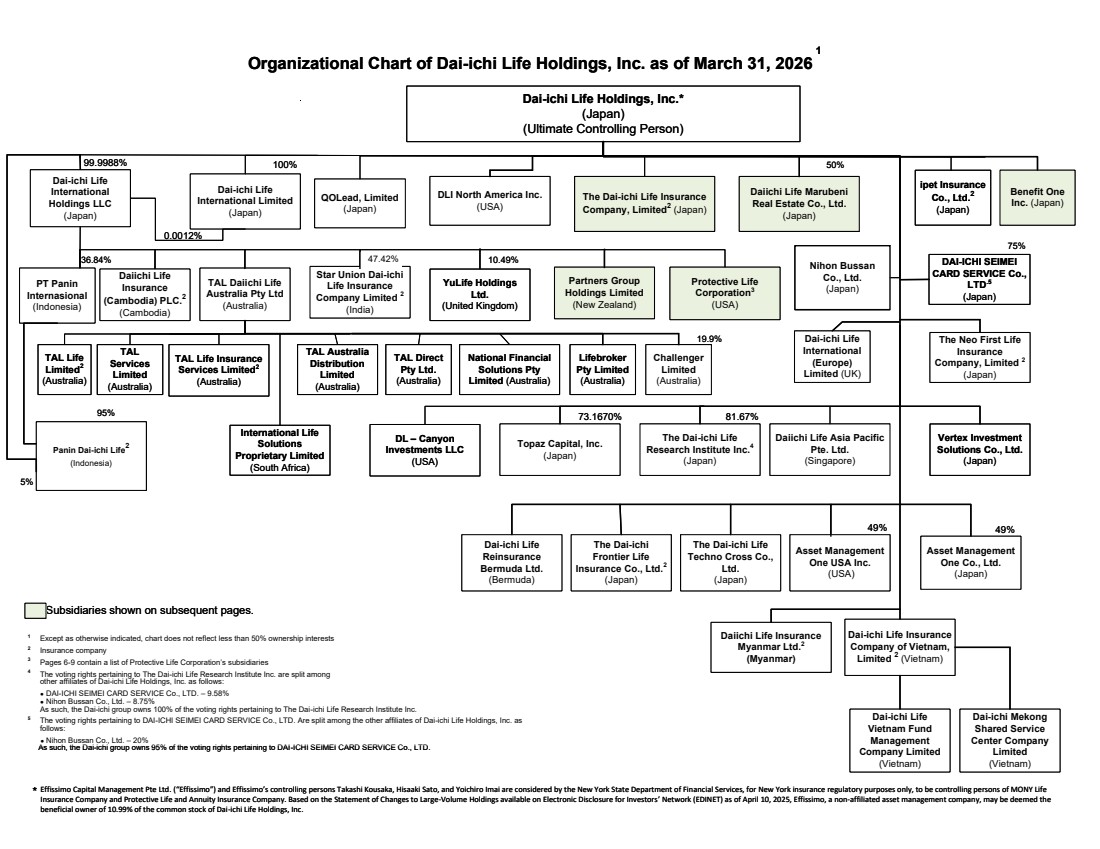
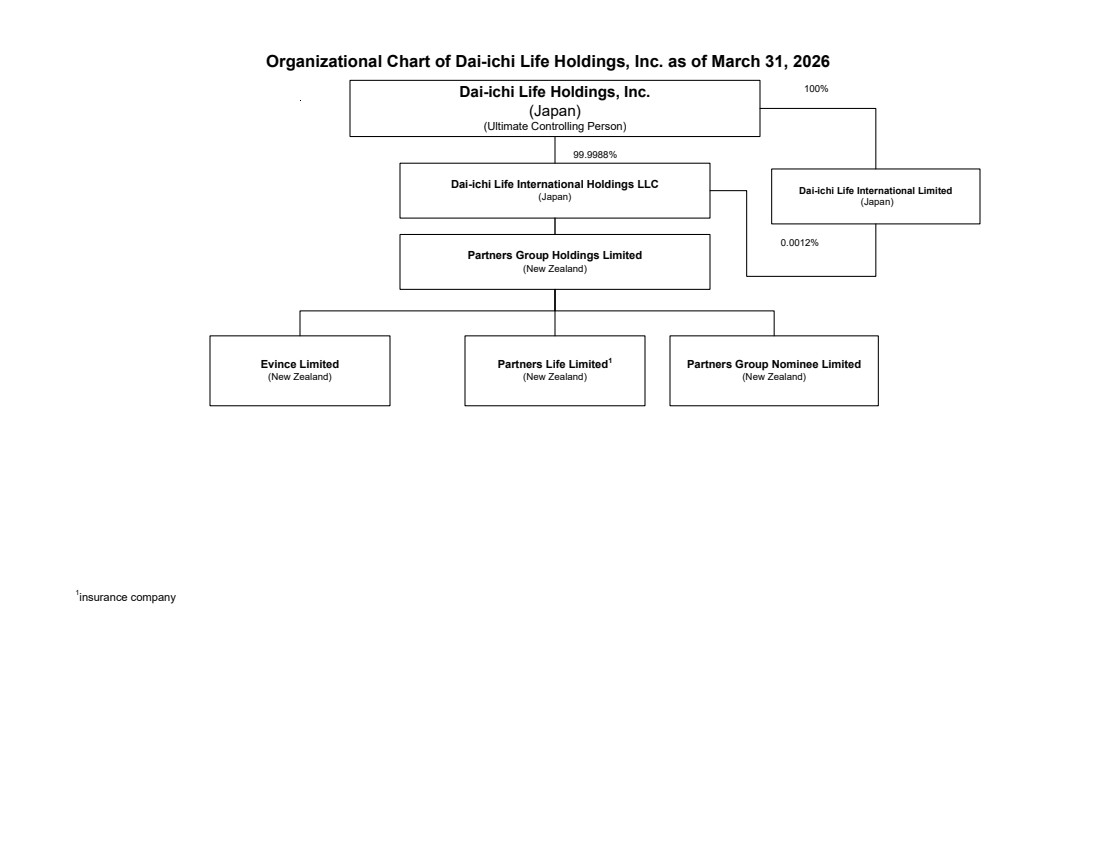
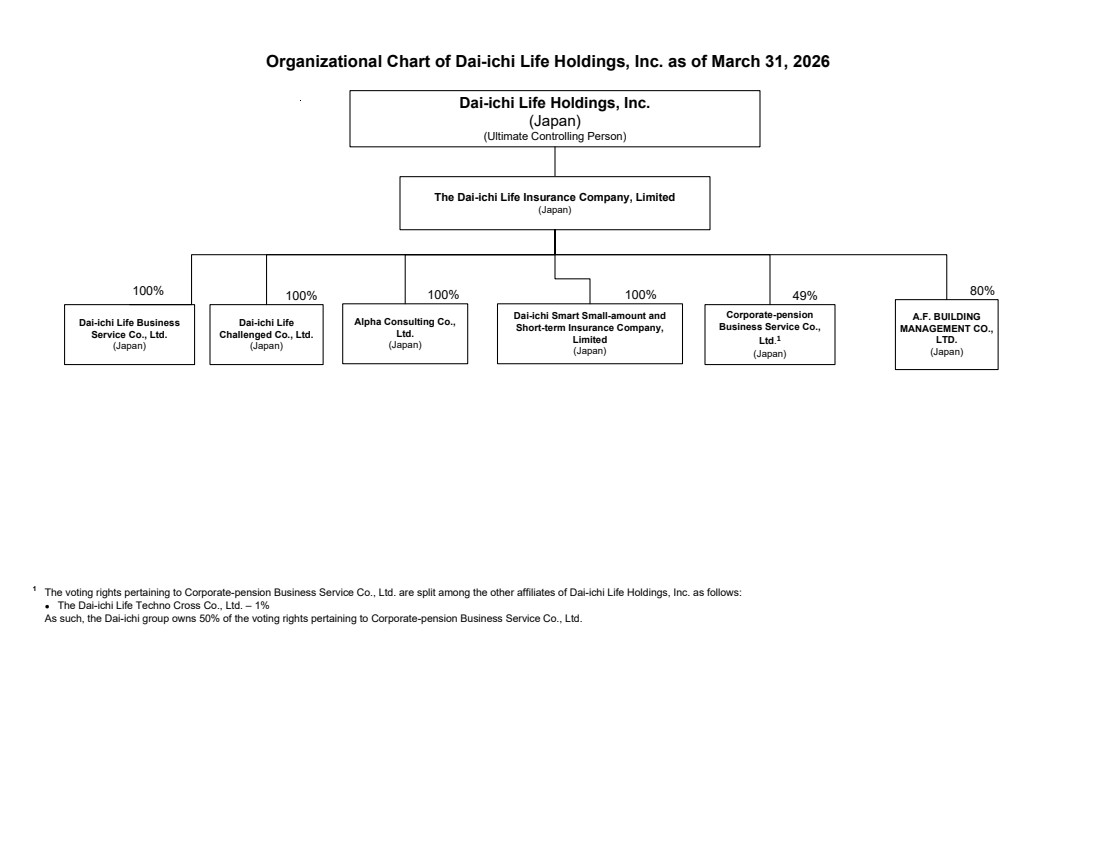
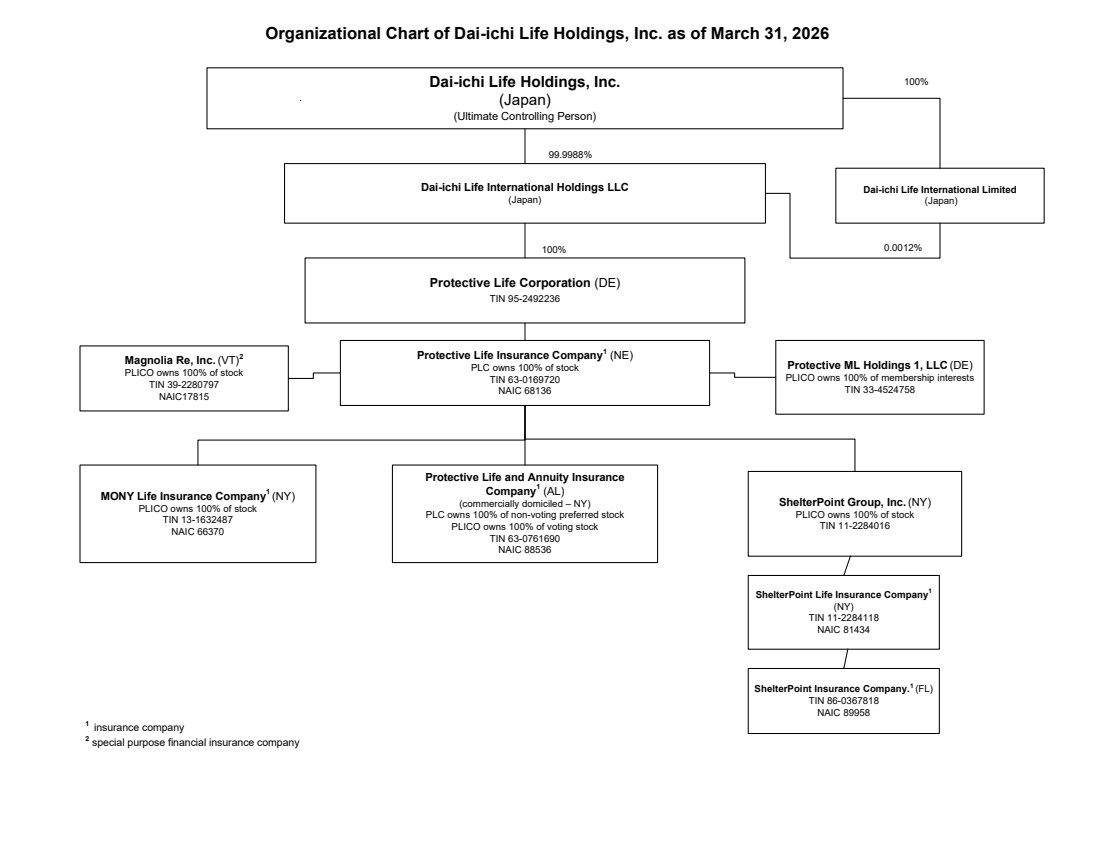
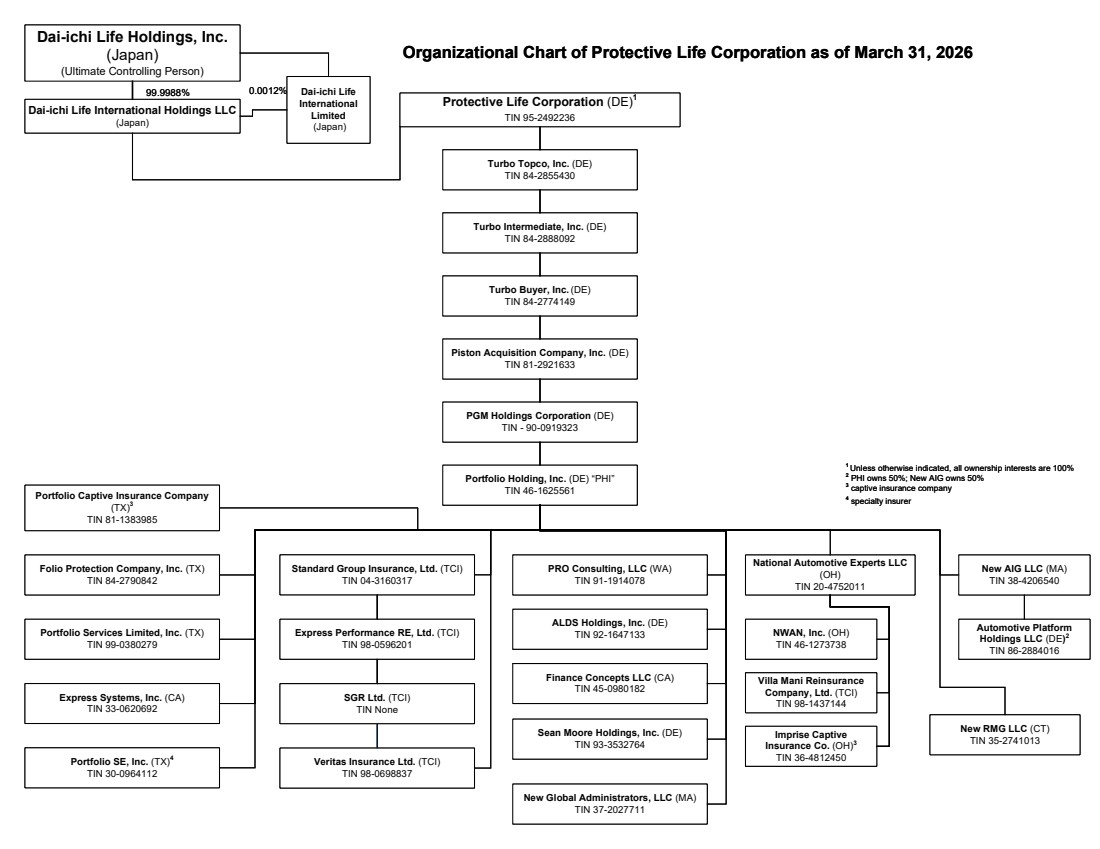
The Policies are issued by Protective Life. Protective Life is a Nebraska corporation that was founded in 1907. Following its receipt of an Order Approving Redomestication on December 20, 2024, Protective Life redomesticated from Tennessee to Nebraska, and became an insurance company domiciled in the State of Nebraska as of December 31, 2024. Protective Life's address is P.O. Box 10648, Birmingham, Alabama 35202-0648. Protective Life markets individual life insurance, credit life and disability insurance, guaranteed investment contracts, guaranteed funding agreements, fixed and variable annuities and extended service contracts. Protective Life is currently licensed to transact life insurance business in 49 states and the District of Columbia. Protective Life is the principal operating subsidiary of Protective Life Corporation ("PLC"), a U.S. insurance holding company and a wholly-owned subsidiary of Dai-ichi Life Holdings, Inc. ("Dai-ichi"). Dai-ichi's stock is traded on the Tokyo Stock Exchange. For more information about us, go to www.protective.com.
The Fixed Account
The Fixed Account consists of assets owned by Protective Life with respect to the Policies, other than those in the Variable Account. Subject to applicable law, Protective Life has sole discretion over the investment of the assets of the Fixed Account. The Loan Account is part of the Fixed Account. Guarantees of Net Premiums allocated to the Fixed Account, and interest credited thereto, are backed by Protective Life. The Fixed Account Value is calculated daily.
You generally may allocate some or all of your Net Premium and may transfer some or all of your Policy Value to the Fixed Account. However, there are limitations on transfers involving the Fixed Account. Due to these limitations, if you want to transfer all of your Policy Value from the Fixed Account to the Variable Account, it may take several years to do so. You should carefully consider whether the Fixed Account meets your investment needs. See "Transfers of Policy Value."
Because of exemptive and exclusionary provisions, interests in the Fixed Account have not been registered under the Securities Act of 1933 nor has the Fixed Account been registered as an investment company under the Investment Company Act of 1940. Accordingly, neither the Fixed Account nor any interests therein are subject to the provisions of these Acts. The disclosure regarding the Fixed Account may, however, be subject to certain generally applicable provisions of the federal securities laws relating to the accuracy and completeness of statements made in prospectuses.
Interest Credited on Fixed Account Value. The interest rate credited to subsequent Net Premiums allocated to or amounts transferred to the Fixed Account will be the annual effective interest rate in effect on the date that the Net Premium(s) is received by Protective Life or the date that the transfer is made. Protective Life, in its sole discretion, may declare a new current interest rate from time to time. Protective Life will credit annual effective interest rates of not less than 1.00%. For purposes of crediting interest, amounts deducted, transferred or withdrawn from the Fixed Account are accounted for on a "first-in-first-out" (FIFO) basis.
Protective Life guarantees that the interest credited during the first Policy Year to the inital Net Premiums allocated to the Fixed Account will not be less than the initial annual effective interest rate show in the Policy. The interest rate is guaranteed to apply to such amounts for a twelve-month period which begins on the date that the Net Premium(s) is allocated or the date that the transfer is made. After an interest rate guarantee expires as to a Net Premium or amount transferred, (i.e., 12 months after the Net Premium or transfer is placed in the Fixed Account) Protective Life will credit interest on the Fixed Account Value attributable to such Net Premium or transferred amount at the current interest rate in effect. New current interest rates are effective for such Fixed Account Value for 12 months from the time that they are first applied.
Payments from the Fixed Account. Payments from the Fixed Account for a withdrawal, surrender or loan request may be deferred for up to six months from the date Protective Life receives the Written Notice in Good Order. If a payment from the Fixed Account is deferred for 30 days or more, it will bear interest at a rate of 3% per year (or an alternative rate if required by applicable state insurance law), compounded annually while payment is deferred.
Our General Account
The Fixed Account is part of our General Account. Unlike premiums and Policy Value allocated to the Variable Account, we assume the risk of investment gain or loss on amounts held in the Fixed Account.
16
The assets of our General Account support our insurance and annuity obligations and are subject to our general liabilities from business operations and to claims by our creditors. Because amounts allocated to the Fixed Account, plus any guarantees under the Policy that exceed your Policy Value (such as those that may be associated with the Death Benefit), are paid from our General Account, any amounts that we may pay under the Policy in excess of Variable Account Value are subject to our financial strength and claims-paying ability. It is important to note that there is no guarantee that we will always be able to meet our claims-paying obligations, and that there are risks to purchasing any insurance product.
We encourage both existing and prospective Policy Owners to read and understand our financial statements. We prepare our financial statements on a statutory basis, as required by state regulators. Our audited financial statements are incorporated by reference in the Statement of Additional Information (which is available at no charge by calling us at 1-800-456-6330 or writing us at the address shown on the cover page of this Prospectus). In addition, the Statement of Additional Information is available on the SEC's website at http://www.sec.gov.
You also will find on our website information on ratings assigned to us by one or more independent rating organizations. These ratings are opinions of our financial capacity to meet the obligations of our insurance and annuity contracts based on our financial strength and/or claims-paying ability.
THE VARIABLE ACCOUNT AND THE FUNDS
Protective Variable Life Separate Account
Protective Variable Life Separate Account is a separate investment account of Protective Life established under Tennessee law by the board of directors of Protective Life on February 22, 1995. On December 31, 2024, Protective Life changed to a Nebraska corporation and, accordingly, the Variable Account currently operates under the laws and regulations of Nebraska. The Variable Account is registered with the SEC as a unit investment trust under the 1940 Act and is a "separate account" within the meaning of the federal securities laws.
Protective Life owns the assets of the Variable Account. These assets are held separate from other assets and are not part of Protective Life's General Account. You assume all of the investment risk for premiums and Policy Value allocated to the Sub-Accounts. Your Policy Value in the Sub-Accounts is part of the assets of the Variable Account. Assets of the Variable Account equal to the reserves or other contract liabilities of the Variable Account will not be charged with liabilities that arise from any other business that Protective Life conducts. Protective Life may transfer to its General Account any assets of the Variable Account which exceed the reserves and other contract liabilities of the Variable Account (which are always at least equal to the aggregate Variable Account Values under the Policies). Protective Life may accumulate in the Variable Account the charge for mortality and expense risks and investment results applicable to those assets that are in excess of the reserves and other contract liabilities related to the Policies. Protective Life is obligated to pay all benefits provided under the Policies.
The Variable Account is divided into Sub-Accounts. The income, gains or losses, whether or not realized, from the assets of each Sub-Account are credited to or charged against that Sub-Account without regard to any other income, gains or losses of Protective Life. Each Sub-Account invests exclusively in shares of a corresponding Fund. Therefore, the investment experience of your Policy depends on the experience of the Sub-Accounts you select. In the future, the Variable Account may include other Sub-Accounts that are not available under the Policies and are not otherwise discussed in this Prospectus.
The Funds
Information regarding each Fund is included in an Appendix to this Prospectus. (See Fund Appendix — Funds Available Under the Policy). The Appendix includes the following information about each fund:
• Fund Name;
• Type of Fund;
• Investment adviser and any sub-advisor;
• Current expenses; and
• Performance.
17
There is no assurance that the stated objectives and policies of any of the Funds will be achieved. Each Fund also has a prospectus that contains more detailed information about the Fund. You may obtain a prospectus or a Statement of Additional Information for any of the Funds by contacting Protective Life or by asking your financial professional. You should read the Funds' prospectuses carefully before making any decision concerning the allocation of Net Premiums or transfers among the Sub-Accounts.
Selection of Funds
We select the Funds offered through the Policies based on several criteria, including the following:
• asset class coverage;
• the strength of the investment adviser's (or sub-adviser's) reputation and tenure;
• brand recognition;
• performance;
• the capability and qualification of each investment firm; and
• whether our distributors are likely to recommend the Funds to Policy Owners.
Another factor we consider during the selection process is whether the Fund, its adviser, its sub-adviser, or an affiliate will make payments to us or our affiliates. For a discussion of these arrangements, see "Certain Payments We Receive With Regard to the Funds." We also consider whether the Fund, its adviser, sub-adviser, or distributor (or an affiliate) can provide marketing and distribution support for sale of the Policies. We review each Fund periodically after it is selected. Upon review, we may remove a Fund or restrict allocation of additional Purchase Payments and/or transfers of Policy Value to a Fund if we determine the Fund no longer meets one or more of the criteria and/or if the Fund has not attracted significant Policy Owner assets. We do not recommend or endorse any particular Fund, and we do not provide investment advice.
Asset Allocation Model Portfolios. Four asset allocation models ("Model Portfolios") are available at no additional charge as Investment Options under your Policy.
Each Model Portfolio invests different percentages of Policy Value in some or all of the Sub-Accounts under your Policy, and these Model Portfolios range from conservative to aggressive. The Model Portfolios are intended to provide a diversified investment portfolio by combining different asset classes to help you reach your investment goal. Also, while diversification may help reduce overall risk, it does not eliminate the risk of losses and it does not protect against losses in a declining market. There can be no assurance that any of the Model Portfolios will achieve their investment objectives.
Pursuant to an agreement with Protective, Milliman Financial Risk Management LLC ("Milliman"), a diversified financial services firm and registered investment adviser under the Investment Advisers Act of 1940, as amended, Milliman provides consulting services to Protective Life regarding the composition and review of the Model Portfolios and is compensated by Protective for doing so. There is no investment advisory relationship between Milliman and Owners with respect to the Model Portfolios. In the future, Protective Life may modify or discontinue its arrangement with Milliman, in which case Protective may contract with another firm to provide similar asset allocation models, provide its own asset allocation models, or cease offering asset allocation models. Protective does not provide investment advisory services in making the Model Portfolios or any other service or feature available under the Policy.
The selection of Investment Options in the Model Portfolios involves balancing a number of factors including, but not limited to, the investment objectives, policies and expenses of the Fund in each Model Portfolio, the overall historical performance and volatility of the Funds, marketability of individual Funds and Fund families, marketing support provided to Protective Life and the broker-dealers who sell the Policies and administrative services and marketing support payments made by the Fund's manager to Protective Life or Investment Distributors, Inc. ("IDI"). Unlike 12b-1 fees, these payments are not paid out of Fund assets.
The available Model Portfolios may change from time to time. In addition, the target asset allocations of these Model Portfolios may vary from time to time in response to market conditions and changes in the portfolio holdings of the Funds in the underlying Sub-Accounts. We will provide written notice if the composition of a model portfolio changes, if there is a material change in our arrangement with Milliman, or if we cease offering asset allocation models altogether. We will not change your existing Policy Value or premium allocation or percentages in response to these changes, however, if you desire to change your Policy Value or premium allocation or percentages to reflect a revised or different Model Portfolio, you must submit new allocation instructions to us in writing to the Home Office.
18
The following is a brief description of the Model Portfolios currently available. They are more fully described in a separate brochure. Your sales representative can provide additional information about the Model Portfolios and help you select which Model Portfolio, if any, may be suitable for you. Please talk to him or her if you have additional questions about these Model Portfolios.
• Conservative Growth portfolio is composed of underlying Sub-Accounts representing a target allocation of approximately 50% in equity and 50% in fixed income investments. The largest of the asset class target allocations are in fixed income, large cap blend and global equity.
• Moderate Growth portfolio is composed of underlying Sub-Accounts representing a target allocation of approximately 65% in equity and 35% in fixed income investments. The largest asset class target allocations are in fixed income, global equity and large cap blend.
• Growth and Income portfolio is composed of underlying Sub-Accounts representing a target allocation of approximately 75% in equity and 25% in fixed income investments. The largest asset class target allocations are in fixed income, large cap blend and global equity.
• Aggressive Growth portfolio is composed of underlying Sub-Accounts representing a target allocation of approximately 90% in equity and 10% in fixed income investments. The largest asset class target allocations are in large cap blend, global equity, large cap growth, large cap value and small cap growth.
Other Information About the Funds
Shares of these Funds are offered only to: (1) the Variable Account, (2) other separate accounts of Protective Life supporting variable annuity contracts or variable life insurance policies, (3) separate accounts of other life insurance companies supporting variable annuity contracts or variable life insurance policies, and (4) certain qualified retirement plans. Such shares are not offered directly to investors but are available only through the purchase of such variable annuity contracts or variable life insurance policies or through such qualified retirement plans. See the prospectus for each Fund for details about that Fund.
Certain Funds may have investment objectives and policies similar to other mutual funds (sometimes having similar names) that are managed by the same investment adviser or manager. The investment results of the Funds, however, may be more or less favorable than the results of such other mutual funds. Protective Life does not guarantee or make any representation that the investment results of any Fund is, or will be, comparable to any other mutual fund, even one with the same investment adviser or manager.
Certain Payments We Receive With Regard to the Funds from Advisers and/or Distributors
We (and our affiliates) may receive payments from the Funds' advisers, sub-advisers, distributors, or affiliates thereof. These payments are negotiated and thus differ by Fund (sometimes substantially), and the amounts we (or our affiliates) receive may be significant. These payments are made for various purposes, including payment for services provided and expenses incurred by us (and our affiliates) in promoting, marketing, distributing, and administering the Policies; and, in our role as intermediary to the Funds. We (and our affiliates) may profit from these payments. Unlike 12b-1 fees, these payments are not paid out of Fund assets.
We (or our affiliates) also receive payments from the investment advisers, sub-advisers, or distributors (or affiliates thereof) of the Funds. Unlike12b-1 fees, these payments are not paid out of Fund assets. These payments may be derived, in whole or in part, from the investment advisory fees deducted from Fund assets. Owners, through their indirect investment in the Funds, bear the costs of these investment advisory fees. See the Funds' prospectuses for more information. The amount of the payments we receive is based on a percentage of the average daily net assets of the particular Fund attributable to the Policies and to certain other variable insurance policies issued or administered by us (or our affiliate). The payments we receive from the investment advisers, sub-advisers or distributors of the Funds currently range from 0.00% to 0.50% of Fund assets attributable to our variable insurance policies. The amount of the payments may be significant.
Other Payments A Fund's adviser, sub-adviser, or distributor or its affiliates may provide us (or our affiliates) and/ or broker-dealers that sell the Policies ("selling firms") with marketing support, may pay us (or our affiliates) and/or selling firms amounts to participate in national and regional sales conferences and meetings with the sales desks, and may occasionally provide us (or our affiliates) and/or selling firms with items of relatively small value, such as promotional gifts, meals, tickets, or other similar items in the normal course of business.
For details about the compensation payments we make in connection with the sale of the Policies, see "Sale of the Policies."
19
Addition, Deletion, or Substitution of Investments
Protective Life may make additions to, deletions from, or substitutions for the shares that are held in or purchased by the Variable Account. If the shares of a Fund are no longer available for investment or further investment in any Fund should become inappropriate in view of the purposes of the Variable Account, Protective Life may redeem the shares of that Fund and substitute shares of another Fund. Substituted Funds may have higher fees and expenses or may be available only to certain classes of purchasers. Protective Life will not substitute any shares without notice and any necessary approval of the SEC and state insurance authorities.
Protective Life also reserves the right to establish additional Sub-Accounts of the Variable Account, which would each invest in shares corresponding to a new Fund. Subject to applicable law and any required SEC approval, Protective Life may establish new Sub-Accounts or eliminate one or more Sub-Accounts if marketing needs, tax considerations or investment conditions warrant. Any new Sub-Accounts may be made available to existing Owner(s) or may be closed to certain classes of purchasers. Protective Life may prohibit the allocation of Net Premium and transfer of Policy Value to a Sub-Account.
If any of these substitutions or changes are made, Protective Life may by appropriate endorsement change the Policy to reflect the substitution or other change. If Protective Life deems it to be in the best interest of Owner(s), the Variable Account may be operated as a management investment company under the 1940 Act, it may be deregistered under that Act if registration is no longer required, or it may be combined with other Protective Life separate accounts, or its assets may be transferred to other Protective Life separate accounts, subject to any required Owner and/or regulatory approval. Protective Life may make any changes to the Variable Account required by the 1940 Act or other applicable law or regulation.
Voting Fund Shares
Protective Life is the legal owner of Fund shares held by the Sub-Accounts and has the right to vote on all matters submitted to shareholders of the Funds. However, in accordance with applicable law, Protective Life will vote shares held in the Sub-Accounts at meetings of shareholders of the Funds in accordance with instructions received from Owners with Policy Value in the Sub-Accounts. Should Protective Life determine that it is permitted to vote such shares in its own right, it may elect to do so.
Protective Life will send or make available to Owners voting instruction forms and other voting materials (such as Fund proxy statements, reports and other proxy materials) prior to shareholders meetings. The number of votes as to which an Owner may give instructions is calculated separately for each Sub-Account and may include fractional votes.
An Owner holds a voting interest in each Sub-Account to which Variable Account Value is allocated under his or her Policy. Owners only have voting interests while the Insured is alive. The number of votes for which an Owner may give instructions is based on the Owner's percentage interest of a Sub-Account determined as of the date established by the Fund for determining shareholders eligible to vote at the meeting of that Fund.
It is important that each Owner provide voting instructions to Protective Life because shares as to which no timely instructions are received and shares held directly by Protective Life are voted by Protective Life in proportion to the voting instructions that are received with respect to all Policies participating in a Sub-Account. As a result, a small number of Owners may control the outcome of a vote. Voting instructions to abstain on any item are applied to reduce the votes eligible to be cast on that item.
Protective Life may, if required by state insurance officials, disregard Owner voting instructions if such instructions would require shares to be voted so as to cause a change in sub-classification or investment objectives of one or more of the Funds, or to approve or disapprove the investment management agreement or an investment advisory agreement. In addition, Protective Life may under certain circumstances disregard voting instructions that would require changes in the investment management agreement, investment manager, an investment advisory agreement or an investment adviser of one or more of the Funds, provided that Protective Life reasonably disapproves of such changes in accordance with applicable regulations under the 1940 Act. If Protective Life ever disregards voting instructions, Owners will be advised of that action and of the reasons for such action in the next semiannual report.
CHARGES AND DEDUCTIONS
This section describes the charges and deductions we make under the Policy to compensate us for the services and benefits we provide, costs and expenses we incur, and risks we assume. We may profit from the charges deducted, and we may use any such profits for any purpose, including payment of distribution expenses. On and after the Policy Anniversary when the Insured is age 121, we do not make any charges and deductions under the Policy, other than the interest charged on loans (if a loan is outstanding).
20
Premium Expense Charge
We deduct a premium expense charge from each premium you pay. The premium expense charge compensates us for certain sales and premium tax expenses associated with the Policies and the Variable Account. Currently, the premium expense charge is equal to 3.5% (5% on a guaranteed basis) of each premium payment you make.
Monthly Deduction
Each month we will deduct an amount from your Policy Value to pay for the benefits provided by your Policy. This amount is called the Monthly Deduction and equals the sum of:
• the cost of insurance charges;
• the monthly administration fees and charges;
• the mortality and expense risk charge; and
• any charges for supplemental riders.
If you do not select the Sub-Account(s) from which the Monthly Deduction is deducted, the Monthly Deduction, except for the mortality and expense risk charge, will be deducted from the Sub-Accounts and the Fixed Account pro-rata on the basis of the unloaned Policy Value. The mortality and expense risk charge will be deducted from the Sub-Accounts.
The Owner may select the Sub-Accounts from which you want us to deduct the Monthly Deduction, other than the mortality and expense risk charge. However, if as of the date the Monthly Deduction is to be deducted, the value in any of the selected Sub-Accounts is less than the charge to be deducted from that Sub-Account, Protective Life will instead deduct the Monthly Deduction on a pro-rata basis from each Sub-Account and the Fixed Account under the Policy based on the unloaned Policy Value attributable to each Sub-Account and the Fixed Account. Protective Life deducts the mortality and expense risk charge prior to the deduction of the other charges that comprise the Monthly Deduction.
Cost of Insurance Charge. This charge compensates Protective Life for the expense of underwriting the Death Benefit. The charge depends on a number of variables and therefore will vary from Policy to Policy and from Monthly Anniversary Day to Monthly Anniversary Day.
The cost of insurance is equal to:
• the cost of insurance rate, multiplied by
• the Net Amount at Risk under the Policy for that Monthly Anniversary Day.
The Net Amount at Risk is equal to:
• the Death Benefit discounted at one plus the monthly guaranteed interest rate minus the Policy Value (prior to deducting the Cost of Insurance).
Anything that decreases Policy Value, such as negative investment experience or withdrawals, will increase the Net Amount at Risk and result in higher cost of insurance charges. The Net Amount at Risk is affected by investment performance, loans, payments of premiums, Policy fees and charges, withdrawals, and increases or decreases in Face Amount.
The cost of insurance charge for each increment of Face Amount is calculated separately to the extent a different cost of insurance rate applies. Because the Net Amount at Risk is equal to the Death Benefit less Policy Value, the entire Policy Value is applied first to offset the Death Benefit derived from the Initial Face Amount. Only if the Policy Value exceeds the Initial Face Amount is the excess applied to offset the portion of the Death Benefit derived from increases in Face Amount in the order of the increases. If there is a decrease in Face Amount after an increase, the decrease is applied first to decrease any prior increases in Face Amount, starting with the most recent increase.
Cost of Insurance Rates. The cost of insurance rate for a Policy is based on and varies with the Issue Age, sex and rate class of the Insured, Face Amount and on the number of years that a Policy has been in force. Protective Life places Insureds in the following rate classes, based on underwriting: Standard Unismoke (30-70). Protective Life guarantees that the cost of insurance rates used to calculate the monthly cost of insurance charge will not exceed the maximum cost of insurance rates set forth in the Policies. The guaranteed rates for standard classes are based on the 2017 Commissioners' Standard Ordinary Mortality Tables, Male or Female, composite Mortality Rates ("2017 CSO Tables").
Protective Life's current cost of insurance rates may be less than the guaranteed rates that are set forth in the Policy. Current cost of insurance rates will be determined based on Protective Life's expectations as to future mortality,
21
investment earnings, expenses, taxes, and persistency experience. In determining current cost of insurance charges, we may consider a variety of factors, including those unrelated to mortality experience.
Protective Life will also determine a separate cost of insurance rate for each increment of Face Amount above the Initial Face Amount based on the Policy duration and the Issue Age, sex and rate class of the Insured at the time of the request for an increase. The following rules will apply for purposes of determining the Net Amount at Risk for each rate class.
Protective Life places the Insured in a rate class when the Policy is issued, based on Protective Life's underwriting of the application. This original rate class applies to the Initial Face Amount. When an increase in Face Amount is requested, Protective Life conducts underwriting before approving the increase (except as noted below) to determine whether a different rate class will apply to the increase. If the rate class for the increase has lower cost of insurance rates than the original rate class (or the rate class of a previous increase), the rate class for the increase also will be applied to the Initial Face Amount and any previous increases in Face Amount beginning as of the effective date of the current increase. If the rate class for the increase has a higher cost of insurance rate than the original rate class (or the rate class of a previous increase), the rate class for the increase will apply only to the increase in Face Amount.
Protective Life does not conduct underwriting for an increase in Face Amount if the increase is requested as part of an exercise of any available guaranteed option to increase the Face Amount without underwriting. See "Supplemental Riders and Endorsements."
In the case of a term conversion, the rate class that applies is the same rate class that applied to the term contract, where applicable. In the case of a guaranteed option, the Insured's rate class for an increase will be the class in effect when the guaranteed option rider was issued.
Legal Considerations Relating to Sex — Distinct Premium Payments and Benefits. Mortality tables for the Policies generally distinguish between males and females. Thus, premiums and benefits under Policies covering males and females of the same age will generally differ.
Protective Life does, however, also offer Policies based on unisex mortality tables on Policies issued in Montana. Employers and employee organizations considering purchase of a Policy should consult with their legal advisors to determine whether purchase of a Policy based on sex-distinct actuarial tables is consistent with Title VII of the Civil Rights Act of 1964 or other applicable law. Upon request, Protective Life may offer Policies with unisex mortality tables to such prospective purchasers.
Monthly Administration Fees. We deduct a monthly administrative charge from your Policy Value to compensate us for issue and administrative costs. The monthly administrative charge is $9 per month. We also deduct a monthly administrative charge for the Initial Face Amount which is equal to a fee per $1,000 of Initial Face Amount per month for all Policy Years to age 120. This monthly administrative charge will be higher in the first 2 Policy Years compared to later years. The actual fee varies depending on the Insured's Issue Age, sex and rate classification, and Face Amount. We guarantee that the current monthly administrative charge per $1,000 of Initial Face Amount will not exceed the maximum monthly administrative charge per $1,000 of Initial Face Amount set forth in your Policy. Representative guaranteed administrative charges per $1,000 of Initial Face Amount for an Insured male standard unismoker at each specified Issue Age, and a Face Amount of $100,000 are set forth below:
|
Issue Age
|
|
Administrative Charge
Per $1,000 of Initial
Face Amount
|
|
|
35
|
|
$
|
2.57
|
|
|
|
40
|
|
|
2.80
|
|
|
|
45
|
|
|
3.12
|
|
|
|
50
|
|
|
3.55
|
|
|
|
55
|
|
|
4.02
|
|
|
|
60
|
|
|
4.61
|
|
|
|
65
|
|
|
4.95
|
|
|
|
70
|
|
|
4.95
|
|
|
Supplemental Rider Charges. We deduct a monthly charge from your Policy Value to cover administrative expenses for any riders as part of the Monthly Deduction. See "Fee Table — Periodic Charges Other Than Annual Fund Expenses."
Mortality and Expense Risk Charge. We deduct a mortality and expense risk charge each month from your Policy Value. This charge compensates Protective Life for the mortality risk it assumes under the Policies. The mortality risk
22
is that the Insureds will live for a shorter time than we project. The expense risk Protective Life assumes is that the expenses that we incur in issuing and administering the Policies and the Variable Account will exceed the amounts realized from the administrative charges assessed against the Policies.
We deduct a monthly charge from assets in the Sub-Accounts attributable to the Policies. This charge does not apply to Fixed Account assets attributable to the Policies. The maximum monthly mortality and expense risk charge to be deducted is generally equal to 0.050% multiplied by the Variable Account Value, which is equivalent to an annual rate of 0.60% of such amount. Protective Life reserves the right to charge less than the maximum charge.
The current monthly mortality and expense risk charge is 0.017% multiplied by the Variable Account Value for the first 10 Policy Years, which is equivalent to an annual rate of 0.204% of such amount. After the tenth Policy Year, the current monthly mortality and expense risk charge is 0.008% multiplied by the Variable Account Value, which is equivalent to an annual amount of 0.096%.
Transfer Fee
We allow you to make 12 free transfers of Policy Value each Policy Year. However, Protective Life may charge a $25 transfer fee on any additional transfers in a Policy Year to cover administrative expenses. Currently, we do not assess the transfer fee but reserve the right to do so in the future for each transfer after the first 12 transfers in any Policy Year. We will give written notice at least thirty (30) days before we impose a transfer fee or limit the number of transfers. If the fee is imposed, it will be deducted from the amount requested to be transferred. If an amount is being transferred from more than one Sub-Account or the Fixed Account, the transfer fee will be deducted proportionately from the amount being transferred from each.
Surrender Charge
During the first 14 Policy Years, a Surrender Charge will be deducted from your Policy Value if: (1) the Policy is surrendered; (2) the Policy lapses at the end of a grace period or (3) the Initial Face Amount is reduced. The Surrender Charge is deducted before any Surrender Value is paid.
The Surrender Charge varies depending on Issue Age, sex and rate class of the Insured and is set forth in your Policy. Representative Surrender Charges per $1,000 of Initial Face Amount for the first Policy Year for an Insured male standard unismoker at each specified Issue Age are set forth below. The Surrender Charge decreases over the applicable surrender charge period (after the applicable surrender charge period, there is no charge). For a decrease in the Initial Face Amount, the charge shown is per $1,000 of decrease.
|
Issue Age
|
|
Surrender Charge (First Year)
per $1,000 of Initial
Face Amount
|
|
|
30
|
|
|
2.850
|
%
|
|
|
35
|
|
|
3.100
|
%
|
|
|
40
|
|
|
3.375
|
%
|
|
|
45
|
|
|
3.725
|
%
|
|
|
50
|
|
|
4.175
|
%
|
|
|
55
|
|
|
4.750
|
%
|
|
|
60
|
|
|
5.525
|
%
|
|
|
65
|
|
|
5.775
|
%
|
|
|
70
|
|
|
5.725
|
%
|
|
In the event of a decrease in the Initial Face Amount, the pro-rated Surrender Charge will be allocated to each Sub-Account and to the Fixed Account based on the proportion of unloaned Policy Value in each Sub-Account and in the Fixed Account. A Surrender Charge imposed in connection with a reduction in the Initial Face Amount reduces the remaining Surrender Charge that may be imposed in connection with a surrender of the Policy.
The purpose of the Surrender Charge is to reimburse Protective Life for some of the expenses incurred in the distribution of the Policies. Protective Life also deducts a premium expense charge for this purpose from each premium paid. See "Premium Expense Charge."
Withdrawal Charges
Protective Life will deduct an administrative charge upon a withdrawal. This charge is the lesser of 2% of the amount withdrawn or $25. This charge will be deducted from the Policy Value in addition to the amount requested to be withdrawn. See "Withdrawal Privilege" for rules for allocating the deduction.
23
Net Cost of Loans
The Net Cost of Loans is the difference between the rate of interest we charge you for a loan and the rate of interest we credit based upon the amount in your Loan Account. We charge interest daily on any outstanding loan at the following effective annual rates: (a) 5.00% for standard loans in Policy Years 1-10; (b) 4.00% current (5.00% guaranteed) for carry-over loans in Policy Years 1-10; and (c) 3.00% (3.25% guaranteed) for all loans (standard and carry-over in Policy Years 11 and greater. We credit interest annually to the Loan Account on any outstanding loan at an effective annual interest rate of not less than 3.00% currently (3.00% guaranteed)..
Fund Expenses
The value of the net assets of each Sub-Account reflects the investment management fees and other expenses incurred by the corresponding Fund in which the Sub-Account invests. For further information, consult the Funds' prospectuses.
Other Information
We sell the Policies through registered representatives of broker-dealers. These registered representatives are also appointed and licensed as insurance agents of Protective Life. We pay commissions and other compensation to the broker-dealers for selling the Policies. You do not directly pay the commissions and other compensation, we do. We intend to recover commissions and other compensation, marketing, administrative and other expenses and costs of Policy benefits through the fees and charges imposed under the Policies. See "Sale of the Policies" for more information about payments we make to the broker-dealers.
Corporate Purchasers or Eligible Groups
The Policy is available for individuals and for corporations and other institutions. For corporate or other group or sponsored arrangements, fee-only arrangements or clients of registered investment advisers purchasing one or more Policies, Protective Life may reduce the amount of the premium expense fee, monthly administration charge, or other charges where the expenses associated with the sale of the Policy or Policies or the underwriting or other administrative costs associated with the Policy or Policies are reduced. Sales, underwriting or other administrative expenses may be reduced for reasons such as expected economies resulting from a corporate purchase, a group or sponsored arrangement or arrangements, fee-only arrangements or clients of registered investment advisers.
THE POLICY
Purchasing a Policy
For insurance coverage to take effect under a Policy, you must submit a completed application and at least the minimum initial premium payment through a licensed representative of Protective Life who is also a registered representative of a broker-dealer having a distribution agreement with Investment Distributors, Inc. Protective Life requires satisfactory evidence of insurability, which may include a medical examination of the Insured. Generally, Protective Life will issue a Policy covering an Insured up to age 70 if evidence of insurability satisfies Protective Life's underwriting rules. Minimum age requirements may apply. Acceptance of an application depends on Protective Life's underwriting rules, and Protective Life may reject an application for any reason. With your consent, a Policy may be issued on a basis other than that applied for (e.g., on a higher premium class basis due to increased risk factors). A Policy is issued after Protective Life approves the application. Payment of Premium is not a requirement to issue a Policy but your insurance will not take effect until you pay your minimum initial premium. Premium may be collected at the time of Policy delivery.
Insurance coverage under a Policy begins on the Policy Effective Date. Temporary life insurance coverage also may be provided under the terms of a temporary insurance agreement. Under such agreements, the total amount of insurance which may become effective prior to the Policy Effective Date may not exceed $500,000 (including the amount of any life insurance and accidental death benefits then in force or applied for with the Company), may be dependent on satisfactory underwriting and other conditions and may not be in effect for more than 60 days. In addition, such agreement may not be issued on proposed Insureds under 15 days of age.
In order to obtain a more favorable Issue Age, Protective Life may permit the Owner to "backdate" a Policy by electing a Policy Effective Date up to six months prior to the date of the original application, subject to state requirements (3 months in Ohio, not allowed in Montana). Charges for the Monthly Deduction for the backdated period are deducted as of the Policy Effective Date and the calculation of the Policy's lapse protection will include the Minimum Monthly Premiums for the backdated period.
24
The Owner of the Policy may exercise all rights provided under the Policy. The Insured is the Owner, unless a different person or entity is named as Owner in the application. By Written Notice received by Protective Life at the Home Office while the Insured is living, the Owner may name a contingent Owner or a new Owner. If there are joint Owners, all Owners must authorize the exercise of any right under the Policy. Unless the Owner provides otherwise, in the event of one joint Owner's death, ownership passes to any surviving joint Owner(s). Unless a contingent Owner has been named, ownership of the Policy passes to the estate of the last surviving Owner upon his or her death. A change in Owner may have tax consequences. See "Tax Considerations — Other Considerations" in the Prospectus.
Fees, charges and benefits available under the Policy may vary depending on the state in which the Policy is issued.
Cancellation Privilege
You may cancel your Policy for a refund during the Cancellation Period by returning it to Protective Life's Home Office or to the sales representative who sold it along with a written cancellation request. The Cancellation Period is determined by the law of the state in which the application is signed and is shown in your Policy. In most states it expires at the latest of
1. 10 days after you receive your Policy, or
2. 45 days after you sign your application.
Within seven calendar days after receiving the returned Policy, Protective Life will refund either:
1. the premiums paid (if required by law), or
2. the total Policy Value plus any charges that were deducted less any outstanding loan and accrued loan interest. This amount may be more or less than the aggregate premiums paid.
In states requiring the return of premiums paid, Protective Life will refund the greater of 1 and 2 above.
Changes in the Policy or Benefits
At any time Protective Life may make such changes in the Policy as are necessary to assure compliance with any applicable laws or with regulations or rulings issued by a government agency. This includes, but is not limited to, changes necessary to comply at all times with the definition of life insurance prescribed by the Internal Revenue Code of 1986, as amended ("Internal Revenue Code" or "Code"). Any such changes will apply uniformly to all affected Policies and Owners will receive notification of such changes.
PREMIUMS
Minimum Initial Premium. The minimum initial premium required depends on a number of factors, including the age, sex and rate class of the proposed Insured, the Initial Face Amount requested by the applicant, any supplemental riders requested by the applicant and the planned periodic premiums that the applicant selects. Consult your sales representative for information about the initial premium required for the coverage you desire.
Planned Periodic Premiums. In the application the Owner selects a plan for paying level premiums at specified intervals (i.e., quarterly, semi-annually or annually). At the Owner's election, we will also arrange for payment of planned periodic premiums on a monthly basis (on any day except the 29th, 30th, or 31st of a month) under a pre-authorized payment arrangement. You are not required to pay premiums in accordance with these plans. You can pay more or less than planned or skip a planned periodic premium entirely. See "Lapse and Reinstatement." Subject to the limits described below, you can change the amount and frequency of planned periodic premiums at any time by Written Notice to Protective Life at the Home Office. Additional premiums may be required to maintain the Policy, depending on a number of factors including past premiums paid, investment experience and loans and/or withdrawals on the Policy.
Unless you have arranged to pay planned periodic premiums by pre-authorized payment arrangement or have otherwise requested, you will be sent reminder notices for planned periodic premiums.
Unscheduled Premiums. Subject to the limitations described below, additional unscheduled premiums may be paid in any amount and at any time. By Written Notice to Protective Life at the Home Office, the Owner may specify that all unscheduled premiums are to be applied as repayments of Policy Debt, if any, otherwise any unscheduled premiums are allocated to the Sub-Accounts based on the most recent allocation instructions we have on file.
25
Premium Limitations. Premiums are accepted until Attained Age of 121. Premiums may be paid by any method acceptable to Protective Life. If by check, the check must be from an Owner (or the Owner's designee other than a sales representative), payable to Protective Life, and be dated prior to its receipt at the Home Office.
Additional limitations apply to premiums. Premium payments must be at least $150 ($50 if paid monthly by a pre-authorized payment arrangement) and must be remitted to the Home Office. Protective Life also reserves the right to limit the amount and frequency of any premium payment. In addition, at any point in time aggregate premiums paid under a Policy may not exceed limitations for life insurance policies as set forth in the Internal Revenue Code. See "Tax Considerations" in the Prospectus and the discussion of Cash Value Accumulation Test under "Calculation of Death Benefit Proceeds." Protective Life will immediately refund any portion of any premium payment, with interest thereon, that is determined to be in excess of the limits established by law to qualify a Policy as a contract for life insurance. Protective Life will also monitor Policies and will attempt to notify the Owner on a timely basis if his or her Policy is in jeopardy of becoming a modified endowment contract under the Internal Revenue Code, if applicable. See "Tax Considerations" in the Prospectus.
Premium Payments Upon Increase in Face Amount. Depending on the Policy Value at the time of an increase in the Face Amount and the amount of the increase requested, an additional premium payment may be necessary to keep the Policy in force or a change in the amount of planned periodic premiums may be advisable. You will be notified if a premium payment is necessary or a change is appropriate.
Net Premium Allocations
You must indicate in the application how Net Premiums are to be allocated to the Sub-Accounts and/or to the Fixed Account. These allocation instructions apply to both initial and subsequent Net Premiums. You may change the allocation instructions in effect at any time by Written Notice to Protective Life at the Home Office or by telephone, facsimile, automated telephone system, or via the Internet at www.protective.com. Whole percentages must be used. The sum of the allocations to the Sub-Accounts and the Fixed Account must be equal to 100% of any Net Premiums. Protective Life reserves the right to establish (i) a limitation on the number of Sub-Accounts to which Net Premiums may be allocated and/or (ii) a minimum allocation requirement for the Sub-Accounts and the Fixed Account.
For Policies issued in states where, upon cancellation during the Cancellation Period, Protective Life returns at least your premiums, Protective Life reserves the right to allocate your initial Net Premium (and any subsequent Net Premiums paid during the Cancellation Period) to the Invesco V.I. U.S. Government Money Portfolio Sub-Account or the Fixed Account until the expiration of the number of days in the Cancellation Period plus 6 days starting from the date that the Policy is mailed from the Home Office. Thereafter, the Policy Value in the Invesco V.I. U.S. Government Money Portfolio Sub-Account or the Fixed Account and all Net Premiums will be allocated according to your allocation instructions then in effect.
If Protective Life receives a premium payment at the Home Office before 3:00 P.M. Central Time, Protective Life will process the payment as of the Valuation Day it is received. Protective Life processes premium payments received at the Home Office at or after 3:00 P.M. Central Time as of the next Valuation Day. However, premium will not be accepted in connection with an increase in Face Amount until underwriting has been completed. When approved, Net Premium received will be allocated in accordance to your allocation instructions then in effect.
Unless designated by the Owner as a loan repayment, premiums received from Owners (other than planned periodic premiums) are treated as unscheduled premiums.
Protective Life reserves the right to limit the amount and frequency of planned periodic premiums and additional unscheduled premiums (each an "additional premium") under the Policy or the amount and frequency of Net Premiums that may be allocated to the Fixed Account at any time. Protective Life also reserves the right to refuse to accept such additional premium under the Policy or allocate additional Net Premium to the Fixed Account at any time without prior notice. In all cases, Protective Life will accept additional premium necessary to prevent the Policy from lapsing. Protective Life will attempt to notify the Owner that a premium payment may result in a Policy becoming a Modified Endowment Contract ("MEC"), and will accept the premium payment unless otherwise instructed by the Owner. If a premium payment would cause the Policy to no longer qualify as life insurance under the Internal Revenue Code, the Company will refuse to accept the premium payment.
If mandated by law, we may reject a premium payment. We may also provide information about you and your account to a government regulator.
26
CALCULATION OF POLICY VALUE
Variable Account Value
The Variable Account Value reflects the investment experience of the Sub-Accounts to which it is allocated, any premiums allocated to the Sub-Accounts, transfers in or out of the Sub-Accounts (including loans), any withdrawals of Variable Account Value, any Surrender Charges deducted, and Monthly Deductions. There is no guaranteed minimum Variable Account Value. A Policy's Variable Account Value therefore depends upon a number of factors. The Variable Account Value for a Policy at any time is the sum of the Sub-Account Values for the Policy on the Valuation Day most recently completed.
Determination of Units
For each Sub-Account, the Net Premium(s) or unloaned Policy Value transferred are converted into units. The number of units credited is determined by dividing the dollar amount directed to each Sub-Account by the value of the unit for that Sub-Account for the Valuation Day on which the Net Premium(s) or transferred amount is invested in the Sub-Account. Therefore, Net Premiums allocated to or amounts transferred to a Sub-Account under a Policy increase the number of units of that Sub-Account credited to the Policy.
Determination of Unit Value
The unit value at the end of every Valuation Day is the unit value at the end of the previous Valuation Day times the net investment factor, as described below. The Sub-Account Value for a Policy is determined on any day by multiplying the number of units attributable to the Policy in that Sub-Account by the unit value for that Sub-Account on that day.
Net Investment Factor
The net investment factor is an index applied to measure the investment performance of a Sub-Account from one Valuation Period to the next. Each Sub-Account has a net investment factor for each Valuation Period which may be greater or less than one. Therefore, the value of a unit may increase or decrease. The net investment factor for any Sub-Account for any Valuation Period is determined by dividing (1) by (2), where:
1. is the result of:
a. the net asset value per share of the Fund held in the Sub-Account, determined at the end of the current Valuation Period; plus
b. the per share amount of any dividend or capital gain distributions made by the Fund to the Sub-Account, if the "ex-dividend" date occurs during the current Valuation Period; plus or minus
c. a per share charge or credit for any taxes reserved for, which is determined by Protective Life to have resulted from the operations of the Sub-Account.
2. is the net asset value per share of the Fund held in the Sub-Account, determined at the end of the last prior Valuation Period.
Fixed Account Value
The Fixed Account Value under a Policy at any time is equal to: (1) the Net Premium(s) allocated to the Fixed Account, plus (2) amounts transferred to the Fixed Account, plus (3) interest credited to the Fixed Account, less (4) transfers from the Fixed Account (including any transfer fees deducted), less (5) withdrawals from the Fixed Account (including any withdrawal charges deducted), less (6) Surrender Charges deducted in the event of a decrease in initial Face Amount, less (7) loan balances, less (8) Monthly Deductions. See "The Fixed Account," for a discussion of how interest is credited to the Fixed Account.
STANDARD DEATH BENEFITS
As long as the Policy remains in force, Protective Life will pay the Death Benefit Proceeds upon receipt at the Home Office of Due Proof of Death of the Insured. Protective Life may require return of the Policy. The Death Benefit Proceeds are paid to the primary Beneficiary or a contingent Beneficiary. The Owner may name one or more primary or contingent Beneficiaries. Unless designated irrevocably, the Owner may change the Beneficiary by Written Notice prior to the death of any Owner. If no Beneficiary survives the Insured, the Death Benefit Proceeds are paid to the Owner or the Owner's estate. Death Benefit Proceeds are paid in a lump sum or under a settlement option. Payment
27
of the Death Benefit Proceeds may have tax consequences. See "Tax Considerations — Tax Treatment of Life Insurance Death Benefit Proceeds" in the Prospectus.
Please note that any Death Benefit payment we make in excess of the Variable Account Value, including payments under any rider, is subject to our financial strength and claims-paying ability.
Limits on Policy Rights
Incontestability. Unless fraud is involved, Protective Life will not contest the Policy, or any supplemental rider accept as stated below, after the Policy or rider has been in force during the Insured's lifetime for two years from the Policy Effective Date or the effective date of the rider. Likewise, unless fraud is involved, Protective Life will not contest an increase in the Face Amount with respect to statements made in the evidence of insurability for that increase after the increase has been in force during the life of the Insured for two years after the effective date of the increase.
We have the right to void and rescind the Long-Term Care rider or resist an otherwise valid claim based on a misstatement in any application we accept and make part of the Policy as follows:
• If this rider has been in force for less than 6 months from the Policy Effective Date or the effective date of a Reinstatement, we will only take such action if the misstatement was material to the issuance of this rider.
• If this rider has been in force for at least 6 months but less than 24 months from the Policy Effective Date or the effective date of a Reinstatement, we will only take such action if the misstatement was materials to the issuance of this rider and pertains to the condition for which benefits are sought.
• If this rider has been in force for more than 24 months from the Policy Effective Date or the effective date of a Reinstatement, we will only take such action if the Insured knowingly and intentionally misrepresented relevant facts relating to the Insured's health.
Suicide Exclusion. If the Insured dies by suicide, while sane or insane, within two years (or shorter period as may be required by applicable law in the state where the Policy is delivered or issued for delivery) after the Policy Effective Date, the Death Benefit will be limited to the premium payments made before death, less any Policy Debt, liens (including accrued interest) and any withdrawals. If the Insured dies by suicide, while sane or insane, within two years (or any shorter period as may be required by applicable law in the state where the Policy is delivered or issued for delivery) after an increase in Face Amount, the Death Benefit with respect to the increase will be limited to the sum of the monthly cost of insurance charges made for that increase.
Misstatement of Age or Sex. If the Insured's age or sex has been misstated in the application for the Policy or in any application for supplemental riders, the Death Benefit under the Policy or such supplemental riders is the amount which would have been provided by the most recent cost of insurance charge, and the cost of such supplemental riders, at the correct age and sex.
Calculation of Death Benefit Proceeds
The Death Benefit Proceeds are equal to the Death Benefit calculated as of the date of the Insured's death, plus benefits under any supplemental riders or endorsements, minus (1) any Policy Debt on that date, (2) any liens for payments made under an accelerated death benefit rider or endorsement including accrued interest, and (3) any past due Monthly Deductions if the Insured died during the grace period.
Federal Tax Compliance Tests. Under Section 7702 of the Internal Revenue Code, a Policy will generally be treated as life insurance for federal tax purposes if, at all times, it satisfies one of two federal tax compliance tests: (1) the Guideline Premium Limitation/Cash Value Corridor Test, and (2) the Cash Value Accumulation Test. This Policy will only be issued using the Cash Value Accumulation Test.
The Cash Value Accumulation Test ("CVAT") does not have a premium limit, but does have a requirement that the Death Benefit be at least a certain percentage (varying based on the Attained Age, duration at death, sex and rate class of the Insured) of the Policy Value. The CVAT may require the Policy to have a higher Death Benefit relative to the Policy's cash value in later Policy Years, however, which could increase the mortality charges that will apply in those later years.
Under this Policy, which provides a level Death Benefit, your Death Benefit will generally be the Face Amount. However, the Death Benefit may vary based on the Policy Value if the minimum death benefit is greater than the Face Amount under the Policy.
The Death Benefit Proceeds are payable when Protective Life receives a properly completed claim form and Due Proof of Death of the Insured while the Policy is in force. The Death Benefit Proceeds will be paid to the Beneficiary,
28
or Beneficiaries, in a lump sum, unless a Settlement Option has been selected. If there is more than one Beneficiary, each Beneficiary must submit instructions in Good Order specifying the manner in which they wish to receive their portion of the Death Benefit Proceeds. The Death Benefit Proceeds are determined as of the date of the Insured's death and are moved to the general account until payment is made. Protective Life will pay interest on the Death Benefit Proceeds payable to each Beneficiary determined in accordance with applicable state law to the date of payment.
Cash Value Accumulation Test. This Policy is issued under the Cash Value Accumulation Test. The Death Benefit is determined as follows: the Death Benefit is the greater of: (1) the Face Amount under the Policy on the date of the Insured's death, or (2) the minimum death benefit described below.
The minimum death benefit at any time is the amount of level death benefit that the Policy Value would purchase if paid as a net single premium at such time. Such net single premium is determined according to the Cash Value Accumulation Test prescribed under Section 7702 of the Internal Revenue Code, as amended or its successor, if such amendment or successor is applicable to the Policy.
For purposes of determining this net single premium, the mortality charges taken into account generally are the maximum mortality charges guaranteed under the Policy. Such charges do not, however, exceed the maximum charges permitted to be taken into account under the Cash Value Accumulation Test of Section 7702. In determining the net single premium, the interest rate taken into account is the greater of an annual effective interest rate specified in the Code or the annual effective credited interest rate or rates guaranteed on issuance of the Policy. For purposes of calculating the Cash Value Accumulation Test, the Policy is deemed to mature on the date the Insured reaches Attained Age 100, and the Policy Value deemed to exist on such date shall not exceed the least amount payable as a death benefit at any time under the Policy.
Changing the Face Amount
On or after the first Policy Anniversary, the Owner may request an increase in the Face Amount. The request must be received in writing in Good Order at the Home Office.
Increasing the Face Amount. Any increase in the Face Amount must be at least $10,000 and an application must be submitted in Good Order. Protective Life reserves the right to require satisfactory evidence of insurability. The maximum Face Amount is $500,000. In addition, the Insured's current Attained Age must be less than the maximum Issue Age for the Policies, as determined by Protective Life from time to time. A change in planned periodic premiums may be advisable. See "Premiums Upon Increase in Face Amount." The increase in Face Amount will become effective as of the date shown on the supplemental Policy Specifications Page (which will be sent to you), and the Policy Value will be adjusted to the extent necessary to reflect a Monthly Deduction as of the effective date based on the increase in Face Amount. When the Policy's lapse protection is in effect, the Policy's Minimum Monthly Premium amount will also generally be increased.
An administrative fee will be charged on the Effective Date of the increase and the subsequent eleven (11) Monthly Anniversary Days following an increase in the Face Amount.
As with the Policy itself, a Face Amount increase is subject to a cancellation privilege. Therefore, the Owner may exercise the privilege by canceling any increase in Face Amount within the prescribed Cancellation Period. In such an event, unless the Owner requests otherwise, an amount will be refunded (i.e., credited back to the Policy Value) above except that if no additional premiums were required in connection with the Face Amount increase, then the amount refunded is limited to that portion of the first Monthly Deduction following the increase that is attributable to cost of insurance charges for the increase and the monthly administrative fee for the increase. Increasing the Face Amount of the Policy may increase the Death Benefit and may have the effect of increasing monthly cost of insurance charges. Increasing the Face Amount may also have tax consequences. See "Tax Considerations — Other Considerations." Please consult your tax advisor.
On or after the third Policy Anniversary, the Owner may request a decrease in the Face Amount. The request must be received in writing in Good Order at the Home Office.
Decreasing the Face Amount. If a decrease in the Face Amount would result in total premiums paid exceeding the premium limitation prescribed under current tax law to qualify your Policy as a life insurance contract, Protective Life will immediately return to you the amount of such excess above the premium limitation. Although Protective Life will attempt to notify an Owner if a decrease in the Face Amount will cause a Policy to be considered a modified endowment contract, we will not automatically return premium. See "Tax Considerations — Policies which are MECs."
29
The Face Amount after any decrease must be at least $100,000. Protective Life prohibits any elected decrease in Face Amount (1) for the first 3 Policy Years; (2) for 3 years following an increase in Face Amount; and (3) for one Policy Year following the last decrease in Face Amount. If the Initial Face Amount of the Policy has been increased prior to the requested decrease, then the decrease will first be applied against any previous increases in Face Amount in the reverse order in which they occurred. The decrease will then be applied to the Initial Face Amount. A decrease in Face Amount will become effective on the Monthly Anniversary Day that coincides with or next follows receipt and acceptance of a request at the Home Office.
Decreasing the Face Amount of the Policy may reduce the Death Benefit and may have the effect of decreasing monthly cost of insurance charges. However, if the initial Face Amount is decreased during the first 14 Policy Years, a Surrender Charge will apply. Decreasing the Face Amount also may have tax consequences. See "Tax Considerations — Certain Distributions Required by the Tax Law in the First 15 Years."
Settlement Options
The Company offers a variety of ways of receiving proceeds payable under the Policy, such as on surrender or death, other than in a lump sum. Any sales representative authorized to sell this Policy can further explain these settlement options upon request. All of these settlement options are forms of fixed-benefit annuities, which do not vary with the investment performance of a separate account. Under each of the fixed-benefit settlement options, no surrender or withdrawal may be made once payments have begun.
The following settlement options may be elected.
Option 1 — Payment for a Fixed Period. Equal monthly payments will be made for any period of up to 30 years. The amount of each payment depends on the total amount applied, the period selected and the monthly payment rates Protective Life is using when the first payment is due.
Option 2 — Life Income with Payments for a Guaranteed Period. Equal monthly payments are based on the life of the named annuitant. Payments will continue for the lifetime of the annuitant with payments guaranteed for 10 or 20 years. Payments stop at the end of the selected guaranteed period or when the named person dies, whichever is later.
Option 3 — Interest Income. Protective Life will hold any amount applied under this option. Interest on the unpaid balance will be paid each month at a rate determined by Protective Life. This rate will not be less than the equivalent of 1% per year.
Option 4 — Payments for a Fixed Amount. Equal monthly payments will be made of an agreed fixed amount. The amount of each payment may not be less than $10 for each $1,000 applied. Interest will be credited each month on the unpaid balance and added to it. This interest will be at a rate set by us, but not less than an effective rate of 1% per year. Payments continue until the amount Protective Life holds runs out. The last payment will be for the balance only.
Minimum Amounts. Protective Life reserves the right to pay the total amount of the Policy in one lump sum, if less than $5,000. If monthly payments are less than $50, payments may be made quarterly, semi-annually, or annually at Protective Life's option.
Other Requirements. Settlement options must be elected by Written Notice in Good Order received by Protective Life at the Home Office. The Owner may elect settlement options during the Insured's lifetime; Beneficiaries may elect settlement options thereafter if Death Benefit Proceeds are payable in a lump sum. The effective date of an option applied to Death Benefit Proceeds is the date the Due Proof of Death of the Insured is received at the Home Office. The effective date of an option applied to Surrender Value is the effective date of the surrender where a settlement option has been elected. We will pay the Death Benefit Proceeds to the Beneficiary in a lump sum, unless a Settlement Option has been selected. If the Primary or Contingent Beneficiary is not living, or if no Beneficiary has been designated, We will pay the Owner or Owner's estate.
If Protective Life has available, at the time a settlement option is elected, options or rates on a more favorable basis than those guaranteed, the higher benefits will apply.
Escheatment of Death Benefit
Every state has unclaimed property laws which generally declare life insurance policies to be abandoned after a period of inactivity of 3 to 5 years from the date the Death Benefit is due and payable. For example, if the payment of a Death Benefit has been triggered, but, if after a thorough search, Protective Life is still unable to locate the Beneficiary of the Death Benefit, or the Beneficiary does not come forward to claim the Death Benefit in a timely
30
manner, the Death Benefit will be paid to the abandoned property division or unclaimed property office of the state in which the Beneficiary or the Owner last resided, as shown on our books and records, or to our state of domicile. This "escheatment" is revocable, however, and the state is obligated to pay the Death Benefit (without interest) if your Beneficiary steps forward to claim the Death Benefit with the proper documentation. To prevent such escheatment, it is important that you update your Beneficiary designations, including addresses, if and as they change. Such updates should be communicated in writing, by telephone, or other approved electronic means to the Home Office.
OTHER BENEFITS AVAILABLE UNDER THE POLICY
In addition to the standard Death Benefits associated with your Policy, other standard and optional benefits may also be available to you. The following table summarizes information about these optional benefits. Information about the fees associated with each benefit included in the table may be found in the Fee Table.
|
Name of Benefit |
|
Purpose |
|
Is Benefit
Standard
or
Optional? |
|
Brief Description of
Restrictions/Limitations |
|
|
Long-Term Care Rider |
|
Provides access to Death Benefit proceeds and extended benefit pool if the Insured has been certified by a Licensed Health Care Practitioner as chronically ill as defined in the rider. |
|
Standard |
|
• Automatically issued on your Policy if eligibility requirements are met. The Policy will not be issued without this rider.
• Additional cost applies.
• Subject to the eligibility and other conditions for benefits as described in the rider. Some of the conditions include the Insured being certified as chronically ill and meeting the 90-day Elimination Period before benefits are payable.
• Chronic Illness must be certified by a Licensed health care practitioner (not including the Owner, Insured, or a family member).
• Benefit payments are made monthly and may not cover all long-term care expenses incurred.
• If an LTC claim is made and benefit payments are in effect, no claims may be filed under the Terminal Illness Accelerated Death Benefit Endorsement.
• If a Policy Loan or partial withdrawal is taken while the rider is in Active Claim Status, this rider will terminate. |
|
31
|
Name of Benefit |
|
Purpose |
|
Is Benefit
Standard
or
Optional? |
|
Brief Description of
Restrictions/Limitations |
|
|
Long-Term Care Inflation Protection Option |
|
On each Policy Anniversary where this increase is purchased, this protection will provide for a 5% compound increase on each Policy Anniversary that will be factored into the calculation of various values used to calculate benefits under the Long-Term Care Rider. |
|
Optional |
|
• This rider must be elected at Policy issue.
• Additional cost applies.
• On each Policy Anniversary, the increase provided for under this rider must be elected and purchased.
• If you decline to purchase any increase under this rider on a Policy Anniversary, you will no longer have the right to purchase increases on any future Policy Anniversary. |
|
|
Terminal Illness Accelerated Death Benefit Endorsement (Automatically included at Policy Issue) |
|
Provides for an accelerated death benefit payment (with certain exclusions), to the Owner if the Insured has a qualifying terminal illness. |
|
Standard |
|
• Maximum aggregate amount of payments that will be paid under this rider for all policies issued by the Company or an affiliate company on the life of the same insured person is equal to:
• The lesser of 60% of the current face amount of the Policy or $1,000,000; minus
• Any outstanding lien amount against the Policy resulting from any other accelerated death benefit rider or endorsement attached to the Policy.
• Minimum acceleration permitted is $15,000
• The Death Benefit will be reduced by the amount of any acceleration taken, plus accumulated interest.
• Any acceleration taken will reduce the amount available for Policy Loans and withdrawals. |
|
|
Lapse Protection Endorsement (Automatically issued with this Policy) |
|
Guarantees that your Policy will not Lapse during the Maximum Lapse Protection Period set forth in your Policy Schedule. |
|
Standard |
|
• The Minimum Monthly Requirement will vary by Policy benefits, Issue Age, sex and rate class of the Insured.
• Any change in the benefits provided by this Policy made subsequent to the Policy Effective Date and during the Maximum Lapse Protection Period, may result in a change to the Minimum Monthly Requirement associated rates and values shown in the Policy Schedule. |
|
32
|
Name of Benefit |
|
Purpose |
|
Is Benefit
Standard
or
Optional? |
|
Brief Description of
Restrictions/Limitations |
|
|
Dollar-Cost Averaging |
|
Allows for the systematic transfer of specified dollar amounts from a Sub-Account or the Fixed Account to one or more other specified Sub-Accounts. |
|
Optional |
|
• No transfers may be made into the Fixed Account.
• Dollar-cost averaging may be elected for periods of at least 6 months and no longer than 48 months. |
|
|
Portfolio Rebalancing |
|
Allows for the automatic transfer, on a regular basis, of Variable Account Value among specified Sub-Accounts to maintain a specified percentage allocation of Variable Account Value. |
|
Optional |
|
• Rebalancing transfers cannot be made into Fixed Account.
• Minimum Variable Account Value of $100 required. |
|
|
Policy Loans |
|
Allows Owner to borrow from Policy's Cash Value. |
|
Standard |
|
• Not available during the first Policy Year.
• Maximum loan amount is 99% of Cash Value.
• Minimum loan amount is $500.
• Certain Policy loans may be taxable. You should consult a tax adviser as to the tax consequences of taking a Policy loan.
• If a Policy Loan is taken while the Long-term Care Rider is in active claim status, the rider will terminate. |
|
SUPPLEMENTAL RIDERS AND ENDORSEMENTS
The following supplemental riders and endorsements may be available to be added to your Policy subject to state availability. Monthly charges, if applicable, for these riders will be deducted from your Policy Value as part of the monthly deduction. See "Monthly Deduction." Additional rules and limits apply to these supplemental riders. Not all such riders may be available at any time, and supplemental riders in addition to those listed below may be made available. The Long-Term Care Rider, the Terminal Illness Accelerated Death Benefit Endorsement, and the Lapse Protection Endorsement are automatically added to all Policies at the time of issue. Also, this Policy will not be issued without the Long-Term Care Rider. The Long-Term Care Inflation Protection Option must be purchased at the time the Policy is issued. Please ask your Protective Life agent for further information or contact the Home Office.
Long-Term Care Rider. This rider is automatically issued with the Policy. This rider provides an acceleration of the death benefits and extended benefits under the Policy for long-term care benefits for Qualified Long-Term Care Services incurred for Home Health Care Services, Adult Day Care Services, Assisted Living Facility Services, and Nursing Home Services. You may make a claim for a Long-Term Care Benefit (the "LTC Benefit"). The LTC Benefit is subject to the restrictions contained in this rider and all conditions for eligibility must be met. If a claim for the LTC Benefit is approved, we will pay you for Qualified Long-Term Care Services subject to the Maximum Monthly LTC Benefit Amount and the Current Maximum LTC Benefit.
30-Day Right to Cancel
You have 30 days after the rider is first delivered to you to examine and return to us or to the financial professional who sold it to you, if you decide not to keep this rider. We will cancel the rider and the Policy. The returned Policy and rider will be treated if they had never been issued. We will refund an amount equal to the greater of: (a) all the premiums paid or (b) the sum of the value of the amounts allocated to the Fixed Account, including any interest credited, accumulated to the date that this Policy is returned to us, and the value of the amounts allocated to the Sub-Accounts, adjusted to reflect their net investment experience to the end of the valuation period in which the Policy is returned to us.
33
Rider Terms
Activities of Daily Living: Means the six basic human functions necessary for a person to live independently are:
• Eating
• Toileting
• Transferring oneself into or out of bed, chair, wheelchair
• Bathing
• Dressing
• Continence
The rider attached to your Policy contains more detailed information about these self-care functions.
Active Claim Status: Means that the Insured has satisfied all conditions in the Eligibility for LTC Benefits, we have approved the LTC Benefit claim, and LTC Benefit payments have begun. Active Claim Status ends if the Insured no longer satisfies conditions for Eligibility for LTC Benefits.
Assistive Device: Means a device that enables a person to perform an Activity of Daily Living that they otherwise would not be able to perform independently. Some examples of Assistive Devices include a walker, transfer chair, and grab bars.
Chronically Ill: Means that the Insured has been certified, within the preceding 12 months, by a Licensed Health Care Practitioner as:
• Being unable to perform, without Substantial Assistance from another individual, at least two Activities of Daily Living for 90 consecutive days due to a loss of functional capacity, or
• Requiring Substantial Supervision to protect the Insured from threats to health and safety due to Sever Cognitive Impairment.
The Insured shall be deemed to be capable of performing an Activity of Daily Living without Substantial Assistance if the Insured can perform the Activity of Daily Living while using an Assistive Device.
Elimination Period: Means a period of 90 calendar days beginning the day after the Insured is certified as Chronically Ill and receiving Qualified Long-Term Care Services. Benefits are not paid for Qualified Long-Term Care Services during the Elimination Period but will be paid retroactively once the Elimination Period has been satisfied. If the Insured does not remain Chronically Ill for 90 consecutive calendar days, the Insured may combine multiple periods of being Chronically Ill to satisfy the Elimination Period. However, the required 90 days of the Elimination Period must be accumulated within a continuous period of 730 days.
Family Member: Means the Owner or Insured's spouse and anyone who is related to the Owner or Insured or the Owner's or Insured's spouse by the following degree by blood, marriage, divorce, adoption or operation of law: parents, in-laws, grandparents, siblings, children, grandchildren, aunts, uncles, nephews and nieces.
Hands-on Assistance: Means physical assistance (minimal, moderate or maximal) without which the Insured would not be able to perform the Activities of Daily Living.
Home: Means the Insured's primary residence where Qualified Long-Term Care Services are provided. Home does not include any facility in which the Insured resides and is dependent on others for Substantial Supervision or Substantial Assistance with Activities of Daily Living.
Insured: Means the person shown on the Policy Schedule upon whose life the Policy insures.
Licensed Health Care Practitioner: Means any physician (as defined in section 1861(r)(1) of the Social Security Act) and any registered professional nurse, licensed social worker, or other individual who meets such requirements as may be prescribed by the Secretary of the Treasury. It does not include the Owner, Insured or a Family Member.
Plan of Care: Means a written plan for Qualified Long-Term Care Services prepared by a Licensed Health Care Practitioner for the Insured. This Plan of Care must detail information such as the type, frequency, anticipated duration, daily hours, and provider qualifications for all services necessary to address the Insured's needs. All services must adhere to generally accepted standards of practice appropriate and consistent for a Chronically Ill Individual and be suitable to fulfill the Insured's care requirements.
34
Qualified Long-Term Care Services: Means services that meet the requirements of Section 7702B(c)(1) of the Internal Revenue Code of 1986, as amended, as follows: necessary diagnostic, preventive, therapeutic, curative, treatment, mitigation and rehabilitative services, and maintenance or personal care services which are required by a chronically ill individual and are provided pursuant to a Plan of Care prescribed by a Licensed Health Care Practitioner.
Severe Cognitive Impairment: Means a loss or deterioration in the Insured's intellectual capacity that is (i) comparable to (and includes) Alzheimer's disease and similar forms of irreversible dementia, and (ii) measured by clinical evidence and standardized tests that reliably measure impairment in the following areas:
• The Insured's short or long-term memory,
• The Insured's orientation as to person (such as who they are), place (such as their location), or time (such as day, date, and year), and
• The Insured's deductive or abstract reasoning.
Standby Assistance: Means the presence of another person within arm's reach of the Insured that is necessary, by physical intervention, to prevent injury to the Insured while the Insured is performing the Activities of Daily Living.
Substantial Assistance: Means Hands-On Assistance or Standby Assistance.
Substantial Supervision: Means continual supervision (which may include cuing by verbal prompting, gestures, or other demonstrations) by another person that is necessary to protect the Insured from threats to his or her health or safety due to Severe Cognitive Impairment.
Written Certification: Means written documentation from a Licensed Health Care Practitioner certifying that the Insured is Chronically Ill and prescribing a Plan of Care.
Eligibility, Limitations, and Exclusions
To become eligible for the LTC Benefit payments, the following conditions must be met:
• We receive your written request for the LTC Benefit,
• A Licensed Health Care Practitioner certifies that the Insured is Chronically Ill and prescribes a Plan of Care,
• The Policy and this rider are in force,
• The applicable Elimination Period has been satisfied,
• We receive written consent from any irrevocable beneficiaries or assignee of record named in the Policy, and
• The benefit payment is made in respect to a month when the Insured is Chronically Ill and only for Qualified Long-Term Care Services provided pursuant to a Plan of Care prescribed by a Licensed Health Care Practitioner.
We will not pay LTC Benefits arising in whole or in part from a pre-existing condition. A pre-existing condition is any condition for which medical advice or treatment was recommended by, received from, a provider of health care services, within six months preceding the effective date of this rider.
The rider will not pay benefits for any Chronic Illness caused by:
• Any attempt at suicide or intentionally self-inflicted injury, while sane or insane,
• Committing or attempting to commit or participating in a riot, insurrection, or involvement in an illegal occupation,
• Alcoholism or drug addiction, or
• Declared or undeclared war or any act of war.
Maximum Monthly LTC Benefit Amount
The Base Maximum Monthly LTC Benefit Amount on the Policy Effective Date, is equal to the amount shown in the Policy Schedule. The Base Maximum Monthly LTC Benefit Amount may increase or decrease after the Policy Effective Date as described in the "Long-Term Care Inflation Protection Option" section and "Impact on Your Policy" section.
35
The Maximum Monthly LTC Benefit Amount is the maximum monthly benefit amount available each calendar month under this rider on any date on or after the Policy Date and is equal to:
• The Base Maximum Monthly LTC Benefit Amount, plus
• 80% of the result of the following:
a) 1/48 of the Current LTC Benefit Pool minus
b) the Base Maximum Monthly LTC Benefit Amount
On the date a claim is approved, the Maximum Monthly LTC Benefit Amount will be fixed at the amount in effect on that date. For the duration of the claim, that amount may increase and/or decrease as described in the "Benefits While on Claim" section below.
The Maximum Monthly LTC Benefit Amount will never be less than the Base Maximum Monthly LTC Benefit Amount shown in the Policy Schedule.
Current LTC Benefit Pool
The Current LTC Benefit Pool is the total dollar amount available for LTC Benefits under this rider at the time of claim. The Current LTC Benefit Amount Pool is equal to the greatest of:
• The Base LTC Benefit Pool,
• The Market Value LTC Benefit Pool, and
• The Protected LTC Benefit Pool.
On the date a claim is approved, the Current LTC Benefit Pool will be fixed at the dollar amount in effect on that date. The Current LTC Benefit Pool in effect will be the prior month Current LTC Benefit Pool adjusted for any premium, Face Amount changes, Withdrawals or loans during the month. For the duration of the claim, the Current LTC Benefit Pool will change as described in the "Benefits While on Claim" provision below.
Unless you have requested a decrease in the Policy's Face Amount or make a withdrawal under the Policy, the Current LTC Benefit Pool will never be less than the Base LTC Benefit Pool shown in the Policy Schedule minus the sum of any LTC Benefits paid under this rider.
The Base LTC Benefit Pool on the Policy Effective Date, is equal to the Base LTC Benefit Pool shown in the Policy Schedule. The Base LTC Benefit Pool may increase or decrease after the Policy Date as described in the "Long-Term Care Inflation Protection Option", and "Impact on Your Policy" sections.
The Market Value LTC Benefit Pool is equal to the Unloaned Policy Value multiplied by the Market Benefit Multiplier shown on your Policy schedule. This pool may increase or decrease daily and is adjusted as described in the "Long-Term Care Inflation Protection Option" section.
The Protected LTC Benefit Pool on the first Policy Anniversary is equal to the Protected LTC Percentage (shown on your Policy schedule) multiplied by the Unloaned Policy Value as of the end of the first Policy Year multiplied by the Market Benefit Multiplier shown on your Policy schedule.
On each subsequent Policy Anniversary while this rider is in force, the Protected LTC Benefit Pool will equal the greater of:
• The Protected LTC Percentage (shown on the Policy schedule) multiplied by the Unloaned Policy Value as of the end of the previous Policy Year multiplied by the Market Benefit Multiplier, and
• The Protected LTC Pool in effect immediately prior to that Policy Anniversary.
The Protected LTC Benefit Pool in effect for any Policy Year may increase and/or decrease due to the Long-Term Care Inflation Protection Option Increases, LTC Benefit payments, withdrawals, loans, and Policy changes.
Claims Provisions
We prefer that either you or the Insured notify us as soon as the Insured first becomes eligible and may soon need care covered by this rider. We must receive your intent to file a claim for the LTC Benefit at our Administrative Office via written request or by telephone. The Request should include at least the Insured's name, Policy number and the address to which claim forms should be sent.
We have forms used for making a claim and for providing Proof of Loss. These forms will be sent to you within 15 days of the date we receive your Notice of Claim. If the claim forms are not sent within this 15 day period, and you
36
provide Written Certification and proof of loss in a format other than our claim forms, you will be deemed to have complied with the claim requirement.
Completed claim forms and Written Certification verifying the occurrence of a Chronic Illness must be submitted within 90 days after you receive Written Confirmation from a Licensed Health Care Practitioner. Failure to provide proof within this period will not invalidate or diminish the claim, provided that the required proof is submitted as soon as reasonably possible and, except in cases of legal incapacity, no later than one year from the date of proof would otherwise by required.
A licensed Health Care Practitioner must re-certify that the Insured is Chronically Ill and prescribe a Plan of Care at least once every 12 months. We reserve the right to request a re-certification that the Insured remains Chronically Ill, but not more often than every 90 days, following an initial certification. The practitioner should either prescribe a new Plan of Care or confirm the existing Plan of Care during each re-certification. After we confirm Chronic Illness status, the certification cannot be rescinded, and no additional certifications will be conducted until the 90-day period has passed.
We reserve the right to independently assess the Insured's Chronic Illness and benefit eligibility. As part of this assessment we have the right to require that the Insured be examined by a Licensed Health Care Practitioner chosen by us. We will pay for this examination. In the event of conflicting opinions, eligibility for LTC Benefits will be determined by a third medical opinion provided by a Licensed Health Care Practitioner who is mutually agree upon by the Insured and us. The Insured must be certified as Chronically Ill for the entire period for which LTC Benefits are being paid.
If the Insured is not re-certified as Chronically Ill, or at your request, we will close your claim. Prior to closing your claim, we will send you written notification of the remaining benefits and options for reallocating any remaining Fixed Account Value and future Net Premium Payments. If you leave the Accumulation Value, if any, in the Fixed Account and continue to allocate any future Net Premium Payments to the Fixed Account, the Current LTC Benefit Pool and the Maximum Monthly LTC Benefit amount will remain fixed.
If, on the date your claim is closed, the Policy's Face Amount and/or Policy Value are greater than zero, and you submit a request to transfer any remaining Fixed Account Value to the Sub-Account(s) and/or allocate any future Net Premium Payments to the Sub-Account(s), the Current LTC Benefit Pool and the Maximum Monthly LTC Benefit Amount will no longer be fixed, and will be calculated as in the Maximum Monthly LTC Benefit Amount and Current LTC Benefit Pool section above, but will be floored at the amounts during claim.
LTC Benefits will be paid for comparable Qualified Long-Term Care Services received in any state or jurisdiction within the United States, its territories, or possessions other than the state of issue, provided such LTC Benefits would have been payable in the state or jurisdiction where this rider was originally issues. This applies regardless of differences in facility licensing, certification, registration, or similar regulatory requirements between states.
According to the terms and conditions of this rider, we will pay claims for Qualified Long-Term Care Services provided outside of the United States, its territories or possessions. The Insured is not required to return to the United States for benefit certification. However, the Licensed Health Care Practitioner providing the Plan of Care must be licensed to practice in the United States, its territories or possessions and all claims information and medical records must be submitted in English.
Extension of LTC Benefits
If the Policy terminates while the rider is in Active Claim Status, we will continue to pay the LTC Benefit until the earliest of:
• The death of the Insured,
• Transition from Active Claim Status has completed, or
• The Maximum LTC Benefit Pool has been exhausted.
Any extension of benefit is subject to all terms and conditions of this rider including eligibility for LTC Benefits and claim requirements. If the current maximum LTC benefit pool has been exhausted, no death benefit will be due upon the death of the Insured.
Benefits While on Claim
On the date a claim under this rider is approved, the Current LTC Benefit Pool and the Maximum Monthly LTC Benefit Amount will be fixed at the dollar amount in effect on that date. Also, on the date a claim under this rider is approved,
37
we will automatically transfer out any Variable Account Value and transfer to the Fixed Account. See "Impact on Your Policy" below for additional information.
Any amounts paid in a calendar month under this rider will reduce the Current LTC Benefit Pool and the Face Amount, dollar for dollar. The Base LTC Benefit Pool will be reduced by a pro-rata amount to the Face Amount.
If purchased, the Long-term Care Inflation Protection Option increase will increase the Maximum Monthly LTC Benefit and the Current LTC Benefit Pool, as described in the "Long-Term Care Inflation Protection Option" section.
An increase and/or decrease in the Policy's Face Amount or a Withdrawal under the Policy will likewise increase and/or decrease the Maximum Monthly LTC Benefit and the Current LTC Benefit Pool, as described in the "Impact on Your Policy" section.
If your claim is closed, the Current LTC Benefit Pool and the Maximum Monthly LTC Benefit will remain fixed unless you choose to transfer any remaining Fixed Account Value to the Sub-Account(s) and/or allocate future Net Premiums to the Sub-Account(s). Upon your Request to make such transfer and/or allocation, the Current LTC Benefit Pool and the Maximum Monthly LTC Benefit Amount will no longer be fixed and will be calculated as described in the "Current LTC Benefit Pool" and "Maximum Monthly LTC Benefit Amount" sections, but will be floored at the amounts during claim.
Impact on Your Policy
Automatic Transfer to Fixed Account. On the date a claim under this rider is approved, we will automatically transfer any Variable Account Value out of the Sub-Accounts and transfer into the Fixed Account. While this rider is in Active Claim Status, no transfers out of the Fixed Account into Sub-Accounts will be permitted. In addition, Net Premiums received during this period will be allocated to the Fixed Account.
LTC Benefit Payments. While Policy Value is greater than zero, LTC Benefit payments will reduce the Policy Value dollar for dollar and will be taken from the Fixed Account.
LTC Benefit Payments on Face Amount. While the Policy's Face Amount is greater than zero, benefit payments under this rider will reduce the Policy's Face Amount dollar for dollar. This may reduce the Policy's Face Amount below the minimum.
Monthly Deductions. When this rider is in Active Claim Status, Monthly Deductions required to maintain the Policy continue, however the LTC Rider Monthly Charge is waived.
Policy Changes, Loans, and Withdrawals. When the rider is in Active Claim Status, Policy Changes, Loans, and withdrawals are not permitted.
Interaction with Terminal Illness Accelerated Death Benefit Endorsement. Upon satisfying all the conditions in Eligibility for LTC Benefits and after we approve the long-term care claim, acceleration of the death benefit for terminal illness is not permitted under this endorsement.
Residual Death Benefit. If the LTC Benefit payments deplete the Face Amount that was effective on the date of your first LTC Benefit payment, a Residual Death Benefit will be determined. The Residual Death Benefit will be the lesser of:
• 5% of the Face Amount effective on the date immediately prior to your first LTC Benefit payment, or
• $10,000.
The Residual Death Benefit will be reduced by an amount equal to 5% of any Policy Debt. Repayment of Policy Debt will increase the Residual Death Benefit by an amount equal to 5% of the repayment.
Protection Against Unintended Lapse
To protect against unintended lapse, you may designate at least one person, other than the Owner, to receive notices about potential lapse or Policy termination due to nonpayment of Planned Premium. We will remind you at least every two years after the Policy Effective Date of your right to make this designation. You are not required to designate an additional person to receive notices. The designation does not constitute acceptance of any liability on the third-party for services provided to the Insured.
38
Termination
The rider will terminate on the earliest of:
• Your written notice to terminate this rider. If you request to terminate this rider the Policy to which it is attached will also be terminated. We shall refund a pro rata share of any modal premium paid by the Insured for any period past the requested month of termination,
• Policy termination,
• Failure to pay sufficient premium to maintain the rider,
• Death of the Insured,
• Your submission, after all of the conditions in Eligibility for Benefits are first satisfied, of a valid claim for any benefits provided by an accelerated death benefit for terminal illness or rider attached to the Policy,
• The date that the Maximum LTC Benefit is exhausted, and
• The date that a Partial Surrender or a Policy Loan is taken from the Policy while on Active Claim Status.
Reinstatement
If the Policy terminates and is subsequently reinstated, this rider may also be reinstated subject to the terms and conditions for reinstatement in the Policy. Upon reinstatement, this rider will only provide benefits for Qualified Long-Term Care Services incurred after the date of reinstatement.
We will reinstate the Policy and this rider without evidence of insurability, if we receive:
• The Owner's written request within 5 months after the end of the Grace Period,
• Due proof that is satisfactory to us that the Insured was Chronically Ill at the end of the Grace Period outlined in the Policy, and
• Payment of overdue premium and/or charges for this rider.
Rider LTC Nonforfeiture Benefit
After the Policy and this rider have been In Force for three Policy Years, subject to the terms and conditions of this rider and the limitations and conditions outlined below, this provision will cover eligible claims for Qualified Long-Term Care Services up to the limit described below which begin at any time after this rider has lapsed or terminated for any reason. The Nonforfeiture Benefit under this provision will continue as paid-up long-term care coverage until the earlier of:
• The death of the Insured, or
• The date the LTC Nonforfeiture Benefit Limit has been reduced to zero.
The LTC Nonforfeiture Benefit Limit will be an amount equal to the greater of:
• One month's Maximum Monthly LTC Benefit Amount as of the date this rider lapses or terminates, or
• An amount equal to the sum of Monthly rider Charges paid for this rider.
The Maximum Monthly LTC Nonforfeiture Benefit will be an amount equal to the applicable Maximum Monthly LTC Benefit elected at initial claim or at time of the first claim under the Nonforfeiture Benefit if no prior claim has occurred, as of the date this rider Lapses or terminates, and will not change.
The LTC Nonforfeiture Benefit Limit and the Maximum Monthly LTC Nonforfeiture Benefit are not subject to Long-Term Care Inflation Protection Option increases.
No benefits are payable under this provision until benefits, if any, under the "Extension of LTC Benefits" section are no longer in effect. The sum of any benefits paid under the "Extension of LTC Benefits" section plus any benefits paid under this Rider LTC Nonforfeiture Benefit" section will not exceed the LTC Benefit Limit on the date this rider lapsed or terminated.
Long-Term Care Inflation Protection Option. If you selected optional inflation protection, you can purchase a 5% compound inflation protection increase on each Policy Anniversary, with no evidence of insurability. The right to purchase the inflation protection increase in effect on the date the Policy is issued is shown on the Schedule Page.
39
Every annual inflation protection increase purchased by you will be factored into the calculation of the following values: Base Maximum Monthly LTC Benefit Value, Base LTC Benefit Pool, Current Maximum Monthly LTC Benefit Value, Current LTC Benefit Pool, if any.
Starting with the first Policy Anniversary, and for as long as you continue to purchase each year's inflation protection increase, we will send you written notification regarding that year's right to purchase. You must return your request to purchase that year's inflation protection increase within the timeframe stated in the notification.
If you decline to purchase any annual inflation protection increase, you will no longer have the right to purchase an inflation protection increase on any future Policy Anniversary. The right to purchase inflation protection under this rider cannot be reinstated once terminated.
The right to purchase annual inflation protection increases will continue without regard to the Insured's Attained Age, claim status, claim history, or length of time the Insured has been covered under this rider, as long as the following conditions are satisfied:
• You continue to purchase each year's inflation protection increase,
• The LTC Benefit Limit is greater than zero, and
• This rider remains in force.
On the Policy Anniversary on which you do not purchase that year's inflation protection increase, the following will occur:
• Your right to purchase any future annual inflation protection increase will terminate, and
• You will no longer be charged the optional Inflation Protection monthly LTC charge.
Even if your right to purchase this rider is terminated, any previously purchased increases will continue to be included in the calculation of benefits under this rider.
Terminal Illness Accelerated Death Benefit Endorsement. This endorsement is automatically issued with the Policy. The endorsement provides for an accelerated death benefit payment to the Owner if the Insured has a qualifying terminal illness and all of the terms and conditions of the endorsement are met. The accelerated death benefit is based on a portion of the current Face Amount and is subject to a maximum accelerated death benefit. The minimum acceleration permitted is $15,000. There is no cost or charge for the endorsement. However, a lien equal to the accelerated death benefit payment is established against the Policy and accumulates interest. If a claim is filed under this endorsement, the LTC Rider will terminate and when the benefits under the LTC Rider are being utilized (claim is filed under the LTC Rider) no claims under the Terminal Illness Accelerated Death Benefit are allowed.
The primary impact of the lien and any accumulated interest is a reduction in the amount of the Death Benefit by the amount of the lien plus accumulated interest. The lien also reduces the amount available for loans and withdrawals. Consult your sales representative and review the endorsement for limitations, terms and conditions.
The maximum aggregate amount of payments that will be paid under this rider for all policies issued by the Company or an affiliate company on the life of the same insured person is equal to:
• the lesser of 60% of the current face amount of the Policy or $1,000,000; minus
• any outstanding lien amount against the Policy resulting from any other accelerated death benefit rider or endorsement attached to the Policy.
Example: Assume a 45 year old male non-smoker purchases a policy with a $200,000 Face Amount. The Terminal Illness Death Benefit Endorsement is automatically added. If at age 75 the insured is diagnosed with a terminal illness (by the definition in the rider) and the rider is in force, then the insured can access up to $120,000 of the death benefit.
Lapse Protection Endorsement. The rider guarantees that your Policy will not Lapse during the Maximum Lapse Protection Period set forth in your Policy Schedule, as long as the Accumulated Net Payments Received, less any Policy Debt, is greater than or equal to the Accumulated Minimum Monthly Requirement and the Policy Debt does not exceed the Cash Value.
For the Maximum Lapse Protection Period, the Policy Value at the end of this period may not be sufficient to keep the Policy in force unless additional premiums are made. However, if the Policy Value is sufficient to pay Monthly Deductions, the Policy will not lapse, even after the end of this period. In addition, during this period any change to the
40
benefits provided by the Policy may result in a change to the Minimum Monthly Requirement. If this occurs, the new Minimum Monthly Requirement, and associated values described in this endorsement, will be provided to you on a supplemental Policy Schedule, along with any applicable effective date.
The Accumulated Minimum Monthly Requirement each month is equal to the Minimum Monthly Requirement for a given month plus the Accumulated Minimum Monthly Requirement as of the prior month ($0 for the first month of the first Policy Year) multiplied by one plus the Threshold Accumulation Factor shown in the Policy Schedule.
The Accumulated Net Payments Received (calculated as of the last day of the month) for each month is equal to:
• the Accumulated Net Payments Received for the prior month ($0 for the first month of the first Policy Year), plus
• the sum of all the Lapse Protection Net Premium received since the beginning of the month, Plus
• the Lapse Protection Interest for the month, less
• the reduction in Policy Value for any Withdrawal taken and any applicable Surrender Charges assessed since the beginning of the month.
The Lapse Protection Net Premium is the amount after deducting the Lapse Protection Premium Expense Charge for that Policy Year, as shown on the Policy Schedule, for each premium payment.
The Lapse Protection Interest is calculated as:
• the lesser of the Accumulated Fund Threshold and the sum of the Accumulated Net Payments Received for the prior month ($0 for the first month of the first Policy Year) PLUS the sum of all the Lapse Protection Net Premium received since the beginning of the month, MULTIPLIED by the Threshold Accumulation Factor, shown in the Policy Schedule, plus
• the amount of the Accumulated Net Payments Received for the prior month ($0 for the first month of the first Policy Year PLUS the sum of all the Lapse Protection Net Premium received since the beginning of the month, in excess of the Accumulated Fund Threshold, if any, MULTIPLIED by the Excess Accumulation Factor, shown on the Policy Schedule.
The Accumulated Fund Threshold for the first month of a Policy Year is equal to:
• the Accumulated Fund Threshold for the prior month ($0 for the first month of the first Policy Year) multiplied by 1 plus the Threshold Accumulation Factor, PLUS
• the Annual Threshold Premium, as shown on the Policy Schedule, for that Policy Year.
For all other months, the Accumulated Fund Threshold is equal to the Accumulated Fund Threshold for the prior month multiplied buy 1 plus the Threshold Accumulation Factor.
Any adjustments made due to a decrease in Face Amount, including payments made due to benefits provided by any rider attached to the Policy, may reduce the Accumulated Net Payments Received, Accumulated Minimum Monthly Requirements, and Accumulated Fund Threshold.
If the Policy is maintained under this endorsement, Monthly Deductions will continue.
This endorsement terminates when the Policy terminates. If the Policy is reinstated according to the applicable Policy provisions, this endorsement will also be reinstated.
Example: Assume a 45 year old male preferred non-smoker purchases a Policy with a $250,000 Face Amount. The Policy Schedule indicates a Lapse Protection Premium Expense Charge of 1.00%, the initial Minimum Monthly Requirement is $161.88, the Threshold Accumulation Factor is 0.446150%, the Excess Accumulation Factor is 0.105844%, and an initial Threshold Premium of $5,980.25. The owner makes an initial premium payment of $200, which is an Lapse Protection Net Premium Received of $198 ($200 less 1.00%, the Lapse Protection Premium Expense Charge).
In the first Policy month, the Accumulated Fund Threshold ($5,980.25) is equal to the initial Threshold Premium. The Accumulated Minimum Monthly Requirement is $162.60 which is $161.88 (the initial Minimum Monthly Requirement) multiplied by 1.00446150 (one plus the Threshold Accumulation Factor). The Accumulated Net Payments Received ($198.00) is less than the Accumulated Fund Threshold ($5,980.25), so the Threshold Accumulation Factor is applied to the entire Accumulated Net Payments Received value. The Accumulated Net Payments Received in the first Policy
41
month, after accumulation, is $198.88 ($198.00 multiplied by 1.00446150). Because the Accumulated Net Payments Received of $198.88 equals or exceeds the Accumulated Minimum Monthly Requirement $162.60, the conditions have been met for the first month for the rider to remain in effect guaranteeing the Policy remains in force.
Assume on each of the 23 subsequent monthly anniversaries, the owner has made premium payments of the same amount and taken no partial surrenders or Policy Loans. The total premiums paid for the Policy equals $4,800.00. The Accumulated Net Payments Received at the end of Policy month 24 is $5,026.30 and the Accumulated Minimum Monthly Requirement is $4,109.26. Because the Accumulated Net Payments Received equals or exceeds the Accumulated Minimum Monthly Requirement, the conditions have been met on this monthly anniversary day. Since the rider remains in effect, the Policy is guaranteed to remain in force. If the Cash Value of the Policy is reduced to zero at this time and the insured dies, the death benefit will still be the Face Amount of $250,000.
Assume that starting with the 24th monthly anniversary, the owner misses the next six anticipated monthly premium payments. At the end of Policy month 30, the Accumulated Net Payments Received has accumulated to $5,162.36 while the Accumulated Minimum Monthly Requirement has accumulated to $5,207.02. Also assume that the Cash Value of the Policy is zero. Because the Accumulated Net Payments Received is less than the Accumulated Minimum Monthly Requirement, the owner must pay additional premiums within the 60-day grace period to keep the rider in effect and the Policy in force. Under these circumstances, if the insured dies outside of the 60-day grace period without having made the necessary additional premium payments, the death benefit will be $0.
Dollar-Cost Averaging
If you elect at the time of application or at any time thereafter by Written Notice in Good Order to Protective Life at the Home Office, you may systematically and automatically transfer, on a monthly or quarterly basis, specified dollar amounts from a Sub-Account ("Source Sub-Account") or the Fixed Account to one or more other specified Sub-Accounts, subject to the following restriction: no transfers may be made into the Fixed Account. This is known as the dollar-cost averaging method of investment. By transferring on a regularly scheduled basis as opposed to allocating the total amount at one particular time, you may be less susceptible to the impact of market fluctuations in Sub-Account unit values. Protective Life, however, makes no guarantee that the dollar-cost averaging method will result in a profit or protect against loss.
Automatic transfers for dollar-cost averaging are subject to all transfer restrictions other than the maximum transfer amount from the Fixed Account restriction and limits on frequent transfer activity. You may elect dollar cost averaging for periods of at least 6 months but no longer than 48 months. Dollar-cost averaging transfers may commence on any day of the month that you request except the 29th, 30th, or 31st. If no day is selected, transfers will occur on the Monthly Anniversary Day. We have the right to restrict these transfers until 6 days after the end of the Cancellation Period.
Once elected, Protective Life will continue to process dollar-cost averaging transfers until the earlier of the following: (1) the number of designated transfers has been completed, (2) the Policy Value in the appropriate Source Sub-Account or the Fixed Account is depleted, (3) the Owner, by Written Notice received by Protective Life at the Home Office, instructs Protective Life to cease the automatic transfers, (4) a grace period begins under the Policy, or (5) the maximum amount of Policy Value has been transferred under a dollar-cost averaging election.
Automatic transfers made to facilitate dollar-cost averaging will not count toward the 12 transfers permitted each Policy Year if Protective Life elects to limit the number of transfers or impose the transfer fee. Protective Life reserves the right to discontinue offering automatic dollar-cost averaging transfers upon 30 days written notice.
Portfolio Rebalancing
At the time of application or at any time thereafter by Written Notice in Good Order to Protective Life, you may instruct Protective Life to automatically transfer, on a quarterly, semi-annual or annual basis, your Variable Account Value among specified Sub-Accounts to achieve a particular percentage allocation of Variable Account Value among such Sub-Accounts ("Portfolio Rebalancing"). Such percentage allocations must be in whole numbers and must allocate amounts only among the Sub-Accounts. No amounts will be transferred to the Fixed Account as part of Portfolio Rebalancing. A minimum Variable Account Value of $100 is required for Portfolio Rebalancing. Unless you instruct otherwise when electing rebalancing, the percentage allocation of your Variable Account Value for Portfolio Rebalancing will be based on your premium allocation instructions in effect at the time of rebalancing. Any allocation instructions, including Portfolio Rebalancing allocation instructions, that you give us that differ from your then current Net Premium allocation instructions will be deemed to be a request to change your Net Premium allocation. Portfolio Rebalancing may commence on any day of the month that you request except the 29th, 30th or 31st. If no day is selected, rebalancing will occur on each applicable Monthly Anniversary Day. We have the right to restrict Portfolio Rebalancing until six days after the end of the Cancellation Period.
42
Once elected, Portfolio Rebalancing begins on the first quarterly, semi-annual or annual anniversary following election. You may change or terminate Portfolio Rebalancing by Written Notice in Good Order received by Protective Life at the Home Office, or by telephone if you have previously authorized us to take telephone instructions. If Protective Life elects to limit the number of transfers or impose the transfer fee Portfolio Rebalancing transfers will not count as one of the 12 free transfers available during any Policy Year. Protective Life reserves the right to discontinue Portfolio Rebalancing upon 30 days written notice.
Note: You may elect Portfolio Rebalancing while at the same time you transfer from a Source Sub-Account specified dollar amounts to other specified Sub-Accounts under the Dollar-Cost Averaging program. If you select as your Source Sub-Account a Sub-Account rather than the Fixed Account, however, the Portfolio Rebalancing program may reallocate amounts transferred from the Source Sub-Account back to that Source Sub-Account based on your Portfolio Rebalancing allocation instructions, and thereby undermine to some degree your selection of the Source Sub-Account as a Sub-Account from which transfers under the Dollar-Cost Averaging program would be made. Conversely, transfers under the Dollar-Cost Averaging program may cause your allocation of Variable Account Value among the Sub-Accounts to differ from the percentage allocations you specify in your Portfolio Rebalancing allocation instructions. Accordingly, we recommend that you consult with your financial professional before electing Portfolio Rebalancing while at the same time engaging in Dollar-Cost Averaging.
LOANS
You may obtain two types of loans under a Policy, a standard loan and/or a carry-over loan. A carry-over loan is a loan which is transferred from another policy that is exchanged for the Policy under Section 1035 of the Internal Revenue Code. A carry-over loan must be approved by Protective Life and can only be executed at the time of issue. After the first Policy Year while the Policy has Cash Value and the Insured is still living, you may borrow from Protective Life under a standard loan using the Policy as the security for the loan. A standard loan is any loan that is not a carry-over loan. Policy loans must be requested by Written Notice in Good Order received at the Home Office. Generally the minimum loan amount is $500 and the maximum loan amount is 99% of the Policy's Cash Value. This maximum is reduced by any Policy Debt or any lien outstanding (including accrued interest) on the Valuation Day your loan request is received. Outstanding Policy Debt and any lien therefore reduces the amount available for new Policy loans. Loan proceeds generally are mailed within seven calendar days of the loan being approved.
Loan Collateral
When a Policy loan is made, an amount equal to the loan is transferred out of the Sub-Accounts and the Fixed Account and into a Loan Account established for the Policy. Like the Fixed Account, a Policy's Loan Account is part of Protective Life's General Account and amounts therein earn interest as credited by Protective Life from time to time. Because Loan Account values are part of Policy Value, a loan will have no immediate effect on the Policy Value. In contrast, Surrender Value (including, as applicable, Variable Account Value and Fixed Account Value) under a Policy is reduced immediately by the amount transferred to the Loan Account. The Owner can specify the Sub-Accounts and the Fixed Account from which collateral is transferred to the Loan Account. If no allocation is specified, collateral is transferred from each Sub-Account and from the Fixed Account in the same proportion that the value in each Sub-Account and the Fixed Account bears to the total unloaned Policy Value on the date that the loan is made.
On each Policy Anniversary, an amount of Policy Value equal to any due and unpaid loan interest (explained below), is also transferred to the Loan Account. Such interest is transferred from each Sub-Account and the Fixed Account in the same proportion that each Sub-Account Value and the Fixed Account Value bears to the total unloaned Policy Value.
Loan Repayment
You may repay all or part of your Policy Debt (the amount borrowed plus unpaid interest) at any time while the Insured is living and the Policy is in force. Loan repayments in Good Order must be sent to the Home Office and are credited as of the Valuation Day received. The Owner may specify by Written Notice that any unscheduled premiums paid while a loan is outstanding be applied as loan repayments. (Loan repayments, unlike unscheduled premium payments, are not subject to the premium expense charge.) When a loan repayment is made, Policy Value in the Loan Account in an amount equal to the repayment is transferred from the Loan Account to the Sub-Accounts and the Fixed Account. Thus, a loan repayment will have no immediate effect on the Policy Value, but the Surrender Value (including, as applicable, Variable Account Value and Fixed Account Value) under a Policy is increased immediately by the amount transferred from the Loan Account. Unless specified otherwise by the Owner(s), amounts are transferred to the Sub-Accounts and the Fixed Account in the same proportion that Net Premiums are allocated.
43
Protective Life's ability to credit interest on Policy Value in the Loan Account is subject to the Company's financial strength and claims paying ability.
Interest
Protective Life charges interest daily on any outstanding loan at the following effective annual rates:
|
Loan Interest Rates |
|
|
|
|
Current
Standard Loan
Charge |
|
Guaranteed
Standard Loan
Charge |
|
Current
Carry-Over
Loan Charge |
|
Guaranteed
Carry-Over
Loan Charge |
|
|
Policy Years 1-10 |
|
|
5.00 |
% |
|
|
5.00 |
% |
|
|
4.00 |
% |
|
|
5.00 |
% |
|
|
Policy Years 11 and greater |
|
|
3.00 |
% |
|
|
3.25 |
% |
|
|
3.00 |
% |
|
|
3.25 |
% |
|
Interest will accrue daily on any outstanding loan, and is considered part of Policy Debt. Interest is due and payable at the end of each Policy Year. We will notify you of the amount due. If interest is not paid when due, the amount of the interest is added to the principal amount of the loan. If the interest payment is received prior to or on the Policy Anniversary date it will be applied as of the anniversary date. If the interest payment is received after the anniversary date it will be applied as of the Valuation Day it is received and credited as a partial loan repayment.
The Loan Account is credited with an effective annual interest rate of not less than 3.00%. Protective Life determines the rate of interest to be credited to the Loan Account and may redetermine it at any time. Once determined, the new rate of interest to be credited is applied beginning at the next Policy Year following the date on which Protective Life determined the new rate of interest to be credited to the Loan Account. The Policy Owner will be notified in advance about any change to the interest rate credited to the Loan Account. On each Policy Anniversary, the interest earned on the Loan Account since the previous Policy Anniversary is transferred to the Sub-Accounts and to the Fixed Account. The interest is transferred and allocated to the Sub-Accounts and the Fixed Account in the same proportion that Net Premiums are allocated. Protective Life's ability to credit interest on Policy Value in the Loan Account is subject to the Company's financial strength and claims paying ability.
The difference between the rate of interest charged on borrowed money and the rate credited on the Loan Account is the net cost of the loan. The net cost of loans is set forth in the table below.
|
Net Cost of Loans |
|
|
|
|
Current
Standard Loan |
|
Guaranteed
Standard Loan |
|
Current
Carry-Over
Loan |
|
Guaranteed
Carry-Over
Loan |
|
|
Policy Years 1-10 |
|
|
2.00 |
% |
|
|
2.00 |
% |
|
|
1.00 |
% |
|
|
2.00 |
% |
|
|
Policy Years 11 and greater |
|
|
0.00 |
% |
|
|
0.25 |
% |
|
|
0.00 |
% |
|
|
0.25 |
% |
|
Non-Payment of Policy Loan
If the Insured dies while a loan is outstanding, the Policy Debt (which includes any accrued but unpaid interest) is deducted from the Death Benefit in calculating the Death Benefit Proceeds.
If the Loan Account Value exceeds the Cash Value less any lien and accrued interest (i.e., the Surrender Value becomes zero) on any Valuation Day, you must pay that excess amount. The Company will send you (or any assignee of record) a notice of the amount you must pay. You must pay this amount within 31 days after the notice is sent, or the Policy will Lapse.
Effect of Policy Loans
A loan, whether or not repaid, has a permanent effect on the Death Benefit and Policy Value because the investment results of the Sub-Accounts and current interest rates credited on Fixed Account Value do not apply to Policy Value in the Loan Account. The larger the loan and longer the loan is outstanding, the greater will be the effect of Policy Value held as collateral in the Loan Account. Depending on the investment results of the Sub-Accounts or credited interest rates for the Fixed Account while the loan is outstanding, the effect could be favorable or unfavorable. Policy loans also may increase the potential for Lapse if investment results of the Sub-Accounts to which Surrender Value is allocated is unfavorable. Since interest credited on the Loan Account is transferred to the Sub-Accounts, even if the interest rate charged on the Policy Debt is equal to the rate credited on Policy Value in the Loan Account, unpaid interest will be added to the outstanding loan balance and will increase Policy Debt. If a Policy lapses with loans outstanding, certain amounts may be subject to income tax. In addition, if your Policy is a MEC, loans may be
44
currently taxable and subject to a 10% additional tax. See "Tax Considerations," for a discussion of the tax treatment of Policy loans.
TRANSFERS
On or after the later of thirty days after the Policy Effective Date or 6 days after the 30-day cancellation period, you may, upon receipt of Written Notice in Good Order to Protective Life at the Home Office transfer the Fixed Account Value or any Policy Value in a Sub-Account to other Sub-Accounts or the Fixed Account, subject to certain restrictions described below. Transfer requests (including telephone transfer requests — described below) received at the Home Office before 3:00 P.M. Central Time are processed as of the Valuation Day the request is received. Requests received in Good Order at or after 3:00 P.M. Central Time are processed as of the next Valuation Day. Protective Life may, however defer transfers under the same conditions that payment of Death Benefit Proceeds, withdrawals and surrenders may be delayed. See "Suspension or Delay of Payments." The minimum amount that may be transferred is the lesser of $100 or the entire amount in any Sub-Account or the Fixed Account from which the transfer is made. If, after the transfer, the amount remaining in a Sub-Account(s) or the Fixed Account would be less than $100, Protective Life reserves the right to transfer the entire amount instead of the requested amount. Protective Life reserves the right to restrict the maximum amount which may be transferred from the Fixed Account in any Policy Year. The maximum is currently the greater of $2,500 or 25% of the Fixed Account Value. Due to this limitation, if you want to transfer all of your Policy Value from the Fixed Account to the Variable Account, it may take several years to do so. Protective Life reserves the right to limit transfers to 12 per Policy Year. For each additional transfer over 12 in any Policy Year, Protective Life reserves the right to charge a transfer fee. We will give written notice thirty (30) days before we impose a transfer fee or limit the number of transfers. The transfer fee, if any, is deducted from the amount being transferred. Protective Life reserves the right to terminate, suspend or modify transfer privileges at any time.
Limitations on frequent transfers, including "market timing" transfers. Frequent transfers may involve an effort to take advantage of the possibility of a lag between a change in the value of a Fund's portfolio securities and the reflection of that change in the Fund's share price. This strategy, sometimes referred to as "market timing," involves an attempt to buy shares of a Fund at a price that does not reflect the current market value of the portfolio securities of the Fund, and then to realize a profit when the Fund shares are sold the next Valuation Day or thereafter.
When you request a transfer among the Sub-Accounts, your request triggers the purchase and redemption of Fund shares. Frequent transfers cause frequent purchases and redemptions of Fund shares. Frequent purchases and redemptions of Fund shares can cause adverse effects for a Fund, Fund shareholders, the Variable Account, other Owners, beneficiaries or Owners of other variable life insurance policies we issue that invest in the Variable Account. Frequent transfers can result in the following adverse effects:
• Increased brokerage trading and transaction costs;
• Disruption of planned investment strategies;
• Forced and unplanned liquidation and portfolio turnover;
• Lost opportunity costs; and
• Large asset swings that decrease the Fund's ability to provide maximum investment return to all Policy Owners.
In order to try to protect our Policy Owners and the Funds from the potential adverse effects of frequent transfer activity, the Company has implemented certain market timing policies and procedures (the "Market Timing Procedures"). Our Market Timing Procedures are designed to detect and prevent frequent, short-term transfer activity that may adversely affect the Funds, Fund shareholders, the Variable Account, other Policy Owners' beneficiaries and Policy Owners of other variable life policies we issue that invest in the Variable Account.
We monitor transfer activity in the Policies to identify frequent transfer activity in any Policy. Our current Market Timing Procedures are intended to detect transfer activity in which the transfers exceed a certain dollar amount and a certain number of transfers involving the same Sub-Accounts within a specific time period. We regularly review transaction reports in an attempt to identify transfers that exceed our established parameters. We do not include transfers made pursuant to the dollar-cost averaging and Portfolio Rebalancing programs when monitoring for frequent transfer activity.
When we identify transfer activity exceeding our established parameters in a Policy or group of Policies that appear to be under common control, we suspend non-written methods of requesting transfers for that Policy or group of Policies. All transfer requests for the affected Policy or group of Policies must be made by Written Notice in Good Order to the Home Office. We notify the affected Policy Owner(s) in writing of these restrictions.
45
In addition to our Market Timing Procedures, the Funds may have their own market timing policies and restrictions. While we reserve the right to enforce the Funds' policies and procedures, Owners and other persons with interests under the Policies should be aware that we may not have the contractual authority or the operational capacity to apply the market timing policies and procedures of the Funds. However, under SEC rules, we are required to: (1) enter into a written agreement with each Fund or its principal underwriter that obligates us to provide to the Fund promptly upon request certain information about the trading activity of individual Owners, and (2) execute instructions from the Fund to restrict or prohibit further purchases or transfers by specific Owners who violate the market timing policies established by the Fund.
Some of the Funds have reserved the right to temporarily or permanently refuse payments or transfer requests from us if, in the judgment of the Fund's investment adviser, the Fund would be unable to invest effectively in accordance with its investment objective or policies, or would otherwise potentially be adversely affected. To the extent permitted by law, we reserve the right to delay or refuse to honor a transfer request, or to reverse a transfer at any time we are unable to purchase or redeem shares of any of the Funds because of the Fund's refusal or restriction on purchases or transfers between impacted Funds. We will notify the Policy Owner(s) of any refusal or restriction on a purchase or transfer by a Fund relating to that Policy Owner's transfer request. Some Funds also may impose redemption fees on short-term trading (i.e., redemptions of mutual Fund shares within a certain number of business days after purchase). We also reserve the right to implement, administer, and collect any redemption fees imposed by any of the Funds. You should read the prospectus of each of the Funds for more information about its ability to refuse or restrict purchases or tranfers between impacted Funds of its shares, which may be more or less restrictive than our Market Timing Procedures and those of other Funds, and to impose redemption fees.
We apply our Market Timing Procedures consistently to all Policy Owners without special arrangement, waiver or exception. We reserve the right to change our Market Timing Procedures at any time without prior notice as we deem necessary or appropriate to better detect and deter potentially harmful frequent transfer activity, to comply with state or federal regulatory requirements, or both. We may change our parameters to monitor for different dollar amounts, number of transfers, time period of the transfers, or any of these.
Policy Owners seeking to engage in frequent transfer activity may employ a variety of strategies to avoid detection. Our ability to detect and deter such transfer activity is limited by operational systems and technological limitations. Furthermore, the identification of Policy Owners determined to be engaged in transfer activity that may adversely affect others involves judgments that are inherently subjective. Accordingly, despite our best efforts, we cannot guarantee that our Market Timing Procedures will detect or deter every potential market timer. In addition, because other insurance companies, retirement plans, or both may invest in the Funds, we cannot guarantee that the Funds will not suffer harm from frequent transfer activity in contracts or policies issued by other insurance companies or by retirement plan participants.
Reservation of Rights
Protective Life reserves the right without prior notice to modify, restrict, suspend or eliminate the transfer privileges (including telephone transfers) at any time, for any class of Policies, for any reason. In particular, we reserve the right not to honor transfer requests by a third party holding a power of attorney from an Owner where that third party requests simultaneous transfers on behalf of the Owners of two or more Policies. In the event Protective Life chooses to exercise these rights, we will notify the affected Owners in writing or through a supplement to this Prospectus.
Telephone Transfers
Transfers may be made upon instructions given by telephone, provided the appropriate election has been made on the application or written authorization is provided.
Protective Life will confirm all transfer instructions communicated by telephone. For telephone transfers we require a form of personal identification prior to acting on instructions received by telephone. We also make a tape-recording of the instructions given by telephone. If we follow these procedures we are not liable for any losses due to unauthorized or fraudulent instructions. Protective Life reserves the right to suspend telephone transfer privileges at any time for any class of Policies.
A number of telephonic or electronic services may be available or become available in the future. Telephone and online transfers, and transfers via facsimile, may not always be available. Telephone and computer systems, whether yours, your service provider's, your agent's, or ours, can experience outages or slowdowns for a variety of reasons. These outages or slowdowns may prevent or delay our receipt of your request. If you are experiencing problems, you should make your transfer request in writing to the Home Office.
46
SURRENDERS AND WITHDRAWALS
Surrender Privileges
At any time while the Policy is still in force and while the Insured is still living, you may surrender your Policy for its Surrender Value. Surrender Value is determined as of the end of the Valuation Period during which the Written Notice in Good Order requesting the surrender, the Policy and any other required documents are received by Protective Life at the Home Office. Valuation Periods end at the close of regular trading on the New York Stock Exchange, which is generally at 3:00 p.m. Central Time. Protective Life will process any surrender request in Good Order received at the Home Office at or after the end of the Valuation Period on the next Valuation Day. A Surrender Charge may apply. The Surrender Value is paid in a lump sum unless the Owner requests payment under a settlement option. Payment is generally made within 7 calendar days. All coverage and optional benefits will end on the effective date of surrender of the Policy. No Death Benefits will be paid after the effective date of the Policy surrender. A Policy which terminates upon surrender cannot later be reinstated. Surrenders may have tax consequences. See "Tax Considerations.").
Withdrawal Privileges
At any time after the first Policy Year, an Owner, by Written Notice in Good Order received at the Home Office, may make a withdrawal of Surrender Value of not less than $500. Protective Life will withdraw the amount requested, plus a withdrawal charge and, if applicable, a Surrender Charge, from unloaned Policy Value as of the end of the Valuation Period during which the Written Notice in Good Order is received at the Home Office. Valuation Periods end at the close of regular trading on the New York Stock Exchange, which is generally at 3:00 p.m. Central Time.
Protective Life will process any withdrawal request in Good Order received at the Home Office at or after the end of the Valuation Period on the next Valuation Day.
The Owner may specify the amount of the withdrawal to be made from any Sub-Account or the Fixed Account. If the Owner does not so specify, or if the Sub-Account Value or Fixed Account Value is insufficient to carry out the request, the withdrawal from each Sub-Account and the Fixed Account is based on the proportion that such Sub-Account(s) Value and Fixed Account Value bears to the total unloaned Policy Value on the Valuation Day immediately prior to the Withdrawal. Payment is generally made within seven calendar days.
Protective Life will reduce the Face Amount by the amount withdrawn if total withdrawals in a Policy Year exceed $5,000. The Company reserves the right to increase or decrease the amount of total withdrawals that will not result in a reduction of the Face Amount, or terminate the ability to withdraw any amount that does not trigger a reduction in the Face Amount. Protective Life may reject a withdrawal request if the withdrawal would reduce the Face Amount below the minimum amount for which the Policy would be issued under Protective Life's then-current rules, or if the withdrawal would cause the Policy to fail to qualify as a life insurance contract under applicable tax laws, as interpreted by Protective Life. If the Face Amount at the time of the withdrawal includes increases from the Initial Face Amount and the withdrawal requires a decrease of Face Amount, the reduction is made first from the most recent increase, then from prior increases, if any, in reverse order of their being made and finally from the Initial Face Amount. Withdrawals may have tax consequences. See "Tax Considerations."
SUSPENSION OR DELAYS IN PAYMENTS
Protective Life will ordinarily pay any Death Benefit proceeds, Policy loans, withdrawals, or surrenders within seven calendar days after receipt at the Home Office of all the documents required for such a payment. Other than the Death Benefit, which is determined as of the date of death of the Insured, the amount will be determined as of the Valuation Day of receipt of all required documents in Good Order at the Home Office. However, Protective Life may delay making a payment or processing a transfer request if (1) the New York Stock Exchange is closed for other than a regular holiday or weekend, trading on the Exchange is restricted by the SEC, or the SEC declares that an emergency exists as a result of which the disposal or valuation of Variable Account assets is not reasonably practicable; (2) the SEC by order permits postponement of payment to protect Owners; or (3) your Premium check has not cleared your bank. See "Payments from the Fixed Account."
In certain circumstances, applicable federal law may require Protective Life to "freeze" your account and refuse your request for a transfer, withdrawal, surrender, loan or death proceeds until receipt of instructions from the appropriate regulator. We also may be required to provide information about you and your account to a government regulator.
If, pursuant to SEC rules, the Invesco V.I. U.S. Government Money Portfolio suspends payment of redemption proceeds in connection with a liquidation of the Fund, we will delay payment of any transfer, partial withdrawal, surrender, loan, or death benefit from the Invesco V.I. U.S. Government Money Portfolio Sub-Account until the Fund is liquidated.
47
We may delay the payment of proceeds of any partial withdrawal, surrender or loan for up to six months after our receipt of Written Notice in Good Order of your request where the proceeds would be taken from Fixed Account Value.
LAPSE AND REINSTATEMENT
Lapse
Failure to pay planned periodic premiums will not necessarily cause a Policy to Lapse (terminate without value). Paying all planned periodic premiums will not necessarily prevent a Policy from lapsing. Except when the Lapse Protection Endorsement is in effect, a Policy will Lapse if its Policy Value less the Surrender Charge and Policy Debt is insufficient to cover the Monthly Deduction on the Monthly Anniversary Day. Absent any lapse protection, if the Surrender Value on any Monthly Anniversary Day is less than the amount of the Monthly Deduction due on that date, the Policy will be in default and a grace period will begin. This could happen if investment experience has been sufficiently unfavorable that it has resulted in a decrease in Surrender Value or the Surrender Value has decreased because you have not paid sufficient Net Premiums to offset prior Monthly Deductions.
You have a 61-day grace period to make a payment of Net Premium at least sufficient to cover the current and past-due Monthly Deductions. Protective Life will send you, at your last known address and the last known address of any assignee of record, notice of the premium required to prevent Lapse. A Policy will remain in effect during the grace period. If the Insured should die during the grace period, the Death Benefit Proceeds payable to the Beneficiary will reflect a reduction for the Monthly Deductions due on or before the date of the Insured's death as well as any unpaid Policy Debt or liens (including accrued interest). See "Calculation of Death Benefit Proceeds." Unless the premium stated in the notice is paid before the grace period ends, the Policy will Lapse. A Policy Lapse may have tax consequences. See "Tax Considerations" in the Prospectus.
Age 121. On and after the Policy Anniversary when the Insured is age 121, the Policy will not enter the grace period or Lapse and the Death Benefit will remain in effect, regardless of your Surrender Value.
Lapse Protection. Lapse protection is provided by the Lapse Protection Endorsement that is automatically added to the Policy on the Issue Date. For additional information about the Lapse Protection Endorsement, see "OTHER BENEFITS AVAILABLE UNDER THE POLICY" and "SUPPLEMENTAL RIDERS AND ENDORSEMENTS" in the Prospectus.
Reinstatement
An Owner may reinstate a Policy within 5 years of its Lapse provided that: (1) a request for reinstatement is made by Written Notice received by Protective Life at the Home Office, (2) the Insured is still living, (3) the Owner pays Net Premiums equal to (a) all Monthly Deductions that were due but unpaid during the grace period, and (b) which are at least sufficient to keep the reinstated Policy in force for three months, (4) the Insured provides Protective Life with satisfactory evidence of insurability, (5) the Owner repays or reinstates any Policy Debt and/or lien (including accrued interest) which existed at the end of the grace period; and (6) the Policy has not been surrendered. The "Approval Date" of a reinstated Policy is the date that Protective Life approves the Owner's request for reinstatement and requirements 1-6 above have been met.
TAX CONSIDERATIONS
The following discussion of the federal income tax treatment of the Policy is not exhaustive, does not purport to cover all situations, and is not intended as tax advice. The federal income tax treatment of the Policy is unclear in certain circumstances, and a qualified tax adviser should always be consulted with regard to the application of law to individual circumstances. This discussion is based on the Internal Revenue Code of 1986, as amended (the "Code"), Treasury Department regulations, and interpretations existing on the date of this Prospectus. These authorities, however, are subject to change by Congress, the Treasury Department, and judicial decisions.
This discussion does not address state or local tax consequences associated with the purchase of the Policy. The state and local tax consequences with respect to your Policy may be different than the federal tax consequences. In addition, PROTECTIVE LIFE MAKES NO GUARANTEE REGARDING ANY TAX TREATMENT — FEDERAL, STATE OR LOCAL — OF ANY POLICY OR OF ANY TRANSACTION INVOLVING A POLICY.
Tax Status of Protective Life
Protective Life is taxed as a life insurance company under the Code. Since the operations of the Variable Account are a part of, and are taxed with, the operations of Protective Life, the Variable Account is not separately taxed as a
48
"regulated investment company" under the Code. Under existing federal income tax laws, Protective Life's federal taxes are not increased from the Variable Account's premiums, investment income, and realized capital gains. This is because these items generally cause Protective Life's tax-basis policy benefit reserves to increase by a similar amount. Currently, a charge for federal income taxes is not deducted from the Sub-Accounts or the Policy's Cash Value. However, Protective Life does deduct a premium expense charge from each premium payment in all Policy Years in part to compensate us for the federal tax treatment of deferred acquisition costs. Protective Life reserves the right in the future to make a charge against the Variable Account or the Cash Values of a Policy for any federal, state, or local income taxes that we incur and determine to be properly attributable to the Variable Account or the Policy. Protective Life will promptly notify the Owner of any such charge.
Taxation of Insurance Policies
Tax Status of the Policies. Section 7702 of the Code establishes a statutory definition of life insurance for federal tax purposes. While the requirements of this section of the Code are complex, and limited guidance has been provided from the Internal Revenue Service ("IRS") or otherwise, Protective Life believes that the Policy will meet the current statutory definition of life insurance, which places limitations on the amount of premiums that may be paid and the Policy Values that can accumulate relative to the Death Benefit. As a result, the Death Benefit payable under the Policy will generally be excludable from the Beneficiary's gross income, and interest and other income credited under the Policy will not be taxable unless certain withdrawals are made (or are deemed to be made) from the Policy prior to the Insured's death, as discussed below. This tax treatment will only apply, however, if (1) the investments of the Variable Account are "adequately diversified" in accordance with Treasury Department regulations, and (2) Protective Life, rather than the Owner, is considered the owner of the assets of the Variable Account for federal income tax purposes.
Diversification Requirements. The Code and Treasury Department regulations prescribe the manner in which the investments of a segregated asset account, such as the Variable Account, are to be "adequately diversified". If the Variable Account fails to comply with these diversification standards, the Policy will not be treated as a life insurance contract for federal income tax purposes and the Owner would generally be taxed currently on the income on the contract (as defined in the tax law). Protective Life expects that the Variable Account, through the Funds, will comply with the diversification requirements prescribed by the Code and Treasury Department regulations.
Ownership Treatment. In certain circumstances, variable life insurance contract owners may be considered the owners, for federal income tax purposes, of the assets of a segregated asset account, such as the Variable Account, used to support their contracts. In those circumstances, income and gains from the segregated asset account would be includible in the contract owners' gross income. The IRS has stated in published rulings that a variable contract owner will be considered the owner of the assets of a segregated asset account if the owner possesses incidents of ownership in those assets, such as the ability to exercise investment control over the assets.
The ownership rights under the Policy are similar to, but differ in certain respects from, the ownership rights described by the IRS in certain rulings where it was determined that contract owners were not owners of the assets of a segregated asset account (and thus were not currently taxable on the income and gains). For example, the Owner of this Policy has the choice of more investment options to which to allocate premium payments and Variable Account Values than were addressed in such rulings. These differences could result in the Policy Owner being treated as the owner of a portion of the assets of the Variable Account and thus subject to current taxation on the income and gains from those assets. In addition, Protective Life does not know what standards will be set forth in any further regulations or rulings which the Treasury Department or IRS may issue. Protective Life therefore reserves the right to modify the Policy as necessary to attempt to prevent Owners from being considered the owners of the assets of the Variable Account. However, there is no assurance that such efforts would be successful.
The remainder of this discussion assumes that the Policy will be treated as a life insurance contract for federal tax purposes.
Tax Treatment of Life Insurance Death Benefit Proceeds. In general, the amount of the Death Benefit Proceeds payable from a Policy by reason of the death of the Insured is excludable from gross income under Section 101 of the Code. Certain transfers of the Policy for valuable consideration, however, may result in a portion of the Death Benefit Proceeds being taxable.
If the Death Benefit Proceeds are not received in a lump sum and are, instead, applied under either Settlement Options 1, 2, or 4, generally payments will be prorated between amounts attributable to the Death Benefit which will
49
be excludable from the Beneficiary's income and amounts attributable to interest (accruing after the Insured's death) which will be includible in the Beneficiary's income. If the Death Benefit Proceeds are applied under Option 3 (Interest Income), the interest credited will be currently includible in the Beneficiary's income.
Accelerated death benefits paid under this Policy upon a terminal illness generally will be excludable from income under Section 101 of the Code. Certain exceptions apply for certain business-related policies.
Tax Deferral During Accumulation Period. Under existing provisions of the Code, except as described below, any increase in an Owner's Policy Value is generally not taxable to the Owner unless amounts are received (or are deemed to be received) from the Policy prior to the Insured's death. If there is a surrender of the Policy, an amount equal to the excess of the amount received over the "investment in the contract" will generally be includible in the Owner's income. The "investment in the contract" generally is the aggregate premiums paid less the aggregate amount previously received under the Policy to the extent such amounts received were excludable from gross income. Whether withdrawals (or other amounts deemed to be distributed) from the Policy constitute income to the Owner depends, in part, upon whether the Policy is considered a MEC for federal income tax purposes.
Policies Not Owned by Individuals
In the case of Policies issued to a nonnatural taxpayer, or held for the benefit of such an entity, a portion of the taxpayer's otherwise deductible interest expenses may not be deductible as a result of ownership of a Policy even if no loans are taken under the Policy. An exception to this rule is provided for certain life insurance policies which cover the life of an individual who is a 20 percent owner, or an officer, director, or employee, of a trade or business. Entities that are considering purchasing the Policy, or entities that will be beneficiaries under a Policy, should consult a tax advisor.
Policies That Are Not MECs
Tax Treatment of Withdrawals Generally. If the Policy is not a MEC (described below), the amount of any withdrawal from the Policy generally will be treated first as non-taxable recovery of premium and then as income from the Policy. Thus, a withdrawal from a Policy that is not a MEC generally will not be includible in income except to the extent it exceeds the investment in the contract immediately before the withdrawal. It is possible that some or all of the charge for the ExtendCare Chronic Illness Accelerated Death Benefit Rider could be treated as a withdrawal from the Policy for these purposes.
Certain Distributions Required by the Tax Law in the First 15 Policy Years. As indicated above, Section 7702 of the Code places limitations on the amount of premiums that may be paid and the Policy Values that can accumulate relative to the Death Benefit. Where cash distributions are required under Section 7702 of the Code in connection with a reduction in benefits during the first 15 years after the Policy is issued (or if withdrawals are made in anticipation of a reduction in benefits, within the meaning of the tax law, during this period), some or all of such amounts may be includible in income notwithstanding the general rule described in the preceding paragraph. A reduction in benefits may result upon a decrease in the Face Amount, if withdrawals are made, and in certain other instances.
Tax Treatment of Loans. If a Policy is not classified as a MEC, a loan received under the Policy generally will be treated as indebtedness of the Owner. As a result, no part of any loan under a Policy will constitute income to the Owner so long as the Policy remains in force. However in those situations where the interest rate credited to the Loan Account is identical (or nearly identical) to the interest rate charged for the loan, it is possible that some or all of the loan proceeds may be includible in income. If a Policy lapses or is surrendered when a loan is outstanding, the amount of the loan outstanding will be treated as the proceeds of a surrender for purposes of determining whether any amounts are includable in the Owner's income. As a result, the amount of your taxable income could increase by some or all of the outstanding loan.
Generally, interest paid on any loans under this Policy will not be tax deductible. The non-deductibility of interest includes interest paid or accrued on indebtedness with respect to one or more life insurance policies owned by a taxpayer covering any individual who is or has been an officer or employee of, or financially interested in, any trade or business carried on by the taxpayer. A limited exception to this rule exists for certain interest paid in connection with certain "key person" insurance. In the case of interest paid in connection with a loan with respect to a Policy covering the life of any key person, interest is deductible only to the extent that the aggregate amount of loans under one or more life insurance policies does not exceed $50,000. Further, even as to such loans up to $50,000, interest would not be deductible if the Policy were deemed for federal tax purposes to be a single premium life insurance policy or, in certain circumstances, if the loans were treated as "systematic borrowing" within the meaning of the tax law. A "key person" is an individual who is either an officer or a 20 percent owner of the taxpayer. The maximum number of
50
individuals who can be treated as key persons may not exceed the greater of (1) 5 individuals or (2) the lesser of 5 percent of the total number of officers and employees of the taxpayer or 20 individuals. Owners should consult a tax advisor regarding the deductibility of interest incurred in connection with this Policy.
Policies That Are MECs
Characterization of a Policy as a MEC. In general, a Policy will be considered a MEC for federal income tax purposes if (1) the Policy is received in exchange for a life insurance contract that was a MEC, or (2) the Policy is entered into on or after June 21, 1988 and premiums are paid into the Policy more rapidly than the rate defined by a "7-Pay Test". This test generally provides that a Policy will fail this test (and thus be considered a MEC) if the accumulated amount paid under the Policy at any time during any 7- Pay period exceeds the cumulative sum of the net level premiums which would have been paid to that time if the Policy provided for paid-up future benefits after the payment of 7 level annual premiums. A material change of the Policy (as defined in the tax law) will generally result in a reapplication of the 7-Pay Test. In addition, any reduction in benefits during the 7-Pay period will affect the application of this test. Protective Life will monitor the Policies and will attempt to notify Owners on a timely basis if a Policy is in jeopardy of becoming a MEC. The Policy Owner may then request that Protective Life take whatever steps are available to avoid treating the Policy as a MEC, if that is desired.
Tax Treatment of Withdrawals, Loans, Assignments and Pledges under MECs. If the Policy is a MEC, withdrawals from the Policy will be treated first as withdrawals of income and then as a recovery of premiums paid. Thus, withdrawals will be includible in income to the extent the Policy Value exceeds the investment in the contract. The amount of any Policy Debt will be treated as a withdrawal for tax purposes. Distributions made within two years before a failure to meet the 7-Pay Test are treated as made under a MEC. See the discussion of interest on loans and of lapses and surrenders while loans are outstanding under the caption "Policies That Are Not MECs" also applies to Policies which are MECs.
If the Owner assigns or pledges any portion of the Policy Value (or agrees to assign or pledge any portion), such portion will be treated as a withdrawal for tax purposes. If the entire Policy Value is assigned or pledged, subsequent increases in the Policy Value are also treated as withdrawals for as long as the assignment or pledge remains in place. The Owner's investment in the contract is increased by the amount includible in income with respect to any assignment, pledge, or loan, though it is not affected by any other aspect of the assignment, pledge, or loan (including its release or repayment). Before assigning, pledging, or requesting a loan under a Policy treated as a MEC, an Owner should consult a tax advisor.
Additional Tax. Generally, proceeds of a surrender or a withdrawal (or the amount of any deemed withdrawal such as a loan, assignment, or pledge) from a MEC are subject to an additional tax equal to 10% of the portion of the proceeds that is includible in income, unless the surrender or withdrawal is made (1) after the Owner attains age 591/2, (2) because the Owner has become disabled (as defined in the tax law), or (3) as substantially equal periodic payments over the life or life expectancy of the Owner (or the joint lives or life expectancies of the Owner and his or her Beneficiary, as defined in the tax law).
Aggregation of Policies. All life insurance contracts which are treated as MECs and which are purchased by the same person from Protective Life or any of its affiliates within the same calendar year will be aggregated and treated as one contract for purposes of determining the tax on withdrawals (including deemed withdrawals). The effects of such aggregation are not always clear; however, it could affect the amount of a surrender or a withdrawal (or a deemed withdrawal) that is taxable and the amount which might be subject to the 10% additional tax described above.
Constructive Receipt Issues
The IRS could determine that an Owner is in constructive receipt of the Cash Value of the Policy if the Cash Value equals the Death Benefit, which can occur in some instances where the Insured is age 95 or older. If the Owner was determined to be in constructive receipt of the Cash Value, an amount equal to the excess of the Cash Value over the investment in the contract could be includible in the Owner's income at that time.
Section 1035 Exchanges
Section 1035 of the Code provides that no gain or loss will be recognized on the exchange of a life insurance policy for another life insurance policy, endowment contract, annuity contract, or long-term care insurance contract, provided that certain requirements are met. If the Policy is being issued in exchange for another life insurance policy, the requirements that must be met to receive tax-free treatment under Section 1035 of the Code, include but are not limited to: (1) the policies must have the same insured, and (2) the exchange must occur through an assignment of your old policy to us or by a direct transfer of the account value of the old policy to us by the issuer of the old policy. If
51
your old policy was a MEC the Policy will also be a MEC. You cannot exchange an endowment, annuity, or long-term care insurance contract for a life insurance policy tax-free. If any money or other property is received in the exchange ("boot"), gain (but not loss) will be recognized equal to the lesser of the gain realized on the exchange or the amount of the boot received. We accept Section 1035 exchanges of life insurance policies with outstanding loans. If the amount of the loan under the policy exchanged is greater than the amount of the loan under the policy issued in the exchange, the difference will be treated as boot and may result in the recognition of gain. Generally, the Policy will have the same investment in the contract as the exchanged policy. However, if boot is received in the exchange the investment in the contract will be adjusted. Special rules and procedures apply to Section 1035 exchanges. These rules can be complex, and if you wish to take advantage of Section 1035, you should consult a tax and/or legal adviser.
Actions to Ensure Compliance with the Tax Law
Protective Life believes that the maximum amount of premiums it has determined for the Policies will comply with the federal tax definition of life insurance. Protective Life will monitor the amount of premiums paid, and, if the premiums paid exceed those permitted by the tax definition of life insurance, Protective Life will immediately refund the excess premiums with interest to the extent required by the Code. Protective Life also reserves the right to increase the Death Benefit (which may result in larger charges under a Policy) or to take any other action deemed necessary to ensure the compliance of the Policy with the federal tax definition of life insurance.
Other Considerations
Changing the Owner, designating an irrevocable beneficiary, exchanging the Policy, increasing the Face Amount, and other changes under the Policy may have tax consequences (other than those discussed herein) depending on the circumstances of such change or withdrawal. In addition, special tax consequences may apply if you sell your Policy.
In the case of an "employer-owned life insurance contract" as defined in the tax law that is issued (or deemed to be issued) after August 17, 2006, the portion of the death benefit excludable from gross income generally will be limited to the premiums paid for the contract. However, this limitation on the death benefit exclusion will not apply if certain notice and consent requirements are satisfied and one of several exceptions is satisfied. These exceptions include circumstances in which the death benefit is payable to certain heirs of the insured or to acquire an ownership interest in a business, or where the contract covers the life of a director or an insured who is "highly compensated" within the meaning of the tax law. These rules, including the definition of an employer-owned life insurance contract, are complex, and you should consult with your advisers for guidance as to their application.
Estate, Gift and Generation-Skipping Transfer Tax Considerations
The transfer of the Policy or designation of a beneficiary may have federal, state, and/or local transfer and inheritance tax consequences, including the imposition of gift, estate, and generation-skipping transfer taxes. For example, the transfer of the Policy to, or the designation as a beneficiary of, or the payment of proceeds to, a person who is assigned to a generation which is two or more generations below the generation assignment of the owner may have generation-skipping transfer tax consequences in addition to gift and estate tax consequences under federal tax law. The individual situation of each Owner or beneficiary will determine the extent, if any, to which federal, state, and local transfer and inheritance taxes may be imposed and how ownership or receipt of Policy proceeds will be treated for purposes of federal, state and local estate, inheritance, generation-skipping and other taxes. If this Policy is used with estate and gift tax planning in mind, you should consult with your tax advisor as to the most up-to-date information as to federal estate, gift and generation skipping tax rules.
Medicare Hospital Insurance Tax
A Medicare hospital insurance tax of 3.8% will apply to some types of investment income. This tax will apply to the taxable portion of (1) any proceeds distributed from the Policy as annuity payments pursuant to a settlement option prior to the death of the Insured, or (2) the proceeds of any sale or disposition of the Policy. This tax only applies to taxpayers with "modified adjusted gross income" above $250,000 in the case of married couples filing jointly or a qualifying widow(er) with dependent child, $125,000 in the case of married couples filing separately, and $200,000 for all others. For more information regarding this tax and whether it may apply to you, please consult your tax advisor.
Federal Income Tax Withholding
In General. Protective Life will withhold and remit to the federal government a part of the taxable portion of a surrender and withdrawal made under a Policy unless the Owner notifies Protective Life in writing and such notice is
52
received at the Home Office at or before the time of the surrender or withdrawal that he or she elects not to have any amounts withheld. Regardless of whether the Owner requests that no taxes be withheld or whether Protective Life withholds a sufficient amount of taxes, the Owner will be responsible for the payment of any taxes including any additional tax that may be due on the amounts received. The Owner may also be required to pay penalties under the estimated tax rules if the Owner's withholding and estimated tax payments are insufficient to satisfy the Owner's tax liability.
Nonresident Aliens and Foreign Corporations
The discussion above provides general information regarding U.S. federal withholding tax consequences to life insurance purchasers that are U.S. citizens or residents. Purchasers or beneficiaries that are not U.S. citizens or residents will generally be subject to U.S. federal withholding tax on taxable distributions (including taxable Death Benefit Proceeds) from life insurance policies at a 30% rate, unless a lower treaty rate applies. Prospective purchasers that are not U.S. citizens or residents are advised to consult with a tax advisor regarding federal tax withholding with respect to distributions from a Policy.
FATCA Withholding
If the payee of a distribution (including the Death Benefit) from the Policy is a foreign financial institution ("FFI") or a non-financial foreign entity ("NFFE") within the meaning of the Code as amended by the Foreign Account Tax Compliance Act ("FATCA"), the distribution could be subject to U.S. federal withholding tax on the taxable amount of the distribution at a 30% rate irrespective of the status of any beneficial owner of the Policy or the nature of the distribution. The rules relating to FATCA are complex, and a tax advisor should be consulted if an FFI or NFFE is or may be designated as a payee with respect to the Policy.
USE OF THE POLICY
Life insurance, including variable life insurance, can be used to provide for many individual and business needs, in addition to providing a death benefit. The primary purpose of this Policy is to provide death benefit protection and to assist with covering qualified long-term care expenses.
As with any investment, using this Policy under these or other applications entails certain risks. For example, if investment performance of Sub-Accounts to which Policy Value is allocated is poorer than expected or if sufficient premiums are not paid, the Policy may Lapse or may not accumulate Cash Value or Surrender Value sufficient to adequately fund the application for which the Policy was purchased. Similarly, certain transactions under a Policy entail risks in connection with the application for which the Policy is purchased. Withdrawals, Policy loans and interest paid on Policy loans may significantly affect current and future Policy Value, Cash Value, Surrender Value or Death Benefit Proceeds. If, for example, a Policy loan is taken but not repaid prior to the death of the Insured, the Policy Debt is subtracted from the Death Benefit in computing the Death Benefit Proceeds to be paid to a Beneficiary.
Prior to utilizing this Policy for the above applications, you should consider whether the anticipated duration of the Policy is appropriate for the application for which you intend to purchase it.
In addition, you need to consider the tax implications of using the Policy with these applications. The tax implications of using this Policy with these applications can be complex and generally are not addressed in the discussion of "Tax Considerations" above. Loans and withdrawals will affect the Policy Value and Death Benefit. There may be penalties and taxes if the Policy is surrendered, Lapses, matures or if a withdrawal or a loan is made. Because of these risks, you need to carefully consider how you use this Policy. This Policy may not be suitable for all persons, under any of these applications.
STATE VARIATIONS
The Prospectus and SAI describe all material rights, benefits and obligations under the Policy. Any material state variations in the Policy are covered in this Prospectus and in a state specific policy form for use in that state. If you would like to review a copy of your Policy and its endorsements and riders, if any, contact our Home Office or your sales representative.
SALE OF THE POLICIES
We have entered into an agreement with Investment Distributors, Inc. ("IDI") under which IDI has agreed to distribute the Policies on a "best efforts" basis. Under the agreement, IDI serves as principal underwriter (as defined under Federal securities laws and regulations) for the Policies. IDI is a Tennessee corporation and was established in 1993. IDI, a wholly owned subsidiary of PLC, is an affiliate of Protective Life, and its home office shares the same address
53
as Protective Life. IDI is registered with the SEC under the Securities Exchange Act of 1934 as a broker-dealer and is a member firm of the Financial Industry Regulatory Authority ("FINRA").
IDI does not sell Policies directly to purchasers. IDI, together with Protective Life, enters into distribution agreements with other broker-dealers (collectively, "Selling Broker-Dealers") for the sale of the Policies. Registered representatives of the Selling Broker-Dealers sell the Policies directly to purchasers. Registered representatives of the Selling Broker-Dealers must be licensed as insurance agents by applicable state insurance authorities and appointed as agents of Protective Life in order to sell the Policies.
We pay commissions and additional asset-based compensation to Selling Broker-Dealers through IDI. IDI does not retain any commission payment or other amounts as principal underwriter for the Policies. However, we pay IDI a fee to cover some or all of IDI's operating and other expenses.
We offer the Policies on a continuous basis. While we anticipate continuing to offer the Policies, we reserve the right to discontinue the offering at any time.
We paid the following aggregate dollar amounts to IDI in commissions and additional asset-based compensation relating to sales of our variable life policies, which IDI passed along directly to the Selling Broker-Dealers.
|
Fiscal Year Ended
|
|
Amount Paid to IDI
|
|
|
December 31, 2023
|
|
$
|
44,125,570
|
|
|
|
December 31, 2024
|
|
$
|
54,476,984
|
|
|
|
December 31, 2025
|
|
$
|
53,943,492
|
|
|
Selling Broker-Dealers
We pay commissions to all Selling Broker-Dealers and provide some form of non-cash compensation to some Selling Broker-Dealers in connection with the promotion and sale of the Policies. A portion of any payments made to Selling Broker-Dealers may be passed on to their registered representatives in accordance with their internal compensation programs. We may use any of our corporate assets to pay commissions and other costs of distributing the Policies, including any profit from the mortality and expense risk charge. Commissions and other incentives or payments described below are not charged directly to Policy Owners or the Variable Account. We intend to recoup commissions and other sales expenses through fees and charges deducted under the Policies.
Compensation Paid to All Selling Broker-Dealers. We pay commissions as a percentage of initial and subsequent premium payments at the time we receive them, as a percentage of Policy Value on an ongoing basis, or a combination of both. Registered representatives may be paid commissions by their selling firms on Policies they sell based on premiums paid in amounts up to approximately 120% of a targeted first year premium payment. A targeted first year premium payment is approximately equal to your minimum initial premium on an annual basis. For premiums paid in the first Policy Year which exceed this targeted amount, registered representatives may receive up to 4.5% on premiums in excess of target. For premiums received during Policy Years two through ten, the registered representatives may be paid up to 5.0% on premiums. After the first ten Policy Years registered representatives may be paid up to 1.00% on premiums received and 0.25% on unloaned Policy Value. In the normal course of business, we also provide non-cash compensation in connection with the promotion of the Policies, including conferences and seminars (including travel, lodging and meals in connection therewith), and items of relatively small value, such as promotional gifts, meals, or tickets to sporting or entertainment events, in accordance with all applicable federal and state rules, including FINRA's non-cash compensation rules.
The registered representative who sells you the Policy typically receives a portion of the compensation we pay to his or her Selling Broker-Dealer, depending on the agreement between the Selling Broker-Dealer and your registered representative and the Selling Broker-Dealer's internal compensation program. These programs may include other types of cash and non-cash compensation and other benefits. If you would like information about what your registered representative and the Selling Broker-Dealer for whom he or she works may receive in connection with your purchase of a Policy, please ask your registered representative.
Additional Compensation Paid to Selected Selling Broker-Dealers. In addition to ordinary commissions and non-cash compensation, we may pay additional asset-based compensation in the form of marketing allowances and "revenue sharing" to selected Selling Broker-Dealers. These payments may be made through IDI. These payments may be (1) additional amounts as a percentage of premium payments and/or premiums we receive on our variable insurance products, and (2) additional "trail" commissions, which are periodic payments as a percentage of the contract and policy values or variable account values of our variable insurance products. Some or all of these additional asset-based compensation payments may be conditioned upon the Selling Broker-Dealer producing a specified amount of new premium payments and/or premiums and/or maintaining a specified amount of contract and
54
policy value with us.
The Selling Broker-Dealers to whom we pay additional asset-based compensation provide preferential treatment with respect to our products in their marketing programs. Preferential treatment of our products by a Selling Broker-Dealer may include any or all of the following: (1) enhanced marketing of our products over non-preferred products; (2) increased access to the Selling Broker- Dealer's registered representatives; and (3) payment of higher compensation to registered representatives for selling our products than for selling non-preferred products.
In 2025, we paid additional asset-based compensation to the Selling Broker-Dealers AgencyOne, American Global Wealth, Ameritas, Amplify, Bonsai, Cabot Lodge, Cambridge, Cape Securities, Cetera, Commonwealth, CreativeOne, DMI, DPL, Edward Jones, First Palladium, Halo, IFG, James Boldischar, Lion Street, Lockton Affinity, LPL, Mariner Insurance Resources, Mark W. Maurer, Mitchell K. Smith, MMLIS, Mutual Securities, One Resource Group, Osaic, Pinnacle, Producers Choice, Professional Life Underwriters Services, Purshe Kaplan, Raymond James, RetireOne, RIA Insurance Solutions, Schwab, Stifel, TruChoice, UBS, and Valmark Securities in connection with the sale of our variable insurance products (including the Policies). These payments ranged from $0 to $10,892,261 in total.
These additional asset-based compensation arrangements are not offered to all Selling Broker-Dealers. These arrangements are designed specifically to encourage the sale of our products (and/or our affiliates' products) by such Selling Broker-Dealers. The prospect of receiving, or the receipt of, additional asset-based compensation provides Selling Broker-Dealers and/or their registered representatives with an incentive to favor sales of our variable insurance products (including the Policies) over other variable insurance products (or other investments) with respect to which a Selling Broker-Dealer does not receive additional compensation, or receives lower levels of additional compensation. You may wish to take such payment arrangements into account when considering and evaluating any recommendation relating to the Policies. If you would like information about what your registered representative and the Selling Broker-Dealer for whom he or she works may receive in connection with your purchase of a Policy, please ask your registered representative.
We may also pay to selected Selling Broker-Dealers, including those listed above as well as others, additional compensation in the form of (1) payments for participation in meetings and conferences that include presentations about our products (including the Policies), and (2) payments to help defray the costs of sales conferences and educational seminars for the Selling Broker-Dealers' registered representatives.
LEGAL PROCEEDINGS
Protective Life and its subsidiaries, like other insurance companies, in the ordinary course of business are involved in some class action and other lawsuits, or alternatively in arbitration. In some class action and other lawsuits involving insurance companies, substantial damages have been sought and material payments have been made. Although the outcome of any litigation or arbitration cannot be predicted, Protective Life believes that at the present time there are no pending or threatened lawsuits that are reasonably likely to have a material adverse impact on the Variable Account, the ability of IDI to perform its contract with the Variable Account, or the ability of Protective Life to meet its obligations under the Policies.
FINANCIAL STATEMENTS
The financial statements of the Company and the Variable Account are incorporated by reference in the Statement of Additional Information.
55
APPENDIX:
FUNDS AVAILABLE UNDER THE POLICY
The following is a list of Funds available under the Policy. More information about the Funds is available in the prospectuses for the Funds, which may be amended from time to time and can be found online at www.protective.com/eprospectus. You can also request this information at no cost by calling 1-800-265-1545 or by sending an email request to prospectus@protective.com.
The current expenses and performance information below reflects fees and expenses of the Funds, but do not reflect the other fees and expenses that your Policy may charge. Expenses would be higher and performance would be lower if these other charges were included. Each Fund's past performance is not necessarily an indication of future performance.
Asset
Allocation
|
|
Fund - Investment Adviser;
|
|
Current
|
|
Average Annual Total Returns
(as of 12/31/2025)
|
|
|
Type
|
|
Sub-Adviser(s), as applicable
|
|
Expenses
|
|
1 year
|
|
5 year
|
|
10 year
|
|
|
Allocation
|
|
American Funds Insurance Series® Asset Allocation Fund - Class 1 - Capital Research and Management Company
|
|
|
0.29
|
%
|
|
|
16.16
|
%
|
|
|
9.24
|
%
|
|
|
10.05
|
%
|
|
|
International Equity
|
|
American Funds Insurance Series® Global Growth Fund - Class 1 - Capital Research and Management Company(1)
|
|
|
0.40
|
%
|
|
|
21.98
|
%
|
|
|
8.51
|
%
|
|
|
12.46
|
%
|
|
|
U.S. Equity
|
|
American Funds Insurance Series® Growth Fund - Class 1 - Capital Research and Management Company
|
|
|
0.33
|
%
|
|
|
20.54
|
%
|
|
|
13.66
|
%
|
|
|
18.26
|
%
|
|
|
U.S. Equity
|
|
American Funds Insurance Series® Growth-Income Fund - Class 1 - Capital Research and Management Company
|
|
|
0.28
|
%
|
|
|
18.37
|
%
|
|
|
14.19
|
%
|
|
|
14.20
|
%
|
|
|
International Equity
|
|
American Funds Insurance Series® New World Fund® - Class 1 - Capital Research and Management Company(1)
|
|
|
0.57
|
%
|
|
|
28.60
|
%
|
|
|
5.59
|
%
|
|
|
9.53
|
%
|
|
|
U.S. Equity
|
|
ClearBridge Variable Small Cap Growth Portfolio - Class I - Franklin Templeton Fund Adviser, LLC
|
|
|
0.81
|
%
|
|
|
9.23
|
%
|
|
|
-0.17
|
%
|
|
|
9.38
|
%
|
|
|
International Equity
|
|
Dimensional VA International Small Portfolio - Institutional Class
|
|
|
0.39
|
%
|
|
|
36.99
|
%
|
|
|
8.89
|
%
|
|
|
8.68
|
%
|
|
|
International Equity
|
|
Dimensional VA International Value Portfolio - Institutional Class
|
|
|
0.27
|
%
|
|
|
45.64
|
%
|
|
|
15.85
|
%
|
|
|
10.46
|
%
|
|
|
U.S. Equity
|
|
Dimensional VA U.S. Large Value Portfolio - Institutional Class
|
|
|
0.21
|
%
|
|
|
15.83
|
%
|
|
|
11.97
|
%
|
|
|
10.51
|
%
|
|
56
Asset
Allocation
|
|
Fund - Investment Adviser;
|
|
Current
|
|
Average Annual Total Returns
(as of 12/31/2025)
|
|
|
Type
|
|
Sub-Adviser(s), as applicable
|
|
Expenses
|
|
1 year
|
|
5 year
|
|
10 year
|
|
|
Taxable Bond
|
|
Dimensional VIT Inflation-Protected Securities Portfolio - Institutional Class
|
|
|
0.11
|
%
|
|
|
7.55
|
%
|
|
|
1.05
|
%
|
|
|
3.12
|
%
|
|
|
U.S. Equity
|
|
Fidelity® VIP Growth Opportunities Portfolio - Initial Class - FMR Investment Management (UK) Limited; Fidelity Management & Research (Japan) Limited; Fidelity Management & Research (Hong Kong) Ltd
|
|
|
0.56
|
%
|
|
|
22.02
|
%
|
|
|
11.31
|
%
|
|
|
19.94
|
%
|
|
|
U.S. Equity
|
|
Fidelity® VIP Index 500 Portfolio - Initial Class - Geode Capital Management, LLC
|
|
|
0.09
|
%
|
|
|
17.78
|
%
|
|
|
14.31
|
%
|
|
|
14.70
|
%
|
|
|
Taxable Bond
|
|
Fidelity® VIP Investment Grade Bond Portfolio - Initial Class - FMR Investment Management (UK) Limited; Fidelity Management & Research (Japan) Limited; Fidelity Management & Research (Hong Kong) Ltd
|
|
|
0.37
|
%
|
|
|
7.22
|
%
|
|
|
0.06
|
%
|
|
|
2.71
|
%
|
|
|
U.S. Equity
|
|
Fidelity® VIP Mid Cap Portfolio - Initial Class - FMR Investment Management (UK) Limited; Fidelity Management & Research (Japan) Limited; Fidelity Management & Research (Hong Kong) Ltd
|
|
|
0.55
|
%
|
|
|
11.75
|
%
|
|
|
10.10
|
%
|
|
|
10.59
|
%
|
|
|
U.S. Equity
|
|
Franklin Growth and Income VIP Fund - Class 1(1)
|
|
|
0.59
|
%
|
|
|
16.98
|
%
|
|
|
12.16
|
%
|
|
|
11.39
|
%
|
|
|
Allocation
|
|
Franklin Income VIP Fund - Class 1
|
|
|
0.47
|
%
|
|
|
12.87
|
%
|
|
|
7.92
|
%
|
|
|
7.57
|
%
|
|
|
Taxable Bond
|
|
Goldman Sachs VIT Core Fixed Income Fund - Institutional Class(1)
|
|
|
0.42
|
%
|
|
|
7.46
|
%
|
|
|
-0.57
|
%
|
|
|
2.11
|
%
|
|
|
U.S. Equity
|
|
Goldman Sachs VIT Mid Cap Value Fund - Institutional Class(1)
|
|
|
0.81
|
%
|
|
|
9.39
|
%
|
|
|
10.05
|
%
|
|
|
10.02
|
%
|
|
|
U.S. Equity
|
|
Invesco® V.I. Diversified Dividend Fund - Series I
|
|
|
0.68
|
%
|
|
|
15.74
|
%
|
|
|
10.81
|
%
|
|
|
9.20
|
%
|
|
|
International Equity
|
|
Invesco® V.I. Global Fund - Series I
|
|
|
0.81
|
%
|
|
|
15.32
|
%
|
|
|
7.28
|
%
|
|
|
11.00
|
%
|
|
|
Money Market
|
|
Invesco® V.I. U.S. Government Money Portfolio - Series I
|
|
|
0.67
|
%
|
|
|
3.64
|
%
|
|
|
2.80
|
%
|
|
|
1.76
|
%
|
|
57
Asset
Allocation
|
|
Fund - Investment Adviser;
|
|
Current
|
|
Average Annual Total Returns
(as of 12/31/2025)
|
|
|
Type
|
|
Sub-Adviser(s), as applicable
|
|
Expenses
|
|
1 year
|
|
5 year
|
|
10 year
|
|
|
Taxable Bond
|
|
Lord Abbett Series Fund - Bond Debenture Portfolio - Class VC
|
|
|
0.98
|
%
|
|
|
8.33
|
%
|
|
|
2.10
|
%
|
|
|
4.72
|
%
|
|
|
U.S. Equity
|
|
Lord Abbett Series Fund - Dividend Growth Portfolio - Class VC(1)
|
|
|
0.99
|
%
|
|
|
15.98
|
%
|
|
|
12.34
|
%
|
|
|
13.06
|
%
|
|
|
Taxable Bond
|
|
PIMCO VIT International Bond Portfolio (U.S. Dollar-Hedged) - Institutional Class - Pacific Investment Management Company LLC
|
|
|
0.94
|
%
|
|
|
4.10
|
%
|
|
|
1.18
|
%
|
|
|
3.04
|
%
|
|
|
Taxable Bond
|
|
PIMCO VIT Short-Term Portfolio - Institutional Class - Pacific Investment Management Company LLC
|
|
|
0.50
|
%
|
|
|
4.83
|
%
|
|
|
3.40
|
%
|
|
|
2.91
|
%
|
|
|
Taxable Bond
|
|
PIMCO VIT Total Return Portfolio - Institutional Class - Pacific Investment Management Company LLC
|
|
|
0.58
|
%
|
|
|
9.05
|
%
|
|
|
0.16
|
%
|
|
|
2.51
|
%
|
|
|
U.S. Equity
|
|
Putnam VT Sustainable Leaders Fund - Class IA - Franklin Advisers, Inc.; Franklin Templeton Investments Management Limited
|
|
|
0.63
|
%
|
|
|
10.99
|
%
|
|
|
10.62
|
%
|
|
|
14.98
|
%
|
|
|
U.S. Equity
|
|
Royce Capital Small-Cap Portfolio - Investment Class
|
|
|
1.18
|
%
|
|
|
8.93
|
%
|
|
|
10.66
|
%
|
|
|
7.88
|
%
|
|
|
International Equity
|
|
Templeton Emerging Markets VIP Fund - Class 1 (formerly, Templeton Developing Markets VIP Fund)
|
|
|
1.12
|
%
|
|
|
46.64
|
%
|
|
|
5.73
|
%
|
|
|
10.68
|
%
|
|
|
Allocation
|
|
TOPS® Aggressive ETF Portfolio - Class 1 - Valmark Advisers, Inc. - Milliman Financial Risk Management, LLC (formerly, TOPS® Aggressive Growth ETF Portfolio)
|
|
|
0.29
|
%
|
|
|
19.17
|
%
|
|
|
9.69
|
%
|
|
|
10.71
|
%
|
|
|
Allocation
|
|
TOPS® Conservative ETF Portfolio - Class 1 - Valmark Advisers, Inc. - Milliman Financial Risk Management LLC
|
|
|
0.31
|
%
|
|
|
10.39
|
%
|
|
|
4.61
|
%
|
|
|
5.25
|
%
|
|
|
Allocation
|
|
TOPS® Moderate ETF Portfolio - Class 1 - Valmark Advisers, Inc. - Milliman Financial Risk Management LLC (formerly, TOPS® Moderate Growth ETF Portfolio)
|
|
|
0.29
|
%
|
|
|
15.50
|
%
|
|
|
7.20
|
%
|
|
|
8.26
|
%
|
|
58
Asset
Allocation
|
|
Fund - Investment Adviser;
|
|
Current
|
|
Average Annual Total Returns
(as of 12/31/2025)
|
|
|
Type
|
|
Sub-Adviser(s), as applicable
|
|
Expenses
|
|
1 year
|
|
5 year
|
|
10 year
|
|
|
Allocation
|
|
TOPS® Moderately Aggressive ETF Portfolio - Class 1 - Valmark Advisers, Inc. - Milliman Financial Risk Management LLC (formerly, TOPS® Growth ETF Portfolio)
|
|
|
0.29
|
%
|
|
|
18.31
|
%
|
|
|
8.85
|
%
|
|
|
9.80
|
%
|
|
|
U.S. Equity
|
|
Vanguard Variable Insurance Funds - Equity Income Portfolio - Wellington Management Company, LLP and Vanguard Portfolio Management, LLC
|
|
|
0.29
|
%
|
|
|
16.79
|
%
|
|
|
12.59
|
%
|
|
|
11.51
|
%
|
|
|
International Equity
|
|
Vanguard Variable Insurance Funds - International Portfolio - Baillie Gifford Overseas Limited and Schroder Investment Management North America Inc.
|
|
|
0.32
|
%
|
|
|
19.96
|
%
|
|
|
0.62
|
%
|
|
|
10.48
|
%
|
|
|
U.S. Equity
|
|
Vanguard Variable Insurance Funds - PRIMECAP Portfolio (Note: Prior to May 12, 2026, this fund was named Vanguard Variable Insurance Funds - Capital Growth Portfolio)
|
|
|
0.34
|
%
|
|
|
28.97
|
%
|
|
|
13.97
|
%
|
|
|
14.96
|
%
|
|
|
Sector Equity
|
|
Vanguard Variable Insurance Funds - Real Estate Index Portfolio
|
|
|
0.26
|
%
|
|
|
3.11
|
%
|
|
|
4.50
|
%
|
|
|
5.08
|
%
|
|
|
Taxable Bond
|
|
Vanguard® Variable Insurance Funds - Short-Term Investment-Grade Portfolio
|
|
|
0.14
|
%
|
|
|
6.85
|
%
|
|
|
2.23
|
%
|
|
|
2.80
|
%
|
|
(1)
59
APPENDIX:
RIGHT TO CANCEL
RIGHT TO CANCEL (FREE LOOK) TIME PERIODS AND POLICY PROVISION VARIATIONS
|
States |
|
Free-look period/Right to cancel language |
|
|
AL, AK, AZ, AR, CO, CT, DE, DC, FL GA, HI, ID, IL, IN, IA, KS, KY, LA, ME, MD, MA, MI, MN, MS, MO, MT, NE, NV, NH, NJ, NM, NC, ND, OH, OK, OR, PA, RI, SC, SD, TN, TX, UT, VT, VA, WA WV, WI, WY |
|
THE OWNER HAS THE RIGHT TO RETURN THIS POLICY. The Owner may cancel this Policy after receipt by returning the Policy to the Company's Home Office, or to any Agent of the Company, with a written request for cancellation within thirty (30) days after receipt. Return of this Policy by mail is effective on actual receipt by the Company. The returned Policy will be treated as if it had never been issued. The Company will promptly refund an amount equal to the greater of: (a) all the premiums paid or (b) the sum of the value of the amounts allocated to the Fixed Account, including any interest credited, accumulated to the date that this Policy is returned to the Company, and the value of the amounts allocated to the Sub-Accounts, adjusted to reflect their net investment experience to the end of the valuation period in which the Policy is returned to the Company. |
|
|
CA |
|
THE OWNER HAS THE RIGHT TO RETURN THIS POLICY. Important. You have purchased a variable life insurance contract. Carefully review it for limitations. This Policy may be returned by the Owner for cancellation by delivering it or mailing it to the Company or to the agent through whom it was purchased, within 30 days from the date you received it. Return of the Policy during the 30 day cancellation period shall entitle the Owner to a refund of Account Value and any Policy Fee paid. The Account Value and Policy Fee shall be refunded within 30 days from the date the Company is notified that the Owner has canceled the Policy.
A return of the Policy after 30 days may result in a substantial penalty, known as a Surrender Charge. Please refer to the "Surrenders and Withdrawals" section of this Policy.
(The above right to cancel period is varied for individual Policy Owners aged 60 years or over as follows)
IMPORTANT! YOU HAVE PURCHASED A VARIABLE LIFE INSURANCE POLICY, REFERRED TO BELOW AS A "POLICY". CAREFULLY REVIEW IT FOR LIMITATIONS.
This Policy may be returned within 30 days from the date you received it. During that 30-day period, your money will be placed in a fixed account or money-market fund, unless you direct that the premium be invested in a stock or bond portfolio underlying the Policy during the 30-day period. If you do not direct that the premium be invested in a stock or bond portfolio, and if you return the Policy within the 30-day period, you will be entitled to a refund of the premium and any policy fee paid. If you direct that the premium be invested in a stock or bond portfolio during the 30-day period, and if you return the Policy during that period, you will be entitled to a refund of the Policy's Account Value on the day the policy is received by the insurance company or agent who sold you this Policy, which could be less than the premium you paid for the Policy, plus any policy fee paid. A return of the Policy after 30 days may result in a substantial penalty, known as a Surrender Charge. |
|
60
APPENDIX:
FINANCIAL INTERMEDIARY VARIATIONS
There may be variations in the availability of investment options, benefits, and/or other features described in this prospectus – including restrictions, limitations, and other variations – which may apply depending on the financial intermediary through which this Policy was sold. For example, a financial intermediary may not recommend certain investment options, optional benefits, or other features available under the Policy.
Currently, we are not aware of any variations in the offering of the Policy by any financial intermediary. Variations may be imposed by some financial intermediaries without our knowledge. We do not believe we can obtain information about other financial intermediary variations, restrictions and/or limitations without unreasonable effort or expense. In some cases, if a particular investment option, benefit and/or feature described in this prospectus is of interest to you, you may contact us directly to discuss availability. If we become aware of any variations we will update this appendix.
You should always discuss with your financial professional any limitations, restrictions, or other variations related to the investment options, benefits, and/or other features available to you through your financial professional.
61
To learn more about the Policy, you should read the Statement of Additional Information ("SAI") dated the same date as this Prospectus. The SAI contains more detailed information about the Policy and the Variable Account than is contained in this Prospectus. Personalized illustrations of Death Benefits, Cash Value, and Policy Values are available without charge. For a free copy of the SAI, to receive personalized illustrations, and to request other information about the Policy please contact us toll-free at 1-800-265-1545.
The SAI has been filed with the SEC and is incorporated by reference into this Prospectus. Reports and other information about the Variable Account are available on the SEC's website at http://www.sec.gov. Copies of the information may be obtained, upon payment of a duplicating fee, by electronic request at the following email address: publicinfo@sec.gov.
EDGAR Contract Identifier C000272129
N-6/A
0000948923
false
0000948923
2026-04-24
2026-04-24
0000948923
ck0000948923:WithdrawalChargeMember
2026-04-24
2026-04-24
0000948923
vip:RiskOfLossMember
2026-04-24
2026-04-24
0000948923
vip:NotShortTermInvestmentRiskMember
2026-04-24
2026-04-24
0000948923
vip:InvestmentOptionsRiskMember
2026-04-24
2026-04-24
0000948923
vip:InsuranceCompanyRiskMember
2026-04-24
2026-04-24
0000948923
vip:ContractLapseRiskMember
2026-04-24
2026-04-24
0000948923
ck0000948923:MinimumSurrenderChargeMember
2026-04-24
2026-04-24
0000948923
ck0000948923:MaximumSurrenderChargeMember
2026-04-24
2026-04-24
0000948923
ck0000948923:MortalityAndExpenseRiskChargeMember
2026-04-24
2026-04-24
0000948923
ck0000948923:MortalityAndExpenseRiskChargeMember
ck0000948923:First10PolicyYearsMember
2026-04-24
2026-04-24
0000948923
ck0000948923:AdministrativeChargeMember
2026-04-24
2026-04-24
0000948923
ck0000948923:AdministrativeChargeInitialFaceAmountDuringTheFirst2PolicyYearsMember
2026-04-24
2026-04-24
0000948923
ck0000948923:AdministrativeChargeInitialFaceAmountAfterTheFirst2PolicyYearsMember
2026-04-24
2026-04-24
0000948923
ck0000948923:AdministrativeChargeForFaceAmountIncreasesMember
2026-04-24
2026-04-24
0000948923
ck0000948923:LongTermCareRiderChargeMember
2026-04-24
2026-04-24
0000948923
ck0000948923:LongTermCareInflationProtectionOptionMember
2026-04-24
2026-04-24
0000948923
ck0000948923:NetCostOfLoansMember
2026-04-24
2026-04-24
0000948923
ck0000948923:NetCostOfLoansForCarryoverLoansDuringTheFirst10PolicyLoansMember
2026-04-24
2026-04-24
0000948923
ck0000948923:NetCostOfLoansForCarryoverLoansAfterTheFirst10PolicyYearsMember
2026-04-24
2026-04-24
0000948923
ck0000948923:NetCostOfLoansForStandardLoansDuringTheFirst10PolicyYearsMember
2026-04-24
2026-04-24
0000948923
ck0000948923:NetCostOfLoansForStandardLoansAfterTheFirst10PolicyYearsMember
2026-04-24
2026-04-24
0000948923
ck0000948923:InterestRateMember
2026-04-24
2026-04-24
0000948923
ck0000948923:LapseProtectionEndorsementMember
2026-04-24
2026-04-24
0000948923
ck0000948923:InvestmentRiskMember
2026-04-24
2026-04-24
0000948923
ck0000948923:WithdrawalAndSurrenderRisksMember
2026-04-24
2026-04-24
0000948923
ck0000948923:TaxRisksMember
2026-04-24
2026-04-24
0000948923
ck0000948923:LoanRisksMember
2026-04-24
2026-04-24
0000948923
ck0000948923:SpecializedUsesOfThePolicyMember
2026-04-24
2026-04-24
0000948923
ck0000948923:FundRisksMember
2026-04-24
2026-04-24
0000948923
ck0000948923:BusinessDisruptionandCyberSecurityRisksMember
2026-04-24
2026-04-24
0000948923
ck0000948923:Option1DeathBenefitMember
2026-04-24
2026-04-24
0000948923
ck0000948923:Option2DeathBenefitMember
2026-04-24
2026-04-24
0000948923
ck0000948923:Option3DeathBenefitMember
2026-04-24
2026-04-24
0000948923
ck0000948923:Option4DeathBenefitMember
2026-04-24
2026-04-24
0000948923
ck0000948923:LongTermCareRiderMember
2026-04-24
2026-04-24
0000948923
ck0000948923:TerminalIllnessAcceleratedDeathBenefitEndorsementMember
2026-04-24
2026-04-24
0000948923
ck0000948923:DollarCostAveragingMember
2026-04-24
2026-04-24
0000948923
ck0000948923:PortfolioRebalancingMember
2026-04-24
2026-04-24
0000948923
ck0000948923:PolicyLoansMember
2026-04-24
2026-04-24
0000948923
ck0000948923:ReservationOfRightsMember
2026-04-24
2026-04-24
0000948923
ck0000948923:TelephoneTransfersMember
2026-04-24
2026-04-24
0000948923
ck0000948923:AmericanFundsInsuranceSeriesAssetAllocationFundClass1Member
2026-04-24
2026-04-24
0000948923
ck0000948923:AmericanFundsInsuranceSeriesGlobalGrowthFundClass1Member
2026-04-24
2026-04-24
0000948923
ck0000948923:AmericanFundsInsuranceSeriesGrowthFundClass1Member
2026-04-24
2026-04-24
0000948923
ck0000948923:AmericanFundsInsuranceSeriesGrowthIncomeFundClass1Member
2026-04-24
2026-04-24
0000948923
ck0000948923:AmericanFundsInsuranceSeriesNewWorldFundClass1Member
2026-04-24
2026-04-24
0000948923
ck0000948923:ClearBridgeVariableSmallCapGrowthPortfolioClassIMember
2026-04-24
2026-04-24
0000948923
ck0000948923:DimensionalVAInternationalSmallPortfolioInstitutionalClassMember
2026-04-24
2026-04-24
0000948923
ck0000948923:DimensionalVAInternationalValuePortfolioInstitutionalClassMember
2026-04-24
2026-04-24
0000948923
ck0000948923:DimensionalVAUSLargeValuePortfolioInstitutionalClassMember
2026-04-24
2026-04-24
0000948923
ck0000948923:DimensionalVITInflationProtectedSecuritiesPortfolioInstitutionalClassMember
2026-04-24
2026-04-24
0000948923
ck0000948923:FidelityVIPGrowthOpportunitiesPortfolioInitialClassMember
2026-04-24
2026-04-24
0000948923
ck0000948923:FidelityVIPIndex500PortfolioInitialClassMember
2026-04-24
2026-04-24
0000948923
ck0000948923:FidelityVIPInvestmentGradeBondPortfolioInitialClassMember
2026-04-24
2026-04-24
0000948923
ck0000948923:FidelityVIPMidCapPortfolioInitialClassMember
2026-04-24
2026-04-24
0000948923
ck0000948923:FranklinGrowthAndIncomeVIPFundClass1Member
2026-04-24
2026-04-24
0000948923
ck0000948923:FranklinIncomeVIPFundClass1Member
2026-04-24
2026-04-24
0000948923
ck0000948923:GoldmanSachsVITCoreFixedIncomeFundInstitutionalClassMember
2026-04-24
2026-04-24
0000948923
ck0000948923:GoldmanSachsVITMidCapValueFundInstitutionalClassMember
2026-04-24
2026-04-24
0000948923
ck0000948923:InvescoVIDiversifiedDividendFundSeriesIMember
2026-04-24
2026-04-24
0000948923
ck0000948923:InvescoVIGlobalFundSeriesIMember
2026-04-24
2026-04-24
0000948923
ck0000948923:InvescoVIUSGovernmentMoneyPortfolioSeriesIMember
2026-04-24
2026-04-24
0000948923
ck0000948923:LordAbbettSeriesFundBondDebenturePortfolioClassVCMember
2026-04-24
2026-04-24
0000948923
ck0000948923:LordAbbettSeriesFundDividendGrowthPortfolioClassVCMember
2026-04-24
2026-04-24
0000948923
ck0000948923:PIMCOVITInternationalBondPortfolioUSDollarHedgedInstitutionalClassMember
2026-04-24
2026-04-24
0000948923
ck0000948923:PIMCOVITShortTermPortfolioInstitutionalClassMember
2026-04-24
2026-04-24
0000948923
ck0000948923:PIMCOVITTotalReturnPortfolioInstitutionalClassMember
2026-04-24
2026-04-24
0000948923
ck0000948923:PutnamVTSustainableLeadersFundClassIAMember
2026-04-24
2026-04-24
0000948923
ck0000948923:RoyceCapitalSmallCapPortfolioInvestmentClassMember
2026-04-24
2026-04-24
0000948923
ck0000948923:TempletonEmergingMarketsVIPFundClass1Member
2026-04-24
2026-04-24
0000948923
ck0000948923:TOPSAggressiveETFPortfolioClass1Member
2026-04-24
2026-04-24
0000948923
ck0000948923:TOPSConservativeETFPortfolioClass1Member
2026-04-24
2026-04-24
0000948923
ck0000948923:TOPSModerateETFPortfolioClass1Member
2026-04-24
2026-04-24
0000948923
ck0000948923:TOPSModeratelyAggressiveETFPortfolioClass1Member
2026-04-24
2026-04-24
0000948923
ck0000948923:VanguardVariableInsuranceFundsEquityIncomePortfolioMember
2026-04-24
2026-04-24
0000948923
ck0000948923:VanguardVariableInsuranceFundsInternationalPortfolioMember
2026-04-24
2026-04-24
0000948923
ck0000948923:VanguardVariableInsuranceFundsPRIMECAPPortfolioMember
2026-04-24
2026-04-24
0000948923
ck0000948923:VanguardVariableInsuranceFundsRealEstateIndexPortfolioMember
2026-04-24
2026-04-24
0000948923
ck0000948923:VanguardVariableInsuranceFundsShortTermInvestmentGradePortfolioMember
2026-04-24
2026-04-24
iso4217:USD
xbrli:pure
PROTECTIVE VARIABLE LIFE SEPARATE ACCOUNT
(Registrant)
PROTECTIVE LIFE INSURANCE COMPANY
(Depositor)
2801 Highway 280 South
Birmingham, Alabama 35223
(800) 265-1545
STATEMENT OF ADDITIONAL INFORMATION
Individual Flexible Premium Variable and Fixed Life Insurance Policy
This Statement of Additional Information ("SAI") contains
additional information regarding the individual flexible premium variable and fixed life insurance policy (the "Policy") offered
by Protective Life Insurance Company ("Protective Life"). The Policy is issued to individuals. This SAI is not a prospectus
and should be read together with the Prospectus for the Policy dated May 1, 2026, and the prospectuses for the Funds. You may obtain a
copy of these prospectuses by writing or calling us at our address or phone number shown above. Capitalized terms in this SAI have the
same meanings as in the Prospectus for the Policy.
May 1, 2026
TABLE OF CONTENTS
| Company |
3 |
| Variable Account |
3 |
| Illustrations |
3 |
| CEFLI |
3 |
| Other Investors in the Funds |
3 |
| Assignment |
3 |
| State Regulation |
4 |
| Reports to Owners |
4 |
| Experts |
4 |
| Reinsurance |
4 |
| Additional Information |
4 |
| Financial Statements |
5 |
Company
The Policies are issued by Protective Life Insurance Company ("Protective
Life" or the "Depositor"). Protective Life is a Nebraska corporation that was founded in 1907. Following its receipt of
an Order Approving Redomestication on December 20, 2024, Protective Life redomesticated from Tennessee to Nebraska, and became an insurance
company domiciled in the State of Nebraska as of December 31, 2024. Protective Life markets individual life insurance, credit life and
disability insurance, guaranteed investment contracts, guaranteed funding agreements, fixed and variable annuities and extended service
contracts. Protective Life is currently licensed to transact life insurance business in 49 states and the District of Columbia. Protective
Life is the principal operating subsidiary of Protective Life Corporation (“PLC”), a U.S. insurance holding company of Daiichi
Life Group, Inc. ("Daiichi") (formerly Dai-ichi Life Holdings, Inc.). Daiichi’s stock is traded on the Tokyo Stock Exchange.
Variable Account
Protective Variable Life Separate Account is a separate investment account
of Protective Life established under Tennessee law by the board of directors of Protective Life on February 22, 1995. On December 31,
2024, Protective Life changed to a Nebraska corporation and, accordingly, the Variable Account currently operates under the laws and regulations
of Nebraska.
Illustrations
We may provide illustrations for Death Benefit, Policy Value, and Surrender
Value based on hypothetical rates of return that are not guaranteed. The illustrations also assume costs of insurance for a hypothetical
person. These illustrations are illustrative only and are not a representation of past or future performance. Your rates of return and
insurance charges may be higher or lower than these illustrations. The actual return on your policy account value will depend on factors
such as the amounts you allocate to particular Funds, the amounts deducted for the Policy's monthly charges, the Funds' expense ratios,
and your policy loan and partial withdrawal history.
Before you purchase the Policy and upon request thereafter, we will
provide illustrations of future benefits under the Policy based upon the proposed insured's age and underwriting class, face amount, planned
premiums, and riders requested. We reserve the right to charge a reasonable fee for this service to persons who request more than one
illustration during a Policy Year.
CEFLI
Protective Life is a member of the Compliance & Ethics Forum
for Life Insurers ("CEFLI"), and as such may include the CEFLI logo and information about CEFLI membership in Protective advertisements.
Companies that belong to CEFLI subscribe to a set of ethical standards covering the various aspects of sales and service for individually
sold life insurance and annuities.
Other Investors in the Funds
Shares of the underlying Funds (a complete list of the Funds is included
in the Prospectus under Appendix: Funds Available Under the Policy) are sold to separate accounts of insurance companies, which may or
may not be affiliated with Protective Life or each other, a practice known as "shared funding." They may also be sold to separate
accounts to serve as the underlying investment for both variable annuity contracts and variable life insurance policies, a practice known
as "mixed funding." Shares of some of these Funds may also be sold to certain qualified pension and retirement plans. As a result,
there is a possibility that a material conflict may arise among and between the interests of Policy Owners and other of the Fund's various
investors. In the event of any such material conflicts, Protective Life will consider what action may be appropriate, including removing
the Fund from the Variable Account or replacing the Fund with another Fund. The board of directors (or trustees) of each of the Funds
monitors events related to their Funds to identify possible material irreconcilable conflicts among and between the interests of the Fund's
various investors. There are certain risks associated with mixed and shared funding and with the sale of shares to qualified pension and
retirement plans, as disclosed in each Fund's prospectus.
Assignment
The Policy may be assigned in accordance with its terms. An assignment
is binding upon Protective Life only if it is in writing and filed at the Home Office. Once Protective Life has received a signed copy
of the assignment, the Owner's
rights and the interest of any beneficiary (or any other person) will
be subject to the assignment. Protective Life assumes no responsibility for the validity or sufficiency of any assignment. An assignment
is subject to any Policy Debt and any liens. An assignment may result in certain amounts being subject to income tax and a 10% additional
tax. (See "Tax Considerations" in the prospectuses.)
State Regulation
Protective Life is subject to regulation by the Nebraska Department
of Insurance, which periodically examines the financial condition and operations of Protective Life. Protective Life is also subject to
the insurance laws and regulations of all jurisdictions where it does business. The Policy has been filed with and, where required, approved
by, insurance officials in those jurisdictions where it is sold.
Protective Life is required to submit annual statements of operations,
including financial statements, to the insurance departments of the various jurisdictions where it does business to determine solvency
and compliance with applicable insurance laws and regulations.
Reports to Owners
Each year you will be sent a report at your last known address showing,
as of the end of the current report period: the Death Benefit; Policy Value; Fixed Account Value; Variable Account Value; Loan Account
Value; Sub-Account Values; premiums paid since the last report; withdrawals since the last report; any Policy loans and accrued interest;
Surrender Value; current Net Premium allocations; charges deducted since the last report; any liens and accrued interest; and any other
information required by law. You will also be sent a notice that the annual and a semi-annual reports for each Fund underlying a Sub-Account
to which you have allocated Policy Value, as required by the Investment Company Act of 1940, is available online. In addition, when
you pay premiums or request any other financial transaction under your Policy you will receive a written confirmation of these transactions.
Experts
The financial statements of the subaccounts that comprise Protective
Variable Life Separate Account as of December 31, 2025, and for each of the years or periods presented, have been incorporated by reference
in this Statement of Additional Information in reliance upon the report of KPMG LLP, independent registered public accounting firm, incorporated
by reference herein, and upon the authority of said firm as experts in accounting and auditing.
The financial statements of Protective Life Insurance Company as
of December 31, 2025 and 2024, and for each of the years in the three-year period ended December 31, 2025, have been incorporated
by reference in this Statement of Additional Information in reliance upon the report of KPMG LLP, independent registered public accounting
firm, incorporated by reference herein, and upon the authority of said firm as experts in accounting and auditing.
The audit report covering the December 31, 2025 financial statements
includes explanatory language that states that the financial statements are prepared by Protective Life Insurance Company using statutory
accounting practices prescribed or permitted by the Nebraska Department of Insurance, which is a basis of accounting other than U.S.
generally accepted accounting principles. Accordingly, the audit report states that the financial statements are not intended to be and,
therefore, are not presented fairly in accordance with U.S. generally accepted accounting principles and further states that those financial
statements are presented fairly, in all material respects, in accordance with statutory accounting practices prescribed or permitted
by the Nebraska Department of Insurance.
The business address for KPMG LLP is 420 20th Street North,
Suite 1800, Birmingham, Alabama 35203
Reinsurance
The Company may reinsure a portion of the risks assumed under the Policies.
Additional Information
A registration statement has been filed with the SEC under the Securities
Act of 1933, as amended, with respect to the Policies. Not all the information set forth in the registration statement, and the amendments
and exhibits thereto, has been
included in the prospectuses and this SAI. Statements contained in
this SAI concerning the content of the Policies and other legal instruments are intended to be summaries. For a complete statement of
the terms of these documents, reference should be made to the instruments filed with the SEC at 100 F Street, N.E., Washington, DC 20549.
The instruments may also be accessed using the SEC's website at http://www.sec.gov.
Financial Statements
The audited statements of assets and liabilities of the subaccounts
that comprise Protective Variable Life Separate Account as of December 31, 2025, and the related statements of operations for the year
or period then ended, and the statements of changes in net assets for each of the years or periods in the two-year period then ended
as well as the Report of Independent Registered Public Accounting Firm are incorporated into the Statement of Additional Information
by reference to the Variable Account’s Form
N-VPFS, File No. 811-07337, filed with the SEC on April 21, 2026.
The audited statutory statements of admitted assets, liabilities,
and capital and surplus of Protective Life Insurance Company as of December 31, 2025 and 2024, and the related statutory statements of
operations, changes in capital and surplus, and cash flow for each of the years in the three-year period ended December 31, 2025 as well
as the Independent Auditors' Report are incorporated into the Statement of Additional Information by reference to the Variable Account’s
Form N-VPFS, File No. 811-07337, filed with the SEC on April 6, 2026. Protective Life's audited financial statements should be considered
only as bearing on its ability to meet its obligations under the Policies. They should not be considered as bearing on the investment
performance of the assets held in the Variable Account.
PART C
OTHER
INFORMATION
Item 30. Exhibits
(a) Board of Directors Resolutions
(a) (1) Resolution
of the Board of Directors of Protective Life Insurance Company establishing Protective Variable Life Separate Account is incorporated
herein by reference to the Form N-6 Registration Statement (File No. 333-232740), filed with the Commission on July 19, 2019.
(b) Custodial Agreements - Not Applicable.
(c) Underwriting Contracts
(c) (1) Underwriting
Agreement among Protective Life Insurance Company, Investment Distributors, Inc. and Protective Variable Life Separate Account
is incorporated herein by reference to the Form N-6 Registration Statement (File No. 333-232740), as filed with the Commission on July
19, 2019.
(c) (1) (i) Amendment
No. 1 dated June 1, 1998 to the Underwriting Agreement (PLICO-IDI-PVLSA) is incorporated herein by reference to the Form N-6
Registration Statement (File No. 333-232740), filed with the Commission on July 19, 2019.
(c) (1) (ii) Second
Amended Distribution Agreement dated October 24, 2013 (PLICO-IDI) is incorporated herein by reference to Post-Effective
Amendment No. 1 to the Form N-4 Registration Statement (File No. 333-190294), filed with the Commission on April 25,
2014.
(c) (1) (iii) Revised
Second Amended Distribution Agreement dated June 1, 2018 (PLICO-IDI) is incorporated herein by reference to Post-Effective
Amendment No. 26 to the Form N-4 Registration Statement (File No. 333-112892), filed with the Commission on July 20,
2018.
(c) (1) (iv) Amendment
No. 1 to the Second Amended Distribution Agreement (PLICO-IDI) is incorporated herein by reference to the Form N-4 Registration
Statement (File No. 333-240102), filed with the Commission on July 27, 2020.
(c) (1) (v) Revised
Schedule to Second Amended Distribution Agreement between IDI and PLICO is incorporated herein by reference to Pre-Effective
Amendment No. 1 to the Form N-4 Registration Statement (File No. 333-240102), filed with the Commission on November 25,
2020.
(c) (2) Distribution
Agreement between Investment Distributors, Inc. and broker-dealers is incorporated herein by reference to the Form N-6 Registration
Statement (File No. 333-232740), as filed with the Commission on July 19, 2019.
(d) Contracts
(d) (1) Protective VUL Form of Contract
- Filed herein.
(d) (2) Long Term Care Rider with Long-Term Care Inflation Protection Option
- Filed herein.
(d) (3) Lapse Protection Endorsement
- Filed herein.
(d) (4) Terminal
Illness Accelerated Death Benefit Endorsement is incorporated herein by reference to the Form N-6 Registration Statement (File No. 333-232740),
as filed with the Commission on July 19, 2019.
(e) Applications
(e) (1) Form of Variable Universal Individual Life Insurance Application
- Filed herein.
(f) Depositor's Certificate of Incorporation and By-Laws
(f) (1) 2011
Amended and Restated Charter of Protective Life Insurance Company is incorporated herein by reference to Post-Effective Amendment
No. 8 to the Form N-4 Registration Statement (File No. 333-153041), filed with the Commission on September 16, 2011.
(f) (1) (i) 2020
Amended and Restated Charter of Protective Life Insurance Company is incorporated herein by reference to Post-Effective
Amendment No. 9 to the Form N-4 Registration Statement (File No. 333-201919), filed with the Commission on February 11, 2021.
(f) (1) (ii) 2024 Amended and Restated Articles of Incorporation of Protective Life Insurance Company
- Filed herein.
(f) (2) 2011
Amended and Restated By-laws of Protective Life Insurance Company is incorporated herein by reference to Post-Effective Amendment
No. 8 to the Form N-4 Registration Statement (File No. 333-153041), filed with the Commission on September 16, 2011.
(f) (2) (i) 2020
Amended and Restated By-laws of Protective Life Insurance Company is incorporated herein by reference to Post-Effective
Amendment No. 9 to the Form N-4 Registration Statement (File No. 333-201919), filed with the Commission on February 11, 2021.
(f) (2) (ii) 2024 Amended and Restated Bylaws of Protective Life Insurance Company
- Filed herein.
(g) Reinsurance Contracts
(g) (1) Automatic
and Facultative Yearly Renewable Term Agreement is incorporated herein by reference to Post-Effective Amendment No. 7 to the
Form N-6 Registration Statement (File No. 333-52215), filed with the Commission on April 30, 2003.
(g) (2) Yearly
Renewable Term Reinsurance Agreement is incorporated herein by reference to Post-Effective Amendment No. 17 to the Form N-6
Registration Statement (333-52215) as filed with the Commission on April 27, 2009.
(g) (3) List
of Reinsurers is incorporated herein by reference to Post-Effective Amendment No. 9 to the Form N-6 Registration Statement
(333-206951), filed with the Commission on April 25, 2019.
(h) Participation Agreements
(h) (1) Participation
Agreement dated April 11, 2007 (Fidelity Variable Insurance Products) is
incorporated herein by reference to Pre-Effective Amendment No. 2 to the Form N-4 Registration Statement (File No. 333-240192), filed
with the Commission on November 25, 2020.
(h) (1) (i) Rule 22c-2
Shareholder Information Agreement (Fidelity Variable Insurance Products) is incorporated herein by reference to Post-Effective
Amendment No. 17 to the Form N-4 Registration Statement (File No. 33-70984), filed with the Commission on April 27,
2007.
(h) (1) (ii) Amendment
dated October 15, 2020 to Participation Agreement (Fidelity Variable Insurance Products) is
incorporated herein by reference to Pre-Effective Amendment No. 2 to the Form N-4 Registration Statement (File No. 333-240192), filed
with the Commission on November 25, 2020.
(h) (1) (iii) Amendment
dated October 11, 2021 to Participation Agreement (Fidelity Variable Insurance Products) is incorporated herein by reference
to the Form N-4 Registration Statement (File No. 333-261426), filed with the Commission on November 30, 2021.
(h) (1) (iv) Amendment
dated March 10, 2022 to Participation Agreement (Fidelity Variable Insurance Products) is incorporated herein by reference
to Post-Effective Amendment No. 2 to the Form N-4 Registration Statement (File No. 333-240102), filed with the Commission on April 15,
2022.
(h) (1) (v) Amendment
dated December 15, 2022 to Participation Agreement (Fidelity Variable Insurance Products) is incorporated herein by reference
to Post-Effective Amendment No. 11 to the Form N-6 Registration Statement (File No. 333-232740), filed with the Commission on April 25,
2023.
(h) (2) Participation
Agreement dated April 30, 2002 (Lord Abbett Series Fund) is incorporated herein by reference to Post-Effective Amendment
No. 3 to the Form N-4 Registration Statement (File No. 333-94047), filed with the Commission on April 25, 2002.
(h) (2) (i) Rule 22c-2
Shareholder Information Agreement (Lord Abbett Series Fund) is incorporated herein by reference to Post-Effective
Amendment No. 17 to the Form N-4 Registration Statement (File No. 33-70984), filed with the Commission on April 27, 2007.
(h) (2) (ii) Amendment
dated April 28, 2022 (Lord Abbett Series Fund) is incorporated herein by reference to Pre-Effective Amendment No. 2 to the
N-4 Registration Statement (File No. 333-261426), filed July 5, 2022.
(h) (3) Participation
Agreement dated December 19, 2003 (Goldman Sachs Variable Insurance Trust) is incorporated herein by reference to the
Form N-4 Registration Statement (File No. 333-112892), filed with the Commission on February 17, 2004.
(h) (3) (i) Rule 22c-2
Shareholder Information Agreement dated April 11, 2007 (Goldman Sachs Variable Insurance Trust) is incorporated herein
by reference to Post-Effective Amendment No. 17 to the Form N-4 Registration Statement (File No. 33-70984), filed with
the Commission on April 27, 2007.
(h) (3) (ii) Amendment dated
April 12, 2011 to Participation Agreement re Summary Prospectus (Goldman Sachs Variable Insurance Trust) is incorporated
herein by reference to Post-Effective Amendment No. 19 to the Form N-4 Registration Statement (File No. 333-113070), filed
with the Commission on April 25, 2011.
(h) (3) (iii) Amendment
dated December 22, 2020 to Participation Agreement (Goldman Sachs Variable Insurance Trust) is incorporated
herein by reference to Post-Effective Amendment No. 1 to the Form N-4 Registration Statement (File No. 333-240192), filed with the Commission
on April 16, 2021.
(h) (3) (iv) Amendment
dated April 12, 2021 to Participation Agreement (Goldman Sachs Variable Insurance Trust) is incorporated herein by reference
to Post-Effective Amendment No. 1 to the Form N-4 Registration Statement (File No. 333-240192), filed with the Commission on April 16,
2021.
(h) (3) (v) Amendment
dated March 24, 2022 to Participation Agreement (Goldman Sachs Variable Insurance Trust) is incorporated herein by reference
to Post-Effective Amendment No. 2 to the Form N-4 Registration Statement (File No. 333-240102), filed with the Commission on April 15,
2022.
(h) (3) (vi) Amendment
dated December 15, 2022 to Participation Agreement (Goldman Sachs Variable Insurance Trust) is incorporated herein by reference
to Post-Effective Amendment No. 2 to the Form N-4 Registration Statement (File No. 333-261426), filed with the Commission on April 20,
2023.
(h) (3) (vii) Amendment
dated April 23, 2024 to Participation Agreement (Goldman Sachs Variable Insurance Trust) is incorporated herein by reference to Post-Effective
Amendment No. 16 to the N-6 Registration Statement (File No. 333-232740), filed with the Commission on April 23, 2025.
(h) (4) Participation
Agreement dated February 1, 2015 (Franklin Templeton Variable Insurance Products Trust) is incorporated herein by reference
to Post-Effective Amendment No. 12 to the Form N-4 Registration Statement (File No. 333-190294), as filed with the Commission on April
28, 2021.
(h) (4) (i) Rule 22c-2
Shareholder Information Agreement (Franklin Templeton Variable Insurance Products Trust) is incorporated herein by reference
to Post-Effective Amendment No. 17 to the Form N-4 Registration Statement (File No. 33-70984), filed with the Commission on
April 27, 2007.
(h) (4) (ii) Participation
Agreement dated November 30, 2020 (Franklin Templeton Variable Insurance Products Trust) is
incorporated herein by reference to Post-Effective Amendment No. 9 to the Form N-4 Registration Statement (File No. 333-201919), filed
with the Commission on February 11, 2021.
(h) (4) (iii) Addendum
dated November 30, 2020 to Participation Agreement (Franklin Templeton Variable Insurance Products Trust) is incorporated herein
by reference to Post-Effective Amendment No. 9 to the Form N-4 Registration Statement (File No. 333-201919), filed with the Commission
on February 11, 2021.
(h) (4) (iv) Amendment
dated March 31, 2021 to Participation Agreement (Franklin Templeton Variable Insurance Products Trust) is incorporated herein
by reference to Post-Effective Amendment No. 1 to the Form N-4 Registration Statement (File No. 333-240192), filed with the Commission
on April 16, 2021.
(h) (4) (v) Amendment
dated April 1, 2022 to Participation Agreement (Franklin Templeton Variable Insurance Products Trust) is incorporated
herein by reference to Pre-Effective Amendment No. 2 to the N-4 Registration Statement (File No. 333-261426), filed July 5, 2022.
(h) (4) (vi)Amendment
dated November 1, 2022 to Participation Agreement (Franklin Templeton Variable Insurance Products Trust) is incorporated
herein by reference to Post-Effective Amendment No. 2 to the Form N-4 Registration Statement (File No. 333-261426), filed with the Commission
on April 20, 2023.
(h) (5) Participation
Agreement dated November 1, 2009 (Legg Mason) is incorporated herein by reference to Post-Effective Amendment No. 15
to the Form N-4 Registration Statement (File No. 333-113070), filed with the Commission on October 28, 2009.
(h) (5) (i) Amendment
dated April 11, 2014 to Participation Agreement (Legg Mason) is incorporated
herein by reference to Pre-Effective Amendment No. 2 to the Form N-4 Registration Statement (File No. 333-240192), filed with the Commission
on November 25, 2020.
(h) (5) (ii) Amendment
dated September 10, 2019 to Participation Agreement (Legg Mason) is incorporated
herein by reference to Pre-Effective Amendment No. 2 to the Form N-4 Registration Statement (File No. 333-240192), filed with the Commission
on November 25, 2020.
(h) (5) (iii) Amendment
dated August 11, 2020 to Participation Agreement (Legg Mason) is incorporated
herein by reference to Pre-Effective Amendment No. 2 to the Form N-4 Registration Statement (File No. 333-240192), filed with the Commission
on November 25, 2020.
(h) (5) (iv) Amendment
dated November 30, 2020 to Participation Agreement (Legg Mason) is incorporated herein by reference to Pre-Effective
Amendment No. 1 to the Form N-6 Registration Statement (File No. 333-248236), filed with the Commission on December 16, 2020.
(h) (5) (v) Amendment
dated April 7, 2021 to Participation Agreement (Legg Mason) is incorporated herein by reference to Post-Effective Amendment
No. 1 to the Form N-4 Registration Statement (File No. 333-240192), filed with the Commission on April 16, 2021.
(h) (5) (vi) Amendment
dated October 26, 2022 to Participation Agreement (Legg Mason) is incorporated herein by reference to Pre-Effective Amendment
No. 1 to the Form N-4 Registration Statement (File No. 333-267354), filed with the Commission on December 15, 2022.
(h) (6) Participation
Agreement dated November 1, 2009 (PIMCO Variable Insurance Trust) is incorporated herein by reference to Post-Effective
Amendment No. 15 to the Form N-4 Registration Statement (File No. 333-113070), filed with the Commission on October 28,
2009.
(h) (6) (i) Novation
of and Amendment dated April 25, 2011 to Participation Agreement (PIMCO Variable Insurance Trust) is
incorporated herein by reference to Pre-Effective Amendment No. 2 to the Form N-4 Registration Statement (File No. 333-240192), filed
with the Commission on November 25, 2020.
(h) (6) (ii) Amendment
dated April 25, 2011 to Participation Agreement re Summary Prospectuses (PIMCO Variable Insurance Trust) is
incorporated herein by reference to Pre-Effective Amendment No. 2 to the Form N-4 Registration Statement (File No. 333-240192), filed
with the Commission on November 25, 2020.
(h) (6) (iii) Amendment
dated September 1, 2020 to Participation Agreement (PIMCO Variable Insurance Trust) is incorporated
herein by reference to Pre-Effective Amendment No. 1 to the Form N-6 Registration Statement (File No. 333-248236), filed with the Commission
on December 16, 2020.
(h) (6) (iv) Amendment
dated April 2, 2021 to Participation Agreement (PIMCO Variable Insurance Trust) is incorporated herein by reference to
Post-Effective Amendment No. 1 to the Form N-4 Registration Statement (File No. 333-240192), filed with the Commission on April 16, 2021.
(h) (6) (v) Amendment
dated August 9, 2022 to Participation Agreement (PIMCO Variable Insurance Trust) is incorporated herein by reference
to the Form N-4 Registration Statement (File No. 333-267354), filed with the Commission on September 9, 2022.
(h) (7) Participation
Agreement dated November 1, 2009 (Royce Capital) is incorporated herein by reference to Post-Effective Amendment No. 15
to the Form N-4 Registration Statement (File No. 333-113070), filed with the Commission on October 28, 2009.
(h) (7) (i) Rule 22c-2
Information Sharing Agreement (Royce Capital) is incorporated herein by reference to Post-Effective Amendment No. 15 to
the Form N-4 Registration Statement (File No. 333-113070), filed with the Commission on October 28, 2009.
(h) (7) (ii) Amendment
dated November 30, 2020 to Participation Agreement (Royce Capital) is incorporated herein by reference to Post-Effective
Amendment No. 9 to the Form N-4 Registration Statement (File No. 333-201919), filed with the Commission on February 11, 2021.
(h) (7) (iii) Amendment
dated August 10, 2022 to Participation Agreement (Royce Capital) is incorporated herein by reference to Post-Effective Amendment
No. 26 to the Form N-4 Registration Statement (File No. 333-176657), filed with the Commission on April 20, 2023.
(h) (8) Participation
Agreement dated February 1, 2015 (AIM-Invesco Variable Insurance Funds) is
incorporated herein by reference to Pre-Effective Amendment No. 2 to the Form N-4 Registration Statement (File No. 333-240192), filed
with the Commission on November 25, 2020.
(h) (8) (i) Rule
22c-2 Agreement (AIM-Invesco Variable Insurance Funds) is incorporated herein by reference to Post-Effective Amendment
No. 12 to the Form N-4 Registration Statement (File No. 333-179649), as filed with the Commission on August 24, 2016.
(h) (8) (ii) Amendment
dated March 22, 2022 to Participation Agreement (AIM-Invesco Variable Insurance Funds)
is incorporated herein by reference to Pre-Effective Amendment No. 2 to the N-4 Registration Statement
(File No. 333-261426), filed with the Commission on July 5, 2022.
(h) (9) Participation
Agreement dated June 18, 2015 (American Funds) is incorporated herein by reference to Pre-Effective Amendment
No. 2 to the Form N-4 Registration Statement (File No. 333-240192), filed with the Commission on November 25, 2020.
(h) (9) (i) Rule 22c-2
Shareholder Information Agreement (American Funds) is incorporated herein by reference to Post-Effective Amendment No. 11
to the Form N-4 Registration Statement (File No. 333-113070), filed with the Commission on April 30, 2008.
(h) (9) (ii) Amendment
dated October 1, 2019 to Participation Agreement (American Funds) is incorporated herein by reference to
Pre-Effective Amendment No. 2 to the Form N-4 Registration Statement (File No. 333-240192), filed with the Commission on November
25, 2020.
(h) (9) (iii) Amendment
dated November 25, 2020 to Participation Agreement (American Funds) is incorporated herein by reference
to Pre-Effective Amendment No. 1 to the Form N-6 Registration Statement (File No. 333-248236), filed with the Commission on
December 16, 2020.
(h) (9) (iv) Amendment
dated March 22, 2021 to Participation Agreement (American Funds) is incorporated herein by reference to Post-Effective
Amendment No. 1 to the Form N-4 Registration Statement (File 333-240192), filed with the Commission on April 16, 2021.
(h) (9) (v) Amendment
dated April 29, 2022 to Participation Agreement (American Funds) is incorporated herein by reference to Pre-Effective
Amendment No. 2 to the N-4 Registration Statement (File No. 333-261426), filed July 5, 2022.
(h) (9) (vi) Amendment
dated August 1, 2022 to Participation Agreement (American Funds) is incorporated herein by reference to the Form N-4 Registration
Statement (File No. 333-267354), filed with the Commission on September 9, 2022.
(h) (10) Participation
Agreement dated July 1, 2017 (Northern Lights Variable Trust) is incorporated herein by reference to Post-Effective
Amendment No. 6 to the Form N-6 Registration Statement (File No. 333-206951), as filed with the Commission on July 12, 2017.
(h) (10) (i) Amendment
dated September 1, 2020 to Participation Agreement (Northern Lights Variable Trust) is incorporated herein by reference
to Post-Effective Amendment No. 6 to the Form N-6 Registration Statement (File No. 333-232740), filed with the Commission on August 6,
2021.
(h) (10) (ii) Amendment
dated March 22, 2022 to Participation Agreement (Northern Lights Variable Trust) is incorporated herein by reference to
Post-Effective Amendment No. 8 to the Form N-6 Registration Statement (File No. 333-232740), filed with the Commission on August 8, 2022.
(h) (10) (iii) Amendment
dated September 15, 2022 to Participation Agreement (Northern Lights Variable Trust) is incorporated herein by reference to
Post-Effective Amendment No. 11 to the Form N-6 Registration Statement (File No. 333-232740), filed with the Commission on April 25, 2023.
(h) (11) Participation
Agreement dated October 15, 2017 (DFA Investment Dimensions Group Inc.) is incorporated herein by reference to Post-Effective
Amendment No. 28 to the Form N-6 Registration Statement (File No. 333-52215), filed with the Commission on November 27, 2017.
(h) (11) (i) Amendment
dated August 20, 2020 to Participation Agreement (DFA Investment Dimensions Group) is incorporated herein by reference
to Pre-Effective Amendment No. 1 to the Form N-4 Registration Statement (File No. 333-237747), filed with the Commission on August
24, 2020.
(h) (11) (ii) Amendment
dated May 1, 2022 to Participation Agreement (DFA Investment Dimensions Group) is incorporated herein by reference to
Post-Effective Amendment No. 8 to the Form N-6 Registration Statement (File No. 333-232740), filed with the Commission on August 8, 2022.
(h) (12) Participation
Agreement dated April 1, 2017 (Vanguard Variable Insurance Fund) is incorporated herein by reference to Post-Effective
Amendment No. 27 to the Form N-6 Registration Statement (File No. 333-52215), as filed with the Commission on April 27, 2017.
(h) (12) (i) Amendment
dated November 1, 2019 to Participation Agreement (Vanguard Variable Insurance Fund) is incorporated herein by reference
to Pre-Effective Amendment No. 1 to the Form N-6 Registration Statement (333-232740), filed with the Commission on October 29, 2019.
(h) (12) (ii) Participation
Agreement dated November 23, 2020 (Vanguard Variable Insurance Fund) is incorporated herein by reference to Pre-Effective
Amendment No. 1 to the Form N-4 Registration Statement (File No. 333-237747), filed with the Commission on April 28, 2021.
(h) (12) (iii) Revised
Schedule A dated April 30, 2021 to Participation Agreement (Vanguard Variable Insurance Fund) is incorporated herein by
reference to Pre-Effective Amendment No. 1 to the Form N-4 Registration Statement (File No. 333-237747), filed with the Commission on
April 28, 2021.
(h) (12) (iv) Revised
Schedule A dated October 13, 2022 to Participation Agreement (Vanguard Variable Insurance Fund) is incorporated herein
by reference to the Post-Effective Amendment No. 11 to the Form N-6 Registration Statement (File No. 333-232740), filed with the Commission
on April 25, 2023.
(h) (13) Participation
Agreement dated November 9, 2020 (Putnam Variable Trust) is incorporated herein by reference to Pre-Effective Amendment
No. 1 to the Form N-6 Registration Statement (File No. 333-248236), filed with the Commission on December 16, 2020.
(h) (13) (i) Rule
22(c)-2 Agreement dated November 9, 2020 (Putnam Variable Trust)is incorporated herein by reference to Post-Effective
Amendment No. 2 to the Form N-6 Registration Statement (File No. 333-248236), filed with the Commission on April 25, 2022.
(h) (13) (ii) Amendment
dated March 22, 2022 to Participation Agreement (Putnam Variable Trust) - is incorporated herein by reference to the Post-Effective
Amendment 11 to the Form N-6 Registration Statement (File No. 333-232740), filed with the Commission on April 25, 2023.
(h) (13) (iii) Amendment
dated September 21, 2022 to Participation Agreement (Putnam Variable Trust) is incorporated herein by reference to Post-Effective
Amendment No. 11 to the Form N-6 Registration Statement (File No. 333-232740), filed with the Commission on April 25, 2023.
(i) Administrative Contracts - Not Applicable.
(j) Other Material Contracts - Not Applicable.
(k) Legal Opinion
(k) (1) Opinion
and Consent of Brandon J. Cage, Esq. is incorporated herein by reference to the Form N-6 Registration Statement (File No. 333-292264),
filed with the Commission on December 19, 2025.
(l) Actuarial Opinion - Not Applicable.
(m) Calculation - Not Applicable.
(n) Other Opinions
(n) (1) Consents of KPMG LLP
- Filed herein.
(n) (2) Powers of Attorney
- Filed herein.
(o) Omitted Financial Statements - Not Applicable.
(p) Initial Capital Agreements - Not Applicable.
(q) Redeemability Exemption
(q) (1) Memorandum Pursuant to Rule 6e-3(T)(b)(12)(iii) Describing Issue, Transfer and Redemption Procedures
- Filed herein.
(r) Form of Initial Summary Prospectus
- Filed herein.
Item 31. Directors and Officers
of the Depositor
| Name and Principal
Business Address* |
|
Position
and Offices with Depositor |
| Adams, D. Scott |
|
Executive Vice President, Chief Transformation and Strategy Officer |
| Bartlett, Malcolm Lee |
|
Senior Vice President, Corporate Tax |
| Bern, Leigh Bynum |
|
Senior Vice President, Chief Financial Actuary, and Appointed Actuary |
| Bielen, Richard J. |
|
Chairman of the Board, Chief Executive Officer, and Director |
| Black, Lance P. |
|
Executive Vice President, Acquisitions and Corporate Development |
| Byrd, Kenneth |
|
Senior Vice President, Operations |
| Cramer, Steve |
|
Senior Vice President, and Chief Product Officer |
| Creutzmann, Scott E. |
|
Senior Vice President, and Chief Compliance Officer |
| Cropenbaker, John |
|
Senior Vice President, Executive Benefits Markets |
| Drew, Mark L. |
|
Executive Vice President, and Chief Legal Officer |
| Evesque, Wendy L. |
|
Executive Vice President, and Chief Human Resources Officer |
| Goldsmith, Lisa M. |
|
Director |
| Hardeman, James C. |
|
Senior Vice President, Financial Planning and Analysis |
| Harrison, Wade V. |
|
Vice Chairman, Chief Operating Officer and Director |
| Herring, Derry W |
|
Senior Vice President, and Chief Auditor |
| Karchunas, M. Scott |
|
Senior Vice President, and President, Asset Protection Division |
| Kohler, Matthew |
|
Senior Vice President, and Chief Information Officer |
| Kolmin, Russell |
|
Senior Vice President, and Chief Product Officer |
| Kurtz, Richard J. |
|
Senior Vice President, and Chief Distribution Officer |
| Lassiter, Frank Q. |
|
Vice President, Head of Treasury, and Treasurer |
| Lawrence, Mary Pat |
|
Senior Vice President, Government Affairs |
| Lebel, Dominique |
|
Senior Vice President and Chief Risk Officer |
| McDonald, Laura Y. |
|
Senior Vice President, and Chief Mortgage and Real Estate Officer |
| Passafiume, Philip E. |
|
Executive Vice President, Chief Investment Officer and Director |
| Peeler, Rachelle R. |
|
Senior Vice President, and Senior Human Resources Partner |
| Peevy, Melinda |
|
Secretary |
| Pugh, Barbara N. |
|
Senior Vice President, and Chief Accounting Officer |
| Ray, Webster M. |
|
Senior Vice President, Investments |
| Seurkamp, Aaron C. |
|
Senior Vice President, and President, Protection and Retirement
Division |
| Wagner, James |
|
Senior Vice President, and Chief Distribution Officer |
| Wahlheim, Cary T. |
|
Senior Vice President, and Senior Counsel |
| Wells, Paul R. |
|
President, Chief Financial Officer, and Director |
| Whitcomb, John |
|
Senior Vice President, Retirement Operations and Strategic Planning |
| Williams, Doyle J. |
|
Senior Vice President, and Chief Marketing Officer |
* Unless otherwise indicated, principal business address is 2801 Highway
280 South, Birmingham, Alabama 35223
Item 32. Persons
Controlled by or Under Common Control With the Depositor or Registrant
The registrant is a segregated asset account of the Company and
is therefore owned and controlled by the Company. All of the Company’s outstanding voting common stock is owned by Protective Life
Corporation, a subsidiary of Daiichi Life Group, Inc. Protective Life Corporation is described more fully in the prospectus included
in this registration statement.
For more information regarding the company structure of Protective
Life Corporation and Daiichi Life Group, Inc., please refer to the Organizational Chart filed herein.
Item 33. Indemnification
Article XI of the By-laws of Protective Life provides, in substance,
that any of Protective Life’s directors and officers, who is a party or is threatened to be made a party to any action, suit or
proceeding, other than an action by or in the right of Protective Life, by reason of the fact that he is or was an officer or director,
shall be indemnified by
Protective Life against expenses (including attorneys’ fees), judgments, fines and amounts paid in settlement
actually and reasonably incurred by such person in connection with such claim, action, suit or proceeding if he acted in good faith and
in a manner he reasonably believed to be in or not opposed to the best interests of Protective Life and, with respect to any criminal
action or proceeding, had no reasonable cause to believe his conduct was unlawful. If the claim, action or suit is or was by or in the
right of Protective Life to procure a judgment in its favor, such person shall be indemnified by Protective Life against expenses (including
attorneys’ fees) actually and reasonably incurred by him in connection with the defense or settlement of such action or suit if
he acted in good faith and in a manner he reasonably believed to be in or not opposed to the best interests of Protective Life, except
that no indemnification shall be made in respect of any claim, issue or matter as to which such person shall have been adjudged to be
liable for negligence or misconduct in the performance of his duty to Protective Life unless and only to the extent that the court in
which such action or suit was brought shall determine upon application that, despite the adjudication of liability but in view of all
circumstances of the case, such person is fairly and reasonably entitled to indemnity for such expenses which such court shall deem proper.
To the extent that a director or officer has been successful on the merits or otherwise in defense of any such action, suit or proceeding,
or in defense of any claim, issue or matter therein, he shall be indemnified by Protective Life against expenses (including attorneys’
fees) actually and reasonably incurred by him in connection therewith, not withstanding that he has not been successful on any other claim
issue or matter in any such action, suit or proceeding. Unless ordered by a court, indemnification shall be made by Protective Life only
as authorized in the specific case upon a determination that indemnification of the officer or director is proper in the circumstances
because he has met the applicable standard of conduct. Such determination shall be made (a) by the Board of Directors by a majority
vote of a quorum consisting of directors who were not parties to, or who have been successful on the merits or otherwise with respect
to, such claim action, suit or proceeding, or (b) if such a quorum is not obtainable, or, even if obtainable a quorum of disinterested
directors so directs, by independent legal counsel in a written opinion or (c) by the shareholders.
In addition, the executive officers and directors are insured by PLC’s
Directors’ and Officers’ Liability Insurance Policy including Company Reimbursement and are indemnified by a written contract
with PLC which supplements such coverage.
Insofar as indemnification for liability
arising under the Securities Act of 1933 may be permitted to directors, officers and controlling persons of the Registrant pursuant to
the foregoing provisions, or otherwise, the Registrant has been advised that in the opinion of the Securities and Exchange Commission
such indemnification is against public policy as expressed in the Act and is, therefore, unenforceable. In the event that a claim for
indemnification against such liabilities (other than the payment by the Registrant of expenses incurred or paid by a director, officer
or controlling person of the Registrant in the successful defense of any action, suit or proceeding) is asserted by such director, officer
or controlling person in connection with the securities being registered, the Registrant will, unless in the opinion of its counsel the
matter has been settled by controlling precedent, submit to a court of appropriate jurisdiction the question whether such indemnification
by it is against public policy as expressed in the Act and will be governed by the final adjudication of such issue.
Item 34. Principal Underwriters
(a) Investment Distributors, Inc. (“IDI”)
is the principal underwriter of the Policies as defined in the Investment Company Act of 1940. IDI is also principal underwriter for the
Protective Variable Annuity Separate Account, PLICO Variable Annuity Account S, Protective COLI VUL, Protective COLI PPVUL, Variable Annuity
Separate Account A of Protective Life, PLAIC Variable Annuity Account S, Protective NY COLI VUL and Protective NY Variable Life Separate
Account. The principal underwriter, IDI, is also currently distributing units of interest in the following separate accounts: Variable
Annuity-1 Series Account, Variable Annuity-1 Series Account of Great West Life & Annuity Insurance Company of New York, Variable Annuity-2
Series Account, Variable Annuity-2 Series Account [New York], Variable Annuity-3 Series Account, COLI VUL-2 Series Account, COLI VUL-2
Series Account of Great West Life & Annuity Insurance Company of New York, COLI VUL-4 Series Account of Great-West Life & Annuity
Insurance Company, Maxim Series Account of Great West Life & Annuity Insurance Company, Prestige Variable Life Account, Pinnacle Series
Account of Great West Life & Annuity Insurance Company, Trillium Variable Annuity Account.
(b) The following information is furnished with respect
to the officers and directors of IDI:
Name and
Principal
Business Address* |
|
Position
and Offices with Underwriter |
| Baggett, Alan |
|
Assistant Financial Officer |
| Barkson, Carl |
|
Vice President, Head of Corporate
Tax |
| Carlson, Martha H. |
|
Designated Responsible Licensed Producer |
| Coffman, Benjamin P. |
|
Chief Financial Officer |
| Collazo, Kimberly B. |
|
Assistant Secretary |
| Creutzmann, Scott E. |
|
Director |
| Lane, Jamie L. |
|
Director |
| Leopard, Mona |
|
Assistant Secretary |
| McCreless, Kevin L. |
|
Chief Compliance Officer |
| Morsch, Letitia A. |
|
Assistant Secretary, and Director |
| Peevy, Melinda |
|
Secretary |
| Tennent, Rayburn |
|
Assistant Financial Officer |
| Wagner, James |
|
President, and Director |
* Unless otherwise indicated, principal business address
is 2801 Highway 280 South, Birmingham, Alabama, 35223.
(c) The following commissions were received by each principal
underwriter, directly or indirectly, from the Registrant during the Registrant’s last fiscal year:
(1) Name of Principal
Underwriter |
|
(2) Net Underwriting
Discounts |
|
(3) Compensation on
Redemption |
|
(4) Brokerage
Commissions |
|
(5) Other
Compensation |
| Investment Distributors, Inc. |
|
N/A |
|
None |
|
N/A |
|
N/A |
Item 35. Location of Accounts and
Records.
All accounts and records required to be maintained by Section 31(a) of
the Investment Company Act of 1940 and the rules thereunder are maintained by Protective Life Insurance Company at 2801 Highway 280
South, Birmingham, Alabama 35223.
Item 36. Management
Services.
All management contracts are discussed
in the Prospectus or Statement of Additional Information.
Item 37. Fee
Representation.
Protective Life Insurance Company represents
that the fees and charges deducted under the Policy, in the aggregate, are reasonable in relation to the services rendered, the expenses
expected to be incurred, and the risks assumed by Protective Life Insurance Company.
SIGNATURES
Pursuant to the requirements of the Securities Act of 1933 and
the Investment Company Act of 1940, the Registrant has duly caused this Registration Statement on Form N-6 to be signed on its behalf
by the undersigned, thereunto duly authorized, in the City of Birmingham, State of Alabama, on April 24, 2026.
| PROTECTIVE VARIABLE LIFE SEPARATE ACCOUNT |
|
| |
|
| By: |
* |
|
| Paul R. Wells, President |
|
| Protective Life Insurance Company |
|
| |
|
| PROTECTIVE LIFE INSURANCE COMPANY |
|
| |
|
| By: |
* |
|
| Paul R. Wells, President |
|
| Protective Life Insurance Company |
|
| |
|
|
As required by the Securities Act of 1933, this Registration Statement
on Form N-6 has been signed by the following persons in the capacities and on the dates indicated:
| Signature |
|
Title |
|
Date |
| * |
|
Chairman of the Board, |
|
* |
| Richard J. Bielen |
|
Chief Executive Officer, and Director |
|
|
| |
|
(Principal Executive Officer) |
|
|
| |
|
|
|
|
| * |
|
Vice Chairman, Chief Operating Officer |
|
* |
| Wade V. Harrison |
|
and Director |
|
|
| |
|
|
|
|
| * |
|
President, Chief Financial Officer, |
|
* |
| Paul R. Wells |
|
and Director |
|
|
| |
|
(Principal Accounting and Financial Officer) |
|
|
| |
|
|
|
|
| *BY: |
/S/ BRANDON
J. CAGE |
|
|
|
April 24, 2026 |
| Brandon J. Cage |
|
|
|
|
| Attorney-in-Fact |
|
|
|
|
EXHIBIT LIST
(d) (1) Protective VUL Form of
Contract
(d) (2) Long Term Care Rider with
Long-Term Care Inflation Protection Option
(d) (3) Lapse Protection Endorsement
(e) (1) Form of Variable Universal Individual Life Insurance Application
(f) (1) (ii) 2024 Amended and
Restated Articles of Incorporation of Protective Life Insurance Company
(f) (2) (ii) 2024 Amended and
Restated Bylaws of Protective Life Insurance Company
(n) (1) Consents of KPMG LLP
(n) (2) Powers of Attorney
(q) (1) Memorandum Pursuant to Rule 6e-3(T)(b)(12)(iii) Describing Issue, Transfer and Redemption Procedures
(r) Form of Initial Summary Prospectus
Item (32) Organizational Chart of
Daiichi Life Group, Inc.
 ]
] ]
] ]
] ]
]